US9499629B2 - Use of chimeric antigen receptor-modified T-cells to treat cancer - Google Patents
Use of chimeric antigen receptor-modified T-cells to treat cancer Download PDFInfo
- Publication number
- US9499629B2 US9499629B2 US13/992,622 US201113992622A US9499629B2 US 9499629 B2 US9499629 B2 US 9499629B2 US 201113992622 A US201113992622 A US 201113992622A US 9499629 B2 US9499629 B2 US 9499629B2
- Authority
- US
- United States
- Prior art keywords
- cells
- cell
- car
- human
- domain
- Prior art date
- Legal status (The legal status is an assumption and is not a legal conclusion. Google has not performed a legal analysis and makes no representation as to the accuracy of the status listed.)
- Active, expires
Links
Images




Classifications
-
- A—HUMAN NECESSITIES
- A61—MEDICAL OR VETERINARY SCIENCE; HYGIENE
- A61K—PREPARATIONS FOR MEDICAL, DENTAL OR TOILETRY PURPOSES
- A61K39/00—Medicinal preparations containing antigens or antibodies
- A61K39/39—Medicinal preparations containing antigens or antibodies characterised by the immunostimulating additives, e.g. chemical adjuvants
-
- C—CHEMISTRY; METALLURGY
- C07—ORGANIC CHEMISTRY
- C07K—PEPTIDES
- C07K14/00—Peptides having more than 20 amino acids; Gastrins; Somatostatins; Melanotropins; Derivatives thereof
- C07K14/435—Peptides having more than 20 amino acids; Gastrins; Somatostatins; Melanotropins; Derivatives thereof from animals; from humans
- C07K14/705—Receptors; Cell surface antigens; Cell surface determinants
- C07K14/70503—Immunoglobulin superfamily
- C07K14/7051—T-cell receptor (TcR)-CD3 complex
-
- A—HUMAN NECESSITIES
- A61—MEDICAL OR VETERINARY SCIENCE; HYGIENE
- A61K—PREPARATIONS FOR MEDICAL, DENTAL OR TOILETRY PURPOSES
- A61K35/00—Medicinal preparations containing materials or reaction products thereof with undetermined constitution
- A61K35/12—Materials from mammals; Compositions comprising non-specified tissues or cells; Compositions comprising non-embryonic stem cells; Genetically modified cells
- A61K35/14—Blood; Artificial blood
- A61K35/17—Lymphocytes; B-cells; T-cells; Natural killer cells; Interferon-activated or cytokine-activated lymphocytes
-
- A—HUMAN NECESSITIES
- A61—MEDICAL OR VETERINARY SCIENCE; HYGIENE
- A61K—PREPARATIONS FOR MEDICAL, DENTAL OR TOILETRY PURPOSES
- A61K38/00—Medicinal preparations containing peptides
- A61K38/16—Peptides having more than 20 amino acids; Gastrins; Somatostatins; Melanotropins; Derivatives thereof
- A61K38/17—Peptides having more than 20 amino acids; Gastrins; Somatostatins; Melanotropins; Derivatives thereof from animals; from humans
- A61K38/177—Receptors; Cell surface antigens; Cell surface determinants
-
- A—HUMAN NECESSITIES
- A61—MEDICAL OR VETERINARY SCIENCE; HYGIENE
- A61K—PREPARATIONS FOR MEDICAL, DENTAL OR TOILETRY PURPOSES
- A61K38/00—Medicinal preparations containing peptides
- A61K38/16—Peptides having more than 20 amino acids; Gastrins; Somatostatins; Melanotropins; Derivatives thereof
- A61K38/17—Peptides having more than 20 amino acids; Gastrins; Somatostatins; Melanotropins; Derivatives thereof from animals; from humans
- A61K38/177—Receptors; Cell surface antigens; Cell surface determinants
- A61K38/1774—Immunoglobulin superfamily (e.g. CD2, CD4, CD8, ICAM molecules, B7 molecules, Fc-receptors, MHC-molecules)
-
- A—HUMAN NECESSITIES
- A61—MEDICAL OR VETERINARY SCIENCE; HYGIENE
- A61K—PREPARATIONS FOR MEDICAL, DENTAL OR TOILETRY PURPOSES
- A61K39/00—Medicinal preparations containing antigens or antibodies
- A61K39/0005—Vertebrate antigens
- A61K39/0011—Cancer antigens
-
- A—HUMAN NECESSITIES
- A61—MEDICAL OR VETERINARY SCIENCE; HYGIENE
- A61K—PREPARATIONS FOR MEDICAL, DENTAL OR TOILETRY PURPOSES
- A61K39/00—Medicinal preparations containing antigens or antibodies
- A61K39/395—Antibodies; Immunoglobulins; Immune serum, e.g. antilymphocytic serum
- A61K39/39533—Antibodies; Immunoglobulins; Immune serum, e.g. antilymphocytic serum against materials from animals
- A61K39/39558—Antibodies; Immunoglobulins; Immune serum, e.g. antilymphocytic serum against materials from animals against tumor tissues, cells, antigens
-
- A—HUMAN NECESSITIES
- A61—MEDICAL OR VETERINARY SCIENCE; HYGIENE
- A61K—PREPARATIONS FOR MEDICAL, DENTAL OR TOILETRY PURPOSES
- A61K40/00—Cellular immunotherapy
- A61K40/10—Cellular immunotherapy characterised by the cell type used
- A61K40/11—T-cells, e.g. tumour infiltrating lymphocytes [TIL] or regulatory T [Treg] cells; Lymphokine-activated killer [LAK] cells
-
- A—HUMAN NECESSITIES
- A61—MEDICAL OR VETERINARY SCIENCE; HYGIENE
- A61K—PREPARATIONS FOR MEDICAL, DENTAL OR TOILETRY PURPOSES
- A61K40/00—Cellular immunotherapy
- A61K40/30—Cellular immunotherapy characterised by the recombinant expression of specific molecules in the cells of the immune system
- A61K40/31—Chimeric antigen receptors [CAR]
-
- A—HUMAN NECESSITIES
- A61—MEDICAL OR VETERINARY SCIENCE; HYGIENE
- A61K—PREPARATIONS FOR MEDICAL, DENTAL OR TOILETRY PURPOSES
- A61K40/00—Cellular immunotherapy
- A61K40/40—Cellular immunotherapy characterised by antigens that are targeted or presented by cells of the immune system
- A61K40/41—Vertebrate antigens
- A61K40/42—Cancer antigens
- A61K40/4202—Receptors, cell surface antigens or cell surface determinants
- A61K40/421—Immunoglobulin superfamily
- A61K40/4211—CD19 or B4
-
- A—HUMAN NECESSITIES
- A61—MEDICAL OR VETERINARY SCIENCE; HYGIENE
- A61K—PREPARATIONS FOR MEDICAL, DENTAL OR TOILETRY PURPOSES
- A61K45/00—Medicinal preparations containing active ingredients not provided for in groups A61K31/00 - A61K41/00
- A61K45/06—Mixtures of active ingredients without chemical characterisation, e.g. antiphlogistics and cardiaca
-
- A—HUMAN NECESSITIES
- A61—MEDICAL OR VETERINARY SCIENCE; HYGIENE
- A61K—PREPARATIONS FOR MEDICAL, DENTAL OR TOILETRY PURPOSES
- A61K48/00—Medicinal preparations containing genetic material which is inserted into cells of the living body to treat genetic diseases; Gene therapy
- A61K48/005—Medicinal preparations containing genetic material which is inserted into cells of the living body to treat genetic diseases; Gene therapy characterised by an aspect of the 'active' part of the composition delivered, i.e. the nucleic acid delivered
-
- A—HUMAN NECESSITIES
- A61—MEDICAL OR VETERINARY SCIENCE; HYGIENE
- A61P—SPECIFIC THERAPEUTIC ACTIVITY OF CHEMICAL COMPOUNDS OR MEDICINAL PREPARATIONS
- A61P35/00—Antineoplastic agents
-
- A—HUMAN NECESSITIES
- A61—MEDICAL OR VETERINARY SCIENCE; HYGIENE
- A61P—SPECIFIC THERAPEUTIC ACTIVITY OF CHEMICAL COMPOUNDS OR MEDICINAL PREPARATIONS
- A61P35/00—Antineoplastic agents
- A61P35/02—Antineoplastic agents specific for leukemia
-
- A—HUMAN NECESSITIES
- A61—MEDICAL OR VETERINARY SCIENCE; HYGIENE
- A61P—SPECIFIC THERAPEUTIC ACTIVITY OF CHEMICAL COMPOUNDS OR MEDICINAL PREPARATIONS
- A61P37/00—Drugs for immunological or allergic disorders
- A61P37/02—Immunomodulators
-
- A—HUMAN NECESSITIES
- A61—MEDICAL OR VETERINARY SCIENCE; HYGIENE
- A61P—SPECIFIC THERAPEUTIC ACTIVITY OF CHEMICAL COMPOUNDS OR MEDICINAL PREPARATIONS
- A61P37/00—Drugs for immunological or allergic disorders
- A61P37/02—Immunomodulators
- A61P37/04—Immunostimulants
-
- A—HUMAN NECESSITIES
- A61—MEDICAL OR VETERINARY SCIENCE; HYGIENE
- A61P—SPECIFIC THERAPEUTIC ACTIVITY OF CHEMICAL COMPOUNDS OR MEDICINAL PREPARATIONS
- A61P43/00—Drugs for specific purposes, not provided for in groups A61P1/00-A61P41/00
-
- C—CHEMISTRY; METALLURGY
- C07—ORGANIC CHEMISTRY
- C07K—PEPTIDES
- C07K14/00—Peptides having more than 20 amino acids; Gastrins; Somatostatins; Melanotropins; Derivatives thereof
- C07K14/005—Peptides having more than 20 amino acids; Gastrins; Somatostatins; Melanotropins; Derivatives thereof from viruses
- C07K14/01—DNA viruses
- C07K14/075—Adenoviridae
-
- C—CHEMISTRY; METALLURGY
- C07—ORGANIC CHEMISTRY
- C07K—PEPTIDES
- C07K14/00—Peptides having more than 20 amino acids; Gastrins; Somatostatins; Melanotropins; Derivatives thereof
- C07K14/435—Peptides having more than 20 amino acids; Gastrins; Somatostatins; Melanotropins; Derivatives thereof from animals; from humans
- C07K14/52—Cytokines; Lymphokines; Interferons
- C07K14/525—Tumour necrosis factor [TNF]
-
- C—CHEMISTRY; METALLURGY
- C07—ORGANIC CHEMISTRY
- C07K—PEPTIDES
- C07K14/00—Peptides having more than 20 amino acids; Gastrins; Somatostatins; Melanotropins; Derivatives thereof
- C07K14/435—Peptides having more than 20 amino acids; Gastrins; Somatostatins; Melanotropins; Derivatives thereof from animals; from humans
- C07K14/705—Receptors; Cell surface antigens; Cell surface determinants
- C07K14/70503—Immunoglobulin superfamily
-
- C—CHEMISTRY; METALLURGY
- C07—ORGANIC CHEMISTRY
- C07K—PEPTIDES
- C07K14/00—Peptides having more than 20 amino acids; Gastrins; Somatostatins; Melanotropins; Derivatives thereof
- C07K14/435—Peptides having more than 20 amino acids; Gastrins; Somatostatins; Melanotropins; Derivatives thereof from animals; from humans
- C07K14/705—Receptors; Cell surface antigens; Cell surface determinants
- C07K14/70503—Immunoglobulin superfamily
- C07K14/70507—CD2
-
- C—CHEMISTRY; METALLURGY
- C07—ORGANIC CHEMISTRY
- C07K—PEPTIDES
- C07K14/00—Peptides having more than 20 amino acids; Gastrins; Somatostatins; Melanotropins; Derivatives thereof
- C07K14/435—Peptides having more than 20 amino acids; Gastrins; Somatostatins; Melanotropins; Derivatives thereof from animals; from humans
- C07K14/705—Receptors; Cell surface antigens; Cell surface determinants
- C07K14/70503—Immunoglobulin superfamily
- C07K14/70517—CD8
-
- C—CHEMISTRY; METALLURGY
- C07—ORGANIC CHEMISTRY
- C07K—PEPTIDES
- C07K14/00—Peptides having more than 20 amino acids; Gastrins; Somatostatins; Melanotropins; Derivatives thereof
- C07K14/435—Peptides having more than 20 amino acids; Gastrins; Somatostatins; Melanotropins; Derivatives thereof from animals; from humans
- C07K14/705—Receptors; Cell surface antigens; Cell surface determinants
- C07K14/70503—Immunoglobulin superfamily
- C07K14/70521—CD28, CD152
-
- C—CHEMISTRY; METALLURGY
- C07—ORGANIC CHEMISTRY
- C07K—PEPTIDES
- C07K14/00—Peptides having more than 20 amino acids; Gastrins; Somatostatins; Melanotropins; Derivatives thereof
- C07K14/435—Peptides having more than 20 amino acids; Gastrins; Somatostatins; Melanotropins; Derivatives thereof from animals; from humans
- C07K14/705—Receptors; Cell surface antigens; Cell surface determinants
- C07K14/70578—NGF-receptor/TNF-receptor superfamily, e.g. CD27, CD30, CD40, CD95
-
- C—CHEMISTRY; METALLURGY
- C07—ORGANIC CHEMISTRY
- C07K—PEPTIDES
- C07K14/00—Peptides having more than 20 amino acids; Gastrins; Somatostatins; Melanotropins; Derivatives thereof
- C07K14/435—Peptides having more than 20 amino acids; Gastrins; Somatostatins; Melanotropins; Derivatives thereof from animals; from humans
- C07K14/705—Receptors; Cell surface antigens; Cell surface determinants
- C07K14/70596—Molecules with a "CD"-designation not provided for elsewhere
-
- C—CHEMISTRY; METALLURGY
- C07—ORGANIC CHEMISTRY
- C07K—PEPTIDES
- C07K16/00—Immunoglobulins [IG], e.g. monoclonal or polyclonal antibodies
- C07K16/18—Immunoglobulins [IG], e.g. monoclonal or polyclonal antibodies against material from animals or humans
- C07K16/28—Immunoglobulins [IG], e.g. monoclonal or polyclonal antibodies against material from animals or humans against receptors, cell surface antigens or cell surface determinants
- C07K16/2803—Immunoglobulins [IG], e.g. monoclonal or polyclonal antibodies against material from animals or humans against receptors, cell surface antigens or cell surface determinants against the immunoglobulin superfamily
-
- C—CHEMISTRY; METALLURGY
- C07—ORGANIC CHEMISTRY
- C07K—PEPTIDES
- C07K16/00—Immunoglobulins [IG], e.g. monoclonal or polyclonal antibodies
- C07K16/18—Immunoglobulins [IG], e.g. monoclonal or polyclonal antibodies against material from animals or humans
- C07K16/28—Immunoglobulins [IG], e.g. monoclonal or polyclonal antibodies against material from animals or humans against receptors, cell surface antigens or cell surface determinants
- C07K16/2896—Immunoglobulins [IG], e.g. monoclonal or polyclonal antibodies against material from animals or humans against receptors, cell surface antigens or cell surface determinants against molecules with a "CD"-designation, not provided for elsewhere
-
- C—CHEMISTRY; METALLURGY
- C07—ORGANIC CHEMISTRY
- C07K—PEPTIDES
- C07K16/00—Immunoglobulins [IG], e.g. monoclonal or polyclonal antibodies
- C07K16/18—Immunoglobulins [IG], e.g. monoclonal or polyclonal antibodies against material from animals or humans
- C07K16/28—Immunoglobulins [IG], e.g. monoclonal or polyclonal antibodies against material from animals or humans against receptors, cell surface antigens or cell surface determinants
- C07K16/30—Immunoglobulins [IG], e.g. monoclonal or polyclonal antibodies against material from animals or humans against receptors, cell surface antigens or cell surface determinants from tumour cells
-
- C—CHEMISTRY; METALLURGY
- C07—ORGANIC CHEMISTRY
- C07K—PEPTIDES
- C07K16/00—Immunoglobulins [IG], e.g. monoclonal or polyclonal antibodies
- C07K16/18—Immunoglobulins [IG], e.g. monoclonal or polyclonal antibodies against material from animals or humans
- C07K16/28—Immunoglobulins [IG], e.g. monoclonal or polyclonal antibodies against material from animals or humans against receptors, cell surface antigens or cell surface determinants
- C07K16/30—Immunoglobulins [IG], e.g. monoclonal or polyclonal antibodies against material from animals or humans against receptors, cell surface antigens or cell surface determinants from tumour cells
- C07K16/3061—Blood cells
-
- C—CHEMISTRY; METALLURGY
- C12—BIOCHEMISTRY; BEER; SPIRITS; WINE; VINEGAR; MICROBIOLOGY; ENZYMOLOGY; MUTATION OR GENETIC ENGINEERING
- C12N—MICROORGANISMS OR ENZYMES; COMPOSITIONS THEREOF; PROPAGATING, PRESERVING, OR MAINTAINING MICROORGANISMS; MUTATION OR GENETIC ENGINEERING; CULTURE MEDIA
- C12N15/00—Mutation or genetic engineering; DNA or RNA concerning genetic engineering, vectors, e.g. plasmids, or their isolation, preparation or purification; Use of hosts therefor
- C12N15/09—Recombinant DNA-technology
- C12N15/63—Introduction of foreign genetic material using vectors; Vectors; Use of hosts therefor; Regulation of expression
- C12N15/79—Vectors or expression systems specially adapted for eukaryotic hosts
- C12N15/85—Vectors or expression systems specially adapted for eukaryotic hosts for animal cells
-
- C—CHEMISTRY; METALLURGY
- C12—BIOCHEMISTRY; BEER; SPIRITS; WINE; VINEGAR; MICROBIOLOGY; ENZYMOLOGY; MUTATION OR GENETIC ENGINEERING
- C12N—MICROORGANISMS OR ENZYMES; COMPOSITIONS THEREOF; PROPAGATING, PRESERVING, OR MAINTAINING MICROORGANISMS; MUTATION OR GENETIC ENGINEERING; CULTURE MEDIA
- C12N15/00—Mutation or genetic engineering; DNA or RNA concerning genetic engineering, vectors, e.g. plasmids, or their isolation, preparation or purification; Use of hosts therefor
- C12N15/09—Recombinant DNA-technology
- C12N15/63—Introduction of foreign genetic material using vectors; Vectors; Use of hosts therefor; Regulation of expression
- C12N15/79—Vectors or expression systems specially adapted for eukaryotic hosts
- C12N15/85—Vectors or expression systems specially adapted for eukaryotic hosts for animal cells
- C12N15/86—Viral vectors
-
- C—CHEMISTRY; METALLURGY
- C12—BIOCHEMISTRY; BEER; SPIRITS; WINE; VINEGAR; MICROBIOLOGY; ENZYMOLOGY; MUTATION OR GENETIC ENGINEERING
- C12N—MICROORGANISMS OR ENZYMES; COMPOSITIONS THEREOF; PROPAGATING, PRESERVING, OR MAINTAINING MICROORGANISMS; MUTATION OR GENETIC ENGINEERING; CULTURE MEDIA
- C12N15/00—Mutation or genetic engineering; DNA or RNA concerning genetic engineering, vectors, e.g. plasmids, or their isolation, preparation or purification; Use of hosts therefor
- C12N15/09—Recombinant DNA-technology
- C12N15/63—Introduction of foreign genetic material using vectors; Vectors; Use of hosts therefor; Regulation of expression
- C12N15/79—Vectors or expression systems specially adapted for eukaryotic hosts
- C12N15/85—Vectors or expression systems specially adapted for eukaryotic hosts for animal cells
- C12N15/86—Viral vectors
- C12N15/861—Adenoviral vectors
-
- C—CHEMISTRY; METALLURGY
- C12—BIOCHEMISTRY; BEER; SPIRITS; WINE; VINEGAR; MICROBIOLOGY; ENZYMOLOGY; MUTATION OR GENETIC ENGINEERING
- C12N—MICROORGANISMS OR ENZYMES; COMPOSITIONS THEREOF; PROPAGATING, PRESERVING, OR MAINTAINING MICROORGANISMS; MUTATION OR GENETIC ENGINEERING; CULTURE MEDIA
- C12N5/00—Undifferentiated human, animal or plant cells, e.g. cell lines; Tissues; Cultivation or maintenance thereof; Culture media therefor
- C12N5/06—Animal cells or tissues; Human cells or tissues
- C12N5/0602—Vertebrate cells
- C12N5/0634—Cells from the blood or the immune system
- C12N5/0636—T lymphocytes
-
- C—CHEMISTRY; METALLURGY
- C12—BIOCHEMISTRY; BEER; SPIRITS; WINE; VINEGAR; MICROBIOLOGY; ENZYMOLOGY; MUTATION OR GENETIC ENGINEERING
- C12N—MICROORGANISMS OR ENZYMES; COMPOSITIONS THEREOF; PROPAGATING, PRESERVING, OR MAINTAINING MICROORGANISMS; MUTATION OR GENETIC ENGINEERING; CULTURE MEDIA
- C12N7/00—Viruses; Bacteriophages; Compositions thereof; Preparation or purification thereof
-
- A—HUMAN NECESSITIES
- A61—MEDICAL OR VETERINARY SCIENCE; HYGIENE
- A61K—PREPARATIONS FOR MEDICAL, DENTAL OR TOILETRY PURPOSES
- A61K39/00—Medicinal preparations containing antigens or antibodies
- A61K2039/505—Medicinal preparations containing antigens or antibodies comprising antibodies
-
- A—HUMAN NECESSITIES
- A61—MEDICAL OR VETERINARY SCIENCE; HYGIENE
- A61K—PREPARATIONS FOR MEDICAL, DENTAL OR TOILETRY PURPOSES
- A61K39/00—Medicinal preparations containing antigens or antibodies
- A61K2039/51—Medicinal preparations containing antigens or antibodies comprising whole cells, viruses or DNA/RNA
- A61K2039/515—Animal cells
- A61K2039/5156—Animal cells expressing foreign proteins
-
- A—HUMAN NECESSITIES
- A61—MEDICAL OR VETERINARY SCIENCE; HYGIENE
- A61K—PREPARATIONS FOR MEDICAL, DENTAL OR TOILETRY PURPOSES
- A61K39/00—Medicinal preparations containing antigens or antibodies
- A61K2039/51—Medicinal preparations containing antigens or antibodies comprising whole cells, viruses or DNA/RNA
- A61K2039/515—Animal cells
- A61K2039/5158—Antigen-pulsed cells, e.g. T-cells
-
- A—HUMAN NECESSITIES
- A61—MEDICAL OR VETERINARY SCIENCE; HYGIENE
- A61K—PREPARATIONS FOR MEDICAL, DENTAL OR TOILETRY PURPOSES
- A61K39/00—Medicinal preparations containing antigens or antibodies
- A61K2039/51—Medicinal preparations containing antigens or antibodies comprising whole cells, viruses or DNA/RNA
- A61K2039/525—Virus
- A61K2039/5256—Virus expressing foreign proteins
-
- A—HUMAN NECESSITIES
- A61—MEDICAL OR VETERINARY SCIENCE; HYGIENE
- A61K—PREPARATIONS FOR MEDICAL, DENTAL OR TOILETRY PURPOSES
- A61K39/00—Medicinal preparations containing antigens or antibodies
- A61K2039/58—Medicinal preparations containing antigens or antibodies raising an immune response against a target which is not the antigen used for immunisation
- A61K2039/585—Medicinal preparations containing antigens or antibodies raising an immune response against a target which is not the antigen used for immunisation wherein the target is cancer
-
- A—HUMAN NECESSITIES
- A61—MEDICAL OR VETERINARY SCIENCE; HYGIENE
- A61K—PREPARATIONS FOR MEDICAL, DENTAL OR TOILETRY PURPOSES
- A61K2239/00—Indexing codes associated with cellular immunotherapy of group A61K40/00
- A61K2239/31—Indexing codes associated with cellular immunotherapy of group A61K40/00 characterized by the route of administration
-
- A—HUMAN NECESSITIES
- A61—MEDICAL OR VETERINARY SCIENCE; HYGIENE
- A61K—PREPARATIONS FOR MEDICAL, DENTAL OR TOILETRY PURPOSES
- A61K2239/00—Indexing codes associated with cellular immunotherapy of group A61K40/00
- A61K2239/38—Indexing codes associated with cellular immunotherapy of group A61K40/00 characterised by the dose, timing or administration schedule
-
- A—HUMAN NECESSITIES
- A61—MEDICAL OR VETERINARY SCIENCE; HYGIENE
- A61K—PREPARATIONS FOR MEDICAL, DENTAL OR TOILETRY PURPOSES
- A61K2239/00—Indexing codes associated with cellular immunotherapy of group A61K40/00
- A61K2239/46—Indexing codes associated with cellular immunotherapy of group A61K40/00 characterised by the cancer treated
- A61K2239/48—Blood cells, e.g. leukemia or lymphoma
-
- A—HUMAN NECESSITIES
- A61—MEDICAL OR VETERINARY SCIENCE; HYGIENE
- A61K—PREPARATIONS FOR MEDICAL, DENTAL OR TOILETRY PURPOSES
- A61K2300/00—Mixtures or combinations of active ingredients, wherein at least one active ingredient is fully defined in groups A61K31/00 - A61K41/00
-
- C—CHEMISTRY; METALLURGY
- C07—ORGANIC CHEMISTRY
- C07K—PEPTIDES
- C07K2317/00—Immunoglobulins specific features
- C07K2317/50—Immunoglobulins specific features characterized by immunoglobulin fragments
- C07K2317/52—Constant or Fc region; Isotype
- C07K2317/53—Hinge
-
- C—CHEMISTRY; METALLURGY
- C07—ORGANIC CHEMISTRY
- C07K—PEPTIDES
- C07K2317/00—Immunoglobulins specific features
- C07K2317/60—Immunoglobulins specific features characterized by non-natural combinations of immunoglobulin fragments
- C07K2317/62—Immunoglobulins specific features characterized by non-natural combinations of immunoglobulin fragments comprising only variable region components
- C07K2317/622—Single chain antibody (scFv)
-
- C—CHEMISTRY; METALLURGY
- C07—ORGANIC CHEMISTRY
- C07K—PEPTIDES
- C07K2317/00—Immunoglobulins specific features
- C07K2317/70—Immunoglobulins specific features characterized by effect upon binding to a cell or to an antigen
- C07K2317/76—Antagonist effect on antigen, e.g. neutralization or inhibition of binding
-
- C—CHEMISTRY; METALLURGY
- C07—ORGANIC CHEMISTRY
- C07K—PEPTIDES
- C07K2317/00—Immunoglobulins specific features
- C07K2317/80—Immunoglobulins specific features remaining in the (producing) cell, i.e. intracellular antibodies or intrabodies
-
- C—CHEMISTRY; METALLURGY
- C07—ORGANIC CHEMISTRY
- C07K—PEPTIDES
- C07K2319/00—Fusion polypeptide
-
- C—CHEMISTRY; METALLURGY
- C07—ORGANIC CHEMISTRY
- C07K—PEPTIDES
- C07K2319/00—Fusion polypeptide
- C07K2319/01—Fusion polypeptide containing a localisation/targetting motif
- C07K2319/02—Fusion polypeptide containing a localisation/targetting motif containing a signal sequence
-
- C—CHEMISTRY; METALLURGY
- C07—ORGANIC CHEMISTRY
- C07K—PEPTIDES
- C07K2319/00—Fusion polypeptide
- C07K2319/01—Fusion polypeptide containing a localisation/targetting motif
- C07K2319/03—Fusion polypeptide containing a localisation/targetting motif containing a transmembrane segment
-
- C—CHEMISTRY; METALLURGY
- C07—ORGANIC CHEMISTRY
- C07K—PEPTIDES
- C07K2319/00—Fusion polypeptide
- C07K2319/30—Non-immunoglobulin-derived peptide or protein having an immunoglobulin constant or Fc region, or a fragment thereof, attached thereto
-
- C—CHEMISTRY; METALLURGY
- C07—ORGANIC CHEMISTRY
- C07K—PEPTIDES
- C07K2319/00—Fusion polypeptide
- C07K2319/33—Fusion polypeptide fusions for targeting to specific cell types, e.g. tissue specific targeting, targeting of a bacterial subspecies
-
- C—CHEMISTRY; METALLURGY
- C07—ORGANIC CHEMISTRY
- C07K—PEPTIDES
- C07K2319/00—Fusion polypeptide
- C07K2319/70—Fusion polypeptide containing domain for protein-protein interaction
- C07K2319/74—Fusion polypeptide containing domain for protein-protein interaction containing a fusion for binding to a cell surface receptor
-
- C—CHEMISTRY; METALLURGY
- C12—BIOCHEMISTRY; BEER; SPIRITS; WINE; VINEGAR; MICROBIOLOGY; ENZYMOLOGY; MUTATION OR GENETIC ENGINEERING
- C12N—MICROORGANISMS OR ENZYMES; COMPOSITIONS THEREOF; PROPAGATING, PRESERVING, OR MAINTAINING MICROORGANISMS; MUTATION OR GENETIC ENGINEERING; CULTURE MEDIA
- C12N2501/00—Active agents used in cell culture processes, e.g. differentation
- C12N2501/50—Cell markers; Cell surface determinants
- C12N2501/51—B7 molecules, e.g. CD80, CD86, CD28 (ligand), CD152 (ligand)
-
- C—CHEMISTRY; METALLURGY
- C12—BIOCHEMISTRY; BEER; SPIRITS; WINE; VINEGAR; MICROBIOLOGY; ENZYMOLOGY; MUTATION OR GENETIC ENGINEERING
- C12N—MICROORGANISMS OR ENZYMES; COMPOSITIONS THEREOF; PROPAGATING, PRESERVING, OR MAINTAINING MICROORGANISMS; MUTATION OR GENETIC ENGINEERING; CULTURE MEDIA
- C12N2501/00—Active agents used in cell culture processes, e.g. differentation
- C12N2501/50—Cell markers; Cell surface determinants
- C12N2501/515—CD3, T-cell receptor complex
-
- C—CHEMISTRY; METALLURGY
- C12—BIOCHEMISTRY; BEER; SPIRITS; WINE; VINEGAR; MICROBIOLOGY; ENZYMOLOGY; MUTATION OR GENETIC ENGINEERING
- C12N—MICROORGANISMS OR ENZYMES; COMPOSITIONS THEREOF; PROPAGATING, PRESERVING, OR MAINTAINING MICROORGANISMS; MUTATION OR GENETIC ENGINEERING; CULTURE MEDIA
- C12N2510/00—Genetically modified cells
-
- C—CHEMISTRY; METALLURGY
- C12—BIOCHEMISTRY; BEER; SPIRITS; WINE; VINEGAR; MICROBIOLOGY; ENZYMOLOGY; MUTATION OR GENETIC ENGINEERING
- C12N—MICROORGANISMS OR ENZYMES; COMPOSITIONS THEREOF; PROPAGATING, PRESERVING, OR MAINTAINING MICROORGANISMS; MUTATION OR GENETIC ENGINEERING; CULTURE MEDIA
- C12N2740/00—Reverse transcribing RNA viruses
- C12N2740/00011—Details
- C12N2740/10011—Retroviridae
- C12N2740/15011—Lentivirus, not HIV, e.g. FIV, SIV
- C12N2740/15034—Use of virus or viral component as vaccine, e.g. live-attenuated or inactivated virus, VLP, viral protein
-
- C—CHEMISTRY; METALLURGY
- C12—BIOCHEMISTRY; BEER; SPIRITS; WINE; VINEGAR; MICROBIOLOGY; ENZYMOLOGY; MUTATION OR GENETIC ENGINEERING
- C12N—MICROORGANISMS OR ENZYMES; COMPOSITIONS THEREOF; PROPAGATING, PRESERVING, OR MAINTAINING MICROORGANISMS; MUTATION OR GENETIC ENGINEERING; CULTURE MEDIA
- C12N2740/00—Reverse transcribing RNA viruses
- C12N2740/00011—Details
- C12N2740/10011—Retroviridae
- C12N2740/15011—Lentivirus, not HIV, e.g. FIV, SIV
- C12N2740/15041—Use of virus, viral particle or viral elements as a vector
- C12N2740/15043—Use of virus, viral particle or viral elements as a vector viral genome or elements thereof as genetic vector
-
- C—CHEMISTRY; METALLURGY
- C12—BIOCHEMISTRY; BEER; SPIRITS; WINE; VINEGAR; MICROBIOLOGY; ENZYMOLOGY; MUTATION OR GENETIC ENGINEERING
- C12N—MICROORGANISMS OR ENZYMES; COMPOSITIONS THEREOF; PROPAGATING, PRESERVING, OR MAINTAINING MICROORGANISMS; MUTATION OR GENETIC ENGINEERING; CULTURE MEDIA
- C12N2740/00—Reverse transcribing RNA viruses
- C12N2740/00011—Details
- C12N2740/10011—Retroviridae
- C12N2740/15011—Lentivirus, not HIV, e.g. FIV, SIV
- C12N2740/15071—Demonstrated in vivo effect
Definitions
- CLL chronic lymphocytic leukemia
- One approach to treating these patients is to genetically modify T cells to target antigens expressed on tumor cells through the expression of chimeric antigen receptors (CARs).
- CARs are antigen receptors that are designed to recognize cell surface antigens in a human leukocyte antigen-independent manner. Attempts in using genetically modified cells expressing CARs to treat these types of patients have met with very limited success. See for example, Brentjens et al., 2010, Molecular Therapy, 18:4, 666-668; Morgan et al., 2010, Molecular Therapy, published online Feb. 23, 2010, pages 1-9; and, Till et al., 2008, Blood, 112:2261-2271.
- CD19 is an attractive tumor target. Expression of CD19 is restricted to normal and malignant B cells (Uckun, et al. Blood, 1988, 71:13-29), so that CD19 is a widely accepted target to safely test CARS.
- CARs can trigger T-cell activation in a manner similar to an endogenous T-cell receptor, a major impediment to the clinical application of this technology to date has been limited in vivo expansion of CAR+ T cells, rapid disappearance of the cells after infusion, and disappointing clinical activity (Jena, et al., Blood, 2010, 116:1035-1044; Uckun, of al, Blood, 1988, 71:13-29).
- compositions and methods for treatment of cancer using CARs that can expand in vivo.
- the present invention addresses this need.
- the present invention provides an isolated nucleic acid sequence encoding a chimeric antigen receptor (CAR), wherein the CAR comprises an antigen binding domain, a transmembrane domain, a costimulatory signaling region, and a CD3 zeta signaling domain, wherein the CD3 zeta signaling domain comprises the amino acid sequence of SEQ ID NO: 24.
- CAR chimeric antigen receptor
- the nucleic acid sequence encodes a CAR comprising the amino acid sequence of SEQ ID NO: 12.
- the nucleic acid sequence encoding a CAR comprises the nucleic acid sequence of SEQ ID NO: 8.
- the antigen binding domain in the CAR is an antibody or an antigen-binding fragment thereof.
- the antigen-binding fragment is a Fab or a scFv.
- the antigen binding domain in the CAR binds to a tumor antigen.
- the tumor antigen is associated with a hematologic malignancy.
- the tumor antigen is associated with a solid tumor.
- the tumor antigen is selected from the group consisting of CD19, CD20, CD22, ROR1, mesothelin, CD33/IL3Ra, c-Met, PSMA, Glycolipid F77, EGFRvIII, GD-2, NY-ESO-1 TCR, MAGE A3 TCR, and any combination thereof.
- the costimulatory signaling region in the CAR comprises the intracellular domain of a costimulatory molecule selected from the group consisting of CD27, CD28, 4-1BB, OX40, CD30, CD40, PD-1, ICOS, lymphocyte function-associated antigen-1 (LFA-1), CD2, CD7, LIGHT, NKG2C, B7-H3, a ligand that specifically binds with CD83, and any combination thereof.
- a costimulatory molecule selected from the group consisting of CD27, CD28, 4-1BB, OX40, CD30, CD40, PD-1, ICOS, lymphocyte function-associated antigen-1 (LFA-1), CD2, CD7, LIGHT, NKG2C, B7-H3, a ligand that specifically binds with CD83, and any combination thereof.
- the CD3 zeta signaling domain in the CAR is encoded by the nucleic acid sequence of SEQ ID NO: 18.
- the invention also provides an isolated CAR comprising an antigen binding domain, a transmembrane domain, a costimulatory signaling region, and a CD3 zeta signaling domain, wherein the CD3 zeta signaling domain comprises the amino acid sequence of SEQ ID NO: 24.
- the invention also provides a cell comprising a nucleic acid sequence encoding a CAR, wherein the CAR comprises an antigen binding domain, a transmembrane domain, a costimulatory signaling region, and a CD3 zeta signaling domain comprising the amino acid sequence of SEQ ID NO: 24.
- the cell comprising the CAR is selected from the group consisting of a T cell, a Natural Killer (NK) cell, a cytotoxic T lymphocyte (CTL), and a regulatory T cell.
- NK Natural Killer
- CTL cytotoxic T lymphocyte
- the cell comprising the CAR exhibits an anti-tumor immunity when the antigen binding domain of the CAR binds to its corresponding antigen.
- the invention also provides a vector comprising a nucleic acid sequence encoding a CAR, wherein the CAR comprises an antigen binding domain, a costimulatory signaling region, and a CD3 zeta signaling domain, wherein the CD3 zeta signaling domain comprises the amino acid sequence of SEQ ID NO: 24.
- the invention also provides a method for stimulating a T cell-mediated immune response to a target cell population or tissue in a mammal.
- the method comprises administering to a mammal an effective amount of a cell genetically modified to express a CAR wherein the CAR comprises an antigen binding domain, a costimulatory signaling region, and a CD3 zeta signaling domain comprising the amino acid sequence of SEQ ID NO: 24, wherein the antigen binding domain is selected to specifically recognize the target cell population or tissue.
- the invention also provides a method of providing an anti-tumor immunity in a mammal.
- the method comprises administering to a mammal an effective amount of a cell genetically modified to express a CAR wherein the CAR comprises an antigen binding domain, a costimulatory signaling region, and a CD3 zeta signaling domain comprising the amino acid sequence of SEQ ID NO: 24, thereby providing an anti-tumor immunity in the mammal:
- the invention also includes a method of treating a mammal having a disease, disorder or condition associated with an elevated expression of a tumor antigen.
- the method comprises administering to a mammal an effective amount of a cell genetically modified to express a CAR wherein the CAR comprises an antigen binding domain, a costimulatory signaling region, and a CD3 zeta signaling domain comprising the amino acid sequence of SEQ ID NO: 24, thereby treating the mammal.
- the cell is an autologous T cell.
- the tumor antigen is selected from the group consisting of CD19, CD20, CD22, ROR1, mesothelia, CD33/IL3Ra, c-Met, PSMA, Glycolipid F77, EGFRvIII, GD-2, NY-ESO-1 TCR, MAGE A3 TCR, and any combination thereof.
- the invention also provides a method of treating a human with chronic lymphocytic leukemia.
- the method comprises administering to a human a T cell genetically engineered to express a CAR wherein the CAR comprises an antigen binding domain, a costimulatory signaling region, and a CD3 zeta signaling domain comprising the amino acid sequence of SEQ ID NO: 24.
- the human is resistant to at least one chemotherapeutic agent
- the chronic lymphocytic leukemia is refractory CD19+ leukemia and lymphoma.
- the invention also includes a method of generating a persisting population of genetically engineered T cells in a human diagnosed with cancer.
- the method comprises administering to a human a T cell genetically engineered to express a CAR wherein the CAR comprises an antigen binding domain, a costimulatory signaling region, and a CD3 zeta signaling domain comprising the amino acid sequence of SEQ ID NO: 24, wherein the persisting population of genetically engineered T cells persists in the human for at least one month after administration.
- the persisting population of genetically engineered T cells comprises at least one cell selected from the group consisting of a T cell that was administered to the human, a progeny of a T cell that was administered to the human, and a combination thereof.
- the persisting population of genetically engineered T cells comprises a memory T cell.
- the persisting population of genetically engineered T cells persists in the human for at least three months after administration. In another embodiment, the persisting population of genetically engineered T cells persists in the human for at least four months, five months, six months, seven months, eight months, nine months, ten months, eleven months, twelve months, two years, or three years after administration.
- the chronic lymphocytic leukemia is treated.
- the invention also provides a method of expanding a population of genetically engineered T cells in a human diagnosed with cancer.
- the method comprises administering to a human a T cell genetically engineered to express a CAR wherein the CAR comprises an antigen binding domain, a costimulatory signaling region, and a CD3 zeta signaling domain comprising the amino acid sequence of SEQ ID NO: 24, wherein the administered genetically engineered T cell produces a population of progeny T cells in the human.
- the progeny T cells in the human comprise a memory T cell.
- the T cell is an autologous T cell.
- the human is resistant to at least one chemotherapeutic agent.
- the cancer is chronic lymphocytic leukemia.
- the chronic lymphocytic leukemia is refractory CD19+ leukemia and lymphoma.
- the population of progeny T cells persists in the human for at least three months after administration. In another embodiment, the population of progeny T cells persist in the human for at least four months, five months, six months, seven months, eight months, nine months, ten months, eleven months, twelve months, two years, or three years after administration.
- the cancer is treated.
- FIG. 1 is a series of images of the schematic representations of the gene-transfer vector and transgene, gene modified T cell manufacturing and clinical protocol design.
- FIG. 1A depicts the lentiviral vectors and transgene that show the major functional elements.
- FIG. 1B depicts T cell manufacturing. Autologous cells were obtained via an apheresis, and T cells were enriched by mononuclear cell elutriation, washed and residual leukemia cells depleted by addition of anti-CD3/CD28 coated paramagnetic beads for positive selection and activation of T cells. Lentiviral vector was added at the time of cell activation and was washed out on day 3 post culture initiation.
- FIG. 1C depicts the clinical protocol design. Patients were given lymphodepleting chemotherapy as described, followed by CART19 infusion #1 by i.v. gravity flow drip over a period of 15-20 minutes. The infusion was given using a split dose approach over 3 days (10%, 30%, 60%) beginning 1 to 5 days after completion of chemotherapy. Endpoint assays were conducted on study week 4. At the conclusion of active monitoring, subjects were transferred to a destination protocol for long term follow up as per FDA guidance.
- FIG. 2 is a series of images demonstrating sustained in vivo expansion and persistence in blood and marrow of CART19 cells.
- DNA isolated from whole blood as depicted in FIG. 2A through 2C or marrow as depicted in FIG. 2D through 2F samples obtained from UPN 01 as depicted in FIGS. 2A and 2D , UPN 02 as depicted in FIGS. 2B and 2E and UPN 03 as depicted in FIGS. 2C and 2F was subjected in bulk to Q-PCR analysis using a qualified assay to detect and quantify CART 19 sequences.
- Each data point represents the average of triplicate measurements on 100-200 ng genomic DNA, with maximal % CV less than 1.56%.
- Pass/fail parameters for the assay included pre-established ranges for slope and efficiency of amplification, and amplification of a reference sample.
- the lower limit of quantification for the assay established by the standard curve range was 2 copies transgene/microgram genomic DNA; sample values below that number are considered estimates and presented if at least 2/3 replicates generated a Ct value with % CV for the values 15%.
- CART19 cells were infused at day 0, 1, and 2 for UPN 01 and UPN 03, and days 0, 1, 2 and 11 for UPN 02.
- FIG. 3 is a series of images demonstrating serum and bone marrow cytokines before and after CAR T cell infusion; longitudinal measurements of changes in serum cytokines, chemokines and cytokine receptors in UPN 01 as depicted in FIG. 3A , UPN 02 as depicted in FIG. 3B and UPN 03 as depicted in FIG. 3C , on the indicated day after CART19 cell infusion and serial assessments of the same analytes in the bone marrow from UPN 03 as depicted in FIG. 3D . Samples were subjected multiplex analysis using Luminex bead array technology and pre-assembled and validated multiplex kits.
- Absolute values for each analyte at each time-point were derived from a recombinant protein-based standard curve over a 3-fold 8-point dilution series, with upper and lower limits of quantification (ULOQ, LLOQ) determined by the 80-120% observed/expected cutoff values for the standard curves.
- UAOQ, LLOQ upper and lower limits of quantification
- Standard curve ranges for analytes and baseline (day 0) values (listed in parentheses sequentially for UPN01, 02 and 03), all in pg/ml: IL1-R ⁇ : 35.5-29,318 (689, 301, 287); IL-6: 2.7-4,572 (7, 10.1, 8.7); IFN- ⁇ : 11.2-23,972 (2.8, ND, 4.2); CXCL10: 2.1-5,319 (481, 115, 287); MIP-1 ⁇ : 3.3-7,233 (99.7, 371, 174); MCP-1: 4.8-3,600 (403, 560, 828); CXCL9: 48.2-3,700 (1,412, 126, 177); IL2-R ⁇ : 13.4-34,210 (4,319, 9,477, 610); IL-8: 2.4-5,278 (15.3, 14.5, 14.6); IL-10: 6.7-13,874
- FIG. 4 is a series of images depicting prolonged surface CART19 expression and establishment of functional memory CARs in vivo.
- FIG. 4A depicts detection of CAR-expressing CD3+ lymphocytes and absence of B cells in periphery and marrow.
- Freshly processed peripheral blood or marrow mononuclear cells obtained from UPN 03 at day 169 post-CART19 cell infusion were evaluated by flow-cytometry for surface expression of CAR 19 (top) or presence of B cells (bottom); as a control, PBMC obtained from a healthy donor ND365 were stained.
- the gating strategy for the CD3+ and B cell populations is presented in FIG. 9 .
- samples were co-stained with antibodies to CD14-PE-Cy7 and CD16-PE-Cy7 (dump channel) and CD3-FITC, positively gated on CD3+, and evaluated for CAR19 expression in the CD8+ and CD8-lymphocyte compartments by co-staining with CD8a-PE and the anti-CAR 19 idiotype antibody conjugated to Alexa-647. Data in plots are gated on the dump channel-negative/CD3-positive cell population.
- Frozen peripheral blood samples from UPN 03 obtained by apheresis at day 56 and 169 post T cell infusion were rested overnight in culture medium with no added factors, washed, and subjected to multi-parametric immunophenotyping for expression of markers of T cell memory, activation, and exhaustion.
- the gating strategy as depicted in FIG. 8 , involved an initial gating on dump channel (CD14, CD16, Live/Dead Aqua)-negative and CD3-positive cells, followed by positive gates on CD4+ and CD8+ cells.
- FIG. 4D depicts functional competence of persisting CAR cells. Frozen peripheral blood samples from UPN 03 obtained by apheresis at day 56 and 169 post T cell infusion were rested overnight in culture medium with no added factors, washed, and evaluated directly ex-vivo for the ability to recognize CD19-expressing target cells using CD107 degranulation assays.
- cell mixtures were harvested, washed, and subjected to multi-parametric flow cytometric analysis to evaluate the ability of CART19 cells to de-granulate in response to CD19-expressing targets.
- the gating strategy involved an initial gate on dump channels (CD14-PE-Cy7, CD16-PE-Cy7, Live/Dead Aqua)-negative and CD3-PE-positive cells, followed by gating on CD8-PE-Texas Red-positive cells; presented data is for the CD8+ gated population. In all cases, negative gate quadrants were established on no-stain controls.
- FIG. 5 is series of images depicting the results of experiments evaluating clinical responses after infusion of CART19 cells.
- FIG. 5A depicts that UPN 02 was treated with two cycles of rituximab and bendamustine with minimal response (R/B, arrow).
- CART19 T cells were infused beginning 4 days after bendamustine only (B, arrow).
- the rituximab and bendamustine-resistant leukemia was rapidly cleared from blood, as indicated by a decrease in the absolute lymphocyte count (ALC) from 60,600/ ⁇ l to 200/ ⁇ l within 18 days of the infusion.
- Corticosteroid treatment was started on day 18 post infusion due to malaise and non-infectious febrile syndrome.
- FIG. 5B depicts the results of example experiments staining sequential bone marrow biopsy or clot specimens from patient UPN 01 and 03 for CD20. Pretreatment infiltration with leukemia present in both patients was absent on post treatment specimens accompanied by normalization of cellularity and trilineage hematopoiesis.
- UPN 01 has not had any CLL cells detected as assessed by flow cytometry, cytogenetics and fluorescence in-situ hybridization or normal B cells detected by flow cytometry in bone marrow or blood.
- UPN 03 had 5% residual normal CD5-negative B cells confirmed by flow cytometry on day +23, which also showed them to be polyclonal; no normal B cells were detected at day +176.
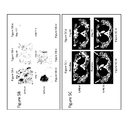
- FIG. 5C depicts the results of experiments using sequential CT imaging to assess the rapid resolution of chemotherapy-resistant generalized lymphadenopathy.
- FIG. 6 is a series of images depicting absolute lymphocyte counts and total CART19+ cells in circulation for UPN 01, 02, 03.
- Total CART19+ cells in circulation is plotted for all 3 subjects using the absolute lymphocyte count from CBC values, and assuming a 5.0 L volume of blood.
- the total number of CART19 cells in circulation was calculated by using the tandem CBC values with absolute lymphocyte counts and the Q-PCR marking values as depicted in FIG. 2 , converting copies/ ⁇ g DNA to average % marking as described elsewhere herein.
- the Q-PCR % marking was found to correlate closely ( ⁇ 2 fold variation) with the flow cytometric characterization of the infusion products and with data from samples where concomitant flow cytometry data was available to directly enumerate CART19 cells by staining.
- FIG. 7 is a series of images depicting experiments involving the direct ex vivo detection of CART19-positive cells in UPN-01 PBMC 71 days post-T cell infusion.
- UPN-01 PBMC collected either fresh post-apheresis on day 71 day post infusion, or frozen at the time of apheresis for manufacture of the T cell product(baseline) and viably thawed prior to the staining, were subjected to flow-cytometric analysis to detect the presence of CART19 cells that express the CAR 19 moiety on the surface.
- FIG. 7A depicts that an initial lymphocyte gate was established based on forward and side scatter (FSC vs SSC), followed by gating on CD3+ cells.
- FIG. 7B depicts CD3+ lymphocyte gate;
- FIG. 7C depicts CAR idiotype stain;
- FIG. 7D depicts CAR idiotype FMO.
- the CAR19-positive gate was established on the CAR19FMO samples.
- FIG. 8 is a series of images depicting the gating strategy to identify CART19 expression by using polychromatic flow cytometry in UPN 03 blood specimens.
- the gating strategy for FIG. 8C is shown for the UPN 03 Day 56 sample and is representative of the strategy used on the UPN 03 Day 169 sample.
- FIG. 8A depicts primary gate: Dump (CD14, CD16, LIVE/dead Aqua) negative, CD3-positive.
- FIG. 8B depicts secondary gates: CD4-positive, CD8positive.
- FIG. 8C depicts tertiary gates: CAR19-positive and CAR19-negative, established on CAR FMO samples (right-most panels).
- FIG. 9 depicts the gating strategy to directly identify CART19 expression and B cells in blood and marrow specimens.
- the gating strategy for FIG. 4A which shows detection of CAR-expressing CD3+ lymphocytes and absence of B cells in periphery and marrow: Leftplot: Cell gate; Upper panel: positive gate for CD3+ cells, Lower panel: negative gate (CD 14-negative, CD3-negative) for B cells.
- NC365 peripheral blood control cells from a healthy donor
- FIG. 10 is an image summarizing the patient demographics and response.
- FIG. 11 depicts the manufacturing process of CART-19 cells
- FIG. 12 is a series of images depicting the clinical response in a patient.
- FIG. 12A shows the lentiviral vector used to infect T cells from the patient.
- 3′LTR denotes 3′ long terminal repeat; 5′LTR, 5′ long terminal repeat; Amp R, ampicillin resistance gene; Bovine GH Poly A, bovine growth hormone with polyadenylation tail; cPPT/CTS, central polypurine tract with central termination sequence; EF-1 ⁇ , elongation factor 1-alpha; env, envelope; gag, group-specific antigen; pol, HIV gene encoding polymerase and reverse transcriptase; R, repeat; RRE, rev response element; scFv, single-chain variable fragment; TM, transmembrane; and WPRE, woodchuck hepatitis virus post-transcriptional regulatory element.
- FIG. 12B shows serum creatinine, uric acid, and lactate dehydrogenase (LDH) levels from day 1 to day 28 after the first CART19-cell infusion. The peak levels coincided with hospitalization for the tumor lysis syndrome.
- FIG. 12C shows bone marrow-biopsy specimens obtained 3 days after chemotherapy (day ⁇ 1, before CART19-cell infusion) and 23 days and 6 months after CART19-cell infusion (hematoxylin and eosin). The baseline specimen shows hypercellular bone marrow (60%) with trilineage hematopoiesis, infiltrated by predominantly interstitial aggregates of small, mature lymphocytes that account for 40% of total cellularity.
- the specimen obtained on day 23 shows residual lymphoid aggregates (10%) that were negative for chronic lymphoid leukemia (CLL), with a mixture of T cells and CD5-negative B cells.
- CLL chronic lymphoid leukemia
- the specimen obtained 6 months after infusion shows trilineage hematopoiesis, without lymphoid aggregates and continued absence of CLL.
- FIG. 12D shows contrast-enhanced CT scans obtained before the patient was enrolled in the study and 31 days and 104 days after the first infusion.
- the preinfusion CT scan reveals 1-to-3-em bilateral masses. Regression of axillary lymphadenopathy occurred within 1 month after infusion and was sustained. Arrows highlight various enlarged lymph nodes before therapy and lymph-node responses on comparable CT scans after therapy.
- FIG. 13 is a series of images depicting serum and bone marrow cytokines before and after chimeric antigen receptor T-cell infusion.
- Serial measurements of the cytokine interferon- ⁇ FIG. 13A
- the interferon- ⁇ -stimulated chemokines C-X-C motif chemokine 10 (CXCL 10) FIG. 13B
- CX-C motif ligand 9 FIG. 13C
- interleukin-6 FIG. 13D
- the increases in these inflammatory cytokines and chemokines coincided with the onset of the tumor lysis syndrome.
- interferon- ⁇ 11.2 to 23,972 pg per milliliter (1.4 pg per milliliter); CXCL10, 2.1 to 5319 pg per milliliter (274 pg per milliliter); CXCL9, 48.2 to 3700 pg per milliliter (177 pg per milliliter); interleukin-6, 2.7 to 4572 pg per milliliter (8.3 pg per milliliter); tumor necrosis factor ⁇ (TNF- ⁇ ), 1.9 to 4005 pg per milliliter (not detectable); and soluble interleukin-2 receptor, 13.4 to 34,210 pg per milliliter (644 pg per milliliter).
- FIG. 13E shows the induction of the immune response in bone marrow.
- the cytokines TNF- ⁇ , interleukin-6, interferon- ⁇ , chemokine CXCL9, and soluble interleukin-2 receptor were measured in supernatant fluids obtained from bone marrow aspirates on the indicated days before and after CART19-cell infusion.
- the increases in levels of interleukin-6, interferon- ⁇ , CXCL9, and soluble interleukin-2 receptor coincided with the tumor lysis syndrome, peak chimeric antigen receptor T-cell infiltration, and eradication of the leukemic infiltrate.
- FIG. 14 is a series of images depicting expansion and persistence of chimeric antigen receptor T cells in vivo.
- Gnomic DNA gDNA was isolated from samples of the patient's whole blood ( FIG. 14A ) and bone marrow aspirates ( FIG. 14B ) collected at serial time points before and after chimeric antigen receptor T-cell infusion and used for quantitative real-time polymerase-chain-reaction (FCR) analysis.
- FCR real-time polymerase-chain-reaction
- Peak levels of chimeric antigen receptor T cells were temporally correlated with the tumor lysis syndrome.
- a blood sample obtained on day 0 and a bone marrow sample obtained on day 1 had no PCR signal at baseline.
- Flow-cytometric analysis of bone marrow aspirates at baseline shows predominant infiltration with CD19+CD5+ cells that were clonal, as assessed by means of immunoglobulin kappa light-chain staining, with a paucity of T cells.
- CD5+ T cells On day 31 after infusion, CD5+ T cells were present, and no normal or malignant B cells were detected. The numbers indicate the relative frequency of cells in each quadrant. Both the x axis and the y axis show a log10 scale.
- the gating strategy involved an initial gating on CD19+ and CD5+ cells in the boxes on the left, and the subsequent identification of immunoglobulin kappa and lambda expression on the CD19+CD5+ subset (boxes on the right)
- the invention relates to compositions and methods for treating cancer including but not limited to hematologic malignancies and solid tumors.
- the present invention relates to a strategy of adoptive cell transfer of T cells transduced to express a chimeric antigen receptor (CAR).
- CARs are molecules that combine antibody-based specificity for a desired antigen (e.g., tumor antigen) with a T cell receptor-activating intracellular domain to generate a chimeric protein that exhibits a specific anti-tumor cellular immune activity.
- the present invention relates generally to the use of T cells genetically modified to stably express a desired CAR.
- T cells expressing a CAR are referred to herein as CAR T cells or CAR modified T cells.
- the cell can be genetically modified to stably express an antibody binding domain on its surface, conferring novel antigen specificity that is MHC independent.
- the T cell is genetically modified to stably express a CAR that combines an antigen recognition domain of a specific antibody with an intracellular domain of the CD3-zeta chain or Fc ⁇ RI protein into a single chimeric protein.
- the CAR of the invention comprises an extracellular domain having an antigen recognition domain, a transmembrane domain, and a cytoplasmic domain.
- the transmembrane domain that naturally is associated with one of the domains in the CAR is used.
- the transmembrane domain can be selected or modified by amino acid substitution to avoid binding of such domains to the transmembrane domains of the same or different surface membrane proteins to minimize interactions with other members of the receptor complex.
- the transmembrane domain is the CD8 ⁇ hinge domain.
- the CAR of the invention can be designed to comprise the CD28 and/or 4-1BB signaling domain by itself or be combined with any other desired cytoplasmic domain(s) useful in the context of the CAR of the invention.
- the cytoplasmic domain of the CAR can be designed to further comprise the signaling domain of CD3-zeta.
- the cytoplasmic domain of the CAR can include but is not limited to CD3-zeta, 4-1BB and CD28 signaling modules and combinations thereof. Accordingly, the invention provides CAR T cells and methods of their use for adoptive therapy.
- the CAR T cells of the invention can be generated by introducing a lentiviral vector comprising a desired CAR, for example a CAR comprising anti-CD19, CD8 ⁇ hinge and transmembrane domain, and human 4-1BB and CD3zeta signaling domains, into the cells.
- a desired CAR for example a CAR comprising anti-CD19, CD8 ⁇ hinge and transmembrane domain, and human 4-1BB and CD3zeta signaling domains.
- the CAR T cells of the invention are able to replicate in vivo resulting in long-term persistence that can lead to sustained tumor control.
- the invention relates to administering a genetically modified T cell expressing a CAR for the treatment of a patient having cancer or at risk of having cancer using lymphocyte infusion.
- lymphocyte infusion is used in the treatment.
- Autologous lymphocyte infusion is used in the treatment.
- Autologous PBMCs are collected from a patient in need of treatment and T cells are activated and expanded using the methods described herein and known in the art and then infused back into the patient.
- the invention relates generally to the treatment of a patient at risk of developing CLL.
- the invention also includes treating a malignancy or an autoimmune disease in which chemotherapy and/or immunotherapy in a patient results in significant immunosuppression in the patient, thereby increasing the risk of the patient of developing CLL.
- the invention includes using T cells expressing an anti-CD19 CAR including both CD3-zeta and the 4-1BB costimulatory domain (also referred to as CART19 T cells).
- the CART 19 T cells of the invention can undergo robust in vivo T cell expansion and can establish CD19-specific memory cells that persist at high levels for an extended amount of time in blood and bone marrow.
- the CART19 T cells of the invention infused into a patient can eliminate leukemia cells in vivo in patients with advanced chemotherapy-resistant CLL.
- the invention is not limited to CART19 T cells. Rather, the invention includes any antigen binding moiety fused with one or more intracellular domains selected from the group of a CD137 (4-1BB) signaling domain, a CD28 signaling domain, a CD3zeta signal domain, and any combination thereof.
- an element means one element or more than one element.
- “About” as used herein when referring to a measurable value such as an amount, a temporal duration, and the like, is meant to encompass variations of ⁇ 20% or ⁇ 10%, more preferably ⁇ 5%, even more preferably ⁇ 1%, and still more preferably ⁇ 0.1% from the specified value, as such variations are appropriate to perform the disclosed methods.
- Activation refers to the state of a T cell that has been sufficiently stimulated to induce detectable cellular proliferation. Activation can also be associated with induced cytokine production, and detectable effector functions.
- the term “activated T cells” refers to, among other things, T cells that are undergoing cell division.
- antibody refers to an immunoglobulin molecule which specifically binds with an antigen.
- Antibodies can be intact immunoglobulins derived from natural sources or from recombinant sources and can be immunoreactive portions of intact immunoglobulins. Antibodies are typically tetramers of immunoglobulin molecules.
- the antibodies in the present invention may exist in a variety of forms including, for example, polyclonal antibodies, monoclonal antibodies, Fv, Fab and F(ab) 2 , as well as single chain antibodies and humanized antibodies (Harlow et al., 1999, In: Using Antibodies: A Laboratory Manual, Cold Spring Harbor Laboratory Press, NY; Harlow et al., 1989, In: Antibodies: A Laboratory Manual, Cold Spring Harbor, N.Y.; Houston et al., 1988, Proc. Natl. Acad. Sci. USA 85:5879-5883; Bird et al., 1988, Science 242:423-426).
- antibody fragment refers to a portion of an intact antibody and refers to the antigenic determining variable regions of an intact antibody.
- antibody fragments include, but are not limited to, Fab, Fab′, F(ab′)2, and Fv fragments, linear antibodies, seFv antibodies, and multispecific antibodies formed from antibody fragments.
- an “antibody heavy chain,” as used herein, refers to the larger of the two types of polypeptide chains present in all antibody molecules in their naturally occurring conformations.
- antibody light chain refers to the smaller of the two types of polypeptide chains present in all antibody molecules in their naturally occurring conformations.
- ⁇ and ⁇ light chains refer to the two major antibody light chain isotypes.
- synthetic antibody as used herein, is meant an antibody which is generated using recombinant DNA technology, such as, for example, an antibody expressed by a bacteriophage as described herein.
- the term should also be construed to mean an antibody which has been generated by the synthesis of a DNA molecule encoding the antibody and which DNA molecule expresses an antibody protein, or an amino acid sequence specifying the antibody, wherein the DNA or amino acid sequence has been obtained using synthetic DNA or amino acid sequence technology which is available and well known in the art.
- antigen or “Ag” as used herein is defined as a molecule that provokes an immune response. This immune response may involve either antibody production, or the activation of specific immunologically-competent cells, or both.
- any macromolecule including virtually all proteins or peptides, can serve as an antigen.
- antigens can be derived from recombinant or genomic DNA. A skilled artisan will understand that any DNA, which comprises a nucleotide sequences or a partial nucleotide sequence encoding a protein that elicits an immune response therefore encodes an “antigen” as that term is used herein.
- an antigen need not be encoded solely by a full length nucleotide sequence of a gene. It is readily apparent that the present invention includes, but is not limited to, the use of partial nucleotide sequences of more than one gene and that these nucleotide sequences are arranged in various combinations to elicit the desired immune response. Moreover, a skilled artisan will understand that an antigen need not be encoded by a “gene” at all. It is readily apparent that an antigen can be generated synthesized or can be derived from a biological sample. Such a biological sample can include, but is not limited to a tissue sample, a tumor sample, a cell or a biological fluid.
- anti-tumor effect refers to a biological effect which can be manifested by a decrease in tumor volume, a decrease in the number of tumor cells, a decrease in the number of metastases, an increase in life expectancy, or amelioration of various physiological symptoms associated with the cancerous condition.
- An “anti-tumor effect” can also be manifested by the ability of the peptides, polynucleotides, cells and antibodies of the invention in prevention of the occurrence of tumor in the first place.
- auto-antigen means, in accordance with the present invention, any self-antigen which is mistakenly recognized by the immune system as being foreign.
- Auto-antigens comprise, but are not limited to, cellular proteins, phosphoproteins, cellular surface proteins, cellular lipids, nucleic acids, glycoproteins, including cell surface receptors.
- autoimmune disease as used herein is defined as a disorder that results from an autoimmune response.
- An autoimmune disease is the result of an inappropriate and excessive response to a self-antigen.
- autoimmune diseases include but are not limited to, Addision's disease, alopecia greata, ankylosing spondylitis, autoimmune hepatitis, autoimmune parotitis, Crohn's disease, diabetes (Type 1), dystrophic epidermolysis bullosa, epididymitis, glomerulonephritis, Graves' disease, Guillain-Barr syndrome, Hashimoto's disease, hemolytic anemia, systemic lupus erythematosus, multiple sclerosis, myasthenia gravis, pemphigus vulgaris, psoriasis, rheumatic fever, rheumatoid arthritis, sarcoidosis, scleroderma, Sjogren's syndrome, spondyloarthropathies, thyroid
- autologous is meant to refer to any material derived from the same individual to which it is later to be re-introduced into the individual.
- Allogeneic refers to a graft derived from a different animal of the same species.
- Xenogeneic refers to a graft derived from an animal of a different species.
- cancer as used herein is defined as disease characterized by the rapid and uncontrolled growth of aberrant cells. Cancer cells can spread locally or through the bloodstream and lymphatic system to other parts of the body. Examples of various cancers include but are not limited to, breast cancer, prostate cancer, ovarian cancer, cervical cancer, skin cancer, pancreatic cancer, colorectal cancer, renal cancer, liver cancer, brain cancer, lymphoma, leukemia, lung cancer and the like.
- Co-stimulatory ligand includes a molecule on an antigen presenting cell (e.g., an aAPC, dendritic cell, B cell, and the like) that specifically binds a cognate co-stimulatory molecule on a T cell, thereby providing a signal which, in addition to the primary signal provided by, for instance, binding of a TCR/CD3 complex with an MHC molecule loaded with peptide, mediates a T cell response, including, but not limited to, proliferation, activation, differentiation, and the like.
- an antigen presenting cell e.g., an aAPC, dendritic cell, B cell, and the like
- a co-stimulatory ligand can include, but is not limited to, CD7, B7-1 (CD80), B7-2 (CD86), PD-L1, PD-L2, 4-1BBL, OX40L, inducible costimulatory ligand (ICOS-L), intercellular adhesion molecule (ICAM), CD30L, CD40, CD70, CD83, HLA-G, MICA, MICB, HVEM, lymphotoxin beta receptor, 3/TR6, ILT3, ILT4, HVEM, an agonist or antibody that binds Toll ligand receptor and a ligand that specifically binds with B7-H3.
- a co-stimulatory ligand also encompasses, inter alia, an antibody that specifically binds with a co-stimulatory molecule present on a T cell, such as, but not limited to, CD27, CD28, 4-1BB, OX40, CD30, CD40, PD-1, ICOS, lymphocyte function-associated antigen-1 (LFA-1), CD2, CD7, LIGHT, NKG2C, B7-H3, and a ligand that specifically binds with CD83.
- an antibody that specifically binds with a co-stimulatory molecule present on a T cell such as, but not limited to, CD27, CD28, 4-1BB, OX40, CD30, CD40, PD-1, ICOS, lymphocyte function-associated antigen-1 (LFA-1), CD2, CD7, LIGHT, NKG2C, B7-H3, and a ligand that specifically binds with CD83.
- a “co-stimulatory molecule” refers to the cognate binding partner on a T cell that specifically binds with a co-stimulatory ligand, thereby mediating a co-stimulatory response by the T cell, such as, but not limited to, proliferation.
- Co-stimulatory molecules include, but are not limited to an MHC class I molecule, BTLA and a Toll ligand receptor.
- a “co-stimulatory signal”, as used herein, refers to a signal, which in combination with a primary signal, such as TCR/CD3 ligation, leads to T cell proliferation and/or upregulation or down regulation of key molecules.
- a “disease” is a state of health of an animal wherein the animal cannot maintain homeostasis, and wherein if the disease is not ameliorated then the animal's health continues to deteriorate.
- a “disorder” in an animal is a state of health in which the animal is able to maintain homeostasis, but in which the animal's state of health is less favorable than it would be in the absence of the disorder. Left untreated, a disorder does not necessarily cause a further decrease in the animal's state of health.
- an “effective amount” as used herein means an amount which provides a therapeutic or prophylactic benefit.
- Encoding refers to the inherent property of specific sequences of nucleotides in a polynucleotide, such as a gene, a cDNA, or an mRNA, to serve as templates for synthesis of other polymers and macromolecules in biological processes having either a defined sequence of nucleotides (i.e., rRNA, tRNA and mRNA) or a defined sequence of amino acids and the biological properties resulting therefrom.
- a gene encodes a protein if transcription and translation of mRNA corresponding to that gene produces the protein in a cell or other biological system.
- Both the coding strand the nucleotide sequence of which is identical to the mRNA sequence and is usually provided in sequence listings, and the non-coding strand, used as the template for transcription of a gene or cDNA, can be referred to as encoding the protein or other product of that gene or cDNA.
- endogenous refers to any material from or produced inside an organism, cell, tissue or system.
- exogenous refers to any material introduced from or produced outside an organism, cell, tissue or system.
- expression is defined as the transcription and/or translation of a particular nucleotide sequence driven by its promoter.
- “Expression vector” refers to a vector comprising a recombinant polynucleotide comprising expression control sequences operatively linked to a nucleotide sequence to be expressed.
- An expression vector comprises sufficient cis-acting elements for expression; other elements for expression can be supplied by the host cell or in an in vitro expression system.
- Expression vectors include all those known in the art, such as cosmids, plasmids (e.g., naked or contained in liposomes) and viruses (e.g., lentiviruses, retroviruses, adenoviruses, and adeno-associated viruses) that incorporate the recombinant polynucleotide.
- “Homologous” refers to the sequence similarity or sequence identity between two polypeptides or between two nucleic acid molecules. When a position in both of the two compared sequences is occupied by the same base or amino acid monomer subunit, e.g., if a position in each of two DNA molecules is occupied by adenine, then the molecules are homologous at that position.
- the percent of homology between two sequences is a function of the number of matching or homologous positions shared by the two sequences divided by the number of positions compared X 100. For example, if 6 of 10 of the positions in two sequences are matched or homologous then the two sequences are 60% homologous.
- the DNA sequences ATTGCC and TATGGC share 50% homology. Generally, a comparison is made when two sequences are aligned to give maximum homology.
- immunoglobulin or “Ig,” as used herein is defined as a class of proteins, which function as antibodies. Antibodies expressed by B cells are sometimes referred to as the BCR (B cell receptor) or antigen receptor. The five members included in this class of proteins are IgA, IgG, IgM, IgD, and IgE.
- IgA is the primary antibody that is present in body secretions, such as saliva, tears, breast milk, gastrointestinal secretions and mucus secretions of the respiratory and genitourinary tracts.
- IgG is the most common circulating antibody.
- IgM is the main immunoglobulin produced in the primary immune response in most subjects.
- IgD is the immunoglobulin that has no known antibody function, but may serve as an antigen receptor.
- IgE is the immunoglobulin that mediates immediate hypersensitivity by causing release of mediators from mast cells and basophils upon exposure to allergen.
- an “instructional material” includes a publication, a recording, a diagram, or any other medium of expression which can be used to communicate the usefulness of the compositions and methods of the invention.
- the instructional material of the kit of the invention may, for example, be affixed to a container which contains the nucleic acid, peptide, and/or composition of the invention or be shipped together with a container which contains the nucleic acid, peptide, and/or composition.
- the instructional material may be shipped separately from the container with the intention that the instructional material and the compound be used cooperatively by the recipient.
- isolated means altered or removed from the natural state.
- a nucleic acid or a peptide naturally present in a living animal is not “isolated,” but the same nucleic acid or peptide partially or completely separated from the coexisting materials of its natural state is “isolated.”
- An isolated nucleic acid or protein can exist in substantially purified form, or can exist in a non-native environment such as, for example, a host cell.
- A refers to adenosine
- C refers to cytosine
- G refers to guanosine
- T refers to thymidine
- U refers to uridine.
- nucleotide sequence encoding an amino acid sequence includes all nucleotide sequences that are degenerate versions of each other and that encode the same amino acid sequence.
- the phrase nucleotide sequence that encodes a protein or an RNA may also include introns to the extent that the nucleotide sequence encoding the protein may in some version contain an intron(s).
- a “lentivirus” as used herein refers to a genus of the Retroviridae family. Lentiviruses are unique among the retroviruses in being able to infect non-dividing cells; they can deliver a significant amount of genetic information into the DNA of the host cell, so they are one of the most efficient methods of a gene delivery vector. HIV, SIV, and FIV are all examples of lentiviruses. Vectors derived from lentiviruses offer the means to achieve significant levels of gene transfer in vivo.
- moduleating mediating a detectable increase or decrease in the level of a response in a subject compared with the level of a response in the subject in the absence of a treatment or compound, and/or compared with the level of a response in an otherwise identical but untreated subject.
- the term encompasses perturbing and/or affecting a native signal or response thereby mediating a beneficial therapeutic response in a subject, preferably, a human.
- nucleotide sequence encoding an amino acid sequence includes all nucleotide sequences that are degenerate versions of each other and that encode the same amino acid sequence. Nucleotide sequences that encode proteins and RNA may include introns.
- operably linked refers to functional linkage between a regulatory sequence and a heterologous nucleic acid sequence resulting in expression of the latter.
- a first nucleic acid sequence is operably linked with a second nucleic acid sequence when the first nucleic acid sequence is placed in a functional relationship with the second nucleic acid sequence.
- a promoter is operably linked to a coding sequence if the promoter affects the transcription or expression of the coding sequence.
- operably linked DNA sequences are contiguous and, where necessary to join two protein coding regions, in the same reading frame.
- tumor antigen or “overexpression” of the tumor antigen is intended to indicate an abnormal level of expression of the tumor antigen in a cell from a disease area like a solid tumor within a specific tissue or organ of the patient relative to the level of expression in a normal cell from that tissue or organ.
- Patients having solid tumors or a hematological malignancy characterized by overexpression of the tumor antigen can be determined by standard assays known in the art.
- parenteral administration of an immunogenic composition includes, e.g., subcutaneous (s.c.), intravenous (i.v.), intramuscular (i.m.), or intrasternal injection, or infusion techniques.
- patient refers to any animal, or cells thereof whether in vitro or in situ, amenable to the methods described herein.
- the patient, subject or individual is a human.
- nucleotide as used herein is defined as a chain of nucleotides.
- nucleic acids are polymers of nucleotides.
- nucleic acids and polynucleotides as used herein are interchangeable.
- nucleic acids are polynucleotides, which can be hydrolyzed into the monomeric “nucleotides.” The monomeric nucleotides can be hydrolyzed into nucleosides.
- polynucleotides include, but are not limited to, all nucleic acid sequences which are obtained by any means available in the art, including, without limitation, recombinant means, i.e., the cloning of nucleic acid sequences from a recombinant library or a cell genome, using ordinary cloning technology and PCRTM, and the like, and by synthetic means.
- recombinant means i.e., the cloning of nucleic acid sequences from a recombinant library or a cell genome, using ordinary cloning technology and PCRTM, and the like, and by synthetic means.
- peptide As used herein, the terms “peptide,” “polypeptide,” and “protein” are used interchangeably, and refer to a compound comprised of amino acid residues covalently linked by peptide bonds.
- a protein or peptide must contain at least two amino acids, and no limitation is placed on the maximum number of amino acids that can comprise a protein's or peptide's sequence.
- Polypeptides include any peptide or protein comprising two or more amino acids joined to each other by peptide bonds.
- Polypeptides include, for example, biologically active fragments, substantially homologous polypeptides, oligopeptides, homodimers, heterodimers, variants of polypeptides, modified polypeptides, derivatives, analogs, fusion proteins, among others.
- the polypeptides include natural peptides, recombinant peptides, synthetic peptides, or a combination thereof.
- promoter as used herein is defined as a DNA sequence recognized by the synthetic machinery of the cell, or introduced synthetic machinery, required to initiate the specific transcription of a polynucleotide sequence.
- promoter/regulatory sequence means a nucleic acid sequence which is required for expression of a gene product operably linked to the promoter/regulatory sequence.
- this sequence may be the core promoter sequence and in other instances, this sequence may also include an enhancer sequence and other regulatory elements which are required for expression of the gene product.
- the promoter/regulatory sequence may, for example, be one which expresses the gene product in a tissue specific manner.
- a “constitutive” promoter is a nucleotide sequence which, when operably linked with a polynucleotide which encodes or specifies a gene product, causes the gene product to be produced in a cell under most or all physiological conditions of the cell.
- an “inducible” promoter is a nucleotide sequence which, when operably linked with a polynucleotide which encodes or specifies a gene product, causes the gene product to be produced in a cell substantially only when an inducer which corresponds to the promoter is present in the cell.
- tissue-specific promoter is a nucleotide sequence which, when operably linked with a polynucleotide encodes or specified by a gene, causes the gene product to be produced in a cell substantially only if the cell is a cell of the tissue type corresponding to the promoter.
- an antibody which recognizes a specific antigen, but does not substantially recognize or bind other molecules in a sample.
- an antibody that specifically binds to an antigen from one species may also bind to that antigen from one or more species. But, such cross-species reactivity does not itself alter the classification of an antibody as specific.
- an antibody that specifically binds to an antigen may also bind to different allelic forms of the antigen. However, such cross reactivity does not itself alter the classification of an antibody as specific.
- the terms “specific binding” or “specifically binding,” can be used in reference to the interaction of an antibody, a protein, or a peptide with a second chemical species, to mean that the interaction is dependent upon the presence of a particular structure (e.g., an antigenic determinant or epitope) on the chemical species; for example, an antibody recognizes and binds to a specific protein structure rather than to proteins generally. If an antibody is specific for epitope “A”, the presence of a molecule containing epitope A (or free, unlabeled A), in a reaction containing labeled “A” and the antibody, will reduce the amount of labeled A bound to the antibody.
- a particular structure e.g., an antigenic determinant or epitope
- stimulation is meant a primary response induced by binding of a stimulatory molecule (e.g., a TCR/CD3 complex) with its cognate ligand thereby mediating a signal transduction event, such as, but not limited to, signal transduction via the TCR/CD3 complex.
- a stimulatory molecule e.g., a TCR/CD3 complex
- Stimulation can mediate altered expression of certain molecules, such as downregulation of TGF- ⁇ , and/or reorganization of cytoskeletal structures, and the like.
- a “stimulatory molecule,” as the term is used herein, means a molecule on a T cell that specifically binds with a cognate stimulatory ligand present on an antigen presenting cell.
- a “stimulatory ligand,” as used herein, means a ligand that when present on an antigen presenting cell (e.g., an aAPC, a dendritic cell, a B-cell, and the like) can specifically bind with a cognate binding partner (referred to herein as a “stimulatory molecule”) on a T cell, thereby mediating a primary response by the T cell, including, but not limited to, activation, initiation of an immune response, proliferation, and the like.
- an antigen presenting cell e.g., an aAPC, a dendritic cell, a B-cell, and the like
- a cognate binding partner referred to herein as a “stimulatory molecule”
- Stimulatory ligands are well-known in the art and encompass, inter alia, an MHC Class I molecule loaded with a peptide, an anti-CD3 antibody, a superagonist anti-CD28 antibody, and a superagonist anti-CD2 antibody.
- subject is intended to include living organisms in which an immune response can be elicited (e.g., mammals). Examples of subjects include humans, dogs, cats, mice, rats, and transgenic species thereof.
- substantially purified cell is a cell that is essentially free of other cell types.
- a substantially purified cell also refers to a cell which has been separated from other cell types with which it is normally associated in its naturally occurring state.
- a population of substantially purified cells refers to a homogenous population of cells. In other instances, this term refers simply to cell that have been separated from the cells with which they are naturally associated in their natural state.
- the cells are cultured in vitro. In other embodiments, the cells are not cultured in vitro.
- terapéutica as used herein means a treatment and/or prophylaxis.
- a therapeutic effect is obtained by suppression, remission, or eradication of a disease state.
- therapeutically effective amount refers to the amount of the subject compound that will elicit the biological or medical response of a tissue, system, or subject that is being sought by the researcher, veterinarian, medical doctor or other clinician.
- therapeutically effective amount includes that amount of a compound that, when administered, is sufficient to prevent development of, or alleviate to some extent, one or more of the signs or symptoms of the disorder or disease being treated.
- the therapeutically effective amount will vary depending on the compound, the disease and its severity and the age, weight, etc., of the subject to be treated.
- transfected or “transformed” or “transduced” as used herein refers to a process by which exogenous nucleic acid is transferred or introduced into the host cell.
- a “transfected” or “transformed” or “transduced” cell is one which has been transfected, transformed or transduced with exogenous nucleic acid.
- the cell includes the primary subject cell and its progeny.
- under transcriptional control or “operatively linked” as used herein means that the promoter is in the correct location and orientation in relation to a polynucleotide to control the initiation of transcription by RNA polymerase and expression of the polynucleotide.
- a “vector” is a composition of matter which comprises an isolated nucleic acid and which can be used to deliver the isolated nucleic acid to the interior of a cell.
- vectors are known in the art including, but not limited to, linear polynucleotides, polynucleotides associated with ionic or amphiphilic compounds, plasmids, and viruses.
- the term “vector” includes an autonomously replicating plasmid or a virus.
- the term should also be construed to include non-plasmid and non-viral compounds which facilitate transfer of nucleic acid into cells, such as, for example, polylysine compounds, liposomes, and the like.
- viral vectors include, but are not limited to, adenoviral vectors, adeno-associated virus vectors, retroviral vectors, and the like.
- ranges throughout this disclosure, various aspects of the invention can be presented in a range format. It should be understood that the description in range format is merely for convenience and brevity and should not be construed as an inflexible limitation on the scope of the invention. Accordingly, the description of a range should be considered to have specifically disclosed all the possible subranges as well as individual numerical values within that range. For example, description of a range such as from 1 to 6 should be considered to have specifically disclosed subranges such as from 1 to 3, from 1 to 4, from 1 to 5, from 2 to 4, from 2 to 6, from 3 to 6 etc., as well as individual numbers within that range, for example, 1, 2, 2.7, 3, 4, 5, 5.3, and 6. This applies regardless of the breadth of the range.
- the present invention provides compositions and methods for treating cancer among other diseases.
- the cancer may be a hematological malignancy, a solid tumor, a primary or a metatastizing tumor.
- the cancer is a hematological malignancy, and more preferably, the cancer is Chronic Lymphocytic Leukemia (CLL).
- CLL Chronic Lymphocytic Leukemia
- Other diseases treatable using the compositions and methods of the invention include viral, bacterial and parasitic infections as well as autoimmune diseases.
- the invention provides a cell (e.g., T cell) engineered to express a CAR wherein the CAR T cell exhibits an antitumor property.
- the CAR of the invention can be engineered to comprise an extracellular domain having an antigen binding domain fused to an intracellular signaling domain of the T cell antigen receptor complex zeta chain (e.g., CD3 zeta).
- the CAR of the invention when expressed in a T cell is able to redirect antigen recognition based on the antigen binding specificity.
- An exemplary antigen is CD19 because this antigen is expressed on malignant B cells.
- the invention is not limited to targeting CD19.
- the invention includes any antigen binding moiety that when bound to its cognate antigen, affects a tumor cell so that the tumor cell fails to grow, is prompted to die, or otherwise is affected so that the tumor burden in a patient is diminished or eliminated.
- the antigen binding moiety is preferably fused with an intracellular domain from one or more of a costimulatory molecule and a zeta chain.
- the antigen binding moiety is fused with one or more intracellular domains selected from the group of a CD137 (4-1BB) signaling domain, a CD28 signaling domain, a CD3zeta signal domain, and any combination thereof.
- the CAR of the invention comprises a CD137 (4-1BB) signaling domain.
- CD137 (4-1BB) signaling domain is partly based on the discovery that CAR-mediated T-cell responses can be further enhanced with the addition of costimulatory domains.
- inclusion of the CD137 (4-1BB) signaling domain significantly increased anti-tumor activity and in vivo persistence of CAR T cells compared to an otherwise identical CAR T cell not engineered to express CD137 (4-1BB).
- the present invention provides chimeric antigen receptor (CAR) comprising an extracellular and intracellular domain.
- the extracellular domain comprises a target-specific binding element otherwise referred to as an antigen binding moiety.
- the intracellular domain or otherwise the cytoplasmic domain comprises, a costimulatory signaling region and a zeta chain portion.
- the costimulatory signaling region refers to a portion of the CAR comprising the intracellular domain of a costimulatory molecule.
- Costimulatory molecules are cell surface molecules other than antigens receptors or their ligands that are required for an efficient response of lymphocytes to antigen.
- spacer domain generally means any oligo- or polypeptide that functions to link the transmembrane domain to, either the extracellular domain or, the cytoplasmic domain in the polypeptide chain.
- a spacer domain may comprise up to 300 amino acids, preferably 10 to 100 amino acids and most preferably 25 to 50 amino acids.
- the CAR of the invention comprises a target-specific binding element otherwise referred to as an antigen binding moiety.
- the choice of moiety depends upon the type and number of ligands that define the surface of a target cell.
- the antigen binding domain may be chosen to recognize a ligand that acts as a cell surface marker on target cells associated with a particular disease state.
- cell surface markers that may act as ligands for the antigen moiety domain in the CAR of the invention include those associated with viral, bacterial and parasitic infections, autoimmune disease and cancer cells.
- the CAR of the invention can be engineered to target a tumor antigen of interest by way of engineering a desired antigen binding moiety that specifically binds to an antigen on a tumor cell.
- tumor antigen or “hyperporoliferative disorder antigen” or “antigen associated with a hyperproliferative disorder” refers to antigens that are common to specific hyperproliferative disorders such as cancer.
- the antigens discussed herein are merely included by way of example. The list is not intended to be exclusive and further examples will be readily apparent to those of skill in the art.
- Tumor antigens are proteins that are produced by tumor cells that elicit an immune response, particularly T-cell mediated immune responses.
- the selection of the antigen binding moiety of the invention will depend on the particular type of cancer to be treated.
- Tumor antigens are well known in the art and include, for example, a glioma-associated antigen, carcinoembryonic antigen (CEA), ⁇ -human chorionic gonadotropin, alphafetoprotein (AFP), lectin-reactive AFP, thyroglobulin, RAGE-1, MN-CA IX, human telomerase reverse transcriptase, RU1, RU2 (AS), intestinal carboxyl esterase, mut hsp70-2, M-CSF, prostase, prostate-specific antigen (PSA), PAP, NY-ESO-1, LAGE-1a, p53, prostein, PSMA, Her2/neu, survivin and telomerase, prostate-carcinoma tumor antigen-1 (PCTA
- the tumor antigen comprises one or more antigenic cancer epitopes associated with a malignant tumor.
- Malignant tumors express a number of proteins that can serve as target antigens for an immune attack. These molecules include but are not limited to tissue-specific antigens such as MART-1, tyrosinase and GP 100 in melanoma and prostatic acid phosphatase (PAP) and prostate-specific antigen (PSA) in prostate cancer.
- Other target molecules belong to the group of transformation-related molecules such as the oncogene HER-2/Neu/ErbB-2.
- Yet another group of target antigens are onco-fetal antigens such as carcinoembryonic antigen (CEA).
- B-cell lymphoma the tumor-specific idiotype immunoglobulin constitutes a truly tumor-specific immunoglobulin antigen that is unique to the individual tumor.
- B-cell differentiation antigens such as CD19, CD20 and CD37 are other candidates for target antigens in B-cell lymphoma.
- Some of these antigens (CEA, HER-2, CD19, CD20, idiotype) have been used as targets for passive immunotherapy with monoclonal antibodies with limited success.
- the type of tumor antigen referred to in the invention may also be a tumor-specific antigen (TSA) or a tumor-associated antigen (TAA).
- TSA tumor-specific antigen
- TAA associated antigen is not unique to a tumor cell and instead is also expressed on a normal cell under conditions that fail to induce a state of immunologic tolerance to the antigen.
- the expression of the antigen on the tumor may occur under conditions that enable the immune system to respond to the antigen.
- TAAs may be antigens that are expressed on normal cells during'fetal development when the immune system is immature and unable to respond or they may be antigens that are normally present at extremely low levels on normal cells but which are expressed at much higher levels on tumor cells.
- TSA or TAA antigens include the following: Differentiation antigens such as MART-1/MelanA (MART-1), gp100 (Pmel 17), tyrosinase, TRP-1, TRP-2 and tumor-specific multilineage antigens such as MAGE-1, MAGE-3, BAGE, GAGE-1, GAGE-2, p15; overexpressed embryonic antigens such as CEA; overexpressed oncogenes and mutated tumor-suppressor genes such as p53, Ras, HER-2/neu; unique tumor antigens resulting from chromosomal translocations; such as BCR-ABL, E2A-PRL, H4-RET, IGH-IGK, MYL-RAR; and viral antigens, such as the Epstein Barr virus antigens EBVA and the human papillomavirus (HPV) antigens E6 and E7.
- Differentiation antigens such as MART-1/MelanA (MART-1),
- the antigen binding moiety portion of the CAR targets an antigen that includes but is not limited to CD19, CD20, CD22, ROR1, Mesothelin, CD33/IL3Ra, c-Met, PSMA, Glycolipid F77, EGFRvIII, GD-2, MY-ESO-1 TCR, MAGE A3 TCR, and the like.
- the CAR of the invention can be engineered to include the appropriate antigen bind moiety that is specific to the desired antigen target.
- the desired antigen target For example, if CD19 is the desired antigen that is to be targeted, an antibody for CD19 can be used as the antigen bind moiety for incorporation into the CAR of the invention.
- the antigen binding moiety portion of the CAR of the invention targets CD19.
- the antigen binding moiety portion in the CAR of the invention is anti-CD19 scFV, wherein the nucleic acid sequence of the anti-CD19 scFV comprises the sequence set forth in SEQ ID: 14.
- the anti-CD19 scFV comprise the nucleic acid sequence that encodes the amino acid sequence of SEQ ID NO: 20.
- the anti-CD19 scFV portion of the CAR of the invention comprises the amino acid sequence set forth in SEQ ID NO: 20.
- the CAR can be designed to comprise a transmembrane domain that is fused to the extracellular domain of the CAR.
- the transmembrane domain that naturally is associated with one of the domains in the CAR is used.
- the transmembrane domain can be selected or modified by amino acid substitution to avoid binding of such domains to the transmembrane domains of the same or different surface membrane proteins to minimize interactions with other members of the receptor complex.
- the transmembrane domain may be derived either from a natural or from a synthetic source. Where the source is natural, the domain may be derived from any membrane-bound or transmembrane protein. Transmembrane regions of particular use in this invention may be derived from (i.e. comprise at least the transmembrane region(s) of) the alpha, beta or zeta chain of the T-cell receptor, CD28, CD3 epsilon, CD45, CD4, CD5, CD8, CD9, CD16, CD22, CD33, CD37, CD64, CD80, CD86, CD134, CD137, CD154. Alternatively the transmembrane domain may be synthetic, in which case it will comprise predominantly hydrophobic residues such as leucine and valine.
- a triplet of phenylalanine, tryptophan and valine will be found at each end of a synthetic transmembrane domain.
- a short oligo- or polypeptide linker preferably between 2 and 10 amino acids in length may form the linkage between the transmembrane domain and the cytoplasmic signaling domain of the CAR.
- a glycine-serine doublet provides a particularly suitable linker.
- the transmembrane domain in the CAR of the invention is the CD8 transmembrane domain.
- the CD8 transmembrane domain comprises the nucleic acid sequence of SEQ ID NO: 16.
- the CD8 transmembrane domain comprises the nucleic acid sequence that encodes the amino acid sequence of SEQ ID NO: 22.
- the CD8 transmembrane domain comprises the amino acid sequence of SEQ ID NO: 22.
- the transmembrane domain of the CAR of the invention comprises the CD8 ⁇ hinge domain.
- the CD8 hinge domain comprises the nucleic acid sequence of SEQ ID NO: 15.
- the CD8 hinge domain comprises the nucleic acid sequence that encodes the amino acid sequence of SEQ ID NO: 21.
- the CD8 hinge domain comprises the amino acid sequence of SEQ ID NO: 21.
- the cytoplasmic domain or otherwise the intracellular signaling domain of the CAR of the invention is responsible for activation of at least one of the normal effector functions of the immune cell in which the CAR has been placed in.
- effector function refers to a specialized function of a cell. Effector function of a T cell, for example, may be cytolytic activity or helper activity including the secretion of cytokines.
- intracellular signaling domain refers to the portion of a protein which transduces the effector function signal and directs the cell to perform a specialized function. While usually the entire intracellular signaling domain can be employed, in many cases it is not necessary to use the entire chain.
- intracellular signaling domain is thus meant to include any truncated portion of the intracellular signaling domain sufficient to transduce the effector function signal.
- TCR T cell receptor
- T cell activation can be said to be mediated by two distinct classes of cytoplasmic signaling sequence: those that initiate antigen-dependent primary activation through the TCR (primary cytoplasmic signaling sequences) and those that act in an antigen-independent manner to provide a secondary or co-stimulatory signal (secondary cytoplasmic signaling sequences).
- Primary cytoplasmic signaling sequences regulate primary activation of the TCR complex either in a stimulatory way, or in an inhibitory way.
- Primary cytoplasmic signaling sequences that act in a stimulatory manner may contain signaling motifs which are known as immunoreceptor tyrosine-based activation motifs or ITAMs.
- ITAM containing primary cytoplasmic signaling sequences examples include those derived from TCR zeta, FcR gamma, FcR beta, CD3 gamma, CD3 delta, CD3 epsilon, CD5, CD22, CD79a, CD79b, and CD66d. It is particularly preferred that cytoplasmic signaling molecule in the CAR of the invention comprises a cytoplasmic signaling sequence derived from CD3 zeta.
- the cytoplasmic domain of the CAR can be designed to comprise the CD3-zeta signaling domain by itself or combined with any other desired cytoplasmic domain(s) useful in the context of the CAR of the invention.
- the cytoplasmic domain of the CAR can comprise a CD3 zeta chain portion and a costimulatory signaling region.
- the costimulatory signaling region refers to a portion of the CAR comprising the intracellular domain of a costimulatory molecule.
- a costimulatory molecule is a cell surface molecule other than an antigen receptor or their ligands that is required for an efficient response of lymphocytes to an antigen.
- Examples of such molecules include CD27, CD28, 4-1BB (CD137), OX40, CD30, CD40, PD-1, ICOS, lymphocyte function-associated antigen-1 (LFA-1), CD2, CD7, LIGHT, NKG2C, B7-H3, and a ligand that specifically binds with CD83, and the like.
- 4-1BB as the co-stimulatory signaling element
- LFA-1 lymphocyte function-associated antigen-1
- cytoplasmic signaling sequences within the cytoplasmic signaling portion of the CAR of the invention may be linked to each other in a random or specified order.
- a short oligo- or polypeptide linker preferably between 2 and 10 amino acids in length may form the linkage.
- a glycine-serine doublet provides a particularly suitable linker.
- the cytoplasmic domain is designed to comprise the signaling domain of CD3-zeta and the signaling domain of CD28. In another embodiment, the cytoplasmic domain is designed to comprise the signaling domain of CD3-zeta and the signaling domain of 4-1BB. In yet another embodiment, the cytoplasmic domain is designed to comprise the signaling domain of CD3-zeta and the signaling domain of CD28 and 4-1BB.
- the cytoplasmic domain in the CAR of the invention is designed to comprise the signaling domain of 4-1BB and the signaling domain of CD3-zeta, wherein the signaling domain of 4-1BB comprises the nucleic acid sequence set forth in SEQ ID NO: 17 and the signaling domain of CD3-zeta comprises the nucleic acid sequence set forth in SEQ ID NO: 18.
- the cytoplasmic domain in the CAR of the invention is designed to comprise the signaling domain of 4-1BB and the signaling domain of CD3-zeta, wherein the signaling domain of 4-1BB comprises the nucleic acid sequence that encodes the amino acid sequence of SEQ ID NO: 23 and the signaling domain of CD3-zeta comprises the nucleic acid sequence that encodes the amino acid sequence of SEQ ID NO: 24.
- the cytoplasmic domain in the CAR of the invention is designed to comprise the signaling domain of 4-1BB and the signaling domain of CD3-zeta, wherein the signaling domain of 4-1BB comprises the amino acid sequence set forth in SEQ ID NO: 23 and the signaling domain of CD3-zeta comprises the amino acid sequence set forth in SEQ ID NO: 24.
- the present invention encompasses a DNA construct comprising sequences of a CAR, wherein the sequence comprises the nucleic acid sequence of an antigen binding moiety operably linked to the nucleic acid sequence of an intracellular domain.
- An exemplary intracellular domain that can be used in the CAR of the invention includes but is not limited to the intracellular domain of CD3-zeta, CD28, 4-1BB, and the like. In some instances, the CAR can comprise any combination of CD3-zeta, CD28, 4-1BB, and the like.
- the CAR of the invention comprises anti-CD19 scFv, human CD8 hinge and transmembrane domain, and human 4-1BB and CD3zeta signaling domains.
- the CAR of the invention comprises the nucleic acid sequence set forth in SEQ ID NO: 8.
- the CAR of the invention comprises the nucleic acid sequence that encodes the amino acid sequence of SEQ ID NO: 12.
- the CAR of the invention comprises the amino acid sequence set forth in SEQ ID NO: 12.
- nucleic acid sequences coding for the desired molecules can be obtained using recombinant methods known in the art, such as, for example by screening libraries from cells expressing the gene, by deriving the gene from a vector known to include the same, or by isolating directly from cells and tissues containing the same, using standard techniques.
- the gene of interest can be produced synthetically, rather than cloned.
- the present invention also provides vectors in which a DNA of the present invention is inserted.
- Vectors derived from retroviruses such as the lentivirus are suitable tools to achieve long-term gene transfer since they allow long-term, stable integration of a transgene and its propagation in daughter cells.
- Lentiviral vectors have the added advantage over vectors derived from onco-retroviruses such as murine leukemia viruses in that they can transduce non-proliferating cells, such as hepatocytes. They also have the added advantage of low immunogenicity.
- the expression of natural or synthetic nucleic acids encoding CARs is typically achieved by operably linking a nucleic acid encoding the CAR polypeptide or portions thereof to a promoter, and incorporating the construct into an expression vector.
- the vectors can be suitable for replication and integration eukaryotes.
- Typical cloning vectors contain transcription and translation terminators, initiation sequences, and promoters useful for regulation of the expression of the desired nucleic acid sequence.
- the expression constructs of the present invention may also be used for nucleic acid immunization and gene therapy, using standard gene delivery protocols. Methods for gene delivery are known in the art. See, e.g., U.S. Pat. Nos. 5,399,346, 5,580,859, 5,589,466, incorporated by reference herein in their entireties.
- the invention provides a gene therapy vector.
- the nucleic acid can be cloned into a number of types of vectors.
- the nucleic acid can be cloned into a vector including, but not limited to a plasmid, a phagemid, a phage derivative, an animal virus, and a cosmid.
- Vectors of particular interest include expression vectors, replication vectors, probe generation vectors, and sequencing vectors.
- the expression vector may be provided to a cell in the form of a viral vector.
- Viral vector technology is well known in the art and is described, for example, in Sambrook et al. (2001, Molecular Cloning: A Laboratory Manual, Cold Spring Harbor Laboratory, New York), and in other virology and molecular biology manuals.
- Viruses, which are useful as vectors include, but are not limited to, retroviruses, adenoviruses, adeno-associated viruses, herpes viruses, and lentiviruses.
- a suitable vector contains an origin of replication functional in at least one organism, a promoter sequence, convenient restriction endonuclease sites, and one or more selectable markers, (e.g., WO 01/96584; WO 01/29058; and U.S. Pat. No. 6,326,193).
- retroviruses provide a convenient platform for gene delivery systems.
- a selected gene can be inserted into a vector and packaged in retroviral particles using techniques known in the art.
- the recombinant virus can then be isolated and delivered to cells of the subject either in vivo or ex vivo.
- retroviral systems are known in the art.
- adenovirus vectors are used.
- a number of adenovirus vectors are known in the art.
- lentivirus vectors are used.
- promoter elements e.g., enhancers
- promoters regulate the frequency of transcriptional initiation.
- these are located in the region 30-110 bp upstream of the start site, although a number of promoters have recently been shown to contain functional elements downstream of the start site as well.
- the spacing between promoter elements frequently is flexible, so that promoter function is preserved when elements are inverted or moved relative to one another.
- tk thymidine kinase
- the spacing between promoter elements can be increased to 50 bp apart before activity begins to decline.
- individual elements can function either cooperatively or independently to activate transcription.
- a suitable promoter is the immediate early cytomegalovirus (CMV) promoter sequence.
- CMV immediate early cytomegalovirus
- This promoter sequence is a strong constitutive promoter sequence capable of driving high levels of expression of any polynucleotide sequence operatively linked thereto.
- Another example of a suitable promoter is Elongation Growth Factor-1 ⁇ (EF-1 ⁇ ).
- constitutive promoter sequences may also be used, including, but not limited to the simian virus 40 (SV40) early promoter, mouse mammary tumor virus (MMTV), human immunodeficiency virus (HIV) long terminal repeat (LTR) promoter, MoMuLV promoter, an avian leukemia virus promoter, an Epstein-Barr virus immediate early promoter, a Rous sarcoma virus promoter, as well as human gene promoters such as, but not limited to, the actin promoter, the myosin promoter, the hemoglobin promoter, and the creatine kinase promoter. Further, the invention should not be limited to the use of constitutive promoters.
- inducible promoters are also contemplated as part of the invention.
- the use of an inducible promoter provides a molecular switch capable of turning on expression of the polynucleotide sequence which it is operatively linked when such expression is desired, or turning off the expression when expression is not desired.
- inducible promoters include, but are not limited to a metallothionine promoter, a glucocorticoid promoter, a progesterone promoter, and a tetracycline promoter.
- the expression vector to be introduced into a cell can also contain either a selectable marker gene or a reporter gene or both to facilitate identification and selection of expressing cells from the population of cells sought to be transfected or infected through viral vectors.
- the selectable marker may be carried on a separate piece of DNA and used in a co-transfection procedure. Both selectable markers and reporter genes may be flanked with appropriate regulatory sequences to enable expression in the host cells.
- Useful selectable markers include, for example, antibiotic-resistance genes, such as neo and the like.
- Reporter genes are used for identifying potentially transfected cells and for evaluating the functionality of regulatory sequences.
- a reporter gene is a gene that is not present in or expressed by the recipient organism or tissue and that encodes a polypeptide whose expression is manifested by some easily detectable property, e.g., enzymatic activity. Expression of the reporter gene is assayed at a suitable time after the DNA has been introduced into the recipient cells.
- Suitable reporter genes may include genes encoding luciferase, beta-galactosidase, chloramphenicol acetyl transferase, secreted alkaline phosphatase, or the green fluorescent protein gene (e.g., Ui-Tel et al., 2000 FEBS Letters 479: 79-82).
- Suitable expression systems are well known and may be prepared using known techniques or obtained commercially.
- the construct with the minimal 5′ flanking region showing the highest level of expression of reporter gene is identified as the promoter.
- Such promoter regions may be linked to a reporter gene and used to evaluate agents for the ability to modulate promoter-driven transcription.
- the vector can be readily introduced into a host cell, e.g., mammalian, bacterial, yeast, or insect cell by any method in the art.
- the expression vector can be transferred into a host cell by physical, chemical, or biological means.
- Physical methods for introducing a polynucleotide into a host cell include calcium phosphate precipitation, lipofection, particle bombardment, microinjection, electroporation, and the like. Methods for producing cells comprising vectors and/or exogenous nucleic acids are well-known in the art. See, for example, Sambrook et al. (2001, Molecular Cloning: A Laboratory Manual, Cold Spring Harbor Laboratory, New York). A preferred method for the introduction of a polynucleotide into a host cell is calcium phosphate transfection.
- Biological methods for introducing a polynucleotide of interest into a host cell include the use of DNA and RNA vectors.
- Viral vectors, and especially retroviral vectors have become the most widely used method for inserting genes into mammalian, e.g., human cells.
- Other viral vectors can be derived from lentivirus, poxviruses, herpes simplex virus I, adenoviruses and adeno-associated viruses, and the like. See, for example, U.S. Pat. Nos. 5,350,674 and 5,585,362.
- Chemical means for introducing a polynucleotide into a host cell include colloidal dispersion systems, such as macromolecule complexes, nanocapsules, microspheres, beads, and lipid-based systems including oil-in-water emulsions, micelles, mixed micelles, and liposomes.
- colloidal dispersion systems such as macromolecule complexes, nanocapsules, microspheres, beads, and lipid-based systems including oil-in-water emulsions, micelles, mixed micelles, and liposomes.
- An exemplary colloidal system for use as a delivery vehicle in vitro and in vivo is a liposome (e.g., an artificial membrane vesicle).
- an exemplary delivery vehicle is a liposome.
- lipid formulations is contemplated for the introduction of the nucleic acids into a host cell (in vitro, ex vivo or in vivo).
- the nucleic acid may be associated with a lipid.
- the nucleic acid associated with a lipid may be encapsulated in the aqueous interior of a liposome, interspersed within the lipid bilayer of a liposome, attached to a liposome via a linking molecule that is associated with both the liposome and the oligonucleotide, entrapped in a liposome, complexed with a liposome, dispersed in a solution containing a lipid, mixed with a lipid, combined with a lipid, contained as a suspension in a lipid, contained or complexed with a micelle, or otherwise associated with a lipid.
- Lipid, lipid/DNA or lipid/expression vector associated compositions are not limited to any particular structure in solution.
- Lipids are fatty substances which may be naturally occurring or synthetic lipids.
- lipids include the fatty droplets that naturally occur in the cytoplasm as well as the class of compounds which contain long-chain aliphatic hydrocarbons and their derivatives, such as fatty acids, alcohols, amines, amino alcohols, and aldehydes.
- Lipids suitable for use can be obtained from commercial sources.
- DMPC dimyristyl phosphatidylcholine
- DCP dicetyl phosphate
- Choi cholesterol
- DMPG dimyristyl phosphatidylglycerol
- Stock solutions of lipids in chloroform or chloroform/methanol can be stored at about ⁇ 20° C.
- Liposome is a generic term encompassing a variety of single and multilamellar lipid vehicles formed by the generation of enclosed lipid bilayers or aggregates. Liposomes can be characterized as having vesicular structures with a phospholipid bilayer membrane and an inner aqueous medium. Multilamellar liposomes have multiple lipid layers separated by aqueous medium. They form spontaneously when phospholipids are suspended in an excess of aqueous solution.
- compositions that have different structures in solution than the normal vesicular structure are also encompassed.
- the lipids may assume a micellar structure or merely exist as nonuniform aggregates of lipid molecules.
- lipofectamine-nucleic acid complexes are also contemplated.
- assays include, for example, “molecular biological” assays well known to those of skill in the art, such as Southern and Northern blotting, RT-PCR and PCR; “biochemical” assays, such as detecting the presence or absence of a particular peptide, e.g., by immunological means (ELISAs and Western blots) or by assays described herein to identify agents falling within the scope of the invention.
- molecular biological assays well known to those of skill in the art, such as Southern and Northern blotting, RT-PCR and PCR
- biochemical assays such as detecting the presence or absence of a particular peptide, e.g., by immunological means (ELISAs and Western blots) or by assays described herein to identify agents falling within the scope of the invention.
- T cells Prior to expansion and genetic modification of the T cells of the invention, a source of T cells is obtained from a subject.
- T cells can be obtained from a number of sources, including peripheral blood mononuclear cells, bone marrow, lymph node tissue, cord blood, thymus tissue, tissue from a site of infection, ascites, pleural effusion, spleen tissue, and tumors.
- any number of T cell lines available in the art may be used.
- T cells can be obtained from a unit of blood collected from a subject using any number of techniques known to the skilled artisan, such as FicollTM separation.
- cells from the circulating blood of an individual are obtained by apheresis.
- the apheresis product typically contains lymphocytes, including T cells, monocytes, granulocytes, B cells, other nucleated white blood cells, red blood cells, and platelets.
- the cells collected by apheresis may be washed to remove the plasma fraction and to place the cells in an appropriate buffer or media for subsequent processing steps.
- the cells are washed with phosphate buffered saline (PBS).
- PBS phosphate buffered saline
- the wash solution lacks calcium and may lack magnesium or may lack many if not all divalent cations. Again, surprisingly, initial activation steps in the absence of calcium lead to magnified activation.
- a washing step may be accomplished by methods known to those in the art, such as by using a semi-automated “flow-through” centrifuge (for example, the Cobe 2991 cell processor, the Baxter CytoMate, or the Haemonetics Cell Saver 5) according to the manufacturer's instructions.
- a semi-automated “flow-through” centrifuge for example, the Cobe 2991 cell processor, the Baxter CytoMate, or the Haemonetics Cell Saver 5
- the cells may be resuspended in a variety of biocompatible buffers, such as, for example, Ca 2+ -free, Mg 2+ -free PBS, PlasmaLyte A, or other saline solution with or without buffer.
- the undesirable components of the apheresis sample may be removed and the cells directly resuspended in culture media.
- T cells are isolated from peripheral blood lymphocytes by lysing the red blood cells and depleting the monocytes, for example, by centrifugation through a PERCOLLTM gradient or by counterflow centrifugal elutriation.
- a specific subpopulation of T cells such as CD3 + , CD28 + , CD4 + , CD8 + , CD45RA + , and CD45RO + T cells, can be further isolated by positive or negative selection techniques.
- T cells are isolated by incubation with anti-CD3/anti-CD28 (i.e., 3 ⁇ 28)-conjugated beads, such as DYNABEADS® M-450 CD3/CD28 T, for a time period sufficient for positive selection of the desired T cells.
- the time period is about 30 minutes.
- the time period ranges from 30 minutes to 36 hours or longer and all integer values there between.
- the time period is at least 1, 2, 3, 4, 5, or 6 hours.
- the time period is 10 to 24 hours.
- the incubation time period is 24 hours.
- TIL tumor infiltrating lymphocytes
- subpopulations of T cells can be preferentially selected for or against at culture initiation or at other desired time points.
- multiple rounds of selection can also be used in the context of this invention. In certain embodiments, it may be desirable to perform the selection procedure and use the “unselected” cells in the activation and expansion process. “Unselected” cells can also be subjected to further rounds of selection.
- Enrichment of a T cell population by negative selection can be accomplished with a combination of antibodies directed to surface markers unique to the negatively selected cells.
- One method is cell sorting and/or selection via negative magnetic immunoadherence or flow cytometry that uses a cocktail of monoclonal antibodies directed to cell surface markers present on the cells negatively selected.
- a monoclonal antibody cocktail typically includes antibodies to CD 14, CD20, CD11b, CD 16, HLA-DR, and CD8.
- T regulatory cells are depleted by anti-C25 conjugated beads or other similar method of selection.
- the concentration of cells and surface can be varied. In certain embodiments, it may be desirable to significantly decrease the volume in which beads and cells are mixed together (i.e., increase the concentration of cells), to ensure maximum contact of cells and beads. For example, in one embodiment, a concentration of 2 billion cells/ml is used. In one embodiment, a concentration of 1 billion cells/ml is used. In a further embodiment, greater than 100 million cells/ml is used. In a further embodiment, a concentration of cells of 10, 15, 20, 25, 30, 35, 40, 45, or 50 million cells/ml is used.
- a concentration of cells from 75, 80, 85, 90, 95, or 100 million cells/ml is used. In further embodiments, concentrations of 125 or 150 million cells/ml can be used.
- concentrations can result in increased cell yield, cell activation, and cell expansion.
- use of high cell concentrations allows more efficient capture of cells that may weakly express target antigens of interest, such as CD28-negative T cells, or from samples where there are many tumor cells present (i.e., leukemic blood, tumor tissue, etc.). Such populations of cells may have therapeutic value and would be desirable to obtain. For example, using high concentration of cells allows more efficient selection of CD8 + T cells that normally have weaker CD28 expression.
- the concentration of cells used is 5 ⁇ 10 6 /ml. In other embodiments, the concentration used can be from about 1 ⁇ 10 5 /ml to 1 ⁇ 10 6 /ml, and any integer value in between.
- the cells may be incubated on a rotator for varying lengths of time at varying speeds at either 2-10° C. or at room temperature.
- T cells for stimulation can also be frozen after a washing step.
- the freeze and subsequent thaw step provides a more uniform product by removing granulocytes and to some extent monocytes in the cell population.
- the cells may be suspended in a freezing solution.
- one method involves using PBS containing 20% DMSO and 8% human serum albumin, or culture media containing 10% Dextran 40 and 5% Dextrose, 20% Human Serum Albumin and 7.5% DMSO, or 31.25% Plasmalyte-A, 31.25% Dextrose 5%, 0.45% NaCl, 10% Dextran 40 and 5% Dextrose, 20% Human Serum Albumin, and 7.5% DMSO or other suitable cell freezing media containing for example, Hespan and PlasmaLyte A, the cells then are frozen to ⁇ 80° C. at a rate of 1° per minute and stored in the vapor phase of a liquid nitrogen storage tank. Other methods of controlled freezing may be used as well as uncontrolled freezing immediately at ⁇ 20° C. or in liquid nitrogen.
- cryopreserved cells are thawed and washed as described herein and allowed to rest for one hour at room temperature prior to activation using the methods of the present invention.
- a blood sample or an apheresis product is taken from a generally healthy subject.
- a blood sample or an apheresis is taken from a generally healthy subject who is at risk of developing a disease, but who has not yet developed a disease, and the cells of interest are isolated and frozen for later use.
- the T cells may be expanded, frozen, and used at a later time.
- samples are collected from a patient shortly after diagnosis of a particular disease as described herein but prior to any treatments.
- the cells are isolated from a blood sample or an apheresis from a subject prior to any number of relevant treatment modalities, including but not limited to treatment with agents such as natalizumab, efalizumab, antiviral agents, chemotherapy, radiation, immunosuppressive agents, such as cyclosporin, azathioprine, methotrexate, mycophenolate, and FK506, antibodies, or other immunoablative agents such as CAMPATH, anti-CD3 antibodies, cytoxan, fludarabine, cyclosporin, FK506, rapamycin, mycophenolic acid, steroids, FR901228, and irradiation.
- agents such as natalizumab, efalizumab, antiviral agents, chemotherapy, radiation, immunosuppressive agents, such as cyclosporin, azathioprine, methotrexate, mycophenolate, and FK506, antibodies, or other immunoablative agents such as CAMPATH, anti-CD3
- the cells are isolated for a patient and frozen for later use in conjunction with (e.g., before, simultaneously or following) bone marrow or stem cell transplantation, T cell ablative therapy using either chemotherapy agents such as, fludarabine, external-beam radiation therapy (XRT), cyclophosphamide, or antibodies such as OKT3 or CAMPATH.
- chemotherapy agents such as, fludarabine, external-beam radiation therapy (XRT), cyclophosphamide, or antibodies such as OKT3 or CAMPATH.
- the cells are isolated prior to and can be frozen for later use for treatment following B-cell ablative therapy such as agents that react with CD20, e.g., Rituxan.
- T cells are obtained from a patient directly following treatment.
- the quality of T cells obtained may be optimal or improved for their ability to expand ex vivo.
- these cells may be in a preferred state for enhanced engraftment and in vivo expansion.
- mobilization for example, mobilization with GM-CSF
- conditioning regimens can be used to create a condition in a subject wherein repopulation, recirculation, regeneration, and/or expansion of particular cell types is favored, especially during a defined window of time following therapy.
- Illustrative cell types include T cells, B cells, dendritic cells, and other cells of the immune system.
- the T cells can be activated and expanded generally using methods as described, for example, in U.S. Pat. Nos. 6,352,694; 6,534,055; 6,905,680; 6,692,964; 5,858,358; 6,887,466; 6,905,681; 7,144,575; 7,067,318; 7,172,869; 7,232,566; 7,175,843; 5,883,223; 6,905,874; 6,797,514; 6,867,041; and U.S. Patent Application Publication No. 20060121005.
- the T cells of the invention are expanded by contact with a surface having attached thereto an agent that stimulates a CD3/TCR complex associated signal and a ligand that stimulates a co-stimulatory molecule on the surface of the T cells.
- T cell populations may be stimulated as described herein, such as by contact with an anti-CD3 antibody, or antigen-binding fragment thereof, or au anti-CD2 antibody immobilized on a surface, or by contact with a protein kinase C activator (e.g., bryostatin) in conjunction with a calcium ionophore.
- a ligand that binds the accessory molecule is used for co-stimulation of an accessory molecule on the surface of the T cells.
- a population of T cells can be contacted with an anti-CD3 antibody and an anti-CD28 antibody, under conditions appropriate for stimulating proliferation of the T cells.
- an anti-CD3 antibody and an anti-CD28 antibody can be used as can other methods commonly known in the art (Berg et al., Transplant Proc. 30(8):3975-3977, 1998; Haanen et al., J. Exp. Med. 190(9):13191328, 1999; Garland et al., J. Immunol. Meth. 227(1-2):53-63, 1999).
- the primary stimulatory signal and the co-stimulatory signal for the T cell may be provided by different protocols.
- the agents providing each signal may be in solution or coupled to a surface. When coupled to a surface, the agents may be coupled to the same surface (i.e., in “cis” formation) or to separate surfaces (i.e., in “trans” formation).
- one agent may be coupled to a surface and the other agent in solution.
- the agent providing the co-stimulatory signal is bound to a cell surface and the agent providing the primary activation signal is in solution or coupled to a surface. In certain embodiments, both agents can be in solution.
- the agents may be in soluble form, and then cross-linked to a surface, such as a cell expressing Fc receptors or an antibody or other binding agent which will bind to the agents.
- a surface such as a cell expressing Fc receptors or an antibody or other binding agent which will bind to the agents.
- the two agents are immobilized on beads, either on the same bead, i.e., “cis,” or to separate beads, i.e., “trans.”
- the agent providing the primary activation signal is an anti-CD3 antibody or an antigen-binding fragment thereof and the agent providing the co-stimulatory signal is an anti-CD28 antibody or antigen-binding fragment thereof; and both agents are co-immobilized to the same bead in equivalent molecular amounts.
- a 1:1 ratio of each antibody bound to the beads for CD4 + T cell expansion and T cell growth is used.
- a ratio of anti CD3:CD28 antibodies bound to the beads is used such that an increase in T cell expansion is observed as compared to the expansion observed using a ratio of 1:1. In one particular embodiment an increase of from about 1 to about 3 fold is observed as compared to the expansion observed using a ratio of 1:1. In one embodiment, the ratio of CD3:CD28 antibody bound to the beads ranges from 100:1 to 1:100 and all integer values there between. In one aspect of the present invention, more anti-CD28 antibody is bound to the particles than anti-CD3 antibody, i.e., the ratio of CD3:CD28 is less than one. In certain embodiments of the invention, the ratio of anti CD28 antibody to anti CD3 antibody bound to the beads is greater than 2:1.
- a 1:100 CD3:CD28 ratio of antibody bound to beads is used.
- a 1:75 CD3:CD28 ratio of antibody bound to beads is used.
- a 1:50 CD3:CD28 ratio of antibody bound to beads is used.
- a 1:30 CD3:CD28 ratio of antibody bound to beads is used.
- a 1:10 CD3:CD28 ratio of antibody bound to beads is used.
- a 1:3 CD3:CD28 ratio of antibody bound to the beads is used.
- a 3:1 CD3:CD28 ratio of antibody bound to the beads is used.
- Ratios of particles to cells from 1:500 to 500:1 and any integer values in between may be used to stimulate T cells or other target cells.
- the ratio of particles to cells may depend on particle size relative to the target cell. For example, small sized beads could only bind a few cells, while larger beads could bind many.
- the ratio of cells to particles ranges from 1:100 to 100:1 and any integer values in-between and in further embodiments the ratio comprises 1:9 to 9:1 and any integer values in between, can also be used to stimulate T cells.
- the ratio of anti-CD3- and anti-CD28-coupled particles to T cells that result in T cell stimulation can vary as noted above, however certain preferred values include 1:100, 1:50, 1:40, 1:30, 1:20, 1:10, 1:9, 1:8, 1:7, 1:6, 1:5, 1:4, 1:3, 1:2, 1:1, 2:1, 3:1, 4:1, 5:1, 6:1, 7:1, 8:1, 9:1, 10:1, and 15:1 with one preferred ratio being at least 1:1 particles per T cell.
- a ratio of particles to cells of 1:1 or less is used.
- a preferred particle:cell ratio is 1:5.
- the ratio of particles to cells can be varied depending on the day of stimulation.
- the ratio of particles to cells is from 1:1 to 10:1 on the first day and additional particles are added to the cells every day or every other day thereafter for up to 10 days, at final ratios of from 1:1 to 1:10 (based on cell counts on the day of addition).
- the ratio of particles to cells is 1:1 on the first day of stimulation and adjusted to 1:5 on the third and fifth days of stimulation.
- particles are added on a daily or every other day basis to a final ratio of 1:1 on the first day, and 1:5 on the third and fifth days of stimulation.
- the ratio of particles to cells is 2:1 on the first day of stimulation and adjusted to 1:10 on the third and fifth days of stimulation.
- particles are added on a daily or every other day basis to a final ratio of 1:1 on the first day, and 1:10 on the third and fifth days of stimulation.
- ratios will vary depending on particle size and on cell size and type.
- the cells such as T cells
- the cells are combined with agent-coated beads, the beads and the cells are subsequently separated, and then the cells are cultured.
- the agent-coated beads and cells prior to culture, are not separated but are cultured together.
- the beads and cells are first concentrated by application of a force, such as a magnetic force, resulting in increased ligation of cell surface markers, thereby inducing cell stimulation.
- cell surface proteins may be ligated by allowing paramagnetic beads to which anti-CD3 and anti-CD28 are attached (3 ⁇ 28 beads) to contact the T cells.
- the cells for example, 10 4 to 10 9 T cells
- beads for example, DYNABEADS® M-450 CD3/CD28 T paramagnetic beads at a ratio of 1:1
- a buffer preferably PBS (without divalent cations such as, calcium and magnesium).
- the target cell may be very rare in the sample and comprise only 0.01% of the sample or the entire sample (i.e., 100%) may comprise the target cell of interest.
- any cell number is within the context of the present invention.
- it may be desirable to significantly decrease the volume in which particles and cells are mixed together i.e., increase the concentration of cells, to ensure maximum contact of cells and particles.
- a concentration of about 2 billion cells/ml is used. In another embodiment, greater than 100 million cells/ml is used. In a further embodiment, a concentration of cells of 10, 15, 20, 25, 30, 35, 40, 45, or 50 million cells/ml is used. In yet another embodiment, a concentration of cells from 75, 80, 85, 90, 95, or 100 million cells/ml is used. In further embodiments, concentrations of 125 or 150 million cells/ml can be used.
- Using high concentrations can result in increased cell yield, cell activation, and cell expansion. Further, use of high cell concentrations allows more efficient capture of cells that may weakly express target antigens of interest, such as CD28-negative T cells. Such populations of cells may have therapeutic value and would be desirable to obtain in certain embodiments. For example, using high concentration of cells allows more efficient selection of CD8+ T cells that normally have weaker CD28 expression.
- the mixture may be cultured for several hours (about 3 hours) to about 14 days or any hourly integer value in between. In another embodiment, the mixture may be cultured for 21 days. In one embodiment of the invention the beads and the T cells are cultured together for about eight days. In another embodiment, the beads and T cells are cultured together for 2-3 days. Several cycles of stimulation may also be desired such that culture time of T cells can be 60 days or more.
- Conditions appropriate for T cell culture include an appropriate media (e.g., Minimal Essential Media or RPMI Media 1640 or, X-vivo 15, (Lonza)) that may contain factors necessary for proliferation and viability, including serum (e.g., fetal bovine or human serum), interleukin-2 (IL-2), insulin, IFN- ⁇ , IL-4, IL-7, GM-CSF, IL-10, IL-12, IL-15, TGF ⁇ , and TNF- ⁇ or any other additives for the growth of cells known to the skilled artisan.
- Other additives for the growth of cells include, but are not limited to, surfactant, plasmanate, and reducing agents such as N-acetyl-cysteine and 2-mercaptoethanol.
- Media can include RPMI 1640, AIM-V, DMEM, MEM, ⁇ -MEM, F-12, X-Vivo 15, and X-Vivo 20, Optimizer, with added amino acids, sodium pyruvate, and vitamins, either serum-free or supplemented with an appropriate amount of serum (or plasma) or a defined set of hormones, and/or an amount of cytokine(s) sufficient for the growth and expansion of T cells.
- Antibiotics e.g., penicillin and streptomycin, are included only in experimental cultures, not in cultures of cells that are to be infused into a subject.
- the target cells are maintained under conditions necessary to support growth, for example, an appropriate temperature (e.g., 37° C.) and atmosphere (e.g., air plus 5% CO 2 ).
- T cells that have been exposed to varied stimulation times may exhibit different characteristics.
- typical blood or apheresed peripheral blood mononuclear cell products have a helper T cell population (T H , CD4 + ) that is greater than the cytotoxic or suppressor T cell population (T C , CD8 + ).
- T H , CD4 + helper T cell population
- T C cytotoxic or suppressor T cell population
- Ex vivo expansion of T cells by stimulating CD3 and CD28 receptors produces a population of T cells that prior to about days 8-9 consists predominately of T H cells, while after about days 8-9, the population of T cells comprises an increasingly greater population of T C cells.
- infusing a subject with a T cell population comprising predominately of T H cells may be advantageous.
- an antigen-specific subset of T C cells has been isolated it may be beneficial to expand this subset to a greater degree.
- CD4 and CD8 markers vary significantly, but in large part, reproducibly during the course of the cell expansion process. Thus, such reproducibility enables the ability to tailor an activated T cell product for specific purposes.
- the present invention encompasses a cell (e.g., T cell) transduced with a lentiviral vector (LV).
- a cell e.g., T cell
- LV lentiviral vector
- the LV encodes a CAR that combines an antigen recognition domain of a specific antibody with an intracellular domain of CD3-zeta, CD28, 4-1BB, or any combinations thereof. Therefore, in some instances, the transduced T cell can elicit a CAR-mediated T-cell response.
- the invention provides the use of a CAR to redirect the specificity of a primary T cell to a tumor antigen.
- the present invention also provides a method for stimulating a T cell-mediated immune response to a target cell population or tissue in a mammal comprising the step of administering to the mammal a T cell that expresses a CAR, wherein the CAR comprises a binding moiety that specifically interacts with a predetermined target, a zeta chain portion comprising for example the intracellular domain of human CD3zeta, and a costimulatory signaling region.
- the present invention includes a type of cellular therapy where T cells are genetically modified to express a CAR and the CAR T cell is infused to a recipient in need thereof.
- the infused cell is able to kill tumor cells in the recipient.
- CAR T cells are able to replicate in vivo resulting in long-term persistence that can lead to sustained tumor control.
- the CAR T cells of the invention can undergo robust in vivo T cell expansion and can persist for an extended amount of time.
- the CAR T cells of the invention evolve into specific memory T cells that can be reactivated to inhibit any additional tumor formation or growth.
- CART19 cells of the invention can undergo robust in vivo T cell expansion and persist at high levels for an extended amount of time in blood and bone marrow and form specific memory T cells.
- CAR T cells may differentiate in vivo into a central memory-like state upon encounter and subsequent elimination of target cells expressing the surrogate antigen.
- the anti-tumor immunity response elicited by the CAR-modified T cells may be an active or a passive immune response.
- the CAR mediated immune response may be part of an adoptive immunotherapy approach in which CAR-modified T cells induce an immune response specific to the antigen binding moiety in the CAR.
- a CART19 cells elicits an immune response specific against cells expressing CD19.
- lentiviral vector comprising anti-CD19 scFv derived from FMC63 murine monoclonal antibody, human CD8 ⁇ hinge and transmembrane domain, and human 4-1BB and CD3zeta signaling domains
- the invention should be construed to include any number of variations for each of the components of the construct as described elsewhere herein.
- the invention includes the use of any antigen binding moiety in the CAR to generate a CAR-mediated T-cell response specific to the antigen binding moiety.
- the antigen binding moiety in the CAR of the invention can target a tumor antigen for the purposes of treat cancer.
- Cancers that may be treated include tumors that are not vascularized, or not yet substantially vascularized, as well as vascularized tumors.
- the cancers may comprise non-solid tumors (such as hematological tumors, for example, leukemias and lymphomas) or may comprise solid tumors.
- Types of cancers to be treated with the CARs of the invention include, but are not limited to, carcinoma, blastoma, and sarcoma, and certain leukemia or lymphoid malignancies, benign and malignant tumors, and malignancies e.g., sarcomas, carcinomas, and melanomas.
- sarcomas e.g., sarcomas, carcinomas, and melanomas.
- Adult tumors/cancers and pediatric tumors/cancers are also included.
- Hematologic cancers are cancers of the blood or bone marrow.
- hematological (or hematogenous) cancers include leukemias, including acute leukemias (such as acute lymphocytic leukemia, acute myelocytic leukemia, acute myelogenous leukemia and myeloblastic, promyelocytic, myelomonocytic, monocytic and erythroleukemia), chronic leukemias (such as chronic myelocytic (granulocytic) leukemia, chronic myelogenous leukemia, and chronic lymphocytic leukemia), polycythemia vera, lymphoma, Hodgkin's disease, non-Hodgkin's lymphoma (indolent and high grade forms), multiple myeloma, Waldenstrom's macroglobulinemia, heavy chain disease, myelodysplastic syndrome, hairy cell leukemia and myelodysplasia.
- Solid tumors are abnormal masses of tissue that usually do not contain cysts or liquid areas. Solid tumors can be benign or malignant. Different types of solid tumors are named for the type of cells that form them (such as sarcomas, carcinomas, and lymphomas). Examples of solid tumors, such as sarcomas and carcinomas, include fibrosarcoma, myxosarcoma, liposarcoma, chondrosarcoma, osteosarcoma, and other sarcomas, synovioma, mesothelioma, Ewing's tumor, leiomyosarcoma, rhabdomyosarcoma, colon carcinoma, lymphoid malignancy, pancreatic cancer, breast cancer, lung cancers, ovarian cancer, prostate cancer, hepatocellular carcinoma, squamous cell carcinoma, basal cell carcinoma, adenocarcinoma, sweat gland carcinoma, medullary thyroid carcinoma, papillary thyroid carcinoma, pheochromocytomas se
- the antigen bind moiety portion of the CAR of the invention is designed to treat a particular cancer.
- the CAR designed to target CD19 can be used to treat cancers and disorders including but are not limited to pre-B ALL (pediatric indication), adult ALL, mantle cell lymphoma, diffuse large B-cell lymphoma, salvage post allogenic bone marrow transplantation, and the like.
- the CAR can be designed to target CD22 to treat diffuse large B-cell lymphoma.
- cancers and disorders include but are not limited to pre-B ALL (pediatric indication), adult ALL, mantle cell lymphoma, diffuse large B-cell lymphoma, salvage post allogenic bone marrow transplantation, and the like can be treated using a combination of CARs that target CD19, CD20, CD22, and ROR1.
- pre-B ALL pediatric indication
- adult ALL mantle cell lymphoma
- diffuse large B-cell lymphoma diffuse large B-cell lymphoma
- salvage post allogenic bone marrow transplantation and the like can be treated using a combination of CARs that target CD19, CD20, CD22, and ROR1.
- the CAR can be designed to target mesothelin to treat mesothelioma, pancreatic cancer, ovarian cancer, and the like.
- the CAR can be designed to target CD33/IL3Ra to treat acute myelogenous leukemia and the like.
- the CAR can be designed to target c-Met to treat triple negative breast cancer, non-small cell lung cancer, and the like.
- the CAR can be designed to target PSMA to treat prostate cancer and the like.
- the CAR can be designed to target Glycolipid F77 to treat prostate cancer and the like.
- the CAR can be designed to target EGFRvIII to treat glioblastoma and the like.
- the CAR can be designed to target GD-2 to treat neuroblastoma, melanoma, and the like.
- the CAR can be designed to target NY-ESO-1 TCR to treat myeloma, sarcoma, melanoma, and the like.
- the CAR can be designed to target MAGE A3 TCR to treat myeloma, sarcoma, melanoma, and the like.
- the invention should not be construed to be limited to solely to the antigen targets and diseases disclosed herein. Rather, the invention should be construed to include any antigenic target that is associated with a disease where a CAR can be used to treat the disease.
- the CAR-modified T cells of the invention may also serve as a type of vaccine for ex vivo immunization and/or in vivo therapy in a mammal.
- the mammal is a human.
- ex vivo immunization of least one of the following occurs in vitro prior to administering the cell into a mammal: i) expansion of the cells, ii) introducing a nucleic acid encoding a CAR to the cells, and/or iii) cryopreservation of the cells.
- cells are isolated from a mammal (preferably a human) and genetically modified (i.e., transduced or transfected in vitro) with a vector expressing a CAR disclosed herein.
- the CAR-modified cell can be administered to a mammalian recipient to provide a therapeutic benefit.
- the mammalian recipient may be a human and the CAR-modified cell can be autologous with respect to the recipient.
- the cells can be allogeneic, syngeneic or xenogeneic with respect to the recipient.
- ex vivo culture and expansion of T cells comprises: (1) collecting CD34+ hematopoietic stem and progenitor cells from a mammal from peripheral blood harvest or bone marrow explants; and (2) expanding such cells ex vivo.
- other factors such as flt3-L, IL-1, IL-3 and c-kit ligand, can be used for culturing and expansion of the cells.
- the present invention also provides compositions and methods for in vivo immunization to elicit an immune response directed against an antigen in a patient.
- the cells activated and expanded as described herein may be utilized in the treatment and prevention of diseases that arise in individuals who are immunocompromised.
- the CAR-modified T cells of the invention are used in the treatment of CCL.
- the cells of the invention are used in the treatment of patients at risk for developing CCL.
- the present invention provides methods for the treatment or prevention of CCL comprising administering to a subject in need thereof, a therapeutically effective amount of the CAR-modified T cells of the invention.
- compositions of the present invention may comprise a target cell population as described herein, in combination with one or more pharmaceutically or physiologically acceptable carriers, diluents or excipients.
- compositions may comprise buffers such as neutral buffered saline, phosphate buffered saline and the like; carbohydrates such as glucose, mannose, sucrose or dextrans, mannitol; proteins; polypeptides or amino acids such as glycine; antioxidants; chelating agents such as EDTA or glutathione; adjuvants (e.g., aluminum hydroxide); and preservatives.
- buffers such as neutral buffered saline, phosphate buffered saline and the like
- carbohydrates such as glucose, mannose, sucrose or dextrans, mannitol
- proteins polypeptides or amino acids
- antioxidants such as glycine
- chelating agents such as EDTA or glutathione
- adjuvants e.g., aluminum hydroxide
- preservatives e.g., aluminum hydroxide
- compositions of the present invention may be administered in a manner appropriate to the disease to be treated (or prevented).
- the quantity and frequency of administration will be determined by such factors as the condition of the patient, and the type and severity of the patient's disease, although appropriate dosages may be determined by clinical trials.
- an immunologically effective amount When “an immunologically effective amount”, “an anti-tumor effective amount”, “an tumor-inhibiting effective amount”, or “therapeutic amount” is indicated, the precise amount of the compositions of the present invention to be administered can be determined by a physician with consideration of individual differences in age, weight, tumor size, extent of infection or metastasis, and condition of the patient (subject). It can generally be stated that a pharmaceutical composition comprising the T cells described herein may be administered at a dosage of 10 4 to 10 9 cells/kg body weight, preferably 10 5 to 10 6 cells/kg body weight, including all integer values within those ranges. T cell compositions may also be administered multiple times at these dosages.
- the cells can be administered by using infusion techniques that are commonly known in immunotherapy (see, e.g., Rosenberg et al., New Eng. J. of Med. 319:1676, 1988).
- the optimal dosage and treatment regime for a particular patient can readily be determined by one skilled in the art of medicine by monitoring the patient for signs of disease and adjusting the treatment accordingly.
- T cells can be activated from blood draws of from 10 cc to 400 cc.
- T cells are activated from blood draws of 20 cc, 30 cc, 40 cc, 50 cc, 60 cc, 70 cc, 80 cc, 90 cc, or 100 cc.
- using this multiple blood draw/multiple reinfusion protocol may serve to select out certain populations of T cells.
- compositions described herein may be administered to a patient subcutaneously, intradermally, intratumorally, intranodally, intramedullary, intramuscularly, by intravenous (i.v.) injection, or intraperitoneally.
- the T cell compositions of the present invention are administered to a patient by intradermal or subcutaneous injection.
- the T cell compositions of the present invention are preferably administered by i.v. injection.
- the compositions of T cells may be injected directly into a tumor, lymph node, or site of infection.
- cells activated and expanded using the methods described herein, or other methods known in the art where T cells are expanded to therapeutic levels are administered to a patient in conjunction with (e.g., before, simultaneously or following) any number of relevant treatment modalities, including but not limited to treatment with agents such as antiviral therapy, cidofovir and interleukin-2, Cytarabine (also known as ARA-C) or natalizumab treatment for MS patients or efalizumab treatment for psoriasis patients or other treatments for PML patients.
- agents such as antiviral therapy, cidofovir and interleukin-2, Cytarabine (also known as ARA-C) or natalizumab treatment for MS patients or efalizumab treatment for psoriasis patients or other treatments for PML patients.
- the T cells of the invention may be used in combination with chemotherapy, radiation, immunosuppressive agents, such as cyclosporin, azathioprine, methotrexate, mycophenolate, and FK506, antibodies, or other immunoablative agents such as CAM PATH, anti-CD3 antibodies or other antibody therapies, cytoxin, fludaribine, cyclosporin, FK506, rapamycin, mycophenolic acid, steroids, FR901228, cytokines, and irradiation.
- immunosuppressive agents such as cyclosporin, azathioprine, methotrexate, mycophenolate, and FK506, antibodies
- immunoablative agents such as CAM PATH, anti-CD3 antibodies or other antibody therapies
- cytoxin fludaribine
- cyclosporin FK506, rapamycin
- mycophenolic acid steroids
- steroids FR901228
- cytokines irradiation
- the cell compositions of the present invention are administered to a patient in conjunction with (e.g., before, simultaneously or following) bone marrow transplantation, T cell ablative therapy using either chemotherapy agents such as, fludarabine, external-beam radiation therapy (XRT), cyclophosphamide, or antibodies such as OKT3 or CAMPATH.
- the cell compositions of the present invention are administered following B-cell ablative therapy such as agents that react with CD20, e.g., Rituxan.
- subjects may undergo standard treatment with high dose chemotherapy followed by peripheral blood stem cell transplantation.
- subjects receive an infusion of the expanded immune cells of the present invention.
- expanded cells are administered before or following surgery.
- the dosage of the above treatments to be administered to a patient will vary with the precise nature of the condition being treated and the recipient of the treatment.
- the scaling of dosages for human administration can be performed according to art-accepted practices.
- the dose for CAMPATH for example, will generally be in the range 1 to about 100 mg for an adult patient, usually administered daily for a period between 1 and 30 days.
- the preferred daily dose is 1 to 10 mg per day although in some instances larger doses of up to 40 mg per day may be used (described in U.S. Pat. No. 6,120,766).
- Lymphocytes engineered to express chimeric antigen receptors have demonstrated minimal in vivo expansion and antitumor effects in previous clinical trials.
- CARs chimeric antigen receptors
- the results presented herein demonstrate that that CART cells containing CD137 have potent non-cross resistant clinical activity following infusion in three of three patients treated with advanced chronic lymphocytic leukemia (CLL).
- CLL chronic lymphocytic leukemia
- the engineered T cells expanded more than a thousand-fold in vivo, trafficked to bone marrow and continued to express functional CARs at high levels for at least 6 months.
- each infused CAR+ T cell eradicated at least 1000 CLL cells.
- a CD19 specific immune response was demonstrated in the blood and bone marrow, accompanied by complete remission in two of three patients. A portion of the cells persist as memory CAR+ T cells, indicating the potential of this non-MHC restricted approach for the effective treatment of B cell malignancies.
- NCT01029366 The clinical trial (NCT01029366) was conducted as diagramed in FIG. 1 .
- peripheral blood T cells for CART19 manufacturing were collected by apheresis and the subjects given a single course of chemotherapy as specified in FIG. 10 during the week before infusion.
- CART19 cells were administered by intravenous infusion using a 3 day split dose regimen (10%, 30% and 60%) at the dose indicated in FIG. 10 and if available, a second dose was administered on day 10; only patient UPN 02 had sufficient cells for a second infusion.
- Subjects were assessed for toxicity and response at frequent intervals for at least 6 months.
- the protocol was approved by the US Food and Drug Administration, the Recombinant DNA Advisory Committee and the Institutional Review Board of the University of Pennsylvania. The first day of infusion was set as study Day 0.
- Patient UPN 01 was first diagnosed with stage II B cell CLL at age 55. The patient was asymptomatic and observed for approximately 11 ⁇ 2 years until requiring therapy for progressive lymphocytosis, thrombocytopenia, adenopathy, and splenomegaly. Over the course of time, the patient received prior lines of therapy. The most recent therapy was 2 cycles of pentostatin, cyclophosphamide and rituximab 2 months prior to CART19 cell infusion with a minimal response. The patient then received one cycle of bendamustine as lymphodepleting chemotherapy prior to CART-19 cell infusion.
- Patient UPN 02 was first diagnosed with CLL at age 68 when the patient was presented with fatigue and leukocytosis. The patient was relatively stable for 4 years when the patient developed progressive leukocytosis (195,000/ ⁇ l), anemia and thrombocytopenia requiring therapy. Karyotypic analysis showed that the CLL cells had deletion of chromosome 17p. Because of progressive disease, the patient was treated with alemtuzumab with a partial response but within one and a half years the patient had progressive disease. The patient was retreated with alemtuzumab for 18 weeks with a partial response and a 1 year progression free interval. The patient then received 2 cycles of bendamustine with rituximab without a significant response ( FIG. 5A ). The patient received single agent bendamustine as lymphodepleting chemotherapy prior to CART-19 cell infusion.
- Patient UPN 03 presented at age 50 with asymptomatic stage I CLL and was followed with observation for years.
- the patient had progressive leukocytosis (white blood count 92,000/ ⁇ l) and progressive adenopathy requiring therapy.
- the patient received 2 cycles of rituximab with fludarabine that resulted in normalization of blood counts and significant improvement though not complete resolution in adenopathy.
- the patient had an approximately 3 year progression free interval.
- Karyotypic testing showed cells to contain deletion of chromosome 17p with FISH demonstrating a TP53 deletion in 170 of 200 cells. Over the next years the patient required 3 different lines of therapy ( FIG.
- the CD19-BB-z transgene (GeMCRIS 0607-793) was designed and constructed as described (Milone et al., 2009, Mol Ther. 17:1453-1464).
- Lentiviral vector was produced according to current good manufacturing practices using a three-plasmid production approach at Lentigen Corporation as described (Zufferey et al., 1997, Nature biotechnol 15:871-875).
- CLL burden at baseline was estimated as shown in FIG. 10 .
- the amount of CLL cells were calculated in bone marrow, blood, and secondary lymphoid tissues as described below.
- Bone marrow In healthy adults, the bone marrow represents approximately 5% of total body weight (Woodard et al., 1960, Phys Med Biol, 5:57-59; Bigler et al., 1976, Health Phys 31:213-218).
- the bone marrow in iliac crest samples has an increasing percentage of inactive (fatty) marrow with age, rising from 20% of the total marrow at age 5 to about 50% by age 35, when it remains stable until age 65, and then rises to about 67% inactive marrow by age 75 (Hartsock et al., 1965, Am J Clin Path 43:326-331).
- the international reference value for the total skeletal weight of active (red) and inactive (fatty) marrow for males at age 35 is currently set at 1170 g and 2480 g, respectively (Basic anatomical and physiological data for use in radiological protection: The Skeleton in Annals of the ICRP, Vol. 25 (ed. Smith, H.) 58-68 (A report of a Task Group of Committee 2 of the International Commission on Radiological Protection, Oxford, 1995)).
- lymphadenopathy and splenomegaly The volume of lymphadenopathy and splenomegaly was quantified on axial CT scans using FDA-approved software. The volumes are for chest, abdomen and pelvis only. Masses from the T1 vertebral body to the level of the bifurcation of the common femoral artery were measured in all patients, and in some, the nodes in the inguinal area were also included. Nodes in the head/neck and extremities were excluded from analysis and excluded from the baseline CLL target cell number, which would also lead to a slight underestimate of total body burden.
- the tumor volumes in secondary lymphoid tissues in the three patients are shown below in Table 2 as calculated from the available CT scans.
- the baseline CT scan for patient UPN 01 was performed 8 days after 2 cycles of pentostatin/cyclophosphamide/rituximab, and showed no response to this chemotherapy regimen compared to the previous CT scan.
- the patient had one cycle of bendamustine before CART19, and thus, the change in tumor volume from Day ⁇ 37 to Day +31 for UPN 01 cannot exclude the potential contribution of the bendamustine as well as CART19.
- the change in tumor volume for UPN 03 reflects the combined effect of 1 cycle of pentastatin/cyclophosphamide and CART19.
- the E:T ratio of infused CART cells to the number of tumor cells killed was calculated using the number of tumor cells present at the time of CAR T cell injection and the number of CAR T cells injected (Carpenito et al., 2009, Proc Natl Acad Sci USA 106:3360-3365).
- the number of CART 19+ T cells injected as shown on FIG. 10 was used because it is not possible to determine the absolute number of CART19+ T cells present in vivo with sufficient accuracy or precision.
- the available data on CART19 expansion in blood and marrow is robust as depicted in FIG. 2 and FIG. 6 .
- Samples peripheral blood, marrow were collected in lavender top (K2EDTA,) or red top (no additive) vacutainer tubes (Becton Dickinson) and delivered to the TCSL within 2 hours of draw. Samples were processed within 30 minutes of receipt according to established laboratory SOP.
- Peripheral blood and marrow mononuclear cells were purified via Ficoll density gradient centrifugation using Ficoll-Paque (GE Health care, 17-1440-03) and frozen in RPMI (Gibco 11875-135) supplemented with 4% human serum albumin (Gemini Bio-Products, 800-120), 2% Hetastarch (Novaplus, NDC0409-7248-49), and 10% DMSO (Sigma, D2650) using 5100 Cryo 1° freezing containers; after 24-72 hours at ⁇ 80° C., cells were transferred to liquid Nitrogen for long-term storage. Apheresis samples were obtained through the Hospital of the University of Pennsylvania Blood Bank and processed in the CVPF by Ficoll gradient purification and frozen as above. Viability immediately post-thaw was greater than 85% when assessed. For serum isolation, samples were allowed to coagulate for 1.5-2 hours at room temperature; serum isolated by centrifugation, and single use 100 ⁇ l aliquots frozen at ⁇ 80° C.
- K562 (CML, CD19-negative) was obtained from ATCC(CCL-243).
- K562/CD19 a generous gift of Carmine Carpenito, and is K562 lentivirally transduced at 100% frequency to express the CD19 molecule, NALM-6, a CD19-positive non-T, non-B ALL precursor B cell line (Hurwitz et al., 1979, Int J Cancer 23:174-180), and confirmed to express the CD19 antigen was a generous gift of Laurence Cooper.
- the above cell lines were maintained in R10 medium (RPMI 1640 (Gibco, 11875) supplemented with 10% fetal bovine serum (Hyclone), and 1% Pen-Strep (Gibco, 15140-122).
- Peripheral mononuclear cells (ND365) from a healthy donor were obtained by apheresis from the Human Immunology Core at the University of Pennsylvania, processed, and frozen as above.
- Pass/fail parameter ranges including standard curve slope and r 2 values, ability to accurately quantify a reference sample (1000 copies/plasmid spike) and no amplification in healthy donor DNA sample were calculated from the qualification studies and pre-established acceptance ranges.
- Primer/probes for the CD19 CAR transgene were as described (Milone et al., 2009, Mol Ther 17:1453-1464).
- To determine copy number/unit DNA an 8-point standard curve was generated consisting of 10 6 -5 copies lentivirus plasmid spiked into 100 ng non-transduced control genomic DNA. Each data-point (samples, standard curve, reference samples) was evaluated in triplicate with average values reported.
- LLOQ lower limit of quantification
- a parallel amplification reaction to control for the quality of interrogated DNA was performed using 12-20 ng input genomic DNA, a primer/probe combination specific for non-transcribed genomic sequence upstream of the CDKN1A gene (GENEBANK: Z85996) (sense primer: GAAAGCTGACTGCCCCTATTTG; SEQ ID NO. 25, antisense primer: GAGAGGAAGTGCTGGGAACAAT; SEQ ID NO. 26, probe: VIC-CTC CCC AGT CTC TTT; SEQ ID NO.
- Quantification of soluble cytokine factors was performed using Luminex bead array technology and kits purchased from Life technologies (Invitrogen). Assays were performed as per the manufacturer protocol with an 8 point standard curve generated using a 3-fold dilution series. Each standard point and sample was evaluated in duplicate at 1:3 dilution; calculated % CV for the duplicate measures were less than 15%. Data were acquired on a Bioplex 200 and analyzed with Bioplex Manager version 5.0 software using 5-parameter logistic regression analysis. Standard curve quantification ranges were determined by the 80-120% (observed/expected value) range. Individual analyte quantification ranges are reported in the Figure legends.
- Cells were evaluated for functionality after thaw and overnight rest in TCM by measuring CD107 degranulation in response to target cells.
- Degranulation assays were performed using 1 ⁇ 10 6 PBMC and 0.25 ⁇ 10 6 target cells in a final volume of 500 ⁇ l in 48-well plates for 2 hours at 37° C. in the presence of CD49d (Becton Dickinson), anti-CD28, monensin (e-Bioscience) and CD107a-FITC antibody (eBiosciences) essentially as described (Betts et al., 2003, J Immunol Methods 281:6578).
- MDA-CAR a murine anti CD19 CAR antibody conjugated to Alexa647 was a generous gift of Drs. Bipulendu Jena and Laurence Cooper (MD Anderson Cancer Center).
- TCM T cell medium
- X-vivo 15 (Lonza, 04-418Q) supplemented with 5% human AB serum (GemCall, 100-512), 1% Hepes (Gibco, 15630-080), 1% Pen-Strep (Gibco, 15140-122), 1% Glutamax (Gibco, 35050-061), and 0.2% N-Acetyl Cysteine (American Regent, NDC0517-7610-03).
- Multi-parametric immunophenotyping was performed on 4 ⁇ 10 6 total cells/condition, using FMO stains as described in the text.
- Cells were stained at a density of 1 ⁇ 10 6 cells/100 ⁇ l PBS for 30 minutes on ice using antibody and reagent concentrations recommended by the manufacturer, washed, re-suspended in 0.5% paraformaldehyde and acquired using a modified LSRII (BD Immunocytometry systems) equipped with Blue (488 nm) Violet (405 nm), Green (532), and Red (633 nm) lasers and appropriate filter sets for the detection and separation of the above antibody combinations. A minimum of 100,000 CD3+ cells were acquired) for each stain.
- LSRII BD Immunocytometry systems
- Patient UPN 01 was first diagnosed with stage II B cell CLL at age 55. The patient was asymptomatic and observed for approximately 11 ⁇ 2 years until requiring therapy for progressive lymphocytosis, thrombocytopenia, adenopathy, and splenomegaly. After 4 cycles of fludarabine the patient had complete normalization of blood counts and a complete response by CT scans. Progression was noted within 5 months with asymptomatic lymphocytosis, thrombocytopenia, and increasing adenopathy. The patient was observed without symptoms for approximately 3 years, and later required treatment with Rituximab and fludarabine for progressive leukocytosis, anemia, and thrombocytopenia.
- the patient was treated with 4 cycles of rituximab with fludarabine with partial improvement in blood counts.
- the patient again had progression within one year requiring therapy manifested by leukocytosis (WBC 150,000/ ⁇ l) and thrombocytopenia (platelets 30,000/ ⁇ l) and was treated with alemtuzumab with normalization of blood counts. Progression was noted within 13 months.
- the patient then received single agent rituximab without a significant response and followed by rituximab, cyclophosphamide, vincristine, and prednisone (R-CVP) for 2 cycles with minimal response and followed by lenalidomide. Lenalidomide was discontinued because of toxicity.
- the patient received 2 cycles of pentostatin, cyclophosphamide and rituximab with a minimal response.
- the patient became neutropenic approximately 10 days after bendamustine and 6 days after CART19 cell infusions, and beginning 10 days after the first CART19 infusion, the patient developed fevers, rigors and transient hypotension.
- a chest X-ray and CT scan demonstrated a left upper lobe pneumonia treated with antibiotics. The fevers persisted for approximately 2 weeks and resolved when there was neutrophil recovery. The patient has had no further infectious or constitutional symptoms.
- the patient achieved a rapid and complete response as depicted in FIG. 5 .
- Between 1 and 6 months after infusion no circulating CLL cells have been detected in the blood by flow cytometry.
- Bone marrow at 1, 3 and 6 months after CART-19 cell infusions shows sustained absence of the lymphocytic infiltrate by morphology and flow cytometry testing.
- the CT scans at 1 and 3 months after infusion show complete resolution of abnormal adenopathy.
- the patient has had a persistent leukopenia (WBC 1000-3900/ul) and thrombocytopenia (platelets ⁇ 100,000/ul), and mild hypogammaglobulinia (IgG 525 mg/dL, normal 650-2000 mg/dL) but no infectious complications.
- WBC 1000-3900/ul leukopenia
- thrombocytopenia platelets ⁇ 100,000/ul
- mild hypogammaglobulinia IgG 525 mg/dL, normal 650-2000 mg/d
- Patient UPN 02 was treated with CART19 cells at age 77.
- the patient had a relevant history of coronary artery disease and was first diagnosed with CLL in 2000 at age 68 when the patient presented with fatigue and leukocytosis.
- the patient was relatively stable for 4 years when the patient developed progressive leukocytosis (195,000/ ⁇ l), anemia and thrombocytopenia requiring therapy. Genetic testing at that time showed that the CLL cells had deletion of chromosome 17p.
- the patient was treated with a 12 week course of alemtuzumab with a partial response and improvement in blood counts. Within one and a half years the patient had progressive leukocytosis, anemia, thrombocytopenia, and splenomegaly.
- Karyotypic analysis confirmed deletion of chromosome 17p now with a deletion of chromosome 13q.
- the patient was retreated with alemtuzumab for 18 weeks with improvement of leukocytosis and stabilization of anemia and splenomegaly.
- the patient had evidence of progressive leukocytosis, anemia, and thrombocytopenia within one year.
- Treatment included 2 cycles of bendamustine with rituximab resulting in stable disease but no significant improvement as shown in FIG. 5A .
- the patient had a rapid drop in lymphocytes from peripheral blood as depicted in FIG. 5A .
- the patient had normalization of white blood count, the patient had persistent circulating CLL, stable moderate anemia and thrombocytopenia.
- Bone marrow showed persistent extensive infiltration of CLL one month after therapy despite dramatic peripheral blood cytoreduction, and CT scans showed a partial reduction of adenopathy and splenomegaly.
- Five months after CART19 cell infusions the patient developed progressive lymphocytosis.
- the patient has lymphocytosis (16,500/ ⁇ l) with stable modest anemia and thrombocytopenia with stable adenopathy. The patient remains asymptomatic and has not had further therapy.
- Patient UPN 03 was diagnosed with asymptomatic stage I CLL at age 50 and was followed with observation for 6 years. Later, the patient had progressive leukocytosis (white blood count 92,000/ ⁇ l) and progressive adenopathy requiring therapy. The patient received 2 cycles of rituximab with fludarabine that resulted in normalization of blood counts and significant improvement though not complete resolution in adenopathy. The patient had approximately a 3 year progression free interval followed over the next 6 months by rapidly progressive leukocytosis (WBC 165,000/ ⁇ l) and progressive adenopathy requiring therapy. The patient received one cycle of fludarabine and 3 cycles of rituximab with fludarabine with normalization of blood counts and resolution of palpable adenopathy.
- the patient had an approximate 20 month progression free interval until the patient again developed rapidly progressing leukocytosis and adenopathy.
- bone marrow was extensively infiltrated with CLL and karyotypic analysis showed cells to contain deletion of chromosome 17p with FISH demonstrating a TP53 deletion in 170/200 cells.
- the patient received one cycle of rituximab with bendamustine followed by 4 cycles of bendamustine only (due to a severe allergic reaction to rituximab).
- the patient had initial normalization of blood counts but shortly after discontinuation of therapy had progressive leukocytosis and adenopathy.
- the bone marrow was hypercellular (60%) with approximately 40% involvement by CLL. Because of manufacturing limitations inherent in apheresis collections from CLL patients as depicted in Table 3 and (Bonyhadi et al., 2005, J Immunol 174:2366-2375), the patient was infused with a total of 1.46 ⁇ 10 5 CART19+ cells per kg (1.42 ⁇ 10 7 total CART19+ cells) over 3 days. There were no infusional toxicities. Fourteen days after the first infusion, the patient began having chills, fevers as high as 102° F., rigors, nausea and diarrhea treated symptomatically. The patient had no respiratory or cardiac symptoms.
- a tumor lysis syndrome was diagnosed manifested by an elevated LDH, uric acid, and complicated by renal insufficiency.
- the patient was hospitalized and treated with fluid resuscitation and rasburicase with rapid normalization of uric acid and renal function.
- a detailed clinical evaluation with a CXR, blood, urine, and stool cultures were performed and were all negative or normal.
- FIG. 1 Three patients with advanced, chemotherapy-resistant CLL were enrolled on a pilot clinical trial as depicted in FIG. 1 . All patients were extensively pretreated with various chemotherapy and biologic regimens as shown in FIG. 10 . Two of the patients had p53 deficient CLL, a deletion that portends poor response to conventional therapy and rapid progression (Dohner et al., 1995, Blood, 851580-1589). Each of the patients had large tumor burdens following the preparative chemotherapy, including extensive marrow infiltration (40 to 95%) and lymphadenopathy; patient UPN 02 also had significant peripheral lymphocytosis. The CART19 T cells were prepared as depicted in FIG. 1B and details of the cell manufacturing and product characterization for each patient are shown in Table 4.
- CAR+ T cells expanded using CD3/CD28 beads and expressing a 4-1BB signaling domain is believed to be in improvement to CARs lacking 4-1BB.
- a Q-PCR assay was developed to enable quantitative tracking of CART19 cells in blood and bone marrow. All patients had expansion and persistence of the CART19-cells in blood for at least 6 months as depicted in FIGS. 2A and 2C . Notably, patients UPN 01 and UPN 03 had a 1,000 to 10,000 fold expansion of CAR+ T cells in blood during the first month post infusion. The peak expansion levels coincided with onset of the post-infusion clinical symptoms in patient UPN 01 (day 15) and patient UPN 03 (day 23).
- the CART19 T cell levels stabilized in all 3 patients from day 90 to 180 post infusion.
- the CART19 T cells also trafficked to bone marrow in all patients, albeit at 5- to 10-fold lower levels than observed in blood as depicted in FIGS. 2D through 2F .
- Patients UPN 01 and 03 had a log linear decay in the marrow, with a disappearance T1 ⁇ 2 of ⁇ 35 days.
- interferon- ⁇ had the largest relative change from baseline.
- CAR-negative CD8+ cells consisted of mixtures of effector and central memory cells, with CCR7 expression in a subset of cells, and substantial numbers in the CD27+/CD28 ⁇ and CD27+/CD28+ fractions. While both CART19 and CAR-negative cell populations substantially expressed CD57, this molecule was uniformly co-expressed with PD-1 in the CART19 cells, a possible reflection of the extensive replicative history of these cells. In contrast to the CAR-negative cell population, the entirety of the CART19 CD8+ population lacked expression of both CD25 and CD127.
- CART 19 cells were characterized by uniform lack of CCR7 and a predominance of CD27+/CD28+/PD-1+ cells distributed within both CD57+ and -compartments, and an essential absence of CD25 and CD127 expression as depicted in FIG. 4B .
- CAR-negative cells at this time-point were heterogeneous in CCR7, CD27 and PD-1 expression, expressed CD127 and also contained a substantial CD25+/CD127-(potential regulatory T cell) population.
- patient UPN 01 developed a febrile syndrome, with rigors and transient hypotension beginning 10 days after infusion. The fevers persisted for approximately 2 weeks and resolved; the patient has had no further constitutional symptoms. The patient achieved a rapid and complete response as depicted in FIG. 5 .
- FIG. 5 Between 1 and 6 months after infusion, no circulating CLL cells have been detected in the blood by flow cytometry. Bone marrow at 1, 3, and 6 months after CART19 cell infusions shows sustained absence of the lymphocytic infiltrate by morphology and flow cytometric analysis as depicted in FIG. 5B .
- CT scans at 1 and 3 months after infusion show resolution of adenopathy as depicted in FIG. 5C . Complete remission was sustained for 10+ months at the time of this report.
- Patient UPN 02 was treated with 2 cycles of bendamustine with rituximab resulting in stable disease as depicted in FIG. 5A .
- the patient received a third dose of bendamustine as lymphodepleting chemotherapy prior to CART19 T cell infusion.
- the patient developed fevers to 40° C., rigors and dyspnea requiring a 24 hour hospitalization on day 11 after the first infusion and on the day of the second CART19 cell boost. Fevers and constitutional symptoms persisted and on day 15, the patient had transient cardiac dysfunction; all symptoms resolved after corticosteroid therapy was initiated on day 18.
- Patient UPN 03 received pentostatin and cyclophosphamide as lymphodepleting chemotherapy prior to CART19 cell infusion.
- the patient received a low dose of CART19 cells (1.5 ⁇ 10 5 CAR+ T cells/kg divided over 3 days). Again, there were no acute infusional toxicities.
- 14 days after the first infusion the patient began having rigors, fevers, nausea and diarrhea.
- tumor lysis syndrome was diagnosed requiring hospitalization.
- the patient had resolution of constitutional symptoms, and within 1 month of CART19 infusions, the patient had clearance of circulating CLL from the blood and bone marrow by morphology, flow cytometry, cytogenetic, and FISH analysis.
- CT scans showed resolution of abnormal adenopathy as depicted in FIGS. 5B and 5C . Complete remission was sustained beyond 8 months from the initial CART19 cell infusion.
- CART19 is the first CAR trial to incorporate a 4-1BB signaling domain and the first to use lentiviral vector technology.
- the present results demonstrate efficient tracking of CARs to sites of tumor, with the de facto establishment of “tumor infiltrating lymphocytes” that exhibited CD19 specificity.
- the pronounced in vivo expansion permitted the first demonstration that CARs directly recovered from patients can retain effector function in vivo for months.
- a previous study had suggested that introduction of a first generation CAR into virus specific T cells is preferable to primary T cells (Pule et al., 2008, Nat Med 14:1264-1270), however the results with second generation CARs introduced into optimally costimulated primary T cells calls this notion into question.
- CART19 is expressed in both central memory and effector T cells, and this likely contributes to their long term survival compared to previous reports.
- CAR T cells may differentiate in vivo into a central memory-like state upon encounter and subsequent elimination of target cells (e.g. CLL tumor cells or normal B cells) expressing the surrogate antigen.
- target cells e.g. CLL tumor cells or normal B cells
- signaling of 4-1BB has been reported to promote the development of memory in the context of TCR signaling (Sabbagh et al., 2007, Trends Immunol 28:333-339).
- CART19 has revealed aspects of the pharmacokinetics of CART cells that have not previously been reported. It was observed that the kinetics of cytokine release in serum and marrow correlated with peak CART19 levels, so that it is possible that the decay is initiated when cellular targets expressing CD19 become limiting.
- the mechanism of the extended survival of CART19 may relate to the aforementioned incorporation of the 4-1BB domain or to signaling through the natural TCR and/or CAR.
- An interesting possibility is that the extended survival is related to the population of CART19 that has been identified in marrow specimens, raising the hypothesis that CD19 CARs could be maintained by encounter with B cell progenitors in the bone marrow.
- CAR-modified T cells have the potential to replicate in vivo, and long-term persistence could lead to sustained tumor control.
- the availability of an off the shelf therapy comprised of non-cross resistant killer T cells has the potential to improve the outcome of patients with B cell malignancies.
- a limitation of antibody therapy, as for example, with agents such as rituximab and bevicizumab, is that the therapy requires repeated antibody infusions, that is inconvenient and costly.
- a lentiviral vector expressing a chimeric antigen receptor with specificity for the B-cell antigen CD19, coupled with CD137 (a costimulatory receptor in T cells [4-1BB]) and CD3-zeta (a signal-transduction component of the T-cell antigen receptor) signaling domains was designed. It was observed that a low dose (approximately 1.5 ⁇ 10 5 cells per kilogram of body weight) of autologous chimeric antigen receptor-modified T cells reinfused into a patient with refractory chronic lymphocytic leukemia (CLL) expanded to a level that was more than 1000 times as high as the initial engraftment level in vivo. It was also observed that the patient exhibited delayed development of the tumor lysis syndrome and with complete remission.
- CLL chronic lymphocytic leukemia
- the only other grade 3/4 toxic effect related to chimeric antigen receptor T cells was lymphopenia.
- Engineered cells persisted at high levels for at least 6 months in the blood and bone marrow and continued to express the chimeric antigen receptor.
- a specific immune response was detected in the bone marrow, accompanied by loss of normal B cells and leukemia cells that express CD19. Remission was ongoing 10 months after treatment.
- Hypogammaglobulinemia was an expected chronic toxic effect.
- a self-inactivating lentiviral vector (GeMCRIS 0607-793) was designed, which was subjected to preclinical safety testing, as reported previously (Milone et al., 2009, Mol Ther, 17: 1453-64). Methods of T-cell preparation have also been described previously (Porter et al, 2006, Blood, 107:1325-31). Quantitative polymerase-chain-reaction (PCR) analysis was performed to detect chimeric antigen receptor T cells in blood and bone marrow. The lower limit of quantification was determined from the standard curve; average values below the lower limit of quantification (i.e., reportable but not quantifiable) are considered approximate. The lower limit of quantification of the assay was 25 copies per microgram of genomic DNA.
- Soluble-factor analysis was performed with the use of serum from whole blood and bone marrow that was separated into aliquots for single use and stored at ⁇ 80° C. Quantification of soluble cytokine factors was performed with the use of Luminex bead-array technology and reagents (Life Technologies).
- PBMC Peripheral blood mononuclear cells
- Chemotherapy is started approximately 5-10 days before infusion so that CART-19 cells may be given 1-2 days after completion of the chemotherapy.
- the timing of chemotherapy initiation therefore depends on the length of the regimen.
- the purpose of the chemotherapy is to induce lymphopenia in order to facilitate engraftment and homeostatic expansion of CART-19 cells.
- the chemotherapy may be chosen also to reduce disease tumor burden.
- the cytoreductive chemotherapy is chosen and administered by community oncologists. The choice of chemotherapy depends on the patients underlying disease and prior therapies. Fludarabine (30 mg/m2/day ⁇ 3 days) and cyclophosphamide (300 mg/m2/day ⁇ 3 days) are the agents of choice, as there is the most experience with the use of these agents in facilitating adoptive immunotherapy.
- Several other acceptable regimens using FDA-approved drugs are appropriate, including CHOP, HyperCVAD, EPOCH, DHAP, ICE or other regimens.
- Autologous T cells are engineered to express an extracellular single chain antibody (scFv) with specificity for CD19.
- the extracellular scFv can redirect specificity of the transduced T cells for cells that express CD19, a molecule that is restricted in expression on the surface of the malignant cells and on normal B cells.
- the cells are transduced to express an intracellular signaling molecule comprised of either the TCR ⁇ chain or a tandem signaling domain comprised of 4-1BB and TCR ⁇ signaling modules.
- the scFv is derived from a mouse monoclonal antibody, and thus contains mouse sequences, and the signaling domains are entirely of the native human sequences.
- CART-19 T cells are manufactured by isolating the T cells by apheresis, and using lentiviral vector technology (Dropulic et al., 2006, Human Gene Therapy, 17: 577-88; Naldini et al., 1996, Science, 272: 263-7; Dull et al., 1998, J Virol, 72: 8463-71) to introduce the scFv:TCR ⁇ :4-1BB into CD4 and CD8 T cells.
- a control scFv:TCR ⁇ is introduced into a portion of the cells for a competitive repopulation experiment.
- These receptors are “universal” in that they bind antigen in an MHC-independent fashion, thus, one receptor construct can be used to treat a population of patients with CD19 antigen-positive tumors.
- the CAR constructs were developed at the University of Pennsylvania, and the clinical grade vector was manufactured at Lentigen Corporation.
- the CART-19 cells are manufactured in the Clinical Cell and Vaccine Production Facility at the University of Pennsylvania according to the process shown in FIG. 11 .
- the cells are cryopreserved in infusible cryomedia.
- a single dose of CART-19 transduced T cells comprising of the infusion of 2.5 ⁇ 10 9 to 5 ⁇ 10 9 total cells, are administered in either 1 or 2 bags.
- Each bag contains an aliquot (volume dependent upon dose) of cryomedia containing the following infusible grade reagents (% v/v): 31.25 plasmalyte-A, 31.25 dextrose (5%), 0.45 NaCl, up to 7.50 DMSO, 1.00 dextran 40, 5.00 human serum albumin with approximately 2.5-5 ⁇ 10 9 autologous T cells per bag.
- the first dose is given as a split dose on days 0, and 2, with ⁇ 10% of the cells on day 0, 30% on day 1, and 60% on day 2.
- Bags (10 to 100 ml capacity) containing CART-19-transduced T cells are stored in blood bank conditions in a monitored ⁇ 135° C. freezer. Infusion bags are stored in the freezer until needed.
- frozen cells are transported in dry ice to the subject's bedside.
- the cells are thawed at the bedside one bag at a time using a water bath maintained at 36° C. to 38° C.
- the bag is gently massaged until the cells have just thawed. There should be no frozen clumps left in the container. If the CART-19 cell product appears to have a damaged or leaking bag, or otherwise appears to be compromised, it should not be infused.
- T cell infusions may include transient fever, chills, and/or nausea. It is recommended that the subject be pre-medicated with acetaminophen 650 mg by mouth and diphenhydramine hydrochloride 25-50 mg by mouth or IV, prior to the infusion of CART-19 cells. These medications may be repeated every six hours as needed. A course of non-steroidal anti-inflammatory medication may be prescribed if the patient continues to have fever not relieved by acetaminophen.
- Infusions begin 1 to 2 days after completion of chemotherapy. The day of the first infusions, patients have a CBC with differential, and assessment of CD3, CD4 and CD8 counts since chemotherapy is given in part to induce lymphopenia. Without wishing to be bound by any particular theory, it is believed that an initial i.v. dose of 2.5-5 ⁇ 10 9 CART-19 cells is optimal for this protocol. Because there are about 1 ⁇ 10 12 T cells in a healthy adult, the proposed total dose is equivalent to about 0.5% of the total body mass of T cells (Roederer, 1995, Nat Med, 1: 621-7; Macallan et al., 2003, Eur J Immunol, 33; 2316-26).
- the first dose is administered using a split dose on days 0 (10%), 1 (30%) and 2 (60%).
- Subjects receive infusion in an isolated room.
- the cells are thawed at the patient's bedside as described elsewhere herein.
- the thawed cells are given at an infusion rate as quickly as tolerated so that the duration of the infusion is approximately 10-15 minutes.
- the transduced T cells are administered by rapid intravenous infusion at a flow rate of approximately 10 mL to 20 mL per minute through an 18-gauge latex free Y-type blood set with a 3-way stopcock.
- the duration of the infusion is approximately 15 minutes.
- One or two bags of CART-19 modified cells are delivered on ice, and the cells are administered to the subject while cold.
- the cells are administered simultaneously using a Y-adapter.
- Subjects are infused and premedicated as described elsewhere herein.
- Subjects' vital signs are assessed and pulse oximetry is done prior to dosing, at the end of the infusion and every 15 minutes thereafter for 1 hour and until these are stable and satisfactory.
- a blood sample for determination of baseline CART-19 level is obtained before infusion and 20 minutes post infusion. Patients experiencing toxicities from their preceding cytoreductive chemotherapy have their infusion schedule delayed until these toxicities have resolved.
- T cell infusions include: 1) Pulmonary: Requirement for supplemental oxygen to keep saturation greater than 95% or presence of radiographic abnormalities on chest x-ray that are progressive; 2) Cardiac: New cardiac arrhythmia not controlled with medical management. 3) Hypotension requiring pressor support. 4) Active Infection; Positive blood cultures for bacteria, fungus, or virus within 48-hours of T cell infusion. A serum sample for potassium and uric acid is collected before the first infusion as well as two hours after each subsequent infusion.
- Subjects return at day 4 and 10 after the initial CART-19 cell infusion to have blood drawn for serum cytokine levels, and CART-19 PCR in order to evaluate the presence of CART-19 cells.
- Subjects return once a week for three weeks to undergo the following: physical exam, documentation of adverse events and blood draws for hematology, chemistry, engraftment and persistence of CART-19 cells and research labs.
- a second dose of CART-19 cells can be given on day 11 to patients, provided that they exhibit adequate tolerance to the first dose and sufficient CART-19 cells were manufactured.
- the dose is 2 ⁇ 5 ⁇ 10 9 total cells.
- a serum sample for potassium and uric acid can be collected two hours after the infusion.
- PBMC peripheral blood mononuclear cells
- Subjects undergo the following: physical exam, documentation of adverse events and blood draws for hematology, chemistry, engraftment and persistence of CART-19 cells and research labs.
- restaging is done in order to provide tumor burden measurements. Restaging testing is determined by disease type and includes imaging, MRD assessments, bone marrow aspirate and biopsy and/or lymph node biopsy.
- Subjects return on a monthly basis during months 2 to 6 post CART-19 cell infusion. At these study visits, subjects undergo the following: concomitant medication, physical exam, documentation of adverse events and blood draws for hematology, chemistry, engraftment and persistence of CART-19 cells and research labs.
- the HIV DNA assay is performed at months 2-6 post CART-19 cell infusion to exclude the presence of detectable RCL.
- Subjects are evaluated on a quarterly basis until 2 years post infusion. At these study visits, subjects undergo the following: concomitant medication, physical exam, documentation of adverse events and blood draws for hematology, chemistry, engraftment and persistence of CART-19 cells and research labs.
- the HIV DNA assay is performed at months 3 and 6 post CART-19 cell infusion to exclude the presence of detectable RCL.
- stage I CLL The patient received a diagnosis of stage I CLL in 1996. He first required treatment after 6 years of observation for progressive leukocytosis and adenopathy. In 2002, he was treated with two cycles of rituximab plus fludarabine; this treatment resulted in normalization of blood counts and partial resolution of adenopathy. In 2006, he received four cycles of rituximab and fludarabine for disease progression, again with normalization of blood counts and partial regression of adenopathy. This response was followed by a 20-month progression-free interval and a 2-year treatment-free interval. In February 2009, he had rapidly progressive leukocytosis and recurrent adenopathy. His bone marrow was extensively infiltrated with CLL.
- Cytogenetic analysis showed that 3 of 15 cells contained a deletion of chromosome 17p, and fluorescence in situ hybridization (FISH) testing showed that 170 of 200 cells had a deletion involving TP53 on chromosome 17p.
- FISH fluorescence in situ hybridization
- the uric acid level was 10.6 mg per deciliter (630.5 ⁇ mol per liter), the phosphorus level was 4.7 mg per deciliter (1.5 mmol per liter) (normal range, 2.4 to 4.7 mg per deciliter [0.8 to 1.5 mmol per liter]), and the lactate dehydrogenase level was 1130 U per liter (normal range, 98 to 192).
- the patient was hospitalized and treated with fluid resuscitation and rasburicase.
- the uric acid level returned to the normal range within 24 hours, and the creatinine level within 3 days; he was discharged on hospital day 4.
- the lactate dehydrogenase level decreased gradually, becoming normal over the following month.
- the cell infusions had no acute toxic effects.
- the only serious (grade 3 or 4) adverse event noted was the grade 3 tumor lysis syndrome described above.
- the patient had grade 1 lymphopenia at baseline and grade 2 or 3 lymphopenia beginning on day 1 and continuing through at least 10 months after therapy.
- Grade 4 lymphopenia with an absolute lymphocyte count of 140 cells per cubic millimeter, was recorded on day 19, but from day 22 through at least 10 months, the absolute lymphocyte count ranged between 390 and 780 cells per cubic millimeter (grade 2 or 3 lymphopenia).
- the patient had transient grade 1 thrombocytopenia (platelet count, 98,000 to 131,000 per cubic millimeter) from day 19 through day 26 and grade 1 or 2 neutropenia (absolute neutrophil count, 1090 to 1630 per cubic millimeter) from day 17 through day 33.
- Other signs and symptoms that were probably related to the study treatment included grade 1 and 2 elevations in aminotransferase and alkaline phosphatase levels, which developed 17 days after the first infusion and resolved by day 33.
- Grade 1 and 2 constitutional symptoms consisted of fevers, chills, diaphoresis, myalgias, headache, and fatigue.
- Grade 2 hypogammaglobulinemia was corrected with infusions of intravenous immune globulin.
- the patient's clinical response was accompanied by a delayed increase in levels of inflammatory cytokines ( FIG. 13A through FIG. 13D ), with levels of interferon- ⁇ , the interferon- ⁇ -responsive chemokines CXCL9 and CXCL 10, and interleukin-6 that were 160 times as high as baseline levels.
- the temporal rise in cytokine levels paralleled the clinical symptoms, peaking 17 to 23 days after the first CART19-cell infusion.
- CART19 cells were identified in bone marrow specimens beginning 23 days after the first infusion ( FIG. 14B ) and persisted for at least 6 months, with a decay half-life of 34 days.
- the highest levels of CART19 cells in the bone marrow were identified at the first assessment 23 days after the first infusion and coincided with induction of an immune response, as indicated by cytokine-secretion profiles ( FIG. 13E ).
- Flow-cytometric analysis of bone marrow aspirates indicated a clonal expansion of CD5+CD19+ cells at baseline that was absent 1 month after infusion and in a sample obtained 3 months after infusion (data not shown). Normal B cells were not detected after treatment ( FIG. 14C ).
- Described herein is the delayed development of the tumor lysis syndrome and a complete response 3 weeks after treatment with autologous T cells genetically modified to target CD19 through transduction with a lentivirus vector expressing anti-CD19 linked to CD3-zeta and CD137 (4-1BB) signaling domains.
- Genetically modified cells were present at high levels in bone marrow for at least 6 months after infusion.
- the generation of a CD19-specific immune response in bone marrow was demonstrated by temporal release of cytokines and ablation of leukemia cells that coincided with peak infiltration of chimeric antigen receptor T cells.
- Development of the tumor lysis syndrome after cellular immunotherapy has not been reported previously (Baeksgaard et al., 2003, Cancer Chemother Pharacol, 51; 187-92).
- chimeric antigen receptor T cells that were infused would result in a clinically evident antitumor response.
- the infused dose of 1.5 ⁇ 10 5 chimeric antigen receptor T cells per kilogram was several orders of magnitude below doses used in previous studies of T cells modified to express chimeric antigen receptors or transgenic T-cell receptors (Kershaw et al., 2006, Clin Cancer Res, 12: 6106-15; Brentjens et al., 2010, Mol Ther, 18: 666-8; Morgan et al., 2010, Mol Ther, 18: 843-51; Johnson et al., 2009, Blood, 114: 535-46).
- the chemotherapy may potentiate the effects of chimeric antigen receptor.
- the prolonged persistence of CART19 cells in the blood and bone marrow of the patient results from inclusion of the 4-1BB signaling domain. It is likely that the CART19-cell-mediated elimination of normal B cells facilitated the induction of immunologic tolerance to the chimeric antigen receptor, since the CART19 cells that express the single-chain Fv antibody fragment containing murine sequences were not rejected. Given the absence of detectable CD19-positive leukemia cells in this patient, and without being held to any particular theory, it is possible that homeostasis of the chimeric antigen receptor T cells was achieved at least in part from stimulation delivered by early B-cell progenitors as they began to emerge in the bone marrow. The invention relates to the discovery that a new mechanism may exist to maintain “memory” chimeric antigen receptor T cells.
- CD19 is an attractive tumor target, with expression limited to normal and malignant B cells, there is concern that persistence of the chimeric antigen receptor T cells may mediate long-term B-cell deficiency.
- B cells were absent from the blood and bone marrow for at least 6 months after infusion. This patient did not have recurrent infections.
- Targeting B cells through CD20 with rituximab is an effective and relatively safe strategy for patients with B-cell neoplasms, and long-term B-cell lymphopenia is manageable (Molina, 2008, Ann Rev Med, 59: 237-50). Patients treated with rituximab have been reported to have a return of B cells within months after discontinuation of therapy. It is not yet clear whether such recovery occurs in patients whose anti-B-cell T cells persist in vivo.
Landscapes
- Health & Medical Sciences (AREA)
- Life Sciences & Earth Sciences (AREA)
- Chemical & Material Sciences (AREA)
- Organic Chemistry (AREA)
- Immunology (AREA)
- General Health & Medical Sciences (AREA)
- Genetics & Genomics (AREA)
- Engineering & Computer Science (AREA)
- Medicinal Chemistry (AREA)
- Zoology (AREA)
- Biochemistry (AREA)
- Animal Behavior & Ethology (AREA)
- Public Health (AREA)
- Veterinary Medicine (AREA)
- Bioinformatics & Cheminformatics (AREA)
- Molecular Biology (AREA)
- Cell Biology (AREA)
- Biophysics (AREA)
- Proteomics, Peptides & Aminoacids (AREA)
- Biomedical Technology (AREA)
- Epidemiology (AREA)
- Biotechnology (AREA)
- Wood Science & Technology (AREA)
- Gastroenterology & Hepatology (AREA)
- Pharmacology & Pharmacy (AREA)
- Toxicology (AREA)
- General Engineering & Computer Science (AREA)
- Microbiology (AREA)
- Hematology (AREA)
- General Chemical & Material Sciences (AREA)
- Chemical Kinetics & Catalysis (AREA)
- Nuclear Medicine, Radiotherapy & Molecular Imaging (AREA)
- Virology (AREA)
- Oncology (AREA)
- Physics & Mathematics (AREA)
- Plant Pathology (AREA)
- Mycology (AREA)
- Medicines Containing Material From Animals Or Micro-Organisms (AREA)
- Micro-Organisms Or Cultivation Processes Thereof (AREA)
- Developmental Biology & Embryology (AREA)
Priority Applications (1)
| Application Number | Priority Date | Filing Date | Title |
|---|---|---|---|
| US13/992,622 US9499629B2 (en) | 2010-12-09 | 2011-12-09 | Use of chimeric antigen receptor-modified T-cells to treat cancer |
Applications Claiming Priority (4)
| Application Number | Priority Date | Filing Date | Title |
|---|---|---|---|
| US42147010P | 2010-12-09 | 2010-12-09 | |
| US201161502649P | 2011-06-29 | 2011-06-29 | |
| US13/992,622 US9499629B2 (en) | 2010-12-09 | 2011-12-09 | Use of chimeric antigen receptor-modified T-cells to treat cancer |
| PCT/US2011/064191 WO2012079000A1 (en) | 2010-12-09 | 2011-12-09 | Use of chimeric antigen receptor-modified t cells to treat cancer |
Related Parent Applications (1)
| Application Number | Title | Priority Date | Filing Date |
|---|---|---|---|
| PCT/US2011/064191 A-371-Of-International WO2012079000A1 (en) | 2010-12-09 | 2011-12-09 | Use of chimeric antigen receptor-modified t cells to treat cancer |
Related Child Applications (13)
| Application Number | Title | Priority Date | Filing Date |
|---|---|---|---|
| US13/938,923 Continuation US8911993B2 (en) | 2010-12-09 | 2013-07-10 | Compositions for treatment of cancer |
| US13/938,947 Continuation US8906682B2 (en) | 2010-12-09 | 2013-07-10 | Methods for treatment of cancer |
| US14/107,302 Continuation US9328156B2 (en) | 2010-12-09 | 2013-12-16 | Use of chimeric antigen receptor-modified T cells to treat cancer |
| US14/466,096 Continuation US8916381B1 (en) | 2010-12-09 | 2014-08-22 | Methods for treatment of cancer |
| US14/465,952 Continuation US8975071B1 (en) | 2010-12-09 | 2014-08-22 | Compositions for treatment of cancer |
| US14/567,426 Continuation US9102760B2 (en) | 2010-12-09 | 2014-12-11 | Compositions for treatment of cancer |
| US14/568,569 Continuation US9102761B2 (en) | 2010-12-09 | 2014-12-12 | Compositions for treatment of cancer |
| US14/568,195 Continuation US9101584B2 (en) | 2010-12-09 | 2014-12-12 | Methods for treatment of cancer |
| US14/984,371 Continuation US9481728B2 (en) | 2010-12-09 | 2015-12-30 | Compositions and methods for treatment of cancer |
| US14/997,042 Continuation US9518123B2 (en) | 2010-12-09 | 2016-01-15 | Compositions and methods for treatment of cancer |
| US14/996,953 Continuation US9464140B2 (en) | 2010-12-09 | 2016-01-15 | Compositions and methods for treatment of cancer |
| US14/997,136 Continuation US9540445B2 (en) | 2010-12-09 | 2016-01-15 | Compositions and methods for treatment of cancer |
| US15/353,899 Continuation US20170283775A1 (en) | 2010-12-09 | 2016-11-17 | Compositions and Methods for Treatment of Cancer |
Publications (2)
| Publication Number | Publication Date |
|---|---|
| US20130287748A1 US20130287748A1 (en) | 2013-10-31 |
| US9499629B2 true US9499629B2 (en) | 2016-11-22 |
Family
ID=46207528
Family Applications (15)
| Application Number | Title | Priority Date | Filing Date |
|---|---|---|---|
| US13/992,622 Active 2032-07-21 US9499629B2 (en) | 2010-12-09 | 2011-12-09 | Use of chimeric antigen receptor-modified T-cells to treat cancer |
| US13/938,947 Active US8906682B2 (en) | 2010-12-09 | 2013-07-10 | Methods for treatment of cancer |
| US13/938,923 Active US8911993B2 (en) | 2010-12-09 | 2013-07-10 | Compositions for treatment of cancer |
| US14/107,302 Active US9328156B2 (en) | 2010-12-09 | 2013-12-16 | Use of chimeric antigen receptor-modified T cells to treat cancer |
| US14/465,952 Active US8975071B1 (en) | 2010-12-09 | 2014-08-22 | Compositions for treatment of cancer |
| US14/466,096 Active US8916381B1 (en) | 2010-12-09 | 2014-08-22 | Methods for treatment of cancer |
| US14/567,426 Active US9102760B2 (en) | 2010-12-09 | 2014-12-11 | Compositions for treatment of cancer |
| US14/568,195 Active US9101584B2 (en) | 2010-12-09 | 2014-12-12 | Methods for treatment of cancer |
| US14/568,569 Active US9102761B2 (en) | 2010-12-09 | 2014-12-12 | Compositions for treatment of cancer |
| US14/984,371 Active US9481728B2 (en) | 2010-12-09 | 2015-12-30 | Compositions and methods for treatment of cancer |
| US14/997,136 Active US9540445B2 (en) | 2010-12-09 | 2016-01-15 | Compositions and methods for treatment of cancer |
| US14/997,042 Active US9518123B2 (en) | 2010-12-09 | 2016-01-15 | Compositions and methods for treatment of cancer |
| US14/996,953 Active US9464140B2 (en) | 2010-12-09 | 2016-01-15 | Compositions and methods for treatment of cancer |
| US15/353,899 Abandoned US20170283775A1 (en) | 2010-12-09 | 2016-11-17 | Compositions and Methods for Treatment of Cancer |
| US15/696,584 Abandoned US20180258391A1 (en) | 2010-12-09 | 2017-09-06 | Compositions and Methods for Treatment of Cancer |
Family Applications After (14)
| Application Number | Title | Priority Date | Filing Date |
|---|---|---|---|
| US13/938,947 Active US8906682B2 (en) | 2010-12-09 | 2013-07-10 | Methods for treatment of cancer |
| US13/938,923 Active US8911993B2 (en) | 2010-12-09 | 2013-07-10 | Compositions for treatment of cancer |
| US14/107,302 Active US9328156B2 (en) | 2010-12-09 | 2013-12-16 | Use of chimeric antigen receptor-modified T cells to treat cancer |
| US14/465,952 Active US8975071B1 (en) | 2010-12-09 | 2014-08-22 | Compositions for treatment of cancer |
| US14/466,096 Active US8916381B1 (en) | 2010-12-09 | 2014-08-22 | Methods for treatment of cancer |
| US14/567,426 Active US9102760B2 (en) | 2010-12-09 | 2014-12-11 | Compositions for treatment of cancer |
| US14/568,195 Active US9101584B2 (en) | 2010-12-09 | 2014-12-12 | Methods for treatment of cancer |
| US14/568,569 Active US9102761B2 (en) | 2010-12-09 | 2014-12-12 | Compositions for treatment of cancer |
| US14/984,371 Active US9481728B2 (en) | 2010-12-09 | 2015-12-30 | Compositions and methods for treatment of cancer |
| US14/997,136 Active US9540445B2 (en) | 2010-12-09 | 2016-01-15 | Compositions and methods for treatment of cancer |
| US14/997,042 Active US9518123B2 (en) | 2010-12-09 | 2016-01-15 | Compositions and methods for treatment of cancer |
| US14/996,953 Active US9464140B2 (en) | 2010-12-09 | 2016-01-15 | Compositions and methods for treatment of cancer |
| US15/353,899 Abandoned US20170283775A1 (en) | 2010-12-09 | 2016-11-17 | Compositions and Methods for Treatment of Cancer |
| US15/696,584 Abandoned US20180258391A1 (en) | 2010-12-09 | 2017-09-06 | Compositions and Methods for Treatment of Cancer |
Country Status (43)
Cited By (78)
| Publication number | Priority date | Publication date | Assignee | Title |
|---|---|---|---|---|
| US20170137783A1 (en) * | 2015-07-21 | 2017-05-18 | Felipe Bedoya | Methods for improving the efficacy and expansion of immune cells |
| EP3406733A1 (en) | 2017-05-24 | 2018-11-28 | SIB Swiss Institute of Bioinformatics | Kinase mutants and uses thereof |
| US10195273B2 (en) | 2016-06-05 | 2019-02-05 | Snipr Technologies Limited | Selectively altering microbiota for immune modulation |
| US10221245B2 (en) | 2013-03-16 | 2019-03-05 | Novartis Ag | Treatment of cancer using humanized anti-CD19 chimeric antigen receptor |
| US10253086B2 (en) | 2015-04-08 | 2019-04-09 | Novartis Ag | CD20 therapies, CD22 therapies, and combination therapies with a CD19 chimeric antigen receptor (CAR)-expressing cell |
| US10273300B2 (en) | 2014-12-29 | 2019-04-30 | The Trustees Of The University Of Pennsylvania | Methods of making chimeric antigen receptor-expressing cells |
| US10357514B2 (en) | 2014-04-07 | 2019-07-23 | The Trustees Of The University Of Pennsylvania | Treatment of cancer using anti-CD19 Chimeric Antigen Receptor |
| US10415017B2 (en) | 2017-05-17 | 2019-09-17 | Thunder Biotech, Inc. | Transgenic macrophages, chimeric antigen receptors, and associated methods |
| WO2019195596A1 (en) | 2018-04-06 | 2019-10-10 | The Regents Of The University Of California | Methods of treating glioblastomas |
| WO2019195586A1 (en) | 2018-04-06 | 2019-10-10 | The Regents Of The University Of California | Methods of treating egfrviii expressing glioblastomas |
| US10442867B2 (en) | 2017-07-31 | 2019-10-15 | Lentigen Technology, Inc. | Compositions and methods for treating cancer with anti-CD19/CD20 immunotherapy |
| US10463049B2 (en) | 2015-05-06 | 2019-11-05 | Snipr Technologies Limited | Altering microbial populations and modifying microbiota |
| US10525083B2 (en) | 2016-10-07 | 2020-01-07 | Novartis Ag | Nucleic acid molecules encoding chimeric antigen receptors comprising a CD20 binding domain |
| WO2020086989A1 (en) * | 2018-10-25 | 2020-04-30 | Innovative Cellular Therapeutics CO., LTD. | Increase or maintaining t-cell subpopulations in adoptive t-cell therapy |
| WO2020097346A1 (en) * | 2018-11-07 | 2020-05-14 | Unum Therapeutics Inc. | ANTI-GPC3 CHIMERIC ANTIGEN RECEPTORS (CARs) IN COMBINATION WITH TRANS CO-STIMULATORY MOLECULES AND THERAPEUTIC USES THEREOF |
| US10865382B2 (en) | 2015-03-02 | 2020-12-15 | Innovative Cellular Therapeutics CO., LTD. | Reducing immune tolerance induced by PD-L1 |
| US10920222B2 (en) | 2018-04-30 | 2021-02-16 | Snipr Biome Aps | Treating and preventing microbial infections |
| WO2021101271A1 (ko) | 2019-11-20 | 2021-05-27 | 주식회사 지아이셀 | T 세포 배양용 배지 조성물 및 이를 이용한 t 세포의 배양 방법 |
| US11028143B2 (en) * | 2014-01-21 | 2021-06-08 | Novartis Ag | Enhanced antigen presenting ability of RNA CAR T cells by co-introduction of costimulatory molecules |
| US11052138B2 (en) | 2015-05-20 | 2021-07-06 | Thunder Biotech Inc. | Use of car and bite technology coupled with an SCFV from an antibody against human thymidine kinase 1 to specifically target tumors |
| US11141436B2 (en) | 2019-03-05 | 2021-10-12 | Nkarta, Inc. | Immune cells engineered to express CD19-directed chimeric antigen receptors and uses thereof in immunotherapy |
| US11207349B2 (en) | 2020-03-17 | 2021-12-28 | Cellular Biomedicine Group Hk Limited | Combined chimeric antigen receptor targeting CD19 and CD20 and application thereof |
| US11311576B2 (en) | 2018-01-22 | 2022-04-26 | Seattle Children's Hospital | Methods of use for CAR T cells |
| US11344578B2 (en) | 2017-04-19 | 2022-05-31 | Board Of Regents, The University Of Texas System | Immune cells expressing engineered antigen receptors |
| US11352439B2 (en) | 2015-08-13 | 2022-06-07 | Kim Leslie O'Neill | Macrophage CAR (MOTO-CAR) in immunotherapy |
| US11351236B2 (en) | 2014-12-12 | 2022-06-07 | 2Seventy Bio, Inc. | BCMA chimeric antigen receptors |
| US11359204B2 (en) | 2012-04-11 | 2022-06-14 | The United States of Americans represented by the Secretary, Department of Health and Human Services | Chimeric antigen receptors targeting B-cell maturation antigen |
| US20220249560A1 (en) * | 2019-05-24 | 2022-08-11 | City Of Hope | Ccr4 targeted chimeric antigen receptor modified t cells for treatment of ccr4 positive malignancies |
| US11458167B2 (en) | 2015-08-07 | 2022-10-04 | Seattle Children's Hospital | Bispecific CAR T-cells for solid tumor targeting |
| US20220331416A1 (en) * | 2019-09-12 | 2022-10-20 | Biotheus (Suzhou) Co., Ltd. | Combined expression of a chimeric cd3 fusion protein and an anti-cd3-based bispecific t cell activating element |
| US11479755B2 (en) | 2015-12-07 | 2022-10-25 | 2Seventy Bio, Inc. | T cell compositions |
| US11560547B2 (en) | 2014-06-06 | 2023-01-24 | 2Seventy Bio, Inc. | Methods of making T cell compositions |
| US11578333B2 (en) | 2018-10-14 | 2023-02-14 | Snipr Biome Aps | Single-vector type I vectors |
| US11649288B2 (en) | 2017-02-07 | 2023-05-16 | Seattle Children's Hospital | Phospholipid ether (PLE) CAR T cell tumor targeting (CTCT) agents |
| US11648270B2 (en) * | 2009-02-24 | 2023-05-16 | The Trustees Of The University Of Pennsylvania | Methods for treating chronic lymphocytic leukemia (CLL) |
| US20230190799A1 (en) * | 2021-07-21 | 2023-06-22 | City Of Hope | Chimeric antigen receptor t cells targeting cea and anti-cea-il2 immunocytokines for cancer therapy |
| US11697825B2 (en) | 2014-12-12 | 2023-07-11 | Voyager Therapeutics, Inc. | Compositions and methods for the production of scAAV |
| US11759480B2 (en) | 2017-02-28 | 2023-09-19 | Endocyte, Inc. | Compositions and methods for CAR T cell therapy |
| US11779601B2 (en) | 2015-05-28 | 2023-10-10 | Kite Pharma, Inc. | Diagnostic methods for T cell therapy |
| US11840575B2 (en) | 2019-05-07 | 2023-12-12 | Gracell Biotechnologies (Shanghai) Co., Ltd. | Engineered immune cells targeting BCMA and their uses thereof |
| US11851659B2 (en) | 2017-03-22 | 2023-12-26 | Novartis Ag | Compositions and methods for immunooncology |
| US11883432B2 (en) | 2020-12-18 | 2024-01-30 | Century Therapeutics, Inc. | Chimeric antigen receptor system with adaptable receptor specificity |
| US11896614B2 (en) | 2015-04-17 | 2024-02-13 | Novartis Ag | Methods for improving the efficacy and expansion of chimeric antigen receptor-expressing cells |
| US11905529B2 (en) | 2018-03-21 | 2024-02-20 | Immatics Us Inc. | Method of enhancing persistence of adoptively infused T cells |
| US11938153B2 (en) | 2017-03-31 | 2024-03-26 | The Board Of Trustees Of The Leland Stanford Junior University | Methods of treating T cell exhaustion by inhibiting or modulating T cell receptor signaling |
| US11939389B2 (en) | 2018-06-13 | 2024-03-26 | Novartis Ag | BCMA chimeric antigen receptors and uses thereof |
| US12006369B2 (en) | 2014-07-24 | 2024-06-11 | 2Seventy Bio, Inc. | BCMA chimeric antigen receptors |
| US12037583B2 (en) | 2015-12-04 | 2024-07-16 | Novartis Ag | Compositions and methods for immunooncology |
| US12076375B2 (en) | 2022-06-29 | 2024-09-03 | Snipr Biome Aps | Treating and preventing E coli infections |
| US12109234B2 (en) | 2016-11-04 | 2024-10-08 | 2Seventy Bio, Inc. | Anti-BCMA CAR T cell compositions |
| US12144850B2 (en) | 2016-04-08 | 2024-11-19 | Purdue Research Foundation | Methods and compositions for car T cell therapy |
| WO2024238903A1 (en) * | 2023-05-17 | 2024-11-21 | Mayo Foundation For Medical Education And Research | Materials and methods for increasing immune responses within a mammal |
| US12150981B2 (en) | 2012-12-20 | 2024-11-26 | Purdue Research Foundation | Chimeric antigen receptor-expressing T cells as anti-cancer therapeutics |
| US12202897B2 (en) | 2014-04-10 | 2025-01-21 | Seattle Children's Hospital | Drug regulated transgene expression |
| US12214037B2 (en) | 2014-07-21 | 2025-02-04 | Novartis Ag | Treatment of cancer using humanized anti-BCMA chimeric antigen receptor |
| US12240900B1 (en) | 2024-02-02 | 2025-03-04 | Medicovestor, Inc. | Nucleic acids, vectors, and cells that encode antibodies and other proteins that bind folate receptor alpha |
| US12240870B2 (en) | 2018-02-23 | 2025-03-04 | Purdue Research Foundation | Sequencing method for CAR T cell therapy |
| US12258396B1 (en) | 2024-02-02 | 2025-03-25 | Medicovestor, Inc. | Methods of using immunotherapeutics that bind folate receptor alpha |
| WO2025090985A1 (en) * | 2023-10-27 | 2025-05-01 | Duke University | Compositions comprising chimeric antigen receptors targeting citrullinated vimentin and methods of use thereof |
| US12291722B2 (en) | 2014-04-25 | 2025-05-06 | 2Seventy Bio, Inc. | Methods for manufacturing adoptive cell therapies |
| US12312416B2 (en) | 2018-02-06 | 2025-05-27 | Seattle Children's Hospital | Fluorescein-specific cars exhibiting optimal t cell function against FL-PLE labelled tumors |
| US12311022B2 (en) | 2023-03-31 | 2025-05-27 | AbelZeta Inc. | Bispecific chimeric antigen receptors targeting CD20 and BCMA |
| US12319747B2 (en) | 2023-07-03 | 2025-06-03 | Medicovestor, Inc. | Methods of using anti-SP17 immunotherapeutics |
| US12364777B2 (en) | 2023-10-20 | 2025-07-22 | Medicovestor, Inc. | Homodimeric antibodies for use in treating cancers and methods of use |
| US12371494B2 (en) | 2023-12-26 | 2025-07-29 | Medicovestor, Inc. | Methods of manufacturing dimeric antibodies |
| US12378314B1 (en) | 2024-02-02 | 2025-08-05 | Medicovestor, Inc. | Proteins that bind folate receptor alpha including fully-human antibodies |
| US12466867B2 (en) | 2018-02-21 | 2025-11-11 | Board Of Regents, The University Of Texas System | Methods for activation and expansion of natural killer cells and uses thereof |
| US12570716B2 (en) | 2020-02-04 | 2026-03-10 | Seattle Children's Hospital | Anti-dinitrophenol chimeric antigen receptors |
| US12583903B2 (en) | 2017-02-08 | 2026-03-24 | AbelZeta Inc. | Construction of chimeric antigen receptor targeting CD20 antigen and activity identification of engineered T cells thereof |
| US12590148B2 (en) | 2018-11-26 | 2026-03-31 | Nkarta, Inc. | Methods for the simultaneous expansion of multiple immune cell types, related compositions and uses of same in cancer immunotherapy |
| US12600795B2 (en) | 2023-12-26 | 2026-04-14 | Medicovestor, Inc. | Oligomeric IgG for immunotherapeutics and diagnostics |
| US12605446B2 (en) | 2020-10-20 | 2026-04-21 | The Methodist Hospital | PSMA-targeted immunotherapies for cancers |
| US12616756B2 (en) | 2023-12-26 | 2026-05-05 | Medicovestor, Inc. | Dimeric antibodies |
| US12624097B2 (en) | 2023-07-03 | 2026-05-12 | Medicovestor, Inc. | Nucleic acids, vectors, and cells that encode anti-Sp17 antibodies and other Sp17 binding proteins |
| US12630604B2 (en) * | 2018-08-31 | 2026-05-19 | Novartis Ag | Methods of making chimeric antigen receptor-expressing cells |
| US12649790B2 (en) | 2023-07-03 | 2026-06-09 | Medicovestor, Inc. | Proteins that bind SP17 including fully-human anti-SP17 antibodies |
| US12668780B2 (en) * | 2021-06-18 | 2026-06-30 | Zhejiang University | Macrophage-specific chimeric antigen receptor, controllable polarized monocyte/macrophage expressing the receptor, and preparation method and use thereof |
| US12673991B2 (en) | 2023-12-26 | 2026-07-07 | Medicovestor, Inc. | Methods of crosslinking IgG |
Families Citing this family (1381)
| Publication number | Priority date | Publication date | Assignee | Title |
|---|---|---|---|---|
| CA2516320C (en) | 2003-02-18 | 2015-05-26 | Kevin Slawin | Induced activation in dendritic cells |
| US7435596B2 (en) | 2004-11-04 | 2008-10-14 | St. Jude Children's Research Hospital, Inc. | Modified cell line and method for expansion of NK cell |
| US20130266551A1 (en) * | 2003-11-05 | 2013-10-10 | St. Jude Children's Research Hospital, Inc. | Chimeric receptors with 4-1bb stimulatory signaling domain |
| CA2700573C (en) | 2006-09-26 | 2016-11-22 | Cedars-Sinai Medical Center | Cancer stem cell antigen vaccines and methods |
| WO2008039969A2 (en) | 2006-09-28 | 2008-04-03 | Cedars-Sinai Medical Center | Cancer vaccines and vaccination methods |
| JP5779090B2 (ja) | 2008-04-09 | 2015-09-16 | マックスサイト インコーポレーティッド | 新規に単離された細胞の治療組成物の操作および送達 |
| PL2328923T3 (pl) | 2008-09-02 | 2016-06-30 | Cedars Sinai Medical Center | Epitopy CD133 |
| US10426740B1 (en) | 2010-08-18 | 2019-10-01 | Avm Biotechnology, Llc | Compositions and methods to inhibit stem cell and progenitor cell binding to lymphoid tissue and for regenerating germinal centers in lymphatic tissues |
| AU2011317211B2 (en) | 2010-10-22 | 2015-04-16 | Dana-Farber Cancer Institute, Inc. | Discovery of regulatory T cells programmed to suppress an immune response |
| PH12013501201A1 (en) * | 2010-12-09 | 2013-07-29 | Univ Pennsylvania | Use of chimeric antigen receptor-modified t cells to treat cancer |
| EP3246416B1 (en) | 2011-04-15 | 2024-06-05 | The Johns Hopkins University | Safe sequencing system |
| JP6267644B2 (ja) | 2011-10-20 | 2018-01-24 | アメリカ合衆国 | 抗cd22キメラ抗原受容体 |
| US9272002B2 (en) * | 2011-10-28 | 2016-03-01 | The Trustees Of The University Of Pennsylvania | Fully human, anti-mesothelin specific chimeric immune receptor for redirected mesothelin-expressing cell targeting |
| BR112014020502A2 (pt) | 2012-02-22 | 2019-09-24 | Univ Pennsylvania | sequência de ácido nucleico isolada, receptor quimérico de antígeno isolado, célula, vetor, e, métodos para estimular uma resposta imune, para fornecer uma imunidade antitumoral, para tratamento de um mamífero, para gerar e para expandir uma população de células - t, e para modular a quantidade de citocina secretada por uma célula -t |
| CA3285826A1 (en) | 2012-02-22 | 2026-03-02 | The Trustees Of The University Of Pennsylvania | Compositions and methods for generating a persisting population of t cells useful for the treatment of cancer |
| CN104520324A (zh) | 2012-02-24 | 2015-04-15 | 施特姆森特Rx股份有限公司 | Dll3调节剂及其使用方法 |
| CA2868121C (en) * | 2012-03-23 | 2021-06-01 | The United States Of America, As Represented By The Secretary, Department Of Health And Human Services | Anti-mesothelin chimeric antigen receptors |
| SG10201806573TA (en) | 2012-05-25 | 2018-09-27 | Cellectis | Methods for engineering allogeneic and immunosuppressive resistant t cell for immunotherapy |
| KR20210149195A (ko) * | 2012-07-13 | 2021-12-08 | 더 트러스티스 오브 더 유니버시티 오브 펜실베니아 | 형질도입된 t 세포의 투여 적합성을 평가하는 방법 |
| PL4019041T3 (pl) * | 2012-07-13 | 2023-05-08 | The Trustees Of The University Of Pennsylvania | Kontrola toksyczności wobec aktywności przeciwnowotworowej CAR |
| IN2014DN10889A (enExample) * | 2012-07-13 | 2015-09-11 | Univ Pennsylvania | |
| EP2872617A4 (en) * | 2012-07-13 | 2015-12-09 | Univ Pennsylvania | EPITOP SPREADING IN CONNECTION WITH CAR T CELLS |
| KR20150029714A (ko) | 2012-07-13 | 2015-03-18 | 더 트러스티스 오브 더 유니버시티 오브 펜실바니아 | 이중특이적 항체의 공-도입에 의한 car 세포의 활성 증강 |
| MX382772B (es) * | 2012-07-13 | 2025-03-11 | Univ Pennsylvania | Composición para usarse para prevenir o retardar el rechazo de trasplante de un tejido u órgano trasplantado en un sujeto. |
| LT2884999T (lt) * | 2012-08-20 | 2021-04-12 | Fred Hutchinson Cancer Research Center | Ląstelinės imunoterapijos būdas ir kompozicijos |
| AU2013312838B2 (en) * | 2012-09-04 | 2018-11-29 | Cellectis | Multi-chain chimeric antigen receptor and uses thereof |
| US9416190B2 (en) * | 2012-09-27 | 2016-08-16 | The United States Of America, As Represented By The Secretary, Department Of Health And Human Services | Mesothelin antibodies and methods for eliciting potent antitumor activity |
| US10548957B2 (en) | 2012-09-28 | 2020-02-04 | Dana-Farber Cancer Institute, Inc. | Targeted expansion of Qa-1-peptide-specific regulatory CD8 T cells to ameliorate arthritis |
| WO2014055442A2 (en) * | 2012-10-01 | 2014-04-10 | The Trustees Of The University Of Pennsylvania | Compositions and methods for targeting stromal cells for the treatment of cancer |
| US9598489B2 (en) | 2012-10-05 | 2017-03-21 | The Trustees Of The Univeristy Of Pennsylvania | Human alpha-folate receptor chimeric antigen receptor |
| US10117896B2 (en) | 2012-10-05 | 2018-11-06 | The Trustees Of The University Of Pennsylvania | Use of a trans-signaling approach in chimeric antigen receptors |
| CN104822705B (zh) | 2012-10-24 | 2019-07-12 | 美国卫生和人力服务部 | M971嵌合抗原受体 |
| WO2014070462A1 (en) | 2012-10-29 | 2014-05-08 | The Johns Hopkins University | Papanicolaou test for ovarian and endometrial cancers |
| AU2015210373B2 (en) * | 2012-12-20 | 2017-04-06 | Celgene Corporation | Chimeric antigen receptors |
| AU2013204922B2 (en) * | 2012-12-20 | 2015-05-14 | Celgene Corporation | Chimeric antigen receptors |
| SG11201507026WA (en) * | 2013-02-06 | 2015-10-29 | Anthrogenesis Corp | Modified t lymphocytes having improved specificity |
| WO2014127296A1 (en) * | 2013-02-14 | 2014-08-21 | Immunocellular Therapeutics, Ltd | Cancer vaccines and vaccination methods |
| IL305629A (en) * | 2013-02-15 | 2023-11-01 | Univ California | Chimeric antigen receptor and methods of using it |
| SG11201505896YA (en) | 2013-02-20 | 2015-09-29 | Novartis Ag | Treatment of cancer using humanized anti-egfrviii chimeric antigen receptor |
| WO2014130635A1 (en) | 2013-02-20 | 2014-08-28 | Novartis Ag | Effective targeting of primary human leukemia using anti-cd123 chimeric antigen receptor engineered t cells |
| ES2731681T3 (es) | 2013-02-22 | 2019-11-18 | Abbvie Stemcentrx Llc | Conjugados de anticuerpo anti-DLL3 y PBD y usos de los mismos |
| IL298125A (en) * | 2013-02-26 | 2023-01-01 | Memorial Sloan Kettering Cancer Center | Preparations and methods for immunotherapy |
| US20160015749A1 (en) * | 2013-03-05 | 2016-01-21 | Baylor College Of Medicine | Engager cells for immunotherapy |
| US20160145348A1 (en) | 2013-03-14 | 2016-05-26 | Fred Hutchinson Cancer Research Center | Compositions and methods to modify cells for therapeutic objectives |
| US9587237B2 (en) | 2013-03-14 | 2017-03-07 | Elwha Llc | Compositions, methods, and computer systems related to making and administering modified T cells |
| US9499855B2 (en) * | 2013-03-14 | 2016-11-22 | Elwha Llc | Compositions, methods, and computer systems related to making and administering modified T cells |
| CA2905352A1 (en) * | 2013-03-14 | 2014-09-25 | Bellicum Pharmaceuticals, Inc. | Methods for controlling t cell proliferation |
| US9657105B2 (en) * | 2013-03-15 | 2017-05-23 | City Of Hope | CD123-specific chimeric antigen receptor redirected T cells and methods of their use |
| ES2769574T3 (es) | 2013-03-15 | 2020-06-26 | Michael C Milone | Reconocimiento de células citotóxicas con receptores quiméricos para inmunoterapia adoptiva |
| US12590955B2 (en) | 2013-03-15 | 2026-03-31 | Zeon Corporation | Methods and systems for processing particles |
| US20150064153A1 (en) | 2013-03-15 | 2015-03-05 | The Trustees Of Princeton University | High efficiency microfluidic purification of stem cells to improve transplants |
| US11493428B2 (en) | 2013-03-15 | 2022-11-08 | Gpb Scientific, Inc. | On-chip microfluidic processing of particles |
| EP2970372B1 (en) * | 2013-03-15 | 2020-09-30 | Celgene Corporation | Modified t lymphocytes |
| AU2014386824B2 (en) | 2013-03-15 | 2019-05-09 | Memorial Sloan-Kettering Cancer Center | Compositions and methods for immunotherapy |
| CN113512522A (zh) | 2013-03-15 | 2021-10-19 | 普林斯顿大学理事会 | 用于高通量纯化的方法和设备 |
| US9790282B2 (en) | 2013-03-25 | 2017-10-17 | The United States Of America, As Represented By The Secretary, Department Of Health And Human Services | Anti-CD276 polypeptides, proteins, and chimeric antigen receptors |
| DK2992020T3 (da) | 2013-05-03 | 2020-02-10 | Ohio State Innovation Foundation | Cs1-specifik kimær antigenreceptor-manipulerede immuneffektorceller |
| US10260038B2 (en) | 2013-05-10 | 2019-04-16 | Whitehead Institute For Biomedical Research | Protein modification of living cells using sortase |
| US11311575B2 (en) * | 2013-05-13 | 2022-04-26 | Cellectis | Methods for engineering highly active T cell for immunotherapy |
| US11077144B2 (en) | 2013-05-13 | 2021-08-03 | Cellectis | CD19 specific chimeric antigen receptor and uses thereof |
| SI2997141T1 (sl) * | 2013-05-13 | 2023-04-28 | Cellectis | CD19 specifični himerni antigenski receptor in njegova uporaba |
| EP2997134B1 (en) | 2013-05-14 | 2020-06-24 | Board of Regents, The University of Texas System | Human application of engineered chimeric antigen receptor (car) t-cells |
| CA2913052A1 (en) | 2013-05-24 | 2014-11-27 | Board Of Regents, The University Of Texas System | Chimeric antigen receptor-targeting monoclonal antibodies |
| CA2912389C (en) | 2013-06-10 | 2020-01-28 | The General Hospital Corporation D/B/A Massachusetts General Hospital | Methods and compositions for reducing immunosupression by tumor cells |
| US10208125B2 (en) | 2013-07-15 | 2019-02-19 | University of Pittsburgh—of the Commonwealth System of Higher Education | Anti-mucin 1 binding agents and uses thereof |
| JP2016531915A (ja) | 2013-08-28 | 2016-10-13 | ステムセントリックス, インコーポレイテッド | 部位特異的抗体コンジュゲーション方法および組成物 |
| CA3173052A1 (en) | 2013-08-30 | 2015-03-05 | Board Of Regents, The University Of Texas System | Administration of kynurenine depleting enzymes for tumor therapy |
| EP3049442A4 (en) | 2013-09-26 | 2017-06-28 | Costim Pharmaceuticals Inc. | Methods for treating hematologic cancers |
| EP3054987B1 (en) | 2013-10-11 | 2019-10-09 | The United States of America, represented by the Secretary, Department of Health and Human Services | Tem8 antibodies and their use |
| AU2014337367B2 (en) | 2013-10-15 | 2020-04-30 | The Scripps Research Institute | Peptidic chimeric antigen receptor T cell switches and uses thereof |
| AU2014337385B2 (en) * | 2013-10-15 | 2020-04-30 | The Scripps Research Institute | Chimeric antigen receptor T cell switches and uses thereof |
| KR102308597B1 (ko) * | 2013-10-17 | 2021-10-01 | 내셔널 유니버시티 오브 싱가포르 | 다중 종양에 대항하여 항체-의존성 세포 세포독성을 촉발시키는 키메라 수용체 |
| US10144770B2 (en) * | 2013-10-17 | 2018-12-04 | National University Of Singapore | Chimeric receptors and uses thereof in immune therapy |
| CN104561069A (zh) * | 2013-10-23 | 2015-04-29 | 深圳先进技术研究院 | 含重组嵌合抗原受体基因表达盒的微环dna重组母质粒、含该表达盒的微环dna及应用 |
| EP3066118B1 (en) | 2013-11-06 | 2020-01-08 | The U.S.A. as represented by the Secretary, Department of Health and Human Services | Alk antibodies, conjugates, and chimeric antigen receptors, and their use |
| EA201690987A1 (ru) | 2013-11-13 | 2016-10-31 | Новартис Аг | Низкодозовые иммуностимулирующие ингибиторы mtor и их применения |
| WO2015077717A1 (en) | 2013-11-25 | 2015-05-28 | The Broad Institute Inc. | Compositions and methods for diagnosing, evaluating and treating cancer by means of the dna methylation status |
| US10246505B2 (en) | 2013-11-25 | 2019-04-02 | The United States Of America, As Represented By The Secretary, Department Of Health And Human Services | Chimeric antigen receptors to control HIV infection |
| WO2015085147A1 (en) | 2013-12-05 | 2015-06-11 | The Broad Institute Inc. | Polymorphic gene typing and somatic change detection using sequencing data |
| US10676528B2 (en) | 2013-12-06 | 2020-06-09 | The United States Of America, As Represented By The Secretary, Department Of Health And Human Services | Thymic stromal lymphopoietin receptor-specific chimeric antigen receptors and methods using same |
| ES2918501T3 (es) * | 2013-12-19 | 2022-07-18 | Novartis Ag | Receptores de antígenos quiméricos de mesotelina humana y usos de los mismos |
| WO2015090229A1 (en) | 2013-12-20 | 2015-06-25 | Novartis Ag | Regulatable chimeric antigen receptor |
| WO2015092024A2 (en) * | 2013-12-20 | 2015-06-25 | Cellectis | Method of engineering multi-input signal sensitive t cell for immunotherapy |
| NZ759969A (en) | 2013-12-20 | 2022-12-23 | Fred Hutchinson Cancer Center | Tagged chimeric effector molecules and receptors thereof |
| JP7060324B2 (ja) | 2013-12-20 | 2022-04-26 | ザ・ブロード・インスティテュート・インコーポレイテッド | ネオ抗原ワクチンによる併用療法 |
| WO2015103549A1 (en) | 2014-01-03 | 2015-07-09 | The United States Of America, As Represented By The Secretary Department Of Health And Human Services | Neutralizing antibodies to hiv-1 env and their use |
| CN107074957B (zh) | 2014-01-13 | 2021-05-07 | 希望之城公司 | 在Fc间隔物区中具有突变的嵌合抗原受体(CAR)及其使用方法 |
| UA122479C2 (uk) | 2014-01-24 | 2020-11-25 | Дана-Фарбер Кенсер Інстітьют, Інк. | Виділена молекула антитіла, яка зв’язується з людським білком програмованої смерті-1 (pd-1) |
| PL3099717T3 (pl) | 2014-01-31 | 2019-10-31 | Novartis Ag | Cząsteczki przeciwciała dla TIM-3 i ich zastosowanie |
| EP3105333B1 (en) | 2014-02-10 | 2020-04-08 | Emory University | Expression of chimeric polypeptide with variable lymphocyte receptors on immune cells and uses for treating cancer |
| DK3105335T3 (da) * | 2014-02-14 | 2020-01-13 | Univ Texas | Kimære antigenreceptorer og fremgangsmåder til fremstilling heraf |
| EP3104866A4 (en) * | 2014-02-14 | 2017-08-02 | Bellicum Pharmaceuticals, Inc. | Methods for activating t cells using an inducible chimeric polypeptide |
| DK3105317T3 (en) * | 2014-02-14 | 2019-01-14 | Cellectis | Immunotherapy cells that are genetically engineered to target antigen on both immune cells and pathological cells |
| EA035259B1 (ru) | 2014-02-14 | 2020-05-21 | Иммьюн Дизайн Корп. | Иммунотерапия рака с применением комбинации местной и системной иммунной стимуляции |
| EP3107576A4 (en) | 2014-02-21 | 2017-09-06 | Abbvie Stemcentrx LLC | Anti-dll3 antibodies and drug conjugates for use in melanoma |
| JP6665102B2 (ja) * | 2014-02-21 | 2020-03-13 | セレクティスCellectis | 制御性t細胞をインサイチューで阻害するための方法 |
| CN103820393B (zh) * | 2014-02-24 | 2016-09-07 | 西比曼生物科技(上海)有限公司 | 工程化cd20靶向性的nkt细胞及其制备方法和应用 |
| AU2015222917A1 (en) | 2014-02-27 | 2016-09-15 | Lycera Corporation | Adoptive cellular therapy using an agonist of retinoic acid receptor-related orphan receptor gamma and related therapeutic methods |
| CN104877028A (zh) * | 2014-02-28 | 2015-09-02 | 百奥迈科生物技术有限公司 | 抗dota嵌合抗原受体修饰的t细胞及其抗肿瘤的应用 |
| US11982672B2 (en) | 2014-03-05 | 2024-05-14 | Autolus Limited | Methods |
| RU2744046C2 (ru) * | 2014-03-05 | 2021-03-02 | Отолус Лимитед | ХИМЕРНЫЙ АНТИГЕННЫЙ РЕЦЕПТОР (CAR) С АНТИГЕНСВЯЗЫВАЮЩИМИ ДОМЕНАМИ К КОНСТАНТНОЙ ОБЛАСТИ β Т-КЛЕТОЧНОГО РЕЦЕПТОРА |
| US11385233B2 (en) | 2015-03-05 | 2022-07-12 | Autolus Limited | Methods of depleting malignant T-cells |
| GB201403972D0 (en) | 2014-03-06 | 2014-04-23 | Ucl Business Plc | Chimeric antigen receptor |
| EA201691765A1 (ru) | 2014-03-14 | 2016-12-30 | Новартис Аг | Молекулы антител против lag-3 и их применения |
| CN122399016A (zh) | 2014-03-15 | 2026-07-17 | 诺华股份有限公司 | 使用嵌合抗原受体治疗癌症 |
| TR201910814T4 (tr) | 2014-03-19 | 2019-08-21 | Cellectis | Kanser immünoterapisi için cd123 spesifik kimerik antijen reseptörleri. |
| WO2015143224A1 (en) * | 2014-03-19 | 2015-09-24 | Ambrx, Inc. | Chimeric antigen receptor-modified t-cells |
| TWI731535B (zh) | 2014-03-21 | 2021-06-21 | 美商艾伯維有限公司 | 抗-egfr抗體及抗體藥物結合物 |
| ES2765710T3 (es) * | 2014-04-03 | 2020-06-10 | Cellectis | Receptores de antígeno quimérico específicos de CD33 para la inmunoterapia del cáncer |
| EP4050103A1 (en) | 2014-04-07 | 2022-08-31 | Minerva Biotechnologies Corporation | Anti-nme antibody |
| EP3131927B8 (en) | 2014-04-14 | 2020-12-23 | Cellectis | Bcma (cd269) specific chimeric antigen receptors for cancer immunotherapy |
| IL292038B2 (en) | 2014-04-23 | 2024-12-01 | Juno Therapeutics Inc | Methods for enriching or producing immune cell populations for adoptive therapy |
| WO2015164739A1 (en) * | 2014-04-25 | 2015-10-29 | Bluebird Bio, Inc. | Kappa/lambda chimeric antigen receptors |
| WO2015164759A2 (en) | 2014-04-25 | 2015-10-29 | Bluebird Bio, Inc. | Mnd promoter chimeric antigen receptors |
| WO2015167766A1 (en) * | 2014-04-29 | 2015-11-05 | Seattle Children's Hospital (dba Seattle Children's Research Institute) | Ccr5 disruption of cells expressing anti-hiv chimeric antigen receptor (car) derived from broadly neutralizing antibodies |
| EP3166968B1 (en) * | 2014-05-02 | 2021-09-22 | The Trustees of the University of Pennsylvania | Compositions and methods of chimeric autoantibody receptor t cells |
| JP2017514522A (ja) | 2014-05-02 | 2017-06-08 | エモリー ユニバーシティー | ヒト化可変性リンパ球受容体(vlr)および組成物ならびにそれに関連する使用 |
| GB201407852D0 (en) | 2014-05-02 | 2014-06-18 | Iontas Ltd | Preparation of libraries od protein variants expressed in eukaryotic cells and use for selecting binding molecules |
| WO2015171558A2 (en) | 2014-05-05 | 2015-11-12 | Lycera Corporation | BENZENESULFONAMIDO AND RELATED COMPOUNDS FOR USE AS AGONISTS OF RORγ AND THE TREATEMENT OF DISEASE |
| EP3140291A4 (en) | 2014-05-05 | 2018-01-10 | Lycera Corporation | Tetrahydroquinoline sulfonamide and related compounds for use as agonists of rory and the treatment of disease |
| JP6682509B2 (ja) * | 2014-05-14 | 2020-04-15 | カースゲン セラピューティクス リミテッドCarsgen Therapeutics Limited | キメラ抗原受容体タンパク質をコードする核酸およびキメラ抗原受容体タンパク質を発現するtリンパ球 |
| EP3805371A1 (en) | 2014-05-15 | 2021-04-14 | National University of Singapore | Modified natural killer cells and uses thereof |
| US11041021B2 (en) | 2014-05-23 | 2021-06-22 | University Of Florida Research Foundation, Incorporated | Car based immunotherapy |
| ES2836743T3 (es) | 2014-06-02 | 2021-06-28 | Us Health | Receptores de antígeno quiméricos que seleccionan como diana CD-19 |
| EP3158064A1 (en) * | 2014-06-17 | 2017-04-26 | Cellectis | Cd123 specific multi-chain chimeric antigen receptor |
| GB201506423D0 (en) * | 2015-04-15 | 2015-05-27 | Tc Biopharm Ltd | Gamma delta T cells and uses thereof |
| US10738278B2 (en) | 2014-07-15 | 2020-08-11 | Juno Therapeutics, Inc. | Engineered cells for adoptive cell therapy |
| WO2016014553A1 (en) | 2014-07-21 | 2016-01-28 | Novartis Ag | Sortase synthesized chimeric antigen receptors |
| BR112017000939A2 (pt) | 2014-07-21 | 2017-11-14 | Novartis Ag | tratamento de câncer usando um receptor antigênico quimérico de cll-1 |
| JP2017528433A (ja) | 2014-07-21 | 2017-09-28 | ノバルティス アーゲー | 低い免疫増強用量のmTOR阻害剤とCARの組み合わせ |
| JP6831777B2 (ja) | 2014-07-21 | 2021-02-17 | ノバルティス アーゲー | Cd33キメラ抗原受容体を使用する癌の処置 |
| RU2017102769A (ru) * | 2014-07-29 | 2018-08-28 | Пфайзер Инк. | EGFRvIII СПЕЦИФИЧЕСКИЕ ХИМЕРНЫЕ АНТИГЕННЫЕ РЕЦЕПТОРЫ ДЛЯ ИММУНОТЕРАПИИ РАКА |
| US10752684B2 (en) * | 2014-07-29 | 2020-08-25 | Cellectis | ROR1 (NTRKR1) specific chimeric antigen receptors for cancer immunotherapy |
| WO2016019300A1 (en) | 2014-07-31 | 2016-02-04 | Novartis Ag | Subset-optimized chimeric antigen receptor-containing t-cells |
| WO2016016343A1 (en) | 2014-07-31 | 2016-02-04 | Cellectis | Ror1 specific multi-chain chimeric antigen receptor |
| EP3180359A1 (en) | 2014-08-14 | 2017-06-21 | Novartis AG | Treatment of cancer using gfr alpha-4 chimeric antigen receptor |
| EP3712171A1 (en) | 2014-08-19 | 2020-09-23 | Novartis AG | Treatment of cancer using a cd123 chimeric antigen receptor |
| CA2957958C (en) | 2014-08-27 | 2023-10-17 | Harvey Cantor | Intracellular osteopontin regulates the lineage commitment of lymphoid subsets |
| TWI751102B (zh) | 2014-08-28 | 2022-01-01 | 美商奇諾治療有限公司 | 對cd19具專一性之抗體及嵌合抗原受體 |
| IL250833B (en) | 2014-08-29 | 2022-09-01 | Univ Texas | Administration of kynurenine depleting enzymes for tumor therapy |
| ES2688035T3 (es) * | 2014-08-29 | 2018-10-30 | Gemoab Monoclonals Gmbh | Receptor de antígeno universal que expresa células inmunes para direccionamiento de antígenos múltiples diversos, procedimiento para fabricación del mismo y utilización del mismo para tratamiento de cáncer, infecciones y enfermedades autoinmunes |
| AU2015312117A1 (en) * | 2014-09-02 | 2017-03-02 | Bellicum Pharmaceuticals, Inc. | Costimulation of chimeric antigen receptors by Myd88 and CD40 polypeptides |
| WO2016034666A1 (en) * | 2014-09-04 | 2016-03-10 | Cellectis | Trophoblast glycoprotein (5t4, tpbg) specific chimeric antigen receptors for cancer immunotherapy |
| WO2016040441A1 (en) | 2014-09-09 | 2016-03-17 | Unum Therapeutics | Chimeric receptors and uses thereof in immune therapy |
| EP3191126B1 (en) | 2014-09-13 | 2020-05-13 | Novartis AG | Combination therapies of alk inhibitors |
| US10577417B2 (en) * | 2014-09-17 | 2020-03-03 | Novartis Ag | Targeting cytotoxic cells with chimeric receptors for adoptive immunotherapy |
| JP6613304B2 (ja) | 2014-09-17 | 2019-12-04 | ザ ユナイテッド ステイツ オブ アメリカ, アズ リプレゼンテッド バイ ザ セクレタリー, デパートメント オブ ヘルス アンド ヒューマン サービシーズ | 抗cd276抗体(b7h3) |
| ES2738705T3 (es) * | 2014-09-19 | 2020-01-24 | Hope City | Linfocitos T de receptor de antígeno quimérico coestimulante que se dirigen a IL13R 2 |
| CN114150018A (zh) * | 2014-10-02 | 2022-03-08 | 威斯塔解剖学和生物学研究所 | 治疗癌症的方法和组合物 |
| KR20170066546A (ko) | 2014-10-03 | 2017-06-14 | 노파르티스 아게 | 조합 요법 |
| AU2015330017A1 (en) * | 2014-10-07 | 2017-04-27 | Cellectis | Method for modulating car-induced immune cells activity |
| AU2015330898B2 (en) | 2014-10-08 | 2022-03-10 | Novartis Ag | Biomarkers predictive of therapeutic responsiveness to chimeric antigen receptor therapy and uses thereof |
| RS63601B1 (sr) * | 2014-10-09 | 2022-10-31 | Univ Yamaguchi | Vektor ekspresije car i t ćelije koje eksprimiraju car |
| AU2015332533B2 (en) | 2014-10-14 | 2018-08-30 | Halozyme, Inc. | Compositions of adenosine deaminase-2 (ADA2), variants thereof and methods of using same |
| BR112017008042A2 (pt) * | 2014-10-20 | 2017-12-26 | Juno Therapeutics Inc | métodos e composições para dosagem em terapia de célula adotiva |
| NZ731185A (en) | 2014-10-29 | 2024-03-22 | Bicyclerd Ltd | Bicyclic peptide ligands specific for mt1-mmp |
| KR102546296B1 (ko) | 2014-10-31 | 2023-06-21 | 더 트러스티스 오브 더 유니버시티 오브 펜실베니아 | 변형된 t 세포에서 유전자 발현의 변경 및 그의 용도 |
| EP3217989B1 (en) | 2014-10-31 | 2022-01-05 | The Trustees of the University of Pennsylvania | Compositions and methods of stimulating and expanding t cells |
| JP6740234B2 (ja) | 2014-11-05 | 2020-08-12 | ジュノー セラピューティクス インコーポレイテッド | 形質導入および細胞プロセシングのための方法 |
| CA2964783C (en) | 2014-11-05 | 2024-01-23 | Board Of Regents, The University Of Texas System | Chimeric antigen receptors (car) to selectively target protein complexes |
| CA2964785A1 (en) | 2014-11-05 | 2016-05-12 | Board Of Regents, The University Of Texas System | Gene modified immune effector cells and engineered cells for expansion of immune effector cells |
| US20170363629A1 (en) * | 2014-11-05 | 2017-12-21 | Board Of Regents, The University Of Texas System | Biomarkers and targets for cancer immunotherapy |
| MX2017006167A (es) | 2014-11-12 | 2018-03-23 | Siamab Therapeutics Inc | Compuestos que interactúan con glicanos y métodos de uso. |
| CN105601746B (zh) * | 2014-11-21 | 2021-02-19 | 三生国健药业(上海)股份有限公司 | 一种嵌合Fc受体的融合蛋白及其制备方法和应用 |
| EP3227323B1 (en) | 2014-12-03 | 2020-08-05 | Juno Therapeutics, Inc. | Methods and compositions for adoptive cell therapy |
| US20180334490A1 (en) | 2014-12-03 | 2018-11-22 | Qilong H. Wu | Methods for b cell preconditioning in car therapy |
| HRP20210582T1 (hr) | 2014-12-05 | 2021-09-03 | Memorial Sloan Kettering Cancer Center | Antitijela koja ciljaju antigen sazrijevanja b-stanice i postupci uporabe |
| CN113698497A (zh) * | 2014-12-05 | 2021-11-26 | 纪念斯隆-凯特琳癌症中心 | 靶向b-细胞成熟抗原的嵌合抗原受体及其用途 |
| CN107429253B (zh) | 2014-12-05 | 2021-11-05 | 希望之城公司 | Cs1靶向性嵌合抗原受体修饰的t细胞 |
| DK3227339T3 (da) | 2014-12-05 | 2022-01-10 | Memorial Sloan Kettering Cancer Center | Kimæriske antigenreceptorer rettet mod g-protein-koblet receptor og anvendelser deraf |
| AU2015357535B2 (en) | 2014-12-05 | 2020-05-14 | Eureka Therapeutics, Inc. | Antibodies targeting G-protein coupled receptor and methods of use |
| EP3230310B1 (en) * | 2014-12-08 | 2019-06-12 | The U.S.A. as represented by the Secretary, Department of Health and Human Services | Anti-cd70 chimeric antigen receptors |
| EP3234120B1 (en) | 2014-12-15 | 2025-09-03 | The Regents of the University of California | Cytotoxic molecules responsive to intracellular ligands for selective t cell mediated killing |
| WO2016100232A1 (en) | 2014-12-15 | 2016-06-23 | The Regents Of The University Of California | Bispecific or-gate chimeric antigen receptor responsive to cd19 and cd20 |
| US10975442B2 (en) | 2014-12-19 | 2021-04-13 | Massachusetts Institute Of Technology | Molecular biomarkers for cancer immunotherapy |
| EP3234130B1 (en) | 2014-12-19 | 2020-11-25 | The Broad Institute, Inc. | Methods for profiling the t-cell- receptor repertoire |
| HRP20240357T1 (hr) * | 2014-12-24 | 2024-06-07 | Autolus Limited | Stanica |
| MA41346A (fr) | 2015-01-12 | 2017-11-21 | Juno Therapeutics Inc | Eléments régulateurs post-transcriptionnels d'hépatite modifiée |
| US11459390B2 (en) | 2015-01-16 | 2022-10-04 | Novartis Ag | Phosphoglycerate kinase 1 (PGK) promoters and methods of use for expressing chimeric antigen receptor |
| US20160208018A1 (en) | 2015-01-16 | 2016-07-21 | Juno Therapeutics, Inc. | Antibodies and chimeric antigen receptors specific for ror1 |
| EP3250602A1 (en) | 2015-01-26 | 2017-12-06 | Cellectis | T cell receptor knock out engineered immune cells, endowed with chimeric antigen receptors binding to cd123 for the treatment of relapsed/refractory acute myeloid lymphoma or blastic plasmacytoid dendritic cell neoplasm |
| CN113862292B (zh) * | 2015-01-29 | 2024-12-27 | 明尼苏达大学董事会 | 嵌合抗原受体、组合物以及方法 |
| WO2016126608A1 (en) | 2015-02-02 | 2016-08-11 | Novartis Ag | Car-expressing cells against multiple tumor antigens and uses thereof |
| HRP20220890T1 (hr) * | 2015-02-06 | 2022-10-14 | National University Of Singapore | Postupci za povećanje učinkovitosti terapijskih imunosnih stanica |
| JP6724023B2 (ja) | 2015-02-09 | 2020-07-15 | リサーチ ディベロップメント ファウンデーション | 改善された補体活性化を示す操作された免疫グロブリンfcポリペプチド |
| US20160228544A1 (en) * | 2015-02-11 | 2016-08-11 | Ensysce Biosciences, Inc. | Single Walled Carbon Nanotube Polynucleotide Complexes and Methods Related Thereto |
| US11248058B2 (en) * | 2015-02-19 | 2022-02-15 | University Of Florida Research Foundation, Inc. | Chimeric antigen receptors and uses thereof |
| CN107530424A (zh) | 2015-02-20 | 2018-01-02 | 俄亥俄州国家创新基金会 | 针对nkg2d和肿瘤相关抗原的二价抗体 |
| MA41613A (fr) * | 2015-02-23 | 2018-01-02 | Abbvie Stemcentrx Llc | Récepteurs antigéniques chimériques anti-dll3 et procédés d'utilisation desdits récepteurs |
| EP3262166A4 (en) | 2015-02-24 | 2018-08-15 | The Regents of The University of California | Binding-triggered transcriptional switches and methods of use thereof |
| US10808230B2 (en) | 2015-02-24 | 2020-10-20 | Board Of Regents, The University Of Texas System | Selection methods for genetically-modified T cells |
| CA2977106A1 (en) * | 2015-02-27 | 2016-09-01 | Icell Gene Therapeutics Llc | Chimeric antigen receptors (cars) targeting hematologic malignancies, compositions and methods of use thereof |
| US10195272B2 (en) | 2015-03-02 | 2019-02-05 | The Nemours Foundation | Adoptive t-cell therapy using FcεRI-based chimeric antigen receptors for treating IgE-mediated allergic diseases |
| SG11201707182WA (en) * | 2015-03-05 | 2017-10-30 | Hutchinson Fred Cancer Res | Immunomodulatory fusion proteins and uses thereof |
| CN107614062A (zh) | 2015-03-12 | 2018-01-19 | 加利福尼亚大学董事会 | 用RORγ抑制剂治疗癌症的方法 |
| CN107708710A (zh) * | 2015-03-17 | 2018-02-16 | 嵌合体生物工程公司 | Smart CAR装置,DE CAR多肽,Side CAR及其使用 |
| WO2016149578A1 (en) | 2015-03-19 | 2016-09-22 | The United States Of America, As Represented By The Secretary, Department Of Health And Human Services | Dual specific anti-cd22-anti-cd19 chimeric antigen receptors |
| HRP20200583T1 (hr) | 2015-03-20 | 2020-07-10 | The United States Of America, As Represented By The Secretary, Department Of Health And Human Services | Protutijela koja neutraliziraju gp120 i njihova upotreba |
| US10800828B2 (en) | 2015-03-26 | 2020-10-13 | The Scripps Research Institute | Switchable non-scFv chimeric receptors, switches, and methods of use thereof to treat cancer |
| EP3273994B1 (en) | 2015-03-27 | 2021-12-01 | University of Southern California | Car t-cell therapy directed to lhr for the treatment of solid tumors |
| US20190119385A1 (en) * | 2015-03-27 | 2019-04-25 | University Of Southern California | Hla-g as a novel target for car t-cell immunotherapy |
| KR20170134525A (ko) * | 2015-04-02 | 2017-12-06 | 메모리얼 슬로안-케터링 캔서 센터 | Tnfrsf14 / hvem 단백질 및 이의 이용 방법 |
| CN114456272A (zh) | 2015-04-03 | 2022-05-10 | 优瑞科生物技术公司 | 靶向afp肽/mhc复合体的构建体及其用途 |
| CN108367057B (zh) | 2015-04-06 | 2022-11-22 | 赛通免疫股份有限公司 | 用于胶质母细胞瘤的egfr导向的car疗法 |
| SG11201708257UA (en) | 2015-04-06 | 2017-11-29 | Subdomain Llc | De novo binding domain containing polypeptides and uses thereof |
| US11091546B2 (en) | 2015-04-15 | 2021-08-17 | The Scripps Research Institute | Optimized PNE-based chimeric receptor T cell switches and uses thereof |
| WO2016166568A1 (en) | 2015-04-16 | 2016-10-20 | Juno Therapeutics Gmbh | Methods, kits and apparatus for expanding a population of cells |
| SMT202100467T1 (it) | 2015-04-17 | 2021-09-14 | Alpine Immune Sciences Inc | Proteine immunomodulatorie con affinità regolabili |
| WO2016172583A1 (en) | 2015-04-23 | 2016-10-27 | Novartis Ag | Treatment of cancer using chimeric antigen receptor and protein kinase a blocker |
| MX2017013668A (es) | 2015-04-25 | 2018-07-06 | Massachusetts Gen Hospital | Terapia de combinacion de agente anti-fuctactico y agente anti-cancer y composiciones para el tratamiento de cancer. |
| EP3288570A4 (en) | 2015-04-29 | 2018-11-21 | Fred Hutchinson Cancer Research Center | Modified stem cells and uses thereof |
| EP3288569A4 (en) * | 2015-04-29 | 2018-12-19 | Fred Hutchinson Cancer Research Center | Modified hematopoietic stem/progenitor and non-t effector cells, and uses thereof |
| GB201507368D0 (en) | 2015-04-30 | 2015-06-17 | Ucl Business Plc | Cell |
| WO2016176639A1 (en) * | 2015-04-30 | 2016-11-03 | University Of Southern California | Secretory tnt car cell immunotherapy |
| US20190031759A1 (en) * | 2015-04-30 | 2019-01-31 | Technion Research & Development Foundation Limited | Chimeric antigen receptors and methods of their use |
| RU2754661C2 (ru) | 2015-05-01 | 2021-09-06 | Дзе Реджентс Оф Дзе Юниверсити Оф Калифорния | Гликанзависимые иммунотерапевтические молекулы |
| WO2016179343A1 (en) | 2015-05-05 | 2016-11-10 | Lycera Corporation | DIHYDRO-2H-BENZO[b][1,4]OXAZINE SULFONAMIDE AND RELATED COMPOUNDS FOR USE AS AGONISTS OF RORy AND THE TREATMENT OF DISEASE |
| EP3294342A4 (en) | 2015-05-08 | 2018-11-07 | President and Fellows of Harvard College | Universal donor stem cells and related methods |
| US11253616B2 (en) | 2017-09-06 | 2022-02-22 | The Trustees Of The University Of Pennsylvania | Small molecules for dual function positron emission tomography (PET) and cell suicide switches |
| US20200316231A1 (en) * | 2015-05-10 | 2020-10-08 | The Trustees Of The University Of Pennsylvania | Compositions And Methods For Imaging Immune Cells |
| WO2016180467A1 (en) * | 2015-05-11 | 2016-11-17 | Biontech Cell & Gene Therapies Gmbh | Enhancing the effect of car-engineered t cells by means of nucleic acid vaccination |
| DK3447075T3 (da) | 2015-05-15 | 2023-11-13 | Massachusetts Gen Hospital | Antagonistiske antistoffer af antitumornekrosefaktorreceptor-superfamilien |
| CN108137669B (zh) * | 2015-05-18 | 2023-02-17 | 优瑞科生物技术公司 | 抗ror1嵌合抗原受体 |
| EP3770168A1 (en) | 2015-05-18 | 2021-01-27 | TCR2 Therapeutics Inc. | Compositions and methods for tcr reprogramming using fusion proteins |
| JP6913032B2 (ja) | 2015-05-20 | 2021-08-04 | ザ・ブロード・インスティテュート・インコーポレイテッド | 共通ネオ抗原 |
| TW201706300A (zh) * | 2015-05-20 | 2017-02-16 | 瑟勒提斯公司 | 用於癌症免疫療法之抗-gd3專一性嵌合抗原受體 |
| US10576076B2 (en) | 2015-05-20 | 2020-03-03 | Novartis Ag | Pharmaceutical combination of everolimus with dactolisib |
| KR102349677B1 (ko) | 2015-05-28 | 2022-01-12 | 카이트 파마 인코포레이티드 | T 세포 요법을 위해 환자를 컨디셔닝하는 방법 |
| WO2016191587A1 (en) * | 2015-05-28 | 2016-12-01 | Armo Biosciences, Inc. | Pegylated interleukin-10 for use in treating cancer |
| US20180161369A1 (en) | 2015-05-29 | 2018-06-14 | Fred Hutchinson Cancer Research Center | Compositions for cellular immunotherapy |
| MX2017015239A (es) | 2015-05-29 | 2018-02-19 | Juno Therapeutics Inc | Composicion y metodos para regular interacciones inhibitorias en celulas geneticamente modificadas. |
| CN114656573B (zh) | 2015-05-30 | 2024-09-27 | 分子模板公司 | 去免疫化的志贺毒素a亚基支架和包含它们的细胞靶向分子 |
| CA2987992A1 (en) * | 2015-06-04 | 2016-12-08 | University Of Southern California | Lym-1 and lym-2 targeted car cell immunotherapy |
| SG10202003075UA (en) * | 2015-06-05 | 2020-05-28 | Novartis Ag | Flow-through paramagnetic particle-based cell separation and paramagnetic particle removal |
| IL281396B (en) | 2015-06-09 | 2022-07-01 | Memorial Sloan Kettering Cancer Center | T cell receptor-like antibody agents specific for ebv latent membrane protein 2a peptide presented by human hla |
| ES2958720T3 (es) | 2015-06-10 | 2024-02-13 | Immunitybio Inc | Células NK-92 modificadas para tratar el cáncer |
| CN107980042B (zh) | 2015-06-11 | 2021-10-08 | 莱斯拉公司 | 用作RORγ激动剂和用于治疗疾病的芳基二氢-2H-苯并[b][1,4]噁嗪磺酰胺和相关化合物 |
| CN105177031B (zh) * | 2015-06-12 | 2018-04-24 | 北京艺妙神州医疗科技有限公司 | 嵌合抗原受体修饰的t细胞及其用途 |
| CA3172801A1 (en) | 2015-06-12 | 2016-12-15 | Lentigen Technology, Inc. | Method to treat cancer with engineered t-cells |
| AU2016274989A1 (en) * | 2015-06-12 | 2017-11-02 | Immunomedics, Inc. | Disease therapy with chimeric antigen receptor (car) constructs and t cells (car-t) or nk cells (car-nk) expressing car constructs |
| AU2016279062A1 (en) | 2015-06-18 | 2019-03-28 | Omar O. Abudayyeh | Novel CRISPR enzymes and systems |
| PT3310805T (pt) | 2015-06-19 | 2021-05-19 | Kobold Sebastian | Proteínas de fusão pd-1-cd28 e a sua utilização em medicina |
| TWI833684B (zh) | 2015-06-25 | 2024-03-01 | 美商生物細胞基因治療有限公司 | 嵌合抗原受體(car)、組合物及其使用方法 |
| US11173179B2 (en) | 2015-06-25 | 2021-11-16 | Icell Gene Therapeutics Llc | Chimeric antigen receptor (CAR) targeting multiple antigens, compositions and methods of use thereof |
| US12577289B2 (en) | 2015-06-30 | 2026-03-17 | Arizona Board Of Regents On Behalf Of The University Of Arizona | Surrogate co-receptors for t cells and methods of use |
| WO2017004252A1 (en) | 2015-06-30 | 2017-01-05 | The Arizona Board Of Regents On Behalf Of The University Of Arizona | Redirected cells with mhc chimeric receptors and methods of use in immunotherapy |
| WO2017008019A1 (en) * | 2015-07-08 | 2017-01-12 | The Johns Hopkins University | Marrow infiltrating lymphocytes (mils) as a source of t-cells for chimeric antigen receptor (car) therapy |
| WO2017011316A1 (en) * | 2015-07-10 | 2017-01-19 | The Trustees Of The University Of Pennsylvania | Treatment of a canine cd20 positive disease or condition using a canine cd20-specific chimeric antigen receptor |
| MA42895A (fr) | 2015-07-15 | 2018-05-23 | Juno Therapeutics Inc | Cellules modifiées pour thérapie cellulaire adoptive |
| US10493139B2 (en) * | 2015-07-24 | 2019-12-03 | Innovative Cellular Therapeutics CO., LTD. | Humanized anti-CD19 antibody and use thereof with chimeric antigen receptor |
| JP7032304B2 (ja) | 2015-07-28 | 2022-03-08 | ザ トラスティーズ オブ ザ ユニバーシティ オブ ペンシルバニア | キメラ抗原受容体を発現する改変された単球/マクロファージおよびその使用 |
| US20180340025A1 (en) | 2015-07-29 | 2018-11-29 | Novartis Ag | Combination therapies comprising antibody molecules to lag-3 |
| EP4339287A3 (en) | 2015-07-31 | 2024-05-22 | Regents Of The University Of Minnesota | Modified cells and methods of therapy |
| KR102011789B1 (ko) | 2015-08-05 | 2019-08-19 | 주식회사 셀랩메드 | 키메라 항원 수용체 및 키메라 항원 수용체가 발현된 t 세포 |
| US11667691B2 (en) | 2015-08-07 | 2023-06-06 | Novartis Ag | Treatment of cancer using chimeric CD3 receptor proteins |
| US11286531B2 (en) | 2015-08-11 | 2022-03-29 | The Johns Hopkins University | Assaying ovarian cyst fluid |
| CN106467906B (zh) * | 2015-08-20 | 2019-09-27 | 北京马力喏生物科技有限公司 | 构建体、转基因淋巴细胞及其制备方法和用途 |
| US10976232B2 (en) | 2015-08-24 | 2021-04-13 | Gpb Scientific, Inc. | Methods and devices for multi-step cell purification and concentration |
| WO2017040195A1 (en) * | 2015-08-28 | 2017-03-09 | The Trustees Of The University Of Pennsylvania | Methods and compositions for cells expressing a chimeric intracellular signaling molecule |
| US10526408B2 (en) | 2015-08-28 | 2020-01-07 | Research Development Foundation | Engineered antibody FC variants |
| WO2017040324A1 (en) * | 2015-08-28 | 2017-03-09 | The Trustees Of The University Of Pennsylvania | Methods and compositions for cells expressing a chimeric intracellular signaling molecule |
| EP4014996A1 (en) | 2015-08-31 | 2022-06-22 | Helixmith Co., Ltd | Anti-sialyl tn chimeric antigen receptors |
| WO2017040930A2 (en) | 2015-09-03 | 2017-03-09 | The Trustees Of The University Of Pennsylvania | Biomarkers predictive of cytokine release syndrome |
| US12121539B2 (en) * | 2015-09-11 | 2024-10-22 | Biosceptre (Aust) Pty Ltd | Chimeric antigen receptors and uses thereof |
| EP3747472B1 (en) | 2015-09-15 | 2024-04-03 | Acerta Pharma B.V. | Therapeutic combinations of a cd19 inhibitor and a btk inhibitor |
| AU2016324303A1 (en) * | 2015-09-18 | 2018-04-26 | The General Hospital Corporation Dba Massachusetts General Hospital | Modified T-cells having anti-fugetactic properties and uses thereof |
| CA2999083A1 (en) | 2015-09-18 | 2017-03-23 | The General Hospital Corporation Dba Massachusetts General Hospital | Localized delivery of anti-fugetactic agent for treatment of cancer |
| JP6991131B2 (ja) | 2015-09-22 | 2022-02-03 | ザ トラスティーズ オブ ザ ユニバーシティ オブ ペンシルバニア | Hiv感染症を処置するためにt細胞を再度方向付ける方法 |
| ES2768957T3 (es) | 2015-09-24 | 2020-06-24 | Abvitro Llc | Composiciones de anticuerpos contra el VIH y métodos de uso |
| AU2016326734B2 (en) | 2015-09-25 | 2022-07-07 | Abvitro Llc | High throughput process for T cell receptor target identification of natively-paired T cell receptor sequences |
| US11365391B2 (en) | 2015-09-28 | 2022-06-21 | Trustees Of Dartmouth College | Chimeric antigen receptor anti-inflammatory cells and methods of use |
| EP3858388B1 (en) | 2015-09-28 | 2024-07-03 | Regents of the University of Minnesota | Chimeric antigen receptor (car) t cells as therapeutic interventions for gvhd |
| EP3747462A1 (en) * | 2015-10-06 | 2020-12-09 | City of Hope | Chimeric antigen receptors targeted to psca |
| AU2016335750B2 (en) | 2015-10-07 | 2023-05-25 | The United States Of America, As Represented By The Secretary, Department Of Health And Human Services | IL-7R-alpha specific antibodies for treating acute lymphoblastic leukemia |
| EP3359650A4 (en) | 2015-10-08 | 2019-03-20 | Innovative Cellular Therapeutics Co., Ltd. | ACTIVATION AND EXPANSION OF CELLS |
| EP4289944A3 (en) * | 2015-10-08 | 2024-03-13 | National University Corporation Tokai National Higher Education and Research System | Method for preparing genetically-modified t cells which express chimeric antigen receptor |
| US12241053B2 (en) | 2015-10-09 | 2025-03-04 | The Brigham And Women's Hospital, Inc. | Modulation of novel immune checkpoint targets |
| CN105153315B (zh) * | 2015-10-09 | 2019-04-02 | 重庆精准生物技术有限公司 | 免疫抑制受体联合肿瘤抗原嵌合受体及其应用 |
| JP6991134B2 (ja) * | 2015-10-09 | 2022-01-12 | ガーダント ヘルス, インコーポレイテッド | 無細胞dnaを使用する集団ベースの処置レコメンダ |
| ES2778651T3 (es) * | 2015-10-09 | 2020-08-11 | Miltenyi Biotec Technology Inc | Receptores de antígeno quimérico y métodos de uso |
| CN105924530B (zh) * | 2015-10-13 | 2019-08-06 | 中国人民解放军总医院 | 嵌合抗原受体及其基因和重组表达载体、car20-nkt细胞及其制备方法和应用 |
| CN106755023A (zh) * | 2015-10-15 | 2017-05-31 | 中国人民解放军军事医学科学院附属医院 | 带安全开关的嵌合抗原受体免疫细胞及其制备方法与应用 |
| IL258491B2 (en) | 2015-10-16 | 2023-09-01 | Univ Columbia | Preparations and methods for inhibiting antigens of a particular lineage |
| DK3362569T3 (da) | 2015-10-16 | 2021-10-18 | Univ Muenchen Ludwig Maximilians | Cxcr6-transducerede t-celler til målrettet tumorterapi |
| KR20180066237A (ko) | 2015-10-19 | 2018-06-18 | 유니버시티 오브 매사추세츠 | 항-암 및 항-염증 치료제 및 이의 방법 |
| IL292504B2 (en) | 2015-10-20 | 2024-01-01 | Kite Pharma Inc | -methods of preparing t cells for t cell therapy |
| MA45489A (fr) | 2015-10-22 | 2018-08-29 | Juno Therapeutics Gmbh | Procédés de culture de cellules, kits et appareil associés |
| KR102908806B1 (ko) | 2015-10-22 | 2026-01-07 | 주노 테라퓨틱스 게엠베하 | 세포의 배양 방법 및 이를 위한 키트와 장치 |
| RU2761555C2 (ru) | 2015-10-22 | 2021-12-09 | Джуно Терапьютикс Гмбх | Способы, наборы, средства и устройства для трансдукции |
| CN105132445B (zh) * | 2015-10-23 | 2018-10-02 | 马健颖 | 一种特异识别肿瘤细胞的受体蛋白、t淋巴细胞及nk细胞 |
| WO2017070654A1 (en) * | 2015-10-23 | 2017-04-27 | Sorrento Therapeutics, Inc. | Programmable universal cell receptors and methods of using the same |
| WO2017075147A1 (en) | 2015-10-27 | 2017-05-04 | Board Of Regents, The University Of Texas System | Chimeric antigen receptor molecules and uses thereof |
| WO2017075465A1 (en) | 2015-10-28 | 2017-05-04 | The Broad Institute Inc. | Compositions and methods for evaluating and modulating immune responses by detecting and targeting gata3 |
| WO2017075478A2 (en) | 2015-10-28 | 2017-05-04 | The Broad Institute Inc. | Compositions and methods for evaluating and modulating immune responses by use of immune cell gene signatures |
| WO2017075451A1 (en) | 2015-10-28 | 2017-05-04 | The Broad Institute Inc. | Compositions and methods for evaluating and modulating immune responses by detecting and targeting pou2af1 |
| EP3368571B1 (en) | 2015-10-30 | 2022-12-07 | The Regents of The University of California | Transforming growth factor-beta-responsive polypeptides and their methods for use |
| ES2909973T3 (es) * | 2015-11-04 | 2022-05-10 | Hope City | Receptores quiméricos para el antígeno que se dirigen a HER2 |
| US11020429B2 (en) | 2015-11-05 | 2021-06-01 | Juno Therapeutics, Inc. | Vectors and genetically engineered immune cells expressing metabolic pathway modulators and uses in adoptive cell therapy |
| MX2018005618A (es) * | 2015-11-05 | 2018-08-01 | Juno Therapeutics Inc | Receptores quimericos que contienen dominios inductores de traf y composiciones y metodos relacionados. |
| CA3002097A1 (en) | 2015-11-12 | 2017-05-18 | Siamab Therapeutics, Inc. | Glycan-interacting compounds and methods of use |
| CN105331585A (zh) | 2015-11-13 | 2016-02-17 | 科济生物医药(上海)有限公司 | 携带pd-l1阻断剂的嵌合抗原受体修饰的免疫效应细胞 |
| CN105384826A (zh) * | 2015-11-19 | 2016-03-09 | 广州熙帝生物科技有限公司 | 表达嵌合抗原受体的脐血有核细胞及其应用 |
| CA3005878A1 (en) | 2015-11-19 | 2017-05-26 | The Brigham And Women's Hospital, Inc. | Lymphocyte antigen cd5-like (cd5l)-interleukin 12b (p40) heterodimers in immunity |
| JP6976960B2 (ja) | 2015-11-27 | 2021-12-08 | カーサリクス プロプライエタリー リミテッド | 遺伝子改変された細胞およびその使用 |
| MX2018006789A (es) | 2015-12-03 | 2019-02-13 | Juno Therapeutics Inc | Receptores quimericos modificados y composiciones y metodos relacionados. |
| US20200297760A1 (en) | 2015-12-03 | 2020-09-24 | Juno Therapeutics, Inc. | Compositions and methods for reducing immune responses against chimeric antigen receptors |
| WO2017096331A1 (en) * | 2015-12-04 | 2017-06-08 | Juno Therapeutics, Inc. | Methods and compositions related to toxicity associated with cell therapy |
| US11090373B2 (en) * | 2015-12-04 | 2021-08-17 | The Henry M. Jackson Foundation For The Advancement Of Military Medicine, Inc. | Antigen-specific T cells for inducing immune tolerance |
| CN109069426B (zh) | 2015-12-14 | 2021-10-29 | X4 制药有限公司 | 治疗癌症的方法 |
| CN109069486A (zh) | 2015-12-14 | 2018-12-21 | X4 制药有限公司 | 治疗癌症的方法 |
| CN108495651A (zh) | 2015-12-17 | 2018-09-04 | 诺华股份有限公司 | 抗pd-1的抗体分子及其用途 |
| US10610527B2 (en) | 2015-12-22 | 2020-04-07 | X4 Pharmaceuticals, Inc. | Methods for treating immunodeficiency disease |
| PT3393504T (pt) | 2015-12-22 | 2025-12-30 | Novartis Ag | Recetor de antigénio quimérico (car) de mesotelina e anticorpo contra o inibidor de pd-l1 para utilização combinada em terapia anticancerígena |
| CA3009852A1 (en) | 2015-12-28 | 2017-07-06 | Novartis Ag | Methods of making chimeric antigen receptor-expressing cells |
| KR20180099768A (ko) | 2015-12-30 | 2018-09-05 | 노파르티스 아게 | 증진된 효능을 갖는 면역 이펙터 세포 요법 |
| MX2018008416A (es) | 2016-01-08 | 2019-11-11 | Univ California | Polipéptidos heterodímericos condicionalmente activos y métodos para su uso. |
| GB201600328D0 (en) | 2016-01-08 | 2016-02-24 | Univ Oslo Hf | Anti-CD37 chimeric antigen receptors and immune cells expressing them |
| CN105950645A (zh) * | 2016-01-11 | 2016-09-21 | 灏灵赛奥(天津)生物科技有限公司 | Car-cd19抗原受体的人源化融合基因片段、其构建方法及应用 |
| US11505599B2 (en) | 2016-01-14 | 2022-11-22 | Memorial Sloan-Kettering Cancer Center | T cell receptor-like antibodies specific for Foxp3-derived peptides |
| WO2017123548A1 (en) * | 2016-01-14 | 2017-07-20 | Seattle Children's Hospital (dba Seattle Children's Research Institute) | Tumor-specific ifna secretion by car t-cells to reprogram the solid tumor microenvironment |
| US11382886B2 (en) | 2016-01-15 | 2022-07-12 | The Wistar Institute Of Anatomy And Biology | Methods and compositions for treating cancer |
| BR112018014585A2 (pt) | 2016-01-21 | 2018-12-11 | Pfizer | receptores de antígeno quiméricos que direcionam o receptor do fator de crescimento epidérmico variante iii |
| ES2904593T3 (es) | 2016-01-21 | 2022-04-05 | Pfizer | Anticuerpos monoespecíficos y biespecíficos para la variante III del receptor del factor de crecimiento epidérmico y CD3 y sus usos |
| CN105567640A (zh) * | 2016-01-27 | 2016-05-11 | 苏州佰通生物科技有限公司 | 一种嵌合抗原受体脂肪干细胞及其制备方法 |
| CN109154005A (zh) | 2016-02-23 | 2019-01-04 | 免疫设计股份有限公司 | 多基因组逆转录病毒载体制剂及用于产生及使用该制剂的方法和系统 |
| EP3423483B1 (en) | 2016-03-02 | 2025-09-24 | Board Of Regents Of the University Of Texas System | Human kynureninase enzyme variants having improved pharmacological properties |
| SG11201807489PA (en) | 2016-03-04 | 2018-09-27 | Novartis Ag | Cells expressing multiple chimeric antigen receptor (car) molecules and uses therefore |
| EP3430130B1 (en) | 2016-03-14 | 2023-01-04 | Wisconsin Alumni Research Foundation | Methods of t cell expansion and activation |
| MA43759A (fr) | 2016-03-16 | 2018-11-28 | Jason Connor | Procédés de conception adaptative d'un régime de traitement et traitements associés |
| WO2017161208A1 (en) | 2016-03-16 | 2017-09-21 | Juno Therapeutics, Inc. | Methods for determining dosing of a therapeutic agent and related treatments |
| MX2018010974A (es) * | 2016-03-17 | 2019-03-28 | Univ Yamaguchi | Célula inmunocompetente y vector de expresión que expresa factores reguladores de la función inmune. |
| AU2017235657B2 (en) | 2016-03-18 | 2022-07-21 | Fred Hutchinson Cancer Center | Compositions and methods for CD20 immunotherapy |
| US11111505B2 (en) | 2016-03-19 | 2021-09-07 | Exuma Biotech, Corp. | Methods and compositions for transducing lymphocytes and regulating the activity thereof |
| US11325948B2 (en) | 2016-03-19 | 2022-05-10 | Exuma Biotech Corp. | Methods and compositions for genetically modifying lymphocytes to express polypeptides comprising the intracellular domain of MPL |
| US12590321B2 (en) | 2016-03-19 | 2026-03-31 | Exuma Biotech Corp. | Methods and compositions for genetically modifying and expanding lymphocytes and regulating the activity thereof |
| CN109476743A (zh) | 2016-03-22 | 2019-03-15 | 西雅图儿童医院(以西雅图儿童研究所名义营业) | 预防或缓解毒性的早期干预方法 |
| EP3432924A1 (en) | 2016-03-23 | 2019-01-30 | Novartis AG | Cell secreted minibodies and uses thereof |
| US10654934B2 (en) | 2016-04-01 | 2020-05-19 | Innovative Cellular Therapeutics CO., LTD. | Use of chimeric antigen receptor modified cells to treat cancer |
| NZ746700A (en) | 2016-04-01 | 2023-04-28 | Kite Pharma Inc | Bcma binding molecules and methods of use thereof |
| CN113082201B (zh) * | 2016-04-01 | 2024-07-05 | 上海斯丹赛生物技术有限公司 | 刺激t细胞介导的对表达抗原的细胞群的免疫应答的方法 |
| SG10201912519VA (en) | 2016-04-01 | 2020-02-27 | Kite Pharma Inc | Chimeric receptors and methods of use thereof |
| AU2017240801A1 (en) | 2016-04-01 | 2018-10-25 | Amgen Inc. | Chimeric receptors to FLT3 and methods of use thereof |
| KR102427334B1 (ko) | 2016-04-01 | 2022-08-03 | 카이트 파마 인코포레이티드 | 키메라 항원 및 t 세포 수용체 및 사용 방법 |
| EP3439685B1 (en) | 2016-04-08 | 2023-07-05 | Emory University | Methods of treating cancer and infectious diseases using cell based therapies |
| US11337969B2 (en) | 2016-04-08 | 2022-05-24 | X4 Pharmaceuticals, Inc. | Methods for treating cancer |
| WO2017180587A2 (en) | 2016-04-11 | 2017-10-19 | Obsidian Therapeutics, Inc. | Regulated biocircuit systems |
| CN106399255B (zh) * | 2016-04-13 | 2019-10-18 | 阿思科力(苏州)生物科技有限公司 | Pd-1 car-t细胞及其制备方法和应用 |
| EP4166161B1 (en) | 2016-04-14 | 2026-03-04 | Fred Hutchinson Cancer Center | Compositions and methods to program therapeutic cells using targeted nucleic acid nanocarriers |
| SG11201808457PA (en) | 2016-04-15 | 2018-10-30 | Alpine Immune Sciences Inc | Icos ligand variant immunomodulatory proteins and uses thereof |
| US20230071283A1 (en) | 2016-04-15 | 2023-03-09 | Aimee S. Payne | Compositions and methods for selective protein expression |
| AU2017248830B2 (en) | 2016-04-15 | 2023-03-09 | Alpine Immune Sciences, Inc. | CD80 variant immunomodulatory proteins and uses thereof |
| CN105907719B (zh) * | 2016-04-18 | 2019-10-18 | 阿思科力(苏州)生物科技有限公司 | Anti ROBO1 CAR-T细胞及其制备和应用 |
| AU2017254477A1 (en) | 2016-04-18 | 2018-11-01 | Jennifer G. ABELIN | Improved HLA epitope prediction |
| CN109414512A (zh) | 2016-04-22 | 2019-03-01 | 科济生物医药(上海)有限公司 | 用于细胞免疫疗法的组合物和方法 |
| WO2017192536A1 (en) | 2016-05-02 | 2017-11-09 | University Of Kansas | Eliminating mhc restriction from the t cell receptor as a strategy for immunotherapy |
| EP3452499A2 (en) | 2016-05-06 | 2019-03-13 | Juno Therapeutics, Inc. | Genetically engineered cells and methods of making the same |
| US11261223B2 (en) * | 2016-05-11 | 2022-03-01 | The University Of Chicago | Methods of treating cancers with CT45 targeted therapies |
| CA3025523A1 (en) | 2016-05-27 | 2017-11-30 | Aadigen, Llc | Peptides and nanoparticles for intracellular delivery of genome-editing molecules |
| WO2017205747A1 (en) * | 2016-05-27 | 2017-11-30 | The United States Of America, As Represented By The Secretary, Department Of Health And Human Services | Flt3-specific chimeric antigen receptors and methods using same |
| CN105837693A (zh) * | 2016-05-30 | 2016-08-10 | 李斯文 | 一种基于bcma的抗原嵌合受体及其制备方法和应用 |
| WO2017210617A2 (en) | 2016-06-02 | 2017-12-07 | Porter, David, L. | Therapeutic regimens for chimeric antigen receptor (car)- expressing cells |
| WO2017210689A1 (en) | 2016-06-03 | 2017-12-07 | Memorial Sloan-Kettering Cancer Center | Adoptive cell therapies as early treatment options |
| US11390658B2 (en) | 2016-06-06 | 2022-07-19 | St. Jude Children's Research Hospital | Anti-CD7 chimeric antigen receptor and method of use thereof |
| WO2017214207A2 (en) | 2016-06-06 | 2017-12-14 | Juno Therapeutics, Inc. | Methods for the treatment of b cell malignancies using adoptive cell therapy |
| CN118652336A (zh) | 2016-06-08 | 2024-09-17 | 普瑞赛格恩公司 | Cd33特异性嵌合抗原受体 |
| JP2019526529A (ja) | 2016-06-08 | 2019-09-19 | アッヴィ・インコーポレイテッド | 抗b7−h3抗体及び抗体薬物コンジュゲート |
| CN109641962A (zh) | 2016-06-08 | 2019-04-16 | 艾伯维公司 | 抗b7-h3抗体和抗体药物偶联物 |
| MX2018015272A (es) | 2016-06-08 | 2019-08-12 | Abbvie Inc | Anticuerpos anti-cd98 y conjugados de anticuerpo y farmaco. |
| WO2017214456A1 (en) | 2016-06-08 | 2017-12-14 | Abbvie Inc. | Anti-cd98 antibodies and antibody drug conjugates |
| MX2018015268A (es) | 2016-06-08 | 2019-08-12 | Abbvie Inc | Anticuerpos anti-cd98 y conjugados de anticuerpo y farmaco. |
| RS61828B1 (sr) | 2016-06-08 | 2021-06-30 | Abbvie Inc | Anti-b7-h3 antitela i antitelske konjugacije lekova |
| CN107523545A (zh) * | 2016-06-20 | 2017-12-29 | 上海细胞治疗研究院 | 一种高效稳定表达抗体的杀伤性细胞及其用途 |
| US10988465B2 (en) | 2016-06-21 | 2021-04-27 | X4 Pharmaceuticals, Inc. | CXCR4 inhibitors and uses thereof |
| EP3808748B1 (en) | 2016-06-21 | 2026-05-20 | X4 Pharmaceuticals, Inc. | Substituted piperidines as cxcr4-inhibitors |
| JP6994767B2 (ja) | 2016-06-21 | 2022-01-14 | エックス4 ファーマシューティカルズ, インコーポレイテッド | Cxcr4阻害剤およびその使用 |
| CN106117367B (zh) * | 2016-06-24 | 2020-02-11 | 安徽未名细胞治疗有限公司 | 一种her-3特异性嵌合抗原受体及其应用 |
| CN109562126A (zh) | 2016-06-24 | 2019-04-02 | 美商生物细胞基因治疗有限公司 | 嵌合抗原受体(car)、组合物及其使用方法 |
| JP7054397B2 (ja) | 2016-06-27 | 2022-04-13 | ジュノー セラピューティクス インコーポレイテッド | Mhc-e拘束性エピトープ、結合分子ならびに関連する方法および使用 |
| US20200182884A1 (en) | 2016-06-27 | 2020-06-11 | Juno Therapeutics, Inc. | Method of identifying peptide epitopes, molecules that bind such epitopes and related uses |
| EP3478722A1 (en) | 2016-06-30 | 2019-05-08 | F. Hoffmann-La Roche AG | Improved adoptive t-cell therapy |
| ES2960835T3 (es) | 2016-07-12 | 2024-03-06 | Kite Pharma Inc | Moléculas de unión a antígeno y métodos de uso de las mismas |
| JP2018035137A (ja) | 2016-07-13 | 2018-03-08 | マブイミューン ダイアグノスティックス エイジーMabimmune Diagnostics Ag | 新規な抗線維芽細胞活性化タンパク質(fap)結合薬剤およびその使用 |
| EP4650005A3 (en) | 2016-07-15 | 2026-01-28 | Viracta Subsidiary, Inc. | Histone deacetylase inhibitors for use in immunotherapy |
| EP3484455A2 (en) | 2016-07-15 | 2019-05-22 | Novartis AG | Treatment and prevention of cytokine release syndrome using a chimeric antigen receptor in combination with a kinase inhibitor |
| WO2018014122A1 (en) * | 2016-07-18 | 2018-01-25 | Helix Biopharma Corp. | Car immune cells directed to carcinoembryonic antigen related cell adhesion molecule 6 to treat cancer |
| US11365252B2 (en) | 2016-07-20 | 2022-06-21 | University Of Utah Research Foundation | CD229 CAR T cells and methods of use thereof |
| US11384156B2 (en) | 2016-07-25 | 2022-07-12 | The Nemours Foundation | Adoptive T-cell therapy using EMPD-specific chimeric antigen receptors for treating IgE-mediated allergic diseases |
| WO2018022945A1 (en) | 2016-07-28 | 2018-02-01 | Alpine Immune Sciences, Inc. | Cd112 variant immunomodulatory proteins and uses thereof |
| EP3491013A1 (en) | 2016-07-28 | 2019-06-05 | Alpine Immune Sciences, Inc. | Cd155 variant immunomodulatory proteins and uses thereof |
| KR20230100748A (ko) | 2016-07-28 | 2023-07-05 | 노파르티스 아게 | 키메라 항원 수용체 및 pd-1 억제제의 조합 요법 |
| US11471488B2 (en) | 2016-07-28 | 2022-10-18 | Alpine Immune Sciences, Inc. | CD155 variant immunomodulatory proteins and uses thereof |
| JP7483373B2 (ja) | 2016-07-29 | 2024-05-15 | ジュノー セラピューティクス インコーポレイテッド | 複製可能ウイルスの存在または非存在を評価するための方法 |
| MA45784A (fr) * | 2016-07-29 | 2019-06-05 | Juno Therapeutics Inc | Anticorps anti-idiotypes dirigés contre anti-cd19 anticorps |
| JP7295795B2 (ja) | 2016-07-29 | 2023-06-21 | ジュノー セラピューティクス インコーポレイテッド | 免疫調節ポリペプチドならびに関連する組成物および方法 |
| SG11201900885VA (en) | 2016-08-01 | 2019-02-27 | Novartis Ag | Treatment of cancer using a chimeric antigen receptor in combination with an inhibitor of a pro-m2 macrophage molecule |
| WO2018026953A1 (en) | 2016-08-02 | 2018-02-08 | TCR2 Therapeutics Inc. | Compositions and methods for tcr reprogramming using fusion proteins |
| US11078481B1 (en) | 2016-08-03 | 2021-08-03 | KSQ Therapeutics, Inc. | Methods for screening for cancer targets |
| US11630103B2 (en) | 2016-08-17 | 2023-04-18 | The Broad Institute, Inc. | Product and methods useful for modulating and evaluating immune responses |
| CN110121352B (zh) | 2016-09-01 | 2020-12-11 | 嵌合体生物工程公司 | Gold优化的car t-细胞 |
| US11078483B1 (en) | 2016-09-02 | 2021-08-03 | KSQ Therapeutics, Inc. | Methods for measuring and improving CRISPR reagent function |
| CN117298260A (zh) | 2016-09-02 | 2023-12-29 | 莱蒂恩技术公司 | 用DuoCAR治疗癌症的组合物和方法 |
| CA3039136A1 (en) | 2016-09-02 | 2018-03-08 | The Regents Of The University Of California | Methods and compositions involving interleukin-6 receptor alpha-binding single chain variable fragments |
| US20190262399A1 (en) | 2016-09-07 | 2019-08-29 | The Broad Institute, Inc. | Compositions and methods for evaluating and modulating immune responses |
| MX2019002765A (es) | 2016-09-12 | 2019-05-09 | Juno Therapeutics Inc | Montajes de bolsa de biorreactor de perfusion. |
| WO2018057585A1 (en) | 2016-09-21 | 2018-03-29 | The United States Of America, As Represented By The Secretary, Department Of Health And Human Services | Chimeric antigen receptor (car) that targets chemokine receptor ccr4 and its use |
| EP3515493A4 (en) * | 2016-09-23 | 2020-08-19 | University of Southern California | CHEMERICAL ANTIGEN RECEPTORS, COORESPONDENT COMPOSITIONS AND METHODS OF USE |
| US12499971B2 (en) | 2016-09-28 | 2025-12-16 | The Broad Institute, Inc. | Systematic screening and mapping of regulatory elements in non-coding genomic regions, methods, compositions, and applications thereof |
| US10626187B2 (en) | 2016-09-28 | 2020-04-21 | Kite Pharma, Inc. | Antigen binding molecules specific for an anti-CD19 scFv |
| CN110087657A (zh) | 2016-09-28 | 2019-08-02 | 阿托莎遗传股份有限公司 | 过继细胞治疗的方法 |
| KR20190062505A (ko) | 2016-10-03 | 2019-06-05 | 주노 쎄러퓨티크스 인코퍼레이티드 | Hpv-특이적 결합 분자 |
| US12447213B2 (en) | 2016-10-07 | 2025-10-21 | The Broad Institute, Inc. | Modulation of novel immune checkpoint targets |
| BR112019007100A2 (pt) | 2016-10-07 | 2019-06-25 | Tcr2 Therapeutics Inc | composições e métodos para reprogramação de receptores de célula t com o uso de proteínas de fusão |
| CN107151654B (zh) * | 2016-10-11 | 2020-05-05 | 深圳宾德生物技术有限公司 | 一种人源t淋巴细胞的培养基及其制备方法和应用 |
| CN107936120B (zh) * | 2016-10-13 | 2021-03-09 | 上海赛比曼生物科技有限公司 | Cd19靶向性的嵌合抗原受体及其制法和应用 |
| EP3525803B1 (en) | 2016-10-13 | 2022-12-07 | Juno Therapeutics, Inc. | Immunotherapy methods and compositions involving tryptophan metabolic pathway modulators |
| EP4338799A3 (en) | 2016-10-18 | 2024-06-05 | Regents of the University of Minnesota | Tumor infiltrating lymphocytes and methods of therapy |
| EP3529268B1 (en) | 2016-10-19 | 2025-02-26 | The Scripps Research Institute | Chimeric antigen receptor effector cell switches with humanized targeting moieties and/or optimized chimeric antigen receptor interacting domains and uses thereof |
| EP3872180A1 (en) | 2016-10-20 | 2021-09-01 | Alpine Immune Sciences, Inc. | Secretable variant immunomodulatory proteins and engineered cell therapy |
| CN109983027A (zh) | 2016-10-20 | 2019-07-05 | 细胞基因公司 | 基于cereblon的可异二聚化嵌合抗原受体 |
| TWI788307B (zh) | 2016-10-31 | 2023-01-01 | 美商艾歐凡斯生物治療公司 | 用於擴增腫瘤浸潤性淋巴細胞之工程化人造抗原呈現細胞 |
| MA46716A (fr) | 2016-11-03 | 2019-09-11 | Juno Therapeutics Inc | Polythérapie de thérapie cellulaire et d'inhibiteur de la microglie |
| CA3042049A1 (en) | 2016-11-03 | 2018-05-11 | Juno Therapeutics, Inc. | Combination therapy of a t cell therapy and a btk inhibitor |
| WO2018089386A1 (en) | 2016-11-11 | 2018-05-17 | The Broad Institute, Inc. | Modulation of intestinal epithelial cell differentiation, maintenance and/or function through t cell action |
| US11332713B2 (en) | 2016-11-16 | 2022-05-17 | KSQ Therapeutics, Inc. | Gene-regulating compositions and methods for improved immunotherapy |
| WO2018094143A1 (en) | 2016-11-17 | 2018-05-24 | Siamab Therapeutics, Inc. | Glycan-interacting compounds and methods of use |
| CN118581046A (zh) | 2016-11-22 | 2024-09-03 | 新加坡国立大学 | 用于t细胞恶性肿瘤免疫疗法的cd7表达阻滞剂和嵌合抗原受体 |
| CN110177803A (zh) | 2016-11-22 | 2019-08-27 | T细胞受体治疗公司 | 用于使用融合蛋白进行tcr重新编程的组合物和方法 |
| JP2020500930A (ja) | 2016-11-23 | 2020-01-16 | ノバルティス アーゲー | エベロリムス、ダクトリシブまたは両方で免疫応答を増強する方法 |
| US20190030073A1 (en) * | 2016-12-02 | 2019-01-31 | Cartesian Therapeutics, Inc. | Cancer immunotherapy with highly enriched cd8+ chimeric antigen receptor t cells |
| US11590167B2 (en) | 2016-12-03 | 2023-02-28 | Juno Therapeutic, Inc. | Methods and compositions for use of therapeutic T cells in combination with kinase inhibitors |
| JP2019536460A (ja) | 2016-12-03 | 2019-12-19 | ジュノー セラピューティクス インコーポレイテッド | Car−t細胞の調節方法 |
| US20200078400A1 (en) | 2016-12-03 | 2020-03-12 | Juno Therapeutics, Inc. | Methods for determining car-t cells dosing |
| WO2018106732A1 (en) | 2016-12-05 | 2018-06-14 | Juno Therapeutics, Inc. | Production of engineered cells for adoptive cell therapy |
| CN108165568B (zh) * | 2016-12-07 | 2020-12-08 | 上海恒润达生生物科技有限公司 | 一种培养CD19CAR-iNKT细胞方法及用途 |
| CN107058315B (zh) * | 2016-12-08 | 2019-11-08 | 上海优卡迪生物医药科技有限公司 | 敲减人PD-1的siRNA、重组表达CAR-T载体及其构建方法和应用 |
| WO2018111763A1 (en) | 2016-12-12 | 2018-06-21 | Seattle Children's Hospital (dba Seattle Children's Research Institute) | Chimeric transcription factor variants with augmented sensitivity to drug ligand induction of transgene expression in mammalian cells |
| CN108218994A (zh) * | 2016-12-14 | 2018-06-29 | 上海恒润达生生物科技有限公司 | 一种方法培养t记忆干细胞 |
| US12655390B2 (en) * | 2016-12-14 | 2026-06-16 | Shinshu University | Chimeric antigen receptor gene-modified lymphocyte having cytocidal effect |
| US11278570B2 (en) | 2016-12-16 | 2022-03-22 | B-Mogen Biotechnologies, Inc. | Enhanced hAT family transposon-mediated gene transfer and associated compositions, systems, and methods |
| CA3047313A1 (en) | 2016-12-16 | 2018-06-21 | B-Mogen Biotechnologies, Inc. | Enhanced hat family transposon-mediated gene transfer and associated compositions, systems, and methods |
| CN108276493B (zh) * | 2016-12-30 | 2023-11-14 | 南京传奇生物科技有限公司 | 一种嵌合抗原受体及其应用 |
| CA3048312A1 (en) | 2017-01-01 | 2018-07-05 | Chi-Yu Gregory Lee | Rp215 chimeric antigen receptor construct and methods of making and using same |
| CN116120454A (zh) | 2017-01-05 | 2023-05-16 | 上海煦顼技术有限公司 | 人源化抗cd19抗体及其与嵌合抗原受体的用途 |
| WO2018129270A1 (en) | 2017-01-05 | 2018-07-12 | Fred Hutchinson Cancer Research Center | Systems and methods to improve vaccine efficacy |
| ES3055314T3 (en) | 2017-01-06 | 2026-02-11 | Iovance Biotherapeutics Inc | Expansion of tumor infiltrating lymphocytes with potassium channel agonists and therapeutic uses thereof |
| ES2985986T3 (es) | 2017-01-06 | 2024-11-08 | Bicyclerd Ltd | Conjugado biciclo para tratar el cáncer |
| AU2018205234B2 (en) | 2017-01-06 | 2024-09-19 | Iovance Biotherapeutics, Inc. | Expansion of tumor infiltrating lymphocytes (TILs) with tumor necrosis factor receptor superfamily (TNFRSF) agonists and therapeutic combinations of TILs and TNFRSF agonists |
| EP3346001A1 (en) * | 2017-01-06 | 2018-07-11 | TXCell | Monospecific regulatory t cell population with cytotoxicity for b cells |
| CN108285920A (zh) * | 2017-01-09 | 2018-07-17 | 上海恒润达生生物科技有限公司 | 一种体内检测cart细胞表达的技术及其用途 |
| WO2018132518A1 (en) | 2017-01-10 | 2018-07-19 | Juno Therapeutics, Inc. | Epigenetic analysis of cell therapy and related methods |
| GB201700553D0 (en) | 2017-01-12 | 2017-03-01 | Genagon Therapeutics Ab | Therapeutic agents |
| US11541076B2 (en) | 2017-01-13 | 2023-01-03 | Celdara Medical, Llc | Chimeric antigen receptors targeting TIM-1 |
| EP3571221A2 (en) | 2017-01-20 | 2019-11-27 | Juno Therapeutics GmbH | Cell surface conjugates and related cell compositions and methods |
| EP3574116A1 (en) | 2017-01-24 | 2019-12-04 | The Broad Institute, Inc. | Compositions and methods for detecting a mutant variant of a polynucleotide |
| CN108342363B (zh) * | 2017-01-25 | 2021-02-12 | 北京马力喏生物科技有限公司 | 共表达抗msln嵌合抗原受体和免疫检查点抑制分子的转基因淋巴细胞及其用途 |
| US11535662B2 (en) | 2017-01-26 | 2022-12-27 | Novartis Ag | CD28 compositions and methods for chimeric antigen receptor therapy |
| RU2674894C2 (ru) * | 2017-01-30 | 2018-12-13 | Общество с ограниченной ответственностью "ПЛАНТА" | Новые люциферазы и способы их использования |
| WO2018144597A1 (en) * | 2017-01-31 | 2018-08-09 | University Of Pittsburgh - Of The Commonwealth System Of Higher Education | Methods of sensitizing cancer cells to immune cell killing |
| US20190375815A1 (en) | 2017-01-31 | 2019-12-12 | Novartis Ag | Treatment of cancer using chimeric t cell receptor proteins having multiple specificities |
| CN110809716B (zh) | 2017-02-12 | 2023-07-07 | 百欧恩泰美国公司 | 基于hla的方法和组合物及其用途 |
| EP3583129B1 (en) | 2017-02-14 | 2021-11-03 | Kite Pharma, Inc. | Cd70 binding molecules and methods of use thereof |
| IL268349B2 (en) | 2017-02-17 | 2024-08-01 | Hutchinson Fred Cancer Res | Combination therapies for treatment of bcma-related cancers and autoimmune disorders |
| EP3585880A1 (en) | 2017-02-27 | 2020-01-01 | Life Technologies Corporation | Expansion of populations of t cells by the use of modified serum free media |
| MX2019010171A (es) | 2017-02-27 | 2019-10-15 | Juno Therapeutics Inc | Composiciones, articulos de fabricacion y metodos relacionados con la dosificacion en la terapia celular. |
| WO2018160731A1 (en) | 2017-02-28 | 2018-09-07 | Novartis Ag | Shp inhibitor compositions and uses for chimeric antigen receptor therapy |
| CN110913954A (zh) | 2017-03-03 | 2020-03-24 | 黑曜石疗法公司 | 免疫疗法的组合物和方法 |
| AU2018227583B2 (en) | 2017-03-03 | 2023-06-01 | Obsidian Therapeutics, Inc. | CD19 compositions and methods for immunotherapy |
| US11629340B2 (en) | 2017-03-03 | 2023-04-18 | Obsidian Therapeutics, Inc. | DHFR tunable protein regulation |
| KR20240044544A (ko) | 2017-03-03 | 2024-04-04 | 씨젠 인크. | 글리칸-상호작용 화합물 및 사용 방법 |
| WO2018169922A2 (en) | 2017-03-13 | 2018-09-20 | Kite Pharma, Inc. | Chimeric antigen receptors for melanoma and uses thereof |
| CN110913690A (zh) | 2017-03-14 | 2020-03-24 | 朱诺治疗学股份有限公司 | 用于低温储存的方法 |
| JP2020511144A (ja) | 2017-03-16 | 2020-04-16 | アルパイン イミューン サイエンシズ インコーポレイテッド | Pd−l2バリアント免疫調節タンパク質及びその使用 |
| FI3596116T3 (fi) | 2017-03-16 | 2023-11-09 | Alpine Immune Sciences Inc | Immunomodulatorisia pd-l1-varianttiproteiineja ja niiden käyttöjä |
| MX2019010887A (es) | 2017-03-16 | 2019-10-15 | Alpine Immune Sciences Inc | Proteinas inmunomoduladoras de cb80 variante y usos de estas. |
| US11725210B2 (en) | 2017-03-17 | 2023-08-15 | Fred Hutchinson Cancer Center | Immunomodulatory fusion proteins and uses thereof |
| WO2018175676A1 (en) | 2017-03-23 | 2018-09-27 | The General Hospital Corporation | Cxcr4/cxcr7 blockade and treatment of human papilloma virus-associated disease |
| AU2018240556B2 (en) * | 2017-03-24 | 2025-02-27 | Lentigen Technology, Inc. | Compositions and methods for treating cancer with anti-CD33 immunotherapy |
| MX2019011570A (es) | 2017-03-27 | 2019-11-18 | Nat Univ Singapore | Lineas celulares estimuladoras para expansion y activacion ex vivo de celulas asesinas naturales. |
| CN117363636A (zh) | 2017-03-27 | 2024-01-09 | 新加坡国立大学 | 一种编码嵌合受体的多核苷酸 |
| US11963966B2 (en) | 2017-03-31 | 2024-04-23 | Dana-Farber Cancer Institute, Inc. | Compositions and methods for treating ovarian tumors |
| EP3606518A4 (en) | 2017-04-01 | 2021-04-07 | The Broad Institute, Inc. | METHODS AND COMPOSITIONS FOR DETECTION AND MODULATION OF IMMUNOTHERAPY RESISTANCE GENE SIGNATURE IN CANCER |
| CN110475571B (zh) | 2017-04-01 | 2023-04-04 | Avm生物技术有限责任公司 | 细胞免疫疗法前细胞毒性预调理的替代 |
| EP3606550A2 (en) | 2017-04-03 | 2020-02-12 | Neon Therapeutics, Inc. | Protein antigens and uses thereof |
| KR20190130024A (ko) | 2017-04-03 | 2019-11-20 | 카이트 파마 인코포레이티드 | 최적화된 다기능 t 세포를 포함하는 키메라 수용체 t 세포를 사용하는 치료 |
| MX2019012017A (es) | 2017-04-07 | 2020-02-12 | Juno Therapeutics Inc | Celulas modificadas que expresan antigeno de membrana especifico de prostata (psma) o una forma modificada del mismo y metodos relacionados. |
| US20200071773A1 (en) | 2017-04-12 | 2020-03-05 | Massachusetts Eye And Ear Infirmary | Tumor signature for metastasis, compositions of matter methods of use thereof |
| US12590288B2 (en) | 2017-04-12 | 2026-03-31 | The Broad Institute, Inc. | Method of treating an inflammatory disease by administering an agent which binds a surface receptor on a tuft cell that induces an ILC class 2 inflammatory response |
| AU2018251187B2 (en) | 2017-04-14 | 2024-03-28 | Dana-Farber Cancer Institute, Inc. | Compositions and methods for transient gene therapy with enhanced stability |
| CN110709700A (zh) | 2017-04-14 | 2020-01-17 | 朱诺治疗学股份有限公司 | 评估细胞表面糖基化的方法 |
| CN108727497A (zh) * | 2017-04-17 | 2018-11-02 | 沈阳美达博生物科技有限公司 | 一种cd19抗体及其应用 |
| CN110891967B (zh) | 2017-04-18 | 2025-03-14 | 富士胶片细胞动力公司 | 抗原特异性免疫效应细胞 |
| US20210293783A1 (en) | 2017-04-18 | 2021-09-23 | The General Hospital Corporation | Compositions for detecting secretion and methods of use |
| BR102018007822A2 (pt) | 2017-04-20 | 2018-11-06 | Gilead Sciences, Inc. | composto, métodos para inibir pd-1, pd-l1 e/ou interação de pd-1/pd-l1 e para tratamento de câncer, composição farmacêutica, e, kit para tratamento de ou prevenção de câncer ou uma doença ou condição |
| MX2019012431A (es) | 2017-04-21 | 2020-08-03 | Ikena Oncology Inc | Inhibidores del receptor de hidrocarburos de arilo (ahr) de indol y usos de los mismos. |
| BR102018008260A2 (pt) | 2017-04-24 | 2020-04-28 | Kite Pharma, Inc. | domínios de ligação ao antígeno humanizado e métodos de uso |
| AU2018260380B2 (en) | 2017-04-27 | 2025-02-13 | Juno Therapeutics Gmbh | Oligomeric particle reagents and methods of use thereof |
| EP3615055A1 (en) | 2017-04-28 | 2020-03-04 | Novartis AG | Cells expressing a bcma-targeting chimeric antigen receptor, and combination therapy with a gamma secretase inhibitor |
| PL3618842T3 (pl) | 2017-05-01 | 2024-02-19 | Juno Therapeutics, Inc. | Kombinacja terapii komórkowej i związku immunomodulującego |
| SG11201910127XA (en) * | 2017-05-02 | 2019-11-28 | Chongqing Prec Biotech Company Limited | Chimeric antigen receptor against human cd19 antigen and its application |
| CN107226867B (zh) * | 2017-07-25 | 2018-02-06 | 重庆精准生物技术有限公司 | 抗人cd19抗原的嵌合抗原受体及其应用 |
| WO2018209115A1 (en) * | 2017-05-10 | 2018-11-15 | Iovance Biotherapeutics, Inc. | Expansion of tumor infiltrating lymphocytes from liquid tumors and therapeutic uses thereof |
| US12226479B2 (en) | 2017-05-11 | 2025-02-18 | The General Hospital Corporation | Methods and compositions of use of CD8+ tumor infiltrating lymphocyte subtypes and gene signatures thereof |
| BR112019023608A2 (pt) | 2017-05-12 | 2020-05-26 | Crispr Therapeutics Ag | Materiais e métodos para células manipuladas e seus usos em imuno-oncologia |
| US11166985B2 (en) | 2017-05-12 | 2021-11-09 | Crispr Therapeutics Ag | Materials and methods for engineering cells and uses thereof in immuno-oncology |
| AU2018269194B2 (en) | 2017-05-15 | 2025-05-22 | The United States Of America, As Represented By The Secretary, Department Of Health And Human Services | Bicistronic chimeric antigen receptors and their uses |
| EP3625342B1 (en) | 2017-05-18 | 2022-08-24 | The Broad Institute, Inc. | Systems, methods, and compositions for targeted nucleic acid editing |
| CA3063563A1 (en) | 2017-05-24 | 2018-11-29 | Effector Therapeutics, Inc. | Compositions and methods for an improved antitumor immune response |
| EP3630807B1 (en) | 2017-05-25 | 2025-08-13 | Leidos, Inc. | Pd-1 and ctla-4 dual inhibitor peptides |
| US12097218B2 (en) | 2017-05-26 | 2024-09-24 | Kite Pharma, Inc. | Methods of making and using embryonic mesenchymal progenitor cells |
| US11566223B2 (en) | 2017-06-01 | 2023-01-31 | Innovative Cellular Therapeutics Holdings, Ltd. | Chimeric antigen receptor cell preparation and uses thereof |
| IL327498A (en) | 2017-06-02 | 2026-05-01 | Juno Therapeutics Inc | Articles of manufacture and methods for treatment using adoptive cell therapy |
| US12384830B2 (en) | 2017-06-02 | 2025-08-12 | Regents Of The University Of Minnesota | Compositions and methods for improving immunotherapy |
| EP3631468A1 (en) | 2017-06-02 | 2020-04-08 | Juno Therapeutics, Inc. | Articles of manufacture and methods related to toxicity associated with cell therapy |
| WO2018222898A1 (en) * | 2017-06-02 | 2018-12-06 | Mayo Foundation For Medical Education And Research | System and method for providing clinical outcomes driven expertise for disease treatment |
| ES3000510T3 (en) | 2017-06-09 | 2025-02-28 | Providence Health & Services Oregon | Tumor-infiltrating t-cells for use in the treatment of cancer |
| EP3638218A4 (en) | 2017-06-14 | 2021-06-09 | The Broad Institute, Inc. | COMPOSITIONS AND METHOD OF TARGETING COMPLEMENTING COMPONENT 3 FOR INHIBITION OF TUMOR GROWTH |
| CN110997902B (zh) | 2017-06-20 | 2021-11-30 | 居里研究所 | Suv39h1缺陷的免疫细胞 |
| AU2018289428B2 (en) | 2017-06-21 | 2024-06-27 | The General Hospital Corporation | Methods and compositions for chimeric antigen receptor targeting cancer cells |
| CN118853581A (zh) | 2017-06-21 | 2024-10-29 | 美商生物细胞基因治疗有限公司 | 嵌合抗原受体(CARs)、组合物及其使用方法 |
| AU2018288863A1 (en) | 2017-06-22 | 2020-01-30 | Board Of Regents, The University Of Texas System | Methods for producing regulatory immune cells and uses thereof |
| MX2019015885A (es) | 2017-06-22 | 2020-09-10 | Novartis Ag | Moleculas de anticuerpo que se unen a cd73 y usos de las mismas. |
| US20200172628A1 (en) | 2017-06-22 | 2020-06-04 | Novartis Ag | Antibody molecules to cd73 and uses thereof |
| WO2019002842A1 (en) | 2017-06-26 | 2019-01-03 | Bicyclerd Limited | BICYCLIC PEPTIDE LIGANDS WITH DETECTABLE FRACTIONS AND USES THEREOF |
| IL299348B2 (en) | 2017-06-28 | 2025-05-01 | Regeneron Pharma | Antigen-binding proteins against human papillomavirus and methods of using them |
| CN111050545A (zh) | 2017-06-29 | 2020-04-21 | 朱诺治疗学股份有限公司 | 评估与免疫疗法相关的毒性的小鼠模型 |
| US11235004B2 (en) | 2017-06-30 | 2022-02-01 | Innovative Cellular Therapeutics Holdings, Ltd. | Lymphocyte cell lines and uses thereof |
| AU2018292181B2 (en) | 2017-06-30 | 2025-04-10 | Cellectis | Cellular immunotherapy for repetitive administration |
| CN111511375A (zh) | 2017-06-30 | 2020-08-07 | 因提玛生物科学公司 | 用于基因治疗的腺相关病毒载体 |
| CN107287164A (zh) * | 2017-07-07 | 2017-10-24 | 青岛协和华美医学诊断技术有限公司 | 靶向cd19的嵌合抗原受体t细胞、制备方法及应用 |
| CN111212663A (zh) | 2017-07-07 | 2020-05-29 | H·李·莫菲特癌症中心研究所公司 | 具有突变的cd28共刺激性结构域的嵌合抗原受体 |
| CN107365798B (zh) * | 2017-07-13 | 2020-07-14 | 山东省齐鲁细胞治疗工程技术有限公司 | 一种携带iCasp9自杀基因的CD19-CAR-T细胞及其应用 |
| WO2019014581A1 (en) | 2017-07-14 | 2019-01-17 | The Broad Institute, Inc. | METHODS AND COMPOSITIONS FOR MODULATING THE ACTIVITY OF A CYTOTOXIC LYMPHOCYTE |
| JP7280238B2 (ja) * | 2017-07-17 | 2023-05-23 | ヤンセン バイオテツク,インコーポレーテツド | フィブロネクチンiii型ドメインに対する抗原結合領域及びその使用方法 |
| EP4549554A3 (en) | 2017-07-29 | 2025-08-06 | Juno Therapeutics, Inc. | Reagents for expanding cells expressing recombinant receptors |
| WO2019028096A1 (en) | 2017-08-02 | 2019-02-07 | The Wistar Institute Of Anatomy And Biology | METHODS AND COMPOSITIONS FOR THE TREATMENT OF CANCER |
| US12241081B2 (en) | 2017-08-03 | 2025-03-04 | The Scripps Research Institute | B cell receptor modification in B cells |
| JP7670481B2 (ja) | 2017-08-04 | 2025-04-30 | バイスクルテクス・リミテッド | Cd137に対して特異的な二環式ペプチドリガンド |
| KR20250047324A (ko) | 2017-08-07 | 2025-04-03 | 더 존스 홉킨스 유니버시티 | 암을 평가하고 치료하기 위한 방법 및 재료 |
| KR102755437B1 (ko) | 2017-08-09 | 2025-01-20 | 주노 쎄러퓨티크스 인코퍼레이티드 | 유전자 조작된 세포 조성물 및 관련 조성물의 제조 방법 |
| EP4516896A3 (en) | 2017-08-09 | 2025-05-14 | Juno Therapeutics, Inc. | Methods and compositions for preparing genetically engineered cells |
| CA3071282A1 (en) | 2017-08-10 | 2019-02-14 | National University Of Singapore | T cell receptor-deficient chimeric antigen receptor t-cells and methods of use thereof |
| CN111163766A (zh) | 2017-08-17 | 2020-05-15 | 医肯纳肿瘤学公司 | Ahr抑制剂和其用途 |
| WO2019046832A1 (en) | 2017-09-01 | 2019-03-07 | Juno Therapeutics, Inc. | GENE EXPRESSION AND EVALUATION OF RISK OF DEVELOPMENT OF TOXICITY FOLLOWING CELL THERAPY |
| US10844353B2 (en) | 2017-09-01 | 2020-11-24 | Gpb Scientific, Inc. | Methods for preparing therapeutically active cells using microfluidics |
| MA50079A (fr) | 2017-09-07 | 2020-07-15 | Juno Therapeutics Inc | Procédés d'identification de caractéristiques cellulaires relatives à des réponses associées à une thérapie cellulaire |
| CN107557337B (zh) * | 2017-09-15 | 2020-06-26 | 山东兴瑞生物科技有限公司 | 一种抗ror1安全型嵌合抗原受体修饰的免疫细胞及其应用 |
| CN111315403A (zh) | 2017-09-15 | 2020-06-19 | 凯德药业股份有限公司 | 用于进行具有监管链和身份链生物样品跟踪的患者特异性免疫疗法规程的方法和系统 |
| JP2020533986A (ja) | 2017-09-15 | 2020-11-26 | ライフ テクノロジーズ コーポレーション | 細胞を培養および増殖させるための組成物および方法 |
| KR102742220B1 (ko) | 2017-09-19 | 2024-12-17 | 더 유니버시티 오브 브리티쉬 콜롬비아 | 항-hla-a2 항체 및 그 사용 방법 |
| CA3076337A1 (en) | 2017-09-19 | 2019-03-28 | Massachusetts Institute Of Technology | Compositions for chimeric antigen receptor t cell therapy and uses thereof |
| CN109517820B (zh) | 2017-09-20 | 2021-09-24 | 北京宇繁生物科技有限公司 | 一种靶向HPK1的gRNA以及HPK1基因编辑方法 |
| US11814432B2 (en) | 2017-09-20 | 2023-11-14 | The University Of British Columbia | Anti-HLA-A2 antibodies, related chimeric antigen receptors, and uses thereof |
| KR102338449B1 (ko) | 2017-09-21 | 2021-12-10 | 더 브로드 인스티튜트, 인코퍼레이티드 | 표적화된 핵산 편집을 위한 시스템, 방법, 및 조성물 |
| EP3684816B1 (en) | 2017-09-22 | 2024-05-29 | Kite Pharma, Inc. | Chimeric polypeptides and uses thereof |
| MX2020003190A (es) | 2017-09-22 | 2020-11-11 | Kymera Therapeutics Inc | Degradadores de proteinas y usos de los mismos. |
| WO2019060693A1 (en) | 2017-09-22 | 2019-03-28 | Kymera Therapeutics, Inc. | CRBN LIGANDS AND USES THEREOF |
| EP3684803A1 (en) | 2017-09-22 | 2020-07-29 | Kite Pharma, Inc. | Antigen binding molecules and methods of use thereof |
| JP2020536531A (ja) * | 2017-09-26 | 2020-12-17 | ロングウッド ユニバーシティーLongwood University | 免疫療法としてのpd1特異的キメラ抗原受容体 |
| CN109554349B (zh) * | 2017-09-27 | 2022-06-24 | 亘喜生物科技(上海)有限公司 | Pd-1基因表达沉默的工程化免疫细胞 |
| JP7414714B2 (ja) * | 2017-09-29 | 2024-01-16 | ナショナル ヘルス リサーチ インスティテューツ | 抗腫瘍および抗ウイルスt細胞の生存および機能性を増強する方法および組成物 |
| WO2019070755A1 (en) | 2017-10-02 | 2019-04-11 | The Broad Institute, Inc. | METHODS AND COMPOSITIONS FOR DETECTING AND MODULATING A GENETIC SIGNATURE OF IMMUNOTHERAPY RESISTANCE IN CANCER |
| US11952408B2 (en) | 2017-10-03 | 2024-04-09 | Juno Therapeutics, Inc. | HPV-specific binding molecules |
| US11780932B2 (en) | 2017-10-09 | 2023-10-10 | Wisconsin Alumni Research Foundation | Antibodies targeting glioblastoma stem-like cells and methods of use thereof |
| EP3694870A1 (en) | 2017-10-10 | 2020-08-19 | Alpine Immune Sciences, Inc. | Ctla-4 variant immunomodulatory proteins and uses thereof |
| WO2019075385A1 (en) | 2017-10-12 | 2019-04-18 | Board Of Regents, The University Of Texas System | T-LYMPHOCYTE COMPOSITIONS FOR IMMUNOTHERAPY |
| EP3697500A1 (en) | 2017-10-18 | 2020-08-26 | Kite Pharma, Inc. | Methods of administering chimeric antigen receptor immunotherapy |
| SG11202003415XA (en) | 2017-10-18 | 2020-05-28 | Novartis Ag | Compositions and methods for selective protein degradation |
| JP7282760B2 (ja) | 2017-10-18 | 2023-05-29 | アルパイン イミューン サイエンシズ インコーポレイテッド | バリアントicosリガンド免疫調節タンパク質ならびに関連する組成物および方法 |
| CN109694854B (zh) * | 2017-10-20 | 2023-11-21 | 亘喜生物科技(上海)有限公司 | 通用型嵌合抗原受体t细胞制备技术 |
| US11732257B2 (en) | 2017-10-23 | 2023-08-22 | Massachusetts Institute Of Technology | Single cell sequencing libraries of genomic transcript regions of interest in proximity to barcodes, and genotyping of said libraries |
| WO2019084234A1 (en) * | 2017-10-26 | 2019-05-02 | St. Jude Childen's Research Hospital, Inc. | METHODS AND COMPOSITIONS FOR TREATING CD33 + CANCERS AND IMPROVING IN VIVO PERSISTENCE OF CHIMERIC ANTIGEN RECEPTOR T CELLS |
| EP3700932A1 (en) | 2017-10-27 | 2020-09-02 | Kite Pharma, Inc. | T cell receptor antigen binding molecules and methods of use thereof |
| US20210179709A1 (en) | 2017-10-31 | 2021-06-17 | Novartis Ag | Anti-car compositions and methods |
| CA3080509A1 (en) | 2017-11-01 | 2019-05-09 | Juno Therapeutics, Inc. | Process for producing a t cell composition |
| US11066475B2 (en) | 2017-11-01 | 2021-07-20 | Juno Therapeutics, Inc. | Chimeric antigen receptors specific for B-cell maturation antigen and encoding polynucleotides |
| WO2019089848A1 (en) | 2017-11-01 | 2019-05-09 | Juno Therapeutics, Inc. | Methods associated with tumor burden for assessing response to a cell therapy |
| MA49911A (fr) | 2017-11-01 | 2020-06-24 | Juno Therapeutics Inc | Anticorps et récepteurs antigéniques chimériques spécifiques de l'antigene de maturation des lymphocytes b |
| CA3081456A1 (en) | 2017-11-01 | 2019-05-09 | Editas Medicine, Inc. | Methods, compositions and components for crispr-cas9 editing of tgfbr2 in t cells for immunotherapy |
| US11851679B2 (en) | 2017-11-01 | 2023-12-26 | Juno Therapeutics, Inc. | Method of assessing activity of recombinant antigen receptors |
| JP7357626B2 (ja) | 2017-11-01 | 2023-10-06 | ジュノー セラピューティクス インコーポレイテッド | 操作された細胞の治療用組成物を生成するためのプロセス |
| WO2019089858A2 (en) | 2017-11-01 | 2019-05-09 | Juno Therapeutics, Inc. | Methods of assessing or monitoring a response to a cell therapy |
| CN117756946A (zh) * | 2017-11-03 | 2024-03-26 | 莱蒂恩技术公司 | 用于用抗ror1免疫治疗来治疗癌症的组合物和方法 |
| EP3703731A4 (en) | 2017-11-04 | 2021-07-21 | Aravive Biologics, Inc. | METHOD OF TREATMENT OF METASTATIC CANCER USING AXL DECOY RECEPTORS |
| JP2021502077A (ja) | 2017-11-06 | 2021-01-28 | エディタス・メディシン,インコーポレイテッド | 免疫療法のためのt細胞におけるcblbのcrispr−cas9編集のための方法、組成物および構成要素 |
| AU2018359907A1 (en) | 2017-11-06 | 2020-05-07 | Fred Hutchinson Cancer Center | Combination of a cell therapy and a gamma secretase inhibitor |
| WO2019094360A1 (en) * | 2017-11-07 | 2019-05-16 | The Board Of Regents Of The University Of Texas System | Targeting lilrb4 with car-t or car-nk cells in the treatment of cancer |
| US20200330983A1 (en) | 2017-11-10 | 2020-10-22 | Juno Therapeutics, Inc. | Closed-system cryogenic vessels |
| US11802163B2 (en) | 2017-11-10 | 2023-10-31 | The U.S.A., As Represented By The Secretary, Department Of Health And Human Services | Chimeric antigen receptors targeting glypican-3 or mesothelin |
| WO2019094983A1 (en) | 2017-11-13 | 2019-05-16 | The Broad Institute, Inc. | Methods and compositions for treating cancer by targeting the clec2d-klrb1 pathway |
| US12171783B2 (en) | 2017-11-13 | 2024-12-24 | The Broad Institute, Inc. | Methods and compositions for targeting developmental and oncogenic programs in H3K27M gliomas |
| AU2018368431B2 (en) | 2017-11-14 | 2024-03-21 | Arcellx, Inc. | Multifunctional immune cell therapies |
| SI3710067T1 (sl) | 2017-11-14 | 2026-01-30 | Arcellx, Inc. | Polipeptidi, ki vsebujejo D-domeno, in njihova uporaba |
| WO2019099639A1 (en) | 2017-11-15 | 2019-05-23 | Navartis Ag | Bcma-targeting chimeric antigen receptor, cd19-targeting chimeric antigen receptor, and combination therapies |
| WO2019099707A1 (en) | 2017-11-16 | 2019-05-23 | Kite Pharma, Inc | Modified chimeric antigen receptors and methods of use |
| JP2021503885A (ja) * | 2017-11-22 | 2021-02-15 | アイオバンス バイオセラピューティクス,インコーポレイテッド | 末梢血からの末梢血リンパ球(pbl)の拡大培養 |
| CN109837244A (zh) * | 2017-11-25 | 2019-06-04 | 深圳宾德生物技术有限公司 | 一种敲除pd1的靶向cd19的嵌合抗原受体t细胞及其制备方法和应用 |
| MX2020005651A (es) | 2017-11-30 | 2020-10-28 | Novartis Ag | Receptor de antigeno quimerico dirigido a bcma y usos del mismo. |
| MA51210A (fr) | 2017-12-01 | 2020-10-07 | Juno Therapeutics Inc | Procédés de dosage et de modulation de cellules génétiquement modifiées |
| JP7409669B2 (ja) | 2017-12-04 | 2024-01-09 | ザ ボード オブ リージェンツ オブ ザ ユニバーシティ オブ オクラホマ | 抗dclk1抗体およびキメラ抗原受容体、ならびにこれらの組成物および使用方法 |
| AU2018379091A1 (en) | 2017-12-08 | 2020-06-25 | Juno Therapeutics, Inc. | Serum-free media formulation for culturing cells and methods of use thereof |
| BR112020011223A2 (pt) | 2017-12-08 | 2020-11-17 | Juno Therapeutics Inc | marcadores fenotípicos para terapia celular e mé-todos relacionados |
| CN119193493A (zh) | 2017-12-08 | 2024-12-27 | 朱诺治疗学股份有限公司 | 生产工程化t细胞组合物的过程 |
| CN111344402A (zh) | 2017-12-14 | 2020-06-26 | Ezy生物科技有限公司 | 受试者特异性肿瘤抑制细胞及其用途 |
| EP3724225A1 (en) | 2017-12-15 | 2020-10-21 | Juno Therapeutics, Inc. | Anti-cct5 binding molecules and methods of use thereof |
| EP3724885A2 (en) | 2017-12-15 | 2020-10-21 | Iovance Biotherapeutics, Inc. | Systems and methods for determining the beneficial administration of tumor infiltrating lymphocytes, and methods of use thereof and beneficial administration of tumor infiltrating lymphocytes, and methods of use thereof |
| WO2019117976A1 (en) | 2017-12-17 | 2019-06-20 | The United States Of America, As Represented By The Secretary, Department Of Health And Human Services | Peptide hydrogels and use thereof |
| TW201930340A (zh) | 2017-12-18 | 2019-08-01 | 美商尼恩醫療公司 | 新抗原及其用途 |
| CN108018312B (zh) * | 2017-12-20 | 2019-09-10 | 上海优卡迪生物医药科技有限公司 | 一种t淋巴细胞白血病的car-t治疗载体及其构建方法和应用 |
| JP7037667B2 (ja) | 2017-12-20 | 2022-03-16 | インスティチュート オブ オーガニック ケミストリー アンド バイオケミストリー エーエスシーアール,ヴイ.ヴイ.アイ. | Stingアダプタータンパク質を活性化するホスホン酸結合を有する3’3’環状ジヌクレオチド |
| US11203610B2 (en) | 2017-12-20 | 2021-12-21 | Institute Of Organic Chemistry And Biochemistry Ascr, V.V.I. | 2′3′ cyclic dinucleotides with phosphonate bond activating the sting adaptor protein |
| GB201721833D0 (en) * | 2017-12-22 | 2018-02-07 | Cancer Research Tech Ltd | Fusion proteins |
| IL315310A (en) | 2017-12-26 | 2024-10-01 | Kymera Therapeutics Inc | Irak degraders and uses thereof |
| CN109971712B (zh) * | 2017-12-28 | 2023-06-20 | 上海细胞治疗研究院 | 特异性靶向cd19抗原且高水平稳定表达pd-1抗体的car-t细胞及用途 |
| CN109970866B (zh) * | 2017-12-28 | 2022-10-04 | 上海细胞治疗研究院 | 一种cd28双向激活共刺激分子受体及其用途 |
| CN109970864A (zh) * | 2017-12-28 | 2019-07-05 | 上海细胞治疗研究院 | 一种双向激活共刺激分子受体及其用途 |
| SG11202006148UA (en) | 2018-01-03 | 2020-07-29 | Alpine Immune Sciences Inc | Multi-domain immunomodulatory proteins and methods of use thereof |
| CN111867619A (zh) | 2018-01-03 | 2020-10-30 | 曲生物制品公司 | 过继性细胞治疗的先天寻靶 |
| US11994512B2 (en) | 2018-01-04 | 2024-05-28 | Massachusetts Institute Of Technology | Single-cell genomic methods to generate ex vivo cell systems that recapitulate in vivo biology with improved fidelity |
| KR20200118010A (ko) * | 2018-01-05 | 2020-10-14 | 맥스시티 인코포레이티드 | 암의 만성 car 치료 |
| WO2019136432A1 (en) | 2018-01-08 | 2019-07-11 | Novartis Ag | Immune-enhancing rnas for combination with chimeric antigen receptor therapy |
| WO2019139972A1 (en) | 2018-01-09 | 2019-07-18 | Board Of Regents, The University Of Texas System | T cell receptors for immunotherapy |
| US12247060B2 (en) | 2018-01-09 | 2025-03-11 | Marengo Therapeutics, Inc. | Calreticulin binding constructs and engineered T cells for the treatment of diseases |
| US10561686B2 (en) | 2018-01-12 | 2020-02-18 | Innovative Cellular Therapeutics CO., LTD. | Modified cell expansion and uses thereof |
| CA3088161A1 (en) | 2018-01-11 | 2019-07-18 | Innovative Cellular Therapeutics Inc. | Modified cell expansion and uses thereof |
| EP3737666A4 (en) | 2018-01-12 | 2022-01-05 | Kymera Therapeutics, Inc. | PROTEIN DEGRADATION AGENTS AND ASSOCIATED USES |
| US11512080B2 (en) | 2018-01-12 | 2022-11-29 | Kymera Therapeutics, Inc. | CRBN ligands and uses thereof |
| AU2019206724A1 (en) | 2018-01-15 | 2020-07-16 | Kite Pharma, Inc. | Methods of administering chimeric antigen receptor immunotherapy in combination with 4-1BB agonist |
| WO2019143948A1 (en) | 2018-01-18 | 2019-07-25 | Fred Hutchinson Cancer Research Center | Altering inflammatory states of immune cells in vivo by modulating cellular activation states |
| KR102115236B1 (ko) * | 2018-01-29 | 2020-05-27 | (주)에스엠티바이오 | 췌장 또는 담관계암 치료를 위한 키메라 항원 수용체 |
| CA3089762A1 (en) | 2018-01-29 | 2019-08-01 | Merck Patent Gmbh | Gcn2 inhibitors and uses thereof |
| AU2019212969B2 (en) | 2018-01-29 | 2025-01-23 | Merck Patent Gmbh | GCN2 inhibitors and uses thereof |
| CN111918972A (zh) | 2018-01-31 | 2020-11-10 | 朱诺治疗学股份有限公司 | 评估存在或不存在有复制能力的病毒的方法和试剂 |
| CN111971059A (zh) | 2018-01-31 | 2020-11-20 | 细胞基因公司 | 使用过继细胞疗法和检查点抑制剂的组合疗法 |
| AU2019215031C1 (en) | 2018-01-31 | 2026-02-26 | Novartis Ag | Combination therapy using a chimeric antigen receptor |
| WO2019152957A1 (en) | 2018-02-02 | 2019-08-08 | Arizona Board Of Regents On Behalf Of Arizona State University | Dna-chimeric antigen receptor t cells for immunotherapy |
| US10889792B2 (en) | 2018-02-09 | 2021-01-12 | Global Life Sciences Solutions Usa Llc | Cell expansion vessel systems and methods |
| US20210087511A1 (en) * | 2018-02-09 | 2021-03-25 | Global Life Sciences Solutions Usa Llc | Bioprocessing methods for cell therapy |
| JP7360174B2 (ja) | 2018-02-09 | 2023-10-12 | ナショナル ユニヴァーシティー オブ シンガポール | ナチュラルキラー細胞免疫療法における活性化キメラ受容体及びその使用 |
| SG11202007439TA (en) | 2018-02-09 | 2020-09-29 | Global Life Sciences Solutions Usa Llc | Systems and methods for bioprocessing |
| TW201934575A (zh) * | 2018-02-11 | 2019-09-01 | 大陸商江蘇恆瑞醫藥股份有限公司 | 一種分離的嵌合抗原受體以及包含其的修飾t細胞及用途 |
| CN110157677A (zh) * | 2018-02-12 | 2019-08-23 | 深圳宾德生物技术有限公司 | 一种靶向性t淋巴细胞及其制备方法和应用 |
| WO2019157516A1 (en) | 2018-02-12 | 2019-08-15 | resTORbio, Inc. | Combination therapies |
| WO2019160882A1 (en) | 2018-02-13 | 2019-08-22 | Gilead Sciences, Inc. | Pd-1/pd-l1 inhibitors |
| WO2019160956A1 (en) | 2018-02-13 | 2019-08-22 | Novartis Ag | Chimeric antigen receptor therapy in combination with il-15r and il15 |
| EP3752531A1 (en) | 2018-02-14 | 2020-12-23 | Kite Pharma, Inc. | Anti-idiotypic antibodies directed to the antigen-binding portion of an bcma-binding molecule |
| CA3090793C (en) | 2018-02-16 | 2024-10-08 | Kite Pharma, Inc. | MODIFIED MULTIPOTENTED STEM CELLS, AND METHODS OF PREPARATION AND USE |
| BR112020016570A2 (pt) | 2018-02-17 | 2020-12-15 | Flagship Pioneering Innovations V, Inc. | Composições e métodos para liberação de proteína de membrana |
| CA3091775A1 (en) | 2018-02-23 | 2019-08-29 | Bicycletx Limited | Multimeric bicyclic peptide ligands |
| GB201803178D0 (en) | 2018-02-27 | 2018-04-11 | Univ Oslo Hf | Specific binding molecules for htert |
| KR20200130709A (ko) | 2018-03-06 | 2020-11-19 | 더 트러스티스 오브 더 유니버시티 오브 펜실바니아 | 전립선-특이 막 항원 car 및 이의 사용 방법 |
| WO2019170845A1 (en) | 2018-03-09 | 2019-09-12 | Ospedale San Raffaele S.R.L. | Il-1 antagonist and toxicity induced by cell therapy |
| WO2019175328A1 (en) | 2018-03-14 | 2019-09-19 | Imba - Institut Für Molekulare Biotechnologie Gmbh | Bh4pathwayactivationandusethereoffortreatingcancer |
| CN112040986A (zh) | 2018-03-15 | 2020-12-04 | Ksq治疗公司 | 用于改进的免疫疗法的基因调控组合物和方法 |
| EP3765094A4 (en) | 2018-03-15 | 2021-12-22 | KSQ Therapeutics, Inc. | GENE REGULATORY COMPOSITIONS AND PROCEDURES FOR IMPROVED IMMUNOTHERAPY |
| US12441787B2 (en) | 2018-04-02 | 2025-10-14 | National University Of Singapore | Neutralization of human cytokines with membrane-bound anti-cytokine non-signaling binders expressed in immune cells |
| CN112585276A (zh) | 2018-04-05 | 2021-03-30 | 朱诺治疗学股份有限公司 | 产生表达重组受体的细胞的方法和相关组合物 |
| CN112566698A (zh) | 2018-04-05 | 2021-03-26 | 朱诺治疗学股份有限公司 | T细胞受体和表达该t细胞受体的工程化细胞 |
| TWI818007B (zh) | 2018-04-06 | 2023-10-11 | 捷克科學院有機化學與生物化學研究所 | 2'3'-環二核苷酸 |
| TWI833744B (zh) | 2018-04-06 | 2024-03-01 | 捷克科學院有機化學與生物化學研究所 | 3'3'-環二核苷酸 |
| TW202005654A (zh) | 2018-04-06 | 2020-02-01 | 捷克科學院有機化學與生物化學研究所 | 2,2,─環二核苷酸 |
| CR20200539A (es) | 2018-04-10 | 2021-07-01 | Kite Pharma Inc | Receptores quiméricos de dll3 y métodos para su uso |
| CN119656304A (zh) | 2018-04-12 | 2025-03-21 | 凯德药业股份有限公司 | 使用肿瘤微环境的特征的嵌合受体t细胞治疗 |
| MX2020010808A (es) | 2018-04-13 | 2021-03-02 | Sangamo Therapeutics France | Receptor de antigeno quimerico especifico para el receptor de interleucina-23. |
| WO2019200250A1 (en) | 2018-04-13 | 2019-10-17 | Velculescu Victor E | Non-invasive detection of response to a targeted therapy |
| US20210155986A1 (en) | 2018-04-13 | 2021-05-27 | The Johns Hopkins University | Non-invasive detection of response to immunotherapy |
| CN112292128A (zh) | 2018-04-16 | 2021-01-29 | 阿瑞斯医疗有限公司 | Ep4抑制剂和其用途 |
| CA3096549A1 (en) | 2018-04-16 | 2019-10-24 | Board Of Regents, The University Of Texas System | Human kynureninase enzymes and uses thereof |
| US10869888B2 (en) * | 2018-04-17 | 2020-12-22 | Innovative Cellular Therapeutics CO., LTD. | Modified cell expansion and uses thereof |
| US11945878B2 (en) | 2018-04-18 | 2024-04-02 | Abclon Inc. | Switch molecule and switchable chimeric antigen receptor |
| WO2019204496A1 (en) * | 2018-04-19 | 2019-10-24 | The Trustees Of The University Of Pennsylvania | Compositions and methods for treating melanoma with a chimeric antigen receptor |
| KR102591947B1 (ko) | 2018-04-19 | 2023-10-25 | 길리애드 사이언시즈, 인코포레이티드 | Pd-1/pd-l1 억제제 |
| EP3784669B1 (en) | 2018-04-24 | 2023-10-25 | Vertex Pharmaceuticals Incorporated | Pteridinone compounds and uses thereof |
| IL301501B2 (en) | 2018-04-24 | 2024-10-01 | Vertex Pharma | Antiproliferation compounds and uses thereof |
| US11957695B2 (en) | 2018-04-26 | 2024-04-16 | The Broad Institute, Inc. | Methods and compositions targeting glucocorticoid signaling for modulating immune responses |
| US20210047405A1 (en) | 2018-04-27 | 2021-02-18 | Novartis Ag | Car t cell therapies with enhanced efficacy |
| US20210396739A1 (en) | 2018-05-01 | 2021-12-23 | Novartis Ag | Biomarkers for evaluating car-t cells to predict clinical outcome |
| WO2019213308A1 (en) * | 2018-05-01 | 2019-11-07 | Fred Hutchinson Cancer Research Center | Nanoparticles for gene expression and uses thereof |
| EP3813885A4 (en) * | 2018-05-02 | 2022-01-12 | The Trustees of The University of Pennsylvania | COMPOSITIONS AND METHODS OF PHOSPHOLIPASE-A2 RECEPTOR CHIMERA AUTOANTIBODY RECEPTOR T CELLS |
| WO2019211799A1 (en) | 2018-05-03 | 2019-11-07 | Institute Of Organic Chemistry And Biochemistry Ascr, V.V.I. | 2'3'-cyclic dinucleotide analogue comprising a cyclopentanyl modified nucleotide |
| BR112020022185A2 (pt) | 2018-05-03 | 2021-02-02 | Juno Therapeutics Inc | terapia de combinação de uma terapia de células t do receptor de antígeno quimérico (car) e um inibidor de quinase |
| CN108753774B (zh) * | 2018-05-03 | 2021-03-30 | 山东省齐鲁细胞治疗工程技术有限公司 | 干扰il-6表达的cd19-car-t细胞及其应用 |
| EP3790958A1 (en) | 2018-05-08 | 2021-03-17 | Life Technologies Corporation | Compositions and methods for culturing and expanding cells |
| US20200063100A1 (en) | 2018-05-11 | 2020-02-27 | Crispr Therapeutics Ag | Methods and compositions for treating cancer |
| JP6899975B2 (ja) | 2018-05-14 | 2021-07-07 | ギリアード サイエンシーズ, インコーポレイテッド | Mcl−1阻害剤 |
| CN120608151A (zh) | 2018-05-18 | 2025-09-09 | 约翰·霍普金斯大学 | 用于评估和/或治疗癌症的无细胞dna |
| JP7584299B2 (ja) | 2018-05-23 | 2024-11-15 | ナショナル ユニバーシティ オブ シンガポール | T細胞悪性腫瘍の免疫療法のためのcd2表面発現の遮断およびキメラ抗原受容体の発現 |
| US20210213063A1 (en) | 2018-05-25 | 2021-07-15 | Novartis Ag | Combination therapy with chimeric antigen receptor (car) therapies |
| UY38247A (es) | 2018-05-30 | 2019-12-31 | Novartis Ag | Anticuerpos frente a entpd2, terapias de combinación y métodos de uso de los anticuerpos y las terapias de combinación |
| CN108715859B (zh) * | 2018-05-31 | 2021-08-03 | 中国医学科学院血液病医院(中国医学科学院血液学研究所) | 靶向cd22的嵌合抗原受体及其应用 |
| WO2019232244A2 (en) | 2018-05-31 | 2019-12-05 | Novartis Ag | Antibody molecules to cd73 and uses thereof |
| US20210214723A1 (en) * | 2018-06-01 | 2021-07-15 | Mayo Foundation For Medical Education And Research | Materials and methods for treating cancer |
| WO2019232542A2 (en) | 2018-06-01 | 2019-12-05 | Massachusetts Institute Of Technology | Methods and compositions for detecting and modulating microenvironment gene signatures from the csf of metastasis patients |
| PE20210320A1 (es) | 2018-06-01 | 2021-02-16 | Novartis Ag | Moleculas de union contra bcma y usos de las mismas |
| KR102734592B1 (ko) | 2018-06-01 | 2024-11-27 | 카이트 파마 인코포레이티드 | 키메라 항원 수용체 t 세포 요법 |
| WO2019237035A1 (en) | 2018-06-08 | 2019-12-12 | Intellia Therapeutics, Inc. | Compositions and methods for immunooncology |
| US20220403001A1 (en) | 2018-06-12 | 2022-12-22 | Obsidian Therapeutics, Inc. | Pde5 derived regulatory constructs and methods of use in immunotherapy |
| US12036240B2 (en) | 2018-06-14 | 2024-07-16 | The Broad Institute, Inc. | Compositions and methods targeting complement component 3 for inhibiting tumor growth |
| KR20190141511A (ko) * | 2018-06-14 | 2019-12-24 | 주식회사 녹십자랩셀 | 신규 펩티드, 이를 포함하는 키메라 항원 수용체 및 이를 발현하는 면역 세포 |
| WO2019241758A1 (en) | 2018-06-15 | 2019-12-19 | Alpine Immune Sciences, Inc. | Pd-1 variant immunomodulatory proteins and uses thereof |
| SG11202012653XA (en) | 2018-06-19 | 2021-01-28 | Biontech Us Inc | Neoantigens and uses thereof |
| WO2019246486A2 (en) | 2018-06-21 | 2019-12-26 | B-Mogen Biotechnologies, Inc. | ENHANCED hAT FAMILY TRANSPOSON-MEDIATED GENE TRANSFER AND ASSOCIATED COMPOSITIONS, SYSTEMS, AND METHODS |
| US20210155941A1 (en) | 2018-06-22 | 2021-05-27 | Kite Pharma Eu B.V. | Compositions and methods for making engineered t cells |
| US11180531B2 (en) | 2018-06-22 | 2021-11-23 | Bicycletx Limited | Bicyclic peptide ligands specific for Nectin-4 |
| WO2020010110A1 (en) | 2018-07-03 | 2020-01-09 | Unum Therapeutics Inc. | Chimeric receptors in combination with trans metabolism molecules enhancing glucose import and therapeutic uses thereof |
| WO2020010250A2 (en) | 2018-07-03 | 2020-01-09 | Elstar Therapeutics, Inc. | Anti-tcr antibody molecules and uses thereof |
| US12454520B2 (en) | 2018-07-06 | 2025-10-28 | Kymera Therapeutics, Inc. | Protein degraders and uses thereof |
| US11292792B2 (en) | 2018-07-06 | 2022-04-05 | Kymera Therapeutics, Inc. | Tricyclic CRBN ligands and uses thereof |
| AR116109A1 (es) | 2018-07-10 | 2021-03-31 | Novartis Ag | Derivados de 3-(5-amino-1-oxoisoindolin-2-il)piperidina-2,6-diona y usos de los mismos |
| PE20210642A1 (es) | 2018-07-13 | 2021-03-23 | Gilead Sciences Inc | Inhibidores de pd-1/pd-l1 |
| WO2020017479A1 (ja) | 2018-07-17 | 2020-01-23 | ノイルイミューン・バイオテック株式会社 | 抗gpc3一本鎖抗体を含むcar |
| MX2021000617A (es) | 2018-07-18 | 2021-04-13 | Amgen Inc | Receptores quimericos de steap1 y metodos de uso de los mismos. |
| LT4324851T (lt) | 2018-07-19 | 2025-10-10 | Chimeriniai antigeno receptoriai, pasižymintys bcma specifiškumu, ir jų panaudojimas | |
| CN108949759B (zh) * | 2018-07-23 | 2021-06-01 | 合肥一兮生物科技有限公司 | 敲减人IL-15的siRNA、CD19 CAR表达载体、CAR-T细胞及构建方法和应用 |
| EP3826625A4 (en) | 2018-07-23 | 2022-08-24 | Magenta Therapeutics, Inc. | USE OF ANTI-CD5 ANTIBODY DRUG CONJUGATE (ADC) IN ALLOGENE CELL THERAPY |
| AU2019314452B2 (en) | 2018-08-02 | 2022-12-08 | Kite Pharma, Inc | Chimeric antigen receptor therapy T cell expansion kinetics and uses thereof |
| CN112805378A (zh) | 2018-08-09 | 2021-05-14 | 朱诺治疗学股份有限公司 | 用于评估整合核酸的方法 |
| BR112021002390A2 (pt) | 2018-08-09 | 2021-05-11 | Juno Therapeutics Inc | processos para gerar células modificadas e suas composições |
| JP7539161B2 (ja) | 2018-08-10 | 2024-08-23 | ユーティレックス カンパニー リミテッド | Hla-drに結合するキメラ抗原受容体およびcar-t細胞 |
| WO2020037066A1 (en) | 2018-08-14 | 2020-02-20 | Unum Therapeutics Inc. | Chimeric antigen receptor polypeptides in combination with trans metabolism molecules modulating krebs cycle and therapeutic uses thereof |
| WO2020041387A1 (en) | 2018-08-20 | 2020-02-27 | The Brigham And Women's Hospital, Inc. | Degradation domain modifications for spatio-temporal control of rna-guided nucleases |
| WO2020041384A1 (en) | 2018-08-20 | 2020-02-27 | The Broad Institute, Inc. | 3-phenyl-2-cyano-azetidine derivatives, inhibitors of rna-guided nuclease activity |
| US12391685B2 (en) | 2018-08-20 | 2025-08-19 | The Broad Institute, Inc. | Inhibitors of RNA-guided nuclease target binding and uses thereof |
| CN110856724B (zh) * | 2018-08-24 | 2022-05-27 | 杭州康万达医药科技有限公司 | 包含核酸及car修饰的免疫细胞的治疗剂及其应用 |
| CA3110837A1 (en) | 2018-08-28 | 2020-03-05 | Vor Biopharma Inc. | Genetically engineered hematopoietic stem cells and uses thereof |
| CA3110089A1 (en) | 2018-08-28 | 2020-03-05 | Fred Hutchinson Cancer Research Center | Methods and compositions for adoptive t cell therapy incorporating induced notch signaling |
| WO2020044239A1 (en) | 2018-08-29 | 2020-03-05 | National University Of Singapore | A method to specifically stimulate survival and expansion of genetically-modified immune cells |
| CN112638947B (zh) | 2018-08-30 | 2022-09-30 | 上海斯丹赛生物技术有限公司 | 用于治疗实体瘤的嵌合抗原受体细胞 |
| US12240915B2 (en) | 2018-08-30 | 2025-03-04 | Innovative Cellular Therapeutics Holdings, Ltd. | Chimeric antigen receptor cells for treating solid tumor |
| US20210171909A1 (en) | 2018-08-31 | 2021-06-10 | Novartis Ag | Methods of making chimeric antigen receptor?expressing cells |
| US11866494B2 (en) * | 2018-08-31 | 2024-01-09 | Innovative Cellular Therapeutics Holdings, Ltd. | CAR T therapy through uses of co-stimulation |
| US10548889B1 (en) | 2018-08-31 | 2020-02-04 | X4 Pharmaceuticals, Inc. | Compositions of CXCR4 inhibitors and methods of preparation and use |
| EP3846793B1 (en) | 2018-09-07 | 2024-01-24 | PIC Therapeutics, Inc. | Eif4e inhibitors and uses thereof |
| JP7504891B2 (ja) | 2018-09-11 | 2024-06-24 | ジュノー セラピューティクス インコーポレイテッド | 操作された細胞組成物のマススペクトロメトリー分析のための方法 |
| CN113544144A (zh) | 2018-09-19 | 2021-10-22 | 高山免疫科学股份有限公司 | 变体cd80融合蛋白和相关构建体的方法和用途 |
| CA3155291A1 (en) | 2018-09-24 | 2020-04-02 | The Medical College Of Wisconsin, Inc. | Anti-cd30 antibodies and methods of use |
| WO2020069405A1 (en) | 2018-09-28 | 2020-04-02 | Novartis Ag | Cd22 chimeric antigen receptor (car) therapies |
| US20210347851A1 (en) * | 2018-09-28 | 2021-11-11 | Novartis Ag | Cd19 chimeric antigen receptor (car) and cd22 car combination therapies |
| SG11202100935TA (en) | 2018-09-28 | 2021-02-25 | Massachusetts Inst Technology | Collagen-localized immunomodulatory molecules and methods thereof |
| BR112021006182A2 (pt) | 2018-10-01 | 2021-06-29 | Adicet Bio, Inc. | composições e métodos relativos a células t¿d,d engenheiradas e não engenheiradas para tratamento de tumores hematológicos |
| US20210382068A1 (en) | 2018-10-02 | 2021-12-09 | Dana-Farber Cancer Institute, Inc. | Hla single allele lines |
| EP3860717A1 (en) | 2018-10-03 | 2021-08-11 | Gilead Sciences, Inc. | Imidozopyrimidine derivatives |
| EP3488851A1 (en) | 2018-10-03 | 2019-05-29 | AVM Biotechnology, LLC | Immunoablative therapies |
| WO2020081730A2 (en) | 2018-10-16 | 2020-04-23 | Massachusetts Institute Of Technology | Methods and compositions for modulating microenvironment |
| JP7401538B2 (ja) | 2018-10-22 | 2023-12-19 | シャンハイ、ケンパーソー、バイオテクノロジー、カンパニー、リミテッド | 抗cldn18.2抗体およびその使用 |
| CN113454110B (zh) | 2018-10-23 | 2024-07-02 | 里珍纳龙药品有限公司 | Ny-eso-1 t细胞受体和其使用方法 |
| US20210386788A1 (en) | 2018-10-24 | 2021-12-16 | Obsidian Therapeutics, Inc. | Er tunable protein regulation |
| US11236085B2 (en) | 2018-10-24 | 2022-02-01 | Gilead Sciences, Inc. | PD-1/PD-L1 inhibitors |
| WO2020092455A2 (en) | 2018-10-29 | 2020-05-07 | The Broad Institute, Inc. | Car t cell transcriptional atlas |
| WO2020092057A1 (en) | 2018-10-30 | 2020-05-07 | Yale University | Compositions and methods for rapid and modular generation of chimeric antigen receptor t cells |
| EP4371987B9 (en) | 2018-10-31 | 2025-11-26 | Gilead Sciences, Inc. | Substituted 6-azabenzimidazole compounds as hpk1 inhibitors |
| US12624086B2 (en) | 2018-10-31 | 2026-05-12 | Mayo Foundation For Medical Education And Research | Materials and methods for treating cancer |
| WO2020089343A1 (en) | 2018-10-31 | 2020-05-07 | Juno Therapeutics Gmbh | Methods for selection and stimulation of cells and apparatus for same |
| EP3873608A1 (en) | 2018-10-31 | 2021-09-08 | Gilead Sciences, Inc. | Substituted 6-azabenzimidazole compounds having hpk1 inhibitory activity |
| EP4578507A3 (en) | 2018-11-01 | 2025-11-12 | Gracell Biotechnologies (Shanghai) Co., Ltd. | Compositions and methods for t cell engineering |
| US12473345B2 (en) | 2018-11-01 | 2025-11-18 | Juno Therapeutics, Inc. | Methods for treatment using chimeric antigen receptors specific for B-cell maturation antigen |
| US20210393691A1 (en) | 2018-11-06 | 2021-12-23 | Juno Therapeutics, Inc. | Process for producing genetically engineered t cells |
| CN109467604A (zh) * | 2018-11-07 | 2019-03-15 | 南京卡提医学科技有限公司 | 嵌合抗原受体DAP12-T2A-CD8α-CD19scFv-TREM1及其用途 |
| CN109503717A (zh) * | 2018-11-07 | 2019-03-22 | 南京卡提医学科技有限公司 | 嵌合抗原受体DAP12-T2A-CD8α-CD19scfv-NKp44及其用途 |
| CN113573719A (zh) | 2018-11-08 | 2021-10-29 | 朱诺治疗学股份有限公司 | 治疗和t细胞调节的方法和组合 |
| WO2020102503A2 (en) | 2018-11-14 | 2020-05-22 | Flagship Pioneering Innovations V, Inc. | Fusosome compositions for t cell delivery |
| KR20210131991A (ko) | 2018-11-14 | 2021-11-03 | 플래그쉽 파이어니어링 이노베이션스 브이, 인크. | 구획-특이적 카고 전달을 위한 조성물 및 방법 |
| BR112021009420A2 (pt) | 2018-11-16 | 2021-11-23 | Juno Therapeutics Inc | Métodos de dosagem de células t manipuladas para o tratamento de malignidades de células b |
| US20220033848A1 (en) | 2018-11-19 | 2022-02-03 | Board Of Regents, The University Of Texas System | A modular, polycistronic vector for car and tcr transduction |
| US20220000921A1 (en) * | 2018-11-20 | 2022-01-06 | Innovative Cellular Therapeutics Holdings, Ltd. | Modified Cell Expressing Therapeutic Agent and Uses thereof |
| US10918667B2 (en) | 2018-11-20 | 2021-02-16 | Innovative Cellular Therapeutics CO., LTD. | Modified cell expressing therapeutic agent and uses thereof |
| AU2019386140B2 (en) | 2018-11-28 | 2026-05-28 | Board Of Regents, The University Of Texas System | Multiplex genome editing of immune cells to enhance functionality and resistance to suppressive environment |
| EP3886874B1 (en) | 2018-11-29 | 2024-12-11 | Board of Regents, The University of Texas System | Methods for ex vivo expansion of natural killer cells and use thereof |
| EP4427810A3 (en) | 2018-11-30 | 2024-12-04 | Juno Therapeutics, Inc. | Methods for treatment using adoptive cell therapy |
| AU2019389174A1 (en) | 2018-11-30 | 2021-07-01 | Kymera Therapeutics, Inc. | Irak degraders and uses thereof |
| CN113727998A (zh) | 2018-11-30 | 2021-11-30 | 高山免疫科学股份有限公司 | Cd86变体免疫调节蛋白及其用途 |
| KR20210110811A (ko) | 2018-11-30 | 2021-09-09 | 주노 쎄러퓨티크스 인코퍼레이티드 | 입양 세포 요법에서 b 세포 악성 종양의 투약 및 치료 방법 |
| KR20210099614A (ko) | 2018-12-04 | 2021-08-12 | 노파르티스 아게 | Cd3에 대한 결합 분자 및 이의 용도 |
| MX2021006578A (es) | 2018-12-05 | 2021-07-07 | Genentech Inc | Procedimientos de diagnostico y composiciones para la inmunoterapia contra el cancer. |
| CN118931967A (zh) * | 2018-12-07 | 2024-11-12 | 亘喜生物科技(上海)有限公司 | 用于免疫疗法的组合物和方法 |
| HUE068630T2 (hu) | 2018-12-10 | 2025-01-28 | Amgen Inc | Mutáns PiggyBac transzpozáz |
| WO2020123716A1 (en) | 2018-12-11 | 2020-06-18 | Obsidian Therapeutics, Inc. | Membrane bound il12 compositions and methods for tunable regulation |
| KR20250116790A (ko) | 2018-12-12 | 2025-08-01 | 카이트 파마 인코포레이티드 | 키메라 항원 수용체 및 car-t 세포 및 사용 방법 |
| GB201820295D0 (en) | 2018-12-13 | 2019-01-30 | Bicyclerd Ltd | Bicyclic peptide ligands specific for MT1-MMP |
| GB201820325D0 (en) | 2018-12-13 | 2019-01-30 | Bicyclerd Ltd | Bicyclic peptide ligands specific for psma |
| GB201820288D0 (en) | 2018-12-13 | 2019-01-30 | Bicycle Tx Ltd | Bicycle peptide ligaands specific for MT1-MMP |
| WO2020131586A2 (en) | 2018-12-17 | 2020-06-25 | The Broad Institute, Inc. | Methods for identifying neoantigens |
| EP3670530A1 (en) | 2018-12-18 | 2020-06-24 | Max-Delbrück-Centrum für Molekulare Medizin in der Helmholtz-Gemeinschaft | Cd22-specific t cell receptors and adoptive t cell therapy for treatment of b cell malignancies |
| EP3670659A1 (en) | 2018-12-20 | 2020-06-24 | Abivax | Biomarkers, and uses in treatment of viral infections, inflammations, or cancer |
| AU2019402189B2 (en) | 2018-12-20 | 2023-04-13 | Novartis Ag | Dosing regimen and pharmaceutical combination comprising 3-(1-oxoisoindolin-2-yl)piperidine-2,6-dione derivatives |
| EP3897849A1 (en) | 2018-12-21 | 2021-10-27 | BicycleTx Limited | Bicyclic peptide ligands specific for pd-l1 |
| WO2020128527A1 (en) | 2018-12-21 | 2020-06-25 | Bicyclerd Limited | Bicyclic peptide ligands specific for pd-l1 |
| CA3124457A1 (en) | 2018-12-21 | 2020-06-25 | Biontech Us Inc. | Method and systems for prediction of hla class ii-specific epitopes and characterization of cd4+ t cells |
| EP3906311A4 (en) * | 2019-01-06 | 2022-09-28 | Abintus Bio, Inc. | CAR-T CELL METHODS AND CONSTRUCTS |
| US11739156B2 (en) | 2019-01-06 | 2023-08-29 | The Broad Institute, Inc. Massachusetts Institute of Technology | Methods and compositions for overcoming immunosuppression |
| WO2020150832A1 (en) | 2019-01-24 | 2020-07-30 | Valorisation-Hsj, Limited Partnership | Cell-specific transcriptional regulatory sequences and uses thereof |
| EA202192103A1 (ru) | 2019-01-29 | 2021-12-15 | Джуно Терапьютикс, Инк. | Антитела и химерные антигенные рецепторы, специфичные к орфанному рецептору типа рецеторной тирозинкиназы 1 (ror1) |
| EP3920693A4 (en) | 2019-02-04 | 2022-10-05 | Minerva Biotechnologies Corporation | ANTI-NME ANTIBODIES AND METHODS OF TREATMENT OF CANCER OR CANCER METASTASIS |
| US12419913B2 (en) | 2019-02-08 | 2025-09-23 | Dna Twopointo, Inc. | Modification of CAR-T cells |
| CA3123519A1 (en) | 2019-02-15 | 2020-08-20 | Novartis Ag | Substituted 3-(1-oxoisoindolin-2-yl)piperidine-2,6-dione derivatives and uses thereof |
| SG11202108655TA (en) | 2019-02-15 | 2021-09-29 | Univ Southern California | Lym-1 and lym-2 antibody compositions and improved car constructs |
| EP3924054B1 (en) | 2019-02-15 | 2025-04-02 | Novartis AG | 3-(1-oxo-5-(piperidin-4-yl)isoindolin-2-yl)piperidine-2,6-dione derivatives and uses thereof |
| AU2020226893B2 (en) | 2019-02-21 | 2025-02-27 | Marengo Therapeutics, Inc. | Multifunctional molecules that bind to T cell related cancer cells and uses thereof |
| JP7579795B2 (ja) | 2019-02-21 | 2024-11-08 | マレンゴ・セラピューティクス,インコーポレーテッド | NKp30に結合する抗体分子およびその使用 |
| US20220152150A1 (en) | 2019-02-25 | 2022-05-19 | Novartis Ag | Mesoporous silica particles compositions for viral delivery |
| MX2021010441A (es) | 2019-03-01 | 2021-09-21 | Allogene Therapeutics Inc | Receptores antigenicos quimericos y agentes de union dirigidos a dll3. |
| SG11202109331QA (en) * | 2019-03-01 | 2021-09-29 | Iovance Biotherapeutics Inc | Expansion of tumor infiltrating lymphocytes from liquid tumors and therapeutic uses thereof |
| AU2020231927A1 (en) | 2019-03-04 | 2021-09-30 | University Health Network | T cell receptors and methods of use thereof |
| US12522644B2 (en) | 2019-03-04 | 2026-01-13 | University Health Network | T cell receptors and methods of use thereof |
| AU2020231693A1 (en) | 2019-03-04 | 2021-09-30 | University Health Network | T cell receptors and methods of use thereof |
| MX2021010537A (es) | 2019-03-04 | 2021-12-10 | Univ Health Network | Receptores de linfocitos t y metodos de uso de estos. |
| WO2020178768A1 (en) | 2019-03-07 | 2020-09-10 | Institute Of Organic Chemistry And Biochemistry Ascr, V.V.I. | 3'3'-cyclic dinucleotide analogue comprising a cyclopentanyl modified nucleotide as sting modulator |
| WO2020178769A1 (en) | 2019-03-07 | 2020-09-10 | Institute Of Organic Chemistry And Biochemistry Ascr, V.V.I. | 2'3'-cyclic dinucleotides and prodrugs thereof |
| CN113574063B (zh) | 2019-03-07 | 2025-03-18 | 捷克共和国有机化学与生物化学研究所 | 3’3’-环二核苷酸及其前药 |
| BR112021017744A2 (pt) | 2019-03-08 | 2021-11-16 | Obsidian Therapeutics Inc | Composições e métodos de cd40l para regulação ajustável |
| WO2020182681A1 (en) | 2019-03-08 | 2020-09-17 | Klinikum Der Universität München | Ccr8 expressing lymphocytes for targeted tumor therapy |
| WO2020186101A1 (en) | 2019-03-12 | 2020-09-17 | The Broad Institute, Inc. | Detection means, compositions and methods for modulating synovial sarcoma cells |
| EP3942023A1 (en) | 2019-03-18 | 2022-01-26 | The Broad Institute, Inc. | Compositions and methods for modulating metabolic regulators of t cell pathogenicity |
| CA3133155A1 (en) | 2019-03-19 | 2020-09-24 | Fundacio Privada Institut D'investigacio Oncologica De Vall Hebron | Combination therapy for the treatment for cancer |
| JP2022525703A (ja) * | 2019-03-20 | 2022-05-18 | ジャベリン・オンコロジー・インコーポレイテッド | 抗adam12抗体およびキメラ抗原受容体、ならびにそれを含む組成物および方法 |
| EP3942025A1 (en) | 2019-03-21 | 2022-01-26 | Novartis AG | Car-t cell therapies with enhanced efficacy |
| CA3133945A1 (en) | 2019-03-25 | 2020-10-01 | University Health Network | T cell receptors and methods of use thereof |
| US20220184222A1 (en) | 2019-04-02 | 2022-06-16 | Bicycletx Limited | Bicycle toxin conjugates and uses thereof |
| KR102980990B1 (ko) | 2019-04-05 | 2026-06-25 | 카이메라 쎄라퓨틱스 인코포레이티드 | Stat 분해제 및 이의 용도 |
| WO2020210678A1 (en) | 2019-04-12 | 2020-10-15 | Novartis Ag | Methods of making chimeric antigen receptor-expressing cells |
| WO2020210768A1 (en) * | 2019-04-12 | 2020-10-15 | The Trustees Of The University Of Pennsylvania | Compositions and Methods Comprising a High Affinity Chimeric Antigen Receptor (CAR) with Cross-Reactivity to Clinically-Relevant EGFR Mutated Proteins |
| KR102947433B1 (ko) | 2019-04-12 | 2026-04-06 | 씨4 테라퓨틱스, 인코포레이티드 | 이카로스 및 아이올로스의 트리시클릭 분해제 |
| TW202210480A (zh) | 2019-04-17 | 2022-03-16 | 美商基利科學股份有限公司 | 類鐸受體調節劑之固體形式 |
| TWI751517B (zh) | 2019-04-17 | 2022-01-01 | 美商基利科學股份有限公司 | 類鐸受體調節劑之固體形式 |
| CN113811329B (zh) | 2019-04-19 | 2025-10-14 | 天科雅生物科技有限公司 | 抗pd-1抗体和其用途 |
| WO2020219742A1 (en) | 2019-04-24 | 2020-10-29 | Novartis Ag | Compositions and methods for selective protein degradation |
| EP3959305A1 (en) | 2019-04-26 | 2022-03-02 | Allogene Therapeutics, Inc. | Methods of manufacturing allogeneic car t cells |
| BR112021021178A2 (pt) | 2019-04-26 | 2022-03-15 | Allogene Therapeutics Inc | Receptores de antígeno quimérico resistentes ao rituximabe e usos destes |
| CA3138633A1 (en) | 2019-04-30 | 2020-11-05 | Crispr Therapeutics Ag | Allogeneic cell therapy of b cell malignancies using genetically engineered t cells targeting cd19 |
| JP7711945B2 (ja) | 2019-04-30 | 2025-07-23 | センティ バイオサイエンシズ インコーポレイテッド | キメラ受容体及びその使用方法 |
| CA3136737A1 (en) | 2019-05-01 | 2020-11-05 | Juno Therapeutics, Inc. | Cells expressing a recombinant receptor from a modified tgfbr2 locus, related polynucleotides and methods |
| SG11202111372VA (en) | 2019-05-01 | 2021-11-29 | Juno Therapeutics Inc | Cells expressing a chimeric receptor from a modified cd247 locus, related polynucleotides and methods |
| CN114206346A (zh) | 2019-05-03 | 2022-03-18 | 凯德药业股份有限公司 | 施用嵌合抗原受体免疫疗法的方法 |
| US11162079B2 (en) | 2019-05-10 | 2021-11-02 | The Regents Of The University Of California | Blood type O Rh-hypo-immunogenic pluripotent cells |
| US20220235340A1 (en) | 2019-05-20 | 2022-07-28 | The Broad Institute, Inc. | Novel crispr-cas systems and uses thereof |
| AU2020279224B2 (en) | 2019-05-21 | 2024-12-05 | Novartis Ag | Trispecific binding molecules against BCMA and uses thereof |
| UY38701A (es) | 2019-05-21 | 2020-12-31 | Novartis Ag | Moléculas de unión a cd19, conjugados, composiciones que las comprenden y usos de las mismas |
| AU2020279371A1 (en) | 2019-05-22 | 2021-12-23 | Leidos, Inc. | LAG 3 binding peptides |
| WO2020234632A1 (en) | 2019-05-23 | 2020-11-26 | Ichorlabs, D.O.O | Method for removal of nucleic acids impurities from liquid composition comprising genetically engineered particles or proteins |
| US11453681B2 (en) | 2019-05-23 | 2022-09-27 | Gilead Sciences, Inc. | Substituted eneoxindoles and uses thereof |
| WO2020243371A1 (en) | 2019-05-28 | 2020-12-03 | Massachusetts Institute Of Technology | Methods and compositions for modulating immune responses |
| US11458149B1 (en) | 2019-05-31 | 2022-10-04 | Ikena Oncology, Inc. | TEAD inhibitors and uses thereof |
| CN113905757B (zh) * | 2019-06-05 | 2026-01-13 | 中外制药株式会社 | 抗体切割位点结合分子 |
| AU2020286471B2 (en) * | 2019-06-07 | 2025-07-31 | The Trustees Of The University Of Pennsylvania | Dual CAR expressing T cells individually linked to CD28 and 4-1BB |
| US20220228101A1 (en) | 2019-06-07 | 2022-07-21 | Juno Therapeutics, Inc. | Automated t cell culture |
| US12624044B2 (en) | 2019-06-10 | 2026-05-12 | Kymera Therapeutics, Inc. | SMARCA degraders and uses thereof |
| WO2020251972A1 (en) | 2019-06-10 | 2020-12-17 | Kymera Therapeutics, Inc. | Smarca degraders and uses thereof |
| WO2020252404A1 (en) | 2019-06-12 | 2020-12-17 | Obsidian Therapeutics, Inc. | Ca2 compositions and methods for tunable regulation |
| CA3140668A1 (en) | 2019-06-12 | 2020-12-17 | Obsidian Therapeutics, Inc. | Ca2 compositions and methods for tunable regulation |
| SG11202113356XA (en) | 2019-06-12 | 2021-12-30 | Juno Therapeutics Inc | Combination therapy of a cell-mediated cytotoxic therapy and an inhibitor of a prosurvival bcl2 family protein |
| CN114391021B (zh) | 2019-06-21 | 2026-01-16 | 凯德药业股份有限公司 | TGF-β受体和使用方法 |
| CA3144640A1 (en) | 2019-06-24 | 2020-12-30 | Children's Hospital Los Angeles | Bcl11b overexpression to enhance human thymopoiesis and t cell function |
| CN114245807B (zh) | 2019-06-25 | 2025-05-02 | 吉利德科学公司 | Flt3l-fc融合蛋白和使用方法 |
| JP2022538974A (ja) | 2019-06-26 | 2022-09-07 | マサチューセッツ インスチテュート オブ テクノロジー | 免疫調節融合タンパク質-金属水酸化物錯体およびその方法 |
| PH12022500002A1 (en) | 2019-06-28 | 2023-04-03 | Kymera Therapeutics Inc | Irak degraders and uses thereof |
| BR112021026832A2 (pt) | 2019-07-02 | 2022-05-10 | Hutchinson Fred Cancer Res | Vetores ad35 recombinantes e aprimoramentos da terapia gênica relacionada |
| MX2022000174A (es) | 2019-07-02 | 2022-05-20 | Us Health | Anticuerpos monoclonales que se enlazan a egfrviii y sus usos. |
| GB201909573D0 (en) | 2019-07-03 | 2019-08-14 | Cancer Research Tech Ltd | Modulation of T cell cytotoxicity and related therapy |
| WO2021010326A1 (ja) | 2019-07-12 | 2021-01-21 | 中外製薬株式会社 | 抗変異型fgfr3抗体およびその使用 |
| US12558427B2 (en) | 2019-07-17 | 2026-02-24 | Kymera Therapeutics, Inc. | IRAK degraders and uses thereof |
| US20220267726A1 (en) | 2019-07-18 | 2022-08-25 | Gpb Scientific, Inc. | Ordered processing of blood products to produce therapeutically active cells |
| EP4003407A1 (en) | 2019-07-23 | 2022-06-01 | Mnemo Therapeutics | Immune cells defective for suv39h1 |
| BR112022001194A2 (pt) | 2019-07-24 | 2022-06-07 | Regeneron Pharma | Receptores de antígeno quimérico com especificidade de mage a4 e usos dos mesmos |
| TW202116797A (zh) | 2019-07-30 | 2021-05-01 | 大學健康網絡 | Ii類mhc分子及其使用方法 |
| TWI860386B (zh) | 2019-07-30 | 2024-11-01 | 英商拜西可泰克斯有限公司 | 異質雙環肽複合物 |
| AU2020320129A1 (en) | 2019-07-30 | 2022-03-03 | University Health Network | T cell receptors and methods of use thereof |
| KR20220052944A (ko) | 2019-07-30 | 2022-04-28 | 유니버시티 헬스 네트워크 | Mhc 클래스 ii 분자 및 이의 사용 방법 |
| TWI881991B (zh) | 2019-07-30 | 2025-05-01 | 大學健康網絡 | Ii類mhc分子及其使用方法 |
| WO2021019472A1 (en) | 2019-07-30 | 2021-02-04 | University Health Network | T cell receptors and methods of use thereof |
| CN110305849B (zh) * | 2019-08-01 | 2021-03-30 | 广东万海细胞生物科技有限公司 | 稳定表达car的t细胞及其制备方法与应用 |
| GB201911066D0 (en) | 2019-08-02 | 2019-09-18 | Achilles Therapeutics Ltd | T cell therapy |
| EP4010377A4 (en) * | 2019-08-09 | 2023-09-06 | A2 Biotherapeutics, Inc. | CELL SURFACE RECEPTORS THAT RESPOND TO LOSS OF HETEROZYGOSIS |
| US20220282333A1 (en) | 2019-08-13 | 2022-09-08 | The General Hospital Corporation | Methods for predicting outcomes of checkpoint inhibition and treatment thereof |
| US12421557B2 (en) | 2019-08-16 | 2025-09-23 | The Broad Institute, Inc. | Methods for predicting outcomes and treating colorectal cancer using a cell atlas |
| US12702708B2 (en) | 2019-08-21 | 2026-08-11 | Innovative Cellular Therapeutics Holdings, Ltd. | Presenting cell and use thereof in cell therapy |
| KR20220066892A (ko) | 2019-08-22 | 2022-05-24 | 주노 쎄러퓨티크스 인코퍼레이티드 | T 세포 요법 및 제스트 동족체 2의 인핸서 (ezh2) 억제제의 병용 요법 및 관련 방법 |
| JP7723420B2 (ja) * | 2019-08-28 | 2025-08-14 | キングス・カレッジ・ロンドン | B細胞標的化並列CAR(pCAR)治療的薬剤 |
| US20230092895A1 (en) | 2019-08-30 | 2023-03-23 | Obsidian Therapeutics, Inc. | Tandem cd19 car-based compositions and methods for immunotherapy |
| CN114600172A (zh) | 2019-08-30 | 2022-06-07 | 朱诺治疗学股份有限公司 | 用于将细胞分类的机器学习方法 |
| US20220298501A1 (en) | 2019-08-30 | 2022-09-22 | The Broad Institute, Inc. | Crispr-associated mu transposase systems |
| JP7711045B2 (ja) | 2019-09-02 | 2025-07-22 | アンスティテュ・クリー | 腫瘍ネオアンチゲンペプチドを標的とする免疫療法 |
| WO2021046134A1 (en) | 2019-09-03 | 2021-03-11 | Allogene Therapeutics, Inc. | Methods of preparing t cells for t cell therapy |
| EP4025698A1 (en) | 2019-09-03 | 2022-07-13 | Sana Biotechnology, Inc. | Cd24-associated particles and related methods and uses thereof |
| WO2021046451A1 (en) | 2019-09-06 | 2021-03-11 | Obsidian Therapeutics, Inc. | Compositions and methods for dhfr tunable protein regulation |
| US12551560B2 (en) | 2019-09-09 | 2026-02-17 | Scribe Therapeutics Inc. | Compositions and methods for use in immunotherapy |
| CN114651003A (zh) | 2019-09-10 | 2022-06-21 | 黑曜石疗法公司 | 用于可调调节的ca2-il15融合蛋白 |
| US12215105B2 (en) | 2019-09-13 | 2025-02-04 | Nimbus Saturn, Inc. | HPK1 antagonists and uses thereof |
| US20220347216A1 (en) * | 2019-09-13 | 2022-11-03 | Ohio State Innovation Foundation | Nk cell immunotherapy compositions, methods of making and methods of using same |
| JP2022548881A (ja) | 2019-09-18 | 2022-11-22 | ノバルティス アーゲー | Entpd2抗体、組合せ療法並びに抗体及び組合せ療法を使用する方法 |
| JP2023501871A (ja) | 2019-09-20 | 2023-01-20 | 上海吉倍生物技術有限公司 | Bcma標的化抗体及びキメラ抗原受容体 |
| WO2021055915A1 (en) * | 2019-09-20 | 2021-03-25 | The University Of North Carolina At Chapel Hill | Modified t cells and methods of preparing the same |
| WO2021061648A1 (en) | 2019-09-23 | 2021-04-01 | Massachusetts Institute Of Technology | Methods and compositions for stimulation of endogenous t cell responses |
| KR102685211B1 (ko) * | 2019-09-26 | 2024-07-16 | 주식회사 헬릭스미스 | 항-c-Met 항체 또는 그의 항원 결합 단편을 포함하는 키메라 항원 수용체, 및 이의 용도 |
| KR102287180B1 (ko) * | 2019-10-01 | 2021-08-09 | 충북대학교 산학협력단 | Cd138에 특이적으로 결합하는 키메릭 항원 수용체, 이를 발현하는 면역세포 및 이의 항암 용도 |
| US12297426B2 (en) | 2019-10-01 | 2025-05-13 | The Broad Institute, Inc. | DNA damage response signature guided rational design of CRISPR-based systems and therapies |
| US12394502B2 (en) | 2019-10-02 | 2025-08-19 | The General Hospital Corporation | Method for predicting HLA-binding peptides using protein structural features |
| US11981922B2 (en) | 2019-10-03 | 2024-05-14 | Dana-Farber Cancer Institute, Inc. | Methods and compositions for the modulation of cell interactions and signaling in the tumor microenvironment |
| US12195725B2 (en) | 2019-10-03 | 2025-01-14 | Dana-Farber Cancer Institute, Inc. | Compositions and methods for modulating and detecting tissue specific TH17 cell pathogenicity |
| JP7689949B2 (ja) | 2019-10-03 | 2025-06-09 | アーティサン ディベロップメント ラブズ インコーポレイテッド | 操作されたデュアルガイド核酸を有するcrisprシステム |
| US11793787B2 (en) | 2019-10-07 | 2023-10-24 | The Broad Institute, Inc. | Methods and compositions for enhancing anti-tumor immunity by targeting steroidogenesis |
| PH12022550835A1 (en) | 2019-10-18 | 2023-07-03 | Forty Seven Inc | Combination therapies for treating myelodysplastic syndromes and acute myeloid leukemia |
| US20220401539A1 (en) | 2019-10-22 | 2022-12-22 | Institut Curie | Immunotherapy Targeting Tumor Neoantigenic Peptides |
| EP4048696A1 (en) | 2019-10-23 | 2022-08-31 | Kite Pharma, Inc. | Anti-idiotypic antigen binding molecules and methods of use thereof |
| WO2021081232A1 (en) | 2019-10-23 | 2021-04-29 | Cue Biopharma, Inc. | Modified cytotoxic t cells and methods of use thereof |
| CN110679588A (zh) * | 2019-10-23 | 2020-01-14 | 厦门生命互联科技有限公司 | 一种嵌合抗原受体t细胞冻存介质及用途 |
| TWI717880B (zh) * | 2019-10-24 | 2021-02-01 | 中國醫藥大學附設醫院 | Hla-g特異性嵌合抗原受體、核酸、hla-g特異性嵌合抗原受體表達質體、表達hla-g特異性嵌合抗原受體細胞、其用途以及用於治療癌症之醫藥組合物 |
| US11844800B2 (en) | 2019-10-30 | 2023-12-19 | Massachusetts Institute Of Technology | Methods and compositions for predicting and preventing relapse of acute lymphoblastic leukemia |
| MX2022005145A (es) | 2019-10-30 | 2022-06-29 | Juno Therapeutics Gmbh | Dispositivos de estimulación y/o selección celular y método de uso. |
| NZ786589A (en) | 2019-10-31 | 2025-03-28 | Forty Seven Llc | Anti-cd47 and anti-cd20 based treatment of blood cancer |
| JP7656830B2 (ja) | 2019-11-01 | 2025-04-04 | 京都府公立大学法人 | B細胞抗体受容体、及びその利用 |
| IL292665B2 (en) | 2019-11-06 | 2026-02-01 | Kite Pharma Inc | Chimeric antigen receptor T cell therapy |
| EP4054623A1 (en) | 2019-11-07 | 2022-09-14 | Juno Therapeutics, Inc. | Combination of a t cell therapy and (s)-3-[4-(4-morpholin-4 ylmethyl-benzyloxy)-l-oxo-l,3-dihydro-isoindol-2-yl]- piperidine-2,6-dione |
| US12195723B2 (en) | 2019-11-08 | 2025-01-14 | The Broad Institute, Inc. | Engineered antigen presenting cells and uses thereof |
| TWI778443B (zh) | 2019-11-12 | 2022-09-21 | 美商基利科學股份有限公司 | Mcl1抑制劑 |
| AU2020382219A1 (en) | 2019-11-13 | 2022-05-12 | Crispr Therapeutics Ag | Manufacturing process for making T cells expressing chimeric antigen receptors |
| WO2021105988A1 (en) | 2019-11-26 | 2021-06-03 | Ramot At Tel-Aviv University Ltd. | Antibodies to carbohydrate antigens |
| JP7805928B2 (ja) | 2019-11-26 | 2026-01-26 | ノバルティス アーゲー | Cd19及びcd22キメラ抗原受容体及びその使用 |
| AU2020394424A1 (en) | 2019-11-26 | 2022-06-16 | Ikena Oncology, Inc. | Polymorphic carbazole derivatives and uses thereof |
| WO2021108661A2 (en) | 2019-11-26 | 2021-06-03 | Novartis Ag | Chimeric antigen receptors and uses thereof |
| WO2021113776A1 (en) | 2019-12-06 | 2021-06-10 | Juno Therapeutics, Inc. | Anti-idiotypic antibodies to bcma-targeted binding domains and related compositions and methods |
| WO2021113780A1 (en) | 2019-12-06 | 2021-06-10 | Juno Therapeutics, Inc. | Anti-idiotypic antibodies to gprc5d-targeted binding domains and related compositions and methods |
| EP4070097A1 (en) | 2019-12-06 | 2022-10-12 | Juno Therapeutics, Inc. | Methods related to toxicity and response associated with cell therapy for treating b cell malignancies |
| EP4072586A1 (en) | 2019-12-09 | 2022-10-19 | Versiti Blood Research Institute Foundation, Inc. | Bcg car constructs and methods of their manufacture and use |
| WO2021119159A1 (en) | 2019-12-10 | 2021-06-17 | Kymera Therapeutics, Inc. | Irak degraders and uses thereof |
| EP4076524A4 (en) | 2019-12-17 | 2023-11-29 | Kymera Therapeutics, Inc. | IRAQ DEGRADERS AND USES THEREOF |
| CA3161878A1 (en) | 2019-12-17 | 2021-06-24 | Matthew M. Weiss | Irak degraders and uses thereof |
| WO2021127184A1 (en) | 2019-12-17 | 2021-06-24 | The Johns Hopkins University | MANAbodies TARGETING TUMOR ANTIGENS AND METHODS OF USING |
| US20230057071A1 (en) | 2019-12-20 | 2023-02-23 | Novartis Ag | Combination of anti tim-3 antibody mbg453 and anti tgf-beta antibody nis793, with or without decitabine or the anti pd-1 antibody spartalizumab, for treating myelofibrosis and myelodysplastic syndrome |
| WO2021133917A1 (en) | 2019-12-23 | 2021-07-01 | Kymera Therapeutics, Inc. | Smarca inhibitors and uses thereof |
| US11679109B2 (en) | 2019-12-23 | 2023-06-20 | Kymera Therapeutics, Inc. | SMARCA degraders and uses thereof |
| CN115362003B (zh) | 2019-12-24 | 2024-03-22 | 卡尔那生物科学株式会社 | 二酰基甘油激酶调节化合物 |
| JP7088902B2 (ja) * | 2019-12-27 | 2022-06-21 | クレージュ メディカル カンパニー,リミテッド | キメラ抗原受容体タンパク質をコードする核酸およびキメラ抗原受容体タンパク質を発現するtリンパ球 |
| WO2021133897A1 (en) | 2019-12-28 | 2021-07-01 | Gpb Scientific, Inc. | Microfluidic cartridges for processing particles and cells |
| WO2021138474A2 (en) | 2020-01-03 | 2021-07-08 | Marengo Therapeutics, Inc. | Anti-tcr antibody molecules and uses thereof |
| CN113150167A (zh) * | 2020-01-22 | 2021-07-23 | 中国人民解放军总医院第五医学中心 | 一种能够反转pd-1免疫抑制信号的car t细胞结构em1设计 |
| US12165747B2 (en) | 2020-01-23 | 2024-12-10 | The Broad Institute, Inc. | Molecular spatial mapping of metastatic tumor microenvironment |
| KR20220130158A (ko) | 2020-01-23 | 2022-09-26 | 더 칠드런스 메디칼 센터 코포레이션 | 인간 만능 줄기 세포로부터의 무-간질 t 세포 분화 |
| US20230071910A1 (en) | 2020-01-24 | 2023-03-09 | Juno Therapeutics, Inc. | Methods for dosing and treatment of follicular lymphoma and marginal zone lymphoma in adoptive cell therapy |
| BR112022014461A2 (pt) | 2020-01-24 | 2022-09-13 | Regeneron Pharma | Antígeno preferencialmente expresso em receptores de células t de melanoma (prame) e métodos de uso dos mesmos |
| US20230090117A1 (en) | 2020-01-28 | 2023-03-23 | Juno Therapeutics, Inc. | Methods for t cell transduction |
| WO2021155897A1 (en) | 2020-02-03 | 2021-08-12 | MVZ Prof. Niendorf Pathologie Hamburg-West GmbH | Marker set for the diagnosis and treatment of cancer |
| CA3169672A1 (en) | 2020-02-12 | 2021-08-19 | Juno Therapeutics, Inc. | Cd19-directed chimeric antigen receptor t cell compositions and methods and uses thereof |
| JP2023519099A (ja) | 2020-02-12 | 2023-05-10 | ジュノー セラピューティクス インコーポレイテッド | Bcma指向性キメラ抗原受容体t細胞組成物ならびにその方法および使用 |
| WO2021163546A1 (en) | 2020-02-14 | 2021-08-19 | The Johns Hopkins University | Methods and materials for assessing nucleic acids |
| TWI890283B (zh) | 2020-02-14 | 2025-07-11 | 美商基利科學股份有限公司 | 結合ccr8之抗體及融合蛋白及其用途 |
| WO2021167908A1 (en) | 2020-02-17 | 2021-08-26 | Board Of Regents, The University Of Texas System | Methods for expansion of tumor infiltrating lymphocytes and use thereof |
| US12076343B2 (en) | 2020-02-19 | 2024-09-03 | Innovative Cellular Therapeutics Holdings, Ltd. | Engineered safety in cell therapy |
| WO2021168375A1 (en) | 2020-02-20 | 2021-08-26 | Kite Pharma, Inc. | Chimeric antigen receptor t cell therapy |
| IL295878A (en) | 2020-02-27 | 2022-10-01 | Novartis Ag | Methods for producing cells expressing a chimeric antigen receptor |
| JP2023516008A (ja) | 2020-02-27 | 2023-04-17 | ノバルティス アーゲー | キメラ抗原受容体発現細胞を作製する方法 |
| CN111269326A (zh) * | 2020-02-28 | 2020-06-12 | 南京北恒生物科技有限公司 | 新型嵌合抗原受体及其用途 |
| AR121506A1 (es) | 2020-03-03 | 2022-06-08 | Pic Therapeutics Inc | Inhibidores del eif4e y sus usos |
| JP2023517011A (ja) | 2020-03-05 | 2023-04-21 | ネオティーエックス セラピューティクス リミテッド | 免疫細胞を用いて癌を治療するための方法および組成物 |
| IL296242A (en) | 2020-03-10 | 2022-11-01 | Massachusetts Inst Technology | Methods for generating engineered memory-like nk cells and compositions thereof |
| US11896619B2 (en) | 2020-03-10 | 2024-02-13 | Massachusetts Institute Of Technology | Compositions and methods for immunotherapy of NPM1c-positive cancer |
| CN115515585A (zh) | 2020-03-10 | 2022-12-23 | X4 制药有限公司 | 用于治疗中性粒细胞减少症的方法 |
| WO2021188948A1 (en) | 2020-03-19 | 2021-09-23 | Kymera Therapeutics, Inc. | Mdm2 degraders and uses thereof |
| AU2021248815A1 (en) | 2020-03-31 | 2022-10-13 | Flagship Pioneering Innovations V, Inc. | Targeted lipid particles and compositions and uses thereof |
| EP3892720A1 (en) | 2020-04-06 | 2021-10-13 | Innovative Cellular Therapeutics Holdings, Ltd. | Presenting cell and use thereof in cell therapy |
| IL297147B1 (en) | 2020-04-10 | 2026-05-01 | Juno Therapeutics Inc | Methods and uses related to engineered cell therapy with a chimeric antigen receptor directed against a B-cell maturation antigen |
| US20230340040A1 (en) * | 2020-04-14 | 2023-10-26 | St. Jude Children's Research Hospital, Inc. | Chimeric myd88 receptors |
| EP4136228A4 (en) | 2020-04-15 | 2024-09-11 | California Institute of Technology | THERMAL REGULATION OF T-CELL IMMUNOTHERAPY BY MOLECULAR AND PHYSICAL ACTUATION |
| US12241086B2 (en) * | 2020-04-15 | 2025-03-04 | Amgen Inc. | Process for generating genetically engineered autologous T cells |
| US12378521B2 (en) | 2020-04-15 | 2025-08-05 | Amgen Inc. | Method for enhancing production of genetically engineered autologous T cells |
| GB202005599D0 (en) | 2020-04-17 | 2020-06-03 | Univ London | Modulation of t cell cytotoxicity and related therapy |
| AU2021262547A1 (en) | 2020-04-28 | 2022-11-10 | Achilles Therapeutics Uk Limited | T cell therapy |
| GB202006254D0 (en) | 2020-04-28 | 2020-06-10 | Institute Of Cancer Res | Anti-cancer vaccines and related therapy |
| CA3181399A1 (en) | 2020-04-28 | 2021-11-04 | Juno Therapeutics, Inc. | Combination of bcma-directed t cell therapy and an immunomodulatory compound |
| US20210340524A1 (en) | 2020-05-01 | 2021-11-04 | Massachusetts Institute Of Technology | Methods for identifying chimeric antigen receptor-targeting ligands and uses thereof |
| JP7564888B2 (ja) | 2020-05-01 | 2024-10-09 | ギリアード サイエンシーズ, インコーポレイテッド | Cd73阻害性2,4-ジオキソピリミジン化合物 |
| US12433954B2 (en) | 2020-05-01 | 2025-10-07 | Massachusetts Institute Of Technology | Methods of activating anti-CD19 chimeric antigen receptor (CAR) T cells using amphiphilic ligand conjugates comprising CAR-targeting protein sequence motifs |
| US12497623B2 (en) | 2020-05-04 | 2025-12-16 | The Trustees Of The University Of Pennsylvania | Non-signaling HIV fusion inhibitors and methods of use thereof |
| US12686725B2 (en) | 2020-05-05 | 2026-07-21 | Mythic Therapeutics, Inc. | Anti-DLL3 antibodies and methods of use |
| WO2021226063A1 (en) | 2020-05-05 | 2021-11-11 | Regeneron Pharmaceuticals, Inc. | Car comprising cd28 zeta and cd3 zeta |
| US12202882B2 (en) | 2020-05-08 | 2025-01-21 | Alpine Immune Sciences, Inc. | APRIL and BAFF inhibitory immunomodulatory proteins and methods of use thereof |
| EP4149952A1 (en) | 2020-05-12 | 2023-03-22 | Institut Curie | Neoantigenic epitopes associated with sf3b1 mutations |
| KR20230024283A (ko) | 2020-05-13 | 2023-02-20 | 주노 쎄러퓨티크스 인코퍼레이티드 | 임상 반응과 관련된 특징을 식별하는 방법 및 이의 용도 |
| KR20230022868A (ko) | 2020-05-13 | 2023-02-16 | 주노 쎄러퓨티크스 인코퍼레이티드 | 재조합 수용체를 발현하는 공여자-배치 세포의 제조 방법 |
| WO2021231954A1 (en) * | 2020-05-15 | 2021-11-18 | Precision Biosciences, Inc. | Methods for immunotherapy |
| CN115803084A (zh) | 2020-05-21 | 2023-03-14 | 得克萨斯大学体系董事会 | 具有vgll1特异性的t细胞受体和其用途 |
| AU2021278356A1 (en) | 2020-05-27 | 2022-11-03 | Antion Biosciences Sa | Adapter molecules to re-direct CAR T cells to an antigen of interest |
| US12043654B2 (en) | 2020-06-02 | 2024-07-23 | Innovative Cellular Therapeutics Holdings, Ltd. | Anti-GCC antibody and CAR thereof for treating digestive system cancer |
| EP4161521A4 (en) | 2020-06-03 | 2024-07-10 | Kymera Therapeutics, Inc. | DEUTERED IRAQ DEGRADERS AND USES THEREOF |
| TW202210483A (zh) | 2020-06-03 | 2022-03-16 | 美商凱麥拉醫療公司 | Irak降解劑之結晶型 |
| EP4161536A4 (en) | 2020-06-04 | 2024-08-14 | Carisma Therapeutics Inc. | Novel constructs for chimeric antigen receptors |
| WO2021244654A1 (en) * | 2020-06-05 | 2021-12-09 | Nanjing Legend Biotech Co., Ltd. | Activation induced cytokine production in immune cells |
| JP2023530039A (ja) | 2020-06-08 | 2023-07-12 | ミネルバ バイオテクノロジーズ コーポレーション | 抗nme抗体および癌または癌転移の治療方法 |
| CN122150591A (zh) | 2020-06-08 | 2026-06-05 | 詹森生物科技公司 | 用于测定表达嵌合抗原的免疫细胞的体外肿瘤杀伤活性的基于细胞的测定法 |
| US20230332104A1 (en) | 2020-06-11 | 2023-10-19 | Novartis Ag | Zbtb32 inhibitors and uses thereof |
| EP4168437A1 (en) * | 2020-06-22 | 2023-04-26 | Lentigen Technology, Inc. | Compositions and methods for treating cancer with tslpr-cd19 or tslpr-cd22 immunotherapy |
| EP4168007A1 (en) | 2020-06-23 | 2023-04-26 | Novartis AG | Dosing regimen comprising 3-(1-oxoisoindolin-2-yl)piperidine-2,6-dione derivatives |
| US20230293530A1 (en) | 2020-06-24 | 2023-09-21 | Yeda Research And Development Co. Ltd. | Agents for sensitizing solid tumors to treatment |
| EP4171616A1 (en) | 2020-06-26 | 2023-05-03 | Juno Therapeutics GmbH | Engineered t cells conditionally expressing a recombinant receptor, related polynucleotides and methods |
| CA3183682A1 (en) | 2020-06-26 | 2021-12-30 | Minerva Biotechnologies Corporation | Anti-nme antibody and method of treating cancer or cancer metastasis |
| CA3188656A1 (en) | 2020-07-17 | 2022-01-20 | Simurx, Inc. | Chimeric myd88 receptors for redirecting immunosuppressive signaling and related compositions and methods |
| KR102297396B1 (ko) | 2020-07-29 | 2021-09-06 | (주)티카로스 | 면역시냅스를 안정화시키는 키메라 항원 수용체(car) t 세포 |
| JP7886313B2 (ja) | 2020-07-30 | 2026-07-07 | アンスティテュ・クリー | Socs1に欠陥のある免疫細胞 |
| AU2021316230A1 (en) | 2020-07-31 | 2023-03-16 | Leidos, Inc. | LAG3 binding peptides |
| CN116348476A (zh) | 2020-08-03 | 2023-06-27 | 拜斯科技术开发有限公司 | 基于肽的接头 |
| EP4188549A1 (en) | 2020-08-03 | 2023-06-07 | Novartis AG | Heteroaryl substituted 3-(1-oxoisoindolin-2-yl)piperidine-2,6-dione derivatives and uses thereof |
| KR20230095918A (ko) | 2020-08-05 | 2023-06-29 | 주노 쎄러퓨티크스 인코퍼레이티드 | Ror1-표적 결합 도메인에 대한 항이디오타입 항체 및 관련 조성물 및 방법 |
| CA3188988A1 (en) | 2020-08-13 | 2022-02-17 | Sidi CHEN | Compositions and methods for engineering and selection of car t cells with desired phenotypes |
| AU2021325941A1 (en) | 2020-08-13 | 2023-03-09 | Sana Biotechnology, Inc. | Methods of treating sensitized patients with hypoimmunogenic cells, and associated methods and compositions |
| KR20230084470A (ko) | 2020-08-14 | 2023-06-13 | 카이트 파마 인코포레이티드 | 면역 세포 기능의 향상 |
| WO2022038158A1 (en) | 2020-08-17 | 2022-02-24 | Bicycletx Limited | Bicycle conjugates specific for nectin-4 and uses thereof |
| US11433100B2 (en) | 2020-08-20 | 2022-09-06 | A2 Biotherapeutics, Inc. | Compositions and methods for treating ceacam positive cancers |
| EP4097486A4 (en) | 2020-08-20 | 2023-09-06 | A2 Biotherapeutics, Inc. | COMPOSITIONS AND METHODS FOR TREATING CEACAM POSITIVE CANCER |
| WO2022040454A1 (en) | 2020-08-20 | 2022-02-24 | A2 Biotherapeutics, Inc. | Compositions and methods for treating mesothelin positive cancers |
| WO2022036458A1 (en) | 2020-08-21 | 2022-02-24 | 12343096 Canada Inc. | Modular assembly receptors and uses thereof |
| WO2022040586A2 (en) | 2020-08-21 | 2022-02-24 | Novartis Ag | Compositions and methods for in vivo generation of car expressing cells |
| EP4501951A3 (en) | 2020-08-25 | 2025-04-30 | Kite Pharma, Inc. | T cells with improved functionality |
| WO2022046840A1 (en) * | 2020-08-26 | 2022-03-03 | Arizona Board Of Regents On Behalf Of The University Of Arizona | Hybrid allosteric receptor-engineered stem cells |
| CN116568812A (zh) * | 2020-09-08 | 2023-08-08 | 亘喜生物科技(上海)有限公司 | 用于t细胞工程化的组合物和方法 |
| JP2023548662A (ja) | 2020-10-12 | 2023-11-20 | レイドス, インコーポレイテッド | 免疫調節性ペプチド |
| CN116601174A (zh) * | 2020-10-12 | 2023-08-15 | 索伦托药业有限公司 | Cd19定向的嵌合抗原受体构建体 |
| WO2022082030A2 (en) | 2020-10-15 | 2022-04-21 | Gritstone Bio, Inc. | Antigen-binding proteins and related methods of use |
| US20250186472A1 (en) * | 2020-10-16 | 2025-06-12 | Neonc Technologies, Inc. | Combination of poh and remdesivir for treatment of cns infections |
| KR20230112632A (ko) | 2020-10-23 | 2023-07-27 | 애셔 바이오테라퓨틱스, 인크. | 면역 세포 기능을 조절하기 위한 cd8 항원 결합 분자와의 융합 |
| AU2021369507B2 (en) | 2020-10-28 | 2025-06-26 | Kite Pharma, Inc. | Flow cytometric method for characterization of t-cell impurities |
| US20250215081A1 (en) | 2020-11-06 | 2025-07-03 | Novartis Ag | Anti-cd19 agent and b cell targeting agent combination therapy for treating b cell malignancies |
| KR20230107617A (ko) | 2020-11-13 | 2023-07-17 | 노파르티스 아게 | 키메라 항원 수용체(car)-발현 세포를 사용한 병용 요법 |
| CA3201499A1 (en) | 2020-11-13 | 2022-05-19 | Catamaran Bio, Inc. | Genetically modified natural killer cells and methods of use thereof |
| CN112195250A (zh) * | 2020-11-20 | 2021-01-08 | 山东省医学科学院附属医院 | 一种qPCR试剂盒及应用 |
| AU2021386370A1 (en) | 2020-11-24 | 2023-06-22 | Lyell Immunopharma, Inc. | Methods for making, compositions comprising, and methods of using rejuvenated t cells |
| WO2022120353A1 (en) | 2020-12-02 | 2022-06-09 | Ikena Oncology, Inc. | Tead inhibitors and uses thereof |
| IL303269A (en) | 2020-12-03 | 2023-07-01 | Century Therapeutics Inc | Genetically engineered cells and uses thereof |
| US11661459B2 (en) | 2020-12-03 | 2023-05-30 | Century Therapeutics, Inc. | Artificial cell death polypeptide for chimeric antigen receptor and uses thereof |
| US12606568B2 (en) | 2020-12-09 | 2026-04-21 | Kymera Therapeutics, Inc. | SMARCA degraders and uses thereof |
| WO2022133030A1 (en) | 2020-12-16 | 2022-06-23 | Juno Therapeutics, Inc. | Combination therapy of a cell therapy and a bcl2 inhibitor |
| WO2022140159A1 (en) | 2020-12-24 | 2022-06-30 | Kite Pharma, Inc. | Prostate cancer chimeric antigen receptors |
| AR124547A1 (es) | 2020-12-30 | 2023-04-05 | Kymera Therapeutics Inc | Degradadores de irak y sus usos |
| CA3203531A1 (en) | 2020-12-30 | 2022-07-07 | Simon Olivares | Recombinant vectors comprising polycistronic expression cassettes and methods of use thereof |
| US11965022B2 (en) | 2020-12-31 | 2024-04-23 | Sana Biotechnology, Inc. | Methods and compositions for modulating CAR-T activity |
| US12576399B2 (en) | 2021-01-08 | 2026-03-17 | Cellanome, Inc. | Methods for imaging and analyzing a cell in a compartment of a fluidic device |
| US12576400B2 (en) | 2021-01-08 | 2026-03-17 | Cellanome, Inc. | Methods for incubating and analyzing a cell in a compartment of a fluidic device |
| MX2023007842A (es) | 2021-01-08 | 2023-09-19 | Cellanome Inc | Dispositivos y metodos para analizar muestras biologicas. |
| WO2022150582A1 (en) | 2021-01-10 | 2022-07-14 | Kite Pharma, Inc. | T cell therapy |
| KR20230151513A (ko) | 2021-01-11 | 2023-11-01 | 사나 바이오테크놀로지, 인크. | Cd8 표적 바이러스 벡터의 용도 |
| US20250186539A2 (en) | 2021-01-11 | 2025-06-12 | Bicycletx Limited | Methods for treating cancer |
| WO2022155503A1 (en) | 2021-01-14 | 2022-07-21 | Gritstone Bio, Inc. | Multi-specific antibodies and methods of use |
| EP4277934A1 (en) | 2021-01-14 | 2023-11-22 | Institut Curie | Her2 single domain antibodies variants and cars thereof |
| AR124681A1 (es) | 2021-01-20 | 2023-04-26 | Abbvie Inc | Conjugados anticuerpo-fármaco anti-egfr |
| US20240115607A1 (en) * | 2021-01-26 | 2024-04-11 | Cytocares (Shanghai) Inc. | Chimeric antigen receptor (car) constructs and nk cells expressing car constructs |
| CA3209218A1 (en) * | 2021-01-27 | 2022-08-04 | H. Lee Moffitt Cancer Center And Research Institute Inc. | Bi-specific car t cells for b cell malignancies |
| CA3202891A1 (en) | 2021-01-28 | 2022-08-04 | Kara Olson | Compositions and methods for treating cytokine release syndrome |
| US12365873B2 (en) | 2021-01-28 | 2025-07-22 | Allogene Therapeutics, Inc. | Methods for transducing immune cells |
| JP2024506858A (ja) | 2021-02-02 | 2024-02-15 | リミナル・バイオサイエンシーズ・リミテッド | Gpr84アンタゴニストおよびその使用 |
| WO2022174253A1 (en) | 2021-02-12 | 2022-08-18 | Nimbus Saturn, Inc. | Hpk1 antagonists and uses thereof |
| MX2023009178A (es) | 2021-02-15 | 2023-08-21 | Kymera Therapeutics Inc | Degradadores de la cinasa 4 asociada al receptor de interleucina 1 (irak4) y usos de los mismos. |
| WO2022174268A1 (en) | 2021-02-15 | 2022-08-18 | Kymera Therapeutics, Inc. | Irak4 degraders and uses thereof |
| JP2024507199A (ja) | 2021-02-20 | 2024-02-16 | カイト ファーマ インコーポレイテッド | 免疫療法を選択するための遺伝子マーカー |
| AU2022227650A1 (en) | 2021-02-25 | 2023-10-12 | Celyntra Therapeutics Sa | Compositions and methods for targeting, editing, or modifying genes |
| KR20230165771A (ko) | 2021-03-03 | 2023-12-05 | 주노 쎄러퓨티크스 인코퍼레이티드 | T 세포 요법 및 dgk 억제제의 조합 |
| CN117295737A (zh) | 2021-03-05 | 2023-12-26 | 林伯士萨顿公司 | Hpk1拮抗剂和其用途 |
| US20240150455A1 (en) | 2021-03-05 | 2024-05-09 | Shanghai GenBase Biotechnology Co., Ltd. | Anti-cldn6 antibody and use thereof |
| US20250352577A1 (en) | 2021-03-11 | 2025-11-20 | Mnemo Therapeutics | Tumor neoantigenic peptides and uses thereof |
| CA3212964A1 (en) | 2021-03-11 | 2022-09-15 | Mnemo Therapeutics | Tumor neoantigenic peptides |
| IL305804A (en) | 2021-03-11 | 2023-11-01 | Inst Curie | Transmembrane neoantigenic peptides |
| KR20230155521A (ko) | 2021-03-11 | 2023-11-10 | 카이트 파마 인코포레이티드 | 면역 세포 기능의 향상 |
| EP4310188A1 (en) | 2021-03-17 | 2024-01-24 | Daiichi Sankyo Company, Limited | Gene coding for chimeric receptor for anti-acetylcholine receptor autoantibody |
| WO2022204071A1 (en) | 2021-03-22 | 2022-09-29 | Juno Therapeutics, Inc. | Method to assess potency of viral vector particles |
| US20240168012A1 (en) | 2021-03-22 | 2024-05-23 | Juno Therapeutics, Inc. | Methods of determining potency of a therapeutic cell composition |
| BR112023019689A2 (pt) | 2021-03-26 | 2023-10-31 | Arcellx Inc | Terapias multifuncionais de célula imunológica |
| IL307257A (en) | 2021-03-29 | 2023-11-01 | Juno Therapeutics Inc | A combination of car cell therapy and an immunomodulatory compound for the treatment of lymphoma |
| WO2022213062A1 (en) | 2021-03-29 | 2022-10-06 | Nimbus Saturn, Inc. | Hpk1 antagonists and uses thereof |
| CN117858719A (zh) | 2021-03-29 | 2024-04-09 | 朱诺治疗学股份有限公司 | 使用检查点抑制剂疗法和car t细胞疗法的组合进行给药和治疗的方法 |
| CN117480245A (zh) * | 2021-04-05 | 2024-01-30 | 拜耳诺克斯有限公司 | 靶向源自溶瘤病毒的蛋白的嵌合抗原受体、表达其的免疫细胞及两者的用途 |
| TW202304979A (zh) | 2021-04-07 | 2023-02-01 | 瑞士商諾華公司 | 抗TGFβ抗體及其他治療劑用於治療增殖性疾病之用途 |
| US20220323500A1 (en) | 2021-04-09 | 2022-10-13 | Achilles Therapeutics Uk Limited | Cancer immunotherapy |
| US12325697B2 (en) | 2021-04-09 | 2025-06-10 | Nimbus Clio, Inc. | CBL-B modulators and uses thereof |
| GB202109886D0 (en) | 2021-07-08 | 2021-08-25 | Achilles Therapeutics Uk Ltd | Assay |
| TW202302145A (zh) | 2021-04-14 | 2023-01-16 | 美商基利科學股份有限公司 | CD47/SIRPα結合及NEDD8活化酶E1調節次單元之共抑制以用於治療癌症 |
| CN118201618A (zh) | 2021-04-16 | 2024-06-14 | 细胞基因公司 | 与bcma定向t细胞疗法的组合疗法 |
| US12337035B2 (en) | 2021-04-16 | 2025-06-24 | Kite Pharma, Inc. | TACI binding molecules |
| EP4323943A1 (en) | 2021-04-16 | 2024-02-21 | Kite Pharma, Inc. | Methods and systems for scheduling a patient-specific immunotherapy procedure |
| KR20230171994A (ko) | 2021-04-16 | 2023-12-21 | 셀진 코포레이션 | 선행 줄기 세포 이식을 받은 환자에서의 t 세포 요법 |
| AU2022258968A1 (en) | 2021-04-16 | 2023-10-19 | Ikena Oncology, Inc. | Mek inhibitors and uses thereof |
| CA3217028A1 (en) | 2021-04-22 | 2022-10-27 | Baylor College Of Medicine | Methods of engineering immune cells having reduced fratricidal activity |
| EP4326286A4 (en) * | 2021-04-23 | 2025-03-12 | Myeloid Therapeutics, Inc. | COMPOSITIONS AND METHODS FOR CONDITIONING PATIENTS FOR CELL THERAPY |
| AR125468A1 (es) | 2021-04-27 | 2023-07-19 | Novartis Ag | Sistema de producción de vectores virales |
| CN117203328A (zh) | 2021-04-27 | 2023-12-08 | 武田药品工业株式会社 | 重组抗原呈递细胞 |
| JP2024516308A (ja) | 2021-05-04 | 2024-04-12 | リジェネロン・ファーマシューティカルズ・インコーポレイテッド | Mage-a4特異性を有するキメラ抗原受容体及びその使用 |
| CN117916256A (zh) | 2021-05-06 | 2024-04-19 | 朱诺治疗学有限公司 | 用于刺激和转导t细胞的方法 |
| CA3217792A1 (en) | 2021-05-07 | 2022-11-10 | Kymera Therapeutics, Inc | Cdk2 degraders and uses thereof |
| KR20230173179A (ko) | 2021-05-14 | 2023-12-26 | 카이트 파마 인코포레이티드 | 키메라 항원 수용체 t세포 요법 |
| WO2022245671A1 (en) | 2021-05-18 | 2022-11-24 | Gilead Sciences, Inc. | Methods of using flt3l-fc fusion proteins |
| AU2022277931A1 (en) | 2021-05-19 | 2023-11-30 | Sana Biotechnology, Inc. | Hypoimmunogenic rhd negative primary t cells |
| AU2022282266B2 (en) | 2021-05-24 | 2025-09-18 | Kite Pharma, Inc. | NKG2D-based chimeric antigen receptor |
| AU2022280871A1 (en) * | 2021-05-26 | 2023-12-07 | Emory University | Jak inhibitors for managing conditions in patients with down's syndrome or other trisomy |
| US20240226164A1 (en) | 2021-05-27 | 2024-07-11 | Sana Biotechnology, Inc. | Hypoimmunogenic cells comprising engineered hla-e or hla-g |
| IL308836A (en) | 2021-05-28 | 2024-01-01 | Sana Biotechnology Inc | Lipid Particles Containing Baboon Truncated Endogenous Retrovirus (BAEV) Envelope Glycoprotein and Related Methods and Uses |
| WO2022256448A2 (en) | 2021-06-01 | 2022-12-08 | Artisan Development Labs, Inc. | Compositions and methods for targeting, editing, or modifying genes |
| US20240277842A1 (en) | 2021-06-07 | 2024-08-22 | Providence Health & Services - Oregon | Cxcr5, pd-1, and icos expressing tumor reactive cd4 t cells and their use |
| WO2022261061A1 (en) | 2021-06-08 | 2022-12-15 | Kite Pharma, Inc. | Gpc3 binding molecules |
| CA3223311A1 (en) | 2021-06-18 | 2022-12-22 | Andrea BARGHETTI | Compositions and methods for targeting, editing or modifying human genes |
| KR20240023426A (ko) | 2021-06-22 | 2024-02-21 | 아킬레스 테라퓨틱스 유케이 리미티드 | 항원-특이적 t 세포를 생산하는 방법 |
| EP4359413A1 (en) | 2021-06-23 | 2024-05-01 | Gilead Sciences, Inc. | Diacylglyercol kinase modulating compounds |
| JP7651018B2 (ja) | 2021-06-23 | 2025-03-25 | ギリアード サイエンシーズ, インコーポレイテッド | ジアシルグリセロールキナーゼ調節化合物 |
| MX2023014762A (es) | 2021-06-23 | 2024-01-15 | Gilead Sciences Inc | Compuestos moduladores de diacilglicerol quinasa. |
| CN117355531A (zh) | 2021-06-23 | 2024-01-05 | 吉利德科学公司 | 二酰基甘油激酶调节化合物 |
| US20240316104A1 (en) | 2021-06-29 | 2024-09-26 | Flagship Pioneering Innovations V, Inc. | Immune cells engineered to promote thanotransmission and uses thereof |
| KR20240051112A (ko) | 2021-07-01 | 2024-04-19 | 인답타 세라뷰틱스 인코포레이티드 | 조작된 자연 살해(nk) 세포 및 관련 방법 |
| WO2023278553A1 (en) | 2021-07-01 | 2023-01-05 | Kite Pharma, Inc. | Closed-system and method for autologous and allogeneic cell therapy manufacturing |
| US20230103457A1 (en) | 2021-07-02 | 2023-04-06 | Kite Pharma, Inc. | Method for identifying variants in gene products from gene constructs used in cell therapy applications |
| WO2023281097A1 (en) | 2021-07-09 | 2023-01-12 | Immunic Ag | Methods for treating cancer |
| CA3225283A1 (en) | 2021-07-14 | 2023-01-19 | Sonja SCHREPFER | Altered expression of y chromosome-linked antigens in hypoimmunogenic cells |
| IL310099A (en) * | 2021-07-16 | 2024-03-01 | Sana Biotechnology Inc | Polycistronic vectors for cell-based therapies |
| WO2023004300A2 (en) * | 2021-07-19 | 2023-01-26 | The Trustees Of The University Of Pennsylvania | Chimeric antigen receptor (car)-t signaling optimization for tuning antigen activation threshold |
| US20240350627A1 (en) * | 2021-07-29 | 2024-10-24 | Takeda Pharmaceutical Company Limited | Engineered immune cell that specifically targets mesothelin and uses thereof |
| KR20240027077A (ko) | 2021-07-30 | 2024-02-29 | 카이트 파마 인코포레이티드 | 세포 요법-유도 독성의 모니터링 및 관리 |
| EP4381081A1 (en) | 2021-08-04 | 2024-06-12 | Sana Biotechnology, Inc. | Use of cd4-targeted viral vectors |
| JP2024531910A (ja) | 2021-08-04 | 2024-09-03 | ザ リージェンツ オブ ザ ユニバーシティ オブ コロラド,ア ボディー コーポレイト | Lat活性化キメラ抗原受容体t細胞及びその使用方法 |
| EP4384621A4 (en) * | 2021-08-09 | 2025-04-09 | The Trustees of The University of Pennsylvania | OPTIMIZATION OF T LYMPHOCYTE DIFFERENTIATION STATE WITH MICRORNAS |
| CA3227108A1 (en) | 2021-08-11 | 2023-02-16 | Xiaomeng HU | Genetically modified primary cells for allogeneic cell therapy |
| US20260053851A1 (en) | 2021-08-11 | 2026-02-26 | Sana Biotechnology, Inc. | Inducible systems for altering gene expression in hypoimmunogenic cells |
| AU2022325955A1 (en) | 2021-08-11 | 2024-02-08 | Sana Biotechnology, Inc. | Genetically modified cells for allogeneic cell therapy to reduce instant blood mediated inflammatory reactions |
| AU2022326565A1 (en) | 2021-08-11 | 2024-02-08 | Sana Biotechnology, Inc. | Genetically modified cells for allogeneic cell therapy |
| AU2022325231A1 (en) | 2021-08-11 | 2024-02-08 | Sana Biotechnology, Inc. | Genetically modified cells for allogeneic cell therapy to reduce complement-mediated inflammatory reactions |
| WO2023021113A1 (en) | 2021-08-18 | 2023-02-23 | Julius-Maximilians-Universität Würzburg | Hybrid tumor/cancer therapy based on targeting the resolution of or inducing transcription-replication conflicts (trcs) |
| EP4722239A3 (en) | 2021-08-20 | 2026-07-15 | Christopher E. Rudd | Compositions and methods for anti-virus chimeric antigen receptor |
| EP4388000A1 (en) | 2021-08-20 | 2024-06-26 | Novartis AG | Methods of making chimeric antigen receptor?expressing cells |
| CA3228536A1 (en) | 2021-08-24 | 2023-03-02 | Yugang Guo | Il-10 expressing cells for enhanced cancer immunotherapies |
| IL310924A (en) | 2021-08-25 | 2024-04-01 | Pic Therapeutics Inc | Eif4e inhibitors and uses thereof |
| US12157732B2 (en) | 2021-08-25 | 2024-12-03 | PIC Therapeutics, Inc. | eIF4E inhibitors and uses thereof |
| MX2024004009A (es) | 2021-09-27 | 2024-06-19 | Sotio Biotech Inc | Polipéptidos receptores quiméricos en combinación con moléculas transmetabólicas que redirigen metabolitos de glucosa fuera de la vía de la glucólisis y usos terapéuticos de estos. |
| MX2024003887A (es) | 2021-10-14 | 2024-07-09 | Arsenal Biosciences Inc | Células inmunitarias que tienen arnch coespresados y sistemas de compuerta lógica. |
| US20230303655A1 (en) | 2021-10-18 | 2023-09-28 | Kite Pharma, Inc. | Signaling domains for chimeric antigen receptors |
| US12685750B2 (en) * | 2021-10-27 | 2026-07-21 | Broaden Bioscience And Technology Corp | Chimeric antigen receptor with modified hinge region and uses thereof |
| EP4423078A1 (en) | 2021-10-28 | 2024-09-04 | Gilead Sciences, Inc. | Pyridizin-3(2h)-one derivatives |
| PE20241186A1 (es) | 2021-10-29 | 2024-06-03 | Gilead Sciences Inc | Compuestos de cd73 |
| JP2024540080A (ja) | 2021-10-29 | 2024-10-31 | カイメラ セラピューティクス, インコーポレイテッド | Irak4分解剤およびその合成 |
| WO2023081735A1 (en) | 2021-11-03 | 2023-05-11 | Celgene Corporation | Chimeric antigen receptors specific for b-cell maturation antigen for use in treating myeloma |
| US20260083848A1 (en) | 2021-11-03 | 2026-03-26 | Viracta Therapeutics, Inc. | Combination of car t-cell therapy with btk inhibitors and methods of use thereof |
| CA3237201A1 (en) | 2021-11-16 | 2023-05-25 | Sotio Biotech Inc. | Treatment of myxoid/round cell liposarcoma patients |
| WO2023092119A2 (en) | 2021-11-22 | 2023-05-25 | Ludwig Institute For Cancer Research Ltd | Methods for predicting responsiveness to a cancer therapy |
| WO2023105000A1 (en) | 2021-12-09 | 2023-06-15 | Zygosity Limited | Vector |
| US20250059239A1 (en) | 2021-12-17 | 2025-02-20 | Sana Biotechnology, Inc. | Modified paramyxoviridae fusion glycoproteins |
| WO2023114984A1 (en) | 2021-12-17 | 2023-06-22 | Ikena Oncology, Inc. | Tead inhibitors and uses thereof |
| EP4448775A1 (en) | 2021-12-17 | 2024-10-23 | Sana Biotechnology, Inc. | Modified paramyxoviridae attachment glycoproteins |
| KR102809807B1 (ko) * | 2021-12-21 | 2025-05-16 | 한림대학교 산학협력단 | 항-cldn18.2를 포함하는 키메릭 항원 수용체를 유효성분으로 포함하는 암의 예방 또는 치료용 약학적 조성물 및 이의 제조 방법 |
| US20240124412A1 (en) | 2021-12-22 | 2024-04-18 | Gilead Sciences, Inc. | Ikaros zinc finger family degraders and uses thereof |
| CN118488948A (zh) | 2021-12-22 | 2024-08-13 | 吉利德科学公司 | Ikaros锌指家族降解剂及其用途 |
| WO2023122337A1 (en) | 2021-12-23 | 2023-06-29 | Sana Biotechnology, Inc. | Chimeric antigen receptor (car) t cells for treating autoimmune disease and associated methods |
| JP2025501272A (ja) | 2021-12-28 | 2025-01-17 | ムネモ・セラピューティクス | 不活性化されたsuv39h1及び改変tcrを有する免疫細胞 |
| JP2025503546A (ja) | 2021-12-30 | 2025-02-04 | ティーアール1エックス,インコーポレーテッド | Il-10およびキメラ抗原受容体を発現するcd4+t細胞およびその使用 |
| US20250082777A1 (en) | 2022-01-10 | 2025-03-13 | Sana Biotechnology, Inc. | Methods of ex vivo dosing and administration of lipid particles or viral vectors and related systems and uses |
| TW202340474A (zh) | 2022-01-11 | 2023-10-16 | 大陸商深圳市珈鈺生物科技有限公司 | 樹突細胞腫瘤疫苗和其用途 |
| EP4463549A2 (en) | 2022-01-14 | 2024-11-20 | Tune Therapeutics, Inc. | Compositions, systems, and methods for programming t cell phenotypes through targeted gene repression |
| US20250134999A1 (en) | 2022-01-14 | 2025-05-01 | Tune Therapeutics, Inc. | Compositions, systems, and methods for programming t cell phenotypes through targeted gene activation |
| EP4215245A1 (en) | 2022-01-19 | 2023-07-26 | Innovative Cellular Therapeutics Holdings, Ltd. | Enhanced chimeric antigen receptor cells in hypoxic tumor microenvironment |
| AU2023209589A1 (en) | 2022-01-21 | 2024-08-08 | INSERM (Institut National de la Santé et de la Recherche Médicale) | Modulation of suv39h1 expression by rnas |
| KR20240137075A (ko) | 2022-01-28 | 2024-09-19 | 주노 쎄러퓨티크스 인코퍼레이티드 | 세포 조성물의 제조 방법 |
| CA3248911A1 (en) | 2022-01-28 | 2023-08-03 | Gilead Sciences, Inc. | POLY(ADENOSINE DIPHOSPHATE-RIBOSE) POLYMERASE 7 INHIBITORS |
| EP4472967A4 (en) | 2022-01-31 | 2026-04-15 | Kymera Therapeutics Inc | Iraqi Degradation Agents and Their Uses |
| US20250230412A1 (en) | 2022-02-01 | 2025-07-17 | President And Fellows Of Harvard College | Methods and compositions for treating cancer |
| WO2023150518A1 (en) | 2022-02-01 | 2023-08-10 | Sana Biotechnology, Inc. | Cd3-targeted lentiviral vectors and uses thereof |
| WO2023150647A1 (en) | 2022-02-02 | 2023-08-10 | Sana Biotechnology, Inc. | Methods of repeat dosing and administration of lipid particles or viral vectors and related systems and uses |
| EP4476267A4 (en) * | 2022-02-11 | 2026-01-07 | Fred Hutchinson Cancer Center | CHIMERIC ANTIGENIC RECEPTORS BINDING TO STEAP1 |
| EP4479084A1 (en) | 2022-02-14 | 2024-12-25 | Sana Biotechnology, Inc. | Methods of treating patients exhibiting a prior failed therapy with hypoimmunogenic cells |
| CN118742810A (zh) | 2022-02-15 | 2024-10-01 | 凯德药业股份有限公司 | 从免疫疗法预测不良事件 |
| WO2023158836A1 (en) | 2022-02-17 | 2023-08-24 | Sana Biotechnology, Inc. | Engineered cd47 proteins and uses thereof |
| IL314801A (en) | 2022-02-22 | 2024-10-01 | Juno Therapeutics Inc | Proteinase 3 (PR3) Chimeric Autoantigen Receptor T Cells and Related Methods and Uses |
| TW202340457A (zh) | 2022-02-28 | 2023-10-16 | 美商凱特製藥公司 | 同種異體治療細胞 |
| EP4486881A1 (en) | 2022-03-01 | 2025-01-08 | Celyntra Therapeutics SA | Composition and methods for transgene insertion |
| US20250243260A1 (en) | 2022-03-07 | 2025-07-31 | Alpine Immune Sciences, Inc. | Immunomodulatory proteins of variant cd80 polypeptides, cell therapies and related methods and uses |
| CN119156403A (zh) | 2022-03-08 | 2024-12-17 | 阿伦蒂斯治疗股份公司 | 抗紧密连接蛋白-1抗体增加t细胞可用性的用途 |
| WO2023173053A1 (en) | 2022-03-10 | 2023-09-14 | Ikena Oncology, Inc. | Mek inhibitors and uses thereof |
| WO2023173057A1 (en) | 2022-03-10 | 2023-09-14 | Ikena Oncology, Inc. | Mek inhibitors and uses thereof |
| WO2023173123A1 (en) | 2022-03-11 | 2023-09-14 | Sana Biotechnology, Inc. | Genetically modified cells and compositions and uses thereof |
| WO2023173137A1 (en) | 2022-03-11 | 2023-09-14 | Yale University | Compositions and methods for efficient and stable genetic modification of eukaryotic cells |
| PL4245756T3 (pl) | 2022-03-17 | 2025-02-17 | Gilead Sciences, Inc. | Środki degradujące palec cynkowy z rodziny ikaros i ich zastosowania |
| CA3245554A1 (en) | 2022-03-18 | 2023-09-21 | The Regents Of The University Of Colorado, A Body Corporate | Genetically modified T lymphocyte co-receptors and their methods of use |
| US12661647B2 (en) | 2022-03-22 | 2026-06-23 | Cellanome, Inc. | Methods for enclosing and analyzing a cell in a fluidic device |
| AU2023240346A1 (en) | 2022-03-24 | 2024-09-19 | Gilead Sciences, Inc. | Combination therapy for treating trop-2 expressing cancers |
| CN119816320A (zh) | 2022-03-24 | 2025-04-11 | 居里研究所 | 靶向胶质母细胞瘤中肿瘤转座元件衍生的新抗原肽的免疫疗法 |
| GB202204386D0 (en) | 2022-03-28 | 2022-05-11 | Cambridge Entpr Ltd | Engineered immune cell platform |
| WO2023193015A1 (en) | 2022-04-01 | 2023-10-05 | Sana Biotechnology, Inc. | Cytokine receptor agonist and viral vector combination therapies |
| TWI876305B (zh) | 2022-04-05 | 2025-03-11 | 美商基利科學股份有限公司 | 用於治療結腸直腸癌之組合療法 |
| WO2023196921A1 (en) | 2022-04-06 | 2023-10-12 | The Regents Of The University Of Colorado, A Body Corporate | Granzyme expressing t cells and methods of use |
| US20250304913A1 (en) | 2022-04-06 | 2025-10-02 | The Regents Of The University Of Colorado, A Body Corporate | Chimeric antigen receptor t cells and methods of use thereof |
| EP4511127A1 (en) | 2022-04-21 | 2025-02-26 | Gilead Sciences, Inc. | Kras g12d modulating compounds |
| WO2023211889A1 (en) | 2022-04-25 | 2023-11-02 | Ikena Oncology, Inc. | Polymorphic compounds and uses thereof |
| WO2023211972A1 (en) | 2022-04-28 | 2023-11-02 | Medical University Of South Carolina | Chimeric antigen receptor modified regulatory t cells for treating cancer |
| WO2023214325A1 (en) | 2022-05-05 | 2023-11-09 | Novartis Ag | Pyrazolopyrimidine derivatives and uses thereof as tet2 inhibitors |
| US20250297282A1 (en) | 2022-05-05 | 2025-09-25 | Juno Therapeutics Gmbh | Viral-binding protein and related reagents, articles, and methods of use |
| US20250161360A1 (en) | 2022-05-10 | 2025-05-22 | Yale University | Compositions and methods of synthetic ctla-4 tails for reprogramming of car-t cells and enhancement of anti-tumor efficacy |
| US20250295771A1 (en) | 2022-05-11 | 2025-09-25 | Celgene Corporation | Methods and uses related to t cell therapy and production of same |
| US20250302954A1 (en) | 2022-05-11 | 2025-10-02 | Celgene Corporation | Methods to overcome drug resistance by re-sensitizing cancer cells to treatment with a prior therapy via treatment with a t cell therapy |
| EP4279085A1 (en) | 2022-05-20 | 2023-11-22 | Mnemo Therapeutics | Compositions and methods for treating a refractory or relapsed cancer or a chronic infectious disease |
| WO2023230581A1 (en) | 2022-05-25 | 2023-11-30 | Celgene Corporation | Methods of manufacturing t cell therapies |
| US20250345432A1 (en) | 2022-05-25 | 2025-11-13 | Celgene Corporation | Method for predicting response to a t cell therapy |
| CN119768393A (zh) | 2022-05-25 | 2025-04-04 | 医肯纳肿瘤学公司 | Mek抑制剂和其用途 |
| WO2023230276A1 (en) | 2022-05-27 | 2023-11-30 | Kite Pharma, Inc. | Compositions and methods for preparing engineered lymphocytes for cell therapy |
| AU2023275671A1 (en) | 2022-05-27 | 2024-11-14 | Kite Pharma, Inc. | Non-viral delivery of cell therapy constructs |
| CA3253035A1 (en) | 2022-06-09 | 2023-12-14 | Kite Pharma, Inc. | METHODS FOR PREPARING LYMPHOCYTES FOR CELL THERAPY |
| WO2023239940A1 (en) | 2022-06-10 | 2023-12-14 | Research Development Foundation | Engineered fcriib selective igg1 fc variants and uses thereof |
| WO2023242343A1 (en) | 2022-06-15 | 2023-12-21 | Immunoscape Pte. Ltd. | Human t cell receptors specific for antigenic peptides derived from mitogen-activated protein kinase 8 interacting protein 2 (mapk8ip2), epstein-barr virus or human endogenous retrovirus, and uses thereof |
| JP2025521543A (ja) | 2022-06-22 | 2025-07-10 | ジュノー セラピューティクス インコーポレイテッド | Cd19標的car t細胞のセカンドライン治療のための処置方法 |
| WO2024006960A1 (en) | 2022-06-29 | 2024-01-04 | Juno Therapeutics, Inc. | Lipid nanoparticles for delivery of nucleic acids |
| US20250375524A1 (en) | 2022-06-30 | 2025-12-11 | Indapta Therapeutics, Inc. | Combination of engineered natural killer (nk) cells and antibody therapy and related methods |
| WO2024006929A1 (en) | 2022-07-01 | 2024-01-04 | Gilead Sciences, Inc. | Cd73 compounds |
| US20260027145A1 (en) | 2022-07-27 | 2026-01-29 | Sana Biotechnology, Inc. | Methods of transduction using a viral vector and inhibitors of antiviral restriction factors |
| CN119923410A (zh) | 2022-07-28 | 2025-05-02 | 莱蒂恩技术公司 | 用于治疗实体瘤的嵌合抗原受体治疗 |
| EP4565568A1 (en) | 2022-08-02 | 2025-06-11 | Liminal Biosciences Limited | Heteroaryl carboxamide and related gpr84 antagonists and uses thereof |
| EP4565684A1 (en) | 2022-08-02 | 2025-06-11 | National University Corporation Hokkaido University | Methods of improving cellular therapy with organelle complexes |
| WO2024028365A1 (en) | 2022-08-02 | 2024-02-08 | Liminal Biosciences Limited | Substituted pyridone gpr84 antagonists and uses thereof |
| EP4565569A1 (en) | 2022-08-02 | 2025-06-11 | Liminal Biosciences Limited | Aryl-triazolyl and related gpr84 antagonists and uses thereof |
| CN119816590A (zh) | 2022-08-10 | 2025-04-11 | 武田药品工业株式会社 | 低免疫原性的经修饰细胞 |
| WO2024040207A1 (en) | 2022-08-19 | 2024-02-22 | Sotio Biotech Inc. | Genetically engineered natural killer (nk) cells with chimeric receptor polypeptides in combination with trans metabolism molecules and therapeutic uses thereof |
| US20260053924A1 (en) | 2022-08-19 | 2026-02-26 | Sotio Biotech Inc. | Genetically engineered immune cells with chimeric receptor polypeptides in combination with multiple trans metabolism molecules and therapeutic uses thereof |
| US20260061051A1 (en) | 2022-08-26 | 2026-03-05 | Juno Therapeutics, Inc. | Antibodies and chimeric antigen receptors specific for delta-like ligand 3 (dll3) |
| US20240091261A1 (en) | 2022-08-26 | 2024-03-21 | Kite Pharma, Inc. | Immune cell function |
| KR20250061756A (ko) | 2022-09-08 | 2025-05-08 | 주노 쎄러퓨티크스 인코퍼레이티드 | T 세포 요법과 연속적 또는 간헐적 dgk 억제제 투여의 조합 |
| KR20250067174A (ko) | 2022-09-15 | 2025-05-14 | 노파르티스 아게 | 키메라 항원 수용체 요법을 사용한 자가면역 장애의 치료 |
| JP2025531268A (ja) | 2022-09-19 | 2025-09-19 | チューン セラピューティクス インコーポレイテッド | T細胞機能を調節するための組成物、システム、および方法 |
| WO2024064824A2 (en) | 2022-09-21 | 2024-03-28 | Yale University | Compositions and methods for identification of membrane targets for enhancement of nk cell therapy |
| CN116063560A (zh) * | 2022-09-21 | 2023-05-05 | 东莞市东南部中心医院 | 一种sh Blimp-1 CAR-T细胞的构建及应用 |
| US20240091351A1 (en) | 2022-09-21 | 2024-03-21 | Gilead Sciences, Inc. | FOCAL IONIZING RADIATION AND CD47/SIRPa DISRUPTION ANTICANCER COMBINATION THERAPY |
| WO2024062138A1 (en) | 2022-09-23 | 2024-03-28 | Mnemo Therapeutics | Immune cells comprising a modified suv39h1 gene |
| AU2023353989A1 (en) | 2022-09-30 | 2025-02-27 | Caribou Biosciences, Inc. | Anti-ror1 chimeric antigen receptors (cars), cells expressing the cars and related methods |
| EP4598949A1 (en) | 2022-10-07 | 2025-08-13 | The General Hospital Corporation | Methods and compositions for high-throughput discovery of peptide-mhc targeting binding proteins |
| EP4602174A1 (en) | 2022-10-13 | 2025-08-20 | Sana Biotechnology, Inc. | Viral particles targeting hematopoietic stem cells |
| US20240226210A9 (en) * | 2022-10-24 | 2024-07-11 | Broaden Bioscience And Technology Corp | Oncolytic virus combined with car t cells for anti-tumor therapy |
| JP2026519263A (ja) | 2022-10-26 | 2026-06-15 | ノバルティス アーゲー | レンチウイルス製剤 |
| TWI882495B (zh) | 2022-10-28 | 2025-05-01 | 美商凱特製藥公司 | 用於將免疫療法最佳化之因素 |
| US20240148790A1 (en) | 2022-10-28 | 2024-05-09 | Kite Pharma, Inc. | Expedited administration of engineered lymphocytes |
| JP2026508791A (ja) | 2022-10-28 | 2026-03-13 | カイト ファーマ インコーポレイテッド | 免疫療法の有効性及び永続的奏効の改善 |
| WO2024091669A1 (en) | 2022-10-28 | 2024-05-02 | Ginkgo Bioworks, Inc. | Chimeric antigen receptors comprising an intracellular domain pair |
| WO2024097313A1 (en) | 2022-11-02 | 2024-05-10 | Sana Biotechnology, Inc. | Methods for producing t cell therapy products |
| US20260166082A1 (en) | 2022-11-02 | 2026-06-18 | Celgene Corporation | Methods of treatment with t cell therapy and immunomodulatory agent maintenance therapy |
| US20260124242A1 (en) | 2022-11-04 | 2026-05-07 | Iovance Biotherapeutics, Inc. | Expansion of tumor infiltrating lymphocytes from liquid tumors and therapeutic uses thereof |
| WO2024100604A1 (en) | 2022-11-09 | 2024-05-16 | Juno Therapeutics Gmbh | Methods for manufacturing engineered immune cells |
| WO2024102948A1 (en) | 2022-11-11 | 2024-05-16 | Celgene Corporation | Fc receptor-homolog 5 (fcrh5) specific binding molecules and bispecific t-cell engaging antibodies including same and related methods |
| EP4584283A1 (en) | 2022-11-14 | 2025-07-16 | Caribou Biosciences, Inc. | Anti-cll-1 chimeric antigen receptors, engineered cells and related methods |
| CN120548323A (zh) | 2022-11-18 | 2025-08-26 | 首尔国立大学校产学协力团 | 利用ctla-4变体及嵌合抗原受体的双基因转导免疫细胞及其用途 |
| WO2024112894A1 (en) | 2022-11-22 | 2024-05-30 | PIC Therapeutics, Inc. | Eif4e inhibitors and uses thereof |
| TW202440623A (zh) | 2022-11-28 | 2024-10-16 | 美商艾洛基因醫療公司 | 靶向密連蛋白18﹒2之嵌合抗原受體及結合劑以及其用途 |
| JP2025541726A (ja) | 2022-12-01 | 2025-12-23 | ジェネレーション バイオ カンパニー | 細胞標的化のためのステルス脂質ナノ粒子組成物 |
| WO2024124044A1 (en) | 2022-12-07 | 2024-06-13 | The Brigham And Women’S Hospital, Inc. | Compositions and methods targeting sat1 for enhancing anti¬ tumor immunity during tumor progression |
| CN121100267A (zh) | 2022-12-09 | 2025-12-09 | 朱诺治疗学股份有限公司 | 使用全息成像预测细胞表型的机器学习方法 |
| US20260207667A1 (en) | 2022-12-13 | 2026-07-23 | Juno Therapeutics, Inc. | Chimeric antigen receptors specific for baff-r and cd19 and methods and uses thereof |
| EP4638436A1 (en) | 2022-12-22 | 2025-10-29 | Gilead Sciences, Inc. | Prmt5 inhibitors and uses thereof |
| WO2024151541A1 (en) | 2023-01-09 | 2024-07-18 | Sana Biotechnology, Inc. | Type-1 diabetes autoimmune mouse |
| WO2024155821A1 (en) | 2023-01-18 | 2024-07-25 | Yale University | Chimeric antigen receptors (car) with intrinsically disordered regions and methods of use thereof |
| US20260232729A1 (en) | 2023-02-03 | 2026-08-13 | C3S2 Gmbh | Methods for non-viral manufacturing of engineered immune cells |
| EP4669328A1 (en) * | 2023-02-22 | 2025-12-31 | Elysion Therapeutics, Inc. | LYSIS DETECTION RECEIVERS AND RELATED USES |
| WO2024178397A2 (en) | 2023-02-24 | 2024-08-29 | Elevatebio Technologies, Inc. | Modified immune effector cells and methods of use |
| WO2024182516A1 (en) | 2023-02-28 | 2024-09-06 | Juno Therapeutics, Inc. | Cell therapy for treating systemic autoimmune diseases |
| WO2024182539A1 (en) | 2023-02-28 | 2024-09-06 | Lyell Immunopharma, Inc. | Methods of culturing reprogrammed cells |
| TW202442689A (zh) | 2023-03-03 | 2024-11-01 | 美商亞森諾生物科學公司 | 靶向psma及ca9之系統 |
| CN120769864A (zh) | 2023-03-09 | 2025-10-10 | 凯德药业股份有限公司 | 抗原结合分子和使用方法 |
| EP4680748A1 (en) | 2023-03-13 | 2026-01-21 | Arsenal Biosciences, Inc. | Synthetic pathway activators |
| CN120917153A (zh) | 2023-03-17 | 2025-11-07 | 凯德药业股份有限公司 | 肿瘤微环境对免疫疗法疗效的影响 |
| WO2024194471A1 (en) | 2023-03-23 | 2024-09-26 | Alentis Therapeutics Ag | Biomarker for cancer treatment using anti-claudin-1 antibodies |
| WO2024206155A1 (en) | 2023-03-24 | 2024-10-03 | Cornell University | Utilizing t cells derived from tumor draining lymph nodes for chimeric antigen receptor (car) t cell therapy for the treatment of cancer |
| EP4688857A1 (en) | 2023-04-07 | 2026-02-11 | Regeneron Pharmaceuticals, Inc. | Methods of treating cancer with a lymphotoxin beta receptor agonist |
| WO2024211852A1 (en) * | 2023-04-07 | 2024-10-10 | Fate Therapeutics, Inc. | Ipsc-derived nk cell for lymphoma treatment |
| WO2024215754A1 (en) | 2023-04-11 | 2024-10-17 | Gilead Sciences, Inc. | Kras modulating compounds |
| WO2024215987A1 (en) | 2023-04-14 | 2024-10-17 | Sotio Biotech Inc. | IMMUNE CELLS FOR TREATING CANCER IN COMBINATION WITH IL-15/IL-15Rα CONJUGATES |
| EP4694916A1 (en) | 2023-04-14 | 2026-02-18 | SOTIO Biotech Inc. | Engineered immune cells for treating cancer in combination with il-2/il-15 receptor ?? agonists |
| WO2024220597A2 (en) | 2023-04-18 | 2024-10-24 | Sana Biotechnology, Inc. | Digital droplet based assay for detecting replication competent lentiviral vector |
| EP4698666A1 (en) | 2023-04-18 | 2026-02-25 | Sana Biotechnology, Inc. | Universal protein g fusogens and adapter systems thereof and related lipid particles and uses |
| WO2024220598A2 (en) | 2023-04-18 | 2024-10-24 | Sana Biotechnology, Inc. | Lentiviral vectors with two or more genomes |
| WO2024220560A1 (en) | 2023-04-18 | 2024-10-24 | Sana Biotechnology, Inc. | Engineered protein g fusogens and related lipid particles and methods thereof |
| KR20250169631A (ko) | 2023-04-18 | 2025-12-03 | 주노 쎄러퓨티크스 인코퍼레이티드 | 치료 세포 조성물의 효력을 평가하기 위한 세포독성 검정 |
| PE20260121A1 (es) | 2023-04-21 | 2026-01-16 | Gilead Sciences Inc | Inhibidores de prmt5 y usos de los mismos |
| AU2024257643A1 (en) | 2023-04-21 | 2025-10-16 | Kite Pharma, Inc. | Allogenic therapeutic cells with reduced risk of immune rejection |
| EP4701654A2 (en) | 2023-04-25 | 2026-03-04 | Arsenal Biosciences, Inc. | Novel receptors for transcription regulation |
| WO2024226858A1 (en) | 2023-04-26 | 2024-10-31 | Juno Therapeutics, Inc. | Methods for viral vector manufacturing |
| WO2024226829A2 (en) | 2023-04-26 | 2024-10-31 | Yale University | Enpp3-binding molecules, compositions formed therefrom, and methods of use thereof for the treatment of cancer |
| JP2026518850A (ja) | 2023-04-27 | 2026-06-10 | 武田薬品工業株式会社 | Cd56+/cd3-細胞の増殖方法 |
| CN121079317A (zh) | 2023-04-28 | 2025-12-05 | 深圳深信生物科技有限公司 | 经修饰的递送载体及其应用 |
| CN120265660A (zh) * | 2023-04-28 | 2025-07-04 | 宾夕法尼亚大学董事会 | 新型cd19靶向多肽和cd19定向免疫疗法 |
| CN121843705A (zh) | 2023-05-03 | 2026-04-10 | 萨那生物科技公司 | 工程化胰岛细胞的给药和施用方法 |
| JP2026517934A (ja) | 2023-05-11 | 2026-06-02 | アラヤ.バイオ インコーポレイテッド | 真核細胞へペイロードを送達するための細胞外小胞 |
| WO2024238656A1 (en) | 2023-05-15 | 2024-11-21 | Yale Univeristy | Chimeric antigen receptor compositions, car-mast cells formed therefrom, and methods of use thereof |
| WO2024236547A1 (en) | 2023-05-18 | 2024-11-21 | Inceptor Bio, Llc | Modified phagocytic cells expressing chimeric antigen receptors comprising a herpes virus entry mediator (hvem) co-stimulatory domain and uses thereof |
| EP4714977A1 (en) | 2023-05-19 | 2026-03-25 | Seoul National University R&DB Foundation | Use of anti-cd3 antibody for selectively depleting activated t cells |
| WO2024243236A2 (en) | 2023-05-22 | 2024-11-28 | Sana Biotechnology, Inc. | Methods of delivery of islet cells and related methods |
| EP4716851A2 (en) | 2023-05-23 | 2026-04-01 | Juno Therapeutics, Inc. | Activation markers of t cells and method for assessing t cell activation |
| WO2024243441A1 (en) | 2023-05-24 | 2024-11-28 | Kumquat Biosciences Inc. | Heterocyclic compounds and uses thereof |
| EP4720109A1 (en) | 2023-05-25 | 2026-04-08 | Regeneron Pharmaceuticals, Inc. | T cell receptors that bind presented hpv16-, mart1-, cmv-, ebv-, or influenza- peptides |
| WO2024243514A1 (en) * | 2023-05-25 | 2024-11-28 | Trustees Of Dartmouth College | Leveraging photothermal heating for surface processing of active agents |
| US12531162B1 (en) * | 2023-05-31 | 2026-01-20 | Northeastern University | Multi-dimensional phenotypic space for genotype to phenotype mapping and intelligent design of cancer drug therapies using a deep learning net |
| MX2025014893A (es) | 2023-06-14 | 2026-02-03 | Arsenal Biosciences Inc | Ingenieria de celulas no virales |
| US20250059164A1 (en) | 2023-06-23 | 2025-02-20 | Kymera Therapeutics, Inc. | Irak degraders and uses thereof |
| CN121712794A (zh) | 2023-06-29 | 2026-03-20 | 迪斯派奇生物治疗公司 | 合成细胞因子受体 |
| JP2026522894A (ja) | 2023-06-30 | 2026-07-09 | ギリアード サイエンシーズ, インコーポレイテッド | Kras調節化合物 |
| WO2025014896A1 (en) | 2023-07-07 | 2025-01-16 | The United States Of America, As Represented By The Secretary, Department Of Health And Human Services | Humanized 40h3 antibody |
| AU2024297978A1 (en) | 2023-07-26 | 2026-02-05 | Gilead Sciences, Inc. | Parp7 inhibitors |
| CN121568935A (zh) | 2023-07-26 | 2026-02-24 | 吉利德科学公司 | Parp7抑制剂 |
| EP4754248A1 (en) | 2023-07-31 | 2026-06-10 | Tune Therapeutics, Inc. | Compositions and methods for multiplexed activation and repression of t cell gene expression |
| CN121909284A (zh) | 2023-07-31 | 2026-04-21 | 图恩疗法股份有限公司 | 用于调节il-2基因表达的组合物和方法 |
| WO2025030010A1 (en) | 2023-08-01 | 2025-02-06 | Vor Biopharma Inc. | Compositions comprising genetically engineered hematopoietic stem cells and methods of use thereof |
| WO2025038750A2 (en) | 2023-08-14 | 2025-02-20 | President And Fellows Of Harvard College | Methods and compositions for treating cancer |
| WO2025043172A1 (en) | 2023-08-23 | 2025-02-27 | Sana Biotechnology, Inc. | Modified cd47 proteins and their uses |
| WO2025054202A1 (en) | 2023-09-05 | 2025-03-13 | Sana Biotechnology, Inc. | Method of screening a sample comprising a transgene with a unique barcode |
| IL326971A (en) | 2023-09-05 | 2026-05-01 | Michele Pitaro | Single-chain variable fragment and molecules derived therefrom that bind the trvb5-1 fragment of the β chain of the human T-cell receptor |
| EP4520334A1 (en) | 2023-09-07 | 2025-03-12 | Mnemo Therapeutics | Methods and compositions for improving immune response |
| WO2025052001A1 (en) | 2023-09-07 | 2025-03-13 | Mnemo Therapeutics | Methods and compositions for improving immune response |
| EP4774280A1 (en) | 2023-09-08 | 2026-07-15 | Gilead Sciences, Inc. | Kras g12d modulating compounds |
| WO2025059533A1 (en) | 2023-09-13 | 2025-03-20 | The Broad Institute, Inc. | Crispr enzymes and systems |
| EP4777120A1 (en) * | 2023-09-15 | 2026-07-22 | Singular Immune, Inc. | Composition and method of use recombinant fusion protein to generate car-immune cells |
| WO2025068803A1 (en) | 2023-09-26 | 2025-04-03 | Astrazeneca Ab | Therapeutic combinations comprising anti-steap2 chimeric antigen receptor t cells |
| CN122341889A (zh) | 2023-09-27 | 2026-07-03 | 赛拉诺姆公司 | 微流体结构内的细胞培养 |
| WO2025076113A1 (en) | 2023-10-05 | 2025-04-10 | Capstan Therapeutics, Inc. | Ionizable cationic lipids with conserved spacing and lipid nanoparticles |
| US20250127728A1 (en) | 2023-10-05 | 2025-04-24 | Capstan Therapeutics, Inc. | Constrained Ionizable Cationic Lipids and Lipid Nanoparticles |
| WO2025083398A1 (en) | 2023-10-16 | 2025-04-24 | Cell Therapy Catapult Limited | Co-culture |
| WO2025082603A1 (en) | 2023-10-18 | 2025-04-24 | Institut Curie | Engineered immune cells overexpressing cd74 molecule |
| WO2025096305A1 (en) * | 2023-10-30 | 2025-05-08 | The Cleveland Clinic Foundation | Chimeric antigen receptors with a tip co-stimulatory domain |
| WO2025096594A2 (en) | 2023-10-30 | 2025-05-08 | Allogene Therapeutics, Inc. | Cells expressing anti-cd19 chimeric antigen receptors and methods of use thereof |
| WO2025096419A1 (en) | 2023-10-31 | 2025-05-08 | Lyell Immunopharma, Inc. | T cells comprising a chimeric antigen receptor targeting transforming growth factor beta and a t cell receptor targeting a tumor antigen, and use thereof |
| US20250161361A1 (en) | 2023-11-01 | 2025-05-22 | Kite Pharma, Inc. | Factors for optimizing immunotherapy efficacy |
| WO2025096975A1 (en) | 2023-11-02 | 2025-05-08 | The Regents Of The University Of Colorado, A Body Corporate | Compositions and methods of enhancing immune cell therapies by runx2 modulation |
| WO2025097055A2 (en) | 2023-11-02 | 2025-05-08 | The Broad Institute, Inc. | Compositions and methods of use of t cells in immunotherapy |
| WO2025096589A1 (en) | 2023-11-03 | 2025-05-08 | Gilead Sciences, Inc. | Prmt5 inhibitors and uses thereof |
| US12562256B2 (en) * | 2023-11-07 | 2026-02-24 | New York University | Systems, methods and computer-accessible medium for identifying target pairs for CAR-T therapy |
| WO2025117544A1 (en) | 2023-11-29 | 2025-06-05 | The Broad Institute, Inc. | Engineered omega guide molecule and iscb compositions, systems, and methods of use thereof |
| WO2025128434A1 (en) | 2023-12-14 | 2025-06-19 | The Regents Of The University Of Colorado, A Body Corporate | Compositions and methods for the treatment of ven/aza resistant acute myeloid leukemia |
| WO2025129120A2 (en) | 2023-12-15 | 2025-06-19 | Port Therapeutics, Inc. | Use of thermal bioswitches for treating autoimmune diseases |
| TW202526007A (zh) | 2023-12-21 | 2025-07-01 | 美商凱特製藥公司 | 用於上調低密度脂蛋白受體(ldl-r)表現之系統及方法 |
| US20250230168A1 (en) | 2023-12-22 | 2025-07-17 | Gilead Sciences, Inc. | Azaspiro wrn inhibitors |
| WO2025147545A1 (en) | 2024-01-03 | 2025-07-10 | Juno Therapeutics, Inc. | Lipid nanoparticles for delivery of nucleic acids and related methods and uses |
| WO2025146286A1 (en) | 2024-01-04 | 2025-07-10 | Immunoscape Pte. Ltd. | Human t cell receptors and uses thereof |
| AU2025208175A1 (en) | 2024-01-12 | 2026-06-25 | Sana Biotechnology, Inc. | Safety switches to control in vitro and in vivo proliferation of cell therapy products |
| AU2025209928A1 (en) * | 2024-01-17 | 2026-07-30 | Newsouth Innovations Pty Limited | Apparatus for production of engineered cells |
| WO2025158400A1 (en) | 2024-01-24 | 2025-07-31 | Yale University | Compositions and methods of natural killer cell hyperboosts for enhancement of nk cell therapy |
| WO2025163107A1 (en) | 2024-02-01 | 2025-08-07 | Institut Gustave Roussy | Immune cells defective for znf217 and uses thereof |
| AU2025219720A1 (en) | 2024-02-08 | 2026-07-16 | Kite Pharma, Inc. | Methods for generating engineered lymphocytes with enriched t memory stem cells |
| US20250262300A1 (en) | 2024-02-16 | 2025-08-21 | Kite Pharma, Inc. | Systems, methods, and kits for generating and administering engineered t cells and cd38 targeting compounds as a combination therapy |
| WO2025184421A1 (en) | 2024-02-28 | 2025-09-04 | Juno Therapeutics, Inc. | Chimeric antigen receptors and antibodies specific for delta-like ligand 3 (dll3) and related methods |
| WO2025181329A1 (en) | 2024-03-01 | 2025-09-04 | Immunoscape Pte. Ltd. | Human t cell receptors and uses thereof |
| US20250290154A1 (en) | 2024-03-04 | 2025-09-18 | Kite Pharma, Inc. | Predictive markers for immunotherapy |
| WO2025191300A1 (en) | 2024-03-12 | 2025-09-18 | Novartis Ag | Rapcabtagene autoleucel for use in treating systemic lupus erythematosus |
| US20250361297A1 (en) | 2024-03-12 | 2025-11-27 | Adaptam Therapeutics, S.L. | Anti- siglec-15 binding molecules and methods of use |
| WO2025191531A1 (en) | 2024-03-15 | 2025-09-18 | Takeda Pharmaceutical Company Limited | Cd19 targeting car nk cells in treating systemic lupus erythematosus and lupus nephritis |
| WO2025199346A1 (en) | 2024-03-20 | 2025-09-25 | Arsenal Biosciences, Inc. | Antigen binding proteins that bind tmprss4 and methods of use thereof |
| TW202544044A (zh) | 2024-03-20 | 2025-11-16 | 美商亞森諾生物科學公司 | 靶向slc34a2及tmprss4之系統及其使用方法 |
| EP4624494A1 (en) | 2024-03-29 | 2025-10-01 | Institut Curie | Her2 single domain antibody and uses thereof |
| WO2025217452A1 (en) | 2024-04-11 | 2025-10-16 | Capstan Therapeutics, Inc. | Constrained ionizable cationic lipids and lipid nanoparticles |
| WO2025217454A2 (en) | 2024-04-11 | 2025-10-16 | Capstan Therapeutics, Inc. | Ionizable cationic lipids and lipid nanoparticles |
| TW202604957A (zh) | 2024-05-03 | 2026-02-01 | 美商凱特製藥公司 | 嵌合受體及其使用方法 |
| US20250345431A1 (en) | 2024-05-10 | 2025-11-13 | Juno Therapeutics, Inc. | Genetically engineered t cells expressing a cd19 chimeric antigen receptor (car) and uses thereof for allogeneic cell therapy |
| WO2025245003A1 (en) | 2024-05-21 | 2025-11-27 | Gilead Sciences, Inc. | Prmt5 inhibitors and uses thereof |
| NL2037811B1 (en) | 2024-05-29 | 2025-12-12 | Univ Oslo | Treatment for Cancer |
| US20250382383A1 (en) | 2024-05-31 | 2025-12-18 | Kite Pharma, Inc. | Tricistronic constructs for anti-gpc3 car |
| WO2025255030A1 (en) | 2024-06-03 | 2025-12-11 | Cornell University | Interferon gamma responsive chimeric t cell costimulatory receptor |
| US20250375480A1 (en) | 2024-06-11 | 2025-12-11 | Kite Pharma, Inc. | Methods for Generating Engineered Lymphocytes |
| NL2037929B1 (en) | 2024-06-11 | 2026-01-12 | Prinses Maxima Centrum Voor Kinderoncologie B V | Brain Organoid |
| US20260000765A1 (en) | 2024-06-27 | 2026-01-01 | Lentigen Technology, Inc. | CHIMERIC ANTIGEN RECEPTOR THERAPIES FOR TREATING CANCER WITH IL7Fc ARMORED CAR-T CELLS |
| WO2026006767A1 (en) | 2024-06-28 | 2026-01-02 | Dispatch Biotherapeutics, Inc. | Tethered il-9/il-9r and related engineered cells and methods |
| WO2026015450A1 (en) | 2024-07-06 | 2026-01-15 | Tr1X, Inc. | Cd4+ t cells expressing il-10 and chimeric antigen receptors and uses thereof |
| TW202607133A (zh) | 2024-07-08 | 2026-02-16 | 美商凱特製藥公司 | 用於對活細胞施加機械力以產生表型反應的系統及方法 |
| WO2026020055A2 (en) | 2024-07-18 | 2026-01-22 | Juno Therapeutics, Inc. | Methods for assessing exosomes in a cell composition and related uses |
| WO2026025092A1 (en) | 2024-07-26 | 2026-01-29 | Juno Therapeutics, Inc. | Synthetic promoters for t cell expression |
| US20260098049A1 (en) | 2024-08-12 | 2026-04-09 | Gilead Sciences, Inc. | Kras modulating compounds |
| US20260108629A1 (en) | 2024-08-14 | 2026-04-23 | Kite Pharma, Inc. | Vectors for production of therapeutic constructs |
| WO2026050426A2 (en) | 2024-08-28 | 2026-03-05 | Juno Therapeutics, Inc. | Cd19-directed chimeric antigen receptor cell therapy for treating autoimmune and neurological diseases |
| WO2026047626A1 (en) | 2024-08-30 | 2026-03-05 | Inceptor Bio, Llc | Compositions and methods involving immune cells engineered for binding bispecific antibodies for use in cell therapy |
| WO2026055342A1 (en) | 2024-09-04 | 2026-03-12 | Arsenal Biosciences, Inc. | Synthetic pathway activators |
| WO2026062222A1 (en) | 2024-09-20 | 2026-03-26 | Institut Curie | Novel protein isoforms and uses |
| WO2026069206A1 (en) | 2024-09-25 | 2026-04-02 | Takeda Pharmaceutical Company Limited | Hypoimmunogenic modified gamma delta t cells |
| WO2026069200A1 (en) | 2024-09-25 | 2026-04-02 | Novartis Ag | Treatment of neuroimmune diseases using a population of cd19 car-expressing cells |
| WO2026084968A1 (en) | 2024-10-14 | 2026-04-23 | Kite Pharma, Inc. | Biomarker based standards and methods of use |
| WO2026082736A1 (en) | 2024-10-14 | 2026-04-23 | Cimeio Therapeutics Ag | Chimeric antigen receptor (car) that targets receptor-type tyrosine phosphatase c (cd45) and its use to related applications |
| WO2026085250A1 (en) | 2024-10-16 | 2026-04-23 | The United States Of America, As Represented By The Secretary, Department Of Health And Human Services | Il-2 muteins and their use |
| US20260130893A1 (en) | 2024-10-21 | 2026-05-14 | Gilead Sciences, Inc. | Prmt5 inhibitors and uses thereof |
| WO2026088096A1 (en) | 2024-10-24 | 2026-04-30 | Novartis Ag | Treatment of systemic sclerosis using a population of cd19 car-expressing cells |
| WO2026093896A1 (en) | 2024-10-28 | 2026-05-07 | Novartis Ag | Treatment of multiple sclerosis using a population of cd19 car-expressing cells |
| WO2026093895A1 (en) | 2024-10-28 | 2026-05-07 | Novartis Ag | Treatment of idiopathic inflammatory myopathies using a population of cd19 car-expressing cells |
| US20260224626A1 (en) | 2024-11-04 | 2026-08-06 | Kite Pharma, Inc. | Biomarkers related to immunotherapy efficacy |
| WO2026096867A1 (en) | 2024-11-04 | 2026-05-07 | Kite Pharma, Inc. | Methods for measuring lymphocyte activity |
| WO2026110060A1 (en) | 2024-11-21 | 2026-05-28 | Novartis Ag | Treatment of myasthenia gravis using a population of cd19 car-expressing cells |
| GB202417285D0 (en) | 2024-11-25 | 2025-01-08 | Univ Oxford Innovation Ltd | Expanded t cell population |
| WO2026122580A1 (en) | 2024-12-02 | 2026-06-11 | Alaya.Bio Inc. | Insertion of lipid polymers and ionizable lipids in extracellular vesicles for the targeting and delivery of payloads to eukaryotic cells |
| WO2026125718A1 (en) | 2024-12-13 | 2026-06-18 | Immunoscape Pte. Ltd. | Human t cell receptors and uses thereof |
| WO2026125765A1 (en) | 2024-12-13 | 2026-06-18 | Immunoscape Pte. Ltd. | Combination therapy |
| GB202418460D0 (en) | 2024-12-16 | 2025-01-29 | Univ Oxford Innovation Ltd | Multivalent binding proteins |
| WO2026136591A1 (en) | 2024-12-18 | 2026-06-25 | Kite Pharma, Inc. | Jaml transmembrane and co-signaling domains for chimeric antigen receptors |
| WO2026136428A1 (en) | 2024-12-18 | 2026-06-25 | Kite Pharma, Inc. | High-throughput manufacturing and screening of car-t cells |
| WO2026136515A1 (en) | 2024-12-19 | 2026-06-25 | Gilead Sciences, Inc. | Parp7 inhibitors |
| WO2026136848A2 (en) | 2024-12-20 | 2026-06-25 | Juno Therapeutics, Inc. | Cd70-targeted cars and engineered cells comprising same and related methods |
Citations (61)
| Publication number | Priority date | Publication date | Assignee | Title |
|---|---|---|---|---|
| WO1992015322A1 (en) | 1991-03-07 | 1992-09-17 | The General Hospital Corporation | Redirection of cellular immunity by receptor chimeras |
| US5359046A (en) | 1990-12-14 | 1994-10-25 | Cell Genesys, Inc. | Chimeric chains for receptor-associated signal transduction pathways |
| WO1995030014A1 (en) | 1994-05-02 | 1995-11-09 | Ciba-Geigy Ag | Bifunctional protein, preparation and use |
| WO1996023814A1 (en) | 1995-02-03 | 1996-08-08 | Cell Genesys, Inc. | Chimeric receptor molecules for delivery of co-stimulatory signals |
| WO1996024671A1 (en) | 1995-02-06 | 1996-08-15 | Cell Genesys, Inc. | Multispecific chimeric receptors |
| WO1997015669A1 (en) | 1995-10-24 | 1997-05-01 | The Government Of The United States Of America, Represented By The Secretary, Department Of Health And Human Services | Chimeric receptor genes and cells transformed therewith |
| WO1997023613A2 (en) | 1995-12-21 | 1997-07-03 | Celltech Therapeutics Ltd. | Cell activation process and reagents therefor |
| WO1998018809A1 (en) | 1996-10-25 | 1998-05-07 | Cell Genesys, Inc. | Targeted cytolysis of cancer cells |
| EP0871495A1 (en) | 1995-02-24 | 1998-10-21 | The General Hospital Corporation | Redirection of cellular immunity by receptor chimeras |
| WO1999000494A2 (en) | 1997-06-25 | 1999-01-07 | Celltech Therapeutics Limited | Cell activation process and reagents therefor |
| US5874240A (en) | 1996-03-15 | 1999-02-23 | Human Genome Sciences, Inc. | Human 4-1BB receptor splicing variant |
| US5906936A (en) | 1988-05-04 | 1999-05-25 | Yeda Research And Development Co. Ltd. | Endowing lymphocytes with antibody specificity |
| WO1999057268A1 (en) | 1998-05-06 | 1999-11-11 | Celltech Therapeutics Limited | Chimeric receptors |
| WO2000014257A1 (en) | 1998-09-04 | 2000-03-16 | Sloan-Kettering Institute For Cancer Research | Fusion receptors specific for prostate-specific membrane antigen and uses thereof |
| WO2001034843A1 (en) | 1999-11-10 | 2001-05-17 | The Uab Research Foundation | Lentiviral vector transduction of hematopoietic stem cells |
| US6319494B1 (en) | 1990-12-14 | 2001-11-20 | Cell Genesys, Inc. | Chimeric chains for receptor-associated signal transduction pathways |
| US6355779B1 (en) | 1993-05-07 | 2002-03-12 | Immunex Corporation | Cytokine designated 4-1BB ligand antibodies and human receptor that binds thereto |
| WO2002033101A1 (en) | 2000-10-16 | 2002-04-25 | Celltech R & D Limited | Chimeric cytoplasmic signalling molecules derived from cd137 |
| US6410319B1 (en) | 1998-10-20 | 2002-06-25 | City Of Hope | CD20-specific redirected T cells and their use in cellular immunotherapy of CD20+ malignancies |
| EP1226244A2 (en) | 1999-11-01 | 2002-07-31 | Celltech R&D Limited | Polypeptides with non-natural primary signalling motifs |
| WO2002077029A2 (en) | 2000-11-07 | 2002-10-03 | City Of Hope | Cd19-specific redirected immune cells |
| WO2002088334A1 (en) | 2001-04-30 | 2002-11-07 | City Of Hope | Chimeric immunoreceptor useful in treating human cancers |
| US20030060444A1 (en) | 1997-06-25 | 2003-03-27 | Celltech Therapeutics, Ltd. | Cell activation process and reagents therefor |
| US6569997B1 (en) | 1995-03-23 | 2003-05-27 | Advanced Research And Technology Institute, Inc. | Antibody specific for H4-1BB |
| US20030148982A1 (en) | 2001-11-13 | 2003-08-07 | Brenner Malcolm K. | Bi-spcific chimeric T cells |
| US20040043401A1 (en) | 2002-05-28 | 2004-03-04 | Sloan Kettering Institute For Cancer Research | Chimeric T cell receotors |
| WO2005019429A2 (en) | 2003-08-22 | 2005-03-03 | Potentia Pharmaceuticals, Inc. | Compositions and methods for enhancing phagocytosis or phagocyte activity |
| WO2005044996A2 (en) | 2003-11-05 | 2005-05-19 | St Jude Children's Research Hospital | Chimeric receptors with 4-1bb stimulatory signaling domain |
| US20050129671A1 (en) | 2003-03-11 | 2005-06-16 | City Of Hope | Mammalian antigen-presenting T cells and bi-specific T cells |
| US7049136B2 (en) | 1991-03-07 | 2006-05-23 | The General Hospital Corporation | Redirection of cellular immunity by receptor chimeras |
| US7052906B1 (en) | 1999-04-16 | 2006-05-30 | Celltech R & D Limited | Synthetic transmembrane components |
| WO2006060878A1 (en) | 2004-12-10 | 2006-06-15 | Peter Maccallum Cancer Institute | Methods and compositions for adoptive immunotherapy |
| US7070995B2 (en) | 2001-04-11 | 2006-07-04 | City Of Hope | CE7-specific redirected immune cells |
| US7319143B2 (en) | 2000-06-01 | 2008-01-15 | Gavish-Galilee Bio Application Ltd. | Genetically-engineered MHC molecules |
| US7320787B2 (en) | 1991-03-07 | 2008-01-22 | The General Hospital Corporation | Redirection of cellular immunity by protein tyrosine kinase chimeras |
| WO2008045437A2 (en) | 2006-10-09 | 2008-04-17 | The General Hospital Corporation | Chimeric t-cell receptors and t-cells targeting egfrviii on tumors |
| US20080131415A1 (en) | 2006-11-30 | 2008-06-05 | Riddell Stanley R | Adoptive transfer of cd8 + t cell clones derived from central memory cells |
| US7402431B2 (en) * | 2004-03-01 | 2008-07-22 | Immunovative Therapies, Ltd. | T-cell therapy formulation |
| US7514537B2 (en) | 2001-04-30 | 2009-04-07 | City Of Hope | Chimeric immunoreceptor useful in treating human gliomas |
| WO2009091826A2 (en) | 2008-01-14 | 2009-07-23 | The Board Of Regents Of The University Of Texas System | Compositions and methods related to a human cd19-specific chimeric antigen receptor (h-car) |
| US20090257994A1 (en) | 2001-04-30 | 2009-10-15 | City Of Hope | Chimeric immunoreceptor useful in treating human cancers |
| WO2010025177A1 (en) | 2008-08-26 | 2010-03-04 | City Of Hope | Method and compositions for enhanced anti-tumor effector functioning of t cells |
| US7741465B1 (en) | 1992-03-18 | 2010-06-22 | Zelig Eshhar | Chimeric receptor genes and cells transformed therewith |
| WO2010085660A2 (en) | 2009-01-23 | 2010-07-29 | Roger Williams Hospital | Viral vectors encoding multiple highly homologous non-viral polypeptides and the use of same |
| US20100233200A1 (en) * | 2007-03-27 | 2010-09-16 | Medin Jeffrey A | Vector encoding therapeutic polypeptide and safety elements to clear transduced cells |
| US20110052554A1 (en) | 2008-01-30 | 2011-03-03 | Memorial Sloan-Kettering Cancer Center | Methods for off-the- shelf tumor immunotherapy using allogeneic t-cell precursors |
| WO2011059836A2 (en) | 2009-10-29 | 2011-05-19 | Trustees Of Dartmouth College | T cell receptor-deficient t cell compositions |
| US7994298B2 (en) | 2004-09-24 | 2011-08-09 | Trustees Of Dartmouth College | Chimeric NK receptor and methods for treating cancer |
| WO2012033885A1 (en) | 2010-09-08 | 2012-03-15 | Baylor College Of Medicine | Immunotherapy of cancer using genetically engineered gd2-specific t cells |
| WO2012058460A2 (en) | 2010-10-27 | 2012-05-03 | Baylor College Of Medicine | Chimeric cd27 receptors for redirecting t cells to cd70-positive malignancies |
| WO2012082841A2 (en) | 2010-12-14 | 2012-06-21 | University Of Maryland, Baltimore | Universal anti-tag chimeric antigen receptor-expressing t cells and methods of treating cancer |
| WO2012127464A2 (en) | 2011-03-23 | 2012-09-27 | Gavish-Galilee Bio Applications Ltd | Constitutively activated t cells for use in adoptive cell therapy |
| WO2012135854A2 (en) | 2011-04-01 | 2012-10-04 | Memorial Sloan-Kettering Cancer Center | Antibodies to cytosolic peptides |
| WO2012138858A1 (en) | 2011-04-08 | 2012-10-11 | Baylor College Of Medicine | Reversing the effects of the tumor microenvironment using chimeric cytokine receptors |
| US8389282B2 (en) | 2007-03-30 | 2013-03-05 | Memorial Sloan-Kettering Cancer Center | Constitutive expression of costimulatory ligands on adoptively transferred T lymphocytes |
| WO2013033626A2 (en) | 2011-08-31 | 2013-03-07 | Trustees Of Dartmouth College | Nkp30 receptor targeted therapeutics |
| US8399645B2 (en) | 2003-11-05 | 2013-03-19 | St. Jude Children's Research Hospital, Inc. | Chimeric receptors with 4-1BB stimulatory signaling domain |
| WO2013040371A2 (en) | 2011-09-16 | 2013-03-21 | Baylor College Of Medicine | Targeting the tumor microenvironment using manipulated nkt cells |
| US20130071414A1 (en) | 2011-04-27 | 2013-03-21 | Gianpietro Dotti | Engineered cd19-specific t lymphocytes that coexpress il-15 and an inducible caspase-9 based suicide gene for the treatment of b-cell malignancies |
| WO2013059593A1 (en) | 2011-10-20 | 2013-04-25 | The United States Of America, As Represented By The Secretary, Department Of Health And Human Services | Anti-cd22 chimeric antigen receptors |
| US8465743B2 (en) | 2009-10-01 | 2013-06-18 | The United States Of America, As Represented By The Secretary, Department Of Health And Human Services | Anti-vascular endothelial growth factor receptor-2 chimeric antigen receptors and use of same for the treatment of cancer |
Family Cites Families (39)
| Publication number | Priority date | Publication date | Assignee | Title |
|---|---|---|---|---|
| FR901228A (fr) | 1943-01-16 | 1945-07-20 | Deutsche Edelstahlwerke Ag | Système d'aimant à entrefer annulaire |
| US4882282A (en) * | 1985-08-16 | 1989-11-21 | Immunex Corporation | DNA sequences encoding bovine interleukin-2 |
| US5858358A (en) | 1992-04-07 | 1999-01-12 | The United States Of America As Represented By The Secretary Of The Navy | Methods for selectively stimulating proliferation of T cells |
| US6905680B2 (en) | 1988-11-23 | 2005-06-14 | Genetics Institute, Inc. | Methods of treating HIV infected subjects |
| US6534055B1 (en) | 1988-11-23 | 2003-03-18 | Genetics Institute, Inc. | Methods for selectively stimulating proliferation of T cells |
| US6352694B1 (en) | 1994-06-03 | 2002-03-05 | Genetics Institute, Inc. | Methods for inducing a population of T cells to proliferate using agents which recognize TCR/CD3 and ligands which stimulate an accessory molecule on the surface of the T cells |
| US5703055A (en) | 1989-03-21 | 1997-12-30 | Wisconsin Alumni Research Foundation | Generation of antibodies through lipid mediated DNA delivery |
| US5399346A (en) | 1989-06-14 | 1995-03-21 | The United States Of America As Represented By The Department Of Health And Human Services | Gene therapy |
| US5585362A (en) | 1989-08-22 | 1996-12-17 | The Regents Of The University Of Michigan | Adenovirus vectors for gene therapy |
| US5199942A (en) | 1991-06-07 | 1993-04-06 | Immunex Corporation | Method for improving autologous transplantation |
| GB9125768D0 (en) | 1991-12-04 | 1992-02-05 | Hale Geoffrey | Therapeutic method |
| US5350674A (en) | 1992-09-04 | 1994-09-27 | Becton, Dickinson And Company | Intrinsic factor - horse peroxidase conjugates and a method for increasing the stability thereof |
| CA2172165C (en) * | 1993-09-16 | 2003-12-02 | Byoung S. Kwon | Human receptor h4-1bb |
| US7175843B2 (en) | 1994-06-03 | 2007-02-13 | Genetics Institute, Llc | Methods for selectively stimulating proliferation of T cells |
| US6692964B1 (en) | 1995-05-04 | 2004-02-17 | The United States Of America As Represented By The Secretary Of The Navy | Methods for transfecting T cells |
| US7067318B2 (en) | 1995-06-07 | 2006-06-27 | The Regents Of The University Of Michigan | Methods for transfecting T cells |
| DE69834032T2 (de) * | 1997-04-23 | 2006-12-07 | Universität Zürich | Verfahren zur erkennung von nucleinsäuremolekülen codierend für (poly)peptide, welche mit zielmolekülen interagieren |
| GB9722779D0 (en) * | 1997-10-28 | 1997-12-24 | Isis Innovation | Human CD8 as an inhibitor of the cellular immune system |
| DK1047449T3 (da) * | 1997-10-28 | 2004-01-26 | Univ British Columbia | Immunologiske præparater og anvendelse deraf til forbigående ændring af myelin i centralnervesystemet hos pattedyr for at fremme neuronal regenerering |
| US6642007B1 (en) * | 1998-11-02 | 2003-11-04 | Pfizer Inc. | Assays for measurement of type II collagen fragments in urine |
| EP1235842A4 (en) | 1999-10-15 | 2003-04-23 | Univ Massachusetts | Rna interference pathway genes as tools for targeted genetic interference |
| US6326193B1 (en) | 1999-11-05 | 2001-12-04 | Cambria Biosciences, Llc | Insect control agent |
| US6797514B2 (en) | 2000-02-24 | 2004-09-28 | Xcyte Therapies, Inc. | Simultaneous stimulation and concentration of cells |
| US6867041B2 (en) | 2000-02-24 | 2005-03-15 | Xcyte Therapies, Inc. | Simultaneous stimulation and concentration of cells |
| US7572631B2 (en) | 2000-02-24 | 2009-08-11 | Invitrogen Corporation | Activation and expansion of T cells |
| HK1052372A1 (zh) | 2000-02-24 | 2003-09-11 | Xcyte Therapies, Inc. | 细胞的同步刺激和富集 |
| WO2001096584A2 (en) | 2000-06-12 | 2001-12-20 | Akkadix Corporation | Materials and methods for the control of nematodes |
| US7745140B2 (en) | 2002-01-03 | 2010-06-29 | The Trustees Of The University Of Pennsylvania | Activation and expansion of T-cells using an engineered multivalent signaling platform as a research tool |
| JP3878522B2 (ja) * | 2002-07-18 | 2007-02-07 | 株式会社日立製作所 | ベンチュリ式燃料供給装置を備えたエンジンの空燃比制御方法及びその方法を備えた燃料制御装置 |
| AU2005250408B2 (en) | 2004-05-27 | 2010-09-23 | The Trustees Of The University Of Pennsylvania | Novel artificial antigen presenting cells and uses therefor |
| US7581948B2 (en) * | 2005-12-21 | 2009-09-01 | Johns Manville | Burner apparatus and methods for making inorganic fibers |
| US7551486B2 (en) * | 2006-05-15 | 2009-06-23 | Apple Inc. | Iterative memory cell charging based on reference cell value |
| ES2603399T3 (es) * | 2006-07-10 | 2017-02-27 | Esbatech, An Alcon Biomedical Research Unit Llc | Anticuerpos scFv que atraviesan capas epiteliales y/o endoteliales |
| EP1916259A1 (en) * | 2006-10-26 | 2008-04-30 | Institut National De La Sante Et De La Recherche Medicale (Inserm) | Anti-glycoprotein VI SCFV fragment for treatment of thrombosis |
| US20080311098A1 (en) * | 2007-02-14 | 2008-12-18 | Lapointe Rejean | Compounds and methods for modulating the immune response against antigens |
| US7448191B2 (en) * | 2007-02-14 | 2008-11-11 | Deere & Company | Mower deck lift system with transport lock |
| JP5779090B2 (ja) * | 2008-04-09 | 2015-09-16 | マックスサイト インコーポレーティッド | 新規に単離された細胞の治療組成物の操作および送達 |
| CN101348525B (zh) * | 2008-08-28 | 2011-11-16 | 南京医科大学 | 抗血吸虫单克隆抗体np11-4单链抗体及其制备方法、应用 |
| PH12013501201A1 (en) * | 2010-12-09 | 2013-07-29 | Univ Pennsylvania | Use of chimeric antigen receptor-modified t cells to treat cancer |
-
2011
- 2011-02-09 PH PH1/2013/501201A patent/PH12013501201A1/en unknown
- 2011-12-09 PT PT17153799T patent/PT3214091T/pt unknown
- 2011-12-09 MY MYPI2017001352A patent/MY191313A/en unknown
- 2011-12-09 KR KR1020227022607A patent/KR20220101745A/ko not_active Ceased
- 2011-12-09 ES ES17153799T patent/ES2700966T3/es active Active
- 2011-12-09 PE PE2013001377A patent/PE20140178A1/es not_active Application Discontinuation
- 2011-12-09 EA EA201390847A patent/EA027153B1/ru active IP Right Maintenance
- 2011-12-09 HU HUE17153799A patent/HUE042207T2/hu unknown
- 2011-12-09 CN CN201711345686.8A patent/CN108103085B/zh active Active
- 2011-12-09 AU AU2011338200A patent/AU2011338200B2/en active Active
- 2011-12-09 EP EP17153799.6A patent/EP3214091B1/en not_active Revoked
- 2011-12-09 SG SG10201510092QA patent/SG10201510092QA/en unknown
- 2011-12-09 US US13/992,622 patent/US9499629B2/en active Active
- 2011-12-09 BR BR122021026169-5A patent/BR122021026169B1/pt active IP Right Grant
- 2011-12-09 MX MX2013006570A patent/MX347078B/es active IP Right Grant
- 2011-12-09 EA EA201790175A patent/EA035484B1/ru not_active IP Right Cessation
- 2011-12-09 DK DK11846757.0T patent/DK2649086T3/en active
- 2011-12-09 LT LTEP17153799.6T patent/LT3214091T/lt unknown
- 2011-12-09 PL PL11846757T patent/PL2649086T3/pl unknown
- 2011-12-09 MX MX2020005143A patent/MX428630B/es unknown
- 2011-12-09 LT LTEP11846757.0T patent/LT2649086T/lt unknown
- 2011-12-09 MY MYPI2013002106A patent/MY169644A/en unknown
- 2011-12-09 EP EP11846757.0A patent/EP2649086B1/en active Active
- 2011-12-09 KR KR1020197038214A patent/KR102243575B1/ko active Active
- 2011-12-09 EP EP17191702.4A patent/EP3305798A1/en not_active Withdrawn
- 2011-12-09 MX MX2016013253A patent/MX385933B/es unknown
- 2011-12-09 PL PL17153799T patent/PL3214091T3/pl unknown
- 2011-12-09 HU HUE11846757A patent/HUE036872T2/hu unknown
- 2011-12-09 CA CA2820681A patent/CA2820681C/en active Active
- 2011-12-09 AP AP2013006918A patent/AP2013006918A0/xx unknown
- 2011-12-09 ES ES11846757.0T patent/ES2641870T3/es active Active
- 2011-12-09 BR BR122021026173-3A patent/BR122021026173B1/pt active IP Right Grant
- 2011-12-09 KR KR1020237030855A patent/KR20230133410A/ko not_active Ceased
- 2011-12-09 JP JP2013543380A patent/JP5947311B2/ja active Active
- 2011-12-09 SG SG2013043229A patent/SG190997A1/en unknown
- 2011-12-09 SI SI201131301T patent/SI2649086T1/en unknown
- 2011-12-09 PT PT118467570T patent/PT2649086T/pt unknown
- 2011-12-09 KR KR1020257040026A patent/KR20250175001A/ko active Pending
- 2011-12-09 CN CN201710853190.5A patent/CN107699585B/zh active Active
- 2011-12-09 CN CN201610621041.1A patent/CN106220739A/zh active Pending
- 2011-12-09 RS RS20181573A patent/RS58100B1/sr unknown
- 2011-12-09 CN CN201180067173.XA patent/CN103492406B/zh active Active
- 2011-12-09 WO PCT/US2011/064191 patent/WO2012079000A1/en not_active Ceased
- 2011-12-09 KR KR1020217011458A patent/KR102417796B1/ko active Active
- 2011-12-09 DK DK17153799.6T patent/DK3214091T3/en active
- 2011-12-09 MA MA36089A patent/MA34813B1/fr unknown
- 2011-12-09 RS RS20171041A patent/RS56453B1/sr unknown
- 2011-12-09 NZ NZ612512A patent/NZ612512A/en not_active IP Right Cessation
- 2011-12-09 HR HRP20171577TT patent/HRP20171577T1/hr unknown
- 2011-12-09 KR KR1020137017546A patent/KR102062407B1/ko active Active
- 2011-12-09 EP EP19199404.5A patent/EP3660029A1/en active Pending
- 2011-12-09 CN CN201910748444.6A patent/CN110452882A/zh active Pending
- 2011-12-09 SI SI201131643T patent/SI3214091T1/sl unknown
- 2011-12-09 BR BR112013014265A patent/BR112013014265B8/pt active Search and Examination
- 2011-12-09 TR TR2018/20015T patent/TR201820015T4/tr unknown
-
2013
- 2013-06-02 IL IL226694A patent/IL226694B/en active IP Right Grant
- 2013-06-06 DO DO2013000128A patent/DOP2013000128A/es unknown
- 2013-06-06 CO CO13137536A patent/CO6801633A2/es not_active Application Discontinuation
- 2013-06-06 NI NI201300051A patent/NI201300051A/es unknown
- 2013-06-07 GT GT201300150A patent/GT201300150A/es unknown
- 2013-06-07 CL CL2013001645A patent/CL2013001645A1/es unknown
- 2013-06-07 CR CR20130269A patent/CR20130269A/es unknown
- 2013-06-18 ZA ZA2013/04470A patent/ZA201304470B/en unknown
- 2013-07-10 US US13/938,947 patent/US8906682B2/en active Active
- 2013-07-10 US US13/938,923 patent/US8911993B2/en active Active
- 2013-07-13 EC EC2013012739A patent/ECSP13012739A/es unknown
- 2013-12-16 US US14/107,302 patent/US9328156B2/en active Active
-
2014
- 2014-08-22 US US14/465,952 patent/US8975071B1/en active Active
- 2014-08-22 US US14/466,096 patent/US8916381B1/en active Active
- 2014-12-11 US US14/567,426 patent/US9102760B2/en active Active
- 2014-12-12 US US14/568,195 patent/US9101584B2/en active Active
- 2014-12-12 US US14/568,569 patent/US9102761B2/en active Active
-
2015
- 2015-12-30 US US14/984,371 patent/US9481728B2/en active Active
-
2016
- 2016-01-15 US US14/997,136 patent/US9540445B2/en active Active
- 2016-01-15 US US14/997,042 patent/US9518123B2/en active Active
- 2016-01-15 US US14/996,953 patent/US9464140B2/en active Active
- 2016-04-15 JP JP2016082027A patent/JP6293194B2/ja active Active
- 2016-11-17 US US15/353,899 patent/US20170283775A1/en not_active Abandoned
-
2017
- 2017-05-09 AU AU2017203087A patent/AU2017203087B2/en active Active
- 2017-09-05 JP JP2017170459A patent/JP6588060B2/ja active Active
- 2017-09-06 JP JP2017171153A patent/JP6588514B2/ja active Active
- 2017-09-06 US US15/696,584 patent/US20180258391A1/en not_active Abandoned
- 2017-09-10 AU AU2017225161A patent/AU2017225161C1/en active Active
- 2017-09-27 CY CY20171101020T patent/CY1119760T1/el unknown
-
2018
- 2018-02-23 HK HK18102635.7A patent/HK1243082B/en not_active IP Right Cessation
- 2018-09-27 HK HK18112432.1A patent/HK1253052A1/en unknown
- 2018-12-31 HR HRP20182202TT patent/HRP20182202T1/hr unknown
-
2019
- 2019-02-15 FR FR19C1006C patent/FR19C1006I2/fr active Active
- 2019-02-15 CY CY2019007C patent/CY2019007I1/el unknown
- 2019-02-15 NO NO2019006C patent/NO2019006I1/no unknown
- 2019-02-15 HU HUS1900006C patent/HUS1900006I1/hu unknown
- 2019-02-15 LT LTPA2019503C patent/LTPA2019503I1/lt unknown
- 2019-02-15 NL NL300967C patent/NL300967I2/nl unknown
- 2019-02-15 NO NO2019007C patent/NO2019007I1/no unknown
- 2019-02-15 CY CY2019008C patent/CY2019008I1/el unknown
- 2019-02-15 LT LTPA2019502C patent/LTC2649086I2/lt unknown
- 2019-02-15 HU HUS1900007C patent/HUS1900007I1/hu unknown
- 2019-02-15 LU LUC00104 patent/LUC00104I2/fr unknown
- 2019-09-11 JP JP2019165362A patent/JP6943933B2/ja active Active
-
2020
- 2020-02-03 AU AU2020200767A patent/AU2020200767C1/en active Active
-
2021
- 2021-09-09 JP JP2021146980A patent/JP7426361B2/ja active Active
-
2022
- 2022-03-18 AU AU2022201895A patent/AU2022201895A1/en not_active Abandoned
-
2024
- 2024-01-22 JP JP2024007477A patent/JP2024056708A/ja active Pending
Patent Citations (77)
| Publication number | Priority date | Publication date | Assignee | Title |
|---|---|---|---|---|
| US5906936A (en) | 1988-05-04 | 1999-05-25 | Yeda Research And Development Co. Ltd. | Endowing lymphocytes with antibody specificity |
| US5359046A (en) | 1990-12-14 | 1994-10-25 | Cell Genesys, Inc. | Chimeric chains for receptor-associated signal transduction pathways |
| US6319494B1 (en) | 1990-12-14 | 2001-11-20 | Cell Genesys, Inc. | Chimeric chains for receptor-associated signal transduction pathways |
| WO1992015322A1 (en) | 1991-03-07 | 1992-09-17 | The General Hospital Corporation | Redirection of cellular immunity by receptor chimeras |
| EP0574512B1 (en) | 1991-03-07 | 2003-02-05 | The General Hospital Corporation | Redirection of cellular immunity by receptor chimeras |
| US7049136B2 (en) | 1991-03-07 | 2006-05-23 | The General Hospital Corporation | Redirection of cellular immunity by receptor chimeras |
| US7320787B2 (en) | 1991-03-07 | 2008-01-22 | The General Hospital Corporation | Redirection of cellular immunity by protein tyrosine kinase chimeras |
| US8211422B2 (en) | 1992-03-18 | 2012-07-03 | The United States Of America, As Represented By The Secretary, Department Of Health And Human Services | Chimeric receptor genes and cells transformed therewith |
| US7741465B1 (en) | 1992-03-18 | 2010-06-22 | Zelig Eshhar | Chimeric receptor genes and cells transformed therewith |
| US6355779B1 (en) | 1993-05-07 | 2002-03-12 | Immunex Corporation | Cytokine designated 4-1BB ligand antibodies and human receptor that binds thereto |
| WO1995030014A1 (en) | 1994-05-02 | 1995-11-09 | Ciba-Geigy Ag | Bifunctional protein, preparation and use |
| US5712149A (en) | 1995-02-03 | 1998-01-27 | Cell Genesys, Inc. | Chimeric receptor molecules for delivery of co-stimulatory signals |
| US5686281A (en) | 1995-02-03 | 1997-11-11 | Cell Genesys, Inc. | Chimeric receptor molecules for delivery of co-stimulatory signals |
| WO1996023814A1 (en) | 1995-02-03 | 1996-08-08 | Cell Genesys, Inc. | Chimeric receptor molecules for delivery of co-stimulatory signals |
| US6103521A (en) | 1995-02-06 | 2000-08-15 | Cell Genesys, Inc. | Multispecific chimeric receptors |
| WO1996024671A1 (en) | 1995-02-06 | 1996-08-15 | Cell Genesys, Inc. | Multispecific chimeric receptors |
| EP0871495A1 (en) | 1995-02-24 | 1998-10-21 | The General Hospital Corporation | Redirection of cellular immunity by receptor chimeras |
| US6569997B1 (en) | 1995-03-23 | 2003-05-27 | Advanced Research And Technology Institute, Inc. | Antibody specific for H4-1BB |
| WO1997015669A1 (en) | 1995-10-24 | 1997-05-01 | The Government Of The United States Of America, Represented By The Secretary, Department Of Health And Human Services | Chimeric receptor genes and cells transformed therewith |
| WO1997023613A2 (en) | 1995-12-21 | 1997-07-03 | Celltech Therapeutics Ltd. | Cell activation process and reagents therefor |
| US20030077249A1 (en) | 1995-12-21 | 2003-04-24 | Christopher Robert Bebbington | Cell activation process and reagents therefor |
| US5874240A (en) | 1996-03-15 | 1999-02-23 | Human Genome Sciences, Inc. | Human 4-1BB receptor splicing variant |
| WO1998018809A1 (en) | 1996-10-25 | 1998-05-07 | Cell Genesys, Inc. | Targeted cytolysis of cancer cells |
| US20030060444A1 (en) | 1997-06-25 | 2003-03-27 | Celltech Therapeutics, Ltd. | Cell activation process and reagents therefor |
| WO1999000494A2 (en) | 1997-06-25 | 1999-01-07 | Celltech Therapeutics Limited | Cell activation process and reagents therefor |
| WO1999057268A1 (en) | 1998-05-06 | 1999-11-11 | Celltech Therapeutics Limited | Chimeric receptors |
| WO2000014257A1 (en) | 1998-09-04 | 2000-03-16 | Sloan-Kettering Institute For Cancer Research | Fusion receptors specific for prostate-specific membrane antigen and uses thereof |
| US6410319B1 (en) | 1998-10-20 | 2002-06-25 | City Of Hope | CD20-specific redirected T cells and their use in cellular immunotherapy of CD20+ malignancies |
| US7052906B1 (en) | 1999-04-16 | 2006-05-30 | Celltech R & D Limited | Synthetic transmembrane components |
| EP1226244A2 (en) | 1999-11-01 | 2002-07-31 | Celltech R&D Limited | Polypeptides with non-natural primary signalling motifs |
| JP2003517301A (ja) | 1999-11-10 | 2003-05-27 | ザ ユーエービー リサーチ ファウンデイション | 造血幹細胞のレンチウイルスベクター形質導入 |
| WO2001034843A1 (en) | 1999-11-10 | 2001-05-17 | The Uab Research Foundation | Lentiviral vector transduction of hematopoietic stem cells |
| US7319143B2 (en) | 2000-06-01 | 2008-01-15 | Gavish-Galilee Bio Application Ltd. | Genetically-engineered MHC molecules |
| WO2002033101A1 (en) | 2000-10-16 | 2002-04-25 | Celltech R & D Limited | Chimeric cytoplasmic signalling molecules derived from cd137 |
| US20040038886A1 (en) | 2000-10-16 | 2004-02-26 | Finney Helene Margaret | Chimeric cytoplasmic signalling molecules derived from cd137 |
| WO2002077029A2 (en) | 2000-11-07 | 2002-10-03 | City Of Hope | Cd19-specific redirected immune cells |
| JP2004529636A (ja) | 2000-11-07 | 2004-09-30 | シティ・オブ・ホープ | Cd19特異的再指向免疫細胞 |
| US7446191B2 (en) | 2001-04-11 | 2008-11-04 | City Of Hope | DNA construct encoding CE7-specific chimeric T cell receptor |
| US7070995B2 (en) | 2001-04-11 | 2006-07-04 | City Of Hope | CE7-specific redirected immune cells |
| US7265209B2 (en) | 2001-04-11 | 2007-09-04 | City Of Hope | CE7-specific chimeric T cell receptor |
| WO2002088334A1 (en) | 2001-04-30 | 2002-11-07 | City Of Hope | Chimeric immunoreceptor useful in treating human cancers |
| US20090257994A1 (en) | 2001-04-30 | 2009-10-15 | City Of Hope | Chimeric immunoreceptor useful in treating human cancers |
| US7514537B2 (en) | 2001-04-30 | 2009-04-07 | City Of Hope | Chimeric immunoreceptor useful in treating human gliomas |
| US20030148982A1 (en) | 2001-11-13 | 2003-08-07 | Brenner Malcolm K. | Bi-spcific chimeric T cells |
| US7446190B2 (en) | 2002-05-28 | 2008-11-04 | Sloan-Kettering Institute For Cancer Research | Nucleic acids encoding chimeric T cell receptors |
| US20040043401A1 (en) | 2002-05-28 | 2004-03-04 | Sloan Kettering Institute For Cancer Research | Chimeric T cell receotors |
| US20130149337A1 (en) | 2003-03-11 | 2013-06-13 | City Of Hope | Method of controlling administration of cancer antigen |
| US20050129671A1 (en) | 2003-03-11 | 2005-06-16 | City Of Hope | Mammalian antigen-presenting T cells and bi-specific T cells |
| WO2005019429A2 (en) | 2003-08-22 | 2005-03-03 | Potentia Pharmaceuticals, Inc. | Compositions and methods for enhancing phagocytosis or phagocyte activity |
| WO2005044996A2 (en) | 2003-11-05 | 2005-05-19 | St Jude Children's Research Hospital | Chimeric receptors with 4-1bb stimulatory signaling domain |
| US8399645B2 (en) | 2003-11-05 | 2013-03-19 | St. Jude Children's Research Hospital, Inc. | Chimeric receptors with 4-1BB stimulatory signaling domain |
| US20050113564A1 (en) | 2003-11-05 | 2005-05-26 | St. Jude Children's Research Hospital | Chimeric receptors with 4-1BB stimulatory signaling domain |
| US7402431B2 (en) * | 2004-03-01 | 2008-07-22 | Immunovative Therapies, Ltd. | T-cell therapy formulation |
| US8252914B2 (en) | 2004-09-24 | 2012-08-28 | Trustees Of Dartmouth College | Chimeric NK receptor and methods for treating cancer |
| US7994298B2 (en) | 2004-09-24 | 2011-08-09 | Trustees Of Dartmouth College | Chimeric NK receptor and methods for treating cancer |
| WO2006060878A1 (en) | 2004-12-10 | 2006-06-15 | Peter Maccallum Cancer Institute | Methods and compositions for adoptive immunotherapy |
| WO2008045437A2 (en) | 2006-10-09 | 2008-04-17 | The General Hospital Corporation | Chimeric t-cell receptors and t-cells targeting egfrviii on tumors |
| US20080131415A1 (en) | 2006-11-30 | 2008-06-05 | Riddell Stanley R | Adoptive transfer of cd8 + t cell clones derived from central memory cells |
| US20100233200A1 (en) * | 2007-03-27 | 2010-09-16 | Medin Jeffrey A | Vector encoding therapeutic polypeptide and safety elements to clear transduced cells |
| US8389282B2 (en) | 2007-03-30 | 2013-03-05 | Memorial Sloan-Kettering Cancer Center | Constitutive expression of costimulatory ligands on adoptively transferred T lymphocytes |
| WO2009091826A2 (en) | 2008-01-14 | 2009-07-23 | The Board Of Regents Of The University Of Texas System | Compositions and methods related to a human cd19-specific chimeric antigen receptor (h-car) |
| US20110052554A1 (en) | 2008-01-30 | 2011-03-03 | Memorial Sloan-Kettering Cancer Center | Methods for off-the- shelf tumor immunotherapy using allogeneic t-cell precursors |
| US20120148552A1 (en) | 2008-08-26 | 2012-06-14 | City Of Hope | Method and compositions for enhanced anti-tumor effector functioning of t cells |
| WO2010025177A1 (en) | 2008-08-26 | 2010-03-04 | City Of Hope | Method and compositions for enhanced anti-tumor effector functioning of t cells |
| WO2010085660A2 (en) | 2009-01-23 | 2010-07-29 | Roger Williams Hospital | Viral vectors encoding multiple highly homologous non-viral polypeptides and the use of same |
| US8465743B2 (en) | 2009-10-01 | 2013-06-18 | The United States Of America, As Represented By The Secretary, Department Of Health And Human Services | Anti-vascular endothelial growth factor receptor-2 chimeric antigen receptors and use of same for the treatment of cancer |
| WO2011059836A2 (en) | 2009-10-29 | 2011-05-19 | Trustees Of Dartmouth College | T cell receptor-deficient t cell compositions |
| WO2012033885A1 (en) | 2010-09-08 | 2012-03-15 | Baylor College Of Medicine | Immunotherapy of cancer using genetically engineered gd2-specific t cells |
| WO2012058460A2 (en) | 2010-10-27 | 2012-05-03 | Baylor College Of Medicine | Chimeric cd27 receptors for redirecting t cells to cd70-positive malignancies |
| WO2012082841A2 (en) | 2010-12-14 | 2012-06-21 | University Of Maryland, Baltimore | Universal anti-tag chimeric antigen receptor-expressing t cells and methods of treating cancer |
| WO2012127464A2 (en) | 2011-03-23 | 2012-09-27 | Gavish-Galilee Bio Applications Ltd | Constitutively activated t cells for use in adoptive cell therapy |
| WO2012135854A2 (en) | 2011-04-01 | 2012-10-04 | Memorial Sloan-Kettering Cancer Center | Antibodies to cytosolic peptides |
| WO2012138858A1 (en) | 2011-04-08 | 2012-10-11 | Baylor College Of Medicine | Reversing the effects of the tumor microenvironment using chimeric cytokine receptors |
| US20130071414A1 (en) | 2011-04-27 | 2013-03-21 | Gianpietro Dotti | Engineered cd19-specific t lymphocytes that coexpress il-15 and an inducible caspase-9 based suicide gene for the treatment of b-cell malignancies |
| WO2013033626A2 (en) | 2011-08-31 | 2013-03-07 | Trustees Of Dartmouth College | Nkp30 receptor targeted therapeutics |
| WO2013040371A2 (en) | 2011-09-16 | 2013-03-21 | Baylor College Of Medicine | Targeting the tumor microenvironment using manipulated nkt cells |
| WO2013059593A1 (en) | 2011-10-20 | 2013-04-25 | The United States Of America, As Represented By The Secretary, Department Of Health And Human Services | Anti-cd22 chimeric antigen receptors |
Non-Patent Citations (135)
Cited By (158)
| Publication number | Priority date | Publication date | Assignee | Title |
|---|---|---|---|---|
| US11648270B2 (en) * | 2009-02-24 | 2023-05-16 | The Trustees Of The University Of Pennsylvania | Methods for treating chronic lymphocytic leukemia (CLL) |
| US11377660B2 (en) | 2012-04-11 | 2022-07-05 | The United States Of America, As Represented By The Secretary, Department Of Health And Human Services | Chimeric antigen receptors targeting B-cell maturation antigen |
| US11359204B2 (en) | 2012-04-11 | 2022-06-14 | The United States of Americans represented by the Secretary, Department of Health and Human Services | Chimeric antigen receptors targeting B-cell maturation antigen |
| US12180484B2 (en) | 2012-04-11 | 2024-12-31 | The United States Of America, As Represented By The Secretary, Department Of Health And Human Services | Chimeric antigen receptors targeting B-cell maturation antigen |
| US11827889B2 (en) | 2012-04-11 | 2023-11-28 | The U.S.A., As Represented By The Secretary, Department Of Health And Human Services | Chimeric antigen receptors targeting B-cell maturation antigen |
| US11773396B2 (en) | 2012-04-11 | 2023-10-03 | The U.S.A., As Represented By The Secretary, Department Of Health And Human Services | Chimeric antigen receptors targeting B-cell maturation antigen |
| US12150981B2 (en) | 2012-12-20 | 2024-11-26 | Purdue Research Foundation | Chimeric antigen receptor-expressing T cells as anti-cancer therapeutics |
| US10927184B2 (en) | 2013-03-16 | 2021-02-23 | Novartis Ag | Treatment of cancer using humanized anti-CD19 chimeric antigen receptor |
| US12606636B2 (en) | 2013-03-16 | 2026-04-21 | Novartis Ag | Treatment of cancer using humanized anti-CD19 chimeric antigen receptor |
| US10221245B2 (en) | 2013-03-16 | 2019-03-05 | Novartis Ag | Treatment of cancer using humanized anti-CD19 chimeric antigen receptor |
| US11028143B2 (en) * | 2014-01-21 | 2021-06-08 | Novartis Ag | Enhanced antigen presenting ability of RNA CAR T cells by co-introduction of costimulatory molecules |
| US12162922B2 (en) | 2014-01-21 | 2024-12-10 | Novartis Ag | Enhanced antigen presenting ability of RNA car T cells by co-introduction of costimulatory molecules |
| US10357514B2 (en) | 2014-04-07 | 2019-07-23 | The Trustees Of The University Of Pennsylvania | Treatment of cancer using anti-CD19 Chimeric Antigen Receptor |
| US12503507B2 (en) | 2014-04-10 | 2025-12-23 | Seattle Children's Hospital | Defined composition gene modified T-cell products |
| US12258397B2 (en) | 2014-04-10 | 2025-03-25 | Seattle Children's Hospital | Production of engineered T-cells by sleeping beauty transposon coupled with methotrexate selection |
| US12448445B2 (en) | 2014-04-10 | 2025-10-21 | Seattle Children's Hospital | Transgene genetic tags and methods of use |
| US12202897B2 (en) | 2014-04-10 | 2025-01-21 | Seattle Children's Hospital | Drug regulated transgene expression |
| US12291722B2 (en) | 2014-04-25 | 2025-05-06 | 2Seventy Bio, Inc. | Methods for manufacturing adoptive cell therapies |
| US11560547B2 (en) | 2014-06-06 | 2023-01-24 | 2Seventy Bio, Inc. | Methods of making T cell compositions |
| US12644099B2 (en) | 2014-06-06 | 2026-06-02 | 2Seventy Bio, Inc. | Methods for making T cell compositions |
| US12214037B2 (en) | 2014-07-21 | 2025-02-04 | Novartis Ag | Treatment of cancer using humanized anti-BCMA chimeric antigen receptor |
| US12006369B2 (en) | 2014-07-24 | 2024-06-11 | 2Seventy Bio, Inc. | BCMA chimeric antigen receptors |
| US11351236B2 (en) | 2014-12-12 | 2022-06-07 | 2Seventy Bio, Inc. | BCMA chimeric antigen receptors |
| US12029784B2 (en) | 2014-12-12 | 2024-07-09 | 2Seventy Bio, Inc. | BCMA chimeric antigen receptors |
| US11382965B2 (en) | 2014-12-12 | 2022-07-12 | 2Seventy Bio, Inc. | BCMA chimeric antigen receptors |
| US11697825B2 (en) | 2014-12-12 | 2023-07-11 | Voyager Therapeutics, Inc. | Compositions and methods for the production of scAAV |
| US11633463B2 (en) | 2014-12-12 | 2023-04-25 | 2Seventy Bio, Inc. | BCMA chimeric antigen receptors |
| US10273300B2 (en) | 2014-12-29 | 2019-04-30 | The Trustees Of The University Of Pennsylvania | Methods of making chimeric antigen receptor-expressing cells |
| US10865382B2 (en) | 2015-03-02 | 2020-12-15 | Innovative Cellular Therapeutics CO., LTD. | Reducing immune tolerance induced by PD-L1 |
| US11932873B2 (en) | 2015-03-02 | 2024-03-19 | Innovative Cellular Therapeutics Holdings, Ltd. | Reducing immune tolerance induced by PD-L1 |
| US10253086B2 (en) | 2015-04-08 | 2019-04-09 | Novartis Ag | CD20 therapies, CD22 therapies, and combination therapies with a CD19 chimeric antigen receptor (CAR)-expressing cell |
| US11149076B2 (en) | 2015-04-08 | 2021-10-19 | Novartis Ag | CD20 therapies, CD22 therapies, and combination therapies with a CD19 chimeric antigen receptor (CAR)-expressing cell |
| US12344657B2 (en) | 2015-04-08 | 2025-07-01 | Novartis Ag | CD20 therapies, CD22 therapies, and combination therapies with a CD19 chimeric antigen receptor (CAR)-expressing cell |
| US11896614B2 (en) | 2015-04-17 | 2024-02-13 | Novartis Ag | Methods for improving the efficacy and expansion of chimeric antigen receptor-expressing cells |
| US10463049B2 (en) | 2015-05-06 | 2019-11-05 | Snipr Technologies Limited | Altering microbial populations and modifying microbiota |
| US10524477B2 (en) | 2015-05-06 | 2020-01-07 | Snipr Technologies Limited | Altering microbial populations and modifying microbiota |
| US11517582B2 (en) | 2015-05-06 | 2022-12-06 | Snipr Technologies Limited | Altering microbial populations and modifying microbiota |
| US11547716B2 (en) | 2015-05-06 | 2023-01-10 | Snipr Technologies Limited | Altering microbial populations and modifying microbiota |
| US12514867B2 (en) | 2015-05-06 | 2026-01-06 | Snipr Technologies Limited | Altering microbial populations and modifying microbiota |
| US11612617B2 (en) | 2015-05-06 | 2023-03-28 | Snipr Technologies Limited | Altering microbial populations and modifying microbiota |
| US12514869B2 (en) | 2015-05-06 | 2026-01-06 | Snipr Technologies Limited | Altering microbial populations and modifying microbiota |
| US10624349B2 (en) | 2015-05-06 | 2020-04-21 | Snipr Technologies Limited | Altering microbial populations and modifying microbiota |
| US11147830B2 (en) | 2015-05-06 | 2021-10-19 | Snipr Technologies Limited | Altering microbial populations and modifying microbiota |
| US11844760B2 (en) | 2015-05-06 | 2023-12-19 | Snipr Technologies Limited | Altering microbial populations and modifying microbiota |
| US10582712B2 (en) | 2015-05-06 | 2020-03-10 | Snipr Technologies Limited | Altering microbial populations and modifying microbiota |
| US11400110B2 (en) | 2015-05-06 | 2022-08-02 | Snipr Technologies Limited | Altering microbial populations and modifying microbiota |
| US10561148B2 (en) | 2015-05-06 | 2020-02-18 | Snipr Technologies Limited | Altering microbial populations and modifying microbiota |
| US12502401B2 (en) | 2015-05-06 | 2025-12-23 | Snipr Technologies Limited | Altering microbial populations and modifying microbiota |
| US12226430B2 (en) | 2015-05-06 | 2025-02-18 | Snipr Technologies Limited | Altering microbial populations and modifying microbiota |
| US11642363B2 (en) | 2015-05-06 | 2023-05-09 | Snipr Technologies Limited | Altering microbial populations and modifying microbiota |
| US10506812B2 (en) | 2015-05-06 | 2019-12-17 | Snipr Technologies Limited | Altering microbial populations and modifying microbiota |
| US11052138B2 (en) | 2015-05-20 | 2021-07-06 | Thunder Biotech Inc. | Use of car and bite technology coupled with an SCFV from an antibody against human thymidine kinase 1 to specifically target tumors |
| US12076378B2 (en) | 2015-05-20 | 2024-09-03 | Kim Leslie O'Neill | Use of car and bite technology coupled with an SCFV from an antibody against human thymidine kinase 1 to specifically target tumors |
| US11779601B2 (en) | 2015-05-28 | 2023-10-10 | Kite Pharma, Inc. | Diagnostic methods for T cell therapy |
| US12240884B2 (en) | 2015-07-21 | 2025-03-04 | Novartis Ag | Methods for improving the efficacy and expansion of immune cells |
| US20170137783A1 (en) * | 2015-07-21 | 2017-05-18 | Felipe Bedoya | Methods for improving the efficacy and expansion of immune cells |
| US10829735B2 (en) * | 2015-07-21 | 2020-11-10 | The Trustees Of The University Of Pennsylvania | Methods for improving the efficacy and expansion of immune cells |
| US11458167B2 (en) | 2015-08-07 | 2022-10-04 | Seattle Children's Hospital | Bispecific CAR T-cells for solid tumor targeting |
| US11352439B2 (en) | 2015-08-13 | 2022-06-07 | Kim Leslie O'Neill | Macrophage CAR (MOTO-CAR) in immunotherapy |
| US12037583B2 (en) | 2015-12-04 | 2024-07-16 | Novartis Ag | Compositions and methods for immunooncology |
| US11479755B2 (en) | 2015-12-07 | 2022-10-25 | 2Seventy Bio, Inc. | T cell compositions |
| US12144850B2 (en) | 2016-04-08 | 2024-11-19 | Purdue Research Foundation | Methods and compositions for car T cell therapy |
| US11141481B2 (en) | 2016-06-05 | 2021-10-12 | Snipr Technologies Limited | Selectively altering microbiota for immune modulation |
| US10603379B2 (en) | 2016-06-05 | 2020-03-31 | Snipr Technologies Limited | Selectively altering microbiota for immune modulation |
| US12318445B2 (en) | 2016-06-05 | 2025-06-03 | Snipr Technologies Limited | Selectively altering microbiota for immune modulation |
| US11471530B2 (en) | 2016-06-05 | 2022-10-18 | Snipr Technologies Limited | Selectively altering microbiota for immune modulation |
| US11471531B2 (en) | 2016-06-05 | 2022-10-18 | Snipr Technologies Limited | Selectively altering microbiota for immune modulation |
| US10195273B2 (en) | 2016-06-05 | 2019-02-05 | Snipr Technologies Limited | Selectively altering microbiota for immune modulation |
| US10596255B2 (en) | 2016-06-05 | 2020-03-24 | Snipr Technologies Limited | Selectively altering microbiota for immune modulation |
| US10300138B2 (en) | 2016-06-05 | 2019-05-28 | Snipr Technologies Limited | Selectively altering microbiota for immune modulation |
| US10765740B2 (en) | 2016-06-05 | 2020-09-08 | Snipr Technologies Limited | Selectively altering microbiota for immune modulation |
| US10363308B2 (en) | 2016-06-05 | 2019-07-30 | Snipr Technologies Limited | Selectively altering microbiota for immune modulation |
| US10953090B2 (en) | 2016-06-05 | 2021-03-23 | Snipr Technologies Limited | Selectively altering microbiota for immune modulation |
| US11351252B2 (en) | 2016-06-05 | 2022-06-07 | Snipr Technologies Limited | Selectively altering microbiota for immune modulation |
| US11291723B2 (en) | 2016-06-05 | 2022-04-05 | Snipr Technologies Limited | Selectively altering microbiota for immune modulation |
| DE112017002816T5 (de) | 2016-06-05 | 2019-02-14 | Snipr Technologies Limited | Selektives verändern einer mikrobiota zur immunmodulation |
| US10300139B2 (en) | 2016-06-05 | 2019-05-28 | Snipr Technologies Limited | Selectively altering microbiota for immune modulation |
| US10525083B2 (en) | 2016-10-07 | 2020-01-07 | Novartis Ag | Nucleic acid molecules encoding chimeric antigen receptors comprising a CD20 binding domain |
| US11872249B2 (en) | 2016-10-07 | 2024-01-16 | Novartis Ag | Method of treating cancer by administering immune effector cells expressing a chimeric antigen receptor comprising a CD20 binding domain |
| USRE49847E1 (en) | 2016-10-07 | 2024-02-27 | Novartis Ag | Nucleic acid molecules encoding chimeric antigen receptors comprising a CD20 binding domain |
| US11026976B2 (en) | 2016-10-07 | 2021-06-08 | Novartis Ag | Nucleic acid molecules encoding chimeric antigen receptors comprising a CD20 binding domain |
| US12594321B2 (en) * | 2016-10-07 | 2026-04-07 | Novartis Ag | Bispecific chimeric antigen receptor that binds CD19 and CD20, encoding nucleic acid molecules thereof and methods of use thereof to treat cancer |
| US12109234B2 (en) | 2016-11-04 | 2024-10-08 | 2Seventy Bio, Inc. | Anti-BCMA CAR T cell compositions |
| US11649288B2 (en) | 2017-02-07 | 2023-05-16 | Seattle Children's Hospital | Phospholipid ether (PLE) CAR T cell tumor targeting (CTCT) agents |
| US12583903B2 (en) | 2017-02-08 | 2026-03-24 | AbelZeta Inc. | Construction of chimeric antigen receptor targeting CD20 antigen and activity identification of engineered T cells thereof |
| US11759480B2 (en) | 2017-02-28 | 2023-09-19 | Endocyte, Inc. | Compositions and methods for CAR T cell therapy |
| US11850262B2 (en) | 2017-02-28 | 2023-12-26 | Purdue Research Foundation | Compositions and methods for CAR T cell therapy |
| US11851659B2 (en) | 2017-03-22 | 2023-12-26 | Novartis Ag | Compositions and methods for immunooncology |
| US11938153B2 (en) | 2017-03-31 | 2024-03-26 | The Board Of Trustees Of The Leland Stanford Junior University | Methods of treating T cell exhaustion by inhibiting or modulating T cell receptor signaling |
| US11344578B2 (en) | 2017-04-19 | 2022-05-31 | Board Of Regents, The University Of Texas System | Immune cells expressing engineered antigen receptors |
| US10415017B2 (en) | 2017-05-17 | 2019-09-17 | Thunder Biotech, Inc. | Transgenic macrophages, chimeric antigen receptors, and associated methods |
| US10889803B2 (en) | 2017-05-17 | 2021-01-12 | Thunder Biotech, Inc | Transgenic macrophages, chimeric antigen receptors, and associated methods |
| US12024719B2 (en) | 2017-05-17 | 2024-07-02 | Thunder Biotech Inc. | Transgenic macrophages, chimeric antigen receptors, and associated methods |
| EP3406733A1 (en) | 2017-05-24 | 2018-11-28 | SIB Swiss Institute of Bioinformatics | Kinase mutants and uses thereof |
| WO2018215626A1 (en) | 2017-05-24 | 2018-11-29 | Sib Swiss Institute Of Bioinformatics | Kinase mutants and uses thereof |
| US11680103B2 (en) | 2017-07-31 | 2023-06-20 | Lentigen Technology, Inc. | Compositions and methods for treating cancer with anti-CD19/CD20 immunotherapy |
| US10442867B2 (en) | 2017-07-31 | 2019-10-15 | Lentigen Technology, Inc. | Compositions and methods for treating cancer with anti-CD19/CD20 immunotherapy |
| US11779602B2 (en) | 2018-01-22 | 2023-10-10 | Endocyte, Inc. | Methods of use for CAR T cells |
| US12269862B2 (en) | 2018-01-22 | 2025-04-08 | Endocyte, Inc. | Methods of use for CAR T cells |
| US11311576B2 (en) | 2018-01-22 | 2022-04-26 | Seattle Children's Hospital | Methods of use for CAR T cells |
| US12312416B2 (en) | 2018-02-06 | 2025-05-27 | Seattle Children's Hospital | Fluorescein-specific cars exhibiting optimal t cell function against FL-PLE labelled tumors |
| US12473336B2 (en) | 2018-02-21 | 2025-11-18 | Board Of Regents, The University Of Texas System | Methods for activation and expansion of natural killer cells and uses thereof |
| US12466867B2 (en) | 2018-02-21 | 2025-11-11 | Board Of Regents, The University Of Texas System | Methods for activation and expansion of natural killer cells and uses thereof |
| US12240870B2 (en) | 2018-02-23 | 2025-03-04 | Purdue Research Foundation | Sequencing method for CAR T cell therapy |
| US11905529B2 (en) | 2018-03-21 | 2024-02-20 | Immatics Us Inc. | Method of enhancing persistence of adoptively infused T cells |
| WO2019195586A1 (en) | 2018-04-06 | 2019-10-10 | The Regents Of The University Of California | Methods of treating egfrviii expressing glioblastomas |
| WO2019195596A1 (en) | 2018-04-06 | 2019-10-10 | The Regents Of The University Of California | Methods of treating glioblastomas |
| US11485973B2 (en) | 2018-04-30 | 2022-11-01 | Snipr Biome Aps | Treating and preventing microbial infections |
| US11421227B2 (en) | 2018-04-30 | 2022-08-23 | Snipr Biome Aps | Treating and preventing microbial infections |
| US12448619B2 (en) | 2018-04-30 | 2025-10-21 | Snipr Biome Aps | Treating and preventing microbial infections |
| US10920222B2 (en) | 2018-04-30 | 2021-02-16 | Snipr Biome Aps | Treating and preventing microbial infections |
| US11643653B2 (en) | 2018-04-30 | 2023-05-09 | Snipr Biome Aps | Treating and preventing microbial infections |
| US11788085B2 (en) | 2018-04-30 | 2023-10-17 | Snipr Biome Aps | Treating and preventing microbial infections |
| US11952428B2 (en) | 2018-06-13 | 2024-04-09 | Novartis Ag | BCMA chimeric antigen receptors and uses thereof |
| US11939389B2 (en) | 2018-06-13 | 2024-03-26 | Novartis Ag | BCMA chimeric antigen receptors and uses thereof |
| US12630604B2 (en) * | 2018-08-31 | 2026-05-19 | Novartis Ag | Methods of making chimeric antigen receptor-expressing cells |
| US11629350B2 (en) | 2018-10-14 | 2023-04-18 | Snipr Biome Aps | Single-vector type I vectors |
| US12404513B2 (en) | 2018-10-14 | 2025-09-02 | Snipr Biome Aps | Single-vector Type I vectors |
| US11851663B2 (en) | 2018-10-14 | 2023-12-26 | Snipr Biome Aps | Single-vector type I vectors |
| US11578333B2 (en) | 2018-10-14 | 2023-02-14 | Snipr Biome Aps | Single-vector type I vectors |
| WO2020086989A1 (en) * | 2018-10-25 | 2020-04-30 | Innovative Cellular Therapeutics CO., LTD. | Increase or maintaining t-cell subpopulations in adoptive t-cell therapy |
| WO2020097346A1 (en) * | 2018-11-07 | 2020-05-14 | Unum Therapeutics Inc. | ANTI-GPC3 CHIMERIC ANTIGEN RECEPTORS (CARs) IN COMBINATION WITH TRANS CO-STIMULATORY MOLECULES AND THERAPEUTIC USES THEREOF |
| US12590148B2 (en) | 2018-11-26 | 2026-03-31 | Nkarta, Inc. | Methods for the simultaneous expansion of multiple immune cell types, related compositions and uses of same in cancer immunotherapy |
| US11141436B2 (en) | 2019-03-05 | 2021-10-12 | Nkarta, Inc. | Immune cells engineered to express CD19-directed chimeric antigen receptors and uses thereof in immunotherapy |
| US11154575B2 (en) | 2019-03-05 | 2021-10-26 | Nkarta, Inc. | Cancer immunotherapy using CD19-directed chimeric antigen receptors |
| US11253547B2 (en) | 2019-03-05 | 2022-02-22 | Nkarta, Inc. | CD19-directed chimeric antigen receptors and uses thereof in immunotherapy |
| US12398187B2 (en) | 2019-03-05 | 2025-08-26 | Nkarta, Inc. | CD19-directed chimeric antigen receptors and uses thereof in immunotherapy |
| US12540191B2 (en) | 2019-05-07 | 2026-02-03 | Gracell Biotechnologies (Shanghai) Co., Ltd. | Engineered immune cells targeting BCMA and their uses thereof |
| US11840575B2 (en) | 2019-05-07 | 2023-12-12 | Gracell Biotechnologies (Shanghai) Co., Ltd. | Engineered immune cells targeting BCMA and their uses thereof |
| US20220249560A1 (en) * | 2019-05-24 | 2022-08-11 | City Of Hope | Ccr4 targeted chimeric antigen receptor modified t cells for treatment of ccr4 positive malignancies |
| US20220331416A1 (en) * | 2019-09-12 | 2022-10-20 | Biotheus (Suzhou) Co., Ltd. | Combined expression of a chimeric cd3 fusion protein and an anti-cd3-based bispecific t cell activating element |
| US12516290B2 (en) | 2019-11-20 | 2026-01-06 | Gi Cell, Inc. | Medium composition for culturing T cells and method for culturing T cells using same |
| WO2021101271A1 (ko) | 2019-11-20 | 2021-05-27 | 주식회사 지아이셀 | T 세포 배양용 배지 조성물 및 이를 이용한 t 세포의 배양 방법 |
| KR20210061956A (ko) | 2019-11-20 | 2021-05-28 | 주식회사 지아이셀 | T 세포 배양용 배지 조성물 및 이를 이용한 t 세포의 배양 방법 |
| EP4063492A1 (en) | 2019-11-20 | 2022-09-28 | GI Cell, Inc. | Medium composition for culturing t cells and method for culturing t cells using same |
| US12570716B2 (en) | 2020-02-04 | 2026-03-10 | Seattle Children's Hospital | Anti-dinitrophenol chimeric antigen receptors |
| US11207349B2 (en) | 2020-03-17 | 2021-12-28 | Cellular Biomedicine Group Hk Limited | Combined chimeric antigen receptor targeting CD19 and CD20 and application thereof |
| US12448432B2 (en) | 2020-03-17 | 2025-10-21 | AbelZeta Inc. | Combined chimeric antigen receptor targeting CD19 and CD20 and application thereof |
| US12605446B2 (en) | 2020-10-20 | 2026-04-21 | The Methodist Hospital | PSMA-targeted immunotherapies for cancers |
| US11883432B2 (en) | 2020-12-18 | 2024-01-30 | Century Therapeutics, Inc. | Chimeric antigen receptor system with adaptable receptor specificity |
| US12668780B2 (en) * | 2021-06-18 | 2026-06-30 | Zhejiang University | Macrophage-specific chimeric antigen receptor, controllable polarized monocyte/macrophage expressing the receptor, and preparation method and use thereof |
| US20230190799A1 (en) * | 2021-07-21 | 2023-06-22 | City Of Hope | Chimeric antigen receptor t cells targeting cea and anti-cea-il2 immunocytokines for cancer therapy |
| US12076375B2 (en) | 2022-06-29 | 2024-09-03 | Snipr Biome Aps | Treating and preventing E coli infections |
| US12458667B2 (en) | 2023-03-31 | 2025-11-04 | AbelZeta Inc. | Bispecific chimeric antigen receptors targeting CD20 and BCMA |
| US12311022B2 (en) | 2023-03-31 | 2025-05-27 | AbelZeta Inc. | Bispecific chimeric antigen receptors targeting CD20 and BCMA |
| WO2024238903A1 (en) * | 2023-05-17 | 2024-11-21 | Mayo Foundation For Medical Education And Research | Materials and methods for increasing immune responses within a mammal |
| US12624097B2 (en) | 2023-07-03 | 2026-05-12 | Medicovestor, Inc. | Nucleic acids, vectors, and cells that encode anti-Sp17 antibodies and other Sp17 binding proteins |
| US12649790B2 (en) | 2023-07-03 | 2026-06-09 | Medicovestor, Inc. | Proteins that bind SP17 including fully-human anti-SP17 antibodies |
| US12319747B2 (en) | 2023-07-03 | 2025-06-03 | Medicovestor, Inc. | Methods of using anti-SP17 immunotherapeutics |
| US12364777B2 (en) | 2023-10-20 | 2025-07-22 | Medicovestor, Inc. | Homodimeric antibodies for use in treating cancers and methods of use |
| WO2025090985A1 (en) * | 2023-10-27 | 2025-05-01 | Duke University | Compositions comprising chimeric antigen receptors targeting citrullinated vimentin and methods of use thereof |
| US12600795B2 (en) | 2023-12-26 | 2026-04-14 | Medicovestor, Inc. | Oligomeric IgG for immunotherapeutics and diagnostics |
| US12616756B2 (en) | 2023-12-26 | 2026-05-05 | Medicovestor, Inc. | Dimeric antibodies |
| US12371494B2 (en) | 2023-12-26 | 2025-07-29 | Medicovestor, Inc. | Methods of manufacturing dimeric antibodies |
| US12673991B2 (en) | 2023-12-26 | 2026-07-07 | Medicovestor, Inc. | Methods of crosslinking IgG |
| US12240900B1 (en) | 2024-02-02 | 2025-03-04 | Medicovestor, Inc. | Nucleic acids, vectors, and cells that encode antibodies and other proteins that bind folate receptor alpha |
| US12258396B1 (en) | 2024-02-02 | 2025-03-25 | Medicovestor, Inc. | Methods of using immunotherapeutics that bind folate receptor alpha |
| US12378314B1 (en) | 2024-02-02 | 2025-08-05 | Medicovestor, Inc. | Proteins that bind folate receptor alpha including fully-human antibodies |
Also Published As
Similar Documents
| Publication | Publication Date | Title |
|---|---|---|
| AU2020200767C1 (en) | Use of chimeric antigen receptor-modified t cells to treat cancer | |
| HK1243082A1 (en) | Use of chimeric antigen receptor-modified t cells to treat cancer | |
| HK40025282A (en) | Use of chimeric antigen receptor-modified t cells to treat cancer | |
| HK1185083A (en) | Use of chimeric antigen receptor-modified t cells to treat cancer | |
| HK1185083B (en) | Use of chimeric antigen receptor-modified t cells to treat cancer |
Legal Events
| Date | Code | Title | Description |
|---|---|---|---|
| AS | Assignment |
Owner name: THE TRUSTEES OF THE UNIVERSITY OF PENNSYLVANIA, PE Free format text: ASSIGNMENT OF ASSIGNORS INTEREST;ASSIGNORS:JUNE, CARL H.;LEVINE, BRUCE L.;PORTER, DAVID L.;AND OTHERS;SIGNING DATES FROM 20111212 TO 20120127;REEL/FRAME:028482/0357 |
|
| AS | Assignment |
Owner name: THE TRUSTEES OF THE UNIVERSITY OF PENNSYLVANIA, PE Free format text: ASSIGNMENT OF ASSIGNORS INTEREST;ASSIGNOR:MILONE, MICHAEL C.;REEL/FRAME:030530/0519 Effective date: 20121218 |
|
| AS | Assignment |
Owner name: NATIONAL INSTITUTES OF HEALTH (NIH), U.S. DEPT. OF Free format text: CONFIRMATORY LICENSE;ASSIGNOR:UNIVERSITY OF PENNSYLVANIA;REEL/FRAME:035155/0334 Effective date: 20141103 |
|
| STCF | Information on status: patent grant |
Free format text: PATENTED CASE |
|
| CC | Certificate of correction | ||
| MAFP | Maintenance fee payment |
Free format text: PAYMENT OF MAINTENANCE FEE, 4TH YEAR, LARGE ENTITY (ORIGINAL EVENT CODE: M1551); ENTITY STATUS OF PATENT OWNER: LARGE ENTITY Year of fee payment: 4 |
|
| MAFP | Maintenance fee payment |
Free format text: PAYMENT OF MAINTENANCE FEE, 8TH YEAR, LARGE ENTITY (ORIGINAL EVENT CODE: M1552); ENTITY STATUS OF PATENT OWNER: LARGE ENTITY Year of fee payment: 8 |
|
| AS | Assignment |
Owner name: THE TRUSTEES OF THE UNIVERSITY OF PENNSYLVANIA, PENNSYLVANIA Free format text: ASSIGNMENT OF ASSIGNORS INTEREST;ASSIGNORS:JUNE, CARL H.;LEVINE, BRUCE L.;PORTER, DAVID L.;AND OTHERS;SIGNING DATES FROM 20111212 TO 20121218;REEL/FRAME:067599/0455 |