EP1463751B1 - Albumin fusion proteins - Google Patents
Albumin fusion proteins Download PDFInfo
- Publication number
- EP1463751B1 EP1463751B1 EP02799966.3A EP02799966A EP1463751B1 EP 1463751 B1 EP1463751 B1 EP 1463751B1 EP 02799966 A EP02799966 A EP 02799966A EP 1463751 B1 EP1463751 B1 EP 1463751B1
- Authority
- EP
- European Patent Office
- Prior art keywords
- albumin fusion
- fusion protein
- protein
- glp
- albumin
- Prior art date
- Legal status (The legal status is an assumption and is not a legal conclusion. Google has not performed a legal analysis and makes no representation as to the accuracy of the status listed.)
- Expired - Lifetime
Links
Images









Classifications
-
- C—CHEMISTRY; METALLURGY
- C07—ORGANIC CHEMISTRY
- C07K—PEPTIDES
- C07K14/00—Peptides having more than 20 amino acids; Gastrins; Somatostatins; Melanotropins; Derivatives thereof
- C07K14/435—Peptides having more than 20 amino acids; Gastrins; Somatostatins; Melanotropins; Derivatives thereof from animals; from humans
- C07K14/76—Albumins
- C07K14/765—Serum albumin, e.g. HSA
-
- A—HUMAN NECESSITIES
- A61—MEDICAL OR VETERINARY SCIENCE; HYGIENE
- A61K—PREPARATIONS FOR MEDICAL, DENTAL OR TOILETRY PURPOSES
- A61K31/00—Medicinal preparations containing organic active ingredients
- A61K31/13—Amines
- A61K31/155—Amidines (), e.g. guanidine (H2N—C(=NH)—NH2), isourea (N=C(OH)—NH2), isothiourea (—N=C(SH)—NH2)
-
- A—HUMAN NECESSITIES
- A61—MEDICAL OR VETERINARY SCIENCE; HYGIENE
- A61K—PREPARATIONS FOR MEDICAL, DENTAL OR TOILETRY PURPOSES
- A61K31/00—Medicinal preparations containing organic active ingredients
- A61K31/33—Heterocyclic compounds
- A61K31/395—Heterocyclic compounds having nitrogen as a ring hetero atom, e.g. guanethidine or rifamycins
- A61K31/41—Heterocyclic compounds having nitrogen as a ring hetero atom, e.g. guanethidine or rifamycins having five-membered rings with two or more ring hetero atoms, at least one of which being nitrogen, e.g. tetrazole
- A61K31/425—Thiazoles
- A61K31/426—1,3-Thiazoles
-
- A—HUMAN NECESSITIES
- A61—MEDICAL OR VETERINARY SCIENCE; HYGIENE
- A61K—PREPARATIONS FOR MEDICAL, DENTAL OR TOILETRY PURPOSES
- A61K31/00—Medicinal preparations containing organic active ingredients
- A61K31/33—Heterocyclic compounds
- A61K31/395—Heterocyclic compounds having nitrogen as a ring hetero atom, e.g. guanethidine or rifamycins
- A61K31/435—Heterocyclic compounds having nitrogen as a ring hetero atom, e.g. guanethidine or rifamycins having six-membered rings with one nitrogen as the only ring hetero atom
- A61K31/44—Non condensed pyridines; Hydrogenated derivatives thereof
- A61K31/4427—Non condensed pyridines; Hydrogenated derivatives thereof containing further heterocyclic ring systems
- A61K31/4439—Non condensed pyridines; Hydrogenated derivatives thereof containing further heterocyclic ring systems containing a five-membered ring with nitrogen as a ring hetero atom, e.g. omeprazole
-
- A—HUMAN NECESSITIES
- A61—MEDICAL OR VETERINARY SCIENCE; HYGIENE
- A61K—PREPARATIONS FOR MEDICAL, DENTAL OR TOILETRY PURPOSES
- A61K31/00—Medicinal preparations containing organic active ingredients
- A61K31/33—Heterocyclic compounds
- A61K31/395—Heterocyclic compounds having nitrogen as a ring hetero atom, e.g. guanethidine or rifamycins
- A61K31/495—Heterocyclic compounds having nitrogen as a ring hetero atom, e.g. guanethidine or rifamycins having six-membered rings with two or more nitrogen atoms as the only ring heteroatoms, e.g. piperazine or tetrazines
- A61K31/4965—Non-condensed pyrazines
-
- A—HUMAN NECESSITIES
- A61—MEDICAL OR VETERINARY SCIENCE; HYGIENE
- A61K—PREPARATIONS FOR MEDICAL, DENTAL OR TOILETRY PURPOSES
- A61K38/00—Medicinal preparations containing peptides
- A61K38/04—Peptides having up to 20 amino acids in a fully defined sequence; Derivatives thereof
-
- A—HUMAN NECESSITIES
- A61—MEDICAL OR VETERINARY SCIENCE; HYGIENE
- A61K—PREPARATIONS FOR MEDICAL, DENTAL OR TOILETRY PURPOSES
- A61K38/00—Medicinal preparations containing peptides
- A61K38/16—Peptides having more than 20 amino acids; Gastrins; Somatostatins; Melanotropins; Derivatives thereof
- A61K38/17—Peptides having more than 20 amino acids; Gastrins; Somatostatins; Melanotropins; Derivatives thereof from animals; from humans
-
- A—HUMAN NECESSITIES
- A61—MEDICAL OR VETERINARY SCIENCE; HYGIENE
- A61K—PREPARATIONS FOR MEDICAL, DENTAL OR TOILETRY PURPOSES
- A61K38/00—Medicinal preparations containing peptides
- A61K38/16—Peptides having more than 20 amino acids; Gastrins; Somatostatins; Melanotropins; Derivatives thereof
- A61K38/17—Peptides having more than 20 amino acids; Gastrins; Somatostatins; Melanotropins; Derivatives thereof from animals; from humans
- A61K38/22—Hormones
- A61K38/28—Insulins
-
- A—HUMAN NECESSITIES
- A61—MEDICAL OR VETERINARY SCIENCE; HYGIENE
- A61K—PREPARATIONS FOR MEDICAL, DENTAL OR TOILETRY PURPOSES
- A61K39/00—Medicinal preparations containing antigens or antibodies
- A61K39/12—Viral antigens
- A61K39/21—Retroviridae, e.g. equine infectious anemia virus
-
- A—HUMAN NECESSITIES
- A61—MEDICAL OR VETERINARY SCIENCE; HYGIENE
- A61P—SPECIFIC THERAPEUTIC ACTIVITY OF CHEMICAL COMPOUNDS OR MEDICINAL PREPARATIONS
- A61P1/00—Drugs for disorders of the alimentary tract or the digestive system
- A61P1/02—Stomatological preparations, e.g. drugs for caries, aphtae, periodontitis
-
- A—HUMAN NECESSITIES
- A61—MEDICAL OR VETERINARY SCIENCE; HYGIENE
- A61P—SPECIFIC THERAPEUTIC ACTIVITY OF CHEMICAL COMPOUNDS OR MEDICINAL PREPARATIONS
- A61P1/00—Drugs for disorders of the alimentary tract or the digestive system
- A61P1/04—Drugs for disorders of the alimentary tract or the digestive system for ulcers, gastritis or reflux esophagitis, e.g. antacids, inhibitors of acid secretion, mucosal protectants
-
- A—HUMAN NECESSITIES
- A61—MEDICAL OR VETERINARY SCIENCE; HYGIENE
- A61P—SPECIFIC THERAPEUTIC ACTIVITY OF CHEMICAL COMPOUNDS OR MEDICINAL PREPARATIONS
- A61P1/00—Drugs for disorders of the alimentary tract or the digestive system
- A61P1/16—Drugs for disorders of the alimentary tract or the digestive system for liver or gallbladder disorders, e.g. hepatoprotective agents, cholagogues, litholytics
-
- A—HUMAN NECESSITIES
- A61—MEDICAL OR VETERINARY SCIENCE; HYGIENE
- A61P—SPECIFIC THERAPEUTIC ACTIVITY OF CHEMICAL COMPOUNDS OR MEDICINAL PREPARATIONS
- A61P1/00—Drugs for disorders of the alimentary tract or the digestive system
- A61P1/18—Drugs for disorders of the alimentary tract or the digestive system for pancreatic disorders, e.g. pancreatic enzymes
-
- A—HUMAN NECESSITIES
- A61—MEDICAL OR VETERINARY SCIENCE; HYGIENE
- A61P—SPECIFIC THERAPEUTIC ACTIVITY OF CHEMICAL COMPOUNDS OR MEDICINAL PREPARATIONS
- A61P11/00—Drugs for disorders of the respiratory system
-
- A—HUMAN NECESSITIES
- A61—MEDICAL OR VETERINARY SCIENCE; HYGIENE
- A61P—SPECIFIC THERAPEUTIC ACTIVITY OF CHEMICAL COMPOUNDS OR MEDICINAL PREPARATIONS
- A61P11/00—Drugs for disorders of the respiratory system
- A61P11/02—Nasal agents, e.g. decongestants
-
- A—HUMAN NECESSITIES
- A61—MEDICAL OR VETERINARY SCIENCE; HYGIENE
- A61P—SPECIFIC THERAPEUTIC ACTIVITY OF CHEMICAL COMPOUNDS OR MEDICINAL PREPARATIONS
- A61P11/00—Drugs for disorders of the respiratory system
- A61P11/06—Antiasthmatics
-
- A—HUMAN NECESSITIES
- A61—MEDICAL OR VETERINARY SCIENCE; HYGIENE
- A61P—SPECIFIC THERAPEUTIC ACTIVITY OF CHEMICAL COMPOUNDS OR MEDICINAL PREPARATIONS
- A61P13/00—Drugs for disorders of the urinary system
- A61P13/02—Drugs for disorders of the urinary system of urine or of the urinary tract, e.g. urine acidifiers
-
- A—HUMAN NECESSITIES
- A61—MEDICAL OR VETERINARY SCIENCE; HYGIENE
- A61P—SPECIFIC THERAPEUTIC ACTIVITY OF CHEMICAL COMPOUNDS OR MEDICINAL PREPARATIONS
- A61P13/00—Drugs for disorders of the urinary system
- A61P13/08—Drugs for disorders of the urinary system of the prostate
-
- A—HUMAN NECESSITIES
- A61—MEDICAL OR VETERINARY SCIENCE; HYGIENE
- A61P—SPECIFIC THERAPEUTIC ACTIVITY OF CHEMICAL COMPOUNDS OR MEDICINAL PREPARATIONS
- A61P13/00—Drugs for disorders of the urinary system
- A61P13/10—Drugs for disorders of the urinary system of the bladder
-
- A—HUMAN NECESSITIES
- A61—MEDICAL OR VETERINARY SCIENCE; HYGIENE
- A61P—SPECIFIC THERAPEUTIC ACTIVITY OF CHEMICAL COMPOUNDS OR MEDICINAL PREPARATIONS
- A61P13/00—Drugs for disorders of the urinary system
- A61P13/12—Drugs for disorders of the urinary system of the kidneys
-
- A—HUMAN NECESSITIES
- A61—MEDICAL OR VETERINARY SCIENCE; HYGIENE
- A61P—SPECIFIC THERAPEUTIC ACTIVITY OF CHEMICAL COMPOUNDS OR MEDICINAL PREPARATIONS
- A61P15/00—Drugs for genital or sexual disorders; Contraceptives
-
- A—HUMAN NECESSITIES
- A61—MEDICAL OR VETERINARY SCIENCE; HYGIENE
- A61P—SPECIFIC THERAPEUTIC ACTIVITY OF CHEMICAL COMPOUNDS OR MEDICINAL PREPARATIONS
- A61P15/00—Drugs for genital or sexual disorders; Contraceptives
- A61P15/08—Drugs for genital or sexual disorders; Contraceptives for gonadal disorders or for enhancing fertility, e.g. inducers of ovulation or of spermatogenesis
-
- A—HUMAN NECESSITIES
- A61—MEDICAL OR VETERINARY SCIENCE; HYGIENE
- A61P—SPECIFIC THERAPEUTIC ACTIVITY OF CHEMICAL COMPOUNDS OR MEDICINAL PREPARATIONS
- A61P15/00—Drugs for genital or sexual disorders; Contraceptives
- A61P15/10—Drugs for genital or sexual disorders; Contraceptives for impotence
-
- A—HUMAN NECESSITIES
- A61—MEDICAL OR VETERINARY SCIENCE; HYGIENE
- A61P—SPECIFIC THERAPEUTIC ACTIVITY OF CHEMICAL COMPOUNDS OR MEDICINAL PREPARATIONS
- A61P17/00—Drugs for dermatological disorders
-
- A—HUMAN NECESSITIES
- A61—MEDICAL OR VETERINARY SCIENCE; HYGIENE
- A61P—SPECIFIC THERAPEUTIC ACTIVITY OF CHEMICAL COMPOUNDS OR MEDICINAL PREPARATIONS
- A61P17/00—Drugs for dermatological disorders
- A61P17/02—Drugs for dermatological disorders for treating wounds, ulcers, burns, scars, keloids, or the like
-
- A—HUMAN NECESSITIES
- A61—MEDICAL OR VETERINARY SCIENCE; HYGIENE
- A61P—SPECIFIC THERAPEUTIC ACTIVITY OF CHEMICAL COMPOUNDS OR MEDICINAL PREPARATIONS
- A61P19/00—Drugs for skeletal disorders
- A61P19/02—Drugs for skeletal disorders for joint disorders, e.g. arthritis, arthrosis
-
- A—HUMAN NECESSITIES
- A61—MEDICAL OR VETERINARY SCIENCE; HYGIENE
- A61P—SPECIFIC THERAPEUTIC ACTIVITY OF CHEMICAL COMPOUNDS OR MEDICINAL PREPARATIONS
- A61P19/00—Drugs for skeletal disorders
- A61P19/04—Drugs for skeletal disorders for non-specific disorders of the connective tissue
-
- A—HUMAN NECESSITIES
- A61—MEDICAL OR VETERINARY SCIENCE; HYGIENE
- A61P—SPECIFIC THERAPEUTIC ACTIVITY OF CHEMICAL COMPOUNDS OR MEDICINAL PREPARATIONS
- A61P19/00—Drugs for skeletal disorders
- A61P19/06—Antigout agents, e.g. antihyperuricemic or uricosuric agents
-
- A—HUMAN NECESSITIES
- A61—MEDICAL OR VETERINARY SCIENCE; HYGIENE
- A61P—SPECIFIC THERAPEUTIC ACTIVITY OF CHEMICAL COMPOUNDS OR MEDICINAL PREPARATIONS
- A61P19/00—Drugs for skeletal disorders
- A61P19/08—Drugs for skeletal disorders for bone diseases, e.g. rachitism, Paget's disease
-
- A—HUMAN NECESSITIES
- A61—MEDICAL OR VETERINARY SCIENCE; HYGIENE
- A61P—SPECIFIC THERAPEUTIC ACTIVITY OF CHEMICAL COMPOUNDS OR MEDICINAL PREPARATIONS
- A61P21/00—Drugs for disorders of the muscular or neuromuscular system
-
- A—HUMAN NECESSITIES
- A61—MEDICAL OR VETERINARY SCIENCE; HYGIENE
- A61P—SPECIFIC THERAPEUTIC ACTIVITY OF CHEMICAL COMPOUNDS OR MEDICINAL PREPARATIONS
- A61P21/00—Drugs for disorders of the muscular or neuromuscular system
- A61P21/04—Drugs for disorders of the muscular or neuromuscular system for myasthenia gravis
-
- A—HUMAN NECESSITIES
- A61—MEDICAL OR VETERINARY SCIENCE; HYGIENE
- A61P—SPECIFIC THERAPEUTIC ACTIVITY OF CHEMICAL COMPOUNDS OR MEDICINAL PREPARATIONS
- A61P25/00—Drugs for disorders of the nervous system
-
- A—HUMAN NECESSITIES
- A61—MEDICAL OR VETERINARY SCIENCE; HYGIENE
- A61P—SPECIFIC THERAPEUTIC ACTIVITY OF CHEMICAL COMPOUNDS OR MEDICINAL PREPARATIONS
- A61P25/00—Drugs for disorders of the nervous system
- A61P25/08—Antiepileptics; Anticonvulsants
- A61P25/10—Antiepileptics; Anticonvulsants for petit-mal
-
- A—HUMAN NECESSITIES
- A61—MEDICAL OR VETERINARY SCIENCE; HYGIENE
- A61P—SPECIFIC THERAPEUTIC ACTIVITY OF CHEMICAL COMPOUNDS OR MEDICINAL PREPARATIONS
- A61P25/00—Drugs for disorders of the nervous system
- A61P25/14—Drugs for disorders of the nervous system for treating abnormal movements, e.g. chorea, dyskinesia
- A61P25/16—Anti-Parkinson drugs
-
- A—HUMAN NECESSITIES
- A61—MEDICAL OR VETERINARY SCIENCE; HYGIENE
- A61P—SPECIFIC THERAPEUTIC ACTIVITY OF CHEMICAL COMPOUNDS OR MEDICINAL PREPARATIONS
- A61P25/00—Drugs for disorders of the nervous system
- A61P25/28—Drugs for disorders of the nervous system for treating neurodegenerative disorders of the central nervous system, e.g. nootropic agents, cognition enhancers, drugs for treating Alzheimer's disease or other forms of dementia
-
- A—HUMAN NECESSITIES
- A61—MEDICAL OR VETERINARY SCIENCE; HYGIENE
- A61P—SPECIFIC THERAPEUTIC ACTIVITY OF CHEMICAL COMPOUNDS OR MEDICINAL PREPARATIONS
- A61P27/00—Drugs for disorders of the senses
- A61P27/02—Ophthalmic agents
-
- A—HUMAN NECESSITIES
- A61—MEDICAL OR VETERINARY SCIENCE; HYGIENE
- A61P—SPECIFIC THERAPEUTIC ACTIVITY OF CHEMICAL COMPOUNDS OR MEDICINAL PREPARATIONS
- A61P27/00—Drugs for disorders of the senses
- A61P27/02—Ophthalmic agents
- A61P27/06—Antiglaucoma agents or miotics
-
- A—HUMAN NECESSITIES
- A61—MEDICAL OR VETERINARY SCIENCE; HYGIENE
- A61P—SPECIFIC THERAPEUTIC ACTIVITY OF CHEMICAL COMPOUNDS OR MEDICINAL PREPARATIONS
- A61P27/00—Drugs for disorders of the senses
- A61P27/16—Otologicals
-
- A—HUMAN NECESSITIES
- A61—MEDICAL OR VETERINARY SCIENCE; HYGIENE
- A61P—SPECIFIC THERAPEUTIC ACTIVITY OF CHEMICAL COMPOUNDS OR MEDICINAL PREPARATIONS
- A61P29/00—Non-central analgesic, antipyretic or antiinflammatory agents, e.g. antirheumatic agents; Non-steroidal antiinflammatory drugs [NSAID]
-
- A—HUMAN NECESSITIES
- A61—MEDICAL OR VETERINARY SCIENCE; HYGIENE
- A61P—SPECIFIC THERAPEUTIC ACTIVITY OF CHEMICAL COMPOUNDS OR MEDICINAL PREPARATIONS
- A61P3/00—Drugs for disorders of the metabolism
-
- A—HUMAN NECESSITIES
- A61—MEDICAL OR VETERINARY SCIENCE; HYGIENE
- A61P—SPECIFIC THERAPEUTIC ACTIVITY OF CHEMICAL COMPOUNDS OR MEDICINAL PREPARATIONS
- A61P3/00—Drugs for disorders of the metabolism
- A61P3/04—Anorexiants; Antiobesity agents
-
- A—HUMAN NECESSITIES
- A61—MEDICAL OR VETERINARY SCIENCE; HYGIENE
- A61P—SPECIFIC THERAPEUTIC ACTIVITY OF CHEMICAL COMPOUNDS OR MEDICINAL PREPARATIONS
- A61P3/00—Drugs for disorders of the metabolism
- A61P3/06—Antihyperlipidemics
-
- A—HUMAN NECESSITIES
- A61—MEDICAL OR VETERINARY SCIENCE; HYGIENE
- A61P—SPECIFIC THERAPEUTIC ACTIVITY OF CHEMICAL COMPOUNDS OR MEDICINAL PREPARATIONS
- A61P3/00—Drugs for disorders of the metabolism
- A61P3/08—Drugs for disorders of the metabolism for glucose homeostasis
-
- A—HUMAN NECESSITIES
- A61—MEDICAL OR VETERINARY SCIENCE; HYGIENE
- A61P—SPECIFIC THERAPEUTIC ACTIVITY OF CHEMICAL COMPOUNDS OR MEDICINAL PREPARATIONS
- A61P3/00—Drugs for disorders of the metabolism
- A61P3/08—Drugs for disorders of the metabolism for glucose homeostasis
- A61P3/10—Drugs for disorders of the metabolism for glucose homeostasis for hyperglycaemia, e.g. antidiabetics
-
- A—HUMAN NECESSITIES
- A61—MEDICAL OR VETERINARY SCIENCE; HYGIENE
- A61P—SPECIFIC THERAPEUTIC ACTIVITY OF CHEMICAL COMPOUNDS OR MEDICINAL PREPARATIONS
- A61P3/00—Drugs for disorders of the metabolism
- A61P3/12—Drugs for disorders of the metabolism for electrolyte homeostasis
-
- A—HUMAN NECESSITIES
- A61—MEDICAL OR VETERINARY SCIENCE; HYGIENE
- A61P—SPECIFIC THERAPEUTIC ACTIVITY OF CHEMICAL COMPOUNDS OR MEDICINAL PREPARATIONS
- A61P3/00—Drugs for disorders of the metabolism
- A61P3/12—Drugs for disorders of the metabolism for electrolyte homeostasis
- A61P3/14—Drugs for disorders of the metabolism for electrolyte homeostasis for calcium homeostasis
-
- A—HUMAN NECESSITIES
- A61—MEDICAL OR VETERINARY SCIENCE; HYGIENE
- A61P—SPECIFIC THERAPEUTIC ACTIVITY OF CHEMICAL COMPOUNDS OR MEDICINAL PREPARATIONS
- A61P31/00—Antiinfectives, i.e. antibiotics, antiseptics, chemotherapeutics
-
- A—HUMAN NECESSITIES
- A61—MEDICAL OR VETERINARY SCIENCE; HYGIENE
- A61P—SPECIFIC THERAPEUTIC ACTIVITY OF CHEMICAL COMPOUNDS OR MEDICINAL PREPARATIONS
- A61P31/00—Antiinfectives, i.e. antibiotics, antiseptics, chemotherapeutics
- A61P31/04—Antibacterial agents
-
- A—HUMAN NECESSITIES
- A61—MEDICAL OR VETERINARY SCIENCE; HYGIENE
- A61P—SPECIFIC THERAPEUTIC ACTIVITY OF CHEMICAL COMPOUNDS OR MEDICINAL PREPARATIONS
- A61P31/00—Antiinfectives, i.e. antibiotics, antiseptics, chemotherapeutics
- A61P31/10—Antimycotics
-
- A—HUMAN NECESSITIES
- A61—MEDICAL OR VETERINARY SCIENCE; HYGIENE
- A61P—SPECIFIC THERAPEUTIC ACTIVITY OF CHEMICAL COMPOUNDS OR MEDICINAL PREPARATIONS
- A61P31/00—Antiinfectives, i.e. antibiotics, antiseptics, chemotherapeutics
- A61P31/12—Antivirals
-
- A—HUMAN NECESSITIES
- A61—MEDICAL OR VETERINARY SCIENCE; HYGIENE
- A61P—SPECIFIC THERAPEUTIC ACTIVITY OF CHEMICAL COMPOUNDS OR MEDICINAL PREPARATIONS
- A61P31/00—Antiinfectives, i.e. antibiotics, antiseptics, chemotherapeutics
- A61P31/12—Antivirals
- A61P31/14—Antivirals for RNA viruses
-
- A—HUMAN NECESSITIES
- A61—MEDICAL OR VETERINARY SCIENCE; HYGIENE
- A61P—SPECIFIC THERAPEUTIC ACTIVITY OF CHEMICAL COMPOUNDS OR MEDICINAL PREPARATIONS
- A61P31/00—Antiinfectives, i.e. antibiotics, antiseptics, chemotherapeutics
- A61P31/12—Antivirals
- A61P31/14—Antivirals for RNA viruses
- A61P31/16—Antivirals for RNA viruses for influenza or rhinoviruses
-
- A—HUMAN NECESSITIES
- A61—MEDICAL OR VETERINARY SCIENCE; HYGIENE
- A61P—SPECIFIC THERAPEUTIC ACTIVITY OF CHEMICAL COMPOUNDS OR MEDICINAL PREPARATIONS
- A61P31/00—Antiinfectives, i.e. antibiotics, antiseptics, chemotherapeutics
- A61P31/12—Antivirals
- A61P31/14—Antivirals for RNA viruses
- A61P31/18—Antivirals for RNA viruses for HIV
-
- A—HUMAN NECESSITIES
- A61—MEDICAL OR VETERINARY SCIENCE; HYGIENE
- A61P—SPECIFIC THERAPEUTIC ACTIVITY OF CHEMICAL COMPOUNDS OR MEDICINAL PREPARATIONS
- A61P31/00—Antiinfectives, i.e. antibiotics, antiseptics, chemotherapeutics
- A61P31/12—Antivirals
- A61P31/20—Antivirals for DNA viruses
-
- A—HUMAN NECESSITIES
- A61—MEDICAL OR VETERINARY SCIENCE; HYGIENE
- A61P—SPECIFIC THERAPEUTIC ACTIVITY OF CHEMICAL COMPOUNDS OR MEDICINAL PREPARATIONS
- A61P31/00—Antiinfectives, i.e. antibiotics, antiseptics, chemotherapeutics
- A61P31/12—Antivirals
- A61P31/20—Antivirals for DNA viruses
- A61P31/22—Antivirals for DNA viruses for herpes viruses
-
- A—HUMAN NECESSITIES
- A61—MEDICAL OR VETERINARY SCIENCE; HYGIENE
- A61P—SPECIFIC THERAPEUTIC ACTIVITY OF CHEMICAL COMPOUNDS OR MEDICINAL PREPARATIONS
- A61P33/00—Antiparasitic agents
-
- A—HUMAN NECESSITIES
- A61—MEDICAL OR VETERINARY SCIENCE; HYGIENE
- A61P—SPECIFIC THERAPEUTIC ACTIVITY OF CHEMICAL COMPOUNDS OR MEDICINAL PREPARATIONS
- A61P33/00—Antiparasitic agents
- A61P33/02—Antiprotozoals, e.g. for leishmaniasis, trichomoniasis, toxoplasmosis
-
- A—HUMAN NECESSITIES
- A61—MEDICAL OR VETERINARY SCIENCE; HYGIENE
- A61P—SPECIFIC THERAPEUTIC ACTIVITY OF CHEMICAL COMPOUNDS OR MEDICINAL PREPARATIONS
- A61P33/00—Antiparasitic agents
- A61P33/02—Antiprotozoals, e.g. for leishmaniasis, trichomoniasis, toxoplasmosis
- A61P33/06—Antimalarials
-
- A—HUMAN NECESSITIES
- A61—MEDICAL OR VETERINARY SCIENCE; HYGIENE
- A61P—SPECIFIC THERAPEUTIC ACTIVITY OF CHEMICAL COMPOUNDS OR MEDICINAL PREPARATIONS
- A61P35/00—Antineoplastic agents
-
- A—HUMAN NECESSITIES
- A61—MEDICAL OR VETERINARY SCIENCE; HYGIENE
- A61P—SPECIFIC THERAPEUTIC ACTIVITY OF CHEMICAL COMPOUNDS OR MEDICINAL PREPARATIONS
- A61P35/00—Antineoplastic agents
- A61P35/02—Antineoplastic agents specific for leukemia
-
- A—HUMAN NECESSITIES
- A61—MEDICAL OR VETERINARY SCIENCE; HYGIENE
- A61P—SPECIFIC THERAPEUTIC ACTIVITY OF CHEMICAL COMPOUNDS OR MEDICINAL PREPARATIONS
- A61P35/00—Antineoplastic agents
- A61P35/04—Antineoplastic agents specific for metastasis
-
- A—HUMAN NECESSITIES
- A61—MEDICAL OR VETERINARY SCIENCE; HYGIENE
- A61P—SPECIFIC THERAPEUTIC ACTIVITY OF CHEMICAL COMPOUNDS OR MEDICINAL PREPARATIONS
- A61P37/00—Drugs for immunological or allergic disorders
- A61P37/02—Immunomodulators
-
- A—HUMAN NECESSITIES
- A61—MEDICAL OR VETERINARY SCIENCE; HYGIENE
- A61P—SPECIFIC THERAPEUTIC ACTIVITY OF CHEMICAL COMPOUNDS OR MEDICINAL PREPARATIONS
- A61P37/00—Drugs for immunological or allergic disorders
- A61P37/02—Immunomodulators
- A61P37/04—Immunostimulants
-
- A—HUMAN NECESSITIES
- A61—MEDICAL OR VETERINARY SCIENCE; HYGIENE
- A61P—SPECIFIC THERAPEUTIC ACTIVITY OF CHEMICAL COMPOUNDS OR MEDICINAL PREPARATIONS
- A61P37/00—Drugs for immunological or allergic disorders
- A61P37/02—Immunomodulators
- A61P37/06—Immunosuppressants, e.g. drugs for graft rejection
-
- A—HUMAN NECESSITIES
- A61—MEDICAL OR VETERINARY SCIENCE; HYGIENE
- A61P—SPECIFIC THERAPEUTIC ACTIVITY OF CHEMICAL COMPOUNDS OR MEDICINAL PREPARATIONS
- A61P37/00—Drugs for immunological or allergic disorders
- A61P37/08—Antiallergic agents
-
- A—HUMAN NECESSITIES
- A61—MEDICAL OR VETERINARY SCIENCE; HYGIENE
- A61P—SPECIFIC THERAPEUTIC ACTIVITY OF CHEMICAL COMPOUNDS OR MEDICINAL PREPARATIONS
- A61P43/00—Drugs for specific purposes, not provided for in groups A61P1/00-A61P41/00
-
- A—HUMAN NECESSITIES
- A61—MEDICAL OR VETERINARY SCIENCE; HYGIENE
- A61P—SPECIFIC THERAPEUTIC ACTIVITY OF CHEMICAL COMPOUNDS OR MEDICINAL PREPARATIONS
- A61P5/00—Drugs for disorders of the endocrine system
-
- A—HUMAN NECESSITIES
- A61—MEDICAL OR VETERINARY SCIENCE; HYGIENE
- A61P—SPECIFIC THERAPEUTIC ACTIVITY OF CHEMICAL COMPOUNDS OR MEDICINAL PREPARATIONS
- A61P5/00—Drugs for disorders of the endocrine system
- A61P5/06—Drugs for disorders of the endocrine system of the anterior pituitary hormones, e.g. TSH, ACTH, FSH, LH, PRL, GH
-
- A—HUMAN NECESSITIES
- A61—MEDICAL OR VETERINARY SCIENCE; HYGIENE
- A61P—SPECIFIC THERAPEUTIC ACTIVITY OF CHEMICAL COMPOUNDS OR MEDICINAL PREPARATIONS
- A61P5/00—Drugs for disorders of the endocrine system
- A61P5/14—Drugs for disorders of the endocrine system of the thyroid hormones, e.g. T3, T4
-
- A—HUMAN NECESSITIES
- A61—MEDICAL OR VETERINARY SCIENCE; HYGIENE
- A61P—SPECIFIC THERAPEUTIC ACTIVITY OF CHEMICAL COMPOUNDS OR MEDICINAL PREPARATIONS
- A61P5/00—Drugs for disorders of the endocrine system
- A61P5/38—Drugs for disorders of the endocrine system of the suprarenal hormones
- A61P5/40—Mineralocorticosteroids, e.g. aldosterone; Drugs increasing or potentiating the activity of mineralocorticosteroids
-
- A—HUMAN NECESSITIES
- A61—MEDICAL OR VETERINARY SCIENCE; HYGIENE
- A61P—SPECIFIC THERAPEUTIC ACTIVITY OF CHEMICAL COMPOUNDS OR MEDICINAL PREPARATIONS
- A61P5/00—Drugs for disorders of the endocrine system
- A61P5/48—Drugs for disorders of the endocrine system of the pancreatic hormones
- A61P5/50—Drugs for disorders of the endocrine system of the pancreatic hormones for increasing or potentiating the activity of insulin
-
- A—HUMAN NECESSITIES
- A61—MEDICAL OR VETERINARY SCIENCE; HYGIENE
- A61P—SPECIFIC THERAPEUTIC ACTIVITY OF CHEMICAL COMPOUNDS OR MEDICINAL PREPARATIONS
- A61P7/00—Drugs for disorders of the blood or the extracellular fluid
-
- A—HUMAN NECESSITIES
- A61—MEDICAL OR VETERINARY SCIENCE; HYGIENE
- A61P—SPECIFIC THERAPEUTIC ACTIVITY OF CHEMICAL COMPOUNDS OR MEDICINAL PREPARATIONS
- A61P7/00—Drugs for disorders of the blood or the extracellular fluid
- A61P7/04—Antihaemorrhagics; Procoagulants; Haemostatic agents; Antifibrinolytic agents
-
- A—HUMAN NECESSITIES
- A61—MEDICAL OR VETERINARY SCIENCE; HYGIENE
- A61P—SPECIFIC THERAPEUTIC ACTIVITY OF CHEMICAL COMPOUNDS OR MEDICINAL PREPARATIONS
- A61P7/00—Drugs for disorders of the blood or the extracellular fluid
- A61P7/06—Antianaemics
-
- A—HUMAN NECESSITIES
- A61—MEDICAL OR VETERINARY SCIENCE; HYGIENE
- A61P—SPECIFIC THERAPEUTIC ACTIVITY OF CHEMICAL COMPOUNDS OR MEDICINAL PREPARATIONS
- A61P7/00—Drugs for disorders of the blood or the extracellular fluid
- A61P7/12—Antidiuretics, e.g. drugs for diabetes insipidus
-
- A—HUMAN NECESSITIES
- A61—MEDICAL OR VETERINARY SCIENCE; HYGIENE
- A61P—SPECIFIC THERAPEUTIC ACTIVITY OF CHEMICAL COMPOUNDS OR MEDICINAL PREPARATIONS
- A61P9/00—Drugs for disorders of the cardiovascular system
-
- A—HUMAN NECESSITIES
- A61—MEDICAL OR VETERINARY SCIENCE; HYGIENE
- A61P—SPECIFIC THERAPEUTIC ACTIVITY OF CHEMICAL COMPOUNDS OR MEDICINAL PREPARATIONS
- A61P9/00—Drugs for disorders of the cardiovascular system
- A61P9/02—Non-specific cardiovascular stimulants, e.g. drugs for syncope, antihypotensives
-
- A—HUMAN NECESSITIES
- A61—MEDICAL OR VETERINARY SCIENCE; HYGIENE
- A61P—SPECIFIC THERAPEUTIC ACTIVITY OF CHEMICAL COMPOUNDS OR MEDICINAL PREPARATIONS
- A61P9/00—Drugs for disorders of the cardiovascular system
- A61P9/04—Inotropic agents, i.e. stimulants of cardiac contraction; Drugs for heart failure
-
- A—HUMAN NECESSITIES
- A61—MEDICAL OR VETERINARY SCIENCE; HYGIENE
- A61P—SPECIFIC THERAPEUTIC ACTIVITY OF CHEMICAL COMPOUNDS OR MEDICINAL PREPARATIONS
- A61P9/00—Drugs for disorders of the cardiovascular system
- A61P9/06—Antiarrhythmics
-
- A—HUMAN NECESSITIES
- A61—MEDICAL OR VETERINARY SCIENCE; HYGIENE
- A61P—SPECIFIC THERAPEUTIC ACTIVITY OF CHEMICAL COMPOUNDS OR MEDICINAL PREPARATIONS
- A61P9/00—Drugs for disorders of the cardiovascular system
- A61P9/08—Vasodilators for multiple indications
-
- A—HUMAN NECESSITIES
- A61—MEDICAL OR VETERINARY SCIENCE; HYGIENE
- A61P—SPECIFIC THERAPEUTIC ACTIVITY OF CHEMICAL COMPOUNDS OR MEDICINAL PREPARATIONS
- A61P9/00—Drugs for disorders of the cardiovascular system
- A61P9/10—Drugs for disorders of the cardiovascular system for treating ischaemic or atherosclerotic diseases, e.g. antianginal drugs, coronary vasodilators, drugs for myocardial infarction, retinopathy, cerebrovascula insufficiency, renal arteriosclerosis
-
- A—HUMAN NECESSITIES
- A61—MEDICAL OR VETERINARY SCIENCE; HYGIENE
- A61P—SPECIFIC THERAPEUTIC ACTIVITY OF CHEMICAL COMPOUNDS OR MEDICINAL PREPARATIONS
- A61P9/00—Drugs for disorders of the cardiovascular system
- A61P9/12—Antihypertensives
-
- A—HUMAN NECESSITIES
- A61—MEDICAL OR VETERINARY SCIENCE; HYGIENE
- A61P—SPECIFIC THERAPEUTIC ACTIVITY OF CHEMICAL COMPOUNDS OR MEDICINAL PREPARATIONS
- A61P9/00—Drugs for disorders of the cardiovascular system
- A61P9/14—Vasoprotectives; Antihaemorrhoidals; Drugs for varicose therapy; Capillary stabilisers
-
- C—CHEMISTRY; METALLURGY
- C07—ORGANIC CHEMISTRY
- C07K—PEPTIDES
- C07K14/00—Peptides having more than 20 amino acids; Gastrins; Somatostatins; Melanotropins; Derivatives thereof
- C07K14/005—Peptides having more than 20 amino acids; Gastrins; Somatostatins; Melanotropins; Derivatives thereof from viruses
-
- C—CHEMISTRY; METALLURGY
- C07—ORGANIC CHEMISTRY
- C07K—PEPTIDES
- C07K14/00—Peptides having more than 20 amino acids; Gastrins; Somatostatins; Melanotropins; Derivatives thereof
- C07K14/435—Peptides having more than 20 amino acids; Gastrins; Somatostatins; Melanotropins; Derivatives thereof from animals; from humans
-
- C—CHEMISTRY; METALLURGY
- C07—ORGANIC CHEMISTRY
- C07K—PEPTIDES
- C07K14/00—Peptides having more than 20 amino acids; Gastrins; Somatostatins; Melanotropins; Derivatives thereof
- C07K14/435—Peptides having more than 20 amino acids; Gastrins; Somatostatins; Melanotropins; Derivatives thereof from animals; from humans
- C07K14/46—Peptides having more than 20 amino acids; Gastrins; Somatostatins; Melanotropins; Derivatives thereof from animals; from humans from vertebrates
- C07K14/47—Peptides having more than 20 amino acids; Gastrins; Somatostatins; Melanotropins; Derivatives thereof from animals; from humans from vertebrates from mammals
- C07K14/4701—Peptides having more than 20 amino acids; Gastrins; Somatostatins; Melanotropins; Derivatives thereof from animals; from humans from vertebrates from mammals not used
- C07K14/4713—Autoimmune diseases, e.g. Insulin-dependent diabetes mellitus, multiple sclerosis, rheumathoid arthritis, systemic lupus erythematosus; Autoantigens
-
- C—CHEMISTRY; METALLURGY
- C07—ORGANIC CHEMISTRY
- C07K—PEPTIDES
- C07K14/00—Peptides having more than 20 amino acids; Gastrins; Somatostatins; Melanotropins; Derivatives thereof
- C07K14/435—Peptides having more than 20 amino acids; Gastrins; Somatostatins; Melanotropins; Derivatives thereof from animals; from humans
- C07K14/46—Peptides having more than 20 amino acids; Gastrins; Somatostatins; Melanotropins; Derivatives thereof from animals; from humans from vertebrates
- C07K14/47—Peptides having more than 20 amino acids; Gastrins; Somatostatins; Melanotropins; Derivatives thereof from animals; from humans from vertebrates from mammals
- C07K14/4701—Peptides having more than 20 amino acids; Gastrins; Somatostatins; Melanotropins; Derivatives thereof from animals; from humans from vertebrates from mammals not used
- C07K14/4723—Cationic antimicrobial peptides, e.g. defensins
-
- C—CHEMISTRY; METALLURGY
- C07—ORGANIC CHEMISTRY
- C07K—PEPTIDES
- C07K14/00—Peptides having more than 20 amino acids; Gastrins; Somatostatins; Melanotropins; Derivatives thereof
- C07K14/435—Peptides having more than 20 amino acids; Gastrins; Somatostatins; Melanotropins; Derivatives thereof from animals; from humans
- C07K14/475—Growth factors; Growth regulators
-
- C—CHEMISTRY; METALLURGY
- C07—ORGANIC CHEMISTRY
- C07K—PEPTIDES
- C07K14/00—Peptides having more than 20 amino acids; Gastrins; Somatostatins; Melanotropins; Derivatives thereof
- C07K14/435—Peptides having more than 20 amino acids; Gastrins; Somatostatins; Melanotropins; Derivatives thereof from animals; from humans
- C07K14/475—Growth factors; Growth regulators
- C07K14/50—Fibroblast growth factor [FGF]
-
- C—CHEMISTRY; METALLURGY
- C07—ORGANIC CHEMISTRY
- C07K—PEPTIDES
- C07K14/00—Peptides having more than 20 amino acids; Gastrins; Somatostatins; Melanotropins; Derivatives thereof
- C07K14/435—Peptides having more than 20 amino acids; Gastrins; Somatostatins; Melanotropins; Derivatives thereof from animals; from humans
- C07K14/475—Growth factors; Growth regulators
- C07K14/505—Erythropoietin [EPO]
-
- C—CHEMISTRY; METALLURGY
- C07—ORGANIC CHEMISTRY
- C07K—PEPTIDES
- C07K14/00—Peptides having more than 20 amino acids; Gastrins; Somatostatins; Melanotropins; Derivatives thereof
- C07K14/435—Peptides having more than 20 amino acids; Gastrins; Somatostatins; Melanotropins; Derivatives thereof from animals; from humans
- C07K14/475—Growth factors; Growth regulators
- C07K14/51—Bone morphogenetic factor; Osteogenins; Osteogenic factor; Bone-inducing factor
-
- C—CHEMISTRY; METALLURGY
- C07—ORGANIC CHEMISTRY
- C07K—PEPTIDES
- C07K14/00—Peptides having more than 20 amino acids; Gastrins; Somatostatins; Melanotropins; Derivatives thereof
- C07K14/435—Peptides having more than 20 amino acids; Gastrins; Somatostatins; Melanotropins; Derivatives thereof from animals; from humans
- C07K14/52—Cytokines; Lymphokines; Interferons
- C07K14/521—Chemokines
-
- C—CHEMISTRY; METALLURGY
- C07—ORGANIC CHEMISTRY
- C07K—PEPTIDES
- C07K14/00—Peptides having more than 20 amino acids; Gastrins; Somatostatins; Melanotropins; Derivatives thereof
- C07K14/435—Peptides having more than 20 amino acids; Gastrins; Somatostatins; Melanotropins; Derivatives thereof from animals; from humans
- C07K14/52—Cytokines; Lymphokines; Interferons
- C07K14/525—Tumour necrosis factor [TNF]
-
- C—CHEMISTRY; METALLURGY
- C07—ORGANIC CHEMISTRY
- C07K—PEPTIDES
- C07K14/00—Peptides having more than 20 amino acids; Gastrins; Somatostatins; Melanotropins; Derivatives thereof
- C07K14/435—Peptides having more than 20 amino acids; Gastrins; Somatostatins; Melanotropins; Derivatives thereof from animals; from humans
- C07K14/52—Cytokines; Lymphokines; Interferons
- C07K14/53—Colony-stimulating factor [CSF]
- C07K14/535—Granulocyte CSF; Granulocyte-macrophage CSF
-
- C—CHEMISTRY; METALLURGY
- C07—ORGANIC CHEMISTRY
- C07K—PEPTIDES
- C07K14/00—Peptides having more than 20 amino acids; Gastrins; Somatostatins; Melanotropins; Derivatives thereof
- C07K14/435—Peptides having more than 20 amino acids; Gastrins; Somatostatins; Melanotropins; Derivatives thereof from animals; from humans
- C07K14/52—Cytokines; Lymphokines; Interferons
- C07K14/54—Interleukins [IL]
-
- C—CHEMISTRY; METALLURGY
- C07—ORGANIC CHEMISTRY
- C07K—PEPTIDES
- C07K14/00—Peptides having more than 20 amino acids; Gastrins; Somatostatins; Melanotropins; Derivatives thereof
- C07K14/435—Peptides having more than 20 amino acids; Gastrins; Somatostatins; Melanotropins; Derivatives thereof from animals; from humans
- C07K14/52—Cytokines; Lymphokines; Interferons
- C07K14/54—Interleukins [IL]
- C07K14/5406—IL-4
-
- C—CHEMISTRY; METALLURGY
- C07—ORGANIC CHEMISTRY
- C07K—PEPTIDES
- C07K14/00—Peptides having more than 20 amino acids; Gastrins; Somatostatins; Melanotropins; Derivatives thereof
- C07K14/435—Peptides having more than 20 amino acids; Gastrins; Somatostatins; Melanotropins; Derivatives thereof from animals; from humans
- C07K14/52—Cytokines; Lymphokines; Interferons
- C07K14/54—Interleukins [IL]
- C07K14/55—IL-2
-
- C—CHEMISTRY; METALLURGY
- C07—ORGANIC CHEMISTRY
- C07K—PEPTIDES
- C07K14/00—Peptides having more than 20 amino acids; Gastrins; Somatostatins; Melanotropins; Derivatives thereof
- C07K14/435—Peptides having more than 20 amino acids; Gastrins; Somatostatins; Melanotropins; Derivatives thereof from animals; from humans
- C07K14/52—Cytokines; Lymphokines; Interferons
- C07K14/555—Interferons [IFN]
-
- C—CHEMISTRY; METALLURGY
- C07—ORGANIC CHEMISTRY
- C07K—PEPTIDES
- C07K14/00—Peptides having more than 20 amino acids; Gastrins; Somatostatins; Melanotropins; Derivatives thereof
- C07K14/435—Peptides having more than 20 amino acids; Gastrins; Somatostatins; Melanotropins; Derivatives thereof from animals; from humans
- C07K14/52—Cytokines; Lymphokines; Interferons
- C07K14/555—Interferons [IFN]
- C07K14/56—IFN-alpha
-
- C—CHEMISTRY; METALLURGY
- C07—ORGANIC CHEMISTRY
- C07K—PEPTIDES
- C07K14/00—Peptides having more than 20 amino acids; Gastrins; Somatostatins; Melanotropins; Derivatives thereof
- C07K14/435—Peptides having more than 20 amino acids; Gastrins; Somatostatins; Melanotropins; Derivatives thereof from animals; from humans
- C07K14/52—Cytokines; Lymphokines; Interferons
- C07K14/555—Interferons [IFN]
- C07K14/565—IFN-beta
-
- C—CHEMISTRY; METALLURGY
- C07—ORGANIC CHEMISTRY
- C07K—PEPTIDES
- C07K14/00—Peptides having more than 20 amino acids; Gastrins; Somatostatins; Melanotropins; Derivatives thereof
- C07K14/435—Peptides having more than 20 amino acids; Gastrins; Somatostatins; Melanotropins; Derivatives thereof from animals; from humans
- C07K14/575—Hormones
-
- C—CHEMISTRY; METALLURGY
- C07—ORGANIC CHEMISTRY
- C07K—PEPTIDES
- C07K14/00—Peptides having more than 20 amino acids; Gastrins; Somatostatins; Melanotropins; Derivatives thereof
- C07K14/435—Peptides having more than 20 amino acids; Gastrins; Somatostatins; Melanotropins; Derivatives thereof from animals; from humans
- C07K14/575—Hormones
- C07K14/57563—Vasoactive intestinal peptide [VIP]; Related peptides
-
- C—CHEMISTRY; METALLURGY
- C07—ORGANIC CHEMISTRY
- C07K—PEPTIDES
- C07K14/00—Peptides having more than 20 amino acids; Gastrins; Somatostatins; Melanotropins; Derivatives thereof
- C07K14/435—Peptides having more than 20 amino acids; Gastrins; Somatostatins; Melanotropins; Derivatives thereof from animals; from humans
- C07K14/575—Hormones
- C07K14/5759—Products of obesity genes, e.g. leptin, obese (OB), tub, fat
-
- C—CHEMISTRY; METALLURGY
- C07—ORGANIC CHEMISTRY
- C07K—PEPTIDES
- C07K14/00—Peptides having more than 20 amino acids; Gastrins; Somatostatins; Melanotropins; Derivatives thereof
- C07K14/435—Peptides having more than 20 amino acids; Gastrins; Somatostatins; Melanotropins; Derivatives thereof from animals; from humans
- C07K14/575—Hormones
- C07K14/585—Calcitonins
-
- C—CHEMISTRY; METALLURGY
- C07—ORGANIC CHEMISTRY
- C07K—PEPTIDES
- C07K14/00—Peptides having more than 20 amino acids; Gastrins; Somatostatins; Melanotropins; Derivatives thereof
- C07K14/435—Peptides having more than 20 amino acids; Gastrins; Somatostatins; Melanotropins; Derivatives thereof from animals; from humans
- C07K14/575—Hormones
- C07K14/59—Follicle-stimulating hormone [FSH]; Chorionic gonadotropins, e.g.hCG [human chorionic gonadotropin]; Luteinising hormone [LH]; Thyroid-stimulating hormone [TSH]
-
- C—CHEMISTRY; METALLURGY
- C07—ORGANIC CHEMISTRY
- C07K—PEPTIDES
- C07K14/00—Peptides having more than 20 amino acids; Gastrins; Somatostatins; Melanotropins; Derivatives thereof
- C07K14/435—Peptides having more than 20 amino acids; Gastrins; Somatostatins; Melanotropins; Derivatives thereof from animals; from humans
- C07K14/575—Hormones
- C07K14/60—Growth hormone-releasing factor [GH-RF], i.e. somatoliberin
-
- C—CHEMISTRY; METALLURGY
- C07—ORGANIC CHEMISTRY
- C07K—PEPTIDES
- C07K14/00—Peptides having more than 20 amino acids; Gastrins; Somatostatins; Melanotropins; Derivatives thereof
- C07K14/435—Peptides having more than 20 amino acids; Gastrins; Somatostatins; Melanotropins; Derivatives thereof from animals; from humans
- C07K14/575—Hormones
- C07K14/605—Glucagons
-
- C—CHEMISTRY; METALLURGY
- C07—ORGANIC CHEMISTRY
- C07K—PEPTIDES
- C07K14/00—Peptides having more than 20 amino acids; Gastrins; Somatostatins; Melanotropins; Derivatives thereof
- C07K14/435—Peptides having more than 20 amino acids; Gastrins; Somatostatins; Melanotropins; Derivatives thereof from animals; from humans
- C07K14/575—Hormones
- C07K14/61—Growth hormone [GH], i.e. somatotropin
-
- C—CHEMISTRY; METALLURGY
- C07—ORGANIC CHEMISTRY
- C07K—PEPTIDES
- C07K14/00—Peptides having more than 20 amino acids; Gastrins; Somatostatins; Melanotropins; Derivatives thereof
- C07K14/435—Peptides having more than 20 amino acids; Gastrins; Somatostatins; Melanotropins; Derivatives thereof from animals; from humans
- C07K14/575—Hormones
- C07K14/62—Insulins
-
- C—CHEMISTRY; METALLURGY
- C07—ORGANIC CHEMISTRY
- C07K—PEPTIDES
- C07K14/00—Peptides having more than 20 amino acids; Gastrins; Somatostatins; Melanotropins; Derivatives thereof
- C07K14/435—Peptides having more than 20 amino acids; Gastrins; Somatostatins; Melanotropins; Derivatives thereof from animals; from humans
- C07K14/575—Hormones
- C07K14/635—Parathyroid hormone, i.e. parathormone; Parathyroid hormone-related peptides
-
- C—CHEMISTRY; METALLURGY
- C07—ORGANIC CHEMISTRY
- C07K—PEPTIDES
- C07K14/00—Peptides having more than 20 amino acids; Gastrins; Somatostatins; Melanotropins; Derivatives thereof
- C07K14/435—Peptides having more than 20 amino acids; Gastrins; Somatostatins; Melanotropins; Derivatives thereof from animals; from humans
- C07K14/575—Hormones
- C07K14/65—Insulin-like growth factors, i.e. somatomedins, e.g. IGF-1, IGF-2
-
- C—CHEMISTRY; METALLURGY
- C07—ORGANIC CHEMISTRY
- C07K—PEPTIDES
- C07K14/00—Peptides having more than 20 amino acids; Gastrins; Somatostatins; Melanotropins; Derivatives thereof
- C07K14/435—Peptides having more than 20 amino acids; Gastrins; Somatostatins; Melanotropins; Derivatives thereof from animals; from humans
- C07K14/575—Hormones
- C07K14/655—Somatostatins
-
- C—CHEMISTRY; METALLURGY
- C07—ORGANIC CHEMISTRY
- C07K—PEPTIDES
- C07K14/00—Peptides having more than 20 amino acids; Gastrins; Somatostatins; Melanotropins; Derivatives thereof
- C07K14/435—Peptides having more than 20 amino acids; Gastrins; Somatostatins; Melanotropins; Derivatives thereof from animals; from humans
- C07K14/665—Peptides having more than 20 amino acids; Gastrins; Somatostatins; Melanotropins; Derivatives thereof from animals; from humans derived from pro-opiomelanocortin, pro-enkephalin or pro-dynorphin
-
- C—CHEMISTRY; METALLURGY
- C07—ORGANIC CHEMISTRY
- C07K—PEPTIDES
- C07K14/00—Peptides having more than 20 amino acids; Gastrins; Somatostatins; Melanotropins; Derivatives thereof
- C07K14/435—Peptides having more than 20 amino acids; Gastrins; Somatostatins; Melanotropins; Derivatives thereof from animals; from humans
- C07K14/705—Receptors; Cell surface antigens; Cell surface determinants
-
- C—CHEMISTRY; METALLURGY
- C07—ORGANIC CHEMISTRY
- C07K—PEPTIDES
- C07K14/00—Peptides having more than 20 amino acids; Gastrins; Somatostatins; Melanotropins; Derivatives thereof
- C07K14/435—Peptides having more than 20 amino acids; Gastrins; Somatostatins; Melanotropins; Derivatives thereof from animals; from humans
- C07K14/705—Receptors; Cell surface antigens; Cell surface determinants
- C07K14/715—Receptors; Cell surface antigens; Cell surface determinants for cytokines; for lymphokines; for interferons
- C07K14/7151—Receptors; Cell surface antigens; Cell surface determinants for cytokines; for lymphokines; for interferons for tumor necrosis factor [TNF], for lymphotoxin [LT]
-
- C—CHEMISTRY; METALLURGY
- C07—ORGANIC CHEMISTRY
- C07K—PEPTIDES
- C07K14/00—Peptides having more than 20 amino acids; Gastrins; Somatostatins; Melanotropins; Derivatives thereof
- C07K14/82—Translation products from oncogenes
-
- C—CHEMISTRY; METALLURGY
- C07—ORGANIC CHEMISTRY
- C07K—PEPTIDES
- C07K16/00—Immunoglobulins [IGs], e.g. monoclonal or polyclonal antibodies
-
- C—CHEMISTRY; METALLURGY
- C07—ORGANIC CHEMISTRY
- C07K—PEPTIDES
- C07K16/00—Immunoglobulins [IGs], e.g. monoclonal or polyclonal antibodies
- C07K16/18—Immunoglobulins [IGs], e.g. monoclonal or polyclonal antibodies against material from animals or humans
- C07K16/24—Immunoglobulins [IGs], e.g. monoclonal or polyclonal antibodies against material from animals or humans against cytokines, lymphokines or interferons
- C07K16/241—Tumor Necrosis Factors
-
- C—CHEMISTRY; METALLURGY
- C07—ORGANIC CHEMISTRY
- C07K—PEPTIDES
- C07K16/00—Immunoglobulins [IGs], e.g. monoclonal or polyclonal antibodies
- C07K16/18—Immunoglobulins [IGs], e.g. monoclonal or polyclonal antibodies against material from animals or humans
- C07K16/26—Immunoglobulins [IGs], e.g. monoclonal or polyclonal antibodies against material from animals or humans against hormones ; against hormone releasing or inhibiting factors
-
- C—CHEMISTRY; METALLURGY
- C07—ORGANIC CHEMISTRY
- C07K—PEPTIDES
- C07K7/00—Peptides having 5 to 20 amino acids in a fully defined sequence; Derivatives thereof
- C07K7/04—Linear peptides containing only normal peptide links
- C07K7/06—Linear peptides containing only normal peptide links having 5 to 11 amino acids
-
- C—CHEMISTRY; METALLURGY
- C12—BIOCHEMISTRY; BEER; SPIRITS; WINE; VINEGAR; MICROBIOLOGY; ENZYMOLOGY; MUTATION OR GENETIC ENGINEERING
- C12N—MICROORGANISMS OR ENZYMES; COMPOSITIONS THEREOF; PROPAGATING, PRESERVING, OR MAINTAINING MICROORGANISMS; MUTATION OR GENETIC ENGINEERING; CULTURE MEDIA
- C12N15/00—Mutation or genetic engineering; DNA or RNA concerning genetic engineering, vectors, e.g. plasmids, or their isolation, preparation or purification; Use of hosts therefor
- C12N15/09—Recombinant DNA-technology
- C12N15/11—DNA or RNA fragments; Modified forms thereof; Non-coding nucleic acids having a biological activity
- C12N15/62—DNA sequences coding for fusion proteins
-
- C—CHEMISTRY; METALLURGY
- C12—BIOCHEMISTRY; BEER; SPIRITS; WINE; VINEGAR; MICROBIOLOGY; ENZYMOLOGY; MUTATION OR GENETIC ENGINEERING
- C12N—MICROORGANISMS OR ENZYMES; COMPOSITIONS THEREOF; PROPAGATING, PRESERVING, OR MAINTAINING MICROORGANISMS; MUTATION OR GENETIC ENGINEERING; CULTURE MEDIA
- C12N7/00—Viruses; Bacteriophages; Compositions thereof; Preparation or purification thereof
-
- C—CHEMISTRY; METALLURGY
- C12—BIOCHEMISTRY; BEER; SPIRITS; WINE; VINEGAR; MICROBIOLOGY; ENZYMOLOGY; MUTATION OR GENETIC ENGINEERING
- C12N—MICROORGANISMS OR ENZYMES; COMPOSITIONS THEREOF; PROPAGATING, PRESERVING, OR MAINTAINING MICROORGANISMS; MUTATION OR GENETIC ENGINEERING; CULTURE MEDIA
- C12N9/00—Enzymes; Proenzymes; Compositions thereof; Processes for preparing, activating, inhibiting, separating or purifying enzymes
- C12N9/0004—Oxidoreductases (1.)
- C12N9/0006—Oxidoreductases (1.) acting on CH-OH groups as donors (1.1)
-
- C—CHEMISTRY; METALLURGY
- C12—BIOCHEMISTRY; BEER; SPIRITS; WINE; VINEGAR; MICROBIOLOGY; ENZYMOLOGY; MUTATION OR GENETIC ENGINEERING
- C12N—MICROORGANISMS OR ENZYMES; COMPOSITIONS THEREOF; PROPAGATING, PRESERVING, OR MAINTAINING MICROORGANISMS; MUTATION OR GENETIC ENGINEERING; CULTURE MEDIA
- C12N9/00—Enzymes; Proenzymes; Compositions thereof; Processes for preparing, activating, inhibiting, separating or purifying enzymes
- C12N9/0004—Oxidoreductases (1.)
- C12N9/0008—Oxidoreductases (1.) acting on the aldehyde or oxo group of donors (1.2)
-
- A—HUMAN NECESSITIES
- A61—MEDICAL OR VETERINARY SCIENCE; HYGIENE
- A61K—PREPARATIONS FOR MEDICAL, DENTAL OR TOILETRY PURPOSES
- A61K38/00—Medicinal preparations containing peptides
-
- C—CHEMISTRY; METALLURGY
- C07—ORGANIC CHEMISTRY
- C07K—PEPTIDES
- C07K2317/00—Immunoglobulins specific features
- C07K2317/10—Immunoglobulins specific features characterized by their source of isolation or production
-
- C—CHEMISTRY; METALLURGY
- C07—ORGANIC CHEMISTRY
- C07K—PEPTIDES
- C07K2317/00—Immunoglobulins specific features
- C07K2317/60—Immunoglobulins specific features characterized by non-natural combinations of immunoglobulin fragments
- C07K2317/62—Immunoglobulins specific features characterized by non-natural combinations of immunoglobulin fragments comprising only variable region components
- C07K2317/622—Single chain antibody (scFv)
-
- C—CHEMISTRY; METALLURGY
- C07—ORGANIC CHEMISTRY
- C07K—PEPTIDES
- C07K2317/00—Immunoglobulins specific features
- C07K2317/70—Immunoglobulins specific features characterized by effect upon binding to a cell or to an antigen
- C07K2317/76—Antagonist effect on antigen, e.g. neutralization or inhibition of binding
-
- C—CHEMISTRY; METALLURGY
- C07—ORGANIC CHEMISTRY
- C07K—PEPTIDES
- C07K2319/00—Fusion polypeptide
-
- C—CHEMISTRY; METALLURGY
- C07—ORGANIC CHEMISTRY
- C07K—PEPTIDES
- C07K2319/00—Fusion polypeptide
- C07K2319/20—Fusion polypeptide containing a tag with affinity for a non-protein ligand
-
- C—CHEMISTRY; METALLURGY
- C07—ORGANIC CHEMISTRY
- C07K—PEPTIDES
- C07K2319/00—Fusion polypeptide
- C07K2319/30—Non-immunoglobulin-derived peptide or protein having an immunoglobulin constant or Fc region, or a fragment thereof, attached thereto
-
- C—CHEMISTRY; METALLURGY
- C07—ORGANIC CHEMISTRY
- C07K—PEPTIDES
- C07K2319/00—Fusion polypeptide
- C07K2319/31—Fusion polypeptide fusions, other than Fc, for prolonged plasma life, e.g. albumin
-
- C—CHEMISTRY; METALLURGY
- C12—BIOCHEMISTRY; BEER; SPIRITS; WINE; VINEGAR; MICROBIOLOGY; ENZYMOLOGY; MUTATION OR GENETIC ENGINEERING
- C12N—MICROORGANISMS OR ENZYMES; COMPOSITIONS THEREOF; PROPAGATING, PRESERVING, OR MAINTAINING MICROORGANISMS; MUTATION OR GENETIC ENGINEERING; CULTURE MEDIA
- C12N2501/00—Active agents used in cell culture processes, e.g. differentation
- C12N2501/30—Hormones
- C12N2501/335—Glucagon; Glucagon-like peptide [GLP]; Exendin
-
- C—CHEMISTRY; METALLURGY
- C12—BIOCHEMISTRY; BEER; SPIRITS; WINE; VINEGAR; MICROBIOLOGY; ENZYMOLOGY; MUTATION OR GENETIC ENGINEERING
- C12N—MICROORGANISMS OR ENZYMES; COMPOSITIONS THEREOF; PROPAGATING, PRESERVING, OR MAINTAINING MICROORGANISMS; MUTATION OR GENETIC ENGINEERING; CULTURE MEDIA
- C12N2740/00—Reverse transcribing RNA viruses
- C12N2740/00011—Details
- C12N2740/10011—Retroviridae
- C12N2740/16011—Human Immunodeficiency Virus, HIV
- C12N2740/16111—Human Immunodeficiency Virus, HIV concerning HIV env
-
- C—CHEMISTRY; METALLURGY
- C12—BIOCHEMISTRY; BEER; SPIRITS; WINE; VINEGAR; MICROBIOLOGY; ENZYMOLOGY; MUTATION OR GENETIC ENGINEERING
- C12N—MICROORGANISMS OR ENZYMES; COMPOSITIONS THEREOF; PROPAGATING, PRESERVING, OR MAINTAINING MICROORGANISMS; MUTATION OR GENETIC ENGINEERING; CULTURE MEDIA
- C12N2740/00—Reverse transcribing RNA viruses
- C12N2740/00011—Details
- C12N2740/10011—Retroviridae
- C12N2740/16011—Human Immunodeficiency Virus, HIV
- C12N2740/16111—Human Immunodeficiency Virus, HIV concerning HIV env
- C12N2740/16122—New viral proteins or individual genes, new structural or functional aspects of known viral proteins or genes
-
- C—CHEMISTRY; METALLURGY
- C12—BIOCHEMISTRY; BEER; SPIRITS; WINE; VINEGAR; MICROBIOLOGY; ENZYMOLOGY; MUTATION OR GENETIC ENGINEERING
- C12N—MICROORGANISMS OR ENZYMES; COMPOSITIONS THEREOF; PROPAGATING, PRESERVING, OR MAINTAINING MICROORGANISMS; MUTATION OR GENETIC ENGINEERING; CULTURE MEDIA
- C12N2740/00—Reverse transcribing RNA viruses
- C12N2740/00011—Details
- C12N2740/10011—Retroviridae
- C12N2740/16011—Human Immunodeficiency Virus, HIV
- C12N2740/16111—Human Immunodeficiency Virus, HIV concerning HIV env
- C12N2740/16134—Use of virus or viral component as vaccine, e.g. live-attenuated or inactivated virus, VLP, viral protein
-
- C—CHEMISTRY; METALLURGY
- C12—BIOCHEMISTRY; BEER; SPIRITS; WINE; VINEGAR; MICROBIOLOGY; ENZYMOLOGY; MUTATION OR GENETIC ENGINEERING
- C12N—MICROORGANISMS OR ENZYMES; COMPOSITIONS THEREOF; PROPAGATING, PRESERVING, OR MAINTAINING MICROORGANISMS; MUTATION OR GENETIC ENGINEERING; CULTURE MEDIA
- C12N2740/00—Reverse transcribing RNA viruses
- C12N2740/00011—Details
- C12N2740/10011—Retroviridae
- C12N2740/16011—Human Immunodeficiency Virus, HIV
- C12N2740/16111—Human Immunodeficiency Virus, HIV concerning HIV env
- C12N2740/16171—Demonstrated in vivo effect
-
- C—CHEMISTRY; METALLURGY
- C12—BIOCHEMISTRY; BEER; SPIRITS; WINE; VINEGAR; MICROBIOLOGY; ENZYMOLOGY; MUTATION OR GENETIC ENGINEERING
- C12Y—ENZYMES
- C12Y101/00—Oxidoreductases acting on the CH-OH group of donors (1.1)
- C12Y101/01—Oxidoreductases acting on the CH-OH group of donors (1.1) with NAD+ or NADP+ as acceptor (1.1.1)
- C12Y101/01105—Retinol dehydrogenase (1.1.1.105)
-
- C—CHEMISTRY; METALLURGY
- C12—BIOCHEMISTRY; BEER; SPIRITS; WINE; VINEGAR; MICROBIOLOGY; ENZYMOLOGY; MUTATION OR GENETIC ENGINEERING
- C12Y—ENZYMES
- C12Y102/00—Oxidoreductases acting on the aldehyde or oxo group of donors (1.2)
- C12Y102/01—Oxidoreductases acting on the aldehyde or oxo group of donors (1.2) with NAD+ or NADP+ as acceptor (1.2.1)
-
- C—CHEMISTRY; METALLURGY
- C12—BIOCHEMISTRY; BEER; SPIRITS; WINE; VINEGAR; MICROBIOLOGY; ENZYMOLOGY; MUTATION OR GENETIC ENGINEERING
- C12Y—ENZYMES
- C12Y207/00—Transferases transferring phosphorus-containing groups (2.7)
- C12Y207/01—Phosphotransferases with an alcohol group as acceptor (2.7.1)
- C12Y207/01095—Kanamycin kinase (2.7.1.95), i.e. neomycin-kanamycin phosphotransferase
Definitions
- the invention relates generally to an albumin fusion protein comprising two or more tandemly oriented GLP-1 polypeptides, wherein
- HSA Human serum albumin
- HA Human serum albumin
- Figure 1 (SEQ ID NO: 1038)
- rHA recombinant HA
- WO 00/69911 discloses the insulinotropic peptide hormone glucagon-like peptide (GLP-1) which has been covalently bound to albumin, in order to increase the half-life of GLP-1.
- GLP-1 insulinotropic peptide hormone glucagon-like peptide
- WO 01/79258 discloses multiple copies of a polynucleotide encoding a fusion protein comprising albumin and a therapeutic protein in order to stabilize and extend shelf-life of the therapeutic protein. These polynucleotides have been integrated into the genome.
- albumin fusion proteins include, but are not limited to, those GLP-1 constructs encoded by the polynucleotides described in Table 2.
- the disclosure also encompasses pharmaceutical formulations comprising an albumin fusion protein of the invention and a pharmaceutically acceptable diluent or carrier.
- Such formulations may be in a kit or container.
- kit or container may be packaged with instructions pertaining to the extended shelf life of the Therapeutic protein.
- Such formulations may be used in treating, preventing, ameliorating or diagnosing a disease or diseases symptom in a patient, preferably a mammal, most preferably a human, comprising the step of administering the pharmaceutical formulation to the patient.
- the present disclosure encompasses methods of preventing, creating, or ameliorating a disease or disorder.
- the present invention encompasses a method of treating a disease or disorder listed in the "Preferred Indication: Y" column of Table 1 comprising administering to a patient in which such treatment, prevention or amelioration is desired an albumin fusion protein of the invention that comprises GLP-1 or portion corresponding to a GLP-1 fragment or variant thereof disclosed in the "Therapeutic Protein: X" (in the present case GLP-1) column of Table 1 (in the same row as the disease or disorder to be treated is listed in the "Preferred Indication: Y" column of Table 1) in an amount effective to treat, prevent or ameliorate the disease or disorder.
- an albumin fusion protein according to the invention has extended shelf life.
- an albumin fusion protein according to the invention is more stable than the corresponding unfused GLP-1 molecule described in Table 1.
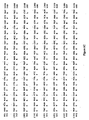
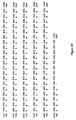
- Figure 1A-D shows the amino acid sequence of the mature form of human albumin (SEQ ID NO:1038) and a polynucleotide encoding it (SEQ ID NO:1037).
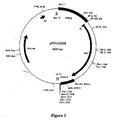
- Figure 2 shows the restriction map of the pPPC0005 cloning vector ATCC deposit PTA-3278.
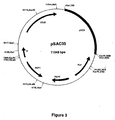
- Figure 3 shows the restriction map of the pSAC35 yeast S. cerevisiae expression vector ( Sleep et al., BioTechnology 8:42 (1990 )).
- FIG 4 shows the effect of various dilutions of EPO albumin fusion proteins encoded by DNA comprised in Construct ID NOS. (hereinafter CID) 1966 and 1981 and recombinant human EPO on the proliferation of TF-1 cells (see Examples 8 and 9).
- CID Construct ID NOS.
- rhEpo Recombinant human Epo
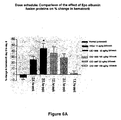
- Figure 5 is a dose response analysis and shows the effect of various doses of recombinant human EPO and EPO albumin fusion proteins encoded by DNA comprised in CID 1966 and 1981 on the percent change in hematocrit from day 0 to day 7 (see Examples 8 and 9).
- 48 eight-week old female DBA/2NHsd mice were divided into 12 groups of 4 animals each.
- Recombinant human Epo (rhEpo) was administered subcutaneously at 0.5, 1.5, 4.5 and 12 ⁇ g/kg on days 0, 2, 4, and 6.
- Epo albumin fusion proteins made from constructs CID 1966 and CID 1981 were administered subcutaneously at 2, 6, 18, and 54 ⁇ g/kg on days 0, 2, 4, and 6.
- Epo albumin fusion proteins allow a rough equimolar comparison with recombinant human Epo (note that the weight of the fusions is about 4.35 times the weight of non-glycosylated Epo).
- the animals were bled via a tail vein and the hematocrit was determined by centrifugation. ( ⁇ ) rhEpo; (o) CID 1981; ( ⁇ ) CID 1966.
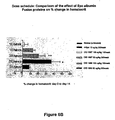
- Figure 6B shows the effect of subcutaneous administrations of Epo albumin fusion proteins encoded by DNA comprised in CID 1997 and 1966 on the percent change in hematocrit from day 0 to day 14 (see Examples 8 and 10).
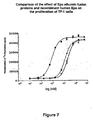
- Figure 7 shows the effect of various dilutions albumin fusion proteins encoded by DNA comprised in CID 1981 and 1997, respectively, on the proliferation of TF-1 cells (see Examples 9 and 10).
- Cells were washed 3X to remove GM-CSF and plated at 10,000 cells/well for 72 hours in the presence of 3-fold dilutions of Epo albumin fusion proteins encoded by CID 1981 or 1997.
- Equimolar amounts of rhEpo were used as a positive control (4.35 times less protein added since weight of non-glycosylated Epo is 20 kd, while Epo albumin fusion proteins are 87 kd).
- Cells were exposed to 0.5 ⁇ Ci/well of 3 H-thymidine for an additional 24 hours.
- Figure 8 shows the effect of various doses of recombinant human EPO (rhEpo) and EPO albumin fusion protein encoded by DNA comprised in construct 1997 (CID 1997) on the percent change in hematocrit from day 0 to day 8 (see Example 10).
- rhEpo recombinant human EPO
- CID EPO albumin fusion protein encoded by DNA comprised in construct 1997
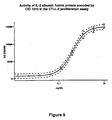
- Figure 9 shows the effect of various dilutions of IL2 albumin fusion proteins encoded by DNA comprised in CID 1812 (see Example 15) on CTLL-2 proliferation.
- 1x10 4 cells/well were seeded in a 96-well plate in a final volume of 200 ul of complete medium containing the indicated amount of IL2 albumin fusion protein (CID 1812). All samples were run in triplicate. The cells were incubated for 40 hours at 37°C, then 20 ul of Alamar Blue was added and cells incubated for 8 hours. Absorbance at 530/590 was used as a measure of proliferation.
- Figure 10 shows the effect of IL2 albumin fusion protein encoded by DNA comprised in CID 1812 on RENCA tumor growth at day 21 (see Example 15).
- QD daily
- rIL2 0.9 mg/kg
- CID 1812 protein IL2 albumin fusion protein
- PBS Placebo
- injections every other day (QOD) of CID 1812 protein 0.6 mg/kg.
- the tumor volume was determined on Day 21 after RENCA inoculation. The data are presented in scatter analysis (each dot representing single animal).
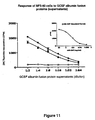
- FIG 11 shows the effect of various dilutions of GCSF albumin fusion proteins encoded by DNA comprised in CID 1642 and 1643 on NFS-60 cell proliferation (see Examples 19 and 20).
- ( ⁇ ) CID 1642;
- (A) CID 1643;
- ( ⁇ ) HSA.
- Figure 12 shows the effect of recombinant human GCSF (Neupogen) and GCSF albumin fusion protein on total white blood cell count (see Example 19).
- Total WBC (10 3 cells/ul) on each day are presented as the group mean ⁇ SEM.
- GCSF albumin fusion protein was administered sc at either 25 or 100 ug/kg every 4 days x 4 (Q4D), or at 100 ug/kg every 7 days x 2 (Q7D).
- Data from Days 8 and 9 for GCSF albumin fusion protein 100 ug/kg Q7 are presented as Days 9 and 10, respectively, to facilitate comparison with other groups.
- Controls were saline vehicle administered SC every 4 days x 4 (Vehicle Q4D), or Neupogen administered SC daily x 14 (Neupogen 5 ug/kg QD). The treatment period is considered Days 1-14, and the recovery period, Days 15-28.
- Figure 13 shows the effect of various dilutions of IFNb albumin fusion proteins encoded by DNA comprised in CID 2011 and 2053 on SEAP activity in the ISRE-SEAP/293F reporter cells (see Example 25). Proteins were serially diluted from 5e-7 to le-14 g/ml in DMEM/10% FBS and used to treat ISRE-SEAP/293F reporter cells. After 24 hours supernatants were removed from reporter cells and assayed for SEAP activity. IFNb albumin fusion protein was purified from three stable clones: 293F/#2011, CHO/#2011 and NSO/#2053. Mammalian derived IFNb, Avonex, came from Biogen and was reported to have a specific activity of 2.0e5 IU/ug.
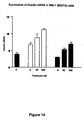
- Figure 14 illustrates the steady-state levels of insulin mRNA in INS-1 (832/13) cells after treatment with GLP-1 or GLP-1 albumin fusion protein encoded by construct m 3070 (CID 3070 protein). Both GLP-1 and the CID 3070 protein stimulate transcription of the insulin gene in INS-1 cells.
- the first bar represents the untreated cells.
- Bars 2-4 (white) represent cells treated with the indicated concentrations of GLP-1.
- Bars 5-7 represent cells treated with the indicated concentrations of CID 3070 protein.
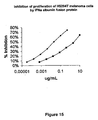
- Figure 15 compares the anti-proliferative activity of IFN albumin fusion protein encoded by CID 3165 (Cm 3165 protein) and recombinant IFNa (rIFNa) on Hs294T melanoma cells.
- the cells were cultured with varying concentrations of either CID 3165 protein or rIFNa and proliferation was measured by BrdU incorporation after 3 days of culture.
- CID 3165 protein caused measurable inhibition of cell proliferation at concentrations above 10 ng/ml with 50% inhibition achieved at approximately 200 ng/ml.
- ( ⁇ ) CID 3165 protein
- ( ⁇ ) rIFNa.
- Figure 16 shows the effect of various dilutions of IFNa albumin fusion proteins on SEAP activity in the ISRE-SEAP/293F reporter cells.
- One preparation of IFNa fused upstream of albumin ( ⁇ ) was tested, as well as two different preparations of IFNa fused downstream of albumin ( ⁇ ) and ( ⁇ ).
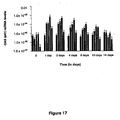
- Figure 17 shows the effect of time and dose of IFNa albumin fusion protein encoded by DNA comprised in construct 2249 (CID 2249 protein) on the mRNA level of OAS (p41) in treated monkeys (see Example 31).
- first bar Vehicle control
- 2 nd bar 30 ug/kg CID 2249 protein day 1 iv
- third bar 30 ug/kg CID 2249 protein day 1 sc
- 4 th bar 300 ug/kg CID 2249 protein day 1 sc
- 5 th bar 40 ug/kg recombinant IFNa day 1, 3 and 5 sc.
- Figure 18 shows the effect of various dilutions of insulin albumin fusion proteins encoded by DNA comprised in constructs 2250 and 2276 on glucose uptake in 3T3-L1 adipocytes (see Examples 33 and 35). .
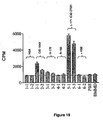
- Figure 19 shows the effect of various GCSF albumin fusion proteins, including those encoded by CID #1643 and #2702 (L-171, see Example 114), on NFS cell proliferation.
- the horizontal dashed line indicates the minimum level of detection.
- polynucleotide refers to a nucleic acid molecule having a nucleotide sequence encoding a fusion protein according to the invention as defined in the claims, said fusion protein comprises or alternatively consists of, at least one molecule of albumin (or a fragment or variant thereof) joined in frame to at least two tandemly oriented Therapeutic proteins X (or fragment or variant thereof) ("Therapeutic protein X" meaning herein GLP-1), a nucleic acid molecule having a nucleotide sequence encoding a fusion protein comprising, or alternatively consisting of, the amino acid sequence of SEQ ID NO:Y (i.e.
- nucleic acid molecule having a nucleotide sequence comprising or alternatively consisting of one of those sequences shown in SEQ ID NO:X which encode a fusion protein of the invention; a nucleic acid molecule having a nucleotide sequence encoding a fusion protein comprising, or alternatively consisting of one of those amino acid sequences of SEQ ID NO:Z which encode a fusion protein of the invention; a nucleic acid molecule having a nucleotide sequence encoding an albumin fusion protein of the invention generated as described in Table 2 or in the Examples; a nucleic acid molecule having a nucleotide sequence contained in an albumin fusion construct of the invention described in Table 2, or a nucleic acid molecule having a nucleotide sequence contained in an albumin fusion construct of the invention deposited with the ATCC (as described in Table 3).
- albumin fusion construct refers to a nucleic acid molecule as defined above, optionally further comprising, for example, one or more of the following elements: (1) a functional self-replicating vector (including but not limited to, a shuttle vector, an expression vector, an integration vector, and/or a replication system), (2) a region for initiation of transcription (e.g., a promoter region, such as for example, a regulatable or inducible promoter, a constitutive promoter), (3) a region for termination of transcription, (4) a leader sequence, and (5) a selectable marker.
- a functional self-replicating vector including but not limited to, a shuttle vector, an expression vector, an integration vector, and/or a replication system
- a region for initiation of transcription e.g., a promoter region, such as for example, a regulatable or inducible promoter, a constitutive promoter
- a region for termination of transcription e.g., a promoter region, such as for example, a regula
- albumin fusion protein refers to a protein formed by the fusion of at least one molecule of albumin (or a fragment or variant thereof) to at least two tandemly oriented molecules of a Therapeutic protein (or fragment or variant thereof) ("Therapeutic protein” meaning herein "GLP-1").
- An albumin fusion protein of the invention comprises the at least two tandemly oriented molecules of the Therapeutic protein (or fragment or variant thereof) and at least a fragment or variant of human serum albumin, which are associated with one another by genetic fusion (i.e., the albumin fusion protein is generated by translation of a nucleic acid in which a polynucleotide encoding all or a portion of a Therapeutic protein is joined in-frame with a polynucleotide encoding all or a portion of albumin).
- an albumin fusion protein of the invention comprises the at least two tandemly oriented molecules of the Therapeutic protein X or fragment or variant thereof (including, but not limited to a mature form of the Therapeutic protein X) and at least one molecule of albumin or fragment or variant thereof (including but not limited to a mature form of albumin).
- an albumin fusion protein of the invention is processed by a host cell and secreted into the surrounding culture medium. Processing of the nascent albumin fusion protein that occurs in the secretory pathways of the host used for expression may include, but is not limited to signal peptide cleavage; formation of disulfide bonds; proper folding; addition and processing of carbohydrates (such as for example, N- and O- linked glycosylation); specific proteolytic cleavages; and assembly into multimeric proteins.
- An albumin fusion protein of the invention is preferably in the processed form.
- the "processed form of an albumin fusion protein” refers to an albumin fusion protein product which has undergone N- terminal signal peptide cleavage, herein also referred to as a "mature albumin fusion protein”.
- an albumin fusion construct of the invention was deposited with the American Type Culture Collection (herein referred to as "ATCC®"). Furthermore, it is possible to retrieve a given albumin fusion construct from the deposit by techniques known in the art and described elsewhere herein.
- the ATCC® is located at 10801 University Boulevard, Manassas, Virginia 20110-2209, USA. The ATCC® deposits were made pursuant to the terms of the Budapest Treaty on the international recognition of the deposit of microorganisms for the purposes of patent procedure.
- the albumin fusion protein of the invention comprises two or more tandemly oriented biologically active and/or therapeutically active fragments of the Therapeutic protein as defined above and a serum albumin protein.
- the albumin fusion protein of invention comprises, or alternatively consists of, two or more tandemly oriented molecules of a biologically active and/or therapeutically active variant of the Therapeutic protein and a serum albumin protein.
- the serum albumin protein component of the albumin fusion protein is the mature portion of serum albumin.
- the invention further encompasses polynucleotides encoding these albumin fusion proteins.
- the Therapeutic protein portion of the albumin fusion protein of the invention is the extracellular soluble domain of the Therapeutic protein.
- the Therapeutic protein portion of the albumin fusion protein is the active form of the Therapeutic protein.
- the invention further encompasses polynucleotides encoding these albumin fusion proteins.
- a polynucleotide of the invention encodes a protein comprising or alternatively consisting of, at least two tandemly oriented fragments or variants of the Therapeutic protein as defined above and at least a fragment or variant of human serum albumin, which are associated with one another, preferably by genetic fusion.
- An additional embodiments includes a polynucleotide encoding a protein comprising or alternatively consisting of at least two tandemly oriented fragments or variants of the Therapeutic protein and at least a fragment or variant of human serum albumin, which are linked with one another by chemical conjugation.
- Therapeutic protein refers to GLP-1 polypeptides selected from wild-type GLP-1, GLP-1 fragments and GLP-1 variants having GLP-1 activity when present in the albumin fusion protein of the invention.
- a polypeptide displaying a “therapeutic activity” or a protein that is “therapeutically active” is meant a polypeptide that possesses one or more known biological and/or therapeutic activities associated with the Therapeutic protein described herein of otherwise known in the art.
- a "Therapeutic protein” is a protein that is useful to treat, prevent or ameliorate a disease, condition or disorder.
- a "Therapeutic protein” may be one that binds specifically to a particular cell type (normal (e.g., lymphocytes) or abnormal e.g., (cancer cells)) and therefore may be used to target a compound (drug, or cytotoxic agent) to that cell type specifically.
- the "Therapeutic protein" portions comprised by the albumin fusion protein of the invention is GLP-1 or GLP-1 fragments or GLP-1 variants.
- the "Therapeutic protein” is a GLP-1 protein that has a biological activity, and in particular, a biological activity that is useful for treating, preventing or ameliorating a disease.
- a non-inclusive list of biological activities that may be possessed by the Therapeutic protein includes, one or more of the biological activities described in the "Biological Activities” section below and/or as disclosed for the given Therapeutic protein in Table 1 (column 2).
- therapeutic activity or “activity” may refer to an activity whose effect is consistent with a desirable therapeutic outcome in humans, or to desired effects in non-human mammals or in other species or organisms.
- Therapeutic activity may be measured in vivo or in vitro. For example, a desirable effect may be assayed in cell culture.
- in vitro or cell culture assays are commonly available for many Therapeutic proteins as described in the art. Examples of assays include, but are not limited to those described herein in the Examples section or in the "Exemplary Activity Assay” column (column 3) of Table 1.
- Therapeutic proteins corresponding to the Therapeutic protein portion of an albumin fusion protein of the invention are often modified by the attachment of one or more oligosaccharide groups.
- the modification referred to as glycosylation, can dramatically affect the physical properties of proteins and can be important in protein stability, secretion, and localization. Glycosylation occurs at specific locations along the polypeptide backbone.
- glycosylation glycosylation characterized by O-linked oligosaccharides, which are attached to serine on threonine residues; and glycosylation characterized by N-linked oligosaccharides, which are attached to asparagine residues in an Asn-X-Ser or Asn-X-Thr sequence, where X can be any amino acid except proline.
- N-acetylneuramic acid also known as sialic acid
- Variables such as protein structure and cell type influence the number and nature of the carbohydrate units within the chains at different glycosylation sites. Glycosylation isomers are also common at the same site within a given cell type.
- Therapeutic proteins corresponding to the Therapeutic protein portion of an albumin fusion protein of the invention may be modified so that glycosylation at one or more sites is altered as a result of manipulation(s) of their nucleic acid sequence, by the host cell in which they are expressed, or due to other conditions of their expression.
- glycosylation isomers may be produced by abolishing or introducing glycosylation sites, e.g ., by substitution or deletion of amino acid residues, such as substitution of glutamine for asparagine, or unglycosylated recombinant proteins may be produced by expressing the proteins in host cells that will not glycosylate them, e.g. in E. coli or glycosylation-deficient yeast.
- the therapeutic protein disclosed in Table 1, and its nucleic acid and amino acid sequences are well known in the art and available in public databases such as Chemical Abstracts Services Databases (e.g., the CAS Registry), GenBank, and subscription provided databases such as GenSeq (e.g., Derwent).
- GenSeq e.g., Derwent
- Exemplary nucleotide sequences of the Therapeutic protein which may be used to derive a polynucleotide of the invention are shown in column 7, "SEQ ID NO:X,” of Table 2.
- Sequences shown as SEQ ID NO:X may be a wild type polynucleotide sequence encoding a given Therapeutic protein (e.g., either full length or mature), or in some instances the sequence may be a variant of said wild type polynucleotide sequence (e.g ., a polynucleotide which encodes the wild type Therapeutic protein, wherein the DNA sequence of said polynucleotide has been optimized, for example, for expression in a particular species; or a polynucleotide encoding a variant of the wild type Therapeutic protein (i.e., a site directed mutant; an allelic variant)).
- a variant of the wild type Therapeutic protein i.e., a site directed mutant; an allelic variant
- SEQ ID NO:X corresponds to a full length protein, but only a portion of that protein is used to generate the specific CID, it is within the skill of the art to rely on molecular biology techniques, such as PCR, to amplify the specific fragment and clone it into the appropriate vector.
- Table 1 provides the Therapeutic protein portion of an albumin fusion protein of the invention, or an albumin fusion protein encoded by a polynucleotide of the invention.
- the first column, "Therapeutic Protein X,” discloses the Therapeutic protein molecule that may be followed by parentheses containing scientific and brand names of proteins that comprise, or alternatively consist of, that Therapeutic protein molecule or a fragment or variant thereof.
- “Therapeutic protein X” as used herein may refer either to an individual Therapeutic protein molecule, or to the entire group of Therapeutic proteins associated with a given Therapeutic protein molecule disclosed in this column.
- the "Biological activity” column (column 2) describes Biological activities associated with the Therapeutic protein molecule.
- Example 3 “Exemplary Activity Assay,” provides references that describe assays which may be used to test the therapeutic and/or biological activity of the Therapeutic protein:X or an albumin fusion protein comprising the Therapeutic protein X (or fragment thereof) portion.
- the "Construct ID” column (column 5) provides a link to an exemplary albumin fusion construct disclosed in Table 2 which encodes an albumin fusion protein comprising, or alternatively consisting of the referenced Therapeutic Protein X (or fragment thereof) portion.
- Therapeutic Protein:X Biological Activity Exemplary Activity Assay Preferred Indication:Y Construct ID Therapeutic Protein:Z Glucagon-Like- Stimulates the synthesis GLP1 activity may be Hyperglycemia; Diabetes; Diabetes Insipidus; 2448, 2455, 2456, 2457, See Table 2, Peptide 1 (GLP1; Insulinotropin) and release of insulin; enhances the sensitivity of adipose, muscle, and liver tissues towards insulin; stimulates glucose uptake; slows the digestive process; suppresses appetite; blocks the secretion of glucagon. assayed in vitro using a [3-H]-glucose uptake assay.
- Diabetes mellitus Type 1 diabetes; Type 2 diabetes; Insulin resistance; Insulin deficiency; Hyperlipidemia; Hyperketonemia; Non-insulin dependent Diabetes Mellitus (NIDDM); Insulin-dependent Diabetes Mellitus (IDDM); A Condition Associated With Diabetes Including, But Not Limited To Obesity, Heart Disease, Hyperglycemia, Infections, Retinopathy, And/Or Ulcers; Metabolic Disorders; Immune Disorders; Obesity; Vascular Disorders; Suppression of Body Weight; Suppression of Appetite; Syndrome X.
- NIDDM Non-insulin dependent Diabetes Mellitus
- IDDM Insulin-dependent Diabetes Mellitus
- pSAC35 414 198 630 988 989 HSA/kex2 199 2455 pSAC35:HSA.GLP-1(7-36)
- GLP-1(7-36) is fused downstream of mature HSA and HSA/kex2 leader sequence.
- pSAC35 416 200 632 992 993 HSA/kex2 200 2456
- pSAC35:GLP-1(7-36(A8G) HSA Amino acids H98 to R127 of Preproglucagon (SEQ ID NO:633)(also referred to as "GLP-1(7-36)”) is mutated at amino acid 99 of SEQ ID NO:633 to replace the alanine with a glycine.
- GLP-1(7-36(A8G)) This particular GLP-1 mutant will be hereinafter referred to as "GLP-1(7-36(A8G))" and corresponds to the sequence shown in SEQ ID NO:1808.
- GLP-1(7-36(A8G)) is fused upstream of mature HSA and downstream of HSA/kex2 leader sequence.
- GLP-1(7-36(A8G)) (SEQ ID NO:1808) is fused downstream of mature HSA and HSA/kex2 leader sequence.
- HSA/kex2 pSAC35 418 202 634 996 997 HSA/kex2 276 2802 pSAC35:GLP-1(7-36(A8G)).IP2.
- HSA GLP-1(7-36(A8G)) (SEQ ID NO:1808) is fused downstream from the HSA/kex2 leader sequence and upstream from the intervening peptide-2 of proglucagon peptide and upstream from mature HSA.
- HSA GLP-1(7-36(A8G)) (SEQ ID NO:1808) is tandemly repeated and fused downstream of the HSA/kex2 signal sequence, and upstream of mature HSA.
- HSA GLP-1(7-36(A8G)) (SEQ ID NO:1808) is tandemly repeated and fused downstream of the HSA/kex2 signal sequence, and upstream of mature HSA.
- HSA GLP-1(7-36) is tandemly repeated and then fused downstream of the HSA/kex2 signal sequence and upstream of mature HSA.
- GLP-1(9-36) HSA/kex2 signal sequence and upstream from GLP-1(7-36), and mature HSA.
- GLP-1(7-36(A8S) HSA/kex2 326 2945 pSAC35:GLP-1(7-36(A8S)).GLP-1(7-36).
- HSA Amino acids H98 to R127 of preproglucagon SEQ ID NO:1250
- this particular mulant is referred to as GLP-1(7-36(A8S)), which is fused downstream from the HSA/kex2 signal sequence and upstream from GLP-1(7-36), and mature HSA.
- HSA GLP-1(7-36) is tandemly repeated as a dimer and fused downstream from the HSA/kex2 leader sequence and upstream from mature HSA.
- HSA GLP-1(7-36(A8G)) (SEQ ID NO:1808) is fused downstream from the HSA/kex2 signal sequence and upstream from GLP-1(7-36) and mature HSA.
- HSA/kex2 336 3027 pSAC35:INV.GLP-1(7-36A8G)x2.
- HSA Invertase signal peptide followed by GLP-1(7-36(A8G)) (SEQ ID NO:1808) tandemly repeated as a dimer, followed by mature HSA.
- HSA/kex2 last six amino acids 339 3046 pSAC35:Delta Kex.GLP.1(7-36A8G).GLP-1(7-36).HSA HSA/kex2 signal sequence, minus the last six amino acids of the leader, is fused to GLP-1(7-36(A8G)) (SEQ ID NO:1808), GLP-1(7-36), and mature HSA.
- HSA/kex2 last six amino acids 349 3066 pSAC35:CKB-1d8.GLP-1(7-36).
- HSA Invertase signal peptide followed by amino acids G28-N93 of full length CK ⁇ 1 (SEQ ID NO:1788), followed by GLP-1(7-36), followed by mature HSA.
- the inulinase signal sequence is fused to GLP-1(7-36(A8G)) (SEQ ID NO:1808), which is tandemly repeated as a dimer and fused to mature HSA.
- HSA GLP-1(7-36(A8G)) (SEQ ID NO:1808) is tandemly repeated as a dimer and fused upstream from mature HSA and downstream from the killer toxin signal sequence.
- HSA The yeast mating factor ⁇ -1 (hereinafter MF ⁇ -1) signal sequence is fused to tandemly repeated copies of GLP-1(7-36(A8G)) (SEQ ID NO:1808), which are fused to mature HSA.
- HSA The acid phosphatase signal sequence is fused to tandemly repeated copies of GLP-1(7-36(A8G)) (SEQ ID NO:1808), which are fused to mature HSA.
- pSAC35 1623 1455 1791 2036 2037 Acid phosphatas e 354 3085 pSAC35:MAF.GLP-1(7-36(A8G)).GLP-1(7-36).HSA
- the yeast mating factor ⁇ -1 (hereinafter MF ⁇ -1) signal sequence is fused to GLP-1(7-36(A8G)) (SEQ ID NO:1808), GLP-1(7-36), and mature HSA.
- Table 2 provides a non-exhaustive list of polynucleotides of the invention comprising, or alternatively consisting of, nucleic acid molecules encoding an albumin fusion protein.
- the first column, "Fusion No.” gives a fusion number to each polynucleotide.
- Column 2, "Construct ID” provides a unique numerical identifier for each polynucleotide of the invention. The Construct IDs may be used to identify polynucleotides which encode albumin fusion proteins comprising, or alternatively consisting of, a Therapeutic protein portion corresponding to the given Therapeutic Protein:X listed in the corresponding row of Table 1 wherein that Construct ID is listed in column 5.
- the "Construct Name” column (column 3) provides the name of a given albumin fusion construct or polynucleotide.
- an "expression cassette" comprising, or alternatively consisting of, one or more of (1) a polynucleotide encoding a given albumin fusion protein, (2) a leader sequence, (3) a promoter region, and (4) a transcriptional terminator, may be assembled in a convenient cloning vector and subsequently be moved into an alternative vector, such as, for example, an expression vector including, for example, a yeast expression vector or a mammalian expression vector.
- an expression cassette comprising, or alternatively consisting of, a nucleic acid molecule encoding an albumin fusion protein is cloned into pSAC35.
- an expression cassette comprising, or alternatively consisting of, a nucleic acid molecule encoding an albumin fusion protein is cloned into pC4.
- a polynucleotide comprising or alternatively consisting of a nucleic acid molecule encoding the Therapeutic protein portion of an albumin fusion protein is cloned into pC4:HSA.
- an expression cassette comprising, or alternatively consisting of, a nucleic acid molecule encoding an albumin fusion protein is cloned into pEE12.
- Other useful cloning and/or expression vectors will be known to the skilled artisan.
- SEQ ID NO:Y provides the full length amino acid sequence of the albumin fusion protein of the invention.
- SEQ ID NO:Y shows the unprocessed form of the albumin fusion protein encoded - in other words, SEQ ID NO:Y shows the signal sequence, a HSA portion, and a therapeutic portion all encoded by the particular construct.
- Specifically contemplated by the present invention are all polynucleotides that encode SEQ ID NO:Y. When these polynucleotides are used to express the encoded protein from a cell, the cell's natural secretion and processing steps produces a protein that lacks the signal sequence listed in columns 4 and/or 11 of Table 2.
- compositions comprising these two preferred embodiments, including pharmaceutical compositions, are also preferred. Moreover, it is well within the ability of the skilled artisan to replace the signal sequence listed in columns 4 and/or 11 of Table 2 with a different signal sequence, such as those described later in the specification to facilitate secretion of the processed albumin fusion protein.
- the seventh column, "SEQ ID NO:X.” provides the parent nucleic acid sequence from which a polynucleotide encoding the Therapeutic protein portion of a given albumin fusion protein may be derived.
- the parent nucleic acid sequence from which a polynucleotide encoding the Therapeutic protein portion of an albumin fusion protein may be derived comprises the wild type gene sequence encoding the Therapeutic protein shown in Table 1.
- the parent nucleic acid sequence from which a polynucleotide encoding the Therapeutic protein portion of an albumin fusion protein may be derived comprises a variant or derivative of a wild type gene sequence encoding the Therapeutic protein shown in Table 1, such as, for example, a synthetic codon optimized variant of a wild type gene sequence encoding the Therapeutic: protein.
- SEQ ID NO:Z provides a predicted translation of the parent nucleic acid sequence (SEQ ID NO:X).
- This parent sequence can be a full length parent protein used to derive the particular construct, the mature portion of a parent protein, a variant or fragment of a wildtype protein, or an artificial sequence that can be used to create the described construct.
- One of skill in the art can use this amino acid sequence shown in SEQ ID NO:Z to determine which amino acid residues of an albumin fusion protein encoded by a given construct are provided by the therapeutic protein.
- SEQ ID NO:Z corresponds to a full length protein, but only a portion of that protein is used to generate the specific CID, it is within the skill of the art to rely on molecular biology techniques, such as PCR, to amplify the specific fragment and clone it into the appropriate vector.
- Amplification primers provided in columns 9 and 10, "SEQ ID NO:A” and “SEQ ID NO:B” respectively, are exemplary primers used to generate a polynucleotide comprising or alternatively consisting of a nucleic acid molecule encoding the Therapeutic protein portion of a given albumin fusion protein.
- oligonucleotide primers having the sequences shown in columns 9 and/or 10 (SEQ ID NOS:A and/or B) are used to PCR amplify a polynucleotide encoding the Therapeutic protein portion of an albumin fusion protein using a nucleic acid molecule comprising or alternatively consisting of the nucleotide sequence provided in column 7 (SEQ m NO:X) of the corresponding row as the template DNA.
- PCR methods are well-established in the art. Additional useful primer sequences could readily be envisioned and utilized by those of ordinary skill in the art.
- oligonucleotide primers may be used in overlapping PCR reactions to generate mutations within a template DNA sequence. PCR methods are known in the art.
- the ATCC is located at 10801 University Boulevard, Manassas, Virginia 20110-2209, USA.
- the ATCC deposits were made pursuant to the terms of the Budapest Treaty on the international recognition of the deposit of microorganisms for the purposes of patent procedure.
- an "expression cassette” comprising, or alternatively consisting of one or more of (1) a polynucleotide encoding a given albumin fusion protein, (2) a leader sequence, (3) a promoter region, and (4) a transcriptional terminator can be moved or "subcloned" from one vector into another. Fragments to be subcloned may be generated by methods well known in the art, such as, for example, PCR amplification (e.g., using oligonucleotide primers having the sequence shown in SEQ ID NO:A or B), and/or restriction enzyme digestion.
- the albumin fusion proteins of the invention are capable of a therapeutic activity and/or biologic activity corresponding to the therapeutic activity and/or biologic activity of the Therapeutic protein corresponding to the Therapeutic protein portion of the albumin fusion protein listed in the corresponding row of Table 1.
- the therapeutically active protein portions of the albumin fusion proteins of the invention are fragments or variants of the protein encoded by the sequence shown in SEQ ID NO:X column of Table 2, and are capable of the therapeutic activity and/or biologic activity of the corresponding Therapeutic protein.
- Non-human albumin fusion proteins of growth hormone are included in the specification.
- the albumin fusion proteins of the invention comprise one or more Serum Albumin proteins of a non-human animal species, fused in tandem and in-frame either at the N-terminus or the C-terminus to one or more Growth Hormone proteins of the same non-human animal species.
- Non-human Serum Albumin and Growth Hormone proteins are well known in the art and available in public databases.
- Table 4 presents accession numbers corresponding to non-human Serum Albumin sequences (column 2) and non-human Growth Hormone sequences (column 3) found in GenBank.
- a Serum Albumin protein from a non-human animal species listed in Table 4 is fused to a Growth Hormone protein from the same non-human animal species.
- the albumin fusion protein of the invention comprises one or more Bos taurus Serum Albumin proteins listed in Table 4, column 2, fused in tandem and in-frame either at the N-terminus or the C-terminus to one or more Bos taurus Growth Hormone proteins listed in Table 4, column 3.
- Fusion proteins comprising fragments or variants of non-human Serum Albumin, such as, for example, the mature form of Serum Albumin, are also encompassed by the invention. Fusion proteins comprising fragments or variants of non-human Growth Hormone proteins, such as, for example, the mature form of Growth Hormone, are also encompassed by the invention. Preferably the non-human Growth Hormone fragments and variants retain growth hormone activity.
- Polynucleotides of the invention comprise, or alternatively consist of, one or more nucleic acid molecules encoding a non-human albumin fusion protein described above.
- the polynucleotides can comprise, or alternatively consist of, one or more nucleic acid molecules that encode a Serum Albumin protein from a non-human animal species listed in Table 4, column 1 (such as, for example, the non-human Serum Albumin reference sequences listed in Table 4, column 2) fused in tandem and in-frame either 5' or 3' to a polynucleotide that comprises, or alternatively consists of, one or more nucleic acid molecules encoding the non-human Growth Hormone protein of the corresponding non-human animal species (for example, the Growth Hormone reference sequences listed in Table 4, column 3).
- non-human albumin fusion proteins are encompassed by the invention, as are host cells and vectors containing these polynucleotides.
- a non-human albumin fusion protein encoded by a polynucleotide as described above has extended shelf life.
- a non-human albumin fusion protein encoded by a polynucleotide described above has a longer serum half-life and/or more stabilized activity in solution (or in a pharmaceutical composition) in vitro and/or in vivo than the corresponding unfused Growth Hormone molecule.
- the present invention also encompasses methods of preventing, treating, or ameliorating a disease or disorder in a non-human animal species.
- the present invention encompasses a method of treating a veterinary disease or disorder comprising administering to a non-human animal species in which such treatment, prevention or amelioration is desired an albumin fusion protein of the invention that comprises a Growth Hormone portion corresponding to a Growth Hormone protein (or fragment or variant thereof) in an amount effective to treat, prevent or ameliorate the disease or disorder.
- Veterinary diseases and/or disorders which may be treated, prevented, or ameliorated include growth disorders (such as, for example, pituitary dwarfism), shin soreness, obesity, growth hormone-responsive dermatosis, dilated cardiomyopathy, eating disorders, reproductive disorders, and endocrine disorders.
- growth disorders such as, for example, pituitary dwarfism
- shin soreness such as, for example, shin soreness
- obesity such as, for example, pituitary dwarfism
- growth hormone-responsive dermatosis such as, for example, shin soreness, obesity, growth hormone-responsive dermatosis, dilated cardiomyopathy, eating disorders, reproductive disorders, and endocrine disorders.
- Non-human albumin fusion proteins of the invention may also be used to promote healing of skin wounds, corneal injuries, bone fractures, and injuries of joints, tendons, or ligaments.
- Non-human albumin fusion proteins of the invention may also be used to increase milk production in lactating animals.
- the lactating animal is a dairy cow.
- Non-human albumin fusion proteins of the invention may also be used to improve body condition in aged animals.
- Non-human albumin fusion proteins of the invention may also be used to increase fertility, pregnancy rates, and reproductive success in domesticated animals.
- Non-human albumin fusion proteins of the invention may also be used to improve the lean-to-fat ratio in animals raised for consumption, as well as to improve appetite, and increase body size and growth rate.
- Table 4 Non-Human Species Non-Human Serum Albumin Reference Sequence(s): GenBank Protein Accession Nos.
- Bos taurus ABBOS CAA76847, P02769, CAA41735, 229552, AAA51411 STBO, BAA06379, A29864, AAF28806, AAF28805, AAF28804, P01246, AAF03132, AAC63901, AAB92549, A36506, I45901, JC1316, CAA23445, CAA00787, CAA00598, AAA30547, AAA30546, AAA30545, AAA30544, AAA30543, AAA30542 Sus scrofa P08835, CAA30970, AAA30988 STPG, PC1017, AAB29947, AAB84359, I46585, I46584, PC1063, A01516, AAB17619, 226829, 225740, CAA37411, CAA00592, AAA73478, AAA73477, CAA00356, AAA31046, AAA31045, AAA31044, AA30543 Equus caballus ABHOS, AAG40944, P3
- deletion of one or more amino acids from the N-terminus of a protein results in modification or loss of one or more biological functions of the Therapeutic protein, albumin protein, and/or albumin fusion protein of the invention
- other Therapeutic activities and/or functional activities e.g., biological activities, ability to multimerize, ability to bind a ligand
- the ability of polypeptides with N-terminal deletions to induce and/or bind to antibodies which recognize the complete or mature forms of the polypeptides generally will be retained when less than the majority of the residues of the complete polypeptide are removed from the N-terminus.
- fragments of the Therapeutic protein corresponding to the Therapeutic protein portion of an albumin fusion protein of the invention include the full length protein as well as polypeptides having one or more residues deleted from the amino terminus of the amino acid sequence of the reference polypeptide (i.e., the Therapeutic protein referred to in Table 1, or a Therapeutic protein portion of an albumin fusion protein encoded by a polynucleotide or albumin fusion construct described in Table 2).
- N-terminal deletions may be described by the general formula m to q, where q is a whole integer representing the total number of amino acid residues in a reference polypeptide (e.g., the Therapeutic protein referred to in Table 1, or a Therapeutic protein portion of an albumin fusion protein of the invention, or a Therapeutic protein portion of an albumin fusion protein encoded by a polynucleotide or albumin fusion construct described in Table 2), and m is defined as any integer ranging from 2 to q minus 6. Polynucleotides encoding these polypeptides are also encompassed by the invention.
- q is a whole integer representing the total number of amino acid residues in a reference polypeptide (e.g., the Therapeutic protein referred to in Table 1, or a Therapeutic protein portion of an albumin fusion protein of the invention, or a Therapeutic protein portion of an albumin fusion protein encoded by a polynucleotide or albumin fusion construct described in Table 2)
- m is defined as any integer
- fragments of serum albumin polypeptides corresponding to an albumin protein portion of an albumin fusion protein of the invention include the full length protein as well as polypeptides having one or more residues deleted from the amino terminus of the amino acid sequence of the reference polypeptide (i.e., serum albumin, or a serum albumin portion of an albumin fusion protein encoded by a polynucleotide or albumin fusion construct described in Table 2).
- N-terminal deletions may be described by the general formula m to 585, where 585 is a whole integer representing the total number of amino acid residues in mature human serum albumin (SEQ ID NO:1038), and m is defined as any integer ranging from 2 to 579.
- N-terminal deletions may be described by the general formula m to 609, where 609 is a whole integer representing the total number of amino acid residues in full length human serum albumin (SEQ ID NO:1094), and m is defined as any integer ranging from 2 to 603. Polynucleotides encoding these polypeptides are also encompassed by the invention.
- fragments of albumin fusion proteins of the invention include the full length albumin fusion protein as well as polypeptides having one or more residues deleted from the amino terminus of the albumin fusion protein (e.g., an albumin fusion protein encoded by a polynucleotide or albumin fusion construct described in Table 2; or an albumin fusion protein having the amino acid sequence disclosed in column 6 of Table 2).
- N-terminal deletions may be described by the general formula m to q, where q is a whole integer representing the total number of amino acid residues in the albumin fusion protein, and m is defined as any integer ranging from 2 to q minus 6.
- Polynucleotides encoding these polypeptides are also encompassed by the invention.
- a reference polypeptide e.g., the Therapeutic protein; serum albumin protein; or albumin fusion protein of the invention
- other functional activities e.g., biological activities, ability to multimerize, ability to bind a ligand
- Therapeutic activities may still be retained.
- the ability of polypeptides with C-terminal deletions to induce and/or bind to antibodies which recognize the complete or mature forms of the polypeptide generally will be retained when less than the majority of the residues of the complete or mature polypeptide are removed from the C-terminus.
- Whether a particular polypeptide lacking the N-terminal and/or C-terminal residues of a reference polypeptide retains Therapeutic activity can readily be determined by routine methods described herein and/or otherwise known in the art
- the present disclosure further provides polypeptides having one or more residues deleted from the carboxy terminus of the amino acid sequence of the Therapeutic protein corresponding to the Therapeutic protein portion of an albumin fusion protein of the invention (e.g., the Therapeutic protein referred to in Table 1, or a Therapeutic protein portion of an albumin fusion protein encoded by a polynucleotide or albumin fusion construct described in Table 2).
- C-terminal deletions may be described by the general formula 1 to n, where n is any whole integer ranging from 6 to q minus 1, and where q is a whole integer representing the total number of amino acid residues in a reference polypeptide (e.g., the Therapeutic protein referred to in Table 1, or a Therapeutic protein portion of an albumin fusion protein encoded by a polynucleotide or albumin fusion construct described in Table 2).
- Polynucleotides encoding these polypeptides are also encompassed by the invention.
- polypeptides having one or more residues deleted from the carboxy terminus of the amino acid sequence of an albumin protein corresponding to an albumin protein portion of an albumin fusion protein of the invention e.g., serum albumin or an albumin protein portion of an albumin fusion protein encoded by a polynucleotide or albumin fusion construct described in Table 2.
- C-terminal deletions may be described by the general formula I to n, where n is any whole integer ranging from 6 to 584, where 584 is the whole integer representing the total number of amino acid residues in mature human serum albumin (SEQ ID NO:1038) minus 1.
- Polynucleotides encoding these polypeptides are also encompassed by the invention.
- C-terminal deletions may be described by the general formula 1 to n, where n is any whole integer ranging from 6 to 608, where 608 is the whole integer representing the total number of amino acid residues in serum albumin (SEQ ID NO:1094) minus 1.
- Polynucleotides encoding these polypeptides are also encompassed by the invention.
- polypeptides having one or more residues deleted from the carboxy terminus of an albumin fusion protein of the invention may be described by the general formula 1 to n, where n is any whole integer ranging from 6 to q minus 1, and where q is a whole integer representing the total number of amino acid residues in an albumin fusion protein of the invention.
- Polynucleotides encoding these polypeptides are also encompassed by the invention.
- any of the above described N- or C-terminal deletions can be combined to produce a N- and C-terminal deleted reference polypeptide.
- the disclosure also provides polypeptides having one or more amino acids deleted from both the amino and the carboxyl termini, which may be described generally as having residues m to n of a reference polypeptide (e.g., the Therapeutic protein referred to in Table 1, or a Therapeutic protein portion of an albumin fusion protein of the invention, or a Therapeutic protein portion encoded by a polynucleotide or albumin fusion construct described in Table 2, or serum albumin (e.g., SEQ ID NO:1038), or an albumin protein portion of an albumin fusion protein of the invention, or an albumin protein portion encoded by a polynucleotide or albumin fusion construct described in Table 2, or an albumin fusion protein, or an albumin fusion protein encoded by a polynucleotide or albumin fusion construct of the invention) where n and m are integers as
- the present disclosure is also directed to proteins containing polypeptides at least 80%, 85%, 90%, 95%, 96%, 97%, 98% or 99% identical to a reference polypeptide sequence (e.g., the Therapeutic protein referred to in Table 1, or a Therapeutic protein portion of an albumin fusion protein of the invention, or a Therapeutic protein portion encoded by a polynucleotide or albumin fusion construct described in Table 2, or serum albumin (e.g., SEQ ID NO: 1038), or an albumin protein portion of an albumin fusion protein of the invention, or an albumin protein portion encoded by a polynucleotide or albumin fusion construct described in Table 2, or an albumin fusion protein, or an albumin fusion protein encoded by a polynucleotide or albumin fusion construct of the invention) set forth herein, or fragments thereof.
- a reference polypeptide sequence e.g., the Therapeutic protein referred to in Table 1, or a Therapeutic protein portion of an albumin fusion protein
- the disclosure is directed to proteins comprising polypeptides at least 80%, 85%, 90%, 95%, 96%, 97%. 98% or 99% identical to reference polypeptides having the amino acid sequence of N- and C-terminal deletions as described above. Polynucleotides encoding these polypeptides are also disclosed.
- Preferred polypeptide fragments are fragments comprising, or alternatively, consisting of, an amino acid sequence that displays a Therapeutic activity and/or functional activity (e.g. biological activity) of the polypeptide sequence of the Therapeutic protein or serum albumin protein of which the amino acid sequence is a fragment.
- Biologically active fragments are those exhibiting activity similar, but not necessarily identical, to an activity of the polypeptide of the present invention.
- the biological activity of the fragments may include an improved desired activity, or a decreased undesirable activity.
- Variant refers to a polynucleotide or nucleic acid differing from a reference nucleic acid or polypeptide, but retaining essential properties thereof. Generally, variants are overall closely similar, and, in many regions, identical to the reference nucleic acid or polypeptide.
- variant refers to the Therapeutic protein portion of an albumin fusion protein of the invention, albumin portion of an albumin fusion protein of the invention, or albumin fusion protein of the invention differing in sequence from the Therapeutic protein (e.g. see “therapeutic” column of Table 1), albumin protein, and/or albumin fusion protein, respectively, but retaining at least one functional and/or therapeutic property thereof as described elsewhere herein or otherwise known in the art.
- variants are overall very similar, and, in many regions, identical to the amino acid sequence of the Therapeutic protein corresponding to the Therapeutic protein portion of an albumin fusion protein, albumin protein corresponding to an albumin protein portion of an albumin fusion protein, and/or albumin fusion protein Nucleic acids encoding these variants are also encompassed by the invention.
- proteins' which comprise, or alternatively consist of, an amino acid sequence which is at least 80%, 85%, 90%, 95%, 96%, 97%, 98%, 99% or 100%, identical to, for example, the amino acid sequence of the Therapeutic protein corresponding to the Therapeutic protein portion of an albumin fusion protein of the invention (e.g., the amino acid sequence of the Therapeutic protein:X disclosed in Table 1 which is GLP-1; or the amino acid sequence of the Therapeutic protein portion of an albumin fusion protein encoded by a polynucleotide or albumin fusion construct described in Table 1 and 2, or fragments or variants thereof), albumin proteins corresponding to an albumin protein portion of an albumin fusion protein of the invention (e.g., the amino acid sequence of an albumin protein portion of an albumin fusion protein encoded by a polynucleotide or albumin fusion construct described in Table 1 and 2; the amino acid sequence shown in SEQ ID NO: 1038; or fragments or variants thereof), and/or albumin fusion
- polypeptides encoded by polynucleotide which hybridize to the complement of a nucleic acid molecule encoding an albumin fusion protein of the invention under stringent hybridization conditions (e.g., hybridization to filter bound DNA in 6X Sodium chloride/Sodium citrate (SSC) at about 45 degrees Celsius, followed by one or more washes in 0.2X SSC, 0.1% SDS at about 50 - 65 degrees Celsius), under highly stringent conditions (e.g., hybridization to filter bound DNA in 6X sodium chloride/Sodium citrate (SSC) at about 45 degrees Celsius, followed by one or more washes in 0.1X SSC, 0.2% SDS at about 68 degrees Celsius), or under other stringent hybridization conditions which are known to those of skill in the art (see, for example, Ausubel, F.M.
- stringent hybridization conditions e.g., hybridization to filter bound DNA in 6X Sodium chloride/Sodium citrate (SSC) at about 45 degrees Celsius, followed by one or more washes in 0.1
- polypeptide having an amino acid sequence at least, for example, 95% "identical" to a query amino acid sequence it is intended that the amino acid sequence of the subject polypeptide is identical to the query sequence except that the subject polypeptide sequence may include up to five amino acid alterations per each 100 amino acids of the query amino acid sequence.
- the subject polypeptide sequence may include up to five amino acid alterations per each 100 amino acids of the query amino acid sequence.
- up to 5% of the amino acid residues in the subject sequence may be inserted, deleted, or substituted with another amino acid.
- These alterations of the reference sequence may occur at the amino- or carboxy-terminal positions of the reference amino acid sequence or anywhere between those terminal positions, interspersed either individually among residues in the reference sequence or in one or more contiguous groups within the reference sequence.
- any particular polypeptide is at least 80%, 85%, 90%, 95%, 96%, 97%, 98% or 99% identical to, for instance, the amino acid sequence of an albumin fusion protein of the invention or a fragment thereof (such as a Therapeutic protein portion of the albumin fusion protein or an albumin portion of the albumin fusion protein), can be determined conventionally using known computer programs.
- a preferred method for determining the best overall match between a query sequence (a sequence of the present invention) and a subject sequence also referred to as a global sequence alignment, can be determined using the FASTDB computer program based on the algorithm of Brutlag et al. (Comp. App. Biosci.6:237-245 (1990 )).
- the query and subject sequences are either both nucleotide sequences or both amino acid sequences.
- the result of said global sequence alignment is expressed as percent identity.
- the percent identity is corrected by calculating the number of residues of the query sequence that are N-and C-terminal of the subject sequence, which are not matched/aligned with a corresponding subject residue, as a percent of the total bases of the query sequence. Whether a residue is matched/aligned is determined by results of the FASTDB sequence alignment.
- This percentage is then subtracted from the percent identity, calculated by the above FASTDB program using the specified parameters, to arrive at a final percent identity score.
- This final percent identity score is what is used for the purposes of the present disclosure. Only residues to the N- and C-termini of the subject sequence, which are not matched/aligned with the query sequence, are considered for the purposes of manually adjusting the percent identity score. That is, only query residue positions outside the farthest N- and C- terminal residues of the subject sequence.
- a 90 amino acid residue subject sequence is aligned with a 100 residue query sequence to determine percent identity.
- the deletion occurs at the N-terminus of the subject sequence and therefore, the FASTDB alignment does not show a matching/alignment of the first 10 residues at the N-terminus.
- the 10 unpaired residues represent 10% of the sequence (number of residues at the N- and C- termini not matched/total number of residues in the query sequence) so 10% is subtracted from the percent identity score calculated by the FASTDB program. If the remaining 90 residues were perfectly matched the final percent identity would be 90%.
- a 90 residue subject sequence is compared with a 100 residue query sequence.
- deletions are internal deletions so there are no residues at the N- or C-termini of the subject sequence which are not matched/aligned with the query.
- percent identity calculated by FASTDB is not manually corrected.
- residue positions outside the N- and C-terminal ends of the subject sequence, as displayed in the FASTDB alignment, which are not matched/aligned with the query sequence are manually corrected for. No other manual corrections are to made for the purposes of the present invention.
- the variant will usually have at least 75 % (preferably at least about 80%, 90%, 95% or 99%) sequence identity with a length of normal HA or Therapeutic protein which is the same length as the variant.
- Homology or identity at the nucleotide or amino acid sequence level is determined by BLAST (Basic Local Alignment Search Tool) analysis using the algorithm employed by the programs blastp, blastn, blastx, tblastn and tblastx ( Karlin et al., Proc. Natl. Acad. Sci. USA 87: 2264-2268 (1990 ) and Altschul, J. Mol. Evol. 36: 290-300 (1993 )) which are tailored for sequence similarity searching.
- the approach used by the BLAST program is to first consider similar segments between a query sequence and a database sequence, then to evaluate the statistical significance of all matches that are identified and finally to summarize only those matches which satisfy a preselected threshold of significance.
- the search parameters for histogram, descriptions, alignments, expect i.e., the statistical significance threshold for reporting matches against database sequences
- cutoff, matrix and filter are at the default settings.
- the default scoring matrix used by blastp, blastx, tblastn, and tblastx is the BLOSUM62 matrix ( Henikoff et al., Proc. Natl. Acad. Sci.
- the scoring matrix is set by the ratios of M (i.e., the reward score for a pair of matching residues) to N (i.e., the penalty score for mismatching residues), wherein the default values for M and N are 5 and -4, respectively.
- M i.e., the reward score for a pair of matching residues
- N i.e., the penalty score for mismatching residues
- polynucleotide variants of the disclosure may contain alterations in the coding regions, non-coding regions, or both. Especially preferred are polynucleotide variants containing alterations which produce silent substitutions, additions, or deletions, but do not alter the properties or activities of the encoded polypeptide. Nucleotide variants produced by silent substitutions due to the degeneracy of the genetic code are preferred. Moreover, polypeptide variants in which less than 50, less than 40, less than 30, less than 20, less than 10, or 5-50, 5-25, 5-10, 1-5, or 1-2 amino acids are substituted, deleted, or added in any combination are also preferred.
- Polynucleotide variants can be produced for a variety of reasons, e.g., to optimize codon expression for a particular host (change codons in the human mRNA to those preferred by a bacterial host, such as, yeast or E. coli ).
- a polynucleotide of the disclosure which encodes the albumin portion of an albumin fusion protein is optimized for expression in yeast or mammalian cells.
- a polynucleotide which encodes the Therapeutic protein portion of an albumin fusion protein is optimized for expression in yeast or mammalian cells.
- a polynucleotide encoding an albumin fusion protein of the invention is optimized for expression in yeast or mammalian cells.
- a codon optimized polynucleotide which encodes the Therapeutic protein portion of an albumin fusion protein does not hybridize to the wild type polynucleotide encoding the Therapeutic protein under stringent hybridization conditions as described herein.
- a codon optimized polynucleotide which encodes an albumin portion of an albumin fusion protein does not hybridize to the wild type polynucleotide encoding the albumin protein under stringent hybridization conditions as described herein.
- a cordon optimized polynucleotide which encodes an albumin fusion protein does not hybridize to the wild type polynucleotide encoding the Therapeutic protein portion or the albumin protein portion under stringent hybridization conditions as described herein.
- a polynucleotide which encodes the Therapeutic protein portion of an albumin fusion protein does not comprise, or alternatively consist of, the naturally occurring sequence of that Therapeutic protein.
- a polynucleotide which encodes an albumin protein portion of an albumin fusion protein does not comprise, or alternatively consist of, the naturally occurring sequence of albumin protein.
- a polynucleotide which encodes an albumin fusion protein does not comprise, or alternatively consist of, the naturally occurring sequence of a Therapeutic protein portion or the albumin protein portion.
- Naturally occurring variants are called "allelic variants," and refer to one of several alternate forms of a gene occupying a given locus on a chromosome of an organism. ( Genes II, Lewin, B., ed., John Wiley & Sons, New York (1985 )). These allelic variants can vary at either the polynucleotide and/or polypeptide level and are included in the present invention. Alternatively, non-naturally occurring variants may be produced by mutagenesis techniques or by direct synthesis.
- variants may be generated to improve or alter the characteristics of the polypeptides of the present invention.
- one or more amino acids can be deleted from the N-terminus or C-terminus of the polypeptide of the present invention without substantial loss of biological function.
- Ron et al. J. BioL Chem. 268: 2984-2988 (1993 )
- variant KGF proteins having heparin binding activity even after deleting 3, 8, or 27 amino-terminal amino acid residues.
- Interferon gamma exhibited up to ten times higher activity after deleting 8-10 amino acid residues from the carboxy terminus of this protein.
- the invention further includes polypeptide variants which have a functional activity (e.g., biological activity and/or therapeutic activity).
- the invention provides variants of albumin fusion proteins that have a functional activity (e.g., biological activity and/or therapeutic activity) that corresponds to one or more biological and/or therapeutic activities of the Therapeutic protein corresponding to the Therapeutic protein portion of the albumin fusion protein.
- the invention provides variants of albumin fusion proteins that have a functional activity (e.g., biological activity and/or therapeutic activity) that corresponds to one or more biological and/or therapeutic activities of the Therapeutic protein corresponding to the Therapeutic protein portion of the albumin fusion protein.
- Such variants include deletions, insertions, inversions, repeats, and substitutions selected according to general rules known in the art so as have little effect on activity. Polynucleotides encoding such variants are also encompassed by the invention.
- the variants of the invention have conservative substitutions.
- conservative substitutions is intended swaps within groups such as replacement of the aliphatic or hydrophobic amino acids Ala, Val, Leu and Ile; replacement of the hydroxyl residues Ser and Thr; replacement of the acidic residues Asp and Glu; replacement of the amide residues Asn and Gln, replacement of the basic residues Lys, Arg, and His; replacement of the aromatic residues Phe, Tyr, and Trp, and replacement of the small-sized amino acids Ala, Ser, Thr, Met, and Gly.
- the first strategy exploits the tolerance of amino acid substitutions by natural selection during the process of evolution. By comparing amino acid sequences in different species, conserved amino acids can be identified. These conserved amino acids are likely important for protein function. In contrast, the amino acid positions where substitutions have been tolerated by natural selection indicates that these positions are not critical for protein function. Thus, positions tolerating amino acid substitution could be modified while still maintaining biological activity of the protein.
- the second strategy uses genetic engineering to introduce amino acid changes at specific positions of a cloned gene to identify regions critical for protein function. For example, site directed mutagenesis or alanine-scanning mutagenesis (introduction of single alanine mutations at every residue in the molecule) can be used. See Cunningham and Wells, Science 244:1081-1085 (1989 ). The resulting mutant molecules can then be tested for biological activity.
- tolerated conservative amino acid substitutions involve replacement of the aliphatic or hydrophobic amino acids Ala, Val, Leu and Ile; replacement of the hydroxyl residues Ser and Thr; replacement of the acidic residues Asp and Glu; replacement of the amide residues Asn and Gln, replacement of the basic residues Lys, Arg, and His; replacement of the aromatic residues Phe, Tyr, and Trp, and replacement of the small-sized amino acids Ala, Ser, Thr, Met, and Gly.
- variants of the present invention include (i) polypeptides containing substitutions of one or more of the non-conserved amino acid residues, where the substituted amino acid residues may or may not be one encoded by the genetic code, or (ii) polypeptides containing substitutions of one or more of the amino acid residues having a substituent group, or (iii) polypeptides which have been fused with or chemically conjugated to another compound, such as a compound to increase the stability and/or solubility of the polypeptide (for example, polyethylene glycol), (iv) polypeptide containing additional amino acids, such as, for example, an IgG Fc fusion region peptide .
- Such variant polypeptides are deemed to be within the scope of those skilled in the art from the teachings herein.
- polypeptide variants containing amino acid substitutions of charged amino acids with other charged or neutral amino acids may produce proteins with improved characteristics, such as less aggregation. Aggregation of pharmaceutical formulations both reduces activity and increases clearance due to the aggregate's immunogenic activity. See Pinckard et al., Clin. Exp. Immunol. 2:331-340 (1967 ); Robbins et aL, Diabetes 36: 838-845 (1987 ); Cleland et aL, Crit. Rev. Therapeutic Drug Carrier Systems 10:307-377 (1993 ).
- the polypeptides of the invention comprise, or alternatively, consist of, fragments or variants of the amino acid sequence of an albumin fusion protein, wherein the fragments or variants have the activities specified in the claims and wherein the fragments or variants have 1-5, 5-10, 5-25, 5-50, 10-50 or 50-150, amino acid residue additions, substitutions, and/or deletions when compared to the reference amino acid sequence.
- the amino acid substitutions are conservative. Nucleic acids encoding these polypeptides are also encompassed by the invention.
- the polypeptide of the present invention can be composed of amino acids joined to each other by peptide bonds or modified peptide bonds, i.e., peptide isosteres, and may contain amino acids other than the 20 gene-encoded amino acids.
- the polypeptides may be modified by either natural processes, such as post-translational processing, or by chemical modification techniques which are well known in the art. Such modifications are well described in basic texts and in more detailed monographs, as well as in a voluminous research literature. Modifications can occur anywhere in a polypeptide, including the peptide backbone, the amino acid side-chains and the amino or carboxyl termini.
- polypeptides may be branched, for example, as a result of ubiquitination, and they may be cyclic, with or without branching. Cyclic, branched, and branched cyclic polypeptides may result from posttranslation natural processes or may be made by synthetic methods.
- Modifications include acetylation, acylation, ADP-ribosylation, amidation, covalent attachment of flavin, covalent attachment of a heme moiety, covalent attachment of a nucleotide or nucleotide derivative, covalent attachment of a lipid or lipid derivative, covalent attachment of phosphotidylinositol, cross-linking, cyclization, disulfide bond formation, demethylation, formation of covalent cross-links, formation of cysteine, formation of pyroglutamate, formylation, gamma-carboxylation, glycosylation, GPI anchor formation, hydroxylation, iodination, methylation, myristylation, oxidation, pegylation, proteolytic processing, phosphorylation, prenylation, racemization, selenoylation, sulfation, transfer-RNA mediated addition of amino acids to proteins such as arginylation, and ubiqnitination.
- a polypeptide having functional activity refers to a polypeptide capable of displaying one or more known functional activities associated with the full-length, pro-protein, and/or mature form of the Therapeutic protein.
- Such functional activities include, but are not limited to, biological activity, antigenicity [ability to bind (or compete with a polypeptide for binding) to an anti-polypeptide antibody], immunogenicity (ability to generate antibody which binds to a specific polypeptide of the invention), ability to form multimers with polypeptides of the invention, and ability to bind to a receptor or ligand for a polypeptide.
- a polypeptide having biological activity refers to a polypeptide exhibiting activity similar to, but not necessarily identical to, an activity of the Therapeutic protein of the present invention, including mature forms, as measured in a particular biological assay, with or without dose dependency. In the case where dose dependency does exist, it need not be identical to that of the polypeptide, but rather substantially similar to the dose-dependence in a given activity as compared to the polypeptide of the present invention (i.e., the candidate polypeptide will exhibit greater activity or not more than about 25-fold less and, preferably, not more than about tenfold less activity, and most preferably, not more than about three-fold less activity relative to the polypeptide of the present invention).
- the albumin fusion protein of the invention has GLP-1 activity.
- the albumin fusion proteins of the invention can be assayed for functional activity (e.g., biological activity) using or routinely modifying assays known in the art, as well as assays described herein. Additionally, one of skill in the art may routinely assay fragments of the Therapeutic protein corresponding to the Therapeutic protein portion of an albumin fusion protein, for activity using assays referenced in its corresponding row of Table 1 (e.g., in column 3 of Table 1). Further, one of skill in the art may routinely assay fragments of an albumin protein corresponding to an albumin protein portion of an albumin fusion protein, for activity using assays known in the art and/or as described in the Examples section below.
- functional activity e.g., biological activity
- routinely assay fragments of the Therapeutic protein corresponding to the Therapeutic protein portion of an albumin fusion protein for activity using assays referenced in its corresponding row of Table 1 (e.g., in column 3 of Table 1).
- one of skill in the art may routinely assay fragments of
- immunoassays known in the art can be used, including but not limited to, competitive and non-competitive assay systems using techniques such as radioimmunoassays, ELISA (enzyme linked immunosorbent assay), "sandwich” immunoassays, immunoradiometric assays, gel diffusion precipitation reactions, immunodiffusion assays, in situ immunoassays (using colloidal gold, enzyme or radioisotope labels, for example), western blots, precipitation reactions, agglutination assays (e.g., gel agglutination assays, hemagglutination assays), complement fixation assays, immunofluorescence assays, protein A assays, and immunoelectrophoresis assays, etc.
- Antibody binding is detected by detecting a label on the primary antibody.
- the primary antibody is detected by detecting binding of a secondary antibody or reagent to the primary antibody.
- the secondary antibody is labeled. Many means are known in the art for detecting binding in an immunoassay.
- binding partner e.g., a receptor or a ligand
- binding to that binding partner by an albumin fusion protein which comprises that Therapeutic protein as the Therapeutic protein portion of the fusion can be assayed, e.g., by means well-known in the art, such as, for example, reducing and non-reducing gel chromatography, protein affinity chromatography, and affinity blotting. See generally, Phizicky et al., Microbiol. Rev. 59:94-123 (1995 ).
- the ability of physiological correlates of an albumin fusion protein to bind to a substrate(s) of the Therapeutic polypeptide corresponding to the Therapeutic protein portion of the fusion can be routinely assayed using techniques known in the art.
- association with other components of the multimer can be assayed, e.g., by means well-known in the art, such as, for example, reducing and non-reducing gel chromatography, protein affinity chromatography, and affinity blotting. See generally, Phizicky et al., supra.
- Assays for the ability of the albumin fusion proteins to (Specifically) bind a specific protein or epitope may be performed in solution (e.g. , Houghten, Bio/Techniques 13:412-421(1992 )), on beads ( e.g. , Lam, Nature 354:82-84 (1991 )), on chips ( e.g. , Fodor, Nature 364:555-556 (1993 )), on bacteria ( e.g. , U.S. Patent No. 5,223,409 ), on spores ( e.g. , Patent Nos. 5,571,698 ; 5,403,484 ; and 5,223,409 ), on plasmids ( e.g.
- the binding affinity of an albumin fusion protein to a protein, antigen, or epitope and the off-rate of an albumin fusion protein-protein/antigen/epitope interaction can be determined by competitive binding assays.
- a competitive binding assay is a radioimmunoassay comprising the incubation of labeled antigen (e.g. , 3 H or 125 I) with the albumin fusion protein of the invention in the presence of increasing amounts of unlabeled antigen, and the detection of the antibody bound to the labeled antigen.
- labeled antigen e.g. , 3 H or 125 I
- the affinity of the albumin fusion protein for a specific protein, antigen, or epitope and the binding off-rates can be determined from the data by Scatchard plot analysis.
- Competition with a second protein that binds the same protein, antigen or epitope as the albumin fusion proteins can also be determined using radioimmunoassays.
- the protein, antigen or epitope is incubated with an albumin fusion protein conjugated to a labeled compound (e.g. , 3 H or 125 I) in the presence of increasing amounts of an unlabeled second protein that binds the same protein, antigen, or epitope as the albumin fusion protein of the invention.
- a labeled compound e.g. 3 H or 125 I
- BLAcore kinetic analysis is used to determine the binding on and off rates of albumin fusion proteins of the invention to a protein, antigen or epitope.
- BIAcore kinetic analysis comprises analyzing the binding and dissociation of albumin fusion proteins, or specific polypeptides, antigens or epitopes from chips with immobilized specific polypeptides, antigens or epitopes or albumin fusion proteins, respectively, on their surface.
- Antibodies that bind the Therapeutic protein corresponding to the Therapeutic protein portion of an albumin fusion protein may also be described or specified in terms of their binding affinity for a given protein or antigen, preferably the antigen which they specifically bind.
- Preferred binding affinities include those with a dissociation constant or Kd less than 5 X 10 -2 M, 10 -2 M, 5 X 10 -3 M, 10 -3 M, 5 X 10 -4 M, 10 -4 M. More preferred binding affinities include those with a dissociation constant or Kd less than 5 X 10 -5 M, 10 -5 M, 5 X 10 -6 M, 10 -6 M, 5 X 10 -7 M, 10 7 M, 5 X 10 -8 M or 10 -8 M.
- Even more preferred binding affinities include those with a dissociation constant or Kd less than 5 X 10 -9 M, 10 -9 M, 5 X 10 -10 M, 10 -10 M, 5 X 10 -11 M, 10 -11 M, 5 X 10 -12 M, 10-11 M, 5 X 10 -13 M, 10 -13 M, 5 X 10 -14 M, 10 -14 M, 5 X 10 -15 M, or 10 -15 M.
- albumin fusion proteins and fragments, variants and derivatives thereof may routinely be applied to measure the ability of albumin fusion proteins and fragments, variants and derivatives thereof to elicit biological activity and/or Therapeutic activity (either in vitro or in vivo ) related to either the Therapeutic protein portion and/or albumin portion of the albumin fusion protein.
- Therapeutic activity either in vitro or in vivo
- Other methods will be known to the skilled artisan and are within the scope of the invention.
- an albumin fusion protein of the invention comprises at least two tandemly oriented fragments or variants of the Therapeutic protein and at fragments variants the Therapeutic protein and least a fragment or variant of human serum albumin, which are associated with one another, preferably by genetic fusions.
- An additional embodiment comprises at least two tandemly orianted fragments or variants of a Therapeutic protein and at least a fragment or variant of human serum albumin, which are linked to one another by chemical conjugation.
- human serum albumin HSA
- human albumin HA
- albumin and serum albumin are broader, and encompass human serum albumin (and fragments and variants thereof) as well as albumin from other species (and fragments and variants thereof).
- albumin refers collectively to albumin protein or amino acid sequence, or an albumin fragment or variant, having one or more functional activities (e.g., biological activities) of albumin.
- albumin refers to human albumin or fragments thereof (see for example, EP 201 239 , EP 322 094 WO 97/14445 , WO95/23857 ) especially the mature form of human albumin as shown in Figure 1 and SEQ ID NO: 1038, or albumin from other vertebrates or fragments thereof, or analogs or variants of these molecules or fragments thereof.
- the human serum albumin protein used in the albumin fusion proteins of the invention contains one or both of the following sets of point mutations with reference to SEQ ID NO: 1038: Leu-407 to Ala, Leu-408 to Val, Val-409 to Ala, and Arg-410 to Ala; or Arg-410 to A, Lys-413 to Gln, and Lys-414 to Gln (see, e.g., International Publication No. WO95/23857 ).
- albumin fusion proteins of the invention that contain one or both of above-described sets of point mutations have improved stability/resistance to yeast Yap3p proteolytic cleavage, allowing increased production of recombinant albumin fusion proteins expressed in yeast host cells.
- a portion of albumin sufficient to prolong the therapeutic activity or shelf-life of the Therapeutic protein refers to a portion of albumin sufficient in length or structure to stabilize or prolong the therapeutic activity of the protein so that the shelf life of the Therapeutic protein portion of the albumin fusion protein is prolonged or extended compared to the shelf-life in the non-fusion state.
- the albumin portion of the albumin fusion proteins may comprise the full length of the HA sequence as described above, or may include one or more fragments thereof that are capable of stabilizing or prolonging the therapeutic activity. Such fragments may be of 10 or more amino acids in length or may include about 15, 20, 25, 30, 50, or more contiguous amino acids from the HA sequence or may include part or all of specific domains of HA. For instance, one or more fragments of HA spanning the first two immunoglobulin-like domains may be used. In a preferred embodiment, the HA fragment is the mature form of HA.
- the albumin portion of the albumin fusion proteins of the invention may be a variant of normal.HA.
- the Therapeutic protein portion of the albumin fusion proteins of the invention may also be variants of the Therapeutic proteins as described herein.
- variants includes insertions, deletions and substitutions, either conservative or non conservative, where such changes do not substantially alter one or more of the oncotic, useful ligand-binding and non-immunogenic properties of albumin, or the active site, or active domain which confers the therapeutic activities of the Therapeutic proteins.
- the albumin fusion proteins of the invention may include naturally occurring polymorphic variants of human albumin and fragments of human albumin, for example those fragments disclosed in EP 322 094 (namely HA (Pn), where n is 369 to 419).
- the albumin may be derived from any vertebrate, especially any mammal, for example human, cow, sheep, or pig.
- Non-mammalian albumins include, but are not limited to, hen and salmon.
- the albumin portion of the albumin fusion protein may be from a different animal than the Therapeutic protein portion.
- an HA fragment or variant will be at least 100 amino acids long, preferably at least 150 amino acids long.
- the HA variant may consist of or alternatively comprise at least one whole domain of HA, for example domains 1 (amino acids 1-194 of SEQ ID NO: 1038), domain 2 (amino acids 195-387 of SEQ ID NO: 1038), domain 3 (amino acids 388-585 of SEQ ID NO: 1038), domains 1 and 2 (1-387 of SEQ ID NO: 1038), domains 2 and 3 (195-585 of SEQ ID NO: 1038) or domains 1 and 3 (amino acids 1-194 of SEQ ID NO: 1038 and amino acids 388-585 of SEQ ID NO: 1038).
- Each domain is itself made up of two homologous subdomains namely 1-105, 120-194, 195-291, 316-387, 388-491 and 512-585, with flexible inter-subdomain linker regions comprising residues Lys106 to Glu119, Glu292 to Val315 and Glu492 to Ala511.
- the albumin portion of an albumin fusion protein of the invention comprises at least one subdomain or domain of HA or conservative modifications thereof. If the fusion is based on subdomains, some or all of the adjacent linker is preferably used to link to the Therapeutic protein moiety.
- the compounds or pharmaceutical compositions of the invention are preferably tested in vitro, and then in vivo for the desired therapeutic or prophylactic activity, prior to use in humans.
- in vitro assays to demonstrate the therapeutic or prophylactic utility of a compound or pharmaceutical composition include, the effect of a compound on a cell line or a patient tissue sample.
- the effect of the compound or composition on the cell line and/or tissue sample can be determined utilizing techniques known to those of skill in the art including, but not limited to, rosette formation assays and cell lysis assays.
- In vitro assays which can be used to determine whether administration of a specific compound is indicated, include in vitro cell culture assays in which a patient tissue sample is grown in culture, and exposed to or otherwise administered a compound, and the effect of such compound upon the tissue sample is observed.
- the compound or pharmaceutical composition of the invention can be used for treatment, inhibition and prophylaxis by administration to a subject of an effective amount.
- the compound is substantially purified (e.g., substantially free from substances that limit its effect or produce undesired side-effects).
- the subject is preferably an animal, including but not limited to animals such as cows, pigs, horses, chickens, cats, dogs, etc., and is preferably a mammal, and most preferably human.
- Formulations and methods of administration that can be employed when the compound comprises a nucleic acid or an immunoglobulin are described above; additional appropriate formulations and routes of administration can be selected from among those described herein below.
- a compound of the invention e.g., encapsulation in liposomes, microparticles, microcapsules, recombinant cells capable of expressing the compound, receptor-mediated endocytosis (see, e.g., Wu and Wu, J. Biol. Chem. 262:4429-4432 (1987 )), construction of a nucleic acid as part of a retroviral or other vector, etc.
- Methods of introduction include but are not limited to intradermal, intramuscular, intraperitoneal, intravenous, subcutaneous, intranasal, epidural, and oral routes.
- the compounds or compositions may be administered by any convenient route, for example by infusion or bolus injection, by absorption through epithelial or mucocutaneous linings (e.g., oral mucosa, rectal and intestinal mucosa, etc.) and may be administered together with other biologically active agents. Administration can be systemic or local.
- Pulmonary administration can also be employed, e.g., by use of an inhaler or nebulizer, and formulation with an aerosolizing agent.
- care must be taken to use materials to which the protein does not absorb.
- the compound or composition can be delivered in a vesicle, in particular a liposome (see Langer, Science 249:1527-1533 (1990 ); Treat et al., in Liposomes in the Therapy of Infectious Disease and Cancer, Lopez-Berestein and Fidler (eds.), Liss, New York, pp. 353- 365 (1989 ); Lopez-Berestein, ibid., pp. 317-327 ; see generally ibid.)
- the compound or composition can be delivered in a controlled release system.
- a pump may be used (see Langer, supra ; Sefton, CRC Crit. Ref. Biomed. Eng. 14:201 (1987 ); Buchwald et al., Surgery 88:507 (1980 ); Saudek et al., N. Engl. J. Med. 321:574 (1989 )).
- Polymeric materials can be used (see Medical Applications of Controlled Release, Langer and Wise (eds.), CRC Pres., Boca Raton, Florida (1974 ); Controlled Drug Bioavailability, Drug Product Design and Performance, Smolen and Ball (eds.), Wiley, New York (1984 ); Ranger and Peppas, J., MacromoL Sci. Rev.
- a controlled release system can be placed in proximity of the therapeutic target, e.g., the brain, thus requiring only a fraction of the systemic dose (see, e.g., Goodson, in Medical Applications of Controlled Release, supra, voL 2, pp. 115-138 (1984 )).
- the nucleic acid can be administered in vivo to promote expression of its encoded protein, by constructing it as part of an appropriate nucleic acid expression vector and administering it so that it becomes intracellular, e.g., by use of a retroviral vector (see U.S. Patent No.
- a nucleic acid can be introduced intracellularly and incorporated within host cell DNA for expression, by homologous recombination.
- compositions comprise a therapeutically effective amount of a compound of the invention, and a pharmaceutically acceptable carrier.
- pharmaceutically acceptable means approved by a regulatory agency of the Federal or a state government or listed in the U.S. Pharmacopeia or other generally recognized pharmacopeia for use in animals, and more particularly in humans.
- carrier refers to a diluent, adjuvant, excipient, or vehicle with which the therapeutic is administered.
- Such pharmaceutical carriers can be sterile liquids, such as water and oils, including those of petroleum, animal, vegetable or synthetic origin, such as peanut oil, soybean oil, mineral oil, sesame oil and the like.
- Water is a preferred carrier when the pharmaceutical composition is administered intravenously.
- Saline solutions and aqueous dextrose and glycerol solutions can also be employed as liquid carriers, particularly for injectable solutions.
- Suitable pharmaceutical excipients include starch, glucose, lactose, sucrose, gelatin, malt, rice, flour, chalk, silica gel, sodium stearate, glycerol monostearate, talc, sodium chloride, dried skim milk, glycerol, propylene, glycol, water, ethanol and the like.
- the composition if desired, can also contain minor amounts of wetting or emulsifying agents, or pH buffering agents.
- compositions can take the form of solutions, suspensions, emulsion, tablets, pills, capsules, powders, sustained-release formulations and the like.
- the composition can be formulated as a suppository, with traditional binders and carriers such as triglycerides.
- Oral formulation can include standard carriers such as pharmaceutical grades of mannitol, lactose, starch, magnesium stearate, sodium saccharine, cellulose, magnesium carbonate, etc. Examples of suitable pharmaceutical carriers are described in "Remington's Pharmaceutical Sciences" by E.W. Martin.
- Such compositions will contain a therapeutically effective amount of the compound, preferably in purified form, together with a suitable amount of carrier so as to provide the form for proper administration to the patient.
- the formulation should suit the mode of administration.
- compositions for intravenous administration are solutions in sterile isotonic aqueous buffer.
- the composition may also include a solubilizing agent and a local anesthetic such as lignocaine to ease pain at the site of the injection.
- the ingredients are supplied either separately or mixed together in unit dosage form, for example, as a dry lyophilized powder or water free concentrate in a hermetically sealed container such as an ampoule or sachette indicating the quantity of active agent.
- the composition is to be administered by infusion, it can be dispensed with an infusion bottle containing sterile pharmaceutical grade water or saline.
- an ampoule of sterile water for injection or saline can be provided so that the ingredients may be mixed prior to administration.
- the compounds of the invention can be formulated as neutral or salt forms.
- Pharmaceutically acceptable salts include those formed with anions such as those derived from hydrochloric, phosphoric, acetic, oxalic, tartaric acids, etc., and those formed with cations such as those derived from sodium, potassium, ammonium, calcium, ferric hydroxides, isopropylamine, triethylamine, 2-ethylamino ethanol, histidine, procaine, etc.
- the amount of the compound of the invention which will be effective in the treatment, inhibition and prevention of a disease or disorder associated with aberrant expression and/or activity of a Therapeutic protein can be determined by standard clinical techniques.
- in vitro assays may optionally be employed to help identify optimal dosage ranges.
- the precise dose to be employed in the formulation will also depend on the route of administration, and the seriousness of the disease or disorder, and should be decided according to the judgment of the practitioner and each patient's circumstances. Effective doses may be extrapolated from dose-response curves derived from in vitro or animal model test systems.
- albumin fusion protein refers to a protein formed the fusion of at least one molecule of albumin (or a fragment or variant thereof) to at least two tandemly oriented molecules of the Therapeutic protein (herein GLP-1)(or fragment or variant thereof), wherein said protein has the activity specified in the claims.
- An albumin fusion protein of the invention comprises at least two tandemly oriented fragments or variants of the Therapeutic protein and at least a fragment or variant of human serum albumin, which are associated with one another, preferably by genetic fusion (i.e., the albumin fusion protein is generated by translation of a nucleic acid in which a polynucleotide encoding all or a portion of the Therapeutic protein is joined in-frame with a polynucleotide encoding all or a portion of albumin) or to one another.
- the Therapeutic protein and albumin protein, once part of the albumin fusion protein may each be referred to as a "portion", "region” or "moiety" of the albumin fusion protein.
- the invention provides an albumin fusion protein encoded by a polynucleotide or albumin fusion construct described in Table 1 or Table 2. Polynucleotides encoding these albumin fusion proteins are also encompassed by the invention.
- Preferred albumin fusion proteins of the invention include, albumin fusion proteins encoded by a nucleic acid molecule comprising, or alternatively consisting of, a polynucleotide encoding at least one molecule of albumin (or a fragment or variant thereof) joined in frame to at least one polynucleotide encoding at least two tandemly oriented molecules of the Therapeutic protein (or fragment or variant thereof); a nucleic acid molecule comprising, or alternatively consisting of a polynucleotide encoding at least one molecule of albumin (or a fragment or variant thereof) joined in frame to at least one polynucleotide encoding at least two tandemly oriented molecules of the Therapeutic protein (or fragment or variant thereof) generated as described in Table 1, Table 2 or in the Examples; or a nucleic acid molecule comprising, or alternatively consisting of, a polynucleotide encoding at least one molecule of albumin (or a fragment or variant thereof) joined in frame to at least one poly
- the invention provides an albumin fusion protein comprising, or alternatively consisting of, at least two tandemly oriented Therapeutic proteins (e.g., as described in Table 1) and a serum albumin protein.
- the invention provides an albumin fusion protein comprising, or alternatively consisting of, at least two tandemly oriented biologically active and/or therapeutically active fragments of the Therapeutic protein and a serum albumin protein.
- the invention provides an album fusion protein comprising, or alternatively consisting of, at least two tandemly oriented biologically active and/or therapeutically active variants of the Therapeutic protein and a serum albumin protein.
- the serum albumin protein component of the albumin fusion protein is the mature portion of serum albumin.
- the invention provides an albumin fusion protein comprising, or alternatively consisting of, at least two tandemly oriented Therapeutic proteins, and a biologically active and/or therapeutically active fragment of serum albumin.
- the invention provides an albumin fusion protein comprising, or alternatively consisting of, at least two tandemly oriented Therapeutic proteins and a biologically active and/or therapeutically active variant of serum albumin.
- the Therapeutic protein portion of the albumin fusion protein is the mature portion of the Therapeutic protein.
- the invention provides an albumin fusion protein comprising, or alternatively consisting of, at least two tandemly oriented biologically active and/or therapeutically active fragments or variants of a Therapeutic protein and a biologically active and/or therapeutically active fragment or variant of serum albumin.
- the invention provides an albumin fusion protein comprising, or alternatively consisting of, the mature portion of the Therapeutic protein and the mature portion of serum albumin.
- the albumin fusion protein comprises HA as the N-terminal portion, and the Therapeutic protein as the C-terminal portion.
- an albumin fusion protein comprising HA as the C-terminal portion, and the Therapeutic protein as the N-terminal portion may also be used.
- the albumin fusion protein has the Therapeutic protein fused to both the N-terminus and the C-terminus of albumin.
- the Therapeutic proteins fused at the N- and C- termini are the same Therapeutic proteins.
- the Therapeutic proteins fused at the N- and C- termini are different Therapeutic proteins.
- the Therapeutic proteins fused at the N- and C- termini are different Therapeutic proteins which may be used to treat or prevent the same or a related disease, disorder, or condition (e.g. as listed in the "Preferred Indication Y" column of Table 1).
- the Therapeutic proteins fused at the N- and C- termini are different Therapeutic proteins which may be used to treat, ameliorate, or prevent diseases or disorders (e.g. as listed in the "Preferred Indication Y" column of Table 1) which are known in the art to commonly occur in patients simultaneously, concurrently, or consecutively, or which commonly occur in patients in association with one another.
- diseases or disorders e.g. as listed in the "Preferred Indication Y" column of Table 1
- Albumin fusion proteins of the invention encompass proteins containing one, two, three, four, or more molecules of the Therapeutic protein X or variant thereof fused to the N- or C- terminus of an albumin fusion protein of the invention, and/or to the N- and/or C- terminus of albumin or variant thereof.
- Molecules of the Therapeutic protein X, or variants thereof are present in the albumin fusion protein in tandem orientation, including a 'head to tail' orientation (e.g., wherein the C-terminus of one molecule of the Therapeutic protein X is fused to the N-terminus of another molecule of Therapeutic protein X).
- two, three, or more tandemly oriented Therapeutic protein X polypeptides are fused to the N- or C- terminus of an albumin fusion protein of the invention, and/or to the N- and/or C- terminus of albumin or variant thereof.
- two, three, four, five, or more tandemly oriented molecules of GLP-1 are fused to the N- or C-terminus of albumin or variant thereof.
- two, three, four, five, or more tandemly oriented molecules of GLP-1 including, but not limited to, molecules of GLP-1 comprising, or alternatively consisting of, amino acids 7 to 36, with residue 8 being mutated from an Alanine to a Glycine
- residue 8 being mutated from an Alanine to a Glycine
- Exemplary fusion proteins of the invention containing multiple protein portions of GLP-1 include, but are not limited to, GL1-GLP1-HSA, HSA-GLP1-GLP1, GLP1mutant-GLP1mutant-HSA, HSA-GLP1mutant-GLP1mutant, GLP1mutant-GLP1-HSA, HSA-GLP1mutant-GLP1, GLP1-GLP1mutant-HSA, or HSA-GLP1-GLP1mutant.
- Particularly preferred embodiments are GLP-1 tandem fusions such as construct ID #3070 and the protein encoded by such construct.
- Albumin fusion proteins of the invention further encompass proteins containing two, three, four, or more molecules of the given Therapeutic proteins X or variant thereof fused to the N- or C- terminus of an albumin fusion protein of the invention, and/or to the N- and/or C- terminus of albumin or variant thereof, wherein the molecules are joined through peptide linkers. Examples include those peptide linkers described in U.S. Pat. No. 5,073,627 . Albumin fusion proteins comprising multiple Therapeutic protein X polypeptides separated by peptide linkers may be produced using conventional recombinant DNA technology. Linkers are particularly important when fusing a small peptide to the large HSA molecule.
- the peptide itself can be a linker by fusing tandem copies of the peptide (see for example GLP-1) or other known linkers can be used. Constructs that incorporate linkers are described in Table 2 or are apparent when examining SEQ ID NO:Y.
- albumin fusion proteins of the invention may also be produced by fusing the Therapeutic protein X or variants thereof to the N-terminal and/or C-terminal of albumin or variants thereof in such a way as to allow the formation of intramolecular and/or intermolecular multimeric forms.
- albumin fusion proteins may be in monomeric or multimeric forms (i.e., dimers, trimers, tetramers and higher multimers).
- the Therapeutic protein portion of an albumin fusion protein may be in monomeric form or multimeric form (i.e., dimers, trimers, tetramers and higher multimers).
- the Therapeutic protein portion of an albumin fusion protein is in multimeric form (i.e., dimers, trimers, tetramers and higher multimers), and the albumin protein portion is in monomeric form.
- albumin fusion proteins of the invention may also be produced by inserting the Therapeutic protein or peptide of interest (e.g., a Therapeutic protein X as disclosed in Table 1) into an internal region of HA.
- a Therapeutic protein X as disclosed in Table 1
- the loops as determined from the crystal structure of HA (PDB identifiers 1A06, 1BJ5, 1BKE, 1BM0, 1E7E to 1E7I and 1UOR) for the most part extend away from the body of the molecule.
- These loops are useful for the insertion, or internal fusion, of therapeutically active peptides, particularly those requiring a secondary structure to be functional, or Therapeutic proteins, to essentially generate an albumin molecule with specific biological activity.
- Loops in human albumin structure into which peptides or polypeptides may be inserted to generate albumin fusion proteins of the invention include: Val54-Asn61, Thr76-Asp89, Ala92-Glu100, Gln170-Ala176, His 247 - Glu252, Glu 266 - Glu277, Glu 280-His288, Ala362-Glu368, Lys439-Pro447, Val462-Lys475, Thr478-Pro486, and Lys560-Thr566.
- peptides or polypeptides are inserted into the Val54-Asn61, Gln170-Ala176, and/or Lys560-Thr566 loops of mature human albumin (SEQ ID NO: 1 038).
- Peptides to be inserted may be derived from either phage display or synthetic peptide libraries screened for specific biological activity or from the active portions of a molecule with the desired function. Additionally, random peptide libraries may be generated within particular loops or by insertions of randomized peptides into particular loops of the HA molecule and in which all possible combinations of amino acids are represented.
- Such library(s) could be generated on HA or domain fragments of HA by one of the following methods:
- N-, C- or N- and C- terminal peptide/protein fusions in addition to (a) and/or (b).
- the HA or HA domain fragment may also be made multifunctional by grafting the peptides derived from different screens of different loops against different targets into the same HA or HA domain fragment.
- peptides inserted into a loop of human serum albumin are peptide fragments or peptide variants of the Therapeutic proteins disclosed in Table 1. More particularly, the invention encompasses albumin fusion proteins which comprise peptide fragments or peptide variants at least 7 at least 8, at least 9, at least 10, at least 11, at least 12, at least 13, at least 14, at least 15, at least 20, at least 25, at least 30, at least 35, or at least 40 amino acids in length inserted into a loop of human serum albumin.
- the invention also encompasses albumin fusion proteins which comprise peptide fragments or peptide variants at least 7 at least 8, at least 9, at least 10, at least 11, at least 12, at least 13, at least 14, at least 15, at least 20, at least 25, at least 30, at least 35, or at least 40 amino acids fused to the N-terminus of human serum albumin.
- the invention also encompasses albumin fusion proteins which comprise peptide fragments or peptide variants at least 7 at least 8, at least 9, at least 10, at least 11, at least 12, at least 13, at least 14, at least 15, at least 20, at least 25, at least 30, at least 35, or at least 40 amino acids fused to the C-terminus of human serum albumin.
- short peptides described in Table 1 and 2 e.g., Therapeutic Y
- Therapeutic Y can be inserted into the albumin loops.
- the albumin fusion proteins of the invention may have one HA-derived region and one Therapeutic protein-derived region. Multiple regions of each protein, however, may be used to make an albumin fusion protein of the invention. Similarly, more than one Therapeutic protein may be used to make an albumin fusion protein of the invention. For instance, the Therapeutic protein may be fused to both the N- and C-terminal ends of the HA. In such a configuration, the Therapeutic protein portions may be the same or different Therapeutic protein molecules.
- the structure of bifunctional albumin fusion proteins may be represented as: X-HA-Y or Y-HA-X.
- Bi- or multi-functional albumin fusion proteins may also be prepared to target the Therapeutic protein portion of a fusion to a target organ or cell type via protein or peptide at the opposite terminus of HA.
- the peptides could be obtained by screening libraries constructed as fusions to the N-, C- or N- and C-termini of HA, or domain fragment of HA, of typically 6, 8, 12, 20 or 25 or X n (where X is an amino acid (aa) and n equals the number of residues) randomized amino acids, and in which all possible combinations of amino acids were represented.
- X is an amino acid (aa) and n equals the number of residues) randomized amino acids, and in which all possible combinations of amino acids were represented.
- a particular advantage of this ' approach is that the peptides may be selected in situ on the HA molecule and the properties of the peptide would therefore be as selected for rather than, potentially, modified as might be the case for a peptide derived by any other method then being attached to HA.
- albumin fusion proteins of the invention may include a linker peptide between the fused portions to provide greater physical separation between the moieties and thus maximize the accessibility of the Therapeutic protein portion, for instance, for binding to its cognate receptor.
- the linker peptide may consist of amino acids such that it is flexible or more rigid.
- the linker sequence may be cleavable by a protease or chemically to yield the growth hormone related moiety.
- the protease is one which is produced naturally by the host, for example the S . cerevisiae protease kex 2 or equivalent proteases.
- the albumin fusion proteins may have the following formula R1-L-R2; R2-L-R1; or R1-L-R2-L-R1, wherein R1 is at least one Therapeutic protein, peptide or polypeptide sequence, and not necessarily the same Therapeutic protein, L is a linker and R2 is a serum albumin sequence.
- albumin fusion proteins of the invention comprising the Therapeutic protein have extended shelf life compared to the shelf life the same Therapeutic protein when not fused to albumin. Shelf-life typically refers to the time period over which the therapeutic activity of the Therapeutic protein in solution or in some other storage formulation, is stable without undue loss of therapeutic activity. Many of the Therapeutic proteins are highly labile in their unfused state. As described below, the typical shelf-life of these Therapeutic proteins is markedly prolonged upon incorporation into the albumin fusion protein of the invention.
- Albumin fusion proteins of the invention with "prolonged” or “extended” shelf-life exhibit greater therapeutic activity relative to a standard that has been subjected to the same storage and handling conditions.
- the standard may be the unfused full-length Therapeutic protein.
- the Therapeutic protein portion of the albumin fusion protein is an analog, a variant, or is otherwise altered or does not include the complete sequence for that protein, the prolongation of therapeutic activity may alternatively be compared to the unfused equivalent of that analog, variant, altered peptide or incomplete sequence.
- an albumin fusion protein of the invention may retain greater than about 100% of the therapeutic activity, or greater than about 105%, 110%, 120%, 130%, 150% or 200% of the therapeutic activity of a standard when subjected to the same storage and handling conditions as the standard when compared at a given time point.
- Albumin fusion proteins of the invention with prolonged or extended shelf-life as exhibited by prolonged or extended therapeutic activity may retain greater than about 50% of the therapeutic activity, about 60%, 70%, 80%, or 90% or more of the therapeutic activity of the equivalent unfused Therapeutic protein when subjected to the same conditions.
- an albumin fusion protein of the invention comprising hGH fused to the full length HA sequence may retain about 80% or more of its original activity in solution for periods of up to 5 weeks or more under various temperature conditions.
- the albumin fusion proteins of the invention may be produced as recombinant molecules by secretion from yeast, a microorganism such as a bacterium, or a human or animal cell line.
- the polypeptide is secreted from the host cells.
- a particular embodiment of the invention comprises a DNA construct encoding a signal sequence effective for directing secretion in yeast, particularly a yeast-derived signal sequence (especially one which is homologous to the yeast host), and the fused molecule of the first aspect of the invention, there being no yeast-derived pro sequence between the signal and the mature polypeptide.
- Saccharomyces cerevisiae invertase signal is a preferred example of a yeast-derived signal sequence.
- the present disclosure also includes a cell, preferably a yeast cell transformed to express an albumin fusion protein of the invention.
- a culture of those cells preferably a monoclonal (clonally homogeneous) culture, or a culture derived from a monoclonal culture, in a nutrient medium. If the polypeptide is secreted, the medium will contain the polypeptide, with the cells, or without the cells if they have been filtered or centrifuged away.
- Many expression systems are known and may be used, including bacteria (for example E. coli and Bacillus subtilis ), yeasts (for example Saccharomyces cerevisiae. Kluyveromyces lactis and Pichia pastoris. filamentous fungi (for example Aspergillus ), plant cells, animal cells and insect cells.
- D88 Preferred yeast strains to be used in the production of albumin fusion proteins are D88, DXY1 and BXP10.
- D88 [ leu2-3, leu2-122, can1, pra1, ubc4 ] is a derivative of parent strain AH22 his + (also known as DB1; see, e.g., Sleep et al. Biotechnology 8:42-46 (1990 )).
- the strain contains a leu2 mutation which allows for auxotropic selection of 2 micron-based plasmids that contain the LEU2 gene.
- D88 also exhibits a derepression of PRB1 in glucose excess.
- the PRB1 promoter is normally controlled by two checkpoints that monitor glucose levels and growth stage.
- the promoter is activated in wild type yeast upon glucose depletion and entry into stationary phase.
- Strain D88 exhibits the repression by glucose but maintains the induction upon entry into stationary phase.
- the PRA1 gene encodes a yeast vacuolar protease, YscA endoprotease A, that is localized in the ER.
- the ABC4 gene is in the ubiquitination pathway and is involved in targeting short lived and abnormal proteins for ubiquitin dependant degradation. Isolation of this ubc4 mutation was found to increase the copy number of an expression plasmid in the cell and cause an increased level of expression of a desired protein expressed from the plasmid (see, e.g., International Publication No. WO99/00504 ).
- DXY1 a derivative of D88, has the following genotype: [ leu2-3 , leu2-122, can1, pra1, ubc4, ura3::yap3 ] .
- this strain also has a knockout of the YAP3 protease.
- This protease causes cleavage of mostly di-basic residues (RR, RK, KR, KK) but can also promote cleavage at single basic residues in proteins. Isolation of this yap3 mutation resulted in higher levels of full length HSA production (see; e.g., U.S. Patent No. 5,965,386 and Kerry-Williams et al., Yeast 14:161-169 (1998 )).
- BXP10 has the following genotype: leu2-3, leu2-122, can1, pra1, ubc4, ura3, yap3::URA3, lys2, hsp150::LYS2, pmt1::URA3.
- this strain also has a knockout of the PMT1 gene and the HSP150 gene.
- the PMT1 gene is a member of the evolutionarily conserved family of dolichyl-phosphate-mannose protein O-mannosyltransferases (Pmts). The transmembrane topology of Pmtlp suggests that it is an integral membrane protein of the endoplasmic reticulum with a role in O-linked glycosylation.
- This mutation serves to reduce/eliminate O-linked glycosylation of HSA fusions (see, e.g., International Publication No. WO00/44772 ).
- the mutation in the HSP150 gene removes a potential contaminant that has proven difficult to remove by standard purification techniques. See, e.g., U.S. Patent No. 5,783,423 .
- the desired protein is produced in conventional ways, for example from a coding sequence inserted in the host chromosome or on a free plasmid.
- the yeasts are transformed with a coding sequence for the desired protein in any of the usual ways, for example electroporation. Methods for transformation of yeast by electroporation are disclosed in Becker & Guarente (1990) Methods Enzymol. 194, 182 .
- Successfully transformed cells i.e. , cells that contain a DNA construct of the present invention
- cells resulting from the introduction of an expression construct can be grown to produce the desired polypeptide.
- Cells can be harvested and lysed and their DNA content examined for the presence of the DNA using a method such as that described by Southern (1975) J. Mol. Biol. 98, 503 or Berent et al. (1985) Biotech. 3, 208 .
- the presence of the protein in the supernatant can be detected using antibodies.
- Useful yeast plasmid vectors include pRS403-406 and pro413-416 and are generally available from Stratagene Cloning Systems, La Jolla, CA 92037, USA.
- Plasmids pRS403, pRS404, pRS405 and pRS406 are Yeast Integrating plasmids (YIps) and incorporate the yeast selectable markers HIS3, 7RP1, LEU2 and URA3.
- Plasmids pRS413-416 are Yeast Centromere plasmids (Ycps).
- Preferred vectors for making albumin fusion proteins for expression in yeast include pPPC0005, pScCHSA, pScNHSA, and pC4:HSA which are described in detail in Example 1.
- Figure 2 shows a map of the pPPC0005 plasmid that can be used as the base vector into which polynucleotides encoding Therapeutic proteins may be cloned to form HA-fusions. It contains a PRB1 S. cerevisiae promoter (PRB1p), a Fusion leader sequence (FL), DNA encoding HA (rHA) and an ADH1 S. cerevisiae terminator sequence.
- the sequence of the fusion leader sequence consists of the first 19 amino acids of the signal peptide of human serum albumin (SEQ ID NO: 1094) and the last five amino acids of the mating factor alpha 1 promoter (SLDKR, see EP-A-397 319 ).
- the plasmids, pPPC0005, pScCHSA, pScNHSA, and pC4:HSA were deposited on April 11, 2001 at the American Type Culture Collection, 10801 University Boulevard, Manassas, Virginia 20110-2209 and given accession numbers ATCC PTA-3278, PTA-3276, PTA-3279, and PTA-3277, respectively.
- Another vector useful for expressing an albumin fusion protein in yeast the pSAC35 vector which is described in Sleep et al., BioTechnology 8:42 (1990 ).
- MET25 promoter Another yeast promoter that can be used to express the albumin fusion protein is the MET25 promoter. See, for example, Dominik Mumburg, Rolf Muller and Martin Funk. Nucleic Acids Research, 1994, Vol. 22, No. 25, pp. 5767-5768 .
- the Met25 promoter is 383 bases long (bases -382 to -1) and the genes expressed by this promoter are also known as Met15, Met17, and YLR303W.
- a preferred embodiment uses the sequence below, where, at the 5' end of the sequence below, the Not 1 site used in the cloning is underlined and at the 3' end, the ATG start codon is underlined:
- a variety of methods have been developed to operably link DNA to vectors via complementary cohesive termini. For instance, complementary homopolymer tracts can be added to the DNA segment to be inserted to the vector DNA. The vector and DNA segment are then joined by hydrogen bonding between the complementary homopolymeric tails to form recombinant DNA molecules.
- Synthetic linkers containing one or more restriction sites provide an alternative method of joining the DNA segment to vectors.
- the DNA segment generated by endonuclease restriction digestion, is treated with bacteriophage T4 DNA polymerase or E. coli DNA polymerase I, enzymes that remove protruding, gamma-single-stranded termini with their 3' 5'-exonucleolytic activities, and fill in recessed 3'-ends with their polymerizing activities.
- the combination of these activities therefore generates blunt-ended DNA segments.
- the blunt-ended segments are then incubated with a large molar excess of linker molecules in the presence of an enzyme that is able to catalyze the ligation of blunt-ended DNA molecules, such as bacteriophage T4 DNA ligase.
- an enzyme that is able to catalyze the ligation of blunt-ended DNA molecules, such as bacteriophage T4 DNA ligase.
- the products of the reaction are DNA segments carrying polymeric linker sequences at their ends.
- These DNA segments are then cleaved with the appropriate restriction enzyme and ligated to an expression vector that has been cleaved with an enzyme that produces termini compatible with those of the DNA segment.
- Synthetic linkers containing a variety of restriction endonuclease sites are commercially available from a number of sources including International Biotechnologies Inc, New Haven, CT, USA.
- a desirable way to modify the DNA in accordance with the invention is to use the polymerase chain reaction as disclosed by Saiki et al. (1988) Science 239, 487-491 .
- the DNA to be enzymatically amplified is flanked by two specific oligonucleotide primers which themselves become incorporated into the amplified DNA.
- the specific primers may contain restriction endonuclease recognition sites which can be used for cloning into expression vectors using methods known in the art.
- Exemplary genera of yeast contemplated to be useful in the practice of the present invention as hosts for expressing the albumin fusion proteins are Pichia (Hansenula), Saccharomyces, Kluyveromyces, Candida, Torulopsis, Torulaspora, Schizosaccharomyces, Citeromyces, Pachysolen, Debaromyces, Metschunikowia, Rhodosporidium, Leucosporidium, Botryoascus, Sporidiobolus, Endomycopsis, and the like.
- Preferred genera are those selected from the group consisting of Saccharomyces, Schizosaccharomyces, Kluyveromyces, Pichia and Torulaspora. Examples of Saccharomyces spp. are S. cerevisiae, S. italicus and S. rouxii.
- Kluyveromyces spp. are K . fragilis, K. lactis and K. marxianus.
- a suitable Torulaspora species is T. delbrueckii.
- Examples of Pichia (Hansenula) spp. are P . angusta (formerly H. polymorpha ), P. anomala (formerly H. anomala) and P. pastoris.
- Methods for the transformation of S. cerevisiae are taught generally in EP 251 744 , EP 258 067 and WO 90/01063 , all of which are incorporated herein by reference.
- Preferred exemplary species of Saccharomyces include S. cerevisiae, S. italicus, S. diastaticus, and Zygosaccharomyces rouxii.
- Preferred exemplary species of Kluyveromyces include K. fragilis and K. lactis.
- Preferred exemplary species of Hansenula include H. polymorpha (now Pichia angusta), H. anomala (now Pichia anomala), and Pichia capsulata. Additional preferred exemplary species of Pichia include P. pastoris.
- Preferred exemplary species of Aspergillus include A . niger and A. nidulans.
- Preferred exemplary species of Yarrowia include Y. lipolytica.
- yeast species are available from the ATCC.
- the following preferred yeast species are available from the ATCC and are useful in the expression of albumin fusion proteins: Saccharomyces cerevisiae Hansen, teleomorph strain BY4743 yap3 mutant (ATCC Accession No. 4022731); Saccharomyces cerevisiae Hansen, teleomorph strain BY4743 hsp150 mutant (ATCC Accession No. 4021266); Saccharomyces cerevisiae Hansen, teleomorph strain BY4743 pmt1 mutant (ATCC Accession No. 4023792); Saccharomyces cerevisiae Hansen, teleomorph (ATCC Accession Nos.
- Suitable promoters for S. cerevisiae include those associated with the PGKI gene, GAL1 or GAL10 genes, CYCI, PHOS, TRPI, ADHI, ADH2, the genes for glyceraldehyde-3-phosphate dehydrogenase, hexokinase, pyruvate decarboxylase, phosphofructokinase, triose phosphate isomerase, phosphoglucose isomerase, glucokinase, alpha-mating factor pheromone, [a mating factor pheromone], the PRBI promoter, the GUT2 promoter, the GPDI promoter, and hybrid promoters involving hybrids of parts of 5' regulatory regions with parts of 5' regulatory regions of other promoters or with upstream activation sites (e.g. the promoter of EP-A-258 067 ).
- Convenient regulatable promoters for use in Schizosaccharomyces pombe are the thiamine-repressible promoter from the nmt gene as described by Maundrell (1990) J. Biol. Chem. 265, 10857-10864 and the glucose repressible jbpl gene promoter as described by Hoffman & Winston (1990) Genetics 124, 807-816 .
- Pichia expression kits are commercially available from Invitrogen BV, Leek, Netherlands, and Invitrogen Corp, San Diego, California.
- Suitable promoters include AOXI and AOX2.
- Gleeson et al. (1986) J. Gen. Microbiol. 132, 3459-3465 include information on Hansenula vectors and trensformation, suitable promoters being MOX1 and FMD1; whilst EP 361 991, Fleer et al. (1991 ) and other- publications from Rhone-Poulenc Rorer teach how to express foreign proteins in Kluyveromyces spp., a suitable promoter being PGKI.
- the transcription termination signal is preferably the 3' flanking sequence of a eukaryotic gene which contains proper signals for transcription termination and polyadenylation.
- Suitable 3' flaking sequences may, for example, be those of the gene naturally linked to the expression control sequence used, i.e. may correspond to the promoter. Alternatively, they may be different in which case the termination signal of the S . cerevisiae ADHI gene is preferred.
- the desired albumin fusion protein may be initially expressed with a secretion leader sequence, which may be any leader effective in the yeast chosen.
- Leaders useful in yeast include any of the following:
- the present disclose also relates to vectors containing a polynucleotide encoding an albumin fusion protein of the present invention, host cells, and the production of albumin fusion proteins by synthetic and recombinant techniques.
- the vector may be, for example, a phage, plasmid, viral, or retroviral vector.
- Retroviral vectors may be replication competent or replication defective. In the latter case, viral propagation generally will occur only in complementing host cells.
- the polynucleotides encoding albumin fusion proteins of the invention may be joined to a vector containing a selectable marker for propagation in a host.
- a plasmid vector is introduced in a precipitate, such as a calcium phosphate precipitate, or in a complex with a charged lipid. If the vector is a virus, it may be packaged in vitro using an appropriate packaging cell line and then transduced into host cells.
- the polynucleotide insert should be operatively linked to an appropriate promoter, such as the phage lambda PL promoter, the E . coli lac, trp, phoA and tac promoters, the SV40 early and late promoters and promoters of retroviral LTRs, to name a few. Other suitable promoters will be known to the skilled artisan.
- the expression constructs will further contain sites for transcription initiation, termination, and, in the transcribed region, a ribosome binding site for translation.
- the coding portion of the transcripts expressed by the constructs will preferably include a translation initiating codon at the beginning and a termination codon (UAA, UGA or UAG) appropriately positioned at the end of the polypeptide to be translated.
- the expression vectors will preferably include at least one selectable marker.
- markers include dihydrofolate reductase, G418, glutamine synthase, or neomycin resistance for eukaryotic cell culture, and tetracycline, kanamycin or ampicillin resistance genes for culturing in E. coli and other bacteria.
- Representative examples of appropriate hosts include, but are not limited to, bacterial cells, such as E . coli, Streptomyces and Salmonella typhimurium cells; fungal cells, such as yeast cells (e.g., Saccharomyces cerevisiae or Pichia pastoris (ATCC Accession No.
- insect cells such as Drosophila S2 and Spodoptera Sf9 cells
- animal cells such as CHO, COS, NSO, 293, and Bowes melanoma cells
- plant cells Appropriate culture mediums and conditions for the above-described host cells are known in the art.
- vectors preferred for use in bacteria include pQE70, pQE60 and pQE-9, available from QIAGEN, Inc.; pBluescript vectors, Phagescript vectors, pNH8A, pNH16a, pNH18A, pNH46A, available from Stratagene Cloning Systems, Inc.; and ptrc99a, pKK223-3, pKK233-3, pDR540, pRIT5 available from Pharmacia Biotech, Inc.
- preferred eukaryotic vectors are pWLNEO, pSV2CAT, pOG44, pXT1 and pSG available from Stratagene; and pSVK3, pBPV, pMSG and pSVL available from Pharmacia.
- Preferred expression vectors for use in yeast systems include, but are not limited to pYES2, pYD1, pTEF1/Zeo, pYES2/GS, pPICZ, pGAPZ, pGAPZalph, pPIC9, pPIC3.5, pHIL-D2, pHIL-S1, pPIC3.5K, pPIC9K, and PA0815 (all available from Invitrogen, Carlbad, CA).
- Other suitable vectors will be readily apparent to the skilled artisan.
- polynucleotides encoding an albumin fusion protein of the invention may be fused to signal sequences which will direct the localization of a protein of the invention to particular compartments of a prokaryotic or eukaryotic cell and/or direct the secretion of a protein of the invention from a prokaryotic or eukaryotic cell.
- signal sequences which will direct the localization of a protein of the invention to particular compartments of a prokaryotic or eukaryotic cell and/or direct the secretion of a protein of the invention from a prokaryotic or eukaryotic cell.
- E. coli one may wish to direct the expression of the protein to the periplasmic space.
- Examples of signal sequences or proteins (or fragments thereof) to which the albumin fusion proteins of the invention may be fused in order to direct the expression of the polypeptide to the periplasmic space of bacteria include, but are not limited to, the pelB signal sequence, the maltose binding protein (MBP) signal sequence, MBP, the ompA signal sequence, the signal sequence of the periplasmic E. coli heat-labile enterotoxin B-subunit, and the signal sequence of alkaline phosphatase.
- MBP maltose binding protein
- ompA the signal sequence of the periplasmic E. coli heat-labile enterotoxin B-subunit
- alkaline phosphatase Several vectors are commercially available for the construction of fusion proteins which will direct the localization of a protein, such as the pMAL series of vectors (particularly the pMAL-p series) available from New England Biolabs.
- polynucleotides albumin fusion proteins of the invention may be fused to the pelB pectate lyase signal sequence to increase the efficiency of expression and purification of such polypeptides in Gram-negative bacteria. See, U.S. Patent Nos. 5,576,195 and 5,846,818 .
- signal peptides that may be fused to an albumin fusion protein of the invention in order to direct its secretion in mammalian cells includes
- Glutaminase GS
- DHFR DHFR
- An advantage of glutamine synthase based vectors are the availability of cell lines (e.g., the murine myeloma cell line, NSO) which are glutamine synthase negative.
- Glutamine synthase expression systems can also function in glutamine synthase expressing cells (e.g., Chinese Hamster Ovary (CHO) cells) by providing additional inhibitor to prevent the functioning of the endogenous gene.
- glutamine synthase expression system and components thereof are detailed in PCT publications: WO87/04462 ; WO86/05807 ; WO89/01036 ; WO89/10404 ; and WO91/06657 . Additionally, glutamine synthase expression vectors can be obtained from Lonza Biologics, Inc. (Portsmouth, NH). Expression and production of monoclonal antibodies using a GS expression system in murine myeloma cells is described in Bebbington et al., Bio/technology 10:169(1992 ) and in Biblia and Robinson Biotechnol. Prog. 11:1 (1995 ).
- the present disclosure also relates to host cells containing the above-described vector constructs described herein, and additionally encompasses host cells containing nucleotide sequences of the invention that are operably associated with one or more heterologous control regions (e.g., promoter and/or enhancer) using techniques known of in the art.
- the host cell can be a higher eukaryotic cell, such as a mammalian cell (e.g., a human derived cell), or a lower eukaryotic cell, such as a yeast cell, or the host cell can be a prokatyotic cell, such as a bacterial cell.
- a host strain may be chosen which modulates the expression of the inserted gene sequences, or modifies and processes the gene product in the specific fashion desired.
- Expression from certain promoters can be elevated in the presence of curtain inducers; thus expression of the genetically engineered polypeptide may be controlled.
- different host cells have characteristics and specific mechanisms for the translational and post-translational processing and modification (e.g., phosphorylation, cleavage) of proteins. Appropriate cell lines can be chosen to ensure the desired modifications and processing of the foreign protein expressed.
- nucleic acids and nucleic acid constructs of the invention into the host cell can be effected by calcium phosphate transfection, DEAE-dextran mediated transfection, cationic lipid-mediated transfection, electroporation, transduction, infection, or other methods. Such methods are described in many standard laboratory manuals, such as Davis et al., Basic Methods In Molecular Biology (1986 ). It is specifically contemplated that the polypeptides of the present invention may in fact be expressed by a host cell lacking a recombinant vector.
- the disclosure also describes primary, secondary, and immortalized host cells of vertebrate origin, particularly mammalian origin, that have been engineered to delete or replace endogenous genetic material (e.g., the coding sequence corresponding to the Therapeutic protein may be replaced with an albumin fusion protein corresponding to the Therapeutic protein), and/or to include genetic material (e.g., heterologous polynucleotide sequences such as for example, an albumin fusion protein of the invention corresponding to the Therapeutic protein may be included).
- the genetic material operably associated with the endogenous polynucleotide may activate, alter, and/or amplify endogenous polynucleotides.
- heterologous polynucleotides e.g., polynucleotides encoding an albumin protein, or a fragment or variant thereof
- heterologous control regions e.g., promoter and/or enhancer
- endogenous polynucleotide sequences encoding the Therapeutic protein via homologous recombination (see, e.g., US Patent Number 5,641,670, issued June 24, 1997 ; International Publication Number WO 96/29411 ; International Publication Number WO 94/12650 ; Koller et al., Proc. Natl. Acad Sci. USA 86:8932-8935 (1989 ); and Zijlstra et al., Nature 342:435-438 (1989 )).
- heterologous polynucleotides e.g., polynucleotides encoding an albumin protein, or a fragment or variant thereof
- heterologous control regions e.g., promoter and/or enhancer
- Albumin fusion proteins of the invention can be recovered and purified from recombinant cell cultures by well-known methods including ammonium sulfate or ethanol precipitation, acid extraction, anion or cation exchange chromatography, phosphocellulose chromatography, hydrophobic interaction chromatography, affinity chromatography, hydroxylapatite chromatography, hydrophobic charge interaction chromatography and lectin chromatography. Most preferably, high performance liquid chromatography (“HPLC”) is employed for purification.
- HPLC high performance liquid chromatography
- albumin fusion proteins of the invention are purified using Anion Exchange Chromatography including, but not limited to, chromatography on Q-sepharose, DEAE sepharose, poros HQ, poros DEAE, Toyopearl Q, Toyopearl QAE, Toyopearl DEAE, Resource/Source Q and DEAE, Fractogel Q and DEAE columns.
- Anion Exchange Chromatography including, but not limited to, chromatography on Q-sepharose, DEAE sepharose, poros HQ, poros DEAE, Toyopearl Q, Toyopearl QAE, Toyopearl DEAE, Resource/Source Q and DEAE, Fractogel Q and DEAE columns.
- albumin fusion proteins of the invention are purified using Cation Exchange Chromatography including, SP-sepharose, CM sepharose, poros HS, poros CM, Toyopearl SP, Toynpearl CM, Resource/Source S and CM, Fractogel S and CM columns and their equivalents and comparables.
- albumin fusion proteins of the invention are purified using Hydrophobic Interaction Chromatography including, but not limited to, Phenyl, Butyl, Methyl, Octyl, Hexyl-sepharose, poros Phenyl, Butyl, Methyl, Octyl, Hexyl, Toyopead Phenyl, Butyl, Methyl, Octyl, Hexyl Resource/Source Phenyl, Butyl, Methyl, Octyl, Hexyl, Frectogel Phenyl, Butyl, Methyl, Octyl, Hexyl columns and their equivalents and comparables.
- Hydrophobic Interaction Chromatography including, but not limited to, Phenyl, Butyl, Methyl, Octyl, Hexyl-sepharose, poros Phenyl, Butyl, Methyl, Octyl, Hexyl, Toyopead Phenyl, Butyl,
- albumin fusion proteins of the invention are purified using Size Exclusion Chromatography including, but not limited to, sepharose S100, S200, S300, superdex resin columns and their equivalents and comparables.
- albumin fusion proteins of the invention are purified using Affinity Chromatography including, but not limited to, Mimetic Dye affinity, peptide affinity and antibody affinity columns that are-selective for either the HSA or the "fusion target" molecules.
- albumin fusion proteins of the invention are purified using one or more Chromatography methods listed above. In other preferred embodiments, albumin fusion proteins of the invention are purified using one or more of the following Chromatography columns. Q sepharose FF column, SP Sepharose FF column, Q Sepharose High Performance Column, Blue Sepharose FF column, Blue Column, Phenyl Sepharose FF column, DEAE Sepharose FF, or Methyl Column.
- albumin fusion proteins of the invention may be purified using the process described in PCT International Publication WO 00/44772 .
- One of skill in the art could easily modify the process described therein for use in the purification of albumin fusion proteins of the invention.
- Albumin fusion proteins of the present invention may be recovered from: products of chemical synthetic procedures; and products produced by recombinant techniques from a prokaryotic or eukaryotic host, including, for example, bacterial, yeast, higher plant, insect, and mammalian cells. Depending upon the host employed in a recombinant production procedure, the polypeptides of the present invention may be glycosylated or may be non-glycosylated. In addition, albumin fusion proteins of the invention may also include an initial modified methionine residue, in some cases as a result of host-mediated processes.
- N-tenninal methionine encoded by the translation initiation codon generally is removed with high efficiency from any protein after translation in all eukaryotic cells. While the N-terminal methionine on most proteins also is efficiently removed in most prokaryotes, for some proteins, this prokaryotic removal process is inefficient, depending on the nature of the amino acid to which the N-terminal methionine is covalently linked.
- the yeast Pichia pastoris is used to express albumin fusion proteins of the invention in a eukaryotic system.
- Pichia pastoris is a methylotrophic yeast which can metabolize methanol as its sole carbon source.
- a main step in the methanol metabolization pathway is the oxidation of methanol to formaldehyde using O 2 . This reaction is catalyzed by the enzyme alcohol oxidase.
- Pichia pastoris In order to metabolize methanol as its sole carbon source, Pichia pastoris must generate high levels of alcohol oxidase due, in part, to the relatively low affinity of alcohol oxidase for O 2 .
- alcohol oxidase produced from the AOX1 gene comprises up to approximately 30% of the total soluble protein in Pichia pastoris. See Ellis, S.B., et al., Mol. Cell. Biol. 5:1111-21 (1985 ); Koutz, P.J, et al., Yeast 5:167-77 (1989 ); Tschopp, J.F., et al., Nuc/. Acids Res. 15:3859-76 (1987 ).
- a heterologous coding sequence such as, for example, a polynucleotide of the present invention, under the transcriptional regulation of all or part of the AOX1 regulatory sequence is expressed at exceptionally high levels in Pichia yeast grown in the presence of methanol.
- the plasmid vector pPIC9K is used to express DNA encoding an albumin fusion protein of the invention, as set forth herein, in a Pichea yeast system essentially as described in " Pichia Protocols: Methods in Molecular Biology," D.R. Higgins and J. Cregg, eds. The Humana Press, Totowa, NJ, 1998 .
- This expression vector allows expression and secretion of a polypeptide of the invention by virtue of the strong AOX1 promoter linked to the Pichia pastoris alkaline phosphatase (PHO) secretory signal peptide (i.e., leader) located upstream of a multiple cloning site.
- PHO alkaline phosphatase
- yeast vectors could be used in place of pPIC9K, such as, pYES2, pYD1, pTEF1/Zeo, pYES2/GS, pPICZ, pGAPZ, pGAPZalpha, pPIC9, pPIC3.5, pHIL-D2, pHIL-S1, pPIC3.5K, and PAO815, as one skilled in the art would readily appreciate, as long as the proposed expression construct provides appropriately located signals for transcription, translation, secretion (if desired), and the like, including an in-frame AUG as required.
- high-level expression of a heterologous coding sequence such as, for example, a polynucleotide encoding an albumin fusion protein of the present invention, may be achieved by cloning the heterologous polynucleotide of the invention into an expression vector such as, for example, pGAPZ or pGAPZalpha, and growing the yeast culture in the absence of methanol.
- albumin fusion proteins of the invention can be chemically synthesized using techniques known in the art (e.g., see Creighton, 1983, Proteins: Structures and Molecular Principles, W.H. Freeman & Co., N.Y ., and Hunkapiller et al., Nature, 310:105-111 (1984 )).
- a polypeptide corresponding to a fragment of a polypeptide can be synthesized by use of a peptide synthesizer.
- nonclassical amino acids or chemical amino acid analogs can be introduced as a substitution or addition into the polypeptide sequence.
- Non-classical amino acids include, but are not limited to, to the D-isomers of the common amino acids, 2,4-diaminobutyric acid, a-amino isobutyric acid, 4-aminobutyric acid, Abu, 2-amino butyric acid, g-Abu, e-Ahx, 6-amino hexanoic acid, Aib, 2-amino isobutyric acid, 3-amino propionic acid, ornithine, norleucine, norvaline, hydroxyproline, sarcosine, citrulline, homocitrulline, cysteic acid, t-butylglycine, t-butylalanine, phenylglycine, cyclohexylalanine, b-alanine, fluoro-amino acids, designer amino acids such as b-methyl amino acids, Ca-methyl amino acids, Na-methyl amino acids, and amino acid analogs in general. Furthermore, the amino acid
- the invention encompasses albumin fusion proteins of the present invention which are differentially modified during or after translation, e.g., by glycosylation, acetylation, phosphorylation, amidation, derivatization by known protecting/blocking groups, proteolytic cleavage, linkage to an antibody molecule or other cellular ligand, etc. Any of numerous chemical modifications may be carried out by known techniques, including but not limited, to specific chemical cleavage by cyanogen bromide, trypsin, chymotrypsin, papain, V8 protease, NaBH 4 ; acetylation, formylation, oxidation, reduction; metabolic synthesis in the presence of tunicamycin; etc.
- Additional post-translational modifications encompassed by the invention include, for example, e.g., N-linked or O-linked carbohydrate chains, processing of N-terminal or C-terminal ends), attachment of chemical moieties to the amino acid backbone, chemical modifications of N-linked or O-linked carbohydrate chains, and addition or deletion of an N-terminal methionine residue as a result of procaryotic host cell expression.
- the albumin fusion proteins may also be modified with a detectable label, such as an enzymatic, fluorescent, isotopic or affinity label to allow for detection and isolation of the protein.
- suitable enzymes includes horseradish peroxidase, alkaline phosphatase, beta-galactosidase, or acetylcholinesterase
- suitable prosthetic group complexes include streptavidin/biotin and avidin/biotin
- suitable fluorescent materials include umbelliferone, fluorescein, fluorescein isothiocyanate, rhodamine, dichlorotriazinylamine fluorescein, dansyl chloride or phycocrythrin
- an example of a luminescent material includes luminol
- examples of bioluminescent materials include luciferase, luciferin, and aequorin
- suitable radioactive material include iodine ( 111 I, 123 I, 125 I, 131 I), carbon ( 14 C), sulfur ( 35 S), tritium ( 3 H), indium ( 111 In, 112 In, 113m In, 115m In), technetium ( 99 Tc, 99
- albumin fusion proteins of the present invention or fragments or variants thereof are attached to macrocyclic chelators that associate with radiometal ions, including but not limited to, 177 Lu, 90 Y, 166 Ho, and 153 Sm, to polypeptides.
- the radiometal ion associated with the macrocyclic chelators is 111 In.
- the radiometal ion associated with the macrocyclic chelator is 90 Y.
- the macrocyclic chelator is 1,4,7,10-tetraazacyclododecane-N,N',N",N"'-tetraacetic acid (DOTA).
- DOTA is attached to an antibody of the invention or fragment thereof via linker molecule.
- linker molecules useful for conjugating DOTA to a polypeptide are commonly known in the art - see, for example, DeNardo et al., Clin Cancer Res. 4(10):2483-90 (1998 ); Peterson et al., Bioconjug. Chem. 10(4):553-7 (1999 ); and Zimmerman et al, Nucl. Med. Biol. 26(8):943-50 (1999 ).
- albumin fusion proteins of the invention may be modified by either natural processes, such as post-transtational processing, or by chemical modification techniques which are well known in the art. It will be appreciated that the same type of modification may be present in the same or varying degrees at several sites in a given polypeptide.
- Polypeptides of the invention may be branched, for example, as a result of ubiquitination, and they may be cyclic, with or without branching. Cyclic, branched, and branched cyclic polypeptides may result from posttranslation natural processes or may be made by synthetic methods.
- Modifications include acetylation, acylation, ADP-ribosylation, amidation, covalent attachment of flavin, covalent attachment of a heme moiety, covalent attachment of a nucleotide or nucleotide derivative, covalent attachment of a lipid or lipid derivative, covalent attachment of phosphotidylinositol, cross-linking, cyclization, disulfide bond formation, demethylation, formation of covalent cross-links, formation of cysteine, formation of pyroglutamate, formylation, gamma-carboxylation, glycosylation, GPI anchor formation hydroxylation, iodination, methylation, myristylation, oxidation, pegylation, proteolytic processing, phosphotylation, prenylation, racemization, selenoylation, sulfation, transfer-RNA mediated addition of amino acids to proteins such as arginylation, and ubiquitination.
- Albumin fusion proteins of the invention and antibodies that bind the Therapeutic protein or fragments or variants thereof can be fused to marker sequences, such as a peptide to facilitate purification.
- the marker amino acid sequence may be a hexa-histidine peptide, such as the tag provided in a pQE vector (QIAGEN, Inc., 9259 Eton Avenue, Chatsworth, CA, 91311), among others, many of which are commercially available.
- hexa-histidine provides for convenient purification of the fusion protein.
- peptide tags useful for purification include, but are not limited to, the "HA” tag, which corresponds to an epitope derived from the influenza hemagglutinin protein ( Wilson et al., Cell 37:767 (1984 )) and the "flag" tag.
- an albumin fusion protein of the invention may be conjugated to a therapeutic moiety such as a cytotoxin, e.g., a cytostatic or cytocidal agent, a therapeutic agent or a radioactive metal ion, e.g., alpha-emitters such as, for example, 213Bi.
- a cytotoxin or cytotoxic agent includes any agent that is detrimental to cells.
- Examples include paclitaxol, cytochalasin B, gramicidin D, ethidium bromide, emetine, mitomycin, etoposide, tenoposide, vincristine, vinblastine, colchicin, doxorubicin, daunorubicin, dihydroxy anthracin dione, mitoxantrone, mithramycin, actinomycin D, 1-dehydrotestosterone, glucocorticoids, procaine, tetracaine, lidocaine, propranolol, and puromycin and analogs or homologs thereof.
- Therapeutic agents include, but are not limited to, antimetabolites (e.g., methotrexate, 6-mercaptopurine, 6-thioguanine, cytarabine, 5-fluorouracil decarbazine), alkylating agents (e.g., mechlorethamine, thioepa chlorambucil, melphalan, carmustine (BSNU) and lomustine (CCNU), cyclothosphamide, busulfan, dibromomannitol, streptozotocin, mitomycin C, and cis- dichlorodiamine platinum (II) (DDP) cisplatin), anthracyclines (e.g., daunorubicin (formerly daunomycin) and doxorubicin), antibiotics (e.g., dactinomycin (formerly actinomycin), bleomycin, mithramycin, and anthramycin (AMC)), and anti-mitotic agents (e.g.,
- the conjugates of the invention can be used for modifying a given biological response, the therapeutic agent or drug moiety is not to be construed as limited to classical chemical therapeutic agents.
- the drug moiety may be a protein or polypeptide possessing a desired biological activity.
- proteins may include, for example, a toxin such as abrin, ricin A, pseudomonas exotoxin, or diphtheria toxin; a protein such as tumor necrosis factor, alpha-interferon, ß-interferon, nerve growth factor, platelet derived growth factor, tissue plasminogen activator, an apoptotic agent, e.g., TNF-alpha, TNF-beta, AIM I (See, International Publication No.
- a thrombotic agent or an anti- angiogenic agent e.g., angiostatin or endostatin
- biological response modifiers such as, for example, lymphokines, interleukin-1 ("IL-1"), interleukin-2 (“IL-2”), interleukin-6 (“IL-6”), granulocyte macrophage colony stimulating factor (“GM-CSF”), granulocyte colony stimulating factor (“G-CSF”), or other growth factors.
- IL-1 interleukin-1
- IL-2 interleukin-2
- IL-6 interleukin-6
- GM-CSF granulocyte macrophage colony stimulating factor
- G-CSF granulocyte colony stimulating factor
- Albumin fusion proteins may also be attached to solid supports, which are particularly useful for immunoassays or purification of polypeptides that are bound by, that bind to, or associate with albumin fusion proteins of the invention.
- solid supports include, but are not limited to, glass, cellulose, polyacrylamide, nylon, polystyrene, polyvinyl chloride or polypropylene.
- Albumin fusion proteins with or without a therapeutic moiety conjugated to it, administered alone or in combination with cytotoxic factor(s) and/or cytokine(s) can be used as a therapeutic.
- the chemical moieties for derivitization may be selected from water soluble polymers such as polyethylene glycol, ethylene glycol/propylene glycol copolymers, carboxymethylcellulose, dextran, polyvinyl alcohol and the like.
- the albumin fusion proteins may be modified at random positions within the molecule, or at predetermined positions within the molecule and may include one, two, three or more attached chemical moieties.
- the polymer may be of any molecular weight, and may be branched or unbranched.
- the preferred molecular weight is between about 1 kDa and about 100 kDa (the term "about” indicating that in preparations of polyethylene glycol, some molecules will weigh more, some less, than the stated molecular weight) for ease in handling and manufacturing.
- Other sizes may be used, depending on the desired therapeutic profile (e.g., the duration of sustained release desired, the effects, if any on biological activity, the ease in handling, the degree or lack of antigenicity and other known effects of the polyethylene glycol to a Therapeutic protein or analog).
- the polyethylene glycol may have an average molecular weight of about 200, 500, 1000, 1500, 2000, 2500, 3000, 3500, 4000, 4500, 5000, 5500, 6000, 6500, 7000, 7500, 8000, 8500, 9000, 9500, 10,000, 10,500, 11,000, 11,500, 12,000, 12,500, 13,000, 13,500, 14,000, 14,500, 15,000, 15,500, 16,000, 16,500, 17,000, 17,500, 18,000, 18,500, 19,000, 19,500, 20,000, 25,000, 30,000, 35,000, 40,000, 45,000, 50,000, 55,000, 60,000, 65,000, 70,000, 75,000, 80,000, 85,000, 90,000, 95,000, or 100,000 kDa.
- the polyethylene glycol may have a branched structure.
- Branched polyethylene glycols are described, for example, in U.S. Patent No. 5,643,575 ; Morpurgo et al., Appl. Biochem. Biotechnol. 56:59-72 (1996 ); Vorobjev et al., Nucleosides Nucleotides 18:2745-2750 (1999 ); and Caliceti et al., Bioconjug. Chem. 10:638-646 (1999 ).
- polyethylene glycol molecules should be attached to the protein with consideration of effects on functional or antigenic domains of the protein.
- attachment methods available to those skilled in the art, such as, for example, the method disclosed in EP 0 401 384 (coupling PEG to G-CSF); see also Malik et al., Exp. Hematol. 20:1028-1035 (1992 ), reporting pegylation of GM-CSF using tresyl chloride.
- polyethylene glycol may be covalently bound through amino acid residues via reactive group, such as a free amino or carboxyl group.
- Reactive groups are those to which an activated polyethylene glycol molecule may be bound.
- the amino acid residues having a free amino group may include lysine residues and the N-terminal amino acid residues; those having a free carboxyl group may include aspartic acid residues glutamic acid residues and the C-terminal amino acid residue.
- Sulfhydryl groups may also be used as a reactive group for attaching the polyethylene glycol molecules. Preferred for therapeutic purposes is attachment at an amino group, such as attachment at the N-terminus or lysine group.
- polyethylene glycol may be attached to proteins via linkage to any of a number of amino acid residues.
- polyethylene glycol can be linked to proteins via covalent bonds to lysine, histidine, aspartic acid, glutamic acid, or cysteine residues.
- One or more reaction chemistries may be employed to attach polyethylene glycol to specific amino acid residues (e.g., lysine, histidine, aspartic acid, glutamic acid, or cysteine) of the protein or to more than one type of amino acid residue (e.g., lysine, histidine, aspartic acid, glutamic acid, cysteine and combinations thereof) of the protein.
- polyethylene glycol as an illustration of the present composition, one may select from a variety of polyethylene glycol molecules (by molecular weight, branching, etc.), the proportion of polyethylene glycol molecules to protein (polypeptide) molecules in the reaction mix, the type of pegylation reaction to be performed, and the method of obtaining the selected N-terminally pegylated protein.
- the method of obtaining the N-terminally pegylated preparation i.e., separating this moiety from other monopegylated moieties if necessary
- Selective proteins chemically modified at the N-terminus modification may be accomplished by reductive alkylation which exploits differential reactivity of different types of primary amino groups (lysine versus the N-terminal) available for derivatization in a particular protein. Under the appropriate reaction conditions, substantially selective derivatization of the protein at the N-terminus with a carbonyl group containing polymer is achieved.
- pegylation of the albumin fusion proteins of the invention may be accomplished by any number of means.
- polyethylene glycol may be attached to the albumin fusion protein either directly or by an intervening linker.
- Linkerless systems for attaching polyethylene glycol to proteins are described in Delgado et aL, Crit. Rev. Thera. Drug Carrier Sys. 9:249-304 (1992 ); Francis et al., Intern. J. of Hematol. 68:1-18 (1998 ); U.S. Patent No. 4,002,531 ; U.S. Patent No. 5,349,052 ; WO 95/06058 ; and WO 98/32466 .
- One system for attaching polyethylene glycol directly to amino acid residues of proteins without an intervening linker employs tresylated MPEG, which is produced by the modification of monmethoxy polyethylene glycol (MPEG) using tresylchloride (ClSO 2 CH 2 CF 3 ).
- MPEG monmethoxy polyethylene glycol
- ClSO 2 CH 2 CF 3 tresylchloride
- polyethylene glycol is directly attached to amine groups of the protein.
- the invention includes protein-polyethylene glycol conjugates produced by reacting proteins of the invention with a polyethylene glycol molecule having a 2,2,2-trifluoreothane sulphonyl group.
- Polyethylene glycol can also be attached to proteins using a number of different intervening linkers.
- U.S. Patent No. 5,612,460 discloses urethane linkers for connecting polyethylene glycol to proteins.
- Protein-polyethylene glycol conjugates wherein the polyethylene glycol is attached to the protein by a linker can also be produced by reaction of proteins with compounds such as MPEG-succinimidylsuccinate, MPEG activated with 1,1'-carbonyldiimidazole, MPEG-2,4,5-trichloropenylcarbonate, MPEG-p-nitrophenolcarbonate, and various MPEG-succinate derivatives.
- a number of additional polyethylene glycol derivatives and reaction chemistries for attaching polyethylene glycol to proteins are described in International Publication No. WO 98/32466 . Pegylated protein products produced using the reaction chemistries set out herein are included within the scope of the invention.
- the number of polyethylene glycol moieties attached to each albumin fusion protein of the invention may also vary.
- the pegylated proteins of the invention may be linked, on average, to 1, 2, 3, 4, 5, 6, 7, 8, 9, 10, 12, 15, 17, 20, or more polyethylene glycol molecules.
- the average degree of substitution within ranges such as 1-3, 2-4, 3-5, 4-6, 5-7, 6-8, 7-9, 8-10, 9-11, 10-12, 11-13, 12-14, 13-15, 14-16, 15-17, 16-18, 17-19, or 18-20 polyethylene glycol moieties per protein molecule. Methods for determining the degree of substitution are discussed, for example, in Delgado et al., Crit. Rev. Thera. Drug Carrier Sys. 9:249-304 (1992 ).
- polypeptides of the invention can be recovered and purified from chemical synthesis and recombinant cell cultures by standard methods which include, but are not limited to, ammonium sulfate or ethanol precipitation, acid extraction, anion or cation exchange chromatography, phosphocellulose chromatography, hydrophobic interaction chromatography, affinity chromatography, hydroxylapatite chromatography and lectin chromatography. Most preferably, high performance liquid chromatography ("HPLC”) is employed for purification. Well known techniques for refolding protein may be employed to regenerate active conformation when the polypeptide is denatured during isolation and/or purification.
- HPLC high performance liquid chromatography
- the presence and quantity of albumin fusion proteins of the invention may be determined using ELISA, a well known immunoassay known in the art.
- ELISA protocol that would be useful for detecting/quantifying albumin fusion proteins of the invention, comprises the steps of coating an ELISA plate with an anti-human serum albumin antibody, blocking the plate to prevent non-specific binding, washing the ELISA plate, adding a solution containing the albumin fusion protein of the invention (at one or more different concentrations), adding a secondary anti-Therapeutic protein specific antibody coupled to a detectable label (as described herein or otherwise known in the art), and detecting the presence of the secondary antibody.
- the ELISA plate might be coated with the anti-Therapeutic protein specific antibody and the labeled secondary reagent might be the anti-human albumin specific antibody.
- polynucleotides of the present invention are useful to produce the albumin fusion proteins of the invention.
- polynucleotides of the invention encoding albumin fusion proteins
- Polynucleotides of the present invention are also useful in gene therapy.
- One goal of gene therapy is to insert a normal gene into an organism having a defective gene, in an effort to correct the genetic defect.
- the polynucleotides disclosed in the present invention offer a means of targeting such genetic defects in a highly accurate manner.
- Another goal is to insert a new gene that was not present in the host genome, thereby producing a new trait in the host cell. Additional non-limiting examples of gene therapy methods encompassed by the present invention are more thoroughly described elsewhere herein (see, e.g., the sections labeled "Gene Therapy", and Examples 63 and 64).
- polypeptides identified herein can be used in numerous ways. The following description should be considered exemplary and utilizes known techniques.
- albumin fusion proteins of the present invention can be used to treat or prevent diseases or conditions such as, for example, neural disorders, immune system disorders, reproductive disorders, gastrointestinal disorders, cardiovascular disorders and/or renal disorders.
- patients can be administered a polypeptide of the present invention in an effort to replace absent or decreased levels of the polypeptide (e.g., insulin), to supplement absent or decreased levels of a different polypeptide (e.g., hemoglobin S for hemoglobin B, SOD, catalyse, DNA repair proteins), to inhibit the activity of a polypeptide (e.g., an oncogene or tumor suppressor), to activate the activity of a polypeptide (e.g., by binding to a receptor), to reduce the activity of a membrane bound receptor by competing with it for free ligand (e.g., soluble TNF receptors used in reducing inflammation), or to bring about a desired response (e.g., blood vessel growth inhibition, enhancement of the immune response to proliferative cells or tissues).
- albumin fusion proteins comprising of at least a fragment or variant of a Therapeutic antibody can also be used to treat disease (as described supra, and elsewhere herein).
- administration of an albumin fusion protein comprising of at least a fragment or variant of a Therapeutic antibody can bind, and/or neutralize the polypeptide to which the Therapeutic antibody used to make the albumin fusion protein specifically binds, and/or reduce overproduction of the polypeptide to which the Therapeutic antibody used to make the albumin fusion protein specifically binds.
- an albumin fusion protein comprising of at least a fragment or variant of a Therapeutic antibody can activate the polypeptide to which the Therapeutic antibody used to make the albumin fusion protein specifically binds, by binding to the polypeptide bound to a membrane (receptor).
- the albumin fusion proteins of the invention of the present invention can be used as molecular weight markers on SDS-PAGE gels or on molecular sieve gel filtration columns using methods well known to those of skill in the art.
- Albumin fusion proteins of the invention can also be used to raise antibodies, which in turn may be used to measure protein expression of the Therapeutic protein, albumin protein, and/or the albumin fusion protein of the invention from a recombinant cell, as a way of assessing transformation of the host cell, or in a biological sample.
- the albumin fusion proteins of the present invention can be used to test the biological activities described herein.
- the compounds of the present invention are useful for diagnosis, treatment, prevention and/or prognosis of various disorders in mammals, preferably humans.
- disorders include, but are not limited to, those described for the Therapeutic protein in the corresponding row of Table 1 and herein under the section headings "Immune Activity,” “Renal Disorders,” “Cardiovascular Disorders,” “Anti-Angiogenesis Activity,” “Diseases at the Cellular Level,” “Wound Healing and Epithelial Cell Proliferation,” “Neural Activity and Neurological Diseases,” “Endocrine Disorders,” “Reproductive System Disorders,” “Infectious Disease,” “Regeneration,” and/or “Gastrointestinal Disorders,” infra .
- substantially altered (increased or decreased) levels of gene expression can be detected in tissues, cells or bodily fluids (e.g., sera, plasma, urine, semen, synovial fluid or spinal fluid) taken from an individual having such a disorder, relative to a "standard" gene expression level, that is, the expression level in tissues or bodily fluids from an individual not having the disorder.
- a diagnostic method useful during diagnosis of a disorder which involves measuring the expression level of the gene encoding a polypeptide in tissues, cells or body fluid from an individual and comparing the measured gene expression level with a standard gene expression level, whereby an increase or decrease in the gene expression level(s) compared to the standard is indicative of a disorder.
- These diagnostic assays may be performed in vivo or in vitro, such as, for example, on blood samples, biopsy tissue or autopsy tissue.
- the present disclosure is also useful as a prognostic indicator, whereby patients exhibiting enhanced or depressed gene expression will experience a worse clinical outcome
- saying the expression level of the gene encoding a polypeptide is intended qualitatively or quantitatively measuring or estimating the level of a particular polypeptide (e.g. a polypeptide corresponding to the Therapeutic protein disclosed in Table 1) or the level of the mRNA encoding the polypeptide of the invention in a first biological sample either directly (e.g., by determining or estimating absolute protein level or mRNA level) or relatively (e.g., by comparing to the polypeptide level or mRNA level in a second biological sample).
- a particular polypeptide e.g. a polypeptide corresponding to the Therapeutic protein disclosed in Table 1
- the level of the mRNA encoding the polypeptide of the invention in a first biological sample either directly (e.g., by determining or estimating absolute protein level or mRNA level) or relatively (e.g., by comparing to the polypeptide level or mRNA level in a second biological sample).
- the polypeptide expression level or mRNA level in the first biological sample is measured or estimated and compared to a standard polypeptide level or mRNA level, the standard being taken from a second biological sample obtained from an individual not having the disorder or being determined by averaging levels from a population of individuals not having the disorder.
- a standard polypeptide level or mRNA level is known, it can be used repeatedly as a standard for comparison.
- biological sample any biological sample obtained from an individual, cell line, tissue culture, or other source containing polypeptides of the invention (including portions thereof) or mRNA.
- biological samples include body fluids (such as sera, plasma, urine, synovial fluid and spinal fluid) and tissue sources found to express the full length or fragments thereof of a polypeptide or mRNA. Methods for obtaining tissue biopsies and body fluids from mammals are well known in the art. Where the biological sample is to include mRNA, a tissue biopsy is the preferred source.
- the albumin fusion proteins of the invention or formulations thereof may be administered by any conventional method including parenteral (e.g. subcutaneous or intramuscular) injection or intravenous infusion.
- the treatment may consist of a single dose or a plurality of doses over a period of time.
- albumin fusion protein of the invention While it is possible for an albumin fusion protein of the invention to be administered alone, it is preferable to present it as a pharmaceutical formulation, together with one or more acceptable carriers.
- the carrier(s) must be "acceptable” in the sense of being compatible with the albumin fusion protein and not deleterious to the recipients thereof.
- the carriers will be water or saline which will be sterile and pyrogen free.
- Albumin fusion proteins of the invention are particularly well suited to formulation in aqueous carriers such as sterile pyrogen free water, saline or other isotonic solutions because of their extended shelf-life in solution.
- pharmaceutical compositions of the invention may be formulated well in advance in aqueous form, for instance, weeks or months or longer time periods before being dispensed.
- formulations containing the albumin fusion protein may be prepared taking into account the extended shelf-life of the albumin fusion protein in aqueous formulations. As discussed above, the shelf-life of the Therapeutic protein is markedly increased or prolonged after fusion to HA.
- the albumin fusion proteins of the invention can be formulated as aerosols using standard procedures.
- aerosol includes any gas-borne suspended phase of an albumin fusion protein of the instant invention which is capable of being inhaled into the bronchioles or nasal passages.
- aerosol includes a gas-borne suspension of droplets of an albumin fusion protein of the instant invention, as may be produced in a metered dose inhaler or nebulizer, or in a mist sprayer.
- Aerosol also includes a dry powder composition of a compound of the instant invention suspended in air or other carrier gas, which may be delivered by insufflation from an inhaler device, for example.
- the formulations of the invention are also typically non-immunogenic, in part, because of the use of the components of the albumin fusion protein being derived from the proper species.
- both the Therapeutic protein and albumin portions of the albumin fusion protein will typically be human.
- that component may be humanized by substitution of key amino acids so that specific epitopes appear to the human immune system to be human in nature rather than foreign.
- the formulations may conveniently be presented in unit dosage form and may be prepared by any of the methods well known in the art of pharmacy. Such methods include the step of bringing into association the albumin fusion protein with the carrier that constitutes one or more accessory ingredients. In general the formulations are prepared by uniformly and intimately bringing into association the active ingredient with liquid carriers or finely divided solid carriers or both, and then, if necessary, shaping the product.
- Formulations suitable for parenteral administration include aqueous and non-aqueous sterile injection solutions which may contain anti-oxidants, buffers, bacteriostats and solutes which render the formulation appropriate for the intended recipient; and aqueous and non-aqueous sterile suspension which may include suspending agents and thickening agents.
- the formulations may be presented in unit-dose or multi-dose containers, for example sealed ampules, vials or syringes, and may be stored in a freeze-dried (lyophilised) condition requiring only the addition of the sterile liquid carrier, for example water for injections, immediately prior to use. Extemporaneous injection solutions and suspensions may be prepared from sterile powders.
- Dosage formulations may contain the Therapeutic protein portion at a lower molar concentration or lower dosage compared to the non-fused standard formulation for the Therapeutic protein given the extended serum half-life exhibited by many of the albumin fusion proteins of the invention.
- Formulations or compositions of the invention may be packaged together with, or included in a kit with, instructions or a package insert referring to the extended shelf-life of the albumin fusion protein component.
- instructions or package inserts may address recommended storage conditions, such as time, temperature and light, taking into account the extended or prolonged shelf-life of the albumin fusion proteins of the invention.
- Such instructions or package inserts may also address the particular advantages of the albumin fusion proteins of the inventions, such as the ease of storage for formulations that may require use in the field, outside of controlled hospital, clinic or office conditions.
- formulations of the invention may be in aqueous form and may be stored under less than ideal circumstances without significant loss of therapeutic activity.
- Albumin fusion proteins of the invention can also be included in nutraceuticals.
- certain albumin fusion proteins of the invention may be administered in natural products, including milk or milk product obtained from a transgenic mammal which expresses albumin fusion protein.
- Such compositions can also include plant or plant products obtained from a transgenic plant which expresses the albumin fusion protein.
- the albumin fusion protein can also be provided in powder or tablet form, with or without other known additives, carriers, fillers and diluents. Nutraceuticals are described in Scott Hegenhart, Food Product Design, Dec. 1993 .
- the albumin fusion protein and/or polynucleotide will be formulated and dosed in a fashion consistent with good medical practice, taking into account the clinical condition of the individual patient (especially the side effects of treatment with the albumin fusion protein and/or polynucleotide alone), the site of delivery, the method of administration, the scheduling of administration, and other factors known to practitioners.
- the "effective amount" for purposes herein is thus determined by such considerations.
- the total pharmaceutically effective amount of the albumin fusion protein administered parenterally per dose will be in the range of about lug/kg/day to 10 mg/kg/day of patient body weight, although, as noted above, this will be subject to therapeutic discretion. More preferably, this dose is at least 0.01 mg/kg/day, and most preferably for humans between about 0.01 and I mg/kg/day for the hormone.
- the albumin fusion protein is typically administered at a dose rate of about 1 ug/kg/hour to about 50 ug/kg/hour, either by 1-4 injections per day or by continuous subcutaneous infusions, for example, using a mini-pump. An intravenous bag solution may also be employed. The length of treatment needed to observe changes and the interval following treatment for responses to occur appears to vary depending on the desired effect.
- Albumin fusion proteins and/or polynucleotides can be administered orally, rectally, parenterally, intracisternally, intravaginally, intraperitoneally, topically (as by powders, ointments, gels, drops or transdermal patch), bucally, or as an oral or nasal spray.
- “Pharmaceutically acceptable carrier” refers to a non-toxic solid, semisolid or liquid filler, diluent, encapsulating material or formulation auxiliary of any.
- parenteral refers to modes of administration which include intravenous, intramuscular, intraperitoneal, intrasternal, subcutaneous and intraarticular injection and infusion.
- Albumin fusion proteins and/or polynucleotides of the invention are also suitably administered by sustained-release systems.
- sustained-release albumin fusion proteins and/or polynucleotides are administered orally, rectally, parenterally, intracisternally, intravaginally, intraperitoneally, topically (as by powders, ointments, gels, drops or transdermal patch), bucally, or as an oral or nasal spray.
- “Pharmaceutically acceptable carrier” refers to a non-toxic solid, semisolid or liquid filler, diluent, encapsulating material or formulation auxiliary of any type.
- parenteral refers to modes of administration which include intravenous, intramuscular, intraperitoneal, intrasternal, subcutaneous and intraarticular injection and infusion.
- sustained-release albumin fusion proteins and/or polynucleotides include suitable polymeric materials (such as, for example, semi-permeable polymer matrices in the form of shaped articles, e.g., films, or mirocapsules), suitable hydrophobic materials (for example as an emulsion in an acceptable oil) or ion exchange resins, and sparingly soluble derivatives (such as, for example, a sparingly soluble salt).
- Sustained-release matrices include polylactides ( U.S. Pat. No. 3,773,919 , EP 58,481 ), copolymers of L-glutamic acid and gamma-ethyl-L-glutamate ( Sidman et al., Biopolymers 22:547-556 (1983 )), poly (2- hydroxyethyl methacrylate) ( Langer et al., J. Biomed. Mater. Res. 15:167-277 (1981 ), and Langer, Chem. Tech. 12:98-105 (1982 )), ethylene vinyl acetate (Langer et al., Id.) or poly-D-(-)-3-hydroxybutyric acid ( EP 133,988 ).
- polylactides U.S. Pat. No. 3,773,919 , EP 58,481
- copolymers of L-glutamic acid and gamma-ethyl-L-glutamate Sidman
- Sustained-release albumin fusion proteins and/or polynucleotides also include liposomally entrapped albumin fusion proteins and/or polynucleotides of the invention ( see generally, Langer, Science 249:1527-1533 (1990 ); Treat et al., in Liposomes in the Therapy of Infectious Disease and Cancer, Lopez-Berestein and Fidler (eds.), Liss, New York, pp. 317 - 327 and 353-365 (1989 )).
- Liposomes containing the albumin fusion protein and/or polynucleotide are prepared by methods known per se: DE 3,218,121 ; Epstein et al., Proc. Natl. Acad. Sci.
- the liposomes are of the small (about 200-800 Angstroms) unilamellar type in which the lipid content is greater than about 30 moL percent cholesterol, the selected proportion being adjusted for the optimal Therapeutic.
- the albumin fusion proteins and/or polynucleotides of the invention may be delivered by way of a pump (see Langer, supra ; Sefton, CRC Crit. Ref. Biomed. Eng. 14:201 (1987 ); Buchwald et al., Surgery 88:507 (1980 ); Saudek et al., N. Engl. J. Med. 321:574 (1989 )).
- the albumin fusion protein and/or polynucleotide may be formulated generally by mixing it at the desired degree of purity, in a unit dosage injectable form (solution, suspension, or emulsion), with a pharmaceutically acceptable carrier, i.e., one that is non-toxic to recipients at the dosages and concentrations employed and is compatible with other ingredients of the formulation.
- a pharmaceutically acceptable carrier i.e., one that is non-toxic to recipients at the dosages and concentrations employed and is compatible with other ingredients of the formulation.
- the formulation preferably does not include oxidizing agents and other compounds that are known to be deleterious to the Therapeutic.
- the formulations are prepared by contacting the albumin fusion protein and/or polynucleotide uniformly and intimately with liquid carriers or finely divided solid carriers or both. Then, if necessary, the product is shaped into the desired formulation.
- the carrier is a parenteral carrier, more preferably a solution that is isotonic with the blood of the recipient. Examples of such carrier vehicles include water, saline, Ringer's solution, and dextrose solution. Non-aqueous vehicles such as fixed oils and ethyl oleate are also useful herein, as well as liposomes.
- the carrier suitably contains minor amounts of additives such as substances that enhance isotonicity and chemical stability.
- additives such as substances that enhance isotonicity and chemical stability.
- Such materials are non-toxic to recipients at the dosages and concentrations employed, and include buffers such as phosphate, citrate, succinate, acetic acid, and other organic acids or their salts; antioxidants such as ascorbic acid; low molecular weight (less than about ten residues) polypeptides, e.g., polyarginine or tripeptides; proteins, such as serum albumin, gelatin, or immunoglobulins; hydrophilic polymers such as polyvinylpyrrolidone; amino acids, such as glycine, glutamic acid, aspartic acid, or arginine; monosaccharides, disaccharides, and other carbohydrates including cellulose or its derivatives, glucose, manose, or dextrins; chelating agents such as EDTA; sugar alcohols such as mannitol or sorbi
- the albumin fusion protein is typically formulated in such vehicles at a concentration of about 0.1 mg/ml to 100 mg/ml, preferably 1-10 mg/ml, at a pH of about 3 to 8. It will be understood that the use of certain of the foregoing excipients, carriers, or stabilizers will result in the formation of polypeptide salts.
- Any pharmaceutical used for therapeutic administration can be sterile. Sterility is readily accomplished by filtration through sterile filtration membranes (e.g., 0.2 micron membranes). Albumin fusion proteins and/or polynucleotides generally are placed into a container having a sterile access port, for example, an intravenous solution bag or vial having a stopper pierceable by a hypodermic injection needle.
- a sterile access port for example, an intravenous solution bag or vial having a stopper pierceable by a hypodermic injection needle.
- Albumin fusion proteins and/or polynucleotides ordinarily will be stored in unit or multi-dose containers, for example, sealed ampoules or vials, as an aqueous solution or as a lyophilized formulation for reconstitution.
- a lyophilized formulation 10-ml vials are filled with 5 ml of sterile-filtered 1% (w/v) aqueous albumin fusion protein and/or polynucleotide solution, and the resulting mixture is lyophilized.
- the infusion solution is prepared by reconstituting the lyophilized albumin fusion protein and/or polynucleotide using bacteriostatic Water-for-Injection.
- the Albumin fusion protein formulations comprises 0.01 M sodium phosphate, 0.15 mM sodium chloride, 0.16 micromole sodium octanoate/milligram of fusion protein, 15 micrograms/milliliter polysorbate 80, pH 7.2.
- the Albumin fusion protein formulations consists 0.01 M sodium phosphate, 0.15 mM sodium chloride, 0.16 micromole sodium octanoate/milligram of fusion protein, 15 micrograms/milliliter polysorbate 80, pH 7.2.
- the pH and buffer are chosen to match physiological conditions and the salt is added as a tonicifier.
- Sodium octanoate has been chosen due to its reported ability to increase the thermal stability of the protein in solution.
- polysorbate has been added as a generic surfactant, which lowers the surface tension of the solution and lowers non-specific adsorption of the albumin fusion protein to the container closure system.
- a pharmaceutical pack or kit comprising one or more containers filled with one or more of the ingredients of the albumin fusion proteins and/or polynucleotides of the invention.
- Associated with such container(s) can be a notice in the form prescribed by a governmental agency regulating the manufacture, use or sale of pharmaceuticals or biological products, which notice reflects approval by the agency of manufacture, use or sale for human administration.
- the albumin fusion proteins and/or polynucleotides may be employed in conjunction with other therapeutic compounds.
- albumin fusion proteins and/or polynucleotides of the invention may be administered alone or in combination with adjuvants.
- Adjuvants that may be administered with the albumin fusion proteins and/or polynucleotides of the invention include, alum, alum plus deoxycholate (ImmunoAg), MTP-PE (Biocine Corp.), QS21 (Genentech, Inc.), BCG (e.g., THERACYS®), MPL and nonviable preparations of Corynebacterium parvum.
- Albumin fusion proteins and/or polynucleotides of the invention may be administered in combination with alum.
- Albumin fusion proteins and/or polynucleotides of the invention may be administered in combination with QS-21.
- albumin fusion proteins and/or polynucleotides of the invention include, Monophosphoryl lipid immunomodulator, AdjuVax 100a, QS-21, QS-18, CRL1005, Aluminum salts, MF-59, and Viresomal adjuvant technology.
- Vaccines that may be administered with the albumin fusion proteins and/or polynucleotides of the invention include, vaccines directed toward protection against MMR (measles, mumps, rubella), polio, varicella, tetanus/diptheria, hepatitis A, hepatitis B, Haemophilus influenzae B, whooping cough, pneumonia, influenza, Lyme's Disease, rotavirus, cholera, yellow fever, Japanese encephalitis, poliomyelitis, rabies, typhoid fever, and pertussis. Combinations may be administered either concomitantly, e.g., as an admixture, separately but simultaneously or concurrently ; or sequentially.
- MMR measles, mumps, rubella
- polio varicella
- tetanus/diptheria hepatitis A
- hepatitis B Haemophilus influenzae B
- cholera yellow fever
- Administration "in combination” further includes the separate administration of one of the compounds or agents given first, followed by the second.
- albumin fusion proteins and/or polynucleotides of the invention may be administered alone or in combination with other therapeutic agents.
- Albumin fusion protein and/or polynucleotide agents that may be administered in combination with the albumin fusion proteins and/or polynucleotides of the invention include but not limited to, chemotherapeutic agents, antibiotics, steroidal and non-steroidal anti-inflammatories, conventional immunotherapeutic agents, and/or therapeutic treatments described below. Combinations may be administered either concomitantly, e.g., as an admixture, separately but simultaneously or concurrently; or sequentially.
- Administration "in combination” further includes the separate administration of one of the compounds or agents given first, followed by the second.
- the albumin fusion proteins and/or polynucleotides of the invention may be administered in combination with an anticoagulant.
- Anticoagulants that may be administered with the compositions of the invention include, but are not limited to, heparin, low molecular weight heparin, warfarin sodium (e.g., COUMADIN®), dicumarol, 4-hydroxycoumarin, anisindione (e.g., MIRADONTM), acenocoumarol (e.g., nicoumalone, SINTHROMETM), indan-1,3-dione, phenprocoumon (e.g., MARCUMARTM), ethyl biscoumacetate (e.g., TROMEXANTM), and aspirin.
- heparin low molecular weight heparin
- warfarin sodium e.g., COUMADIN®
- dicumarol e.g., 4-hydroxycoumarin
- anisindione e.g., MIRADON
- compositions of the invention may be administered in combination with heparin and/or warfarin. Compositions of the invention may be administered in combination with warfarin. Compositions of the invention may be administered in combination with warfarin and aspirin. Compositions of the invention may be administered in combination with heparin. Compositions of the invention may be administered in combination with heparin and aspirin.
- the albumin fusion proteins and/or polynucleotides of the invention may be administered in combination with thrombolytic drugs.
- thrombolytic drugs that may be administered with the compositions of the invention include, but are not limited to, plasminogen, lys-plasminogen, alpha2-antiplasmin, streptokinae (e.g., KABIKINASETM), antiresplace (e.g., EMINASETM), tissue plasminogen activator (t-PA, altevase, ACTIVASETM), urokinase (e.g., ABBOKINASETM), sauruplase, (Prourokinase, single chain urokinase), and aminocaproic acid (e.g., AMICARTM).
- Compositions of the invention may be administered in combination with tissue plasminogen activator and aspirin.
- the albumin fusion proteins and/or polynucleotides of the invention may be administered in combination with antiplatelet drugs.
- Antiplatelet drugs that may be administered with the compositions of the invention include, but are not limited to, aspirin, dipyridamole (e.g., PERSANTINETM), and ticlopidine (e.g., TICLIDTM).
- anti-coagulants thrombolytic and/or antiplatelet drugs in combination with albumin fusion proteins and/or polynucleotides of the invention may be contemplated for the prevention, diagnosis, and/or treatment of thrombosis, arterial thrombosis, venous thrombosis, thromboembolism, pulmonary embolism, atherosclerosis, myocardial infarction, transient ischemic attack, unstable angina.
- anticoagulants thrombolytic drugs and/or antiplatelet drugs in combination with albumin fusion proteins and/or polynucleotides of the invention may be contemplated for the prevention of occulsion of saphenous grafts, for reducing the risk of periprocedural thrombosis as might accompany angioplasty procedures, for reducing the risk of stroke in patients with atrial fibrillation including nonrheumatic atrial fibrillation, for reducing the risk of embolism associated with mechanical heart valves and or mitral valves disease.
- occlusions in extracorporeal devices e.g., intravascular canulas, vascular access shunts in hemodialysis patients, hemodialysis machines, and cardiopulmonary bypass machines.
- Albumin fusion proteins and/or polynucleotides of the invention may be administered in combination with antiretroviral agents, nucleoside/nucleotide reverse transcriptase inhibitors (NRTIs), non-nucleoside reverse transcriptase inhibitors (NNRTIs), and/or protease inhibitors (PIs).
- NRTIs nucleoside/nucleotide reverse transcriptase inhibitors
- NRTIs non-nucleoside reverse transcriptase inhibitors
- PIs protease inhibitors
- NRTIs that may be administered in combination with the albumin fusion proteins and/or polynucleotides of the invention, include, but are not limited to, RETROVIRTM (zidovudine/AZT), VIDEXTM (didanosine/ddI), HIVIDTM (zalcitabine/ddC), ZERTTTM (stavudine/d4T), EPIVIRTM (lamivudine/3TC), and COMBIVIRTM (zidovudine/lamivudine).
- RETROVIRTM zidovudine/AZT
- VIDEXTM didanosine/ddI
- HIVIDTM zalcitabine/ddC
- ZERTTTM stavudine/d4T
- EPIVIRTM lamvudine/3TC
- COMBIVIRTM zidovudine/lamivudine
- NNRTIs that may be administered in combination with the albumin fusion proteins and/or polynucleotides of the invention, include, VIRAMUNETM (nevirapine), RESCRIPTORTM (delavirdine), and SUSTIVATM (efavirenz).
- Protease inhibitors that may be administered in combination with the albumin fusion proteins and/or polynucleotides of the invention, include, CRIXIVANTM (indinavir), NORVIRTM (ritonavir), INVIRASETM (saquinavir), and VIRACEPTTM (nelfinavir).
- Antiretroviral agents, nucleoside reverse transcriptase inhibitors, non-nucleoside reverse transcriptase inhibitors, and/or protease inhibitors may be used in any combination with albumin fusion proteins and/or polynucleotides of the invention to treat AIDS and/or to prevent or treat HIV infection.
- Additional NRTIs include LODENOSINETM (F-ddA; an acid-stable adenosine NRTI; Triangle/Abbott; COVIRACILTM (emtricitabine/FTC; structurally related to lamivudine (3TC) but with 3- to 10-fold greater activity in vitro ; Triangle/Abbott); dOTC (BCH-10652, also structurally related to lamivudine but retains activity against a substantial proportion of lamivudine-resistant isolates; Biochem Pharma); Adefovir (refused approval for anti-HIV therapy by FDA; Gilead Sciences); PREVEON® (Adefovir Dipivoxil, the active prodrug of adefovir; its active form is PMEA-pp); TENOFOVIRTM (bis-POC PMPA, a PMPA prodrug; Gilead); DAPD/DXG (active metabolite of DAPD; Triangle/Abbott);
- NNRTIs include COACTINONTM (Emivirine/MKC-442, potent NNRTI of the HEPT class; Triangle/Abbott); CAPRAVIRINETM (AG-15491/S-1153, a next generation NNRTI with activity against viruses containing the K103N mutation; Agouron); PNU-142721 (has 20- to 50-fold greater activity than its predecessor delavirdine and is active against K103N mutants; Pharmacia & Upjohn); DPC-961 and DPC-963 (second-generation derivatives of efavirenz, designed to be active against viruses with the K103N mutation; DuPont); GW-420867X (has 25-fold greater activity than HBY097 and is active against K103N mutants; Glaxo Wellcome); CALANOLIDE A (naturally occurring agent from the latex tree; active against viruses containing either or both the Y181C and K103N mutations); and Propolis ( WO 99/49830 ).
- COACTINONTM Emivirine/M
- protease inhibitors include LOPINAVIRTM (ABT378/r; Abbott Laboratories); BMS-232632 (an azapeptide; Bristol-Myres Squibb); TIPRANAVIRTM (PNU-140690, a non-peptic dihydropyrone; Pharmacia & Upjohn); PD-178390 (a nonpeptidic dihydropyrone; Parke-Davis); BMS 232632 (an azapeptide; Bristol-Myers Squibb); L-756,423 (an indinavir analog; Merck); DMP-450 (a cyclic urea compound; Avid & DuPont); AG-1776 (a peptidomimetic with in vitro activity against protease inhibitor-resistant viruses; Agouron); VX-175/GW-433908 (phosphate prodrug of amprenavir; Vertex & Glaxo Welcome); CGP61755 (Ciba); and AGENERASETM (amprenavir; Glaxo Wellcome Inc
- Fusion inhibitors/gp41 binders include T-20 (a peptide from residues 643-678 of the HIV gp41 transmembrane protein ectodomain which binds to gp41 in its resting state and prevents transformation to the fusogenic state; Trimeris) and T-1249 (a second-generation fusion inhibitor; Trimeris).
- Fusion inhibitors/chemokine receptor antagonists include CXCR4 antagonists such as AMD 3100 (a bicyclam), SDF-1 and its analogs, and ALX40-4C (a cationic peptide), T22 (an 18 amino acid peptide; Trimeris) and the T22 analogs T134 and T140; CCR5 antagonists such as RANTES (9-68), AOP-RANTES, NNY-RANTES, and TAK-779; and CCR5/CXCR4 antagonists such as NSC 651016 (a distamycin analog). Also included are CCR2B, CCR3, and CCR6 antagonists. Chemokine recpetor agonists such as RANTES, SDF-1, MIP-1 ⁇ , MIP-1 ⁇ , etc., may also inhibit fusion.
- CXCR4 antagonists such as AMD 3100 (a bicyclam), SDF-1 and its analogs, and ALX40-4C (a cationic peptide), T22 (an 18 amino acid peptide; Trimeris) and the T22
- Integrase inhibitors include dicaffeoylquinic (DFQA) acids; L-chicoric acid (a dicaffeoyltartaric (DCTA) acid); quinalizarin (QLC) and related anthraquinones; ZINTEVIRTM (AR 177, an oligonucleotide that probably acts at cell surface rather than being a true integrase inhibitor; Arondex); and naphthols such as those disclosed in WO 98/50347 .
- DFQA dicaffeoylquinic
- DCTA dicaffeoyltartaric
- QLC quinalizarin
- ZINTEVIRTM AR 177, an oligonucleotide that probably acts at cell surface rather than being a true integrase inhibitor
- Arondex naphthols such as those disclosed in WO 98/50347 .
- Additional antiretroviral agents include hydroxyurea-like compunds such as BCX-34 (a purine nucleoside phosphorylase inhibitor; Biocryst); ribonucleotide reductase inhibitors such as DIDOXTM (Molecules for Health); inosine monophosphate dehydrogenase (IMPDH) inhibitors sucha as VX-497 (Vertex); and mycopholic acids such as CellCept (mycophenolate mofetil; Roche).
- BCX-34 purine nucleoside phosphorylase inhibitor
- Biocryst ribonucleotide reductase inhibitors
- DIDOXTM Diotide reductase inhibitor
- IMPDH inosine monophosphate dehydrogenase
- VX-497 Verytex
- mycopholic acids such as CellCept (mycophenolate mofetil; Roche).
- Additional antiretroviral agents include inhibitors of viral integrase, inhibitors of viral genome nuclear translocation such as arylene bis(methylketone) compounds; inhibitors of HIV entry such as AOP-RANTES, NNY-RANTES, RANTES-IgG fusion protein, soluble complexes of RANTES and glycosaminoglycans (GAG), and AMD-3100; nucleocapsid zinc finger inhibitors such as dithiane compounds; targets of HIV Tat and Rev; and pharmacoenhancers such as ABT-378.
- inhibitors of viral integrase inhibitors of viral genome nuclear translocation such as arylene bis(methylketone) compounds
- inhibitors of HIV entry such as AOP-RANTES, NNY-RANTES, RANTES-IgG fusion protein, soluble complexes of RANTES and glycosaminoglycans (GAG), and AMD-3100
- nucleocapsid zinc finger inhibitors such as dithiane compounds
- cytokines and lymphokines such as MIP-1 ⁇ , MIP-1 ⁇ , SDF-1 ⁇ , IL-2, PROLEUKINTM (aldesleukin/L2-7001; Chiron), IL-4, IL-10, IL-12, and IL-13; interferons such as IFN-alpha2a, IFN-alpha2b, or IFN-beta; antagonists of TNFs, NF ⁇ B, GM-CSF, M-CSF, and IL-10; agents that modulate immune activation such as cyclosporin and prednisone; vaccines such as RemuneTM (HIV Immunogen), APL 400-003 (Apollon), recombinant gp120 and fragments, bivalent (B/E) recombinant envelope glycoprotein, rgp120CM235, MN rgp120, SF-2 rgp120, gp120/soluble CD4 complex, Delta JR-FL protein, branched synthetic cytokines and lymphokines such as
- antibodies such as the anti-CXCR4 antibody 12G5, the anti-CCR5 antibodies 2D7, 5C7, PA8, PA9, PA10, PA11, PA12, and PA14, the anti-CD4 antibodies Q4120 and RPA-T4, the anti-CCR3 antibody 7B11, the anti-gp120 antibodies 17b, 48d, 447-52D, 257-D, 268-D and 50.1, anti-Tat antibodies, anti-TNF- ⁇ antibodies, and monoclonal antibody 33A; aryl hydrocarbon (AH) receptor agonists and antagonists such as TCDD, 3,3',4,4',5-pentachlorobiphenyl, 3,3',4,4'-tetrachlorobiphenyl, and ⁇ -naphthoflavone ( WO 98/30213 ); and antioxidants such as ⁇ -L-glutamyl-L-cysteine ethyl ester ( ⁇ -GCE; WO
- the albumin fusion proteins and/or polynucleotides of the invention may be administered in combination with an antiviral agent.
- Antiviral agents that may be administered with the albumin fusion proteins and/or polynucleotides of the invention include, acyclovir, ribavirin, amantadine, remantidine, maxamine, or thymalfasin.
- Albumin fusion proteins and/or polynucleotides of the invention may be administered in combination with anti-opportunistic infection agents.
- Anti-opportunistic agents that may be administered in combination with the albumin fusion proteins and/or polynucleotides of the invention include, TRIMETHOPRIM-SULFAMETHOXAZOLETM, DAPSONETM, PENTAMIDINETM, ATOVAQUONETM, ISONIAZIDTM, RIFAMPINTM, PYRAZINAMIDETM, ETHAMBUTOLTM, RIFABUTIN, CLARITHROMYCINTM, AZITHROMYCINTM, GANCICLOVIRTM, FOSCARNETTM, CIDOFOVIRTM, FLUCONAZOLETM, ITRACONAZOLETM, KETOCONAZOLETM, ACYCLOVIRTM, FAMCICOLVIRTM, PYRIMETHAMINETM, LEUCOVORINTM, NEUPOGENTM (filgrastin/G-CSF
- Albumin fusion proteins and/or polynucleotides of the invention may be used in any combination with TRIMETHOPRIM-SULFAMETHOXAZOLETM, DAPSONETM, PENTAMIDINETM, and/or ATOVAQUONETM to prophylactically treat or prevent an opportunistic Pneumocystis carinii pneumonia infection.
- Albumin fusion proteins and/or polynucleotides of the invention may be used in any combination with ISONIAZIDTM, RIFAMPINTM, PYRAZINAMIDETM, and/or ETHAMBUTOLTM to prophylactically treat or prevent an opportunistic Mycobacterium avium complex infection.
- Albumin fusion proteins and/or polynucleotides of the invention may be used in any combination with RIFABUTINTM, CLARITHROMYCINTM, and/or AZITHROMYCINTM to prophylactically treat or prevent an opportunistic Mycobacterium tuberculosis infection.
- Albumin fusion proteins and/or polynucleotides of the invention may be used in any combination with GANCICLOVIRTM, FOSCARNETTM, and/or CIDOFOVIRTM to prophylactically treat or prevent an opportunistic cytomegalovirus inflection.
- Albumin fusion proteins and/or polynucleotides of the invention may be used in any combination with FLUCONAZOLETM, ITRACONAZOLETM, and/or KETOCONAZOLETM to prophylactically treat or prevent an opportunistic fungal infection.
- Albumin fusion proteins and/or polynucleotides of the invention may be used in any combination with ACYCLOVIRTM and/or FAMCICOLVIRTM to prophylactically treat or prevent an opportunistic herpes simplex virus type I and/or type II infection.
- Albumin fusion proteins and/or polynucleotides of the invention may be used in any combination with PYRIMETHAMINETM and/or LEUCOVORINTM to prophylactically treat or prevent an opportunistic Toxoplasmafugi infection.
- Albumin fusion proteins and/or polynucleotides of the invention may be used in any combination with LEUCOVORINTM and/or NEUPOGENTM to prophylactically treat or prevent an opportunistic bacterial infection.
- the albumin fusion proteins and/or polynucleotides of the invention may be administered in combination with an antibiotic agent.
- Antibiotic agents that may be administered with the albumin fusion proteins and/or polynucleotides of the invention include, amoxicillin, beta-lactamases, aminoglycosides, betalactam (glycopeptide), beta-lactamases, Clindamycin, chloramphenicol, cephalosporins, ciprofloxacin, erythromycin, fluoroquinolones, macrolides, metronidazole, penicillins, quinolones, rapamycin, rifampin, streptomycin, sulfonamide, tetracyclines, trimethoprim, trimethoprim-sulfamethoxazole, and vancomycin.
- the albumin fusion proteins and/or polynucleotides of the invention may be administered in combination with immunestimulants.
- Immunostimulants that may be administered in combination with the albumin fusion proteins and/or polynucleotides of the invention include, levamisole (e.g., ERGAMISOLTM), isoprinosine (e.g. INOSIPLEXTM), interferons (e.g. interferon alpha), and interleukins (e.g., IL-2).
- Albumin fusion proteins and/or polynucleotides of the invention may be administered in combination with immunosuppressive agents.
- Immunosuppressive agents that may be administered in combination with the albumin fusion proteins and/or polynucleotides of the invention include, steroids, cyclosporine, cyclosporine analogs, cyclophosphamide methylprednisone, prednisone, azathioprine, FK-506, 15-deoxyspergualin, and other immunosuppressive agents that act by suppressing the function of responding T cells.
- immunosuppressive agents that may be administered in combination with the albumin fusion proteins and/or polynucleotides of the invention include, prednisolone, methotrexate, thalidomide, methoxsalen, rapamycin, leflunomide, mizoribine (BREDININTM), broquinar, deoxyspergualin, and azaspirane (SKF 105685), ORTHOCLONE OKT® 3 (muromonab-CD3), SANDIMMUNETM, NEORALTM, SANGDYATM (cyclosporine), PROGRAF® (FK506, tacrolimus), CELLCEPT® (mycophenolate motefil, of which the active metabolite is mycophenolic acid), IMURANTM (azathioprine), glucocorticosteroids, adrenocortical steroids such as DELTASONETM (prednisone) and HYDELTRASOLTM (prednisolone), FOLEXTM
- Albumin fusion proteins and/or polynucleotides of the invention may be administered alone or in combination with one or more intravenous immune globulin preparations.
- Intravenous immune globulin preparations that may be administered with the albumin fusion proteins and/or polynucleotides of the invention include, but not limited to, GAMMARTM, IVEEGAMTM, SANDOGLOBULINTM, GAMMAGARD S/DTM, ATGAMTM (antithymocyte glubulin), and GAMIMUNETM.
- Albumin fusion proteins and/or polynucleotides of the invention may be administered in combination with intravenous immune globulin preparations in transplantation therapy (e.g., bone marrow transplant).
- the albumin fusion proteins and/or polynucleotides of the invention may be administered alone or as part of a combination therapy, either in vivo to patients or in vitro to cells, for the treament of cancer.
- the albumin fusion proteins may be administered repeatedly during passive immunotherapy for cancer, such as adoptive cell transfer therapy for metastatic melanoma as described in Dudley et al. (Science Express, 19 September 2002, at www.scienceexpress.org ).
- albumin fusion proteins and/or polynucleotides of the invention may be administered alone or in combination with an anti-inflammatory agent
- Anti-inflammatory agents that may be administered with the albumin fusion proteins and/or polynucleotides of the invention include, corticosteroids (e.g.
- compositions of the invention may be administered alone or in combination with an anti-angiogenic agent.
- Anti-angiogenic agents that may be administered with the compositions of the invention include, but are not limited to, Angiostatin (Entremed, Rockville, MD), Troponin-1 (Boston Life Sciences, Boston, MA), anti-Invasive Factor, retinoic acid and derivatives thereof, paclitaxel (Taxol), Suramin, Tissue Inhibitor of Metalloproteinase-1, Tissue Inhibitor of Metalloproteinase-2, VEGI, Plasminogen Activator Inhibitor-1, Plasminogen Activator Inhibitor-2, and various forms of the lighter "d group" transition metals.
- Lighter "d group” transition metals include, for example, vanadium, molybdenum, tungsten, titanium, niobium, and tantalum species. Such transition metal species may form transition metal complexes. Suitable complexes of the above-mentioned transition metal species include oxo transition metal complexes.
- vanadium complexes include oxo vanadium complexes such as vanadate and vanadyl complexes.
- Suitable vanadate complexes include metavanadate and orthovanadate complexes such as, for example, ammonium metavanadate, sodium metavanadate, and sodium orthovanadate.
- Suitable vanadyl complexes include, for example, vanadyl acetylacetonate and vanadyl sulfate including vanadyl sulfate hydrates such as vanadyl sulfate mono- and trihydrates.
- tungsten and molybdenum complexes also include oxo complexes.
- Suitable oxo tungsten complexes include tungstate and tungsten oxide complexes.
- Suitable tungstate complexes include ammonium tungstate, calcium tungstate, sodium tungstate dihydrate, and tungstic acid.
- Suitable tungsten oxides include tungsten (IV) oxide and tungsten (VI) oxide.
- Suitable oxo molybdenum complexes include molybdate, molybdenum oxide, and molybdenyl complexes.
- Suitable molybdate complexes include ammonium molybdate and its hydrates, sodium molybdate and its hydrates, and potassium molybdate and its hydrates.
- Suitable molybdenum oxides include molybdenum (VI) oxide, molybdenum (VI) oxide, and molybdic acid.
- Suitable molybdenyl complexes include, for example, molybdenyl acetylacetonate.
- Other suitable tungsten and molybdenum complexes include hydroxo derivatives derived from, for example, glycerol, tartaric acid, and sugars.
- anti-angiogenic factors include, platelet factor 4; protamine sulphate; sulphated chitin derivatives (prepared from queen crab shells), ( Murata et al., Cancer Res. 51:22-26, (1991 )); Sulphated Polysaccharide Peptidoglycan Complex (SP- PG) (the function of this compound may be enhanced by the presence of steroids such as estrogen, and tamoxifen citrate); Staurosporine; modulators of matrix metabolism, including for example, proline analogs, cishydroxyproline, d,L-3,4-dehydroproline, Thiaproline, alpha,apha-dipyridyl, aminopropionitrile fumarate; 4-propyl-5-(4-pyridinyl)-2(3H)-oxazolone; Methotrexate; Mitoxantrone; Heparin; Interferons; 2 Macroglobulin-serum; ChIMP-3 (
- Thalidomide (Celgene, Warren, NJ); Angiostatic steroid; AGM-1470 ( H. Brem and J. Folkman J Pediatr. Surg. 28:445-51 (1993 )); an integrin alpha v beta 3 antagonist ( C. Storgard et al., J Clin. Invest.
- Anti-angiogenic agents that may be administed in combination with the compounds of the invention may work through a variety of mechanisms including, inhibiting proteolysis of the extracellular matrix, blocking the function of endothelial cell-extracellular matrix adhesion molecules, by antagonizing the function of angiogenesis inducers such as growth factors, and inhibiting integrin receptors expressed on proliferating endothelial cells.
- anti-angiogenic inhibitors that interfere with extracellular matrix proteolysis and which may be administered in combination with the compositons of the invention include, AG-3340 (Agouron, La Jolla, CA), BAY-12-9566 (Bayer, West Haven, CT), BMS-275291 (Bristol Myers Squibb, Princeton, NJ), CGS-27032A (Novartis, East Hanover, NJ), Marimastat (British Biotech, Oxford, UK), and Metastat (Aetema, St-Foy, Quebec).
- anti-angiogenic inhibitors that act by blocking the function of endothelial cell-extracellular matrix adhesion molecules and which may be administered in combination with the compositons of the invention include, EMD-121974 (Merck KcgaA Darmstadt, Germany) and Vitaxin (Ixsys, La Jolla, CA/Medimmune, Gaithersburg, MD).
- anti-angiogenic agents that act by directly antagonizing or inhibiting angiogenesis inducers and which may be administered in combination with the compositons of the invention include, Angiozyme (Ribozyme, Boulder, CO), Anti-VEGF antibody (Genentech, S.
- SU-101 S. San Francisco, CA
- SU-5416 Sugen/ Pharmacia Upjohn, Bridgewater, NJ
- SU-6668 Sugen
- Other anti-angiogenic agents act to indirectly inhibit angiogenesis.
- indirect inhibitors of angiogenesis which may be administered in combination with the compositons of the invention include, IM-862 (Cytran, Kirkland, WA), Interferon-alpha, IL-12 (Roche, Nutley, NJ), and Pentosan polysulfate (Georgetown University, Washington, DC).
- compositions of the invention in combination with anti-angiogenic agents may be contemplated for treating, preventing, and/or ameliorating an autoimmune disease, such as for example, an autoimmune disease described herein.
- compositions of the invention in combination with anti-angiogenic agents may be contemplated for treating, preventing, and/or ameliorating arthritis.
- the use of compositions of the invention in combination with anti-angiogenic agents may be contemplated for treating, preventing, and/or ameliorating rheumatoid arthritis.
- the polynucleotides encoding a polypeptide of the present invention may be administered in combination with an angiogenic protein, or polynucleotides encoding an angiogenic protein.
- angiogenic proteins include, acidic and basic fibroblast growth factors, VEGF-1, VEGF-2, VEGF-3, epidermal growth factor alpha and beta, platelet-derived endothelial cell growth factor, platelet-derived growth factor, tumor necrosis factor alpha, hepatocyte growth factor, insulin-like growth factor, colony stimulating factor, macrophage colony stimulating factor, granulocyte/macrophage colony stimulating factor, and nitric oxide synthase.
- compositions of the invention may be administered in combination with a chemotherapeutic agent.
- Chemotherapeutic agents that may be administered with the albumin fusion proteins and/or polynucleotides of the invention include, alkylating agents such as nitrogen mustards (for example, Mechlorethamine, cyclophosphamide, Cyclophosphamide Ifosfamide, Melphalan (L-sarcolysin), and Chlorambucil), ethylenimines and methylmelamines (for example, Hexamethylmelamine and Thiotepa), alkyl sulfonates (for example, Busulfan), nitrosoureas (for example, Carmustine (BCNU), Lomustine (CCNU), Semustine (methyl-CCNU), and Streptozocin (streptozotocin)), triazenes (for example, dacarbazine (DTIC; dimethyltriazenoimidazolecarboxamide)), folic acid
- compositions of the invention may be administered in combination with one or more of the following drugs: infliximab (also known as RemicadeTM Centocor, Inc.), Trocade (Roche, RO-32-3555), Leflunomide (also known as AravaTM from Hoechst Marion Roussel), KineretTM (an IL-1 Receptor antagonist also known as Anakinra from, Amgen, Inc.)
- infliximab also known as RemicadeTM Centocor, Inc.
- Trocade Roche, RO-32-3555
- Leflunomide also known as AravaTM from Hoechst Marion Roussel
- KineretTM an IL-1 Receptor antagonist also known as Anakinra from, Amgen, Inc.
- compositions of the invention may be administered in combination with CHOP (cyclophosphamide, doxorubicin, vincristine, and prednisone) or combination of one or more of the components of CHOP.
- CHOP cyclophosphamide, doxorubicin, vincristine, and prednisone
- the compositions of the invention may be administered in combination with anti-CD20 antibodies, human monoclonal anti-CD20 antibodies.
- the compositions of the invention may be administered in combination with anti-CD20 antibodies and CHOP, or anti-CD20 antibodies and any combination of one or more of the components of CHOP, particularly cyclophosphamide and/or prednisone.
- Compositions of the invention may be administered in combination with Rituximab.
- compositions of the invention may be administered with Rituximab and CHOP, or Rituximab and any combination of one or more of the components of CHOP, particularly cyclophosphamide and/or prednisone.
- Compositions of the invention may be administered in combination with tositumomab.
- Compositions of the invention may be administered with tositumomab and CHOP, or tosittunomab and any combination of one or more of the components of CHOP, particularly cyclophosphamide and/or prednisone.
- the anti-CD20 antibodies may optionally be associated with radioisotopes, toxins or cytotoxic produgs.
- compositions of the invention may be administered in combination ZevalinTM.
- Compositions of the invention may be administered with ZevalinTM and CHOP, or ZevalinTM and any combination of one or more of the components of CHOP, particularly cyclophosphamide and/or prednisone.
- ZevalinTM may be associated with one or more radisotopes. Isotopes may be 90 Y and 111 In .
- the albumin fusion proteins and/or polynucleotides of the invention may be administered in combination with cytokines.
- Cytokines that may be administered with the albumin fusion proteins and/or polynucleotides of the invention include, IL2, IL3, IL4, IL5, IL6, IL7, IL10, IL12, IL13, IL15, anti-CD40, CD40L, IFN-gamma and TNF-alpha.
- Albumin fusion proteins and/or polynucleotides of the invention may be administered with any interleukin, including, but not limited to, IL-1alpha, IL-1beta, IL-2; IL-3, IL-4, IL-5, IL-6, IL-7, IL-8, IL-9, IL-10, IL-11, IL-12, IL-13, IL-14, IL-15, IL-16; 1L-17, IL-18, IL-19, IL-20, and IL-21.
- interleukin including, but not limited to, IL-1alpha, IL-1beta, IL-2; IL-3, IL-4, IL-5, IL-6, IL-7, IL-8, IL-9, IL-10, IL-11, IL-12, IL-13, IL-14, IL-15, IL-16; 1L-17, IL-18, IL-19, IL-20, and IL-21.
- TNF, TNF-related or TNF-like molecules that may be administered with the albumin fusion proteins and/or polynucleotides of the invention include, soluble forms of TNF-alpha, lymphotoxin-alpha (LT-alpha, also known as TNF-beta), LT-beta (found in complex heterotrimer LT-alpha2-beta), OPGL, FasL, CD27L, CD30L, CD40L, 4-1BBL, DcR3, OX40L, TNF-gamma (International Publication No.
- WO 96/14328 AIM-I (International Publication No. WO 97/33899 ), endokine-alpha (International Publication No. WO 98/07880 ), OPG, and neutroline-alpha (International Publication No. WO 98/18921 , OX40, and nerve growth factor (NGF), and soluble forms of Fas, CD30, CD27, CD40 and 4-IBB, TR2 (International Publication No. WO 96/34095 ), DR3 (International Publication No. WO 97/33904 ), DR4 (International Publication No. WO 98/32856 ), TR5 (International Publication No. WO 98/30693 ), TRANK, TR9 (International Publication No.
- WO 98/56892 discloses WO 98/56892
- TR10 International Publication No. WO 98/54202
- 312C2 International Publication No. WO 98/06842
- TR12 and soluble forms CD154, CD70, and CD153.
- the albumin fusion proteins and/or polynucleotides of the invention may be administered in combination with angiogenic proteins.
- Angiogenic proteins that may be administered with the albumin fusion proteins and/or polynucleotides of the invention include, Glioma Derived Growth Factor (GDGF), as disclosed in European Patent Number EP-399816 ; Platelet Derived Growth Factor-A (PDGF-A), as disclosed in European Patent Number EP-682110 ; Platelet Derived Growth Factor-B (PDGF-B), as disclosed in European Patent Number EP-282317 ; Placental Growth Factor (PICF), as disclosed in International Publication Number WO 92/06194 ; Placental Growth Factor-2 (PIGF-2), as disclosed in Hauser et aL, Growth Factors, 4:259-268 (1993 ); Vascular Endothelial Growth Factor (VEGF), as disclosed in International Publication Number WO 90/13649 ; Vascular Endothelial Growth Fact
- the albumin fusion proteins and/or polynucleotides of the invention may be administered in combination with Fibroblast Growth Factors.
- Fibroblast Growth Factors that may be administered with the albumin fusion proteins and/or polynucleotides of the invention include, FGF-1, FGF-2, FGF-3, FGF-4, FGF-5, FGF-6, FGF-7, FGF-8.
- FGF-9, FGF-10, FGF-11, FGF-12, FGF-13, FGF-14, and FGF-15 are examples of the albumin fusion proteins and/or polynucleotides of the invention.
- the albumin fusion proteins and/or polynucleotides of the invention may be administered in combination with hematopoietic growth factors.
- Hematopoietic growth factors that may be administered with the albumin fusion proteins and/or polynucleotides of the invention include, but are not limited to, granulocyte macrophage colony stimulating factor (GM-CSF) (sargramostim, LEUKINETM, PROKINETM), granulocyte colony stimulating factor (G-CSF) (filgrastim, NEUPOGENTM), macrophage colony stimulating factor (M-CSF, CSF-1) erythropoietin (epoetin alfa, EPOGENTM, PROCRITTM), stem cell factor (SCF, c-kit ligand, steel factor), megakaryocyte colony stimulating factor, PIXY321 (a GMCSF/IL-3 fusion protein), interleukins, especially any one or more of IL-1 through IL-12, interferon-gam
- Albumin fusion proteins and/or polynucleotides of the present invention may be administered in combination with adrenergic blockers, such as, for example, acebutolol, atenolol, betaxolol, bisoprolol, carteolol, labetalol , metoprolol, nadolol, oxprenolol, penbutolol, pindolol, propranolol, sotalol, and timolol.
- adrenergic blockers such as, for example, acebutolol, atenolol, betaxolol, bisoprolol, carteolol, labetalol , metoprolol, nadolol, oxprenolol, penbutolol, pindolol, propranolol, sotalol, and timolol.
- the albumin fusion proteins and/or polynucleotides of the invention may be administered in combination with an antiarrhythmic drug (e.g., adenosine, amidoarone, bretyrlium, digitalis, digoxin, digitoxin, diliazem, disopyramide, esmolol flecainide, lidocaine, mexiletine, moricizine, phenytoin, procainamide, N-acetyl procainamide, propafenone, propranolol, quinidine, sotalol, tocainide, and verapamil).
- an antiarrhythmic drug e.g., adenosine, amidoarone, bretyrlium, digitalis, digoxin, digitoxin, diliazem, disopyramide, esmolol flecainide, lidocaine, mexiletine, moricizine, phenytoin, procainamide
- the albumin fusion proteins and/or polynucleotides of the invention may be administered in combination with diuretic agents, such as carbonic anhydrase-inhibiting agents (e.g., acetazolamide, dichlorphenamide, and methazolamide), osmotic diuretics (e.g., glycerin, isosorbide, mannitol and urea), diuretics that inhibit Na + -K + -2Cl - symport (e.g., furosemide, bumetanide, azosemide, piretanide, tripamide, ethacrynic acid, muzolimine, and torsemide), thiazide and thiazide-like diuretics (e.g., bendroflumethiazide, benzthiazide, chlorothiazide, hydrochlorothiazide, hydroflumethiazide, methyclothiazide, polythia
- the albumin fusion proteins and/or polynucleotides of the invention may be administered in combination with treatments for endocrine and/or hormone imbalance disorders.
- Treatments for endocrine and/or hormone imbalance disorders include, 127 I, radioactive isotopes of iodine such as 131 I and 123 I; recombinant growth hormone, such as HUMATROPETM (recombinant somatropin); growth hormone analogs such as PROTROPINTM (somatrem); dopamine agonists such as PARLODELTM (bromocriptine); somatostatin analogs such as SANDOSTATINTM (octreotide); gonadotropin preparations such as PREGNYLTM, A.P.L.TM and PROFASITM(chorionic gonadotropin (CG)), PERGONALTM (menotropins), and METRODINTM (urofollitropin (uFSH)); synthetic human gonadotropin releasing hormone preparations such as FACTREL
- Additional treatments for endocrine and/or hormone imbalance disorders include, estrogens or congugated estrogens such as ESTRACETM (estradiol), ESTINYLTM (ethinyl estradiol), PREMARINTM, ESTRATABTM, ORTHO-ESTTM, OGENTM and estropipate (estrone), ESTROVISTM (quinestrol), ESTRADERMTM (estradiol), DELESTROGENTM and VALERGENTM (estradiol valerate), DEPO-ESTRADIOL CYPIONATETM and ESTROJECT LATM (estradiol cypionate); antiestrogens such as NOLVADEXTM (tamoxifen), SEROPHENETM and CLOMIDTM (clomiphene); progestins such as DURALUTINTM (hydroxyprogesterone caproate), MPATM and DEPO-PROVERATM (medroxyprogesterone acetate), PROVERATM and CYCRINTM (MPA),
- Additional treatments for endocrine and/or hormone imbalance disorders include, testosterone esters such as methenolone acetate and testosterone undecanoate; parenteral and oral androgens such as TESTOJECT-50TM (testosterone), TESTEXTM (testosterone propionate), DELATESTRYLTM (testosterone enanthate), DEPO-TESTOSTERONETM (testosterone cypionate), DANOCRINETM (danazol), HALOTESTINTM (fluoxymesterone), ORETON METHYLTM, TESTREDTM and VIRILONTM (methyltestosterone), and OXANDRINTM (oxandrolone); testosterone transdermal systems such as TESTODERMTM; androgen receptor antagonist and 5-alpha-reductase inhibitors such as ANDROCURTM (cyproterone acetate), EULEXINTM (flutamide), and PROSCARTM (finasteride); adrenocorticotropic hormone preparation
- the albumin fusion proteins and/or polynucleotides of the invention may be administered in combination- with treatments for uterine motility disorders.
- Treatments for uterine motility disorders include, estrogen drugs such as conjugated estrogens (e.g., PREMARIN ® and ESTRATAB ® ), estradiols (e.g., CLIMARA ® and ALORA ® ), estropipate, and chlorotrianisene; progestin drugs (e.g., AMEN ® (medroxyprogesterone), MICRONOR ® (norethidrone acetate), PROMETRIUM ® progesterone, and megestrol acetate); and estrogen/progesterone combination therapies such as, for example, conjugated estrogens/medroxyprogesterone (e.g., PREMPRO TM and PREMPHASE ® ) and norethindrone acetate/ethinyl estsradiol (e.g., FEMHRT
- the albumin fusion proteins and/or polynucleotides of the invention may be administered in combination with drugs effective in treating iron deficiency and hypochromic anemias, including but not limited to, ferrous sulfate (iron sulfate, FEOSOLTM) , ferrous fumarate (e.g., FEOSTAT TM ), ferrous gluconate (e.g., FERGONTM), polysaccharide-iron complex (e.g..
- NIFEREXTM iron dextran injection
- INFEDTM iron dextran injection
- cupric sulfate cupric sulfate
- pyroxidine riboflavin
- Vitamin B 12 cyancobalamin injection
- hydroxocobalamin e.g., folic acid (e.g., FOLVITETM), leucovorin (folinic acid, 5-CHOH4PteGlu, citrovorum factor) or WELLCOVORIN (Calcium salt of leucovorin), transferrin or ferritin.
- the albumin fusion proteins and/or polynucleotides of the invention may be administered in combination with agents used to treat psychiatric disorders.
- Psychiatric drugs that may be administered with the albumin fusion proteins and/or polynucleotides of the invention include, antipsychotic agents (e.g., chlorpromazine, chlorprothixene, clozapine, fluphenazine, haloperidol, loxapine, mesoridazine, molindone, olanzapine, perphenazine, pimozide, quetiapine, risperidone, thioridazine, thiothixene, trifluoperazine, and triflupromazine), antimanic agents (e.g., carbamazepine, divalproex sodium, lithium carbonate, and lithium citrate), antidepressants (e.g., amitriptyline, amoxapine, bupropion, citalopram
- the albumin fusion proteins and/or polynucleotides of the invention may be administered in combination with agents used to treat neurological disorders.
- Neurological agents that may be administered with the albumin fusion proteins and/or polynucleotides of the invention include, antiepileptic agents (e.g., carbamazepine, clonazepam, ethosuximide, phenobarbital, phenytoin, primidone, valproic acid, divalproex sodium, felbamate, gabapentin, lamotrigine, levetiracetam, oxcarbazepine, tiagabine, topiramate, zonisamide, diazepam, lorazepam, and clonazepam), antiparkinsonian agents (e.g., levodopa/carbidopa, selegiline, amantidine, bromocriptine, pergolide, ropinirole, pramipexole, benztrop
- Albumin fusion proteins and/or polynucleotides of the invention may: be administered in combination with vasodilating agents and/or calcium channel blocking agents.
- Vasodilating agents that may be administered with the albumin fusion proteins and/or polynucleotides of the invention include, Angiotensin Converting Enzyme (ACE) inhibitors (e.g., papaverine, isoxsuprine, benazepril, captopril, cilazapril, enalapril, enalaprilat, fosinopril, lisinopril, moexipril, perindopril quinapril, ramipril.
- ACE Angiotensin Converting Enzyme
- calcium channel blocking agents that may be administered in combination with the albumin fusion proteins and/or polynucleotides of the invention include, but are not limited to amlodipine, bepridil, diltiazem, felodipine, flumarizine, isradipine, nicardipine, nifedipine, nimodipine, and verapamil.
- the albumin fusion proteins and/or polynucleotides of the invention may be administered in combination with treatments for gastrointestinal disorders.
- Treatments for gastrointestinal disorders that may be administered with the albumin fusion protein and/or polynucleotide of the invention include, H 2 histamine receptor antagonists (e.g., TAGAMETTM (cimetidine), ZANTACTM (ranitidine), PEPCIDTM (famotidine), and AXIDTM (nizatidine)); inhibitors of H + , K + ATPase (e.g., PREVACIDTM (Iansoprazole) and PRILOSECTM (omeprazole)); Bismuth compounds (e.g., PEPTO-BISMOLTM (bismuth subsalicylate) and DE-NOLTM (bismuth subcitrate)); various antacids; sucralfate; prostaglandin analogs (e.g.
- CYTOTECTM miprostol
- muscarinic cholinergic antagonists e.g., laxatives (e.g., surfactant laxatives, stimulant laxatives, saline and osmotic laxatives); antidiarrheal agents (e.g., LOMOTILTM (diphenoxylate), MOTOFENTM (diphenoxin), and IMODIUMTM (loperamide hydrochloride)), synthetic analogs of somatostatin such as SANDOSTATINTM (octreotide), antiemetic agents (e.g., ZOFRANTM (ondansetron), KYTRILTM (granisetron hydrochloride), tropisetron, dolasetron, metoclopramide, chlorpromazine, perphenazine, prochlorperazine, promethazine, thiethylperazine, triflupromazine, domperidone, haloperidol, drop
- albumin fusion proteins and/or polynucleotides of the invention may be administered in combination with other therapeutic or prophylactic regimens, such as, for example, radiation therapy.
- a pharmaceutical pack or kit comprising one or more containers filled with one or more of the ingredients of the pharmaceutical compositions comprising albumin fusion proteins of the invention.
- Optionally associated with such container(s) can be a notice in the form prescribed by a governmental agency regulating the manufacture, use or sale of pharmaceuticals or biological products, which notice reflects approval by the agency of manufacture, use or sale for human administration.
- a method of local administration is by direct infection.
- An albumin fusion protein of the present invention may be complexed with a delivery vehicle is administered by direct injection into or locally within the area of arteries.
- Administration of a composition locally within the area of arteries refers to injecting the composition centimeters and preferably, millimeters within arteries.
- compositions useful in systemic administration include fusion proteins of the present invention complexed to a targeted delivery vehicle of the present invention.
- Suitable delivery vehicles for use with systemic administration comprise liposomes comprising ligands for targeting the vehicle to a particular site.
- Suitable delivery vehicles for use with systemic administration comprise liposomes comprising albumin fusion proteins of the invention for targeting the vehicle to a particular site.
- Albumin fusion proteins of the present invention can be administered to any animal, preferably to mammals and birds. Mammals include humans, dogs, cats, mice, rats, rabbits sheep, cattle, horses and pigs.
- Albumin fusion proteins and/or polynucleotides encoding albumin fusion proteins of the present invention can be used in assays to test for one or more biological activities. If an albumin fusion protein and/or polynucleotide exhibits an activity in a particular assay, it is likely that the Therapeutic protein corresponding to the fusion portein may be involved in the diseases associated with the biological activity. Thus, the fusion protein could be used to treat the associated disease.
- the present invention encompasses the use of the albumin fusion proteins defined in the claims for treating a disease or disorder listed in the "Preferred Indication Y" column of Table 1 comprising administering to a patient in which such treatment prevention or amelioration is desired an albumin fusion protein of the invention that comprises the Therapeutic protein portion corresponding to the Therapeutic protein disclosed in the "Therapeutic Protein X" column of Table I (in the same row as the disease or disorder to be treated is listed in the "Preferred Indication Y" column of Table 1) in an amount effective to treat, prevent or ameliorate the disease or disorder.
- the present invention encompasses the use of the albumin fusion proteins defined in the claims for treating a disease or disorder listed for a particular Therapeutic protein in the "Preferred Indication Y" column of Table 1 comprising administering to a patient in which such treatment, prevention or amelioration is desired an albumin fusion protein of the invention that comprises the Therapeutic protein portion corresponding to the Therapeutic protein for which the indications in the Examples are related in an amount effective to treat, prevent or ameliorate the disease or disorder.
- albumin fusion proteins produced by a cell when encoded by the polynucleotides that encode SEQ ID NO:Y.
- these polynucleotides are used to express the encoded proteins from a cell, the cell's natural secretion and processing steps produces a protein that lacks the signal sequence explicitly listed in columns 4 and/or 11 of Table 2.
- the specific amino acid sequence of the listed signal sequence is shown in the specification or is well known in the art.
- most preferred embodiments of the present invention include the albumin fusion protein produced by a cell (which would lack the leader sequence shown in columns 4 and/or 11 of Table 2).
- polypeptides comprising SEQ ID NO:Y without the specific leader sequence listed in columns 4 and/or 11 of Table 2.
- compositions comprising these two preferred embodiments, including pharmaceutical compositions, are also preferred.
- albumin fusion proteins are specifically contemplated to treat, prevent, or ameliorate a disease or disorder listed for a particular Therapeutic protein in the "Preferred Indication:Y" column of Table 1.
- fusion proteins of the present invention may be used in the diagnosis, prognosis, prevention and/or treatment of diseases and/or disorders relating to diseases and disorders of the endocrine system (see, for example, “Endocrine Disorders” section below), the nervous system (see, for example, “Neurological Disorders” section below), the immune system (see, for example, “Immune Activity” section below), cardiovascular system (see, for example, “Cardiovascular Disorders” section below), reproductive system (see, fpr example, "Reproductive System Disorders” section below) and/or digestive system (see, for example, “Gastrointestinal Disorders” section below)).
- an albumin fusion protein of the present invention may be used to diagnose and/or prognose diseases and/or disorders associated with the tissue(s) in which the gene corresponding to the Therapeutic protein portion of the fusion protein of the invention is expressed.
- fusion proteins of the invention and polynucleotides encoding albumin fusion proteins of the invention are useful in the diagnosis, detection and/or treatment of diseases and/or disorders associated with activities that include, but are not limited to, prohormone activation, neurotransmitter activity, cellular signaling, cellular proliferation, cellular differentiation, and cell migration.
- fusion proteins of the invention and polynucleotides encoding albumin fusion proteins of the invention may be useful for the diagnosis, prognosis, prevention and/or treatment of diseases and/or disorders associated with the following systems.
- Albumin fusion proteins of the invention and polynucleotides encoding albumin fusion proteins of the invention may be useful in treating, preventing, diagnosing and/or prognosing diseases, disorders, and/or conditions of the immune system, by, for example, activating or inhibiting the proliferation, differentiation, or mobilization (chemotaxis) of immune cells.
- Immune cells develop through a process called hematopoiesis, producing myeloid (platelets, red blood cells, neutrophils, and macrophages) and lymphoid (B and T lymphocytes) cells from pluripotent stem cells.
- etiology of these immune diseases, disorders, and/or conditions may be genetic, somatic, such as cancer and some autoimmune diseases, acquired (e.g., by chemotherapy or toxins), or infectious.
- fusion proteins of the invention and/or polynucleotides encoding albumin fusion proteins of the invention can be used as a marker or detector of a particular immune system disease or disorder.
- a fusion protein of the invention and/or polynucleotide encoding an albumin fusion protein of the invention may be used to treat diseases and disorders of the immune system and/or to inhibit or enhance an immune. response generated by cells associated with the tissue(s) in which the polypeptide of the invention is expressed.
- Albumin fusion proteins of the invention and/or polynucleotides encoding albumin fusion proteins of the invention may be useful in treating, preventing, diagnosing, and/or prognosing immunodeficiencies, including both congenital and acquired immunodeficiencies.
- Autoimmune diseases or disorders that may be created, prevented, diagnosed and/or prognosed by fusion proteins of the invention and/or polynucleotides encoding albumin fusion proteins of the invention include, but are not limited to, one or more of the following: systemic lupus erythematosus, rheumatoid arthritis, ankylosing spondylitis, multiple sclerosis, autoimmune thyroiditis, Hashimoto's thyroiditis, autoimmune hemolytic anemia, hemolytic anemia, thrombocytopenia, autoimmune thrombocytopenia purpura, autoimmune neonatal thrombocytopenia, idiopathic thrombocytopenia purpura, purpura (e.g., Henloch-Scoenlein purpura), autoimmunocytopenia, Goodpasture's syndrome, Pemphigus vulgaris, myasthenia gravis, Grave's disease (hyperthyroidism), and insulin-resistant diabetes mellitus.
- Additional disorders that are likely to have an autoimmune component that may be treated, presented, and/or diagnosed with the albumin fusion proteins of the invention and/or polynucleotides encoding albumin fusion proteins of the invention include, but are not limited to, type II collagen-induced arthritis, antiphospholipid syndrome, dermatitis, allergic encephalomyelitis, myocarditis, relapsing polychondritis, rheumatic heart disease, neuritis, uveitis ophthalmia, polyendocrinopathies, Reiter's Disease, Stiff-Man Syndrome, autoimmune pulmonary inflammation, autism, Guillain-Barre Syndrome, insulin dependent diabetes mellitus, and autoimmune inflammatory eye disorders.
- Additional disorders that are likely to have an autoimmune component that may be treated, presented, diagnosed and/or prognosed with the albumin fusion proteins of the invention and/or polynucleotides encoding albumin fusion proteins of the invention include, but are not limited to, scleroderma with anti-collagen antibodies (often characterized, e.g., by nucleolar and other nuclear antibodies), mixed connective tissue disease (often characterized, e.g., by antibodies to extractable nuclear antigens (e.g., ribonucleoprotein)), polymyositis (often characterized, e.g., by nonhistone ANA), pernicious anemia (often characterized, e.g., by antiparietal cell, microsomes, and intrinsic factor antibodies), idiopathic Addison's disease (often characterized, e.g., by humoral and cell-mediated adrenal cytotoxicity, infertility (often characterized, e.g., by antispermatozoal antibodies
- fusion proteins of the invention and/or polynucleotides encoding albumin fusion proteins of the invention have uses in the diagnosis, prognosis, prevention, and/or treatment of inflammatory conditions.
- fusion proteins of the invention and/or polynucleotides encoding albumin fusion proteins of the invention may inhibit the activation, proliferation and/or differentiation of cells involved in an inflammatory response, these molecules can be used to prevent and/or treat chronic and acute inflammatory conditions.
- Such inflammatory conditions include, but are not limited to, for example, inflammation associated with infection (e.g., septic shock, sepsis, or systemic inflammatory response syndrome), ischemia-reperfusion injury, endotoxin lethality, complement-mediated hyperacute rejection, nephritis, cytokine or chemokine induced lung injury, inflammatory bowel disease, Crohn's disease, over production of cytokines (e.g., TNF or IL-1.), respiratory disorders (e.g., asthma and allergy); gastrointestinal disorders (e.g., inflammatory bowel disease); cancers (e.g., gastric, ovarian, lung, bladder, liver, and breast); CNS disorders (e.g., multiple sclerosis; ischemic brain injury and/or stroke, traumatic brain injury, neurodegenerative disorders (e.g., Parkinson's disease and Alzheimer's disease); AIDS-related dementia; and prion disease); cardiovascular disorders (e.g., atherosclerosis, myocarditis
- albumin fusion proteins of the invention and/or polynucleotides encoding albumin fusion proteins of the invention are used in one or more of the applications decribed herein, as they may apply to veterinary medicine.
- albumin fusion proteins of the invention and/or polynucleotides encoding albumin fusion proteins of the invention may be employed for instance to inhibit polypeptide chemotaxis and activation of macrophages and their precursors, and of neutrophils, basophils, B lymphocytes and some T-cell subsets, e.g., activated and CD8 cytotoxic T cells and natural killer cells, in certain autoimmune and chronic inflammatory and infective diseases. Examples of autoimmune diseases are described herein and include multiple sclerosis, and insulin-dependent diabetes.
- Albumin fusion proteins of the invention and/or polynucleotides encoding albumin fusion proteins of the invention may be used to treat, prevent, diagnose, and/or prognose disorders of the renal system.
- Renal disorders which can be diagnosed, prognosed, prevented, and/or treated with compositions of the invention include, kidney failure, nephritis, blood vessel disorders of kidney, metabolic and congenital kidney disorders, urinary disorders of the kidney, autoimmune disorders, sclerosis and necrosis, electrolyte imbalance, and kidney cancers.
- Kidney diseases which can be diagnosed, prognosed, prevented, and/or treated with compositions of the invention include, acute kidney failure, chronic kidney failure, atheroembolic renal failure, end-stage renal disease, inflammatory diseases of the kidney (e.g., acute glomerulonephritis, postinfectious glomerulonephritis, rapidly progressive glomerulonephritis, nephrotic syndrome, membranous glomerulonephritis, familial nephrotic syndrome, membranoproliferative glomerulonephritis I and II, mesangial proliferative glomerulonephritis, chronic glomerulonephritis, acute tubulointerstitial nephritis, chronic tubulointerstitial nephritis, acute post-streptococcal glomerulonephritis (PSGN), pyelonephritis, lupus nephritis, chronic nephriti
- compositions of the invention can be used to diagnose, prognose, prevent, and/or treat metabolic and congenital disorders of the kidney (e.g., uremia, renal amyloidosis, renal osteodystrophy, renal tubular acidosis, renal glycosuria, nephrogenic diabetes insipidus, cystinuria, Fanconi's syndrome, renal fibrocystic osteosis (renal rickets), Hartnup disease, Bartter's syndrome, Liddie's syndrome, polycystic kidney disease, medullary cystic disease, medullary sponge kidney, Alport's syndrome, nail-patella syndrome, congenital nephrotic syndrome, CRUSH syndrome, horseshoe kidney, diabetic nephropathy, nephrogenic diabetes insipidus, analgesic nephropathy, kidney stones, and membranous nephropathy), and autoimmune disorders of the kidney (e.g., systemic lupus ery
- Albumin fusion proteins of the invention and/or polynucleotides encoding albumin fusion proteins of the invention may be used to treat, prevent, diagnose, and/or prognose cardiovascular disorders, including, but not limited to, peripheral artery disease, such as limb ischemia.
- Cardiovascular disorders include, but are not limited to, cardiovascular abnormalities, such as arterio-arterial fistula, arteriovenous fistula, cerebral arteriovenous malformations, congenital heart defects, pulmonary atresia, and Scimitar Syndrome.
- cardiovascular abnormalities such as arterio-arterial fistula, arteriovenous fistula, cerebral arteriovenous malformations, congenital heart defects, pulmonary atresia, and Scimitar Syndrome.
- Congenital heart defects include, but are not limited to, aortic coarctation, cor triatriatum, coronary vessel anomalies, crisscross heart, dextrocardia, patent ductus arteriosus, Ebstein's anomaly, Eisenmenger complex, hypoplastic left heart syndrome, levocardia, tetralogy of fallot, transposition of great vessels, double outlet right ventricle, tricuspid atresia, persistent truncus arteriosus, and heart septal defects, such as aortopulmonary septal defect, endocardial cushion defects, Lutembacher's Syndrome, trilogy of Fallot, ventricular heart septal defects.
- Cardiovascular disorders also include, but are not limited to, heart disease, such as arrhythmias, carcinoid heart disease, high cardiac output, low cardiac output, cardiac tamponade, endocarditis (including bacterial), heart aneurysm, cardiac arrest, congestive heart failure, congestive cardiomyopathy, paroxysmal dyspnea, cardiac edema, heart hypertrophy, congestive cardiomyopathy, left ventricular hypertrophy, right ventricular hypertrophy, post-infarction heart rupture, ventricular septal rupture, heart valve diseases, myocardial diseases, myocardial ischemia, pericardial effusion, pericarditis (including constrictive and tuberculous), pneumopericardium, postpericardiotomy syndrome, pulmonary heart disease, rheumatic heart disease, ventricular dysfunction, hyperemia, cardiovascular pregnancy complications, Scimitar Syndrome, cardiovascular syphilis, and cardiovascular tuberculosis.
- heart disease such as arrhythmias, carcinoid heart disease
- Arrhythmias include, but are not limited to, sinus arrhythmia, atrial fibrillation, atrial flutter, bradycardia, extrasystole, Adams-Stokes Syndrome, bundle-branch block, sinoatrial block, long QT syndrome, parasystole, Lown-Ganong-Levine Syndrome, Mahaim-type pre-excitation syndrome, Wolff-Parkinson-White syndrome, sick sinus syndrome, tachycardias, and ventricular fibrillation.
- Tachycardias include paroxysmal tachycardia, supraventricular tachycardia, accelerated idioventricular rhythm, atrioventricular nodal reentry tachycardia, ectopic atrial tachycardia, ectopic junctional tachycardia, sinoatrial nodal reentry tachycardia, sinus tachycardia, Torsades de Pointes, and ventricular tachycardia
- Heart valve diseases include, but are not limited to, aortic valve insufficiency, aortic valve stenosis, hear murmurs, aortic valve prolapse, mitral valve prolapse, tricuspid valve prolapse, mitral valve insufficiency, mitral valve stenosis, pulmonary atresia, pulmonary valve insufficiency, pulmonary valve stenosis, tricuspid atresia, tricuspid valve insufficiency, and tricuspid valve stenosis.
- Myocardial diseases include, but are not limited to, alcoholic cardiomyopathy, congestive cardiomyopathy, hypertrophic cardiomyopathy, aortic subvalvular stenosis, pulmonary subvalvular stenosis, restrictive cardiomyopathy, Chagas cardiomyopathy, endocardial fibroelastosis, endomyocardial fibrosis, Kearns Syndrome, myocardial reperfusion injury, and myocarditis.
- Myocardial ischemias include, but are not limited to, coronary disease, such as angina pectoris, coronary aneurysm, coronary arteriosclerosis, coronary thrombosis, coronary vasospasm, myocardial infarction and myocardial stunning.
- coronary disease such as angina pectoris, coronary aneurysm, coronary arteriosclerosis, coronary thrombosis, coronary vasospasm, myocardial infarction and myocardial stunning.
- Cardiovascular diseases also include vascular diseases such as aneurysms, angiodysplasia, angiomatosis, bacillary angiomatosis, Hippel-Lindau Disease, Klippel-Trenaunay-Weber Syndrome, Sturge-Weber Syndrome, angioneurotic edema, aortic diseases, Takayasu's Arteritis, aortitis, Leriche's Syndrome, arterial occlusive diseases, arteritis, enarteritis, polyarteritis nodosa, cerebrovascular disorders, diabetic angiopathies, diabetic retinopathy, embolisms, thrombosis, erythromelalgia, hemorrhoids, hepatic veno-occlusive disease, hypertension, hypotension, ischemia, peripheral vascular diseases, phlebitis, pulmonary veno-occlusive disease, Raynaud's disease, CREST syndrome, retinal
- Aneurysms include, but are not limited to, dissecting aneurysms, false aneurysms, infected aneurysms, ruptured aneurysms, aortic aneurysms, cerebral aneurysms, coronary aneurysms, heart aneurysms, and iliac aneurysms.
- Arterial occlusive diseases include, but are not limited to, arteriosclerosis, intermittent claudication, carotid stenosis, fibromuscular dysplasias, mesenteric vascular occlusion, Moyamoya disease, renal artery obstruction, retinal artery occlusion, and thromboangiitis obliterans.
- Cerebrovascular disorders include, but are not limited to, carotid artery diseases, cerebral amyloid angiopathy, cerebral aneurysm, cerebral anoxia, cerebral arteriosclerosis, cerebral arteriovenous malformation, cerebral artery diseases, cerebral embolism and thrombosis, carotid artery thrombosis, sinus thrombosis, Wallenberg's syndrome, cerebral hemorrhage, epidural hematoma, subdural hematoma, subaraxhnoid hemorrhage, cerebral infarction, cerebral ischemia (including transient), subclavian steal syndrome, periventricular leukomalacia, vascular headache, cluster headache, migraine, and vertebrobasilar insufficiency.
- Embolisms include, but are not limited to, air embolisms, amniotic fluid embolisms, cholesterol embolisms, blue toe syndrome, fat embolisms, pulmonary embolisms, and thromoboembolisms.
- Thrombosis include, but are not limited to, coronary thrombosis, hepatic vein thrombosis, retinal vein occlusion, carotid artery thrombosis, sinus thrombosis, Wallenberg's syndrome, and thrombophlebitis.
- Ischemic disorders include, but are not limited to, cerebral ischemia, ischemic colitis, compartment syndromes, anterior compartment syndrome, myocardial ischemia, reperfusion injuries, and peripheral limb ischemia.
- Vasculitis includes, but is not limited to, aortitis, arteritis, Behcet's Syndrome, Churg-Strauss Syndrome, mucocutaneous lymph node syndrome, thromboangiitis obliterans, hypersensitivity vasculitis, Schoenlein-Henoch purpura, allergic cutaneous vasculitis, and Wegener's granulomatosis.
- Albumin fusion proteins of the invention and/or polynucleotides encoding albumin fusion proteins of the invention may be administered using any method known in the art, including, but not limited to, direct needle injection at the delivery site, intravenous injection, topical administration, catheter infusion, biolistic injectors, particle accelerators, gelfoam sponge depots, other commercially available depot materials, osmotic pumps, oral or suppositorial solid pharmaceutical formulations, decanting or topical applications during surgery, aerosol delivery. Such methods are known in the art. Methods of delivering polynucleotides are described in more detail herein.
- angiogenesis is stringently regulated and spatially and temporally delimited.
- Albumin fusion proteins of the invention and/or polynucleotides encoding albumin fusion proteins of the invention may be useful in treating other disorders, besides cancers, which involve angiogenesis.
- disorders include, benign tumors, for example hemangiomas, acoustic neuromas, neurofibromas, trachomas, and pyogenic granulomas; artheroscleric plaques; ocular angiogenic diseases, for example, diabetic retinopathy, retinopathy of prematurity, macular degeneration, corneal graft rejection, neovascular glaucoma, retrolental fibroplasia, rubeosis, retinoblastoma, uvietis and Pterygia (abnormal blood vessel growth) of the eye; rheumatoid arthritis; psoriasis; delayed wound healing; endometriosis; vasculogenesis; granulations; hypertrophic scars (keloids); nonunion fractures
- the present invention also provides methods for treating neovascular diseases of the eye, including for example, corneal neovascularization, neovascular glaucoma, proliferative diabetic retinopathy, retrolental fibroplasia and macular degeneration.
- neovascular diseases of the eye including for example, corneal neovascularization, neovascular glaucoma, proliferative diabetic retinopathy, retrolental fibroplasia and macular degeneration.
- Ocular disorders associated with neovascularization which can be treated with the albumin fusion proteins of the invention and/or polynucleotides encoding albumin fusion proteins of the invention include, but are not limited to: neovascular glaucoma, diabetic retinopathy, retinoblastoma, retrolental fibroplasia, uveitis, retinopathy of prematurity macular degeneration, corneal graft neovascularization, as well as other eye inflammatory diseases, ocular tumors and diseases associated with choroidal or iris neovascularization. See, e.g., reviews by Waltman et al., Am. J. Ophthal.
- the compounds of the invention may be used for treating proliferative diabetic retinopathy, by administering to a patient a therapeutically effective amount of an albumin fusion protein of the invention and/or polynucleotides encoding an albumin fusion protein of the invention to the eyes, such that the formation of blood vessels is inhibited.
- proliferative diabetic retinopathy may be treated by injection into the aqueous humor or the vitreous, in order to increase the local concentration of the polynucleotide, polypeptide, antagonist and/or agonist in the retina.
- this treatment should be initiated prior to the acquisition of severe disease requiring photocoagulation.
- disorders and/or states which can be treated, prevented, diagnosed, and/or prognosed with the the albumin fusion proteins of the invention and/or polynucleotides encoding albumin fusion proteins of the invention of the invention include, solid tumors, blood born tumors such as leukemias, tumor metastasis, Kaposi's sarcoma, benign tumors, for example hemangiomas, acoustic neuromas, neurofibromas, trachomas, and pyogenic granulomas, rheumatoid arthritis, psoriasis, ocular angiogenic diseases, for example, diabetic retinopathy, retinopathy of prematurity, macular degeneration, corneal graft rejection, neovascular glaucoma, retrolental fibroplasia, rubeosis, retinoblastoma, and uvietis, delayed wound healing, endometriosis, vascluogenesis, granulations,
- fusion proteins of the invention and/or polynucleotides encoding albumin fusion proteins of the invention could be used treat or prevent the onset of diabetes mellitus.
- fusion proteins of the invention and/or polynucleotides encoding albumin fusion proteins of the invention could be used to maintain the islet function so as to alleviate, delay or prevent permanent manifestation of the disease.
- fusion proteins of the invention and/or polynucleotides encoding albumin fusion proteins of the invention could be used as an auxiliary in islet cell transplantation to improve or promote islet cell function.
- the albumin fusion proteins of the invention and/or polynucleotides encoding albumin fusion proteins of the invention may be used for the diagnosis and/or treatment of diseases, disorders, damage or injury of the brain and/or nervous system.
- Nervous system disorders that can be treated with the compositions of the invention include, but are not limited to, nervous system injuries, and diseases or disorders which result in either a disconnection of axons, a diminution or degeneration of neurons, or demyelination.
- Nervous system lesions which may be treated in a patient (including human and non-human mammalian patients) according to the methods of the invention, include but are not limited to, the following lesions of either the central (including spinal cord, brain) or peripheral nervous systems: (1) ischemic lesions, in which a lack of oxygen in a portion of the nervous system results in neuronal injury or death, including cerebral infarction or ischemia, or spinal cord infarction or ischemia; (2) traumatic lesions, including lesions caused by physical injury or associated with surgery, for example, lesions which sever a portion of the nervous system, or compression injuries; (3) malignant lesions, in which a portion of the nervous system is destroyed or injured by malignant tissue which is either a nervous system associated malignancy or a malignancy derived from non-nervous system tissue; (4) infectious lesions, in which a portion of the nervous system is destroyed or injured as a result of infection, for example, by an abscess or associated with infection by human immunodeficiency virus, herpes
- the albumin fusion proteins of the invention and/or polynucleotides encoding albumin fusion proteins of the invention may be used to protect neural cells from the damaging effects of hypoxia.
- the albumin fusion proteins of the invention and/or polynucleotides encoding albumin fusion proteins of the invention are used to protect neural cells from the damaging effects of cerebral hypoxia.
- the compositions of the invention are used to treat or prevent neural cell injury associated with cerebral hypoxia.
- the albumin fusion proteins of the invention and/or polynucleotides encoding albumin fusion proteins of the invention may be used to treat or prevent neural cell injury associated with cerebral ischemia.
- the albumin fusion proteins of the invention and/or polynucleotides encoding albumin fusion proteins of the invention may be used to treat or prevent neural cell injury asssociated with cerebral infarction.
- Albumin fusion proteins of the invention and/or polynucleotides encoding albumin fusion proteins of the invention may be used to treat or prevent neural cell injury associated with a stroke.
- Albumin fusion proteins of the invention and/or polynucleotides encoding albumin fusion proteins of the invention may be used to treat or prevent cerebral neural cell injury associated with a stroke.
- Albumin fusion proteins of the invention and/or polynucleotides encoding albumin fusion proteins of the invention may be used to treat or prevent neural cell injury associated with a heart attack.
- Albumin fusion proteins of the invention and/or polynucleotides encoding albumin fusion proteins of the invention may be used to treat or prevent cerebral neural cell injury associated with a heart attack.
- compositions of the invention which are useful for treating or preventing a nervous system disorder may be selected by testing for biological activity in promoting the survival or differentiation of neurons.
- compositions of the invention which elicit any of the following effects may be useful according to the invention: (1) increased survival time of neurons in culture either in the presence or absence of hypoxia or hypoxic conditions; (2) increased sprouting of neurons in culture or in vivo ; (3) increased production of a neuron-associated molecule in culture or in vivo, e.g., choline acetyltransferase or acetylcholinesterase with respect to motor neurons; or (4) decreased symptoms of neuron dysfunction in vivo .
- Such effects may be measured by any method known in the art.
- increased survival of neurons may routinely be measured using a method set forth herein or otherwise known in the art, such as, for example, in Zhang et al., Proc Natl Acad Sci USA 97:3637-42 (2000 ) or in Arakawa et. al., J. Neurosci., 10:3507-15 (1990 ); increased sprouting of neurons may be detected by methods known in the art, such as, for example, the methods set forth in Pestronk et al., Exp. Neurol., 70:65-82 (1980 ), or Brown et al., Ann. Rev.
- Neurosci., 4:17-42 (1981 ); increased production of neuron-associated molecules may be measured by bioassay, enzymatic assay, antibody binding, Northern blot assay, etc., using techniques known in the art and depending on the molecule to be measured; and motor neuron dysfunction may be measured by assessing the physical manifestation of motor neuron disorder, e.g., weakness, motor neuron conduction velocity, or functional disability.
- Motor neuron disorders that may be treated according to the invention include, but are not limited to, disorders such as infarction, infection, exposure to toxin, trauma, surgical damage, degenerative disease or malignancy that may affect motor neurons as well as other components of the nervous system, as well as disorders that selectively affect neurons such as amyotrophic lateral sclerosis, and including, but not limited to, progressive spinal muscular atrophy, progressive bulbar palsy, primary lateral sclerosis, infantile and juvenile muscular atrophy, progressive bulbar paralysis of childhood (Fazio-Londe syndrome), poliomyelitis and the post polio syndrome, and Hereditary Motorsensory Neuropathy (Charcot-Marie-Tooth Disease).
- disorders such as infarction, infection, exposure to toxin, trauma, surgical damage, degenerative disease or malignancy that may affect motor neurons as well as other components of the nervous system, as well as disorders that selectively affect neurons such as amyotrophic lateral sclerosis, and including, but not limited to, progressive spinal muscular atrophy, progressive bulbar
- compositions of the invention may be used to diagnose and/or treat or prevent diseases or disorders associated with these roles, including, but not limited to, learning and/or cognition disorders.
- the compositions of the invention may also be useful in the treatment or prevention of neurodegenerative disease states and/or behavioural disorders.
- Such neurodegenerative disease states and/or behavioral disorders include, but are not limited to, Alzheimer's Disease, Parkinson's Disease, Huntington's Disease, Tourette Syndrome, schizophrenia, mania, dementia, paranoia, obsessive compulsive disorder, panic disorder, learning disabilities, ALS, psychoses, autism, and altered behaviors, including disorders in feeding, sleep patterns, balance, and perception.
- compositions of the invention may also play a role in the treatment, prevention and/or detection of developmental disorders associated with the developing embryo, or sexually-linked disorders.
- fusion proteins of the invention and/or polynucleotides encoding albumin fusion proteins of the invention may be useful in protecting neural cells from diseases, damage, disorders, or injury, associated with cerebrovascular disorders including, but not limited to, carotid artery diseases (e.g., carotid artery thrombosis, carotid stenosis, or Moyamoya Disease), cerebral amyloid angiopathy, cerebral aneurysm, cerebral anoxia, cerebral arteriosclerosis, cerebral arteriovenous malformations, cerebral artery diseases, cerebral embolism and thrombosis (e.g., carotid artery thrombosis, sinus thrombosis, or Wallenberg's Syndrome), cerebral hemorrhage (e.g., epidural or subdural hematoma, or subarachnoid hemorrhage), cerebral infarction, cerebral ischemia (e.g., transient cerebral ischemia, Subclavian Steal Syndrome, or verte).
- fusion proteins of the invention and/or polynucleotides encoding albumin fusion proteins of the invention may be used to treat and/or detect neurologic diseases.
- fusion proteins of the invention and/or polynucleotides encoding albumin fusion proteins of the invention can be used as a marker or detector of a particular nervous system disease or disorder.
- neurologic diseases which can be treated or detected with fusion proteins of the invention and/or polynucleotides encoding albumin fusion proteins of the invention include, brain diseases, such as metabolic brain diseases which includes phenylketonuria such as maternal phenylketonuria, pyruvate carboxylase deficiency, pyruvate dehydrogenase complex deficiency, Wernicke's Encephalopathy, brain edema, brain neoplasms such as cerebellar neoplasms which include infratentorial neoplasms, cerebral ventricle neoplasms such as choroid plexus neoplasms, hypothalamic neoplasms, supratentorial neoplasms, canavan disease, cerebellar diseases such as cerebellar ataxia which include spinocerebellar degeneration such as ataxia telangiectasia, cerebellar dyssynergia, Friederich's Ataxia,
- Additional neurologic diseases which can be treated or detected with fusion proteins of the invention and/or polynucleotides encoding albumin fusion proteins of the invention include cerebrovascular disorders (such as carotid artery diseases which include carotid artery thrombosis, carotid stenosis and Moyamoya Disease), cerebral amyloid angiopathy, cerebral aneurysm, cerebral anoxia, cerebral arteriosclerosis, cerebral arteriovenous malformations, cerebral artery diseases, cerebral embolism and thrombosis such as carotid artery thrombosis, sinus thrombosis and Wallenberg's Syndrome, cerebral hemorrhage such as epidural hematoma, subdural hematoma and subarachnoid hemorrhage, cerebral infarction, cerebral ischemia such as transient cerebral ischemia, Subclavian Steal Syndrome and vertebrobasilar insufficiency, vascular dementia such as multi-infarct dementia, periventricular leukom
- Additional neurologic diseases which can be treated or detected with fusion proteins of the invention and/or polynucleotides encoding albumin fusion proteins of the invention include dementia such as AIDS Dementia Complex, presenile dementia such as Alzheimer's Disease and Creutzfeldt-Jakob Syndrome, senile dementia such as Alzheimer's Disease and progressive supranuclear palsy, vascular dementia such as multi-infarct dementia, encephalitis which include encephalitis periaxialis, viral encephalitis such as epidemic encephalitis, Japanese Encephalitis, St.
- dementia such as AIDS Dementia Complex
- presenile dementia such as Alzheimer's Disease and Creutzfeldt-Jakob Syndrome
- senile dementia such as Alzheimer's Disease and progressive supranuclear palsy
- vascular dementia such as multi-infarct dementia
- encephalitis which include encephalitis periaxialis
- viral encephalitis such as epidemic encephalitis, Japanese Encephalitis, St.
- epilepsy such as generalized epilepsy which includes infantile spasms, absence epilepsy, myoclonic epilepsy which includes MERRF Syndrome, tonic-clonic epilepsy, partial epilepsy such as complex partial epilepsy, frontal lobe epilepsy and temporal lobe epilepsy, post-traumatic epilepsy, status epilepticus such as Epilepsia Partialis Continua, and Hallervorden-Spatz Syndrome.
- Additional neurologic diseases which can be treated or detected with fusion proteins of the invention and/or polynucleotides encoding albumin fusion proteins of the invention include hydrocephalus such as Dandy-Walker Syndrome and normal pressure hydrocephalus, hypothalamic diseases such as hypothalamic neoplasms, cerebral malaria, narcolepsy which includes cataplexy, bulbar poliomyelitis, cerebri pseudotumor, Rett Syndrome, Reye's Syndrome, thalamic diseases, cerebral toxoplasmosis, intracranial tuberculoma and Zellweger Syndrome, central nervous system infections such as AIDS Dementia Complex, Brain Abscess, subdural empyema, encephalomyelitis such as Equine Encephalomyelitis, Venezuelan Equine Encephalomyelitis, Necrotizing Hemorrhagic Encephalomyelitis, Visna, and cerebral malaria.
- hydrocephalus such as Dandy-Walker Syndrome and normal
- Additional neurologic diseases which can be treated or detected with fusion proteins of the invention and/or polynucleotides encoding albumin fusion proteins of the invention include meningitis such as arachnoiditis, aseptic meningtitis such as viral meningtitis which includes lymphocytic choriomeningitis, Bacterial meningtitis which includes Haemophilus Meningtitis, Listeria Meningtitis, Meningococcal Meningtitis such as Waterhouse-Friderichsen Syndrome, Pneumococcal Meningtitis and meningeal tuberculosis, fungal meningitis such as Cryptococcal Meningtitis, subdural effusion, meningoencephalitis such as uvemeningoencephalitic syndrome, myelitis such as transverse myelitis, neurosyphilis such as tabes dorsalis, poliomyelitis which includes bulbar poliomyelitis and postpoliomyelitis syndrome, prion diseases
- Additional neurologic diseases which can be treated or detected with fusion proteins of the invention and/or polynucleotides encoding albumin fusion proteins of the invention include central nervous system neoplasms such as brain neoplasms that include cerebellar neoplasms such as infratentorial neoplasms, cerebral ventricle neoplasms such as choroid plexus neoplasms, hypothalamic neoplasms and supratentorial neoplasms, meningeal neoplasms, spinal cord neoplasms which include epidural neoplasms, demyelinating diseases such as Canavan Diseases, diffuse cerebral sceloris which includes adrenoleukodystrophy, encephalitis periaxialis, globoid cell leukodystrophy, diffuse cerebral sclerosis such as metachromatic leukodystrophy, allergic encephalomyelitis, necrotizing hemorrhagic encephal
- Additional neurologic diseases which can be treated or detected with fusion proteins of the invention and/or polynucleotides encoding albumin fusion proteins of the invention include hereditary motor and sensory neuropathies which include Charcot-Marie Disease, Hereditary optic atrophy, Refsum's Disease, hereditary spastic paraplegia, Werdnig-Hoffmann Disease, Hereditary Sensory and Autonomic Neuropathies such as Congenital Analgesia and Familial Dysautonomia, Neurologic manifestations (such as agnosia that include Gerstmann's Syndrome, Amnesia such as retrograde amnesia, apraxia, neurogenic bladder, cataplexy, communicative disorders such as hearing disorders that includes deafness, partial hearing loss, loudness recruitment and tinnitus, language disorders such as aphasia which include agraphia, anomia, broca aphasia, and Wernicke Aphasia, Dyslexia such as Acquired Dyslexia,
- Additional neurologic diseases which can be treated or detected with fusion proteins of the invention and/or polynucleotides encoding albumin fusion proteins of the invention include nerve compression syndromes such as carpal tunnel syndrome, tarsal tunnel syndrome, thoracic outlet syndrome such as cervical rib syndrome, ulnar nerve compression syndrome, neuralgia such as causalgia, cervico-brachial neuralgia, facial neuralgia and trigeminal neuralgia, neuritis such as experimental allergic neuritis, optic neuritis, polyneuritis, polyradiculoneuritis and radiculities such as polyradiculitis, hereditary motor and sensory neuropathies such as Charcot-Marie Disease, Hereditary Optic Atrophy, Refsam's Disease, Hereditary Spastic Paraplegia and Werdnig-Hoffmann Disease, Hereditary Sensory and Autonomic Neuropathies which include Congenital Analgesia and Familial Dysautonomia, POEMS Syndrome, Sciatica, Gustatory Sw
- Albumin fusion proteins of the invention and/or polynucleotides encoding albumin fusion proteins of the invention may be used to treat, prevent, diagnose, and/or prognose disorders and/or diseases related to hormone imbalance, and/or disorders or diseases of the endocrine system.
- Hormones secreted by the glands of the endocrine system control physical growth, sexual function, metabolism, and other functions. Disorders may be classified in two ways: disturbances in the production of hormones, and the inability of tissues to respond to hormones.
- the etiology of these hormone imbalance or endocrine system diseases, disorders or conditions may be genetic, somatic, such as cancer and some autoimmune diseases, acquired (e.g., by chemotherapy, injury or toxins), or infectious.
- fusion proteins of the invention and/or polynucleotides encoding albumin fusion proteins of the invention can be used as a marker or detector of a particular disease or disorder related to the endocrine system and/or hormone imbalance.
- Endocrine system and/or hormone imbalance and/or diseases encompass disorders of uterine motility including: complications with pregnancy and labor (e.g., pre-term labor, post-term pregnancy, spontaneous abortion, and slow or stopped labor); and disorders and/or diseases of the menstrual cycle (e.g., dysmenorrhea and endometriosis).
- Endocrine system and/or hormone imbalance disorders and/or diseases include disorders and/or diseases of the pancreas, such as, for example, diabetes mellitus, diabetes insipidus, congenital pancreatic agenesis, pheochromocytoma-islet cell tumor syndrome; disorders and/or diseases of the adrenal glands such as, for example, Addison's Disease, corticosteroid deficiency, virilizing disease, hirsutism, Cushing's Syndrome, hyperaldosteronism, pheochromocytoma; disorders and/or diseases of the pituitary gland, such as, for example, hyperpituitarism, hypopituitarism, pituitary dwarfism, pituitary adenoma, panhypopituitarism, acromegaly, gigantism; disorders and/or diseases of the thyroid, including but not limited to, hyperthyroidism, hypothyroidism, Plummer's disease, Graves' disease (
- endocrine system and/or hormone imbalance disorders and/or diseases may also include disorders and/or diseases of the testes or ovaries, including cancer.
- Other disorders and/or diseases of the testes or ovaries further include, for example, ovarian cancer, polycystic ovary syndrome, Klinefelter's syndrome, vanishing testes syndrome (bilateral anorchia), congenital absence of Leydig's cells, cryptorchidism, Noonan's syndrome, myotonic dystrophy, capillary haemangioma of the testis (benign), neoplasias of the testis and neo-testis.
- endocrine system and/or hormone imbalance disorders and/or diseases may also include disorders and/or diseases such as, for example, polyglandular deficiency syndromes, pheochromocytoma, neuroblastoma, multiple Endocrine neoplasia, and disorders and/or cancers of endocrine tissues.
- albumin fusion proteins of the invention and/or polynucleotides encoding albumin fusion proteins of the invention may be used to diagnose, prognose, prevent, and/or treat endocrine diseases and/or disorders associated with the tissue(s) in which the Therapeutic protein corresponding to the Therapeutic protein portion of the albumin protein of the invention is expressed,
- albumin fusion proteins of the invention and/or polynucleotides encoding albumin fusion proteins of the invention may be used for the diagnosis, treatment, or prevention of diseases and/or disorders of the reproductive system.
- disorders and/or diseases of the male reproductive system include, for example, Klinefelter's syndrome, Young's syndrome, premature ejaculation, diabetes mellitus, cystic fibrosis, Kartagener's syndrome, high fever, multiple sclerosis, and gynecomastia.
- diseases and/or disorders of the reproductive system include disorders and/or diseases of pregnancy, including miscarriage and stillbirth, gestational diabetes, diabetes mellitus,
- Albumin fusion proteins of the invention and/or polynucleotides encoding albumin fusion proteins of the invention may be used to treat, prevent, diagnose, and/or prognose gastrointestinal disorders, including inflammatory diseases and/or conditions, infections, cancers (e.g., intestinal neoplasms (carcinoid tumor of the small intestine, non-Hodgkin's lymphoma of the small intestine, small bowl lymphoma)), and ulcers, such as peptic ulcers.
- cancers e.g., intestinal neoplasms (carcinoid tumor of the small intestine, non-Hodgkin's lymphoma of the small intestine, small bowl lymphoma)
- ulcers such as peptic ulcers.
- Gastrointestinal disorders include dysphagia, odynophagia, inflammation of the esophagus, peptic esophagitis, gastric reflux, submucosal fibrosis and stricturing, Mallory-Weiss lesions, leiomyomas, lipomas, epidermal cancers, adeoncarcinomas, gastric retention disorders, gastroenteritis, gastric atrophy, gastric/stomach cancers, polyps of the stomach, autoimmune disorders such as pernicious anemia, pyloric stenosis, gastritis (bacterial, viral, eosinophilic, stress-induced, chronic erosive, atrophic, plasma cell, and Ménétrier's), and peritoneal diseases (e.g., chyloperioneum, hemoperitoneum, mesenteric cyst, mesenteric lymphadenitis, mesenteric vascular occlusion, panniculitis, neoplasms, peritonitis
- Gastrointestinal disorders also include disorders associated with the small intestine, such as malabsorption syndromes, distension, irritable bowel syndrome, sugar intolerance, celiac disease, duodenal ulcers, duodenitis, tropical sprue, Whipple's disease, intestinal lymphangiectasia, Crohn's disease, appendicitis, obstructions of the ileum, Meckel's diverticulum, multiple diverticula, failure of complete rotation of the small and large intestine, lymphoma, and bacterial and parasitic diseases (such as Traveler's diarrhea, typhoid and paratyphoid, cholera, infection by Roundworms ( Ascariasis lumbricoides ), Hookworms ( Ancylostoma duodenale ), Threadworms (Enterobius vermicularis ), Tapeworms ( Taenia saginata, Echinococcus granulosus, Diphyllobothrium spp., and T
- Liver diseases and/or disorders include intrahepatic cholestasis (alagille syndrome, biliary liver cirrhosis), fatty liver (alcoholic fatty liver, reye syndrome), hepatic vein thrombosis, hepatolentricular degeneration, hepatomegaly, hepatopulmonary syndrome, hepatorenal syndrome, portal hypertension (esophageal and gastric varices), liver abscess (amebic liver abscess), liver cirrhosis (alcoholic, biliary and experimental), alcoholic liver diseases (fatty liver, hepatitis, cirrhosis), parasitic (hepatic echinococcosis, fascioliasis, amebic liver abscess), jaundice (hemolytic, hepatocellular, and cholestatic), cholestasis, portal hypertension, liver enlargement, ascites, hepatitis (alcoholic hepatitis, animal hepatitis, chronic hepati
- Pancreatic diseases and/or disorders include acute pancreatitis, chronic pancreatitis (acute necrotizing pancreatitis, alcoholic pancreatitis), neoplasms (adenocarcinoma of the pancreas, cystadenocarcinoma, insulinoma, gastrinoma, and glucagonoma, cystic neoplasms, islet-cell tumors, pancreoblastoma), and other pancreatic diseases (e.g., cystic fibrosis, cyst (pancreatic pseudocyst, pancreatic fistula, insufficiency)).
- pancreatic diseases e.g., cystic fibrosis, cyst (pancreatic pseudocyst, pancreatic fistula, insufficiency).
- Gallbladder diseases include gallstones (cholelithiasis and choledocholithiasis), postcholecystectomy syndrome, diverticulosis of the gallbladder, acute cholecystitis, chronic cholecystitis, bile duct tumors, and mucocele.
- Diseases and/or disorders of the large intestine include antibiotic-associated colitis, diverticulitis, ulcerative colitis, acquired megacolon, abscesses, fungal and bacterial infections, anorectal disorders (e.g., fissures, hemorrhoids), colonic diseases (colitis, colonic neoplasms [colon cancer, adenomatous colon polyps (e.g., villous adenoma), colon carcinoma, colorectal cancer], colonic diverticulitis, colonic diverticulosis, megacolon [Hirschsprung disease, toxic megacolon]; sigmoid diseases [proctocolitis, sigmoin neoplasms]), constipation, Crohn's disease, diarrhea (infantile diarrhea, dysentery), duodenal diseases (duodenal neoplasms, duodenal obstruction, duodenal ulcer, duodenitis), enteritis (enterocolitis), HIV enteropathy, ileal diseases (ileal
- biliary tract diseases such as, gastroschisis, fistula (e.g., biliary fistula, esophageal fistula, gastric fistula, intestinal fistula, pancreatic fistula), neoplasms (e.g., biliary tract neoplasms, esophageal neoplasms, such as adenocarcinoma of the esophagus, esophageal squamous cell carcinoma, gastrointestinal neoplasms, pancreatic neoplasms, such as adenocarcinoma of the pancreas, mucinous cystic neoplasm of the pancreas, pancreatic cystic neoplasms, pancreatoblastoma, and peritoneal neoplasms), esophageal disease (e.g., bullous diseases, candidia
- Albumin fusion proteins of the invention may be used to screen for molecules that bind to the Therapeutic protein portion of the fusion protein or for molecules to which the Therapeutic protein portion of the fusion protein binds.
- the binding of the fusion protein and the molecule may activate (agonist), increase, inhibit (antagonist), or decrease activity of the fusion protein or the molecule bound.
- Examples of such molecules include antibodies, oligonucleotides, proteins (e.g., receptors), or small molecules.
- the molecule is closely related to the natural ligand of the Therapeutic protein portion of the fusion protein of the invention, e.g., a fragment of the ligand, or a natural substrate, a ligand, a structural or functional mimetic.
- the molecule can be closely related to the natural receptor to which the Therapeutic protein portion of an albumin fusion protein of the invention binds, or at least, a fragment of the receptor capable of being bound by the Therapeutic protein portion of an albumin fusion protein of the invention (e.g., active site). In either case, the molecule can be rationally designed using known techniques.
- the screening for these molecules involves producing appropriate cells which express the albumin fusion proteins of the invention.
- Preferred cells include cells from mammals, yeast, Drosophila, or E. coli.
- the assay may simply test binding of a candidate compound to an albumin fusion protein of the invention, wherein binding is detected by a label, or in an assay involving competition with a labeled competitor. Further, the assay may test whether the candidate compound results in a signal generated by binding to the fusion protein.
- the assay can be carried out using cell-free preparations, fusion protein/molecule affixed to a solid support, chemical libraries, or natural product mixtures.
- the assay may also simply comprise the steps of mixing a candidate compound with a solution containing an albumin fusion protein, measuring fusion protein/molecule activity or binding, and comparing the fusion protein/molecule activity or binding to a standard.
- an ELISA assay can measure fusion protein level or activity in a sample (e.g., biological sample) using a monoclonal or polyclonal antibody.
- the antibody can measure fusion protein level or activity by either binding, directly or indirectly, to the albumin fusion protein or by competing with the albumin fusion protein for a substrate.
- the receptor to which a Therapeutic protein portion of an albumin fusion protein of the invention binds can be identified by numerous methods known to those of skill in the art, for example, ligand panning and FACS sorting ( Coligan, et al., Current Protocols in Immun., 1(2), Chapter 5, (1991 )).
- RNA is prepared from a cell responsive to the albumin fusion protein, for example, NIH3T3 cells which are known to contain multiple receptors for the FGF family proteins, and SC-3 cells, and a cDNA library created from this RNA is divided into pools and used to transfect COS cells or other cells that are not responsive to the albumin fusion protein.
- Transfected cells which are grown on glass slides are exposed to the albumin fusion protein of the present invention, after they have been labeled.
- the albumin fusion proteins can be labeled by a variety of means including iodination or inclusion of a recognition site for a site-specific protein kinase.
- a labeled albumin fusion protein can be photoaffinity linked with cell membrane or extract preparations that express the receptor molecule for the Therapeutoc protein component of an albumin fusion protein of the invention, the linked material may be resolved by PAGE analysis and exposed to X-ray film.
- the labeled complex containing the receptors of the fusion protein can be excised, resolved into peptide fragments, and subjected to protein microsequencing.
- the amino acid sequence obtained from microsequencing would be used to design a set of degenerate oligonucleotide probes to screen a cDNA library to identify the genes encoding the putative receptors.
- DNA shuffling may be employed to modulate the activities of the fusion protein, and/or Therapeutic protein portion or albumin component of an albumin fusion protein of the present invention, thereby effectively generating agonists and antagonists of an albumin fusion protein of the present invention.
- Therapeutic protein portion or albumin component of an albumin fusion protein of the present invention thereby effectively generating agonists and antagonists of an albumin fusion protein of the present invention. See generally, U.S. Patent Nos. 5,605,793 , 5,811,238 , 5,830,721 , 5,834,252 , and 5,837,458 , and Patten, P. A., et al., Curr. Opinion Biotechnol.
- alteration of polynucleotides encoding albumin fusion proteins of the invention and thus, the albumin fusion proteins encoded thereby may be achieved by DNA shuffling.
- DNA shuffling involves the assembly of two or more DNA segments into a desired molecule by homologous, or site-specific, recombination.
- polynucleotides encoding albumin fusion proteins of the invention and thus, the albumin fusion proteins encoded thereby may be altered by being subjected to random mutagenesis by error-prone PCR, random nucleotide insertion or other methods prior to recombination.
- one or more components, motifs, sections, parts, domains, fragments, etc., of an albumin fusion protein of the present invention may be recombined with one or more components, motifs, sections, parts, domains, fragments, etc. of one or more heterologous molecules.
- the heterologous molecules are family members.
- the heterologous molecule is a growth factor such as, for example, platelet-derived growth factor (PDGF), insulin-like growth factor (IGF-I), transforming growth factor (TGF)-alpha, epidermal growth factor (EGF), fibroblast growth factor (FGF), TGF-beta, bone morphogenetic protein (BMP)-2, BMP-4, BMP-5, BMP-6, BMP-7, activins A and B, decapentaplegic(dpp), 60A, OP-2, dorsalin, growth differentiation factors (GDFs), nodal, MIS, inhibin-alpha, TGF-betal, TGF-beta2, TGF-beta3, TGF-beta5, and glial-derived neurotrophic factor (GDNF).
- PDGF platelet-derived growth factor
- IGF-I insulin-like growth factor
- TGF transforming growth factor
- EGF epidermal growth factor
- FGF fibroblast growth
- Other preferred fragments are biologically active fragments of the Therapeutic protein portion and/or albumin component of the albumin fusion proteins of the present invention.
- Biologically active fragments are those exhibiting activity similar, but not necessarily identical, to an activity of a Therapeutic protein portion and/or albumin component of the albumin fusion proteins of the present invention.
- the biological activity of the fragments may include an improved desired activity, or a decreased undesirable activity.
- this invention provides a method of screening compounds to identify those which modulate the action of an albumin fusion protein of the present invention.
- An example of such an assay comprises combining a mammalian fibroblast cell, an albumin fusion protein of the present invention, and the compound to be screened and . 3 [H] thymidine under cell culture conditions where the fibroblast cell would normally proliferate.
- a control assay may be performed in the absence of the compound to be screened and compared to the amount of fibroblast proliferation in the presence of the compound to determine if the compound stimulates proliferation by determining the uptake of 3 [H] thymidine in each case.
- the amount of fibroblast cell proliferation is measured by liquid scintillation chromatography which measures the incorporation of 3 [H] thymidine. Both agonist and antagonist compounds may be identified by this procedure.
- a mammalian cell or membrane preparation expressing a receptor for the Therapeutic protien component of a fusion protine of the invention is incubated with a labeled fusion protein of the present invention in the presence of the compound.
- the ability of the compound to enhance or block this interaction could then be measured.
- the response of a known second messenger system following interaction of a compound to be screened and the receptor is measured and the ability of the compound to bind to the receptor and elicit a second messenger response is measured to determine if the compound is a potential fusion protein.
- second messenger systems include but are not limited to, cAMP guanylate cyclase, ion channels or phosphoinositide hydrolysis.
- All of these above assays can be used as diagnostic or prognostic markers.
- the molecules discovered using these assays can be used to treat disease or to bring about a particular result in a patient (e.g., blood vessel growth) by activating or inhibiting the fusion protein/molecule.
- the assays can discover agents which may inhibit or enhance the production of the albumin fusion proteins of the invention from suitably manipulated cells or tissues.
- the invention includes a method of identifying compounds which bind to an albumin fusion protein of the invention comprising the steps of: (a) incubating a candidate binding compound with an albumin fusion protein of the present invention; and (b) determining if binding has occurred.
- the invention includes a method of identifying agonists/antagonists comprising the steps of: (a) incubating a candidate compound with an albumin fusion protein of the present invention, (b) assaying a biological activity, and (b) determining if a biological activity of the fusion protein has been altered.
- the invention provides a method of delivering compositions to targeted cells expressing a receptor for a component of an albumin fusion protein of the invention.
- fusion proteins of the invention may be associated with heterologous polypeptides, heterologous nucleic acids, toxins, or prodrugs via hydrophobic, hydrophilic, ionic and/or covalent interactions.
- the invention provides a method for the specific delivery of compositions of the invention to cells by administering fusion proteins of the invention (including antibodies) that are associated with heterologous polypeptides or nucleic acids.
- the invention provides a method for delivering a Therapeutic protein into the targeted cell.
- the invention provides a method for delivering a single stranded nucleic acid (e.g., antisense or ribozymes) or double stranded nucleic acid (e.g., DNA that can integrate into the cell's genome or replicate episomally and that can be transcribed) into the targeted cell.
- a single stranded nucleic acid e.g., antisense or ribozymes
- double stranded nucleic acid e.g., DNA that can integrate into the cell's genome or replicate episomally and that can be transcribed
- the invention provides a method for the specific destruction of cells (e.g., the destruction of tumor cells) by administering an albumin fusion protein of the invention (e.g., polypeptides of the invention or antibodies of the invention) in association with toxins or cytotoxic prodrugs.
- an albumin fusion protein of the invention e.g., polypeptides of the invention or antibodies of the invention
- toxin compounds that bind and activate endogenous cytotoxic effector systems, radioisotopes, holotoxins, modified toxins, catalytic subunits of toxins, or any molecules or enzymes not normally present in or on the surface of a cell that under defined conditions cause the cell's death.
- Toxins that may be used according to the methods of the invention include, but are not limited to, radioisotopes known in the art, compounds such as, for example, antibodies (or complement fixing containing portions thereof) that bind an inherent or induced endogenous cytotoxic effector system, thymidine kinase, endonuclease, RNAse, alpha toxin, ricin, abrin, Pseudomonas exotoxin A, diphtheria toxin, saporin, momordin, gelonin, pokeweed antiviral protein, alpha-sarcin and cholera toxin.
- radioisotopes known in the art
- compounds such as, for example, antibodies (or complement fixing containing portions thereof) that bind an inherent or induced endogenous cytotoxic effector system, thymidine kinase, endonuclease, RNAse, alpha toxin, ricin, abrin, Pseu
- cytotoxic prodrug is meant a non-toxic compound that is converted by an enzyme, normally present in the cell, into a cytotoxic compound.
- Cytotoxic prodrugs that may be used according to the methods of the invention include, but are not limited to, glutamyl derivatives of benzoic acid mustard alkylating agent, phosphate derivatives of etoposide or mitomycin C, cytosine arabinoside, daunorubisin, and phenoxyacetamide derivatives of doxorubicin.
- albumin fusion proteins of the present invention or the polynucleotides encoding these fusion proteins, to screen for molecules which modify the activities of the albumin fusion protein of the present invention or proteins corresponding to the Therapeutic protein portion of the albumin fusion protein.
- Such a method would include contacting the fusion protein with a selected compound(s) suspected of having antagonist or agonist activity, and assaying the activity of the fusion protein following binding.
- This invention is particularly useful for screening therapeutic compounds by using the albumin fusion proteins of the present invention, or binding fragments thereof, in any of a variety of drug screening techniques.
- the albumin fusion protein employed in such a test may be affixed to a solid support, expressed on a cell surface, free in solution, or located intracellularly.
- One method of drug screening utilizes eukaryotic or prokaryotic host cells which are stably transformed with recombinant nucleic acids expressing the albumin fusion protein. Drugs are screened against such transformed cells or supernatants obtained from culturing such cells, in competitive binding assays. One may measure, for example, the formulation of complexes between the agent being tested and an albumin fusion protein of the present invention.
- the present invention provides methods of screening for drugs or any other agents which affect activities mediated by the albumin fusion proteins of the present invention. These methods comprise contacting such an agent with an albumin fusion protein of the present invention or a fragment thereof and assaying for the presence of a complex between the agent and the albumin fusion protein or a fragment thereof, by methods well known in the art.
- the agents to screen are typically labeled. Following incubation, free agent is separated from that present in bound form, and the amount of free or uncomplexed label is a measure of the ability of a particular agent to bind to the albumin fusion protein of the present invention.
- Another technique for drug screening provides high throughput screening for compounds having suitable binding affinity to an albumin fusion protein of the present invention, and is described in great detail in European Patent Application 84/03564, published on September 13, 1984 , which is incorporated herein by reference herein.
- large numbers of different small peptide test compounds are synthesized on a solid substrate, such as plastic pins or some other surface.
- the peptide test compounds are reacted with an albumin fusion protein of the present invention and washed. Bound peptides are then detected by methods well known in the art.
- Purified albumin fusion protein may be coated directly onto plates for use in the aforementioned drug screening techniques.
- non-neutralizing antibodies may be used to capture the peptide and immobilize it on the solid support.
- This invention also contemplates the use of competitive drug screening assays in which neutralizing antibodies capable of binding an albumin fusion protein of the present invention specifically compete with a test compound for binding to the albumin fusion protein or fragments thereof. In this manner, the antibodies are used to detect the presence of any peptide which shares one or more antigenic epitopes with an albumin fusion protein of the invention.
- the invention also encompasses screening methods for identifying polypeptides and nonpolypeptides that bind albumin fusion proteins of the invention, and the binding molecules identified thereby. These binding molecules are useful, for example, as agonists and antagonists of the albumin fusion proteins of the invention. Such agonists and antagonists can be used, in accordance with the invention, in the therapeutic embodiments described in detail, below.
- This method comprises the steps of:
- the step of contacting the albumin fusion protein of the invention with the plurality of molecules may be effected in a number of ways. For example, one may contemplate immobilizing the albumin fusion protein on a solid support and bringing a solution of the plurality of molecules in contact with the immobilized polypeptides. Such a procedure would be akin to an affinity chromatographic process, with the affinity matrix being comprised of the immobilized albumin fusion protein of the invention. The molecules having a selective affinity for the albumin fusion protein can then be purified by affinity selection.
- affinity selection The nature of the solid support, process for attachment of the albumin fusion protein to the solid support, solvent, and conditions of the affinity isolation or selection are largely conventional and well known to those of ordinary skill in the art.
- the individual polypeptides can also be produced by a transformed host cell in such a way as to be expressed on or about its outer surface (e.g., a recombinant phage).
- Individual isolates can then be "probed" by an albumin fusion protein of the invention, optionally in the presence of an inducer should one be required for expression, to determine if any selective affinity interaction takes place between the albumin fusion protein and the individual clone.
- the polypeptides Prior to contacting the albumin fusion protein with each fraction comprising individual polypeptides, the polypeptides could first be transferred to a solid support for additional convenience.
- a solid support may simply be a piece of filter membrane, such as one made of nitrocellulose or nylon.
- positive clones could be identified from a collection of transformed host cells of an expression library, which harbor a DNA construct encoding a polypeptide having a selective affinity for an albumin fusion protein of the invention.
- the amino acid sequence of the polypeptide having a selective affinity for an albumin fusion protein of the invention can be determined directly by conventional means or the coding sequence of the DNA encoding the polypeptide can frequently be determined more conveniently. The primary sequence can then be deduced from the corresponding DNA sequence. If the amino acid sequence is to be determined from the polypeptide itself, one may use microsequencing techniques. The sequencing technique may include mass spectroscopy.
- Such a wash step may be particularly desirable when the albumin fusion protein of the invention or the plurality of polypeptides are bound to a solid support.
- the plurality of molecules provided according to this method may be provided by way of diversity libraries, such as random or combinatorial peptide or nonpeptide libraries which can be screened for molecules that specifically bind an albumin fusion protein of the invention.
- diversity libraries such as random or combinatorial peptide or nonpeptide libraries which can be screened for molecules that specifically bind an albumin fusion protein of the invention.
- Many libraries are known in the art that can be used, e.g., chemically synthesized libraries, recombinant (e.g., phage display libraries), and in vitro translation-based libraries.
- phage display libraries are described in Scott et al., Science 249:386-390 (1990 ); Devlin et al., Science, 249:404-406 (1990 ); Christian et al., 1992, J. Mol. BioL 227:711-718 1992 ); Lenstra, J. Immunol. Meth. 152:149-157 (1992 ); Kay et al., Gene 128:59-65 (1993 ); and PCT Publication No. WO 94/18318 dated Aug. 18, 1994 .
- In vitro translation-based libraries include but are not limited to those described in PCT Publication No. WO 91/05058 dated Apr. 18, 1991 ; and Mattheakis et aL, Proc. Natl. Acad. Sci. USA 91:9022-9026 (1994 ).
- a benzodiazepine library (see e.g., Bunin et al., Proc. Natl. Acad. Sci. USA 91:4708-4712 (1994 )) can be adapted for use.
- Peptoid libraries Simon et aL, Proc. Natl. Acad. Sci. USA 89:9367-9371 (1992 )
- Non-peptide libraries can be classified broadly into two types: decorated monomers and oligomers.
- Decorated monomer libraries employ a relatively simple scaffold structure upon which a variety functional groups is added. Often the scaffold will be a molecule with a known useful pharmacological activity. For example, the scaffold might be the benzodiazepine structure.
- Non-peptide oligomer libraries utilize a large number of monomers that are assembled together in ways that create new shapes that depend on the order of the monomers.
- monomer units that have been used are carbamates, pyrrolinones, and morpholinos.
- the first non-peptide oligomer libraries utilized a single type of monomer and thus contained a repeating backbone. Recent libraries have utilized more than one monomer, giving the libraries added flexibility.
- Screening the libraries can be accomplished by any of a variety of commonly known methods. See, e.g., the following references, which disclose screening of peptide libraries: Parmley et aL, Adv. Exp. Med. BioL 251:215-218 (1989 ); Scott et al,. Science 249:386-390 (1990 ); Fowlkes et al., BioTechniques 13:422-427 (1992 ); Oldenburg et al., Proc. Natl. Acad. Sci.
- screening to identify a molecule that binds an albumin fusion protein of the invention can be carried out by contacting the library members with an albumin fusion protein of the invention immobilized on a solid phase and harvesting those library members that bind to the albumin fusion protein.
- panning techniques are described by way of example in Parmley et al., Gene 73:305-318 (1988 ); Fowlkes et al., BioTechniques 13:422-427 (1992 ); PCT Publication No. WO 94/18318 ; and in references cited herein.
- the two-hybrid system for selecting interacting proteins in yeast can be used to identify molecules that specifically bind to polypeptides of the invention.
- the binding molecule is a polypeptide
- the polypeptide can be conveniently selected from any peptide library, including random peptide libraries, combinatorial peptide libraries, or biased peptide libraries.
- bias is used herein to mean that the method of generating the library is manipulated so as to restrict one or more parameters that govern the diversity of the resulting collection of molecules, in this case peptides.
- a truly random peptide library would generate a collection of peptides in which the probability of finding a particular amino acid at a given position of the peptide is the same for all 20 amino acids.
- a bias can be introduced into the library, however, by specifying, for example, that a lysine occur every fifth amino acid or that positions 4, 8, and 9 of a decapeptide library be fixed to include only arginine.
- biases can be contemplated, and the present invention is not restricted to any particular bias.
- the present invention contemplates specific types of peptide libraries, such as phage displayed peptide libraries and those that utilize a DNA construct comprising a lambda phage vector with a DNA insert.
- the polypeptide may have about 6 to less than about 60 amino acid residues, preferably about 6 to about 10 amino acid residues, and most preferably, about 6 to about 22 amino acids.
- a binding polypeptide has in the range of 15-100 amino acids, or 20-50 amino acids.
- the selected binding polypeptide can be obtained by chemical synthesis or recombinant expression.
- An albumin fusion protein of the invention and/or polynucleotide encoding an albumin fusion protein of the invention may be employed in treatment for stimulating re-vascularization of ischemic tissues due to various disease conditions such as thrombosis, arteriosclerosis, and other cardiovascular conditions.
- the albumin fusion proteins of the invention and/or polynucleotides encoding albumin fusion proteins of the invention may also be employed to stimulate angiogenesis and limb regeneration, as discussed above.
- An albumin fusion protein of the invention and/or polynucleotide encoding an albumin fusion protein of the invention may also be employed for treating wounds due to injuries, bums, post-operative tissue repair, and ulcers since they are mitogenic to various cells of different origins, such as fibroblast cells and skeletal muscle cells, and therefore, facilitate the repair or replacement of damaged or diseased tissue.
- An albumin fusion protein of the invention and/or polynucleotide encoding an albumin fusion protein of the invention may also be employed stimulate neuronal growth and to treat and prevent neuronal damage which occurs in certain neuronal disorders or neurodegenerative conditions such as Alzheimer's disease, Parkinson's disease, and AIDS-related complex.
- An albumin fusion protein of the invention and/or polynucleotide encoding an albumin fusion protein of the invention may have the ability to stimulate chondrocyte growth, therefore, they may be employed to enhance bone and periodontal regeneration and aid in tissue transplants or bone grafts.
- An albumin fusion protein of the invention and/or polynucleotide encoding an albumin fusion protein of the invention may be also be employed to prevent skin aging due to sunburn by stimulating keratinocyte growth.
- An albumin fusion protein of the invention and/or polynucleotide encoding an albumin fusion protein of the invention may also be employed for preventing hair loss, since FGF family members activate hair-forming cells and promotes melanocyte growth.
- an albumin fusion protein of the invention and/or polynucleotide encoding an albumin fusion protein of the invention may be employed to stimulate growth and differentiation of hematopoietic cells and bone marrow cells when used in combination with other cytokines.
- An albumin fusion protein of the invention and/or polynucleotide encoding an albumin fusion protein of the invention may also be employed to maintain organs before transplantation or for supporting cell culture of primary tissues.
- An albumin fusion protein of the invention and/or polynucleotide encoding an albumin fusion protein of the invention may also be employed for inducing tissue of mesodermal origin to differentiate in early embryos.
- An albumin fusion protein of the invention and/or polynucleotide encoding an albumin fusion protein of the invention may also increase or decrease the differentiation or proliferation of embryonic stem cells, besides, as discussed above, hematopoietic lineage.
- An albumin fusion protein of the invention and/or polynucleotide encoding an albumin fusion protein of the invention may also be used to modulate mammalian characteristics, such as body height, weight, hair color, eye color, skin, percentage of adipose tissue, pigmentation, size, and shape (e.g., cosmetic surgery).
- an albumin fusion protein of the invention and/or polynucleotide encoding an albumin fusion protein of the invention may be used to modulate mammalian metabolism affecting catabolism, anabolism, processing, utilization, and storage of energy.
- An albumin fusion protein of the invention and/or polynucleotide encoding an albumin fusion protein of the invention may be used to change a mammal's mental state or physical state by influencing biorhythms, caricadic rhythms, depression (including depressive disorders), tendency for violence, tolerance for pain, reproductive capabilities (preferably by Activin or Inhibin-like activity), hormonal or endocrine levels, appetite, libido, memory, stress, or other cognitive qualities.
- An albumin fusion protein of the invention and/or polynucleotide encoding an albumin fusion protein of the invention may also be used as a food additive or preservative, such as to increase or decrease storage capabilities, fat content, lipid, protein, carbohydrate, vitamins, minerals, cofactors or other nutritional components.
- hosts include, but are not limited to, human, murine, rabbit, goat, guinea pig, camel, horse, mouse, rat, hamster, pig, micro-pig, chicken, goat, cow, sheep, dog, cat, non-human primate, and human.
- the host is a mouse, rabbit, goat, guinea pig, chicken, rat, hamster, pig, sheep, dog or cat.
- the host is a mammal.
- the host is a human.
- EXAMPLE 1 Generation of pScNHSA and pScCHSA.
- the vectors pScNHSA (ATCC Deposit No. PTA-3279) and pScCHSA (ATCC Deposit No. PTA-3276) are derivatives of pPPC0005 (ATCC Deposit No. PTA-3278) and are used as cloning vectors into which polynucleotides encoding a therapeutic protein or fragment or variant thereof is inserted adjacent to and in translation frame with polynucleotides encoding human serum albumin "HSA".
- pScCHSA may be used for generating Therapeutic protein-HSA fusions
- pScNHSA may be used to generate HSA-Therapeutic protein fusions.
- a vector to facilitate cloning DNA encoding a Therapeutic protein N-terminal to DNA encoding the mature albumin protein was made by altering the nucleic acid sequence that encodes the chimeric HSA signal peptide in pPPC0005 to include the Xho I and Cla I restriction sites.
- Xho I and Cla I sites inherent to pPPC0005 were eliminated by digesting pPPC0005 with Xho I and Cla I, filling in the sticky ends with T4 DNA polymerase, and religating the blunt ends to create pPPC0006.
- the Xho I and Cla I restriction sites were engineered into the nucleic acid sequence that encodes the signal peptide of HSA (a chimera of the HSA leader and a kex2 site from mating factor alpha, "MAF") in pPPC0006 using two rounds of PCR.
- amplification with primers shown as SEQ ID NO:1039 and SEQ ID NO:1040 was performed.
- the primer whose sequence is shown as SEQ ID NO:1039 comprises a nucleic acid sequence that encodes part of the signal peptide sequence of HSA, a kex2 site from the mating factor alpha leader sequence, and part of the amino-terminus of the mature form of HSA.
- nucleotides at these four positions from 5' to 3' are T, G, T, and G.
- a second round of PCR was then performed with an upstream flanking primer, 5'-TACAAACTTAAGAGTCCAATTAGC-3' (SEQ ID NO:1041) and a downstream flanking primer 5'-CACTTCTCTAGAGTGGTTTCATATGTCTT-3' (SEQ ID NO:1042).
- the resulting PCR product was then purified and digested with Afl II and Xba I and ligated into the same sites in pPPC0006 creating pScCHSA.
- the resulting plasmid has Xho I and Cla I sites engineered into the signal sequence. The presence of the Xho I site creates a single amino acid change in the end of the signal sequence from LDKR to LEKR.
- the D to E change will not be present in the final albumin fusion protein expression plasmid when a nucleic acid sequence comprising a polynucleotide encoding the Therapeutic portion of the albumin fusion protein with a 5' Sal I site (which is compatible with the Xho I site) and a 3' Cla I site is ligated into the Xho I and Cla I sites of pScCHSA. Ligation of Sal I to Xho I restores the original amino acid sequence of the signal peptide sequence.
- DNA encoding the Therapeutic portion of the albumin fusion protein may be inserted after the Kex2 site (Kex2 cleaves after the dibasic amino acid sequence KR at the end of the signal peptide) and prior to the Cla I site.
- a vector to facilitate cloning DNA encoding a Therapeutic protein portion C-terminal to DNA encoding the mature albumin protein was made by adding three, eight-base-pair restriction sites to pScCHSA.
- the Asc I, Fse I, and Pme I restriction sites were added in between the Bsu36 I and Hind III sites at the end of the nucleic acid sequence encoding the mature HSA protein. This was accomplished through the use of two complementary synthetic primers containing the Asc I , Fse I, and Pme I restriction sites underlined (SEQ ID NO:1043 and SEQ ID NO:1044).
- EXAMPLE 2 General Construct Generation for Yeast Transformation.
- the vectors pScNHSA and pScCHSA may be used as cloning vectors into which polynucleotides encoding a therapeutic protein or fragment or variant thereof is inserted adjacent to polynucleotides encoding mature human serum albumin "HSA".
- pScCHSA is used for generating Therapeutic protein-HSA fusions
- pScNHSA may be used to generate HSA-Therapeutic protein fusions.
- DNA encoding a Therapeutic protein may be PCR amplified using the primers which facilitate the generation of a fusion construct (e.g., by adding restriction sites, encoding seamless fusions, encoding linker sequences, etc.)
- a fusion construct e.g., by adding restriction sites, encoding seamless fusions, encoding linker sequences, etc.
- one skilled in the art could design a 5' primer that adds polynucleotides encoding the last four amino acids of the mature form of HSA (and containing the Bsu 36I site) onto the 5' end of DNA encoding a Therapeutic protein; and a 3' primer that adds a STOP codon and appropriate cloning sites onto the 3' end of the Therapeutic protein coding sequence.
- the forward primer used to amplify DNA encoding a Therapeutic protein might have the sequence, 5'-aagctG CCTTAGG CTTA(N) 15 -3' (SEQ ID NO:1045) where the underlined sequence is a Bsu 36I site, the upper case nucleotides encode the last four amino acids of the mature HSA protein (ALGL), and (N) 15 is identical to the first 15 nucleotides encoding the Therapetic protein of interest.
- the reverse primer used to amplify DNA encoding a Therapeutic protein might have the sequence, 5'-GCGCGC GTTTAAAC GGCCGGCCGGCGCGCCTTATTA (N) 15 -3' (SEQ ID NO:1046) where the italicized sequence is a Pme I site, the double underlined sequence is an Fse I site, the singly underlined sequence is an Asc I site, the boxed nucleotides are the reverse complement of two tandem stop codons, and (N) 15 is identical to the reverse complement of the last 15 nucleotides encoding the Therapeutic protein of interest.
- the PCR product Once the PCR product is amplified it may be cut with Bsu 36I and one of (Asc I, Fse I, or Pme I) and ligated into pScNHSA.
- HSA-kex2 signal sequence The presence of the Xho I site in the HSA chimeric leader sequence creates a single amino acid change in the end of the chimeric signal sequence, i.e. the HSA-kex2 signal sequence, from LDKR (SEQ ID NO:2139) to LEKR (SEQ ID NO:2140).
- DNA encoding a Therapeutic protein may be PCR amplified using the following primers: A 5' primer that adds polynucleotides containing a Sal I site and encoding the last three amino acids of the HSA leader sequence, DKR, onto the 5' end of DNA encoding a Therapeutic protein; and a 3' primer that adds Polynucleotides encoding the first few amino acids of the mature HSA containing a Cla I site onto the 3' end of DNA encoding a Therapeutic protein.
- the forward primer used to amplify the DNA encoding a Therapeutic protein might have the sequence, 5'-aggagc gtcGAC AAAAGA(N) 15 -3' (SEQ ID NO:1047) where the underlined sequence is a Sal I site, the upper case nucleotides encode the last three amino acids of the HSA leader sequence (DKR), and (N) 15 is identical to the first 15 nucleotides encoding the Therapetic protein of interest.
- the reverse primer used to amplify the DNA encoding a Therapeutic protein might have the sequence, 5'-CTTTAA ATCG AT GAGCAACCTCACTCTTGTGTGCATC (N) 15 -3'(SEQ ID NO: 1048) where the italicized sequence is a Cla I site, the underlined nucleotides are the reverse complement of the DNA encoding the first 9 amino acids of the mature form of HSA (DAHKSEVAH, SEQ ID NO:1106), and (N) 15 is identical to the reverse complement of the last 15 nucleotides encoding the Therapeutic protein of interest.
- PCR product may be cut with Sal I and Cla I and ligated into pScCHSA digested with Xho I and Cla I.
- a different signal or leader sequence may be desired, for example, invertase "INV” (Swiss-Prot Accession P00724), mating factor alpha “MAF” (Genbank Accession AAA18405), MPIF (Geneseq AAF82936), Fibulin B (Swiss-Prot Accession P23142), Clusterin (Swiss-Prot Accession P10909), Insulin-Like Growth Factor- Binding Protein 4 (Swiss-Prot Accession P22692), and permutations of the HSA leader sequence can be subcloned into the appropriate vector by means of standard methods known in the art.
- the Not I fragment containing the DNA encoding either an N-terminal or C-terminal albumin fusion protein generated from pScNHSA or pScCHSA may then be cloned into the Not I site of pSAC35 which has a LEU2 selectable marker.
- the resulting vector is then used in transformation of a yeast S. cerevisiae expression system.
- EXAMPLE 3 General Expression in Yeast S. cerevisiae.
- An expression vector compatible with yeast expression can be transformed into yeast S. cerevisiae by lithium acetate transformation, electroporation, or other methods known in the art and or as described in part in Sambrook, Fritsch, and Maniatis. 1989. "Molecular Cloning: A Laboratory Manual, 2nd edition", volumes 1-3 , and in Ausubel et al. 2000. Massachusetts General Hospital and Harvard Medical School “Current Protocols in Molecular Biology", volumes 1-4 . The expression vectors are introduced into S.
- individual transformants can be grown, for example, for 3 days at 30°C in 10 mL YEPD (1% w/v yeast extract, 2 % w/v, peptone, 2 % w/v, dextrose), and cells can be collected at stationary phase after 60 hours of growth. Supernatants are collected by clarifying cells at 3000g for 10 minutes.
- YEPD 1% w/v yeast extract, 2 % w/v, peptone, 2 % w/v, dextrose
- pSAC35 Sleep et al., 1990, Biotechnology 8:42 and see Figure 3 ) comprises, in addition to the LEU2 selectable marker, the entire yeast 2 ⁇ m plasmid to provide replication functions, the PRB1 promoter, and the ADH1 termination signal.
- EXAMPLE 4 General Purification of an Albumin Fusion Protein Expressed from an Albumin Fusion in Yeast S. cerevisiae.
- albumin fusion proteins of the invention comprise the mature form of HSA fused to either the N- or C- terminus of the mature form of a therapeutic protein or portions thereof (e.g., the mature form of a therapeutic protein listed in Table 1, or the mature form of a therapeutic protein shown in Table 2 as SEQ ID NO:Z).
- albumin fusion proteins of the invention further comprise a signal sequence which directs the nascent fusion polypeptide in the secretory pathways of the host used for expression.
- the signal peptide encoded by the signal sequence is removed, and the mature albumin fusion protein is secreted directly into the culture medium.
- Albumin fusion proteins of the invention preferably comprise heterologous signal sequences (e.g., the non-native signal sequence of a particular therapeutic protein) including, but not limited to, MAF, INV, Ig, Fibulin B, Clusterin, Insulin-Like Growth Factor Binding Protein 4, variant HSA leader sequences including, but not limited to, a chimeric HSA/MAF leader sequence, or other heterologous signal sequences known in the art. Especially preferred as those signal sequence listed in Table 2 and/or the signal sequence listed in the "Expression of Fusion Proteins" and/or "Additional Methods of Recombinant and Synthetic Production of Albumin Fusion Proteins" section of the specification, above.
- the fusion proteins of the invention further comprise an N-terminal methionine residue. Polynucleotides encoding these polypeptides, including fragments and/or variants, are also encompassed by the invention.
- Albumin fusion proteins expressed in yeast as described above can be purified on a small-scale over a Dyax peptide affinity column as follows. Supernatants from yeast expressing an albumin fusion protein is diafiltrated against 3 mM phosphate buffer pH 6.2, 20 mM NaCl and 0.01% Tween 20 to reduce the volume and to remove the pigments. The solution is then filtered through a 0.22 ⁇ m device. The filtrate is loaded onto a Dyax peptide affinity column. The column is eluted with 100 mM Tris/HCl, pH 8.2 buffer. The peak fractions containing protein are collected and analyzed on SDS-PAGE after concentrating 5-fold.
- the supernatant in excess of 2 L is diafiltered and concentrated to 500 mL in 20 mM Tris/HCl pH 8.0.
- the concentrated protein solution is loaded onto a pre-equilibrated 50 mL DEAE-Sepharose Fast Flow column, the column is washed, and the protein is eluted with a linear gradient of NaCl from 0 to 0.4 M NaCl in 20 mM Tris/HCl, pH 8.0. Those fractions containing the protein are pooled, adjusted to pH 6.8 with 0.5 M sodium phosphate (NaH 2 PO 4 ).
- a final concentration of 0.9 M (NH 4 ) 2 SO 4 is added to the protein solution and the whole solution is loaded onto a pre-equilibrated 50 mL Buty1650S column.
- the protein is eluted with a linear gradient of ammonium sulfate (0.9 to 0 M (NH 4 ) 2 SO 4 ).
- Those fractions with the albumin fusion are again pooled, diafiltered against 10 mM Na 2 HPO 4 /citric acid buffer pH 5.75, and loaded onto a 50 mL pre-equilibrated SP-Sepbarose Fast Flow column.
- the protein is eluted with a NaCl linear gradient from 0 to 0.5 M.
- the fractions containing the protein of interest are combined, the buffer is changed to 10 mM Na 2 BPO 4 /citric acid pH 6.25 with an Amicon concentrator, the conductivity is ⁇ 2.5 mS/cm.
- This protein solution is loaded onto a 15 mL pre-equilibrated Q-Sepharose high performance column, the column is washed, and the protein is eluted with a NaCl linear gradient from 0 to 0.15 M NaCl.
- the purified protein can then be formulated into a specific buffer composition by buffer exchange.
- Albumin fusion constructs can be generated in expression vectors for use in mammalian cell culture systems.
- DNA encoding a therapeutic protein can be cloned N-terminus or C-terminus to HSA in a mammalian expression vector by standard methods known in the art (e.g., PCR amplification, restriction digestion, and ligation).
- PCR amplification e.g., PCR amplification, restriction digestion, and ligation
- transfection into a mammalian expression system can proceed.
- Suitable vectors are known in the art including, but not limited to, for example, the pC4 vector, and/or vectors available from Lonza Biologics, Inc. (Portsmouth, NH).
- DHFR DiHydroFolate Reductase
- the pC4:HSA vector is suitable for expression of albumin fusion proteins in CHO cells.
- a fragment comprising, or alternatively consisting of, DNA which encodes for an albumin fusion protein into an alternative expression vector.
- a fragment comprising, or alternatively consisting, of DNA which encodes for a mature albumin fusion protein may be subcloned into another expression vector including, but not limited to, any of the mammalian expression vectors described herein.
- DNA encoding an albumin fusion construct is subcloned into vectors provided by Lonza Biologics, Inc. (Portsmouth, NH) by procedures known in the art for expression in NS0 cells.
- albumin fusion constructs can be generated in which the Therapeutic protein portion is C terminal to the mature albumin sequence.
- the same primer design used to clone into the yeast vector system (SEQ ID NO:1045 and 1046) may be employed (see Example 2).
- albumin fusion constructs can be generated in which a Therapeutic protein portion is cloned N terminal to the mature albumin sequence.
- a Therapeutic protein portion is cloned N terminal to the mature albumin sequence.
- Bam HI or Hind III
- Cla I sites of pC4:HSA When cloning into either the Bam HI or Hind III site, it is preferrable to include a Kozak sequence (CCGCCACC ATG , SEQ ID NO:1107) prior to the translational start codon of the DNA encoding the Therapeutic protein.
- DNA encoding that Therapeutic protein may be cloned in between the Xho I and Cla I sites of pC4:HSA.
- Xho I site the following 5' (SEQ ID NO:1052) and 3' (SEQ ID NO:1053) exemplary PCR primers may be used:
- the underlined sequence is a Xho I site; and the Xho I site and the DNA following the Xho I site code for the last seven amino acids of the leader sequence of natural human serum albumin.
- "(N) 18 " is DNA identical to the first 18 nucleotides encoding the Therapeutic protein of interest.
- the underlined sequence is a Cla I site; and the Cla I site and the DNA following it are the reverse complement of the DNA encoding the first 10 amino acids of the mature HSA protein (SEQ ID NO:1038).
- (N) 18 " is the reverse complement of DNA encoding the last 18 nucleotides encoding the Therapeutic protein of interest.
- PCR amplify the Therapeutic protein of interest purify the PCR product, digest it with Xho I and Cla I restriction enzymes and clone it into the Xho I and Cla I sites in the pC4:HSA vector.
- the native albumin leader sequence can be replaced with the chimeric albumin leader, i.e., the HSA-kex2 signal peptide, or an alternative leader by standard methods known in the art.
- the native albumin leader sequence can be replaced with the chimeric albumin leader, i.e., the HSA-kex2 signal peptide, or an alternative leader by standard methods known in the art.
- one skilled in the art could routinely PCR amplify an alternate leader and subclone the PCR product into an albumin fusion construct in place of the albumin leader while maintaining the reading frame
- EXAMPLE 6 General Expression in Mammalian Cell-Lines.
- An albumin fusion construct generated in an expression vector compatible with expression in mammalian cell-lines can be transfected into appropriate cell-lines by calcium phosphate precipitation, lipofectamine, electroporation, or other transfection methods known in the art and/or as described in Sambrook, Fritsch, and Maniatis. 1989. "Molecular Cloning: A Laboratory Manual, 2nd editi on” and in Ausubel et aL 2000. Massachusetts General Hospital and Harvard Medical School “Current Protocols in Molecular Biology", volumes 1-4 . The transfected cells are then selected for by the presence of a selecting agent determined by the selectable marker in the expression vector.
- the pC4 expression vector (ATCC Accession No. 209646) is a derivative of the plasmid pSV2-DHFR (ATCC Accession No. 37146).
- pC4 contains the strong promoter Long Terminal Repeats "LTR" of the Rous Sarcoma Viris ( Cullen et al., March 1985, Molecular and Cellular Biology, 438-447 ) and a fragment of the CytoMegaloVirus "CMV"-enhancer ( Bosbart et aL, 1985, Cell 41: 521-530 ).
- the vector also contains the 3' intron, the polyadenylation and termination signal of the rat preproinsulin gene, and the mouse DHFR gene under control of the SV40 early promoter.
- the pEE12.1 expression vector is provided by Lonza Biologics, Inc. (Portsmouth, NH) and is a derivative of pEE6 ( Stephens and Cockett, 1989, Nucl. Acids Res. 17: 7110 ).
- This vector comprises a promoter, enhancer and complete 5'-untranslated region of the Major Immediate Early gene of the human CytoMegaloVirus, "hCMV-MIE” (International Publication # WO89/01036 ), upstream of a sequence of interest, and a Glutamine Synthetase gene ( Murphy et al., 1991, Biochem J.
- albumin fusion protein may be analyzed, for example, by SDS-PAGE and Western blot, reversed phase HPLC analysis, or other methods known in the art.
- Stable CHO and NS0 cell-lines transfected with albumin fusion constructs are generated by methods known in the art (e.g., lipofectamine transfection) and selected, for example, with 100 nM methotrexate for vectors having the DiHydroFolate Reductase 'DHFR' gene as a selectable marker or through growth in the absence of glutamine.
- Expression levels can be examined for example, by immunoblotting, primarily, with an anti-HSA serum as the primary antibody, or, secondarily, with serum containing antibodies directed to the Therapeutic protein portion of a given albumin fusion protein as the primary antibody.
- Expression levels are examined by immunoblot detection with anti-HSA serum as the primary antibody.
- the specific productivity rates are determined via ELISA in which the capture antibody can be a monoclonal antibody towards the therapeutic protein portion of the albumin fusion and the detecting antibody can be the monoclonal anti-HSA-biotinylated antibody (or vice versa), followed by horseradish peroxidase/streptavidin binding and analysis according to the manufacturer's protocol.
- EXAMPLE 7 General Purification of an Albumin Fusion Protein Expressed from an Albumin Fusion Construct in Mammalian Cell-lines.
- albumin fusion proteins of the invention comprise the mature form of HSA fused to either the N- or C- terminus of the mature form of a therapeutic protein or portions thereof (e.g., the mature form of a therapeutic protein listed in Table 1, or the mature form of a therapeutic protein shown in Table 2 as SEQ ID NO:Z).
- albumin fusion proteins of the invention further comprise a signal sequence which directs the nascent fusion polypeptide in the secretory pathways of the host used for expression.
- the signal peptide encoded by the signal sequence is removed, and the mature albumin fusion protein is secreted directly into the culture medium.
- Albumin fusion proteins of the invention preferably comprise heterologous signal sequences (e.g., the non-native signal sequence of a particular therapeutic protein) including, but not limited to, MAF, INV, Ig, Fibulin B, Clusterin, Insulin-Like Growth Factor Binding Protein 4, variant HSA leader sequences including, but not limited to, a chimeric HSA/MAF leader sequence, or other heterologous signal sequences known in the art. Especially preferred as those signal sequence listed in Table 2 and/or the signal sequence listed in the "Expression of Fusion Proteins" and/or "Additional Methods of Recombinant and Synthetic Production of Albumin Fusion Proteins" section of the specification, above.
- the fusion proteins of the invention further comprise an N-terminal methionine residue. Polynucleotides encoding these polypeptides, including fragments and/or variants, are also encompassed by the invention.
- Albumin fusion proteins from mammalian cell-line supernatants are purified according to different protocols depending on the expression system used.
- Purification of an albumin fusion protein from CHO cell supernatant or from transiently transfected 293T cell supernatant may involve initial capture with an anionic HQ resin using a sodium phosphate buffer and a phosphate gradient elution, followed by affinity chromatography on a Blue Sepharose FF column using a salt gradient elution. Blue Sepharose FF removes the main BSA/fetuin contaminants. Further purification over the Poros PI 50 resin with a phosphate gradient may remove and lower endotoxin contamination as well as concentrate the albumin fusion protein.
- Purification of an albumin-fusion protein from NS0 cell supernatant may involve Q-Sepharose anion exchange chromatography, followed by SP-sepharose purification with a step elution, followed by Phenyl-650M purification with a step elution, and, ultimately, diafiltration.
- the purified protein may then be formulated by buffer exchange.
- Example 40 Isolation of a Selected cDNA Clone From the Deposited Sample.
- albumin fusion constructs of the invention have been deposited with the ATCC as shown in Table 3.
- the albumin fusion constructs may comprise any one of the following expression vectors: the yeast S. cerevisiae expression vector pSAC35, the mammalian expression vector pC4, or the mammalian expression vector pEE12.1.
- pSAC35 Sleep et al., 1990, Biotechnology 8:42
- pC4 ATCC Accession No. 209646; Cullen et al., Molecular and Cellular Biology, 438-447 (1985 ); Boshart et al., Cell 41: 521-530 (1985 )
- pEE12.1 Longza Biologics, Inc.; Stephens and Cockett, Nucl. Acids Res. 17: 7110 (1989 ); International Publication # WO89/01036 ; Murphy et al., Biochem J.
- vectors comprise an ampicillin resistance gene for growth in bacterial cells.
- E. coli strain such as Stratagene XL-1 Blue (Stratagene Cloning Systems, Inc., 11011 N. Torrey Pines Road, La Jolla, CA, 92037) using techniques described in the art such as Hanahan, spread onto Luria-Broth agar plates containing 100 ⁇ g/mL ampicillin, and grown overnight at 37 °C .
- the deposited material in the sample assigned the ATCC Deposit Number cited in Table 3 for any given albumin fusion construct also may contain one or more additional albumin fusion constructs, each encoding different albumin fusion proteins.
- deposits sharing the same ATCC Deposit Number contain at least an albumin fusion construct identified in the corresponding row of Table 3.
- an albumin fusion construct may be directly isolated by screening the sample of deposited plasmid DNAs using a polynucleotide probe corresponding to SEQ ID NO:X for an individual construct ID number in Table 1, using methods known in the art.
- a specific polynucleotide with 30-40 nucleotides may be synthesized using an Applied Biosysteins DNA synthesizer according to the sequence reported.
- the oligonucleotide can be labeled, for instance, with 32 P- ⁇ -ATP using T4 polynucleotide kinase and purified according to routine methods.
- the albumin fusion construct from a given ATCC deposit is transformed into a suitable host, as indicated above (such as XL-1 Blue (Stratagene)) using techniques known to those of skill in the art, such as those provided by the vector supplier or in related publications or patents cited above.
- the transformants are plated on 1.5% agar plates (containing the appropriate selection agent, e.g., ampicillin) to a density of about 150 transformants (colonies) per plate.
- DNA encoding a given albumin fusion protein may be amplified from a sample of a deposited albumin fusion construct with SEQ ID NO:X, for example, by using two primers of 17-20 nucleotides that hybridize to the deposited albumin fusion construct 5' and 3' to the DNA encoding a given albumin fusion protein.
- the polymerase chain reaction is carried out under routine conditions, for instance, in 25 ⁇ l of reaction mixture with 0.5 ug of the above cDNA template.
- a convenient reaction mixture is 1.5-5 mM MgCl 2 , 0.01% (w/v) gelatin, 20 ⁇ M each of dATP, dCTP, dGTP, dTTP, 25 pmol of each primer and 0.25 Unit of Taq polymerase.
- Thirty five cycles of PCR (denaturation at 94°C for 1 min; annealing at 55°C for 1 min; elongation at 72°C for 1 min) are performed with a Perkin-Elmer Cetus automated thermal cycler.
- the amplified product is analyzed by agarose gel electrophoresis and the DNA band with expected molecular weight is excised and purified.
- the PCR product is verified to be the selected sequence by subcloning and sequencing the DNA product.
- RNA oligonucleotide is ligated to the 5' ends of a population of RNA presumably containing full-length gene RNA transcripts.
- a primer set containing a primer specific to the ligated RNA oligonucleotide and a primer specific to a known sequence of the gene of interest is used to PCR amplify the 5' portion of the desired full-length gene. This amplified product may then be sequenced and used to generate the full length gene.
- RNA isolation can then be treated with phosphatase if necessary to eliminate 5' phosphate groups on degraded or damaged RNA which may interfere with the later RNA ligase step.
- the phosphatase should then be inactivated and the RNA treated with tobacco acid pyrophosphatase in order to remove the cap structure present at the 5' ends of messenger RNAs. This reaction leaves a 5' phosphate group at the 5' end of the cap cleaved RNA which can then be ligated to an RNA oligonucleotide using T4 RNA ligase.
- This modified RNA preparation is used as a template for first strand cDNA synthesis using a gene specific oligonucleotide.
- the first strand synthesis reaction is used as a template for PCR amplification of the desired 5' end using a primer specific to the ligated RNA oligonucleotide and a primer specific to the known sequence of the gene of interest.
- the resultant product is then sequenced and analyzed to confirm that the 5' end sequence belongs to the desired gene.
- Adipose, skeletal muscle, and liver are insulin-sensitive tissues. Insulin can stimulate glucose uptake/transport into these tissues. In the case of adipose and skeletal muscle, insulin initiates the signal transduction that eventually leads to the translocation of the glucose transporter 4 molecule, GLUT4, from a specialized intracellular compartment to the cell surface. Once on the cell surface, GLUT4 allows for glucose uptake/transport.
- a number of adipose and muscle related cell-lines can be used to test for glucose uptake/transport activity in the absence or presence of a combination of any one or more of the therapeutic drugs listed for the treatment of diabetes mellitus.
- the 3T3-L1 murine fibroblast cells and the L6 murine skeletal muscle cells can be differentiated into 3T3-L1 adipocytes and into myotubes, respectively, to serve as appropriate in vitro models for the [ 3 H]-2-deoxyglucose uptake assay ( Urso et al., J Biol Chem, 274(43): 30864-73 (1999 ); Wang et al., J Mol Endocrinol, 19(3): 241-8 (1997 ); Haspel et al., J Membr Biol, 169 (1): 45-53 (1999 ); Tsakiridis et al., Endocrinology, 136(10): 4315-22 (1995 )).
- the cells are first washed once with serum free low glucose DMEM medium and are then starved with 100 ⁇ L/well of the same medium and with 100 ⁇ L/well of either buffer or of a combination of any one or more of the therapeutic drugs listed for the treatment of diabetes mellitus, for example, increasing concentrations of 1 nM, 10 nM, and 100 nM of the therapeutics of the subject invention (e.g., specific fusions disclosed as SEQ ID NO:Y and fragments and variants thereof) for 16 hours at 37 °C in the absence or presence of 1 nM insulin.
- the plates are washed three times with 100 ⁇ L/well of HEPES buffered saline.
- Insulin is added at 1 nM in HEPES buffered saline for 30 min at 37 °C in the presence of 10 ⁇ M labeled [ 3 H]-2-deoxyglucose (Amersham, #TRK672) and 10 ⁇ M unlabeled 2-deoxyglucose (SIGMA, D-3179). As control, the same conditions are carried out except in the absence of insulin. A final. concentration of 10 ⁇ M cytochalasin B (SIGMA, C6762) is added at 100 ⁇ L/well in a separate well to measure the non-specific uptake. The cells are washed three times with HEPES buffered saline.
- Labeled i.e., 10 ⁇ M of [ 3 H]-2-deoxyglucose
- unlabeled i.e., 10 ⁇ M of 2-deoxyglucose
- the cells are washed three times with cold Phosphate Buffered Sal ine, "PBS”.
- PBS cold Phosphate Buffered Sal ine
- the cells are lysed upon then addition of 150 ⁇ L/well of 0.2 N NaOH and subsequent incubation with shaking for 20 minutes at room temperature. Samples are then transferred to a scintillation vial to which is added 5 mL of scintillation fluid.
- the vials are counted in a Beta-Scintillation counter.
- the cells are allowed to become fully confluent in a T-75 cm 2 flask.
- the medium is removed and replaced with 25 mL of pre-differentiation medium for 48 hours.
- the cells are incubated at 37 °C, in 5% CO 2 , 85% humidity.
- the pre-differentiation medium is removed and replaced with 25 mL differentiation medium for 48 hours.
- the cells are again incubated at 37 °C, in 5% CO 2 , 85% humidity.
- the medium is removed and replaced with 30 mL post-differentiation medium.
- Post-differentiation medium is maintained for 14-20 days or until complete differentiation is achieved.
- the medium is changed every 2-3 days.
- Human adipocytes can be purchased from Zen-Bio, INC (# SA-1096).
- Example 42 In vitro Assay of [ 3 H]-Thymidine Incorporation into Pancreatic Cell-lines.
- GLP-1 induces differentiation of the rat pancreatic ductal epithelial cell-line ARIP in a time- and dose-dependent manner which is associated with an increase in Islet Duodenal Homeobox-1 (IDX-1) and insulin mRNA levels ( Hui et at., 2001, Diabetes, 50(4): 785-96 ).
- IDX-1 in turn increases mRNA levels of the GLP-1 receptor.
- RIN-M cells These cells are available from the American Type Tissue Culture Collection (ATCC Cell Line Number CRL-20577).
- the RIN-M cell line was derived from a radiation induced transplantable rat islet cell tumor. The line was established from a nude mouse xenograft of the tumor. The cells produce and secrete islet polypeptide hormones, and produce L-dopa decarboxylase (a marker for cells having amine precursor uptake and decarboxylation, or APUD, activity).
- pancreatic exocrine cells of epithelial morphology available from the American Type Tissue Culture Collection (ATCC Cell Line Number CRL-1674). See also, references: Jessop, N.W. and Hay, R.J., "Characteristics of two rat pancreatic exocrine cell lines derived from transplantable tumors," In Vitro 16: 212, (1980 ); Cockell, M. et al., "Identification of a cell-specific DNA-binding activity that interacts with a transcriptional activator of genes expressed in the acinar pancreas," Mol. Cell. Biol. 9: 2464-2476, (1989 ); Roux, E., et al.
- the cell-specific transcription factor PTF1 contains two different subunits that interact with the DNA" Genes Dev. 3: 1613-1624, (1989 ); and, Hui, H., et al., "Glucagon-like peptide 1 induces differentiation of islet duodenal homeobox-1-positive pancreatic ductal cells into insulin-secreting cells," Diabetes 50: 785-796 (2001 ).
- the RIN-M cell-line is grown in RPMI 1640 medium (Hyclone, #SH300027.01) with 10% fetal bovine serum (HyClone, #SH30088.03) and is subcultured every 6 to 8 days at a ratio of 1:3 to 1:6. The medium is changed every 3 to 4 days.
- the ARIP (ATCC #CRL-1674) cell-line is grown in Ham's F12K medium (ATCC, #30-2004) with 2 mM L-glutamine adjusted to contain 1.5 g/L sodium bicarbonate and 10% fetal bovine serum.
- the ARIP cell-line is subcultured at a ratio of 1:3 to 1:6 twice per week. The medium is changed every 3 to 4 days.
- the cells are seeded at 4000 cells/well in 96-well plates and cultured for 48 to 72 hours to 50% confluence.
- the cells are switched to serum-free media at 100 ⁇ L/well.
- serum and/or the therapeutics of the subject invention e.g., albumin fusion proteins of the invention and fragments and variants thereof
- serum and/or the therapeutics of the subject invention e.g., albumin fusion proteins of the invention and fragments and variants thereof
- serum and/or the therapeutics of the subject invention e.g., albumin fusion proteins of the invention and fragments and variants thereof
- Incubation persists for an additional 36 hours.
- [ 3 H]-Thymidine (5-20 Ci/mmol) (Amersham Pharmacia, #TRK120) is diluted to 1 microCuries/5 microliters. After the 36 hour incubation, 5 microliters is added per well for a further 24 hours.
- the reaction is terminated by washing the cells gently with cold Phosphate-Buffered Sal ine, "PBS", once.
- the cells are then fixed with 100 microliters of 10% ice cold TCA for 15 min at 4 °C.
- the PBS is removed and 200 microliters of 0.2 N NaOH is added.
- the plates are incubated for 1 hour at room temperature with shaking.
- the solution is transferred to a scintillation vial and 5 mL of scintillation fluid compatible with aqueous solutions is added and mixed vigorously.
- the vials are counted in a beta scintillation counter.
- As negative control only buffer is used.
- As a positive control fetal calf serum is used.
- Example 43 Assaying for Glycosuria.
- Glycosuria i.e., excess sugar in the urine
- Excess urine in a patient sample as compared with a normal patient sample is symptomatic of IDDM and NIDDM. Efficacy of treatment of such a patient having IDDM and NIDDM is indicated by a resulting decrease in the amount of excess glucose in the urine.
- IDDM and NIDDM monitoring urine samples from patients are assayed for the presence of glucose using techniques known in the art.
- Glycosuria in humans is defined by a urinary glucose concentration exceeding 100 mg per 100 ml. Excess sugar levels in those patients exhibiting glycosuria can be measured even more precisely by obtaining blood samples and assaying serum glucose.
- Example 44 Occurrence of Diabetes in NOD Mice.
- NOD mice Female NOD (non-obese diabetic) mice are characterized by displaying IDDM with a course which is similar to that found in humans, although the disease is more pronounced in female than male NOD mice.
- NOD mouse refers to a female NOD mouse. NOD mice have a progressive destruction of beta cells which is caused by a chronic autoimmune disease. Thus, NOD mice begin life with euglycemia, or normal blood glucose levels. By about 15 to 16 weeks of age, however, NOD mice start becoming hyperglycemic, indicating the destruction of the majority of their pancreatic beta cells and the corresponding inability of the pancreas to produce sufficient insulin. Thus, both the cause and the progression of the disease are similar to human IDDM patients.
- NOD/LtJ mice commercially available from The Jackson Laboratory, Bar Harbor, Me.
- NOD mice are inbred and highly responsive to a variety of immunoregulatory strategies.
- Adult NOD mice (6-8 weeks of age) have an average mass of 20-25 g.
- mice can be either untreated (control), treated with the therapeutics of the subject invention (e.g., albumin fusion proteins of the invention and fragments and variants thereof), alone or in combination with other therapeutic compounds stated above.
- the therapeutics of the subject invention e.g., albumin fusion proteins of the invention and fragments and variants thereof
- the effect of these various treatments on the progression of diabetes can be measured as follows:
- the female NOD mice can be phenotyped according to glucose tolerance.
- Glucose tolerance can be measured with the intraperitoneal glucose tolerance test (IPGTT). Briefly, blood is drawn from the paraorbital plexus at 0 minutes and 60 minutes after the intraperitoneal injection of glucose (1 g/kg body weight). Normal tolerance is defined as plasma glucose at 0 minutes of less than 144 mg %, or at 60 minutes of less than 160 mg %. Blood glucose levels are determined with a Glucometer Elite apparatus.
- IPGTT intraperitoneal glucose tolerance test
- mice can be allocated to the different experimental groups. In particular, animals with more elevated blood glucose levels can be assigned to the impaired glucose tolerance group.
- the mice can be fed ad libitum and can be supplied with acidified water (pH 2.3).
- mice in the glucose tolerant and intolerant mice can be further subdivided into control, albumin fusion proteins of the subject invention, and albumin fusion proteins/therapeutic compounds combination groups.
- Mice in the control group can receive an interperitoneal injection of vehicle daily, six times per week.
- Mice in the albumin fusion group can receive an interperitoneal injection of the therapeutics of the subject invention (e.g., albumin fusion proteins of the invention and fragments and variants thereof) in vehicle daily, six times per week.
- the albumin fusion proteins/therapeutic compounds combination group can receive both albumin fusion proteins and combinations of therapeutic compounds as described above.
- the level of urine glucose in the NOD mice can be determined on a bi-weekly basis using Labstix (Bayer Diagnostics, Hampshire, England). Weight and fluid intake can also be determined on a bi-weekly basis.
- the onset of diabetes is defined after the appearance of glucosuria on two consecutive determinations. After 10 weeks of treatment, an additional IPGTT can be performed and animals can be sacrificed the following day.
- Results can be confirmed by the measurement of blood glucose levels in NOD mice, before and after treatment. Blood glucose levels are measured as described above in both glucose tolerant and intolerant mice in all groups described.
- the therapeutics of the subject invention can be quantified using spectrometric analysis and appropriate protein quantities can be resuspended prior to injection in 50 .mu.l phosphate buffered saline (PBS) per dose.
- PBS phosphate buffered saline
- Two injections, one week apart, can be administered subcutaneously under the dorsal skin of each mouse. Monitoring can be performed on two separate occasions prior to immunization and can be performed weekly throughout the treatment and continued thereafter.
- Urine can be tested for glucose every week (Keto-Diastix.RTM.; Miles Inc., Kankakee, III.) and glycosuric mice can be checked for serum glucose (ExacTech.RTM., MediSense, Inc., Waltham, Mass.). Diabetes is diagnosed when fasting glycemia is greater than 2.5g/L.
- Histological examination of tissue samples from NOD mice can demonstrate the ability of the compositions of the present invention, and/or a combination of the compositions of the present invention with other therapeutic agents for diabetes, to increase the relative concentration of beta cells in the pancreas.
- the experimental method is as follows:
- mice from Example 44 can be sacrificed at the end of the treatment period and tissue samples can be taken from the pancreas.
- the samples can be fixed in 10% formalin in 0.9% saline and embedded in wax.
- Two sets of 5 serial 5 .mu.m sections can be cut for immunolabelling at a cutting interval of 150 .mu.m.
- Sections can be immunolabelled for insulin (guinea pig anti-insulin antisera dilution 1:1000, ICN Thames U.K.) and glucagon (rabbit anti-pancreatic glucagon antisera dilution 1:2000) and detected with peroxidase conjugated anti-guinea pig (Dako, High Wycombe, U.K.) or peroxidase conjugated anti-rabbit antisera (dilution 1:50, Dako).
- composition of the present invention may or may not have as strong an effect on the visible mass of beta cells as it does on the clinical manifestations of diabetes in glucose tolerant and glucose intolerant animals.
- Example 46 Pancreatic Beta-Cell Transplantation Combination Therapy.
- Transplantation is a common form of treatment of autoimmune disease, especially when the target self tissue has been severely damaged.
- pancreas transplantation and islet cell transplantation are common treatment options for IDDM (See, e.g., Stewart et al., Journal of Clinical Endocrinology & Metabolism 86 (3): 984-988 (2001 ); Brunicardi, Transplant. Proc. 28: 2138-40 (1996 ); Kendall & Robertson, Diabetes Metab. 22: 157-163 (1996 ); Hamano et al., Kobe J. Med. Sci. 42: 93-104 (1996 ); Larsen & Stratta, Diabetes Metab.
- transplantation therapies for autoimmune disease patients include treatments to minimize the risk of host rejection of the transplanted tissue.
- autoimmune disease involves the additional, independent risk that the pre-existing host autoimmune response which damaged the original self tissue will exert the same damaging effect on the transplanted tissue.
- the present invention encompasses methods and compositions for the treatment of autoimmune pancreatic disease using the albumin fusion proteins of the subject invetion in combination with immunomodulators/immunosuppressants in individuals undergoing transplantation therapy of the autoimmune disease.
- the albumin fusion-based compositions and formulations described above are administered to prevent and treat damage to the transplanted organ, tissue, or cells resulting from the host individual's autoimmune response initially directed against the original self tissue. Administration may be carried out both prior and subsequent to transplantation in 2 to 4 doses each one week apart.
- immunomodulators/immunosuppressants including, but not limited to, AI-401, CDP-571 (anti-TNF monoclonal antibody), CG-1088, Diamyd (diabetes vaccine), ICM3 (anti-ICAM-3 monoclonal antibody), linomide (Roquinimex), NBI-6024 (altered peptide ligand), TM-27, VX-740 (HMR-3480), caspase 8 protease inhibitors, thalidomide, hOKT3gammal (Ala-ala) (anti-CD3 monoclonal antibody), Oral Interferon-Alpha, oral lactobacillus, and LymphoStat-BTM can be used together with the albumin fusion therapeutics of the subject invention in islet cell or pancreas transplantation.
- Example 47 In vivo Mouse Model of NIDDM.
- mice from Jackson Laboratory can be obtained at 3 weeks of age and fed on conventional chow or diets enriched in either fat (35.5% wt/wt; Bioserv.Frenchtown, NJ) or fructose (60% wt/wt; Harlan Teklad, Madison, WI).
- the regular chow is composed of 4.5% wt/wt fat, 23% wt/wt protein, 31.9% wt/wt starch, 3.7% wt/wt fructose, and 5.3% wt/wt fiber.
- the high-fat (lard) diet is composed of 35.5% wt/wt fat, 20% wt/wt protein, 36.4% wt/wt starch, 0.0% wt/wt fructose, and 0.1% wt/wt fiber.
- the high-fructose diet is composed of 5% wt/wt fat, 20% wt/wt protein, 0.0% wt/wt starch, 60% wt/wt fructose, and 9.4% wt/wt fiber.
- mice may be housed no more than five per cage at 22° +/- 3°C temperature- and 50% +/- 20% humidity-controlled room with a 12-hour light (6 am to 6 pm)/dark cycle ( Luo et al., 1998, Metabolism 47(6): 663-8, "Nongenetic mouse models of non-insulin-dependent diabetes mellitus "; Larsen et al., Diabetes 50(11): 2530-9 (2001), "Systemic administration of the long-acting GLP-1 derivative NN2211 induces lasting and reversible weight loss in both normal and obese rats "). After exposure to the respective diets for 3 weeks, mice can be injected intraperitoneally with either streptozotocin, "STZ" (Sigma, St.
- mice can be anesthetized with methoxyflurane (Pitman-Moor, Mundelein, IL) inhalation.
- Regular insulin (Sigma) can be injected intravenously ([IV] 0.1 U/kg body weight) through a tail vein, and blood can be collected 3, 6, 9, 12, and 15 minutes after the injection from a different tail vein.
- Plasma glucose concentrations can be determined on these samples, and the half-life (t1 ⁇ 2) of glucose disappearance from plasma can be calculated using WinNonlin (Scientific Consulting, Apex, NC), a pharmacokinetics/pharmacodynamics software program.
- mice can be anesthetized with intraperitoneal sodium pentobarbital (Sigma).
- the abdominal cavity is opened, and the main abdominal vein is exposed and catheterized with a 24-gauge IV catheter (Johnson-Johnson Medical, Arlington, TX).
- the catheter is secured to muscle tissue adjacent to the abdominal vein, cut on the bottom of the syringe connection, and hooked to a prefilled PE50 plastic tube, which in turn is connected to a syringe with infusion solution.
- the abdominal cavity is then sutured closed. With this approach, there would be no blockage of backflow of the blood from the lower part of the body.
- Mice can be infused continuously with glucose (24.1 mg/kg/min) and insulin (10 mU/kg/min) at an infusion volume of 10 ⁇ L/min.
- Retro-orbital blood samples (70 ⁇ L each) can be taken 90, 105, 120, and 135 minutes after the start of infusion for measurement of plasma glucose and insulin concentrations. The mean of these four samples is used to estimate steady-state plasma glucose (SSPG) and insulin (SSPI) concentrations for each animal.
- SSPG steady-state plasma glucose
- SSPI insulin
- mice models that are STZ-injected (1) fat-fed C57BL/6J, and (2) fructose-fed C57BL/6J.
- Plasma glucose concentrations of the mice for these studies may range from 255 to 555 mg/dL.
- Mice are randomly assigned to treatment with either vehicle, albumin fusion therapeutics of the present invention either alone or in combination with any one or more of the therapeutic drugs listed for the treatment of diabetes mellitus. A total of three doses can be administered. Tail vein blood samples can be taken for measurement of the plasma glucose concentration before the first dose and 3 hours after the final dose.
- Plasma glucose concentrations can be determined using the Glucose Diagnostic Kit from Sigma (Sigma No. 315), an enzyme colorimetric assay. Plasma insulin levels can be determined using the Rat Insulin RIA Kit from Linco Research (#RI-13K; St. Charles, MO).
- Example 51 Preparation of HA-hormone fusion protein (such as insulin, LH, FSH).
- the cDNA for the hormone of interest such as insulin can be isolated by a variety of means including but not exclusively, from cDNA libraries, by RT-PCR and by PCR using a series of overlapping synthetic oligonucleotide primers, all using standard methods.
- the nucleotide sequences for all of these proteins are known and available, for instance, in public databases such as GenBank.
- the cDNA can be tailored at the 5' and 3' ends to generate restriction sites, such that oligonucleotide linkers can be used, for cloning of the cDNA into a vector containing the cDNA for HA. This can be at the N or C-terminus with or without the use of a spacer sequence.
- the hormone cDNA is cloned into a vector such as pPPC0005 ( Figure 2 ), pScCHSA, pScNHSA, or pC4:HSA from which the complete expression cassette is then excised and inserted into the plasmid pSAC35 to allow the expression of the albumin fusion protein in yeast.
- the albumin fusion protein secreted from the yeast can then be collected and purified from the media and tested for its biological activity.
- the expression cassette used employs a mammalian promoter, leader sequence and terminator (See Example 1). This expression cassette is then excised and inserted into a plasmid suitable for the transfection of mammalian cell lines.
- Example 57 Preparation of targeted HA fusion proteins.
- the cDNA for the protein of interest can be isolated from cDNA library or can be made synthetically using several overlapping oligonucleotides using standard molecular biology methods.
- the appropriate nucleotides can be engineered in the cDNA to form convenient restriction sites and also allow the attachment of the protein cDNA to albumin cDNA similar to the method described for hGH.
- a targeting protein or peptide cDNA such as single chain antibody or peptides, such as nuclear localization signals, that can direct proteins inside the cells can be fused to the other end of albumin.
- the protein of interest and the targeting peptide is cloned into a vector such as pPPC0005 ( Figure 2 ), pScCHSA, pScNHSA, or pC4:HSA which allows the fusion with albumin cDNA. In this manner both N- and C-terminal end of albumin are fused to other proteins.
- the fused cDNA is then excised from pPPC0005 and is inserted into a plasmid such as pSAC35 to allow the expression of the albumin fusion protein in yeast. All the above procedures can be performed using standard methods in molecular biology.
- the albumin fusion protein secreted from yeast can be collected and purified from the media and tested for its biological activity and its targeting activity using appropriate biochemical and biological tests.
- Example 59 Bacterial Expression of an Albumin Fusion Protein.
- a polynucleotide encoding an albumin fusion protein of the present invention comprising a bacterial signal sequence is amplified using PCR oligonucleotide primers corresponding to the 5' and 3' ends of the DNA sequence, to synthesize insertion fragments.
- the primers used to amplify the polynucleotide encoding insert should preferably contain restriction sites, such as BamHI and XbaI, at the 5' end of the primers in order to clone the amplified product into the expression vector.
- restriction sites such as BamHI and XbaI
- BamHI and XbaI correspond to the restriction enzyme sites on the bacterial expression vector pQE-9. (Qiagen, Inc., Chatsworth, CA).
- This plasmid vector encodes antibiotic resistance (Amp r ), a bacterial origin of replication (ori), an IPTG-regulatable promoter/operator (P/O), a ribosome binding site (RBS), a 6-histidine tag (6-His), and restriction enzyme cloning sites.
- the pQE-9 vector is digested with BamHI and XbaI and the amplified fragment is ligated into the pQE-9 vector maintaining the reading frame initiated at the bacterial RBS.
- the ligation mixture is then used to transform the E. coli strain M15/rep4 (Qiagen, Inc.) which contains multiple copies of the plasmid pREP4, which expresses the lacI repressor and also confers kanamycin resistance (Kan r ).
- Transformants are identified by their ability to grow on LB plates and ampicillin/kanamycin resistant colonies are selected. Plasmid DNA is isolated and confirmed by restriction analysis.
- Clones containing the desired constructs are grown overnight (O/N) in liquid culture in LB media supplemented with both Amp (100 ug/ml) and Kan (25 ug/ml).
- the O/N culture is used to inoculate a large culture at a ratio of 1:100 to 1:250.
- the cells are grown to an optical density 600 (O.D. 600 ) of between 0.4 and 0.6.
- IPTG Isopropyl-B-D-thiogalacto pyranoside
- IPTG induces by inactivating the lacI repressor, clearing the P/O leading to increased gene expression.
- Cells are grown for an extra 3 to 4 hours. Cells are then harvested by centrifugation (20 mins at 6000Xg). The cell pellet is solubilized in the chaotropic agent 6 Molar Guanidine HCl or preferably in 8 M urea and concentrations greater than 0.14 M 2-mercaptoethanol by stirring for 3-4 hours at 4°C (see, e.g., Burton et al., Eur. J. Biochem. 179:379-387 (1989 )). The cell debris is removed by centrifugation, and the supernatant containing the polypeptide is loaded onto a nickel-nitrilo-tri-acetic acid (“Ni-NTA”) affinity resin column (available from QIAGEN, Inc., supra ). Proteins with a 6 x His tag bind to the .. Ni-NTA resin with high affinity and can be purified in a simple one-step procedure (for details see: The QIAexpressionist (1995) QIAGEN, Inc., supra ).
- the supernatant is loaded onto the column in 6 M guanidine-HCl, pH 8.
- the column is first washed with 10 volumes of 6 M guanidine-HCl, pH 8, then washed with 10 volumes of 6 M guanidine-HCl pH 6, and finally the polypeptide is eluted with 6 M guanidine-HCl, pH 5.
- the purified protein is then renatured by dialyzing it against phosphate-buffered saline (PBS) or 50 mM Na-acetate, pH 6 buffer plus 200 mM NaCl.
- PBS phosphate-buffered saline
- the protein can be successfully refolded while immobilized on the Ni-NTA column.
- Exemplary conditions are as follows: renature using a linear 6M-1M urea gradient in 500 mM NaCl, 20% glycerol, 20 mM Tris/HCl pH 7.4, containing protease inhibitors.
- the renaturation should be performed over a period of 1.5 hours or more.
- the proteins are eluted by the addition of 250 mM immidazole. Immidazole is removed by a final dialyzing step against PBS or 50 mM sodium acetate pH 6 buffer plus 200 mM NaCl.
- the purified protein is stored at 4° C or frozen at -80° C.
- the present invention further includes an expression vector, called pHE4a (ATCC Accession Number 209645, deposited on February 25, 1998) which contains phage operator and promoter elements operatively linked to a polynucleotide encoding an albumin fusion protein of the present invention, called pHE4a.
- This vector contains: 1) a neomycinphosphotransferase gene as a selection marker, 2) an E. coli origin of replication, 3) a T5 phage promoter sequence, 4) two lac operator sequences, 5) a Shine-Delgamo sequence, and 6) the lactose operon repressor gene (lacIq).
- the origin of replication (oriC) is derived from pUC19 (LTI, Gaithersburg, MD). The promoter and operator sequences are made synthetically.
- DNA can be inserted into the pHE4a by restricting the vector with NdeI and XbaI, BamHI, XhoI, or Asp718, running the restricted product on a gel, and isolating the larger fragment (the stuffer fragment should be about 310 base pairs).
- the DNA insert is generated according to PCR protocols described herein or otherwise known in the art, using PCR primers having restriction sites for NdeI (5' primer) and XbaI, BamHI, XhoI, or Asp718 (3' primer).
- the PCR insert is gel purified and restricted with compatible enzymes.
- the insert and vector are ligated according to standard protocols.
- the engineered vector may be substituted in the above protocol to express protein in a bacterial system.
- Example 60 Expression of an Albumin Fusion Protein in Mammalian Cells.
- the albumin fusion proteins of the present invention can be expressed in a mammalian cell.
- a typical mammalian expression vector contains a promoter element, which mediates the initiation of transcription of mRNA, a protein coding sequence, and signals required for the termination of transcription and polyadenylation of the transcript. Additional elements include enhancers, Kozak sequences and intervening sequences flanked by donor and acceptor sites for RNA splicing. Highly efficient transcription is achieved with the early and late promoters from SV40, the long terminal repeats (LTRs) from Retroviruses, e.g., RSV, HTLVI, HIVI and the early promoter of the cytomegalovirus (CMV). However, cellular elements can also be used (e.g., the human actin promoter).
- Suitable expression vectors for use in practicing the present invention include, for example, vectors such as, pSVL and pMSG (Pharmacia, Uppsala, Sweden), pRSVcat (ATCC 37152), pSV2dhfr (ATCC 37146), pBC12MI (ATCC 67109), pCMVSport 2.0, and pCMVSport 3.0.
- Mammalian host cells that could be used include, but are not limited to, human Hela, 293, H9 and Jurkat cells, mouse NIH3T3 and C127 cells, Cos 1, Cos 7 and CV1, quail QC1-3 cells, mouse L cells and Chinese hamster ovary (CHO) cells.
- the albumin fusion protein can be expressed in stable cell lines containing the polynucleotide encoding the albumin fusion protein integrated into a chromosome.
- the co-transfection with a selectable marker such as DHFR, gpt, neomycin, or hygromycin allows the identification and isolation of the transfected cells.
- the transfected polynucleotide encoding the fusion protein can also be amplified to express large amounts of the encoded fusion protein.
- the DHFR (dihydrofolate reductase) marker is useful in developing cell lines that carry several hundred or even several thousand copies of the gene of interest. (See, e.g., Alt et al., J. Biol. Chem. 253:1357-1370 (1978 ); Hamlin et al., Biochem. et Biophys. Acta, 1097:107-143 (1990 ); Page et al., Biotechnology 9:64-68 (1991 )).
- Another useful selection marker is the enzyme glutamine synthase (GS) ( Murphy et al., Biochem J.
- Derivatives of the plasmid pSV2-dhfr (ATCC Accession No. 37146), the expression vectors pC4 (ATCC Accession No. 209646) and pC6 (ATCC Accession No.209647) contain the strong promoter (LTR) of the Rous Sarcoma Virus ( Cullen et al., Molecular and Cellular Biology, 438-447 (March, 1985 )) plus a fragment of the CMV-enhancer ( Boshart et al., Cell 41:521-530 (1985 )). Multiple cloning sites, e.g., with the restriction enzyme cleavage sites BamHI, XbaI and Asp718, facilitate the cloning of the gene of interest.
- the vectors also contain the 3' intron, the polyadenylation and termination signal of the rat preproinsulin gene, and the mouse DHFR gene under control of the SV40 early promoter.
- the plasmid pC6, for example, is digested with appropriate restriction enzymes and then dephosphorylated using calf intestinal phosphates by procedures known in the art.
- the vector is then isolated from a 1% agarose gel.
- a polynucleotide encoding an albumin fusion protein of the present invention is generated using techniques known in the art and this polynucleotide is amplified using PCR technology known in the art. If a naturally occurring signal sequence is used to produce the fusion protein of the present invention, the vector does not need a second signal peptide. Alternatively, if a naturally occurring signal sequence is not used, the vector can be modified to include a heterologous signal sequence. (See, e.g., International Publication No. WO 96/34891 .)
- the amplified fragment encoding the fusion protein of the invention is isolated from a 1% agarose gel using a commercially available kit ("Geneclean,” BIO 101 Inc., La Jolla, Ca.). The fragment then is digested with appropriate restriction enzymes and again purified on a 1% agarose gel.
- the amplified fragment encoding the albumin fusion protein of the invention is then digested with the same restriction enzyme and purified on a 1% agarose gel.
- the isolated fragment and the dephosphorylated vector are then ligated with T4 DNA ligase.
- E . coli HB101 or XL-1 Blue cells are then transformed and bacteria are identified that contain the fragment inserted into plasmid pC6 using, for instance, restriction enzyme analysis.
- Chinese hamster ovary cells lacking an active DHFR gene is used for transfection.
- Five ⁇ g of the expression plasmid pC6 or pC4 is cotransfected with 0.5 ⁇ g of the plasmid pSVneo using lipofectin (Felgner et al., supra ).
- the plasmid pSV2-neo contains a dominant selectable marker, the neo gene from Tn5 encoding an enzyme that confers resistance to a group of antibiotics including G418.
- the cells are seeded in alpha minus MEM supplemented with 1 mg/ml G418.
- the cells are trypsinized and seeded in hybridoma cloning plates (Greiner, Germany) in alpha minus MEM supplemented with 10, 25, or 50 ng/ml of methotrexate plus 1 mg/ml G418. After about 10-14 days single clones are trypsinized and then seeded in 6-well petri dishes or 10 ml flasks using different concentrations of methotrexate (50 nM, 100 nM, 200 nM, 400 nM, 800 nM).
- Clones growing at the highest concentrations of methotrexate are then transferred to new 6-well plates containing even higher concentrations of methotrexate (1 ⁇ M, 2 ⁇ M, 5 ⁇ M, 10 mM, 20 mM). The same procedure is repeated until clones are obtained which grow at a concentration of 100 - 200 ⁇ M.
- Expression of the desired fusion protein is analyzed, for instance, by SDS-PAGE and Western blot or by reversed phase HPLC analysis.
- Albumin fusion proteins of the invention can be tested for activity in promoting the survival, neurite outgrowth, or phenotypic differentiation of cortical neuronal cells and for inducing the proliferation of glial fibrillary acidic protein immunopositive cells, astrocytes.
- the selection of cortical cells for the bioassay is based on the prevalent expression of FGF-1 and FGF-2 in cortical structures and on the previously reported enhancement of cortical neuronal survival resulting from FGF-2 treatment.
- a thymidine incorporation assay for example, can be used to elucidate an albumin fusion protein of the invention's activity on these cells.
- FGF-2 basic FGF
- studies describing the biological effects of FGF-2 (basic FGF) on cortical or hippocampal neurons in vitro have demonstrated increases in both neuron survival and neurite outgrowth ( Walicke et al., "Fibroblast growth factor promotes survival of dissociated hippocampal neurons and enhances neurite extension.” Proc. NatL Acad Sci. USA 83:3012-3016. (1996 )).
- reports from experiments done on PC-12 cells suggest that these two responses are not necessarily synonymous and may depend on not only which FGF is being tested but also on which receptor(s) are expressed on the target cells.
- the ability of an albumin fusion protein of the invention to induce neurite outgrowth can be compared to the response achieved with FGF-2 using, for examples, a thymidine incorporation assay.
- Human lung fibroblasts are obtained from Clonetics (San Diego, CA) and maintained in growth media from Clonetics.
- Dermal microvascular endothelial cells are obtained from Cell Applications (San Diego, CA).
- the human lung fibroblasts and dermal microvascular endothelial cells can be cultured at 5,000 cells/well in a 96-well plate for one day in growth medium. The cells are then incubated for one day in 0.1% BSA basal medium. After replacing the medium with fresh 0.1% BSA medium, the cells are incubated with the test fusion protein of the invention proteins for 3 days. Alamar Blue (Alamar Biosciences, Sacramento, CA) is added to each well to a final concentration of 10%. The cells are incubated for 4 hr.
- Cell viability is measured by reading in a CytoFluor fluorescence reader.
- the human lung fibroblasts are cultured at 5,000 cells/well in a 96-well plate for one day. After a medium change to 0.1% BSA basal medium, the cells are incubated with FGF-2 or fusion protein of the invention with or without IL-1 ⁇ for 24 hours. The supernatants are collected and assayed for PGE 2 by EIA kit (Cayman, Ann Arbor, MI).
- EIA kit Cayman, Ann Arbor, MI
- the human lung fibroblasts are cultured at 5,000 cells/well in a 96-well plate for one day.
- the cells After a medium change to 0.1 % BSA basal medium, the cells are incubated with FGF-2 or with or without an albumin fusion protein of the invention and/or IL-1 ⁇ for 24 hours. The supernatants are collected and assayed for IL-6 by ELISA kit (Endogen, Cambridge, MA).
- Human lung fibroblasts are cultured with FGF-2 or an albumin fusion protein of the invention for 3 days in basal medium before the addition of Alamar Blue to assess effects on growth of the fibroblasts.
- FGF-2 should show a stimulation at 10 - 2500 ng/ml which can be used to compare stimulation with the fusion protein of the invention.
- the following [3H]Thymidine incorporation assay can be used to measure the effect of a Therapeutic proteins, e.g., growth factor proteins, on the proliferation of cells such as fibroblast cells, epithelial cells or immature muscle cells.
- a Therapeutic proteins e.g., growth factor proteins
- Sub-confluent cultures are arrested in G1 phase by an 18 h incubation in serum-free medium. Therapeutic proteins are then added for 24 h and during the last 4 h, the cultures are labeled with [3H]thymidine, at a final concentration of 0.33 ⁇ M (25 Ci/mmol, Amersham, Arlington Heights, IL). The incorporated [3H]thymidine is precipitated with ice-cold 10% trichloroacetic acid for 24 h. Subsequently, the cells are rinsed sequentially with ice-cold 10% trichloroacetic acid and then with ice-cold water.
- the lysates and PBS rinses (500 ml) are pooled, and the amount of radioactivity is NaOH, the lysates and PBS rinses (500 ml) are pooled, and the amount of radioactivity is measured.
- the loss of motor function in Parkinson's disease is attributed to a deficiency of striatal dopamine resulting from the degeneration of the nigrostriatal dopaminergic projection neurons.
- An animal model for Parkinson' that has been extensively characterized involves the systemic administration of 1-methyl-4 phenyl 1,2,3,6-tetrahydropyridine (MPTP).
- MPTP is taken-up by astrocytes and catabolized by monoamine oxidase B to 1-methyl-4-phenyl pyridine (MPP + ) and released.
- MPP + is actively accumulated in dopaminergic neurons by the high-affinity reuptake transporter for dopamine.
- MPP + is then concentrated in mitochondria by the electrochemical gradient and selectively inhibits nicotidamide adenine disphosphate: ubiquinone oxidoreductionase (complex I), thereby interfering with electron transport and eventually generating oxygen radicals.
- complex I nicotidamide adenine disphosphate
- FGF-2 basic FGF
- Dr. Unsicker's group has demonstrated that administering FGF-2 in gel foam implants in the striatum results in the near complete protection of nigral dopaminergic neurons from the toxicity associated with MPTP exposure ( Otto and Unsicker, J. Neuroscience, 1990 ).
- an albumin fusion protein of the invention can be evaluated to determine whether it has an action similar to that of FGF-2 in enhancing dopaminergic neuronal survival in vitro and it can also be tested in vivo for protection of dopaminergic neurons in the striatum from the damage associated with MPTP treatment.
- the potential' effect of an albumin fusion protein of the invention is first examined in vitro in a dopaminergic neuronal cell culture paradigm. The cultures are prepared by dissecting the midbrain floor plate from gestation day 14 Wistar rat embryos. The tissue is dissociated with trypsin and seeded at a density of 200,000 cells/cm 2 on polyorthinine-laminin coated glass coverslips.
- the cells are maintained in Dulbecco's Modified Eagle's medium and F12 medium containing hormonal supplements (N1).
- the cultures are fixed with paraformaldehyde after 8 days in vitro and are processed for tyrosine hydroxylase, a specific marker for dopaminergic neurons, immunohistochemical staining.
- Dissociated cell cultures are prepared from embryonic rats. The culture medium is changed every third day and the factors are also added at that time.
- the dopaminergic neurons are isolated from animals at gestation day 14, a developmental time which is past the stage when the dopaminergic precursor cells are proliferating, an increase in the number of tyrosine hydroxylase immunopositive neurons would represent an increase in the number of dopaminergic neurons surviving in vitro. Therefore, if a therapeutic protein of the invention acts to prolong the survival of dopaminergic neurons, it would suggest that the fusion protein may be involved in Parkinson's Disease.
- human umbilical vein endothelial cells are seeded at 2-5x10 4 cells/35 mm dish density in M199 medium containing 4% fetal bovine serum (FBS), 16 units/ml heparin, and 50 units/ml endothelial cell growth supplements (ECGS, Biotechnique, Inc.).
- FBS fetal bovine serum
- ECGS endothelial cell growth supplements
- the medium is replaced with M199 containing 10% FBS, 8 units/ml heparin.
- An albumin fusion proteins of the invention, and positive controls, such as VEGF and basic FGF (bFGF) are added, at varying concentrations.
- VEGF vascular endothelial cells
- bFGF basic FGF
- HUVEC cells An increase in the number of HUVEC cells indicates that the fusion protein may proliferate vascular endothelial cells, while a decrease in the number of HUVEC cells indicates that the fusion protein inhibits vascular endothelial cells.
- Example 72 Diabetic Mouse and Glucocorticoid-Impaired Wound Healing Models. Diabetic db+ / db+ Mouse Model.
- the full thickness wound healing model in the db+/db+ mouse is a well characterized, clinically relevant and reproducible model of impaired wound healing.
- Healing of the diabetic wound is dependent on formation of granulation tissue and re-epithelialization rather than contraction ( Gartner, M.H. et al., J. Surg. Res. 52:389 (1992 ); Greenhalgh, D.G. et al., Am. J. Pathol. 136:1235 (1990 )).
- the diabetic animals have many of the characteristic features observed in Type II diabetes mellitus. Homozygous (db+/db+) mice are obese in comparison to their normal heterozygous (db+/+m) littermates. Mutant diabetic (db+/db+) mice have a single autosomal recessive mutation on chromosome 4 (db+) ( Coleman et al. Proc. Natl. Acad. Sci. USA 77:283-293 (1982 )). Animals show polyphagia, polydipsia and polyuria. Mutant diabetic mice (db+/db+) have elevated blood glucose, increased or normal insulin levels, and suppressed cell-mediated immunity ( Mandel et al., J. Immunol.
- mice Genetically diabetic female C57BL/KsJ (db+/db+) mice and their non-diabetic (db+/+m) heterozygous littermates are used in this study (Jackson Laboratories). The animals are purchased at 6 weeks of age and are 8 weeks old at the beginning of the study. Animals are individually housed and received food and water ad libitum. All manipulations are performed using aseptic techniques, The experiments are conducted according to the rules and guidelines of Human Genome Sciences, Inc. Institutional Animal Care and Use Committee and the Guidelines for the Care and Use of Laboratory Animals.
- Wounding protocol is performed according to previously reported methods ( Tsuboi, R. and Rifkin, D.B., J. Exp. Med. 172:245-251 (1990 )). Briefly, on the day of wounding, animals are anesthetized with an intraperitoneal injection of Avertin (0.01 mg/mL), 2',2,2-tribromoethanol and 2-methyl-2-butanol dissolved in deionized water. The dorsal region of the animal is shaved and the skin washed with 70% ethanol solution and iodine. The surgical area is dried with sterile gauze prior to wounding. An 8 mm full-thickness wound is then created using a Keyes tissue punch.
- wounds are left open for the duration of the experiment.
- Application of the treatment is given topically for 5 consecutive days commencing on the day of wounding.
- wounds are gently cleansed with sterile saline and gauze sponges.
- Wounds are visually examined and photographed at a fixed distance at the day of surgery and at two day intervals thereafter. Wound closure is determined by daily measurement on days 1-5 and on day 8. Wounds are measured horizontally and vertically using a calibrated Jameson caliper. Wounds are considered healed if granulation tissue is no longer visible and the wound is covered by a continuous epithelium.
- An albumin fusion protein of the invention is administered using at a range different doses, from 4mg to 500mg per wound per day for 8 days in vehicle.
- Vehicle control groups received 50mL of vehicle solution.
- Animals are euthanized on day 8 with an intraperitoneal injection of sodium pentobarbital (300mg/kg). The wounds and surrounding skin are then harvested for histology and immunohistochemistry. Tissue specimens are placed in 10% neutral buffered formalin in tissue cassettes between biopsy sponges for further processing.
- Three groups of 10 animals each (5 diabetic and 5 non-diabetic controls) are evaluated: 1) Vehicle placebo control, 2) untreated group, and 3) treated group.
- Wound closure is analyzed by measuring the area in the vertical and horizontal axis and obtaining the total square area of the wound. Contraction is then estimated by establishing the differences between the initial wound area (day 0) and that of post treatment (day 8).
- the wound area on day 1 is 64mm 2 , the corresponding size of the dermal punch. Calculations are made using the following formula: Open area on day 8 - Open area on day 1 / Open area on day 1
- Specimens are fixed in 10% buffered formalin and paraffin embedded blocks are sectioned perpendicular to the wound surface (5mm) and cut using a Reichert-Jung microtome. Routine hematoxylin-eosin (H&E) staining is performed on cross-sections of bisected wounds. Histologic examination of the wounds are used to assess whether the healing process and the morphologic appearance of the repaired skin is altered by treatment with an albumin fusion protein of the invention. This assessment included verification of the presence of cell accumulation, inflammatory cells, capillaries, fibroblasts, re-epithelialization and epidermal maturity ( Greenhalgh, D.G. et al., Am. J. Pathol. 136:1235 (1990 )). A calibrated lens micrometer is used by a blinded observer.
- Tissue sections are also stained immunohistochemically with a polyclonal rabbit anti-human keratin antibody using ABC Elite detection system. Human skin is used as a positive tissue control while non-immune IgG is used as a negative control. Keratinocyte growth is determined by evaluating the extent of reepithelialization of the wound using a calibrated lens micrometer.
- PCNA Proliferating cell nuclear antigen/cyclin
- albumin fusion protein of the invention can accelerate the healing process, the effects of multiple topical applications of the fusion protein on full thickness excisional skin wounds in rats in which healing has been impaired by the systemic administration of methylprednisolone is assessed.
- the wounding protocol is followed according to that described above.
- animals are anesthetized with an intramuscular injection of ketamine (50 mg/kg) and xylazine (5 mg/kg).
- the dorsal region of the animal is shaved and the skin washed with 70% ethanol and iodine solutions.
- the surgical area is dried with sterile gauze prior to wounding.
- An 8 mm full-thickness wound is created using a Keyes tissue punch.
- the wounds are left open for the duration of the experiment.
- Applications of the testing materials are given topically once a day for 7 consecutive days commencing on the day of wounding and subsequent to methylprednisolone administration.
- wounds Prior to treatment, wounds are gently cleansed with sterile saline and gauze sponges.
- Wounds are visually examined and photographed at a fixed distance at the day of wounding and at the end of treatment. Wound closure is determined by daily measurement on days 1-5 and on day 8. Wounds are measured horizontally and vertically using a calibrated Jameson caliper. Wounds are considered healed if granulation tissue is no longer visible and the wound is covered by a continuous epithelium.
- the fusion protein of the invention is administered using at a range different doses, from 4mg to 500mg per wound per day for 8 days in vehicle.
- Vehicle control groups received 50mL of vehicle solution.
- Animals are euthanized on day 8 with an intraperitoneal injection of sodium pentobarbital (300mg/kg). The wounds and surrounding skin are then harvested for histology. Tissue specimens are placed in 10% neutral buffered formalin in tissue cassettes between biopsy sponges for further processing.
- Wound closure is analyzed by measuring the area in the vertical and horizontal axis and obtaining the total area of the wound. Closure is then estimated by establishing the differences between the initial wound area (day 0) and that of post treatment (day 8).
- the wound area on day 1 is 64mm 2 . the corresponding size of the dermal punch. Calculations are made using the following formula: Open area on day 8 - Open area on day 1 / Open area on day 1
- Specimens are fixed in 10% buffered formalin and paraffin embedded blocks are sectioned perpendicular to the wound surface (5mm) and cut using an Olympus microtome. Routine hematoxylin-eosin (H&E) staining is performed on cross-sections of bisected wounds. Histologic examination of the wounds allows assessment of whether the healing process and the morphologic appearance of the repaired skin is improved by treatment with an albumin fusion protein of the invention. A calibrated lens micrometer is used by a blinded observer to determine the distance of the wound gap.
- Jaks-STATs pathways One signal transduction pathway involved in the differentiation and proliferation of cells is called the Jaks-STATs pathways. Activated proteins in the Jaks-STATs pathway bind to gamma activation site "GAS” elements or interferon-sensitive responsive element ("ISRE"), located in the promoter of many genes. The binding of a protein to these elements alter the expression of the associated gene.
- GAS gamma activation site
- ISRE interferon-sensitive responsive element
- GAS and ISRE elements are recognized by a class of transcription factors called Signal Transducers and Activators of Transcription, or "STATs.”
- STATs Signal Transducers and Activators of Transcription
- Stat1 and Stat3 are present in many cell types, as is Stat2 (as response to IFN-alpha is widespread).
- Stat4 is more restricted and is not in many cell types though it has been found in T helper class I, cells after treatment with IL-12.
- Stat5 was originally called mammary growth factor, but has been found at higher concentrations in other cells including myeloid cells. It can be activated in tissue culture cells by many cytokines.
- the STATs are activated to translocate from the cytoplasm to the nucleus upon tyrosine phosphorylation by a set of kinases known as the Janus Kinase ("Jaks") family.
- Jaks represent a distinct family of soluble tyrosine kinases and include Tyk2, Jak1, Jak2, and Jak3. These kinases display significant sequence similarity and are generally catalytically inactive in resting cells.
- a cytokine receptor family capable of activating Jaks, is divided into two groups: (a) Class 1 includes receptors for IL-2, IL-3, IL-4, IL-6, IL-7, IL-9, IL-11, IL-12, IL-15, Epo, PRL, GH, G-CSF, GM-CSF, LIF. CNTF, and thrombopoietin; and (b) Class 2 includes IFN-a, IFN-g, and IL-10.
- the Class 1 receptors share a conserved cysteine motif (a set of four conserved cysteines and one tryptophan) and a WSXWS motif (a membrane proximal region encoding Trp-Ser-Xaa-Trp-Ser (SEQ ID NO: 1113)).
- Jaks are activated, which in turn activate STATs, which then translocate and bind to GAS elements.
- This entire process is encompassed in the Jaks-STATs signal transduction pathway. Therefore, activation of the Jaks-STATs pathway, reflected by the binding of the GAS or the ISRE element, can be used to indicate proteins involved in the proliferation and differentiation of cells. For example, growth factors and cytokines are known to activate the Jaks-STATs pathway (See Table 5, below). Thus, by using GAS elements linked to reporter molecules, activators of the Jaks-STATs pathway can be identified.
- a PCR based strategy is employed to generate a GAS-SV40 promoter sequence.
- the 5' primer contains four tandem copies of the GAS binding site found in the IRF1 promoter and previously demonstrated to bind STATs upon induction with a range of cytokines ( Rothman et al., Immunity 1:457-468 (1994 ).), although other GAS or ISRE elements can be used instead.
- the 5' primer also contains 18bp of sequence complementary to the SV40 early promoter sequence and is flanked with an XhoI site. The sequence of the 5' primer is:
- the downstream primer is complementary to the SV40 promoter and is flanked with a Hind III site: 5':GCGGCAAGCTTTTTGCAAAGCCTAGGC:3' (SEQ ID NO: 1115)
- PCR amplification is performed using the SV40 promoter template present in the B-gal:promoter plasmid obtained from Clontech.
- the resulting PCR fragment is digested with XhoI/Hind III and subcloned into BLSK2-. (Stratagene.) Sequencing with forward and reverse primers confirms that the insert contains the following sequence:
- a GAS:SEAP2 reporter construct is next engineered.
- the reporter molecule is a secreted alkaline phosphatase, or "SEAP.”
- SEAP secreted alkaline phosphatase
- any reporter molecule can be instead of SEAP, in this or in any of the other Examples.
- Well known reporter molecules that can be used instead of SEAP include chloramphenicol acetyltransferase (CAT), luciferase, alkaline phosphatase, B-galactosidase, green fluorescent protein (GFP), or any protein detectable by an antibody.
- the above sequence confirmed synthetic GAS-SV40 promoter element is subcloned into the pSEAP-Promoter vector obtained from Clontech using HindIII and XhoI, effectively replacing the SV40 promoter with the amplified GAS:SV40 promoter element, to create the GAS-SEAP vector.
- this vector does not contain a neomycin resistance gene, and therefore, is not preferred for mammalian expression systems.
- the GAS-SEAP cassette is removed from the GAS-SEAP vector using SalI and NotI, and inserted into a backbone vector containing the neomycin resistance gene, such as pGFP-1 (Clontech), using these restriction sites in the multiple cloning site, to create the GAS-SEAP/Neo vector.
- this vector can then be used as a reporter molecule for GAS binding as described in Examples 78-80.
- HELA epidermal
- HUVEC endothelial
- Reh B-cell
- Saos-2 osteoblast
- HUVAC aortic
- Cardiomyocyte a cell line
- Example 76 Assay for SEAP Activity.
- SEAP activity is assayed using the Tropix Phospho-light Kit (Cat. BP-400) according to the following general procedure.
- the Tropix Phospho-light Kit supplies the Dilution, Assay, and Reaction Buffers used below.
- Example 77 Assay Identifying Neuronal Activity.
- EGR1 early growth response gene 1
- the promoter of EGR1 is responsible for such induction.
- EGR1 promoter linked to reporter molecules the ability of fusion proteins of the invention to activate cells can be assessed.
- PC12 cells rat phenochromocytoma cells
- TPA tetradecanoyl phorbol acetate
- NGF nerve growth factor
- EGF epidermal growth factor
- the EGR/SEAP reporter construct can be assembled by the following protocol.
- the EGR-1 promoter sequence (-633 to +1)( Sakamoto K et al., Oncogene 6:867-871 (1991 )) can be PCR amplified from human genomic DNA using the following primers:
- EGR1 amplified product can then be inserted into this vector.
- a coating solution (1:30 dilution of collagen type I (Upstate Biotech Inc. Cat#08-115) in 30% ethanol (filter sterilized)) is added per one 10 cm plate or 50 ml per well of the 96-well plate, and allowed to air dry for 2 hr.
- PC12 cells are routinely grown in RPMI-1640 medium (Bio Whittaker) containing 10% horse serum (JRH BIOSCIENCES, Cat. # 12449-78P), 5% heat-inactivated fetal bovine serum (FBS) supplemented with 100 units/ml penicillin and 100 ug/ml streptomycin on a precoated 10 cm tissue culture dish.
- FBS heat-inactivated fetal bovine serum
- EGR-SEAP/PC12 stable cells are obtained by growing the cells in 300 ug/ml G418.
- the G418-free medium is used for routine growth but every one to two months, the cells should be re-grown in 300 ug/ml G418 for couple of passages.
- a 10 cm plate with cells around 70 to 80% confluent is screened by removing the old medium. Wash the cells once with PBS (Phosphate buffered saline). Then starve the cells in low serum medium (RPMI-1640 containing 1% horse serum and 0.5% FBS with antibiotics) overnight.
- PBS Phosphate buffered saline
- SEAP assay may be routinely performed using techniques known in the art and/or as described in Example 76.
- Example 78 Assay for T-cell Activity.
- T-cell activity is assessed using the GAS/SEAP/Neo construct produced in Example 75.
- factors that increase SEAP activity indicate the ability to activate the Jaks-STATS signal transduction pathway.
- the T-cell used in this assay is Jurkat T-cells (ATCC Accession No. TIB-152), although Molt-3 cells (ATCC Accession No. CRL-1552) and Molt-4 cells (ATCC Accession No. CRL-1582) cells can also be used.
- Jurkat T-cells are lymphoblastic CD4+ Th1 helper cells.
- approximately 2 million Jurkat cells are transfected with the GAS-SEAP/neo vector using DMRIE-C (Life Technologies)(transfection procedure described below).
- the transfected cells are seeded to a density of approximately 20,000 cells per well and transfectants resistant to 1 mg/ml genticin selected. Resistant colonies are expanded and then tested for their response to increasing concentrations of interferon gamma. The dose response of a selected clone is demonstrated.
- the following protocol will yield sufficient cells for 75 wells containing 200 ul of cells. Thus, it is either scaled up, or performed in multiple to generate sufficient cells for multiple 96 well plates.
- Jurkat cells are maintained in RPMI + 10% serum with 1%Pen-Strep.
- OPTI-MEM Life Technologies
- the Jurkat:GAS-SEAP stable reporter lines are maintained in RPMI + 10% serum, 1 mg/ml Genticin, and 1% Pen-Strep. These cells are treated with varying concentrations of one or more fusion proteins of the present invention.
- the cells On the day of treatment with the fusion protein, the cells should be washed and resuspended in fresh RPMI + 10% serum to a density of 500,000 cells per ml. The exact number of cells required will depend on the number of fusion proteins and the number of different concentrations of fusion proteins being screened. For one 96 well plate, approximately 10 million cells (for 10 plates, 100 million cells) are required.
- the well dishes containing Jurkat cells treated with the fusion protein are placed in an incubator for 48 hrs (note: this time is variable between 48-72 hrs).
- 35 ul samples from each well are then transferred to an opaque 96 well plate using a 12 channel pipette.
- the opaque plates should be covered (using sellophene covers) and stored at -20 degree C until SEAP assays are performed according to Example 76.
- the plates containing the remaining treated cells are placed at 4 degree C and serve as a source of material for repeating the assay on a specific well if desired.
- 100 Unit/ml interferon gamma can be used which is known to activate Jurkat T cells. Over 30 fold induction is typically observed in the positive control wells.
- Example 79 Assay for T-cell Activity.
- NF-KB Nuclear Factor KB
- NF-KB is a transcription factor activated by a wide variety of agents including the inflammatory cytokines IL-1 and TNF, CD30 and CD40, lymphotoxin-alpha and lymphotoxin-beta, by exposure to LPS or thrombin, and by expression of certain viral gene products.
- NF-KB regulates the expression of genes involved in immune cell activation, control of apoptosis (NF- KB appears to shield cells from apoptosis), B and T-cell development, anti-viral and antimicrobial responses, and multiple stress responses.
- NF- KB is retained in the cytoplasm with I-KB (Inhibitor KB). However, upon stimulation, I- KB is phosphorylated and degraded, causing NF- KB to shuttle to the nucleus, thereby activating transcription of target genes.
- Target genes activated by NF- KB include IL-2, IL-6, GM-CSF, ICAM-1 and class 1 MHC.
- reporter constructs utilizing the NF-KB promoter element are used to screen the fusion protein.
- Activators or inhibitors of NF-KB would be useful in treating, preventing, and/or diagnosing diseases.
- inhibitors of NF-KB could be used to treat those diseases related to the acute or chronic activation of NF-KB, such as rheumatoid arthritis.
- the upstream primer contains four tandem copies of the NF-KB binding site (GGGGACTTTCCC) (SEQ ID NO: 1119), 18 bp of sequence complementary to the 5' end of the SV40 early promoter sequence, and is flanked with an XhoI site:
- the downstream primer is complementary to the 3' end of the SV40 promoter and is flanked with a Hind III site:
- PCR amplification is performed using the SV40 promoter template present in the pB-gal:promoter plasmid obtained from Clontech.
- the resulting PCR fragment is digested with XhoI and Hind III and subcloned into BLSK2-. (Stratagene) Sequencing with the T7 and T3 primers confirms the insert contains the following sequence:
- the NF-KB/SV40/SEAP cassette is removed from the above NF-KB/SEAP vector using restriction enzymes SalI and NotI, and inserted into a vector containing neomycin resistance.
- the NF-KB/SV40/SEAP cassette was inserted into pGFP-1 (Clontech), replacing the GFP gene, after restricting pGFP-1 with SalI and NotL
- NF-KB/SV40/SEAP/Neo vector Once NF-KB/SV40/SEAP/Neo vector is created, stable Jurkat T-cells are created and maintained according to the protocol described in Example 76. Similarly, the method for assaying fusion proteins with these stable Jurkat T-cells is also described in Example 76. As a positive control, exogenous TNF alpha (0.1,1, 10 ng) is added to wells H9, H10, and H11, with a 5-10 fold activation typically observed.
- exogenous TNF alpha 0.1,1, 10 ng
- Example 80 _Assay Identifying Myeloid Activity.
- the following protocol is used to assess myeloid activity of an albumin fusion protein of the present invention by determining whether the fusion protein proliferates and/or differentiates myeloid cells.
- Myeloid cell activity is assessed using the GAS/SEAP/Neo construct produced in Example 75.
- factors that increase SEAP activity indicate the ability to activate the Jaks-STATS signal transduction pathway.
- the myeloid cell used in this assay is U937, a pre-monocyte cell line, although TF-1, HL60, or KG1 can be used.
- a DEAE-Dextran method ( Kharbanda et. al., 1994, Cell Growth & Differentiation, 5:259-265 ) is used.
- the U937 cells are usually grown in RPMI 1640 medium containing 10% heat-inactivated fetal bovine serum (FBS) supplemented with 100 units/ml penicillin and 100 mg/ml streptomycin.
- FBS heat-inactivated fetal bovine serum
- the GAS-SEAP/U937 stable cells are obtained by growing the cells in 400 ug/ml G418.
- the G418-free medium is used for routine growth but every one to two months, the cells should be re-grown in 400 ug/mlG418 for couple of passages.
- Example 81 Assay Identifying Changes in_Small Molecule Concentration and Membrane Permeabitity.
- Binding of a ligand to a receptor is known to alter intracellular levels of small molecules, such as calcium, potassium, sodium, and pH, as well as alter membrane potential. These alterations can be measured in an assay to identify fusion proteins which bind to receptors of a particular cell.
- small molecules such as calcium, potassium, sodium, and pH
- these alterations can be measured in an assay to identify fusion proteins which bind to receptors of a particular cell.
- this protocol describes an assay for calcium, this protocol can easily be modified to detect changes in potassium, sodium, pH, membrane potential, or any other small molecule which is detectable by a fluorescent probe.
- the following assay uses Fluorometric Imaging Plate Reader ("FLIPR”) to measure changes in fluorescent molecules (Molecular Probes) that bind small molecules.
- FLIPR Fluorometric Imaging Plate Reader
- any fluorescent molecule detecting a small molecule can be used instead of the calcium fluorescent molecule, fluo-4 (Molecular Probes, Inc.; catalog no. F-14202), used here.
- adherent cells For adherent cells, seed the cells at 10,000 -20,000 cells/well in a Co-star black 96-well plate with clear bottom. The plate is incubated in a CO 2 incubator for 20 hours. The adherent cells are washed two times in Biotek washer with 200 ul of HBSS (Hank's Balanced Salt Solution) leaving 100 ul of buffer after the final wash.
- HBSS Hort's Balanced Salt Solution
- a stock solution of 1 mg/ml fluo-4 is made in 10% pluronic acid DMSO.
- 50 ul of 12 ug/ml fluo-4 is added to each well.
- the plate is incubated at 37 degrees C in a CO 2 incubator for 60 min.
- the plate is washed four times in the Biotek washer with HBSS leaving 100 ul of buffer.
- the cells are spun down from culture media.
- Cells are re-suspended to 2-5x10 6 cells/ml with HBSS in a 50-ml conical tube.
- 4 ul of 1 mg/ml fluo-4 solution in 10% pluronic acid DMSO is added to each ml of cell suspension.
- the tube is then placed in a 37 degrees C water bath for 30-60 min.
- the cells are washed twice with HBSS, resuspended to 1x10 6 cells/ml, and dispensed into a microplate, 100 ul/well.
- the plate is centrifuged at 1000 rpm for 5 min.
- the plate is then washed once in Denley Cell Wash with 200 ul, followed by an aspiration step to 100 ul final volume.
- each well contains a fluorescent molecule, such as fluo-4.
- the fusion protein of the invention is added to the well, and a change in fluorescence is detected.
- the FLIPR is set for the following parameters: (1) System gain is 300-800 mW; (2) Exposure time is 0.4 second; (3) Camera F/stop is F/2; (4) Excitation is 488 nm; (5) Emission is 530 nm; and (6) Sample addition is 50 ul. Increased emission at 530 nm indicates an extracellular signaling event caused by an albumin fusion protein of the present invention or a molecule induced by an albumin fusion protein of the present invention, which has resulted in an increase in the intracellular Ca ++ concentration.
- Example 82 Assay Identifying Tyrosine Kinase Activity.
- the Protein Tyrosine Kinases represent a diverse group of transmembrane and cytoplasmic kinases. Within the Receptor Protein Tyrosine Kinase (RPTK) group are receptors for a range of mitogenic and metabolic growth factors including the PDGF, FGF, EGF, NGF, HGF and Insulin receptor subfamilies. In addition there are a large family of RPTKs for which the corresponding ligand is unknown. Ligands for RPTKs include mainly secreted small proteins, but also membrane-bound and extracellular matrix proteins.
- cytoplasmic tyrosine kinases include receptor associated tyrosine kinases of the src-family (e.g., src, yes, lck, lyn, fyn) and non-receptor linked and cytosolic protein tyrosine kinases, such as the Jak family, members of which mediate signal transduction triggered by the cytokine superfamily of receptors (e.g., the Interleukins, Interferons, GM-CSF, and Leptin).
- src-family e.g., src, yes, lck, lyn, fyn
- non-receptor linked and cytosolic protein tyrosine kinases such as the Jak family, members of which mediate signal transduction triggered by the cytokine superfamily of receptors (e.g., the Interleukins, Interferons, GM-CSF, and Leptin).
- Seed target cells e.g., primary keratinocytes
- Loprodyne Silent Screen Plates purchased from Nalge Nunc (Naperville, IL). The plates are sterilized with two 30 minute rinses with 100% ethanol, rinsed with water and dried overnight. Some plates are coated for 2 hr with 100 ml of cell culture grade type I collagen (50 mg/ml), gelatin (2%) or polylysine (50 mg/ml), all of which can be purchased from Sigma Chemicals (St. Louis, MO) or 10% Matrigel purchased from Becton Dickinson (Bedford,MA), or calf serum, rinsed with PBS and stored at 4 degree C.
- Cell growth on these plates is assayed by seeding 5,000 cells/well in growth medium and indirect quantitation of cell number through use of alamarBlue as described by the manufacturer Alamar Biosciences, Inc. (Sacramento, CA) after 48 hr.
- Falcon plate covers #3071 from Becton Dickinson (Bedford,MA) are used to cover the Loprodyne Silent Screen Plates.
- Falcon Microtest III cell culture plates can also be used in some proliferation experiments.
- A431 cells are seeded onto the nylon membranes of Loprodyne plates (20,000/200ml/well) and cultured overnight in complete medium. Cells are quiesced by incubation in serum-free basal medium for 24 hr.
- the medium was removed and 100 ml of extraction buffer ((20 mM HEPES pH 7.5, 0.15 M NaCl, 1% Triton X-100, 0.1% SDS, 2 mM Na3VO4, 2 mM Na4P2O7 and a cocktail of protease inhibitors (# 1836170) obtained from' Boeheringer Mannheim (Indianapolis, IN)) is added to each well and the plate is shaken on a rotating shaker for 5 minutes at 4°C. The plate is then placed in a vacuum transfer manifold and the extract filtered through the 0.45 mm membrane bottoms of each well using house vacuum.
- extraction buffer ((20 mM HEPES pH 7.5, 0.15 M NaCl, 1% Triton X-100, 0.1% SDS, 2 mM Na3VO4, 2 mM Na4P2O7 and a cocktail of protease inhibitors (# 1836170) obtained from' Boeheringer Mannheim (Indianapolis, IN)) is
- Extracts are collected in a 96-well catch/assay plate in the bottom of the vacuum manifold and immediately placed on ice. To obtain extracts clarified by centrifugation, the content of each well, after detergent solubilization for 5 minutes, is removed and centrifuged for 15 minutes at 4 degree C at 16,000 x g.
- the tyrosine kinase activity of an albumin fusion protein of the invention is evaluated by determining its ability to phosphorylate a tyrosine residue on a specific substrate (a biotinylated peptide).
- Biotinylated peptides that can be used for this purpose include PSK1 (corresponding to amino acids 6-20 of the cell division kinase cdc2-p34) and PSK2 (corresponding to amino acids 1-17 of gastrin). Both peptides are substrates for a range of tyrosine kinases and are available from Boehringer Mannheim.
- the tyrosine kinase reaction is set up by adding the following components in order. First, add 10ul of 5uM Biotinylated Peptide, then 10ul ATP/Mg 2+ (5mM ATP/50mM MgCl 2 ), then 10ul of 5x Assay Buffer (40mM imidazole hydrochloride, pH7.3, 40 mM beta-glycerophosphate, 1mM EGTA, 100mM MgCl 2 , 5 mM MaCl 2 , 0.5 mg/ml BSA), then 5ul of Sodium Vanadate(1mM), and then 5ul of water. Mix the components gently and preincubate the reaction mix at 30 degree C for 2 min. Initial the reaction by adding 10ul of the control enzyme or the filtered supernatant.
- 5x Assay Buffer 40mM imidazole hydrochloride, pH7.3, 40 mM beta-glycerophosphate, 1mM EGTA, 100mM MgC
- the tyrosine kinase assay reaction is then terminated by adding 10 ul of 120mm EDTA and place the reactions on ice.
- Tyrosine kinase activity is determined by transferring 50 ul aliquot of reaction mixture to a microtiter plate (MTP) module and incubating at 37 degree C for 20 min. This allows the streptavidin coated 96 well plate to associate with the biotinylated peptide. Wash the MTP module with 300ul/well of PBS four times. Next add 75 ul of anti-phospotyrosine antibody conjugated to horse radish peroxidase(anti-P-Tyr-POD(0.5u/ml)) to each well and incubate at 37 degree C for one hour. Wash the well as above.
- MTP microtiter plate
- Example 86 Human Dermal Fibroblast and Aortic Smooth Muscle Cell Proliferation.
- An albumin fusion protein of the invention is added to cultures of normal human dermal fibroblasts (NHDF) and human aortic smooth muscle cells (AoSMC) and two co-assays are performed with each sample.
- the first assay examines the effect of the fusion protein on the proliferation of normal human dermal fibroblasts (NHDF) or aortic smooth muscle cells (AoSMC). Aberrant growth of fibroblasts or smooth muscle cells is a part of several pathological processes, including fibrosis, and restenosis.
- the second assay examines IL6 production by both NHDF and SMC. IL6 production is an indication of functional activation.
- Activated cells will have increased production of a number of cytokines and other factors, which can result in a proinflammatory or immunomodulatory outcome. Assays are run with and without co-TNFa stimulation, in order to check for costimulatory or inhibitory activity..
- NHDF culture media contains: Clonetics FB basal media, 1mg/ml hFGF, 5mg/ml insulin, 50mg/ml geatamycin, 2%FBS, while AoSMC culture media contains Clonetics SM basal media, 0.5 ⁇ g/ml hEGF, 5mg/ml insulin, 1 ⁇ g/ml hFGF, 50mg/ml gentamycin, 50 ⁇ g/ml Amphotericin B, 5%FBS.
- culture media is aspirated and replaced with growth arrest media.
- Growth arrest media for NHDF contains fibroblast basal media, 50mg/ml gentamycin, 2% FBS, while growth arrest media for AoSMC contains SM basal media, 50mg/ml gentamycin, 50 ⁇ g/ml Amphotericin B, 0.4% FBS. Incubate at 37°C until day 2.
- serial dilutions and templates of an albumin fusion protein of the invention are designed such that they always include media controls and known-protein controls.
- proteins are diluted in growth arrest media.
- TNFa is added to a final concentration of 2ng/ml (NHDF) or 5ng/ml (AoSMC).
- NHDF 2ng/ml
- AoSMC 5ng/ml
- the IL6 ELISA is performed by coating a 96 well plate with 50-100 ul/well of Anti-Human IL6 Monoclonal antibody diluted in PBS, pH 7.4, incubate ON at room temperature.
- Plates are washed with wash buffer and blotted on paper towels. Dilute EU-labeled Streptavidin 1:1000 in Assay buffer, and add 100 ⁇ l/well. Cover the plate and incubate 1 h at RT. Plates are again washed with wash buffer and blotted on paper towels.
- a positive result in this assay suggests AoSMC cell proliferation and that the albumin fusion protein may be involved in dermal fibroblast proliferation and/or smooth muscle cell proliferation.
- a positive result also suggests many potential uses of the fusion protein and polynucleotides encoding the albumin fusion protein. For example, inflammation and immune responses, wound healing, and angiogenesis, as detailed throughout this specification. Particularly, fusion proteins may be used in wound healing and dermal regeneration, as well as the promotion of vasculogenesis, both of the blood vessels and lymphatics. The growth of vessels can be used in the treatment of, for example, cardiovascular diseases.
- fusion proteins showing antagonistic activity in this assay may be useful in treating diseases, disorders, and/or conditions which involve angiogenesis by acting as an anti-vascular agent (e.g., anti-angiogenesis).
- diseases, disorders, and/or conditions are known in the art and/or are described herein, such as, for example, malignancies, solid tumors, benign tumors, for example hemangiomas, acoustic neuromas, neurofibromas, trachomas, and pyogenic granulomas; artheroscleric plaques; ocular angiogenic diseases, for example, diabetic retinopathy, retinopathy of prematurity, macular degeneration, corneal graft rejection, neovascular glaucoma, retrolental fibroplasia, rubeosis, retinoblastoma, uvietis and Pterygia (abnormal blood vessel growth) of the eye; rheumatoid arthritis; psoriasis; delayed wound
- Example 87 Cellular Adhesion Molecule (CAM) Expression on Endothelial Cells.
- CAMs cell surface adhesion molecules
- the adhesion process in both normal and pathological settings, follows a multi-step cascade that involves intercellular adhesion molecule-1 (ICAM-1), vascular cell adhesion molecule-1 (VCAM-1), and endothelial leukocyte adhesion molecule-1 (E-selectin) expression on endothelial cells (EC).
- ICM-1 intercellular adhesion molecule-1
- VCAM-1 vascular cell adhesion molecule-1
- E-selectin endothelial leukocyte adhesion molecule-1
- EC endothelial leukocyte adhesion molecule-1
- the expression of these molecules and others on the vascular endothelium determines the efficiency with which leukocytes may adhere to the local vasculature and extravasate into the local tissue during the development of an inflammatory response.
- the local concentration of cytokines and growth factor participate in the modulation of the expression of these CAMs.
- endothelial cells e.g., Human Umbilical Vein Endothelial cells (HUVECs)
- HAVECs Human Umbilical Vein Endothelial cells
- FBS fetal bovine serum
- Samples for testing containing an albumin fusion protein of the invention
- Positive or negative controls are added to the plate in triplicate (in 10 ⁇ l volumes). Plates are then incubated at 37°C for either 5 h (selectin and integrin expression) or 24 h (integrin expression only).
- Plates are aspirated to remove medium and 100 ⁇ l of 0.1% paraformaldehyde-PBS(with Ca++ and Mg++) is added to each well. Plates are held at 4°C for 30 min. Fixative is removed from the wells and wells are washed 1X with PBS(+Ca,Mg) + 0.5% BSA and drained. 10 ⁇ l of diluted primary antibody is added to the test and control wells. Anti-ICAM-1-Biotin, Anti-VCAM-1-Biotin and Anti-E-selectin-Biotin are used at a concentration of 10 ug/ml (1:10 dilution of 0.1 mg/ml stock antibody). Cells are incubated at 37°C for 30 min.
- Standard wells in triplicate are prepared from the working dilution of the ExtrAvidin-Alkaline Phosphotase in glycine buffer: 1:5,000 (10°) > 10 -0.5 > 10 -1 > 10 -1.5 .5 ⁇ l of each dilution is added to triplicate wells and the resulting AP content in each well is 5.50 ng, 1.74 ng, 0.55 ng, 0.18 ng. 100 ⁇ l of pNNP reagent is then added to each of the standard wells. The plate is incubated at 37°C for 4h. A volume of 50 ⁇ l of 3M NaOH is added to all wells.
- the plate is read on a plate reader at 405 nm using the background subtraction option on blank wells filled with glycine buffer only. Additionally, the template is set up to indicate the concentration of AP-conjugate in each standard well [ 5.50 ng; 1.74 ng; 0.55 ng; 0.18 ng]. Results are indicated as amount of bound AP-conjugate in each sample.
- Example 88 Alamar Blue Endothelial Cells Proliferation Assay.
- This assay may be used to quantitatively determine protein mediated inhibition of bFGF-induced proliferation of Bovine Lymphatic Endothelial Cells (LECs), Bovine Aortic Endothelial Cells (BAECs) or Human Microvascular Uterine Myometrial Cells (UTMECs).
- LECs Bovine Lymphatic Endothelial Cells
- BAECs Bovine Aortic Endothelial Cells
- UBMECs Human Microvascular Uterine Myometrial Cells
- LEC, BAECs or UTMECs are seeded in growth media at a density of 5000 to 2000 cells/well in a 96 well plate and placed at 37 degreesC overnight. After the overnight incubation of the cells, the growth media is removed and replaced with GIBCO EC-SFM. The cells are treated with the appropriate dilutions of an albumin fusion protein of the invention or control protein sample(s) (prepared in SFM) in triplicate wells with additional bFGF to a concentration of 10 ng/ ml. Once the cells have been treated with the samples, the plate(s) is/are placed back in the 37° C incubator for three days.
- Alamar blue is an oxidation-reduction indicator that both fluoresces and changes color in response to chemical reduction of growth medium resulting from cell growth.
- innate metabolic activity results in a chemical reduction of the immediate surrounding environment.
- Reduction related to growth causes the indicator to change from oxidized (non-fluorescent blue) form to reduced (fluorescent red) form (i.e., - stimulated proliferation will produce a stronger signal and inhibited proliferation will produce a weaker signal and the total signal is proportional to the total number of cells as well as their metabolic activity).
- the background level of activity is observed with the starvation medium alone. This is compared to the output observed from the positive control samples (bFGF in growth medium) and protein dilutions.
- the following assay may be used to assess ligand binding activity of an albumin fusion protein of the invention.
- Ligand binding assays provide a direct method for ascertaining receptor pharmacology and are adaptable to a high throughput format.
- the purified ligand for an albumin fusion protein of the invention is radiolabeled to high specific activity (50-2000 Ci/mmol) for binding studies. A determination is then made that the process of radiolabeling does not diminish the activity of the ligand towards the fusion protein.
- Assay conditions for buffers, ions, pH and other modulators such as nucleotides are optimized to establish a workable signal to noise ratio for both membrane and whole cell polypeptide sources.
- specific polypeptide binding is defined as total associated radioactivity minus the radioactivity measured in the presence of an excess of unlabeled competing ligand. Where possible, more than one competing ligand is used to define residual nonspecific binding.
- Example 101 Support of Chicken Embryo Neuron Survival.
- motor and sympathetic neurons are isolated from chicken embryos, resuspended in L15 medium (with 10% FCS, glucose, sodium selenite, progesterone, conalbumin, putrescine, and insulin; Life Technologies, Rockville, MD.) and Dulbecco's modified Eagles medium [with 10% FCS, glutamine, penicillin, and 25 mM Hepes buffer (pH 7.2); Life Technologies, Rockville, MD.], respectively, and incubated at 37°C in 5% CO 2 in the presence of different concentrations of the purified fusion protein of the invention, as well as a negative control lacking any cytokine.
- neuron survival is determined by evaluation of cellular morphology, and through the use of the colorimetric assay of Mosmann ( Mosmann, T., J. Immunol. Methods, 65:55-63 (1983 )).
- Enhanced neuronal cell viability as compared to the controls lacking cytokine is indicative of the ability of the albumin fusion protein to enhance the survival of neuronal cells.
- Example 105 Immobillzation of biomolecules.
Landscapes
- Health & Medical Sciences (AREA)
- Chemical & Material Sciences (AREA)
- Life Sciences & Earth Sciences (AREA)
- Organic Chemistry (AREA)
- General Health & Medical Sciences (AREA)
- Medicinal Chemistry (AREA)
- Engineering & Computer Science (AREA)
- Veterinary Medicine (AREA)
- Public Health (AREA)
- Animal Behavior & Ethology (AREA)
- Pharmacology & Pharmacy (AREA)
- Bioinformatics & Cheminformatics (AREA)
- General Chemical & Material Sciences (AREA)
- Nuclear Medicine, Radiotherapy & Molecular Imaging (AREA)
- Chemical Kinetics & Catalysis (AREA)
- Genetics & Genomics (AREA)
- Molecular Biology (AREA)
- Zoology (AREA)
- Biochemistry (AREA)
- Proteomics, Peptides & Aminoacids (AREA)
- Biophysics (AREA)
- Gastroenterology & Hepatology (AREA)
- Toxicology (AREA)
- Endocrinology (AREA)
- Immunology (AREA)
- Diabetes (AREA)
- Biomedical Technology (AREA)
- Virology (AREA)
- Epidemiology (AREA)
- Hematology (AREA)
- Wood Science & Technology (AREA)
- Oncology (AREA)
- Biotechnology (AREA)
- Communicable Diseases (AREA)
- Cardiology (AREA)
- General Engineering & Computer Science (AREA)
- Heart & Thoracic Surgery (AREA)
- Microbiology (AREA)
- Obesity (AREA)
- Neurology (AREA)
Priority Applications (9)
| Application Number | Priority Date | Filing Date | Title |
|---|---|---|---|
| EP10075467A EP2277910A1 (en) | 2001-12-21 | 2002-12-23 | Albumin fusion proteins |
| EP10075454A EP2277888A3 (en) | 2001-12-21 | 2002-12-23 | Fusion proteins of albumin and erythropoietin |
| SI200231033T SI1463751T1 (sl) | 2001-12-21 | 2002-12-23 | Albumin-fuzijski proteini |
| EP10075466.2A EP2277889B1 (en) | 2001-12-21 | 2002-12-23 | Fusion proteins of albumin and interferon beta |
| EP08075724A EP1997829A1 (en) | 2001-12-21 | 2002-12-23 | Albumin fusion proteins |
| EP15174476.0A EP2990417A1 (en) | 2001-12-21 | 2002-12-23 | Albumin insulin fusion protein |
| EP10075030.6A EP2261250B1 (en) | 2001-12-21 | 2002-12-23 | GCSF-Albumin fusion proteins |
| CY20131100706T CY1114265T1 (el) | 2001-12-21 | 2013-08-14 | Πρωτεϊνη συντηξης αλβουμινης |
| NL300691C NL300691I2 (enExample) | 2002-12-23 | 2014-09-18 |
Applications Claiming Priority (43)
| Application Number | Priority Date | Filing Date | Title |
|---|---|---|---|
| US34181101P | 2001-12-21 | 2001-12-21 | |
| US341811P | 2001-12-21 | ||
| US35035802P | 2002-01-24 | 2002-01-24 | |
| US350358P | 2002-01-24 | ||
| US35136002P | 2002-01-28 | 2002-01-28 | |
| US351360P | 2002-01-28 | ||
| US35937002P | 2002-02-26 | 2002-02-26 | |
| US359370P | 2002-02-26 | ||
| US36000002P | 2002-02-28 | 2002-02-28 | |
| US360000P | 2002-02-28 | ||
| US36750002P | 2002-03-27 | 2002-03-27 | |
| US367500P | 2002-03-27 | ||
| US37022702P | 2002-04-08 | 2002-04-08 | |
| US370227P | 2002-04-08 | ||
| US37895002P | 2002-05-10 | 2002-05-10 | |
| US378950P | 2002-05-10 | ||
| US38261702P | 2002-05-24 | 2002-05-24 | |
| US382617P | 2002-05-24 | ||
| US38312302P | 2002-05-28 | 2002-05-28 | |
| US383123P | 2002-05-28 | ||
| US38570802P | 2002-06-05 | 2002-06-05 | |
| US385708P | 2002-06-05 | ||
| US39462502P | 2002-07-10 | 2002-07-10 | |
| US394625P | 2002-07-10 | ||
| US39800802P | 2002-07-24 | 2002-07-24 | |
| US398008P | 2002-07-24 | ||
| US40213102P | 2002-08-09 | 2002-08-09 | |
| US402131P | 2002-08-09 | ||
| US40270802P | 2002-08-13 | 2002-08-13 | |
| US402708P | 2002-08-13 | ||
| US41135502P | 2002-09-18 | 2002-09-18 | |
| US41142602P | 2002-09-18 | 2002-09-18 | |
| US411355P | 2002-09-18 | ||
| US411426P | 2002-09-18 | ||
| US41498402P | 2002-10-02 | 2002-10-02 | |
| US414984P | 2002-10-02 | ||
| US41761102P | 2002-10-11 | 2002-10-11 | |
| US417611P | 2002-10-11 | ||
| US42024602P | 2002-10-23 | 2002-10-23 | |
| US420246P | 2002-10-23 | ||
| US42362302P | 2002-11-05 | 2002-11-05 | |
| US423623P | 2002-11-05 | ||
| PCT/US2002/040891 WO2003060071A2 (en) | 2001-12-21 | 2002-12-23 | Albumin fusion proteins |
Related Child Applications (9)
| Application Number | Title | Priority Date | Filing Date |
|---|---|---|---|
| EP10075030.6A Division EP2261250B1 (en) | 2001-12-21 | 2002-12-23 | GCSF-Albumin fusion proteins |
| EP08075724A Division EP1997829A1 (en) | 2001-12-21 | 2002-12-23 | Albumin fusion proteins |
| EP15174476.0A Division EP2990417A1 (en) | 2001-12-21 | 2002-12-23 | Albumin insulin fusion protein |
| EP10075466.2A Division EP2277889B1 (en) | 2001-12-21 | 2002-12-23 | Fusion proteins of albumin and interferon beta |
| EP08075724.8 Division-Into | 2008-08-25 | ||
| EP10075030.6 Division-Into | 2010-01-20 | ||
| EP10075454.8 Division-Into | 2010-09-17 | ||
| EP10075466.2 Division-Into | 2010-09-21 | ||
| EP10075467.0 Division-Into | 2010-09-21 |
Publications (3)
| Publication Number | Publication Date |
|---|---|
| EP1463751A2 EP1463751A2 (en) | 2004-10-06 |
| EP1463751A4 EP1463751A4 (en) | 2005-03-23 |
| EP1463751B1 true EP1463751B1 (en) | 2013-05-22 |
Family
ID=27586544
Family Applications (7)
| Application Number | Title | Priority Date | Filing Date |
|---|---|---|---|
| EP02799966.3A Expired - Lifetime EP1463751B1 (en) | 2001-12-21 | 2002-12-23 | Albumin fusion proteins |
| EP08075724A Withdrawn EP1997829A1 (en) | 2001-12-21 | 2002-12-23 | Albumin fusion proteins |
| EP10075466.2A Expired - Lifetime EP2277889B1 (en) | 2001-12-21 | 2002-12-23 | Fusion proteins of albumin and interferon beta |
| EP10075467A Withdrawn EP2277910A1 (en) | 2001-12-21 | 2002-12-23 | Albumin fusion proteins |
| EP15174476.0A Withdrawn EP2990417A1 (en) | 2001-12-21 | 2002-12-23 | Albumin insulin fusion protein |
| EP10075454A Withdrawn EP2277888A3 (en) | 2001-12-21 | 2002-12-23 | Fusion proteins of albumin and erythropoietin |
| EP10075030.6A Expired - Lifetime EP2261250B1 (en) | 2001-12-21 | 2002-12-23 | GCSF-Albumin fusion proteins |
Family Applications After (6)
| Application Number | Title | Priority Date | Filing Date |
|---|---|---|---|
| EP08075724A Withdrawn EP1997829A1 (en) | 2001-12-21 | 2002-12-23 | Albumin fusion proteins |
| EP10075466.2A Expired - Lifetime EP2277889B1 (en) | 2001-12-21 | 2002-12-23 | Fusion proteins of albumin and interferon beta |
| EP10075467A Withdrawn EP2277910A1 (en) | 2001-12-21 | 2002-12-23 | Albumin fusion proteins |
| EP15174476.0A Withdrawn EP2990417A1 (en) | 2001-12-21 | 2002-12-23 | Albumin insulin fusion protein |
| EP10075454A Withdrawn EP2277888A3 (en) | 2001-12-21 | 2002-12-23 | Fusion proteins of albumin and erythropoietin |
| EP10075030.6A Expired - Lifetime EP2261250B1 (en) | 2001-12-21 | 2002-12-23 | GCSF-Albumin fusion proteins |
Country Status (10)
| Country | Link |
|---|---|
| US (22) | US7141547B2 (enExample) |
| EP (7) | EP1463751B1 (enExample) |
| JP (9) | JP5424521B2 (enExample) |
| AU (1) | AU2002364586A1 (enExample) |
| CA (2) | CA2471363C (enExample) |
| CY (2) | CY1114265T1 (enExample) |
| DK (1) | DK1463751T3 (enExample) |
| ES (3) | ES2425738T3 (enExample) |
| PT (1) | PT1463751E (enExample) |
| WO (1) | WO2003060071A2 (enExample) |
Families Citing this family (363)
| Publication number | Priority date | Publication date | Assignee | Title |
|---|---|---|---|---|
| GB9526733D0 (en) | 1995-12-30 | 1996-02-28 | Delta Biotechnology Ltd | Fusion proteins |
| US20060084082A1 (en) * | 1997-03-07 | 2006-04-20 | Human Genome Sciences, Inc. | 186 human secreted proteins |
| US7396810B1 (en) | 2000-08-14 | 2008-07-08 | Oregon Health Sciences University | Compositions and methods for treating cancer by modulating HER-2 and EGF receptors |
| US7625859B1 (en) | 2000-02-16 | 2009-12-01 | Oregon Health & Science University | HER-2 binding antagonists |
| US7393823B1 (en) | 1999-01-20 | 2008-07-01 | Oregon Health And Science University | HER-2 binding antagonists |
| US20030095967A1 (en) | 1999-01-25 | 2003-05-22 | Mackay Fabienne | BAFF, inhibitors thereof and their use in the modulation of B-cell response and treatment of autoimmune disorders |
| CA2405550A1 (en) * | 2000-04-12 | 2001-10-25 | Human Genome Sciences, Inc. | Albumin fusion proteins |
| US20050100991A1 (en) * | 2001-04-12 | 2005-05-12 | Human Genome Sciences, Inc. | Albumin fusion proteins |
| US8022270B2 (en) | 2000-07-31 | 2011-09-20 | Biolex Therapeutics, Inc. | Expression of biologically active polypeptides in duckweed |
| US7632983B2 (en) | 2000-07-31 | 2009-12-15 | Biolex Therapeutics, Inc. | Expression of monoclonal antibodies in duckweed |
| DK1355942T3 (da) | 2000-12-07 | 2008-11-17 | Lilly Co Eli | GLP-1-fusionsproteiner |
| US8231878B2 (en) | 2001-03-20 | 2012-07-31 | Cosmo Research & Development S.P.A. | Receptor trem (triggering receptor expressed on myeloid cells) and uses thereof |
| US8981061B2 (en) | 2001-03-20 | 2015-03-17 | Novo Nordisk A/S | Receptor TREM (triggering receptor expressed on myeloid cells) and uses thereof |
| US20050244931A1 (en) * | 2001-04-12 | 2005-11-03 | Human Genome Sciences, Inc. | Albumin fusion proteins |
| US7507413B2 (en) * | 2001-04-12 | 2009-03-24 | Human Genome Sciences, Inc. | Albumin fusion proteins |
| US20050123925A1 (en) | 2002-11-15 | 2005-06-09 | Genentech, Inc. | Compositions and methods for the diagnosis and treatment of tumor |
| CA2484556A1 (en) | 2001-12-21 | 2003-07-24 | Human Genome Sciences, Inc. | Albumin fusion proteins |
| KR101271635B1 (ko) * | 2001-12-21 | 2013-06-12 | 휴먼 게놈 사이언시즈, 인코포레이티드 | 알부민 융합 단백질 |
| US20080194481A1 (en) | 2001-12-21 | 2008-08-14 | Human Genome Sciences, Inc. | Albumin Fusion Proteins |
| AU2002364586A1 (en) | 2001-12-21 | 2003-07-30 | Delta Biotechnology Limited | Albumin fusion proteins |
| WO2003066824A2 (en) * | 2002-02-07 | 2003-08-14 | Aventis Behring Gmbh | Albumin-fused kunitz domain peptides |
| US20050222023A1 (en) * | 2002-02-07 | 2005-10-06 | Hans-Peter Hauser | Albumin-fused kunitz domain peptides |
| US20060241027A1 (en) * | 2002-02-07 | 2006-10-26 | Hans-Peter Hauser | Hiv inhibiting proteins |
| CN101172091B (zh) * | 2007-09-25 | 2011-04-27 | 北京美福源生物医药科技有限公司 | 含人血清白蛋白与皮肤细胞生长因子的融合蛋白护肤产品制备工艺和用途 |
| CN1241946C (zh) * | 2002-07-01 | 2006-02-15 | 美国福源集团 | 对多种细胞具刺激增生作用的人血清白蛋白重组融合蛋白 |
| US7731947B2 (en) | 2003-11-17 | 2010-06-08 | Intarcia Therapeutics, Inc. | Composition and dosage form comprising an interferon particle formulation and suspending vehicle |
| CA2513213C (en) * | 2003-01-22 | 2013-07-30 | Human Genome Sciences, Inc. | Albumin fusion proteins |
| EP1631496B1 (en) * | 2003-04-28 | 2014-02-26 | Medical Instill Technologies, Inc. | Container with valve assembly for filling and dispensing substances, and apparatus and method for filling |
| TWI353991B (en) | 2003-05-06 | 2011-12-11 | Syntonix Pharmaceuticals Inc | Immunoglobulin chimeric monomer-dimer hybrids |
| US20070161087A1 (en) * | 2003-05-29 | 2007-07-12 | Wolfgang Glaesner | Glp-1 fusion proteins |
| CA2528591C (en) * | 2003-06-12 | 2013-01-08 | Eli Lilly And Company | Glp-1 analog fusion proteins |
| US7176292B2 (en) * | 2003-09-11 | 2007-02-13 | Dialean, Ltd. | Ghrelin variant protein |
| WO2005037306A1 (en) * | 2003-10-17 | 2005-04-28 | Novo Nordisk A/S | Combination therapy |
| US20080292581A1 (en) * | 2003-12-03 | 2008-11-27 | Delta Biotechnology Limited | Interleukin-11 Fusion Proteins |
| SI1729795T1 (sl) * | 2004-02-09 | 2016-04-29 | Human Genome Sciences, Inc. | Albuminski fuzijski proteini |
| US8603969B2 (en) * | 2004-02-11 | 2013-12-10 | Amylin Pharmaceuticals, Llc | Pancreatic polypeptide family motifs and polypeptides comprising the same |
| US20070219131A1 (en) * | 2004-04-15 | 2007-09-20 | Ben-Sasson Shmuel A | Compositions capable of facilitating penetration across a biological barrier |
| US20050232981A1 (en) | 2004-04-15 | 2005-10-20 | Ben-Sasson Shmuel A | Compositions capable of facilitating penetration across a biological barrier |
| HUE055861T2 (hu) | 2004-04-21 | 2021-12-28 | Alexion Pharma Inc | Csontbejuttató konjugátumok és azok alkalmazási módszere fehérjék csonthoz kötéséhez |
| KR101278429B1 (ko) * | 2004-04-27 | 2013-06-24 | 바이탈 쎄러피스, 인코포레이티드 | 대사 해독 시스템 및 방법 |
| MX2007000783A (es) | 2004-07-20 | 2007-04-09 | Genentech Inc | Inhibidores de proteina angiopoietina tipo 4, combinaciones y su uso. |
| AU2005269716B2 (en) | 2004-07-20 | 2011-01-27 | Genentech, Inc. | Inhibitors of angiopoietin-like 4 protein, combinations, and their use |
| US8604185B2 (en) | 2004-07-20 | 2013-12-10 | Genentech, Inc. | Inhibitors of angiopoietin-like 4 protein, combinations, and their use |
| WO2006044582A2 (en) | 2004-10-13 | 2006-04-27 | The Washington University | Use of baff to treat sepsis |
| CA2580919A1 (en) | 2004-10-25 | 2006-05-04 | Cytos Biotechnology Ag | Gastric inhibitory polypeptide (gip) antigen arrays and uses thereof |
| GB0426146D0 (en) | 2004-11-29 | 2004-12-29 | Bioxell Spa | Therapeutic peptides and method |
| CA2589800A1 (en) | 2004-12-02 | 2006-06-08 | Domantis Limited | Bispecific domain antibodies targeting serum albumin and glp-1 or pyy |
| WO2006067170A1 (en) * | 2004-12-23 | 2006-06-29 | Laboratoires Serono S.A. | G-csf polypeptides and uses thereof |
| US11246913B2 (en) | 2005-02-03 | 2022-02-15 | Intarcia Therapeutics, Inc. | Suspension formulation comprising an insulinotropic peptide |
| WO2006083761A2 (en) | 2005-02-03 | 2006-08-10 | Alza Corporation | Solvent/polymer solutions as suspension vehicles |
| AU2006263331B2 (en) * | 2005-06-29 | 2012-02-16 | Yeda Research And Development Co. Ltd. At The Weizmann Institute Of Science | Recombinant interferon alpha2 (IFNalpha2) mutants |
| KR20080071119A (ko) * | 2005-08-12 | 2008-08-01 | 휴먼 게놈 사이언시즈, 인코포레이티드 | 알부민 융합 단백질 |
| HUE038947T2 (hu) | 2005-08-26 | 2018-12-28 | Ares Trading Sa | Eljárás glikozilált béta-interferon elõállítására |
| KR20080072639A (ko) * | 2005-10-27 | 2008-08-06 | 주식회사 펩트론 | 생리활성 기질-혈액 단백질 복합체 및 이를 이용하는생리활성 기질의 안정화 방법 |
| JP2009514900A (ja) * | 2005-11-04 | 2009-04-09 | スミスクライン・ビーチャム・コーポレイション | 血糖降下剤の投与方法 |
| KR20080082628A (ko) * | 2005-11-10 | 2008-09-11 | 리셉터 바이오로직스 인크 | 수용체 및 리간드 이소형태의 제조 방법 |
| US20080280328A1 (en) * | 2005-11-18 | 2008-11-13 | Novozymes A/S | Glucoamylase Variants |
| EP1966237A2 (en) * | 2005-11-24 | 2008-09-10 | Laboratoires Serono SA | Erythropoietin polypeptides and uses thereof |
| US8604175B2 (en) * | 2005-12-09 | 2013-12-10 | Ares Trading S.A. | Method for purifying FSH or a FSH mutant |
| US8841255B2 (en) | 2005-12-20 | 2014-09-23 | Duke University | Therapeutic agents comprising fusions of vasoactive intestinal peptide and elastic peptides |
| EP1971355B1 (en) | 2005-12-20 | 2020-03-11 | Duke University | Methods and compositions for delivering active agents with enhanced pharmacological properties |
| US20130172274A1 (en) | 2005-12-20 | 2013-07-04 | Duke University | Methods and compositions for delivering active agents with enhanced pharmacological properties |
| AU2006329215A1 (en) * | 2005-12-22 | 2007-06-28 | Conjuchem Biotechnologies Inc. | Process for the production of preformed conjugates of albumin and a therapeutic agent |
| US8048848B2 (en) * | 2006-02-03 | 2011-11-01 | Prolor Biotech Ltd. | Long-acting interferons and derivatives thereof and methods thereof |
| US10221228B2 (en) | 2006-02-03 | 2019-03-05 | Opko Biologics Ltd. | Long-acting polypeptides and methods of producing and administering same |
| US20140113860A1 (en) | 2006-02-03 | 2014-04-24 | Prolor Biotech Ltd. | Long-acting polypeptides and methods of producing and administering same |
| US20150038413A1 (en) | 2006-02-03 | 2015-02-05 | Opko Biologics Ltd. | Long-acting polypeptides and methods of producing and administering same |
| WO2007092252A2 (en) | 2006-02-03 | 2007-08-16 | Modigene Inc | Long-acting polypeptides and methods of producing same |
| US8304386B2 (en) * | 2006-02-03 | 2012-11-06 | Prolor Biotech, Inc. | Long-acting growth hormone and methods of producing same |
| US8450269B2 (en) | 2006-02-03 | 2013-05-28 | Prolor Biotech Ltd. | Long-acting growth hormone and methods of producing same |
| US8759292B2 (en) | 2006-02-03 | 2014-06-24 | Prolor Biotech, Llc | Long-acting coagulation factors and methods of producing same |
| US8946155B2 (en) | 2006-02-03 | 2015-02-03 | Opko Biologics Ltd. | Long-acting polypeptides and methods of producing and administering same |
| US8476234B2 (en) * | 2006-02-03 | 2013-07-02 | Prolor Biotech Inc. | Long-acting coagulation factors and methods of producing same |
| US10351615B2 (en) | 2006-02-03 | 2019-07-16 | Opko Biologics Ltd. | Methods of treatment with long-acting growth hormone |
| US9249407B2 (en) | 2006-02-03 | 2016-02-02 | Opko Biologics Ltd. | Long-acting coagulation factors and methods of producing same |
| US8048849B2 (en) | 2006-02-03 | 2011-11-01 | Modigene, Inc. | Long-acting polypeptides and methods of producing same |
| US9458444B2 (en) | 2006-02-03 | 2016-10-04 | Opko Biologics Ltd. | Long-acting coagulation factors and methods of producing same |
| EP1816201A1 (en) | 2006-02-06 | 2007-08-08 | CSL Behring GmbH | Modified coagulation factor VIIa with extended half-life |
| US20080261893A1 (en) * | 2006-02-24 | 2008-10-23 | Denise Barbut | Topical corneal analgesia using neurotensin receptor agonists and synergistic neurotensin combinations without delaying wound healing |
| EP2004238A2 (en) | 2006-03-21 | 2008-12-24 | Amylin Pharmaceuticals, Inc. | Peptide-peptidase inhibitor conjugates and methods of using same |
| WO2007112940A2 (en) * | 2006-03-31 | 2007-10-11 | Ablynx N.V. | Albumin-derived amino acid sequence, use thereof for increasing the half-life of therapeutic proteins and of other therapeutic compounds and entities, and constructs comprising the same |
| EP2013113B1 (en) * | 2006-04-24 | 2018-03-21 | Medical Instill Technologies, Inc. | Needle penetrable and resealable lyophilization device and related method |
| MX2008014870A (es) | 2006-05-30 | 2009-02-12 | Intarcia Therapeutics Inc | Modulador de flujo para sistema de suministro osmotico con canal interno de dos piezas. |
| EP2046367A4 (en) | 2006-06-07 | 2009-11-11 | Human Genome Sciences Inc | ALBUM INFUSION PROTEINS |
| JP5256199B2 (ja) * | 2006-08-07 | 2013-08-07 | テヴァ バイオファーマシューティカルズ ユーエスエー,インコーポレーティッド | アルブミン−インスリン融合タンパク質 |
| MX2009001114A (es) | 2006-08-09 | 2009-02-10 | Intarcia Therapeutics Inc | Sistemas de suministro osmotico y ensambles de piston. |
| JO2945B1 (en) * | 2006-09-13 | 2016-03-15 | سميث كلاين بيتشام كوربوريشن | Methods of giving prolonged hypoglycemic agents |
| CA2915168C (en) | 2007-01-30 | 2017-05-23 | Epivax, Inc. | Regulatory t cell epitopes, compositions and uses thereof |
| NZ578980A (en) * | 2007-02-22 | 2012-03-30 | Genentech Inc | Methods for detecting inflammatory bowel disease |
| ATE495239T1 (de) * | 2007-03-09 | 2011-01-15 | Vectorlogics Inc | Zellen für adenovirusvektor- und proteinherstellung |
| CA2680704A1 (en) * | 2007-03-12 | 2008-09-18 | Sarentis Therapeutics, Inc. | Topical corneal analgesia using neurotensin receptor agonists and synergistic neurotensin combinations without delaying wound healing |
| CN104000779A (zh) | 2007-04-23 | 2014-08-27 | 精达制药公司 | 促胰岛素释放肽的混悬制剂及其应用 |
| WO2008137471A2 (en) * | 2007-05-02 | 2008-11-13 | Ambrx, Inc. | Modified interferon beta polypeptides and their uses |
| EP2195034A2 (en) | 2007-09-27 | 2010-06-16 | Amylin Pharmaceuticals, Inc. | Peptide-peptidase inhibitor conjugates and methods of making and using same |
| JP2011500757A (ja) * | 2007-10-22 | 2011-01-06 | メルク セローノ ソシエテ アノニム | Fc含有タンパク質の精製方法 |
| WO2009053358A1 (en) * | 2007-10-22 | 2009-04-30 | Merck Serono S.A. | Method for purifying fc-fusion proteins |
| EP2231191A2 (en) * | 2007-12-11 | 2010-09-29 | ConjuChem Biotechnologies Inc. | Formulation of insulinotropic peptide conjugates |
| WO2009079837A1 (en) * | 2007-12-18 | 2009-07-02 | Hangzhou Jiuyuan Gene Engineering Co., Ltd. | A pharmaceutical formulation containing recombinant human serum albumin-interferon alpha fusion protein |
| CA2726861C (en) | 2008-02-13 | 2014-05-27 | Intarcia Therapeutics, Inc. | Devices, formulations, and methods for delivery of multiple beneficial agents |
| EP2259802A1 (en) | 2008-03-31 | 2010-12-15 | Glaxo Group Limited | Drug fusions and conjugates |
| MX2010011145A (es) * | 2008-04-11 | 2011-04-11 | Merrimack Pharmaceuticals Inc | Enlazadores de la albumina de suero humana y conjugados de la misma. |
| US8476408B2 (en) * | 2008-06-13 | 2013-07-02 | Alize Pharma Sas | Unacylated ghrelin and analogs as therapeutic agents for vascular remodeling in diabetic patients and treatment of cardiovascular disease |
| JP2011526303A (ja) * | 2008-06-27 | 2011-10-06 | デューク ユニバーシティ | エラスチン様ペプチドを含む治療剤 |
| GB0815039D0 (en) * | 2008-08-19 | 2008-09-24 | Secr Defence | Protein expression |
| HRP20170929T1 (hr) | 2008-09-17 | 2017-09-22 | Chiasma Inc. | Farmaceutski pripravci i odgovarajući postupci za isporuku |
| WO2010031185A1 (en) * | 2008-09-19 | 2010-03-25 | Protox Therapeutics Inc. | Treating cancer stem cells using targeted cargo proteins |
| WO2010049010A1 (en) | 2008-10-28 | 2010-05-06 | Murauski Uladzimir A | Methods and kits for detection of toxemia |
| WO2010054326A2 (en) * | 2008-11-07 | 2010-05-14 | The General Hospital Corporation | C-terminal fragments of glucagon-like peptide-1 (glp-1) |
| US8758287B2 (en) | 2008-11-12 | 2014-06-24 | Marv Enterprises, LLC | Utilization of stents for the treatment of blood borne carcinomas |
| CN102282168A (zh) | 2008-11-18 | 2011-12-14 | 梅里麦克制药股份有限公司 | 人血清白蛋白接头以及其结合物 |
| SMT201700189T1 (it) * | 2008-12-10 | 2017-05-08 | Glaxosmithkline Llc | Composizioni farmaceutiche di albiglutide |
| UA103221C2 (uk) * | 2009-01-16 | 2013-09-25 | Тева Фармасьютікал Індастріз Лтд. | Стабільний склад рекомбінантного альбуміну людини-гранулоцитарного колонієстимулюючого фактора людини |
| AU2014202190B2 (en) * | 2009-01-16 | 2016-03-17 | Teva Pharmaceutical Industries Ltd. | New Stable Formulations of Recombinant Human Albumin-Human Granulocyte Colony Stimulating Factor Fusion Protein |
| WO2010081494A1 (en) * | 2009-01-19 | 2010-07-22 | King Faisal Specialist Hospital And Research Centre | A method of increasing protein expression in eukaryotic cells |
| US8940501B2 (en) | 2009-01-30 | 2015-01-27 | Whitehead Institute For Biomedical Research | Methods for ligation and uses thereof |
| KR101722961B1 (ko) * | 2009-02-11 | 2017-04-04 | 알부메딕스 에이/에스 | 알부민 변이체 및 접합체 |
| WO2010096394A2 (en) | 2009-02-17 | 2010-08-26 | Redwood Biosciences, Inc. | Aldehyde-tagged protein-based drug carriers and methods of use |
| WO2010107789A1 (en) * | 2009-03-17 | 2010-09-23 | Marv Enterprises Llc | Sequential extracorporeal treatment of bodily fluids |
| UY32514A (es) | 2009-03-27 | 2010-10-29 | Glaxo Group Ltd | FUSIONES Y CONJUGADOS DE UN FÁRMACO INSULINOTRÓPICO Y dAb CON SEMIVIDA SÉRICAS MEJORADAS |
| CN102549012B (zh) | 2009-05-07 | 2015-07-01 | 诺维信生物制药丹麦公司 | 纯化白蛋白的方法 |
| US9663778B2 (en) | 2009-07-09 | 2017-05-30 | OPKO Biologies Ltd. | Long-acting coagulation factors and methods of producing same |
| US12203113B2 (en) | 2009-07-09 | 2025-01-21 | Opko Biologics Ltd. | Long-acting coagulation factors and methods of producing same |
| MX366935B (es) | 2009-08-14 | 2019-07-31 | Phasebio Pharmaceuticals Inc | Peptidos intestinales vasoactivos modificados. |
| CN101993485B (zh) | 2009-08-20 | 2013-04-17 | 重庆富进生物医药有限公司 | 促胰岛素分泌肽类似物同源二聚体及其用途 |
| BR112012004094A2 (pt) | 2009-08-24 | 2016-03-08 | Amunix Operating Inc | composições de fator vii de coagulação e métodos para fazer e usar as mesmas |
| US8451450B2 (en) * | 2009-09-14 | 2013-05-28 | Bio-Rad Laboratories, Inc. | Near real time optical phase conjugation |
| DK2462246T3 (da) | 2009-09-28 | 2017-11-06 | Intarcia Therapeutics Inc | Hurtig etablering og/eller afslutning af væsentlig steady-state-lægemiddelafgivelse |
| BR112012007374A2 (pt) | 2009-09-30 | 2019-09-24 | Glaxo Group Ltd | composição, formulação oral, injetável, inalável ou nebulizável, e, ácido nucleico isolado ou recombinante |
| MX2012004793A (es) | 2009-10-30 | 2012-07-20 | Novozymes Biopharma Dk As | Variantes de albumina. |
| US20120213728A1 (en) * | 2009-10-30 | 2012-08-23 | Merck | Granulocyte-colony stimulating factor produced in glycoengineered pichia pastoris |
| MX353233B (es) | 2009-12-06 | 2018-01-08 | Bioverativ Therapeutics Inc | Polipéptidos híbridos y quiméricos del factor viii-fc, y métodos de uso de los mismos. |
| EP2826489A1 (en) | 2009-12-08 | 2015-01-21 | Teva Pharmaceutical Industries, Ltd. | BChE albumin fusions for the treatment of cocaine abuse |
| JP5969458B2 (ja) * | 2010-04-09 | 2016-08-17 | アルブミディクス アクティーゼルスカブ | アルブミン誘導体及び変異体 |
| WO2011140176A1 (en) | 2010-05-04 | 2011-11-10 | Glaxosmithkline Llc | Methods for treating or preventing cardiovascular disorders and providing cardiovascular protection |
| CN103140237A (zh) | 2010-07-09 | 2013-06-05 | 比奥根艾迪克依蒙菲利亚公司 | 因子ix多肽及其使用方法 |
| WO2012006635A1 (en) | 2010-07-09 | 2012-01-12 | Biogen Idec Hemophilia Inc. | Processable single chain molecules and polypeptides made using same |
| WO2012012271A2 (en) * | 2010-07-19 | 2012-01-26 | Sialix, Inc. | Novel glycosylated polypeptides |
| EA024507B1 (ru) | 2010-09-28 | 2016-09-30 | Амилин Фармасьютикалс, Ллк | Хорошо растворимые лептины |
| US8892184B2 (en) | 2010-10-18 | 2014-11-18 | Siemens Medical Solutions Usa, Inc. | Systems and methods for reducing interference in a dual modality imaging system |
| CN102453095A (zh) * | 2010-11-01 | 2012-05-16 | 天津药物研究院 | 含有glp-1的融合蛋白、制备方法及其应用 |
| WO2012059486A1 (en) | 2010-11-01 | 2012-05-10 | Novozymes Biopharma Dk A/S | Albumin variants |
| CA2823066A1 (en) | 2010-12-27 | 2012-07-05 | Alexion Pharma International Sarl | Compositions comprising natriuretic peptides and methods of use thereof |
| US9540438B2 (en) | 2011-01-14 | 2017-01-10 | Redwood Bioscience, Inc. | Aldehyde-tagged immunoglobulin polypeptides and methods of use thereof |
| EP2672986B1 (en) * | 2011-02-09 | 2020-03-18 | GlaxoSmithKline LLC | Lyophilized formulations |
| US20120208755A1 (en) | 2011-02-16 | 2012-08-16 | Intarcia Therapeutics, Inc. | Compositions, Devices and Methods of Use Thereof for the Treatment of Cancers |
| US10064915B2 (en) | 2011-02-28 | 2018-09-04 | Korea University Research And Business Foundation | Fusion protein comprising albumin and retinol-binding protein |
| US9701732B2 (en) | 2011-02-28 | 2017-07-11 | Korea University Research And Business Foundation | Fusion protein comprising albumin and retinol-binding protein |
| EP2682406B1 (en) * | 2011-02-28 | 2018-05-09 | Korea University Research and Business Foundation | Fusion protein comprising albumin and a retinol-binding protein |
| AU2012222833B2 (en) | 2011-03-03 | 2017-03-16 | Zymeworks Inc. | Multivalent heteromultimer scaffold design and constructs |
| US9089312B2 (en) | 2011-03-10 | 2015-07-28 | Western New England University | Tamponade for biopsy surgery and method of operation |
| US9205131B2 (en) * | 2011-03-30 | 2015-12-08 | The Regents Of The University Of California | Use of IL-17D for the treatment and prevention of cancers |
| WO2012136792A2 (en) | 2011-04-07 | 2012-10-11 | Glaxo Group Limited | Cck compositions |
| WO2012136790A1 (en) | 2011-04-07 | 2012-10-11 | Glaxo Group Limited | Compositions comprising fusion proteins or conjugates with an improved half -life |
| US8558546B2 (en) * | 2011-04-13 | 2013-10-15 | Mark Griswold | Relaxometry |
| CA2830660A1 (en) | 2011-05-05 | 2012-11-08 | Novozymes Biopharma Dk A/S | Albumin variants |
| EP2709648A4 (en) | 2011-05-19 | 2015-04-08 | Geysen Hendrik M | COMPOUNDS FOR BINDING TO THE ERYTHROPOIETIN RECEPTOR |
| US9561262B2 (en) | 2011-06-06 | 2017-02-07 | Phasebio Pharmaceuticals, Inc. | Use of modified vasoactive intestinal peptides in the treatment of hypertension |
| DK2717898T3 (en) | 2011-06-10 | 2019-03-25 | Bioverativ Therapeutics Inc | COAGULATING COMPOUNDS AND PROCEDURES FOR USE THEREOF |
| JP6005736B2 (ja) | 2011-06-13 | 2016-10-12 | ニューメディシンズ,インコーポレーテッド | Il−12を用いる皮膚損傷の軽減 |
| CA2840409A1 (en) | 2011-06-28 | 2013-01-03 | Whitehead Institute For Biomedical Research | Using sortases to install click chemistry handles for protein ligation |
| CN103649111B (zh) | 2011-07-05 | 2018-03-13 | 阿尔布梅迪克斯医疗公司 | 白蛋白制剂和用途 |
| EP2729157B1 (en) | 2011-07-06 | 2019-01-16 | The General Hospital Corporation | A pentapeptide derived from the c-terminus of glucagon-like peptide 1 (glp-1) for use in treatment |
| DK3513804T3 (da) | 2011-07-08 | 2022-06-20 | Bioverativ Therapeutics Inc | Kimære og hybride faktor viii-polypeptider og fremgangsmåder til anvendelse deraf |
| CN104271588B (zh) * | 2011-07-08 | 2017-10-10 | 安米林药品有限责任公司 | 具有增强的作用持续时间和降低的免疫原性的工程改造的多肽 |
| US10656167B2 (en) | 2011-07-25 | 2020-05-19 | Bioverativ Therapeutics Inc. | Assays to monitor bleeding disorders |
| DK2744831T3 (en) | 2011-08-17 | 2018-03-05 | Univ Colorado Regents | TRANSFERRIN-TUMSTATIN-FUSION PROTEIN AND PROCEDURES FOR PREPARING AND USING THE SAME |
| US20140193514A1 (en) * | 2011-08-19 | 2014-07-10 | Marv Enterprises | Method for the Treatment of Cancer |
| WO2013056079A1 (en) * | 2011-10-13 | 2013-04-18 | The Johns Hopkins University | High affinity beta lactamase inhibitors |
| US20140315817A1 (en) | 2011-11-18 | 2014-10-23 | Eleven Biotherapeutics, Inc. | Variant serum albumin with improved half-life and other properties |
| CA2863224A1 (en) | 2012-01-09 | 2013-07-18 | The Scripps Research Institute | Ultralong complementarity determining regions and uses thereof |
| JP2015509091A (ja) | 2012-01-09 | 2015-03-26 | ザ スクリプス リサーチ インスティテュート | ヒト化抗体 |
| EA035323B1 (ru) | 2012-01-12 | 2020-05-28 | Биовератив Терапьютикс Инк. | Полипептиды химерного фактора viii и их применение |
| LT2822577T (lt) | 2012-02-15 | 2019-03-25 | Bioverativ Therapeutics Inc. | Rekombinantiniai faktoriaus viii baltymai |
| EP3456742A1 (en) | 2012-02-15 | 2019-03-20 | Novo Nordisk A/S | Antibodies that bind peptidoglycan recognition protein 1 |
| US9550830B2 (en) | 2012-02-15 | 2017-01-24 | Novo Nordisk A/S | Antibodies that bind and block triggering receptor expressed on myeloid cells-1 (TREM-1) |
| HRP20221531T1 (hr) | 2012-02-15 | 2023-02-17 | Bioverativ Therapeutics Inc. | Pripravci faktora viii i postupci dobivanja i korištenja istih |
| PL2814844T3 (pl) | 2012-02-15 | 2017-12-29 | Novo Nordisk A/S | Przeciwciała wiążące i blokujące receptor aktywujący wykazujący ekspresję na komórkach szpikowych -1 (trem-1) |
| EP2817626B1 (en) | 2012-02-20 | 2017-09-27 | Uladzimir A. Murauski | Methods for detection of active malignancy |
| DK2825556T3 (en) | 2012-03-16 | 2018-04-16 | Albumedix As | albumin Variants |
| WO2013148405A2 (en) * | 2012-03-27 | 2013-10-03 | Felder Mitchell S | Treatment for atherosclerosis |
| EP2830646B1 (en) | 2012-03-27 | 2018-03-07 | NGM Biopharmaceuticals, Inc. | Compositions and methods of use for treating metabolic disorders |
| WO2013151649A1 (en) | 2012-04-04 | 2013-10-10 | Sialix Inc | Glycan-interacting compounds |
| WO2013157002A1 (en) | 2012-04-19 | 2013-10-24 | Prolor Biotech Inc. | Long-acting oxyntomodulin variants and methods of producing same |
| KR20150010953A (ko) | 2012-05-16 | 2015-01-29 | 글락소 그룹 리미티드 | 경구 투여를 위한 폴리펩티드 로딩된 poca 나노입자 |
| CN108524919A (zh) | 2012-05-17 | 2018-09-14 | 延伸生物科学股份有限公司 | 用于改进的药物递送的载体 |
| WO2013170636A1 (zh) * | 2012-05-18 | 2013-11-21 | 爱德迪安(北京)生物技术有限公司 | 用于糖尿病治疗的蛋白、蛋白缀合物及其应用 |
| US10052366B2 (en) | 2012-05-21 | 2018-08-21 | Alexion Pharmaceuticsl, Inc. | Compositions comprising alkaline phosphatase and/or natriuretic peptide and methods of use thereof |
| AU2013270683A1 (en) | 2012-06-08 | 2014-12-11 | Biogen Ma Inc. | Chimeric clotting factors |
| CA2875246A1 (en) | 2012-06-08 | 2013-12-12 | Biogen Idec Ma Inc. | Procoagulant compounds |
| WO2014008480A2 (en) | 2012-07-06 | 2014-01-09 | Biogen Idec Ma Inc. | Cell line expressing single chain factor viii polypeptides and uses thereof |
| US10138291B2 (en) | 2012-07-11 | 2018-11-27 | Bioverativ Therapeutics Inc. | Factor VIII complex with XTEN and von Willebrand Factor protein, and uses thereof |
| IN2015DN01115A (enExample) | 2012-07-13 | 2015-06-26 | Zymeworks Inc | |
| CN102816244A (zh) * | 2012-08-23 | 2012-12-12 | 无锡和邦生物科技有限公司 | 一种Exendin-4肽与人血清白蛋白HSA的融合蛋白及其制备方法 |
| US20150202287A1 (en) | 2012-08-30 | 2015-07-23 | Merrimack Pharmaceuticals, Inc. | Combination therapies comprising anti-erbb3 agents |
| TW201427685A (zh) | 2012-09-25 | 2014-07-16 | Biogen Idec Inc | Fix多肽的應用 |
| UA116217C2 (uk) | 2012-10-09 | 2018-02-26 | Санофі | Пептидна сполука як подвійний агоніст рецепторів glp1-1 та глюкагону |
| CA2888806A1 (en) | 2012-10-18 | 2014-04-24 | Biogen Idec Ma Inc. | Methods of using a fixed dose of a clotting factor |
| HK1214539A1 (zh) | 2012-10-30 | 2016-07-29 | Bioverativ Therapeutics Inc. | 應用viii因子多肽的方法 |
| KR20150082422A (ko) | 2012-11-08 | 2015-07-15 | 노보자임스 바이오파마 디케이 에이/에스 | 알부민 변이체 |
| EA033788B1 (ru) | 2012-11-20 | 2019-11-26 | Opko Biologics Ltd | Способ увеличения гидродинамического объема полипептида путем присоединения карбоксиконцевого пептида гонадотропина |
| WO2014093354A1 (en) * | 2012-12-12 | 2014-06-19 | Teva Pharmaceutical Industries Ltd. | Fusion of human growth hormone and albumin, formulation and uses thereof |
| PT2934568T (pt) | 2012-12-21 | 2018-01-04 | Sanofi Sa | Agonistas duplos de glp1/gip ou trigonais de glp1/gip/glucagina |
| WO2014110368A1 (en) * | 2013-01-11 | 2014-07-17 | The California Institute For Biomedical Research | Bovine fusion antibodies |
| WO2014113359A1 (en) | 2013-01-15 | 2014-07-24 | Teva Pharmaceutical Industries Ltd. | Formulations of albu-bche, preparation and uses thereof |
| US9161966B2 (en) | 2013-01-30 | 2015-10-20 | Ngm Biopharmaceuticals, Inc. | GDF15 mutein polypeptides |
| US9828415B2 (en) | 2013-01-30 | 2017-11-28 | Ngm Biopharmaceuticals, Inc. | Compositions and methods of use for treating metabolic disorders |
| LT2956477T (lt) | 2013-02-15 | 2021-02-10 | Bioverativ Therapeutics Inc. | Optimizuotas faktoriaus viii genas |
| CN105007722A (zh) | 2013-02-16 | 2015-10-28 | 诺维信生物制药丹麦公司 | 药代动力学动物模型 |
| US9926570B2 (en) * | 2013-03-06 | 2018-03-27 | Glaxosmithkline Llc | Host cells and methods of use |
| DK2968470T3 (da) | 2013-03-12 | 2021-02-01 | Massachusetts Gen Hospital | Modificeret müllersk inhiberende substans (mis)-proteiner og anvendelser deraf til behandlingen af sygdomme |
| US20140271538A1 (en) | 2013-03-15 | 2014-09-18 | Teva Pharmaceutical Industries Ltd. | Recombinant Human Albumin-Human Granulocyte Colony Stimulating Factor for the Prevention of Neutropenia in Pediatric Patients |
| EA037906B1 (ru) | 2013-03-15 | 2021-06-04 | Биовератив Терапьютикс Инк. | Препараты полипептида фактора ix |
| PL3666283T3 (pl) | 2013-03-15 | 2022-10-03 | Bioverativ Therapeutics Inc. | Formulacje polipeptydu czynnika viii |
| US9849066B2 (en) | 2013-04-24 | 2017-12-26 | Corning Incorporated | Delamination resistant pharmaceutical glass containers containing active pharmaceutical ingredients |
| US20160207978A1 (en) * | 2013-05-06 | 2016-07-21 | Cell Machines Inc. | Methods and compositions related to large scale production of proteins |
| WO2014210558A1 (en) | 2013-06-28 | 2014-12-31 | Biogen Idec Ma Inc. | Thrombin cleavable linker with xten and its uses thereof |
| CN105814074B (zh) | 2013-07-18 | 2020-04-21 | 图鲁斯生物科学有限责任公司 | 具有超长互补决定区的人源化抗体 |
| US20160311885A1 (en) | 2013-08-14 | 2016-10-27 | Biogen Ma Inc. | Recombinant factor viii proteins |
| EP3033097B1 (en) | 2013-08-14 | 2021-03-10 | Bioverativ Therapeutics Inc. | Factor viii-xten fusions and uses thereof |
| WO2015041718A1 (en) | 2013-09-20 | 2015-03-26 | The General Hospital Corporation | Uses of modified mullerian inhibiting substance (mis) proteins for the treatment of neurodegenerative diseases |
| HUE057005T2 (hu) | 2013-09-25 | 2022-04-28 | Bioverativ Therapeutics Inc | Oszlopon történõ vírusinaktiváló eljárások |
| CN103554266B (zh) * | 2013-10-11 | 2015-05-27 | 哈尔滨医科大学 | 一种具有抗肿瘤作用的肿瘤抑素融合肽及其制备方法和应用 |
| US20150158926A1 (en) | 2013-10-21 | 2015-06-11 | Opko Biologics, Ltd. | Long-acting polypeptides and methods of producing and administering same |
| CN103656618B (zh) * | 2013-10-25 | 2016-06-08 | 广东药学院 | 治疗皮肤创伤的多肽纳米纤维凝胶制剂、制备方法及应用 |
| WO2015070014A1 (en) | 2013-11-08 | 2015-05-14 | Biogen Idec Ma Inc. | Procoagulant fusion compound |
| EP3082848B1 (en) | 2013-12-06 | 2023-10-18 | Bioverativ Therapeutics Inc. | Population pharmacokinetics tools and uses thereof |
| EP3079712B1 (en) | 2013-12-11 | 2022-02-02 | The General Hospital Corporation | Use of mullerian inhibiting substance (mis) proteins for contraception and ovarian reserve preservation |
| TW201609797A (zh) | 2013-12-13 | 2016-03-16 | 賽諾菲公司 | 雙重glp-1/升糖素受體促效劑 |
| TW201609799A (zh) | 2013-12-13 | 2016-03-16 | 賽諾菲公司 | 雙重glp-1/gip受體促效劑 |
| TW201609796A (zh) | 2013-12-13 | 2016-03-16 | 賽諾菲公司 | 非醯化之艾塞那肽-4(exendin-4)胜肽類似物 |
| TW201609795A (zh) | 2013-12-13 | 2016-03-16 | 賽諾菲公司 | 作為雙重glp-1/gip受體促效劑的艾塞那肽-4(exendin-4)胜肽類似物 |
| DK3091997T5 (da) | 2014-01-10 | 2024-10-14 | Bioverativ Therapeutics Inc | Kimære faktor viii-proteiner og anvendelser deraf |
| WO2015128507A1 (en) | 2014-02-28 | 2015-09-03 | Novo Nordisk A/S | Mating factor alpha pro-peptide variants |
| SG10201913735SA (en) | 2014-03-24 | 2020-03-30 | Bioverativ Therapeutics Inc | Lyophilized factor ix formulations |
| TW201625670A (zh) | 2014-04-07 | 2016-07-16 | 賽諾菲公司 | 衍生自exendin-4之雙重glp-1/升糖素受體促效劑 |
| TW201625669A (zh) | 2014-04-07 | 2016-07-16 | 賽諾菲公司 | 衍生自艾塞那肽-4(Exendin-4)之肽類雙重GLP-1/升糖素受體促效劑 |
| TW201625668A (zh) | 2014-04-07 | 2016-07-16 | 賽諾菲公司 | 作為胜肽性雙重glp-1/昇糖素受體激動劑之艾塞那肽-4衍生物 |
| MX2016014306A (es) | 2014-05-02 | 2017-06-12 | Cerenis Therapeutics Holding Sa | Marcadores para terapia con lipoproteinas de alta densidad (hdl). |
| EP3139949B1 (en) | 2014-05-08 | 2020-07-29 | Phasebio Pharmaceuticals, Inc. | Compositions comprising a vip-elp fusion protein for use in treating cystic fibrosis |
| US9932381B2 (en) | 2014-06-18 | 2018-04-03 | Sanofi | Exendin-4 derivatives as selective glucagon receptor agonists |
| EP3160478A4 (en) | 2014-06-30 | 2018-05-16 | Bioverativ Therapeutics Inc. | Optimized factor ix gene |
| US10822596B2 (en) | 2014-07-11 | 2020-11-03 | Alexion Pharmaceuticals, Inc. | Compositions and methods for treating craniosynostosis |
| KR20250110365A (ko) | 2014-07-17 | 2025-07-18 | 노보 노르디스크 에이/에스 | 점도를 감소시키기 위한 trem-1 항체의 부위 지정 돌연변이유발 |
| JP6704358B2 (ja) | 2014-07-30 | 2020-06-03 | エヌジーエム バイオファーマシューティカルズ インコーポレイテッド | 代謝障害を治療するための組成物および使用方法 |
| US9616114B1 (en) | 2014-09-18 | 2017-04-11 | David Gordon Bermudes | Modified bacteria having improved pharmacokinetics and tumor colonization enhancing antitumor activity |
| SG11201701803XA (en) | 2014-09-26 | 2017-04-27 | Bayer Pharma AG | Stabilized adrenomedullin derivatives and use thereof |
| US9889085B1 (en) | 2014-09-30 | 2018-02-13 | Intarcia Therapeutics, Inc. | Therapeutic methods for the treatment of diabetes and related conditions for patients with high baseline HbA1c |
| WO2016054494A1 (en) * | 2014-10-03 | 2016-04-07 | Ngm Biopharmaceuticals, Inc. | Methods and compositions for treatment of conditions associated with elevated triglycerides |
| EP3207130B1 (en) | 2014-10-14 | 2019-08-07 | Halozyme, Inc. | Compositions of adenosine deaminase-2 (ada2), variants thereof and methods of using same |
| WO2016065042A1 (en) | 2014-10-22 | 2016-04-28 | Extend Biosciences, Inc. | Therapeutic vitamin d conjugates |
| WO2016065052A1 (en) | 2014-10-22 | 2016-04-28 | Extend Biosciences, Inc. | Insulin vitamin d conjugates |
| US9789197B2 (en) | 2014-10-22 | 2017-10-17 | Extend Biosciences, Inc. | RNAi vitamin D conjugates |
| MA40835A (fr) | 2014-10-23 | 2017-08-29 | Biogen Ma Inc | Anticorps anti-gpiib/iiia et leurs utilisations |
| MA40861A (fr) | 2014-10-31 | 2017-09-05 | Biogen Ma Inc | Anticorps anti-glycoprotéines iib/iiia |
| ES2799503T3 (es) | 2014-10-31 | 2020-12-18 | Ngm Biopharmaceuticals Inc | Composiciones y procedimientos de uso para el tratamiento de trastornos metabólicos |
| IL278574B2 (en) | 2014-11-12 | 2024-11-01 | Seagen Inc | Glycan-interacting compounds and methods of use |
| US9879087B2 (en) | 2014-11-12 | 2018-01-30 | Siamab Therapeutics, Inc. | Glycan-interacting compounds and methods of use |
| CA2967851C (en) | 2014-12-05 | 2024-02-27 | Alexion Pharmaceuticals, Inc. | Treating seizure with recombinant alkaline phosphatase |
| CN107438623B (zh) | 2014-12-10 | 2023-07-14 | Opko生物科学有限公司 | 长效的ctp修饰的生长激素多肽的制备方法 |
| US10603361B2 (en) | 2015-01-28 | 2020-03-31 | Alexion Pharmaceuticals, Inc. | Methods of treating a subject with an alkaline phosphatase deficiency |
| AU2016215350B2 (en) | 2015-02-03 | 2021-11-25 | Amryt Endo, Inc. | Method of treating diseases |
| WO2016130518A2 (en) | 2015-02-09 | 2016-08-18 | Phasebio Pharmaceuticals, Inc. | Methods and compositions for treating muscle disease and disorders |
| US10676723B2 (en) | 2015-05-11 | 2020-06-09 | David Gordon Bermudes | Chimeric protein toxins for expression by therapeutic bacteria |
| US10925639B2 (en) | 2015-06-03 | 2021-02-23 | Intarcia Therapeutics, Inc. | Implant placement and removal systems |
| AR105319A1 (es) | 2015-06-05 | 2017-09-27 | Sanofi Sa | Profármacos que comprenden un conjugado agonista dual de glp-1 / glucagón conector ácido hialurónico |
| HUE055449T2 (hu) | 2015-06-19 | 2021-11-29 | Opko Biologics Ltd | Hosszú hatástartamú koagulációs faktorok és eljárások ezek elõállítására |
| TW201706291A (zh) | 2015-07-10 | 2017-02-16 | 賽諾菲公司 | 作為選擇性肽雙重glp-1/升糖素受體促效劑之新毒蜥外泌肽(exendin-4)衍生物 |
| MX2018001497A (es) | 2015-08-03 | 2018-05-15 | Bioverativ Therapeutics Inc | Proteinas de fusion de factor ix y metodos para producirlas y usarlas. |
| RU2745528C2 (ru) | 2015-08-17 | 2021-03-26 | Алексион Фармасьютикалз, Инк. | Производство щелочных фосфатаз |
| EP3337816B1 (en) | 2015-08-20 | 2024-02-14 | Albumedix Ltd | Albumin variants and conjugates |
| PT3348635T (pt) | 2015-09-08 | 2021-03-15 | Japan Chem Res | Novo mutante de albumina do soro humano |
| WO2017049132A1 (en) * | 2015-09-18 | 2017-03-23 | DNARx | Systems and methods for nucleic acid expression in vivo |
| WO2017058822A1 (en) | 2015-09-28 | 2017-04-06 | Alexion Pharmaceuticals, Inc. | Identifying effective dosage regimens for tissue non-specific alkaline phosphatase (tnsalp)-enzyme replacement therapy of hypophosphatasia |
| CN106589130B (zh) * | 2015-10-14 | 2019-11-01 | 阿思科力(苏州)生物科技有限公司 | 一种Slit2D2-HSA重组蛋白及其在治疗脓毒症中的应用 |
| WO2017074466A1 (en) | 2015-10-30 | 2017-05-04 | Alexion Pharmaceuticals, Inc. | Methods for treating craniosynostosis in a patient |
| JP6920293B2 (ja) * | 2015-10-30 | 2021-08-18 | メドイミューン・リミテッドMedImmune Limited | IgG軽鎖におけるN末端切断の防止 |
| WO2017083582A1 (en) | 2015-11-12 | 2017-05-18 | Siamab Therapeutics, Inc. | Glycan-interacting compounds and methods of use |
| PL3411478T3 (pl) | 2016-02-01 | 2022-10-03 | Bioverativ Therapeutics Inc. | Geny zoptymalizowanego czynnika VIII |
| EP3426286A4 (en) | 2016-03-08 | 2019-12-04 | Alexion Pharmaceuticals, Inc. | PROCESS FOR TREATING HYPOPHOSPHATASIA IN CHILDREN |
| JP2017165713A (ja) * | 2016-03-14 | 2017-09-21 | Jcrファーマ株式会社 | 血清アルブミン−20k成長ホルモン融合タンパク質 |
| JP7021099B2 (ja) | 2016-03-31 | 2022-02-18 | エヌジーエム バイオファーマシューティカルス,インコーポレーテッド | 結合タンパク質及びその使用方法 |
| JP7613826B2 (ja) | 2016-04-01 | 2025-01-15 | アレクシオン ファーマシューティカルズ, インコーポレイテッド | アルカリホスファターゼによって筋力低下を治療すること |
| EP3436020A4 (en) | 2016-04-01 | 2019-12-25 | Alexion Pharmaceuticals, Inc. | METHOD FOR TREATING HYPOPHOSPHATASIE IN TEENS AND ADULTS |
| JP2019515677A (ja) | 2016-04-26 | 2019-06-13 | アール.ピー.シェーラー テクノロジーズ エルエルシー | 抗体複合体ならびにそれを作製および使用する方法 |
| KR102449167B1 (ko) | 2016-05-06 | 2022-09-28 | 파세비오 파마수티컬스 인코포레이티드 | 제어된 지속 방출을 위한 elp 융합 단백질 |
| MA53353A (fr) | 2016-05-16 | 2021-06-09 | Intarcia Therapeutics Inc | Polypeptides sélectifs pour le récepteur du glucagon et méthodes pour leur utilisation |
| USD840030S1 (en) | 2016-06-02 | 2019-02-05 | Intarcia Therapeutics, Inc. | Implant placement guide |
| USD860451S1 (en) | 2016-06-02 | 2019-09-17 | Intarcia Therapeutics, Inc. | Implant removal tool |
| US10988744B2 (en) | 2016-06-06 | 2021-04-27 | Alexion Pharmaceuticals, Inc. | Method of producing alkaline phosphatase |
| TW202444744A (zh) | 2016-07-11 | 2024-11-16 | 以色列商歐科生物製品有限公司 | 長效型凝血因子及其生產方法 |
| WO2018026742A1 (en) * | 2016-08-01 | 2018-02-08 | Askgene Pharma Inc. | Novel antibody-albumin-drug conjugates (aadc) and methods for using them |
| EP3500289B1 (en) | 2016-08-18 | 2024-10-09 | Alexion Pharmaceuticals, Inc. | Asfotase alfa for use in treating tracheobronchomalacia |
| JP2020500306A (ja) | 2016-11-04 | 2020-01-09 | オーフス ウニベルシテット | 新生児Fc受容体の過剰発現により特徴づけられる腫瘍の同定と治療 |
| WO2018094143A1 (en) | 2016-11-17 | 2018-05-24 | Siamab Therapeutics, Inc. | Glycan-interacting compounds and methods of use |
| BR112019011198A2 (pt) | 2016-12-02 | 2019-12-17 | Bioverativ Therapeutics Inc | métodos de indução de tolerância imune a fatores de coagulação |
| WO2018102743A1 (en) | 2016-12-02 | 2018-06-07 | Bioverativ Therapeutics Inc. | Methods of treating hemophilic arthropathy using chimeric clotting factors |
| US11180535B1 (en) | 2016-12-07 | 2021-11-23 | David Gordon Bermudes | Saccharide binding, tumor penetration, and cytotoxic antitumor chimeric peptides from therapeutic bacteria |
| US11129906B1 (en) | 2016-12-07 | 2021-09-28 | David Gordon Bermudes | Chimeric protein toxins for expression by therapeutic bacteria |
| AU2017376400A1 (en) * | 2016-12-13 | 2019-06-20 | Novozymes A/S | Methods for treating inflammatory conditions of the lungs |
| US11518793B2 (en) | 2016-12-14 | 2022-12-06 | The General Hospital Corporation | Mullerian inhibiting substance (MIS) proteins for ovarian and uterine oncoprotection, and ovarian reserve and uterine preservation |
| MA47163A (fr) | 2016-12-16 | 2019-11-06 | Biogen Ma Inc | Facteur 11 de différenciation de croissance activé protéolytiquement stabilisé |
| KR20190104039A (ko) | 2017-01-03 | 2019-09-05 | 인타르시아 세라퓨틱스 인코포레이티드 | Glp-1 수용체 효능제의 연속적인 투여 및 약물의 동시-투여를 포함하는 방법 |
| EA201991768A1 (ru) | 2017-01-31 | 2020-01-22 | Байоверетив Терапьютикс Инк. | Слитые белки на основе фактора ix и способы их получения и пути применения |
| EP3585411B1 (en) * | 2017-02-21 | 2025-05-28 | The Regents Of The University Of Michigan | Il-22bp compositions and method for the treatment of disease therewith |
| KR20240044544A (ko) | 2017-03-03 | 2024-04-04 | 씨젠 인크. | 글리칸-상호작용 화합물 및 사용 방법 |
| US11541130B2 (en) | 2017-03-23 | 2023-01-03 | DNARx | Systems and methods for nucleic acid expression in vivo |
| US10767164B2 (en) | 2017-03-30 | 2020-09-08 | The Research Foundation For The State University Of New York | Microenvironments for self-assembly of islet organoids from stem cells differentiation |
| CA3057502A1 (en) | 2017-03-31 | 2018-10-04 | Alexion Pharmaceuticals, Inc. | Methods for treating hypophosphatasia (hpp) in adults and adolescents |
| EP3628009A4 (en) * | 2017-05-19 | 2021-03-24 | The Regents of The University of Colorado, A Body Corporate | COMPOSITIONS AND PROCESSES FOR IMPROVING PERCEPTION |
| JP7374883B2 (ja) | 2017-08-09 | 2023-11-07 | バイオベラティブ セラピューティクス インコーポレイテッド | 核酸分子およびその使用 |
| IL317968A (en) | 2017-08-18 | 2025-02-01 | Neutrolis Inc | Engineered deoxyribonuclease enzymes and their use in medicine |
| US12359195B2 (en) | 2017-10-27 | 2025-07-15 | Svar Life Science Ab | Secreted reporter-peptides for optimizing cell-based assays for analysis on immuno-assay platforms |
| WO2019094533A1 (en) | 2017-11-10 | 2019-05-16 | Ngm Biopharmaceuticals Inc | Angptl8-binding agents and methods of use thereof |
| WO2019152692A1 (en) | 2018-02-01 | 2019-08-08 | Bioverativ Therapeutics, Inc. | Use of lentiviral vectors expressing factor viii |
| US11359000B2 (en) | 2018-03-28 | 2022-06-14 | Bristol-Myers Squibb Company | Interleukin-2/Interleukin-2 receptor alpha fusion proteins and methods of use |
| JP2021519590A (ja) | 2018-03-30 | 2021-08-12 | アレクシオン ファーマシューティカルズ, インコーポレイテッド | 糖タンパク質の製造 |
| CR20250022A (es) | 2018-04-02 | 2025-02-25 | Bristol Myers Squibb Co | Anticuerpos anti-trem-1, ácidos nucleicos y vectores de los mismos (divisional 2020-0450) |
| MX2020012252A (es) | 2018-05-14 | 2021-04-28 | Werewolf Therapeutics Inc | Polipeptidos de interleucina 12 activables y metodos de uso de los mismos. |
| CN113840832A (zh) | 2018-05-14 | 2021-12-24 | 狼人治疗公司 | 可活化白介素-2多肽及其使用方法 |
| RS66972B1 (sr) | 2018-05-18 | 2025-07-31 | Bioverativ Therapeutics Inc | Metode lečenja hemofilije a |
| KR20210027426A (ko) | 2018-07-03 | 2021-03-10 | 브리스톨-마이어스 스큅 컴퍼니 | Fgf21 제제 |
| EP3823659A4 (en) | 2018-07-19 | 2022-06-22 | D&D Pharmatech Inc. | PHARMACEUTICAL COMPOSITION WITH A POLYPEPTIDE |
| KR20200135618A (ko) | 2019-05-23 | 2020-12-03 | ㈜ 디앤디파마텍 | 폴리펩티드를 포함하는 비알코올성 지방간 질환의 예방 또는 치료용 약학 조성물 |
| CN119955796A (zh) | 2018-08-09 | 2025-05-09 | 比奥维拉迪维治疗股份有限公司 | 核酸分子及其用于非病毒基因疗法的用途 |
| JP2021534111A (ja) | 2018-08-10 | 2021-12-09 | アレクシオン ファーマシューティカルズ, インコーポレイテッド | アルカリホスファターゼを用いて神経線維腫症1型および関連状態を治療する方法 |
| WO2020056242A1 (en) * | 2018-09-14 | 2020-03-19 | Billion Bottle Project | Ultraviolet (uv) dosimetry |
| CA3115766A1 (en) | 2018-10-08 | 2020-04-16 | Neutrolis, Inc. | Engineering of dnase enzymes for manufacturing and therapy |
| US12331320B2 (en) | 2018-10-10 | 2025-06-17 | The Research Foundation For The State University Of New York | Genome edited cancer cell vaccines |
| BR112021006823A2 (pt) | 2018-10-11 | 2021-07-27 | Intarcia Therapeutics, Inc. | polipeptídeos análogos de amilina humana e métodos de uso |
| CN109762069B (zh) * | 2018-11-05 | 2022-01-14 | 广州领晟医疗科技有限公司 | 一种融合蛋白、其药物组合物及用途 |
| US20220119494A1 (en) * | 2018-11-14 | 2022-04-21 | Sudershan Biotech Pvt Ltd | Recombinant vector, host cell and process for production of human serum albumin |
| BR112021010047A2 (pt) | 2018-12-06 | 2021-08-24 | Bioverativ Therapeutics Inc. | Uso de vetores lentivirais expressando o fator ix |
| CN109627343A (zh) * | 2018-12-27 | 2019-04-16 | 北京美福源生物医药科技有限公司 | 长效细胞因子基因衍生物融合蛋白 |
| AU2020216361A1 (en) | 2019-01-29 | 2021-08-12 | Takeda Pharmaceutical Company Limited | Parathyroid hormone variants |
| EP3930687A4 (en) | 2019-02-25 | 2023-06-07 | The University of Chicago | METHODS AND COMPOSITIONS FOR THE TREATMENT OF INFLAMMATORY AND AUTOIMMUNE CONDITIONS USING ECM AFFINITY PEPTIDES LINKED TO ANTI-INFLAMMATORY AGENTS |
| EP3969035A4 (en) | 2019-05-14 | 2023-06-21 | Werewolf Therapeutics, Inc. | SEPARATION UNITS AND METHODS AND THEIR USE |
| EP3986918A1 (en) | 2019-06-18 | 2022-04-27 | Bayer Aktiengesellschaft | Adrenomedullin-analogues for long-term stabilization and their use |
| AU2020343512A1 (en) | 2019-09-06 | 2022-04-07 | Novartis Ag | Therapeutic fusion proteins |
| CN115279896A (zh) | 2019-09-30 | 2022-11-01 | 比奥维拉迪维治疗股份有限公司 | 慢病毒载体配制品 |
| CA3157859A1 (en) * | 2019-10-15 | 2021-04-22 | Modernatx, Inc. | Mrnas encoding immune modulating polypeptides and uses thereof |
| JP2021066730A (ja) | 2019-10-17 | 2021-04-30 | Jcrファーマ株式会社 | 血清アルブミンと成長ホルモンの融合蛋白質の製造方法 |
| WO2021085518A1 (ja) | 2019-10-30 | 2021-05-06 | Jcrファーマ株式会社 | 血清アルブミンと成長ホルモンの融合蛋白質を含有する水性医薬組成物 |
| WO2021097376A1 (en) | 2019-11-14 | 2021-05-20 | Werewolf Therapeutics, Inc. | Activatable cytokine polypeptides and methods of use thereof |
| EP4048788A4 (en) * | 2019-11-27 | 2023-11-29 | Revelations Biotech Pvt Ltd | NUCLEIC ACIDS, VECTORS, HOST CELLS AND METHODS FOR PRODUCING BEETA-FRUCTOFURANOSIDASE FROM ASPERGILLUS NIGER |
| BR112022008699A2 (pt) * | 2019-11-27 | 2022-07-26 | Revelations Biotech Pvt Ltd | Ácidos nucleicos, vetores, células hospedeiras e métodos para a produção de frutosiltransferase a partir de aspergillus japonicus |
| WO2021111143A1 (en) | 2019-12-04 | 2021-06-10 | Albumedix Limited | Methods and compositions produced thereby |
| US12433938B2 (en) | 2019-12-09 | 2025-10-07 | Alexion Pharmaceuticals, Inc. | Alkaline phosphatase polypeptides and methods of use thereof |
| EP4137507A4 (en) * | 2020-04-14 | 2024-04-24 | Senelix Co., Ltd. | RECOMBINANT FUSION PROTEIN FOR THE PREVENTION OR TREATMENT OF FIBROTIC DISEASES |
| MX2023000156A (es) | 2020-06-24 | 2023-02-16 | Bioverativ Therapeutics Inc | Metodos para la eliminacion de factor viii libre de preparaciones de vectores lentivirales modificados para expresar dicha proteina. |
| EP4186928A4 (en) * | 2020-07-08 | 2024-10-09 | Nanjing Normal University | Fusion polypeptide and polypeptide dimer, and use thereof |
| WO2022032187A1 (en) | 2020-08-07 | 2022-02-10 | Bristol-Myers Squibb Company | Fgf21 combined with ccr2/5 antagonists for the treatment of fibrosis |
| US20240052006A1 (en) * | 2020-09-25 | 2024-02-15 | The University Of Chicago | Anti-inflammatory cytokines and methods of use |
| CN112724259B (zh) * | 2020-11-16 | 2022-12-20 | 天津林达生物科技有限公司 | 人血清白蛋白与白介素2的融合蛋白及其用途 |
| US20240123031A1 (en) | 2020-11-25 | 2024-04-18 | Bristol-Myers Squibb Company | Methods of treating liver diseases |
| US11141457B1 (en) | 2020-12-28 | 2021-10-12 | Amryt Endo, Inc. | Oral octreotide therapy and contraceptive methods |
| WO2022159414A1 (en) | 2021-01-22 | 2022-07-28 | University Of Rochester | Erythropoietin for gastroinfestinal dysfunction |
| CN112915106A (zh) * | 2021-02-05 | 2021-06-08 | 张虎山 | 一种肿瘤免疫微环境调控剂的制备及其应用 |
| AU2022218782A1 (en) | 2021-02-12 | 2023-08-17 | Alexion Pharmaceuticals, Inc. | Alkaline phosphatase polypeptides and methods of use thereof |
| CN114539426B (zh) * | 2022-03-02 | 2023-07-07 | 山东仙普爱瑞科技股份有限公司 | 一种含干扰素α的融合蛋白、表达该融合蛋白的重组菌株及其制备方法 |
| JP2025534350A (ja) | 2022-09-30 | 2025-10-15 | エクステンド バイオサイエンシズ インコーポレーテッド | 長時間作用型副甲状腺ホルモン |
| EP4442251A1 (en) | 2023-04-05 | 2024-10-09 | Albumedix Ltd | Formulations and uses thereof |
| KR20250024573A (ko) * | 2023-08-09 | 2025-02-19 | 포스코홀딩스 주식회사 | 식물에서 섬유아세포성장인자2 재조합 단백질을 생산하기 위한 재조합 벡터 및 식물에서 섬유아세포성장인자2 재조합 단백질을 생산하는 방법 |
| WO2025210091A1 (en) * | 2024-04-03 | 2025-10-09 | Medigene Immunotherapies Gmbh | Ifn gamma biosensor |
Family Cites Families (646)
| Publication number | Priority date | Publication date | Assignee | Title |
|---|---|---|---|---|
| US1172046A (en) * | 1915-07-30 | 1916-02-15 | Henry Psencik | Plow. |
| US5625041A (en) | 1990-09-12 | 1997-04-29 | Delta Biotechnology Limited | Purification of proteins |
| US3773919A (en) | 1969-10-23 | 1973-11-20 | Du Pont | Polylactide-drug mixtures |
| US4179337A (en) | 1973-07-20 | 1979-12-18 | Davis Frank F | Non-immunogenic polypeptides |
| DE2449885C3 (de) * | 1974-10-21 | 1980-04-30 | Biotest-Serum-Institut Gmbh, 6000 Frankfurt | Verfahren zur Herstellung von chemisch modifizierten haltbaren Hämoglobinpräparaten sowie das nach diesem Verfahren hergestellte modifizierte Hämoglobinpräparat |
| US4002531A (en) | 1976-01-22 | 1977-01-11 | Pierce Chemical Company | Modifying enzymes with polyethylene glycol and product produced thereby |
| US4440859A (en) * | 1977-05-27 | 1984-04-03 | The Regents Of The University Of California | Method for producing recombinant bacterial plasmids containing the coding sequences of higher organisms |
| US4264731A (en) * | 1977-05-27 | 1981-04-28 | The Regents Of The University Of California | DNA Joining method |
| US4363877B1 (en) | 1977-09-23 | 1998-05-26 | Univ California | Recombinant dna transfer vectors |
| US4283489A (en) | 1977-09-23 | 1981-08-11 | The Regents Of The University Of California | Purification of nucleotide sequences suitable for expression in bacteria |
| US4407948A (en) | 1977-09-23 | 1983-10-04 | The Regents Of The University Of California | Purification of nucleotide sequences suitable for expression in bacteria |
| US4366246A (en) | 1977-11-08 | 1982-12-28 | Genentech, Inc. | Method for microbial polypeptide expression |
| US4263428A (en) | 1978-03-24 | 1981-04-21 | The Regents Of The University Of California | Bis-anthracycline nucleic acid function inhibitors and improved method for administering the same |
| US4652525A (en) * | 1978-04-19 | 1987-03-24 | The Regents Of The University Of California | Recombinant bacterial plasmids containing the coding sequences of insulin genes |
| US4447538A (en) * | 1978-04-19 | 1984-05-08 | Regents Of The University Of California | Microorganism containing gene for human chorionic somatomammotropin |
| US4246731A (en) * | 1978-06-12 | 1981-01-27 | Miro Carl F | Window frame assembly |
| US4342832A (en) | 1979-07-05 | 1982-08-03 | Genentech, Inc. | Method of constructing a replicable cloning vehicle having quasi-synthetic genes |
| AU538665B2 (en) | 1979-10-30 | 1984-08-23 | Juridical Foundation, Japanese Foundation For Cancer Research | Human interferon dna |
| US4444887A (en) | 1979-12-10 | 1984-04-24 | Sloan-Kettering Institute | Process for making human antibody producing B-lymphocytes |
| FI86558C (fi) | 1980-01-08 | 1992-09-10 | Biogen Inc | Dna- sekvenser, rekombinant-dna- molekyler och foerfaranden foer framstaellning av humant interferon av -typ och val av dna-sekvensen. |
| FI88175C (fi) | 1980-04-03 | 1993-04-13 | Biogen Inc | Rekombinant-dna-molekyler och foerfaranden foer framstaellning av polypeptider liknande humant -interferon |
| US4414510A (en) | 1980-05-28 | 1983-11-08 | General Electric Company | Low cost sensing system and method employing anistropic magneto-resistive ferrite member |
| DE3023787A1 (de) | 1980-06-25 | 1982-01-21 | Studiengesellschaft Kohle mbH, 4330 Mülheim | Verfahren zur erhoehung der inkorporation und der expression von genetischem material in die kerne von intakten zellen mit hilfe von liposomen |
| US6610830B1 (en) | 1980-07-01 | 2003-08-26 | Hoffman-La Roche Inc. | Microbial production of mature human leukocyte interferons |
| GR81946B (enExample) | 1980-09-25 | 1984-12-12 | Genentech Inc | |
| EP0052322B1 (de) | 1980-11-10 | 1985-03-27 | Gersonde, Klaus, Prof. Dr. | Verfahren zur Herstellung von Lipid-Vesikeln durch Ultraschallbehandlung, Anwendung des Verfahrens und Vorrichtung zur Durchführung des Verfahrens |
| DE3273787D1 (en) | 1981-02-04 | 1986-11-20 | Japan Found Cancer | Human interferon-beta gene |
| IE52535B1 (en) | 1981-02-16 | 1987-12-09 | Ici Plc | Continuous release pharmaceutical compositions |
| NZ199722A (en) | 1981-02-25 | 1985-12-13 | Genentech Inc | Dna transfer vector for expression of exogenous polypeptide in yeast;transformed yeast strain |
| JPS57149228A (en) | 1981-03-11 | 1982-09-14 | Ajinomoto Co Inc | Novel erythropoietin and its preparation |
| US4792602A (en) | 1981-06-19 | 1988-12-20 | Cornell Research Foundation, Inc. | Adaptors, and synthesis and cloning of proinsulin genes |
| CA1204682A (en) | 1981-06-19 | 1986-05-20 | Saran A. Narang | Adaptors, and synthesis and cloning of proinsulin genes |
| US4714681A (en) | 1981-07-01 | 1987-12-22 | The Board Of Reagents, The University Of Texas System Cancer Center | Quadroma cells and trioma cells and methods for the production of same |
| US4474893A (en) | 1981-07-01 | 1984-10-02 | The University of Texas System Cancer Center | Recombinant monoclonal antibodies |
| US4485045A (en) | 1981-07-06 | 1984-11-27 | Research Corporation | Synthetic phosphatidyl cholines useful in forming liposomes |
| US4647447A (en) | 1981-07-24 | 1987-03-03 | Schering Aktiengesellschaft | Diagnostic media |
| DE3129906C3 (de) | 1981-07-24 | 1996-12-19 | Schering Ag | Paramagnetische Komplexsalze, deren Herstellung und Mittel zur Verwendung bei der NMR-Diagnostik |
| IL66614A (en) | 1981-08-28 | 1985-09-29 | Genentech Inc | Method of constructing a dna sequence encoding a polypeptide,microbial production of human serum albumin,and pharmaceutical compositions comprising it |
| AU561343B2 (en) | 1981-10-19 | 1987-05-07 | Genentech Inc. | Human immune interferon by recombinant dna |
| EP0079739A3 (en) | 1981-11-12 | 1984-08-08 | The Upjohn Company | Albumin-based nucleotides, their replication and use, and plasmids for use therein |
| EP0091527A3 (en) | 1981-12-14 | 1984-07-25 | The President And Fellows Of Harvard College | Dna sequences, recombinant dna molecules and processes for producing human serum albumin-like polypeptides |
| JPS58107298A (ja) | 1981-12-21 | 1983-06-25 | Yoshitsuka Seiki:Kk | 粉末成形プレスにおけるシエ−カ−カムの位相調整装置 |
| JPS58118008A (ja) | 1982-01-06 | 1983-07-13 | Nec Corp | デ−タ処理装置 |
| WO1983002461A1 (en) | 1982-01-19 | 1983-07-21 | Cetus Corp | Multiclass hybrid interferons |
| DE3374837D1 (en) | 1982-02-17 | 1988-01-21 | Ciba Geigy Ag | Lipids in the aqueous phase |
| US4450103A (en) * | 1982-03-01 | 1984-05-22 | Cetus Corporation | Process for recovering human IFN-β from a transformed microorganism |
| US4775622A (en) | 1982-03-08 | 1988-10-04 | Genentech, Inc. | Expression, processing and secretion of heterologous protein by yeast |
| DE3377363D1 (en) | 1982-03-31 | 1988-08-18 | Ajinomoto Kk | Gene coding for interleukin-2 polypeptide, recombinant dna carrying said gene, cell lines possessing the recombinant dna,and method for producing interleukin-2 using said cells |
| CA1341562C (en) | 1982-03-31 | 2007-11-27 | Tadatsugu Taniguchi | Gene coded for interleukin-2 polypeptide, recombinant dna carrying the said gene, a living cell line possessing the recombinant dna, and method for producing interleukin-2 using the said cell |
| US4778879A (en) | 1982-04-20 | 1988-10-18 | Sloan-Kettering Institute For Cancer Research | Highly purified human interleukin 2 and method |
| US5824330A (en) | 1982-04-20 | 1998-10-20 | Sloan-Kettering Institute For Cancer Research | Highly purified interleukin-2 and method |
| US4925919A (en) * | 1984-04-25 | 1990-05-15 | Roland Mertelsmann | Purified interleukin 2 |
| US4499188A (en) * | 1982-05-05 | 1985-02-12 | Cetus Corporation | Bacterial production of heterologous polypeptides under the control of a repressible promoter-operator |
| US6936694B1 (en) | 1982-05-06 | 2005-08-30 | Intermune, Inc. | Manufacture and expression of large structural genes |
| DE3218121A1 (de) | 1982-05-14 | 1983-11-17 | Leskovar, Peter, Dr.-Ing., 8000 München | Arzneimittel zur tumorbehandlung |
| EP0102324A3 (de) | 1982-07-29 | 1984-11-07 | Ciba-Geigy Ag | Lipide und Tenside in wässriger Phase |
| US4716111A (en) | 1982-08-11 | 1987-12-29 | Trustees Of Boston University | Process for producing human antibodies |
| US4490289A (en) | 1982-09-16 | 1984-12-25 | Hoffmann-La Roche Inc. | Homogeneous human interleukin 2 |
| JPS5945835U (ja) | 1982-09-16 | 1984-03-27 | 株式会社東芝 | 回路しや断器の消弧装置 |
| US4462940A (en) | 1982-09-23 | 1984-07-31 | Cetus Corporation | Process for the recovery of human β-interferon-like polypeptides |
| US4992271A (en) | 1982-09-23 | 1991-02-12 | Cetus Corporation | Formulation for lipophilic IL-2 proteins |
| IE56026B1 (en) | 1982-10-19 | 1991-03-27 | Cetus Corp | Cysteine-depleted muteins of biologically active proteins |
| US4741900A (en) | 1982-11-16 | 1988-05-03 | Cytogen Corporation | Antibody-metal ion complexes |
| DE3382547D1 (de) | 1983-01-12 | 1992-05-27 | Chiron Corp | Sekretorische expression in eukaryoten. |
| US4840934A (en) * | 1983-01-25 | 1989-06-20 | Eleanor Roosevelt Institute For Cancer Research, Inc. | Therapeutic method using T cell growth factor |
| GB8308235D0 (en) | 1983-03-25 | 1983-05-05 | Celltech Ltd | Polypeptides |
| DK172738B1 (da) | 1983-04-07 | 1999-06-21 | Chiron Corp | Fremgangsmåde til at udtrykke modent insulin og DNA-struktur til anvendelse ved fremgangsmåden |
| US5015575A (en) * | 1983-04-07 | 1991-05-14 | Chiron Corporation | Hybrid DNA synthesis of insulin |
| US4914026A (en) * | 1983-04-07 | 1990-04-03 | Chiron Corporation | Alpha factor leader sequence directed secretion of insulin |
| US4816567A (en) | 1983-04-08 | 1989-03-28 | Genentech, Inc. | Recombinant immunoglobin preparations |
| WO1984004330A1 (en) | 1983-04-22 | 1984-11-08 | Amgen | Secretion of exogenous polypeptides from yeast |
| NZ207926A (en) | 1983-04-25 | 1988-04-29 | Genentech Inc | Use of yeast #a#-factor to assist in expression of proteins heterologus to yeast |
| US5010003A (en) | 1983-04-25 | 1991-04-23 | Genentech, Inc. | Use of yeast homologous signals to secrete heterologous proteins |
| CA1196863A (en) * | 1983-06-08 | 1985-11-19 | Mattheus F.A. Goosen | Slow release injectable insulin composition |
| US4544545A (en) | 1983-06-20 | 1985-10-01 | Trustees University Of Massachusetts | Liposomes containing modified cholesterol for organ targeting |
| HUT35524A (en) | 1983-08-02 | 1985-07-29 | Hoechst Ag | Process for preparing pharmaceutical compositions containing regulatory /regulative/ peptides providing for the retarded release of the active substance |
| JPS6087792A (ja) | 1983-09-23 | 1985-05-17 | ジェネックス・コーポレイション | 雑種制御領域 |
| DE3483949D1 (de) | 1983-09-26 | 1991-02-21 | Udo Dr Med Ehrenfeld | Mittel und erzeugnis fuer die diagnose und therapie von tumoren sowie zur behandlung von schwaechen der zelligen und humoralen immunabwehr. |
| EP0143949B1 (en) | 1983-11-01 | 1988-10-12 | TERUMO KABUSHIKI KAISHA trading as TERUMO CORPORATION | Pharmaceutical composition containing urokinase |
| JPS60115528A (ja) | 1983-11-28 | 1985-06-22 | Takeda Chem Ind Ltd | ヒトインタ―ロイキン―2蛋白質を含有する抗腫瘍用または免疫機能低下疾患治療用組成物 |
| GB8334102D0 (en) | 1983-12-21 | 1984-02-01 | Searle & Co | Interferons with cysteine pattern |
| NZ210501A (en) * | 1983-12-13 | 1991-08-27 | Kirin Amgen Inc | Erythropoietin produced by procaryotic or eucaryotic expression of an exogenous dna sequence |
| US4855238A (en) | 1983-12-16 | 1989-08-08 | Genentech, Inc. | Recombinant gamma interferons having enhanced stability and methods therefor |
| GB8334261D0 (en) | 1983-12-22 | 1984-02-01 | Bass Plc | Fermentation processes |
| IT1185503B (it) | 1984-01-11 | 1987-11-12 | Univ New York | Cloni di odna di eritropietina umana |
| US4908434A (en) * | 1984-04-25 | 1990-03-13 | Sloan-Kettering Institute For Cancer Research | Process for preparing purified interleukin-2 |
| US4908433A (en) * | 1984-04-25 | 1990-03-13 | Sloan-Kettering Institute For Cancer Research | Uses of interleukin-2 |
| CA1213537A (en) | 1984-05-01 | 1986-11-04 | Canadian Patents And Development Limited - Societe Canadienne Des Brevets Et D'exploitation Limitee | Polypeptide expression method |
| DK58285D0 (da) * | 1984-05-30 | 1985-02-08 | Novo Industri As | Peptider samt fremstilling og anvendelse deraf |
| EP0172619A1 (en) | 1984-06-20 | 1986-02-26 | Takeda Chemical Industries, Ltd. | Novel transformant and use thereof |
| US4736866B1 (en) | 1984-06-22 | 1988-04-12 | Transgenic non-human mammals | |
| JPS61227526A (ja) | 1984-07-25 | 1986-10-09 | Chugai Pharmaceut Co Ltd | 新規なコロニー刺激因子 |
| US5807715A (en) | 1984-08-27 | 1998-09-15 | The Board Of Trustees Of The Leland Stanford Junior University | Methods and transformed mammalian lymphocyte cells for producing functional antigen-binding protein including chimeric immunoglobulin |
| US4687659A (en) | 1984-11-13 | 1987-08-18 | Salutar, Inc. | Diamide-DTPA-paramagnetic contrast agents for MR imaging |
| US4959314A (en) | 1984-11-09 | 1990-09-25 | Cetus Corporation | Cysteine-depleted muteins of biologically active proteins |
| IL77081A (en) | 1984-12-04 | 1999-10-28 | Genetics Inst | Dna sequence encoding human erythropoietin process for the preparation thereof and a pharmaceutical composition of human erythropoietin |
| US5049386A (en) | 1985-01-07 | 1991-09-17 | Syntex (U.S.A.) Inc. | N-ω,(ω-1)-dialkyloxy)- and N-(ω,(ω-1)-dialkenyloxy)Alk-1-YL-N,N,N-tetrasubstituted ammonium lipids and uses therefor |
| US4897355A (en) | 1985-01-07 | 1990-01-30 | Syntex (U.S.A.) Inc. | N[ω,(ω-1)-dialkyloxy]- and N-[ω,(ω-1)-dialkenyloxy]-alk-1-yl-N,N,N-tetrasubstituted ammonium lipids and uses therefor |
| US4946787A (en) | 1985-01-07 | 1990-08-07 | Syntex (U.S.A.) Inc. | N-(ω,(ω-1)-dialkyloxy)- and N-(ω,(ω-1)-dialkenyloxy)-alk-1-yl-N,N,N-tetrasubstituted ammonium lipids and uses therefor |
| US4677195A (en) | 1985-01-11 | 1987-06-30 | Genetics Institute, Inc. | Method for the purification of erythropoietin and erythropoietin compositions |
| US4970300A (en) | 1985-02-01 | 1990-11-13 | New York University | Modified factor VIII |
| GB8504099D0 (en) | 1985-02-18 | 1985-03-20 | Wellcome Found | Physiologically active substances |
| DK129385A (da) | 1985-03-22 | 1986-09-23 | Novo Industri As | Peptider og fremstilling deraf |
| FR2579224B1 (fr) * | 1985-03-25 | 1987-05-22 | Genetica | Procede de preparation microbiologique de la serum-albumine humaine |
| US4751180A (en) * | 1985-03-28 | 1988-06-14 | Chiron Corporation | Expression using fused genes providing for protein product |
| EP0196056B1 (en) | 1985-03-28 | 1991-05-22 | Chiron Corporation | Improved expression using fused genes providing for protein product |
| EP0216846B2 (en) | 1985-04-01 | 1995-04-26 | Celltech Limited | Transformed myeloma cell-line and a process for the expression of a gene coding for a eukaryotic polypeptide employing same |
| GB8510219D0 (en) | 1985-04-22 | 1985-05-30 | Bass Plc | Isolation of fermentation products |
| JPS6229985A (ja) | 1985-06-17 | 1987-02-07 | ジエネツクス・コ−ポレ−シヨン | クロ−ン化プレプロ−ヒト血清アルブミン遺伝子およびヒト血清アルブミン遺伝子、それらの遺伝子を含むプラスミド、プラスミドにより形質転換された微生物、およびその微生物を用いたプレプロ−ヒト血清アルブミン遺伝子の製造方法 |
| US4980286A (en) | 1985-07-05 | 1990-12-25 | Whitehead Institute For Biomedical Research | In vivo introduction and expression of foreign genetic material in epithelial cells |
| US4810643A (en) | 1985-08-23 | 1989-03-07 | Kirin- Amgen Inc. | Production of pluripotent granulocyte colony-stimulating factor |
| US5102872A (en) * | 1985-09-20 | 1992-04-07 | Cetus Corporation | Controlled-release formulations of interleukin-2 |
| US4676980A (en) | 1985-09-23 | 1987-06-30 | The United States Of America As Represented By The Secretary Of The Department Of Health And Human Services | Target specific cross-linked heteroantibodies |
| JPH0618778B2 (ja) | 1985-10-04 | 1994-03-16 | 中外製薬株式会社 | 白血球減少症治療剤 |
| JPS6296086A (ja) | 1985-10-21 | 1987-05-02 | Agency Of Ind Science & Technol | 複合プラスミド |
| US5139941A (en) | 1985-10-31 | 1992-08-18 | University Of Florida Research Foundation, Inc. | AAV transduction vectors |
| CA1295563C (en) | 1985-11-01 | 1992-02-11 | Robert T. Garvin | Production of active proteins containing cystine residues |
| US5576195A (en) | 1985-11-01 | 1996-11-19 | Xoma Corporation | Vectors with pectate lyase signal sequence |
| US5641663A (en) * | 1985-11-06 | 1997-06-24 | Cangene Corporation | Expression system for the secretion of bioactive human granulocyte macrophage colony stimulating factor (GM-CSF) and other heterologous proteins from steptomyces |
| CA1295566C (en) | 1987-07-21 | 1992-02-11 | Robert T. Garvin | Characterization and structure of genes for protease a and protease b from streptomyces griseus |
| US5013824A (en) | 1985-11-19 | 1991-05-07 | Schering Corporation | Human interleukin-4 peptides and conjugates thereof |
| JPH0780930B2 (ja) | 1985-12-26 | 1995-08-30 | 三井石油化学工業株式会社 | α−オレフインの重合方法 |
| JPH0645551B2 (ja) | 1986-01-07 | 1994-06-15 | 塩野義製薬株式会社 | インタ−ロイキン−2組成物 |
| ATE65403T1 (de) | 1986-01-22 | 1991-08-15 | Chugai Pharmaceutical Co Ltd | Pharmazeutischer stoff fuer die foerderung der wiederherstellung der haematopoietischen faehigkeit. |
| ATE74272T1 (de) | 1986-01-22 | 1992-04-15 | Chugai Pharmaceutical Co Ltd | Pharmazeutischer stoff fuer die behandlung von myelogener leukaemie. |
| DE3772785D1 (de) | 1986-01-23 | 1991-10-17 | Squibb & Sons Inc | 1-substituiertes-4,7,10-triscarboxymethyl-1,4,7,10-tetraazacyclododecan und analoga. |
| US4885363A (en) | 1987-04-24 | 1989-12-05 | E. R. Squibb & Sons, Inc. | 1-substituted-1,4,7-triscarboxymethyl-1,4,7,10-tetraazacyclododecane and analogs |
| GB8601597D0 (en) | 1986-01-23 | 1986-02-26 | Wilson R H | Nucleotide sequences |
| DE3604868A1 (de) * | 1986-02-15 | 1987-08-20 | Behringwerke Ag | Insulinderivate, verfahren zu ihrer herstellung und ihre verwendung |
| FR2594846B1 (fr) * | 1986-02-21 | 1989-10-20 | Genetica | Procede de preparation de la serum albumine humaine mature |
| EP0237019A3 (en) | 1986-03-14 | 1988-03-09 | Toray Industries, Inc. | Interferon conjugate and production thereof using recombinant gene |
| GB8607679D0 (en) | 1986-03-27 | 1986-04-30 | Winter G P | Recombinant dna product |
| IT1203758B (it) | 1986-03-27 | 1989-02-23 | Univ Roma | Vettori di clonazione e di espressione di geni eterologhi in lieviti e lieviti trasformati con tali vettori |
| US5225539A (en) | 1986-03-27 | 1993-07-06 | Medical Research Council | Recombinant altered antibodies and methods of making altered antibodies |
| DK179286D0 (da) | 1986-04-18 | 1986-04-18 | Nordisk Gentofte | Insulinpraeparat |
| US4765980A (en) | 1986-04-28 | 1988-08-23 | International Minerals & Chemical Corp. | Stabilized porcine growth hormone |
| US4859609A (en) | 1986-04-30 | 1989-08-22 | Genentech, Inc. | Novel receptors for efficient determination of ligands and their antagonists or agonists |
| US5028422A (en) | 1986-05-27 | 1991-07-02 | Schering Corporation | Treatment of basal cell carcinoma intralesionally with recombinant human alpha interferon |
| US5985599A (en) | 1986-05-29 | 1999-11-16 | The Austin Research Institute | FC receptor for immunoglobulin |
| GB8615701D0 (en) | 1986-06-27 | 1986-08-06 | Delta Biotechnology Ltd | Stable gene integration vector |
| IT1196484B (it) | 1986-07-11 | 1988-11-16 | Sclavo Spa | Vettore ad espressione e secrezione in lieviti,utile per la preparazione di proteine eterologhe |
| GR871067B (en) | 1986-07-18 | 1987-11-19 | Chugai Pharmaceutical Co Ltd | Process for producing stable pharmaceutical preparation containing granulocyte colony stimulating factor |
| US4857467A (en) | 1986-07-23 | 1989-08-15 | Phillips Petroleum Company | Carbon and energy source markers for transformation of strains of the genes Pichia |
| US4801575A (en) * | 1986-07-30 | 1989-01-31 | The Regents Of The University Of California | Chimeric peptides for neuropeptide delivery through the blood-brain barrier |
| US5002764A (en) * | 1986-08-12 | 1991-03-26 | Schering Corporation | Treatment of actinic keratoses with alpha2 interferon |
| GB8620926D0 (en) | 1986-08-29 | 1986-10-08 | Delta Biotechnology Ltd | Yeast promoter |
| US4946778A (en) | 1987-09-21 | 1990-08-07 | Genex Corporation | Single polypeptide chain binding molecules |
| US4929442A (en) * | 1986-09-26 | 1990-05-29 | Exovir, Inc. | Compositions suitable for human topical application including a growth factor and/or related materials |
| US5508031A (en) * | 1986-11-21 | 1996-04-16 | Cetus Oncology Corporation | Method for treating biological damage using a free-radial scavenger and interleukin-2 |
| US4835260A (en) * | 1987-03-20 | 1989-05-30 | Genetics Institute, Inc. | Erythropoietin composition |
| FI945466A7 (fi) | 1987-03-23 | 1994-11-21 | Amgen Inc | Verihiutaleista peräisin olevaa kasvutekijää tuottavia solulinjoja |
| GB8707398D0 (en) * | 1987-03-27 | 1987-04-29 | Coopers Animal Health | Biologically active molecules |
| BR8806573A (pt) | 1987-04-09 | 1989-10-31 | Delta Biotechnology Ltd | Vetor de levedo |
| EP0682110A1 (en) | 1987-04-22 | 1995-11-15 | Chiron Corporation | Recombinant DNA encoding PDGF A-chain polypeptides |
| US5258498A (en) | 1987-05-21 | 1993-11-02 | Creative Biomolecules, Inc. | Polypeptide linkers for production of biosynthetic proteins |
| US4994560A (en) | 1987-06-24 | 1991-02-19 | The Dow Chemical Company | Functionalized polyamine chelants and radioactive rhodium complexes thereof for conjugation to antibodies |
| US5489425A (en) | 1987-06-24 | 1996-02-06 | The Dow Chemical Company | Functionalized polyamine chelants |
| US5198208A (en) | 1987-07-16 | 1993-03-30 | Nycomed Imaging As | Aminopolycarboxylic acids and derivatives thereof |
| GB8717430D0 (en) | 1987-07-23 | 1987-08-26 | Celltech Ltd | Recombinant dna product |
| IE62458B1 (en) | 1987-07-28 | 1995-02-08 | Gist Brocades Nv | Kluyveromyces as a host strain |
| JPH0622784Y2 (ja) | 1987-08-04 | 1994-06-15 | 東洋シヤッター株式会社 | オ−バ−ドア用可動中柱の高さ調整装置 |
| JP2627899B2 (ja) | 1987-08-19 | 1997-07-09 | 株式会社 ビタミン研究所 | 遺伝子封入リポソームの製法 |
| SE459586B (sv) | 1987-09-14 | 1989-07-17 | Mta Szegedi Biolog Koezponti | Strukturgen som kodar foer autentiskt humant serum albumin och foerfarande foer dess framstaellning |
| PT88641B (pt) | 1987-10-02 | 1993-04-30 | Genentech Inc | Metodo para a preparacao de uma variante de adesao |
| US5336603A (en) | 1987-10-02 | 1994-08-09 | Genentech, Inc. | CD4 adheson variants |
| JPH0811074B2 (ja) | 1987-10-30 | 1996-02-07 | 財団法人化学及血清療法研究所 | プレアルブミンをコードする遺伝子を組込んだ組換えプラスミドおよびこれを用いたプレアルブミンの製法 |
| GB8725529D0 (en) * | 1987-10-30 | 1987-12-02 | Delta Biotechnology Ltd | Polypeptides |
| GB8726953D0 (en) | 1987-11-18 | 1987-12-23 | Delta Biotechnology Ltd | Yeast expression system |
| JP2791418B2 (ja) | 1987-12-02 | 1998-08-27 | 株式会社ミドリ十字 | 異種蛋白質の製造方法、組換えdna、形質転換体 |
| PT89484B (pt) | 1988-01-22 | 1994-03-31 | Gen Hospital Corp | Genes clonados codificadores de proteinas de fusao ig-cd4 e sua utilizacao |
| JPH01240191A (ja) | 1988-02-16 | 1989-09-25 | Green Cross Corp:The | 酵母で機能する新規シグナルペプチドおよびこれを用いた異種蛋白質の分泌発現 |
| JPH01215289A (ja) | 1988-02-22 | 1989-08-29 | Toa Nenryo Kogyo Kk | 遺伝子組換えによる正常ヒト血清アルブミンaの製造方法 |
| JPH01302543A (ja) | 1988-02-26 | 1989-12-06 | Fujitsu Ltd | トラッキングエラー検知方法とその検知方法に使用する回折格子・光検知器 |
| US5066489A (en) | 1988-03-28 | 1991-11-19 | Cetus Corporation | Combination therapy of IL-2 and DTIC for the treatment of melanoma |
| US4999339A (en) * | 1988-03-28 | 1991-03-12 | Cetus Corporation | Combination therapy of IL-2 and DTIC for the treatment of melanoma |
| US5096707A (en) * | 1988-04-15 | 1992-03-17 | The United States Of America As Represented By The Department Of Health And Human Services | Flavone-8-acetic acid and interleukin-2 in a method of treating certain cancers |
| US5061488A (en) | 1988-04-15 | 1991-10-29 | The United States Of America As Represented Department Of Health & Human Services | Flavone-8-acetic acid and interleukin-2 for cancer therapy |
| US5096885A (en) * | 1988-04-15 | 1992-03-17 | Genentech, Inc. | Human growth hormone formulation |
| US5981485A (en) | 1997-07-14 | 1999-11-09 | Genentech, Inc. | Human growth hormone aqueous formulation |
| US5763394A (en) * | 1988-04-15 | 1998-06-09 | Genentech, Inc. | Human growth hormone aqueous formulation |
| GB8809129D0 (en) | 1988-04-18 | 1988-05-18 | Celltech Ltd | Recombinant dna methods vectors and host cells |
| IL89992A0 (en) | 1988-04-25 | 1989-12-15 | Phillips Petroleum Co | Expression of human serum albumin in methylotrophic yeasts |
| IL89989A0 (en) | 1988-04-25 | 1989-12-15 | Phillips Petroleum Co | Expression of human interleukin-2 in methylotrophic yeasts |
| US5126129A (en) * | 1988-05-23 | 1992-06-30 | The Government Of The United States Of America As Represented By The Secretary Of The Department Of Health & Human Services | Cancer therapy using interleukin-2 and flavone compounds |
| ATE101620T1 (de) | 1988-06-23 | 1994-03-15 | Hoechst Ag | Mini-proinsulin, seine herstellung und verwendung. |
| US5756065A (en) | 1988-06-24 | 1998-05-26 | The Dow Chemical Company | Macrocyclic tetraazacyclododecane conjugates and their use as diagnostic and therapeutic agents |
| CN1033030C (zh) | 1988-06-24 | 1996-10-16 | 唐化学原料公司 | 大环双官能螯合剂及其配合物和抗体共轭物的制备方法 |
| DE353450T1 (de) | 1988-06-24 | 1990-09-06 | The Dow Chemical Co., Midland, Mich. | Macrocyclische bifunktionelle chelatbildner, komplexe davon und ihre konjugierten antikoerper. |
| US5274119A (en) | 1988-07-01 | 1993-12-28 | The Dow Chemical Company | Vicinal diols |
| DE68925893T2 (de) | 1988-07-23 | 1996-08-08 | Delta Biotechnology Ltd | Sekretorische leader-sequenzen |
| US4925648A (en) | 1988-07-29 | 1990-05-15 | Immunomedics, Inc. | Detection and treatment of infectious and inflammatory lesions |
| FR2649991B2 (fr) | 1988-08-05 | 1994-03-04 | Rhone Poulenc Sante | Utilisation de derives stables du plasmide pkd1 pour l'expression et la secretion de proteines heterologues dans les levures du genre kluyveromyces |
| FR2635115B1 (fr) | 1988-08-05 | 1992-04-03 | Rhone Poulenc Sante | Procede de preparation de la serum albumine humaine a partir d'une levure |
| US5601819A (en) | 1988-08-11 | 1997-02-11 | The General Hospital Corporation | Bispecific antibodies for selective immune regulation and for selective immune cell binding |
| JPH04501204A (ja) | 1988-08-11 | 1992-03-05 | サイオス ノバ インコーポレイテッド | 異種タンパク発現を安定させる方法およびそれに使用するベクター |
| US5223409A (en) | 1988-09-02 | 1993-06-29 | Protein Engineering Corp. | Directed evolution of novel binding proteins |
| EP1997891A1 (en) | 1988-09-02 | 2008-12-03 | Dyax Corporation | Generation and selection of recombinant varied binding proteins |
| US5260202A (en) | 1988-09-07 | 1993-11-09 | Delta Biotechnology Limited | Fermentation method |
| JPH02227079A (ja) | 1988-10-06 | 1990-09-10 | Tonen Corp | ヒト血清アルブミン断片 |
| US5298243A (en) | 1988-10-20 | 1994-03-29 | Denki Kagaku Kogyo Kabushiki Kaisha | Colony stimulating factor-gelatin conjugate |
| US5349052A (en) | 1988-10-20 | 1994-09-20 | Royal Free Hospital School Of Medicine | Process for fractionating polyethylene glycol (PEG)-protein adducts and an adduct for PEG and granulocyte-macrophage colony stimulating factor |
| US5759802A (en) | 1988-10-26 | 1998-06-02 | Tonen Corporation | Production of human serum alubumin A |
| JPH02117384A (ja) | 1988-10-26 | 1990-05-01 | Tonen Corp | 酵母宿主によるヒト血清アルブミンaの製造 |
| ATE189526T1 (de) | 1988-10-28 | 2000-02-15 | Genentech Inc | Verfahren zum nachweis von aktiven domänen und aminosäureresten in polypeptiden und hormonvarianten |
| US5696239A (en) | 1988-10-31 | 1997-12-09 | The Dow Chemical Company | Conjugates possessing ortho ligating functionality and complexes thereof |
| US5342604A (en) | 1988-10-31 | 1994-08-30 | The Dow Chemical Company | Complexes possessing ortho ligating functionality |
| US5256410A (en) | 1988-12-01 | 1993-10-26 | Schering Corporation | Treatment of squamous cell carcinoma intralesionally with recombinant human alpha interferon |
| EP0401384B1 (en) | 1988-12-22 | 1996-03-13 | Kirin-Amgen, Inc. | Chemically modified granulocyte colony stimulating factor |
| US5530101A (en) | 1988-12-28 | 1996-06-25 | Protein Design Labs, Inc. | Humanized immunoglobulins |
| DK105489D0 (da) | 1989-03-03 | 1989-03-03 | Novo Nordisk As | Polypeptid |
| US5116964A (en) * | 1989-02-23 | 1992-05-26 | Genentech, Inc. | Hybrid immunoglobulins |
| US5705363A (en) * | 1989-03-02 | 1998-01-06 | The Women's Research Institute | Recombinant production of human interferon τ polypeptides and nucleic acids |
| JPH02117384U (enExample) | 1989-03-09 | 1990-09-20 | ||
| JPH04504246A (ja) | 1989-03-20 | 1992-07-30 | ザ・ジェネラル・ホスピタル・コーポレーション | インシュリン刺激ホルモン |
| DE69034168T3 (de) | 1989-03-21 | 2013-04-11 | Vical, Inc. | Expression von exogenen Polynukleotidsequenzen in Wirbeltieren |
| US5703055A (en) | 1989-03-21 | 1997-12-30 | Wisconsin Alumni Research Foundation | Generation of antibodies through lipid mediated DNA delivery |
| US5693622A (en) | 1989-03-21 | 1997-12-02 | Vical Incorporated | Expression of exogenous polynucleotide sequences cardiac muscle of a mammal |
| US5231020A (en) | 1989-03-30 | 1993-07-27 | Dna Plant Technology Corporation | Genetic engineering of novel plant phenotypes |
| US5328470A (en) | 1989-03-31 | 1994-07-12 | The Regents Of The University Of Michigan | Treatment of diseases by site-specific instillation of cells or site-specific transformation of cells and kits therefor |
| DE59000270D1 (de) | 1989-04-11 | 1992-10-01 | Boehringer Ingelheim Int | Verwendung von mindestens ein cytokin zur herstellung eines arzneimittels zur systemischen behandlung von praeneoplastischen laesionen. |
| FI901810A7 (fi) | 1989-04-13 | 1990-10-14 | Vascular Laboratory Inc | Puhtaan pro-urokinaasin plasminogeeniaktivaattorikompleksi, joka on sidottu ihmisen seerumialbumiiniin disulfidisillan välityksellä |
| US5324844A (en) | 1989-04-19 | 1994-06-28 | Enzon, Inc. | Active carbonates of polyalkylene oxides for modification of polypeptides |
| GB8909916D0 (en) | 1989-04-29 | 1989-06-14 | Delta Biotechnology Ltd | Polypeptides |
| US5766883A (en) | 1989-04-29 | 1998-06-16 | Delta Biotechnology Limited | Polypeptides |
| ATE92107T1 (de) | 1989-04-29 | 1993-08-15 | Delta Biotechnology Ltd | N-terminale fragmente von menschliches serumalbumin enthaltenden fusionsproteinen. |
| US5332671A (en) | 1989-05-12 | 1994-07-26 | Genetech, Inc. | Production of vascular endothelial cell growth factor and DNA encoding same |
| DE69024261T2 (de) | 1989-05-24 | 1996-07-18 | Merck & Co Inc | Reinigung und Charakterisierung eines von einem Glioma abstammenden Wachstumsfaktors |
| US5808003A (en) | 1989-05-26 | 1998-09-15 | Perimmune Holdings, Inc. | Polyaminocarboxylate chelators |
| CA2033176C (en) | 1989-06-09 | 1999-12-14 | Julian Richard Este Wells | Growth hormone fusion proteins |
| ATE144793T1 (de) | 1989-06-29 | 1996-11-15 | Medarex Inc | Bispezifische reagenzien für die aids-therapie |
| US5413923A (en) | 1989-07-25 | 1995-05-09 | Cell Genesys, Inc. | Homologous recombination for universal donor cells and chimeric mammalian hosts |
| DE3924746A1 (de) * | 1989-07-26 | 1991-01-31 | Behringwerke Ag | Erythropoietin (epo)-peptide und dagegen gerichtete antikoerper |
| FR2650598B1 (fr) | 1989-08-03 | 1994-06-03 | Rhone Poulenc Sante | Derives de l'albumine a fonction therapeutique |
| CU22222A1 (es) | 1989-08-03 | 1995-01-31 | Cigb | Procedimiento para la expresion de proteinas heterologicas producidas de forma fusionada en escherichia coli, su uso, vectores de expresion y cepas recombinantes |
| US5073627A (en) | 1989-08-22 | 1991-12-17 | Immunex Corporation | Fusion proteins comprising GM-CSF and IL-3 |
| AU632372B2 (en) | 1989-08-22 | 1992-12-24 | Immunex Corporation | Fusion proteins comprising gm-csf and il-3 |
| US5436146A (en) | 1989-09-07 | 1995-07-25 | The Trustees Of Princeton University | Helper-free stocks of recombinant adeno-associated virus vectors |
| US6063373A (en) * | 1989-09-19 | 2000-05-16 | Maxim Pharmaceuticals, Inc. | Enhanced activation of NK cells using an NK cell activator and a hydrogen peroxide scavenger or inhibitor |
| CA1340994C (en) * | 1989-09-21 | 2000-05-16 | Rudolf Edgar Dr. Falk | Treatment of conditions and disease |
| WO1991005052A1 (fr) | 1989-09-28 | 1991-04-18 | Leningradsky Gosudarstvenny Universitet | Procede d'obtention d'un polypeptide presentant une activite d'interleukine-2 humaine, secrete par des cellules de levure, saccharomyces cerevisiae |
| FR2653020B1 (fr) | 1989-10-17 | 1993-03-26 | Roussel Uclaf | Utilisation d'un polypeptide ayant l'activite de l'interleukine 2 humaine pour la preparation de compositions pharmaceutiques destinees au traitement des leucemies. |
| US5667986A (en) * | 1989-10-18 | 1997-09-16 | Delta Biotechnology Limited | Yeast promoter for expressing heterologous polypeptides |
| GB8924021D0 (en) | 1989-10-25 | 1989-12-13 | Celltech Ltd | Recombinant dna method and vectors for the use therein |
| US5676954A (en) | 1989-11-03 | 1997-10-14 | Vanderbilt University | Method of in vivo delivery of functioning foreign genes |
| DE69031305T2 (de) | 1989-11-03 | 1998-03-26 | Univ Vanderbilt | Verfahren zur in vivo-verabreichung von funktionsfähigen fremden genen |
| DK608589D0 (da) | 1989-12-01 | 1989-12-01 | Holm Arne | Kemisk fremgangsmaade |
| GB8928874D0 (en) | 1989-12-21 | 1990-02-28 | Celltech Ltd | Humanised antibodies |
| US5116944A (en) * | 1989-12-29 | 1992-05-26 | Neorx Corporation | Conjugates having improved characteristics for in vivo administration |
| JPH03201987A (ja) | 1989-12-29 | 1991-09-03 | Tonen Corp | ヒト血清アルブミン断片 |
| WO1991010737A1 (en) | 1990-01-11 | 1991-07-25 | Molecular Affinities Corporation | Production of antibodies using gene libraries |
| US5780225A (en) | 1990-01-12 | 1998-07-14 | Stratagene | Method for generating libaries of antibody genes comprising amplification of diverse antibody DNAs and methods for using these libraries for the production of diverse antigen combining molecules |
| US6075181A (en) | 1990-01-12 | 2000-06-13 | Abgenix, Inc. | Human antibodies derived from immunized xenomice |
| DE69133566T2 (de) | 1990-01-12 | 2007-12-06 | Amgen Fremont Inc. | Bildung von xenogenen Antikörpern |
| US5545618A (en) | 1990-01-24 | 1996-08-13 | Buckley; Douglas I. | GLP-1 analogs useful for diabetes treatment |
| WO1991011457A1 (en) | 1990-01-24 | 1991-08-08 | Buckley Douglas I | Glp-1 analogs useful for diabetes treatment |
| JPH04211375A (ja) | 1990-02-05 | 1992-08-03 | Ajinomoto Co Inc | 合成遺伝子及びそれを用いたヒト血清アルブミンの製造法 |
| US5208018A (en) * | 1990-03-19 | 1993-05-04 | Brigham And Women's Hospital | Treatment of cachexia with interleukin 2 |
| FR2660863B1 (fr) * | 1990-04-17 | 1994-01-21 | Roussel Uclaf | Utilisation d'un polypeptide ayant l'activite de l'interleukine 2 humaine pour preparer une composition pharmaceutique destinee au traitement de cancers primitifs de la plevre. |
| US5264618A (en) | 1990-04-19 | 1993-11-23 | Vical, Inc. | Cationic lipids for intracellular delivery of biologically active molecules |
| US5427908A (en) | 1990-05-01 | 1995-06-27 | Affymax Technologies N.V. | Recombinant library screening methods |
| WO1991018088A1 (en) | 1990-05-23 | 1991-11-28 | The United States Of America, Represented By The Secretary, United States Department Of Commerce | Adeno-associated virus (aav)-based eucaryotic vectors |
| GB9013017D0 (en) * | 1990-06-11 | 1990-08-01 | Mars Uk Ltd | Compounds |
| GB9015198D0 (en) | 1990-07-10 | 1990-08-29 | Brien Caroline J O | Binding substance |
| EP0538300B1 (de) | 1990-07-10 | 1994-04-13 | BOEHRINGER INGELHEIM INTERNATIONAL GmbH | O-glycosyliertes ifn-alpha |
| US5225341A (en) | 1990-07-19 | 1993-07-06 | The Regents Of The University Of California | Biologically safe plant transformation system using a ds transposon |
| US5202239A (en) * | 1990-08-07 | 1993-04-13 | Scios Nova Inc. | Expression of recombinant polypeptides with improved purification |
| US5071872A (en) | 1990-08-14 | 1991-12-10 | The Ohio State University Research Foundation | Method for improving interleukin-2 activity using aci-reductone compounds |
| US5633425A (en) | 1990-08-29 | 1997-05-27 | Genpharm International, Inc. | Transgenic non-human animals capable of producing heterologous antibodies |
| US5661016A (en) | 1990-08-29 | 1997-08-26 | Genpharm International Inc. | Transgenic non-human animals capable of producing heterologous antibodies of various isotypes |
| US5545806A (en) | 1990-08-29 | 1996-08-13 | Genpharm International, Inc. | Ransgenic non-human animals for producing heterologous antibodies |
| KR100272077B1 (ko) | 1990-08-29 | 2000-11-15 | 젠팜인터내셔날,인코포레이티드 | 이종 항체를 생산할 수 있는 전이유전자를 가진 인간이외의 동물 |
| US5625126A (en) | 1990-08-29 | 1997-04-29 | Genpharm International, Inc. | Transgenic non-human animals for producing heterologous antibodies |
| US5814318A (en) | 1990-08-29 | 1998-09-29 | Genpharm International Inc. | Transgenic non-human animals for producing heterologous antibodies |
| IT1242149B (it) | 1990-09-27 | 1994-02-16 | Consiglio Nazionale Ricerche | Sequenza di nucleotidi codificante per una proteina umana con proprieta' regolative dell'angiogenesi |
| US5698426A (en) | 1990-09-28 | 1997-12-16 | Ixsys, Incorporated | Surface expression libraries of heteromeric receptors |
| AU667460B2 (en) | 1990-10-05 | 1996-03-28 | Medarex, Inc. | Targeted immunostimulation with bispecific reagents |
| JPH07108232B2 (ja) * | 1990-10-09 | 1995-11-22 | エム・ディ・リサーチ株式会社 | ペプチド又は蛋白質の製造方法 |
| JPH0638771Y2 (ja) | 1990-10-26 | 1994-10-12 | 株式会社カンセイ | エアバック制御装置 |
| AU8727291A (en) | 1990-10-29 | 1992-06-11 | Cetus Oncology Corporation | Bispecific antibodies, method of production, and uses thereof |
| FR2668368B1 (fr) | 1990-10-30 | 1995-03-10 | Roussel Uclaf | Utilisation d'un polypeptide ayant l'activite de l'interleukine 2 humaine pour preparer une composition pharmaceutique destinee au traitement des tumeurs malignes epitheliales. |
| US5173414A (en) | 1990-10-30 | 1992-12-22 | Applied Immune Sciences, Inc. | Production of recombinant adeno-associated virus vectors |
| US5353535A (en) | 1990-11-05 | 1994-10-11 | Plumly George W | Floor type advertising apparatus |
| US5367080A (en) | 1990-11-08 | 1994-11-22 | Sterling Winthrop Inc. | Complexing agents and targeting radioactive immunoreagents useful in therapeutic and diagnostic imaging compositions and methods |
| US5830452A (en) | 1990-11-20 | 1998-11-03 | Chiron Corporation | Method for enhancing the anti-tumor therapeutic index of interleukin-2 |
| WO1992009690A2 (en) | 1990-12-03 | 1992-06-11 | Genentech, Inc. | Enrichment method for variant proteins with altered binding properties |
| US5272070A (en) | 1991-03-08 | 1993-12-21 | Board Of Regents, The University Of Texas System | Method for the preparation of cell lines producing Man3 GlcNac 2 asparagine-linked gylcans and cell lines produced thereby |
| CA2062659A1 (en) | 1991-03-12 | 1992-09-13 | Yasutaka Igari | Composition for sustained-release of erythropoietin |
| EP0506477B1 (en) | 1991-03-28 | 1999-06-23 | Merck & Co. Inc. | Vascular endothelial cell growth factor C subunit |
| DE69233750D1 (de) | 1991-04-10 | 2009-01-02 | Scripps Research Inst | Bibliotheken heterodimerer Rezeptoren mittels Phagemiden |
| EP0509841A3 (en) | 1991-04-18 | 1993-08-18 | Tonen Corporation | Co-expression system of protein disulfide isomerase gene and useful polypeptide gene and process for producing the polypeptide using its system |
| CA2058820C (en) | 1991-04-25 | 2003-07-15 | Kotikanyad Sreekrishna | Expression cassettes and vectors for the secretion of human serum albumin in pichia pastoris cells |
| WO1992019973A1 (en) | 1991-04-26 | 1992-11-12 | Surface Active Limited | Novel antibodies, and methods for their use |
| US5330901A (en) | 1991-04-26 | 1994-07-19 | Research Corporation Technologies, Inc. | Expression of human serum albumin in Pichia pastoris |
| US5646012A (en) | 1991-04-30 | 1997-07-08 | Rhone-Poulenc Rorer S.A. | Yeast promoter and use thereof |
| FR2676070B1 (fr) | 1991-04-30 | 1994-09-30 | Rhone Poulenc Rorer Sa | Promoteur de levure et son utilisation. |
| DE69233482T2 (de) | 1991-05-17 | 2006-01-12 | Merck & Co., Inc. | Verfahren zur Verminderung der Immunogenität der variablen Antikörperdomänen |
| US5304473A (en) * | 1991-06-11 | 1994-04-19 | Eli Lilly And Company | A-C-B proinsulin, method of manufacturing and using same, and intermediates in insulin production |
| WO1992022324A1 (en) | 1991-06-14 | 1992-12-23 | Xoma Corporation | Microbially-produced antibody fragments and their conjugates |
| FR2677996B1 (fr) | 1991-06-21 | 1993-08-27 | Rhone Poulenc Rorer Sa | Vecteurs de clonage et/ou d'expression preparation et utilisation. |
| US5844095A (en) | 1991-06-27 | 1998-12-01 | Bristol-Myers Squibb Company | CTLA4 Ig fusion proteins |
| US5851795A (en) | 1991-06-27 | 1998-12-22 | Bristol-Myers Squibb Company | Soluble CTLA4 molecules and uses thereof |
| WO1993000109A1 (en) | 1991-06-28 | 1993-01-07 | Genentech, Inc. | Method of stimulating immune response using growth hormone |
| US5633146A (en) * | 1991-07-02 | 1997-05-27 | Rhone-Poulenc Rorer S.A. | Method for producing recombinant proteins and host cells used therein |
| US5223408A (en) * | 1991-07-11 | 1993-06-29 | Genentech, Inc. | Method for making variant secreted proteins with altered properties |
| JPH05292972A (ja) | 1991-07-29 | 1993-11-09 | Tonen Corp | 改良された酵母発現系 |
| EP0597010A4 (en) | 1991-07-31 | 1996-12-27 | Rhone Poulenc Rorer Int | Transgenic protein production. |
| US5723719A (en) | 1991-08-08 | 1998-03-03 | Health Research Inc. | Transgenic mouse as model for diseases involving dopaminergic dysfunction |
| DE4126968A1 (de) | 1991-08-14 | 1993-02-18 | Detlev Prof Dr Med Ganten | Transgene ratten, die in ihrem genom mindestens ein menschliches gen enthalten, das an der blutdruckregulation beteiligt ist |
| US5565332A (en) | 1991-09-23 | 1996-10-15 | Medical Research Council | Production of chimeric antibodies - a combinatorial approach |
| US5641670A (en) | 1991-11-05 | 1997-06-24 | Transkaryotic Therapies, Inc. | Protein production and protein delivery |
| NZ245015A (en) * | 1991-11-05 | 1995-12-21 | Transkaryotic Therapies Inc | Delivery of human growth hormone through the administration of transfected cell lines encoding human growth hormone, which are physically protected from host immune response; the transfected cells and their production |
| US6270989B1 (en) | 1991-11-05 | 2001-08-07 | Transkaryotic Therapies, Inc. | Protein production and delivery |
| US5679777A (en) | 1991-11-08 | 1997-10-21 | Somatogen, Inc. | Hemoglobins as drug delivery agents |
| ATE408012T1 (de) | 1991-12-02 | 2008-09-15 | Medical Res Council | Herstellung von autoantikörpern auf phagenoberflächen ausgehend von antikörpersegmentbibliotheken |
| US6348327B1 (en) * | 1991-12-06 | 2002-02-19 | Genentech, Inc. | Non-endocrine animal host cells capable of expressing variant proinsulin and processing the same to form active, mature insulin and methods of culturing such cells |
| US5428139A (en) | 1991-12-10 | 1995-06-27 | The Dow Chemical Company | Bicyclopolyazamacrocyclophosphonic acid complexes for use as radiopharmaceuticals |
| DK0620849T3 (da) | 1992-01-07 | 2003-10-20 | Elan Pharm Inc | Transgene dyremodeller for Alzheimer's sygdom |
| GB9200417D0 (en) | 1992-01-09 | 1992-02-26 | Bagshawe Kenneth D | Cytotoxic drug therapy |
| FR2686620B1 (fr) * | 1992-01-27 | 1995-06-23 | Rhone Poulenc Rorer Sa | Serum-albumine humaine, preparation et utilisation. |
| FR2686899B1 (fr) * | 1992-01-31 | 1995-09-01 | Rhone Poulenc Rorer Sa | Nouveaux polypeptides biologiquement actifs, leur preparation et compositions pharmaceutiques les contenant. |
| FR2686901A1 (fr) | 1992-01-31 | 1993-08-06 | Rhone Poulenc Rorer Sa | Nouveaux polypeptides antithrombotiques, leur preparation et compositions pharmaceutiques les contenant. |
| FR2686900B1 (fr) * | 1992-01-31 | 1995-07-21 | Rhone Poulenc Rorer Sa | Nouveaux polypeptides ayant une activite de stimulation des colonies de granulocytes, leur preparation et compositions pharmaceutiques les contenant. |
| CA2131528C (en) | 1992-03-05 | 2004-07-13 | Philip E. Thorpe | Methods and compositions for targeting the vasculature of solid tumors |
| US5230886A (en) | 1992-03-18 | 1993-07-27 | Trustees Of Boston University | Tumor cell suppression |
| DK36392D0 (da) * | 1992-03-19 | 1992-03-19 | Novo Nordisk As | Anvendelse af kemisk forbindelse |
| USRE37302E1 (en) | 1992-03-19 | 2001-07-31 | Novo Nordisk A/S | Peptide |
| DK36492D0 (da) | 1992-03-19 | 1992-03-19 | Novo Nordisk As | Praeparat |
| US5733743A (en) | 1992-03-24 | 1998-03-31 | Cambridge Antibody Technology Limited | Methods for producing members of specific binding pairs |
| US5460954A (en) | 1992-04-01 | 1995-10-24 | Cheil Foods & Chemicals, Inc. | Production of human proinsulin using a novel vector system |
| US5229109A (en) | 1992-04-14 | 1993-07-20 | Board Of Regents, The University Of Texas System | Low toxicity interleukin-2 analogues for use in immunotherapy |
| ATE182651T1 (de) | 1992-06-09 | 1999-08-15 | Hoppe Ag | Riegel und türschloss |
| JP2575298B2 (ja) | 1992-06-15 | 1997-01-22 | フアイザー・インコーポレイテツド | グルカゴン様ペプチド及びインシュリノトロピン誘導体 |
| US5686268A (en) * | 1992-06-19 | 1997-11-11 | Pfizer Inc. | Fused proteins |
| US5505931A (en) | 1993-03-04 | 1996-04-09 | The Dow Chemical Company | Acid cleavable compounds, their preparation and use as bifunctional acid-labile crosslinking agents |
| FR2694294B1 (fr) * | 1992-07-30 | 1994-09-09 | Rhone Poulenc Rorer Sa | Promoteur de levure et son utilisateur. |
| ES2153385T5 (es) | 1992-07-31 | 2008-09-01 | Genentech, Inc. | Composicion acuosa a base de hormona del crecimiento humana. |
| US5602307A (en) | 1992-08-12 | 1997-02-11 | Baylor College Of Medicine | Non-human animal having predefined allele of a cellular adhesion gene |
| DE4226971C2 (de) * | 1992-08-14 | 1997-01-16 | Widmar Prof Dr Tanner | Modifizierte Pilzzellen und Verfahren zur Herstellung rekombinanter Produkte |
| US5639641A (en) | 1992-09-09 | 1997-06-17 | Immunogen Inc. | Resurfacing of rodent antibodies |
| US5728553A (en) * | 1992-09-23 | 1998-03-17 | Delta Biotechnology Limited | High purity albumin and method of producing |
| US5731490A (en) | 1992-09-29 | 1998-03-24 | The Ontario Cancer Institute | Mutant mouse lacking the expression of interferon regulatory factor 1 (IRF-1) |
| WO1994008599A1 (en) | 1992-10-14 | 1994-04-28 | The Regents Of The University Of Colorado | Ion-pairing of drugs for improved efficacy and delivery |
| FR2697752B1 (fr) * | 1992-11-10 | 1995-04-14 | Rhone Poulenc Rorer Sa | Compositions antitumorales contenant des dérivés du taxane. |
| TW402639B (en) | 1992-12-03 | 2000-08-21 | Transkaryotic Therapies Inc | Protein production and protein delivery |
| US5478745A (en) | 1992-12-04 | 1995-12-26 | University Of Pittsburgh | Recombinant viral vector system |
| US5441050A (en) | 1992-12-18 | 1995-08-15 | Neoprobe Corporation | Radiation responsive surgical instrument |
| US6221958B1 (en) * | 1993-01-06 | 2001-04-24 | Societe De Conseils De Recherches Et D'applications Scientifiques, Sas | Ionic molecular conjugates of biodegradable polyesters and bioactive polypeptides |
| US5489743A (en) | 1993-01-19 | 1996-02-06 | Amgen Inc. | Transgenic animal models for thrombocytopenia |
| US5593972A (en) | 1993-01-26 | 1997-01-14 | The Wistar Institute | Genetic immunization |
| US5441734A (en) * | 1993-02-25 | 1995-08-15 | Schering Corporation | Metal-interferon-alpha crystals |
| US5780021A (en) | 1993-03-05 | 1998-07-14 | Georgetown University | Method for treating type 1 diabetes using α-interferon and/or β-i |
| HU225496B1 (en) | 1993-04-07 | 2007-01-29 | Scios Inc | Pharmaceutical compositions of prolonged delivery, containing peptides |
| US6284727B1 (en) | 1993-04-07 | 2001-09-04 | Scios, Inc. | Prolonged delivery of peptides |
| WO1994024160A2 (en) | 1993-04-21 | 1994-10-27 | Brigham And Women's Hospital | Erythropoietin muteins with enhanced activity |
| GB9308581D0 (en) | 1993-04-26 | 1993-06-09 | Univ Manitoba | A method for induction of antigen-specific suppression of immune-response |
| JP3626187B2 (ja) | 1993-06-07 | 2005-03-02 | バイカル インコーポレイテッド | 遺伝子治療に適するプラスミド |
| DK82893D0 (da) * | 1993-07-08 | 1993-07-08 | Novo Nordisk As | Peptid |
| US5512459A (en) | 1993-07-20 | 1996-04-30 | Bionebraska, Inc. | Enzymatic method for modification or recombinant polypeptides |
| EP0726772B1 (en) | 1993-08-09 | 2001-11-07 | Edward Baral | A method for sensitization of cancer cells for killer cell mediated lysis |
| ZA946122B (en) | 1993-08-17 | 1995-03-20 | Amgen Inc | Erythropoietin analogs |
| GB9317618D0 (en) | 1993-08-24 | 1993-10-06 | Royal Free Hosp School Med | Polymer modifications |
| AU7531094A (en) | 1993-08-24 | 1995-03-21 | Novo Nordisk A/S | Protracted glp-1 |
| US5521086A (en) | 1993-09-16 | 1996-05-28 | Cephalon, Inc. | Secretion sequence for the production of a heterologous protein in yeast |
| US5643575A (en) | 1993-10-27 | 1997-07-01 | Enzon, Inc. | Non-antigenic branched polymer conjugates |
| US5459031A (en) | 1993-11-05 | 1995-10-17 | Amgen Inc. | Methods for controlling sialic acid derivatives in recombinant glycoproteins |
| WO1995015982A2 (en) | 1993-12-08 | 1995-06-15 | Genzyme Corporation | Process for generating specific antibodies |
| US5705483A (en) | 1993-12-09 | 1998-01-06 | Eli Lilly And Company | Glucagon-like insulinotropic peptides, compositions and methods |
| CA2137206A1 (en) | 1993-12-09 | 1995-06-10 | John A. Galloway | Glucagon-like insulinotropic peptides, compositions and methods |
| AU1272295A (en) | 1993-12-17 | 1995-07-03 | Novo Nordisk A/S | Proinsulin-like compounds |
| DK144093D0 (enExample) | 1993-12-23 | 1993-12-23 | Novo Nordisk As | |
| DK1231268T3 (da) | 1994-01-31 | 2005-11-21 | Univ Boston | Polyklonale antistofbiblioteker |
| GB9404270D0 (en) | 1994-03-05 | 1994-04-20 | Delta Biotechnology Ltd | Yeast strains and modified albumins |
| US6608182B1 (en) | 1994-03-08 | 2003-08-19 | Human Genome Sciences, Inc. | Human vascular endothelial growth factor 2 |
| US5629286A (en) * | 1994-03-31 | 1997-05-13 | Brewitt; Barbara | Homeopathic dilutions of growth factors |
| US5652352A (en) | 1994-03-31 | 1997-07-29 | Amgen Inc. | Afamin: a human serum albumin-like gene |
| US5646113A (en) | 1994-04-07 | 1997-07-08 | Genentech, Inc. | Treatment of partial growth hormone insensitivity syndrome |
| FR2719593B1 (fr) | 1994-05-06 | 1996-05-31 | Rhone Poulenc Rorer Sa | Nouveaux polypeptides biologiquement actifs, leur préparation et composition pharmaceutique les contenant. |
| GB9409496D0 (en) | 1994-05-12 | 1994-06-29 | London Health Ass | Method for improving glycaemic control in diabetes |
| GB9411356D0 (en) | 1994-06-07 | 1994-07-27 | Delta Biotechnology Ltd | Yeast strains |
| US5516637A (en) | 1994-06-10 | 1996-05-14 | Dade International Inc. | Method involving display of protein binding pairs on the surface of bacterial pili and bacteriophage |
| US5985660A (en) | 1994-06-15 | 1999-11-16 | Systemix, Inc. | Method of identifying biological response modifiers involved in dendritic and/or lymphoid progenitor cell proliferation and/or differentiation |
| US5639642A (en) * | 1994-06-16 | 1997-06-17 | Novo Nordisk A/S | Synthetic leader peptide sequences |
| US5623054A (en) | 1994-06-23 | 1997-04-22 | The General Hospital Corporation | Crucifer AFT proteins and uses thereof |
| CA2195642A1 (en) | 1994-07-27 | 1996-02-08 | Andreas Suhrbier | Polyepitope vaccines |
| JPH0851982A (ja) | 1994-08-11 | 1996-02-27 | Asahi Glass Co Ltd | ヒト血清アルブミンをコードする改変された遺伝子 |
| JPH0853500A (ja) | 1994-08-11 | 1996-02-27 | Asahi Glass Co Ltd | 融合タンパク質および該タンパク質をコードする遺伝子 |
| JPH0859509A (ja) | 1994-08-16 | 1996-03-05 | Teijin Ltd | サイトメガロウイルス抗原血症治療剤およびサイトメガロウイルス感染症治療剤 |
| US5574008A (en) | 1994-08-30 | 1996-11-12 | Eli Lilly And Company | Biologically active fragments of glucagon-like insulinotropic peptide |
| US6071923A (en) | 1994-09-16 | 2000-06-06 | Bar-Ilan University | Retinoyloxy aryl-substituted alkylene butyrates useful for the treatment of cancer and other proliferative diseases |
| US5512549A (en) * | 1994-10-18 | 1996-04-30 | Eli Lilly And Company | Glucagon-like insulinotropic peptide analogs, compositions, and methods of use |
| AU708972B2 (en) | 1994-11-07 | 1999-08-19 | Human Genome Sciences, Inc. | Tumor necrosis factor-gamma |
| FR2726471B1 (fr) | 1994-11-07 | 1997-01-31 | Pf Medicament | Procede pour ameliorer l'immunogenicite d'un compose immunogene ou d'un haptene et application a la preparation de vaccins |
| FR2726576B1 (fr) | 1994-11-07 | 1997-01-31 | Pf Medicament | Production de peptides analogues de peptides hydrophobes, peptide recombinant, sequence d'adn correspondante |
| AT403167B (de) | 1994-11-14 | 1997-11-25 | Immuno Ag | Selektion und expression von fremdproteinen mittels eines selektions-amplifikations-systems |
| AU4415796A (en) | 1994-12-07 | 1996-06-26 | Bionebraska, Inc. | Production of c-terminal amidated peptides from recombinant protein constructs |
| CA2206848A1 (en) | 1994-12-07 | 1996-06-13 | Bionebraska, Inc. | Production of peptides using recombinant fusion protein constructs |
| EP1621206A1 (en) | 1994-12-12 | 2006-02-01 | Beth Israel Deaconess Medical Center, Inc. | Chimeric cytokines and uses thereof |
| DE69529998D1 (de) | 1994-12-23 | 2003-04-24 | Novo Nordisk As | Glp-1 zusammensetzungen mit verlängerter wirkdauer |
| US20010006943A1 (en) | 1994-12-23 | 2001-07-05 | Ejvind Jensen | Protracted GLP-1 compositions |
| US5652224A (en) | 1995-02-24 | 1997-07-29 | The Trustees Of The University Of Pennsylvania | Methods and compositions for gene therapy for the treatment of defects in lipoprotein metabolism |
| US5928939A (en) | 1995-03-01 | 1999-07-27 | Ludwig Institute For Cancer Research | Vascular endothelial growth factor-b and dna coding therefor |
| JP2758154B2 (ja) | 1995-04-06 | 1998-05-28 | エフ・ホフマン−ラ ロシユ アーゲー | インターフェロンを含む液体製剤 |
| US6184201B1 (en) | 1995-04-14 | 2001-02-06 | Nps Allelix Corp. | Intestinotrophic glucagon-like peptide-2 analogs |
| JP4312259B2 (ja) | 1995-04-27 | 2009-08-12 | アムジェン フレモント インク. | 免疫したゼノマウス(XenoMouse)に由来するヒト抗体 |
| JPH11507205A (ja) | 1995-04-27 | 1999-06-29 | ヒューマン・ジェノム・サイエンシズ・インコーポレイテッド | ヒト腫瘍壊死因子受容体 |
| EP0823941A4 (en) | 1995-04-28 | 2001-09-19 | Abgenix Inc | HUMAN ANTIBODIES DERIVED FROM IMMUNIZED XENO MOUSES |
| AU5724996A (en) | 1995-05-05 | 1996-11-21 | Eli Lilly And Company | Single chain insulin with high bioactivity |
| US5728915A (en) | 1995-05-08 | 1998-03-17 | Children's Hospital, Inc. | Transgenic mice which express simian SV 40 T-antigen under control of the retinoblastoma gene promoter |
| US6387365B1 (en) | 1995-05-19 | 2002-05-14 | Schering Corporation | Combination therapy for chronic hepatitis C infection |
| US5741815A (en) | 1995-06-02 | 1998-04-21 | Lai; Ching-San | Methods for in vivo reduction of nitric oxide levels and compositions useful therefor |
| US5804162A (en) | 1995-06-07 | 1998-09-08 | Alliance Pharmaceutical Corp. | Gas emulsions stabilized with fluorinated ethers having low Ostwald coefficients |
| US5728707A (en) * | 1995-07-21 | 1998-03-17 | Constantia Gruppe | Treatment and prevention of primary and metastatic neoplasms with salts of aminoimidazole carboxamide |
| US5811097A (en) | 1995-07-25 | 1998-09-22 | The Regents Of The University Of California | Blockade of T lymphocyte down-regulation associated with CTLA-4 signaling |
| JPH0940699A (ja) * | 1995-07-28 | 1997-02-10 | Sanwa Kagaku Kenkyusho Co Ltd | ポリペプチド及びその用途 |
| US5840542A (en) | 1995-07-28 | 1998-11-24 | Mogam Biotechnology Research Institute | Method for manufacture of proinsulin with high export yield |
| DE19530865A1 (de) | 1995-08-22 | 1997-02-27 | Michael Dr Med Nauck | Wirkstoff sowie Mittel zur parenteralen Ernährung |
| JPH0995455A (ja) | 1995-09-29 | 1997-04-08 | Sumitomo Pharmaceut Co Ltd | 腎機能改善剤 |
| US5849322A (en) | 1995-10-23 | 1998-12-15 | Theratech, Inc. | Compositions and methods for buccal delivery of pharmaceutical agents |
| US5766620A (en) | 1995-10-23 | 1998-06-16 | Theratech, Inc. | Buccal delivery of glucagon-like insulinotropic peptides |
| US5702717A (en) | 1995-10-25 | 1997-12-30 | Macromed, Inc. | Thermosensitive biodegradable polymers based on poly(ether-ester)block copolymers |
| AU7473096A (en) | 1995-11-02 | 1997-05-22 | Schering Corporation | Continuous low-dose cytokine infusion therapy |
| US6048964A (en) | 1995-12-12 | 2000-04-11 | Stryker Corporation | Compositions and therapeutic methods using morphogenic proteins and stimulatory factors |
| JP3533857B2 (ja) * | 1995-12-25 | 2004-05-31 | 富士レビオ株式会社 | 梅毒トレポネマ融合抗原及び該融合抗原を用いた抗梅毒トレポネマ抗体の測定方法 |
| GB9526733D0 (en) | 1995-12-30 | 1996-02-28 | Delta Biotechnology Ltd | Fusion proteins |
| US6110707A (en) | 1996-01-19 | 2000-08-29 | Board Of Regents, The University Of Texas System | Recombinant expression of proteins from secretory cell lines |
| EP0910578A2 (en) | 1996-01-19 | 1999-04-28 | The Board Of Regents, The University Of Texas System | Recombinant expression of proteins from secretory cell lines |
| US6087129A (en) | 1996-01-19 | 2000-07-11 | Betagene, Inc. | Recombinant expression of proteins from secretory cell lines |
| US6150337A (en) | 1996-01-23 | 2000-11-21 | Icn Pharmaceuticals, Inc. | Specific modulation of Th1/Th2 cytokine expression by Ribavirin in activated T-lymphocytes |
| US5767097A (en) | 1996-01-23 | 1998-06-16 | Icn Pharmaceuticals, Inc. | Specific modulation of Th1/Th2 cytokine expression by ribavirin in activated T-lymphocytes |
| JP2978435B2 (ja) | 1996-01-24 | 1999-11-15 | チッソ株式会社 | アクリロキシプロピルシランの製造方法 |
| US5616724A (en) | 1996-02-21 | 1997-04-01 | Cephalon, Inc. | Fused pyrrolo[2,3-c]carbazole-6-ones |
| US6045788A (en) * | 1996-02-28 | 2000-04-04 | Cornell Research Foundation, Inc. | Method of stimulation of immune response with low doses of IL-2 |
| DE19639601A1 (de) | 1996-02-28 | 1997-09-04 | Bayer Ag | Parapockenviren, die Fremd-DNA enthalten, ihre Herstellung und ihre Verwendung in Impfstoffen |
| JP4064460B2 (ja) | 1996-03-01 | 2008-03-19 | ノボ ノルディスク アクティーゼルスカブ | 食欲抑制性ペプチドを含む医薬組成物の用途 |
| US5912229A (en) | 1996-03-01 | 1999-06-15 | Novo Nordisk Als | Use of a pharmaceutical composition comprising an appetite-suppressing peptide |
| JP3794748B2 (ja) * | 1996-03-04 | 2006-07-12 | 第一アスビオファーマ株式会社 | メタノール代謝系を有する微生物の培養法 |
| WO1997033904A1 (en) | 1996-03-12 | 1997-09-18 | Human Genome Sciences, Inc. | Death domain containing receptors |
| ATE241695T1 (de) | 1996-03-13 | 2003-06-15 | Delta Biotechnology Ltd | Gärungs-steuerungssysteme |
| WO1997033899A1 (en) | 1996-03-14 | 1997-09-18 | Human Genome Sciences, Inc. | Apoptosis inducing molecule i |
| WO1997034997A1 (en) | 1996-03-21 | 1997-09-25 | Human Genome Sciences, Inc. | Human endometrial specific steroid-binding factor i, ii and iii |
| EP0904278A4 (en) | 1996-03-22 | 1999-09-15 | Human Genome Sciences Inc | MOLECULE II INDUCER OF APOPTOSIS |
| AU2667197A (en) | 1996-04-16 | 1997-11-07 | University Of Miami | Stabilized preparations of human troponins and modifications thereof, diagnostic assay methods and assay kits |
| CA2255615C (en) | 1996-05-22 | 2006-08-29 | Neuromedica, Inc. | Compositions comprising conjugates of cis-docosahexaenoic acid and docetaxel |
| US5919815A (en) | 1996-05-22 | 1999-07-06 | Neuromedica, Inc. | Taxane compounds and compositions |
| US6300065B1 (en) * | 1996-05-31 | 2001-10-09 | Board Of Trustees Of The University Of Illinois | Yeast cell surface display of proteins and uses thereof |
| ES2150832B1 (es) | 1996-06-12 | 2001-06-16 | Fichtel & Sachs Ag | Dispositivo de maniobra para la maniobra, en particular maniobra neumatica, de un embrague de friccion. |
| US6110891A (en) | 1996-06-21 | 2000-08-29 | Alizyme Therapeutics Ltd. | Lectin compositions and uses thereof |
| GB2318352A (en) | 1996-06-25 | 1998-04-22 | Dejan Markovic | Polypeptides mimicking the activity of human erythropoietin |
| GB9613858D0 (en) | 1996-07-02 | 1996-09-04 | Cortecs Ltd | Hydrophobic preparations |
| US5932547A (en) | 1996-07-03 | 1999-08-03 | Alza Corporation | Non-aqueous polar aprotic peptide formulations |
| AU3652597A (en) | 1996-07-03 | 1998-01-21 | Advanced Photonix Inc. | Avalanching semiconductor device having an epitaxially grown layer |
| US6110703A (en) | 1996-07-05 | 2000-08-29 | Novo Nordisk A/S | Method for the production of polypeptides |
| ATE294863T1 (de) | 1996-07-15 | 2005-05-15 | Chugai Pharmaceutical Co Ltd | Neuartige vegf-ähnliche faktoren |
| AR008077A1 (es) | 1996-07-26 | 1999-12-09 | Talarico Salinas Laura Beatriz | Un polipeptido de fusion o una sal del mismo, su uso, un proceso para prepararlos, una composicion farmaceutica que los comprende, y un vector. |
| WO1998005782A1 (en) * | 1996-08-02 | 1998-02-12 | Zymogenetics, Inc. | Testis-specific insulin homolog polypeptides |
| WO1998006842A1 (en) | 1996-08-16 | 1998-02-19 | Schering Corporation | Mammalian cell surface antigens; related reagents |
| ES2316153T3 (es) | 1996-08-16 | 2009-04-01 | Human Genome Sciences, Inc. | Endoquina alfa humana. |
| EP1749836B1 (en) | 1996-08-23 | 2009-06-17 | Vegenics Limited | Recombinant vascular endothelial cell growth factor D (VEGF-D) |
| US6006753A (en) | 1996-08-30 | 1999-12-28 | Eli Lilly And Company | Use of GLP-1 or analogs to abolish catabolic changes after surgery |
| US6458924B2 (en) | 1996-08-30 | 2002-10-01 | Novo Nordisk A/S | Derivatives of GLP-1 analogs |
| US6277819B1 (en) | 1996-08-30 | 2001-08-21 | Eli Lilly And Company | Use of GLP-1 or analogs in treatment of myocardial infarction |
| US5922761A (en) | 1996-09-06 | 1999-07-13 | Medinox, Inc. | Methods for in vivo reduction of iron levels and compositions useful therefor |
| WO1998011136A1 (en) | 1996-09-09 | 1998-03-19 | Novo Nordisk A/S | A cDNA AND PEPTIDE WITH RELATION TO CANCER AND WEIGHT LOSS |
| US20020052309A1 (en) | 1996-09-11 | 2002-05-02 | Athanasius A. Anagnostou | Method of treating endothelial injury |
| EP0961832A4 (en) | 1996-09-18 | 2003-02-26 | Human Genome Sciences Inc | HUMAN TUMOR NECROSIS FACTOR-TYPE RECEPTOR GENES |
| US5916771A (en) | 1996-10-11 | 1999-06-29 | Abgenix, Inc. | Production of a multimeric protein by cell fusion method |
| US5955508A (en) * | 1996-10-15 | 1999-09-21 | Loyola University Of Chicago | Method for the enhancement of lymphocyte activity against opportunistic microbial pathogens |
| AU4988697A (en) | 1996-10-24 | 1998-05-15 | Vion Pharmaceuticals, Inc. | Monophosphate prodrugs of beta-l-fd4c and beta-l-fddc as potent antiviral agents |
| BR9612752A (pt) | 1996-10-25 | 2000-01-18 | Human Genome Sciences Inc | Neutrocina |
| US5908830A (en) | 1996-10-31 | 1999-06-01 | Merck & Co., Inc. | Combination therapy for the treatment of diabetes and obesity |
| UA65549C2 (uk) * | 1996-11-05 | 2004-04-15 | Елі Ліллі Енд Компані | Спосіб регулювання ожиріння шляхом периферійного введення аналогів та похідних glp-1 (варіанти) та фармацевтична композиція |
| EP1306092A3 (en) | 1996-11-05 | 2003-05-07 | Eli Lilly & Company | Use of GLP-1 and analogs administered peripherally, in regulation of obesity |
| EP0941114B1 (en) | 1996-11-12 | 2005-02-23 | Novo Nordisk A/S | Use of glp-1 peptides |
| DE69738539T2 (de) | 1996-12-03 | 2009-03-26 | Amgen Fremont Inc. | Vollkommen humane Antikörper die EGFR binden |
| US6130248A (en) | 1996-12-30 | 2000-10-10 | Bar-Ilan University | Tricarboxylic acid-containing oxyalkyl esters and uses thereof |
| US5833994A (en) | 1997-01-08 | 1998-11-10 | Paracelsian, Inc. | Use of the AH receptor and AH receptor ligands to treat or prevent cytopathicity of viral infection |
| ATE321855T1 (de) | 1997-01-14 | 2006-04-15 | Human Genome Sciences Inc | Tumor-nekrose-faktor rezeptor 5 |
| CA2277925A1 (en) | 1997-01-14 | 1998-07-16 | Human Genome Sciences, Inc. | Tumor necrosis factor receptors 6.alpha. and 6.beta. |
| JP2001527387A (ja) | 1997-01-24 | 2001-12-25 | ノボ ノルディスク アクティーゼルスカブ | 合成リーダーペプチド配列 |
| ATE362982T1 (de) | 1997-01-28 | 2007-06-15 | Human Genome Sciences Inc | ßDEATH-DOMAINß-ENTHALTENDER REZEPTOR 4 (DR4), EIN MITGLIED DER TNF-REZEPTOR SUPERFAMILIE, WELCHER AN TRAIL (APO-2L) BINDET |
| EP0921817B1 (en) | 1997-01-29 | 2001-03-28 | PolyMASC Pharmaceuticals plc | Pegylation process |
| AU746826B2 (en) | 1997-02-13 | 2002-05-02 | Regents Of The University Of California, The | Production of mature proteins in plants |
| US7026447B2 (en) * | 1997-10-09 | 2006-04-11 | Human Genome Sciences, Inc. | 53 human secreted proteins |
| US6110955A (en) | 1997-03-11 | 2000-08-29 | Beacon Laboratories, Inc. | Metabolically stabilized oxyalkylene esters and uses thereof |
| US6110970A (en) | 1997-03-11 | 2000-08-29 | Beacon Laboratories, Inc. | Nitrogen-containing oxyalkylene esters and uses thereof |
| US5939455A (en) | 1997-03-11 | 1999-08-17 | Beacon Laboratories, Inc. | Therapeutic augmentation of oxyalkylene diesters and butyric acid derivatives |
| US6030961A (en) * | 1997-03-11 | 2000-02-29 | Bar-Ilan Research & Development Co., Ltd. | Oxyalkylene phosphate compounds and uses thereof |
| US6124495A (en) | 1997-03-11 | 2000-09-26 | Beacon Laboratories, Inc. | Unsaturated oxyalkylene esters and uses thereof |
| US5846774A (en) | 1997-03-21 | 1998-12-08 | Bionebraska, Inc. | Chlorella virus promoters |
| US6627729B1 (en) * | 1997-03-24 | 2003-09-30 | Zymogenetics, Inc. | TML peptides |
| US5981488A (en) | 1997-03-31 | 1999-11-09 | Eli Lillly And Company | Glucagon-like peptide-1 analogs |
| BRPI9809391B8 (pt) | 1997-04-14 | 2021-05-25 | Amgen Res Munich Gmbh | processo para a produção de um receptor de antígeno anti-humano, anticorpo humano e composição farmacêutica |
| TW577759B (en) | 1997-04-18 | 2004-03-01 | Ipsen Pharma Biotech | Sustained release compositions in the form of microcapsules or implants and the process for their preparation |
| WO1998050347A1 (en) | 1997-05-05 | 1998-11-12 | The Regents Of The University Of California | Naphthols useful in antiviral methods |
| US6235883B1 (en) | 1997-05-05 | 2001-05-22 | Abgenix, Inc. | Human monoclonal antibodies to epidermal growth factor receptor |
| WO1998054202A1 (en) | 1997-05-30 | 1998-12-03 | Human Genome Sciences, Inc. | Human tumor necrosis factor receptor tr10 |
| US6071743A (en) | 1997-06-02 | 2000-06-06 | Subsidiary No. 3, Inc. | Compositions and methods for inhibiting human immunodeficiency virus infection by down-regulating human cellular genes |
| WO1998056892A1 (en) | 1997-06-11 | 1998-12-17 | Human Genome Sciences, Inc. | Human tumor necrosis factor receptor tr9 |
| GB9713412D0 (en) | 1997-06-26 | 1997-08-27 | Delta Biotechnology Ltd | Improved protein expression strains |
| PT902085E (pt) | 1997-09-01 | 2004-02-27 | Aventis Pharma Gmbh | Eritropoietina humana recombinante com perfil de glicosilacao vantajoso |
| JP3201987B2 (ja) | 1997-09-09 | 2001-08-27 | 株式会社オーレック | 草刈装置 |
| HUP9701554D0 (en) | 1997-09-18 | 1997-11-28 | Human Oltoanyagtermeloe Gyogys | Pharmaceutical composition containing plazma proteins |
| US6172046B1 (en) * | 1997-09-21 | 2001-01-09 | Schering Corporation | Combination therapy for eradicating detectable HCV-RNA in patients having chronic Hepatitis C infection |
| US6472373B1 (en) | 1997-09-21 | 2002-10-29 | Schering Corporation | Combination therapy for eradicating detectable HCV-RNA in antiviral treatment naive patients having chronic hepatitis C infection |
| ATE230999T1 (de) | 1997-09-21 | 2003-02-15 | Schering Corp | Kombinationstherapie zur entfernung von nachweisbarer hcv-rns in patienten mit chronischer hepatitis c-infection |
| CA2304808C (en) | 1997-09-23 | 2011-03-22 | Michael Tschope | Liquid interferon-.beta. formulations |
| US6201072B1 (en) * | 1997-10-03 | 2001-03-13 | Macromed, Inc. | Biodegradable low molecular weight triblock poly(lactide-co- glycolide) polyethylene glycol copolymers having reverse thermal gelation properties |
| US6004573A (en) | 1997-10-03 | 1999-12-21 | Macromed, Inc. | Biodegradable low molecular weight triblock poly(lactide-co-glycolide) polyethylene glycol copolymers having reverse thermal gelation properties |
| US6117949A (en) | 1998-10-01 | 2000-09-12 | Macromed, Inc. | Biodegradable low molecular weight triblock poly (lactide-co-glycolide) polyethylene glycol copolymers having reverse thermal gelation properties |
| EP1042342A4 (en) | 1997-10-09 | 2003-04-09 | Human Genome Sciences Inc | 53 PROTEINS OF HUMAN ORIGIN |
| ES2303358T3 (es) | 1997-11-03 | 2008-08-01 | Human Genome Sciences, Inc. | Vegi, un inhibidor de la angiogenesis y el crecimiento tumoral. |
| KR100390325B1 (ko) | 1997-12-03 | 2003-07-07 | 로셰 디아그노스틱스 게엠베하 | 높은 특이활성을 가진 에리트로포이에틴 |
| AU1617399A (en) | 1997-12-05 | 1999-06-28 | Eli Lilly And Company | Glp-1 formulations |
| ES2216335T3 (es) * | 1997-12-08 | 2004-10-16 | Bristol-Myers Squibb Company | Nuevas sales de metformina y procedimiento. |
| ES2590912T3 (es) | 1997-12-08 | 2016-11-24 | Merck Patent Gmbh | Proteínas de fusión heterodiméricas útiles para inmunoterapia dirigida y estimulación general del sistema inmunitario |
| US6380357B2 (en) | 1997-12-16 | 2002-04-30 | Eli Lilly And Company | Glucagon-like peptide-1 crystals |
| KR100253916B1 (ko) | 1997-12-29 | 2000-05-01 | 김충환 | 사람 인슐린 전구체의 제조방법 |
| US5951996A (en) | 1998-02-04 | 1999-09-14 | Czeizler Zaharia; Veronica L. | Treatment of chronic diffuse GI bleeding with erythropoietin |
| US6017545A (en) * | 1998-02-10 | 2000-01-25 | Modi; Pankaj | Mixed micellar delivery system and method of preparation |
| US6221378B1 (en) * | 1998-02-10 | 2001-04-24 | Generex Pharmaceuticals Incorporated | Mixed micellar delivery system and method of preparation |
| CA2320371C (en) | 1998-02-13 | 2012-01-17 | Amylin Pharmaceuticals, Inc. | Inotropic and diuretic effects of exendin and glp-1 |
| WO1999043705A1 (en) * | 1998-02-27 | 1999-09-02 | Novo Nordisk A/S | N-terminally truncated glp-1 derivatives |
| ATE466027T1 (de) | 1998-02-27 | 2010-05-15 | Novo Nordisk As | Abkömmlinge von glp-1 analogen |
| WO1999047160A1 (en) | 1998-03-13 | 1999-09-23 | Novo Nordisk A/S | Stabilized aqueous peptide solutions |
| AU3087599A (en) | 1998-03-19 | 1999-10-11 | Bionebraska, Inc. | Human appetite control by glucagon-like peptide receptor binding compounds |
| DE19813802A1 (de) | 1998-03-27 | 1999-11-11 | Retro Tech Gmbh | Anti-virale Wirkung von Propolis durch Inhibition viraler Nukleinsäure Polymerasen |
| WO1999053064A2 (en) | 1998-04-13 | 1999-10-21 | Modex Therapeutiques, S.A. | Methods of delivering glp-1 |
| CA2270320A1 (en) | 1998-04-28 | 1999-10-28 | Patricia Lee Brubaker | Novel microsphere composition |
| US6251868B1 (en) | 1998-04-30 | 2001-06-26 | Teijin Limited | Method for treating a human immunodeficiency virus infection |
| BR9910505A (pt) | 1998-05-15 | 2001-01-02 | Schering Corp | Terapia de combinação compreendendo ribavirina e interferon alfa em pacientes cândidos de tratamento antiviral tendo infecção crÈnica por hepatite c |
| CN1119352C (zh) | 1998-05-15 | 2003-08-27 | 中国科学院上海生物化学研究所 | 人血清白蛋白在毕赤酵母中的表达与纯化 |
| SE9802080D0 (sv) | 1998-06-11 | 1998-06-11 | Hellstroem | Pharmaceutical composition for the treatment of functional dyspepsia and/or irritable bowel syndrome and new use of substances therein |
| EP1083924B1 (en) | 1998-06-12 | 2004-07-14 | Amylin Pharmaceuticals, Inc. | Glucagon-like peptide-1 (glp-1) improves beta-cell response to glucose in subjects with impaired glucose tolerance |
| AU775422B2 (en) * | 1998-06-15 | 2004-07-29 | Gtc Biotherapeutics, Inc. | Erythropoietin analog-human serum albumin fusion |
| CN1105727C (zh) | 1998-06-17 | 2003-04-16 | 上海海济医药生物工程有限公司 | 重组人血清白蛋白的生产方法 |
| AU4716299A (en) | 1998-06-24 | 2000-01-10 | Emory University | Use of 3'-azido-2',3'-dideoxyuridine in combination with further anti-hiv drugs for the manufacture of a medicament for the treatment of hiv |
| CA2336112A1 (en) | 1998-06-30 | 2000-01-13 | Flemming Manique | Seeding crystals for the preparation of peptides or proteins |
| AU8508398A (en) | 1998-07-15 | 2000-02-07 | Wisconsin Alumni Research Foundation | Treatment of diabetes with synthetic beta cells |
| JP2002523333A (ja) | 1998-07-31 | 2002-07-30 | ノボ ノルディスク アクティーゼルスカブ | Ii型糖尿病を予防するためのglp−1及び類似体の利用 |
| GB9817084D0 (en) | 1998-08-06 | 1998-10-07 | Wood Christopher B | A method for promoting extra-heptic production of proteins for the correction of hypoalbuminaemia,anaemia,thrombocytopenia and/or coagulation disorders |
| ES2553108T3 (es) | 1998-08-10 | 2015-12-04 | The Government Of The United States Of America, As Represented By The Secretary, Department Of Health And Human Services | Diferenciación de células no productoras de insulina en células productoras de insulina mediante GLP-1 o exendina-4 y utilizaciones de las mismas |
| US6346543B1 (en) * | 1998-08-17 | 2002-02-12 | Aventis Pharma S.A. | Use of a taxoid to treat abnormal cell proliferation in the brain |
| EA200100289A1 (ru) | 1998-08-28 | 2001-10-22 | Эли Лилли Энд Компани | Способ введения инсулинотропных пептидов |
| MY155270A (en) | 1998-09-24 | 2015-09-30 | Lilly Co Eli | Use of glp-1 or analogs in treatment of stroke |
| US6290987B1 (en) | 1998-09-27 | 2001-09-18 | Generex Pharmaceuticals, Inc. | Mixed liposome pharmaceutical formulation with amphiphiles and phospholipids |
| US6193997B1 (en) * | 1998-09-27 | 2001-02-27 | Generex Pharmaceuticals Inc. | Proteinic drug delivery system using membrane mimetics |
| US6284725B1 (en) | 1998-10-08 | 2001-09-04 | Bionebraska, Inc. | Metabolic intervention with GLP-1 to improve the function of ischemic and reperfused tissue |
| US6429197B1 (en) | 1998-10-08 | 2002-08-06 | Bionebraska, Inc. | Metabolic intervention with GLP-1 or its biologically active analogues to improve the function of the ischemic and reperfused brain |
| US7259136B2 (en) | 1999-04-30 | 2007-08-21 | Amylin Pharmaceuticals, Inc. | Compositions and methods for treating peripheral vascular disease |
| JP2002527096A (ja) | 1998-10-16 | 2002-08-27 | イミュネックス・コーポレーション | 血小板の活性化及び補充の阻害剤 |
| JP4809977B2 (ja) | 1998-10-23 | 2011-11-09 | アムジエン・インコーポレーテツド | 貧血の予防および治療用の方法および組成物 |
| ATE365210T1 (de) | 1998-10-30 | 2007-07-15 | Novozymes As | Glykosylierte proteine mit reduzierter allergenität |
| WO2000032772A2 (en) | 1998-11-30 | 2000-06-08 | Eli Lilly And Company | Erythropoietic compounds |
| US6048891A (en) | 1998-12-17 | 2000-04-11 | Loma Linda University Medical Center | Use of γ-tocopherol and its oxidative metabolite LLU-α in the treatment of natriuretic disease |
| US6312665B1 (en) | 1998-12-21 | 2001-11-06 | Generex Pharmaceuticals Incorporated | Aerosol formulations for buccal and pulmonary application |
| US6294153B1 (en) | 1998-12-21 | 2001-09-25 | Generex Pharmaceuticals, Inc. | Aerosol pharmaceutical formulation for pulmonary and nasal delivery |
| US6271200B1 (en) | 1998-12-21 | 2001-08-07 | Generex Pharmaceuticals Inc. | Proteinic drug delivery system using aerosolized membrane-mimetic amphiphiles |
| ATE307603T1 (de) | 1998-12-22 | 2005-11-15 | Lilly Co Eli | Lagerstabile flüssige zusammensetzungen von glucagon-ähnlichem peptid-1 |
| GB9902000D0 (en) | 1999-01-30 | 1999-03-17 | Delta Biotechnology Ltd | Process |
| WO2000062759A1 (en) | 1999-04-16 | 2000-10-26 | Novo Nordisk A/S | Dry, mouldable drug formulation |
| US6287588B1 (en) | 1999-04-29 | 2001-09-11 | Macromed, Inc. | Agent delivering system comprised of microparticle and biodegradable gel with an improved releasing profile and methods of use thereof |
| US6348192B1 (en) * | 1999-05-11 | 2002-02-19 | Bayer Corporation | Interleukin-2 mutein expressed from mammalian cells |
| DE19921537A1 (de) | 1999-05-11 | 2000-11-23 | Dieter Hoersch | Verfahren zur Induzierung von Zellwachstum durch Verwendung geeigneter Mittel |
| US6514500B1 (en) | 1999-10-15 | 2003-02-04 | Conjuchem, Inc. | Long lasting synthetic glucagon like peptide {GLP-!} |
| US6329336B1 (en) | 1999-05-17 | 2001-12-11 | Conjuchem, Inc. | Long lasting insulinotropic peptides |
| ATE369384T1 (de) | 1999-05-19 | 2007-08-15 | Emd Lexigen Res Ct Corp | Expression und export von interferon-alpha proteinen als fc fusionsproteine |
| US6344180B1 (en) | 1999-06-15 | 2002-02-05 | Bionebraska, Inc. | GLP-1 as a diagnostic test to determine β-cell function and the presence of the condition of IGT and type II diabetes |
| DE60036367T2 (de) | 1999-06-21 | 2008-05-29 | Eli Lilly And Co., Indianapolis | Synergitische verwendung von thiazolidinedionen und glucagon-ähnlichem peptid-1 und dessen agonisten für die behandlung von nicht-insulin-abhängigen diabetes |
| JO2291B1 (en) | 1999-07-02 | 2005-09-12 | اف . هوفمان لاروش ايه جي | Erythropoietin derivatives |
| IL147714A0 (en) | 1999-07-19 | 2002-08-14 | Gpc Biotech Inc | Chimeric polypeptides of serum albumin and uses related thereto |
| US20020048571A1 (en) | 1999-07-19 | 2002-04-25 | Jeno Gyuris | Chimeric polypeptides of serum albumin and uses related thereto |
| US7144574B2 (en) * | 1999-08-27 | 2006-12-05 | Maxygen Aps | Interferon β variants and conjugates |
| TW200514783A (en) | 1999-09-22 | 2005-05-01 | Bristol Myers Squibb Co | Substituted acid derivatives useful as antiodiabetic and antiobesity agents and method |
| PH12000002657B1 (en) | 1999-10-12 | 2006-02-21 | Bristol Myers Squibb Co | C-aryl glucoside SGLT2 inhibitors |
| WO2001029242A2 (en) | 1999-10-21 | 2001-04-26 | Monsanto Company | Post-translational modification of recombinant proteins produced in plants |
| AU1226901A (en) | 1999-10-22 | 2001-05-08 | Amgen, Inc. | Biodegradable microparticles with novel erythropoietin stimulating protein |
| WO2001032200A1 (en) | 1999-11-03 | 2001-05-10 | Novo Nordisk A/S | Use of a growth hormone or a growth hormone secretagogue for appetite-suppression or induction of satiety |
| CA2324801A1 (en) | 1999-11-10 | 2001-05-10 | Andrew Gordon Swick | Use of apo b secretion/mtp inhibitors and anti-obesity agents |
| CA2391080A1 (en) | 1999-11-12 | 2001-05-25 | Merck Patent Gesellschaft Mit Beschraenkter Haftung | Erythropoietin forms with improved properties |
| US6569832B1 (en) * | 1999-11-12 | 2003-05-27 | Novo Nordisk A/S | Inhibition of beta cell degeneration |
| EP1257282A4 (en) | 1999-12-06 | 2003-05-02 | Gen Hospital Corp | PANCREATIC STEM CELLS AND THEIR USE IN TRANSPLANTATION |
| US20020025306A1 (en) | 2000-01-07 | 2002-02-28 | Baetge Edward E. | Methods of increasing the glucose responsiveness of pancreatic ss-cells |
| EP1125579A3 (en) | 2000-01-18 | 2003-01-02 | Pfizer Products Inc. | Uses of agrp-melanocortin receptor binding modulating compounds |
| WO2001055213A2 (en) | 2000-01-27 | 2001-08-02 | Eli Lilly And Company | Process for solubilizing glucagon-like peptide 1 (glp-1) compounds |
| WO2001057084A1 (en) | 2000-01-31 | 2001-08-09 | Novo Nordisk A/S | Crystallisation of a glp-1 analogue |
| WO2001068112A2 (en) | 2000-03-14 | 2001-09-20 | Goeke Burkhard | Effects of glucagon-like peptide-1 (7-36) on antro-pyloro-duodenal motility |
| JP4237375B2 (ja) * | 2000-03-31 | 2009-03-11 | アスビオファーマ株式会社 | 虚血性疾患の処置又は予防に用いる医薬組成物 |
| EP2253717B1 (en) * | 2000-04-07 | 2014-04-30 | Eiken Kagaku Kabushiki Kaisha | Method of amplifying nucleic acid by using double-stranded nucleic acid as template |
| US6946134B1 (en) | 2000-04-12 | 2005-09-20 | Human Genome Sciences, Inc. | Albumin fusion proteins |
| US20050100991A1 (en) * | 2001-04-12 | 2005-05-12 | Human Genome Sciences, Inc. | Albumin fusion proteins |
| CA2405550A1 (en) * | 2000-04-12 | 2001-10-25 | Human Genome Sciences, Inc. | Albumin fusion proteins |
| AU2001255516B2 (en) | 2000-04-21 | 2007-01-18 | Amgen Inc. | Methods and compositions for the prevention and treatment of anemia |
| IL142707A0 (en) | 2000-04-27 | 2002-03-10 | Pfizer Prod Inc | Methods of treating obesity using a neurotensin receptor ligand |
| CZ304855B6 (cs) * | 2000-05-15 | 2014-12-10 | F. Hoffmann-La Roche Ag | Kapalná farmaceutická kompozice obsahující pegylovaný lidský erythropoetin, způsob její přípravy, léčivo pro léčení chorob korelujících s anemií při chronickém renálním selhání a zařízení s jejím obsahem |
| US20020061838A1 (en) | 2000-05-17 | 2002-05-23 | Barton Holmquist | Peptide pharmaceutical formulations |
| WO2001089554A2 (en) | 2000-05-19 | 2001-11-29 | Bionebraska, Inc. | Treatment of acute coronary syndrome with glp-1 |
| BR0111562A (pt) | 2000-06-16 | 2003-04-15 | Lilly Co Eli | Análogos de peptìdeo 1 semelhantes ao glucagon |
| ATE396738T1 (de) | 2000-09-18 | 2008-06-15 | Sanos Bioscience As | Verwendung von glp-2-peptiden |
| NZ519752A (en) | 2000-10-20 | 2005-04-29 | Amylin Pharmaceuticals Inc | Treatment of hibernating myocardium and diabetic cardiomyopathy with a GLP-1 peptide |
| US7101561B2 (en) * | 2000-12-01 | 2006-09-05 | Innogenetics N.V. | Purified hepatitis C virus envelope proteins for diagnostic and therapeutic use |
| AU2002221222A1 (en) | 2000-12-04 | 2002-06-18 | Biovitrum Ab | Novel method and use |
| DK1355942T3 (da) | 2000-12-07 | 2008-11-17 | Lilly Co Eli | GLP-1-fusionsproteiner |
| US7259233B2 (en) | 2000-12-13 | 2007-08-21 | Eli Lilly And Company | Chronic treatment regimen using glucagon-like insulinotropic peptides |
| WO2002048192A2 (en) | 2000-12-13 | 2002-06-20 | Eli Lilly And Company | Amidated glucagon-like peptide-1 |
| WO2002066062A2 (en) | 2001-02-01 | 2002-08-29 | Drucker Daniel J | Enhancement of glp-2 activity |
| KR100399337B1 (ko) | 2001-02-07 | 2003-09-26 | 드림바이오젠 주식회사 | 단백질의 무세포 번역후수식법 |
| EP1949908A1 (en) | 2001-03-07 | 2008-07-30 | Novo Nordisk A/S | Combined use of derivatives of GLP-1 analogs and PPAR ligands |
| US20020169128A1 (en) | 2001-04-09 | 2002-11-14 | Geroge Sigounas | Erythropoietin ameliorates chemotherapy-induced toxicity in vivo |
| US20050054051A1 (en) | 2001-04-12 | 2005-03-10 | Human Genome Sciences, Inc. | Albumin fusion proteins |
| US20060084794A1 (en) * | 2001-04-12 | 2006-04-20 | Human Genome Sciences, Inc. | Albumin fusion proteins |
| US20050244931A1 (en) | 2001-04-12 | 2005-11-03 | Human Genome Sciences, Inc. | Albumin fusion proteins |
| US7507413B2 (en) * | 2001-04-12 | 2009-03-24 | Human Genome Sciences, Inc. | Albumin fusion proteins |
| WO2002085406A1 (en) | 2001-04-24 | 2002-10-31 | Restoragen, Inc. | Methods and compositions for treating conditions associated with insulin resistance |
| AU2002310122A1 (en) | 2001-05-25 | 2002-12-09 | Human Genome Sciences, Inc. | Chemokine beta-1 fusion proteins |
| EP1542712A2 (en) | 2001-06-01 | 2005-06-22 | Eli Lilly And Company | Glp-1 formulations with protracted time action |
| ES2275889T3 (es) | 2001-06-20 | 2007-06-16 | Merck Sante | Utilizacion de agentes antidiabeticos para fabricar un medicamento que tiene un efecto cicatrizante. |
| DK1412384T3 (da) | 2001-06-28 | 2008-04-28 | Novo Nordisk As | Stabil formulering af modificeret GLP-1 |
| ATE408414T1 (de) | 2001-07-31 | 2008-10-15 | Us Gov Health & Human Serv | Glp 1 exendin 4 peptidanaloga und deren verwendungen |
| AU2002327430A1 (en) | 2001-08-08 | 2003-02-24 | Genzyme Corporation | Methods for treating diabetes and other blood sugar disorders |
| EP1423136A4 (en) | 2001-08-10 | 2007-07-25 | Epix Pharm Inc | POLYPEPTIDE CONJUGATES HAVING INCREASED CIRCULATION HALF-VIES |
| US7101843B2 (en) | 2001-08-23 | 2006-09-05 | Eli Lilly And Company | Glucagon-like peptide-1 analogs |
| WO2003030821A2 (en) * | 2001-10-05 | 2003-04-17 | Human Genome Sciences, Inc. | Albumin fusion proteins |
| ES2561985T3 (es) * | 2001-10-10 | 2016-03-01 | Ratiopharm Gmbh | Remodelación y glicoconjugación de anticuerpos |
| US20080167238A1 (en) * | 2001-12-21 | 2008-07-10 | Human Genome Sciences, Inc. | Albumin Fusion Proteins |
| AU2002364586A1 (en) * | 2001-12-21 | 2003-07-30 | Delta Biotechnology Limited | Albumin fusion proteins |
| KR101271635B1 (ko) * | 2001-12-21 | 2013-06-12 | 휴먼 게놈 사이언시즈, 인코포레이티드 | 알부민 융합 단백질 |
| US20080194481A1 (en) | 2001-12-21 | 2008-08-14 | Human Genome Sciences, Inc. | Albumin Fusion Proteins |
| CA2484556A1 (en) * | 2001-12-21 | 2003-07-24 | Human Genome Sciences, Inc. | Albumin fusion proteins |
| AU2002353374A1 (en) | 2001-12-21 | 2003-07-09 | Nexia Biotechnologies, Inc. | Production of butyrylcholinesterases in transgenic mammals |
| US6682190B2 (en) * | 2002-01-31 | 2004-01-27 | Hewlett-Packard Development Company, L.P. | Controlling media curl in print-zone |
| WO2003076567A2 (en) | 2002-03-05 | 2003-09-18 | Eli Lilly And Company | Heterologous g-csf fusion proteins |
| JP2005535569A (ja) | 2002-04-04 | 2005-11-24 | ノボ・ノルデイスク・エー/エス | Glp−1アゴニスト及び心臓血管合併症 |
| CN1241946C (zh) | 2002-07-01 | 2006-02-15 | 美国福源集团 | 对多种细胞具刺激增生作用的人血清白蛋白重组融合蛋白 |
| JP4211375B2 (ja) | 2002-12-10 | 2009-01-21 | セイコーエプソン株式会社 | データ転送制御方法、データ転送回路装置およびこれを備えた印刷装置 |
| US6913890B2 (en) | 2002-12-18 | 2005-07-05 | Palo Alto Research Center Incorporated | Process for preparing albumin protein conjugated oligonucleotide probes |
| CA2513213C (en) * | 2003-01-22 | 2013-07-30 | Human Genome Sciences, Inc. | Albumin fusion proteins |
| CA2528591C (en) | 2003-06-12 | 2013-01-08 | Eli Lilly And Company | Glp-1 analog fusion proteins |
| SI1729795T1 (sl) | 2004-02-09 | 2016-04-29 | Human Genome Sciences, Inc. | Albuminski fuzijski proteini |
| US20060051859A1 (en) * | 2004-09-09 | 2006-03-09 | Yan Fu | Long acting human interferon analogs |
| US20070021336A1 (en) | 2004-12-24 | 2007-01-25 | Christen Anderson | Use of GLP-1 and agonists thereof to prevent cardiac myocyte apoptosis |
| WO2006110887A2 (en) | 2005-04-11 | 2006-10-19 | Amylin Pharmaceuticals, Inc | Use of glp-1, exendin and agonists thereof to delay or prevent cardiac remodeling |
| KR20080071119A (ko) | 2005-08-12 | 2008-08-01 | 휴먼 게놈 사이언시즈, 인코포레이티드 | 알부민 융합 단백질 |
| US8008257B2 (en) * | 2005-10-20 | 2011-08-30 | University Of Ottawa Heart Institute | ANF fusion proteins |
| AU2007267833B2 (en) | 2006-05-26 | 2012-07-26 | Amylin Pharmaceuticals, Llc | Composition and methods for treatment of congestive heart failure |
| EP2046367A4 (en) | 2006-06-07 | 2009-11-11 | Human Genome Sciences Inc | ALBUM INFUSION PROTEINS |
| US20090209469A1 (en) | 2006-08-04 | 2009-08-20 | Dennis Kim | Use of Exendins and GLP-1 Receptor Agonists for Altering Lipoprotein Particle Size and Subclass Composition |
-
2002
- 2002-12-23 AU AU2002364586A patent/AU2002364586A1/en not_active Abandoned
- 2002-12-23 EP EP02799966.3A patent/EP1463751B1/en not_active Expired - Lifetime
- 2002-12-23 DK DK02799966.3T patent/DK1463751T3/da active
- 2002-12-23 EP EP08075724A patent/EP1997829A1/en not_active Withdrawn
- 2002-12-23 JP JP2003560158A patent/JP5424521B2/ja not_active Expired - Fee Related
- 2002-12-23 WO PCT/US2002/040891 patent/WO2003060071A2/en not_active Ceased
- 2002-12-23 ES ES02799966T patent/ES2425738T3/es not_active Expired - Lifetime
- 2002-12-23 EP EP10075466.2A patent/EP2277889B1/en not_active Expired - Lifetime
- 2002-12-23 EP EP10075467A patent/EP2277910A1/en not_active Withdrawn
- 2002-12-23 EP EP15174476.0A patent/EP2990417A1/en not_active Withdrawn
- 2002-12-23 ES ES10075466.2T patent/ES2500918T3/es not_active Expired - Lifetime
- 2002-12-23 CA CA2471363A patent/CA2471363C/en not_active Expired - Fee Related
- 2002-12-23 CA CA2841097A patent/CA2841097A1/en not_active Abandoned
- 2002-12-23 EP EP10075454A patent/EP2277888A3/en not_active Withdrawn
- 2002-12-23 EP EP10075030.6A patent/EP2261250B1/en not_active Expired - Lifetime
- 2002-12-23 PT PT2799966T patent/PT1463751E/pt unknown
- 2002-12-23 ES ES10075030.6T patent/ES2545090T3/es not_active Expired - Lifetime
-
2004
- 2004-02-11 US US10/775,204 patent/US7141547B2/en active Active
-
2005
- 2005-12-19 JP JP2005365640A patent/JP2006176514A/ja active Pending
-
2006
- 2006-05-08 US US11/429,373 patent/US7238667B2/en not_active Expired - Lifetime
- 2006-05-08 US US11/429,276 patent/US7592010B2/en not_active Expired - Lifetime
- 2006-05-08 US US11/429,374 patent/US7847079B2/en not_active Expired - Fee Related
-
2007
- 2007-03-07 US US11/714,841 patent/US20070244047A1/en not_active Abandoned
- 2007-04-09 US US11/783,419 patent/US20070259815A1/en not_active Abandoned
- 2007-07-02 US US11/772,643 patent/US7799759B2/en not_active Expired - Fee Related
- 2007-10-30 US US11/929,946 patent/US20090099073A1/en not_active Abandoned
- 2007-10-30 US US11/929,939 patent/US8211439B2/en not_active Expired - Lifetime
- 2007-10-30 US US11/929,714 patent/US20080161243A1/en not_active Abandoned
- 2007-10-30 US US11/929,828 patent/US8012464B2/en not_active Expired - Lifetime
- 2007-10-30 US US11/929,702 patent/US20090093402A1/en not_active Abandoned
- 2007-10-30 US US11/929,953 patent/US20080167240A1/en not_active Abandoned
-
2009
- 2009-04-28 JP JP2009109615A patent/JP5705418B2/ja not_active Expired - Fee Related
-
2010
- 2010-07-14 US US12/836,447 patent/US8071539B2/en not_active Expired - Fee Related
- 2010-08-20 JP JP2010185419A patent/JP2011015690A/ja active Pending
-
2011
- 2011-04-01 US US13/078,827 patent/US8513189B2/en not_active Expired - Fee Related
- 2011-04-01 US US13/078,708 patent/US8252739B2/en not_active Expired - Fee Related
-
2013
- 2013-05-07 JP JP2013097822A patent/JP2013208118A/ja active Pending
- 2013-05-07 JP JP2013097824A patent/JP2013172734A/ja active Pending
- 2013-06-27 US US13/929,310 patent/US8993517B2/en not_active Expired - Fee Related
- 2013-08-13 US US13/966,186 patent/US20140179596A1/en not_active Abandoned
- 2013-08-14 CY CY20131100706T patent/CY1114265T1/el unknown
- 2013-10-01 JP JP2013206507A patent/JP5829245B2/ja not_active Expired - Lifetime
-
2014
- 2014-09-18 CY CY2014040C patent/CY2014040I2/el unknown
-
2015
- 2015-01-19 JP JP2015007992A patent/JP2015120714A/ja active Pending
- 2015-02-02 US US14/611,810 patent/US9221896B2/en not_active Expired - Fee Related
- 2015-03-24 JP JP2015061582A patent/JP2015126746A/ja active Pending
- 2015-08-05 US US14/818,972 patent/US9296809B2/en not_active Expired - Fee Related
-
2016
- 2016-02-11 US US15/041,517 patent/US20160152687A1/en not_active Abandoned
- 2016-12-16 US US15/381,347 patent/US20170096472A1/en not_active Abandoned
Also Published As
Similar Documents
| Publication | Publication Date | Title |
|---|---|---|
| EP1463751B1 (en) | Albumin fusion proteins | |
| US7569384B2 (en) | Albumin fusion proteins | |
| US7521424B2 (en) | Albumin fusion proteins | |
| AU2007258609A1 (en) | Albumin fusion proteins | |
| HK1126502A (en) | Albumin fusion proteins | |
| HK1147500A (en) | Albumin fusion proteins | |
| HK1095087B (en) | Albumin fusion proteins |
Legal Events
| Date | Code | Title | Description |
|---|---|---|---|
| PUAI | Public reference made under article 153(3) epc to a published international application that has entered the european phase |
Free format text: ORIGINAL CODE: 0009012 |
|
| 17P | Request for examination filed |
Effective date: 20040708 |
|
| AK | Designated contracting states |
Kind code of ref document: A2 Designated state(s): AT BE BG CH CY CZ DE DK EE ES FI FR GB GR IE IT LI LU MC NL PT SE SI SK TR |
|
| AX | Request for extension of the european patent |
Extension state: AL LT LV MK RO |
|
| RIN1 | Information on inventor provided before grant (corrected) |
Inventor name: HASELTINE, WILLIAM, A. Inventor name: ROSEN, CRAIG, A. Inventor name: TURNER, ANDREW JOHN Inventor name: BALLANCE, DAVID, JAMES |
|
| A4 | Supplementary search report drawn up and despatched |
Effective date: 20050204 |
|
| RIC1 | Information provided on ipc code assigned before grant |
Ipc: 7C 12N 15/62 B Ipc: 7C 07K 14/765 B Ipc: 7G 01N 31/00 B Ipc: 7A 01N 37/18 B Ipc: 7C 12P 21/06 B Ipc: 7C 12P 21/04 B Ipc: 7C 07K 1/00 A |
|
| RIN1 | Information on inventor provided before grant (corrected) |
Inventor name: RUBEN, STEVEN, M. Inventor name: HASELTINE, WILLIAM, A. Inventor name: ROSEN, CRAIG, A. Inventor name: TURNER, ANDREW JOHN Inventor name: BALLANCE, DAVID, JAMES |
|
| RAP1 | Party data changed (applicant data changed or rights of an application transferred) |
Owner name: DELTA BIOTECHNOLOGY LIMITED Owner name: HUMAN GENOME SCIENCES, INC. |
|
| RAP1 | Party data changed (applicant data changed or rights of an application transferred) |
Owner name: NOVOZYMES DELTA LIMITED Owner name: HUMAN GENOME SCIENCES, INC. |
|
| 17Q | First examination report despatched |
Effective date: 20050816 |
|
| RAP1 | Party data changed (applicant data changed or rights of an application transferred) |
Owner name: NOVOZYMES BIOPHARMA UK LIMITED Owner name: HUMAN GENOME SCIENCES, INC. |
|
| RAP1 | Party data changed (applicant data changed or rights of an application transferred) |
Owner name: NOVOZYMES BIOPHARMA UK LIMITED Owner name: HUMAN GENOME SCIENCES, INC. |
|
| GRAP | Despatch of communication of intention to grant a patent |
Free format text: ORIGINAL CODE: EPIDOSNIGR1 |
|
| GRAS | Grant fee paid |
Free format text: ORIGINAL CODE: EPIDOSNIGR3 |
|
| RAP1 | Party data changed (applicant data changed or rights of an application transferred) |
Owner name: HUMAN GENOME SCIENCES, INC. |
|
| RIN1 | Information on inventor provided before grant (corrected) |
Inventor name: RUBEN, STEVEN, M. Inventor name: ROSEN, CRAIG, A. Inventor name: HASELTINE, WILLIAM, A. |
|
| GRAA | (expected) grant |
Free format text: ORIGINAL CODE: 0009210 |
|
| AK | Designated contracting states |
Kind code of ref document: B1 Designated state(s): AT BE BG CH CY CZ DE DK EE ES FI FR GB GR IE IT LI LU MC NL PT SE SI SK TR |
|
| REG | Reference to a national code |
Ref country code: GB Ref legal event code: FG4D |
|
| REG | Reference to a national code |
Ref country code: CH Ref legal event code: EP |
|
| REG | Reference to a national code |
Ref country code: AT Ref legal event code: REF Ref document number: 613185 Country of ref document: AT Kind code of ref document: T Effective date: 20130615 |
|
| REG | Reference to a national code |
Ref country code: IE Ref legal event code: FG4D |
|
| REG | Reference to a national code |
Ref country code: DE Ref legal event code: R096 Ref document number: 60245019 Country of ref document: DE Effective date: 20130718 |
|
| REG | Reference to a national code |
Ref country code: DK Ref legal event code: T3 Ref country code: PT Ref legal event code: SC4A Free format text: AVAILABILITY OF NATIONAL TRANSLATION Effective date: 20130809 |
|
| REG | Reference to a national code |
Ref country code: SE Ref legal event code: TRGR |
|
| REG | Reference to a national code |
Ref country code: CH Ref legal event code: NV Representative=s name: ISLER AND PEDRAZZINI AG, CH |
|
| REG | Reference to a national code |
Ref country code: NL Ref legal event code: T3 |
|
| REG | Reference to a national code |
Ref country code: ES Ref legal event code: FG2A Ref document number: 2425738 Country of ref document: ES Kind code of ref document: T3 Effective date: 20131017 Ref country code: GR Ref legal event code: EP Ref document number: 20130401697 Country of ref document: GR Effective date: 20130920 |
|
| REG | Reference to a national code |
Ref country code: SK Ref legal event code: T3 Ref document number: E 14809 Country of ref document: SK |
|
| REG | Reference to a national code |
Ref country code: EE Ref legal event code: FG4A Ref document number: E008526 Country of ref document: EE Effective date: 20130815 |
|
| PLBE | No opposition filed within time limit |
Free format text: ORIGINAL CODE: 0009261 |
|
| STAA | Information on the status of an ep patent application or granted ep patent |
Free format text: STATUS: NO OPPOSITION FILED WITHIN TIME LIMIT |
|
| 26N | No opposition filed |
Effective date: 20140225 |
|
| REG | Reference to a national code |
Ref country code: DE Ref legal event code: R097 Ref document number: 60245019 Country of ref document: DE Effective date: 20140225 |
|
| REG | Reference to a national code |
Ref country code: IT Ref legal event code: SPCF Ref document number: 502013902184275 Country of ref document: IT Free format text: PRODUCT NAME: ALBIGLUTIDE(EPERZAN); AUTHORISATION NUMBER(S) AND DATE(S): EU/1/13/908, 20140321 Spc suppl protection certif: 132014902293932 |
|
| REG | Reference to a national code |
Ref country code: FI Ref legal event code: SPCF Spc suppl protection certif: C20140049 Ref country code: FR Ref legal event code: CP Free format text: PRODUCT NAME: PROTEINE DE FUSION RECOMBINANTE AYANT L'ACTIVITE D'UN GLUCAGON-LIKE PEPTIDE 1 (GLP-1), COMPRENANT DEUX POLYPEPTIDES FUSIONNES PAR SERIE A L'ALBUMINE HUMAINE COMME DECRIT AUX ALINEAS (I) ET (II) DE LA REVENDICATION 1 DE L'EP1463751; REGISTRATION NO/DATE: EU/1/13/908 20140321 Spc suppl protection certif: 14C0072 Filing date: 20140919 Ref country code: FR Ref legal event code: CP Free format text: PRODUCT NAME: PROTEINE DE FUSION RECOMBINANTE AYANT L'ACTIVITE D'UN GLUCAGON-LIKE PEPTIDE 1 (GLP-1), COMPRENANT DEUX POLYPEPTIDES FUSIONNES PAR SERIE A L'ALBUMINE HUMAINE COMME DECRIT AUX ALINEAS (I) ET (II) DE LA REVENDICATION 1 DE L'EP1463751; REGISTRATION NO/DATE: EU/1/13/908 20140321 Spc suppl protection certif: 14C0073 Filing date: 20140919 Ref country code: FR Ref legal event code: CP Free format text: PRODUCT NAME: PROTEINE DE FUSION RECOMBINANTE AYANT L'ACTIVITE D'UN GLUCAGON-LIKE PEPTIDE 1 (GLP-1),COMPRENANT DEUX POLYPEPTIDES FUSIONNES PAR SERIE A L'ALBUMINE HUMAINE COMME DECRIT AUX ALINEAS (I) ET (II) DE LA REVENDICATION 1 DE L'EP1463751; REGISTRATION NO/DATE: EU/1/13/908 20140321 Spc suppl protection certif: 14C0073 Filing date: 20140919 Ref country code: FR Ref legal event code: CP Free format text: PRODUCT NAME: PROTEINE DE FUSION RECOMBINANTE AYANT L'ACTIVITE D'UN GLUCAGON-LIKE PEPTIDE 1 (GLP-1),COMPRENANT DEUX POLYPEPTIDES FUSIONNES PAR SERIE A L'ALBUMINE HUMAINE COMME DECRIT AUX ALINEAS (I) ET (II) DE LA REVENDICATION 1 DE L'EP1463751; REGISTRATION NO/DATE: EU/1/13/908 20140321 Spc suppl protection certif: 14C0072 Filing date: 20140919 Ref country code: FR Ref legal event code: CP Free format text: PRODUCT NAME: ALBIGLUTIDE; REGISTRATION NO/DATE: EU/1/13/908 20140321 Spc suppl protection certif: 14C0072 Filing date: 20140919 |
|
| REG | Reference to a national code |
Ref country code: PT Ref legal event code: PC4A Owner name: GLAXOSMITHKLINE INTELLECTUAL PROPERTY LIMITED, GB Effective date: 20140917 |
|
| REG | Reference to a national code |
Ref country code: NL Ref legal event code: SPCF Free format text: PRODUCT NAME: ALBUMINE-FUSIE-EIWIT MET GLUCAGONACHTIG-PEPTIDE 1 (GLP-1)-ACTIVITEIT, OMVATTENDE TWEE TANDEMSGEWIJS GEORIENTEERDE AAN ALBUMINE GEFUSEERDE GLP-1-POLYPEPTIDEN, ZOALS GESPECIFICEERD IN DELEN (I) EN (II) VAN CONCLUSIE 1 VAN EP1463751; ZOALS EEN ALBUMINE-FUSIE-EIWIT MET GLUCAGONACHTIG-PEPTIDE 1 (GLP-1)-ACTIVITEIT, OMVATTENDE TWEE TANDEMSGEWIJS GEORIENTEERDE AAN ALBUMINE GEFUSEERDE GLP-1 (7-36(A8G))-POLYPEPTIDEN, ZOALS EEN ALBUMINE-FUSIE-EIWIT MET GLUCAGONACHTIG-PEPTIDE 1 (GLP-1)-ACTIVITEIT, OMVATTENDE TWEE TANDEMSGEWIJS GEORIENTEERDE AAN HUMAAN SERUM ALBUMINE GEFUSEERDE GLP-1)7-36(A8G))-POLYPEPTIDEN, ZOALS EEN ALBUMIDEFUSIE MET GLUCAGONACHTIG-PEPTIDE 1 (GLP-1)-ACTIVITEIT, OMVATTENDE Spc suppl protection certif: C300691 Filing date: 20140918 Extension date: 20271222 |
|
| REG | Reference to a national code |
Ref country code: FR Ref legal event code: SPCW Free format text: PRODUCT NAME: PROTEINE DE FUSION RECOMBINANTE AYANT L'ACTIVITE D'UN GLUCAGON-LIKE PEPTIDE 1 (GLP-1),COMPRENANT DEUX POLYPEPTIDES FUSIONNES PAR SERIE A L'ALBUMINE HUMAINE COMME DECRIT AUX ALINEAS (I) ET (II) DE LA REVENDICATION 1 DE L'EP1463751; REGISTRATION NO/DATE: EU/1/13/908 20140321 Spc suppl protection certif: 14C0073 Filing date: 20140919 |
|
| REG | Reference to a national code |
Ref country code: SE Ref legal event code: SPCF Free format text: PRODUCT NAME: ALBIGLUTIDE; REG. NO/DATE: EU/1/13/908/001002 20140321 Spc suppl protection certif: 1490056-7 |
|
| REG | Reference to a national code |
Ref country code: GB Ref legal event code: CTFF Free format text: PRODUCT NAME: AN ALBUMIN FUSION PROTEIN HAVING GLUCAGON-LIKE PEPTIDE 1 (GLP-1) ACTIVITY, COMPRISING TWO TANDEMLY ORIENTED GLP-1 POLYPEPTIDES FUSED TO ALBUMIN, AS SPECIFIED IN PARTS (I) AND (II) OF CLAIM 1 OF EP1463751; SUCH AS AN ALBUMIN FUSION PROTEIN HAVING GLUCAGON-; REGISTERED: UK EU/1/13/908/001 20140326; UK EU/1/13/908/002 20140326 Spc suppl protection certif: SPC/GB14/064 Filing date: 20140916 |
|
| REG | Reference to a national code |
Ref country code: FR Ref legal event code: TP Owner name: GLAXOSMITHKLINE INTELLECTUAL PROPERTY LIMITED, GB Effective date: 20140912 |
|
| REG | Reference to a national code |
Ref country code: DK Ref legal event code: CTFF Free format text: PRODUCT NAME: CERTIFIKAT; REG. NO/DATE: EU/1/13/908 20140321 Spc suppl protection certif: CA 2014 00051 Filing date: 20140916 Expiry date: 20221223 Extension date: 20271223 |
|
| REG | Reference to a national code |
Ref country code: IE Ref legal event code: SPCF Free format text: PRODUCT NAME: AN ALBUMIN FUSION PROTEIN HAVING GLUCAGON-LIKE PEPTIDE 1 (GLP-1) ACTIVITY, COMPRISING TWO TANDEMLY ORIENTED GLP-1 POLYPEPTIDES FUSED TO ALBUMIN, AS SPECIFIED IN PARTS (I) AND (II) OF CLAIM 1 OF EP1463751; SUCH AS AN ALBUMIN FUSION PROTEIN HAVING GLUCAGON- LIKE PEPTIDE 1 (GLP-1) ACTIVITY, COMPRISING TWO TANDEMLY ORIENTED GLP-1 (7-36(A8G)) POLYPEPTIDES FUSED TO ALBUMIN; SUCH AS AN ALBUMIN FUSION PROTEIN HAVING GLUCAGON-LIKE PEPTIDE 1 (GLP-1) ACTIVITY, COMPRISING TWO TANDEMLY ORIENTED GLP-1 (7-36(A8G)) POLYPEPTIDES FUSED TO HUMAN SERUM ALBUMIN; SUCH AS AN ALBUMIN FUSION PROTEIN HAVING GLUCAGON-LIKE PEPTIDE 1 (GLP-1) ACTIVITY COMPRISING THE SEQUENCE OF AMINO ACIDS 30-674 OF SEQ ID Spc suppl protection certif: 2014/054 Filing date: 20140917 Ref country code: DE Ref legal event code: R082 Ref document number: 60245019 Country of ref document: DE Representative=s name: VOSSIUS & PARTNER PATENTANWAELTE RECHTSANWAELT, DE |
|
| REG | Reference to a national code |
Ref country code: SI Ref legal event code: SP73 Owner name: GLAXOSMITHKLINE INTELLECTUAL PROPERTY LIMITED; GB Effective date: 20140925 |
|
| REG | Reference to a national code |
Ref country code: FR Ref legal event code: CP Free format text: PRODUCT NAME: PROTEINE DE FUSION RECOMBINANTE AYANT L'ACTIVITE D'UN GLUCAGON-LIKE PEPTIDE 1 (GLP-1),COMPRENANT DEUX POLYPEPTIDES FUSIONNES PAR SERIE A L'ALBUMINE HUMAINE COMME DECRIT AUX ALINEAS (I) ET (II) DE LA REVENDICATION 1 DE L'EP1463751; REGISTRATION NO/DATE: EU/1/13/908 20140321 Spc suppl protection certif: 14C0072 Filing date: 20140919 Ref country code: FR Ref legal event code: CP Free format text: PRODUCT NAME: PROTEINE DE FUSION RECOMBINANTE AYANT L'ACTIVITE D'UN GLUCAGON-LIKE PEPTIDE 1 (GLP-1),COMPRENANT DEUX POLYPEPTIDES FUSIONNES PAR SERIE A L'ALBUMINE HUMAINE COMME DECRIT AUX ALINEAS (I) ET (II) DE LA REVENDICATION 1 DE L'EP1463751; REGISTRATION NO/DATE: EU/1/13/908 20140321 Spc suppl protection certif: 14C0073 Filing date: 20140919 |
|
| REG | Reference to a national code |
Ref country code: ES Ref legal event code: PC2A Owner name: GLAXOSMITHKLINE INTELLECTUAL PROPERTY LIMITED Effective date: 20141028 |
|
| REG | Reference to a national code |
Ref country code: FR Ref legal event code: AV Effective date: 20141007 |
|
| REG | Reference to a national code |
Ref country code: LU Ref legal event code: CCP Free format text: PRODUCT NAME: PROTEINE DE FUSION D ALBUMINE AYANT UNE ACTIVITE GLP-1 COMPRENANT DEUX POLYPEPTIDES GLP-1 ORIENTES EN TANDEM ET FUSIONNES A L ALBUMINE,COMME SPECIFIE EN(I)ET(II)DE LA LIERE REVENDICATION DU BREVET EP1463751 TELLE QU UNE PROTEINE DE FUSION D ALBUMINE AYANT UNE ACTIVITE GLP11,COMPRENANT DEUX POLYPEPTIDES GLP-1(7-36(A8G))ORIENTES EN TANDEM ET FUSIONNES A L ALBUMINE TELLE QU UNE PROTEINE DE FUSION D ALBUMINE AYANT UNE ACTIVITE GLP-1,COMPRENANT DEUX POLYPEPTIDES GLP-1(7-36(A8G))ORIENTES EN TANDEM ET FUSIONNES A LA SERUMALBUMINE HUMAINE TELLE QU UNE PROTEINE DE FUSION D ALBUMINE AYANT UNE ACTIVITE GLP-1,COMPRENANT LA SEQUENCE DES ACIDES AMINES 30-674 DE SEQ ID NO:1280 DU BREVET EP146 Spc suppl protection certif: 92549 Filing date: 20140917 Expiry date: 20271223 |
|
| REG | Reference to a national code |
Ref country code: DE Ref legal event code: R082 Ref document number: 60245019 Country of ref document: DE Representative=s name: VOSSIUS & PARTNER PATENTANWAELTE RECHTSANWAELT, DE Effective date: 20141022 Ref country code: DE Ref legal event code: R081 Ref document number: 60245019 Country of ref document: DE Owner name: GLAXOSMITHKLINE INTELLECTUAL PROPERTY LIMITED,, GB Free format text: FORMER OWNERS: HUMAN GENOME SCIENCES, INC., ROCKVILLE, MD., US; DELTA BIOTECHNOLOGY LTD., NOTTINGHAM, GB; PRINCIPIA PHARMACEUTICAL CORP., NORRISTOWN, PA., US Effective date: 20130523 Ref country code: DE Ref legal event code: R081 Ref document number: 60245019 Country of ref document: DE Owner name: GLAXOSMITHKLINE INTELLECTUAL PROPERTY LIMITED,, GB Free format text: FORMER OWNER: HUMAN GENOME SCIENCES, INC., DELTA BIOTECHNOLOGY LTD., PRINCIPIA PHARMACEUTICAL CORP., , US Effective date: 20130523 Ref country code: DE Ref legal event code: R081 Ref document number: 60245019 Country of ref document: DE Owner name: GLAXOSMITHKLINE INTELLECTUAL PROPERTY LIMITED,, GB Free format text: FORMER OWNER: HUMAN GENOME SCIENCES, INC., ROCKVILLE, MD., US Effective date: 20141022 |
|
| REG | Reference to a national code |
Ref country code: SK Ref legal event code: SPCF Free format text: PRODUCT NAME: ALBIGLUTID; REGISTRATION NO/DATE: EU/1/13/908/001 - EU/1/13/908/002 20140321 Spc suppl protection certif: 50011-2014 Filing date: 20140917 |
|
| REG | Reference to a national code |
Ref country code: EE Ref legal event code: AA1Y Ref document number: E008526 Country of ref document: EE Free format text: PRODUCT NAME: ALBIGLUTIID;REG NO/DATE: K(2014)2052 (LOPLIK) 26.03.2014 Spc suppl protection certif: C20140031 Filing date: 20140918 |
|
| REG | Reference to a national code |
Ref country code: DE Ref legal event code: R065 Free format text: PRODUCT NAME: EIN ALBUMINFUSIONSPROTEIN MIT GLUCAGAN-LIKE-PEPTID-1(GLP-1)-AKTIVITAET, UMFASSEND ZWEI TANDEMARTIG AUSGERICHTETE GLP-1-POLYPEPTIDE FUSIONIERT MIT ALBUMIN GEMAESS MERKMAL (I) UND (II) DES ANSPRUCHS 1 DES GRUNDPATENTS EP 1 463 751, WIE EIN ALBUMINFUSIONSPROTEIN MIT GLUCAGAN-LIKE-PEPTID-1(GLP-1)-AKTIVITAET, UMFASSEND ZWEI TANDEMARTIG AUSGERICHTETE GLP-1(7- 36(A8G))-POLYPEPTIDE FUSIONIERT MIT ALBUMIN, WIE; REGISTRATION NO/DATE: EU/1/13/908/001-002 20140321 Spc suppl protection certif: 122014000094 Filing date: 20140918 Expiry date: 20221224 Effective date: 20141112 |
|
| REG | Reference to a national code |
Ref country code: SK Ref legal event code: TE4A Ref document number: E 14809 Country of ref document: SK Owner name: HUMAN GENOME SCIENCES, INC., WILMINGTON, DELAW, US Effective date: 20141212 Ref country code: SK Ref legal event code: PC4A Ref document number: E 14809 Country of ref document: SK Owner name: GLAXOSMITHKLINE INTELLECTUAL PROPERTY LIMITED,, GB Free format text: FORMER OWNER: HUMAN GENOME SCIENCES, INC., WILMINGTON, DELAWARE, US Effective date: 20121228 |
|
| REG | Reference to a national code |
Ref country code: CH Ref legal event code: PUE Owner name: GLAXOSMITHKLINE INTELLECTUAL PROPERTY LIMITED, GB Free format text: FORMER OWNER: HUMAN GENOME SCIENCES INC., US Ref country code: CH Ref legal event code: PCOW Free format text: NEW ADDRESS: 2711 CENTREVILLE ROAD SUITE 400, WILMINGTON, DELAWARE 19808 (US) Ref country code: EE Ref legal event code: GB1A Ref document number: E008526 Country of ref document: EE Ref country code: EE Ref legal event code: FG1Y Ref document number: E008526 Country of ref document: EE Free format text: PRODUCT NAME: ALBIGLUTIID;REG NO/DATE: K(2014)2052 (LOPLIK) 26.03.2014 Spc suppl protection certif: C20140031 00119 Filing date: 20140918 Extension date: 20271223 |
|
| REG | Reference to a national code |
Ref country code: NL Effective date: 20150224 Ref legal event code: SD |
|
| REG | Reference to a national code |
Ref country code: CH Ref legal event code: SPCF Free format text: PRODUCT NAME: EPERZAN; REGISTRATION NO/DATE: SWISSMEDIC 63223 29.09.2014 Filing date: 20150316 |
|
| REG | Reference to a national code |
Ref country code: SE Ref legal event code: SPCG Free format text: PRODUCT NAME: ALBIGLUTIDE; REG. NO/DATE: EU/1/13/908/001002 20140321 Spc suppl protection certif: 1490056-7 Expiry date: 20221224 Extension date: 20271223 |
|
| REG | Reference to a national code |
Ref country code: IT Ref legal event code: SPCG Ref document number: 502013902184275 Country of ref document: IT Free format text: PRODUCT NAME: ALBIGLUTIDE(EPERZAN); AUTHORISATION NUMBER(S) AND DATE(S): EU/1/13/908, 20140321 Spc suppl protection certif: 132014902293932 Extension date: 20271223 |
|
| REG | Reference to a national code |
Ref country code: SK Ref legal event code: SPCG Free format text: PRODUCT NAME: ALBIGLUTID; REGISTRATION NO/DATE: EU/1/13/908/001 - EU/1/13/908/002 20140321 Spc suppl protection certif: 180 50011-2014 Filing date: 20140917 Extension date: 20271224 |
|
| REG | Reference to a national code |
Ref country code: AT Ref legal event code: PC Ref document number: 613185 Country of ref document: AT Kind code of ref document: T Owner name: GLAXOSMITHKLINE INTELLECTUAL PROPERTY LIMITED, GB Effective date: 20150422 |
|
| REG | Reference to a national code |
Ref country code: FR Ref legal event code: PLFP Year of fee payment: 14 |
|
| REG | Reference to a national code |
Ref country code: DK Ref legal event code: CTFG Free format text: PRODUCT NAME: ALBIGLUTID; REG. NO/DATE: EU/1/13/908 20140326 Spc suppl protection certif: CR 2014 00051 Filing date: 20140916 Expiry date: 20221223 Extension date: 20271223 |
|
| REG | Reference to a national code |
Ref country code: FR Ref legal event code: PLFP Year of fee payment: 15 |
|
| REG | Reference to a national code |
Ref country code: NL Ref legal event code: SPCG Free format text: PRODUCT NAME: ALBIGLUTIDE; REGISTRATION NO/DATE: EU/1/13/908 20140326 Spc suppl protection certif: 300691 Filing date: 20140918 Expiry date: 20221222 Extension date: 20271222 Effective date: 20161201 |
|
| REG | Reference to a national code |
Ref country code: CH Ref legal event code: SPCG Free format text: PRODUCT NAME: ALBIGLUTIDUM; REGISTRATION NO/DATE: SWISSMEDIC 63223 29.09.2014 Spc suppl protection certif: C01463751/01 Filing date: 20150316 Extension date: 20271222 |
|
| REG | Reference to a national code |
Ref country code: FR Ref legal event code: PLFP Year of fee payment: 16 |
|
| REG | Reference to a national code |
Ref country code: AT Ref legal event code: SPCG Ref document number: 613185 Country of ref document: AT Kind code of ref document: T Free format text: PRODUCT NAME: ALBIGLUTID; REGISTRATION NO/DATE: EU/1/13/908/001 UND EU/1/13/908/002 (MITTEILUNG) 20140326 Spc suppl protection certif: 57/2014 Filing date: 20140919 Expiry date: 20221223 Extension date: 20271223 Effective date: 20190415 |
|
| REG | Reference to a national code |
Ref country code: FI Ref legal event code: SPCG Spc suppl protection certif: 563 Extension date: 20271223 |
|
| PGFP | Annual fee paid to national office [announced via postgrant information from national office to epo] |
Ref country code: CY Payment date: 20181130 Year of fee payment: 17 |
|
| PGFP | Annual fee paid to national office [announced via postgrant information from national office to epo] |
Ref country code: LU Payment date: 20190918 Year of fee payment: 18 |
|
| PGFP | Annual fee paid to national office [announced via postgrant information from national office to epo] |
Ref country code: NL Payment date: 20191127 Year of fee payment: 18 Ref country code: IE Payment date: 20191125 Year of fee payment: 18 Ref country code: SE Payment date: 20191209 Year of fee payment: 18 Ref country code: CZ Payment date: 20191202 Year of fee payment: 18 Ref country code: PT Payment date: 20191127 Year of fee payment: 18 Ref country code: BG Payment date: 20191002 Year of fee payment: 18 Ref country code: SK Payment date: 20191122 Year of fee payment: 18 Ref country code: FI Payment date: 20191125 Year of fee payment: 18 Ref country code: MC Payment date: 20191127 Year of fee payment: 18 Ref country code: DE Payment date: 20191114 Year of fee payment: 18 |
|
| PGFP | Annual fee paid to national office [announced via postgrant information from national office to epo] |
Ref country code: EE Payment date: 20191121 Year of fee payment: 18 Ref country code: SI Payment date: 20191205 Year of fee payment: 18 Ref country code: DK Payment date: 20191125 Year of fee payment: 18 Ref country code: GR Payment date: 20191125 Year of fee payment: 18 Ref country code: BE Payment date: 20191119 Year of fee payment: 18 Ref country code: FR Payment date: 20191122 Year of fee payment: 18 Ref country code: IT Payment date: 20191219 Year of fee payment: 18 |
|
| PGFP | Annual fee paid to national office [announced via postgrant information from national office to epo] |
Ref country code: TR Payment date: 20191204 Year of fee payment: 18 Ref country code: AT Payment date: 20191125 Year of fee payment: 18 Ref country code: CH Payment date: 20191028 Year of fee payment: 18 |
|
| PGFP | Annual fee paid to national office [announced via postgrant information from national office to epo] |
Ref country code: GB Payment date: 20191126 Year of fee payment: 18 Ref country code: ES Payment date: 20200102 Year of fee payment: 18 |
|
| PG25 | Lapsed in a contracting state [announced via postgrant information from national office to epo] |
Ref country code: CY Free format text: LAPSE BECAUSE OF NON-PAYMENT OF DUE FEES Effective date: 20191223 |
|
| REG | Reference to a national code |
Ref country code: DE Ref legal event code: R119 Ref document number: 60245019 Country of ref document: DE |
|
| REG | Reference to a national code |
Ref country code: FI Ref legal event code: MAE |
|
| REG | Reference to a national code |
Ref country code: EE Ref legal event code: MM4A Ref document number: E008526 Country of ref document: EE Effective date: 20201231 |
|
| REG | Reference to a national code |
Ref country code: DK Ref legal event code: EBP Effective date: 20201231 |
|
| PG25 | Lapsed in a contracting state [announced via postgrant information from national office to epo] |
Ref country code: FI Free format text: LAPSE BECAUSE OF NON-PAYMENT OF DUE FEES Effective date: 20201223 Ref country code: PT Free format text: LAPSE BECAUSE OF NON-PAYMENT OF DUE FEES Effective date: 20210623 Ref country code: CZ Free format text: LAPSE BECAUSE OF NON-PAYMENT OF DUE FEES Effective date: 20201223 |
|
| REG | Reference to a national code |
Ref country code: CH Ref legal event code: PL |
|
| REG | Reference to a national code |
Ref country code: SE Ref legal event code: EUG |
|
| REG | Reference to a national code |
Ref country code: NL Ref legal event code: MM Effective date: 20210101 |
|
| REG | Reference to a national code |
Ref country code: AT Ref legal event code: MM01 Ref document number: 613185 Country of ref document: AT Kind code of ref document: T Effective date: 20201223 |
|
| GBPC | Gb: european patent ceased through non-payment of renewal fee |
Effective date: 20201223 |
|
| REG | Reference to a national code |
Ref country code: SK Ref legal event code: MM4A Ref document number: E 14809 Country of ref document: SK Effective date: 20201223 |
|
| PG25 | Lapsed in a contracting state [announced via postgrant information from national office to epo] |
Ref country code: MC Free format text: LAPSE BECAUSE OF NON-PAYMENT OF DUE FEES Effective date: 20210104 |
|
| REG | Reference to a national code |
Ref country code: BE Ref legal event code: MM Effective date: 20201231 |
|
| PG25 | Lapsed in a contracting state [announced via postgrant information from national office to epo] |
Ref country code: NL Free format text: LAPSE BECAUSE OF NON-PAYMENT OF DUE FEES Effective date: 20210101 |
|
| PG25 | Lapsed in a contracting state [announced via postgrant information from national office to epo] |
Ref country code: BG Free format text: LAPSE BECAUSE OF NON-PAYMENT OF DUE FEES Effective date: 20210630 Ref country code: AT Free format text: LAPSE BECAUSE OF NON-PAYMENT OF DUE FEES Effective date: 20201223 Ref country code: IT Free format text: LAPSE BECAUSE OF NON-PAYMENT OF DUE FEES Effective date: 20201223 Ref country code: IE Free format text: LAPSE BECAUSE OF NON-PAYMENT OF DUE FEES Effective date: 20201223 Ref country code: LU Free format text: LAPSE BECAUSE OF NON-PAYMENT OF DUE FEES Effective date: 20201223 Ref country code: FR Free format text: LAPSE BECAUSE OF NON-PAYMENT OF DUE FEES Effective date: 20201231 Ref country code: EE Free format text: LAPSE BECAUSE OF NON-PAYMENT OF DUE FEES Effective date: 20201231 |
|
| PG25 | Lapsed in a contracting state [announced via postgrant information from national office to epo] |
Ref country code: LI Free format text: LAPSE BECAUSE OF NON-PAYMENT OF DUE FEES Effective date: 20201231 Ref country code: GR Free format text: LAPSE BECAUSE OF NON-PAYMENT OF DUE FEES Effective date: 20210707 Ref country code: SE Free format text: LAPSE BECAUSE OF NON-PAYMENT OF DUE FEES Effective date: 20201224 Ref country code: SK Free format text: LAPSE BECAUSE OF NON-PAYMENT OF DUE FEES Effective date: 20201223 Ref country code: GB Free format text: LAPSE BECAUSE OF NON-PAYMENT OF DUE FEES Effective date: 20201223 Ref country code: DE Free format text: LAPSE BECAUSE OF NON-PAYMENT OF DUE FEES Effective date: 20210701 Ref country code: CH Free format text: LAPSE BECAUSE OF NON-PAYMENT OF DUE FEES Effective date: 20201231 |
|
| PG25 | Lapsed in a contracting state [announced via postgrant information from national office to epo] |
Ref country code: DK Free format text: LAPSE BECAUSE OF NON-PAYMENT OF DUE FEES Effective date: 20201231 |
|
| REG | Reference to a national code |
Ref country code: SI Ref legal event code: KO00 Effective date: 20211203 |
|
| REG | Reference to a national code |
Ref country code: ES Ref legal event code: FD2A Effective date: 20220222 |
|
| PG25 | Lapsed in a contracting state [announced via postgrant information from national office to epo] |
Ref country code: SI Free format text: LAPSE BECAUSE OF NON-PAYMENT OF DUE FEES Effective date: 20201224 |
|
| REG | Reference to a national code |
Ref country code: AT Ref legal event code: SPCN Ref document number: 613185 Country of ref document: AT Kind code of ref document: T Free format text: PRODUCT NAME: ALBIGLUTID; REGISTRATION NO/DATE: EU/1/13/908/001 UND EU/1/13/908/002 (MITTEILUNG) 20140326 Spc suppl protection certif: 57/2014 Filing date: 20140919 Expiry date: 20221223 Extension date: 20271223 Effective date: 20221223 |
|
| PG25 | Lapsed in a contracting state [announced via postgrant information from national office to epo] |
Ref country code: ES Free format text: LAPSE BECAUSE OF NON-PAYMENT OF DUE FEES Effective date: 20201224 |
|
| PG25 | Lapsed in a contracting state [announced via postgrant information from national office to epo] |
Ref country code: TR Free format text: LAPSE BECAUSE OF NON-PAYMENT OF DUE FEES Effective date: 20201223 |
|
| PG25 | Lapsed in a contracting state [announced via postgrant information from national office to epo] |
Ref country code: BE Free format text: LAPSE BECAUSE OF NON-PAYMENT OF DUE FEES Effective date: 20201231 |
|
| REG | Reference to a national code |
Ref country code: IE Ref legal event code: SPCR Free format text: PRODUCT NAME: AN ALBUMIN FUSION PROTEIN HAVING GLUCAGON-LIKE PEPTIDE 1 (GLP-1) ACTIVITY, COMPRISING TWO TANDEMLY ORIENTED GLP-1 POLYPEPTIDES FUSED TO ALBUMIN, AS SPECIFIED IN PARTS (I) AND (II) OF CLAIM 1 OF EP1463751; SUCH AS AN ALBUMIN FUSION PROTEIN HAVING GLUCAGON-LIKE PEPTIDE 1 (GLP-1) ACTIVITY, COMPRISING TWO TANDEMLY ORIENTED GLP-1 (7-36(A8G)) POLYPEPTIDES FUSED TO ALBUMIN; SUCH AS AN ALBUMIN FUSION PROTEIN HAVING GLUCAGON-LIKE PEPTIDE 1 (GLP- 1) ACTIVITY, COMPRISING TWO TANDEMLY ORIENTED GLP-1 (7-36(A8G)) POLYPEPTIDES FUSED TO HUMAN SERUM ALBUMIN; SUCH AS AN ALBUMIN FUSION PROTEIN HAVING GLUCAGON-LIKE PEPTIDE 1 (GLP-1) ACTIVITY COMPRISING THE SEQUENCE OF AMINO ACIDS 30-674 OF SEQ ID Spc suppl protection certif: 2014/054 Filing date: 20140917 |
|
| REG | Reference to a national code |
Ref country code: CH Ref legal event code: SPCL Spc suppl protection certif: C01463751/01 |
|
| REG | Reference to a national code |
Ref country code: SE Ref legal event code: SPCC Free format text: PRODUCT NAME: ALBIGLUTIDE; FIRST MARKETING AUTHORIZATION NUMBER SE: EU/1/13/908/001-002, 2014-03-21 Spc suppl protection certif: 1490056-7 Ref country code: SE Ref legal event code: SPCC Free format text: PRODUKT: ROLAPITANT, OPTIONALLY IN THE FORM OF A PHARMACEUTICALLY ACCEPTABLE SALT, INCLUDING ROLAPITANT HYDROCHLORIDE MONOHYDRATE; FIRST MARKETING AUTHORIZATION NUMBER SE: EU/1/17/1180/001, 2017-04-24 Spc suppl protection certif: 1790044-0 |
|
| REG | Reference to a national code |
Ref country code: DK Ref legal event code: CTFL Free format text: PRODUCT NAME: ALBIGLUTID; REG. NO/DATE: EU/1/13/908 20140326 Spc suppl protection certif: CR 2014 00051 Filing date: 20140916 Expiry date: 20221223 |