EP0904107B1 - Immunoglobin-like domains with increased half lives - Google Patents
Immunoglobin-like domains with increased half lives Download PDFInfo
- Publication number
- EP0904107B1 EP0904107B1 EP97907993A EP97907993A EP0904107B1 EP 0904107 B1 EP0904107 B1 EP 0904107B1 EP 97907993 A EP97907993 A EP 97907993A EP 97907993 A EP97907993 A EP 97907993A EP 0904107 B1 EP0904107 B1 EP 0904107B1
- Authority
- EP
- European Patent Office
- Prior art keywords
- fcrn
- hinge
- fragments
- igg
- domains
- Prior art date
- Legal status (The legal status is an assumption and is not a legal conclusion. Google has not performed a legal analysis and makes no representation as to the accuracy of the status listed.)
- Expired - Lifetime
Links
Images




Classifications
-
- A—HUMAN NECESSITIES
- A61—MEDICAL OR VETERINARY SCIENCE; HYGIENE
- A61K—PREPARATIONS FOR MEDICAL, DENTAL OR TOILETRY PURPOSES
- A61K47/00—Medicinal preparations characterised by the non-active ingredients used, e.g. carriers or inert additives; Targeting or modifying agents chemically bound to the active ingredient
- A61K47/50—Medicinal preparations characterised by the non-active ingredients used, e.g. carriers or inert additives; Targeting or modifying agents chemically bound to the active ingredient the non-active ingredient being chemically bound to the active ingredient, e.g. polymer-drug conjugates
- A61K47/51—Medicinal preparations characterised by the non-active ingredients used, e.g. carriers or inert additives; Targeting or modifying agents chemically bound to the active ingredient the non-active ingredient being chemically bound to the active ingredient, e.g. polymer-drug conjugates the non-active ingredient being a modifying agent
- A61K47/68—Medicinal preparations characterised by the non-active ingredients used, e.g. carriers or inert additives; Targeting or modifying agents chemically bound to the active ingredient the non-active ingredient being chemically bound to the active ingredient, e.g. polymer-drug conjugates the non-active ingredient being a modifying agent the modifying agent being an antibody, an immunoglobulin or a fragment thereof, e.g. an Fc-fragment
- A61K47/6835—Medicinal preparations characterised by the non-active ingredients used, e.g. carriers or inert additives; Targeting or modifying agents chemically bound to the active ingredient the non-active ingredient being chemically bound to the active ingredient, e.g. polymer-drug conjugates the non-active ingredient being a modifying agent the modifying agent being an antibody, an immunoglobulin or a fragment thereof, e.g. an Fc-fragment the modifying agent being an antibody or an immunoglobulin bearing at least one antigen-binding site
-
- A—HUMAN NECESSITIES
- A61—MEDICAL OR VETERINARY SCIENCE; HYGIENE
- A61K—PREPARATIONS FOR MEDICAL, DENTAL OR TOILETRY PURPOSES
- A61K47/00—Medicinal preparations characterised by the non-active ingredients used, e.g. carriers or inert additives; Targeting or modifying agents chemically bound to the active ingredient
- A61K47/50—Medicinal preparations characterised by the non-active ingredients used, e.g. carriers or inert additives; Targeting or modifying agents chemically bound to the active ingredient the non-active ingredient being chemically bound to the active ingredient, e.g. polymer-drug conjugates
- A61K47/51—Medicinal preparations characterised by the non-active ingredients used, e.g. carriers or inert additives; Targeting or modifying agents chemically bound to the active ingredient the non-active ingredient being chemically bound to the active ingredient, e.g. polymer-drug conjugates the non-active ingredient being a modifying agent
- A61K47/68—Medicinal preparations characterised by the non-active ingredients used, e.g. carriers or inert additives; Targeting or modifying agents chemically bound to the active ingredient the non-active ingredient being chemically bound to the active ingredient, e.g. polymer-drug conjugates the non-active ingredient being a modifying agent the modifying agent being an antibody, an immunoglobulin or a fragment thereof, e.g. an Fc-fragment
-
- A—HUMAN NECESSITIES
- A61—MEDICAL OR VETERINARY SCIENCE; HYGIENE
- A61P—SPECIFIC THERAPEUTIC ACTIVITY OF CHEMICAL COMPOUNDS OR MEDICINAL PREPARATIONS
- A61P43/00—Drugs for specific purposes, not provided for in groups A61P1/00-A61P41/00
-
- A—HUMAN NECESSITIES
- A61—MEDICAL OR VETERINARY SCIENCE; HYGIENE
- A61K—PREPARATIONS FOR MEDICAL, DENTAL OR TOILETRY PURPOSES
- A61K38/00—Medicinal preparations containing peptides
Definitions
- IgGs constitute the most prevalent immunoglobin class in the serum of man and other mammals and are maintained at remarkably constant levels.
- MHC major histocompatibility complex
- FcRn major histocompatibility complex
- the FcRn interaction site encompasses three spatially close loops comprised of sequences that are distal in the primary amino acid sequence.
- the central role of Fc histidines in building this site accounts for the marked pH dependence (binding at pH 6.0, release at pH 7.4) of the Fc-FcRn interaction (Rodewald and Kraehenbuhl, 1984 ; Raghavan et al ., 1995, Popov et al ., 1996), as the pKa of one of the imidazole protons lies in this pH range.
- I253, H310, H435 and to a lesser degree, H436, are highly conserved in IgGs of both human and rodent IgGs (Kabat et al ., 1991).
- Immunoglobulin Fc domains are also of great interest for purposes of studying the mechanisms of antibody stabilization, catabolism and antibody interactions with further molecules of the immune system. These include, depending on the class of antibody, interactions with complement, and binding to specific receptors on other cells, including macrophages, neutrophils and mast cells. More detailed knowledge of the biology of Fc regions is important in understanding various molecular processes of the immune system, such as phagocytosis, antibody-dependent cell-mediated cytotoxicity and allergic reactions.
- EP-A-0 327 378 discloses domain modified Fc-region antibodies including amino acid substitutions.
- WO-A-9 322 332 discloses recombinant IgG domains, such as the Fc-hinge.
- WO-A-904 689 discloses that insertion of Fc-domains of human IgG1 into CD4-PE40 immunotoxin increases its plasma holy-life.
- the present invention seeks to overcome deficiencies in the art by providing Compositions, according to the claims, comprising molecules that have an increased serum half-life through the interaction with Fc receptor (FcRn). These bind to FcRn in a pH dependent way such that binding affinity is strong at about pH 6 to about pH 6.5 relative to binding at pH 7.4. Physiologically, this allows the agent to be salvaged by FcRn at lower pH and released into the essentially neutral pH environment of the serum.
- the present disclosure includes protein and peptide compositions having altered serum half-lives relative to IgG, methods of making such proteins or peptides, either starting with a known sequence or by screening random sequences, and methods of screening unknown candidate agents for pH dependent FcRn binding.
- These methods include identifying amino acids that directly interact with FcRn. These amino acids may be identified by their being highly conserved over a range of species, or by any other method. Other methods would include, for example, mutation or blocking of the amino acid and screening for reduced binding to FcRn, or by a study of three dimensional structure of the interaction, or by other methods known in the art. When those residues are identified that directly interact, then secondary amino acids are identified whose side chains are in the spatial vicinity of the direct interaction. In the case of antibodies, these secondary amino acids often occur in loops so that they are exposed to the solvent.
- the disclosure encompasses the design and production of recombinant antibody or antibody Fc-hinge domains engineered to have increased in vivo , or serum half lives.
- the Fc-hinge domain mutants with increased serum half lives of the present invention are generally defined as mutants in which one or more of the natural residues at the CH2-CH3 domain interface of the Fc-hinge fragment have been exchanged for alternate amino acids.
- Such Fc-hinge domain mutants may also be functionally defined as mutants which exhibit impaired SpA (Staphylococcal protein A) binding.
- the increased half-life Fc-hinge mutants will have changes in certain amino acids between about residue 252 and about residue 436, which have been discovered to form, or be in close proximity to, the 'catabolic control site'.
- the present invention concerns mutant Ig domains and antibodies containing domains in which the following amino acids have been exchanged for other residues: threonine (thr) at position 252, threonine at position 254, threonine at position 256 (wherein the amino acids are numbered according to Kabat et al ., (1991)).
- antibodies may be produced which are completely functional and which have longer half lives.
- Other important uses include, for example, antibody-based systemic drug delivery, the creation of immunotoxins with longer lives or even antibody-based immunotherapy for chronic illnesses or conditions such as hay fever or other allergic reactions, or treatment of T-cell mediated autoimmune disorders by anti-T-cell receptor antibodies or T-cell antigens.
- the present disclosure contemplates the creation of recombinant molecules, particularly antibody constructs, including vaccines and immunotoxins, with increased in vivo half lives. Longevity of recombinant molecules is often needed, and several protocols would benefit from the design of a molecule which would be more slowly removed from circulation after exerting its designed action. This may include, for example, antibodies administered for the purpose of scavenging pathogens, toxins or substances causing biological imbalances and thereby preventing them from harming the body; and antibodies designed to provide long-term, systemic delivery of immunotherapeutic drugs and vaccines.
- the present disclosure concerns the expression and production of antibody constant domains.
- the production of antibody Fc-hinge, Fc, CH2-hinge or CH3 domains is preferred, with Fc-hinge or Fc domains being particularly preferred due to their longer in vivo half lives.
- the production of Fc-hinge domains (or antibodies incorporating such domains) with mutations at thr 252, thr 254 or thr 256 is preferred as these have specifically longer half lives.
- Such mutants are exemplified by thr 252 to leu 252, the 254 to ser 254 and thr 256 to phe 256.
- DNA segments may also be included linked to the immunoglobulin-like domains described.
- one or more recombinant antibody variable domains of varying specificities may be linked to one or more antibody constant domains, immunoglobulin constant domains, or even other proteins, such as bacteriophage coat protein genes, hormones or antigens, including T-cell receptor antigens.
- the antibody constant domains of the present invention may also be combined with another immunoglobulin domain, or indeed, with any other protein.
- the immunoglobulin constant domains may be variously expressed as a single domain, such as a CH3 domain; or in combination with one, two, three or more domains, such as, for example, as a CH2-hinge domain, an Fc domain, or an entire Fc-hinge domain.
- Fc or Fc-hinge domains may be linked to any protein to produce a recombinant fusion with enhanced biological stability, or certain mutants may be employed to create antibodies or fusion proteins with increased half lives.
- any of the products herein could be radiolabeled or fluorescently labeled, or attached to solid supports, including sepharose or magnetic beads or synthetic bilayers such as liposomes.
- the products could also be linked to carrier proteins such as bovine serum albumin.
- the Fc constant domains, or constant domains in combination with other proteins, could also be linked synthetically to co-receptors such as the extracellular domains of CD4 or CD8.
- Vectors are included in one aspect of the present disclosure. Such vectors and DNA constructs will be useful not only for directing protein expression, but also as for use as templates for in vitro mutagenesis.
- Vectors will generally include a leader sequence, preferably pel B (Better et al ., 1988), although other leader sequences may be used, for example, alkaline phosphatase (phoA) or omp A.
- the pel B leader segment is modified with a unique restriction site, such as Nco I, allowing insertion of antibody variable domain genes. Introduction of such restriction sites is a convenient means of cloning in a DNA segment in the same reading frame as the leader sequence.
- Site directed mutagenesis in accordance herewith is performed by first obtaining a single stranded vector which includes within its sequence the DNA sequence encoding a leader sequence, pel B being used herewith.
- An oligonucleotide primer bearing the desired mutated sequence is prepared, generally synthetically, for example by the method of Narang et al ., (1980).
- the primer is annealed with the single stranded vector and subjected to DNA polymerizing enzymes such as the E. coli polymerase I Klenow fragment.
- DNA polymerizing enzymes such as the E. coli polymerase I Klenow fragment.
- a heteroduplex is formed wherein one strand encodes the original non-mutated sequence and the second strand bears the desired mutation.
- the heteroduplex may be transformed into a bacterial cell, with E. coli . being preferred. Clones are screened using colony hybridization and radiolabeled mutagenic oligonucleotides to identify colonies which contain the mutated plasmid DNA (Carter et al ., 1985).
- PCRTM directed mutagenesis using double-stranded DNA templates, is particularly suitable for generating increased half life mutants. PCR TM mutagenesis typically involves the use of a primer encoding one or more alternate or random amino acid in one or more amplification reactions.
- Peptide tags, or linkers may also be incorporated into the immunoglobin product.
- preferred linker peptides include a 15-mer, for example, (gly 4 ser) 3 , or other linkers, such as those described in Filpula and Whitlow (1991).
- recombinant vectors of the present disclosure may also include DNA segments encoding various other proteins.
- recombinant vectors encoding antibody Fc-hinge or Fc domains may also include DNA segments encoding other proteins, or fragments thereof, particularly where one wishes to produce the protein in a form that has a longer serum half life.
- serum stability of proteins or peptides intended for administration to animals or humans may be increased in this manner.
- proteins or peptides include, for example, interleukin-2, interleukin-4, ⁇ -interferon, insulin, T cell epitopes and the like, and even TCR V, V ⁇ .
- a variety of synthetic drugs could, likewise, be stabilized in this manner.
- DNA segments encoding such proteins may be operatively incorporated into a recombinant vector, in frame with the Fc-based domain, whether upstream or downstream, in a position so as to render the vector capable of expressing a protein:Fc domain fusion protein (or a protein:Fc-hinge domain fusion protein).
- Techniques for the manipulation of DNA segments in this manner for example, by genetic engineering using restriction endonucleases, will be known to those of skill in the art in light of both the present disclosure and references such as Sambrook et al . (1989).
- prokaryotic host cells but this is not meant to be a limitation.
- the prokaryotic specific promoter and leader sequences described herein may be easily replaced with eukaryotic counterparts. It is recognized that transformation of host cells with DNA segments encoding any of a number of immunoglobulin-like domains will provide a convenient means of producing fully functional proteins, such as for example, functional IgGs.
- Both cDNA and genomic sequences are suitable for eukaryotic expression, as the host cell will, of course, process the genomic transcripts to yield functional mRNA for translation into protein. Increased half life mutant domains and antibodies may be produced in glycosylated form in eukaryotic systems which fix complement, and mediate ADCC.
- Plasmid vectors would incorporate an origin of replication and an effcient eukaryotic promoter, as exemplified by the eukaryotic vectors of the pCMV series, such as pCMV5.
- an appropriate polyadenylation site e . g ., 5'-AATAAA-3'
- the poly A addition site is placed about 30 to 2000 nucleotides "downstream" of the termination site of the protein at a position prior to transcription termination.
- engineered or "recombinant” cell is intended to refer to a cell into which a recombinant gene, such as a gene encoding an immunoglobulin-like domain, has been introduced. Therefore, engineered cells are distinguishable from naturally occurring cells which do not contain a recombinant gene that is introduced by transfection or transformation techniques. Engineered cells are thus cells having a gene or genes introduced through the hand of man.
- Suitable host cells useful in the practice of the disclosure include gram-negative organisms and might include Serratia marcescens, Salmonella typhimurium and similar species.
- a particularly preferred host cell is Escherichia coli and the several variants of E. coli that are readily available and well known to those of skill in the art.
- a particular aspect of the disclosure is a method for the production of immunoglobulin-like domains, such as, native or mutant antibody constant domains, or subfragments or fusion proteins thereof.
- a gram-negative microorganism host cell is first transformed with any of the disclosed recombinant vectors, and then cultured in an appropriate bacterial culture medium under conditions to allow expression of the immunoglobulin-like domain(s), which may be subsequently isolated.
- induction time Five to six hours of induction is a preferred induction time if the protein is to be isolated from the periplasm, since longer induction times result in the protein leaking into the culture supernatant. However, it may be desirable to isolate product from the external medium, in which case one would prefer using longer induction times. Temperatures in the range of 20°C to 37°C may be used as growth and induction temperatures, with 25°C being a preferred induction temperature.
- Isolating polypeptide products produced by the microbial host cell and located in the periplasmic space typically involves disrupting the microorganism, generally by such means as osmotic shock, sonication or lysis, but preferably by osmotic shock. Once cells are disrupted, cells or cell debris may be conveniently removed by centrifugation or filtration, for example. The proteins may be further purified, for example, by affinity metallic resin chromatography when appropriate peptide tags are attached to the polypeptide products.
- cells may be removed from the culture by centrifugation and the culture supernatant filtered and concentrated (for example, 10-20 fold). Concentrated supernatant is then dialyzed against phosphate buffered saline and separation achieved by column chromatography, such as affinity or adsorption chromatography.
- column chromatography such as affinity or adsorption chromatography.
- An example is separation through Ni 2+ -NTA-agarose to separate appropriately tagged proteins such as those carrying a ( his ) 6 tag.
- histidine tags are particularly preferred as they facilitate isolation and purification on metallic resins such as Ni +2 - NTA agarose.
- biologically stable protein is intended to refer to a protein which has been modified resulting in increased serum half life with respect to the original protein. This term encompasses both known recombinant proteins and also proteins for which the recombinant form has not yet been reported. As such, increased biological stability may be measured with respect to the known or original recombinant protein, or with respect to the native protein.
- Bio stability may be measured by a variety of in vitro or in vivo means, for example, by using a radiolabeled protein and measuring levels of serum radioactivity as a function of time, or by assaying the levels of intact antibody (of known specificity) present in the serum using ELISA as a function of time, with a particularly preferred measure of increased biological stability being evidenced by increased serum half life and decreased clearance rates.
- a biologically stable recombinant protein in which the protein in question is linked to an antibody Fc-hinge domain or an antibody Fc domain in accordance herewith, one may first prepare a recombinant vector capable of expressing a protein:Fc-hinge or protein:Fc domain fusion protein in a gram-negative host, as described hereinabove. One would then insert the recombinant vector into a gram-negative bacterium and culture the bacterium under conditions effective to allow the expression of the fusion protein. Following this, one may then proceed to isolate the fusion protein so produced, for example, using the methods of the present invention.
- the above method is proposed for use in the generation of a series of therapeutic compounds with improved biological stability.
- Such compounds include, for example, interleukin-2, insulin, interleukin-4 and interferon gamma, or even T cell receptor V a V ⁇ .
- the recombinant Fc domains of this invention are also contemplated to be of use in stabilizing a wide range of drugs, which would likely alleviate the need for their repeated administration.
- the present methods are not limited solely to the production of proteins for human administration, and may be employed to produce large quantities of any protein with increased stability, such as may be used, for example, in immunization protocols, in animal treatment by veterinarians, or in rodent in vivo therapy models.
- a mutant Fc-hinge domain has been generated in the present invention and is herein shown to have a dramatically increased in vivo half life in comparison to native domains.
- the present disclosure therefore further encompasses methods by which to produce antibodies or proteins with extended biological half lives. These methods include, firstly, coupling a protein or an antibody variable domain to an increased half life mutant domain of the present invention, as described above. To produce such antibodies or proteins one would prepare a recombinant vector capable of expressing the desired fusion or mutated protein, insert the vector into a gram-negative bacterium, culture it to allow expression and isolate the antibody or protein so produced. These techniques are applicable to any antibody or protein which one desires to have a longer biological half life, including antibodies and immunotoxins.
- Another method of the disclosure is to simply modify a given antibody at one or more of the residues disclosed herein either at, or in proximity to, the catabolic control site. This may be achieved chemically, or by random or site-directed mutagenesis and recombinant production using any known production method.
- a preferred method is to replace the indicated residues with all of the remaining 19 residues and then select (using phage display if more than one residue is mutated simultaneously) mutants that have higher affinity for FcRn.
- the selected mutants should also bind to FcRn in a pH dependent manner as described herein, the pH can be controlled during the selection steps.
- This selection method also is applicable to random peptide libraries or or any other randomly mutated protein.
- Antibodies engineered in this manner may be single antibodies, domains, Fab fragments, or antibody conjugates such as immunotoxins and antibodies used for therapeutic regimens.
- immunoglobulin-like domain products such as variable or constant antibody domains; antibodies, antibody constructs, antibody domains or immunotoxins with extended half lives; or domains from MHC molecules or cell signalling molecules such as CD2, CD4, CD8, CD3, N-CAM or Ng-CAM, or PDGF receptor domains, or fragments thereof.
- these will include antibody constant domain products, such as Fc-hinge, Fc, CH2-hinge and CH3 domains; and antibody Fc-hinge domains engineered to have longer in vivo half lives, such as, for example, the LSF mutant.
- amino acids may be substituted for other amino acids in a protein structure without appreciable loss of interactive binding capacity with structures such as, for example, antigen-binding regions of antibodies or receptor sites. Since it is the interactive capacity and nature of a protein that defines that protein's biological functional activity, certain amino acid sequence substitutions can be made in a protein sequence (or, of course, its underlying DNA coding sequence) and nevertheless obtain a protein with like or even countervailing properties (e . g ., antagonistic v. agonistic). It is thus contemplated that various changes may be made in the coding sequences of immunoglobulin-like domains without appreciable loss of the biological utility or activity of the encoded protein. It may even be possible to change particular residues in such domains to enhance their biological utility or to increase their interactive capability, for example, by increasing the binding affinity of Fc for RcRn.
- transformed host cells will provide particularly good yields of immunoglobulin-like domains.
- the yields obtained are in the order of about 2 mg/L for CH3; 1-1.5 mg/L for CH2-hinge; 1.5-2 mg/L for Fc; and 0.5-1 mg/L for Fc-hinge. It is contemplated that such values may be readily scaled up to produce relatively large quantities of these domains in a matter of days, employing, for example, a ( his ) 6 tag for affinity purification with Ni 2+ -NTA-agarose.
- the expression system will provide a ready supply of immunoglobulin-like domain proteins which may be obtained in a relatively-cost-effective manner.
- immunoglobulin-like domains such as native antibody constant domains, or Fc-hinge domains with increased half lives
- chromatography density gradient centrifugation and electrophoretic methods.
- the present disclosure facilitates the large scale production of immunoglobulin-like domains, including those derived from human sources, which may be employed in a wide variety of embodiments. These include their use in in vitro mutagenesis studies and in high resolution structural analyses, such as NMR and X-ray crystallography. Fc-hinge and Fc domain analyses have allowed the region involved in antibody catabolism to be delineated, showing that residues isoleucine (ile) 253, histidine (his) 310, his 435 and his 436 are important. Recombinant fragments, domains, or even subfragments thereof, may be used for mapping the Fc residues which are functionally important in binding to FcRn.
- Fc-hinge and Fc domain analyses have allowed the region involved in antibody catabolism to be delineated, showing that residues isoleucine (ile) 253, histidine (his) 310, his 435 and his 436 are important. Recombinant fragments, domains, or even subfragments thereof, may be
- Residues of recombinant Fc fragments may be altered, prior to expression as soluble proteins as disclosed herein, or on the surface of bacteriophage (McCafferty et al ., 1990), and mutants binding with higher affinity to FcRn may be screened, or selected for, using solid surfaces coated with FcRn or FcRn in solution.
- the preferred method is to use FcRn in solution and then to capture FcRn:bacteriophage complexes on beads.
- the present disclosure may also be described as a method of regulating IgG levels in serum comprising increasing FcRn binding to said IgG.
- This regulation may be accomplished by increasing or decreasing endogenous FcRn levels through alteration of the expression of FcRn, or by the use of recombinant cells expressing FcRn.
- the regulation may be accomplished by providing an FcRn with an altered binding affinity for IgG and thereby regulating IgG levels.
- increased binding affinity for FcRn may be defined as having a dissociation constant for binding to FcRn at pH 6, of less than about 7 nM as measured by surface plasmon resonance analysis. It is understood that any of the compositions of the present invention may also be defined in certain embodiments as pharmaceutically acceptable compositions.
- the disclosure may be described as a method of increasing the serum half-life of an agent comprising conjugating said agent to a mutant IgG or IgG Fc hinge fragment having an increased serum half life as described above.
- Preferred agents include, but are not limited to a therapeutic drug, an antigen binding polypeptide, an antigen or a receptor binding ligand, or even a T-cell receptor binding ligand, or a T-cell receptor domain.
- the disclosure also encompasses a method of making an antibody with an increased serum half life comprising identifying a first amino acid in an IgG hinge region that is suspected of being directly involved in FcRn binding, identifying one or more second amino acids wherein each of said second amino acids is in the spatial region of said first amino acid, and wherein the side chain of said second amino acid is exposed to solvent in the native antibody, making an antibody with a random amino acid substitution of one or more of said second amino acids to make a mutant antibody, and identifying a mutant antibody having an increased serum half life.
- This method may further comprise the step of isolating the antibody.
- recombinant vectors encoding immunoglobulin-like domains and portions thereof, such as antibody Fc fragments and subfragments and Fc-hinge domains with extended in vivo half lives.
- Methods of producing large quantities of, for example, immunoglobulin Fc and Fc-hinge domains, which have the same in vivo stability as intact antibodies, are described, as are methods for producing antibodies and other molecules with increased half lives.
- DNA constructs and protein domains are envisioned to be of various uses, such as in the production of immunotherapeutics or other stable recombinant proteins, or in the production of constructs.
- immunoglobulin superfamily includes, not only antibodies and T cell receptors, but also MHC class I and II glycoproteins, the CD2, CD4 and CD8 cell-cell adhesion proteins, and various Fc receptors, all of which contain one or more immunoglobulin-like domains.
- Each of these domains is typically about 100 amino acids in length and is thought to be folded into the characteristic sandwich-like structure made of two antiparallel ⁇ sheets, usually stabilized by a conserved disulfide bond. Many of these molecules are dimers or higher oligomers in which immunoglobulin homology units of one chain interact with those in another.
- Each immunoglobulin homology unit is usually encoded by a separate exon, and its seems likely that the entire supergene family evolved from a gene coding a single immunoglobulin homology unit similar to that encoding Thy-1 or ⁇ 2 -microglobulin, which may have been involved in mediating early cell-cell interactions. Since a Thy-1-like molecule has been isolated from the brain of squids, it is probable that such a primordial gene arose before vertebrates diverged from their invertebrate ancestors some 400 million years ago. New family members presumably arose by exon and gene duplications, and similar duplication events probably gave rise to the multiple gene segments that encode antibodies and T cell receptors.
- MHC major histocompatibility complex
- CD4 and CD8 glycoproteins Apart from antibodies and the T cell receptor, among the best characterized proteins which contain immunoglobulin-like domains are the MHC molecules and the CD4 and CD8 glycoproteins.
- MHC major histocompatibility complex
- class I and II both consisting of a set of cell-surface glycoproteins.
- Both classes of MHC glycoproteins are heterodimers with homologous overall structures, the amino-terminal domains of which are thought to be specialized for binding antigen for presentation to T cells.
- FcRn an MHC class I homolog, has a distinct function i . e . the regulation of serum IgG levels.
- Each class I MHC gene encodes a single transmembrane polypeptide chain, termed ⁇ chain, most of which is folded into three extracellular, globular domains.
- Each ⁇ chain is noncovalently associated with a nonglycosylated small protein, termed ⁇ 2 -microglobulin.
- ⁇ 2 -microglobulin and the ⁇ 3 domain which are closest to the membrane, are both homologous to an immunoglobulin domain, and thus both proteins are members of the immunoglobulin superfamily.
- the two ammo-terminal domains of the ⁇ chain which are farthest from the membrane, contain the polymorphic (variable) residues that are recognized by T cells. T cells also recognize virally derived peptides bound to Class I molecules, and this is particularly important in cellular immunity.
- class II MHC molecules are heterodimers with two conserved immunoglobulin like domains close to the membrane and two polymorphic (variable) amino-terminal domains farthest from the membrane. In these molecules, however, both chains span the membrane. There is strong evidence that the polymorphic regions of both classes of MHC molecules interact with foreign antigen and that it is the complex of MHC molecule and foreign antigen that is recognized by the T cell receptor.
- CD4 and CD8 are expressed on the surface of helper and cytotoxic T cells, respectively. Both glycoproteins are thought to bind to invariant parts of MHC molecules, CD4 to class II and CD8 to class I MHC glycoproteins.
- immunoglobulin-like domains include, for example, the PDGF receptor, the extracellular domain of which is thought to be folded into five immunoglobulin-like domains.
- An increasing number of cell-surface glycoproteins that mediate cell-cell adhesion in vertebrates have also been identified as belonging to the immunoglobulin superfamily.
- N-CAM a large, single-pass transmembrane glycoprotein which is expressed on the surface of nerve cells and glial cells and mediates Ca 2+ -independent cell adhesion.
- the extracellular portion of the N-CAM polypeptide is also folded into five immunoglobulin-like domains.
- the L1 glycoprotein also known as the neuron-glia cell-adhesion molecule, or Ng-CAM , is also a member of the immunoglobulin superfamily.
- a ligand from either a library of synthetic chemical compounds, a peptide library or library of proteins with randomized surface loops, obtain the soluble protein or peptide in as little as one week by using standard isolation procedures well known to those of skill in the art, and then use these peptides (loops) or proteins to prepare synthetic ligands using the ACD database to identify homologs.
- FcRn ligands might be more useful than IgGs or fragments as they may well be smaller, and in the case of synthetic ligands, would be expected to be non-immunogenic.
- the uses of a molecule that could be used to increase the serum half life of drugs, proteins, peptides, etc. would be enormous. In principle such a molecule could be used to increase the serum persistence of any therapeutic reagent. Therefore the claimed invention is broadly applicable to an almost unlimited number of therapeutic uses for the treatment of diseases or disorders as it can be used to both reduce costs and discomfort to the patient by reducing the number of therapeutic doses are needed.
- recombinant CH2-hinge, CH3, Fc and Fc-hinge fragments derived from the murine IgG1 constant region have been expressed from host cells.
- the fragments have been purified, radiolabeled and used in clearance studies in mice.
- the clearance rates have been compared with those of an Fv fragment and a complete glycosylated IgG1 molecule.
- the recombinant Fc-hinge fragments have stability properties that are very similar to those of the complete immunoglobulin molecule.
- the monomeric CH2-hinge and CH3 fragments are both cleared rapidly and in a similar way to the Fv fragment. This indicates that sequences in both the CH2 and CH3 region are important for in vivo stability, and in addition, that glycosylation only plays a minor role in the control of the catabolism of this isotype.
- the CH3 domain, Fc fragment and Fc-hinge fragment were all found to be homodimeric proteins.
- the dimers are non-covalently linked, and are presumably stabilized by non-covalent interactions.
- the fragments are covalently linked by -S-S- bridges between the hinge region cysteines.
- a particularly important aspect of this study is the finding that the immunoglobulin Fc-hinge and Fc fragments, purified following expression in host cells, have the same in vivo stability as a native antibody molecule. This was determined by measuring the clearance rates of 125 I-radiolabeled immunoglobulin fragments in vivo as a function of time. Results from these studies demonstrated that the recombinant aglycosylated Fc-hinge or Fc fragments have similar stability in vivo as the complete glycosylated IgG1 molecule.
- Fc structure may be employed in protein chimeras, or fusion proteins, to produce biologically stable therapeutic agents. This is particularly useful for the production of therapeutic agents which cannot be obtained from . other expression systems, such as mammalian cells, due to proteolysis.
- Fc-hinge or Fc domains of the present invention, or portions thereof are proposed to be useful modules for both the tagging and stabilization of recombinant molecules, including chimeric proteins of therapeutic use.
- Mutation of His435 to Ala435 has a drastic effect on both catabolism and transcytosis, whereas mutation of His436 to Ala436 has a lesser effect (Medesan et al ., 1997). Mutation of only His310 to Ala310 has the same effect as mutating both His310 to Ala310 and Gln311 to Asn311, suggesting that Gln311 is not involved in the Fc:FcRn interaction.
- catabolic site is distinct from the complement factor C1q binding site (Glu318, Lys320 and Lys322) (Wawrzynczak et al ., 1992; Duncan,and Winter, 1988), thus mutation of the catabolic site should neither affect complement fixation nor binding to Fc ⁇ RI, RII and RIII.
- Murine IgG2b has been shown to have a more rapid clearance rate than IgG1, IgG2a and IgG3 (Pollock et al ., 1990).
- Analysis if sequence differences for the residues at the CH2-CH3 domain interface that have been shown to be important in building the catabolic site indicate that in IgG2b, His433, His435, His436 of IgG1, IgG2a and IgG3 are replaced by Lys433, Tyr435 and Tyr436 in IgG2b (Table 1). These sequences differences may account for the differences in clearance rates and neonatal transfer (McNabb et al ., 1976; Guyer et al ., 1976) that have been observed.
- the receptors are saturable, and consistent with this model in hypergammaglobulinemic individuals, intravascular IgG is degraded much more rapidly than in hypogammaglobulinemics. This concentration dependence of catabolic rates is called the concentration-catabolism phenomena.
- the receptor model also fits with recent data which shows that mutation of specific residues at the CH2-CH3 interface of the IgG1 molecule results in rapid intravascular clearance (Kim et al ., 1994a), suggesting that the mutations have resulted in loss of recognition by the 'protective' receptors.
- the mechanisms involved in transfer of passive immunity from the mother to young (fetus/newborn) may share similarities with that involved in the control of catabolism as proposed by Brambell (1966) and supported by recent data.
- intestinal transfer of IgG can occur for up to two weeks after birth and is the major route by which suckling rodents acquire maternal IgG (reviewed in Morris, 1978; Jones and Waldmann, 1972).
- Maternal-fetal transfer of IgGs across the yolk sac is a more minor route of transfer in rodents, in contrast to humans where maternal-fetal transfer is the only route.
- FcRn Fc receptor
- Binding studies (Wallace and Rees, 1980; Rodewald et al ., 1983) of isolated rat brush borders show that there are two classes of Fc receptors of differing affinities, and data indicate that the higher affinity FcR is involved in transcytosis (Hobbs et al ., 1987; Rodewald and Kraehenbuhl, 1984 ).
- FcRn has been isolated from duodenal epithelial brush borders of suckling rates (Rodewald and Kraehenbuhl, 1984 ; Simister and Rees, 1985) and the corresponding genes cloned (Simister and Mostov, 1989a; Simister and Mostov, 1989b).
- This Fc receptor comprises a heterodimer of two polypeptides of 51 kDa and 14 kDa.
- the 14 kDa component is ⁇ 2-microglobulin and the 51 kDa component is homologuous to the heavy chain of Class I MHC proteins.
- the protein can be expressed in high yields in recombinant form and has recently been analyzed by x-ray crystallography (Burmeister et al ., 1994a; Burmeister et al., 1994b).
- the gene encoding murine FcRn has been isolated and shown to be highly homologous to that of rats (Ahouse et al ., 1993).
- both rat and murine FcRn also share homology with a recently isolated Fc receptor derived from human placenta that is most likely involved in maternal-fetal transfer (Story et al ., 1994).
- the available data indicate that IgG transcytosis in rats, mice and humans are carried out by similar receptors and as a consequence share a common mechanism.
- the proposed mechanism of trans-intestinal transport is that FcRn on the lumenal side of intestinal epithelial cells binds IgG at pH 6-6.5 (the pH of the intestinal lumen) and the IgG-FcRn complexes are transported across the cell to the basolateral surface where exocytosis occurs into the bloodstream of the newborn rodent. Association of IgG with FcRn as it trafficks through the cell is postulated to protect the IgG molecule from lysosomal degradation. The pH of the plasma (7.4) results in release of the bound IgG into the circulation.
- the yolk sac FcR is located in vesicles in the apical and basolateral cytoplasm, and not on the lumenal surface of the yolk sac endodermal cells (Roberts et al ., 1993).
- the difference in location is believed to be necessary because the pH of the lumen surrounding the yolk sac is slightly basic (Roberts et al ., 1993), and the affinity of binding of FcRn to I gG is low at this pH (Hobbs et al ., 1987; Rodewald and Kraehenbuhl, 1984 ); thus, it has been suggested that maternal IgG is taken up by the yolk sac cells in a non-specific endocytotic step and then binds to FcRn in a slightly acidic endosomal compartment.
- the inventors have termed the specific residues of the murine IgG1 molecule that they discovered to be involved in controlling the catabolism of this isotype the 'catabolic control site'. This region is distinct from the sites of interaction with classical Fc receptors (Fc ⁇ RI, Fc ⁇ RII, and Fc ⁇ RIII) but overlaps with the SpA binding site. This is, therefore, consistent with earlier data that showed that SpA-immunoglobulin complexes were cleared more rapidly than uncomplexed immunoglobulins (Dima et al ., 1983).
- Rodent FcRn has been implicated in passive transfer of IgGs from mother to young primarily via neonatal transcytosis (Rodewald and Kraehenbuhl, 1984 ; Simister and Rees, 1985), and comprises a 45-50 kDa ⁇ -chain associated with ⁇ 2-microglobulin ( ⁇ 2m; Simister and Mostov, 1989b).
- the effects of mutation of Ile253, His310, His433, Asn434, His435 and His436 on the B physiological half life of recombinant Fc-hinge fragments and on neonatal transcytosis correlate closely.
- FcRn or a closely related protein, might be the as yet unidentified Fc receptor that was originally suggested by Brambell and colleagues to be yet involved in regulating serum IgG levels (Brambell et al ., 1964).
- Fc receptors were proposed to maintain IgG homeostasis by binding and releasing IgGs back into the circulation and when IgG reaches saturating concentrations for the receptors, excess IgG is destined for degradation (Brambell et al ., 1964).
- FcRn ⁇ -chain mRNA is ubiquitously distributed in adult tissues/cell types, particularly those that are rich in endothelial cells.
- the pharmacokinetics of Fc-hinge fragments in genetically manipulated mice that lack FcRn expression Zijlstra et al ., 1990; Koller et al ., 1990) due to disruption of the ⁇ 2m gene ( ⁇ 2m-/-mice) have also been analyzed.
- the data support the involvement of FcRn in regulating IgG catabolism.
- FcRn FcRn-bind and mediate the trade of IgGs across neonatal intestinal and yolk sac cells suggests a mechanism by which FcRn in other tissues might protect IgGs against degradation by binding and recirculating it into the serum. Constant levels of FcRn expression would explain how IgG homeostasis is maintained despite variable IgG production by B cells, as once FcRn is saturated, excess IgG would be destined for degradation following endocytotic uptake (Brambell et al ., 1964).
- the technique of site-specific mutagenesis is well known in the art.
- the technique typically employs a bacteriophage vector that exists in both a single stranded and double stranded form.
- Typical vectors useful in site-directed mutagenesis include vectors such as the M13 phage or phagmid vectors such as pUC119. These phage vectors are commercially available and their use is generally well known to those skilled in the art.
- Double stranded plasmids are also routinely employed in site directed mutagenesis, using the PCRTM, which eliminates the step of generating single stranded DNA.
- sequence variants of the selected gene using site-directed mutagenesis is provided as a means of producing potentially useful species and is not meant to be limiting, as there are other ways in which sequence variants of genes may be obtained.
- recombinant vectors encoding the desired gene may be treated with mutagenic agents, such as hydroxylamine, to obtain sequence variants.
- the vaccines are administered in a manner compatible with the dosage formulation, and in such amount as will be therapeutically effective and immunogenic.
- the quantity to be administered depends on the subject to be treated, including, e . g ., the capacity of the individual's immune system to synthesize antibodies, and the degree of protection desired.
- Precise amounts of active ingredient required to be administered depend on the judgment of the practitioner. However, suitable dosage ranges are of the order of several hundred micrograms active ingredient per vaccination. Suitable regimes for initial administration and booster shots are also variable, but are typified by an initial administration followed by subsequent inoculations or other administrations.
- PCRTM was used to isolate and tailor the genes encoding fragments derived from the murine IgG1 immunoglobulin molecule 9E10 (Honjo et al., 1979; Evan et al ., 1985) for ligation into the expression plasmids (FIG. 1). To accomplish this, total RNA was extracted from 1 ⁇ 10 7 9E10 hybridoma cells, as described herein above. cDNA was primed using oligonucleotides CH3forBst or CH2forBst (see below; Honjo et al., 1979) for the isolation of either the CH3 domain gene/Fc fragment genes or the CH2 domain gene respectively. The genes were then isolated using PCRTM and the primers shown below. As listed, the five distinct sequences represent SEQ ID NO:1 through SEQ ID NO:5, respectively.
- sequences of the inserts of all plasmid constructions were analyzed using the dideoxynucleotide method and either Sequenase (USB) for single stranded DNA templates and Femtomole kits (Promega) for double stranded DNA templates.
- USB Sequenase
- Femtomole kits Promega
- E. coli BMH 71-18 transformants harboring the plasmids shown in FIG. 1 were grown up and induced for expression as described herein above.
- the recombinant proteins were isolated from the periplasm by osmotic shock followed by affinity purification using Ni 2+ -NTA-agarose.
- the recombinant fragments were purified in yields of 2, 1-1.5, 1.5-2 and 0.5-1 milligrams per litre of culture for the CH3 domain, CH2-hinge fragment, Fc fragment and Fc-hinge fragment respectively.
- the purity of the recombinant proteins was assessed using SDS gel electrophoresis (Laemmli) and staining with Coomassie blue R-250.
- CH2-hinge fragments were expressed as a mixture of dimers and monomers. Dimers were separated from monomers using a Sepharose-G75 column (Pharmacia, Piscataway, NJ). Monomeric CH2-hinge fragments were prepared from dimers by reduction (using dithiothreitol) followed by treatment (blockade) of reduced sulfhydryl groups with iodoacetamide as described (Kim et al ., 1994c).
- the dimers are non-covalently linked, as demonstrated by analyses on non-reducing PAGE (FIG. 2B).
- the dimerization of the Fc fragments and CH3 domains is presumably stabilized by non-covalent interactions between the CH3 fragments, which are closely apposed in the immunoglobulin structure (Marquart et al ., 1980).
- the fragments are also covalently linked by -S-S- bridges between the hinge region cysteines.
- the dimers are covalently linked by -S-S- bridges; expression and purification of CH2 domain without the hinge region resulted in a significant proportion of this protein forming dimers that are non-covalently linked, and in addition, there are no free sulphydryls as would be expected for an immunoglobulin domain that is correctly folded with intramolecular -S-S- bridges. This suggests that in the CH2-hinge fragments, the -S-S- bridges are formed between cysteine residues located in the hinge region.
- the following example illustrates that the native sequence immunoglobulin Fc-hinge and Fc fragments, purified following expression in E . coli , have similar in vivo stability to the native IgG1 antibody molecule.
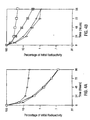
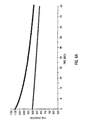
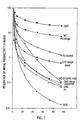
- the recombinant proteins were radiolabeled with 125 I and the levels of serum radiolabel monitored as a function of time. The clearance rates were then compared with those of intact murine IgG1 (expressed and purified from a hybridoma) and the bacterially expressed D1.3 Fv fragment (Ward et al ., 1989) derived from the murine D 1.3 antibody. The clearance curves were all found to be biphasic (FIG. 2A and FIG. 2B). The half lives of the ⁇ and ⁇ phases are shown in Table II. For the D1.3 Fv, monomeric CH2-hinge and CH3 fragments the ⁇ phases were too rapid to be accurately determined (FIG. 2A and FIG. 2B).
- the recombinant aglycosylated Fc-hinge fragment has the same stability in vivo as the complete - glycosylated IgG1 molecule.
- the shorter half life of the a phase which represents the equilibration phase between the vascular and extravascular tissue, is shorter for the recombinant Fc-hinge fragment due to its smaller size.
- both the CH3 domain and monomeric CH2-hinge fragment are cleared at rates similar to that of the D1.3 Fv fragment (FIG. 2A and FIG. 2B).
- CH2-hinge dimer A high proportion (approximately 90%) of the CH2-hinge fragment was expressed and purified in monomeric rather than dimeric form, and therefore the possibility remained that the determinants of stability are located on the CH2-hinge dimer.
- dimers of the CH2-hinge fragments were separated from monomers by size exclusion and radiolabeled for use in pharmacokinetic studies as described by Kim et al . (1994c); monomers of CH2-hinge dimers were generated from the dimers by reduction and alkylations and these monomers were also radiolabeled and used in pharmacokinetic studies.
- the half life of the ⁇ phase of this dimer is significantly longer than that of the predominantly monomeric CH2-hinge domain.
- mice BCL1/3B3 (Brooks et al ., 1983) and T cell hybridoma 2B4 (Chien et al ., 1984) were used in this study.
- the B 10, D2.PCE cell line was obtained from Prof. A. Curtis.
- the murine hepatoma line, Hepa 1-6 was obtained from the ATCC (1830-CRL).
- ⁇ -actin primers bases 352-368 of the mouse ⁇ -actin coding sequence and complementary to bases 781-787 of the ⁇ -actin coding sequence
- Southern blotting (Sambrook et al ., 1989) was carried out using a 32 P-labeled Sac I- Bst EII fragment derived from the cloned FcRn ⁇ -chain (bases 688-1028) as probe.
- the segment encoding bases 640-1095 (including the transmembrane region and cytoplasmic tail) was isolated using RT-PCRTM and primers A (SEQ ID NO:6) and B. PCRTM products were cloned into pGEM-T (Promega) and then recloned as Sph I- Sal I fragments in both orientations into pUC118/pUC119. ssDNA was isolated from resulting clones and sequenced using the dideoxynucleotide method (Sanger et al ., 1977) and Sequenase® (USB Biochemicals). For each fragment, several independent PCRTM isolates were analyzed.
- mIgG1, recombinant Fc-hinge fragments and IgA were iodinated using the Iodo-Gen reagent (Amersham) as described (Kim et al ., 1994a).
- the concentration of serum Igs were determined using radial immunodiffusion and Bindarid kits (The Binding site Ltd., Birmingham, UK). Precipitin ring diameters were measured electronically.
- the HQ-310/HN-433 mutant was used as it binds at background levels to isolated neonatal brush border (Kim et al ., 1994a) and at undetectable levels to recombinant soluble FcRn (Popov et al ., 1996) due to mutation of His310, Gln311, His433, Asn434 to Ala310, Asn311, Ala433, Gln434.
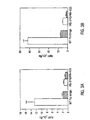
- Binding studies with the endothelial cell line SVEC indicates that in two independent studies the WT Fc-hinge binds at much higher levels than the HQ-310/HN-433 mutant (FIG. 3A and FIG. 3B). Furthermore, a higher proportion of the bound HQ-310/HN-433 is extracted with CHAPS than for the WT Fc-hinge fragment, although this was more marked for the first study (FIG. 3A and FIG. 3B).
- Proteins were radiolabeled with Na 125 I using Iodo-Gen (Amersham, Arlington Heights, IL) and pharmacokinetic analyses carried out in SWISS (Taconic) and BALB/c (Harlan) mice as described previously (Kim et al ., 1994a).
- E. coli clones generated by infection with eluted phage are grown up and extruded phage analyzed in enzyme linked immunosorbent assays (ELISAs) for binding to FcRn coated onto 96 well microtiter plates. Phage with binding activity are further analyzed in competition binding assays in which soluble Fc or IgG is added to the phage prior to addition to the wells. Clones producing phage that are inhibited in their binding to FcRn by soluble Fc/IgG are characterized further.
- ELISAs enzyme linked immunosorbent assays
- the genes encoding the peptides that bind to FcRn are sequenced and the corresponding peptides synthesized.
- the affinities of the peptide-FcRn interactions are determined using SPR and the BIAcore (Pharmacia).
- Fc-hinge has two FcRn interaction sites per molecule
- Fc-hinge fragments have been used to determine the site of the murine IgG molecule that is involved in catabolism control (Kim et al ., 1994a). Earlier work indicated that Staphylococcal protein A (SpA) complexed with IgG was cleared more rapidly than the uncomplexed IgG molecule (Dima et al ., 1983). SpA binds to residues that are located at the CH2-CH3 domain interface (Deisenhofer, 1981) and this suggested that amino acid residues located in this region are also involved in the control of catabolism of the IgG molecule. Thus, the Fc mutants have been expressed in recombinant E. coli cells and purified using Ni 2+ .NTA-agarose.
- the CH2-hinge dimer was converted into a monomer by reduction and alkylation (Kim et al . 1994c).
- the resulting monomer was analyzed pharmacokinetically and found to have a short ⁇ phase half life (29.1 hours) similar to that of the CH2 domain monomer (25.5 hours). This indicates that two catabolic sites per CH2-hinge fragment result in longer serum persistence than one site per CH2-hinge.
- the size differences between the monomer and dimer may account for the differences in serum persistence.
- Heterodimers were purified using an Ni 2+ -NTA-agarose column followed by a 9E10-Sepharose column (the latter recognizes the c-myc epitope, Ward et al ., 1989).
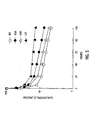
- the hybrid protein was used in pharmacokinetic studies (FIG. 7 and Table X).
- the ⁇ phase half life of 37.9 hours for the Fc-hybrid is less than that of WT homodimers but greater than that of mutant homodimers. This indicates that one catabolic site per Fc is insufficient to confer the pharmacokinetic characteristics of the WT homodimer on the Fc fragment.
- the complete IgG1 molecule (mIgG1), WT and mutant (HQ-310/HN-433) Fc fragments were radiolabeled and analyzed in in vivo transfer assays in 10-14 day old mice (Kim et al ., 1994b). As controls, an Fc fragment produced by papain digestion and an Fab fragment were used. The hybrid Fc fragment was also analyzed.
- PCRTM primers based on the sequence of murine FcRn (Ahouse et al ., 1993) that are not homologous to murine Class I molecules (Simister and Mostov, 1989a) were designed as follows: This primer encodes bases 190-212 of the sense strand of murine FcRn. This primer is complementary to bases 452-474 of the sense strand of FcRn. Note that for both primers, two degenerate bases were inserted at the 3' end of each primer in case the sequence of FcRc did not match FcRn precisely.
- PCRTM products were cloned using the TA cloning system (Promega) and sequenced using the dideoxynucleotide method (Sanger et al ., 1977). Sequencing of multiple independent clones indicates the sequence of the 285 bp fragment is the same as that of FcRn with the exception of one base change (A to G) which converts valine to methionine at codon 73.
- cDNA Complementary DNA
- RNA derived from the two endothelial cell lines, murine heart, liver, lung, spleen, yolk sac, neonatal brush border and T/B cell hydridomas priming with primer D.
- 2B4 T cell; Chien et al ., 1984
- Y-3P B cell, Janeway et al ., 1984
- hybridomas were derived from B10.A and BALB/cByJ mice, respectively.
- the use of these cDNAs in PCRTM with primers C and D resulted in the isolation of products of the predicted size from all cells except the T and B cell hybridomas. In all cases, PCRTM products of the expected size were seen using ⁇ -actin specific primers.
- PCRTM product obtained from the above tissues/cells, which in turn suggests different levels of mRNA, with yolk sac and neonatal intestine (brush border) producing the highest amounts, and the amounts in the other tissues decreasing in the order: liver > spleen, lung > heart. Quantitative PCRTM are carried out to assess the mRNA levels in these different cell types. PCRTM products from liver, spleen, neonatal brush border and lung have been cloned and sequenced in the region 640-870 and found to share a high degree of homology with FcRn.
- the complete FcRn homolog has been isolated from the two endothelial cell lines using primers D and E and multiple independent isolates sequenced; there are a total of 4 nucleotide differences, 3 of which are silent and one A to G change (converting valine to methonine) at codon 73.
- the silent mutations at codons 233, 251 and 265 are also seen in PCRTM products isolated from the liver, spleen, neonatal brush border and lung (derived from BALB/c mice).
- Primer E 5' ATG GGG ATG CCA CTG CCC TGG 3' (SEQ ID NO:16) (encodes bases 1-21 of the sense strand of FcRn, including leader peptide).
- the gene encoding the extracellular regions (codons 1-290, including leader peptide) of FcRn has been tagged with 3' His 6 peptide codons (Ward, 1992), tailored with Bam HI sites using the PCRTM and ligated into the Bgl II site of pACUW51 (Invitrogen) for expression in the baculovirus system (O'Reilly et al ., 1992).
- the gene encoding ⁇ 2-microglobulin was also amplified using the PCRTM and tagged with Bgl II sites and ligated into the Bam HI site of pACUW51.
- the vector FcRn-pAC was used to transfect Spodoptera frugiperda (Sf9) cells and recombinant viruses plaque purified.
- a recombinant virus stock has been generated and used to infect High-5 cells (Trichoplusia ni; Invitrogen) which expresses higher levels of recombinant protein than Sf9 cells.
- Culture supernatant and lysed pellets were passed over Ni 2+- NTA-agarose and bound protein eluted. Using this system, 15 milligrams of FcRn per liter of cells can be routinely purified.
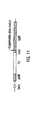
- the phagemid constructs shown in FIG. 11 were made.
- the genes encoding the WT Fc and HQ-310/HN-433 fragments (including hinge regions) were tailored by the PCRTM for ligation as Nco I -Not I fragments into the vector pHEN1 (Hoogenboom et al ., 1991).
- the advantage of using pHEN1 for this work is the following: the Fc gene is linked via a suppressible stop codon (amber) to the cpIII coat protein of the filamentous bacteriophage, fd.
- amber suppressor strain E transfection of the amber suppressor strain E.
- E. coli TG1 transformants harboring either the WT Fc or HQ-310/HN-433 mutant in pHEN1 have been grown up, phage extruded and concentrated by polyethylene glycol precipitation (Marks et al ., 1991).
- the phage pellets were resuspended in 2% milk powder/PBS (pH 6) and purified sFcRn added at a concentration of 10 ⁇ g/ml in the presence or absence of 50 ⁇ g of murine IgG1.
- sFcRn-phage complexes were isolated by the addition of 10 ⁇ l of Ni 2+ -NTA-agarose and the agarose beads washed extensively with 0.1% Tween/PBS (pH 6) followed by PBS, pH 6. Specifically bound phage were eluted using 50 mM Tris-HCl pH 7.5 and used to infect exponentially growing E. coli TG1 as described (Marks et al ., 1991). Infected TG1 cells were serially diluted, plated and the cfu determined (Table XVI). Panning of phage bearing Fc fragments against sFcRn Number of colonies Amount of IgGI added ( ⁇ g) WT Fc bearing phage HQ-310/HN-433 bearing phage 50 41 230 0 >2000 109
- the residues at these positions are His433, His435 and His436 and data indicate that His435 and His436 (and His433 if in the context of the double mutation of His433-Asn434) are involved in regulating serum persistence (Medesan et al ., 1997).
- the residues at these positions are Lys433, Tyr435 and Tyr436.
- the inventors mutated residues 433, 435 and 436 in mIgG2b to the corresponding residues in mIgG1, in the expectation that these mutations might increase the half life of the mIgG2b molecule.
- Recombinant Fc fragments are purified using Ni 2+ -NTA-agarose and radioiodinated using the Iodo-Gen reagent (Amersham) as described previously (Kim et al ., 1994a).
- proteins are radiolabeled, a specific activity of 10 7 cpm/ ⁇ g is routinely obtained using this method) and free iodine is removed by two successive gel filtrations on Sepharose G-25M.
- Radiolabeled Fc fragments are analyzed on SEC-250 columns by permeating HPLC prior to injection into mice.
- Radiolabeled proteins are injected into the tail vein in a volume not larger than 150 ⁇ l and a radioactive load of 1-5 ⁇ 10 7 cpm. Mice are bled with heparinized capillary tubes at intervals up to 120 hours post injection.
- Radioactivity present in plasma is determined as described (Kim et al ., 1994a), and aliquots of the plasma added to 10% trichloroacetic acid (TCA) to determine the non-precipitable cpm.
- Plasma is collected at 24 hours post-injection and analyzed by HPLC on SEC-250 columns (Kim et al ., 1994a).
- the mIgG2b Fc-hinge fragment, expressed and purified from E. coli has a shorter serum persistence than the complete gylcosylated murine IgG2b molecule (note that this is in contrast to the results obtained for the murine IgG1 Fc-hinge where E. coli expressed material has the same half life as complete glycosylated IgG1). Therefore, vectors have been built to express the complete murine IgG2b molecule (wild type and a mutated derivative in which Lys433, Tyr435 and Tyr436 were changed to His433, His435 and His436; the latter is designated KYY mutant) using the baculovirus expression system.
- the vectors were transfected into Sf9 ( Spodoptera frugiperda ) cells, recombinant viruses plaque purified and used to infect High 5 ( Trichoplusia ni ) cells for expression. Following 4 days of infection, recombinant antibodies were purified from the culture supernatants using lysozyme Sepharose as described (Ward et al . 1989). The mutant mIgG2b (KYY) molecule was purified. and its in vivo half life analyzed in SWISS mice. The half life has been compared with myeloma (B cell) expressed mIgG2b (unmutated) and mIgG1, and the results are shown in Table XVII.
- the mutations have resulted in a significant increase in half life (56.1 hours to 110.9), and the half life of the mutated IgG2b molecule is the same as that of mIgG1 in SWISS mice.
- some or all of the residue differences at 433, 435 and 436 account for the half life differences between wild type mIgG2b and mIgG1.
- Mutations were made using designed mutagenic oligonucleotides and either splicing by overlap extension (Horton et al ., 1989) or site-directed mutagenesis (Carter et al ., 1985; Kunkel, 1985).
- the mutants are described in Table XVIII and the generation of mutants 1253A and H285A has been described previously (Kim et al ., 1994a; 1994c).
- mutagenic oligonucleotides used in site-directed mutagenesis were as follows (underlines indicate mutated bases): H433A, 5'-GGTGGTTG GC CAGGCCCCT-3' SEQ ID NO:17; H435A, 5'-CAGTATGG GC GTTGTGCA-3' SEQ ID NO:18; and H436A, 5'-CTCAGTA GC GTGGTTGTG-3' SEQ ID NO:19.
- Mutants H310A, N434A, and N434Q were made using splicing by overlap extension (Horton et al ., 1989) with the following mutagenic oligonucleotides: H310A, 5'-CCCATCATG GC CCAGGACTGG-3' SEQ ID NO:20 and 5'-CCAGTCCTGG GC CATGATGGG-3' SEQ ID NO:21; N434A, 5'-GGCCTGCAC GCG CACCATACT-3' SEQ ID NO:22 and 5'-AGTATGGTG CGC GTGCAGGCCCTC-3' SEQ ID NO:23 and N434Q, 5'-AGTATGGTG T T G GTGCAG-3' SEQ ID NO:24 and 5' - CTGCAC C A A CACCATACT-3' SEQ ID NO:25.
- the corresponding genes were sequenced using the dideoxynucleotide method (Sanger et al ., 1977) and Sequenase® before functional
- Wild-type (WT) and mutant Fc hinge fragments tagged with carboxyl-terminal hexahistidine peptides were purified using Ni 2+ -NTA-agarose (Qiagen, Chatsworth, CA) as described previously (Kim et al ., 1994a). After dialysis against 15 mM phosphate buffer/50 mM NaCl, pH 7.5, the mutants were either kept at 4°C for short term storage ( ⁇ 10 days) or freeze dried for longer term storage. Recombinant soluble mouse FcRn was expressed and purified using the baculovirus system as described previously (Popov et al ., 1996b) and stored at 4°C.
- the concentration of serum IgG was determined using radial immunodiffusion with Nanorid and Bindarid kits (The Binding Site, Birmingham, UK). Precipitin ring diameters were measured electronically.
- mice (Taconic Co., Germantown, NY) near term (15-18 days).
- mice were fed 0.01% NaI in drinking water and then 1 day later injected with radiolabeled protein (2 ⁇ 10 7 and 5 ⁇ 10 7 cpm) in the tail vein.
- Mice were bled with a 20- ⁇ l capillary 3 min postinjection, and 24 h later fetuses were delivered by cesarean section
- the fetuses of a litter were pooled (discarding the placenta), washed in saline, weighed, frozen in liquid nitrogen, and homogenized in 10 vol of 10% TCA.
- % transmission (%T) (R3)/[(R1-R2) ⁇ (W ⁇ 0.72)/0.02], where R1 is radioactivity in maternal blood at 3 min, R2 is radioactivity in maternal blood at 24 h, W is body weight (grams), and R3 is radioactivity of the fetuses.
- the total weight and number of fetuses in a given litter varied from litter to litter, and therefore, the transmission data are presented per unit weight of fetuses rather than the amount transferred per litter (% T/g) (Medesan et al ., 1996).
- the blood volume of pregnant mice was considered to be 7.2% of body weight (Guyer et al ., 1976).
- the radioactivity in the maternal blood available for transmission to the fetus was calculated by deducting the radioactivity remaining at 24 h from that measured at 3 min after the injection of radiolabeled protein.
- mice (10-14 days old) were intubated with a mixture of [ 121 I]mIgG1 and Fc hinge fragment at a Fc/IgG molar ratio of approximately 2000 as described previously (Kim et al ., 1994b). The percentage of inhibition was calculated relative to the transfer of the same amount of [ 125 I]mIgG1 without inhibitor.
- Fc hinge derivatives were dialyzed into 50 mM phosphate buffer with 250 mM NaCl and 5 mM Na 2 EDTA, pH 6.0 (PB-6), and adjusted to a concentration of 1 mg/ml.
- PB-6 phosphate buffer with 250 mM NaCl and 5 mM Na 2 EDTA, pH 6.0
- Fc hinge (WT or mutant) or PB-6 were incubated in Eppendorf tubes with rotation for 30 min at 25°C with 150 ⁇ l of mIgG1-Sepharose (1 mg/ml packed gel, 50% suspension), 50 ⁇ l of PB-6 containing 10 mg/ml OVA (Sigma Chemical Co., St. Louis, MO), and 10 ⁇ l of [ 125 I]FcRn (0.1 ⁇ g/200,000 cpm).
- % inhibition 100 - 100 A / B , where A is the specific radioactivity bound to mIgG1-Sepharose in the presence of Fc hinge fragment, and B is the specific radioactivity bound in the absence of Fc hinge fragment.
- SpA-agarose gel (0.5 ml) was equilibrated with BP-7 (50 mM phosphate buffer containing 250 mM NaCl, 5 mM Na 2 EDTA) and 1 mg/ml OVA (BP-7.5).
- BP-7 50 mM phosphate buffer containing 250 mM NaCl, 5 mM Na 2 EDTA
- OVA 1 mg/ml OVA
- Fifty to one hundred microliters of each 125 I-labeled Fc hinge fragment containing 50 ⁇ g of protein was loaded onto the column, incubated for 15 min, and then washed with 10 column volumes of the same buffer. Bound Fc hinge fragments were eluted with 100 mM acetic acid. The amounts of radioactivity in the flow-through, washes, and eluates were determined. The ratio of bound/unbound was calculated, and the percentage of binding of each mutant relative to the WT Fc hinge fragment was determined.
- Plasmids encoding the WT Fc hinge and mutants (Table XVIII) were constructed, and the proteins were expressed and purified using Escherchia coli as a host. With the exception of the H285A mutant, the residues that have been mutated are all in close proximity to the CH2-CH3 domain interface (Deisenhofer, 1981) and are also highly conserved in the IgG isotypes of both mouse and man (Kabat et al ., 1991). As described previously, the radiolabled Fc hinge derivatives emerged essentially as single peaks with a retention time corresponding to 55 kDa when analyzed on an s-250 column (Kim et al ., 1994a).
- the serum samples collected at the 24 h point from mice within one group were pooled and subjected to HPLC on an s-250 column.
- the majority of the radioactivity eluted as a single peak with a retention time corresponding to the molecular mass of the injected protein (55 kDa).
- the pharmacokinetic parameters of the Fc hinge derivatives are shown in Table XIX and the ⁇ -phase represents the equilibration time between the intra- and extravascular space, whereas the ⁇ -phase represents the elimination of the equilibrated protein from the intravascular space. Furthermore, during the ⁇ -phase, any misfolded protein molecules that might be present in the recombinant protein preparations are eliminated; and therefore, the ⁇ -phase represents the elimination of correctly folded protein from the intravascular space.
- H433 and N434 decreases the ⁇ -phase half-life to 77 h (36% decrease), while single mutation at each of these positions yielded two mutants (H433A and N434A) with the same half-life as the WT Fc hinge.
- Substitution of N434 with glutamine instead of alanine (N434Q) also yielded an Fc hinge fragment with a half-life similar to that of the WT Fc hinge (Table A).
- the half-life of the H433A-N434Q mutant (76.9 h) is greater than the value reported previously (50.3 h) (Kim et al ., 1994a), and this is also observed for the WT Fc hinge fragment (119 vs 82.9 h), H28A (106 vs 85 h), and I253A (26 vs 20 h).
- H435 in the CH3 domain has an effect as marked as that induced by mutation of I253 or H310 in the CH2 domain, clearly indicating that this CH3 domain residue plays an important role in building the catabolic site of mIgG1. Furthermore, the H436A mutant has a half-life of 49 h, demonstrating that H436 plays a more minor role than I253, H310, or H435 in controlling catabolism (Table XIX).
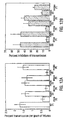
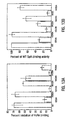
- the intestinal transmission of recombinant Fc hinge derivatives was analyzed by measuring their ability to inhibit the transfer of radiolabeled mIgG1 across the intestinal barrier of neonatal mice (FIG. 12B).
- the results are consistent with the data obtained for matemofetal transmission of the I253A, H310A, and H435A mutants, indicating that the same receptor and mechanism of transmission are involved in both transcytotic processes.
- the H436A mutant is transferred across the maternofetal barrier of SCID mice almost as efficiently as the WT Fc hinge (FIG. 12A) and yet does not inhibit the transfer of mIgG1 across the neonatal intestine as effectively.
- the half-life and inhibition of neonatal transfer are reduced relative to the WT Fc hinge, and yet matemofetal transfer appears to be unaffected.
- H310 and Q311 which had previously been analyzed in the context of simultaneous mutation of H310, Q311 to A310, N311, demonstrates the central role of H310 in the FcRn-mIgG1 interaction.
- Mutation of H310 to alanine has an effect that is as marked as that seen for the H310A/Q311N mutant analyzed earlier, and for this reason the effect of mutation of Q311 alone was not investigated in the current study.
- H436 plays a more minor role in maintaining serum IgG levels and transcytosis.
- Fc fragments are coupled to CM5 chips as above, and sFcRn in BIAcore running buffer is initially used in the concentration range of 0.05-0.5 mg/ml.
- Initial studies are carried out to analyze the interaction between sFcRn and complete IgG1/WT Fc and are then extended to analysis of the mutant Fc fragments that putatively have higher affinities.
- New Zealand white rabbits were immunized subcutaneously with soluable, recombinant FcRn (Popov et al ., 1996b) using 100 ⁇ g FcRn emulsified in incomplete Freund's adjuvant for subsequent injections at two weekly intervals until a suitable anti-FcRn titer had been reached.
- Polyclonal sera was then isolated and IgGs purified using protein A-Sepharose (Pharmacia, Piscataway, NJ). The IgGs were digested with pepsin to generate F(ab') 2 and Fc fragments, and purified F(ab') 2 fragments separated from Fc and any undigested IgG using protein A-Sepharose.
Landscapes
- Health & Medical Sciences (AREA)
- Animal Behavior & Ethology (AREA)
- Bioinformatics & Cheminformatics (AREA)
- Chemical & Material Sciences (AREA)
- Engineering & Computer Science (AREA)
- Veterinary Medicine (AREA)
- Medicinal Chemistry (AREA)
- Public Health (AREA)
- General Health & Medical Sciences (AREA)
- Pharmacology & Pharmacy (AREA)
- Life Sciences & Earth Sciences (AREA)
- Immunology (AREA)
- Epidemiology (AREA)
- Organic Chemistry (AREA)
- Nuclear Medicine, Radiotherapy & Molecular Imaging (AREA)
- General Chemical & Material Sciences (AREA)
- Chemical Kinetics & Catalysis (AREA)
- Peptides Or Proteins (AREA)
- Preparation Of Compounds By Using Micro-Organisms (AREA)
- Medicines That Contain Protein Lipid Enzymes And Other Medicines (AREA)
- Medicines Containing Antibodies Or Antigens For Use As Internal Diagnostic Agents (AREA)
Applications Claiming Priority (3)
| Application Number | Priority Date | Filing Date | Title |
|---|---|---|---|
| US1356396P | 1996-03-18 | 1996-03-18 | |
| US13563P | 1996-03-18 | ||
| PCT/US1997/003321 WO1997034631A1 (en) | 1996-03-18 | 1997-03-03 | Immunoglobin-like domains with increased half lives |
Publications (2)
| Publication Number | Publication Date |
|---|---|
| EP0904107A1 EP0904107A1 (en) | 1999-03-31 |
| EP0904107B1 true EP0904107B1 (en) | 2004-10-20 |
Family
ID=21760590
Family Applications (1)
| Application Number | Title | Priority Date | Filing Date |
|---|---|---|---|
| EP97907993A Expired - Lifetime EP0904107B1 (en) | 1996-03-18 | 1997-03-03 | Immunoglobin-like domains with increased half lives |
Country Status (7)
| Country | Link |
|---|---|
| EP (1) | EP0904107B1 (cg-RX-API-DMAC7.html) |
| JP (1) | JP4046354B2 (cg-RX-API-DMAC7.html) |
| AT (1) | ATE279947T1 (cg-RX-API-DMAC7.html) |
| AU (1) | AU728657B2 (cg-RX-API-DMAC7.html) |
| CA (1) | CA2249195A1 (cg-RX-API-DMAC7.html) |
| DE (1) | DE69731289D1 (cg-RX-API-DMAC7.html) |
| WO (1) | WO1997034631A1 (cg-RX-API-DMAC7.html) |
Cited By (30)
| Publication number | Priority date | Publication date | Assignee | Title |
|---|---|---|---|---|
| US7276585B2 (en) | 2004-03-24 | 2007-10-02 | Xencor, Inc. | Immunoglobulin variants outside the Fc region |
| US7317091B2 (en) | 2002-03-01 | 2008-01-08 | Xencor, Inc. | Optimized Fc variants |
| US7662925B2 (en) | 2002-03-01 | 2010-02-16 | Xencor, Inc. | Optimized Fc variants and methods for their generation |
| US7973136B2 (en) | 2005-10-06 | 2011-07-05 | Xencor, Inc. | Optimized anti-CD30 antibodies |
| US8039592B2 (en) | 2002-09-27 | 2011-10-18 | Xencor, Inc. | Optimized Fc variants and methods for their generation |
| US8084582B2 (en) | 2003-03-03 | 2011-12-27 | Xencor, Inc. | Optimized anti-CD20 monoclonal antibodies having Fc variants |
| US8101720B2 (en) | 2004-10-21 | 2012-01-24 | Xencor, Inc. | Immunoglobulin insertions, deletions and substitutions |
| US8163882B2 (en) | 1999-01-15 | 2012-04-24 | Genentech, Inc. | Polypeptide variants with altered effector function |
| US8188231B2 (en) | 2002-09-27 | 2012-05-29 | Xencor, Inc. | Optimized FC variants |
| US8318907B2 (en) | 2004-11-12 | 2012-11-27 | Xencor, Inc. | Fc variants with altered binding to FcRn |
| US8388955B2 (en) | 2003-03-03 | 2013-03-05 | Xencor, Inc. | Fc variants |
| US8394374B2 (en) | 2006-09-18 | 2013-03-12 | Xencor, Inc. | Optimized antibodies that target HM1.24 |
| US8524867B2 (en) | 2006-08-14 | 2013-09-03 | Xencor, Inc. | Optimized antibodies that target CD19 |
| US8546543B2 (en) | 2004-11-12 | 2013-10-01 | Xencor, Inc. | Fc variants that extend antibody half-life |
| US8735547B2 (en) | 2002-09-27 | 2014-05-27 | Xencor, Inc. | Optimized Fc Variants |
| US8802820B2 (en) | 2004-11-12 | 2014-08-12 | Xencor, Inc. | Fc variants with altered binding to FcRn |
| US9040041B2 (en) | 2005-10-03 | 2015-05-26 | Xencor, Inc. | Modified FC molecules |
| US9051373B2 (en) | 2003-05-02 | 2015-06-09 | Xencor, Inc. | Optimized Fc variants |
| US9200079B2 (en) | 2004-11-12 | 2015-12-01 | Xencor, Inc. | Fc variants with altered binding to FcRn |
| US9475881B2 (en) | 2010-01-19 | 2016-10-25 | Xencor, Inc. | Antibody variants with enhanced complement activity |
| US9714282B2 (en) | 2003-09-26 | 2017-07-25 | Xencor, Inc. | Optimized Fc variants and methods for their generation |
| US10316073B2 (en) | 2013-12-24 | 2019-06-11 | Argenx Bvba | FCRN antagonists and methods of use |
| US11401348B2 (en) | 2009-09-02 | 2022-08-02 | Xencor, Inc. | Heterodimeric Fc variants |
| US11591388B2 (en) | 2019-06-07 | 2023-02-28 | argenx BV | Pharmaceutical formulations of FcRn inhibitors suitable for subcutaneous administration |
| US11932685B2 (en) | 2007-10-31 | 2024-03-19 | Xencor, Inc. | Fc variants with altered binding to FcRn |
| US12202900B2 (en) | 2018-06-08 | 2025-01-21 | argenx BV | Compositions and methods for treating immune thrombocytopenia |
| US12240875B2 (en) | 2017-12-08 | 2025-03-04 | argenx BV | Use of FCRN antagonists for treatment of generalized myasthenia gravis |
| US12403175B2 (en) | 2020-01-08 | 2025-09-02 | argenx BV | Methods for treating pemphigus disorders |
| US12492253B1 (en) | 2008-02-25 | 2025-12-09 | Xencor, Inc. | Anti-human C5 antibodies |
| US12503503B2 (en) | 2018-10-29 | 2025-12-23 | Hoffmann-La Roche Inc. | Bispecific anti-VEGF/ANG2 antibody formulation |
Families Citing this family (806)
| Publication number | Priority date | Publication date | Assignee | Title |
|---|---|---|---|---|
| US6100387A (en) | 1997-02-28 | 2000-08-08 | Genetics Institute, Inc. | Chimeric polypeptides containing chemokine domains |
| US6852508B1 (en) | 1997-02-28 | 2005-02-08 | Genetics Institute, Llc | Chemokine with amino-terminal modifications |
| ES2590912T3 (es) | 1997-12-08 | 2016-11-24 | Merck Patent Gmbh | Proteínas de fusión heterodiméricas útiles para inmunoterapia dirigida y estimulación general del sistema inmunitario |
| US6528624B1 (en) | 1998-04-02 | 2003-03-04 | Genentech, Inc. | Polypeptide variants |
| EP1105427A2 (en) * | 1998-08-17 | 2001-06-13 | Abgenix, Inc. | Generation of modified molecules with increased serum half-lives |
| MEP42108A (en) | 1998-10-23 | 2011-02-10 | Kiren Amgen Inc | Dimeric thrombopoietin peptide mimetics binding to mp1 receptor and having thrombopoietic activity |
| US7488590B2 (en) | 1998-10-23 | 2009-02-10 | Amgen Inc. | Modified peptides as therapeutic agents |
| US6660843B1 (en) | 1998-10-23 | 2003-12-09 | Amgen Inc. | Modified peptides as therapeutic agents |
| GB9824632D0 (en) | 1998-11-10 | 1999-01-06 | Celltech Therapeutics Ltd | Biological compounds |
| US6737056B1 (en) | 1999-01-15 | 2004-05-18 | Genentech, Inc. | Polypeptide variants with altered effector function |
| PL209392B1 (pl) * | 1999-01-15 | 2011-08-31 | Genentech Inc | Przeciwciało, komórka gospodarza, sposób wytwarzania przeciwciała oraz zastosowanie przeciwciała |
| GB9908263D0 (en) * | 1999-04-13 | 1999-06-02 | Binding Site The Limited | Eliciting improved immune responses |
| US7291714B1 (en) | 1999-06-30 | 2007-11-06 | Millennium Pharmaceuticals, Inc. | Glycoprotein VI and uses thereof |
| US7067110B1 (en) | 1999-07-21 | 2006-06-27 | Emd Lexigen Research Center Corp. | Fc fusion proteins for enhancing the immunogenicity of protein and peptide antigens |
| MXPA02001417A (es) | 1999-08-09 | 2002-08-12 | Lexigen Pharm Corp | Complejos multiples de citosina-anticuerpo. |
| US7459540B1 (en) | 1999-09-07 | 2008-12-02 | Amgen Inc. | Fibroblast growth factor-like polypeptides |
| CA2391080A1 (en) | 1999-11-12 | 2001-05-25 | Merck Patent Gesellschaft Mit Beschraenkter Haftung | Erythropoietin forms with improved properties |
| US6808902B1 (en) | 1999-11-12 | 2004-10-26 | Amgen Inc. | Process for correction of a disulfide misfold in IL-1Ra Fc fusion molecules |
| AU2002219944B2 (en) | 2000-11-28 | 2008-02-21 | Medimmune, Llc | Methods of administering/dosing anti-RSV antibodies for prophylaxis and treatment |
| US7229619B1 (en) | 2000-11-28 | 2007-06-12 | Medimmune, Inc. | Methods of administering/dosing anti-RSV antibodies for prophylaxis and treatment |
| HUP0204475A2 (en) | 2000-02-11 | 2003-04-28 | Merck Patent Gmbh | Enhancing the circulating half-life of antibody-based fusion proteins |
| DE60117781T2 (de) | 2000-04-21 | 2006-11-23 | Amgen Inc., Thousand Oaks | Peptidderivate des apolipoproteins-a1/aii |
| US6667300B2 (en) | 2000-04-25 | 2003-12-23 | Icos Corporation | Inhibitors of human phosphatidylinositol 3-kinase delta |
| US6677136B2 (en) * | 2000-05-03 | 2004-01-13 | Amgen Inc. | Glucagon antagonists |
| WO2001087977A2 (en) | 2000-05-12 | 2001-11-22 | Amgen Inc. | Methods and compositions of matter concerning april/g70, bcma, blys/agp-3, and taci |
| KR20030064275A (ko) | 2000-06-29 | 2003-07-31 | 메르크 파텐트 게엠베하 | 면역싸이토카인 흡수 증강제와의 조합 치료에 의한항체-싸이토카인 융합 단백질 매개 면역 반응 증강 |
| US6818216B2 (en) | 2000-11-28 | 2004-11-16 | Medimmune, Inc. | Anti-RSV antibodies |
| US7179900B2 (en) | 2000-11-28 | 2007-02-20 | Medimmune, Inc. | Methods of administering/dosing anti-RSV antibodies for prophylaxis and treatment |
| US6855493B2 (en) | 2000-11-28 | 2005-02-15 | Medimmune, Inc. | Methods of administering/dosing anti-RSV antibodies for prophylaxis and treatment |
| US7658921B2 (en) | 2000-12-12 | 2010-02-09 | Medimmune, Llc | Molecules with extended half-lives, compositions and uses thereof |
| AU2008201419C1 (en) * | 2000-12-12 | 2018-01-18 | Board Of Regents, The University Of Texas System | Molecules with extended half-lives, compositions and uses thereof |
| US7083784B2 (en) * | 2000-12-12 | 2006-08-01 | Medimmune, Inc. | Molecules with extended half-lives, compositions and uses thereof |
| AU2011253690C1 (en) * | 2000-12-12 | 2018-01-18 | Board Of Regents, The University Of Texas System | Molecules with extended half-lives, compositions and uses thereof |
| RU2003129528A (ru) | 2001-03-07 | 2005-04-10 | Мерк Патент ГмбХ (DE) | Способ экспрессии белков, содержащих в качестве компонента гибридный изотип антитела |
| WO2002079415A2 (en) | 2001-03-30 | 2002-10-10 | Lexigen Pharmaceuticals Corp. | Reducing the immunogenicity of fusion proteins |
| US7256257B2 (en) | 2001-04-30 | 2007-08-14 | Seattle Genetics, Inc. | Pentapeptide compounds and uses related thereto |
| EP1383785B1 (en) | 2001-05-03 | 2011-03-16 | Merck Patent GmbH | Recombinant tumor specific antibody and use thereof |
| DK1385882T3 (da) | 2001-05-11 | 2008-02-11 | Amgen Inc | Peptider og relaterede molekyler, der binder til TALL-1 |
| US7332474B2 (en) | 2001-10-11 | 2008-02-19 | Amgen Inc. | Peptides and related compounds having thrombopoietic activity |
| US7138370B2 (en) | 2001-10-11 | 2006-11-21 | Amgen Inc. | Specific binding agents of human angiopoietin-2 |
| DK1454138T3 (da) | 2001-12-04 | 2012-02-13 | Merck Patent Gmbh | Immunocytokiner med moduleret selektivitet |
| ATE525398T1 (de) | 2002-05-10 | 2011-10-15 | Medimmune Inc | Epha2 monoklonale antikörper und deren anwendungsverfahren |
| US7425618B2 (en) | 2002-06-14 | 2008-09-16 | Medimmune, Inc. | Stabilized anti-respiratory syncytial virus (RSV) antibody formulations |
| US7132100B2 (en) | 2002-06-14 | 2006-11-07 | Medimmune, Inc. | Stabilized liquid anti-RSV antibody formulations |
| DK1545613T3 (da) | 2002-07-31 | 2011-11-14 | Seattle Genetics Inc | Auristatinkonjugater og deres anvendelse til behandling af cancer, en autoimmun sygdom eller en infektiøs sygdom |
| US8946387B2 (en) | 2002-08-14 | 2015-02-03 | Macrogenics, Inc. | FcγRIIB specific antibodies and methods of use thereof |
| US8968730B2 (en) | 2002-08-14 | 2015-03-03 | Macrogenics Inc. | FcγRIIB specific antibodies and methods of use thereof |
| US8530627B2 (en) | 2002-08-14 | 2013-09-10 | Macrogenics, Inc. | FcγRIIB specific antibodies and methods of use thereof |
| US8187593B2 (en) | 2002-08-14 | 2012-05-29 | Macrogenics, Inc. | FcγRIIB specific antibodies and methods of use thereof |
| JP2006508056A (ja) | 2002-08-28 | 2006-03-09 | イミュネックス・コーポレーション | 心臓血管疾患を治療するための組成物および方法 |
| US6919426B2 (en) | 2002-09-19 | 2005-07-19 | Amgen Inc. | Peptides and related molecules that modulate nerve growth factor activity |
| US7361740B2 (en) | 2002-10-15 | 2008-04-22 | Pdl Biopharma, Inc. | Alteration of FcRn binding affinities or serum half-lives of antibodies by mutagenesis |
| US7217797B2 (en) | 2002-10-15 | 2007-05-15 | Pdl Biopharma, Inc. | Alteration of FcRn binding affinities or serum half-lives of antibodies by mutagenesis |
| US7365168B2 (en) | 2002-10-15 | 2008-04-29 | Pdl Biopharma, Inc. | Alteration of FcRn binding affinities or serum half-lives of antibodies by mutagenesis |
| WO2004055056A1 (en) | 2002-12-17 | 2004-07-01 | Merck Patent Gmbh | Humanized antibody (h14.18) of the mouse 14.18 antibody binding to gd2 and its fusion with il-2 |
| CA2512729C (en) | 2003-01-09 | 2014-09-16 | Macrogenics, Inc. | Identification and engineering of antibodies with variant fc regions and methods of using same |
| US7960512B2 (en) | 2003-01-09 | 2011-06-14 | Macrogenics, Inc. | Identification and engineering of antibodies with variant Fc regions and methods of using same |
| JP4685764B2 (ja) * | 2003-04-10 | 2011-05-18 | アボット バイオセラピューティクス コーポレイション | 変異誘発による抗体のFcRn結合親和力又は血清半減期の改変 |
| AU2004229501B2 (en) | 2003-04-11 | 2011-08-18 | Medimmune, Llc | Recombinant IL-9 antibodies and uses thereof |
| PL2298347T3 (pl) | 2003-05-06 | 2016-03-31 | Bioverativ Therapeutics Inc | Białka chimeryczne czynnika krzepnięcia do leczenia zaburzenia hemostazy |
| EP2133362B1 (en) | 2003-07-25 | 2012-04-18 | Amgen, Inc | Methods relating to LDCAM and CRTAM |
| AU2004266159A1 (en) | 2003-08-22 | 2005-03-03 | Biogen Idec Ma Inc. | Improved antibodies having altered effector function and methods for making the same |
| WO2005037867A1 (en) | 2003-10-15 | 2005-04-28 | Pdl Biopharma, Inc. | ALTERATION OF Fc-FUSION PROTEIN SERUM HALF-LIVES BY MUTAGENESIS OF POSITIONS 250, 314 AND/OR 428 OF THE HEAVY CHAIN CONSTANT REGION OF IG |
| AU2004287431B2 (en) | 2003-10-27 | 2010-03-11 | Amgen Inc. | Compositions and methods to modulate an immune response to an immunogenic therapeutic agent |
| EP2478912B1 (en) | 2003-11-06 | 2016-08-31 | Seattle Genetics, Inc. | Auristatin conjugates with anti-HER2 or anti-CD22 antibodies and their use in therapy |
| ES2383300T3 (es) | 2003-11-13 | 2012-06-20 | Hanmi Holdings Co., Ltd | Fragmento Fc de IgG para un vehículo de fármacos y procedimiento para su preparación |
| KR101135244B1 (ko) | 2007-11-29 | 2012-04-24 | 한미사이언스 주식회사 | 인슐린 분비 펩타이드 결합체를 포함하는 비만 관련질환 치료용 조성물 |
| US7371381B2 (en) | 2003-12-12 | 2008-05-13 | Amgen Inc. | Anti-galanin antibodies and uses thereof |
| ES2305886T3 (es) | 2003-12-30 | 2008-11-01 | Merck Patent Gmbh | Proteinas de fusion de il-7 con porciones de anticuerpo, su preparacion y su empleo. |
| RU2370276C2 (ru) | 2003-12-31 | 2009-10-20 | Мерк Патент Гмбх | Fc-ЭРИТРОПОЭТИН СЛИТЫЙ БЕЛОК С УЛУЧШЕННОЙ ФАРМАКОКИНЕТИКОЙ |
| SI2311873T1 (sl) | 2004-01-07 | 2018-12-31 | Novartis Vaccines And Diagnostics, Inc. | M-CSF-specifična monoklonska protitelesa in njihova uporaba |
| AU2005206277B2 (en) | 2004-01-22 | 2011-06-23 | Merck Patent Gmbh | Anti-cancer antibodies with reduced complement fixation |
| BRPI0507174A (pt) | 2004-01-28 | 2008-04-01 | Syntonix Pharmaceuticals Inc | proteìnas de fusão hormÈnio-fc (fsh-fc) heterodiméricas estimuladoras de folìculo para o tratamento da infertilidade |
| CA2565874C (en) | 2004-05-10 | 2017-10-03 | Macrogenics, Inc. | Humanized fc.gamma.riib-specific antibodies and methods of use thereof |
| WO2005113556A1 (en) | 2004-05-13 | 2005-12-01 | Icos Corporation | Quinazolinones as inhibitors of human phosphatidylinositol 3-kinase delta |
| US7632924B2 (en) | 2004-06-18 | 2009-12-15 | Ambrx, Inc. | Antigen-binding polypeptides and their uses |
| US8143380B2 (en) | 2004-07-08 | 2012-03-27 | Amgen Inc. | Therapeutic peptides |
| US20150010550A1 (en) | 2004-07-15 | 2015-01-08 | Xencor, Inc. | OPTIMIZED Fc VARIANTS |
| AU2005287406B2 (en) | 2004-07-26 | 2011-08-18 | Biogen Ma Inc. | Anti-CD154 antibodies |
| AU2005274905B2 (en) | 2004-08-04 | 2010-12-23 | Mentrik Biotech, Llc | Variant Fc regions |
| EP1793850A4 (en) | 2004-09-21 | 2010-06-30 | Medimmune Inc | ANTIBODIES TO THE METHOD AND METHOD FOR THE PRODUCTION OF VACCINES AGAINST THE RESPIRATORY SYNCYTIAL VIRUS |
| WO2006036834A2 (en) | 2004-09-24 | 2006-04-06 | Amgen Inc. | MODIFIED Fc MOLECULES |
| CA2585717A1 (en) | 2004-10-27 | 2006-05-04 | Medimmune Inc. | Modulation of antibody specificity by tailoring the affinity to cognate antigens |
| AU2005335714B2 (en) | 2004-11-10 | 2012-07-26 | Macrogenics, Inc. | Engineering Fc antibody regions to confer effector function |
| US8288352B2 (en) | 2004-11-12 | 2012-10-16 | Seattle Genetics, Inc. | Auristatins having an aminobenzoic acid unit at the N terminus |
| RU2437893C2 (ru) | 2004-12-09 | 2011-12-27 | Мерк Патент Гмбх | Варианты il-7 со сниженной иммуногенностью |
| EP1699826B1 (en) | 2005-01-05 | 2009-03-11 | f-star Biotechnologische Forschungs- und Entwicklungsges.m.b.H. | Synthetic immunoglobulin domains with binding properties engineered in regions of the molecule different from the complementarity determining regions |
| KR100754667B1 (ko) | 2005-04-08 | 2007-09-03 | 한미약품 주식회사 | 비펩타이드성 중합체로 개질된 면역글로불린 Fc 단편 및이를 포함하는 약제학적 조성물 |
| ES2971647T3 (es) | 2005-04-15 | 2024-06-06 | Macrogenics Inc | Diacuerpos covalentes y usos de los mismos |
| US9963510B2 (en) | 2005-04-15 | 2018-05-08 | Macrogenics, Inc. | Covalent diabodies and uses thereof |
| US9284375B2 (en) | 2005-04-15 | 2016-03-15 | Macrogenics, Inc. | Covalent diabodies and uses thereof |
| US11254748B2 (en) | 2005-04-15 | 2022-02-22 | Macrogenics, Inc. | Covalent diabodies and uses thereof |
| US7833979B2 (en) | 2005-04-22 | 2010-11-16 | Amgen Inc. | Toxin peptide therapeutic agents |
| KR101443050B1 (ko) | 2005-05-06 | 2014-09-22 | 지모제넥틱스, 인코포레이티드 | Il-31 단클론성 항체 및 사용법 |
| HUE029021T2 (en) | 2005-06-21 | 2017-02-28 | Xoma (Us) Llc | IL-1beta-binding antibodies and fragments thereof |
| KR20080025174A (ko) | 2005-06-23 | 2008-03-19 | 메디뮨 인코포레이티드 | 응집 및 단편화 프로파일이 최적화된 항체 제제 |
| ES2708763T3 (es) | 2005-07-07 | 2019-04-11 | Seattle Genetics Inc | Compuestos de monometilvalina que tienen modificaciones de la cadena lateral de fenilalanina en el extremo C |
| WO2007008943A2 (en) | 2005-07-08 | 2007-01-18 | Xencor, Inc. | Optimized anti-ep-cam antibodies |
| DK3248613T3 (da) | 2005-07-18 | 2022-03-14 | Seagen Inc | Beta-glucuronid-lægemiddel-linkerkonjugater |
| JP5457671B2 (ja) | 2005-07-28 | 2014-04-02 | ノバルティス アーゲー | M−csf特異的モノクローナル抗体およびその使用 |
| PL2573114T3 (pl) | 2005-08-10 | 2016-10-31 | Identyfikacja i inżynieria przeciwciał z wariantami regionów FC oraz sposoby ich stosowania | |
| US8008453B2 (en) | 2005-08-12 | 2011-08-30 | Amgen Inc. | Modified Fc molecules |
| WO2007142667A2 (en) | 2005-10-13 | 2007-12-13 | Human Genome Sciences, Inc. | Treatment of patients with autoantibody positive disease |
| TW200732350A (en) | 2005-10-21 | 2007-09-01 | Amgen Inc | Methods for generating monovalent IgG |
| WO2007111714A2 (en) | 2005-11-28 | 2007-10-04 | Zymogenetics, Inc. | Il-21 antagonists |
| AU2006326867A1 (en) | 2005-12-20 | 2007-06-28 | Cephalon Australia Pty Ltd | Chimeric antibodies with part New World primate binding regions |
| WO2007102946A2 (en) | 2006-01-23 | 2007-09-13 | Amgen Inc. | Crystalline polypeptides |
| US7846439B2 (en) | 2006-02-01 | 2010-12-07 | Cephalon Australia Pty Ltd | Domain antibody construct |
| JP2009529915A (ja) | 2006-03-20 | 2009-08-27 | ゾーマ テクノロジー リミテッド | ガストリン物質に対して特異的なヒト抗体および方法 |
| CN104761637B (zh) | 2006-03-31 | 2021-10-15 | 中外制药株式会社 | 调控抗体血液动力学的方法 |
| US9283260B2 (en) | 2006-04-21 | 2016-03-15 | Amgen Inc. | Lyophilized therapeutic peptibody formulations |
| TWI395754B (zh) | 2006-04-24 | 2013-05-11 | Amgen Inc | 人類化之c-kit抗體 |
| CA2650730A1 (en) | 2006-04-27 | 2007-11-08 | Pikamab, Inc. | Methods and compositions for antibody therapy |
| WO2008105886A2 (en) | 2006-05-26 | 2008-09-04 | Macrogenics, Inc. | HUMANIZED FCγRIIB-SPECIFIC ANTIBODIES AND METHODS OF USE THEREOF |
| SG177907A1 (en) | 2006-06-14 | 2012-02-28 | Macrogenics Inc | Methods for the treatment of autoimmune disorders using immunosuppressive monoclonal antibodies with reduced toxicity |
| US7981425B2 (en) | 2006-06-19 | 2011-07-19 | Amgen Inc. | Thrombopoietic compounds |
| EP2035452B1 (en) | 2006-06-22 | 2012-04-25 | Novo Nordisk A/S | Soluble heterodimeric receptors and uses thereof |
| WO2008002933A2 (en) | 2006-06-26 | 2008-01-03 | Macrogenics, Inc. | Combination of fcgammariib antibodies and cd20-specific antibodies and methods of use thereof |
| US20080096900A1 (en) | 2006-06-26 | 2008-04-24 | Amgen Inc. | Methods for treating atherosclerosis |
| ES2599319T3 (es) | 2006-06-26 | 2017-02-01 | Macrogenics, Inc. | Anticuerpos específicos de Fc RIIB y métodos de uso de éstos |
| AT503889B1 (de) | 2006-07-05 | 2011-12-15 | Star Biotechnologische Forschungs Und Entwicklungsges M B H F | Multivalente immunglobuline |
| AT503902B1 (de) | 2006-07-05 | 2008-06-15 | F Star Biotech Forsch & Entw | Verfahren zur manipulation von immunglobulinen |
| AT503861B1 (de) | 2006-07-05 | 2008-06-15 | F Star Biotech Forsch & Entw | Verfahren zur manipulation von t-zell-rezeptoren |
| CL2007002225A1 (es) | 2006-08-03 | 2008-04-18 | Astrazeneca Ab | Agente de union especifico para un receptor del factor de crecimiento derivado de plaquetas (pdgfr-alfa); molecula de acido nucleico que lo codifica; vector y celula huesped que la comprenden; conjugado que comprende al agente; y uso del agente de un |
| EP2064244B1 (en) | 2006-08-03 | 2019-06-05 | MedImmune Limited | ANTIBODIES DIRECTED TO alphaVbeta6 AND USES THEREOF |
| CA2659820A1 (en) | 2006-08-04 | 2008-02-14 | Novartis Ag | Ephb3-specific antibody and uses thereof |
| US8350011B2 (en) | 2006-08-04 | 2013-01-08 | Medimmune Limited | Antibodies to ErbB2 |
| AR064801A1 (es) | 2006-08-18 | 2009-04-29 | Xoma Technology Ltd | Anticuerpo especifico prlr (receptor de prolactina) y sus usos |
| AU2007290570C1 (en) | 2006-08-28 | 2013-08-15 | Kyowa Kirin Co., Ltd. | Antagonistic human LIGHT-specific human monoclonal antibodies |
| ES2548714T3 (es) | 2006-09-01 | 2015-10-20 | Zymogenetics, Inc. | Anticuerpos monoclonales IL-31 y procedimientos de uso |
| AU2007313300A1 (en) | 2006-10-16 | 2008-04-24 | Medimmune, Llc. | Molecules with reduced half-lives, compositions and uses thereof |
| PE20081140A1 (es) | 2006-10-25 | 2008-09-22 | Amgen Inc | Agentes terapeuticos a base de peptidos derivados de toxinas |
| HU0700534D0 (en) | 2006-11-24 | 2007-10-29 | Mezoegazdasagi Biotechnologiai | Transgenic animal with enhanced immune response and method for the preparation thereof |
| PT2099823E (pt) | 2006-12-01 | 2014-12-22 | Seattle Genetics Inc | Agentes de ligação ao alvo variantes e suas utilizações |
| WO2008070780A1 (en) | 2006-12-07 | 2008-06-12 | Novartis Ag | Antagonist antibodies against ephb3 |
| US8652466B2 (en) | 2006-12-08 | 2014-02-18 | Macrogenics, Inc. | Methods for the treatment of disease using immunoglobulins having Fc regions with altered affinities for FcγRactivating and FcγRinhibiting |
| EP3124045A3 (en) | 2006-12-20 | 2017-05-03 | Xoma (Us) Llc | Treatment of il-1 beta related diseases |
| JP2008169195A (ja) | 2007-01-05 | 2008-07-24 | Hanmi Pharmaceutical Co Ltd | キャリア物質を用いたインスリン分泌ペプチド薬物結合体 |
| CA2682292A1 (en) | 2007-03-30 | 2008-10-09 | Medimmune, Llc | Aqueous formulation comprising an anti-human interferon alpha antibody |
| AU2008246442B2 (en) | 2007-05-04 | 2014-07-03 | Technophage, Investigacao E Desenvolvimento Em Biotecnologia, Sa | Engineered rabbit antibody variable domains and uses thereof |
| CN101743249B (zh) | 2007-05-11 | 2017-08-08 | 阿尔托生物科学有限公司 | 融合分子与il‑15变异体 |
| MX376656B (es) | 2007-05-14 | 2025-03-07 | Kyowa Kirin Co Ltd | Metodos para reducir niveles de basófilos. |
| EP2162540A2 (en) | 2007-05-22 | 2010-03-17 | Amgen Inc. | Compositions and methods for producing bioactive fusion proteins |
| EP2176298B1 (en) | 2007-05-30 | 2017-11-15 | Xencor, Inc. | Methods and compositions for inhibiting cd32b expressing cells |
| EP1997830A1 (en) | 2007-06-01 | 2008-12-03 | AIMM Therapeutics B.V. | RSV specific binding molecules and means for producing them |
| ES2627223T3 (es) | 2007-06-26 | 2017-07-27 | F-Star Biotechnologische Forschungs- Und Entwicklungsges.M.B.H | Presentación de agentes de unión |
| WO2009014708A2 (en) | 2007-07-23 | 2009-01-29 | Cell Genesys, Inc. | Pd-1 antibodies in combination with a cytokine-secreting cell and methods of use thereof |
| HRP20140315T1 (hr) | 2007-07-26 | 2014-05-09 | Amgen Inc. | Modificirani enzimi lecitin-kolesterol aciltransferaze |
| KR20100058509A (ko) | 2007-07-31 | 2010-06-03 | 메디뮨 엘엘씨 | 다중특이적 에피토프 결합 단백질 및 이의 용도 |
| PE20140196A1 (es) | 2007-08-09 | 2014-03-19 | Boehringer Ingelheim Int | Anticuerpos anti-cd37 |
| MX338397B (es) | 2007-08-29 | 2016-04-15 | Sanofi Aventis | Anticuerpos anti - cxcr5 humanizados, derivados de los mismos y su uso. |
| EP2535349A1 (en) | 2007-09-26 | 2012-12-19 | UCB Pharma S.A. | Dual specificity antibody fusions |
| ES2595638T3 (es) | 2007-09-26 | 2017-01-02 | Chugai Seiyaku Kabushiki Kaisha | Método para modificar el punto isoeléctrico de un anticuerpo mediante la sustitución de aminoácidos en una CDR |
| EP2050764A1 (en) | 2007-10-15 | 2009-04-22 | sanofi-aventis | Novel polyvalent bispecific antibody format and uses thereof |
| US7883700B2 (en) | 2007-12-07 | 2011-02-08 | Zymogenetics, Inc. | Anti-human IL-21 monoclonal antibodies |
| ME03057B (me) | 2007-12-07 | 2019-01-20 | Zymogenetics Inc | Molekuli humanizovanih antitela specifični za il-31 |
| US8795667B2 (en) | 2007-12-19 | 2014-08-05 | Macrogenics, Inc. | Compositions for the prevention and treatment of smallpox |
| SI2391650T1 (sl) | 2007-12-20 | 2015-03-31 | Xoma (Us) Llc | Postopki za zdravljenje protina |
| EP2235058A2 (en) | 2007-12-21 | 2010-10-06 | Amgen, Inc | Anti-amyloid antibodies and uses thereof |
| BRPI0907046A2 (pt) | 2008-01-18 | 2015-07-28 | Medimmune Llc | Anticorpo de cisteína engenheirada, ácido nucleico isolado, vetor, célula hospedeira, conjugado de anticorpo, composição farmacêutica, métodos de detecção de câncer, doenças ou distúrbios autoimunes, inflamatórios ou infecciosos em um indivíduo e de inibição de proliferação de uma célula alvo |
| DK2265283T3 (da) | 2008-03-18 | 2014-10-20 | Seattle Genetics Inc | Auristatin-lægemiddel-linker-konjugater |
| ES2589912T3 (es) | 2008-04-02 | 2016-11-17 | Macrogenics, Inc. | Anticuerpos específicos para el complejo BCR y procedimientos de uso de los mismos |
| WO2009123894A2 (en) | 2008-04-02 | 2009-10-08 | Macrogenics, Inc. | Her2/neu-specific antibodies and methods of using same |
| KR102057826B1 (ko) | 2008-04-11 | 2019-12-20 | 추가이 세이야쿠 가부시키가이샤 | 복수 분자의 항원에 반복 결합하는 항원 결합 분자 |
| WO2009131702A2 (en) * | 2008-04-25 | 2009-10-29 | Dyax Corp. | Antibodies against fcrn and use thereof |
| EP2113255A1 (en) | 2008-05-02 | 2009-11-04 | f-star Biotechnologische Forschungs- und Entwicklungsges.m.b.H. | Cytotoxic immunoglobulin |
| US8034770B2 (en) | 2008-06-04 | 2011-10-11 | Amgen Inc. | FGF21 polypeptides comprising two or more mutations |
| EP2307456B1 (en) | 2008-06-27 | 2014-10-15 | Amgen Inc. | Ang-2 inhibition to treat multiple sclerosis |
| PY09026846A (es) | 2008-08-05 | 2015-09-01 | Novartis Ag | Composiciones y métodos para anticuerpos que se dirigen a la proteína de complemento c5 |
| NZ591488A (en) | 2008-09-07 | 2012-11-30 | Glyconex Inc | Anti-extended type i glycosphingolipid antibody, derivatives thereof and use |
| AU2009294415B2 (en) | 2008-09-19 | 2015-09-24 | Medimmune Llc | Antibodies directed to DLL4 and uses thereof |
| JP5913980B2 (ja) * | 2008-10-14 | 2016-05-11 | ジェネンテック, インコーポレイテッド | 免疫グロブリン変異体及びその用途 |
| JP5933975B2 (ja) | 2008-11-12 | 2016-06-15 | メディミューン,エルエルシー | 抗体製剤 |
| US9492449B2 (en) | 2008-11-13 | 2016-11-15 | Gilead Calistoga Llc | Therapies for hematologic malignancies |
| KR20160091440A (ko) | 2008-11-13 | 2016-08-02 | 길리아드 칼리스토가 엘엘씨 | 혈액 종양에 대한 요법 |
| WO2010068722A1 (en) | 2008-12-12 | 2010-06-17 | Medimmune, Llc | Crystals and structure of a human igg fc variant with enhanced fcrn binding |
| CA2748158A1 (en) | 2008-12-23 | 2010-07-01 | Astrazeneca Ab | Targeted binding agents directed to .alpha.5.beta.1 and uses thereof |
| US8852608B2 (en) | 2009-02-02 | 2014-10-07 | Medimmune, Llc | Antibodies against and methods for producing vaccines for respiratory syncytial virus |
| CA2755336C (en) | 2009-03-20 | 2015-07-14 | Amgen Inc. | Carrier immunoglobulins and uses thereof |
| BRPI1012333A2 (pt) | 2009-03-24 | 2016-03-29 | Gilead Calistoga Llc | atropisômeros de derivados de 2-purinil-3-tolil-quinazolinonas e métodos de uso |
| DK2421898T3 (en) | 2009-04-20 | 2016-05-30 | Oxford Biotherapeutics Ltd | Cadherin-17 SPECIFIC ANTIBODIES |
| AP2011005956A0 (en) | 2009-04-20 | 2011-10-31 | Gilead Calistoga Llc | Methods of treatment for solid tumors. |
| SG175233A1 (en) | 2009-04-22 | 2011-11-28 | Merck Patent Gmbh | Antibody fusion proteins with modified fcrn binding sites |
| WO2010129600A2 (en) | 2009-05-05 | 2010-11-11 | Amgen Inc. | Fgf21 mutants and uses thereof |
| WO2010129503A1 (en) | 2009-05-05 | 2010-11-11 | Amgen Inc. | Fgf21 mutants and uses thereof |
| EP2437767B1 (en) | 2009-06-01 | 2015-07-08 | MedImmune, LLC | Molecules with extended half-lives and uses thereof |
| CN102482324B (zh) | 2009-06-15 | 2014-07-02 | 拜欧肯疗法有限公司 | 能够抑制自身免疫、炎症和癌症进程的新型趋化因子结合多肽 |
| WO2010148413A2 (en) | 2009-06-19 | 2010-12-23 | Medimmune, Llc | Protease variants |
| EP2711018A1 (en) | 2009-06-22 | 2014-03-26 | MedImmune, LLC | Engineered Fc regions for site-specific conjugation |
| CA2768843A1 (en) | 2009-07-21 | 2011-01-27 | Gilead Calistoga Llc | Treatment of liver disorders with pi3k inhibitors |
| JP5762408B2 (ja) | 2009-08-13 | 2015-08-12 | クルセル ホランド ベー ヴェー | ヒト呼吸器合胞体ウイルス(rsv)に対する抗体および使用方法 |
| CA2769822C (en) | 2009-08-13 | 2019-02-19 | The Johns Hopkins University | Methods of modulating immune function |
| WO2011035205A2 (en) | 2009-09-18 | 2011-03-24 | Calmune Corporation | Antibodies against candida, collections thereof and methods of use |
| US8926976B2 (en) | 2009-09-25 | 2015-01-06 | Xoma Technology Ltd. | Modulators |
| EP2480888B1 (en) | 2009-09-25 | 2016-11-30 | XOMA Technology Ltd. | Screening methods |
| GB201005063D0 (en) | 2010-03-25 | 2010-05-12 | Ucb Pharma Sa | Biological products |
| US8568726B2 (en) | 2009-10-06 | 2013-10-29 | Medimmune Limited | RSV specific binding molecule |
| JP5898082B2 (ja) | 2009-10-07 | 2016-04-06 | マクロジェニクス,インコーポレーテッド | フコシル化程度の変更により改良されたエフェクター機能を示すFc領域含有ポリペプチドおよびその使用法 |
| EP2470569A1 (en) | 2009-10-13 | 2012-07-04 | Oxford Biotherapeutics Ltd. | Antibodies against epha10 |
| WO2011056073A2 (en) | 2009-11-04 | 2011-05-12 | Erasmus University Medical Center Rotterdam | Novel compounds for modulating neovascularisation and methods of treatment using these compounds |
| US20120231006A1 (en) | 2009-11-20 | 2012-09-13 | Amgen Inc. | Anti-orai1 antigen binding proteins and uses thereof |
| PL2504364T3 (pl) | 2009-11-24 | 2017-12-29 | Medimmune Limited | Ukierunkowane środki wiążące przeciwko B7-H1 |
| UA109888C2 (uk) | 2009-12-07 | 2015-10-26 | ІЗОЛЬОВАНЕ АНТИТІЛО АБО ЙОГО ФРАГМЕНТ, ЩО ЗВ'ЯЗУЄТЬСЯ З β-КЛОТО, РЕЦЕПТОРАМИ FGF І ЇХНІМИ КОМПЛЕКСАМИ | |
| KR101312829B1 (ko) | 2009-12-30 | 2013-09-27 | 한화엘앤씨 주식회사 | HO-1 유전자 및 TNFR1-Fc 유전자를 동시에 발현하는 형질전환 돼지 및 그의 제조 방법 |
| EP2542256B1 (en) | 2010-03-04 | 2019-05-22 | MacroGenics, Inc. | Antibodies reactive with b7-h3, immunologically active fragments thereof and uses thereof |
| PH12012501751A1 (en) | 2010-03-04 | 2012-11-12 | Macrogenics Inc | Antibodies reactive with b7-h3, immunologically active fragments thereof and uses thereof |
| AR081066A1 (es) | 2010-04-02 | 2012-06-06 | Hanmi Holdings Co Ltd | Conjugado de insulina donde se usa un fragmento de inmunoglobulina |
| AR081755A1 (es) | 2010-04-02 | 2012-10-17 | Hanmi Holdings Co Ltd | Formulacion de accion prolongada de la hormona estimuladora de los foliculos donde se usa un fragmento de inmunoglobulina, metodo de preparacion y metodo para tratar a un sujeto que sufre un trastorno reproductivo |
| AR080993A1 (es) | 2010-04-02 | 2012-05-30 | Hanmi Holdings Co Ltd | Formulacion de accion prolongada de interferon beta donde se usa un fragmento de inmunoglobulina |
| US20130101590A1 (en) | 2010-04-09 | 2013-04-25 | Heather A. Arnett | Btnl9 proteins, nucleic acids, and antibodies and uses thereof |
| CA2796055A1 (en) | 2010-04-15 | 2011-10-20 | Amgen Inc. | Human fgf receptor and .beta.-klotho binding proteins |
| PH12012502193A1 (en) | 2010-05-06 | 2021-08-09 | Novartis Ag | Compositions and methods of use for therapeutic low density lipoprotein - related protein 6 (lrp6) multivalent antibodies |
| EP2566892B1 (en) | 2010-05-06 | 2017-12-20 | Novartis AG | Compositions and methods of use for therapeutic low density lipoprotein-related protein 6 (lrp6) antibodies |
| JP5956982B2 (ja) | 2010-05-27 | 2016-07-27 | メルク・シャープ・エンド・ドーム・コーポレイション | 改善された特性を有する抗体の製造方法 |
| BR112012031638B1 (pt) | 2010-07-09 | 2021-01-12 | Janssen Vaccines & Prevention B.V. | anticorpo anti-rsv ou fragmento de ligação de antígeno do mesmo, anticorpo multivalente, composição farmacêutica, uso de anticorpo ou fragmento de ligação de antígeno, método de detectar infecção por rsv, e, ácido nucleico isolado |
| PL3552619T3 (pl) | 2010-07-09 | 2025-12-01 | Bioverativ Therapeutics Inc. | Polipeptydy czynnika ix i sposoby ich zastosowania |
| KR101382593B1 (ko) | 2010-07-21 | 2014-04-10 | 한미사이언스 주식회사 | 신규한 지속형 글루카곤 결합체 및 이를 포함하는 비만 예방 및 치료용 약학적 조성물 |
| AU2011286024B2 (en) | 2010-08-02 | 2014-08-07 | Macrogenics, Inc. | Covalent diabodies and uses thereof |
| WO2012019061A2 (en) | 2010-08-05 | 2012-02-09 | Stem Centrx, Inc. | Novel effectors and methods of use |
| AU2011290672B2 (en) | 2010-08-20 | 2015-07-09 | Novartis Ag | Antibodies for epidermal growth factor receptor 3 (HER3) |
| SG10201506782XA (en) | 2010-08-27 | 2015-10-29 | Stem Centrx Inc | Notum protein modulators and methods of use |
| AU2011295715B9 (en) | 2010-09-03 | 2017-02-23 | Abbvie Stemcentrx Llc | Novel modulators and methods of use |
| US8507222B2 (en) | 2010-09-21 | 2013-08-13 | Altor Bioscience Corporation | Multimeric IL-15 soluble fusion molecules and methods of making and using same |
| US11053299B2 (en) | 2010-09-21 | 2021-07-06 | Immunity Bio, Inc. | Superkine |
| MX360946B (es) | 2010-09-22 | 2018-10-29 | Amgen Inc Star | Inmunoglobulinas portadoras y usos de las mismas. |
| UA112062C2 (uk) | 2010-10-04 | 2016-07-25 | Бьорінгер Інгельхайм Інтернаціональ Гмбх | Cd33-зв'язувальний агент |
| ES2758994T3 (es) | 2010-11-05 | 2020-05-07 | Zymeworks Inc | Diseño anticuerpo heterodimérico estable con mutaciones en el dominio Fc |
| US9023791B2 (en) | 2010-11-19 | 2015-05-05 | Novartis Ag | Fibroblast growth factor 21 mutations |
| WO2012069466A1 (en) | 2010-11-24 | 2012-05-31 | Novartis Ag | Multispecific molecules |
| EP2647706B1 (en) | 2010-11-30 | 2023-05-17 | Chugai Seiyaku Kabushiki Kaisha | Antigen-binding molecule capable of binding to plurality of antigen molecules repeatedly |
| NZ611428A (en) | 2010-12-08 | 2015-07-31 | Stemcentrx Inc | Novel modulators and methods of use |
| US9505826B2 (en) | 2010-12-22 | 2016-11-29 | Teva Pharmaceuticals Australia Pty Ltd | Modified antibody with improved half-life |
| WO2012092539A2 (en) | 2010-12-31 | 2012-07-05 | Takeda Pharmaceutical Company Limited | Antibodies to dll4 and uses thereof |
| KR101276801B1 (ko) | 2011-01-21 | 2013-06-19 | 한화엘앤씨 주식회사 | sTNFR1-Fc 유전자를 발현하는 형질전환 돼지 및 이의 용도 |
| US9540443B2 (en) | 2011-01-26 | 2017-01-10 | Kolltan Pharmaceuticals, Inc. | Anti-kit antibodies |
| US10689447B2 (en) | 2011-02-04 | 2020-06-23 | Genentech, Inc. | Fc variants and methods for their production |
| SA112330278B1 (ar) | 2011-02-18 | 2015-10-09 | ستيم سينتركس، انك. | مواد ضابطة جديدة وطرق للاستخدام |
| MX352889B (es) | 2011-02-25 | 2017-12-13 | Chugai Pharmaceutical Co Ltd | Anticuerpo de fc especifico para fcyriib. |
| TWI719112B (zh) | 2011-03-16 | 2021-02-21 | 賽諾菲公司 | 雙重v區類抗體蛋白質之用途 |
| PH12013501865A1 (en) | 2011-03-16 | 2014-01-06 | Amgen Inc | Potent and selective inhibitors of nav1.3 and nav1.7 |
| ES2692268T5 (en) | 2011-03-29 | 2025-02-26 | Roche Glycart Ag | Antibody fc variants |
| EP3415528B1 (en) | 2011-04-13 | 2021-05-26 | Bristol-Myers Squibb Company | Fc fusion proteins comprising novel linkers or arrangements |
| WO2015067913A1 (en) | 2013-11-07 | 2015-05-14 | Diagnodus Limited | Biomarkers |
| BR112013029892A2 (pt) | 2011-05-21 | 2016-12-20 | Macrogenics Inc | polipeptídeo, molécula de ligação a antígeno, diacorpo e uso de uma porção polipeptídica de uma proteína de ligação a soro desimunizada |
| AU2012258907A1 (en) | 2011-05-25 | 2013-11-07 | Merck Sharp & Dohme Corp. | Method for preparing Fc-containing polypeptides having improved properties |
| UA113626C2 (xx) | 2011-06-02 | 2017-02-27 | Композиція для лікування діабету, що містить кон'югат інсуліну тривалої дії та кон'югат інсулінотропного пептиду тривалої дії | |
| CN103732623B (zh) | 2011-06-03 | 2017-09-29 | 佐马技术有限公司 | 对TGF‑β具有特异性的抗体 |
| US9244074B2 (en) | 2011-06-07 | 2016-01-26 | University Of Hawaii | Biomarker of asbestos exposure and mesothelioma |
| WO2012170742A2 (en) | 2011-06-07 | 2012-12-13 | University Of Hawaii | Treatment and prevention of cancer with hmgb1 antagonists |
| UA126465C2 (uk) | 2011-06-10 | 2022-10-12 | Ханмі Сайенс Ко., Лтд. | Пептид, що має активність оксинтомодуліну, та фармацевтична композиція для лікування ожиріння, яка його містить |
| WO2012172495A1 (en) | 2011-06-14 | 2012-12-20 | Novartis Ag | Compositions and methods for antibodies targeting tem8 |
| RU2607365C2 (ru) | 2011-06-17 | 2017-01-10 | Ханми Сайенс Ко., Лтд. | Конъюгат, содержащий оксинтомодулин и фрагмент иммуноглобулина, и его применение |
| PL2726508T3 (pl) | 2011-06-28 | 2017-12-29 | Oxford Biotherapeutics Ltd | Przeciwciała przeciwko cyklazie ADP-rybozylowej 2 |
| TWI687439B (zh) | 2011-06-30 | 2020-03-11 | 中外製藥股份有限公司 | 異源二聚化多胜肽 |
| BR112014001274A2 (pt) | 2011-07-18 | 2017-04-18 | Arts Biologics As | composto de hormônio luteinizante, e, composição farmacêutica |
| GB201112429D0 (en) | 2011-07-19 | 2011-08-31 | Glaxo Group Ltd | Antigen-binding proteins with increased FcRn binding |
| US20130058947A1 (en) | 2011-09-02 | 2013-03-07 | Stem Centrx, Inc | Novel Modulators and Methods of Use |
| CN111053918A (zh) | 2011-09-05 | 2020-04-24 | 韩美科学株式会社 | 一种包含干扰素α-缀合物的抗癌用药物组合物 |
| UY34347A (es) | 2011-09-26 | 2013-04-30 | Novartis Ag | Proteínas de función dual para tratar trastornos metabólicos |
| TWI593708B (zh) | 2011-09-26 | 2017-08-01 | 諾華公司 | 治療代謝病症之融合蛋白質 |
| RU2014117505A (ru) | 2011-09-30 | 2015-11-10 | Чугаи Сейяку Кабусики Кайся | Антигенсвязывающая молекула для ускорения удаления антигенов |
| HUE034044T2 (en) | 2011-09-30 | 2018-01-29 | Dana Farber Cancer Inst Inc | Therapeutic peptides |
| TW201817744A (zh) | 2011-09-30 | 2018-05-16 | 日商中外製藥股份有限公司 | 具有促進抗原清除之FcRn結合域的治療性抗原結合分子 |
| JP6322411B2 (ja) | 2011-09-30 | 2018-05-09 | 中外製薬株式会社 | 複数の生理活性を有する抗原の消失を促進する抗原結合分子 |
| US9221907B2 (en) | 2011-11-01 | 2015-12-29 | Bionomics Inc. | Anti-GPR49 monoclonal antibodies |
| US10598653B2 (en) | 2011-11-01 | 2020-03-24 | Bionomics Inc. | Methods of blocking cancer stem cell growth |
| CN104053671A (zh) | 2011-11-01 | 2014-09-17 | 生态学有限公司 | 治疗癌症的抗体和方法 |
| WO2013067057A1 (en) | 2011-11-01 | 2013-05-10 | Bionomics, Inc. | Anti-gpr49 antibodies |
| KR20130049671A (ko) | 2011-11-04 | 2013-05-14 | 한미사이언스 주식회사 | 생리활성 폴리펩타이드 결합체 제조 방법 |
| BR112014010580B1 (pt) | 2011-11-04 | 2021-01-12 | Zymeworks, Inc. | constructo de fc heteromultimérico isolado, composição, uso de um constructo de fc heteromultimérico isolado, composição de ácido nucléico e método para expressar o constructo de fc heteromultimérico isolado |
| ES2666856T3 (es) | 2011-11-04 | 2018-05-08 | Novartis Ag | Proteína 6 relacionada con lipoproteínas de baja densidad (LRP6) - constructos extensores de la vida media |
| WO2013068571A1 (en) | 2011-11-11 | 2013-05-16 | Ucb Pharma S.A. | Albumin binding antibodies and binding fragments thereof |
| CN104185477B (zh) | 2011-11-17 | 2017-05-24 | 辉瑞公司 | 细胞毒性肽及其抗体‑药物缀合物 |
| KR20230143201A (ko) | 2011-11-30 | 2023-10-11 | 추가이 세이야쿠 가부시키가이샤 | 면역 복합체를 형성하는 세포내로의 운반체(캐리어)를 포함하는 의약 |
| CN104105709A (zh) | 2011-12-05 | 2014-10-15 | 诺华股份有限公司 | 抗her3的结构域ii的表皮生长因子受体3(her3)抗体 |
| EP3590538A1 (en) | 2011-12-05 | 2020-01-08 | Novartis AG | Antibodies for epidermal growth factor receptor 3 (her3) |
| WO2013096516A1 (en) | 2011-12-19 | 2013-06-27 | Xoma Technology Ltd. | Methods for treating acne |
| ES2728278T3 (es) | 2011-12-21 | 2019-10-23 | Novartis Ag | Composiciones que comprenden anticuerpos dirigidos al factor P y C5 |
| JP2015502397A (ja) | 2011-12-23 | 2015-01-22 | ファイザー・インク | 部位特異的コンジュゲーションのための操作された抗体定常領域、ならびにそのための方法および使用 |
| KR101895047B1 (ko) | 2011-12-30 | 2018-09-06 | 한미사이언스 주식회사 | 면역글로불린 단편을 이용한 위치 특이적 글루카곤 유사 펩타이드-2 약물 결합체 |
| JP2015509091A (ja) | 2012-01-09 | 2015-03-26 | ザ スクリプス リサーチ インスティテュート | ヒト化抗体 |
| CA2863224A1 (en) | 2012-01-09 | 2013-07-18 | The Scripps Research Institute | Ultralong complementarity determining regions and uses thereof |
| SG11201404751UA (en) | 2012-02-09 | 2014-09-26 | Chugai Pharmaceutical Co Ltd | Modified fc region of antibody |
| EP3738980A1 (en) | 2012-02-24 | 2020-11-18 | Chugai Seiyaku Kabushiki Kaisha | Antigen-binding molecule for promoting disappearance of antigen via fc gamma riib |
| BR112014020826A8 (pt) | 2012-02-24 | 2017-09-19 | Stem Centrx Inc | Anticorpo que se liga especificamente a um epítopo, ácido nucleico, vetor ou célula hospedeira, conjugado de fármaco anticorpo, composição farmacêutica compreendendo o referido anticorpo, uso do mesmo, kit e método de preparação do conjugado |
| NZ629684A (en) | 2012-03-05 | 2016-10-28 | Gilead Calistoga Llc | Polymorphic forms of (s)-2-(1-(9h-purin-6-ylamino)propyl)-5-fluoro-3-phenylquinazolin-4(3h)-one |
| AR090281A1 (es) | 2012-03-08 | 2014-10-29 | Hanmi Science Co Ltd | Proceso mejorado para la preparacion de un complejo polipeptidico fisiologicamente activo |
| KR101665009B1 (ko) | 2012-03-09 | 2016-10-11 | 한미사이언스 주식회사 | 비알콜성 지방간 질환의 예방 또는 치료용 약학적 조성물 |
| US9592289B2 (en) | 2012-03-26 | 2017-03-14 | Sanofi | Stable IgG4 based binding agent formulations |
| US10064951B2 (en) | 2012-03-30 | 2018-09-04 | Hanmi Science Co., Ltd. | Liquid formulation of highly concentrated long-acting human growth hormone conjugate |
| WO2013169693A1 (en) | 2012-05-09 | 2013-11-14 | Bristol-Myers Squibb Company | Methods of treating cancer using an il-21 polypeptide and an anti-pd-1 antibody |
| AU2013258834B2 (en) | 2012-05-10 | 2017-09-07 | Zymeworks Bc Inc. | Heteromultimer constructs of immunoglobulin heavy chains with mutations in the Fc domain |
| GB201208370D0 (en) * | 2012-05-14 | 2012-06-27 | Ucb Pharma Sa | Antibodies |
| WO2013173337A2 (en) | 2012-05-15 | 2013-11-21 | Seattle Genetics, Inc. | Self-stabilizing linker conjugates |
| RU2625771C2 (ru) * | 2012-05-23 | 2017-07-18 | Дженентек, Инк. | Способ отбора терапевтических средств |
| WO2013180200A1 (ja) | 2012-05-30 | 2013-12-05 | 中外製薬株式会社 | 標的組織特異的抗原結合分子 |
| EP2857419B1 (en) | 2012-05-30 | 2021-01-13 | Chugai Seiyaku Kabushiki Kaisha | Antigen-binding molecule for eliminating aggregated antigens |
| US9499634B2 (en) | 2012-06-25 | 2016-11-22 | Zymeworks Inc. | Process and methods for efficient manufacturing of highly pure asymmetric antibodies in mammalian cells |
| WO2014004549A2 (en) | 2012-06-27 | 2014-01-03 | Amgen Inc. | Anti-mesothelin binding proteins |
| SG11201408538PA (en) | 2012-07-13 | 2015-02-27 | Roche Glycart Ag | Bispecific anti-vegf/anti-ang-2 antibodies and their use in the treatment of ocular vascular diseases |
| EP2875046B2 (en) | 2012-07-19 | 2025-04-30 | Amgen Inc. | Human btnl3 proteins, nucleic acids, and antibodies and uses thereof |
| NZ630363A (en) | 2012-07-25 | 2018-09-28 | Celldex Therapeutics Inc | Anti-kit antibodies and uses thereof |
| KR101968344B1 (ko) | 2012-07-25 | 2019-04-12 | 한미약품 주식회사 | 옥신토모듈린 유도체를 포함하는 고지혈증 치료용 조성물 |
| AR091902A1 (es) | 2012-07-25 | 2015-03-11 | Hanmi Pharm Ind Co Ltd | Formulacion liquida de un conjugado de insulina de accion prolongada |
| AR092862A1 (es) | 2012-07-25 | 2015-05-06 | Hanmi Pharm Ind Co Ltd | Formulacion liquida de insulina de accion prolongada y un peptido insulinotropico y metodo de preparacion |
| SG10201709559PA (en) | 2012-08-24 | 2017-12-28 | Chugai Pharmaceutical Co Ltd | Fcγriib-specific fc region variant |
| CA2887129A1 (en) | 2012-10-09 | 2014-04-17 | Igenica, Inc. | Anti-c16orf54 antibodies and methods of use thereof |
| CN105121421B (zh) | 2012-11-05 | 2020-10-02 | 辉瑞公司 | 司普力西欧他汀类似物 |
| WO2014073842A1 (en) | 2012-11-06 | 2014-05-15 | Hanmi Pharm. Co., Ltd. | Liquid formulation of protein conjugate comprising the oxyntomodulin and an immunoglobulin fragment |
| KR101993393B1 (ko) | 2012-11-06 | 2019-10-01 | 한미약품 주식회사 | 옥신토모듈린 유도체를 포함하는 당뇨병 또는 비만성 당뇨병 치료용 조성물 |
| CA2890571A1 (en) | 2012-11-07 | 2014-05-15 | Kenneth G. Geles | Anti-notch3 antibodies and antibody-drug conjugates |
| UY35144A (es) | 2012-11-20 | 2014-06-30 | Novartis Ag | Miméticos lineales sintéticos de apelina para el tratamiento de insuficiencia cardiaca |
| US9914785B2 (en) | 2012-11-28 | 2018-03-13 | Zymeworks Inc. | Engineered immunoglobulin heavy chain-light chain pairs and uses thereof |
| WO2014084859A1 (en) | 2012-11-30 | 2014-06-05 | Novartis Ag | Molecules and methods for modulating tmem16a activities |
| WO2014089177A2 (en) | 2012-12-04 | 2014-06-12 | Massachusetts Institute Of Technology | Compounds, conjugates and compositions of epipolythiodiketopiperazines and polythiodiketopiperazines |
| DK2928921T3 (da) | 2012-12-05 | 2021-04-19 | Novartis Ag | Sammensætninger og fremgangsmåder til antistoffer målrettet epo |
| BR112015017619A2 (pt) | 2013-01-24 | 2017-11-21 | Glaxosmithkline Ip Dev Ltd | formulação líquida, uso de uma formulação, e, kit |
| KR102073748B1 (ko) | 2013-01-31 | 2020-02-05 | 한미약품 주식회사 | 재조합 효모 형질전환체 및 이를 이용하여 면역글로불린 단편을 생산하는 방법 |
| US10065987B2 (en) | 2013-02-12 | 2018-09-04 | Bristol-Myers Squibb Company | High pH protein refolding methods |
| WO2014126871A1 (en) | 2013-02-12 | 2014-08-21 | Bristol-Myers Squibb Company | Tangential flow filtration based protein refolding methods |
| WO2014129895A1 (en) | 2013-02-19 | 2014-08-28 | Stichting Vu-Vumc | Means and method for increasing the sensitivity of cancers for radiotherapy |
| ES2731681T3 (es) | 2013-02-22 | 2019-11-18 | Abbvie Stemcentrx Llc | Conjugados de anticuerpo anti-DLL3 y PBD y usos de los mismos |
| DK2963056T3 (da) | 2013-02-26 | 2020-02-17 | Hanmi Pharm Ind Co Ltd | Insulinanalog og anvendelse deraf |
| MX361083B (es) | 2013-02-26 | 2018-11-27 | Hanmi Pharma Co Ltd | Conjugado de insulina específico de sitio. |
| MY186423A (en) | 2013-03-05 | 2021-07-22 | Hanmi Pharm Ind Co Ltd | Improved preparation method for high-yield production of physiologically active polypeptide conjugate |
| US9487587B2 (en) | 2013-03-05 | 2016-11-08 | Macrogenics, Inc. | Bispecific molecules that are immunoreactive with immune effector cells of a companion animal that express an activating receptor and cells that express B7-H3 and uses thereof |
| AU2014224174B2 (en) | 2013-03-06 | 2018-08-30 | Hadasit Medical Research Services And Development Ltd. | Use of plant cells expressing a TNFalpha polypeptide inhibitor in therapy |
| US20160017021A1 (en) | 2013-03-06 | 2016-01-21 | Protalix Ltd. | TNF alpha INHIBITOR POLYPEPTIDES, POLYNUCLEOTIDES ENCODING SAME, CELLS EXPRESSING SAME AND METHODS OF PRODUCING SAME |
| WO2014165277A2 (en) | 2013-03-12 | 2014-10-09 | Amgen Inc. | POTENT AND SELECTIVE INHIBITORS OF Nav1.7 |
| EP2970940B1 (en) | 2013-03-14 | 2018-07-25 | Translate Bio, Inc. | Mrna therapeutic compositions and use to treat diseases and disorders |
| EP3611189A1 (en) | 2013-03-14 | 2020-02-19 | Novartis AG | Antibodies against notch 3 |
| SMT202100464T1 (it) | 2013-03-14 | 2021-11-12 | Macrogenics Inc | Molecole bispecifiche che sono immunoreattive con cellule effettrici immunitarie che esprimono un recettore di attivazione |
| MX2015012563A (es) | 2013-03-15 | 2016-10-26 | Abbvie Biotechnology Ltd | Anticuerpos anti-cd25 y sus usos. |
| HK1220626A1 (zh) | 2013-03-15 | 2017-05-12 | The Centre For Drug Research And Development | 具细胞毒性和抗有丝分裂的化合物以及其使用方法 |
| HK1220470A1 (zh) | 2013-03-15 | 2017-05-05 | Abbvie Biotechnology Ltd. | 抗cd25抗体及其用途 |
| SG11201506766PA (en) | 2013-03-15 | 2015-09-29 | Dana Farber Cancer Inst Inc | Therapeutic peptides |
| US20140377253A1 (en) | 2013-03-15 | 2014-12-25 | Abbvie Biotherapeutics Inc. | Fc variants |
| EP2978451B1 (en) | 2013-03-29 | 2019-11-27 | Alexion Pharmaceuticals, Inc. | Compositions and methods for increasing the serum half-life of a therapeutic agent targeting complement c5 |
| CN105246914B (zh) | 2013-04-02 | 2021-08-27 | 中外制药株式会社 | Fc区变体 |
| WO2014177459A2 (en) | 2013-04-29 | 2014-11-06 | F. Hoffmann-La Roche Ag | Fc-receptor binding modified asymmetric antibodies and methods of use |
| UA118029C2 (uk) | 2013-04-29 | 2018-11-12 | Ф. Хоффманн-Ля Рош Аг | Модифіковане антитіло, що зв'язується з людським fcrn, й способи його застосування |
| KR101895634B1 (ko) | 2013-05-31 | 2018-09-05 | 한미약품 주식회사 | 변이된 힌지 영역을 포함하는 IgG4 Fc 단편 |
| SG11201509982UA (cg-RX-API-DMAC7.html) | 2013-06-06 | 2016-04-28 | Igenica Biotherapeutics Inc | |
| CN105636984A (zh) | 2013-06-13 | 2016-06-01 | 法斯特弗沃德制药有限公司 | 用于治疗慢性炎症和预防胃肠道癌或纤维化的cd40信号转导抑制剂和其他化合物,该其他化合物是胆汁酸、胆汁酸衍生物、tgr5受体激动剂、fxr激动剂或其组合 |
| AR096601A1 (es) | 2013-06-21 | 2016-01-20 | Novartis Ag | Anticuerpos del receptor 1 de ldl oxidado similar a lectina y métodos de uso |
| UY35620A (es) | 2013-06-21 | 2015-01-30 | Novartis Ag | Anticuerpos del receptor 1 de ldl oxidado similar a lectina y métodos de uso |
| AR096890A1 (es) | 2013-07-12 | 2016-02-03 | Hanmi Pharm Ind Co Ltd | Conjugando fc de inmunoglobulina, que mantiene la afinidad de unión del fragmento fc de la inmunoglobulina a fcrn |
| AR096891A1 (es) | 2013-07-12 | 2016-02-03 | Hanmi Pharm Ind Co Ltd | Conjugado de monómero polipéptido biológicamente activo y conjugado de fragmento fc de inmunoglobulina, que muestra aclaramiento mediado por receptor reducido, y el método para la preparación del mismo |
| CA2918370A1 (en) | 2013-07-18 | 2015-01-22 | Fabrus, Inc. | Humanized antibodies with ultralong complementarity determining regions |
| WO2015017146A2 (en) | 2013-07-18 | 2015-02-05 | Fabrus, Inc. | Antibodies with ultralong complementarity determining regions |
| HK1218252A1 (zh) | 2013-07-25 | 2017-02-10 | Novartis Ag | 合成apelin多肽之生物结合物 |
| KR20160031551A (ko) | 2013-07-25 | 2016-03-22 | 노파르티스 아게 | 심부전의 치료를 위한 시클릭 폴리펩티드 |
| AU2014296288B2 (en) | 2013-07-31 | 2020-02-13 | Dana-Farber Cancer Institute, Inc. | Compositions and methods for modulating thermogenesis using PTH-related and EGF-related molecules |
| US11384149B2 (en) | 2013-08-09 | 2022-07-12 | Macrogenics, Inc. | Bi-specific monovalent Fc diabodies that are capable of binding CD32B and CD79b and uses thereof |
| UA116479C2 (uk) | 2013-08-09 | 2018-03-26 | Макродженікс, Інк. | БІСПЕЦИФІЧНЕ МОНОВАЛЕНТНЕ Fc-ДІАТІЛО, ЯКЕ ОДНОЧАСНО ЗВ'ЯЗУЄ CD32B I CD79b, ТА ЙОГО ЗАСТОСУВАННЯ |
| EP2840091A1 (en) | 2013-08-23 | 2015-02-25 | MacroGenics, Inc. | Bi-specific diabodies that are capable of binding gpA33 and CD3 and uses thereof |
| EP2839842A1 (en) | 2013-08-23 | 2015-02-25 | MacroGenics, Inc. | Bi-specific monovalent diabodies that are capable of binding CD123 and CD3 and uses thereof |
| AU2014332442B2 (en) | 2013-08-26 | 2019-12-19 | Biontech Research And Development, Inc. | Nucleic acids encoding human antibodies to Sialyl-Lewis |
| CN105792836A (zh) | 2013-08-28 | 2016-07-20 | 施特姆森特克斯股份有限公司 | 新型sez6调节剂以及应用方法 |
| SG11201601424PA (en) | 2013-08-28 | 2016-03-30 | Stemcentrx Inc | Site-specific antibody conjugation methods and compositions |
| WO2015035044A2 (en) | 2013-09-04 | 2015-03-12 | Abbvie Biotherapeutics Inc. | Fc VARIANTS WITH IMPROVED ANTIBODY-DEPENDENT CELL-MEDIATED CYTOTOXICITY |
| EP3689335A1 (en) | 2013-09-27 | 2020-08-05 | Hanmi Pharm. Co., Ltd. | Sustained type human growth hormone preparation |
| NZ758049A (en) | 2013-10-15 | 2024-03-22 | Seagen Inc | Pegylated drug-linkers for improved ligand-drug conjugate pharmacokinetics |
| EP3057605A1 (en) | 2013-10-18 | 2016-08-24 | Novartis AG | Methods of treating diabetes and related disorders |
| RU2016122041A (ru) | 2013-11-06 | 2017-12-11 | ЭББВИ СТЕМСЕНТРКС ЭлЭлСи | Новые анти-клаудин антитела и способы их применения |
| AU2014357292B2 (en) | 2013-11-27 | 2020-06-25 | Zymeworks Bc Inc. | Bispecific antigen-binding constructs targeting HER2 |
| EP3077504B1 (en) | 2013-12-06 | 2019-08-14 | Dana-Farber Cancer Institute, Inc. | Therapeutic peptides |
| SI3082878T1 (sl) | 2013-12-19 | 2023-01-31 | Seagen Inc. | Metilen-karbamatni linkerji za uporabo s tarčnimi konjugati zdravila |
| NZ736970A (en) | 2013-12-20 | 2018-11-30 | Gilead Calistoga Llc | Process methods for phosphatidylinositol 3-kinase inhibitors |
| WO2015095605A1 (en) | 2013-12-20 | 2015-06-25 | Gilead Calistoga Llc | Polymorphic forms of a hydrochloride salt of (s) -2-(9h-purin-6-ylamino) propyl) -5-fluoro-3-phenylquinazolin-4 (3h) -one |
| WO2015095953A1 (en) | 2013-12-27 | 2015-07-02 | The Centre For Drug Research And Development | Sulfonamide-containing linkage systems for drug conjugates |
| MX380658B (es) | 2014-01-15 | 2025-03-11 | Hoffmann La Roche | Variantes de region fc con union mejorada de la proteina a. |
| RU2727639C2 (ru) * | 2014-01-15 | 2020-07-22 | Ф.Хоффманн-Ля Рош Аг | Варианты fc-области с модифицированной способностью связываться с fcrn и с сохраненной способностью связываться с белком а |
| CR20160376A (es) | 2014-01-20 | 2016-10-07 | Hanmi Pharm Ind Co Ltd | Insulina de acción prolongada y uso de la misma |
| PE20170256A1 (es) | 2014-01-24 | 2017-04-22 | Ngm Biopharmaceuticals Inc | Proteinas de union y sus metodos de uso |
| SG11201605437YA (en) | 2014-01-27 | 2016-08-30 | Pfizer | Bifunctional cytotoxic agents |
| CA2937753A1 (en) | 2014-02-17 | 2015-08-20 | Seattle Genetics, Inc. | Hydrophilic antibody-drug conjugates |
| GB201403775D0 (en) | 2014-03-04 | 2014-04-16 | Kymab Ltd | Antibodies, uses & methods |
| NZ631007A (en) | 2014-03-07 | 2015-10-30 | Alexion Pharma Inc | Anti-c5 antibodies having improved pharmacokinetics |
| CA2939006A1 (en) | 2014-03-14 | 2015-09-17 | Dana-Farber Cancer Institute, Inc. | Vaccine compositions and methods for restoring nkg2d pathway function against cancers |
| MX387560B (es) | 2014-03-31 | 2025-03-18 | Hanmi Pharmaceutical Co Ltd | Procedimiento para mejorar la solubilidad de proteínas y péptidos usando un enlace del fragmento fc de inmunoglobulina. |
| CA2944649C (en) | 2014-04-04 | 2022-06-21 | Bionomics, Inc. | Humanized antibodies that bind lgr5 |
| ES2913205T3 (es) | 2014-05-13 | 2022-06-01 | Bioatla Inc | Proteínas biológicas activas condicionalmente |
| ES2869459T3 (es) | 2014-05-16 | 2021-10-25 | Medimmune Llc | Moléculas con unión a receptor de fc de neonato alterada que tiene propiedades terapéuticas y de diagnóstico potenciadas |
| SI3148579T1 (sl) | 2014-05-28 | 2021-07-30 | Agenus Inc. | Proti GITR antitelesa in postopki z njihovo uporabo |
| AR100639A1 (es) | 2014-05-29 | 2016-10-19 | Hanmi Pharm Ind Co Ltd | Composición para tratar diabetes que comprende conjugados de análogos de insulina de acción prolongada y conjugados de péptidos insulinotrópicos de acción prolongada |
| AR100695A1 (es) | 2014-05-30 | 2016-10-26 | Hanmi Pharm Ind Co Ltd | Composición para el tratamiento de diabetes mellitus que comprende insulina y un agonista dual glp-1 / glucagón |
| US9856324B2 (en) | 2014-06-04 | 2018-01-02 | MabVax Therapeutics, Inc. | Human monoclonal antibodies to ganglioside GD2 |
| KR20150140177A (ko) | 2014-06-05 | 2015-12-15 | 한미약품 주식회사 | 단백질 및 펩타이드의 면역원성을 감소시키는 방법 |
| PE20170441A1 (es) | 2014-06-06 | 2017-04-26 | Bristol Myers Squibb Co | Anticuerpos contra el receptor del factor de necrosis tumoral inducido por glucocorticoides (gitr) y sus usos |
| WO2015191781A2 (en) | 2014-06-10 | 2015-12-17 | Amgen Inc. | Apelin polypeptides |
| MA40059A (fr) | 2014-06-13 | 2015-12-17 | Gilead Sciences Inc | Inhibiteurs de la phosphatidylinositol 3-kinase |
| SG11201609706VA (en) | 2014-06-23 | 2017-01-27 | Novartis Ag | Site specific protein modifications |
| KR102762243B1 (ko) | 2014-06-30 | 2025-02-05 | 알토 바이오사이언스 엘엘씨 | Il-15-베이즈드 분자 및 이의 사용 방법 |
| WO2016020880A2 (en) | 2014-08-07 | 2016-02-11 | Novartis Ag | Angiopoietin-like 4 antibodies and methods of use |
| WO2016020882A2 (en) | 2014-08-07 | 2016-02-11 | Novartis Ag | Angiopoetin-like 4 (angptl4) antibodies and methods of use |
| EA202193002A2 (ru) | 2014-09-03 | 2022-03-31 | Бёрингер Ингельхайм Интернациональ Гмбх | Соединение, нацеленное на ил-23a и фно-альфа, и его применение |
| WO2016036916A1 (en) | 2014-09-03 | 2016-03-10 | Bioatla, Llc | Discovering and producing conditionally active biologic proteins in the same eukaryotic cell production hosts |
| TW201617368A (zh) | 2014-09-05 | 2016-05-16 | 史坦森特瑞斯公司 | 新穎抗mfi2抗體及使用方法 |
| WO2016044224A1 (en) | 2014-09-15 | 2016-03-24 | Amgen Inc. | Bi-specific anti-cgrp receptor/pac1 receptor antigen binding proteins and uses thereof |
| TWI802396B (zh) | 2014-09-16 | 2023-05-11 | 南韓商韓美藥品股份有限公司 | 長效glp-1/高血糖素受體雙促效劑治療非酒精性脂肝疾病之用途 |
| ES2905569T3 (es) | 2014-09-17 | 2022-04-11 | Zymeworks Inc | Compuestos citotóxicos y antimitóticos y métodos para utilizarlos |
| MX386297B (es) | 2014-09-29 | 2025-03-18 | Univ Duke | Moleculas biespecificas que comprenden un brazo orientado a la envoltura vih-1. |
| MA41044A (fr) | 2014-10-08 | 2017-08-15 | Novartis Ag | Compositions et procédés d'utilisation pour une réponse immunitaire accrue et traitement contre le cancer |
| AU2015349878A1 (en) | 2014-11-21 | 2017-05-25 | Bristol-Myers Squibb Company | Antibodies against CD73 and uses thereof |
| JP6668345B2 (ja) | 2014-11-21 | 2020-03-18 | ブリストル−マイヤーズ スクイブ カンパニーBristol−Myers Squibb Company | 修飾された重鎖定常領域を含む抗体 |
| GB201421901D0 (en) | 2014-12-09 | 2015-01-21 | Cambridge Entpr Ltd | A method of rational antibody design |
| JP6800853B2 (ja) | 2014-12-11 | 2020-12-16 | ピエール、ファーブル、メディカマン | 抗c10orf54抗体およびその使用 |
| US20160168237A1 (en) | 2014-12-12 | 2016-06-16 | Alexion Pharmaceuticals, Inc. | Method for treating a complement mediated disorder caused by an infectious agent in a patient |
| KR101860280B1 (ko) | 2014-12-19 | 2018-05-21 | 추가이 세이야쿠 가부시키가이샤 | 항-마이오스타틴 항체, 변이체 Fc 영역을 함유하는 폴리펩타이드, 및 사용 방법 |
| UY36449A (es) | 2014-12-19 | 2016-07-29 | Novartis Ag | Composiciones y métodos para anticuerpos dirigidos a bmp6 |
| CA2972048C (en) | 2014-12-22 | 2023-03-07 | The Rockefeller University | Anti-mertk agonistic antibodies and uses thereof |
| JP6180663B2 (ja) | 2014-12-23 | 2017-08-16 | ブリストル−マイヤーズ スクイブ カンパニーBristol−Myers Squibb Company | Tigitに対する抗体 |
| PE20171154A1 (es) | 2014-12-30 | 2017-08-16 | Hanmi Pharm Ind Co Ltd | Derivados de glucagon con estabilidad mejorada |
| KR102418477B1 (ko) | 2014-12-30 | 2022-07-08 | 한미약품 주식회사 | 글루카곤 유도체 |
| WO2016115345A1 (en) | 2015-01-14 | 2016-07-21 | The Brigham And Women's Hospital, | Treatment of cancer with anti-lap monoclonal antibodies |
| CN107428818A (zh) | 2015-01-29 | 2017-12-01 | 密西根州立大学校董会 | 隐藏多肽及其用途 |
| KR102605798B1 (ko) | 2015-02-05 | 2023-11-23 | 추가이 세이야쿠 가부시키가이샤 | 이온 농도 의존적 항원 결합 도메인을 포함하는 항체, Fc 영역 개변체, IL-8에 결합하는 항체, 및 그들의 사용 |
| EP3260139A4 (en) | 2015-02-17 | 2018-09-05 | Hanmi Pharm. Co., Ltd. | Long-acting insulin or insulin analogue complex |
| EP3262217A4 (en) | 2015-02-24 | 2018-07-18 | BioAtla LLC | Conditionally active biological proteins |
| KR20250005465A (ko) | 2015-03-03 | 2025-01-09 | 키맵 리미티드 | 항체, 용도 및 방법 |
| US10711067B2 (en) | 2015-03-03 | 2020-07-14 | Xoma (Us) Llc | Treatment of post-prandial hyperinsulinemia and hypoglycemia after bariatric surgery |
| US10870706B2 (en) | 2015-03-20 | 2020-12-22 | Pfizer Inc. | Bifunctional cytotoxic agents containing the CTI pharmacophore |
| DK3303396T5 (da) | 2015-05-29 | 2024-10-07 | Bristol Myers Squibb Co | Antistoffer mod ox40 og anvendelser deraf |
| EP3303387A2 (en) | 2015-06-05 | 2018-04-11 | Novartis AG | Antibodies targeting bone morphogenetic protein 9 (bmp9) and methods therefor |
| UY36751A (es) | 2015-06-26 | 2017-01-31 | Novartis Ag | Anticuerpos de factor xi y métodos de uso |
| CN107922500A (zh) | 2015-06-29 | 2018-04-17 | 洛克菲勒大学 | 具有增强的激动剂活性的抗cd40抗体 |
| EP4523705A3 (en) | 2015-06-30 | 2025-06-11 | Hanmi Pharm. Co., Ltd. | Glucagon derivative and a composition comprising a long acting conjugate of the same |
| US11236159B2 (en) | 2015-08-03 | 2022-02-01 | Novartis Ag | Methods of treating FGF21-associated disorders |
| EP3331549B1 (en) | 2015-08-06 | 2020-12-23 | President and Fellows of Harvard College | Improved microbe-binding molecules and uses thereof |
| UY36870A (es) | 2015-08-28 | 2017-03-31 | Hanmi Pharm Ind Co Ltd | Análogos de insulina novedosos |
| AU2016317915B2 (en) | 2015-09-01 | 2021-02-18 | Agenus Inc. | Anti-PD-1 antibodies and methods of use thereof |
| EA038332B1 (ru) | 2015-09-09 | 2021-08-10 | Новартис Аг | Молекулы, связывающиеся с тимусным стромальным лимфопоэтином (tslp), и способы применения таких молекул |
| HRP20210650T1 (hr) | 2015-09-09 | 2021-05-28 | Novartis Ag | Protutijela koja vežu timusni stromalni limfopoetin (tslp) i postupci uporabe protutijela |
| CA2998174A1 (en) | 2015-09-15 | 2017-03-23 | Amgen Inc. | Tetravalent bispecific and tetraspecific antigen binding proteins and uses thereof |
| WO2017052329A1 (en) | 2015-09-24 | 2017-03-30 | Hanmi Pharm. Co., Ltd. | Protein complex by use of a specific site of an immunoglobulin fragment for linkage |
| BR112018006237A2 (pt) | 2015-09-29 | 2018-10-09 | Celgene Corp | proteínas de ligação a pd-1 e métodos de uso das mesmas |
| EP3356415B1 (en) | 2015-09-29 | 2024-05-01 | Amgen Inc. | Asgr inhibitors for reduzing cholesterol levels |
| US20180280474A1 (en) | 2015-10-01 | 2018-10-04 | Amgen Inc. | Treatment of bile acid disorders |
| CN107029242A (zh) | 2015-11-03 | 2017-08-11 | 财团法人工业技术研究院 | 抗体药物复合物及其制造方法 |
| MX2018005232A (es) | 2015-11-03 | 2018-08-15 | Ambrx Inc | Anticuerpos anti-cd3 novedosos y sus usos. |
| AU2016356780A1 (en) | 2015-11-19 | 2018-06-28 | Bristol-Myers Squibb Company | Antibodies against glucocorticoid-induced tumor necrosis factor receptor (GITR) and uses thereof |
| AU2016365117A1 (en) | 2015-11-30 | 2018-05-31 | Abbvie Biotherapeutics Inc. | Anti-huLRRC15 antibody drug conjugates and methods for their use |
| AU2016365114A1 (en) | 2015-11-30 | 2018-05-17 | Abbvie Biotherapeutics Inc. | Anti-huLRRC15 antibody drug conjugates and methods for their use |
| CN108883173B (zh) | 2015-12-02 | 2022-09-06 | 阿吉纳斯公司 | 抗体和其使用方法 |
| RU2018124307A (ru) | 2015-12-04 | 2020-01-14 | Новартис Аг | Антительно-цитокиновые привитые композиции и способы применения для иммунорегуляции |
| KR20180090290A (ko) | 2015-12-04 | 2018-08-10 | 시애틀 지네틱스, 인크. | 사차화 튜불리신 화합물들의 컨쥬게이트들 |
| WO2017096262A1 (en) | 2015-12-04 | 2017-06-08 | Jomoco, Corp. | Compositions and methods to mitigate or prevent an immune response to an immunogenic therapeutic molecule in non-human primates |
| US10822408B2 (en) | 2015-12-15 | 2020-11-03 | Amgen Inc. | PACAP antibodies and uses thereof |
| CR20180365A (es) | 2015-12-16 | 2018-09-28 | Amgen Inc | PROTEÍNAS DE UNIÓN AL ANTÍGENO BISPECÍFICO DE ANTI-TL1A/ANTI-TNF-a Y SUS USOS |
| RU2018126297A (ru) | 2015-12-18 | 2020-01-22 | Новартис Аг | Антитела, нацеленные на cd32b, и способы их применения |
| WO2017110981A1 (en) | 2015-12-25 | 2017-06-29 | Chugai Seiyaku Kabushiki Kaisha | Anti-myostatin antibodies and methods of use |
| SG11201805586SA (en) | 2015-12-31 | 2018-07-30 | Hanmi Pharmaceutical Co Ltd | Triple glucagon/glp-1/gip receptor agonist |
| WO2017122130A1 (en) | 2016-01-11 | 2017-07-20 | Novartis Ag | Immune-stimulating humanized monoclonal antibodies against human interleukin-2, and fusion proteins thereof |
| MA55746A (fr) | 2016-01-21 | 2022-03-02 | Novartis Ag | Molécules multispécifiques ciblant cll-1 |
| AR107483A1 (es) | 2016-01-29 | 2018-05-02 | Hanmi Pharm Ind Co Ltd | Conjugado de enzimas terapéuticas |
| EP3411371A1 (en) | 2016-02-01 | 2018-12-12 | Pfizer Inc | Tubulysin analogs and methods for their preparation |
| ES2985566T3 (es) | 2016-03-04 | 2024-11-06 | Univ Rockefeller | Anticuerpos contra CD40 con actividad agonista mejorada |
| EP3423494A1 (en) | 2016-03-04 | 2019-01-09 | Bristol-Myers Squibb Company | Combination therapy with anti-cd73 antibodies |
| JP6937773B2 (ja) | 2016-03-07 | 2021-09-22 | ハンミ ファーマシューティカル カンパニー リミテッド | ポリエチレングリコール誘導体及びその用途 |
| AU2017234679A1 (en) | 2016-03-16 | 2018-08-30 | Merrimack Pharmaceuticals, Inc. | Engineered trail for cancer therapy |
| WO2017161414A1 (en) | 2016-03-22 | 2017-09-28 | Bionomics Limited | Administration of an anti-lgr5 monoclonal antibody |
| CN109843919A (zh) | 2016-03-25 | 2019-06-04 | 西雅图基因公司 | 用于制备聚乙二醇化的药物-接头及其中间体的方法 |
| JP2019513371A (ja) | 2016-04-01 | 2019-05-30 | アビディティー バイオサイエンシーズ エルエルシー | 核酸ポリペプチド組成物とその使用 |
| EP3452510A4 (en) | 2016-04-04 | 2020-01-15 | Bioverativ USA Inc. | ANTI-COMPLEMENT FACTOR BB ANTIBODIES AND USES THEREOF |
| GEP20227398B (en) | 2016-04-15 | 2022-07-25 | Macrogenics Inc | Novel b7-h3 binding molecules, antibody drug conjugates thereof and usage thereof |
| JP2019522960A (ja) | 2016-04-21 | 2019-08-22 | アッヴィ・ステムセントルクス・エル・エル・シー | 新規の抗bmpr1b抗体及び使用方法 |
| WO2017189724A1 (en) | 2016-04-27 | 2017-11-02 | Novartis Ag | Antibodies against growth differentiation factor 15 and uses thereof |
| WO2017197045A1 (en) | 2016-05-11 | 2017-11-16 | Movassaghi Mohammad | Convergent and enantioselective total synthesis of communesin analogs |
| CA3024618A1 (en) | 2016-05-27 | 2017-11-30 | Alexion Pharmaceuticals, Inc. | Methods for treatment of refractory generalized myasthenia gravis |
| EP3464360B1 (en) | 2016-05-27 | 2025-11-12 | Agenus Inc. | Anti-tim-3 antibodies and methods of use thereof |
| US10865230B2 (en) | 2016-05-27 | 2020-12-15 | Altor Bioscience, Llc | Construction and characterization of multimeric IL-15-based molecules with CD3 binding domains |
| WO2017214452A1 (en) | 2016-06-08 | 2017-12-14 | Xencor, Inc. | Treatment of igg4-related diseases with anti-cd19 antibodies crossbinding to cd32b |
| AU2017283787B2 (en) | 2016-06-15 | 2020-09-17 | Novartis Ag | Methods for treating disease using inhibitors of bone morphogenetic protein 6 (BMP6) |
| BR112018076247A2 (pt) | 2016-06-16 | 2019-03-26 | The Board Of Trustees Of The Leland Stanford Junior University | anticorpos monoclonais quiméricos e humanizados para cd81 |
| KR20250175345A (ko) | 2016-06-21 | 2025-12-16 | 테네오바이오, 인코포레이티드 | Cd3 결합 항체 |
| EP3479841A4 (en) | 2016-06-29 | 2020-03-04 | Hanmi Pharm. Co., Ltd. | GLUCAGON DERIVATIVE, CONJUGATE THEREOF, COMPOSITION THEREOF AND THERAPEUTIC USE THEREOF |
| WO2018007999A1 (en) | 2016-07-08 | 2018-01-11 | Staten Biotechnology B.V. | Anti-apoc3 antibodies and methods of use thereof |
| CN109757103B (zh) | 2016-07-14 | 2024-01-02 | 百时美施贵宝公司 | 针对tim3的抗体及其用途 |
| HRP20260151T1 (hr) | 2016-08-02 | 2026-03-27 | Visterra, Inc. | Modificirani polipeptidi i njihova uporaba |
| WO2018025168A1 (en) | 2016-08-03 | 2018-02-08 | Pfizer Inc. | Heteroaryl sulfone-based conjugation handles, methods for their preparation, and their use in synthesizing antibody drug conjugates |
| EP3494991A4 (en) | 2016-08-05 | 2020-07-29 | Chugai Seiyaku Kabushiki Kaisha | COMPOSITION FOR THE PROPHYLAXIS OR TREATMENT OF IL-8 RELATED DISEASES |
| TWI851531B (zh) | 2016-08-09 | 2024-08-11 | 美商思進公司 | 具有改善之生理化學性質之具自我穩定連接子之藥物結合物 |
| US10981976B2 (en) | 2016-08-31 | 2021-04-20 | University Of Rochester | Human monoclonal antibodies to human endogenous retrovirus K envelope (HERV-K) and use thereof |
| PE20241349A1 (es) | 2016-09-14 | 2024-07-03 | Teneobio Inc | Anticuerpos de union a cd3 |
| JP2019534859A (ja) | 2016-09-19 | 2019-12-05 | セルジーン コーポレイション | Pd−1結合タンパク質を使用して白斑を治療する方法 |
| MX2019002867A (es) | 2016-09-19 | 2019-11-12 | Celgene Corp | Metodos de tratamiento de trastornos inmunologicos usando proteinas de union a pd-1. |
| JP7158378B2 (ja) | 2016-09-23 | 2022-10-21 | ハンミ ファーマシューティカル カンパニー リミテッド | インスリン受容体との結合力が減少された、インスリンアナログ及びその用途 |
| JP7066696B2 (ja) | 2016-10-11 | 2022-05-13 | アジェナス インコーポレイテッド | 抗lag-3抗体及びその使用方法 |
| CA3039589A1 (en) | 2016-10-18 | 2018-04-26 | Seattle Genetics, Inc. | Targeted delivery of nicotinamide adenine dinucleotide salvage pathway inhibitors |
| WO2018075758A1 (en) | 2016-10-19 | 2018-04-26 | Alexion Pharmaceuticals, Inc. | A method of quantitating unbound c5 in a sample |
| EP4613776A3 (en) | 2016-10-21 | 2025-11-26 | Altor BioScience Corporation | Multimeric il-15-based molecules |
| EP3534947A1 (en) | 2016-11-03 | 2019-09-11 | Kymab Limited | Antibodies, combinations comprising antibodies, biomarkers, uses & methods |
| MA46770A (fr) | 2016-11-09 | 2019-09-18 | Agenus Inc | Anticorps anti-ox40, anticorps anti-gitr, et leurs procédés d'utilisation |
| MX2019005552A (es) | 2016-11-14 | 2019-08-12 | Amgen Inc | Proteinas de union a antigenos biespecificas o biparatopicas y usos de las mismas. |
| TN2019000164A1 (en) | 2016-11-23 | 2020-10-05 | Bioverativ Therapeutics Inc | Mono- and bispecific antibodies binding to coagulation factor ix and coagulation factor x |
| JP2019536823A (ja) | 2016-12-05 | 2019-12-19 | ハンミ ファーマシューティカル カンパニー リミテッド | 免疫反応が弱化された結合体 |
| WO2018104893A1 (en) | 2016-12-06 | 2018-06-14 | Glaxosmithkline Intellectual Property Development Limited | Alpha4-beta7 antibodies with incrased fcrn binding and/or half-life |
| CN110300599B (zh) | 2016-12-07 | 2024-07-02 | 艾吉纳斯公司 | 抗体和其使用方法 |
| DK3551660T5 (da) | 2016-12-07 | 2024-09-02 | Agenus Inc | Anti-ctla-4-antistoffer og fremgangsmåder til anvendelse deraf |
| US20190352335A1 (en) | 2016-12-19 | 2019-11-21 | Hanmi Pharm. Co., Ltd. | Brain targeting long-acting protein conjugate |
| IL317134A (en) | 2016-12-21 | 2025-01-01 | Teneobio Inc | An antibody containing only heavy chains that binds a human B-cell maturation antigen, a pharmaceutical composition containing the same, its use in the treatment of B-cell disorders and a method for its preparation |
| AU2017383232B2 (en) | 2016-12-23 | 2024-09-12 | Novartis Ag | Factor XI antibodies and methods of use |
| IL267519B2 (en) | 2016-12-23 | 2025-04-01 | Novartis Ag | Factor XI/XIA for use in the prevention, treatment, management, or reduction of the risk of stroke or thromboembolism in a patient with end-stage renal disease |
| MX2019008199A (es) | 2017-01-06 | 2019-11-25 | Avidity Biosciences Llc | Composiciones de acido nucleico polipeptido y metodos de induccion de la omision de exon. |
| TW201833140A (zh) | 2017-01-09 | 2018-09-16 | 美商莫瑞麥克製藥公司 | 抗fgfr抗體及使用方法 |
| WO2018138591A1 (en) | 2017-01-24 | 2018-08-02 | Pfizer Inc. | Calicheamicin derivatives and antibody drug conjugates thereof |
| CN110545849A (zh) | 2017-02-03 | 2019-12-06 | 韩美药品株式会社 | 具有增加的持续性的生理活性物质的缀合物及其应用 |
| KR20180091773A (ko) | 2017-02-07 | 2018-08-16 | 한미약품 주식회사 | 비펩티드성 중합체 링커 화합물, 그 링커 화합물을 포함하는 결합체, 및 이들의 제조방법 |
| KR102572663B1 (ko) | 2017-02-08 | 2023-09-01 | 노파르티스 아게 | Fgf21 모방 항체 및 이의 용도 |
| CA3051839A1 (en) | 2017-02-17 | 2018-08-23 | Bristol-Myers Squibb Company | Antibodies to alpha-synuclein and uses thereof |
| KR102867975B1 (ko) | 2017-03-06 | 2025-10-14 | 알토 바이오사이언스 엘엘씨 | Il-12 및 il-18로의 il-15-기반 융합 |
| KR101941975B1 (ko) | 2017-03-17 | 2019-01-25 | 고려대학교 산학협력단 | Atpif1을 함유하는 당뇨 치료용 약학조성물 |
| KR102629006B1 (ko) | 2017-03-23 | 2024-01-25 | 한미약품 주식회사 | 인슐린 수용체와의 결합력이 감소된 인슐린 아날로그의 결합체 및 이의 용도 |
| KR102648564B1 (ko) | 2017-03-24 | 2024-03-19 | 씨젠 인크. | 글루쿠로니드 약물-링커의 제조 공정 및 그 중간물 |
| US20190048055A1 (en) | 2017-03-31 | 2019-02-14 | Altor Bioscience Corporation | Alt-803 in combination with anti-cd38 antibody for cancer therapies |
| JP2020513019A (ja) | 2017-04-05 | 2020-04-30 | ノヴォ ノルディスク アー/エス | オリゴマー伸長インスリン−Fcコンジュゲート |
| TWI788340B (zh) | 2017-04-07 | 2023-01-01 | 美商必治妥美雅史谷比公司 | 抗icos促效劑抗體及其用途 |
| EP3606952A1 (en) | 2017-04-07 | 2020-02-12 | Miltenyi Biotec GmbH | POLYPEPTIDES WITH MUTANT HUMAN IgG4 |
| KR20240017409A (ko) | 2017-04-13 | 2024-02-07 | 아게누스 인코포레이티드 | 항-cd137 항체 및 이의 사용 방법 |
| JOP20190248A1 (ar) | 2017-04-21 | 2019-10-20 | Amgen Inc | بروتينات ربط مولد ضد trem2 واستخداماته |
| CN110506056A (zh) * | 2017-04-21 | 2019-11-26 | 斯塔滕生物技术有限公司 | 抗apoc3抗体和其使用方法 |
| EP3615564A1 (en) | 2017-04-24 | 2020-03-04 | Alexion Pharmaceuticals, Inc. | Antibody immune cell inhibitor fusion proteins |
| CA3060206A1 (en) | 2017-04-27 | 2018-11-01 | Seattle Genetics, Inc. | Quaternized nicotinamide adenine dinucleotide salvage pathway inhibitor conjugates |
| LT3618863T (lt) | 2017-05-01 | 2023-10-10 | Agenus Inc. | Anti-tigit antikūnai ir jų panaudojimo būdai |
| EP3625251A1 (en) | 2017-05-15 | 2020-03-25 | University Of Rochester | Broadly neutralizing anti-influenza monoclonal antibody and uses thereof |
| WO2018215937A1 (en) | 2017-05-24 | 2018-11-29 | Novartis Ag | Interleukin-7 antibody cytokine engrafted proteins and methods of use in the treatment of cancer |
| JOP20190271A1 (ar) | 2017-05-24 | 2019-11-21 | Novartis Ag | بروتينات مطعّمة بسيتوكين- الجسم المضاد وطرق الاستخدام للاضطرابات المتعلقة بالمناعة |
| WO2018215938A1 (en) | 2017-05-24 | 2018-11-29 | Novartis Ag | Antibody-cytokine engrafted proteins and methods of use |
| MY206158A (en) | 2017-05-24 | 2024-12-02 | Novartis Ag | Antibody-cytokine engrafted proteins and methods of use in the treatment of cancer |
| US20200299400A1 (en) | 2017-05-25 | 2020-09-24 | Bristol-Myers Squibb Company | Antibodies comprising modified heavy constant regions |
| WO2018229715A1 (en) | 2017-06-16 | 2018-12-20 | Novartis Ag | Compositions comprising anti-cd32b antibodies and methods of use thereof |
| CN110945026B (zh) | 2017-06-20 | 2024-03-19 | 特纳奥尼股份有限公司 | 仅有重链的抗bcma抗体 |
| KR20250007003A (ko) | 2017-06-20 | 2025-01-13 | 테네오바이오, 인코포레이티드 | 항-bcma 중쇄-단독 항체 |
| AU2018295994B2 (en) | 2017-07-07 | 2025-02-06 | Hanmi Pharm. Co., Ltd. | Novel therapeutic enzyme fusion protein and use thereof |
| GB201711809D0 (en) | 2017-07-21 | 2017-09-06 | Governors Of The Univ Of Alberta | Antisense oligonucleotide |
| DK3658184T5 (da) | 2017-07-27 | 2024-08-26 | Alexion Pharma Inc | Højkoncentrerede anti-c5-antistofformuleringer |
| US11306144B2 (en) | 2017-08-25 | 2022-04-19 | Five Prime Therapeutics, Inc. | B7-H4 antibodies and methods of use thereof |
| JP2020533971A (ja) | 2017-08-28 | 2020-11-26 | アルター・バイオサイエンス・コーポレーション | Il−15をベースとするil−7及びil−21への融合物 |
| EP3681908A1 (en) | 2017-09-13 | 2020-07-22 | Teneobio, Inc. | Heavy chain antibodies binding to ectoenzymes |
| KR20190036956A (ko) | 2017-09-28 | 2019-04-05 | 한미약품 주식회사 | 지속형 단쇄 인슐린 아날로그 및 이의 결합체 |
| EA202090571A1 (ru) | 2017-09-28 | 2020-07-30 | Ханми Фарм. Ко., Лтд. | Конъюгаты производных glp-2 пролонгированного действия |
| WO2019066603A1 (ko) | 2017-09-29 | 2019-04-04 | 한미약품 주식회사 | 효력이 향상된 지속성 단백질 결합체 |
| US11357861B2 (en) | 2017-09-29 | 2022-06-14 | Hanmi Pharm. Co., Ltd | Protein complex comprising non-peptidyl polymer-coupled fatty acid derivative compound as linker and preparation method therefor |
| EP3691657A4 (en) | 2017-10-04 | 2021-07-21 | Avidity Biosciences, Inc. | NUCLEIC ACID POLYPEPTIDE COMPOSITIONS AND USES THEREOF |
| EP3694552A1 (en) | 2017-10-10 | 2020-08-19 | Tilos Therapeutics, Inc. | Anti-lap antibodies and uses thereof |
| WO2019073069A1 (en) | 2017-10-13 | 2019-04-18 | Boehringer Ingelheim International Gmbh | HUMAN ANTIBODIES AGAINST THOMSEN-NEW ANTIGEN (TN) |
| US10640508B2 (en) | 2017-10-13 | 2020-05-05 | Massachusetts Institute Of Technology | Diazene directed modular synthesis of compounds with quaternary carbon centers |
| WO2019081983A1 (en) | 2017-10-25 | 2019-05-02 | Novartis Ag | CD32B TARGETING ANTIBODIES AND METHODS OF USE |
| CN118512588A (zh) | 2017-10-26 | 2024-08-20 | 亚力兄制药公司 | 用于治疗阵发性夜间性血红蛋白尿(pnh)和非典型溶血性尿毒症综合征(ahus)的抗c5抗体的剂量和施用 |
| PE20210119A1 (es) | 2017-10-31 | 2021-01-19 | Staten Biotechnology B V | Anticuerpos anti-apoc3 y metodos de uso de estos |
| EP4640703A3 (en) | 2017-11-14 | 2026-04-08 | Chugai Seiyaku Kabushiki Kaisha | Anti-c1s antibodies and methods of use |
| AU2018378812B2 (en) | 2017-12-06 | 2025-05-22 | Avidity Biosciences, Inc. | Compositions and methods of treating muscle atrophy and myotonic dystrophy |
| CN111511910B (zh) | 2017-12-22 | 2024-11-08 | 韩美药品株式会社 | 具有新颖结构的治疗酶融合蛋白及其用途 |
| CN111683966B (zh) | 2017-12-22 | 2023-07-11 | 特尼奥生物股份有限公司 | 与cd22结合的重链抗体 |
| WO2019123427A1 (en) | 2017-12-22 | 2019-06-27 | Novartis Ag | Methods of treating metabolic disorders with fgf21 variants |
| WO2019129054A1 (zh) | 2017-12-27 | 2019-07-04 | 信达生物制药(苏州)有限公司 | 三链抗体、其制备方法及其用途 |
| JP2021508479A (ja) | 2017-12-27 | 2021-03-11 | テネオバイオ, インコーポレイテッド | ヘテロ二量体特異的抗体上のcd3デルタ及びcd3イプシロン |
| CN111788227B (zh) | 2017-12-27 | 2025-02-25 | 百时美施贵宝公司 | 抗cd40抗体及其用途 |
| SG11202006610YA (en) | 2018-01-12 | 2020-08-28 | Amgen Inc | Pac1 antibodies and uses thereof |
| EP3737700A1 (en) | 2018-01-12 | 2020-11-18 | Bristol-Myers Squibb Company | Antibodies against tim3 and uses thereof |
| SG11202007540SA (en) | 2018-02-20 | 2020-09-29 | Seattle Genetics Inc | Hydrophobic auristatin f compounds and conjugates thereof |
| BR112020016986A2 (pt) | 2018-02-21 | 2021-03-02 | Five Prime Therapeutics, Inc. | formulações de anticorpo contra b7-h4 |
| MX2020009069A (es) * | 2018-03-01 | 2020-10-08 | Igm Biosciences Inc | Mutaciones de fc de igm y de la cadena j que afectan la semivida de igm en suero. |
| KR20200144094A (ko) | 2018-03-02 | 2020-12-28 | 파이브 프라임 테라퓨틱스, 인크. | B7-h4 항체 및 이의 사용 방법 |
| EP3768715A1 (en) | 2018-03-23 | 2021-01-27 | Bristol-Myers Squibb Company | Antibodies against mica and/or micb and uses thereof |
| US11168138B2 (en) | 2018-03-26 | 2021-11-09 | Altor Bioscience, Llc | Anti-PDL1, IL-15 and TGF-beta receptor combination molecules |
| CN110305210B (zh) | 2018-03-27 | 2023-02-28 | 信达生物制药(苏州)有限公司 | 新型抗体分子、其制备方法及其用途 |
| WO2019184909A1 (zh) | 2018-03-27 | 2019-10-03 | 信达生物制药(苏州)有限公司 | 新型抗体分子、其制备方法及其用途 |
| EP3777894A4 (en) | 2018-03-30 | 2022-04-06 | Hanmi Pharm. Co., Ltd. | ANTI-BRAIN DIRECTIONAL LONG-ACTING PROTEIN CONJUGATE, METHOD OF MANUFACTURE THEREOF AND COMPOSITION THEREOF |
| WO2019195126A1 (en) | 2018-04-02 | 2019-10-10 | Bristol-Myers Squibb Company | Anti-trem-1 antibodies and uses thereof |
| CN110396133B (zh) | 2018-04-25 | 2021-07-23 | 免疫靶向有限公司 | 一种以白介素12为活性成分的融合蛋白型药物前体 |
| KR102194644B1 (ko) | 2018-04-26 | 2020-12-24 | 주식회사 굳티셀 | 신규한 융합 단백질 및 이를 포함하는 암의 예방 또는 치료용 약학적 조성물 |
| CA3096703A1 (en) | 2018-05-03 | 2019-11-07 | University Of Rochester | Anti-influenza neuraminidase monoclonal antibodies and uses thereof |
| CA3099450A1 (en) | 2018-05-08 | 2019-11-14 | Amgen Inc. | Bispecific antibodies with cleavable c-terminal charge-paired tags |
| TWI869346B (zh) | 2018-05-30 | 2025-01-11 | 瑞士商諾華公司 | Entpd2抗體、組合療法、及使用該等抗體和組合療法之方法 |
| EP3802593B1 (en) | 2018-05-31 | 2024-09-11 | Alexion Pharmaceuticals, Inc. | Dosage and administration of anti-c5 antibodies for treatment of paroxysmal nocturnal hemoglobinuria (pnh) in pediatric patients |
| KR102870868B1 (ko) | 2018-06-01 | 2025-10-15 | 노파르티스 아게 | Bcma에 대한 결합 분자 및 이의 용도 |
| EP3802603A1 (en) | 2018-06-04 | 2021-04-14 | Alexion Pharmaceuticals, Inc. | Dosage and administration of anti-c5 antibodies for treatment of atypical hemolytic uremic syndrome (ahus) in pediatric patients |
| TWI851577B (zh) | 2018-06-07 | 2024-08-11 | 美商思進公司 | 喜樹鹼結合物 |
| TWI848953B (zh) | 2018-06-09 | 2024-07-21 | 德商百靈佳殷格翰國際股份有限公司 | 針對癌症治療之多特異性結合蛋白 |
| WO2019241628A1 (en) | 2018-06-15 | 2019-12-19 | Proclara Biosciences, Inc. | General amyloid interaction motif (gaim) |
| KR20250156190A (ko) | 2018-06-22 | 2025-10-31 | 큐진 인크. | 인터루킨-2 변이체 및 이의 사용 방법 |
| US12312394B2 (en) | 2018-06-28 | 2025-05-27 | Alexion Pharmaceuticals, Inc. | Methods of producing anti-C5 antibodies |
| CN112740043A (zh) | 2018-07-20 | 2021-04-30 | 皮埃尔法布雷医药公司 | Vista受体 |
| BR112020024074A2 (pt) | 2018-07-20 | 2021-02-17 | Teneobio, Inc. | anticorpos de cadeia pesada com ligação a cd19 |
| US20210347849A1 (en) | 2018-07-24 | 2021-11-11 | Good T Cells, Inc. | Composition for Preventing or Treating Immune-Related Diseases |
| SG11202100928QA (en) | 2018-08-02 | 2021-02-25 | Dyne Therapeutics Inc | Muscle targeting complexes and uses thereof for treating facioscapulohumeral muscular dystrophy |
| KR102259473B1 (ko) | 2018-08-10 | 2021-06-02 | 추가이 세이야쿠 가부시키가이샤 | 항cd137 항원 결합 분자 및 그의 사용 |
| WO2020037120A1 (en) | 2018-08-16 | 2020-02-20 | Nantbio, Inc. | Il7-il15 txm compositions and methods |
| SG11202102713TA (en) | 2018-09-21 | 2021-04-29 | Teneobio Inc | Methods for purifying heterodimeric, multispecific antibodies |
| CN110964116A (zh) | 2018-09-26 | 2020-04-07 | 北京辅仁瑞辉生物医药研究院有限公司 | GLP1-Fc融合蛋白及其缀合物 |
| BR112021005585A2 (pt) | 2018-09-27 | 2021-06-29 | Celgene Corporation | proteínas de ligação a sirpa e métodos de uso das mesmas |
| KR20210070300A (ko) | 2018-10-03 | 2021-06-14 | 스태튼 바이오테크놀로지 비.브이. | 사람 및 시노몰구스 ApoC3에 대해 특이적인 항체 및 이의 사용 방법 |
| WO2020071865A1 (ko) | 2018-10-04 | 2020-04-09 | 한미약품 주식회사 | 글루카곤 및 이를 포함하는 조합물의 치료학적 용도 |
| WO2020074544A1 (en) | 2018-10-10 | 2020-04-16 | Novo Nordisk A/S | Oligomer extended insulin-fc conjugates and their medical use |
| CN113164780A (zh) | 2018-10-10 | 2021-07-23 | 泰洛斯治疗公司 | 抗lap抗体变体及其用途 |
| UY38407A (es) | 2018-10-15 | 2020-05-29 | Novartis Ag | Anticuerpos estabilizadores de trem2 |
| TWI824043B (zh) | 2018-10-25 | 2023-12-01 | 西班牙商瑪製藥股份有限公司 | 藥物抗體共軛物 |
| KR20210086651A (ko) | 2018-10-26 | 2021-07-08 | 테네오바이오, 인코포레이티드 | Cd38에 결합하는 중쇄 항체 |
| EP3873602B1 (en) | 2018-10-30 | 2023-12-06 | Alexion Pharmaceuticals, Inc. | Subcutaneous dosage and administration of anti-c5 antibodies for treatment of paroxysmal nocturnal hemoglobinuria (pnh) |
| CN113316590B (zh) | 2018-11-16 | 2025-02-28 | 百时美施贵宝公司 | 抗nkg2a抗体及其用途 |
| EP3887397A1 (en) | 2018-11-28 | 2021-10-06 | Bristol-Myers Squibb Company | Antibodies comprising modified heavy constant regions |
| CN113453703A (zh) | 2018-12-21 | 2021-09-28 | 韩美药品株式会社 | 包括胰岛素和对胰高血糖素和glp-1和gip受体均具有活性的三重激动剂的药物组合物 |
| IL312067B2 (en) | 2018-12-21 | 2025-08-01 | Avidity Biosciences Inc | Anti-transferrin receptor antibodies and uses thereof |
| KR20200078414A (ko) | 2018-12-21 | 2020-07-01 | 한미약품 주식회사 | 인슐린 및 글루카곤을 포함하는 약학 조성물 |
| CN113396162B (zh) | 2019-01-22 | 2024-08-16 | 百时美施贵宝公司 | 抗IL-7Rα亚基的抗体及其用途 |
| MX2021010003A (es) | 2019-02-26 | 2021-12-10 | Inspirna Inc | Anticuerpos anti-mertk de alta afinidad y usos de los mismos. |
| WO2020206330A1 (en) | 2019-04-05 | 2020-10-08 | Teneobio, Inc. | Heavy chain antibodies binding to psma |
| KR102524577B1 (ko) | 2019-04-22 | 2023-04-21 | 전남대학교산학협력단 | 플라젤린 융합 단백질 및 이의 용도 |
| WO2020219820A1 (en) | 2019-04-25 | 2020-10-29 | Avidity Biosciences, Inc. | Nucleic acid compositions and methods of multi-exon skipping |
| CA3138550A1 (en) | 2019-04-30 | 2020-11-05 | Target Discovery Merger Sub II, LLC | Cancer associated antibody compositions and methods of use |
| IL287938B2 (en) | 2019-05-10 | 2025-07-01 | Takeda Pharmaceuticals Co | Antibody-drug conjugates |
| EP4696320A2 (en) | 2019-05-15 | 2026-02-18 | Chugai Seiyaku Kabushiki Kaisha | Anti-c1s antibody |
| US12037378B2 (en) | 2019-05-21 | 2024-07-16 | Novartis Ag | Variant CD58 domains and uses thereof |
| JP7489407B2 (ja) | 2019-05-21 | 2024-05-23 | ノバルティス アーゲー | Cd19結合分子及びその使用 |
| JP7784898B2 (ja) | 2019-05-24 | 2025-12-12 | サノフイ | 全身性硬化症を治療するための方法 |
| JP7500619B2 (ja) | 2019-05-30 | 2024-06-17 | アムジエン・インコーポレーテツド | 抗体の二量体化を促進するためのヒンジ領域の操作 |
| US12006499B2 (en) | 2019-06-06 | 2024-06-11 | Avidity Biosciences, Inc. | Una amidites and uses thereof |
| CN114375296A (zh) | 2019-06-06 | 2022-04-19 | 艾维迪提生物科学公司 | 核酸多肽组合物及其用途 |
| CR20210622A (es) | 2019-06-14 | 2022-06-27 | Teneobio Inc | Anticuerpos multiespecíficos de cadena pesada que se unen a cd22 y cd3 |
| DK3936142T3 (da) | 2019-06-28 | 2024-03-25 | Hanmi Pharmaceutical Co Ltd | Tredobbelt agonist med aktivitet med hensyn til alle glucagon-, GLP-1- og GLP-receptorer til behandling af leversygdom |
| US20220363770A1 (en) | 2019-06-28 | 2022-11-17 | Amgen Inc. | Anti-cgrp receptor/anti-pac1 receptor bispecific antigen binding proteins |
| CN114174536B (zh) | 2019-07-15 | 2026-03-27 | 百时美施贵宝公司 | 抗trem-1抗体及其用途 |
| WO2021011681A1 (en) | 2019-07-15 | 2021-01-21 | Bristol-Myers Squibb Company | Antibodies against human trem-1 and uses thereof |
| US12558431B2 (en) | 2019-07-18 | 2026-02-24 | Hanmi Pharm. Co., Ltd. | Method of preparing protein conjugate |
| AU2019457235C1 (en) | 2019-07-18 | 2022-12-22 | Hanmi Pharm. Co., Ltd. | Method for preparing long-acting drug conjugate through preparation of novel intermediate |
| WO2021022304A2 (en) | 2019-07-30 | 2021-02-04 | Qlsf Biotherapeutics, Inc. | MULTISPECIFIC BINDING COMPOUNDS THAT BIND TO LRRC15 AND CD3ε |
| US20220242962A1 (en) | 2019-08-12 | 2022-08-04 | Aptevo Research And Development Llc | 4-1bb and ox40 binding proteins and related compositions and methods, antibodies against 4-1bb, antibodies against ox40 |
| TW202122420A (zh) | 2019-08-30 | 2021-06-16 | 美商艾吉納斯公司 | 抗cd96抗體及其使用方法 |
| WO2021043951A1 (en) | 2019-09-05 | 2021-03-11 | Pharma Mar, S.A. | Drug antibody conjugates |
| CN114502590A (zh) | 2019-09-18 | 2022-05-13 | 诺华股份有限公司 | Entpd2抗体、组合疗法、以及使用这些抗体和组合疗法的方法 |
| TW202124446A (zh) | 2019-09-18 | 2021-07-01 | 瑞士商諾華公司 | 與entpd2抗體之組合療法 |
| CN114728073B (zh) | 2019-09-19 | 2024-12-27 | 思进股份有限公司 | 药物从生物活性化合物的内化缀合物的选择性释放 |
| KR20210040818A (ko) | 2019-10-04 | 2021-04-14 | 한미약품 주식회사 | 글루카곤, 및 glp-1 수용체 및 gip 수용체 이중 작용제를 포함하는 조성물 및 이의 치료학적 용도 |
| CN114929284A (zh) | 2019-10-04 | 2022-08-19 | 西根公司 | 喜树碱肽缀合物 |
| WO2021067820A1 (en) | 2019-10-04 | 2021-04-08 | Seagen Inc. | Formulation of antibody-drug conjugate |
| CN115551594A (zh) | 2019-10-24 | 2022-12-30 | 米诺陶治疗公司 | 经细胞因子修饰的嵌合抗体及其使用方法 |
| ES3040852T3 (en) | 2019-11-08 | 2025-11-05 | Amgen Inc | Engineering charge pair mutations for pairing of hetero-igg molecules |
| AU2020386005A1 (en) | 2019-11-19 | 2022-05-26 | Amgen Inc. | Novel multispecific antibody format |
| JP7807076B2 (ja) | 2019-12-13 | 2026-01-27 | キュージーン インコーポレイテッド | 新規インターロイキン-15(il-15)融合タンパク質およびその使用 |
| CN115023441A (zh) | 2019-12-18 | 2022-09-06 | 特诺福尔股份有限公司 | 与cd38结合的重链抗体 |
| IL293640A (en) | 2019-12-20 | 2022-08-01 | Amgen Inc | CD40 antagonistic mesothelin-targeted multispecific antibody constructs for the treatment of solid tumors |
| GB201919061D0 (en) | 2019-12-20 | 2020-02-05 | Ucb Biopharma Sprl | Multi-specific antibody |
| JP7846622B2 (ja) | 2019-12-24 | 2026-04-15 | ハンミ ファーマシューティカル カンパニー リミテッド | Glp-2又はその結合体を含む、代謝性骨疾患の予防又は治療用薬学的組成物 |
| MX2022008646A (es) | 2020-01-13 | 2022-08-10 | Hanmi Pharm Ind Co Ltd | Uso terapeutico de un conjugado de accion prolongada de un triple agonista que tiene actividad en todos los receptores de glucagon/glp-1/gip para enfermedades pulmonares. |
| WO2021173773A1 (en) | 2020-02-25 | 2021-09-02 | Mediboston, Inc. | Camptothecin derivatives and conjugates thereof |
| WO2021188390A1 (en) | 2020-03-19 | 2021-09-23 | Avidity Biosciences, Inc. | Compositions and methods of treating facioscapulohumeral muscular dystrophy |
| US11365239B2 (en) | 2020-03-20 | 2022-06-21 | Tsb Therapeutics (Beijing) Co., Ltd. | Anti-SARS-COV-2 antibodies and uses thereof |
| HRP20240182T1 (hr) | 2020-03-26 | 2024-04-26 | Vanderbilt University | Ljudska monoklonska protutijela za teški akutni respiratorni sindrom koronavirusa 2 (sars-cov-2) |
| WO2021195574A1 (en) * | 2020-03-27 | 2021-09-30 | Alnylam Pharmaceuticals, Inc. | Fc FRAGMENT OF IgG RECEPTOR AND TRANSPORTER (FCGRT) iRNA COMPOSITIONS AND METHODS OF USE THEREOF |
| SI4126066T1 (sl) | 2020-03-27 | 2026-04-30 | Avidity Biosciences, Inc. | Sestavki in postopki zdravljenja mišične distrofije |
| KR20210121585A (ko) | 2020-03-30 | 2021-10-08 | 한국세라믹기술원 | 반응성 및 안정성 그리고 항체회수가 향상된 z-도메인 및 칼시퀘스트린 융합단백질 및 이를 이용한 항체의 분리 및 정제 방법 |
| WO2021202235A1 (en) | 2020-04-01 | 2021-10-07 | University Of Rochester | Monoclonal antibodies against the hemagglutinin (ha) and neuraminidase (na) of influenza h3n2 viruses |
| WO2021201654A1 (ko) | 2020-04-03 | 2021-10-07 | 한미약품 주식회사 | Glp-2 유도체 또는 이의 지속형 결합체를 포함하는 방사선요법, 화학요법, 또는 이들의 조합으로 유발된 점막염의 예방 또는 치료용 약학적 조성물 |
| EP4133269A1 (en) * | 2020-04-08 | 2023-02-15 | F. Hoffmann-La Roche AG | Large molecule unspecific clearance assay |
| US20230272056A1 (en) | 2020-04-09 | 2023-08-31 | Merck Sharp & Dohme Llc | Affinity matured anti-lap antibodies and uses thereof |
| EP4139350A4 (en) | 2020-04-20 | 2024-04-24 | Genzyme Corporation | Humanized anti-complement factor bb antibodies and uses thereof |
| EP4140496A4 (en) | 2020-04-20 | 2024-05-22 | Hanmi Pharm. Co., Ltd. | Preventive or therapeutic pharmaceutical composition for hyperlipidemia comprising triple agonist acting on all of glucagon, glp-1 and gip receptors, or conjugate thereof, and preventive or therapeutic method |
| CN115427081B (zh) | 2020-04-21 | 2025-12-09 | 法马马有限公司 | 药物抗体共轭物 |
| MX2021015024A (es) | 2020-04-28 | 2022-01-18 | Univ Rockefeller | Anticuerpos anti-sars-cov-2 ampliamente neutralizantes y métodos de uso de los mismos. |
| TW202330622A (zh) | 2020-04-29 | 2023-08-01 | 美商泰尼歐生物公司 | 具有經修飾重鏈恆定區之多特異性重鏈抗體 |
| IL297601A (en) | 2020-04-29 | 2022-12-01 | Teneobio Inc | Multispecific heavy chain antibodies with modified heavy chain constant regions |
| CN115803057A (zh) | 2020-04-29 | 2023-03-14 | 特纳奥尼公司 | 治疗多发性骨髓瘤的方法 |
| KR20230012539A (ko) | 2020-05-13 | 2023-01-26 | 디스크 메디슨, 인크. | 골수섬유증을 치료하기 위한 항-헤모주벨린 (hjv) 항체 |
| US20230192867A1 (en) | 2020-05-15 | 2023-06-22 | Bristol-Myers Squibb Company | Antibodies to garp |
| TW202208423A (zh) | 2020-05-17 | 2022-03-01 | 英商阿斯特捷利康英國股份有限公司 | Sars-cov-2抗體及其選擇和使用方法 |
| KR20210144606A (ko) | 2020-05-22 | 2021-11-30 | 한미약품 주식회사 | 글루카곤 유도체의 지속형 결합체의 액상 제제 |
| MX2022014671A (es) | 2020-05-22 | 2023-02-13 | Hanmi Pharm Ind Co Ltd | Formulacion liquida de conjugado de glp-2 de accion prolongada. |
| WO2021235915A1 (ko) | 2020-05-22 | 2021-11-25 | 한미약품 주식회사 | 액상 제제 |
| BR112022023609A2 (pt) | 2020-05-22 | 2023-02-07 | Hanmi Pharm Ind Co Ltd | Formulação líquida de conjugado de ação prolongada de agonista trigonal de glucagon, glp-1 e gip |
| PE20231082A1 (es) | 2020-06-26 | 2023-07-17 | Amgen Inc | Muteinas de il-10 y proteinas de fusion de las mismas referencia cruzada a solicitudes relacionadas |
| CN116472049A (zh) | 2020-06-30 | 2023-07-21 | 特尼奥生物股份有限公司 | 与bcma结合的多特异性抗体 |
| EP4183407A4 (en) | 2020-07-15 | 2024-08-14 | Hanmi Pharm. Co., Ltd. | THERAPEUTIC USE OF A GLUCAGNONE DERIVATIVE OR CONJUGATE THEREOF FOR LIVER DISEASES |
| JP7846667B2 (ja) | 2020-07-16 | 2026-04-15 | レジェンド バイオテック アイルランド リミテッド | Cd20結合分子及びその使用 |
| CA3186416A1 (en) | 2020-07-17 | 2022-01-20 | John A. Barrett | Methods of treating chemotherapy induced neutropenia using fixed doses of g-csf protein complex |
| JP2023535382A (ja) | 2020-07-17 | 2023-08-17 | ハンミ ファーマシューティカル カンパニー リミテッド | 三重作用性持続型結合体又は三重作用剤を含む組合せ物の治療学的用途 |
| CN113968911B (zh) | 2020-07-24 | 2023-10-10 | 江苏晟斯生物制药有限公司 | 胰岛素-Fc融合蛋白及其应用 |
| JP2023537470A (ja) | 2020-08-03 | 2023-09-01 | ヤンセン バイオテツク,インコーポレーテツド | ウイルス治療における多方向バイオ輸送のための材料及び方法 |
| IL300376A (en) | 2020-08-06 | 2023-04-01 | Bioverativ Usa Inc | Inflammatory cytokines and fatigue in subjects with complement-mediated disease |
| US20220041694A1 (en) | 2020-08-10 | 2022-02-10 | Astrazeneca Uk Limited | Sars-cov-2 antibodies for treatment and prevention of covid-19 |
| EP4197560A4 (en) | 2020-08-14 | 2025-11-26 | Hanmi Pharmaceutical Co Ltd | Pharmaceutical composition comprising a persistent triple activator conjugate used as the active ingredient. |
| EP4197550A4 (en) | 2020-08-14 | 2025-10-08 | Hanmi Pharmaceutical Co Ltd | PHARMACEUTICAL COMPOSITION WITH HYPOTENSIVE EFFECT COMPRISING A TRIPLE ACTIVATOR WITH ACTIVITY FOR ALL GLUCAGON, GLP-1, AND GIP RECEPTORS |
| US20230322955A1 (en) | 2020-08-20 | 2023-10-12 | Amgen Inc. | Antigen binding proteins with non-canonical disulfide in fab region |
| EP4257144A4 (en) | 2020-09-25 | 2024-11-20 | Hanmi Pharm. Co., Ltd. | PHARMACEUTICAL COMPOSITION FOR THE PREVENTION OR TREATMENT OF BONE DISEASES, COMPRISING A TRIPLE AGONIST OR A RELATED CONJUGATE HAVING ACTIVITY WITH RESPECT TO ALL GLUCAGON, GLP-1 AND GLP RECEPTORS |
| JP2023543036A (ja) | 2020-09-25 | 2023-10-12 | ハンミ ファーマシューティカル カンパニー リミテッド | グルカゴン、glp-1及びgip受容体の全てに対して活性を有する三重活性体またはその結合体の神経退行性疾患の治療用途 |
| JP2023543043A (ja) | 2020-09-25 | 2023-10-12 | ハンミ ファーマシューティカル カンパニー リミテッド | グルカゴン、glp-1及びgip受容体の全てに対して活性を有する三重活性体の持続型結合体の多発性硬化症の治療用途 |
| US20230374162A1 (en) | 2020-10-07 | 2023-11-23 | Amgen Inc. | Rational selection of building blocks for the assembly of multispecific antibodies |
| EP4230640A4 (en) | 2020-10-16 | 2024-11-20 | Hanmi Pharm. Co., Ltd. | GLP-1/GIP DOUBLE AGONIST, LONG-ACTING CONJUGATE THEREOF AND PHARMACEUTICAL COMPOSITION THEREOF |
| EP4230639A4 (en) | 2020-10-16 | 2025-01-15 | Hanmi Pharm. Co., Ltd. | GIP DERIVATIVE, LONG-ACTING CONJUGATE THEREOF AND PHARMACEUTICAL COMPOSITION THEREOF |
| WO2022080987A1 (ko) | 2020-10-16 | 2022-04-21 | 한미약품 주식회사 | 글루카곤/glp-1/gip 삼중작용제 또는 이의 지속형 결합체를 포함하는 혈관염 예방 또는 치료용 약학적 조성물 |
| TW202233226A (zh) | 2020-10-16 | 2022-09-01 | 南韓商韓美藥品股份有限公司 | 用於治療呼吸感染後遺症的三重升糖素/glp-1/gip受體促效劑 |
| CA3191224A1 (en) | 2020-10-16 | 2022-04-21 | Shenda GU | Multispecific binding compounds that bind to pd-l1 |
| US20230381281A1 (en) | 2020-10-16 | 2023-11-30 | Hanmi Pharm. Co., Ltd. | Pharmaceutical composition comprising glucagon/glp-1/gip triple agonist or long-acting conjugate thereof for preventing or treating lupus-related diseases |
| JP2023546089A (ja) | 2020-10-16 | 2023-11-01 | ハンミ ファーマシューティカルズ カンパニー リミテッド | Gip誘導体またはその持続型結合体を含むループス関連疾患の予防用または治療用の薬学的組成物 |
| TW202227481A (zh) | 2020-11-04 | 2022-07-16 | 美國洛克菲勒大學 | 中和抗sars-cov-2抗體 |
| CA3199095A1 (en) | 2020-11-06 | 2022-05-12 | Novartis Ag | Cd19 binding molecules and uses thereof |
| IL302390A (en) | 2020-11-09 | 2023-06-01 | Takeda Pharmaceuticals Co | Drug antibody conjugates |
| WO2022103773A1 (en) | 2020-11-10 | 2022-05-19 | Amgen Inc. | Novel linkers of multispecific antigen binding domains |
| AU2021378707A1 (en) | 2020-11-13 | 2023-06-01 | Hanmi Pharm. Co., Ltd. | Use of therapeutic enzyme fusion protein in prevention and treatment of renal diseases caused by or accompanied by Fabry disease |
| US20230416714A1 (en) | 2020-11-13 | 2023-12-28 | Hanmi Pharm. Co., Ltd | Use of therapeutic enzyme fusion protein in prevention and treatment of neuropathy caused by or accompanied by fabry disease |
| TW202233684A (zh) | 2020-11-18 | 2022-09-01 | 美商泰尼歐生物公司 | 結合於葉酸受體α之重鏈抗體 |
| IL303328A (en) | 2020-12-01 | 2023-07-01 | Aptevo Res & Development Llc | Heterodimeric psma and cd3-binding bispecific antibodies |
| PE20231953A1 (es) | 2020-12-07 | 2023-12-06 | UCB Biopharma SRL | Anticuerpos multiespecificos y combinaciones de anticuerpos |
| WO2022131889A1 (ko) | 2020-12-16 | 2022-06-23 | 주식회사 굳티셀 | Taci 단백질의 용도 |
| KR20220092442A (ko) | 2020-12-24 | 2022-07-01 | 한미약품 주식회사 | 신규한 글루카곤, glp-1 및 gip 수용체 모두에 활성을 갖는 삼중활성체 및 이의 용도 |
| KR20220092446A (ko) | 2020-12-24 | 2022-07-01 | 한미약품 주식회사 | 단장증후군의 예방 또는 치료를 위한 인슐린 분비 펩타이드 및 glp-2의 병용 요법 |
| JP2024502832A (ja) | 2020-12-31 | 2024-01-23 | アラマー バイオサイエンシーズ, インコーポレイテッド | 高親和性及び/または特異性を有する結合剤分子ならびにその製造及び使用方法 |
| CA3202832A1 (en) | 2020-12-31 | 2022-07-07 | Romesh R. Subramanian | Muscle targeting complexes and uses thereof for treating myotonic dystrophy |
| WO2022155324A1 (en) | 2021-01-15 | 2022-07-21 | The Rockefeller University | Neutralizing anti-sars-cov-2 antibodies |
| CN116847868A (zh) | 2021-01-29 | 2023-10-03 | 韩美药品株式会社 | 用于预防或治疗肺部疾病的包括gip衍生物或其长效共轭物的药学组合物 |
| US12521444B2 (en) | 2021-02-25 | 2026-01-13 | Fortvita Biologics Limited | Anti-HER2 antibody-drug conjugates and uses thereof |
| KR20230148828A (ko) | 2021-02-25 | 2023-10-25 | 테네오바이오, 인코포레이티드 | 항-psma 항체 및 car-t 구조 |
| US20240182597A1 (en) | 2021-02-26 | 2024-06-06 | Teneobio, Inc. | Anti-muc1-c antibodies and car-t structures |
| CA3213625A1 (en) | 2021-03-18 | 2022-09-22 | Seagen Inc. | Selective drug release from internalized conjugates of biologically active compounds |
| BR112023018676A2 (pt) | 2021-03-18 | 2023-10-10 | Seagen Inc | Conjugado anticorpo-fármaco, composição farmacêutica, métodos de tratamento de uma doença ou condição e de um câncer, e, composição de conjugado ligante-fármaco |
| IL304365B2 (en) | 2021-03-31 | 2025-04-01 | Hanmi Pharmaceutical Co Ltd | A novel conjugate of an IL2 immunostimulatory analog and method of preparation thereof |
| WO2022212645A1 (en) | 2021-03-31 | 2022-10-06 | Bioverativ Usa Inc. | Reducing surgery-associated hemolysis in cold agglutinin disease patients |
| EP4314068A1 (en) | 2021-04-02 | 2024-02-07 | The Regents Of The University Of California | Antibodies against cleaved cdcp1 and uses thereof |
| TW202304994A (zh) | 2021-04-02 | 2023-02-01 | 美商泰尼歐生物公司 | 促效性抗il-2r抗體及使用方法 |
| KR20230166090A (ko) | 2021-04-06 | 2023-12-06 | 테네오바이오, 인코포레이티드 | 항-cd19 항체 및 car-t 구조체 |
| CN117157094A (zh) | 2021-04-09 | 2023-12-01 | 韩美药品株式会社 | 包括胰高血糖素衍生物的用于预防或治疗慢性肾病的药物组合物 |
| CN117337303A (zh) | 2021-04-16 | 2024-01-02 | 特尼奥生物股份有限公司 | 抗cd20抗体及car-t结构 |
| MX2023012324A (es) | 2021-04-20 | 2023-10-30 | Amgen Inc | Distribucion de carga equilibrada en una direccion electrostatica del emparejamiento de cadenas en el conjunto de moleculas de igg multiespecificas y monovalentes. |
| US20250197525A1 (en) | 2021-04-28 | 2025-06-19 | Minotaur Therapeutics, Inc. | Humanized chimeric bovine antibodies and methods of use |
| EP4334343A2 (en) | 2021-05-06 | 2024-03-13 | The Rockefeller University | Neutralizing anti-sars- cov-2 antibodies and methods of use thereof |
| WO2022263357A1 (en) | 2021-06-14 | 2022-12-22 | Argenx Iip Bv | Anti-il-9 antibodies and methods of use thereof |
| WO2022271987A1 (en) | 2021-06-23 | 2022-12-29 | TeneoFour, Inc. | Anti-cd38 antibodies and epitopes of same |
| AU2022297535A1 (en) | 2021-06-25 | 2024-01-04 | Amgen Inc. | Treatment of cardiovascular disease with trem-1 antigen binding proteins |
| KR20230004135A (ko) | 2021-06-30 | 2023-01-06 | 한미약품 주식회사 | 글루카곤, glp-1 및 gip 수용체 모두에 활성을 갖는 삼중 활성체를 포함하는 조합물의 치료학적 용도 |
| WO2023004197A1 (en) | 2021-07-23 | 2023-01-26 | Teneoten, Inc. | Heavy chain antibodies binding to hepatitis b surface antigen |
| AU2022338282A1 (en) | 2021-09-02 | 2024-03-14 | Djs Antibodies Ltd | Polypeptides |
| CN118265544A (zh) | 2021-09-16 | 2024-06-28 | 艾维迪提生物科学公司 | 治疗面肩肱型肌营养不良的组合物和方法 |
| WO2023056240A2 (en) | 2021-09-28 | 2023-04-06 | Frontaim Biomedicines, Inc. | Multiple formats of molecular complexes |
| AU2022358522A1 (en) | 2021-09-30 | 2024-03-28 | Seagen Inc. | B7-h4 antibody-drug conjugates for the treatment of cancer |
| MX2024004550A (es) | 2021-10-14 | 2024-04-29 | Teneobio Inc | Proteinas de union a la mesotelina y usos de las mismas. |
| TW202342095A (zh) | 2021-11-05 | 2023-11-01 | 英商阿斯特捷利康英國股份有限公司 | 用於治療和預防covid—19之組成物 |
| JP2024540480A (ja) | 2021-11-17 | 2024-10-31 | ディスク・メディシン・インコーポレイテッド | 腎臓疾患の貧血を処置する方法 |
| KR20230095665A (ko) | 2021-12-22 | 2023-06-29 | 한미약품 주식회사 | 간 표적 약물 및 이의 용도 |
| KR20230095666A (ko) | 2021-12-22 | 2023-06-29 | 한미약품 주식회사 | 간 표적 물질 및 이의 용도 |
| UY40097A (es) | 2022-01-07 | 2023-07-14 | Johnson & Johnson Entpr Innovation Inc | Materiales y métodos de proteínas de unión a il-1b |
| US20250333485A1 (en) | 2022-01-27 | 2025-10-30 | The Rockefeller University | Broadly neutralizing anti-sars-cov-2 antibodies targeting the n-terminal domain of the spike protein and methods of use thereof |
| TW202342510A (zh) | 2022-02-18 | 2023-11-01 | 英商Rq生物科技有限公司 | 抗體 |
| WO2023173084A1 (en) | 2022-03-11 | 2023-09-14 | University Of Rochester | Cyclopeptibodies and uses thereof |
| WO2023178289A2 (en) | 2022-03-17 | 2023-09-21 | Seagen Inc. | Camptothecin conjugates |
| US12071621B2 (en) | 2022-04-05 | 2024-08-27 | Avidity Biosciences, Inc. | Anti-transferrin receptor antibody-PMO conjugates for inducing DMD exon 44 skipping |
| JP2025513345A (ja) | 2022-04-18 | 2025-04-24 | ハンミ ファーマシューティカル カンパニー リミテッド | 腸疾患の予防又は治療のためのGLP-2と、インスリン分泌ペプチド、TNFα抑制剤、又はその両方の併用療法 |
| IL316174A (en) | 2022-04-26 | 2024-12-01 | Novartis Ag | Multiple specific antibodies targeting IL-13 and IL-18 |
| US20250289871A1 (en) | 2022-04-29 | 2025-09-18 | Astrazeneca Uk Limited | Sars-cov-2 antibodies and methods of using the same |
| CN119698429A (zh) | 2022-06-15 | 2025-03-25 | 阿根思有限公司 | Fcrn结合分子及使用方法 |
| US20240117021A1 (en) | 2022-06-15 | 2024-04-11 | Bioverativ Usa Inc. | Anti-complement c1s antibody formulation |
| CA3260415A1 (en) | 2022-06-24 | 2023-12-28 | Bioverativ Usa Inc. | METHODS OF TREATMENT FOR COMPLEMENT-MEDICATED DISEASES |
| JP2025523583A (ja) | 2022-07-01 | 2025-07-23 | アルク-アベーロ アクティーゼルスカブ | IgE-FcERIのディスプレーサー |
| JP2025525530A (ja) | 2022-07-15 | 2025-08-05 | ヤンセン バイオテツク,インコーポレーテツド | 抗原結合可変領域の改善された生物工学による対合のための材料及び方法 |
| TW202412762A (zh) | 2022-07-27 | 2024-04-01 | 香港商祐方有限公司 | 奧瑞他汀衍生物及其結合物 |
| US20260035478A1 (en) | 2022-07-27 | 2026-02-05 | Teneobio, Inc. | Mesothelin binding proteins and uses thereof |
| KR20250058123A (ko) | 2022-07-29 | 2025-04-29 | 리제너론 파마슈티칼스 인코포레이티드 | 항-TfR:페이로드 융합 및 이의 사용 방법 |
| CN120659627A (zh) | 2022-07-29 | 2025-09-16 | 瑞泽恩制药公司 | 用于转铁蛋白受体(tfr)介导的脑和肌肉递送的组合物和方法 |
| CA3263388A1 (en) | 2022-07-29 | 2024-02-01 | Regeneron Pharmaceuticals, Inc. | VIRAL PARTICLES RETRIBUTED TO TRANSFERRIN RECEPTOR 1 |
| US11773160B1 (en) | 2022-08-05 | 2023-10-03 | Anaveon AG | Immune-stimulating IL-2 fusion proteins |
| CA3261708A1 (en) | 2022-08-09 | 2024-02-15 | Qlsf Biotherapeutics, Inc. | ANTIBODIES BINDING TO CLEC12A |
| WO2024228717A2 (en) | 2022-09-07 | 2024-11-07 | Quantitative Biosciences, Inc. | Fentanyl-specific single variable-domain antibodies and use in a continuous agglutination assay |
| WO2024067401A1 (zh) | 2022-09-26 | 2024-04-04 | 中美华世通生物医药科技(武汉)股份有限公司 | 包含Fc-高级脂肪酸链的超长效平台 |
| EP4598958A1 (en) | 2022-10-05 | 2025-08-13 | Amgen Inc. | Combination therapies comprising t-cell redirecting therapies and agonistic anti-il-2r antibodies or fragments thereof |
| EP4612184A1 (en) | 2022-11-04 | 2025-09-10 | Regeneron Pharmaceuticals, Inc. | Calcium voltage-gated channel auxiliary subunit gamma 1 (cacng1) binding proteins and cacng1-mediated delivery to skeletal muscle |
| AU2023379451A1 (en) | 2022-11-14 | 2025-05-01 | Regeneron Pharmaceuticals, Inc. | Anti-fgfr3 antibodies and antigen-binding fragments and methods of use thereof |
| KR20250116795A (ko) | 2022-11-14 | 2025-08-01 | 리제너론 파마슈티칼스 인코포레이티드 | 별아교세포로의 섬유아세포 성장 인자 수용체 3-매개된 전달을 위한 조성물 및 방법 |
| WO2024129756A1 (en) | 2022-12-13 | 2024-06-20 | Seagen Inc. | Site-specific engineered cysteine antibody drug conjugates |
| WO2024130158A1 (en) | 2022-12-16 | 2024-06-20 | Modernatx, Inc. | Lipid nanoparticles and polynucleotides encoding extended serum half-life interleukin-22 for the treatment of metabolic disease |
| CN120475959A (zh) | 2022-12-23 | 2025-08-12 | 韩美药品株式会社 | 包含免疫活性白细胞介素2类似物缀合物的制剂 |
| CN120435309A (zh) | 2022-12-23 | 2025-08-05 | 韩美药品株式会社 | 含有glp-2衍生物或其长效缀合物的用于预防或治疗移植物抗宿主病的药物组合物 |
| WO2024150074A2 (en) | 2023-01-13 | 2024-07-18 | Takeda Pharmaceutical Company Limited | Coronavirus antibodies and therapeutic uses thereof |
| AU2024226156A1 (en) | 2023-02-21 | 2025-08-28 | Teneobio, Inc. | C-kit binding proteins, chimeric antigen receptors, and uses thereof |
| KR20250158054A (ko) | 2023-03-02 | 2025-11-05 | 알로이 테라퓨틱스, 인크. | 항-cd22 항체 및 이의 용도 |
| EP4678180A1 (en) | 2023-03-07 | 2026-01-14 | Hanmi Pharm. Co., Ltd. | Pharmaceutical composition for preventing or treating cancer including interleukin 2 analog or conjugate thereof |
| WO2024186143A1 (ko) | 2023-03-07 | 2024-09-12 | 한미약품 주식회사 | 암의 예방 또는 치료를 위한 인터루킨 2 아날로그 또는 이의 결합체 및 면역관문 억제제의 병용 요법 |
| WO2024194685A2 (en) | 2023-03-17 | 2024-09-26 | Oxitope Pharma B.V. | Anti-phosphocholine antibodies and methods of use thereof |
| KR20250173600A (ko) | 2023-03-17 | 2025-12-10 | 옥시토프 파마 비.브이. | 항-포스포콜린 항체 및 그 사용 방법 |
| EP4688165A1 (en) | 2023-03-31 | 2026-02-11 | ALK-Abelló A/S | Allergen binding antibodies suitable for treating tree pollen allergies |
| CN121152802A (zh) | 2023-04-18 | 2025-12-16 | 魁尔斯弗生物治疗股份有限公司 | 与ly6g6d结合的抗体 |
| EP4735602A2 (en) | 2023-06-27 | 2026-05-06 | Atrium Therapeutics, Inc. | Compositions and methods of using prkag2-targeting antibody-oligonucleotide conjugates abstract |
| AU2024308906A1 (en) | 2023-06-30 | 2026-02-05 | Atrium Therapeutics, Inc. | Compositions and methods of using pln-targeting antibody-oligonucleotide conjugates |
| US20250049896A1 (en) | 2023-07-28 | 2025-02-13 | Regeneron Pharmaceuticals, Inc. | Anti-tfr:acid sphingomyelinase for treatment of acid sphingomyelinase deficiency |
| IL326018A (en) | 2023-07-28 | 2026-03-01 | Regeneron Pharma | Introduction of anti-TFR:GAA and anti-CD63:GAA for the treatment of Pompe disease |
| WO2025037108A2 (en) | 2023-08-15 | 2025-02-20 | Board Of Trustees Of The Leland Stanford Junior University | Modified thrombopoietin |
| WO2025046298A2 (en) | 2023-09-01 | 2025-03-06 | iTeos Belgium SA | Anti-trem2 antibodies and methods of use |
| WO2025054181A1 (en) | 2023-09-05 | 2025-03-13 | Seagen Inc. | Targeted degrader molecules and ligand drug conjugates thereof |
| WO2025059215A1 (en) | 2023-09-12 | 2025-03-20 | Aadigen, Llc | Methods and compositions for treating or preventing cancer |
| TW202517301A (zh) | 2023-10-06 | 2025-05-01 | 美商思進公司 | 用b7-h4抗體-藥物結合物治療晚期實體腫瘤之方法 |
| AR134171A1 (es) | 2023-10-24 | 2025-12-10 | Seagen Inc | Compuestos quimioterapéuticos y métodos de uso |
| WO2025104604A1 (en) | 2023-11-14 | 2025-05-22 | Janssen Pharmaceuticals, Inc. | Anti-respiratory syncytial virus antibodies and uses thereof |
| WO2025128343A1 (en) | 2023-12-11 | 2025-06-19 | Just-Evotec Biologics, Inc. | Protein expression using trans-splicing and split selectable markers |
| WO2025133707A1 (en) | 2023-12-19 | 2025-06-26 | Vectory Therapeutics B.V. | Anti-tdp-43 antibodies and uses thereof |
| WO2025133694A1 (en) | 2023-12-20 | 2025-06-26 | argenx BV | Fcrn/hsa-binding molecules and methods of use |
| WO2025149947A1 (en) | 2024-01-12 | 2025-07-17 | Seagen Inc. | Antibody-drug conjugates |
| WO2025155877A2 (en) | 2024-01-18 | 2025-07-24 | The Regents Of The University Of California | Antibodies binding to pad4 and uses thereof |
| US12521446B2 (en) | 2024-02-27 | 2026-01-13 | Bristol-Myers Squibb Company | Anti-CEACAM5 antibody drug conjugates |
| WO2025184208A1 (en) | 2024-02-27 | 2025-09-04 | Bristol-Myers Squibb Company | Anti-ceacam5 antibodies and uses thereof |
| US20250276074A1 (en) | 2024-03-01 | 2025-09-04 | Prelude Therapeutics Incorporated | Brm and brg1 targeting antibody-drug conjugates and methods of use thereof |
| US20250361297A1 (en) | 2024-03-12 | 2025-11-27 | Adaptam Therapeutics, S.L. | Anti- siglec-15 binding molecules and methods of use |
| TW202602940A (zh) | 2024-04-09 | 2026-01-16 | 美商安進公司 | 激動性抗il-2rbg重鏈抗體 |
| TW202544034A (zh) | 2024-05-06 | 2025-11-16 | 美商榮都醫療公司 | 結合至cd28及nectin-4之雙特異性抗體 |
| WO2026006494A1 (en) | 2024-06-25 | 2026-01-02 | Alloy Therapeutics, Inc. | Anti-cd3 antibodies and uses thereof |
| WO2026006495A1 (en) | 2024-06-25 | 2026-01-02 | Alloy Therapeutics, Inc. | Anti-wt1/hla-a2 antibody and uses thereof |
| WO2026006492A2 (en) | 2024-06-25 | 2026-01-02 | Ypsilon Therapeutics, Inc. | Anti-prame/hla-a2 antibodies and uses thereof |
| WO2026058155A1 (en) | 2024-09-11 | 2026-03-19 | Novartis Ag | Antibodies targeting il-31 |
Family Cites Families (3)
| Publication number | Priority date | Publication date | Assignee | Title |
|---|---|---|---|---|
| WO1989007142A1 (en) * | 1988-02-05 | 1989-08-10 | Morrison Sherie L | Domain-modified constant region antibodies |
| CA2118508A1 (en) * | 1992-04-24 | 1993-11-11 | Elizabeth S. Ward | Recombinant production of immunoglobulin-like domains in prokaryotic cells |
| AU5098393A (en) * | 1992-08-14 | 1994-03-15 | Government Of The United States Of America, As Represented By The Secretary Of The Department Of Health And Human Services, The | Recombinant toxin with increased half-life |
-
1997
- 1997-03-03 JP JP53348897A patent/JP4046354B2/ja not_active Expired - Fee Related
- 1997-03-03 AU AU19850/97A patent/AU728657B2/en not_active Ceased
- 1997-03-03 EP EP97907993A patent/EP0904107B1/en not_active Expired - Lifetime
- 1997-03-03 WO PCT/US1997/003321 patent/WO1997034631A1/en not_active Ceased
- 1997-03-03 AT AT97907993T patent/ATE279947T1/de not_active IP Right Cessation
- 1997-03-03 CA CA002249195A patent/CA2249195A1/en not_active Abandoned
- 1997-03-03 DE DE69731289T patent/DE69731289D1/de not_active Expired - Lifetime
Cited By (61)
| Publication number | Priority date | Publication date | Assignee | Title |
|---|---|---|---|---|
| US8674083B2 (en) | 1999-01-15 | 2014-03-18 | Genentech, Inc. | Polypeptide variants with altered effector function |
| US8163882B2 (en) | 1999-01-15 | 2012-04-24 | Genentech, Inc. | Polypeptide variants with altered effector function |
| US8124731B2 (en) | 2002-03-01 | 2012-02-28 | Xencor, Inc. | Optimized Fc variants and methods for their generation |
| US7317091B2 (en) | 2002-03-01 | 2008-01-08 | Xencor, Inc. | Optimized Fc variants |
| US7662925B2 (en) | 2002-03-01 | 2010-02-16 | Xencor, Inc. | Optimized Fc variants and methods for their generation |
| US8734791B2 (en) | 2002-03-01 | 2014-05-27 | Xencor, Inc. | Optimized fc variants and methods for their generation |
| US8093357B2 (en) | 2002-03-01 | 2012-01-10 | Xencor, Inc. | Optimized Fc variants and methods for their generation |
| US10184000B2 (en) | 2002-09-27 | 2019-01-22 | Xencor, Inc. | Optimized Fc variants and methods for their generation |
| US8753629B2 (en) | 2002-09-27 | 2014-06-17 | Xencor, Inc. | Optimized Fc variants |
| US8093359B2 (en) | 2002-09-27 | 2012-01-10 | Xencor, Inc. | Optimized Fc variants and methods for their generation |
| US8809503B2 (en) | 2002-09-27 | 2014-08-19 | Xencor, Inc. | Optimized Fc variants and methods for their generation |
| US8188231B2 (en) | 2002-09-27 | 2012-05-29 | Xencor, Inc. | Optimized FC variants |
| US8802823B2 (en) | 2002-09-27 | 2014-08-12 | Xencor, Inc. | Optimized Fc variants |
| US8753628B2 (en) | 2002-09-27 | 2014-06-17 | Xencor, Inc. | Optimized Fc variants |
| US8039592B2 (en) | 2002-09-27 | 2011-10-18 | Xencor, Inc. | Optimized Fc variants and methods for their generation |
| US10183999B2 (en) | 2002-09-27 | 2019-01-22 | Xencor, Inc. | Optimized Fc variants and methods for their generation |
| US8383109B2 (en) | 2002-09-27 | 2013-02-26 | Xencor, Inc. | Optimized Fc variants and methods for their generation |
| US8735547B2 (en) | 2002-09-27 | 2014-05-27 | Xencor, Inc. | Optimized Fc Variants |
| US8858937B2 (en) | 2002-09-27 | 2014-10-14 | Xencor, Inc. | Optimized Fc variants and methods for their generation |
| US9193798B2 (en) | 2002-09-27 | 2015-11-24 | Xencor, Inc. | Optimized Fc variants and methods for their generation |
| US9353187B2 (en) | 2002-09-27 | 2016-05-31 | Xencor, Inc. | Optimized FC variants and methods for their generation |
| US10113001B2 (en) | 2003-03-03 | 2018-10-30 | Xencor, Inc. | Fc variants with increased affinity for FcyRIIc |
| US8735545B2 (en) | 2003-03-03 | 2014-05-27 | Xencor, Inc. | Fc variants having increased affinity for fcyrllc |
| US8388955B2 (en) | 2003-03-03 | 2013-03-05 | Xencor, Inc. | Fc variants |
| US10584176B2 (en) | 2003-03-03 | 2020-03-10 | Xencor, Inc. | Fc variants with increased affinity for FcγRIIc |
| US8084582B2 (en) | 2003-03-03 | 2011-12-27 | Xencor, Inc. | Optimized anti-CD20 monoclonal antibodies having Fc variants |
| US9051373B2 (en) | 2003-05-02 | 2015-06-09 | Xencor, Inc. | Optimized Fc variants |
| US9714282B2 (en) | 2003-09-26 | 2017-07-25 | Xencor, Inc. | Optimized Fc variants and methods for their generation |
| US7276585B2 (en) | 2004-03-24 | 2007-10-02 | Xencor, Inc. | Immunoglobulin variants outside the Fc region |
| US8101720B2 (en) | 2004-10-21 | 2012-01-24 | Xencor, Inc. | Immunoglobulin insertions, deletions and substitutions |
| US10336818B2 (en) | 2004-11-12 | 2019-07-02 | Xencor, Inc. | Fc variants with altered binding to FcRn |
| US8338574B2 (en) | 2004-11-12 | 2012-12-25 | Xencor, Inc. | FC variants with altered binding to FCRN |
| US8883973B2 (en) | 2004-11-12 | 2014-11-11 | Xencor, Inc. | Fc variants with altered binding to FcRn |
| US12215165B2 (en) | 2004-11-12 | 2025-02-04 | Xencor, Inc. | Fc variants with altered binding to FcRn |
| US11198739B2 (en) | 2004-11-12 | 2021-12-14 | Xencor, Inc. | Fc variants with altered binding to FcRn |
| US8802820B2 (en) | 2004-11-12 | 2014-08-12 | Xencor, Inc. | Fc variants with altered binding to FcRn |
| US8318907B2 (en) | 2004-11-12 | 2012-11-27 | Xencor, Inc. | Fc variants with altered binding to FcRn |
| US9200079B2 (en) | 2004-11-12 | 2015-12-01 | Xencor, Inc. | Fc variants with altered binding to FcRn |
| US8546543B2 (en) | 2004-11-12 | 2013-10-01 | Xencor, Inc. | Fc variants that extend antibody half-life |
| US8324351B2 (en) | 2004-11-12 | 2012-12-04 | Xencor, Inc. | Fc variants with altered binding to FcRn |
| US8852586B2 (en) | 2004-11-12 | 2014-10-07 | Xencor, Inc. | Fc variants with altered binding to FcRn |
| US8367805B2 (en) | 2004-11-12 | 2013-02-05 | Xencor, Inc. | Fc variants with altered binding to FcRn |
| US9803023B2 (en) | 2004-11-12 | 2017-10-31 | Xencor, Inc. | Fc variants with altered binding to FcRn |
| US9040041B2 (en) | 2005-10-03 | 2015-05-26 | Xencor, Inc. | Modified FC molecules |
| US9574006B2 (en) | 2005-10-06 | 2017-02-21 | Xencor, Inc. | Optimized anti-CD30 antibodies |
| US7973136B2 (en) | 2005-10-06 | 2011-07-05 | Xencor, Inc. | Optimized anti-CD30 antibodies |
| US8524867B2 (en) | 2006-08-14 | 2013-09-03 | Xencor, Inc. | Optimized antibodies that target CD19 |
| US11618788B2 (en) | 2006-08-14 | 2023-04-04 | Xencor, Inc. | Optimized antibodies that target CD19 |
| US9040042B2 (en) | 2006-09-18 | 2015-05-26 | Xencor, Inc. | Optimized antibodies that target HM1.24 |
| US8394374B2 (en) | 2006-09-18 | 2013-03-12 | Xencor, Inc. | Optimized antibodies that target HM1.24 |
| US11932685B2 (en) | 2007-10-31 | 2024-03-19 | Xencor, Inc. | Fc variants with altered binding to FcRn |
| US12492253B1 (en) | 2008-02-25 | 2025-12-09 | Xencor, Inc. | Anti-human C5 antibodies |
| US11401348B2 (en) | 2009-09-02 | 2022-08-02 | Xencor, Inc. | Heterodimeric Fc variants |
| US9475881B2 (en) | 2010-01-19 | 2016-10-25 | Xencor, Inc. | Antibody variants with enhanced complement activity |
| US11505585B2 (en) | 2013-12-24 | 2022-11-22 | argenx BV | FcRn antagonists and methods of use |
| US10316073B2 (en) | 2013-12-24 | 2019-06-11 | Argenx Bvba | FCRN antagonists and methods of use |
| US12240875B2 (en) | 2017-12-08 | 2025-03-04 | argenx BV | Use of FCRN antagonists for treatment of generalized myasthenia gravis |
| US12202900B2 (en) | 2018-06-08 | 2025-01-21 | argenx BV | Compositions and methods for treating immune thrombocytopenia |
| US12503503B2 (en) | 2018-10-29 | 2025-12-23 | Hoffmann-La Roche Inc. | Bispecific anti-VEGF/ANG2 antibody formulation |
| US11591388B2 (en) | 2019-06-07 | 2023-02-28 | argenx BV | Pharmaceutical formulations of FcRn inhibitors suitable for subcutaneous administration |
| US12403175B2 (en) | 2020-01-08 | 2025-09-02 | argenx BV | Methods for treating pemphigus disorders |
Also Published As
| Publication number | Publication date |
|---|---|
| AU728657B2 (en) | 2001-01-18 |
| ATE279947T1 (de) | 2004-11-15 |
| CA2249195A1 (en) | 1997-09-25 |
| EP0904107A1 (en) | 1999-03-31 |
| JP4046354B2 (ja) | 2008-02-13 |
| AU1985097A (en) | 1997-10-10 |
| JP2000507816A (ja) | 2000-06-27 |
| WO1997034631A1 (en) | 1997-09-25 |
| DE69731289D1 (de) | 2004-11-25 |
Similar Documents
| Publication | Publication Date | Title |
|---|---|---|
| EP0904107B1 (en) | Immunoglobin-like domains with increased half lives | |
| US6821505B2 (en) | Immunoglobin-like domains with increased half lives | |
| AU752185C (en) | Binding molecules derived from immunoglobulins which do not trigger complement mediated lysis | |
| VV3rd et al. | The effector functions of immunoglobulins: implications for therapy | |
| US6165745A (en) | Recombinant production of immunoglobulin-like domains in prokaryotic cells | |
| US6383487B1 (en) | Methods of treatment using CD25 binding molecules | |
| ES2301169T3 (es) | Anticuerpos anti-cd80. | |
| CA2210751C (en) | Anti-cd6 monoclonal antibodies and their uses | |
| US7459544B2 (en) | Nucleic acids encoding B7-2 fusion proteins | |
| US5342924A (en) | Extracellular segments of human ε immunoglobulin anchoring peptides and antibodies specific therefor | |
| JPH03501927A (ja) | IgE産出性Bリンパ球上の独特な抗原決定基 | |
| US6838281B2 (en) | Cells expressing fusion proteins of immunoglobulins | |
| US5254671A (en) | Extracellular segments of human e immunoglobulin anchoring peptides and antibodies specific therefor | |
| CA2241564A1 (en) | Wsx receptor and ligands | |
| JPH08507684A (ja) | 腫瘍細胞死誘導法 | |
| WO2024230774A9 (en) | Bdca2-targeting antibodies and uses thereof | |
| US7070991B2 (en) | Cells expressing a CD4-IgG2 chimeric heterotetramer | |
| CN121152801A (zh) | 靶向ilt7的抗体和其用途 | |
| JP2788979B2 (ja) | 新規抗体及びその用途 | |
| MXPA00010681A (en) | Binding molecules derived from immunoglobulins which do not trigger complement mediated lysis |
Legal Events
| Date | Code | Title | Description |
|---|---|---|---|
| PUAI | Public reference made under article 153(3) epc to a published international application that has entered the european phase |
Free format text: ORIGINAL CODE: 0009012 |
|
| 17P | Request for examination filed |
Effective date: 19980918 |
|
| AK | Designated contracting states |
Kind code of ref document: A1 Designated state(s): AT BE CH DE DK ES FI FR GB GR IE IT LI LU MC NL PT SE |
|
| 17Q | First examination report despatched |
Effective date: 20020415 |
|
| GRAP | Despatch of communication of intention to grant a patent |
Free format text: ORIGINAL CODE: EPIDOSNIGR1 |
|
| GRAS | Grant fee paid |
Free format text: ORIGINAL CODE: EPIDOSNIGR3 |
|
| GRAA | (expected) grant |
Free format text: ORIGINAL CODE: 0009210 |
|
| AK | Designated contracting states |
Kind code of ref document: B1 Designated state(s): AT BE CH DE DK ES FI FR GB GR IE IT LI LU MC NL PT SE |
|
| PG25 | Lapsed in a contracting state [announced via postgrant information from national office to epo] |
Ref country code: NL Free format text: LAPSE BECAUSE OF FAILURE TO SUBMIT A TRANSLATION OF THE DESCRIPTION OR TO PAY THE FEE WITHIN THE PRESCRIBED TIME-LIMIT Effective date: 20041020 Ref country code: LI Free format text: LAPSE BECAUSE OF FAILURE TO SUBMIT A TRANSLATION OF THE DESCRIPTION OR TO PAY THE FEE WITHIN THE PRESCRIBED TIME-LIMIT Effective date: 20041020 Ref country code: IT Free format text: LAPSE BECAUSE OF FAILURE TO SUBMIT A TRANSLATION OF THE DESCRIPTION OR TO PAY THE FEE WITHIN THE PRESCRIBED TIME-LIMIT;WARNING: LAPSES OF ITALIAN PATENTS WITH EFFECTIVE DATE BEFORE 2007 MAY HAVE OCCURRED AT ANY TIME BEFORE 2007. THE CORRECT EFFECTIVE DATE MAY BE DIFFERENT FROM THE ONE RECORDED. Effective date: 20041020 Ref country code: FR Free format text: LAPSE BECAUSE OF FAILURE TO SUBMIT A TRANSLATION OF THE DESCRIPTION OR TO PAY THE FEE WITHIN THE PRESCRIBED TIME-LIMIT Effective date: 20041020 Ref country code: FI Free format text: LAPSE BECAUSE OF FAILURE TO SUBMIT A TRANSLATION OF THE DESCRIPTION OR TO PAY THE FEE WITHIN THE PRESCRIBED TIME-LIMIT Effective date: 20041020 Ref country code: CH Free format text: LAPSE BECAUSE OF FAILURE TO SUBMIT A TRANSLATION OF THE DESCRIPTION OR TO PAY THE FEE WITHIN THE PRESCRIBED TIME-LIMIT Effective date: 20041020 Ref country code: BE Free format text: LAPSE BECAUSE OF FAILURE TO SUBMIT A TRANSLATION OF THE DESCRIPTION OR TO PAY THE FEE WITHIN THE PRESCRIBED TIME-LIMIT Effective date: 20041020 Ref country code: AT Free format text: LAPSE BECAUSE OF FAILURE TO SUBMIT A TRANSLATION OF THE DESCRIPTION OR TO PAY THE FEE WITHIN THE PRESCRIBED TIME-LIMIT Effective date: 20041020 |
|
| REG | Reference to a national code |
Ref country code: GB Ref legal event code: FG4D |
|
| REG | Reference to a national code |
Ref country code: CH Ref legal event code: EP |
|
| REG | Reference to a national code |
Ref country code: IE Ref legal event code: FG4D |
|
| REF | Corresponds to: |
Ref document number: 69731289 Country of ref document: DE Date of ref document: 20041125 Kind code of ref document: P |
|
| PG25 | Lapsed in a contracting state [announced via postgrant information from national office to epo] |
Ref country code: SE Free format text: LAPSE BECAUSE OF FAILURE TO SUBMIT A TRANSLATION OF THE DESCRIPTION OR TO PAY THE FEE WITHIN THE PRESCRIBED TIME-LIMIT Effective date: 20050120 Ref country code: GR Free format text: LAPSE BECAUSE OF FAILURE TO SUBMIT A TRANSLATION OF THE DESCRIPTION OR TO PAY THE FEE WITHIN THE PRESCRIBED TIME-LIMIT Effective date: 20050120 Ref country code: DK Free format text: LAPSE BECAUSE OF FAILURE TO SUBMIT A TRANSLATION OF THE DESCRIPTION OR TO PAY THE FEE WITHIN THE PRESCRIBED TIME-LIMIT Effective date: 20050120 |
|
| PG25 | Lapsed in a contracting state [announced via postgrant information from national office to epo] |
Ref country code: DE Free format text: LAPSE BECAUSE OF FAILURE TO SUBMIT A TRANSLATION OF THE DESCRIPTION OR TO PAY THE FEE WITHIN THE PRESCRIBED TIME-LIMIT Effective date: 20050121 |
|
| PG25 | Lapsed in a contracting state [announced via postgrant information from national office to epo] |
Ref country code: ES Free format text: LAPSE BECAUSE OF FAILURE TO SUBMIT A TRANSLATION OF THE DESCRIPTION OR TO PAY THE FEE WITHIN THE PRESCRIBED TIME-LIMIT Effective date: 20050131 |
|
| PG25 | Lapsed in a contracting state [announced via postgrant information from national office to epo] |
Ref country code: LU Free format text: LAPSE BECAUSE OF NON-PAYMENT OF DUE FEES Effective date: 20050303 Ref country code: IE Free format text: LAPSE BECAUSE OF NON-PAYMENT OF DUE FEES Effective date: 20050303 |
|
| PG25 | Lapsed in a contracting state [announced via postgrant information from national office to epo] |
Ref country code: MC Free format text: LAPSE BECAUSE OF NON-PAYMENT OF DUE FEES Effective date: 20050331 |
|
| REG | Reference to a national code |
Ref country code: CH Ref legal event code: PL |
|
| NLV1 | Nl: lapsed or annulled due to failure to fulfill the requirements of art. 29p and 29m of the patents act | ||
| PLBE | No opposition filed within time limit |
Free format text: ORIGINAL CODE: 0009261 |
|
| STAA | Information on the status of an ep patent application or granted ep patent |
Free format text: STATUS: NO OPPOSITION FILED WITHIN TIME LIMIT |
|
| 26N | No opposition filed |
Effective date: 20050721 |
|
| EN | Fr: translation not filed | ||
| REG | Reference to a national code |
Ref country code: IE Ref legal event code: MM4A |
|
| PG25 | Lapsed in a contracting state [announced via postgrant information from national office to epo] |
Ref country code: PT Free format text: LAPSE BECAUSE OF NON-PAYMENT OF DUE FEES Effective date: 20050320 |
|
| PGFP | Annual fee paid to national office [announced via postgrant information from national office to epo] |
Ref country code: GB Payment date: 20150225 Year of fee payment: 19 |
|
| GBPC | Gb: european patent ceased through non-payment of renewal fee |
Effective date: 20160303 |
|
| PG25 | Lapsed in a contracting state [announced via postgrant information from national office to epo] |
Ref country code: GB Free format text: LAPSE BECAUSE OF NON-PAYMENT OF DUE FEES Effective date: 20160303 |