EP3788047B1 - Solid forms of an fgfr inhibitor and processes for preparing the same - Google Patents
Solid forms of an fgfr inhibitor and processes for preparing the same Download PDFInfo
- Publication number
- EP3788047B1 EP3788047B1 EP19724676.2A EP19724676A EP3788047B1 EP 3788047 B1 EP3788047 B1 EP 3788047B1 EP 19724676 A EP19724676 A EP 19724676A EP 3788047 B1 EP3788047 B1 EP 3788047B1
- Authority
- EP
- European Patent Office
- Prior art keywords
- compound
- theta
- degrees
- dsc thermogram
- exhibits
- Prior art date
- Legal status (The legal status is an assumption and is not a legal conclusion. Google has not performed a legal analysis and makes no representation as to the accuracy of the status listed.)
- Active
Links
Images



























Classifications
-
- C—CHEMISTRY; METALLURGY
- C07—ORGANIC CHEMISTRY
- C07D—HETEROCYCLIC COMPOUNDS
- C07D471/00—Heterocyclic compounds containing nitrogen atoms as the only ring hetero atoms in the condensed system, at least one ring being a six-membered ring with one nitrogen atom, not provided for by groups C07D451/00 - C07D463/00
- C07D471/12—Heterocyclic compounds containing nitrogen atoms as the only ring hetero atoms in the condensed system, at least one ring being a six-membered ring with one nitrogen atom, not provided for by groups C07D451/00 - C07D463/00 in which the condensed system contains three hetero rings
- C07D471/14—Ortho-condensed systems
-
- A—HUMAN NECESSITIES
- A61—MEDICAL OR VETERINARY SCIENCE; HYGIENE
- A61K—PREPARATIONS FOR MEDICAL, DENTAL OR TOILETRY PURPOSES
- A61K31/00—Medicinal preparations containing organic active ingredients
- A61K31/33—Heterocyclic compounds
- A61K31/395—Heterocyclic compounds having nitrogen as a ring hetero atom, e.g. guanethidine or rifamycins
- A61K31/535—Heterocyclic compounds having nitrogen as a ring hetero atom, e.g. guanethidine or rifamycins having six-membered rings with at least one nitrogen and one oxygen as the ring hetero atoms, e.g. 1,2-oxazines
- A61K31/5375—1,4-Oxazines, e.g. morpholine
- A61K31/5377—1,4-Oxazines, e.g. morpholine not condensed and containing further heterocyclic rings, e.g. timolol
-
- A—HUMAN NECESSITIES
- A61—MEDICAL OR VETERINARY SCIENCE; HYGIENE
- A61K—PREPARATIONS FOR MEDICAL, DENTAL OR TOILETRY PURPOSES
- A61K9/00—Medicinal preparations characterised by special physical form
- A61K9/0012—Galenical forms characterised by the site of application
- A61K9/0053—Mouth and digestive tract, i.e. intraoral and peroral administration
-
- A—HUMAN NECESSITIES
- A61—MEDICAL OR VETERINARY SCIENCE; HYGIENE
- A61P—SPECIFIC THERAPEUTIC ACTIVITY OF CHEMICAL COMPOUNDS OR MEDICINAL PREPARATIONS
- A61P1/00—Drugs for disorders of the alimentary tract or the digestive system
- A61P1/16—Drugs for disorders of the alimentary tract or the digestive system for liver or gallbladder disorders, e.g. hepatoprotective agents, cholagogues, litholytics
-
- A—HUMAN NECESSITIES
- A61—MEDICAL OR VETERINARY SCIENCE; HYGIENE
- A61P—SPECIFIC THERAPEUTIC ACTIVITY OF CHEMICAL COMPOUNDS OR MEDICINAL PREPARATIONS
- A61P35/00—Antineoplastic agents
-
- C—CHEMISTRY; METALLURGY
- C07—ORGANIC CHEMISTRY
- C07D—HETEROCYCLIC COMPOUNDS
- C07D471/00—Heterocyclic compounds containing nitrogen atoms as the only ring hetero atoms in the condensed system, at least one ring being a six-membered ring with one nitrogen atom, not provided for by groups C07D451/00 - C07D463/00
- C07D471/02—Heterocyclic compounds containing nitrogen atoms as the only ring hetero atoms in the condensed system, at least one ring being a six-membered ring with one nitrogen atom, not provided for by groups C07D451/00 - C07D463/00 in which the condensed system contains two hetero rings
- C07D471/04—Ortho-condensed systems
-
- C—CHEMISTRY; METALLURGY
- C07—ORGANIC CHEMISTRY
- C07B—GENERAL METHODS OF ORGANIC CHEMISTRY; APPARATUS THEREFOR
- C07B2200/00—Indexing scheme relating to specific properties of organic compounds
- C07B2200/13—Crystalline forms, e.g. polymorphs
Definitions
- This application relates to use of a Fibroblast Growth Factor Receptors (FGFR) inhibitor, in the treatment of 8p11 myeloproliferative syndrome.
- FGFR Fibroblast Growth Factor Receptors
- the Fibroblast Growth Factor Receptors are receptor tyrosine kinases that bind to fibroblast growth factor (FGF) ligands.
- FGF fibroblast growth factor
- FGFR1-4 FGFR proteins that are capable of binding ligands and are involved in the regulation of many physiological processes including tissue development, angiogenesis, wound healing, and metabolic regulation.
- the receptors Upon ligand binding, the receptors undergo dimerization and phosphorylation leading to stimulation of the protein kinase activity and recruitment of many intracellular docking proteins.
- These interactions facilitate the activation of an array of intracellular signaling pathways including Ras-MAPK, AKT-PI3K, and phospholipase C that are important for cellular growth, proliferation and survival (Reviewed in Eswarakumar et al.
- Mechanisms that lead to aberrant ligand-dependent signaling in human disease include overexpression of FGFs and changes in FGFR splicing that lead to receptors with more promiscuous ligand binding abilities (Reviewed in Knights and Cook Pharmacology & Therapeutics, 2010 ; Turner and Grose, Nature Reviews Cancer, 2010 ). Therefore, development of inhibitors targeting FGFR may be useful in the clinical treatment of diseases that have elevated FGF or FGFR activity.
- carcinomas e.g., bladder, breast, cervical, colorectal, endometrial, gastric, head and neck, kidney, liver, lung, ovarian, prostate
- hematopoietic malignancies e.g., multiple myeloma, chronic lymphocytic lymphoma, adult T cell leukemia, acute myelogenous leukemia, non-Hodgkin lymphoma, myeloproliferative neoplasms, and Waldenstrom's Macroglubulinemia
- other neoplasms e.g., glioblastoma, melanoma, and rhabdosarcoma.
- FGFR activation has also been implicated in skeletal and chondrocyte disorders including, but not limited to, achrondroplasia and craniosynostosis syndromes.
- the FGFR4-FGF19 signaling axis specifically, has been implicated in the pathogenesis of a number of cancers including hepatocellular carcinoma ( Heinzle et al., Cur. Pharm. Des. 2014, 20:2881 ).
- Ectopic expression of FGF19 in transgenic mice was shown to lead to tumor formation in the liver and a neutralizing antibody to FGF19 was found to inhibit tumor growth in mice.
- FGFR4 overexpression of FGFR4 has been observed in a multiple tumor types including hepatocellular carcinoma, colorectal, breast, pancreatic, prostate, lung, and thyroid cancers. Furthermore, activating mutations in FGFR4 have been reported in rhabdomyosarcoma ( Taylor et al. JCI 2009,119:3395 ).
- Inhibitors of FGFR are currently being developed for the treatment of cancer.
- the molecule 3-(2,6-difluoro-3,5-dimethoxyphenyl)-1-ethyl-8-(morpholin-4-ylmethyl)-1,3,4,7-tetrahydro-2H-pyrrolo[3',2':5,6]pyrido[4,3-d]pyrimidin-2-one and other small molecule inhibitors of FGFR are reported in e.g., US Publication Nos.: 2012/0165305 ; 2014-0045814 ; 2013-0338134 ; 2014/0171405 ; 2014/0315902 ; 2016/0115164 ; 2016/0244448 ; 2016/0244449 ; and 2016-0244450 . Accordingly, there is a need for new solid forms of FGFR-inhibiting molecules for preparing pharmaceutically useful formulations and dosage forms with suitable properties related to, for example, facilitating the manufacture of safe, effective, and high quality drug products
- the invention provides a compound for use in treating myeloid/lymphoid neoplasms in a patient in need thereof, wherein the compound is Compound 1 having the formula: wherein the myeloid/lymphoid neoplasms is 8p11 myeloproliferative syndrome.
- Compound 1 3-(2,6-difluoro-3,5-dimethoxyphenyl)-1-ethyl-8-(morpholin-4-ylmethyl)-1,3,4,7-tetrahydro-2H-pyrrolo[3',2':5,6]pyrido[4,3-d]pyrimidin-2-one
- compositions which include the solid forms as described herein, and one or more pharmaceutically acceptable carriers or excipients, for use according to the invention.
- the present invention is directed to 3-(2,6-difluoro-3,5-dimethoxyphenyl)-1-ethyl-8-(morpholin-4-ylmethyl)-1,3,4,7-tetrahydro-2H-pyrrolo[3',2':5,6]pyrido[4,3-d]pyrimidin-2-one (Compound 1) for use in treating 8p11 myeloproliferative syndrome.
- Compound 1 3-(2,6-difluoro-3,5-dimethoxyphenyl)-1-ethyl-8-(morpholin-4-ylmethyl)-1,3,4,7-tetrahydro-2H-pyrrolo[3',2':5,6]pyrido[4,3-d]pyrimidin-2-one (Compound 1), for use according to the invention. Processes and intermediates for preparing the compound are also described. The structure of Compound 1 is shown below. Compound 1 is described in US Patent No. 9,611,267 .
- Compound 1 can be isolated as one or more solid forms.
- the solid forms (e.g., crystalline forms) described herein can have certain advantages, for example, they may have desirable properties, such as ease of handling, ease of processing, storage stability, and ease of purification.
- the crystalline forms can be useful for improving the performance characteristics of a pharmaceutical product such as dissolution profile, shelf-life and bioavailability
- the term "about”, when used in connection with a numeric value or range of values which is provided to describe a particular solid form e.g., a specific temperature or temperature range, such as describing a melting, dehydration, or glass transition; a mass change, such as a mass change as a function of temperature or humidity; a solvent or water content, in terms of, for example, mass or a percentage; or a peak position, such as in analysis by, for example, 13 C NMR, DSC, TGA and XRPD), indicate that the value or range of values may deviate to an extent deemed reasonable to one of ordinary skill in the art while still describing the particular solid form.
- a specific temperature or temperature range such as describing a melting, dehydration, or glass transition
- a mass change such as a mass change as a function of temperature or humidity
- a solvent or water content in terms of, for example, mass or a percentage
- a peak position such as in analysis by, for example, 13 C NMR, DSC, TGA
- the term "about”, when used in this context, indicates that the numeric value or range of values may vary by 5%, 4%, 3%, 2%, 1%, 0.9%, 0.8%, 0.7%, 0.6%, 0.5%, 0.4%, 0.3%, 0.2% or 0.1% of the recited value or range of values while still describing the particular solid form.
- the term “about”, when used in reference to a degree 2-theta value refers to +/-0.2 degrees 2-theta.
- solid form refers to a compound provided herein in either an amorphous state or a crystalline state ("crystalline form” or “crystalline solid” or “crystalline solid form”), whereby a compound provided herein in a crystalline state may optionally include solvent or water within the crystalline lattice, for example, to form a solvated or hydrated crystalline form.
- the compound provided herein is in a crystalline state as described herein.
- peak or “characteristic peak” refers to an XRPD reflection having a relative height/intensity of at least about 3% of the maximum peak height/intensity.
- crystalline refers to a crystalline solid form of a chemical compound, including, but not limited to, a single-component or multiple-component crystal form, e.g., including solvates, hydrates, clathrates, and a co-crystal.
- crystalline means having a regularly repeating and/or ordered arrangement of molecules, and possessing a distinguishable crystal lattice.
- the term "crystalline form” is meant to refer to a certain lattice configuration of a crystalline substance.
- Different crystalline forms of the same substance typically have different crystalline lattices (e.g., unit cells), typically have different physical properties attributed to their different crystalline lattices, and in some instances, have different water or solvent content.
- the different crystalline lattices can be identified by solid state characterization methods such as by X-ray powder diffraction (XRPD). Other characterization methods such as differential scanning calorimetry (DSC), thermogravimetric analysis (TGA), dynamic vapor sorption (DVS), and the like further help identify the crystalline form as well as help determine stability and solvent/water content.
- Different crystalline forms of a particular substance can include both anhydrous forms of that substance and solvated/hydrated forms of that substance, where each of the anhydrous forms and solvated/hydrated forms are distinguished from each other by different XRPD patterns, or other solid state characterization methods, thereby signifying different crystalline lattices.
- a single crystalline form e.g., identified by a unique XRPD pattern
- An XRPD pattern of reflections is typically considered a fingerprint of a particular crystalline form. It is well known that the relative intensities of the XRPD peaks can widely vary depending on, inter alia , the sample preparation technique, crystal size distribution, filters used, the sample mounting procedure, and the particular instrument employed. In some instances, new peaks may be observed or existing peaks may disappear, depending on the type of the machine or the settings (for example, whether a Ni filter is used or not). As used herein, the term "peak” refers to a reflection having a relative height/intensity of at least about 3% or at least about 4% of the maximum peak height/intensity. Moreover, instrument variation and other factors can affect the 2-theta values. Thus, peak assignments, such as those reported herein, can vary by plus or minus about 0.2° (2-theta) and the term “substantially" as used in the context of XRPD herein is meant to encompass the above-mentioned variations.
- Crystalline forms of a substance can be obtained by a number of methods, as known in the art. Such methods include, but are not limited to, melt recrystallization, melt cooling, solvent recrystallization, recrystallization in confined spaces such as, e.g., in nanopores or capillaries, recrystallization on surfaces or templates such as, e.g., on polymers, recrystallization in the presence of additives, such as, e.g., co-crystal counter-molecules, desolvation, dehydration, rapid evaporation, rapid cooling, slow cooling, vapor diffusion, sublimation, exposure to moisture, grinding and solvent-drop grinding.
- additives such as, e.g., co-crystal counter-molecules, desolvation, dehydration, rapid evaporation, rapid cooling, slow cooling, vapor diffusion, sublimation, exposure to moisture, grinding and solvent-drop grinding.
- amorphous or “amorphous form” is intended to mean that the substance, component, or product in question is not crystalline as determined, for instance, by XRPD or where the substance, component, or product in question, for example is not birefringent when viewed microscopically.
- amorphous means essentially without regularly repeating arrangement of molecules or lacks the long range order of a crystal, i.e., amorphous form is non-crystalline.
- An amorphous form does not display a defined x-ray diffraction pattern with sharp maxima.
- a sample comprising an amorphous form of a substance may be substantially free of other amorphous forms and/or crystalline forms.
- an amorphous substance can be identified by an XRPD spectrum having an absence of reflections.
- substantially amorphous means a majority of the weight of a sample or preparation of Compound 1 is amorphous and the remainder of the sample is a crystalline form of the same compound.
- a substantially amorphous sample has less than about 5% crystallinity (e.g., about 95% of the non-crystalline form of the same compound), less than about 4% crystallinity (e.g., about 96% of the non-crystalline form of the same compound), less than about 3% crystallinity (e.g., about 97% of the non-crystalline form of the same compound), less than about 2% crystallinity (e.g., about 98% of the non-crystalline form of the same compound), less than about 1% crystallinity (e.g., about 99% of the non-crystalline form of the same compound), or about 0% crystallinity (e.g., about 100% of the non-crystalline form of the same compound).
- Compound 1 can be prepared in batches referred to as batches, samples, or preparations.
- the batches, samples, or preparations can include Compound 1 in any of the crystalline or non-crystalline forms described herein, including hydrated and non-hydrated forms, and mixtures thereof.
- Compounds provided herein can also include all isotopes of atoms occurring in the intermediates or final compounds.
- Isotopes include those atoms having the same atomic number but different mass numbers.
- isotopes of hydrogen include tritium and deuterium.
- One or more constituent atoms of the compounds provided herein can be replaced or substituted with isotopes of the atoms in natural or non-natural abundance.
- the compound includes at least one deuterium atom.
- one or more hydrogen atoms in a compound of the present disclosure can be replaced or substituted by deuterium.
- the compound includes two or more deuterium atoms.
- the compound includes 1, 2, 3, 4, 5, 6, 7 or 8 deuterium atoms. Synthetic methods for including isotopes into organic compounds are known in the art.
- Compound 1 is substantially isolated.
- the term “substantially isolated” is meant that the compound is at least partially or substantially separated from the environment in which it was formed or detected.
- Partial separation can include, e.g., a composition enriched in the compound, salts, hydrates, solvates, or solid forms provided herein.
- Substantial separation can include compositions containing at least about 50%, at least about 60%, at least about 70%, at least about 80%, at least about 90%, at least about 95%, at least about 97%, or at least about 99% by weight of the compound, salts, hydrates, solvates, or solid forms provided herein.
- hydrate is meant to refer to a solid form of Compound 1 that includes water.
- the water in a hydrate can be present in a stoichiometric amount with respect to the amount of salt in the solid, or can be present in varying amounts, such as can be found in connection with channel hydrates.
- the term "substantially" when referring to a characteristic figure of a crystal form means that a subject figure may be non-identical to the reference depicted herein, but it falls within the limits of experimental error and thus may be deemed as derived from the same crystal form as disclosed herein, as judged by a person of ordinary skill in the art.
- substantially crystalline means a majority of the weight of a sample or preparation of Compound 1 is crystalline and the remainder of the sample is a non-crystalline form (e.g., amorphous form) of the same compound.
- a substantially crystalline sample has at least about 95% crystallinity (e.g., about 5% of the non-crystalline form of the same compound), at least about 96% crystallinity (e.g., about 4% of the non-crystalline form of the same compound), at least about 97% crystallinity (e.g., about 3% of the non-crystalline form of the same compound), at least about 98% crystallinity (e.g., about 2% of the non-crystalline form of the same compound), at least about 99% crystallinity (e.g., about 1% of the non-crystalline form of the same compound), or about 100% crystallinity (e.g., about 0% of the non-crystalline form of the same compound).
- the term "fully crystalline" means at least about 99% or about 100% crystallinity.
- the term "% crystallinity" or "crystalline purity,” means percentage of a crystalline form in a preparation or sample which may contain other forms such as an amorphous form of the same compound, or at least one other crystalline form of the compound, or mixtures thereof.
- the crystalline forms can be isolated with a purity of at least about 80%, about 85%, about 90%, about 95%, about 96%, about 97%, about 98%, or about 99%. In some embodiments, the crystalline forms can be isolated with a purity greater than about 99%.
- the term "reacting” is used as known in the art and generally refers to the bringing together of chemical reagents in such a manner so as to allow their interaction at the molecular level to achieve a chemical or physical transformation.
- the reacting involves at least two reagents, wherein one or more molar equivalents of second reagent are used with respect to the first reagent.
- the reacting step of a synthetic process may involve one or more substances in addition to the reagents such as solvent and/or a catalyst. The reacting steps of the processes described herein can be conducted for a time and under conditions suitable for preparing the identified product.
- converting with respect to changing an intermediate or starting reagent or material in a chemical reaction refers to subjecting the intermediate or starting reagent or material to the suitable reagents and conditions (e.g., temperature, time, solvent, etc.) to effect certain changes (e.g., breaking or formation of a chemical bond) to generate the desired product.
- suitable reagents and conditions e.g., temperature, time, solvent, etc.
- Compound 1 can be prepared in various crystalline forms including, e.g., Form I, Form II, Form II-a, Form III, Form IV, Form V, Form VI, Form VII, Form VIII, Form Villa, Form IX, Form X, Form XI, Form XII, Form XIII, Form XIII-a, Form XIV, Form XV, Form XVI, Form XVII, Form XVIII, Form XIX, Form XX, Form XXI, Form XXII, Form XXIII, Form XXIV, Form XXV or Form XXVI.
- the solid form of Compound 1 is amorphous.
- Form I Solid form of Compound 1 which is crystalline, referred to as Form I, which is described below in the Examples.
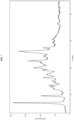
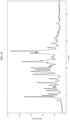
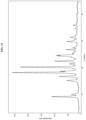
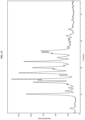
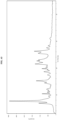
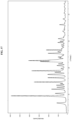
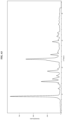
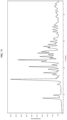
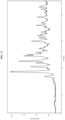
- Form I has at least one characteristic XRPD peaks selected from about 6.8, about 12.9, about 25.4, about 25.8, about 26.2 and about 27.5 degrees 2-theta.
- Form I has at least two characteristic XRPD peaks selected from about 6.8, about 12.9, about 25.4, about 25.8, about 26.2 and about 27.5 degrees 2-theta.
- Form I has at least three characteristic XRPD peaks selected from about 6.8, about 12.9, about 25.4, about 25.8, about 26.2 and about 27.5 degrees 2-theta.
- Form I has at least one characteristic XRPD peak selected from about 6.8, about 9.6, about 12.9, about 18.6, about 19.4, about 22.6, about 25.4, about 25.8, about 26.2, and about 27.5 degrees 2-theta.
- Form I has at least two characteristic XRPD peaks selected from about 6.8, about 9.6, about 12.9, about 18.6, about 19.4, about 22.6, about 25.4, about 25.8, about 26.2, and about 27.5 degrees 2-theta.
- Form I has at least three characteristic XRPD peaks selected from about 6.8, about 9.6, about 12.9, about 18.6, about 19.4, about 22.6, about 25.4, about 25.8, about 26.2, and about 27.5 degrees 2-theta.
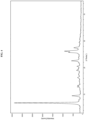
- Form I has an XRPD pattern with characteristic peaks as substantially shown in Figure 1 .
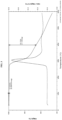
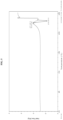
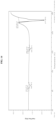
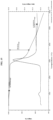
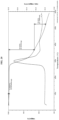
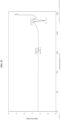
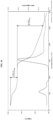
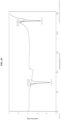
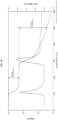
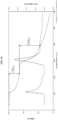
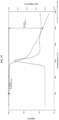
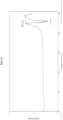
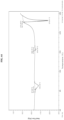
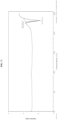
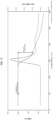
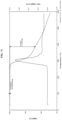
- Form I exhibits a DSC thermogram having endotherm peaks at temperatures of about 201 °C and 276 °C. In some embodiments, Form I exhibits a DSC thermogram having an endotherm peak at a temperature of about 201 °C. In some embodiments, Form I exhibits a DSC thermogram having an endotherm peak at a temperature of about 276 °C. In some embodiments, Form I has a DSC thermogram substantially as depicted in Figure 2 . In some embodiments, Form I has a TGA thermogram substantially as depicted in Figure 3 .
- Form I has at least one characteristic XRPD peaks selected from about 6.8, about 12.9, about 25.4, about 25.8, about 26.2 and about 27.5 degrees 2-theta; and Form I exhibits a DSC thermogram having endotherm peaks at temperatures of about 201 °C and 276 °C.
- the process for preparing Form I of Compound 1 comprises recrystallizing Compound 1 from a mixture of dichloromethane and methyl t-butyl ether.
- the recrystallizing comprises a) heating a solution of Compound 1 in a mixture of dichloromethane and methyl t-butyl ether to an elevated temperature for a first period of time and b) cooling to a reduced temperature for a second period of time.
- the elevated temperature is ⁇ 30 °C, ⁇ 35 °C, ⁇ 36 °C, ⁇ 39 °C, or ⁇ 40 °C.
- the first period of time is between 5 and 6 h. In some embodiments, the first period of time is greater than 5 h.
- the reduced temperature is ambient temperature. In some embodiments, the reduced temperature is about 23 °C.
- the second period of time is between 10 and 11 hours. In some embodiments, the second period of time is longer than 5, 8, or 10 hours. In some embodiments, the second period of time is 10.5 h.
- Form I can be isolated with a purity of at least about 80%, about 85%, about 90%, about 95%, about 96%, about 97%, about 98%, or about 99%. In some embodiments, Form I can be isolated with a purity greater than about 99%.
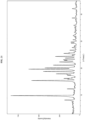
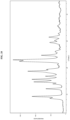
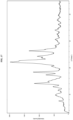
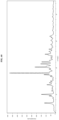
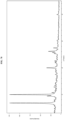
- Form II has at least one characteristic XRPD peaks selected from about 6.8, about 9.5, about 12.8, about 13.3 and about 25.8 degrees 2-theta.
- Form II has at least two characteristic XRPD peaks selected from about 6.8, about 9.5, about 12.8, about 13.3 and about 25.8 degrees 2-theta.
- Form II has at least three characteristic XRPD peaks selected from about 6.8, about 9.5, about 12.8, about 13.3 and about 25.8 degrees 2-theta.
- Form II has at least one characteristic XRPD peak selected from about 6.8, about 9.5, about 12.8, about 13.3, about 19.0, about 20.5, about 22.6, about 25.8, about 26.2, and about 27.4 degrees 2-theta.
- Form II has at least two characteristic XRPD peaks selected from about 6.8, about 9.5, about 12.8, about 13.3, about 19.0, about 20.5, about 22.6, about 25.8, about 26.2, and about 27.4 degrees 2-theta.
- Form II has at least three characteristic XRPD peaks selected from about 6.8, about 9.5, about 12.8, about 13.3, about 19.0, about 20.5, about 22.6, about 25.8, about 26.2, and about 27.4 degrees 2-theta.
- Form II has an XRPD pattern with characteristic peaks as substantially shown in Figure 4 .
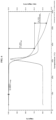
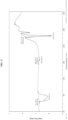
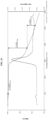
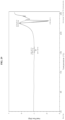
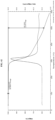
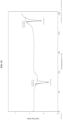
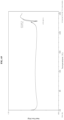
- Form II exhibits a DSC thermogram having an endotherm peak at a temperature of about 276 °C. In some embodiments, Form II has a DSC thermogram substantially as depicted in Figure 5 . In some embodiments, Form II has a TGA thermogram substantially as depicted in Figure 6 .
- Form II has at least one characteristic XRPD peaks selected from about 6.8, about 9.5, about 12.8, about 13.3 and about 25.8 degrees 2-theta; and Form II exhibits a DSC thermogram having an endotherm peak at a temperature of about 276 °C.
- Form II can be isolated with a purity of at least about 80%, about 85%, about 90%, about 95%, about 96%, about 97%, about 98%, or about 99%. In some embodiments, Form I can be isolated with a purity greater than about 99%.
- Form II-a has at least one characteristic XRPD peaks selected from about 6.9, about 9.4, about 13.3, about 16.3, and about 19.9 degrees 2-theta.
- Form II-a has at least two characteristic XRPD peaks selected from about 6.9, about 9.4, about 13.3, about 16.3, and about 19.9 degrees 2-theta.
- Form II-a has at least three characteristic XRPD peaks selected from about 6.9, about 9.4, about 13.3, about 16.3, and about 19.9 degrees 2-theta.
- Form II-a has at least one characteristic XRPD peak selected from about 6.9, about 9.4, about 12.9, about 13.3, about 16.3, about 17.5, about 19.0, about 19.9, about 22.5, and about 26.1 degrees 2-theta.
- Form II-a has at least two characteristic XRPD peaks selected from about 6.9, about 9.4, about 12.9, about 13.3, about 16.3, about 17.5, about 19.0, about 19.9, about 22.5, and about 26.1 degrees 2-theta.
- Form II-a has at least three characteristic XRPD peaks selected from about 6.9, about 9.4, about 12.9, about 13.3, about 16.3, about 17.5, about 19.0, about 19.9, about 22.5, and about 26.1 degrees 2-theta.
- Form II-a has an XRPD pattern with characteristic peaks as substantially shown in Figure 7 .
- Form II-a exhibits a DSC thermogram having an endotherm peak at a temperature of about 275 °C. In some embodiments, Form II-a has a DSC thermogram substantially as depicted in Figure 8 . In some embodiments, Form II-a has a TGA thermogram substantially as depicted in Figure 9 .
- Form II-a has at least one characteristic XRPD peaks selected from about 6.9, about 9.4, about 13.3, about 16.3, and about 19.9 degrees 2-theta; and Form II-a exhibits a DSC thermogram having an endotherm peak at a temperature of about 275 °C.
- Form II-a can be isolated with a purity of at least about 80%, about 85%, about 90%, about 95%, about 96%, about 97%, about 98%, or about 99%. In some embodiments, Form I can be isolated with a purity greater than about 99%.
- Form III has at least one characteristic XRPD peaks selected from about 3.5, about 13.9, about 15.0, about 15.3, about 16.8, and about 18.6.
- Form III has at least two characteristic XRPD peaks selected from about 3.5, about 13.9, about 15.0, about 15.3, about 16.8, and about 18.6.
- Form III has at least three characteristic XRPD peaks selected from about 3.5, about 13.9, about 15.0, about 15.3, about 16.8, and about 18.6.
- Form III has at least one characteristic XRPD peak selected from about 3.5, about 6.7, about 8.5, about 13.9, about 15.0, about 15.3, about 16.8, about 18.6, about 19.3, about 21.5, about 22.9, about 24.2, and about 25.9 degrees 2-theta.
- Form III has at least two characteristic XRPD peaks selected from about 3.5, about 6.7, about 8.5, about 13.9, about 15.0, about 15.3, about 16.8, about 18.6, about 19.3, about 21.5, about 22.9, about 24.2, and about 25.9 degrees 2-theta.
- Form III has at least three characteristic XRPD peaks selected from about 3.5, about 6.7, about 8.5, about 13.9, about 15.0, about 15.3, about 16.8, about 18.6, about 19.3, about 21.5, about 22.9, about 24.2, and about 25.9 degrees 2-theta.
- Form III has an XRPD pattern with characteristic peaks as substantially shown in Figure 10 .
- Form III exhibits a DSC thermogram having endotherm peaks at temperatures of about 101 °C, 204 °C, and 276 °C. In some embodiments, Form III exhibits a DSC thermogram having an endotherm peak at a temperature of about 101 °C. In some embodiments, Form III exhibits a DSC thermogram having an endotherm peak at a temperature of about 204 °C. In some embodiments, Form III exhibits a DSC thermogram having an endotherm peak at a temperature of about 276 °C. In some embodiments, Form III has a DSC thermogram substantially as depicted in Figure 11 . In some embodiments, Form III has a TGA thermogram substantially as depicted in Figure 12 .
- Form III has at least one characteristic XRPD peaks selected from about 3.5, about 13.9, about 15.0, about 15.3, about 16.8, and about 18.6; and Form III exhibits a DSC thermogram having endotherm peaks at temperatures of about 101 °C, 204 °C, and 276 °C.
- Process for preparing Form III of Compound 1 comprising adding Compound 1, Form I to a solution of Compound 1, Form I in 1,4-dioxane, stirring at 25 ⁇ 1 °C for 2 days, and removing the supernatant by centrifugation.
- Form III can be isolated with a purity of at least about 80%, about 85%, about 90%, about 95%, about 96%, about 97%, about 98%, or about 99%. In some embodiments, Form I can be isolated with a purity greater than about 99%.
- Form IV has at least one characteristic XRPD peaks selected from about 10.1, about 13.0, about 14.0, about 18.4, about 22.2, about 24.3, and about 26.4 degrees 2-theta.
- Form IV has at least two characteristic XRPD peaks selected from about 10.1, about 13.0, about 14.0, about 18.4, about 22.2, about 24.3, and about 26.4 degrees 2-theta.
- Form IV has at least three characteristic XRPD peaks selected from about 10.1, about 13.0, about 14.0, about 18.4, about 22.2, about 24.3, and about 26.4 degrees 2-theta.
- Form IV has at least one characteristic XRPD peak selected from about 10.1, about 13.0, about 14.0, about 15.6, about 17.3, about 18.4, about 20.2, about 21.4, about 22.2, about 22.7, about 24.3, about 26.4 and about 26.8 degrees 2-theta.
- Form IV has at least two characteristic XRPD peaks selected from about 10.1, about 13.0, about 14.0, about 15.6, about 17.3, about 18.4, about 20.2, about 21.4, about 22.2, about 22.7, about 24.3, about 26.4 and about 26.8 degrees 2-theta.
- Form IV has at least three characteristic XRPD peaks selected from about 10.1, about 13.0, about 14.0, about 15.6, about 17.3, about 18.4, about 20.2, about 21.4, about 22.2, about 22.7, about 24.3, about 26.4 and about 26.8 degrees 2-theta.
- Form IV has an XRPD pattern with characteristic peaks as substantially shown in Figure 13 .
- Form IV exhibits a DSC thermogram having endotherm peaks at temperatures of about 109 °C, 203 °C, and 278 °C. In some embodiments, Form IV exhibits a DSC thermogram having an endotherm peak at a temperature of about 109 °C. In some embodiments, Form IV exhibits a DSC thermogram having an endotherm peak at a temperature of about 203 °C. In some embodiments, Form IV exhibits a DSC thermogram having an endotherm peak at a temperature of about 278 °C. In some embodiments, Form IV has a DSC thermogram substantially as depicted in Figure 14 . In some embodiments, Form IV has a TGA thermogram substantially as depicted in Figure 15 .
- Form IV has at least one characteristic XRPD peaks selected from about 10.1, about 13.0, about 14.0, about 18.4, about 22.2, about 24.3, and about 26.4 degrees 2-theta; and Form IV exhibits a DSC thermogram having endotherm peaks at temperatures of about 109 °C, 203 °C, and 278 °C.
- Form IV can be isolated with a purity of at least about 80%, about 85%, about 90%, about 95%, about 96%, about 97%, about 98%, or about 99%. In some embodiments, Form I can be isolated with a purity greater than about 99%.
- Form V has at least one characteristic XRPD peak selected from about 7.4, about 14.8, about 21.3, about 22.0, and about 22.3 degrees 2-theta.
- Form V has at least two characteristic XRPD peaks selected from about 7.4, about 14.8, about 21.3, about 22.0, and about 22.3 degrees 2-theta.
- Form V has at least three characteristic XRPD peaks selected from about 7.4, about 14.8, about 21.3, about 22.0, and about 22.3 degrees 2-theta.
- Form V has an XRPD pattern with characteristic peaks as substantially shown in Figure 16 .
- Form V exhibits a DSC thermogram having endotherm peaks at temperatures of about 91 °C, 203 °C, and 276 °C. In some embodiments, Form V exhibits a DSC thermogram having an endotherm peak at a temperature of about 91 °C. In some embodiments, Form V exhibits a DSC thermogram having an endotherm peak at a temperature of about 203 °C. In some embodiments, Form V exhibits a DSC thermogram having an endotherm peak at a temperature of about 276 °C. In some embodiments, Form V has a DSC thermogram substantially as depicted in Figure 17 .
- Form V has at least one characteristic XRPD peak selected from about 7.4, about 14.8, about 21.3, about 22.0, and about 22.3 degrees 2-theta; and Form V exhibits a DSC thermogram having endotherm peaks at temperatures of about 91 °C, 203 °C, and 276 °C.
- Form V can be isolated with a purity of at least about 80%, about 85%, about 90%, about 95%, about 96%, about 97%, about 98%, or about 99%. In some embodiments, Form I can be isolated with a purity greater than about 99%.
- Form VI has at least one characteristic XRPD peaks selected from about 9.1, about 9.5, about 14.4, about 17.6, about 18.6, about 19.9, and about 22.3 degrees 2-theta.
- Form VI has at least two characteristic XRPD peaks selected from about 9.1, about 9.5, about 14.4, about 17.6, about 18.6, about 19.9, and about 22.3 degrees 2-theta.
- Form VI has at least three characteristic XRPD peaks selected from about 9.1, about 9.5, about 14.4, about 17.6, about 18.6, about 19.9, and about 22.3 degrees 2-theta.
- Form VI has at least one characteristic XRPD peak selected from about 7.8, about 9.1, about 9.5, about 10.2, about 11.4, about 12.1, about 13.4, about 14.4, about 15.9, about 17.6, about 18.6, about 19.2, about 19.9, about 22.3, about 22.7, about 25.4, and about 26.2 degrees 2-theta.
- Form VI has at least two characteristic XRPD peaks selected from about 7.8, about 9.1, about 9.5, about 10.2, about 11.4, about 12.1, about 13.4, about 14.4, about 15.9, about 17.6, about 18.6, about 19.2, about 19.9, about 22.3, about 22.7, about 25.4, and about 26.2 degrees 2-theta.
- Form VI has at least three characteristic XRPD peaks selected from about 7.8, about 9.1, about 9.5, about 10.2, about 11.4, about 12.1, about 13.4, about 14.4, about 15.9, about 17.6, about 18.6, about 19.2, about 19.9, about 22.3, about 22.7, about 25.4, and about 26.2 degrees 2-theta.
- Form VI has an XRPD pattern with characteristic peaks as substantially shown in Figure 18 .
- Form VI exhibits a DSC thermogram having an endotherm peak at a temperature of about 275 °C. In some embodiments, Form VI has a DSC thermogram substantially as depicted in Figure 19 . In some embodiments, Form VI has a TGA thermogram substantially as depicted in Figure 20 .
- Form VI has at least one characteristic XRPD peaks selected from about 9.1, about 9.5, about 14.4, about 17.6, about 18.6, about 19.9, and about 22.3 degrees 2-theta; and Form VI exhibits a DSC thermogram having an endotherm peak at a temperature of about 275 °C.
- Form VI can be isolated with a purity of at least about 80%, about 85%, about 90%, about 95%, about 96%, about 97%, about 98%, or about 99%. In some embodiments, Form I can be isolated with a purity greater than about 99%.
- Form VII has at least one characteristic XRPD peaks selected from about 9.8, about 15.4, about 18.8, about 19.6, and about 20.1 degrees 2-theta.
- Form VII has at least two characteristic XRPD peaks selected from about 9.8, about 15.4, about 18.8, about 19.6, and about 20.1 degrees 2-theta.
- Form VII has at least three characteristic XRPD peaks selected from about 9.8, about 15.4, about 18.8, about 19.6, and about 20.1 degrees 2-theta.
- Form VII has at least one characteristic XRPD peak selected from about 8.2, about 9.8, about 15.4, about 17.9, about 18.8, about 19.6, about 20.1, about 21.1, about 22.3, and about 24.3 degrees 2-theta.
- Form VII has at least two characteristic XRPD peaks selected from about 8.2, about 9.8, about 15.4, about 17.9, about 18.8, about 19.6, about 20.1, about 21.1, about 22.3, and about 24.3 degrees 2-theta.
- Form VII has at least three characteristic XRPD peaks selected from about 8.2, about 9.8, about 15.4, about 17.9, about 18.8, about 19.6, about 20.1, about 21.1, about 22.3, and about 24.3 degrees 2-theta.
- Form VII has an XRPD pattern with characteristic peaks as substantially shown in Figure 21 .
- Form VII exhibits a DSC thermogram having endotherm peaks at temperatures of about 88 °C, 201 °C, and 276 °C. In some embodiments, Form VII exhibits a DSC thermogram having an endotherm peak at a temperature of about 88 °C. In some embodiments, Form VII exhibits a DSC thermogram having an endotherm peak at a temperature of about 201 °C. In some embodiments, Form VII exhibits a DSC thermogram having an endotherm peak at a temperature of about 276 °C. In some embodiments, Form VII has a DSC thermogram substantially as depicted in Figure 22 . In some embodiments, Form VII has a TGA thermogram substantially as depicted in Figure 23 .
- Form VII has at least one characteristic XRPD peaks selected from about 9.8, about 15.4, about 18.8, about 19.6, and about 20.1 degrees 2-theta; and Form VII exhibits a DSC thermogram having endotherm peaks at temperatures of about 88 °C, 201 °C, and 276 °C.
- Form VII of Compound 1 comprising adding Compound 1, Form I to a cloudy solution of Compound 1, Form I prepared in methyl isobutyl ketone, and stirring at 25 ⁇ 1 °C for 3 days.
- Form VII can be isolated with a purity of at least about 80%, about 85%, about 90%, about 95%, about 96%, about 97%, about 98%, or about 99%. In some embodiments, Form I can be isolated with a purity greater than about 99%.
- Form VIII has at least one characteristic XRPD peaks selected from about 9.1, about 16.7, about 18.2, about 18.6, and about 20.2 degrees 2-theta.
- Form VIII has at least two characteristic XRPD peaks selected from about 9.1, about 16.7, about 18.2, about 18.6, and about 20.2 degrees 2-theta.
- Form VIII has at least three characteristic XRPD peaks selected from about 9.1, about 16.7, about 18.2, about 18.6, and about 20.2 degrees 2-theta.
- Form VIII has at least one characteristic XRPD peak selected from about 9.1, about 15.2, about 16.7, about 18.2, about 18.6, about 20.2, about 22.5, about 24.6, about 26.8, and about 29.8 degrees 2-theta.
- Form VIII has at least two characteristic XRPD peaks selected from about 9.1, about 15.2, about 16.7, about 18.2, about 18.6, about 20.2, about 22.5, about 24.6, about 26.8, and about 29.8 degrees 2-theta.
- Form VIII has at least three characteristic XRPD peaks selected from about 9.1, about 15.2, about 16.7, about 18.2, about 18.6, about 20.2, about 22.5, about 24.6, about 26.8, and about 29.8 degrees 2-theta.
- Form VIII has an XRPD pattern with characteristic peaks as substantially shown in Figure 24 .
- Form VIII exhibits a DSC thermogram having endotherm peaks at temperatures of about 201 °C, and 277 °C. In some embodiments, Form VIII exhibits a DSC thermogram having an endotherm peak at a temperature of about 201 °C. In some embodiments, Form VIII exhibits a DSC thermogram having an endotherm peak at a temperature of about 277 °C. In some embodiments, Form VIII has a DSC thermogram substantially as depicted in Figure 25 . In some embodiments, Form VIII has a TGA thermogram substantially as depicted in Figure 26 .
- Form VIII has at least one characteristic XRPD peaks selected from about 9.1, about 16.7, about 18.2, about 18.6, and about 20.2 degrees 2-theta; and Form VIII exhibits a DSC thermogram having endotherm peaks at temperatures of about 201 °C, and 277 °C.
- Form VIII can be isolated with a purity of at least about 80%, about 85%, about 90%, about 95%, about 96%, about 97%, about 98%, or about 99%. In some embodiments, Form I can be isolated with a purity greater than about 99%.
- Form VIII-a has at least one characteristic XRPD peaks selected from about 8.9, about 16.2, about 18.0, about 18.4, about 19.9, and about 21.1 degrees 2-theta.
- Form VIII-a has at least two characteristic XRPD peaks selected from about 8.9, about 16.2, about 18.0, about 18.4, about 19.9, and about 21.1 degrees 2-theta.
- Form VIII-a has at least three characteristic XRPD peaks selected from about 8.9, about 16.2, about 18.0, about 18.4, about 19.9, and about 21.1 degrees 2-theta.
- Form VIII-a has at least one characteristic XRPD peak selected from about 8.9, about 16.2, about 18.0, about 18.4, about 19.9, about 21.1, about 22.0, about 23.5, about 24.1, about 24.3, and about 29.5 degrees 2-theta.
- Form VIII-a has at least two characteristic XRPD peaks selected from about 8.9, about 16.2, about 18.0, about 18.4, about 19.9, about 21.1, about 22.0, about 23.5, about 24.1, about 24.3, and about 29.5 degrees 2-theta.
- Form VIII-a has at least three characteristic XRPD peaks selected from about 8.9, about 16.2, about 18.0, about 18.4, about 19.9, about 21.1, about 22.0, about 23.5, about 24.1, about 24.3, and about 29.5 degrees 2-theta.
- Form VIII-a has an XRPD pattern with characteristic peaks as substantially shown in Figure 27 .
- Form VIII-a of Compound 1 comprising adding Compound 1, Form I to a cloudy solution of Compound 1 in methyl ethyl ketone, and stirring at 50 ⁇ 1 °C for 3 days.
- Form VIII-a can be isolated with a purity of at least about 80%, about 85%, about 90%, about 95%, about 96%, about 97%, about 98%, or about 99%. In some embodiments, Form I can be isolated with a purity greater than about 99%.
- Form IX has at least one characteristic XRPD peaks selected from about 8.5, about 9.2, about 12.1, about 14.6, about 15.6, about 18.6, about 22.4, and about 22.9 degrees 2-theta.
- Form IX has at least two characteristic XRPD peaks selected from about 8.5, about 9.2, about 12.1, about 14.6, about 15.6, about 18.6, about 22.4, and about 22.9 degrees 2-theta.
- Form IX has at least three characteristic XRPD peaks selected from about 8.5, about 9.2, about 12.1, about 14.6, about 15.6, about 18.6, about 22.4, and about 22.9 degrees 2-theta.
- Form IX has at least one characteristic XRPD peak selected from about 8.5, about 9.2, about 12.1, about 13.9, about 14.6, about 15.6, about 16.8, about 18.6, about 19.3, about 22.4, about 22.9, about 24.6, and about 31.4 degrees 2-theta.
- Form IX has at least two characteristic XRPD peaks selected from about 8.5, about 9.2, about 12.1, about 13.9, about 14.6, about 15.6, about 16.8, about 18.6, about 19.3, about 22.4, about 22.9, about 24.6, and about 31.4 degrees 2-theta.
- Form IX has at least three characteristic XRPD peaks selected from about 8.5, about 9.2, about 12.1, about 13.9, about 14.6, about 15.6, about 16.8, about 18.6, about 19.3, about 22.4, about 22.9, about 24.6, and about 31.4 degrees 2-theta.
- Form IX has an XRPD pattern with characteristic peaks as substantially shown in Figure 28 .
- Form IX exhibits a DSC thermogram having endotherm peaks at temperatures of about 201 °C, and 276 °C. In some embodiments, Form IX exhibits a DSC thermogram having an endotherm peak at a temperature of about 201 °C. In some embodiments, Form IX exhibits a DSC thermogram having an endotherm peak at a temperature of about 276 °C. In some embodiments, Form IX has a DSC thermogram substantially as depicted in Figure 29 . In some embodiments, Form IX has a TGA thermogram substantially as depicted in Figure 30 .
- Form IX has at least one characteristic XRPD peaks selected from about 8.5, about 9.2, about 12.1, about 14.6, about 15.6, about 18.6, about 22.4, and about 22.9 degrees 2-theta; and Form IX exhibits a DSC thermogram having endotherm peaks at temperatures of about 201 °C, and 276 °C.
- Form IX of Compound 1 comprising adding Compound 1, Form I to a cloudy solution of Compound 1, Form I in methyl t-butyl ether, and stirring at 25 ⁇ 1 °C for 3 days.
- Form IX can be isolated with a purity of at least about 80%, about 85%, about 90%, about 95%, about 96%, about 97%, about 98%, or about 99%. In some embodiments, Form I can be isolated with a purity greater than about 99%.
- Form X has at least one characteristic XRPD peaks selected from about 10.1, about 14.6, about 15.4, about 15.7, about 18.1, and about 22.3 degrees 2-theta.
- Form X has at least two characteristic XRPD peaks selected from about 10.1, about 14.6, about 15.4, about 15.7, about 18.1, and about 22.3 degrees 2-theta.
- Form X has at least three characteristic XRPD peaks selected from about 10.1, about 14.6, about 15.4, about 15.7, about 18.1, and about 22.3 degrees 2-theta. In some embodiments, Form X has at least one characteristic XRPD peak selected from about 4.9, about 10.1, about 11.3, about 14.6, about 15.4, about 15.7, about 17.2, about 18.1, about 19.5, about 20.0, about 22.3, about 23.8, about 25.3, about 25.7, and about 26.3 degrees 2-theta.
- Form X has at least two characteristic XRPD peaks selected from about 4.9, about 10.1, about 11.3, about 14.6, about 15.4, about 15.7, about 17.2, about 18.1, about 19.5, about 20.0, about 22.3, about 23.8, about 25.3, about 25.7, and about 26.3 degrees 2-theta.
- Form X has at least three characteristic XRPD peaks selected from about 4.9, about 10.1, about 11.3, about 14.6, about 15.4, about 15.7, about 17.2, about 18.1, about 19.5, about 20.0, about 22.3, about 23.8, about 25.3, about 25.7, and about 26.3 degrees 2-theta.
- Form X has an XRPD pattern with characteristic peaks as substantially shown in Figure 31 .
- Form X exhibits a DSC thermogram having endotherm peaks at temperatures of about 202 °C, and 276 °C. In some embodiments, Form X exhibits a DSC thermogram having an endotherm peak at a temperature of about 202 °C. In some embodiments, Form X exhibits a DSC thermogram having an endotherm peak at a temperature of about 276 °C. In some embodiments, Form X has a DSC thermogram substantially as depicted in Figure 32 . In some embodiments, Form X has a TGA thermogram substantially as depicted in Figure 33 .
- Form X has at least one characteristic XRPD peaks selected from about 10.1, about 14.6, about 15.4, about 15.7, about 18.1, and about 22.3 degrees 2-theta; and Form X exhibits a DSC thermogram having endotherm peaks at temperatures of about 202 °C, and 276 °C.
- Form X of Compound 1 comprising adding Compound 1, Form I to a cloudy solution of Compound 1, Form I in ethyl acetate, and stirring at 25 ⁇ 1 °C for 3 days.
- Form X can be isolated with a purity of at least about 80%, about 85%, about 90%, about 95%, about 96%, about 97%, about 98%, or about 99%. In some embodiments, Form I can be isolated with a purity greater than about 99%.
- Form XI has at least one characteristic XRPD peaks selected from about 3.9, about 7.5, about 13.0, about 17.3, about 21.4, and about 22.8 degrees 2-theta.
- Form XI has at least two characteristic XRPD peaks selected from about 3.9, about 7.5, about 13.0, about 17.3, about 21.4, and about 22.8 degrees 2-theta.
- Form XI has at least three characteristic XRPD peaks selected from about 3.9, about 7.5, about 13.0, about 17.3, about 21.4, and about 22.8 degrees 2-theta.
- Form XI has at least one characteristic XRPD peak selected from about 3.9, about 4.3, about 7.5, about 13.0, about 13.7, about 15.0, about 16.5, about 17.3, about 19.1, about 19.9, about 21.4, about 22.2, about 22.8, about 25.2, and about 26.9 degrees 2-theta.
- Form XI has at least two characteristic XRPD peaks selected from about 3.9, about 4.3, about 7.5, about 13.0, about 13.7, about 15.0, about 16.5, about 17.3, about 19.1, about 19.9, about 21.4, about 22.2, about 22.8, about 25.2, and about 26.9 degrees 2-theta.
- Form XI has at least three characteristic XRPD peaks selected from about 3.9, about 4.3, about 7.5, about 13.0, about 13.7, about 15.0, about 16.5, about 17.3, about 19.1, about 19.9, about 21.4, about 22.2, about 22.8, about 25.2, and about 26.9 degrees 2-theta.
- Form XI has an XRPD pattern with characteristic peaks as substantially shown in Figure 34 .
- Form XI exhibits a DSC thermogram having endotherm peaks at temperatures of about 141 °C, and 279 °C. In some embodiments, Form XI exhibits a DSC thermogram having an endotherm peak at a temperature of about 141 °C. In some embodiments, Form XI exhibits a DSC thermogram having an endotherm peak at a temperature of about 279 °C. In some embodiments, Form XI has a DSC thermogram substantially as depicted in Figure 35 . In some embodiments, Form XI has a TGA thermogram substantially as depicted in Figure 36 .
- Form XI has at least one characteristic XRPD peaks selected from about 3.9, about 7.5, about 13.0, about 17.3, about 21.4, and about 22.8 degrees 2-theta; and Form XI exhibits a DSC thermogram having endotherm peaks at temperatures of about 141 °C, and 279 °C.
- Form XI of Compound 1 comprising adding Compound 1, Form I to a 5 mL cloudy solution of Compound 1, Form I in ethyl formate, and stirring at 25 ⁇ 1 °C for 3 days.
- Form XI can be isolated with a purity of at least about 80%, about 85%, about 90%, about 95%, about 96%, about 97%, about 98%, or about 99%. In some embodiments, Form I can be isolated with a purity greater than about 99%.
- Form XII has at least one characteristic XRPD peaks selected from about 7.5, about 14.1, about 17.3, about 18.3, about 22.1, and about 22.7 degrees 2-theta.
- Form XII has at least two characteristic XRPD peaks selected from about 7.5, about 14.1, about 17.3, about 18.3, about 22.1, and about 22.7 degrees 2-theta.
- Form XII has at least three characteristic XRPD peaks selected from about 7.5, about 14.1, about 17.3, about 18.3, about 22.1, and about 22.7 degrees 2-theta.
- Form XII has at least one characteristic XRPD peak selected from about 3.9, about 7.5, about 9.8, about 11.5, about 12.9, about 14.1, about 17.3, about 18.3, about 22.1, about 22.7, about 24.3, about 26.3, and about 26.9 degrees 2-theta.
- Form XII has at least two characteristic XRPD peaks selected from about 3.9, about 7.5, about 9.8, about 11.5, about 12.9, about 14.1, about 17.3, about 18.3, about 22.1, about 22.7, about 24.3, about 26.3, and about 26.9 degrees 2-theta.
- Form XII has at least three characteristic XRPD peaks selected from about 3.9, about 7.5, about 9.8, about 11.5, about 12.9, about 14.1, about 17.3, about 18.3, about 22.1, about 22.7, about 24.3, about 26.3, and about 26.9 degrees 2-theta.
- Form XII has an XRPD pattern with characteristic peaks as substantially shown in Figure 37 .
- Form XII exhibits a DSC thermogram having endotherm peaks at temperatures of about 105 °C, and 276 °C. In some embodiments, Form XII exhibits a DSC thermogram having an endotherm peak at a temperature of about 105 °C. In some embodiments, Form XII exhibits a DSC thermogram having an endotherm peak at a temperature of about 276 °C. In some embodiments, Form XII has a DSC thermogram substantially as depicted in Figure 38 . In some embodiments, Form XII has a TGA thermogram substantially as depicted in Figure 39 .
- Form XII has at least one characteristic XRPD peaks selected from about 7.5, about 14.1, about 17.3, about 18.3, about 22.1, and about 22.7 degrees 2-theta; and Form XII exhibits a DSC thermogram having endotherm peaks at temperatures of about 105 °C, and 276 °C.
- Form XII of Compound 1 comprising adding Compound 1, Form I to a cloudy solution of Compound 1, Form I prepared in 1,4-dioxane, and stirring at 50 ⁇ 1 °C for 2 days.
- Form XII can be isolated with a purity of at least about 80%, about 85%, about 90%, about 95%, about 96%, about 97%, about 98%, or about 99%. In some embodiments, Form I can be isolated with a purity greater than about 99%.
- Form XIII has at least one characteristic XRPD peaks selected from about 7.7, about 15.2, about 15.7, about 21.9, about 23.1, and about 26.1 degrees 2-theta.
- Form XIII has at least two characteristic XRPD peaks selected from about 7.7, about 15.2, about 15.7, about 21.9, about 23.1, and about 26.1 degrees 2-theta.
- Form XIII has at least three characteristic XRPD peaks selected from about 7.7, about 15.2, about 15.7, about 21.9, about 23.1, and about 26.1 degrees 2-theta.
- Form XIII has at least one characteristic XRPD peak selected from about 4.0, about 7.7, about 10.9, about 11.6, about 14.2, about 15.2, about 15.7, about 17.8, about 19.0, about 21.9, about 22.2, about 23.1, about 25.6, and about 26.1 degrees 2-theta.
- Form XIII has at least two characteristic XRPD peaks selected from about 4.0, about 7.7, about 10.9, about 11.6, about 14.2, about 15.2, about 15.7, about 17.8, about 19.0, about 21.9, about 22.2, about 23.1, about 25.6, and about 26.1 degrees 2-theta.
- Form XIII has at least three characteristic XRPD peaks selected from about 4.0, about 7.7, about 10.9, about 11.6, about 14.2, about 15.2, about 15.7, about 17.8, about 19.0, about 21.9, about 22.2, about 23.1, about 25.6, and about 26.1 degrees 2-theta.
- Form XIII has an XRPD pattern with characteristic peaks as substantially shown in Figure 40 .
- Form XIII exhibits a DSC thermogram having an endotherm peak at a temperature of about 276 °C. In some embodiments, Form XIII has a DSC thermogram substantially as depicted in Figure 41 . In some embodiments, Form XIII has a TGA thermogram substantially as depicted in Figure 42 .
- Form XIII has at least two characteristic XRPD peaks selected from about 7.7, about 15.2, about 15.7, about 21.9, about 23.1, and about 26.1 degrees 2-theta; and Form XIII exhibits a DSC thermogram having an endotherm peak at a temperature of about 276 °C.
- Form XIII can be isolated with a purity of at least about 80%, about 85%, about 90%, about 95%, about 96%, about 97%, about 98%, or about 99%. In some embodiments, Form I can be isolated with a purity greater than about 99%.
- Form XIII-a has at least one characteristic XRPD peaks selected from about 6.9, about 7.7, about 10.4, about 15.2, about 21.5, and about 26.2 degrees 2-theta.
- Form XIII-a has at least two characteristic XRPD peaks selected from about 6.9, about 7.7, about 10.4, about 15.2, about 21.5, and about 26.2 degrees 2-theta.
- Form XIII-a has at least three characteristic XRPD peaks selected from about 6.9, about 7.7, about 10.4, about 15.2, about 21.5, and about 26.2 degrees 2-theta.
- Form XIII-a has at least one characteristic XRPD peak selected from about 6.9, about 7.7, about 8.3, about 10.4, about 10.9, about 12.1, about 14.4, about 15.2, about 18.6, about 19.7, about 21.5, about 22.3, about 22.6, and about 26.2 degrees 2-theta.
- Form XIII-a has at least two characteristic XRPD peaks selected from about 6.9, about 7.7, about 8.3, about 10.4, about 10.9, about 12.1, about 14.4, about 15.2, about 18.6, about 19.7, about 21.5, about 22.3, about 22.6, and about 26.2 degrees 2-theta.
- Form XIII-a has at least three characteristic XRPD peaks selected from about 6.9, about 7.7, about 8.3, about 10.4, about 10.9, about 12.1, about 14.4, about 15.2, about 18.6, about 19.7, about 21.5, about 22.3, about 22.6, and about 26.2 degrees 2-theta.
- Form XIII-a has an XRPD pattern with characteristic peaks as substantially shown in Figure 43 .
- Form XIII-a exhibits a DSC thermogram having endotherm peaks at temperatures of about 75 °C and 276 °C. In some embodiments, Form XIII-a exhibits a DSC thermogram having an endotherm peak at a temperature of about 75 °C. In some embodiments, Form XIII-a exhibits a DSC thermogram having an endotherm peak at a temperature of about 276 °C. In some embodiments, Form XIII-a has a DSC thermogram substantially as depicted in Figure 44 .
- Form XIII-a has at least one characteristic XRPD peaks selected from about 6.9, about 7.7, about 10.4, about 15.2, about 21.5, and about 26.2 degrees 2-theta; and Form XIII-a exhibits a DSC thermogram having endotherm peaks at temperatures of about 75 °C and 276 °C.
- Form XIII-a can be isolated with a purity of at least about 80%, about 85%, about 90%, about 95%, about 96%, about 97%, about 98%, or about 99%. In some embodiments, Form I can be isolated with a purity greater than about 99%.
- Form XIV has at least one characteristic XRPD peaks selected from about 7.0, about 14.1, about 16.1, about 20.0, about 22.0, and about 25.8 degrees 2-theta.
- Form XIV has at least two characteristic XRPD peaks selected from about 7.0, about 14.1, about 16.1, about 20.0, about 22.0, and about 25.8 degrees 2-theta.
- Form XIV has at least three characteristic XRPD peaks selected from about 7.0, about 14.1, about 16.1, about 20.0, about 22.0, and about 25.8 degrees 2-theta.
- Form XIV has at least one characteristic XRPD peak selected from about 7.0, about 8.6, about 9.2, about 9.6, about 10.3, about 11.5, about 12.2, about 14.1, about 14.5, about 16.1, about 17.6, about 18.3, about 18.7, about 19.3, about 20.0, about 22.0, about 22.3, about 22.9, and about 25.8 degrees 2-theta.
- Form XIV has at least two characteristic XRPD peaks selected from about 7.0, about 8.6, about 9.2, about 9.6, about 10.3, about 11.5, about 12.2, about 14.1, about 14.5, about 16.1, about 17.6, about 18.3, about 18.7, about 19.3, about 20.0, about 22.0, about 22.3, about 22.9, and about 25.8 degrees 2-theta.
- Form XIV has at least three characteristic XRPD peaks selected from about 7.0, about 8.6, about 9.2, about 9.6, about 10.3, about 11.5, about 12.2, about 14.1, about 14.5, about 16.1, about 17.6, about 18.3, about 18.7, about 19.3, about 20.0, about 22.0, about 22.3, about 22.9, and about 25.8 degrees 2-theta.
- Form XIV has an XRPD pattern with characteristic peaks as substantially shown in Figure 45 .
- Form XIV exhibits a DSC thermogram having endotherm peaks at temperatures of about 78 °C, 118 °C, and 277 °C. In some embodiments, Form XIV exhibits a DSC thermogram having an endotherm peak at a temperature of about 78 °C. In some embodiments, Form XIV exhibits a DSC thermogram having an endotherm peak at a temperature of about 118 °C. In some embodiments, Form XIV exhibits a DSC thermogram having an endotherm peak at a temperature of about 277 °C. In some embodiments, Form XIV has a DSC thermogram substantially as depicted in Figure 46 . In some embodiments, Form XIV has a TGA thermogram substantially as depicted in Figure 47 .
- Form XIV has at least one characteristic XRPD peaks selected from about 7.0, about 14.1, about 16.1, about 20.0, about 22.0, and about 25.8 degrees 2-theta; and Form XIV exhibits a DSC thermogram having endotherm peaks at temperatures of about 78 °C, 118 °C, and 277 °C.
- Form XIV can be isolated with a purity of at least about 80%, about 85%, about 90%, about 95%, about 96%, about 97%, about 98%, or about 99%. In some embodiments, Form I can be isolated with a purity greater than about 99%.
- Form XV has at least one characteristic XRPD peaks selected from about 8.9, about 9.2, about 15.6, about 18.5, and about 22.4.
- Form XV has at least two characteristic XRPD peaks selected from about 8.9, about 9.2, about 15.6, about 18.5, and about 22.4.
- Form XV has at least three characteristic XRPD peaks selected from about 8.9, about 9.2, about 15.6, about 18.5, and about 22.4.
- Form XV has at least one characteristic XRPD peak selected from about 3.9, about 8.9, about 9.2, about 15.6, about 16.6, about 18.5, about 20.3, about 21.4, about 21.8, about 22.4, about 24.5, about 24.9, about 30.0, and about 31.1 degrees 2-theta.
- Form XV has at least two characteristic XRPD peaks selected from about 3.9, about 8.9, about 9.2, about 15.6, about 16.6, about 18.5, about 20.3, about 21.4, about 21.8, about 22.4, about 24.5, about 24.9, about 30.0, and about 31.1 degrees 2-theta.
- Form XV has at least three characteristic XRPD peaks selected from about 3.9, about 8.9, about 9.2, about 15.6, about 16.6, about 18.5, about 20.3, about 21.4, about 21.8, about 22.4, about 24.5, about 24.9, about 30.0, and about 31.1 degrees 2-theta.
- Form XV has an XRPD pattern with characteristic peaks as substantially shown in Figure 48 .
- Form XV exhibits a DSC thermogram having endotherm peaks at temperatures of about 119 °C and 276 °C. In some embodiments, Form XV exhibits a DSC thermogram having an endotherm peak at a temperature of about 119 °C. In some embodiments, Form XV exhibits a DSC thermogram having an endotherm peak at a temperature of about 276 °C. In some embodiments, Form XV has a DSC thermogram substantially as depicted in Figure 49 . In some embodiments, Form XV has a TGA thermogram substantially as depicted in Figure 50 .
- Form XV has at least one characteristic XRPD peaks selected from about 8.9, about 9.2, about 15.6, about 18.5, and about 22.4; and Form XV exhibits a DSC thermogram having endotherm peaks at temperatures of about 119 °C and 276 °C.
- Form XV can be isolated with a purity of at least about 80%, about 85%, about 90%, about 95%, about 96%, about 97%, about 98%, or about 99%. In some embodiments, Form I can be isolated with a purity greater than about 99%.
- Form XVI has at least one characteristic XRPD peaks selected from about 6.8, about 10.7, about 14.0, about 14.9, about 16.0, and about 19.9.
- Form XVI has at least two characteristic XRPD peaks selected from about 6.8, about 10.7, about 14.0, about 14.9, about 16.0, and about 19.9.
- Form XVI has at least three characteristic XRPD peaks selected from about 6.8, about 10.7, about 14.0, about 14.9, about 16.0, and about 19.9.
- Form XVI has at least one characteristic XRPD peak selected from about 6.8, about 9.4, about 10.7, about 14.0, about 14.9, about 16.0, about 17.5, about 18.5, about 19.2, about 19.9, about 22.2, about 23.5, about 24.5, about 25.4, about 25.7, about 26.1, and about 30.2 degrees 2-theta.
- Form XVI has at least two characteristic XRPD peaks selected from about 6.8, about 9.4, about 10.7, about 14.0, about 14.9, about 16.0, about 17.5, about 18.5, about 19.2, about 19.9, about 22.2, about 23.5, about 24.5, about 25.4, about 25.7, about 26.1, and about 30.2 degrees 2-theta.
- Form XVI has at least three characteristic XRPD peaks selected from about 6.8, about 9.4, about 10.7, about 14.0, about 14.9, about 16.0, about 17.5, about 18.5, about 19.2, about 19.9, about 22.2, about 23.5, about 24.5, about 25.4, about 25.7, about 26.1, and about 30.2 degrees 2-theta.
- Form XVI has an XRPD pattern with characteristic peaks as substantially shown in Figure 51 .
- Form XVI exhibits a DSC thermogram having an endotherm peak at a temperature of about 276 °C. In some embodiments, Form XVI has a DSC thermogram substantially as depicted in Figure 52 . In some embodiments, Form XVI has a TGA thermogram substantially as depicted in Figure 53 .
- Form XVI has at least one characteristic XRPD peaks selected from about 6.8, about 10.7, about 14.0, about 14.9, about 16.0, and about 19.9; and Form XVI exhibits a DSC thermogram having an endotherm peak at a temperature of about 276 °C.
- Form XVI can be isolated with a purity of at least about 80%, about 85%, about 90%, about 95%, about 96%, about 97%, about 98%, or about 99%. In some embodiments, Form I can be isolated with a purity greater than about 99%.
- Form XVII has at least one characteristic XRPD peak selected from about 15.7, about 18.1, about 18.4, and about 32.2 degrees 2-theta.
- Form XVII has at least two characteristic XRPD peaks selected from about 15.7, about 18.1, about 18.4, and about 32.2 degrees 2-theta.
- Form XVII has at least three characteristic XRPD peaks selected from about 15.7, about 18.1, about 18.4, and about 32.2 degrees 2-theta.
- Form XVII has an XRPD pattern with characteristic peaks as substantially shown in Figure 54 .
- Form XVII exhibits a DSC thermogram having endotherm peaks at temperatures of about 119 °C and 276 °C. In some embodiments, Form XVII exhibits a DSC thermogram having an endotherm peak at a temperature of about 119 °C. In some embodiments, Form XVII exhibits a DSC thermogram having an endotherm peak at a temperature of about 276 °C. In some embodiments, Form XVII has a DSC thermogram substantially as depicted in Figure 55 . In some embodiments, Form XVII has a TGA thermogram substantially as depicted in Figure 56 .
- Form XVII has at least one characteristic XRPD peak selected from about 15.7, about 18.1, about 18.4, and about 32.2 degrees 2-theta; and Form XVII exhibits a DSC thermogram having endotherm peaks at temperatures of about 119 °C and 276 °C.
- Form XVII can be isolated with a purity of at least about 80%, about 85%, about 90%, about 95%, about 96%, about 97%, about 98%, or about 99%. In some embodiments, Form I can be isolated with a purity greater than about 99%.
- Form XVIII has at least one characteristic XRPD peaks selected from about 9.4, about 14.6, about 16.2, about 17.5, about 18.8, about 22.3, and about 22.7 degrees 2-theta.
- Form XVIII has at least two characteristic XRPD peaks selected from about 9.4, about 14.6, about 16.2, about 17.5, about 18.8, about 22.3, and about 22.7 degrees 2-theta.
- Form XVIII has at least three characteristic XRPD peaks selected from about 9.4, about 14.6, about 16.2, about 17.5, about 18.8, about 22.3, and about 22.7 degrees 2-theta.
- Form XVIII has at least one characteristic XRPD peak selected from about 6.8, about 9.4, about 10.3, about 11.9, about 12.6, about 13.4, about 14.6, about 16.2, about 17.5, about 18.3, about 18.8, about 20.8, about 22.3, about 22.7, and about 25.4 degrees 2-theta.
- Form XVIII has at least two characteristic XRPD peaks selected from about 6.8, about 9.4, about 10.3, about 11.9, about 12.6, about 13.4, about 14.6, about 16.2, about 17.5, about 18.3, about 18.8, about 20.8, about 22.3, about 22.7, and about 25.4 degrees 2-theta.
- Form XVIII has at least three characteristic XRPD peaks selected from about 6.8, about 9.4, about 10.3, about 11.9, about 12.6, about 13.4, about 14.6, about 16.2, about 17.5, about 18.3, about 18.8, about 20.8, about 22.3, about 22.7, and about 25.4 degrees 2-theta.
- Form XVIII has an XRPD pattern with characteristic peaks as substantially shown in Figure 57 .
- Form XVIII exhibits a DSC thermogram having an endotherm peak at a temperatures of about 276 °C. In some embodiments, Form XVIII has a DSC thermogram substantially as depicted in Figure 58 . In some embodiments, Form XVIII has a TGA thermogram substantially as depicted in Figure 59 .
- Form XVIII has at least one characteristic XRPD peaks selected from about 9.4, about 14.6, about 16.2, about 17.5, about 18.8, about 22.3, and about 22.7 degrees 2-theta; and Form XVIII exhibits a DSC thermogram having an endotherm peak at a temperatures of about 276 °C.
- Form XVIII can be isolated with a purity of at least about 80%, about 85%, about 90%, about 95%, about 96%, about 97%, about 98%, or about 99%. In some embodiments, Form I can be isolated with a purity greater than about 99%.
- Form XIX has at least one characteristic XRPD peaks selected from about 6.7, about 10.0, about 17.4, about 18.0, about 20.2, and about 21.4 degrees 2-theta.
- Form XIX has at least two characteristic XRPD peaks selected from about 6.7, about 10.0, about 17.4, about 18.0, about 20.2, and about 21.4 degrees 2-theta.
- Form XIX has at least three characteristic XRPD peaks selected from about 6.7, about 10.0, about 17.4, about 18.0, about 20.2, and about 21.4 degrees 2-theta.
- Form XIX has at least one characteristic XRPD peak selected from about 3.9, about 6.7, about 9.4, about 10.0, about 13.6, about 17.4, about 18.0, about 20.2, about 21.4, about 22.1, and about 25.0 degrees 2-theta.
- Form XIX has at least two characteristic XRPD peaks selected from about 3.9, about 6.7, about 9.4, about 10.0, about 13.6, about 17.4, about 18.0, about 20.2, about 21.4, about 22.1, and about 25.0 degrees 2-theta.
- Form XIX has at least three characteristic XRPD peaks selected from about 3.9, about 6.7, about 9.4, about 10.0, about 13.6, about 17.4, about 18.0, about 20.2, about 21.4, about 22.1, and about 25.0 degrees 2-theta.
- Form XIX has an XRPD pattern with characteristic peaks as substantially shown in Figure 60 .
- Form XIX exhibits a DSC thermogram having an endotherm peak at a temperature of about 276 °C. In some embodiments, Form XIX has a DSC thermogram substantially as depicted in Figure 61 . In some embodiments, Form XIX has a TGA thermogram substantially as depicted in Figure 62 .
- Form XIX has at least one characteristic XRPD peaks selected from about 6.7, about 10.0, about 17.4, about 18.0, about 20.2, and about 21.4 degrees 2-theta; and Form XIX exhibits a DSC thermogram having an endotherm peak at a temperature of about 276 °C.
- Form XIX can be isolated with a purity of at least about 80%, about 85%, about 90%, about 95%, about 96%, about 97%, about 98%, or about 99%. In some embodiments, Form I can be isolated with a purity greater than about 99%.
- Form XX has at least one characteristic XRPD peaks selected from about 9.2, about 14.7, about 18.6, about 22.5, and about 23.0.
- Form XX has at least two characteristic XRPD peaks selected from about 9.2, about 14.7, about 18.6, about 22.5, and about 23.0.
- Form XX has at least three characteristic XRPD peaks selected from about 9.2, about 14.7, about 18.6, about 22.5, and about 23.0.
- Form XX has at least one characteristic XRPD peak selected from about 9.2, about 14.7, about 15.6, about 18.6, about 22.3, about 22.5, about 23.0, about 24.7, and about 29.5 degrees 2-theta.
- Form XX has at least two characteristic XRPD peaks selected from about 9.2, about 14.7, about 15.6, about 18.6, about 22.3, about 22.5, about 23.0, about 24.7, and about 29.5 degrees 2-theta.
- Form XX has at least three characteristic XRPD peaks selected from about 9.2, about 14.7, about 15.6, about 18.6, about 22.3, about 22.5, about 23.0, about 24.7, and about 29.5 degrees 2-theta.
- Form XX has an XRPD pattern with characteristic peaks as substantially shown in Figure 63 .
- Form XX exhibits a DSC thermogram having endotherm peaks at temperatures of about 108 °C, 202 °C, and 277 °C. In some embodiments, Form XX exhibits a DSC thermogram having an endotherm peak at a temperature of about 108 °C. In some embodiments, Form XX exhibits a DSC thermogram having an endotherm peak at a temperature of about 202 °C. In some embodiments, Form XX exhibits a DSC thermogram having an endotherm peak at a temperature of about 277 °C. In some embodiments, Form XX has a DSC thermogram substantially as depicted in Figure 64 . In some embodiments, Form XX has a TGA thermogram substantially as depicted in Figure 65 .
- Form XX has at least one characteristic XRPD peaks selected from about 9.2, about 14.7, about 18.6, about 22.5, and about 23.0; and Form XX exhibits a DSC thermogram having endotherm peaks at temperatures of about 108 °C, 202 °C, and 277 °C.
- Form XX can be isolated with a purity of at least about 80%, about 85%, about 90%, about 95%, about 96%, about 97%, about 98%, or about 99%. In some embodiments, Form I can be isolated with a purity greater than about 99%.
- Form XXI has at least one characteristic XRPD peaks selected from about 10.3, about 14.2, about 20.7, about 22.6, about 24.2, and about 27.1 degrees 2-theta.
- Form XXI has at least two characteristic XRPD peaks selected from about 10.3, about 14.2, about 20.7, about 22.6, about 24.2, and about 27.1 degrees 2-theta.
- Form XXI has at least three characteristic XRPD peaks selected from about 10.3, about 14.2, about 20.7, about 22.6, about 24.2, and about 27.1 degrees 2-theta.
- Form XXI has at least one characteristic XRPD peak selected from about 3.9, about 6.5, about 10.3, about 13.2, about 14.2, about 17.5, about 19.4, about 20.7, about 22.6, about 24.2, and about 27.1 degrees 2-theta.
- Form XXI has at least two characteristic XRPD peaks selected from about 3.9, about 6.5, about 10.3, about 13.2, about 14.2, about 17.5, about 19.4, about 20.7, about 22.6, about 24.2, and about 27.1 degrees 2-theta.
- Form XXI has at least three characteristic XRPD peaks selected from about 3.9, about 6.5, about 10.3, about 13.2, about 14.2, about 17.5, about 19.4, about 20.7, about 22.6, about 24.2, and about 27.1 degrees 2-theta.
- Form XXI has an XRPD pattern with characteristic peaks as substantially shown in Figure 66 .
- Form XXI exhibits a DSC thermogram having endotherm peaks at temperatures of about 201 °C, and 277 °C. In some embodiments, Form XXI exhibits a DSC thermogram having an endotherm peak at a temperature of about 201 °C. In some embodiments, Form XXI exhibits a DSC thermogram having an endotherm peak at a temperature of about 277 °C. In some embodiments, Form XXI has a DSC thermogram substantially as depicted in Figure 67 .
- Form XXI has at least two characteristic XRPD peaks selected from about 10.3, about 14.2, about 20.7, about 22.6, about 24.2, and about 27.1 degrees 2-theta; and Form XXI exhibits a DSC thermogram having endotherm peaks at temperatures of about 201 °C, and 277 °C.
- Form XXI can be isolated with a purity of at least about 80%, about 85%, about 90%, about 95%, about 96%, about 97%, about 98%, or about 99%. In some embodiments, Form I can be isolated with a purity greater than about 99%.
- Form XXII has at least one characteristic XRPD peaks selected from about 6.8, about 9.4, about 10.1, about 11.4, about 12.1, about 14.3, about 17.5, about 18.5, and about 22.2 degrees 2-theta.
- Form XXII has at least two characteristic XRPD peaks selected from about 6.8, about 9.4, about 10.1, about 11.4, about 12.1, about 14.3, about 17.5, about 18.5, and about 22.2 degrees 2-theta.
- Form XXII has at least three characteristic XRPD peaks selected from about 6.8, about 9.4, about 10.1, about 11.4, about 12.1, about 14.3, about 17.5, about 18.5, and about 22.2 degrees 2-theta.
- Form XXII has at least one characteristic XRPD peak selected from about 6.8, about 9.4, about 10.1, about 11.4, about 12.1, about 13.3, about 14.3, about 15.8, about 17.5, about 18.0, about 18.5, about 19.2, about 19.8, about 22.2, about 25.3, and about 26.1 degrees 2-theta.
- Form XXII has at least two characteristic XRPD peaks selected from about 6.8, about 9.4, about 10.1, about 11.4, about 12.1, about 13.3, about 14.3, about 15.8, about 17.5, about 18.0, about 18.5, about 19.2, about 19.8, about 22.2, about 25.3, and about 26.1 degrees 2-theta.
- Form XXII has at least three characteristic XRPD peaks selected from about 6.8, about 9.4, about 10.1, about 11.4, about 12.1, about 13.3, about 14.3, about 15.8, about 17.5, about 18.0, about 18.5, about 19.2, about 19.8, about 22.2, about 25.3, and about 26.1 degrees 2-theta.
- Form XXII has an XRPD pattern with characteristic peaks as substantially shown in Figure 68 .
- Form XXII exhibits a DSC thermogram having an endotherm peak at a temperature of about 276 °C. In some embodiments, Form XXII has a DSC thermogram substantially as depicted in Figure 69 .
- Form XXII has at least one characteristic XRPD peaks selected from about 6.8, about 9.4, about 10.1, about 11.4, about 12.1, about 14.3, about 17.5, about 18.5, and about 22.2 degrees 2-theta; and Form XXII exhibits a DSC thermogram having an endotherm peak at a temperature of about 276 °C.
- Form XXII can be isolated with a purity of at least about 80%, about 85%, about 90%, about 95%, about 96%, about 97%, about 98%, or about 99%. In some embodiments, Form I can be isolated with a purity greater than about 99%.
- Form XXIII has at least one characteristic XRPD peaks selected from about 12.0, about 12.7, about 21.0, about 24.9, and about 25.6 degrees 2-theta.
- Form XXIII has at least two characteristic XRPD peaks selected from about 12.0, about 12.7, about 21.0, about 24.9, and about 25.6 degrees 2-theta.
- Form XXIII has at least three characteristic XRPD peaks selected from about 12.0, about 12.7, about 21.0, about 24.9, and about 25.6 degrees 2-theta.
- Form XXIII has at least one characteristic XRPD peak selected from about 12.0, about 12.7, about 13.2, about 14.3, about 18.9, about 19.6, about 21.0, about 24.9, and about 25.6 degrees 2-theta.
- Form XXIII has at least two characteristic XRPD peaks selected from about 12.0, about 12.7, about 13.2, about 14.3, about 18.9, about 19.6, about 21.0, about 24.9, and about 25.6 degrees 2-theta.
- Form XXIII has at least three characteristic XRPD peaks selected from about 12.0, about 12.7, about 13.2, about 14.3, about 18.9, about 19.6, about 21.0, about 24.9, and about 25.6 degrees 2-theta.
- Form XXIII has an XRPD pattern with characteristic peaks as substantially shown in Figure 70 .
- Form XXIII exhibits a DSC thermogram having an endotherm peak at a temperature of about 277 °C. In some embodiments, Form XXIII has a DSC thermogram substantially as depicted in Figure 71 . In some embodiments, Form XXIII has a TGA thermogram substantially as depicted in Figure 72 .
- Form XXIII has at least one characteristic XRPD peaks selected from about 12.0, about 12.7, about 21.0, about 24.9, and about 25.6 degrees 2-theta; and Form XXIII exhibits a DSC thermogram having an endotherm peak at a temperature of about 277 °C.
- Form XXIII can be isolated with a purity of at least about 80%, about 85%, about 90%, about 95%, about 96%, about 97%, about 98%, or about 99%. In some embodiments, Form I can be isolated with a purity greater than about 99%.
- Form XXIV has at least one characteristic XRPD peaks selected from about 8.6, about 15.6, about 18.1, about 20.4, about 22.2, about 22.9, about 24.2, and about 25.5 degrees 2-theta.
- Form XXIV has at least two characteristic XRPD peaks selected from about 8.6, about 15.6, about 18.1, about 20.4, about 22.2, about 22.9, about 24.2, and about 25.5 degrees 2-theta.
- Form XXIV has at least three characteristic XRPD peaks selected from about 8.6, about 15.6, about 18.1, about 20.4, about 22.2, about 22.9, about 24.2, and about 25.5 degrees 2-theta.
- Form XXIV has at least one characteristic XRPD peak selected from about 8.6, about 9.7, about 13.8, about 15.6, about 17.4, about 18.1, about 19.4, about 20.4, about 22.2, about 22.9, about 24.2, about 25.5, about 26.0, about 27.5, and about 27.9 degrees 2-theta.
- Form XXIV has at least two characteristic XRPD peaks selected from about 8.6, about 9.7, about 13.8, about 15.6, about 17.4, about 18.1, about 19.4, about 20.4, about 22.2, about 22.9, about 24.2, about 25.5, about 26.0, about 27.5, and about 27.9 degrees 2-theta.
- Form XXIV has at least three characteristic XRPD peaks selected from about 8.6, about 9.7, about 13.8, about 15.6, about 17.4, about 18.1, about 19.4, about 20.4, about 22.2, about 22.9, about 24.2, about 25.5, about 26.0, about 27.5, and about 27.9 degrees 2-theta.
- Form XXIV has an XRPD pattern with characteristic peaks as substantially shown in Figure 73 .
- Form XXIV exhibits a DSC thermogram having an endotherm peak at a temperature of about 277 °C. In some embodiments, Form XXIV has a DSC thermogram substantially as depicted in Figure 74 . In some embodiments, Form XXIV has a TGA thermogram substantially as depicted in Figure 75 .
- Form XXIV has at least one characteristic XRPD peaks selected from about 8.6, about 15.6, about 18.1, about 20.4, about 22.2, about 22.9, about 24.2, and about 25.5 degrees 2-theta; and Form XXIV exhibits a DSC thermogram having an endotherm peak at a temperature of about 277 °C.
- Form XXIV can be isolated with a purity of at least about 80%, about 85%, about 90%, about 95%, about 96%, about 97%, about 98%, or about 99%. In some embodiments, Form I can be isolated with a purity greater than about 99%.
- Form XXV has at least one characteristic XRPD peaks selected from about 16.6, about 18.4, about 20.4, about 22.4, about 24.4, about 24.9 and about 29.9 degrees 2-theta.
- Form XXV has at least two characteristic XRPD peaks selected from about 16.6, about 18.4, about 20.4, about 22.4, about 24.4, about 24.9 and about 29.9 degrees 2-theta.
- Form XXV has at least three characteristic XRPD peaks selected from about 16.6, about 18.4, about 20.4, about 22.4, about 24.4, about 24.9 and about 29.9 degrees 2-theta.
- Form XXV has at least one characteristic XRPD peak selected from about 16.6, about 18.4, about 20.4, about 21.7, about 22.4, about 24.4, about 24.9, about 25.7, about 29.9, about 31.9, about 35.8, and about 38.9 degrees 2-theta.
- Form XXV has at least two characteristic XRPD peaks selected from about 16.6, about 18.4, about 20.4, about 21.7, about 22.4, about 24.4, about 24.9, about 25.7, about 29.9, about 31.9, about 35.8, and about 38.9 degrees 2-theta.
- Form XXV has at least three characteristic XRPD peaks selected from about 16.6, about 18.4, about 20.4, about 21.7, about 22.4, about 24.4, about 24.9, about 25.7, about 29.9, about 31.9, about 35.8, and about 38.9 degrees 2-theta.
- Form XXV has an XRPD pattern with characteristic peaks as substantially shown in Figure 76 .
- Form XXV exhibits a DSC thermogram having endotherm peaks at temperatures of about 113 °C and 276 °C. In some embodiments, Form XXV exhibits a DSC thermogram having an endotherm peak at a temperature of about 113 °C. In some embodiments, Form XXV exhibits a DSC thermogram having an endotherm peak at a temperature of about 276 °C. In some embodiments, Form XXIV has a DSC thermogram substantially as depicted in Figure 77 .
- Form XXV has at least one characteristic XRPD peaks selected from about 16.6, about 18.4, about 20.4, about 22.4, about 24.4, about 24.9 and about 29.9 degrees 2-theta; and Form XXV exhibits a DSC thermogram having endotherm peaks at temperatures of about 113 °C and 276 °C.
- Form XXV of Compound 1 comprising cycling a saturated solution of Compound 1, Form I in DMSO between 5-50 °C for a period of time (e.g., at least three days or at least 72 hours).
- Form XXV can be isolated with a purity of at least about 80%, about 85%, about 90%, about 95%, about 96%, about 97%, about 98%, or about 99%. In some embodiments, Form I can be isolated with a purity greater than about 99%.
- Form XXVI has at least one characteristic XRPD peaks selected from about 6.8, about 9.9, about 19.9, and about 26.1 degrees 2-theta.
- Form XXVI has at least two characteristic XRPD peaks selected from about 6.8, about 9.9, about 19.9, and about 26.1 degrees 2-theta.
- Form XXVI has at least three characteristic XRPD peaks selected from about 6.8, about 9.9, about 19.9, and about 26.1 degrees 2-theta.
- Form XXVI has at least one characteristic XRPD peak selected from about 6.8, about 9.4, about 9.9, about 10.6, about 19.9, about 25.7, about 26.1, and about 27.4 degrees 2-theta.
- Form XXVI has at least two characteristic XRPD peaks selected from about 6.8, about 9.4, about 9.9, about 10.6, about 19.9, about 25.7, about 26.1, and about 27.4 degrees 2-theta.
- Form XXVI has at least three characteristic XRPD peaks selected from about 6.8, about 9.4, about 9.9, about 10.6, about 19.9, about 25.7, about 26.1, and about 27.4 degrees 2-theta.
- Form XXVI has an XRPD pattern with characteristic peaks as substantially shown in Figure 78 .
- Form XXVI can be isolated with a purity of at least about 80%, about 85%, about 90%, about 95%, about 96%, about 97%, about 98%, or about 99%. In some embodiments, Form I can be isolated with a purity greater than about 99%.
- the compound for use according to the invention may be prepared according to the processes described herein.
- a process of preparing Compound 1, where the process can be suitable for scale up is described herein.
- a process of preparing Compound 1 is described in US Patent No. 9,611,267 .
- Described herein is a process of making Compound 1 having the formula: or a salt thereof, comprising a) deprotecting Compound F8 having the formula: or a salt thereof, wherein P 1 is an amino protecting group.
- P 1 is arylsulfonyl.
- P 1 is phenylsulphonyl or toluenesulfonyl.
- the deprotecting in step a) comprises reacting Compound F8 with a suitable deprotecting agent.
- the deprotecting comprises treating with base.
- the base is sodium hydroxide or potassium hydroxide.
- the base is aqueous sodium hydroxide or aqueous potassium hydroxide.
- the aqueous base is a 1 M solution of the base.
- the deprotection is carried out in a suitable solvent at a temperature of 70-90 °C (e.g., 80 °C).
- the suitable solvent is 1,4-dioxane.
- the base is present in ⁇ 2, ⁇ 3, or ⁇ 4 molar equivalents relative to the compound of Formula II.
- Compound 1 and Compound F8 are, preferably, in their non-salt forms.
- Compound F8, or a salt thereof is produced by a process comprising b) reacting Compound F7 having the formula: or a salt thereof, wherein R 1 is Cl, Br, or I, with a base.
- Compound F7 and Compound F8 are, preferably, in their non-salt forms.
- the base in step b) is lithium hexamethyldisilazide ("LHMDS”), sodium hexamethyldisilazide (“NHMDS”), potassium hexamethyldisilazide (“KHMDS”), or lithium diisopropyl amide (“LDA”).
- LHMDS lithium hexamethyldisilazide
- NHS sodium hexamethyldisilazide
- KHMDS potassium hexamethyldisilazide
- LDA lithium diisopropyl amide
- the reaction of Compound F7 and the base is carried out in THF at ambient temperature.
- Compound F7 is produced by a process comprising c) reacting Compound F6 having the formula: or a salt thereof, with ethyl isocyanate.
- the process further comprises purifying Compound F7.
- the purifying comprises mixing compound F7 with a first organic solvent at an elevated temperature to produce a first mixture; filtering the first mixture to produce a first solid; mixing the first solid with water to produce a second mixture; filtering the second mixture to produce a second solid; and mixing the second solid with a second organic solvent.
- the first organic solvent is acetonitrile and the second organic solvent is heptane.
- the reacting in step c) is carried out in the presence of an acid.
- the acid is methanesulfonic acid, toluenesulfonic acid, or HCl.
- reaction of Compound F6 with ethyl isocyanate is carried out in acetonitrile at ambient temperature.
- Compound F6, or a salt thereof is produced by a process comprising d) reacting Compound F4 having the formula: or a salt thereof, with Compound F5 having the formula: or a salt thereof, in the presence of a Lewis acid and a reducing agent, wherein P 1 is an amino protecting group and R 1 is Cl, Br or I.
- Compound F4 and Compound F5 are, preferably, in their non-salt forms.
- the Lewis acid in step d) is chlorotrimethylsilane.
- the reducing agent is borane-THF complex ("BH 3 -THF").
- reaction of Compound F4 and Compound F5 is carried out in DMF at room temperature.
- Compound F4, or a salt thereof is produced by a process comprising e) reacting Compound F3 having the formula: or a salt thereof, with an acid.
- P 1 is an amino protecting group.
- R 1 is Cl, Br, or I.
- Compound F3 and Compound F4 are, preferably, in their non-salt forms.
- the acid in step e) is an aqueous acid.
- the acid is HCl or sulfuric acid.
- the acid is aqueous HCl or aqueous sulfuric acid.
- reaction of a Compound F3 is carried out in dichloromethane at room temperature.
- Compound F3, or a salt thereof is produced by a process comprising f) reacting Compound F2 having the formula: or a salt thereof, with N-formylmorphline in the presence of base to form a mixture; and contacting the mixture with morpholine and an acid in the presence of a reducing agent.
- Compound F2 and Compound F3 are in their non-salt forms.
- the base in step f) is lithium diisopropylamide or lithium hexamethyldisilazide.
- the reaction of Compound F2 with base is carried out in THF at a reduced temperature. In certain embodiments, the temperature is ⁇ - 50 °C, ⁇ -60 °C, or ⁇ -70 °C.
- the reducing agent in step f) is sodium triacetoxyborohydride, sodium borohydride, or sodium cyanoborohydride.
- the acid in step f) is acetic acid.
- the reacting in step f) is carried out at ambient temperature. Also described is a process for preparing Compound 1 comprising:
- the base in step a) is lithium diisopropyl amide.
- the acid in step b) is acetic acid.
- the reducing agent in step b) is sodium triacetoxyborohydride.
- the acid in step b) is acetic acid and the reducing agent in step b) is sodium triacetoxyborohydride.
- the converting in step c) is carried out in the presence of aqueous hydrochloric acid.
- the Lewis acid in step d) is chlorotrimethylsilane.
- the reducing agent is BH 3 -THF.
- the Lewis acid in step d) is chlorotrimethylsilane and the reducing agent in step d) is BH 3 -THF.
- the reacting in step e) further comprises purifying Compound 7.
- the base in step f) is lithium hexamethyldisilazide.
- the base in step g) is NaOH. Also described is a process for preparing Compound 2 having the formula: comprising:
- the oxidizing agent in step a) is m-chloroperoxybenzoic acid or hydrogen peroxide.
- the reaction is carried out in a suitable solvent.
- the reaction is carried out in dichloromethane.
- the reaction is carried out at a reduced temperature. In some embodiments, the reaction was carried out between -5-15 °C or between 0-10 °C.
- the chlorination agent in step b) is methanesulfonyl chloride, thionyl chloride, or N-chlorosuccinimide.
- the reaction is carried out in a suitable solvent.
- the reaction is carried out in DMF.
- the reaction is carried out at an elevated temperature.
- the reaction is carried out at ⁇ 70 °C, ⁇ 80 °C, or ⁇ 90 °C.
- the base in step c) is sodium hydride. In some embodiments, the reaction in step c) is carried out in a suitable solvent. In some embodiments, the reaction in step c) is carried out in THF. In some embodiments, the reaction in step c) is carried out at ambient temperature. In some embodiments, the reaction in step c) is carried out at ⁇ 30 °C or ⁇ 25 °C.
- the base in step d) is n-butyllithium, s-butyllithium, or t-butyllithium.
- the reaction in step d) is carried out at a reduced temperature. In some embodiments, the reaction in step d) is carried out at ⁇ 30 °C, ⁇ 20 °C, ⁇ 10 °C, or ⁇ 5 °C.
- the base in step e) is cesium carbonate.
- the reaction in step e) is carried out in a suitable solvent.
- the reaction in step e) is carried out in dimethyl formamide.
- the reaction in step e) is carried out at a temperature of ⁇ 30 °C, ⁇ _ 20 °C, ⁇ _ 10 °C, or ⁇ 5 °C.
- the reaction in step e) is carried out in a suitable solvent at a range of temperatures, i.e. from 0 °C to ambient temperature.
- step f) is p-toluenesulfonic acid or HCl. In some embodiments, step f) is carried out at an elevated temperature. In some embodiments, step f) is carried out at reflux. Also described is a process for preparing Compound 4 having the formula: comprising:
- the bromination agent in step a) is N -bromosuccinimide.
- the contacting in step a) is carried out in a suitable solvent.
- the contacting in step a) is carried out in acetonitrile.
- the contacting in step a) is carried out at a reduced temperature.
- the contacting in step a) is carried out at ⁇ 20 °C or ⁇ 15 °C.
- the contacting in step a) is carried out between 10-25 °C or between 15-20 °C.
- the iodination agent in step b) is iodine.
- the contacting in step b) is performed in the presence of one or more acids.
- the contacting in step b) is performed in the presence of sulfuric acid and periodic acid.
- the contacting in step b) is carried out at an elevated temperature. In some embodiments, the contacting in step b) is carried out between 75-85 °C or 77-83 °C.
- the catalyst in step c) is a transition metal catalyst. In some embodiments, the catalyst in step c) comprises a combination of CuI and Pd(PPh 3 ) 4 . In some embodiments, the reaction in step c) is carried out in a suitable solvent. In certain embodiments, the reaction in step c) is carried out in toluene. In certain embodiments, the reaction in step c) is carried out at an elevated temperature. In certain embodiments, the reaction in step c is carried out at ⁇ 40 °C, ⁇ 50 °C, or ⁇ 60 °C.
- the base in step d) is KOtBu.
- the reaction in step d) is carried out in a suitable solvent.
- the reaction in step d) is carried out in THF.
- the reaction in step d) carried out at an elevated temperature.
- reaction in step d) is carried out between 25-40 °C or between 30-35 °C.
- the base in step e) is NaH. In some embodiments, the reaction in step e) is carried out in a suitable solvent. In some embodiments, the reaction in step e) is carried out in THF. In some embodiments, the reaction in step e) is carried out was carried out between -5-10 °C or 0-5 °C.
- the alkyl-magnesium halide agent in step e) is isopropylmagnesium chloride.
- the contacting in step f) is carried out in a suitable solvent.
- the contacting in step f) is carried out in THF.
- the contacting in step f) is carried out between -15-5 °C or -10-0 °C.
- the alkyl alcohol in step a) is methanol. In certain embodiments, the contacting in step a) is performed at an elevated temperature. In some embodiments, the contacting in step a) is performed at reflux.
- the base in step b) is a tertiary amine. In some embodiments, the base in step b) is N,N -diisopropyl ethylamine. In some embodiments, the reaction in step b) is carried out in a suitable solvent. In some embodiments, the reaction in step b) is carried out in N -methylpyrrolidinone. In some embodiments, the reaction in step b) is carried out at an elevated temperature. In some embodiments, the reaction in step b) is carried out at ⁇ 55 °C, ⁇ 60 °C, ⁇ 65 °C, or ⁇ 70 °C.
- the contacting in step c) is performed in a suitable solvent. In some embodiments, the contacting in step c) is performed in methanol. In some embodiments, the contacting in step c) is performed at an elevated temperature. In some embodiments, the contacting in step c) is performed between 60-75 °C or 76-70 °C.
- the heating in step d) is carried out between 65-95 °C, between 70-90 °C, or between 75-85 °C. In some embodiments, the heating in step d) is performed neat. In some embodiments, the heating in step d) is performed without a solvent.
- the reaction in step e) is carried out in a suitable solvent. In some embodiments, reaction in step e) is carried out in a mixture of ethanol and acetic acid. In certain embodiments, the reaction in step e) is carried out in a 6:1 mixture of ethanol and acetic acid. In certain embodiments, the reaction in step e) is carried out at an elevated temperature. In certain embodiments, the reaction in step e) is carried out at ⁇ 40 °C, ⁇ 50 °C, or ⁇ 60 °C.
- the processes described herein can be monitored according to any suitable method known in the art.
- product formation can be monitored by spectroscopic means, such as nuclear magnetic resonance spectroscopy (e.g., 1 H or 13 C), infrared spectroscopy, spectrophotometry (e.g., UV-visible), or mass spectrometry; or by chromatography such as high performance liquid chromatography (HPLC) or thin layer chromatography.
- spectroscopic means such as nuclear magnetic resonance spectroscopy (e.g., 1 H or 13 C), infrared spectroscopy, spectrophotometry (e.g., UV-visible), or mass spectrometry; or by chromatography such as high performance liquid chromatography (HPLC) or thin layer chromatography.
- HPLC high performance liquid chromatography
- the compounds obtained by the reactions can be purified by any suitable method known in the art.
- chromatography medium pressure
- a suitable adsorbent e.g., silica gel, alumina and the like
- HPLC high resolution liquid phase
- a suitable adsorbent e.g., silica gel, alumina and the like
- HPLC high resolution liquid phase chromatography
- distillation sublimation, trituration, or recrystallization.
- the purity of the compounds are determined by physical methods such as measuring the melting point (in case of a solid), obtaining a NMR spectrum, or performing a HPLC separation. If the melting point decreases, if unwanted signals in the NMR spectrum are decreased, or if extraneous peaks in an HPLC trace are removed, the compound can be said to have been purified. In some embodiments, the compounds are substantially purified.
- Preparation of compounds can involve the protection and deprotection of various chemical groups.
- the need for protection and deprotection, and the selection of appropriate protecting groups can be readily determined by one skilled in the art.
- the chemistry of protecting groups can be found, for example, in Wuts and Greene, Greene's Protective Groups in Organic Synthesis, 4th Ed., John Wiley & Sons: New York, 2006 , which is incorporated herein by reference in its entirety.
- amino protecting group refers to any protecting group for the protection of amines.
- Example amino protecting groups include, but are not limited to, phenylsulfonyl, benzyloxycarbonyl (Cbz), 2,2,2-trichloroethoxycarbonyl (Troc), 2-(trimethylsilyl)ethoxycarbonyl (Teoc), 2-(4-trifluoromethylphenylsulfonyl)ethoxycarbonyl (Tsc), t-butoxycarbonyl (BOC), 1-adamantyloxycarbonyl (Adoc), 2-adamantylcarbonyl (2-Adoc), 2,4-dimethylpent-3-yloxycarbonyl (Doc), cyclohexyloxycarbonyl (Hoc), 1,1-dimethyl-2,2,2-trichloroethoxycarbonyl (TcBOC), vinyl, 2-chloroethyl, 2-phenylsulfonylethyl, allyl, benzyl, 2-nitrobenzyl, 4-nitrobenzyl, diphenyl
- reaction temperatures will depend on, for example, the melting and boiling points of the reagents and solvent, if present; the thermodynamics of the reaction (e.g., vigorously exothermic reactions may need to be carried out at reduced temperatures); and the kinetics of the reaction (e.g., a high activation energy barrier may need elevated temperatures).
- concentrating a solution as described herein refers to a solution where its volume is reduced by letting the solvent evaporate, by heating the solution, by subjecting the solution to reduced pressure, or any combination thereof.
- transition metal catalyst refers to a metal catalyst, wherein the metal is a group VIII element in the periodic table (e.g., palladium or nickel catalyst) suitable to catalyze a carbon-carbon coupling reaction.
- Example transition metal catalysts include, but are not limited to, PdCl 2 (PPh 3 ) 2 , Pd(PPh 3 ) 4 , dichloro(bis ⁇ di- tert- butyl[4-(dimethylamino)phenyl]-phosphoranyl ⁇ )palladium (Pd-132), NiCl 2 (dppf), and NiCl 2 (dppp), where (dppf) refers to 1,1'-bis(diphenylphosphino)ferrocene and (dppp) refers to 1,3-bis(diphenylphosphino)propane.
- Example palladium catalysts include but are not limited to PdCl 2 (PPh 3 ) 2 , Pd(PPh 3 ) 4 , dichloro(bis ⁇ di-tert-butyl[4-(dimethylamino)phenyl]-phosphoranyl ⁇ )palladium (Pd-132), palladium on carbon, PdCl 2 , Pd(OAc) 2 , PdCl 2 (MeCN) 2 , tris(dibenzylideneacetone)dipalladium(0) (Pd 2 (dba) 3 , 4-(di- tert -butylphosphino)- N , N- dimethylaniline-dichloropalladium (2:1), Pd(dppf)Cl 2 (e.g., Pd(dppf)Cl 2 -CH 2 Cl 2 ), and tetrakis(tri( o -tolyl)phosphine)palladium(0).
- anti-solvent as described herein refers to a solvent where Compound 1 is less soluble relative to another solvent or solvent mixture in the solution.
- anti-solvent can include but not limited to benzene, cyclohexane, pentane, hexane, heptane (e.g., n-heptane), toluene, cycloheptane, methylcyclohexane, heptane, ethylbenzene, m-, o-, or p-xylene, octane, indane, nonane, or naphthalene.
- Suitable solvents can be substantially nonreactive with the starting materials (reactants), the intermediates, or products at the temperatures at which the reactions are carried out, e.g., temperatures which can range from the solvent's freezing temperature to the solvent's boiling temperature.
- a given reaction can be carried out in one solvent or a mixture of more than one solvent.
- suitable solvents for a particular reaction step can be selected.
- reactions can be carried out in the absence of solvent, such as when at least one of the reagents is a liquid or gas.
- Suitable solvents can include halogenated solvents such as carbon tetrachloride, bromodichloromethane, dibromochloromethane, bromoform, chloroform, bromochloromethane, dibromomethane, butyl chloride, dichloromethane (methylene chloride), tetrachloroethylene, trichloroethylene, 1,1,1-trichloroethane, 1,1,2-trichloroethane, 1,1-dichloroethane, 2-chloropropane, ⁇ , ⁇ , ⁇ -trifluorotoluene, 1,2-dichloroethane, 1,2-dibromoethane, hexafluorobenzene, 1,2,4-trichlorobenzene, 1,2-dichlorobenzene, chlorobenzene, fluorobenzene, mixtures thereof and the like.
- halogenated solvents such as carbon tetrachloride, bromodichlorome
- Suitable ether solvents include: dimethoxymethane, tetrahydrofuran, 1,3-dioxane, 1,4-dioxane, furan, tetrahydrofuran (THF), diethyl ether, ethylene glycol dimethyl ether, ethylene glycol diethyl ether, diethylene glycol dimethyl ether (diglyme), diethylene glycol diethyl ether, triethylene glycol dimethyl ether, anisole, tert -butyl methyl ether, mixtures thereof and the like.
- Suitable protic solvents can include, by way of example and without limitation, water, methanol, ethanol, 2-nitroethanol, 2-fluoroethanol, 2,2,2-trifluoroethanol, ethylene glycol, 1-propanol, 2-propanol, 2-methoxyethanol, 1-butanol, 2-butanol, iso -butyl alcohol, tert -butyl alcohol, 2-ethoxyethanol, diethylene glycol, 1-, 2-, or 3- pentanol, neo-pentyl alcohol, tert- pentyl alcohol, diethylene glycol monomethyl ether, diethylene glycol monoethyl ether, cyclohexanol, benzyl alcohol, phenol, or glycerol.
- Suitable aprotic solvents can include, by way of example and without limitation, N,N-dimethylformamide (DMF), N,N-dimethylacetamide (DMA), 1,3-dimethyl-3,4,5,6-tetrahydro-2(1H)-pyrimidinone (DMPU), 1,3-dimethyl-2-imidazolidinone (DMI), N-methylpyrrolidinone (NMP), formamide, N-methylacetamide, N-methylformamide, acetonitrile, dimethyl sulfoxide, propionitrile, ethyl formate, methyl acetate, hexachloroacetone, acetone, ethyl methyl ketone, ethyl acetate, sulfolane, N,N-dimethylpropionamide, tetramethylurea, nitromethane, nitrobenzene, or hexamethylphosphoramide.
- DMF N,N-dimethylformamide
- Suitable hydrocarbon solvents include benzene, cyclohexane, pentane, hexane, toluene, cycloheptane, methylcyclohexane, heptane, ethylbenzene, m-, o-, or p-xylene, octane, indane, nonane, or naphthalene.
- reactions of the processes described herein can be carried out in air or under an inert atmosphere.
- reactions containing reagents or products that are substantially reactive with air can be carried out using air-sensitive synthetic techniques that are well known to the skilled artisan.
- ambient temperature and “room temperature,” as used herein, are understood in the art, and refer generally to a temperature, e.g., a reaction temperature, that is about the temperature of the room in which the reaction is carried out, for example, a temperature from about 20 °C to about 30 °C.
- elevated temperature as used herein, is understood in the art, and refer generally to a temperature, e.g., a reaction temperature, that is above room temperature, e.g., above 30 °C.
- the compound of Formula F1 has Formula F3:
- the compound of Formula F1 has Formula F4:
- the compound having Formula F6 is Compound 6:
- the compound having the F7 is Compound 7:
- provided herein is a compound of Formula F8: wherein P 1 is an amino protecting group.
- the compound of Formula F8 is Compound 8:
- R 2 and R 5 are each independently Br, Cl or I.
- the compound of Formula F9 is compound 9:
- a compound of Formula F10 wherein R 1 and R 4 are each independently Br, Cl or I; and R 6 is H or benzenesulfonyl.
- the compound having the Formula F10 is Compound 10:
- the compound having the Formula F10 is Compound 11:
- Compound 1 or solid forms thereof as described herein can inhibit the activity of the FGFR enzyme.
- Compound 1 can be used to inhibit activity of an FGFR enzyme in a cell or in an individual or patient in need of inhibition of the enzyme by administering an inhibiting amount of Compound 1 to the cell, individual, or patient.
- Compound 1 is useful in the treatment of various diseases associated with abnormal expression or activity of the FGFR enzyme or FGFR ligands.
- Compounds which inhibit FGFR will be useful in providing a means of preventing the growth or inducing apoptosis in tumors, particularly by inhibiting angiogenesis. It is therefore anticipated that Compound 1 will prove useful in treating or preventing proliferative disorders such as cancers. In particular tumors with activating mutants of receptor tyrosine kinases or upregulation of receptor tyrosine kinases may be particularly sensitive to the inhibitors.
- the disclosure provides a Compound 1, or a pharmaceutically composition thereof, for use in a method for treating a FGFR-mediated disorder in a patient in need thereof, comprising the step of administering to said patient Compound 1, or a pharmaceutically acceptable composition thereof, wherein the FGFR-mediated disorder is 8p11 myeloproliferative syndrome.
- Example cancers include bladder cancer, breast cancer (e.g., hormone R positive, triple negative), cervical cancer, colorectal cancer, cancer of the small intestine, colon cancer, rectal cancer, cancer of the anus, endometrial cancer, gastric cancer (e.g., gastrointestinal stromal tumors), head and neck cancer (e.g., cancers of the larynx, hypopharynx, nasopharynx, oropharynx, lips, and mouth, squamous head and neck cancers), kidney cancer (e.g., renal cell carcinoma, urothelial carcinoma, sarcoma, Wilms tumor), liver cancer (e.g., hepatocellular carcinoma, cholangiocellular carcinoma, liver angiosarcoma, hepatoblastoma), lung cancer (e.g., adenocarcinoma, small cell lung cancer and non-small cell lung carcinomas, parvicellular and non-parvicellular carcinoma
- exocrine pancreatic carcinoma stomach cancer, thyroid cancer, parathyroid cancer, neuroendocrine cancer (e.g., pheochromocytoma, Merkel cell cancer, neuroendocrine carcinoma), skin cancer (e.g., squamous cell carcinoma, Kaposi sarcoma, Merkel cell skin cancer), and brain cancer (e.g., astrocytoma, medulloblastoma, ependymoma, neuro-ectodermal tumors, pineal tumors).
- neuroendocrine cancer e.g., pheochromocytoma, Merkel cell cancer, neuroendocrine carcinoma
- skin cancer e.g., squamous cell carcinoma, Kaposi sarcoma, Merkel cell skin cancer
- brain cancer e.g., astrocytoma, medulloblastoma, ependymoma, neuro-ectodermal tumors, pineal tumors.
- cancers include hematopoietic malignancies such as leukemia or lymphoma, multiple myeloma, chronic lymphocytic lymphoma, adult T cell leukemia, B-cell lymphoma, cutaneous T-cell lymphoma, acute myelogenous leukemia, Hodgkin's or non-Hodgkin's lymphoma, myeloproliferative neoplasms (e.g., 8p11 myeloproliferative syndrome, polycythemia vera, essential thrombocythemia, and primary myelofibrosis), myelodysplastic syndrome, chronic eosinophilic leukemia, Waldenstrom's Macroglubulinemia, hairy cell lymphoma, chronic myelogenic lymphoma, acute lymphoblastic lymphoma, AIDS-related lymphomas, and Burkitt's lymphoma.
- leukemia or lymphoma multiple myeloma, chronic
- the invention which is defined in the claims, relates to Compound 1 for use in a method of treating myeloid/lymphoid neoplasms in a patient in need thereof.
- the myeloid/lymphoid neoplasms are 8p11 myeloproliferative syndrome.
- EMS myeloproliferative syndrome
- EMS et.al. Human Pathology, 2010, 41, 461-476 .
- the defining feature of EMS is the presence of a translocation involving FGFR1 gene located on the chromosome 8p11 locus, and at least 10 additional translocations and 1 insertion have been identified in EMS, each disrupting FGFR1 and creating novel fusion genes with various partners. See Jackson, Courtney C., et.al. Human Pathology, 2010, 41, 461-476 .
- the myeloid/lymphoid neoplasms is 8p11 myeloproliferative syndrome.
- the myeloid/lymphoid neoplasm is characterized by FGF/FGFR genetic alteration.
- the myeloid/lymphoid neoplasm exhibits FGFR1 fusion.
- the FGFR1 fusion can be a translocation, interstitial deletion, or a chromosomal inversion.
- the FGFR1 fusion is an FGFR1 translocation.
- the myeloid/lymphoid neoplasm exhibits an 8p11 translocation.
- the 8p11 translocation is associated with activation of FGFR1.
- the myeloid/lymphoid neoplasm exhibits FGF/FGFR alterations other than FGFR1 translocations.
- the patient has failed at least one previous treatment for myeloid/lymphoid neoplasms (e.g., 8p11 myeloproliferative syndrome).
- the previous treatment is surgery or radiation therapy.
- the patient has a history of hepatitis.
- the hepatitis is chronic hepatitis B or hepatitis C.
- the patient does not have a history of hepatitis.
- provided herein is a method of increasing survival or progression-free survival in a patient, comprising administering a compound provided herein to the patient.
- the patient has cancer.
- the patient has a disease or disorder as defined in the claims.
- Progression-free survival can refer to the length of time from first administering the compound until the earlier of death or progression of the disease.
- Progression of the disease can be defined by RECIST v. 1.1 (Response Evaluation Criteria in Solid Tumors), as assessed by an independent centralized radiological review committee.
- administering of the compound results in a progression free survival that is greater than about 1 month, about 2 months, about 3 months, about 4 months, about 5 months, about 6 months, about 8 months, about 9 months, about 12 months, about 16 months, or about 24 months.
- the administering of the compound results in a progression free survival that is at least about 1 month, about 2 months, about 3 months, about 4 months, about 5 months, about 6 months, about 8 months, about 9 months, or about 12 months; and less than about 24 months, about 16 months, about 12 months, about 9 months, about 8 months, about 6 months, about 5 months, about 4 months, about 3 months, or about 2 months.
- the administering of the compound results in an increase of progression free survival that is at least about 1 month, about 2 months, about 3 months, about 4 months, about 5 months, about 6 months, about 8 months, about 9 months, or about 12 months; and less than about 24 months, about 16 months, about 12 months, about 9 months, about 8 months, about 6 months, about 5 months, about 4 months, about 3 months, or about 2 months.
- an ex vivo cell can be part of a tissue sample excised from an organism such as a mammal.
- an in vitro cell can be a cell in a cell culture.
- an in vivo cell is a cell living in an organism such as a mammal.
- contacting refers to the bringing together of indicated moieties in an in vitro system or an in vivo system.
- contacting the FGFR enzyme with a compound described herein (e.g., Compound 1) includes the administration of a compound described herein to an individual or patient, such as a human, having FGFR, as well as, for example, introducing a compound described herein (e.g., Compound 1) into a sample containing a cellular or purified preparation containing the FGFR enzyme.
- the term "individual” or “patient,” used interchangeably, refers to any animal, including mammals, preferably mice, rats, other rodents, rabbits, dogs, cats, swine, cattle, sheep, horses, or primates, and most preferably humans.
- the phrase "therapeutically effective amount” refers to the amount of active compound or pharmaceutical agent such as an amount of any of the solid forms or salts thereof as disclosed herein that elicits the biological or medicinal response in a tissue, system, animal, individual or human that is being sought by a researcher, veterinarian, medical doctor or other clinician.
- An appropriate "effective" amount in any individual case may be determined using techniques known to a person skilled in the art.
- phrases "pharmaceutically acceptable” is used herein to refer to those compounds, materials, compositions, and/or dosage forms which are, within the scope of sound medical judgment, suitable for use in contact with the tissues of human beings and animals without excessive toxicity, irritation, allergic response, immunogenicity or other problem or complication, commensurate with a reasonable benefit/risk ratio.
- the phrase "pharmaceutically acceptable carrier or excipient” refers to a pharmaceutically-acceptable material, composition, or vehicle, such as a liquid or solid filler, diluent, solvent, or encapsulating material. Excipients or carriers are generally safe, non-toxic and neither biologically nor otherwise undesirable and include excipients or carriers that are acceptable for veterinary use as well as human pharmaceutical use. In one embodiment, each component is "pharmaceutically acceptable” as defined herein.
- treating refers to inhibiting the disease; for example, inhibiting a disease, condition or disorder in an individual who is experiencing or displaying the pathology or symptomatology of the disease, condition or disorder ( i.e. ,, arresting further development of the pathology and/or symptomatology) or ameliorating the disease; for example, ameliorating a disease, condition or disorder in an individual who is experiencing or displaying the pathology or symptomatology of the disease, condition or disorder ( i.e. ,, reversing the pathology and/or symptomatology) such as decreasing the severity of disease.
- One or more additional pharmaceutical agents or treatment methods such as, for example, anti-viral agents, chemotherapeutics or other anti-cancer agents, immune enhancers, immunosuppressants, radiation, anti-tumor and anti-viral vaccines, cytokine therapy (e.g., IL2, GM-CSF, etc. ), and/or tyrosine kinase inhibitors can be used in combination with Compound 1 for treatment of FGFR-associated diseases, disorders or conditions, or diseases or conditions as described herein.
- the agents can be combined with the present compounds in a single dosage form, or the agents can be administered simultaneously or sequentially as separate dosage forms.
- Compound 1 or solid forms thereof as described herein can be used in combination with one or more other kinase inhibitors for the treatment of diseases, such as cancer, that are impacted by multiple signaling pathways.
- a combination can include one or more inhibitors of the following kinases for the treatment of cancer: Akt1, Akt2, Akt3, TGF- ⁇ R, Pim, PKA, PKG, PKC, CaM-kinase, phosphorylase kinase, MEKK, ERK, MAPK, mTOR, EGFR, HER2, HER3, HER4, INS-R, IGF-1R, IR-R, PDGF ⁇ R, PDGF ⁇ R, CSFIR, KIT, FLK-II, KDR/FLK-1, FLK-4, flt-1, FGFR1, FGFR2, FGFR3, FGFR4, c-Met, Ron, Sea, TRKA, TRKB, TRKC, FLT3, VEGFR/Flt2, Flt4, EphA1,
- solid forms of the FGFR inhibitor as described herein can be combined with inhibitors of kinases associated with the PIK3/Akt/mTOR signaling pathway, such as PI3K, Akt (including Akt1, Akt2 and Akt3) and mTOR kinases.
- inhibitors of kinases associated with the PIK3/Akt/mTOR signaling pathway such as PI3K, Akt (including Akt1, Akt2 and Akt3) and mTOR kinases.
- Compound 1 or solid forms thereof as described herein can be used in combination with one or more inhibitors of the enzyme or protein receptors such as HPK1, SBLB, TUT4, A2A/A2B, CD47, CDK2, STING, ALK2, LIN28, ADAR1, MAT2a, RIOK1, HDAC8, WDR5, SMARCA2, and DCLK1 for the treatment of diseases and disorders.
- exemplary diseases and disorders include cancer, infection, inflammation and neurodegenerative disorders.
- Compound 1 or solid forms thereof as described herein can be used in combination with a therapeutic agent that targets an epigenetic regulator.
- epigenetic regulators include bromodomain inhibitors, the histone lysine methyltransferases, histone arginine methyl transferases, histone demethylases, histone deacetylases, histone acetylases, and DNA methyltransferases.
- Histone deacetylase inhibitors include, e.g., vorinostat.
- Compound 1 or solid forms thereof as described herein can be used in combination with targeted therapies, including JAK kinase inhibitors (Ruxolitinib, additional JAK1/2 and JAK1-selective, baricitinib or INCB39110), Pim kinase inhibitors (e.g., INCB53914), PI3 kinase inhibitors including PI3K-delta selective and broad spectrum PI3K inhibitors (e.g., INCB50465 and INCB54707), PI3K-gamma inhibitors such as PI3K-gamma selective inhibitors, MEK inhibitors, CSF1R inhibitors, TAM receptor tyrosine kinases inhibitors (Tyro-3, Axl, and Mer; e.g., INCB81776), angiogenesis inhibitors, interleukin receptor inhibitors, Cyclin Dependent kinase inhibitors, BRAF inhibitors, mTOR inhibitors
- Compound 1 or solid forms thereof as described herein can be used in combination with chemotherapeutic agents, agonists or antagonists of nuclear receptors, or other anti-proliferative agents.
- Compound 1 or solid forms thereof can also be used in combination with a medical therapy such as surgery or radiotherapy, e.g., gamma-radiation, neutron beam radiotherapy, electron beam radiotherapy, proton therapy, brachytherapy, and systemic radioactive isotopes.
- chemotherapeutic agents include any of: abarelix, aldesleukin, alemtuzumab, alitretinoin, allopurinol, altretamine, anastrozole, arsenic trioxide, asparaginase, azacitidine, baricitinib, bendamustine, bevacizumab, bexarotene, bleomycin, bortezombi, bortezomib, busulfan intravenous, busulfan oral, calusterone, capecitabine, carboplatin, carmustine, cetuximab, chlorambucil, cisplatin, cladribine, clofarabine, cyclophosphamide, cytarabine, dacarbazine, dactinomycin, dalteparin sodium, dasatinib, daunorubicin, decitabine, denileukin, denileukin diftitox
- immune checkpoint inhibitors include inhibitors against immune checkpoint molecules such as CD27, CD28, CD40, CD122, CD96, CD73, CD47, OX40, GITR, CSF1R, JAK, PI3K delta, PI3K gamma, TAM, arginase, CD137 (also known as 4-1BB), ICOS, A2AR, B7-H3, B7-H4, BTLA, CTLA-4, LAG3 (e.g., INCAGN2385), TIM3 (e.g., INCB2390), VISTA, PD-1, PD-L1 and PD-L2.
- immune checkpoint inhibitors include inhibitors against immune checkpoint molecules such as CD27, CD28, CD40, CD122, CD96, CD73, CD47, OX40, GITR, CSF1R, JAK, PI3K delta, PI3K gamma, TAM, arginase, CD137 (also known as 4-1BB), ICOS, A2AR,
- the immune checkpoint molecule is a stimulatory checkpoint molecule selected from CD27, CD28, CD40, ICOS, OX40 (e.g., INCAGN1949), GITR (e.g., INCAGN1876) and CD137.
- the immune checkpoint molecule is an inhibitory checkpoint molecule selected from A2AR, B7-H3, B7-H4, BTLA, CTLA-4, IDO, KIR, LAG3, PD-1, TIM3, and VISTA.
- the compounds provided herein can be used in combination with one or more agents selected from KIR inhibitors, TIGIT inhibitors, LAIR1 inhibitors, CD160 inhibitors, 2B4 inhibitors and TGFR beta inhibitors.
- the inhibitor of an immune checkpoint molecule is anti-PD1 antibody, anti-PD-L1 antibody, or anti-CTLA-4 antibody.
- the inhibitor of an immune checkpoint molecule is a small molecule PD-L1 inhibitor.
- the small molecule PD-L1 inhibitor has an IC50 less than 1 ⁇ M, less than 100 nM, less than 10 nM or less than 1 nM in a PD-L1 assay described in US Patent Publication Nos. US 20170107216 , US 20170145025 , US 20170174671 , US 20170174679 , US 20170320875 , US 20170342060 , US 20170362253 , and US 20180016260 , each of which is incorporated by reference in its entirety for all purposes.
- the inhibitor of an immune checkpoint molecule is an inhibitor of PD-1, e.g., an anti-PD-1 monoclonal antibody.
- the anti-PD-1 monoclonal antibody is MGA012, nivolumab, pembrolizumab (also known as MK-3475), pidilizumab, SHR-1210, PDR001, ipilumimab or AMP-224.
- the anti-PD-1 monoclonal antibody is nivolumab or pembrolizumab.
- the anti-PD1 antibody is nivolumab.
- the anti-PD1 antibody is pembrolizumab.
- the anti-PD-1 monoclonal antibody is MGA012. In some embodiments, the anti-PD1 antibody is SHR-1210.
- Other anti-cancer agent(s) include antibody therapeutics such as 4-1BB (e.g. urelumab, utomilumab.
- the inhibitor of an immune checkpoint molecule is an inhibitor of PD-L1, e.g., an anti-PD-L1 monoclonal antibody.
- the anti-PD-L1 monoclonal antibody is BMS-935559, MEDI4736, MPDL3280A (also known as RG7446), or MSB0010718C.
- the anti-PD-L1 monoclonal antibody is MPDL3280A or MEDI4736.
- the PD-L1 inhibitor is INCB086550.
- the inhibitor of an immune checkpoint molecule is an inhibitor of CTLA-4, e.g., an anti-CTLA-4 antibody.
- the anti-CTLA-4 antibody is ipilimumab.
- the inhibitor of an immune checkpoint molecule is an inhibitor of LAG3, e.g., an anti-LAG3 antibody.
- the anti-LAG3 antibody is BMS-986016 or LAG525.
- the inhibitor of an immune checkpoint molecule is an inhibitor of GITR, e.g., an anti-GITR antibody.
- the anti-GITR antibody is TRX518 or MK-4166.
- the inhibitor of an immune checkpoint molecule is an inhibitor of OX40, e.g., an anti-OX40 antibody or OX40L fusion protein.
- OX40 e.g., an anti-OX40 antibody or OX40L fusion protein.
- the anti-OX40 antibody is MEDI0562.
- the OX40L fusion protein is MEDI6383.
- the salts of Compound 1 as described herein can be used in combination with one or more agents for the treatment of diseases such as cancer.
- the agent is an alkylating agent, a proteasome inhibitor, a corticosteroid, or an immunomodulatory agent.
- an alkylating agent include cyclophosphamide (CY), melphalan (MEL), and bendamustine.
- the proteasome inhibitor is carfilzomib.
- the corticosteroid is dexamethasone (DEX).
- the immunomodulatory agent is lenalidomide (LEN) or pomalidomide (POM).
- Suitable antiviral agents contemplated for use in combination with Compound 1 can comprise nucleoside and nucleotide reverse transcriptase inhibitors (NRTIs), non-nucleoside reverse transcriptase inhibitors (NNRTIs), protease inhibitors and other antiviral drugs.
- NRTIs nucleoside and nucleotide reverse transcriptase inhibitors
- NRTIs non-nucleoside reverse transcriptase inhibitors
- protease inhibitors and other antiviral drugs.
- Example suitable NRTIs include zidovudine (AZT); didanosine (ddl); zalcitabine (ddC); stavudine (d4T); lamivudine (3TC); abacavir (1592U89); adefovir dipivoxil [bis(POM)-PMEA]; lobucavir (BMS-180194); BCH-10652; emitricitabine [(-)-FTC]; beta-L-FD4 (also called beta-L-D4C and named beta-L-2', 3'-dicleoxy-5-fluoro-cytidene); DAPD, ((-)-beta-D-2,6,-diamino-purine dioxolane); and lodenosine (FddA).
- ZT zidovudine
- ddl didanosine
- ddC zalcitabine
- stavudine d4T
- NNRTIs include nevirapine (BI-RG-587); delaviradine (BHAP, U-90152); efavirenz (DMP-266); PNU-142721; AG-1549; MKC-442 (1-(ethoxy-methyl)-5-(1-methylethyl)-6-(phenylmethyl)-(2,4(1H,3H)-pyrimidinedione); and (+)-calanolide A (NSC-675451) and B.
- Typical suitable protease inhibitors include saquinavir (Ro 31-8959); ritonavir (ABT-538); indinavir (MK-639); nelfnavir (AG-1343); amprenavir (141W94); lasinavir (BMS-234475); DMP-450; BMS-2322623; ABT-378; and AG-1 549.
- Other antiviral agents include hydroxyurea, ribavirin, IL-2, IL-12, pentafuside and Yissum Project No.11607.
- Suitable agents for use in combination with Compound 1 for the treatment of cancer include chemotherapeutic agents, targeted cancer therapies, immunotherapies or radiation therapy.
- Compound 1 may be effective in combination with anti-hormonal agents for treatment of breast cancer and other tumors.
- anti-estrogen agents including but not limited to tamoxifen and toremifene, aromatase inhibitors including but not limited to letrozole, anastrozole, and exemestane, adrenocorticosteroids (e.g. prednisone), progestins (e.g. megastrol acetate), and estrogen receptor antagonists (e.g. fulvestrant).
- Suitable anti-hormone agents used for treatment of prostate and other cancers may also be combined with Compound 1.
- anti-androgens including but not limited to flutamide, bicalutamide, and nilutamide, luteinizing hormone-releasing hormone (LHRH) analogs including leuprolide, goserelin, triptorelin, and histrelin, LHRH antagonists (e.g. degarelix), androgen receptor blockers (e.g. enzalutamide) and agents that inhibit androgen production (e.g. abiraterone).
- LHRH luteinizing hormone-releasing hormone
- LHRH antagonists e.g. degarelix
- androgen receptor blockers e.g. enzalutamide
- agents that inhibit androgen production e.g. abiraterone
- Compound 1 may be combined with or in sequence with other agents against membrane receptor kinases especially for patients who have developed primary or acquired resistance to the targeted therapy.
- therapeutic agents include inhibitors or antibodies against EGFR, Her2, VEGFR, c-Met, Ret, IGFR1, or Flt-3 and against cancer-associated fusion protein kinases such as Bcr-Abl and EML4-Alk.
- Inhibitors against EGFR include gefitinib and erlotinib, and inhibitors against EGFR/Her2 include but are not limited to dacomitinib, afatinib, lapitinib and neratinib.
- Antibodies against the EGFR include but are not limited to cetuximab, panitumumab and necitumumab.
- Inhibitors of c-Met may be used in combination with FGFR inhibitors. These include onarturnzumab, tivantnib, and INC-280.
- Agents against Abl (or Bcr-Abl) include imatinib, dasatinib, nilotinib, and ponatinib and those against Alk (or EML4-ALK) include crizotinib.
- Angiogenesis inhibitors may be efficacious in some tumors in combination with FGFR inhibitors. These include antibodies against VEGF or VEGFR or kinase inhibitors of VEGFR. Antibodies or other therapeutic proteins against VEGF include bevacizumab and aflibercept. Inhibitors of VEGFR kinases and other anti-angiogenesis inhibitors include but are not limited to sunitinib, sorafenib, axitinib, cediranib, pazopanib, regorafenib, brivanib, and vandetanib
- agents targeting components of these pathways have been combined with receptor targeting agents to enhance efficacy and reduce resistance.
- agents that may be combined with Compound 1 include inhibitors of the PI3K-AKT-mTOR pathway, inhibitors of the Raf-MAPK pathway, inhibitors of JAK-STAT pathway, and inhibitors of protein chaperones and cell cycle progression.
- Agents against the PI3 kinase include but are not limited topilaralisib, idelalisib, buparlisib.
- Inhibitors of mTOR such as rapamycin, sirolimus, temsirolimus, and everolimus may be combined with FGFR inhibitors.
- Other suitable examples include but are not limited to vemurafenib and dabrafenib (Raf inhibitors) and trametinib, selumetinib and GDC-0973 (MEK inhibitors).
- Inhibitors of one or more JAKs can also be combined with Compound 1.
- the JAK inhibitor is selective for JAK1 over JAK2 and JAK3.
- Suitable agents for use in combination with Compound 1 include chemotherapy combinations such as platinum-based doublets used in lung cancer and other solid tumors (cisplatin or carboplatin plus gemcitabine; cisplatin or carboplatin plus docetaxel; cisplatin or carboplatin plus paclitaxel; cisplatin or carboplatin plus pemetrexed) or gemcitabine plus paclitaxel bound particles (Abraxane ® ).
- chemotherapy combinations such as platinum-based doublets used in lung cancer and other solid tumors (cisplatin or carboplatin plus gemcitabine; cisplatin or carboplatin plus docetaxel; cisplatin or carboplatin plus paclitaxel; cisplatin or carboplatin plus pemetrexed) or gemcitabine plus paclitaxel bound particles (Abraxane ® ).
- Suitable chemotherapeutic or other anti-cancer agents include, for example, alkylating agents (including, without limitation, nitrogen mustards, ethylenimine derivatives, alkyl sulfonates, nitrosoureas and triazenes) such as uracil mustard, chlormethine, cyclophosphamide (Cytoxan TM ), ifosfamide, melphalan, chlorambucil, pipobroman, triethylene-melamine, triethylenethiophosphoramine, busulfan, carmustine, lomustine, streptozocin, dacarbazine, and temozolomide.
- alkylating agents including, without limitation, nitrogen mustards, ethylenimine derivatives, alkyl sulfonates, nitrosoureas and triazenes
- alkylating agents including, without limitation, nitrogen mustards, ethylenimine derivatives, alkyl sulfonates, nitros
- Suitable agents for use in combination with Compound 1 include: dacarbazine (DTIC), optionally, along with other chemotherapy drugs such as carmustine (BCNU) and cisplatin; the "Dartmouth regimen," which consists of DTIC, BCNU, cisplatin and tamoxifen; a combination of cisplatin, vinblastine, and DTIC; or temozolomide.
- DTIC dacarbazine
- BCNU carmustine
- cisplatin the "Dartmouth regimen” which consists of DTIC, BCNU, cisplatin and tamoxifen
- a combination of cisplatin, vinblastine, and DTIC or temozolomide.
- Compound 1 may also be combined with immunotherapy drugs, including cytokines such as interferon alpha, interleukin 2, and tumor necrosis factor (TNF) in.
- cytokines such as interferon alpha, interleukin 2, and tumor necrosis factor (TNF)
- Suitable chemotherapeutic or other anti-cancer agents include, for example, antimetabolites (including, without limitation, folic acid antagonists, pyrimidine analogs, purine analogs and adenosine deaminase inhibitors) such as methotrexate, 5-fluorouracil, floxuridine, cytarabine, 6-mercaptopurine, 6-thioguanine, fludarabine phosphate, pentostatine, and gemcitabine.
- antimetabolites including, without limitation, folic acid antagonists, pyrimidine analogs, purine analogs and adenosine deaminase inhibitors
- methotrexate including, without limitation, folic acid antagonists, pyrimidine analogs, purine analogs and adenosine deaminase inhibitors
- methotrexate including, without limitation, folic acid antagonists, pyrimidine analogs, purine analogs and adenosine deaminase inhibitors
- Suitable chemotherapeutic or other anti-cancer agents further include, for example, certain natural products and their derivatives (for example, vinca alkaloids, antitumor antibiotics, enzymes, lymphokines and epipodophyllotoxins) such as vinblastine, vincristine, vindesine, bleomycin, dactinomycin, daunorubicin, doxorubicin, epirubicin, idarubicin, ara-C, paclitaxel (TAXOL TM ), mithramycin, deoxycoformycin, mitomycin-C, L-asparaginase, interferons (especially IFN-a), etoposide, and teniposide.
- certain natural products and their derivatives for example, vinca alkaloids, antitumor antibiotics, enzymes, lymphokines and epipodophyllotoxins
- vinblastine vincristine, vindesine
- bleomycin dactinomycin
- daunorubicin da
- cytotoxic agents include navelbene, CPT-11, anastrazole, letrazole, capecitabine, reloxafine, cyclophosphamide, ifosamide, and droloxafine.
- cytotoxic agents such as epidophyllotoxin; an antineoplastic enzyme; a topoisomerase inhibitor; procarbazine; mitoxantrone; platinum coordination complexes such as cis-platin and carboplatin; biological response modifiers; growth inhibitors; antihormonal therapeutic agents; leucovorin; tegafur; and haematopoietic growth factors.
- anti-cancer agent(s) include antibody therapeutics such as trastuzumab (Herceptin), antibodies to costimulatory molecules such as CTLA-4, 4-1BB, PD-L1 and PD-1 antibodies, or antibodies to cytokines (IL-10, TGF- ⁇ , etc.).
- trastuzumab Herceptin
- costimulatory molecules such as CTLA-4, 4-1BB, PD-L1 and PD-1 antibodies
- cytokines IL-10, TGF- ⁇ , etc.
- anti-cancer agents also include those that block immune cell migration such as antagonists to chemokine receptors, including CCR2 and CCR4.
- anti-cancer agents also include those that augment the immune system such as adjuvants or adoptive T cell transfer.
- Anti-cancer vaccines include dendritic cells, synthetic peptides, DNA vaccines and recombinant viruses.
- Compound 1 as described herein can be administered in the form of pharmaceutical compositions which refers to a combination of Compound 1 as described herein, and at least one pharmaceutically acceptable carrier.
- These compositions can be prepared in a manner well known in the pharmaceutical art, and can be administered by a variety of routes, depending upon whether local or systemic treatment is desired and upon the area to be treated. Administration may be topical (including ophthalmic and to mucous membranes including intranasal, vaginal and rectal delivery), pulmonary (e.g., by inhalation or insufflation of powders or aerosols, including by nebulizer; intratracheal, intranasal, epidermal and transdermal), ocular, oral or parenteral.
- topical including ophthalmic and to mucous membranes including intranasal, vaginal and rectal delivery
- pulmonary e.g., by inhalation or insufflation of powders or aerosols, including by nebulizer; intratracheal
- Methods for ocular delivery can include topical administration (eye drops), subconjunctival, periocular or intravitreal injection or introduction by balloon catheter or ophthalmic inserts surgically placed in the conjunctival sac.
- Parenteral administration includes intravenous, intraarterial, subcutaneous, intraperitoneal, or intramuscular injection or infusion; or intracranial, e.g., intrathecal or intraventricular, administration.
- Parenteral administration can be in the form of a single bolus dose, or may be, for example, by a continuous perfusion pump.
- Pharmaceutical compositions and formulations for topical administration may include transdermal patches, ointments, lotions, creams, gels, drops, suppositories, sprays, liquids and powders. Conventional pharmaceutical carriers, aqueous, powder or oily bases, thickeners and the like may be necessary or desirable.
- compositions which contain, as the active ingredient, Compound 1 in combination with one or more pharmaceutically acceptable carriers.
- the active ingredient is typically mixed with an excipient, diluted by an excipient or enclosed within such a carrier in the form of, for example, a capsule, sachet, paper, or other container.
- the excipient serves as a diluent, it can be a solid, semi-solid, or liquid material, which acts as a vehicle, carrier or medium for the active ingredient.
- compositions can be in the form of tablets, pills, powders, lozenges, sachets, cachets, elixirs, suspensions, emulsions, solutions, syrups, aerosols (as a solid or in a liquid medium), ointments containing, for example, up to 10 % by weight of the active compound, soft and hard gelatin capsules, suppositories, sterile injectable solutions, and sterile packaged powders.
- the active compound can be milled to provide the appropriate particle size prior to combining with the other ingredients. If the active compound is substantially insoluble, it can be milled to a particle size of less than 200 mesh. If the active compound is substantially water soluble, the particle size can be adjusted by milling to provide a substantially uniform distribution in the formulation, e.g. about 40 mesh.
- excipients include lactose, dextrose, sucrose, sorbitol, mannitol, starches, gum acacia, calcium phosphate, alginates, tragacanth, gelatin, calcium silicate, microcrystalline cellulose, polyvinylpyrrolidone, cellulose, water, syrup, and methyl cellulose.
- the formulations can additionally include: lubricating agents such as talc, magnesium stearate, and mineral oil; wetting agents; emulsifying and suspending agents; preserving agents such as methyl- and propylhydroxy-benzoates; sweetening agents; and flavoring agents.
- the compositions described herein can be formulated so as to provide quick, sustained or delayed release of the active ingredient after administration to the patient by employing procedures known in the art.
- compositions can be formulated in a unit dosage form, each dosage containing from about 5 to about 100 mg, more usually about 10 to about 30 mg, of the active ingredient.
- unit dosage forms refers to physically discrete units suitable as unitary dosages for human subjects and other mammals, each unit containing a predetermined quantity of active material calculated to produce the desired therapeutic effect, in association with a suitable pharmaceutical excipient.
- the active compound can be effective over a wide dosage range and is generally administered in a pharmaceutically effective amount. It will be understood, however, that the amount of the compound actually administered will usually be determined by a physician, according to the relevant circumstances, including the condition to be treated, the chosen route of administration, the actual compound administered, the age, weight, and response of the individual patient, the severity of the patient's symptoms, and the like.
- the principal active ingredient is mixed with a pharmaceutical excipient to form a solid pre-formulation composition containing a homogeneous mixture of Compound 1.
- a solid pre-formulation composition containing a homogeneous mixture of Compound 1.
- the active ingredient is typically dispersed evenly throughout the composition so that the composition can be readily subdivided into equally effective unit dosage forms such as tablets, pills and capsules.
- This solid pre-formulation is then subdivided into unit dosage forms of the type described above containing from, for example, 0.1 to about 500 mg of the active ingredient of the present disclosure.
- the tablets or pills of the present disclosure can be coated or otherwise compounded to provide a dosage form affording the advantage of prolonged action.
- the tablet or pill can comprise an inner dosage and an outer dosage component, the latter being in the form of an envelope over the former.
- the two components can be separated by an enteric layer which serves to resist disintegration in the stomach and permit the inner component to pass intact into the duodenum or to be delayed in release.
- enteric layers or coatings such materials including a number of polymeric acids and mixtures of polymeric acids with such materials as shellac, cetyl alcohol, and cellulose acetate.
- liquid forms in which the Compound 1, or compositions as described herein can be incorporated for administration orally or by injection include aqueous solutions, suitably flavored syrups, aqueous or oil suspensions, and flavored emulsions with edible oils such as cottonseed oil, sesame oil, coconut oil, or peanut oil, as well as elixirs and similar pharmaceutical vehicles.
- compositions for inhalation or insufflation include solutions and suspensions in pharmaceutically acceptable, aqueous or organic solvents, or mixtures thereof, and powders.
- the liquid or solid compositions may contain suitable pharmaceutically acceptable excipients as described supra.
- the compositions are administered by the oral or nasal respiratory route for local or systemic effect.
- Compositions in can be nebulized by use of inert gases. Nebulized solutions may be breathed directly from the nebulizing device or the nebulizing device can be attached to a face masks tent, or intermittent positive pressure breathing machine. Solution, suspension, or powder compositions can be administered orally or nasally from devices which deliver the formulation in an appropriate manner.
- compositions can be administered to a patient already suffering from a disease in an amount sufficient to cure or at least partially arrest the symptoms of the disease and its complications. Effective doses will depend on the disease condition being treated as well as by the judgment of the attending clinician depending upon factors such as the severity of the disease, the age, weight and general condition of the patient, and the like.
- compositions administered to a patient can be in the form of pharmaceutical compositions described above. These compositions can be sterilized by conventional sterilization techniques, or may be sterile filtered. Aqueous solutions can be packaged for use as is, or lyophilized, the lyophilized preparation being combined with a sterile aqueous carrier prior to administration.
- the pH of the compound preparations typically will be between 3 and 11, more preferably from 5 to 9 and most preferably from 7 to 8. It will be understood that use of certain of the foregoing excipients, carriers, or stabilizers will result in the formation of pharmaceutical salts.
- the therapeutic dosage of Compound 1 can vary according to, for example, the particular use for which the treatment is made, the manner of administration of the compound, the health and condition of the patient, and the judgment of the prescribing physician.
- the proportion or concentration of Compound 1 in a pharmaceutical composition can vary depending upon a number of factors including dosage, chemical characteristics (e.g., hydrophobicity), and the route of administration.
- Compound 1 can be provided in an aqueous physiological buffer solution containing about 0.1 to about 10% w/v of the compound for parenteral administration.
- Some typical dose ranges are from about 1 ⁇ g/kg to about 1 g/kg of body weight per day. In some embodiments, the dose range is from about 0.01 mg/kg to about 100 mg/kg of body weight per day.
- the dosage is likely to depend on such variables as the type and extent of progression of the disease or disorder, the overall health status of the particular patient, the relative biological efficacy of the compound selected, formulation of the excipient, and its route of administration. Effective doses can be extrapolated from dose-response curves derived from in vitro or animal model test systems.
- Compound 1 can also be formulated in combination with one or more additional active ingredients which can include any pharmaceutical agent such as anti-viral agents, vaccines, antibodies, immune enhancers, immune suppressants, anti-inflammatory agents and the like.
- additional active ingredients can include any pharmaceutical agent such as anti-viral agents, vaccines, antibodies, immune enhancers, immune suppressants, anti-inflammatory agents and the like.
- Compound 1 is administered orally. In some embodiments, Compound 1 is administered once daily. In some embodiments, Compound 1 is administered in a daily dose of about 5 mg to about 20 mg. In some embodiments, Compound 1 is administered in a daily dose of about 10 mg to about 15 mg. In some embodiments, Compound 1 is administered in a daily dose of about 9 mg. In some embodiments, Compound 1 is administered in a daily dose of about 13.5 mg. In some embodiments, Compound 1 is administered as a tablet. In some embodiments, the tablet comprises about 0.5 mg to about 10 mg of Compound 1. In some embodiments, the tablet comprises about 0.5 mg to about 5 mg Compound 1.
- the tablet comprises about 2 mg, about 4.5 mg, about 9 mg, about 13.5 mg, or about 18 mg of Compound 1. In some embodiments, the tablet comprises about 0.5 mg of Compound 1. In some embodiments, the tablet comprises about 2 mg of Compound 1. In some embodiments, the tablet comprises about 4.5 mg of Compound 1. In some embodiments, the tablet comprises about 9 mg of Compound 1. In some embodiments, the tablet comprises about 13.5 mg of Compound 1. In some embodiments, the tablet comprises about 18 mg of Compound 1.
- Compound 1 is administered once daily in a continuous dosing regimen. In some embodiments, Compound 1 is administered in a 21-day dosing regimen, wherein the 21-day dosing regimen comprises:
- Compound 1 is administered in consecutive 21-day dosing regimens, wherein the 21-day dosing regimen comprises:
- X-Ray Powder Diffraction analysis was carried out on a Rigaku MiniFlex X-ray Powder Diffractometer (XRPD) instrument.
- the general experimental procedures for XRPD were: (1) X-ray radiation from copper at 1.054056 ⁇ with K ⁇ filter; (2) X-ray power at 30 KV, 15 mA; and (3) the sample powder was dispersed on a zero-background sample holder.
- the general measurement conditions for XRPD were: Start Angle 3 degrees; Stop Angle 45 degrees; Sampling 0.02 degrees; and Scan speed 2 degree/min.
- DSC Differential Scanning Calorimetry
- TGA Thermogravimetric analysis
- Thermogravimetric analysis was carried out on a TA Instrument Thermogravimetric Analyzer, Model Q500.
- the general experimental conditions for TGA were: ramp from 20 °C - 600 °C at 20°C/min; nitrogen purge, gas flow at 40 mL/min followed by balance of the purge flow; sample purge flow at 60 mL/min; platinum sample pan.
- Step 1 Synthesis of 4-((4-chloro-5-(1,3-dioxolan-2-yl)-1-(phenylsulfonyl)-1H-pyrrolo[2,3-b]pyridin-2-yl)methyl) morpholine
- Step 2 Synthesis of 4-chloro-2-(morpholinomethyl)-1-(phenylsulfonyl)-1H-pyrrolo[2,3-b] pyridine-5-carbaldehyde
- Step 3 Synthesis of N-((4-chloro-2-(morpholinomethyl)-1-(phenylsulfonyl)-1H-pyrrolo [2,3-b]pyridin-5-yl)methyl)-2,6-difluoro-3,5-dimethoxyaniline
- N,N -dimethyl formamide 450 mL, 425 g
- 4-chloro-2-(morpholinomethyl)-1-(phenylsulfonyl)-1 H -pyrrolo[2,3- b ]pyridine-5-carbaldehyde 30.0 g, 71.45 mmol
- 2,6-difluoro-3,5-dimethoxyaniline 14.2 g, 75.0 mmol
- Step 4 Synthesis of 1-((4-chloro-2-(morpholinomethyl)-1-(phenylsulfonyl)-1H-pyrrolo [2,3-b]pyridin-5-yl)methyl)-1-(2,6-difluoro-3,5-dimethoxyphenyl)-3-ethylurea
- the mixture was cooled with an ice-bath and quenched with sodium hydroxide (NaOH) solution (1.0M, 235 mL, 244 g, 235 mmol, 2.08 eq.) over 20 min and then saturated aqueous sodium bicarbonate (NaHCO 3 ) solution (1.07 M, 85 mL, 91 g, 0.091 mol, 0.80 eq.) over 10 min. Water (550 mL, 550 g) was added and the liquid became one phase.
- NaOH sodium hydroxide
- NaHCO 3 saturated aqueous sodium bicarbonate
- Step 5 Synthesis of 3-(2,6-difluoro-3,5-dimethoxyphenyl)-1-ethyl-8-(morpholin-4-ylmethyl)-7-(phenylsulfonyl)-1,3,4,7-tetrahydro-2H-pyrrolo[3',2':5,6]pyrido[4,3-d]pyrimidin-2-one
- Step 6 Synthesis of 3-(2,6-difluoro-3,5-dimethoxyphenyl)-1-ethyl-8-(morpholin-4-ylmethyl)-1,3,4,7-tetrahydro-2H-pyrrolo[3',2':5,6]pyrido[4,3-d]pyrimidin-2-one
- N, N Dimethylformamide (30.4 Kg, 416.1mol, 3.0 eq.) was added drop-wise over a period of ⁇ 3.0 h to control the internal temperature below -65 °C. After being stirred at -65 ⁇ -75 °C for 2 h, the mixture was quenched by drop-wise addition of a solution of 20% HCl in isopropyl alcohol (115 Kg, 635 mol, 4.5eq.). The mixture was then stirred at room temperature (20-25 °C) overnight. The pH was adjusted to 7-8 by charging saturated NaHCO 3 . The precipitate formed was collected by filtration.
- N,N -dimethylformamide 108 L
- 4-chloro-lH-pyrrolo[2, 3-b]pyridine-5-carbaldehyde (10.8 Kg, 59.8 mol) and cooled to 0-5 °C.
- cesium carbonate 39 Kg, 120 mol
- the slurry was stirred at 0 °C for about 20 min and the mixture changed to an amber colored thin slurry.
- benzenesulfonyl chloride (11.6 Kg, 65.8mol, 1.1 eq.
- Step 6 Synthesis of 4-chloro-5-(1,3-dioxolan-2-yl)-1-(phenylsulfonyl)-1H-pyrrolo[2,3-b]pyridine)
- reaction mixture was quenched by the addition of solid ammonium sulfite in portions of 4.53 g (0.05 eq.) until the KI/starch test was negative. Typically two portions (0.1 eq.) of ammonium sulfite were required. The end of the quench may also be seen by the absence of the purple color of iodine. Then, the reaction mixture was diluted with water (200 mL, 2.0 rel. vol., at room temperature), and the temperature was dropped to ⁇ 50 °C. The product was precipitated out.
- the pH was adjusted to 3.0-3.5 with ammonia (25%-w/w in water, about 63.6 g, 0.93 mol, 1.2 eq. needed). The neutralization was strongly exothermic.
- the slurry was stirred for 30 min at 45-50 °C and then the solid was collected by filtration. The filter cake was washed with typically about 600 mL water and then washed with 2-propanol (200 mL).
- Step 5 Synthesis of 4-((5-bromo-4-chloro-]-(phenylsulfonyl)-1H-pyrrolo[2,3-b]pyridin-2-yl) methyl)morpholine
- reaction mixture was quenched with acetic acid (0.5 g) and a mixture of water (15 mL) and methanol (15 mL). The pH was adjusted to 6.5 with caustic soda and the product was isolated by filtration.
- Step 6 Synthesis of 4-chloro-2-(morpholinomethyl)-1-(phenylsulfonyl)-1H-pyrrolo[2,3-b]pyridine-5-carbaldehyde
- N,N -dimethylformamide (1.55 g, 21.2 mmol, 2.0 eq.) was added to the reaction solution over 0.5 h at -5 °C to 0 °C.
- the mixture was stirred for 0.5 h at -5 °C to 0 °C, then warmed to 23 °C over 0.5 h and stirred for 1 h at 23 °C.
- the pH was adjusted to 6-7 by adding 1.5 mL acetic acid and 10 mL water.
- To the biphasic mixture was added 25 mL MeOH and 15 mL water. After stirring for 1 h, the product was filtered off and washed with 20 mL MeOH/water (1/1) and 30 mL water.
- Step 2 Synthesis of methyl-4-(benzylamino)-2, 3, 5, 6-tetrafluorobenzoate
- Methyl pentafluorobenzoate (39 Kg, 172.5mol) and N,N- diisopropyl ethylamine (26.8 Kg, 207 mol, 1.2 eq.) were dissolved in N-methylpyrrolidinone (39 L).
- a solution of benzylamine (18.5 Kg, 172.5 mol, 1.0 eq.) in 19.5 L of A-methylpyrrolidinone was added drop-wise over 3.5 h while maintaining the internal temperature below 50 °C. The resulting thick yellow slurry was heated to 65 °C and stirred another 1 h.
- Step 4 Synthesis of n-benzyl-2,6-difluoro-3,5-dimethoxyaniline
- N -benzyl-2,6-difluoro-3,5-dimethoxyaniline (12 Kg, 82% yield): 1 H NMR (400 MHz, CDCl 3 ) ⁇ 7.35 (m, 5H), 6.09 (m, 1H), 4.53 (m, 2H), 4.00 (s, 1H), 3.85 (s, 6H).
- N -Benzyl-2,6-difluoro-3,5-dimethoxyaniline (24 Kg, 85.9 mol) was dissolved in mixed solvents of ethanol (120 L) and acetic acid (20 L) as ammonium formate (13.2 Kg), and 1.68 Kg of Pd/C was added. The mixture was heated at 50 °C for 2-3 h. The reaction mixture was then filtered through a pad of Celite ® , and washed with ethanol (1.2 L X2) and concentrated. The crude was added to 80 L of water, and the resulting slurry was filtered. The crude was added to 60 L methyl t-butyl ether and 2.5 Kg activated carbon, and the mixture was heated to reflux for 3 h.
- a 100 L glass reactor and a 200 L glass reactor were assembled with overhead stirring, condenser, thermocouple, addition funnel, and a nitrogen inlet and each apparatus was purged with nitrogen.
- crude 3-(2,6-difluoro-3,5-dimethoxyphenyl)-1-ethyl-8-(morpholin-4-ylmethyl)-1,3,4,7-tetrahydro-2H-pyrrolo[3',2':5,6]pyrido[4,3-d]pyrimidin-2-one (3330 g) were charged sequentially to the 100 L reactor and the reaction mixture was heated to about 33 °C and stirred at about 33 °C for about 43 minutes until a clear solution was obtained.
- the reaction mixture was filtered through an in-line filter using methylene chloride (2.1 L) to rinse the reactor through the filter.
- the filtrate was partially concentrated (using 2 rotavapors for convenience) under vacuum at about 30 °C to a target total volume remaining of 15.5 L ( ⁇ 4.6 L per kg of product charged).
- the distillation residue (15.5 L) was charged to the 200 L reactor using filtered methylene chloride (1.3 L) to assist with the transfer.
- the reaction mixture was heated to about 39 °C and stirred for about 3 minutes until a clear solution was obtained. Polish filtered methyl t -butyl ether (23.1 L) was charged while maintaining the reaction temperature at about 39 °C.
- the reaction mixture was stirred at about 36 °C for about 5.25 h, cooled to about 30 °C, and stirred at about 23 °C for about 10.5 hours.
- the reaction mixture was filtered, and the filter cake was washed with polish filtered methyl t -butyl ether (3.3 L).
- Form I exhibits a DSC thermogram having endotherm peaks at temperatures of about 201 °C and about 276 °C.
- FIG. 2 shows a DSC thermogram of Form I.
- FIG. 3 shows a TGA thermogram of Form I.
- Form I was saturated in different solvent systems (Table 2) at 25 °C and 50 °C, which were stirred for 24 h and its solubility was measured by HPLC.
- Form I waw found to be completely soluble (>50 mg/mL) in many solvents including DMF (50 °C), DCM, chloroform, DMSO, and DCM/MeOH (9/1) at 25 °C and 50 °C. It was also found to be soluble in most of the other solvents but almost insoluble in water, heptane and hexane, sparingly soluble in MTBE, toluene, IPAc, methanol, and IPA at 25°C. Its solubility generally increased in all the solvents at 50 °C.
- Phase equilibration studies were designed to provide information on a predominant crystal form for phase identification. Based on its solubility in various solvent systems (Table 2), Form I was equilibrated in a representative group of solvents at 25 ⁇ 1 °C (Table 3), 40 °C (Table 4a) and 50 ⁇ 1 °C (Table 4). After equilibration, the supernatant was removed by centrifugation or the solid was filtered. XRPD was used to study the solid-state morphology of the crystalline forms.
- Phase equilibration at 25 °C resulted in several polymorphic forms including Form II (DCM, 9:1 DCM-MeOH), Form III (1,4-dioxane, centrifuged), Form IV ((1,4-dioxane, filtered), Form V (1,4-dioxane, crystalline solid from saturated solution), Form VI (MeOH), Form VII (MIBK), Form VIII (acetone and MEK), Form IX (MTBE), Form X (ethyl acetate), Form XI (ethyl formate), and partially amorphous or amorphous forms (DMF, DMSO and water).
- DCM DCM, 9:1 DCM-MeOH
- Form III (1,4-dioxane, centrifuged
- Form IV ((1,4-dioxane, filtered)
- Form V (1,4-dioxane, crystalline solid from saturated solution
- Form VI MeOH
- Form VII MI
- Phase equilibration at 50°C resulted in two new polymorphic forms including Form XII (1,4-dioxane) and Form XIII (THF).
- Form VII resulted from MIBK.
- Table 3 Crystal form for phase equilibration at 25°C Solvent Solid State Form N/A I MeCN I Chloroform I Dichloromethane II DCM/MeOH (9/1) II DMF Some crystal + amorphous 1,4-Dioxane III 1,4-Dioxane IV 1,4-Dioxane V Methanol VI 2-Methoxyethanol I MIBK Vil Toluene I Hexane I THF I Acetone VIII n -BuOH I MTBE IX DMSO Amorphous + crystalline form EtOH I EtOAc X Ethyl formate XI Heptane I Isobutyl acetate I IPAc I 1-Propanol I IPA I IPA/water (4/1) I Water A
- Table 5 Crystal form identification from evaporation at 25°C Solvent Solid state form N/A I MeCN I Chloroform I+IV Dichloromethane II-a DCM/MeOH (9/1) II-a DMF I DMF XIV 1,4-Dioxane Amorphous + crystalline form Methanol N/A 2-Methoxy-ethanol N/A MIBK N/A Toluene N/A Hexane N/A THF I Acetone I n -BuOH I MTBE II-a DMSO XV EtOH I EtOAc I Ethyl formate I Heptane N/A Isobutyl acetate I IPAc I 1-Propanol I IPA I IPA/water (4/1) I Water N/A MEK I N/A: Not available.
- Ether clear solution or the amount of the precipitate was too small to be analyzed by XRPD.
- Table 6 Crystal form identification from evaporation at 50°C Solvent Solid state form N/A I MeCN I Chloroform I DCM II DCM/MeOH (9/1) I DMF I 1,4-Dioxane I Methanol I 2-Methoxyethanol I MIBK I Toluene N/A Hexane N/A THF XVI Acetone I n -BuOH I MTBE N/A DMSO XVII EtOH I EtOAc I Ethyl formate I Heptane N/A Isobutyl acetate I IPAc I 1-Propanol I IPA I IPA/water (4/1) I Water N/A MEK I N/A: Not available. Ether clear solution or the amount of the precipitate was too small to be analyzed by XRPD.
- Form XX (DCM/MTBE), Form XXI (DCM/toluene), and Form XXII (DCM-MeOH/MeOH), and Form IX (THF/MTBE).
- DCM/MTBE Form XX
- DCM/toluene Form XXI
- DCM-MeOH/MeOH Form IX
- THF/MTBE Form IX
- Form II was converted to Form I in acetonitrile, ethanol and IPA respectively as described in Table 13. Table 13. Conversion of Form II to Form I in different solvents OP# Form II Solvent (mL) Result 1 18 mg MeCN (0.7) Form I 2 18 mg IPA (0.7) Form I 3 18 mg EtOH (0.7) Form I
- Form II exhibits a DSC thermogram having an endotherm peak at a temperature of about 276°C.
- FIG. 5 shows a DSC thermogram of Form II.
- FIG. 6 shows a TGA thermogram of Form II.
- Form II-a exhibits a DSC thermogram having an endotherm peak at a temperature of about 275 °C.
- FIG. 8 shows a DSC thermogram of Form IIa.
- FIG. 9 shows a TGA thermogram of Form IIa.
- Form III exhibits a DSC thermogram having endotherm peaks at temperatures of about 101 °C, about 204 °C, and about 276 °C.
- FIG. 11 shows a DSC thermogram of Form III.
- FIG. 12 shows a TGA thermogram of Form III.
- Form IV exhibits a DSC thermogram having endotherm peaks at temperatures of about 109 °C, about 203 °C, and about 278 °C.
- FIG. 14 shows a DSC thermogram of Form IV.
- FIG. 15 shows a TGA thermogram of Form IV.
- Form V exhibits a DSC thermogram having endotherm peaks at temperatures of about 91 °C, about 203 °C, and about 276 °C.
- FIG. 17 shows a DSC thermogram of Form V.
- Form VI exhibits a DSC thermogram having an endotherm peak at a temperature of about 275 °C.
- FIG. 19 shows a DSC thermogram of Compound 1, Form VI.
- FIG. 20 shows a TGA thermogram of Compound 1, Form VI.
- Form VII exhibits a DSC thermogram having endotherm peaks at temperatures of about 88 °C, about 201 °C, and about 276 °C.
- FIG. 22 shows a DSC thermogram of Form VII.
- FIG. 23 shows a TGA thermogram of Form VII.
- Form VIII exhibits a DSC thermogram having endotherm peaks at temperatures of about 201 °C and about 277 °C.
- FIG. 25 shows a DSC thermogram of Compound 1, Form VIII.
- FIG. 26 shows a TGA thermogram of Compound 1, Form VIII.
- Form I prepared in MTBE was added about 20 mg of Compound 1, Form I, followed by stirring at 25 ⁇ 1 °C for 3 days, which was filtered and analyzed by XRPD as Form IX. Table 23.
- Form IX exhibits a DSC thermogram having endotherm peaks at temperatures of about 201 °C, and about 276 °C.
- FIG. 29 shows a DSC thermogram of Form IX.
- FIG. 30 shows a TGA thermogram of Form IX.
- Form X exhibits a DSC thermogram having endotherm peaks at temperatures of about 202 °C and about 276 °C.
- FIG. 32 shows a DSC thermogram of Form X.
- FIG. 33 shows a TGA thermogram of Form X.
- Form XI exhibits a DSC thermogram having endotherm peaks at temperatures of about 141 °C and about 279 °C.
- FIG. 35 shows a DSC thermogram of Form XI.
- FIG. 36 shows a TGA thermogram of Form XI.
- Form XII exhibits a DSC thermogram having endotherm peaks at temperatures of about 105 °C and about 276 °C.
- FIG. 38 shows a DSC thermogram of Form XII.
- FIG. 39 shows a TGA thermogram of Form XII.
- Form XIII exhibits a DSC thermogram having an endotherm peak at a temperature of about 276 °C.
- FIG. 41 shows a DSC thermogram of Form XIII.
- FIG. 42 shows a TGA thermogram of Form XIII.
- Form XIII-a exhibits a DSC thermogram having endotherm peaks at temperatures of about 75 °C and about 276 °C.
- FIG. 44 shows a DSC thermogram of Form XIIIa.
- Form XIV exhibits a DSC thermogram having endotherm peaks at temperatures of about 78 °C, about 118 °C, and about 277 °C.
- FIG. 46 shows a DSC thermogram of Form XIV.
- FIG. 47 shows a TGA thermogram of Form XIV.
- Form XV exhibits a DSC thermogram having endotherm peaks at temperatures of about 119 °C and about 276 °C.
- FIG. 49 shows a DSC thermogram of Form XV.
- FIG. 50 shows a TGA thermogram of Form XV.
- Form XVI exhibits a DSC thermogram having an endotherm peak at a temperature of about 276 °C.
- FIG. 52 shows a DSC thermogram of Form XVI.
- FIG. 53 shows a TGA thermogram of Form XVI.
- Form XVII exhibits a DSC thermogram having endotherm peaks at temperatures of about 119 °C and about 276 °C.
- FIG. 55 shows a DSC thermogram of Form XVII.
- FIG. 56 shows a TGA thermogram of Form XVII.
- Form XVIII exhibits a DSC thermogram having an endotherm peak at a temperatureof about 276 °C.
- FIG. 58 shows a DSC thermogram of Form XVIII.
- FIG. 59 shows a TGA thermogram of Form XVIII.
- Form XIX exhibits a DSC thermogram having an endotherm peak at a temperature of about 276 °C.
- FIG. 61 shows a DSC thermogram of Form XIX.
- FIG. 62 shows a TGA thermogram of Form XIX.
- Form XX exhibits a DSC thermogram having endotherm peaks at temperatures of about 108 °C, about 202 °C, and about 277 °C.
- FIG. 64 shows a DSC thermogram of Form XX.
- FIG. 65 shows a TGA thermogram of Form XX.
- Form XXI exhibits a DSC thermogram having endotherm peaks at temperatures of about 201 °C, and about 277 °C.
- FIG. 67 shows a DSC thermogram of Compound 1, Form XXI.
- Form XXII exhibits a DSC thermogram having an endotherm peak at a temperature of about 276 °C.
- FIG. 69 shows a DSC thermogram of Compound 1, Form XXII.
- Form XXIII exhibits a DSC thermogram having an endotherm peak at a temperature of about 277 °C.
- FIG. 71 shows a DSC thermogram of Form XXIII.
- FIG. 72 shows a TGA thermogram of Form XXIII.
- Form XXIV exhibits a DSC thermogram having an endotherm peak at a temperature of about 277 °C.
- FIG. 74 shows a DSC thermogram of Form XXIV.
- FIG. 75 shows a TGA thermogram of Form XXIV.
- Form XXV exhibits a DSC thermogram having endotherm peaks at temperatures of about 113 °C and about 276 °C.
- FIG. 77 shows a DSC thermogram of Form XXV.
- Form V was dried under vacuum at 50 °C for 3 days to yield Form XXVI.
- Table 41 XRPD Peak Data for Form XXVI 2-Theta Height I% 6.8 1089 98.6 9.4 198 17.9 9.9 1104 100 10.6 74 6.7 12.7 66 6 13.3 49 4.4 17.5 50 4.5 19.9 246 22.3 21.8 51 4.6 22.5 64 5.8 25.7 115 10.4 26.1 216 19.6 27.4 112 10.1 30.2 33 3 39.9 53 4.8
- the inhibitor potency of Compound 1 was measured in an enzyme assay that measures peptide phosphorylation using FRET measurements to detect product formation.
- Compound 1 was serially diluted in DMSO and a volume of 0.5 ⁇ L was transferred to the wells of a 384-well plate.
- FGFR3 enzyme Millipore
- assay buffer 50 mM HEPES, 10 mM MgCl 2 , 1 mM EGTA, 0.01% Tween-20, 5 mM DTT, pH 7.5
- Appropriate controls (enzyme blank and enzyme with no inhibitor) were included on the plate.
- the assay was initiated by the addition of a 10 ⁇ L solution containing biotinylated EQEDEPEGDYFEWLE peptide substrate (SEQ ID NO: 1) and ATP (final concentrations of 500 nM and 140 ⁇ M respectively) in assay buffer to the wells.
- the plate was incubated at 25 °C for 1 hr.
- the reactions were ended with the addition of 10 ⁇ L/well of quench solution (50 mM Tris, 150 mM NaCl, 0.5 mg/mL BSA, pH 7.8; 30 mM EDTA with Perkin Elmer Lance Reagents at 3.75 nM Eu-antibody PY20 and 180 nM APC-Streptavidin).
- the plate was allowed to equilibrate for ⁇ 1 hr before scanning the wells on a PheraStar plate reader (BMG Labtech).
- FGFR1 and FGFR2 were measured under equivalent conditions with the following changes in enzyme and ATP concentrations: FGFR1, 0.02 nM and 210 ⁇ M, respectively and FGFR2, 0.01 nM and 100 ⁇ M, respectively.
- the enzymes were purchased from Millipore or Invitrogen.
- GraphPad prism3 was used to analyze the data.
- the IC 50 values were derived by fitting the data to the equation for a sigmoidal dose-response with a variable slope.
- Y Bottom + (Top-Bottom)/(1+10 ⁇ ((LogIC 50 -X)*HillSlope)) where X is the logarithm of concentration and Y is the response.
- Compounds having an IC 50 of 1 ⁇ M or less are considered active.
- Compound 1 of the invention were found to be inhibitors of one or more of FGFR1, FGFR2, and FGFR3 according to the above-described assay.
- IC 50 data is provided below in Table 1. The symbol “+” indicates an IC 50 less than 100 nM and the symbol “++” indicates an IC 50 of 100 to 500 nM.
- Table 42 FGFR1 IC50 (nM) FGFR2 IC50 (nM) FGFR3 IC50 (nM) Compound 1 + + + + + + + +
- the ability of the example compounds to inhibit the growth of cells dependent on FGFR signaling for survival was measured using viability assasys.
- a recombinant cell line over-expressing human FGFR3 was developed by stable transfection of the mouse pro-B Ba/F3 cells (obtained from the Deutsche Sammlung von Mikroorganismen und Zellkulturen) with a plasmid encoding the full length human FGFR3. Cells were sequentially selected for puromycin resistance and proliferation in the presence of heparin and FGF1.
- a single cell clone was isolated and characterized for functional expression of FGFR3. This BalF3-FGFR3 clone is used in cell proliferation assays, and compounds are screened for their ability to inhibit cell proliferation/survival.
- the BalF3-FGFR3 cells are seeded into 96 well, black cell culture plates at 3500 cells/well in RPMI1640 media containing 2 % FBS, 20 ⁇ g/mL Heparin and 5 ng/mL FGF1.
- the cells were treated with 10 ⁇ L of 10X concentrations of serially diluted compounds (diluted with medium lacking serum from 5 mM DSMO dots) to a final volume of 100 ⁇ L/well. After 72 hour incubation, 100 ⁇ L of Cell Titer Glo ® reagent (Promega Corporation) that measures cellular ATP levels is added to each well. After 20 minute incubation with shaking, the luminescence is read on a plate reader.
- the luminescent readings are converted to percent inhibition relative to DMSO treated control wells, and the IC 50 values are calculated using GraphPad Prism software by fitting the data to the equation for a sigmoidal dose-response with a variable slope. Compounds having an IC 50 of 10 ⁇ M or less are considered active.
- Cell lines representing a variety of tumor types including KMS-11 (multiple myeloma, FGFR3 translocation), RT112 (bladder cancer, FGFR3 overexpression), KatoIII (gastric cancer, FGFR2 gene amplification), and H-1581 (lung, FGFR1 gene amplification) are used in similar proliferation assays.
- MTS reagent Cell Titer 96 ® AQueous One Solution Reagent (Promega Corporation) is added to a final concentration of 333 ⁇ g/mL in place Cell Titer Glo and read at 490/650 nm on a plate reader. Compounds having an IC 50 of 5 ⁇ M or less are considered active.
- the inhibitory effect of compounds on FGFR phosphorylation in relevant cell lines can be assessed using immunoassays specific for FGFR phosphorylation.
- Cells are starved in media with reduced serum (0.5%) and no FGF1 for 4 to 18 h depending upon the cell line then treated with various concentrations of individual inhibitors for 1-4 hours.
- cells are stimulated with Heparin (20 ⁇ g/mL) and FGF1 (10 ng/mL) for 10 min.
- Whole cell protein extracts are prepared by incubation in lysis buffer with protease and phosphatase inhibitors [50 mM HEPES (pH 7.5), 150 mM NaCl, 1.5 mM MgCh, 10% Glycerol, 1% Triton X-100, 1 mM sodium orthovanadate, 1 mM sodium fluoride, aprotinin (2 ⁇ g/mL), leupeptin (2 ⁇ g/mL), pepstatin A (2 ⁇ g/mL), and phenylmethylsulfonyl fluoride (1 mM)] at 4°C. Protein extracts are cleared of cellular debris by centrifugation at 14,000 x g for 10 minutes and quantified using the BCA (bicinchoninic acid) microplate assay reagent (Thermo Scientific).
- BCA bicinchoninic acid
- Phosphorylation of FGFR receptor in protein extracts was determined using immunoassays including western blotting, enzyme-linked immunoassay (ELISA) or bead-based immunoassays (Luminex).
- ELISA enzyme-linked immunoassay
- Luminex bead-based immunoassays
- a commercial ELISA kit DuoSet IC Human Phospho-FGF R2 ⁇ ELISA assay R&D Systems, Minneapolis, MN
- KatoIII cells are plated in 0.2% FBS supplemented Iscove's medium (50,000 cells / well/ per 100 ⁇ L) into 96-well flat-bottom tissue culture treated plates (Corning, Coming, NY), in the presence or absence of a concentration range of test compounds and incubated for 4 hours at 37 °C, 5% CO 2 .
- the assay is stopped with addition of 200 ⁇ L of cold PBS and centrifugation.
- the washed cells are lysed in Cell Lysis Buffer (Cell Signaling, #9803 ) with Protease Inhibitor (Calbiochem, #535140) and PMSF (Sigma, #P7626) for 30 min on wet ice.
- a bead based immunoassay was developed.
- An anti-human FGFR3 mouse mAb (R&D Systems, cat#MAB7661) was conjugated to Luminex MAGplex microspheres, bead region 20 and used as the capture antibody.
- RT-112 cells were seeded into multi-well tissue culture plates and cultured until 70% confluence. Cells were washed with PBS and starved in RPMI + 0.5% FBS for 18 hr.
- the cells were treated with 10 ⁇ L of 10X concentrations of serially diluted compounds for 1 hr at 37 °C, 5% CO 2 prior to stimulation with 10 ng/mL human FGF1 and 20 ⁇ g/mL Heparin for 10 min. Cells were washed with cold PBS and lysed with Cell Extraction Buffer (Invitrogen) and centrifuged. Clarified supernatants were frozen at -80 °C until analysis.
- cell lysates are diluted 1:10 in Assay Diluent and incubated with capture antibody-bound beads in a 96-well filter plate for 2 hours at room temperature on a plate shaker. Plates are washed three times using a vacuum manifold and incubated with anti-phospho-FGF R1-4 (Y653/Y654) rabbit polyclonal antibody (R&D Systems cat# AF3285) for 1 hour at RT with shaking. Plates are washed three times. The diluted reporter antibody, goat anti-rabbit-RPE conjugated antibody (Invitrogen Cat. # LHB0002) is added and incubated for 30 minutes with shaking. Plates are washed three times.
- MFI mean fluorescence intensity
- FGFR Activation of FGFR leads to phosphorylation of Erk proteins.
- Detection of pErk is monitored using the Cellu'Erk HTRF (Homogeneous Time Resolved Flurorescence) Assay (CisBio) according to the manufacturer's protocol.
- KMS-11 cells are seeded into 96-well plates at 40,000 cells/well in RPMI medium with 0.25% FBS and starved for 2 days. The medium is aspirated and cells are treated with 30 ⁇ L of 1X concentrations of serially diluted compounds (diluted with medium lacking serum from 5 mM DSMO dots) to a final volume of 30 ⁇ L/well and incubated for 45 min at room temperature.
- Cells are stimulated by addition of 10 ⁇ L of Heparin (100 ⁇ g/mL) and FGF1 (50 ng/mL) to each well and incubated for 10 min at room temperature. After lysis, an aliquot of cell extract is transferred into 384-well low volume plates, and 4 ⁇ L of detection reagents are added followed by incubation for 3 hr at room temperature. The plates are read on a PheraStar instrument with settings for HTRF. The normalized fluorescence readings are converted to percent inhibition relative to DMSO treated control wells, and the IC 50 values are calculated using the GraphPad Prism software. Compounds having an IC 50 of 1 ⁇ M or less are considered active.
- Enzyme reactions are run in black 384 well polystyrene plates for 1 hour at 25 °C. Wells are dotted with 0.8 ⁇ L of test compound in DMSO.
- the assay buffer contains 50 mM Tris, pH 7.5, 0.01% Tween-20, 10 mM MgCl 2 , 1 mM EGTA, 5 mM DTT, 0.5 ⁇ M Biotin-labeled EQEDEPEGDYFEWLE peptide substrate (SEQ ID NO: 1), 1 mM ATP, and 0.1 nM enzyme (Millipore catalogue number 14-630).
- This Example describes an ongoing Phase 2 clinical study to evaluate the efficacy of Compound 1 in subjects with advanced/metastatic or surgically unresectable cholangiocarcinoma with FGFR 2 translocation who have failed at least one previous treatment.
- the study further evaluates the efficacy of Compound 1 in subjects with advanced/metastatic or surgically unresectable cholangiocarcinoma with different molecular subgroups.
- the study also evaluates the safety of Compound 1 in subjects with advanced/metastatic or surgically unresectable cholangiocarcinoma.
- An additional objective is to identify and evaluate covariates that may influence the pharmacokinetics of Compound 1 in this subject population through population pharmacokinetic analysis.
- the study also considers exposure-response analyses for key efficacy and safety parameters. This study further explores the pharmacodynamics and potential biomarkers of Compound 1 in subjects with advanced/metastatic or surgically unresectable cholangiocarcinoma, as well as evaluate the impact of Compound 1 on the quality of life of these said subjects.
- the study is an open-label, monotherapy study of Compound 1 in subjects with advanced/metastatic or surgically unresectable cholangiocarcinoma with FGFR2 translocations, with other FGF/FGFR alterations, or who are negative for FGF/FGFR alterations.
- the study enrolls approximately 100 subjects into Cohort A (FGFR2 translocations), 20 subjects into Cohort B (other FGF/FGFR alterations), and 20 subjects into Cohort C (US only, negative for FGF/FGFR alterations).
- Subjects receive a once daily (QD) dose of Compound 1 at 13.5 mg on a 2-week-on therapy and 1-week-off therapy schedule. Treatment will start on Day 1.
- Subjects undergo regular safety assessments during treatment as well as regular efficacy assessments.
- Subjects are allowed to continue administration in 21-day cycles until documented disease progression or unacceptable toxicity is reported.
- Compound 1 is self-administered as a QD oral treatment on 2-weeks-on therapy and 1-week off therapy schedule. Each dose of Compound 1 is taken immediately upon rising or after a 2-hour fast; subjects fast for an additional 1 hour after taking Compound 1. Tablets are available in strengths of 2 mg and 4.5 mg. The starting dose is 13.5 mg. One cycle is defined as 21 days. In addition to Compound 1, each tablet contains microcrystalline cellulose, sodium starch glycolate, and magnesium stearate.
- the study subjects are those with advanced/metastatic or surgically unresectable cholangiocarcinoma with FGFR2 translocations, with other FGF/FGFR alterations, or who are negative for any FGF/FGFR alterations, who failed at least 1 previous treatment.
- the key inclusion criteria include men and women, aged 18 or older. The subjects have histologically or cytologically confirmed advanced/metastatic or surgically unresectable cholangiocarcinoma. Subjects in Cohort A have FGFR2 translocations with a documented fusion partner in central laboratory report. Subjects in Cohort B have other FGF/FGFR alterations. Subjects in Cohort C (US only) are negative for FGF/FGFR alterations. Additional key inclusion criteria include radiographically measureable disease per RECIST v.
- the key exclusion criteria include prior receipt of a selective FGFR inhibitor; history of and/or current evidence of ectopic mineralization/calcification, including but not limited to soft tissue, kidneys, intestine, myocardia, or lung, excepting calcified lymph nodes and asymptomatic arterial or cartilage/tendon calcifications; current evidence of clinically significant corneal or retinal disorder confirmed by ophthalmologic examination; and use of any potent CYP3A4 inhibitors or inducers within 14 days or 5 half-lives, whichever is shorter, before the first dose of study drug (topical ketoconazole is allowed).
- the study schedule and procedures include regularly scheduled study visits at the clinical site as part of a 21-day cycle. Study visits begin with a prescreening to obtain FGF/FGFR status if unknown (results within approximately 2 years of screening are valid). Screening takes place on day -28 through day -1. Cycle 1 occurs on days 1, 8, and 15. Cycles 2+ begin on day 1. A safety follow up occurs 30 days (+5 days) from date of last dose. Disease status follow-up occurs every 9 weeks for subjects who discontinue for reasons other than disease progression. There is a survival follow-up every 12 weeks after discontinuation.
- Study visits include sample collection for hematology, chemistry, coagulation, endocrine monitoring, lipids, and urinalysis testing. Additionally, HIV screening (required for subjects outside the US) and hepatitis screening (serology) is done at screening. Pregnancy testing is also be done at screening, Day 1 of every cycle before dose administration, and at end-of-treatment. FGF/FGFR status may be determined locally.
- Tumor tissue is evaluated through the central laboratory for confirmation of FGF/FGFR alteration status.
- Blood samples for population pharmacokinetic analysis and whole blood pharmacodynamics and correlative studies are collected at various time points throughout the study and analyzed at the central laboratory or designee.
- Adverse event assessments, vital signs, electrocardiograms, physical examination, ECOG performance status comprehensive eye examination, and tumor and disease response assessments are performed by the investigative site. An objective assessment of disease status is performed at screening. Subsequently, disease status including RECIST radiological response assessment is assessed every 2 cycles for the first 4 cycles and every 3 cycles thereafter. A central radiology group provides centralized reading on all assessments.
- the primary endpoint of the study is to determine the objective response rate (ORR) in subjects with FGFR2 translocations based on the central genomics laboratory results.
- Objective response rate is defined as the proportion of subjects who achieved a complete response (CR; disappearance of all target lesions) or a partial response (PR; greater than or equal to 30% decrease in the sum of the longest diameters of target lesions) based on RECIST version 1.1 Clinical response is determined by an independent radiological review committee.
- Secondary endpoints include ORR in subjects with FGF/FGFR alterations other than FGFR2 translocations (Cohort B); ORR in all subjects with FGF/FGFR alterations (Cohorts A and B); ORR in subjects negative for FGF/FGFR alterations (Cohort C [US only]); progression free survival (first dose to progressive disease or death; all cohorts); duration of response (time from the date of CR or PR until progressive disease; all cohorts); disease control rate (CR + PR + stable disease; all cohorts); overall survival (first dose to death of any cause; all cohorts); and population pharmacokinetics (all cohorts). Further, safety and tolerability is assessed by evaluating the frequency, duration, and severity of adverse events; through review findings of physical examinations, changes in vital signs, and electrocardiograms, and through clinical laboratory blood and urine sample evaluations (all cohorts).
- Exploratory endpoints include profiling tumor and blood samples for baseline and on-treatment characteristics associated with response, resistance, and safety, including examinations of plasma markers and tumor and blood cell characteristics. Additional, exploratory endpoints include comparison of local genomic testing results versus central genomic testing results. Finally, exploratory endpoints include quality-of-life evaluation (European Organization for Research and Treatment of Cancer Quality-of-Life Questionnaire [EORTC QLQ]-C30 and EORTC QLQ-BIL21).
- Safety analyses are performed on all patients enrolled in the study who received at least 1 dose of study drug; efficacy analyses are performed on all patients enrolled in the study who received at least 1 dose of study drug and who have a known FGF/FGFR alteration or who have a negative FGF/FGFR alteration from the central genomics laboratory.
- the proportion of subjects with ORR and DCR will be estimated with 95% CI.
- the PFS, DOR, and OS will be analyzed by the Kaplan-Meier method.
- Cohort A For Cohort A (FGFR2 translocations), futility analysis will be performed when approximately 25 subjects are enrolled into the cohort and have at least 1 tumor assessment or have permanently discontinued study treatment. Cohort A can be stopped for futility if 2 or less responders are observed, for which there is less than 10% probability of claiming ORR > 15% based on a 60 subject cohort.
- Cohorts B (other FGF/FGFR alterations) and C (US only; negative for FGF/FGFR alterations) can be stopped if 1 or less responders are observed within the first 10 subjects who have at least 2 cycles of data.
- the following preliminary data is drawn from a total of 91 patients in Cohort A, 22 patients in Cohort B, and 18 patients in Cohort C.
- the analysis of the Cohort A data focuses on the first 47 patients enrolled in Cohort A who were followed for greater than or equal to 8 months.
- the median number of treatment cycles in Cohort A was 11 (range: 1-23); median duration of treatment was 217 days (range: 14-489 days).
- the median number of cycles in Cohort B was 2.5 (1-14); and the median duration of treatment was 47.5 days (range: 7-287 days).
- the median number of cycles in Cohort C was 2.0 (1-7); and the median duration of treatment was 39 days (range: 7-142 days).
- FGFR translocations of the patients are shown in Table 45.
- the most common FGFR2 translocation was FGFR2-BICC1 (29.8%), followed by FGFR2-AHCYL1 (4.3%), FGFR2-MACF1 (4.3%), and FGFR2 intron 17 rearrangement (4.3%).
- Table 46 shows the preliminary results for the primary endpoints.
- ORR in cohort A was 40.4%. 19 patients (40.4%) had a confirmed PR. 21 patients (44.7%) had a best response of stable disease.
- DOR median duration of response
- DCR Disease control rate
- Figure 79 shows the best percentage change from baseline in target lesion size in patients with CCA and FGFR2 translocations (Cohort A) as per independent reviewer.
- Figure 80 shows the duration of treatment and confirmed response in patients with CCA and FGFR2 translocations (Cohort A) as per independent reviewer.
- Figure 81 shows the Kaplan-Meier estimates of progression free survival (PFS; estimated by independent reviewer) in Cohort A, B, and C.
- PFS is defined as the length of time from the start of the study drug (Day 1) until the earlier of death or progression disease by RECIST as assessed by the independent centralized radiological review committee. Censoring for PFS follows in, e.g., the following situations: no baseline tumor assessment, no adequate postbaseline response assessment, no progression, study discontinued for undocumented progression, new anticancer treatment started, and death or progression after more than one missed assessment.
- median PFS was 9.2 months in Cohort A.
- Median PFS in Cohorts B and C were 2.1 and 1.7 months, respectively.
- TEAEs treatment-emergent adverse events
- hyperphosphatemia 60.7%)
- alopecia 41.6%)
- diarrhea 39.3%
- decreased appetite 37.1%)
- fatigue 36.0%)
- dysgeusia 36.0%)
- Hyperphosphatemia was managed with diet, phosphate binders, or dose modification.
- Grade 3 or greater TEAEs in greater than 5% of all patients include hypophosphatemia (13.5%), hyponatremia (7.9%), abdominal pain (6.7%), and arthralgia (6.7%).
- Example G Clinical study evaluating Compound 1 in the treatment of patients with myeloid/lymphoid neoplasms with FGFR1 rearrangement
- This Example describes an ongoing Phase 2 clinical study to evaluate the efficacy of Compound 1 in subjects with myeloid/lymphoid neoplasms with FGFR1 rearrangement. The study further evaluates the safety of Compound 1 in subjects with myeloid/lymphoid neoplasms with FGFR1 rearrangement. Additional exploratory objectives are to evaluate pharmacokinetics, biomarkers, and quality of life of subjects with myeloid/lymphoid neoplasms with FGFR1 rearrangement treated with Compound 1.
- This study is an open-label, monotherapy study of Compound 1 in subjects with myeloid/lymphoid neoplasm with FGFR1 rearrangement.
- Subjects receive a once daily (QD) dose of Compound 1 at 13.5 mg on a 2-week-on-therapy and 1-week-off-therapy schedule.
- the administration was adjusted such that newly enrolled subjects receive Compound 1 at 13.5 mg continuous administration (no planned dose hold).
- Subjects receiving treatment under previous versions may be switched to continuous administration after completing at least 3 cycles if there are no ongoing Grade 2 or higher related TEAEs.
- Subjects are allowed to continue administration in 21-day cycles until loss of benefit from therapy or unacceptable toxicity is reported.
- Compound 1 is self-administered as a QD oral treatment on a 2-weeks-on-therapy and 1-week-off-therapy schedule or continuous administration (no planned dose hold). Each dose of Compound1 is taken immediately upon rising or after a 2-hour fast; subjects fast for an additional 1 hour after taking study drug. Tablets are available in strengths of 2 mg and 4.5 mg. The starting dose is 13.5 mg. One cycle is defined as 21 days of treatment.
- each tablet contains microcrystalline cellulose, sodium starch glycolate, and magnesium stearate.
- the study population is subjects with myeloid/lymphoid neoplasms with FGFR1 rearrangement.
- Key inclusion criteria include: men and women aged 18 or older; documents lymphoid or myeloid neoplasm with 8p11 rearrangement known to lead to FGFR1 activation, based on standard diagnostic cytogenetic evaluation performed locally, before signing informed consent for this study; life expectancy of at least 12 weeks; ECOG performance status of 0 to 2.
- only subjects who are not candidates for stem cell transplantation, or have relapsed after stem cell transplantation and delayed lymphocyte infusion and who have progressed and are not candidates for other disease-modifying therapies are eligible for the study. All relapsed/refractory subjects must have evidence of either cytogenetic or hematological disease and have no evidence of residual toxicity (e.g., graft-versus-host disease requiring treatment).
- Key exclusion criteria include prior receipt of a selective FGFR inhibitor; history of calcium and phosphate hemostasis disorder or systemic mineral imbalance with ectopic calcification of soft tissues (exception: commonly observed calcifications in soft tissues, such as the skin, kidney, tendons, or vessels due to injury, disease, and aging, in the absence of systemic mineral imbalance); active CNS disease; and use of any potent cytochrome P450 3A4 inhibitors or inducers within 14 days or 5 half-lives (whichever is shorter) before the first dose of study drug.
- Additional key exclusion criteria include current evidence of clinically significant corneal disorder/keratopathy (including but not limited to bullous/band keratopathy, corneal abrasion, inflammation/ulceration, and keratoconjunctivitis, etc) or retinal disorder (including but not limited to macular/retinal degeneration, diabetic retinopathy, retinal detachment, etc) as confirmed by ophthalmologic examination.
- corneal disorder/keratopathy including but not limited to bullous/band keratopathy, corneal abrasion, inflammation/ulceration, and keratoconjunctivitis, etc
- retinal disorder including but not limited to macular/retinal degeneration, diabetic retinopathy, retinal detachment, etc
- the study schedule and procedures include regularly scheduled study visits at the clinical site as part of a 21-day cycle.
- Study visits include a screening (day -28 through day - 1); cycle 1 (days 1, 8, and 15 [ ⁇ 3 days]); cycles 2+ (day 1 [ ⁇ 3 days]); end of treatment (upon permanently discontinuing study drug); safety follow-up (30 days [+ 5 days] from date of last dose); disease status (follow subject per standard of care until documents progression); and survival follow-up (every 12 weeks).
- Study visits may include sample collection for chemistry, hematology, coagulation, lipid panel, endocrine monitoring, and urinalysis testing.
- hepatitis screening is done at screening, and pregnancy testing are done at screening, Day 1 of every cycle before dose administration, and end of treatment.
- a sample of bone marrow aspirate or peripheral blood is sent to the central laboratory for confirmation of FGFR1 rearrangement as well as a central pathology laboratory for analysis.
- sites provide slides and/or digitized images of bone marrow aspirate at baseline and at the time of achieving response and send them to a central pathology group for review.
- Adverse event assessments, physical examinations, vital signs, ECGs, comprehensive eye examinations, ECOG performance status, and disease response assessments are performed by the investigative site.
- screening may begin. Up to 28 days are allowed for screening, followed by continuous treatment in consecutive 21-day cycles as long as the subject is receiving benefit (as judged by treating physician) and has not met any criteria for study withdrawal. Safety follow-up is 30 days (+ 5 days) after the last dose of the study drug. In addition, subjects are followed for overall survival after stopping treatment with study drug. Study participation is expected to average approximately 6 months per individual subject.
- the primary endpoint of the study is to determine the overall clinical benefit rate by achieving one of the following: complete response (CR; normalization of BM (bone marrow) and peripheral blood and complete resolution of EMD (extramedullary disease)), partial response (PR; normalization of peripheral blood, complete resolution of EMD, and 50% reduction of BM blasts), complete hematologic response (CHR; normalization of peripheral blood), cytogenic response, marrow response, or clinical benefit (erythroid response, platelet response, neutrophil response, eosinophil response, and/or EMD response).
- a complete marrow response is defined as marrow criteria necessary for complete response without normalization of peripheral blood.
- a partial marrow response is defined as 50% reduction in BM blasts but remaining >5%, or reduction in grading of reticulin fibrosis from baseline on ⁇ 2 BM evaluations spaced ⁇ 2 months apart if there is no excess of blasts at baseline.
- a complete cytogenetic response is defined as 0% 8p11 translocated metaphases or FISH.
- a partial cytogenetic response is defined as ⁇ 50% decrease from baseline in 8p11 translocated metaphases or FISH.
- Secondary endpoints include duration of response/benefit; progression-free survival; overall survival; and safety and tolerability, as assessed by evaluating the frequency, duration, and severity of adverse events (through review of findings of physical examinations, changes in vital signs, and electrocardiograms, and through clinical laboratory blood and urine sample evaluations).
- Exploratory endpoints include population PK parameters, tumor molecular and gene expression profiling; peripheral blood molecular and gene expression profiling, cytokine and plasma biomarker levels at baseline and changes with treatment; and quality of life evaluation (European Organisation for Research and Treatment of Cancer Quality of Life Questionnaire Core 30 and Myeloproliferative Neoplasm Symptom Assessment Form).
- the overall clinical benefit rate defined as the proportion of subjects who achieve CR, PR, cytogenetic response, CHR, marrow response, or clinical benefit, will be estimated with 95% CI.
- the progression-free survival, duration of response/benefit, and overall survival will be analyzed by the Kaplan-Meier method.
- Table 50 The patient disposition by cohort is summarized in Table 50 below. Table 50. Patient disposition Patients Enrolled 14 Patients Treated 14 Treatment Ongoing 6 Treatment Discontinued 8 Reason for discontinuation Bridge to HSCT 3 Adverse Event 2 Progressive Disease 3
- Table 51 A summary of the demographics and disease characteristics of the patients treated is shown in Table 51 below.
- One patient in the MLN group did not have FGFR1 8p11 rearrangement known to lead to FGFR1 activity and was excluded from the efficacy analysis but was included in safety analysis b
- Clinical and cytogenetic responses for the patients treated are shown below in Table 52.
- Clinical and Cytogenetic Responses Age/Sex Disease Fusion Partner a Prior Therapy Clinical Response b Response in EMD Cytogenetic Response c 48 F MLN BCR HU CR - CCyR 39 F MLN (aCML) BCR HU, ponatinib CR - PCyR 66 F MLN + splenomegaly TPR and ZMYM2 HU CR - PCyR 71 M MLN + EMD (lymphoma d ) ZMYM2 Hyper CVAD, steroids CR - CCyR 50 M MLN + EMD (lymphoma) ZMYM2 CHOEP CR CR CCyR 78 F MLN + EMD ZMYM2 MITO-FLAG, dauno PR SD PCyR (myeloid sarcoma) 63 M MLN + EMD (myeloid sarcom
- Figures 83 and 84 show a baseline PET scan of a patient with myeloproliferation and T-lymphoblastic lymphoma (TLL) before ( Figure 83 ) and after ( Figure 84 ) treatment with Compound 1.
- the patient was a 50-year-old male, presented with myeloproliferation and TLL, who had received CHOEP chemotherapy (chemotherapy with cyclophosphamide, doxorubicin, etoposide, vincristine and prednisone) with no response.
- the patient exhibited para-aortic lymphadenopathy and a large spleen. His cytogenetics show ZMYM2-FGFR1 fusion.
- Compound 1 was generally well tolerated.
- Compound 1 showed clinical and cytogenetic activity.
- the clinical response rate was 65% (CR in 7 patients and PR in 4 patients).
- the major cytogenetic response rate was 77% (CCyR in 6 patients, and PCyR in 4 patients).
- Compound 1 was generally well tolerated by patients in the study.
Landscapes
- Chemical & Material Sciences (AREA)
- Organic Chemistry (AREA)
- Health & Medical Sciences (AREA)
- Veterinary Medicine (AREA)
- Pharmacology & Pharmacy (AREA)
- Public Health (AREA)
- General Health & Medical Sciences (AREA)
- Medicinal Chemistry (AREA)
- Animal Behavior & Ethology (AREA)
- Life Sciences & Earth Sciences (AREA)
- Nuclear Medicine, Radiotherapy & Molecular Imaging (AREA)
- General Chemical & Material Sciences (AREA)
- Chemical Kinetics & Catalysis (AREA)
- Epidemiology (AREA)
- Nutrition Science (AREA)
- Physiology (AREA)
- Engineering & Computer Science (AREA)
- Bioinformatics & Cheminformatics (AREA)
- Gastroenterology & Hepatology (AREA)
- Pharmaceuticals Containing Other Organic And Inorganic Compounds (AREA)
- Nitrogen Condensed Heterocyclic Rings (AREA)
- Medicinal Preparation (AREA)
Priority Applications (6)
| Application Number | Priority Date | Filing Date | Title |
|---|---|---|---|
| MA52494A MA52494B1 (fr) | 2018-05-04 | 2019-05-03 | Formes solides d'un inhibiteur de fgfr et leurs procédés de préparation |
| HRP20241288TT HRP20241288T1 (hr) | 2018-05-04 | 2019-05-03 | Čvrsti oblici fgfr inhibitora i postupci za njihovu proizvodnju |
| SI201930838T SI3788047T1 (sl) | 2018-05-04 | 2019-05-03 | Trdne oblike inhibitorja fgfr in postopki priprave le-teh |
| RS20241339A RS66310B1 (sr) | 2018-05-04 | 2019-05-03 | Čvrsti oblici inhibitora fgfr i procesi za njegovu pripremu |
| SM20240507T SMT202400507T1 (it) | 2018-05-04 | 2019-05-03 | Forme solide di un inibitore di fgfr e procedimenti per preparare le stesse |
| EP23197192.0A EP4309737A3 (en) | 2018-05-04 | 2019-05-03 | Solid forms of an fgfr inhibitor and processes for preparing the same |
Applications Claiming Priority (3)
| Application Number | Priority Date | Filing Date | Title |
|---|---|---|---|
| US201862667166P | 2018-05-04 | 2018-05-04 | |
| US201962815539P | 2019-03-08 | 2019-03-08 | |
| PCT/US2019/030633 WO2019213544A2 (en) | 2018-05-04 | 2019-05-03 | Solid forms of an fgfr inhibitor and processes for preparing the same |
Related Child Applications (2)
| Application Number | Title | Priority Date | Filing Date |
|---|---|---|---|
| EP23197192.0A Division-Into EP4309737A3 (en) | 2018-05-04 | 2019-05-03 | Solid forms of an fgfr inhibitor and processes for preparing the same |
| EP23197192.0A Division EP4309737A3 (en) | 2018-05-04 | 2019-05-03 | Solid forms of an fgfr inhibitor and processes for preparing the same |
Publications (2)
| Publication Number | Publication Date |
|---|---|
| EP3788047A2 EP3788047A2 (en) | 2021-03-10 |
| EP3788047B1 true EP3788047B1 (en) | 2024-09-04 |
Family
ID=66554502
Family Applications (2)
| Application Number | Title | Priority Date | Filing Date |
|---|---|---|---|
| EP19724676.2A Active EP3788047B1 (en) | 2018-05-04 | 2019-05-03 | Solid forms of an fgfr inhibitor and processes for preparing the same |
| EP23197192.0A Pending EP4309737A3 (en) | 2018-05-04 | 2019-05-03 | Solid forms of an fgfr inhibitor and processes for preparing the same |
Family Applications After (1)
| Application Number | Title | Priority Date | Filing Date |
|---|---|---|---|
| EP23197192.0A Pending EP4309737A3 (en) | 2018-05-04 | 2019-05-03 | Solid forms of an fgfr inhibitor and processes for preparing the same |
Country Status (32)
| Country | Link |
|---|---|
| US (3) | US11466004B2 (pl) |
| EP (2) | EP3788047B1 (pl) |
| JP (2) | JP2021523121A (pl) |
| KR (1) | KR20210018265A (pl) |
| CN (4) | CN112867716B (pl) |
| AU (2) | AU2019262195B2 (pl) |
| BR (1) | BR112020022392A2 (pl) |
| CA (1) | CA3099287A1 (pl) |
| CL (1) | CL2020002839A1 (pl) |
| CO (1) | CO2020015226A2 (pl) |
| CR (3) | CR20240499A (pl) |
| DK (1) | DK3788047T3 (pl) |
| EC (1) | ECSP20078226A (pl) |
| ES (1) | ES2991427T3 (pl) |
| FI (1) | FI3788047T3 (pl) |
| HR (1) | HRP20241288T1 (pl) |
| HU (1) | HUE069410T2 (pl) |
| IL (1) | IL312465A (pl) |
| LT (1) | LT3788047T (pl) |
| MA (1) | MA52494B1 (pl) |
| MD (1) | MD3788047T2 (pl) |
| MX (2) | MX2020011718A (pl) |
| PE (1) | PE20210920A1 (pl) |
| PH (1) | PH12020551850A1 (pl) |
| PL (1) | PL3788047T3 (pl) |
| PT (1) | PT3788047T (pl) |
| RS (1) | RS66310B1 (pl) |
| SG (1) | SG11202010636VA (pl) |
| SI (1) | SI3788047T1 (pl) |
| SM (1) | SMT202400507T1 (pl) |
| TW (2) | TWI870349B (pl) |
| WO (1) | WO2019213544A2 (pl) |
Families Citing this family (37)
| Publication number | Priority date | Publication date | Assignee | Title |
|---|---|---|---|---|
| WO2012088266A2 (en) | 2010-12-22 | 2012-06-28 | Incyte Corporation | Substituted imidazopyridazines and benzimidazoles as inhibitors of fgfr3 |
| HRP20170430T1 (hr) | 2012-06-13 | 2017-06-16 | Incyte Holdings Corporation | Supstituirani triciklični spojevi kao inhibitori fgfr |
| PL2986610T4 (pl) | 2013-04-19 | 2019-06-28 | Incyte Holdings Corporation | Bicykliczne heterocykle jako inhibitory FGFR |
| US10851105B2 (en) | 2014-10-22 | 2020-12-01 | Incyte Corporation | Bicyclic heterocycles as FGFR4 inhibitors |
| MA41551A (fr) | 2015-02-20 | 2017-12-26 | Incyte Corp | Hétérocycles bicycliques utilisés en tant qu'inhibiteurs de fgfr4 |
| MY197720A (en) | 2015-02-20 | 2023-07-10 | Incyte Corp | Bicyclic heterocycles as fgfr inhibitors |
| AR111960A1 (es) | 2017-05-26 | 2019-09-04 | Incyte Corp | Formas cristalinas de un inhibidor de fgfr y procesos para su preparación |
| BR112020022392A2 (pt) | 2018-05-04 | 2021-02-02 | Incyte Corporation | formas sólidas de um inibidor de fgfr e processos para preparação das mesmas |
| JP7568512B2 (ja) | 2018-05-04 | 2024-10-16 | インサイト・コーポレイション | Fgfr阻害剤の塩 |
| US11628162B2 (en) | 2019-03-08 | 2023-04-18 | Incyte Corporation | Methods of treating cancer with an FGFR inhibitor |
| WO2021007269A1 (en) | 2019-07-09 | 2021-01-14 | Incyte Corporation | Bicyclic heterocycles as fgfr inhibitors |
| US12122767B2 (en) | 2019-10-01 | 2024-10-22 | Incyte Corporation | Bicyclic heterocycles as FGFR inhibitors |
| JP7675711B2 (ja) | 2019-10-14 | 2025-05-13 | インサイト・コーポレイション | Fgfr阻害剤としての二環式複素環 |
| WO2021076728A1 (en) | 2019-10-16 | 2021-04-22 | Incyte Corporation | Bicyclic heterocycles as fgfr inhibitors |
| CA3163875A1 (en) | 2019-12-04 | 2021-06-10 | Incyte Corporation | Tricyclic heterocycles as fgfr inhibitors |
| PE20221504A1 (es) | 2019-12-04 | 2022-09-30 | Incyte Corp | Derivados de un inhibidor de fgfr |
| WO2021146424A1 (en) | 2020-01-15 | 2021-07-22 | Incyte Corporation | Bicyclic heterocycles as fgfr inhibitors |
| US11780840B2 (en) | 2020-07-02 | 2023-10-10 | Incyte Corporation | Tricyclic urea compounds as JAK2 V617F inhibitors |
| WO2022193227A1 (en) * | 2021-03-18 | 2022-09-22 | Nutshell Biotech (Shanghai) Co., Ltd. | Fused ring compounds as inhibitors of fgfr tyrosine kinases |
| WO2022221170A1 (en) | 2021-04-12 | 2022-10-20 | Incyte Corporation | Combination therapy comprising an fgfr inhibitor and a nectin-4 targeting agent |
| EP4352060A1 (en) | 2021-06-09 | 2024-04-17 | Incyte Corporation | Tricyclic heterocycles as fgfr inhibitors |
| AR126102A1 (es) | 2021-06-09 | 2023-09-13 | Incyte Corp | Heterociclos tricíclicos como inhibidores de fgfr |
| WO2023091746A1 (en) | 2021-11-22 | 2023-05-25 | Incyte Corporation | Combination therapy comprising an fgfr inhibitor and a kras inhibitor |
| WO2024206858A1 (en) | 2023-03-30 | 2024-10-03 | Revolution Medicines, Inc. | Compositions for inducing ras gtp hydrolysis and uses thereof |
| EP4704850A1 (en) | 2023-05-04 | 2026-03-11 | Revolution Medicines, Inc. | Combination therapy for a ras related disease or disorder |
| US20250049810A1 (en) | 2023-08-07 | 2025-02-13 | Revolution Medicines, Inc. | Methods of treating a ras protein-related disease or disorder |
| US20250154171A1 (en) | 2023-10-12 | 2025-05-15 | Revolution Medicines, Inc. | Ras inhibitors |
| WO2025171296A1 (en) | 2024-02-09 | 2025-08-14 | Revolution Medicines, Inc. | Ras inhibitors |
| WO2025240847A1 (en) | 2024-05-17 | 2025-11-20 | Revolution Medicines, Inc. | Ras inhibitors |
| WO2025255438A1 (en) | 2024-06-07 | 2025-12-11 | Revolution Medicines, Inc. | Methods of treating a ras protein-related disease or disorder |
| WO2025265060A1 (en) | 2024-06-21 | 2025-12-26 | Revolution Medicines, Inc. | Therapeutic compositions and methods for managing treatment-related effects |
| WO2026006747A1 (en) | 2024-06-28 | 2026-01-02 | Revolution Medicines, Inc. | Ras inhibitors |
| WO2026015790A1 (en) | 2024-07-12 | 2026-01-15 | Revolution Medicines, Inc. | Methods of treating a ras related disease or disorder |
| WO2026015796A1 (en) | 2024-07-12 | 2026-01-15 | Revolution Medicines, Inc. | Methods of treating a ras related disease or disorder |
| WO2026015801A1 (en) | 2024-07-12 | 2026-01-15 | Revolution Medicines, Inc. | Methods of treating a ras related disease or disorder |
| WO2026015825A1 (en) | 2024-07-12 | 2026-01-15 | Revolution Medicines, Inc. | Use of ras inhibitor for treating pancreatic cancer |
| WO2026050446A1 (en) | 2024-08-29 | 2026-03-05 | Revolution Medicines, Inc. | Ras inhibitors |
Family Cites Families (809)
| Publication number | Priority date | Publication date | Assignee | Title |
|---|---|---|---|---|
| DE280853C (pl) | ||||
| US850370A (en) | 1906-06-05 | 1907-04-16 | William L Hynes | Water-automobile. |
| DE2156720A1 (de) | 1971-11-16 | 1973-05-24 | Bayer Ag | Pyrimido eckige klammer auf 4,5-d eckige klammer zu pyrimidine |
| US3894021A (en) | 1974-01-28 | 1975-07-08 | Squibb & Sons Inc | Derivatives of 1,7-dihydro-2H-pyrazolo{8 4{40 ,3{40 :5,6{9 pyrido{8 4,3-D{9 pyrimidine-2,4-(3H)-diones |
| JPS5120580B2 (pl) | 1974-06-19 | 1976-06-25 | ||
| US4347348A (en) | 1978-06-05 | 1982-08-31 | Chernikhov Alexei Y | Heat-resistant heterocyclic polymers and methods for producing same |
| FR2428654A1 (fr) | 1978-06-13 | 1980-01-11 | Chernikhov Alexei | Polymeres heterocycliques thermostables et leurs procedes de preparation |
| CH635828A5 (de) | 1978-08-30 | 1983-04-29 | Ciba Geigy Ag | N-substituierte imide und bisimide. |
| CH641470A5 (de) | 1978-08-30 | 1984-02-29 | Ciba Geigy Ag | Imidgruppen enthaltende silane. |
| US4339267A (en) | 1980-01-18 | 1982-07-13 | E. I. Du Pont De Nemours And Company | Herbicidal sulfonamides |
| US4405520A (en) | 1980-10-22 | 1983-09-20 | Plastics Engineering Company | Addition products of di-acetylene-terminated polymide derivatives and dienophiles having terminal maleimide grops |
| US4405519A (en) | 1980-10-22 | 1983-09-20 | Plastics Engineering Company | Di-Acetylene-terminated polyimide derivatives |
| US4402878A (en) | 1980-10-22 | 1983-09-06 | Plastics Engineering Company | Addition products of di-acetylene-terminated polyimide derivatives with a polyimide having terminal non-conjugated acetylene groups |
| US4405786A (en) | 1980-10-22 | 1983-09-20 | Plastics Engineering Company | Addition products of di-acetylene-terminated polyimide derivatives and an dienophile having ethylene groups |
| JPS5857170A (ja) | 1981-09-30 | 1983-04-05 | シャープ株式会社 | 学習機 |
| US4460773A (en) | 1982-02-05 | 1984-07-17 | Lion Corporation | 1-Phenyl-1H-pyrazolo [3,4-b]pyrazine derivatives and process for preparing same |
| DE3432983A1 (de) | 1983-09-07 | 1985-04-18 | Lion Corp., Tokio/Tokyo | 1,5-disubstituierte 1h-pyrazolo(3,4-b)-pyrazin-derivate und antitumormittel, die diese enthalten |
| JPS62273979A (ja) | 1986-05-21 | 1987-11-28 | Lion Corp | 1,5−置換−1H−ピラゾロ〔3,4−b〕ピラジン誘導体及び該化合物を含有する抗腫瘍剤 |
| JPS6310630A (ja) | 1986-06-23 | 1988-01-18 | Teijin Ltd | 芳香族ポリアミドイミドエ−テルの製造法 |
| JPS6317882A (ja) | 1986-07-09 | 1988-01-25 | Lion Corp | 5−置換−1H−ピラゾロ〔3,4−b〕ピラジン誘導体及び該化合物を含有する抗腫瘍剤 |
| US4859672A (en) | 1986-10-29 | 1989-08-22 | Rorer Pharmaceutical Corporation | Pyrido[2,3-d]pyrimidinone and imidazo[4,5-b]pyrimidinone |
| US4874803A (en) | 1987-09-21 | 1989-10-17 | Pennwalt Corporation | Dianhydride coupled polymer stabilizers |
| DE3814549A1 (de) | 1987-10-30 | 1989-05-18 | Bayer Ag | N-substituierte derivate von 1-desoxynojirimycin und 1-desoxymannonojirimycin, verfahren zu deren herstellung und deren verwendung in arzneimitteln |
| JPH029895A (ja) | 1988-06-28 | 1990-01-12 | Lion Corp | ヌクレオシド類似化合物及び抗腫瘍剤 |
| US5159054A (en) | 1989-05-16 | 1992-10-27 | The United States Of America As Represented By The Secretary Of The Navy | Synthesis of phthalonitrile resins containing ether and imide linkages |
| JP2845957B2 (ja) | 1989-07-17 | 1999-01-13 | 三井化学株式会社 | イミド環を有する新規ジフェノール類およびその製造方法 |
| US5726302A (en) | 1989-09-15 | 1998-03-10 | Gensia Inc. | Water soluble adenosine kinase inhibitors |
| DE3937633A1 (de) | 1989-11-11 | 1991-05-16 | Bayer Ag | Heterocyclische verbindungen und deren verwendung als pigmente und farbstoffe |
| DE59009701D1 (de) | 1989-12-28 | 1995-10-26 | Hoechst Ag | Biskationische säureamid- und -imidderivate als ladungssteuermittel. |
| CA2072597C (en) | 1989-12-28 | 1998-09-22 | Hans-Tobias Macholdt | Biscationic acid amide and imide derivatives and processes for their preparation |
| JP2883670B2 (ja) | 1990-03-23 | 1999-04-19 | 三井化学株式会社 | イミド環を有する新規ビスフェノール類およびその製造方法 |
| GB9113137D0 (en) | 1990-07-13 | 1991-08-07 | Ici Plc | Thioxo heterocycles |
| ATE175665T1 (de) | 1990-10-03 | 1999-01-15 | Commw Scient Ind Res Org | Epoxydharze auf basis von diaminobisimidverbindungen |
| JPH04158084A (ja) | 1990-10-22 | 1992-06-01 | Fuji Photo Film Co Ltd | 記録材料 |
| JPH04179576A (ja) | 1990-11-14 | 1992-06-26 | Fuji Photo Film Co Ltd | 記録材料 |
| JPH04328121A (ja) | 1991-04-26 | 1992-11-17 | Sumitomo Bakelite Co Ltd | 半導体封止用エポキシ樹脂組成物 |
| WO1992022552A1 (en) | 1991-06-14 | 1992-12-23 | The Upjohn Company | IMIDAZO[1,5-a]QUINOXALINES |
| DE4119767A1 (de) | 1991-06-15 | 1992-12-17 | Dresden Arzneimittel | Verfahren zur herstellung von (pyrimid-2-yl-thio- bzw. seleno)-essigsaeurederivaten |
| US5521184A (en) | 1992-04-03 | 1996-05-28 | Ciba-Geigy Corporation | Pyrimidine derivatives and processes for the preparation thereof |
| JP3279635B2 (ja) | 1992-05-18 | 2002-04-30 | 鐘淵化学工業株式会社 | ヒドロシリル基含有イミド化合物 |
| JP3232123B2 (ja) | 1992-05-20 | 2001-11-26 | 鐘淵化学工業株式会社 | 硬化性組成物 |
| EP0642510A4 (en) | 1992-05-28 | 1997-04-02 | Commw Scient Ind Res Org | BISMALEIMIDE COMPOUNDS. |
| NZ258488A (en) | 1992-12-07 | 1997-02-24 | Commw Scient Ind Res Org | Preparation of bisnadimides (n,n'-bis(aryl)aryl diimides) from an n,n'-bis (aminoaryl)aryldiimide and nadic acid; curable compositions and fibre reinforced cured composites |
| CA2153595A1 (en) | 1993-01-11 | 1994-07-21 | Anthony F. Garito | Polycyclic aromatic compounds having nonlinear optical properties |
| AU4293193A (en) | 1993-04-28 | 1994-11-21 | Du Pont Merck Pharmaceutical Company, The | Novel trisubstituted aromatic amines useful for the treatment of cognitive deficits |
| US5536725A (en) | 1993-08-25 | 1996-07-16 | Fmc Corporation | Insecticidal substituted-2,4-diamino-5,6,7,8-tetrahydroquinazolines |
| RU2139281C1 (ru) | 1993-11-30 | 1999-10-10 | Джи Ди Сирл энд Компани | Пиразолилзамещенный бензолсульфонамид или его фармацевтически приемлемая соль, фармацевтическая композиция, способ лечения от воспаления или связанного с воспалением заболевания |
| CA2182090A1 (en) | 1994-02-02 | 1995-08-10 | William Joseph Hornback | Hiv protease inhibitors and intermediates |
| US5480887A (en) | 1994-02-02 | 1996-01-02 | Eli Lilly And Company | Protease inhibitors |
| DE69515898T2 (de) | 1994-11-14 | 2000-08-17 | Warner-Lambert Co., Morris Plains | 6-ARYL-PYRIDO[2,3-d]PYRIMIDINE UND -NAPHTHYRIDINE ZUR HEMMUNG DER DURCH PROTEIN-TYROSIN-KINASE HERVORGERUFENEN ZELLVERMEHRUNG |
| US7067664B1 (en) | 1995-06-06 | 2006-06-27 | Pfizer Inc. | Corticotropin releasing factor antagonists |
| US5783577A (en) | 1995-09-15 | 1998-07-21 | Trega Biosciences, Inc. | Synthesis of quinazolinone libraries and derivatives thereof |
| JPH09188812A (ja) | 1996-01-11 | 1997-07-22 | Mitsui Toatsu Chem Inc | 結晶化促進剤 |
| AU2980797A (en) | 1996-06-11 | 1998-01-07 | Yoshitomi Pharmaceutical Industries, Ltd. | Fused heterocyclic compounds and medicinal uses thereof |
| CA2262692C (en) | 1996-08-06 | 2002-06-11 | Pfizer Inc. | Substituted pyrido- or pyrimido-containing 6,6- or 6,7-bicyclic derivatives |
| EP0927167A1 (en) | 1996-08-14 | 1999-07-07 | Warner-Lambert Company | 2-phenyl benzimidazole derivatives as mcp-1 antagonists |
| JP3669783B2 (ja) | 1996-08-21 | 2005-07-13 | 三井化学株式会社 | 有機電界発光素子 |
| US5994364A (en) | 1996-09-13 | 1999-11-30 | Schering Corporation | Tricyclic antitumor farnesyl protein transferase inhibitors |
| WO1998018781A2 (en) | 1996-10-28 | 1998-05-07 | Versicor, Inc. | Fused 2,4-pyrimidinedione combinatorial libraries, their preparation and the use of fused 2,4-pyrimidinediones derivatives as antimicrobial agents |
| US6057329A (en) | 1996-12-23 | 2000-05-02 | Celltech Therapeutics Limited | Fused polycyclic 2-aminopyrimidine derivatives |
| WO1998033798A2 (en) | 1997-02-05 | 1998-08-06 | Warner Lambert Company | Pyrido[2,3-d]pyrimidines and 4-amino-pyrimidines as inhibitors of cell proliferation |
| WO1998046609A1 (en) | 1997-04-11 | 1998-10-22 | Abbott Laboratories | Furopyridine, thienopyridine, pyrrolopyridine and related pyrimidine, pyridazine and triazine compounds useful in controlling chemical synaptic transmission |
| KR100425638B1 (ko) | 1997-05-28 | 2004-04-03 | 아벤티스 파마슈티칼스 인크. | 혈소판-유도된 성장 인자 및/또는 P56lck 티로신키나제를 억제하는 퀴놀린 및 퀴녹살린 화합물 |
| GB9716231D0 (en) | 1997-07-31 | 1997-10-08 | Amersham Int Ltd | Base analogues |
| NZ502877A (en) | 1997-08-11 | 2001-11-30 | Cor Therapeutics Inc | Bicyclic aryl azepinone selective factor Xa inhibitors for treating thrombosis related diseases |
| EP1003745B1 (en) | 1997-08-20 | 2004-12-29 | Warner-Lambert Company Llc | Naphthyridinones for inhibiting protein tyrosine kinase and cell cycle kinase mediated cellular proliferation |
| US6465484B1 (en) | 1997-09-26 | 2002-10-15 | Merck & Co., Inc. | Angiogenesis inhibitors |
| JPH11171865A (ja) | 1997-12-04 | 1999-06-29 | Yoshitomi Pharmaceut Ind Ltd | 縮合ヘテロ環化合物 |
| EP1057812A4 (en) | 1998-02-20 | 2001-07-25 | Takeda Chemical Industries Ltd | AMINOGUANIDINE HYDRAZONE DERIVATIVES, PROCESSES FOR PRODUCING SAME, AND MEDICINAL PRODUCTS BASED ON SUCH DERIVATIVES |
| EP1077946A1 (en) | 1998-05-15 | 2001-02-28 | Guilford Pharmaceuticals Inc. | Fused tricyclic compounds which inhibit parp activity |
| YU73300A (sh) | 1998-05-26 | 2003-08-29 | Warner-Lambert Company | Biciklični pirimidini i biciklični 3,4-dihidropirimidini kao inhibitori ćelijske proliferacije |
| US20040044012A1 (en) | 1998-05-26 | 2004-03-04 | Dobrusin Ellen Myra | Bicyclic pyrimidines and bicyclic 3,4-dihydropyrimidines as inhibitors of cellular proliferation |
| EP1086085A1 (en) | 1998-06-12 | 2001-03-28 | Vertex Pharmaceuticals Incorporated | INHIBITORS OF p38 |
| PT1107964E (pt) | 1998-08-11 | 2010-06-11 | Novartis Ag | Derivados de isoquinolina com actividade inibidora da angiogénese |
| JP2000123973A (ja) | 1998-10-09 | 2000-04-28 | Canon Inc | 有機発光素子 |
| GB9823103D0 (en) | 1998-10-23 | 1998-12-16 | Pfizer Ltd | Pharmaceutically active compounds |
| NZ510760A (en) | 1998-10-23 | 2003-08-29 | F | Bicyclic nitrogen heterocycles |
| US6133031A (en) | 1999-08-19 | 2000-10-17 | Isis Pharmaceuticals Inc. | Antisense inhibition of focal adhesion kinase expression |
| GB9905075D0 (en) | 1999-03-06 | 1999-04-28 | Zeneca Ltd | Chemical compounds |
| DE19912638A1 (de) | 1999-03-20 | 2000-09-21 | Bayer Ag | Naphthylcarbonsäureamid-substituierte Sulfonamide |
| DE19920790A1 (de) | 1999-05-06 | 2000-11-09 | Bayer Ag | Bis-Sulfonamide mit anti-HCMV-Wirkung |
| PE20010306A1 (es) | 1999-07-02 | 2001-03-29 | Agouron Pharma | Compuestos de indazol y composiciones farmaceuticas que los contienen utiles para la inhibicion de proteina kinasa |
| JP4041624B2 (ja) | 1999-07-21 | 2008-01-30 | 三井化学株式会社 | 有機電界発光素子 |
| ATE316781T1 (de) | 1999-09-24 | 2006-02-15 | Janssen Pharmaceutica Nv | Antivirale feste dispersionen |
| DE19946289A1 (de) | 1999-09-28 | 2001-03-29 | Basf Ag | Benzodiazepin-Derivate, deren Herstellung und Anwendung |
| RU2265606C2 (ru) | 1999-10-21 | 2005-12-10 | Ф.Хоффманн-Ля Рош Аг | ГЕТЕРОАЛКИЛАМИНОЗАМЕЩЕННЫЕ БИЦИКЛИЧЕСКИЕ АЗОТСОДЕРЖАЩИЕ ГЕТЕРОЦИКЛЫ В КАЧЕСТВЕ ИНГИБИТОРОВ ПРОТЕИНКИНАЗЫ р38 |
| TR200201058T2 (tr) | 1999-10-21 | 2002-07-22 | F.Hoffmann-La Roche Ag | P38 protein kinaz inhibitörleri olarak, alkilaminoyla ornatılmış bisiklik, azotlu heterosikller |
| TWI271406B (en) | 1999-12-13 | 2007-01-21 | Eisai Co Ltd | Tricyclic condensed heterocyclic compounds, preparation method of the same and pharmaceuticals comprising the same |
| DE60033316T2 (de) | 1999-12-29 | 2007-11-22 | Wyeth | Tricyclische proteinkinasehemmer |
| JP4811978B2 (ja) | 2000-01-24 | 2011-11-09 | ワーナー−ランバート カンパニー リミテッド ライアビリティー カンパニー | 3−アミノキナゾリン−2,4−ジオン抗菌剤 |
| IL150742A0 (en) | 2000-01-27 | 2003-02-12 | Warner Lambert Co | Pyridopyrimidinone derivatives for the treatment of neurodegenerative disease |
| ATE372337T1 (de) | 2000-02-01 | 2007-09-15 | Abbott Gmbh & Co Kg | Heterozyklische verbindungen und deren anwendung als parp-inhibitoren |
| DE60114994T2 (de) | 2000-02-04 | 2006-08-03 | Portola Pharmaceuticals, Inc., South San Francisco | Blutplättchen-adp-rezeptor-inhibitoren |
| JP4837864B2 (ja) | 2000-02-09 | 2011-12-14 | ノバルティス アーゲー | 血管形成および/またはvegf受容体チロシンキナーゼを阻害するピリジン誘導体 |
| GB0004890D0 (en) | 2000-03-01 | 2000-04-19 | Astrazeneca Uk Ltd | Chemical compounds |
| JP2003525897A (ja) | 2000-03-06 | 2003-09-02 | アストラゼネカ アクチボラグ | 治 療 |
| DE10012549A1 (de) | 2000-03-15 | 2001-09-20 | Bayer Ag | Arzneimittel gegen virale Erkrankungen |
| JP2001265031A (ja) | 2000-03-15 | 2001-09-28 | Fuji Xerox Co Ltd | 電子写真感光体、プロセスカートリッジ、及び、電子写真装置 |
| CA2407594A1 (en) | 2000-04-28 | 2001-11-08 | Acadia Pharmaceuticals, Inc. | Muscarinic agonists |
| WO2001085722A1 (en) | 2000-05-05 | 2001-11-15 | Cor Therapeutics, Inc. | Heterobicyclic sulfonamides and their use as platelet adp receptor inhibitors |
| CA2410393A1 (en) | 2000-06-23 | 2002-01-03 | Dupont Pharmaceuticals Company | 1 - (heteroaryl-phenyl) - condensed pyrazol derivatives as factor xa inhibitors |
| HU230396B1 (hu) | 2000-06-28 | 2016-04-28 | Smithkline Beecham Plc | Nedves őrlési eljárás |
| US20050009876A1 (en) | 2000-07-31 | 2005-01-13 | Bhagwat Shripad S. | Indazole compounds, compositions thereof and methods of treatment therewith |
| CA2420967A1 (en) | 2000-08-07 | 2002-02-14 | Neurogen Corporation | Heterocyclic compounds as ligands of the gabaa receptor |
| JP5049447B2 (ja) | 2000-08-14 | 2012-10-17 | オーソ−マクニール・フアーマシユーチカル・インコーポレーテツド | 置換ピラゾール |
| CZ2003635A3 (cs) | 2000-09-06 | 2004-12-15 | Ortho Mcneil Pharmaceutical, Inc. | Substituovaný pyrazol a jeho použití |
| GB0025782D0 (en) | 2000-10-20 | 2000-12-06 | Pfizer Ltd | Use of inhibitors |
| EP1217000A1 (en) | 2000-12-23 | 2002-06-26 | Aventis Pharma Deutschland GmbH | Inhibitors of factor Xa and factor VIIa |
| GB0100621D0 (en) | 2001-01-10 | 2001-02-21 | Vernalis Res Ltd | Chemical compounds VI |
| GB0103926D0 (en) | 2001-02-17 | 2001-04-04 | Astrazeneca Ab | Chemical compounds |
| AP1699A (en) | 2001-03-21 | 2006-12-26 | Warner Lambert Co | New spirotricyclic derivatives and their use as phosphodiesterase-7 inhibitors |
| US6998408B2 (en) | 2001-03-23 | 2006-02-14 | Bristol-Myers Squibb Pharma Company | 6-5, 6-6, or 6-7 Heterobicycles as factor Xa inhibitors |
| JP2002296731A (ja) | 2001-03-30 | 2002-10-09 | Fuji Photo Film Co Ltd | 熱現像カラー画像記録材料 |
| CA2440842A1 (en) | 2001-04-16 | 2002-10-24 | Eisai Co., Ltd. | Novel 1h-indazole compounds |
| JP4310109B2 (ja) | 2001-04-26 | 2009-08-05 | エーザイ・アール・アンド・ディー・マネジメント株式会社 | ピラゾリル基を置換基として有する含窒素縮合環化合物およびその医薬組成物 |
| US7279474B2 (en) | 2001-04-30 | 2007-10-09 | Glaxo Group Limited | Substituted pyrrolo[2,3-d]pyrimidines as antagonists of the corticotropin releasing factor (CRF) |
| WO2002094825A1 (en) | 2001-05-22 | 2002-11-28 | Banyu Pharmaceutical Co., Ltd. | Novel spiropiperidine derivative |
| US20030114448A1 (en) | 2001-05-31 | 2003-06-19 | Millennium Pharmaceuticals, Inc. | Inhibitors of factor Xa |
| MXPA03009894A (es) | 2001-06-19 | 2004-02-17 | Warner Lambert Co | Agentes antibacterianos. |
| WO2003000187A2 (en) | 2001-06-21 | 2003-01-03 | Ariad Pharmaceuticals, Inc. | Novel pyrazolo-and pyrrolo-pyrimidines and uses thereof |
| GB0115109D0 (en) | 2001-06-21 | 2001-08-15 | Aventis Pharma Ltd | Chemical compounds |
| WO2003000690A1 (en) | 2001-06-25 | 2003-01-03 | Aventis Pharmaceuticals Inc. | Synthesis of heterocyclic compounds employing microwave technology |
| WO2003009852A1 (en) | 2001-07-24 | 2003-02-06 | Merck & Co., Inc. | Tyrosine kinase inhibitors |
| AU2002323787B2 (en) | 2001-08-07 | 2008-04-24 | Banyu Pharmaceutical Co., Ltd. | Spiro compounds |
| CN100391958C (zh) | 2001-09-19 | 2008-06-04 | 安万特医药股份有限公司 | 化合物 |
| PL211461B1 (pl) | 2001-10-30 | 2012-05-31 | Dana Farber Cancer Inst Inc | Zastosowanie pochodnych staurosporyny do wytwarzania kompozycji farmaceutycznej do leczenia lub zapobiegania białaczkom i zespołom mielodysplastycznym, preparat farmaceutyczny do leczenia białaczek i zestaw farmaceutyczny |
| EA007298B1 (ru) | 2001-11-01 | 2006-08-25 | Янссен Фармацевтика Н.В. | Гетероариламины в качестве ингибиторов гликогенсинтаза-киназы 3-бета (ингибиторов gsk3) |
| EP1444223A1 (en) | 2001-11-07 | 2004-08-11 | F. Hoffmann-La Roche Ag | Aminopyrimidines and -pyridines |
| JP4488740B2 (ja) | 2001-11-13 | 2010-06-23 | ダナ−ファーバー キャンサー インスティテュート,インコーポレイテッド | 免疫細胞活性化を調節する作用剤およびその使用方法 |
| GB0129476D0 (en) | 2001-12-10 | 2002-01-30 | Syngenta Participations Ag | Organic compounds |
| AP1767A (en) | 2002-01-22 | 2007-08-13 | Warner Lambert Co | 2-(pyridin-2-ylamino)-pyrido[2,3-d]pyrimidin-7-ones. |
| HRP20040800B1 (en) | 2002-03-05 | 2012-11-30 | Merck Frosst Canada & Co Axys | Cathepsin cysteine protease inhibitors |
| US6815519B2 (en) | 2002-03-22 | 2004-11-09 | Chung-Shan Institute Of Science & Technology | Acidic fluorine-containing poly (siloxane amideimide) silica hybrids |
| JP2006503802A (ja) | 2002-04-03 | 2006-02-02 | エフ.ホフマン−ラ ロシュ アーゲー | イミダゾ縮合化合物 |
| DE60326950D1 (de) | 2002-05-15 | 2009-05-14 | Janssen Pharmaceutica Nv | N-substituierte tricyclische 3-aminopyrazole als pdgf rezeptorenhemmer |
| JP4499342B2 (ja) | 2002-05-16 | 2010-07-07 | 株式会社カネカ | SiH基を含有する含窒素有機系化合物の製造方法 |
| AU2003245325A1 (en) | 2002-05-23 | 2003-12-12 | Chiron Corporation | Substituted quinazolinone compounds |
| PE20040522A1 (es) | 2002-05-29 | 2004-09-28 | Novartis Ag | Derivados de diarilurea dependientes de la cinasa de proteina |
| US7119111B2 (en) | 2002-05-29 | 2006-10-10 | Amgen, Inc. | 2-oxo-1,3,4-trihydroquinazolinyl derivatives and methods of use |
| US7105526B2 (en) | 2002-06-28 | 2006-09-12 | Banyu Pharmaceuticals Co., Ltd. | Benzimidazole derivatives |
| GB0215676D0 (en) | 2002-07-05 | 2002-08-14 | Novartis Ag | Organic compounds |
| PA8577501A1 (es) | 2002-07-25 | 2004-02-07 | Warner Lambert Co | Inhibidores de quinasas |
| DK1534286T3 (da) | 2002-07-29 | 2010-04-26 | Rigel Pharmaceuticals Inc | Fremgangsmåder til behandling eller forebyggelse af autoimmune sygdomme med 2,4-pyrimidindiamin-forbindelser |
| ES2293064T3 (es) | 2002-08-06 | 2008-03-16 | F. Hoffmann-La Roche Ag | 6-alcoxi-pirido-pirimidinas como inhibidores de la p-38 map quinasa. |
| EP1388541A1 (en) | 2002-08-09 | 2004-02-11 | Centre National De La Recherche Scientifique (Cnrs) | Pyrrolopyrazines as kinase inhibitors |
| US7084270B2 (en) | 2002-08-14 | 2006-08-01 | Hoffman-La Roche Inc. | Pyrimido compounds having antiproliferative activity |
| GB0220187D0 (en) | 2002-08-30 | 2002-10-09 | Novartis Ag | Organic compounds |
| GB0223349D0 (en) | 2002-10-08 | 2002-11-13 | Merck Sharp & Dohme | Therapeutic agents |
| US7112676B2 (en) | 2002-11-04 | 2006-09-26 | Hoffmann-La Roche Inc. | Pyrimido compounds having antiproliferative activity |
| TW200413381A (en) | 2002-11-04 | 2004-08-01 | Hoffmann La Roche | Novel amino-substituted dihydropyrimido [4,5-d]pyrimidinone derivatives, their manufacture and use as pharmaceutical agents |
| US7384937B2 (en) | 2002-11-06 | 2008-06-10 | Bristol-Myers Squibb Co. | Fused heterocyclic compounds and use thereof |
| CL2003002353A1 (es) | 2002-11-15 | 2005-02-04 | Vertex Pharma | Compuestos derivados de diaminotriazoles, inhibidores d ela proteina quinasa; composicion farmaceutica; procedimiento de preparacion; y su uso del compuesto en el tratamiento de enfermedades de desordenes alergicos, proliferacion, autoinmunes, condic |
| CA2506565A1 (en) | 2002-11-18 | 2004-06-03 | F. Hoffmann-La Roche Ag | Diazinopyrimidines |
| BR0316680A (pt) | 2002-11-28 | 2005-10-18 | Schering Ag | Pirimidinas inibidoras de chk, pdk e akt, sua produção e uso como agentes farmacêuticos |
| CN1745064A (zh) | 2002-12-06 | 2006-03-08 | 泊达研究基金会 | 用于治疗受损的哺乳动物神经组织的吡啶 |
| AU2003288994A1 (en) | 2002-12-10 | 2004-06-30 | Ono Pharmaceutical Co., Ltd. | Nitrogen-containing heterocyclic compounds and medicinal use thereof |
| UA80171C2 (en) | 2002-12-19 | 2007-08-27 | Pfizer Prod Inc | Pyrrolopyrimidine derivatives |
| UA80767C2 (en) | 2002-12-20 | 2007-10-25 | Pfizer Prod Inc | Pyrimidine derivatives for the treatment of abnormal cell growth |
| US7098332B2 (en) | 2002-12-20 | 2006-08-29 | Hoffmann-La Roche Inc. | 5,8-Dihydro-6H-pyrido[2,3-d]pyrimidin-7-ones |
| JP4511943B2 (ja) | 2002-12-23 | 2010-07-28 | ワイス エルエルシー | Pd−1に対する抗体およびその使用 |
| JP2004203749A (ja) | 2002-12-24 | 2004-07-22 | Kanegafuchi Chem Ind Co Ltd | SiH基を含有する含窒素有機系化合物の製造方法 |
| CA2512646A1 (en) | 2003-01-17 | 2004-08-05 | Warner-Lambert Company Llc | 2-aminopyridine substituted heterocycles as inhibitors of cellular proliferation |
| GB0305929D0 (en) | 2003-03-14 | 2003-04-23 | Novartis Ag | Organic compounds |
| US7135469B2 (en) | 2003-03-18 | 2006-11-14 | Bristol Myers Squibb, Co. | Linear chain substituted monocyclic and bicyclic derivatives as factor Xa inhibitors |
| EP1608317B1 (en) | 2003-03-25 | 2012-09-26 | Takeda Pharmaceutical Company Limited | Dipeptidyl peptidase inhibitors |
| GB0308208D0 (en) | 2003-04-09 | 2003-05-14 | Glaxo Group Ltd | Chemical compounds |
| WO2004089955A1 (en) | 2003-04-10 | 2004-10-21 | F.Hoffmann-La Roche Ag | Pyrimido compounds |
| AU2004235907B2 (en) | 2003-05-05 | 2007-08-30 | F. Hoffmann La-Roche Ag | Fused pyrimidine derivatives with CRF activity |
| JP2004346145A (ja) | 2003-05-21 | 2004-12-09 | Teijin Ltd | イミド組成物およびそれからなる樹脂組成物、及びその製造方法 |
| CA2523015A1 (en) | 2003-05-23 | 2004-12-29 | Chiron Corporation | Guanidino-substituted quinazolinone compounds as mc4-r agonists |
| DE602004025803D1 (de) | 2003-06-06 | 2010-04-15 | Arexis Ab | Verwendung von kondensierten heterozyklischen verbindungen als scce-hemmern zur behandlung von hautzuständen |
| IL156495A0 (en) | 2003-06-17 | 2004-01-04 | Prochon Biotech Ltd | Use of fgfr3 antagonists for treating t cell mediated diseases |
| EP1637523A4 (en) | 2003-06-18 | 2009-01-07 | Ube Industries | PROCESS FOR PRODUCING A PYRIMIDIN-4-ONE COMPOUND |
| JP2005015395A (ja) | 2003-06-26 | 2005-01-20 | Japan Science & Technology Agency | 新規ピリミドピリミジンヌクレオシドとその構造類縁体 |
| CN1984660B (zh) | 2003-07-03 | 2010-12-15 | 美瑞德生物工程公司 | 作为天冬氨酸特异性半胱氨酸蛋白酶活化剂和细胞程序死亡诱导剂的4-芳基氨基-喹唑啉 |
| AR045037A1 (es) | 2003-07-10 | 2005-10-12 | Aventis Pharma Sa | Tetrahidro-1h-pirazolo [3,4-c] piridinas sustituidas, composiciones que las contienen y su utilizacion. |
| CA2533774A1 (en) | 2003-07-29 | 2005-02-10 | Irm Llc | Compounds and compositions as protein kinase inhibitors |
| US7390820B2 (en) | 2003-08-25 | 2008-06-24 | Amgen Inc. | Substituted quinolinone derivatives and methods of use |
| AU2004274403A1 (en) | 2003-09-03 | 2005-03-31 | Aventis Pharmaceuticals Inc. | 5-aryl-Pyrazolo(4,3-d)pyrimidines, pyridines, and pyrazines and related compounds |
| EP2145888A1 (en) | 2003-09-18 | 2010-01-20 | Conforma Therapeutics Corporation | Deazapurine derivatives as HSP90-Inhibitors |
| EP1664046B1 (en) | 2003-09-19 | 2009-06-17 | Gilead Sciences, Inc. | Aza-quinolinol phosphonate integrase inhibitor compounds |
| AR045944A1 (es) | 2003-09-24 | 2005-11-16 | Novartis Ag | Derivados de isoquinolina 1.4-disustituidas |
| EP2048132B1 (en) | 2003-10-01 | 2011-04-13 | Xention Limited | Tetrahydro-naphthalene and urea derivatives |
| AU2004279427B2 (en) | 2003-10-08 | 2008-07-03 | Irm Llc | Compounds and compositions as protein kinase inhibitors |
| US20090099165A1 (en) | 2003-10-14 | 2009-04-16 | Arizona Board Of Regents On Behalf Of The University Of Arizona | Protein Kinase Inhibitors |
| CN1897950A (zh) | 2003-10-14 | 2007-01-17 | 惠氏公司 | 稠合芳基和杂芳基衍生物及其使用方法 |
| EP1687309A1 (en) | 2003-11-17 | 2006-08-09 | Pfizer Products Inc. | Pyrrolopyrimidine compounds useful in treatment of cancer |
| WO2005056524A2 (en) | 2003-12-09 | 2005-06-23 | Euro-Celtique S.A. | Therapeutic agents useful for treating pain |
| US20080188527A1 (en) | 2003-12-23 | 2008-08-07 | Cashman John R | Synthetic Compounds and Derivatives as Modulators of Smoking or Nicotine Ingestion and Lung Cancer |
| KR100703068B1 (ko) | 2003-12-30 | 2007-04-05 | 에스케이케미칼주식회사 | 피리딘 유도체와 이의 제조방법, 및 이를 포함하는약제조성물 |
| US20050222171A1 (en) | 2004-01-22 | 2005-10-06 | Guido Bold | Organic compounds |
| WO2005070430A1 (en) | 2004-01-23 | 2005-08-04 | Janssen Pharmaceutica N.V. | Quinoline derivatives and use thereof as mycobacterial inhibitors |
| JP2007524673A (ja) | 2004-01-23 | 2007-08-30 | アムジエン・インコーポレーテツド | バニロイド受容体リガンドと治療におけるその使用 |
| AU2005208938A1 (en) | 2004-01-29 | 2005-08-11 | Elixir Pharmaceuticals, Inc | Anti-viral therapeutics |
| GB0402137D0 (en) | 2004-01-30 | 2004-03-03 | Smithkline Beecham Corp | Novel compounds |
| CA2553785C (en) | 2004-02-14 | 2011-02-08 | Irm Llc | Compounds and compositions as protein kinase inhibitors |
| CA2555724A1 (en) | 2004-02-18 | 2005-09-09 | Warner-Lambert Company Llc | 2-(pyridin-3-ylamino)-pyrido[2,3-d]pyrimidin-7-ones |
| JP2007523938A (ja) | 2004-02-27 | 2007-08-23 | エフ.ホフマン−ラ ロシュ アーゲー | ピラゾールの縮合誘導体 |
| MXPA06009462A (es) | 2004-02-27 | 2007-03-15 | Hoffmann La Roche | Derivados pirazolo heteroaril fusionados. |
| WO2005087765A1 (en) | 2004-03-04 | 2005-09-22 | Arena Pharmaceuticals, Inc. | Ligands of follicle stimulating hormone receptor and methods of use thereof |
| EP1724264A1 (en) | 2004-03-10 | 2006-11-22 | Ono Pharmaceutical Co., Ltd. | Nitriles and medicinal compositions containing the same as the active ingredient |
| CN1938321B (zh) | 2004-03-29 | 2010-05-05 | 三井化学株式会社 | 新型化合物及使用该化合物的有机电子元件 |
| WO2005105097A2 (en) | 2004-04-28 | 2005-11-10 | Gpc Biotech Ag | Pyridopyrimidines for treating inflammatory and other diseases |
| JP2005320288A (ja) | 2004-05-10 | 2005-11-17 | Mitsui Chemicals Inc | テトラカルボン酸誘導体、および該化合物を用いた電子写真感光体、電子写真装置 |
| US20050256309A1 (en) | 2004-05-12 | 2005-11-17 | Altenbach Robert J | Tri-and bi-cyclic heteroaryl histamine-3 receptor ligands |
| CA2566160C (en) | 2004-05-27 | 2011-01-18 | Pfizer Products Inc. | Pyrrolopyrimidine derivatives useful in cancer treatment |
| PE20060426A1 (es) | 2004-06-02 | 2006-06-28 | Schering Corp | DERIVADOS DE ACIDO TARTARICO COMO INHIBIDORES DE MMPs, ADAMs, TACE Y TNF-alfa |
| JP2008501628A (ja) | 2004-06-02 | 2008-01-24 | 武田薬品工業株式会社 | インドール誘導体およびがんの治療用途 |
| AU2005254982B2 (en) | 2004-06-10 | 2008-11-27 | Irm Llc | Compounds and compositions as protein kinase inhibitors |
| EP1894932A1 (en) | 2004-06-11 | 2008-03-05 | Japan Tobacco, Inc. | 5-amino-2,4,7-trioxo-3,4,7,8-tetrahydro-2H-pyrido[2,3-d]pyrimidine derivatives and related compounds for the treatment of cancer |
| GB0512324D0 (en) | 2005-06-16 | 2005-07-27 | Novartis Ag | Organic compounds |
| JP2006028027A (ja) | 2004-07-12 | 2006-02-02 | Mitsui Chemicals Inc | テトラカルボン酸誘導体、および該化合物を用いた電子写真感光体、電子写真装置 |
| RU2007111758A (ru) | 2004-08-31 | 2008-10-10 | Ф.Хоффманн-Ля Рош Аг (Ch) | Аминопроизводные 7- амино-3-фенилдигидропиримидо [4,5-d] пиримидинонов, их получение и применение в качестве ингибиторов протеинкиназ |
| CN1980933B (zh) | 2004-08-31 | 2010-07-14 | 霍夫曼-拉罗奇有限公司 | 3-苯基-二氢嘧啶并[4,5-d]嘧啶酮的酰胺衍生物,它们的制备和用作药剂的用途 |
| MX2007002434A (es) | 2004-08-31 | 2007-05-04 | Astrazeneca Ab | Derivados de quinazolinona y su uso como inhibidores de b-raf. |
| DE102004042667A1 (de) | 2004-09-01 | 2006-03-30 | Ewald Dörken Ag | Mehrschichtige Gebäudewand |
| KR101165653B1 (ko) | 2004-09-10 | 2012-07-17 | 우베 고산 가부시키가이샤 | 변성 폴리이미드 수지 및 경화가능 수지 조성물 |
| US20080064680A1 (en) | 2004-09-14 | 2008-03-13 | Bamdad Cynthia C | Methods for Diagnosis and Treatment of Cancer |
| GB0420719D0 (en) | 2004-09-17 | 2004-10-20 | Addex Pharmaceuticals Sa | Novel allosteric modulators |
| WO2006038112A1 (en) | 2004-10-01 | 2006-04-13 | Warner-Lambert Company Llc | Use of kinase inhibitors to promote neochondrogenesis |
| FR2876582B1 (fr) | 2004-10-15 | 2007-01-05 | Centre Nat Rech Scient Cnrse | Utilisation de derives de pyrrolo-pyrazines pour la fabrication de medicaments pour le traitement de la mucoviscidose et de maladies liees a un defaut d'adressage des proteines dans les cellules |
| WO2006050162A2 (en) | 2004-10-28 | 2006-05-11 | Phenomix Corporation | Imidazole derivatives |
| WO2006050076A1 (en) | 2004-10-29 | 2006-05-11 | Janssen Pharmaceutica, N.V. | Pyrimidinyl substituted fused-pyrrolyl compounds useful in treating kinase disorders |
| MX2007005434A (es) | 2004-11-08 | 2007-07-10 | Baxter Int | Composiciones de nanoparticulado de inhibidor de tubulina. |
| JP2008520700A (ja) | 2004-11-18 | 2008-06-19 | インサイト・コーポレイション | 11−βヒドロキシルステロイドデヒドロゲナーゼタイプIの阻害剤およびその使用方法 |
| MX2007006103A (es) | 2004-11-22 | 2007-07-20 | Vertex Pharma | Pirrolopirazinas y pirazolopirazinas de utilidad como inhibidores de proteinquinasas. |
| EP1885352A2 (en) | 2004-11-24 | 2008-02-13 | Novartis AG | Combinations comprising jak inhibitors and at least one of bcr-abl, flt-3, fak or raf kinase inhibitors |
| MY140748A (en) | 2004-12-06 | 2010-01-15 | Astrazeneca Ab | Novel pyrrolo [3,2-d] pyrimidin-4-one derivatives and their use in therapy |
| WO2006065703A1 (en) | 2004-12-13 | 2006-06-22 | Sunesis Pharmaceuticals, Inc. | Pyrido pyrimidinones, dihydro pyrimido pyrimidinones and pteridinones useful as raf kinase inhibitors |
| US20100152206A1 (en) | 2005-01-07 | 2010-06-17 | Ralph Mazitschek | Bicyclic Dihydropyrimidines and Uses Thereof |
| DE102005008310A1 (de) | 2005-02-17 | 2006-08-24 | Schering Ag | Verwendung von CDKII Inhibitoren zur Fertilitätskontrolle |
| AU2006219643A1 (en) | 2005-03-01 | 2006-09-08 | Pfizer Limited | Use of PDE7 inhibitors for the treatment of neuropathic pain |
| US7297700B2 (en) | 2005-03-24 | 2007-11-20 | Renovis, Inc. | Bicycloheteroaryl compounds as P2X7 modulators and uses thereof |
| US8859495B2 (en) | 2005-03-30 | 2014-10-14 | Minerva Biotechnologies Corporation | Methods for stimulating or enhancing proliferation of non-tumorous cells expressing MUC1 receptors |
| JP2006284843A (ja) | 2005-03-31 | 2006-10-19 | Mitsui Chemicals Inc | テトラカルボン酸誘導体を用いた電子写真感光体、電子写真装置 |
| US20060223993A1 (en) | 2005-04-01 | 2006-10-05 | Connor Daniel M | Colorant compounds, intermediates, and compositions |
| JP2006316054A (ja) | 2005-04-15 | 2006-11-24 | Tanabe Seiyaku Co Ltd | 高コンダクタンス型カルシウム感受性kチャネル開口薬 |
| KR100781704B1 (ko) | 2005-04-20 | 2007-12-03 | 에스케이케미칼주식회사 | 피리딘 유도체와 이의 제조방법, 및 이를 포함하는약제조성물 |
| JP5198256B2 (ja) | 2005-05-04 | 2013-05-15 | エボテク エージー | 縮合複素環式化合物、並びにそれらの組成物及び使用 |
| CN103059138B (zh) | 2005-05-09 | 2015-10-28 | 小野药品工业株式会社 | 程序性死亡-1(pd-1)的人单克隆抗体及使用抗pd-1抗体来治疗癌症的方法 |
| WO2006124731A2 (en) | 2005-05-12 | 2006-11-23 | Irm Llc | Compounds and compositions as protein kinase inhibitors |
| ATE492545T1 (de) | 2005-05-13 | 2011-01-15 | Irm Llc | Verbindungen und zusammensetzungen als proteinkinase-hemmer |
| WO2006135821A2 (en) | 2005-06-09 | 2006-12-21 | Achille Carlisle Tisdelle | Vehicular head and neck safety system and method |
| GB0512844D0 (en) | 2005-06-23 | 2005-08-03 | Novartis Ag | Organic compounds |
| WO2007005874A2 (en) | 2005-07-01 | 2007-01-11 | Medarex, Inc. | Human monoclonal antibodies to programmed death ligand 1 (pd-l1) |
| AU2006272876A1 (en) | 2005-07-22 | 2007-02-01 | Sunesis Pharmaceuticals, Inc. | Pyrazolo pyrimidines useful as aurora kinase inhibitors |
| EP1910369A1 (en) | 2005-07-29 | 2008-04-16 | Astellas Pharma Inc. | Fused heterocycles as lck inhibitors |
| ES2270715B1 (es) | 2005-07-29 | 2008-04-01 | Laboratorios Almirall S.A. | Nuevos derivados de pirazina. |
| DE602006017281D1 (de) | 2005-08-09 | 2010-11-11 | Irm Llc | Verbindungen und zusammensetzungen als proteinkinaseinhibitoren |
| WO2007022268A2 (en) | 2005-08-16 | 2007-02-22 | Irm Llc | Compounds and compositions as protein kinase inhibitors |
| JP2009506004A (ja) | 2005-08-25 | 2009-02-12 | エフ.ホフマン−ラ ロシュ アーゲー | p38MAPキナーゼ阻害剤としての縮合ピラゾール |
| US7678917B2 (en) | 2005-09-01 | 2010-03-16 | Hoffman-La Roche Inc. | Factor Xa inhibitors |
| JP2009507022A (ja) | 2005-09-06 | 2009-02-19 | スミスクライン ビーチャム コーポレーション | ベンズイミダゾールチオフェン類の位置選択的調製方法 |
| JP5060957B2 (ja) | 2005-09-15 | 2012-10-31 | あすか製薬株式会社 | 複素環化合物、その製造方法並びに用途 |
| US20070116984A1 (en) | 2005-09-21 | 2007-05-24 | Doosan Corporation | Spiro-compound for electroluminescent display device and electroluminescent display device comprising the same |
| JP2009508966A (ja) | 2005-09-23 | 2009-03-05 | シェーリング コーポレイション | 治療薬としての縮合四環性mGluR1アンタゴニスト |
| DE102005048072A1 (de) | 2005-09-24 | 2007-04-05 | Bayer Cropscience Ag | Thiazole als Fungizide |
| CN102746298A (zh) | 2005-10-07 | 2012-10-24 | 埃克塞里艾克西斯公司 | PI3Kα的吡啶并嘧啶酮抑制剂 |
| SI1931645T1 (sl) | 2005-10-07 | 2014-09-30 | Exelixis, Inc. | N-(3-amino-kvinoksalin-2-YL)-sulfonamid-derivati in uporaba le teh kot fosfatidilinositol-3-kinaze-inhibitorji |
| US8119655B2 (en) | 2005-10-07 | 2012-02-21 | Takeda Pharmaceutical Company Limited | Kinase inhibitors |
| WO2007061554A2 (en) | 2005-10-21 | 2007-05-31 | Purdue Research Foundation | Dosage of 4-aminopyridine derivatives for treatment of central nervous system injuries |
| AU2006307953A1 (en) | 2005-10-26 | 2007-05-03 | Boehringer Ingelheim International Gmbh | (Hetero)aryl compounds with MCH antagonistic activity and medicaments comprising these compounds |
| RU2589878C2 (ru) | 2005-11-01 | 2016-07-10 | Таргеджен, Инк. | Би-арил-мета-пиримидиновые ингибиторы киназ |
| WO2007053498A1 (en) | 2005-11-01 | 2007-05-10 | Millennium Pharmaceuticals, Inc. | Compounds useful as antagonists of ccr2 |
| US8604042B2 (en) | 2005-11-01 | 2013-12-10 | Targegen, Inc. | Bi-aryl meta-pyrimidine inhibitors of kinases |
| JP5116687B2 (ja) | 2005-11-02 | 2013-01-09 | バイエル・ファルマ・アクチェンゲゼルシャフト | がんおよび他の過剰増殖性疾患の処置のためのピロロ[2,1−f][1,2,4]トリアジン−4−イルアミンIGF−1Rキナーゼ阻害剤 |
| US20070149508A1 (en) | 2005-11-02 | 2007-06-28 | Targegen, Inc. | Six membered heteroaromatic inhibitors targeting resistant kinase mutations |
| AU2006312557B2 (en) | 2005-11-10 | 2011-12-08 | Msd K.K. | Aza-substituted spiro derivative |
| EP1954274B8 (en) | 2005-11-10 | 2011-01-12 | ChemoCentryx, Inc. | Substituted quinolones and methods of use |
| WO2007058626A1 (en) | 2005-11-16 | 2007-05-24 | S*Bio Pte Ltd | Indazole compounds |
| EP1953147A1 (en) | 2005-11-21 | 2008-08-06 | Japan Tobacco, Inc. | Heterocyclic compound and medicinal application thereof |
| WO2007064931A2 (en) | 2005-12-02 | 2007-06-07 | Bayer Healthcare Llc | Substituted 4-amino-pyrrolotriazine derivatives useful for treating hyper-proliferative disorders and diseases associated with angiogenesis |
| PE20070855A1 (es) | 2005-12-02 | 2007-10-14 | Bayer Pharmaceuticals Corp | Derivados de 4-amino-pirrolotriazina sustituida como inhibidores de quinasas |
| ZA200804679B (en) | 2005-12-08 | 2010-02-24 | Millenium Pharmaceuticals Inc | Bicyclic compounds with kinase inhibitory activity |
| WO2007066189A2 (en) | 2005-12-09 | 2007-06-14 | Pfizer Products Inc. | Salts, prodrugs and formulations of 1-[5-(4-amino-7-isopropyl-7h-pyrrolo[2,3-d]pyrimidine-5-carbonyl)-2-methoxy-phenyl]-3-(2,4-dichloro-phenyl)-urea |
| JP2009520038A (ja) | 2005-12-19 | 2009-05-21 | ジェネンテック・インコーポレーテッド | ピリミジンキナーゼインヒビター |
| WO2007071752A2 (en) | 2005-12-21 | 2007-06-28 | Novartis Ag | Pyrimidinyl aryl urea derivatives being fgf inhibitors |
| WO2007084314A2 (en) | 2006-01-12 | 2007-07-26 | Incyte Corporation | MODULATORS OF 11-ß HYDROXYL STEROID DEHYDROGENASE TYPE 1, PHARMACEUTICAL COMPOSITIONS THEREOF, AND METHODS OF USING THE SAME |
| UY30118A1 (es) | 2006-01-31 | 2007-06-29 | Tanabe Seiyaku Co | Compueto amina trisustituido |
| US7427625B2 (en) | 2006-02-08 | 2008-09-23 | Janssen Pharmaceutica, N.V. | Substituted thiatriazaacenaphthylene-6-carbonitrile kinase inhibitors |
| BRPI0707945A2 (pt) | 2006-02-17 | 2011-05-17 | Pfizer Ltd | derivados de 3-deazapurina como modulares de tlr7 |
| CA2914168C (en) | 2006-03-28 | 2018-05-08 | Atir Holding S.A. | Pyrido[1,2-a]pyrimidin-4-one derivatives and their use in the treatment of sexual disorders |
| WO2008117269A2 (en) | 2007-03-28 | 2008-10-02 | Atir Holding S.A. | Heterotri cyciii c compounds as serotonergic and/or dopaminergic agents and uses thereof |
| WO2007112347A1 (en) | 2006-03-28 | 2007-10-04 | Takeda Pharmaceutical Company Limited | Dipeptidyl peptidase inhibitors |
| AU2007245129A1 (en) | 2006-03-29 | 2007-11-08 | Foldrx Pharmaceuticals, Inc. | Inhibition of alpha-synuclein toxicity |
| CA2648324A1 (en) | 2006-04-06 | 2007-10-18 | Wisconsin Alumni Research Foundation | 2-methylene-1.alpha.,25-dihydroxy-19,21-dinorvitamin d3 analogs and uses thereof |
| EP2010534A4 (en) | 2006-04-13 | 2010-08-18 | Astrazeneca Ab | THIOXANTHINE DERIVATIVES AND THEIR USE AS DFO INHIBITORS |
| GB0608386D0 (en) | 2006-04-27 | 2006-06-07 | Senexis Ltd | Compounds |
| EP2024342A2 (en) | 2006-05-01 | 2009-02-18 | Pfizer Products Incorporated | Substituted 2-amino-fused heterocyclic compounds |
| DE602007012689D1 (de) * | 2006-05-11 | 2011-04-07 | Irm Llc | Verbindungen und zusammensetzungen als proteinkinase-hemmer |
| US20090312321A1 (en) | 2006-05-15 | 2009-12-17 | Irm Llc | Compositions and methods for fgf receptor kinases inhibitors |
| US7910108B2 (en) | 2006-06-05 | 2011-03-22 | Incyte Corporation | Sheddase inhibitors combined with CD30-binding immunotherapeutics for the treatment of CD30 positive diseases |
| DE102006027156A1 (de) | 2006-06-08 | 2007-12-13 | Bayer Schering Pharma Ag | Sulfimide als Proteinkinaseinhibitoren |
| AU2007262670B2 (en) | 2006-06-22 | 2012-12-20 | Prana Biotechnology Limited | Method of treatment of glioma brain tumour |
| WO2008005877A2 (en) | 2006-06-30 | 2008-01-10 | Board Of Regents, The University Of Texas System | Inhibitors of c-kit and uses thereof |
| JP2009541480A (ja) | 2006-06-30 | 2009-11-26 | アストラゼネカ アクチボラグ | 癌の治療において有用なピリミジン誘導体 |
| EP2041132A2 (en) | 2006-07-06 | 2009-04-01 | Boehringer Ingelheim International GmbH | New compounds |
| WO2008008234A1 (en) | 2006-07-07 | 2008-01-17 | Targegen, Inc. | 2-amino-5-substituted pyrimidine inhibitors |
| TW200811134A (en) | 2006-07-12 | 2008-03-01 | Irm Llc | Compounds and compositions as protein kinase inhibitors |
| WO2008012635A2 (en) | 2006-07-26 | 2008-01-31 | Pfizer Products Inc. | Amine derivatives useful as anticancer agents |
| US20100222345A1 (en) | 2006-08-09 | 2010-09-02 | Caroline Jean Diaz | Novel compounds as antagonists or inverse agonists for opioid receptors |
| CN101528231A (zh) | 2006-08-16 | 2009-09-09 | 埃克塞利希斯股份有限公司 | 在癌症的治疗中使用pi3k和mek调控剂 |
| DE102006041382A1 (de) | 2006-08-29 | 2008-03-20 | Bayer Schering Pharma Ag | Carbamoyl-Sulfoximide als Proteinkinaseinhibitoren |
| EP2061765B1 (en) | 2006-09-01 | 2014-10-22 | Senhwa Biosciences, Inc. | Serine-threonine protein kinase and PARP modulators |
| EP2364702A3 (en) | 2006-09-05 | 2012-01-25 | Emory University | Kinase inhibitors for preventing or treating pathogen infection and method of use thereof |
| EP2270200A3 (en) | 2006-09-11 | 2011-07-13 | CGI Pharmaceuticals, Inc. | Kinase inhibitors, and methods of using and identifying kinase inhibitors |
| US7897762B2 (en) | 2006-09-14 | 2011-03-01 | Deciphera Pharmaceuticals, Llc | Kinase inhibitors useful for the treatment of proliferative diseases |
| WO2008034859A1 (en) | 2006-09-21 | 2008-03-27 | Boehringer Ingelheim International Gmbh | Glucopyranosyl-substituted difluorobenzyl-benzene derivatives, medicaments containing such compounds, their use and process for their manufacture |
| JP2010504301A (ja) | 2006-09-22 | 2010-02-12 | グラクソ グループ リミテッド | Ikk2阻害物質としてのピロロ[2,3−b]ピリジン−4−イル−ベンゼンスルホンアミド化合物 |
| CN101516888A (zh) | 2006-09-28 | 2009-08-26 | 诺瓦提斯公司 | 吡唑并[1,5-a]嘧啶衍生物及其治疗用途 |
| EP2057146A1 (en) | 2006-10-02 | 2009-05-13 | Irm Llc | Compounds and compositions as protein kinase inhibitors |
| US20100009956A1 (en) | 2006-10-30 | 2010-01-14 | Glaxo Group Limited , a corporation | Novel substituted pyrimidines as cysteine protease inhibitors |
| US7858645B2 (en) | 2006-11-01 | 2010-12-28 | Hoffmann-La Roche Inc. | Indazole derivatives |
| US8148361B2 (en) | 2006-11-10 | 2012-04-03 | Bristol-Myers Squibb Company | Kinase inhibitors |
| US7892454B2 (en) | 2006-11-17 | 2011-02-22 | Polyera Corporation | Acene-based organic semiconductor materials and methods of preparing and using the same |
| WO2008063609A2 (en) | 2006-11-17 | 2008-05-29 | Polyera Corporation | Diimide-based semiconductor materials and methods of preparing and using the same |
| KR20080045536A (ko) | 2006-11-20 | 2008-05-23 | 에스케이케미칼주식회사 | 피리딘 화합물을 포함하는 간염 치료 및 예방 또는 간 보호효능을 갖는 약제 조성물 |
| GEP20125658B (en) | 2006-11-22 | 2012-10-10 | Incyte Corp | Imidazotriazines and imidazo pyrimidines as kinase inhibitors |
| CN102123712B (zh) | 2006-12-13 | 2014-03-19 | 默沙东公司 | 使用igf1r抑制剂治疗癌症的方法 |
| WO2008071455A1 (en) | 2006-12-15 | 2008-06-19 | Bayer Schering Pharma Aktiengesellschaft | Bicyclic acyltryptophanols |
| WO2008074068A1 (en) | 2006-12-20 | 2008-06-26 | Prana Biotechnology Limited | Substituted quinoline derivatives as antiamyloidogeneic agents |
| US7737149B2 (en) | 2006-12-21 | 2010-06-15 | Astrazeneca Ab | N-[5-[2-(3,5-dimethoxyphenyl)ethyl]-2H-pyrazol-3-yl]-4-(3,5-dimethylpiperazin-1-yl)benzamide and salts thereof |
| CA2672213C (en) | 2006-12-22 | 2016-02-16 | Astex Therapeutics Limited | Bicyclic amine derivatives as protein tyrosine kinase inhibitors |
| AU2007336933A1 (en) | 2006-12-22 | 2008-07-03 | Novartis Ag | Heteroaryl-heteroaryl compounds as CDK inhibitors for the treatment of cancer, inflammation and viral infections |
| US8895745B2 (en) | 2006-12-22 | 2014-11-25 | Astex Therapeutics Limited | Bicyclic heterocyclic compounds as FGFR inhibitors |
| FR2911140B1 (fr) | 2007-01-05 | 2009-02-20 | Sanofi Aventis Sa | Nouveaux derives de 2-anilino 4-heteroaryle pyrimides, leur preparation a titre de medicaments, compositions pharmaceutiques et notamment comme inhibiteurs de ikk |
| WO2008085942A2 (en) | 2007-01-08 | 2008-07-17 | Polyera Corporation | Methods for preparing arene-bis(dicarboximide)-based semiconducting materials and related intermediates for preparing same |
| CN101007778A (zh) | 2007-01-10 | 2007-08-01 | 复旦大学 | 一种链延长型芴基双马来酰亚胺及其制备方法 |
| CA2674589A1 (en) | 2007-01-12 | 2008-07-24 | Biocryst Pharmaceuticals, Inc. | Antiviral nucleoside analogs |
| MX2009007426A (es) | 2007-01-12 | 2009-07-17 | Astellas Pharma Inc | Compuesto de piridina condensado. |
| FR2911604B1 (fr) | 2007-01-19 | 2009-04-17 | Sanofi Aventis Sa | Derives de n-(heteroaryl-1h-indole-2-carboxamides, leur preparation et leur application en therapeutique |
| JP5358962B2 (ja) | 2007-02-06 | 2013-12-04 | 住友化学株式会社 | 組成物及び該組成物を用いてなる発光素子 |
| JP2008198769A (ja) | 2007-02-13 | 2008-08-28 | Nippon Steel Chem Co Ltd | 有機エレクトロルミネッセント素子 |
| JP5390407B2 (ja) | 2007-03-06 | 2014-01-15 | ノバルティス アーゲー | 炎症またはアレルギー症状の処置に適する二環式有機化合物 |
| US20080221128A1 (en) | 2007-03-07 | 2008-09-11 | Christian Gege | Metalloprotease inhibitors containing a squaramide moiety |
| BRPI0808888B8 (pt) | 2007-03-12 | 2021-05-25 | Cytopia Res Pty Ltd | composto de fenil amino pirimidina para uso no tratamento de uma doença associada à quinase, processo para a preparação do composto, composição farmacêutica, e, implante |
| US20080234262A1 (en) | 2007-03-21 | 2008-09-25 | Wyeth | Pyrazolopyrimidine analogs and their use as mtor kinase and pi3 kinase inhibitors |
| EP2364976B1 (en) | 2007-03-21 | 2014-10-08 | EPIX Pharmaceuticals, Inc. | S1P receptor modulating compounds and use thereof |
| AU2008231384B2 (en) | 2007-03-23 | 2011-09-15 | Amgen Inc. | Heterocyclic compounds and their use |
| KR20080091948A (ko) | 2007-04-10 | 2008-10-15 | 에스케이케미칼주식회사 | 락탐형 피리딘 화합물을 포함하는 허혈성 질환의 예방 및치료용 약학조성물 |
| KR20100016477A (ko) | 2007-04-12 | 2010-02-12 | 어드밴스드 테크놀러지 머티리얼즈, 인코포레이티드 | Ald/cvd용의 지르코늄, 하프늄, 티타늄 및 규소 전구체 |
| MX2009011359A (es) | 2007-04-20 | 2009-11-05 | Schering Corp | Derivados de pirimidinona y sus metodos de uso. |
| EP1985612A1 (en) | 2007-04-26 | 2008-10-29 | Bayer Schering Pharma Aktiengesellschaft | Arymethylen substituted N-Acyl-gamma-aminoalcohols |
| WO2008141065A1 (en) | 2007-05-10 | 2008-11-20 | Smithkline Beecham Corporation | Quinoxaline derivatives as p13 kinase inhibitors |
| EP1990342A1 (en) | 2007-05-10 | 2008-11-12 | AEterna Zentaris GmbH | Pyridopyrazine Derivatives, Process of Manufacturing and Uses thereof |
| WO2008144253A1 (en) | 2007-05-14 | 2008-11-27 | Irm Llc | Protein kinase inhibitors and methods for using thereof |
| GB2449293A (en) | 2007-05-17 | 2008-11-19 | Evotec | Compounds having Hsp90 inhibitory activity |
| BRPI0812363A2 (pt) | 2007-06-03 | 2015-02-03 | Univ Vanderbilt | Moduladores alostéricos positivos de mglurs de benzamida e métodos de preparação e utilização dos mesmos |
| JP2010529120A (ja) | 2007-06-07 | 2010-08-26 | メルク・シャープ・エンド・ドーム・コーポレイション | 三環式アニリド複素環cgrp受容体アンタゴニスト |
| US8633186B2 (en) | 2007-06-08 | 2014-01-21 | Senomyx Inc. | Modulation of chemosensory receptors and ligands associated therewith |
| US7928111B2 (en) | 2007-06-08 | 2011-04-19 | Senomyx, Inc. | Compounds including substituted thienopyrimidinone derivatives as ligands for modulating chemosensory receptors |
| US8436004B2 (en) | 2007-06-15 | 2013-05-07 | Msd K.K. | Bicycloaniline derivative |
| EP3222634A1 (en) | 2007-06-18 | 2017-09-27 | Merck Sharp & Dohme B.V. | Antibodies to human programmed death receptor pd-1 |
| WO2009013335A1 (en) | 2007-07-26 | 2009-01-29 | Novartis Ag | Organic compounds |
| EP2018859A1 (en) | 2007-07-26 | 2009-01-28 | Bayer Schering Pharma Aktiengesellschaft | Arylmethylene substituted N-acyl-beta-amino alcohols |
| EP2020404A1 (en) | 2007-08-01 | 2009-02-04 | Bayer Schering Pharma Aktiengesellschaft | Cyanomethyl substituted N-Acyl Tryptamines |
| WO2009021083A1 (en) | 2007-08-09 | 2009-02-12 | Smithkline Beecham Corporation | Quinoxaline derivatives as pi3 kinase inhibitors |
| WO2009019518A1 (en) | 2007-08-09 | 2009-02-12 | Astrazeneca Ab | Pyrimidine compounds having a fgfr inhibitory effect |
| WO2009029625A1 (en) | 2007-08-27 | 2009-03-05 | Kalypsys, Inc. | 4- [heterocyclyl-methyl] -8-fluoro-quinolin-2-ones useful as nitric oxide synthase inhibitors |
| US7960400B2 (en) | 2007-08-27 | 2011-06-14 | Duquesne University Of The Holy Ghost | Tricyclic compounds having cytostatic and/or cytotoxic activity and methods of use thereof |
| US8530480B2 (en) | 2007-09-04 | 2013-09-10 | The Scripps Research Institute | Substituted pyrimidinyl-amines as protein kinase inhibitors |
| WO2009030871A1 (en) | 2007-09-07 | 2009-03-12 | Vernalis R & D Ltd | Pyrrolopyrimidine derivatives having hsp90 inhibitory activity |
| TW200920357A (en) | 2007-09-10 | 2009-05-16 | Curis Inc | HSP90 inhibitors containing a zinc binding moiety |
| BRPI0817527A2 (pt) | 2007-10-01 | 2017-05-02 | Isis Pharmaceuticals Inc | modulação antissenso da expressão do receptor de fator de crescimento de fibroblasto humano 4 |
| ES2549084T3 (es) | 2007-10-05 | 2015-10-22 | Msd K.K. | Derivados de benzoxazinona |
| WO2009047255A1 (en) | 2007-10-09 | 2009-04-16 | Ucb Pharma, S.A. | Heterobicyclic compounds as histamine h4-receptor antagonists |
| WO2009049018A1 (en) | 2007-10-10 | 2009-04-16 | Syndax Pharmaceuticals, Inc. | Novel compounds and methods of using them |
| WO2009046606A1 (en) | 2007-10-11 | 2009-04-16 | Shanghai Institute Of Materia Medica, Cas | Pyrimidinyl-propionic acid derivatives and their use as ppar agonists |
| GB0720041D0 (en) | 2007-10-12 | 2007-11-21 | Astex Therapeutics Ltd | New Compounds |
| GB0720038D0 (en) | 2007-10-12 | 2007-11-21 | Astex Therapeutics Ltd | New compounds |
| WO2009047993A1 (ja) | 2007-10-13 | 2009-04-16 | Konica Minolta Holdings, Inc. | 有機エレクトロルミネッセンス素子、表示装置及び照明装置 |
| US8129371B2 (en) | 2007-10-16 | 2012-03-06 | Wyeth Llc | Thienopyrimidine and pyrazolopyrimidine compounds and their use as mTOR kinase and PI3 kinase inhibitors |
| CN101827844B (zh) | 2007-10-17 | 2013-08-14 | 诺瓦提斯公司 | 可用作ALK抑制剂的咪唑并[1,2-a]吡啶衍生物 |
| AU2008315746A1 (en) | 2007-10-25 | 2009-04-30 | Astrazeneca Ab | Pyridine and pyrazine derivatives useful in the treatment of cell proliferative disorders |
| RU2007139634A (ru) | 2007-10-25 | 2009-04-27 | Сергей Олегович Бачурин (RU) | Новые тиазол-, триазол- или оксадиазол-содержащие тетрациклические соединения |
| WO2009056886A1 (en) | 2007-11-01 | 2009-05-07 | Astrazeneca Ab | Pyrimidine derivatives and their use as modulators of fgfr activity |
| EP2222162B1 (en) | 2007-11-28 | 2016-11-16 | Dana-Farber Cancer Institute, Inc. | Small molecule myristate inhibitors of bcr-abl and methods of use |
| CA2707653A1 (en) | 2007-12-03 | 2009-06-11 | Boehringer Ingelheim International Gmbh | Diaminopyridines for the treatment of diseases which are characterised by excessive or anomal cell proliferation |
| CN101945867A (zh) | 2007-12-19 | 2011-01-12 | 安姆根有限公司 | 作为细胞周期抑制剂的稠合吡啶、嘧啶和三嗪化合物 |
| JP2011507910A (ja) | 2007-12-21 | 2011-03-10 | ユニバーシティー オブ ロチェスター | 真核生物の寿命を変更するための方法 |
| US20100331333A1 (en) | 2007-12-21 | 2010-12-30 | Wyeth Llc | Imidazo [1,2-B] Pyridazine Compounds |
| WO2009086509A2 (en) | 2007-12-27 | 2009-07-09 | Purdue Research Foundation | Reagents for biomolecular labeling, detection and quantification employing raman spectroscopy |
| FR2926297B1 (fr) | 2008-01-10 | 2013-03-08 | Centre Nat Rech Scient | Molecules chimiques inhibitrices du mecanisme d'epissage pour traiter des maladies resultant d'anomalies d'epissage. |
| EP2238144A1 (en) | 2008-01-24 | 2010-10-13 | UCB Pharma, S.A. | Compounds comprising a cyclobutoxy group |
| KR20100119777A (ko) | 2008-01-24 | 2010-11-10 | 알라 캠, 엘엘씨 | 치환된 사이클로알카노[e 및 d] 피라졸로 [1,5―A]피리미딘/세로토닌 5―HT6 수용체의 길항제 및 이의 제조방법 및 이의 용도 |
| WO2009093209A2 (ru) | 2008-01-24 | 2009-07-30 | Alla Chem, Llc | 2-AЛKИЛAMИHO-3-APИЛCУЛЬФOHИЛ-ЦИKЛOAЛKAHO [e ИЛИ d] ПИPAЗOЛO [1,5-a] ПИPИMИДИHЫ - АНТАГОНИСТЫ СЕРОТОНИНОВЫХ 5-HT6 РЕЦЕПТОРОВ, СПОСОБЫ ИХ ПОЛУЧЕНИЯ И ПРИМЕНЕНИЯ |
| NZ586695A (en) | 2008-01-25 | 2011-12-22 | High Point Pharmaceuticals Llc | TRICYCLIC COMPOUNDS AS MODULATORS OF TNF-alpha SYNTHESIS AND AS PDE4 INHIBITORS |
| CA2711759A1 (en) | 2008-01-30 | 2009-08-06 | Genentech, Inc. | Pyrazolopyrimidine pi3k inhibitor compounds and methods of use |
| WO2009099982A1 (en) | 2008-02-04 | 2009-08-13 | Osi Pharmaceuticals, Inc. | 2-aminopyridine kinase inhibitors |
| WO2009103652A1 (en) | 2008-02-22 | 2009-08-27 | F. Hoffmann-La Roche Ag | Modulators for amyloid beta |
| JP2011513233A (ja) | 2008-02-22 | 2011-04-28 | アイアールエム・リミテッド・ライアビリティ・カンパニー | Gpr119活性モジュレーターとしての化合物および組成物 |
| EP2265588B1 (en) | 2008-02-27 | 2013-06-26 | Vitae Pharmaceuticals, Inc. | INHIBITORS OF 11ß -HYDROXYSTEROID DEHYDROGENASE TYPE 1 |
| WO2009108827A1 (en) | 2008-02-29 | 2009-09-03 | Wyeth | Fused tricyclic pyrazolo[1, 5-a]pyrimidines, methods for preparation and uses thereof |
| US8168757B2 (en) | 2008-03-12 | 2012-05-01 | Merck Sharp & Dohme Corp. | PD-1 binding proteins |
| GB0804701D0 (en) | 2008-03-13 | 2008-04-16 | Amura Therapeutics Ltd | Compounds |
| WO2009114870A2 (en) | 2008-03-14 | 2009-09-17 | Intellikine, Inc. | Kinase inhibitors and methods of use |
| WO2009114874A2 (en) | 2008-03-14 | 2009-09-17 | Intellikine, Inc. | Benzothiazole kinase inhibitors and methods of use |
| US20090246198A1 (en) | 2008-03-31 | 2009-10-01 | Takeda Pharmaceutical Company Limited | Mapk/erk kinase inhibitors and methods of use thereof |
| WO2009122180A1 (en) | 2008-04-02 | 2009-10-08 | Medical Research Council | Pyrimidine derivatives capable of inhibiting one or more kinases |
| US8436005B2 (en) | 2008-04-03 | 2013-05-07 | Abbott Laboratories | Macrocyclic pyrimidine derivatives |
| WO2009126584A1 (en) | 2008-04-07 | 2009-10-15 | Amgen Inc. | Gem-disubstituted and spirocyclic amino pyridines/pyrimidines as cell cycle inhibitors |
| WO2009124755A1 (en) | 2008-04-08 | 2009-10-15 | European Molecular Biology Laboratory (Embl) | Compounds with novel medical uses and method of identifying such compounds |
| WO2009125809A1 (ja) | 2008-04-11 | 2009-10-15 | 第一三共株式会社 | ピペリジン誘導体 |
| WO2009125808A1 (ja) | 2008-04-11 | 2009-10-15 | 第一三共株式会社 | アミノシクロヘキシル誘導体 |
| WO2009128520A1 (ja) | 2008-04-18 | 2009-10-22 | 塩野義製薬株式会社 | P13k阻害活性を有する複素環化合物 |
| US8258144B2 (en) | 2008-04-22 | 2012-09-04 | Portola Pharmaceuticals, Inc. | Inhibitors of protein kinases |
| US7863291B2 (en) | 2008-04-23 | 2011-01-04 | Bristol-Myers Squibb Company | Quinuclidine compounds as alpha-7 nicotinic acetylcholine receptor ligands |
| US8309577B2 (en) | 2008-04-23 | 2012-11-13 | Bristol-Myers Squibb Company | Quinuclidine compounds as α-7 nicotinic acetylcholine receptor ligands |
| CA2719868A1 (en) | 2008-04-29 | 2009-11-05 | F. Hoffmann-La Roche Ag | Pyrimidinyl pyridone inhibitors of jnk. |
| SG190592A1 (en) | 2008-04-29 | 2013-06-28 | Novartis Ag | Methods of monitoring the modulation of the kinase activity of fibroblast growth factor receptor and uses of said methods |
| AR071523A1 (es) | 2008-04-30 | 2010-06-23 | Merck Serono Sa | Compuestos biciclicos fusionados, un proceso para su preparacion, el compuesto para ser utilizado como medicamento en el tratamiento y profilaxis de enfermedades, una composicion farmaceutica y un conjunto que comprende paquetes separados del compuesto y de un ingrediente activo del medicamento |
| US9315449B2 (en) | 2008-05-15 | 2016-04-19 | Duke University | Substituted pyrazoles as heat shock transcription factor activators |
| AU2009248774B2 (en) | 2008-05-23 | 2012-05-31 | Novartis Ag | Derivatives of quinolines and quinoxalines as protein tyrosine kinase inhibitors |
| WO2009144205A1 (en) | 2008-05-30 | 2009-12-03 | Basf Se | Rylene-based semiconductor materials and methods of preparation and use thereof |
| MX2010013224A (es) | 2008-06-03 | 2010-12-21 | Merck Sharp & Dohme | Inhibidores de la actividad de la serina/treonina cinasa. |
| CA2726317A1 (en) | 2008-06-03 | 2009-12-10 | Merck Sharp & Dohme Corp. | Inhibitors of akt activity |
| US8377332B2 (en) | 2008-06-10 | 2013-02-19 | Basf Se | Transition metal complexes and use thereof in organic light emitting diodes—III |
| EP2300475B1 (en) | 2008-06-11 | 2014-11-05 | Genentech, Inc. | Diazacarbazoles and methods of use |
| WO2009151997A1 (en) | 2008-06-12 | 2009-12-17 | Merck & Co., Inc. | Process for producing bicycloaniline derivatives |
| AR072084A1 (es) | 2008-06-12 | 2010-08-04 | Sanofi Aventis | Derivados de azacarbolinas, su preparacion y su utilizacion terapeutica como inhibidores de las quinasas pim |
| GB0810902D0 (en) | 2008-06-13 | 2008-07-23 | Astex Therapeutics Ltd | New compounds |
| AU2009261683A1 (en) | 2008-06-19 | 2009-12-23 | Astrazeneca Ab | Pyrazole compounds 436 |
| TW201004958A (en) | 2008-06-24 | 2010-02-01 | Res Found Itsuu Lab | Oxazolidinone derivatives having a fused ring |
| US8338439B2 (en) | 2008-06-27 | 2012-12-25 | Celgene Avilomics Research, Inc. | 2,4-disubstituted pyrimidines useful as kinase inhibitors |
| AU2009271019A1 (en) | 2008-07-14 | 2010-01-21 | Gilead Sciences, Inc. | Fused heterocyclyc inhibitors of histone deacetylase and/or cyclin-dependent kinases |
| CA2726460C (en) | 2008-07-15 | 2017-02-21 | F. Hoffmann-La Roche Ag | Novel phenyl-imidazopyridines and pyridazines |
| WO2010007099A1 (en) | 2008-07-15 | 2010-01-21 | Cellzome Limited | 2-aminoimidazo[1,2-b]pyridazine derivatives as pi3k inhibitors |
| AU2009270971A1 (en) | 2008-07-16 | 2010-01-21 | Schering Corporation | Bicyclic Heterocycle Derivatives and use thereof as GPR119 modulators |
| JP2011528368A (ja) | 2008-07-16 | 2011-11-17 | シェーリング コーポレイション | 二環式ヘテロ環誘導体およびgpcrモジュレーターとしてのその使用 |
| UY31982A (es) | 2008-07-16 | 2010-02-26 | Boehringer Ingelheim Int | Derivados de 1,2-dihidropiridin-3-carboxamidas n-sustituidas |
| WO2010009735A2 (en) | 2008-07-23 | 2010-01-28 | Dako Denmark A/S | Combinatorial analysis and repair |
| US8455477B2 (en) | 2008-08-05 | 2013-06-04 | Merck Sharp & Dohme Corp. | Therapeutic compounds |
| WO2010015643A1 (en) | 2008-08-06 | 2010-02-11 | Novartis Ag | New antiviral modified nucleosides |
| US9284297B2 (en) | 2008-08-11 | 2016-03-15 | President And Fellows Of Harvard College | Halofuginone analogs for inhibition of tRNA synthetases and uses thereof |
| UY32049A (es) | 2008-08-14 | 2010-03-26 | Takeda Pharmaceutical | Inhibidores de cmet |
| WO2010030027A1 (en) | 2008-09-10 | 2010-03-18 | Mitsubishi Tanabe Pharma Corporation | Aromatic nitrogen-containing 6-membered ring compounds and their use |
| US8552154B2 (en) | 2008-09-26 | 2013-10-08 | Emory University | Anti-PD-L1 antibodies and uses therefor |
| UY32158A (es) | 2008-10-03 | 2010-04-30 | Astrazeneca Ab | Derivados heterociclicos y metodos de uso de los mismos |
| WO2010045371A1 (en) | 2008-10-15 | 2010-04-22 | Gilead Palo Alto, Inc. | Pyrido- and pyrimido (1, 2-a) pyrimidine compounds useful as stearoyl coa desaturase inhibitors |
| US8110578B2 (en) | 2008-10-27 | 2012-02-07 | Signal Pharmaceuticals, Llc | Pyrazino[2,3-b]pyrazine mTOR kinase inhibitors for oncology indications and diseases associated with the mTOR/PI3K/Akt pathway |
| TW201022262A (en) | 2008-10-29 | 2010-06-16 | Astrazeneca Ab | Novel compounds 515 |
| US8476431B2 (en) | 2008-11-03 | 2013-07-02 | Itellikine LLC | Benzoxazole kinase inhibitors and methods of use |
| WO2010052448A2 (en) | 2008-11-05 | 2010-05-14 | Ucb Pharma S.A. | Fused pyrazine derivatives as kinase inhibitors |
| WO2010059552A1 (en) | 2008-11-18 | 2010-05-27 | Glaxosmithkline Llc | Prolyl hydroxylase inhibitors |
| UY32251A (es) | 2008-11-20 | 2010-05-31 | Glaxosmithkline Llc | Compuestos quimicos |
| WO2010064621A1 (ja) | 2008-12-03 | 2010-06-10 | コニカミノルタホールディングス株式会社 | 有機エレクトロルミネッセンス素子、有機エレクトロルミネッセンス素子材料、表示装置及び照明装置 |
| KR101061599B1 (ko) | 2008-12-05 | 2011-09-02 | 한국과학기술연구원 | 비정상 세포 성장 질환의 치료를 위한 단백질 키나아제 저해제인 신규 인다졸 유도체, 이의 약학적으로 허용가능한염 및 이를 유효성분으로 함유하는 약학적 조성물 |
| JP5752601B2 (ja) | 2008-12-08 | 2015-07-22 | ブイエム ファーマ エルエルシー | タンパク質受容体チロシンキナーゼ阻害薬の組成物 |
| NZ717213A (en) | 2008-12-09 | 2017-10-27 | Genentech Inc | Anti-pd-l1 antibodies and their use to enhance t-cell function |
| US8110265B2 (en) | 2008-12-09 | 2012-02-07 | The Coca-Cola Company | Pet container and compositions having enhanced mechanical properties and gas barrier properties |
| JP2012511502A (ja) | 2008-12-12 | 2012-05-24 | Msd株式会社 | ジヒドロピリミドピリミジン誘導体 |
| EP2376494A4 (en) | 2008-12-12 | 2012-07-11 | Msd Kk | DIHYDROPYRIMIDOPYRIMIDINDERIVATE |
| PE20120334A1 (es) | 2008-12-19 | 2012-04-16 | Abbott Lab | COMPUESTOS HETEROCICLICOS INHIBIDORES DE LAS PROTEINAS ANTI-APOPTOTICAS Bcl2 |
| JO2885B1 (en) | 2008-12-22 | 2015-03-15 | ايلي ليلي اند كومباني | Protein kinase inhibitors |
| AU2009335016A1 (en) | 2008-12-30 | 2011-08-18 | Arqule, Inc. | Substituted pyrazolo [3, 4-b] pyridine compounds |
| TWI461410B (zh) | 2008-12-30 | 2014-11-21 | Arqule Inc | 經取代之5,6-二氫-6-苯基苯並〔f〕異喹啉-2-胺化合物類 |
| EP3255047B1 (en) | 2009-01-06 | 2021-06-30 | Dana-Farber Cancer Institute, Inc. | Pyrimido-diazepinone kinase scaffold compounds and uses in treating disorders |
| MY163540A (en) | 2009-01-15 | 2017-09-15 | Incyte Holdings Corp | Processes for preparing jak inhibitors and related intermediate compounds |
| EP2387315B1 (en) | 2009-01-16 | 2015-07-15 | Merck Sharp & Dohme Corp. | IMIDAZO[1,2-a]PYRIDINES AND IMIDAZO[1,2-b]PYRIDAZINES AS MARK INHIBITORS |
| DE102009007038A1 (de) | 2009-02-02 | 2010-08-05 | Merck Patent Gmbh | Metallkomplexe |
| JP2010180147A (ja) | 2009-02-04 | 2010-08-19 | Mitsubishi Gas Chemical Co Inc | シアン酸エステル化合物、およびその硬化物 |
| JP5844159B2 (ja) | 2009-02-09 | 2016-01-13 | ユニヴェルシテ デクス−マルセイユUniversite D’Aix−Marseille | Pd−1抗体およびpd−l1抗体ならびにその使用 |
| TW201038569A (en) | 2009-02-16 | 2010-11-01 | Abbott Gmbh & Co Kg | Heterocyclic compounds, pharmaceutical compositions containing them, and their use in therapy |
| TW201035102A (en) | 2009-03-04 | 2010-10-01 | Gruenethal Gmbh | Sulfonylated tetrahydroazolopyrazines and their use as medicinal products |
| US20100278835A1 (en) | 2009-03-10 | 2010-11-04 | Astrazeneca Uk Limited | Novel compounds 660 |
| JP5615261B2 (ja) | 2009-03-11 | 2014-10-29 | 学校法人関西学院 | 多環芳香族化合物 |
| US8637507B2 (en) | 2009-03-18 | 2014-01-28 | Merck Sharp & Dohme Corp. | Bicyclic compounds as inhibitors of diacylglycerol acyltransferase |
| CA2756137C (en) | 2009-03-23 | 2015-11-24 | Siemens Medical Solutions Usa, Inc. | Imaging agents for detecting neurological disorders |
| EP2411370B1 (en) | 2009-03-27 | 2015-04-22 | AbbVie Inc. | Compounds as cannabinoid receptor ligands |
| TW201102391A (en) | 2009-03-31 | 2011-01-16 | Biogen Idec Inc | Certain substituted pyrimidines, pharmaceutical compositions thereof, and methods for their use |
| EP2417127B1 (en) | 2009-04-06 | 2014-02-26 | University Health Network | Kinase inhibitors and method of treating cancer with same |
| EA020825B1 (ru) | 2009-04-07 | 2015-02-27 | Эмерити Фарма Аб | Аналоги изоксазол-3(2h)-она в качестве терапевтических агентов |
| GB0906470D0 (en) | 2009-04-15 | 2009-05-20 | Astex Therapeutics Ltd | New compounds |
| GB0906472D0 (en) | 2009-04-15 | 2009-05-20 | Astex Therapeutics Ltd | New compounds |
| JP5531446B2 (ja) | 2009-04-20 | 2014-06-25 | コニカミノルタ株式会社 | 有機エレクトロルミネッセンス素子、有機エレクトロルミネッセンス素子材料、表示装置および照明装置 |
| EP2424368B1 (en) | 2009-04-29 | 2014-12-31 | Locus Pharmaceuticals, Inc. | Pyrrolotriazine compounds |
| ES2347630B1 (es) | 2009-04-29 | 2011-09-08 | Universitat Ramon Llull | Sintesis y usos de 4-cianopentanoatos y 4-cianopentenoatos sustituidos. |
| US20100280067A1 (en) | 2009-04-30 | 2010-11-04 | Pakala Kumara Savithru Sarma | Inhibitors of acetyl-coa carboxylase |
| JO2860B1 (en) | 2009-05-07 | 2015-03-15 | ايلي ليلي اند كومباني | Phenylendazolyl compounds |
| JP5600891B2 (ja) | 2009-05-15 | 2014-10-08 | コニカミノルタ株式会社 | 有機エレクトロルミネッセンス素子、表示装置および照明装置 |
| JP5604808B2 (ja) | 2009-05-20 | 2014-10-15 | コニカミノルタ株式会社 | 有機エレクトロルミネッセンス素子、表示装置及び照明装置 |
| JP5568889B2 (ja) | 2009-05-22 | 2014-08-13 | コニカミノルタ株式会社 | 有機エレクトロルミネッセンス素子、表示装置、照明装置及び有機エレクトロルミネッセンス素子材料 |
| JP5629980B2 (ja) | 2009-05-22 | 2014-11-26 | コニカミノルタ株式会社 | 有機エレクトロルミネッセンス素子、表示装置及び照明装置 |
| EP2435472A1 (en) | 2009-05-27 | 2012-04-04 | Københavns Universitet | Fibroblast growth factor receptor-derived peptides binding to ncam |
| JP5499519B2 (ja) | 2009-05-27 | 2014-05-21 | コニカミノルタ株式会社 | 有機エレクトロルミネッセンス素子、表示装置及び照明装置 |
| GB0910003D0 (en) | 2009-06-11 | 2009-07-22 | Univ Leuven Kath | Novel compounds for the treatment of neurodegenerative diseases |
| JP5600894B2 (ja) | 2009-06-24 | 2014-10-08 | コニカミノルタ株式会社 | 白色有機エレクトロルミネッセンス素子、表示装置及び照明装置 |
| EP2445502B2 (en) | 2009-06-25 | 2022-09-28 | Alkermes Pharma Ireland Limited | Heterocyclic compounds for the treatment of neurological and psychological disorders |
| JP5732673B2 (ja) | 2009-06-30 | 2015-06-10 | 日本ゼオン株式会社 | 新規なジアリールアミン化合物、並びに、老化防止剤、ポリマー組成物、ゴム架橋物、及び、その成形品、並びに、ジアリールアミン化合物の製造方法 |
| CN102482228A (zh) | 2009-07-17 | 2012-05-30 | 盐野义制药株式会社 | 含有内酰胺或苯磺酰胺化合物的药物 |
| US8680077B2 (en) | 2009-07-24 | 2014-03-25 | Duke University | Prochelators useful for inhibiting metal-associated toxicity |
| FR2948568B1 (fr) | 2009-07-30 | 2012-08-24 | Sanofi Aventis | Formulation pharmaceutique |
| TWI468402B (zh) | 2009-07-31 | 2015-01-11 | 必治妥美雅史谷比公司 | 降低β-類澱粉生成之化合物 |
| EP2462138B1 (en) | 2009-08-05 | 2014-09-24 | Versitech Limited | Antiviral compounds and methods of making |
| JP2012197231A (ja) | 2009-08-06 | 2012-10-18 | Oncotherapy Science Ltd | Ttk阻害作用を有するピリジンおよびピリミジン誘導体 |
| MY163531A (en) | 2009-08-07 | 2017-09-15 | Chugai Pharmaceutical Co Ltd | Aminopyrazole derivative |
| WO2011018894A1 (en) | 2009-08-10 | 2011-02-17 | Raqualia Pharma Inc. | Pyrrolopyrimidine derivatives as potassium channel modulators |
| NZ620020A (en) | 2009-08-17 | 2015-06-26 | Intellikine Llc | Heterocyclic compounds and uses thereof |
| JP5577650B2 (ja) | 2009-08-24 | 2014-08-27 | コニカミノルタ株式会社 | 有機エレクトロルミネッセンス素子、有機エレクトロルミネッセンス素子材料、表示装置及び照明装置 |
| KR101184115B1 (ko) | 2009-08-31 | 2012-09-18 | 일동제약주식회사 | 신규 펩티드 데포르밀라제 저해제 화합물 및 그 제조방법 |
| WO2011028947A2 (en) | 2009-09-03 | 2011-03-10 | Bioenergenix | Heterocyclic compounds for the inhibition of pask |
| JP5728683B2 (ja) | 2009-09-04 | 2015-06-03 | バイエル・インテレクチュアル・プロパティ・ゲゼルシャフト・ミット・ベシュレンクテル・ハフツングBayer Intellectual Property GmbH | チロシンスレオニンキナーゼ阻害剤としての置換アミノキノキサリン |
| WO2011031740A1 (en) | 2009-09-09 | 2011-03-17 | Achaogen, Inc. | Antibacterial fluoroquinolone analogs |
| US9481675B2 (en) | 2009-09-11 | 2016-11-01 | Merck Sharp & Dohme Corp. | Gyrase inhibitors |
| WO2011041143A1 (en) | 2009-10-01 | 2011-04-07 | Merck Sharp & Dohme Corp. | HETEROCYCLIC-FUSED PYRAZOLO[4,3-c]PYRIDIN-3-ONE M1 RECEPTOR POSITIVE ALLOSTERIC MODULATORS |
| US8466155B2 (en) | 2009-10-02 | 2013-06-18 | Boehringer Ingelheim International Gmbh | Pyrimidines |
| GB0917571D0 (en) | 2009-10-07 | 2009-11-25 | Karobio Ab | Novel estrogen receptor ligands |
| EP2308866A1 (de) | 2009-10-09 | 2011-04-13 | Bayer CropScience AG | Phenylpyri(mi)dinylpyrazole und ihre Verwendung als Fungizide |
| FR2951172B1 (fr) | 2009-10-13 | 2014-09-26 | Pf Medicament | Derives pyrazolopyridines en tant qu'agent anticancereux |
| US20120232062A1 (en) | 2009-10-20 | 2012-09-13 | Eiger Biopharmaceuticals, Inc. | Azaindazoles to treat flaviviridae virus infection |
| KR20110043270A (ko) | 2009-10-21 | 2011-04-27 | (주)씨에스엘쏠라 | 유기발광화합물 및 이를 구비한 유기발광소자 |
| ES2644286T3 (es) | 2009-10-22 | 2017-11-28 | Gilead Sciences, Inc. | Derivados de purina o deazapurina útiles para el tratamiento de (entre otros) infecciones víricas |
| WO2011050245A1 (en) | 2009-10-23 | 2011-04-28 | Yangbo Feng | Bicyclic heteroaryls as kinase inhibitors |
| EP2493472B1 (en) | 2009-10-26 | 2016-12-07 | Signal Pharmaceuticals, LLC | Methods of synthesis and purification of heteroaryl compounds |
| IN2012DN03180A (pl) | 2009-10-30 | 2015-09-25 | Novartis Ag | |
| KR20110049217A (ko) | 2009-11-04 | 2011-05-12 | 다우어드밴스드디스플레이머티리얼 유한회사 | 신규한 유기 발광 화합물 및 이를 채용하고 있는 유기 전계 발광 소자 |
| GB0919432D0 (en) | 2009-11-05 | 2009-12-23 | Glaxosmithkline Llc | Use |
| PE20121327A1 (es) | 2009-11-06 | 2012-10-18 | Plexxikon Inc | Compuestos y metodos para la modulacion de cinasas, e indicaciones para ello |
| US8629132B2 (en) | 2009-11-13 | 2014-01-14 | Genosco | Kinase inhibitors |
| ES2627911T3 (es) | 2009-11-18 | 2017-08-01 | Plexxikon, Inc. | Derivados de N-[2-fluoro-3-(4-amino-7H-pirrolo[2,3-d]pirimidin-5-carbonil)-fenil]-4-bencenosulfonamida como moduladores de la proteína quinasa Raf para el tratamiento del cáncer |
| JP2013032290A (ja) | 2009-11-20 | 2013-02-14 | Dainippon Sumitomo Pharma Co Ltd | 新規縮合ピリミジン誘導体 |
| US20120232073A1 (en) | 2009-11-23 | 2012-09-13 | Santhosh Francis Neelamkavil | Fused bicyclic pyrimidine derivatives and methods of use thereof |
| JP2013512251A (ja) | 2009-11-24 | 2013-04-11 | アンプリミューン、インコーポレーテッド | Pd−l1/pd−l2の同時阻害 |
| EP2332939A1 (en) | 2009-11-26 | 2011-06-15 | Æterna Zentaris GmbH | Novel Naphthyridine derivatives and the use thereof as kinase inhibitors |
| US8785639B2 (en) | 2009-12-01 | 2014-07-22 | Abbvie Inc. | Substituted dihydropyrazolo[3,4-D]pyrrolo[2,3-B]pyridines and methods of use thereof |
| UY33071A (es) | 2009-12-01 | 2011-05-31 | Abbott Lab | Nuevos compuestos tricíclicos |
| JP2011116840A (ja) | 2009-12-02 | 2011-06-16 | Fujifilm Corp | 顔料微粒子分散体、これを用いた光硬化性組成物及びカラーフィルタ |
| AR079257A1 (es) | 2009-12-07 | 2012-01-04 | Novartis Ag | Formas cristalinas de 3-(2,6-dicloro-3-5-dimetoxi-fenil)-1-{6-[4-(4-etil-piperazin-1-il)-fenil-amino]-pirimidin-4-il}-1-metil-urea y sales de las mismas |
| US20110183938A1 (en) | 2009-12-16 | 2011-07-28 | Genentech, Inc. | 1,7-diazacarbazoles and methods of use |
| WO2011075517A1 (en) | 2009-12-17 | 2011-06-23 | Merck Sharp & Dohme Corp. | Aminopyrimidines as syk inhibitors |
| JP2013514986A (ja) | 2009-12-18 | 2013-05-02 | ノバルティス アーゲー | 血液癌の処置方法 |
| MX350761B (es) | 2009-12-22 | 2017-09-18 | Vertex Pharma | Inhibidores de isoindolinona de fosfatidilinositol 3-cinasa. |
| US20110207736A1 (en) | 2009-12-23 | 2011-08-25 | Gatekeeper Pharmaceuticals, Inc. | Compounds that modulate egfr activity and methods for treating or preventing conditions therewith |
| FR2954317B1 (fr) | 2009-12-23 | 2012-01-27 | Galderma Res & Dev | Nouveaux derives phenoliques, et leur utilisation pharmaceutique ou cosmetique |
| FR2954315B1 (fr) | 2009-12-23 | 2012-02-24 | Galderma Res & Dev | Nouveaux derives phenoliques, et leur utilisation pharmaceutique ou cosmetique |
| US20130096115A1 (en) | 2009-12-28 | 2013-04-18 | Afraxis, Inc. | Methods for treating autism |
| EP2519517B1 (en) | 2009-12-29 | 2015-03-25 | Dana-Farber Cancer Institute, Inc. | Type ii raf kinase inhibitors |
| US8440828B2 (en) | 2009-12-29 | 2013-05-14 | Polyera Corporation | Organic semiconductors and devices incorporating same |
| WO2011080755A1 (en) | 2009-12-29 | 2011-07-07 | Advinus Therapeutics Private Limited | Fused nitrogen heterocyclic compounds, process of preparation and uses thereof |
| JP2013516420A (ja) | 2009-12-30 | 2013-05-13 | アークル インコーポレイテッド | 置換されたピロロ−アミノピリミジン化合物 |
| US8329705B2 (en) | 2009-12-30 | 2012-12-11 | Arqule, Inc. | Substituted triazolo-pyrazine compounds |
| WO2011082266A2 (en) | 2009-12-30 | 2011-07-07 | Arqule, Inc. | Substituted heterocyclic compounds |
| CN102115026A (zh) | 2009-12-31 | 2011-07-06 | 清华大学 | 一维纳米结构、其制备方法及一维纳米结构作标记的方法 |
| WO2011082400A2 (en) | 2010-01-04 | 2011-07-07 | President And Fellows Of Harvard College | Modulators of immunoinhibitory receptor pd-1, and methods of use thereof |
| WO2011082488A1 (en) | 2010-01-06 | 2011-07-14 | British Columbia Cancer Agency Branch | Bisphenol derivative therapeutics and methods for their use |
| BR112012017269A2 (pt) | 2010-01-12 | 2016-05-03 | Hoffmann La Roche | compostos heterocíclicos tricíclicos, composições e métodos de uso dos mesmos |
| KR101483215B1 (ko) | 2010-01-29 | 2015-01-16 | 한미약품 주식회사 | 단백질 키나아제 저해활성을 갖는 비시클릭 헤테로아릴 유도체 |
| WO2011094890A1 (en) | 2010-02-02 | 2011-08-11 | Argusina Inc. | Phenylalanine derivatives and their use as non-peptide glp-1 receptor modulators |
| WO2011097717A1 (en) | 2010-02-15 | 2011-08-18 | University Of Victoria Innovation And Development Corporation | Synthesis of bicyclic compounds and method for their use as therapeutic agents |
| EP2536689A1 (en) | 2010-02-17 | 2012-12-26 | Amgen Inc. | Aryl carboxamide derivatives as sodium channel inhibitors for treatment of pain |
| SA111320200B1 (ar) | 2010-02-17 | 2014-02-16 | ديبيوفارم اس ايه | مركبات ثنائية الحلقة واستخداماتها كمثبطات c-src/jak مزدوجة |
| US9193728B2 (en) | 2010-02-18 | 2015-11-24 | Medivation Technologies, Inc. | Fused tetracyclic pyrido [4,3-B] indole and pyrido [3,4-B] indole derivatives and methods of use |
| US9433621B2 (en) | 2010-02-18 | 2016-09-06 | Merck Sharp & Dohme Corp. | Substituted pyridine and pyrimidine derivatives and their use in treating viral infections |
| WO2011102441A1 (ja) | 2010-02-18 | 2011-08-25 | Ntn株式会社 | 増ちょう剤、グリース、およびそれらの製造方法、ならびにグリース封入軸受 |
| UY33227A (es) | 2010-02-19 | 2011-09-30 | Novartis Ag | Compuestos de pirrolopirimidina como inhibidores de la cdk4/6 |
| US9403769B2 (en) | 2010-02-22 | 2016-08-02 | Advanced Cancer Therapeutics, Llc | Small molecule inhibitors of PFKFB3 and glycolytic flux and their methods of use as anti-cancer therapeutics |
| WO2011105161A1 (ja) | 2010-02-26 | 2011-09-01 | 新日鐵化学株式会社 | 有機電界発光素子 |
| US20130045203A1 (en) | 2010-03-02 | 2013-02-21 | Emory University | Uses of Noscapine and Derivatives in Subjects Diagnosed with FAP |
| WO2011111880A1 (ko) | 2010-03-08 | 2011-09-15 | 주식회사 메디젠텍 | 세포핵에서 세포질로의 gsk3의 이동을 억제하는 화합물을 함유하는 세포핵에서 세포질로의 gsk3 이동에 의해 발생되는 질환의 치료 또는 예방용 약학적 조성물 |
| US20110237599A1 (en) | 2010-03-10 | 2011-09-29 | Kalypsys, Inc. | Heterocyclic inhibitors of histamine receptors for the treatment of disease |
| AU2011226689B2 (en) | 2010-03-11 | 2016-09-01 | Kronos Bio, Inc. | Imidazopyridines Syk inhibitors |
| BR112012023021A2 (pt) | 2010-03-16 | 2016-05-31 | Dana Farber Cancer Inst Inc | compostos de indazol e seus usos |
| AU2011232372B2 (en) | 2010-03-24 | 2016-06-30 | Amitech Therapeutic Solutions, Inc. | Heterocyclic compounds useful for kinase inhibition |
| JP5752232B2 (ja) | 2010-03-31 | 2015-07-22 | ブリストル−マイヤーズ スクイブ カンパニーBristol−Myers Squibb Company | プロテインキナーゼ阻害剤としての置換ピロロトリアジン化合物 |
| CN102153551B (zh) | 2010-04-02 | 2012-04-25 | 济南海乐医药技术开发有限公司 | 基于吲唑或氮杂吲唑的双芳基脲或硫脲类结构抗肿瘤药物 |
| JP5724204B2 (ja) | 2010-04-07 | 2015-05-27 | コニカミノルタ株式会社 | 有機エレクトロルミネッセンス素子、表示装置、及び照明装置 |
| ES2562419T3 (es) | 2010-04-13 | 2016-03-04 | Rigel Pharmaceuticals, Inc. | Compuestos de 2,4-pirimidinodiamina y sus profármacos y sus usos |
| EP2558095B1 (en) | 2010-04-16 | 2018-10-24 | Novartis AG | Organic compound for use in the treatment of liver cancer |
| ES2545811T3 (es) | 2010-04-22 | 2015-09-16 | Janssen Pharmaceutica Nv | Compuestos de indazol útiles como inhibidores de quetohexoquinasa |
| JP2013525366A (ja) | 2010-04-23 | 2013-06-20 | キネタ・インコーポレイテツド | 抗ウイルス性化合物 |
| AR081331A1 (es) | 2010-04-23 | 2012-08-08 | Cytokinetics Inc | Amino- pirimidinas composiciones de las mismas y metodos para el uso de los mismos |
| GB201007286D0 (en) | 2010-04-30 | 2010-06-16 | Astex Therapeutics Ltd | New compounds |
| WO2011137313A1 (en) | 2010-04-30 | 2011-11-03 | Bristol-Myers Squibb Company | Aza-bicyclic amine n-oxide compounds as alpha-7 nicotinic acetylcholine receptor ligand pro-drugs |
| US8759398B2 (en) | 2010-05-03 | 2014-06-24 | Biolink Life Sciences, Inc. | Phosphorus binder composition for treatment of hyperphosphatemia |
| WO2011140338A1 (en) | 2010-05-05 | 2011-11-10 | Gatekeeper Pharmaceuticals, Inc. | Compounds that modulate egfr activity and methods for treating or preventing conditions therewith |
| CA2798831A1 (en) | 2010-05-11 | 2011-11-17 | Pfizer Inc. | Morpholine compounds as mineralocorticoid receptor antagonists |
| TWI513694B (zh) | 2010-05-11 | 2015-12-21 | Amgen Inc | 抑制間變性淋巴瘤激酶的嘧啶化合物 |
| RU2012153241A (ru) | 2010-05-11 | 2014-06-20 | Авео Фармасьютикалз, Инк. | Антитела к fgfr2 |
| MX2012013197A (es) | 2010-05-12 | 2013-04-03 | Abbvie Inc | Inhibidores de indazol de cinasa. |
| WO2011143475A1 (en) | 2010-05-12 | 2011-11-17 | Spectrum Pharmaceuticals, Inc. | Lanthanum carbonate hydroxide, lanthanum oxycarbonate and methods of their manufacture and use |
| GB201008134D0 (en) | 2010-05-14 | 2010-06-30 | Medical Res Council Technology | Compounds |
| WO2011147199A1 (en) | 2010-05-28 | 2011-12-01 | Versitech Limited | Compounds and methods for treating viral infections |
| WO2011147198A1 (en) | 2010-05-28 | 2011-12-01 | Versitech Limited | Compounds and methods for treatment of proliferative diseases |
| PL2576541T3 (pl) | 2010-06-04 | 2016-10-31 | Pochodne aminopirymidyny jako modulatory lrrk2 | |
| WO2011153553A2 (en) | 2010-06-04 | 2011-12-08 | The Regents Of The University Of California | Methods and compositions for kinase inhibition |
| WO2011155983A1 (en) | 2010-06-07 | 2011-12-15 | Bikam Pharmaceuticals Inc. | Opsin-binding ligands, compositions and methods of use |
| TW201210597A (en) | 2010-06-09 | 2012-03-16 | Gilead Sciences Inc | Inhibitors of hepatitis C virus |
| US8299117B2 (en) | 2010-06-16 | 2012-10-30 | Metabolex Inc. | GPR120 receptor agonists and uses thereof |
| WO2011159877A2 (en) | 2010-06-18 | 2011-12-22 | The Brigham And Women's Hospital, Inc. | Bi-specific antibodies against tim-3 and pd-1 for immunotherapy in chronic immune conditions |
| EP2584903B1 (en) | 2010-06-24 | 2018-10-24 | Merck Sharp & Dohme Corp. | Novel heterocyclic compounds as erk inhibitors |
| US8907053B2 (en) | 2010-06-25 | 2014-12-09 | Aurigene Discovery Technologies Limited | Immunosuppression modulating compounds |
| US8933070B2 (en) | 2010-07-02 | 2015-01-13 | University Health Network | Methods of targeting PTEN mutant diseases and compositions therefor |
| JP2013530199A (ja) | 2010-07-06 | 2013-07-25 | ノバルティス アーゲー | キナーゼ阻害剤として有用な環状エーテル化合物 |
| FR2962438B1 (fr) | 2010-07-06 | 2012-08-17 | Sanofi Aventis | Derives d'indolizines, procedes de preparation et application en therapeutique |
| FR2962437B1 (fr) | 2010-07-06 | 2012-08-17 | Sanofi Aventis | Derives d'imidazopyridine, leur procede de preparation et leur application en therapeutique |
| AU2011276955B2 (en) | 2010-07-09 | 2014-11-06 | The Walter And Eliza Hall Institute Of Medical Research | Protein kinase inhibitors and methods of treatment |
| WO2012009258A2 (en) | 2010-07-13 | 2012-01-19 | Edward Roberts | Peptidomimetic galanin receptor modulators |
| EP2595996A2 (en) | 2010-07-14 | 2013-05-29 | Merck Sharp & Dohme Corp. | Tricyclic compounds as allosteric modulators of metabotropic glutamate receptors |
| TW201206946A (en) | 2010-07-15 | 2012-02-16 | Bristol Myers Squibb Co | Compounds for the reduction of beta-amyloid production |
| WO2012008564A1 (ja) | 2010-07-16 | 2012-01-19 | 協和発酵キリン株式会社 | 含窒素芳香族複素環誘導体 |
| EP2594566A4 (en) | 2010-07-16 | 2014-10-01 | Kyowa Hakko Kirin Co Ltd | AROMATIC HETEROCYCLIC NITROGEN CYCLE DERIVATIVE |
| CA2806655A1 (en) | 2010-07-28 | 2012-02-02 | Bayer Intellectual Property Gmbh | Substituted imidazo[1,2-b]pyridazines |
| EP2413140A1 (en) | 2010-07-29 | 2012-02-01 | Sanofi | Method for identifying a compound having an antiarrhythmic effect as well as uses relating thereto |
| US20140054564A1 (en) | 2010-07-30 | 2014-02-27 | Rohm And Haas Electronic Materials Korea Ltd. | Electroluminescent device using electroluminescent compound as luminescent material |
| US8906943B2 (en) | 2010-08-05 | 2014-12-09 | John R. Cashman | Synthetic compounds and methods to decrease nicotine self-administration |
| US9051280B2 (en) | 2010-08-13 | 2015-06-09 | AbbVie Deutschland GmbH & Co. KG | Tetraline and indane derivatives, pharmaceutical compositions containing them, and their use in therapy |
| US8883839B2 (en) | 2010-08-13 | 2014-11-11 | Abbott Laboratories | Tetraline and indane derivatives, pharmaceutical compositions containing them, and their use in therapy |
| EP2608669B1 (en) | 2010-08-23 | 2016-06-22 | Merck Sharp & Dohme Corp. | NOVEL PYRAZOLO[1,5-a]PYRIMIDINE DERIVATIVES AS mTOR INHIBITORS |
| WO2012027239A1 (en) | 2010-08-23 | 2012-03-01 | Schering Corporation | NOVEL PYRAZOLO[1,5-a]PYRROLO[3,2-e]PYRIMIDINE DERIVATIVES AS mTOR INHIBITORS |
| US9249123B2 (en) | 2010-09-01 | 2016-02-02 | Genentech, Inc. | Pyridinones/pyrazinones, method of making, and method of use thereof |
| JP5842004B2 (ja) | 2010-09-01 | 2016-01-13 | ジーアイリード コネチカット インコーポレーテッドGilead Connecticut,Inc. | ピリダジノン、その製造方法及びその使用方法 |
| AR082799A1 (es) | 2010-09-08 | 2013-01-09 | Ucb Pharma Sa | Derivados de quinolina y quinoxalina como inhibidores de quinasa |
| ES2602972T3 (es) | 2010-09-08 | 2017-02-23 | Glaxosmithkline Intellectual Property Development Limited | Derivados de indazol para su uso en el tratamiento de infección por virus de la gripe |
| RS54286B1 (sr) | 2010-09-08 | 2016-02-29 | Glaxosmithkline Intellectual Property Development Limited | Polimorfi i soli n-[5-[4-(5-{[(2r,6s)-2,6-dimetil-4-morfolinil]metil}-1,3-oksazol-2-il)-1h-indazol-6-il]-2(metiloksi)-3-piridinil]-metansulfonamida |
| TWI541243B (zh) | 2010-09-10 | 2016-07-11 | 拜耳知識產權公司 | 經取代咪唑并嗒 |
| CN103238117A (zh) | 2010-09-14 | 2013-08-07 | 保土谷化学工业株式会社 | 电荷控制剂和使用其的调色剂 |
| CN102399233B (zh) | 2010-09-15 | 2014-08-13 | 山东轩竹医药科技有限公司 | PI3K和mTOR双重抑制剂类化合物 |
| CN102399220A (zh) | 2010-09-15 | 2012-04-04 | 黄振华 | 三并环类PI3K和mTOR双重抑制剂 |
| WO2012036233A1 (ja) | 2010-09-17 | 2012-03-22 | 塩野義製薬株式会社 | メラニン凝集ホルモン受容体アンタゴニスト活性を有する縮合へテロ環誘導体 |
| GB201015949D0 (en) | 2010-09-22 | 2010-11-03 | Medical Res Council Technology | Compounds |
| JO3062B1 (ar) | 2010-10-05 | 2017-03-15 | Lilly Co Eli | R)-(e)-2-(4-(2-(5-(1-(3، 5-داي كلورو بيريدين-4-يل)إيثوكسي)-1h-إندازول-3-يل)?ينيل)-1h-بيرازول-1-يل)إيثانول بلوري |
| EP2629777B1 (en) | 2010-10-22 | 2018-12-19 | Merck Sharp & Dohme Corp. | Bicyclic diamines as janus kinase inhibitors |
| HRP20161092T1 (hr) | 2010-10-25 | 2016-10-21 | G1 Therapeutics, Inc. | Cdk inhibitori |
| JP2012092049A (ja) | 2010-10-27 | 2012-05-17 | Sumitomo Chemical Co Ltd | 有害動物防除組成物及び有害動物の防除方法 |
| US9868728B2 (en) | 2010-10-29 | 2018-01-16 | Emory University | Quinazoline derivatives, compositions, and uses related thereto |
| WO2012061337A1 (en) | 2010-11-02 | 2012-05-10 | Exelixis, Inc. | Fgfr2 modulators |
| WO2012063207A1 (en) | 2010-11-10 | 2012-05-18 | Actelion Pharmaceuticals Ltd | Lactam derivatives useful as orexin receptor antagonists |
| AU2011328520A1 (en) | 2010-11-10 | 2013-05-02 | Grunenthal Gmbh | Substituted heteroaromatic carboxamide and urea derivatives as vanilloid receptor ligands |
| JP2012116825A (ja) | 2010-11-11 | 2012-06-21 | Ehime Univ | アセンジイミド化合物の製造方法 |
| KR101171232B1 (ko) | 2010-11-15 | 2012-08-06 | 단국대학교 산학협력단 | 스파이로 화합물 및 이를 포함하는 유기전계 발광소자 |
| WO2012065297A1 (en) | 2010-11-16 | 2012-05-24 | Impact Therapeutics, Inc. | 3-ARYL-6-ARYL-[1,2,4]TRIAZOLO[4,3-a]PYRIDINES AS INHIBITORS OF CELL PROLIFERATION AND THE USE THEREOF |
| EP2640715A1 (en) | 2010-11-17 | 2013-09-25 | Amgen Inc. | Quinoline derivatives as pik3 inhibitors |
| AU2011330730B2 (en) | 2010-11-18 | 2016-02-18 | Kasina Laila Innova Pharmaceuticals Private Limited | Substituted 4-(selenophen-2(or 3)-ylamino)pyrimidine compounds and methods of use thereof |
| GB201020179D0 (en) | 2010-11-29 | 2011-01-12 | Astex Therapeutics Ltd | New compounds |
| EP2649065A1 (en) | 2010-12-09 | 2013-10-16 | Amgen Inc. | Bicyclic compounds as pim inhibitors |
| CN105920010A (zh) | 2010-12-14 | 2016-09-07 | 电泳有限公司 | 酪蛋白激酶1δ(CK1δ)抑制剂 |
| PT2655357T (pt) | 2010-12-20 | 2016-09-28 | Merck Serono Sa | Derivados indazolil-triazol como inibidores de irak |
| WO2012083866A1 (en) | 2010-12-22 | 2012-06-28 | The Hong Kong Polytechnic University | Quinoline derivatives as anti-cancer agents |
| WO2012088266A2 (en) | 2010-12-22 | 2012-06-28 | Incyte Corporation | Substituted imidazopyridazines and benzimidazoles as inhibitors of fgfr3 |
| EP2468258A1 (en) | 2010-12-22 | 2012-06-27 | LEK Pharmaceuticals d.d. | Process for the preparation of a pharmaceutical composition comprising a low soluble pharmaceutically active ingredient |
| AU2011348638B2 (en) | 2010-12-22 | 2015-05-21 | Leo Laboratories Limited | 3-acyl-ingenols II |
| RU2572549C2 (ru) | 2010-12-22 | 2016-01-20 | Лео Лэборетериз Лимитед | Ингенол-3-ацилаты iii и ингенол-3-карбаматы |
| JP2014501261A (ja) | 2010-12-23 | 2014-01-20 | アムジエン・インコーポレーテツド | 複素環化合物およびそれらの使用 |
| JP5691508B2 (ja) | 2010-12-27 | 2015-04-01 | Jnc株式会社 | ジイミド化合物ならびにインクジェット用インクおよびその用途 |
| KR101466150B1 (ko) | 2010-12-31 | 2014-11-27 | 제일모직 주식회사 | 유기광전소자용 화합물 및 이를 포함하는 유기광전소자 |
| WO2012093731A1 (ja) | 2011-01-06 | 2012-07-12 | Jx日鉱日石エネルギー株式会社 | イミド化合物及びその製造方法、グリース用増ちょう剤並びにグリース組成物 |
| US8362023B2 (en) | 2011-01-19 | 2013-01-29 | Hoffmann-La Roche Inc. | Pyrazolo pyrimidines |
| FR2970967B1 (fr) | 2011-01-27 | 2013-02-15 | Pf Medicament | Derives de type azaindazole ou diazaindazole comme medicament |
| EP2487159A1 (en) | 2011-02-11 | 2012-08-15 | MSD Oss B.V. | RorgammaT inhibitors |
| US20140303144A1 (en) | 2011-02-18 | 2014-10-09 | Medivation Technologies, Inc. | Compounds and methods of treating hypertension |
| JP5808826B2 (ja) | 2011-02-23 | 2015-11-10 | インテリカイン, エルエルシー | 複素環化合物およびその使用 |
| TWI532742B (zh) | 2011-02-28 | 2016-05-11 | 艾伯維有限公司 | 激酶之三環抑制劑 |
| MA34966B1 (fr) | 2011-03-17 | 2014-03-01 | Novartis Ag | Fgfr et ses ligands utilisés comme biomarqueurs du cancer du sein chez des sujets rh positifs |
| EP2688887B1 (en) | 2011-03-23 | 2015-05-13 | Amgen Inc. | Fused tricyclic dual inhibitors of cdk 4/6 and flt3 |
| ITPD20110091A1 (it) | 2011-03-24 | 2012-09-25 | Univ Padova | Inibitori multitirosinchinasi utili per le patologie correlate: modelli farmacoforici, composti identificati tramite questi modelli, metodi per la loro preparazione, la loro formulazione e il loro impiego terapeutico. |
| TW201302681A (zh) | 2011-03-25 | 2013-01-16 | Abbott Lab | Trpv1拮抗劑 |
| JP2014516511A (ja) | 2011-04-07 | 2014-07-17 | ジェネンテック, インコーポレイテッド | 抗fgfr4抗体及び使用方法 |
| FR2974088A1 (fr) | 2011-04-12 | 2012-10-19 | Pf Medicament | Composes pyrazolo[3,4-b]pyridines tri- et tetracycliques comme agent anticancereux |
| TWI547500B (zh) | 2011-05-16 | 2016-09-01 | 建南德克公司 | Fgfr1促效劑及其使用方法 |
| CA2836203A1 (en) | 2011-05-17 | 2012-11-22 | Bayer Intellectual Property Gmbh | Amino-substituted imidazopyridazines as mknk1 kinase inhibitors |
| US9376438B2 (en) | 2011-05-17 | 2016-06-28 | Principia Biopharma, Inc. | Pyrazolopyrimidine derivatives as tyrosine kinase inhibitors |
| BR112013029246A2 (pt) | 2011-05-19 | 2017-02-14 | Novartis Ag | 4-amino-5-flúor-3-[6- (4-metilpiperazin- 1 - il) - 1h - benzimidazol - 2 - il] - 1h - quinolin-2-ona para uso no tratamento de carcinoma adenoide cístico |
| ES2625854T3 (es) | 2011-06-01 | 2017-07-20 | Bayer Intellectual Property Gmbh | Aminoimidazopiridazinas sustituidas |
| AR086656A1 (es) | 2011-06-03 | 2014-01-15 | Millennium Pharm Inc | Combinacion de inhibidores de mek e inhibidores selectivos de la quinasa aurora a |
| CN103597053B (zh) | 2011-06-13 | 2016-09-21 | 株式会社Lg化学 | 化合物和使用该化合物的有机电子器件 |
| EP2723748B1 (en) | 2011-06-22 | 2016-10-12 | Bayer Intellectual Property GmbH | Heterocyclyl aminoimidazopyridazines |
| US8846656B2 (en) | 2011-07-22 | 2014-09-30 | Novartis Ag | Tetrahydropyrido-pyridine and tetrahydropyrido-pyrimidine compounds and use thereof as C5a receptor modulators |
| UA114606C2 (uk) | 2011-08-12 | 2017-07-10 | Ніссан Кемікал Індастріз, Лтд. | Трициклічні гетероциклічні сполуки та інгібітори jak |
| MX355852B (es) | 2011-08-12 | 2018-05-02 | Hoffmann La Roche | Compuestos de pirazolo [3,4-c] piridina y métodos de uso. |
| JP2013049251A (ja) | 2011-08-31 | 2013-03-14 | Fujifilm Corp | レーザー彫刻用レリーフ印刷版原版、並びに、レリーフ印刷版及びその製版方法 |
| WO2013033981A1 (zh) | 2011-09-06 | 2013-03-14 | 江苏先声药物研究有限公司 | 一类2,7-萘啶衍生物及其制备方法和应用 |
| EP2755482B1 (en) | 2011-09-15 | 2016-06-01 | Merck Sharp & Dohme Corp. | Combination of mk-1775 and mk-8776 for treating cancer |
| WO2013041634A1 (en) | 2011-09-23 | 2013-03-28 | Bayer Intellectual Property Gmbh | Substituted imidazopyridazines |
| US9376435B2 (en) | 2011-09-23 | 2016-06-28 | Jawaharlal Nehru Centre For Advanced Scientific Research | Chromophores for the detection of volatile organic compounds |
| AU2012315988A1 (en) | 2011-09-30 | 2014-04-10 | Kineta, Inc. | Anti-viral compounds |
| UA111382C2 (uk) | 2011-10-10 | 2016-04-25 | Оріон Корпорейшн | Інгібітори протеїнкінази |
| WO2013053051A1 (en) | 2011-10-12 | 2013-04-18 | University Health Network | Indazole compounds as kinase inhibitors and method of treating cancer with same |
| KR101897044B1 (ko) | 2011-10-20 | 2018-10-23 | 에스에프씨 주식회사 | 유기금속 화합물 및 이를 포함하는 유기전계발광소자 |
| JP2014532647A (ja) | 2011-10-28 | 2014-12-08 | ノバルティス アーゲー | 消化管間質腫瘍を治療する方法 |
| WO2013063003A1 (en) | 2011-10-28 | 2013-05-02 | Novartis Ag | Method of treating gastrointestinal stromal tumors |
| WO2013088191A1 (en) | 2011-12-12 | 2013-06-20 | Institut National De La Sante Et De La Recherche Medicale (Inserm) | Antagonist of the fibroblast growth factor receptor 3 (fgfr3) for use in the treatment or the prevention of skeletal disorders linked with abnormal activation of fgfr3 |
| FR2985258A1 (fr) | 2011-12-28 | 2013-07-05 | Sanofi Sa | Composes dimeres agonistes des recepteurs des fgfs (fgfrs), leur procede de preparation et leur application en therapeutique |
| FR2985257B1 (fr) | 2011-12-28 | 2014-02-14 | Sanofi Sa | Composes dimeres agonistes des recepteurs des fgfs (fgfrs), leur procede de preparation et leur application en therapeutique |
| WO2013109027A1 (ko) | 2012-01-18 | 2013-07-25 | 덕산하이메탈(주) | 화합물, 이를 이용한 유기전기소자 및 그 전자 장치 |
| US10026905B2 (en) | 2012-01-18 | 2018-07-17 | Duk San Neolux Co., Ltd. | Compound, organic electric element using the same, and an electronic device thereof |
| EP2657233B1 (en) | 2012-01-19 | 2014-08-27 | Taiho Pharmaceutical Co., Ltd. | 3,5-disubstituted alkynylbenzene compound and salt thereof |
| ES2581065T3 (es) | 2012-02-23 | 2016-08-31 | Bayer Intellectual Property Gmbh | Benzotienil-pirrolotriazinas sustituidas y usos de las mismas |
| JP2013179181A (ja) | 2012-02-28 | 2013-09-09 | Sumitomo Chemical Co Ltd | 有機光電変換素子 |
| KR102241111B1 (ko) | 2012-03-14 | 2021-04-15 | 루핀 리미티드 | Mek 억제제로서 헤테로사이클릴 화합물 |
| IN2014DN08969A (pl) | 2012-03-30 | 2015-05-22 | Novartis Ag | |
| JP5120580B1 (ja) | 2012-05-14 | 2013-01-16 | Jsr株式会社 | 液晶配向剤 |
| EP2852354B1 (en) | 2012-05-20 | 2020-05-13 | Tel Hashomer Medical Research Infrastructure And Services Ltd. | Prosthetic mitral valve |
| HRP20170430T1 (hr) | 2012-06-13 | 2017-06-16 | Incyte Holdings Corporation | Supstituirani triciklični spojevi kao inhibitori fgfr |
| KR20150036014A (ko) | 2012-07-11 | 2015-04-07 | 노파르티스 아게 | 위장 기질 종양을 치료하는 방법 |
| LT2872491T (lt) | 2012-07-11 | 2021-08-25 | Blueprint Medicines Corporation | Fibroblasto augimo faktoriaus receptoriaus inhibitoriai |
| CA2880901A1 (en) | 2012-08-02 | 2014-02-06 | Merck Sharp & Dohme Corp. | Antidiabetic tricyclic compounds |
| WO2014019186A1 (en) | 2012-08-02 | 2014-02-06 | Merck Sharp & Dohme Corp. | Antidiabetic tricyclic compounds |
| WO2014026125A1 (en) | 2012-08-10 | 2014-02-13 | Incyte Corporation | Pyrazine derivatives as fgfr inhibitors |
| KR101985259B1 (ko) | 2012-08-10 | 2019-06-03 | 제이에스알 가부시끼가이샤 | 액정 배향제 및 화합물 |
| WO2014044846A1 (en) | 2012-09-24 | 2014-03-27 | Evotec (Uk) Ltd. | 3-(aryl- or heteroaryl-amino)-7-(3,5-dimethoxyphenyl)isoquinoline derivatives as fgfr inhibitors useful for the treatment of proliferative disorders or dysplasia |
| WO2014048878A1 (en) | 2012-09-26 | 2014-04-03 | Evotec (Uk) Ltd. | Phenyl- or pyridyl- pyrrolo[2,3b]pyrazine derivatives useful in the treatment or prevention of proliferative disorders or dysplasia |
| WO2014062454A1 (en) | 2012-10-15 | 2014-04-24 | Merck Sharp & Dohme Corp. | Compositions and methods for treating cancer |
| KR102000211B1 (ko) | 2012-10-29 | 2019-09-30 | 삼성디스플레이 주식회사 | 유기금속 화합물 및 이를 포함한 유기 발광 소자 |
| US20140148548A1 (en) | 2012-11-28 | 2014-05-29 | Central Glass Company, Limited | Fluorine-Containing Polymerizable Monomer And Polymer Compound Using Same |
| AU2013352568B2 (en) | 2012-11-28 | 2019-09-19 | Merck Sharp & Dohme Llc | Compositions and methods for treating cancer |
| CN104968664A (zh) | 2012-12-12 | 2015-10-07 | 山东亨利医药科技有限责任公司 | 作为酪氨酸激酶抑制剂的并环化合物 |
| US9266892B2 (en) | 2012-12-19 | 2016-02-23 | Incyte Holdings Corporation | Fused pyrazoles as FGFR inhibitors |
| TWI629266B (zh) | 2012-12-28 | 2018-07-11 | 藍印藥品公司 | 纖維母細胞生長因子受體之抑制劑 |
| WO2014105849A1 (en) | 2012-12-28 | 2014-07-03 | Xoma (Us) Llc | Antibodies specific for fgfr4 and methods of use |
| KR102030587B1 (ko) | 2013-01-09 | 2019-10-10 | 에스에프씨주식회사 | 두 개의 나프틸기를 포함하는 비대칭 안트라센 유도체 및 이를 포함하는 유기 발광 소자 |
| CN103694236B (zh) | 2013-01-15 | 2017-05-31 | 苏州开拓药业股份有限公司 | 一种嘧啶骨架具有刺猬通路拮抗剂活性的抗肿瘤化合物 |
| US9695178B2 (en) | 2013-01-15 | 2017-07-04 | Suzhou Kintor Pharmaceuticals, Inc. | 6-(2-pyridyl)-7,8-dihydro-5H-pyrido[4,3-D]pyrimidine analogs as hedgehog pathway signaling inhibitors and therapeutic applications thereof |
| KR101456626B1 (ko) | 2013-02-01 | 2014-11-03 | 대영이앤비 주식회사 | 냉장고 부압 방지 장치 |
| WO2014123167A1 (ja) | 2013-02-08 | 2014-08-14 | 日産化学工業株式会社 | 3環性ピロロピリジン化合物及びjak阻害剤 |
| WO2014136972A1 (ja) | 2013-03-07 | 2014-09-12 | 国立大学法人九州大学 | 超分子複合体、発光体、および有機化合物検出用のセンサー素子 |
| WO2014138485A1 (en) | 2013-03-08 | 2014-09-12 | Irm Llc | Ex vivo production of platelets from hematopoietic stem cells and the product thereof |
| US9498532B2 (en) | 2013-03-13 | 2016-11-22 | Novartis Ag | Antibody drug conjugates |
| US20140371238A1 (en) | 2013-03-13 | 2014-12-18 | Flatley Discovery Lab | Compounds and methods for the treatment of cystic fibrosis |
| CN105209462A (zh) | 2013-03-14 | 2015-12-30 | 艾伯维德国有限责任两合公司 | 磷酸二酯酶10a型的新型抑制剂化合物 |
| US9499522B2 (en) | 2013-03-15 | 2016-11-22 | Blueprint Medicines Corporation | Compositions useful for treating disorders related to kit |
| WO2014144737A1 (en) | 2013-03-15 | 2014-09-18 | Celgene Avilomics Research, Inc. | Heteroaryl compounds and uses thereof |
| AR095464A1 (es) | 2013-03-15 | 2015-10-21 | Celgene Avilomics Res Inc | Compuestos de heteroarilo y usos de los mismos |
| CA2907243C (en) | 2013-03-15 | 2021-12-28 | Celgene Avilomics Research, Inc. | Substituted dihydropyrimidopyrimidinone compounds and pharmaceutical compositions thereof use fgfr4 inhibitor |
| TWI628176B (zh) | 2013-04-04 | 2018-07-01 | 奧利安公司 | 蛋白質激酶抑制劑 |
| KR101573611B1 (ko) | 2013-04-17 | 2015-12-01 | 주식회사 엘지화학 | 플러렌 유도체, 이를 이용한 유기 태양 전지 및 이의 제조 방법 |
| PL2986610T4 (pl) | 2013-04-19 | 2019-06-28 | Incyte Holdings Corporation | Bicykliczne heterocykle jako inhibitory FGFR |
| CA2908988A1 (en) | 2013-04-19 | 2014-10-23 | Covagen Ag | Novel bispecific binding molecules with antitumoral activity |
| GB201307577D0 (en) | 2013-04-26 | 2013-06-12 | Astex Therapeutics Ltd | New compounds |
| US9630963B2 (en) | 2013-05-09 | 2017-04-25 | Principia Biopharma, Inc. | Quinolone derivatives as fibroblast growth factor inhibitors |
| JP2016521721A (ja) | 2013-06-14 | 2016-07-25 | サノフイ | 膀胱がんの治療で使用するためのピラゾロピリジン誘導体 |
| EP3013797B1 (en) | 2013-06-28 | 2018-01-03 | BeiGene, Ltd. | Fused tricyclic amide compounds as multiple kinase inhibitors |
| NZ716392A (en) | 2013-06-28 | 2017-03-31 | Beigene Ltd | Fused tricyclic urea compounds as raf kinase and/or raf kinase dimer inhibitors |
| BR112016000059B1 (pt) | 2013-07-02 | 2020-12-29 | Syngenta Participations Ag | compostos heterociclos bi ou tricíclicos, composição compreendendo os referidos compostos, método para combater e controlar pragas, método para a proteção de material de propagação vegetal do ataque por pragas e material de propagação vegetal revestido com a referida composição |
| EP3019491A4 (en) | 2013-07-09 | 2016-12-21 | Dana Farber Cancer Inst Inc | KINASEHEMMER FOR THE TREATMENT OF DISEASES |
| JP6564771B2 (ja) | 2013-07-11 | 2019-08-21 | エイシア バイオサイエンシーズ インコーポレイテッド | キナーゼ阻害剤としてのピリミジン誘導体 |
| AR097455A1 (es) | 2013-08-28 | 2016-03-16 | Astellas Pharma Inc | Composición farmacéutica que contiene compuesto de pirimidina como un ingrediente activo |
| PE20160679A1 (es) | 2013-10-18 | 2016-08-04 | Eisai Randd Man Co Ltd | Inhibidores de pirimidina del fgfr4 |
| RU2704112C2 (ru) | 2013-10-25 | 2019-10-24 | Блюпринт Медсинс Корпорейшн | Ингибиторы рецептора фактора роста фибробластов |
| JP6203954B2 (ja) | 2013-10-25 | 2017-09-27 | ノバルティス アーゲー | Fgfr4阻害剤としての縮環二環式ピリジル誘導体 |
| FR3012330B1 (fr) | 2013-10-29 | 2015-10-23 | Oreal | Composition biphase comprenant un ester d'acide gras et de sucre ou un alkylpolyglucoside liquide, de hlb < 8, et un alcane ramifie en c8-c18 |
| WO2015066452A2 (en) | 2013-11-01 | 2015-05-07 | Foundation Medicine, Inc. | Methods of treating pediatric cancers |
| US9309246B2 (en) | 2013-12-19 | 2016-04-12 | Incyte Corporation | Tricyclic heterocycles as BET protein inhibitors |
| US9695165B2 (en) | 2014-01-15 | 2017-07-04 | Blueprint Medicines Corporation | Inhibitors of the fibroblast growth factor receptor |
| EP3184521B1 (en) | 2014-08-19 | 2021-10-06 | Shanghai Haihe Pharmaceutical Co., Ltd. | Indazole compounds as fgfr kinase inhibitors, preparation and use thereof |
| CN104262330B (zh) | 2014-08-27 | 2016-09-14 | 广东东阳光药业有限公司 | 一种脲取代联苯类化合物及其组合物及用途 |
| MA39484A (fr) | 2014-09-19 | 2016-03-24 | Bayer Pharma AG | Indazoles à substituants benzyle utilisés comme inhibiteurs de bub1 |
| US10851105B2 (en) | 2014-10-22 | 2020-12-01 | Incyte Corporation | Bicyclic heterocycles as FGFR4 inhibitors |
| US20160115164A1 (en) | 2014-10-22 | 2016-04-28 | Incyte Corporation | Bicyclic heterocycles as fgfr4 inhibitors |
| CN104478742A (zh) | 2014-11-24 | 2015-04-01 | 苏州乔纳森新材料科技有限公司 | 一种氟代化合物及其制备方法 |
| MA41551A (fr) | 2015-02-20 | 2017-12-26 | Incyte Corp | Hétérocycles bicycliques utilisés en tant qu'inhibiteurs de fgfr4 |
| MY197720A (en) | 2015-02-20 | 2023-07-10 | Incyte Corp | Bicyclic heterocycles as fgfr inhibitors |
| JP2018510849A (ja) | 2015-02-20 | 2018-04-19 | オレゴン・ヘルス・アンド・サイエンス・ユニバーシティ | ソベチロムの誘導体 |
| WO2016134294A1 (en) | 2015-02-20 | 2016-08-25 | Incyte Corporation | Bicyclic heterocycles as fgfr4 inhibitors |
| KR20180014778A (ko) | 2015-06-03 | 2018-02-09 | 트리아스텍 인코포레이티드 | 제형 및 이의 용도 |
| MX374409B (es) | 2015-07-15 | 2025-03-04 | Hoffmann La Roche | Derivados de etinilo como moduladores del receptor de glutamato metabotrópico. |
| SG10201912066SA (en) | 2015-07-15 | 2020-02-27 | Protagonist Therapeutics Inc | Peptide inhibitors of interleukin-23 receptor and their use to treat inflammatory diseases |
| JP6756816B2 (ja) | 2015-07-15 | 2020-09-16 | キャボット コーポレイションCabot Corporation | シリカおよびカーボンブラックで補強されたエラストマー複合材の製造方法およびそれを含む製品 |
| MY189596A (en) | 2015-07-15 | 2022-02-18 | Immatics Biotechnologies Gmbh | A novel peptides for use in immunotherapy against epithelial ovarian cancer and other cancers |
| MA58293B1 (fr) | 2015-07-30 | 2024-11-29 | Macrogenics, Inc. | Molécules de liaison pd-1 et leurs procédés d'utilisation |
| EP3337787B1 (en) | 2015-08-20 | 2021-03-03 | JS InnoPharm (Shanghai) Ltd. | 1h-pyrazolo[3,4-b]pyridine, 1h-thieno[2,3-c]pyrazole and 1h-indazole carboxamide derivatives and related compounds as extracellular signal-regulated kinases (erk) inhibitors for treating cancer |
| EP3356349A1 (en) | 2015-09-28 | 2018-08-08 | Araxes Pharma LLC | Inhibitors of kras g12c mutant proteins |
| ES2928164T3 (es) | 2015-10-19 | 2022-11-15 | Incyte Corp | Compuestos heterocíclicos como inmunomoduladores |
| EP3365335B1 (en) | 2015-10-23 | 2024-02-14 | Array Biopharma, Inc. | 2-aryl- and 2-heteroaryl-substituted 2-pyridazin-3(2h)-one compounds as inhibitors of fgfr tyrosine kinases |
| DK3377488T3 (da) | 2015-11-19 | 2022-10-03 | Incyte Corp | Heterocykliske forbindelser som immunomodulatorer |
| ES2916874T3 (es) | 2015-12-17 | 2022-07-06 | Incyte Corp | Derivados de N-fenil-piridina-2-carboxamida y su uso como moduladores de la interacción proteína/proteína PD-1/PD-L1 |
| PE20230731A1 (es) | 2015-12-22 | 2023-05-03 | Incyte Corp | Compuestos heterociclicos como inmunomoduladores |
| ES2906460T3 (es) | 2016-05-06 | 2022-04-18 | Incyte Corp | Compuestos heterocíclicos como inmunomoduladores |
| MA45116A (fr) | 2016-05-26 | 2021-06-02 | Incyte Corp | Composés hétérocycliques comme immunomodulateurs |
| SMT202200392T1 (it) | 2016-06-20 | 2022-11-18 | Incyte Corp | Composti eterociclici come immunomodulatori |
| US10138248B2 (en) | 2016-06-24 | 2018-11-27 | Incyte Corporation | Substituted imidazo[2,1-f][1,2,4]triazines, substituted imidazo[1,2-a]pyridines, substituted imidazo[1,2-b]pyridazines and substituted imidazo[1,2-a]pyrazines as PI3K-γ inhibitors |
| WO2018013789A1 (en) | 2016-07-14 | 2018-01-18 | Incyte Corporation | Heterocyclic compounds as immunomodulators |
| ES2941716T3 (es) | 2016-08-29 | 2023-05-25 | Incyte Corp | Compuestos heterocíclicos como inmunomoduladores |
| US10647693B2 (en) | 2016-08-30 | 2020-05-12 | North & South Brother Pharmacy Investment Company Limited | Inhibitors of influenza virus replication, application methods and uses thereof |
| WO2018049214A1 (en) | 2016-09-09 | 2018-03-15 | Incyte Corporation | Pyrazolopyridine derivatives as hpk1 modulators and uses thereof for the treatment of cancer |
| RU2019107667A (ru) | 2016-10-05 | 2020-11-06 | РЕКЬЮРИУМ АйПи ХОЛДИНГС, ЛЛС | Спироциклические соединения |
| KR101755556B1 (ko) | 2016-11-18 | 2017-07-07 | 주식회사 케마스 | 육산화사비소의 결정다형을 포함하는 뇌암 예방 또는 치료용 약학 조성물 및 이의 제조방법 |
| KR101834366B1 (ko) | 2016-11-21 | 2018-03-05 | 주식회사 케마스 | 육산화사비소의 결정다형을 포함하는 유방암 예방 또는 치료용 약학 조성물 및 이의 제조방법 |
| KR101844049B1 (ko) | 2016-12-05 | 2018-03-30 | 주식회사 케마스 | 육산화사비소의 결정다형을 포함하는 간암 예방 또는 치료용 약학 조성물 |
| KR101844050B1 (ko) | 2016-12-09 | 2018-05-14 | 주식회사 케마스 | 육산화사비소의 결정다형을 포함하는 암 예방 또는 치료용 약학 조성물 |
| ES2874756T3 (es) | 2016-12-22 | 2021-11-05 | Incyte Corp | Derivados de triazolo[1,5-A]piridina como inmunomoduladores |
| US20180179179A1 (en) | 2016-12-22 | 2018-06-28 | Incyte Corporation | Heterocyclic compounds as immunomodulators |
| PE20250674A1 (es) | 2016-12-22 | 2025-03-04 | Incyte Corp | Compuestos heterociclicos como inmunomoduladores |
| EP3558963B1 (en) | 2016-12-22 | 2022-03-23 | Incyte Corporation | Bicyclic heteroaromatic compounds as immunomodulators |
| WO2018119263A1 (en) | 2016-12-22 | 2018-06-28 | Incyte Corporation | Heterocyclic compounds derivatives as pd-l1 internalization inducers |
| JP7149276B2 (ja) | 2016-12-22 | 2022-10-06 | インサイト・コーポレイション | Pd-l1内在化誘導物質としてのテトラヒドロイミダゾ[4,5-c]ピリジン誘導体 |
| AR111960A1 (es) | 2017-05-26 | 2019-09-04 | Incyte Corp | Formas cristalinas de un inhibidor de fgfr y procesos para su preparación |
| WO2018234354A1 (en) | 2017-06-20 | 2018-12-27 | Grünenthal GmbH | Novel substituted 3-indole and 3-indazole compounds as phosphodiesterase inhibitors |
| EP3672973A4 (en) | 2017-08-22 | 2021-05-26 | JS Innopharm (Shanghai) Ltd. | HETEROCYCLIC COMPOUNDS USED AS KINASE INHIBITORS, COMPOSITIONS INCLUDING THE HETEROCYCLIC COMPOUND, AND METHODS OF USE THEREOF |
| CA3079607A1 (en) | 2017-10-19 | 2019-04-25 | Effector Therapeutics, Inc. | Benzimidazole-indole inhibitors of mnk1 and mnk2 |
| PT3717471T (pt) | 2017-12-02 | 2022-03-08 | Galapagos Nv | Novos compostos e composições farmacêuticas dos mesmos para o tratamento de doenças |
| IL313101A (en) | 2018-03-30 | 2024-07-01 | Incyte Corp | Heterocyclic compounds as immunomodulators |
| JP7568512B2 (ja) | 2018-05-04 | 2024-10-16 | インサイト・コーポレイション | Fgfr阻害剤の塩 |
| BR112020022392A2 (pt) | 2018-05-04 | 2021-02-02 | Incyte Corporation | formas sólidas de um inibidor de fgfr e processos para preparação das mesmas |
| ES2943028T3 (es) | 2018-05-11 | 2023-06-08 | Incyte Corp | Derivados de tetrahidro-imidazo[4,5-c]piridina como inmunomoduladores de PD-L1 |
| WO2020037004A1 (en) | 2018-08-14 | 2020-02-20 | Osteoqc Inc. | Pyrrolo - dipyridine compounds |
| WO2020049017A1 (en) | 2018-09-07 | 2020-03-12 | Merck Patent Gmbh | 5-morpholin-4-yl-pyrazolo[4,3-b]pyridine derivatives |
| US20210355547A1 (en) | 2018-10-20 | 2021-11-18 | The Johns Hopkins University | Non-invasive urinary biomarkers for the detection of urothelial carcinoma of the bladder |
| JP2022515198A (ja) | 2018-12-19 | 2022-02-17 | アレイ バイオファーマ インコーポレイテッド | FGFRチロシンキナーゼの阻害剤としての置換ピラゾロ[1,5-a]ピリジン化合物 |
| EP3898615A1 (en) | 2018-12-19 | 2021-10-27 | Array Biopharma, Inc. | 7-((3,5-dimethoxyphenyl)amino)quinoxaline derivatives as fgfr inhibitors for treating cancer |
| JP7148802B2 (ja) | 2019-01-25 | 2022-10-06 | 富士通株式会社 | 解析プログラム、解析方法および解析装置 |
| US11628162B2 (en) | 2019-03-08 | 2023-04-18 | Incyte Corporation | Methods of treating cancer with an FGFR inhibitor |
| WO2021007269A1 (en) | 2019-07-09 | 2021-01-14 | Incyte Corporation | Bicyclic heterocycles as fgfr inhibitors |
| US12122767B2 (en) | 2019-10-01 | 2024-10-22 | Incyte Corporation | Bicyclic heterocycles as FGFR inhibitors |
| JP7675711B2 (ja) | 2019-10-14 | 2025-05-13 | インサイト・コーポレイション | Fgfr阻害剤としての二環式複素環 |
| WO2021076728A1 (en) | 2019-10-16 | 2021-04-22 | Incyte Corporation | Bicyclic heterocycles as fgfr inhibitors |
| CA3163875A1 (en) | 2019-12-04 | 2021-06-10 | Incyte Corporation | Tricyclic heterocycles as fgfr inhibitors |
| PE20221504A1 (es) | 2019-12-04 | 2022-09-30 | Incyte Corp | Derivados de un inhibidor de fgfr |
| WO2021146424A1 (en) | 2020-01-15 | 2021-07-22 | Incyte Corporation | Bicyclic heterocycles as fgfr inhibitors |
| WO2022221170A1 (en) | 2021-04-12 | 2022-10-20 | Incyte Corporation | Combination therapy comprising an fgfr inhibitor and a nectin-4 targeting agent |
-
2019
- 2019-05-03 BR BR112020022392-1A patent/BR112020022392A2/pt unknown
- 2019-05-03 US US16/402,955 patent/US11466004B2/en active Active
- 2019-05-03 CA CA3099287A patent/CA3099287A1/en active Pending
- 2019-05-03 SG SG11202010636VA patent/SG11202010636VA/en unknown
- 2019-05-03 EP EP19724676.2A patent/EP3788047B1/en active Active
- 2019-05-03 PE PE2020001803A patent/PE20210920A1/es unknown
- 2019-05-03 JP JP2020561741A patent/JP2021523121A/ja active Pending
- 2019-05-03 ES ES19724676T patent/ES2991427T3/es active Active
- 2019-05-03 KR KR1020207034898A patent/KR20210018265A/ko active Pending
- 2019-05-03 MD MDE20210216T patent/MD3788047T2/ro unknown
- 2019-05-03 CN CN201980042915.XA patent/CN112867716B/zh active Active
- 2019-05-03 WO PCT/US2019/030633 patent/WO2019213544A2/en not_active Ceased
- 2019-05-03 PL PL19724676.2T patent/PL3788047T3/pl unknown
- 2019-05-03 CR CR20240499A patent/CR20240499A/es unknown
- 2019-05-03 AU AU2019262195A patent/AU2019262195B2/en active Active
- 2019-05-03 DK DK19724676.2T patent/DK3788047T3/da active
- 2019-05-03 PT PT197246762T patent/PT3788047T/pt unknown
- 2019-05-03 SM SM20240507T patent/SMT202400507T1/it unknown
- 2019-05-03 MA MA52494A patent/MA52494B1/fr unknown
- 2019-05-03 FI FIEP19724676.2T patent/FI3788047T3/fi active
- 2019-05-03 RS RS20241339A patent/RS66310B1/sr unknown
- 2019-05-03 CN CN202411181940.5A patent/CN119241541A/zh active Pending
- 2019-05-03 CN CN202411181933.5A patent/CN119241540A/zh active Pending
- 2019-05-03 TW TW108115462A patent/TWI870349B/zh active
- 2019-05-03 TW TW113151559A patent/TW202517643A/zh unknown
- 2019-05-03 MX MX2020011718A patent/MX2020011718A/es unknown
- 2019-05-03 CN CN202411181943.9A patent/CN119241542A/zh active Pending
- 2019-05-03 LT LTEPPCT/US2019/030633T patent/LT3788047T/lt unknown
- 2019-05-03 IL IL312465A patent/IL312465A/en unknown
- 2019-05-03 HU HUE19724676A patent/HUE069410T2/hu unknown
- 2019-05-03 HR HRP20241288TT patent/HRP20241288T1/hr unknown
- 2019-05-03 EP EP23197192.0A patent/EP4309737A3/en active Pending
- 2019-05-03 CR CR20240498A patent/CR20240498A/es unknown
- 2019-05-03 SI SI201930838T patent/SI3788047T1/sl unknown
- 2019-05-03 CR CR20200590A patent/CR20200590A/es unknown
-
2020
- 2020-11-02 CL CL2020002839A patent/CL2020002839A1/es unknown
- 2020-11-03 PH PH12020551850A patent/PH12020551850A1/en unknown
- 2020-11-04 MX MX2023002034A patent/MX2023002034A/es unknown
- 2020-12-03 CO CONC2020/0015226A patent/CO2020015226A2/es unknown
- 2020-12-03 EC ECSENADI202078226A patent/ECSP20078226A/es unknown
-
2022
- 2022-09-12 US US17/931,377 patent/US12552792B2/en active Active
-
2024
- 2024-04-04 JP JP2024060780A patent/JP2024105239A/ja active Pending
- 2024-09-04 US US18/824,281 patent/US20240425506A1/en active Pending
- 2024-12-05 AU AU2024278146A patent/AU2024278146A1/en active Pending
Non-Patent Citations (3)
| Title |
|---|
| JACKSON C C ET AL: "8p11 myeloproliferative syndrome: a review", HUMAN PATHOLOGY, SAUNDERS, PHILADELPHIA, PA, US, vol. 41, no. 4, 1 April 2010 (2010-04-01), pages 461 - 476, XP026975482, ISSN: 0046-8177, [retrieved on 20100318] * |
| JAIN APURVA: "Cholangiocarcinoma With FGFR Genetic Aberrations: A Unique Clinical Phenotype", JCO PRECISION ONCOLOGY, 17 January 2018 (2018-01-17), XP055833612, Retrieved from the Internet <URL:https://ascopubs.org/doi/10.1200/PO.17.00080> [retrieved on 20210820], DOI: 10.1200/PO.17.00080 * |
| LIPIKA GOYAL ET AL: "Polyclonal Secondary FGFR2 Mutations Drive Acquired Resistance to FGFR Inhibition in Patients with FGFR2 Fusion-Positive Cholangiocarcinoma", CANCER DISCOVERY, vol. 7, no. 3, 29 December 2016 (2016-12-29), US, pages 252 - 263, XP055422791, ISSN: 2159-8274, DOI: 10.1158/2159-8290.CD-16-1000 * |
Also Published As
Similar Documents
| Publication | Publication Date | Title |
|---|---|---|
| US12552792B2 (en) | Solid forms of an FGFR inhibitor and processes for preparing the same | |
| US12168660B2 (en) | Derivatives of an FGFR inhibitor | |
| US11472801B2 (en) | Crystalline forms of a FGFR inhibitor and processes for preparing the same | |
| HK40106850A (en) | Solid forms of an fgfr inhibitor and processes for preparing the same | |
| HK40047540B (en) | Solid forms of an fgfr inhibitor and processes for preparing the same | |
| HK40047540A (en) | Solid forms of an fgfr inhibitor and processes for preparing the same | |
| EA051555B1 (ru) | Твердые формы fgfr ингибитора и способы их получения | |
| HK40120220A (zh) | Fgfr抑制剂的固体形式和其制备方法 | |
| HK40120221A (zh) | Fgfr抑制剂的固体形式和其制备方法 | |
| HK40120219A (zh) | Fgfr抑制剂的固体形式和其制备方法 |
Legal Events
| Date | Code | Title | Description |
|---|---|---|---|
| REG | Reference to a national code |
Ref country code: HR Ref legal event code: TUEP Ref document number: P20241288T Country of ref document: HR |
|
| STAA | Information on the status of an ep patent application or granted ep patent |
Free format text: STATUS: THE INTERNATIONAL PUBLICATION HAS BEEN MADE |
|
| PUAI | Public reference made under article 153(3) epc to a published international application that has entered the european phase |
Free format text: ORIGINAL CODE: 0009012 |
|
| STAA | Information on the status of an ep patent application or granted ep patent |
Free format text: STATUS: REQUEST FOR EXAMINATION WAS MADE |
|
| 17P | Request for examination filed |
Effective date: 20201130 |
|
| AK | Designated contracting states |
Kind code of ref document: A2 Designated state(s): AL AT BE BG CH CY CZ DE DK EE ES FI FR GB GR HR HU IE IS IT LI LT LU LV MC MK MT NL NO PL PT RO RS SE SI SK SM TR |
|
| AX | Request for extension of the european patent |
Extension state: BA ME |
|
| STAA | Information on the status of an ep patent application or granted ep patent |
Free format text: STATUS: EXAMINATION IS IN PROGRESS |
|
| 17Q | First examination report despatched |
Effective date: 20210826 |
|
| REG | Reference to a national code |
Ref country code: HK Ref legal event code: DE Ref document number: 40047540 Country of ref document: HK |
|
| GRAP | Despatch of communication of intention to grant a patent |
Free format text: ORIGINAL CODE: EPIDOSNIGR1 |
|
| STAA | Information on the status of an ep patent application or granted ep patent |
Free format text: STATUS: GRANT OF PATENT IS INTENDED |
|
| GRAJ | Information related to disapproval of communication of intention to grant by the applicant or resumption of examination proceedings by the epo deleted |
Free format text: ORIGINAL CODE: EPIDOSDIGR1 |
|
| STAA | Information on the status of an ep patent application or granted ep patent |
Free format text: STATUS: EXAMINATION IS IN PROGRESS |
|
| INTG | Intention to grant announced |
Effective date: 20240304 |
|
| GRAP | Despatch of communication of intention to grant a patent |
Free format text: ORIGINAL CODE: EPIDOSNIGR1 |
|
| STAA | Information on the status of an ep patent application or granted ep patent |
Free format text: STATUS: GRANT OF PATENT IS INTENDED |
|
| INTC | Intention to grant announced (deleted) | ||
| INTG | Intention to grant announced |
Effective date: 20240408 |
|
| GRAS | Grant fee paid |
Free format text: ORIGINAL CODE: EPIDOSNIGR3 |
|
| GRAA | (expected) grant |
Free format text: ORIGINAL CODE: 0009210 |
|
| STAA | Information on the status of an ep patent application or granted ep patent |
Free format text: STATUS: THE PATENT HAS BEEN GRANTED |
|
| AK | Designated contracting states |
Kind code of ref document: B1 Designated state(s): AL AT BE BG CH CY CZ DE DK EE ES FI FR GB GR HR HU IE IS IT LI LT LU LV MC MK MT NL NO PL PT RO RS SE SI SK SM TR |
|
| P01 | Opt-out of the competence of the unified patent court (upc) registered |
Free format text: CASE NUMBER: APP_43450/2024 Effective date: 20240725 |
|
| REG | Reference to a national code |
Ref country code: GB Ref legal event code: FG4D |
|
| REG | Reference to a national code |
Ref country code: NL Ref legal event code: FP |
|
| REG | Reference to a national code |
Ref country code: CH Ref legal event code: EP |
|
| REG | Reference to a national code |
Ref country code: DK Ref legal event code: T3 Effective date: 20240910 |
|
| REG | Reference to a national code |
Ref country code: IE Ref legal event code: FG4D |
|
| REG | Reference to a national code |
Ref country code: DE Ref legal event code: R096 Ref document number: 602019058269 Country of ref document: DE |
|
| REG | Reference to a national code |
Ref country code: SE Ref legal event code: TRGR |
|
| REG | Reference to a national code |
Ref country code: PT Ref legal event code: SC4A Ref document number: 3788047 Country of ref document: PT Date of ref document: 20241022 Kind code of ref document: T Free format text: AVAILABILITY OF NATIONAL TRANSLATION Effective date: 20241016 |
|
| REG | Reference to a national code |
Ref country code: MA Ref legal event code: VAGR Ref document number: 52494 Country of ref document: MA Kind code of ref document: B1 |
|
| REG | Reference to a national code |
Ref country code: FI Ref legal event code: FGE |
|
| REG | Reference to a national code |
Ref country code: ES Ref legal event code: FG2A Ref document number: 2991427 Country of ref document: ES Kind code of ref document: T3 Effective date: 20241203 |
|
| REG | Reference to a national code |
Ref country code: HR Ref legal event code: T1PR Ref document number: P20241288 Country of ref document: HR |
|
| REG | Reference to a national code |
Ref country code: EE Ref legal event code: FG4A Ref document number: E024769 Country of ref document: EE Effective date: 20241125 |
|
| REG | Reference to a national code |
Ref country code: SK Ref legal event code: T3 Ref document number: E 45446 Country of ref document: SK Ref country code: GR Ref legal event code: EP Ref document number: 20240402786 Country of ref document: GR Effective date: 20250120 |
|
| REG | Reference to a national code |
Ref country code: AT Ref legal event code: UEP Ref document number: 1720301 Country of ref document: AT Kind code of ref document: T Effective date: 20240904 |
|
| REG | Reference to a national code |
Ref country code: HU Ref legal event code: AG4A Ref document number: E069410 Country of ref document: HU |
|
| REG | Reference to a national code |
Ref country code: MD Ref legal event code: VAGR Ref document number: 3788047 Country of ref document: MD Date of ref document: 20250331 Kind code of ref document: T2 |
|
| REG | Reference to a national code |
Ref country code: HR Ref legal event code: ODRP Ref document number: P20241288 Country of ref document: HR Payment date: 20250428 Year of fee payment: 7 |
|
| REG | Reference to a national code |
Ref country code: DE Ref legal event code: R097 Ref document number: 602019058269 Country of ref document: DE |
|
| PGFP | Annual fee paid to national office [announced via postgrant information from national office to epo] |
Ref country code: NL Payment date: 20250516 Year of fee payment: 7 |
|
| PGFP | Annual fee paid to national office [announced via postgrant information from national office to epo] |
Ref country code: SM Payment date: 20250529 Year of fee payment: 7 |
|
| PGFP | Annual fee paid to national office [announced via postgrant information from national office to epo] |
Ref country code: MC Payment date: 20250514 Year of fee payment: 7 |
|
| PGFP | Annual fee paid to national office [announced via postgrant information from national office to epo] |
Ref country code: FI Payment date: 20250513 Year of fee payment: 7 |
|
| PGFP | Annual fee paid to national office [announced via postgrant information from national office to epo] |
Ref country code: PL Payment date: 20250430 Year of fee payment: 7 Ref country code: DE Payment date: 20250429 Year of fee payment: 7 |
|
| PGFP | Annual fee paid to national office [announced via postgrant information from national office to epo] |
Ref country code: GB Payment date: 20250501 Year of fee payment: 7 Ref country code: ES Payment date: 20250603 Year of fee payment: 7 Ref country code: DK Payment date: 20250516 Year of fee payment: 7 |
|
| PGFP | Annual fee paid to national office [announced via postgrant information from national office to epo] |
Ref country code: LT Payment date: 20250430 Year of fee payment: 7 |
|
| PLBE | No opposition filed within time limit |
Free format text: ORIGINAL CODE: 0009261 |
|
| STAA | Information on the status of an ep patent application or granted ep patent |
Free format text: STATUS: NO OPPOSITION FILED WITHIN TIME LIMIT |
|
| PGFP | Annual fee paid to national office [announced via postgrant information from national office to epo] |
Ref country code: RS Payment date: 20250430 Year of fee payment: 7 Ref country code: IS Payment date: 20250516 Year of fee payment: 7 Ref country code: HU Payment date: 20250529 Year of fee payment: 7 Ref country code: NO Payment date: 20250509 Year of fee payment: 7 |
|
| VSFP | Annual fee paid to validation state [announced via postgrant information from national office to epo] |
Ref country code: MD Payment date: 20250429 Year of fee payment: 7 |
|
| PGFP | Annual fee paid to national office [announced via postgrant information from national office to epo] |
Ref country code: AL Payment date: 20250514 Year of fee payment: 7 Ref country code: LU Payment date: 20250516 Year of fee payment: 7 Ref country code: IT Payment date: 20250522 Year of fee payment: 7 Ref country code: BE Payment date: 20250516 Year of fee payment: 7 |
|
| PGFP | Annual fee paid to national office [announced via postgrant information from national office to epo] |
Ref country code: HR Payment date: 20250428 Year of fee payment: 7 |
|
| PGFP | Annual fee paid to national office [announced via postgrant information from national office to epo] |
Ref country code: PT Payment date: 20250429 Year of fee payment: 7 Ref country code: LV Payment date: 20250506 Year of fee payment: 7 |
|
| PGFP | Annual fee paid to national office [announced via postgrant information from national office to epo] |
Ref country code: EE Payment date: 20250514 Year of fee payment: 7 Ref country code: FR Payment date: 20250508 Year of fee payment: 7 |
|
| PGFP | Annual fee paid to national office [announced via postgrant information from national office to epo] |
Ref country code: MT Payment date: 20250516 Year of fee payment: 7 Ref country code: GR Payment date: 20250516 Year of fee payment: 7 Ref country code: BG Payment date: 20250521 Year of fee payment: 7 |
|
| PGFP | Annual fee paid to national office [announced via postgrant information from national office to epo] |
Ref country code: CH Payment date: 20250601 Year of fee payment: 7 |
|
| PGFP | Annual fee paid to national office [announced via postgrant information from national office to epo] |
Ref country code: RO Payment date: 20250429 Year of fee payment: 7 Ref country code: AT Payment date: 20250509 Year of fee payment: 7 |
|
| PGFP | Annual fee paid to national office [announced via postgrant information from national office to epo] |
Ref country code: TR Payment date: 20250429 Year of fee payment: 7 Ref country code: SK Payment date: 20250429 Year of fee payment: 7 |
|
| PGFP | Annual fee paid to national office [announced via postgrant information from national office to epo] |
Ref country code: CZ Payment date: 20250429 Year of fee payment: 7 |
|
| PGFP | Annual fee paid to national office [announced via postgrant information from national office to epo] |
Ref country code: IE Payment date: 20250509 Year of fee payment: 7 |
|
| PGFP | Annual fee paid to national office [announced via postgrant information from national office to epo] |
Ref country code: SI Payment date: 20250428 Year of fee payment: 7 Ref country code: SE Payment date: 20250514 Year of fee payment: 7 |
|
| 26N | No opposition filed |
Effective date: 20250605 |
|
| PGFP | Annual fee paid to national office [announced via postgrant information from national office to epo] |
Ref country code: MK Payment date: 20250429 Year of fee payment: 7 |
|
| VSFP | Annual fee paid to validation state [announced via postgrant information from national office to epo] |
Ref country code: MA Payment date: 20250508 Year of fee payment: 7 |
|
| PGFP | Annual fee paid to national office [announced via postgrant information from national office to epo] |
Ref country code: CY Payment date: 20250429 Year of fee payment: 7 |