EP4166539B1 - Nitrilhaltige verbindungen zur verwendung als arzneimittel - Google Patents
Nitrilhaltige verbindungen zur verwendung als arzneimittel Download PDFInfo
- Publication number
- EP4166539B1 EP4166539B1 EP22198597.1A EP22198597A EP4166539B1 EP 4166539 B1 EP4166539 B1 EP 4166539B1 EP 22198597 A EP22198597 A EP 22198597A EP 4166539 B1 EP4166539 B1 EP 4166539B1
- Authority
- EP
- European Patent Office
- Prior art keywords
- compound
- methyl
- mmol
- oxopyrrolidin
- ethyl
- Prior art date
- Legal status (The legal status is an assumption and is not a legal conclusion. Google has not performed a legal analysis and makes no representation as to the accuracy of the status listed.)
- Active
Links
Images






Classifications
-
- A—HUMAN NECESSITIES
- A61—MEDICAL OR VETERINARY SCIENCE; HYGIENE
- A61K—PREPARATIONS FOR MEDICAL, DENTAL OR TOILETRY PURPOSES
- A61K31/00—Medicinal preparations containing organic active ingredients
- A61K31/33—Heterocyclic compounds
- A61K31/395—Heterocyclic compounds having nitrogen as a ring hetero atom, e.g. guanethidine or rifamycins
- A61K31/40—Heterocyclic compounds having nitrogen as a ring hetero atom, e.g. guanethidine or rifamycins having five-membered rings with one nitrogen as the only ring hetero atom, e.g. sulpiride, succinimide, tolmetin, buflomedil
- A61K31/403—Heterocyclic compounds having nitrogen as a ring hetero atom, e.g. guanethidine or rifamycins having five-membered rings with one nitrogen as the only ring hetero atom, e.g. sulpiride, succinimide, tolmetin, buflomedil condensed with carbocyclic rings, e.g. carbazole
-
- A—HUMAN NECESSITIES
- A61—MEDICAL OR VETERINARY SCIENCE; HYGIENE
- A61K—PREPARATIONS FOR MEDICAL, DENTAL OR TOILETRY PURPOSES
- A61K31/00—Medicinal preparations containing organic active ingredients
- A61K31/33—Heterocyclic compounds
- A61K31/395—Heterocyclic compounds having nitrogen as a ring hetero atom, e.g. guanethidine or rifamycins
- A61K31/40—Heterocyclic compounds having nitrogen as a ring hetero atom, e.g. guanethidine or rifamycins having five-membered rings with one nitrogen as the only ring hetero atom, e.g. sulpiride, succinimide, tolmetin, buflomedil
- A61K31/401—Proline; Derivatives thereof, e.g. captopril
-
- A—HUMAN NECESSITIES
- A61—MEDICAL OR VETERINARY SCIENCE; HYGIENE
- A61K—PREPARATIONS FOR MEDICAL, DENTAL OR TOILETRY PURPOSES
- A61K31/00—Medicinal preparations containing organic active ingredients
- A61K31/33—Heterocyclic compounds
- A61K31/395—Heterocyclic compounds having nitrogen as a ring hetero atom, e.g. guanethidine or rifamycins
- A61K31/40—Heterocyclic compounds having nitrogen as a ring hetero atom, e.g. guanethidine or rifamycins having five-membered rings with one nitrogen as the only ring hetero atom, e.g. sulpiride, succinimide, tolmetin, buflomedil
- A61K31/4025—Heterocyclic compounds having nitrogen as a ring hetero atom, e.g. guanethidine or rifamycins having five-membered rings with one nitrogen as the only ring hetero atom, e.g. sulpiride, succinimide, tolmetin, buflomedil not condensed and containing further heterocyclic rings, e.g. cromakalim
-
- A—HUMAN NECESSITIES
- A61—MEDICAL OR VETERINARY SCIENCE; HYGIENE
- A61K—PREPARATIONS FOR MEDICAL, DENTAL OR TOILETRY PURPOSES
- A61K31/00—Medicinal preparations containing organic active ingredients
- A61K31/33—Heterocyclic compounds
- A61K31/395—Heterocyclic compounds having nitrogen as a ring hetero atom, e.g. guanethidine or rifamycins
- A61K31/41—Heterocyclic compounds having nitrogen as a ring hetero atom, e.g. guanethidine or rifamycins having five-membered rings with two or more ring hetero atoms, at least one of which being nitrogen, e.g. tetrazole
- A61K31/425—Thiazoles
- A61K31/427—Thiazoles not condensed and containing further heterocyclic rings
-
- A—HUMAN NECESSITIES
- A61—MEDICAL OR VETERINARY SCIENCE; HYGIENE
- A61P—SPECIFIC THERAPEUTIC ACTIVITY OF CHEMICAL COMPOUNDS OR MEDICINAL PREPARATIONS
- A61P31/00—Antiinfectives, i.e. antibiotics, antiseptics, chemotherapeutics
- A61P31/12—Antivirals
- A61P31/14—Antivirals for RNA viruses
-
- C—CHEMISTRY; METALLURGY
- C07—ORGANIC CHEMISTRY
- C07D—HETEROCYCLIC COMPOUNDS
- C07D207/00—Heterocyclic compounds containing five-membered rings not condensed with other rings, with one nitrogen atom as the only ring hetero atom
- C07D207/02—Heterocyclic compounds containing five-membered rings not condensed with other rings, with one nitrogen atom as the only ring hetero atom with only hydrogen or carbon atoms directly attached to the ring nitrogen atom
- C07D207/18—Heterocyclic compounds containing five-membered rings not condensed with other rings, with one nitrogen atom as the only ring hetero atom with only hydrogen or carbon atoms directly attached to the ring nitrogen atom having one double bond between ring members or between a ring member and a non-ring member
- C07D207/22—Heterocyclic compounds containing five-membered rings not condensed with other rings, with one nitrogen atom as the only ring hetero atom with only hydrogen or carbon atoms directly attached to the ring nitrogen atom having one double bond between ring members or between a ring member and a non-ring member with hetero atoms or with carbon atoms having three bonds to hetero atoms with at the most one bond to halogen, e.g. ester or nitrile radicals, directly attached to ring carbon atoms
- C07D207/24—Oxygen or sulfur atoms
- C07D207/26—2-Pyrrolidones
- C07D207/263—2-Pyrrolidones with only hydrogen atoms or radicals containing only hydrogen and carbon atoms directly attached to other ring carbon atoms
- C07D207/267—2-Pyrrolidones with only hydrogen atoms or radicals containing only hydrogen and carbon atoms directly attached to other ring carbon atoms with only hydrogen atoms or radicals containing only hydrogen and carbon atoms directly attached to the ring nitrogen atom
-
- C—CHEMISTRY; METALLURGY
- C07—ORGANIC CHEMISTRY
- C07D—HETEROCYCLIC COMPOUNDS
- C07D401/00—Heterocyclic compounds containing two or more hetero rings, having nitrogen atoms as the only ring hetero atoms, at least one ring being a six-membered ring with only one nitrogen atom
- C07D401/02—Heterocyclic compounds containing two or more hetero rings, having nitrogen atoms as the only ring hetero atoms, at least one ring being a six-membered ring with only one nitrogen atom containing two hetero rings
- C07D401/12—Heterocyclic compounds containing two or more hetero rings, having nitrogen atoms as the only ring hetero atoms, at least one ring being a six-membered ring with only one nitrogen atom containing two hetero rings linked by a chain containing hetero atoms as chain links
-
- C—CHEMISTRY; METALLURGY
- C07—ORGANIC CHEMISTRY
- C07D—HETEROCYCLIC COMPOUNDS
- C07D403/00—Heterocyclic compounds containing two or more hetero rings, having nitrogen atoms as the only ring hetero atoms, not provided for by group C07D401/00
- C07D403/02—Heterocyclic compounds containing two or more hetero rings, having nitrogen atoms as the only ring hetero atoms, not provided for by group C07D401/00 containing two hetero rings
- C07D403/12—Heterocyclic compounds containing two or more hetero rings, having nitrogen atoms as the only ring hetero atoms, not provided for by group C07D401/00 containing two hetero rings linked by a chain containing hetero atoms as chain links
-
- C—CHEMISTRY; METALLURGY
- C07—ORGANIC CHEMISTRY
- C07D—HETEROCYCLIC COMPOUNDS
- C07D403/00—Heterocyclic compounds containing two or more hetero rings, having nitrogen atoms as the only ring hetero atoms, not provided for by group C07D401/00
- C07D403/14—Heterocyclic compounds containing two or more hetero rings, having nitrogen atoms as the only ring hetero atoms, not provided for by group C07D401/00 containing three or more hetero rings
-
- C—CHEMISTRY; METALLURGY
- C07—ORGANIC CHEMISTRY
- C07D—HETEROCYCLIC COMPOUNDS
- C07D497/00—Heterocyclic compounds containing in the condensed system at least one hetero ring having oxygen and sulfur atoms as the only ring hetero atoms
- C07D497/02—Heterocyclic compounds containing in the condensed system at least one hetero ring having oxygen and sulfur atoms as the only ring hetero atoms in which the condensed system contains two hetero rings
- C07D497/04—Ortho-condensed systems
-
- A—HUMAN NECESSITIES
- A61—MEDICAL OR VETERINARY SCIENCE; HYGIENE
- A61K—PREPARATIONS FOR MEDICAL, DENTAL OR TOILETRY PURPOSES
- A61K2300/00—Mixtures or combinations of active ingredients, wherein at least one active ingredient is fully defined in groups A61K31/00 - A61K41/00
-
- A—HUMAN NECESSITIES
- A61—MEDICAL OR VETERINARY SCIENCE; HYGIENE
- A61K—PREPARATIONS FOR MEDICAL, DENTAL OR TOILETRY PURPOSES
- A61K9/00—Medicinal preparations characterised by special physical form
- A61K9/20—Pills, tablets, discs, rods
-
- C—CHEMISTRY; METALLURGY
- C07—ORGANIC CHEMISTRY
- C07B—GENERAL METHODS OF ORGANIC CHEMISTRY; APPARATUS THEREFOR
- C07B2200/00—Indexing scheme relating to specific properties of organic compounds
- C07B2200/07—Optical isomers
-
- C—CHEMISTRY; METALLURGY
- C07—ORGANIC CHEMISTRY
- C07B—GENERAL METHODS OF ORGANIC CHEMISTRY; APPARATUS THEREFOR
- C07B2200/00—Indexing scheme relating to specific properties of organic compounds
- C07B2200/13—Crystalline forms, e.g. polymorphs
Definitions
- the invention relates to compounds for use as a medicament, the compounds being useful in methods of inhibiting viral replication activity comprising contacting a SARS-CoV-2-related 3C-like ("3CL") proteinase with a therapeutically effective amount of a SARS-CoV-2-related 3C-like protease inhibitor.
- the compounds are also useful in methods of treating Coronavirus Disease 2019 ("COVID-19") in a patient by administering a therapeutically effective amount of a SARS-CoV-2-related 3C-like protease inhibitor to a patient in need thereof.
- the compounds are further useful in methods of treating COVID-19 in a patient, the method comprising administering a pharmaceutical composition comprising a therapeutically effective amount of the SARS-CoV-2-related 3C-like protease inhibitor to a patient in need thereof.
- SARS-CoV-2 Severe Acute Respiratory Syndrome Corona Virus 2
- SARS-CoV-2 The Lancet, 395, 10224, 565-574; online January 29, 2020 .
- the sequence of SARS-CoV-2 was found to have 88% homology with two bat-derived SARS-like coronaviruses, bat-SL-CoVZC45 and bat-SL-CoVZXC21, which were collected in 2018 in Zhoushan, eastern China.
- SARS-CoV-2 was also found to share about 79% homology with Severe Acute Respiratory Syndrome Corona Virus (“SARS-CoV”), the causative agent of the SARS outbreak in 2002-2003, and about 50% homology with Middle East Respiratory Syndrome Coronavirus (“MERS-CoV”), the causative agent of a respiratory viral outbreak originating in the Middle East in 2012.
- SARS-CoV Severe Acute Respiratory Syndrome Corona Virus
- MERS-CoV Middle East Respiratory Syndrome Coronavirus
- SARS-CoV-2 can be divided into two major types (L and S types) with the S type being ancestral and the L type having evolved from the S-type.
- L and S types can be clearly defined by just two tightly linked SNPs at positions 8,782 ( orf1ab :T8517C, synonymous) and 28,144 (ORF8: C251T, S84L).
- Coronavirus replication and transcription function is encoded by the so-called "replicase" gene ( Ziebuhr, J., Snijder, E.J., and Gorbalenya, A.E.; Virus-encoded proteinases and proteolytic processing in the Nidovirales. J. Gen. Virol. 2000, 81, 853-879 ; and Fehr, A.R.; Perlman, S.; Coronaviruses: An Overview of Their Replication and Pathogenesis, Methods Mol. Biol. 2015; 1282: 1-23. doi:10.1007/978-1-4939-2438-7_1 ), which consists of two overlapping polyproteins that are extensively processed by viral proteases.
- the C-proximal region is processed at eleven conserved interdomain junctions by the coronavirus main or "3C-like" protease (Ziebuhr, Snijder, Gorbalenya, 2000 and Fehr, Perlman et al., 2015).
- the name "3C-like” protease derives from certain similarities between the coronavirus enzyme and the well-known picornavirus 3C proteases. These include substrate preferences, use of cysteine as an active site nucleophile in catalysis, and similarities in their putative overall polypeptide folds.
- SARS-CoV-2 3CL protease sequence accesion No.
- YP_009725301.1 has been found to share 96.08% homology when compared with the SARS-CoV 3CL protease (Accession No. YP_009725301.1) Xu, J.; Zhao, S.; Teng, T.; Abdalla, A.E.; Zhu, W.; Xie, L.; Wang, Y.; Guo, X.; Systematic Comparison of Two Animal-to-Human Transmitted Human Coronaviruses: SARS-CoV-2 and SARS-CoV; Viruses 2020, 12, 244; doi:10.3390/v12020244 .
- the Thr285Ala replacement observed in the SARS-CoV-2 3CL protease allows the two domains III to approach each other somewhat closer (the distance between the C ⁇ atoms of residues 285 in molecules A and B is 6.77 ⁇ in SARS-CoV 3CL protease and 5.21 ⁇ in SARS-CoV-2 3CL protease and the distance between the centers of mass of the two domains III shrinks from 33.4 ⁇ to 32.1 ⁇ ).
- Cys 145 and His 41 form a catalytic dyad, which when taken together with a with a buried water molecule that is hydrogen-bonded to His 41 can be considered to constitute a catalytic triad of the SARS-CoV-2 3CL protease.
- the present invention provides novel compounds for use as a medicament, the compounds acting by inhibiting or preventing SARS-CoV-2 viral replication and thus being useful in the treatment of COVID-19.
- R 1 is selected from the group consisting of C 1 -C 6 alkyl which is optionally substituted with a cyano or with one to five fluoro; C 2 -C 6 alkynyl; and (C 3 -C 6 cycloalkyl)-C 1 -C 3 alkyl which is optionally substituted with one to two substituents selected from trifluoromethyl and C 1 -C 3 alkyl or with one to five fluoro;
- R 2 is hydrogen or R 2 and R 1 taken together with the nitrogen and carbon atoms to which they are attached are a pyrrolidine or piperidine ring which is optionally substituted with one to four R 2a ;
- R 2a at each occurrence is independently selected from the group consisting of fluoro, C 1 -C 6 alkyl optionally substituted with one to three fluoro and C 1
- the present invention provides a compound E11 which is a compound selected from the group consisting of wherein R 4 is selected from the group consisting of (C 1 -C 6 alkyl)amino optionally substituted with one to five fluoro, C 1 -C 6 alkyl-C(O)NH- optionally substituted with one to five fluoro, and C 1 -C 6 alkyl-S(O) 2 NH- optionally substituted with one to five fluoro; or a pharmaceutically acceptable salt thereof; for use as a medicament.
- R 4 is selected from the group consisting of (C 1 -C 6 alkyl)amino optionally substituted with one to five fluoro, C 1 -C 6 alkyl-C(O)NH- optionally substituted with one to five fluoro, and C 1 -C 6 alkyl-S(O) 2 NH- optionally substituted with one to five fluoro; or a pharmaceutically acceptable salt thereof; for use as a medicament.
- E13 is the compound of E11 wherein R 4 is selected from the group consisting of CF 3 C(O)NH-, CF 3 S(O) 2 NH-, CH 3 C(O)NH-, CH 3 CH 2 C(O)NH- and CF 3 CH 2 NH-; or a pharmaceutically acceptable salt thereof, for use as a medicament.
- E14 is the compound of E11 or E13 wherein R 4 is CF 3 C(O)NH- or CF 3 S(O) 2 NH-; or a pharmaceutically acceptable salt thereof, for use as a medicament.
- E29 is a compound of E11 selected from the group consisting of:
- E30 is a compound of E11 selected from the group consisting of:
- E31 is a pharmaceutical composition comprising a therapeutically effective amount of a compound of any one of E11, E13, E14, E29 and E30 or a pharmaceutically acceptable salt thereof, together with a pharmaceutically acceptable carrier.
- E32 is the pharmaceutical composition of E31 wherein the composition is in the form of an intravenous, subcutaneous, inhaled or oral dosage form.
- E33 is the pharmaceutical composition of E31 or E32 wherein the composition is in an oral dosage form.
- E34 is the pharmaceutical composition of any one of E31 to E33 further comprising an additional therapeutic agent.
- E35 is the pharmaceutical composition of any one of E31 to E34 wherein the pharmaceutical composition further comprises one or more of dexamethasone, azithromycin, and remdesivir.
- E36 is a compound of any one of E11, E13, E14, E29 and E30 or a pharmaceutically acceptable salt thereof for use in a method of treating a coronavirus infection in a patient, the method comprising administering a therapeutically effective amount of a compound of any one of E11, E13, E14, E29 and E30 or a pharmaceutically acceptable salt thereof to a patient in need thereof.
- E37 is the compound for use in a method of E36 wherein the coronavirus infection is COVID-19.
- E38 is a pharmaceutical composition of any one of E31 to E35 for use in a method of treating a coronavirus infection in a patient, the method comprising administering a pharmaceutical composition of any one of E31 to E35 to a patient in need thereof.
- E39 is the pharmaceutical composition for use in a method of E38 wherein the coronavirus infection is COVID-19.
- E40 is a compound of any one of E11, E13, E14, E29 and E30 or a pharmaceutically acceptable salt thereof for use in a method of inhibiting or preventing SARS-CoV-2 viral replication comprising contacting the SARS-CoV-2 coronavirus 3CL protease with a therapeutically effective amount of a compound or a pharmaceutically acceptable salt thereof of any one of E11, E13, E14, E29 and E30.
- E41 is a compound of any one of E11, E13, E14, E29 and E30 or a pharmaceutically acceptable salt thereof for use in a method of inhibiting or preventing SARS-CoV-2 viral replication in a patient comprising administering to the patient in need of inhibition of or prevention of SARS-CoV-2 viral replication a therapeutically effective amount of a compound or a pharmaceutically acceptable salt thereof of any one of E11, E13, E14, E29 and E30.
- E49 is a compound of any one of E11, E13, E14, E29 and E30 or a pharmaceutically acceptable salt thereof for use in a method of treating a coronavirus infection in a patient, the method comprising administering a therapeutically effective amount of a compound of any one of E11, E13, E14, E29 and E30 or a pharmaceutically acceptable salt thereof wherein an additional therapeutic agent is administered and the additional therapeutic agent is selected from the group consisting of remdesivir, galidesivir, favilavir/avifavir, molnupiravir, AT-527, AT-301, BLD-2660, favipiravir, camostat, SLV213, emtrictabine/tenofivir, clevudine, dalcetrapib, boceprevir, ABX464, dexamethasone, hydrocortisone, convalescent plasma, gelsolin (Rhu-p65N), regdanvimab (Regkirova), rav
- E50 is the compound (1 R ,2 S ,5 S )- N - ⁇ (1 S )-1-Cyano-2-[(3 S )-2-oxopyrrolidin-3-yl]ethyl ⁇ -6,6-dimethyl-3-[3-methyl- N -(trifluoroacetyl)-L-valyl]-3-azabicyclo[3.1.0]hexane-2-carboxamide; or a pharmaceutically acceptable salt thereof.
- E50a is the compound (1 R ,2 S ,5 S )- N - ⁇ (1 S )-1-Cyano-2-[(3 S )-2-oxopyrrolidin-3-yl]ethyl ⁇ -6,6-dimethyl-3-[3-methyl- N -(trifluoroacetyl)-L-valyl]-3-azabicyclo[3.1.0]hexane-2-carboxamide.
- E51 is a pharmaceutical composition
- a pharmaceutical composition comprising a therapeutically effective amount of (1 R ,2 S ,5 S )- N - ⁇ (1 S )-1-Cyano-2-[(3 S )-2-oxopyrrolidin-3-yl]ethyl ⁇ -6,6-dimethyl-3-[3-methyl- N -(trifluoroacetyl)-L-valyl]-3-azabicyclo[3.1.0]hexane-2-carboxamide; or a pharmaceutically acceptable salt thereof together with a pharmaceutically acceptable carrier.
- E51a is a pharmaceutical composition
- a pharmaceutical composition comprising a therapeutically effective amount of (1 R ,2 S ,5 S )- N - ⁇ (1 S )-1-Cyano-2-[(3 S )-2-oxopyrrolidin-3-yl]ethyl ⁇ -6,6-dimethyl-3-[3-methyl- N -(trifluoroacetyl)-L-valyl]-3-azabicyclo[3.1.0]hexane-2-carboxamide together with a pharmaceutically acceptable carrier.
- E52 is (1 R ,2 S ,5 S )- N - ⁇ (1 S )-1-Cyano-2-[(3 S )-2-oxopyrrolidin-3-yl]ethyl ⁇ -6,6-dimethyl-3-[3-methyl- N -(trifluoroacetyl)-L-valyl]-3-azabicyclo[3.1.0]hexane-2-carboxamide or a pharmaceutically acceptable salt thereof for use in a method of treating a coronavirus infection in a patient, the method comprising administering a therapeutically effective amount of (1 R ,2 S ,5 S )- N - ⁇ (1 S )-1-Cyano-2-[(3 S )-2-oxopyrrolidin-3-yl]ethyl ⁇ -6,6-dimethyl-3-[3-methyl- N -(trifluoroacetyl)-L-valyl]-3-azabicyclo[3.1.0]hexan
- E52a is (1 R ,2 S ,5 S )- N - ⁇ (1 S )-1-Cyano-2-[(3 S )-2-oxopyrrolidin-3-yl]ethyl ⁇ -6,6-dimethyl-3-[3-methyl- N -(trifluoroacetyl)-L-valyl]-3-azabicyclo[3.1.0]hexane-2-carboxamide for use in a method of treating a coronavirus infection in a patient, the method comprising administering a therapeutically effective amount of (1 R ,2 S ,5 S )- N- ⁇ (1 S )-1-Cyano-2-[(3 S )-2-oxopyrrolidin-3-yl]ethyl ⁇ -6,6-dimethyl-3-[3-methyl- N - (trifluoroacetyl)-L-valyl]-3-azabicyclo[3.1.0]hexane-2-carboxamide to
- E53 is the compound for use in a method of E52 wherein the coronavirus infection is COVID-19.
- E53a is the compound for use in a method of E52a wherein the coronavirus infection is COVID-19.
- E54 is the compound for use in a method of E52 or E53 wherein (1 R ,2 S ,5 S )- N- ⁇ (1 S )-1-Cyano-2-[(3 S )-2-oxopyrrolidin-3-yl]ethyl ⁇ -6,6-dimethyl-3-[3-methyl- N - (trifluoroacetyl)-L-valyl]-3-azabicyclo[3.1.0]hexane-2-carboxamide or a pharmaceutically acceptable salt thereof is administered orally.
- E54a is the compound for use in a method of E52a or E53a wherein (1 R ,2 S ,5 S )- N - ⁇ (1 S )-1-Cyano-2-[(3 S )-2-oxopyrrolidin-3-yl]ethyl ⁇ -6,6-dimethyl-3-[3-methyl- N - (trifluoroacetyl)-L-valyl]-3-azabicyclo[3.1.0]hexane-2-carboxamide is administered orally.
- E55 is the compound for use in a method of E54 wherein 50 mg to 1500 mg of (1 R ,2 S ,5 S )- N - ⁇ (1 S )-1-Cyano-2-[(3 S )-2-oxopyrrolidin-3-yl]ethyl ⁇ -6,6-dimethyl-3-[3-methyl- N -(trifluoroacetyl)-L-valyl]-3-azabicyclo[3.1.0]hexane-2-carboxamide or a pharmaceutically acceptable salt thereof is administered each day.
- E55a is the compound for use in a method of E54a wherein 50 mg to 1500 mg of (1 R ,2 S ,5 S )- N - ⁇ (1 S )-1-Cyano-2-[(3 S )-2-oxopyrrolidin-3-yl]ethyl ⁇ -6,6-dimethyl-3-[3-methyl- N -(trifluoroacetyl)-L-valyl]-3-azabicyclo[3.1.0]hexane-2-carboxamide is administered each day.
- E56 is the compound for use in a method of E55 wherein 380 mg of (1 R ,2 S ,5 S )- N - ⁇ (1 S )-1-Cyano-2-[(3 S )-2-oxopyrrolidin-3-yl]ethyl ⁇ -6,6-dimethyl-3-[3-methyl- N - (trifluoroacetyl)-L-valyl]-3-azabicyclo[3.1.0]hexane-2-carboxamide or a pharmaceutically acceptable salt thereof is administered three times a day.
- E56a is the compound for use in a method of E55a wherein 380 mg of (1 R ,2 S ,5 S )- N - ⁇ (1 S )-1-Cyano-2-[(3 S )-2-oxopyrrolidin-3-yl]ethyl ⁇ -6,6-dimethyl-3-[3-methyl- N -(trifluoroacetyl)-L-valyl]-3-azabicyclo[3.1.0]hexane-2-carboxamide or a pharmaceutically acceptable salt thereof is administered three times a day.
- E57 is the compound for use in a method of E55 wherein 50 mg to 1500 mg of (1 R ,2 S ,5 S )- N - ⁇ (1 S )-1-Cyano-2-[(3 S )-2-oxopyrrolidin-3-yl]ethyl ⁇ -6,6-dimethyl-3-[3-methyl- N -(trifluoroacetyl)-L-valyl]-3-azabicyclo[3.1.0]hexane-2-carboxamide or a pharmaceutically acceptable salt thereof is administered each day as an oral suspension, capsule or tablet.
- E57a is the compound for use in a method of E55a wherein 50 mg to 1500 mg of (1 R ,2 S ,5 S )- N - ⁇ (1 S )-1-Cyano-2-[(3 S )-2-oxopyrrolidin-3-yl]ethyl ⁇ -6,6-dimethyl-3-[3-methyl- N -(trifluoroacetyl)-L-valyl]-3-azabicyclo[3.1.0]hexane-2-carboxamide or a pharmaceutically acceptable salt thereof is administered each day as an oral suspension, capsule or tablet.
- E58 is the compound for use in a method of E57 wherein a tablet is administered.
- E58a is the compound for use in a method of E57a wherein a tablet is administered.
- E60 is the compound (1 R ,2 S ,5 S )- N - ⁇ (1 S )-1-Cyano-2-[(3S)-2-oxopyrrolidin-3-yl]ethyl ⁇ -6,6-dimethyl-3-[3-methyl- N -(trifluoroacetyl)-L-valyl]-3-azabicyclo[3.1.0]hexane-2-carboxamide; or a solvate or hydrate thereof, or a pharmaceutically acceptable salt of said compound, solvate or hydrate.
- E61 is the compound (1 R ,2 S ,5 S )- N - ⁇ (1 S )-1-Cyano-2-[(3 S )-2-oxopyrrolidin-3-yl]ethyl ⁇ -6,6-dimethyl-3-[3-methyl- N -(trifluoroacetyl)-L-valyl]-3-azabicyclo[3.1.0]hexane-2-carboxamide having the structure or a solvate or hydrate thereof.
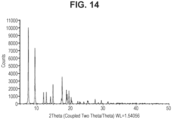
- E62 is the compound of E61 which is crystalline (1 R ,2 S ,5 S )- N - ⁇ (1 S )-1-Cyano-2-[(3 S )-2-oxopyrrolidin-3-yl]ethyl ⁇ -6,6-dimethyl-3-[3-methyl- N -(trifluoroacetyl)-L-valyl]-3-azabicyclo[3.1.0]hexane-2-carboxam ide.
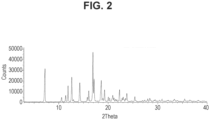
- E63 is the compound of E62 which is crystalline (1 R ,2 S ,5 S )- N - ⁇ (1 S )-1-Cyano-2-[(3 S )-2-oxopyrrolidin-3-yl]ethyl ⁇ -6,6-dimethyl-3-[3-methyl- N -(trifluoroacetyl)-L-valyl]-3-azabicyclo[3.1.0]hexane-2-carboxamide, Solid Form 1.
- E64 is the compound of E62 which is crystalline (1 R ,2 S ,5 S )- N - ⁇ (1S)-1-Cyano-2-[(3S)-2-oxopyrrolidin-3-yl]ethyl ⁇ -6,6-dimethyl-3-[3-methyl- N -(trifluoroacetyl)-L-valyl]-3-azabicyclo[3.1.0]hexane-2-carboxamide, Solid Form 4.
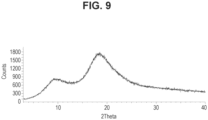
- E65 is the compound of E61 which is amorphous (1 R ,2 S ,5 S )- N - ⁇ (1 S )-1-Cyano-2-[(3 S )-2-oxopyrrolidin-3-yl]ethyl ⁇ -6,6-dimethyl-3-[3-methyl- N -(trifluoroacetyl)-L-valyl]-3-azabicyclo[3.1.0]hexane-2-carboxamide.
- E66 is the compound of E61 which is (1 R, 2 S, 5 S ) -N- ⁇ (1 S )-1-Cyano-2-[(3 S )-2-oxopyrrolidin-3-yl]ethyl ⁇ -6,6-dimethyl-3-[3-methyl- N -(trifluoroacetyl)-L-valyl]-3-azabicyclo[3.1.0]hexane-2-carboxamide, methyl tert -butyl solvate.
- E67 is the compound of E66 which is crystalline (1 R ,2 S ,5 S )- N - ⁇ (1 S )-1-Cyano-2-[(3 S )-2-oxopyrrolidin-3-yl]ethyl ⁇ -6,6-dimethyl-3-[3-methyl- N -(trifluoroacetyl)-L-valyl]-3-azabicyclo[3.1.0]hexane-2-carboxamide, methyl tert -butyl solvate.
- E68 is the compound of E67 which is crystalline (1 R ,2 S ,5 S )- N - ⁇ (1 S )-1-Cyano-2-[(3 S )-2-oxopyrrolidin-3-yl]ethyl ⁇ -6,6-dimethyl-3-[3-methyl- N -(trifluoroacetyl)-L-valyl]-3-azabicyclo[3.1.0]hexane-2-carboxamide, methyl tert -butyl solvate, Solid Form 2.
- E69 is a compound according to any one of E61 to E68 for use in a method of treating a coronavirus infection in a patient, the method comprising administering a therapeutically effective amount of a compound according to any one of E61 to E68 to a patient in need of treatment thereof.
- E70 is the compound for use in a method of E69 wherein the coronavirus infection is COVID-19.
- E71 is the compound for use in a method of E70 wherein ritonavir is also administered to the patient.
- E72 is the compound for use in a method of E71 wherein the compound of any one of E61 to E68 and ritonavir are administered to the patient orally.
- E73 is the compound for use in a method of E72 wherein about 10 mg to about 1500 mg per day of the compound of any one of E61 to E68 and about 10 mg to about 1000 mg per day of ritonavir are administered.
- E74 is the compound for use in a method of E73 wherein about 50 mg of the compound of any one of E61 to E68 and about 100 mg of ritonavir are each administered to the patient twice a day.
- E75 is a pharmaceutical composition
- a pharmaceutical composition comprising a therapeutically effective amount of (1 R ,2 S ,5 S )- N - ⁇ (1 S )-1-Cyano-2-[(3 S )-2-oxopyrrolidin-3-yl]ethyl ⁇ -6,6-dimethyl-3-[3-methyl- N -(trifluoroacetyl)-L-valyl]-3-azabicyclo[3.1.0]hexane-2-carboxamide; or a solvate or hydrate thereof, or a pharmaceutically acceptable salt of said compound, solvate or hydrate together with a pharmaceutically acceptable carrier.
- E75a is a pharmaceutical composition
- a pharmaceutical composition comprising a therapeutically effective amount of (1 R ,2 S ,5 S )- N - ⁇ (1 S )-1-Cyano-2-[(3 S )-2-oxopyrrolidin-3-yl]ethyl ⁇ -6,6-dimethyl-3-[3-methyl- N -(trifluoroacetyl)-L-valyl]-3-azabicyclo[3.1.0]hexane-2-carboxamide; or a solvate or hydrate thereof together with a pharmaceutically acceptable carrier.
- E76 is the pharmaceutical composition of E75a comprising the compound according to any one of E62 to E68.
- E77 is the compound for use in a method of E69 or E70 wherein about 100 mg, 150 mg, 200 mg, 250 mg, 300 mg, 350 mg, 400 mg, 450 mg, 500 mg, 550 mg, 600 mg, 650 mg, 700 mg or 750 mg of the compound according to any one of E61 to E68 is administered orally to the patient twice a day.
- E78 is the compound for use in a method of E77 wherein ritonavir is co-administered orally to the patient twice a day.
- E79 is the compound for use in a method of E78 wherein about 300 mg of the compound according to any one of E61 to E68 and about 100 mg of ritonavir are co-administered to the patient twice a day.
- E80 is the compound of E63 which is characterized by a 19 F peak with a chemical shift at -73.3 ⁇ 0.1 ppm and 13 C peaks with chemical shifts at 31.0 ⁇ 0.1 ppm, 27.9 ⁇ 0.1 ppm and 178.9 ⁇ 0.2 ppm.
- E81 is the compound of E64 which is characterized by one or more peaks selected from the group consisting of a 19 F peak with chemical shift at -73.6 ⁇ 0.1 ppm and 13 C peaks at 26.9 ⁇ 0.1 ppm, 21.6 ⁇ 0.1 ppm and 41.5 ⁇ 0.1 ppm.
- E82 is the compound N -(Methoxycarbonyl)-3-methyl-L-valyl-(4 R )- N - ⁇ (1 S )-1-cyano-2-[(3 S )-2-oxopyrrolidin-3-yl]ethyl ⁇ -4-(trifluoromethyl)-L-prolinamide having the structure or a solvate or hydrate thereof.
- E83 is the compound of E82 which is N -(Methoxycarbonyl)-3-methyl-L-valyl-(4 R )- N- ⁇ (1 S )-1-cyano-2-[(3S)-2-oxopyrrolidin-3-yl]ethyl ⁇ -4-(trifluoromethyl)-L-prolinamide.
- E84 is a pharmaceutical comprising a therapeutically effective amount of N (Methoxycarbonyl)-3-methyl-L-valyl-(4 R )- N - ⁇ (1 S )-1-cyano-2-[(3 S )-2-oxopyrrolidin-3-yl]ethyl ⁇ -4-(trifluoromethyl)-L-prolinamide; or a solvate or hydrate thereof together with a pharmaceutically acceptable carrier.
- E85 is a compound of E82 or E83 for use in a method of treating a coronavirus infection in a patient, the method comprising administering a therapeutically effective amount of a compound of E82 or E83 to a patient in need of treatment thereof.
- E86 is the compound for use in a method of E85 wherein the coronavirus infection is COVID-19.
- E87 is the compound for use in a method of E85 or E86 wherein 10 mg to 1500 mg per day of the compound of E82 or E83 is administered.
- E88 is the compound for use in a method of any one of E85 to E87 wherein the compound is administered orally.
- E89 is the compound for use in a method of E88 wherein 200 mg of the compound is administered twice a day.
- E91 is a SARS-CoV-2 protease inhibitor compound of any one of E11, E13, E14, E29, E30, E50, E50a, E60 to E68 and E80 to E83 for use in a method of identifying cellular or viral pathways interfering with the functioning of the members of which could be used for treating indications caused by SARS-CoV-2 infections by administering a SARS-CoV-2 protease inhibitor compound of any one of E11, E13, E14, E29, E30, E50, E50a, E60 to E68 and E80 to E83.
- E92 is a method of using a SARS-CoV-2 protease inhibitor compound of any one of E11, E13, E14, E29, E30, E50, E50a, E60 to E68 and E80 to E83 as tools for understanding mechanism of action of other SARS-CoV-2 inhibitors.
- E93 is a method of using a SARS-CoV-2 3C-like protease inhibitor compound of any one of E11, E13, E14, E29, E30, E50, E50a, E60 to E68 and E80 to E83 for carrying out gene-profiling experiments for monitoring the up- or down-regulation of genes for the purpose of identifying inhibitors for treating indications caused by SARS-CoV-2 infections such as COVID-19.
- E94 is a pharmaceutical composition for the treatment of COVID-19 in a mammal containing an amount of a SARS-CoV-2 3C-like protease inhibitor compound of any one of E11, E13, E14, E29, E30, E50, E50a, E60 to E68 and E80 to E83 that is effective in treating COVID-19 together with a pharmaceutically acceptable carrier.
- a SARS-CoV-2 3C-like protease inhibitor compound of any one of E11, E13, E14, E29, E30, E50, E50a, E60 to E68 and E80 to E83 that is effective in treating COVID-19 together with a pharmaceutically acceptable carrier.
- E95 is a compound of any one of E11, E13, E14, E29, E30, E50, E50a, E60 to E68 and E80 to E83 for use in a method of treating MERS in a patient, the method comprising administering a therapeutically effective amount of a compound of any one of E11, E13, E14, E29, E30, E50, E50a, E60 to E68 and E80 to E83 to a patient in need thereof.
- E96 is a pharmaceutical composition of any one of E31 to E35, E51, E51a, E75, E75a, E84 and E94 for use in a method of treating MERS in a patient, the method comprising administering a pharmaceutical composition of any one of E31 to E35, E51, E51a, E75, E75a, E84 and E94 to a patient in need thereof.
- E97 is a compound of any one of E11, E13, E14, E29, E30, E50, E50a, E60 to E68 and E80 to E83 for use in a method of inhibiting or preventing MERS viral replication comprising contacting the SARS-CoV-2 coronavirus 3CL protease with a therapeutically effective amount of a compound of any one of E11, E13, E14, E29, E30, E50, E50a, E60 to E68 and E80 to E83.
- E98 is a compound of any one of E11, E13, E14, E29, E30, E50, E50a, E60 to E68 and E80 to E83 for use in a method of inhibiting or preventing MERS viral replication in a patient comprising administering to the patient in need of inhibition of or prevention of MERS viral replication a therapeutically effective amount of a compound of any one of E11, E13, E14, E29, E30, E50, E50a, E60 to E68 and E80 to E83.
- references to methods of treatment in the subsequent paragraphs of this description are to be interpreted as references to the compounds, pharmaceutical composition and medicaments of the present invention for use in a method of treatment of the human of animal body by therapy (or for diagnosis).
- COVID-19 is the disease caused in patients by infection with the SARS-CoV-2 virus.
- the SARS-CoV-2 virus is to be understood to encompass the initially discovered strain of the virus as well as mutant strains which emerge, such as but not limited to, strains such as B.1.1.7 (UK variant), B.1.351 (South African variant), P.1 (Brazilian variant) and B.1.427/B.1.429 (Califonia variants).
- treatment refers to the act of treating as "treating" is defined immediately above.
- patient refers to warm-blooded animals such as, for example, guinea pigs, mice, rats, gerbils, cats, rabbits, dogs, cattle, goats, sheep, horses, monkeys, chimpanzees, and humans.
- the methods of the invention are particularly useful for the treatment of a human patient.
- pharmaceutically acceptable means the substance or composition must be compatible, chemically and/or toxicologically, with the other ingredients comprising a formulation, and/or the mammal being treated therewith.
- terapéuticaally effective amount means an amount of a compound of the present invention that (i) treats or prevents the particular disease, condition, or disorder, (ii) attenuates, ameliorates, or eliminates one or more symptoms of the particular disease, condition, or disorder, or (iii) prevents or delays the onset of one or more symptoms of the particular disease, condition, or disorder described herein.
- alkyl refers to a linear or branched-chain saturated hydrocarbyl substituent (i.e., a substituent obtained from a hydrocarbon by removal of a hydrogen); in one embodiment containing from one to eight carbon atoms, in another one to six carbon atoms and in yet another one to three carbon atoms.
- Non-limiting examples of such substituents include methyl, ethyl, propyl (including n -propyl and isopropyl), butyl (including n -butyl, isobutyl, sec -butyl and tert -butyl), pentyl, isoamyl, hexyl, heptyl, octyl and the like.
- substituents include methyl, ethyl, propyl (including n -propyl and isopropyl), butyl (including n -butyl, isobutyl, sec -butyl and tert -butyl), pentyl, isoamyl, hexyl, heptyl, octyl and the like.
- alkynyl refers to a linear or branched-chain saturated hydrocarbyl substituent that contains a carbon-carbon triple bond (i.e., a substituent obtained from a triple bond-containing hydrocarbon by removal of a hydrogen); in one embodiment containing from two to six carbon atoms.
- substituents include prop-2-yn-1-yl, but-3-yn-1-yl, pent-4-yn-1-yl and hex-5-yn-1-yl.
- alkoxy refers to a linear or branched-chain saturated hydrocarbyl substituent attached to an oxygen radical (i.e., a substituent obtained from a hydrocarbon alcohol by removal of the hydrogen from the OH); in one embodiment containing from one to six carbon atoms.
- substituents include methoxy, ethoxy, propoxy (including n -propoxy and isopropoxy), butoxy (including n -butoxy, isobutoxy, sec -butoxy and tert -butoxy), pentoxy, hexoxy and the like.
- An alkoxy group which is attached to an alkyl group is referred to as an alkoxyalkyl.
- An example of an alkoxyalkyl group is methoxymethyl.
- alkynyloxy refers to a linear or branched-chain saturated hydrocarbyl substituent containing a carbon-carbon triple bond attached to an oxygen radical (i.e., a substituent obtained from a triple bond-containing hydrocarbon alcohol by removal of the hydrogen from the OH); in one embodiment containing from three to six carbon atoms.
- oxygen radical i.e., a substituent obtained from a triple bond-containing hydrocarbon alcohol by removal of the hydrogen from the OH
- substituents include propynyloxy, butynyloxy and pentynyloxy and the like.
- the number of carbon atoms in a hydrocarbyl substituent is indicated by the prefix “C x -C y -” or “C x-y ", wherein x is the minimum and y is the maximum number of carbon atoms in the substituent.
- C 1 -C 8 alkyl or “C 1-8 alkyl” refers to an alkyl substituent containing from 1 to 8 carbon atoms
- C 1 -C 6 alkyl or “C 1-6 alkyl” refers to an alkyl substituent containing from 1 to 6 carbon atoms
- C 1 -C 3 alkyl or “C 1-3 alkyl” refers to an alkyl substituent containing from 1 to 3 carbon atoms.
- C 3 -C 6 cycloalkyl or C 3-6 -cycloalkyl refers to a saturated cycloalkyl group containing from 3 to 6 carbon ring atoms.
- cycloalkyl refers to a carbocyclic substituent obtained by removing a hydrogen from a saturated carbocyclic molecule, for example one having three to seven carbon atoms.
- cycloalkyl includes monocyclic saturated carbocycles.
- C 3 -C 7 cycloalkyl means a radical of a three- to seven-membered ring system which includes the groups cyclopropyl, cyclobutyl, cyclopentyl, cyclohexyl, and cycloheptyl.
- C 3 -C 6 cycloalkyl means a radical of a three- to six-membered ring system which includes the groups cyclopropyl, cyclobutyl, cyclopentyl and cyclohexyl.
- the cycloalkyl groups can also be bicyclic or spirocyclic carbocycles.
- C 3 -C 12 cycloalkyl includes monocyclic carbocycles and bicyclic and spirocyclic cycloalkyl moieties such as bicyclopentyl, bicyclohexyl, bicycloheptyl, bicyclooctyl, bicyclononyl, spiropentyl, spirohexyl, spiroheptyl, spirooctyl and spirononyl.
- C 3 -C 6 cycloalkoxy refers to a three- to six-membered cycloalkyl group attached to an oxygen radical. Examples include cyclopropoxy, cyclobutoxy, cyclopentoxy and cyclohexoxy.
- aryl refers to a carbocyclic aromatic system.
- C 6 -C 10 aryl refers to carbocyclic aromatic systems with 3 to 10 atoms and includes phenyl and naphthyl.
- the number of atoms in a cyclic substituent containing one or more heteroatoms is indicated by the prefix "x- to y-membered", wherein x is the minimum and y is the maximum number of atoms forming the cyclic moiety of the substituent.
- x- to y-membered refers to a heterocycloalkyl containing from 4 to 6 atoms, including one to three heteroatoms, in the cyclic moiety of the heterocycloalkyl.
- heteroaryl refers to a heteroaryl containing from 5 to 6 atoms
- 5-- to 10-membered heteroaryl refers to a heteroaryl containing from 5 to 10 atoms, each including one or more heteroatoms, in the cyclic moiety of the heteroaryl
- the phrases “5-membered heteroaryl” and “6-membered heteroaryl” refer to a five-membered heteroaromatic ring system and a six-membered heteroaromatic ring system, respectively.
- the heteroatoms present in these ring systems are selected from N, O and S.
- hydroxy refers to -OH.
- the prefix "hydroxy” indicates that the substituent to which the prefix is attached is substituted with one or more hydroxy substituents.
- Compounds bearing a carbon to which one or more hydroxy substituents include, for example, alcohols, enols and phenol.
- cyano and nitrile refer to a -CN group.
- halo or halogen refers to fluorine (which may be depicted as -F), chlorine (which may be depicted as -Cl), bromine (which may be depicted as -Br), or iodine (which may be depicted as -I).
- heterocycloalkyl refers to a substituent obtained by removing a hydrogen from a saturated or partially saturated ring structure containing a total of the specified number of atoms, such as 4 to 6 ring atoms or 4 to 12 atoms, wherein at least one of the ring atoms is a heteroatom (i.e., oxygen, nitrogen, or sulfur), with the remaining ring atoms being independently selected from the group consisting of carbon, oxygen, nitrogen, and sulfur.
- the sulfur may be oxidized [i.e., S(O) or S(O) 2 ] or not.
- the ring atom of the heterocycloalkyl substituent that is bound to the group may be a nitrogen heteroatom, or it may be a ring carbon atom.
- the heterocycloalkyl substituent is in turn substituted with a group or substituent, the group or substituent may be bound to a nitrogen heteroatom, or it may be bound to a ring carbon atom.
- a heterocyclic group may be monocyclic, bicyclic, polycyclic or spirocyclic.
- heteroaryl refers to an aromatic ring structure containing the specified number of ring atoms in which at least one of the ring atoms is a heteroatom (i.e., oxygen, nitrogen, or sulfur), with the remaining ring atoms being independently selected from the group consisting of carbon, oxygen, nitrogen, and sulfur.
- heteroaryl substituents include 6-membered heteroaryl substituents such as pyridyl, pyrazyl, pyrimidinyl, and pyridazinyl; and 5-membered heteroaryl substituents such as triazolyl, imidazolyl, furanyl, thiophenyl, pyrazolyl, pyrrolyl, oxazolyl, isoxazolyl, thiazolyl, 1,2,3-, 1,2,4-, 1,2,5-, or 1,3,4-oxadiazolyl and isothiazolyl.
- 6-membered heteroaryl substituents such as pyridyl, pyrazyl, pyrimidinyl, and pyridazinyl
- 5-membered heteroaryl substituents such as triazolyl, imidazolyl, furanyl, thiophenyl, pyrazolyl, pyrrolyl, oxazolyl, isoxazolyl
- the heteroaryl group can also be a bicyclic heteroaromatic group such as indolyl, benzofuranyl, benzothienyl, benzimidazolyl, benzothiazolyl, benzoxazolyl, benzoisoxazolyl, oxazolopyridinyl, imidazopyridinyl, imidazopyrimidinyl and the like.
- the ring atom of the heteroaryl substituent that is bound to the group may be one of the heteroatoms, or it may be a ring carbon atom.
- heteroaryl also includes pyridyl N -oxides and groups containing a pyridine N -oxide ring.
- heteroaryl group may contain an oxo group such as the one present in a pyridone group.
- Further examples include furyl, thienyl, oxazolyl, thiazolyl, imidazolyl, pyrazolyl, triazolyl, tetrazolyl, isoxazolyl, isothiazolyl, oxadiazolyl, thiadiazolyl, pyridinyl, pyridazinyl, pyrimidinyl, pyrazinyl, pyridin-2(1 H )-onyl, pyridazin-2(1 H )-onyl, pyrimidin-2(1 H )-onyl, pyrazin-2(1 H )-onyl, imidazo[1,2- a ]pyridinyl, and pyrazolo[1,5- a ]pyridinyl.
- the heteroaryl can be further substituted as defined herein.
- heteroaryls and heterocycloalkyls examples include furanyl, dihydrofuranyl, tetrahydrofuranyl, thiophenyl, dihydrothiophenyl, tetrahydrothiophenyl, pyrrolyl, isopyrrolyl, pyrrolinyl, pyrrolidinyl, imidazolyl, isoimidazolyl, imidazolinyl, imidazolidinyl, pyrazolyl, pyrazolinyl, pyrazolidinyl, triazolyl, tetrazolyl, dithiolyl, oxathiolyl, oxazolyl, isoxazolyl, thiazolyl, isothiazolyl, thiazolinyl, isothiazolinyl, thiazolidinyl, isothiazolidinyl, thiaoxadiazolyl, oxathiazolyl,
- heteroaryl can also include, when specified as such, ring systems having two rings wherein such rings may be fused and wherein one ring is aromatic and the other ring is not fully part of the conjugated aromatic system (i.e., the heteroaromatic ring can be fused to a cycloalkyl or heterocycloalkyl ring).
- Non-limiting examples of such ring systems include 5,6,7,8-tetrahydroisoquinolinyl, 5,6,7,8-tetrahydroquinolinyl, 6,7-dihydro-5 H -cyclopenta[b]pyridinyl, 6,7-dihydro-5 H- cyclopenta[ c ]pyridinyl, 1,4,5,6-tetrahydrocyclopenta[ c ]pyrazolyl, 2,4,5,6-tetrahydrocyclopenta[ c ]pyrazolyl, 5,6-dihydro-4 H -pyrrolo[1,2- b ]pyrazolyl, 6,7-dihydro-5 H -pyrrolo[1,2- b ][1,2,4]triazolyl, 5,6,7,8-tetrahydro-[1,2,4]triazolo[1,5- a ]pyridinyl, 4,5,6,7-tetrahydropyrazolo[1,5
- a carbocyclic or heterocyclic moiety may be bonded or otherwise attached to a designated substrate through differing ring atoms without denoting a specific point of attachment, then all possible points are intended, whether through a carbon atom or, for example, a trivalent nitrogen atom.
- pyridyl means 2-, 3- or 4-pyridyl
- thienyl means 2- or 3-thienyl, and so forth.
- substituents are described as "independently" having more than one variable, each instance of a substituent is selected independent of the other(s) from the list of variables available. Each substituent therefore may be identical to or different from the other substituent(s).
- a compound of formula I which is a compound of formula Ih-1a, Ih-1b, Ih-1c, Ii-1a, Ii-1b, Ii-1c, Ij-1a, Ij-1b, Ij-1c, Ik-a, Ik-b or Ik-c may be hereinafter referred to as a "compound of the invention".
- Compounds of formula I which are a compounds of formula Ih-1a, Ih-1b, Ih-1c, Ii-1a, Ii-1b, Ii-1c, Ij-1a, Ij-1b, Ij-1c, Ik-a, Ik-b or Ik-c may be hereinafter referred to as "compounds of the invention”.
- Such terms are also defined to include all forms of the compounds including hydrates, solvates, isomers, crystalline and non-crystalline forms, isomorphs, and polymorphs thereof.
- the compounds of the invention, or pharmaceutically acceptable salts thereof may exist in unsolvated and solvated forms.
- the complex When the solvent or water is tightly bound, the complex will have a well-defined stoichiometry independent of humidity.
- the solvent or water When, however, the solvent or water is weakly bound, as in channel solvates and hygroscopic compounds, the water/solvent content will be dependent on humidity and drying conditions. In such cases, non-stoichiometry will be the norm.
- the compounds of the invention may exist as clathrates or other complexes. Included within the scope of the invention are complexes such as clathrates, drug-host inclusion complexes wherein the drug and host are present in stoichiometric or non-stoichiometric amounts. Also included are complexes of the compounds of the invention containing two or more organic and/or inorganic components, which may be in stoichiometric or non-stoichiometric amounts. The resulting complexes may be ionized, partially ionized, or non-ionized. For a review of such complexes, see J. Pharm. Sci., 64 (8), 1269-1288 by Haleblian (August 1975 ).
- the compounds of the invention have asymmetric carbon atoms.
- the carbon-carbon bonds of the compounds of the invention may be depicted herein using a solid line ( ), a solid wedge ( ), or a dotted wedge ( ).
- the use of a solid line to depict bonds to asymmetric carbon atoms is meant to indicate that all possible stereoisomers (e.g., specific enantiomers, racemic mixtures, etc.) at that carbon atom are included.
- the use of either a solid or dotted wedge to depict bonds to asymmetric carbon atoms is meant to indicate that only the stereoisomer shown is meant to be included. It is possible that compounds of Formula I , may contain more than one asymmetric carbon atom.
- a solid line to depict bonds to asymmetric carbon atoms is meant to indicate that all possible stereoisomers are meant to be included.
- the compounds of Formula I can exist as enantiomers and diastereomers or as racemates and mixtures thereof.
- the use of a solid line to depict bonds to one or more asymmetric carbon atoms in a compound of Formula I and the use of a solid or dotted wedge to depict bonds to other asymmetric carbon atoms in the same compound is meant to indicate that a mixture of diastereomers is present.
- Stereoisomers of Formula I include cis and trans isomers, optical isomers such as R and S enantiomers, diastereomers, geometric isomers, rotational isomers, conformational isomers, and tautomers of the compounds of the invention, including compounds exhibiting more than one type of isomerism; and mixtures thereof (such as racemates and diastereomeric pairs). Also included are acid addition or base addition salts wherein the counterion is optically active, for example, D-lactate or L-lysine, or racemic, for example, DL-tartrate or DL-arginine.
- the first type is the racemic compound (true racemate) referred to above wherein one homogeneous form of crystal is produced containing both enantiomers in equimolar amounts.
- the second type is the racemic mixture or conglomerate wherein two forms of crystal are produced in equimolar amounts each comprising a single enantiomer.
- the compounds of the invention may exhibit the phenomenon of tautomerism; such tautomers are also regarded as compounds of the invention. All such tautomeric forms, and mixtures thereof, are included within the scope of the invention. Tautomers exist as mixtures of a tautomeric set in solution. In solid form, usually one tautomer predominates. Even though one tautomer may be described, the present invention includes all tautomers of the compounds of the invention.
- phrases "pharmaceutically acceptable salts(s)" includes salts of acidic or basic groups which may be present in the compounds described herein.
- the compounds used in the methods of the invention that are basic in nature are capable of forming a wide variety of salts with various inorganic and organic acids.
- the acids that may be used to prepare pharmaceutically acceptable acid addition salts of such basic compounds are those that form non-toxic acid addition salts, i.e., salts containing pharmacologically acceptable anions, such as the acetate, benzenesulfonate, benzoate, bicarbonate, bisulfate, bitartrate, borate, bromide, calcium edetate, camsylate, carbonate, chloride, clavulanate, citrate, dihydrochloride, edetate, edislyate, estolate, esylate, ethylsuccinate, fumarate, gluceptate, gluconate, glutamate, hexylresorcinate, hydrabamine, hydrobromide, hydrochloride, iodide, isethionate, lactate, lactobionate, laurate, malate, maleate, mandelate, mesylate, methylsulfate, mucate, napsylate,
- this invention relates to those tautomers and the use of all such tautomers and mixtures thereof.
- the subject invention also includes compounds and methods of treatment of coronavirus infections such as COVID-19 and methods of inhibiting SARS-CoV-2 with isotopically labelled compounds, which are identical to those recited herein, but for the fact that one or more atoms are replaced by an atom having an atomic mass or mass number different from the atomic mass or mass number usually found in nature.
- isotopes that can be incorporated into compounds of the invention include isotopes of hydrogen, carbon, nitrogen, oxygen, phosphorous, fluorine and chlorine, such as 2 H, 3 H, 13 C, 14 C, 15 N, 18 O, 17 O, 31 P, 32 P, 35 S, 18 F, and 36 Cl, respectively.
- Isotopically labelled compounds used in the methods of this invention and prodrugs thereof can generally be prepared by carrying out the procedures for preparing the compounds disclosed in the art by substituting a readily available isotopically labelled reagent for a non-isotopically labelled reagent.
- Prodrugs include compounds wherein an amino acid residue, or a polypeptide chain of two or more (e.g., two, three or four) amino acid residues is covalently joined through an ester bond to a hydroxy of compounds used in the methods of this invention.
- the amino acid residues include but are not limited to the 20 naturally occurring amino acids commonly designated by three letter symbols and also include 4-hydroxyproline, hydroxylysine, desmosine, isodesmosine, 3-methylhistidine, norvalin, beta-alanine, gamma-aminobutyric acid, citrulline, homocysteine, homoserine, ornithine and methionine sulfone. Additional types of prodrugs can also be prepared. For instance, free hydroxy groups may be derivatized using groups including but not limited to hemisuccinates, phosphate esters, dimethylaminoacetates, and phosphoryloxymethyloxycarbonyls, as outlined in Advanced Drug Delivery Reviews, 1996, 19, 115 .
- Carbamate prodrugs of hydroxy and amino groups are also possible, as are carbonate prodrugs, sulfonate esters and sulfate esters of hydroxy groups.
- Prodrugs of this type are described in J. Med. Chem., 1996, 29, 10 .
- Free amines can also be derivatized as amides, sulfonamides or phosphonamides. All of these prodrug moieties may incorporate groups including but not limited to ether, amine and carboxylic acid functionalities.
- the compounds of the present invention can be used in the methods of the invention in combination with other drugs.
- dosing a SARS-CoV-2 coronavirus-infected patient i.e., a patient with COVID-19
- an interferon such as interferon alpha
- a pegylated interferon such as PEG-Intron or Pegasus
- Other additional agents that can be used in the methods of the present invention include dexamethasone, azithromycin and remdesivir.
- Examples of greater clinical benefits could include a larger reduction in COVID-19 symptoms, a faster time to alleviation of symptoms, reduced lung pathology, a larger reduction in the amount of SARS-CoV-2 coronavirus in the patient (viral load), and decreased mortality.
- the SARS-CoV-2 coronavirus infects cells which express P-glycoprotein.
- Some of the SARS-CoV-2 coronavirus 3CL protease inhibitors of the invention are P-glycoprotein substrates.
- Compounds which inhibit the SARS-CoV-2 coronavirus which are also P-glycoprotein substrates may be dosed with a P-glycoprotein inhibitor.
- P-glycoprotein inhibitors are verapamil, vinblastine, ketoconazole, nelfinavir, ritonavir or cyclosporine.
- the P-glycoprotein inhibitors act by inhibiting the efflux of the SARS-CoV-2 coronavirus inhibitors of the invention out of the cell.
- the inhibition of the P-glycoprotein-based efflux will prevent reduction of intracellular concentrations of the SARS-CoV-2 coronavirus inhibitor due to P-glycoprotein efflux. Inhibition of the P-glycoprotein efflux will result in larger intracellular concentrations of the SARS-CoV-2 coronavirus inhibitors.
- Dosing a SARS-CoV-2 coronavirus-infected patient with the SARS-CoV-2 coronavirus 3CL protease inhibitors of the invention and a P-glycoprotein inhibitor may lower the amount of SARS-CoV-2 coronavirus 3CL protease inhibitor required to achieve an efficacious dose by increasing the intracellular concentration of the SARS-CoV-2 coronavirus 3CL protease inhibitor.
- agents that may be used to increase the exposure of a mammal to a compound of the present invention are those that can act as inhibitors of at least one isoform of the cytochrome P450 (CYP450) enzymes.
- the isoforms of CYP450 that may be beneficially inhibited include, but are not limited to CYP1A2, CYP2D6, CYP2C9, CYP2C19 and CYP3A4.
- the compounds used in the methods of the invention include compounds that may be CYP3A4 substrates and are metabolized by CYP3A4.
- a SARS-CoV-2 coronavirus inhibitor which is a CYP3A4 substrate, such as SARS-CoV-2 coronavirus 3CL protease inhibitor, and a CYP3A4 inhibitor, such as ritonavir, nelfinavir or delavirdine will reduce the metabolism of the SARS-CoV-2 coronavirus inhibitor by CYP3A4. This will result in reduced clearance of the SARS-CoV-2 coronavirus inhibitor and increased SARS-CoV-2 coronavirus inhibitor plasma concentrations. The reduced clearance and higher plasma concentrations may result in a lower efficacious dose of the SARS-CoV-2 coronavirus inhibitor.
- Additional therapeutic agents that can be used in combination with the SARS-CoV-2 inhibitors in the methods of the present invention include the following: PLpro inhibitors, Apilomod, EIDD-2801, Ribavirin, Valganciclovir, ⁇ -Thymidine, Aspartame, Oxprenolol, Doxycycline, Acetophenazine, Iopromide, Riboflavin, Reproterol, 2,2'-Cyclocytidine, Chloramphenicol, Chlorphenesin carbamate, Levodropropizine, Cefamandole, Floxuridine, Tigecycline, Pemetrexed, L(+)-Ascorbic acid, Glutathione, Hesperetin, Ademetionine, Masoprocol, Isotretinoin, Dantrolene, Sulfasalazine Anti-bacterial, Silybin, Nicardipine, Sildenafil, Platycodin, Chrysin,
- 3CLpro inhibitors Lymecycline, Chlorhexidine, Alfuzosin, Cilastatin, Famotidine, Almitrine, Progabide, Nepafenac, Carvedilol, Amprenavir, Tigecycline, Montelukast, Carminic acid, Mimosine, Flavin, Lutein, Cefpiramide, Phenethicillin, Candoxatril, Nicardipine, Estradiol valerate, Pioglitazone, Conivaptan, Telmisartan, Doxycycline, Oxytetracycline, (1 S ,2 R ,4a S ,5 R ,8a S )-1-Formamido-1,4a-dimethyl-6-methylene-5-(( E )-2-(2-oxo-2,5-dihydrofuran-3-yl)ethenyl)decahydronaphthalen-2-yl5-(( R )-1,2-dithiolan-3-y
- RdRp inhibitors Valganciclovir, Chlorhexidine, Ceftibuten, Fenoterol, Fludarabine, Itraconazole, Cefuroxime, Atovaquone, Chenodeoxycholic acid, Cromolyn, Pancuronium bromide, Cortisone, Tibolone, Novobiocin, Silybin, Idarubicin Bromocriptine, Diphenoxylate, Benzylpenicilloyl G, Dabigatran etexilate, Betulonal, Gnidicin, 2 ⁇ ,30 ⁇ -Dihydroxy-3,4-seco-friedelolactone-27-lactone, 14-Deoxy-11,12-didehydroandrographolide, Gniditrin, Theaflavin 3,3'-di- O -gallate, ( R )-((1 R ,5a S ,6 R ,9a S )-1,5a-Dimethyl-7-methylene-3-o
- Additional therapeutic agents that can be used in the methods of the invention include Diosmin, Hesperidin, MK-3207, Venetoclax, Dihydroergocristine, Bolazine, R428, Ditercalinium, Etoposide, Teniposide, UK-432097, Irinotecan, Lumacaftor, Velpatasvir, Eluxadoline, Ledipasvir, Lopinavir / Ritonavir + Ribavirin, Alferon, and prednisone.
- Other additional agents useful in the methods of the present invention include dexamethasone, azithromycin and remdesivir as well as boceprevir, umifenovir and favipiravir.
- ⁇ -ketoamides compounds designated as 11r, 13a and 13b, shown below, as described in Zhang, L.; Lin, D.; Sun, X.; Rox, K.; Hilgenfeld, R.; X-ray Structure of Main Protease of the Novel Coronavirus SARS-CoV-2 Enables Design of ⁇ -Ketoamide Inhibitors; bioRxiv preprint doi: https://doi.org/10.1101/2020.02.17.952879
- RIG 1 pathway activators such as those described in US Patent No. 9,884,876 .
- protease inhibitors such as those described in Dai W, Zhang B, Jiang X-M, et al. Structure-based design of antiviral drug candidates targeting the SARS-CoV-2 main protease. Science. 2020;368(6497):1331-1335 including compounds such as the compound shown below and a compound designated as DC402234
- Another embodiment of the present invention is a compound of the present invention for use in a method of treating COVID-19 in a patient wherein in addition to administering a compound of the present invention an additional agent is administered and the additional agent is selected from antivirals such as remdesivir, galidesivir, favilavir/avifavir, molnupiravir (MK-4482/EIDD 2801), AT-527, AT-301, BLD-2660, favipiravir, camostat, SLV213 emtrictabine/tenofivir, clevudine, dalcetrapib, boceprevir and ABX464, glucocorticoids such as dexamethasone and hydrocortisone, convalescent plasma, a recombinant human plasma such as gelsolin (Rhu-p65N), monoclonal antibodies such as regdanvimab (Regkirova), ravulizumab (Ultomiris), VIR-7831
- SARS-CoV-2 inhibiting agent means any SARS-CoV-2-related coronavirus 3C-like protease inhibitor compound described herein or a pharmaceutically acceptable salt, hydrate, prodrug, active metabolite or solvate thereof or a compound which inhibits replication of SARS-CoV-2 in any manner.
- SARS-CoV-2 SARS-CoV-2-related coronavirus
- the term "interfering with or preventing" SARS-CoV-2-related coronavirus ("SARS-CoV-2") viral replication in a cell means to reduce SARS-CoV-2 replication or production of SARS-CoV-2 components necessary for progeny virus in a cell treated with a compound of this invention as compared to a cell not being treated with a compound of this invention.
- Simple and convenient assays to determine if SARS-CoV-2 viral replication has been reduced include an ELISA assay for the presence, absence, or reduced presence of anti-SARS-CoV-2 antibodies in the blood of the subject ( Nasoff, et al., PNAS 88:5462-5466, 1991 ), RT-PCR ( Yu, et al., in Viral Hepatitis and Liver Disease 574-577, Nishioka, Suzuki and Mishiro (Eds.); Springer-Verlag, Tokyo, 1994 ). Such methods are well known to those of ordinary skill in the art.
- total RNA from transduced and infected "control" cells can be isolated and subjected to analysis by dot blot or northern blot and probed with SARS-CoV-2-specific DNA to determine if SARS-CoV-2 replication is reduced.
- reduction of SARS-CoV-2 protein expression can also be used as an indicator of inhibition of SARS-CoV-2 replication.
- a greater than fifty percent reduction in SARS-CoV-2 replication as compared to control cells typically quantitates a prevention of SARS-CoV-2 replication.
- a SARS-CoV-2 inhibitor compound used in the method of the invention is a base
- a desired salt may be prepared by any suitable method known to the art, including treatment of the free base with an inorganic acid (such as hydrochloric acid, hydrobromic acid, sulfuric acid, nitric acid, phosphoric acid, and the like), or with an organic acid (such as acetic acid, maleic acid, succinic acid, mandelic acid, fumaric acid, malonic acid, pyruvic acid, oxalic acid, glycolic acid, salicylic acid, pyranosidyl acid (such as glucuronic acid or galacturonic acid), alpha-hydroxy acid (such as citric acid or tartaric acid), amino acid (such as aspartic acid or glutamic acid), aromatic acid (such as benzoic acid or cinnamic acid), sulfonic acid (such as p-toluenesulfonic acid or ethanesulfonic acid), and the like.
- a SARS-CoV-2 inhibitor compound used in the method of the invention is an acid
- a desired salt may be prepared by any suitable method known to the art, including treatment of the free acid with an inorganic or organic base [such as an amine (primary, secondary, or tertiary)], an alkali metal hydroxide, or alkaline earth metal hydroxide.
- suitable salts include organic salts derived from amino acids (such as glycine and arginine), ammonia, primary amines, secondary amines, tertiary amines, and cyclic amines (such as piperidine, morpholine, and piperazine), as well as inorganic salts derived from sodium, calcium, potassium, magnesium, manganese, iron, copper, zinc, aluminum and lithium.
- amino acids such as glycine and arginine
- ammonia such as primary amines, secondary amines, tertiary amines, and cyclic amines (such as piperidine, morpholine, and piperazine)
- inorganic salts derived from sodium, calcium, potassium, magnesium, manganese, iron, copper, zinc, aluminum and lithium.
- SARS-CoV-2 inhibitor compounds, salts, or solvates that are solids
- the compound, salts, and solvates used in the method of the invention may exist in different polymorph or crystal forms, all of which are intended to be within the scope of the present invention and specified formulas.
- the compound, salts and solvates used in the method of the invention may exist as tautomers, all of which are intended to be within the broad scope of the present invention.
- Solubilizing agents may also be used with the compounds of the invention to increase the compounds' solubility in water of physiologically acceptable solutions.
- These solubilizing agents include cyclodextrins, propylene glycol, diethylacetamide, polyethylene glycol, Tween, ethanol and micelle-forming agents.
- Offered solubilizing agents are cyclodextrins, particularly beta-cyclodextrins and in particular hydroxypropyl beta-cyclodextrin and sulfobutylether beta-cyclodextrin.
- the SARS-CoV-2 inhibitor compounds, salts and solvates used in the method of the invention may have chiral centers.
- the compound, salts and solvates may exist as single stereoisomers, racemates, and/or mixtures of enantiomers and/or diastereomers. All such single stereoisomers, racemates, and mixtures thereof are intended to be within the broad scope of the present invention.
- an optically pure compound is one that is enantiomerically pure.
- the term "optically pure” is intended to mean a compound comprising at least a sufficient activity.
- an optically pure amount of a single enantiomer to yield a compound having the desired pharmacologically pure compound of the invention comprises at least 90% of a single isomer (80% enantiomeric excess), more preferably at least 95% (90% e.e.), even more preferably at least 97.5% (95% e.e.), and most preferably at least 99% (98% e.e.).
- treating means reversing, alleviating, inhibiting the progress of, or preventing the disorder or condition to which such term applies, or one or more symptoms of such disorder or condition.
- treatment refers to the act of treating as “treating” is defined immediately above.
- “treating” or “treatment” means at least the mitigation of a disease condition in a human, that is alleviated by the inhibition of the activity of the SARS-CoV-2 3C-like protease which is the main protease of SARS-CoV-2, the causative agent for COVID-19.
- COVID-19 For patients suffering from COVID-19, fever, fatigue, and dry cough are the main manifestations of the disease, while nasal congestion, runny nose, and other symptoms of the upper respiratory tract are rare. Beijing Centers for Diseases Control and Prevention indicated that the typical case of COVID-19 has a progressive aggravation process. COVID-19 can be classified into light, normal, severe, and critical types based on the severity of the disease. National Health Commission of the People's Republic of China. Diagnosis and Treatment of Pneumonia Caused by 2019-nCoV (Trial Version 4).
- Methods of treatment for mitigation of a coronavirus disease condition such as COVID-19 include the use of one or more of the compounds of the invention in any conventionally acceptable manner.
- the compound or compounds used in the methods of the present invention are administered to a mammal, such as a human, in need thereof.
- the mammal in need thereof is infected with a coronavirus such as the causative agent of COVID-19, namely SARS-CoV-2.
- the present invention also includes prophylactic methods, comprising administering an effective amount of a SARS-CoV-2 inhibitor of the invention, or a pharmaceutically acceptable salt, pharmaceutically active metabolite, or solvate thereof to a mammal, such as a human at risk for infection by SARS-CoV-2.
- a mammal such as a human at risk for infection by SARS-CoV-2.
- an effective amount of one or more compounds of the invention, or a pharmaceutically acceptable salt, pharmaceutically active metabolite, or solvate thereof is administered to a human at risk for infection by SARS-CoV-2, the causative agent for COVID-19.
- the prophylactic methods of the invention include the use of one or more of the compounds in the invention in any conventionally acceptable manner.
- SARS-CoV-2 is the causative agent of COVID-19.
- the nucleotide sequence of the SARS-CoV-2 coronavirus as well as the recently determined L- and S- subtypes have recently been determined and made publicly available.
- the activity of the inhibitor compounds as inhibitors of SARS-CoV-2 viral activity may be measured by any of the suitable methods available in the art, including in vivo and in vitro assays.
- the activity of the compounds of the present invention as inhibitors of coronavirus 3C-like protease activity may be measured by any of the suitable methods known to those skilled in the art, including in vivo and in vitro assays.
- suitable assays for activity measurements include the antiviral cell culture assays described herein as well as the antiprotease assays described herein, such as the assays described in the Experimental section.
- SARS-CoV-2 inhibitor compounds and their pharmaceutically acceptable prodrugs, salts, active metabolites, and solvates may be performed according to any of the accepted modes of administration available to those skilled in the art.
- suitable modes of administration include oral, nasal, pulmonary, parenteral, topical, intravenous, injected, transdermal, and rectal.
- Oral, intravenous, subcutaneous and nasal deliveries are preferred.
- a SARS-CoV-2-inhibiting agent may be administered as a pharmaceutical composition in any suitable pharmaceutical form. Suitable pharmaceutical forms include solid, semisolid, liquid, or lyophilized formulations, such as tablets, powders, capsules, suppositories, suspensions, liposomes, and aerosols.
- the SARS-CoV-2-inhibiting agent may be prepared as a solution using any of a variety of methodologies. For example, SARS-CoV-2-inhibiting agent can be dissolved with acid (e.g., 1 M HCl) and diluted with a sufficient volume of a solution of 5% dextrose in water (D5W) to yield the desired final concentration of SARS-CoV-2-inhibiting agent (e.g., about 15 mM).
- acid e.g., 1 M HCl
- D5W dextrose in water
- a solution of D5W containing about 15 mM HCI can be used to provide a solution of the SARS-CoV-2-inhibiting agent at the appropriate concentration.
- the SARS-CoV-2-inhibiting agent can be prepared as a suspension using, for example, a 1% solution of carboxymethylcellulose (CMC).
- compositions are known or may be routinely determined by those skilled in the art.
- pharmaceutical preparations may be prepared following conventional techniques of the pharmaceutical chemist involving steps such as mixing, granulating, and compressing when necessary for tablet forms, or mixing, filling and dissolving the ingredients as appropriate, to give the desired products for intravenous, oral, parenteral, topical, intravaginal, intranasal, intrabronchial, intraocular, intraaural, and/or rectal administration.
- a compound of the invention is administered in an amount effective to treat a condition as described herein.
- the compounds of the invention are administered by any suitable route in the form of a pharmaceutical composition adapted to such a route, and in a dose effective for the treatment intended.
- Therapeutically effective doses of the compounds required to treat the progress of the medical condition are readily ascertained by one of ordinary skill in the art using preclinical and clinical approaches familiar to the medicinal arts.
- the compounds of the invention may be administered orally.
- Oral administration may involve swallowing, so that the compound enters the gastrointestinal tract, or buccal or sublingual administration may be employed, by which the compound enters the blood stream directly from the mouth.
- the compounds of the invention may also be administered directly into the blood stream, into muscle, or into an internal organ.
- Suitable means for parenteral administration include intravenous, intraarterial, intraperitoneal, intrathecal, intraventricular, intraurethral, intrasternal, intracranial, intramuscular and subcutaneous.
- Suitable devices for parenteral administration include needle (including microneedle) injectors, needle-free injectors and infusion techniques.
- the compounds of the invention may also be administered topically to the skin or mucosa, that is, dermally or transdermally.
- the compounds of the invention can also be administered intranasally or by inhalation.
- the compounds of the invention may be administered rectally or vaginally.
- the compounds of the invention may also be administered directly to the eye or ear.
- the dosage regimen for the compounds and/or compositions containing the compounds is based on a variety of factors, including the type, age, weight, sex and medical condition of the patient; the severity of the condition; the route of administration; and the activity of the particular compound employed. Thus the dosage regimen may vary widely. Dosage levels of the order from about 0.01 mg to about 100 mg per kilogram of body weight per day are useful in the treatment of the above- indicated conditions. In one embodiment, the total daily dose of a compound of the invention (administered in single or divided doses) is typically from about 0.01 to about 100 mg/kg.
- total daily dose of the compound of the invention is from about 0.1 to about 50 mg/kg, and in another embodiment, from about 0.5 to about 30 mg/kg (i.e., mg compound of the invention per kg body weight). In one embodiment, dosing is from 0.01 to 10 mg/kg/day. In another embodiment, dosing is from 0.1 to 1.0 mg/kg/day. Dosage unit compositions may contain such amounts or submultiples thereof to make up the daily dose. In many instances, the administration of the compound will be repeated a plurality of times in a day (typically no greater than 4 times). Multiple doses per day typically may be used to increase the total daily dose, if desired.
- compositions may be provided in the form of tablets containing from about 0.01 mg to about 500 mg of the active ingredient, or in another embodiment, from about 1 mg to about 100 mg of active ingredient.
- doses may range from about 0.1 to about 10 mg/kg/minute during a constant rate infusion.
- Suitable patients according to the present invention include mammalian patients. Mammals according to the present invention include, but are not limited to, canine, feline, bovine, caprine, equine, ovine, porcine, rodents, lagomorphs, primates, and the like, and encompass mammals in utero. In one embodiment, humans are suitable patients. Human patients may be of either gender and at any stage of development.
- the invention comprises the use of one or more compounds of the invention for the preparation of a medicament for the treatment of the conditions recited herein.
- the compound of the invention can be administered as compound per se.
- pharmaceutically acceptable salts are suitable for medical applications because of their greater aqueous solubility relative to the parent compound.
- the present invention comprises pharmaceutical compositions.
- Such pharmaceutical compositions comprise a compound of the invention presented with a pharmaceutically acceptable carrier.
- the pharmaceutically acceptable carrier encompasses any suitable dosage form that is acceptable for administration to a patient.
- the carrier can be a solid, a liquid, or both, and may be formulated with the compound as a unit-dose composition, for example, a tablet, which can contain from 0.05% to 95% by weight of the active compounds.
- a compound of the invention may be coupled with suitable polymers as targetable drug carriers. Other pharmacologically active substances can also be present.
- the compounds of the present invention may be administered by any suitable route, preferably in the form of a pharmaceutical composition adapted to such a route, and in a dose effective for the treatment intended.
- the active compounds and compositions for example, may be administered orally, rectally, parenterally, or topically.
- Oral administration of a solid dose form may be, for example, presented in discrete units, such as hard or soft capsules, pills, cachets, lozenges, or tablets, each containing a predetermined amount of at least one compound of the present invention.
- the oral administration may be in a powder or granule form.
- the oral dose form is sub-lingual, such as, for example, a lozenge.
- the compounds of the invention are ordinarily combined with one or more adjuvants.
- Such capsules or tablets may contain a controlled-release formulation.
- the dosage forms also may comprise buffering agents or may be prepared with enteric coatings.
- oral administration may be in a liquid dose form.
- Liquid dosage forms for oral administration include, for example, pharmaceutically acceptable emulsions, solutions, suspensions, syrups, and elixirs containing inert diluents commonly used in the art (e.g., water).
- Such compositions also may comprise adjuvants, such as wetting, emulsifying, suspending, flavoring (e.g., sweetening), and/or perfuming agents.
- the present invention comprises a parenteral dose form.
- Parenteral administration includes, for example, subcutaneous injections, intravenous injections, intraperitoneal injections, intramuscular injections, intrasternal injections, and infusion.
- injectable preparations e.g., sterile injectable aqueous or oleaginous suspensions
- suitable dispersing, wetting agents, and/or suspending agents may be formulated according to the known art using suitable dispersing, wetting agents, and/or suspending agents.
- Topical administration includes, for example, transdermal administration, such as via transdermal patches or iontophoresis devices, intraocular administration, or intranasal or inhalation administration.
- Compositions for topical administration also include, for example, topical gels, sprays, ointments, and creams.
- a topical formulation may include a compound which enhances absorption or penetration of the active ingredient through the skin or other affected areas.
- Typical formulations for this purpose include gels, hydrogels, lotions, solutions, creams, ointments, dusting powders, dressings, foams, films, skin patches, wafers, implants, sponges, fibers, bandages and microemulsions. Liposomes may also be used.
- Typical carriers include alcohol, water, mineral oil, liquid petrolatum, white petrolatum, glycerin, polyethylene glycol and propylene glycol.
- Penetration enhancers may be incorporated; see, for example, J. Pharm. Sci., 88 (10), 955-958, by Finnin and Morgan (October 1999 ).
- Formulations suitable for topical administration to the eye include, for example, eye drops wherein the compound of this invention is dissolved or suspended in a suitable carrier.
- a typical formulation suitable for ocular or aural administration may be in the form of drops of a micronized suspension or solution in isotonic, pH-adjusted, sterile saline.
- Other formulations suitable for ocular and aural administration include ointments, biodegradable (e.g., absorbable gel sponges, collagen) and non-biodegradable (e.g., silicone) implants, wafers, lenses and particulate or vesicular systems, such as niosomes or liposomes.
- a polymer such as cross-linked polyacrylic acid, polyvinyl alcohol, hyaluronic acid, a cellulosic polymer, for example, hydroxypropylmethyl cellulose, hydroxyethyl cellulose, or methyl cellulose, or a heteropolysaccharide polymer, for example, gelan gum, may be incorporated together with a preservative, such as benzalkonium chloride.
- a preservative such as benzalkonium chloride.
- Such formulations may also be delivered by iontophoresis.
- the active compounds of the invention are conveniently delivered in the form of a solution or suspension from a pump spray container that is squeezed or pumped by the patient or as an aerosol spray presentation from a pressurized container or a nebulizer, with the use of a suitable propellant.
- Formulations suitable for intranasal administration are typically administered in the form of a dry powder (either alone, as a mixture, for example, in a dry blend with lactose, or as a mixed component particle, for example, mixed with phospholipids, such as phosphatidylcholine) from a dry powder inhaler or as an aerosol spray from a pressurized container, pump, spray, atomizer (preferably an atomizer using electrohydrodynamics to produce a fine mist), or nebulizer, with or without the use of a suitable propellant, such as 1,1,1,2-tetrafluoroethane or 1,1,1,2,3,3,3-heptafluoropropane.
- the powder may comprise a bioadhesive agent, for example, chitosan or cyclodextrin.
- the present invention comprises a rectal dose form.
- rectal dose form may be in the form of, for example, a suppository. Cocoa butter is a traditional suppository base, but various alternatives may be used as appropriate.
- compositions of the invention may be prepared by any of the well-known techniques of pharmacy, such as effective formulation and administration procedures.
- effective formulations and administration procedures are well known in the art and are described in standard textbooks.
- Formulation of drugs is discussed in, for example, Hoover, John E., Remington's Pharmaceutical Sciences, Mack Publishing Co., Easton, Pennsylvania, 1975 ; Liberman et al., Eds., Pharmaceutical Dosage Forms, Marcel Decker, New York, N.Y., 1980 ; and Kibbe et al., Eds., Handbook of Pharmaceutical Excipients (3rd Ed.), American Pharmaceutical Association, Washington, 1999 .
- the compounds of the present invention can be used, alone or in combination with other therapeutic agents, in the treatment of various conditions or disease states.
- the compound(s) of the present invention and other therapeutic agent(s) may be administered simultaneously (either in the same dosage form or in separate dosage forms) or sequentially. Two or more compounds may be administered simultaneously, concurrently or sequentially. Additionally, simultaneous administration may be carried out by mixing the compounds prior to administration or by administering the compounds at the same point in time but at different anatomic sites or using different routes of administration.
- simultaneous administration may be carried out by mixing the compounds prior to administration or by administering the compounds at the same point in time but at different anatomic sites or using different routes of administration.
- the phrases “concurrent administration,” “co-administration,” “simultaneous administration,” and “administered simultaneously” mean that the compounds are administered in combination.
- the present invention includes the use of a combination of a compound of the invention and one or more additional therapeutic agent(s). If a combination of active agents is administered, then they may be administered sequentially or simultaneously, in separate dosage forms or combined in a single dosage form. Accordingly, the present invention also includes pharmaceutical compositions comprising an amount of: (a) a first agent comprising a compound of the invention or a pharmaceutically acceptable salt of the compound; (b) a second therapeutic agent; and (c) a pharmaceutically acceptable carrier. Pharmaceutical compositions of the invention may also include suitable excipients, diluents, vehicles, and carriers, as well as other pharmaceutically active agents, depending upon the intended use.
- Solid or liquid pharmaceutically acceptable carriers, diluents, vehicles, or excipients may be employed in the pharmaceutical compositions.
- Illustrative solid carriers include starch, lactose, calcium sulfate dihydrate, terra alba, sucrose, talc, gelatin, pectin, acacia, magnesium stearate, and stearic acid.
- Illustrative liquid carriers include syrup, peanut oil, olive oil, saline solution, and water.
- the carrier or diluent may include a suitable prolonged-release material, such as glyceryl monostearate or glyceryl distearate, alone or with a wax.
- the preparation may be in the form of a syrup, elixir, emulsion, soft gelatin capsule, sterile injectable liquid (e.g., solution), or a nonaqueous or aqueous liquid suspension.
- a dose of the pharmaceutical composition may contain at least a therapeutically effective amount of a SARS-CoV-2-inhibiting agent and preferably is made up of one or more pharmaceutical dosage units.
- the selected dose may be administered to a mammal, for example, a human patient, in need of treatment mediated by inhibition of SARS-CoV-2 related coronavirus activity, by any known or suitable method of administering the dose, including topically, for example, as an ointment or cream; orally; rectally, for example, as a suppository; parenterally by injection; intravenously; or continuously by intravaginal, intranasal, intrabronchial, intraaural, or intraocular infusion.
- therapeutically effective amount and “effective amount” are intended to mean the amount of an inventive agent that, when administered to a mammal in need of treatment, is sufficient to effect treatment for injury or disease conditions alleviated by the inhibition of SARS-CoV-2 viral replication.
- amount of a given SARS-CoV-2-inhibiting agent used in the method of the invention that will be therapeutically effective will vary depending upon factors such as the particular SARS-CoV-2-inhibiting agent, the disease condition and the severity thereof, the identity and characteristics of the mammal in need thereof, which amount may be routinely determined by those skilled in the art.
- the actual dosages of the SARS-CoV-2-inhibiting agents used in the pharmaceutical compositions of this invention will be selected according to the properties of the particular agent being used, the particular composition formulated, the mode of administration and the particular site, and the host and condition being treated. Optimal dosages for a given set of conditions can be ascertained by those skilled in the art using conventional dosage-determination tests.
- a dose that may be employed is from about 0.01 to about 1000 mg/kg body weight, preferably from about 0.1 to about 500 mg/kg body weight, and even more preferably from about 1 to about 500 mg/kg body weight, with courses of treatment repeated at appropriate intervals.
- For intravenous dosing a dose of up to 5 grams per day may be employed. Intravenous administration can occur for intermittent periods during a day or continuously over a 24-hour period.
- cytochrome P450-inhibiting amount and "cytochrome P450 enzyme activity-inhibiting amount”, as used herein, refer to an amount of a compound required to decrease the activity of cytochrome P450 enzymes or a particular cytochrome P450 enzyme isoform in the presence of such compound. Whether a particular compound decreases cytochrome P450 enzyme activity, and the amount of such a compound required to do so, can be determined by methods know to those of ordinary skill in the art and the methods described herein.
- Protein functions required for coronavirus replication and transcription are encoded by the so-called "replicase” gene. Two overlapping polyproteins are translated from this gene and extensively processed by viral proteases. The C-proximal region is processed at eleven conserved interdomain junctions by the coronavirus main or "3C-like” protease.
- the name "3C-like” protease derives from certain similarities between the coronavirus enzyme and the well-known picornavirus 3C proteases. These include substrate preferences, use of cysteine as an active site nucleophile in catalysis, and similarities in their putative overall polypeptide folds.
- a comparison of the amino acid sequence of the SARS-CoV-2-associated coronavirus 3C-like protease shows the amino acid sequences have approximately 96% shared homology.
- Amino acids of the substrate in the protease cleavage site are numbered from the N to the C terminus as follows: -P3-P2-P1-P1'-P2'-P3', with cleavage occurring between the P1 and P1' residues (Schechter & Berger, 1967). Substrate specificity is largely determined by the P2, P1 and P1' positions. Coronavirus main protease cleavage site specificities are highly conserved with a requirement for glutamine at P1 and a small amino acid at P1' [ Journal of General Virology, 83, pp. 595-599 (2002 )].
- the compounds of the present invention can be prepared according to the methods set forth in Reaction Schemes 1 to 3 below.
- Scheme 1 illustrates a synthetic sequence for the preparation of compounds of Formula I as shown, wherein the N-BOC methyl ester of Formula 1 ( WO 2005/113580 ) is converted to a primary amide of Formula 3 (N-BOC being N- tert -butoxycarbonyl).
- N-BOC being N- tert -butoxycarbonyl
- This may be accomplished directly, for example by treatment with ammonia (NH 3 ) in a sealed vessel in a solvent such as methanol or ethanol, for example, optionally in the presence of additives such as calcium chloride (CaCl 2 ) or magnesium dimethoxide, Mg(OMe) 2 .
- the transformation of the compound of Formula 1 to the compound of Formula 3 may also be carried out by prior conversion to the carboxylic acid of Formula 2 ( WO 2005/113580 ).
- the compound of Formula 2 may be converted to the compound of Formula 3 using methods well known to those skilled in the art.
- the compound of Formula 2 may be treated with a reagent such as O-(7-azabenzotriazol-1-yl)- N , N , N' , N' -tetramethyluronium hexafluorophosphate (HATU), isobutyl chloroformate, 1-[3-(dimethylamino)propyl]-3-ethylcarbodiimide hydrochloride (EDCI) and hydroxybenzotriazole (HOBt), or 1,1'-carbonyldiimidazole (CDI), optionally in the presence of a base such as N,N-diisopropylethylamine (DIEA), 4-methylmorpholine (NMM), or triethylamine (TEA), followed by treatment with NH 3 administered as a gas or a solution in a reaction compatible solvent, or with a salt of NH 3 such as ammonium acetate or ammonium chloride in the presence of a base such as N,N,N
- the compound of Formula 3 may be N -deprotected to provide an amine of Formula 4 using methods well known to those skilled in the art for effecting such deprotections. Frequently acidic reagents such as hydrogen chloride, methanesulfonic acid, or trifluoroacetic acid are used, typically in a reaction compatible solvent such as CH 2 Cl 2 , 1,4-dioxane, 1,2-dichloroethane, or CH 3 CN. One skilled in the art will appreciate that the compound of Formula 4 will frequently be obtained as an acid addition salt. The compound of Formula 4 may then be transformed into a compound of Formula 6 by treatment with an N -protected amino acid compound of Formula 5 under appropriate conditions. Such methods are well known to those skilled in the art, and in general standard peptide coupling conditions may be selected.
- the compound of Formula 6 may be N -deprotected to provide an amine of Formula 7 using methods well known to those skilled in the art for effecting such deprotections. Frequently acidic reagents such as hydrogen chloride, methanesulfonic acid, or trifluoroacetic acid are used, typically in a reaction compatible solvent such as CH 2 Cl 2 , 1,4-dioxane, 1,2-dichloroethane, or CH 3 CN. One skilled in the art will appreciate that the compound of Formula 7 will frequently be obtained as an acid addition salt. The compound of Formula 7 may then be transformed into a compound of Formula 9 by treatment with a carboxylic acid compound of Formula 8 under appropriate conditions. Such methods are well known to those skilled in the art.
- the carboxylic acid compound is known as an acid chloride and the reaction is conducted in the presence of a base to consume the hydrogen halide HX produced as a by-product of the reaction.
- suitable bases include, but are not limited to, tertiary amines such as 4-methylmorpholine, 2,6-dimethylpyridine, or N,N-diisopropylethylamine, or inorganic bases such as magnesium oxide (MgO), sodium carbonate (Na 2 CO 3 ), or potassium bicarbonate (KHCO 3 ).
- suitable solvents include, but are not limited to, CH 2 Cl 2 , DMF, THF, or CH 3 CN.
- a reagent or combination of reagents to facilitate the reaction of the carboxylic acid compound of Formula 8.
- a carbodiimide reagent such as 1-[3-(dimethylamino)propyl]-3-ethylcarbodiimide hydrochloride (EDCI) or N,N'-dicyclohexyl carbodiimide (DCC), optionally in the presence of an auxiliary nucleophile such as hydroxybenzotriazole (HOBt) or 2-hydroxypyridine-N-oxide (HOPO).
- EDCI 1-[3-(dimethylamino)propyl]-3-ethylcarbodiimide hydrochloride
- DCC N,N'-dicyclohexyl carbodiimide
- an auxiliary nucleophile such as hydroxybenzotriazole (HOBt) or 2-hydroxypyridine-N-oxide (HOPO).
- Suitable solvents include, but are not limited to, CH 2 Cl 2 , THF, or CH 3 CN.
- Suitable solvents include, but are not limited to, CH 2 Cl 2 , THF, or CH 3 CN.
- the compound of Formula 9 may be transformed into the compound of Formula I by treatment under dehydrating conditions well known to those skilled in the art. Frequently this dehydration step may be accomplished using an excess of trifluoroacetic anhydride or phosphorus oxychloride, generally in the presence of a base such as pyridine, N,N-diisopropylethylamine, 4-methylmorpholine, or triethylamine.
- a base such as pyridine, N,N-diisopropylethylamine, 4-methylmorpholine, or triethylamine.
- N-BOC protected amino acids of Formula 5 are known in the chemical literature, are commercially available, and may be prepared from the corresponding known and commercially available amino acids by one skilled in the art using well established procedures for the synthesis of N-protected amino acids.
- carboxylic acid compounds of Formula 8 may be known in the chemical literature, and / or are commercially available, and I or may be prepared by published methods or by analogy to published methods.
- the compound of Formula 3 is converted into the compound of Formula 10 by treatment under dehydrating conditions well known to those skilled in the art. Frequently this dehydration step may be accomplished using an excess of trifluoroacetic anhydride or phosphorus oxychloride, generally in the presence of a base such as pyridine, N,N-diisopropylethylamine, 4-methylmorpholine, or triethylamine.
- a base such as pyridine, N,N-diisopropylethylamine, 4-methylmorpholine, or triethylamine.
- the compound of Formula 10 is N -deprotected to provide an amine of Formula 11 using methods well known to those skilled in the art for effecting such deprotections.
- acidic reagents such as hydrogen chloride, methanesulfonic acid, or trifluoroacetic acid are used, typically in a reaction-compatible solvent such as CH 2 Cl 2 , 1,4-dioxane, 1,2-dichloroethane, or CH 3 CN.
- a reaction-compatible solvent such as CH 2 Cl 2 , 1,4-dioxane, 1,2-dichloroethane, or CH 3 CN.
- the compound of Formula 11 may then be transformed into a compound of Formula I by treatment with a compound of Formula 12 under appropriate conditions.
- Such methods are well known to those skilled in the art, and in general standard peptide coupling conditions may be selected.
- Compounds of Formula 12 are exceptionally well known in the chemical literature, and one skilled in the art may choose to prepare any given compound of Formula 12 using methods analogous to those described in the chemical literature.
- the compound of Formula 4 may then be transformed into a compound of Formula 9 by treatment with a compound of Formula 12 under appropriate conditions.
- a compound of Formula 12 under appropriate conditions.
- Such methods are well known to those skilled in the art, and in general standard peptide coupling conditions may be selected.
- Compounds of Formula 12 are exceptionally well known in the chemical literature, and one skilled in the art may choose to prepare any given compound of Formula 12 using methods analogous to those described in the chemical literature.
- the compound of Formula 9 is then converted into the compound of Formula I by treatment under dehydrating conditions well known to those skilled in the art.
- this dehydration step may be accomplished using an excess of trifluoroacetic anhydride or phosphorus oxychloride, generally in the presence of a base such as pyridine, N,N-diisopropylethylamine, 4-methylmorpholine, or triethylamine.
- a base such as pyridine, N,N-diisopropylethylamine, 4-methylmorpholine, or triethylamine.
- reaction apparatuses were dried under dynamic vacuum using a heat gun, and anhydrous solvents (Sure-Seal TM products from Aldrich Chemical Company, Milwaukee, Wisconsin or DriSolv TM products from EMD Chemicals, Gibbstown, NJ) were employed.
- reaction conditions reaction time and temperature may vary. Products were generally dried under vacuum before being carried on to further reactions or submitted for biological testing.
- reaction progress was monitored using thin-layer chromatography (TLC), liquid chromatography-mass spectrometry (LCMS), high-performance liquid chromatography (HPLC), and/or gas chromatography-mass spectrometry (GCMS) analyses.
- TLC thin-layer chromatography
- LCMS liquid chromatography-mass spectrometry
- HPLC high-performance liquid chromatography
- GCMS gas chromatography-mass spectrometry
- LCMS data were acquired on an Agilent 1100 Series instrument with a Leap Technologies autosampler, Gemini C18 columns, acetonitrile/water gradients, and either trifluoroacetic acid, formic acid, or ammonium hydroxide modifiers.
- the column eluate was analyzed using a Waters ZQ mass spectrometer scanning in both positive and negative ion modes from 100 to 1200 Da. Other similar instruments were also used.
- HPLC data were generally acquired on an Agilent 1100 Series instrument, using the columns indicated, acetonitrile/water gradients, and either trifluoroacetic acid or ammonium hydroxide modifiers.
- GCMS data were acquired using a Hewlett Packard 6890 oven with an HP 6890 injector, HP-1 column (12 m x 0.2 mm x 0.33 ⁇ m), and helium carrier gas. The sample was analyzed on an HP 5973 mass selective detector scanning from 50 to 550 Da using electron ionization. Purifications were performed by medium performance liquid chromatography (MPLC) using Isco CombiFlash Companion, AnaLogix IntelliFlash 280, Biotage SP1, or Biotage Isolera One instruments and pre-packed Isco RediSep or Biotage Snap silica cartridges.
- MPLC medium performance liquid chromatography
- Chiral purifications were performed by chiral supercritical fluid chromatography (SFC), generally using Berger or Thar instruments; columns such as ChiralPAK-AD, -AS, -IC, Chiralcel-OD, or -OJ columns; and CO 2 mixtures with methanol, ethanol, 2-propanol, or acetonitrile, alone or modified using trifluoroacetic acid or propan-2-amine. UV detection was used to trigger fraction collection.
- purifications may vary: in general, solvents and the solvent ratios used for eluents/gradients were chosen to provide appropriate R f s or retention times.
- Mass spectrometry data are reported from LCMS analyses. Mass spectrometry (MS) was performed via atmospheric pressure chemical ionization (APCI), electrospray ionization (ESI), electron impact ionization (EI) or electron scatter ionization (ES) sources. Proton nuclear magnetic spectroscopy ( 1 H NMR) chemical shifts are given in parts per million downfield from tetramethylsilane and were recorded on 300, 400, 500, or 600 MHz Varian, Bruker, or Jeol spectrometers.
- APCI atmospheric pressure chemical ionization
- ESI electrospray ionization
- EI electron impact ionization
- ES electron scatter ionization
- concentration refers to the removal of solvent at reduced pressure on a rotary evaporator with a bath temperature less than 60 °C.
- abbreviations “min” and “h” stand for “minutes” and “hours,” respectively.
- TLC refers to thin-layer chromatography
- room temperature or ambient temperature means a temperature between 18 to 25 °C
- GCMS gas chromatography-mass spectrometry
- LCMS liquid chromatography-mass spectrometry
- UPLC ultra-performance liquid chromatography
- HPLC high-performance liquid chromatography
- SFC supercritical fluid chromatography
- Hydrogenation may be performed in a Parr shaker under pressurized hydrogen gas, or in a Thales-nano H-Cube flow hydrogenation apparatus at full hydrogen and a flow rate between 1-2 mL/min at specified temperature.
- HPLC, UPLC, LCMS, GCMS, and SFC retention times were measured using the methods noted in the procedures.
- chiral separations were carried out to separate enantiomers or diastereomers of certain compounds of the invention (in some examples, the separated enantiomers are designated as ENT-1 and ENT-2, according to their order of elution; similarly, separated diastereomers are designated as DIAST-1 and DIAST-2, according to their order of elution).
- the optical rotation of an enantiomer was measured using a polarimeter. According to its observed rotation data (or its specific rotation data), an enantiomer with a clockwise rotation was designated as the (+)-enantiomer and an enantiomer with a counter-clockwise rotation was designated as the (-)-enantiomer. Racemic compounds are indicated either by the absence of drawn or described stereochemistry, or by the presence of (+/-) adjacent to the structure; in this latter case, the indicated stereochemistry represents just one of the two enantiomers that make up the racemic mixture.
- ACD/ChemSketch 2019.1.1 File Version C05H41, Build 110712 (Advanced Chemistry Development, Inc., Toronto, Ontario, Canada).
- the naming convention provided with ACD/ChemSketch 2019.1.1 is well known by those skilled in the art and it is believed that the naming convention provided with ACD/ChemSketch 2019.1.1 generally comports with the IUPAC (International Union for Pure and Applied Chemistry) recommendations on Nomenclature of Organic Chemistry and the CAS Index rules.
- Step 1 Synthesis of methyl (1 R ,2 S ,5 S )-3-[ N -( tert -butoxycarbonyl)-L-valyl]-6,6-dimethyl-3-azabicyclo[3.1.0]hexane-2-carboxylate ( C1 ).
- Step 2 Synthesis of methyl (1 R ,2 S ,5 S )-6,6-dimethyl-3-L-valyl-3-azabicyclo[3.1.0]hexane-2-carboxylate, hydrochloride salt ( C2 ).
- Step 3 Synthesis of methyl (1 R ,2 S ,5 S )-6,6-dimethyl-3-[ N -(trifluoroacetyl)-L-valyl]-3-azabicyclo[3.1.0]hexane-2-carboxylate ( C3 ).
- Triethylamine (1.55 mL, 11.1 mmol) was added to a 0 °C solution of C2 (1.0 g, 3.3 mmol) in dichloromethane (37 mL), followed by drop-wise addition of trifluoroacetic anhydride (0.57 mL, 4.0 mmol) over 30 minutes.
- Step 4 Synthesis of (1 R ,2 S ,5 S )-6,6-dimethyl-3-[ N -(trifluoroacetyl)-L-valyl]-3-azabicyclo[3.1.0]hexane-2-carboxylic acid ( C4 ).
- Step 5 Synthesis of tert -butyl ⁇ (2 S )-1-amino-1-oxo-3-[(3 S )-2-oxopyrrolidin-3-yl]propan-2-yl ⁇ carbamate ( C5 ).
- Step 6 Synthesis of tert -butyl ⁇ (1 S )-1-cyano-2-[(3 S )-2-oxopyrrolidin-3-yl]ethyl ⁇ carbamate ( C6 ).
- Step 7 Synthesis of (2 S )-2-amino-3-[(3 S )-2-oxopyrrolidin-3-yl]propanenitrile, methanesulfonate salt ( C7 ).
- Step 8 Synthesis of (1 R ,2 S ,5 S )- N - ⁇ (1 S )-1-cyano-2-[(3 S )-2-oxopyrrolidin-3-yl]ethyl ⁇ -6,6-dimethyl-3-[ N -(trifluoroacetyl)-L-valyl]-3-azabicyclo[3.1.0]hexane-2-carboxamide ( 1 ).
- Step 1 Synthesis of (1 R ,2 S ,5 S )-3-[ N -( tert -butoxycarbonyl)-L-valyl]-6,6-dimethyl-3-azabicyclo[3.1.0]hexane-2-carboxylic acid ( C8 ).
- Step 2 Synthesis of (1 R ,2 S ,5 S )-6,6-dimethyl-3-L-valyl-3-azabicyclo[3.1.0]hexane-2-carboxylic acid, hydrochloride salt ( C9 ).
- Step 3 Synthesis of (1 R ,2 S, 5 S )-6,6-dimethyl-3-[ N -(trifluoroacetyl)-L-valyl]-3-azabicyclo[3.1.0]hexane-2-carboxylic acid ( C4 ).
- Step 1 Synthesis of methyl 3-[(3 S )-2-oxopyrrolidin-3-yl]-L-alaninate, methanesulfonate salt ( C10 ).
- the reaction mixture was concentrated in vacuo, and the residue was redissolved twice, followed by concentration under reduced pressure, in a mixture of acetonitrile and ethyl acetate (1:1, 2 ⁇ 20 mL).
- the resulting material was taken up in a mixture of acetonitrile and ethyl acetate (1:1, 30 mL), concentrated, then twice redissolved in ethyl acetate (2 ⁇ 40 mL) and concentrated.
- the residue was triturated with ethyl acetate (60 mL) to afford C10 . Yield: 9.87 g, 35.0 mmol, 99%.
- Step 2 Synthesis of methyl N -( ⁇ (1 R, 2 S, 5 S )-6,6-dimethyl-3-[ N -(trifluoroacetyl)-L-valyl]-3-azabicyclo[3.1.0]hexan-2-yl ⁇ carbonyl)-3-[(3 S )-2-oxopyrrolidin-3-yl]-L-alaninate ( C11 ).
- Step 3 Synthesis of (1 R, 2 S ,5 S )- N - ⁇ (2 S )-1-amino-1-oxo-3-[(3 S )-2-oxopyrrolidin-3-yl]propan-2-yl ⁇ -6,6-dimethyl-3-[ N -(trifluoroacetyl)-L-valyl]-3-azabicyclo[3.1.0]hexane-2-carboxamide ( C12 ).
- a solution of ammonia in methanol (7.0 M; 5 mL, 40 mmol) was added to a solution of C11 (from the previous step: 205 mg, 0.311 mmol) in methanol (1 mL).
- the resulting solution was stirred at room temperature for 1.5 hours, whereupon a solution of ammonia in methanol (7.0 M; 5 mL, 40 mmol) was again added, and stirring was continued overnight.
- the reaction mixture was then treated for a third time with the same quantity of ammonia in methanol; after a further 8 hours of reaction, it was concentrated in vacuo.
- Step 4 Synthesis of (1 R ,2 S ,5 S )- N - ⁇ (1 S )-1-cyano-2-[(3 S )-2-oxopyrrolidin-3-yl]ethyl ⁇ -6,6-dimethyl-3-[ N -(trifluoroacetyl)-L-valyl]-3-azabicyclo[3.1.0]hexane-2-carboxamide ( 1 ).
- Methyl N -(triethylammoniosulfonyl)carbamate, inner salt (Burgess reagent; 88.4 mg, 0.371 mmol) was added to a solution of C12 (85.0 mg, 0.17 mmol) in dichloromethane (4.0 mL), and the reaction mixture was stirred at room temperature.
- methyl N -(triethylammoniosulfonyl)carbamate, inner salt (Burgess reagent; 20 mg, 84 ⁇ mol) was again added; 30 minutes later, the reaction mixture was diluted with ethyl acetate (60 mL), washed sequentially with hydrochloric acid (1 M; 30 mL), saturated aqueous sodium bicarbonate solution (30 mL), and saturated aqueous sodium chloride solution (30 mL), dried over sodium sulfate, filtered, and concentrated in vacuo.
- Step 1 Synthesis of benzyl 4-methyl-L-leucinate, p-toluenesulfonic acid salt ( C13 ).
- Step 2 Synthesis of benzyl 4-methyl- N -(pyrrolidin-1-ylacetyl)-L-leucinate ( C14 ).
- Step 3 Synthesis of 4-methyl- N -(pyrrolidin-1-ylacetyl)-L-leucine ( C15 ).
- Step 4 Synthesis of N - ⁇ (1 S )-1-cyano-2-[(3 S )-2-oxopyrrolidin-3-yl]ethyl ⁇ -4-methyl- N 2 -(pyrrolidin-1-ylacetyl)-L-leucinamide, trifluoroacetate salt ( 2 ).
- Step 1 Synthesis of 3-[(3 S )-2-oxopyrrolidin-3-yl]-L-alaninamide, methanesulfonate salt, ( C16 ).
- Step 2 Synthesis of N -( tert -butoxycarbonyl)-4-methyl-L-leucyl-3-[(3S)-2-oxopyrrolidin-3-yl]-L-alaninamide ( C17 ).
- reaction mixture After the reaction mixture had been stirred at 0 °C for 2.25 hours, it was quenched at 0 °C by addition of hydrochloric acid (1 M; 30 mL) and then diluted with dichloromethane (50 mL). The organic layer was washed with saturated aqueous sodium bicarbonate solution (30 mL), and the combined aqueous layers were extracted with dichloromethane (60 mL). The combined organic layers were dried over sodium sulfate, filtered, concentrated in vacuo, and suspended / concentrated with heptane (3 x 10 mL).
- Step 3 Synthesis of 4-methyl-L-leucyl-3-[(3S)-2-oxopyrrolidin-3-yl]-L-alaninamide, methanesulfonate salt ( C18 ).
- Methanesulfonic acid (32.6 ⁇ L, 0.502 mmol) was added to a solution of C17 (200 mg, 0.502 mmol) in 1,1,1,3,3,3-hexafluoropropan-2-ol (1.5 mL). The reaction mixture was stirred at room temperature for 40 minutes, whereupon it was concentrated in vacuo, dissolved in ethyl acetate and concentrated once more, providing C18 as a solid (238 mg). Most of this material was used in the following step. LCMS m / z 299.4 [M+H] + .
- Step 4 Synthesis of N -(2,6-dichlorobenzoyl)-4-methyl-L-leucyl-3-[(3 S )-2-oxopyrrolidin-3-yl]-L-alaninamide ( C19 ).
- Step 5 Synthesis of N - ⁇ (1 S )-1-cyano-2-[(3 S )-2-oxopyrrolidin-3-yl]ethyl ⁇ - N 2 -(2,6-dichlorobenzoyl)-4-methyl-L-leucinamide ( 3 ).
- Step 1 Synthesis of methyl L-leucyl-3-[(3 S )-2-oxopyrrolidin-3-yl]-L-alaninate, hydrochloride salt ( C20 ).
- Step 2 Synthesis of methyl N -(4-methoxy-1 H -indole-2-carbonyl)-L-leucyl-3-[(3 S )-2-oxopyrrolidin-3-yl]-L-alaninate ( C21 ).
- Step 3 Synthesis of N -(4-methoxy-1 H -indole-2-carbonyl)-L-leucyl-3-[(3 S )-2-oxopyrrolidin-3-yl]-L-alanine ( C22 ).
- Step 4 Synthesis of N -(4-methoxy-1 H -indole-2-carbonyl)-L-leucyl-3-[(3 S )-2-oxopyrrolidin-3-yl]-L-alaninamide ( C23 ).
- N -dimethylformamide 15 mL were added O-(7-azabenzotriazol-1-yl)- N , N , N ', N '-tetramethyluronium hexafluorophosphate (HATU; 1.90 g, 5.00 mmol) and N , N -diisopropylethylamine (1.49 g, 11.5 mmol).
- HATU O-(7-azabenzotriazol-1-yl)- N , N ', N '-tetramethyluronium hexafluorophosphate
- N , N -diisopropylethylamine (2.3 g, 18 mmol) was used to adjust the pH to 8.
- the reaction mixture was stirred for an additional 30 minutes, whereupon it was poured into a mixture of hydrochloric acid (1 M; 20 mL, 20 mmol) and ice.
- Step 5 Synthesis of N -[(2 S )-1-( ⁇ (1 S )-1-cyano-2-[(3 S )-2-oxopyrrolidin-3-yl]ethyl ⁇ amino)-4-methyl-1-oxopentan-2-yl]-4-methoxy-1 H -indole-2-carboxamide ( 4 ).
- Step 1 Synthesis of N -[(4-methoxy-1 H -indol-2-yl)carbonyl]-L-leucyl-3-[(3S)-2-oxopyrrolidin-3-yl]-L-alaninamide ( C23 ).
- a solution of ammonia in methanol (7.0 M; 21 mL, 150 mmol) was added to a solution of C21 (500 mg, 1.06 mmol) in methanol (2.0 mL). After the reaction mixture had been stirred at room temperature for 6 hours, a solution of ammonia in methanol (7.0 M; 7.0 mL, 49 mmol) was again added, and stirring was continued overnight. A solution of ammonia in methanol (7.0 M; 7.0 mL, 49 mmol) was again added, and stirring was continued for 24 hours, whereupon a final treatment with a solution of ammonia in methanol (7.0 M; 7.0 mL, 49 mmol) was carried out.
- Step 2 Synthesis of N -[(2 S )-1-( ⁇ (1 S )-1-cyano-2-[(3 S )-2-oxopyrrolidin-3-yl]ethyl ⁇ amino)-4-methyl-1-oxopentan-2-yl]-4-methoxy-1 H -indole-2-carboxamide ( 4 ).
- the final solvent composition was such that the resulting mixture appeared clear, generally about 20% to 30% acetonitrile.
- the entire mixture was subjected to reversed-phase HPLC (Column: Phenomenex Luna C18 ,10 ⁇ 250 mm, 10 ⁇ m; Mobile phase A: 0.5% acetic acid in water; Mobile phase B: 9:1 acetonitrile / methanol; Gradient: 15% B for 5 minutes, then 15% to 70% B linear gradient over 84 minutes, then 70% to 95% B over 1 minute, then 95% B for 9 minutes; Flow rate: 2 mL/min).
- the eluate was passed through a UV/VIS detector and then was split at approximately 15:1 between a fraction collector and an ion trap mass spectrometer.
- the two products eluted at approximately 71 and 75 minutes.
- the first-eluting product was 5 ⁇ N -[(2 S )-1-( ⁇ (1 S )-1-cyano-2-[(3 S )-2-oxopyrrolidin-3-yl]ethyl ⁇ amino)-4-methyl-1-oxopentan-2-yl]-4-methoxy-3-(trifluoromethyl)-1 H -indole-2-carboxamide ⁇
- the second-eluting was 6 ⁇ N -[(2 S )-1-( ⁇ (1 S )-1-cyano-2-[(3 S )-2-oxopyrrolidin-3-yl]ethyl ⁇ amino)-4-methyl-1-oxopentan-2-yl]-4-methoxy-7-(trifluoromethyl)-1 H -indole
- Retention time 8.43 minutes (Analytical conditions. Column: Phenomenex Kinetex XB-C18, 2.1 ⁇ 100 mm, 2.6 ⁇ m; Mobile phase A: water containing 0.1% formic acid; Mobile phase B: acetonitrile; Gradient: 5% B for 0.5 minutes, then 5% to 70% B over 10.5 minutes, then 70% to 95% B over 2 minutes; Flow rate: 0.4 mL/min).
- Step 1 Synthesis of trifluoromethylated 4-methoxy-1 H -indole-2-carboxylic acid ( C24 ).
- the reaction mixture was subsequently heated at 52 °C for 2 hours, whereupon it was cooled to room temperature and treated in a drop-wise manner with aqueous sodium bicarbonate solution until bubbling had ceased. After the resulting mixture had been partitioned between aqueous sodium bicarbonate solution and ethyl acetate, the aqueous layer was extracted once with ethyl acetate and the organic layers were discarded. The aqueous layer was then acidified to pH 7 with 1 M hydrochloric acid; ethyl acetate was added, and the mixture was stirred while the pH was adjusted to 1 by addition of 1 M hydrochloric acid.
- Step 2 Synthesis of N -( tert -butoxycarbonyl)-L-leucyl-3-[(3S)-2-oxopyrrolidin-3-yl]-L-alaninamide ( C25 ).
- Step 3 Synthesis of L-leucyl-3-[(3 S )-2-oxopyrrolidin-3-yl]-L-alaninamide, methanesulfonate salt ( C26 ).
- the reaction mixture was concentrated in vacuo, then taken up in the following solvent mixtures and reconcentrated: a mixture of acetonitrile and ethyl acetate (1:1, 2 ⁇ 20 mL), then a mixture of ethyl acetate and heptane, (1:1, 2 ⁇ 20 mL).
- the resulting solid was azeotroped twice with a mixture of acetonitrile and ethyl acetate, then twice with a mixture of ethyl acetate and heptane, affording C26 as a white solid (6.05 g) that retained solvents by 1 H NMR analysis. Yield: assumed quantitative.
- Step 4 Synthesis of N - ⁇ [4-methoxy-7-(trifluoromethyl)-1 H -indol-2-yl]carbonyl ⁇ -L-leucyl-3-[(3 S )-2-oxopyrrolidin-3-yl]-L-alaninamide ( C27 ).
- reaction mixture was stirred at 0 °C for 40 minutes, whereupon a 1:1 mixture of aqueous sodium bicarbonate solution and ice was slowly added until a cloudy precipitate formed. Ethyl acetate was then added, and the biphasic mixture was stirred for 5 minutes. The aqueous layer was extracted once with ethyl acetate, and the combined organic layers were washed with saturated aqueous sodium chloride solution, dried over magnesium sulfate, filtered, and concentrated in vacuo. Purification via silica gel chromatography was carried out twice (Gradient #1: 0% to 10% methanol in dichloromethane; Gradient #2: 5% to 10% methanol in dichloromethane) to afford C27 .
- Step 5 Synthesis of N -[(2 S )-1-( ⁇ (1S)-1-cyano-2-[(3 S )-2-oxopyrrolidin-3-yl]ethyl ⁇ amino)-4-methyl-1-oxopentan-2-yl]-4-methoxy-7-(trifluoromethyl)-1 H -indole-2-carboxamide ( 6 ).
- Methyl N -(triethylammoniosulfonyl)carbamate, inner salt (Burgess reagent; 17.2 mg, 72.2 ⁇ mol) was added to a solution of C27 (19 mg, 36 ⁇ mol) in a mixture of dichloromethane (0.5 mL) and acetonitrile (0.2 mL). After the reaction mixture had been stirred at room temperature for 1 hour, it was diluted with ethyl acetate and washed with a 1:1 mixture of aqueous sodium bicarbonate solution and ice.
- Step 1 Synthesis of N 2 -( tert -butoxycarbonyl)- N - ⁇ (1 S )-1-cyano-2-[(3 S )-2-oxopyrrolidin-3-yl]ethyl ⁇ -4-methyl-L-leucinamide ( C28 ).
- Step 2 Synthesis of N -[(2 S )-1-( ⁇ (1 S )-1-cyano-2-[(3 S )-2-oxopyrrolidin-3-yl]ethyl ⁇ amino)-4,4-dimethyl-1-oxopentan-2-yl]-3-methylimidazo[2,1- b ][1,3]thiazole-2-carboxamide ( 7 ).
- Step 1 Synthesis of N - ⁇ 1-cyano-2-[(3 S )-2-oxopyrrolidin-3-yl]ethyl ⁇ -4-methyl-L-leucinamide ( C29 ).
- Step 2 Synthesis of N - ⁇ 1-cyano-2-[(3 S )-2-oxopyrrolidin-3-yl]ethyl ⁇ - N 2 -[cyclohexyl(methoxy)acetyl]-4-methyl-L-leucinamide, DIAST-1 ( 8 ) and N - ⁇ 1-cyano-2-[(3 S )-2-oxopyrrolidin-3-yl]ethyl ⁇ - N 2 -[cyclohexyl(methoxy)acetyl]-4-methyl-L-leucinamide, DIAST-2 ( 9 ).
- N -dimethylformamide (1 mL) was added O -(7-azabenzotriazol-1-yl)- N , N , N ', N -tetramethyluronium hexafluorophosphate (HATU; 38.0 mg, 0.100 mmol), followed by a solution of 4-methylmorpholine (30.8 ⁇ L, 0.280 mmol) in dichloromethane (0.2 mL).
- reaction mixture After the reaction mixture had been stirred at 0 °C for about 2 hours, it was diluted with saturated aqueous sodium bicarbonate solution (3 mL) at 0 °C, and extracted with dichloromethane (4 ⁇ 4 mL). The combined organic layers were concentrated in vacuo; by LCMS analysis, the residue consisted of two components, assumed to correspond to the two epimers at the center bearing the nitrile.
- the first-eluting diastereomer was designated as 8 ( N - ⁇ 1-cyano-2-[(3 S )-2-oxopyrrolidin-3-yl]ethyl ⁇ - N 2 -[cyclohexyl(methoxy)acetyl]-4-methyl-L-leucinamide, DIAST-1), and the second-eluting diastereomer as 9 ( N - ⁇ 1-cyano-2-[(3 S )-2-oxopyrrolidin-3-yl]ethyl ⁇ - N 2 -[cyclohexyl(methoxy)acetyl]-4-methyl-L-leucinamide, DIAST-2).
- Step 1 Synthesis of N -[(4-methoxy-1 H -indol-2-yl)carbonyl]-4-methyl-L-leucyl-3-[(3 S )-2-oxopyrrolidin-3-yl]-L-alaninamide ( C30 ).
- the reaction mixture was stirred at 0 °C for 2.5 hours, whereupon it was diluted with saturated aqueous sodium bicarbonate solution (30 mL) at 0 °C, then extracted with dichloromethane (50 mL). The organic layer was washed with hydrochloric acid (1 M; 30 mL), and the aqueous layers were extracted with dichloromethane (60 mL). After the combined organic layers had been dried over sodium sulfate, filtered, and concentrated in vacuo, the residue was purified via silica gel chromatography (Gradient: 0% to 30% methanol in ethyl acetate) to provide C30 as a solid. Yield: 148 mg, 0.314 mmol, 68% over 2 steps.
- Step 2 Synthesis of N -[(2 S )-1-( ⁇ (1 S )-1-cyano-2-[(3 S )-2-oxopyrrolidin-3-yl]ethyl ⁇ amino)-4,4-dimethyl-1-oxopentan-2-yl]-4-methoxy-1 H -indole-2-carboxamide ( 10 ).
- Step 1 Synthesis of 4-methyl-L-leucyl-3-[(3 S )-2-oxopyrrolidin-3-yl]-L-alaninamide, hydrochloride salt ( C18, HCl salt ).
- Step 2 Synthesis of N - ⁇ (1 S )-1-cyano-2-[(3 S )-2-oxopyrrolidin-3-yl]ethyl ⁇ - N 2 -[(3,3-difluorocyclobutyl)acetyl]-4-methyl-L-leucinamide ( 12 ).
- reaction mixture After the reaction mixture had been stirred at room temperature overnight, it was heated at 50 °C for 4.5 hours, whereupon 2,4,6-tripropyl-1,3,5,2,4,6-trioxatriphosphinane 2,4,6-trioxide trioxide (50% solution by weight in ethyl acetate; 2.2 equivalents) and 4-methylmorpholine (5 equivalents) were again added. After the reaction mixture had been stirred at 50 °C for 3 additional days, it was treated with saturated aqueous sodium bicarbonate solution (3 mL) and extracted with dichloromethane (4 ⁇ 4 mL).
- Step 1 Synthesis of methyl (1 R ,2 S ,5 S )-3-[ N -( tert -butoxycarbonyl)-3-methyl-L-valyl]-6,6-dimethyl-3-azabicyclo[3.1.0]hexane-2-carboxylate ( C31 ).
- N , N -diisopropylethylamine (8.25 mL, 47.4 mmol) was added; stirring was continued at 0 °C for 2 hours, whereupon aqueous citric acid solution (1 N, 20 mL) and water (40 mL) were added. The resulting mixture was stirred for 2 minutes, and then diluted with ethyl acetate (250 mL). The organic layer was washed with water (3 ⁇ 150 mL) and with saturated aqueous sodium chloride solution, dried over sodium sulfate, filtered, and concentrated in vacuo.
- Step 2 Synthesis of (1 R, 2 S, 5 S )-3-[ N -( tert -butoxycarbonyl)-3-methyl-L-valyl]-6,6-dimethyl-3-azabicyclo[3.1.0]hexane-2-carboxylic acid ( C32 ).
- Aqueous lithium hydroxide solution (1.0 M; 14.7 mmol, 14.7 mL) was added in a drop-wise manner to a 0 °C solution of C31 (3.60 g, 9.41 mmol) in a mixture of tetrahydrofuran and methanol (1:1, 30 mL). After the reaction mixture had been stirred at 0 °C for 1 hour, it was allowed to warm to room temperature and stirred for 1 hour, whereupon LCMS analysis indicated conversion to C32 : LCMS m / z 367.3 [M-H] - . Adjustment to pH 3 was carried out via addition of 1 M hydrochloric acid, after which the mixture was diluted with water (30 mL).
- Step 3 Synthesis of tert -butyl ⁇ (2 S )-1-[(1 R, 2 S, 5 S )-2-( ⁇ (1 S )-1-cyano-2-[(3 S )-2-oxopyrrolidin-3-yl]ethyl ⁇ carbamoyl)-6,6-dimethyl-3-azabicyclo[3.1.0]hexan-3-yl]-3,3-dimethyl-1-oxobutan-2-yl ⁇ carbamate ( C33 ).
- Step 4 Synthesis of (1 R ,2 S ,5 S )- N - ⁇ (1 S )-1-cyano-2-[(3 S )-2-oxopyrrolidin-3-yl]ethyl ⁇ -6,6-dimethyl-3-[3-methyl- N -(trifluoroacetyl)-L-valyl]-3-azabicyclo[3.1.0]hexane-2-carboxamide ( 13 ).
- a stock solution of methanesulfonic acid (60 ⁇ L) in 1,1,1,3,3,3-hexafluoropropan-2-ol (940 ⁇ L) was prepared.
- To a solution of C33 (from the previous step; 47 mg, ⁇ 90 ⁇ mol) in 1,1,1,3,3,3-hexafluoropropan-2-ol (1 mL) was added a portion of the methanesulfonic acid stock solution (0.1 mL; 100 ⁇ mol).
- the reaction mixture was stirred at room temperature for 40 minutes, whereupon it was treated with 4-methylmorpholine (30.8 ⁇ L, 0.280 mmol) followed by trifluoroacetic anhydride (0.143 mL, 1.01 mmol); after 30 minutes, 4-methylmorpholine (30.8 ⁇ L, 0.280 mmol) was again added, followed by trifluoroacetic anhydride (0.143 mL, 1.01 mmol).
- Retention time 2.66 minutes (Analytical conditions. Column: Waters Atlantis dC18, 4.6 ⁇ 50 mm, 5 ⁇ m; Mobile phase A: 0.05% trifluoroacetic acid in water (v/v); Mobile phase B: 0.05% trifluoroacetic acid in acetonitrile (v/v); Gradient: 5.0% to 95% B over 4.0 minutes, then 95% B for 1.0 minute; Flow rate: 2 mL/minute).
- Step 1 Synthesis of tert -butyl ⁇ (2 S )-1-amino-1-oxo-3-[(3 S )-2-oxopyrrolidin-3-yl]propan-2-yl ⁇ carbamate ( C5 ).
- Step 2 Synthesis of 3-[(3 S )-2-oxopyrrolidin-3-yl]-L-alaninamide, hydrochloride salt (C16, HCl salt).
- the powder X-ray diffraction analysis was conducted using a Bruker AXS D4 Endeavor diffractometer equipped with a Cu radiation source.
- the divergence slit was set at 0.6 mm while the secondary optics used variable slits.
- Diffracted radiation was detected by a PSD-Lynx Eye detector.
- the X-ray tube voltage and amperage were set to 40 kV and 40 mA respectively.
- the powder X-ray diffraction analysis was conducted using a Bruker AXS D8 Advance diffractometer equipped with a Cu radiation source. Diffracted radiation was detected by a LYNXEYE_EX detector with motorized slits. Both primary and secondary equipped with 2.5 soller slits. The X-ray tube voltage and amperage were set at 40kV and 40 mA respectively. Data was collected in the Theta-Theta goniometer in a locked couple scan at Cu K-alpha (average) wavelength from 3.0 to 40.0 degrees 2-Theta with an increment of 0.02 degrees, using a scan speed of 0.5 seconds per step. Samples were prepared by placement in a silicon low background sample holder.
- Step 3 Synthesis of methyl (1 R ,2 S ,5 S )-3-[ N -( tert -butoxycarbonyl)-3-methyl-L-valyl]-6,6-dimethyl-3-azabicyclo[3.1.0]hexane-2-carboxylate ( C31 ).
- reaction mixture was then allowed to warm to 25 °C and was stirred for 16 hours, whereupon it was poured into a mixture of ice water (1 L) and hydrochloric acid (0.5 M; 1 L), of pH approximately 5, and stirred for 6 minutes.
- the resulting mixture was extracted with ethyl acetate (2 L), and the organic layer was washed with water (2 L), dried over sodium sulfate, filtered, and concentrated in vacuo.
- the residue was purified using silica gel chromatography (Gradient: 0% to 50% ethyl acetate in petroleum ether), affording, after combination of the 3 batches, C31 as a colorless oil. Combined yield: 1.17 kg, 3.06 mol, 89%.
- Step 4 Synthesis of (1 R ,2 S ,5 S )-3-[ N -( tert -butoxycarbonyl)-3-methyl-L-valyl]-6,6-dimethyl-3-azabicyclo[3.1.0]hexane-2-carboxylic acid ( C32 ).
- Step 5 Synthesis of (1 R ,2 S ,5 S )-6,6-dimethyl-3-(3-methyl-L-valyl)-3-azabicyclo[3.1.0]hexane-2-carboxylic acid, hydrochloride salt ( C41 ).
- Step 6 Synthesis of (1 R, 2 S, 5 S )-6,6-dimethyl-3-[3-methyl- N -(trifluoroacetyl)-L-valyl]-3-azabicyclo[3.1.0]hexane-2-carboxylic acid ( C42 ).
- Step 7 Synthesis of (1 R ,2 S, 5 S )- N- ⁇ (2 S )-1-amino-1-oxo-3-[(3 S )-2-oxopyrrolidin-3-yl]propan-2-yl ⁇ -6,6-dimethyl-3-[3-methyl- N -(trifluoroacetyl)-L-valyl]-3-azabicyclo[3.1.0]hexane-2-carboxamide ( C43 ).
- the reaction mixture was stirred at 25 °C for 16 hours, whereupon it was diluted with ethyl acetate (1 L) and treated with a mixture of hydrochloric acid (1 M; 1.5 L, 1.5 mol) and saturated aqueous sodium chloride solution (1 L).
- the organic layer was washed with a mixture of aqueous sodium hydroxide solution (1 M; 1.5 L, 1.5 mol) and saturated aqueous sodium chloride solution (1 L), dried over sodium sulfate, filtered, and concentrated in vacuo.
- Combination of the 4 batches provided C43 as a white solid (2.3 kg).
- Step 8 Synthesis of (1 R ,2 S ,5 S )- N - ⁇ (1 S )-1-cyano-2-[(3 S )-2-oxopyrrolidin-3-yl]ethyl ⁇ -6,6-dimethyl-3-[3-methyl- N -(trifluoroacetyl)-L-valyl]-3-azabicyclo[3.1.0]hexane-2-carboxamide, methyl tert -butyl ether solvate ( 13, methyl tert -butyl ether solvate ), Solid Form 2.
- Powder X-ray diffraction analysis was conducted using a Bruker AXS D8 Endeavor diffractometer equipped with a Cu radiation source (K- ⁇ average).
- the divergence slit was set at 15 mm continuous illumination.
- Diffracted radiation was detected by a PSD-Lynx Eye detector, with the detector PSD opening set at 2.99 degrees.
- the X-ray tube voltage and amperage were set to 40 kV and 40 mA respectively.
- Data was collected in the Theta-Theta goniometer at the Cu wavelength from 3.0 to 40.0 degrees 2-Theta using a step size of 0.00998 degrees and a step time of 1.0 second.
- the antiscatter screen was set to a fixed distance of 1.5 mm.
- Samples were rotated at 15/minute during collection. Samples were prepared by placing them in a silicon low-background sample holder and rotated during collection. Data were collected using Bruker DIFFRAC Plus software and analysis was performed by EVA DIFFRAC Plus software. Using the peak search algorithm in the EVA software, peaks selected with a threshold value of 1 were used to make preliminary peak assignments. To ensure validity, adjustments were manually made; the output of automated assignments was visually checked and peak positions were adjusted to the peak maximum. Peaks with relative intensity of ⁇ 3% were generally chosen. The peaks which were not resolved or were consistent with noise were not selected. A typical error associated with the peak position from PXRD stated in USP is up to +/- 0.2° 2-Theta (USP-941). Table A.
- Methyl N -(triethylammoniosulfonyl)carbamate, inner salt (Burgess reagent; 392 g, 1.64 mol) was added to a solution of C43 (415 g, 802 mmol) in ethyl acetate (2.0 L). The reaction mixture was stirred at 25 °C for 3 hours, whereupon methyl N- (triethylammoniosulfonyl)carbamate, inner salt (Burgess reagent; 86.0 g, 361 mmol) was again added.
- Step 1 Synthesis of (1 R ,2 S ,5 S )- N - ⁇ (1 S )-1-cyano-2-[(3 S )-2-oxopyrrolidin-3-yl]ethyl ⁇ -6,6-dimethyl-3-[3-methyl- N -(trifluoroacetyl)-L-valyl]-3-azabicyclo[3.1.0]hexane-2-carboxamide, methyl tert-butyl ether solvate ( 13, methyl tert-butyl ether solvate)
- Step 2 Synthesis of (1 R ,2 S ,5 S )- N - ⁇ (1 S )-1-cyano-2-[(3 S )-2-oxopyrrolidin-3-yl]ethyl ⁇ -6,6-dimethyl-3-[3-methyl- N -(trifluoroacetyl)-L-valyl]-3-azabicyclo[3.1.0]hexane-2-carboxamide ( 13 ).
- Example 13 A sample of Example 13 was subjected to crystallization via diffusion, using ethyl acetate and hexane. The crystallization vessel was allowed to stand at room temperature while the solvent evaporated; after 2.5 months, crystals of X-ray quality were present. One of these was used for the structural determination.
- An ORTEP diagram of the single-crystal data is shown in Figure 4 .
- Mercury software was used to calculate the powder pattern from the resolved crystal structure; comparison with the diffraction pattern from Recrystallization of Example 13; Generation of Solid Form 1 identified this material as being Solid Form 1 (see Figure 5 ). Characteristic peaks for this calculated data are provided in Table D. Table D.
- Data collection was performed on a Bruker D8 Quest diffractometer at room temperature. Data collection consisted of omega and phi scans.
- the structure was solved by intrinsic phasing using SHELX software suite in the orthorhombic class space group P 2 1 2 1 2 1 .
- the structure was subsequently refined by the full-matrix least squares method. All non-hydrogen atoms were found and refined using anisotropic displacement parameters.
- the hydrogen atoms located on nitrogen were found from the Fourier difference map and refined with distances restrained. The remaining hydrogen atoms were placed in calculated positions and were allowed to ride on their carrier atoms. The final refinement included isotropic displacement parameters for all hydrogen atoms.
- the final R-index was 3.3%.
- a final difference Fourier revealed no missing or misplaced electron density.
- 13 C ssNMR spectra were collected using a proton decoupled cross-polarization magic angle spinning (CPMAS) experiment.
- CPMAS proton decoupled cross-polarization magic angle spinning
- a phase modulated proton decoupling field of 80-100 kHz was applied during spectral acquisition.
- the cross-polarization contact time was set to 2 ms and the recycle delay to 3.5 seconds for Form 1 and Form 4.
- the number of scans was adjusted to obtain an adequate signal to noise ratio.
- the 13 C chemical shift scale was referenced using a 13 C CPMAS experiment on an external standard of crystalline adamantane, setting its up-field resonance to 29.5 ppm.
- 19 F ssNMR spectra were collected using a proton decoupled magic angle spinning (MAS) experiment.
- a phase modulated proton decoupling field of 80-100 kHz was applied during spectral acquisition.
- Spectra were collected with a recycle delay to 6 seconds for Form 1 and 5.25 seconds for Form 4. The number of scans was adjusted to obtain an adequate signal to noise ratio.
- the 19 F chemical shift scale was referenced using a 19 F MAS experiment on an external standard of trifluoroacetic acid (50%/50% v/v in H 2 O), setting its resonance to -76.54 ppm.
- Characteristic peaks for the compound of Example 13, Form 1 are the 19 F peak with a chemical shift at -73.3 ⁇ 0.1 ppm in combination with the 13 C peaks with chemical shifts at 31.0 ⁇ 0.1 ppm, 27.9 ⁇ 0.1 ppm and 178.9 ⁇ 0.2 ppm.
- Step 1 Recrystallization of (1 R ,2 S ,5 S )- N - ⁇ (1 S )-1-cyano-2-[(3 S )-2-oxopyrrolidin-3-yl]ethyl ⁇ -6,6-dimethyl-3-[3-methyl- N -(trifluoroacetyl)-L-valyl]-3-azabicyclo[3.1.0]hexane-2-carboxamide ( 13 ) from propan-2-yl acetate and heptane.
- Step 2 Recrystallization of (1 R ,2 S ,5 S )- N - ⁇ (1 S )-1-cyano-2-[(3 S )-2-oxopyrrolidin-3-yl]ethyl ⁇ -6,6-dimethyl-3-[3-methyl- N -(trifluoroacetyl)-L-valyl]-3-azabicyclo[3.1.0]hexane-2-carboxamide ( 13 ) from water.
- Example 13 A sample of Example 13 was subjected to crystallization via diffusion at room temperature, using ethyl acetate and pentane; one of the resulting crystals was used for single-crystal X-ray structural determination.
- An ORTEP diagram of the single-crystal data is shown in Figure 7 .
- Mercury software was used to calculate the powder pattern from the resolved crystal structure; comparison with the diffraction pattern from Alternate Recrystallization of Example 13; Generation of Solid Form 4 identified this material as being Solid Form 4 (see Figure 8 ). Characteristic peaks for this calculated data are provided in Table K. Table K.
- Data collection was performed on a Bruker D8 Venture diffractometer at -100 °C. Data collection consisted of omega and phi scans.
- the structure was solved by intrinsic phasing using SHELX software suite in the orthorhombic class space group P 2 1 2 1 2 1 .
- the structure was subsequently refined by the full-matrix least squares method. All non-hydrogen atoms were found and refined using anisotropic displacement parameters.
- the hydrogen atoms located on nitrogen were found from the Fourier difference map and refined with distances restrained. The remaining hydrogen atoms were placed in calculated positions and were allowed to ride on their carrier atoms. The final refinement included isotropic displacement parameters for all hydrogen atoms.
- the final R-index was 6.3%.
- a final difference Fourier revealed no missing or misplaced electron density.
- the 13 C peaks at 27.9 ppm and 12.9 ppm are each characteristic of the compound of Example 13, Form 4 when taken in combination with one or more of the peaks selected from the 13 C peaks at 21.6 ppm, 26.9 ppm and 41.5 ppm and the 19 F peak at -73.6 ppm.
- the resulting slurry was held at 25 °C overnight, then filtered, washed sequentially with a mixture of propan-2-yl acetate and methyl tert -butyl ether [1:3 (v/v); 2 mL/g] and with methyl tert -butyl ether (2 mL/g, 10 mL), and dried on the filter for at least 30 minutes.
- the slurry was then filtered, washed with a mixture of ethyl acetate and methyl tert -butyl ether [1:3 (v/v); 2 mL/g], and then washed with methyl tert -butyl ether (2 mL/g; 8 mL).
- an immediate release formulation is described in Formulation Table and comprises conventional inactive excipients microcrystalline cellulose and lactose monohydrate (diluents), crospovidone (disintegrant), colloidal silicon dioxide (glidant), and sodium stearyl fumarate (lubricant).
- Immediate release tablets are film-coated using commercially available film-coat formulations including Opadry white and Opadry pink. All excipients used in the film-coated tablet are globally acceptable and are present at precedented levels.
- the formulation provided is an example of an immediate release tablet formulation, and as such, one skilled in the art would be able to use readily available routine techniques using alternate formulation excipients to make suitable tablets and achieve desired tablet quality attributes.
- Examples of standard batch processes which could be used to manufacture (1 R ,2 S ,5 S )- N - ⁇ (1 S )-1-Cyano-2-[(3S)-2-oxopyrrolidin-3-yl]ethyl ⁇ -6,6-dimethyl-3-[3-methyl- N -(trifluoroacetyl)-L-valyl]-3-azabicyclo[3.1.0]hexane-2-carboxamide immediate release tablets include direct compression, dry granulation and wet granulation. Alternatively, a continuous operation manufacturing process could be used. Following tablet compression, the tablet cores are film-coated. Tablet film-coating can be performed via a continuous coating operation or using a conventional batch film-coating process.
- Step 1 Synthesis of 9 H -fluoren-9-ylmethyl [(2 S )-1-amino-5,5,5-trifluoro-1-oxopentan-2-yl]carbamate ( C34 ).
- Step 2 Synthesis of N -[(9 H -fluoren-9-ylmethoxy)carbonyl]-5,5,5-trifluoro-L-norvaline ( C35 ).
- Step 3 Synthesis of benzyl N -[(9 H -fluoren-9-ylmethoxy)carbonyl]-5,5,5-trifluoro-L-norvalinate ( C36 ).
- Step 5 Synthesis of benzyl 5,5,5-trifluoro- N -[(4-methoxy-1 H -indol-2-yl)carbonyl]-L-norvalinate ( C38 ).
- N -dimethylformamide 10 mL was added O-( 7 - azabenzotriazol-1-yl )-N,N,N',N'- tetramethyluronium hexafluorophosphate (HATU; 437 mg, 1.15 mmol), followed by drop-wise addition of 4-methylmorpholine (194 mg, 1.92 mmol).
- Step 6 Synthesis of 5,5,5-trifluoro- N -[(4-methoxy-1 H -indol-2-yl)carbonyl]-L-norvaline ( C39 ).
- Step 7 Synthesis of 5,5,5-trifluoro- N -[(4-methoxy-1 H -indol-2-yl)carbonyl]-L-norvalyl-3-[(3S)-2-oxopyrrolidin-3-yl]-L-alaninamide ( C40 ).
- Step 8 Synthesis of N -[(2 S )-1-( ⁇ (1 S )-1-cyano-2-[(3 S )-2-oxopyrrolidin-3-yl]ethyl ⁇ amino)-5,5,5-trifluoro-1-oxopentan-2-yl]-4-methoxy-1 H -indole-2-carboxamide ( 14 ).
- reaction vial was then sealed, placed in an EvoluChem TM PhotoRedOx Box equipped with a fan, and irradiated with black light (PAR20-18W LG 365 nm, 100-240 VAC) at 25 °C for 16 hours.
- aqueous potassium phosphate solution (1 M, pH 7.45; 1 mL)
- acetonitrile to maintain a clarified solution at a final volume of 18 mL.
- Aliquots (3 mL) of this mixture were applied to Biotage Isolute C18 solid phase extraction cartridges that had been preconditioned with methanol (3 mL) followed by water (3 mL).
- the cartridges were washed with water (3 mL) and with 20% acetonitrile in 20 mM aqueous ammonium acetate solution (3 mL), then eluted with acetonitrile (3 mL). After the eluates had been evaporated in a vacuum centrifuge, the residues were reconstituted in a mixture of 1% aqueous formic acid and acetonitrile, and combined to a total of 6 mL.
- Retention time 7.90 minutes (Analytical conditions. Column: Phenomenex Kinetex XB-C18, 2.1 x 100 mm, 2.6 ⁇ m; Mobile phase A: water containing 0.1% formic acid; Mobile phase B: acetonitrile; Gradient: 5% B for 0.5 minutes, then 5% to 70% B over 10.5 minutes, then 70% to 95% B over 2 minutes; Flow rate: 0.4 mL/min).
- reaction vial was then sealed, placed in an EvoluChem TM PhotoRedOx Box equipped with a fan, and irradiated with black light (PAR20-18W LG 365 nm, 100-240 VAC) at 25 °C for 16 hours.
- aqueous potassium phosphate solution (1 M, pH 7.45; 1 mL)
- acetonitrile aqueous potassium phosphate solution
- acetonitrile alternating aliquots of water and acetonitrile to maintain a clarified solution at a final volume of 18 mL.
- Aliquots (3 mL) of this mixture were applied to Biotage Isolute C18 solid phase extraction cartridges that had been preconditioned with methanol (3 mL) followed by aqueous ammonium acetate solution (10 mM; 3 mL).
- the cartridges were washed with aqueous ammonium acetate solution (10 mM; 3 mL) and with 20% acetonitrile in 20 mM ammonium acetate (3 mL), then eluted with acetonitrile (3 mL). After the eluates had been evaporated in a vacuum centrifuge, the residues were reconstituted in a mixture of 1% aqueous formic acid and acetonitrile, and combined to a total of 6 mL.
- Retention time 8.32 minutes (Analytical conditions. Column: Phenomenex Kinetex XB-C18, 2.1 x 100 mm, 2.6 ⁇ m; Mobile phase A: water containing 0.1% formic acid; Mobile phase B: acetonitrile; Gradient: 5% B for 0.5 minutes, then 5% to 70% B over 10.5 minutes, then 70% to 95% B over 2 minutes; Flow rate: 0.4 mL/minute).
- Example 25 and Example 26 were separated via supercritical fluid chromatography (Column: Chiral Technologies Chiralpak IB, 21 ⁇ 250 mm, 5 ⁇ m; Mobile phase: 9:1 carbon dioxide / methanol; Back pressure: 120 bar, Flow rate: 75 mL/minute). The first-eluting diastereomer was designated as Example 25, and the second-eluting diastereomer as Example 26. 3. Conditions for analytical HPLC.
- Example 4 (25 ⁇ M) was incubated with human cytochrome P450 3A5 (4 nmol) in potassium phosphate buffer (100 mM, pH 7.4; 40 mL) containing magnesium chloride (3.3 mM), and NADPH (1.3 mM). The incubation was carried out for 0.75 hours in a shaking water bath maintained at 37 °C.
- the incubation was terminated by addition of an equal volume of acetonitrile, whereupon the mixture was spun in a centrifuge at 1700 x g for 5 minutes, and the supernatant was subjected to vacuum centrifugation for approximately 1.5 hours.
- To this mixture was added formic acid (0.5 mL), acetonitrile (0.5 mL), and water to a final volume of 50 mL, and the resulting mixture was spun in a centrifuge at 40000 x g for 30 minutes.
- the supernatant was subjected to reversed-phase HPLC (Column: Polaris C18, 4.6 x 250 mm; 5 ⁇ m; Mobile phase A: water containing 0.1% formic acid; Mobile phase B: methanol; Gradient: 15% B for 5 minutes, then 15% to 35% B over 75 minutes, then 35% to 95% B over 10 minutes; Flow rate: 0.8 mL/minute). Fractions were collected every 20 seconds. The first-eluting material, impure Example 33, eluted at 54.7 minutes, and Example 34 eluted at 55.3 minutes.
- Example 33 was repurified using reversed-phase HPLC (Column: Phenomenex Kinetex XB-C18, 2.1 ⁇ 100 mm, 2.6 ⁇ m; Mobile phase A: water containing 0.5% acetic acid; Mobile phase B: 9:1 acetonitrile / methanol; Gradient: 10% B for 0.5 minutes, then 10% to 35% over 26.5 minutes, then 35% to 60% B over 3 minutes; Flow rate 0.5 mL/minute); fractions were collected every 15 seconds. In this system, Example 33 had a retention time of 12.7 minutes; additional Example 34 eluted at 13.5 minutes. 8.
- the requisite 4-chloro-1,3-dimethyl-1 H -pyrazole-5-carboxylic acid may be prepared by hydrolysis of the commercially available ethyl ester. 9.
- the reaction mixture was diluted with acetonitrile and 1% aqueous formic acid, to a volume of approximately 2 mL; the final solvent composition was such that mixture appeared clear, with approximately 20% to 30% acetonitrile content.
- Example 41 The regiochemistry of Example 41 was not rigorously determined; other possible structures for this example are N -[(2 S )-1-( ⁇ (1 S )-1-cyano-2-[(3 S )-2-oxopyrrolidin-3-yl]ethyl ⁇ amino)-4,4-dimethyl-1-oxopentan-2-yl]-4-methoxy-5,6-bis(trifluoromethyl)-1 H- indole-2-carboxamide and N -[(2S)-1-( ⁇ (1 S )-1-cyano-2-[(3 S )-2-oxopyrrolidin-3-yl]ethyl ⁇ amino)-4,4-dimethyl-1 -oxopentan-2-yl]-4-methoxy-6,7-bis(trifluoromethyl)-1 /-/indole-2-carboxamide.
- the reaction mixture was purified using the conditions described in footnote 9.
- Example 42 eluted at 58.1 minutes and
- Example 43 eluted at 59.2 minutes.
- the reaction mixture was diluted with a mixture of acetonitrile (0.3 mL) and 1% aqueous formic acid (0.7 mL).
- Step 4 Synthesis of methyl (2 S ,4 R )-4- tert -butyl-1- ⁇ N -[(trifluoromethyl)sulfonyl]-L-valyl ⁇ piperidine-2-carboxylate and methyl (2 R ,4 S )-4- tert -butyl-1- ⁇ N -[(trifluoromethyl) sulfonyl]-L-valyl ⁇ piperidine-2-carboxylate (C47).
- Step 5 Synthesis of (2 S ,4 R )-4- tert -butyl-1- ⁇ N -[(trifluoromethyl)sulfonyl]-L-valyl ⁇ piperidine-2-carboxylic acid and (2 R ,4 S )-4-tert-butyl-1- ⁇ N- [(trifluoromethyl)sulfonyl]-L-valyl ⁇ piperidine-2-carboxylic acid (C48).
- Step 6 Synthesis of (2 S ,4 R )- N - ⁇ (2 S )-1-amino-1-oxo-3-[(3 S )-2-oxopyrrolidin-3-yl]propan-2-yl ⁇ -4- tert -butyl-1- ⁇ N -[(trifluoromethyl)sulfonyl]-L-valyl ⁇ piperidine-2-carboxamide and (2 R ,4 S )- N - ⁇ (2 S )-1-amino-1-oxo-3-[(3 S )-2-oxopyrrolidin-3-yl]propan-2-yl ⁇ -4- tert -butyl-1- ⁇ N -[(trifluoromethyl)sulfonyl]-L-valyl ⁇ piperidine-2-carboxamide (C49).
- Step 7 Synthesis of (2 S ,4 R )-4- tert -butyl- N - ⁇ (1S)-1-cyano-2-[(3S)-2-oxopyrrolidin-3-yl]ethyl ⁇ -1- ⁇ N -[(trifluoromethyl)sulfonyl]-L-valyl ⁇ piperidine-2-carboxam ide and (2 R ,4 S )-4- tert -butyl- N - ⁇ (1 S )-1-cyano-2-[(3 S )-2-oxopyrrolidin-3-yl]ethyl ⁇ -1- ⁇ N- [(trifluoromethyl)sulfonyl]-L-valyl ⁇ piperidine-2-carboxamide [75 (DIAST-1) and 76 (DIAST-2)].
- Retention time 1.30 minutes (Analytical conditions. Column: Chiral Technologies Chiralpak IG-3, 4.6 x 50 mm, 3 ⁇ m; Mobile phase A: carbon dioxide; Mobile phase B: ethanol containing 0.05% diethylamine; Gradient: 5% to 40% B over 2 minutes, then 40% B for 1.2 minutes; Flow rate: 4 mL/minute; Back pressure: 1500 psi).
- Step 1 Synthesis of (4 R )-1-(tert-butoxycarbonyl)-4-(trifluoromethyl)-L-prolyl-3-[(3S)-2-oxopyrrolidin-3-yl]-L-alaninamide (C50).
- Step 3 Synthesis of 3-methyl- N -(trifluoroacetyl)-L-valyl-(4 R )- N - ⁇ (1 S )-1-cyano-2-[(3S)-2-oxopyrrolidin-3-yl]ethyl ⁇ -4-(trifluoromethyl)-L-prolinamide (77).
- Step 1 Synthesis of methyl (1 R ,2 S ,5 S )-6,6-dimethyl-3-(3-methyl-L-valyl)-3-azabicyclo[3.1.0]hexane-2-carboxylate, hydrochloride salt (C52).
- Step 2 Synthesis of methyl (1 R ,2 S ,5 S )-6,6-dimethyl-3-[3-methyl- N -(methylcarbamoyl)-L-valyl]-3-azabicyclo[3.1.0]hexane-2-carboxylate (C53).
- Step 3 Synthesis of (1 R ,2 S ,5 S )-6,6-dimethyl-3-[3-methyl- N -(methylcarbamoyl)-L-valyl]-3-azabicyclo[3.1.0]hexane-2-carboxylic acid (C54).
- Step 4 Synthesis of (1 R ,2 S ,5 S )- N - ⁇ (2 S )-1-amino-1-oxo-3-[(3 S )-2-oxopyrrolidin-3-yl]propan-2-yl ⁇ -6,6-dimethyl-3-[3-methyl-N-(methylcarbamoyl)-L-valyl]-3-azabicyclo[3.1.0]hexane-2-carboxamide (C55).
- Step 5 Synthesis of (1 R ,2 S ,5 S )- N - ⁇ (1 S )-1-cyano-2-[(3S)-2-oxopyrrolidin-3-yl]ethyl ⁇ -6,6-dimethyl-3-[3-methyl- N -(methylcarbamoyl)-L-valyl]-3-azabicyclo[3.1.0]hexane-2-carboxamide (78).
- Step 1 Synthesis of methyl (1 R ,2 S ,5 S )-3-[ N -(methoxycarbonyl)-3-methyl-L-valyl]-6,6-dimethyl-3-azabicyclo[3.1.0]hexane-2-carboxylate (C56).
- Step 2 Synthesis of (1 R ,2 S ,5 S )-3-[ N -(methoxycarbonyl)-3-methyl-L-valyl]-6,6-dimethyl-3-azabicyclo[3.1.0]hexane-2-carboxylic acid (C57).
- Step 3 Synthesis of methyl ⁇ (2S)-1-[(1R,2S,5S)-2-( ⁇ (2S)-1-amino-1-oxo-3-[(3S)-2-oxopyrrolidin-3-yl]propan-2-yl ⁇ carbamoyl)-6,6-dimethyl-3-azabicyclo[3.1.0]hexan-3-yl]-3,3-dimethyl-1-oxobutan-2-yl ⁇ carbamate (C58).
- Step 4 Synthesis of methyl ⁇ (2S)-1-[(1R,2S,5S)-2-( ⁇ (1S)-1-cyano-2-[(3S)-2-oxopyrrolidin-3-yl]ethyl ⁇ carbamoyl)-6,6-dimethyl-3-azabicyclo[3.1.0]hexan-3-yl]-3,3-dimethyl-1-oxobutan-2-yl ⁇ carbamate (79).
- Step 3 Synthesis of benzyl N -( tert -butoxycarbonyl)-L-valyl-(4 R )-4-(trifluoromethyl)-L-prolinate (C61).
- Step 5 Synthesis of benzyl N -(trifluoroacetyl)-L-valyl-(4 R )-4-(trifluoromethyl)-L-prolinate (C63).
- Step 6 Synthesis of N -(trifluoroacetyl)-L-valyl-(4 R )-4-(trifluoromethyl)-L-proline (C64).
- Step 7 Synthesis of N -(trifluoroacetyl)-L-valyl-(4 R )-4-(trifluoromethyl)-L-prolyl-3-[(3 S )-2-oxopyrrolidin-3-yl]-L-alaninamide (C65).
- Step 8 Synthesis of N -(trifluoroacetyl)-L-valyl-(4 R )- N - ⁇ (1S)-1-cyano-2-[(3S)-2-oxopyrrolidin-3-yl]ethyl ⁇ -4-(trifluoromethyl)-L-prolinamide (80).
- Methyl N -(triethylammoniosulfonyl)carbamate, inner salt (Burgess reagent; 96.9 mg, 0.407 mmol) was added to a mixture of C65 (72 mg, 0.14 mmol) in dichloromethane (5 mL), and the reaction mixture was stirred at room temperature overnight. After dilution with water (15 mL), the mixture was extracted with dichloromethane (3 x 15 mL), and the combined organic layers were washed with saturated aqueous sodium chloride solution (2 x 20 mL), dried over sodium sulfate, filtered, and concentrated in vacuo.
- Example 81 (1 R ,2 S ,5 S )- N - ⁇ (1S)-1-Cyano-2-[(3R)-5-hydroxy-2-oxopyrrolidin-3-yl]ethyl ⁇ -6,6-dimethyl-3-[3-methyl- N -(trifluoroacetyl)-L-valyl]-3-azabicyclo[3.1.0]hexane-2-carboxam ide
- Example 82 (1 R ,2 S ,5 S ,6 R )- N - ⁇ (1S)-1-Cyano-2-[(3S)-2-oxopyrrolidin-3-yl]ethyl ⁇ -6-(hydroxymethyl)-6-methyl-3-[3-methyl- N -(trifluoroacetyl)-L-valyl]-3-azabicyclo[3.1.0]hexane-2-carboxamide
- Example 83 (1 R ,2 S ,5 S ,6 S )- N - ⁇ (1S)-1-Cyano-2-[(3S)-2-oxopyrrolidin-3-yl]ethyl ⁇ -6-(hydroxymethyl)-6-methyl-3-[3-methyl- N -(trifluoroacetyl)-L-valyl]-3-azabicyclo[3.1.0]hexane-2-carboxamide
- Example 84 (1 R ,2 S ,5 S )- N - ⁇ (1S)-1-Cyano-2-[(3S)-2-oxopyrrolidin-3-yl]ethyl ⁇ -3-[3-(hydroxymethyl)- N -(trifluoroacetyl)-L-valyl]-6,6-dimethyl-3-azabicyclo[3.1.0]hexane-2-carboxam ide
- the compounds of Examples 81-84 were obtained by biotransformation pathways, both in vitro and in vivo, from (1 R ,2 S ,5 S )- N - ⁇ (1S)-1-Cyano-2-[(3S)-2-oxopyrrolidin-3-yl]ethyl ⁇ -6,6-dimethyl-3-[3-methyl- N -(trifluoroacetyl)-L-valyl]-3-azabicyclo[3.1.0]hexane-2-carboxamide (the compound of Example 13) as follows.
- Table M1 Compounds obtained from liver microsomes
- Table M3 Compounds of Examples 81-84 obtained in vivo in the Rat or Monkey
- ++ detected by mass spectrometry and moderate UV peak;
- Example 13 (25 ⁇ M) was combined with human liver microsomes (2 mg/mL) in potassium phosphate buffer (100 mM, pH 7.4; 40 mL) containing magnesium chloride (3.3 mM) and NADPH (1.3 mM). The incubation was carried out for 55 minutes in a shaking water bath maintained at 37 °C. The reaction was terminated by addition of an equal volume of acetonitrile, whereupon the mixture was spun in a centrifuge at 1800 x g for 5 minutes, and the supernatant was subjected to vacuum centrifugation for approximately 1.5 hours.
- Example 13 A mixture of Example 13 (1.0 mg, 2.0 ⁇ mol) and tetra-n-butylammonium decatungstate (TBADT; 0.33 mg, 0.10 ⁇ mol) was treated with acetonitrile (0.15 mL) and hydrochloric acid (1.0 M; 0.05 mL, 50 ⁇ mol).
- a syringe needle (18 gauge) was inserted through the Teflon cap of the vial, and the air-accessible reaction mixture was placed in an EvoluChem TM PhotoRedOx Box equipped with a fan and irradiated with black light (PAR20-18W LG 365 nm, 100-240 VAC) at 25 °C for 16 hours.
- aqueous potassium phosphate solution (1 M, pH 7.5; 0.5 mL), then water (to a volume of approximately 6 mL), followed by addition of aqueous formic acid (1%, 2 mL) and sufficient acetonitrile to maintain a solution.
- the resulting solution was divided in half and applied to two 5 g Biotage Isolute C18 solid phase extraction cartridges. The cartridges were washed with aqueous ammonium acetate solution (10 mM; 3 mL) and with 20% acetonitrile in 10 mM aqueous ammonium acetate solution (3 mL), then eluted with acetonitrile (3 mL).
- Solvents were removed using a Genevac evaporator, and the two residues were reconstituted in a mixture of acetonitrile and 1% aqueous formic acid and combined to a total of 2 mL of solution.
- This material was subjected to reversed-phase HPLC (Column: Phenomenex Luna C18,10 x 250 mm, 10 ⁇ m; Mobile phase A: water containing 0.1% formic acid (v/v); Mobile phase B: acetonitrile; Gradient: 2% to 15% B over 5 minutes, then 15% to 60% B over 80 minutes, then 60% to 95% B over 5 minutes; Flow rate: 2 mL/min).
- the first-eluting compound was (1 R , 2 S,5 S )- N - ⁇ (1S)-1-cyano-2-[(3 R )-5-hydroxy-2-oxopyrrolidin-3-yl]ethyl ⁇ -6,6-dimethyl-3-[3-methyl- N -(trifluoroacetyl)-L-valyl]-3-azabicyclo[3.1.0]hexane-2-carboxamide (81), and the second-eluting compound was (1 R ,2 S ,5 S )- N - ⁇ (1 S )-1-cyano-2-[(3 R )-2,5-dioxopyrrolidin-3-yl]ethyl ⁇ -6,6-dimethyl-3-[3-methyl- N -(trifluoroacetyl)-L-valyl]-3-azabicyclo[3.1.0]hexane-2-carboxamide (85).
- Retention time 7.7 minutes (Analytical conditions. Column: Phenomenex Kinetex XB-C18, 2.1 ⁇ 100 mm, 2.6 ⁇ m; Mobile phase A: water containing 0.1% formic acid (v/v); Mobile phase B: acetonitrile; Gradient: 5% B for 0.5 minutes, then 5% to 70% B over 10.5 minutes, then 70% to 95% B over 2 minutes; Flow rate: 0.4 mL/minute).
- Step 1 Synthesis of tert-butyl (1 R ,2 S ,5 S )-2-( ⁇ (2S)-1-amino-1-oxo-3-[(3S)-2-oxopyrrol id in-3-yl]propan-2-yl ⁇ carbamoyl)-6, 6-d im ethyl-3-azabicyclo[3. 1 .0]hexane-3-carboxylate (C66).
- the reaction mixture was diluted with ethyl acetate (100 mL), and washed sequentially with the following: a mixture of water (50 mL) and saturated aqueous sodium chloride solution (20 mL), saturated aqueous sodium chloride solution (70 mL), twice with a mixture of hydrochloric acid (1 M; 50 mL) and saturated aqueous sodium chloride solution (20 mL), and finally with saturated aqueous sodium chloride solution (70 mL). Each aqueous layer was extracted with ethyl acetate (100 mL), and the combined organic layers were dried over sodium sulfate and filtered.
- Step 2 Synthesis of (1 R ,2 S ,5 S )- N - ⁇ (2 S )-1-amino-1-oxo-3-[(3 S )-2-oxopyrrolidin-3-yl]propan-2-yl ⁇ -6,6-dimethyl-3-azabicyclo[3.1.0]hexane-2-carboxamide, methanesulfonate salt (C67).
- Methanesulfonic acid (0.920 mL, 14.2 mmol) was added to a solution of C66 (approximately 85% by weight, from the previous step; 6.68 g, 14 mmol) in 1,1,1,3,3,3-hexafluoropropan-2-ol (30 mL). The reaction mixture was stirred at room temperature for 3 hours, whereupon it was concentrated in vacuo.
- Step 3 Synthesis of (1 R ,2 S ,5 S )- N - ⁇ (1S)-1-cyano-2-[(3S)-2-oxopyrrolidin-3-yl]ethyl ⁇ -6,6-dimethyl-3-[5,5,5-trifluoro-2-(2,2,2-trifluoroacetamido)pentanoyl]-3-azabicyclo[3.1.0]hexane-2-carboxamide (86).
- Step 1 Synthesis of methyl (1R,2S,5S)-3- ⁇ (2S)-2-[(tert-butoxycarbonyl)amino]-2-cyclohexylacetyl ⁇ -6,6-dimethyl-3-azabicyclo[3.1.0]hexane-2-carboxylate (C68).
- Step 3 Synthesis of methyl (1R,2S,5S)-3-[(2S)-2-cyclohexyl-2- ⁇ [(trifluoromethyl)sulfonyl]amino ⁇ acetyl]-6,6-dimethyl-3-azabicyclo[3.1,0]hexane-2-carboxylate (C70).
- Step 5 Synthesis of (1R,2S,5S)-/V- ⁇ (2S)-1-amino-1-oxo-3-[(3S)-2-oxopyrrolidin-3-yl]propan-2-yl ⁇ -3-[(2S)-2-cyclohexyl-2- ⁇ [(trifluoromethyl)sulfonyl]am ino ⁇ acetyl]-6,6-dimethyl-3-azabicyclo[3.1.0]hexane-2-carboxamide (C72).
- Step 6 Synthesis of (1 R ,2 S ,5 S )- N - ⁇ (1S)-1-cyano-2-[(3S)-2-oxopyrrolidin-3-yl]ethyl ⁇ -3-[(2S)-2-cyclohexyl-2- ⁇ [(trifluoromethyl)sulfonyl]amino ⁇ acetyl]-6,6-dimethyl-3-azabicyclo[3.1.0]hexane-2-carboxamide (87).
- Methyl N- (triethylammoniosulfonyl)carbamate, inner salt (Burgess reagent; 103 mg, 0.432 mmol) was added, and the reaction mixture was stirred at room temperature (20 °C) for 20 hours.
- Step 1 Synthesis of tert-butyl ⁇ 1-[(1R,2S,5S)-2-( ⁇ (2S)-1-amino-1-oxo-3-[(3S)-2-oxopyrrol id in-3-yl]propan-2-yl ⁇ carbamoyl)-6, 6-d im ethyl-3-azabicyclo[3. 1 .0]hexan-3-yl]-3-cyclobutyl-1-oxopropan-2-yl ⁇ carbamate (C73).
- Step 2 Synthesis of (1 R ,2 S ,5 S )- N - ⁇ (1S)-1-cyano-2-[(3S)-2-oxopyrrolidin-3-yl]ethyl ⁇ -3-[3-cyclobutyl- N -(trifluoroacetyl)-L-alanyl]-6,6-dimethyl-3-azabicyclo[3.1.0]hexane-2-carboxamide and (1 R ,2 S ,5 S )- N - ⁇ (1S)-1-cyano-2-[(3S)-2-oxopyrrolidin-3-yl]ethyl ⁇ -3-[3-cyclobutyl-N-(trifluoroacetyl)-D-alanyl]-6,6-dimethyl-3-azabicyclo[3.1.0]hexane-2-carboxamide [88 (DIAST-1) and 89 (DIAST-2)].
- Retention time 2.78 minutes (Analytical conditions. Column: Chiral Technologies Chiralpak IC-3, 4.6 x 150 mm, 3 ⁇ m; Mobile phase A: carbon dioxide; Mobile phase B: methanol containing 0.05% diethylamine (v/v); Gradient: 5% to 40% B over 5 minutes, then 40% B for 2.5 minutes; Back pressure: 1500 psi; Flow rate: 2.5 mL/minute).
- Step 1 Synthesis of tert-butyl [(2S)-1-[(1R,2S,5S)-2-( ⁇ (2S)-1-amino-1-oxo-3-[(3S)-2-oxopyrrolidin-3-yl]propan-2-yl ⁇ carbamoyl)-6,6-dimethyl-3-azabicyclo[3.1.0]hexan-3-yl]-1-oxo-3-(pyridin-2-yl)propan-2-yl]carbamate (C74).
- Step 3 Synthesis of (1 R ,2 S ,5 S )- N - ⁇ (1S)-1-cyano-2-[(3S)-2-oxopyrrolidin-3-yl]ethyl ⁇ -6,6-dimethyl-3-[3-(pyridin-2-yl)- N -(trifluoroacetyl)-L-alanyl]-3-azabicyclo[3.1.0]hexane-2-carboxamide ( 90 ).
- Step 1 Synthesis of tert-butyl ⁇ (2S)-1-[(1R,2S,5S)-2-( ⁇ (2S)-1-amino-1-oxo-3-[(3S)-2-oxopyrrolidin-3-yl]propan-2-yl ⁇ carbamoyl)-6,6-dimethyl-3-azabicyclo[3.1.0]hexan-3-yl]-3,3-dimethyl-1-oxobutan-2-yl ⁇ carbamate (C76).
- Step 3 Synthesis of (1 R ,2 S ,5 S )- N - ⁇ (2 S )-1-amino-1-oxo-3-[(3 S )-2-oxopyrrolidin-3-yl]propan-2-yl ⁇ -3-[ N -(chloroacetyl)-3-methyl-L-valyl]-6,6-dimethyl-3-azabicyclo[3.1.0]hexane-2-carboxamide ( C78 ).
- Triethylamine (2.21 g, 21.8 mmol) was added to a 0 °C solution of C77 (from the previous step; 2.50 g, ⁇ 5.33 mmol) in dichloromethane (100 mL).
- a solution of chloroacetyl chloride (1.23 g, 10.9 mmol) in dichloromethane (9 mL) was added to the reaction mixture in a drop-wise manner, and stirring was continued at 0 °C for 1 hour.
- Step 4 Synthesis of (1 R ,2 S ,5 S )- N - ⁇ (2 S )-1-amino-1-oxo-3-[(3 S )-2-oxopyrrolidin-3-yl]propan-2-yl ⁇ -3- ⁇ N -[(4-fluorophenoxy)acetyl]-3-methyl-L-valyl ⁇ -6,6-dimethyl-3-azabicyclo[3.1.0]hexane-2-carboxamide ( C79 ).
- Step 5 Synthesis of (1 R ,2 S ,5 S )- N - ⁇ (1S)-1-cyano-2-[(3S)-2-oxopyrrolidin-3-yl]ethyl ⁇ -3- ⁇ A/-[(4-fluorophenoxy)acetyl]-3-methyl-L-valyl ⁇ -6,6-dimethyl-3-azabicyclo[3.1.0]hexane-2-carboxamide (91).
- Step 1 Synthesis of (1 R ,2 S ,5 S )- N - ⁇ (2 S )-1-amino-1-oxo-3-[(3 S )-2-oxopyrrolidin-3-yl]propan-2-yl ⁇ -6,6-dimethyl-3-azabicyclo[3.1,0]hexane-2-carboxamide, hydrochloride salt ( C67, HCl salt ).
- Step 2 Synthesis of tert-butyl [(2S)-1-[(1R,2S,5S)-2-( ⁇ (2S)-1-amino-1-oxo-3-[(3S)-2-oxopyrrolidin-3-yl]propan-2-yl ⁇ carbamoyl)-6,6-dimethyl-3-azabicyclo[3.1.0]hexan-3-yl]-1-oxo-3-(1 H -pyrazol-1-yl)propan-2-yl]carbamate (C80).
Landscapes
- Chemical & Material Sciences (AREA)
- Health & Medical Sciences (AREA)
- Organic Chemistry (AREA)
- Life Sciences & Earth Sciences (AREA)
- Medicinal Chemistry (AREA)
- Pharmacology & Pharmacy (AREA)
- Animal Behavior & Ethology (AREA)
- General Health & Medical Sciences (AREA)
- Public Health (AREA)
- Veterinary Medicine (AREA)
- Virology (AREA)
- Epidemiology (AREA)
- Oncology (AREA)
- Molecular Biology (AREA)
- Chemical Kinetics & Catalysis (AREA)
- General Chemical & Material Sciences (AREA)
- Nuclear Medicine, Radiotherapy & Molecular Imaging (AREA)
- Communicable Diseases (AREA)
- Pharmaceuticals Containing Other Organic And Inorganic Compounds (AREA)
- Medicines That Contain Protein Lipid Enzymes And Other Medicines (AREA)
- Acyclic And Carbocyclic Compounds In Medicinal Compositions (AREA)
- Plural Heterocyclic Compounds (AREA)
- Peptides Or Proteins (AREA)
- Hydrogenated Pyridines (AREA)
- Heterocyclic Carbon Compounds Containing A Hetero Ring Having Oxygen Or Sulfur (AREA)
- Nutrition Science (AREA)
- Physiology (AREA)
- Nitrogen And Oxygen Or Sulfur-Condensed Heterocyclic Ring Systems (AREA)
Claims (13)
- Verbindung mit einer der Formeln Ih-1a, Ih-1b, Ih-1c, Ii-1a, Ii-1b, Ii-1c, Ij-1a, Ij-1b, Ij-1c, Ik-a, Ik-b und Ik-c:


- Verbindung zur Verwendung als Medikament, wie in Anspruch 1 beansprucht, wobei R4 ausgewählt ist aus der Gruppe bestehend aus CF3C(O)NH-, CF3S(O)2NH-, CH3C(O)NH-, CH3CH2C(O)NH- und CF3CH2NH-; oder ein Solvat oder Hydrat davon oder ein pharmazeutisch annehmbares Salz der Verbindung, des Solvats oder des Hydrats.
- Verbindung zur Verwendung als Medikament, wie in Anspruch 2 beansprucht, wobei R4 CF3C(O)NH- oder CF3S(O)2NH- ist, oder ein Solvat oder Hydrat davon.
- Verbindung zur Verwendung als Medikament, wie in Anspruch 1 beansprucht, wobei die Verbindung (1R,2S,5S)-N-{(1S)-1-Cyano-2-[(3S)-2-oxopyrrolidin-3-yl]ethyl}-6,6-dimethyl-3-[3-methyl-N-(trifluoracetyl)-L-valyl]-3-azabicyclo[3.1.0]hexan-2-carboxamid mit der Struktur
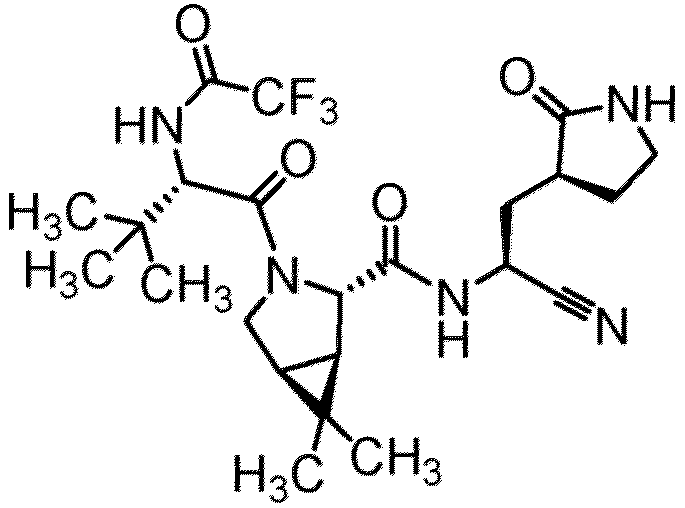
- Verbindung zur Verwendung als Medikament, wie in Anspruch 4 beansprucht, wobei die Verbindung ist: (1R,2S,5S)-N-{(1S)-1-Cyano-2-[(3S)-2-oxopyrrolidin-3-yl]ethyl}-6,6-dimethyl-3-[3-methyl-N-(trifluoracetyl)-L-valyl]-3-azabicyclo[3.1.0]hexan-2-carboxamid mit der Struktur

- Verbindung zur Verwendung als Medikament, wie in Anspruch 4 beansprucht, wobei die Verbindung kristallines (1R,2S,5S)-N-{(1S)-1-Cyano-2-[(3S)-2-oxopyrrolidin-3-yl]ethyl}-6,6-dimethyl-3-[3-methyl-N-(trifluoracetyl)-L-valyl]-3-azabicyclo[3.1.0]hexan-2-carboxamid ist.
- Verbindung zur Verwendung als Medikament, wie in Anspruch 6 beansprucht, wobei die Verbindung (1R,2S,5S)-N-{(1S)-1-Cyano-2-[(3S)-2-oxopyrrolidin-3-yl]ethyl}-6,6-dimethyl-3-[3-methyl-N-(trifluoracetyl)-L-valyl]-3-azabicyclo[3.1.0]hexan-2-carboxamid, feste Form 1, ist, gekennzeichnet durch ein Pulver-Röntgenbeugungsmuster (Cu-Strahlungsquelle, K-α-Mittelwert) mit Peaks bei 7.6, 9.8, 11.4, 11.9, 12.7, 15.7, 15.8, 17.3, 17.8, 18.3, 18.9, 19.7, 19.9, 20.5, 21.0, 21.7, 22.2, 22.5, 23.1, 23.6, 24.7, 25.3, 27.0, 27.2, 27.9, 28.1, 29.5, 32.6, 35.7 und 37.0 °2-theta +/- 0.2°.
- Verbindung zur Verwendung als Medikament, wie in Anspruch 6 beansprucht, wobei die Verbindung (1R,2S,5S)-N-{(1S)-1-Cyano-2-[(3S)-2-oxopyrrolidin-3-yl]ethyl}-6,6-dimethyl-3-[3-methyl-N-(trifluoracetyl)-L-valyl]-3-azabicyclo[3.1.0]hexan-2-carboxamid, feste Form 4, ist, gekennzeichnet durch ein Pulver-Röntgenbeugungsmuster (Cu-Strahlungsquelle, K-α-Mittelwert) mit Peaks bei 7.6, 9.8, 10.8, 11.2, 11.4, 11.4, 11.7, 12.0, 12.3, 12.7, 13.7, 14.9, 15.1, 15.9, 17.5, 18.0, 18.2, 18.5, 18.8, 20.0, 20.4, 20.7, 21.1, 21.6, 21.8, 22.3, 23.1, 23.4, 24.2, 24.9, 25.2, 26.1, 27.0, 27.2, 28.1, 28.9, 29.4, 29.5, 29.8, 30.0, 30.6, 30.8, 31.3, 31.8, 32.5, 32.8, 33.2, 34.4, 35.5, 35.6, 35.6, 36.0, 36.4, 37.1, 38.7, 39.4, 39.5 und 39.8 °2-theta +/- 0.2°.
- Verbindung zur Verwendung als Medikament, wie in Anspruch 4 beansprucht, wobei die Verbindung amorphes (1R,2S,5S)-N-{(1S)-1-Cyano-2-[(3S}-2-oxopyrrolidin-3-yl]ethyl}-6,6-dimethyl-3-[3-methyl-N-(trifluoracetyl)-L-valyl]-3-azabicyclo[3.1.0]hexan-2-carboxamid ist.
- Verbindung zur Verwendung als Medikament, wie in Anspruch 4 beansprucht, wobei die Verbindung (1R,2S,5S)-N-{(1S)-1-Cyano-2-[(3S)-2-oxopyrrolidin-3-yl]ethyl}-6,6-dimethyl-3-[3-methyl-N-(trifluoracetyl)-L-valyl]-3-azabicyclo[3.1.0]hexan-2-carboxamid, Methyl-tert.-butylether-Solvat ist.
- Verbindung zur Verwendung als Medikament, wie in Anspruch 10 beansprucht, wobei die Verbindung kristallin ist.
- Die Verbindung N-(Methoxycarbonyl)-3-methyl-L-valyl-(4R)-N-((1S)-1-cyano-2-[(3S)-2-oxopyrrolidin-3-yl]ethyl}-4-(trifluormethyl)-L-prolinamid mit der Struktur
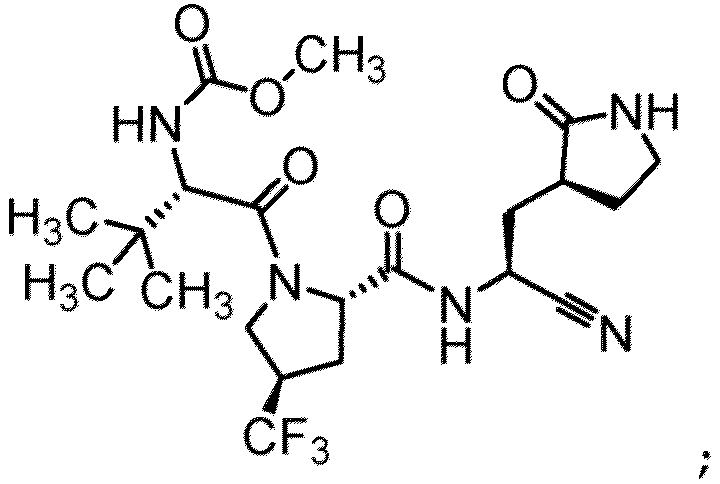
- Verbindung zur Verwendung als Medikament, wie in Anspruch 12 beansprucht, die N-(Methoxycarbonyl)-3-methyl-L-valyl-(4R)-N-((1S)-1-cyano-2-[(3S)-2-oxopyrrolidin-3-yl]ethyl}-4-(trifluormethyl)-L-prolinamid ist.
Priority Applications (5)
| Application Number | Priority Date | Filing Date | Title |
|---|---|---|---|
| EP24203045.0A EP4516301A3 (de) | 2020-09-03 | 2021-08-06 | Nitrilhaltige verbindungen zur verwendung als arzneimittel |
| RS20241168A RS66084B1 (sr) | 2020-09-03 | 2021-08-06 | Jedinjenja koja sadrže nitril za upotrebu kao lekovi |
| MA63032A MA63032B1 (fr) | 2020-09-03 | 2021-08-06 | Composés contenant du nitrile pour utilisation comme médicaments |
| SI202130239T SI4166539T1 (sl) | 2020-09-03 | 2021-08-06 | Spojine ki vsebujejo nitrile za uporabo kot zdravila |
| HRP20241513TT HRP20241513T1 (hr) | 2020-09-03 | 2021-08-06 | Spojevi koji sadrže nitril, namijenjeni upotrebi kao medikamenti |
Applications Claiming Priority (6)
| Application Number | Priority Date | Filing Date | Title |
|---|---|---|---|
| US202063073982P | 2020-09-03 | 2020-09-03 | |
| US202163143435P | 2021-01-29 | 2021-01-29 | |
| US202163170158P | 2021-04-02 | 2021-04-02 | |
| US202163194241P | 2021-05-28 | 2021-05-28 | |
| PCT/IB2021/057281 WO2021250648A1 (en) | 2020-09-03 | 2021-08-06 | Nitrile-containing antiviral compounds |
| EP21758144.6A EP3953330B1 (de) | 2020-09-03 | 2021-08-06 | Nitrilhaltige verbindungen als antiviral-agenten zur behandlung von einer coronavirus infektion |
Related Parent Applications (1)
| Application Number | Title | Priority Date | Filing Date |
|---|---|---|---|
| EP21758144.6A Division EP3953330B1 (de) | 2020-09-03 | 2021-08-06 | Nitrilhaltige verbindungen als antiviral-agenten zur behandlung von einer coronavirus infektion |
Related Child Applications (1)
| Application Number | Title | Priority Date | Filing Date |
|---|---|---|---|
| EP24203045.0A Division EP4516301A3 (de) | 2020-09-03 | 2021-08-06 | Nitrilhaltige verbindungen zur verwendung als arzneimittel |
Publications (2)
| Publication Number | Publication Date |
|---|---|
| EP4166539A1 EP4166539A1 (de) | 2023-04-19 |
| EP4166539B1 true EP4166539B1 (de) | 2024-10-09 |
Family
ID=77411985
Family Applications (3)
| Application Number | Title | Priority Date | Filing Date |
|---|---|---|---|
| EP24203045.0A Pending EP4516301A3 (de) | 2020-09-03 | 2021-08-06 | Nitrilhaltige verbindungen zur verwendung als arzneimittel |
| EP22198597.1A Active EP4166539B1 (de) | 2020-09-03 | 2021-08-06 | Nitrilhaltige verbindungen zur verwendung als arzneimittel |
| EP21758144.6A Active EP3953330B1 (de) | 2020-09-03 | 2021-08-06 | Nitrilhaltige verbindungen als antiviral-agenten zur behandlung von einer coronavirus infektion |
Family Applications Before (1)
| Application Number | Title | Priority Date | Filing Date |
|---|---|---|---|
| EP24203045.0A Pending EP4516301A3 (de) | 2020-09-03 | 2021-08-06 | Nitrilhaltige verbindungen zur verwendung als arzneimittel |
Family Applications After (1)
| Application Number | Title | Priority Date | Filing Date |
|---|---|---|---|
| EP21758144.6A Active EP3953330B1 (de) | 2020-09-03 | 2021-08-06 | Nitrilhaltige verbindungen als antiviral-agenten zur behandlung von einer coronavirus infektion |
Country Status (38)
| Country | Link |
|---|---|
| US (5) | US11351149B2 (de) |
| EP (3) | EP4516301A3 (de) |
| JP (2) | JP7126628B2 (de) |
| KR (2) | KR102794132B1 (de) |
| CN (3) | CN114681443B (de) |
| AU (3) | AU2021266232C1 (de) |
| BR (2) | BR112021022419B1 (de) |
| CA (1) | CA3137824C (de) |
| CL (1) | CL2021002965A1 (de) |
| CO (1) | CO2021015067A2 (de) |
| CR (1) | CR20210558A (de) |
| DK (2) | DK3953330T3 (de) |
| DO (1) | DOP2023000168A (de) |
| EC (1) | ECSP21080528A (de) |
| ES (2) | ES3000422T3 (de) |
| FI (1) | FI4166539T3 (de) |
| GE (3) | GEAP202315794A (de) |
| HR (2) | HRP20241513T1 (de) |
| HU (2) | HUE060811T2 (de) |
| IL (2) | IL299071B2 (de) |
| LT (2) | LT3953330T (de) |
| MA (1) | MA63032B1 (de) |
| MD (2) | MD3953330T2 (de) |
| MX (2) | MX2021013679A (de) |
| MY (1) | MY196455A (de) |
| NZ (1) | NZ782196A (de) |
| PE (2) | PE20220432A1 (de) |
| PH (1) | PH12021552851A1 (de) |
| PL (2) | PL3953330T3 (de) |
| PT (2) | PT3953330T (de) |
| PY (1) | PY2165555A (de) |
| RS (2) | RS63714B1 (de) |
| SA (1) | SA521430792B1 (de) |
| SI (2) | SI4166539T1 (de) |
| TW (2) | TWI790704B (de) |
| UY (1) | UY39372A (de) |
| WO (1) | WO2021250648A1 (de) |
| ZA (3) | ZA202108834B (de) |
Families Citing this family (119)
| Publication number | Priority date | Publication date | Assignee | Title |
|---|---|---|---|---|
| US11124497B1 (en) | 2020-04-17 | 2021-09-21 | Pardes Biosciences, Inc. | Inhibitors of cysteine proteases and methods of use thereof |
| US11174231B1 (en) | 2020-06-09 | 2021-11-16 | Pardes Biosciences, Inc. | Inhibitors of cysteine proteases and methods of use thereof |
| PH12022553378A1 (en) | 2020-06-10 | 2024-03-25 | Univ Leuven Kath | Anti-viral compounds for treating coronavirus, picornavirus, and norovirus infections |
| CA3189027A1 (en) | 2020-07-11 | 2022-01-20 | Pfizer Inc. | Antiviral heteroaryl ketone derivatives |
| GB2607514B (en) * | 2020-07-20 | 2023-06-21 | Enanta Pharm Inc | Functionalized peptides as antiviral agents |
| BR112023002573A2 (pt) * | 2020-08-13 | 2023-03-14 | Enanta Pharm Inc | Composto, composição farmacêutica, método de tratamento ou prevenção de infecção viral e distúrbio respiratório e método de inibição de protease viral |
| US11384090B2 (en) | 2020-11-23 | 2022-07-12 | Enanta Pharmaceuticals, Inc. | Spiropyrrolidine derived antiviral agents |
| US12540141B2 (en) | 2020-11-23 | 2026-02-03 | Enanta Pharmaceuticals, Inc. | Spiropyrrolidine derived antiviral agents |
| US11352363B1 (en) | 2020-11-23 | 2022-06-07 | Enanta Pharmaceuticals, Inc. | Spiropyrrolidine derived antiviral agents |
| KR20230124583A (ko) | 2020-11-23 | 2023-08-25 | 이난타 파마슈티칼스, 인코포레이티드 | 신규한 스피로피롤리딘 유래 항바이러스제 |
| US20240043417A1 (en) * | 2020-12-01 | 2024-02-08 | Purdue Research Foundation | Compounds for the treatment of sars |
| WO2022133588A1 (en) * | 2020-12-21 | 2022-06-30 | The Governors Of The University Of Alberta | Rna virus inhibitor compounds and uses thereof |
| CN117820248A (zh) | 2021-04-14 | 2024-04-05 | 盐野义制药株式会社 | 具有病毒增殖抑制作用的三嗪衍生物及含有其的药物组合物 |
| EP4209494B1 (de) * | 2021-04-16 | 2024-10-09 | Fujian Akeylink Biotechnology Co., Ltd. | Ringmodifizierte prolin-kurzpeptidverbindung und verwendung davon |
| WO2022235605A1 (en) | 2021-05-04 | 2022-11-10 | Enanta Pharmaceuticals, Inc. | Novel macrocyclic antiviral agents |
| US11857617B2 (en) | 2021-05-10 | 2024-01-02 | Topelia Aust Limited (652 771 670) | Methods for treating, ameliorating or preventing infections using drug and vaccination combination treatment |
| US12398147B2 (en) | 2021-05-11 | 2025-08-26 | Enanta Pharmaceuticals, Inc. | Macrocyclic spiropyrrolidine derived antiviral agents |
| US11319325B1 (en) | 2021-05-11 | 2022-05-03 | Enanta Pharmaceuticals, Inc. | Macrocyclic spiropyrrolidine derived antiviral agents |
| US20240285598A1 (en) | 2021-05-28 | 2024-08-29 | Arun K. Ghosh | Compounds for the treatment of sars |
| JP2024522990A (ja) | 2021-06-02 | 2024-06-25 | エイシア セラピューティクス, インコーポレイテッド | 抗ウイルス薬としてのプロテアーゼ阻害剤 |
| WO2022266363A1 (en) * | 2021-06-16 | 2022-12-22 | The Scripps Research Institute | Protease inhibitors for the treatment of coronavirus infections |
| CN113444144A (zh) * | 2021-06-23 | 2021-09-28 | 周龙兴 | 一种蛋白酶抑制剂及其药物组合物和用途 |
| JP2024525589A (ja) | 2021-07-09 | 2024-07-12 | アリゴス セラピューティクス インコーポレイテッド | 抗ウイルス化合物 |
| US11325916B1 (en) | 2021-07-29 | 2022-05-10 | Enanta Pharmaceuticals, Inc. | Spiropyrrolidine derived antiviral agents |
| US11339170B1 (en) | 2021-07-23 | 2022-05-24 | Enanta Pharmaceuticals, Inc. | Spiropyrrolidine derived antiviral agents |
| CN114149415A (zh) * | 2021-07-26 | 2022-03-08 | 中国药科大学 | 一种拟肽类化合物及其衍生物、制备方法、药物组合物和应用 |
| US12479854B2 (en) | 2021-07-29 | 2025-11-25 | Enanta Pharmaceuticals, Inc. | Spiropyrrolidine derived antiviral agents |
| WO2023023631A1 (en) * | 2021-08-18 | 2023-02-23 | Pardes Biosciences, Inc. | Inhibitors of cysteine proteases and methods of use thereof |
| WO2023043816A1 (en) | 2021-09-17 | 2023-03-23 | Aligos Therapeutics, Inc. | Anti-viral compounds for treating coronavirus, picornavirus, and norovirus infections |
| US12186309B2 (en) | 2021-09-27 | 2025-01-07 | The Governors Of The University Of Alberta | RNA virus inhibitor compounds and uses thereof |
| TW202320793A (zh) | 2021-09-28 | 2023-06-01 | 日商塩野義製藥股份有限公司 | 含有三嗪衍生物之醫藥組合物 |
| CA3233206A1 (en) | 2021-09-28 | 2023-04-06 | Yuki Tachibana | Pharmaceutical composition containing triazine derivative |
| CN114957381B (zh) * | 2021-10-22 | 2026-04-17 | 广州谷森制药有限公司 | 新型氘代氰基类化合物、其制备方法、组合物及应用 |
| WO2023086350A1 (en) | 2021-11-12 | 2023-05-19 | Enanta Pharmaceuticals, Inc. | Alkyne-containing antiviral agents |
| US11919910B2 (en) | 2021-11-12 | 2024-03-05 | Enanta Pharmaceuticals, Inc. | Spiropyrrolidine derived antiviral agents |
| WO2023086352A1 (en) | 2021-11-12 | 2023-05-19 | Enanta Pharmaceuticals, Inc. | Novel spiropyrrolidine derived antiviral agents |
| WO2023088418A1 (en) * | 2021-11-20 | 2023-05-25 | Fochon Biosciences, Ltd. | Compounds as sars-cov-2 inhibitors |
| JP7253866B1 (ja) | 2021-11-24 | 2023-04-07 | 塩野義製薬株式会社 | トリアジン誘導体を含有する経口投与する製剤 |
| CN115490626B (zh) * | 2021-11-26 | 2024-08-23 | 杭州科巢生物科技有限公司 | 一种pf-07321332的关键手性化合物及其制备方法 |
| US20250154131A1 (en) * | 2021-11-26 | 2025-05-15 | Hainan Simcere Pharmaceutical Co., Ltd. | Pyrrolidine antiviral compound |
| WO2023095860A1 (ja) * | 2021-11-26 | 2023-06-01 | 塩野義製薬株式会社 | 3clプロテアーゼ阻害剤及びcovid-19治療用薬剤を組み合わせることを特徴とするcovid-19治療用医薬 |
| US11993600B2 (en) | 2021-12-08 | 2024-05-28 | Enanta Pharmaceuticals, Inc. | Saturated spirocyclics as antiviral agents |
| US12145941B2 (en) | 2021-12-08 | 2024-11-19 | Enanta Pharmaceuticals, Inc. | Heterocyclic antiviral agents |
| CN115010639B (zh) * | 2021-12-14 | 2024-03-08 | 上海艾洋化学科技有限公司 | 一种中间体化合物及其制备方法和应用 |
| CN115433256B (zh) * | 2021-12-17 | 2025-11-07 | 中国科学院微生物研究所 | 一种氮杂双环[3.1.0]己烷衍生物及其制备方法和用途 |
| WO2023116734A1 (en) * | 2021-12-21 | 2023-06-29 | Shanghai Micurx Pharmaceutical Co., Ltd. | Fused pyrrolidine compounds and compositions for treatment of respiratory viral infections |
| CN114031543A (zh) * | 2021-12-21 | 2022-02-11 | 上海朴颐化学科技有限公司 | 一种帕罗韦德中间体的制备方法 |
| WO2023116811A1 (zh) * | 2021-12-22 | 2023-06-29 | 福建广生中霖生物科技有限公司 | 含β-胺基酮的短肽化合物及其应用 |
| CN114456101A (zh) * | 2021-12-23 | 2022-05-10 | 上海璨谊生物科技有限公司 | 用于合成pf-07321332的关键中间体的合成方法 |
| CN114591299A (zh) * | 2021-12-24 | 2022-06-07 | 雅本化学股份有限公司 | 一种帕罗韦德中间体及其制备和应用 |
| CN114409727A (zh) * | 2021-12-28 | 2022-04-29 | 苏州康纯医药科技有限公司 | 一种抗冠状病毒的3clpro抑制剂的制备方法 |
| CN116514902A (zh) * | 2021-12-28 | 2023-08-01 | 石药集团中奇制药技术(石家庄)有限公司 | 氘代拟肽类化合物及其用途 |
| CN120757605A (zh) * | 2021-12-29 | 2025-10-10 | 上海柯君医药科技有限公司 | 抗冠状病毒化合物及其组合物和用途 |
| CN114213275B (zh) * | 2021-12-31 | 2023-08-04 | 戊言医药科技(上海)有限公司 | 用于合成帕罗韦德的中间产物及制备方法 |
| TW202334123A (zh) * | 2021-12-31 | 2023-09-01 | 大陸商蘇州愛科百發生物醫藥技術有限公司 | 用於預防和治療冠狀病毒感染的化合物及其偶聯物和方法 |
| CN115192536A (zh) * | 2022-01-06 | 2022-10-18 | 江苏奥赛康药业有限公司 | 一种含有奈玛特韦的药用组合物及其制备方法 |
| EP4460508A4 (de) * | 2022-01-07 | 2025-12-24 | Merck Sharp & Dohme Llc | Proteasehemmer zur behandlung oder prävention von coronavirusinfektion |
| CN115583984A (zh) * | 2022-01-11 | 2023-01-10 | 嘉兴安谛康生物科技有限公司 | 氮杂螺类化合物及其制备方法、药物组合物和用途 |
| CN118451090A (zh) * | 2022-01-13 | 2024-08-06 | 海南先声药业有限公司 | 一种酰胺类抗病毒化合物 |
| CN114057627B (zh) * | 2022-01-18 | 2022-04-01 | 南京桦冠生物技术有限公司 | 一种丙型肝炎及新冠药物中间体及其盐的制备方法 |
| WO2023139402A1 (en) * | 2022-01-18 | 2023-07-27 | Ascletis Bioscience Co., Ltd. | Inhibitors of cysteine proteases and methods of use thereof |
| US11760722B2 (en) * | 2022-01-18 | 2023-09-19 | Ascletis Bioscience Co., Ltd. | Inhibitors of cysteine proteases and methods of use thereof |
| CN114948950A (zh) * | 2022-01-19 | 2022-08-30 | 广州谷森制药有限公司 | 一种药物组合物及其抗病毒用途 |
| CN114394927B (zh) * | 2022-01-20 | 2023-03-31 | 汉瑞药业(荆门)有限公司 | 6,6-二甲基-3-氮杂双环[3.1.0]己烷-2-羧酸的制备方法 |
| CN114437043B (zh) * | 2022-02-02 | 2023-06-16 | 浙江乐普药业股份有限公司 | 一种抗新冠药物Nirmatrelvir的制备方法 |
| WO2023148747A1 (en) * | 2022-02-07 | 2023-08-10 | Dr. Reddy’S Institute Of Life Sciences | Improved processes for preparation of nirmatrelvir and intermediates thereof |
| WO2023151188A1 (zh) * | 2022-02-08 | 2023-08-17 | 上海皓元医药股份有限公司 | 一种抗病毒药物中间体的绿色合成方法 |
| CN114230504B (zh) * | 2022-02-24 | 2022-06-03 | 南京桦冠生物技术有限公司 | 一种吡咯烷酮中间体的合成方法 |
| CN114668737A (zh) * | 2022-03-02 | 2022-06-28 | 乐普制药科技有限公司 | 一种用于治疗新型冠状病毒含有利托那韦微丸的复方双层片剂 |
| CN114573470B (zh) * | 2022-03-17 | 2023-12-15 | 浙江海洲制药有限公司 | 一种合成n-三氟乙酰叔亮氨酸的方法 |
| CN114957382A (zh) * | 2022-03-17 | 2022-08-30 | 广州谷森制药有限公司 | 氘代尼马瑞韦晶型i及其制备方法 |
| CN114605436B (zh) * | 2022-03-23 | 2023-07-21 | 浙江九洲药业股份有限公司 | 帕罗韦德或波普瑞韦的中间体、制备方法和应用 |
| WO2023180189A1 (en) * | 2022-03-23 | 2023-09-28 | Exscientia Ai Limited | Mpro targeting antiviral compounds |
| CN114437044B (zh) * | 2022-03-24 | 2022-10-04 | 山东诚创蓝海医药科技有限公司 | 一种奈玛特韦的制备方法 |
| CN114702425B (zh) * | 2022-03-28 | 2024-04-19 | 苏州汉酶生物技术有限公司 | (s)-2-氨基-(s)-3-[吡咯烷酮-2’]丙氨酸衍生物及中间体的制备方法 |
| CN115043900B (zh) * | 2022-03-31 | 2025-02-18 | 深圳博瑞医药科技有限公司 | 一种拟肽化合物及其制备2019-nCoV主蛋白酶抑制剂的用途 |
| US11648300B1 (en) * | 2022-03-31 | 2023-05-16 | Asavi Llc | Pharmaceutical combination therapy and prevention with aprotinin + nirmatrelvir of SARS-CoV-2 and/or disease associated with this infection, including COVID-19 |
| CN114957383B (zh) * | 2022-04-01 | 2024-12-31 | 中国科学院上海药物研究所 | 一种拟肽类化合物及其制备方法、药物组合物和用途 |
| WO2023196307A1 (en) | 2022-04-05 | 2023-10-12 | Enanta Pharmaceuticals, Inc. | Novel spiropyrrolidine derived antiviral agents |
| CN117203195A (zh) * | 2022-04-08 | 2023-12-08 | 盐野义制药株式会社 | 具有病毒增殖抑制活性的尿嘧啶衍生物及含有其的医药组合物 |
| JPWO2023195529A1 (de) * | 2022-04-08 | 2023-10-12 | ||
| CN114957087A (zh) * | 2022-04-13 | 2022-08-30 | 湖南复瑞生物医药技术有限责任公司 | 一种帕罗韦德中间体制备方法 |
| WO2023200364A1 (ru) * | 2022-04-15 | 2023-10-19 | Общество С Ограниченной Ответственностью "Промомед Рус" | Способы получения (1r,2s,5s)-n-[(1s)-1-циано-2-[(3s)-2-оксопирролидин-3-ил]этил]-3-[(2s)-3,3-диметил-2-[(2,2,2-трифторацетил)амино]бутаноил]-6,6-диметил-3-азабицикло[3.1.0]гексан-2-карбоксамида |
| CN114702545A (zh) * | 2022-04-19 | 2022-07-05 | 海化生命(厦门)科技有限公司 | 一种抗新冠病毒药物尼玛瑞韦的制备方法 |
| CN117126229A (zh) * | 2022-05-19 | 2023-11-28 | 浙江海正药业股份有限公司 | Hs378晶型及其制备方法 |
| CN114957053B (zh) * | 2022-05-20 | 2023-12-22 | 中国医学科学院医药生物技术研究所 | 一种氧代亚乙基类化合物或其药学上可接受的盐及其制备方法和应用、药物组合物及其应用 |
| CN114989045B (zh) * | 2022-06-14 | 2023-09-08 | 斯坦德药典标准物质研发(湖北)有限公司 | 合成奈玛特韦的中间体及其制法以及合成奈玛特韦的方法 |
| KR20250038236A (ko) * | 2022-06-17 | 2025-03-19 | 트로스피니드 테라퓨틱스 인코포레이티드 | 코로나바이러스 감염 치료용 화합물 |
| IL317872A (en) | 2022-06-30 | 2025-02-01 | Pfizer | Process and useful intermediates for the preparation of NIRMATRELVIR |
| CN116970028A (zh) * | 2022-07-08 | 2023-10-31 | 腾讯科技(深圳)有限公司 | 大环拟肽类蛋白酶抑制剂及其用途 |
| CN116621918B (zh) * | 2022-07-20 | 2023-10-31 | 深圳信立泰药业股份有限公司 | 一种螺环化合物及其制备方法与应用 |
| US11986479B2 (en) | 2022-07-22 | 2024-05-21 | PharSoln, Inc. | Combination drug products for treating patients suffering from one or more medical conditions caused by coronavirus infection, including by SARS-CoV-2, its alpha, beta, delta, or omicron variants and sub variants |
| CN117503776A (zh) * | 2022-08-05 | 2024-02-06 | 临港国家实验室 | 一种药物组合物及其用途 |
| AU2023356620A1 (en) | 2022-10-06 | 2025-04-24 | Enanta Pharmaceuticals, Inc. | Crystal forms of an anti-sars cov-2 agent |
| WO2024078294A1 (zh) * | 2022-10-13 | 2024-04-18 | 广东众生睿创生物科技有限公司 | 酮酰胺衍生物的无定型及其制备方法 |
| EP4582084A4 (de) * | 2022-10-13 | 2025-12-31 | Guangdong Raynovent Biotech Co Ltd | Kristalline form eines ketoamidderivats und herstellungsverfahren dafür |
| KR20250084965A (ko) * | 2022-10-14 | 2025-06-11 | 푸지엔 에이키링크 바이오테크놀로지 컴퍼니 리미티드 | 시아노-치환된 폴리펩타이드 화합물의 결정형 및 이의 제조방법 |
| CN118251404B (zh) * | 2022-10-18 | 2025-10-10 | 福建广生中霖生物科技有限公司 | 药物中间体及其制备方法 |
| WO2024085784A1 (ru) * | 2022-10-19 | 2024-04-25 | Общество С Ограниченной Ответственностью "Промомед Рус" | Фармацевтическая композиция и лекарственное средство для лечения коронавирусной инфекции |
| WO2024086777A2 (en) * | 2022-10-21 | 2024-04-25 | The Trustees Of Indiana University | Compounds and methods for treating diseases caused by viruses and bacteria |
| WO2024091148A2 (ru) * | 2022-10-26 | 2024-05-02 | Общество С Ограниченной Ответственностью "Абицея Медикал Технолоджис" | Жидкий бальнеологический концентрат и ампула с мерной шкалой и устройством для удобного дозирования бальнеологического концентрата |
| WO2024089159A1 (en) | 2022-10-27 | 2024-05-02 | Ubiq Holding B.V. | Main protease inhibitors |
| KR20250127754A (ko) | 2022-12-23 | 2025-08-26 | 메이지 세이카 파루마 가부시키가이샤 | 에버멕틴 유도체 |
| CN115998836B (zh) * | 2023-02-08 | 2026-02-24 | 南通市海门品尚医药科技有限公司 | 一种含有奈玛特韦和利托那韦的液体制剂及其制备方法与应用 |
| CN118697729A (zh) * | 2023-03-27 | 2024-09-27 | 江苏天士力帝益药业有限公司 | 一种含有水飞蓟宾的组合物 |
| EP4684778A1 (de) * | 2023-05-04 | 2026-01-28 | Guangdong Raynovent Biotech Co., Ltd. | Pharmazeutische zusammensetzung gegen sars-cov-2 und herstellungsverfahren dafür |
| CN116283741B (zh) * | 2023-05-10 | 2023-09-05 | 江苏欣诺科催化剂股份有限公司 | 双亚胺配体及其制备方法与应用 |
| WO2024237816A1 (ru) * | 2023-05-12 | 2024-11-21 | Общество С Ограниченной Ответственностью "Промомед Рус" | Новые производные азабициклогексана |
| TW202515537A (zh) | 2023-06-09 | 2025-04-16 | 美商輝瑞大藥廠 | 製備伊布紮特韋(Ibuzatrelvir)之方法及中間體 |
| WO2024252327A1 (en) | 2023-06-09 | 2024-12-12 | Pfizer Inc. | Solid forms of n-(methoxycarbonyl)-3-methyl-l-valyl-(4 r)- n-{(1 s)-1-cyano-2-[(3 s)-2-oxopyrrolidin-3-yl]ethyl}-4-(trifluoromethyl)-l-prolinamide and solvates thereof |
| EP4501942A1 (de) | 2023-08-02 | 2025-02-05 | Consejo Superior De Investigaciones Científicas (CSIC) | Peptidomimetika mit antiviraler wirkung |
| WO2025037206A1 (en) | 2023-08-11 | 2025-02-20 | Pfizer Inc. | Deuterated antiviral compounds |
| CN116763898A (zh) * | 2023-08-21 | 2023-09-19 | 北京科翔中升医药科技有限公司 | 一种蛋白酶抑制剂化合物在制备猫冠状病毒感染药物中的用途 |
| AU2024307335A1 (en) * | 2023-10-05 | 2026-04-16 | Shionogi & Co., Ltd. | Pharmaceutical composition containing uracil derivative |
| JP7701585B2 (ja) * | 2023-10-05 | 2025-07-01 | 塩野義製薬株式会社 | ウラシル誘導体を含有する製剤 |
| US20250163026A1 (en) * | 2023-11-21 | 2025-05-22 | Daljit Singh Dhanoa | Deuterium-Enriched Nirmatrelvir as SARS-CoV-2 Mpro Inhibitor for the Treatment of COVID-19 |
| CN119139307B (zh) * | 2023-12-29 | 2025-09-23 | 上海柯君医药科技有限公司 | 螺环类化合物在制备3CLpro蛋白酶抑制剂或药物中的用途 |
| EP4686470A1 (de) | 2024-08-01 | 2026-02-04 | Ospedale San Raffaele S.r.l. | Makrocyclische peptidomimetika als antivirale mittel |
| WO2025125695A2 (en) | 2024-12-17 | 2025-06-19 | Medchemica Consultancy Ltd | Chemical compoundsid50000167790940 p. doc 2025-05-07 filing no.:19 |
Family Cites Families (227)
| Publication number | Priority date | Publication date | Assignee | Title |
|---|---|---|---|---|
| US5583238A (en) | 1990-11-19 | 1996-12-10 | G. D. Searle & Co. | Method for making intermediates useful in synthesis of retroviral protease inhibitors |
| EP1302468B1 (de) | 1992-12-29 | 2008-12-17 | Abbott Laboratories | Verfahren und Intermediate zur Herstellung von retroviralen Proteasehemmern |
| US5543417A (en) | 1994-10-21 | 1996-08-06 | Merck & Co., Inc. | Combination method of treating acne using 4-AZA-5α-cholestan-ones and 4-AZA-5α-androstan-ones as selective 5α-reductase inhibitors with anti-bacterial, keratolytic, or anti-inflammatory agents |
| US6037157A (en) | 1995-06-29 | 2000-03-14 | Abbott Laboratories | Method for improving pharmacokinetics |
| RU2191193C2 (ru) | 1996-02-13 | 2002-10-20 | Акцо Нобель Н.В. | Ингибиторы серинпротеазы |
| IL120310A (en) | 1996-03-01 | 2002-02-10 | Akzo Nobel Nv | Serine protease inhibitors and pharmaceuticals containing them |
| AU2429197A (en) | 1996-04-04 | 1997-10-29 | Bristol-Myers Squibb Company | Cephalosporin derivatives |
| DE19748470A1 (de) | 1997-11-03 | 1999-05-06 | Hoechst Schering Agrevo Gmbh | Carbamoylphenylsulfonylharnstoffe, Verfahren zu ihrer Herstellung und ihre Verwendung als Herbizide und Pflanzenwachstumsregulatoren |
| US20050267148A1 (en) | 1998-07-15 | 2005-12-01 | Teijin Limited | Benzimidazole derivative |
| AU758789B2 (en) | 1998-07-15 | 2003-03-27 | Teijin Limited | Thiobenzimidazole derivatives |
| AU779321B2 (en) | 1999-08-04 | 2005-01-20 | Agouron Pharmaceuticals, Inc. | Antipicornaviral compounds and compositions, their pharmaceutical uses, and materials for their synthesis |
| PE20020157A1 (es) | 1999-12-03 | 2002-02-22 | Agouron Pharma | Compuestos derivados de piridona como inhibidores de proteasas de picornaviral 3c, composiciones, sus usos farmaceuticos y materiales para su sintesis |
| CN1498224A (zh) | 2000-07-21 | 2004-05-19 | ���鹫˾ | 用作丙型肝炎病毒ns3-丝氨酸蛋白酶抑制剂的新型肽 |
| US7244721B2 (en) | 2000-07-21 | 2007-07-17 | Schering Corporation | Peptides as NS3-serine protease inhibitors of hepatitis C virus |
| US7842727B2 (en) | 2001-03-27 | 2010-11-30 | Errant Gene Therapeutics, Llc | Histone deacetylase inhibitors |
| AR037938A1 (es) | 2001-12-21 | 2004-12-22 | Syngenta Participations Ag | Derivados de avermectina b1 que tienen un substituyente de aminosulfoniloxilo en la posicion 4'' |
| CN100352819C (zh) | 2002-01-23 | 2007-12-05 | 先灵公司 | 作为ns3-丝氨酸蛋白酶抑制剂的脯氨酸化合物用于制备治疗丙型肝炎病毒感染的药物 |
| GB0205165D0 (en) | 2002-03-06 | 2002-04-17 | Astrazeneca Ab | Chemical compounds |
| WO2003080633A1 (fr) | 2002-03-25 | 2003-10-02 | Nippon Kayaku Kabushiki Kaisha | Nouveau derive d'$g(a)-amino-n-(diaminophosphinyl)lactame |
| AR040126A1 (es) | 2002-05-29 | 2005-03-16 | Glaxo Group Ltd | Compuesto de fenilsulfonilo, composicion farmaceutica que lo comprende y su uso para la elaboracion de un medicamento |
| TW200406386A (en) | 2002-06-07 | 2004-05-01 | Novartis Ag | Organic compounds |
| EA200500005A1 (ru) | 2002-06-12 | 2005-06-30 | Байоджен Айдек Ма Инк. | Способ лечения повреждения, вызванного реперфузией после ишемии, с использованием антагонистов рецептора аденозина |
| GB0220187D0 (en) | 2002-08-30 | 2002-10-09 | Novartis Ag | Organic compounds |
| ATE496893T1 (de) | 2002-12-20 | 2011-02-15 | X Ceptor Therapeutics Inc | Isochinolinonderivate und deren verwendung als medikamente |
| US7078419B2 (en) | 2003-03-10 | 2006-07-18 | Boehringer Ingelheim Pharmaceuticals, Inc. | Cytokine inhibitors |
| WO2004093860A1 (en) | 2003-04-21 | 2004-11-04 | Pfizer Inc. | Inhibitors of sars related coronavirus proteinase |
| US20040235952A1 (en) | 2003-05-05 | 2004-11-25 | Agouron Pharmaceuticals, Inc. | Inhibitors of severe acute respiratory syndrome (SARS) 3C-like proteinase |
| SE0301320D0 (sv) | 2003-05-06 | 2003-05-06 | Astrazeneca Ab | Positive modulators of nicotinic acetylcholine receptors |
| EP1641493A4 (de) | 2003-06-30 | 2007-10-31 | Merck & Co Inc | Radioaktiv markierte cannabinoid-1 rezeptor-modulatoren |
| WO2005021584A2 (en) | 2003-08-26 | 2005-03-10 | Schering Corporation | Novel peptidomimetic ns3-serine protease inhibitors of hepatitis c virus |
| US20060014821A1 (en) | 2003-08-27 | 2006-01-19 | Agouron Pharmaceuticals, Inc. | Inhibitors of SARS 3C like protease |
| AU2004270251B2 (en) | 2003-09-05 | 2011-03-31 | The General Hospital Corporation | Polyacetal drug conjugates as release system |
| BRPI0416902A (pt) | 2003-12-11 | 2007-01-16 | Schering Corp | inibidores de ns3/ns4a serina protease do vìrus da hepatite c |
| US7462594B2 (en) | 2003-12-31 | 2008-12-09 | Taigen Biotechnology Co., Ltd. | Peptide-like compounds that inhibit coronaviral 3CL and flaviviridae viral proteases |
| AU2004312547A1 (en) | 2003-12-31 | 2005-07-21 | Taigen Biotechnology | Protease inhibitors |
| CA2554771A1 (en) | 2004-01-30 | 2005-08-18 | Johns Hopkins University | Nitroxyl progenitor compounds and methods of use |
| EP1737881B1 (de) | 2004-02-27 | 2009-06-24 | Schering Corporation | Neue verbindungen als inhibitoren der ns3-serinprotease des hepatitis-c-virus |
| US7816326B2 (en) | 2004-02-27 | 2010-10-19 | Schering Corporation | Sulfur compounds as inhibitors of hepatitis C virus NS3 serine protease |
| CN103102389A (zh) | 2004-02-27 | 2013-05-15 | 默沙东公司 | 作为丙型肝炎病毒ns3丝氨酸蛋白酶抑制剂的硫化合物 |
| EP1730165A1 (de) | 2004-02-27 | 2006-12-13 | Schering Corporation | Inhibitoren der ns3-protease des hepatitis-c-virus |
| AU2005219824B2 (en) | 2004-02-27 | 2007-11-29 | Merck Sharp & Dohme Corp. | Novel ketoamides with cyclic p4's as inhibitors of ns3 serine protease of hepatitis c virus |
| WO2005113580A1 (en) | 2004-05-21 | 2005-12-01 | Pfizer Inc. | Anticoronviral compounds and compositions, their pharmaceutical uses and materials for their synthesis |
| US20050288338A1 (en) | 2004-06-24 | 2005-12-29 | Wenqing Yao | Amido compounds and their use as pharmaceuticals |
| DE602005019752D1 (de) | 2004-09-03 | 2010-04-15 | Syngenta Ltd | Isoxazolinderivate und deren verwendung als herbizide |
| CN101031550B (zh) | 2004-09-30 | 2015-05-27 | 泰博特克药品有限公司 | 抑制hiv的5-碳环-或杂环取代的嘧啶类 |
| RU2405778C2 (ru) | 2004-09-30 | 2010-12-10 | Тиботек Фармасьютикалз Лтд. | 5-гетероциклилпиримидины, ингибирующие вич |
| CN100363346C (zh) * | 2004-10-22 | 2008-01-23 | 清华大学 | 冠状病毒主蛋白酶的小分子抑制剂、制备方法及其应用 |
| AU2005298637B8 (en) | 2004-10-29 | 2012-12-06 | Janssen Sciences Ireland Uc | HIV inhibiting bicyclic pyrimidine derivatives |
| WO2006061714A2 (en) | 2004-12-09 | 2006-06-15 | Pfizer Inc. | Anticoronaviral compounds and compositions, their pharmaceutical uses and materials for their synthesis |
| GB2422829A (en) | 2005-02-04 | 2006-08-09 | Oxagen Ltd | Pyrrolopyridines and their use in the treatment of diseases mediated by PGD2 at the CRTH2 receptor |
| GB2422831A (en) | 2005-02-04 | 2006-08-09 | Oxagen Ltd | Pyrrolopyridines and their use in the treatment of diseases mediated by PGD2 at the CRTH2 receptor |
| US7462639B2 (en) | 2005-04-14 | 2008-12-09 | Hoffmann-La Roche Inc. | Aminopyrazole derivatives |
| JP2008533181A (ja) | 2005-04-14 | 2008-08-21 | エフ.ホフマン−ラ ロシュ アーゲー | 三環式アゾール誘導体、それらの製造及び医薬品としての使用 |
| US20060281689A1 (en) | 2005-06-02 | 2006-12-14 | Schering Corporation | Method for modulating activity of HCV protease through use of a novel HCV protease inhibitor to reduce duration of treatment period |
| WO2006130552A2 (en) | 2005-06-02 | 2006-12-07 | Schering Corporation | Methods of treating hepatitis c virus |
| CA2612490A1 (en) | 2005-06-16 | 2007-10-25 | Novartis Ag | Lactam containing hcv inhibitors |
| JP2009510157A (ja) | 2005-10-03 | 2009-03-12 | ファイザー・プロダクツ・インク | Hivインテグラーゼ酵素の阻害剤 |
| WO2007058832A2 (en) | 2005-11-12 | 2007-05-24 | Boehringer Ingelheim International Gmbh | Pyrrolo (2, 3-b) pyridine derivatives useful as tec kinase inhibitors |
| DE102005055354A1 (de) | 2005-11-21 | 2007-10-31 | Merck Patent Gmbh | Substituierte 5-Phenyl-3,6-dihydro-2-oxo-6H-[1,3,4]thiadiazine |
| US20090143375A1 (en) | 2005-12-15 | 2009-06-04 | F. Hoffmann-La Roche Ag | Tricyclic Lactam Derivatives, Their Manufacture and Use as Pharmaceutical Agents |
| DE102006012251A1 (de) | 2006-03-15 | 2007-11-08 | Grünenthal GmbH | Substituierte 4-Amino-chinazolin-Derivate und ihre Verwendung zur Herstellung von Arzneimitteln |
| WO2007115409A1 (en) | 2006-04-10 | 2007-10-18 | Painceptor Pharma Corporation | Compositions and methods for modulating gated ion channels |
| TW200815351A (en) | 2006-05-02 | 2008-04-01 | Astrazeneca Ab | Novel compounds |
| WO2008037266A1 (en) | 2006-09-25 | 2008-04-03 | Universite Libre De Bruxelles | Inhibitors of conventional protein kinase c isozymes and use thereof for treating inflammatory diseases |
| US20100093738A1 (en) | 2006-10-06 | 2010-04-15 | Basf Se | Fungicidal Compounds and Fungicidal Compositions |
| US20090137549A1 (en) | 2006-11-09 | 2009-05-28 | Paul John Edward | Novel compounds useful for the treatment of degenerative & inflamatory diseases |
| NZ577980A (en) | 2006-12-27 | 2012-01-12 | Sanofi Aventis | Cycloalkylamine substituted isoquinolone derivatives |
| KR20090092303A (ko) | 2006-12-27 | 2009-08-31 | 사노피-아벤티스 | 사이클로알킬아민 치환된 이소퀴놀린 유도체 |
| JP5491871B2 (ja) | 2007-02-28 | 2014-05-14 | アドビナス セラピュティックス プライベート リミテッド | グルコキナーゼ活性化因子としての2,2,2−三置換アセトアミド誘導体、その方法及び薬学的応用 |
| JP2008260716A (ja) | 2007-04-12 | 2008-10-30 | Sumitomo Chemical Co Ltd | ヒドラジド化合物及びそれを含有する有害節足動物防除剤 |
| JP2008280339A (ja) | 2007-04-12 | 2008-11-20 | Sumitomo Chemical Co Ltd | ヒドラジド化合物及びそれを含有する有害節足動物防除剤 |
| CN101730680A (zh) | 2007-05-24 | 2010-06-09 | 记忆医药公司 | 具有5-ht6受体亲和力的4’取代的化合物 |
| CN101902912A (zh) | 2007-11-06 | 2010-12-01 | 纳幕尔杜邦公司 | 杀真菌杂环胺 |
| US9446995B2 (en) | 2012-05-21 | 2016-09-20 | Illinois Institute Of Technology | Synthesis of therapeutic and diagnostic drugs centered on regioselective and stereoselective ring opening of aziridinium ions |
| US10189803B2 (en) | 2008-02-22 | 2019-01-29 | Illinois Institute Of Technology | Synthesis of therapeutic and diagnostic drugs centered on regioselective and stereoselective ring opening of aziridinium ions |
| GB0808947D0 (en) | 2008-05-16 | 2008-06-25 | Shire Llc | Substituted quinazolines |
| GB0808967D0 (en) | 2008-05-16 | 2008-06-25 | Shire Llc | Substitute quinazolines |
| GB0808953D0 (en) | 2008-05-16 | 2008-06-25 | Shire Llc | substituted quinazolines |
| GB0808952D0 (en) | 2008-05-16 | 2008-06-25 | Shire Llc | Substituted quinazolines |
| GB0808951D0 (en) | 2008-05-16 | 2008-06-25 | Shire Llc | Substituted quinazolines |
| GB0808950D0 (en) | 2008-05-16 | 2008-06-25 | Shire Llc | Substituted quinazolines |
| JP2011521968A (ja) | 2008-05-30 | 2011-07-28 | ジェネンテック, インコーポレイテッド | プリンpi3k阻害剤化合物および使用方法 |
| US8440827B2 (en) | 2008-07-31 | 2013-05-14 | Duke University | Photolabile caged transition metal complexes and methods of using the same |
| WO2010039982A1 (en) | 2008-10-01 | 2010-04-08 | Ironwood Pharmaceuticals, Inc. | Crth2 modulators |
| US8772481B2 (en) | 2008-10-10 | 2014-07-08 | Amgen Inc. | Aza- and diaza-phthalazine compounds as P38 map kinase modulators and methods of use thereof |
| WO2010042649A2 (en) | 2008-10-10 | 2010-04-15 | Amgen Inc. | PHTHALAZINE COMPOUNDS AS p38 MAP KINASE MODULATORS AND METHODS OF USE THEREOF |
| CA2965223C (en) | 2008-12-22 | 2019-09-24 | Chemocentryx, Inc. | C5ar antagonists |
| AU2010229144B2 (en) | 2009-03-23 | 2012-07-12 | Merck Sharp & Dohme Corp. | P2X3, receptor antagonists for treatment of pain |
| US8697662B2 (en) | 2009-05-27 | 2014-04-15 | Ptc Therapeutics, Inc. | Methods for treating Kaposi sarcoma |
| US20120157401A1 (en) | 2009-05-27 | 2012-06-21 | Ptc Therapeutics, Inc. | Methods for treating neurofibromatosis |
| US20120202801A1 (en) | 2009-05-27 | 2012-08-09 | Liangxian Cao | Methods for treating breast cancer |
| US20120157402A1 (en) | 2009-05-27 | 2012-06-21 | Liangxian Cao | Methods for treating brain tumors |
| WO2010138685A1 (en) | 2009-05-27 | 2010-12-02 | Ptc Therapeutics, Inc. | Methods for treating prostate conditions |
| US9221765B2 (en) | 2009-06-10 | 2015-12-29 | North Carolina State University | Inhibition and dispersion of bacterial biofilms with benzimidazole derivatives |
| WO2011003932A2 (de) | 2009-07-10 | 2011-01-13 | Basf Se | Verfahren zur direktaminierung von kohlenwasserstoffen zu aminokohlenwasserstoffen mit elektrochemischer abtrennung von wasserstoff |
| WO2011011303A1 (en) | 2009-07-21 | 2011-01-27 | Gilead Sciences, Inc. | Inhibitors of flaviviridae viruses |
| RU2012107101A (ru) | 2009-07-31 | 2013-09-10 | Байокрист Фармасьютикалз, Инк. | Производные пирроло[1,2-в] пиридазина как ингибиторы янус-киназы |
| JP2011057661A (ja) | 2009-08-14 | 2011-03-24 | Bayer Cropscience Ag | 殺虫性カルボキサミド類 |
| TW201124078A (en) | 2009-12-22 | 2011-07-16 | Du Pont | Fungicidal 2-(bicyclic aryloxy) carboxamides |
| CA2785563C (en) | 2010-01-15 | 2019-05-14 | Gilead Sciences, Inc. | Inhibitors of flaviviridae viruses |
| AP3576A (en) | 2010-01-15 | 2016-02-08 | Gilead Sciences Inc | Inhibitors of flaviviridae viruses |
| WO2011103933A1 (en) | 2010-02-25 | 2011-09-01 | Vereniging Voor Christelijk Hoger Onderwijs, Wetenschappelijk Onderzoek En Patiëntenzorg | PROCESS FOR THE PREPARATION OF α-ACYLOXY β-FORMAMIDO AMIDES |
| WO2011132048A1 (en) | 2010-04-19 | 2011-10-27 | Glenmark Pharmaceutical S.A. | Heteroaryl compounds as pde10a inhibitors |
| WO2011133659A2 (en) | 2010-04-20 | 2011-10-27 | Emory University | Inhibitors of hif and angiogenesis |
| US9198891B2 (en) | 2010-05-21 | 2015-12-01 | New York University | Method of treating cancer by inhibition of protein kinase-like endoplasmic reticulum protein kinase |
| WO2012022045A1 (en) | 2010-08-20 | 2012-02-23 | Hutchison Medipharma Limited | Pyrrolopyrimidine compounds and uses thereof |
| CN103228141B (zh) | 2010-09-03 | 2016-04-20 | 拜耳知识产权有限责任公司 | 取代的稠合的嘧啶酮和二氢嘧啶酮 |
| WO2012058531A2 (en) | 2010-10-29 | 2012-05-03 | North Carolina State University | Modulation of response regulators by imidazole derivatives |
| EP2632454A1 (de) | 2010-10-29 | 2013-09-04 | Merck Sharp & Dohme Corp. | Hiv-integrase-hemmer |
| WO2012087372A1 (en) | 2010-12-22 | 2012-06-28 | E. I. Du Pont De Nemours And Company | Fungicidal 2-(bicyclic aryloxy)carboxamides |
| WO2012125668A1 (en) | 2011-03-17 | 2012-09-20 | Merck Sharp & Dohme Corp. | TrkA KINASE INHIBITORS, COMPOSITIONS AND METHODS THEREOF |
| CN103501608A (zh) | 2011-05-04 | 2014-01-08 | 默沙东公司 | 药用物质、药物组合物和制备它们的方法 |
| KR20140041519A (ko) | 2011-06-07 | 2014-04-04 | 다이닛본 스미토모 세이야꾸 가부시끼가이샤 | 인다졸-유도체 및 피롤로피리딘-유도체 및 그의 약제학적 용도 |
| CN102827073A (zh) | 2011-06-17 | 2012-12-19 | 安吉奥斯医药品有限公司 | 治疗活性组合物和它们的使用方法 |
| CN102838523A (zh) | 2011-06-23 | 2012-12-26 | 南开大学 | 抗肠病毒71(ev71)戊内酰胺类化合物及其制备方法和用途 |
| JP6121658B2 (ja) | 2011-06-29 | 2017-04-26 | 大塚製薬株式会社 | 治療用化合物、及び関連する使用の方法 |
| US8716297B2 (en) | 2011-07-15 | 2014-05-06 | Abbvie Inc. | Chemical entities to be used for Wee1 inhibition for the treatment of cancer |
| CN103732567A (zh) | 2011-08-22 | 2014-04-16 | 先正达参股股份有限公司 | 作为杀虫化合物的二氢呋喃衍生物 |
| CA2850003C (en) | 2011-09-27 | 2020-01-07 | Kansas State University Research Foundation | Broad-spectrum antivirals against 3c or 3c-like proteases of picornavirus-like supercluster: picornaviruses, caliciviruses and coronaviruses |
| CN103130710B (zh) | 2011-11-29 | 2015-12-16 | 南开大学 | 抗肠病毒71(ev71)己内酰胺醛类化合物及其制备方法和用途 |
| CN103145608B (zh) | 2011-12-07 | 2015-09-02 | 南开大学 | 抗肠病毒71(ev71)己内酰胺类化合物及其制备方法和用途 |
| JP6147761B2 (ja) | 2011-12-12 | 2017-06-14 | バイエル・インテレクチュアル・プロパティ・ゲゼルシャフト・ミット・ベシュレンクテル・ハフツングBayer Intellectual Property GmbH | アミノ置換イミダゾピリダジン |
| RU2669695C2 (ru) | 2011-12-22 | 2018-10-15 | Конекшис Лайф Сайенсиз Пвт. Лтд. | Циклические амидные производные как ингибиторы 11-бета-гидроксистероид-дегидрогеназы и их применение |
| HUE045957T2 (hu) | 2011-12-30 | 2020-01-28 | Hanmi Pharm Ind Co Ltd | Proteinkináz inhibitor hatású tieno[3,2-d]pirimidin származékok |
| WO2013155422A1 (en) | 2012-04-12 | 2013-10-17 | Ironwood Pharmaceuticals, Inc. | Methods of treating alopecia and acne |
| BR112014025190B1 (pt) | 2012-04-20 | 2020-12-08 | Kumiai Chemical Industry Co. Ltd | derivado de sulfeto de alquil fenila e agente de controle de peste |
| EP2844249A4 (de) | 2012-05-02 | 2016-03-09 | Univ Kansas State | Makrocyclische und peptidomimetische verbindungen als viruzide gegen 3c- oder 3c-like-proteasen von picornaviren, caliciviren und coronaviren |
| WO2013181135A1 (en) | 2012-05-31 | 2013-12-05 | Emory University | Quinazoline derivatives, compositions, and uses related thereto |
| US10314816B2 (en) | 2012-06-08 | 2019-06-11 | Wisconsin Alumni Research Foundation | Antimicrobial compounds, compositions and methods of use thereof |
| BR112014029674A2 (pt) | 2012-06-27 | 2017-06-27 | Hoffmann La Roche | composto, composição farmacêutica, método para o tratamento de uma doença, utilização de um composto, conjunto para o tratamento de uma condição mediada pela quinase pim e invenção |
| EP2733143A1 (de) | 2012-11-14 | 2014-05-21 | Laboratorios Del Dr. Esteve, S.A. | Substituierte Pyrazolo[3,4-d]pyrimidin-Verbindungen, deren Herstellung und Verwendung als Sigma-Rezeptoren-Liganden |
| WO2014078214A1 (en) | 2012-11-15 | 2014-05-22 | Merck Sharp & Dohme Corp. | Azetidine benzimidazoles as pde10 inhibitors |
| JP2014133739A (ja) | 2012-12-12 | 2014-07-24 | Dainippon Sumitomo Pharma Co Ltd | インダゾール誘導体またはピロロピリジン誘導体からなる医薬 |
| JP6488239B2 (ja) | 2013-01-18 | 2019-03-20 | ブリストル−マイヤーズ スクイブ カンパニーBristol−Myers Squibb Company | Rock阻害剤としてのフタラジノンおよびイソキノリノン |
| WO2014172871A1 (en) | 2013-04-25 | 2014-10-30 | Syngenta Participations Ag | Dihydrobenzofuran derivatives as insecticidal compounds |
| AR097423A1 (es) | 2013-08-26 | 2016-03-16 | Bayer Cropscience Ag | Compuestos con actividad plaguicida |
| WO2015036058A1 (en) | 2013-09-16 | 2015-03-19 | Basf Se | Fungicidal pyrimidine compounds |
| WO2015036059A1 (en) | 2013-09-16 | 2015-03-19 | Basf Se | Fungicidal pyrimidine compounds |
| MX2016003892A (es) | 2013-10-04 | 2016-06-17 | Bayer Cropscience Ag | Uso de dihidrooxindolilsulfonamidas sustituidas, o sus sales, para aumentar la tolerancia de plantas al estres. |
| US9399640B2 (en) | 2013-11-26 | 2016-07-26 | Incyte Corporation | Substituted pyrrolo[2,3-c]pyridines and pyrazolo[3,4-c]pyridines as BET protein inhibitors |
| JP5542237B1 (ja) | 2013-11-28 | 2014-07-09 | 新日鉄住金エンジニアリング株式会社 | 高炉ガス乾式集塵設備のガス温度調節方法および高炉ガス乾式集塵設備 |
| JP2017503809A (ja) | 2014-01-09 | 2017-02-02 | バイエル・ファルマ・アクティエンゲゼルシャフト | アミド置換イミダゾピリダジン |
| WO2015110481A1 (en) | 2014-01-22 | 2015-07-30 | Nabriva Therapeutics Ag | 12-epi-pleuromutilins |
| NO2699580T3 (de) | 2014-01-24 | 2018-02-24 | ||
| JP6295702B2 (ja) | 2014-02-14 | 2018-03-20 | 東洋インキScホールディングス株式会社 | 反応性単量体、およびそれを用いた重合性組成物 |
| WO2015143653A1 (en) | 2014-03-26 | 2015-10-01 | Merck Sharp & Dohme Corp. | TrkA KINASE INHIBITORS,COMPOSITIONS AND METHODS THEREOF |
| JP6577958B2 (ja) | 2014-04-11 | 2019-09-18 | ベーリンガー インゲルハイム インターナショナル ゲゼルシャフト ミット ベシュレンクテル ハフツング | スピロ[3H−インドール−3,2’−ピロリジン]−2(1H)−オン誘導体およびMDM2−p53阻害剤としてのそれらの使用 |
| CN105037367A (zh) | 2014-04-18 | 2015-11-11 | 四川海思科制药有限公司 | 氨基六元环类衍生物及其在医药上的应用 |
| TW201623265A (zh) | 2014-05-09 | 2016-07-01 | 奇尼塔公司 | 抗病毒化合物、醫藥組合物及其使用方法 |
| DK3154957T3 (da) | 2014-06-16 | 2020-02-17 | Fundacion Para La Investig Medica Aplicada | Hidtil ukendte forbindelser som dobbelte inhibitorer af histonmethyltransferaser og dna-methyltransferaser |
| EP2957561A1 (de) | 2014-06-18 | 2015-12-23 | Université Paris 6 Pierre et Marie Curie UPMC | Neuartige Fluorchinolone und ihre Verwendung zur Behandlung bakterieller Infektionen |
| PT3186239T (pt) | 2014-08-29 | 2019-01-10 | Gilead Sciences Inc | Agentes antirretrovirais |
| JP6507234B2 (ja) | 2014-10-02 | 2019-04-24 | エフ.ホフマン−ラ ロシュ アーゲーF. Hoffmann−La Roche Aktiengesellschaft | ブルトンチロシンキナーゼ(btk)によって介入される障害の処置における使用のためのピラゾールカルボキサミド化合物 |
| CN105566321B (zh) | 2014-10-29 | 2020-04-21 | 广东东阳光药业有限公司 | 杂芳化合物及其在药物中的应用 |
| EP3221307B1 (de) | 2014-11-20 | 2019-07-24 | Council of Scientific & Industrial Research | Neue 1,3,5 -triazin-pi3k inhibitoren als antikrebsmittel und ein verfahren zu ihrer herstellung |
| WO2016123576A1 (en) | 2015-01-30 | 2016-08-04 | Lieber Institute For Brain Development | Comt inhibiting methods and compositions |
| GB201501870D0 (en) | 2015-02-04 | 2015-03-18 | Cancer Rec Tech Ltd | Autotaxin inhibitors |
| GB201502045D0 (en) | 2015-02-06 | 2015-03-25 | Ocado Innovation Ltd | Device and method for purchasing goods and services |
| US9409872B1 (en) | 2015-02-16 | 2016-08-09 | Mark Quang Nguyen | Fumarate compounds, pharmaceutical compositions thereof, and methods of use |
| MA41551A (fr) | 2015-02-20 | 2017-12-26 | Incyte Corp | Hétérocycles bicycliques utilisés en tant qu'inhibiteurs de fgfr4 |
| EP3308562B1 (de) | 2015-06-15 | 2020-12-09 | ARRIS Enterprises LLC | Betreibergeformte netzwerkskonsortien |
| GB2548542A (en) | 2015-06-16 | 2017-09-27 | Redx Pharma Plc | Compounds |
| FR3037955B1 (fr) | 2015-06-25 | 2017-08-18 | Univ Nantes | Ligands polydentates et complexes metalliques |
| WO2017018924A1 (en) | 2015-07-30 | 2017-02-02 | Medivir Ab | Respiratory syncytial virus inhibitors |
| PL3359542T3 (pl) | 2015-10-09 | 2021-09-20 | Boehringer Ingelheim International Gmbh | Związki i pochodne spiro[3h-indolo-3,2’-pirolidyno]-2(1h)-onowe jako inhibitory mdm2-p53 |
| TW201730190A (zh) | 2015-12-24 | 2017-09-01 | Genentech Inc | Tdo2抑制劑 |
| CN106928206B (zh) * | 2015-12-31 | 2022-02-18 | 中国科学院上海药物研究所 | 醛基类化合物及其制法和用途 |
| JP6806413B2 (ja) | 2016-02-03 | 2021-01-06 | 塩野義製薬株式会社 | 多環性ピリドン誘導体およびそのプロドラッグ |
| WO2017155816A1 (en) | 2016-03-09 | 2017-09-14 | Merck Sharp & Dohme Corp. | Quinazoline compounds useful as m1 receptor positive allosteric modulators |
| WO2017165311A1 (en) | 2016-03-21 | 2017-09-28 | Perlstein Lab Pbc | Fused heterocyclic organic compounds and uses thereof |
| US9975885B2 (en) | 2016-04-28 | 2018-05-22 | Purdue Research Foundation | Broad-spectrum non-covalent coronavirus protease inhibitors |
| TWI763668B (zh) | 2016-05-05 | 2022-05-11 | 美商嘉來克生命科學有限責任公司 | 整合應激途徑之調節劑 |
| TW201808903A (zh) | 2016-05-05 | 2018-03-16 | 嘉來克生命科學有限責任公司 | 整合應激途徑之調節劑 |
| TW201808888A (zh) | 2016-05-05 | 2018-03-16 | 嘉來克生命科學有限責任公司 | 整合應激途徑之調節劑 |
| US11021513B2 (en) | 2016-05-13 | 2021-06-01 | Emory University | Peptidomimetics for the treatment of norovirus infection |
| CN107459511B (zh) | 2016-06-02 | 2020-05-29 | 南开大学 | 抗肠病毒71(ev71)4-亚氨基恶唑烷-2-酮类化合物及其制备方法和用途 |
| US20170355708A1 (en) | 2016-06-09 | 2017-12-14 | Cadent Therapeutics, Inc. | Potassium channel modulators |
| WO2017222935A1 (en) | 2016-06-20 | 2017-12-28 | Kansas State University Research Foundation | Small molecule therapeutic inhibitors against picornaviruses, caliciviruses, and coronaviruses |
| EP3481826B1 (de) | 2016-07-08 | 2021-11-03 | Rigel Pharmaceuticals, Inc. | Tyrosin-kinase-inhibitoren |
| WO2018015818A2 (en) | 2016-07-15 | 2018-01-25 | Lifesci Pharmaceuticals, Inc. | Therapeutic inhibitory compounds |
| WO2018023054A1 (en) | 2016-07-28 | 2018-02-01 | Kansas State University Research Foundation | Protease transition state inhibitor prodrugs |
| UY37381A (es) | 2016-08-30 | 2018-03-23 | Glaxosmithkline Ip No 2 Ltd | Compuestos que inhiben proteasas 3c y 3cl y métodos de uso de los mismos |
| CN108069984B (zh) | 2016-11-18 | 2021-02-05 | 沈阳中化农药化工研发有限公司 | 含嘧啶并环的取代五元杂环类化合物及其制备方法和用途 |
| WO2018108627A1 (de) | 2016-12-12 | 2018-06-21 | Bayer Cropscience Aktiengesellschaft | Verwendung substituierter indolinylmethylsulfonamide oder deren salze zur steigerung der stresstoleranz in pflanzen |
| EP3342779A1 (de) | 2016-12-27 | 2018-07-04 | Zedira GmbH | Inhibitoren von transglutaminasen |
| US20180289676A1 (en) | 2017-03-30 | 2018-10-11 | Saint Louis University | Compounds and methods targeting gper in cancer |
| CN108690043B (zh) | 2017-04-11 | 2019-10-18 | 东莞东阳光科研发有限公司 | 喹啉类衍生物及其制备方法和用途 |
| CN110997674B (zh) | 2017-05-31 | 2022-12-20 | 凯莫森特里克斯股份有限公司 | 作为C5a抑制剂的6-5稠合环类 |
| WO2018234139A1 (en) | 2017-06-19 | 2018-12-27 | Basf Se | 2-[[5-(trifluoromethyl)-1,2,4-oxadiazol-3-yl]aryloxy](thio)acetamides for combating phytopathogenic fungi |
| JP2020152641A (ja) | 2017-07-07 | 2020-09-24 | 国立研究開発法人理化学研究所 | リジン特異的脱メチル化酵素1阻害活性を有する新規化合物、その製造方法及びその用途 |
| AU2018344883B2 (en) | 2017-10-02 | 2024-03-07 | Scientist Of Fortune S.A. | Cellular transport system for transferring a sulfonic acid construct carrying a cargo into the cytoplasm of a cell |
| WO2019075386A1 (en) | 2017-10-13 | 2019-04-18 | The Regents Of The University Of California | MODULATORS OF MTORC1 |
| WO2019086474A1 (en) | 2017-10-31 | 2019-05-09 | Syngenta Participations Ag | Pesticidally active mesoionics heterocyclic compounds |
| EP3703692B1 (de) | 2017-11-01 | 2025-07-23 | Merck Sharp & Dohme LLC | Neuartige substituierte tetrahydrochinolinverbindungen als indolamin-2,3-dioxygenase(ido)-inhibitoren |
| WO2019104070A1 (en) | 2017-11-21 | 2019-05-31 | Nanostring Technologies, Inc. | O-nitrobenzyl photocleavable bifunctional linker |
| CA3080292A1 (en) | 2017-11-23 | 2019-05-31 | Basf Se | Herbicidal phenylethers |
| CN111902386A (zh) | 2017-12-28 | 2020-11-06 | 瑞璞鑫(苏州)生物科技有限公司 | 作为fto抑制剂的苯基甲酮衍生物 |
| CN109988109B (zh) | 2017-12-29 | 2020-12-29 | 广东东阳光药业有限公司 | 抑制ssao/vap-1的胺类化合物及其用途 |
| GB201801355D0 (en) | 2018-01-26 | 2018-03-14 | Enterprise Therapeutics Ltd | Compounds |
| EP3759078A1 (de) | 2018-03-02 | 2021-01-06 | Inflazome Limited | Neuartige verbindungen |
| US20190282703A1 (en) | 2018-03-13 | 2019-09-19 | Mavupharma, Inc. | Ectonucleotide pyrophosphatase-phosphodiesterase (enpp) conjugates and uses thereof |
| WO2019191504A1 (en) | 2018-03-30 | 2019-10-03 | Mavupharma, Inc. | Ectonucleotide pyrophosphate-phosphodiesterase (enpp) conjugates and uses thereof |
| WO2019201432A1 (en) | 2018-04-17 | 2019-10-24 | Zedira Gmbh | Inhibitors of blood coagulation factor xiii |
| CN112262141A (zh) | 2018-04-20 | 2021-01-22 | 弗吉尼亚理工大学知识产权有限公司 | 可用作线粒体解偶联剂的咪唑吡啶 |
| CN110054596B (zh) | 2018-05-29 | 2023-03-31 | 沈阳化工大学 | 一种取代噁二唑类化合物及其应用 |
| WO2019232245A1 (en) | 2018-06-01 | 2019-12-05 | The Regents Of The University Of California | A method for fluorinated ring-opening of a substrate |
| EP3820500A4 (de) | 2018-07-13 | 2022-04-13 | Teqla Therapeutics, Inc. | Verwendung von bcl6-inhibitoren zur behandlung von autoimmunerkrankungen |
| RU2761824C2 (ru) | 2018-08-03 | 2021-12-13 | Закрытое Акционерное Общество "Биокад" | Ингибиторы CDK8/19 |
| CN110818691A (zh) | 2018-08-09 | 2020-02-21 | 中国科学院上海药物研究所 | 酮酰胺类化合物及其制备方法、药物组合物和用途 |
| US11884685B2 (en) | 2018-08-16 | 2024-01-30 | Cornell University | Rhenium complexes and methods of use for treating cancer |
| JP7583710B2 (ja) | 2018-08-27 | 2024-11-14 | スピノジェニックス, インコーポレイテッド | スパイン形成のためのファシン結合化合物 |
| US10696659B2 (en) | 2018-11-21 | 2020-06-30 | Accutar Biotechnology Inc. | Compounds having estrogen receptor alpha degradation activity and uses thereof |
| EP3656762A1 (de) | 2018-11-26 | 2020-05-27 | Instituto Biomar S.A. | Verbindungen zur behandlung von nf-kb-bedingten erkrankungen oder störungen |
| AU2020204717B2 (en) | 2019-01-03 | 2025-01-16 | University Of Pittsburgh - Of The Commonwealth System Of Higher Education | Methods and materials for increasing transcription factor EB polypeptide levels |
| CN113795307A (zh) | 2019-02-18 | 2021-12-14 | 基因泰克公司 | 吡啶并嘧啶基化合物及其使用方法 |
| WO2020169682A1 (en) | 2019-02-19 | 2020-08-27 | Yncrea Hauts De France | Hydrazide derivatives and their specific use as antibacterial agents by controlling acinetobacter baumannii bacterium |
| CN110105348A (zh) | 2019-03-08 | 2019-08-09 | 南开大学 | 新型迈克尔受体类肠病毒71型抑制剂的制备及用途 |
| BR112021017957A2 (pt) | 2019-03-28 | 2021-11-23 | Jiangsu Hengrui Medicine Co | Derivado tienoeterocíclico, método de preparação do mesmo e uso médico do mesmo |
| EA202193251A1 (ru) | 2019-06-05 | 2022-03-10 | Эмори Юниверсити | Пептидомиметики для лечения коронавирусной и пикорнавирусной инфекций |
| JP7153083B2 (ja) * | 2020-03-31 | 2022-10-13 | フェニックス・バイオテクノロジー・インコーポレイテッド | コロナウイルス感染を治療するための方法および組成物 |
| KR20210151949A (ko) * | 2020-04-05 | 2021-12-14 | 화이자 인코포레이티드 | Covid-19의 치료를 위한 화합물 및 방법 |
| CN115698035A (zh) * | 2020-04-10 | 2023-02-03 | 共晶制药公司 | 诺如病毒及冠状病毒复制的抑制剂 |
| US11124497B1 (en) | 2020-04-17 | 2021-09-21 | Pardes Biosciences, Inc. | Inhibitors of cysteine proteases and methods of use thereof |
| US11174231B1 (en) | 2020-06-09 | 2021-11-16 | Pardes Biosciences, Inc. | Inhibitors of cysteine proteases and methods of use thereof |
| GB2595975B (en) | 2020-06-09 | 2022-12-07 | Pardes Biosciences Inc | Inhibitors of cysteine proteases and methods of use thereof |
| PH12022553378A1 (en) | 2020-06-10 | 2024-03-25 | Univ Leuven Kath | Anti-viral compounds for treating coronavirus, picornavirus, and norovirus infections |
| GB2607514B (en) | 2020-07-20 | 2023-06-21 | Enanta Pharm Inc | Functionalized peptides as antiviral agents |
-
2021
- 2021-08-05 US US17/395,139 patent/US11351149B2/en active Active
- 2021-08-06 IL IL299071A patent/IL299071B2/en unknown
- 2021-08-06 DK DK21758144.6T patent/DK3953330T3/da active
- 2021-08-06 PL PL21758144.6T patent/PL3953330T3/pl unknown
- 2021-08-06 UY UY0001039372A patent/UY39372A/es active IP Right Grant
- 2021-08-06 PT PT217581446T patent/PT3953330T/pt unknown
- 2021-08-06 MX MX2021013679A patent/MX2021013679A/es unknown
- 2021-08-06 EP EP24203045.0A patent/EP4516301A3/de active Pending
- 2021-08-06 MD MDE20220845T patent/MD3953330T2/ro unknown
- 2021-08-06 HR HRP20241513TT patent/HRP20241513T1/hr unknown
- 2021-08-06 WO PCT/IB2021/057281 patent/WO2021250648A1/en not_active Ceased
- 2021-08-06 IL IL287880A patent/IL287880B2/en unknown
- 2021-08-06 CR CR20210558A patent/CR20210558A/es unknown
- 2021-08-06 HR HRP20221379TT patent/HRP20221379T1/hr unknown
- 2021-08-06 CN CN202210384680.6A patent/CN114681443B/zh active Active
- 2021-08-06 BR BR112021022419-0A patent/BR112021022419B1/pt active IP Right Grant
- 2021-08-06 CA CA3137824A patent/CA3137824C/en active Active
- 2021-08-06 CN CN202180003440.0A patent/CN114466838B/zh active Active
- 2021-08-06 GE GEAP202315794A patent/GEAP202315794A/en unknown
- 2021-08-06 EP EP22198597.1A patent/EP4166539B1/de active Active
- 2021-08-06 AU AU2021266232A patent/AU2021266232C1/en active Active
- 2021-08-06 JP JP2021566159A patent/JP7126628B2/ja active Active
- 2021-08-06 GE GEAP202115794A patent/GEP20237515B/en unknown
- 2021-08-06 MD MDE20231139T patent/MD4166539T2/ro unknown
- 2021-08-06 PH PH1/2021/552851A patent/PH12021552851A1/en unknown
- 2021-08-06 GE GEAP202115927A patent/GEP20247607B/en unknown
- 2021-08-06 LT LTEPPCT/IB2021/057281T patent/LT3953330T/lt unknown
- 2021-08-06 ES ES22198597T patent/ES3000422T3/es active Active
- 2021-08-06 MA MA63032A patent/MA63032B1/fr unknown
- 2021-08-06 PL PL22198597.1T patent/PL4166539T3/pl unknown
- 2021-08-06 SI SI202130239T patent/SI4166539T1/sl unknown
- 2021-08-06 CN CN202310675115.XA patent/CN116789648A/zh active Pending
- 2021-08-06 HU HUE21758144A patent/HUE060811T2/hu unknown
- 2021-08-06 TW TW110129119A patent/TWI790704B/zh active
- 2021-08-06 PE PE2021001867A patent/PE20220432A1/es unknown
- 2021-08-06 PE PE2024001591A patent/PE20241760A1/es unknown
- 2021-08-06 PY PY202102165555A patent/PY2165555A/es unknown
- 2021-08-06 FI FIEP22198597.1T patent/FI4166539T3/fi active
- 2021-08-06 SI SI202130014T patent/SI3953330T1/sl unknown
- 2021-08-06 DK DK22198597.1T patent/DK4166539T3/da active
- 2021-08-06 ES ES21758144T patent/ES2932173T3/es active Active
- 2021-08-06 TW TW111150379A patent/TWI845093B/zh active
- 2021-08-06 LT LTEP22198597.1T patent/LT4166539T/lt unknown
- 2021-08-06 PT PT221985971T patent/PT4166539T/pt unknown
- 2021-08-06 KR KR1020227010815A patent/KR102794132B1/ko active Active
- 2021-08-06 NZ NZ782196A patent/NZ782196A/en unknown
- 2021-08-06 KR KR1020217039289A patent/KR102481876B1/ko active Active
- 2021-08-06 HU HUE22198597A patent/HUE069570T2/hu unknown
- 2021-08-06 RS RS20221020A patent/RS63714B1/sr unknown
- 2021-08-06 EP EP21758144.6A patent/EP3953330B1/de active Active
- 2021-08-06 MY MYPI2021006706A patent/MY196455A/en unknown
- 2021-08-06 BR BR122023004755-9A patent/BR122023004755B1/pt active IP Right Grant
- 2021-08-06 RS RS20241168A patent/RS66084B1/sr unknown
- 2021-11-08 MX MX2024003960A patent/MX2024003960A/es unknown
- 2021-11-08 SA SA521430792A patent/SA521430792B1/ar unknown
- 2021-11-08 CO CONC2021/0015067A patent/CO2021015067A2/es unknown
- 2021-11-09 ZA ZA2021/08834A patent/ZA202108834B/en unknown
- 2021-11-10 CL CL2021002965A patent/CL2021002965A1/es unknown
- 2021-11-12 EC ECSENADI202180528A patent/ECSP21080528A/es unknown
- 2021-12-17 US US17/554,091 patent/US11541034B2/en active Active
-
2022
- 2022-03-30 AU AU2022202158A patent/AU2022202158B2/en active Active
- 2022-04-22 US US17/660,270 patent/US11452711B2/en active Active
- 2022-04-29 ZA ZA2022/04781A patent/ZA202204781B/en unknown
- 2022-04-29 ZA ZA2022/04779A patent/ZA202204779B/en unknown
- 2022-08-16 JP JP2022129619A patent/JP7788360B2/ja active Active
- 2022-08-25 AU AU2022221493A patent/AU2022221493B2/en active Active
- 2022-09-14 US US17/932,151 patent/US20230120254A1/en not_active Abandoned
-
2023
- 2023-08-25 DO DO2023000168A patent/DOP2023000168A/es unknown
-
2024
- 2024-10-16 US US18/917,336 patent/US20250099424A1/en active Pending
Also Published As
Similar Documents
| Publication | Publication Date | Title |
|---|---|---|
| EP4166539B1 (de) | Nitrilhaltige verbindungen zur verwendung als arzneimittel | |
| RU2820150C2 (ru) | Нитрилсодержащие противовирусные соединения | |
| RU2845865C2 (ru) | Нитрилсодержащие противовирусные соединения | |
| RU2786722C1 (ru) | Нитрилсодержащие противовирусные соединения | |
| EA046321B1 (ru) | Нитрилсодержащие противовирусные соединения | |
| HK40064692B (en) | Nitrile-containing antiviral compounds | |
| EA047572B1 (ru) | Нитрилсодержащие противовирусные соединения | |
| OA21481A (en) | Nitrile-containing antiviral compounds. |
Legal Events
| Date | Code | Title | Description |
|---|---|---|---|
| REG | Reference to a national code |
Ref country code: HR Ref legal event code: TUEP Ref document number: P20241513T Country of ref document: HR |
|
| PUAI | Public reference made under article 153(3) epc to a published international application that has entered the european phase |
Free format text: ORIGINAL CODE: 0009012 |
|
| STAA | Information on the status of an ep patent application or granted ep patent |
Free format text: STATUS: THE APPLICATION HAS BEEN PUBLISHED |
|
| AC | Divisional application: reference to earlier application |
Ref document number: 3953330 Country of ref document: EP Kind code of ref document: P |
|
| AK | Designated contracting states |
Kind code of ref document: A1 Designated state(s): AL AT BE BG CH CY CZ DE DK EE ES FI FR GB GR HR HU IE IS IT LI LT LU LV MC MK MT NL NO PL PT RO RS SE SI SK SM TR |
|
| P01 | Opt-out of the competence of the unified patent court (upc) registered |
Effective date: 20230528 |
|
| STAA | Information on the status of an ep patent application or granted ep patent |
Free format text: STATUS: REQUEST FOR EXAMINATION WAS MADE |
|
| 17P | Request for examination filed |
Effective date: 20231019 |
|
| RAV | Requested validation state of the european patent: fee paid |
Extension state: TN Effective date: 20231019 Extension state: MD Effective date: 20231019 Extension state: MA Effective date: 20231019 |
|
| RAX | Requested extension states of the european patent have changed |
Extension state: ME Payment date: 20231019 Extension state: BA Payment date: 20231019 |
|
| RBV | Designated contracting states (corrected) |
Designated state(s): AL AT BE BG CH CY CZ DE DK EE ES FI FR GB GR HR HU IE IS IT LI LT LU LV MC MK MT NL NO PL PT RO RS SE SI SK SM TR |
|
| GRAP | Despatch of communication of intention to grant a patent |
Free format text: ORIGINAL CODE: EPIDOSNIGR1 |
|
| STAA | Information on the status of an ep patent application or granted ep patent |
Free format text: STATUS: GRANT OF PATENT IS INTENDED |
|
| RIC1 | Information provided on ipc code assigned before grant |
Ipc: A61K 31/4025 20060101ALI20240422BHEP Ipc: A61K 31/4015 20060101ALI20240422BHEP Ipc: C07D 497/04 20060101ALI20240422BHEP Ipc: C07D 401/12 20060101ALI20240422BHEP Ipc: A61P 31/14 20060101ALI20240422BHEP Ipc: C07D 403/14 20060101ALI20240422BHEP Ipc: C07D 403/12 20060101ALI20240422BHEP Ipc: C07D 207/267 20060101AFI20240422BHEP |
|
| INTG | Intention to grant announced |
Effective date: 20240517 |
|
| GRAS | Grant fee paid |
Free format text: ORIGINAL CODE: EPIDOSNIGR3 |
|
| GRAA | (expected) grant |
Free format text: ORIGINAL CODE: 0009210 |
|
| STAA | Information on the status of an ep patent application or granted ep patent |
Free format text: STATUS: THE PATENT HAS BEEN GRANTED |
|
| AC | Divisional application: reference to earlier application |
Ref document number: 3953330 Country of ref document: EP Kind code of ref document: P |
|
| AK | Designated contracting states |
Kind code of ref document: B1 Designated state(s): AL AT BE BG CH CY CZ DE DK EE ES FI FR GB GR HR HU IE IS IT LI LT LU LV MC MK MT NL NO PL PT RO RS SE SI SK SM TR |
|
| REG | Reference to a national code |
Ref country code: TN Ref legal event code: VAGR Ref document number: TN/P/2024/000408 Country of ref document: TN |
|
| REG | Reference to a national code |
Ref country code: CH Ref legal event code: EP |
|
| REG | Reference to a national code |
Ref country code: NL Ref legal event code: FP |
|
| REG | Reference to a national code |
Ref country code: DK Ref legal event code: T3 Effective date: 20241023 |
|
| REG | Reference to a national code |
Ref country code: DE Ref legal event code: R096 Ref document number: 602021020189 Country of ref document: DE |
|
| REG | Reference to a national code |
Ref country code: IE Ref legal event code: FG4D |
|
| REG | Reference to a national code |
Ref country code: SE Ref legal event code: TRGR |
|
| REG | Reference to a national code |
Ref country code: PT Ref legal event code: SC4A Ref document number: 4166539 Country of ref document: PT Date of ref document: 20241209 Kind code of ref document: T Free format text: AVAILABILITY OF NATIONAL TRANSLATION Effective date: 20241203 |
|
| REG | Reference to a national code |
Ref country code: FI Ref legal event code: FGE |
|
| REG | Reference to a national code |
Ref country code: HR Ref legal event code: ODRP Ref document number: P20241513T Country of ref document: HR Payment date: 20241105 Year of fee payment: 5 |
|
| REG | Reference to a national code |
Ref country code: MA Ref legal event code: VAGR Ref document number: 63032 Country of ref document: MA Kind code of ref document: B1 |
|
| REG | Reference to a national code |
Ref country code: HR Ref legal event code: T1PR Ref document number: P20241513 Country of ref document: HR |
|
| PGFP | Annual fee paid to national office [announced via postgrant information from national office to epo] |
Ref country code: FR Payment date: 20241205 Year of fee payment: 5 Ref country code: BG Payment date: 20241129 Year of fee payment: 5 |
|
| PGFP | Annual fee paid to national office [announced via postgrant information from national office to epo] |
Ref country code: HR Payment date: 20241105 Year of fee payment: 5 |
|
| REG | Reference to a national code |
Ref country code: GR Ref legal event code: EP Ref document number: 20240402749 Country of ref document: GR Effective date: 20250120 |
|
| REG | Reference to a national code |
Ref country code: MD Ref legal event code: VAGR Ref document number: 4166539 Country of ref document: MD Date of ref document: 20250131 Kind code of ref document: T2 |
|
| REG | Reference to a national code |
Ref country code: SK Ref legal event code: T3 Ref document number: E 45623 Country of ref document: SK |
|
| REG | Reference to a national code |
Ref country code: EE Ref legal event code: FG4A Ref document number: E024811 Country of ref document: EE Effective date: 20241204 |
|
| PGFP | Annual fee paid to national office [announced via postgrant information from national office to epo] |
Ref country code: AL Payment date: 20241111 Year of fee payment: 5 |
|
| PGFP | Annual fee paid to national office [announced via postgrant information from national office to epo] |
Ref country code: SI Payment date: 20241128 Year of fee payment: 5 |
|
| REG | Reference to a national code |
Ref country code: ES Ref legal event code: FG2A Ref document number: 3000422 Country of ref document: ES Kind code of ref document: T3 Effective date: 20250228 |
|
| REG | Reference to a national code |
Ref country code: AT Ref legal event code: UEP Ref document number: 1730487 Country of ref document: AT Kind code of ref document: T Effective date: 20241009 |
|
| REG | Reference to a national code |
Ref country code: HU Ref legal event code: AG4A Ref document number: E069570 Country of ref document: HU |
|
| PGFP | Annual fee paid to national office [announced via postgrant information from national office to epo] |
Ref country code: LV Payment date: 20250303 Year of fee payment: 5 Ref country code: EE Payment date: 20250307 Year of fee payment: 5 |
|
| PGFP | Annual fee paid to national office [announced via postgrant information from national office to epo] |
Ref country code: PL Payment date: 20250224 Year of fee payment: 5 |
|
| PGFP | Annual fee paid to national office [announced via postgrant information from national office to epo] |
Ref country code: MT Payment date: 20250206 Year of fee payment: 5 |
|
| PGFP | Annual fee paid to national office [announced via postgrant information from national office to epo] |
Ref country code: NL Payment date: 20250417 Year of fee payment: 5 |
|
| PG25 | Lapsed in a contracting state [announced via postgrant information from national office to epo] |
Ref country code: SM Free format text: LAPSE BECAUSE OF FAILURE TO SUBMIT A TRANSLATION OF THE DESCRIPTION OR TO PAY THE FEE WITHIN THE PRESCRIBED TIME-LIMIT Effective date: 20241009 |
|
| PGFP | Annual fee paid to national office [announced via postgrant information from national office to epo] |
Ref country code: GB Payment date: 20250604 Year of fee payment: 5 Ref country code: DK Payment date: 20250623 Year of fee payment: 5 |
|
| REG | Reference to a national code |
Ref country code: DE Ref legal event code: R097 Ref document number: 602021020189 Country of ref document: DE |
|
| PGFP | Annual fee paid to national office [announced via postgrant information from national office to epo] |
Ref country code: LT Payment date: 20250606 Year of fee payment: 5 |
|
| PGFP | Annual fee paid to national office [announced via postgrant information from national office to epo] |
Ref country code: IS Payment date: 20250630 Year of fee payment: 5 Ref country code: RS Payment date: 20250507 Year of fee payment: 5 |
|
| VSFP | Annual fee paid to validation state [announced via postgrant information from national office to epo] |
Ref country code: MD Payment date: 20250415 Year of fee payment: 5 |
|
| PGFP | Annual fee paid to national office [announced via postgrant information from national office to epo] |
Ref country code: LU Payment date: 20250613 Year of fee payment: 5 |
|
| PGFP | Annual fee paid to national office [announced via postgrant information from national office to epo] |
Ref country code: PT Payment date: 20250530 Year of fee payment: 5 |
|
| PGFP | Annual fee paid to national office [announced via postgrant information from national office to epo] |
Ref country code: GR Payment date: 20250618 Year of fee payment: 5 |
|
| PGFP | Annual fee paid to national office [announced via postgrant information from national office to epo] |
Ref country code: RO Payment date: 20250304 Year of fee payment: 5 |
|
| PGFP | Annual fee paid to national office [announced via postgrant information from national office to epo] |
Ref country code: IE Payment date: 20250408 Year of fee payment: 5 |
|
| PGFP | Annual fee paid to national office [announced via postgrant information from national office to epo] |
Ref country code: SE Payment date: 20250617 Year of fee payment: 5 |
|
| PLBE | No opposition filed within time limit |
Free format text: ORIGINAL CODE: 0009261 |
|
| STAA | Information on the status of an ep patent application or granted ep patent |
Free format text: STATUS: NO OPPOSITION FILED WITHIN TIME LIMIT |
|
| 26N | No opposition filed |
Effective date: 20250710 |
|
| PGFP | Annual fee paid to national office [announced via postgrant information from national office to epo] |
Ref country code: HU Payment date: 20250509 Year of fee payment: 5 |
|
| PGFP | Annual fee paid to national office [announced via postgrant information from national office to epo] |
Ref country code: FI Payment date: 20250820 Year of fee payment: 5 Ref country code: ES Payment date: 20250903 Year of fee payment: 5 |
|
| PGFP | Annual fee paid to national office [announced via postgrant information from national office to epo] |
Ref country code: DE Payment date: 20241205 Year of fee payment: 5 |
|
| PGFP | Annual fee paid to national office [announced via postgrant information from national office to epo] |
Ref country code: NO Payment date: 20250715 Year of fee payment: 5 |
|
| PGFP | Annual fee paid to national office [announced via postgrant information from national office to epo] |
Ref country code: TR Payment date: 20250714 Year of fee payment: 5 Ref country code: IT Payment date: 20250620 Year of fee payment: 5 |
|
| PGFP | Annual fee paid to national office [announced via postgrant information from national office to epo] |
Ref country code: BE Payment date: 20250716 Year of fee payment: 5 |
|
| PGFP | Annual fee paid to national office [announced via postgrant information from national office to epo] |
Ref country code: AT Payment date: 20251020 Year of fee payment: 5 |
|
| PGFP | Annual fee paid to national office [announced via postgrant information from national office to epo] |
Ref country code: CH Payment date: 20250901 Year of fee payment: 5 |
|
| PGFP | Annual fee paid to national office [announced via postgrant information from national office to epo] |
Ref country code: CZ Payment date: 20250715 Year of fee payment: 5 |
|
| PGFP | Annual fee paid to national office [announced via postgrant information from national office to epo] |
Ref country code: SK Payment date: 20250715 Year of fee payment: 5 |
|
| PGFP | Annual fee paid to national office [announced via postgrant information from national office to epo] |
Ref country code: MK Payment date: 20241105 Year of fee payment: 5 |
|
| VSFP | Annual fee paid to validation state [announced via postgrant information from national office to epo] |
Ref country code: MA Payment date: 20250716 Year of fee payment: 5 |
|
| PGFP | Annual fee paid to national office [announced via postgrant information from national office to epo] |
Ref country code: CY Payment date: 20250506 Year of fee payment: 5 |
|
| PG25 | Lapsed in a contracting state [announced via postgrant information from national office to epo] |
Ref country code: MC Free format text: LAPSE BECAUSE OF FAILURE TO SUBMIT A TRANSLATION OF THE DESCRIPTION OR TO PAY THE FEE WITHIN THE PRESCRIBED TIME-LIMIT Effective date: 20241009 |