EP0672142B1 - Multivalent and multispecific binding proteins, their manufacture and use - Google Patents
Multivalent and multispecific binding proteins, their manufacture and use Download PDFInfo
- Publication number
- EP0672142B1 EP0672142B1 EP94902030A EP94902030A EP0672142B1 EP 0672142 B1 EP0672142 B1 EP 0672142B1 EP 94902030 A EP94902030 A EP 94902030A EP 94902030 A EP94902030 A EP 94902030A EP 0672142 B1 EP0672142 B1 EP 0672142B1
- Authority
- EP
- European Patent Office
- Prior art keywords
- polypeptide
- diabody
- domain
- binding
- nucleic acid
- Prior art date
- Legal status (The legal status is an assumption and is not a legal conclusion. Google has not performed a legal analysis and makes no representation as to the accuracy of the status listed.)
- Expired - Lifetime
Links
Images






Classifications
-
- C—CHEMISTRY; METALLURGY
- C07—ORGANIC CHEMISTRY
- C07K—PEPTIDES
- C07K16/00—Immunoglobulins [IG], e.g. monoclonal or polyclonal antibodies
- C07K16/005—Immunoglobulins [IG], e.g. monoclonal or polyclonal antibodies constructed by phage libraries
-
- C—CHEMISTRY; METALLURGY
- C07—ORGANIC CHEMISTRY
- C07K—PEPTIDES
- C07K16/00—Immunoglobulins [IG], e.g. monoclonal or polyclonal antibodies
-
- C—CHEMISTRY; METALLURGY
- C07—ORGANIC CHEMISTRY
- C07K—PEPTIDES
- C07K16/00—Immunoglobulins [IG], e.g. monoclonal or polyclonal antibodies
- C07K16/40—Immunoglobulins [IG], e.g. monoclonal or polyclonal antibodies against enzymes
-
- C—CHEMISTRY; METALLURGY
- C07—ORGANIC CHEMISTRY
- C07K—PEPTIDES
- C07K16/00—Immunoglobulins [IG], e.g. monoclonal or polyclonal antibodies
- C07K16/44—Immunoglobulins [IG], e.g. monoclonal or polyclonal antibodies against material not provided for elsewhere, e.g. haptens, metals, DNA, RNA, amino acids
-
- C—CHEMISTRY; METALLURGY
- C07—ORGANIC CHEMISTRY
- C07K—PEPTIDES
- C07K16/00—Immunoglobulins [IG], e.g. monoclonal or polyclonal antibodies
- C07K16/46—Hybrid immunoglobulins
- C07K16/468—Immunoglobulins having two or more different antigen binding sites, e.g. multifunctional antibodies
-
- C—CHEMISTRY; METALLURGY
- C12—BIOCHEMISTRY; BEER; SPIRITS; WINE; VINEGAR; MICROBIOLOGY; ENZYMOLOGY; MUTATION OR GENETIC ENGINEERING
- C12N—MICROORGANISMS OR ENZYMES; COMPOSITIONS THEREOF; PROPAGATING, PRESERVING, OR MAINTAINING MICROORGANISMS; MUTATION OR GENETIC ENGINEERING; CULTURE MEDIA
- C12N15/00—Mutation or genetic engineering; DNA or RNA concerning genetic engineering, vectors, e.g. plasmids, or their isolation, preparation or purification; Use of hosts therefor
- C12N15/09—Recombinant DNA-technology
- C12N15/10—Processes for the isolation, preparation or purification of DNA or RNA
- C12N15/1034—Isolating an individual clone by screening libraries
- C12N15/1037—Screening libraries presented on the surface of microorganisms, e.g. phage display, E. coli display
-
- C—CHEMISTRY; METALLURGY
- C12—BIOCHEMISTRY; BEER; SPIRITS; WINE; VINEGAR; MICROBIOLOGY; ENZYMOLOGY; MUTATION OR GENETIC ENGINEERING
- C12N—MICROORGANISMS OR ENZYMES; COMPOSITIONS THEREOF; PROPAGATING, PRESERVING, OR MAINTAINING MICROORGANISMS; MUTATION OR GENETIC ENGINEERING; CULTURE MEDIA
- C12N15/00—Mutation or genetic engineering; DNA or RNA concerning genetic engineering, vectors, e.g. plasmids, or their isolation, preparation or purification; Use of hosts therefor
- C12N15/09—Recombinant DNA-technology
- C12N15/11—DNA or RNA fragments; Modified forms thereof; Non-coding nucleic acids having a biological activity
- C12N15/113—Non-coding nucleic acids modulating the expression of genes, e.g. antisense oligonucleotides; Antisense DNA or RNA; Triplex- forming oligonucleotides; Catalytic nucleic acids, e.g. ribozymes; Nucleic acids used in co-suppression or gene silencing
-
- C—CHEMISTRY; METALLURGY
- C40—COMBINATORIAL TECHNOLOGY
- C40B—COMBINATORIAL CHEMISTRY; LIBRARIES, e.g. CHEMICAL LIBRARIES
- C40B40/00—Libraries per se, e.g. arrays, mixtures
- C40B40/02—Libraries contained in or displayed by microorganisms, e.g. bacteria or animal cells; Libraries contained in or displayed by vectors, e.g. plasmids; Libraries containing only microorganisms or vectors
-
- A—HUMAN NECESSITIES
- A61—MEDICAL OR VETERINARY SCIENCE; HYGIENE
- A61K—PREPARATIONS FOR MEDICAL, DENTAL OR TOILETRY PURPOSES
- A61K38/00—Medicinal preparations containing peptides
-
- C—CHEMISTRY; METALLURGY
- C07—ORGANIC CHEMISTRY
- C07K—PEPTIDES
- C07K2317/00—Immunoglobulins specific features
- C07K2317/30—Immunoglobulins specific features characterized by aspects of specificity or valency
- C07K2317/34—Identification of a linear epitope shorter than 20 amino acid residues or of a conformational epitope defined by amino acid residues
-
- C—CHEMISTRY; METALLURGY
- C07—ORGANIC CHEMISTRY
- C07K—PEPTIDES
- C07K2317/00—Immunoglobulins specific features
- C07K2317/60—Immunoglobulins specific features characterized by non-natural combinations of immunoglobulin fragments
- C07K2317/62—Immunoglobulins specific features characterized by non-natural combinations of immunoglobulin fragments comprising only variable region components
- C07K2317/622—Single chain antibody (scFv)
-
- C—CHEMISTRY; METALLURGY
- C07—ORGANIC CHEMISTRY
- C07K—PEPTIDES
- C07K2317/00—Immunoglobulins specific features
- C07K2317/60—Immunoglobulins specific features characterized by non-natural combinations of immunoglobulin fragments
- C07K2317/62—Immunoglobulins specific features characterized by non-natural combinations of immunoglobulin fragments comprising only variable region components
- C07K2317/626—Diabody or triabody
-
- C—CHEMISTRY; METALLURGY
- C07—ORGANIC CHEMISTRY
- C07K—PEPTIDES
- C07K2319/00—Fusion polypeptide
-
- C—CHEMISTRY; METALLURGY
- C07—ORGANIC CHEMISTRY
- C07K—PEPTIDES
- C07K2319/00—Fusion polypeptide
- C07K2319/01—Fusion polypeptide containing a localisation/targetting motif
- C07K2319/02—Fusion polypeptide containing a localisation/targetting motif containing a signal sequence
-
- C—CHEMISTRY; METALLURGY
- C07—ORGANIC CHEMISTRY
- C07K—PEPTIDES
- C07K2319/00—Fusion polypeptide
- C07K2319/40—Fusion polypeptide containing a tag for immunodetection, or an epitope for immunisation
- C07K2319/41—Fusion polypeptide containing a tag for immunodetection, or an epitope for immunisation containing a Myc-tag
-
- C—CHEMISTRY; METALLURGY
- C07—ORGANIC CHEMISTRY
- C07K—PEPTIDES
- C07K2319/00—Fusion polypeptide
- C07K2319/70—Fusion polypeptide containing domain for protein-protein interaction
- C07K2319/735—Fusion polypeptide containing domain for protein-protein interaction containing a domain for self-assembly, e.g. a viral coat protein (includes phage display)
-
- C—CHEMISTRY; METALLURGY
- C12—BIOCHEMISTRY; BEER; SPIRITS; WINE; VINEGAR; MICROBIOLOGY; ENZYMOLOGY; MUTATION OR GENETIC ENGINEERING
- C12N—MICROORGANISMS OR ENZYMES; COMPOSITIONS THEREOF; PROPAGATING, PRESERVING, OR MAINTAINING MICROORGANISMS; MUTATION OR GENETIC ENGINEERING; CULTURE MEDIA
- C12N2310/00—Structure or type of the nucleic acid
- C12N2310/10—Type of nucleic acid
- C12N2310/11—Antisense
- C12N2310/111—Antisense spanning the whole gene, or a large part of it
-
- C—CHEMISTRY; METALLURGY
- C12—BIOCHEMISTRY; BEER; SPIRITS; WINE; VINEGAR; MICROBIOLOGY; ENZYMOLOGY; MUTATION OR GENETIC ENGINEERING
- C12N—MICROORGANISMS OR ENZYMES; COMPOSITIONS THEREOF; PROPAGATING, PRESERVING, OR MAINTAINING MICROORGANISMS; MUTATION OR GENETIC ENGINEERING; CULTURE MEDIA
- C12N2310/00—Structure or type of the nucleic acid
- C12N2310/10—Type of nucleic acid
- C12N2310/12—Type of nucleic acid catalytic nucleic acids, e.g. ribozymes
- C12N2310/124—Type of nucleic acid catalytic nucleic acids, e.g. ribozymes based on group I or II introns
- C12N2310/1241—Tetrahymena
-
- C—CHEMISTRY; METALLURGY
- C12—BIOCHEMISTRY; BEER; SPIRITS; WINE; VINEGAR; MICROBIOLOGY; ENZYMOLOGY; MUTATION OR GENETIC ENGINEERING
- C12N—MICROORGANISMS OR ENZYMES; COMPOSITIONS THEREOF; PROPAGATING, PRESERVING, OR MAINTAINING MICROORGANISMS; MUTATION OR GENETIC ENGINEERING; CULTURE MEDIA
- C12N2310/00—Structure or type of the nucleic acid
- C12N2310/10—Type of nucleic acid
- C12N2310/12—Type of nucleic acid catalytic nucleic acids, e.g. ribozymes
- C12N2310/127—DNAzymes
Definitions
- the present invention relates to binding proteins, methods of making the proteins, and uses thereof. More particularly, the present invention relates to synthetic binding proteins which comprise immunoglobulin heavy and light chain variable domain binding regions. Polypeptides are provided which form multimers, eg dimers, which may have more than one binding specificity.
- Natural antibodies are multivalent, for example Ig G antibodies have two binding sites and IgM antibodies have five binding sites for antigen.
- the multivalency means that the antibodies can take advantage of multiple interactions in binding to solid phase antigen, and therefore increasing the avidity of binding to the antigen. It is possible to make recombinant bivalent IgG and pentameric decavalent IgM antibodies by expression in mammalian cells. To date, of the various possibilities for multivalency bivalent antibodies have been of greatest interest.
- bispecific antibodies are able to i bind to two or more different epitopes, those which have multispecificity.
- Bispecific antibodies have many proven and expected utilities, discussed infra.
- the simplest antibody comprises four polypeptide chains, two heavy (H) chains and two light (L) chains inter-connected by disulphide bonds.
- the light chains exist in two distinct forms called kappa (K) and lambda ( ⁇ ).
- K kappa
- ⁇ lambda
- Each chain has a constant region (C) and a variable region (V).
- Each chain is organised into a series of domains.
- the light chains have two domains, corresponding to the C region and to the V region.
- the heavy chains have four domains, one corresponding to the V region and three domains (1,2 and 3) in the C region.
- the antibody has two arms (each arm being a Fab region), each of which has a VL and a VH region associated with each other. It is this pair of V regions that differs from one antibody to another (owing to amino acid sequence variations), and which together are responsible for recognising the antigen and providing an antigen binding site.
- each V region is made up from three complementarity determining regions (CDR) separated by four framework regions (FR). The CDRs are the most variable part of the variable regions, and they perform the critical antigen binding function.
- Example binding fragments are (i) the Fab fragment consisting of the VL, VH, CL and CH1 domains; (ii) the Fd fragment consisting of the VH and CH1 domains; (iii) the Fv fragment consisting of the VL and VH domains of a single arm of an antibody, (iv) the dAb fragment which consists of a VH domain; (v) isolated CDR regions; and (vi) F(ab') 2 fragments, a bivalent fragment comprising two Fab fragments linked by a disulphide bridge at the hinge region.
- fragments largely represent portions of complete antibodies.
- fragment is also applied to synthetic molecules which comprise antibody heavy and light chain variable domains, or binding portions of these domains, associated so as to have specific antigen binding capability.
- a good example of an antibody fragment which is of this type is the "single chain Fv" (scFv) fragment which consists of an antibody heavy chain variable domain linked to an antibody light chain variable domain by a peptide linker which allows the two domains to associate to form a functional antigen binding site (see, for example US Patent 4,946,778, Ladner et al., (Genex); WO 88/09344, Creative Biomolecules, Inc/Huston et al.).
- WO 92/01047 Cambridge Antibody Technology et al./McCafferty et al., describes the display of scFv fragments on the surface of soluble recombinant genetic display packages, such as bacteriophage.
- VL domain includes amino acids from the C domain (as can be seen from reviewing Kabat et al., Sequences of proteins of Immunological Interest, US Government Printing Office), and therefore these molecules have "long" linkers between the variable domains, allowing the VL and VH domains in each molecule to associate to form an antigen binding site.
- the present invention contributes further to the field of antibody fragments by providing polypeptides which are able to associate to form multivalent or multispecific multimers, particularly dimers.
- the present invention provides a polypeptide which comprises a first domain which comprises a binding region of an immunoglobulin heavy chain variable region, and a second domain which comprises a binding region of an immunoglobin light chain variable region, the domains being linked but incapable of associating with each other to form an antigen binding site.
- Such polypeptides are able to associate to form multimers, such as dimers, the heavy chain binding region of one polypeptide associating with the light chain binding region of another polypeptide to form an antigen binding site. In the case of dimerisation two antigen binding sites are formed.
- dimer has been coined to describe dimers according to the present invention. This term has already gained some recognition in the art. When used in the present application, the term is not intended to be construed in general discussion as applying only to dimers, except where context demands so. Trimersation of the polypeptides is feasible, three antigen binding sites then being formed. Also, the term is used in relation to both multivalent and multispecific multimers.
- Each domain of the polypeptide may be a complete immunoglobulin heavy or light chain (as the case may be) variable domain, or it may be a functional equivalent or a mutant or derivative of a naturally occurring domain, or a synthetic domain constructed, for example, in vitro, using a technique such as one described in WO 93/11236 (Medical Research Council et al./Griffiths et al.). For instance, it is possible to join together domains corresponding to antibody variable domains which are missing at least one amino acid.
- the important characterising feature is the ability of each domain to associate with a complementary domain to form an antigen binding site. Accordingly, the terms "immunoglobulin heavy/light chain variable region" should not be construed to exclude variants which do not have a material effect on how the invention works.
- a “derivative” is a substance which is related to a polypeptide.
- the derivative may differ by the addition, deletion, substitution or insertion of one or more amino acids, or by the linkage of another molecule. Changes may be made at the nucleotide or protein level. Markers such as enzymes, fluoresceins etc may be linked to the polypeptide.
- the first and second domains may be linked without any intervening amino acid residues. Two such molecules will then associate to form an even smaller dimer. Furthermore, it may be that in certain cases the rigidity of molecules of this type means that the binding of antigen to one antigen binding site of the multimer will cause a conformational change in another binding site in the multimer, a conformational change which may be useful if it enhances or reduces antigen binding, or even changes a catalytic activity of that other binding site.
- the domains of the polypeptide are linked by a peptide linker.
- the linker may be "short", consisting of too few amino acids to allow the VL domain of a chain to combine with the VH domain of that chain. This may be less than 10 amino acids, most preferably, 5, 4, 3, 2, or 1. It may be in certain cases that 9, 8, 7 or 6 amino acids are suitable. In some cases it may be "-1", ie with the VH and VL domains linked directly together, but with one of them missing an amino acid. In certain cases, the omission of more than one amino acid from one or both of the domains may be feasible.
- the linker may consist of 10 or more amino acids so that, without a limiting structural feature, the domains of each chain would be able to associate with one another to form an antigen i binding site.
- the linker may be 15 amino acids or longer.
- Suitable structural constraints include having cysteine residues within the linker with disulphide bridges joining them to reduce the effective length of the linker, in terms of how far the V domains are apart, by "looping" of the linker. This is discussed further infra. Those skilled in the art will be aware of other possibilities.
- a dimer of two of the polypeptides may be bivalent, ie with each antigen binding site able to bind the same epitope.
- the binding specificity of the VH and the VL domains is determinable when the respective domain is in association with a complementary VL or VH, as the case may be. If the VH and VL domains of the polypeptide are derived from a parent antibody or antibody fragment (however obtained) then two of the polypeptides (identical, or with modification which may differ) will combine to form a bivalent dimer.
- the binding regions of polypeptides which will associate to form bivalent dimers may be derived from two different antibodies which bind the same epitope or may be synthetic, or obtained using any of the ways suggested to those skilled in the art.
- the binding region of an immunoglobulin heavy chain variable region and the binding region of an immunoglobulin light chain variable region may be, when in association with complementary light or heavy chain binding region respectively, able to bind different epitopes from each other.
- a dimer of two such molecules will be bispecific.
- the polypeptide may be fused to additional amino acid residues.
- residues may be a peptide tag, perhaps to facilitate isolation, or they may be a signal sequence for secretion of the polypeptide from a host cell upon synthesis (for which see below).
- secretory leader peptides are used, being amino acids joined to the N-terminal end of a polypeptide to direct 5 movement of the polypeptide out of the cytosol.
- the additional amino acids may be a polypeptide domain, such as antibody C domain and/or a surface component of an organism such as a bacteriophage, perhaps a filamentous bacteriophage such as fd or M13.
- a surface component is GIII of bacteriophage fd or the equivalent from another filamentous 'phage.
- a polypeptide according to the invention may in association with another such polypeptide form a dimer, with the binding region of an immunoglobulin heavy chain variable region of each polypeptide being in association with a binding region of an immunoglobulin light chain variable region of the other polypeptide.
- a three chain construct may ) be formed, the construct have two antigen binding sites.
- a polypeptide according to the present invention is allowed to associate with "free" VH and VL domains to form two antigen binding sites.
- the three molecules may be (VHA-VLB), VHB and VLA, forming a bispecific construct, or they may be (VH-VL), VH and VL, to form a bivalent construct.
- VHA-VLB VHB and VLA
- VH-VL VH and VL
- Dimers whether bivalent or bispecific are specifically encompassed by the present invention.
- the two polypeptides in a dimer may be different from one another or they may be the same. Where they are different, the order of the first and second domains ("VH" and "VL") may conceivably be the same or different. However, most preferably the N-terminal to C-terminal order of the first and second domains is the same in each polypeptide.
- the present invention also provides nucleic acid comprising a sequence encoding a polypeptide according to the invention, and diverse repertoires of such nucleic acid.
- the nucleic acid may comprise nucleic acid of an RNA splice site between nucleic acid encoding the first domain and nucleic acid enoding the second domain.
- a self splicing group I intron such as that from Tetrahymena (T.R. Cech Ann. Rev. Biochem. 59 543-568, 1990) may be inserted. Splicing out of the intron occurs at the RNA level leaving behind the internal guiding sequence of the intron, which would encode three amino acids between the two domains of the diabody.
- the self-splicing may be designed so that the number of amino acids remaining is different, for instance, in Example 24, 5 and 6 amino acid linkers are formed.
- Self splicing introns may be used in combination with reconbination, for example, at the loxP site (see below), in the construction of diabody molecules.
- a loxP site may be included in a self splicing intron between the two antibody domains of a polypeptide chain. This may, for example, be recombined at the DNA level through a loxP site on another replicon carrying another variable domain gene and the appropriate region of a self splicing intron.
- Self splicing at the RNA level following transcription will now lead to a diabody polypeptide chain with a new combination of variable domains.
- the nucleic acid may comprise, between nucleic acid encoding the first domain and nucleic acid encoding the second domain, nucleic acid encoding a site for recombination in vivo or in vitro.
- loxP site a 34 bp site at which recombination is catalysed by the protein Cre (Hoess et al., PNAS USA 79 : 3398-3402, 1982, and Stemberg et al., J. Miol. Biol.; 150: 467-486, 1981).
- the invention also provides a vector comprising such nucleic acid.
- the vector may comprise nucleic acid necessary for expression of the polypeptide.
- the vector may comprise nucleic acid for secretion of the polypeptide upon expression.
- the vector may comprise nucleic acid encoding two of said polypeptides, a first polypeptide and a second polypeptide. There may be, between nucleic acid encoding the first polypeptide and nucleic acid encoding the second polypeptide, nucleic acid comprising a site for recombination in vivo or in vitro.
- a vector comprising nucleic acid encoding a first polypeptide and nucleic acid encoding a second polypeptide, each of the polypeptides comprising a first domain which comprises a binding region of an immunoglobulin heavy chain variable region, and a second domain which comprises a binding region of an immunoglobulin light chain variable region, the first domain of each polypeptide being linked to the second domain of that polypeptide but incapable of associating with it to form an antigen binding site, the nucleic acid encoding the first polypeptide being linked to nucleic acid encoding a signal sequence for export of the first polypeptide from a host cell upon expression, the nucleic acid encoding the second polypeptide being linked to nucleic acid encoding a signal sequence for export of the second polypeptide from a host cell upon expression and nucleic acid encoding a surface component of a filamentous bacteriophage for display of the second polypeptide on the surface of a
- Expression from such a vector will produce, on the surface of a bacteriophage particle a dimer of the two first and second polypeptides, one being attached to the particle by means of the surface component, the other being associated with it.
- a dimer of the two first and second polypeptides one being attached to the particle by means of the surface component, the other being associated with it.
- This allows selection of > displayed diabodies, with encoding nucleic acid, packaged within particles being easily isolated. Techniques of this kind are described in WO 92/01047.
- the invention provides a vector comprising:
- a suppressible stop codon allows the translation of nucleotide sequences downstream of the codon in suppressor host cells but in non-suppressor cells translation may end at the codon.
- suppressible translational stop codons are the amber, ochre and opal codons.
- SupE cells there is some "slippage" so there is some translation beyond the suppressible stop and some translation stopping at the stop.
- nucleic acid of the vector includes nucleic acid encoding secretory leader peptides or other signal sequences, so that the polypeptides are secreted from the cytosol of host cells into the periplasm (Skerra et al., Science 240: 1038: 1041, 1988; Better et al., Science 240, 1041-1043, 1988; WO92/01047).
- the present invention also encompasses host cells transfected with any vector according to the present invention.
- the vector is one which has a suppressible stop codon as described
- the host cell is capable of providingconditions for co-expression of both polypeptides A and B (as discussed ie one which is VH-VL and one which is VH-VL fused to a surface component of a bacteriophage or other suitable organism).
- the invention also provides a method of making polypeptides, dimers or other multimers according to the invention, which comprises culturing a host cell transfected with a vector under conditions for expression of the polypeptide(s), which may be conditions for co-expresssion of the said polypeptides A and B.
- the method may involve recovery of the polypeptide(s), dimer(s) etc from the host cell culture, either from the host cell or the medium. Recovery from the host cell may be from the periplasm, following secretion from the cytoplasm, or from inclusion bodies. Refolding from denaturing condition may be needed. The recovery is preferably by selection by binding with antigen of interest.
- polypeptides according to the invention are envisaged, some of which are described infra.
- One use of particular interest is in assay for antigen, either homogeneous assay or heterogeneous assay.
- a bispecific dimer having (i) a first polypeptide which has a first domain, which comprises a binding region of an immunoglobulin heavy chain variable region, a second domain, which comprises a binding region of an immunoglobulin light chain variable region, and a polypeptide linker linking the first and second domains and allowing association of the domains with each other to form an antigen binding site; and (ii) a second polypeptide which has a first domain, which comprises a binding region of an immunoglobulin heavy chain variable region, a second domain, which comprises a binding region of an immunoglobulin light chain variable region, and a polypeptide linker linking the first and second domains and allowing association of the domains with each other to form an antigen binding site.
- the first domain of the first polypeptide and the second domain of the second polypeptide associate to form an antigen binding site which has a first binding specificity, while the second domain of the first polypeptide and the first domain of the second polypeptide associating to form an antigen binding site which has a second binding specificity.
- Such dimers may be bivalent or bispecific.
- the present invention encompasses vectors comprising nucleic acid which encodes first and second polypeptides which are able to form a dimer according to this aspect of the invention, host cells transfected with such vectors and methods which comprise culturing host cells under conditions for expression of the first and second polypeptides, and recovery of a dimer which has bispecificity.
- Polypeptides, multimers, nucleic acid, vectors, repertoires etc. disclosed by the experimental Examples infra are provided as aspects of the present invention.
- the present invention also provides molecules which bind any of the following: a cell surface protein, a Fc receptor, a tumour specific marker, CEA, a virus HIV 1, a small chemical molecule, a hormone, a cytokine, TNF ⁇ , an antibody, the idiotope of an antibody.
- Dimers wherein the binding of an antigen to one antigen binding site of the dimer affects the binding of an antigen to the other binding site of the dimer are provided.
- dimers wherein alterations of the linker lead to an improvement in antigen binding affintiy of at least one of the binding sites of the dimer are encompassed by the present invention.
- Assays which may be diagnostic, are provided, and may involve crosslinking of antigen or agglutination of cells. They may involve the binding of one antigen on a surface and the binding of an antigen in solution, and may involve detection using surface plasmon resonance. Molecules provided by embodiments of the present invention may bind to antigens on two different cell surfaces.
- the present invention provides pharmaceuticals comprising the polypeptides or multimers of the present invention, and the use of the polypeptides or multimers in the preparation of medicaments. Methods of treatment using polypeptides or multimers according to the present invention are encompassed.
- Bivalent and bispecific antibodies have many practical applications, including use in immunodiagnosis and therapy ( Winter G. and Milstein, C. (1991) Nature 349 , 293-299; P. Holliger & G. Winter Current Opinion in Biotechnology 4 446-449 1993).
- Bivalency can allow antibodies to bind to multimeric antigen with great avidity, bispecificity can allow the cross-linking of two antigens, for example in recruiting cytotoxic T-cells to mediate killing of a tumour cell (Staerz, U. D., Kanagawa, O. and Bevan, M. J. (1985) Nature 314 , 628-631).
- bispecific diabodies can be utilised in the same applications as bispecific antibodies made by more traditional methodology. Diabodies however have the advantages of being smaller and being capable of being expressed in bacteria.
- bisAbs Bispecific antibodies
- bisAbs have been made previously from two antibodies of different specificity by reduction and reoxidation of the hinge cysteines (as first shown for polyclonal antibodies) (Nisonoff et al., Nature 194: 355-358, 1962) or by fusion of the corresponding hybridomas (Milstein et al., Nature 305: 537-540, 1983).
- this also scrambles the heavy and light chains, resulting in up to ten different antibody species, and the bisAb has to be isolated from this mixture.
- bisAbs have also been made previously by chemical coupling of two different antibodies. For example, two different IgG molecules (Karpovsky et al., J . Exp. Med.
- Bivalent antibodies have been prepared in bacteria as Fab' 2 fragments (WO93/06217). There have been limited reports of the expression of whole heterotetrameric bivalent antibodies in E.coli but the general utility of this system has yet to be shown (WO93/07896). Bispecific antibodies generated using this system would give a 5 complex mixture of species.
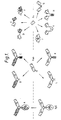
- Engineered bisAbs have been assembled from Fv, Fab and single chain Fv antibody fragments (see Figure 1) in vitro and in vivo.
- antibody fragments should be more specific than IgG, as the Fc part of the IgG also targets Fc receptor bearing cells (Lanzaveccia, A.and Scheidegger, D. Eur. J. Immunol. 1987, 17 : 105--111).
- smaller antibody fragments penetrate tissues more readily than IgG or Fab'2 fragments and are also cleared from serum more rapidly (32,33). These features may be desirable for targetting of radionuclides or toxins to tumours. Conversely, a longer serum half-life may be desirable for recruiting effector functions.
- Diabodies are the smallest bispecific antibody fragments ) yet made, which will assist their penetration of tumours. If it is required to make them larger, one may increase their size using fusion with CH3 domains, increasing the serum halflife.
- Disulphide bonds can also be driven in vitro by oxidation using carboxy-terminal dimerization peptides to bring the Fab fragments together.
- Kostelny et al. J. Immunol. 148: 1547-1553, 1992
- the Fos and Jun leucine zippers in this way.
- heterodimeric Fab fragments anti-CD3-Fos and anti-p55(IL-2R)-Jun
- the bisAb produced is capable of recruiting cytotoxic T-cells to lyse target cells bearing the IL-2 receptor (Kostelny et al., J . Immunol. 148: 1547-1553, 1992).
- bispecific diabodies can be assembled in vitro simply by mixing together two chains with 'crossover' pairings of variable domains.
- bisAbs can also be constructed by fusing two antibody fragments directly at the level of the gene.
- two single-chain Fv fragments can be linked in tandem by a flexible polypeptide to make a bisAb for secretion from bacteria (P.Holliger & G. Winter, 1993 supra).
- the four tandem domains can also form alternative (and incorrect) pairings within the same chain, or indeed with other chains.
- P 11 -A IS amino acid linker may be used in the generation of bispecific diabodies by cross-pairing of domains which are non-covalently associated in the formation N-(VHA-VIB-)C/N-(VAB-VLA)-C as is shown in Example 1.
- the degree of dimerisation will be dependent on an equilibrium between the monomeric and chimeric scFv forms.
- the heavy and light chain variable domains are connected by a linker that does not allow pairing between the two domains on the same chain, e.g. because it is too short (in fact the domains may be connected directly), and the domains are therefore forced to pair with the complementary domains of another chain and create two antigen binding sites.
- the two pairs of domains can pack together with the antigen binding sites pointing in opposite directions.
- Bivalent dimeric diabodies can be generated using the short linkers, in addition to bispecific dimers.
- the VH domain may be N-terminal to the VL domain (VH-VL) or the VL domain may be N-terminal to the VH domain ("reverse"). In both cases the order of the VH and VL domains should most preferably be the same in both polypeptide chains.
- Short linkers impose major constraints on the ways by which the two chains can associate. We therefore attempted to build a model of a dimer using the X-ray crystallographic structure of the FabD1.3 fragment in complex with the antigen HEL (Fischmann, T.O., Bentley, G.A., Bhat, T.N., Boulot, G., Mariuzza, R.A., Philipps, S.E.V., Tello, D. and Poljak, RJ. (1991), J.Biol. Chem. 266 , 12915-12920). Using the computer graphics programmed FRODO (Jones, T.A. (1982) in Computational Crystallography ed. Sayre, D.
- the antigen binding sites point in opposite directions and the two sets of paired domains are related by a dyad axis ( Figure 12). Inspection of the crystallographic structures of other antibodies of the Brookhaven data base, indicates they should also be capable of packing in a similar manner (not shown). The packing of immunoglobulin domains across the dyad axis (tail to tail) differs from that in antibody or Ig superfamily structures, (see Jones, E.Y., Davis, J.D., Williams, A.F., Harlos, K. and Stuart, D.I. (1992) Nature 360 , 232-239) for a recent comparison.
- diabody molecules can be constructed for a wide variety of antibody variable domains with different antigen specificities.
- Many diabodies have been constructed with linker lengths of 0 or 5 amino acids and have been shown to be functional. These include bivalent diabodies directed against 2-phenyloxazol-5-one (phOx) (example 1); lysozyme (example 1); tumour necrosis factor (examples 5 and 7); V3 loop of HIV gp120 (example 4); 5 carcinoembryonic antigen (CEA); Fc receptor FcyRIII (CD16); human Fc receptor Fc ⁇ RI (example 17); surface Ig of BCL-1 lymphoma cell line (example 19) and the CD3 antigen (example 18).
- phOx 2-phenyloxazol-5-one
- lysozyme example 1
- tumour necrosis factor examples 5 and 7
- V3 loop of HIV gp120 example 4
- Bispecific diabodies have been constructed directed against phOx and lysozyme (example 1); phOx and NIP (4-hydroxy-3-iodo-5-nitrophenylacetic acid) (example 3); CEA and CD16; NIP and FcRI (example 17); surface Ig of BCL-1 lymphoma cell line and CD3 (example 18); HIV gp120 V3 loop and human FcRl (example 20) and phOx and oestriol (example 11). A number of these have been shown to bind markers on whole cells by FACS analysis including those directed against CEA; CD16 and CD3 (example 18).
- linker length e.g. from 0 upwards
- substitution of different linkers, even of the same length may be advantageous.
- linker can be shortened to -1 with retention of antigen binding 5 function.
- a series of minus linker molecules (making the linker shorter than zero to give (-1), (-2) and (-3) constructs by deletion of amino acids from the N-terminus of the VL domain or the C-terminus of the VH domain. Reduction of linker length further than -1 prevents folding of the NQ11/D1.3 diabody used in these studies. However, it remains a possibility that there will be examples of diabodies with different VH and VL domains where (-2) linkers will be functional.
- VH-VL polypeptides linked by a 15 amino acid linker are able to pair their VH and VL domains both as monomers and as dimers in the diabody format
- VH-VL polypeptides with a 5 amino acid linker are only able to pair their VH and VL domains by forming dimers in the diabody format.
- experiments with a 10 amino acid linker suggest that the VH and VL domains can pair in a monomeric polypeptide (example 16).
- diabodies The structure of diabodies is compact and with short linkers should be rigid. The lack of flexibility is unlikely to compromise the cross-linking of two soluble antigens, or of a cell surface antigen and a soluble antigen.
- bivalent and bispecific diabodies can be used to agglutinate antigen coated red blood cells.
- Long linkers should allow greater flexibility for the diabody heads, but would also allow pairing within the same chain and formation of monomer fragments. Breaking one of the linkers entirely, as in the three chain fragment ( Figure 1), should give highly flexible heads, but it may prove more difficult to keep the three chains tightly associated. The construction and properties of this three chain fragment are described in example 1.
- diabodies made up of two heterologous chains such as bispecific diabodies
- asymmetric linkers e.g. +1 on one chain, -1 on the other chain.
- asymmetric diabodies with different combinations of lengths are possible, as exemplified by one chain having a linker of 15 amino acids and one of O (see Examples). Only one of the polypeptides in a dimer need have its domains linked in a manner which prevents association of its domains.
- the model of the diabodies, discussed above, results in a packing interface between the two VH domains of the two Fv fragments in the N-(VH-VL)-C format diabody, or the two VL domains of the two Fv fragments of the N-(VL-VH)-C format diabody. (This contrasts with the packing of Fab fragments, in which the constant domains make limited interactions with the variable domains). It may be possible to introduce residues at the interface between the two Fv domains that could regulate activity, for instance by modifying cooperative properties.
- variable domains used were those of the parent antibodies B1.8 and NQ11.
- conformation changes within individual VH/VL pairs in monomeric Fab fragments following binding of antigen R.L. Stanfield et al. Structure 1 83-93, 1993; J.N. Herron et al. Proteins 11 159-175, 1991
- the engineering of residues to introduce further non-covalent interactions across the interface should be capable of imparting extra stability to the diabody.
- the stability might be advantageous for the shelf half-life of the diabody, or its life in the serum, or in non-aqueous solvents.
- the interactions of the two chains of diabodies, with the two domains packing together as forced by the short linker could presumably also be forced by enhanced packing interactions across the interface as defined by the model. In this case it may not be necessary to use a short linker to favour association of the chains in the diabody format rather than as single chain Fv fragments.
- Residues at the interface of the VH domains to be modified for regulation of cooperativity and stability
- the loops involved in the interaction between VH domains are normally in a polar environment in whole antibodies, single chain Fv and Fab fragments. It may therefore be energetically unfavourable for these residues to be in the interface between the VH domains in the diabody which may exclude water. Therefore the replacement of the polar residues with hydrophobic residues may make the packing of the diabody interface more rigid and stable.
- histidine residues at the interface or within the linker could allow changes in pH or metal ion concentration to alter the orientation of the domains with respect to each other, and to thereby regulate the affinity of binding.
- the potential for cooperativity may also be adjusted for example by altering the linker length between the VH and VL domains. These can also be altered so that the linker lengths are asymmetric e.g. +1 on one chain, -1 on the other chain.
- Disulphide bridges can be used to covalently link regions within the diabody.
- the two C termini of the CL domains of the VL-VH diabody can be linked by a disulphide bridge.
- the C-termini of the VL domains are in close proximity, suggesting that these regions could be linked by a disulphide bond.
- a Cys residue was inserted at the C-terminus of the VL domain of the bivalent fragment of NQ11 (5 residue linker) and the fragments were purified on phOx-BSA Sepharose as described, covalently linked dimers were noted, as determined by non-reducing SDS-PAGE and Western Blotting of the eluted fragments (example 23) .
- Each diabody is about the same size as a Fab fragment. It may be advantageous to increase the size, for example for enhanced retention in the serum, The diabody could therefore be genetically fused to other proteins, or other antibody domains , for example through an antibody CH3 domain to give VH-VL-CH3 homo and heterodimeric chains (as described in example 12).
- the diabodies could also be linked as diabody-dimers, that is with four VH-VL chains by chemical crosslinking. This would be equivalent in size to a (Fab) 2 fragment.
- Fab fragment-specific fragment-binding protein
- introducing a C-terminal cysteine residue at the C-terminus of the VL domains (for the VH-VL dimers) would allow diabody-dimers to be made through disulphide bonds (P. Carter et al. Biotechnology 10 163-167, 1992) or thioether linkages (M.J. Glennie et al. J. Immunol. 139 2367-2375 1987).
- Trimer and tetramers have also been observed in a purified bivalent diabody preparation (D1.3, 5 residue linker) (Fisch, I., Holliger, P. and Winter, G. unpublished results) indicating that short linkers are compatible with the formation of multimers.
- Bi- or trispecific Fab ⁇ 3 molecules have been constructed from Fab' fragments by in vitro coupling of the hinge free cysteines but our observations indicate that small trispecific antibody fragments that assemble in vivo may be made in a way analogous to the design of diabodies.
- the chains may recreate three different antigen binding sites on association.
- the C-termini of the VL domains are all located on the opposite face of the molecule and distant from each other.
- a cysteine at the C-terminus, two triabodies might be crosslinked to form a hexavalent molecule of approximately the same molecular weight as an IgG.
- triabodies seems to be less compact and more flexible than the structure of diabodies. Indeed it seems possible that the binding sites could flip-flop between the two faces of the molecule.
- a possible conformation of the triabody molecule is planar with the three binding sites located in a plane at an angle of 120° from each other.
- the centre of the molecule contains a hole.
- Crosslinks eg, disulfide bonds, metal binding sites
- a tight linkage between the three Fv domains may make it be possible to build triabodies in which the antigen binding of the three binding sites is cooperative (or anti-cooperative).
- VHA bispecific three chain diabody construct
- VLB VHC assembles with the VLA-VHB-VLC domains encoded on one polypeptide chain (other combinations are possible as well).
- Such constructs may however be limited by the tendency of some Fv fragments to dissociate upon dilution.
- diabodies whether bivalent or bispecific, should be taken as including multimers such as the trimeric "triabodies” and so on, where appropriate and mutatis mutandis.
- Bispecific antibodies have found particular use in recruiting the powerful effector functions of cytotoxic T cells or natural killer (NK) cells.
- NK natural killer
- bisAbs have been used to bridge the T cell coreceptor (CD3) (Staerz et al., Nature 314: 628-631, 1985) or FcRIII (CD16) (De Palazzo et al., Cell Immunol. 142: 338-347, 1992) and the cell surface antigen of a target cell to mediate the killing of target cells by cytotoxic T cells or NK cells.
- CD3 T cell coreceptor
- FcRIII CD16
- the cell surface antigen of a target cell to mediate the killing of target cells by cytotoxic T cells or NK cells.
- such anti-CD3 bisAbs can inhibit the growth of solid tumours (Titus et al., J . Immunol. 138: 4018-4022, 1987, Garrido et al., Cancer Res.
- Bispecific antibodies synthesized in vitro have also been used to deliver enzymes, antigens, toxins, radionuclides and cytotoxic drugs to tumour cells (see 12-14; M.A. Bonardi et al., Cancer Res. 53 187-199 1992).
- Bispecific anti-tumour marker, anti-hapten antibodies have been used to image tumours (J.M. Le Doussal et al. Int. J. Cancer Supplement 7 58-62, 1992; P. Peltier et al. J . Nucl. Med. 34 1267-1273 1993; C. Somasundaram et al. Cancer Immunol. Immunother. 36 337-345, 1993; A. Bruynck et al. Br.J. Cancer 67 436-440, 1993).
- the antibody is injected and localises to the tumour by binding to the tumour marker.
- a radioactively labelled hapten for instance a metal chelate with 99 Tc or 111 In is then injected which preferentially localises to the tumour, by binding to the bispecific antibody, enabling imaging of the tumour.
- diabodies with one arm specific for tumour cells and one arm specific for metal chelates could be used to deliver chelates of radioactive metal ions such as 90 Y for therapy of cancer.
- Bispecific antibodies have been utilized to attain a number of experimental objectives that extend beyond the targetting of tumour cells; Thrombolysis has been enhanced by targetting tissue plasminogen activator to blood clots (15): Growth of human immunodeficiency virus (HIV)-1 in cell culture has been inhibited by directing the virus to the Fc receptor (rather than their normal receptor, CD4)(16,17): A non-permissive human cell line has been infected by a mouse retrovirus through linkage of the virus to the major histocompatibility complex (MHC) class I and II cell-surface proteins (18).
- MHC major histocompatibility complex
- BisAbs have been found to act as an adjuvant when used to crosslink antigen to antigen-presenting cells (14,19).
- An anti-FcgRIII anti-dengue virus bisAb has been used to enhance virus infectivity (B.J. Mady et al. J. Gen. Virol. 74 839-844, 1993) by bringing the viruses in close conjunction with the cell to be infected.
- bispecific antibodies appear to have great potential in the therapy of cancer and other diseases, difficulties in their production and purification have limited their application. Their use has tended to be limited to difficult therapeutic problems where the amount of effort involved in preparing bispecific fragments is worthwhile.
- the diabodies described in this invention greatly simplify the process of preparing bispecific antibodies and this will greatly expand the range of applications to which they can be put.
- Bispecific diabodies could be used for virtually any application for which bispecific antibodies have been used as described above, for example, with one arm of the diabody to trigger effector functions and the other arm for targetting of cells, virus or bacteria.
- one arm could be directed against human IgG receptors (Fc ⁇ RI, Fc ⁇ RII, and Fc ⁇ RIII) or IgE receptors (Fc ⁇ RI and Fc ⁇ RII).
- Fc ⁇ RI, Fc ⁇ RII, and Fc ⁇ RIII human IgG receptors
- IgE receptors Fc ⁇ RI and Fc ⁇ RII
- the fragments should be directed towards an epitope that is not blocked by the Fc portion of IgG.
- Diabodies could also bind to human T-cell ) antigens such as CD3, although it will be necessary to activate T-cells to elicit killing.
- the effector arm could also be provided by binding of radioactive isotopes, for example radioactive metal ions in complex with a chelate, or radio-iodinated haptens; or by binding to an enzyme capable of cleaving a prodrug.
- radioactive isotopes for example radioactive metal ions in complex with a chelate, or radio-iodinated haptens
- the bivalent (and bispecific) diabodies could also be used for coagulation of cells, bacteria or viruses, by making multiple interactions, as with diagnostic assays of agglutination of red blood cells.
- Bispecific diabodies could also be used for bridging between different particles, for example to target retrovirus to cells for gene targetting for introduction of genetic material into specific cells.
- the diabodies may also bind simultaneously to two epitopes on the same surface, for example a viral coat, so as to bind with high avidity and to block the uncoating of the virus; or by cross-linking the CD3 antigen so as to activate T-cells.
- Agglutination of antigen coated red blood cells by bivalent and bispecific diabodies as described in Examples 9 and 15 suggest that these approaches are feasible.
- a diabody could be used with specificity for two chains of the same receptor, for instance the ⁇ and ⁇ chains of the IL2-receptor. Bispecific diabodies directed against two different epitopes on the same polypeptide chain may give extra specificity and avidity of binding to that chain.
- Diabodies could also be used in making the matrix for affinity chromatography of antigens, by providing one binding site directed against a component of the matrix, and the other against the antigen of interest. This principle could be extended to the immobilisation of antibodies on surfaces such as the chips used in detection binding studies with surface plasmon resonance, or using evanescent wave detection. One specificity could be directed against the matrix on the chip surface whereas the other arm will be directed out from the chip surface to allow binding studies with antigen to be performed.
- retroviruses for the display of antibody fragments (S.J. Russell, R.E. Hawkins and G. Winter Nucleic Acids Res. 21 1081-1085 1985) to the display of diabodies.
- retrovirus could display a bivalent diabody for the increase of avidity for binding of a tumour cell.
- Diabodies may be used to deliver cytotoxic drugs to tumour cells, using one binding site to deliver the drug and the other to bind to the tumour, or using systems analogous to that described for the delivery of doxorubicin to tumours by P.A. Trail et al. (Science 261 212-215, 1993). These authors used an antibody directed to the Lewis Y antigen, covalently linked to doxorubicin, which was internalised into lysosomes and endosomes. The linkage was cleavable in these environments leading to delivery of the drug to these cells. Bivalent diabodies may be particularly useful to increase the avidity of the antibody for the tumour cell. The specificity may be increased by using a bispecific antibody directed against two different markers.
- a metal ion which is chelated and in which the chelate binds to one binding site or by an additional peptide which is incorporated either as part of a linker between VH and VL domains or as an extension.
- Bivalent antibodies may be particularly useful for imaging purposes for instance when localising tumours by binding to a tumour antigen with a 125 I-labelled antibody.
- the presence of two binding sites for antigen would give an avidity component which may increase the signal from the tumour compared to the background.
- Bispecificity against two markers on the surface of the tumour cell may also help to increase tumour specific imaging signal compared to background. It may also be advantageous to use bispecific antibodies with one arm directed against a tumour cell surface marker and another against an antigen which is shed from tumour cells, but is found in high concentration in the vicinity of tumour cells.
- Diabodies may be used in retargetting of antibodies to a site or antigen for which they have no specificity under normal circumstances.
- the diabody would possess two specificities; one specificity for the target site, the other capable of binding to selected parts of an antibody molecule. In this manner, antibodies with no specificity for the antigen target are brought into proximity with the antigen via the diabody.
- This principle is advantageous for re-targeting antibodies in the circulation to sites within the body such as tumours and to block inappropriate immune responses exemplified by autoimmune disease and would allow recruitment of effector functions.
- diabodies could be used to recruit effector functions through binding to whole antibody chains.
- One arm would be directed against antigen for therapy and the second arm against whole antibodies for the recruitment of effector functions (see example 21).
- the C-domains recruit effector functions.
- the 5 type of effector function recruited is largely governed by the class of C-domain (the isotype).
- C-domains of the IgG1 ( ⁇ 1) isotype can kill cells by triggering the complement cascade at the cell surface, resulting in lysis and can also bind C-domain receptors (Fc receptors) on specialised phagocytic and killer cells.
- antibodies of the IgG4 isotype ( ⁇ 4) appear to actively prevent recruitment of effector functions and thereby block an immune response.
- the format of the diabody, in which the two antigen 5 binding sites are linked closely together, offers other possibilities distinct from a bispecific antibody, or other bispecific antibody fragments produced in bacteria. Packing of the two binding sites together may lead to enhanced affinity; and binding of antigen at one binding site may lead to enhanced or reduced binding at the other. This feature could be desirable in allowing the construction of a "conditional" switch, for turning on or off an activity in response to a signal, as illustrated by:
- Allosteric antibodies could be isolated from bispecific repertoires by selection. Such allosteric antibodies could be selected by binding to a first antigen and eluted by adding the second antigen. This would select those in which the affinity of binding at the first site is reduced by occupancy of the second site. Likewise, selection may be by virtue of improved interaction with the first antigen on addition of the second antigen.
- bivalent and bispecific diabodies could be used for coagulation of cells, bacteria or virus, by making multiple interactions, as with diagnostic assays of agglutination of red blood cells.
- antigens which are well exposed above the surface of the cell for example blood cell group B antigen, it is possible to agglutinate the cells directly using a single diabody molecule.
- antigens which are not well exposed or to improve the general efficiency of agglutination it would be desirable to increase the span of the crosslinking molecules.
- formats which can allow this to be done with diabodies including the following.
- Trivalent or trispecific triabodies may have advantages over diabodies or other bispecific antibody fragments in a number of applications:
- the higher flexibility and the three binding sites pointing to one face may make trivalent triabodies ideal to bind with great avidity to surfaces displaying repeated epitopes (analogous to IgM).
- the three fold symmetry may be of particular advantage in binding to viruses as it mimicks the three fold symmetry common in many viral coat proteins.
- Triabodies could bind three different or identical epitopes on the same soluble molecule (e.g. protein or protein assembly, biologically active peptide etc.) leading to a very high affinity and specificity useful for diagnostic and therapeutic purposes. (In organic chemistry this effect is exploited in molecules named chelators, cryptants or crown ethers that bind their ligands with extraordinar specificity and affinity.)
- soluble molecule e.g. protein or protein assembly, biologically active peptide etc.
- bivalent and bispecific diabodies on phage allows the power of selection with antigen of antibodies on phage (WO92/01047; J. McCafferty et al., 1990 supra; H.R. Hoogenboom et al., Immunol. Rev. 130, 41-68, 1992) to be applied to the direct selection of diabodies from V-gene repertoires and to the selection of improved diabodies by mutagenesis or chain shuffling.
- Bivalent diabodies can be displayed on phage, for example by fusing VH-VL or VL-VH domains directly to phage gene3 protein.
- an amber stop codon can be inserted leading to incomplete read-through in a suppressor (supE) E.coli strain : consequently some soluble chain is produced, which can pair with the chain fused to the gene 3 protein to form a bivalent diabody.
- a site susceptible to partial in vivo proteolytic cleavage can be engineered at the junction of VH-VL and gene3. Since proteolysis at the V-gene/gene3 junction occurs naturally anyway (apparent from Western blot analysis of phage displaying antibodies; WO92/01047; J. McCafferty et al., 1990 supra), there will always be some soluble VH-VL or VL-VH protein present.
- bispecific repertoires can be made by fusing one VH-VL or VL-VH combination to the phage gene3 protein (for instance), and expressing the matching VH-VL or VL-VH combination as a soluble fragment. Since in bispecific repertoires it is necessary to express one chain as a soluble fragment, there is no absolute requirement for the amber codon to be present at the antibody-gene3 junction.
- Bivalent or bispecific repertoires may also be constructed and displayed on phage as a three-molecule assembly with one VH-VL molecule fused to phage gene3 and the matching VH and VL genes both produced as soluble i (but separate) proteins.
- bivalent or bispecific repertoires may be constructed by fusing both VH-VL or VL-VH combinations to gene3, and relying on engineered amber codons or engineered or natural proteolysis to produce sufficient material of the soluble V-gene combination to form bivalent/bispecific diabodies.
- V-gene repertoires can be used as a starting point to create diabody repertoires (H.R. Hoogenboom et al., 1992, supra).
- Diabody repertoires can be made directly from V-gene repertoires from immunised or "naive" donors (with V-genes isolated from Peripheral Blood Lymphocytes or cells from the bone marrow or spleen), from pools of hybridomas, from EBV-transformed B-cells possibly enriched for antigen binders by in vivo or in vitro immunization, or from in vitro (re)constructed V-genes using cloned germline gene segments, or any combination of these repertoires.
- bivalent and/or bispecific diabody repertoires can be constructed in a variety of ways. We discuss here a number of different approaches, but many other methods, which can differ both in detail and concept, could be used.
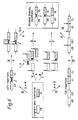
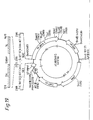
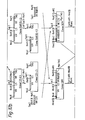
- the cloning of the V-genes can be done by stepwise cloning after introduction of restriction sites at the 5' and 3' end of each of the two V-gene domains, into a suitable phagemid vector with compatible sites and if necessary sequences encoding a short linker to join the genes together in diabody format ( Figure 6, Route I).
- a suitable phagemid vector with compatible sites and if necessary sequences encoding a short linker to join the genes together in diabody format
- Figure 6, Route II splice overlap extension
- the acceptor phagemid and oligonucleotide primers one can construct VH-VL or VL-VH diabodies, with any length of linker sequence between the V-genes.
- bivalent diabody repertoires can also be obtained by linking VH and VL genes together, which have initially been expressed as scFv or Fab fragments. These may be derived from V-gene repertoires displayed on phage (and possibly selected on antigen to enrich for binders)( Figure 6, Routes III and IV). For example, by appropriate design of restriction sites a the 3' end of the VH gne and the 5' end of the VL genes, the standard 15-residue linker in scFv constructs can be deleted by a simple cut and paste cloning, yielding a diabody repertoire ( Figure 6, route IIIb). Alternatively, V-gene repertoires in scFv and Fab format can be re-amplified and either cloned stepwise or linked together by PCR-assembly depending on the oligonucleotides used.
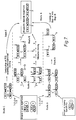
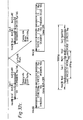
- carrier vectors may be created to rapidly combine these specificities (VH-C and VL-C) with a repertoire of VH and VL domains in a bispecific format ( Figure 7, first step of Route A).
- VH-C and VL-C two plasmid vectors are created which carry the appropriate "helper” V-genes (VH-C and VL-C) and restriction sites for direct cloning of V-gene repertoires.
- Cloning is done such that the VH-repertoire will be linked to VL-C, and the VL-repertoire will be linked to VH-C.
- This method allows the construction of a library with one constant specificity, and in combination with this, to select a new specificity.
- an anti-Fc receptor antibody could be combined with a repertoire, selected on tumour cells, and screened for specificities which target Fc-receptor bearing cells specifically to the tumor cells in an in vitro assay.
- this approach can also be used to construct bispecific diabodies with repertoires at both ends of the diabody (Figure 7, Route A).
- Two diabody repertoires are made, one carrying Repertoire A and one helper V-gene combination, and one consisting of Repertoire-B with any other helper V-gene combination.
- the repertoires can be selected to enrich for binders for specificity A or B, and repertoire B subsequently cloned (without the need 5 for extra PCR) into the reciprocally formatted and selected repertoire A.
- the difference of this cloning procedure from the scFv approach (Figure 7, Route C), is that selections are done directly in diabody format.
- VH-A stays with VL-A
- VH-B stays with VL-B
- Bispecific repertoires may also be constructed from V-gene repertoires by the introduction of restriction sites at the 5' and 3' end of each of the 4 V-gene domains, and stepwise cloning into a suitable phagemid vector with compatible sites and if necessary sequences encoding a short linker to join the genes together in i diabody format ( Figure 7, Route B, bottom).
- VH and VL gene repertoires can be linked together and cloned in steps or after assembly of the complete 4-V-gene repertoire cassette ( Figure 7, Route B, top). Assembly avoids having to design restriction sites compatible with the V-gene sequence or diabody linker sequence.
- the acceptor phagemid and oligonucleotide primers any diabody format can be constructed.
- bispecific diabody repertoires can also be obtained by linking VH and VL genes together from scFv or Fab fragments derived from V-gene repertoires displayed on phage (and possibly selected on antigen to enrich for binders)( Figure 7, Route C; Example 14).
- scFv repertoires with specificity for the two antigens can be constructed and selected, and V-gene repertories shuffled by stepwise cloning or PCR assembly to be reformatted as a bispecific diabody. This approach is described in Example 14.
- the self-splicing intron from Tetrahymena can contain a recombination site inserted at a site compatible with self-splicing activity.
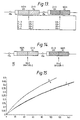
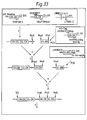
- Figure 8 demonstrates the principle with a bivalent antibody repertoire. It shows the replicons generated by direct cloning of VH and VL gene repertoires, and the resulting replicon after recombination. Cre-mediated recombination at loxP sites can be carried out in vivo (by superinfection of bacteria carrying both replicons with P1 phage, or by using a temperature dependent P1 lysogen), or in vitro using Cre recombinase.
- the resulting diabody gene is transcribed, and the intron and the loxP site between VH and VL genes are spliced out.
- the self-splicing system may be applied in a similar fashion to bispecific repertoires.
- the diabodies are constructed through common intermediates and will therefore described together.
- Construct III encoding the Fv fragment of the mouse hybridoma NQ11.7.22 directed against the hapten phenyloxazolone (C. Berek et al, 1985 supra) was provided by L. Riechmann. Construct III, and those derived from it (constructs I, VI, VII, VIII and IX) include a mutation in the VH domain (Asp 97 to Ala) (L. Riechmann et al J. Mol. Biol. 224 913-918, 1992).
- Figure 9 Further constructs ( Figure 9) were derived by religation of restriction fragments (here termed vector fragments and comprising vector backbone and V-genes or parts of V-genes), or their ligation with restriction fragments (here termed PCR fragments and comprising V-genes, linker or non-coding sequences) using standard methods (J. Sambrook et al. Molecular Cloning: A Laboratory Manual, Cold Spring Harbor Laboratory Press, Plainview, NY, US 1990). Vector fragments were provided by digestion of construct III with BstEII/SacI, construct II with PstI/SacI and constructs VI with BstEII or XhoI or PstI.
- PCR fragments for the 15 residue linkers were generated using primers 1 and 2 with construct IV. Digestion with AscI and SacI yielded PCR fragment a-15 comprising the gene 3 leader, the VH segment and linker. Digestion with BstEII and AscI yielded PCR fragment b-15 comprising linker and the VL segment.
- PCR fragments for the shorter linkers were generated using: primer 1 with either primers 3 or 4 or 5 (encoding no, five or ten 5 residue linkers respectively) and primer 2 with either primers 6 or 7 or 8 (also encoding no, five or ten residue linkers respectively) and digested as above to create PCR fragments a-0, a-5, a-10, b-0, b-5 and b-10.
- the PCR fragment (c) for providing the non-coding sequence (N1) in construct VII was generated using primers 1 and 2 with construct V, and digested with BstEII and AscI.
- constructs VI PCR fragments (a-0, a-5, a-10 and a-15) from construct IV were ligated with the corresponding PCR fragment b and the vector fragment III-BstEII/SacI.
- constructs VII PCR fragments (a-5 and a-10) from construct IV were likewise ligated with fragment c.
- Constructs VIII and IX were derived from constructs VI by partial digestion with PstI or Xhol respectively, and religation of the vector fragment.
- Constructs I with 5, 10 and 15 residue linkers were likewise generated by BstEII digestion of the corresponding constructs VI.
- Construct II with 5 residue linker was generated by ligating fragment II-Pstl/SacI with fragment a-5 that had been cut with PstI and SacI.
- Oligonucleotides Sequences of primers used are give in Table 1.
- Primer 1 introduces an AscI site and primes at the 3' VL
- Primer 2 introduces a AscI site and a synthetic ribosome binding site and primes at the 5' fd gene 3 signal
- Primers 3, 4 and 5 introduce a linker of 0, 5, 10 residues between VL and VH, include a BstEII site and prime at 5' VL
- Primers 6, 7 and 8 introduce a linker of 0, 5, 10 residues between VH and VL, include a SacI site and prime at 3' VH.
- Fragments were prepared from periplasmic lysates (A. Skerra & A. Pluckthun Science 240 1038-1041 1988) or from bacterial supernatants (M. Better et al Science 240 1041-1043 1988).
- ELISA was performed as described (H.R. Hoogenboom et al Nucleic Acids Res. 19 4133-4137 1991).
- sandwich-ELISA plates were coated with HEL and periplasmic lysate or culture supernatant added as above.
- Binding was detected using 100 ⁇ l of 1 ⁇ g/ml phOx-BSA, followed by 100 ⁇ l of 100 ng/ml of the mouse antibody NQ22.18.7 (C. Berek et al, 1985 supra) directed against phOx and peroxidase conjugated goat anti-mouse immunoglobulin (1:1000) (Sigma). All incubations were made in PBS containing 2% w/v skimmed milk powder. Western blots were as described (20). Fragments were purified from bacterial supernatants by affinity chromatography on HEL-Sepharose (S. Munro & H.R.B. Pelham Cell 46 291-300 1986) and/or phOx-BSA Sepharose as described (M. Dreher Ph.D. thesis University of Cambridge, 1992).
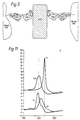
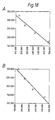
- Binding affinities The dissociation kinetics of antibody fragments to HEL and phOx were measured using plasmon surface resonance with BIAcore (Pharmacia BiosensorAB) as described (A.D. Griffiths et al EMBO J. 12 725-734 1993).
- BIAcore Pharmacia BiosensorAB
- 10 ⁇ l of periplasmic lysate or affinity purified fragment was injected onto the HEL coated sensor chip (see above) with a constant flow of 5 ⁇ l/min, and followed immediately by a pulse of 10 ⁇ l of 1mg/ml phOx-BSA.
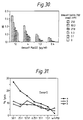
- the 5-residue linker cannot stretch between VH and VL domains of the same chain, but it does allow the formation of bispecific fragments (Table 2). Indeed, prompted by a computer graphic model of the dimers (see Discussion), we joined the C-terminus of the VH domain directly to the N-terminus of the VL domain. Again the fragment bound to both antigens (Table 1), and also when displayed on the surface of phage using the phagemid vector pHEN1 (Example 10).
- construct VI was prepared with a zero amino acid linker on one chain (VHA-VLB) and a 15 amino acid linker on the other chain (VHB-VLA). 15 amino acids is enough in a linker to allow the two domains of the polypeptide to associate with each other to form an antigen binding site. This again bound to both antigens on ELISA, indicating that this type of dimer "asymmetrical" is functional.
- the sizes of the fragments were also checked by binding of the C-terminal myc tag of the fragments to the monoclonal antibody 9E10 immobilised on the biochip (Table 2).
- This format detects fragments irrespective of whether they have antigen-binding activities, and allowed us to show that the single cross-over chains (constructs VIII and IX) (that do not bind antigen) were dimers with short linkers, but monomers with long linkers. Again the bispecific fragments emerged in a major peak corresponding to a dimer, irrespective of linker length.
- bispecific antibody fragments by taking advantage of the intermolecular pairing of VH and VL domains. This contrasts with the use of chemical crosslinking or fusion to dimerization peptides.
- VH domain of one antibody to the VL domain of another on the same polypeptide chain, to create two chains, VHA-VLB and VHB-VLA, that are coexpressed in the same cell and associate to form dimers with two antigen binding sites on the same molecule.
- heterodimers, homodimers and monomers to be formed on co-secretion of both chains from the same bacterium, only the heterodimers bind to antigen and can be isolated by a single round of affinity chromatography.
- diabodies have been constructed with linker lengths of 0 or 5 amino acids and have been shown to be functional. These include bivalent diabodies directed against 2-phenyloxazol-5-one (phOx) (example 1); lysozyme (example 1); tumour necrosis factor (examples 5 and 7); V3 loop of HIV gp120 (example 4); carcinoembryonic antigen (CEA); Fc receptor Fc ⁇ RIII (CD16); human Fc receptor Fc ⁇ RI (example 17); surface Ig of BCL-1 lymphoma cell line (example 19) and the CD3 antigen (example 18).
- phOx 2-phenyloxazol-5-one
- lysozyme example 1
- tumour necrosis factor examples 5 and 7
- V3 loop of HIV gp120 example 4
- carcinoembryonic antigen CEA
- Fc receptor Fc ⁇ RIII CD16
- Bispecific diabodies have been constructed directed against phOx and lysozyme (example 1); phOx and NIP (4-hydroxy-3-iodo-5-nitrophenylacetic acid) (example 3); CEA and CD16; NIP and FcRI (example 17); surface Ig of BCL-1 lymphoma cell line and CD3 (example 18); HIV gp120 V3 loop and human FcRl (example 20) and phOx and oestriol (example 11). A number of these have been shown to bind markers on whole cells by FACS analysis including those directed against CEA; CD16 and CD3 (example 18).
- This example describes the construction of a series of bispecific NQ11 / D1.3 diabodies based on the NQ11/D1.3 diabody construction made in example 1.
- Example 1 describes 0, 5 and 10 amino acid linkers.
- the minimum length of linker allowing the formation of active diabody is determined.
- a series of minus linker molecules ( making the linker shorter than zero by removing heavy chain 3' codons or light chain 5' codons) were constructed.
- the VH-VL linker length was reduced from zero to give (-1), (-2) and (-3) constructs by deletion of amino acids from the N-terminus of the VL domain or the C-terminus of the VH domain. Reduction of linker length further than -1 prevents folding of the NQ11/D1.3 diabody.
- diabody NQ11 / D1.3 was described in example 1 for 0, 5 and 10 amino acid linkers.
- the minus linker length variants were made using the same methodology as in example 1.
- the linker length between the heavy and light chains was altered by redesigning Primer 3 containing the BstEII site and Primer 6 containing the Sac I site.
- Each of these primers spans one of the two VH / VL junctions of the diabody . Therefore these primers can be altered so that one or more codons are left out of the sequence that spans the VH / VL junction of the final diabody.
- a codon can be deleted from either the 3' end of the heavy chain sequence or the 5' end of the light chain sequence at the VH / VL junction.
- Figure 13 shows the four possible variants that were made in this way using the oligonucleotide primers shown in Table 4, the sequences of which are given in Table 1.
- Construct NQ11/D1.3 (-1) 1-3 has an amino-acid deleted from the C-terminus of the VH domain derived from NQ11 on one polypeptide chain and one amino acid deleted from the C-terminus of the VH domain derived from D1.3 on the other chain.
- Construct NQ11/D1.3 (-1) 1-4 has an amino-acid deleted from the N-terminus of the VL domain derived from D1.3 on one polypeptide chain and one amino acid deleted from the C-terminus of the VH domain derived from D1.3 on the other chain.
- Construct NQ11/D1.3 (-1) 2-3 has an amino-acid deleted from the C-terminus of the VH domain derived from NQ11 on one polypeptide chain and one amino acid deleted from the N-terminus of the VL domain derived from NQ11 on the other chain.
- Construct NQ11/D1.3 (-1) 2-4 has an amino-acid deleted from the N-terminus of the VL domain derived from D1.3 on one polypeptide chain and one amino acid deleted from the N-terminus of the VL domain derived from NQ11 on the other chain.
- the fragments were cloned into pUC19 and expressed as described in example 1.
- ELISA was performed as in example 1. All four of these variants, 1-3, 1-4, 2-3 and 2-4 expressed and were active, binding both to 2-phenyloxazol-5-one and to hen egg lysozyme but not to BSA ( i.e they bind specifically to their antigens) on ELISA.
- Figure 14 shows two further constructs that were made.
- the construct NQ11/D1.3 (-2) variant (AE) was made 5 with two codons deleted from the 5' light chain sequence of the NQ11 VH and D1.3 VL junction and two codons from the VH sequence of the D1.3 VH and NQ11 VL junction using the primers shown in Table 4 derived from primers 3 and 6 by the deletion of codons.
- NQ11/D1.3 (-3) (CF) was made with three codons removed from each junction.
- one amino acid was deleted from the C-terminus of the VH domain derived from NQ11 and two amino acids from the N-terminus of the VL domain derived from D1.3, by using the oligonucleotides shown in Table 4 in the construction.
- 2 amino acids were deleted from VH domain derived from D1.3 and one amino acid deleted from the N-terminus of the VL domain derived from NQ11 by using the oligonucleotides shown in Table 4 in the construction.
- the signals show that the (-1) constructs have an expression yield close to that of the scFv proportion of the diabody product however, will be homodimer misfolded material or inactive homogenous chains ie NQ11VH/D1.3 VL paired with itself and D1.3 VH / NQ11 VL paired with itself).
- the (-2) product was present only at very low concentrations and could only be detected on the blot when samples were concentrated 10 fold.
- This example describes the construction of a bispecific diabody based on the antibody NQ11 (which binds the hapten phOx) and the antibody B1.8 (Roth et al, Eur. J. Immunology, 8 3019 1978 )(which binds the hapten NIP) .
- the starting point for this diabody was the existing diabody, NQ11 / D1.3.
- the central D1.3 VK / D1.3 VH part of the construct was excised with the restriction enzymes Bst EII and Sac 1.
- the B1.8 VL / B1.8 VH sequence could then be cloned into this construct using the Bst EII and Sac I sites.
- the B1.8 VL insert for the diabody was made by PCR amplification from an existing B1.8 scFv clone with the primers VLB18baLinkOBstE and VLB18foAsc.
- the primerVLB18baLinkOBstE contains a Bst EII site compatible with the Bst EII site at the 3' end of the NQ11 VH of the cut vector construct.
- the primer VLB18foAsc contains a Asc I site compatible with the Asc I site at the 5' end of the B1.8 VH insert.
- the B1.8 VL insert was cut with Bst EII and Asc I for cloning into the vector construct.
- the B1.8 VH insert for the diabody was made by PCR amplification from an existing B1.8 scFv clone with the primers 2 and 6.
- the primer 6 contains a Sac I site compatible with the Sac I site at the 5' end of the NQ11 VL of the cut vector construct.
- the primer 2 contains a Asc I site compatible with the Asc I site at the 3' end 5 of the B1.8 VL insert.
- the B1.8 VH insert was cut with Sac I and Asc I for cloning into the vector construct.
- the Bst EII / Asc I cut B1.8 VL fragment and the Sac I / Asc I cut B1.8 VH fragment were then mixed with the Bst EII / Sac I cut NQ11 vector construct and ligated together generating the NQ11 VH / B1.8 VL // B1.8 VH / NQ11 VL diabody.
- Soluble diabody NQ11/B1.8 was expressed by growth at 37°C in 2YT/0.1% glucose/lOOmg mL -1 to OD550nm of 0.9-1.0 and then induced by adding IPTG to 1 mM. The culture was then grown at a lower temperature (22 or 26°C) for a further 24 hours.
- the soluble antibody from the culture supernatant was shown to bind both NIP and phOx in Elisa with NIP-BSA or phOx-BSA coated Elisa plates. (Coating of Elisa plates was with 100 ⁇ l per well overnight with 10 ⁇ g/ml NIP-BSA or 10 ⁇ g/ml phOx-BSA in PBS). ELISA signals of greater than 1.0 were obtained with each antigen with 50 ⁇ l supernatant.
- NIP 4-hydroxy-3-iodo-5-nitrophenylacetic acid
- the NQ11/B1.8 diabody constructed in example 3 was expressed and purified from supernatants by affinity chromatography on a phOx-BSA-Sepharose column.
- the diabody thus expressed is a dimer of two polypeptide chains NQ11 VH- B1.8 VL and B1.8 VH- NQ11-VL.
- the VH and VL domains were directly fused to each other (zero amino acid linker).
- the binding of the diabody to phOx-BSA and NIP-BSA was investigated using surface plasmon resonance (SPR) with the Pharmacia BIACore.
- SPR surface plasmon resonance
- the SPR sensor chip surface was derivatized with phOx-BSA to analyse binding of the NQ11 binding site to 2-phenyloxazol-5-one. Normally, when the kinetic rate constant for the dissociation of an antibody (k off ) from a derivatized chip surfaces is measured, the chip surface is coated with a very low level of antigen. This is to prevent rebinding, which leads to a slower apparent off-rate.
- the chip surface was coated to a high level with phOx-BSA to exploit rebinding.
- the off-rate curve observed is now a function of both the rate constant for dissociation of the antibody from the surface (k off ) and the rate constant for binding of the antibody to the surface (k on ).
- the observed off-rate curve is therefore related to the dissociation constant (K d ) of the antibody for the antigen at the surface.
- Figure 15 shows off-rate curves for the dissociation of the NQ11/B1.8 bispecific diabody from the phOx-BSA surface.
- the diabody was bound to the surface in a 'preincubation' step and bound antibody dissociated in an 'elution' step.
- the curve is shown beginning from 3000 resonance units of diabody remaining bound to the surface and the off-rate is calculated at this point.
- the buffer for preincubation is PBS and elution is with PBS and an apparent k off of 0.0045s -1 is obtained.
- preincubation is with 1 ⁇ M NIP/ PBS and elution is with PBS and an apparent k off of 0.0047s -1 is obtained.
- Preincubation with NIP has no effect on the observed off rates, although there is some evidence that preincubation with NIP reduces the total amount of diabody binding to the chip, in accord with the observed effect of NIP on the dissociation of the diabody from the phOx coated surface.
- NIP had no significant effect on the binding of scFvNQll to the phOx-BSA coated surface.
- Example 5 Construction and expression of MAK195 diabody directed against human tumour necrosis factor alpha.
- MAK195 is a murine monoclonal antibody that binds specifically to human TNF ⁇ (A. Möller, F. Emling, D. Blohm, E. Schlick and K. Schollmeier. Monoclonal Antibodies to human tumor necrosis factor alpha : in vitro an in vivo applications. Cytokine 2, 162-169, 1990). It has been cloned in a diabody format using a 5 residue linker GGGGS in the orientation VH-VL in the phagemid vector pCANTAB5myc ( Figure 19, WO92/01047). The linker sequence was incorporated into the primer (AJR21) used to amplify the 5' end of VK.
- a restriction site for BstEII was incorporated 5' of the linker sequence of primer AJR21 and also at the 3' end of VH1FOR-2 (E.S. Ward, D. Gussow, A.D. Griffiths, P.T. Jones and G. Winter, Nature 341, 544-546 1989), allowing the VH and linker-VL fragments to be cloned in a 3-way ligation reaction into the expression vector pCANTAB5myc.
- MAK195 VH and VL domain DNA was amplified by PCR from cDNA using primers pairs MAKVHBACKNCO and VH1FOR-2, and AJR21 and VK4FORNOT1 (T. Clackson, H.R. Hoogenboom, A.D. Griffiths and G. Winter, Nature 352, 624-628 1991) respectively using standard conditions.
- MAK195 V-genes had been cloned and sequenced previously, we designed a MAK195-VH specific primer rather than use the "standard" VH1BACK primer (R. Orlandi, D.H. Gussow, P.T. Jones and G.
- VH PCR reaction was digested with restriction enzymes NcoI and BstEII
- NotI and BstEII restriction enzymes NotI and BstEII
- the VH and the VL domain DNA was simultaneously ligated into NcoI/NotI digested pCANTAB5myc in a molar ratio 3:3:1 (VH:VL:pCANTAB5myc) and the resulting ligation mix used to transform E. coli TG1 cells.
- the sequence of some of the recombinant clones was confirmed using standard vector-based primers. We have called these constructs MAK195-5.
- Soluble diabody was expressed by growth at 24°C.
- the cells were centrifuged (1000g 10 minutes) and the cell pellet resuspended in 250 ⁇ L ice cold PBS/1mM EDTA and left on ice, 15 minutes.
- the cell suspension was centrifuged (1000g for 10 minutes) and the diabody-containing supernatant used in ELISA.
- Mab447-52-D is a human monoclonal antibody recognising the V3 loop of HIV gpl20 (Gorny, M. K., J. - U. Xu., V. Gianakakos, S. Karawowska, C. Williams, H. W. Sheppard, C. V. Hanson, and S. Zolla-Pazner. 1991. Production of site-selected neutralizing human monoclonal 5 antibodies against the third variable domain of the HIV-I envelope glycoprotein. Proc. Natl. Acad. Sci. USA 88:3238-3242).
- 447:P4B1 is a higher affinity variant of 447-scFv: four amino acid subsitutions together allow a decreased rate of dissociation from peptide antigen.
- a bivalent 447 diabody was engineered by reducing the length of the linker sequence joining heavy and light chain variable regions from 15 to 5-residues.
- DNA fragments encoding the antibody heavy and light chain variable regions were prepared separately by PCR amplification of the template 447:P4B1 scFv cloned in the phagemid vector pCANTAB5myc (Figure 19).
- the heavy chain fragment was generated using the vector-specific primer PUC19rev (Table 1) and the primer HuJH6ForLINK (Table 1) which is specific for the JH-region of the antibody (bold) and the first 5 residues of the scFv linker (underlined).
- the light chain fragment was similarly prepared using a vector specific primer, FDTSEQ1 and the primer LINKHul1Back (Table 1) which is complementary to the linker region of HuJH6ForLINK (underlined) and specific for the antibody light chain (bold).
- PCR assembly (T.P. Clackson et al 1991 supra) of the primary PCR products was accomplished by virtue of the linker sequence-complementarity between the primers HuJH6ForLINK and LINKHul1Back.
- the assembled product was then re-amplified using primers PUC19rev and FDTSEQ1, digested with NcoI and NotI as per standard protocols, and cloned in pCANTAB5myc.
- the diabody 447:P4B1(5) was tested in a soluble capture assay for recognition of a synthetic peptide representing the V3 loop sequence .
- Periplasmic extracts of scFv and diabody were firstly prepared from overnight cultures of TG1 transformed with the appropriate construct. The soluble extracts were preblocked in 3% Marvel/PBS for 30 minutes at 30°C. 100nM biotinylated peptide antigen was then added to 100 ⁇ l of each periplasmic extract and the mixtures allowed to equilibrate for 1 hour at 30°C. After incubation the samples were mixed briefly (2 mins) with preblocked streptavidin dynabeads and the beads were then recovered on a magnet and washed well with PBS .
- Antibody bound to the biotinylated antigen was detected using the mouse monoclonal antibody 9E10 which recognises the myc-tag at the C-terminus of the scFv or diabody fragment.
- 9E10 was in turn detected using alkaline phosphatase-conjugated Goat anti-mouse IgG, the reactions developed with PNPP and absorbance measured in a microtitre plate reader at 405nm.
- the scFv clone 447 P4B1(15) gave an absorbance of 1.0 whereas the diabody clone P4B1(5) gave an absorbance of 1.37.
- the diabody directed against HIV gp120 V3 loop is functional.
- Example 7 Construction and expression of diabodies from the murine Mab32 antibody and a humanised derivative, P3A2, directed against human tumour necrosis factor alpha.
- the murine Mab32 antibody has been cloned and expressed as a single chain Fv (scFv) with the standard 15-residue linker (sequence (GGGGS) 3 ) after cloning from the cDNA using the standard primers (Clackson et al., 1991, supra; WO93/06213). This construct was used as a starting point for the diabody construction.
- the MAb32 VL was reamplified with FL-VL or ZL-VL, and fd-tet-seq24 as PCR primers from the scFv template, and cloned as BstEII-NotI cut fragment into plasmid DNA containing the VH gene (pHENl-VH-Mab32, BstEII-NotI cut). This generated clones with the VH domain fused to the VL domain with a 5 or 0 amino acid linker (for FL-V1 and ZL-VL primers respectively).
- the diabody sequence was confirmed by sequencing using standard primers based in the vector pHEN1 and oligonucleotide Mab32-VL-REV.
- the activity of the diabody was confirmed in ELISA with coated antigen (human TNF-alpha) as described in example 5 ( Figure 22). As seen before, more active material is obtained when the diabody is induced and grown at room temperature (Appr. 20-24°C) compared with 37°C. Results are shown for Mab32-0 (zero-linker diabody); Mab32-5 (5-residue diabody, with GGGGS linker); Mab32-15 (scFv linker).
- the human antibody P3A2 (described in WO93/06213) was cloned earlier as a scFv fragment using standard primers (Clackson et al., 1991, supra). This scFv DNA was used as template in a PCR to reamplify the VH (with primers pUC-reverse and VH1FOR-1Xho) and the VL gene (with primers FL-VL-A2 or ZL-VL-A2, and fd-tet-seq24), to make a five residue and a zero residue linker diabody.
- VH NcoI and XhoI
- VL Xhol and NotI
- This example describes the production in E . coli of a diabody directed against tumour necrosis factor, derived from the mouse monoclonal antibody Mab32.
- the protein is expressed intracellularly and then refolded using a redox denaturation-renaturation procedure which was carefully optimized to maximize the amount of correctly folded dimer.
- the principle of this redox denaturation-renaturation procedure is described in the Danish patent applications entitled 'Processing of polypeptides', DK0130-93 and DK0139-93 (H.C.Th ⁇ gersen, T.L. Holtet and M. Etzerodt).
- a phagemid clone containing Mab32 encoded in the diabody format with a 5 amino acid linker was used as template in a polymerase chain reaction to produce a cDNA fragment corresponding to the Mab32 diabody.
- the primers for the PCR were designed to incorporate at the 5' end a DNA sequence encoding the amino acid sequence GSIEGR which constitutes a cleavage site for the bovine restriction protease, Factor Xa (K. Nagai and H.C. Th ⁇ gersen Methods in Enzymology 152 461-481, 1987).
- the amplified DNA fragment was subcloned into the E. coli expression vector pT 7 H 6 (Christensen et al. FEBS Letters 295 181-184, 1991) to generate the plasmid pT 7 H 6 FX-DB. This plasmid was transformed into E . coli BL21 cells.
- Cells were resuspended in 150ml of 0.5M NaCl, 10mM Tris-HCl, pH8, 1mM EDTA. Phenol, pH8 (100ml) was added and the mixture sonicated to extract the total protein. Protein was precipitated from the phenol phase by the addition of 2.5 volumes of ethanol and centrifugation.
- the protein pellet was dissolved in a buffer containing 6M guanidium chloride, 50mM Tris-HCl,pH8 and 0.1M dithioerythritol. Following gel filtration on Sephadex G25 (Pharmacia, Uppsala, Sweden) into 8M urea, 1M NaCl, 50mM Tris-HCl, pH8 and 10mM 2-mercaptoethanol, the crude purified protein was applied to a Ni 2+ activated NTA-agarose column (75ml washed with 8M urea, 1M NaCl, 50mM Tris-HCl, 10mM 2-mercaptoethanol) for purification (Hochuli, Bannwarth, Dobeli, Gentz and Stuber Bio/Technology 6 1321-1325, 1988).
- the column was washed with 200ml of 8M urea, 1M NaCl, 50mM Tris-HCl, pH8, 10mM 2-mercaptoethanol (Buffer I) and 100ml 6M guanidium chloride, 50mM Tris-HCl, pH8, 10mM 2-mercaptoethanol (Buffer II).
- the MGSHHHHHHSIEGR-fusion protein was eluted with Buffer II containing 10mM EDTA and the eluate was gel filtered on Sephadex G25 using Buffer I as eluant.
- the protein eluted was then refolded.
- the protein was mixed with 100ml Ni-NTA Sepharose.
- the resin containing bound protein was packed into a 5cm diameter column and washed with buffer I. Refolding was now performed using the cycling program shown in Table 5 at 11°C-12°C using the following buffers:
- Protein was eluted from this column using 50mM Tris-HCl; 0.5M NaCl; 25mM EDTA and then made to 5mM GSH, 0.5mM GSSG and incubated for 12 to 15 hours at 20°C to complete refolding in the correct molecular form.
- the protein was then concentrated 50 fold by ultrafiltration using YM10 membranes.
- the refolding conditions are analysed by electrophoresing proteins on a non-reducing SDS-polyacrylamide gel and it is shown that the conditions used in this example (Track 9) give the highest yield of refolded product.
- Diabody dimer was purified by gel filtration using a Superose 12 column with PBS as eluant.
- the overall yield of correctly folded material Mab32 diabody from this procedure was approximately 4mg per litre. This represents a 20% overall refolding yield.
- the his6 tag could be cleaved from the N-terminus of the diabody product by treatment with Factor Xa (molar ratio 1:5 FactorXa: diabody) at 37°C for 20h. This is shown as the appearance of a lower molecular weight band just below the uncleaved material in Figure 26.
- Mab32 diabody binds specifically to human TNF-alpha.
- TNF-alpha and BSA were coated at 10 ⁇ g/ml in 0.1 M Sodium Carbonate buffer overnight at 4°C. After blocking for 1 hr with 2% Marvel, and washing with PBS-Tween-20 (0.1%) and PBS, the diabody was added in 2% Marvel, and subsequently detected with the 9anti-myc tag E10 antibody and peroxidase-labeled goat anti-mouse Ig. As shown in Figure 27, the Mab32 diabody binds specifically to TNF-alpha, with a minor cross-reactivity with BSA only visible at the highest concentration of diabody.
- Mab32 diabody competes with the Mab32 whole antibody for binding to TNF.
- TNF-alpha and BSA were coated at 10 ⁇ g/ml in 0.1 M Sodium Carbonate buffer overnight at 4°C. After blocking for 1 hr with 2% Marvel, and washing with PBS-Tween-20 (0.1%) and PBS, the Mab32 whole antibody was added in 2% Marvel, and subsequently detected with peroxidase-labeled goat anti-mouse Ig. The same ELISA was repeated, now adding competing diabody to the wells (10 ⁇ l of the preparation, equivalent to 0.21 mg/ml). Figure 28 shows how the diabody competes extremely effectively the (bivalent) Mab32 antibody off the TNF coated surface.
- Mab32 diabody competes with the sheep anti-301 antiserum.
- Anti-301 antiserum was raised by immunizing sheep with a peptide encoding the first 18 amino acid residues of human TNF-alpha, and comprised at least part of the epitope recognised by the murine Mab32 antibody.
- a control ELISA with the Mab32 antibody was carried out.
- the same ELISA as in (2) was repeated, now adding competing sheep anti-301 antiserum to the wells (10 ⁇ l of undiluted serum) together with the Mab32 whole antibody (in 3-fold dilution as before) (Figure 29 upper).
- Mab32 diabody is bivalent.
- TNF-alpha was coated at 10 ⁇ g/ml in 0.1 M Sodium Carbonate buffer overnight at 4°C. After blocking for 1 hr with 2% Marvel, and washing with PBS-Tween-20 (0.1%) and PBS, the Mab32 diabody was added in 2% Marvel and left for one hour. After washing, the wells were incubated for 30 minutes with a sample containing biotinylated TNF in 2% Marvel, and 30 minutes with peroxidase-labeled Extravidin (Sigma, Code E-2886). Figure 30 shows how the diabody can be detected in this ELISA setup, proving that at least part of the preparation is a bivalent molecule.
- Agglutination of red blood cells coated with antigen serves both as a definitive test of the presence of two antigen binding sites in the dimeric diabody and as a model for the use of diabodies in agglutination assays for diagnostic tests.
- NQ11/D1.3 diabody with a zero amino acid linker, directed against phOx and hen egg lysozyme NQ11/D1.3/0; example 1
- D1.3 diabody with a 5 amino acid linker directed against hen egg lysozyme D1.3/5; example 1
- D1.3 diabody with a zero amino acid linker D1.3/0; as D1.3/5 but VHD1.3 directly fused to VLD1.3
- scFvD1.3 J. McCafferty et al, 1990 supra.
- the clones for the antibody fragments were expressed in the bacterial periplasm at room temperature (approximately 24°C) with induction using 1mM IPTG as described in example 1.
- 50 ⁇ l of PBS was added to each except the first column of wells in a sterile round bottomed microtitre plate.
- 62 ⁇ l of periplasmic preparation was added (in duplicates). Five-fold dilutions were made of the contents of the first wells across the plate by transfering 12 ⁇ l from well to well (discarding 12 ⁇ l from the final well).
- the D1.3/5 and D1.3/0 bivalent diabodies show agglutination with both neat periplasmic supernatant and with a 1 in 5 dilution with lysozyme coated red blood cells but not with phOx-BSA coated red blood cells or uncoated red blood cells, showing the presence of bivalent fragments.
- the scFv D1.3 which as shown in example 1, exists as an equilibrium between the monomer and the dimer, does not agglutinate the blood cells.
- the NQ11/D1.3/0 bispecific diabody shows agglutination with a mixture of red blood cells coated with lysozyme and red blood cells coated with phOx-BSA but not with red blood cells coated with phOx-BSA or lysozyme only. This indicates the presence of bispecific diabodies in the periplasmic preparation.
- Example 10 Phage display of a bispecific zero linker D1.3/NQ11 diabody directed against lysozyme and 2-phenyl-5-oxazolone
- This example shows that the bispecific zero linker D1.3/NQ11 diabody directed against lysozyme and 2-phenyl-5-oxazolone can be fused to gene III of filamentous bacteriophage and displayed on bacteriophage with retention of binding to both antigens.
- Construct VI (no linker) from example 1 was recloned into the phagemid pHEN1 (H.R. Hoogenboom et al, Nucleic Acids Res. 19 4133-4137 1991) for phage display.
- the fragment encoding both polypeptide chains was excised by digestion with HindIII and partial digestion by XhoI.
- the larger fragment generated from the partial digest was purified by gel electrophoresis using methodology as described in J.D. Marks et al (J. Mol. Biol. 222 581-597 1991). This fragment was ligated into PstI/XhoI cut pHEN1 and electroporated into TG1.
- the phagemid was rescued with M13K07 and the supernatant containing phage assayed directly.
- Phage supernatant 50 ⁇ l was used in ELISA with phOx-BSA and hen egg lysozyme coated plates as in example 1 except that sheep antibody directed against M13 was used to detect binding of phage antibody as in J. McCafferty et al. (Nature 348 552-554, 1990)
- the NQ11/D1.3/0 bispecific diabody bound to both antigens when displayed on the surface of phage.
- An absorbance signal of 2.8 was obtained with hen egg lysozyme and 2.7 with phOx-BSA compared with a background value of 0.1.
- a clone encoding a bispecific diabody directed against 2-phenyloxazol-5-one and hormone oestriol with a 5 amino acid linker was prepared from DNA encoding a single chain Fv fragment directed against 2-phenyloxazol-5-one described in example 1 and from DNA derived from a hybridoma OE13 (Amerlite Diagnostics Ltd) directed against oestriol using the methodology essentially as described in example 1.
- VH and VK domains of OE13 were amplified from single chain Fv DNA derived from the hybridoma V genes and cloned as an ApaLI-NotI fragment into fd-tet-DOG1 using primers and methodology as described by Clackson et al (1991 supra).
- the DNA encoding the scFv fragment was excised from the fd-tet-DOG1 clone as a PstI-NotI fragment and was recloned into pHEN-1.
- DNA from this clone was used in PCR to amplify the V genes as in example 1 using the primers VH1BACK, VH1FOR-2, Vk2BACK and Vk4FOR.
- the intergenic region including the gene III leader sequence was amplified by PCR with primers NterVHfo and CterVkba.
- the 3 fragments were assembled by splicing by overlap extension (Clackson et al, 1991) and the assembly product gel-purified and reamplified with the primers VkbaLink5-SacBstE and VH1fo-BstELink5Sac. This gives an OE13 VK-intergenic region-OE13VH insert.
- the primers VkbaLink5-SacBstE and VH1fo-BstELink5Sac each contain the correct sequence to create 5 amino acid linkers, GGGGS, between the heavy and light chains of the final diabody construct.
- the primer VkbaLink5-SacBstE contains a restriction site for Bst EII 5' to the linker sequence and the primer VH1fo-BstELink5Sac contains a Sac I site 5' to the linker sequence.
- the OE13 insert amplified with these primers can therefore be digested with Bst EII and Sac I and inserted into a Bst EII / Sac I cut vector.
- the OE13 insert was cloned into a FvNQ11 construct (see Example 1, construct III) in pUC19. This was prepared by cutting the NQ11/pUCl9 with Bst EII and Sac I. The OE13 insert was ligated into this with a molar ratio of 3:1 (VLN2VH : pUC19-NQII). The resulting ligation mix was used to transform E. coli TG1 cells. Recombinants were screened for inserts of the correct size by PCR amplification of inserts from recombinant colonies using the primers LMB2 and LMB3.
- a diabody may be genetically fused to other proteins, or other antibody domains. This example demonstrates that a diabody can be generated fused to the CH3 domain of human IgG ⁇ 4 with retention of the ability of to bind antigen at both ends of the molecule, provided that a linker of sufficient size is inserted at the junction.
- the human CH3 domain of a IgG ⁇ 4 (gift of T. Simon) was fused to the C-terminus of the NQ11/D1.3 bispecific diabody described in example 1. It was fused either directly or with a 15 amino acid flexible spacer between the C-terminus and the CH3 domain.
- NQ11/D1.3/0 was cut out by digestion of pUC19-NQ11/D1.3/0 with HindIII and partial digestion with Xhol (example 1).
- a Xhol restriction site was introduced in the primers HuCH3baXho and HuCH3baLinkXho used to amplify 5' end of CH3 domain.
- a EcoRI restriction site was introduced in the primer HuCH3foEco used to amplify 3' end of CH3. This allowed the diabody and the CH3 fragments to be cloned in a 3-way ligation reaction into the expression vector pUC119SfiNotmyc.
- the human CH3 domain of a IgG ⁇ 4 was PCR amplified with primers HuCH3foEco and HuCH3baXho using standard conditions. PCR products ( CH3 and LinkCH3) were cut with Xhol and EcoRI. The diabody fragment HindIII/XhoI and the CH3 domain DNA was simultaneously ligated into HindIII/EcoRI digested pUC119SfiNotmyc in a molar ratio 2:3:1 (NQ11/D1.3/O:CH3:pUC119SfiNotmyc) and the resulting ligation mix used to transform E. coli TG1 cells. Recombinants were screened for inserts of correct size by PCR amplification of recombinantly colonies using the primers HuCH3foEco and LMB3.
- a simimlar protocol was followed.
- the human CH3 domain of a IgG ⁇ 4 was PCR amplified with primers HuCH3foEco and HuCH3baLinkXho using standard conditions.
- PCR products CH3 and LinkCH3
- HindIII/XhoI and the CH3 domain DNA was simultaneously ligated into HindIII/EcoRI digested pUC119SfiNotmyc in a molar ratio 2:3:1 (NQ11/D1.3/O:CH3:pUC119SfiNotmyc) and the resulting ligation mix used to transform E. coli TG1 cells.
- Recombinants were screened for inserts of correct size by PCR amplfication of recombinant colonies using the primers HuCH3foEco and LMB3.
- Soluble diabody was expressed by growth at 37°C.
- Cells in log phase growth in 2 mL 2YT/0.1% glucose/100 mg mL -1 ampicillin were induced by adding IPTG to a final concentration of 1mM IPTG and grown 3 hours 22°C.
- the cells were centrifuged (1000g 10 minutes) and the cell pellet resuspended in 100 ⁇ l ice cold PBS/1mM EDTA and left on ice, 60 minutes.
- the cell suspension was centrifuged (1000g for 10 minutes) and the diabody-containing supernatant used in ELISA.
- Example 13 Diabody mediated lysis of human tumour cells by human PBL
- Bispecific antibodies that bind to tumour cells via a tumour specific marker and bind to human effector cells via receptors such as CD16 can mediate lysis of tumour cells by the human effector cells (see, for example, Garcia de Palazzo I. et al., Antitumour effects of a bispecific antibody targeting CA19-9 antigen and CD16, Cancer Research 52, pp5713-5719).
- CBM-1 A bispecific diabody (CBM-1) was constructed using the variable regions derived from the murine anti-CEA antibody which binds the tumour specific antigen carcinoembryonic antigen (CEA) and the monoclonal antibody 3G8 (Flcit, H. B., Wright, S. D., and Unkeless, J. C. (1982) Proc. Natl. Acad. Sci. USA. 79 , p3275-3279) which binds human cell surface protein CD16.
- CBM-1 was constructed using the techniques described in this patent application using the scheme outlined in Figure 32, has a five amino acid linker between the variable domains and binds both CEA and CD16. CBM-1 was shown to bind to purified CEA and CD16 by ELISA.
- Cell killing was determined by percent lysis (% lysis) assayed using a Chromium 51 release assay (Brunner K.T., Engers H. D. and Cerottini J. C. (1976), The 51 Cr release assay as used for the quantitative measurement of cell mediated cytolysis in vitro; in: Bloom B. and David J.R (eds), In vitro methods in cell mediated and Tumor immunity, p423. Academic Press New York).
- Effector cells peripheral blood lymphocytes (PBL) were obtained from human donors and were isolated from whole blood using Ficoll-Isopaque (Ficoll-Paque, Pharmacia, Uppsala, Sweden) density centrifugation according to the protocol of Boyum, A (1968) Scan. J. Clin. Lab. Invest. 21 (suppl. 97), p7.
- PBL peripheral blood lymphocytes
- LS 174T target cells bearing CEA (ATCC CL 188, US pat. 4,288,236) are harvested after trypsinisation and washed with RPMI containing 10% fetal calf serum. After centrifugation of the cells the pellet is labelled with 51 Cr (200 ⁇ Ci) for 1 hour at 37°C. After 2 washes in RPMI, target cells are added to microplates (5000 cells per well) along with effector cells to give various effector:target ratios. The diabody (up to 1mg/ml) is added in 200 ⁇ l before incubation for 4 hours at 37°C. The cells are spun and half the supernatant (100 ⁇ l) is collected and chromium release is determined in a gamma counter. Each sample point is done in triplicate and the percentage of specific lysis is calculated as: 100 x (Mean sample release - spontaneous release) / (maximum release - spontaneous release)
- Spontaneous release is measured from target cells in assay medium alone and maximum release is measured after lysis of an equivalent number of target cells in 1M HCl.
- Figure 31 shows the data from an experiment using PBL from donor D at various ratios of PBL effector cells to LS174T tumour cell target.
- the data show CBM-1 mediates cell lysis with increasing effector cells when 1000ng/ml diabody was used but not when 10ng/ml diabody was used.
- CBM-1 mediates killing of the tumour target cell and cell killing is dependent on the dose of the CBM-1 diabody used.
- V-genes obtained from the spleens of immunised mice. These repertoires were displayed on phage, and selected on antigen to enrich for binders.
- V-genes were reshuffled to form a bispecific diabody repertoire, the repertoire displayed on phage and sequentially selected on the two antigens (phOx-Bovine Serum Albumin (BSA) and Digoxigenin-BSA).
- mice immunised with phOx-CSA were splenectomised four weeks earlier than the remaining three mice immunised with the same antigen. Once a suitable response had been achieved, a secondary immunization was performed with antigen only (phOx and Dig), followed by removal of the spleen 3 days later.
- RNA Single cell suspensions were prepared from each hyper-immunised spleen and pooled, after which RNA was prepared using the RNAzol B system (Biogenesis limited, Bournemouth, UK). RNA isolated in this manner was used without further modification to prepare first strand cDNA, and, from this, primary VH and VL bands (as in Clackson et al., 1991, supra).
- the amplified VH and VL DNAs were assembled as scFv genes in a PCR driven process, using primers tagged with restriction sites for cloning. PCR assembly was used to join the VH and VL genes via a fragment encoding a 15 amino acid linker in a standard scFv format (using a (Gly 4 Ser) 3 sequence).
- the assembled fragment was ligated into an appropriately cut phagemid vector pCANTAB5myc, and the repertoire electroporated into E.coli.
- the Dig-repertoire was made in a similar way, with slightly different primers to include an additional cloning site for further work (and changing the linker sequence to (Gly 4 Ser) 2 Gly 2 Ser 2 ). (Note : the only difference is that the linker sequence was made with LINK-FOR-XHO and the standard.LINK-BACK primer; the LINK-FOR-XHO sequence introduces a Xho I site for later cloning.).
- the first VH-VL combination was made by a splice overlap extension PCR reaction.
- the selected VL-DIG repertoire and selected VH-OX repertoire were spliced together with a DNA fragment encoding two stop codons, a ribosome binding site and signal sequence as follows.
- the VH-DIG repertoire was amplified from E2-DIG ds-DNA using the primers pUCReverse and VH1FOR-2.
- the VL-OX repertoire was amplified from E1-OX ds-DNA using the primers MVKBBST and VK4FOR (Clackson et al., 1990, supra).
- the MVKBBST primer was designed to contain 5' sequence complementary to VHlFOR-2 and hence the VH gene 3' sequence.
- the third fragment, called the RBS fragment was amplified from ds-DNA from phagemid pCANTAB5-Fab D1.3 (clone LN11), to supply the sequence for between the two VH-VL cassetttes.
- the sequence of the amplified template is : 5'-TAA TAA CCC TGC AGG TCG ACA AGG AGA CAG TCA GTG AAA AAA CTC CTC TTT GCC ATA CCA CTC GTG GTG CCA TTT TAC TCC GCG GCT GCC CAA CCA GCG ATG GCC-3'.
- the template was amplified using a reverse primer mix (LBRBS-1,2,4,5) designed to contain sequence region complementary to VL gene 3' sequences, and a forward primer, LFRBS-2, which was adapted to contain no sequence complementarity with VH genes to avoid forming unwanted assembly products with the linker situated anywhere other than 3' of the VL-OX.
- LBRBS-1,2,4,5 reverse primer mix
- LFRBS-2 forward primer
- the three fragments, VH-DIG, VL-OX and the LN11-derived fragment were assembled by a splice overlap extension using PCR and oligonucleotides pUCReverse and LFRBS-2.
- the VH-DIG/VL-OX-RBS fragment was gel-purified and used in the next step.
- the VH-OX repertoire was amplified from E1-OX ds-DNA using primer VH1BACKSfiKsp and VH1FOR-2Xho.
- the first primer was designed around the standard VH1BACK primer (Clackson et al., 1990, supra), but contains a long 5' tag containing a Ksp I site.
- the forward primer (VH1FOR-2Xho) was again based on the standard VH1FOR-2 (Clackson et al., 1991, supra), but now contains a Xho I cloning site.
- the amplified product was gel-purified and re-amplified using the primers VH-Tag and Xho-Tag, and the VH-OX fragment gel-purified.
- VH-DIG/VL-OX-RBS product and the VH-OX were subsequently cut with Ksp I (present in the 5' tag of the VH-OX and within the leader sequence at the 3' end of the RBS fragment), and ligated together using T4 DNA ligase using a ligation kit (Amersham).
- a sample of the ligation mixture was used directly in a PCR to pull-through the ligated product, using primers pUCReverse and XhoTag.
- This fragment, VH-DIG/VL-OX-RBS-VH-OX was gel-purified, cut with Xho I and gel-purified again, to prepare it for the last step, the addition of the VL-DIG repertoire.
- VL-DIG The last V-gene repertoire, VL-DIG, was obtained by 5 PCR from E2-DIG ds-DNA by PCR with primers LINKBACK (Clackson et al., 1991, supra) and fd-tet-seq24. The fragment was gel-purified, cut with Xho I and gel-purified.
- the VL-DIG DNA was ligated to the VH-DIG/VL-OX-RBS-VH-OX DNA, and a sample of the ligation mixture used directly in a PCR to pull-through the ligated product, using primers BioGene3Lead and fd-tet-seq24.
- the first cloning resulted in a repertoire of 50000 clones, with 95% of the clones with a full bispecific diabody insert, and with retained diversity as judged by Bst NI fingerprinting (not shown).
- Phage particles were prepared from the repertoire, basically as described in Marks et al., J. Mol. Biol., 222, 581-697, 1991. The only difference in the rescue procedure was the growth temperature of the culture after the infection with helper phage. Instead of 30°C, a lower temperature was used (22°C). Phage was prepared from the culture supernatant after an overnight (20 hours) incubation by two PEG precipitations. Titres were similar to those obtained from scFv repertoires displayed on phage (appr. 10 12 colony forming units per ml culture supernatant). Phage was used for selection on phOx-BSA (by panning, as described earlier), and binding phage re-infected into TG1.
- Plates 1, 4 and 7 correspond to the ELISA analysis (on Dig-BSA, phOx-BSA and BSA respectively) of 96 clones of the unselected repertoire as diabodies displayed on phage (supernatant containing phage from the same clone was analysed in each of the three ELISAs).
- the repertoire selected on phOx-BSA was analysed both as diabodies displayed on phage (plates 2, 5 and 8) and as soluble diabodies (plates 3, 6 and 9). First, the phage ELISA's are discussed.
- Figure 34 shows 5 that, before any selection, the repertoire contains binders to Dig only (wells A7, C7, etc.), phOx only (wells G2, H4, F11), but also to both (wells A3, A6, B9, C5, D12, H12).
- the starting repertoires for this bispecific repertoire had 66% phOx-binders and 90% Dig-binders.
- Figure 35 shows a sample of the ELISA signals for binding to Dig and phOx for some of the selected i bispecific clones, as phage diabodies (top) of soluble fragments (bottom). Some clones have similar ELISA signals for both Dig and phOx, while others are completely different in their binding behaviour. From these results it is clear that we have selected a whole series of different bispecific antibodies, and not just one clone, which could be confirmed by Bst NI fingerprint analysis (results not shown).
- the ELISA of soluble diabody fragments indicates the same trend as the phage diabody ELISA.
- Plates 3, 6 and 9 are ELISA's with soluble diabodies obtained from the same clones from which the phage diabodies were analysed (plates 2, 5 and 8; Figure 34).
- the frequency of positives is clearly lower, possibly due to the lower sensitivity of the ELISA, or the variable amounts of diabody produced.
- the soluble diabody ELISA results are completely consistent with the phage ELISA.
- the clone in well B8 of plates 3 and 6 is bispecific as a soluble diabody, but also when displayed on phage (well B8 on plates 2 and 3).
- the clone in well B2 is Dig specific both as soluble and phage diabody.
- the heavy chain variable domain is N-terminal to the light chain variable domain (N-(VH-VL)-C).
- N-(VH-VL)-C the light chain variable domain
- VL-VH the orientation of the light chain and heavy chain variable domains has been reversed
- NQ11 scFv clone in the vector fd-CAT1 (J McCafferty et al 1990 supra) was used as the substrate for amplification of the VL and VH domains.
- Primers were designed such that the amplification products could be digested with the restriction enzyme Xho1 and ligated to D provide DNA encoding a reverse diabody construct for Sfi1 and Not1 digestion and cloning into the phagemid vector pCANTAB5-myc.
- the primers SfiVLBack (table 1) and fdtseql were used to amplify the VL domain and the primers VL/VHBackXho1 or VL/VHBackXho1A were used with VHForNot for the amplification of the VH domain.
- SfiVLBack consists of a sequence which is complementary to the 5' terminus of NQ11 VL followed by a 33 base overhang containing a Sfi1 restriction site.
- Fdtseq1 binds to a region within the geneIII coding sequence that lies 3' to the VL sequence.
- the amplified VL domain contains a pre-existing Xhol site within 10bp of the 3' terminus and the primer-introduced Sfi1 site at the 5' terminus.
- VHForNot consists of a sequence which is complementary to the 3' terminus of the NQ11 VH followed by a 24 base overhang containing a Not1 restriction site.
- VL/VHBackXho1 consists of a sequence which is complementary to the 5' terminus of the NQ11 VH DNA and a sequence complementary to the 3' terminus of the NQ11 VL DNA which includes the Xho1 restriction site.
- VL/VHBackXho1A is similar to VL/VHBackXho1 but contains two extra glycine codons at the join between the VH and VL sequences.
- the amplification products were digested with Xho1 and gel purified. The fragments were ligated and the ligation product used as template for a pullthrough amplification using the flanking primers SfiVLBack and Fdtseql. Where VL/VHBackXho1 was used in the primary PCR the pullthrough product generated a reverse diabody with no linker residues. Where the VL/VHBackXho1A primer was used the pullthrough product generated a reverse diabody with a linker of two glycine residues.
- the pullthrough products were digested with Sfi1 and Not1 and ligated to Sfi1/Not1 digested vector, pCANTAB5-myc.
- the purified constructs were electroporated into electrocompetent E.coli TG1 cells and plated onto 2TY/agar plates containing 2% glucose, 100 ⁇ g/mL ampicillin.
- Soluble diabody was expressed by growing the resulting colonies to log phase at 30°C in 2TY, 0.1% glucose, 100 ⁇ g/mL ampicillin. IPTG was added to lmM and the cells were incubated for 24 hours at 22°C. The cells were centrifuged (1000g, 10 minutes) and the supernatant used in ELISA.
- periplasmic extracts prepared 4 hours post induction.
- Cells were grown in 5mL cultures, induced as above and grown at 22°C for 4 hours.
- the cells were centrifuged and pellets were resuspended in 250 ⁇ L PBS, 1mMEDTA. Following 15 minutes incubation on ice the cells were centrifuged and the periplasmic supernatant used in the agglutination assay.
- periplasmic supernatant 50 ⁇ L of periplasmic supernatant was incubated with 50 ⁇ L of sheep red blood cells derivatized with a 2-phenyloxazol-5-one/BSA conjugate (derivatization was accomplished by incubating red blood cells with 2-phenyloxazol-5-one/BSA at 20mg/mL in PBS andl Ethyl-3-(3-dimethylaminopropyl) carbamide at 100mg/mL in PBS for 1.5 hours at 4°C).
- the DNA encoding the bivalent phOx-specific reverse diabody may be used in the construction of a bispecific diabody in the reverse format with one arm directed against phOx and the other arm directed against NIP. This is achieved by inserting DNA encoding VH NIP - intergenic region - VL NIP into the bivalent NQ11 clone, thus producing two polypeptide chains would thus be produced, VL Ox/ VH NIP and VL NIP/ VH Ox.
- the intergenic region contains a ribosome binding site and a leader sequence for the second polypeptide (VL NIP/ VH Ox).
- Example 16 Evidence that a ten amino acid linker between VH and VL domains may allow monomer formation
- a 10 amino acid linker version of single chain Fv NQ11 was prepared as described for the generation of construct I in example 1.
- the 5 and 15 amino acid versions of this diabody were made.
- the diabody constructs are completed by the generation of a 10 amino acid linker diabody using primer 5 to introduce the linker.
- the clone was expressed in TG1 and fragments were purified using chromatography on phOx-BSA-Sepharose as in example 1.
- the purified protein was analysed by FPLC gel filtration using a Superdex column followed by analysis of binding to phOx-BSA using the Pharmacia BIACore.
- the 10 amino acid linker NQ11 diabody had an apparent molecular weight identical to that of FvNQ11 and the 15 amino-acid linker scFvNQ11 but smaller than that of the 5 amino acid linker NQ11 molecule which forms a diabody.
- a 10 residue linker may be sufficiently long to allow pairing between VH and VL domains from the same chain.
- the precise size of linker allowing monomer formation is also likely to depend on the sequence of the linker. For example, we predict that it would be more difficult to form monomers with such short linkers if there were a sequence of bulky side chains (such as Tyr) in the linker.
- a bispecific diabody directed against NIP (4-hydroxy-3-iodo-5-nitrophenylacetic acid) and the human Fc ⁇ R1 receptor with a zero amino acid linker was prepared with a bivalent anti-Fc ⁇ R1 diabody being prepared as an intermediate.
- 022 is a murine monoclonal antibody that binds specifically to human Fc ⁇ R1. It has been cloned in a diabody format using a 5 residue linker in the orientation VH-GGGGS-VL in the phagemid vector pUC119SfiNotmyc. The linker sequence was incorporated into the primer (Vk022SacbaLink5BstEII) used to amplify the 5' end of VK and this primer also introduces a SacI restriction site at the beginning of Vk.
- a restriction site for BstEII was incorporated 5' of the linker sequence of primer Vk022SacbaLink5BstEII and also at the 3' end of VH1FOR-2 (E.S. Ward et al 1989 supra).
- a SfiI restriction site is introduced in the primer VH022Sfiba used to amplify 5' end of VH.
- a NotI restriction site is introduced in the primer Vk022foNot used to amplify 3' end of VK. This would allow the VH and linker-VL fragments to be cloned in a 3-way ligation reaction into the expression vector pUC119SfiNotmyc.
- the VH022 gene was amplified by PCR with the primers VH022baSfi and VHlfo-2.
- the Vk022 gene was amplified with the primers Vk022SacbaLink5BstEII and Vk022foNot. Standard conditions were used with M13 phage encoding the 022 VH and VL genes (supplied by Scotgen) as template.
- the product of the VH PCR reaction was digested with restriction enzymes SfiI and BstEII, and the product of the VL PCR reaction was digested with restriction enzymes NotI and BstEII.
- VH and the VL domain DNA was ligated into SfiI/NotI digested pUC119SfiNotmyc and pCantab6 in a molar ratio 3:3:1 (VH:VL:pUC119SfiNotmyc) and the resulting ligation mix used to transform E. coli TG1 cells. Recombinants were screened for inserts of correct size using 022 specific primers VH022baSfi and Vk022foNot. The VH and VL domain DNA was also ligated into SfiI/NotI digested pCANTAB6 vector in the same way and used to transform E. coli HB2151 cells.
- Soluble diabody was expressed from the pUC119SfiNotmyc clones in TG1 by growth at 37°C.
- Cells in log phase growth in 2 mL 2YT/0.1% glucose/100 mg mL -1 ampicillin were induced by adding IPTG to a final concentration of 1mM IPTG and grown 3 hours 22°C.
- the cells were centrifuged (1000g 10 minutes) and the cell pellet resuspended in 100 ⁇ l ice cold PBS/1mM EDTA and left on ice, 60 minutes.
- the cell suspension was centrifuged (1000g for 10 minutes) and the diabody-containing supernatant used in ELISA.
- assay plates were coated with a 1 in 500 dilution of a goat anti-human IgM (SeraLab) in carbonate buffer at 37°C for 4 hours.
- the wells were blocked with PBS/1% BSA and 100 ⁇ l Cos supernatant containing human Fcgamma RI-IgM fusion added (diluted 1 in 4 into 1%BSA/PBS) and incubated at 37°C for 1 hour.
- Diabody supernatants prepared as above were added in 200 ⁇ l with x2 dilutions thereof.
- each well contained 10 ⁇ g (10 ⁇ l) of human IgGl, ⁇ (Sigma). Incubation was at 37°C for 1 hour.
- Binding was detected using horse radish peroxidase labelled goat anti-human kappa antibodies (Sera-Lab) at 37°C for 1 hour and developed with OPD substrate. ELISA signals of greater than 1.0 were obtained at 492nm with concentrated supernatant samples.
- This diabody was constructed in a manner similar to that used for the diabody NQ11/B1.8 in example 3.
- the diabody 022/5 (see above) was cut with BstEII and SacI to give a vector construct with VH022 and VL022 arms.
- the VL and VH sequences of the antibody B1.8 were then cloned into this to give a bispecific diabody 022/B18/0.
- the two antibody specificities 022 (anti-human Fc ⁇ R1) and B1.8 (anti-NIP) were combined in the bispecific diabody format fusing the VH and VL directly with 0 linker in the orientation VH-VL in the phagemid vector pUC119SfiNotmyc.
- the linker sequence was incorporated into the primer (VlB1.8baLinkOBstE) used to amplify the 5' end of Vl.
- a restriction site for BstEII was incorporated 5' of the linker sequence of primer VlB1.8baLinkOBstE.
- An AscI restriction site is introduced in the primer VlB1.8foAsc used to amplify 3' end of VK. This would allow the VH-linker and linker-VL fragments to be cloned in a 3-way ligation reaction into the expression vector pUC119SfiNotmyc.
- VHB1.8 was amplified with primers 2 and 6 (example 1), the VlB1.8 was amplified with the primers VlB1.8baLinkOBstE and VlBl.8foAsc both from scFvB1.8 cloned into fdDOG-1 (supplied by R. Hawkins).
- the product of the VH PCR reaction was digested with restriction enzymes AscI and SacI, and the product of the VL PCR reaction was digested with restriction enzymes AscI and BstEII.
- a vector fragment of diabody 022/5 was cut with BstEII/ SacI and the VH and the VL domain DNA were simultaneously ligated with it in a molar ratio 3:3:1 (VH:VL:pUC119-022/5) .
- the resulting ligation mix used to transform E. coli TG1 cells.
- Recombinants were screened for inserts of correct size using primers LMB2 and LMB3 to PCR amplify inserts from recombinants.
- Soluble diabody was expressed by growth at 37°C.
- Cells in log phase growth in 2 mL 2YT/0.1% glucose/100 ⁇ g mL -1 ampicillin were induced by adding IPTG to a final concentration of 1mM IPTG and grown 3 hours 22°C.
- the cells were centrifuged (1000g 10 minutes) and the cell pellet resuspended in 100 ⁇ l ice cold PBS/1mM EDTA and left on ice, 60 minutes.
- the cell suspension was centrifuged (1000g for 10 minutes) and the diabody-containing supernatant used in ELISA for binding to the human Fc ⁇ R1 receptor as above and for binding to NIP-BSA as follows.
- NP-sepharose affinity column For purification on a NP-sepharose affinity column (T. Simon, Ph.D. thesis, University of Koln, 1990) expression was performed as above except after induction the cells were grown for 26h at 22°C. Subsequently the cells were pelleted at 8000rpm/10'/4°C and the culture supernatant was filtered using a 0.16 ⁇ FILTRON Minisette to remove any remaining cells and then concentrated using a FILTRON Minisette. The concentrate was passed twice over a NP-sepharose column . The column was washed with 20 column volumes of PBS and 10 column volumes of PBS/0.5M NaCl. Bound protein was eluted with 0.2M Glycine pH2.3 at 4°C and Immediately neutralized with 1M Tris pH7.4, then dialysed into PBS/0.2mM EDTA pH7.4 and frozen in aliquots.
- the purified protein bound strongly and specificially to both NIP and HuFc ⁇ R1receptor as determined by ELISA assays showing the bispecific nature of the protein product.
- a clone was prepared encoding a bispecific diabody with a 5 amino acid linker, with one arm expressing an anti-idiotype antibody B1 directed to the surface Ig of the BCL-1 lymphoma cell line, and the other arm, directed against the mouse T-cell receptor cluster differentiation antigen CD3, derived from the hamster hybridoma cell line 2C11.
- the bivalent diabody 2C11 was prepared. Both the bivalent and bispecific diabodies were shown to bind CD3 by FACS scanning on EL-4 mouse T cell line.
- bivalent diabody B1 with a 5 amino acid linker is described in example 19.
- 2C11 is a hamster monoclonal antibody that binds to mouse CD3 T-cell coreceptor. It has been cloned in a diabody format using a 5 residue linker in the orientation VH-GGGGS-VL in the phagemid vector pUC119SfiNotmyc. The linker sequence was incorporated into the primer (VkCbaLink5BstEII) used to amplify the 5' end of VK .
- a restriction site for BstEII was incorporated 5' of the linker sequence of primer VkCbaLink5BstEII and also at the 3' end of VH1FOR-2
- a SfiI restriction site was introduced in the primer VH2C11Sfiba used to amplify 5' end of VH.
- a NotI restriction site was introduced in the primer mix Vk4FORNot (Clackson, 1991 supra.) used to amplify 3' end of VK. This allowed the VH and linker-VL fragments to be cloned in a 3-way ligation reaction into the expression vector pUC119SfiNotmyc.
- VH2cbaSfi and VH1FOR-2 primers pairs
- VkCba and VK4FOR T. Clackson, H.R. Hoogenboom, A.D. Griffiths and G. Winter, Nature 352, 624-628 1991
- the VH2C11 was reamplified with the primers VH2C11baSfi, VH1FOR2, the Vk2C11 was amplified with the primers Vk2C11baLink5BstEII, Vk4FORNot .
- the product of the VH PCR reaction was digested with restriction enzymes SfiI and BstEII, and the product of the VL PCR reaction was digested with restriction enzymes NotI and BstEII.
- VH and the VL domain DNA was simultaneously ligated into SfiI/NotI digested pUC119SfiNotmyc in a molar ratio 3:3:1 (VH:VL:pUC119SfiNotmyc) and the resulting ligation mix used to transform E. coli TG1 cells.
- VH and VL domain DNA was ligated into SfiI/NotI digested pCANTAB6 and transformed into E. coli HB2151 cells in the same way.
- Recombinants were screened for inserts of correct size using 2C11 specific primer VH2C11baSfi and LMB3 or VH2C11baSfi and fdSeq for recombinants in pUC119SfiNotmyc or pCANTAB6 respectively.
- Soluble diabody was expressed by growth at 37°C.
- Cells in log phase growth in 2 mL 2YT/0.1% glucose/100 ⁇ g mL -1 ampicillin were induced by adding IPTG to a final concentration of 1mM 1PTG and grown 3 hours 22°C.
- the cells were centrifuged (1000g 10 minutes) and the cell pellet resuspended in 100 ⁇ l ice cold PBS/1mM EDTA and left on ice, 60 minutes.
- the cell suspension was centrifuged (1000g for 10 minutes) and the diabody-containing supernatant used in FACSScan using mouse T-cell lines EL-4 and MD90 (which express the CD3 antigen).
- the diabody showed the same specificity as the parent diabody for these cell lines.
- the FACS scanning was performed as follows: The cell lines EL-4 and MD-90 (G. Gross et al. Proc. Natl. Acad. Sci USA 86 10024-10028 1989) were grown in standard tissue culture conditions. About 10 7 cells were harvested and washed twice with PBS/1%BSA/0.05%NaN 3 and then distributed in aliquots of at least 10 5 cells in wells of a Cellwell plate. The 2C11/5 bivalent anti-CD3 diabody was added to give a final volume of 100 ⁇ l and allowed to bind for 30min to 1 hour at 4°C. Cells were then pelleted by centrifugation at 1600rpm for 2 min and supernatant was removed by aspiration.
- the two antibody specificities B1 (anti-Id BCL-1) and 2C11 (anti-mouse CD3) were combined in the bispecific diabody format fusing the VH and VL with 5 linker in the orientation VH-GGGGS-VL in the phagemid vector pUC119SfiNotmyc.
- the linker sequence was incorporated into the primer (Vk2C11baLink5BstE) used to amplify the 5' end of Vk .
- a restriction site for BstEII was incorporated 5' of the linker sequence of primer Vk2C11baLinkOBstE.
- VH2C11 was amplified with primers LinkAsc and primer 5 (as described in example 1), the Vk2C11 was amplified with the primers Vk2CllbaLink5BstE, primer 1 (as described in examplel).
- the product of the VH PCR reaction was digested with restriction enzymes AscI and SacI, and the product of the VL PCR reaction was digested with restriction enzymes AscI and BstEII.
- a vector fragment of diabody B1/5 was cut with BstEII/ SacI and the VH and the VL domain DNA were simultaneously ligated with it in a molar ratio 3:3:1 (VH:VL:pUC119-B1/5).
- the resulting ligation mix used to transform E. coli TG1 cells. Recombinants were screened for inserts of correct size using primers LMB2 and LMB3.
- Soluble diabody was expressed by growth at 37°C.
- Cells in log phase growth in 2 mL 2YT/0.1% glucose/100 mg mL -1 ampicillin were induced by adding IPTG to a final concentration of 1mM IPTG and grown 3 hours 22°C.
- the cells were centrifuged (1000g 10 minutes) and the cell pellet resuspended in 100 ⁇ l ice cold PBS/1mM EDTA and left on ice, 60 minutes.
- the cell suspension was centrifuged (1000g for 10 minutes) and the diabody-containing supernatant used in FACSScan as described above and found to bind to EL-4 cells.
- bispecific anti-idiotype (bc11)-antiCD3 diabody with a 5 amino acid linker has been prepared.
- BCL-1 lymphoma cells supplied by Dr. Kris Thielemans
- effector cells the cytotoxic T-cell hybridoma MD90 was chosen (supplied by Zelig Eshar).
- B1 is a murine monoclonal antibody that is an anti-idiotype to the surface Ig of the lymphoma BCL-1 (J. Brissinck et al J. Immunol. 147 4019-4026, 1991) It has been cloned in a diabody format using a 5 residue linker in the orientation VH-GGGGS-VL in the phagemid vector pUC119SfiNotmyc (Clackson, Nature). The linker sequence was incorporated into the primer (VlB1baLink5BstEII) used to amplify the 5' end of VK and this primer also introduces a SacI restriction site at the beginning of VK.
- a restriction site for BstEII was incorporated 5' of the linker sequence of primer VlB1baLink5BstEII and also at the 3' end of VH1B1FOR-2
- a SfiI restriction site is introduced in the primer VHB1Sfiba used to amplify 5' end of VH.
- a NotI restriction site is introduced in the primer mix Vk4foNot (Clackson, Nature) used to amplify 3' end of VK. This would allow the VH and linker-VL fragments to be cloned in a 3-way ligation reaction into the expression vector pUC119SfiNotmyc.
- the VHB1 was amplified with the primers VHBlbaSfi, VH1B1fo-2, the VLB1 was amplified with the primers VlB1baLink5BstEII, Vk4foNot both from a scFv clone supplied by Prof. Kris Thielemans (Vrije Universiteit Brussel) .
- the product of the VH PCR reaction was digested with restriction enzymes SfiI and BstEII
- the product of the VL PCR reaction was digested with restriction enzymes NotI and BstEII.
- VH and the VL domain DNA was ligated into SfiI/NotI digested pUC119SfiNotmyc in a molar ratio 3:3:1 (VH:VL:pUC119SfiNotmyc) and the resulting ligation mix used to transform E. coli TG1 cells.
- the VH and the VL domain DNA was also ligated into pCANTAB6 Figure 20 and the resulting ligation mix used to transform E. coli HB2151 cells.
- Recombinants were screened for inserts of correct size using B1 specific primers VHB1baSfi and LMB2 or VHB1baSfi and fdSeq for the pUC119SfiNotmyc and pCANTAB6 clones respectively.
- Soluble diabody was expressed from the pUC119SfiNotmyc clone by growth at 37°C.
- Cells in log phase growth in 2 mL 2YT/0.1% glucose/100 ⁇ g mL -1 ampicillin were induced by adding IPTG to a final concentration of 1mM IPTG and grown 3 hours 22°C.
- the cells were centrifuged (1000g 10 minutes) and the cell pellet resuspended in 100 ⁇ l ice cold PBS/1mM EDTA and left on ice, 60 minutes.
- the cell suspension was centrifuged (1000g for 10 minutes) and the diabody-containing supernatant used in ELISA using the protocol outlined below.
- the B1/5 diabody was purified by immobilized metal affinity chromatography (IMAC) from periplasmic preparations expressed from the pCANTAB6 clone using the manufacturer's protocol (Diagen). The material obtained bound to BCL-1 antigen on ELISA.
- IMAC immobilized metal affinity chromatography
- Both periplasmic fractions and IMAC purified B1/5 diabody was found to bind to BCL-1 lymphoma cells by FACS scan analysis, as described in Example 18. Binding of the B1/5 diabody to the lymphoma was detected by a shift in the cell population to a higher fluorescence reading.
- bivalent anti-idiotype diabodies may prove useful for cross-linking cell surface antigen, triggering receptors and also triggering apoptosis.
- Bispecific diabodies cross-linking antigens on the surface of the same cell may likewise be used.
- the small size of diabodies may be particularly advantageous for cross-linking antigen on the same cell.
- F58 is a mouse monoclonal antibody that binds to V3 loop of HIV 3B gpl20 . (ref. PCT / GB92 / 01755 ) It has been cloned as a scFv fragment in the phagemid vector pUC119SfiNotmyc.
- the two antibody specificities 022 anti-human FcRI
- F58 anti-V3 loop HIV 3B gpl20
- the linker sequence was incorporated into the primer Vkba-SacLink0BstEII used to amplify the 5' end of Vk and into the VH1fo-BstEIILink0Sac used to amplify the 3' end of VH.
- a restriction site for BstEII was incorporated 5' of the linker sequence of primer Vkba-SacLink5BstEII and a restriction site for SacI was incorporated 5' of the linker sequence of primer VH1fo-BstEIILink5Sac This allowed the assembled VH-linker and linker-VL fragments to be cloned in a 2-way ligation reaction into the expression vector pUC119 022/5 BstEII/SacI.
- VHF58 DNA was amplified with primers VH1fo-2 and VHlba, the VkF58 DNA was amplified with the primers Vk4fo and Vk2ba.
- Intergenic region N2 including gIII leader was amplified with primers NterVHfo and CterVkba.
- the 3 fragments were gel-purified and then PCR assembled using standard conditions and the assembly product gel-purified and reamplified with the primers Vkba-SacLink5BstEII and VH1fo-BstEIILink5Sac.
- the final product of the PCR reaction was digested with restriction enzymes SacI and BstEII.
- the recombinant diabody 022/5 in pCantab6 (see example 17) was cut with BstEII/ SacI to give a 022/5 vector construct and the assembled VHF58 and the VLF58 DNA fragments were ligated with it in a molar ratio 3:1 (VLN2VH : pCantab6-022/5).
- the resulting ligation mix was used to transform E. coli HB2151 cells.
- Recombinants were screened for inserts of correct size by PCR amplification of recombinant colonies using primers LMB3 and fdSeq.
- periplasmic preparations of soluble diabody were made.
- the soluble diabody was expressed by growth at 37°C.
- Cells in log phase growth in 2 mL 2YT/0.1% glucose/100 ⁇ g mL -1 ampicillin were induced by adding IPTG to a final concentration of 1mM IPTG and grown 3 hours 22°C.
- the cells were centrifuged (1000g 10 minutes) and the cell pellet resuspended in 100 ⁇ l ice cold TBS and sonicated for 10 minutes or until the cell suspension became translucent.
- the sonicated cell suspension was centrifuged (1000g for 10 minutes) and the diabody-containing supernatant used in ELISA.
- ELISA was performed for the Fc ⁇ RI receptor as described in example 17 and for the HIV gp120 V3 loop antibody the following protocol was used. 50 ⁇ L supernatant + 50 ⁇ L 3% BSA/TBS was added to ELISA wells coated with gp120 (50ng mL -1 in PBS), blocked with 3% BSA/PBS. A standard ELISA protocol was followed (H.R. Hoogenboom et al., Nucl. Acids Res. 19, 4133-4137 1991) using detection of the myc-tag with the monoclonal antibody 9E10, and horseradish peroxidase conjugated anti mouse IgG. Positive ELISA readings were obtained (greater than 1.0 after 10 min.) for both antigens.
- soluble diabody was expressed by growth in IPTG induced cells, as described in example 3 and the diabody was purified from the culture supernatant. Purification was with imised Metal Affinity Chromatography (IMAC) using "Qiagen" nickel NTA agarose ( cat no 30210 ) using the manufacturers instructions.
- IMAC IMAC
- the purified protein bound strongly and specificially to both HIV 3B gp120 and HuFcRI ( as determined by ELISA )
- a clone encoding a bispecific diabody directed against 2-phenyl-5-oxazolone and the mouse ⁇ light chain with a zero amino acid linker was prepared from DNA encoding an antibody against 2-phenyl-5-oxazolone derived from hybridoma NQ11 (anti-mouse (see example 1) and from DNA derived from a hybridoma LS136 directed against a mouse lambda light chain using the methodology essentially as described in example 1.
- the bivalent antibody directed against the mouse lambda light chain was prepared as an intermediate step.
- LS136 is a murine hybridoma directed against mouse antibody ⁇ light chains. It has been cloned in a diabody format using a 5 residue linker in the orientation VH-GGGGS-VL in the phagemid vector pUC119SfiNotmyc. The linker sequence was incorporated into the primer (VkCbaLink5BstEII and primer 4 (Table 1) used to amplify the 5' end of VK. Primer 4 also introduces a SacI restriction site at the 5' end of the Vk.
- a restriction site for BstEII was incorporated 5' of the linker sequence of primer VkCbaLink5BstEII and primer4 and also at the 3' end of VH1FOR-2 (E.S. Ward, D. Gussow, A.D. Griffiths, P.T. Jones and G. Winter, Nature 341, 544-546 1989). This allowed the VH and linker-VL fragments to be cloned in a 3-way ligation reaction into the expression vector pUC119SfiNotmyc.
- LS136 VH and VL domain DNA was amplified by PCR from cDNA using primers pairs VH3Aba and VH1FOR-2, and VkCba and VK4FOR (T. Clackson, H.R. Hoogenboom, A.D. Griffiths and G. Winter, Nature 352, 624-628 1991) respectively using standard conditions and reamplified by using VH3AbaSfi and VH1for-2 (for VH) and primer 4 (as described in the PNAS paper) and Vk4foNot (for Vk).
- VH PCR reaction was digested with restriction enzymes SfiI and BstEII
- the product of the Vk PCR reaction was digested with restriction enzymes NotI and BstEII.
- the VH and the VL domain DNA was simultaneously ligated into SfiI/NotI digested pUC119SfiNotmyc in a molar ratio 3:3:1 (VH:VL:pUC119SfiNotmyc or pCantab6) and the resulting ligation mix used to transform E. coli TG1 cells.
- VH and VL domain DNA was also ligated into Sfi/Not digested pCANTAB6 vector ( Figure 20) in the same way and transformed into E.coli HB2151 cells. Recombinants were screened for inserts of correct size using primers LMB2 and LMB3 for recombinants in the vector pUC119SfiNotmyc or LMB3 and fdSeq for recombinants in the vector pCANTAB6.
- Soluble diabody was expressed by growth of the pUC119SfiNotmyc clone at 37°C.
- Cells in log phase growth in 2 mL 2YT/0.1% glucose/100 mg mL -1 ampicillin were induced by adding IPTG to a final concentration of lmM IPTG and grown 3 hours 22°C.
- the cells were centrifuged (1000g 10 minutes) and the cell pellet resuspended in 100 ⁇ l ice cold PBS/1mM EDTA and left on ice, 60 minutes.
- the cell suspension was centrifuged (lOOOg for 10 minutes) and the diabody-containing supernatant used in ELISA as below.
- the two antibody specificities LS136 (anti-mouse 1 antibody light chain) and NQ11 (anti-phOx) were combined in the bispecific diabody format fusing the VH and VL with a 5 amino acid linker VH-GGGGS-VL or directly with 0 linker in the orientation VH--VL in the phagemid vector pUC119SfiNotmyc.
- the linker sequence was incorporated into the primers 4 and 5 (Table 1) used to amplify the 5' end of Vk and into the primers 7 and 8 (Table 1) used to amplify the 3' end of VH.
- a restriction site for BstEII was incorporated 5' of the linker sequence of primer 5 and a restriction site for SacI was incorporated 5' of the linker sequence of primer 8. This allowed the assembled VH-linker and linker-VL fragments to be cloned in a 3-way ligation reaction into the expression vector pUC19LS136/5 BstEII/SacI.
- VHNQ11 was amplified with primers 2 and 7 (Table 1), the VkNQ11 was amplified with the primers 1 and 4 using scFvNQ11 cloned into fdDOG-1 as template.
- the product of the VH PCR reaction was digested with restriction enzymes AscI and SacI, and the product of the VL PCR reaction was digested with restriction enzymes AscI and BstEII.
- a vector fragment of diabody LS136/5 (see above) was cut with BstEII/ SacI and the VH and the VL domain DNA were simultaneously ligated with it in a molar ratio 3:3:1 (VH:VL:pUC119-LS136/5) .
- the resulting ligation mix used to transform E. coli TG1 cells.
- Recombinants were screened for inserts of correct size using primers LMB2 and LMB3 for PCR amplification of recombinant colonies.
- VHNQ11 was amplified with primers 2 and 8 (Table 1), the VkNQ11 was amplified with the primers 1 and 5 using scFvNQ11 cloned into fdDOG-1 as template.
- the product of the VH PCR reaction was digested with restriction enzymes AscI and SacI, and the product of the VL PCR reaction was digested with restriction enzymes AscI and BstEII.
- a vector fragment of diabody LS136/5 (see above) was cut with BstEII/ SacI and the VH and the VL domain DNA were simultaneously ligated with it in a molar ratio 3:3:1 (VH:VL:pUC119-LS136/5) .
- the resulting ligation mix used to transform E. coli TG1 cells.
- Recombinants were screened for inserts of correct size using primers LMB2 and LMB3 for PCR amplification of recombinant colonies.
- Soluble diabody was expressed by growth at 37°C.
- Cells in log phase growth in 2 mL 2YT/0.1% glucose/100 ⁇ g mL -1 ampicillin were induced by adding IPTG to a final concentration of 1mM IPTG and grown 3 hours 22°C.
- the cells were centrifuged (1000g 10 minutes) and the cell pellet resuspended in 100 ⁇ l ice cold PBS/1mM EDTA and left on ice, 60 minutes.
- the cell suspension was centrifuged (1000g for 10 minutes) and the diabody-containing supernatant used in ELISA for ⁇ light chain as above or for phOx as in example 1.
- ELISA signals of greater than 1.0 were obtained after 10 minutes. This indicates that the diabody preparation contains both binding sites.
- Such diabodies binding to antibodies and also to other antigens, for example tumour cell markers, might be useful for recruiting antibody effector functions to tumour sites.
- the interface has been modified with various aims:
- NQ11/B1.8 Ox/NIP diabody clone described in example 3 was digested with HindIII and EcoRI and subcloned into the phagemid vector pBluescript II KS-(Stratagene) cut with HindIII and EcoRI. Single stranded DNA was prepared following rescue with M13K07 and in vitro mutagenesis was performed (Amersham). The following mutagenic oligonucleotides were used:
- Colonies generated by the mutagenesis procedure were analysed for the presence of mutations by cycle sequencing using Taq DNA polymerase (Boehringer) on template prepared by PCR. Mutant colonies were identified. Expression can then be measured at different temperatures and binding to both antigens studied by ELISA and BIACore analysis under various conditions. The effect of the mutations on the stability and allosteric binding properties (see Example 4) of the diabody will be determined.
- a disulphide bridge is incorporated into a bivalent NQ11 diabody directed against 2-phenyloxazol-5-one (phOx), in the format with the VH domain N-terminal to the VL domain with a 5 aminoacid linker.
- the disulphide bridge is formed between cysteine residues incorporated at the C-terminus of the VL domain.
- This C-terminal region is relatively unconstrained in the diabody model.
- the two C-termini appear to be close in the diabody model. The aim of this experiment was to establish that disulphide bridges could be formed between these C-termini.
- the construct made in this example incorporated a cysteine residue at the C-terminus of the VL chain directly after the C-terminal ⁇ lys-Arg sequence.
- a cysteine residue was inserted at the C-terminus of the VL domain by performing a PCR using PCR primers 10 (which primes 5' to the DNA encoding the diabody molecule) and 11 (which primes at the 3' end and incorporates the cysteine codon) on template of construct I (5 residue linker).
- the PCR fragment was digested with the restriction enzymes PstI and NotI, and cloning into a phagemid expression vector (pUC119SfiNotpolymyc).
- the diabody thus generated bound to phOx-BSA as shown by positive signals in ELISA on phOx-BSA coated plates (performed as in example 1).
- the presence of disulphide bridges was established by purifying the bivalent diabody using affinity chromatography on phOx-BSA-Sepharose (T. Clackson et al Nature 352 624-628, 1991) and analysing the purified protein using SDS-polyacrylamide electrophoresis under reducing or non-reducing conditions.
- the parent NQ11 diabody without the C terminal cysteines migrates with a molecular mass of 25000 daltons under both reducing and non-reducing conditions.
- Example 24 Use of self splicing introns in the construction of diabody molecules
- a self splicing intron was introduced between the VH and VL domain genes of two antibodies cloned in the diabody format, NQ11 and D1.3 directed against 2-phenyloxazol-5-one and hen egg lysozyme respectively.
- This self splicing intron was shown to be spliced out following expression, as determined by the expression of functional bivalent diabodies.
- the self-splicing intron from Tetrahymena has been shown to be able to splice in the E.coli cytoplasm.
- Such a self-splicing intron from clone ICE10 (Ian Eperon, University of Leicester) was inserted between the genes encoding the VH and VL domains of the antibodies D1.3 and NQ11 in such a way as to create upon splicing out an open reading frame encoding a diabody with linker VH-GLSSG-VL. Without splicing no functional diabody can be produced as the self splicing intron contains several stop codons in 3 reading frames.
- a restriction site for BstEII was incorporated at the 5' end of the primer T1baBstEII and a SacI restriction site introduced in the primer T1foSac. This allowed the self splicing intron fragment to be cloned in a 2-way ligation reaction into the expression vectors pUC119D1.3 (encoding the V domains of the D1.3 anti-lysozyme antibody) or pUC19NQ11 (encoding the V domainds of the anti-phOx antibody NQ11) each cut with BstEII and SacI.
- T1baBstEII primes at the 5' end of the self splicing intron and conserves the internal guidance sequence (IGS) required for splicing activity and inserts a extra glycine residue at the 3' end of the VH domain.
- T1foSac primes at the 3' end of the self splicing intron and conserves the thymidine base just 3' of the self splicing intron which, though not part of the intron, is present in Tetrahymena DNA.
- TlfoSac inserts a extra Gly and Ser residue at the 5' end of the VL creating a 5 amino acid linker.
- the self splicing intron was amplified with the primers T1baBstEII and T1foSacI using standard conditions (as in example 14).
- the product of the PCR reaction was digested with restriction enzymes SacI and BstEII and ligated into BstEII/SacI digested pUC119D1.3 or pUC19NQ11 in a molar ratio 4:1 (SSI:pUC119D1.3 or pUC19NQ11) and the resulting ligation mixes used to transform E . coli TG1 cells.
- Recombinants were screened for inserts of correct size using primers specific for self splicing intron, T1foSac and T1baBstEII.
- Soluble diabody was expressed by growth at 37°C.
- Cells in log phase growth in 2 mL 2YT/0.1% glucose/100 ⁇ g mL -1 ampicillin were induced by adding IPTG to a final concentration of 1mM IPTG and grown 3 hours 22°C.
- the cells were centrifuged (1000g 10 minutes) and the cell pellet resuspended in 100 ⁇ l ice cold PBS/1mM EDTA and left on ice, 60 minutes.
- the cell suspension was centrifuged (1000g for 10 minutes) and the diabody-containing supernatant used in ELISA on lysozyme and phOx as described in example 1.
- the ELISA signal was equivalent (greater than 1.0 after 10 mini for the spliced 5 amino acid linker D1.3 diabody to that obtained with the 5 amino acid linker D1.3 diabody (constructed in example 1).
- the signal was much lower (0.2 compared to 2.0 after 20 min) when compared to the 5 amino acid linker diabody constructed in example 1.
- the NQ11 diabody is not functional with the GLSSG linker sequence, although this appears unlikely; - self-splicing does not work properly in the case of the diabody NQ11 because the DNA sequence 3' of the intron (at the 5' of the VL domain) is not suitable for self splicing.
- the D1.3 sequence at 5' end of the VL domain gene is efficient at allowing self splicing, the NQ11 sequence in this region is poor.
- the primers T1ba2BstEII and T1fo2SacI were designed to introduce into the NQ11 construct sequences 3' of the self splicing intron which should enable efficient self splicing at the RNA level.
- the self splicing intron was amplified with T1ba2BstEII and T1fo2SacI by PCR. This intron was inserted between the VH and VL domain genes of antibody NQ11 and creates upon splicing out an open reading frame encoding a diabody with linker VH-GSLKVG-VL. Without splicing no functional diabody can be produced as the self splicing intron contains several stop codons in 3 reading frames.
- a restriction site for BstEII was incorporated at the 5' end of the primer T1ba2BstEII and a SacI restriction site introduced in the primer T1fo2Sac. This allowed the self splicing intron fragment to be cloned in a 2-way ligation reaction into the expression vector pUC19NQ11 cut with BstEII and SacI.
- T1baBstEII primes at the 5' end of the self splicing intron and conserves the internal guidance sequence (IGS) required for splicing activity and inserts a extra glycine residue at the 3' end of the VH.
- IGS internal guidance sequence
- T1foSac primes at the 3' end of the self splicing intron and conserves the thymidine base just 3' of the self splicing intron which, though not part of the intron, is present in Tetrahymena DNA and inserts a extra Gly and Ser residue at the N-terminal end of the VL domain.
- the self splicing intron used in this case contained a lox P site inserted between bp 236 and 237. It was amplified with the primers T1ba2BstEII and T1fo2SacI using standard conditions. The product of the PCR reaction was digested with restriction enzymes SacI and BstEII and ligated into BstEII/SacI digested pUC19NQ11 in a molar ratio 4:1 (SSI:pUC19NQ11) and the resulting ligation mix used to transform E. coli TG1 cells. Recombinants were screened for inserts of correct size using the primers specific for self splicing intron, T1foSac and T1baBstEII.
- Soluble diabody was expressed as above and assayed by ELISA. In this case an equivalent signal (greater than 1.0 after 10 min) was obtained with the 6 amino acid linker NQ11 diabody formed by self splicing as for the 5 amino acid linker diabody constructed in example 1.
- this strategy allows more efficient self splicing in the NQ11 construct.
- a metallothionein peptide either as part of a linker between VH and VL domains or as an extension at the C terminus of the VL domains. This could then be labelled by introducing a radioactive metal ion which would be chelated by the metallothionein peptide.
- metallothionein sequences were used as linkers between antibody V domains in the diabody format.
- the metallothionein sequence was split into two peptides A: GGG DPNCSCAAGDSCTCA GGS and B: GGG GSCKCKECKCTSCKG GSG with the underlined sequences introduced as spacers (effective linker length 21 amino acids) .
- a bispecific diabody was made in the format - chain 1: VHNQ11-A-VkD1.3, chain 2: VHD1.3-B-VkNQ11, the latter chain also having a C-terminal c-myc tag.
- the second bispecific diabody was constructed with the NQ11/D1.3 zero linker diabody with one of each of the metallothioein peptides at the C-terminus of each chain. Both constructs were expressed and demonstrated to bind to both lysozyme and BSA derivatized with 2-phenyl-5-oxazolone after purification on HEL-sepharose (example 1) indicating that the construct with cysteine residues in the linker is able to fold as a bispecific diabody. Binding activities of monomer and dimer fragments as determined by BIAcore and ELISA.
- M mainly Monomer
- D mainly Dimer
- M&D both monomer and dimer clearly detectable
- X species running faster than M (seen with constructs VII) presumably due to equilibrium between the three chains.
- k on values are not presented (the active fraction can vary between different preparations (Griffiths, A.D., et al. (1993) EMBO J. 12, 725-734)).
- k off values for Fv, Fab and IgG D1.3 on HEL disagree with BIAcore data presented in Borrebaeck, C.A.K., et al. (1992) Bio/Technology 10, 697-698, for reasons to be discussed elsewhere. * from (21).
- k off too fast to measure by BIAcore given values are slowest possible estimate.
- ⁇ value of k off k on xK d from Foote, J., et al. (1992) J. Mol. Biol. 224, 487-499 measured by stop-flow (k on ) and fluorescence quench (K d ).
- the graphs are of Relative response (RU) against Time (s).
- the graph is of dR/dt (RU/s) against effluent time (s).
- the graph is off ln(R1/Rt) vs time. Off-rate curves, beginning from 3000ru on surface. Apparent koff (0-21s); s1: .0045, s2: .0047, s3: .0069, s4: .0071 pre incubation elution buffer 1 PBS PBS 2 NIP/PBS PBS 3 PBS NIP/PBS 4 NIP/PBS NIP/PBS
Landscapes
- Chemical & Material Sciences (AREA)
- Health & Medical Sciences (AREA)
- Organic Chemistry (AREA)
- Life Sciences & Earth Sciences (AREA)
- Genetics & Genomics (AREA)
- Molecular Biology (AREA)
- Biochemistry (AREA)
- Engineering & Computer Science (AREA)
- Immunology (AREA)
- General Health & Medical Sciences (AREA)
- Biophysics (AREA)
- Medicinal Chemistry (AREA)
- Biomedical Technology (AREA)
- Proteomics, Peptides & Aminoacids (AREA)
- General Engineering & Computer Science (AREA)
- Wood Science & Technology (AREA)
- Biotechnology (AREA)
- Bioinformatics & Cheminformatics (AREA)
- Zoology (AREA)
- Microbiology (AREA)
- Physics & Mathematics (AREA)
- Plant Pathology (AREA)
- Virology (AREA)
- General Chemical & Material Sciences (AREA)
- Chemical Kinetics & Catalysis (AREA)
- Crystallography & Structural Chemistry (AREA)
- Peptides Or Proteins (AREA)
- Preparation Of Compounds By Using Micro-Organisms (AREA)
- Micro-Organisms Or Cultivation Processes Thereof (AREA)
- Medicines Containing Antibodies Or Antigens For Use As Internal Diagnostic Agents (AREA)
Priority Applications (1)
| Application Number | Priority Date | Filing Date | Title |
|---|---|---|---|
| EP94902030A EP0672142B1 (en) | 1992-12-04 | 1993-12-03 | Multivalent and multispecific binding proteins, their manufacture and use |
Applications Claiming Priority (10)
| Application Number | Priority Date | Filing Date | Title |
|---|---|---|---|
| GB9225453 | 1992-12-04 | ||
| GB929225453A GB9225453D0 (en) | 1992-12-04 | 1992-12-04 | Binding proteins |
| GB939300816A GB9300816D0 (en) | 1993-01-16 | 1993-01-16 | Improvements in or relating to binding proteins |
| GB9300816 | 1993-01-16 | ||
| EP93303614 | 1993-05-10 | ||
| EP93303614 | 1993-05-10 | ||
| GB939319969A GB9319969D0 (en) | 1993-09-22 | 1993-09-22 | Binding proteins iv |
| GB9319969 | 1993-09-22 | ||
| PCT/GB1993/002492 WO1994013804A1 (en) | 1992-12-04 | 1993-12-03 | Multivalent and multispecific binding proteins, their manufacture and use |
| EP94902030A EP0672142B1 (en) | 1992-12-04 | 1993-12-03 | Multivalent and multispecific binding proteins, their manufacture and use |
Publications (2)
| Publication Number | Publication Date |
|---|---|
| EP0672142A1 EP0672142A1 (en) | 1995-09-20 |
| EP0672142B1 true EP0672142B1 (en) | 2001-02-28 |
Family
ID=27442661
Family Applications (1)
| Application Number | Title | Priority Date | Filing Date |
|---|---|---|---|
| EP94902030A Expired - Lifetime EP0672142B1 (en) | 1992-12-04 | 1993-12-03 | Multivalent and multispecific binding proteins, their manufacture and use |
Country Status (10)
| Country | Link |
|---|---|
| US (2) | US5837242A (enExample) |
| EP (1) | EP0672142B1 (enExample) |
| JP (1) | JP3720353B2 (enExample) |
| AT (1) | ATE199392T1 (enExample) |
| AU (1) | AU690528B2 (enExample) |
| CA (1) | CA2150262C (enExample) |
| DE (1) | DE69329974T2 (enExample) |
| DK (1) | DK0672142T3 (enExample) |
| ES (1) | ES2156149T3 (enExample) |
| WO (1) | WO1994013804A1 (enExample) |
Cited By (5)
| Publication number | Priority date | Publication date | Assignee | Title |
|---|---|---|---|---|
| US7696320B2 (en) | 2004-08-24 | 2010-04-13 | Domantis Limited | Ligands that have binding specificity for VEGF and/or EGFR and methods of use therefor |
| US7696324B2 (en) | 1998-11-30 | 2010-04-13 | Perlan Therapeutics, Inc. | Humanized antibodies |
| US8394771B1 (en) | 2001-07-19 | 2013-03-12 | Perlan Therapeutics, Inc. | Multimeric proteins and methods of making and using same |
| US8921528B2 (en) | 2004-06-01 | 2014-12-30 | Domantis Limited | Bispecific fusion antibodies with enhanced serum half-life |
| US9028822B2 (en) | 2002-06-28 | 2015-05-12 | Domantis Limited | Antagonists against TNFR1 and methods of use therefor |
Families Citing this family (1196)
| Publication number | Priority date | Publication date | Assignee | Title |
|---|---|---|---|---|
| US5869620A (en) * | 1986-09-02 | 1999-02-09 | Enzon, Inc. | Multivalent antigen-binding proteins |
| GB9015198D0 (en) * | 1990-07-10 | 1990-08-29 | Brien Caroline J O | Binding substance |
| US6916605B1 (en) * | 1990-07-10 | 2005-07-12 | Medical Research Council | Methods for producing members of specific binding pairs |
| US5367057A (en) * | 1991-04-02 | 1994-11-22 | The Trustees Of Princeton University | Tyrosine kinase receptor flk-2 and fragments thereof |
| KR100334696B1 (ko) * | 1991-08-05 | 2002-04-27 | 리차아드제이마세이 | 표적화된 촉매 단백질에 의해 활성화되는 선구 약제 |
| US6025165A (en) * | 1991-11-25 | 2000-02-15 | Enzon, Inc. | Methods for producing multivalent antigen-binding proteins |
| PT1696031E (pt) * | 1991-12-02 | 2010-06-25 | Medical Res Council | Produção de auto-anticorpos a partir de reportórios de segmentos de anticorpo e exibidos em fagos |
| US20080152586A1 (en) * | 1992-09-25 | 2008-06-26 | Avipep Pty Limited | High avidity polyvalent and polyspecific reagents |
| WO1994012520A1 (en) * | 1992-11-20 | 1994-06-09 | Enzon, Inc. | Linker for linked fusion polypeptides |
| GB9225453D0 (en) * | 1992-12-04 | 1993-01-27 | Medical Res Council | Binding proteins |
| CA2169620A1 (en) * | 1993-09-22 | 1995-03-30 | Gregory Paul Winter | Retargeting antibodies |
| US20060078561A1 (en) * | 1994-01-31 | 2006-04-13 | The Trustees Of Boston University | Polyclonal antibody libraries |
| ES2201097T3 (es) | 1994-01-31 | 2004-03-16 | Trustees Of Boston University | Bibliotecas de anticuerpos policlonales. |
| US20030108545A1 (en) * | 1994-02-10 | 2003-06-12 | Patricia Rockwell | Combination methods of inhibiting tumor growth with a vascular endothelial growth factor receptor antagonist |
| US6448077B1 (en) * | 1994-02-10 | 2002-09-10 | Imclone Systems, Inc. | Chimeric and humanized monoclonal antibodies specific to VEGF receptors |
| US20060257890A1 (en) * | 1996-05-20 | 2006-11-16 | Maxygen, Inc. | Methods and compositions for cellular and metabolic engineering |
| US6117679A (en) * | 1994-02-17 | 2000-09-12 | Maxygen, Inc. | Methods for generating polynucleotides having desired characteristics by iterative selection and recombination |
| US6165793A (en) * | 1996-03-25 | 2000-12-26 | Maxygen, Inc. | Methods for generating polynucleotides having desired characteristics by iterative selection and recombination |
| US6335160B1 (en) | 1995-02-17 | 2002-01-01 | Maxygen, Inc. | Methods and compositions for polypeptide engineering |
| US5605793A (en) | 1994-02-17 | 1997-02-25 | Affymax Technologies N.V. | Methods for in vitro recombination |
| US6309883B1 (en) | 1994-02-17 | 2001-10-30 | Maxygen, Inc. | Methods and compositions for cellular and metabolic engineering |
| US5837458A (en) | 1994-02-17 | 1998-11-17 | Maxygen, Inc. | Methods and compositions for cellular and metabolic engineering |
| US6995017B1 (en) | 1994-02-17 | 2006-02-07 | Maxygen, Inc. | Methods for generating polynucleotides having desired characteristics by iterative selection and recombination |
| US6040137A (en) | 1995-04-27 | 2000-03-21 | Tripep Ab | Antigen/antibody specification exchanger |
| US6933366B2 (en) | 1996-12-27 | 2005-08-23 | Tripep Ab | Specificity exchangers that redirect antibodies to bacterial adhesion receptors |
| US6660842B1 (en) | 1994-04-28 | 2003-12-09 | Tripep Ab | Ligand/receptor specificity exchangers that redirect antibodies to receptors on a pathogen |
| SE9401460D0 (sv) * | 1994-04-28 | 1994-04-28 | Ferring Ab | Antigen/antibody specificity exhanger |
| US5877279A (en) * | 1994-10-13 | 1999-03-02 | Nanoframes, Llc | Materials for the production of nanometer structures and use thereof |
| US20040018587A1 (en) * | 1994-10-13 | 2004-01-29 | Lee Makowski | Nanostructures containing antibody assembly units |
| US20030198956A1 (en) * | 2002-02-21 | 2003-10-23 | Lee Makowski | Staged assembly of nanostructures |
| US6130364A (en) * | 1995-03-29 | 2000-10-10 | Abgenix, Inc. | Production of antibodies using Cre-mediated site-specific recombination |
| US5641870A (en) | 1995-04-20 | 1997-06-24 | Genentech, Inc. | Low pH hydrophobic interaction chromatography for antibody purification |
| AUPO591797A0 (en) | 1997-03-27 | 1997-04-24 | Commonwealth Scientific And Industrial Research Organisation | High avidity polyvalent and polyspecific reagents |
| CA2226463A1 (en) | 1995-06-07 | 1996-12-19 | Life Technologies Corporation | Recombinational cloning using engineered recombination sites |
| US6964861B1 (en) * | 1998-11-13 | 2005-11-15 | Invitrogen Corporation | Enhanced in vitro recombinational cloning of using ribosomal proteins |
| US6143557A (en) | 1995-06-07 | 2000-11-07 | Life Technologies, Inc. | Recombination cloning using engineered recombination sites |
| US6720140B1 (en) | 1995-06-07 | 2004-04-13 | Invitrogen Corporation | Recombinational cloning using engineered recombination sites |
| US7060808B1 (en) * | 1995-06-07 | 2006-06-13 | Imclone Systems Incorporated | Humanized anti-EGF receptor monoclonal antibody |
| WO1997000271A1 (en) | 1995-06-14 | 1997-01-03 | The Regents Of The University Of California | Novel high affinity human antibodies to tumor antigens |
| GB9601081D0 (en) * | 1995-10-06 | 1996-03-20 | Cambridge Antibody Tech | Specific binding members for human transforming growth factor beta;materials and methods |
| US7368111B2 (en) | 1995-10-06 | 2008-05-06 | Cambridge Antibody Technology Limited | Human antibodies specific for TGFβ2 |
| US5989830A (en) * | 1995-10-16 | 1999-11-23 | Unilever Patent Holdings Bv | Bifunctional or bivalent antibody fragment analogue |
| US7696338B2 (en) * | 1995-10-30 | 2010-04-13 | The United States Of America As Represented By The Department Of Health And Human Services | Immunotoxin fusion proteins and means for expression thereof |
| US6537776B1 (en) | 1999-06-14 | 2003-03-25 | Diversa Corporation | Synthetic ligation reassembly in directed evolution |
| US6764835B2 (en) | 1995-12-07 | 2004-07-20 | Diversa Corporation | Saturation mutageneis in directed evolution |
| EP0894135B1 (en) * | 1996-04-04 | 2004-08-11 | Unilever Plc | Multivalent and multispecific antigen-binding protein |
| US6136311A (en) | 1996-05-06 | 2000-10-24 | Cornell Research Foundation, Inc. | Treatment and diagnosis of cancer |
| GB9610967D0 (en) | 1996-05-24 | 1996-07-31 | Cambridge Antibody Tech | Specific binding members,materials and methods |
| GB9712818D0 (en) * | 1996-07-08 | 1997-08-20 | Cambridge Antibody Tech | Labelling and selection of specific binding molecules |
| CA2260752A1 (en) * | 1996-07-23 | 1998-01-29 | Tanox Pharma B.V. | Induction of t cell tolerance using a soluble molecule that can simultaneously block two costimulatory pathways |
| US5977319A (en) * | 1996-10-21 | 1999-11-02 | Cambridge Antibody Technology Limited | Specific binding members for estradiol; materials and methods |
| US5851808A (en) | 1997-02-28 | 1998-12-22 | Baylor College Of Medicine | Rapid subcloning using site-specific recombination |
| US6306393B1 (en) * | 1997-03-24 | 2001-10-23 | Immunomedics, Inc. | Immunotherapy of B-cell malignancies using anti-CD22 antibodies |
| US6153410A (en) * | 1997-03-25 | 2000-11-28 | California Institute Of Technology | Recombination of polynucleotide sequences using random or defined primers |
| GB9710154D0 (en) * | 1997-05-16 | 1997-07-09 | Medical Res Council | Detection of retroviruses |
| GB9712512D0 (en) | 1997-06-16 | 1997-08-20 | Bioinvent Int Ab | A method for in vitro molecular evolution of protein function |
| US7011835B1 (en) | 1997-07-10 | 2006-03-14 | Research Development Foundation | Targeted destruction of pests |
| HUP0003513A3 (en) * | 1997-09-11 | 2004-05-28 | Chugai Pharmaceutical Co Ltd | Monoclonal antibody inducing apoptosis |
| US7531643B2 (en) * | 1997-09-11 | 2009-05-12 | Chugai Seiyaku Kabushiki Kaisha | Monoclonal antibody inducing apoptosis |
| CA2307016A1 (en) * | 1997-10-24 | 1999-05-06 | Life Technologies Corporation | Recombinational cloning using nucleic acids having recombination sites |
| US7351578B2 (en) * | 1999-12-10 | 2008-04-01 | Invitrogen Corp. | Use of multiple recombination sites with unique specificity in recombinational cloning |
| CN1203178C (zh) * | 1997-10-27 | 2005-05-25 | 尤尼利弗公司 | 多价抗原结合蛋白 |
| US6355244B1 (en) | 1997-11-17 | 2002-03-12 | University Of Kentucky Research Foundation | Methods and compositions for the treatment of psoriasis |
| DE69841273D1 (de) * | 1997-11-17 | 2009-12-17 | Micromet Ag | Verfahren zur identifikation von bindestellendomänen, die ihre epitopbindefähigkeit beibehalten |
| US7102055B1 (en) | 1997-11-18 | 2006-09-05 | Pioneer Hi-Bred International, Inc. | Compositions and methods for the targeted insertion of a nucleotide sequence of interest into the genome of a plant |
| ATE317440T1 (de) | 1997-11-18 | 2006-02-15 | Pioneer Hi Bred Int | Neuartige methode zur integration von fremd-dna ins eukaryotische genom |
| NZ504510A (en) | 1997-11-18 | 2002-10-25 | Pioneer Hi Bred Int | Methods and compositions for increasing efficiency of excision of a viral replicon from T-DNA that is transferred to a plant by agroinfection |
| ES2245487T3 (es) * | 1997-11-18 | 2006-01-01 | Pioneer Hi-Bred International, Inc. | Composiciones y metodos para la modificacion genetica de plantas. |
| DK1039931T3 (da) * | 1997-12-01 | 2005-08-08 | Fang Fang | Multivalente rekombinante antistoffer til at behandle HRV infektioner |
| US7964192B1 (en) | 1997-12-02 | 2011-06-21 | Janssen Alzheimer Immunotherapy | Prevention and treatment of amyloidgenic disease |
| US7179892B2 (en) | 2000-12-06 | 2007-02-20 | Neuralab Limited | Humanized antibodies that recognize beta amyloid peptide |
| EP2270234B1 (en) | 1997-12-08 | 2013-03-06 | California Institute of Technology | Method for creating polynucleotide and polypeptide sequences |
| WO1999037751A1 (en) * | 1998-01-23 | 1999-07-29 | Imclone Systems Incorporated | Purified populations of stem cells |
| US20030224001A1 (en) * | 1998-03-19 | 2003-12-04 | Goldstein Neil I. | Antibody and antibody fragments for inhibiting the growth of tumors |
| US6458559B1 (en) * | 1998-04-22 | 2002-10-01 | Cornell Research Foundation, Inc. | Multivalent RNA aptamers and their expression in multicellular organisms |
| US7244826B1 (en) | 1998-04-24 | 2007-07-17 | The Regents Of The University Of California | Internalizing ERB2 antibodies |
| AU746040B2 (en) * | 1998-04-24 | 2002-04-11 | Regents Of The University Of California, The | Targeted gene delivery to cells by filamentous bacteriophage |
| DE19819846B4 (de) | 1998-05-05 | 2016-11-24 | Deutsches Krebsforschungszentrum Stiftung des öffentlichen Rechts | Multivalente Antikörper-Konstrukte |
| ZA200007412B (en) * | 1998-05-15 | 2002-03-12 | Imclone Systems Inc | Treatment of human tumors with radiation and inhibitors of growth factor receptor tyrosine kinases. |
| US6303325B1 (en) | 1998-05-29 | 2001-10-16 | Dade Behring Inc. | Method for detecting analytes |
| US6962702B2 (en) | 1998-06-22 | 2005-11-08 | Immunomedics Inc. | Production and use of novel peptide-based agents for use with bi-specific antibodies |
| US7387772B1 (en) | 1999-06-22 | 2008-06-17 | Immunimedics, Inc. | Chimeric, human and humanized anti-CSAP monoclonal antibodies |
| US7833528B2 (en) * | 1998-06-22 | 2010-11-16 | Immunomedics, Inc. | Use of multispecific, non-covalent complexes for targeted delivery of therapeutics |
| US7138103B2 (en) * | 1998-06-22 | 2006-11-21 | Immunomedics, Inc. | Use of bi-specific antibodies for pre-targeting diagnosis and therapy |
| US7405320B2 (en) | 1998-06-22 | 2008-07-29 | Immunomedics, Inc. | Therapeutic and diagnostic conjugates for use with multispecific antibodies |
| US6846655B1 (en) | 1998-06-29 | 2005-01-25 | Phylos, Inc. | Methods for generating highly diverse libraries |
| US6667176B1 (en) | 2000-01-11 | 2003-12-23 | Geron Corporation | cDNA libraries reflecting gene expression during growth and differentiation of human pluripotent stem cells |
| EP1002861A1 (en) * | 1998-10-26 | 2000-05-24 | Unilever Plc | Antigen-binding proteins comprising a linker which confers restricted conformational flexibility |
| US6610834B1 (en) * | 1998-11-18 | 2003-08-26 | Peter I. Lobo | Human IgM antibodies to chemokine receptors |
| ATE519840T1 (de) | 1998-12-16 | 2011-08-15 | Novartis Vaccines & Diagnostic | Menschliche cyclin-abhängige kinase (hpnqalre) |
| TR200504220T2 (tr) | 1998-12-17 | 2007-04-24 | Biogen Idec Ma Inc. | Aktif limfotoksin-beta reseptör imunoglobülin şimeAktif limfotoksin-beta reseptör imunoglobülin şimerik proteinlerinin yüksek düzey ifadesi ve saflaştrik proteinlerinin yüksek düzey ifadesi ve saflaştırılması için bir yöntem.ırılması için bir yöntem. |
| EP1141313A2 (en) | 1998-12-31 | 2001-10-10 | Chiron Corporation | Improved expression of hiv polypeptides and production of virus-like particles |
| EP1141314A2 (en) * | 1998-12-31 | 2001-10-10 | Chiron Corporation | Polynucleotides encoding antigenic hiv type c polypeptides, polypeptides and uses thereof |
| ES2299276T3 (es) | 1998-12-31 | 2008-05-16 | Novartis Vaccines And Diagnostics, Inc. | Polipeptidos env del vih modificados. |
| US7935805B1 (en) * | 1998-12-31 | 2011-05-03 | Novartis Vaccines & Diagnostics, Inc | Polynucleotides encoding antigenic HIV Type C polypeptides, polypeptides and uses thereof |
| US20020064528A1 (en) * | 2000-01-28 | 2002-05-30 | Zhenping Zhu | Antibodies specific to KDR and uses thereof |
| CA2363924A1 (en) | 1999-03-02 | 2000-09-08 | Life Technologies Corporation | Compositions and methods for use in recombinational cloning of nucleic acids |
| EP1165757A1 (en) | 1999-03-05 | 2002-01-02 | Maxygen, Inc. | Encryption of traits using split gene sequences |
| AU2940900A (en) * | 1999-03-10 | 2000-09-28 | Chugai Seiyaku Kabushiki Kaisha | Single-stranded fv inducing apoptosis |
| US7696325B2 (en) * | 1999-03-10 | 2010-04-13 | Chugai Seiyaku Kabushiki Kaisha | Polypeptide inducing apoptosis |
| US6890726B1 (en) | 1999-04-06 | 2005-05-10 | Oklahoma Medical Research Foundation | Method for selecting recombinase variants with altered specificity |
| US6492497B1 (en) | 1999-04-30 | 2002-12-10 | Cambridge Antibody Technology Limited | Specific binding members for TGFbeta1 |
| WO2000069459A1 (en) * | 1999-05-14 | 2000-11-23 | Imclone Systems Incorporated | Treatment of refractory human tumors with epidermal growth factor receptor antagonists |
| UA81216C2 (en) | 1999-06-01 | 2007-12-25 | Prevention and treatment of amyloid disease | |
| US6262265B1 (en) | 1999-06-18 | 2001-07-17 | Microgenics Corporation | Non-hydrolyzable analogs of heroin metabolites suitable for use in immunoassay |
| AU781628B2 (en) * | 1999-07-14 | 2005-06-02 | Clontech Laboratories, Inc. | Recombinase-based methods for producing expression vectors and compositions for use in practicing the same |
| US7297478B1 (en) * | 2000-09-22 | 2007-11-20 | Large Scale Biology Corporation | Creation of variable length and sequence linker regions for dual-domain or multi-domain molecules |
| US7118745B1 (en) | 1999-09-27 | 2006-10-10 | The Regents Of The University Of California | Engineering antibodies that bind irreversibly |
| WO2001022922A2 (en) * | 1999-09-27 | 2001-04-05 | The Regents Of The University Of California | Engineering antibodies that bind irreversibly |
| CN1279054C (zh) * | 1999-10-20 | 2006-10-11 | 杰南技术公司 | I型细胞因子受体tccr |
| EP1978098A3 (en) | 1999-12-10 | 2009-02-18 | Invitrogen Corporation | Use of multiple recombination sites with unique specificity in recombinational cloning |
| AU2001236806A1 (en) * | 2000-02-10 | 2001-08-20 | Research Development Foundation | Targeted destruction of pests |
| WO2001062800A1 (en) | 2000-02-24 | 2001-08-30 | Eidgenössische Technische Hochschule Zürich | Antibody specific for the ed-b domain of fibronectin, conjugates comprising said antibody, and their use for the detection and treatment of angiogenesis |
| JP2003531588A (ja) | 2000-04-11 | 2003-10-28 | ジェネンテック・インコーポレーテッド | 多価抗体とその用途 |
| US20040058393A1 (en) * | 2000-04-17 | 2004-03-25 | Naoshi Fukishima | Agonist antibodies |
| EP2199393B1 (en) * | 2000-04-17 | 2012-10-31 | Dyax Corp. | Methods of constructing display libraries of genetic packages for members of a diverse family of peptides |
| US8288322B2 (en) | 2000-04-17 | 2012-10-16 | Dyax Corp. | Methods of constructing libraries comprising displayed and/or expressed members of a diverse family of peptides, polypeptides or proteins and the novel libraries |
| US6458589B1 (en) | 2000-04-27 | 2002-10-01 | Geron Corporation | Hepatocyte lineage cells derived from pluripotent stem cells |
| US7244560B2 (en) * | 2000-05-21 | 2007-07-17 | Invitrogen Corporation | Methods and compositions for synthesis of nucleic acid molecules using multiple recognition sites |
| WO2002057445A1 (en) * | 2000-05-26 | 2002-07-25 | National Research Council Of Canada | Single-domain brain-targeting antibody fragments derived from llama antibodies |
| CA2418083A1 (en) * | 2000-08-09 | 2002-02-14 | Imclone Systems Incorporated | Treatment of hyperproliferative diseases with epidermal growth factor receptor antagonists |
| US7198924B2 (en) | 2000-12-11 | 2007-04-03 | Invitrogen Corporation | Methods and compositions for synthesis of nucleic acid molecules using multiple recognition sites |
| GB0022748D0 (en) | 2000-09-15 | 2000-11-01 | Allied Therapeutics Ltd | Reducing the content of cells in a biological sample |
| US20030166160A1 (en) * | 2001-09-06 | 2003-09-04 | Hawley Stephen B. | Compounds and molecular complexes comprising multiple binding regions directed to transcytotic ligands |
| JP2005500002A (ja) * | 2000-10-02 | 2005-01-06 | エリゼク・ファーマシュウティカルズ・インコーポレイテッド | 生物学的に活性な薬剤を細胞関門を越えて輸送するための組成物および方法 |
| US7560622B2 (en) | 2000-10-06 | 2009-07-14 | Pioneer Hi-Bred International, Inc. | Methods and compositions relating to the generation of partially transgenic organisms |
| US7393532B1 (en) | 2000-10-18 | 2008-07-01 | Genentech, Inc. | Modulation of T cell differentiation for the treatment of T helper cell mediated diseases |
| CN1308447C (zh) * | 2000-10-20 | 2007-04-04 | 中外制药株式会社 | 低分子化的激动剂抗体 |
| KR20030055274A (ko) | 2000-10-20 | 2003-07-02 | 츄가이 세이야꾸 가부시키가이샤 | 저분자화 트롬보포에틴 아고니스트 항체 |
| PE20020574A1 (es) | 2000-12-06 | 2002-07-02 | Wyeth Corp | Anticuerpos humanizados que reconocen el peptido amiloideo beta |
| US6958213B2 (en) | 2000-12-12 | 2005-10-25 | Alligator Bioscience Ab | Method for in vitro molecular evolution of protein function |
| DE10063048A1 (de) * | 2000-12-18 | 2002-07-11 | Deutsches Krebsforsch | Einzelketten-Antikörper mit verbesserter Stabilität |
| DK2316940T3 (da) | 2000-12-18 | 2013-11-04 | Dyax Corp | Fokuserede biblioteker af genpakker |
| US20020086292A1 (en) | 2000-12-22 | 2002-07-04 | Shigeaki Harayama | Synthesis of hybrid polynucleotide molecules using single-stranded polynucleotide molecules |
| US7754208B2 (en) | 2001-01-17 | 2010-07-13 | Trubion Pharmaceuticals, Inc. | Binding domain-immunoglobulin fusion proteins |
| AU2002311756A1 (en) * | 2001-01-18 | 2002-10-28 | Clontech Laboratories, Inc. | Sequence specific recombinase-based methods for producing intron containing vectors and compositions for use in practicing the same |
| WO2002059294A1 (en) | 2001-01-26 | 2002-08-01 | Commonwealth Scientific And Industrial Research O Rganisation | Methods and means for producing efficient silencing construct using recombinational cloning |
| WO2002070678A2 (en) | 2001-02-05 | 2002-09-12 | Bayer Aktiengesellschaft | Regulation of human serine/threonine protein kinase |
| WO2002064154A2 (en) * | 2001-02-15 | 2002-08-22 | The Government Of The United States Of America, Asrepresented By The Secretary Of The Department Of Health And Human Services | Methods and compositions for inhibiting hiv-coreceptor interactions |
| AU2002247826A1 (en) * | 2001-03-13 | 2002-09-24 | University College London | Specific binding members |
| US20080008704A1 (en) * | 2001-03-16 | 2008-01-10 | Mark Rubin | Methods of treating colorectal cancer with anti-epidermal growth factor antibodies |
| EP1390394A4 (en) * | 2001-04-19 | 2004-05-26 | Invitrogen Corp | COMPOSITIONS AND METHODS FOR RECOMBINANT CLONING OF NUCLEIC ACID MOLECULES |
| WO2002085405A2 (en) | 2001-04-24 | 2002-10-31 | Merck Patent Gmbh | COMBINATION THERAPY USING ANTI-ANGIOGENIC AGENTS AND TNF$g(a) |
| US20110313230A1 (en) | 2001-05-11 | 2011-12-22 | Terrance Grant Johns | Specific binding proteins and uses thereof |
| US20100056762A1 (en) | 2001-05-11 | 2010-03-04 | Old Lloyd J | Specific binding proteins and uses thereof |
| ES2334494T5 (es) | 2001-05-11 | 2013-05-29 | Ludwig Institute For Cancer Research Ltd. | Proteínas de unión específicas y usos de las mismas |
| GB0111628D0 (en) | 2001-05-11 | 2001-07-04 | Scancell Ltd | Binding member |
| WO2002095055A2 (en) * | 2001-05-21 | 2002-11-28 | Invitrogen Corporation | Compositions and methods for use in isolation of nucleic acid molecules |
| CA2450954A1 (en) * | 2001-06-20 | 2003-01-03 | Imclone Systems Incorporated | Method of treating atherosclerosis and other inflammatory diseases |
| GB0115841D0 (en) | 2001-06-28 | 2001-08-22 | Medical Res Council | Ligand |
| US20030198621A1 (en) * | 2001-07-05 | 2003-10-23 | Megede Jan Zur | Polynucleotides encoding antigenic HIV type B and/or type C polypeptides, polypeptides and uses thereof |
| US7211659B2 (en) * | 2001-07-05 | 2007-05-01 | Chiron Corporation | Polynucleotides encoding antigenic HIV type C polypeptides, polypeptides and uses thereof |
| US6833441B2 (en) * | 2001-08-01 | 2004-12-21 | Abmaxis, Inc. | Compositions and methods for generating chimeric heteromultimers |
| DE60223556T2 (de) * | 2001-08-10 | 2008-09-18 | Imclone Systems, Inc. | Medizinische verwendung von stammzellen, die vegfr-1 exprimieren |
| US20030170614A1 (en) * | 2001-08-31 | 2003-09-11 | Megede Jan Zur | Polynucleotides encoding antigenic HIV type B polypeptides, polypeptides and uses thereof |
| WO2003020876A2 (en) * | 2001-08-31 | 2003-03-13 | Chiron Corporation | Polynucleotides encoding antigenic hiv type b polypeptides, polypeptides and uses thereof |
| EP1298207B2 (de) * | 2001-10-01 | 2015-12-30 | Deutsches Krebsforschungszentrum Stiftung des öffentlichen Rechts | Verfahren zur Herstellung von Protein-Bibliotheken und zur Selektion von Proteinen daraus |
| CA2463672A1 (en) * | 2001-10-15 | 2003-04-24 | Immunomedics, Inc. | Direct targeting binding proteins |
| IL161417A0 (en) * | 2001-10-15 | 2004-09-27 | Immunomedics Inc | Affinity enhancement agents |
| JP2005289809A (ja) * | 2001-10-24 | 2005-10-20 | Vlaams Interuniversitair Inst Voor Biotechnologie Vzw (Vib Vzw) | 突然変異重鎖抗体 |
| US7175983B2 (en) * | 2001-11-02 | 2007-02-13 | Abmaxis, Inc. | Adapter-directed display systems |
| ES2283368T3 (es) * | 2001-11-14 | 2007-11-01 | Affimed Therapeutics Ag | Anticuerpos biespecificos anti-cd19 y anti-cd16 y usos de los mismos. |
| US7655412B2 (en) * | 2001-11-30 | 2010-02-02 | National Research Council Of Canada | Self-assembly molecules |
| WO2003049684A2 (en) * | 2001-12-07 | 2003-06-19 | Centocor, Inc. | Pseudo-antibody constructs |
| GB0130543D0 (en) | 2001-12-20 | 2002-02-06 | Univ Cambridge Tech | Human antibodies and their use |
| BR0215403A (pt) * | 2001-12-26 | 2005-05-03 | Immunomedics Inc | Métodos de geração de agentes multivalentes, multiespecìficos de domìnios vh e vl |
| JP2006506317A (ja) | 2002-01-11 | 2006-02-23 | バイオマリン ファーマシューティカル インコーポレイテッド | 治療用リソソーム酵素の送達のための酵素送達系としてのp97の使用 |
| US20050069549A1 (en) | 2002-01-14 | 2005-03-31 | William Herman | Targeted ligands |
| DK1485127T3 (da) | 2002-02-25 | 2011-10-03 | Elan Pharm Inc | Anvendelse af midler til behandling af inflammation |
| CN101264325B (zh) | 2002-03-01 | 2017-03-01 | 免疫医疗公司 | Rs7抗体 |
| WO2003075840A2 (en) * | 2002-03-04 | 2003-09-18 | Imclone Systems Incorporated | Human antibodies specific to kdr and uses thereof |
| US7112435B1 (en) | 2002-08-07 | 2006-09-26 | Ambit Biosciences Corporation | Uncoupling of DNA insert propagation and expression of protein for phage display |
| US20030186221A1 (en) * | 2002-04-02 | 2003-10-02 | Lockhart David J. | Phage display affinity filter and forward screen |
| WO2003087772A2 (en) | 2002-04-12 | 2003-10-23 | Colorado School Of Mines | Method for detecting low concentrations of a target bacterium that uses phages to infect target bacterial cells |
| EP1354600A1 (en) * | 2002-04-19 | 2003-10-22 | Affimed Therapeutics AG | Antibody combination useful for tumor therapy |
| AU2003231092A1 (en) * | 2002-04-23 | 2003-11-10 | Roger Williams Hospital | Bi-specific antigen-binding compositions and related methods |
| EP1900827A3 (en) | 2002-05-21 | 2008-04-16 | Bayer HealthCare AG | Methods and compositions for the prediction, diagnosis, prognosis, prevention and treatment of malignant neoplasia |
| AU2003239966B9 (en) * | 2002-06-03 | 2010-08-26 | Genentech, Inc. | Synthetic antibody phage libraries |
| EP2305710A3 (en) | 2002-06-03 | 2013-05-29 | Genentech, Inc. | Synthetic antibody phage libraries |
| US7563882B2 (en) | 2002-06-10 | 2009-07-21 | University Of Rochester | Polynucleotides encoding antibodies that bind to the C35 polypeptide |
| KR101143035B1 (ko) | 2002-06-14 | 2012-05-08 | 이뮤노메딕스, 인코오포레이티드 | 단클론 항체 hPAM4 |
| AU2003245676A1 (en) * | 2002-06-24 | 2004-01-06 | Cornell Research Foundation, Inc. | Exhaustive selection or rna aptamers against complex targets |
| US20060002935A1 (en) | 2002-06-28 | 2006-01-05 | Domantis Limited | Tumor Necrosis Factor Receptor 1 antagonists and methods of use therefor |
| US9321832B2 (en) | 2002-06-28 | 2016-04-26 | Domantis Limited | Ligand |
| SI1517921T1 (sl) * | 2002-06-28 | 2006-10-31 | Domantis Ltd | Dvojno-specificni ligandi z zvisano serumsko razpolovno dobo |
| EP1543128A4 (en) * | 2002-07-18 | 2008-02-20 | Invitrogen Corp | VIRUS VECTORS WITH RECOMBINATION SITES |
| WO2005016232A2 (en) | 2002-08-01 | 2005-02-24 | The Regents Of The University Of California | Therapeutic monoclonal antibodies that neutralize botulinum neurotoxins |
| US7833741B2 (en) * | 2002-08-07 | 2010-11-16 | Ambit Biosciences Corporation | Uncoupling of DNA insert propagation and expression of protein for phage display |
| US7897381B2 (en) * | 2002-08-07 | 2011-03-01 | Ambit Biosciences Corporation | Uncoupling of DNA insert propagation and expression of protein for phage display |
| US20040067532A1 (en) | 2002-08-12 | 2004-04-08 | Genetastix Corporation | High throughput generation and affinity maturation of humanized antibody |
| EP1400534B1 (en) * | 2002-09-10 | 2015-10-28 | Affimed GmbH | Human CD3-specific antibody with immunosuppressive properties |
| US8158385B2 (en) * | 2002-10-11 | 2012-04-17 | Chugai Seiyaku Kabushiki Kaisha | Cell death-inducing agent |
| US9701754B1 (en) | 2002-10-23 | 2017-07-11 | City Of Hope | Covalent disulfide-linked diabodies and uses thereof |
| CN1235047C (zh) * | 2002-10-24 | 2006-01-04 | 上海数康生物科技有限公司 | 一种多指标并行检测的蛋白芯片检测系统及制备方法 |
| US8506959B2 (en) | 2002-11-01 | 2013-08-13 | Neotope Biosciences Limited | Prevention and treatment of synucleinopathic and amyloidogenic disease |
| TW200509968A (en) | 2002-11-01 | 2005-03-16 | Elan Pharm Inc | Prevention and treatment of synucleinopathic disease |
| NZ563471A (en) | 2002-11-08 | 2009-04-30 | Ablynx Nv | Camelidae antibodies against imminoglobulin E and use thereof for the treatment of allergic disorders |
| US20050147962A1 (en) * | 2002-11-19 | 2005-07-07 | Wagstrom Christopher R. | Display of dimeric proteins on phage |
| JP4754219B2 (ja) | 2002-12-02 | 2011-08-24 | アムジエン・フレモント・インコーポレイテツド | 腫瘍壊死因子を対象とする抗体、およびそれらの使用 |
| EP1585767A2 (en) * | 2003-01-16 | 2005-10-19 | Genentech, Inc. | Synthetic antibody phage libraries |
| US7820787B2 (en) * | 2003-01-23 | 2010-10-26 | The Regents Of The University Of California | Multi-functional antibodies |
| CA2514125A1 (en) | 2003-01-24 | 2004-08-12 | Elan Pharmaceuticals, Inc. | Composition for and treatment of demyelinating diseases and paralysis by administration of remyelinating agents |
| US7335359B2 (en) | 2003-02-06 | 2008-02-26 | Tripep Ab | Glycosylated specificity exchangers |
| WO2004069873A2 (en) | 2003-02-06 | 2004-08-19 | Tripep Ab | Antigen/antibody or ligand/receptor glycosylated specificity exchangers |
| JP2004279086A (ja) * | 2003-03-13 | 2004-10-07 | Konica Minolta Holdings Inc | 放射線画像変換パネル及び放射線画像変換パネルの製造方法 |
| EP1622941A2 (en) * | 2003-03-20 | 2006-02-08 | ImClone Systems Incorporated | Method of producing an antibody to epidermal growth factor receptor |
| JPWO2004087763A1 (ja) * | 2003-03-31 | 2006-07-27 | 中外製薬株式会社 | Cd22に対する改変抗体およびその利用 |
| US7321065B2 (en) * | 2003-04-18 | 2008-01-22 | The Regents Of The University Of California | Thyronamine derivatives and analogs and methods of use thereof |
| JP2006526408A (ja) * | 2003-04-22 | 2006-11-24 | アイビーシー、ファーマシューティカルズ | 多価タンパク質複合体 |
| JP4820291B2 (ja) | 2003-05-19 | 2011-11-24 | エラン ファーマシューティカルズ,インコーポレイテッド | レヴィー小体病におけるαシヌクレインの切断断片 |
| US7358331B2 (en) | 2003-05-19 | 2008-04-15 | Elan Pharmaceuticals, Inc. | Truncated fragments of alpha-synuclein in Lewy body disease |
| CA2526847C (en) | 2003-06-20 | 2011-01-25 | Ambit Biosciences Corporation | Assay and kits for detecting protein binding |
| WO2005028615A2 (en) * | 2003-06-26 | 2005-03-31 | Invitrogen Corporation | Methods and compositions for detecting promoter activity and expressing fusion proteins |
| ES2347247T3 (es) | 2003-06-27 | 2010-10-27 | Axikin Pharmaceuticals, Inc. | Regulacion de una quinasa, 'quinasa regulada en epoc' (quinasa rc). |
| GB0407315D0 (en) | 2003-07-15 | 2004-05-05 | Cambridge Antibody Tech | Human antibody molecules |
| US8038983B2 (en) * | 2003-07-29 | 2011-10-18 | Immunomedics, Inc. | Fluorinated carbohydrate conjugates |
| US20050106667A1 (en) | 2003-08-01 | 2005-05-19 | Genentech, Inc | Binding polypeptides with restricted diversity sequences |
| US7758859B2 (en) * | 2003-08-01 | 2010-07-20 | Genentech, Inc. | Anti-VEGF antibodies |
| EP2824190A1 (en) * | 2003-09-09 | 2015-01-14 | Integrigen, Inc. | Methods and compositions for generation of germline human antibody genes |
| US8883147B2 (en) | 2004-10-21 | 2014-11-11 | Xencor, Inc. | Immunoglobulins insertions, deletions, and substitutions |
| US8399618B2 (en) | 2004-10-21 | 2013-03-19 | Xencor, Inc. | Immunoglobulin insertions, deletions, and substitutions |
| EP1892306A3 (en) | 2003-10-06 | 2008-06-11 | Bayer HealthCare AG | Methods and kits for investigating cancer |
| WO2005037313A2 (en) | 2003-10-17 | 2005-04-28 | University Court Of The University Of Edinburgh | Tissue repair by modulation of beta-1 integrin biological function |
| WO2005040386A2 (en) * | 2003-10-23 | 2005-05-06 | The Regents Of The University Of California | A vector modification for versatile use of expressed products |
| JP2007512838A (ja) | 2003-12-01 | 2007-05-24 | インヴィトロジェン コーポレーション | 組換え部位を含む核酸分子およびその使用方法 |
| NZ547591A (en) * | 2003-12-04 | 2009-11-27 | Vaccinex Inc | Methods of killing tumor cells by targeting internal antigens exposed on apoptotic tumor cells |
| DE602004020266D1 (de) | 2003-12-05 | 2009-05-07 | Multimmune Gmbh | Therapeutische und diagnostische anti-hsp 70-antikörper |
| JPWO2005056602A1 (ja) * | 2003-12-12 | 2008-03-06 | 中外製薬株式会社 | アゴニスト活性を有する改変抗体のスクリーニング方法 |
| WO2005056603A1 (ja) * | 2003-12-12 | 2005-06-23 | Chugai Seiyaku Kabushiki Kaisha | 細胞死誘導剤 |
| TW200530269A (en) * | 2003-12-12 | 2005-09-16 | Chugai Pharmaceutical Co Ltd | Anti-Mpl antibodies |
| TW200530266A (en) * | 2003-12-12 | 2005-09-16 | Chugai Pharmaceutical Co Ltd | Method of reinforcing antibody activity |
| US8298532B2 (en) | 2004-01-16 | 2012-10-30 | Regeneron Pharmaceuticals, Inc. | Fusion polypeptides capable of activating receptors |
| EP2990053A1 (en) * | 2004-01-20 | 2016-03-02 | KaloBios Pharmaceuticals, Inc. | Antibody specificity transfer using minimal essential binding determinants |
| ATE452147T1 (de) | 2004-02-19 | 2010-01-15 | Genentech Inc | Antikörper mit korrigierten cdr |
| US7767792B2 (en) | 2004-02-20 | 2010-08-03 | Ludwig Institute For Cancer Research Ltd. | Antibodies to EGF receptor epitope peptides |
| CA2560305C (en) * | 2004-03-19 | 2016-07-05 | Imclone Systems Incorporated | Human anti-epidermal growth factor receptor antibody |
| WO2005097832A2 (en) | 2004-03-31 | 2005-10-20 | Genentech, Inc. | Humanized anti-tgf-beta antibodies |
| WO2005095461A2 (en) | 2004-03-31 | 2005-10-13 | Canon Kabushiki Kaisha | Gold-binding protein and use thereof |
| US7785903B2 (en) * | 2004-04-09 | 2010-08-31 | Genentech, Inc. | Variable domain library and uses |
| WO2005106035A2 (en) * | 2004-04-09 | 2005-11-10 | Cornell Research Foundation, Inc. | Modular design and construction of nucleic acid molecules, aptamer-derived nucleic acid constructs, rna scaffolds, their expression, and methods of use |
| EP1745292A2 (en) | 2004-04-28 | 2007-01-24 | Bayer HealthCare AG | Diagnostics and therapeutics for diseases associated with dipeptidyl-peptidase 1 (dpp1) |
| WO2005111081A2 (en) * | 2004-05-10 | 2005-11-24 | Egea Biosciences, Llc | Immunoglobulin-like variable chain binding polypeptides and methods of use |
| GB0410627D0 (en) | 2004-05-12 | 2004-06-16 | Scancell Ltd | Specific binding members |
| US7241598B2 (en) * | 2004-06-29 | 2007-07-10 | The Chinese University Of Hong Kong | Frame-shifting PCR for germline immunoglobulin genes retrieval and antibody engineering |
| MX2007001679A (es) | 2004-08-09 | 2007-05-23 | Elan Pharm Inc | Prevencion y tratamiento de la enfermedad sinucleinopatica y amiloidogenica. |
| LT2990422T (lt) | 2004-09-03 | 2018-10-10 | Genentech, Inc. | Humanizuoti anti-beta7 antagonistai ir jų panaudojimas |
| EP2371390A3 (en) | 2004-10-08 | 2013-03-13 | Domantis Limited | Antagonists and methods of use therefor |
| NZ590132A (en) | 2004-10-21 | 2012-03-30 | Genentech Inc | Dosage regime for treating intraocular neovascular diseases with VEGF |
| BRPI0517967B8 (pt) | 2004-11-09 | 2021-05-25 | Philogen Spa | anticorpo isolado que liga-se a tenascina-c humana |
| CA2587617C (en) | 2004-11-12 | 2011-02-01 | Xencor, Inc. | Fc variants with altered binding to fcrn |
| US8802820B2 (en) | 2004-11-12 | 2014-08-12 | Xencor, Inc. | Fc variants with altered binding to FcRn |
| US20060134098A1 (en) * | 2004-11-16 | 2006-06-22 | Kalobios, Inc. | Immunoglobulin variable region cassette exchange |
| EP2377555A3 (en) * | 2004-11-18 | 2011-11-23 | Imclone LLC | Antibodies against vascular endothelial growth factor receptor-1 |
| AU2005316405A1 (en) * | 2004-12-16 | 2006-06-22 | Genentech, Inc. | Methods for treating autoimmune disorders |
| CA2590471A1 (en) * | 2004-12-22 | 2006-06-29 | Laboratoires Serono S.A. | Combination treatment for multiple sclerosis |
| US7850960B2 (en) | 2004-12-30 | 2010-12-14 | University Of Washington | Methods for regulation of stem cells |
| EP1844144B1 (en) | 2005-01-10 | 2010-04-14 | MedImmune Limited | Method of mutagenesis |
| CA2594297A1 (en) | 2005-01-27 | 2006-07-27 | The Regents Of The University Of California | Therapeutic monoclonal antibodies that neutralize botulinum neurotoxins |
| DK1850873T3 (en) | 2005-02-08 | 2019-03-18 | Genzyme Corp | ANTIBODIES AGAINST TGF-BETA |
| CN103356705B (zh) | 2005-03-31 | 2015-09-30 | 斯丹姆涅恩有限公司 | 制备用以治疗烧伤伤口的药物的方法 |
| AU2006232287B2 (en) | 2005-03-31 | 2011-10-06 | Chugai Seiyaku Kabushiki Kaisha | Methods for producing polypeptides by regulating polypeptide association |
| WO2006105504A1 (en) | 2005-03-31 | 2006-10-05 | Microphage Incorporated | Apparatus and method for detecting microorganisms using flagged bacteriophage |
| WO2006106903A1 (ja) * | 2005-03-31 | 2006-10-12 | Chugai Seiyaku Kabushiki Kaisha | sc(Fv)2構造異性体 |
| JP4838626B2 (ja) * | 2005-04-28 | 2011-12-14 | キヤノン株式会社 | プラズモン共鳴を利用して標的物質を検出する装置に用いられる標的物質検出素子用基板、これを用いた検出素子及び検出装置 |
| PL1888640T3 (pl) | 2005-05-18 | 2012-08-31 | Ablynx Nv | Ulepszone nanociała skierowane przeciwko czynnikowi martwicy nowotworów typu alfa |
| JPWO2006123724A1 (ja) * | 2005-05-18 | 2008-12-25 | 国立大学法人徳島大学 | 抗hla抗体を利用した新規医薬品 |
| DE102005023617A1 (de) | 2005-05-21 | 2006-11-23 | Aspre Ag | Verfahren zum Mischen von Farben in einem Display |
| CA2611726C (en) | 2005-06-10 | 2017-07-11 | Chugai Seiyaku Kabushiki Kaisha | Pharmaceutical compositions containing sc(fv)2 |
| CN101237890A (zh) * | 2005-06-10 | 2008-08-06 | 中外制药株式会社 | 含有葡甲胺的蛋白质制剂的稳定剂及其利用 |
| WO2007008943A2 (en) | 2005-07-08 | 2007-01-18 | Xencor, Inc. | Optimized anti-ep-cam antibodies |
| MX2008000764A (es) * | 2005-07-18 | 2008-03-24 | Pioneer Hi Bred Int | Sitios de recombinacion frt modificados y metodos de uso. |
| EP1749839A1 (en) | 2005-07-22 | 2007-02-07 | Novoplant GmbH | Antigen binding polypeptides against F4(K88) fimbriae |
| DK2298815T3 (en) | 2005-07-25 | 2015-06-15 | Emergent Product Dev Seattle | B-CELL REDUCTION USING CD37 SPECIFIC AND CD20 SPECIFIC BINDING MOLECULES |
| WO2007024649A2 (en) * | 2005-08-19 | 2007-03-01 | X-Cell Medical Incorporated | Methods of treating and preventing acute myocardial infarction |
| US20090130776A1 (en) * | 2005-09-01 | 2009-05-21 | Canon Kabushiki Kaisha | Binding protein molecule |
| EP2465870A1 (en) | 2005-11-07 | 2012-06-20 | Genentech, Inc. | Binding polypeptides with diversified and consensus VH/VL hypervariable sequences |
| UA96139C2 (uk) * | 2005-11-08 | 2011-10-10 | Дженентек, Інк. | Антитіло до нейропіліну-1 (nrp1) |
| US8623356B2 (en) | 2005-11-29 | 2014-01-07 | The University Of Sydney | Demibodies: dimerization-activated therapeutic agents |
| EP1957540B1 (en) * | 2005-12-02 | 2012-06-13 | Genentech, Inc. | Binding polypeptides and uses thereof |
| WO2007064919A2 (en) * | 2005-12-02 | 2007-06-07 | Genentech, Inc. | Binding polypeptides with restricted diversity sequences |
| EP2674440B1 (en) | 2005-12-16 | 2019-07-03 | IBC Pharmaceuticals, Inc. | Multivalent immunoglobulin-based bioactive assemblies |
| US20070143881A1 (en) * | 2005-12-16 | 2007-06-21 | Pioneer Hi-Bred International, Inc. | Methods and Compositions for Improving the Efficiency of Site-Specific Polynucleotide Exchange |
| WO2007084568A2 (en) | 2006-01-17 | 2007-07-26 | Health Research, Inc. | Heteroduplex tracking assay |
| EA016817B1 (ru) | 2006-01-18 | 2012-07-30 | Мерк Патент Гмбх | Специфическая терапия, использующая интегриновые лиганды для лечения рака |
| US20070175313A1 (en) * | 2006-01-31 | 2007-08-02 | Kevin Vandervliet | MP3 player holder assembly |
| JP2009531324A (ja) | 2006-03-20 | 2009-09-03 | ザ リージェンツ オブ ザ ユニバーシティ オブ カリフォルニア | 癌標的化のための操作された抗前立腺幹細胞抗原(psca)抗体 |
| SI2423230T1 (sl) | 2006-03-27 | 2013-09-30 | Medimmune Limited | Vezni ÄŤlen za receptor GM-CSF |
| EP3345616A1 (en) | 2006-03-31 | 2018-07-11 | Chugai Seiyaku Kabushiki Kaisha | Antibody modification method for purifying bispecific antibody |
| EP4342995A3 (en) | 2006-03-31 | 2024-05-15 | Chugai Seiyaku Kabushiki Kaisha | Methods for controlling blood pharmacokinetics of antibodies |
| JP2007278748A (ja) * | 2006-04-04 | 2007-10-25 | Canon Inc | 標的物質検出素子、検出材料、及び検出キット |
| JP2009536527A (ja) * | 2006-05-09 | 2009-10-15 | ジェネンテック・インコーポレーテッド | 最適化されたスキャフォールドを備えた結合ポリペプチド |
| CA3149553C (en) | 2006-06-12 | 2023-11-21 | Aptevo Research And Development Llc | Single-chain multivalent binding proteins with effector function |
| CA2656918A1 (en) * | 2006-06-22 | 2007-12-27 | Vaccinex, Inc. | Anti-c35 antibodies for treating cancer |
| AR061986A1 (es) * | 2006-07-13 | 2008-08-10 | Chugai Pharmaceutical Co Ltd | Agentes inductores de muerte celular |
| CL2007002225A1 (es) | 2006-08-03 | 2008-04-18 | Astrazeneca Ab | Agente de union especifico para un receptor del factor de crecimiento derivado de plaquetas (pdgfr-alfa); molecula de acido nucleico que lo codifica; vector y celula huesped que la comprenden; conjugado que comprende al agente; y uso del agente de un |
| CN101553505B (zh) | 2006-08-03 | 2013-07-17 | 阿斯利康(瑞典)有限公司 | 针对αVβ6的抗体及其应用 |
| CA2659631A1 (en) | 2006-08-04 | 2008-02-14 | Astrazeneca Ab | Antibodies to erbb2 |
| DK2059536T3 (da) | 2006-08-14 | 2014-04-14 | Xencor Inc | Optimerede antistoffer, der er rettet mod cd19 |
| US7767206B2 (en) | 2006-10-02 | 2010-08-03 | Amgen Inc. | Neutralizing determinants of IL-17 Receptor A and antibodies that bind thereto |
| AR063257A1 (es) | 2006-10-12 | 2009-01-14 | Genentech Inc | Anticuerpos anti-linfotoxina alfa |
| CA2666679C (en) | 2006-10-19 | 2016-06-07 | Merck & Co., Inc. | High affinity antibody antagonists of interleukin-13 receptor alpha 1 |
| CU23636A1 (es) | 2006-11-01 | 2011-03-21 | Ct Ingenieria Genetica Biotech | Anticuerpos recombinantes contra el factor de crecimiento del endotelio vascular (vegf) |
| WO2008067547A2 (en) | 2006-11-30 | 2008-06-05 | Research Development Foundation | Improved immunoglobulin libraries |
| TW200831528A (en) | 2006-11-30 | 2008-08-01 | Astrazeneca Ab | Compounds |
| WO2008083169A2 (en) * | 2006-12-26 | 2008-07-10 | The Johns Hopkins University | Compositions and methods for the treatment of immunologic disorders |
| JP2011502954A (ja) * | 2006-12-27 | 2011-01-27 | ザ ジョンズ ホプキンス ユニバーシティー | 免疫応答を刺激する組成物および方法 |
| US20090142342A1 (en) * | 2006-12-27 | 2009-06-04 | Johns Hopkins University | B7-h4 receptor agonist compositions and methods for treating inflammation and auto-immune diseases |
| US7989173B2 (en) * | 2006-12-27 | 2011-08-02 | The Johns Hopkins University | Detection and diagnosis of inflammatory disorders |
| PL2101805T3 (pl) | 2007-01-18 | 2013-04-30 | Merck Patent Gmbh | Ligandy integryn do stosowania w leczeniu nowotworów |
| CN104043123B (zh) | 2007-01-25 | 2019-08-13 | 达娜-法勃肿瘤研究所公司 | 抗egfr抗体在治疗egfr突变体介导的疾病中的用途 |
| AU2008216495A1 (en) | 2007-02-09 | 2008-08-21 | Genentech, Inc. | Anti-Robo4 antibodies and uses therefor |
| AR065368A1 (es) | 2007-02-15 | 2009-06-03 | Astrazeneca Ab | Anticuerpos para moleculas de ige |
| CA2678963C (en) | 2007-02-23 | 2018-05-01 | Elan Pharmaceuticals, Inc. | Prevention and treatment of synucleinopathic and amyloidogenic disease |
| PT3067066T (pt) | 2007-02-23 | 2019-06-17 | Univ California | Prevenção e tratamento da doença sinucleinopática e amiloidogénica |
| CL2008000719A1 (es) * | 2007-03-12 | 2008-09-05 | Univ Tokushima Chugai Seiyaku | Agente terapeutico para cancer resistente a agentes quimioterapeuticos que comprende un anticuerpo que reconoce hla de clase i como ingrediente activo; composicion farmaceutica que comprende dicho anticuerpo; y metodo para tratar cancer resistente a |
| AU2008227123B2 (en) | 2007-03-15 | 2014-03-27 | Ludwig Institute For Cancer Research Ltd. | Treatment method using EGFR antibodies and src inhibitors and related formulations |
| WO2008118324A2 (en) | 2007-03-26 | 2008-10-02 | Macrogenics, Inc. | Composition and method of treating cancer with an anti-uroplakin ib antibody |
| CN101687923B (zh) | 2007-04-02 | 2013-06-19 | 菲洛根股份公司 | 与肿瘤转移的新生血管有关的纤连蛋白的ed-a抗原 |
| CN101743253B (zh) | 2007-05-17 | 2013-05-08 | 健泰科生物技术公司 | 神经毡蛋白片段与神经毡蛋白抗体复合物的晶体结构 |
| KR20120044383A (ko) | 2007-07-16 | 2012-05-07 | 제넨테크, 인크. | 항-cd79b 항체 및 면역접합체 및 사용 방법 |
| EP2176295B1 (en) | 2007-07-16 | 2014-11-19 | Genentech, Inc. | Humanized anti-cd79b antibodies and immunoconjugates and methods of use |
| CN101754978B (zh) | 2007-07-25 | 2013-06-05 | 菲洛根股份公司 | 一种与肺癌和淋巴瘤相关的抗原 |
| JP5532486B2 (ja) | 2007-08-14 | 2014-06-25 | ルードヴィッヒ インスティテュート フォー キャンサー リサーチ | Egf受容体を標的とするモノクローナル抗体175ならびにその誘導体および用途 |
| WO2009026540A1 (en) | 2007-08-22 | 2009-02-26 | Colorado School Of Mines | Lanthanide nanoparticle conjugates and uses thereof |
| EP2190480A4 (en) * | 2007-08-28 | 2013-01-23 | Biogen Idec Inc | ANTI-IGR-1R ANTIBODIES AND ITS USES |
| EP2197491A4 (en) | 2007-09-04 | 2011-01-12 | Univ California | HIGHAFFINE ANTI-PROSTATE STEM CELL ANTIGEN (PSCA) ANTIBODIES TO CANCER AND TO THE DETECTION OF CANCER |
| RU2471497C2 (ru) | 2007-09-12 | 2013-01-10 | Новартис Аг | Мутантные антигены gas57 и антитела против gas57 |
| US12529164B2 (en) | 2007-09-14 | 2026-01-20 | Adimab, Llc | Rationally designed, synthetic antibody libraries and uses therefor |
| US8877688B2 (en) | 2007-09-14 | 2014-11-04 | Adimab, Llc | Rationally designed, synthetic antibody libraries and uses therefor |
| EP2193146B1 (en) * | 2007-09-14 | 2016-05-25 | Adimab, LLC | Rationally designed, synthetic antibody libraries and uses therefor |
| EP2192922A4 (en) | 2007-09-17 | 2010-09-29 | Univ California | INTERNATIONALIZING HUMAN MONOCLONAL ANTIBODIES TO PROMOTE IN SITU ON PROSTATAZELLES |
| BRPI0817294A2 (pt) | 2007-09-26 | 2015-03-17 | Chugai Pharmaceutical Co Ltd | Método de modificação do ponto isoelétrico de anticorpo via substituição de aminoácido em cdr. |
| US8629246B2 (en) | 2007-09-26 | 2014-01-14 | Ucb Pharma S.A. | Dual specificity antibody fusions |
| GB0718843D0 (en) | 2007-09-26 | 2007-11-07 | Cancer Rec Tech Ltd | Materials and methods relating to modifying the binding of antibodies |
| US8470560B2 (en) | 2007-10-03 | 2013-06-25 | The United States Of America As Represented By The Secretary Of The Army | CR-2 binding peptide P28 as molecular adjuvant for DNA vaccines |
| PL2209805T3 (pl) | 2007-10-30 | 2018-01-31 | Philogen Spa | Antygen związany z reumatoidalnym zapaleniem stawów |
| US20160046728A1 (en) * | 2007-10-31 | 2016-02-18 | Bioxodes Sa | Identification and molecular characterisation of proteins, expressed in the ixodes ricinus salivary glands |
| MX2010004883A (es) | 2007-11-01 | 2010-11-10 | Perseid Therapeutics Llc | Polipeptidos y acidos nucleicos inmunosupresores. |
| JP5781764B2 (ja) | 2007-11-27 | 2015-09-24 | ザ・ユニバーシティ・オブ・ブリティッシュ・コロンビア | 14−3−3η抗体、並びに関節炎の診断及び治療のためのその使用 |
| AR069501A1 (es) * | 2007-11-30 | 2010-01-27 | Genentech Inc | Anticuerpos anti- vegf (factor de crecimiento endotelial vascular) |
| US20090169549A1 (en) * | 2007-12-19 | 2009-07-02 | The Board Of Regents Of The University Of Texas System | Conformational isomers of alpha-synuclein, antibodies thereto and methods of their manufacture and use |
| US8092804B2 (en) | 2007-12-21 | 2012-01-10 | Medimmune Limited | Binding members for interleukin-4 receptor alpha (IL-4Rα)-173 |
| CN104292312A (zh) | 2007-12-21 | 2015-01-21 | 诺华股份有限公司 | 链球菌溶血素o的突变形式 |
| MX343594B (es) | 2007-12-21 | 2016-11-11 | Medimmune Ltd | Miembros de union para receptor alfa de interleucina-4 (il-4ra) - 173. |
| CA2958185C (en) | 2007-12-26 | 2020-08-25 | Xencor, Inc. | Fc variants with altered binding to fcrn |
| AU2008341050B2 (en) | 2007-12-26 | 2013-10-24 | Vaccinex, Inc. | Anti-C35 antibody combination therapies and methods |
| US8697434B2 (en) | 2008-01-11 | 2014-04-15 | Colorado School Of Mines | Detection of phage amplification by SERS nanoparticles |
| WO2009092806A2 (en) | 2008-01-25 | 2009-07-30 | Aarhus Universitet | Selective exosite inhibition of papp-a activity against igfbp-4 |
| IL295449A (en) | 2008-01-31 | 2022-10-01 | Genentech Inc | Cycteine engineering anti-cd79b antibodies and antibody-drug conjugates |
| US9873957B2 (en) * | 2008-03-13 | 2018-01-23 | Dyax Corp. | Libraries of genetic packages comprising novel HC CDR3 designs |
| SG2014009112A (en) | 2008-03-14 | 2014-04-28 | Allergan Inc | Immuno-based botulinum toxin serotype a activity assays |
| WO2009117791A2 (en) | 2008-03-28 | 2009-10-01 | Katholieke Universiteit Leuven | Mucosal gene signatures |
| US9441204B2 (en) | 2008-04-03 | 2016-09-13 | Colorado School Of Mines | Compositions and methods for detecting Yersinia pestis bacteria |
| NZ588671A (en) | 2008-04-11 | 2012-11-30 | Emergent Product Dev Seattle | Cd37 immunotherapeutic and combination with bifunctional chemotherapeutic thereof |
| AU2009240481B2 (en) * | 2008-04-24 | 2015-07-30 | Takeda Pharmaceutical Company Limited | Libraries of genetic packages comprising novel HC CDR1, CDR2, and CDR3 and novel LC CDR1, CDR2, and CDR3 designs |
| JP6219556B2 (ja) * | 2008-05-16 | 2017-10-25 | ジェネンテック, インコーポレイテッド | ベータ7インテグリンアンタゴニストを用いた消化管炎症性障害の治療評価のためのバイオマーカーの使用 |
| ES2464459T3 (es) | 2008-06-25 | 2014-06-02 | H. Lundbeck A/S | Modulación del sistema receptor Trpv:receptor de dominio Vps 10p para el tratamiento del dolor |
| US20100069616A1 (en) * | 2008-08-06 | 2010-03-18 | The Regents Of The University Of California | Engineered antibody-nanoparticle conjugates |
| US8968705B2 (en) | 2008-08-22 | 2015-03-03 | Colorado School Of Mines | Gold/lanthanide nanoparticle conjugates and uses thereof |
| EP2344536A1 (en) | 2008-09-19 | 2011-07-20 | MedImmune, LLC | Antibodies directed to dll4 and uses thereof |
| SI2334705T1 (sl) | 2008-09-26 | 2017-05-31 | Ucb Biopharma Sprl | Biološki produkti |
| GB0817891D0 (en) | 2008-09-30 | 2008-11-05 | Medical Res Council | Antibodies against il-25 |
| US8298533B2 (en) | 2008-11-07 | 2012-10-30 | Medimmune Limited | Antibodies to IL-1R1 |
| US9974844B2 (en) | 2008-11-17 | 2018-05-22 | The Regents Of The University Of Michigan | Cancer vaccine compositions and methods of using the same |
| KR101093717B1 (ko) | 2008-11-26 | 2011-12-19 | 한국생명공학연구원 | Vegf―특이적인 인간항체 |
| EP4169951A1 (en) | 2008-12-09 | 2023-04-26 | F. Hoffmann-La Roche AG | Anti-pd-l1 antibodies and their use to enhance t-cell function |
| CA2747154C (en) | 2008-12-19 | 2015-11-10 | Philogen S.P.A. | Immunocytokines for tumour therapy with chemotherapeutic agents |
| EP2379593A2 (en) | 2008-12-19 | 2011-10-26 | H. Lundbeck A/S | Modulation of the vps 10-domain receptor family for the treatment of mental and behavioural disorders |
| GB0823309D0 (en) | 2008-12-19 | 2009-01-28 | Univ Bath | Functionalising reagents and their uses |
| AU2009331528A1 (en) | 2008-12-23 | 2011-08-11 | Astrazeneca Ab | Targeted binding agents directed to alpha5beta1 and uses thereof |
| WO2010078950A2 (en) | 2009-01-07 | 2010-07-15 | Philogen S.P.A. | Antigens associated with endometriosis, psoriatic arthritis and psoriasis |
| EP2379117A2 (en) | 2009-01-07 | 2011-10-26 | Philogen S.p.A. | Cancer treatment |
| WO2010085590A1 (en) | 2009-01-23 | 2010-07-29 | Biosynexus Incorporated | Opsonic and protective antibodies specific for lipoteichoic acid gram positive bacteria |
| US20120165340A1 (en) | 2009-02-11 | 2012-06-28 | Ludwing Institute For Cancer Research Ltd. | Pten phosphorylation-driven resistance to cancer treatment and altered patient prognosis |
| ES2712732T3 (es) | 2009-02-17 | 2019-05-14 | Cornell Res Foundation Inc | Métodos y kits para el diagnóstico de cáncer y la predicción de valor terapéutico |
| WO2010095031A2 (en) | 2009-02-23 | 2010-08-26 | Glenmark Pharmaceuticals S.A. | Humanized antibodies that bind to cd19 and their uses |
| GB0903325D0 (en) | 2009-02-26 | 2009-04-08 | Univ Aberdeen | Antibody molecules |
| CN102422158B (zh) | 2009-03-13 | 2015-04-08 | 阿勒根公司 | 基于免疫的重靶向内肽酶活性测定 |
| EP2414399A1 (en) | 2009-04-01 | 2012-02-08 | F. Hoffmann-La Roche AG | Anti-fcrh5 antibodies and immunoconjugates and methods of use |
| WO2010112034A2 (en) | 2009-04-02 | 2010-10-07 | Aarhus Universitet | Compositions and methods for treatment and diagnosis of synucleinopathies |
| GB0905972D0 (en) | 2009-04-06 | 2009-05-20 | Medical Res Council | Antibodies against IL-17BR |
| GB0908425D0 (en) | 2009-05-15 | 2009-06-24 | Medical Res Council | Medical use |
| EP2432878B2 (en) * | 2009-05-20 | 2018-05-16 | Novimmune SA | Synthetic polypeptide libraries and methods for generating naturally diversified polypeptide variants |
| CN102448497A (zh) | 2009-05-25 | 2012-05-09 | 默克专利有限公司 | 在癌症治疗中的西仑吉肽的持续给药 |
| EP2442827B1 (en) | 2009-06-16 | 2016-01-06 | The Regents of the University of Michigan | Nanoemulsion vaccines |
| WO2011000543A1 (en) | 2009-06-30 | 2011-01-06 | Philochem Ag | Murine antibody display library |
| US20120107270A1 (en) | 2009-06-30 | 2012-05-03 | Manuela Kaspar | Immunocytokines In Combination With Anti-ErbB Antibodies For The Treatment Of Cancer |
| US9050375B2 (en) * | 2009-07-06 | 2015-06-09 | Hoffmann-La Roche, Inc. | Bi-specific digoxigenin binding antibodies |
| EP2461832B1 (en) | 2009-08-05 | 2017-06-28 | Philogen S.p.A. | Targeting of bone marrow neovasculature |
| TWI506138B (zh) | 2009-08-11 | 2015-11-01 | 中央研究院 | 生產雙硫鍵穩固之單鏈抗體之方法 |
| GB0914446D0 (en) | 2009-08-18 | 2009-09-30 | King S College London | Bioconjugates and their uses in imaging |
| GB0914691D0 (en) | 2009-08-21 | 2009-09-30 | Lonza Biologics Plc | Immunoglobulin variants |
| EP2473521A2 (en) | 2009-08-31 | 2012-07-11 | Amplimmune, Inc. | B7-h4 fusion proteins and methods of use thereof |
| US9493578B2 (en) | 2009-09-02 | 2016-11-15 | Xencor, Inc. | Compositions and methods for simultaneous bivalent and monovalent co-engagement of antigens |
| CA2773564A1 (en) * | 2009-09-14 | 2011-03-17 | Dyax Corp. | Libraries of genetic packages comprising novel hc cdr3 designs |
| US20110076232A1 (en) | 2009-09-29 | 2011-03-31 | Ludwig Institute For Cancer Research | Specific binding proteins and uses thereof |
| AU2010301105A1 (en) | 2009-10-02 | 2012-04-19 | Ludwig Institute For Cancer Research Ltd. | Anti-fibroblast activation protein antibodies and methods and uses thereof |
| WO2011040973A2 (en) | 2009-10-02 | 2011-04-07 | Ludwig Institute For Cancer Research Ltd. | Tnf-immunoconjugates with fibroblast activation protein antibodies and methods and uses thereof |
| TW201117824A (en) | 2009-10-12 | 2011-06-01 | Amgen Inc | Use of IL-17 receptor a antigen binding proteins |
| GB0918383D0 (en) | 2009-10-20 | 2009-12-02 | Cancer Rec Tech Ltd | Prognostic,screening and treatment methods and agents for treatment of metastasis and inflammation |
| CN102695955B (zh) | 2009-10-26 | 2015-03-18 | 雀巢产品技术援助有限公司 | 检测抗-tnf药物和自身抗体的试验 |
| WO2011054359A2 (en) | 2009-11-06 | 2011-05-12 | University Of Copenhagen | Method for early detection of cancer |
| EP3279215B1 (en) | 2009-11-24 | 2020-02-12 | MedImmune Limited | Targeted binding agents against b7-h1 |
| US8772459B2 (en) | 2009-12-02 | 2014-07-08 | Imaginab, Inc. | J591 minibodies and Cys-diabodies for targeting human prostate specific membrane antigen (PSMA) and methods for their use |
| US8765432B2 (en) | 2009-12-18 | 2014-07-01 | Oligasis, Llc | Targeted drug phosphorylcholine polymer conjugates |
| CA2785587A1 (en) | 2009-12-23 | 2011-06-30 | 4-Antibody Ag | Binding members for human cytomegalovirus |
| WO2011084882A2 (en) | 2010-01-05 | 2011-07-14 | Contrafect Corporation | Methods and compositions for enhanced immunological therapy and targeting of gram-positive bacteria |
| EP3632466A1 (en) | 2010-01-15 | 2020-04-08 | Amgen K-A, Inc. | Anti il-17ra antibody formulation and therapeutic regimens for treating psoriasis |
| AR079944A1 (es) | 2010-01-20 | 2012-02-29 | Boehringer Ingelheim Int | Anticuerpo neutralizante de la actividad de un anticoagulante |
| US20110201076A1 (en) | 2010-01-22 | 2011-08-18 | Colorado School Of Mines | Harvesting micro algae |
| WO2011097527A2 (en) | 2010-02-04 | 2011-08-11 | Xencor, Inc. | Immunoprotection of therapeutic moieties using enhanced fc regions |
| PT2361936T (pt) | 2010-02-25 | 2016-07-15 | Affimed Gmbh | Molécula que se liga a antigénio e utilizações desta |
| US20110206672A1 (en) * | 2010-02-25 | 2011-08-25 | Melvyn Little | Antigen-Binding Molecule And Uses Thereof |
| ES2625406T3 (es) | 2010-03-25 | 2017-07-19 | Oregon Health & Science University | Glicoproteínas de CMV y vectores recombinantes |
| CA2795734A1 (en) * | 2010-04-07 | 2011-10-13 | Abbvie Inc. | Tnf-.alpha. binding proteins |
| GB201006768D0 (en) | 2010-04-22 | 2010-06-09 | Cancer Rec Tech Ltd | Method for obtaining dendritic cells |
| UA103283C2 (ru) | 2010-05-14 | 2013-09-25 | Олтек, Инк. | Способ выявления компонентов клеточной стенки дрожжей |
| US20110293629A1 (en) | 2010-05-14 | 2011-12-01 | Bastid Jeremy | Methods of Treating and/or Preventing Cell Proliferation Disorders with IL-17 Antagonists |
| WO2011150454A1 (en) | 2010-06-01 | 2011-12-08 | Monash University | ANTIBODIES DIRECTED TO THE UNPROCESSED RECEPTOR TYROSINE KINASE c-MET |
| GB201009455D0 (en) | 2010-06-04 | 2010-07-21 | King S College London | Nanoparticles and their uses in molecular imaging |
| US9127051B2 (en) | 2010-06-09 | 2015-09-08 | Queen Mary & Westfield College, University Of London | Annexin 1 antibody |
| KR20130120439A (ko) | 2010-07-09 | 2013-11-04 | 제넨테크, 인크. | 항-뉴로필린 항체 및 사용 방법 |
| EP4219805B1 (en) | 2010-07-16 | 2025-02-26 | Adimab, LLC | Antibody libraries |
| KR20130092561A (ko) | 2010-07-16 | 2013-08-20 | 메르크 파텐트 게엠베하 | 유방암 및/또는 뼈 전이의 치료에 사용하기 위한 펩티드 |
| EP3029066B1 (en) | 2010-07-29 | 2019-02-20 | Xencor, Inc. | Antibodies with modified isoelectric points |
| JP5978212B2 (ja) | 2010-08-24 | 2016-08-24 | アボット・ラボラトリーズAbbott Laboratories | Hivコアタンパク質に特異的な抗体及びその使用 |
| WO2012030738A2 (en) | 2010-08-30 | 2012-03-08 | Beckman Coulter, Inc. | Complex phosphoprotein activation profiles |
| KR101939965B1 (ko) | 2010-09-01 | 2019-01-18 | 젠자임 코포레이션 | TGF-β 길항제를 이용한 심근경색증의 치료 |
| RU2013115927A (ru) | 2010-09-10 | 2014-10-20 | Апексиджен, Инк. | АНТИТЕЛА ПРОТИВ ИЛ-1β И СПОСОБЫ ПРИМЕНЕНИЯ |
| WO2012038382A2 (en) | 2010-09-20 | 2012-03-29 | Progenika Biopharma, S.A. | Markers for joint displasia, osteoarthritis and conditions secondary thereto |
| EP3828205A1 (en) | 2010-10-01 | 2021-06-02 | Oxford BioTherapeutics Ltd | Anti-ror1 antibodies |
| GB201016864D0 (en) | 2010-10-06 | 2010-11-17 | Univ Aston | Therapeutic methods |
| NZ609363A (en) | 2010-10-18 | 2015-04-24 | Nestec Sa | Methods for determining anti-drug antibody isotypes |
| US20130280167A1 (en) | 2010-10-19 | 2013-10-24 | Moses Rodriguez | Human antibodies and diagnostic and therapeutic uses thereof for the treatment of neurological disease |
| PT3722808T (pt) | 2010-10-25 | 2024-12-09 | Biogen Ma Inc | Métodos para determinar as diferenças na atividade da integrina alfa-4 através da correlação de diferenças nos níveis de svcam e/ou smadcam |
| GB201019118D0 (en) | 2010-11-11 | 2010-12-29 | King S College | Conjugates and their uses in molecular imaging |
| PT2644698T (pt) | 2010-11-17 | 2018-01-31 | Chugai Pharmaceutical Co Ltd | Molécula multiespecífica de ligação ao antigénio com uma função alternativa à função do fator viii de coagulação do sangue |
| JP6105481B2 (ja) | 2010-12-06 | 2017-03-29 | シアトル ジェネティクス,インコーポレーテッド | Liv−1に対するヒト化抗体および癌治療のためのその使用 |
| EP2655416A1 (en) | 2010-12-20 | 2013-10-30 | Medimmune Limited | Anti-il-18 antibodies and their uses |
| CU23895B1 (es) | 2010-12-28 | 2013-05-31 | Biorec Sa | Anticuerpos recombinantes contra el factor de crecimiento del endotelio vascular (vegf) obtenidos mediante mutagénesis de regiones variables |
| JOP20210044A1 (ar) | 2010-12-30 | 2017-06-16 | Takeda Pharmaceuticals Co | الأجسام المضادة لـ cd38 |
| WO2012107728A2 (en) | 2011-02-09 | 2012-08-16 | Cancer Research Technology Limited | Frmd4a antagonists and their uses |
| WO2012110824A1 (en) | 2011-02-18 | 2012-08-23 | Astrazeneca Ab | Binding agents with specificity for a nucleic acid modification |
| RU2013144392A (ru) | 2011-03-03 | 2015-04-10 | Апексиджен, Инк. | Антитела к рецептору il-6 и способы применения |
| CA2829835A1 (en) | 2011-03-09 | 2012-09-13 | Bayer Intellectual Property Gmbh | Modulators of slc22a7 |
| WO2012122513A2 (en) | 2011-03-10 | 2012-09-13 | Omeros Corporation | Generation of anti-fn14 monoclonal antibodies by ex-vivo accelerated antibody evolution |
| TWI588156B (zh) * | 2011-03-28 | 2017-06-21 | 賽諾菲公司 | 具有交叉結合區定向之雙重可變區類抗體結合蛋白 |
| EP2691156A1 (en) | 2011-03-30 | 2014-02-05 | Boehringer Ingelheim International GmbH | Anticoagulant antidotes |
| AU2012245357B2 (en) | 2011-04-21 | 2017-06-08 | The Rockefeller University | Streptococcus bacteriophage lysins for detection and treatment of gram positive bacteria |
| JP6125489B2 (ja) | 2011-04-29 | 2017-05-10 | アペクシジェン, インコーポレイテッド | 抗cd40抗体および使用方法 |
| GB201109965D0 (en) | 2011-06-10 | 2011-07-27 | Cancer Res Inst Royal | Materials and methods for treating estrogen receptor alpher(ER) positive cancer |
| GB201109966D0 (en) | 2011-06-10 | 2011-07-27 | Cancer Res Inst Royal | Materials and methods for treating pten mutated or deficient cancer |
| LT2691530T (lt) | 2011-06-10 | 2018-08-10 | Oregon Health & Science University | Cmv glikoproteinai ir rekombinantiniai vektoriai |
| CA2838973A1 (en) | 2011-06-17 | 2012-12-20 | Adrian L. Harris | Methods of enhancing the response to radiation in tumor therapy using anti-dll4 antibodies |
| WO2012174446A1 (en) | 2011-06-17 | 2012-12-20 | President And Fellows Of Harvard College | Frizzled 2 as a target for therapeutic antibodies in the treatment of cancer |
| PL3357511T3 (pl) | 2011-06-30 | 2020-11-16 | Genzyme Corporation | Inhibitory aktywacji komórek T |
| EP3088005B1 (en) | 2011-07-05 | 2019-01-02 | biOasis Technologies Inc | P97-antibody conjugates |
| EP2729807B1 (en) | 2011-07-06 | 2016-08-17 | Nestec S.A. | Assays for detecting neutralizing autoantibodies to biologic therapy with tnf alpha |
| EA036047B1 (ru) | 2011-07-11 | 2020-09-18 | Икнос Сайенсиз Са | Антитела, которые связываются с ox40, и их применение |
| EP2548891A1 (en) | 2011-07-18 | 2013-01-23 | Universiteit Maastricht | Human monoclonal antibody against the gamma subunit of the acetylcholine receptor for use in the treatment of rhabdomyosarcoma. |
| WO2013016220A1 (en) | 2011-07-22 | 2013-01-31 | Amgen Inc. | Il-17 receptor a is required for il-17c biology |
| MX347829B (es) | 2011-07-22 | 2017-05-15 | Affimed Therapeutics Ag | Molécula fv de unión a antígeno multivalente. |
| ES2872964T3 (es) | 2011-07-27 | 2021-11-03 | Philogen Spa | Inmunoconjugado de IL-12 |
| GB201113482D0 (en) | 2011-08-04 | 2011-09-21 | Univ Liverpool | Assay |
| WO2013022855A1 (en) | 2011-08-05 | 2013-02-14 | Xencor, Inc. | Antibodies with modified isoelectric points and immunofiltering |
| DK2739649T3 (en) | 2011-08-05 | 2018-01-08 | Bioasis Technologies Inc | P97 FRAGMENTS WITH TRANSFER ACTIVITY |
| EP3392274A1 (en) | 2011-08-12 | 2018-10-24 | Omeros Corporation | Anti-fzd10 monoclonal antibodies and methods for their use |
| WO2013025834A2 (en) | 2011-08-15 | 2013-02-21 | The University Of Chicago | Compositions and methods related to antibodies to staphylococcal protein a |
| CA2789539A1 (en) | 2011-09-12 | 2013-03-12 | International Aids Vaccine Initiative | Immunoselection of recombinant vesicular stomatitis virus expressing hiv-1 proteins by broadly neutralizing antibodies |
| PE20141151A1 (es) | 2011-09-22 | 2014-09-25 | Amgen Inc | Proteinas de union al antigeno cd27l |
| AU2012318609B2 (en) | 2011-10-05 | 2018-02-08 | The Rockefeller University | Dimeric bacteriophage lysins |
| US12466897B2 (en) | 2011-10-10 | 2025-11-11 | Xencor, Inc. | Heterodimeric human IgG1 polypeptides with isoelectric point modifications |
| US10851178B2 (en) | 2011-10-10 | 2020-12-01 | Xencor, Inc. | Heterodimeric human IgG1 polypeptides with isoelectric point modifications |
| AU2012322991B2 (en) | 2011-10-10 | 2018-02-15 | Medimmune Limited | Treatment for rheumatoid arthritis |
| JP6310394B2 (ja) | 2011-10-10 | 2018-04-11 | ゼンコア インコーポレイテッド | 抗体を精製する方法 |
| EP2766041B1 (en) | 2011-10-12 | 2018-12-05 | Children's Medical Center Corporation | Combinatorial compositions and methods of treating hemoglobinopathies |
| CA2851284A1 (en) | 2011-10-13 | 2013-04-18 | The Regents Of The University Of California | Treatment of breast cancer with companion diagnostic |
| US9402894B2 (en) | 2011-10-27 | 2016-08-02 | International Aids Vaccine Initiative | Viral particles derived from an enveloped virus |
| WO2013067098A1 (en) | 2011-11-02 | 2013-05-10 | Apexigen, Inc. | Anti-kdr antibodies and methods of use |
| WO2013074840A1 (en) | 2011-11-15 | 2013-05-23 | Allergan, Inc. | Treatment of dry age related macular degeneration |
| SG11201402619VA (en) | 2011-11-23 | 2014-10-30 | Igenica Biotherapeutics Inc | Anti-cd98 antibodies and methods of use thereof |
| WO2013088136A1 (en) | 2011-12-12 | 2013-06-20 | Ahrens Susan | Ligand for dngr-1 receptor |
| GB201121564D0 (en) | 2011-12-14 | 2012-01-25 | Queen Mary & Westfield College | Use of antibody |
| EP2793944B1 (en) | 2011-12-23 | 2025-10-08 | Nicholas B. Lydon | Immunoglobulins and variants directed against pathogenic microbes |
| US9988439B2 (en) | 2011-12-23 | 2018-06-05 | Nicholas B. Lydon | Immunoglobulins and variants directed against pathogenic microbes |
| KR101963230B1 (ko) | 2011-12-26 | 2019-03-29 | 삼성전자주식회사 | 복수개의 단일 항체를 포함하는 단백질 복합체 |
| WO2013112676A1 (en) | 2012-01-24 | 2013-08-01 | THE UNITED STATES OF AMERECA, as represented by THE SECRETARY, DEPARTMENT OF HEALTH AND HUMAN SERVICES | Schizophrenia-related isoform of knch2 and development of antipsycotic drugs |
| WO2013138518A1 (en) | 2012-03-15 | 2013-09-19 | Omeros Corporation | Composition and method for diversification of target sequences |
| CN121401408A (zh) | 2012-04-06 | 2026-01-27 | 奥默罗斯公司 | 用于治疗阵发性夜间血红蛋白尿的抑制masp-1、masp-2和/或masp-3的组合物和方法 |
| ES2655077T3 (es) | 2012-04-17 | 2018-02-16 | Mayo Foundation For Medical Education And Research | Anticuerpos humanos y secuencias de unión específicos del mismo para uso en accidente cerebrovascular e isquemia y condiciones isquémicas |
| US9090694B2 (en) | 2012-04-30 | 2015-07-28 | Janssen Biotech, Inc. | ST2L antibody antagonists |
| MX2019001355A (es) | 2012-05-10 | 2023-01-17 | Bioatla Llc | Anticuerpos monoclonales multiespecíficos. |
| AR091069A1 (es) | 2012-05-18 | 2014-12-30 | Amgen Inc | Proteinas de union a antigeno dirigidas contra el receptor st2 |
| US20130309223A1 (en) | 2012-05-18 | 2013-11-21 | Seattle Genetics, Inc. | CD33 Antibodies And Use Of Same To Treat Cancer |
| CA2875703A1 (en) | 2012-06-08 | 2013-12-12 | Glenmark Pharmaceuticals S.A. | Anti-trka antibodies with enhanced inhibitory properties and derivatives thereof |
| CN115040653A (zh) | 2012-06-18 | 2022-09-13 | 奥默罗斯公司 | 抑制masp-1和/或masp-2和/或masp-3的组合物和方法 |
| EP2679596B1 (en) | 2012-06-27 | 2017-04-12 | International Aids Vaccine Initiative | HIV-1 env glycoprotein variant |
| WO2014020293A1 (en) | 2012-07-31 | 2014-02-06 | Imperial Innovations Limited | Assay |
| CA2880162C (en) | 2012-07-31 | 2023-04-04 | Bioasis Technologies, Inc. | Dephosphorylated lysosomal storage disease proteins and methods of use thereof |
| EP2692357A1 (en) | 2012-08-03 | 2014-02-05 | Fraunhofer-Gesellschaft zur Förderung der angewandten Forschung e.V. | Novel anti-plasmodium parasite antibodies |
| EP3586874A1 (en) | 2012-08-14 | 2020-01-01 | IBC Pharmaceuticals, Inc. | T-cell redirecting bispecific antibodies for treatment of disease |
| WO2014055073A1 (en) | 2012-10-03 | 2014-04-10 | Philogen S.P.A. | Antigens associated with inflammatory bowel disease |
| UA118441C2 (uk) | 2012-10-08 | 2019-01-25 | Протена Біосаєнсиз Лімітед | Антитіло, що розпізнає альфа-синуклеїн |
| AU2013329311A1 (en) | 2012-10-09 | 2015-04-30 | Igenica Biotherapeutics, Inc. | Anti-C16orf54 antibodies and methods of use thereof |
| CN105164156B (zh) | 2012-10-15 | 2019-04-02 | 米迪缪尼有限公司 | 针对β淀粉样蛋白的抗体 |
| CN109265552A (zh) | 2012-10-30 | 2019-01-25 | 埃派斯进有限公司 | 抗-cd40抗体及其使用方法 |
| KR101911438B1 (ko) | 2012-10-31 | 2018-10-24 | 삼성전자주식회사 | 이중 특이 항원 결합 단백질 복합체 및 이중 특이 항체의 제조 방법 |
| EP2917238A1 (en) | 2012-11-08 | 2015-09-16 | Eleven Biotherapeutics, Inc. | Il-6 antagonists and uses thereof |
| WO2014078866A2 (en) | 2012-11-19 | 2014-05-22 | Xencor, Inc. | Engineered immunoglobulins with extended in vivo half-life |
| US20170275367A1 (en) | 2012-11-21 | 2017-09-28 | Janssen Biotech, Inc. | Bispecific EGFR/C-Met Antibodies |
| KR102961038B1 (ko) | 2012-11-21 | 2026-05-04 | 얀센 바이오테크 인코포레이티드 | 이중특이성 EGFR/c-Met 항체 |
| TW201425336A (zh) | 2012-12-07 | 2014-07-01 | Amgen Inc | Bcma抗原結合蛋白質 |
| GB201223172D0 (en) | 2012-12-21 | 2013-02-06 | Immunocore Ltd | Method |
| EP2938725B1 (en) * | 2012-12-31 | 2017-08-23 | Boehringer Ingelheim International GmbH | Heterologous intron within an immunoglobulin domain |
| WO2014102103A2 (en) | 2012-12-31 | 2014-07-03 | Boehringer Ingelheim International Gmbh | Heterologous intron within a signal peptide |
| WO2014102104A1 (en) | 2012-12-31 | 2014-07-03 | Boehringer Ingelheim International Gmbh | Artificial introns |
| EA201591153A1 (ru) | 2013-01-02 | 2016-01-29 | Гленмарк Фармасьютикалс С.А. | Антитела, связывающиеся с tl1a, и их применение |
| WO2014107739A1 (en) | 2013-01-07 | 2014-07-10 | Eleven Biotherapeutics, Inc. | Antibodies against pcsk9 |
| JP6618362B2 (ja) | 2013-01-14 | 2019-12-11 | ゼンコア インコーポレイテッド | 新規異種二量体タンパク質 |
| US10487155B2 (en) | 2013-01-14 | 2019-11-26 | Xencor, Inc. | Heterodimeric proteins |
| US10131710B2 (en) | 2013-01-14 | 2018-11-20 | Xencor, Inc. | Optimized antibody variable regions |
| US9701759B2 (en) | 2013-01-14 | 2017-07-11 | Xencor, Inc. | Heterodimeric proteins |
| US9605084B2 (en) | 2013-03-15 | 2017-03-28 | Xencor, Inc. | Heterodimeric proteins |
| US11053316B2 (en) | 2013-01-14 | 2021-07-06 | Xencor, Inc. | Optimized antibody variable regions |
| US10968276B2 (en) | 2013-03-12 | 2021-04-06 | Xencor, Inc. | Optimized anti-CD3 variable regions |
| US9738722B2 (en) | 2013-01-15 | 2017-08-22 | Xencor, Inc. | Rapid clearance of antigen complexes using novel antibodies |
| EP2762496A1 (en) | 2013-02-05 | 2014-08-06 | EngMab AG | Method for the selection of antibodies against BCMA |
| JP2016507523A (ja) | 2013-02-05 | 2016-03-10 | エンクマフ アーゲー | CD3εおよびBCMAに対する二重特異的抗体 |
| GB201303308D0 (en) * | 2013-02-25 | 2013-04-10 | Oxford Biotherapeutics Ltd | Therapeutic and diagnostic target |
| EP2970433B1 (en) | 2013-03-13 | 2019-09-18 | Bioasis Technologies Inc. | Fragments of p97 and uses thereof |
| CA2902026C (en) | 2013-03-13 | 2023-08-29 | Prothena Biosciences Limited | Tau immunotherapy |
| US10858417B2 (en) | 2013-03-15 | 2020-12-08 | Xencor, Inc. | Heterodimeric proteins |
| EP2970484B2 (en) | 2013-03-15 | 2022-09-21 | Amgen Inc. | Heterodimeric bispecific antibodies |
| US9260527B2 (en) | 2013-03-15 | 2016-02-16 | Sdix, Llc | Anti-human CXCR4 antibodies and methods of making same |
| WO2014144542A2 (en) | 2013-03-15 | 2014-09-18 | Omeros Corporation | Methods of generating bioactive peptide-bearing antibodies and compositions comprising the same |
| US20140363433A1 (en) | 2013-03-15 | 2014-12-11 | Omeros Corporation | Methods of Generating Bioactive Peptide-bearing Antibodies and Compositions Comprising the Same |
| CA2906927C (en) | 2013-03-15 | 2021-07-13 | Xencor, Inc. | Modulation of t cells with bispecific antibodies and fc fusions |
| WO2014151422A1 (en) | 2013-03-15 | 2014-09-25 | Janssen Biotech, Inc. | Interferon alpha and omega antibody antagonists |
| US10106624B2 (en) | 2013-03-15 | 2018-10-23 | Xencor, Inc. | Heterodimeric proteins |
| US10519242B2 (en) | 2013-03-15 | 2019-12-31 | Xencor, Inc. | Targeting regulatory T cells with heterodimeric proteins |
| EP2789630A1 (en) | 2013-04-09 | 2014-10-15 | EngMab AG | Bispecific antibodies against CD3e and ROR1 |
| GB201308259D0 (en) | 2013-05-08 | 2013-06-12 | Iles Raymond K | Cancer diagnosis and monitoring |
| DE102013105144A1 (de) * | 2013-05-17 | 2014-11-20 | Arno Thaller | Pharmazeutisches Kombinationspräparat mit einem anti-idiotypischen Antikörperfragment |
| CN107513105B (zh) | 2013-05-30 | 2019-08-16 | 基尼克萨制药有限公司 | 制瘤素m受体抗原结合蛋白 |
| CA2916694C (en) | 2013-06-28 | 2023-01-17 | Baylor Research Institute | Dendritic cell asgpr targeting immunotherapeutics for multiple sclerosis |
| EP3708189B1 (en) | 2013-07-05 | 2023-11-29 | University of Washington through its Center for Commercialization | Soluble mic neutralizing monoclonal antibody for treating cancer |
| WO2015004632A1 (en) | 2013-07-12 | 2015-01-15 | Neotope Biosciences Limited | Antibodies that recognize iapp |
| US9951131B2 (en) | 2013-07-12 | 2018-04-24 | Prothena Biosciences Limited | Antibodies that recognize IAPP |
| US20150093399A1 (en) | 2013-08-28 | 2015-04-02 | Bioasis Technologies, Inc. | Cns-targeted conjugates having modified fc regions and methods of use thereof |
| US20150065381A1 (en) | 2013-09-05 | 2015-03-05 | International Aids Vaccine Initiative | Methods of identifying novel hiv-1 immunogens |
| EP3041513B1 (en) | 2013-09-08 | 2020-08-05 | Kodiak Sciences Inc. | Factor viii zwitterionic polymer conjugates |
| GB201317207D0 (en) | 2013-09-27 | 2013-11-13 | Univ Glasgow | Materials and methods for modulating disc1 turnover |
| BR112016006197B1 (pt) | 2013-09-27 | 2023-04-11 | Chugai Seiyaku Kabushiki Kaisha | Método para produzir um anticorpo biespecífico de polipeptídeos |
| US10076567B2 (en) | 2013-09-27 | 2018-09-18 | Duke University | MPER-liposome conjugates and uses thereof |
| US10058604B2 (en) | 2013-10-07 | 2018-08-28 | International Aids Vaccine Initiative | Soluble HIV-1 envelope glycoprotein trimers |
| BR112016007402B1 (pt) | 2013-10-11 | 2023-03-28 | Oxford Biotherapeutics Ltd | Anticorpo isolado, ou uma porção de ligação de antígeno deste, composição farmacêutica o compreendendo e seu uso, bem como ácido nucléico, vetor de expressão e método de produção de um anticorpo ou uma porção de ligação de antígeno deste |
| GB201319374D0 (en) | 2013-11-01 | 2013-12-18 | Univ Nottingham | Glycans as functional cancer targets abd antibodies thereto |
| NZ758354A (en) | 2013-11-06 | 2022-09-30 | Janssen Biotech Inc | Anti-ccl17 antibodies |
| CN105980405A (zh) | 2013-12-08 | 2016-09-28 | 派特塞尔有限公司 | Hiv抗原和抗体及其组合物、方法和用途 |
| US8980273B1 (en) | 2014-07-15 | 2015-03-17 | Kymab Limited | Method of treating atopic dermatitis or asthma using antibody to IL4RA |
| US8986691B1 (en) | 2014-07-15 | 2015-03-24 | Kymab Limited | Method of treating atopic dermatitis or asthma using antibody to IL4RA |
| JP7037884B2 (ja) | 2014-01-13 | 2022-03-17 | ベイラー リサーチ インスティテュート | Hpv及びhpv関連疾患に対する新規のワクチン |
| DK3097122T3 (da) | 2014-01-24 | 2020-08-10 | Ngm Biopharmaceuticals Inc | Antistoffer, der binder beta-klotho-domæne 2, og fremgangsmåder til anvendelse deraf |
| EA201691488A1 (ru) | 2014-01-24 | 2017-02-28 | Дана-Фарбер Кэнсер Инститьют, Инк. | Молекулы антител против pd-1 и их применения |
| ES2972425T3 (es) | 2014-01-31 | 2024-06-12 | Novartis Ag | Moléculas de anticuerpo para TIM-3 y su uso |
| CA2935195A1 (en) | 2014-02-03 | 2015-08-06 | Bioasis Technologies, Inc. | P97 fusion proteins |
| BR112016018082A2 (pt) | 2014-02-04 | 2018-02-20 | Contrafect Corporation | ?anticorpos úteis na imunização passiva de influenza e composições, combinações e métodos para uso dos mesmos? |
| AU2015219339B2 (en) | 2014-02-19 | 2020-03-05 | Bioasis Technologies Inc. | P97-IDS fusion proteins |
| RU2693430C2 (ru) | 2014-02-20 | 2019-07-02 | Аллерган, Инк. | Антитела к компоненту комплемента с5 |
| ES2978993T3 (es) | 2014-02-21 | 2024-09-23 | Ibc Pharmaceuticals Inc | Terapia de enfermedades mediante la inducción de la respuesta inmunitaria a las células que expresan Trop-2 |
| CA2939586A1 (en) | 2014-02-27 | 2015-09-03 | Allergan, Inc. | Complement factor bb antibodies |
| US9732154B2 (en) | 2014-02-28 | 2017-08-15 | Janssen Biotech, Inc. | Anti-CD38 antibodies for treatment of acute lymphoblastic leukemia |
| GB201403815D0 (en) | 2014-03-04 | 2014-04-16 | Mologic Ltd | Assay |
| TW201623331A (zh) | 2014-03-12 | 2016-07-01 | 普羅帝納生物科學公司 | 抗黑色素瘤細胞黏著分子(mcam)抗體類及使用彼等之相關方法 |
| WO2015136471A1 (en) | 2014-03-12 | 2015-09-17 | Prothena Biosciences Limited | Anti-laminin4 antibodies specific for lg1-3 |
| CA2938933A1 (en) | 2014-03-12 | 2015-09-17 | Prothena Biosciences Limited | Anti-laminin4 antibodies specific for lg4-5 |
| ES2744526T3 (es) | 2014-03-12 | 2020-02-25 | Prothena Biosciences Ltd | Anticuerpos anti-MCAM y métodos de uso asociados |
| MY187246A (en) | 2014-03-14 | 2021-09-14 | Novartis Ag | Antibody molecules to lag-3 and uses thereof |
| US9738702B2 (en) | 2014-03-14 | 2017-08-22 | Janssen Biotech, Inc. | Antibodies with improved half-life in ferrets |
| ES2939760T3 (es) | 2014-03-15 | 2023-04-26 | Novartis Ag | Tratamiento de cáncer utilizando un receptor quimérico para antígenos |
| DK3122781T3 (da) | 2014-03-28 | 2020-03-16 | Xencor Inc | Bispecifikke antistoffer, der binder til cd38 og cd3 |
| WO2015153144A1 (en) | 2014-03-31 | 2015-10-08 | Kirin-Amgen, Inc. | Methods of treating nail and scalp psoriasis |
| JP6744856B2 (ja) | 2014-04-08 | 2020-08-19 | プロセナ・バイオサイエンシズ・リミテッド | α−シヌクレインを認識する抗体を含む血液脳関門シャトル |
| EP2930188A1 (en) | 2014-04-13 | 2015-10-14 | Affimed Therapeutics AG | Trifunctional antigen-binding molecule |
| GB201407132D0 (en) | 2014-04-23 | 2014-06-04 | Velgene Biotechnology | Marker for neurodegenerative disorders |
| GB201407852D0 (en) | 2014-05-02 | 2014-06-18 | Iontas Ltd | Preparation of libraries od protein variants expressed in eukaryotic cells and use for selecting binding molecules |
| HRP20210364T1 (hr) | 2014-05-28 | 2021-04-30 | Agenus Inc. | Anti-gitr antitijela i postupci za njihovu primjenu |
| EP3161000A4 (en) | 2014-06-28 | 2018-05-02 | Kodiak Sciences Inc. | Dual pdgf/vegf antagonists |
| WO2016001810A1 (en) | 2014-07-01 | 2016-01-07 | Pfizer Inc. | Bispecific heterodimeric diabodies and uses thereof |
| AU2015292744C1 (en) | 2014-07-21 | 2021-01-21 | Novartis Ag | Treatment of cancer using humanized anti-BCMA chimeric antigen receptor |
| WO2016014530A1 (en) | 2014-07-21 | 2016-01-28 | Novartis Ag | Combinations of low, immune enhancing. doses of mtor inhibitors and cars |
| SG11201700416TA (en) | 2014-07-21 | 2017-02-27 | Novartis Ag | Treatment of cancer using a cd33 chimeric antigen receptor |
| WO2016014553A1 (en) | 2014-07-21 | 2016-01-28 | Novartis Ag | Sortase synthesized chimeric antigen receptors |
| WO2016014984A1 (en) | 2014-07-24 | 2016-01-28 | Xencor, Inc. | Rapid clearance of antigen complexes using novel antibodies |
| US20170209492A1 (en) | 2014-07-31 | 2017-07-27 | Novartis Ag | Subset-optimized chimeric antigen receptor-containing t-cells |
| US10851149B2 (en) | 2014-08-14 | 2020-12-01 | The Trustees Of The University Of Pennsylvania | Treatment of cancer using GFR α-4 chimeric antigen receptor |
| EP3712171A1 (en) | 2014-08-19 | 2020-09-23 | Novartis AG | Treatment of cancer using a cd123 chimeric antigen receptor |
| MX386886B (es) | 2014-09-09 | 2025-03-12 | Janssen Biotech Inc | Combinación de anticuerpos anti-cd38 y ácido todo-trans retinoico para usarse en terapias. |
| US20160075772A1 (en) | 2014-09-12 | 2016-03-17 | Regeneron Pharmaceuticals, Inc. | Treatment of Fibrodysplasia Ossificans Progressiva |
| EA201790624A1 (ru) | 2014-09-17 | 2017-08-31 | Новартис Аг | Нацеливание цитотоксических клеток с химерными рецепторами для адоптивной иммунотерапии |
| TWI701435B (zh) | 2014-09-26 | 2020-08-11 | 日商中外製藥股份有限公司 | 測定fviii的反應性之方法 |
| TWI700300B (zh) | 2014-09-26 | 2020-08-01 | 日商中外製藥股份有限公司 | 中和具有第viii凝血因子(fviii)機能替代活性的物質之抗體 |
| EP3204414B1 (en) | 2014-10-07 | 2024-12-04 | Ann and Robert H. Lurie Children's Hospital of Chicago | Novel anti-nodal antibodies and methods of using same |
| ES2850325T3 (es) | 2014-10-09 | 2021-08-27 | Engmab Sarl | Anticuerpos biespecíficos contra CD3epsilon y ROR1 |
| EP3206711B1 (en) | 2014-10-14 | 2023-05-31 | Novartis AG | Antibody molecules to pd-l1 and uses thereof |
| KR20210013299A (ko) | 2014-10-17 | 2021-02-03 | 코디악 사이언시스 인코포레이티드 | 부티릴콜린에스테라제 양성이온성 중합체 컨쥬게이트 |
| US10040844B2 (en) | 2014-10-22 | 2018-08-07 | The Regents Of The University Of California | Proteolytic release of cell surface antigens for phage biopanning |
| GB201419108D0 (en) | 2014-10-27 | 2014-12-10 | Glythera Ltd | Materials and methods relating to linkers for use in antibody drug conjugates |
| MA62787B1 (fr) | 2014-11-07 | 2025-11-28 | F. Hoffmann-La Roche Ltd | Anticorps il-6 améliorés |
| WO2016073894A1 (en) | 2014-11-07 | 2016-05-12 | Eleven Biotherapeutics, Inc. | Therapeutic agents with increased ocular retention |
| GB201420852D0 (en) | 2014-11-24 | 2015-01-07 | Genevillage Kft | Method |
| US10259887B2 (en) | 2014-11-26 | 2019-04-16 | Xencor, Inc. | Heterodimeric antibodies that bind CD3 and tumor antigens |
| US10526417B2 (en) | 2014-11-26 | 2020-01-07 | Xencor, Inc. | Heterodimeric antibodies that bind CD3 and CD38 |
| DK3223845T3 (da) | 2014-11-26 | 2021-08-16 | Xencor Inc | Heterodimere antistoffer, der binder cd3 og cd20 |
| US20180334490A1 (en) | 2014-12-03 | 2018-11-22 | Qilong H. Wu | Methods for b cell preconditioning in car therapy |
| US10793630B2 (en) | 2014-12-04 | 2020-10-06 | Janssen Biotech, Inc. | Anti-CD38 antibodies for treatment of acute myeloid leukemia |
| MX2017007232A (es) | 2014-12-05 | 2017-10-16 | Nestec Sa | Ensayos de desplazamiento por movilidad homogeneos indirectos para la deteccion de productos biologicos en muestras de pacientes. |
| ES2717308T3 (es) | 2014-12-06 | 2019-06-20 | Gemoab Monoclonals Gmbh | Células madre pluri- o multi-potentes genéticamente modificadas y sus usos |
| WO2016092524A1 (en) | 2014-12-11 | 2016-06-16 | Inbiomotion S.L. | Binding members for human c-maf |
| EP3237449A2 (en) | 2014-12-22 | 2017-11-01 | Xencor, Inc. | Trispecific antibodies |
| EP3789039A1 (en) | 2014-12-22 | 2021-03-10 | The Rockefeller University | Anti-mertk agonistic antibodies and uses thereof |
| WO2016108894A1 (en) | 2014-12-31 | 2016-07-07 | Develpment Center For Biotechnology | Humanized alpha-enolase specific antibodies and methods of uses in cancer therapy |
| TWI711631B (zh) | 2015-01-28 | 2020-12-01 | 愛爾蘭商普羅佘納生物科技有限公司 | 抗甲狀腺素運送蛋白抗體 |
| TWI786505B (zh) | 2015-01-28 | 2022-12-11 | 愛爾蘭商普羅佘納生物科技有限公司 | 抗甲狀腺素運送蛋白抗體 |
| TWI781507B (zh) | 2015-01-28 | 2022-10-21 | 愛爾蘭商普羅佘納生物科技有限公司 | 抗甲狀腺素運送蛋白抗體 |
| HUE049791T2 (hu) | 2015-02-19 | 2020-10-28 | Compugen Ltd | PVRIG elleni antitestek és alkalmazási eljárások |
| EP3978929A1 (en) | 2015-02-19 | 2022-04-06 | Compugen Ltd. | Pvrig polypeptides and methods of treatment |
| US10227411B2 (en) | 2015-03-05 | 2019-03-12 | Xencor, Inc. | Modulation of T cells with bispecific antibodies and FC fusions |
| GB201503967D0 (en) | 2015-03-09 | 2015-04-22 | Univ Glasgow | Biocompatible implants for use in tendon therapy |
| EP3271398B1 (en) | 2015-03-17 | 2022-08-31 | Memorial Sloan Kettering Cancer Center | Anti-muc16 antibodies and uses thereof |
| US10174292B2 (en) | 2015-03-20 | 2019-01-08 | International Aids Vaccine Initiative | Soluble HIV-1 envelope glycoprotein trimers |
| EP3072901A1 (en) | 2015-03-23 | 2016-09-28 | International Aids Vaccine Initiative | Soluble hiv-1 envelope glycoprotein trimers |
| WO2016161201A2 (en) | 2015-03-31 | 2016-10-06 | Oncosec Medical Incorporated | Systems and methods for improved tissue-sensing based electroporation |
| WO2016159213A1 (ja) | 2015-04-01 | 2016-10-06 | 中外製薬株式会社 | ポリペプチド異種多量体の製造方法 |
| KR20170134642A (ko) | 2015-04-08 | 2017-12-06 | 노파르티스 아게 | Cd20 요법, cd22 요법, 및 cd19 키메라 항원 수용체 (car) - 발현 세포와의 조합 요법 |
| WO2016162505A1 (en) | 2015-04-08 | 2016-10-13 | F-Star Biotechnology Limited | Her2 binding agent therapies |
| EP3081575A1 (en) | 2015-04-12 | 2016-10-19 | Fraunhofer-Gesellschaft zur Förderung der angewandten Forschung e.V. | Anti-plasmodium parasite antibodies |
| WO2016172583A1 (en) | 2015-04-23 | 2016-10-27 | Novartis Ag | Treatment of cancer using chimeric antigen receptor and protein kinase a blocker |
| WO2016176341A1 (en) | 2015-04-29 | 2016-11-03 | Regeneron Pharmaceuticals, Inc. | Treatment of fibrodysplasia ossificans progressiva |
| JP7019423B2 (ja) | 2015-05-06 | 2022-02-15 | ヤンセン バイオテツク,インコーポレーテツド | 前立腺特異的膜抗原(psma)二重特異性結合剤及びその使用 |
| JP6827426B2 (ja) | 2015-05-20 | 2021-02-10 | ヤンセン バイオテツク,インコーポレーテツド | 軽鎖アミロイドーシス及びその他のcd38陽性血液悪性疾患の治療のための抗cd38抗体 |
| CA2986765A1 (en) | 2015-05-29 | 2016-12-08 | Agenus Inc. | Anti-ctla-4 antibodies and methods of use thereof |
| EP3307772B1 (en) | 2015-06-12 | 2020-09-09 | Ludwig Institute For Cancer Research Limited | Tgf-beta 3 specific antibodies and methods and uses thereof |
| US10668149B2 (en) | 2015-06-22 | 2020-06-02 | Janssen Biotech, Inc. | Combination therapies for heme malignancies with anti-CD38 antibodies and survivin inhibitors |
| DK3313441T5 (da) | 2015-06-24 | 2024-10-07 | Janssen Biotech Inc | Immunmodulering og behandling af faste tumorer med antistoffer, der specifikt binder cd38 |
| KR101750411B1 (ko) | 2015-07-10 | 2017-06-27 | 한국생명공학연구원 | 엑소좀 단백질 eif3a 특이반응 오토항체검출용 항원 조성물 및 이를 이용한 간암진단법 |
| DK3322733T3 (da) | 2015-07-13 | 2021-10-18 | Compugen Ltd | Hide1-sammensætninger og fremgangsmåder |
| EP3316902A1 (en) | 2015-07-29 | 2018-05-09 | Novartis AG | Combination therapies comprising antibody molecules to tim-3 |
| EP4378957A3 (en) | 2015-07-29 | 2024-08-07 | Novartis AG | Combination therapies comprising antibody molecules to pd-1 |
| PT3317301T (pt) | 2015-07-29 | 2021-07-09 | Novartis Ag | Terapias de associação compreendendo moléculas de anticorpo contra lag-3 |
| EP3331910B1 (en) | 2015-08-03 | 2019-12-11 | EngMab Sàrl | Monoclonal antibodies against human b cell maturation antigen (bcma) |
| UA123398C2 (uk) | 2015-08-05 | 2021-03-31 | Янссен Байотек, Інк. | Виділене антагоністичне антитіло, яке специфічно зв'язує cd154, та фармацевтична композиція, яка його містить |
| CA2994951A1 (en) | 2015-08-07 | 2017-02-16 | Imaginab, Inc. | Antigen binding constructs to target molecules |
| US11091559B2 (en) | 2015-08-27 | 2021-08-17 | Celldex Therapeutics, Inc. | Anti-ALK antibodies and methods for use thereof |
| CN114605548A (zh) | 2015-09-01 | 2022-06-10 | 艾吉纳斯公司 | 抗-pd-1抗体及其使用方法 |
| WO2017046774A2 (en) | 2015-09-16 | 2017-03-23 | Prothena Biosciences Limited | Use of anti-mcam antibodies for treatment or prophylaxis of giant cell arteritis, polymyalgia rheumatica or takayasu's arteritis |
| CA2998716A1 (en) | 2015-09-16 | 2017-03-23 | Prothena Biosciences Limited | Use of anti-mcam antibodies for treatment or prophylaxis of giant cell arteritis, polymyalgia rheumatica or takayasu's arteritis |
| SG10202002577XA (en) | 2015-09-21 | 2020-04-29 | Aptevo Res & Development Llc | Cd3 binding polypeptides |
| TWI748962B (zh) | 2015-09-23 | 2021-12-11 | 美商建南德克公司 | 抗vegf抗體之最佳化變異體 |
| US10428145B2 (en) | 2015-09-29 | 2019-10-01 | Celgene Corporation | PD-1 binding proteins and methods of use thereof |
| KR102770238B1 (ko) | 2015-09-30 | 2025-02-18 | 얀센 바이오테크 인코포레이티드 | 인간 cd40에 특이적으로 결합하는 작용성 항체 및 사용 방법 |
| EP3156417A1 (en) | 2015-10-13 | 2017-04-19 | Affimed GmbH | Multivalent fv antibodies |
| WO2017066714A1 (en) | 2015-10-16 | 2017-04-20 | Compugen Ltd. | Anti-vsig1 antibodies and drug conjugates |
| RS63125B1 (sr) | 2015-11-03 | 2022-05-31 | Janssen Biotech Inc | Antitela koja se specifično vezuju za pd-1 i njihova upotreba |
| MA53356B1 (fr) | 2015-11-03 | 2022-05-31 | Janssen Biotech Inc | Formulations sous-cutanées d'anticorps anti-cd38 et leurs utilisations |
| WO2017089786A1 (en) | 2015-11-23 | 2017-06-01 | Immunocore Limited | Peptides |
| GB201520568D0 (en) | 2015-11-23 | 2016-01-06 | Immunocore Ltd | Peptides |
| GB201520548D0 (en) | 2015-11-23 | 2016-01-06 | Immunocore Ltd & Adaptimmune Ltd | Peptides |
| GB201520565D0 (en) | 2015-11-23 | 2016-01-06 | Immunocore Ltd & Adaptimmune Ltd | Peptides |
| GB201520566D0 (en) | 2015-11-23 | 2016-01-06 | Immunocore Ltd & Adaptimmune Ltd | Peptides |
| GB201520570D0 (en) | 2015-11-23 | 2016-01-06 | Immunocore Ltd & Adaptimmune Ltd | Peptides |
| GB201520583D0 (en) | 2015-11-23 | 2016-01-06 | Immunocore Ltd & Adaptimmune Ltd | Peptides |
| GB201604468D0 (en) | 2016-03-16 | 2016-04-27 | Immunocore Ltd & Adaptimmune Ltd | Peptides |
| GB201520592D0 (en) | 2015-11-23 | 2016-01-06 | Immunocore Ltd & Adaptimmune Ltd | Peptides |
| GB201520589D0 (en) | 2015-11-23 | 2016-01-06 | Immunocore Ltd & Adaptimmune Ltd | Peptides |
| GB201520563D0 (en) | 2015-11-23 | 2016-01-06 | Immunocore Ltd & Adaptimmune Ltd | Peptides |
| GB201520542D0 (en) | 2015-11-23 | 2016-01-06 | Immunocore Ltd & Adaptimmune Ltd | Peptides |
| GB201520567D0 (en) | 2015-11-23 | 2016-01-06 | Immunocore Ltd & Adaptimmune Ltd | Peptides |
| GB201520564D0 (en) | 2015-11-23 | 2016-01-06 | Immunocore Ltd & Adaptimmune Ltd | Peptides |
| GB201520543D0 (en) | 2015-11-23 | 2016-01-06 | Immunocore Ltd & Adaptimmune Ltd | Peptides |
| GB201520545D0 (en) | 2015-11-23 | 2016-01-06 | Immunocore Ltd & Adaptimmune Ltd | Peptides |
| GB201520579D0 (en) | 2015-11-23 | 2016-01-06 | Immunocore Ltd & Adaptimmune Ltd | Peptides |
| GB201520557D0 (en) | 2015-11-23 | 2016-01-06 | Immunocore Ltd & Adaptimmune Ltd | Peptides |
| GB201520603D0 (en) | 2015-11-23 | 2016-01-06 | Immunocore Ltd & Adaptimmune Ltd | Peptides |
| GB201607534D0 (en) | 2016-04-29 | 2016-06-15 | Immunocore Ltd & Adaptimmune Ltd | Peptides |
| GB201520550D0 (en) | 2015-11-23 | 2016-01-06 | Immunocore Ltd & Adaptimmune Ltd | Peptides |
| GB201520559D0 (en) | 2015-11-23 | 2016-01-06 | Immunocore Ltd & Adaptimmune Ltd | Peptides |
| GB201520597D0 (en) | 2015-11-23 | 2016-01-06 | Immunocore Ltd & Adaptimmune Ltd | Peptides |
| GB201520546D0 (en) | 2015-11-23 | 2016-01-06 | Immunocore Ltd & Adaptimmune Ltd | Peptides |
| GB201520544D0 (en) | 2015-11-23 | 2016-01-06 | Immunocore Ltd & Adaptimmune Ltd | Peptides |
| GB201520595D0 (en) | 2015-11-23 | 2016-01-06 | Immunocore Ltd & Adaptimmune Ltd | Peptides |
| GB201520575D0 (en) | 2015-11-23 | 2016-01-06 | Immunocore Ltd & Adaptimmune Ltd | Peptides |
| GB201520562D0 (en) | 2015-11-23 | 2016-01-06 | Immunocore Ltd & Adaptimmune Ltd | Peptides |
| GB201520558D0 (en) | 2015-11-23 | 2016-01-06 | Immunocore Ltd & Adaptimmune Ltd | Peptides |
| GB201520541D0 (en) | 2015-11-23 | 2016-01-06 | Immunocore Ltd & Adaptimmune Ltd | Peptides |
| GB201607535D0 (en) | 2016-04-29 | 2016-06-15 | Immunocore Ltd & Adaptimmune Ltd | Peptides |
| GB201520539D0 (en) | 2015-11-23 | 2016-01-06 | Immunocore Ltd & Adaptimmune Ltd | Peptides |
| GB201520536D0 (en) | 2015-11-23 | 2016-01-06 | Immunocore Ltd & Adaptimmune Ltd | Peptides |
| EP3383920B1 (en) | 2015-11-30 | 2024-01-10 | The Regents of the University of California | Tumor-specific payload delivery and immune activation using a human antibody targeting a highly specific tumor cell surface antigen |
| CA3009644A1 (en) | 2015-12-04 | 2017-06-08 | The Regents Of The University Of California | Novel antibodies for the treatment of cancers |
| AU2016365742A1 (en) | 2015-12-07 | 2018-06-21 | Xencor, Inc. | Heterodimeric antibodies that bind CD3 and PSMA |
| US20200261573A1 (en) | 2015-12-17 | 2020-08-20 | Novartis Ag | Combination of c-met inhibitor with antibody molecule to pd-1 and uses thereof |
| AU2016369537B2 (en) | 2015-12-17 | 2024-03-14 | Novartis Ag | Antibody molecules to PD-1 and uses thereof |
| US20180355043A1 (en) | 2015-12-17 | 2018-12-13 | Janssen Biotech, Inc. | Antibodies Specifically Binding HLA-DR and Their Uses |
| CN109152811A (zh) | 2015-12-18 | 2019-01-04 | 阿吉尔瓦克斯公司 | 与xCT肽相关的组合物和方法 |
| EP3393504B1 (en) | 2015-12-22 | 2025-09-24 | Novartis AG | Mesothelin chimeric antigen receptor (car) and antibody against pd-l1 inhibitor for combined use in anticancer therapy |
| EP3395835B1 (en) | 2015-12-25 | 2021-02-03 | Chugai Seiyaku Kabushiki Kaisha | Antibody having enhanced activity, and method for modifying same |
| SG11201803989WA (en) | 2015-12-28 | 2018-06-28 | Chugai Pharmaceutical Co Ltd | Method for promoting efficiency of purification of fc region-containing polypeptide |
| US11066465B2 (en) | 2015-12-30 | 2021-07-20 | Kodiak Sciences Inc. | Antibodies and conjugates thereof |
| WO2017121880A1 (en) | 2016-01-15 | 2017-07-20 | Philogen S.P.A | Intestinal antigens for pharmacodelivery applications |
| US20210198368A1 (en) | 2016-01-21 | 2021-07-01 | Novartis Ag | Multispecific molecules targeting cll-1 |
| MX2018010032A (es) | 2016-02-23 | 2019-03-11 | Sesen Bio Inc | Formulaciones de antagonista de il-6 y sus usos. |
| WO2017149513A1 (en) | 2016-03-03 | 2017-09-08 | Prothena Biosciences Limited | Anti-mcam antibodies and associated methods of use |
| US10537633B2 (en) | 2016-03-04 | 2020-01-21 | Jn Biosciences Llc | Antibodies to TIGIT |
| JP2019513347A (ja) | 2016-03-04 | 2019-05-30 | ノバルティス アーゲー | 複数のキメラ抗原受容体(car)分子を発現する細胞およびその使用 |
| WO2017153953A1 (en) | 2016-03-09 | 2017-09-14 | Prothena Biosciences Limited | Use of anti-mcam antibodies for treatment or prophylaxis of granulomatous lung diseases |
| WO2017153955A1 (en) | 2016-03-09 | 2017-09-14 | Prothena Biosciences Limited | Use of anti-mcam antibodies for treatment or prophylaxis of granulomatous lung diseases |
| JP2019511500A (ja) | 2016-03-15 | 2019-04-25 | アストラゼネカ・アクチエボラーグAstrazeneca Aktiebolag | アミロイドベータの蓄積に関連する障害の処置のためのbace阻害剤と抗体または抗原結合性断片との組合せ |
| EP3432924A1 (en) | 2016-03-23 | 2019-01-30 | Novartis AG | Cell secreted minibodies and uses thereof |
| BR112018068898A2 (pt) | 2016-03-31 | 2019-01-22 | Ngm Biopharmaceuticals, Inc. | anticorpo ou fragmento e seus usos, animal transgênico, hibridoma, vetor, composição farmacêutica e seu uso, método para modular uma doença, método para tratar perda de peso, método para modular atividade |
| PT3443096T (pt) | 2016-04-15 | 2023-05-30 | Novartis Ag | Composições e métodos para expressão seletiva de recetores de antigénios quiméricos |
| US10634680B2 (en) | 2016-04-26 | 2020-04-28 | University Of Utah Research Foundation | Target-binding activated split reporter systems for analyte detection and related components and methods |
| AU2017255077B2 (en) | 2016-04-28 | 2024-05-16 | Chugai Seiyaku Kabushiki Kaisha | Antibody-containing preparation |
| JP7194985B2 (ja) | 2016-05-02 | 2022-12-23 | プロセナ バイオサイエンシーズ リミテッド | タウ認識抗体 |
| PE20190261A1 (es) | 2016-05-02 | 2019-02-25 | Prothena Biosciences Ltd | Anticuerpos que reconocen tau |
| MA45029B1 (fr) | 2016-05-18 | 2021-03-31 | Boehringer Ingelheim Int | Anticorps anti pd-1 et anti-lag3 pour le traitement du cancer |
| US11173207B2 (en) | 2016-05-19 | 2021-11-16 | The Regents Of The University Of Michigan | Adjuvant compositions |
| KR20260004581A (ko) | 2016-05-27 | 2026-01-08 | 아게누스 인코포레이티드 | 항-tim-3 항체 및 이의 사용 방법 |
| EP3464375A2 (en) | 2016-06-02 | 2019-04-10 | Novartis AG | Therapeutic regimens for chimeric antigen receptor (car)- expressing cells |
| WO2017207694A1 (en) | 2016-06-02 | 2017-12-07 | Kohlmann Angelica | Antibodies that bind to human anti-müllerian hormone (amh) and their uses |
| WO2017208018A1 (en) | 2016-06-02 | 2017-12-07 | Immunocore Limited | Dosing regimen for gp100-specific tcr - anti-cd3 scfv fusion protein |
| WO2017208210A1 (en) | 2016-06-03 | 2017-12-07 | Prothena Biosciences Limited | Anti-mcam antibodies and associated methods of use |
| FI3468586T3 (fi) | 2016-06-14 | 2024-10-29 | Xencor Inc | Bispesifisiä immuuniaktivaatiota vapauttavia vasta-aineita |
| WO2017218750A1 (en) | 2016-06-15 | 2017-12-21 | The Cleveland Clinic Foundation | Novel anti-cd6 antibodies for treating t-cell mediated conditions |
| EP3474895A1 (en) | 2016-06-28 | 2019-05-01 | UMC Utrecht Holding B.V. | TREATMENT OF IgE-MEDIATED DISEASES WITH ANTIBODIES THAT SPECIFICALLY BIND CD38 |
| CN109715663B (zh) | 2016-06-28 | 2022-11-25 | Xencor股份有限公司 | 结合生长抑素受体2的异源二聚抗体 |
| WO2018007922A2 (en) | 2016-07-02 | 2018-01-11 | Prothena Biosciences Limited | Anti-transthyretin antibodies |
| JP7017013B2 (ja) | 2016-07-02 | 2022-02-08 | プロセナ バイオサイエンシーズ リミテッド | 抗トランスサイレチン抗体 |
| EP3478715A2 (en) | 2016-07-02 | 2019-05-08 | Prothena Biosciences Limited | Anti-transthyretin antibodies |
| CA3027350A1 (en) | 2016-07-06 | 2018-01-11 | Prothena Biosciences Limited | Assay for detecting total and s129 phosphorylated alpha-synuclein |
| EP3481864A1 (en) | 2016-07-08 | 2019-05-15 | Staten Biotechnology B.V. | Anti-apoc3 antibodies and methods of use thereof |
| AU2017295886C1 (en) | 2016-07-15 | 2024-05-16 | Novartis Ag | Treatment and prevention of cytokine release syndrome using a chimeric antigen receptor in combination with a kinase inhibitor |
| WO2018013917A1 (en) | 2016-07-15 | 2018-01-18 | Takeda Pharmaceutical Company Limited | Methods and materials for assessing response to plasmablast- and plasma cell-depleting therapies |
| JP2019521171A (ja) | 2016-07-20 | 2019-07-25 | ヒブリジェニクス・エスアー | 抗cd38薬剤とのイネカルシトールの組み合わせ、及び癌を治療するためのその使用 |
| BR112019001570A2 (pt) | 2016-07-28 | 2019-07-09 | Novartis Ag | terapias de combinação de receptores de antígeno quiméricos e inibidores de pd-1 |
| AU2017303205B2 (en) | 2016-07-29 | 2024-08-01 | Chugai Seiyaku Kabushiki Kaisha | Bispecific antibody exhibiting increased alternative FVIII-cofactor-function activity |
| GB201613167D0 (en) | 2016-07-29 | 2016-09-14 | Univ Southampton | Cancer and b-cell related disease therapy |
| JOP20170154B1 (ar) | 2016-08-01 | 2023-03-28 | Omeros Corp | تركيبات وطرق لتثبيط masp-3 لعلاج أمراض واضطرابات مختلفة |
| US20190161542A1 (en) | 2016-08-01 | 2019-05-30 | Novartis Ag | Treatment of cancer using a chimeric antigen receptor in combination with an inhibitor of a pro-m2 macrophage molecule |
| WO2018026969A2 (en) | 2016-08-03 | 2018-02-08 | Achaogen, Inc. | Plazomicin antibodies and methods of use |
| SG11201900027XA (en) | 2016-08-05 | 2019-02-27 | Medimmune Llc | Anti-o2 antibodies and uses thereof |
| JP7178342B2 (ja) | 2016-08-12 | 2022-11-25 | ヤンセン バイオテツク,インコーポレーテツド | アゴニズム及びエフェクター機能が増強した改変抗体、及び他のFcドメイン含有分子 |
| MA45941A (fr) | 2016-08-12 | 2019-06-19 | Janssen Biotech Inc | Anticorps de membres de la superfamille anti-tnfr modifiés par fc ayant une activité agoniste améliorée et leurs procédés d'utilisation |
| HRP20200189T1 (hr) | 2016-08-17 | 2020-05-01 | Compugen Ltd. | Anti-tigit antitijela, anti-pvrig antitijela i njihove kombinacije |
| US10793632B2 (en) | 2016-08-30 | 2020-10-06 | Xencor, Inc. | Bispecific immunomodulatory antibodies that bind costimulatory and checkpoint receptors |
| EP4491224A3 (en) | 2016-09-06 | 2025-04-23 | Chugai Seiyaku Kabushiki Kaisha | Methods of using a bispecific antibody that recognizes coagulation factor ix and/or activated coagulation factor ix and coagulation factor x and/or activated coagulation factor x |
| AU2017326003A1 (en) * | 2016-09-16 | 2019-04-11 | Children's Medical Center Corporation | KLRG1 depletion therapy |
| SG11201901950TA (en) | 2016-09-19 | 2019-04-29 | Celgene Corp | Methods of treating immune disorders using pd-1 binding proteins |
| US10766958B2 (en) | 2016-09-19 | 2020-09-08 | Celgene Corporation | Methods of treating vitiligo using PD-1 binding antibodies |
| MX425208B (es) | 2016-10-07 | 2025-07-10 | Novartis Ag | Receptores de antígenos quiméricos para el tratamiento del cáncer. |
| CA3037380A1 (en) | 2016-10-11 | 2018-04-19 | Agenus Inc. | Anti-lag-3 antibodies and methods of use thereof |
| CA3039930A1 (en) | 2016-10-14 | 2018-04-19 | Xencor, Inc. | Bispecific heterodimeric fusion proteins containing il-15/il-15ralpha fc-fusion proteins and pd-1 antibody fragments |
| EP3312290A1 (en) | 2016-10-18 | 2018-04-25 | Ipsen Biopharm Limited | Cellular vamp cleavage assay |
| GB201617722D0 (en) | 2016-10-19 | 2016-11-30 | Univ London Queen Mary | Method for determining prognosis of cancer |
| WO2018075375A1 (en) | 2016-10-19 | 2018-04-26 | Medimmune, Llc | Anti-o1 antibodies and uses thereof |
| GB201617723D0 (en) | 2016-10-19 | 2016-11-30 | Univ London Queen Mary | Method for predicting prostate cancer metastasis |
| MX2019004621A (es) | 2016-11-02 | 2019-11-28 | Engmab Sarl | Anticuerpo biespecifico contra bcma y cd3 y un farmaco inmunologico para uso combinado en el tratamiento del mieloma multiple. |
| US20210115099A1 (en) | 2016-11-07 | 2021-04-22 | Immunocore Limited | Peptides |
| KR102431830B1 (ko) | 2016-11-07 | 2022-08-16 | 주식회사 뉴라클사이언스 | 서열 유사성을 가진 항-패밀리 19, 멤버 a5 항체 및 그것의 사용 방법 |
| NZ754407A (en) | 2016-11-09 | 2023-01-27 | Philogen Spa | Il2 and tnf mutant immunoconjugates |
| EP3538551A4 (en) | 2016-11-10 | 2020-11-11 | Fortis Therapeutics, Inc. | CD46 SPECIFIC EFFECTOR CELLS AND USES THEREOF |
| JP7132233B2 (ja) | 2016-11-11 | 2022-09-06 | アセンダント ディーエックス, エルエルシー | 全身型若年性特発性関節炎および川崎病を診断および識別するための組成物および方法 |
| IL307242B1 (en) | 2016-12-07 | 2026-07-01 | Agenus Inc | Anti-CTLA-4 antibodies and methods of using them |
| EP3360898A1 (en) | 2017-02-14 | 2018-08-15 | Boehringer Ingelheim International GmbH | Bispecific anti-tnf-related apoptosis-inducing ligand receptor 2 and anti-cadherin 17 binding molecules for the treatment of cancer |
| NZ754606A (en) | 2016-12-23 | 2023-06-30 | Cephalon Llc | Anti-il-5 antibodies |
| TW202421659A (zh) | 2017-01-20 | 2024-06-01 | 美商健臻公司 | 骨靶向抗體 |
| TWI787230B (zh) | 2017-01-20 | 2022-12-21 | 法商賽諾菲公司 | 抗TGF-β抗體及其用途 |
| ES3035979T3 (en) | 2017-01-23 | 2025-09-11 | Crage Medical Co Ltd | Bcma-targeting antibody and use thereof |
| ES2912408T3 (es) | 2017-01-26 | 2022-05-25 | Novartis Ag | Composiciones de CD28 y métodos para terapia con receptores quiméricos para antígenos |
| WO2018147960A1 (en) | 2017-02-08 | 2018-08-16 | Imaginab, Inc. | Extension sequences for diabodies |
| WO2018160731A1 (en) | 2017-02-28 | 2018-09-07 | Novartis Ag | Shp inhibitor compositions and uses for chimeric antigen receptor therapy |
| WO2018158719A1 (en) | 2017-03-02 | 2018-09-07 | Novartis Ag | Engineered heterodimeric proteins |
| WO2018160917A1 (en) | 2017-03-03 | 2018-09-07 | Janssen Biotech, Inc. | Co-therapy comprising a small molecule csf-1r inhibitor and an agonistic antibody that specifically binds cd40 for the treatment of cancer |
| GB201703876D0 (en) | 2017-03-10 | 2017-04-26 | Berlin-Chemie Ag | Pharmaceutical combinations |
| CN110612309A (zh) | 2017-03-27 | 2019-12-24 | 细胞基因公司 | 用于降低免疫原性的方法和组合物 |
| KR102687774B1 (ko) | 2017-03-31 | 2024-07-24 | 고리츠다이가쿠호징 나라켕리츠 이카다이가쿠 | 혈액 응고 제viii 인자의 기능을 대체하는 다중 특이성 항원 결합 분자를 함유하는, 혈액 응고 제ix 인자 이상증의 예방 및/또는 치료에 이용되는 의약 조성물 |
| US20180284118A1 (en) | 2017-04-04 | 2018-10-04 | The Johns Hopkins University | Anti-pad2 antibody for treating and evaluating autoimmune and inflammatory diseases |
| US11242385B2 (en) | 2017-04-13 | 2022-02-08 | Agenus Inc. | Anti-CD137 antibodies and methods of use thereof |
| WO2018191548A2 (en) | 2017-04-14 | 2018-10-18 | Kodiak Sciences Inc. | Complement factor d antagonist antibodies and conjugates thereof |
| CA3060514A1 (en) | 2017-04-20 | 2018-10-25 | Atyr Pharma, Inc. | Compositions and methods for treating lung inflammation |
| CN110506056A (zh) | 2017-04-21 | 2019-11-26 | 斯塔滕生物技术有限公司 | 抗apoc3抗体和其使用方法 |
| US20200179511A1 (en) | 2017-04-28 | 2020-06-11 | Novartis Ag | Bcma-targeting agent, and combination therapy with a gamma secretase inhibitor |
| US20200055948A1 (en) | 2017-04-28 | 2020-02-20 | Novartis Ag | Cells expressing a bcma-targeting chimeric antigen receptor, and combination therapy with a gamma secretase inhibitor |
| HUE062927T2 (hu) | 2017-05-01 | 2023-12-28 | Agenus Inc | Anti-TIGIT ellenanyagok és alkalmazási eljárásaik |
| JP7442790B2 (ja) | 2017-05-02 | 2024-03-05 | プロセナ バイオサイエンシーズ リミテッド | タウ認識抗体 |
| WO2018222675A1 (en) | 2017-05-30 | 2018-12-06 | The Board Of Regents Of The University Of Oklahoma | Anti-doublecortin-like kinase 1 antibodies and methods of use |
| CN110799213A (zh) | 2017-06-01 | 2020-02-14 | 康姆普根有限公司 | 三联组合抗体疗法 |
| MX2019014576A (es) | 2017-06-05 | 2020-07-29 | Janssen Biotech Inc | Anticuerpos multiespecíficos manipulados genéticamente y otras proteínas multiméricas con mutaciones asimétricas en la región ch2-ch3. |
| WO2018226580A2 (en) | 2017-06-05 | 2018-12-13 | Janssen Biotech, Inc. | Antibodies that specifically bind pd-1 and methods of use |
| CN110997718B (zh) | 2017-06-07 | 2023-11-10 | 菲洛根股份公司 | 血管内皮生长因子/抗纤连蛋白抗体融合蛋白 |
| CN118307674A (zh) | 2017-06-22 | 2024-07-09 | 诺华股份有限公司 | 针对cd73的抗体分子及其用途 |
| TW201904993A (zh) | 2017-06-22 | 2019-02-01 | 瑞士商諾華公司 | IL-1β 結合抗體之用途 |
| CN111050791A (zh) | 2017-06-27 | 2020-04-21 | 诺华股份有限公司 | 用于抗tim-3抗体的给药方案及其用途 |
| JP7076059B2 (ja) | 2017-06-27 | 2022-05-27 | ニューラクル サイエンス カンパニー リミテッド | 抗fam19a5抗体及びその用途 |
| US11613588B2 (en) | 2017-06-28 | 2023-03-28 | The Rockefeller University | Anti-mertk agonistic antibodies and uses thereof |
| MA49517A (fr) | 2017-06-30 | 2020-05-06 | Xencor Inc | Protéines de fusion fc hétérodimères ciblées contenant il-15/il-15ra et domaines de liaison à l'antigène |
| EP3652209A2 (en) | 2017-07-11 | 2020-05-20 | Compass Therapeutics LLC | Agonist antibodies that bind human cd137 and uses thereof |
| KR20200031659A (ko) | 2017-07-20 | 2020-03-24 | 노파르티스 아게 | 항-lag-3 항체의 투여 요법 및 그의 용도 |
| CA3070446A1 (en) | 2017-07-25 | 2019-01-31 | Immutics, Inc. | Treating cancer by blocking the interaction of tim-3 and its ligand |
| EP3672611A4 (en) | 2017-08-25 | 2021-07-14 | Janssen Biotech, Inc. | TYPE III DOMAINS OF FIBRONECTIN BINDER FCyRII, THEIR CONJUGATES AND MULTISPECIFIC MOLECULES INCLUDING THEM |
| EA202090641A1 (ru) | 2017-09-29 | 2020-08-07 | Чугаи Сейяку Кабусики Кайся | Мультиспецифическая антиген-связывающая молекула, обладающая замещающей функциональной активностью кофактора коагулирующего фактора крови viii, и фармацевтическая композиция, содержащая указанную молекулу в качестве активного ингредиента |
| EP3691626A4 (en) | 2017-10-06 | 2021-06-30 | Prothena Biosciences Limited | METHODS OF DETECTION OF TRANSTHYRETINE |
| KR20200079293A (ko) | 2017-10-31 | 2020-07-02 | 얀센 바이오테크 인코포레이티드 | 고위험 다발성 골수종을 치료하는 방법 |
| GB201717966D0 (en) | 2017-10-31 | 2017-12-13 | Xenikos Bv | Immunotoxins, formulations thereof and their use in medicine |
| CA3080103A1 (en) | 2017-10-31 | 2019-05-09 | Staten Biotechnology B.V. | Anti-apoc3 antibodies and methods of use thereof |
| WO2019089753A2 (en) | 2017-10-31 | 2019-05-09 | Compass Therapeutics Llc | Cd137 antibodies and pd-1 antagonists and uses thereof |
| CN119161488A (zh) | 2017-11-01 | 2024-12-20 | 中外制药株式会社 | 具有降低的生物活性的抗体变体和同种型 |
| US11673963B2 (en) | 2017-11-02 | 2023-06-13 | Oxford Biotherapeutics Ltd | CRTAM antibodies and methods of treating cancer |
| CN112272563A (zh) | 2017-11-08 | 2021-01-26 | Xencor股份有限公司 | 使用新颖抗pd-1序列的双特异性和单特异性抗体 |
| US10981992B2 (en) | 2017-11-08 | 2021-04-20 | Xencor, Inc. | Bispecific immunomodulatory antibodies that bind costimulatory and checkpoint receptors |
| CN111655288A (zh) | 2017-11-16 | 2020-09-11 | 诺华股份有限公司 | 组合疗法 |
| CN109796532B (zh) | 2017-11-17 | 2024-09-10 | 恺兴生命科技(上海)有限公司 | 靶向成纤维激活蛋白α的结合单元及其应用 |
| EP3713961A2 (en) | 2017-11-20 | 2020-09-30 | Compass Therapeutics LLC | Cd137 antibodies and tumor antigen-targeting antibodies and uses thereof |
| EP3728302A1 (en) | 2017-12-19 | 2020-10-28 | Xencor, Inc. | Engineered il-2 fc fusion proteins |
| AU2018393074B2 (en) | 2017-12-19 | 2025-10-23 | Surrozen Operating, Inc. | Anti-frizzled antibodies and methods of use |
| EP3502139A1 (en) | 2017-12-19 | 2019-06-26 | Philogen S.p.A. | Antibodies to tumour antigens |
| JP7317016B2 (ja) | 2017-12-19 | 2023-07-28 | スロゼン オペレーティング, インコーポレイテッド | 抗lrp5/6抗体及び使用方法 |
| WO2019126398A1 (en) | 2017-12-19 | 2019-06-27 | Surrozen, Inc. | Wnt surrogate molecules and uses thereof |
| US12247060B2 (en) | 2018-01-09 | 2025-03-11 | Marengo Therapeutics, Inc. | Calreticulin binding constructs and engineered T cells for the treatment of diseases |
| AU2019208102B2 (en) | 2018-01-12 | 2025-10-09 | Takeda Pharmaceutical Company Limited | Subcutaneous dosing of anti-CD38 antibodies |
| US12398209B2 (en) | 2018-01-22 | 2025-08-26 | Janssen Biotech, Inc. | Methods of treating cancers with antagonistic anti-PD-1 antibodies |
| CA3089154A1 (en) | 2018-01-26 | 2019-08-01 | Cambridge Enterprise Limited | Peptide exchange protein |
| EP3746116A1 (en) | 2018-01-31 | 2020-12-09 | Novartis AG | Combination therapy using a chimeric antigen receptor |
| CA3089988A1 (en) | 2018-02-01 | 2019-08-08 | Memorial Sloan Kettering Cancer Center | Antibodies to galectin-3 and methods of use thereof |
| US12071476B2 (en) | 2018-03-02 | 2024-08-27 | Kodiak Sciences Inc. | IL-6 antibodies and fusion constructs and conjugates thereof |
| US12152073B2 (en) | 2018-03-14 | 2024-11-26 | Marengo Therapeutics, Inc. | Multifunctional molecules that bind to calreticulin and uses thereof |
| CN112154156A (zh) | 2018-03-28 | 2020-12-29 | 武田药品工业株式会社 | 抗cd38抗体的皮下给药 |
| WO2019185792A1 (en) | 2018-03-29 | 2019-10-03 | Philogen S.P.A | Cancer treatment using immunoconjugates and immune check-point inhibitors |
| AU2019247415A1 (en) | 2018-04-04 | 2020-10-22 | Xencor, Inc. | Heterodimeric antibodies that bind fibroblast activation protein |
| US11505610B2 (en) | 2018-04-06 | 2022-11-22 | Atyr Pharma, Inc. | Compositions and methods comprising anti-NRP2 antibodies |
| US10633458B2 (en) | 2018-04-10 | 2020-04-28 | Y-Biologics Inc. | Cell engaging binding molecules |
| US20210147547A1 (en) | 2018-04-13 | 2021-05-20 | Novartis Ag | Dosage Regimens For Anti-Pd-L1 Antibodies And Uses Thereof |
| SG11202010064QA (en) | 2018-04-13 | 2020-11-27 | Affimed Gmbh | Nk cell engaging antibody fusion constructs |
| EP3781598A1 (en) | 2018-04-18 | 2021-02-24 | Xencor, Inc. | Tim-3 targeted heterodimeric fusion proteins containing il-15/il-15ra fc-fusion proteins and tim-3 antigen binding domains |
| AU2019256539A1 (en) | 2018-04-18 | 2020-11-26 | Xencor, Inc. | PD-1 targeted heterodimeric fusion proteins containing IL-15/IL-15Ra Fc-fusion proteins and PD-1 antigen binding domains and uses thereof |
| KR102097994B1 (ko) | 2018-04-25 | 2020-04-07 | 아이디바이오 주식회사 | 신규한 중증열성혈소판감소증후군 바이러스 |
| EP3784351A1 (en) | 2018-04-27 | 2021-03-03 | Novartis AG | Car t cell therapies with enhanced efficacy |
| BR112020022122A2 (pt) | 2018-04-30 | 2021-01-26 | Medimmune Limited | conjugados para alvejamento e eliminação de agregados |
| BR112020022576A2 (pt) | 2018-05-09 | 2021-02-09 | Novartis Ag | uso de canaquinumabe |
| KR20240056644A (ko) | 2018-05-10 | 2024-04-30 | 주식회사 뉴라클사이언스 | 서열 유사성 19, 멤버 a5 항체를 갖는 항-패밀리 및 그의 사용 방법 |
| SG11202010977QA (en) | 2018-05-16 | 2020-12-30 | Janssen Biotech Inc | Methods of treating cancers and enhancing efficacy of t cell redirecting therapeutics |
| EP3569618A1 (en) | 2018-05-19 | 2019-11-20 | Boehringer Ingelheim International GmbH | Antagonizing cd73 antibody |
| WO2019226658A1 (en) | 2018-05-21 | 2019-11-28 | Compass Therapeutics Llc | Multispecific antigen-binding compositions and methods of use |
| US20200109195A1 (en) | 2018-05-21 | 2020-04-09 | Compass Therapeutics Llc | Compositions and methods for enhancing the killing of target cells by nk cells |
| KR20210015902A (ko) | 2018-05-24 | 2021-02-10 | 얀센 바이오테크 인코포레이티드 | Psma 결합제 및 이의 용도 |
| SMT202500221T1 (it) | 2018-05-24 | 2025-07-22 | Janssen Biotech Inc | Anticorpi anti-cd3 e usi di essi |
| CR20200564A (es) | 2018-05-24 | 2021-06-21 | Janssen Biotech Inc | Anticuerpos anti-tmeff2 monoespecificos y multiespecificos y sus usos |
| WO2019227003A1 (en) | 2018-05-25 | 2019-11-28 | Novartis Ag | Combination therapy with chimeric antigen receptor (car) therapies |
| GB201808927D0 (en) | 2018-05-31 | 2018-07-18 | Institute Of Cancer Res Royal Cancer Hospital | Materials and methods for monitoring the development of resistance of cancers to treatment |
| US20210214459A1 (en) | 2018-05-31 | 2021-07-15 | Novartis Ag | Antibody molecules to cd73 and uses thereof |
| CN112203725B (zh) | 2018-06-13 | 2026-03-31 | 诺华股份有限公司 | Bcma嵌合抗原受体及其用途 |
| GB201809746D0 (en) | 2018-06-14 | 2018-08-01 | Berlin Chemie Ag | Pharmaceutical combinations |
| CA3103414A1 (en) | 2018-06-14 | 2019-12-19 | Bioatla, Inc. | Multi-specific antibody constructs |
| EP3810269A2 (en) | 2018-06-19 | 2021-04-28 | Atarga, LLC | Antibody molecules to complement component 5 and uses thereof |
| CN118754985A (zh) | 2018-06-29 | 2024-10-11 | 爱必泰生物有限公司 | 抗l1cam抗体及其用途 |
| US11845797B2 (en) | 2018-07-03 | 2023-12-19 | Marengo Therapeutics, Inc. | Anti-TCR antibody molecules and uses thereof |
| EP3820906B1 (en) | 2018-07-05 | 2025-10-15 | Surrozen Operating, Inc. | Multi-specific wnt surrogate molecules and uses thereof |
| EP3821036A1 (en) | 2018-07-09 | 2021-05-19 | Ichnos Sciences S.A. | Methods to determine the monoclonality of a cell population |
| AR116109A1 (es) | 2018-07-10 | 2021-03-31 | Novartis Ag | Derivados de 3-(5-amino-1-oxoisoindolin-2-il)piperidina-2,6-diona y usos de los mismos |
| EP4559485A3 (en) | 2018-07-19 | 2025-08-06 | Ichnos Sciences S.A. | Liquid antibody formulation |
| WO2020023300A1 (en) | 2018-07-22 | 2020-01-30 | Bioasis Technologies, Inc. | Treatment of lymmphatic metastases |
| JP2021531306A (ja) | 2018-07-25 | 2021-11-18 | アドバンスド アクセラレーター アプリケーションズ エスエー | 神経内分泌腫瘍の処置の方法 |
| CN112955463B (zh) | 2018-08-01 | 2024-07-05 | 赛福伦有限责任公司 | 抗cxcr2抗体及其用途 |
| EP3849513A1 (en) | 2018-09-11 | 2021-07-21 | Ichnos Sciences SA | Compositions comprising a bispecific antibody, bufffer and one or more stabilizing agents |
| GB201815041D0 (en) | 2018-09-14 | 2018-10-31 | Scancell Ltd | Epitopes |
| KR20210086619A (ko) | 2018-09-27 | 2021-07-08 | 셀진 코포레이션 | SIRPα 결합 단백질 및 이의 사용 방법 |
| CA3114295A1 (en) | 2018-09-28 | 2020-04-02 | Kyowa Kirin Co., Ltd. | Il-36 antibodies and uses thereof |
| WO2020070150A1 (en) | 2018-10-02 | 2020-04-09 | Philogen S.P.A | Il2 immunoconjugates |
| EP3660039A1 (en) | 2018-11-30 | 2020-06-03 | Philogen S.p.A. | Il2 immunoconjugates |
| MA53822A (fr) | 2018-10-03 | 2021-08-11 | Xencor Inc | Protéines de fusion fc hétérodimères d'il -12 |
| CA3113575A1 (en) | 2018-10-03 | 2020-04-09 | Staten Biotechnology B.V. | Antibodies specific for human and cynomolgus apoc3 and methods of use thereof |
| EP3867275A2 (en) | 2018-10-17 | 2021-08-25 | Janssen Biotech, Inc. | Method of providing subcutaneous administration of anti-cd38 antibodies |
| US11929171B2 (en) | 2018-10-18 | 2024-03-12 | The Board Of Trustees Of The Leland Stanford Junior University | Methods for evaluation and treatment of glycemic dysregulation and atherosclerotic cardiovascular disease and applications thereof |
| EP3867273A1 (en) | 2018-10-19 | 2021-08-25 | Ichnos Sciences SA | T cell redirecting bispecific antibodies for the treatment of squamous cell cancers |
| EP3877053A1 (en) | 2018-11-05 | 2021-09-15 | Ludwig Institute for Cancer Research Ltd | Humanized and variant tgf-beta3 specific antibodies and methods and uses thereof |
| US12503504B2 (en) | 2018-11-05 | 2025-12-23 | Ludwig Institute For Cancer Research Ltd. | Humanized and variant TGF-β1 specific antibodies and methods and uses thereof |
| WO2020097155A1 (en) | 2018-11-06 | 2020-05-14 | Alsatech, Inc. | Cell-based gene therapy for neurodegenerative diseases |
| US12735507B2 (en) | 2018-11-08 | 2026-09-15 | Prothena Biosciences Limited | Antibodies recognizing tau |
| GB201818477D0 (en) | 2018-11-13 | 2018-12-26 | Emstopa Ltd | Tissue plasminogen activator antibodies and method of use thereof |
| SG11202104864QA (en) | 2018-11-13 | 2021-06-29 | Compass Therapeutics Llc | Multispecific binding constructs against checkpoint molecules and uses thereof |
| EP4461310A3 (en) | 2018-11-13 | 2025-03-12 | Janssen Biotech, Inc. | Control of trace metals during production of anti-cd38 antibodies |
| WO2020112870A1 (en) | 2018-11-28 | 2020-06-04 | Forty Seven, Inc. | Genetically modified hspcs resistant to ablation regime |
| IL283522B2 (en) | 2018-12-03 | 2025-03-01 | Agensys Inc | Pharmaceutical compositions containing anti-191P4D12 antibody drug conjugates and methods of using them |
| TWI874341B (zh) | 2018-12-18 | 2025-03-01 | 美商健生生物科技公司 | 產生異二聚體抗體之方法 |
| AU2019402189B2 (en) | 2018-12-20 | 2023-04-13 | Novartis Ag | Dosing regimen and pharmaceutical combination comprising 3-(1-oxoisoindolin-2-yl)piperidine-2,6-dione derivatives |
| AU2019400978A1 (en) | 2018-12-20 | 2021-06-24 | Novartis Ag | Extended low dose regimens for MDM2 inhibitors |
| EP3898687A1 (en) | 2018-12-20 | 2021-10-27 | Kyowa Kirin Co., Ltd. | Fn14 antibodies and uses thereof |
| KR20210108422A (ko) | 2018-12-21 | 2021-09-02 | 노파르티스 아게 | IL-1β 결합 항체의 용도 |
| WO2020128637A1 (en) | 2018-12-21 | 2020-06-25 | Novartis Ag | Use of il-1 binding antibodies in the treatment of a msi-h cancer |
| SG11202104699TA (en) | 2018-12-21 | 2021-07-29 | Novartis Ag | Use of il-1 beta antibodies in the treatment or prevention of myelodysplastic syndrome |
| EP3897613A1 (en) | 2018-12-21 | 2021-10-27 | Novartis AG | Use of il-1beta binding antibodies |
| AU2019418141A1 (en) | 2019-01-02 | 2021-05-27 | Neuracle Science Co., Ltd. | Anti-family with sequence similarity 19, member A5 antibodies and method of use thereof |
| TWI852977B (zh) | 2019-01-10 | 2024-08-21 | 美商健生生物科技公司 | 前列腺新抗原及其用途 |
| EP3918323A4 (en) | 2019-01-30 | 2022-12-28 | TrueBinding, Inc. | ANTI-GAL3 ANTIBODIES AND THEIR USES |
| GB201901305D0 (en) | 2019-01-30 | 2019-03-20 | Immunocore Ltd | Specific binding molecules |
| US11071860B2 (en) | 2019-02-06 | 2021-07-27 | Oncosec Medical Incorporated | Systems and methods for detecting fault conditions in electroporation therapy |
| WO2020165833A1 (en) | 2019-02-15 | 2020-08-20 | Novartis Ag | 3-(1-oxo-5-(piperidin-4-yl)isoindolin-2-yl)piperidine-2,6-dione derivatives and uses thereof |
| MX2021009764A (es) | 2019-02-15 | 2021-09-08 | Novartis Ag | Derivados de 3-(1-oxoisoindolin-2-il)piperidina-2,6-diona sustituidos y usos de los mismos. |
| US10871640B2 (en) | 2019-02-15 | 2020-12-22 | Perkinelmer Cellular Technologies Germany Gmbh | Methods and systems for automated imaging of three-dimensional objects |
| CN119039441A (zh) | 2019-02-21 | 2024-11-29 | 马伦戈治疗公司 | 与nkp30结合的抗体分子及其用途 |
| CN119661722A (zh) | 2019-02-21 | 2025-03-21 | 马伦戈治疗公司 | 结合t细胞相关癌细胞的多功能分子及其用途 |
| EP3927371A1 (en) | 2019-02-22 | 2021-12-29 | Novartis AG | Combination therapies of egfrviii chimeric antigen receptors and pd-1 inhibitors |
| WO2020176478A1 (en) | 2019-02-25 | 2020-09-03 | The University Of Chicago | Methods and compositions for treating inflammatory and autoimmune conditions with ecm-affinity peptides linked to anti-inflammatory agents |
| BR112021016149A2 (pt) | 2019-02-26 | 2021-10-13 | Janssen Biotech, Inc. | Terapias de combinação e estratificação de pacientes com anticorpos biespecíficos anti-egfr/c-met |
| CN113874081A (zh) | 2019-02-26 | 2021-12-31 | 茵思博纳公司 | 高-亲和力抗-mertk抗体及其用途 |
| UA128825C2 (uk) | 2019-03-01 | 2024-10-30 | Ксенкор, Інк. | Гетеродимерні антитіла, що зв'язують enpp3 та cd3 |
| TWI859197B (zh) | 2019-03-03 | 2024-10-21 | 愛爾蘭商普羅帝納生物科學公司 | 識別tau之抗體 |
| GB201903233D0 (en) | 2019-03-08 | 2019-04-24 | Oxford Genetics Ltd | Method of selecting for antibodies |
| KR20210137128A (ko) | 2019-03-08 | 2021-11-17 | 옥스포드 제네틱스 리미티드 | 항체의 선택 방법 |
| TWI877155B (zh) | 2019-03-29 | 2025-03-21 | 美商艾特加有限責任公司 | Fgf23之抗體分子及其用途 |
| GB201904717D0 (en) | 2019-04-03 | 2019-05-15 | Univ London Queen Mary | Treatment and diagnosis of mental disorders |
| EP3956023A1 (en) | 2019-04-19 | 2022-02-23 | Janssen Biotech, Inc. | Methods of treating renal cancer with an anti- psma/cd3 antibody |
| MX2021012767A (es) | 2019-04-19 | 2021-11-18 | Janssen Biotech Inc | Metodos para tratar el cancer de prostata con un anticuerpo anti-psma/cd3. |
| PH12021552798A1 (en) | 2019-05-14 | 2022-09-19 | Janssen Biotech Inc | Combination therapies with bispecific anti-egfr/c-met antibodies and 3rd generation egfr tyrosine kinase inhibitors |
| US11850248B2 (en) | 2019-05-14 | 2023-12-26 | Yuhan Corporation | Therapies with 3rd generation EGFR tyrosine kinase inhibitors |
| GB2590642B (en) * | 2019-12-20 | 2024-02-14 | Kymab Ltd | Improved lambda antibodies |
| CN113939541A (zh) | 2019-05-15 | 2022-01-14 | 科马布有限公司 | 改进的λ抗体 |
| BR112021024402A2 (pt) | 2019-06-03 | 2022-02-15 | Univ Chicago | Métodos e composições para tratamento de câncer com adjuvantes direcionados ao câncer |
| CN113993543B (zh) | 2019-06-10 | 2024-07-12 | 武田药品工业株式会社 | 使用抗cd38抗体的组合疗法 |
| WO2020249757A1 (en) | 2019-06-14 | 2020-12-17 | Philogen S.P.A | Immunoconjugates comprising a single chain diabody and interleukin-15 or interleukin-15 and a sushi domain of interleukin-15 receptor alpha |
| WO2020255011A1 (en) | 2019-06-18 | 2020-12-24 | Janssen Sciences Ireland Unlimited Company | Combination of hepatitis b virus (hbv) vaccines and anti-pd-1 or anti-pd-l1 antibody |
| WO2020255009A2 (en) | 2019-06-18 | 2020-12-24 | Janssen Sciences Ireland Unlimited Company | Combination of hepatitis b virus (hbv) vaccines and anti-pd-1 antibody |
| ES2964575T3 (es) | 2019-06-25 | 2024-04-08 | Actome Gmbh | Método y kit para la medición de analitos en sistemas bicomponentes y sus usos |
| CN114008077B (zh) | 2019-07-03 | 2024-10-29 | 牛津生物疗法有限公司 | 抗体和使用方法 |
| KR20220033504A (ko) | 2019-07-11 | 2022-03-16 | 타보텍 바이오테라퓨틱스 (홍콩) 리미티드 | 흉선 기질 림프포이에틴(tslp)-수용체 신호전달을 방해하는 제제 |
| GB201910138D0 (en) | 2019-07-15 | 2019-08-28 | Capella Bioscience Ltd | Anti-pd-l1 antibodies |
| US20220273796A1 (en) | 2019-07-19 | 2022-09-01 | Ichnos Sciences SA | Lyophilized antibody formulation |
| EP3766481A1 (en) | 2019-07-19 | 2021-01-20 | Ichnos Sciences SA | Liquid antibody formulation |
| JP7908862B2 (ja) | 2019-07-29 | 2026-08-20 | コンピュジェン リミテッド | 抗pvrig抗体製剤およびそれらの使用 |
| GB201910899D0 (en) | 2019-07-31 | 2019-09-11 | Scancell Ltd | Binding members |
| GB201910900D0 (en) | 2019-07-31 | 2019-09-11 | Scancell Ltd | Modified fc-regions to enhance functional affinity of antibodies and antigen binding fragments thereof |
| EP3786174A1 (en) | 2019-08-27 | 2021-03-03 | Ichnos Sciences SA | Methods for antibody purification |
| MX2022002315A (es) | 2019-08-30 | 2022-03-25 | Agenus Inc | Anticuerpos anti-cd96 y sus metodos de uso. |
| GB201912657D0 (en) | 2019-09-03 | 2019-10-16 | Scancell Ltd | Binding members |
| GB201912882D0 (en) | 2019-09-06 | 2019-10-23 | Scancell Ltd | Ssea-4 binding members |
| US10975169B1 (en) | 2019-09-27 | 2021-04-13 | Memorial Sloan Kettering Cancer Center | Methods for treating diabetic retinopathy using anti-ceramide monoclonal antibody 2A2 |
| JP2022550067A (ja) | 2019-09-27 | 2022-11-30 | ヤンセン バイオテツク,インコーポレーテツド | 抗ceacam抗体及びその使用 |
| AU2020354255A1 (en) | 2019-09-29 | 2022-04-21 | Jacobio Pharmaceuticals Co., Ltd. | Binding molecule specific for LIF and use thereof |
| TWI878355B (zh) | 2019-10-02 | 2025-04-01 | 德商百靈佳殷格翰國際股份有限公司 | 用於癌症治療之多重專一性結合蛋白 |
| WO2021067761A1 (en) | 2019-10-03 | 2021-04-08 | Atyr Pharma, Inc. | Compositions and methods comprising anti-nrp2 antibodies |
| CN114786731A (zh) | 2019-10-10 | 2022-07-22 | 科达制药股份有限公司 | 治疗眼部病症的方法 |
| GB201915163D0 (en) | 2019-10-18 | 2019-12-04 | Univ Southampton | Cancer vaccine |
| CN122182754A (zh) | 2019-10-18 | 2026-06-12 | 加利福尼亚大学董事会 | Plxdc1/plxdc2激活剂及其用于治疗血管病症的用途 |
| MX2022004766A (es) | 2019-10-21 | 2022-05-16 | Novartis Ag | Terapias combinadas con venetoclax e inhibidores de tim-3. |
| BR112022007179A2 (pt) | 2019-10-21 | 2022-08-23 | Novartis Ag | Inibidores de tim-3 e usos dos mesmos |
| WO2021091605A1 (en) | 2019-11-04 | 2021-05-14 | Compugen Ltd. | Combination therapy with anti-pvrig antibodies formulations and anti-pd-1 antibodies |
| EP3822366A1 (en) | 2019-11-13 | 2021-05-19 | Ichnos Sciences SA | Methods to determine the monoclonality of a cell population |
| IL293051A (en) | 2019-11-18 | 2022-07-01 | Janssen Biotech Inc | calr and jak2 mutant-based vaccines and their uses |
| CA3163104A1 (en) | 2019-11-26 | 2021-06-03 | Novartis Ag | Chimeric antigen receptors and uses thereof |
| AU2020406350A1 (en) | 2019-12-20 | 2022-08-11 | Novartis Ag | Uses of anti-TGF-beta antibodies and checkpoint inhibitors for the treatment of proliferative diseases |
| WO2021138474A2 (en) | 2020-01-03 | 2021-07-08 | Marengo Therapeutics, Inc. | Anti-tcr antibody molecules and uses thereof |
| IL294611B1 (en) | 2020-01-08 | 2026-05-01 | Regeneron Pharma | Treatment of fibrodysplasia ossificans progressive |
| WO2021144657A1 (en) | 2020-01-17 | 2021-07-22 | Novartis Ag | Combination comprising a tim-3 inhibitor and a hypomethylating agent for use in treating myelodysplastic syndrome or chronic myelomonocytic leukemia |
| US20210222244A1 (en) | 2020-01-17 | 2021-07-22 | Becton, Dickinson And Company | Methods and compositions for single cell secretomics |
| BR102020002165A2 (pt) | 2020-01-31 | 2021-11-30 | Fundação Oswaldo Cruz | Anticorpo, seu uso, composição farmacêutica o compreendendo, método de diagnóstico de infecções fúngicas, kit de diagnóstico de infecções fúngicas e método para tratamento de infecções fúngicas. |
| US12215160B2 (en) | 2020-02-12 | 2025-02-04 | Janssen Biotech, Inc. | Treatment of patients having c-met exon 14 skipping mutations |
| TWI900527B (zh) | 2020-02-12 | 2025-10-11 | 比利時商健生藥品公司 | 用於治療尿路上皮癌的fgfr酪胺酸激酶抑制劑和抗pd1藥劑 |
| CA3173737A1 (en) | 2020-02-27 | 2021-09-02 | Novartis Ag | Methods of making chimeric antigen receptor-expressing cells |
| US11920136B2 (en) | 2020-02-28 | 2024-03-05 | Tallac Therapeutics, Inc. | Transglutaminase-mediated conjugation |
| WO2021180205A1 (zh) | 2020-03-13 | 2021-09-16 | 江苏恒瑞医药股份有限公司 | Pvrig结合蛋白及其医药用途 |
| US12655229B2 (en) | 2020-03-18 | 2026-06-16 | Memorial Sloan Kettering Cancer Center | Anti-ceramide antibodies |
| GB202004514D0 (en) | 2020-03-27 | 2020-05-13 | Inst De Medicina Molecular Joaeo Lobo Antunes | Treatment of Immunosuppressive Cancer |
| EP4135841A1 (en) | 2020-04-15 | 2023-02-22 | Voyager Therapeutics, Inc. | Tau binding compounds |
| GB202005779D0 (en) | 2020-04-21 | 2020-06-03 | Scancell Ltd | Anti-tumour immune responses |
| US12686725B2 (en) | 2020-05-05 | 2026-07-21 | Mythic Therapeutics, Inc. | Anti-DLL3 antibodies and methods of use |
| CA3182697A1 (en) | 2020-05-11 | 2021-11-18 | Janssen Biotech, Inc. | Methods for treating multiple myeloma |
| WO2021231976A1 (en) | 2020-05-14 | 2021-11-18 | Xencor, Inc. | Heterodimeric antibodies that bind prostate specific membrane antigen (psma) and cd3 |
| WO2021231969A1 (en) | 2020-05-14 | 2021-11-18 | Xencor, Inc. | Heterodimeric antibodies that bind msln and cd3 |
| WO2021234560A1 (en) | 2020-05-19 | 2021-11-25 | Janssen Biotech, Inc. | Compositions comprising a t cell redirection therapeutic and a vla-4 adhesion pathway inhibitor |
| TWI913270B (zh) | 2020-05-19 | 2026-02-01 | 德商百靈佳殷格翰國際股份有限公司 | 用於癌症治療之結合分子 |
| EP4157338A4 (en) | 2020-05-26 | 2024-11-13 | TrueBinding, Inc. | METHOD FOR TREATING INFLAMMATORY DISEASES BY GALECTIN-3 BLOCKING |
| WO2021240388A1 (en) | 2020-05-27 | 2021-12-02 | Janssen Biotech, Inc. | Proteins comprising cd3 antigen binding domains and uses thereof |
| PH12022553257A1 (en) | 2020-06-02 | 2024-02-19 | Arcus Biosciences Inc | Antibodies to tigit |
| CA3180138A1 (en) | 2020-06-12 | 2021-12-16 | Ichnos Sciences SA | Antibody formulation diluent |
| IL298262A (en) | 2020-06-23 | 2023-01-01 | Novartis Ag | A dosage regimen that includes derivatives of 3-(1-oxoisoindolin-2-yl)piperidine-2,6-dione |
| US12497463B2 (en) | 2020-06-23 | 2025-12-16 | Jiangsu Kanion Pharmaceutical Co., Ltd. | Anti-CD38 antibody and use thereof |
| CN116249717A (zh) | 2020-06-24 | 2023-06-09 | 普罗塞纳生物科学有限公司 | 识别分拣蛋白的抗体 |
| EP3933035A1 (en) | 2020-07-03 | 2022-01-05 | Aarhus Universitet | Compositions comprising extracellular vesicles and sting stimulatory agents |
| EP4175721A1 (en) | 2020-07-06 | 2023-05-10 | Janssen Biotech, Inc. | Prostate neoantigens and their uses |
| EP4175664A2 (en) | 2020-07-06 | 2023-05-10 | Janssen Biotech, Inc. | Prostate neoantigens and their uses |
| UY39324A (es) | 2020-07-16 | 2022-02-25 | Novartis Ag | Anticuerpos anti-betacelulina, sus fragmentos, moléculas de unión multiespecíficas, casetes de expresión, composiciones y métodos de tratamiento. |
| WO2022020569A1 (en) | 2020-07-22 | 2022-01-27 | The Rockefeller University | Type 1 ifn assays and methods of diagnosis for susceptibility to and treatment of viral disease and viral vaccines, including covid-19 |
| US20230285585A1 (en) | 2020-07-22 | 2023-09-14 | Philogen S.P.A. | Treatment of pulmonary hypertension |
| WO2022026592A2 (en) | 2020-07-28 | 2022-02-03 | Celltas Bio, Inc. | Antibody molecules to coronavirus and uses thereof |
| CN116322776A (zh) | 2020-08-03 | 2023-06-23 | 詹森生物科技公司 | 用于病毒治疗剂中的多向生物转运的材料和方法 |
| EP4188549A1 (en) | 2020-08-03 | 2023-06-07 | Novartis AG | Heteroaryl substituted 3-(1-oxoisoindolin-2-yl)piperidine-2,6-dione derivatives and uses thereof |
| CN116419747B (zh) | 2020-08-07 | 2025-10-17 | 福蒂斯治疗公司 | 靶向cd46的免疫偶联物及其使用方法 |
| GB202012512D0 (en) | 2020-08-11 | 2020-09-23 | Univ College Dublin Nat Univ Ireland Dublin | B-1,4 Galactosylation of proteins |
| PL4200018T3 (pl) | 2020-08-18 | 2025-06-02 | Cephalon Llc | Przeciwciała anty-par-2 i sposoby ich zastosowania |
| CA3192204A1 (en) | 2020-08-19 | 2022-02-24 | Xencor, Inc. | Anti-cd28 and/or anti-b7h3 compositions |
| MX2023002362A (es) | 2020-08-25 | 2023-05-19 | Janssen Biotech Inc | Tratamiento de cáncer de pulmón de células no pequeñas con mutaciones en el receptor del factor de crecimiento epidérmico (egfr). |
| WO2022043557A1 (en) | 2020-08-31 | 2022-03-03 | Advanced Accelerator Applications International Sa | Method of treating psma-expressing cancers |
| WO2022043558A1 (en) | 2020-08-31 | 2022-03-03 | Advanced Accelerator Applications International Sa | Method of treating psma-expressing cancers |
| CN116669763A (zh) | 2020-09-14 | 2023-08-29 | 詹森药业有限公司 | Fgfr抑制剂联合疗法 |
| MX2023003086A (es) | 2020-09-16 | 2023-06-16 | Janssen Biotech Inc | Métodos para tratar el mieloma múltiple. |
| US12338292B2 (en) | 2020-09-18 | 2025-06-24 | IGI Therapeutics SA | CD47-CD38 bispecific antibodies |
| EP4222172A1 (en) | 2020-09-30 | 2023-08-09 | Compugen Ltd. | Combination therapy with anti-pvrig antibodies formulations, anti-tigit antibodies, and anti-pd-1 antibodies |
| EP4232474A1 (en) | 2020-10-21 | 2023-08-30 | Boehringer Ingelheim International GmbH | Bispecific anti-vegf and anti-trkb binding molecules for the treatment of eye diseases |
| EP4232822A2 (en) | 2020-10-26 | 2023-08-30 | Compugen Ltd. | Pvrl2 and/or pvrig as biomarkers for treatment |
| US20230399407A1 (en) | 2020-11-06 | 2023-12-14 | Korea University Research And Business Foundation | Fc alpha receptor binding antibody |
| US12426782B2 (en) | 2020-11-06 | 2025-09-30 | The Board Of Trustees Of The Leland Stanford Junior University | Systems and temporal alignment methods for evaluation of gestational age and time to delivery |
| WO2022097065A2 (en) | 2020-11-06 | 2022-05-12 | Novartis Ag | ANTIBODY Fc VARIANTS |
| WO2022104061A1 (en) | 2020-11-13 | 2022-05-19 | Novartis Ag | Combination therapies with chimeric antigen receptor (car)-expressing cells |
| GB202018395D0 (en) | 2020-11-23 | 2021-01-06 | Scancell Ltd | Immunotherapy |
| EP4264228A1 (en) | 2020-12-16 | 2023-10-25 | Juno Therapeutics, Inc. | Threshold gating for flow cytometry methods |
| WO2022147463A2 (en) | 2020-12-31 | 2022-07-07 | Alamar Biosciences, Inc. | Binder molecules with high affinity and/ or specificity and methods of making and use thereof |
| WO2022165275A2 (en) | 2021-01-28 | 2022-08-04 | Compugen Ltd. | Combination therapy with anti-pvrig antibodies formulations and anti-pd-1-antibodies |
| EP4284516A1 (en) | 2021-01-28 | 2023-12-06 | Compugen Ltd. | Anti-pvrig antibodies formulations and uses thereof |
| EP4284510A1 (en) | 2021-01-29 | 2023-12-06 | Novartis AG | Dosage regimes for anti-cd73 and anti-entpd2 antibodies and uses thereof |
| KR20230146578A (ko) | 2021-02-16 | 2023-10-19 | 얀센 파마슈티카 엔브이 | Bcma, gprc5d, 및 cd3을 표적화하는 삼중특이적 항체 |
| US20220275090A1 (en) | 2021-02-22 | 2022-09-01 | Janssen Biotech, Inc. | Combination Therapies with Anti-CD38 Antibodies and PARP or Adenosine Receptor Inhibitors |
| JP2024509920A (ja) | 2021-03-09 | 2024-03-05 | ヤンセン バイオテツク,インコーポレーテツド | Egfr活性化変異を欠くがんの治療 |
| WO2022192403A1 (en) | 2021-03-09 | 2022-09-15 | Xencor, Inc. | Heterodimeric antibodies that bind cd3 and cldn6 |
| JP2024509274A (ja) | 2021-03-10 | 2024-02-29 | ゼンコア インコーポレイテッド | Cd3及びgpc3に結合するヘテロ二量体抗体 |
| AU2022249318B2 (en) | 2021-03-31 | 2025-11-06 | Entrada Therapeutics, Inc. | Cyclic cell penetrating peptides |
| EP4314068A1 (en) | 2021-04-02 | 2024-02-07 | The Regents Of The University Of California | Antibodies against cleaved cdcp1 and uses thereof |
| TW202304979A (zh) | 2021-04-07 | 2023-02-01 | 瑞士商諾華公司 | 抗TGFβ抗體及其他治療劑用於治療增殖性疾病之用途 |
| US20240181055A1 (en) | 2021-04-08 | 2024-06-06 | Crage Medical Co., Limited | Cellular immunotherapy use |
| WO2022214664A1 (en) | 2021-04-09 | 2022-10-13 | Philogen S.P.A. | Improved interferon-gamma mutant |
| EP4649959A3 (en) | 2021-04-14 | 2026-05-13 | Kodiak Sciences Inc. | Methods of treating an eye disorder |
| WO2022220603A1 (ko) | 2021-04-16 | 2022-10-20 | 고려대학교 산학협력단 | 코로나-19 바이러스 표적 인간 항체 |
| TW202308689A (zh) | 2021-04-21 | 2023-03-01 | 美商健生生物科技公司 | 高濃度的雙特異性抗體調配物 |
| WO2022223824A1 (en) | 2021-04-23 | 2022-10-27 | Philogen S.P.A | Anti-fibroblast activation protein antibodies |
| KR20240012425A (ko) | 2021-05-10 | 2024-01-29 | 엔트라다 테라퓨틱스, 인크. | 세포내 치료제를 위한 조성물 및 방법 |
| WO2022240721A1 (en) | 2021-05-10 | 2022-11-17 | Entrada Therapeutics, Inc. | Compositions and methods for modulating interferon regulatory factor-5 (irf-5) activity |
| EP4337676A1 (en) | 2021-05-10 | 2024-03-20 | Entrada Therapeutics, Inc. | Antigen-binding and antigen degradation constructs |
| TW202309522A (zh) | 2021-05-11 | 2023-03-01 | 美商健生生物科技公司 | 用於監測復發性及/或難治性多發性骨髓瘤之治療的方法及組成物 |
| WO2022245859A1 (en) | 2021-05-17 | 2022-11-24 | Curia Ip Holdings, Llc | Sars-cov-2 spike protein antibodies |
| US20230115257A1 (en) | 2021-05-17 | 2023-04-13 | Curia Ip Holdings, Llc | Sars-cov-2 spike protein antibodies |
| WO2022243838A1 (en) | 2021-05-18 | 2022-11-24 | Janssen Biotech, Inc. | Compositions comprising a t cell redirection therapeutic and an anti-cd44 therapeutic |
| AR125874A1 (es) | 2021-05-18 | 2023-08-23 | Novartis Ag | Terapias de combinación |
| TW202309094A (zh) | 2021-05-18 | 2023-03-01 | 美商健生生物科技公司 | 用於識別癌症患者以進行組合治療之方法 |
| WO2022251853A1 (en) | 2021-05-25 | 2022-12-01 | Edelweiss Immune Inc | C-x-c motif chemokine receptor 6 (cxcr6) binding molecules, and methods of using the same |
| CA3219316A1 (en) | 2021-05-26 | 2022-12-01 | Christian Rohlff | Pharmaceutical combination comprising an anti-cd205 antibody and an immune checkpoint inhibitor |
| WO2022263357A1 (en) | 2021-06-14 | 2022-12-22 | Argenx Iip Bv | Anti-il-9 antibodies and methods of use thereof |
| AR126161A1 (es) | 2021-06-17 | 2023-09-27 | Boehringer Lngelheim Int Gmbh | Moléculas de fijación triespecíficas novedosas |
| US20250382364A1 (en) | 2021-07-01 | 2025-12-18 | Compugen Ltd. | Anti-tigit and anti-pvrig in monotherapy and combination treatments |
| US20250270314A1 (en) | 2021-08-02 | 2025-08-28 | Tavotek Biotech (Suzhou) Ltd | Anti-cdh17 monoclonal and bispecific antibodies and uses thereof |
| US20250277051A1 (en) | 2021-08-02 | 2025-09-04 | Hangzhou Unogen Biotech, Ltd | Anti-cd38 antibodies, anti-cd3 antibodies, and bispecific antibodies, and uses thereof |
| AU2022328753A1 (en) | 2021-08-20 | 2024-01-25 | TACTYM, Inc. | Nectin-4 antibodies and conjugates |
| EP4392571A1 (en) | 2021-08-25 | 2024-07-03 | Iontas Limited | Preparation of libraries of protein variants expressed in eukaryotic cells |
| KR20230031015A (ko) | 2021-08-26 | 2023-03-07 | 주식회사 이뮨메드 | 자가면역질환의 예방 또는 치료를 위한 항체의약품 |
| EP4396236A4 (en) | 2021-08-30 | 2025-10-01 | Lassen Therapeutics 1 Inc | ANTI-IL-11R ALPHA ANTIBODIES |
| EP4403573A4 (en) | 2021-09-15 | 2024-12-25 | Jiangsu Hengrui Pharmaceuticals Co., Ltd. | PHARMACEUTICAL COMPOSITION CONTAINING BISPECIFIC ANTI-PVRIG/TIGIT ANTIBODY |
| EP4403576A4 (en) | 2021-09-17 | 2025-12-31 | Univ Korea Res & Bus Found | Glycosylated FC variants with improved selective binding affinity to FC gamma RIIIA |
| WO2023044483A2 (en) | 2021-09-20 | 2023-03-23 | Voyager Therapeutics, Inc. | Compositions and methods for the treatment of her2 positive cancer |
| WO2023064958A1 (en) | 2021-10-15 | 2023-04-20 | Compugen Ltd. | Combination therapy with anti-pvrig antibodies formulations, anti-tigit antibodies, and anti-pd-1 antibodies |
| EP4421091A4 (en) | 2021-10-18 | 2026-02-11 | Univ Korea Res & Bus Found | Human FC variants with enhanced FC-Gamma-RIIA linkage selectivity |
| US20240425612A1 (en) | 2021-10-18 | 2024-12-26 | Korea University Research And Business Foundation | Fc variants having improved ph-dependent fcrn binding capacity and fcriiia binding selectivity |
| CN118355030A (zh) | 2021-10-18 | 2024-07-16 | 拓维创新生物科技(香港)有限公司 | 抗EGFR抗体、抗cMET抗体、抗VEGF抗体、多特异性抗体及其用途 |
| KR20240099376A (ko) | 2021-11-03 | 2024-06-28 | 얀센 바이오테크 인코포레이티드 | 암 치료 및 bcmaxcd3 이중특이성 항체의 효능을 향상시키는 방법 |
| WO2023079494A1 (en) | 2021-11-03 | 2023-05-11 | Janssen Biotech, Inc. | Corticosteriod reduction in treatment with anti-cd38 antibodies |
| US20250034559A1 (en) | 2021-11-17 | 2025-01-30 | Voyager Therapeutics, Inc. | Compositions and methods for the treatment of tau-related disorders |
| EP4433170A1 (en) | 2021-11-18 | 2024-09-25 | Oxford BioTherapeutics Ltd | Pharmaceutical combinations |
| US20230183360A1 (en) | 2021-12-09 | 2023-06-15 | Janssen Biotech, Inc. | Use of Amivantamab to Treat Colorectal Cancer |
| WO2023121177A1 (ko) | 2021-12-21 | 2023-06-29 | (주)큐리진 | 면역 회피성 항종양 아데노바이러스 |
| CN118647633A (zh) | 2022-02-07 | 2024-09-13 | 威斯特拉公司 | 抗独特型抗体分子及其用途 |
| TW202342057A (zh) | 2022-02-07 | 2023-11-01 | 美商健生生物科技公司 | 用於減少用egfr/met雙特異性抗體治療之患者的輸注相關反應之方法 |
| DK4493195T3 (da) | 2022-03-15 | 2026-08-31 | Compugen Ltd | Il-18bpantagonistantistoffer og deres anvendelse i monoterapi og kombinationsbehandling i behandling af kræft |
| EP4245374A3 (en) | 2022-03-18 | 2024-07-10 | Compugen Ltd. | Pvrl2 and/or pvrig as biomarkers for treatment |
| US20250228951A1 (en) | 2022-04-07 | 2025-07-17 | Twinpig Biolab Inc. | Novel-peptide-based anticancer immunotherapeutic agent |
| US20230357381A1 (en) | 2022-04-26 | 2023-11-09 | Novartis Ag | Multispecific antibodies targeting il-13 and il-18 |
| CN119233980A (zh) | 2022-05-03 | 2024-12-31 | 高丽大学校产学协力团 | 与icos的结合力得到提高的icos-l变异体 |
| US12692314B2 (en) | 2022-05-06 | 2026-07-28 | IGI Therapeutics SA | CD3/BCMA/CD38 trispecific antibodies |
| US20250295809A1 (en) | 2022-05-13 | 2025-09-25 | Voyager Therapeutics, Inc. | Compositions and methods for the treatment of her2 positive cancer |
| CN119278051A (zh) | 2022-05-26 | 2025-01-07 | 康姆普根有限公司 | 抗tigit抗体制剂 |
| WO2023232857A1 (en) | 2022-06-03 | 2023-12-07 | Ichnos Sciences SA | Common light chain antibody libraries |
| EP4536836A1 (en) | 2022-06-07 | 2025-04-16 | Regeneron Pharmaceuticals, Inc. | Pseudotyped viral particles for targeting tcr-expressing cells |
| US20240076343A1 (en) | 2022-06-16 | 2024-03-07 | Cephalon Llc | Anti-pd-1 antibody-attenuated il-2 immunoconjugates and uses thereof |
| JP2025523574A (ja) | 2022-06-29 | 2025-07-23 | アクトーメ ゲーエムベーハー | 単一細胞における生体分子の検出 |
| CA3260989A1 (en) | 2022-06-30 | 2024-01-04 | Janssen Biotech, Inc. | USE OF AN ANTI-EGFR/ANTI-MET ANTIBODY TO TREAT GASTRIC OR ESOPHAGIC CANCER |
| GB202209867D0 (en) | 2022-07-05 | 2022-08-17 | Univ Nottingham | Disruption of epithelial barriers for molecular delivery enhancement or extraction of extracellular fluids |
| WO2025017409A1 (en) | 2023-07-14 | 2025-01-23 | Janssen Biotech, Inc. | Dosing regimen for therapies comprising bispecific antiegfr/c-met antibodies |
| KR20250039373A (ko) | 2022-07-15 | 2025-03-20 | 베링거 인겔하임 인터내셔날 게엠베하 | 암 치료를 위한 결합 분자 |
| WO2024018069A1 (en) | 2022-07-22 | 2024-01-25 | Philogen S.P.A | Anti-cd28 antibodies |
| EP4311557A1 (en) | 2022-07-26 | 2024-01-31 | Oncomatryx Biopharma, S.L. | Fap-targeted antibody-drug conjugates |
| WO2024026496A1 (en) | 2022-07-28 | 2024-02-01 | Compugen Ltd. | Combination therapy with anti-pvrig antibodies formulations and anti-pd-1 antibodies |
| US20260042843A1 (en) | 2022-08-02 | 2026-02-12 | Temple Therapeutics BV | Methods for treating endometrial and ovarian hyperproliferative disorders |
| EP4565597A2 (en) | 2022-08-03 | 2025-06-11 | Voyager Therapeutics, Inc. | Compositions and methods for crossing the blood brain barrier |
| AU2023342086A1 (en) | 2022-09-15 | 2025-03-13 | Voyager Therapeutics, Inc. | Tau binding compounds |
| JP2025533253A (ja) | 2022-10-14 | 2025-10-03 | ヤンセン ファーマシューティカ エヌ.ベー. | 抗体依存性細胞貪食の検出方法 |
| US20260167741A1 (en) | 2022-10-18 | 2026-06-18 | Crosspoint Therapeutics Inc. | Human antibody fc domain variant and use thereof |
| CN120418442A (zh) | 2022-10-21 | 2025-08-01 | 詹森药业有限公司 | 用于微生物检测的方法 |
| WO2024084461A1 (en) | 2022-10-21 | 2024-04-25 | Janssen Research & Development, Llc | Methods and systems for microbial detection using raman spectroscopy |
| WO2024084463A1 (en) | 2022-10-21 | 2024-04-25 | Janssen Research & Development, Llc | Methods and systems for microbial detection using infrared spectroscopy |
| JP2025535355A (ja) | 2022-10-24 | 2025-10-24 | エフ. ホフマン-ラ ロシュ アーゲー | Il-6アンタゴニストに対する応答の予測 |
| KR20250097946A (ko) | 2022-11-02 | 2025-06-30 | 얀센 바이오테크 인코포레이티드 | 암을 치료하는 방법 |
| KR20250134582A (ko) | 2022-11-10 | 2025-09-11 | 이뮤비아 인코포레이티드 | Dr5 및 muc16에 결합하는 세포독성 이중특이성 항체 및 이의 용도 |
| WO2024102948A1 (en) | 2022-11-11 | 2024-05-16 | Celgene Corporation | Fc receptor-homolog 5 (fcrh5) specific binding molecules and bispecific t-cell engaging antibodies including same and related methods |
| WO2024121311A1 (en) | 2022-12-07 | 2024-06-13 | Ichnos Sciences SA | Cd47/cd38 bispecific antibodies and methods of use to treat leukemia |
| GB202218453D0 (en) | 2022-12-08 | 2023-01-25 | Actome Gmbh | Assay system |
| WO2024126833A1 (en) | 2022-12-16 | 2024-06-20 | Ichnos Sciences SA | Cd47-il1rap bispecific antibodies |
| WO2024147934A1 (en) | 2023-01-06 | 2024-07-11 | Takeda Pharmaceutical Company Limited | Anti-cd38 antibodies for the treatment of autoimmune diseases |
| JP2026503273A (ja) | 2023-01-06 | 2026-01-28 | ラッセン・セラピューティクス・インコーポレイテッド | 抗il-18bp抗体 |
| CN120858108A (zh) | 2023-01-06 | 2025-10-28 | 拉森医疗公司 | 抗il-18bp抗体 |
| TW202434642A (zh) | 2023-01-06 | 2024-09-01 | 美商拉森醫療公司 | 用於治療甲狀腺眼病之抗IL—11Rα抗體 |
| WO2024165403A1 (en) | 2023-02-06 | 2024-08-15 | Philogen S.P.A. | Anti-cea antibodies |
| WO2024168061A2 (en) | 2023-02-07 | 2024-08-15 | Ayan Therapeutics Inc. | Antibody molecules binding to sars-cov-2 |
| WO2024182443A2 (en) | 2023-02-27 | 2024-09-06 | Compugen Ltd. | Triple combination therapy with anti-pvrig antibodies, anti-tigit antibodies, and pembrolizumab |
| CN120916780A (zh) | 2023-02-28 | 2025-11-07 | 詹森生物科技公司 | 包含双特异性gprc5d/cd3抗体的组合物 |
| AU2024236678A1 (en) | 2023-03-13 | 2025-10-30 | Janssen Biotech, Inc. | Combination therapies with bi-specific anti-egfr/c-met antibodies and anti-pd-1 antibodies |
| GB202303784D0 (en) | 2023-03-15 | 2023-04-26 | Institute Of Cancer Res Royal Cancer Hospital | Cancer treatment |
| CN121399155A (zh) | 2023-03-17 | 2026-01-23 | 奥西托普制药有限公司 | 抗磷酸胆碱抗体及其使用方法 |
| WO2024194685A2 (en) | 2023-03-17 | 2024-09-26 | Oxitope Pharma B.V. | Anti-phosphocholine antibodies and methods of use thereof |
| CN120981483A (zh) | 2023-03-24 | 2025-11-18 | 高丽大学校产学协力团 | 靶向肝配蛋白a受体10的人源化抗体 |
| KR20240150713A (ko) | 2023-04-06 | 2024-10-16 | 고려대학교 산학협력단 | 인간 C1q 결합력이 향상된 Fc 변이체들 |
| JP2026516087A (ja) | 2023-05-09 | 2026-05-19 | ヤンセン バイオテツク,インコーポレーテツド | 高濃度の二重特異性bcma/cd3抗体を含む医薬組成物 |
| WO2024243365A2 (en) | 2023-05-23 | 2024-11-28 | Juno Therapeutics, Inc. | Activation markers of t cells and method for assessing t cell activation |
| CA3228195A1 (en) | 2023-05-23 | 2025-06-30 | Janssen Biotech, Inc. | Methods for treatment of non-small cell lung cancer (nsclc) |
| AU2024282452A1 (en) | 2023-05-30 | 2025-11-27 | Philikos B.V. | Methods and means for the treatment of chronic inflammatory and autoimmune disease |
| CN121311245A (zh) | 2023-06-01 | 2026-01-09 | 詹森生物科技公司 | 用于治疗多发性骨髓瘤的方法 |
| WO2024263882A2 (en) | 2023-06-23 | 2024-12-26 | Pyxis Oncology, Inc. | Anti-klrg1 antibodies and uses thereof |
| TW202515608A (zh) | 2023-06-26 | 2025-04-16 | 以色列商坎布根有限公司 | Il—18bp拮抗抗體及其於癌症治療之單一療法及組合療法的用途 |
| EP4770666A2 (en) | 2023-09-01 | 2026-07-08 | Children's Hospital Medical Center | Identification of targets for immunotherapy in melanoma using splicing-derived neoantigens |
| WO2025052273A1 (en) | 2023-09-05 | 2025-03-13 | Janssen Biotech, Inc. | Methods of treating non-small cell lung cancer |
| IL327129A (en) | 2023-09-19 | 2026-05-01 | Regeneron Pharma | Viral peptides and their uses |
| IL327653A (en) | 2023-10-12 | 2026-06-01 | Janssen Biotech Inc | First-line treatment of advanced non-small cell lung cancer with an EGFR exon 20 insertion mutation |
| AU2024370419A1 (en) | 2023-10-31 | 2026-06-11 | Janssen Biotech, Inc. | Combination regimens for treating multiple myeloma |
| CN122122189A (zh) | 2023-11-01 | 2026-05-29 | 詹森生物科技公司 | 用于治疗多发性骨髓瘤的方法 |
| WO2025094107A1 (en) | 2023-11-01 | 2025-05-08 | Janssen Biotech, Inc. | Methods for treating high-risk smoldering multiple myeloma |
| KR20250065477A (ko) | 2023-11-03 | 2025-05-13 | 고려대학교 산학협력단 | 작용기 기능이 제거된 Fab-arm 교환 방지 Fc 변이체들 |
| WO2025114429A1 (en) | 2023-11-29 | 2025-06-05 | Intract Pharma Ltd | Transcytosing composition |
| WO2025122634A1 (en) | 2023-12-05 | 2025-06-12 | Voyager Therapeutics, Inc. | Compositions and methods for the treatment of tau-related disorders |
| AU2024403128A1 (en) | 2023-12-19 | 2026-06-25 | Vectory Therapeutics B.V. | Anti-tdp-43 antibodies and uses thereof |
| AU2024404586A1 (en) | 2023-12-19 | 2026-06-25 | Cephalon Llc | Uses for attenuated il-2 immunoconjugates |
| KR20260127719A (ko) | 2023-12-19 | 2026-08-24 | 리제너론 파마슈티칼스 인코포레이티드 | Foxp3 펩티드 및 이의 용도 |
| EP4578463A1 (en) | 2023-12-29 | 2025-07-02 | Oncomatryx Biopharma, S.L. | Endo-180 targeted antibody-drug conjugates |
| EP4798248A1 (en) | 2023-12-29 | 2026-09-02 | Oncomatryx Biopharma, S.L. | Endo180 targeted antibody-drug conjugates |
| CN122555723A (zh) | 2024-01-16 | 2026-08-11 | 詹森生物科技公司 | 埃万妥单抗用于治疗结肠直肠癌的用途 |
| WO2025158277A1 (en) | 2024-01-22 | 2025-07-31 | Janssen Biotech, Inc. | Use of amivantamab to treat head and neck cancer |
| CN122719564A (zh) | 2024-01-23 | 2026-09-08 | 赛福伦有限责任公司 | 蛋白质药品的化学脱水和悬浮液递送 |
| WO2025163564A1 (en) | 2024-01-30 | 2025-08-07 | Centessa Pharmaceuticals (Uk) Limited | Antigen binding molecules that bind bdca-2 |
| AU2025225092A1 (en) | 2024-02-21 | 2026-09-17 | Regeneron Pharmaceuticals, Inc. | Splicing factor gene mutation-associated neoantigenic peptides and uses thereof |
| AU2025225989A1 (en) | 2024-02-23 | 2026-09-10 | Flatiron Bio, Llc | Antibodies targeting epstein-barr virus proteins and methods of use |
| WO2025191459A1 (en) | 2024-03-11 | 2025-09-18 | Janssen Biotech, Inc. | Use of bispecific anti-egfr/c-met antibodies to treat solid tumors |
| WO2025193746A1 (en) | 2024-03-12 | 2025-09-18 | Takeda Pharmaceutical Company Limited | Dosing regimens of anti-cd38 antibodies for treatment of subjects with immune thrombocytopenia |
| EP4616869A1 (en) | 2024-03-15 | 2025-09-17 | Oncomatryx Biopharma, S.L. | Fap targeted antibody-drug conjugates |
| WO2025226390A1 (en) | 2024-04-23 | 2025-10-30 | Cephalon Llc | Use of rapamycin for improved antibody production |
| WO2025224679A1 (en) | 2024-04-24 | 2025-10-30 | Janssen Pharmaceutica Nv | Methods and systems for microbial detection using raman and infrared spectroscopy |
| WO2025229538A1 (en) | 2024-05-01 | 2025-11-06 | Janssen Biotech, Inc. | Materials, methods, and systems for cellular expansion of gamma delta t-cells |
| US20260041768A1 (en) | 2024-05-03 | 2026-02-12 | Janssen Biotech, Inc. | Methods for treating multiple myeloma with car-t cells and bispecific antibodies |
| TW202608480A (zh) | 2024-05-09 | 2026-03-01 | 日商武田藥品工業股份有限公司 | 用於治療患有免疫球蛋白a腎病變之個體的抗cd38抗體之投藥方案 |
| EP4650368A1 (en) | 2024-05-13 | 2025-11-19 | Epok Therapeutics Inc. | Tetravalent agonists of erythropoietin receptor |
| WO2025240670A2 (en) | 2024-05-15 | 2025-11-20 | Abalytics Oncology, Inc. | Anti-pd-1 antibodies and related binding molecules and methods and uses thereof |
| WO2025243241A1 (en) | 2024-05-23 | 2025-11-27 | Janssen Biotech, Inc. | Methods for treating multiple myeloma |
| WO2025250701A1 (en) | 2024-05-28 | 2025-12-04 | Nektar Therapeutics | Anti-tumor necrosis factor receptor 2 (tnfr2) antibodies and methods of use |
| WO2025248465A1 (en) | 2024-05-29 | 2025-12-04 | Janssen Biotech, Inc. | Treatment of locally advanced or metastatic egfr-mutated non-small cell lung cancer |
| WO2025248505A1 (en) | 2024-05-31 | 2025-12-04 | Wayne State University | Methods for treating endometrial and ovarian hyperproliferative disorders |
| GB2641580A (en) | 2024-06-07 | 2025-12-10 | T Therapeutics Ltd | Tumour-transforming multispecific proteins |
| EP4684806A1 (en) | 2024-07-22 | 2026-01-28 | Oncomatryx Biopharma, S.L. | Fap-targeted antibody-drug conjugates |
| WO2026022721A1 (en) | 2024-07-26 | 2026-01-29 | Janssen Biotech, Inc. | Anti-tnfr2 antibodies |
| WO2026028163A1 (en) | 2024-08-01 | 2026-02-05 | Janssen Biotech, Inc. | Methods for treating high-risk smoldering multiple myeloma |
| WO2026030428A2 (en) | 2024-08-01 | 2026-02-05 | Regeneron Pharmaceuticals, Inc. | Prostate-specific antigen peptides and uses thereof |
| WO2026033437A1 (en) | 2024-08-07 | 2026-02-12 | Janssen Biotech, Inc. | Methods of treating autoimmune diseases comprising the administration of anti-bcma therapeutics |
| WO2026036047A1 (en) | 2024-08-08 | 2026-02-12 | Altus Enterprises, Inc. | Antibody molecules to fixa and fx and uses thereof |
| CA3278557A1 (en) | 2024-08-13 | 2026-03-01 | Janssen Biotech, Inc. | Methods for reducing dermatologic adverse events in patients treated with egfr/met bispecific antibodies |
| WO2026038160A1 (en) | 2024-08-13 | 2026-02-19 | Janssen Biotech, Inc. | Methods for reducing infusion-related reactions in patients treated with egfr/met bispecific antibodies |
| WO2026042017A1 (en) | 2024-08-19 | 2026-02-26 | Janssen Biotech, Inc. | Amivantamab in combination with lazertinib for the treatment of non-small cell lung cancer (nsclc) |
| US20260167709A1 (en) | 2024-09-11 | 2026-06-18 | Novartis Ag | Antibodies targeting il-31 |
| WO2026064732A1 (en) | 2024-09-23 | 2026-03-26 | Cephalon Llc | Anti-pd-1 antibody-attenuated il-2 immunoconjugate formulations |
| WO2026073816A1 (en) | 2024-09-25 | 2026-04-09 | Centre Hospitalier Universitaire Vaudois | Potency-tuned cd70 ligands, targeted chimeric antigen receptors (cars) and methods for cancer |
| WO2026078231A1 (en) | 2024-10-11 | 2026-04-16 | T-Therapeutics Limited | Soluble non-aggregating immune ligand |
| WO2026090579A1 (en) | 2024-10-25 | 2026-04-30 | Janssen Biotech, Inc. | Methods of treating smoldering multiple myeloma with ciltacabtagene autoleucel |
| WO2026093738A1 (en) | 2024-10-28 | 2026-05-07 | Institute Of Cancer Research: Royal Cancer Hospital | Cancer treatment |
| WO2026093993A1 (en) | 2024-11-01 | 2026-05-07 | Janssen Biotech, Inc. | Methods and systems for enhanced multispecific metabolic and cellular targeting |
| WO2026102093A1 (en) | 2024-11-07 | 2026-05-15 | Voyager Therapeutics, Inc. | Compositions and methods for the treatment of tau-related disorders |
| WO2026125523A2 (en) | 2024-12-10 | 2026-06-18 | Oncomatryx Biopharma, S.L. | Stroma-targeting agent for the treatment of cancer and related methods |
| EP4759329A1 (en) | 2024-12-10 | 2026-06-17 | Oncomatryx Biopharma, S.L. | Combination therapy for the treatment of metastatic cancer |
| WO2026147633A1 (en) | 2025-01-02 | 2026-07-09 | The Board Of Regents Of The University Of Oklahoma | Hemicyanine compounds having optoacoustic properties and methods of use |
| WO2026149944A1 (en) | 2025-01-07 | 2026-07-16 | SunRock Biopharma S.L. | Ccr9-targeted antibody-drug conjugates |
| WO2026151679A1 (en) | 2025-01-07 | 2026-07-16 | Compass Therapeutics, Llc. | Multispecific binding constructs targeting pd-1 and vegf and uses thereof |
| WO2026161387A1 (en) | 2025-01-21 | 2026-07-30 | Bristol-Myers Squibb Company | Cd3 binding molecules and related methods and uses |
| WO2026161391A2 (en) | 2025-01-21 | 2026-07-30 | Bristol-Myers Squibb Company | Cd19 binding molecules including cd3- and cd19- bispecific t cell engagers and related methods and uses |
| WO2026163068A1 (en) | 2025-01-29 | 2026-08-06 | Novartis Ag | Treatment of atopic dermatitis with multispecific antibodies |
| WO2026162289A1 (en) | 2025-01-29 | 2026-08-06 | Philogen S.P.A. | High-affinity cross-reactive anti-psma antibodies |
| GB202501482D0 (en) | 2025-01-31 | 2025-03-19 | Univ Oxford Innovation Ltd | Antiviral treatment |
| GB202501483D0 (en) | 2025-01-31 | 2025-03-19 | Univ Oxford Innovation Ltd | Cancer treatment |
| GB202501484D0 (en) | 2025-01-31 | 2025-03-19 | Univ Oxford Innovation Ltd | Antimicrobial |
| EP4789684A1 (en) | 2025-02-05 | 2026-08-12 | Oncomatryx Biopharma, S.L. | Anti-endoglin antibody-drug conjugates |
| EP4789685A1 (en) | 2025-02-05 | 2026-08-12 | Oncomatryx Biopharma, S.L. | Anti-endoglin antibody-drug conjugates |
| WO2026176330A1 (en) | 2025-02-18 | 2026-08-27 | Janssen Biotech, Inc. | Use of amivantamab to treat head and neck cancer |
| WO2026176338A1 (en) | 2025-02-19 | 2026-08-27 | Centre Hospitalier Universitaire Vaudois | Fully human anti-mesothelin antibody, scfv and application as car and bispecific t cell engager |
| WO2026180447A1 (en) | 2025-02-26 | 2026-09-03 | Boehringer Ingelheim International Gmbh | Anti-layn antibodies and uses thereof |
| WO2026188128A1 (en) | 2025-03-07 | 2026-09-10 | Teva Branded Pharmaceutical Products R&D Llc | Glycine hcl for viral inactivation with reduced aggregation |
| WO2026188146A1 (en) | 2025-03-07 | 2026-09-10 | Teva Branded Pharmaceutical Products R&D Llc | Methods of preparing anti-pd-1 antibody-attenuated il-2 immunoconjugates |
| DE202026100346U1 (de) | 2025-03-11 | 2026-04-16 | Philochem Ag | TLR-Agonisten-Konjugatverbindungen |
Citations (1)
| Publication number | Priority date | Publication date | Assignee | Title |
|---|---|---|---|---|
| WO1994007921A1 (en) * | 1992-09-25 | 1994-04-14 | Commonwealth Scientific And Industrial Research Organisation | Target binding polypeptide |
Family Cites Families (17)
| Publication number | Priority date | Publication date | Assignee | Title |
|---|---|---|---|---|
| US5292668A (en) * | 1981-12-21 | 1994-03-08 | Boston Biomedical Research Institute, Inc. | Bispecific antibody determinants |
| US4946778A (en) * | 1987-09-21 | 1990-08-07 | Genex Corporation | Single polypeptide chain binding molecules |
| GB2197065A (en) * | 1986-11-03 | 1988-05-11 | Stc Plc | Optical sensor device |
| EP0349578B2 (en) * | 1987-03-02 | 1998-10-28 | Enzon Labs Inc. | Organism carrying a Single Chain Antibody Domain at its surface. |
| AU612370B2 (en) * | 1987-05-21 | 1991-07-11 | Micromet Ag | Targeted multifunctional proteins |
| AU652539B2 (en) * | 1989-05-16 | 1994-09-01 | Medical Research Council | Co-expression of heteromeric receptors |
| US5196320A (en) * | 1989-09-20 | 1993-03-23 | Abbott Biotech, Inc. | Method of producing engineered binding proteins |
| WO1991016353A1 (en) * | 1990-04-23 | 1991-10-31 | Corvas International N.V. | Thrombus-specific antibody derivatives |
| GB9015198D0 (en) * | 1990-07-10 | 1990-08-29 | Brien Caroline J O | Binding substance |
| NZ314630A (en) * | 1991-01-17 | 2000-11-24 | Harvard College | Use of trans-splicing ribozymes for genetic modification and cell ablation in a host cell |
| DK0617706T3 (da) * | 1991-11-25 | 2001-11-12 | Enzon Inc | Multivalente antigenbindende proteiner |
| PT1696031E (pt) * | 1991-12-02 | 2010-06-25 | Medical Res Council | Produção de auto-anticorpos a partir de reportórios de segmentos de anticorpo e exibidos em fagos |
| WO1993015191A1 (en) * | 1992-01-24 | 1993-08-05 | Life Technologies, Inc. | Modulation of enzyme activities in the in vivo cloning of dna |
| CA2129663C (en) * | 1992-02-06 | 2005-07-05 | James S. Huston | Biosynthetic binding protein for cancer marker |
| ES2157217T3 (es) * | 1992-02-26 | 2001-08-16 | Zeneca Mogen B V | Cepas de agrobacterium capaces de recombinacion especifica para el sitio. |
| CA2131151A1 (en) * | 1992-03-24 | 1994-09-30 | Kevin S. Johnson | Methods for producing members of specific binding pairs |
| US6329507B1 (en) * | 1992-08-21 | 2001-12-11 | The Dow Chemical Company | Dimer and multimer forms of single chain polypeptides |
-
1993
- 1993-12-03 US US08/448,418 patent/US5837242A/en not_active Expired - Lifetime
- 1993-12-03 ES ES94902030T patent/ES2156149T3/es not_active Expired - Lifetime
- 1993-12-03 DK DK94902030T patent/DK0672142T3/da active
- 1993-12-03 JP JP51392294A patent/JP3720353B2/ja not_active Expired - Lifetime
- 1993-12-03 WO PCT/GB1993/002492 patent/WO1994013804A1/en not_active Ceased
- 1993-12-03 AT AT94902030T patent/ATE199392T1/de active
- 1993-12-03 CA CA002150262A patent/CA2150262C/en not_active Expired - Lifetime
- 1993-12-03 AU AU56548/94A patent/AU690528B2/en not_active Expired
- 1993-12-03 DE DE69329974T patent/DE69329974T2/de not_active Expired - Lifetime
- 1993-12-03 EP EP94902030A patent/EP0672142B1/en not_active Expired - Lifetime
-
1996
- 1996-05-29 US US08/654,623 patent/US6010884A/en not_active Expired - Fee Related
Patent Citations (1)
| Publication number | Priority date | Publication date | Assignee | Title |
|---|---|---|---|---|
| WO1994007921A1 (en) * | 1992-09-25 | 1994-04-14 | Commonwealth Scientific And Industrial Research Organisation | Target binding polypeptide |
Non-Patent Citations (1)
| Title |
|---|
| Huston et al. (1991), Methods in Enzymology, 203, 46-87. * |
Cited By (6)
| Publication number | Priority date | Publication date | Assignee | Title |
|---|---|---|---|---|
| US7696324B2 (en) | 1998-11-30 | 2010-04-13 | Perlan Therapeutics, Inc. | Humanized antibodies |
| US8586712B2 (en) | 1998-11-30 | 2013-11-19 | Perlan Therapeutics, Inc. | Humanized antibodies |
| US8394771B1 (en) | 2001-07-19 | 2013-03-12 | Perlan Therapeutics, Inc. | Multimeric proteins and methods of making and using same |
| US9028822B2 (en) | 2002-06-28 | 2015-05-12 | Domantis Limited | Antagonists against TNFR1 and methods of use therefor |
| US8921528B2 (en) | 2004-06-01 | 2014-12-30 | Domantis Limited | Bispecific fusion antibodies with enhanced serum half-life |
| US7696320B2 (en) | 2004-08-24 | 2010-04-13 | Domantis Limited | Ligands that have binding specificity for VEGF and/or EGFR and methods of use therefor |
Also Published As
| Publication number | Publication date |
|---|---|
| EP0672142A1 (en) | 1995-09-20 |
| JP3720353B2 (ja) | 2005-11-24 |
| DE69329974T2 (de) | 2001-07-19 |
| CA2150262C (en) | 2008-07-08 |
| US5837242A (en) | 1998-11-17 |
| WO1994013804A1 (en) | 1994-06-23 |
| ES2156149T3 (es) | 2001-06-16 |
| AU5654894A (en) | 1994-07-04 |
| JPH08504100A (ja) | 1996-05-07 |
| DE69329974D1 (de) | 2001-04-05 |
| ATE199392T1 (de) | 2001-03-15 |
| US6010884A (en) | 2000-01-04 |
| AU690528B2 (en) | 1998-04-30 |
| DK0672142T3 (da) | 2001-06-18 |
| CA2150262A1 (en) | 1994-06-23 |
Similar Documents
| Publication | Publication Date | Title |
|---|---|---|
| US5837242A (en) | Multivalent and multispecific binding proteins, their manufacture and use | |
| US6492123B1 (en) | Multivalent and multispecific binding proteins and their use | |
| Plückthun | Antibodies from Escherichia coli | |
| US5871907A (en) | Methods for producing members of specific binding pairs | |
| US5858657A (en) | Methods for producing members of specific binding pairs | |
| US6225447B1 (en) | Methods for producing members of specific binding pairs | |
| US6140471A (en) | Methods for producing members of specific binding pairs | |
| AU665025B2 (en) | Production of chimeric antibodies - a combinatorial approach | |
| US5565332A (en) | Production of chimeric antibodies - a combinatorial approach | |
| AU665190B2 (en) | Methods for producing members of specific binding pairs | |
| EP0656941B1 (en) | Methods for producing members of specific binding pairs | |
| US5962255A (en) | Methods for producing recombinant vectors | |
| ES2285292T3 (es) | Particulas de bacteriofagos que presenta dabs. | |
| Pluckthun | Antibodies from Escherichia coli | |
| US20040220388A1 (en) | Novel heterodimeric fusion proteins | |
| CA2367212A1 (en) | A polypeptide structure for use as a scaffold | |
| JP2001521496A (ja) | 高い結合活性の多価および多特異的試薬 | |
| Beavis | The Production of Single Chain Antibody Fv Fragments by Phage Display, and From Hybridoma Genes | |
| HK1131637B (en) | Methods for producing members of specific binding pairs |
Legal Events
| Date | Code | Title | Description |
|---|---|---|---|
| PUAI | Public reference made under article 153(3) epc to a published international application that has entered the european phase |
Free format text: ORIGINAL CODE: 0009012 |
|
| 17P | Request for examination filed |
Effective date: 19950623 |
|
| AK | Designated contracting states |
Kind code of ref document: A1 Designated state(s): AT BE CH DE DK ES FR GB IE IT LI LU MC NL SE |
|
| RIN1 | Information on inventor provided before grant (corrected) |
Inventor name: PROSPERO, TERENCE DEREK Inventor name: POPE, ANTHONY RICHARD Inventor name: MCGUINNESS, BRIAN TIMOTHY Inventor name: MARKS, JAMES DAVID Inventor name: MALMQVIST, MAGNUS Inventor name: HOOGENBOOM, HENDRICUS RENERUS JACOBUS MATHEUS Inventor name: GRIFFITHS, ANDREW DAVID Inventor name: HOLLIGER, KASPAR-PHILIPP |
|
| GRAG | Despatch of communication of intention to grant |
Free format text: ORIGINAL CODE: EPIDOS AGRA |
|
| 17Q | First examination report despatched |
Effective date: 19990927 |
|
| GRAG | Despatch of communication of intention to grant |
Free format text: ORIGINAL CODE: EPIDOS AGRA |
|
| GRAG | Despatch of communication of intention to grant |
Free format text: ORIGINAL CODE: EPIDOS AGRA |
|
| GRAH | Despatch of communication of intention to grant a patent |
Free format text: ORIGINAL CODE: EPIDOS IGRA |
|
| GRAH | Despatch of communication of intention to grant a patent |
Free format text: ORIGINAL CODE: EPIDOS IGRA |
|
| RIC1 | Information provided on ipc code assigned before grant |
Free format text: 7C 12N 15/13 A, 7C 07K 2/00 B, 7C 12P 21/08 B, 7C 12N 15/62 B, 7C 12N 15/70 B, 7C 07K 1/00 B |
|
| RBV | Designated contracting states (corrected) |
Designated state(s): AT BE CH DE DK ES FR GB IE IT LI LU MC NL SE |
|
| RIN1 | Information on inventor provided before grant (corrected) |
Inventor name: PROSPERO, TERENCE DEREK Inventor name: POPE, ANTHONY RICHARD Inventor name: MCGUINNESS, BRIAN TIMOTHY Inventor name: MARKS, JAMES DAVID Inventor name: MALMQVIST, MAGNUS Inventor name: HOOGENBOOM, HENDRICUS RENERUS JACOBUS MATHEUS Inventor name: GRIFFITHS, ANDREW DAVID Inventor name: HOLLIGER, KASPAR-PHILIPP |
|
| GRAA | (expected) grant |
Free format text: ORIGINAL CODE: 0009210 |
|
| AK | Designated contracting states |
Kind code of ref document: B1 Designated state(s): AT BE CH DE DK ES FR GB IE IT LI LU MC NL SE |
|
| REF | Corresponds to: |
Ref document number: 199392 Country of ref document: AT Date of ref document: 20010315 Kind code of ref document: T |
|
| REG | Reference to a national code |
Ref country code: CH Ref legal event code: EP |
|
| REF | Corresponds to: |
Ref document number: 69329974 Country of ref document: DE Date of ref document: 20010405 |
|
| REG | Reference to a national code |
Ref country code: IE Ref legal event code: FG4D |
|
| ITF | It: translation for a ep patent filed | ||
| REG | Reference to a national code |
Ref country code: ES Ref legal event code: FG2A Ref document number: 2156149 Country of ref document: ES Kind code of ref document: T3 |
|
| REG | Reference to a national code |
Ref country code: DK Ref legal event code: T3 |
|
| ET | Fr: translation filed | ||
| PLBQ | Unpublished change to opponent data |
Free format text: ORIGINAL CODE: EPIDOS OPPO |
|
| PLBI | Opposition filed |
Free format text: ORIGINAL CODE: 0009260 |
|
| REG | Reference to a national code |
Ref country code: GB Ref legal event code: IF02 |
|
| PLBF | Reply of patent proprietor to notice(s) of opposition |
Free format text: ORIGINAL CODE: EPIDOS OBSO |
|
| PLBF | Reply of patent proprietor to notice(s) of opposition |
Free format text: ORIGINAL CODE: EPIDOS OBSO |
|
| 26 | Opposition filed |
Opponent name: ENZON,INC. Effective date: 20011128 |
|
| NLR1 | Nl: opposition has been filed with the epo |
Opponent name: ENZON,INC. |
|
| PLBF | Reply of patent proprietor to notice(s) of opposition |
Free format text: ORIGINAL CODE: EPIDOS OBSO |
|
| PLBF | Reply of patent proprietor to notice(s) of opposition |
Free format text: ORIGINAL CODE: EPIDOS OBSO |
|
| PLBF | Reply of patent proprietor to notice(s) of opposition |
Free format text: ORIGINAL CODE: EPIDOS OBSO |
|
| PLBQ | Unpublished change to opponent data |
Free format text: ORIGINAL CODE: EPIDOS OPPO |
|
| PLAB | Opposition data, opponent's data or that of the opponent's representative modified |
Free format text: ORIGINAL CODE: 0009299OPPO |
|
| PGFP | Annual fee paid to national office [announced via postgrant information from national office to epo] |
Ref country code: MC Payment date: 20021202 Year of fee payment: 10 |
|
| R26 | Opposition filed (corrected) |
Opponent name: ENZON,INC. Effective date: 20011128 |
|
| PGFP | Annual fee paid to national office [announced via postgrant information from national office to epo] |
Ref country code: LU Payment date: 20021218 Year of fee payment: 10 |
|
| NLR1 | Nl: opposition has been filed with the epo |
Opponent name: ENZON,INC. |
|
| PLBP | Opposition withdrawn |
Free format text: ORIGINAL CODE: 0009264 |
|
| PG25 | Lapsed in a contracting state [announced via postgrant information from national office to epo] |
Ref country code: LU Free format text: LAPSE BECAUSE OF NON-PAYMENT OF DUE FEES Effective date: 20031203 |
|
| PG25 | Lapsed in a contracting state [announced via postgrant information from national office to epo] |
Ref country code: MC Free format text: LAPSE BECAUSE OF NON-PAYMENT OF DUE FEES Effective date: 20031231 |
|
| PLCK | Communication despatched that opposition was rejected |
Free format text: ORIGINAL CODE: EPIDOSNREJ1 |
|
| PLAO | Information deleted related to despatch of communication that opposition is rejected |
Free format text: ORIGINAL CODE: EPIDOSDREJ1 |
|
| PLAY | Examination report in opposition despatched + time limit |
Free format text: ORIGINAL CODE: EPIDOSNORE2 |
|
| PLBD | Termination of opposition procedure: decision despatched |
Free format text: ORIGINAL CODE: EPIDOSNOPC1 |
|
| PLBM | Termination of opposition procedure: date of legal effect published |
Free format text: ORIGINAL CODE: 0009276 |
|
| STAA | Information on the status of an ep patent application or granted ep patent |
Free format text: STATUS: OPPOSITION PROCEDURE CLOSED |
|
| 27C | Opposition proceedings terminated |
Effective date: 20040614 |
|
| NLR2 | Nl: decision of opposition |
Effective date: 20040614 |
|
| PGFP | Annual fee paid to national office [announced via postgrant information from national office to epo] |
Ref country code: DK Payment date: 20121219 Year of fee payment: 20 Ref country code: IE Payment date: 20121221 Year of fee payment: 20 |
|
| PGFP | Annual fee paid to national office [announced via postgrant information from national office to epo] |
Ref country code: GB Payment date: 20121220 Year of fee payment: 20 Ref country code: SE Payment date: 20121219 Year of fee payment: 20 Ref country code: ES Payment date: 20121128 Year of fee payment: 20 Ref country code: IT Payment date: 20121221 Year of fee payment: 20 |
|
| PGFP | Annual fee paid to national office [announced via postgrant information from national office to epo] |
Ref country code: NL Payment date: 20121217 Year of fee payment: 20 Ref country code: AT Payment date: 20121220 Year of fee payment: 20 |
|
| PGFP | Annual fee paid to national office [announced via postgrant information from national office to epo] |
Ref country code: BE Payment date: 20121227 Year of fee payment: 20 Ref country code: FR Payment date: 20130115 Year of fee payment: 20 Ref country code: DE Payment date: 20121219 Year of fee payment: 20 Ref country code: CH Payment date: 20130115 Year of fee payment: 20 |
|
| REG | Reference to a national code |
Ref country code: DE Ref legal event code: R071 Ref document number: 69329974 Country of ref document: DE |
|
| REG | Reference to a national code |
Ref country code: DE Ref legal event code: R071 Ref document number: 69329974 Country of ref document: DE |
|
| REG | Reference to a national code |
Ref country code: DK Ref legal event code: EUP Effective date: 20131203 |
|
| REG | Reference to a national code |
Ref country code: NL Ref legal event code: V4 Effective date: 20131203 |
|
| REG | Reference to a national code |
Ref country code: CH Ref legal event code: PL |
|
| REG | Reference to a national code |
Ref country code: GB Ref legal event code: PE20 Expiry date: 20131202 |
|
| BE20 | Be: patent expired |
Owner name: *MEDICAL RESEARCH COUNCIL Effective date: 20131203 |
|
| REG | Reference to a national code |
Ref country code: AT Ref legal event code: MK07 Ref document number: 199392 Country of ref document: AT Kind code of ref document: T Effective date: 20131203 |
|
| REG | Reference to a national code |
Ref country code: IE Ref legal event code: MK9A |
|
| PG25 | Lapsed in a contracting state [announced via postgrant information from national office to epo] |
Ref country code: GB Free format text: LAPSE BECAUSE OF EXPIRATION OF PROTECTION Effective date: 20131202 Ref country code: DE Free format text: LAPSE BECAUSE OF EXPIRATION OF PROTECTION Effective date: 20131204 |
|
| REG | Reference to a national code |
Ref country code: SE Ref legal event code: EUG |
|
| REG | Reference to a national code |
Ref country code: ES Ref legal event code: FD2A Effective date: 20140307 |
|
| PG25 | Lapsed in a contracting state [announced via postgrant information from national office to epo] |
Ref country code: IE Free format text: LAPSE BECAUSE OF EXPIRATION OF PROTECTION Effective date: 20131203 |
|
| PG25 | Lapsed in a contracting state [announced via postgrant information from national office to epo] |
Ref country code: ES Free format text: LAPSE BECAUSE OF EXPIRATION OF PROTECTION Effective date: 20131204 |