EP2361932B2 - Immunoglobinchimärische Monomer-Dimerhybride - Google Patents
Immunoglobinchimärische Monomer-Dimerhybride Download PDFInfo
- Publication number
- EP2361932B2 EP2361932B2 EP10182890.3A EP10182890A EP2361932B2 EP 2361932 B2 EP2361932 B2 EP 2361932B2 EP 10182890 A EP10182890 A EP 10182890A EP 2361932 B2 EP2361932 B2 EP 2361932B2
- Authority
- EP
- European Patent Office
- Prior art keywords
- chimeric protein
- factor
- biologically active
- protein
- constant region
- Prior art date
- Legal status (The legal status is an assumption and is not a legal conclusion. Google has not performed a legal analysis and makes no representation as to the accuracy of the status listed.)
- Expired - Lifetime
Links
Images








Classifications
-
- C—CHEMISTRY; METALLURGY
- C07—ORGANIC CHEMISTRY
- C07K—PEPTIDES
- C07K14/00—Peptides having more than 20 amino acids; Gastrins; Somatostatins; Melanotropins; Derivatives thereof
- C07K14/435—Peptides having more than 20 amino acids; Gastrins; Somatostatins; Melanotropins; Derivatives thereof from animals; from humans
- C07K14/475—Growth factors; Growth regulators
-
- A—HUMAN NECESSITIES
- A61—MEDICAL OR VETERINARY SCIENCE; HYGIENE
- A61K—PREPARATIONS FOR MEDICAL, DENTAL OR TOILETRY PURPOSES
- A61K39/00—Medicinal preparations containing antigens or antibodies
- A61K39/395—Antibodies; Immunoglobulins; Immune serum, e.g. antilymphocytic serum
-
- A—HUMAN NECESSITIES
- A61—MEDICAL OR VETERINARY SCIENCE; HYGIENE
- A61K—PREPARATIONS FOR MEDICAL, DENTAL OR TOILETRY PURPOSES
- A61K47/00—Medicinal preparations characterised by the non-active ingredients used, e.g. carriers or inert additives; Targeting or modifying agents chemically bound to the active ingredient
- A61K47/50—Medicinal preparations characterised by the non-active ingredients used, e.g. carriers or inert additives; Targeting or modifying agents chemically bound to the active ingredient the non-active ingredient being chemically bound to the active ingredient, e.g. polymer-drug conjugates
- A61K47/51—Medicinal preparations characterised by the non-active ingredients used, e.g. carriers or inert additives; Targeting or modifying agents chemically bound to the active ingredient the non-active ingredient being chemically bound to the active ingredient, e.g. polymer-drug conjugates the non-active ingredient being a modifying agent
- A61K47/56—Medicinal preparations characterised by the non-active ingredients used, e.g. carriers or inert additives; Targeting or modifying agents chemically bound to the active ingredient the non-active ingredient being chemically bound to the active ingredient, e.g. polymer-drug conjugates the non-active ingredient being a modifying agent the modifying agent being an organic macromolecular compound, e.g. an oligomeric, polymeric or dendrimeric molecule
- A61K47/59—Medicinal preparations characterised by the non-active ingredients used, e.g. carriers or inert additives; Targeting or modifying agents chemically bound to the active ingredient the non-active ingredient being chemically bound to the active ingredient, e.g. polymer-drug conjugates the non-active ingredient being a modifying agent the modifying agent being an organic macromolecular compound, e.g. an oligomeric, polymeric or dendrimeric molecule obtained otherwise than by reactions only involving carbon-to-carbon unsaturated bonds, e.g. polyureas or polyurethanes
- A61K47/60—Medicinal preparations characterised by the non-active ingredients used, e.g. carriers or inert additives; Targeting or modifying agents chemically bound to the active ingredient the non-active ingredient being chemically bound to the active ingredient, e.g. polymer-drug conjugates the non-active ingredient being a modifying agent the modifying agent being an organic macromolecular compound, e.g. an oligomeric, polymeric or dendrimeric molecule obtained otherwise than by reactions only involving carbon-to-carbon unsaturated bonds, e.g. polyureas or polyurethanes the organic macromolecular compound being a polyoxyalkylene oligomer, polymer or dendrimer, e.g. PEG, PPG, PEO or polyglycerol
-
- A—HUMAN NECESSITIES
- A61—MEDICAL OR VETERINARY SCIENCE; HYGIENE
- A61K—PREPARATIONS FOR MEDICAL, DENTAL OR TOILETRY PURPOSES
- A61K47/00—Medicinal preparations characterised by the non-active ingredients used, e.g. carriers or inert additives; Targeting or modifying agents chemically bound to the active ingredient
- A61K47/50—Medicinal preparations characterised by the non-active ingredients used, e.g. carriers or inert additives; Targeting or modifying agents chemically bound to the active ingredient the non-active ingredient being chemically bound to the active ingredient, e.g. polymer-drug conjugates
- A61K47/51—Medicinal preparations characterised by the non-active ingredients used, e.g. carriers or inert additives; Targeting or modifying agents chemically bound to the active ingredient the non-active ingredient being chemically bound to the active ingredient, e.g. polymer-drug conjugates the non-active ingredient being a modifying agent
- A61K47/62—Medicinal preparations characterised by the non-active ingredients used, e.g. carriers or inert additives; Targeting or modifying agents chemically bound to the active ingredient the non-active ingredient being chemically bound to the active ingredient, e.g. polymer-drug conjugates the non-active ingredient being a modifying agent the modifying agent being a protein, peptide or polyamino acid
- A61K47/64—Drug-peptide, drug-protein or drug-polyamino acid conjugates, i.e. the modifying agent being a peptide, protein or polyamino acid which is covalently bonded or complexed to a therapeutically active agent
- A61K47/642—Drug-peptide, drug-protein or drug-polyamino acid conjugates, i.e. the modifying agent being a peptide, protein or polyamino acid which is covalently bonded or complexed to a therapeutically active agent the peptide or protein in the drug conjugate being a cytokine, e.g. IL2, chemokine, growth factors or interferons being the inactive part of the conjugate
-
- A—HUMAN NECESSITIES
- A61—MEDICAL OR VETERINARY SCIENCE; HYGIENE
- A61K—PREPARATIONS FOR MEDICAL, DENTAL OR TOILETRY PURPOSES
- A61K47/00—Medicinal preparations characterised by the non-active ingredients used, e.g. carriers or inert additives; Targeting or modifying agents chemically bound to the active ingredient
- A61K47/50—Medicinal preparations characterised by the non-active ingredients used, e.g. carriers or inert additives; Targeting or modifying agents chemically bound to the active ingredient the non-active ingredient being chemically bound to the active ingredient, e.g. polymer-drug conjugates
- A61K47/51—Medicinal preparations characterised by the non-active ingredients used, e.g. carriers or inert additives; Targeting or modifying agents chemically bound to the active ingredient the non-active ingredient being chemically bound to the active ingredient, e.g. polymer-drug conjugates the non-active ingredient being a modifying agent
- A61K47/68—Medicinal preparations characterised by the non-active ingredients used, e.g. carriers or inert additives; Targeting or modifying agents chemically bound to the active ingredient the non-active ingredient being chemically bound to the active ingredient, e.g. polymer-drug conjugates the non-active ingredient being a modifying agent the modifying agent being an antibody, an immunoglobulin or a fragment thereof, e.g. an Fc-fragment
-
- A—HUMAN NECESSITIES
- A61—MEDICAL OR VETERINARY SCIENCE; HYGIENE
- A61K—PREPARATIONS FOR MEDICAL, DENTAL OR TOILETRY PURPOSES
- A61K47/00—Medicinal preparations characterised by the non-active ingredients used, e.g. carriers or inert additives; Targeting or modifying agents chemically bound to the active ingredient
- A61K47/50—Medicinal preparations characterised by the non-active ingredients used, e.g. carriers or inert additives; Targeting or modifying agents chemically bound to the active ingredient the non-active ingredient being chemically bound to the active ingredient, e.g. polymer-drug conjugates
- A61K47/51—Medicinal preparations characterised by the non-active ingredients used, e.g. carriers or inert additives; Targeting or modifying agents chemically bound to the active ingredient the non-active ingredient being chemically bound to the active ingredient, e.g. polymer-drug conjugates the non-active ingredient being a modifying agent
- A61K47/68—Medicinal preparations characterised by the non-active ingredients used, e.g. carriers or inert additives; Targeting or modifying agents chemically bound to the active ingredient the non-active ingredient being chemically bound to the active ingredient, e.g. polymer-drug conjugates the non-active ingredient being a modifying agent the modifying agent being an antibody, an immunoglobulin or a fragment thereof, e.g. an Fc-fragment
- A61K47/6801—Drug-antibody or immunoglobulin conjugates defined by the pharmacologically or therapeutically active agent
- A61K47/6803—Drugs conjugated to an antibody or immunoglobulin, e.g. cisplatin-antibody conjugates
- A61K47/6811—Drugs conjugated to an antibody or immunoglobulin, e.g. cisplatin-antibody conjugates the drug being a protein or peptide, e.g. transferrin or bleomycin
-
- A—HUMAN NECESSITIES
- A61—MEDICAL OR VETERINARY SCIENCE; HYGIENE
- A61K—PREPARATIONS FOR MEDICAL, DENTAL OR TOILETRY PURPOSES
- A61K47/00—Medicinal preparations characterised by the non-active ingredients used, e.g. carriers or inert additives; Targeting or modifying agents chemically bound to the active ingredient
- A61K47/50—Medicinal preparations characterised by the non-active ingredients used, e.g. carriers or inert additives; Targeting or modifying agents chemically bound to the active ingredient the non-active ingredient being chemically bound to the active ingredient, e.g. polymer-drug conjugates
- A61K47/51—Medicinal preparations characterised by the non-active ingredients used, e.g. carriers or inert additives; Targeting or modifying agents chemically bound to the active ingredient the non-active ingredient being chemically bound to the active ingredient, e.g. polymer-drug conjugates the non-active ingredient being a modifying agent
- A61K47/68—Medicinal preparations characterised by the non-active ingredients used, e.g. carriers or inert additives; Targeting or modifying agents chemically bound to the active ingredient the non-active ingredient being chemically bound to the active ingredient, e.g. polymer-drug conjugates the non-active ingredient being a modifying agent the modifying agent being an antibody, an immunoglobulin or a fragment thereof, e.g. an Fc-fragment
- A61K47/6801—Drug-antibody or immunoglobulin conjugates defined by the pharmacologically or therapeutically active agent
- A61K47/6803—Drugs conjugated to an antibody or immunoglobulin, e.g. cisplatin-antibody conjugates
- A61K47/6811—Drugs conjugated to an antibody or immunoglobulin, e.g. cisplatin-antibody conjugates the drug being a protein or peptide, e.g. transferrin or bleomycin
- A61K47/6813—Drugs conjugated to an antibody or immunoglobulin, e.g. cisplatin-antibody conjugates the drug being a protein or peptide, e.g. transferrin or bleomycin the drug being a peptidic cytokine, e.g. an interleukin or interferon
-
- A—HUMAN NECESSITIES
- A61—MEDICAL OR VETERINARY SCIENCE; HYGIENE
- A61K—PREPARATIONS FOR MEDICAL, DENTAL OR TOILETRY PURPOSES
- A61K47/00—Medicinal preparations characterised by the non-active ingredients used, e.g. carriers or inert additives; Targeting or modifying agents chemically bound to the active ingredient
- A61K47/50—Medicinal preparations characterised by the non-active ingredients used, e.g. carriers or inert additives; Targeting or modifying agents chemically bound to the active ingredient the non-active ingredient being chemically bound to the active ingredient, e.g. polymer-drug conjugates
- A61K47/51—Medicinal preparations characterised by the non-active ingredients used, e.g. carriers or inert additives; Targeting or modifying agents chemically bound to the active ingredient the non-active ingredient being chemically bound to the active ingredient, e.g. polymer-drug conjugates the non-active ingredient being a modifying agent
- A61K47/68—Medicinal preparations characterised by the non-active ingredients used, e.g. carriers or inert additives; Targeting or modifying agents chemically bound to the active ingredient the non-active ingredient being chemically bound to the active ingredient, e.g. polymer-drug conjugates the non-active ingredient being a modifying agent the modifying agent being an antibody, an immunoglobulin or a fragment thereof, e.g. an Fc-fragment
- A61K47/6835—Medicinal preparations characterised by the non-active ingredients used, e.g. carriers or inert additives; Targeting or modifying agents chemically bound to the active ingredient the non-active ingredient being chemically bound to the active ingredient, e.g. polymer-drug conjugates the non-active ingredient being a modifying agent the modifying agent being an antibody, an immunoglobulin or a fragment thereof, e.g. an Fc-fragment the modifying agent being an antibody or an immunoglobulin bearing at least one antigen-binding site
-
- A—HUMAN NECESSITIES
- A61—MEDICAL OR VETERINARY SCIENCE; HYGIENE
- A61P—SPECIFIC THERAPEUTIC ACTIVITY OF CHEMICAL COMPOUNDS OR MEDICINAL PREPARATIONS
- A61P31/00—Antiinfectives, i.e. antibiotics, antiseptics, chemotherapeutics
-
- A—HUMAN NECESSITIES
- A61—MEDICAL OR VETERINARY SCIENCE; HYGIENE
- A61P—SPECIFIC THERAPEUTIC ACTIVITY OF CHEMICAL COMPOUNDS OR MEDICINAL PREPARATIONS
- A61P31/00—Antiinfectives, i.e. antibiotics, antiseptics, chemotherapeutics
- A61P31/12—Antivirals
-
- A—HUMAN NECESSITIES
- A61—MEDICAL OR VETERINARY SCIENCE; HYGIENE
- A61P—SPECIFIC THERAPEUTIC ACTIVITY OF CHEMICAL COMPOUNDS OR MEDICINAL PREPARATIONS
- A61P31/00—Antiinfectives, i.e. antibiotics, antiseptics, chemotherapeutics
- A61P31/12—Antivirals
- A61P31/14—Antivirals for RNA viruses
- A61P31/18—Antivirals for RNA viruses for HIV
-
- A—HUMAN NECESSITIES
- A61—MEDICAL OR VETERINARY SCIENCE; HYGIENE
- A61P—SPECIFIC THERAPEUTIC ACTIVITY OF CHEMICAL COMPOUNDS OR MEDICINAL PREPARATIONS
- A61P43/00—Drugs for specific purposes, not provided for in groups A61P1/00-A61P41/00
-
- A—HUMAN NECESSITIES
- A61—MEDICAL OR VETERINARY SCIENCE; HYGIENE
- A61P—SPECIFIC THERAPEUTIC ACTIVITY OF CHEMICAL COMPOUNDS OR MEDICINAL PREPARATIONS
- A61P7/00—Drugs for disorders of the blood or the extracellular fluid
-
- A—HUMAN NECESSITIES
- A61—MEDICAL OR VETERINARY SCIENCE; HYGIENE
- A61P—SPECIFIC THERAPEUTIC ACTIVITY OF CHEMICAL COMPOUNDS OR MEDICINAL PREPARATIONS
- A61P7/00—Drugs for disorders of the blood or the extracellular fluid
- A61P7/04—Antihaemorrhagics; Procoagulants; Haemostatic agents; Antifibrinolytic agents
-
- A—HUMAN NECESSITIES
- A61—MEDICAL OR VETERINARY SCIENCE; HYGIENE
- A61P—SPECIFIC THERAPEUTIC ACTIVITY OF CHEMICAL COMPOUNDS OR MEDICINAL PREPARATIONS
- A61P7/00—Drugs for disorders of the blood or the extracellular fluid
- A61P7/06—Antianaemics
-
- A—HUMAN NECESSITIES
- A61—MEDICAL OR VETERINARY SCIENCE; HYGIENE
- A61P—SPECIFIC THERAPEUTIC ACTIVITY OF CHEMICAL COMPOUNDS OR MEDICINAL PREPARATIONS
- A61P9/00—Drugs for disorders of the cardiovascular system
-
- C—CHEMISTRY; METALLURGY
- C07—ORGANIC CHEMISTRY
- C07K—PEPTIDES
- C07K14/00—Peptides having more than 20 amino acids; Gastrins; Somatostatins; Melanotropins; Derivatives thereof
- C07K14/435—Peptides having more than 20 amino acids; Gastrins; Somatostatins; Melanotropins; Derivatives thereof from animals; from humans
- C07K14/475—Growth factors; Growth regulators
- C07K14/505—Erythropoietin [EPO]
-
- C—CHEMISTRY; METALLURGY
- C07—ORGANIC CHEMISTRY
- C07K—PEPTIDES
- C07K14/00—Peptides having more than 20 amino acids; Gastrins; Somatostatins; Melanotropins; Derivatives thereof
- C07K14/435—Peptides having more than 20 amino acids; Gastrins; Somatostatins; Melanotropins; Derivatives thereof from animals; from humans
- C07K14/52—Cytokines; Lymphokines; Interferons
- C07K14/555—Interferons [IFN]
-
- C—CHEMISTRY; METALLURGY
- C07—ORGANIC CHEMISTRY
- C07K—PEPTIDES
- C07K14/00—Peptides having more than 20 amino acids; Gastrins; Somatostatins; Melanotropins; Derivatives thereof
- C07K14/435—Peptides having more than 20 amino acids; Gastrins; Somatostatins; Melanotropins; Derivatives thereof from animals; from humans
- C07K14/52—Cytokines; Lymphokines; Interferons
- C07K14/555—Interferons [IFN]
- C07K14/56—IFN-alpha
-
- C—CHEMISTRY; METALLURGY
- C07—ORGANIC CHEMISTRY
- C07K—PEPTIDES
- C07K14/00—Peptides having more than 20 amino acids; Gastrins; Somatostatins; Melanotropins; Derivatives thereof
- C07K14/435—Peptides having more than 20 amino acids; Gastrins; Somatostatins; Melanotropins; Derivatives thereof from animals; from humans
- C07K14/52—Cytokines; Lymphokines; Interferons
- C07K14/555—Interferons [IFN]
- C07K14/565—IFN-beta
-
- C—CHEMISTRY; METALLURGY
- C07—ORGANIC CHEMISTRY
- C07K—PEPTIDES
- C07K14/00—Peptides having more than 20 amino acids; Gastrins; Somatostatins; Melanotropins; Derivatives thereof
- C07K14/435—Peptides having more than 20 amino acids; Gastrins; Somatostatins; Melanotropins; Derivatives thereof from animals; from humans
- C07K14/575—Hormones
- C07K14/59—Follicle-stimulating hormone [FSH]; Chorionic gonadotropins, e.g.hCG [human chorionic gonadotropin]; Luteinising hormone [LH]; Thyroid-stimulating hormone [TSH]
-
- C—CHEMISTRY; METALLURGY
- C07—ORGANIC CHEMISTRY
- C07K—PEPTIDES
- C07K14/00—Peptides having more than 20 amino acids; Gastrins; Somatostatins; Melanotropins; Derivatives thereof
- C07K14/435—Peptides having more than 20 amino acids; Gastrins; Somatostatins; Melanotropins; Derivatives thereof from animals; from humans
- C07K14/575—Hormones
- C07K14/61—Growth hormone [GH], i.e. somatotropin
-
- C—CHEMISTRY; METALLURGY
- C07—ORGANIC CHEMISTRY
- C07K—PEPTIDES
- C07K14/00—Peptides having more than 20 amino acids; Gastrins; Somatostatins; Melanotropins; Derivatives thereof
- C07K14/435—Peptides having more than 20 amino acids; Gastrins; Somatostatins; Melanotropins; Derivatives thereof from animals; from humans
- C07K14/705—Receptors; Cell surface antigens; Cell surface determinants
- C07K14/70503—Immunoglobulin superfamily
-
- C—CHEMISTRY; METALLURGY
- C07—ORGANIC CHEMISTRY
- C07K—PEPTIDES
- C07K14/00—Peptides having more than 20 amino acids; Gastrins; Somatostatins; Melanotropins; Derivatives thereof
- C07K14/435—Peptides having more than 20 amino acids; Gastrins; Somatostatins; Melanotropins; Derivatives thereof from animals; from humans
- C07K14/745—Blood coagulation or fibrinolysis factors
-
- C—CHEMISTRY; METALLURGY
- C07—ORGANIC CHEMISTRY
- C07K—PEPTIDES
- C07K14/00—Peptides having more than 20 amino acids; Gastrins; Somatostatins; Melanotropins; Derivatives thereof
- C07K14/435—Peptides having more than 20 amino acids; Gastrins; Somatostatins; Melanotropins; Derivatives thereof from animals; from humans
- C07K14/745—Blood coagulation or fibrinolysis factors
- C07K14/755—Factors VIII, e.g. factor VIII C (AHF), factor VIII Ag (VWF)
-
- C—CHEMISTRY; METALLURGY
- C07—ORGANIC CHEMISTRY
- C07K—PEPTIDES
- C07K16/00—Immunoglobulins [IG], e.g. monoclonal or polyclonal antibodies
-
- C—CHEMISTRY; METALLURGY
- C12—BIOCHEMISTRY; BEER; SPIRITS; WINE; VINEGAR; MICROBIOLOGY; ENZYMOLOGY; MUTATION OR GENETIC ENGINEERING
- C12N—MICROORGANISMS OR ENZYMES; COMPOSITIONS THEREOF; PROPAGATING, PRESERVING, OR MAINTAINING MICROORGANISMS; MUTATION OR GENETIC ENGINEERING; CULTURE MEDIA
- C12N9/00—Enzymes; Proenzymes; Compositions thereof; Processes for preparing, activating, inhibiting, separating or purifying enzymes
- C12N9/14—Hydrolases (3)
- C12N9/48—Hydrolases (3) acting on peptide bonds (3.4)
- C12N9/50—Proteinases, e.g. Endopeptidases (3.4.21-3.4.25)
- C12N9/64—Proteinases, e.g. Endopeptidases (3.4.21-3.4.25) derived from animal tissue
- C12N9/6421—Proteinases, e.g. Endopeptidases (3.4.21-3.4.25) derived from animal tissue from mammals
- C12N9/6424—Serine endopeptidases (3.4.21)
- C12N9/6437—Coagulation factor VIIa (3.4.21.21)
-
- C—CHEMISTRY; METALLURGY
- C12—BIOCHEMISTRY; BEER; SPIRITS; WINE; VINEGAR; MICROBIOLOGY; ENZYMOLOGY; MUTATION OR GENETIC ENGINEERING
- C12N—MICROORGANISMS OR ENZYMES; COMPOSITIONS THEREOF; PROPAGATING, PRESERVING, OR MAINTAINING MICROORGANISMS; MUTATION OR GENETIC ENGINEERING; CULTURE MEDIA
- C12N9/00—Enzymes; Proenzymes; Compositions thereof; Processes for preparing, activating, inhibiting, separating or purifying enzymes
- C12N9/14—Hydrolases (3)
- C12N9/48—Hydrolases (3) acting on peptide bonds (3.4)
- C12N9/50—Proteinases, e.g. Endopeptidases (3.4.21-3.4.25)
- C12N9/64—Proteinases, e.g. Endopeptidases (3.4.21-3.4.25) derived from animal tissue
- C12N9/6421—Proteinases, e.g. Endopeptidases (3.4.21-3.4.25) derived from animal tissue from mammals
- C12N9/6424—Serine endopeptidases (3.4.21)
- C12N9/644—Coagulation factor IXa (3.4.21.22)
-
- C—CHEMISTRY; METALLURGY
- C12—BIOCHEMISTRY; BEER; SPIRITS; WINE; VINEGAR; MICROBIOLOGY; ENZYMOLOGY; MUTATION OR GENETIC ENGINEERING
- C12N—MICROORGANISMS OR ENZYMES; COMPOSITIONS THEREOF; PROPAGATING, PRESERVING, OR MAINTAINING MICROORGANISMS; MUTATION OR GENETIC ENGINEERING; CULTURE MEDIA
- C12N9/00—Enzymes; Proenzymes; Compositions thereof; Processes for preparing, activating, inhibiting, separating or purifying enzymes
- C12N9/14—Hydrolases (3)
- C12N9/48—Hydrolases (3) acting on peptide bonds (3.4)
- C12N9/50—Proteinases, e.g. Endopeptidases (3.4.21-3.4.25)
- C12N9/64—Proteinases, e.g. Endopeptidases (3.4.21-3.4.25) derived from animal tissue
- C12N9/6421—Proteinases, e.g. Endopeptidases (3.4.21-3.4.25) derived from animal tissue from mammals
- C12N9/6424—Serine endopeptidases (3.4.21)
- C12N9/647—Blood coagulation factors not provided for in a preceding group or according to more than one of the proceeding groups
-
- C—CHEMISTRY; METALLURGY
- C12—BIOCHEMISTRY; BEER; SPIRITS; WINE; VINEGAR; MICROBIOLOGY; ENZYMOLOGY; MUTATION OR GENETIC ENGINEERING
- C12N—MICROORGANISMS OR ENZYMES; COMPOSITIONS THEREOF; PROPAGATING, PRESERVING, OR MAINTAINING MICROORGANISMS; MUTATION OR GENETIC ENGINEERING; CULTURE MEDIA
- C12N9/00—Enzymes; Proenzymes; Compositions thereof; Processes for preparing, activating, inhibiting, separating or purifying enzymes
- C12N9/96—Stabilising an enzyme by forming an adduct or a composition; Forming enzyme conjugates
-
- C—CHEMISTRY; METALLURGY
- C12—BIOCHEMISTRY; BEER; SPIRITS; WINE; VINEGAR; MICROBIOLOGY; ENZYMOLOGY; MUTATION OR GENETIC ENGINEERING
- C12Y—ENZYMES
- C12Y304/00—Hydrolases acting on peptide bonds, i.e. peptidases (3.4)
- C12Y304/21—Serine endopeptidases (3.4.21)
- C12Y304/21021—Coagulation factor VIIa (3.4.21.21)
-
- C—CHEMISTRY; METALLURGY
- C12—BIOCHEMISTRY; BEER; SPIRITS; WINE; VINEGAR; MICROBIOLOGY; ENZYMOLOGY; MUTATION OR GENETIC ENGINEERING
- C12Y—ENZYMES
- C12Y304/00—Hydrolases acting on peptide bonds, i.e. peptidases (3.4)
- C12Y304/21—Serine endopeptidases (3.4.21)
- C12Y304/21022—Coagulation factor IXa (3.4.21.22)
-
- A—HUMAN NECESSITIES
- A61—MEDICAL OR VETERINARY SCIENCE; HYGIENE
- A61K—PREPARATIONS FOR MEDICAL, DENTAL OR TOILETRY PURPOSES
- A61K38/00—Medicinal preparations containing peptides
-
- C—CHEMISTRY; METALLURGY
- C07—ORGANIC CHEMISTRY
- C07K—PEPTIDES
- C07K2317/00—Immunoglobulins specific features
- C07K2317/50—Immunoglobulins specific features characterized by immunoglobulin fragments
- C07K2317/52—Constant or Fc region; Isotype
-
- C—CHEMISTRY; METALLURGY
- C07—ORGANIC CHEMISTRY
- C07K—PEPTIDES
- C07K2319/00—Fusion polypeptide
-
- C—CHEMISTRY; METALLURGY
- C07—ORGANIC CHEMISTRY
- C07K—PEPTIDES
- C07K2319/00—Fusion polypeptide
- C07K2319/30—Non-immunoglobulin-derived peptide or protein having an immunoglobulin constant or Fc region, or a fragment thereof, attached thereto
Definitions
- the present disclosure relates generally to therapeutic chimeric proteins, comprised of two polypeptide chains, wherein the first chain is comprised of a therapeutic biologically active molecule and the second chain is not comprised of the therapeutic biologically active molecule of the first chain. More specifically, the present disclosure relates to chimeric proteins, comprised of two polypeptide chains, wherein both chains are comprised of at least a portion of an immunoglobulin constant region wherein the first chain is modified to further comprise a biologically active molecule, and the second chain is not so modified.
- the present disclosure thus relates to a chimeric protein that is a monomer-dimer hybrid, i.e.
- a chimeric protein having a dimeric aspect and a monomeric aspect, wherein the dimeric aspect relates to the fact that it is comprised of two polypeptide chains each comprised of a portion of an Immunoglobulin constant region, and wherein the monomeric aspect relates to the fact that only one of the two chains is comprised of a therapeutic biologically active molecule.
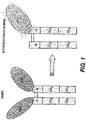
- Figure 1 illustrates one example of a monomer-dimer hybrid wherein the biologically active molecule is erythropoietin (EPO) and the portion of an immunoglobulin constant region is an IgG Fc region.
- EPO erythropoietin
- Immunoglobulins are comprised of four polypeptide chains, two heavy chains and two light chains, which associate via disulfide bonds to form tetramers. Each chain is further comprised of one variable region and one constant region.
- the variable regions mediate antigen recognition and binding, while the constant regions, particularly the heavy chain constant regions, mediate a variety of effector functions, e.g. , complement binding and Fc receptor binding ( see , e.g. , U.S. Patent Nos.: 6,086,875 ; 5,624,821 ; 5,116,964 ).
- the constant region is further comprised of domains denoted CH (constant heavy) domains (CH1, CH2, etc.).
- CH constant heavy domains
- the constant region can be comprised of three or four CH domains.
- Some isotypes (e.g. IgG) constant regions also contain a hinge region Janeway et al. 2001, Immunobiology, Garland Publishing, N.Y., N.Y .
- chimeric proteins comprised of immunoglobulin constant regions linked to a protein of interest, or fragment thereof, has been described (see , e.g., U.S. Patent Nos. 5,480,981 and 5,808,029 ; Gascoigne et al. 1987, Proc. Natl. Acad. Sci. USA 84:2936 ; Capon et al. 1989, Nature 337:525 ; Traunecker et al. 1989, Mature 339:68 ; Zettmeissi et al. 1990, DNA Cell Biol. USA 9:347 ; Bym et al. 1990, Nature 344:667 ; Watson et al. 1990, J. Cell. Biol.
- the Fc portion of an immunoglobulin constant region can include the CH2, CH3, and CH4 domains, as well as the hinge region.
- Chimeric proteins comprising an Fc portion of an immunoglobulin bestow several desirable properties on a chimeric protein including increased stability, increased serum half life (see Capon et al. 1989, Nature 337:525 ) as well as binding to Fc receptors such as the neonatal Fc receptor (FcRn) ( U.S. Patent Nos. 6,086,875 , 6,485,726 , 6,030,613 ; WO 03/077834 ; US2003-0235536A1 ).
- FcRn is active in adult epithelial tissue and expressed in the lumen of the intestines, pulmonary airways, nasal surfaces, vaginal surfaces, colon and rectal surfaces ( U.S. Patent No. 6,485,726 ).
- Chimeric proteins comprised of FcRn binding partners e.g. IgG, Fc fragments
- FcRn binding partners e.g. IgG, Fc fragments
- FcRn binding partners e.g. IgG, Fc fragments
- FcRn binding partners e.g. IgG, Fc fragments
- FcRn binding partners e.g. IgG, Fc fragments
- chimeric proteins comprising an FcRn binding partner are endocytosed by cells expressing the FcRn. But instead of being marked for degradation, these chimeric proteins are recycled out into circulation again, thus increasing the in vivo half life of these proteins.
- Portions of immunoglobulin constant regions e.g., FcRn binding partners typically associate, via disulfide bonds and other non-specific interactions, with one another to form dimers and higher order multimers.
- the present disclosure Including the instant invention, is based in part upon the surprising discovery that transcytosis of chimeric proteins comprised of FcRn binding partners appears to be limited by the molecular weight of the chimeric protein, with higher molecular weight species being transported less efficiently.
- Chimeric proteins comprised of biologically active molecules once administered, typically will interact with a target molecule or cell.
- the present disclosure is further based in part upon the surprising discovery that monomer-dimer hybrids, with one biologically active molecule, but two portions of an immunoglobulin constant region, e.g., two FcRn binding partners, function and can be transported more effectively than homodimers, also referred to herein simply as "dimmers" or higher order multimers with two or more copies of the biologically active molecule.
- chimeric proteins comprised of two or more biologically active molecules, which exist as dimers and higher order multimers, can be sterically hindered from interacting with their target molecule or cell, due to the presence of the two or more biologically active molecules In close proximity to one another and that the biologically active molecule can have a high affinity for itself.
- one aspect of the present disclosure provides chimeric proteins comprised of a biologically active molecule that is transported across the epithelium barrier.
- An additional aspect of the present disclosure provides chimeric proteins comprised of at least one biologically active molecule that is able to interact with its target molecule or cell with little or no steric hindrance or self aggregation.
- the aspects of the present disclosure provide for chimeric proteins aomprising a first and second polypeptide chain, the first chain comprising at least a portion of immunoglobulin constant region wherein the portion of an immunoglobulin constant region has been modified to include a biologically active molecule, and the second chain comprising at least a portion of immunoglobulin constant region, wherein the portion of an immunoglobuilin constant region has not been so modified to include the biologically active molecule of the first chain.
- the present disclosure relates to a chimeric protein comprising one biologically active molecule and two molecules of at least a portion of an immunoglobulin constant region.
- the chimeric protein is capable of interacting with a target molecule or cell with less steric hindrance compared to a chimeric protein comprised of at least two biologically active molecules and at least a portion of two Immunoglobulin constant regions.
- the present dsclosure also relates to a chimeric. protein comprising at least one biologiccally active molecule and Two molecules of at least a portion of an immunoglobulin constant region that is transported across an epithelium barrier more efficiently than a corresponding homodimer, i.e. , wherein both chains are linked to the same biologically active molecule.
- the present disclosure thus relates to a chimeric protein comprising a first and a second polypeptide chain linked together, wherein said first chain comprises a biologically active molecule and at least a portion of an immunoglobulin constant region, and said second chain comprises at least a portion of an immunoglobulin constant region, but no immunoglobulin variable region and without any biologically active molecule attached.
- the present disclosure relates to a chimeric protein comprising a first and a second polypeptide chain linked together, wherein said first chain comprises a biologically active molecule and at least a portion of an immunoglobulin constant region, and said second chain comprises at least a portion of an immunoglobulin constant region without an immunoglobulin variable region or any biologically active molecule and wherein said second chain is not covalently bonded to any molecule having a molecular weight greater than 1 kD, 2 kD, 5 kD, 10 kD, or 20 kD. In one instance, the second chain is not covalently bonded to any molecule having a molecular weight greater than 0-2 kD.
- the second chain is not covalently bonded to any molecule having a molecular weight greater than 5-10 kD. In one instance, the second chain is not covalently bonded to any molecule having a molecular weight greater than 15-20 kD.
- the present disclosure relates to a chimeric protein comprising a first and a second polypeptide chain linked together, wherein said first chain comprises a biologically active molecule and at least a portion of an immunoglobulin constant region, and said second chain comprises at least a portion of an immunoglobulin constant region not covalently linked to any other molecule except the portion of an immunoglobulin of said first polypeptide chain.
- the present disclosure relates to a chimeric protein comprising a first and a second polypeptide chain linked together, wherein said first chain comprises a biologically active molecule and at least a portion of an immunoglobulin constant region, and said second chain consists of at least a portion of an immunoglobulin constant region and optionally an affinity tag.
- the present disclosure relates to a chimeric protein comprising a first and a second polypeptide chain linked together, wherein said first chain comprises a biologically active molecule and at least a portion of an immunoglobulin constant region, and said second chain consists essentially of at least a portion of an immunoglobulin constant region and optionally an affinity tag.
- the present disclosure relates to a chimeric protein comprising a first and a second polypeptide chain linked together, wherein said first chain comprises a biologically active molecule and at least a portion of an immunoglobulin constant region, and said second chain comprises at least a portion of an immunoglobulin constant region without an immunoglobulin variable region or any biologically active molecule and optionally a molecule with a molecular weight less than 10 kD, 5 kD, 2 kD or 1 kD.
- the second chain comprises a molecule less than 15-20 kD.
- the second chain comprises a molecule less than 5-10 kD.
- the second chain comprises a molecule less than 1-2 kD.
- the present disclosure relates to a chimeric protein comprising a first and second polypeptide chain, wherein said first chain comprises a biologically active molecule, at least a portion of an immunoglobulin constant region, and at least a first domain, said first domain having at least one specific binding partner, and wherein said second chain comprises at least a portion of an immunoglobulin constant region, and at least a second domain, wherein said second domain is a specific binding partner of said first domain, without any immunoglobulin variable region or a biologically active molecule.
- the present disclosure relates to a method of making a chimeric protein comprising a first and second polypeptide chain, wherein the first polypeptide chain and the second polypeptide chain are not the same, said method comprising transfecting a cell with a first DNA construct comprising a DNA molecule encoding a first polypeptide chain comprising a biologically active molecule and at least a portion of an immunoglobulin constant region and optionally a linker, and a second DNA construct comprising a DNA molecule encoding a second polypeptide chain comprising at least a pottion of an immunoglobulin constant region without any biologically active molecule or an immunoglobulin variable region, and optionally a linker, culturing the calls under conditions such that the polypeptide chain encoded by the first DNA construct is expressed and the polypeptide chain encoded by the second DNA construct is expressed and isolating monomer-dimer hybrids comprised of the polypeptide chain encoded by the first DNA construct and the polypeptide chain encoded by the second
- the present disclosure relates to a method of making a chimeric protein comprising a first and second polypeptide chain, wherein the first polypeptide chain and the second polypeptide chain are not the same, and wherein said first polypeptide chain comprises a biologically active molecule, at least a portion of an immunoglobulin constant region, and at least a first domain, said first domain having at least one specific binding partner, and wherein said second polypeptide chain comprises at least a portion of an immunoglobulin constant region and a second domain, wherein said second domain is a specific binding partner of said first domain, without any biologically active molecule or an immunoglobulin variable region, said method comprising transfecting a cell with a first DNA construct comprising a DNA molecule encoding said first polypeptide chain and a second DNA construct comprising a DNA molecule encoding said second polypeptide chain, culturing the cells under conditions such that the polypeptide chain encoded by the first DNA construct is expressed and the polypeptide chain encoded by the second DNA construct is
- the present disclosure relates to a method of making a chimeric protein of the present disclosure, said method comprising transfecting a cell with a first DNA construct comprising a DNA molecule encoding a first polypeptide chain comprising a biologically active molecule and at least a portion of an Immunoglobulin constant region and optionally a linker, culturing the cell under conditions such that the polypeptide chain encoded by the first DNA construct is expressed, isolating the polypeptide chain encoded by the first DNA construct and transfecting a cell with a second DNA construct comprising a DNA molecule encoding a second polypeptide chain comprising at least a portion of an immunoglobulin constant region without any biologically active molecule or Immunoglobulin variable region, culturing the cell under conditions such that the polypeptide chain encoded by the second DNA construct Is expressed, isolating the polypeptide chain encoded by the second DNA construct, combining the polypeptide chain encoded by the first DNA construct and the polypeptide chain encoded
- the present disclosure relates to a method of making a chimeric protein comprising a first and second polypeptide chain, wherein the first polypeptide chain and the second polypeptide chain are not the same, said method comprising transfecting a cell with a DNA construct comprising a DNA molecule encoding a polypeptide chain comprising at least a portion of an immunoglobulin constant region, culturing the cells under conditions such that the polypeptide chain encoded by the DNA construct is expressed with an N terminal cysteine such that dimers of the polypeptide chain form and isolating dimers comprised of two copies of the polypeptide chain encoded by the DNA construct and chemically reacting the isolated dimers with a biologically active molecule, wherein said biologically active molecule has a C terminus thioester, under conditions such that the biologically active molecule reacts predominantly with only one polypeptide chain of the dimer thereby forming a monomer-dimer hybrid.
- the present disclosure relates to a method of making a chimeric protein comprising a first and second polypeptide chain, wherein the first polypeptide chain and the second polypeptide chain are not the same, said method comprising transfecting a cell width a DNA construct comprising a DNA molecule encoding a polypeptide chain comprising at least a portion of an immunoglobulin constant region, culturing the cells under conditions such that the polypeptide chain encoded by the DNA construct is expressed with an N terminal cysteine such that dimers of the polypeptide chains form, and isolating dimers comprised of two copies of the polypeptide chain encoded by the DNA construct, and chemically reacting the isolated dimers with a biologically active molecule, wherein said biologically active molecule has a C terminus thioester, such that the biologically achieve molecule is linked to each chain of the dimer, denaturing the dimer comprised of the portion of the immunoglobulin linked to the biologically active molecule such that monomeric chains form, combining the
- the present disclosure relates to a method of making a chimeric protein comprising a first and second polypeptide chain, wherein the first polypeptide chain and the second polypeptide chain are not the same, said method comprising transfecting a cell with a DNA construct comprising a DNA molecule encoding a polypeptide chain comprising at least a portion of an immunoglobulin constant region, culturing the cells under conditions such that the polypeptide chain encoded by the DNA construct is expressed as a mixture of two polypeptide chains, wherein the mixture comprises a polypeptide with an N terminal cysteine, and a polypeptide with a cysteine In close proximity to the N terminus, isolating dimers comprised of the mixture of polypeptide chains encoded by the DNA construct and chemically reacting the isolated dimers with a biologically active molecule, wherein said biologically active molecule has an active thioester, such that at least some monomer-dimer hybrid forms and isolating the monomer-dimer hybrid from said
- the present disclosure relates to a method of treating a disease or condition comprising administering a chimeric protein of the present disclosure thereby treating the disease or condition.
- the present invention provides
- a chimeric protein for use in a method of treatment, with one biologically active molecule and two immunoglobulin constant regions or portions thereof, wherein the chimeric protein comprises a first polypeptide chain and a second polypeptide chain, wherein the first polypeptide chain comprises the biologically active molecule and an immunoglobulin constant region, or a portion thereof, that is an Fc neonatal receptor (FcRn) binding partner and wherein the biologically active molecule is a protein selected from the group consisting of a cytokine, a hormone, and a clotting factor; and wherein the second polypeptide chain consists of an immunoglobulin constant region, or a portion thereof, that is an FcRn binding partner.
- FcRn Fc neonatal receptor
- the present invention further provides a pharmaceutical composition comprising said chimeric protein and a pharmaceutically acceptable excipient.
- the present invention still further provides a first polynucleotide encoding the first polypeptide chain of said chimeric protein and a second polynucleotide encoding the second polypeptide chain of said chimeric protein.
- Affinity tag means a molecule attached to a second molecule of interest, capable of interacting with a specific binding partner for the purpose of Isolating or identifying said second molecule of interest.
- Analogs of chimeric proteins of the present disclosure e.g. of chimeric proteins of the present invention, or proteins or peptides substantially identical to the chimeric proteins of the present disclosure, e.g. to the chimeric proteins of the present Invention, as used herein, means that a relevant amino acid sequence of a protein or a peptide is at least 70%, 75%, 80%, 85%, 90%, 95%, 97%, 98%, 99%, or 100% identical to a given sequence.
- sequences may be variants derived from various species, or they may ba derided from the given sequence by truncation, deletion, amino acid substitution or addition.
- Percent identity between two amino acid sequences is determined by standard alignment algorithms such as, for example, Basic Local Alignment Tool (BLAST) described in Altschul et al. 1990, J. Mol. Biol., 215:403-410 , the algorithm of Needleman at al. 1970, J. Mol. Biol., 48:444-453 ; the algorithm of Meyers et al. 1988, Comput. Appl. Biosci., 4:11-17 ; or Tatusova et al. 1999, FEMS Microbiol.
- BLAST Basic Local Alignment Tool
- Bioavailability means the extent and rate at which a substance is absorbed into a living system or is made available at the site of physiological activity.
- Biologically active molecule means a non-immunoglobulin molecule or fragment thereof, capable of treating a disease or condition or localizing or targeting a molecule to a site of a disease or condition in the body by performing a function or an action, or stimulating or responding to a function, an action or a reaction, in a biological context ( e.g. in an organism, a cell, or an in vitro model thereof).
- Biologically active molecules may comprise at least one of polypeptides, nucleic acids, small molecules such as small organic or inorganic molecules.
- a chimeric protein refers to any protein comprised of a first amino acid sequence derived from a first source, bonded, covalently or non-covalently, to a second amino acid sequence derived from a second source, wherein the first and second source are not the same.
- a first source and a second source that are not the same can include two different biological entities, or two different proteins from the same biological entity, or a biological entity and a non-biological entity.
- a chimeric protein can include for example, a protein derived from at least 2 different biological sources.
- a biological source can include any non-synthetically produced nucleic acid or amino acid sequence (e.g.
- a synthetic source can include a protein or nucleic acid sequence produced chemically and not by a biological system (e.g. solid phase synthesis of amino acid sequences).
- a chimeric protein can also include a protein derived from at least 2 different synthetic sources or a protein derived from at least one biological source and at least one synthetic source.
- a chimeric protein may also comprise a first amino acid sequence derived from a first source, covalently or non-covalently linked to a nucleic acid, derived from any source or a small organic or inorganic molecule derived from any source.
- the chimeric protein may comprise a linker molecule between the first and second amino acid sequence or between the first amino acid sequence and the nucleic acid, or between the first amino acid sequence and the small organic or inorganic molecule.
- Clotting factor means any molecule, or analog thereof, naturally occurring or recombinantly produced which prevents or decreases the duration of a bleeding episode in a subject with a hemostatic disorder. In other words, it means any molecule having clotting activity.
- Clotting activity means the ability to participate in a cascade of biochemical reactions that culminates in the formation of a fibrin clot and/or reduces the severity, duration or frequency of hemorrhage or bleeding episode.
- Dimer as used herein refers to a chimeric protein comprising a first and second polypeptide chain, wherein the first and second chains both comprise a biologically active molecule, and at least a portion of an immunoglobulin constant region.
- a homodimer refers to a dimer where both biologically active molecules are the same.
- Dimerically linked monomer-dimer hybrid refers to a chimeric protein comprised of at least a portion of an immunloglobulin constant region, e.g. an Fc fragment of an immunoglobulin, a biologically active molecule and a linker which links the two together such that one biologically active molecule is bound to 2 polypeptide chains, each comprising a portion of an immunoglobulin constant region.
- Figure 4 shows an example of a dimerically linked monomer-dimer hybrid.
- DNA construct means a DNA molecule, or a clone of such a molecule, either single- or double-stranded that has been modified through human intervention to contain segments of DNA combined in a manner that as a whole would not otherwise exist in nature.
- DNA constructs contain the information necessary to direct the expression of polypeptides of interest.
- DNA constructs can include promoters, enhancers and transcription terminators.
- DNA constructs containing the information necessary to direct the secretion of a polypeptide will also contain at least one secretory signal sequence.
- Domain means a region of a polypeptide (including proteins as that term is defined) having some distinctive physical feature or role including for example an independently folded structure composed of one section of a polypeptide chain.
- a domain may contain the sequence of the distinctive physical feature of the polypeptide or it may contain a fragment of the physical feature which retains its binding characteristics (i.e. , it can bind to a second domain).
- a domain may be associated with another domain. In other words, a first domain may naturally bind to a second domain.
- a fragment refers to a peptide or polypeptide comprising an amino acid sequence of at least 2 contiguous amino acid residues, of at least 5 contiguous amino acid residues, of at least 10 contiguous amino acid residues, of at least 15 contiguous amino acid residues, of at least 20 contiguous amino acid residues, of at least 25 contiguous amino acid residues, of at least 40 contiguous amino acid residues, of at least 50 contiguous amino acid residues, of at least 100 contiguous amino acid residues, or of at least 200 contiguous amino acid residues or any deletion or truncation of a protein, peptide, or polypeptide.
- Hemostasis means the stoppage of bleeding or hemorrhage; or the stoppage of blood flow through a blood vessel or body part.
- Hemostatic disorder means a genetically inherited or acquired condition characterized by a tendency to hemorrhage, either spontaneously or as a result of trauma, due to an impaired ability or inability to form a fibrin clot.
- Linked refers to a first nucleic acid sequence covalently joined to a second nucleic acid sequence.
- the first nucleic acid sequence can be directly joined or juxtaposed to the second nucleic acid sequence or alternatively an intervening sequence can covalently join the first sequence to the second sequence.
- Linked as used herein can also refer to a first amino acid sequence covalently, or non-covalently, joined to a second amino acid sequence.
- the first amino acid sequence can be directly joined or juxtaposed to the second amino acid sequence or alternatively an intervening sequence can covalently join the first amino acid sequence to the second amino acid sequence.
- Operatively linked means a first nucleic acid sequence linked to a second nucleic acid sequence such that both sequences are capable of being expressed as a biologically active protein or peptide.
- Polypeptide refers to a polymer of amino acids and does not refer to a specific length of the product; thus, peptides, oligopeptides, and proteins are included within the definition of polypeptide. This term does not exclude post-expression modifications of the polypeptide, for example, glycosylation, acetylation, phosphorylation, pegylation, addition of a lipid moiety, or the addition of any organic or inorganic molecule. Included within the definition, are for example, polypeptides containing one or more analogs of an amino acid (including, for example, unnatural amino acids) and polypeptides with substituted linkages, as well as other modifications known in the art, both naturally occurring and non-naturally occurring.
- High stringency includes conditions readily determined by the skilled artisan based on, for example, the length of the DNA. Generally, such conditions are defined in Sambrook et al. Molecular Cloning: A Laboratory Manual, 2 ed. Vol. 1, pp. 1.101-104, Cold Spring Harbor Laboratory Press (1989 ), and include use of a prewashing solution for the nitrocellulose filters 5X SSC, 0.5% SDS, 1.0 mM EDTA (PH 8.0), hybridization conditions of 50% formamide, 6X SSC at 42°C (or other similar hybridization solution, such as Stark's solution, in 50% formamide at 42°C, and with washing at approximately 68°C, 0.2X SSC, 0.1% SDS. The skilled artisan will recognize that the temperature and wash solution salt concentration can be adjusted as necessary according to factors such as the length of the probe.
- Moderate stringency include conditions that can be readily determined by those having ordinary skill in the art based on, for example, the length of the DNA.
- the basic conditions are set forth by Sambrook et al. Molecular Cloning; A Laboratory Manual 2d ed. Vol. 1, pp. 1.101-104, Cold Spring Harbor Laboratory Press (1989 ), and include use of a prewashing solution for the nitrocellulose filters 5X SSC, 0.5% SDS, 1.0 mM EDTA (pH 8.0), hybridization conditions of 50% formamide, 6X SSC at 42°C (or other similar hybridization solution, such as Stark's solution, in 50% formamide at 42°C), and washing conditions of 60°C, 0.5X SSC, 0.1 % SDS.
- a small inorganic molecule as used herein means a molecule containing no carbon atoms and being no larger than 50 kD.
- a small organic molecule as used herein means a molecule containing at least one carbon atom and being no larger than 50 kD.
- Treat, treatment, treating means, any of the Following: the reduction in severity of a disease or condition; the reduction in the duration of a disease course; the amelioration of one or more symptoms associated with a disease or condition; the provision of beneficial effects to a subject with a disease or condition, without necessarily curing the disease or condition, the prophylaxis of one or more symptoms associated with a disease or condition.
- the present disclosure provides for chimeric proteins (monomer-dimer hybrids) comprising a first and a second polypeptide chain, wherein said first chain comprises a biologically active molecule and at least a portion of an immunoglobulin constant region, and said second chain comprises at least a portion of an immunoglobulin constant region without any biologically active molecule or variable region of an immunoglobulin.
- Figure 1 contrasts traditional fusion protein dimers with one example of the monomer-dimer hybrid of the present disclosure (which example is, moreover, an embodiment of the present invention).
- the biologically active molecule is EPO and the portion of an immunoglobulin is IgG Fc region.
- the present disclosure provides for chimeric proteins which afford enhanced stability and increased bioavailability of the chimeric protein compared to the biologically active molecule alone. Additionally, however, because only one of the two chains comprises the biologically active molecule, the chimeric protein has a lower molecular weight than a chimeric protein wherein all chains comprise a biologically active molecule and while not wishing to be bound by any theory, this may result in the chimeric protein being more readily transcytosed across the epithelium barrier, e . g ., by binding to the FcRn receptor thereby increasing the half-life of the chimeric protein.
- the present disclosure thus provides for an improved non-invasive method (e.g . via any mucosal surface, such as, orally, buccally, sublingually, nasally, rectally, vaginally, or via pulmonary or occular route) of administering a therapeutic chimeric protein of the present disclosure, e . g . a therapeutic chimeric protein of the present invention.
- the present disclosure thus provides methods of attaining therapeutic levels of the chimeric proteins of the present disclosure, e.g . of the chimeric proteins of the present invention, using less frequent and lower doses compared to previously described chimeric proteins ( e . g . chimeric proteins comprised of at least a portion of an immunoglobulin constant region and a biologically active molecule, wherein all chains of the chimeric protein comprise a biologically active molecule).
- the present disclosure provides an invasive method, e.g. subcutaneously, intravenously, of administering a therapeutic chimeric protein of the present disclosure, e.g. a therapeutic chimeric protein of the present invention.
- Invasive administration of the therapeutic chimeric protein of the present disclosure, e . g . of the therapeutic chimeric protein of the present invention provides for an increased half life of the therapeutic chimeric protein which results in using less frequent and lower doses compared to previously described chimeric proteins (e.g. chimeric proteins comprised of at least a portion of an immunoglobulin constant region and a biologically active molecule, wherein all chains of the chimeric protein comprise a biologically active molecule).
- Yet another advantage of a chimeric protein wherein only one of the chains comprises a biologically active molecule is the enhanced accessibility of the biologically active molecule for its target cell or molecule resulting from decreased steric hindrance, decreased hydrophobic interactions, decreased ionic interactions, or decreased molecular weight compared to a chimeric protein wherein all chains are comprised of a biologically active molecule.
- the present disclosure relates to chimeric proteins comprising one biologically active molecule, at least a portion of an immunoglobulin constant region, and optionally at least one linker.
- the portion of an immunoglobulin will have both an N, or an amino terminus, and a C, or carboxy terminus.
- the chimeric protein may have the biologically active molecule linked to the N terminus of the portion of an immunoglobulin.
- the biologically active molecule may be linked to the C terminus of the portion of an immunoglobulin.
- the linkage is a covalent bond.
- the linkage is a non-covalent bond.
- the chimeric protein can optionally comprise at least one linker; thus, the biologically active molecule does not have to be directly linked to the portion of an immunoglobulin constant region.
- the linker can intervene in between the biologically active molecule and the portion of an immunoglobulin constant region.
- the linker can be linked to the N terminus of the portion of an immunoglobulin constant region, or the C terminus of the portion of an immunoglobulin constant region. If the biologically active molecule is comprised of at least one amino acid the biologically active molecule will have an N terminus and a C terminus and the linker can be linked to the N terminus of the biologically active molecule, or the C terminus the biologically active molecule.
- the present disclosure relates to a chimeric protein of the formula X-L a -F:F or F:F-L a -X , wherein X is a biologically active molecule, L is an optional linker, F is at least a portion of an immunoglobulin constant region and, a is any integer or zero.
- the present disclosure also relates to a chimeric protein of the formula T a -X-L a -F:F or T a -F:F-L a -X, wherein X is a biologically active molecule, L is an optional linker, F is at least a portion of an immunoglobulin constant region, a is any integer or zero, T is a second linker or alternatively a tag that can be used to facilitate purification of the chimeric protein, e . g ., a FLAG tag, a histidine tag, a GST tag, a maltose binding protein tag and (:) represents a chemical association, e.g. at least one non-peptide bond.
- the chemical association i.e., (:) is a covalent bond.
- the chemical association i.e., (:) is a non-covalent interaction, e.g., an ionic interaction, a hydrophobic interaction, a hydrophilic interaction, a Van der Waals interaction, a hydrogen bond.
- a may be 0, 1, 2, 3, 4, 5, or more than 5.
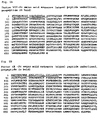
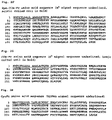
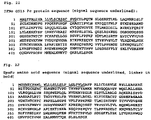
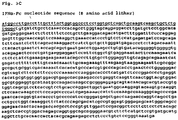
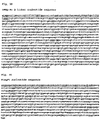
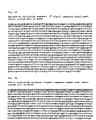
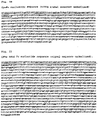
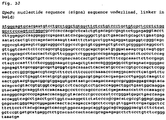
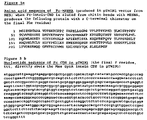
- the chimeric protein of the present disclosure comprises the amino acid sequence of figure 2a (SEQ ID NO: 6). In one instance, the chimeric protein of the present disclosure comprises the amino acid sequence of figure 2b (SEQ ID NO:8). In one instance, the chimeric protein of the present disclosure comprises the amino acid sequence of figure 2c (SEQ ID NO:10). In one instance, the chimeric protein of the present disclosure comprises the amino acid sequence of figure 2d (SEQ ID NO:12). In one instance, the chimeric protein of the present disclosure comprises the amino acid sequence of figure 2e (SEQ ID NO:14). In one instance, the chimeric protein of the present disclosure comprises the amino acid sequence of figure 2f (SEQ ID NO:16).
- the chimeric protein of the present disclosure comprises the amino acid sequence of figure 2g (SEQ ID NO:18). In one instance, the chimeric protein of the present disclosure comprises the amino acid sequence of figure 2h (SEQ ID NO:20). In one instance, the chimeric protein of the present disclosure comprises the amino acid sequence of figure 2i (SEQ ID NO:22). In one instance, the chimeric protein of the present disclosure comprises the amino acid sequence of figure 2j (SEQ ID NO:24). In one instance, the chimeric protein of the present disclosure comprises the amino acid sequence of figure 17b (SEQ ID NO:27).
- chimeric proteins of the present disclosure including of the chimeric proteins of the present invention, antibodies against such chimeric proteins, and antibodies against binding partners of such chimeric proteins, are all contemplated, and can be made by altering their amino acids sequences by substitutions, additions, and/or deletions/truncations or by Introducing chemical modification that result in functionally equivalent molecules. It will be understood by one of ordinary skill in the art that certain amino acids in a sequence of any protein may be substituted for other amino acids without adversely affecting the activity of the protein.
- the derivative is functionally active, i.e., capable of exhibiting one or more activities associated with the chimeric proteins of the present disclosure, e.g. of the chimeric proteins of the invention, e.g., FcRn binding, viral inhibition , hemostasis , production of red blood cells.
- activity can be tested by measuring reverse transcriptase activity using known methods (see, e.g ., Barre-Sinoussi et al. 1983, Science 220:868 ; Gallo et al. 1984, Science 224:500 ). Alternatively, activity can be measured by measuring fusogenic activity. ( see , e.g. , Nussbaum et al. 1994, J. Virol. 68(9):5411 ).
- a StaCLot FVIIa-rTF assay can be performed to assess activity of Factor VIIa derivatives ( Johannessen et al. 2000, Blood Coagulation and Fibrinolysis 11:S159 ).
- Substitutes for an amino acid within the sequence may be selected from other members of the class to which the amino acid belongs (see Table 1). Furthermore, various amino acids are commonly substituted with neutral amino acids, e.g., alanine, leucine, isoleucine, valine, proline, phenylalanine, tryptophan, and methionine ( see, e.g. , MacLennan et al. 1998, Acta Physiol. Scand. Suppl. 643:55-67 ; Sasaki et al. 1998, Adv. Biophys. 35:1-24 ).
- neutral amino acids e.g., alanine, leucine, isoleucine, valine, proline, phenylalanine, tryptophan, and methionine ( see, e.g. , MacLennan et al. 1998, Acta Physiol. Scand. Suppl. 643:55-67 ; Sasaki et
- the biologically active molecule is a protein selected from the group consisting of a cytokine, a hormone, and a clotting factor (examples of which are provided in the following disclosure).
- the biologically active molecule can be a polypeptide.
- the biologically active molecule can be a single amino acid.
- the biologically active molecule can Include a modified polypeptide.
- the biologically active molecule can include a lipid molecule (e.g. a steroid or cholesterol, a fatty acid, a triacylglycerol, glycerophospholipid, or sphingolipid).
- the biologically active molecule can include a sugar molecule ( e.g . glucose, sucrose, mannose).
- the biologically active molecule can Include a nucleic acid molecule ( e.g. DNA, RNA).
- the biologically active molecule can include a small organic molecule or a small inorganic molecule.
- the biologically active molecule is a growth factor, hormone or cytokine or analog or fragment thereof.
- the biological active molecule can be any agent capable of inducing cell growth and proliferation.
- the biologically active molecule is any agent which can induce erythrocytes to proliferate.
- EPO one example of a biologically active molecule contemplated by the present disclosure is EPO.
- the biologically active molecule can also include, but is not limited to, RANTES, MIP1 ⁇ , MIP1 ⁇ , IL-2, IL-3, GM-CSF, growth hormone, tumor necrosis factor ( e.g . TNF ⁇ or ⁇ ).
- the biologically active molecule can include interferon ⁇ , whether synthetically or recombinantly produced, including but not limited to, any one of the about twenty-five structurally related subtypes, as for example interferon- ⁇ 2a, now commercially available for clinical use (ROFERON ® , Roche) and interferon- ⁇ 2b also approved for clinical use (INTRON ® , Schering) as well as genetically engineered versions of various subtypes, including, but not limited to, commercially available consensus interferon ⁇ (INFERGEN ® , Intermune, developed by Amgen) and consensus human leukocyte interferon see, e.g. , U.S.
- GnRH gonadotropin releasing hormone
- leuprolide leuprolide
- follicle stimulating hormone progesterone
- estrogen or testosterone.
- cytokines and growth factors which may be used in the chimeric protein of the present disclosure has been previously described ( see , e.g. , U.S. Patent Nos. 6,086,875 , 6,485,726 , 6,030,613 ; WO 03/077834 ; US2003-0235536A1 ).
- the biologically active molecule is an antiviral agent, includfng fragments and analogs hereof.
- An antiviral agent can include any molecule that Inhibits or prevents viral replication, or inhibits or prevents viral entry into a cell, or inhibits or prevents viral egress from a cell.
- the antiviral agent is a fusion inhibitor.
- the antiviral agent is a cytokine which inhibits viral replication.
- the antiviral agent is interferon ⁇ .
- the viral fusion inhibitor for use In the chimeric protein can be any molecule which decreases or prevents viral penetration of a cellular membrane of a target cell.
- the viral fusion inhibitor can be any molecule that decreases or prevents the formation of syncytia between at least two susceptible cells.
- the viral fusion inhibitor can be any molecule that decreases or prevents the joining of a lipid bilayer membrane of a eukaryotic cell and a lipid bilayer of an enveloped virus.
- enveloped virus include, but are not limited to HIV-1, HIV-2, SIV, influenza, parainfluenza, Epstein-Barr virus, CMV, herpes simplex 1, herpes simplex 2 and respiratory syncytia vfrus.
- the viral fusion inhibitor can be any molecule that decreases or prevents viral fusion including, but not limited to, a polypeptide, a small organic molecule or a small inorganic molecule. in one instance, the fusion inhibitor is a polypeptide. In one instance, the viral fusion inhibitor is a polypeptide of 3-36 amino acids. In another instance, the viral fusion inhibitor is a polypeptide of 3-50 amino acids, 10-65 amino acids, 10-75 amino acids.
- the polypeptide can be comprised of a naturally occurring amino acid sequence (e.g. a fragment of gp41) including analogs and mutants thereof or the polypeptide can be comprised of an amino acid sequence not found in nature, so long as the polypeptide exhibits viral fusion inhibitory activity.
- the viral fusion inhibitor is a polypeptide, identified as being a viral fusion inhibitor using at least one computer algorithm, e.g., ALLMOTI5, 107x178x4 and PLZIP (see , e.g. , U.S. Patent Nos.; 6,013,263 ; 6,015,881 ; 6,017,536 ; 6,020,459 ; 6,060,065 ; 6,068,973 ; 6,093,799 ; and 6,228,983 ).
- ALLMOTI5, 107x178x4 and PLZIP see , e.g. , U.S. Patent Nos.; 6,013,263 ; 6,015,881 ; 6,017,536 ; 6,020,459 ; 6,060,065 ; 6,068,973 ; 6,093,799 ; and 6,228,983 ).
- the viral fusion inhibitor is an HIV fusion inhibitor.
- HIV is HIV-1.
- HIV is HIV-2.
- the HIV fusion inhibitor is a polypeptide comprised of a fragment of the gap41 envelope protein of HIV-1
- the HIV fusion inhibitor can comprise, e.g., T20 (SEQ ID NO:1) or an analog thereof, T21 (SEQ ID NO:2) or an analog thereof, T1249 (SEQ ID NO:3) or an analog thereof, N CCG gp41 ( Louis et al. 2001, J, Biol. Chem. 276:(31)29485 ) or an analog thereof, or 5 helix ( Root et al. 2001, Science 291:884 ) or an analog thereof.
- Assays known in the art can be used to test for viral fusion Inhibiting activity of a polypeptide, a small organic molecule, or a small inorganic molecule. These assays include a reverse transcriptase assay, a p24 assay, or syncytia formation assay ( see , e.g., U.S. Patent No. 5,464,933 ).
- the biologically active molecule is a clotting factor or other agent that promotes hemostasis, including fragments and analogs thereof.
- the clotting factor can include any molecule that has clotting activity or activates a molecule with clotting activity.
- the clotting factor can be comprised of a polypeptide.
- the clotting factor can be, as an example, but not limited to Factor VIII, Factor IX, Factor XI, Factor XII, fibrinogen, prothrombin, Factor V, Factor VII, Factor X, Factor XIII or von Willebrand Factor.
- the clotting factor can be a factor that participates in the extrinsic pathway.
- the clotting factor can be a factor that participates in the Intrinsic pathway.
- the clotting factor can be a factor that participates In both the extrinsic and intrinsic pathway.
- the clotting factor can be a human clotting factor or a non-human clotting factor, e.g ., derived from a non-human primate, a pig or any mammal.
- the clotting factor can be chimeric clotting factor, e.g., the clotting factor can comprise a portion of a human clotting factor and a portion of a porcine clotting factor or a portion of a first non-human clotting factor and a portion of a second non-human clotting factor.
- the clotting factor can be an activated clotting factor.
- the clotting factor can be an inactive form of a clotting factor, e.g., a zymogen.
- the inactive clotting factor can undergo activation subsequent to being linked to at least a portion of an immunoglobulin constant region.
- the inactive clotting factor can be activated subsequent to administration to a subject.
- the inactive clotting factor can be activated prior to administration.
- an endopeptidase e.g. paired basic amino acid cleaving enzyme (PACE), or any PACE family member, such as PCSK1-9, including truncated versions thereof, or its yeast equivalent Kex2 from S. cerevisiae and truncated versions of Kex2 (Kex2 1-675)
- PACE paired basic amino acid cleaving enzyme
- Kex2 1-675 yeast equivalent Kex2 from S. cerevisiae and truncated versions of Kex2 (Kex2 1-675)
- PACE paired basic amino acid cleaving enzyme
- the biologically active molecule is a receptor or a fragment or analog thereof.
- the receptor can be expressed on a cell surface, or alternatively the receptor can be expressed on the interior of the cell.
- the receptor can be a viral receptor, e.g., CD4, CCR5, CXCR4, CD21, CD46.
- the biologically active molecule can be a bacterial receptor.
- the biologically active molecule can be an extra-cellular matrix protein or fragment or analog thereof, important in bacterial colonization and infection ( see , e.g. , U.S. Patent Nos.: 5,648,240 ; 5,189,015 ; 5,175,096 ) or a bacterial surface protein Important in adhesion and infection (see, e.g.
- the biologically active molecule can be a growth factor, hormone or cytokine receptor, or a fragment or analog thereof, e.g ., TNF ⁇ receptor, the erythropoietin receptor, CD25, CD 122, or CD132.
- the biologically active molecule is a nucleic acid, e.g. , DNA, RNA.
- the biologically active molecule is a nucleic acid that can be used in RNA interference (RNAI).
- RNAI RNA interference
- the nucleic acid molecule can be as an example, but not as a limitation, an anti-sense molecule or a ribozyme or an aptamer.
- Antisense RNA and DNA molecules act to directly block the translation of mRNA by hybridizing to targeted mRNA and preventing protein translation.
- Antisense approaches involve the design of oligonucleotides that are complementary to a target gene mRNA. The antisense oligonucleotides will bind to the complementary target gene mRNA transcripts and prevent translation. Absolute complementarily, Is not required.
- a sequence "complementary" to a portion of an RNA means a sequence having sufficient complementarity to be able to hybridize with the RNA, forming a stable duplex; in the case of double-stranded antisense nucleic acids, a single strand of the duplex DNA may thus be tested, or triplex formation may be assayed.
- the ability to hybridize will depend on both the degree of complementarity and the length of the antisense nucleic acid. Generally, the longer the hybridizing nucleic acid, the more base mismatches with an RNA it may contain and still form a stable duplex (or triplex, as the case may be).
- One skilled in the art can ascertain a tolerable degree of mismatch by use of standard procedures to determine the melting point of the hybridized complex.
- Antisense nucleic acids should be at least six nucleotides in length, and are preferably oligonucleotides ranging from 6 to about 50 nucleotides in length. In specific aspects, the oligonucleotide is at least 10 nucleotides, at least 17 nucleotides, at least 25 nucleotides or at least 50 nucleotides.
- the oligonucleotides can be DNA or RNA or chimeric mixtures or derivatives or modified versions thereof, single-stranded or double-stranded.
- the oligonucleotide can be modified at the base moiety, sugar moiety, or phosphate backbone, for example, to improve stability of the molecule, hybridization, etc.
- the oligonucleotide may include other appended groups such as polypeptides ( e.g. for targeting host cell receptors in vivo), or agents facilitating transport across the cell membrane ( see , e.g. , Letsinger et al. 1989, Proc. Natl. Acad. Sci. USA 86:6553 ; Lemaitre et al. 1987, Proc. Natl.
- the oligonucleotide may be conjugated to another molecule, e.g ., a polypeptide, hybridization triggered crosslinking agent, transport agent, or hybridization-triggered cleavage agent.
- Ribozyme molecules designed to catalytically cleave target gene mRNA transcripts can also be used to prevent translation of target gene mRNA and, therefore, expression of target gene product. ( See , e.g., WO 90/11364 ; Sarver et al. 1990, Science 247,1222-1225 ).
- Ribozymes are enzymatic RNA molecules capable of catalyzing the specific cleavage of RNA. (See Rossi 1994, Current Biology 4:469 ). The mechanism of ribozyme action involves sequence specific hybridization of the ribozyme molecule to complementary target RNA, followed by an andonucleolytic cleavage event. The composition of ribozyme molecules must include one or more sequences complementary to the target gene mRNA, and must include the well known catalytic sequence responsible for mRNA cleavage. For this sequence, see , e.g., U.S. Pat. No. 5,093,246 .
- ribozymes that cleave mRNA at site specific recognition sequences can be used to destroy target gene mRNAs.
- the use of hammerhead ribozymes is contemplated.
- Hammerhead ribozymes cleave mRNAs at locations dictated by flanking regions that form complementary base pairs with the target mRNA. The sole requirement is that the target mRNA have the following sequence of two bases: 5'-UG-3'.
- the construction and production of hammerhead ribozymes Is well known In the art and is described more fully in Myers 1995, Molecular Biology and Biotechnology: A Comprehensive Desk Reference, VGH Publishers, New York , and in Haseloff and Gerlach 1988, Nature, 334:585 .
- the present disclosure also contemplates the use of any therapeutic small molecule or drug as the biologically active molecule In the chimeric protein of the present disclosure.
- a list of small molecules and drugs which may be used in the chimeric protein of the present disclosure has been previously described ( see , e.g., U.S. Patent Nos. 6,086,875 ; 6,485,726 ; 6,030,613 ; WO 03/077834 ; US2003-0235536A1 ).
- the chimeric proteins of the present disclosure comprise at least a portion of an immunoglobulin constant region.
- Immunoglobulins are comprised of four protein chains that associate covalently-two heavy chains and two light chains. Each chain is further comprised of one variable region and one constant region.
- the heavy chain constant region is comprised of 3 or 4 constant region domains ( e.g . CH1, CH2, CH3, CH4). Some isotypes are further comprised of a hinge region.
- the portion of an immunoglobulin constant region can be obtained from any mammal.
- the portion of an immunoglobulin constant region can include a portion of a human immunoglobulin constant region, a non-human primate immunoglobulin constant region, a bovine immunoglobulin constant region, a porcine immunoglobulin constant region, a murine immunoglobulin constant region, an ovine immunoglobulin constant region or a rat immunoglobulin constant region.
- the portion of an immunoglobulin constant region can be produced recombinantly or synthetically.
- the immunoglobulin can be Isolated from a cDNA library.
- the portion of an immunoglobulin constant region can be isolated from a phage library ( See , e.g., McCafferty et al. 1990, Nature 348:552 , Kang et al. 1991, Proc. Natl. Acad. Sci. USA 88:4363 ; EP 0 589 877 B1 ).
- the portion of an immunoglobulin constant region can be obtained by gene shuffling of known sequences ( Mark et al. 1992, Bio/Technol. 10:779 ).
- the portion of an immunoglobulin constant region can be isolated by in vivo recombination ( Waterhouse et al. 1993, Nucl. Acid Res. 21:2265 ).
- the immunoglobulin can be a humanized immunoglobulin ( U.S. Patent No. 5,585,089 , Jones et al. 1986. Nature 332:323 ).
- the portion of an immunoglobulin constant region can include a portion of an IgG, an IgA, an IgM, an IgD, or an IgE.
- the immunoglobulin is an IgG.
- the immunoglobulin is IgG1.
- the immunoglobulin is IgG2.
- the portion of an immunoglobulin constant region can include the entire heavy chain constant region, or a fragment or analog thereof.
- a heavy chain constant region can comprise a CH1 domain, a CH2 domain, a CH3 domain, and/or a hinge region.
- a heavy chain constant region can comprise a CH1 domain, a CH2 domain, a CH3 domain, and/or a CH4 domain.
- the portion of an immunoglobulin constant region can include an Fc fragment.
- An Fc fragment can be comprised of the CH2 and CH3 domains of an immunoglobulin and the hinge region of the immunoglobulin.
- the Fc fragment can be the Fc fragment of an IgG1, an IgG2, an IgG3 or an IgG4.
- the portion of an immunoglobulin constant region is an Fc fragment of an IgG1.
- the portion of an immunoglobulin constant region is an Fc fragment of an IgG2.
- the chimeric proteins of the present invention comprise at least a portion of an immunoglobulin constant region which is an Fc neonatal receptor (FcRn) binding partner.
- FcRn Fc neonatal receptor
- An FcRn binding partner is any molecule that can be specifically bound by the FcRn receptor with consequent active transport by the FcRn receptor of the FcRn binding partner.
- Specifically bound refers to two molecules forming a complex that is relatively stable under physiologic conditions. Specific binding is characterized by a high affinity and a low to moderate capacity as distinguished from nonspecific binding which usually has a low affinity with a moderate to high capacity.
- binding is considered specific when the affinity constant K A is higher than 10 6 M -1 , or more preferably higher than 10 8 M -1 . If necessary, non-specific binding can be reduced without substantially affecting specific binding by varying the binding conditions.
- the appropriate binding conditions such as concentration of the molecules, Ionic strength of the solution, temperature, time allowed for binding, concentration of a blocking agent (e.g. serum albumin, milk casein), etc., may be optimized by a skilled artisan using routine techniques.
- the FcRn receptor has been isolated from several mammalian species including humans. The sequences of the human FcRn, monkey FcRn rat FcRn, and mouse FcRn are known ( Story et al. 1994, J. Exp. Med. 180:2377 ).
- the FcRn receptor binds IgG (but not other Immunoglobulin classes such as IgA, IgM, IgD, and IgE) at relatively low pH, actively transports the IgG transcellularly in a luminal to serosal direction, and then releases the IgG at relatively higher pH found in the interstitial fluids. It is expressed in adult epithelial tissue ( U.S. Patent Nos.
- FcRn binding partners for use in accordance with the present disclosure, including the present invention, encompass any molecule that can be specifically bound by the FcRn receptor including whole IgG, the Fc fragment of IgG, and other fragments that include the complete binding region of the FcRn receptor.
- the region of the Fc portion of IgG that binds to the FcRn receptor has been described based on X-ray crystallography ( Burffle et al. 1994, Nature 372:379 ).
- the major contact area of the Fc with the FcRn is near the junction of the CH2 and CH3 domains. Fc-FcRn contacts are all within a single Ig heavy chain.
- the FcRn binding partners include whole IgG, the Fc fragment of IgG, and other fragments of IgG that include the complete binding region of FcRn.
- the major contact sites include amino acid residues 248, 250-257, 272, 285, 288, 290-291, 308-311, and 314 of the CH2 domain and amino acid residues 385-387, 428, and 433-436 of the CH3 domain.
- References made to amino acid numbering of immunoglobulins or immunoglobulin fragments, or regions, are all based on Kabat et al. 1991, Sequences of Proteins of Immunological Interest, U.S. Department of Public Health, Bethesda, MD .
- the Fc region of IgG can be modified according to well recognized procedures such as site directed mutagenesis and the like to yield modified IgG or Fc fragments or portions thereof that will be bound by FcRn.
- modifications include modifications remote from the FcRn contact sites as well as modifications within the contact sites that preserve or even enhance binding to the FcRn.
- the following single amino acid residues in human IgG1 Fc can be substituted without significant loss of Fc binding affinity for FcRn: P238A, S239A, K246A, K248A, D249A, M252A, T256A, E258A, T260A, D265A, S267A, H268A, E269A, D270A, E272A, L274A, N276A, Y278A, D280A, V282A, E283A, H285A, N286A, T289A, K290A, R292A, E293A, E294A, Q295A, Y296F, N297A, S298A, Y300F, R301 A, V303A, V305A, T307A, L309A, Q311A, D312A, N315A, K317A, E318A, K320A, K
- one specific instance of the present disclosure e.g. one specific embodiment of the present invention, Incorporates the N297A mutation, removing a highly conserved N-glycosylation site.
- N297A mutation removing a highly conserved N-glycosylation site.
- other amino acids may be substituted for the wildtype amino acids at the positions specified above. Mutations may be Introduced singly into Fc giving rise to more than one hundred FcRn binding partners distinct from native Fc. Additionally, combinations of two, three, or more of these individual mutations may be introduced together, giving rise to hundreds more FcRn binding partners.
- one of the FcRn binding partners of the monomer-dimer hybrid may be mutated and the other FcRn binding partner not mutated at all, or they both may be mutated but with different mutations.
- Any of the mutations described herein, including N297A, may be used to modify Fc, regardless of the biologically active molecule (e.g., EPO, IFN, Factor IX, T20).
- one embodiment Incorporates N297A, removing a highly conserved N-glycosylation site. The effect of this mutation is to reduce immunogenicity, thereby enhancing circulating half life of the FcRn binding partner, and to render the FcRn binding partner incapable of binding to Fc ⁇ RI, Fc ⁇ RIIA, Fc ⁇ RIIB, and Fc ⁇ RIIIA, without compromising affinity for FcRn ( Routledge et al. 1995, Transplantation 60:847 ; Friend et al. 1999, Transplantation 68:1632 ; Shields et al. 1995, J. Biol. Chem. 276:6591 ).
- affinity for FcRn may be Increased beyond that of wild type in some instances. This increased affinity may reflect an increased "on” rate, a decreased “off” rate or both an increased “on” rate and a decreased “off” rate. Mutations believed to impact an increased affinity for FcRn include T256A, T307A, E380A, and N434A ( Shields et al. 2001, J. Biol. Chem. 276:6591 ).
- At least three human Fc gamma receptors appear to recognize a binding site on IgG within the lower hinge region, generally amino acids 234-237. Therefore, another example of new functionality and potential decreased immunogenicity may arise from mutations of this region, as for example by replacing amino acids 233-236 of human IgG1 "ELLG” to the corresponding sequence from IgG2 "PVA" (with one amino acid deletion). It has been shown that Fc ⁇ RI, Fc ⁇ RII, and Fc ⁇ RIII, which mediate various effector functions will not bind to IgG1 when such mutations have been introduced. Ward and Ghefie 1995, Therapeutic Immunology 2:77 and Armour et al. 1999, Eur. J. Immunol. 29:2613 .
- the FcRn binding partner Is a polypeptide including the sequence PKNSSMISNTP (SEQ ID NO:26) and optionally further including a sequence selected from HQSLGTQ (SEQ ID NO:27), HQNLSDGK (SEQ ID NO:28), HQNISDGK (SEQ ID NO:29), or VISSHLGQ (SEQ ID NO:30) ( U.S. Patent No. 5,739,277 ).
- FcRn receptors can bind a single Fc molecule. Crystallographic data suggest that each FcRn molecule binds a single polypeptide of the Fc homodimer.
- linking the FcRn binding partner, e.g., an Fc fragment of an IgG, to a biologically active molecule provides a means of delivering the biologically active molecule orally, buccally, sublingually, rectally, vaginally, as an aerosol administered nasally or via a pulmonary route, or via an ocular route.
- the chimeric protein can be administered invasively, e.g ., subcutaneously, intravenously.
- portions of an immunoglobulin constant region for use in the chimeric protein of the invention can include mutants or analogs thereof, or can include chemically modified immunoglobulin constant regions (e.g . pegylated), or fragments thereof ( see , e.g., Aslam and Dent 1998, Bioconjugation: Protein Coupling Techniques For the Biomedical Sciences Macmilan Reference, Lond on).
- a mutant can provide for enhanced binding of an FcRn binding partner for the FcRn.
- peptide mimetics of at least a portion of an immunoglobulin constant region e.g., a peptide mimetic of an Fc fragment or a peptide mimetic of an FcRn binding partner.
- the peptide mimetic is identified using phage display or via chemical library screening (see , e.g ., McCafferty et al. 1990, Nature 348:552 , Kang et al. 1991, Proc. Natl. Acad. Sci. USA 88:4363 ; EP 0 589 877 B1 ).
- the chimeric protein of the present disclosure can optionally comprise at least one linker molecule.
- the linker can be comprised of any organic molecule.
- the linker is polyethylene glycol (PEG).
- the linker is comprised of amino acids.
- the linker can comprise 1-5 amino acids, 1-10 amino acids, 1-20 amino acids, 10-50 amino acids, 50-100 amino acids, 100-200 amino acids.
- the linker is the eight amino acid linker EFAGAAAV (SEQ ID NO:31).
- linkers described herein may be used in the chimeric protein of the present disclosure, e.g. in the chimeric proteins of the present invention, e.g. a monomer-dimer hybrid, including EFAGAAAV, regardless of the biologically active molecule (e.g. EPO, IFN, Factor IX).
- EPO biologically active molecule
- the linker can comprise the sequence G n .
- the linker can comprise the sequence (GA) n (SEQ ID NO:32).
- the linker can comprise the sequence (GGS) n (SEQ ID NO:33).
- the linker can comprise the sequence (GGS) n (GGGGS) n (SEQ ID NO:34). I n these instances, n may be an integer from 1-10, i.e. , 1, 2, 3, 4, 5, 6, 7, 8, 9, 10.
- linkers include, but are not limited to, GGG (SEQ ID NO:35), SGGSGGS (SEQ ID NO:36), GGSGGSGGSGGSGGG (SEQ ID NO:37), GGSGGSGGGGSGGGGS (SEQ ID NO:38), GGSGGSGGSGGSGGSGGS (SEQ ID NO:39).
- the linker does not eliminate or diminish the biological activity of the chimeric protein.
- the linker enhances the biological activity of the chimeric protein, e.g., by further diminishing the effects of steric hindrance and making the biologically active molecule more accessible to its target binding site.
- the linker for interferon ⁇ is 15-25 amino acids long. In another specific instance / in another specific embodiment, the linker for interferon ⁇ is 15-20 amino acids long. In another specific instance / in another specific embodiment, the linker for interferon ⁇ is 10-25 amino acids long. In another specific instance / in another specific embodiment, the linker for interferon ⁇ is 15 amino acids long. In one instance / in one embodiment, the linker for interferon ⁇ is (GGGGS) n (SEQ ID NO:40) where G represents glycine, S represents serine and n is an integer from 1-10. In a specific instance / in a specific embodiment, n is 3.
- the linker may also incorporate a moiety capable of being cleaved either chemically (e.g. hydrolysis of an ester bond), enzymatically (i.e. incorporation of a protease cleavage sequence) or photolytically (e.g., a chromophore such as 3-amino-3-(2-nitrophenyl) proprionic acid (ANP)) in orderto release the biologically active molecule from the Fc protein.
- a moiety capable of being cleaved either chemically (e.g. hydrolysis of an ester bond), enzymatically (i.e. incorporation of a protease cleavage sequence) or photolytically (e.g., a chromophore such as 3-amino-3-(2-nitrophenyl) proprionic acid (ANP)
- the chimeric protein of the present disclosure comprises a first polypeptide chain comprising at least a first domain, said first domain having at least one specific binding partner, and a second polypeptide chain comprising at least a second domain, wherein said second domain, is a specific binding partner of said first domain.
- the chimeric protein thus comprises a polypeptide capable of dimerizing with another polypeptide due to the interaction of the first domain and the second domain.
- Methods of dimerizing antibodies using heterologous domains are known in the art ( U.S. Patent Nos.: 6,807,706 and 5,910,573 ; Kostelny et al. 1992, J. Immunol. 148(5):1547 ).
- Dimerization can occur by formation of a covalent bond, or alternatively a non-covalent bond, e.g ., hydrophobic interaction, Van der Waal's forces, interdigitation of amphiphilic peptides such as, but not limited to, alpha helices, charge-charge interactions of amino acids bearing opposite charges, such as, but not limited to, lysine and aspartic acid, arginine and glutamic acid.
- the domain is a helix bundle comprising a helix, a turn and another helix.
- the domain is a leucine zipper comprising a peptide having several repeating amino acids in which every seventh amino acid is a leucine residue.
- the specific binding partners are fos/jun. (see Branden et al. 1991, Introduction To Protein Structure, Garland Publishing, New York ).
- binding is mediated by a chemical linkage (see, e.g ., Brennan et al. 1985, Science 229:81 ).
- intact immunoglobulins, or chimeric proteins comprised of at least a portion of an immunoglobulin constant region are cleaved to generate heavy chain fragments. These fragments are reduced in the presence of the dithlol complexing agent sodium arsenite to stabilize vicinal dithiols and prevent intermolecular disulfide formation.
- the fragments generated are then converted to thionitrobenzoate (TNB) derivatives.
- TNB thionitrobenzoate
- One of the TNB derivatives is then reconverted to the heavy chain fragment thiol by reduction with mercaptoethylamine and is then mixed with an equimolar amount of the other TNB derivative to form a chimeric dimer.
- the present disclosure relates to a first nucleic acid construct and a second nucleic acid construct each comprising a nucleic acid sequence encoding at least a portion of the chimeric protein of the present disclosure.
- the first nucleic acid construct comprises a nucleic acid sequence encoding a portion of an immunoglobulin constant region operatively linked to a second DNA sequence encoding a biologically active molecule
- said second DNA construct comprises a DNA sequence encoding an immunoglobulin constant region without the second DNA sequence encoding a biologically active molecule.
- the biologically active molecule can include, for example, but not as a limitation, a viral fusion inhibitor, a clotting factor, a growth factor or hormone, or a receptor, or analog, or fragment of any of the preceding.
- the nucleic acid sequences can also include additional sequences or elements known in the art (e.g., promoters, enhancers, poly A sequences, affinity tags).
- the nucleic acid sequence of the first construct can optionally include a nucleic acid sequence encoding a linker placed between the nucleic acid sequence encoding the biologically active molecule and the portion of the immunoglobulin constant region.
- the nucleic acid sequence of the first DNA construct can optionally include a linker sequence placed before or after the nucleic acid sequence encoding the biologically active molecule and/or the portion of the immunoglobulin constant region.
- the nucleic acid construct is comprised of DNA. In another instance, the nucleic acid construct is comprised of RNA.
- the nucleic acid construct can be a vector, e.g ., a viral vector or a plasmid.
- viral vectors include, but are not limited to adeno virus vector, an adeno associated virus vector or a murine leukemia virus vector.
- plasmids include but are not limited to pUC, pGEM and pGEX.
- the nucleic acid construct comprises the nucleic acid sequence of figure 3a (SEQ ID NO:7). In one instance, the nucleic acid construct comprises the nucleic acid sequence of figure 3b (SEQ ID NO:9). In one instance, the nucleic acid construct comprises the nucleic acid sequence of figure 3c (SEQ ID NO:11). In one instance, the nucleic acid construct comprises the nucleic acid sequence of figure 3d (SEQ ID NO:13). In one instance, the nucleic acid construct comprises the nucleic acid sequence of figure 3e (SEQ ID NO:15). In one instance, the nucleic acid construct comprises the nucleic acid sequence of figure 3f (SEQ ID NO:17).
- the nucleic acid construct comprises the nucleic acid sequence of figure 3g (SEQ ID NO:19). In one instance, the nucleic acid construct comprises the nucleic acid sequence of figure 3h (SEQ ID NO:21). In one instance, the nucleic acid construct comprises the nucleic acid sequence of figure 3i (SEQ ID NO:23). In one instance, the nucleic acid construct comprises the nucleic acid sequence of figure 3j (SEQ ID NO:25). In one instance, the nucleic acid construct comprises the nucleic acid sequence of figure 17a (SEQ ID NO:27).
- a DNA sequence can vary from that shown in SEQ ID NOS:7, 9, 11, 13, 15, 17, 19, 21, 23, 25 or 27 and still encode a polypeptide having the corresponding amino acid sequence of SEQ ID NOS:6, 8, 10, 12, 14, 16, 18, 20, 22, 24 or 26 respectively.
- Such variant DNA sequences can result from silent mutations ( e.g . occurring during PCR amplification), or can be the product of deliberate mutagenesis of a native sequence.
- the present disclosure thus provides isolated DNA sequences encoding polypeptides of the present disclosure, chosen from: (a) DNA comprising the nucleotide sequence of SEQ ID NOS:7, 9, 11, 13, 15, 17, 19, 21, 23, 25 or 27; (b) DNA encoding the polypeptides of SEQ ID NOS:6, 8, 10, 12, 14, 16, 18, 20, 22, 24 or 26; (c) DNA capable of hybridization to a DNA of (a) or (b) under conditions of moderate stringency and which encodes polypeptides of the present disclosure; (d) DNA capable of hybridization to a DNA of (a) or (b) under conditions of high stringency and which encodes polypeptides of the present disclosure, and (e) DNA which Is degenerate as a result of the genetic code to a DNA defined in (a), (b), (c), or (d) and which encode polypeptides of the present disclosure.
- polypeptides encoded by such DNA sequences are encompassed by the present disclosure.
- nucleic acid molecules comprising a sequence encoding the chimeric protein of the present disclosure can also comprise nucleotide sequences that are at least 80% identical to a native sequence. Also contemplated are instances in which a nucleic acid molecules comprising a sequence encoding the chimeric protein of the present disclosure comprises a sequence that Is at least 90% identical, at least 95% identical, at least 98% identical, at least 99% identical, or at least 99.9% identical to a native sequence.
- a native sequence can include any DNA sequence not altered by the human hand. The percent identity may be determined by visual inspection and mathematical calculation.
- the percent identity of two nucleic acid sequences can be determined by comparing sequence information using the GAP computer program, version 6.0 described by Devereux et al. 1984, Nucl. Acids Res. 12:387 , and available from the University of Wisconsin Genetics Computer Group (UWGCG).
- the preferred default parameters for the GAP program include: (1) a unary comparison matrix (containing a value of 1 for identities and 0 for non identities) for nucleotides, and the weighted comparison matrix of Gribskov and Burgess 1986, Nucl. Acids Res. 14:6745 , as described by Schwartz and Dayhoff, eds. 1979, Atlas of Protein Sequence and Structure, National Biomedical Research Foundation, pp.
- Chimeric proteins comprising at least a portion of an immunoglobulin constant region and a biologically active molecule can be synthesized using techniques well known in the art.
- the chimeric proteins of the present disclosure, including the chimeric proteins of the present invention can be synthesised recombinantly in cells ( see , e.g. , Sambrook et al. 1989, Molecular Cloning A Laboratory Manual, Cold Spring Harbor Laboratory, N.Y . and Ausubel et al. 1989, Current Protocols in Molecular Biology, Greene Publishing Associates and Wiley interscience, N.Y .).
- the chimeric proteins of the present disclosure, including the chimeric proteins of the present invention can be synthesized using known synthetic methods such as solid phase synthesis.
- the chimeric proteins of the present disclosure can be synthesized using a combination of recombinant and synthetic methods.
- Nucleic acids encoding a biologically active molecule can be readily synthesized using recombinant techniques well known in the art. Alternatively, the peptides themselves can be chemically synthesized. Nucleic acids of the present disclosure, including nucleic acids of the present invention, may be synthesized by standard methods known in the art, e.g. , by use of an automated DNA synthesizer (such as are commercially available from Biosearch, Applied Biosystems, etc.). As examples, phosphorothioate oligonucleotides may be synthesized by the method of Stein et al. 1988, Nucl. Acids Res.
- methylphosphonate oligonucleotides can be prepared by use of controlled pore glass polymer supports as described in Sarin et al. 1988, Proc. Natl. Acad. Sci. USA 85:7448 . Additional methods of nucleic acid synthesis are known in the art. (see, e.g., U.S. Patent Nos. 6,015,881 ; 6,281,331 ; 6,469,136 ).
- DNA sequences encoding immunoglobulin constant regions, or fragments thereof may be cloned from a variety of genomic or cDNA libraries known in the art.
- the techniques for isolating such DNA sequences using probe-based methods are conventional techniques and are well known to those skilled in the art.
- Probes for isolating such DNA sequences may be based on published DNA sequences (see, for example, Hieter et al.1980, Cell 22:197-207 ).
- the polymerase chain reaction (PCR) method disclosed by Mullis et al. (U.S. Patent No. 4,683,195 ) and Mullis (U.S. Patent No. 4,683,202 ) may be used.
- DNA sequences encoding immunoglobulins or fragments thereof can be obtained from vectors known in the art to contain immunoglobulins or fragments thereof.
- the nucleic acids encoding the chimeric protein are inserted into the vector in proper reading frame.
- the expression vehicles are then transfected or co-transfected into a suitable target cell, which will express the polypeptides.
- Transfection techniques known in the art include, but are not limited to, calcium phosphate precipitation ( Wigler et al. 1978, Cell 14:725 ) and electroporation ( Neumann et al. 1982, EMBO, J. 1:841 ), and liposome based reagents.
- a variety of host-expression vector systems may be utilized to express the chimeric proteins described herein including both prokaryotic or eukaryotic cells. These include, but are not limited to, microorganisms such as bacteria ( e.g. E.
- coli transformed with recombinant bacteriophage DNA or plasmid DNA expression vectors containing an appropriate coding sequence
- yeast or filamentous fungi transformed with recombinant yeast or fungi expression vectors containing an appropriate coding sequence
- insect cell systems infected with recombinant virus expression vectors e.g . baculovirus
- plant cell systems infected with recombinant virus expression vectors e.g . cauliflower mosaic virus or tobacco mosaic virus
- recombinant plasmid expression vectors e.g . Ti plasmid
- animal cell systems including mammalian cells (e.g . CHO, Cos, HeLa cells).
- the chimeric protein of the present disclosure e.g . the chimeric protein of the present invention
- a prokaryotic cell it may be desirable to refold the chimeric protein.
- the chimeric protein produced by this method can be refolded to a biologically active conformation using conditions known in the art, e.g ., denaturing under reducing conditions and then dialyzed slowly into PBS.
- the expressed chimeric protein is then isolated by procedures well-established in the art (e.g . affinity chromatography, size exclusion chromatography, ion exchange chromatography).
- the expression vectors can encode for tags that permit for easy purification of the recombinantly produced chimeric protein.
- tags include, but are not limited to vector pUR278 ( Ruther et al. 1983, EMBO J. 2:1791 ) in which the chimeric protein described herein coding sequences may be ligated into the vector In frame with the lac z coding region so that a hybrid protein is produced;
- pGEX vectors may be used to express chimeric proteins of the present disclosure, e.g. chimeric proteins of the present invention, with a glutathione S-transferase (GST) tag.
- GST glutathione S-transferase
- the vectors include cleavage sites (thrombin or Factor Xa protease or PreScission Protease TM (Pharmacia, Peapack, N.J.)) for easy removal of the tag after purification.
- the polynucleotides can be designed to encode multiple units of the chimeric protein of the present disclosure, e.g . of the chimeric protein of the present invention, separated by enzymatic cleavage sites.
- the resulting polypeptide can be cleaved ( e.g . by treatment with the appropriate enzyme) in order to recover the polypeptide units. This can increase the yield of polypeptides driven by a single promoter.
- the translation of each polypeptide encoded by the mRNA is directed internally in the transcript; e.g ., by an internal ribosome entry site, IRES.
- the polycistronic construct directs the transcription of a single, large polycistronic mRNA which, in turn, directs the translation of multiple, individual polypeptides.
- This approach eliminates the production and enzymatic processing of polyproteins and may significantly increase yield of polypeptide driven by a single promoter.
- Vectors used in transformation will usually contain a selectable marker used to identify transformants. In bacterial systems, this can include an antibiotic resistance gene such as ampicillin or kanamycin. Selectable markers for use in cultured mammalian cells include genes that confer resistance to drugs, such as neomycin, hygromycin, and methotrexate. The selectable marker may be an amplifiable selectable marker. One amplifiable selectable marker is the DHFR gene. Another amplifiable marker is the DHFR cDNA ( Simonsen and Levinson 1983, Proc. Natl. Acad. Sci. USA 80:2495 ). Selectable markers are reviewed by Thilly ( Mammalian Cell Technology, Butterworth Publishers, Stoneham, MA ) and the choice of selectable markers is well within the level of ordinary skill in the art.
- Selectable markers may be introduced into the cell on a separate plasmid at the same time as the gene of interest, or they may be introduced on the same plasmid. If on the same plasmid, the selectable marker and the gene of interest may be under the control of different promoters or the same promoter, the latter arrangement producing a dicistronic message. Constructs of this type are known in the art (for example, U.S. Pat. No. 4,713,339 ).
- the expression elements of the expression systems vary in their strength and specificities.
- any of a number of suitable transcription and translation elements including constitutive and inducible promoters, may be used in the expression vector.
- inducible promoters such as pL of bacteriophage ⁇ , plac, ptrp, ptac (ptrp-lac hybrid promoter) and the like may be used;
- promoters such as the baculovirus polyhedron promoter may be used;
- promoters derived from the genome of plant cells e.g .
- heat shock promoters the promoter for the small subunit of RUBISCO; the promoter for the chlorophyll a/b binding protein) or from plant viruses (e.g . the 35S RNA promoter of CaMV; the coat protein promoter of TMV) may be used; when cloning in mammallan cell systems, promoters derived from the genome of mammalian cells ( e.g . metallothionein promoter) or from mammalian viruses (e.g .
- the adenovirus late promoter may be used; when generating cell lines that contain multiple copies of expression product, SV40-, BPV-and EBV-based vectors may be used with an appropriate selectable marker.
- the expression of sequences encoding linear or non-cyclized forms of the chimeric proteins of the present disclosure, including the chimeric proteins of the present invention may be driven by any of a number of promoters.
- viral promoters such as the 35S RNA and 19S RNA promoters of CaMV ( Brisson et al. 1984, Nature 310:511-514 ), or the coat protein promoter of TMV ( Takamatsu et al. 1987, EMBO J. 3:1671-1680 ; Broglie et al.
- Autographa californica nuclear polyhidrosis virus (AcNPV) is used as a vector to express the foreign genes.
- the virus grows in Spodoptera frugiperda cells.
- a coding sequence may be cloned into non-essential regions (for example, the polyhedron gene) of the virus and placed under control of an AcNPV promoter (for example, the polyhedron promoter). Successful insertion of a coding sequence will result in Inactivation of the polyhedron gene and production of non-occluded recombinant virus (i.e . virus lacking the proteinaceous coat coded for by the polyhedron gene).
- Another system which can be used to express the chimeric proteins of the present disclosure, including the chimeric proteins of the present invention, is the glutamine sythetase gene expression system, also referred to as the "GS expression system” (Lonza Biologics PLC, Berkshire UK). This expression system is described in detail in U.S. Patent No. 5,981,216 .
- a number of viral based expression systems may be utilized.
- a coding sequence may be ligated to an adenovirus transcription/translation control complex, e.g. , the late promoter and tripartite leader sequence.
- This chimeric gene may then be inserted in the adenovirus genome by in vitro or in vivo recombination. Insertion in a non-essential region of the viral genome (e.g . region E1 or E3) will result in a recombinant virus that is viable and capable of expressing peptide in infected hosts ( see , e.g ., Logan & Shenk 1984, Proc.
- the vaccinia 7.5 K promoter may be used (see , e.g ., Mackett et al. 1982, Proc. Natl. Acad. Sci. USA 79:7415 ; Mackett et al. 1984, J. Virol. 49:857 ; Panicali et al. 1982, Proc. Natl. Acad. Sci. USA 79:4927 ).
- a coding sequence may be ligated to an adenovirus transcription/translation control complex, e.g ., the late promoter and tripartite leader sequence.
- This chimeric gene may then be inserted in the adenovirus genome by in vitro or in vivo recombination. Insertion in a non-essential region of the viral genome (e.g . region E1 or E3) will result in a recombinant virus that is viable and capable of expressing peptide in infected hosts ( see , e.g ., Logan & Shenk 1984, Proc. Natl. Acad. Sci. USA 81:3655 ).
- the vaccinia 7.5 K promoter may be used (see , e.g., Mackett et al. 1982, Proc. Natl. Acad. Sci. USA 79:7415 ; Mackett et al. 1984, J. Virol. 49:857 ; Panicali et al. 1982, Proc. Natl. Acad. Sci. USA 79:4927 ).
- the term "appropriate growth medium” means a medium containing nutrients required for the growth of cells. Nutrients required for cell growth may include a carbon source, a nitrogen source, essential amino acids, vitamins, minerals and growth factors. Optionally the media can contain bovine calf serum or fetal calf serum. In one instance, e.g. in one embodiment, the media contains substantially no IgG.
- the growth medium will generally select for cells containing the DNA construct by, for example, drug selection or deficiency in an essential nutrient which is complemented by the selectable marker on the DNA construct or co-transfected with the DNA construct. Cultured mammalian cells are generally grown In commercially available serum-containing or serum-free media (e.g . MEM, DMEM). Selection of a medium appropriate for the particular cell line used is within the level of ordinary skill in the art.
- the recombinantly produced chimeric protein of the present disclosure can be isolated from the culture media.
- the culture medium from appropriately grown transformed or transfected host cells is separated from the cell material, and the presence of chimeric proteins is demonstrated.
- One method of detecting the chimeric proteins is by the binding of the chimeric proteins or portions of the chimeric proteins to a specific antibody recognizing the chimeric protein of the present disclosure, e.g. the chimeric protein of the present invention.
- An anti-chimeric protein antibody may be a monoclonal or polyclonal antibody raised against the chimeric protein in question.
- the chimeric protein contains at least a portion of an immunoglobulin constant region.
- Antibodies recognizing the constant region of many immunoglobulins are known in the art and are commercially available.
- An antibody can be used to perform an ELISA or a western blot to detect the present of the chimeric protein of the present disclosure, e.g . the chimeric protein of the present invention.
- the chimeric protein of the present disclosure can be synthesized in a transgenic animal, such as a rodent, cow, pig, sheep, or goat.
- transgenic animals refers to non-human animals that have incorporated a foreign gene into their genome. Because this gene is present in germline tissues, it is passed from parent to offspring. Exogenous genes are introduced into single-celled embryos ( Brinster et al. 1985, Proc. Natl. Acad. Sci. USA 82:4438 ). Methods of producing transgenic animals are known in the art, including transgenics that produce immunoglobulin molecules ( Wagner at al. 1981, Proc. Natl. Acad. Sci.
- the chimeric protein of the present disclosure e.g . the chimeric protein of the present invention
- the portion of an immunoglobulin constant region can be expressed recombinantly as described above.
- the biologically active molecule which in the case of the present invention is a cytokine, a hormone, or a clotting factor, can be produced using known chemica synthesis techniques ( e.g . solid phase synthesis).
- the portion of an immunoglobulin constant region can be ligated to the biologically active molecule using appropriate ligation chemistry and then combined with a portion of an immunoglobulin constant region that has not been ligated to a biologically active molecule to form the chimeric protein of the present disclosure, e . g . the chimeric protein of the present invention.
- the portion of an immunoglobulin constant region is an Fc fragment.
- the Fc fragment can be recombinantly produced to form Cys-Fc and reacted with biologically active molecule expressing a thioester to make a monomer-dimer hybrid.
- an Fc-thioester is made and reacted with a biologically active molecule expressing an N terminus Cysteine ( Figure 4 ).
- the portion of an immunoglobulin constant region ligated to the biologically active molecule will form homodimers.
- the homodimers can be disrupted by exposing the homodimers to denaturing and reducing conditions (e.g . beta-mercaptoethanol and 8M urea) and then subsequently combined with a portion of an immunoglobulin constant region not linked to a biologically active molecule to form monomer-dimer hybrids.
- the monomer-dimer hybrids are then renatured and refolded by dialyzing into PBS and Isolated, e.g ., by size exclusion or affinity chromatography.
- reaction conditions for linking the biologically active molecule to the homodimer can be adjusted such that linkage of the biologically active molecule to only one chain of the homodimer is favored ( e.g . by adjusting the molar equivalents of each reactant).
- the biologically active molecule can be chemically synthesized with an N terminal cysteine.
- the sequence encoding a portion of an immunoglobulin constant region can be sub-cloned into a vector encoding intein linked to a chitin binding domain (New England Biolabs, Beverly, MA).
- the intein can be linked to the C terminus of the portion of an immunoglobulin constant region.
- the portion of the immunoglobulin with the intein linked to its C terminus can be expressed in a prokaryotic cell.
- the portion of the immunoglobulin with the intein linked to its C terminus can be expressed in a eukaryotic cell.
- the portion of immunoglobulin constant region linked to intein can be reacted with MESNA.
- the portion of an immunoglobulin constant region linked to intein is bound to a column, e.g ., a chitin column and then eluted with MESNA.
- the biologically active molecule and portion of an immunoglobulin can be reacted together such that nucleophilic rearrangement occurs and the biologically active molecule is covalently linked to the portion of an immunoglobulin via an amide bond.
- the chimeric protein synthesized this way can optionally Include a linker peptide between the portion of an immunoglobulin and the biologically active molecule.
- the linker can for example be synthesized on the N terminus of the biologically active molecule.
- Linkers can include peptides and/or organic molecules ( e.g . polyethylene glycol and/or short amino acid sequences). This combined recombinant and chemical synthesis allows for the rapid screening of biologically active molecules and linkers to optimize desired properties of the chimeric protein of the present disclosure, e.g .
- the method also allows for the incorporation of non-natural amino acids into the chimeric protein of the present disclosure, e.g . into the chimeric protein of the present Invention, which may be useful for optimizing a desired property of the chimeric protein of the present disclosure, e.g . of the chimeric protein of the present invention.
- the chimeric protein produced by this method can be refolded to a biologically active conformation using conditions known in the art, e.g ., reducing conditions ahd then dialyzed slowly into PBS.
- the N-terminal cysteine can be on the portion of an Immunoglobulin constant region, e.g ., an Fc fragment.
- An Fc fragment can be generated with an N- terminal cysteine by taking advantage of the fact that a native Fc has a cysteine at position 226 (see Kabat et al. 1991, Sequences of Proteins of Immunological Interest, U.S. Department of Public Health, Bethesda, MD ).
- an Fc fragment can be recombinantly expressed.
- the Fc fragment is expressed in a prokaryotic cell, e . g ., E.coli.
- the sequence encoding the Fc portion beginning with Cys 226 (EU numbering) can be placed immediately following a sequence endcoding a signal peptide, e.g., OmpA, PhoA, STll.
- the prokaryotic cell can be osmotically shocked to release the recombinant Fc fragment.
- the Fc fragment is produced in a eukaryotic cell, e.g., a CHO cell, a BHK cell.
- the sequence encoding the Fc portion fragment can be placed directly following a sequence encoding a signal peptide, e.g., mouse Ig ⁇ light chain or MHC class I Kb signal sequence, such that when the recombinant chimeric protein is synthesized by a eukaryotic cell, the signal sequence will be cleaved, leaving an N terminal cysteine which can than be isolated and chemically reacted with a molecules bearing a thioester (e.g . a C terminal thioester if the molecule is comprised of amino acids).
- a signal peptide e.g., mouse Ig ⁇ light chain or MHC class I Kb signal sequence
- the N terminal cysteine on an Fcfragment can also be generated using an enzyme that cleaves its substrate at its N terminus, e.g ., Factor X a , enterokinase, and the product isolated and reacted with a molecule with a thioester.
- an enzyme that cleaves its substrate at its N terminus e.g ., Factor X a , enterokinase, and the product isolated and reacted with a molecule with a thioester.
- the recombinantly expressed Fcfragment can be used to make homodimers or monomer-dimer hybrids.
- an Fc fragment is expressed with the human ⁇ interferon signal peptide adjacent to the Cys at position 226.
- the CHO cells cleave the signal peptide at two distinct positions (at Cys 226 and at Val within the signal peptide 2 amino acids upstream in the N terminus direction). This generates a mixture of two species of Fc fragments (one with an N-terminal Val and one with an N-terminal Cys). This in turn results in a mixture of dimeric species (homodimers with terminal Val, homodimers with terminal Cys and heterodimers where one chain has a terminal Cys and the other chain has a terminal Val).
- the Fc fragments can be reacted with a biologically active molecule having a C terminal thioester and the resulting monomer-dimer hybrid can be isolated from the mixture ( e.g . by size exclusion chromatography). It is contemplated that when other signal peptide sequences are used for expression of Fc fragments in CHO cells a mixture of species of Fc fragments with at least two different N termini will be generated.
- a recombinantly produced Cys-Fc can form a homodimer.
- the homodimer can be reacted with peptide that has a branched linker on the C terminus, wherein the branched linker has two C terminal thioesters that can be reacted with the Cys-Fc.
- the biologically active molecule has a single non-terminal thioester that can be reacted with Cys-Fc.
- the branched linker can have two C terminal cysteines that can be reacted with an Fc thioester.
- the branched linker has two functional groups that can be reacted with the Fc thioester, e.g ., 2-mercaptoamine.
- the biologically active molecule may be comprised of amino acids.
- the biologically active molecule may include a small organic molecule or a small inorganic molecule.
- the chimeric proteins of the present disclosure have many uses as will be recognized by one skilled in the art, including, but not limited to methods of treating a subject with a disease or condition.
- the disease or condition can include, but is not limited to, a viral infection, a hemostatic disorder, anemia, cancer, leukemia, an inflammatory condition or an autoimmune disease (e.g . arthritis, psoriasis, lupus erythematosus, multiple sclerosis), or a bacterial infection ( see , e.g., U.S. Patent Nos. 6,086,875 , 6,030,613 , 6,485,726 ; WO 03/077834 ; US2003-0235536A1 ).
- the present disclosure relates to a method of treating a subject having a deficiency of red blood cells, e.g ., anemia, comprising administering a therapeutically effective amount of at least one chimeric protein, wherein the chimeric protein comprises a first and a second polypeptide chain, wherein the first chain comprises at least a portion of an immunoglobulin constant region and at least one agent capable of inducing proliferation of red blood cells, e.g ., EPO, and the second polypeptide chain comprises at least a portion of an immunoglobulin without the agent capable of inducing red blood cell proliferation of the first chain.
- the present disclosure relates to a method of treating a subject having a viral infection or exposed to a virus comprising administering a therapeutically effective amount of at least one chimeric protein, wherein the chimeric protein comprises a first and a second polypeptide chain, wherein the first chain comprises at least a portion of an immunoglobulin constant region and at least one antiviral agent, e.g ., a fusion inhibitor or interferon ⁇ and the second polypeptide chain comprises at least a portion of an immunoglobulin without the antiviral agent of the first chain.
- the subject is infected with a virus which can be treated with IFN ⁇ , e.g ., hepatitis C virus.
- the subject is infected with HIV, such as HIV-1 or HIV-2.
- the chimeric protein of the present disclosure inhibits viral replication. In one instance, the chimeric protein of the present disclosure prevents or inhibits viral entry Into target cells, thereby stopping, preventing, or limiting the spread of a viral infection in a subject and decreasing the viral burden in an infected subject.
- the present disclosure provides a chimeric protein with viral fusion inhibitory activity with greater stability and greater bioavailability compared to viral fusion Inhibitors alone, e.g ., T20, T21, T1249.
- the viral fusion inhibitor decreases or prevents HIV infection of a target cell, e.g ., HIV-1.
- the chimeric protein of the present disclosure can be used to inhibit or prevent the infection of a target cell by a hepatitis virus, e.g ., hepatitis virus C.
- the chimeric protein may comprise an anti-viral agent which inhibits viral replication.
- the chimeric protein of the present disclosure comprises a fusion inhibitor.
- the chimeric protein of the present disclosure can be used to inhibit or prevent the infection of any target cell by any virus (see , e.g ., U.S. Patent Nos. 6,086,875 , 6,030,613 , 6,485,726 ; WO 03/077834 ; US2003-0235536A1 ).
- the virus is an enveloped virus such as, but not limited to HIV, SIV, measles, influenza, Epstein-Barr virus, respiratory syncytia virus, or parainfluenza virus.
- the virus is a non-enveloped virus such as rhino virus or polio virus.
- the chimeric protein of the present disclosure can be used to treat a subject already Infected with a virus.
- the subject can be acutely infected with a virus.
- the subject can be chronically infected with a virus.
- the chimeric protein of the present disclosure can also be used to prophylactically treat a subject at risk for contracting a viral infection, e.g ., a subject known or believed to in close contact with a virus or subject believed to be infected or carrying a virus.
- the chimeric protein of the present disclosure can be used to treat a subject who may have been exposed to a virus, but who has not yet been positively diagnosed.
- the present disclosure relates to a method of treating a subject infected with HCV comprising administering to the subject a therapeutically effective amount of a chimeric protein, wherein the chimeric protein comprises an Fc fragment of an IgG and a cytokine, e.g ., IFN ⁇ .
- the present disclosure relates to a method of treating a subject infected with HIV comprising administering to the subject a therapeutically effective amount of a chimeric protein wherein the chimeric protein comprises an Fc fragment of an IgG and the viral fusion inhibitor comprises T20.
- the present disclosure relates to a method of treating a subject having a hemostatic disorder comprising administering a therapeutically effective amount of at least one chimeric protein, wherein the chimeric protein comprises a first and a second chain, wherein the first chain comprises at least one clotting factor and at least a portion of an immunoglobulin constant region, and the second chain comprises at least a portion of an immunoglobulin constant region.
- the chimeric protein of the present disclosure treats or prevents a hemostatic disorder by promoting the formation of a fibrin clot.
- the chimeric protein of the present disclosure can activate any member of a coagulation cascade.
- the clotting factor can be a participant In the extrinsic pathway, the intrinsic pathway or both.
- the clotting factor is Factor VII or Factor VIIa.
- Factor VIIa can activate Factor X which interacts with Factor Va to cleave prothrombin to thrombin, which in turn cleaves fibrinogen to fibrin.
- the clotting factor is Factor IX or Factor IXa.
- the clotting factor is Factor VIII or Factor VIIIa.
- the chimeric protein of the present disclosure can be used to treat any hemostatic disorder.
- hemostatic disorders that may be treated by administration of the chimeric protein of the present disclosure include, but are not limited to, hemophilia A, hemophilia B, von Willebrand's disease, Factor XI deficiency (PTA deficiency), Factor XII deficiency, as well as deficiencies or structural abnormalities in fibrinogen, prothrombin, Factor V, Factor VII, Factor X, or Factor XIII.
- the hemostatic disorder is an Inherited disorder.
- the subject has hemophilia A, and the chimeric protein comprises Factor VIII or Factor VIIIa.
- the subject has hemophilia A and the chimeric protein comprises Factor VII or Factor VIIa.
- the subject has hemophilia B and the chimeric protein comprises Factor IX or Factor IXa.
- the subject has hemophilia B and the chimeric protein comprises Factor VII or Factor VIIa.
- the subject has Inhibitory antibodies to Factor VIII or Factor Villa and the chimeric protein comprises Factor VII or Factor VIIa.
- the subject has inhibitory antibodies against Factor IX or Factor IXa and the chimeric protein comprises Factor VII or Factor VIIa.
- the chimeric protein of the present disclosure can be used to prophylactically treat a subject with a hemostatic disorder.
- the chimeric protein of the present disclosure can be used to treat an acute bleeding episode in a subject with a hemostatic disorder
- the hemostatic disorder is the result of a deficiency in a clotting factor, e.g ., Factor IX, Factor VIII.
- a clotting factor e.g ., Factor IX, Factor VIII.
- the hemostatic disorder can be the result of a defective clotting factor, e.g., von Willebrand's Factor.
- the hemostatic disorder can be an acquired disorder.
- the acquired disorder can result from an underlying secondary disease or condition.
- the unrelated condition can be, as an example, but not as a limitation, cancer, an autoimmune disease, or pregnancy.
- the acquired disorder can result from old age or from medication to treat an underlying secondary disorder (e.g . cancer chemotherapy).
- the present disclosure also relates to methods of treating a subject that does not have a hemostatic disorder or a secondary disease or condition resulting in acquisition of a hemostatic disorder.
- the present disclosure thus relates to a method of treating a subject in need of a general hemostatic agent comprising administering a therapeutically effective amount of at least one chimeric protein, wherein the chimeric protein comprises a first and a second polypeptide chain wherein the first polypeptide chain comprises at least a portion of an immunoglobulin constant region and at least one clotting factor and the second chain comprises at least a portion of an immunoglobulin constant region without the clotting factor of the first polypeptide chain.
- the subject in need of a general hemostatic agent Is undergoing, or Is about to undergo, surgery.
- the chimeric protein of the present disclosure can be administered prior to or after surgery as a prophylactic.
- the chimeric protein of the present disclosure can be administered during or after surgery to control an acute bleeding episode.
- the surgery can include, but Is not limited to, liver transplantation, liver resection, or stem cell transplantation.
- the chimeric protein of the present disclosure can be used to treat a subject having an acute bleeding episode who does not have a hemostatic disorder.
- the acute bleeding episode can result from severe trauma, e.g., surgery, an automobile accident, wound, laceration gun shot, or any other traumatic event resulting in uncontrolled bleeding.
- the chimeric protein of the present disclosure e.g. a chimeric protein of the present invention
- the chimeric protein can be Implanted within or linked to a biopolymer solid support that allows for the slow release of the chimeric protein to the desired site.
- the dose of the chimeric protein of the present disclosure will vary depending on the subject and upon the particular route of administration used. Dosages can range from 0.1 to 100,000 ⁇ g/kg body weight. In one instance, the dosing range is 0.1-1,000 ⁇ g/kg.
- the protein can be administered continuously or at specific timed intervals.
- In vitro assays may be employed to determine optimal dose ranges and/or schedules for administration. Many in vitro assays that measure viral infectivity are known in the art. For example, a reverse transcriptase assay, or an rt PCR assay or branched DNA assay can be used to measure HIV concentrations. A StaClot assay can be used to measure clotting activity. Additionally, effective doses maybe extrapolated from dose-response curves obtained from animal models.
- the present disclosure also relates to a pharmaceutical composition
- a pharmaceutical composition comprising a viral fusion inhibitor, at least a portion of an immunoglobulin and a pharmaceutically acceptable carrier or excipient.
- suitable pharmaceutical carriers are described In Remington's Pharmaceutical Sciences by E.W. Martin.
- excipients can include starch, glucose, lactose, sucrose, gelatin, malt, rice, flour, chalk, silica gel, sodium stearate, glycerol monostearate, talc, sodium chloride, dried skim milk, glycerol, propylene, glycol, water, ethanol, and the like.
- the composition can also contain pH buffering reagents, and wetting or emulsifying agents.
- the pharmaceutical composition can take the form of tablets or capsules prepared by conventional means.
- the composition can also be prepared as a liquid for example a syrup or a suspension.
- the liquid can include suspending agents (e.g . sorbitol syrup, cellulose derivatives or hydrogenated edible fats), emulsifying agents (lecithin or acacla), non-aqueous vehicles (e.g . almond oil, oily esters, ethyl alcohol, or fractionated vegetable oils), and preservatives ( e . g . methyl or propyl -p-hydroxybenzoates or sorbic acid).
- the preparations can also include flavoring, coloring and sweetening agents.
- the composition can be presented as a dry product for constitution with water or another suitable vehicle.
- composition may take the form of tablets, lozenges or fast dissolving films according to conventional protocols.
- the compounds for use according to the present disclosure are conveniently delivered in the form of an aerosol spray from a pressurized pack or nebulizer (e.g . in PBS), with a suitable propellant, e.g ., dichlorodifluoromethane, trichlorofluoromethane, dichlorotetrafluoromethane, carbon dioxide or other suitable gas.
- a suitable propellant e.g ., dichlorodifluoromethane, trichlorofluoromethane, dichlorotetrafluoromethane, carbon dioxide or other suitable gas.
- a pressurized aerosol the dosage unit can be determined by providing a valve to deliver a metered amount.
- Capsules and cartridges of, e.g ., gelatin for use in an inhaler or insufflator can be formulated containing a powder mix of the compound and a suitable powder base such as lactose or starch.
- the pharmaceutical composition can be formulated for parenteral administration (i.e. intravenous or intramuscular) by bolus injection.
- parenteral administration i.e. intravenous or intramuscular
- Formulations for injection can be presented in unit dosage form, e.g ., In ampoules or In multidose containers with an added preservative.
- the compositions can take such forms as suspensions, solutions, or emulsions in oily or aqueous vehicles, and contain formulatory agents such as suspending, stabilizing and/or dispersing agents.
- the active ingredient can be in powder form for constitution with a suitable vehicle, e.g ., pyrogen free water.
- the pharmaceutical composition can also be formulated for rectal administration as a suppository or retention enema, e.g ., containing conventional suppository bases such as cocoa butter or other glycerides.
- the chimeric protein of the present disclosure e.g . the chimeric protein of the present invention, can be used to treat a subject with a disease or condition In combination with at least one other known agent to treat said disease or condition.
- the present disclosure relates to a method of treating a subject Infected with HIV comprising administering a therapeutically effective amount of at least one chimeric protein comprising a first and a second chain, wherein the first chain comprises an HIV fusion inhibitor and at least a portion of an Immunoglobulin constant region and the second chain comprises at least a portion of an immunoglobulin without an HIV fusion inhibitor of the first chain, in combination with at least one other anti-HIV agent.
- Said other anti-HIV agent can be any therapeutic with demonstrated anti-HIV activity.
- Said other anti-HIV agent can include, as an example, but not as a limitation, a protease inhibitor ( e.g .
- Amprenavir ® Crixivan ® , Ritonivir ®
- a reverse transcriptase nucleoside analog e.g . AZT, DDI, D4T, 3TC, Ziagen ®
- a nonnucleoside analog reverse transcriptase inhibitor e.g . Sustiva ®
- another HIV fusion inhibitor a neutralizing antibody specific to HIV, an antibody specific to CD4, a CD4 mimic, e.g., CD4-IgG2 fusion protein ( U.S. Patent Application 09/912,824 ) or an antibody specific to CCR5, or CXCR4, or a specific binding partner of CCR5, or CXCR4.
- the present disclosure relates to a method of treating a subject with a hemostatic disorder comprising administering a therapeutically effective amount of at least one chimeric protein comprising a first and a second chain, wherein the first chain comprises at least one clotting factor and at least a portion of an immunoglobulin constant region and the second chain comprises at least a portion of an immunoglobulin constant region without the clotting factor of the first chain, in combination with at least one other clotting factor or agent that promotes hemostasis.
- Said other clotting factor or agent that promotes hemostasis can be any therapeutic with demonstrated clotting activity.
- the clotting factor or hemostatic agent can include Factor V, Factor VII, Factor VIII, Factor IX, Factor X, Factor XI, Factor XII, Factor XIII, prothrombin, or fibrinogen or activated forms of any of the preceding.
- the clotting factor of hemostatic agent can also include anti-fibrinolytic drugs, e.g ., epsilon-amino-caproic acid, tranexamic acid.
- the present disclosure also relates to an in vitro method of inhibiting HIV fusion with a mammalian cell comprising combining the mammalian cell with at least one chimeric protein, wherein the chimeric protein comprises a first and a second chain, wherein the first chain comprises at least a portion of an immunoglobulin constant region and an HIV inhibitor and the second chain comprises at least a portion of an immunoglobulin constant region without the HIV inhibitor of the first chain.
- the mammalian cell can include any cell or cell line susceptible to infection by HIV including but not limited to primary human CD4 + T cells or macrophages, MOLT-4 cells, CEM cells, AA5 cells or HeLa cells which express CD4 on the cell surface.
- chimeric proteins of the present disclosure including chimeric proteins of the present invention
- they are contained in a mixture of other molecules such as other proteins or protein fragments.
- the present disclosure thus provides for methods of isolating any of the chimeric proteins described supra from a mixture containing the chimeric proteins. It has been determined that the chimeric proteins of the present disclosure, including the chimeric proteins of the present invention, bind to dye ligands under suitable conditions and that altering those conditions subsequent to binding can disrupt the bond between the dye ligand and the chimeric protein, thereby providing a method of isolating the chimeric protein.
- the mixture may comprise a monomer-dimer hybrid, a dimer and at least a portion of an immunoglobulin constant region, e.g., an Fc.
- an immunoglobulin constant region e.g., an Fc.
- the present disclosure provides a method of isolating a monomer-dimer hybrid. In another instance, the present disclosure provides a method of isolating a dimer.
- the present disclosure provides a method of Isolating a monomer-dimer hybrid from a mixture, where the mixture comprises
- Suitable conditions for contacting the mixture with the dye ligand may include a buffer to maintain the mixture at an appropriate pH.
- An appropriate pH may include a pH of from, 3-10, 4-9, 5-8. In one instance, the appropriate pH is 8.0. Any buffering agent known in the art may be used so long as it maintains the pH In the appropriate range, e.g., tris, HEPES, PIPES, MOPS.
- Suitable conditions may also include a wash buffer to elute unbound species from the dye ligand. Th e wash buffer may be any buffer which does not disrupt binding of a bound species. For example, the wash buffer can be the same buffer used in the contacting step.
- the chimeric protein is isolated by altering the suitable conditions.
- Altering the suitable conditions may include the addition of a salt to the buffer. Any salt may be used, e.g., NaCl, KCl. The salt should be added at a concentration that is high enough to disrupt the binding between the dye ligand and the desired species, e.g., a monomer-dimer hybrid.
- the mixture is comprised of an Fc, a monomer-dimer hybrid, and a dimer
- the Fc does not bind to the dye ligand and thus elutes with the flow through.
- the dimer binds more tightly to the dye ligand than the monomer-dimer hybrid.
- a higher concentration of salt is required to disrupt the bond (e.g. elute) between the dimer and the dye ligand compared to the salt concentration required to disrupt the bond between the dye ligand and the monomer-dimer hybrid.
- NaCl may be used to isolate the monomer-dimer hybrid from the mixture.
- the appropriate concentration of salt which disrupts the bond between the dye ligand and the monomer-dimer hybrid is from 200-700 mM, 300-600 mM, 400-500 mM. In one instance, the concentration of NaCl required to disrupt the binding between the dye ligand the monomer-dimer hybrid is 400 mM.
- NaCl may also be used to isolate the dimer from the mixture.
- the monomer-dimer hybrid Is isolated from the mixture before the dimer.
- the dimer is isolated by adding an appropriate concentration of salt to the buffer, thereby disrupting the binding between the dye ligand and the dimer.
- the appropriate concentration of salt which disrupts the bond between the dye ligand and the dimer is from 800 mM to 2 M, 900 mM to 1.5 M, 950 mM to 1.2 M.
- 1 M NaCl is used to disrupt the binding between the dye ligand and the dimer.
- the dye ligand may be a bio-mimetic.
- a bio-mimetic is a human-made substance, device, or system that imitates nature. Thus in some instances the dye ligand imitates a molecule's naturally occurring ligand.
- the dye ligand maybe chosen from Mimetic Red 1 TM , Mimetic Red 2 TM , Mimetic Orange 1 TM , Mimetic Orange 2 TM , Mimetic Orange 3 TM , Mimetic Yellow 1 TM , Mimetic Yellow 2 TM , Mimetic Green 1 TM , Mimetic Blue 1 TM , and Mimetic Blue 2 TM (Prometic Biosciences (USA) Inc., Wayne, NJ).
- the dye ligand is Mimetic Red 2 TM (Prometic Biosciences (USA) Inc., Wayne, NJ).
- the dye ligand is linked to a solid support, e.g., from Mimetic Red 1A6XL TM , Mimetic Red 2 A6XL TM , Mimetic Orange 1 A6XL TM , Mimetic Orange 2 A6XL TM , Mimetic Orange 3 A6XL TM , Mimetic Yellow 1 A6XL TM , Mimetic Yellow 2 A6XL TM , Mimetic Green 1 A6XL TM , Mimetic Blue 1 A6XL TM , and Mimetic Blue 2 A6XL TM (Prometic Biosciences (USA) Inc., Wayne, NJ).
- the dye ligand may be linked to a solid support.
- the solid support may be any solid support known in the art ( see , e.g. , www.seperationsNOW.com). Examples of solid supports may include a bead, a gel, a membrane, a nanoparticle, or a microsphere.
- the solid support may comprise any material which can be linked to a dye ligand ( e.g . agarose, polystyrene, sepharose, sephadex).
- Solid supports may comprise any synthetic organic polymer such as polyacrylic, vinyl polymers, acrylate, polymethacrylate, and polyacrylamide. Solid supports may also comprise a carbohydrate polymer, e.g., agarose, cellulose, or dextran.
- Solid supports may comprise inorganic oxides, such as silica, zirconia, titania, ceria, alumina, magnesia (i.e., magnesium oxide), or calcium oxide. Solid supports may also comprise combinations of some of the above-mentioned supports including, but not limited to, dextran-acrylamide.
- Chimeric proteins comprised of various proteins of interest and IgG Fc were recombinantly produced ( Sambrook et al. Molecular Cloning: A Laboratory Manual, 2 ed., Cold Spring Harbor Laboratory Press, (1989 )) or in the case of contactin-Fc, MAB- ⁇ -gal, (a complex of a monoclonal antibody bound to ⁇ -gal) (Biodesign International, Saco, ME) and MAB-GH (a complex of monoclonal antibody and growth hormone)(Research Diagnostics, Inc. Flanders, NJ) were purchased commercially. Briefly, the genes encoding the protein of interest were cloned by PCR, and then sub-cloned into an Fc fusion expression plasmid.
- the plasmids were transfected into DG44 CHO cells and stable transfectants were selected and amplified with methotrexate.
- the chimeric protein homodimers were purified over a protein A column.
- the proteins tested included interferon ⁇ , growth hormone, erythropoietin, follicle stimulating hormone, Factor IX, beta-galactosidase, contactin, and Factor VIII.
- Linking the proteins to immunoglobulin portions, including the FcRn receptor binding partner, or using commercially available whole antibody (including the FcRn binding region)-antigen complexes permitted the investigation of transcytosis as a function of molecular weight (see U.S. Patent No. 6,030,613 ).
- the chimeric proteins were administered to rats orally and serum levels were measured 2-4 hours post administration using an ELISA for recombinantly produced chimeric proteins and both a western blot and ELISA for commercially obtained antibody complexes and chimeric proteins. Additionally, all of the commercially obtained proteins or complexes as well as Factor VIII-Fc, Factor IX-Fc and Epo-Fc controls were iodinated using IODO beads (Pierce, Pittsburgh, PA). The results indicated serum levels of Fc and monoclonal antibody chimeric proteins orally administered to rats are directly related to the size of the protein. The apparent cutoff point for orally administered Fc chimeric proteins is between 200-285 kD. (Table 2).
- the sequence for the FLAG peptide (Asp-Tyr-Lys-Asp-Asp-Asp-Asp-Lys), a common affinity tag used to identify or purify proteins, was cloned into the pcDNA 3.1-Fc plasmid, which contains the mouse Ig ⁇ signal sequence followed by the Fc fragment of human IgG1 (amino acids 221-447, EU numbering).
- the construct was created by overlapping PCR using the following primers:
- the pcDNA 3.1-Fc template was then added to two separate PCR reactions containing 50 pmol each of the primer pairs FlagFc-F1/R1 or FlagFc-F2/R2 in a 50 ⁇ l reaction using Pfu Ultra DNA polymerase (Stratagene, CA) according to manufacturer's standard protocol in a MJ Thermocycler using the following cycles: 95°C 2 minutes; 30 cycles of (95°C 30 seconds, 52°C 30 seconds, 72°C 45 seconds), followed by 72°C for 10 minutes.
- the products of these two reactions were then mixed in another PCR reaction (2 ⁇ l each) with 50 pmol of FlagFc-F1 and FlagFc-R2 primers in a 50 ⁇ l reaction using Pfu Ultra DNA polymerase (Stratagene, CA) according to manufacturer's standard protocol in a MJ Thermocycler using the following cycles: 95°C 2 minutes; 30 cycles of (95°C 30 seconds, 52°C 30 seconds, 72°C 45 seconds), followed by 72°C for 10 minutes.
- the resulting fragment was gel purified, digested and inserted into the pcDNA 3.1-Fc plasmid Nhel-Bam HI.
- the resulting plasmid contains contains the mouse Ig ⁇ signal sequence producing the FlagFc protein.
- the coding sequence for Factor VII was obtained by RT-PCR from human fetal liver RNA (Clontech, Palo Alto, CA).
- the cloned region is comprised of the cDNA sequence from bp 36 to bp 1430 terminating just before the stop codon.
- a Sbfl site was introduced on the N-terminus.
- a BspEI site was introduced on the C-terminus.
- the construct was cloned by PCR using the primers:
- the fragment was digested Sbfl - BspE I and inserted into pED.dC-Fc a plasmid encoding for the Fc fragment of an IgG1.
- the human Factor IX coding sequence including the prepropeptide sequence, was obtained by RT-PCR amplification from adult human liver RNA using the following primers:
- TM One-Step RT-PCR with PLATINUM ® Taq system (Invitrogen, Carlsbad, CA) according to manufacturers protocol. Reaction was carried out in a MJ Thermocycler using the following cycles: 50°C 30 minutes; 94°C 2 minutes; 35 cycles of (94°C 30 seconds, 58°C 30 seconds, 72°C 1 minute), and a final 72°C 10 minutes.
- the fragment was gel purified using Qiagen Gel Extraction Kit (Qiagen, Valencia, CA), and digested with PstI-EcoRI, gel purified, and cloned into the corresponding digest of the pED.dC.XFc plasmid.
- the coding sequence for human PACE (paired basic amino acid cleaving enzyme), an endoprotease, was obtained by RT-PCR.
- the following primers were used:
- the PACE-F1 primer adds a HindIII site to the 5' end of the PACE sequence beginning with 3 nucleotides before the start codon, while the PACE-R2 primer adds a stop codon after amino acid 715, which occurs at the end of the extracellular domain of PACE, as well as adding an EcoRI site to the 3' end of the stop codon.
- the PACE-R1 and -F2 primers anneal on the 3' and 5' sides of an internal BamHI site, respectively.
- TM One-Step RT-PCR with PLATINUM ® Taq system (Invitrogen, Carlsbad, CA) according to manufacturers protocol.
- the reaction was carried out in a MJ Thermocycler using the following cycles: 50°C 30 minutes; 94°C 2 minutes; 30 cycles of (94°C 30 seconds, 58°C 30 seconds, 72°C 2 minutes), followed by 72°C 10 minutes.
- the human interferon ⁇ 2b (hIFN ⁇ ) coding sequence was obtained by PCR from human genomic DNA using the following primers:
- Genomic DNA was prepared from 373MG human astrocytoma cell line, according to standard methods ( Sambrook et al. 1989, Molecular Cloning: A Laboratory Manual, 2d ed., Cold Spring Harbor Laboratory Press ). Briefly, approximately 2 x 10 5 cells were pelleted by centrifugation, resuspended in 100 ⁇ l phosphate buffered saline pH 7.4, then mixed with an equal volume of lysis buffer (100 mM Tris pH 8.0/ 200 mM NaCl/2% SDS / 5 mM EDTA). Proteinase K was added to a final concentration of 100 ⁇ g/ml, and the sample was digested at 37°C for 4 hours with occasional gentle mixing.
- lysis buffer 100 mM Tris pH 8.0/ 200 mM NaCl/2% SDS / 5 mM EDTA
- the sample was then extracted twice with phenol:chloroform, the DNA precipitated by adding sodium acetate pH 7.0 to 100 mM and an equal volume of isopropanol, and pelleted by centrifugation for 10 min at room temperature. The supernatant was removed and the pellet was washed once with cold 70% ethanol and allowed to air dry before resuspending in TE (10 mM Tris pH 8.0 /1 mM EDTA).
- the expected sized band ( ⁇ 550 bp) was gel purified with a Gel Extraction kit (Qiagen, Valencia, CA), digested with PstI/EcoRI, gel purified again, and cloned into the PstI/EcoRI site of pED.dC.XFc, which contains an 8 amino acid linker (EFAGAAAV) followed by the Fc region of human IgG1.
- EFAGAAAV 8 amino acid linker
- the PCR reaction was carried out using Expand High Fidelity System (Boehringer Mannheim, Indianapolis, IN) according to the manufacturer's standard protocol in a RapidCycler thermocycler (Idaho Technology, Salt Lake City, UT), denaturing at 94°C for 2 minutes followed by 18 cycles of 95°C for 15 seconds, 55°C for 0 seconds, and 72°C for 1 minute with a slope of 6, followed by 72°C extension for 10 minutes.
- Expand High Fidelity System Boehringer Mannheim, Indianapolis, IN
- RapidCycler thermocycler Idaho Technology, Salt Lake City, UT
- a PCR product of the correct size ( ⁇ 525 bp) was gel purified using a Gel Extraction kit (Qiagen; Valencia, CA), digested with the PstI and BspEI restriction enzymes, gel purified, and subcloned into the corresponding sites of a modified pED.dC.XFc, where amino acids 231-233 of the Fc region were altered using the degeneracy of the genetic code to incorporate a BspEI site while maintaining the wild type amino acid sequence.
- a new backbone vector was created using the Fc found in the ⁇ linker construct (containing BspEI and RsrII sites in the 5' end using the degeneracy of the genetic code to maintain the amino acid sequence), using this DNA as a template for a PCR reaction with the following primers:
- a PCR reaction was carried out with 25 pmol of each primer using Pfu Turbo enzyme (Stratagene, La Jolla, CA) according to manufacturer's standard protocol in a MJ Thermocycler using the following method: 95°C 2 minutes; 30 cycles of (95°C 30 seconds, 54°C 30 seconds, 72°C 2 minutes), 72°C 10 minutes.
- Pfu Turbo enzyme (Stratagene, La Jolla, CA) according to manufacturer's standard protocol in a MJ Thermocycler using the following method: 95°C 2 minutes; 30 cycles of (95°C 30 seconds, 54°C 30 seconds, 72°C 2 minutes), 72°C 10 minutes.
- the expected sized band ( ⁇ 730 bp) was gel purified with a Gel Extraction kit (Qiagen, Valencia CA), digested BamHI/NotI; gel purified again, and cloned into the BamHI/NotI digested vector of pcDNA6 ID, a version of pcDNA6 with the IRES sequence and dhfr gene inserted into NotI/XbaI site.
- a PCR reaction was carried out with 25 pmol of each primer using Expand High Fidelity System (Boehringer Mannheim, Indianapolis, IN) according to manufacturer's standard protocol in a MJ Thermocycler using the following cycles: 95°C 2 minutes; 14 cycles of (94°C 30 seconds, 48°C 30 seconds, 72°C 1 minute), 72°C 10 minutes.
- Expand High Fidelity System Boehringer Mannheim, Indianapolis, IN
- the expected sized band ( ⁇ 600 bp) was gel purified with a Gel Extraction kit (Qiagen, Valencia CA), digested NheI/BamHI, gel purified again, and cloned into the NheI/BamHI site of the pcDNA6 ID/Fc vector, above, to create an IFN ⁇ Fc fusion with a 10 amino acid Gly/Ser linker (2xGGGGS), pcDNA6 ID/IFN ⁇ -GS10-Fc.
- a Gel Extraction kit Qiagen, Valencia CA
- digested NheI/BamHI gel purified again, and cloned into the NheI/BamHI site of the pcDNA6 ID/Fc vector, above, to create an IFN ⁇ Fc fusion with a 10 amino acid Gly/Ser linker (2xGGGGS), pcDNA6 ID/IFN ⁇ -GS10-Fc.
- a PCR reaction was carried out with 25 pmol of each primer using Expand High Fidelity System (Boehringer Mannheim, Indianapolis, IN) according to manufacturer's standard protocol in a MJ Thermocycler using the following cycles: 95°C 2 minutes; 14 cycles of (94°C 30 seconds, 48°C 30 seconds, 72°C 1 minute), 72°C 10 minutes.
- Expand High Fidelity System Boehringer Mannheim, Indianapolis, IN
- the expected sized band (504 bp) was gel purified with a Gel Extraction kit (Qiagen, Valencia CA), digested BamHI/BspEI, the 68 bp band was gel purified, and cloned into the BamHIBspEI site of the pcDNA6 ID/IFN ⁇ -GS10-Fc vector, above, to create an IFNa Fc fusion with a 15 amino acid Gly/Ser linker (3xGGGGS), pcDNA6 ID/IFN ⁇ -GS15-Fc.
- the hinge region of the human IgG1 Fc fragment from amino acid 221-229 was replaced with a basic peptide (CCB).
- the oligos were reconstituted to a concentration of 50 ⁇ M with dH 2 0. 5 ⁇ l of each oligo were annealed to each other by combining in a thin walled PCR tube with 2.2 ⁇ l of restriction buffer #2 (i.e. final concentration of 10 mM Tris HCl pH 7.9, 10 mM MgCl 2 , 50 mM Na Cl, 1 mM dithiothreitol) (New England Biolabs, Beverly, MA) and heated to 95°C for 30 seconds and then allowed to anneal by cooling slowly for 2 hours to 25°C.
- restriction buffer #2 i.e. final concentration of 10 mM Tris HCl pH 7.9, 10 mM MgCl 2 , 50 mM Na Cl, 1 mM dithiothreitol
- 5 pmol of the now annealed oligos were ligated into a pGEM T-Easy vector as directed in the kit manual. (Promega, Madison WI).
- the ligation mixture was added to 50 ⁇ l of DH5 ⁇ competent E. coli cells (Invitrogen, Carlsbad, CA) on ice for 2 minutes, incubated at 37°C for 5 minutes, incubated on ice for 2 minutes, and then plated on LB+100 ⁇ g/L ampicillin agar plates and placed at 37°C for 14 hours. Individual bacterial colonies were picked and placed in 5 ml of LB+100 ⁇ g/L ampicillin and allowed to grow for 14 hours.
- the tubes were spun down at 2000xg, 4°C for 15 minutes and the vector DNA was isolated using Qiagen miniprep kit (Qiagen, Valencia, CA) as indicated in the kit manual. 2 ⁇ g of DNA was digested with NgoM IV-Rsr-II. The fragment was gel purified by the Qiaquick method as instructed in the kit manual (Qiagen, Valencia, CA) and ligated to pED.dcEpoFc with NgoM IV/Rsr II. The ligation was transformed into DH5 ⁇ competent E. coli cells and the DNA prepared as described for the pGEM T-Easy vector.
- the hinge region of the human IgG1 Fc fragment in EPO-Fc from amino acid 221-229 was replaced with an acidic peptide (CCA).
- CCA acidic peptide
- the oligos were reconstituted to a concentration of 50 ⁇ M with dH 2 O. 5 ⁇ l of each oligo were annealed to each other by combining in a thin walled PCR tube with 2.2 ⁇ l of restriction buffer No. 2 (New England Biolabs, Beverly, MA) and heated to 95°C for 30 seconds and then allowed to cool slowly for 2 hours to 25°C. 5 pmol of the now annealed oligos were ligated into a pGEM T-Easy vector as directed in the kit manual. (Promega, Madison, WI). The ligation mixture was added to 50 ⁇ l of DH5 ⁇ competent E.
- coli cells (Invitrogen, Carlsbad, CA) on ice for 2 minutes, Incubated at 37°C 5 minutes, incubated on ice for 2 minutes, and then plated on LB+100 ⁇ g/L ampicillin agar plates and placed at 37°C for 14 hours. Individual bacterial colonies were picked and placed in 5 ml of LB+100 ⁇ g/L ampicillin and allowed to grow for 14 hours. The tubes were spun down at 2000xg, 4°C for 15 minutes and the vector DNA was prepared using Qiagen miniprep kit (Qiagen, Valencia, CA) as indicated in the kit manual. 2 ⁇ g of DNA was digested with Age I-Rsr-II.
- the fragment was gel purified by the Qiaquick method as instructed in the kit manual (Qiagen, Valencia, CA) and ligated into pED.Epo Fc.1 Age I-Rsr II.
- the ligation was transformed into DH5 ⁇ competent E. coli cells and DNA prepped as described above.
- the coding sequence for Fc (the constant region of human IgG1) was obtained by PCR amplification from an Fc-containing plasmid using standard conditions and reagents, following the manufacturer's recommended procedure to subclone the Fc coding sequence Nde I/ Sap I.
- the primers 5'- GTGGTCATA TGGGCATTGAAGGCAGAGGCGCCGCTGCGGTCG - 3'(SEQ ID NO:73) and 5'-GGTGGTTGC TCTTCCGCAAAAACCCGGAGACAGGGAGA-GACTCTTCTGCG - 3' (SEQ ID NO:74) were used to amplify the Fc sequence from 500 ng of the plasmid pED.dC.Epo-Fc using Expand High Fidelity System (Boehringer Mannheim, Basel Switzerland) in a RapidCylcler thermocycler (Idaho Technology Salt Lake City, Utah), denaturing at 95°C for 2 minutes followed by 18 cycles of 95°C for 0 sec, 55°C for 0 sec, and 72°C for 1 minute with a slope of 4, followed by 72°C extension for 10 minutes.
- Expand High Fidelity System Boehringer Mannheim, Basel Switzerland
- the PCR product was subcloned into an intermediate cloning vector and sequenced fully, and then subcloned using the Nde I and Sap I sites in the pTWIN1 vector following standard procedures. Sambrook, J., Fritsch, E.F. and Maniatis, T. 1989, Molecular Cloning: A Laboratory Manual, 2nd ed.; Cold Spring Harbor, New York: Cold Spring Harbor Laboratory Press .
- This plasmid was then transformed into BL21(DE3) pLysS cells using standard methods. Id.
- a 1 liter culture of cells was grown to an absorbance reading of 0.8 AU at 37°C, induced with 1 mM isopropyl beta-D-1-thiogalactopyranoside, and grown overnight at 25°C.
- Purified Fc-MESNA was generated by eluting the protein from the beads in 20 mM Tris 8.5/ 500 mM NaCl/1 mM EDTA / 500 mM 2-mercapto ethane sulfonic acid (MESNA), and the eluate was used directly in the coupling reaction, below.
- MESNA 2-mercapto ethane sulfonic acid
- CHO DG-44 cells expressing Factor VII-Fc were established. CHO DG-44 cells were grown at 37°C, 5% CO 2 , in MEM Alpha plus nucleoside and ribonucleosides and supplemented with 5% heat-inactivated fetal bovine serum until transfection.
- DG44 cells were plated in 100 mm tissue culture petri dishes and grown to a confluency of 50%- 60%. A total of 10 ⁇ g of DNA was used to transfect one 100 mm dish: 7.5 ⁇ g of pED.dC.FVII-Fc + 1.5 ⁇ g pcDNA3/Flag-Fc + 1 ⁇ g of pcDNA6-PACE. The cells were transfected as described in the Superfect transfection reagent manual (Qiagen, Valencia, CA).
- the media was removed from transfection after 48 hours and replaced with MEM Alpha without nucleosides plus 5% dialyzed fetal bovine serum and 10 ⁇ g/ml of Blasticidin (Invitrogen, Carlsbad, CA) and 0.2 mg/ml geneticin (Invitrogen, Carlsbad, CA). After 10 days, the cells were released from the plate with 0.25% trypsin and transferred into T25 tissue culture flasks, and the selection was continued for 10-14 days until the cells began to grow well as stable cell lines were established. Protein expression was subsequently amplified by the addition 25 nM methotrexate.
- Approximately 2 x 10 7 cells were used to inoculate 300 ml of growth medium in a 1700 cm 2 roller bottle (Coming, Coming, NY) supplemented with 5 ⁇ g/ml of vitamin K 3 (menadione sodium bisulfite) (Sigma, St Louis, MO).
- the roller bottles were incubated in a 5% CO 2 at 37°C for 72 hours.
- the growth medium was exchanged with 300 ml serum-free production medium (DMEM/F12 with 5 ⁇ g/ml bovine insulin and 10 ⁇ g/ml Gentamicin) supplemented with 5 ⁇ g/L of vitamin K 3 .
- the production medium (conditioned medium) was collected every day for 10 days and stored at 4°C.
- Fresh production medium was added to the roller bottles after each collection and the bottles were returned to the incubator. Pooled media was first clarified using a Sartoclean glass fiber filter (3.0 ⁇ m + 0.2 ⁇ m) (Sartorious Corp. Gottingen, Germany) followed by an Acropack 500 filter (0.8 ⁇ m + 0.2 ⁇ m) (Pall Corp., East Hills, NY). The clarified media was then concentrated approximately 20-fold using Pellicon Biomax tangential flow filtration cassettes (10 kDa MWCO) (Millipore Corp., Billerica, MA).
- Fc chimeras were then captured from the concentrated media by passage over a Protein A Sepharose 4 Fast Flow Column (AP Biotech, Piscataway, NJ).
- a 5 x 5 cm (100 ml) column was loaded with ⁇ 5 mg Fc protein per ml column volume at a linear flow rate of 100 cm/hour to achieve a residence time of ⁇ 3 minutes.
- the column was then washed with >5 column volumes of 1X DPBS to remove non-specifically bound proteins.
- the bound proteins were eluted with 100 mM Glycine pH 3.0. Elution fractions containing the protein peak were then neutralized by adding 1 part 1 M Tris-HCL, pH 8 to 10 parts elute fraction.
- the Protein A Sepharose 4 Fast Flow pool was first dialyzed into 20 mM MES, 20 mM NaCl, pH 6.1. The dialyzed material was then loaded onto a 1.1 x 11 cm (9.9 ml) column at 150 cm/hour. During the wash and elution, the flow rate was increased to 500 cm/hour. The column was washed sequentially with 8 column volumes of 20 mM MES, 20 mM NaCl, pH 6.1 and 8 column volumes of 20 mM MES, 40 mM NaCl, pH 6.1. The bound protein was eluted with 20 mM MES, 750 mM NaCl, pH 6.1. Elution fractions containing the protein peak were pooled and sterile filtered through a 0.2 ⁇ m filter disc prior to storage at -80°C.
- An anti-FLAG MAB affinity column was used to separate chimeric Fc dimers with hFVII fused to both Fc molecules from those with one FLAG peptide and one hFVII fusion.
- the Unosphere S Eluate pool was diluted 1:1 with 20 mM Tris, 50 mM NaCl, 5 mM CaCl 2 , pH 8 and loaded onto a 1.6 x 5 cm M2 anti-FLAG sepharose column (Sigma Corp., St. Louis, MO) at a linear flow rate of 60 cm/hour. Loading was targeted to ⁇ 2.5 mg monomer-dimer hybrid /ml column volume.
- Example 14 Factor IX-Fc homodimer and monomer-dimer hybrid expression and purification
- CHO DG-44 cells expressing Factor IX-Fc were established. DG44 cells were plated in 100 mm tissue culture petri dishes and grown to a confluency of 50%- 60%. A total of 10 ⁇ g of DNA was used to transfect one 100 mm dish: for the homodimer transfection, 8 ⁇ g of pED.dC.Factor IX-Fc + 2 ⁇ g of pcDNA6-PACE was used; for the monomer-dimer hybrid transfection, 8 ⁇ g of pED.dC.Factor IX-Fc + 1 ⁇ g of pcDNA3-FlagFc +1 ⁇ g pcDNA6-PACE was used.
- the cells were transfected as described in the Superfect transfection reagent manual (Qiagen, Valencia, CA). The media was removed from transfection after 48 hours and replaced with MEM Alpha without nucleosides plus 5% dialyzed fetal bovine serum and 10 ⁇ g/ml of Blasticidin (Invitrogen, Carlsbad, CA) for both transfections, while the monomer-dimer hybrid transfection was also supplemented with 0.2 mg/ml geneticin (Invitrogen, Carlsbad, CA). After 3 days, the cells were released from the plate with 0.25% trypsin and transferred into T25 tissue culture flasks, and the selection was continued for 10-14 days until the cells began to grow well as stable cell lines were established. Protein expression was subsequently amplified by the addition 10 nM or 100 nM methotrexate for the homodimer or monomer-dimer hybrid, respectively.
- approximately 2 x 10 7 cells were used to inoculate 300 ml of growth medium in a 1700 cm 2 roller bottle (Coming, Coming, NY), supplemented with 5 ⁇ g/L of vitamin K 3 (menadione sodium bisulfite) (Sigma, St. Louis, MO).
- the roller bottles were incubated in a 5% CO 2 at 37°C for approximately 72 hours.
- the growth medium was exchanged with 300 ml serum-free production medium (DMEM/F12 with 5 ⁇ g/ml bovine insulin and 10 ⁇ g/ml Gentamicin), supplemented with 5 ⁇ g/L of vitamin K 3 .
- the production medium (conditioned medium) was collected everyday for 10 days and stored at 4°C.
- Fresh production medium was added to the roller bottles after each collection and the bottles were returned to the incubator. Prior to chromatography, the medium was clarified using a SuporCap-100 (0.8/0.2 ⁇ m) filter (Pall Gelman Sciences, Ann Arbor, MI). All of the following steps were performed at 4°C. The clarified medium was applied to Protein A Sepharose, washed with 5 column volumes of 1X PBS (10 mM phosphate, pH 7.4, 2.7 mM KCl, and 137 mM NaCl), eluted with 0.1 M glycine, pH 2.7 , and then neutralized with 1/10 volume of 1 M Tris-HCl, pH 9.0. The protein was then dialyzed into PBS.
- 1X PBS 10 mM phosphate, pH 7.4, 2.7 mM KCl, and 137 mM NaCl
- the monomer-dimer hybrid transfection protein sample was subject to further purification, as it contained a mixture of FIX-Fc:FIX-Fc homodimer, FIX-Fc:Flag-Fc monomer-dimer hybrid, and Flag-Fc:Flag-Fc homodimer. Material was concentrated and applied to a 2.6 cm x 60 cm (318 ml) Superdex 200 Prep Grade column at a flow rate of 4 ml/minute (36 cm/hour) and then eluted with 3 column volumes of 1X PBS. Fractions corresponding to two peaks on the UV detector were collected and analyzed by SDS-PAGE.
- Fractions from the first peak contained either FIX-Fc:FIX-Fc homodimer or FIX-Fc:FlagFc monomer-dimer hybrid, while the second peak contained FlagFc:FlagFc homodimer. All fractions containing the monomer-dimer hybrid but no FlagFc homodimer were pooled and applied directly to a 1.6 x 5 cm M2 anti-FLAG sepharose column (Sigma Corp., St. Louis, MO) at a linear flow rate of 60 cm/hour. After loading, the column was washed with 5 column volumes PBS. Monomer-dimer hybrids were then eluted with 100 mM Glycine, pH 3.0.
- Elution fractions containing the protein peak were then neutralized by adding 1/10 volume of 1 M Tris-HCl, and analyzed by reducing and nonreducing SDS-PAGE. Fractions were dialyzed into PBS, concentrated to 1-5 mg/ml, and stored at -80°C.
- CHO DG-44 cells expressing hIFN ⁇ were established. DG44 cells were plated in 100 mm tissue culture petri dishes and grown to a confluency of 50%-60%. A total of 10 ⁇ g of DNA was used to transfect one 100 mm dish: for the homodimer transfection, 10 ⁇ g of the hIFN ⁇ Fc constructs; for the monomer-dimer hybrid transfection, 8 ⁇ g of the hIFN ⁇ Fc constructs + 2 ⁇ g of pcDNA3-FlagFc. The cells were transfected as described in the Superfect transfection reagent manual (Qiagen, Valencia, CA).
- the media was removed from transfection after 48 hours and replaced with MEM Alpha without nucleosides plus 5% dialyzed fetal bovine serum, while the monomer-dimer hybrid transfection was also supplemented with 0.2 mg/ml geneticin (Invitrogen, Carlsbad, CA). After 3 days, the cells were released from the plate with 0.25% trypsin and transferred into T25 tissue culture flasks, and the selection was continued for 10-14 days until the cells began to grow well and stable cell lines were established. Protein expression was subsequently amplified by the addition methotrexate: ranging from 10 to 50 nM.
- the medium Prior to chromatography, the medium was clarified using a SuporCap-100 (0.8/0.2 ⁇ m) filter from Pall Gelman Sciences (Ann Arbor, MI). All of the following steps were performed at 4°C.
- the clarified medium was applied to Protein A Sepharose, washed with 5 column volumes of 1X PBS (10 mM phosphate, pH 7.4, 2.7 mM KCl, and 137 mM NaCl), eluted with 0.1 M glycine, pH 2.7, and then neutralized with 1/10 volume of 1 M Tris-HCl, pH 9.0.
- the protein was then dialyzed into PBS.
- the monomer-dimer hybrid transfection protein samples were then subject to further purification, as it contained a mixture of IFN ⁇ Fc:IFN ⁇ Fc homodimer, IFN ⁇ Fc:FlagFc monomer-dimer hybrid, and FlagFc:FlagFc homodimer (or ⁇ linker or GS15 linker).
- Material was concentrated and applied to a 2.6 cm x 60 cm (318 ml) Superdex 200 Prep Grade column at a flow rate of 4 ml/min (36 cm/hr) and then eluted with 3 column volumes of 1X PBS. Fractions corresponding to two peaks on the UV detector were collected and analyzed by SDS-PAGE.
- Fractions from the first peak contained either IFN ⁇ Fc:IFN ⁇ Fc homodimer or IFN ⁇ Fc:FlagFc monomer-dimer hybrid, while the second peak contained FlagFc:FlagFc homodimer. All fractions containing the monomer-dimer hybrid, but no FlagFc homodimer, were pooled and applied directly to a 1.6 x 5 cm M2 anti-FLAG sepharose column (Sigma Corp., St Louis, MO) at a linear flow rate of 60 cm/hour. After loading the column was washed with 5 column volumes PBS monomer-dimer hybrids were then eluted with 100 mM Glycine, pH 3.0.
- Elution fractions containing the protein peak were then neutralized by adding 1/10 volume of 1 M Tris-HCl, and analyzed by reducing and nonreducing SDS-PAGE. Fractions were dialyzed into PBS, concentrated to 1-5 mg/ml, and stored at -80°C.
- the plasmids, pED.dC Epo-CCA-Fc and pED.dC CCB-Fc will be transfected either alone or together at a 1:1 ratio into CHO DG44 cells.
- the cells will be transfected as described in the Superfect transfection reagent manual (Qiagen, Valencia, CA).
- the media will be removed after 48 hours and replaced with MEM Alpha w/o nucleosides plus 5% dialyzed fetal bovine serum. Purification will be done by affinity chromatography over a protein A column according to methods known in the art. Alternatively, purification can be achieved using size exclusion chromatography.
- CHO DG-44 cells expressing Cys-Fc were established.
- the pED.dC.Cys-Fc expression plasmid which contains the mouse dihydrofolate reductase (dhfr) gene, was transfected into CHO DG44 (dhfr deficient) cells using Superfect reagent (Qiagen; Valencia, CA) according to manufacturer's protocol, followed by selection for stable transfectants in ⁇ MEM (without nucleosides) tissue culture media supplemented with 5% dialyzed FBS and penicillin/streptomycin antibiotics (Invitrogen; Carlsbad, CA) for 10 days.
- the resulting pool of stably transfected cells were then amplified with 50 nM methotrexate to increase expression.
- Approximately 2 x 10 7 cells were used to inoculate 300 ml of growth medium in a 1700 cm 2 roller bottle (Coming, Corning, NY).
- the roller bottles were incubated in a 5% CO 2 at 37°C for approximately 72 hours.
- the growth medium was exchanged with 300 ml serum-free production medium (DMEM/F12 with 5 ⁇ g/ml bovine insulin and 10 ⁇ g/ml Gentamicin).
- the production medium (conditioned medium) was collected every day for 10 days and stored at 4°C. Fresh production medium was added to the roller bottles after each collection and the bottles were returned to the incubator.
- the medium Prior to chromatography, the medium was clarified using a SuporCap-100 (0.8/0.2 ⁇ m) filter from Pall Gelman Sciences (Ann Arbor, MI). All of the following steps were performed at 4°C.
- the clarified medium was applied to Protein A Sepharose, washed with 5 column volumes of 1X PBS (10 mM phosphate, pH 7.4, 2.7 mM KCl, and 137 mM NaCl), eluted with 0.1 M glycine, pH 2.7, and then neutralized with 1/10 volume of 1 M Tris-HCl, pH 9.0. Protein was dialyzed into PBS and used directly in conjugation reactions.
- Antiviral activity (IU/ml) of IFNa fusion proteins was determined using a CPE (cytopathic effect) assay.
- A549 cells were plated in a 96 well tissue culture plate in growth media (RPMI 1640 supplemented with 10% fetal bovine serum (FBS) and 2 mM L-glutamine) for 2 hours at 37°C, 5% CO 2 .
- IFN ⁇ standards and IFN ⁇ fusion proteins were diluted in growth media and added to cells in triplicate for 20 hours at 37°C, 5% CO 2 . Following incubation, all media was removed from wells, encephalomyocarditis virus (EMC) virus was diluted in growth media and added (3000 pfu/well) to each well with the exception of control wells.
- EMC encephalomyocarditis virus
- the StaClot FVIIa-rTF assay kit was purchased from Diagnostica Stago (Parsippany, NJ) and modified as described in Johannessen et al. 2000, Blood Coagulation and Fibrinolysis 11:S159 . A standard curve was preformed with the FVIIa World Health Organization standard 89/688. The assay was used to compare clotting activity of monomer-dimer hybrids compared to homodimers. The results showed the monomer-dimer hybrid had four times the clotting activity compared to the homodimer ( Figure 7 ).
- 25 gram day 9 newborn Sprague Dawley rats were purchased from Charles River (Wilmington, MA) and allowed to acclimate for 24 hours.
- the rats were dosed orally with FVIIaFc homodimer, monomer-dimer hybrid or a 50:50 mix of the two.
- a volume of 200 ⁇ l of a FVIIaFc solution for a dose of 1 mg/kg was administered.
- the solution was composed of a Tris-HCl buffer pH 7.4 with 5 mg/ml soybean trypsin inhibitor.
- the rats were euthanized with CO 2 at several time points, and 200 ⁇ l of blood was drawn by cardiac puncture.
- Plasma was obtained by the addition of a 3.8% sodium citrate solution and centrifugation at room temperature at a speed of 1268xg.
- the plasma samples were either assayed fresh or frozen at 20°C.
- Orally dosed monomer-dimer hybrid resulted in significantly higher maximum (C max ) serum concentrations compared to homodimeric Factor VII ( Figure 8 ).
- FIX-Fc FlagFc monomer-dimer hybrid at approximately equimolar doses of 10 nmol/kg in 0.1 M sodium phosphate buffer, pH 6.5 containing 5 mg/ml soybean trypsin inhibitor and 0.9% NaCl.
- animals were euthanized with CO 2 , blood was drawn via cardiac puncture and plasma was obtained by the addition of a 3.8% sodium citrate solution and centrifugation at room temperature at a speed of 1268xg. Samples were then sedimented by centrifugation, serum collected and frozen at -20°C until analysis of the fusion proteins by ELISA.
- a 96-well Immulon 4HBX ELISA plate (Thermo LabSystems, Vantaa, Finland) was coated with 100 ⁇ l/well of goat anti-Factor IX IgG (Affinity Biologicals, Ancaster, Canada) diluted 1:100 in 50 mM carbonate buffer, pH 9.6. The plates were incubated at ambient temperature for 2 hours or overnight at 4°C sealed with plastic film. The wells were washed 4 times with PBST, 300 ⁇ l/well using the TECAN plate washer. The wells were blocked with PBST + 6% BSA, 200 ⁇ l/well, and incubated 90 minutes at ambient temperature.
- HBET buffer 5.95 g HEPES, 1.46 g NaCl, 0.93 g Na 2 EDTA, 2.5 g Bovine Serum Albumin, 0.25 ml Tween-20, bring up to 250 ml with dH 2 0, adjust pH to 7.2).
- Standard curve range was from 200 ng/ml to 0.78 ng/ml with 2 fold dilutions in between.
- the mature Epo coding region was obtained by PCR amplification from a plasmid encoding the mature erythropoietin coding sequence, originally obtained by RT-PCR from Hep G2 mRNA, and primers hepoxba-F and hepoeco-R, indicated below.
- Primer hepoxba-F contains an Xba I site
- primer hepoeco-R contains an Eco RI site.
- PCR was carried out in the Idaho Technology RapidCycler using Vent polymerase, denaturing at 95°C for 15 seconds, followed by 28 cycles with a slope of 6.0 of 95°C for 0 seconds, 55°C for 0 seconds, and 72°C for 1 minute 20 seconds, followed by 3 minute extension at 72°C.
- An approximately 514 bp product was gel purified, digested with Xba I and Eco RI, gel purified again and directionally subcloned into an Xba I/ Eco RI-digested, gel purified pED.dC.XFc vector, mentioned above. This construct was named pED.dC.EpoFc.
- Epo sequence containing both the endogenous signal peptide and the mature sequence, was obtained by PCR amplification using an adult kidney QUICK-clone cDNA preparation as the template and primers Epo+Pep-Sbf-F and Epo+Pep-Sbf-R, described below.
- the primer Epo+Pep-Sbf-F contains an Sbf I site upstream of the start codon, while the primer Epo+Pep-Sbf-R anneals downstream of the endogenous SbfI site in the Epo sequence.
- the PCR reaction was carried out in the PTC-200 MJ Thermocycler using Expand polymerase, denaturing at 94°C for 2 minutes, followed by 32 cycles of 94°C for 30 seconds, 57°C for 30 seconds, and 72°C for 45 seconds, followed by a 10 minute extension at 72°C.
- An approximately 603 bp product was gel isolated and subcloned into the pGEM-T Easy vector.
- the correct coding sequence was excised by Sbf I digestion, gel purified, and cloned into the Pst I-digested, shrimp alkaline phosphatase (SAP)-treated, gel purified pED.dC.EpoFc plasmid.
- the plasmid with the insert in the correct orientation was initially determined by Kpn I digestion. A Xmn I and Pvu II digestion of this construct was compared with pED.dC.EpoFc and confirmed to be in the correct orientation. The sequence was determined and the construct was named pED.dC.natEpoFc.
- the forward primer incorporates an Sbfl and HindIII site upstream of a Kozak sequence, while the reverse primer removes the internal Sbfl site, and adds an 8 amino acid linker to the 3' end of the coding sequence (EFAGAAAV) (SEQ ID NO:81) as well as SalI and EcoRI restriction sites.
- Epo coding sequence was then amplified from a kidney cDNA library (BD Biosciences Clontech, Palo Alto, CA) using 25 pmol of these primers in a 25 ⁇ l PCR reaction using Expand High Fidelity System (Boehringer Mannheim, Indianapolis, IN) according to manufacturer's standard protocol in a MJ Thermocycler using the following cycles: 94°C 2 minutes; 30 cycles of (94°C 30 seconds, 58°C 30 seconds, 72°C 45 seconds), followed by 72°C for 10 minutes.
- Expand High Fidelity System Boehringer Mannheim, Indianapolis, IN
- the expected sized band (641 bp) was gel purified with a Gel Extraction kit (Qiagen, Valencia, CA) and ligated into the intermediate cloning vector pGEM T-Easy (Promega, Madison, WI). DNA was transformed into DH5 ⁇ cells (Invitrogen, Carlsbad, CA) and miniprep cultures grown and purified with a Plasmid Miniprep Kit (Qiagen, Valencia, CA) both according to manufacturer's standard protocols. Once the sequence was confirmed, this insert was digested out with SbfI/EcoRI restriction enzymes, gel purified, and cloned into the PstI/EcoRI sites of the mammalian expression vector pED.dC in a similar manner.
- DG44 cells were plated in 100 mm tissue culture petri dishes and grown to a confluency of 50%-60%. A total of 10 ⁇ g of DNA was used to transfect one 100 mm dish: for the homodimer transfection,10 ⁇ g of pED.dC.EPO-Fc; for the monomer-dimer hybrid transfection, 8 ⁇ g of pED.dC.EPO-Fc + 2 ⁇ g of pcDNA3-FlagFc.
- the constructs used were cloned as described in Example 24.
- the cloning method described in Example 25 could also be used to obtain constructs for use in this example.
- the cells were transfected as described in the Superfect transfection reagent manual (Qiagen, Valencia, CA).
- pED.dC.EPO-Fc was cotransfected with pSYN-Fc-016 to make an untagged monomer.
- the media was removed from transfection after 48 hours and replaced with MEM Alpha without nucleosides plus 5% dialyzed fetal bovine serum for both transfections, while the monomer-dimer hybrid transfection was also supplemented with 0.2 mg/ml geneticin (Invitrogen, Carlsbad, CA). After 3 days, the cells were released from the plate with 0.25% trypsin and transferred into T25 tissue culture flasks, and the selection was continued for 10-14 days until the cells began to grow well as stable cell lines were established. Protein expression was subsequently amplified by the addition methotrexate.
- approximately 2 x 10 7 cells were used to inoculate 300 ml of growth medium in a 1700 cm 2 roller bottle (Corning, Coming, NY).
- the roller bottles were incubated in a 5% CO 2 at 37°C for approximately 72 hours.
- the growth medium was exchanged with 300 ml serum-free production medium (DMEM/F12 with 5 ⁇ g/ml bovine insulin and 10 ⁇ g/ml Gentamicin).
- the production medium (conditioned medium) was collected every day for 10 days and stored at 4°C. Fresh production medium was added to the roller bottles after each collection and the bottles were returned to the incubator.
- the medium Prior to chromatography, the medium was clarified using a SuporCap-100 (0.8/0.2 ⁇ m) filter from Pall Gelman Sciences (Ann Arbor, MI). All of the following steps were performed at 4°C.
- the clarified medium was applied to Protein A Sepharose, washed with 5 column volumes of 1X PBS (10 mM phosphate, pH 7.4, 2.7 mM KCl, and 137 mM NaCl), eluted with 0.1 M glycine, pH 2.7, and then neutralized with 1/10 volume of 1 M Tris-HCl, pH 9.0. Protein was then dialyzed into PBS.
- the monomer-dimer hybrid transfection protein sample was subject to further purification, as it contained a mixture of EPO-Fc:EPO-Fc homodimer, EPO-Fc:Flag-Fc monomer-dimer hybrid, and Flag-Fc:Flag-Fc homodimer. Material was concentrated and applied to a 2.6 cm x 60 cm (318 ml) Superdex 200 Prep Grade column at a flow rate of 4 ml/min (36 cm/hour) and then eluted with 3 column volumes of 1X PBS. Fractions corresponding to two peaks on the UV detector were collected and analyzed by SDS-PAGE.
- Fractions from the first peak contained either EPO-Fc:EPO-Fc homodimer or EPO-Fc:FlagFc monomer-dimer hybrid, while the second peak contained FlagFc:FlagFc homodimer. All fractions containing the monomer-dimer hybrid but no FlagFc homodimer were pooled and applied directly to a 1.6 x 5 cm M2 anti-FLAG sepharose column (Sigma Corp.) at a linear flow rate of 60 cm/hour. After loading the column was washed with 5 column volumes PBS. Monomer-dimer hybrids were then eluted with 100 mM Glycine, pH 3.0.
- Elution fractions containing the protein peak were then neutralized by adding 1/10 volume of 1 M Tris-HCl, and analyzed by reducing and nonreducing SDS-PAGE. Fractions were dialyzed into PBS, concentrated to 1-5 mg/ml, and stored at -80°C.
- fractions from first peak of the Superdex 200 were analyzed by SDS-PAGE, and only fractions containing a majority of EpoFc monomer-dimer hybrid, with a minority of EpoFc homodimer, were pooled. This pool, enriched for the monomer-dimer hybrid, was then reapplied to a Superdex 200 column, and fractions containing only EpoFc monomer-dimer hybrid were then pooled, dialyzed and stored as purified protein. Note that this alternate purification method could be used to purify non-tagged monomer-dimer hybrids as well.
- aerosols of either EpoFc dimer or EpoFc monomer-dimer hybrid proteins (both with the 8 amino acid linker) in PBS, pH 7.4 were created with the Aeroneb Pro TM (AeroGen, Mountain View, CA) nebulizer, in-line with a Bird Mark 7A respirator, and administered to anesthetized na ⁇ ve cynomolgus monkeys through endotracheal tubes (approximating normal tidal breathing). Both proteins were also administered to na ⁇ ve cynomolgus monkeys by intravenous injection.
- the pharmacokinetics of EpoFc with an 8 amino acid linker administered to cynomolgus monkeys is presented in figure 11 .
- the figure compares the EpoFc dimer with the EpoFc monomer-dimer hybrid in monkeys after administration of a single pulmonary dose. Based on a molar comparison significantly higher serum levels were obtained in monkeys treated with the monomer-dimer hybrid compared to the dimer.
- both EPOFc monomer-dimer hybrid and Aranesp ® (darbepoetin alfa), which is not a chimeric fusion protein, were administered subcutaneously to different monkeys and the serum concentration of both was measured over time.
- EPOFc monomer-dimer hybrid EPOFc monomer-dimer hybrid, Aranesp ® (darbepoetin alfa), and Epogen ® (epoetin alfa), neither of which is a chimeric fusion protein, were administered intravenously to different monkeys and the serum concentration of both was measured over time.
- EPO-Fc Yet another alternative for purifying EPO-Fc is described herein.
- a mixture containing Fc, EpoFc monomer-dimer hybrid, and EpoFc dimer was applied to a Protein A Sepharose column (Amersham, Uppsala, Sweden). The mixture was eluted according to the manufacturer's instructions. The Protein A Sepharose eluate, containing the mixture was buffer exchanged into 50 mM Tris-Cl (pH 8.0). The protein mixture was loaded onto an 8 mL Mimetic Red 2 XL column (ProMetic Life Sciences, Inc., Wayne, NJ) that had been equilibrated in 50 mM Tris-Cl (pH 8.0).
- EpoFc monomer-dimer hybrid was specifically eluted from the column with 50 mM Tris-Cl (pH 8.0); 400 mM NaCl. EpoFc dimer can be eluted and the column regenerated with 5 column volumes of 1 M NaOH. Eluted fractions from the column were analyzed by SDS-PAGE ( Figure 14 ).
- Example 31 Cloning of Igk signal sequence - Fc construct for making untagged Fc alone.
- the coding sequence for the constant region of IgG1 (EU # 221-447; the Fc region) was obtained by PCR amplification from a leukocyte cDNA library (Clontech, CA) using the following primers:
- the forward primer adds three amino acids (AAV) and a SaIl cloning site before the beginning of the Fc region, and also incorporates a BspEI restriction site at amino acids 231-233 and an RsrII restriction site at amino acids 236-238 using the degeneracy of the genetic code to preserve the correct amino acid sequence (EU numbering).
- the reverse primer adds an EcoRI cloning site after the stop codon of the Fc.
- a 25 ⁇ l PCR reaction was carried out with 25 pmol of each primer using Expand High Fidelity System (Boehringer Mannheim, Indianapolis, IN) according to the manufacturer's standard protocol in a MJ Thermocycler using the following cycles: 94°C 2 minutes; 30 cycles of (94°C 30 seconds, 58°C 30 seconds, 72°C 45 seconds), 72°C 10 minutes.
- the expected sized band ( ⁇ 696 bp) was gel purified with a Gel Extraction kit (Qiagen, Valencia CA), and cloned into pGEM T-Easy (Promega, Madison, WI) to produce an intermediate plasmid pSYN-Fc-001 (pGEM T-Easy/Fc).
- the mouse Igk signal sequence was added to the Fc CDS using the following primers:
- the rc-IgK signal sequence-F primer adds a HindIII restriction site to the 5'end of the molecule, followed by a Kozak sequence (GCCGCCACC) (SEQ ID NO: 89) followed by the signal sequence from the mouse Igk light chain, directly abutted to the beginning of the Fc sequence (EU# 221).
- the Fc-noXma-GS-F and - R primers remove the internal Xmal site from the Fc coding sequence, using the degeneracy of the genetic code to preserve the correct amino acid sequence.
- Two 25 ⁇ l PCR reactions were carried out with 25 pmol of either rc-Igk signal sequence-F and Fc-noXma-GS-R or Fc-noXma-GS-F and rcFc-R using Expand High Fidelity System (Boehringer Mannheim, Indianapolis, IN) according to the manufacturer's standard protocol in a MJ Thermocycler.
- the first reaction was carried out with 500 ng of leukocyte cDNA library (BD Biosciences Clontech, Palo Alto, CA) as a template using the following cycles: 94°C 2 minutes; 30 cycles of (94°C 30 seconds, 55°C 30 seconds, 72°C 45 seconds), 72°C 10 minutes.
- the second reaction was carried out with 500 ng of pSYN-Fc-001 as a template (above) using the following cycles: 94°C 2 minutes; 16 cycles of (94°C 30 seconds, 58°C 30 seconds, 72°C 45 seconds), 72°C 10 minutes.
- the expected sized bands ( ⁇ 495 and 299 bp, respectively) were gel purified with a Gel Extraction kit (Qiagen, Valencia CA), then combined in a PCR reaction with 25 pmol of rc-Igk signal sequence-F and rcFc-R primers and run as before, annealing at 58°C and continuing for 16 cycles.
- the expected sized band ( ⁇ 772 bp) was gel purified with a Gel Extraction kit (Qiagen, Valencia CA) and cloned into pGEM T-Easy (Promega, Madison, WI) to produce an intermediate plasmid pSYN-Fc-007 (pGEM T-Easy/Igk sig seq-Fc).
- Igk signal sequence-Fc cassette was then subcloned using the HindIII and EcoRI sites into either the pEE6.4 (Lonza, Slough, UK) or pcDNA3.1 (Invitrogen, Carlsbad, CA) mammalian expression vector, depending on the system to be used, to generate pSYN-Fc-009 (pEE6.4/Igk sig seq-Fc) and pSYN-Fc-015 (pcDNA3/Igk sig seq-Fc).
- Example 32 Cloning of Igk signal sequence - Fc N297A construct for making untagged Fc N297A alone.
- the expected sized bands (-319 and 475 bp, respectively) were gel purified with a Gel Extraction kit (Qiagen, Valencia CA), then combined in a PCR reaction with 25 pmol of rc-IgK signal sequence-F and rcFc-R primers and run as before, annealing at 58°C and continuing for 16 cycles.
- the expected sized band ( ⁇ 772 bp) was gel purified with a Gel Extraction kit (Qiagen, Valencia CA) and cloned into pGEM T-Easy (Promega, Madison, WI) to produce an intermediate plasmid pSYN-Fc-008 (pGEM T-Easy/IgK sig seq-Fc N297A).
- Igk signal sequence-Fc alone cassette was then subcloned using the HindIII and EcoRI sites into either the pEE6.4 (Lonza, Slough, UK) or pcDNA3.1 (Invitrogen, Carlsbad, CA) mammalian expression vector, depending on the system to be used, to generate pSYN-Fc-010 (pEE6.4/Igk sig seq-Fc N297A) and pSYN-Fc-016 (pcDNA3/Igk sig seq-Fc N297A).
- N297A primers were also used with rcFc-F and rcFc-R primers and pSYN-Fc-001 as a template in a PCR reaction followed by subcloning as indicated above to generate pSYN-Fc-002 (pGEM T Easy/Fc N297A).
- Example 33 Cloning of EpoFc and Fc into single plasmid for double gene vectors for making EpoFc wildtype or N297A monomer-dimer hybrids, and expression.
- EpoFc and Fc constructs on separate plasmids are to clone them into a single plasmid, also called a double gene vector, such as used in the Lonza Biologics (Slough, UK) system.
- the RsrII/EcoRI fragment from pSYN-Fc-002 was subcloned into the corresponding sites in pEE12.4 (Lonza Biologics, Slough, UK) according to standard procedures to generate pSYN-Fc-006 (pEE12.4/Fc N297A fragment).
- EpoRsr-R 5'-CTGACGGTCCGCCCAGGAGTTCCG GAGCTGGGCACGGTGGGCATG TGTGAGTTTTGTCGACCGCAGCGG -3' (SEQ ID NO: 91)
- a PCR reaction was carried out using Expand High Fidelity System (Boehringer Mannheim, Indianapolis, IN) according to the manufacturers standard protocol in a MJ Thermocycler as indicated above, for 16 cycles with 55°C annealing temperature.
- the expected sized band (-689 bp) was gel purified with a Gel Extraction kit (Qiagen, Valencia CA) and cloned into pSYN-Fc-006 using the HindIII/RsrII restriction sites, to generate pSYN-EPO-005 (pEE12.4/EpoFc N297A).
- the double gene vector for the EpoFc N297A monomer-dimer hybrid was then constructed by cloning the NotIBamHI fragment from pSYN-Fc-010 into the corresponding sites in pSYN-EPO-005 to generate pSYN-EPO-008 (pEE12.4-6.4/EpoFc N297A/Fc N297A).
- the wild type construct was also made by subcloning the wild type Fc sequence from pSYN-Fc-001 into pSYN-EPO-005 using the RsrII and EcoRI sites, to generate pSYN-EPO-006 (pEE12.4/EpoFc).
- the double gene vector for the EpoFc monomer-dimer hybrid was then constructed by cloning the NotI/BamHI fragment from pSYN-Fc-009 into the corresponding sites in pSYN-EPO-006 to generate pSYN-EPO-007 (pEE1,2.4-6.4/EpoFc /Fc).
- Each plasmid was transfected into CHOK1SV cells and positive clones identified and adpated to serum-free suspension, as indicated in the Lonza Biologics Manual for Standard Operating procedures (Lonza Biologics, Slough, UK), and purified as indicated for the other monomer-dimer constructs.
- the reverse primer was also used to create an eight amino acid linker sequence (EFAGAAAV) (SEQ ID NO: 94) on the 3' end of the human IFN ⁇ sequence.
- the PCR reaction was carried out using the Expand High Fidelity System (Boehringer Mannheim, Indianapolis, IN) according to the manufacturer's standard protocol in a Rapid Cycler thermocycler (Idaho Technology, Salt Lake City, UT).
- a PCR product of the correct size (-607 bp) was gel purified using a Gel Extraction kit (Qiagen; Valencia, CA), cloned into TA cloning vector (Promega, Madison, WI) and sequenced.
- This construct was named pSYN-IFN ⁇ -002.
- pSYN-IFN ⁇ -002 was digested with Sbfl and Sall and cloned into pSP72 (Promega) at Pstl and Sall sites to give pSYN-IFN ⁇ -005.
- Purified pSYN-Fc-001 (0.6 ⁇ g) was digested with SaIl and EcoRI and cloned into the corresponding sites of pSYN-IFN ⁇ -005 to create the plasmid pSYN-IFN ⁇ -006 which contains human IFN ⁇ linked to human Fc through an eight amino acid linker sequence.
- pSYN-IFN ⁇ -006 was then digested with Sbfl and EcoRI and the full-length IFN ⁇ -Fc sequence cloned into the Pstl and EcoRI sites of pEDdC.sig to create plasmid pSYN-IFN ⁇ -008.
- pSYN-Fc-002 containing the human Fc DNA with a single amino acid change from asparagine to alanine at position 297 was digested with BspEI and Xmal to isolate a DNA fragment of ⁇ 365 bp containing the N297A mutation.
- This DNA fragment was cloned into the corresponding sites in pSYN-IFN ⁇ -008 to create plasmid pSYN-IFN ⁇ -009 that contains the IFN ⁇ -Fc sequence with an eight amino acid linker and an N297A mutation in Fc in the expression vector, pED.dC.
- the expected sized bands (-780 and 138 bp, respectively) were gel purified with a Gel Extraction kit (Qiagen, Valencia CA), then combined in a 50 ⁇ l PCR reaction with 50 pmol of Fc GS-F and Sp6+T-R primers and run as before, using standard cycling conditions.
- the expected sized band ( ⁇ 891 bp) was gel purified with a Gel Extraction kit (Qiagen, Valencia CA) and cloned into pcDNA6 V5-His B using the HindIII and EcoRI sites to generate pSYN-Fc-014 (pcDNA6/Igk sig seq-Fc N297A-6 His).
- Example 35 Expression and purification of IFN ⁇ Fc, IFN ⁇ -Fc N297A homodimer and IFN ⁇ -Fc N297A monomer-dimer hybrid
- CHO DG44 cells were plated in 100 mm tissue culture dishes and grown to a confluency of 50%-60%. A total of 10 ⁇ g of DNA was used to transfect a single 100 mm dish.
- 10 ⁇ g of the pSYN-FN ⁇ -008 or pSYN-IFN ⁇ -009 construct was used;
- 8 ⁇ g of the pSYN-IFN ⁇ -009 + 2 ⁇ g of pSYN-Fc-014 construct was used.
- the cells were transfected using Superfect transfection reagents (Qiagen, Valencia, CA) according to the manufacturer's instructions.
- the clarified medium was applied to Protein A Sepharose, washed with 5 column volumes of 1X PBS (10 mM phosphate, pH 7.4, 2.7 mM KCl, and 137 mM NaCl), eluted with 0.1 M glycine, pH 2.7, and then neutralized with 1/10 volume of 1 M Tris-HCl pH 8.0, 5 M NaCl.
- the homodimer proteins were further purified over a Superdex 200 Prep Grade sizing column run and eluted in 50 mM sodium phosphate pH 7.5, 500 mM NaCl, 10% glycerol.
- the monomer-dimer hybrid protein was subject to further purification since it contained a mixture of IFN ⁇ Fc. N297A:IFN ⁇ Fc N297A homodimer, IFN ⁇ Fc N297A: Fc N297A His monomer-dimer hybrid, and Fc N297A His: Fc N297A His homodimer. Material was applied to a Nickel chelating column in 50 mM sodium phosphate pH 7.5, 500 mM NaCl.
- Antiviral activity (IU/ml) of IFN ⁇ fusion proteins was determined using a CPE (cytopathic effect) assay.
- A549 cells were plated in a 96 well tissue culture plate in growth media (RPMI 1640 supplemented with 10% fetal bovine serum (FBS) and 2 mM L-glutamine) for 2 hours at 37°C, 5% CO 2 .
- IFN ⁇ standards and IFN ⁇ fusion proteins were diluted in growth media and added to cells in triplicate for 20 hours at 37°C, 5% CO 2 . Following incubation, all media was removed from wells, encephalomyocarditis virus (EMCV) was diluted in growth media and added (3000 pfu/well) to each well with the exception of control wells.
- EMCV encephalomyocarditis virus
- aerosols of either IFN ⁇ Fc homodimer or IFN ⁇ Fc N297A monomer-dimer hybrid proteins (both with the 8 amino acid linker) in PBS, pH 7.4, 0.25% HSA were created with the Aeroneb Pro TM (AeroGen, Mountain View, CA) nebulizer, in-line with a Bird Mark 7A respirator, and administered to anesthetized na ⁇ ve cynomolgus monkeys through endotracheal tubes (approximating normal tidal breathing).
- the pharmacokinetics of IFN ⁇ Fc with an 8 amino acid linker administered to cynomolgus monkeys is presented in figure 15 .
- the figure compares the IFN ⁇ Fc homodimer with the IFN ⁇ Fc N297A monomer-dimer hybrid in monkeys after administration of a single pulmonary dose. Significantly higher serum levels were obtained in monkeys treated with the monomer-dimer hybrid compared to the homodimer.
- Serum samples were also analyzed for neopterin levels (a biomarker of IFN ⁇ activity) using a neopterin immunoassay (MP Biomedicals, Orangeburg, NY). The results for this analysis are shown in figure 16 .
- the figure compares neopterin stimulation in response to the IFN ⁇ -Fc homodimer and the IFN ⁇ -Fc N297A monomer-dimer hybrid. It can be seen that significantly higher neopterin levels were detected in monkeys treated with IFN ⁇ -Fc N297A monomer-dimer hybrid as compared to the IFN ⁇ -Fc homodimer.
Landscapes
- Health & Medical Sciences (AREA)
- Chemical & Material Sciences (AREA)
- Life Sciences & Earth Sciences (AREA)
- Organic Chemistry (AREA)
- Engineering & Computer Science (AREA)
- Bioinformatics & Cheminformatics (AREA)
- General Health & Medical Sciences (AREA)
- Medicinal Chemistry (AREA)
- Genetics & Genomics (AREA)
- Zoology (AREA)
- Molecular Biology (AREA)
- Biochemistry (AREA)
- Proteomics, Peptides & Aminoacids (AREA)
- Wood Science & Technology (AREA)
- Biophysics (AREA)
- Toxicology (AREA)
- Gastroenterology & Hepatology (AREA)
- Animal Behavior & Ethology (AREA)
- Veterinary Medicine (AREA)
- Pharmacology & Pharmacy (AREA)
- Public Health (AREA)
- Biomedical Technology (AREA)
- General Engineering & Computer Science (AREA)
- Immunology (AREA)
- Epidemiology (AREA)
- Microbiology (AREA)
- Biotechnology (AREA)
- Hematology (AREA)
- Nuclear Medicine, Radiotherapy & Molecular Imaging (AREA)
- General Chemical & Material Sciences (AREA)
- Chemical Kinetics & Catalysis (AREA)
- Endocrinology (AREA)
- Communicable Diseases (AREA)
- Virology (AREA)
- Diabetes (AREA)
- Oncology (AREA)
- Reproductive Health (AREA)
- Cell Biology (AREA)
- AIDS & HIV (AREA)
- Tropical Medicine & Parasitology (AREA)
Claims (19)
- Chimäres Protein mit einem biologisch aktiven Molekül und zwei konstanten Immunglobulinregionen oder Teilen davon zur Verwendung in einem Behandlungsverfahren, wobei das chimäre Protein eine erste Polypeptidkette und eine zweite Polypeptidkette umfasst,wobei die erste Polypeptidkette das biologisch aktive Molekül und eine konstante Immunglobulinregion oder einen Teil davon umfasst, der ein neonataler Fc-Rezeptor-(FcRn)-Bindungspartner ist, und wobei das biologisch aktive Molekül ein Protein ist, ausgewählt aus der Gruppe bestehend aus einem Zytokin, einem Hormon und einem Gerinnungsfaktor; undwobei die zweite Polypeptidkette aus einer konstanten Immunglobulinregion oder einem Teil davon besteht, der ein FcRn-Bindungspartner ist.
- Chimäres Protein zur Verwendung nach Anspruch 1, wobei die erste Polypeptidkette weiter einen Linker zwischen dem Protein und der konstanten Immunglobulinregion oder dem Teil davon umfasst.
- Chimäres Protein zur Verwendung nach Anspruch 1 oder Anspruch 2, wobei der Teil der konstanten Immunglobulinregion der ersten Polypeptidkette ein Fc-Fragment ist und der Teil der konstanten Immunglobulinregion der zweiten Polypeptidkette ein Fc-Fragment ist.
- Chimäres Protein zur Verwendung nach einem der Ansprüche 1 bis 3, wobei die konstante Immunglobulinregion eine konstante IgGl- oder IgG2-Region ist.
- Chimäres Protein zur Verwendung nach einem der Ansprüche 1 bis 4, wobei das Protein in der ersten Polypeptidkette ein Gerinnungsfaktor ist.
- Chimäres Protein zur Verwendung nach Anspruch 5, wobei der Gerinnungsfaktor ausgewählt ist aus der Gruppe bestehend aus Faktor VII, Faktor VIIa, Faktor VIII, Faktor V, Faktor IX, Faktor X, Faktor XI, Faktor XII, Faktor XIII, Fibrinogen, Prothrombin und Von-Willebrand-Faktor.
- Chimäres Protein zur Verwendung nach Anspruch 6, wobei der Gerinnungsfaktor Faktor IX ist.
- Chimäres Protein zur Verwendung nach Anspruch 6, wobei der Gerinnungsfaktor Faktor VIII ist.
- Chimäres Protein zur Verwendung nach Anspruch 6, wobei der Gerinnungsfaktor Faktor VII oder Faktor VIIa ist.
- Chimäres Protein zur Verwendung nach einem der Ansprüche 5 bis 9 zur Verwendung bei der Behandlung eines Subjekts mit einer hämostatischen Störung.
- Chimäres Protein zur Verwendung nach einem der Ansprüche 1 bis 4, wobei das Protein in der ersten Polypeptidkette ein Hormon ist.
- Chimäres Protein zur Verwendung nach Anspruch 11, wobei das Hormon Erythropoietin (EPO) ist.
- Chimäres Protein zur Verwendung nach einem der Ansprüche 1 bis 4, wobei das Protein in der ersten Polypeptidkette ein Zytokin ist.
- Chimäres Protein zur Verwendung nach Anspruch 13, wobei das Zytokin Interferon-α oder Interferon-β ist.
- Chimäres Protein zur Verwendung nach Anspruch 13 oder Anspruch 14 zur Verwendung bei der Behandlung einer Virusinfektion.
- Chimäres Protein zur Verwendung nach einem der Ansprüche 1 bis 15, wobei das chimäre Protein intravenös, intramuskulär, subkutan, oral, bukkal, sublingual, nasal, parenteral, rektal, vaginal, über eine Schleimhautoberfläche, über ein Aerosol oder über einen pulmonalen Weg verabreicht werden soll.
- Pharmazeutische Zusammensetzung zur Verwendung in einem Behandlungsverfahren, wobei die pharmazeutische Zusammensetzung das chimäre Protein zur Verwendung nach einem der Ansprüche 1 bis 16 und einen pharmazeutisch akzeptablen Exzipienten umfasst.
- Ein erstes Polynukleotid, das die erste Polypeptidkette des chimären Proteins zur Verwendung nach einem der Ansprüche 1 bis 16 codiert, und ein zweites Polynukleotid, das die zweite Polypeptidkette des chimären Proteins codiert.
- Verfahren zur Herstellung des chimären Proteins zur Verwendung nach einem der Ansprüche 1 bis 16, wobei das Verfahren Folgendes umfasst:Transfizieren einer Wirtszelle mit einem ersten Polynukleotid, das die erste Polypeptidkette codiert, und mit einem zweiten Polynukleotid, das die zweite Polypeptidkette codiert;Kultivieren der Zelle unter Bedingungen, so dass die erste und die zweite Polypeptidkette exprimiert werden;
undIsolieren des chimären Proteins aus der Wirtszelle.
Priority Applications (3)
| Application Number | Priority Date | Filing Date | Title |
|---|---|---|---|
| EP16167345.4A EP3103809B1 (de) | 2003-05-06 | 2004-05-06 | Immunoglobulinchimärische monomer-dimerhybride |
| SI200432336A SI2361932T1 (sl) | 2003-05-06 | 2004-05-06 | Himerni monomerno-dimerni hibridi imunoglobulina |
| EP21191566.5A EP3978508A1 (de) | 2003-05-06 | 2004-05-06 | Immunoglobulinchimärische monomer-dimerhybride |
Applications Claiming Priority (5)
| Application Number | Priority Date | Filing Date | Title |
|---|---|---|---|
| US46960003P | 2003-05-06 | 2003-05-06 | |
| US48796403P | 2003-07-17 | 2003-07-17 | |
| US53920704P | 2004-01-26 | 2004-01-26 | |
| EP04775946.9A EP1625209B1 (de) | 2003-05-06 | 2004-05-06 | Chimärische immunglobulin-monomer-dimer-hybride |
| PCT/US2004/014064 WO2005001025A2 (en) | 2003-05-06 | 2004-05-06 | Immunoglobulin chimeric monomer-dimer hybrids |
Related Parent Applications (2)
| Application Number | Title | Priority Date | Filing Date |
|---|---|---|---|
| EP04775946.9 Division | 2004-05-06 | ||
| EP04775946.9A Division EP1625209B1 (de) | 2003-05-06 | 2004-05-06 | Chimärische immunglobulin-monomer-dimer-hybride |
Related Child Applications (4)
| Application Number | Title | Priority Date | Filing Date |
|---|---|---|---|
| EP16167345.4A Division EP3103809B1 (de) | 2003-05-06 | 2004-05-06 | Immunoglobulinchimärische monomer-dimerhybride |
| EP16167345.4A Division-Into EP3103809B1 (de) | 2003-05-06 | 2004-05-06 | Immunoglobulinchimärische monomer-dimerhybride |
| EP21191566.5A Division EP3978508A1 (de) | 2003-05-06 | 2004-05-06 | Immunoglobulinchimärische monomer-dimerhybride |
| EP21191566.5A Division-Into EP3978508A1 (de) | 2003-05-06 | 2004-05-06 | Immunoglobulinchimärische monomer-dimerhybride |
Publications (3)
| Publication Number | Publication Date |
|---|---|
| EP2361932A1 EP2361932A1 (de) | 2011-08-31 |
| EP2361932B1 EP2361932B1 (de) | 2016-05-04 |
| EP2361932B2 true EP2361932B2 (de) | 2022-06-22 |
Family
ID=33458764
Family Applications (7)
| Application Number | Title | Priority Date | Filing Date |
|---|---|---|---|
| EP04751356A Expired - Lifetime EP1654378B1 (de) | 2003-05-06 | 2004-05-06 | Verfahren zur chemischen synthese chimärischer immunglobulinproteine |
| EP16167345.4A Expired - Lifetime EP3103809B1 (de) | 2003-05-06 | 2004-05-06 | Immunoglobulinchimärische monomer-dimerhybride |
| EP04775946.9A Expired - Lifetime EP1625209B1 (de) | 2003-05-06 | 2004-05-06 | Chimärische immunglobulin-monomer-dimer-hybride |
| EP09013214.3A Expired - Lifetime EP2174946B1 (de) | 2003-05-06 | 2004-05-06 | Verfahren zur chemischen Synthese chimärischer Immunglobulinproteine |
| EP21191566.5A Withdrawn EP3978508A1 (de) | 2003-05-06 | 2004-05-06 | Immunoglobulinchimärische monomer-dimerhybride |
| EP10182890.3A Expired - Lifetime EP2361932B2 (de) | 2003-05-06 | 2004-05-06 | Immunoglobinchimärische Monomer-Dimerhybride |
| EP10182902.6A Expired - Lifetime EP2357196B9 (de) | 2003-05-06 | 2004-05-06 | Immunoglobinchimärische Monomer-Dimerhybride |
Family Applications Before (5)
| Application Number | Title | Priority Date | Filing Date |
|---|---|---|---|
| EP04751356A Expired - Lifetime EP1654378B1 (de) | 2003-05-06 | 2004-05-06 | Verfahren zur chemischen synthese chimärischer immunglobulinproteine |
| EP16167345.4A Expired - Lifetime EP3103809B1 (de) | 2003-05-06 | 2004-05-06 | Immunoglobulinchimärische monomer-dimerhybride |
| EP04775946.9A Expired - Lifetime EP1625209B1 (de) | 2003-05-06 | 2004-05-06 | Chimärische immunglobulin-monomer-dimer-hybride |
| EP09013214.3A Expired - Lifetime EP2174946B1 (de) | 2003-05-06 | 2004-05-06 | Verfahren zur chemischen Synthese chimärischer Immunglobulinproteine |
| EP21191566.5A Withdrawn EP3978508A1 (de) | 2003-05-06 | 2004-05-06 | Immunoglobulinchimärische monomer-dimerhybride |
Family Applications After (1)
| Application Number | Title | Priority Date | Filing Date |
|---|---|---|---|
| EP10182902.6A Expired - Lifetime EP2357196B9 (de) | 2003-05-06 | 2004-05-06 | Immunoglobinchimärische Monomer-Dimerhybride |
Country Status (27)
| Country | Link |
|---|---|
| US (13) | US7404956B2 (de) |
| EP (7) | EP1654378B1 (de) |
| JP (6) | JP5091480B2 (de) |
| CN (3) | CN1852736B (de) |
| AT (1) | ATE446307T1 (de) |
| AU (1) | AU2004252422B2 (de) |
| BE (1) | BE2016C015I2 (de) |
| BR (2) | BRPI0410345A8 (de) |
| CA (1) | CA2522590C (de) |
| CY (4) | CY1114639T1 (de) |
| DE (1) | DE602004023724D1 (de) |
| DK (4) | DK2174946T3 (de) |
| EA (1) | EA012566B1 (de) |
| ES (3) | ES2431116T3 (de) |
| FR (1) | FR16C0011I2 (de) |
| HU (4) | HUE030293T2 (de) |
| IL (2) | IL171779A (de) |
| LT (2) | LTC1625209I2 (de) |
| LU (1) | LU92991I2 (de) |
| NL (1) | NL300799I2 (de) |
| NO (5) | NO339539B1 (de) |
| PL (3) | PL2361932T3 (de) |
| PT (3) | PT2357196T (de) |
| SI (4) | SI2174946T1 (de) |
| TW (1) | TWI353991B (de) |
| UA (1) | UA95436C2 (de) |
| WO (2) | WO2005001025A2 (de) |
Families Citing this family (396)
| Publication number | Priority date | Publication date | Assignee | Title |
|---|---|---|---|---|
| JPS5992710A (ja) * | 1982-11-16 | 1984-05-29 | 関西電力株式会社 | 直接水冷線路の立坑部の布設方法 |
| SK782002A3 (en) | 1999-07-21 | 2003-08-05 | Lexigen Pharm Corp | FC fusion proteins for enhancing the immunogenicity of protein and peptide antigens |
| US7214660B2 (en) | 2001-10-10 | 2007-05-08 | Neose Technologies, Inc. | Erythropoietin: remodeling and glycoconjugation of erythropoietin |
| US7173003B2 (en) | 2001-10-10 | 2007-02-06 | Neose Technologies, Inc. | Granulocyte colony stimulating factor: remodeling and glycoconjugation of G-CSF |
| US20040132101A1 (en) | 2002-09-27 | 2004-07-08 | Xencor | Optimized Fc variants and methods for their generation |
| US7317091B2 (en) | 2002-03-01 | 2008-01-08 | Xencor, Inc. | Optimized Fc variants |
| US7662925B2 (en) | 2002-03-01 | 2010-02-16 | Xencor, Inc. | Optimized Fc variants and methods for their generation |
| US8188231B2 (en) | 2002-09-27 | 2012-05-29 | Xencor, Inc. | Optimized FC variants |
| US8084582B2 (en) | 2003-03-03 | 2011-12-27 | Xencor, Inc. | Optimized anti-CD20 monoclonal antibodies having Fc variants |
| US8388955B2 (en) | 2003-03-03 | 2013-03-05 | Xencor, Inc. | Fc variants |
| US20090010920A1 (en) | 2003-03-03 | 2009-01-08 | Xencor, Inc. | Fc Variants Having Decreased Affinity for FcyRIIb |
| NZ542586A (en) | 2003-04-09 | 2009-11-27 | Biogenerix Ag | Method of forming a covalent conjugate between a G-CSF peptide and PEG |
| US9051373B2 (en) | 2003-05-02 | 2015-06-09 | Xencor, Inc. | Optimized Fc variants |
| US7348004B2 (en) * | 2003-05-06 | 2008-03-25 | Syntonix Pharmaceuticals, Inc. | Immunoglobulin chimeric monomer-dimer hybrids |
| TWI353991B (en) | 2003-05-06 | 2011-12-11 | Syntonix Pharmaceuticals Inc | Immunoglobulin chimeric monomer-dimer hybrids |
| ES2333598T5 (es) * | 2003-05-06 | 2013-09-04 | Biogen Idec Hemophilia Inc | Proteinas quimericas del factor de coagulacion fc para tratar la hemofilia. |
| AU2004238263A1 (en) * | 2003-05-06 | 2004-11-25 | Syntonix Pharmaceuticals, Inc. | Inhibition of drug binding to serum albumin |
| US9005625B2 (en) | 2003-07-25 | 2015-04-14 | Novo Nordisk A/S | Antibody toxin conjugates |
| US8007805B2 (en) | 2003-08-08 | 2011-08-30 | Paladin Labs, Inc. | Chimeric antigens for breaking host tolerance to foreign antigens |
| US9714282B2 (en) | 2003-09-26 | 2017-07-25 | Xencor, Inc. | Optimized Fc variants and methods for their generation |
| US8101720B2 (en) | 2004-10-21 | 2012-01-24 | Xencor, Inc. | Immunoglobulin insertions, deletions and substitutions |
| US20070148170A1 (en) | 2005-10-03 | 2007-06-28 | Desjarlais John R | Fc Variants With Optimized Fc Receptor Binding Properties |
| WO2005047337A1 (en) | 2003-11-13 | 2005-05-26 | Hanmi Pharmaceutical Co., Ltd. | A pharmaceutical composition comprising an immunoglobulin fc region as a carrier |
| US8110665B2 (en) | 2003-11-13 | 2012-02-07 | Hanmi Holdings Co., Ltd. | Pharmaceutical composition comprising an immunoglobulin FC region as a carrier |
| US20080305992A1 (en) | 2003-11-24 | 2008-12-11 | Neose Technologies, Inc. | Glycopegylated erythropoietin |
| WO2005092925A2 (en) | 2004-03-24 | 2005-10-06 | Xencor, Inc. | Immunoglobulin variants outside the fc region |
| WO2006010143A2 (en) | 2004-07-13 | 2006-01-26 | Neose Technologies, Inc. | Branched peg remodeling and glycosylation of glucagon-like peptide-1 [glp-1] |
| US20150010550A1 (en) | 2004-07-15 | 2015-01-08 | Xencor, Inc. | OPTIMIZED Fc VARIANTS |
| EP3061461A1 (de) | 2004-10-29 | 2016-08-31 | ratiopharm GmbH | Remodellierung und glykopegylierung von fibroblasten-wachstumsfaktor (fgf) |
| US8367805B2 (en) | 2004-11-12 | 2013-02-05 | Xencor, Inc. | Fc variants with altered binding to FcRn |
| US8802820B2 (en) | 2004-11-12 | 2014-08-12 | Xencor, Inc. | Fc variants with altered binding to FcRn |
| BRPI0517837A (pt) | 2004-11-12 | 2008-10-21 | Xencor Inc | variantes fc com ligação alterada a fcrn |
| US8546543B2 (en) | 2004-11-12 | 2013-10-01 | Xencor, Inc. | Fc variants that extend antibody half-life |
| US9029331B2 (en) | 2005-01-10 | 2015-05-12 | Novo Nordisk A/S | Glycopegylated granulocyte colony stimulating factor |
| EP1871795A4 (de) | 2005-04-08 | 2010-03-31 | Biogenerix Ag | Zusammensetzungen und verfahren zur herstellung von glycosylierungsmutanten eines proteaseresistenten menschlichen wachstumshormons |
| US7833979B2 (en) * | 2005-04-22 | 2010-11-16 | Amgen Inc. | Toxin peptide therapeutic agents |
| MX2007014889A (es) * | 2005-05-26 | 2008-02-19 | Schering Corp | Fusion de interferon-inmunoglobulina g. |
| WO2006134173A2 (en) | 2005-06-17 | 2006-12-21 | Novo Nordisk Health Care Ag | Selective reduction and derivatization of engineered proteins comprising at least one non-native cysteine |
| US20070105755A1 (en) | 2005-10-26 | 2007-05-10 | Neose Technologies, Inc. | One pot desialylation and glycopegylation of therapeutic peptides |
| DK1917276T3 (en) | 2005-08-26 | 2018-05-07 | Ares Trading Sa | Process for Preparation of Glycosylated Interferon Beta |
| JP4860703B2 (ja) | 2005-10-06 | 2012-01-25 | ゼンコー・インコーポレイテッド | 最適化された抗cd30抗体 |
| US8153598B2 (en) | 2005-10-19 | 2012-04-10 | Intrexon Corporation | PKD ligands and polynucleotides encoding PKD ligands |
| EP2511298B1 (de) * | 2005-10-31 | 2019-01-16 | Oncomed Pharmaceuticals, Inc. | Zusammensetzungen und Verfahren zur Behandlung von Krebs unter Verwendung von menschlichen FZD Rezeptoren |
| US7723477B2 (en) | 2005-10-31 | 2010-05-25 | Oncomed Pharmaceuticals, Inc. | Compositions and methods for inhibiting Wnt-dependent solid tumor cell growth |
| WO2007056191A2 (en) | 2005-11-03 | 2007-05-18 | Neose Technologies, Inc. | Nucleotide sugar purification using membranes |
| AU2006323925B2 (en) | 2005-12-09 | 2012-08-02 | Ares Trading S.A. | Method for purifying FSH or a FSH mutant |
| US7625564B2 (en) * | 2006-01-27 | 2009-12-01 | Novagen Holding Corporation | Recombinant human EPO-Fc fusion proteins with prolonged half-life and enhanced erythropoietic activity in vivo |
| EP1816201A1 (de) | 2006-02-06 | 2007-08-08 | CSL Behring GmbH | Modifizierter Koagulationsfaktor VIIa mit verbesserter 'half-life'-Stabiltät |
| TW200745163A (en) * | 2006-02-17 | 2007-12-16 | Syntonix Pharmaceuticals Inc | Peptides that block the binding of IgG to FcRn |
| HRP20160990T1 (hr) * | 2006-03-24 | 2016-10-07 | Biogen Hemophilia Inc. | Pc5 kao enzim obrade faktor ix propeptida |
| DE602007007923D1 (de) * | 2006-04-11 | 2010-09-02 | Csl Behring Gmbh | Verfahren zur erhöhung der in-vivo-gewinnung therapeutischer polypeptide |
| US20090252720A1 (en) | 2006-05-24 | 2009-10-08 | Novo Nordisk Health Care Ag | Prolonged FIX Analogues and Derivatives |
| EP1867660A1 (de) * | 2006-06-14 | 2007-12-19 | CSL Behring GmbH | Fusionsprotein welches proteolytisch geschnitten werden kann und einen Faktor der Blutgerinnungskaskade enthält |
| US7939632B2 (en) * | 2006-06-14 | 2011-05-10 | Csl Behring Gmbh | Proteolytically cleavable fusion proteins with high molar specific activity |
| AU2013202566C1 (en) * | 2006-06-14 | 2018-07-12 | Csl Behring Gmbh | Proteolytically cleavable fusion protein comprising a blood coagulation factor |
| DK3896090T3 (da) | 2006-06-14 | 2022-03-21 | Csl Behring Gmbh | Proteolytisk spalteligt fusionsprotein omfattende en blodkoagutionsfaktor |
| WO2008036449A2 (en) * | 2006-06-29 | 2008-03-27 | The Regents Of The University Of California | Chemical antibodies for immunotherapy and imaging |
| US20080242607A1 (en) | 2006-07-21 | 2008-10-02 | Neose Technologies, Inc. | Glycosylation of peptides via o-linked glycosylation sequences |
| GB0614780D0 (en) * | 2006-07-25 | 2006-09-06 | Ucb Sa | Biological products |
| PL2383297T3 (pl) | 2006-08-14 | 2013-06-28 | Xencor Inc | Zoptymalizowane przeciwciała ukierunkowane na CD19 |
| TW200817438A (en) | 2006-08-17 | 2008-04-16 | Hoffmann La Roche | A conjugate of an antibody against CCR5 and an antifusogenic peptide |
| KR101105610B1 (ko) * | 2006-08-17 | 2012-01-18 | 에프. 호프만-라 로슈 아게 | Ccr5 에 대한 항체 및 항푸소제닉 펩타이드의 컨쥬게이트 |
| WO2008051326A2 (en) * | 2006-08-21 | 2008-05-02 | President And Fellows Of Harvard College | Identification of contactins and l1- cams as ligands for the amyloid precursor protein |
| US8513393B2 (en) * | 2006-08-28 | 2013-08-20 | Ares Trading S.A. | Process for the purification of Fc-containing proteins |
| BRPI0716139A2 (pt) * | 2006-08-28 | 2013-09-17 | Ares Trading Sa | processo para purificaÇço de proteÍnas de fusço fc |
| CA2660795C (en) | 2006-09-18 | 2014-11-18 | Xencor, Inc. | Optimized antibodies that target hm1.24 |
| US8969532B2 (en) | 2006-10-03 | 2015-03-03 | Novo Nordisk A/S | Methods for the purification of polypeptide conjugates comprising polyalkylene oxide using hydrophobic interaction chromatography |
| AR063384A1 (es) * | 2006-10-25 | 2009-01-28 | Amgen Inc | Agentes terapeuticos a base de peptidos derivados de toxinas |
| BRPI0716680A2 (pt) * | 2006-11-02 | 2013-09-24 | Daniel J Capon | "composto, multÍmero, composiÇço, mÉtodo de afetar a atividade de um alvo, complexo, processo de produÇço do composto, mÉtodo de produÇço de um extensço de aminoÁcidos consecutivos, processo de produÇço de uma extensço de aminoacidos consecutivos , processo para a produÇço de um composto , mÉtodo de produÇço de uma proteina e polipeptÍdeo" |
| CA2673459C (en) | 2006-12-22 | 2016-09-13 | Stefan Schulte | Modified coagulation factors with prolonged in vivo half-life |
| EP2109457B1 (de) | 2007-02-12 | 2016-01-06 | CSL Behring GmbH | Therapeutische anwendung von kazal-serinproteasehemmern |
| CN101796063B (zh) | 2007-04-03 | 2017-03-22 | 拉蒂奥法姆有限责任公司 | 使用糖聚乙二醇化g‑csf的治疗方法 |
| EP2738257A1 (de) * | 2007-05-22 | 2014-06-04 | Amgen Inc. | Zusammensetzungen und Verfahren zur Herstellung bioaktiver Fusionsproteine |
| US9493499B2 (en) | 2007-06-12 | 2016-11-15 | Novo Nordisk A/S | Process for the production of purified cytidinemonophosphate-sialic acid-polyalkylene oxide (CMP-SA-PEG) as modified nucleotide sugars via anion exchange chromatography |
| TWI554520B (zh) * | 2007-07-20 | 2016-10-21 | 諾華健控股公司 | 在活體中具有延長之半生期以及提高之紅血球生成活性的重組人類紅血球生成素(epo)-fc融合蛋白 |
| US20090022720A1 (en) * | 2007-07-20 | 2009-01-22 | Stephan Fischer | Conjugate of an antibody against CD4 and antifusogenic peptides |
| CA2720628A1 (en) | 2007-07-26 | 2009-01-29 | Novagen Holding Corporation | Fusion proteins having mutated immunoglobulin hinge region |
| CA2694824A1 (en) * | 2007-08-09 | 2009-02-12 | Syntonix Pharmaceuticals, Inc. | Immunomodulatory peptides |
| AU2008304111B2 (en) | 2007-09-27 | 2014-04-24 | Amgen Inc. | Pharmaceutical formulations |
| ES2637918T3 (es) * | 2007-09-28 | 2017-10-17 | Janssen Biotech, Inc. | Métodos y conformaciones estructurales de preparaciones de anticuerpos con aumento de la resistencia a las proteasas |
| AU2008314697B2 (en) * | 2007-10-22 | 2013-08-29 | Merck Serono S.A. | Single IFN-beta fused to a mutated lgG Fc fragment |
| AU2008314687A1 (en) * | 2007-10-22 | 2009-04-30 | Merck Serono S.A. | Method for purifying Fc-fusion proteins |
| EP2203465A1 (de) * | 2007-10-22 | 2010-07-07 | Merck Serono S.A. | Verfahren zu reinigung eines fc enthaltenden proteins |
| JP5771005B2 (ja) | 2007-10-30 | 2015-08-26 | インディアナ ユニバーシティー リサーチ アンド テクノロジー コーポレーションIndiana University Research And Technology Corporation | グルカゴンアンタゴニスト及びglp−1アゴニスト活性を示す化合物 |
| AU2008345242B2 (en) | 2007-10-31 | 2014-02-27 | Xencor, Inc. | Fc variants with altered binding to FcRn |
| EP3381445B1 (de) | 2007-11-15 | 2023-10-25 | Amgen Inc. | Wässrige antikörperformulierung mit stabilisierung durch antioxidantien zur parenteralen verabreichung |
| US9266967B2 (en) | 2007-12-21 | 2016-02-23 | Hoffmann-La Roche, Inc. | Bivalent, bispecific antibodies |
| US20090162359A1 (en) | 2007-12-21 | 2009-06-25 | Christian Klein | Bivalent, bispecific antibodies |
| KR101863136B1 (ko) * | 2008-01-24 | 2018-05-31 | 에스퍼란스 파마슈티컬스, 인코포레이티드 | 용해 도메인 융합 구성물 및 이를 제조하고 사용하는 방법 |
| AU2009206306B2 (en) | 2008-01-25 | 2013-06-06 | Amgen Inc. | Ferroportin antibodies and methods of use |
| US12492253B1 (en) | 2008-02-25 | 2025-12-09 | Xencor, Inc. | Anti-human C5 antibodies |
| DK2257311T3 (da) | 2008-02-27 | 2014-06-30 | Novo Nordisk As | Konjugerede Faktor VIII-Molekyler |
| JP2011519279A (ja) | 2008-05-01 | 2011-07-07 | アムジエン・インコーポレーテツド | 抗ヘプシジン抗体及び使用の方法 |
| TWI541023B (zh) | 2008-06-17 | 2016-07-11 | 印第安納大學科技研究公司 | 在生理ph緩衝液中呈現增強之溶解度及穩定性之升糖激素類似物 |
| TWI474835B (zh) | 2008-06-17 | 2015-03-01 | Univ Indiana Res & Tech Corp | 用於治療代謝病症及肥胖症之基於gip之混合激動劑 |
| EP2300037B1 (de) | 2008-06-17 | 2016-03-30 | Indiana University Research and Technology Corporation | Coagonisten des glucagon/glp-1 rezeptors |
| DK2865760T3 (en) | 2008-06-24 | 2018-01-15 | Csl Behring Gmbh | Factor VIII, Von Willebrand Factor or complexes thereof with extended in vivo half-life |
| US20100048488A1 (en) * | 2008-08-01 | 2010-02-25 | Syntonix Pharmaceuticals, Inc. | Immunomodulatory peptides |
| TWI506037B (zh) | 2008-09-26 | 2015-11-01 | Oncomed Pharm Inc | 捲曲結合劑類及彼等之用途 |
| EP2365979A2 (de) * | 2008-10-22 | 2011-09-21 | Biogen Idec MA Inc. | Rekombinanter fcrn und varianten davon zur aufreinigung von fc-haltigen fusionsproteinen |
| EP2349332B1 (de) | 2008-11-13 | 2019-10-23 | The General Hospital Corporation | Verfahren und zusammensetzungen zur regulierung der eisenhomöostase durch modulierung der bmp6-aktivität |
| WO2010059232A1 (en) | 2008-11-20 | 2010-05-27 | Biogen Idec Ma Inc. | Arginine inactivation of viruses |
| CN102245624B (zh) | 2008-12-19 | 2016-08-10 | 印第安纳大学研究及科技有限公司 | 基于酰胺的胰岛素前药 |
| US9238878B2 (en) | 2009-02-17 | 2016-01-19 | Redwood Bioscience, Inc. | Aldehyde-tagged protein-based drug carriers and methods of use |
| CN102427823A (zh) * | 2009-03-24 | 2012-04-25 | 拜耳医药保健有限公司 | 因子viii变体及使用方法 |
| EP2411038B1 (de) | 2009-03-27 | 2016-12-28 | Van Andel Research Institute | Parathryoidhormonpeptide und parathyroidhormonbezogene proteinpeptide sowie anwendungsverfahren dafür |
| BRPI1014089A2 (pt) | 2009-04-02 | 2016-04-19 | Roche Glycart Ag | anticorpos multiespecíficos que compreendem anticorpos de comprimento completo e fragmentos fab de cadeia simples |
| PT2417156E (pt) * | 2009-04-07 | 2015-04-29 | Roche Glycart Ag | Anticorpos trivalentes, biespecíficos |
| SG175233A1 (en) * | 2009-04-22 | 2011-11-28 | Merck Patent Gmbh | Antibody fusion proteins with modified fcrn binding sites |
| US9676845B2 (en) | 2009-06-16 | 2017-06-13 | Hoffmann-La Roche, Inc. | Bispecific antigen binding proteins |
| WO2010148089A1 (en) | 2009-06-16 | 2010-12-23 | Indiana University Research And Technology Corporation | Gip receptor-active glucagon compounds |
| CN102741275B (zh) | 2009-08-24 | 2016-08-03 | 阿穆尼克斯运营公司 | 凝血因子ix组合物及其制备和使用方法 |
| WO2011028952A1 (en) | 2009-09-02 | 2011-03-10 | Xencor, Inc. | Compositions and methods for simultaneous bivalent and monovalent co-engagement of antigens |
| MX2012003396A (es) | 2009-09-16 | 2012-04-10 | Genentech Inc | Complejos de proteina conteniendo helice super-enrollada y/o enlazador tether y usos de los mismos. |
| MX344382B (es) | 2009-10-23 | 2016-12-14 | Amgen Inc * | Adaptador de vial y sistema. |
| KR101808751B1 (ko) | 2009-11-13 | 2017-12-13 | 그리폴스 테라퓨틱스 인코포레이티드 | 폰 빌레브란트 인자(vWF)-함유 제제, 및 그와 관련된 방법, 키트 및 용도 |
| WO2011069164A2 (en) * | 2009-12-06 | 2011-06-09 | Biogen Idec Ma Inc. | Factor viii-fc chimeric and hybrid polypeptides, and methods of use thereof |
| US8703701B2 (en) | 2009-12-18 | 2014-04-22 | Indiana University Research And Technology Corporation | Glucagon/GLP-1 receptor co-agonists |
| TWI535445B (zh) | 2010-01-12 | 2016-06-01 | 安可美德藥物股份有限公司 | Wnt拮抗劑及治療和篩選方法 |
| WO2011091078A2 (en) | 2010-01-19 | 2011-07-28 | Xencor, Inc. | Antibody fc variants with enhanced complement activity |
| EP2528618A4 (de) | 2010-01-27 | 2015-05-27 | Univ Indiana Res & Tech Corp | Glucagon-antagonisten- und gip-agonisten-konjugate sowie zusammensetzungen zur behandlung von stoffwechselerkrankungen und adipositas |
| ES2575160T3 (es) | 2010-03-15 | 2016-06-24 | The Board Of Trustees Of The University Of Illinois | Inhibidores de las interacciones que unen la subunidad alfa de la beta integrina-proteína G |
| TW201138821A (en) | 2010-03-26 | 2011-11-16 | Roche Glycart Ag | Bispecific antibodies |
| EP2371857A1 (de) | 2010-04-01 | 2011-10-05 | CSL Behring GmbH | Faktor-XII-Inhibitoren zur Behandlung von interstitieller Pneumonie |
| WO2011123785A2 (en) | 2010-04-01 | 2011-10-06 | Oncomed Pharmaceuticals, Inc. | Frizzled-binding agents and uses thereof |
| CA2797095A1 (en) | 2010-05-13 | 2011-11-17 | Indiana University Research And Technology Corporation | Glucagon superfamily peptides exhibiting nuclear hormone receptor activity |
| ES2545411T5 (es) | 2010-06-07 | 2024-04-05 | Amgen Inc | Dispositivo de administración de fármaco |
| EP2582719B1 (de) | 2010-06-16 | 2016-08-10 | Indiana University Research and Technology Corporation | Einkettige insulinagonisten mit hoher aktivität am insulinrezeptor |
| MX2012014576A (es) | 2010-06-24 | 2013-02-21 | Univ Indiana Res & Tech Corp | Profarmacos de peptido de la superfamilia de glucagon basado en amida. |
| CA2803164C (en) | 2010-06-24 | 2018-08-21 | Indiana University Research And Technology Corporation | Amide-based insulin prodrugs |
| PT3552619T (pt) | 2010-07-09 | 2025-10-23 | Bioverativ Therapeutics Inc | Polipéptidos de fator ix e métodos de uso dos mesmos |
| HRP20191305T1 (hr) * | 2010-07-09 | 2019-10-18 | Bioverativ Therapeutics Inc. | Preradive jednolančane molekule i polipeptidi izrađeni koristeći iste |
| EP3508573A1 (de) | 2010-07-09 | 2019-07-10 | Bioverativ Therapeutics Inc. | Systeme für faktor viii-verarbeitung und verfahren davon |
| CA2807552A1 (en) | 2010-08-06 | 2012-02-09 | Moderna Therapeutics, Inc. | Engineered nucleic acids and methods of use thereof |
| RU2013110875A (ru) | 2010-08-24 | 2014-09-27 | Ф.Хоффманн-Ля Рош Аг | БИСПЕЦИФИЧЕСКИЕ АНТИТЕЛА, СОДЕРЖАЩИЕ СТАБИЛИЗИРОВАННЫЙ ДИСУЛЬФИДОМ ФРАГМЕНТ Fv |
| ES3005233T3 (en) | 2010-10-01 | 2025-03-14 | Modernatx Inc | Modified nucleosides, nucleotides, and nucleic acids, and uses thereof |
| EP2655401B1 (de) | 2010-12-20 | 2016-03-09 | The Regents of the University of Michigan | Hemmer der bindeinteraktion des epidermalen wachstumsfaktor-rezeptor-wärmeschock-proteins 90 |
| WO2012088116A2 (en) | 2010-12-22 | 2012-06-28 | Indiana University Research And Technology Corporation | Glucagon analogs exhibiting gip receptor activity |
| JP5766296B2 (ja) | 2010-12-23 | 2015-08-19 | エフ.ホフマン−ラ ロシュ アーゲーF. Hoffmann−La Roche Aktiengesellschaft | ポリペプチド−ポリヌクレオチド複合体、およびエフェクター成分の標的化された送達におけるその使用 |
| JP6162606B2 (ja) | 2011-01-14 | 2017-07-12 | レッドウッド バイオサイエンス, インコーポレイテッド | アルデヒド−タグ付き免疫グロブリンポリペプチド及びその使用方法 |
| HUE029139T2 (hu) * | 2011-02-10 | 2017-02-28 | Roche Glycart Ag | Mutáns interleukin-2 polipeptidek |
| EP2681239B8 (de) | 2011-02-28 | 2015-09-09 | F. Hoffmann-La Roche AG | Antigenbindende proteine |
| AR085403A1 (es) | 2011-02-28 | 2013-09-25 | Hoffmann La Roche | Proteinas monovalentes que se unen a antigenos |
| DK2683397T3 (en) | 2011-03-09 | 2017-09-18 | Csl Behring Gmbh | FACTOR XII INHIBITORS FOR ADMINISTRATION OF MEDICAL PROCEDURES COMPREHENSIVE CONTACT WITH ARTIFICIAL SURFACES |
| EP2497489A1 (de) | 2011-03-09 | 2012-09-12 | CSL Behring GmbH | Faktor XII-Hemmer zur Behandlung von schleichender Ischämie und Ischämie in anderen Organen |
| JP2014511687A (ja) | 2011-03-31 | 2014-05-19 | モデルナ セラピューティクス インコーポレイテッド | 工学操作された核酸の送達および製剤 |
| CA2831100C (en) | 2011-03-31 | 2020-02-18 | Mark Dominis Holt | Vial adapter and system |
| CA3021845C (en) | 2011-04-20 | 2022-03-29 | Amgen Inc. | Autoinjector apparatus |
| EA201892619A1 (ru) | 2011-04-29 | 2019-04-30 | Роше Гликарт Аг | Иммуноконъюгаты, содержащие мутантные полипептиды интерлейкина-2 |
| MX2013012905A (es) | 2011-05-06 | 2014-04-25 | Us Gov Health & Human Serv | Inmunotoxina recombinante dirigida a la mesotelina. |
| CA2838833A1 (en) | 2011-06-10 | 2012-12-13 | Biogen Idec Ma Inc. | Pro-coagulant compounds and methods of use thereof |
| CN103857408B (zh) | 2011-06-22 | 2017-04-12 | 印第安那大学科技研究公司 | 胰高血糖素/glp‑1受体协同激动剂 |
| AU2012282875B2 (en) | 2011-07-08 | 2016-04-21 | Bioverativ Therapeutics Inc. | Factor VIII chimeric and hybrid polypeptides, and methods of use thereof |
| JP6253578B2 (ja) | 2011-07-22 | 2017-12-27 | ツェー・エス・エル・ベーリング・ゲー・エム・ベー・ハー | 阻害性抗第xii/xiia因子モノクローナル抗体及びそれらの使用 |
| WO2013016454A1 (en) * | 2011-07-25 | 2013-01-31 | Biogen Idec Hemophilia Inc. | Assays to monitor bleeding disorders |
| US9464124B2 (en) | 2011-09-12 | 2016-10-11 | Moderna Therapeutics, Inc. | Engineered nucleic acids and methods of use thereof |
| EP2763701B1 (de) | 2011-10-03 | 2018-12-19 | Moderna Therapeutics, Inc. | Modifizierte nukleoside, nukleotide und nukleinsäuren und verwendungen davon |
| JP6108630B2 (ja) | 2011-10-06 | 2017-04-05 | ハンミ サイエンス カンパニー リミテッドHanmi Science Co.,Ltd. | 血液凝固因子VII及びVIIa誘導体、それらを含む結合体及び複合体、並びにそれらの使用 |
| LT3045187T (lt) | 2011-10-14 | 2019-07-10 | Amgen Inc. | Injekcijų įrenginys ir surinkimo būdas |
| WO2013065343A1 (ja) * | 2011-10-31 | 2013-05-10 | 株式会社 島津製作所 | 非ペプチドヒンジ部含有フレキシブル抗体様分子 |
| HK1198810A1 (en) | 2011-11-17 | 2015-06-12 | Indiana University Research And Technology Corporation | Glucagon superfamily peptides exhibiting glucocorticoid receptor activity |
| JP2015501844A (ja) | 2011-12-16 | 2015-01-19 | モデルナ セラピューティクス インコーポレイテッドModerna Therapeutics,Inc. | 修飾ヌクレオシド、ヌクレオチドおよび核酸組成物 |
| CN104114183A (zh) | 2011-12-20 | 2014-10-22 | 印第安纳大学研究及科技有限公司 | 用于治疗糖尿病的基于ctp的胰岛素类似物 |
| SMT201800586T1 (it) | 2012-01-12 | 2019-01-11 | Bioverativ Therapeutics Inc | Riduzione dell'immunogenicita' contro il fattore viii negli individui che si sottopongono alla terapia con fattore viii |
| EP2804623B1 (de) | 2012-01-12 | 2019-08-07 | Bioverativ Therapeutics Inc. | Chimäre faktor-vii polypeptide und verwendungen davon |
| EP2623110A1 (de) | 2012-01-31 | 2013-08-07 | CSL Behring GmbH | Faktor-XII-Hemmer zur Behandlung neurologischer Entzündungserkrankungen |
| CN104105711B (zh) | 2012-02-10 | 2018-11-30 | 弗·哈夫曼-拉罗切有限公司 | 单链抗体及其他异多聚体 |
| EP2822577B1 (de) | 2012-02-15 | 2019-02-06 | Bioverativ Therapeutics Inc. | Rekombinante faktor-viii-proteine |
| LT3564260T (lt) | 2012-02-15 | 2023-01-10 | Bioverativ Therapeutics Inc. | Viii faktoriaus kompozicijos ir jų gamybos bei panaudojimo būdai |
| WO2013120939A1 (en) | 2012-02-15 | 2013-08-22 | Csl Behring Gmbh | Von willebrand factor variants having improved factor viii binding affinity |
| US9254311B2 (en) | 2012-04-02 | 2016-02-09 | Moderna Therapeutics, Inc. | Modified polynucleotides for the production of proteins |
| US9572897B2 (en) | 2012-04-02 | 2017-02-21 | Modernatx, Inc. | Modified polynucleotides for the production of cytoplasmic and cytoskeletal proteins |
| US9283287B2 (en) | 2012-04-02 | 2016-03-15 | Moderna Therapeutics, Inc. | Modified polynucleotides for the production of nuclear proteins |
| WO2013151663A1 (en) | 2012-04-02 | 2013-10-10 | modeRNA Therapeutics | Modified polynucleotides for the production of membrane proteins |
| WO2013166297A2 (en) * | 2012-05-03 | 2013-11-07 | Medimmune, Llc | Method for analyzing sample components |
| AU2013270682A1 (en) | 2012-06-08 | 2014-12-11 | Biogen Ma Inc. | Procoagulant compounds |
| EP2863940A4 (de) | 2012-06-08 | 2016-08-10 | Biogen Ma Inc | Chimäre gerinnungsfaktoren |
| US9340600B2 (en) | 2012-06-21 | 2016-05-17 | Indiana University Research And Technology Corporation | Glucagon analogs exhibiting GIP receptor activity |
| CN104583233B (zh) | 2012-06-21 | 2018-10-23 | 印第安纳大学研究及科技有限公司 | 表现出gip受体活性的胰高血糖素的类似物 |
| HK1209034A1 (en) | 2012-06-21 | 2016-03-24 | Indiana University Research And Technology Corporation | Incretin receptor ligand polypeptide fc-region fusion polypeptides and conjugates with altered fc-effector function |
| EP2867253B1 (de) | 2012-06-27 | 2016-09-14 | F. Hoffmann-La Roche AG | Verfahren zur auswahl und herstellung massgeschneiderter, hochselektiver und multispezifischer targeting-einheiten mit mindestens zwei verschiedenen bindungseinheiten sowie verwendungen davon |
| MX2014014804A (es) | 2012-06-27 | 2015-02-12 | Hoffmann La Roche | Metodo para la elaboracion de conjugados de la region fc de anticuerpos que comprenden por lo menos una entidad de union que se une especificamente a un objetivo y usos del mismo. |
| EP3404105A1 (de) | 2012-07-06 | 2018-11-21 | Bioverativ Therapeutics Inc. | Einkettige faktor-viii-polypeptide exprimierende zelllinie und verwendungen davon |
| CN110054699A (zh) | 2012-07-11 | 2019-07-26 | 比奥贝拉蒂治疗公司 | 具有xten和血管性血友病因子蛋白的因子viii复合物、及其用途 |
| US20140154253A1 (en) * | 2012-07-13 | 2014-06-05 | Zymeworks Inc. | Bispecific Asymmetric Heterodimers Comprising Anti-CD3 Constructs |
| US10001495B2 (en) | 2012-07-25 | 2018-06-19 | Bioverativ Therapeutics Inc. | Blood factor monitoring assay and uses thereof |
| HUE029634T2 (en) | 2012-08-02 | 2017-03-28 | Hoffmann La Roche | A method for producing soluble FcR as an Fc fusion with an inert immunoglobulin Fc region and its uses |
| TWI810729B (zh) | 2012-09-25 | 2023-08-01 | 美商百歐維拉提夫治療公司 | Fix多肽的應用 |
| US10391152B2 (en) | 2012-10-18 | 2019-08-27 | Bioverativ Therapeutics Inc. | Methods of using a fixed dose of a clotting factor |
| EP2911691B1 (de) | 2012-10-23 | 2018-10-10 | OncoMed Pharmaceuticals, Inc. | Verfahren zur behandlung von neuroendokrinen tumoren mit wnt-pad-bindemitteln |
| EP3446700A1 (de) | 2012-10-30 | 2019-02-27 | Bioverativ Therapeutics Inc. | Verfahren zur verwendung von fviii-polypeptid |
| SI3081249T1 (sl) | 2012-11-21 | 2021-03-31 | Amgen Inc. | Naprava za dajanje zdravila |
| ES2921623T3 (es) | 2012-11-26 | 2022-08-30 | Modernatx Inc | ARN modificado terminalmente |
| EP4282419A1 (de) | 2012-12-20 | 2023-11-29 | Purdue Research Foundation | Chimären antigenrezeptor exprimierende t-zellen als antikrebsmittel |
| US10717965B2 (en) | 2013-01-10 | 2020-07-21 | Gloriana Therapeutics, Inc. | Mammalian cell culture-produced neublastin antibodies |
| JP2016510411A (ja) | 2013-02-04 | 2016-04-07 | オンコメッド ファーマシューティカルズ インコーポレイテッド | Wnt経路インヒビターによる処置の方法およびモニタリング |
| FI3889173T3 (fi) | 2013-02-15 | 2023-10-02 | Bioverativ Therapeutics Inc | Optimoitu tekijä viii:n geeni |
| KR102403299B1 (ko) | 2013-03-08 | 2022-06-03 | 체에스엘 베링 게엠베하 | 원격 허혈-재관류 손상의 치료 및 예방 |
| US20160017017A1 (en) | 2013-03-11 | 2016-01-21 | Novo Nordisk Healthcare Ag | Growth Hormone Compounds |
| US9168300B2 (en) | 2013-03-14 | 2015-10-27 | Oncomed Pharmaceuticals, Inc. | MET-binding agents and uses thereof |
| DK2968495T3 (da) * | 2013-03-15 | 2019-10-14 | Daniel J Capon | Hybrid immunoglobulin indeholdende en ikke-peptid-bro |
| US8980864B2 (en) | 2013-03-15 | 2015-03-17 | Moderna Therapeutics, Inc. | Compositions and methods of altering cholesterol levels |
| TWI828269B (zh) | 2013-03-15 | 2024-01-01 | 美商百歐維拉提夫治療公司 | 因子ix多肽調配物 |
| ES2926798T3 (es) | 2013-03-15 | 2022-10-28 | Bioverativ Therapeutics Inc | Formulaciones de polipéptido de factor VIII |
| TWI580451B (zh) | 2013-03-15 | 2017-05-01 | 安美基公司 | 用於注射器之匣盒及使用具有自動注射器及匣盒之自動注射器設備之方法 |
| EP2968503B1 (de) | 2013-03-15 | 2018-08-15 | Intrinsic LifeSciences LLC | Anti-hepcidin-antikörper und verwendungen davon |
| CN105142695B (zh) | 2013-03-15 | 2020-06-02 | 安进公司 | 身体轮廓可调适的自动注射器装置 |
| EP2968775B1 (de) | 2013-03-15 | 2019-12-18 | Amgen Inc. | Medikamentenkassette, autoinjektor und autoinjektorsystem |
| SG11201507878SA (en) | 2013-03-22 | 2015-10-29 | Amgen Inc | Injector and method of assembly |
| ES2657291T3 (es) | 2013-04-22 | 2018-03-02 | Csl Ltd. | Un complejo covalente de factor de von Willebrand y factor VIII asociado por un puente disulfuro |
| JP2017501968A (ja) | 2013-06-28 | 2017-01-19 | ツェー・エス・エル・ベーリング・ゲー・エム・ベー・ハー | 第xii因子インヒビターおよびc1−インヒビターを使用する組合せ療法 |
| AR096891A1 (es) * | 2013-07-12 | 2016-02-03 | Hanmi Pharm Ind Co Ltd | Conjugado de monómero polipéptido biológicamente activo y conjugado de fragmento fc de inmunoglobulina, que muestra aclaramiento mediado por receptor reducido, y el método para la preparación del mismo |
| WO2015021423A2 (en) | 2013-08-08 | 2015-02-12 | Biogen Idec Ma Inc. | Purification of chimeric fviii molecules |
| TWI667255B (zh) | 2013-08-14 | 2019-08-01 | 美商生物化學醫療公司 | 因子viii-xten融合物及其用途 |
| CN103599527A (zh) * | 2013-08-16 | 2014-02-26 | 安源生物科技(上海)有限公司 | 包含改良型人凝血因子FVII-Fc融合蛋白的药物组合物 |
| CN103397009B (zh) * | 2013-08-16 | 2015-06-03 | 安源生物科技(上海)有限公司 | 改良型人凝血因子FVII-Fc融合蛋白及其制备方法与用途 |
| US9388430B2 (en) * | 2013-09-06 | 2016-07-12 | President And Fellows Of Harvard College | Cas9-recombinase fusion proteins and uses thereof |
| EP3048899B1 (de) | 2013-09-25 | 2021-09-08 | Bioverativ Therapeutics Inc. | Verfahren zur virusinaktivierung auf einer säule |
| WO2015048744A2 (en) | 2013-09-30 | 2015-04-02 | Moderna Therapeutics, Inc. | Polynucleotides encoding immune modulating polypeptides |
| KR20160067219A (ko) | 2013-10-03 | 2016-06-13 | 모더나 세라퓨틱스, 인코포레이티드 | 저밀도 지단백질 수용체를 암호화하는 폴리뉴클레오타이드 |
| RU2016115866A (ru) | 2013-10-11 | 2017-11-16 | Ф. Хоффманн-Ля Рош Аг | Мультиспецифические антитела с обменянными доменами и одинаковыми вариабельными доменами легкой цепи |
| EP3060281B1 (de) | 2013-10-24 | 2019-01-30 | Amgen Inc. | Arzneimittelabgabesystem mit temperaturempfindlicher steuerung |
| EP3421066B1 (de) | 2013-10-24 | 2021-03-03 | Amgen Inc. | Injektor und verfahren zur montage |
| WO2015070014A1 (en) | 2013-11-08 | 2015-05-14 | Biogen Idec Ma Inc. | Procoagulant fusion compound |
| US9975942B2 (en) | 2013-11-11 | 2018-05-22 | Wake Forest University Health Services | EPHA3 And multi-valent targeting of tumors |
| EP4570318A3 (de) | 2013-11-27 | 2025-10-15 | Zymeworks BC Inc. | Gegen her2 gerichtete bispezifische antigenbindende konstrukte |
| EP3082848B1 (de) | 2013-12-06 | 2023-10-18 | Bioverativ Therapeutics Inc. | Pharmakokinetische werkzeuge für populationen und verwendungen davon |
| JP2017500017A (ja) | 2013-12-20 | 2017-01-05 | バイオジェン・エムエイ・インコーポレイテッドBiogen MA Inc. | 生物薬剤フェドバッチ生産能力及び生産物品質を改善するための灌流シード培養の使用 |
| US10137170B2 (en) | 2013-12-20 | 2018-11-27 | Indiana University Research And Technology Corporation | Lipidated incretin receptor ligand human immunoglobulin Fc-region fusion polypeptides |
| SG11201605242YA (en) | 2014-01-10 | 2016-07-28 | Biogen Ma Inc | Factor viii chimeric proteins and uses thereof |
| EP3102589A1 (de) | 2014-02-04 | 2016-12-14 | Biogen MA Inc. | Verwendung von kationenaustauscherchromatographie im durchflussmodus zur anreicherung von posttranslationalen modifikationen |
| WO2015119906A1 (en) | 2014-02-05 | 2015-08-13 | Amgen Inc. | Drug delivery system with electromagnetic field generator |
| SI3116486T1 (sl) * | 2014-03-14 | 2020-07-31 | Biomolecular Holdings Llc | Hibridni imunoglobulin, ki vsebuje nepeptidilno vezavo |
| SG11201607642RA (en) * | 2014-03-24 | 2016-10-28 | Biogen Ma Inc | Lyophilized factor ix formulations |
| SMT201900160T1 (it) * | 2014-04-11 | 2019-05-10 | Medimmune Llc | Composti coniugati comprendenti anticorpi ingegnerizzati con cisteina |
| JP6640113B2 (ja) | 2014-05-07 | 2020-02-05 | アムジエン・インコーポレーテツド | 衝撃低減要素を有する自動注入器 |
| CN112237662B (zh) | 2014-06-03 | 2022-10-21 | 安姆根有限公司 | 药物递送系统和使用方法 |
| CN106456778A (zh) | 2014-06-18 | 2017-02-22 | 德国杰特贝林生物制品有限公司 | 在神经创伤性病患中使用因子xii抑制剂进行治疗 |
| WO2016004113A1 (en) | 2014-06-30 | 2016-01-07 | Biogen Ma Inc. | Optimized factor ix gene |
| BR112016030950A2 (pt) | 2014-07-02 | 2018-03-27 | Csl Ltd | polipeptídeo modificado que se liga ao fator viii, complexo, composição farmacêutica, métodos para tratar uma coagulopatia, para produzir um polipeptídeo que compreende um vwf modificado e para aumentar a afinidade de ligação ao fator viii do vwf e a meia-vida do fator viii, uso de um polipeptídeo modificado ou de um complexo, polinucleotídeo, plasmídeo ou vetor, e, célula hospedeira. |
| WO2016049036A1 (en) | 2014-09-22 | 2016-03-31 | Intrinsic Lifesciences Llc | Humanized anti-hepcidin antibodies and uses thereof |
| AP2017009826A0 (en) | 2014-09-26 | 2017-03-31 | Bayer Pharma AG | Stabilized adrenomedullin derivatives and use thereof |
| WO2016061220A2 (en) | 2014-10-14 | 2016-04-21 | Amgen Inc. | Drug injection device with visual and audio indicators |
| BR112017007765B1 (pt) | 2014-10-14 | 2023-10-03 | Halozyme, Inc | Composições de adenosina deaminase-2 (ada2), variantes do mesmo e métodos de usar o mesmo |
| MA40864A (fr) | 2014-10-31 | 2017-09-05 | Biogen Ma Inc | Hypotaurine, gaba, bêta-alanine et choline pour la régulation de l'accumulation de sous-produits résiduaires dans des procédés de culture de cellules mammifères |
| EP3226906B1 (de) * | 2014-11-27 | 2019-06-12 | Novo Nordisk A/S | Glp-1-derivate und verwendungen davon |
| CN107001482B (zh) | 2014-12-03 | 2021-06-15 | 豪夫迈·罗氏有限公司 | 多特异性抗体 |
| US11357916B2 (en) | 2014-12-19 | 2022-06-14 | Amgen Inc. | Drug delivery device with live button or user interface field |
| EP3848072A1 (de) | 2014-12-19 | 2021-07-14 | Amgen Inc. | Medikamentenabgabevorrichtung mit näherungssensor |
| EP3250611B1 (de) | 2015-01-26 | 2021-04-21 | The University of Chicago | Car-t-zellen zur erkennung krebsspezifischer il 13r-alpha2 |
| JP7264592B2 (ja) | 2015-01-26 | 2023-04-25 | ザ ユニバーシティー オブ シカゴ | IL13Rα2結合剤及び癌治療におけるその使用 |
| WO2016125495A1 (en) | 2015-02-05 | 2016-08-11 | Chugai Seiyaku Kabushiki Kaisha | Antibodies comprising an ion concentration dependent antigen-binding domain, fc region variants, il-8-binding antibodies, and uses therof |
| CA2976935C (en) | 2015-02-17 | 2020-03-10 | Amgen Inc. | Drug delivery device with vacuum assisted securement and/or feedback |
| WO2016138434A1 (en) | 2015-02-27 | 2016-09-01 | Amgen Inc. | Drug delivery device having a needle guard mechanism with a tunable threshold of resistance to needle guard movement |
| CN107636154A (zh) | 2015-03-26 | 2018-01-26 | 阿塞勒隆制药公司 | 促滤泡素抑制素相关的融合蛋白及其用途 |
| US10772936B2 (en) | 2015-05-22 | 2020-09-15 | CSL Behring Lengnau AG | Methods for preparing modified von Willebrand factor |
| SG10201910896UA (en) | 2015-05-22 | 2020-01-30 | CSL Behring Lengnau AG | Truncated von willebrand factor polypeptides for treating hemophilia |
| CN107743494B (zh) | 2015-06-02 | 2022-04-29 | 诺和诺德股份有限公司 | 具有极性重组延伸体的胰岛素 |
| IL257231B (en) | 2015-08-03 | 2022-09-01 | Bioverativ Therapeutics Inc | Factor ix fusion proteins and methods of making and using same |
| WO2017039786A1 (en) | 2015-09-02 | 2017-03-09 | Amgen Inc. | Syringe assembly adapter for a syringe |
| CN108271372B (zh) | 2015-09-18 | 2021-07-09 | 中外制药株式会社 | Il-8-结合抗体及其应用 |
| EP3355931B1 (de) | 2015-10-01 | 2024-06-26 | Novo Nordisk A/S | Proteinkonjugate |
| WO2017070167A1 (en) | 2015-10-20 | 2017-04-27 | The University Of North Carolina At Chapel Hill | Methods and compositions for modified factor ix fusion proteins |
| ES2755717T3 (es) | 2015-12-09 | 2020-04-23 | Amgen Inc | Autoinyector con tapa de señalización |
| CN105384828B (zh) * | 2015-12-18 | 2019-06-21 | 中国科学技术大学 | 长效干扰素-α及其改造方法 |
| EP3184149A1 (de) | 2015-12-23 | 2017-06-28 | Julius-Maximilians-Universität Würzburg | Lösliches glycoprotein v zur behandlung von thrombose-erkrankungen |
| RU2647769C2 (ru) * | 2015-12-30 | 2018-03-19 | Закрытое Акционерное Общество "Биокад" | Химерный улучшенный рекомбинантный фактор VIII |
| US11154661B2 (en) | 2016-01-06 | 2021-10-26 | Amgen Inc. | Auto-injector with signaling electronics |
| MX2018008337A (es) | 2016-01-07 | 2018-09-17 | CSL Behring Lengnau AG | Factor de von willebrand truncado mutado. |
| AU2017205776B2 (en) | 2016-01-07 | 2020-09-10 | CSL Behring Lengnau AG | Mutated von Willebrand factor |
| MX2018008308A (es) | 2016-01-11 | 2019-05-15 | Inhibrx Inc | Proteinas de fusion de union a 41bb multivalentes y multiespecificas. |
| KR20180118659A (ko) | 2016-02-01 | 2018-10-31 | 바이오버라티브 테라퓨틱스 인크. | 최적화된 viii 인자 유전자 |
| CN106397598B (zh) * | 2016-02-23 | 2020-07-14 | 上海交通大学 | 多价多特异性抗体及免疫杂合蛋白的表达和制备方法 |
| CN106397599B (zh) | 2016-02-23 | 2020-08-07 | 上海交通大学 | 二价双特异性抗体杂交蛋白的表达和制备方法 |
| US11200298B2 (en) | 2016-03-15 | 2021-12-14 | Amgen Inc. | Reducing probability of glass breakage in drug delivery devices |
| AU2017247004B2 (en) | 2016-04-06 | 2022-07-07 | Csl Limited | Method of treating atherosclerosis |
| US12144850B2 (en) | 2016-04-08 | 2024-11-19 | Purdue Research Foundation | Methods and compositions for car T cell therapy |
| JP2019515904A (ja) * | 2016-04-14 | 2019-06-13 | アイコニック セラピューティクス,インコーポレイテッド | 新血管新生に関連する障害を治療するための組成物および方法 |
| CN109071634A (zh) | 2016-04-26 | 2018-12-21 | R.P.谢勒技术有限责任公司 | 抗体偶联物及其制备和使用方法 |
| US11541168B2 (en) | 2016-04-29 | 2023-01-03 | Amgen Inc. | Drug delivery device with messaging label |
| WO2017191817A1 (ja) | 2016-05-02 | 2017-11-09 | 味の素株式会社 | アジド基含有Fcタンパク質 |
| WO2017192287A1 (en) | 2016-05-02 | 2017-11-09 | Amgen Inc. | Syringe adapter and guide for filling an on-body injector |
| EP3455142B1 (de) | 2016-05-13 | 2023-08-09 | Amgen Inc. | Ampullenhülsenanordnung |
| US11238150B2 (en) | 2016-05-16 | 2022-02-01 | Amgen Inc. | Data encryption in medical devices with limited computational capability |
| IL262813B2 (en) | 2016-05-16 | 2025-12-01 | Baxalta GmbH | Anti-factor ix padua antibodies |
| US11541176B2 (en) | 2016-06-03 | 2023-01-03 | Amgen Inc. | Impact testing apparatuses and methods for drug delivery devices |
| WO2018004842A1 (en) | 2016-07-01 | 2018-01-04 | Amgen Inc. | Drug delivery device having minimized risk of component fracture upon impact events |
| WO2018034784A1 (en) | 2016-08-17 | 2018-02-22 | Amgen Inc. | Drug delivery device with placement detection |
| AU2017336440B2 (en) | 2016-09-28 | 2022-06-02 | Cohbar, Inc. | Therapeutic MOTS-c related peptides |
| US20200261643A1 (en) | 2016-10-25 | 2020-08-20 | Amgen Inc. | On-body injector |
| US11249082B2 (en) | 2016-10-29 | 2022-02-15 | University Of Miami | Zika virus assay systems |
| KR20190085021A (ko) | 2016-11-11 | 2019-07-17 | 체에스엘 베링 렝나우 아게 | 혈우병을 치료하기 위한 절단된 폰 빌레브란트 인자 폴리펩타이드 |
| TW201828974A (zh) | 2016-11-11 | 2018-08-16 | 瑞士商Csl貝林重組技能公司 | 用於血管外施予以治療或預防凝血疾病之截短型類血友病因子(von Willebrand factor)多肽類 |
| MX2019006444A (es) | 2016-12-02 | 2019-10-30 | Bioverativ Therapeutics Inc | Métodos de tratamiento de artropatía hemofílica utilizando factores de coagulación quiméricos. |
| JP2019536794A (ja) | 2016-12-02 | 2019-12-19 | バイオベラティブ セラピューティクス インコーポレイテッド | 凝固因子に対する免疫寛容を誘導する方法 |
| WO2018136398A1 (en) | 2017-01-17 | 2018-07-26 | Amgen Inc. | Injection devices and related methods of use and assembly |
| EP3573641A4 (de) * | 2017-01-25 | 2020-11-11 | Iconic Therapeutics, Inc. | Verfahren zur behandlung von störungen im zusammenhang mit angiogenese und neovaskularisation |
| AU2018219226B2 (en) | 2017-02-07 | 2024-12-19 | Seattle Children's Hospital (dba Seattle Children's Research Institute) | Phospholipid ether (PLE) CAR T cell tumor targeting (CTCT) agents |
| US11369736B2 (en) | 2017-02-17 | 2022-06-28 | Amgen Inc. | Cannula insertion and retraction mechanisms |
| US11752258B2 (en) | 2017-02-17 | 2023-09-12 | Amgen Inc. | Drug delivery device with sterile fluid flowpath and related method of assembly |
| US11117930B2 (en) | 2017-02-23 | 2021-09-14 | Adrx, Inc. | Peptide inhibitors of transcription factor aggregation |
| ES3010559T3 (en) | 2017-02-28 | 2025-04-03 | Endocyte Inc | Compositions and methods for car t cell therapy |
| CA3050927A1 (en) | 2017-03-06 | 2018-09-13 | Brian Stonecipher | Drug delivery device with activation prevention feature |
| KR102627069B1 (ko) | 2017-03-07 | 2024-01-18 | 암겐 인코포레이티드 | 과압에 의한 바늘 삽입 |
| EP3592404A1 (de) | 2017-03-09 | 2020-01-15 | Amgen Inc. | Einführmechanismus für eine arzneimittelabgabevorrichtung |
| CN110520152A (zh) * | 2017-03-14 | 2019-11-29 | 俄亥俄州创新基金会 | 与靶向组织因子的igg3免疫缀合物有关的方法和组合物 |
| EP3570871B1 (de) | 2017-03-20 | 2020-11-18 | H. Hoffnabb-La Roche Ag | Verfahren für in-vitro-glyco-engineering eines erythropoiesestimulierenden proteins |
| KR102651078B1 (ko) | 2017-03-28 | 2024-03-22 | 암겐 인코포레이티드 | 플런저 로드 및 주사기 조립 시스템 및 방법 |
| MA49339A (fr) | 2017-04-05 | 2020-02-12 | Novo Nordisk As | Conjugués insuline-fc à extension oligomère |
| CA3059615A1 (en) * | 2017-04-21 | 2018-10-25 | Genentech, Inc. | Use of klk5 antagonists for treatment of a disease |
| JP2020519309A (ja) * | 2017-05-10 | 2020-07-02 | アルバジュナ・セラピューティクス・エセ・エレ | 高い二重のHIV抗ウイルス及び免疫調節活性を有するFc融合タンパク質誘導体 |
| EP3634978A1 (de) | 2017-06-07 | 2020-04-15 | Adrx, Inc. | Tau-aggregationshemmer |
| US11590294B2 (en) | 2017-06-08 | 2023-02-28 | Amgen Inc. | Syringe assembly for a drug delivery device and method of assembly |
| JP7200134B2 (ja) | 2017-06-08 | 2023-01-06 | アムジエン・インコーポレーテツド | トルク駆動式薬物送達デバイス |
| US11141466B2 (en) | 2017-06-22 | 2021-10-12 | CSL Behring Lengnau AG | Modulation of FVIII immunogenicity by truncated VWF |
| JP7195276B2 (ja) | 2017-06-22 | 2022-12-23 | アムジエン・インコーポレーテツド | デバイス起動による衝突/衝撃の低減 |
| MA49461A (fr) | 2017-06-23 | 2020-04-29 | Amgen Inc | Dispositif électronique d'administration de médicament comprenant un bouchon activé par un ensemble commutateur |
| MA49562A (fr) | 2017-07-14 | 2020-05-20 | Amgen Inc | Système d'insertion-rétractation d'aiguille présentant un système à ressort en double torsion |
| EP3655063A1 (de) | 2017-07-21 | 2020-05-27 | Amgen Inc. | Gasdurchlässiges dichtelement für arzneimittelbehälter und verfahren zur montage |
| US11484648B2 (en) | 2017-07-25 | 2022-11-01 | Amgen Inc. | Drug delivery device with container access system and related method of assembly |
| MA49677A (fr) | 2017-07-25 | 2021-04-21 | Amgen Inc | Dispositif d'administration de médicament avec module d'engrenage et procédé d'assemblage associé |
| MA49838A (fr) | 2017-08-09 | 2020-06-17 | Amgen Inc | Systèm de administration de médicaments avec pression hydraulique-pneumatique de chambre |
| BR112020002394A2 (pt) | 2017-08-09 | 2020-07-28 | Bioverativ Therapeutics Inc. | moléculas de ácidos nucleicos e usos das mesmas |
| EP3668886A2 (de) | 2017-08-18 | 2020-06-24 | Adrx, Inc. | Peptidinhibitoren der tau-aggregation |
| WO2019036181A1 (en) | 2017-08-18 | 2019-02-21 | Amgen Inc. | BODY INJECTOR WITH STERILE ADHESIVE PATCH |
| US11103636B2 (en) | 2017-08-22 | 2021-08-31 | Amgen Inc. | Needle insertion mechanism for drug delivery device |
| WO2019070472A1 (en) | 2017-10-04 | 2019-04-11 | Amgen Inc. | FLOW ADAPTER FOR MEDICATION DELIVERY DEVICE |
| CN111132711B (zh) | 2017-10-06 | 2022-07-01 | 安进公司 | 带有联锁组件的药物递送装置及相关组装方法 |
| MA50348A (fr) | 2017-10-09 | 2020-08-19 | Amgen Inc | Dispositif d'administration de médicament comprenant un ensemble d'entraînement et procédé d'assemblage associé |
| WO2019090086A1 (en) | 2017-11-03 | 2019-05-09 | Amgen Inc. | Systems and approaches for sterilizing a drug delivery device |
| IL273664B1 (en) | 2017-11-06 | 2026-02-01 | Amgen Inc | Full-fledged assemblies and related methods |
| US20200261648A1 (en) | 2017-11-06 | 2020-08-20 | Amgen Inc. | Drug delivery device with placement and flow sensing |
| IL319987A (en) | 2017-11-10 | 2025-06-01 | Amgen Inc | Plungers for drug delivery devices |
| AU2018368338B2 (en) | 2017-11-16 | 2024-07-25 | Amgen Inc. | Autoinjector with stall and end point detection |
| SG11202003004RA (en) | 2017-11-16 | 2020-04-29 | Amgen Inc | Door latch mechanism for drug delivery device |
| US11311576B2 (en) | 2018-01-22 | 2022-04-26 | Seattle Children's Hospital | Methods of use for CAR T cells |
| AU2019215063B2 (en) | 2018-02-01 | 2025-10-16 | Bioverativ Therapeutics, Inc. | Use of lentiviral vectors expressing Factor VIII |
| WO2019156795A1 (en) | 2018-02-06 | 2019-08-15 | Seattle Children's Hospital (dba Seattle Children's Research Institute) | Fluorescein-specific cars exhibiting optimal t cell function against fl-ple labelled tumors |
| CA3091674A1 (en) | 2018-02-23 | 2019-08-29 | Endocyte, Inc. | Sequencing method for car t cell therapy |
| US20200040103A1 (en) | 2018-03-14 | 2020-02-06 | Genentech, Inc. | Anti-klk5 antibodies and methods of use |
| KR102824112B1 (ko) | 2018-03-28 | 2025-06-24 | 브리스톨-마이어스 스큅 컴퍼니 | 인터루킨-2/인터루킨-2 수용체 알파 융합 단백질 및 사용 방법 |
| CU24554B1 (es) | 2018-05-07 | 2021-11-04 | Ct Inmunologia Molecular | Proteínas de fusión compuestas por una muteína de interleucina 2 e interferón tipo 1 |
| SI3793588T1 (sl) | 2018-05-18 | 2025-07-31 | Bioverativ Therapeutics Inc. | Postopki zdravljenja hemofilije A |
| US10835685B2 (en) | 2018-05-30 | 2020-11-17 | Amgen Inc. | Thermal spring release mechanism for a drug delivery device |
| US11083840B2 (en) | 2018-06-01 | 2021-08-10 | Amgen Inc. | Modular fluid path assemblies for drug delivery devices |
| US11830582B2 (en) | 2018-06-14 | 2023-11-28 | University Of Miami | Methods of designing novel antibody mimetics for use in detecting antigens and as therapeutic agents |
| AU2019297327A1 (en) | 2018-07-03 | 2021-02-18 | Bristol-Myers Squibb Company | FGF21 formulations |
| CA3103681A1 (en) | 2018-07-24 | 2020-01-30 | Amgen Inc. | Delivery devices for administering drugs |
| WO2020023336A1 (en) | 2018-07-24 | 2020-01-30 | Amgen Inc. | Hybrid drug delivery devices with grip portion |
| WO2020023451A1 (en) | 2018-07-24 | 2020-01-30 | Amgen Inc. | Delivery devices for administering drugs |
| WO2020023220A1 (en) | 2018-07-24 | 2020-01-30 | Amgen Inc. | Hybrid drug delivery devices with tacky skin attachment portion and related method of preparation |
| EP3829692A1 (de) | 2018-07-31 | 2021-06-09 | Amgen Inc. | Flüssigkeitsweganordnungen für wirkstofffreisetzungsvorrichtung |
| KR102925832B1 (ko) | 2018-08-09 | 2026-02-11 | 바이오버라티브 테라퓨틱스 인크. | 핵산 분자 및 비바이러스 유전자 치료를 위한 이의 용도 |
| EP3856284A1 (de) | 2018-09-24 | 2021-08-04 | Amgen Inc. | Interventionelle dosiersysteme und verfahren |
| MA53718A (fr) | 2018-09-28 | 2022-01-05 | Amgen Inc | Ensemble d'activation d'échappement de fil de muscle pour un dispositif d'administration de médicament |
| MX2021003492A (es) | 2018-10-02 | 2021-06-18 | Amgen Inc | Sistemas de inyeccion para la administracion de farmacos con transmision de fuerza interna. |
| JP7547325B2 (ja) | 2018-10-05 | 2024-09-09 | アムジエン・インコーポレーテツド | 投薬量インジケータを有する薬物送達デバイス |
| CN109439679A (zh) * | 2018-10-09 | 2019-03-08 | 上海市儿童医院 | 一种高活性重组人凝血因子ix融合蛋白及其制备方法 |
| AU2019359801B2 (en) | 2018-10-15 | 2025-01-02 | Amgen Inc. | Platform assembly process for drug delivery device |
| SG11202103800RA (en) | 2018-10-15 | 2021-05-28 | Amgen Inc | Drug delivery device having damping mechanism |
| WO2020086408A1 (en) | 2018-10-26 | 2020-04-30 | The United States Of America, As Represented By The Secretary, Department Of Health And Human Services | A high-yield perfusion-based transient gene expression bioprocess |
| TWI831847B (zh) | 2018-11-01 | 2024-02-11 | 美商安進公司 | 部分針頭縮回之藥物遞送裝置及其操作方法 |
| ES3010833T3 (en) | 2018-11-01 | 2025-04-04 | Amgen Inc | Drug delivery devices with partial drug delivery member retraction |
| MA54057A (fr) | 2018-11-01 | 2022-02-09 | Amgen Inc | Dispositifs d'administration de médicament à rétraction partielle d'élément d'administration de médicament |
| CN113518784A (zh) | 2019-01-28 | 2021-10-19 | 科巴公司 | 治疗性肽 |
| AU2020242945B2 (en) | 2019-03-19 | 2025-06-26 | CSL Innovation Pty Ltd | Factor IX variants and uses thereof in therapy |
| US20220323519A1 (en) | 2019-04-17 | 2022-10-13 | Codiak Biosciences, Inc. | Compositions of exosomes and aav |
| AU2020263289B2 (en) | 2019-04-24 | 2025-05-22 | Amgen Inc. | Syringe sterilization verification assemblies and methods |
| EP3968988A1 (de) | 2019-05-17 | 2022-03-23 | Universität Zürich | Haptoglobin zur verwendung in der behandlung eines nachteiligen sekundären neurologischen ergebnisses nach einem hämorrhagischen schlaganfall |
| EP3986918A1 (de) | 2019-06-18 | 2022-04-27 | Bayer Aktiengesellschaft | Adrenomedullin-analoga zur langzeitstabilisierung und ihre verwendung |
| KR20220029733A (ko) | 2019-07-04 | 2022-03-08 | 체에스엘 베링 렝나우 아게 | 응고 인자 viii의 시험관내 안정성을 증가시키기 위한 절단된 폰 빌레브란트 인자 (vwf) |
| MX2022002149A (es) | 2019-08-23 | 2022-03-17 | Amgen Inc | Dispositivo de suministro de farmacos con componentes de acoplamiento de capuchon de aguja configurable y metodos relacionados. |
| US12312414B2 (en) | 2019-09-18 | 2025-05-27 | Genentech, Inc. | Anti-KLK7 antibodies, anti-KLK5 antibodies, multispecific anti-KLK5/KLK7 antibodies, and methods of use |
| US12403164B2 (en) | 2019-09-30 | 2025-09-02 | Bioverativ Therapeutics Inc. | Lentiviral vector formulations |
| EP4058049A1 (de) | 2019-11-11 | 2022-09-21 | CSL Behring Lengnau AG | Polypeptide zur induktion der toleranz gegen faktor viii |
| US20220395553A1 (en) | 2019-11-14 | 2022-12-15 | Cohbar, Inc. | Cxcr4 antagonist peptides |
| IL293978A (en) | 2019-12-20 | 2022-08-01 | Regeneron Pharma | New il2 agonists and methods of using them |
| MX2022007486A (es) | 2019-12-23 | 2022-06-29 | Denali Therapeutics Inc | Variantes de progranulina. |
| KR20220163940A (ko) | 2020-02-04 | 2022-12-12 | 시애틀 칠드런즈 호스피탈 디/비/에이 시애틀 칠드런즈 리서치 인스티튜트 | 항-디니트로페놀 키메라 항원 수용체 |
| KR20220139915A (ko) | 2020-02-06 | 2022-10-17 | 브리스톨-마이어스 스큅 컴퍼니 | Il-10 및 그의 용도 |
| AU2021269036A1 (en) * | 2020-05-08 | 2022-12-15 | Tuhura Biosciences, Inc. | Modified mRNA for multicell transformation |
| KR20230074703A (ko) | 2020-06-24 | 2023-05-31 | 바이오버라티브 테라퓨틱스 인크. | 유리 인자 viii을 상기 단백질이 발현되도록 변형된 렌티바이러스 벡터의 제제로부터 제거하는 방법 |
| TW202406932A (zh) | 2020-10-22 | 2024-02-16 | 美商基利科學股份有限公司 | 介白素2-Fc融合蛋白及使用方法 |
| CN116568327A (zh) | 2020-11-20 | 2023-08-08 | 德国杰特贝林生物制品有限公司 | 治疗抗体介导的排斥反应的方法 |
| US20250339492A1 (en) | 2021-02-01 | 2025-11-06 | Csl Behring Ag | Method of treating or preventing an adverse secondary neurological outcome following a haemorrhagic stroke |
| KR20240005075A (ko) | 2021-05-07 | 2024-01-11 | 체에스엘 베링 아게 | 재조합 합토글로빈 (hp) 베타 쇄를 생산하기 위한 발현 시스템 |
| MX2023013640A (es) | 2021-05-21 | 2023-11-30 | Amgen Inc | Metodo de optimizacion de una receta de llenado para un contenedor de medicamento. |
| TW202317623A (zh) | 2021-06-14 | 2023-05-01 | 美商再生元醫藥公司 | 基於il2之治療劑及其使用方法 |
| EP4419545A4 (de) | 2021-10-20 | 2025-10-22 | Synthekine Inc | Heterodimere fc-zytokine und verwendungen davon |
| AU2023298184A1 (en) * | 2022-07-01 | 2025-02-13 | Aarhus Universitet | Displacers of ige-fceri |
| CN119789862A (zh) | 2022-09-02 | 2025-04-08 | 瑞士杰特贝林生物制品有限公司 | 用于治疗或预防过度勃起反应或勃起功能障碍的触珠蛋白 |
| KR20250099137A (ko) | 2022-11-02 | 2025-07-01 | 에프. 호프만-라 로슈 아게 | 당단백질 조성물의 생산 방법 |
| WO2024215805A2 (en) * | 2023-04-10 | 2024-10-17 | Oregon Health & Science University | Single-domain antibodies that bind the constant region of immunoglobulins |
| CN118496347B (zh) * | 2024-05-30 | 2024-10-25 | 北京航空航天大学杭州创新研究院 | 一种用于抗体寡核苷酸偶联的方法 |
| WO2025257801A1 (en) | 2024-06-13 | 2025-12-18 | CSL Innovation Pty Ltd | Heme-binding protein for the treatment of ischemia-reperfusion injury (iri) |
| WO2026030152A1 (en) | 2024-07-29 | 2026-02-05 | Amgen Inc. | System and method for assessing transferability of a fill recipe |
Family Cites Families (312)
| Publication number | Priority date | Publication date | Assignee | Title |
|---|---|---|---|---|
| US660843A (en) * | 1900-05-16 | 1900-10-30 | Rebecca Coyle | Nursing-gown. |
| US786376A (en) | 1902-05-15 | 1905-04-04 | Fischer Motor Vehicle Company | Electrogasolene-vehicle. |
| US3941763A (en) | 1975-03-28 | 1976-03-02 | American Home Products Corporation | PGlu-D-Met-Trp-Ser-Tyr-D-Ala-Leu-Arg-Pro-Gly-NH2 and intermediates |
| US4704362A (en) | 1977-11-08 | 1987-11-03 | Genentech, Inc. | Recombinant cloning vehicle microbial polypeptide expression |
| US4215051A (en) | 1979-08-29 | 1980-07-29 | Standard Oil Company (Indiana) | Formation, purification and recovery of phthalic anhydride |
| US4456591A (en) | 1981-06-25 | 1984-06-26 | Baxter Travenol Laboratories, Inc. | Therapeutic method for activating factor VII |
| US4474893A (en) | 1981-07-01 | 1984-10-02 | The University of Texas System Cancer Center | Recombinant monoclonal antibodies |
| AU561343B2 (en) | 1981-10-19 | 1987-05-07 | Genentech Inc. | Human immune interferon by recombinant dna |
| US4444878A (en) | 1981-12-21 | 1984-04-24 | Boston Biomedical Research Institute, Inc. | Bispecific antibody determinants |
| US6936694B1 (en) | 1982-05-06 | 2005-08-30 | Intermune, Inc. | Manufacture and expression of large structural genes |
| US4713339A (en) | 1983-01-19 | 1987-12-15 | Genentech, Inc. | Polycistronic expression vector construction |
| GB8308235D0 (en) | 1983-03-25 | 1983-05-05 | Celltech Ltd | Polypeptides |
| US4816567A (en) | 1983-04-08 | 1989-03-28 | Genentech, Inc. | Recombinant immunoglobin preparations |
| US4694778A (en) | 1984-05-04 | 1987-09-22 | Anicon, Inc. | Chemical vapor deposition wafer boat |
| US5189015A (en) | 1984-05-30 | 1993-02-23 | Alfa-Laval Agri International Ab | Method for prophylactic treatment of the colonization of a Staphylococcus aureus bacterial strain by bacterial cell surface protein with fibronectin and fibrinogen binding ability |
| US5077204A (en) | 1984-06-21 | 1991-12-31 | Chiron Corporation | Yeast endopeptidase for basic amino-acid site cleavage, preparation and use |
| US4889919A (en) | 1986-08-13 | 1989-12-26 | Zymogenetics, Inc. | Biologically active PDGF derived A-chain homodimers |
| US4766073A (en) | 1985-02-25 | 1988-08-23 | Zymogenetics Inc. | Expression of biologically active PDGF analogs in eucaryotic cells |
| DK525384D0 (da) * | 1984-11-05 | 1984-11-05 | Nordisk Insulinlab | Praeparat paa basis af faktor viii til behandling af haemofili a inhibitorpatienter samt fremgangsmaade til fremstilling af et saadan praeparat |
| US5157021A (en) | 1985-03-15 | 1992-10-20 | Novo Nordisk A/S | Insulin derivatives and pharmaceutical preparations containing these derivatives |
| US4965188A (en) | 1986-08-22 | 1990-10-23 | Cetus Corporation | Process for amplifying, detecting, and/or cloning nucleic acid sequences using a thermostable enzyme |
| US4683195A (en) | 1986-01-30 | 1987-07-28 | Cetus Corporation | Process for amplifying, detecting, and/or-cloning nucleic acid sequences |
| US4683202A (en) | 1985-03-28 | 1987-07-28 | Cetus Corporation | Process for amplifying nucleic acid sequences |
| US5981216A (en) | 1985-04-01 | 1999-11-09 | Alusuisse Holdings A.G. | Transformed myeloma cell-line and a process for the expression of a gene coding for a eukaryotic polypeptide employing same |
| AU5772886A (en) | 1985-04-12 | 1986-11-05 | Genetics Institute Inc. | Novel procoagulant proteins |
| GR860984B (en) * | 1985-04-17 | 1986-08-18 | Zymogenetics Inc | Expression of factor vii and ix activities in mammalian cells |
| US4745055A (en) | 1985-05-07 | 1988-05-17 | California Biotechnology Inc. | Fused protein for enzyme immunoassay system |
| KR910006424B1 (ko) | 1985-08-21 | 1991-08-24 | 인코텍스 비.브이 | 편성브리프(brief) 제조방법 |
| US5180583A (en) | 1985-11-26 | 1993-01-19 | Hedner Ulla K E | Method for the treatment of bleeding disorders |
| JP2525022B2 (ja) | 1986-01-03 | 1996-08-14 | ジェネティックス・インスチチュ−ト・インコ−ポレ−テッド | ▲VIII▼:c因子型タンパク質の改良生産方法 |
| US5595886A (en) | 1986-01-27 | 1997-01-21 | Chiron Corporation | Protein complexes having Factor VIII:C activity and production thereof |
| US4800159A (en) | 1986-02-07 | 1989-01-24 | Cetus Corporation | Process for amplifying, detecting, and/or cloning nucleic acid sequences |
| IL78444A (en) | 1986-04-08 | 1992-05-25 | Yeda Res & Dev | Human gamma interferon-specific receptor protein,antibody against said protein,and compositions containing said protein and antibody |
| US5543502A (en) | 1986-06-24 | 1996-08-06 | Novo Nordisk A/S | Process for producing a coagulation active complex of factor VIII fragments |
| CA1340456C (en) | 1986-07-07 | 1999-03-23 | Hubert J.P. Schoemaker | Chimeric rodent/human immunoglobulins specific for tumor-associated antigens |
| US4902505A (en) | 1986-07-30 | 1990-02-20 | Alkermes | Chimeric peptides for neuropeptide delivery through the blood-brain barrier |
| NO873164L (no) | 1986-07-30 | 1988-02-01 | Teijin Ltd | Muse-humane kimaere antistoffer. |
| IL84285A (en) | 1986-10-27 | 1993-03-15 | Int Genetic Engineering | Chimeric antibody with specificity to human tumor antigen |
| GB8626412D0 (en) | 1986-11-05 | 1986-12-03 | Clark M R | Antibodies |
| CA1339445C (en) | 1986-11-12 | 1997-09-09 | The General Hospital Corporation | Recombinant hybrid immunoglobulin molecules and method of use |
| US5116742A (en) | 1986-12-03 | 1992-05-26 | University Patents, Inc. | RNA ribozyme restriction endoribonucleases and methods |
| US4987071A (en) | 1986-12-03 | 1991-01-22 | University Patents, Inc. | RNA ribozyme polymerases, dephosphorylases, restriction endoribonucleases and methods |
| EP0279582A3 (de) | 1987-02-17 | 1989-10-18 | Pharming B.V. | DNA-Sequenzen die Proteine zwecks effizienter Abscheidung zur Milchdrüse leiten |
| EP0307434B2 (de) | 1987-03-18 | 1998-07-29 | Scotgen Biopharmaceuticals, Inc. | Geänderte antikörper |
| US6060447A (en) | 1987-05-19 | 2000-05-09 | Chiron Corporation | Protein complexes having Factor VIII:C activity and production thereof |
| US5258498A (en) | 1987-05-21 | 1993-11-02 | Creative Biomolecules, Inc. | Polypeptide linkers for production of biosynthetic proteins |
| US4904582A (en) | 1987-06-11 | 1990-02-27 | Synthetic Genetics | Novel amphiphilic nucleic acid conjugates |
| US6346513B1 (en) | 1987-06-12 | 2002-02-12 | Baxter Trading Gmbh | Proteins with factor VIII activity: process for their preparation using genetically-engineered cells and pharmaceutical compositions containing them |
| IE69026B1 (en) | 1987-06-12 | 1996-08-07 | Immuno Ag | Novel proteins with factor VIII activity process for their preparation using genetically-engineered cells and pharmaceutical compositions containing them |
| DE3720246A1 (de) | 1987-06-19 | 1988-12-29 | Behringwerke Ag | Faktor viii:c-aehnliches molekuel mit koagulationsaktivitaet |
| US5892019A (en) | 1987-07-15 | 1999-04-06 | The United States Of America, As Represented By The Department Of Health And Human Services | Production of a single-gene-encoded immunoglobulin |
| FR2619314B1 (fr) | 1987-08-11 | 1990-06-15 | Transgene Sa | Analogue du facteur viii, procede de preparation et composition pharmaceutique le contenant |
| PT89484B (pt) * | 1988-01-22 | 1994-03-31 | Gen Hospital Corp | Genes clonados codificadores de proteinas de fusao ig-cd4 e sua utilizacao |
| US6018026A (en) * | 1988-01-22 | 2000-01-25 | Zymogenetics, Inc. | Biologically active dimerized and multimerized polypeptide fusions |
| US5234830A (en) | 1988-02-03 | 1993-08-10 | Suntory Limited | DNA encoding a KEX2 endoprotease without a C-terminal hydrophobic region |
| JP2643968B2 (ja) | 1988-02-03 | 1997-08-25 | サントリー株式会社 | Kex2エンドプロテアーゼ及びその製造方法 |
| US6780613B1 (en) | 1988-10-28 | 2004-08-24 | Genentech, Inc. | Growth hormone variants |
| WO1990005183A1 (en) | 1988-10-31 | 1990-05-17 | Immunex Corporation | Interleukin-4 receptors |
| ES2052027T5 (es) | 1988-11-11 | 2005-04-16 | Medical Research Council | Clonacion de secuencias de dominio variable de inmunoglobulina. |
| US5175384A (en) | 1988-12-05 | 1992-12-29 | Genpharm International | Transgenic mice depleted in mature t-cells and methods for making transgenic mice |
| US5530101A (en) * | 1988-12-28 | 1996-06-25 | Protein Design Labs, Inc. | Humanized immunoglobulins |
| FR2641468A1 (fr) * | 1989-01-11 | 1990-07-13 | Merieux Inst | Anticorps chimeriques anti-recepteur de l'interleukine-2 humaine, leur preparation et compositions pharmaceutiques les contenant |
| US5116964A (en) | 1989-02-23 | 1992-05-26 | Genentech, Inc. | Hybrid immunoglobulins |
| US5225538A (en) | 1989-02-23 | 1993-07-06 | Genentech, Inc. | Lymphocyte homing receptor/immunoglobulin fusion proteins |
| SE8901687D0 (sv) | 1989-05-11 | 1989-05-11 | Alfa Laval Agri Int | Fibronectin binding protein as well as its preparation |
| JPH04505260A (ja) | 1989-05-22 | 1992-09-17 | ザイモジェネティクス,インコーポレイティド | PDGFα―受容体 |
| US5061786A (en) | 1989-05-25 | 1991-10-29 | Genentech, Inc. | Biologically active polypeptides based on transforming growth factor-β |
| US5194596A (en) | 1989-07-27 | 1993-03-16 | California Biotechnology Inc. | Production of vascular endothelial cell growth factor |
| EP0415622B1 (de) | 1989-08-21 | 1994-01-05 | Ngk Insulators, Ltd. | Aufzeichnungskopf, bestehend aus einem eine Elektrode tragenden Substrat mit einem dünnwandigen Kontaktendteil, und Schicht zur Verstärkung des Substrats |
| US5395760A (en) | 1989-09-05 | 1995-03-07 | Immunex Corporation | DNA encoding tumor necrosis factor-α and -β receptors |
| JPH0396383A (ja) | 1989-09-08 | 1991-04-22 | Riso Kagaku Corp | 画像形成装置 |
| DE59010908D1 (de) | 1989-09-12 | 2000-08-10 | Hoffmann La Roche | TNF-bindende Proteine |
| US5935815A (en) | 1989-10-25 | 1999-08-10 | Katholieke Universiteit Leuven | Process for micro biological production of proteins |
| US5633076A (en) | 1989-12-01 | 1997-05-27 | Pharming Bv | Method of producing a transgenic bovine or transgenic bovine embryo |
| SE465222C5 (sv) | 1989-12-15 | 1998-02-10 | Pharmacia & Upjohn Ab | Ett rekombinant, humant faktor VIII-derivat och förfarande för dess framställning |
| US5648273A (en) | 1989-12-27 | 1997-07-15 | The United States Of America, As Represented By The Department Of Health And Human Services | Hepatic growth factor receptor is the MET proto-oncogene |
| ES2284161T3 (es) | 1990-01-12 | 2007-11-01 | Amgen Fremont Inc. | Generacion de anticuerpos xenogenicos. |
| US6075181A (en) | 1990-01-12 | 2000-06-13 | Abgenix, Inc. | Human antibodies derived from immunized xenomice |
| GB9009106D0 (en) | 1990-04-23 | 1990-06-20 | 3I Res Expl Ltd | Processes and intermediates for synthetic antibody derivatives |
| CA2040099A1 (en) | 1990-05-01 | 1991-11-02 | Mariano Barbacid | Tyrosine kinase negative trkb |
| ATE169030T1 (de) | 1990-06-28 | 1998-08-15 | Hoechst Ag | Fusionsproteine mit immunglobulinanteilen, ihre herstellung und verwendung |
| US20030064480A1 (en) | 1990-06-28 | 2003-04-03 | Leander Lauffer | Fusion proteins with immunoglobulin portions, the preparation and use thereof |
| GB9015198D0 (en) | 1990-07-10 | 1990-08-29 | Brien Caroline J O | Binding substance |
| US5453491A (en) | 1990-09-11 | 1995-09-26 | Kiyoshi Takatsu | Murine interleukin-5 receptor |
| EP0785273A1 (de) | 1990-11-26 | 1997-07-23 | Genetics Institute, Inc. | Gepaarte basische Aminosäuren konvertierendes Enzym und dafür kodierende DNA Sequenz |
| ES2113940T3 (es) | 1990-12-03 | 1998-05-16 | Genentech Inc | Metodo de enriquecimiento para variantes de proteinas con propiedades de union alteradas. |
| EP0563214A4 (en) * | 1990-12-04 | 1994-08-17 | Wistar Inst | Bifunctional antibodies and method of preparing same |
| US5374617A (en) | 1992-05-13 | 1994-12-20 | Oklahoma Medical Research Foundation | Treatment of bleeding with modified tissue factor in combination with FVIIa |
| JPH06506600A (ja) | 1991-04-19 | 1994-07-28 | シェリング・コーポレーション | ヒトインターロイキン 3 レセプターのサブユニット |
| JPH06508133A (ja) * | 1991-05-31 | 1994-09-14 | ジェネンテク,インコーポレイテッド | Hivに関連した免疫性の血小板減少性紫斑病の治療 |
| US5227158A (en) | 1991-06-10 | 1993-07-13 | Genentech, Inc. | Method of stimulating hepatocyte proliferation by administration of hepatocyte growth factor and gamma-interferon |
| US5346991A (en) | 1991-06-13 | 1994-09-13 | Genentech, Inc. | Tissue factor mutants useful for the treatment of myocardial infarction and coagulopathic disorders |
| US5348856A (en) | 1991-07-08 | 1994-09-20 | E. R. Squibb & Sons, Inc. | DNA encoding TRKC protein |
| MX9204374A (es) | 1991-07-25 | 1993-03-01 | Idec Pharma Corp | Anticuerpo recombinante y metodo para su produccion. |
| US5116753A (en) * | 1991-07-30 | 1992-05-26 | The Salk Institute For Biological Studies | Maintenance of pancreatic islets |
| US5932448A (en) * | 1991-11-29 | 1999-08-03 | Protein Design Labs., Inc. | Bispecific antibody heterodimers |
| US5454933A (en) * | 1991-12-16 | 1995-10-03 | Exxon Research And Engineering Company | Deep desulfurization of distillate fuels |
| ES2102007T3 (es) * | 1992-01-23 | 1997-07-16 | Merck Patent Gmbh | Proteinas de fusion de fragmentos de anticuerpo monomeras y dimeras. |
| FR2686899B1 (fr) | 1992-01-31 | 1995-09-01 | Rhone Poulenc Rorer Sa | Nouveaux polypeptides biologiquement actifs, leur preparation et compositions pharmaceutiques les contenant. |
| ATE244763T1 (de) | 1992-02-11 | 2003-07-15 | Cell Genesys Inc | Erzielen von homozygotem durch zielgerichtete genetische ereignisse |
| DK0615451T3 (da) * | 1992-05-26 | 2006-04-24 | Immunex Corp | Hidtil ukendt cytokin der binder til CD30 |
| US6005079A (en) | 1992-08-21 | 1999-12-21 | Vrije Universiteit Brussels | Immunoglobulins devoid of light chains |
| US6765087B1 (en) | 1992-08-21 | 2004-07-20 | Vrije Universiteit Brussel | Immunoglobulins devoid of light chains |
| AU5093593A (en) | 1992-08-28 | 1994-03-29 | Scripps Research Institute, The | Inhibition of tumor metastasis via neutralization of tissue factor function |
| GB2270845B (en) | 1992-09-24 | 1996-07-10 | Smiths Ind Med Syst Inc | Suction catheter assemblies |
| US5736137A (en) | 1992-11-13 | 1998-04-07 | Idec Pharmaceuticals Corporation | Therapeutic application of chimeric and radiolabeled antibodies to human B lymphocyte restricted differentiation antigen for treatment of B cell lymphoma |
| ES2088838T3 (es) | 1992-11-13 | 2004-01-01 | Idec Pharmaceuticals Corporation | Secuencias kozak de consenso totalmente alteradas destinadas a la expresion en los mamiferos. |
| US5648446A (en) * | 1993-02-24 | 1997-07-15 | Mitsui Toatsu Chemicals, Inc. | Diguanamines and preparation process, derivatives and use thereof |
| US5726147A (en) | 1993-06-01 | 1998-03-10 | The Scripps Research Institute | Human mutant tissue factor compositions useful as tissue factor antagonists |
| US6479055B1 (en) | 1993-06-07 | 2002-11-12 | Trimeris, Inc. | Methods for inhibition of membrane fusion-associated events, including respiratory syncytial virus transmission |
| US6518013B1 (en) | 1993-06-07 | 2003-02-11 | Trimeris, Inc. | Methods for the inhibition of epstein-barr virus transmission employing anti-viral peptides capable of abrogating viral fusion and transmission |
| US6017536A (en) | 1993-06-07 | 2000-01-25 | Trimeris, Inc. | Simian immunodeficiency virus peptides with antifusogenic and antiviral activities |
| US5464933A (en) | 1993-06-07 | 1995-11-07 | Duke University | Synthetic peptide inhibitors of HIV transmission |
| US5621039A (en) * | 1993-06-08 | 1997-04-15 | Hallahan; Terrence W. | Factor IX- polymeric conjugates |
| US6310180B1 (en) * | 1993-06-21 | 2001-10-30 | Vanderbilt University | Method for synthesis of proteins |
| SE504074C2 (sv) | 1993-07-05 | 1996-11-04 | Pharmacia Ab | Proteinberedning för subkutan, intramuskulär eller intradermal administrering |
| KR950003279A (ko) | 1993-07-29 | 1995-02-16 | 고사이 아끼오 | 플루오로알칸 카르복사미드 유도체의 제조방법 |
| US5827690A (en) | 1993-12-20 | 1998-10-27 | Genzyme Transgenics Corporatiion | Transgenic production of antibodies in milk |
| US6740734B1 (en) | 1994-01-14 | 2004-05-25 | Biovitrum Ab | Bacterial receptor structures |
| US5877016A (en) | 1994-03-18 | 1999-03-02 | Genentech, Inc. | Human trk receptors and neurotrophic factor inhibitors |
| US5648240A (en) | 1994-05-24 | 1997-07-15 | Texas A&M University | MHC II analog from Staphylococcus aureus |
| EP0771216B9 (de) | 1994-07-11 | 2003-01-02 | The Board Of Regents, The University Of Texas System | Verfahren und zusammensetzungen für die spezifische koagulation von tumorgefässen |
| WO1996010585A1 (en) * | 1994-09-30 | 1996-04-11 | Inex Pharmaceuticals Corp. | Glycosylated protein-liposome conjugates and methods for their preparation |
| US5596080A (en) * | 1994-10-03 | 1997-01-21 | E. I. Du Pont De Nemours And Company | Crosslinking processes/agents for zein |
| GB9422383D0 (en) | 1994-11-05 | 1995-01-04 | Wellcome Found | Antibodies |
| US6086875A (en) | 1995-01-17 | 2000-07-11 | The Brigham And Women's Hospital, Inc. | Receptor specific transepithelial transport of immunogens |
| US6030613A (en) | 1995-01-17 | 2000-02-29 | The Brigham And Women's Hospital, Inc. | Receptor specific transepithelial transport of therapeutics |
| ATE331438T1 (de) * | 1995-01-17 | 2006-07-15 | Brigham & Womens Hospital | Rezeptorspezifischer transepithelealer transport von immunogenen |
| US6485726B1 (en) | 1995-01-17 | 2002-11-26 | The Brigham And Women's Hospital, Inc. | Receptor specific transepithelial transport of therapeutics |
| US5731168A (en) | 1995-03-01 | 1998-03-24 | Genentech, Inc. | Method for making heteromultimeric polypeptides |
| US5591573A (en) | 1995-04-10 | 1997-01-07 | Alpha Therapeutic Corporation | Method and system for testing blood samples |
| US5869046A (en) * | 1995-04-14 | 1999-02-09 | Genentech, Inc. | Altered polypeptides with increased half-life |
| US5739277A (en) * | 1995-04-14 | 1998-04-14 | Genentech Inc. | Altered polypeptides with increased half-life |
| US6121022A (en) | 1995-04-14 | 2000-09-19 | Genentech, Inc. | Altered polypeptides with increased half-life |
| US6096871A (en) | 1995-04-14 | 2000-08-01 | Genentech, Inc. | Polypeptides altered to contain an epitope from the Fc region of an IgG molecule for increased half-life |
| US5579277A (en) * | 1995-05-01 | 1996-11-26 | Apple Computer, Inc. | System and method for interleaving memory banks |
| US6184344B1 (en) * | 1995-05-04 | 2001-02-06 | The Scripps Research Institute | Synthesis of proteins by native chemical ligation |
| US5686292A (en) | 1995-06-02 | 1997-11-11 | Genentech, Inc. | Hepatocyte growth factor receptor antagonist antibodies and uses thereof |
| US5811524A (en) | 1995-06-07 | 1998-09-22 | Idec Pharmaceuticals Corporation | Neutralizing high affinity human monoclonal antibodies specific to RSV F-protein and methods for their manufacture and therapeutic use thereof |
| US6475491B1 (en) | 1995-06-07 | 2002-11-05 | Trimeris, Inc. | Treatment of HIV and other viral infections using combinatorial therapy |
| US5840529A (en) | 1995-08-02 | 1998-11-24 | Clinical Research Institute Of Montreal | Mammalian pro-hormone convertase |
| ES2202469T5 (es) | 1995-09-08 | 2011-06-06 | Genentech, Inc. | Proteína relacionada con el vegf. |
| SE9503380D0 (sv) | 1995-09-29 | 1995-09-29 | Pharmacia Ab | Protein derivatives |
| GB9524973D0 (en) | 1995-12-06 | 1996-02-07 | Lynxvale Ltd | Viral vectors |
| US20030026779A1 (en) | 1999-10-15 | 2003-02-06 | Liming Yu | Treatment of tumors and viral infections with a hybrid conjugate of interferon and an immunoglobulin Fc |
| US5723125A (en) | 1995-12-28 | 1998-03-03 | Tanox Biosystems, Inc. | Hybrid with interferon-alpha and an immunoglobulin Fc linked through a non-immunogenic peptide |
| US6750334B1 (en) * | 1996-02-02 | 2004-06-15 | Repligen Corporation | CTLA4-immunoglobulin fusion proteins having modified effector functions and uses therefor |
| CA2198968C (en) | 1996-03-04 | 2010-02-09 | Toyofumi Masuda | Process for production of secretory kex2 derivatives |
| US6458563B1 (en) | 1996-06-26 | 2002-10-01 | Emory University | Modified factor VIII |
| JP2000515735A (ja) | 1996-07-03 | 2000-11-28 | ジェネンテック インコーポレーテッド | 肝細胞成長因子レセプターアゴニスト |
| CA2203745A1 (en) | 1996-07-26 | 1998-01-26 | Robert Day | Pro-protein converting enzyme |
| WO1998005787A1 (en) | 1996-08-02 | 1998-02-12 | Bristol-Myers Squibb Company | A method for inhibiting immunoglobulin-induced toxicity resulting from the use of immunoglobulins in therapy and in vivo diagnosis |
| US6159462A (en) | 1996-08-16 | 2000-12-12 | Genentech, Inc. | Uses of Wnt polypeptides |
| WO1998023289A1 (en) | 1996-11-27 | 1998-06-04 | The General Hospital Corporation | MODULATION OF IgG BINDING TO FcRn |
| PT951551E (pt) | 1996-12-23 | 2008-10-28 | Immunex Corp | Ligando para receptor activador de nf-kb, ligando membro da superfamília de tnf |
| US6271349B1 (en) | 1996-12-23 | 2001-08-07 | Immunex Corporation | Receptor activator of NF-κB |
| ATE244579T1 (de) | 1997-01-22 | 2003-07-15 | Univ Texas | Verfahren und zusammensetzungen des gewebefaktors zur koagulation und behandlung von tumoren |
| TW502011B (en) * | 1997-02-05 | 2002-09-11 | Ajinomoto Kk | Process for producing n-long-chain acyl acidic amino acids or salts thereof |
| US6277375B1 (en) | 1997-03-03 | 2001-08-21 | Board Of Regents, The University Of Texas System | Immunoglobulin-like domains with increased half-lives |
| BR9808584A (pt) | 1997-03-14 | 2000-05-23 | Idec Pharma Corp | Processo para integrar genes em sìtios especìficos em células de mamìferos via recombinação homóloga e vetores para obter os mesmos |
| JP3614866B2 (ja) | 1997-06-12 | 2005-01-26 | リサーチ コーポレイション テクノロジーズ,インコーポレイティド | 人工抗体ポリペプチド |
| EP1001968B1 (de) | 1997-06-13 | 2004-12-22 | Gryphon Therapeutics, Inc. | Festphasige native chemische ligation von ungeschützten oder n-cystein-geschützten peptiden in wässrigen lösungen |
| ES2205321T3 (es) * | 1997-06-21 | 2004-05-01 | Tesa Ag | Compuesto a base de tiras adhesivas y su utilizacion. |
| US6310183B1 (en) | 1997-09-10 | 2001-10-30 | Novo Nordisk A/S | Coagulation factor VIIa composition |
| DE19742706B4 (de) | 1997-09-26 | 2013-07-25 | Pieris Proteolab Ag | Lipocalinmuteine |
| ATE272114T1 (de) | 1998-01-23 | 2004-08-15 | Immunex Corp | Rezeptoren für il-18 |
| CN1204147C (zh) | 1998-02-25 | 2005-06-01 | 利思进药品公司 | 提高以抗体为基础的融合蛋白的循环半衰期的方法 |
| AUPP221098A0 (en) | 1998-03-06 | 1998-04-02 | Diatech Pty Ltd | V-like domain binding molecules |
| US6008321A (en) | 1998-03-16 | 1999-12-28 | Pharmacopeia, Inc. | Universal linker for combinatorial synthesis |
| US6281331B1 (en) | 1998-03-23 | 2001-08-28 | Trimeris, Inc. | Methods and compositions for peptide synthesis |
| US6528624B1 (en) | 1998-04-02 | 2003-03-04 | Genentech, Inc. | Polypeptide variants |
| IL138608A0 (en) | 1998-04-02 | 2001-10-31 | Genentech Inc | Antibody variants and fragments thereof |
| US6194551B1 (en) | 1998-04-02 | 2001-02-27 | Genentech, Inc. | Polypeptide variants |
| US6242195B1 (en) | 1998-04-02 | 2001-06-05 | Genentech, Inc. | Methods for determining binding of an analyte to a receptor |
| AU3871099A (en) | 1998-05-06 | 1999-11-23 | Temple University - Of The Commonwealth System Of Higher Education | Reversal of proinflammatory response by ligating the macrophage fcgammari receptor |
| GB9809951D0 (en) | 1998-05-08 | 1998-07-08 | Univ Cambridge Tech | Binding molecules |
| WO1999059643A2 (en) * | 1998-05-20 | 1999-11-25 | Sdg, Inc. | Liposomal delivery complex |
| US6355782B1 (en) | 1998-07-09 | 2002-03-12 | Baylor College Of Medicine | Hypohidrotic ectodermal dyplasia genes and proteins |
| WO2000004148A1 (en) | 1998-07-15 | 2000-01-27 | Genentech, Inc. | Tissue factor protein variants with increased affinity for coagulation factor fvii/fviia |
| WO2000006605A2 (en) * | 1998-07-28 | 2000-02-10 | Micromet Ag | Heterominibodies |
| EP1105427A2 (de) * | 1998-08-17 | 2001-06-13 | Abgenix, Inc. | Herstellung von modifizierten molekülen mit mit erhöhten halbwertszeiten |
| US6927044B2 (en) | 1998-09-25 | 2005-08-09 | Regeneron Pharmaceuticals, Inc. | IL-1 receptor based cytokine traps |
| EP1117693B1 (de) | 1998-09-30 | 2006-05-17 | New England Biolabs, Inc. | Intein vermittelte peptidligation |
| HK1042114B (zh) | 1998-10-23 | 2006-09-29 | Amgen K-A, Inc. | 与mp1受体结合并具有血小板生成活性的模拟二聚体血小板生成素肽 |
| US6660843B1 (en) | 1998-10-23 | 2003-12-09 | Amgen Inc. | Modified peptides as therapeutic agents |
| US7488590B2 (en) | 1998-10-23 | 2009-02-10 | Amgen Inc. | Modified peptides as therapeutic agents |
| ATE408020T1 (de) | 1998-11-06 | 2008-09-15 | Novo Nordisk Healthcare Ag | Verfahren zur herstellung von faktor vii |
| US6280994B1 (en) | 1998-11-25 | 2001-08-28 | Zymogenetics, Inc. | Zace 1: a human metalloenzyme |
| EP1006183A1 (de) | 1998-12-03 | 2000-06-07 | Max-Planck-Gesellschaft zur Förderung der Wissenschaften e.V. | Rekombinante, lösliche Fc-Rezeptoren |
| US6818418B1 (en) | 1998-12-10 | 2004-11-16 | Compound Therapeutics, Inc. | Protein scaffolds for antibody mimics and other binding proteins |
| DE60042550D1 (de) | 1999-01-06 | 2009-08-27 | Genentech Inc | Mutierte varianten des insulin-ähnlichen wachstumsfaktor i (igf-i) |
| CA2356109C (en) | 1999-01-06 | 2008-04-22 | Genentech, Inc. | Insulin-like growth factor (igf) i mutant variants |
| KR100940380B1 (ko) * | 1999-01-15 | 2010-02-02 | 제넨테크, 인크. | 효과기 기능이 변화된 폴리펩티드 변이체 |
| US6737056B1 (en) | 1999-01-15 | 2004-05-18 | Genentech, Inc. | Polypeptide variants with altered effector function |
| US20020102208A1 (en) | 1999-03-01 | 2002-08-01 | Paul Chinn | Radiolabeling kit and binding assay |
| SE9901379D0 (sv) | 1999-04-19 | 1999-04-19 | Pharmacia & Upjohn Ab | Receptor structures |
| US6602977B1 (en) | 1999-04-19 | 2003-08-05 | Biovitrum Ab | Receptor structures |
| CA2270600A1 (en) * | 1999-05-03 | 2000-11-03 | Infectio Recherche Inc. | Method and formulations for the treatment of diseases, particularly those caused by human immunodeficiency virus and leishmania |
| KR20020018197A (ko) * | 1999-05-19 | 2002-03-07 | 추후보정 | Fc 융합 단백질로서의 인터페론-알파 단백질의 발현 및분비 |
| EP1198479B1 (de) | 1999-07-01 | 2008-06-18 | Yale University | Neovaskulär gerichtete immunkonjugate |
| AU781618C (en) * | 1999-07-02 | 2006-03-16 | Genentech Inc. | FVIIa antagonists |
| IL147270A0 (en) | 1999-07-02 | 2002-08-14 | Genentech Inc | Fusion peptides comprising a peptide ligand domain and a multimerization domain |
| US6469136B1 (en) | 1999-07-07 | 2002-10-22 | Trimeris, Inc. | Methods and composition for peptide synthesis |
| ATE407697T1 (de) * | 1999-07-13 | 2008-09-15 | Bolder Biotechnology Inc | Erythropoietin immunglobulin fusionsproteine |
| SK782002A3 (en) | 1999-07-21 | 2003-08-05 | Lexigen Pharm Corp | FC fusion proteins for enhancing the immunogenicity of protein and peptide antigens |
| BR0013231A (pt) * | 1999-08-09 | 2002-07-23 | Lexigen Pharm Corp | Complexos citocina-anticorpo múltiplos |
| WO2001026676A1 (en) * | 1999-10-14 | 2001-04-19 | Human Genome Sciences, Inc. | Methods of treating or preventing cell, tissue, and organ damage using human myeloid progenitor inhibitory factor-1 (mpif-1) |
| WO2001034654A1 (en) | 1999-11-05 | 2001-05-17 | Biogen, Inc. | Hedgehog fusion proteins and uses |
| EP1228214A2 (de) | 1999-11-12 | 2002-08-07 | MERCK PATENT GmbH | Erythropoietinformen mit verbesserten eigenschaften |
| US6808902B1 (en) * | 1999-11-12 | 2004-10-26 | Amgen Inc. | Process for correction of a disulfide misfold in IL-1Ra Fc fusion molecules |
| AU1920301A (en) * | 1999-11-17 | 2001-05-30 | Immunex Corporation | Receptor activator of nf-kappa b |
| DE19963859A1 (de) * | 1999-12-30 | 2001-07-12 | Apotech Res & Dev Ltd | Bi- oder Oligomer eines Di-, Tri-, Quattro- oder Pentamers von rekombinanten Fusionsproteinen |
| EP1982732A3 (de) | 2000-02-11 | 2011-06-08 | Bayer HealthCare LLC | Faktor VII- oder VIIA-ähnliche Konjugate |
| JP5179689B2 (ja) | 2000-02-11 | 2013-04-10 | メルク パテント ゲゼルシャフト ミット ベシュレンクテル ハフツング | 抗体ベース融合タンパク質の循環系内半減期の増強 |
| US20040102388A1 (en) | 2000-03-22 | 2004-05-27 | High Katherine A. | Modified blood clotting factors and methods of use |
| AU2001257173B2 (en) * | 2000-04-21 | 2005-09-22 | Amgen Inc. | Apo-ai/aii peptide derivatives |
| DE10020332A1 (de) | 2000-04-26 | 2001-11-15 | Henkel Kgaa | Wasch- und Reinigungsmittel |
| US6756480B2 (en) | 2000-04-27 | 2004-06-29 | Amgen Inc. | Modulators of receptors for parathyroid hormone and parathyroid hormone-related protein |
| US20020090646A1 (en) * | 2000-05-03 | 2002-07-11 | Amgen Inc. | Calcitonin-related molecules |
| AU5943201A (en) | 2000-05-03 | 2001-11-12 | Amgen Inc | Modified peptides as therapeutic agents |
| MXPA02011727A (es) | 2000-05-26 | 2003-10-24 | Johnson & Johnson | Peptidos neuroprotectores. |
| WO2002002781A1 (en) | 2000-06-30 | 2002-01-10 | Vlaams Interuniversitair Instituut Voor Biotechnologie Vzw | Heterodimeric fusion proteins |
| JP2004507557A (ja) | 2000-09-01 | 2004-03-11 | グリフォン セラピューティクス,インコーポレーテッド | 求核物質に対して安定なチオエステル生成化合物、製造および使用の方法 |
| JP5291279B2 (ja) | 2000-09-08 | 2013-09-18 | ウニヴェルジテート・チューリッヒ | 反復モジュールを含む反復タンパク質の集合体 |
| US7208151B2 (en) | 2001-09-12 | 2007-04-24 | Biogen Idec Ma Inc. | Tweak receptor agonists as anti-angiogenic agents |
| US7138119B2 (en) * | 2000-09-15 | 2006-11-21 | Progenics Pharmaceuticals, Inc. | Compositions and methods for inhibition of HIV-1 infection |
| AU2002245204A1 (en) | 2000-10-25 | 2002-07-24 | Genzyme Corporation | Methods for treating blood coagulation disorders |
| JP2004515233A (ja) | 2000-11-01 | 2004-05-27 | イルーシス セラポーティクス,インコーポレーテッド | タンパク質トランススプライシングによる二重特異性分子の作製方法 |
| GB0029407D0 (en) | 2000-12-01 | 2001-01-17 | Affitech As | Product |
| JP4336498B2 (ja) | 2000-12-12 | 2009-09-30 | メディミューン,エルエルシー | 延長した半減期を有する分子ならびにその組成物および用途 |
| WO2002096948A2 (en) | 2001-01-29 | 2002-12-05 | Idec Pharmaceuticals Corporation | Engineered tetravalent antibodies and methods of use |
| KR20030091978A (ko) | 2001-01-29 | 2003-12-03 | 아이덱 파마슈티칼즈 코포레이션 | 변형된 항체 및 사용 방법 |
| US20040132971A1 (en) * | 2001-02-09 | 2004-07-08 | Haaning Jesper Mortensen | Rank ligand-binding polypeptides |
| PL362324A1 (en) * | 2001-02-19 | 2004-10-18 | Merck Patent Gmbh | Artificial fusion proteins with reduced immunogenicity |
| US7235638B2 (en) | 2001-03-22 | 2007-06-26 | Novo Nordisk Healthcare A/G | Coagulation factor VII derivatives |
| JP4369662B2 (ja) | 2001-04-26 | 2009-11-25 | アビディア インコーポレイテッド | 単量体ドメインのコンビナトリアルライブラリー |
| US20030157561A1 (en) | 2001-11-19 | 2003-08-21 | Kolkman Joost A. | Combinatorial libraries of monomer domains |
| AU2002310922A1 (en) | 2001-05-04 | 2002-11-18 | Institute Of Molecular And Cell Biology | Interferons in the treatment of ischemia |
| US7419949B2 (en) | 2001-07-16 | 2008-09-02 | Novo Noridsk Healthcare A/G | Single-dose administration of factor VIIa |
| US7144380B2 (en) * | 2001-07-23 | 2006-12-05 | Gilliam Larry A | Traction method and device |
| EP1288433B1 (de) | 2001-08-31 | 2005-12-21 | Zeger De Lille | Bohrvorrichtung |
| ATE364632T1 (de) | 2001-10-05 | 2007-07-15 | Affimed Therapeutics Ag | Antikörper menschlichen ursprungs zur hemmung der thrombozytenaggregation |
| FR2831170B1 (fr) | 2001-10-19 | 2004-03-19 | Inst Nat Sante Rech Med | Proteines c modifiees activables directement par la thrombine |
| US20030078180A1 (en) | 2001-10-24 | 2003-04-24 | Benchmark Research & Technology, Inc. | Contaminant-tolerant foaming additive |
| PT1463751E (pt) | 2001-12-21 | 2013-08-26 | Human Genome Sciences Inc | Proteínas de fusão de albumina |
| US20040102440A1 (en) | 2002-07-01 | 2004-05-27 | Wong Erik Ho Fong | Method of promoting smoking cessation |
| US20040002587A1 (en) | 2002-02-20 | 2004-01-01 | Watkins Jeffry D. | Fc region variants |
| SI1478394T1 (sl) | 2002-02-27 | 2008-12-31 | Immunex Corp | STABILIZIRAN TNFR-Fc SESTAVEK Z ARGININOM |
| US7317091B2 (en) | 2002-03-01 | 2008-01-08 | Xencor, Inc. | Optimized Fc variants |
| AU2003209446B2 (en) | 2002-03-01 | 2008-09-25 | Immunomedics, Inc. | Bispecific antibody point mutations for enhancing rate of clearance |
| US20040132101A1 (en) | 2002-09-27 | 2004-07-08 | Xencor | Optimized Fc variants and methods for their generation |
| WO2003077834A2 (en) | 2002-03-15 | 2003-09-25 | The Brigham And Women's Hospital, Inc. | Central airway administration for systemic delivery of therapeutics |
| US20040122216A1 (en) | 2002-07-01 | 2004-06-24 | Jacob Nielsen | Recombinant tissue protective cytokines and encoding nucleic acids thereof for protection, restoration, and enhancement of responsive cells, tissues, and organs |
| JP2006513139A (ja) | 2002-07-03 | 2006-04-20 | ザ・ブリガーム・アンド・ウーメンズ・ホスピタル・インコーポレーテッド | 治療薬の全身性送達のための中央部気道投与 |
| EP1523504A2 (de) | 2002-07-12 | 2005-04-20 | Novo Nordisk A/S | Gewebe faktorbindende immunokonjugate die faktor viia enthalten |
| US20040110929A1 (en) | 2002-07-12 | 2004-06-10 | Bjorn Soren E. | TF binding compound |
| WO2004016750A2 (en) | 2002-08-14 | 2004-02-26 | Macrogenics, Inc. | FcϜRIIB-SPECIFIC ANTIBODIES AND METHODS OF USE THEREOF |
| WO2004029207A2 (en) | 2002-09-27 | 2004-04-08 | Xencor Inc. | Optimized fc variants and methods for their generation |
| WO2004035752A2 (en) | 2002-10-15 | 2004-04-29 | Protein Design Labs, Inc. | ALTERATION OF FcRn BINDING AFFINITIES OR SERUM HALF-LIVES OF ANTIBODIES BY MUTAGENESIS |
| EP2368578A1 (de) | 2003-01-09 | 2011-09-28 | Macrogenics, Inc. | Identifizierung und Herstellung von Antikörpern mit abweichenden FC-Regionen und Anwendungsverfahren dafür |
| US7041635B2 (en) | 2003-01-28 | 2006-05-09 | In2Gen Co., Ltd. | Factor VIII polypeptide |
| US20090010920A1 (en) | 2003-03-03 | 2009-01-08 | Xencor, Inc. | Fc Variants Having Decreased Affinity for FcyRIIb |
| US8388955B2 (en) | 2003-03-03 | 2013-03-05 | Xencor, Inc. | Fc variants |
| US7348004B2 (en) | 2003-05-06 | 2008-03-25 | Syntonix Pharmaceuticals, Inc. | Immunoglobulin chimeric monomer-dimer hybrids |
| ES2333598T5 (es) | 2003-05-06 | 2013-09-04 | Biogen Idec Hemophilia Inc | Proteinas quimericas del factor de coagulacion fc para tratar la hemofilia. |
| TWI353991B (en) | 2003-05-06 | 2011-12-11 | Syntonix Pharmaceuticals Inc | Immunoglobulin chimeric monomer-dimer hybrids |
| WO2004108885A2 (en) | 2003-05-06 | 2004-12-16 | Syntonix Pharmaceuticals, Inc. | Fc chimeric proteins with anti-hiv drugs |
| AU2004238263A1 (en) | 2003-05-06 | 2004-11-25 | Syntonix Pharmaceuticals, Inc. | Inhibition of drug binding to serum albumin |
| PT1641483E (pt) | 2003-06-12 | 2008-04-29 | Lilly Co Eli | Proteínas de fusão |
| US7691970B2 (en) | 2003-08-25 | 2010-04-06 | Pieris Ag | Muteins of a bilin-binding protein with affinity for a given target |
| GB0324368D0 (en) | 2003-10-17 | 2003-11-19 | Univ Cambridge Tech | Polypeptides including modified constant regions |
| PT1692182E (pt) | 2003-11-05 | 2010-05-13 | Roche Glycart Ag | Anticorpos de cd20 com uma afinidade de ligação acrescida ao receptor fc e uma função efectora acrescida |
| EP2385069A3 (de) | 2003-11-12 | 2012-05-30 | Biogen Idec MA Inc. | Neonataler Fc-Rezeptor (FcRn)-bindende Polypeptidvarianten, dimere Fc-Bindungsproteine und damit in Zusammenhang stehende Verfahren |
| US8110665B2 (en) | 2003-11-13 | 2012-02-07 | Hanmi Holdings Co., Ltd. | Pharmaceutical composition comprising an immunoglobulin FC region as a carrier |
| US8263084B2 (en) | 2003-11-13 | 2012-09-11 | Hanmi Science Co., Ltd | Pharmaceutical composition for treating obesity-related disease comprising insulinotropic peptide conjugate |
| WO2005047337A1 (en) | 2003-11-13 | 2005-05-26 | Hanmi Pharmaceutical Co., Ltd. | A pharmaceutical composition comprising an immunoglobulin fc region as a carrier |
| JP2007511604A (ja) | 2003-11-18 | 2007-05-10 | アイコニック セラピューティクス インコーポレイティッド | キメラタンパク質の均質製剤 |
| WO2005077981A2 (en) | 2003-12-22 | 2005-08-25 | Xencor, Inc. | Fc POLYPEPTIDES WITH NOVEL Fc LIGAND BINDING SITES |
| EP1706424B1 (de) | 2004-01-12 | 2009-07-22 | Applied Molecular Evolution, Inc. | Varianten der fc-region |
| WO2005092925A2 (en) | 2004-03-24 | 2005-10-06 | Xencor, Inc. | Immunoglobulin variants outside the fc region |
| WO2005123780A2 (en) | 2004-04-09 | 2005-12-29 | Protein Design Labs, Inc. | Alteration of fcrn binding affinities or serum half-lives of antibodies by mutagenesis |
| DK1773872T3 (en) | 2004-05-21 | 2017-05-08 | Uab Res Found | VARIABLE Lymphocyte Receptors, Associated Polypeptides and Nucleic Acids, and Uses thereof |
| WO2006085967A2 (en) | 2004-07-09 | 2006-08-17 | Xencor, Inc. | OPTIMIZED ANTI-CD20 MONOCONAL ANTIBODIES HAVING Fc VARIANTS |
| EP3342782B1 (de) | 2004-07-15 | 2022-08-17 | Xencor, Inc. | Optimierte fc-varianten |
| WO2006047350A2 (en) | 2004-10-21 | 2006-05-04 | Xencor, Inc. | IgG IMMUNOGLOBULIN VARIANTS WITH OPTIMIZED EFFECTOR FUNCTION |
| EP1824796A4 (de) | 2004-11-16 | 2010-02-17 | Avidia Res Inst | Proteingerüste und ihre verwendung |
| KR100754667B1 (ko) | 2005-04-08 | 2007-09-03 | 한미약품 주식회사 | 비펩타이드성 중합체로 개질된 면역글로불린 Fc 단편 및이를 포함하는 약제학적 조성물 |
| ES2707152T3 (es) | 2005-04-15 | 2019-04-02 | Macrogenics Inc | Diacuerpos covalentes y usos de los mismos |
| US7427787B2 (en) | 2005-07-08 | 2008-09-23 | Texas Instruments Incorporated | Guardringed SCR ESD protection |
| US7666622B2 (en) | 2005-10-19 | 2010-02-23 | Regeneron Pharmaceuticals, Inc. | Monomeric self-associating fusion polypeptides and therapeutic uses thereof |
| EP1816201A1 (de) | 2006-02-06 | 2007-08-08 | CSL Behring GmbH | Modifizierter Koagulationsfaktor VIIa mit verbesserter 'half-life'-Stabiltät |
| EP1820508A1 (de) | 2006-02-21 | 2007-08-22 | CSL Behring GmbH | Polypeptide des Gerinnfaktors X mit geänderten Aktivierungseigenschaften |
| CN103073639A (zh) | 2006-03-17 | 2013-05-01 | 比奥根艾迪克Ma公司 | 稳定的多肽组合物 |
| HRP20160990T1 (hr) * | 2006-03-24 | 2016-10-07 | Biogen Hemophilia Inc. | Pc5 kao enzim obrade faktor ix propeptida |
| DK3896090T3 (da) | 2006-06-14 | 2022-03-21 | Csl Behring Gmbh | Proteolytisk spalteligt fusionsprotein omfattende en blodkoagutionsfaktor |
| US7939632B2 (en) | 2006-06-14 | 2011-05-10 | Csl Behring Gmbh | Proteolytically cleavable fusion proteins with high molar specific activity |
| GB0614780D0 (en) | 2006-07-25 | 2006-09-06 | Ucb Sa | Biological products |
| EP1952822A1 (de) | 2007-01-26 | 2008-08-06 | Novo Nordisk A/S | Faktor-VII-Polypeptide mit erhöhter Affinität zu Thrombozyten |
| CA2682605A1 (en) | 2007-04-18 | 2008-10-30 | Zymogenetics, Inc. | Single chain fc, methods of making and methods of treatment |
| EP2158318A2 (de) | 2007-05-14 | 2010-03-03 | Biogen Idec MA, Inc. | Scfc-(single-chain fc-)bereiche, diese enthaltende bindungspolypeptide und verfahren in verbindung damit |
| AU2008314697B2 (en) | 2007-10-22 | 2013-08-29 | Merck Serono S.A. | Single IFN-beta fused to a mutated lgG Fc fragment |
| TWI465247B (zh) | 2008-04-11 | 2014-12-21 | Catalyst Biosciences Inc | 經修飾的因子vii多肽和其用途 |
| JP5997443B2 (ja) | 2008-05-16 | 2016-09-28 | バイエル・ヘルスケア・エルエルシーBayer HealthCare LLC | 標的化凝固因子およびそれを使用する方法 |
| US20120093840A1 (en) | 2009-04-06 | 2012-04-19 | Novo Nordisk A/S | Targeted delivery of factor viii proteins to platelets |
| RU2563231C2 (ru) | 2009-06-25 | 2015-09-20 | Дзе Юниверсити Оф Норт Каролина Эт Чепел Хилл | Химерные молекулы фактора vii |
| JP2013503140A (ja) | 2009-08-27 | 2013-01-31 | ノヴォ ノルディスク アー/エス | 活性化血小板に対する組織因子の標的化 |
| WO2011069164A2 (en) | 2009-12-06 | 2011-06-09 | Biogen Idec Ma Inc. | Factor viii-fc chimeric and hybrid polypeptides, and methods of use thereof |
| AR081066A1 (es) | 2010-04-02 | 2012-06-06 | Hanmi Holdings Co Ltd | Conjugado de insulina donde se usa un fragmento de inmunoglobulina |
| EP3508573A1 (de) * | 2010-07-09 | 2019-07-10 | Bioverativ Therapeutics Inc. | Systeme für faktor viii-verarbeitung und verfahren davon |
| HRP20191305T1 (hr) | 2010-07-09 | 2019-10-18 | Bioverativ Therapeutics Inc. | Preradive jednolančane molekule i polipeptidi izrađeni koristeći iste |
| PT3552619T (pt) * | 2010-07-09 | 2025-10-23 | Bioverativ Therapeutics Inc | Polipéptidos de fator ix e métodos de uso dos mesmos |
| RU2013142015A (ru) | 2011-03-02 | 2015-04-10 | Ново Нордиск А/С | Нацеливание факторов свертывания крови на рецептор tlt-1 на поверхности активированных тромбоцитов |
-
2004
- 2004-05-05 TW TW093112725A patent/TWI353991B/zh not_active IP Right Cessation
- 2004-05-06 EP EP04751356A patent/EP1654378B1/de not_active Expired - Lifetime
- 2004-05-06 SI SI200432348A patent/SI2174946T1/sl unknown
- 2004-05-06 EA EA200501756A patent/EA012566B1/ru not_active IP Right Cessation
- 2004-05-06 US US10/841,250 patent/US7404956B2/en active Active
- 2004-05-06 EP EP16167345.4A patent/EP3103809B1/de not_active Expired - Lifetime
- 2004-05-06 HU HUE10182890A patent/HUE030293T2/en unknown
- 2004-05-06 EP EP04775946.9A patent/EP1625209B1/de not_active Expired - Lifetime
- 2004-05-06 BR BRPI0410345A patent/BRPI0410345A8/pt not_active Application Discontinuation
- 2004-05-06 SI SI200432097T patent/SI1625209T1/sl unknown
- 2004-05-06 DK DK09013214.3T patent/DK2174946T3/en active
- 2004-05-06 CN CN2004800191889A patent/CN1852736B/zh not_active Expired - Lifetime
- 2004-05-06 DE DE602004023724T patent/DE602004023724D1/de not_active Expired - Lifetime
- 2004-05-06 DK DK04775946.9T patent/DK1625209T3/da active
- 2004-05-06 SI SI200432335A patent/SI2357196T1/sl unknown
- 2004-05-06 CN CN201110082150.8A patent/CN102234334B/zh not_active Expired - Lifetime
- 2004-05-06 AU AU2004252422A patent/AU2004252422B2/en active Active
- 2004-05-06 PL PL10182890.3T patent/PL2361932T3/pl unknown
- 2004-05-06 EP EP09013214.3A patent/EP2174946B1/de not_active Expired - Lifetime
- 2004-05-06 HU HUE09013214A patent/HUE031663T2/en unknown
- 2004-05-06 JP JP2006532807A patent/JP5091480B2/ja not_active Expired - Lifetime
- 2004-05-06 AT AT04751356T patent/ATE446307T1/de not_active IP Right Cessation
- 2004-05-06 PL PL04775946T patent/PL1625209T3/pl unknown
- 2004-05-06 HU HUE10182902A patent/HUE030065T2/en unknown
- 2004-05-06 BR BR122019011535-4A patent/BR122019011535B1/pt active IP Right Grant
- 2004-05-06 US US10/842,054 patent/US7381408B2/en not_active Expired - Lifetime
- 2004-05-06 WO PCT/US2004/014064 patent/WO2005001025A2/en not_active Ceased
- 2004-05-06 ES ES04775946T patent/ES2431116T3/es not_active Expired - Lifetime
- 2004-05-06 CN CN201410443460.1A patent/CN104448003B/zh not_active Expired - Lifetime
- 2004-05-06 PT PT101829026T patent/PT2357196T/pt unknown
- 2004-05-06 ES ES10182890.3T patent/ES2582947T3/es not_active Expired - Lifetime
- 2004-05-06 DK DK10182890.3T patent/DK2361932T3/en active
- 2004-05-06 PT PT47759469T patent/PT1625209E/pt unknown
- 2004-05-06 EP EP21191566.5A patent/EP3978508A1/de not_active Withdrawn
- 2004-05-06 UA UAA200511543A patent/UA95436C2/uk unknown
- 2004-05-06 WO PCT/US2004/013939 patent/WO2004101739A2/en not_active Ceased
- 2004-05-06 SI SI200432336A patent/SI2361932T1/sl unknown
- 2004-05-06 PT PT101828903T patent/PT2361932T/pt unknown
- 2004-05-06 PL PL10182902.6T patent/PL2357196T3/pl unknown
- 2004-05-06 ES ES10182902.6T patent/ES2579938T3/es not_active Expired - Lifetime
- 2004-05-06 EP EP10182890.3A patent/EP2361932B2/de not_active Expired - Lifetime
- 2004-05-06 CA CA2522590A patent/CA2522590C/en not_active Expired - Lifetime
- 2004-05-06 DK DK10182902.6T patent/DK2357196T3/en active
- 2004-05-06 EP EP10182902.6A patent/EP2357196B9/de not_active Expired - Lifetime
-
2005
- 2005-11-03 IL IL171779A patent/IL171779A/en active Protection Beyond IP Right Term
- 2005-12-06 NO NO20055773A patent/NO339539B1/no active Protection Beyond IP Right Term
-
2006
- 2006-10-27 US US11/588,431 patent/US7862820B2/en not_active Expired - Lifetime
-
2008
- 2008-04-09 US US12/100,183 patent/US7820162B2/en not_active Expired - Lifetime
-
2010
- 2010-05-16 IL IL205802A patent/IL205802A/en active Protection Beyond IP Right Term
- 2010-10-22 US US12/910,265 patent/US20110159540A1/en not_active Abandoned
- 2010-11-23 US US12/952,551 patent/US8329182B2/en not_active Expired - Fee Related
-
2012
- 2012-01-10 JP JP2012002429A patent/JP2012067142A/ja active Pending
- 2012-11-02 US US13/667,951 patent/US8932830B2/en not_active Expired - Lifetime
-
2013
- 2013-10-16 CY CY20131100911T patent/CY1114639T1/el unknown
-
2014
- 2014-04-28 JP JP2014092357A patent/JP2014139244A/ja not_active Withdrawn
- 2014-10-31 US US14/530,256 patent/US9636416B2/en not_active Expired - Fee Related
-
2015
- 2015-12-02 JP JP2015235339A patent/JP2016034977A/ja active Pending
-
2016
- 2016-03-08 HU HUS1600011C patent/HUS1600011I1/hu unknown
- 2016-03-09 LU LU92991C patent/LU92991I2/xx unknown
- 2016-03-09 NL NL300799C patent/NL300799I2/nl unknown
- 2016-03-15 FR FR16C0011C patent/FR16C0011I2/fr active Active
- 2016-03-17 LT LTPA2016007C patent/LTC1625209I2/lt unknown
- 2016-03-18 CY CY2016007C patent/CY2016007I2/el unknown
- 2016-03-22 NO NO20160483A patent/NO342384B1/no unknown
- 2016-04-06 BE BE2016C015C patent/BE2016C015I2/fr unknown
- 2016-07-11 CY CY20161100651T patent/CY1117756T1/el unknown
- 2016-07-11 CY CY20161100653T patent/CY1117764T1/el unknown
- 2016-10-18 LT LTPA2016028C patent/LTPA2016028I1/lt unknown
-
2017
- 2017-03-21 US US15/465,319 patent/US11401322B2/en not_active Expired - Lifetime
- 2017-04-19 US US15/491,742 patent/US9725496B1/en not_active Expired - Fee Related
- 2017-06-23 NO NO2017027C patent/NO2017027I2/no unknown
- 2017-06-23 NO NO2017028C patent/NO2017028I1/no unknown
- 2017-10-06 JP JP2017195992A patent/JP6441432B2/ja not_active Expired - Lifetime
-
2018
- 2018-04-10 JP JP2018075260A patent/JP6526281B2/ja not_active Expired - Lifetime
-
2019
- 2019-07-22 US US16/518,642 patent/US11168125B2/en not_active Expired - Fee Related
-
2020
- 2020-06-12 NO NO2020016C patent/NO2020016I1/no unknown
-
2021
- 2021-09-21 US US17/480,984 patent/US20220010000A1/en not_active Abandoned
-
2022
- 2022-06-02 US US17/830,745 patent/US20230023927A1/en not_active Abandoned
Also Published As
Similar Documents
| Publication | Publication Date | Title |
|---|---|---|
| US20230023927A1 (en) | Immunoglobulin chimeric monomer-dimer hybrids | |
| US7348004B2 (en) | Immunoglobulin chimeric monomer-dimer hybrids | |
| AU2012200470B2 (en) | Immunoglobulin Chimeric Monomer-Dimer Hybrids | |
| HK40072272A (en) | Immunoglobulin chimeric monomer-dimer hybrids | |
| HK1161604B (en) | Immunoglobulin chimeric monomer-dimer hybrids | |
| HK1159649B (en) | Immunoglobulin chimeric monomer-dimer hybrids | |
| AU2016244273A1 (en) | Immunoglobulin Chimeric Monomer-Dimer Hybrids | |
| HK1088633A (en) | Immunoglobulin chimeric monomer-dimer hybrids | |
| HK1088633B (en) | Immunoglobulin chimeric monomer-dimer hybrids | |
| AU2013245463A1 (en) | Immunoglobulin Chimeric Monomer-Dimer Hybrids |
Legal Events
| Date | Code | Title | Description |
|---|---|---|---|
| PUAI | Public reference made under article 153(3) epc to a published international application that has entered the european phase |
Free format text: ORIGINAL CODE: 0009012 |
|
| AC | Divisional application: reference to earlier application |
Ref document number: 1625209 Country of ref document: EP Kind code of ref document: P |
|
| AK | Designated contracting states |
Kind code of ref document: A1 Designated state(s): AT BE BG CH CY CZ DE DK EE ES FI FR GB GR HU IE IT LI LU MC NL PL PT RO SE SI SK TR |
|
| AX | Request for extension of the european patent |
Extension state: AL LT LV MK |
|
| RAP1 | Party data changed (applicant data changed or rights of an application transferred) |
Owner name: BIOGEN IDEC HEMOPHILIA INC. |
|
| 17P | Request for examination filed |
Effective date: 20120221 |
|
| REG | Reference to a national code |
Ref country code: HK Ref legal event code: DE Ref document number: 1161604 Country of ref document: HK |
|
| 17Q | First examination report despatched |
Effective date: 20120731 |
|
| RAP1 | Party data changed (applicant data changed or rights of an application transferred) |
Owner name: BIOGEN HEMOPHILIA INC. |
|
| REG | Reference to a national code |
Ref country code: DE Ref legal event code: R079 Ref document number: 602004049256 Country of ref document: DE Free format text: PREVIOUS MAIN CLASS: C07K0016000000 Ipc: C07K0014505000 |
|
| GRAP | Despatch of communication of intention to grant a patent |
Free format text: ORIGINAL CODE: EPIDOSNIGR1 |
|
| RIC1 | Information provided on ipc code assigned before grant |
Ipc: C07K 16/00 20060101ALI20151015BHEP Ipc: C07K 14/56 20060101ALI20151015BHEP Ipc: C12N 9/96 20060101ALI20151015BHEP Ipc: C07K 14/505 20060101AFI20151015BHEP Ipc: A61K 47/48 20060101ALI20151015BHEP Ipc: C12N 9/64 20060101ALI20151015BHEP Ipc: C07K 14/475 20060101ALI20151015BHEP Ipc: C07K 14/565 20060101ALI20151015BHEP Ipc: C07K 14/745 20060101ALI20151015BHEP Ipc: C07K 14/555 20060101ALI20151015BHEP |
|
| INTG | Intention to grant announced |
Effective date: 20151110 |
|
| RIN1 | Information on inventor provided before grant (corrected) |
Inventor name: BITONTI, ALAN J Inventor name: STATTEL, JAMES M Inventor name: MEZO, ADAM R Inventor name: LOW, SUSAN C Inventor name: RIVERA, DANIEL S Inventor name: PETERS, ROBERT T. |
|
| GRAS | Grant fee paid |
Free format text: ORIGINAL CODE: EPIDOSNIGR3 |
|
| GRAA | (expected) grant |
Free format text: ORIGINAL CODE: 0009210 |
|
| AC | Divisional application: reference to earlier application |
Ref document number: 1625209 Country of ref document: EP Kind code of ref document: P |
|
| AK | Designated contracting states |
Kind code of ref document: B1 Designated state(s): AT BE BG CH CY CZ DE DK EE ES FI FR GB GR HU IE IT LI LU MC NL PL PT RO SE SI SK TR |
|
| AX | Request for extension of the european patent |
Extension state: AL LT LV MK |
|
| REG | Reference to a national code |
Ref country code: GB Ref legal event code: FG4D |
|
| REG | Reference to a national code |
Ref country code: CH Ref legal event code: EP |
|
| REG | Reference to a national code |
Ref country code: AT Ref legal event code: REF Ref document number: 796840 Country of ref document: AT Kind code of ref document: T Effective date: 20160515 |
|
| REG | Reference to a national code |
Ref country code: FR Ref legal event code: PLFP Year of fee payment: 13 |
|
| REG | Reference to a national code |
Ref country code: IE Ref legal event code: FG4D |
|
| REG | Reference to a national code |
Ref country code: DE Ref legal event code: R096 Ref document number: 602004049256 Country of ref document: DE |
|
| REG | Reference to a national code |
Ref country code: CH Ref legal event code: NV Representative=s name: SERVOPATENT GMBH, CH |
|
| REG | Reference to a national code |
Ref country code: RO Ref legal event code: EPE |
|
| REG | Reference to a national code |
Ref country code: PT Ref legal event code: SC4A Ref document number: 2361932 Country of ref document: PT Date of ref document: 20160802 Kind code of ref document: T Free format text: AVAILABILITY OF NATIONAL TRANSLATION Effective date: 20160722 |
|
| REG | Reference to a national code |
Ref country code: NL Ref legal event code: FP |
|
| REG | Reference to a national code |
Ref country code: DK Ref legal event code: T3 Effective date: 20160808 |
|
| REG | Reference to a national code |
Ref country code: SE Ref legal event code: TRGR |
|
| REG | Reference to a national code |
Ref country code: EE Ref legal event code: FG4A Ref document number: E012203 Country of ref document: EE Effective date: 20160720 |
|
| REG | Reference to a national code |
Ref country code: ES Ref legal event code: FG2A Ref document number: 2582947 Country of ref document: ES Kind code of ref document: T3 Effective date: 20160916 |
|
| REG | Reference to a national code |
Ref country code: GR Ref legal event code: EP Ref document number: 20160401844 Country of ref document: GR Effective date: 20161118 |
|
| REG | Reference to a national code |
Ref country code: DE Ref legal event code: R026 Ref document number: 602004049256 Country of ref document: DE |
|
| PLBI | Opposition filed |
Free format text: ORIGINAL CODE: 0009260 |
|
| PLAX | Notice of opposition and request to file observation + time limit sent |
Free format text: ORIGINAL CODE: EPIDOSNOBS2 |
|
| 26 | Opposition filed |
Opponent name: RICKER, MATHIAS Effective date: 20170203 Opponent name: NEUEFEIND, REGINA Effective date: 20170206 |
|
| REG | Reference to a national code |
Ref country code: DE Ref legal event code: R082 Ref document number: 602004049256 Country of ref document: DE Representative=s name: BOSCH JEHLE PATENTANWALTSGESELLSCHAFT MBH, DE Ref country code: DE Ref legal event code: R081 Ref document number: 602004049256 Country of ref document: DE Owner name: BIOVERATIV THERAPEUTICS INC., WALTHAM, US Free format text: FORMER OWNER: BIOGEN HEMOPHILIA INC., CAMBRIDGE, MASS., US |
|
| REG | Reference to a national code |
Ref country code: HK Ref legal event code: GR Ref document number: 1161604 Country of ref document: HK Ref country code: HU Ref legal event code: AG4A Ref document number: E030293 Country of ref document: HU |
|
| REG | Reference to a national code |
Ref country code: FR Ref legal event code: PLFP Year of fee payment: 14 |
|
| PLAF | Information modified related to communication of a notice of opposition and request to file observations + time limit |
Free format text: ORIGINAL CODE: EPIDOSCOBS2 |
|
| REG | Reference to a national code |
Ref country code: NL Ref legal event code: HC Owner name: BIOVERATIV THERAPEUTICS INC.; US Free format text: DETAILS ASSIGNMENT: CHANGE OF OWNER(S), CHANGE OF OWNER(S) NAME; FORMER OWNER NAME: BIOGEN HEMOPHILIA INC. Effective date: 20170411 |
|
| RAP2 | Party data changed (patent owner data changed or rights of a patent transferred) |
Owner name: BIOVERATIV THERAPEUTICS INC. |
|
| REG | Reference to a national code |
Ref country code: LU Ref legal event code: HC Owner name: BIOVERATIV THERAPEUTICS INC.; US Free format text: FORMER OWNER: BIOGEN HEMOPHILIA INC. Effective date: 20170628 |
|
| PLBB | Reply of patent proprietor to notice(s) of opposition received |
Free format text: ORIGINAL CODE: EPIDOSNOBS3 |
|
| REG | Reference to a national code |
Ref country code: FR Ref legal event code: CA Effective date: 20170928 Ref country code: FR Ref legal event code: CD Owner name: BIOVERATIV THERAPEUTICS INC., US Effective date: 20170928 |
|
| REG | Reference to a national code |
Ref country code: CH Ref legal event code: PFA Owner name: BIOVERATIV THERAPEUTICS INC., US Free format text: FORMER OWNER: BIOGEN HEMOPHILIA INC., US |
|
| REG | Reference to a national code |
Ref country code: EE Ref legal event code: HC1A Ref document number: E012203 Country of ref document: EE |
|
| REG | Reference to a national code |
Ref country code: BE Ref legal event code: FP Effective date: 20160706 Ref country code: BE Ref legal event code: HC Owner name: BIOVERATIV THERAPEUTICS INC.; US Free format text: DETAILS ASSIGNMENT: CHANGE OF OWNER(S), CHANGEMENT DE NOM DU PROPRIETAIRE; FORMER OWNER NAME: BIOGEN HEMOPHILIA INC. Effective date: 20180104 |
|
| REG | Reference to a national code |
Ref country code: SK Ref legal event code: TC4A Ref document number: E 21708 Country of ref document: SK Owner name: BIOVERATIV THERAPEUTICS INC., WALTHAM, MA, US Effective date: 20180214 |
|
| REG | Reference to a national code |
Ref country code: AT Ref legal event code: HC Ref document number: 796840 Country of ref document: AT Kind code of ref document: T Owner name: BIOVERATIV THERAPEUTICS INC., US Effective date: 20180216 |
|
| REG | Reference to a national code |
Ref country code: FR Ref legal event code: PLFP Year of fee payment: 15 |
|
| PLBP | Opposition withdrawn |
Free format text: ORIGINAL CODE: 0009264 |
|
| REG | Reference to a national code |
Ref country code: SI Ref legal event code: SP73 Owner name: BIOVERATIV THERAPEUTICS INC.; US Effective date: 20180524 |
|
| REG | Reference to a national code |
Ref country code: HU Ref legal event code: HC9C Owner name: BIOVERATIV THERAPEUTICS INC., US Free format text: FORMER OWNER(S): BIOGEN HEMOPHILIA INC., US |
|
| REG | Reference to a national code |
Ref country code: AT Ref legal event code: UEP Ref document number: 796840 Country of ref document: AT Kind code of ref document: T Effective date: 20160504 |
|
| APAH | Appeal reference modified |
Free format text: ORIGINAL CODE: EPIDOSCREFNO |
|
| APBM | Appeal reference recorded |
Free format text: ORIGINAL CODE: EPIDOSNREFNO |
|
| APBP | Date of receipt of notice of appeal recorded |
Free format text: ORIGINAL CODE: EPIDOSNNOA2O |
|
| PLAB | Opposition data, opponent's data or that of the opponent's representative modified |
Free format text: ORIGINAL CODE: 0009299OPPO |
|
| R26 | Opposition filed (corrected) |
Opponent name: NEUEFEIND, REGINA Effective date: 20170206 |
|
| APBQ | Date of receipt of statement of grounds of appeal recorded |
Free format text: ORIGINAL CODE: EPIDOSNNOA3O |
|
| PLAB | Opposition data, opponent's data or that of the opponent's representative modified |
Free format text: ORIGINAL CODE: 0009299OPPO |
|
| R26 | Opposition filed (corrected) |
Opponent name: NEUEFEIND, REGINA Effective date: 20170206 |
|
| PLAB | Opposition data, opponent's data or that of the opponent's representative modified |
Free format text: ORIGINAL CODE: 0009299OPPO |
|
| R26 | Opposition filed (corrected) |
Opponent name: NEUEFEIND, REGINA Effective date: 20170206 |
|
| REG | Reference to a national code |
Ref country code: CH Ref legal event code: PCAR Free format text: NEW ADDRESS: WANNERSTRASSE 9/1, 8045 ZUERICH (CH) |
|
| PGFP | Annual fee paid to national office [announced via postgrant information from national office to epo] |
Ref country code: CY Payment date: 20200505 Year of fee payment: 17 |
|
| PG25 | Lapsed in a contracting state [announced via postgrant information from national office to epo] |
Ref country code: MC Free format text: LAPSE BECAUSE OF NON-PAYMENT OF DUE FEES Effective date: 20200602 |
|
| PG25 | Lapsed in a contracting state [announced via postgrant information from national office to epo] |
Ref country code: CY Free format text: LAPSE BECAUSE OF NON-PAYMENT OF DUE FEES Effective date: 20210506 |
|
| APBU | Appeal procedure closed |
Free format text: ORIGINAL CODE: EPIDOSNNOA9O |
|
| PGFP | Annual fee paid to national office [announced via postgrant information from national office to epo] |
Ref country code: IE Payment date: 20220309 Year of fee payment: 19 Ref country code: BG Payment date: 20220309 Year of fee payment: 19 |
|
| PUAH | Patent maintained in amended form |
Free format text: ORIGINAL CODE: 0009272 |
|
| STAA | Information on the status of an ep patent application or granted ep patent |
Free format text: STATUS: PATENT MAINTAINED AS AMENDED |
|
| PGFP | Annual fee paid to national office [announced via postgrant information from national office to epo] |
Ref country code: SK Payment date: 20220324 Year of fee payment: 19 Ref country code: SE Payment date: 20220310 Year of fee payment: 19 Ref country code: PL Payment date: 20220304 Year of fee payment: 19 Ref country code: EE Payment date: 20220322 Year of fee payment: 19 |
|
| 27A | Patent maintained in amended form |
Effective date: 20220622 |
|
| AK | Designated contracting states |
Kind code of ref document: B2 Designated state(s): AT BE BG CH CY CZ DE DK EE ES FI FR GB GR HU IE IT LI LU MC NL PL PT RO SE SI SK TR |
|
| REG | Reference to a national code |
Ref country code: DE Ref legal event code: R102 Ref document number: 602004049256 Country of ref document: DE |
|
| PGFP | Annual fee paid to national office [announced via postgrant information from national office to epo] |
Ref country code: RO Payment date: 20220413 Year of fee payment: 19 Ref country code: PT Payment date: 20220504 Year of fee payment: 19 Ref country code: LU Payment date: 20220429 Year of fee payment: 19 Ref country code: IT Payment date: 20220412 Year of fee payment: 19 Ref country code: HU Payment date: 20220420 Year of fee payment: 19 Ref country code: ES Payment date: 20220603 Year of fee payment: 19 Ref country code: DK Payment date: 20220510 Year of fee payment: 19 Ref country code: CZ Payment date: 20220419 Year of fee payment: 19 |
|
| PGFP | Annual fee paid to national office [announced via postgrant information from national office to epo] |
Ref country code: TR Payment date: 20220428 Year of fee payment: 19 Ref country code: SI Payment date: 20220329 Year of fee payment: 19 Ref country code: GR Payment date: 20220420 Year of fee payment: 19 Ref country code: FI Payment date: 20220509 Year of fee payment: 19 Ref country code: BE Payment date: 20220420 Year of fee payment: 19 Ref country code: AT Payment date: 20220425 Year of fee payment: 19 |
|
| REG | Reference to a national code |
Ref country code: DE Ref legal event code: R082 Ref document number: 602004049256 Country of ref document: DE |
|
| REG | Reference to a national code |
Ref country code: NL Ref legal event code: FP |
|
| PG25 | Lapsed in a contracting state [announced via postgrant information from national office to epo] |
Ref country code: SK Free format text: LAPSE BECAUSE OF FAILURE TO SUBMIT A TRANSLATION OF THE DESCRIPTION OR TO PAY THE FEE WITHIN THE PRESCRIBED TIME-LIMIT Effective date: 20220622 Ref country code: GR Free format text: LAPSE BECAUSE OF FAILURE TO SUBMIT A TRANSLATION OF THE DESCRIPTION OR TO PAY THE FEE WITHIN THE PRESCRIBED TIME-LIMIT Effective date: 20220923 Ref country code: FI Free format text: LAPSE BECAUSE OF FAILURE TO SUBMIT A TRANSLATION OF THE DESCRIPTION OR TO PAY THE FEE WITHIN THE PRESCRIBED TIME-LIMIT Effective date: 20220622 Ref country code: CZ Free format text: LAPSE BECAUSE OF FAILURE TO SUBMIT A TRANSLATION OF THE DESCRIPTION OR TO PAY THE FEE WITHIN THE PRESCRIBED TIME-LIMIT Effective date: 20160504 |
|
| REG | Reference to a national code |
Ref country code: AT Ref legal event code: MK05 Ref document number: 796840 Country of ref document: AT Kind code of ref document: T Effective date: 20160504 |
|
| REG | Reference to a national code |
Ref country code: EE Ref legal event code: HC1A Ref document number: E012203 Country of ref document: EE |
|
| REG | Reference to a national code |
Ref country code: SE Ref legal event code: NAV |
|
| PG25 | Lapsed in a contracting state [announced via postgrant information from national office to epo] |
Ref country code: PT Free format text: LAPSE BECAUSE OF FAILURE TO SUBMIT A TRANSLATION OF THE DESCRIPTION OR TO PAY THE FEE WITHIN THE PRESCRIBED TIME-LIMIT Effective date: 20221103 Ref country code: ES Free format text: LAPSE BECAUSE OF FAILURE TO SUBMIT A TRANSLATION OF THE DESCRIPTION OR TO PAY THE FEE WITHIN THE PRESCRIBED TIME-LIMIT Effective date: 20220622 Ref country code: AT Free format text: LAPSE BECAUSE OF FAILURE TO SUBMIT A TRANSLATION OF THE DESCRIPTION OR TO PAY THE FEE WITHIN THE PRESCRIBED TIME-LIMIT Effective date: 20160504 |
|
| REG | Reference to a national code |
Ref country code: FR Ref legal event code: PLFP Year of fee payment: 20 |
|
| PG25 | Lapsed in a contracting state [announced via postgrant information from national office to epo] |
Ref country code: DK Free format text: LAPSE BECAUSE OF FAILURE TO SUBMIT A TRANSLATION OF THE DESCRIPTION OR TO PAY THE FEE WITHIN THE PRESCRIBED TIME-LIMIT Effective date: 20220622 |
|
| PGFP | Annual fee paid to national office [announced via postgrant information from national office to epo] |
Ref country code: FR Payment date: 20230309 Year of fee payment: 20 |
|
| PGFP | Annual fee paid to national office [announced via postgrant information from national office to epo] |
Ref country code: GB Payment date: 20230316 Year of fee payment: 20 |
|
| P01 | Opt-out of the competence of the unified patent court (upc) registered |
Effective date: 20230424 |
|
| PGFP | Annual fee paid to national office [announced via postgrant information from national office to epo] |
Ref country code: NL Payment date: 20230314 Year of fee payment: 20 |
|
| PGFP | Annual fee paid to national office [announced via postgrant information from national office to epo] |
Ref country code: DE Payment date: 20230314 Year of fee payment: 20 Ref country code: CH Payment date: 20230602 Year of fee payment: 20 |
|
| REG | Reference to a national code |
Ref country code: EE Ref legal event code: MM4A Ref document number: E012203 Country of ref document: EE Effective date: 20230531 |
|
| REG | Reference to a national code |
Ref country code: BE Ref legal event code: MM Effective date: 20230531 |
|
| PG25 | Lapsed in a contracting state [announced via postgrant information from national office to epo] |
Ref country code: SI Free format text: LAPSE BECAUSE OF NON-PAYMENT OF DUE FEES Effective date: 20230507 Ref country code: RO Free format text: LAPSE BECAUSE OF NON-PAYMENT OF DUE FEES Effective date: 20230506 Ref country code: LU Free format text: LAPSE BECAUSE OF NON-PAYMENT OF DUE FEES Effective date: 20230506 Ref country code: HU Free format text: LAPSE BECAUSE OF NON-PAYMENT OF DUE FEES Effective date: 20230507 Ref country code: EE Free format text: LAPSE BECAUSE OF NON-PAYMENT OF DUE FEES Effective date: 20230531 |
|
| REG | Reference to a national code |
Ref country code: IE Ref legal event code: MM4A |
|
| REG | Reference to a national code |
Ref country code: SI Ref legal event code: KO00 Effective date: 20240222 |
|
| PG25 | Lapsed in a contracting state [announced via postgrant information from national office to epo] |
Ref country code: IE Free format text: LAPSE BECAUSE OF NON-PAYMENT OF DUE FEES Effective date: 20230506 |
|
| PG25 | Lapsed in a contracting state [announced via postgrant information from national office to epo] |
Ref country code: IT Free format text: LAPSE BECAUSE OF NON-PAYMENT OF DUE FEES Effective date: 20230506 Ref country code: IE Free format text: LAPSE BECAUSE OF NON-PAYMENT OF DUE FEES Effective date: 20230506 |
|
| REG | Reference to a national code |
Ref country code: DE Ref legal event code: R071 Ref document number: 602004049256 Country of ref document: DE |
|
| REG | Reference to a national code |
Ref country code: NL Ref legal event code: MK Effective date: 20240505 |
|
| REG | Reference to a national code |
Ref country code: CH Ref legal event code: PL |
|
| REG | Reference to a national code |
Ref country code: GB Ref legal event code: PE20 Expiry date: 20240505 |
|
| PG25 | Lapsed in a contracting state [announced via postgrant information from national office to epo] |
Ref country code: PL Free format text: LAPSE BECAUSE OF NON-PAYMENT OF DUE FEES Effective date: 20220622 Ref country code: BE Free format text: LAPSE BECAUSE OF NON-PAYMENT OF DUE FEES Effective date: 20230531 |
|
| PG25 | Lapsed in a contracting state [announced via postgrant information from national office to epo] |
Ref country code: GB Free format text: LAPSE BECAUSE OF EXPIRATION OF PROTECTION Effective date: 20240505 |
|
| PG25 | Lapsed in a contracting state [announced via postgrant information from national office to epo] |
Ref country code: GB Free format text: LAPSE BECAUSE OF EXPIRATION OF PROTECTION Effective date: 20240505 |
|
| PG25 | Lapsed in a contracting state [announced via postgrant information from national office to epo] |
Ref country code: BG Free format text: LAPSE BECAUSE OF FAILURE TO SUBMIT A TRANSLATION OF THE DESCRIPTION OR TO PAY THE FEE WITHIN THE PRESCRIBED TIME-LIMIT Effective date: 20230506 |
|
| PG25 | Lapsed in a contracting state [announced via postgrant information from national office to epo] |
Ref country code: BG Free format text: LAPSE BECAUSE OF FAILURE TO SUBMIT A TRANSLATION OF THE DESCRIPTION OR TO PAY THE FEE WITHIN THE PRESCRIBED TIME-LIMIT Effective date: 20230506 |
|
| PG25 | Lapsed in a contracting state [announced via postgrant information from national office to epo] |
Ref country code: SE Free format text: LAPSE BECAUSE OF NON-PAYMENT OF DUE FEES Effective date: 20230507 |