EP2102185B1 - Polymorphs of succinate salt of 2-[6-(3-amino-piperidin-1-yl)-3-methyl-2,4-dioxo-3,4-dihydro-2h-pyrimidin-1-ylmethy]-4-fluor-benzonitrile and methods of use therefor - Google Patents
Polymorphs of succinate salt of 2-[6-(3-amino-piperidin-1-yl)-3-methyl-2,4-dioxo-3,4-dihydro-2h-pyrimidin-1-ylmethy]-4-fluor-benzonitrile and methods of use therefor Download PDFInfo
- Publication number
- EP2102185B1 EP2102185B1 EP07864915A EP07864915A EP2102185B1 EP 2102185 B1 EP2102185 B1 EP 2102185B1 EP 07864915 A EP07864915 A EP 07864915A EP 07864915 A EP07864915 A EP 07864915A EP 2102185 B1 EP2102185 B1 EP 2102185B1
- Authority
- EP
- European Patent Office
- Prior art keywords
- compound
- white
- needles
- xrpd
- peaks
- Prior art date
- Legal status (The legal status is an assumption and is not a legal conclusion. Google has not performed a legal analysis and makes no representation as to the accuracy of the status listed.)
- Active
Links
- AICGXWYAGCEDQY-LDCVWXEPSA-N CN(C(C=C(N1Cc2cc(F)ccc2C#N)N(CCC2)C[C@@H]2N)O)C1=O Chemical compound CN(C(C=C(N1Cc2cc(F)ccc2C#N)N(CCC2)C[C@@H]2N)O)C1=O AICGXWYAGCEDQY-LDCVWXEPSA-N 0.000 description 1
Images
















Classifications
-
- C—CHEMISTRY; METALLURGY
- C07—ORGANIC CHEMISTRY
- C07D—HETEROCYCLIC COMPOUNDS
- C07D401/00—Heterocyclic compounds containing two or more hetero rings, having nitrogen atoms as the only ring hetero atoms, at least one ring being a six-membered ring with only one nitrogen atom
- C07D401/02—Heterocyclic compounds containing two or more hetero rings, having nitrogen atoms as the only ring hetero atoms, at least one ring being a six-membered ring with only one nitrogen atom containing two hetero rings
- C07D401/04—Heterocyclic compounds containing two or more hetero rings, having nitrogen atoms as the only ring hetero atoms, at least one ring being a six-membered ring with only one nitrogen atom containing two hetero rings directly linked by a ring-member-to-ring-member bond
-
- A—HUMAN NECESSITIES
- A61—MEDICAL OR VETERINARY SCIENCE; HYGIENE
- A61K—PREPARATIONS FOR MEDICAL, DENTAL OR TOILETRY PURPOSES
- A61K31/00—Medicinal preparations containing organic active ingredients
- A61K31/33—Heterocyclic compounds
- A61K31/395—Heterocyclic compounds having nitrogen as a ring hetero atom, e.g. guanethidine or rifamycins
- A61K31/495—Heterocyclic compounds having nitrogen as a ring hetero atom, e.g. guanethidine or rifamycins having six-membered rings with two or more nitrogen atoms as the only ring heteroatoms, e.g. piperazine or tetrazines
- A61K31/505—Pyrimidines; Hydrogenated pyrimidines, e.g. trimethoprim
- A61K31/513—Pyrimidines; Hydrogenated pyrimidines, e.g. trimethoprim having oxo groups directly attached to the heterocyclic ring, e.g. cytosine
-
- A—HUMAN NECESSITIES
- A61—MEDICAL OR VETERINARY SCIENCE; HYGIENE
- A61P—SPECIFIC THERAPEUTIC ACTIVITY OF CHEMICAL COMPOUNDS OR MEDICINAL PREPARATIONS
- A61P1/00—Drugs for disorders of the alimentary tract or the digestive system
- A61P1/04—Drugs for disorders of the alimentary tract or the digestive system for ulcers, gastritis or reflux esophagitis, e.g. antacids, inhibitors of acid secretion, mucosal protectants
-
- A—HUMAN NECESSITIES
- A61—MEDICAL OR VETERINARY SCIENCE; HYGIENE
- A61P—SPECIFIC THERAPEUTIC ACTIVITY OF CHEMICAL COMPOUNDS OR MEDICINAL PREPARATIONS
- A61P17/00—Drugs for dermatological disorders
- A61P17/06—Antipsoriatics
-
- A—HUMAN NECESSITIES
- A61—MEDICAL OR VETERINARY SCIENCE; HYGIENE
- A61P—SPECIFIC THERAPEUTIC ACTIVITY OF CHEMICAL COMPOUNDS OR MEDICINAL PREPARATIONS
- A61P19/00—Drugs for skeletal disorders
- A61P19/02—Drugs for skeletal disorders for joint disorders, e.g. arthritis, arthrosis
-
- A—HUMAN NECESSITIES
- A61—MEDICAL OR VETERINARY SCIENCE; HYGIENE
- A61P—SPECIFIC THERAPEUTIC ACTIVITY OF CHEMICAL COMPOUNDS OR MEDICINAL PREPARATIONS
- A61P25/00—Drugs for disorders of the nervous system
-
- A—HUMAN NECESSITIES
- A61—MEDICAL OR VETERINARY SCIENCE; HYGIENE
- A61P—SPECIFIC THERAPEUTIC ACTIVITY OF CHEMICAL COMPOUNDS OR MEDICINAL PREPARATIONS
- A61P29/00—Non-central analgesic, antipyretic or antiinflammatory agents, e.g. antirheumatic agents; Non-steroidal antiinflammatory drugs [NSAID]
-
- A—HUMAN NECESSITIES
- A61—MEDICAL OR VETERINARY SCIENCE; HYGIENE
- A61P—SPECIFIC THERAPEUTIC ACTIVITY OF CHEMICAL COMPOUNDS OR MEDICINAL PREPARATIONS
- A61P3/00—Drugs for disorders of the metabolism
-
- A—HUMAN NECESSITIES
- A61—MEDICAL OR VETERINARY SCIENCE; HYGIENE
- A61P—SPECIFIC THERAPEUTIC ACTIVITY OF CHEMICAL COMPOUNDS OR MEDICINAL PREPARATIONS
- A61P3/00—Drugs for disorders of the metabolism
- A61P3/04—Anorexiants; Antiobesity agents
-
- A—HUMAN NECESSITIES
- A61—MEDICAL OR VETERINARY SCIENCE; HYGIENE
- A61P—SPECIFIC THERAPEUTIC ACTIVITY OF CHEMICAL COMPOUNDS OR MEDICINAL PREPARATIONS
- A61P3/00—Drugs for disorders of the metabolism
- A61P3/06—Antihyperlipidemics
-
- A—HUMAN NECESSITIES
- A61—MEDICAL OR VETERINARY SCIENCE; HYGIENE
- A61P—SPECIFIC THERAPEUTIC ACTIVITY OF CHEMICAL COMPOUNDS OR MEDICINAL PREPARATIONS
- A61P3/00—Drugs for disorders of the metabolism
- A61P3/08—Drugs for disorders of the metabolism for glucose homeostasis
-
- A—HUMAN NECESSITIES
- A61—MEDICAL OR VETERINARY SCIENCE; HYGIENE
- A61P—SPECIFIC THERAPEUTIC ACTIVITY OF CHEMICAL COMPOUNDS OR MEDICINAL PREPARATIONS
- A61P3/00—Drugs for disorders of the metabolism
- A61P3/08—Drugs for disorders of the metabolism for glucose homeostasis
- A61P3/10—Drugs for disorders of the metabolism for glucose homeostasis for hyperglycaemia, e.g. antidiabetics
-
- A—HUMAN NECESSITIES
- A61—MEDICAL OR VETERINARY SCIENCE; HYGIENE
- A61P—SPECIFIC THERAPEUTIC ACTIVITY OF CHEMICAL COMPOUNDS OR MEDICINAL PREPARATIONS
- A61P31/00—Antiinfectives, i.e. antibiotics, antiseptics, chemotherapeutics
- A61P31/12—Antivirals
-
- A—HUMAN NECESSITIES
- A61—MEDICAL OR VETERINARY SCIENCE; HYGIENE
- A61P—SPECIFIC THERAPEUTIC ACTIVITY OF CHEMICAL COMPOUNDS OR MEDICINAL PREPARATIONS
- A61P31/00—Antiinfectives, i.e. antibiotics, antiseptics, chemotherapeutics
- A61P31/12—Antivirals
- A61P31/14—Antivirals for RNA viruses
- A61P31/18—Antivirals for RNA viruses for HIV
-
- A—HUMAN NECESSITIES
- A61—MEDICAL OR VETERINARY SCIENCE; HYGIENE
- A61P—SPECIFIC THERAPEUTIC ACTIVITY OF CHEMICAL COMPOUNDS OR MEDICINAL PREPARATIONS
- A61P35/00—Antineoplastic agents
-
- A—HUMAN NECESSITIES
- A61—MEDICAL OR VETERINARY SCIENCE; HYGIENE
- A61P—SPECIFIC THERAPEUTIC ACTIVITY OF CHEMICAL COMPOUNDS OR MEDICINAL PREPARATIONS
- A61P35/00—Antineoplastic agents
- A61P35/04—Antineoplastic agents specific for metastasis
-
- A—HUMAN NECESSITIES
- A61—MEDICAL OR VETERINARY SCIENCE; HYGIENE
- A61P—SPECIFIC THERAPEUTIC ACTIVITY OF CHEMICAL COMPOUNDS OR MEDICINAL PREPARATIONS
- A61P37/00—Drugs for immunological or allergic disorders
-
- A—HUMAN NECESSITIES
- A61—MEDICAL OR VETERINARY SCIENCE; HYGIENE
- A61P—SPECIFIC THERAPEUTIC ACTIVITY OF CHEMICAL COMPOUNDS OR MEDICINAL PREPARATIONS
- A61P37/00—Drugs for immunological or allergic disorders
- A61P37/02—Immunomodulators
-
- A—HUMAN NECESSITIES
- A61—MEDICAL OR VETERINARY SCIENCE; HYGIENE
- A61P—SPECIFIC THERAPEUTIC ACTIVITY OF CHEMICAL COMPOUNDS OR MEDICINAL PREPARATIONS
- A61P43/00—Drugs for specific purposes, not provided for in groups A61P1/00-A61P41/00
-
- A—HUMAN NECESSITIES
- A61—MEDICAL OR VETERINARY SCIENCE; HYGIENE
- A61P—SPECIFIC THERAPEUTIC ACTIVITY OF CHEMICAL COMPOUNDS OR MEDICINAL PREPARATIONS
- A61P7/00—Drugs for disorders of the blood or the extracellular fluid
-
- A—HUMAN NECESSITIES
- A61—MEDICAL OR VETERINARY SCIENCE; HYGIENE
- A61P—SPECIFIC THERAPEUTIC ACTIVITY OF CHEMICAL COMPOUNDS OR MEDICINAL PREPARATIONS
- A61P9/00—Drugs for disorders of the cardiovascular system
Definitions
- the present invention relates generally to method for preparing a polymorphic form of the succinic acid salt of 2-[6-(3-amino-piperidin-1-yl)-3-methyl-2,4-dioxo-3,4-dihydro-2 H -pyrimidin-1-ylmethyl]-4-fluoro-benzonitrile, (referred to herein as "Compound I").
- Compound I which has the formula: is a DPP-IV inhibitor that is described in U.S. Patent Application US 2005/0261271 filed March 15, 2005 (see Compound 34). Its dosing, administration and biological activities are described in U.S. Patent Application Ser. No. 11/531,671 filed September 13, 2006 .
- Dipeptidyl peptidase IV (IUBMB Enzyme Nomenclature EC.3.4.14.5) (referred herein as "DPP-IV") is a type II membrane protein and a non-classical serine aminodipeptidase that removes Xaa-Pro dipeptides from the amino terminus (N-terminus) of polypeptides and proteins.
- DPP-IV is constitutively expressed on epithelial and endothelial cells of a variety of different tissues (e.g ., intestine, liver, lung, kidney and placenta), and is also found in body fluids. DPP-IV is also expressed on circulating T-lymphocytes and has been shown to be synonymous with the cell-surface antigen, CD-26.
- DPP-IV has been implicated in a number of human disease states, including, but are not limit to, diabetes, particularly type II diabetes mellitus, diabetic dislipidemia, conditions of impaired glucose tolerance (IGT), conditions of impaired fasting plasma glucose (IFG), metabolic acidosis, ketosis, appetite regulation and obesity; autoimmune diseases such as inflammatory bowel disease, multiple sclerosis and rheumatoid arthritis; AIDS; and cancers.
- DPP-IV inhibitors are believed to be useful agents for the prevention, delay of progression, and/or treatment of conditions mediated by DPP-IV.
- the present invention provides methods of preparing a polymorphic forms of compound I.
- the present invention relates to a method of preparing polymorph of Compound I, referred to herein as Form A. Based on its physical properties, Form A is a crystalline form.
- the method of preparing Form A may be characterized as having one or more of the following characteristics (it being noted that a composition need not necessarily exhibit all of these characteristics in order to indicate the presence of Form A):
- compositions Comprising Compound I
- compositions comprising Compound I, wherein Compound I is present in Form A, are described herein. It is noted that other crystalline and amorphous forms of Compound I may also be present in the composition.
- the composition comprises at least 0.1%, 0.25%, 0.5%, 1%, 5%, 10%, 25%, 50%, 75%, 80%, 85%, 90%, 95%, 97%, or 99% of Compound I.
- Compound I by weight
- the composition may optionally be a pharmaceutical composition.
- the pharmaceutical composition may optionally further include one or more pharmaceutical carriers.
- Form A Various methods are also provided for making Form A. Various methods are described herein for manufacturing pharmaceutical compositions, kits and other articles of manufacture comprising Form A.
- Compound I may be present in the composition in Form A, it is intended for the invention to encompass compositions where only one form is present, where two forms are present (all combinations) and where three, four or more forms are present (all combinations).
- Figure 1 is a characteristic x-ray powder diffraction (XRPD) spectrum of Form A.
- Figure 2 is a characteristic thermgravimetric analysis (TGA) thermogram of Form A.
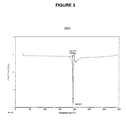
- Figure 3 is a characteristic differential scanning calorimetric (DSC) thermogram of Form A.
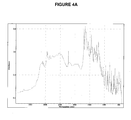
- Figure 4A is a characteristic Fourier transform infrared absorption (FT-IR) spectrum (4000-400 wavenumbers (cm-1)) of Form A.
- FT-IR Fourier transform infrared absorption
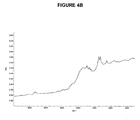
- Figure 4B is an expansion (4000-2500 cm-1) of the FT-IR spectrum of Figure 4A .
- Figure 4C is an expansion (2500-1500 cm-1) of the FT-IR spectrum of Figure 4A .
- Figure 4D is an expansion (1600-400 cm-1) of the FT-IR spectrum of Figure 4A .
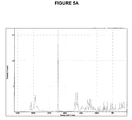
- Figure 5A is a characteristic FT-Raman spectrum (3600-0 cm-1) of Form A.
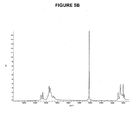
- Figure 5B is an expansion (3600-1500 cm-1) of the FT-Raman spectrum of Figure 5A .
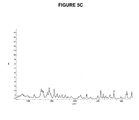
- Figure 5C is an expansion (1500-500 cm-1) of the FT-Raman spectrum of Figure 5A .
- Figure 5D is an expansion (500-100 cm-1) of the FT-Raman spectrum of Figure 5A .
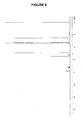
- Figure 6 is a solution proton nuclear magnetic resonance (1H NMR) spectrum of Form A.
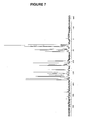
- Figure 7 is a solid state Carbon-13 nuclear magnetic resonance (13C NMR) spectrum of Form A.
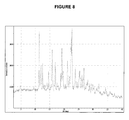
- Figure 8 (reference) is a characteristic XRPD spectrum of a mixture of Form A and Form B (Form A+B).
- Figure 9 (reference) is a characteristic TGA thermogram of Form A+B.
- Figure 10 (reference) is the TGA thermogram of a TG-IR analysis of Form A+B.
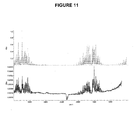
- Figure 11 (reference) is the linked ( ⁇ 5 minutes delay) IR spectrum of the TG-IR analysis of Form A+B.
- the bottom spectrum is the IR analysis of the volatiles evolved at ⁇ 5 minutes from the start of the TG analysis ( Figure 10 ).
- the top spectrum is a reference spectrum of water.
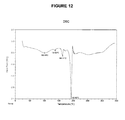
- Figure 12 (reference) is a characteristic DSC thermogram of Form A+B.
- Figure 13 (reference) is a moisture sorption and desorption isotherm of Form A+B.
- Figure 14 (reference) is a characteristic XRPD spectrum of Form C.
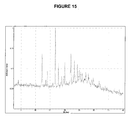
- Figure 15 (reference) is a characteristic XRPD spectrum of Form D.
- Figure 16 (reference) is a characteristic TGA thermogram of Form D.
- Figure 17 (reference) is a TGA thermogram of a TG-IR analysis of Form D.
- Figure 18 (reference) is the linked IR spectrum ( ⁇ 5 minutes delay) of the TG-IR analysis of Form D.
- the top spectrum is the IR spectrum of the volatiles evolved at ⁇ 5 minutes from the start of the TG analysis ( Figure 17 ).
- the bottom spectrum is a reference spectrum of water.
- Figure 19 (reference) is a characteristic DSC thermogram of Form D.
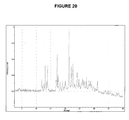
- Figure 20 (reference) is a characteristic XRPD spectrum of Form E.
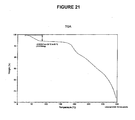
- Figure 21 (reference) is a characteristic TGA thermogram of Form E.
- Figure 22 (reference) is a characteristic DSC thermogram of Form E.
- Figure 23 (reference) is a moisture sorption and desorption isotherm of Form E.
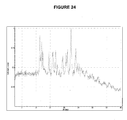
- Figure 24 (reference) is a characteristic XRPD spectrum of a mixture of Form A and Form F (Form A+F).
- Figure 25 (reference) is a characteristic XRPD spectrum of a mixture of Form A, Form E and Form G (Form A+E+G).
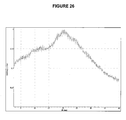
- Figure 26 (reference) is a characteristic XRPD spectrum of Amorphous Form.
- Figure 27 (reference) is a characteristic TGA thermogram of Amorphous Form.
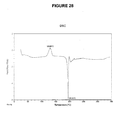
- Figure 28 (reference) is a characteristic DSC thermogram of Amorphous Form.
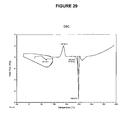
- Figure 29 is a DSC thermogram for assessing the glass transitional temperature of Amorphous Form.
- Figure 30 (reference) is a moisture sorption and desorption isotherm of Amorphous Form.
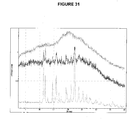
- Figure 31 shows XRPD spectra of Amorphous Form before (top) and after (middle) a moisture sorption/desorption analysis, and an XRPD pattern of Form A (bottom).
- the present invention is directed to method for preparing compositions comprising the succinic acid salt of 2-[6-(3-amino-piperidin-1-yl)-3-methyl-2,4-dioxo-3,4-dihydro-2 H -pyrimidin-1-ylmethyl]-4-fluoro-benzonitrile (Compound I) of the formula where at least Compound I is present in the composition as
- composition comprising a given compound
- crystalline content As one will appreciate, depending on how a composition comprising a given compound is produced and then, once produced, how the composition is stored and manipulated, will influence the crystalline content of the composition. Accordingly, it is possible for a composition to comprise higher concentrations of crystalline content.
- a compound may be present in a given composition in one or more different polymorphic forms, as well as optionally also being present as an amorphous material. This may be the result of (a) physically mixing two or more different polymorphic forms; (b) having two or more different polymorphic forms be generated from crystallization conditions; (c) having all or a portion of a given polymorphic form convert into another polymorphic form; (d) having all or a portion of a compound in an amorphous state convert into two or more polymorphic forms; as well as for a host of other reasons.
- Form A is
- compositions are provided where greater than 85%, 90%, 95%, 97%, or 99% or more of Compound I (by weight) is present in the composition as Form A.
- Crystal refers to a material, which may be hydrated and/or solvated, and has sufficient ordering of the chemical moiety to exhibit a discernable diffraction pattern by XRPD or other diffraction techniques. Often, a crystalline material that is obtained by direct crystallization of a compound dissolved in a solution or by interconversion of crystals obtained under different crystallization conditions, will have crystals that contain the solvent used in the crystallization, termed a crystalline solvate.
- crystallization conditions may result in the crystalline material having physical and chemical properties that are unique to the crystallization conditions, generally due to the orientation of the chemical moieties of the compound with respect to each other within the crystal and/or the predominance of a specific polymorphic form of the compound in the crystalline material.
- compositions may include amorphous content; the presence of the crystalline material among the amorphous material being detectably among other methods by the composition having a discernable diffraction pattern.
- the amorphous content of a crystalline material may be increased by grinding or pulverizing the material, which is evidenced by broadening of diffraction and other spectral lines relative to the crystalline material prior to grinding. Sufficient grinding and/or pulverizing may broaden the lines relative to the crystalline material prior to grinding to the extent that the XRPD or other crystal specific spectrum may become undiscernable, making the material substantially amorphous or quasi-amorphous.
- the material may be considered no longer a crystalline material, but instead be wholly amorphous. For material having increased amorphous content and wholly amorphous material, no peaks should be observed that would indicate grinding produces another form.
- Amorphous refers to a composition comprising a compound that contains too little crystalline content of the compound to yield a discernable pattern by XRPD or other diffraction techniques.
- Glassy materials are a type of amorphous material. Glassy materials do not have a true crystal lattice, and technically resembling very viscous non-crystalline liquids. Rather than being true solids, glasses may better be described as quasi-solid amorphous material.
- the baseline spectrum is often that of an unmanipulated crystalline form of a specific compound as obtained directly from a given set of physical and chemical conditions, including solvent composition and properties such as temperature and pressure.
- broadened can be used to describe the spectral lines of a XRPD spectrum of ground or pulverized material comprising a crystalline compound relative to the material prior to grinding.
- Formked as the term is used herein to describe DSC endotherms and exotherms, refers to overlapping endotherms or exotherms having distinguishable peak positions.
- Example 1 A representative method for synthesizing Compound I is provided in Example 1. It is noted, however, that other synthetic routes may also be used to synthesize Compound I including those disclosed in U.S. Patent Application Serial No. 11/080,992, filed March 15, 2005 , the disclosure of which is hereby incorporated by reference in its entirety.
- a given polymorph of a compound may be obtained by direct crystallization of the compound or by crystallization of the compound followed by inter-conversion from another polymorphic form or from an amorphous form.
- the resulting composition may contain different amounts of the compound in crystalline form as opposed to as an amorphous material.
- the resulting composition may contain differing mixtures of different polymorphic forms of the compound.
- compositions comprising a higher percentage of crystalline content (e.g ., forming crystals having fewer lattice defects and proportionately less glassy material) are generally prepared when using conditions that favor slower crystal formation, including slow solvent evaporation and those affecting kinetics. Crystallization conditions may be appropriately adjusted to obtain higher quality crystalline material as necessary. Thus, for example, if poor crystals are formed under an initial set of crystallization conditions, the solvent temperature may be reduced and ambient pressure above the solution may be increased relative to the initial set of crystallization conditions in order to slow down crystallization.
- Precipitation of a compound from solution is known to favor the compound forming an amorphous solid as opposed to crystals.
- a compound in an amorphous state may be produced by rapidly evaporating solvent from a solvated compound, or by grinding, pulverizing or otherwise physically pressurizing or abrading the compound while in a crystalline state.
- Compound I as prepared by the method described in Example 1 may be used as the starting material for preparation of all other polymorphic forms.
- the methods for testing the solubility of Compound I are described in Example 2, and the solubilities of Compound I in various solvents are summarized in Table A of Example 2. Poor solubility was observed in most solvents with the exceptions of dimethyl formamide (DMF), methanol, trifluoroethanol (TFE), water, and water:solvent mixtures.
- DMF dimethyl formamide
- TFE trifluoroethanol
- water and water:solvent mixtures.
- Form A Described herein are Form A, Form B, Form C, Form D, Form E, Form F, Form G, and Amorphous Form of Compound I. Where possible, the results of each test for each different polymorph are provided.
- Forms A, C, D and E were prepared as pure forms.
- Forms B, F, and G were prepared as mixtures with Form A.
- Form A may be prepared by crystallization from the various solvents and under the various crystallization conditions used during the polymorph screen (e.g., fast and slow evaporation, cooling of saturated solutions, slurries, and solvent/antisolvent additions).
- Tables B and C of Example 3 summarize the procedures by which Form A was prepared.
- Form A was obtained by room temperature slurry of an excess amount of Compound I in acetone, acetonitrile, dichloromethane, 1,4-dioxane, diethyl ether, hexane, methanol, isopropanol, water, ethylacetate, tetrahydrofuran, toluene, or other like solvents on a rotating wheel for approximately 5 or 7 days.
- the solids were collected by vacuum filtration, and air dried in the hood.
- Form A was precipitated from a methanol solution of Compound I by slow evaporation (SE).
- Form A was characterized by XRPD, TGA, hot stage microscopy, IR, Raman spectroscopy, solution 1 H-NMR, and solid state 13 C-NMR.
- the XRPD pattern confirmed that Form A was crystalline.
- Major X-Ray diffraction lines expressed in °2 ⁇ and their relative intensities are summarized in Table 1.
- Table 1 Characteristic XRPD Peaks (CuK ⁇ ) of Form A Peak No.
- the above set of XRPD peak positions or a subset thereof can be used to identify Form A.
- One subset comprises peaks at about 11.31, 11.91, 12.86, 14.54, 15.81, 16.83, 17.59, 19.26, 19.52, 21.04, 22.32, 26.63, and 29.87 °2 ⁇ .
- Another subset comprises peaks at about 11.31, 11.91, 19.26, 21.04, and 22.32 °2 ⁇ ; the peaks of this subset show no shoulder peaks or peak split greater than 0.2 °2 ⁇ .
- Another subset comprises peaks at about 11.31, 11.91 and 22.32 °2 ⁇ .
- Figure 2 is a TGA thermogram of Form A. TGA analysis showed that Form A exhibited insignificant weight loss when heated from 25 °C to 165 °C; this result is indicative that Form A was an anhydrous solid.
- Figure 3 shows a characteristic DSC thermogram of Form A. DSC analysis showed a single endothermic event occurred at approximately 195 °C (peak maximum). This endothermic event was confirmed by hot stage microscopy which showed the melting of Form A, which onset around 177 °C and the melting point estimated to be at approximately 184 °C.
- Figure 4 shows a characteristic FT-IR spectrum of Form A.
- the major bands expressed in reciprocal wavelengths are positioned at about 3815, 3736, 3675, 3460, 3402, 3141, 3098, 3068, 3049, 2953, 2934, 2854, 2760, 2625, 2536, 2481, 2266, 2225, 2176, 1990, 1890, 1699, 1657, 1638, 1626, 1609, 1586, 1553, 1517, 1492, 1478, 1450, 1419, 1409, 1380, 1351, 1327, 1289, 1271, 1236, 1206, 1180, 1158, 1115, 1087, 1085, 1064, 1037, 1027, 971, 960, 951, 926, 902, 886, 870, 831, 820, 806, 780, 760, 740, 728, 701, 685, 668, 637, 608, 594, 567, 558, and 516 cm
- This unique set of IR absorption bands or a subset thereof can be used to identify Form A.
- One such subset comprises absorption bands at about 3141, 3098, 3068, 3049, 2953, 2934, 2854, 2266, 2225, 1699, 1657, 1609, 1586, 1553, 1517, 1492, 1478, 1450, 1380, 1351, 1327, 1236, 1206, 1115, 1063, 902, 886, 870, 820, 780, 760, 685, 608, 594, and 516 cm -1 .
- Another subset comprises absorption bands at about 3141, 2953, 2934, 2854, 2266, 2225, 1699, 1657, 1450, 1206, 886, 760, 685, 594, and 516 cm -1 .
- Yet another subset comprises absorption bands at about 3141, 2953, 2934, 2266, 1699, 1657, 1450, and 1206 cm -1 .
- Figure 5 shows a characteristic Raman spectrum of Form A.
- the major Raman bands expressed in reciprocal wavelengths are positioned at about 3100, 3068, 3049, 2977, 2954, 2935, 2875, 2855, 2787, 2263, 2225, 2174, 1698, 1659, 1626, 1607, 1586, 1492, 1478, 1451, 1439, 1409, 1400, 1382, 1351, 1328, 1290, 1281, 1271, 1237, 1223, 1213, 1180, 1155, 1134, 1115, 1084, 1063, 1035, 971, 952, 926901, 868, 805, 780, 759, 740, 727, 701, 686, 669, 609, 594, 566, 558, 516, 487, 479, 433, 418, 409, 294, 274, 241, 218, 191 and 138 cm -1 (values rounded to the nearest whole number).
- This unique set of Raman bands or a subset thereof may be used to identify Form A.
- One such subset comprises Raman bands at about 2954, 2935, 2225, 1698, 1659, and 1607 cm -1 .
- Another subset comprises Raman bands at about 3068, 2954, 2935, 2225, 1698, 1659, 1607, 1586, 1223, 1180, 901, 780, 759, 669, and 516 cm -1 .
- Yet another subset comprises Raman bands at about 3100, 3068, 2225, 1698, 1659, 1607, 1586, 1351, 1237, 1223, 1180, 1155, 1134, 1115, 1063, 952, 926, 901, 868, 805, 780, 759, 740, 669, 609, and 516 cm -1 .
- Form A was further characterized by solution 1 H NMR and solid-state 13 carbon NMR. The spectra are reported in Figures 6 and 7 , respectively. Chemical assignments were not performed; however, the spectra are consistent with the known chemical structure of Compound I.
- a relative humidity stressing study (Example 19) showed that after storing under approximately 58% and 97% relative humidity for 29 days, Form A did not exhibit form changes as evidenced by XRPD. Additional relative humidity stressing studies, studies showed that Form B and Amorphous Form also converted to Form A.
- Form A was anhydrous and stable at ambient conditions.
- Form B was prepared as a mixture with Form A (hereinafter refers to as "Form A+B") (Example 5).
- Form A+B was characterized by XRPD, TGA, DSC, hot stage microscopy, TG-IR, and moisture sorption/desorption analysis.
- This unique set of XRPD peaks or a subset thereof can be used to identify Form A+B of Compound I.
- a subset set of peaks that is characteristic of Form B was obtained by subtracting the XRPD peak positions of Form A from those of Form A+B.
- This subset which may be used to identify the presence of Form B comprises peaks positioned at about 12.51, 18.83 and 24.46 °2 ⁇ .
- the TGA analysis ( Figure 9 ) indicated a 2.0% weight loss when Form A+B was heated from 25 °C to 98 °C and an additional 0.7% weight loss when heating continued from 98 °C to 175°C.
- Moisture sorption/desorption analysis ( Figure 13 and Example 23) showed a 0.7% weight loss on equilibration at 5% relative humidity. A reversible weight change of 1.2% weight was observed on sorption/desorption. XRPD analysis of the material remaining after the moisture sorption analysis was consistent with Form A.
- Form B may be converted to Form A under dehydrating conditions.
- Form A+B was stressed at 58% and 88% relative humidity for 23 days, the solids remained were Form A (Example 19).
- Form A+B was exposed to ambient conditions for two days and in a vacuum oven at ambient temperature for one day, Form A+B converted to Form A (Example 20).
- Form A+B was slurried in water and the water subsequently removed by evaporation, Form A+B converted to Form A (Example 21).
- Form B was a crystalline, hydrated solid.
- Form C was prepared by precipitation from an IPA solution of Compound I by slow cooling (Example 5). XRPD confirmed that Form C was crystalline.
- This unique set of XRPD peak positions or a subset thereof can be used to identify Form C.
- Particularly useful for identification of Form C are peaks at about 5.44 and 6.07 °2 ⁇ because these peaks did not exhibit a shoulder or peak split greater than 0.2 °2 ⁇ .
- Form D was precipitated by adding acetonitrile (a miscible antisolvent) to a water solution of Compound I (Example 6).
- the precipitates were characterized by solution 1 H NMR, XRPD, TGA, DSC, TG-IR, and hot stage microscopy.
- This above set of XRPD peak positions or a subset thereof can be used to identify Form D of Compound I.
- Particularly useful for identifying Form D are the subsets of peaks that comprise a peak located at about 24.33 °2 ⁇ and four other peaks selected from the group consisting of peaks at about 12.19, 14.04, 16.71, 17.75, 18.86, 19.96, 22.08, 22.88, 23.27, 25.02, 25.49, 26.03, and 27.99°2 ⁇ .
- More particularly useful are the subsets of peaks that comprise a peak located at about 24.33 °2 ⁇ and four other peaks selected from the group consisting of peaks at about 12.19, 16.71, 22.08, 22.88, and 23.27 °2 ⁇ .
- Other subsets of peaks that are useful for identifying Form D are those comprising the peaks at about 12.19, 22.88 and 24.33 °2 ⁇ , ⁇ 0.2 °2 ⁇ .
- Form D was formed when the Amorphous Form was vapor stressed (Example 22). TGA analysis ( Figure 16 ) showed that Form D exhibited an approximately 8% weight loss on equilibration, followed by a 21.9% weight loss from 25 °C to 85 °C. The approximately 30% total weight loss was consistent with approximately 11 moles of water.
- TG-IR analysis confirms that the weight loss from 20 °C to 100 °C was due to volatilization of water.
- Hot stage analysis showed the final melting of the solid at 192 °C (micrograph not included) which further substantiated that Form D converted to Form A which has a melting temperature of about 192 °C.
- Form E was precipitated by the evaporation of a H 2 O/ACN solvent/antisolvent solution of Compound I (Example 7).
- the precipitates were characterized by solution 1 H NMR, XRPD, TGA, DSC, TG-IR, hot stage microscopy, and moisture sorption/desorption analysis.
- the unique set of XRPD peak positions above or a subset thereof can be used to identify Form E.
- Such subsets of peaks may comprise any five peaks selecting from the group consisting of peaks at about 11.90, 12.66, 13.10, 13.59, 13.94, 17.15, 17.54, 21.27, 22.03, 22.61, 24.06, 24.70, 26.31, 27.34, and 31.10 °2 ⁇ .
- Another subset of peaks that may be used for identifying Form E comprises peaks located at about 13.10, 13.94, 17.15, 21.27, 26.31 and 27.34 °2 ⁇ .
- Hot stage analysis of Form E (micrographs not included) showed changes in birefringence at 59 °C and 81 °C, which was consistent with dehydration of the solid. Hot stage microscopy further showed that the approximate end of melt occurred at about 185°C.
- Moisture sorption/desorption data ( Figure 23 and Example 24) showed that Form E under dehydrating conditions convert to Form A.
- a 1.3% weight loss was observed on equilibration to 5% relative humidity.
- the sample gained approximately 5% weight on sorption from a 5-95% relative humidity change.
- a loss of approximately 6% weight was observed on desorption to 5% relative humidity.
- XRPD analysis on the post moisture sorption/desorption sample showed a mixture of Form A and Form E.
- Form F was prepared as a mixture with Form A (Form A+F) by precipitation from a THF:water (9:1) solution of Compound I under slow cooling crystallization conditions (Example 8). Precipitates of Form A+F was characterized by XRPD.
- the unique set of XRPD peaks above or a subset of peaks thereof can be used to identify Form A+F of Compound I.
- a subset of peaks which are characteristic of Form F alone was which may be used to identify Form F was obtained by subtracting the XRPD peaks of Form A from those of Form A+F; this subset comprises peaks at about 12.39, 20.63, 26.03, and 30.05 °2 ⁇ and may be used to identify the presence of Form E
- Form G was prepared as a mixture with Form A and Form E (Form A+E+G) by precipitation from a THF:water (9:1) solution of Compound I by slurrying at ambient conditions (Example 9).
- the precipitant was characterized by XRPD and was confirmed to be crystalline.
- the characteristic XRPD spectrum (CuK ⁇ ) of Form A+E+G is shown in Figure 25 .
- the major diffraction peaks expressed in °2 ⁇ and their relative intensities are summarized in Table 7.
- Table 7 Characteristic XRPD Peaks (CuK ⁇ ) of Form A+E+G Peak No.
- the unique set of XRPD peaks above or a subset thereof can be used to identify Form A+E+G of Compound I.
- a subset of peaks that is characteristic of Form G was obtained by subtracting the XRPD peaks of Form A and Form E from the XRPD spectrum of Form A+E+G; this subset comprised peaks positioned at about 13.22, 14.23, 18.62, 19.77, 24.36, 25.06, and 30.71 °2 ⁇ .
- This subset of characteristic peaks of Form G may be used for identifying the presence of Form G.
- the Amorphous Form of Compound I was prepared by lyophilization of an aqueous solution of Compound I (Example 10).
- the residue material was characterized by XRPD and the resulting XRPD spectrum displayed in Figure 26 .
- the XRPD spectrum shows a broad halo with no specific peaks present, which confirms that the material is amorphous.
- the material was further characterized by TGA, DSC, hot stage microscopy, and moisture sorption analysis.
- Moisture sorption/desorption data ( Figure 30 and Example 25) showed a 1.0% weight loss on equilibration at 5% relative humidity. Approximately 8% of weight was gained up to 65% relative humidity. Approximately 7% of weight was lost at 75% relative humidity. This is likely due to the recrystallization of the amorphous material to a crystalline solid. A 4.4% weight gain was observed on sorption from 75% to 95% relative humidity. Approximately 4.7% weight was lost on desorption from 95% to 5% relative humidity. The solid material remaining after the moisture sorption analysis was determined to be Form A by XRPD ( Figure 31 ).
- DPP-IV is believed to contribute to the pathology and/or symptomology of several different diseases such that reduction of the activity of DPP-IV in a subject through inhibition may be used to therapeutically address these disease states.
- Examples of various diseases that may be treated using Compound I of the present invention are described herein. It is noted that additional diseases beyond those disclosed herein may be later identified as the biological roles that DPP-IV plays in various pathways becomes more fully understood.
- Compound I may be used to treat or prevent diabetes and obesity related conditions.
- DPP-IV has been shown to be the primary degrading enzyme of GLP-1 (7-36), in vivo.
- GLP-1 (7-36) has multiple actions in vivo including the stimulation of insulin secretion, inhibition of glucagon secretion, the promotion of satiety, and the slowing of gastric emptying.
- the actions of GLP-1 (7-36) are believed to be beneficial in the prevention and treatment of type II diabetes and potentially obesity.
- DPP-IV degrades GLP-1 (7-36) efficiently to GLP-1 (9-36), which has been speculated to act as a physiological antagonist to GLP-1 (7-36).
- Inhibiting DPP-IV in vivo is therefore believed to be useful for potentiating endogenous levels of GLP-1 (7-36) and attenuating the formation of its antagonist GLP-1 (9-36).
- Compound I are believed to be useful in preventing, delaying the progression, and/or treating diabetes and more particularly, type 2 diabetes mellitus, diabetic dislipidemia, conditions of impaired glucose tolerance (IGT), conditions of impaired fasting plasma glucose (IFG), metabolic acidosis, ketosis, appetite regulation and obesity.
- Compound I may be used as immuno-suppressants (or cytokine release suppressant drugs).
- DPP-IV expression is increased in T-cells upon mitogenic or antigenic stimulation ( Mattem, T., et al., Scand. J. Immunol., 1991, 33, 737 ). It has been reported that inhibitors of DPP-IV and antibodies to DPP-IV suppress the proliferation of mitogen-stimulated and antigen-stimulated T-cells in a dose-dependant manner ( Schon, E., et al., Biol. Chem., 1991, 372, 305 ).
- T-lymphocytes Various other functions of T-lymphocytes such as cytokine production, IL-2 mediated cell proliferation and B-cell helper activity have been shown to be dependent on DPP-IV activity ( Schon, E., et al., Scand. J. Immunol., 1989, 29, 127 ).
- DPP-IV inhibitors based on boroProline, ( Flentke, G. R., et al., Proc. Nat. Acad. Sci. USA, 1991, 88, 1556 ) although unstable, were effective at inhibiting antigeninduced lymphocyte proliferation and IL-2 production in murine CD4 + T-helper cells.
- Such boronic acid inhibitors have been shown to have an effect in vivo in mice causing suppression of antibody production induced by immune challenge ( Kubota, T. et al., Clin. Exp. Immun., 1992, 89, 192 ).
- the role of DPP-IV in regulating T lymphocyte activation may also be attributed, in part, to its cell-surface association with the transmembrane phosphatase, CD45.
- DPP-IV inhibitors or non-active site ligands may possibly disrupt the CD45-DPP-IV association.
- CD45 is known to be an integral component of the T-cell signaling apparatus.
- DPP-IV is essential for the penetration and infectivity of HIV-1 and HIV-2 viruses in CD4 + T-cells ( Wakselman, M., Nguyen, C., Mazaleyrat, J.-P., Callebaut, C., Krust, B., Hovanessian, A. G., Inhibition of HIV-1 infection of CD26+ but not CD26- cells by a potent cyclopeptidic inhibitor of the DPP-IV activity of CD26, Abstract P.44 of the 24th European Peptide Symposium 1996 ).
- DPP-IV has been shown to associate with the enzyme adenosine deaminase (ADA) on the surface of T-cells ( Kameoka, J., et al., Science, 193, 26 466 ).
- ADA deficiency causes severe combined immunodeficiency disease (SCID) in humans.
- SCID severe combined immunodeficiency disease
- inhibitors of DPP-IV may be useful immunosuppressants (or cytokine release suppressant drugs) for the treatment of, among other things, organ transplant rejection; autoimmune diseases such as inflammatory bowel disease, multiple sclerosis and rheumatoid arthritis; and the treatment of AIDS.
- Compound I may be used for treating various cancers. It has been shown that lung endothelial cell DPP-IV is an adhesion molecule for lung-metastatic rat breast and prostate carcinoma cells ( Johnson, R. C., et al., J. Cell. Biol., 1993, 121, 1423 ). DPP-IV is known to bind to fibronectin and some metastatic tumor cells are known to carry large amounts of fibronectin on their surface. Potent DPP-IV inhibitors may be useful as drugs to prevent metastases of, for example, breast and prostrate tumors to the lungs.
- Compound I may be useful as agents to treat dermatological diseases such as psoriasis and lichen planus.
- High levels of DPP-IV expression have also been found in human skin fibroblast cells from patients with psoriasis, rheumatoid arthritis (RA) and lichen planus ( Raynaud, F., et al., J. Cell. Physiol., 1992, 151, 378 ). Therefore, DPP-IV inhibitors may be useful as agents to treat these conditions.
- Compound I may be useful as a male contraceptive agent, and for treating female infertility and amenorrhea.
- High DPP-IV activity has been found in tissue homogenates from patients with benign prostate hypertrophy and in prostatosomes. These are prostate derived organelles important for the enhancement of sperm forward motility ( Vanhoof, G., et al., Eur. J. Clin. Chem. Clin. Biochem., 1992, 30, 333 ).
- DPP-IV inhibitors may also act to suppress sperm motility and therefore act as a male contraceptive agent.
- DPP-IV inhibitors have been implicated as novel for treatment of infertility, and particularly human female infertility due to polycystic ovary syndrome (PCOS, Stein-Leventhal syndrome) which is a condition characterized by thickening of the ovarian capsule and formation of multiple follicular cysts. It results in infertility and amenorrhea.
- PCOS polycystic ovary syndrome
- Compound I may be used to modulate cleavage of various cytokines (stimulating hematopoietic cells), growth factors and neuropeptides. It was discovered that inhibitors of DPP-IV are useful for stimulating the growth and differentiation of hematopoietic cells in the absence of exogenously added cytokines or other growth factors or stromal cells. Stimulated hematopoietic cells are useful for the treatment of disorders that are characterized by a reduced number of hematopoietic cells or their precursors in vivo. Such conditions occur frequently in patients who are immunosuppressed, for example, as a consequence of chemotherapy and/or radiation therapy for cancer.
- Compound I may be useful in the treatment of short stature due to growth hormone deficiency (Dwarfism).
- DPP-IV in human plasma has been shown to cleave N-terminal Tyr-Ala from growth hormone-releasing factor and cause inactivation of the hormone. Accordingly, inhibiting DPP-IV will modulate its effect and may promote GH-dependent tissue growth or re-growth.
- Compound I may be useful for the regulation or normalization of neurological disorders.
- DPP-IV can cleave neuropeptides and has been shown to modulate the activity of neuroactive peptides substance P, neuropeptide Y and CLIP ( Mentlein, R., Dahms, P., Grandt, D., Kruger, R., Proteolytic processing of neuropeptide Y and peptide YY by DPP-IV, Regul. Pept., 49, 133, 1993 ; Wetzel, W., Wagner, T., Vogel, D., Demuth, H.-U., Balschun, D., Effects of the CLIP fragment ACTH 20-24 on the duration of REM sleep episodes, Neuropeptides, 31, 41, 1997 ).
- inhibiting DPP-IV would lessen its damaging effect on the neuropeptides.
- compositions may be administered, or coadministered with other active agents.
- additional active agents may include, for example, one or more other pharmaceutically active agents.
- Coadministration in the context of this invention is intended to mean the administration of more than one therapeutic agent, one of which includes Compound I.
- Such co-administration may also be coextensive, that is, occurring during overlapping periods of time or may be sequential, that is, occurring during non-overlapping periods of time. Examples of co-administration of Compound I with other active ingredients in a combination therapy are described in U.S. Patent Application Ser. No. 11/531,671, filed September 13, 2006 , the disclosure of which is expressly incorporated herein by reference in its entirety.
- Compound I may be administered in conjunction with other agents to inhibit undesirable and uncontrolled cell proliferation.
- anti-cell proliferation agents include, but are not limited to, retinoid acid and derivatives thereof, 2-methoxyestradiol, ANGIOSTATINTM protein, ENDOSTATINTM protein, suramin, squalamine, tissue inhibitor of metalloproteinase-I, tissue inhibitor of metalloproteinase-2, plasminogen activator inhibitor-1, plasminogen activator inhibitor-2, cartilage-derived inhibitor, paclitaxel, platelet factor 4, protamine sulfate (clupeine), sulfated chitin derivatives (prepared from queen crab shells), sulfated polysaccharide peptidoglycan complex (sp-pg), staurosporine, modulators of matrix metabolism, including for example, proline analogs ((1-azetidine-2-carboxylic acid (LACA)), c
- anti-angiogenesis agents include antibodies, preferably monoclonal antibodies against these angiogenic growth factors: bFGF, aFGF, FGF-5, VEGF isoforms, VEGF-C, HGF/SF and Ang-1/Ang-2.
- bFGF vascular endothelial growth factor
- FGF-5 vascular endothelial growth factor
- VEGF isoforms VEGF-C
- HGF/SF Ang-1/Ang-2.
- Ferrara N. and Alitalo, K. “Clinical application of angiogenic growth factors and their inhibitors" (1999) Nature Medicine 5:1359-1364 .
- Compound I may be administered by any route of administration. In particular embodiments, Compound I may be administered orally.
- compositions comprising Compound I Where Form A . Is Present
- Compound I may be used in various pharmaceutical compositions where at least 85% Compound I is present in the composition as Form A.
- the pharmaceutical composition should contain a sufficient quantity of Compound I to reduce dipeptidyl peptidases activity in vivo sufficiently to provide the desired therapeutic effect.
- Such pharmaceutical compositions may comprise Compound I present in the composition in a range of between 0.005% and 100% (weight/weight), optionally 0.1-95%, and optionally 1-95%.
- Form A comprises at least 85%, 90%, 95%, 97%, or 99% of the total amount of Compound I (weight/weight) in the pharmaceutical composition.
- the pharmaceutical composition may comprise one or more additional components that do not deleteriously affect the use of Compound I.
- the pharmaceutical compositions may include, in addition to Compound I, conventional pharmaceutical carriers; excipients; diluents; lubricants; binders; wetting agents; disintegrating agents; glidants; sweetening agents; flavoring agents; emulsifying agents; solubilizing agents; pH buffering agents; perfuming agents; surface stabilizing agents; suspending agents; and other conventional, pharmaceutically inactive agents.
- the pharmaceutical compositions may comprise lactose, mannitol, glucose, sucrose, dicalcium phosphate, magnesium carbonate, sodium saccharin, carboxymethylcellulose, magnesium stearate, calcium stearate, sodium crosscarmellose, talc, starch, natural gums ( e.g ., gum acaciagelatin), molasses, polyvinylpyrrolidine, celluloses and derivatives thereof, povidone, crospovidones acetate, sodium citrate, cyclodextrine derivatives, sorbitan monolaurate, triethanolamine sodium acetate, triethanolamine oleate, biocompatible polymers, such as collagen, ethylene vinyl acetate, polyanhydrides, polyglycolic acid, polyorthoesters, polylactic acid and others such agents.
- biocompatible polymers such as collagen, ethylene vinyl acetate, polyanhydrides, polyglycolic acid, polyorthoesters, polylactic acid and others such agents.
- compositions according to the present invention may be adapted for administration by any of a variety of routes.
- pharmaceutical compositions according to the present invention can be administered orally, parenterally, intraperitoneally, intravenously, intraarterially, topically, transdermally, sublingually, intramuscularly, rectally, transbuccally, intranasally, liposomally, via inhalation, vaginally, intraoccularly, via local delivery (for example, by catheter or stent), subcutaneously, intraadiposally, intraarticularly, or intrathecally, optionally in a slow release dosage form.
- the pharmaceutical compounds are administered orally, by inhalation or by injection subcutaneously, intramuscularly, intravenously or directly into the cerebrospinal fluid.
- compositions of the present invention may be prepared in a gaseous, liquid, semi-liquid, gel, or solid form, and formulated in a manner suitable for the route of administration to be used.
- compositions according to the present invention are optionally provided for administration to humans and animals in unit dosage forms or multiple dosage forms, such as tablets, capsules, pills, powders, dry powders for inhalers, granules, sterile parenteral solutions or suspensions, oral solutions or suspensions, oil-water emulsions, sustained release formulations, such as, but not limited to, implants and microencapsulated delivery systems, containing suitable quantities of Compound I.
- dosage forms are known in the art, and will be apparent to those skilled in this art; for example, see Remington's Pharmaceutical Sciences, 19th Ed. (Easton, Pa.: Mack Publishing Company, 1995 ).
- Unit-dose forms refers to physically discrete units suitable for human and animal subjects and packaged individually as is known in the art. Each unit-dose contains a predetermined quantity of Compound I sufficient to produce the desired therapeutic effect, in association with a pharmaceutical carrier, vehicle or diluent. Examples of unit-dose forms include ampoules and syringes, and individually packaged tablets or capsules. Unit-dose forms may be administered in fractions or multiples thereof.
- a multiple-dose form is a plurality of identical unit-dosage forms packaged in a single container to be administered in segregated unit-dose form. Examples of multiple-dose forms include vials, bottles of tablets or capsules, or bottles of pints or gallons. Hence, multiple dose form may be viewed as a multiple of unit-doses that are not segregated in packaging.
- the total amount of Compound I in a pharmaceutical composition according to the present invention should be sufficient to a desired therapeutic effect.
- This amount may be delivered as a single per day dosage, multiple dosages per day to be administered at intervals of time, or as a continuous release dosage form.
- Compound I may advantageously be used when administered to a patient at a daily dose of between 1 mg/day and 250 mg/day of Compound I, optionally between 2.5 mg and 200 mg of Compound I, optionally between 2.5 mg and 150 mg of Compound I, and optionally between 5 mg and 100 mg of Compound I (in each instance based on the molecular weight of the free base form of Compound I).
- compositions of the present invention may be in the form of a single dose form comprising between 1 mg/day and 250 mg/day of Compound I, optionally between 2.5 mg and 200 mg of Compound I, optionally between 2.5 mg and 150 mg of Compound I, and optionally between 5 mg and 100 mg of Compound I.
- the pharmaceutical composition comprises 2.5 mg, 5 mg, 6.25 mg, 10 mg, 20 mg, 25 mg, 50 mg, 75 mg or 100 mg of Compound I.
- Oral pharmaceutical dosage forms may be as a solid, gel or liquid where at least 85% of Compound I is present in the composition as Form A.
- Compound I is provided as solid dosage forms.
- solid dosage forms include, but are not limited to pills, tablets, troches, capsules, granules, and bulk powders. More specific examples of oral tablets include compressed, chewable lozenges, troches and tablets that may be enteric-coated, sugarcoated or film-coated.
- capsules include hard or soft gelatin capsules.
- Granules and powders may be provided in non-effervescent or effervescent forms. The powders may be prepared by lyophilization or by other suitable methods.
- the tablets, pills, capsules, troches and the like may optionally contain one or more of the following ingredients, or compounds of a similar nature: a binder; a diluent; a disintegrating agent; a lubricant; a glidant; a coloring agent; a sweetening agent; a flavoring agent; and a wetting agent.
- binders examples include, but are not limited to, microcrystalline cellulose, gum tragacanth, glucose solution, acacia mucilage, gelatin solution, sucrose, and starch paste.
- diluents examples include, but are not limited to, lactose, sucrose, starch, kaolin, salt, mannitol, and dicalcium phosphate.
- disintegrating agents examples include, but are not limited to, crosscarmellose sodium, sodium starch glycolate, alginic acid, corn starch, potato starch, bentonite, methylcellulose, agar and carboxymethylcellulose.
- lubricants examples include, but are not limited to, talc, starch, magnesium or calcium stearate, lycopodium and stearic acid.
- glidants examples include, but are not limited to, colloidal silicon dioxide.
- coloring agents examples include, but are not limited to, any of the approved certified water soluble FD and C dyes, mixtures thereof; and water insoluble FD and C dyes suspended on alumina hydrate.
- sweetening agents examples include, but are not limited to, sucrose, lactose, mannitol and artificial sweetening agents such as sodium cyclamate and saccharin, and any number of spray-dried flavors.
- flavoring agents examples include, but are not limited to, natural flavors extracted from plants such as fruits and synthetic blends of compounds that produce a pleasant sensation, such as, but not limited to peppermint and methyl salicylate.
- wetting agents examples include, but are not limited to, propylene glycol monostearate, sorbitan monooleate, diethylene glycol monolaurate, and polyoxyethylene lauryl ether.
- anti-emetic coatings examples include, but are not limited to, fatty acids, fats, waxes, shellac, ammoniated shellac and cellulose acetate phthalates.
- film coatings examples include, but are not limited to, hydroxyethylcellulose, sodium carboxymethylcellulose, polyethylene glycol 4000 and cellulose acetate phthalate.
- Compound I may optionally be provided in a composition that protects it from the acidic environment of the stomach.
- the composition can be formulated in an enteric coating that maintains its integrity in the stomach and releases the active compound in the intestine.
- the composition may also be formulated in combination with an antacid or other such ingredient.
- dosage unit form When the dosage unit form is a capsule, it may optionally additionally comprise a liquid carrier such as a fatty oil.
- dosage unit forms may optionally additionally comprise various other materials that modify the physical form of the dosage unit, for example, coatings of sugar and other enteric agents.
- Compound I may also be administered as a component of an elixir, emulsion, suspension, microsuspension, syrup, wafer, sprinkle, chewing gum or the like.
- a syrup may optionally comprise, in addition to the active compounds, sucrose as a sweetening agent and certain preservatives, dyes, colorings, and flavors.
- liquid or semi-solid oral formulations may be prepared by dissolving or dispersing the active compound or salt in vegetable oils, glycols, triglycerides, propylene glycol esters (e.g. propylene carbonate) and other such carriers, and encapsulating these solutions or suspensions in hard or soft gelatin capsule shells.
- Other useful formulations include those set forth in U.S. Pat. Nos. Re 28,819 and 4,358,603 .
- Exemplary tablet formulations are provided below. It is noted that the examples are, by way of illustration but not limitation. It is also noted that Compound I is present in the formulation in at least 85% by weight of Form A. It is also noted that the formulations provided herein may be varied as is known in the art.
- Compound I present in at least 85% by weight of Form A may be formulated for parenteral administration.
- Parenteral administration generally characterized by injection, either subcutaneously, intramuscularly or intravenously. Implantation of a slow-release or sustained-release system, such that a constant level of dosage is maintained (see, e.g., U.S. Pat. No. 3,710,795 ) is also contemplated herein.
- the percentage of active compound contained in such parenteral compositions is highly dependent on the route of administration and the indication of disease to be treated.
- Injectables may be prepared in any conventional form. These formulations include, but are not limited to, sterile solutions, suspensions, microsuspensions, and emulsions ready for injection, and solid forms, e.g., lyophilized or other powders including hypodermic tablets, ready to be combined with a carrier just prior to use. Generally, the resulting formulation may be a solution, microsuspension, suspension and emulsion.
- the carrier may be an aqueous, non-aqueous liquid, or a solid vehicle that can be suspended in liquid.
- Examples of carriers that may be used in conjunction with injectables according to the present invention include, but are not limited to water, saline, dextrose, glycerol or ethanol.
- the injectable compositions may also optionally comprise minor amounts of non-toxic auxiliary substances such as wetting or emulsifying agents, pH buffering agents, stabilizers, solubility enhancers, and other such agents, such as for example, sodium acetate, sorbitan monolaurate, triethanolamine oleate and cyclodextrins.
- suitable carriers include, but are not limited to physiological saline or phosphate buffered saline (PBS), and solutions containing thickening and solubilizing agents, such as glucose, polyethylene glycol, and polypropylene glycol and mixtures thereof.
- PBS physiological saline or phosphate buffered saline
- thickening and solubilizing agents such as glucose, polyethylene glycol, and polypropylene glycol and mixtures thereof.
- Examples of pharmaceutically acceptable carriers that may optionally be used in parenteral preparations include, but are not limited to aqueous vehicles, nonaqueous vehicles, antimicrobial agents, isotonic agents, buffers, antioxidants, local anesthetics, suspending and dispersing agents, emulsifying agents, sequestering or chelating agents and other pharmaceutically acceptable substances.
- aqueous vehicles examples include Sodium Chloride Injection, Ringers Injection, Isotonic Dextrose Injection, Sterile Water Injection, Dextrose and Lactated Ringers Injection.
- nonaqueous parenteral vehicles examples include fixed oils of vegetable origin, cottonseed oil, corn oil, sesame oil and peanut oil.
- Antimicrobial agents in bacteriostatic or fungistatic concentrations may be added to parenteral preparations, particularly when the preparations are packaged in multiple-dose containers and thus designed to be stored and multiple aliquots to be removed.
- antimicrobial agents include phenols or cresols, mercurials, benzyl alcohol, chlorobutanol, methyl and propyl p-hydroxybenzoic acid esters, thimerosal, benzalkonium chloride and benzethonium chloride.
- Examples of isotonic agents that may be used include sodium chloride and dextrose.
- Examples of buffers that may be used include phosphate and citrate.
- antioxidants that may be used include sodium bisulfate.
- Examples of local anesthetics that may be used include procaine hydrochloride.
- Examples of suspending and dispersing agents that may be used include sodium carboxymethylcellulose, hydroxypropyl methylcellulose and polyvinylpyrrolidone.
- Examples of emulsifying agents that may be used include Polysorbate 80 (TWEEN 80).
- a sequestering or chelating agent of metal ions includes EDTA.
- Pharmaceutical carriers may also optionally include ethyl alcohol, polyethylene glycol and propylene glycol for water miscible vehicles and sodium hydroxide, hydrochloric acid, citric acid or lactic acid for pH adjustment.
- the concentration of Compound I in the parenteral formulation may be adjusted so that an injection administers a pharmaceutically effective amount sufficient to produce the desired pharmacological effect.
- concentration of Compound I and/or dosage to be used will ultimately depend on the age, weight and condition of the patient or animal as is known in the art.
- Unit-dose parenteral preparations may be packaged in an ampoule, a vial or a syringe with a needle. All preparations for parenteral administration should be sterile, as is known and practiced in the art.
- Injectables may be designed for local and systemic administration.
- a therapeutically effective dosage is formulated to contain a concentration of at least about 0.1% w/w up to about 90% w/w or more, preferably more than 1% w/w of Compound I to the treated tissue(s).
- Compound I may be administered at once, or may be divided into a number of smaller doses to be administered at intervals of time. It is understood that the precise dosage and duration of treatment will be a function of the location of where the composition is parenterally administered, the carrier and other variables that may be determined empirically using known testing protocols or by extrapolation from in vivo or in vitro test data. It is to be noted that concentrations and dosage values may also vary with the age of the individual treated.
- Compound I may optionally be suspended in micronized or other suitable form or may be derivatized to produce a more soluble active product or to produce a prodrug.
- the form of the resulting mixture depends upon a number of factors, including the intended mode of administration and the solubility of the compound in the selected carrier or vehicle.
- the effective concentration is sufficient for ameliorating the symptoms of the disease state and may be empirically determined.
- Compound I in at least 85% of Form A may be prepared as powders, which can be reconstituted for administration as solutions, emulsions and other mixtures.
- the powders may also be formulated as solids or gels.
- Powders of Compound I may be prepared by grinding, spray drying, lyophilzation and other techniques that are well known in the art.
- Sterile, lyophilized powder may be prepared by dissolving Compound I in a sodium phosphate buffer solution containing dextrose or other suitable excipient. Subsequent sterile filtration of the solution followed by lyophilization under standard conditions known to those of skill in the art provides the desired formulation.
- the lyophilized powder may optionally be prepared by dissolving dextrose, sorbitol, fructose, corn syrup, xylitol, glycerin, glucose, sucrose or other suitable agent, about 1-20%, preferably about 5 to 15%, in a suitable buffer, such as citrate, sodium or potassium phosphate or other such buffer known to those of skill in the art at, typically, about neutral pH.
- a suitable buffer such as citrate, sodium or potassium phosphate or other such buffer known to those of skill in the art at, typically, about neutral pH.
- Compound I is added to the resulting mixture, preferably above room temperature, more preferably at about 30-35 °C, and stirred until it dissolves.
- the resulting mixture is diluted by adding more buffer to a desired concentration.
- the resulting mixture is sterile filtered or treated to remove particulates and to insure sterility, and apportioned into vials for lyophilization.
- Each vial may contain a single dosage or
- Topical mixtures may be used for local and systemic administration.
- the resulting mixture may be a solution, suspension, microsuspension, emulsions or the like and are formulated as creams, gels, ointments, emulsions, solutions, elixirs, lotions, suspensions, tinctures, pastes, foams, aerosols, irrigations, sprays, suppositories, bandages, dermal patches or any other formulations suitable for topical administration.
- Compound I may be formulated for topical applications to the respiratory tract.
- These pulmonary formulations can be in the form of an aerosol, solution, emulsion, suspension, microsuspension for a nebulizer, or as a microfine powder for insufflation, alone or in combination with an inert carrier such as lactose.
- the particles of the formulation will typically have diameters of less than 50 microns, preferably less than 10 microns.
- Examples of aerosols for topical application, such as by inhalation are disclosed in U.S. Pat. Nos. 4,044,126 , 4,414,209 , and 4,364,923 , which describe aerosols for delivery of a steroid useful for treatment inflammatory diseases, particularly asthma.
- Compound I may also be formulated for local or topical application, such as for topical application to the skin and mucous membranes, such as in the eye, in the form of gels, creams, and lotions and for application to the eye or for intracisternal or intraspinal application.
- Topical administration is contemplated for transdermal delivery and also for administration to the eyes or mucosa, or for inhalation therapies.
- Nasal solutions or suspensions of Compound I alone or in combination with other pharmaceutically acceptable excipients can also be administered.
- Compound I present in at least 85% by weight 85% by weight of Form A may be formulated for other routes of administration, such as topical application, transdermal patches, and rectal administration, may also be used.
- routes of administration such as topical application, transdermal patches, and rectal administration
- pharmaceutical dosage forms for rectal administration are rectal suppositories, capsules and tablets for systemic effect.
- Rectal suppositories are used herein mean solid bodies for insertion into the rectum that melt or soften at body temperature releasing one or more pharmacologically or therapeutically active ingredients.
- Pharmaceutically acceptable substances utilized in rectal suppositories are bases or vehicles and agents to raise the melting point.
- bases examples include cocoa butter (theobroma oil), glycerin-gelatin, carbowax, (polyoxyethylene glycol) and appropriate mixtures of mono-, di- and triglycerides of fatty acids. Combinations of the various bases may be used.
- Agents to raise the melting point of suppositories include spermaceti and wax. Rectal suppositories may be prepared either by the compressed method or by molding. The typical weight of a rectal suppository is about 2 to 3 gm. Tablets and capsules for rectal administration may be manufactured using the same pharmaceutically acceptable substance and by the same methods as for formulations for oral administration.
- the present invention is also directed to kits and other articles of manufacture for treating diseases associated with dipeptidyl peptidases. It is noted that diseases are intended to cover all conditions for which the dipeptidyl peptidases possesses activity that contributes to the pathology and/or symptomology of the condition.
- a kit is described herein that comprises a pharmaceutical composition comprising Compound I where greater than 85%, 90%, 95%, 97% or 99% of Compound I (by weight) is present as Form A, and instructions for use of the kit.
- the composition comprises at least 0.1%, 0.25%, 0.5%, 1%, 5%, 10%, 25%, 50%, 75%, 80%, 85%, 90%, 95%, 97%, or 99% of Compound 1.
- the instructions may indicate the disease state for which the composition is to be administered, storage information, dosing information and/or instructions regarding how to administer the composition.
- the kit may also comprise packaging materials.
- the packaging material may comprise a container for housing the composition.
- the kit may also optionally comprise additional components, such as syringes for administration of the composition.
- the kit may comprise the composition in single or multiple dose forms.
- composition comprising Compound I where greater than 85%, 90%, 95%, 97% or 99% of Compound I (by weight) is present in the composition as Form A; and packaging materials.
- the composition comprises at least 0.1%, 0.25%, 0.5%, 1%, 5%, 10%, 25%, 50%, 75%, 80%, 85%, 90%, 95%, 97%, or 99% of Compound I.
- the packaging material may comprise a container for housing the composition.
- the container may optionally comprise a label indicating the disease state for which the composition is to be administered, storage information, dosing information and/or instructions regarding how to administer the composition.
- the kit may also optionally comprise additional components, such as syringes for administration of the composition.
- the kit may comprise the composition in single or multiple dose forms.
- the packaging material used in kits and articles of manufacture according to the present invention may form a plurality of divided containers such as a divided bottle or a divided foil packet.
- the container can be in any conventional shape or form as known in the art which is made of a pharmaceutically acceptable material, for example a paper or cardboard box, a glass or plastic bottle or jar, a re-sealable bag (for example, to hold a "refill" of tablets for placement into a different container), or a blister pack with individual doses for pressing out of the pack according to a therapeutic schedule.
- the container that is employed will depend on the exact dosage form involved, for example a conventional cardboard box would not generally be used to hold a liquid suspension.
- kits can be used together in a single package to market a single dosage form.
- tablets may be contained in a bottle that is in turn contained within a box.
- the kit includes directions for the administration of the separate components.
- the kit form is particularly advantageous when the separate components are preferably administered in different dosage forms (e.g. , oral, topical, transdermal and parenteral), are administered at different dosage intervals, or when titration of the individual components of the combination is desired by the prescribing physician.
- Blister packs are well known in the packaging industry and are being widely used for the packaging of pharmaceutical unit dosage forms (tablets, capsules, and the like). Blister packs generally consist of a sheet of relatively stiff material covered with a foil of a preferably transparent plastic material. During the packaging process recesses are formed in the plastic foil. The recesses have the size and shape of individual tablets or capsules to be packed or may have the size and shape to accommodate multiple tablets and/or capsules to be packed. Next, the tablets or capsules are placed in the recesses accordingly and the sheet of relatively stiff material is sealed against the plastic foil at the face of the foil which is opposite from the direction in which the recesses were formed.
- the tablets or capsules are individually sealed or collectively sealed, as desired, in the recesses between the plastic foil and the sheet.
- the strength of the sheet is such that the tablets or capsules can be removed from the blister pack by manually applying pressure on the recesses whereby an opening is formed in the sheet at the place of the recess. The tablet or capsule can then be removed via said opening.
- kits are a dispenser designed to dispense the daily doses one at a time in the order of their intended use.
- the dispenser is equipped with a memory-aid, so as to further facilitate compliance with the regimen.
- a memory-aid is a mechanical counter that indicates the number of daily doses that has been dispensed.
- a batterypowered micro-chip memory coupled with a liquid crystal readout, or audible reminder signal which, for example, reads out the date that the last daily dose has been taken and/or reminds one when the next dose is to be taken.
- Compound I may be prepared by the following synthetic route (Scheme 1):
- Compound B was prepared by refluxing a mixture of 2-bromo-5-fluoro-toluene (Compound A ) (3.5 g, 18.5 mmol) and CuCN (2 g, 22 mmol) in DMF (100 mL) for 24 hours. The reaction was diluted with water and extracted with hexane. The organics were dried over MgSO 4 and the solvent removed to give product B (yield 60%).
- Compound C was prepared by refluxing a mixture of 4-fluoro-2-methylbenzonitrile (Compound B ) (2 g, 14.8 mmol), N-bromosuccinimide (NBS) (2.64 g, 15 mmol) and azo-bis-isobutyronitrile (AIBN) (100 mg) in CCl 4 under nitrogen for 2 hours. The reaction was cooled to room temperature. The solid was removed by filtration. The organic solution was concentrated to give the crude product the form of an oil, which was used in the next step without further purification.
- Compound B 4-fluoro-2-methylbenzonitrile
- NBS N-bromosuccinimide
- AIBN azo-bis-isobutyronitrile
- Compound E was prepared by stirring a mixture of crude 3-methyl-6-chlorouracil D (0.6 g, 3.8 mmol), 2-bromomethyl-4-fluorobenzonitrile (0.86 g, 4 mmol) and K 2 CO 3 (0.5 g, 4 mmol) in DMSO (10 mL) at 60° C for 2 hours. The reaction was diluted with water and extracted with EtOAc. The organics were dried over MgSO 4 and the solvent removed. The residue was purified by column chromatography. 0.66 g of the product was obtained (yield: 60%).
- Compound F was prepared by mixing and stirring 2-(6-chloro-3-methyl-2,4-dioxo-3,4-dihydro-2H-pyrimidin-1-ylmethyl)-4-fluoro-benzonitrile (Compound E ) (300 mg, 1.0 mmol), (R)-3-amino-piperidine dihydrochloride (266 mg, 1.5 mmol) and sodium bicarbonate (500 mg, 5.4 mmol) in a sealed tube in EtOH (3 mL) at 100 °C for 2 hrs. The final compound was obtained as trifluoroacetate (TFA) salt after HPLC purification.
- Compound I such prepared was found to be crystalline as determined by x-ray powder diffraction analysis ( Figure 1 ). The crystal material was designated Form A.
- Compound I prepared by the method described in Example 1 was used for the solubility study. Solvents and other reagents were of ACS or HPLC grade and were used as received.
- a weighed sample (typically about 20-25 mg) of Compound I was treated at ambient temperature with aliquots (typically ⁇ 50 ⁇ L) of the test solvent with sonication between additions.
- Solvents were either reagent or HPLC grade. Solubility was estimated from the total volume of solvent used to obtain a clear solution, as determined by visual inspection. Solubility is expressed as "less than” when dissolution was not observed. If dissolution occurred after the last aliquot was added then solubility is expressed as "greater than or equal to" ( ⁇ ). The actual solubilities may be greater than determined, due to over addition of solvent (large aliquots) or slow dissolution rates. Approximate solubilities of Compound I are summarized in Table A.
- Compound I as prepared by the method described in Example 1 was used as the starting material for the polymorph screen. Solvents and other reagents were of ACS or HPLC grade and were used as received.
- Solids for form identification were prepared via the following methods from Compound I.
- a solution of Compound I was prepared in test solvents. The sample was placed in the hood, uncovered, to evaporate under ambient conditions. The solids were analyzed by XRPD for form identification.
- a solution of Compound I was prepared in test solvents. The sample was placed in the hood, covered with foil rendered with pinholes, to evaporate under ambient conditions. The solids were analyzed by XRPD for form identification.
- a saturated or near saturated solution of Compound I was prepared at elevated temperature.
- the samples were filtered through warmed 0.2 ⁇ m filters into warmed vials.
- the heat source was turned off and the samples slowly cooled to ambient temperature. If precipitation did not occur within a day the samples were placed in the refrigerator.
- the samples were transferred to a freezer if precipitation did not occur within several days.
- the solids were collected by decanting the solvent or vacuum filtration, dried in the hood and analyzed by XRPD for form identification.
- a saturated or near saturated solution of Compound I was prepared at elevated temperature.
- the samples were filtered through warmed 0.2 ⁇ m filters into warmed vials then rapidly cooled in an acetone/dry ice or ice bath. If precipitation did not occur after several minutes the samples were placed in the refrigerator or freezer. Solids were collected by decanting solvent or vacuum filtration, dried in the hood, and then analyzed by XRPD. Samples that did not precipitate under subambient conditions after several days were evaporated in the hood and analyzed by XRPD for form identification.
- a solution of Compound I was prepared in test solvent.
- a miscible antisolvent was added with a disposable pipette.
- Precipitate was collected by vacuum filtration or decanting solvent. The samples were stored under subambient conditions if precipitation did not occur. If solids were not observed after several days the samples were evaporated in the hood. Collected solids were analyzed by XRPD for form identification.
- Samples of Compound I were placed uncovered in approximately 58%, 88%, and 97% relative humidity jars. The samples were stored in the jars for approximately 8 days. The solids were collected and analyzed by XRPD for form identification.
- Compound I was dissolved in water in a glass vial. The solution was frozen by swirling the vial in an acetone/dry ice bath. The frozen sample was placed on the lyophilizer until all of the frozen solvent was removed. The solids were collected and analyzed by XRPD for form identification.
- Hydrated samples of Compound I were dehydrated at ambient conditions (2 days) and in an ambient temperature vacuum oven (1 day). The solids were collected and analyzed by XRPD for form identification.
- Amorphous Compound I was placed in acetone, ethanol, and water vapor chambers for up to eight days. The solids were collected and analyzed by XRPD for form identification.
- X-ray powder diffraction (XRPD) analyses were performed using an Inel XRG-3000 diffractometer equipped with a CPS (Curved Position Sensitive) detector with a 20 (2 ⁇ ) range of 120°.
- Real time data were collected using Cu-K ⁇ radiation starting at approximately 4 °2 ⁇ at a resolution of 0.03 °2 ⁇ .
- the tube voltage and amperage were set to 40 kV and 30 mA, respectively.
- the pattern is displayed from 2.5 to 40 °2 ⁇ .
- Samples were prepared for analysis by packing them into thin-walled glass capillaries. Each capillary was mounted onto a goniometer head that is motorized to permit spinning of the capillary during data acquisition. The samples were analyzed for approximately 5 minutes. Instrument calibration was performed using a silicon reference standard. Peak picking was performed using the automatic peak picking in the Shimadzu XRD-6000 Basic Process version 2.6. The files were converted to Shimadzu format before performing the peak picking analysis. Default parameters were used to select the
- Thermogravimetric (TG) analyses were performed using a TA Instruments 2950 thermogravimetric analyzer. Each sample was placed in an aluminum sample pan and inserted into the TG furnace. The furnace was first equilibrated at 25 °C, then heated under nitrogen at a rate of 10 °C/min, up to a final temperature of 350°C. Nickel and AlumelTM were used as the calibration standards.
- DSC Differential scanning calorimetry
- the sample cell was equilibrated at ambient temperature, then heated under nitrogen at a rate of 20 °C/min, up to 100°C. The sample cell was then allowed to cool and equilibrate at -20 °C. It was again heated at a rate of 20 °C/min up to 100 °C and then cooled and equilibrated at -20°C. The sample cell was then heated at 20 °C/min up to a final temperature of 350 °C. The T g is reported from the onset point of the transition.
- Hot stage microscopy was performed using a Linkam hot stage (model FTIR 600) mounted on a Leica DM LP microscope.
- the samples were prepared between two cover glasses and observed using a 20x objective with crossed polarizers and first order compensator. Each sample was visually observed as the stage was heated. Images were captured using a SPOT InsightTM color digital camera with SPOT Software v. 3.5.8.
- the hot stage was calibrated using USP melting point standards.
- TG-IR Thermogravimetric infrared analyses were acquired on a TA Instruments thermogravimetric (TG) analyzer model 2050 interfaced to a Magna 560 ® Fourier transform infrared (FT-IR) spectrophotometer (Thermo Nicolet) equipped with an Ever-Glo mid/far IR source, a potassium bromide (KBr) beamsplitter, and a deuterated triglycine sulfate (DTGS) detector.
- Each sample was placed in a platinum sample pan, inserted into the TG furnace, accurately weighed by the instrument, and the furnace was heated from ambient temperature to 250 °C at a rate of 20 °C/min.
- the TG instrument was started first, immediately followed by the FT-IR instrument. Each IR spectrum represents 32 co-added scans collected at a spectral resolution of 4 cm -1 . A background scan was collected before the beginning of the experiment. Wavelength calibration was performed using polystyrene.
- the TG calibration standards were nickel and AlumelTM. Volatiles were identified from a search of the High Resolution Nicolet TGA Vapor Phase spectral library.
- Infrared spectra were acquired on a Magna-IR 560 ® or 860 ® Fourier transform infrared (FT-IR) spectrophotometer (Thermo Nicolet) equipped with an Ever-Glo mid/far IR source, an extended range potassium bromide (KBr) beamsplitter, and a deuterated triglycine sulfate (DTGS) detector.
- FT-IR Fourier transform infrared
- a background data set was acquired on a sample of KBr.
- Wavelength calibration was performed using polystyrene.
- Automatic peak picking was performed using Omnic version 7.2.
- FT-Raman spectra were acquired on a Raman accessory module interfaced to a Magna 860 ® Fourier transform infrared (FT-1R) spectrophotometer (Thermo Nicolet). This module uses an excitation wavelength of 1064 nm and an indium gallium arsenide (InGaAs) detector. Approximately 0.5 W of Nd:YVO 4 laser power was used to irradiate the sample. The samples were prepared for analysis by placing the material in a glass tube and positioning the tube in a gold-coated tube holder in the accessory. A total of 256 sample scans were collected from at a spectral resolution of 4 cm -1 , using Happ-Genzel apodization. Wavelength calibration was performed using sulfur and cyclohexane. Automatic peak picking was performed using Omnic version 7.2.
- the spectrum was acquired with phase modulated (SPINAL-64) high power 1 H decoupling during the acquisition time using a 1 H pulse width of 2.2 ⁇ s (90°), a ramped amplitude cross polarization contact time of 5 ms, a 30 ms acquisition time, a 10 second delay between scans, a spectral width of 45 kHz with 2700 data points, and 100 co-added scans.
- the free induction decay (FID) was processed using Varian VNMR 6.1C software with 32768 points and an exponential line broadening factor of 10 Hz to improve the signal-to-noise ratio.
- the first three data points of the FID were back predicted using the VNMR linear prediction algorithm to produce a flat baseline.
- the chemical shifts of the spectral peaks were externally referenced to the carbonyl carbon resonance of glycine at 176.5 ppm.
- the solution 1 H NMR spectrum was acquired at ambient temperature with a Varian UNITY INOVA -400 spectrometer at a 1 H Larmor frequency of 399.803 MHz.
- the sample was dissolved in methanol.
- the spectrum was acquired with a 1 H pulse width of 8.4 ⁇ s, a 2.50 second acquisition time, a 5 second delay between scans, a spectral width of 6400 Hz with 32000 data points, and 40 co-added scans.
- the free induction decay (FID) was processed using Varian VNMR 6.1C software with 65536 points and an exponential line broadening factor of 0.2 Hz to improve the signal-to-noise ratio.
- the spectrum was referenced to internal tetramethylsilane (TMS) at 0.0 ppm.
- Moisture sorption/desorption data were collected on a VTI SGA-100 Vapor Sorption Analyzer. Sorption and desorption data were collected over a range of 5% to 95% relative humidity (RH) at 10% RH intervals under a nitrogen purge. Samples were not dried prior to analysis. Equilibrium criteria used for analysis were less than 0.0100% weight change in 5 minutes, with a maximum equilibration time of 3 hours if the weight criterion was not met. Data were not corrected for the initial moisture content of the samples. NaCl and PVP were used as calibration standards.
- Crystallization experiments performed for the polymorph screen are summarized in Tables B and C.
- Table B summarizes the crystallization experiments in various solvent.
- Table C summarized the crystallization experiments in various solvents/antisolvents.
- a slurry of Compound I starting material (40 mg) in IPA (8 mL) was stirred on a hot plate set to 60 °C, 300 rpm for approximately 5 hours.
- the slurry was filtered through a warmed 0.2 ⁇ m nylon filter into a warmed vial, and the hot plate was turned off to slow cool the solution.
- the sample was stored at ambient temperature for approximately one day, then transferred to a refrigerator for approximately 3 days. A clear solution was observed. After 3 days in the refrigerator, the sample was transferred to a freezer for approximately 5 days. The solids were collected by vacuum filtration and dried in the hood.
- a sample of Compound I starting material (40 mg) was dissolved in water (400 ⁇ l). The solution was filtered through a 0.2 ⁇ m nylon filter into a clean vial. Approximately half a disposable pipette full of acetonitrile was added to the water solution. No precipitation was observed. The sample was placed into a refrigerator for approximately 12 days. Precipitates were not observed. The solution was placed in the hood, uncovered, to evaporate. Solids yielding Form D were recovered after two days.
- a sample of Compound I (40 mg) was dissolved in water (400 ⁇ l). The solution was filtered through a 0.2 ⁇ m nylon filter into a clean vial. Approximately 3/4 a disposable pipette full of acetonitrile was added to the water solution. The sample was agitated by hand. No precipitation was observed. The solution was placed in the hood, uncovered, to evaporate. Solids were recovered after 10 days.
- a sample of Compound I (51 mg) was dissolved in 800 ⁇ l of a THF:water (9:1) solution. The sample was stirred on a hot plate set at 60 °C, 300 rpm for approximately one hour. The hot plate was turned off to allow the clear solution to slow cool. After the sample reached room temperature, it was placed in the refrigerator to induce precipitation. Precipitates were observed after approximately two days. The solvent was decanted and the solids allowed to air dry.
- a slurry of Compound I (79 mg) was prepared in 1 mL of THF:water (9:1). The sample was slurried at ambient conditions for 13 days. The solids were collected by filtration and air dried. The resulting solids yielded a mixture of Forms A+E+G.
- a sample of Compound I (40 mg) was dissolved in 1000 ⁇ l of water. The solution was filtered through a 0.2 ⁇ m nylon filter into a clean vial then frozen in a dry ice/acetone bath. The vials were covered with a Kimwipe then placed on a lyophilizer overnight. The resulting solids yielded Amorphous Form.
- Example 1 Material prepared by the procedure of Example 1 was designated as Form A.
- the material was characterized by XRPD, TGA, DSC, hot stage microscopy, FT-IR, FT-Raman, 1 H NMR, and 13 C NMR. The analyses were conducted according to the procedures outlined in Section B of Example 3.
- Form A+B material was prepared according to Example 4.
- the material was characterized by XRPD, TGA, DSC, hot stage microscopy, TG-IR and moisture sorption/desorption analysis. The analyses were conducted according to the procedures outlined in Section B of Example 3.
- Form C material was prepared according to Example 5. The material was characterized by XRPD. The XRPD spectrum of Form C is reported in Figure 14 .
- Form D material was prepared according to Example 6.
- the material was characterized by 1 H NMR, XRPD, TGA, DSC, TG-IR, and hot stage microscopy.
- the characterization analyses were conducted according to the procedures outlined in Section B of Example 3.
- the characteristic spectra and thermograms for Form D are reported in Figures 15-19 .
- the characterization data of Form D are summarized in Table F. Table F.
- Form E material was prepared according to Example 7.
- the material was characterized by 1 H NMR, XRPD, TGA, DSC, TG-IR, and hot stage microscopy, moisture sorption/desorption analysis (m s/des). The characterization analyses were conducted according to the procedures outlined in Section B of Example 3.
- Form A+F material was prepared according to Example 8. The material was characterized by XRPD. The resulted XRPD spectrum of Form A+F is reported in Figure 24 .
- Form A+E+G material was prepared according to Example 9. The material was characterized by XRPD. The resulted XRPD spectrum of Form A+E+G is reported in Figure 25 .
- the amorphous form of Compound I was prepared by according to Example 10.
- Amorphous Form material was characterized by XRPD TGA, DSC, hot stage microscopy, and moisture sorption/desorption analysis.
- the glass transition temperature of Form A was evaluated using the procedure outlined in Example 3, Section B-3.
- the material resulted after the moisture sorption/desorption analysis was characterized by XRPD.
- Example 23 (reference) : moisture Sorption/Desorption Study on Form A+B.
- Example 25 (reference): Moisture Sorption/Desorption Study of Amorphous Form.
Landscapes
- Health & Medical Sciences (AREA)
- Chemical & Material Sciences (AREA)
- Organic Chemistry (AREA)
- Life Sciences & Earth Sciences (AREA)
- Public Health (AREA)
- Medicinal Chemistry (AREA)
- Pharmacology & Pharmacy (AREA)
- Animal Behavior & Ethology (AREA)
- General Health & Medical Sciences (AREA)
- Veterinary Medicine (AREA)
- Nuclear Medicine, Radiotherapy & Molecular Imaging (AREA)
- General Chemical & Material Sciences (AREA)
- Chemical Kinetics & Catalysis (AREA)
- Engineering & Computer Science (AREA)
- Bioinformatics & Cheminformatics (AREA)
- Diabetes (AREA)
- Hematology (AREA)
- Obesity (AREA)
- Immunology (AREA)
- Oncology (AREA)
- Virology (AREA)
- Rheumatology (AREA)
- Communicable Diseases (AREA)
- Emergency Medicine (AREA)
- Endocrinology (AREA)
- Molecular Biology (AREA)
- Child & Adolescent Psychology (AREA)
- Cardiology (AREA)
- AIDS & HIV (AREA)
- Tropical Medicine & Parasitology (AREA)
- Heart & Thoracic Surgery (AREA)
- Biomedical Technology (AREA)
- Neurology (AREA)
- Neurosurgery (AREA)
- Pain & Pain Management (AREA)
- Dermatology (AREA)
- Orthopedic Medicine & Surgery (AREA)
- Physical Education & Sports Medicine (AREA)
- Epidemiology (AREA)
- Pharmaceuticals Containing Other Organic And Inorganic Compounds (AREA)
Applications Claiming Priority (2)
| Application Number | Priority Date | Filing Date | Title |
|---|---|---|---|
| US86776406P | 2006-11-29 | 2006-11-29 | |
| PCT/US2007/085933 WO2008067465A1 (en) | 2006-11-29 | 2007-11-29 | Polymorphs of succinate salt of 2-[6-(3-amino-piperidin-1-yl)-3-methyl-2,4-dioxo-3,4-dihydro-2h-pyrimidin-1-ylmethy]-4-fluor-benzonitrile and methods of use therefor |
Publications (2)
| Publication Number | Publication Date |
|---|---|
| EP2102185A1 EP2102185A1 (en) | 2009-09-23 |
| EP2102185B1 true EP2102185B1 (en) | 2012-08-15 |
Family
ID=39272869
Family Applications (1)
| Application Number | Title | Priority Date | Filing Date |
|---|---|---|---|
| EP07864915A Active EP2102185B1 (en) | 2006-11-29 | 2007-11-29 | Polymorphs of succinate salt of 2-[6-(3-amino-piperidin-1-yl)-3-methyl-2,4-dioxo-3,4-dihydro-2h-pyrimidin-1-ylmethy]-4-fluor-benzonitrile and methods of use therefor |
Country Status (22)
| Country | Link |
|---|---|
| US (3) | US8084605B2 (enExample) |
| EP (1) | EP2102185B1 (enExample) |
| JP (1) | JP5284272B2 (enExample) |
| KR (1) | KR20090086619A (enExample) |
| CN (1) | CN101573351B (enExample) |
| AR (1) | AR064035A1 (enExample) |
| AU (1) | AU2007325107A1 (enExample) |
| BR (1) | BRPI0719365A2 (enExample) |
| CA (1) | CA2670776A1 (enExample) |
| CL (1) | CL2007003427A1 (enExample) |
| CR (1) | CR10874A (enExample) |
| EA (1) | EA200970519A1 (enExample) |
| EC (1) | ECSP099465A (enExample) |
| IL (1) | IL198866A0 (enExample) |
| MA (1) | MA31140B1 (enExample) |
| MX (1) | MX2009005588A (enExample) |
| NO (1) | NO20092249L (enExample) |
| PE (1) | PE20081394A1 (enExample) |
| TN (1) | TN2009000215A1 (enExample) |
| TW (1) | TW200838536A (enExample) |
| WO (1) | WO2008067465A1 (enExample) |
| ZA (1) | ZA200903870B (enExample) |
Families Citing this family (53)
| Publication number | Priority date | Publication date | Assignee | Title |
|---|---|---|---|---|
| TW200838536A (en) * | 2006-11-29 | 2008-10-01 | Takeda Pharmaceutical | Polymorphs of succinate salt of 2-[6-(3-amino-piperidin-1-yl)-3-methyl-2,4-dioxo-3,4-dihydro-2H-pyrimidin-1-ylmethy]-4-fluor-benzonitrile and methods of use therefor |
| JP5432720B2 (ja) * | 2007-03-13 | 2014-03-05 | 武田薬品工業株式会社 | 2−[[6−[(3r)−3−アミノ−1−ピペリジニル]−3,4−ジヒドロ−3−メチル−2,4−ジオキソ−1(2h)−ピリミジニル]メチル]−4−フルオロベンゾニトリルを含む固形製剤 |
| UY32030A (es) | 2008-08-06 | 2010-03-26 | Boehringer Ingelheim Int | "tratamiento para diabetes en pacientes inapropiados para terapia con metformina" |
| KR101657960B1 (ko) | 2008-08-15 | 2016-09-20 | 베링거 인겔하임 인터내셔날 게엠베하 | Fab-관련 질환의 치료에 사용하기 위한 푸린 유도체 |
| AR074990A1 (es) | 2009-01-07 | 2011-03-02 | Boehringer Ingelheim Int | Tratamiento de diabetes en pacientes con un control glucemico inadecuado a pesar de la terapia con metformina |
| AR075204A1 (es) | 2009-01-29 | 2011-03-16 | Boehringer Ingelheim Int | Inhibidores de dpp-4 y composiciones farmaceuticas que los comprenden, utiles para tratar enfermedades metabolicas en pacientes pediatricos, particularmente diabetes mellitus tipo 2 |
| WO2010092163A2 (en) | 2009-02-13 | 2010-08-19 | Boehringer Ingelheim International Gmbh | Antidiabetic medications |
| AU2010228902A1 (en) | 2009-03-26 | 2011-10-06 | Mapi Pharma Limited | Process for the preparation of alogliptin |
| EA034869B1 (ru) | 2009-11-27 | 2020-03-31 | Бёрингер Ингельхайм Интернациональ Гмбх | Лечение генотипированных пациентов с диабетом ингибиторами дпп-4, такими как линаглиптин |
| CN102791701B (zh) | 2009-12-30 | 2014-02-12 | 深圳信立泰药业股份有限公司 | 作为二肽基肽酶iv(dpp-iv)抑制剂的3-(3-氨基哌啶-1-基)-5-氧代-1,2,4-三嗪衍生物 |
| JP2013522279A (ja) | 2010-03-18 | 2013-06-13 | ベーリンガー インゲルハイム インターナショナル ゲゼルシャフト ミット ベシュレンクテル ハフツング | 糖尿病及び関連状態の治療で用いるgpr119作動薬とddp−iv阻害薬リナグリプチンの組合せ |
| JP2013523819A (ja) | 2010-04-06 | 2013-06-17 | アリーナ ファーマシューティカルズ, インコーポレイテッド | Gpr119レセプターのモジュレーターおよびそれに関連する障害の処置 |
| MX341025B (es) | 2010-05-05 | 2016-08-04 | Boehringer Ingelheim Int Gmbh * | Terapia de combinacion. |
| CA2798591A1 (en) * | 2010-05-12 | 2011-11-17 | Mapi Pharma Limited | Polymorphs of alogliptin benzoate |
| PH12012502524A1 (en) | 2010-06-24 | 2014-02-10 | Boehringer Ingelheim Int | Diabetes therapy |
| CN103221410B (zh) | 2010-09-22 | 2017-09-15 | 艾尼纳制药公司 | Gpr119受体调节剂和对与其相关的障碍的治疗 |
| EP2680851B1 (en) | 2011-03-03 | 2016-08-17 | Merck Sharp & Dohme Corp. | Fused bicyclic heterocycles useful as dipeptidyl peptidase-iv inhibitors |
| US20140018371A1 (en) | 2011-04-01 | 2014-01-16 | Arena Pharmaceuticals, Inc. | Modulators Of The GPR119 Receptor And The Treatment Of Disorders Related Thereto |
| WO2012145361A1 (en) | 2011-04-19 | 2012-10-26 | Arena Pharmaceuticals, Inc. | Modulators of the gpr119 receptor and the treatment of disorders related thereto |
| WO2012145603A1 (en) | 2011-04-22 | 2012-10-26 | Arena Pharmaceuticals, Inc. | Modulators of the gpr119 receptor and the treatment of disorders related thereto |
| WO2012145604A1 (en) | 2011-04-22 | 2012-10-26 | Arena Pharmaceuticals, Inc. | Modulators of the gpr119 receptor and the treatment of disorders related thereto |
| WO2012170702A1 (en) | 2011-06-08 | 2012-12-13 | Arena Pharmaceuticals, Inc. | Modulators of the gpr119 receptor and the treatment of disorders related thereto |
| WO2013055910A1 (en) | 2011-10-12 | 2013-04-18 | Arena Pharmaceuticals, Inc. | Modulators of the gpr119 receptor and the treatment of disorders related thereto |
| WO2013174767A1 (en) | 2012-05-24 | 2013-11-28 | Boehringer Ingelheim International Gmbh | A xanthine derivative as dpp -4 inhibitor for use in modifying food intake and regulating food preference |
| JP6122879B2 (ja) | 2012-06-05 | 2017-04-26 | 武田薬品工業株式会社 | 固形製剤 |
| WO2014074668A1 (en) | 2012-11-08 | 2014-05-15 | Arena Pharmaceuticals, Inc. | Modulators of gpr119 and the treatment of disorders related thereto |
| CN104003975A (zh) * | 2013-02-22 | 2014-08-27 | 四川海思科制药有限公司 | 曲格列汀新的固态形式及其制备方法和用途 |
| WO2015092805A1 (en) * | 2013-12-18 | 2015-06-25 | Harman Finochem Limited | A process for preparation of trelagliptin succinate |
| CN104803971B (zh) * | 2014-01-24 | 2021-11-30 | 深圳信立泰药业股份有限公司 | 化合物A单苯甲酸盐的晶型α及其制备方法和含有该晶型的药物组合物 |
| WO2015149270A1 (zh) * | 2014-04-01 | 2015-10-08 | 杭州普晒医药科技有限公司 | 曲格列汀半琥珀酸盐的晶体及其制备方法和药物组合物 |
| CN105315256B (zh) * | 2014-07-07 | 2018-02-06 | 广州朗圣药业有限公司 | 一种适合工业化的高纯度琥珀酸曲格列汀的制备方法 |
| WO2016024224A1 (en) * | 2014-08-11 | 2016-02-18 | Sun Pharmaceutical Industries Limited | A process for the preparation of 4-fluoro-2-methylbenzonitrile |
| CN105384724A (zh) * | 2014-09-01 | 2016-03-09 | 广东东阳光药业有限公司 | 一种氟代物的晶型及其制备方法 |
| CN105524042B (zh) * | 2014-10-22 | 2019-09-13 | 重庆医药工业研究院有限责任公司 | 一种制备曲格列汀的方法 |
| CN105646446B (zh) * | 2014-11-14 | 2018-09-28 | 瀚晖制药有限公司 | 一种纯化阿格列汀的方法 |
| CN104829590B (zh) * | 2015-04-08 | 2020-04-24 | 重庆医药工业研究院有限责任公司 | 一种纯化曲格列汀的方法 |
| CN105622575A (zh) * | 2015-06-16 | 2016-06-01 | 上海元智生物医药科技有限公司 | 曲格列汀的制备方法 |
| CN105399725B (zh) * | 2015-11-06 | 2018-09-07 | 杭州华东医药集团新药研究院有限公司 | 曲格列汀化合物其盐、晶体、药物组合物和用途 |
| CN105669645B (zh) * | 2016-02-18 | 2019-12-31 | 南京正大天晴制药有限公司 | 曲格列汀及其琥珀酸盐的制备方法 |
| CN107434800A (zh) * | 2016-05-27 | 2017-12-05 | 威海迪素制药有限公司 | 一种琥珀酸曲格列汀晶型a的制备方法 |
| CN105949175A (zh) * | 2016-05-31 | 2016-09-21 | 威海迪素制药有限公司 | 一种琥珀酸曲格列汀杂质c对照品的制备方法 |
| CN106117179B (zh) * | 2016-06-23 | 2019-03-15 | 江苏万川医疗健康产业集团有限公司 | 一种琥珀酸曲格列汀的精制方法 |
| CN106074422A (zh) * | 2016-07-27 | 2016-11-09 | 上海海虹实业(集团)巢湖今辰药业有限公司 | 一种琥珀酸曲格列汀口服固体制剂及其制备方法 |
| CN106279104B (zh) * | 2016-08-16 | 2019-04-26 | 杭州新博思生物医药有限公司 | 一种制备琥珀酸曲格列汀的工艺改进方法 |
| CN108072709B (zh) * | 2016-11-18 | 2020-11-24 | 广东东阳光药业有限公司 | 测定琥珀酸曲格列汀原料药中对映异构体含量的方法 |
| CN106749176A (zh) * | 2016-12-08 | 2017-05-31 | 郑州明泽医药科技有限公司 | 一种曲格列汀琥珀酸盐的纯化方法 |
| CN109970706A (zh) * | 2017-12-27 | 2019-07-05 | 徐州万邦金桥制药有限公司 | 一种琥珀酸曲格列汀a晶型的制备和精制方法 |
| CN107963991A (zh) * | 2017-12-29 | 2018-04-27 | 成都百裕制药股份有限公司 | 一种无定形托伐普坦的生产方法 |
| CN109503551A (zh) * | 2018-11-21 | 2019-03-22 | 安阳师范学院 | 一种曲格列汀的制备方法 |
| CN110156750A (zh) * | 2019-05-13 | 2019-08-23 | 无锡贝塔医药科技有限公司 | 嘧啶环14c标记的琥珀酸曲格列汀的制备方法 |
| CN114105889B (zh) * | 2021-12-16 | 2023-06-13 | 山东创新药物研发有限公司 | 一种dpp-iv抑制剂关键中间体的制备方法及其应用 |
| CN115785066B (zh) * | 2022-12-08 | 2024-05-31 | 广东工业大学 | 曲格列汀晶型f及其制备方法 |
| WO2026094070A1 (en) * | 2024-10-30 | 2026-05-07 | Gharda Chemicals Limited | Process of preparing a triazine compound and its novel polymorph |
Family Cites Families (421)
| Publication number | Priority date | Publication date | Assignee | Title |
|---|---|---|---|---|
| GB699812A (en) | 1950-11-29 | 1953-11-18 | British Ind Solvents Ltd | Manufacture of substituted pyrimidones |
| GB1053063A (enExample) * | 1963-05-18 | |||
| DE1670912C3 (de) | 1967-08-18 | 1981-06-11 | Bayer Ag, 5090 Leverkusen | Herbizide Mittel auf Basis von 1,2,4-Triazin-5-onen |
| GB1377642A (en) | 1971-01-14 | 1974-12-18 | Koninklijke Gist Spiritus | Penicillanic and cephalosporanic acid derivatives |
| US3960949A (en) | 1971-04-02 | 1976-06-01 | Schering Aktiengesellschaft | 1,2-Biguanides |
| DE2150686A1 (de) | 1971-10-12 | 1973-04-19 | Basf Ag | 6-amino-uracil-5-carbonsaeurethioamide |
| BE792206A (enExample) | 1971-12-02 | 1973-06-01 | Byk Gulden Lomberg Chem Fab | |
| GB1429184A (en) | 1972-04-20 | 1976-03-24 | Allen & Hanburys Ltd | Physically anti-inflammatory steroids for use in aerosols |
| US4044126A (en) | 1972-04-20 | 1977-08-23 | Allen & Hanburys Limited | Steroidal aerosol compositions and process for the preparation thereof |
| AU5996573A (en) | 1972-09-11 | 1975-03-06 | Commonwealth Scientific And Industrial Research Organisation | Pyridinium salts |
| US3823135A (en) | 1972-12-26 | 1974-07-09 | Shell Oil Co | Pyrimidone herbicides |
| GB1464248A (en) | 1973-11-01 | 1977-02-09 | Ici Ltd | Substituted triazinediones their preparation and use as herbicides |
| DE2361551A1 (de) | 1973-12-11 | 1975-06-19 | Basf Ag | Wasserloesliche azofarbstoffe |
| DE2500024A1 (de) | 1975-01-02 | 1976-07-08 | Basf Ag | Wasserloesliche azofarbstoffe |
| DE2720085A1 (de) | 1977-05-05 | 1978-11-16 | Hoechst Ag | Pyrimido(6,1-a)isochinolin-2-on- derivate |
| US4494978A (en) | 1976-12-30 | 1985-01-22 | Chevron Research Company | Herbicidal N-(N'-hydrocarbyloxycarbamylalkyl)-2,6-dialkyl-alpha-haloacetanilides |
| CH657851A5 (de) | 1983-06-28 | 1986-09-30 | Ciba Geigy Ag | Chromogene chinazolonverbindungen. |
| AR240698A1 (es) | 1985-01-19 | 1990-09-28 | Takeda Chemical Industries Ltd | Procedimiento para preparar compuestos de 5-(4-(2-(5-etil-2-piridil)-etoxi)benzil)-2,4-tiazolidindiona y sus sales |
| US5614492A (en) | 1986-05-05 | 1997-03-25 | The General Hospital Corporation | Insulinotropic hormone GLP-1 (7-36) and uses thereof |
| ATE186724T1 (de) * | 1987-09-04 | 1999-12-15 | Beecham Group Plc | Substituierte thiazolidindionderivate |
| US4935493A (en) | 1987-10-06 | 1990-06-19 | E. I. Du Pont De Nemours And Company | Protease inhibitors |
| EP0422011A1 (de) | 1988-05-05 | 1991-04-17 | BASF Aktiengesellschaft | Mittel auf der basis von uracil-derivaten zur wachstumsförderung und fettreduktion bei tieren |
| JPH0251150A (ja) | 1988-08-12 | 1990-02-21 | Konica Corp | 新規なシアンカプラーを含有するハロゲン化銀写真感光材料 |
| IL92915A0 (en) | 1989-01-05 | 1990-09-17 | Ciba Geigy Ag | Certain pyrrolylphenyl-substituted hydroxamic acid derivatives |
| GB8900382D0 (en) | 1989-01-09 | 1989-03-08 | Janssen Pharmaceutica Nv | 2-aminopyrimidinone derivatives |
| US5433955A (en) | 1989-01-23 | 1995-07-18 | Akzo N.V. | Site specific in vivo activation of therapeutic drugs |
| IE63502B1 (en) | 1989-04-21 | 1995-05-03 | Zeneca Ltd | Aminopyrimidine derivatives useful for treating cardiovascular disorders |
| ES2113879T3 (es) | 1990-01-24 | 1998-05-16 | Douglas I Buckley | Analogos de glp-1 utiles para el tratamiento de diabetes. |
| WO1991012001A1 (en) | 1990-02-13 | 1991-08-22 | Merck & Co., Inc. | Angiotensin ii antagonists incorporating a substituted benzyl element |
| US5366862A (en) | 1990-02-14 | 1994-11-22 | Receptor Laboratories, Inc. | Method for generating and screening useful peptides |
| US5814460A (en) | 1990-02-14 | 1998-09-29 | Diatide, Inc. | Method for generating and screening useful peptides |
| DE69129998T2 (de) | 1990-02-15 | 1998-12-24 | Takeda Chemical Industries, Ltd., Osaka | Pyrimidindionderivate, deren Herstellung und Verwendung |
| US5462928A (en) | 1990-04-14 | 1995-10-31 | New England Medical Center Hospitals, Inc. | Inhibitors of dipeptidyl-aminopeptidase type IV |
| DE4110019C2 (de) | 1991-03-27 | 2000-04-13 | Merck Patent Gmbh | Imidazopyridine, Verfahren zu ihrer Herstellung und diese enthaltende pharmazeutische Zubereitungen |
| US5387512A (en) * | 1991-06-07 | 1995-02-07 | Merck & Co. Inc. | Preparation of 3-[z-benzoxazol-2-yl)ethyl]-5-(1-hydroxyethyl)-6-methyl-2-(1H)-pyridinone by biotransformation |
| CA2121369C (en) | 1991-10-22 | 2003-04-29 | William W. Bachovchin | Inhibitors of dipeptidyl-aminopeptidase type iv |
| US6825169B1 (en) | 1991-10-22 | 2004-11-30 | Trustees Of Tufts College | Inhibitors of dipeptidyl-aminopeptidase type IV |
| DE69221290T2 (de) | 1991-12-10 | 1998-01-15 | Shionogi & Co | Auf aromatischen sulfonamiden basierende hydroxamsäurederivate |
| US5350752A (en) | 1991-12-16 | 1994-09-27 | E. R. Squibb & Sons, Inc. | Dihydropyrimidine derivatives |
| DE4141788A1 (de) | 1991-12-18 | 1993-06-24 | Merck Patent Gmbh | Imidazopyridine |
| US5602102A (en) | 1992-05-29 | 1997-02-11 | Board Of Regents, The Univ. Of Tx System | Dipeptidyl peptidase-I inhibitors and uses thereof |
| DE4305602A1 (de) | 1992-06-17 | 1993-12-23 | Merck Patent Gmbh | Imidazopyridine |
| AU4794393A (en) | 1992-07-31 | 1994-03-03 | Government Of The United States Of America, As Represented By The Secretary Of The Department Of Health And Human Services, The | Producing increased numbers of hematopoietic cells by administering inhibitors of dipeptidyl peptidase iv |
| CZ181493A3 (en) | 1992-09-10 | 1994-03-16 | Lilly Co Eli | The use of rhodanine derivative for the preparation of a pharmaceutical composition reducing level of sugar in blood and for treating alzheimer's disease |
| IL106998A0 (en) | 1992-09-17 | 1993-12-28 | Univ Florida | Brain-enhanced delivery of neuroactive peptides by sequential metabolism |
| US5811281A (en) | 1993-07-12 | 1998-09-22 | Cornell Research Foundation, Inc. | Immortalized intestinal epithelial cell lines |
| IL111785A0 (en) | 1993-12-03 | 1995-01-24 | Ferring Bv | Dp-iv inhibitors and pharmaceutical compositions containing them |
| DE4341453A1 (de) | 1993-12-06 | 1995-06-08 | Merck Patent Gmbh | Imidazopyridine |
| ATE202567T1 (de) | 1994-03-08 | 2001-07-15 | Otsuka Pharma Co Ltd | Phosphorsäurediester-derivate |
| US5580979A (en) | 1994-03-15 | 1996-12-03 | Trustees Of Tufts University | Phosphotyrosine peptidomimetics for inhibiting SH2 domain interactions |
| US5543396A (en) | 1994-04-28 | 1996-08-06 | Georgia Tech Research Corp. | Proline phosphonate derivatives |
| EP0764151A2 (en) | 1994-06-10 | 1997-03-26 | Universitaire Instelling Antwerpen | Purification of serine protease and synthetic inhibitors thereof |
| EP0765117B1 (en) | 1994-06-17 | 2004-02-18 | La Trobe University | Biological control of insects |
| US5601986A (en) | 1994-07-14 | 1997-02-11 | Amgen Inc. | Assays and devices for the detection of extrahepatic biliary atresia |
| DE4432860A1 (de) | 1994-09-15 | 1996-03-21 | Merck Patent Gmbh | Imidazopyridine |
| US5512549A (en) | 1994-10-18 | 1996-04-30 | Eli Lilly And Company | Glucagon-like insulinotropic peptide analogs, compositions, and methods of use |
| US5786355A (en) | 1995-04-13 | 1998-07-28 | Taiho Pharmaceutical Co., Ltd. | 4,6-diarylpyrimidine derivatives and salts thereof |
| US5614379A (en) | 1995-04-26 | 1997-03-25 | Eli Lilly And Company | Process for preparing anti-obesity protein |
| JP2002515724A (ja) | 1995-06-01 | 2002-05-28 | ダナ−ファーバー キャンサー インスティテュート インコーポレイテッド | ヒト血清中に見出されたジペプチジルペプチダーゼiv(cd26)の新規形態、その抗体および利用法 |
| US6325989B1 (en) | 1995-06-01 | 2001-12-04 | Dana-Farber Cancer Institute, Inc. | Form of dipeptidylpeptidase IV (CD26) found in human serum |
| ES2157366T3 (es) | 1995-06-09 | 2001-08-16 | Hoffmann La Roche | Derivados de pirimidindiona, pirimidintriona, triacindiona como antagonistas de receptores alfa-1-adrenergicos. |
| JPH0928376A (ja) | 1995-07-21 | 1997-02-04 | Ajinomoto Co Inc | 新規ジペプチジルペプチダーゼivとその製造方法 |
| WO1997029776A1 (en) | 1996-02-13 | 1997-08-21 | G.D. Searle & Co. | Combinations having immunosuppressive effects, containing cyclooxygenase-2-inhibitors and 5-lipoxygenase inhibitors |
| US20020006899A1 (en) | 1998-10-06 | 2002-01-17 | Pospisilik Andrew J. | Use of dipeptidyl peptidase IV effectors for lowering blood pressure in mammals |
| DE122010000020I1 (de) | 1996-04-25 | 2010-07-08 | Prosidion Ltd | Verfahren zur Senkung des Blutglukosespiegels in Säugern |
| US5965532A (en) | 1996-06-28 | 1999-10-12 | Trustees Of Tufts College | Multivalent compounds for crosslinking receptors and uses thereof |
| AU744518B2 (en) | 1996-07-01 | 2002-02-28 | Dr. Reddy's Laboratories Limited | Novel heterocyclic compounds process for their preparation and pharmaceutical compositions containing them and their use in the treatment of diabetes and related diseases |
| US5885997A (en) * | 1996-07-01 | 1999-03-23 | Dr. Reddy's Research Foundation | Heterocyclic compounds, process for their preparation and pharmaceutical compositions containing them and their use in the treatment of diabetes and related diseases |
| US7235627B2 (en) | 1996-08-30 | 2007-06-26 | Novo Nordisk A/S | Derivatives of GLP-1 analogs |
| US6458924B2 (en) | 1996-08-30 | 2002-10-01 | Novo Nordisk A/S | Derivatives of GLP-1 analogs |
| US6006753A (en) | 1996-08-30 | 1999-12-28 | Eli Lilly And Company | Use of GLP-1 or analogs to abolish catabolic changes after surgery |
| US6174905B1 (en) | 1996-09-30 | 2001-01-16 | Mitsui Chemicals, Inc. | Cell differentiation inducer |
| WO1998018763A1 (en) | 1996-10-25 | 1998-05-07 | Tanabe Seiyaku Co., Ltd. | Tetrahydroisoquinoline derivatives |
| US6011155A (en) * | 1996-11-07 | 2000-01-04 | Novartis Ag | N-(substituted glycyl)-2-cyanopyrrolidines, pharmaceutical compositions containing them and their use in inhibiting dipeptidyl peptidase-IV |
| TW492957B (en) | 1996-11-07 | 2002-07-01 | Novartis Ag | N-substituted 2-cyanopyrrolidnes |
| CA2274093C (en) | 1996-12-05 | 2006-11-07 | Amgen Inc. | Substituted pyrimidinone and pyridinone compounds and their use |
| GB9702701D0 (en) | 1997-02-01 | 1997-04-02 | Univ Newcastle Ventures Ltd | Quinazolinone compounds |
| US20030060434A1 (en) | 1997-02-18 | 2003-03-27 | Loretta Nielsen | Combined tumor suppressor gene therapy and chemotherapy in the treatment of neoplasms |
| US6100234A (en) | 1997-05-07 | 2000-08-08 | Tufts University | Treatment of HIV |
| WO1998051803A1 (en) | 1997-05-16 | 1998-11-19 | Novo Nordisk Biotech, Inc. | Polypeptides having prolyl pipeptidyl aminopeptidase activity and nucleic acids encoding same |
| EP0897012A1 (en) | 1997-07-05 | 1999-02-17 | Societe Des Produits Nestle S.A. | Cloning of the prolyl-dipeptidyl-peptidase from aspergillus oryzae |
| US6235493B1 (en) * | 1997-08-06 | 2001-05-22 | The Regents Of The University Of California | Amino acid substituted-cresyl violet, synthetic fluorogenic substrates for the analysis of agents in individual in vivo cells or tissue |
| IL125950A0 (en) | 1997-09-05 | 1999-04-11 | Pfizer Prod Inc | Methods of administering ampa receptor antagonists to treat dyskinesias associated with dopamine agonist therapy |
| JP2001518290A (ja) | 1997-09-29 | 2001-10-16 | ポイント セラピューティクス, インコーポレイテッド | インビトロでの造血細胞の刺激 |
| US6485955B1 (en) | 1997-10-06 | 2002-11-26 | The Trustees Of Tufts University | Quiescent cell dipeptidyl peptidase: a novel cytoplasmic serine protease |
| AU9602198A (en) | 1997-10-06 | 1999-04-27 | Trustees Of Tufts College | Cytoplasmic dipeptidylpeptidase iv from human t-cells |
| CA2308125A1 (en) | 1997-10-10 | 1999-04-22 | Cytovia, Inc. | Novel fluorescent reporter molecules and their applications including assays for caspases |
| US6342611B1 (en) * | 1997-10-10 | 2002-01-29 | Cytovia, Inc. | Fluorogenic or fluorescent reporter molecules and their applications for whole-cell fluorescence screening assays for capsases and other enzymes and the use thereof |
| EP1043328B1 (en) | 1997-11-18 | 2008-03-19 | Zaidan Hojin Biseibutsu Kagaku Kenkyu Kai | Novel physiologically active substance sulphostin, process for producing the same, and use thereof |
| FR2771004B1 (fr) * | 1997-11-19 | 2000-02-18 | Inst Curie | Utilisation de derives de benzhydryl sulfinyle pour la fabrication de medicaments ayant un effet eveillant dans des situations de troubles de la vigilance d'origine medicamenteuse |
| WO1999028474A2 (en) | 1997-12-01 | 1999-06-10 | The Government Of The United States Of America, Represented By The Secretary Of Health And Human Services | Chemokine variants and methods of use |
| NZ505066A (en) * | 1997-12-16 | 2002-10-25 | Novozymes As | Polypeptides having aminopeptidase activity and nucleic acids encoding same |
| US6380357B2 (en) | 1997-12-16 | 2002-04-30 | Eli Lilly And Company | Glucagon-like peptide-1 crystals |
| EP1052994A2 (en) | 1998-02-02 | 2000-11-22 | Trustees Of Tufts College | Use of dipeptidylpetidase inhibitors to regulate glucose metabolism |
| EP1062222A1 (en) | 1998-03-09 | 2000-12-27 | Fondatech Benelux N.V. | Serine peptidase modulators |
| US20020061839A1 (en) | 1998-03-09 | 2002-05-23 | Scharpe Simon Lodewijk | Serine peptidase modulators |
| WO1999050249A2 (en) | 1998-04-01 | 1999-10-07 | Du Pont Pharmaceuticals Company | Pyrimidines and triazines as integrin antagonists |
| FR2777283B1 (fr) | 1998-04-10 | 2000-11-24 | Adir | Nouveaux composes peptidiques analogues du glucagon-peptide- 1 (7-37), leur procede de preparation et les compositions pharmaceutiques qui les contiennent |
| DE19823831A1 (de) | 1998-05-28 | 1999-12-02 | Probiodrug Ges Fuer Arzneim | Neue pharmazeutische Verwendung von Isoleucyl Thiazolidid und seinen Salzen |
| AU765370B2 (en) | 1998-06-05 | 2003-09-18 | Point Therapeutics, Inc. | Cyclic boroproline compounds |
| DE19828114A1 (de) | 1998-06-24 | 2000-01-27 | Probiodrug Ges Fuer Arzneim | Produgs instabiler Inhibitoren der Dipeptidyl Peptidase IV |
| DE19828113A1 (de) * | 1998-06-24 | 2000-01-05 | Probiodrug Ges Fuer Arzneim | Prodrugs von Inhibitoren der Dipeptidyl Peptidase IV |
| US6129911A (en) | 1998-07-10 | 2000-10-10 | Rhode Island Hospital, A Lifespan Partner | Liver stem cell |
| DE19834591A1 (de) | 1998-07-31 | 2000-02-03 | Probiodrug Ges Fuer Arzneim | Verfahren zur Steigerung des Blutglukosespiegels in Säugern |
| AU5027299A (en) | 1998-07-31 | 2000-02-28 | Novo Nordisk A/S | Use of glp-1 and analogues for preventing type ii diabetes |
| US7056734B1 (en) | 1998-08-10 | 2006-06-06 | The United States Of America As Represented By The Department Of Health And Human Services, Nih | Differentiation of non-insulin producing cells into insulin producing cells by GLP-1 or exendin-4 and uses thereof |
| CA2339537A1 (en) | 1998-08-21 | 2000-03-02 | Barbara Wallner | Regulation of substrate activity |
| IL141967A0 (en) | 1998-09-17 | 2002-03-10 | Akesis Pharm Inc | Combinations of chromium or vanadium with antidiabetics for glucose metabolism disorders |
| DE19845153A1 (de) | 1998-10-01 | 2000-04-06 | Merck Patent Gmbh | Imidazo[4,5]-pyridin-4-on-derivate |
| US20030176357A1 (en) | 1998-10-06 | 2003-09-18 | Pospisilik Andrew J. | Dipeptidyl peptidase IV inhibitors and their uses for lowering blood pressure levels |
| CO5150173A1 (es) | 1998-12-10 | 2002-04-29 | Novartis Ag | Compuestos n-(glicilo sustituido)-2-cianopirrolidinas inhibidores de peptidasa de dipeptidilo-iv (dpp-iv) los cuales son efectivos en el tratamiento de condiciones mediadas por la inhibicion de dpp-iv |
| DE19900471A1 (de) | 1999-01-08 | 2000-07-13 | Merck Patent Gmbh | Imidazo[4,5c]-pyridin-4-on-derivate |
| IL144461A0 (en) | 1999-01-22 | 2002-05-23 | Kirin Brewery | Quinoline and quinazoline derivatives and pharmaceutical compositions containing them |
| IL144703A (en) | 1999-02-10 | 2010-04-15 | Curis Inc | Use of peptide yy for the preparation of a pharmaceutical composition for enhancing pancreatic cell differentiation |
| WO2000053171A1 (en) | 1999-03-05 | 2000-09-14 | Molteni L. E C. Dei Fratelli Alitti Societa' Di Esercizio S.P.A. | Use of metformin in the preparation of pharmaceutical compositions capable of inhibiting the enzyme dipeptidyl peptidase iv |
| GB9906714D0 (en) | 1999-03-23 | 1999-05-19 | Ferring Bv | Compositions for improving fertility |
| GB9906715D0 (en) | 1999-03-23 | 1999-05-19 | Ferring Bv | Compositions for promoting growth |
| AU4031500A (en) | 1999-03-26 | 2000-10-16 | Akesis Pharmaceuticals, Inc. | Edible solids for treatment of glucose metabolism disorders |
| US6548529B1 (en) | 1999-04-05 | 2003-04-15 | Bristol-Myers Squibb Company | Heterocyclic containing biphenyl aP2 inhibitors and method |
| JP2002542246A (ja) | 1999-04-20 | 2002-12-10 | ノボ ノルディスク アクティーゼルスカブ | 新規な化合物、それらの製造及び使用 |
| PT1180121E (pt) | 1999-05-17 | 2004-03-31 | Conjuchem Inc | Peptidos insulinotropicos de longa duracao |
| DE19926233C1 (de) | 1999-06-10 | 2000-10-19 | Probiodrug Ges Fuer Arzneim | Verfahren zur Herstellung von Thiazolidin |
| US6107317A (en) | 1999-06-24 | 2000-08-22 | Novartis Ag | N-(substituted glycyl)-thiazolidines, pharmaceutical compositions containing them and their use in inhibiting dipeptidyl peptidase-IV |
| US6110949A (en) | 1999-06-24 | 2000-08-29 | Novartis Ag | N-(substituted glycyl)-4-cyanothiazolidines, pharmaceutical compositions containing them and their use in inhibiting dipeptidyl peptidase-IV |
| US6172081B1 (en) | 1999-06-24 | 2001-01-09 | Novartis Ag | Tetrahydroisoquinoline 3-carboxamide derivatives |
| US6528486B1 (en) * | 1999-07-12 | 2003-03-04 | Zealand Pharma A/S | Peptide agonists of GLP-1 activity |
| US6617340B1 (en) | 1999-07-29 | 2003-09-09 | Novartis Ag | N-(substituted glycyl)-pyrrolidines, pharmaceutical compositions containing them and their use in inhibiting dipeptidyl peptidase-IV |
| DE19940130A1 (de) * | 1999-08-24 | 2001-03-01 | Probiodrug Ges Fuer Arzneim | Neue Effektoren der Dipeptidyl Peptidase IV zur topischen Anwendung |
| DE60029230T2 (de) | 1999-09-10 | 2007-06-06 | The University Of Sydney, Sydney | Dipeptidyl-peptidasen |
| US6559188B1 (en) | 1999-09-17 | 2003-05-06 | Novartis Ag | Method of treating metabolic disorders especially diabetes, or a disease or condition associated with diabetes |
| US6414002B1 (en) | 1999-09-22 | 2002-07-02 | Bristol-Myers Squibb Company | Substituted acid derivatives useful as antidiabetic and antiobesity agents and method |
| WO2001023364A1 (en) | 1999-09-28 | 2001-04-05 | Merck Patent Gmbh | Quinazolinones |
| US6447772B1 (en) | 1999-10-01 | 2002-09-10 | Klaire Laboratories, Inc. | Compositions and methods relating to reduction of symptoms of autism |
| US6251391B1 (en) | 1999-10-01 | 2001-06-26 | Klaire Laboratories, Inc. | Compositions containing dipepitidyl peptidase IV and tyrosinase or phenylalaninase for reducing opioid-related symptons |
| CA2392209A1 (en) | 1999-10-08 | 2001-04-19 | Kazuyuki Fujishima | M-substituted benzoic acid derivatives having integrin .alpha.v.beta.3 antagonistic activity |
| US6261794B1 (en) | 1999-10-14 | 2001-07-17 | Saint Louis University | Methods for identifying inhibitors of methionine aminopeptidases |
| US7230000B1 (en) | 1999-10-27 | 2007-06-12 | Cytokinetics, Incorporated | Methods and compositions utilizing quinazolinones |
| US20040152745A1 (en) | 1999-11-12 | 2004-08-05 | Guilford Pharmaceuticals, Inc. | Dipeptidyl peptidase IV inhibitors and methods of making and using dipeptidyl peptidase IV inhibitors |
| EP1228061A4 (en) | 1999-11-12 | 2004-12-15 | Guilford Pharm Inc | DIPEPTIDYL PEPTIDASE IV INHIBITORS; METHODS OF MANUFACTURE AND USE OF SAID INHIBITORS |
| GB9928330D0 (en) | 1999-11-30 | 2000-01-26 | Ferring Bv | Novel antidiabetic agents |
| WO2001041779A2 (en) | 1999-12-08 | 2001-06-14 | 1149336 Ontario Inc. | Combined use of glp-2 receptor agonist and chemotherapeutic agent in treatment |
| US6380398B2 (en) | 2000-01-04 | 2002-04-30 | Novo Nordisk A/S | Therapeutically active and selective heterocyclic compounds that are inhibitors of the enzyme DPP-IV |
| ATE385421T1 (de) | 2000-01-21 | 2008-02-15 | Novartis Pharma Gmbh | Zusammensetzungen bestehend aus dipeptidylpeptidase-iv inhibitoren und antidiabetica |
| WO2001055105A1 (en) | 2000-01-24 | 2001-08-02 | Novo Nordisk A/S | N-substituted 2-cyanopyroles and -pyrrolines which are inhibitors of the enzyme dpp-iv |
| US6608197B2 (en) | 2000-01-25 | 2003-08-19 | Neurocrine Biosciences, Inc. | Gonadotropin-releasing hormone receptor antagonists and methods relating thereto |
| ATE264870T1 (de) * | 2000-01-27 | 2004-05-15 | Lilly Co Eli | Verfahren zur lösung von glucagon-ähnlichen peptid-1 (glp-1) verbindungen |
| US6569901B2 (en) | 2000-01-28 | 2003-05-27 | Novo Nordisk A/S | Alkynyl-substituted propionic acid derivatives, their preparation and use |
| US7217722B2 (en) | 2000-02-01 | 2007-05-15 | Kirin Beer Kabushiki Kaisha | Nitrogen-containing compounds having kinase inhibitory activity and drugs containing the same |
| WO2001062266A2 (en) | 2000-02-25 | 2001-08-30 | Novo Nordisk A/S | Use of dpp-iv inhibitors for the treatment of diabetes |
| US6395767B2 (en) * | 2000-03-10 | 2002-05-28 | Bristol-Myers Squibb Company | Cyclopropyl-fused pyrrolidine-based inhibitors of dipeptidyl peptidase IV and method |
| US6448045B1 (en) | 2000-03-10 | 2002-09-10 | The Regents Of The University Of California | Inducing insulin gene expression in pancreas cells expressing recombinant PDX-1 |
| US6608038B2 (en) | 2000-03-15 | 2003-08-19 | Novartis Ag | Methods and compositions for treatment of diabetes and related conditions via gene therapy |
| EP1136482A1 (en) | 2000-03-23 | 2001-09-26 | Sanofi-Synthelabo | 2-Amino-3-(alkyl)-pyrimidone derivatives as GSK3beta inhibitors |
| JP2003528074A (ja) | 2000-03-24 | 2003-09-24 | メチルジーン インコーポレイテッド | ヒストン脱アセチル化酵素の阻害剤 |
| US6555519B2 (en) * | 2000-03-30 | 2003-04-29 | Bristol-Myers Squibb Company | O-glucosylated benzamide SGLT2 inhibitors and method |
| JP2003528135A (ja) | 2000-03-31 | 2003-09-24 | プロバイオドラッグ アーゲー | 糖尿病のランゲルハンス島シグナリングの改善方法及びその防止方法 |
| US6573096B1 (en) | 2000-04-01 | 2003-06-03 | The Research Foundation At State University Of New York | Compositions and methods for inhibition of cancer invasion and angiogenesis |
| US6545170B2 (en) | 2000-04-13 | 2003-04-08 | Pharmacia Corporation | 2-amino-5, 6 heptenoic acid derivatives useful as nitric oxide synthase inhibitors |
| EP1288216A1 (en) | 2000-04-18 | 2003-03-05 | Sumitomo Pharmaceuticals Company, Limited | Tricyclic quinazolinediones |
| DE60144277D1 (de) | 2000-04-25 | 2011-05-05 | Icos Corp | Hemmer der menschlichen phosphatidyl-inositol-3-kinase delta |
| GB0010183D0 (en) | 2000-04-26 | 2000-06-14 | Ferring Bv | Inhibitors of dipeptidyl peptidase IV |
| GB0010188D0 (en) | 2000-04-26 | 2000-06-14 | Ferring Bv | Inhibitors of dipeptidyl peptidase IV |
| DE10025464A1 (de) | 2000-05-23 | 2001-12-06 | Inst Medizintechnologie Magdeb | Kombinierte Verwendung von Enzyminhibitoren zur Therapie von Autoimmunerkrankungen, bei Transplantationen und Tumorerkrankungen sowie Kombinationen von Enzyminhibitoren umfassende pharmazeutische Zubereitungen |
| US6783757B2 (en) * | 2000-06-01 | 2004-08-31 | Kirkman Group, Inc. | Composition and method for increasing exorphin catabolism to treat autism |
| AU2001263786A1 (en) | 2000-06-09 | 2001-12-17 | Prozymex A/S | Purified proenzyme of dipeptidyl peptidase i (pro-dppi) |
| TW583185B (en) | 2000-06-13 | 2004-04-11 | Novartis Ag | N-(substituted glycyl)-2-cyanopyrrolidines and pharmaceutical composition for inhibiting dipeptidyl peptidase-IV (DPP-IV) or for the prevention or treatment of diseases or conditions associated with elevated levels of DPP-IV comprising the same |
| US6432969B1 (en) | 2000-06-13 | 2002-08-13 | Novartis Ag | N-(substituted glycyl)-2 cyanopyrrolidines, pharmaceutical compositions containing them and their use in inhibiting dipeptidyl peptidase-IV |
| US6620821B2 (en) | 2000-06-15 | 2003-09-16 | Bristol-Myers Squibb Company | HMG-CoA reductase inhibitors and method |
| US6627636B2 (en) | 2000-06-15 | 2003-09-30 | Bristol-Myers Squibb Company | HMG-CoA reductase inhibitors and method |
| US7078397B2 (en) | 2000-06-19 | 2006-07-18 | Smithkline Beecham Corporation | Combinations of dipeptidyl peptidase IV inhibitors and other antidiabetic agents for the treatment of diabetes mellitus |
| GB0014969D0 (en) | 2000-06-19 | 2000-08-09 | Smithkline Beecham Plc | Novel method of treatment |
| MXPA02012272A (es) * | 2000-07-04 | 2003-04-25 | Novo Nordisk As | Compuestos heterociclicos que son inhibidores de la enzima dipeptidilpeptidasa-iv. |
| WO2002004610A2 (en) | 2000-07-10 | 2002-01-17 | Bayer Aktiengesellschaft | Regulation of human dipeptidyl-peptidase iv-like enzyme |
| TW535080B (en) | 2000-07-24 | 2003-06-01 | Ten Square Co Ltd | Method and apparatus for optimal fitting activities into customer idle time |
| JP2002042960A (ja) | 2000-07-25 | 2002-02-08 | Yazaki Corp | コネクタ支持機構 |
| US6518269B1 (en) | 2000-07-28 | 2003-02-11 | University Of Arizona Foundation | Cancer treatment |
| JP2004512271A (ja) | 2000-08-01 | 2004-04-22 | ファルマシア・コーポレーション | 誘導型一酸化窒素シンターゼ阻害薬としてのヘキサヒドロ−7−1h−アゼピン−2−イル−ヘキサン酸誘導体 |
| JP2004519422A (ja) | 2000-08-04 | 2004-07-02 | ワーナー−ランバート・カンパニー、リミテッド、ライアビリティ、カンパニー | 2−(4−ピリジル)アミノ−6−ジアルコキシフェニルピリド〔2,3−d〕ピリミジン−7−オン |
| AU2001277754B2 (en) | 2000-08-10 | 2005-09-29 | Mitsubishi Tanabe Pharma Corporation | Proline derivatives and use thereof as drugs |
| US20020165237A1 (en) | 2000-08-11 | 2002-11-07 | Fryburg David Albert | Treatment of the insulin resistance syndrome |
| US20020037829A1 (en) | 2000-08-23 | 2002-03-28 | Aronson Peter S. | Use of DPPIV inhibitors as diuretic and anti-hypertensive agents |
| US6900226B2 (en) | 2000-09-06 | 2005-05-31 | Hoffman-La Roche Inc. | Neuropeptide Y antagonists |
| DE60131423T2 (de) | 2000-09-08 | 2009-03-19 | Prozymex A/S | Ratten-spezifische cathepsin, dipeptidyl peptidase i (dppi): kristallstruktur, hemmstoffe und deren anwendungen |
| US20020064736A1 (en) | 2000-09-27 | 2002-05-30 | Fuji Photo Film Co., Ltd. | Dye-forming coupler, silver halide photographic light-sensitive material, and method for producing an azomethine dye |
| JP2004513090A (ja) | 2000-09-27 | 2004-04-30 | メルク エンド カムパニー インコーポレーテッド | 糖尿病及び脂質異常症の治療のためのベンゾピランカルボン酸誘導体 |
| GB0023983D0 (en) | 2000-09-29 | 2000-11-15 | Prolifix Ltd | Therapeutic compounds |
| SE0003599D0 (sv) | 2000-10-05 | 2000-10-05 | Thomas Johansson | Anordning för fuktabsorption |
| CA2424600C (en) | 2000-10-06 | 2008-12-02 | Tanabe Seiyaku Co., Ltd. | Aliphatic nitrogenous five-membered ring compounds |
| EP1346033A2 (en) | 2000-10-12 | 2003-09-24 | Ferring BV | Novel serine protease genes related to dppiv |
| CA2422889C (en) | 2000-10-27 | 2010-01-26 | Probiodrug Ag | Method for the treatment of neurological and neuropsychological disorders |
| AUPR107800A0 (en) | 2000-10-27 | 2000-11-23 | University Of Sydney, The | Peptide and nucleic acid molecule ii |
| DE60121988T2 (de) | 2000-10-30 | 2007-02-15 | Ortho-Mcneil Pharmaceutical, Inc. | Kombinationstherapie mit antidiabetischen und antikonvulsiven mitteln |
| WO2002060434A2 (en) | 2000-10-31 | 2002-08-08 | Merck & Co., Inc. | Benzopyrancarboxylic acid derivatives for the treatment of diabetes and lipid disorders |
| WO2002059343A2 (en) | 2000-10-31 | 2002-08-01 | Vanderbilt University | Biological markers and diagnostic tests for angiotensin converting enzyme inhibitor- and vasopeptidase inhibitor-associated angioedema |
| AU2002225954A1 (en) | 2000-11-08 | 2002-05-21 | The University Of Georgia Research Foundation, Inc. | Dipeptidylpeptidases and methods of use |
| US20020155565A1 (en) | 2000-11-10 | 2002-10-24 | Pilar Garin-Chesa | FAP-activated anti-tumor compounds |
| US20030055052A1 (en) * | 2000-11-10 | 2003-03-20 | Stefan Peters | FAP-activated anti-tumor compounds |
| TWI243162B (en) | 2000-11-10 | 2005-11-11 | Taisho Pharmaceutical Co Ltd | Cyanopyrrolidine derivatives |
| US20030203946A1 (en) | 2000-11-17 | 2003-10-30 | Carsten Behrens | Glucagon antagonists/inverse agonists |
| EP1343763A1 (en) | 2000-11-20 | 2003-09-17 | Bristol-Myers Squibb Company | Pyrodone derivatives as ap2 inhibitors |
| NZ526622A (en) | 2000-12-11 | 2006-07-28 | Amgen Sf Llc | CXCR3 antagonists |
| US20040180925A1 (en) | 2000-12-27 | 2004-09-16 | Kenji Matsuno | Dipeptidylpeptidase-IV inhibitor |
| DE10100053A1 (de) | 2001-01-02 | 2002-08-22 | Keyneurotek Ag I G | Verwendung von Enzyminhibitoren der Dipeptidylpeptidase IV sowie der Aminopeptidase N und pharmazeutischen Zubereitungen daraus zur Prävention und/oder Therapie Ischämie-bedingter akuter und chronischer neurodegenerativer Prozesse und Erkrankungen |
| WO2002053170A2 (de) | 2001-01-02 | 2002-07-11 | Institut Für Medizintechnologie Magdeburg Gmbh (Imtm) | Kombinierte verwendung von enzyminhibitoren und pharmazeutischen zubereitungen daraus zur therapie und prophylaxe der arteriosklerose, zur therapie und prävention allergischer reaktionen von typ i nach gell und coombs und zur therapie und prävention dermatologischer erkrankungen mit follikulären und epidermalen hyperkeratos |
| WO2002059301A1 (en) | 2001-01-27 | 2002-08-01 | K.U. Leuven Research And Development | Chemokines |
| BR0206831A (pt) * | 2001-02-02 | 2004-07-06 | Takeda Chemical Industries Ltd | Composto, cristal, agente farmacêutico, agentes para profilaxia ou tratamento de diabetes, de complicações diabéticas, de tolerância prejudicada à glucose e de obesidade, inibidor de peptidase, uso de um composto, e, método de produção de um composto |
| TWI255817B (en) | 2001-02-14 | 2006-06-01 | Kissei Pharmaceutical | Glucopyranosyloxybenzylbenzene derivatives and medicinal use thereof |
| WO2002066627A1 (en) | 2001-02-16 | 2002-08-29 | Bayer Aktiengesellschaft | Regulation of human dipeptidyl peptidase 8 |
| SI1953162T1 (sl) | 2001-02-24 | 2012-09-28 | Boehringer Ingelheim Pharma | Ksantinski derivati, njihova priprava in njihova uporaba kot zdravila |
| US6337069B1 (en) * | 2001-02-28 | 2002-01-08 | B.M.R.A. Corporation B.V. | Method of treating rhinitis or sinusitis by intranasally administering a peptidase |
| JP4178816B2 (ja) | 2001-03-15 | 2008-11-12 | 田辺三菱製薬株式会社 | 医薬組成物 |
| EP1372650B1 (en) | 2001-03-19 | 2008-11-19 | Novartis AG | Combinations comprising an antidiarrheal agent and an epothilone or an epothilone derivative |
| EP1385508B1 (en) | 2001-03-27 | 2008-05-21 | Merck & Co., Inc. | Dipeptidyl peptidase inhibitors for the treatment or prevention of diabetes |
| FR2822826B1 (fr) | 2001-03-28 | 2003-05-09 | Servier Lab | Nouveaux derives sulfonyles d'alpha-amino-acides, leur procede de preparation et les compositions pharmaceutiques qui les contiennent |
| DE10115921A1 (de) | 2001-03-30 | 2002-10-02 | Boehringer Ingelheim Pharma | Verfahren zur Herstellung von 4,6-Diaminopyrimido[5,4-d]pyrimidinen |
| US6890905B2 (en) | 2001-04-02 | 2005-05-10 | Prosidion Limited | Methods for improving islet signaling in diabetes mellitus and for its prevention |
| GB0109146D0 (en) | 2001-04-11 | 2001-05-30 | Ferring Bv | Treatment of type 2 diabetes |
| US6573287B2 (en) | 2001-04-12 | 2003-06-03 | Bristo-Myers Squibb Company | 2,1-oxazoline and 1,2-pyrazoline-based inhibitors of dipeptidyl peptidase IV and method |
| PE20021080A1 (es) | 2001-04-12 | 2003-02-12 | Boehringer Ingelheim Int | Un anticuerpo especifico fapo bibh1 en el tratamiento del cancer |
| WO2002092127A1 (en) | 2001-05-11 | 2002-11-21 | Board Of Regents, The University Of Texas System | Anti-cd26 monoclonal antibodies as therapy for diseases associated with cells expressing cd26 |
| FR2824825B1 (fr) | 2001-05-15 | 2005-05-06 | Servier Lab | Nouveaux derives d'alpha-amino-acides, leur procede de preparation et les compositions pharmaceutiques qui les contiennent |
| US20030060494A1 (en) | 2001-05-18 | 2003-03-27 | Nobuyuki Yasuda | Pharmaceutical use of N-carbamoylazole derivatives |
| IL143366A0 (en) | 2001-05-24 | 2002-04-21 | Harasit Medical Res Services & | Treatment of renal fibrosis |
| US7105556B2 (en) | 2001-05-30 | 2006-09-12 | Bristol-Myers Squibb Company | Conformationally constrained analogs useful as antidiabetic and antiobesity agents and method |
| US6794379B2 (en) | 2001-06-06 | 2004-09-21 | Tularik Inc. | CXCR3 antagonists |
| CA2450475A1 (en) | 2001-06-20 | 2003-01-03 | Linda Brockunier | Dipeptidyl peptidase inhibitors for the treatment of diabetes |
| AU2002344820B2 (en) | 2001-06-20 | 2006-12-14 | Merck & Co., Inc. | Dipeptidyl peptidase inhibitors for the treatment of diabetes |
| GB0115517D0 (en) | 2001-06-25 | 2001-08-15 | Ferring Bv | Novel antidiabetic agents |
| JP3909056B2 (ja) | 2001-06-27 | 2007-04-25 | スミスクライン ビーチャム コーポレーション | ジペプチジルペプチダーゼ阻害剤としてのフルオロピロリジン類 |
| US7368421B2 (en) | 2001-06-27 | 2008-05-06 | Probiodrug Ag | Use of dipeptidyl peptidase IV inhibitors in the treatment of multiple sclerosis |
| WO2003072556A1 (en) | 2001-06-27 | 2003-09-04 | Prosidion Ltd. | Glutaminyl based dpiv inhibitors |
| ATE370943T1 (de) | 2001-06-27 | 2007-09-15 | Smithkline Beecham Corp | Fluoropyrrolidine als dipeptidyl-peptidase inhibitoren |
| US20030130199A1 (en) | 2001-06-27 | 2003-07-10 | Von Hoersten Stephan | Dipeptidyl peptidase IV inhibitors and their uses as anti-cancer agents |
| DE10150203A1 (de) | 2001-10-12 | 2003-04-17 | Probiodrug Ag | Peptidylketone als Inhibitoren der DPIV |
| US20030135023A1 (en) | 2001-06-27 | 2003-07-17 | Hans-Ulrich Demuth | Peptide structures useful for competitive modulation of dipeptidyl peptidase IV catalysis |
| ATE380175T1 (de) | 2001-06-27 | 2007-12-15 | Smithkline Beecham Corp | Pyrrolidine als dipeptidyl peptidase inhibitoren |
| DE10154689A1 (de) | 2001-11-09 | 2003-05-22 | Probiodrug Ag | Substituierte Aminoketonverbindungen |
| US6869947B2 (en) | 2001-07-03 | 2005-03-22 | Novo Nordisk A/S | Heterocyclic compounds that are inhibitors of the enzyme DPP-IV |
| EP1404675B1 (en) | 2001-07-03 | 2008-03-12 | Novo Nordisk A/S | Dpp-iv-inhibiting purine derivatives for the treatment of diabetes |
| UA74912C2 (en) | 2001-07-06 | 2006-02-15 | Merck & Co Inc | Beta-aminotetrahydroimidazo-(1,2-a)-pyrazines and tetratriazolo-(4,3-a)-pyrazines as inhibitors of dipeptylpeptidase for the treatment or prevention of diabetes |
| WO2003007888A2 (en) | 2001-07-20 | 2003-01-30 | Adipogenix, Inc. | Fat accumulation-modulating compounds |
| AU2002330672A1 (en) | 2001-07-25 | 2003-02-17 | Genset S.A. | Gmg-1 polynucleotides and polypeptides and uses thereof |
| EP1436392A2 (en) | 2001-07-26 | 2004-07-14 | Genset S.A. | Gmg-2 polynucleotides and polypeptides and uses thereof |
| EP1414778A1 (en) | 2001-07-30 | 2004-05-06 | Novo Nordisk A/S | Novel vinyl carboxylic acid derivatives and their use as antidiabetics etc. |
| WO2003011814A1 (en) | 2001-07-30 | 2003-02-13 | Novo Nordisk A/S | Novel vinyl n-(2-benzoylphenyl)-l-tyrosine derivatives and their use as antidiabetics etc |
| EP1411968B1 (en) | 2001-07-31 | 2008-09-17 | THE GOVERNMENT OF THE UNITED STATES OF AMERICA, as represented by THE SECRETARY, DEPARTMENT OF HEALTH AND HUMAN SERVICES | Glp-1 exendin-4 peptide analogs and uses thereof |
| EP1572885A2 (en) | 2001-08-08 | 2005-09-14 | Genzyme Corporation | Methods for treating diabetes and other blood sugar disorders |
| EP1285922A1 (en) | 2001-08-13 | 2003-02-26 | Warner-Lambert Company | 1-Alkyl or 1-cycloalkyltriazolo[4,3-a]quinazolin-5-ones as phosphodiesterase inhibitors |
| AU2002328946A1 (en) | 2001-08-13 | 2003-03-03 | Probiodrug Ag | Irreversible cysteine protease inhibitors of legumain |
| JP2003128551A (ja) | 2001-08-15 | 2003-05-08 | Sankyo Co Ltd | 新規抗糖尿病医薬組成物 |
| DE10143840A1 (de) | 2001-09-06 | 2003-03-27 | Probiodrug Ag | Neue Inhibitoren der Dipeptidylpeptidase I |
| US6844316B2 (en) | 2001-09-06 | 2005-01-18 | Probiodrug Ag | Inhibitors of dipeptidyl peptidase I |
| US20030186963A1 (en) | 2001-09-14 | 2003-10-02 | Dorwald Florencio Zaragoza | Substituted piperidines |
| US6673829B2 (en) | 2001-09-14 | 2004-01-06 | Novo Nordisk A/S | Aminoazetidine,-pyrrolidine and -piperidine derivatives |
| TWI246510B (en) | 2001-09-14 | 2006-01-01 | Mitsubishi Pharma Corp | Thiazolidine derivatives and pharmaceutical uses thereof |
| AU2002331311A1 (en) | 2001-09-19 | 2003-04-01 | Novo Nordisk A/S | Heterocyclic compounds that are inhibitors of the enzyme dpp-iv |
| AU2002341693B2 (en) | 2001-09-21 | 2008-05-29 | Bristol-Myers Squibb Holdings Ireland Unlimited Company | Lactam-containing compounds and derivatives thereof as factor Xa inhibitors |
| IL160701A0 (en) | 2001-09-21 | 2004-08-31 | Mitsubishi Pharma Corp | 3-substituted-4-pyrimidone derivatives |
| EP1427720B1 (en) | 2001-09-21 | 2009-03-04 | Mitsubishi Tanabe Pharma Corporation | 3-substituted-4-pyrimidone derivatives |
| US7019010B2 (en) | 2001-09-27 | 2006-03-28 | Novertis Ag | Combinations |
| DE60234264D1 (de) | 2001-10-01 | 2009-12-17 | Bristol Myers Squibb Co | Spiro-hydantoin-verbindungen, die sich als entzündungshemmende mittel eignen |
| WO2003030946A1 (en) | 2001-10-09 | 2003-04-17 | Novartis Ag | Regulation of insulin production |
| US7064135B2 (en) | 2001-10-12 | 2006-06-20 | Novo Nordisk Inc. | Substituted piperidines |
| GEP20063908B (en) | 2001-10-18 | 2006-08-25 | Bristol Myers Squibb Co | Human glucagon-like-peptide-1 mimics and their use in the treatment of diabetes and related conditions |
| TWI301834B (en) | 2001-10-22 | 2008-10-11 | Eisai R&D Man Co Ltd | Pyrimidone compound and pharmaceutical composition including the same |
| GB0125445D0 (en) | 2001-10-23 | 2001-12-12 | Ferring Bv | Protease Inhibitors |
| GB0125446D0 (en) | 2001-10-23 | 2001-12-12 | Ferring Bv | Novel anti-diabetic agents |
| US6861440B2 (en) | 2001-10-26 | 2005-03-01 | Hoffmann-La Roche Inc. | DPP IV inhibitors |
| JP2005507261A (ja) | 2001-10-31 | 2005-03-17 | ノバルティス アクチエンゲゼルシャフト | Tcf1遺伝子における多型に基づく糖尿病および関連状態の治療方法 |
| US6673815B2 (en) * | 2001-11-06 | 2004-01-06 | Bristol-Myers Squibb Company | Substituted acid derivatives useful as antidiabetic and antiobesity agents and method |
| US20030125304A1 (en) * | 2001-11-09 | 2003-07-03 | Hans-Ulrich Demuth | Substituted amino ketone compounds |
| US20030089935A1 (en) * | 2001-11-13 | 2003-05-15 | Macronix International Co., Ltd. | Non-volatile semiconductor memory device with multi-layer gate insulating structure |
| JP4771661B2 (ja) | 2001-11-26 | 2011-09-14 | トラスティーズ オブ タフツ カレッジ | Post−プロリン開裂酵素の擬ペプチド性阻害剤 |
| US6664273B2 (en) | 2001-11-26 | 2003-12-16 | Schering Corporation | Piperidine based MCH antagonists for treatment of obesity and CNS disorders |
| EP2769715A3 (en) | 2001-11-26 | 2014-09-17 | Trustees Of Tufts College | Methods for treating autoimmune disorders, and reagents related thereto |
| WO2003048081A2 (en) | 2001-12-04 | 2003-06-12 | Bristol-Myers Squibb Company | Glycinamides as factor xa inhibitors |
| BR0214967A (pt) | 2001-12-14 | 2005-05-10 | Novo Nordisk As | Composto, sal famaceuticamente aceitável, processo para a preparação de um composto, composição farmacêutica, uso de um composto e método de tratar um distúrbio de um paciente |
| GB0129988D0 (en) | 2001-12-14 | 2002-02-06 | Ferring Bv | Imidazolidineacetic acid derivatives |
| SE0104340D0 (sv) | 2001-12-20 | 2001-12-20 | Astrazeneca Ab | New compounds |
| KR101018318B1 (ko) | 2001-12-21 | 2011-03-04 | 노보 노르디스크 에이/에스 | Gk 활성제로서의 아미드 유도체 |
| TW200301698A (en) | 2001-12-21 | 2003-07-16 | Bristol Myers Squibb Co | Acridone inhibitors of IMPDH enzyme |
| WO2003057144A2 (en) | 2001-12-26 | 2003-07-17 | Guilford Pharmaceuticals | Change inhibitors of dipeptidyl peptidase iv |
| US6727261B2 (en) | 2001-12-27 | 2004-04-27 | Hoffman-La Roche Inc. | Pyrido[2,1-A]Isoquinoline derivatives |
| ES2280596T3 (es) | 2001-12-29 | 2007-09-16 | Novo Nordisk A/S | Uso combinado de un compuesto de glp-1 y un inhibidor de una aldosa reductasa. |
| DE60323823D1 (de) | 2002-01-11 | 2008-11-13 | Novo Nordisk As | Verfahren und zusammensetzung zur behandlung von diabetes, hypertonie, chronischer herzinsuffizienz und mit flüssigkeitsretention einhergehenden zuständen |
| US7101898B2 (en) | 2002-02-01 | 2006-09-05 | Novo Nordisk A/S | Amides of aminoalkyl-substituted azetidines, pyrrolidines, piperidines and azepanes |
| AU2003218969A1 (en) | 2002-02-01 | 2003-09-02 | Probiodrug Ag | Modulation of t lymphocytes using dp iv inhibitors |
| WO2003065983A2 (en) | 2002-02-01 | 2003-08-14 | Merck & Co., Inc. | 11-beta-hydroxysteroid dehydrogenase 1 inhibitors useful for the treatment of diabetes, obesity and dyslipidemia |
| PL372488A1 (en) | 2002-02-13 | 2005-07-25 | F.Hoffmann-La Roche Ag | Novel pyridine- and quinoline-derivatives |
| CN1324015C (zh) | 2002-02-13 | 2007-07-04 | 霍夫曼-拉罗奇有限公司 | 吡啶-和嘧啶-衍生物 |
| WO2003072197A1 (en) | 2002-02-27 | 2003-09-04 | Pfizer Products Inc. | Acc inhibitors |
| ATE349435T1 (de) | 2002-02-28 | 2007-01-15 | Prosidion Ltd | Dpiv-inhibitoren auf glutaminbasis |
| HUP0200849A2 (hu) | 2002-03-06 | 2004-08-30 | Sanofi-Synthelabo | N-aminoacetil-2-ciano-pirrolidin-származékok, e vegyületeket tartalmazó gyógyszerkészítmények és eljárás előállításukra |
| DE60336901D1 (de) | 2002-03-07 | 2011-06-09 | X Ceptor Therapeutics Inc | Chinazolinon modulatoren von nukleinrezeptoren |
| JP2005519949A (ja) | 2002-03-11 | 2005-07-07 | ノバルティス アクチエンゲゼルシャフト | ナテグリニドの塩 |
| CA2479036A1 (en) | 2002-03-13 | 2003-09-18 | Euro-Celtique S.A. | Aryl substituted pyrimidines and the use thereof |
| DE10211555A1 (de) | 2002-03-15 | 2003-10-02 | Imtm Inst Fuer Medizintechnolo | Verwendung der Inhibitoren von Enzymen mit Aktivitäten der Aminopeptidase N und/oder der Dipeptidylpeptidase IV und pharmazeutischen Zubereitungen daraus zur Therapie und Prävention dermatologischer Erkrankungen mit sebozytärer Hyperproliferation und veränderten Differenzierungszuständen |
| PE20040291A1 (es) | 2002-03-22 | 2004-07-02 | Novartis Ag | COMBINACION QUE COMPRENDE UN INHIBIDOR DE HMG-CoA-REDUCTASA Y UN POTENCIADOR DE LA SECRECION DE INSULINA Y/O UN SENSIBILIZANTE DE INSULINA |
| EP1490335B1 (en) | 2002-03-25 | 2007-09-19 | Merck & Co., Inc. | Beta-amino heterocyclic dipeptidyl peptidase inhibitors for the treatment or prevention of diabetes |
| DE60322857D1 (de) | 2002-03-25 | 2008-09-25 | Nippon Kayaku Kk | Neues alpha-amino-n-(diaminophosphinyl)lactamderivat |
| US20030232761A1 (en) | 2002-03-28 | 2003-12-18 | Hinke Simon A. | Novel analogues of glucose-dependent insulinotropic polypeptide |
| AR039209A1 (es) | 2002-04-03 | 2005-02-09 | Novartis Ag | Derivados de indolilmaleimida |
| US20040106802A1 (en) | 2002-04-08 | 2004-06-03 | Torrent Pharmaceuticals Ltd. | Novel compounds and therapeutic uses thereof |
| AU2003214534B2 (en) | 2002-04-08 | 2006-08-31 | Torrent Pharmaceuticals Ltd. | Thiazolidine-4-carbonitriles and analogues and their use as dipeptidyl-peptidas inhibitors |
| US7691967B2 (en) | 2002-04-30 | 2010-04-06 | Trustees Of Tufts College | Smart pro-drugs of serine protease inhibitors |
| TW200307667A (en) * | 2002-05-06 | 2003-12-16 | Bristol Myers Squibb Co | Sulfonylaminovalerolactams and derivatives thereof as factor Xa inhibitors |
| US7057046B2 (en) * | 2002-05-20 | 2006-06-06 | Bristol-Myers Squibb Company | Lactam glycogen phosphorylase inhibitors and method of use |
| TW200407143A (en) | 2002-05-21 | 2004-05-16 | Bristol Myers Squibb Co | Pyrrolotriazinone compounds and their use to treat diseases |
| PT1551834E (pt) | 2002-05-23 | 2010-09-30 | Novartis Vaccines & Diagnostic | Compostos de quinazolinona substituídos |
| JP4141864B2 (ja) * | 2002-05-23 | 2008-08-27 | 株式会社オーエス | 自立式手動昇降スクリーン |
| GB0212412D0 (en) | 2002-05-29 | 2002-07-10 | Novartis Ag | Combination of organic compounds |
| WO2003101449A2 (en) * | 2002-06-04 | 2003-12-11 | Pfizer Products Inc. | Process for the preparation of 3,3,4,4-tetrafluoropyrrolidine and derivatives thereof |
| JP2005533771A (ja) | 2002-06-04 | 2005-11-10 | ファイザー・プロダクツ・インク | ジペプチジルペプチダーゼiv阻害剤としてのフッ素化環式アミド |
| US6710040B1 (en) | 2002-06-04 | 2004-03-23 | Pfizer Inc. | Fluorinated cyclic amides as dipeptidyl peptidase IV inhibitors |
| CA2485641C (en) | 2002-06-06 | 2010-12-14 | Eisai Co., Ltd. | Novel condensed imidazole derivatives |
| AR040241A1 (es) | 2002-06-10 | 2005-03-23 | Merck & Co Inc | Inhibidores de la 11-beta-hidroxiesteroide deshidrogrenasa 1 para el tratamiento de la diabetes obesidad y dislipidemia |
| HUP0202001A2 (hu) | 2002-06-14 | 2005-08-29 | Sanofi-Aventis | DDP-IV gátló hatású azabiciklooktán- és nonánszármazékok |
| WO2003106628A2 (en) * | 2002-06-17 | 2003-12-24 | Bristol-Myers Squibb Company | Benzodiazepine inhibitors of mitochondial f1f0 atp hydrolase and methods of inhibiting f1f0 atp hydrolase |
| AU2003276125B2 (en) | 2002-06-17 | 2007-05-17 | Smithkline Beecham Corporation | Chemical process |
| US20040006004A1 (en) | 2002-06-27 | 2004-01-08 | Markku Koulu | Method for prevention and treatment of diseases or disorders related to excessive formation of vascular tissue or blood vessels |
| US7105526B2 (en) | 2002-06-28 | 2006-09-12 | Banyu Pharmaceuticals Co., Ltd. | Benzimidazole derivatives |
| US20040054171A1 (en) * | 2002-07-04 | 2004-03-18 | Jensen Anette Frost | Polymorphic forms of a 4H-thieno[3,2-E]-1,2,4-thiadiazine 1,1-dioxide derivative |
| JP4579681B2 (ja) | 2002-07-09 | 2010-11-10 | ブリストル−マイヤーズ スクイブ カンパニー | 抗糖尿病薬および抗肥満薬として有用な置換ヘテロシクロ誘導体および方法 |
| US6875782B2 (en) | 2002-07-09 | 2005-04-05 | Bristol-Myers Squibb Company | Substituted heterocyclic derivatives useful as antidiabetic and antiobesity agents and method |
| WO2004004661A2 (en) | 2002-07-09 | 2004-01-15 | Point Therapeutics, Inc. | Boroproline compound combination therapy |
| JP2004099600A (ja) | 2002-07-19 | 2004-04-02 | Sankyo Co Ltd | 二環性アミノ基置換化合物を含有する医薬組成物 |
| TW200404060A (en) | 2002-08-08 | 2004-03-16 | Takeda Chemical Industries Ltd | Fused heterocyclic compounds |
| PT1528931E (pt) | 2002-08-09 | 2008-08-13 | Prosidion Ltd | Inibidores da dipeptidilpeptidase iv para a diminuição da taxa de aumento de peso crónico |
| US7407955B2 (en) | 2002-08-21 | 2008-08-05 | Boehringer Ingelheim Pharma Gmbh & Co., Kg | 8-[3-amino-piperidin-1-yl]-xanthines, the preparation thereof and their use as pharmaceutical compositions |
| CA2496249C (en) | 2002-08-21 | 2012-01-24 | Boehringer Ingelheim Pharma Gmbh & Co. Kg | 8-[3-amino-piperidin-1-yl]-xanthines, the production thereof and the use of the same as medicaments |
| DE10238477A1 (de) | 2002-08-22 | 2004-03-04 | Boehringer Ingelheim Pharma Gmbh & Co. Kg | Neue Purinderivate, deren Herstellung und deren Verwendung als Arzneimittel |
| DE10238470A1 (de) | 2002-08-22 | 2004-03-04 | Boehringer Ingelheim Pharma Gmbh & Co. Kg | Neue Xanthinderivate, deren Herstellung und deren Verwendung als Arzneimittel |
| US7495005B2 (en) | 2002-08-22 | 2009-02-24 | Boehringer Ingelheim Pharma Gmbh & Co. Kg | Xanthine derivatives, their preparation and their use in pharmaceutical compositions |
| PL374664A1 (en) | 2002-08-29 | 2005-10-31 | Taisho Pharmaceutical Co, Ltd. | Benzenesulfonate of 4-fluoro-2-cyanopyrrolidine derivative |
| US6998502B1 (en) * | 2002-09-05 | 2006-02-14 | Sabinsa Corporation | Convenient process of manufacture for difluoromethylornithine and related compounds |
| EP1398032A1 (en) | 2002-09-10 | 2004-03-17 | PheneX Pharmaceuticals AG | 4-Oxo-quinazolines as LXR nuclear receptor binding compounds |
| JP2004123738A (ja) | 2002-09-11 | 2004-04-22 | Takeda Chem Ind Ltd | 徐放性製剤 |
| AU2003262059A1 (en) | 2002-09-11 | 2004-04-30 | Takeda Pharmaceutical Company Limited | Sustained release preparation |
| US20050176622A1 (en) | 2002-09-18 | 2005-08-11 | Kerstin Kuhn-Wache | Secondary binding site of dipeptidyl peptidase IV (DPIV) |
| US20040058876A1 (en) | 2002-09-18 | 2004-03-25 | Torsten Hoffmann | Secondary binding site of dipeptidyl peptidase IV (DP IV) |
| US7262207B2 (en) | 2002-09-19 | 2007-08-28 | Abbott Laboratories | Pharmaceutical compositions as inhibitors of dipeptidyl peptidase-IV (DPP-IV) |
| DK1560811T3 (da) | 2002-09-19 | 2007-12-10 | Abbott Lab | Farmaceutiske sammensætninger som inhibitorer af dipeptidylpeptidase-IV (DPP-IV) |
| NZ538936A (en) | 2002-09-26 | 2006-12-22 | Eisai Co Ltd | Combination drug comprising a combination of a dipeptidyl peptidase IV (DPPIV) inhibitor with biguanide |
| US6869966B2 (en) | 2002-09-30 | 2005-03-22 | Banyu Pharmaceutical Co., Ltd. | N-substituted-2-oxodihydropyridine derivatives |
| WO2004032836A2 (en) | 2002-10-07 | 2004-04-22 | Merck & Co., Inc. | Antidiabetic beta-amino heterocylcic dipeptidyl peptidase inhibitors |
| WO2004033455A2 (en) | 2002-10-08 | 2004-04-22 | Novo Nordisk A/S | Hemisuccinate salts of heterocyclic dpp-iv inhibitors |
| AU2003282510A1 (en) | 2002-10-11 | 2004-05-04 | Bristol-Myers Squibb Company | Hexahydro-benzimidazolone compounds useful as anti-inflammatory agents |
| HRP20050343A2 (en) | 2002-10-18 | 2007-03-31 | Merck & Co. Inc. | Beta-amino heterocyclic dipeptidyl peptidase inhibitors for the treatment or prevention of diabetes |
| WO2004037176A2 (en) | 2002-10-21 | 2004-05-06 | Bristol-Myers Squibb Company | Quinazolinones and derivatives thereof as factor xa inhibitors |
| ATE469645T1 (de) | 2002-10-23 | 2010-06-15 | Bristol Myers Squibb Co | Auf glycinnitril basierende hemmer der dipeptidylpeptidase iv |
| WO2004041795A1 (en) | 2002-10-30 | 2004-05-21 | Guilford Pharmaceuticals Inc. | Novel inhibitors of dipeptidyl peptidase iv |
| JP4413863B2 (ja) | 2002-11-07 | 2010-02-10 | メルク エンド カムパニー インコーポレーテッド | 糖尿病の治療又は予防のためのジペチジルペプチダーゼ阻害剤としてのフェニルアラニン誘導体 |
| US7482337B2 (en) | 2002-11-08 | 2009-01-27 | Boehringer Ingelheim Pharma Gmbh & Co. Kg | Xanthine derivatives, the preparation thereof and their use as pharmaceutical compositions |
| JP2006508975A (ja) | 2002-11-18 | 2006-03-16 | ファイザー・プロダクツ・インク | ジペプチジルペプチダーゼivを阻害するフッ素化環状アミド |
| DE10254304A1 (de) | 2002-11-21 | 2004-06-03 | Boehringer Ingelheim Pharma Gmbh & Co. Kg | Neue Xanthinderivate, deren Herstellung und deren Verwendung als Arzneimittel |
| AU2002952946A0 (en) | 2002-11-27 | 2002-12-12 | Fujisawa Pharmaceutical Co., Ltd. | Dpp-iv inhibitor |
| UY28103A1 (es) | 2002-12-03 | 2004-06-30 | Boehringer Ingelheim Pharma | Nuevas imidazo-piridinonas sustituidas, su preparación y su empleo como medicacmentos |
| US7109192B2 (en) | 2002-12-03 | 2006-09-19 | Boehringer Ingelheim Pharma Gmbh & Co Kg | Substituted imidazo-pyridinones and imidazo-pyridazinones, the preparation thereof and their use as pharmaceutical compositions |
| JP2006510630A (ja) | 2002-12-04 | 2006-03-30 | メルク エンド カムパニー インコーポレーテッド | 糖尿病を治療又は予防するためのジペプチジルペプチダーゼ阻害剤としてのフェニルアラニン誘導体 |
| AU2003302657B8 (en) | 2002-12-04 | 2009-12-03 | Eisai R&D Management Co., Ltd. | Fused 1,3-dihydroimidazole ring compounds |
| US7420079B2 (en) | 2002-12-09 | 2008-09-02 | Bristol-Myers Squibb Company | Methods and compounds for producing dipeptidyl peptidase IV inhibitors and intermediates thereof |
| EP1583534A4 (en) | 2002-12-20 | 2007-08-29 | Merck & Co Inc | 3-AMINO-4-PHENYLBUTANIC ACID DERIVATIVES AS DIPEPTIDYL-PEPTIDASE INHIBITORS FOR THE TREATMENT OR PREVENTION OF DIABETES |
| WO2004062613A2 (en) | 2003-01-13 | 2004-07-29 | Bristol-Myers Squibb Company | Hiv integrase inhibitors |
| CA2512546A1 (en) | 2003-01-17 | 2004-08-05 | Merck & Co., Inc. | 3-amino-4-phenylbutanoic acid derivatives as dipeptidyl peptidase inhibitors for the treatment or prevention of diabetes |
| AU2004207731B2 (en) | 2003-01-31 | 2009-08-13 | Sanwa Kagaku Kenkyusho Co., Ltd. | Compound inhibiting dipeptidyl peptidase iv |
| JP2006516573A (ja) | 2003-01-31 | 2006-07-06 | メルク エンド カムパニー インコーポレーテッド | 糖尿病の治療および予防のためのジペプチジルペプチダーゼ阻害薬としての3−アミノ−4−フェニルブタン酸誘導体 |
| WO2004071454A2 (en) | 2003-02-13 | 2004-08-26 | Guilford Pharmaceuticals Inc. | Substituted azetidine compounds as inhibitors of dipeptidyl peptidase iv |
| DE10308353A1 (de) | 2003-02-27 | 2004-12-02 | Aventis Pharma Deutschland Gmbh | Diarylcycloalkylderivate, Verfahren zu ihrer Herstellung und ihre Verwendung als Arzneimittel |
| US7148246B2 (en) | 2003-02-27 | 2006-12-12 | Sanofi-Aventis Deutschland Gmbh | Cycloalkyl derivatives having bioisosteric carboxylic acid groups, processes for their preparation and their use as pharmaceuticals |
| DE10308351A1 (de) | 2003-02-27 | 2004-11-25 | Aventis Pharma Deutschland Gmbh | 1,3-substituierte Cycloalkylderivate mit sauren, meist heterocyclischen Gruppen, Verfahren zu ihrer Herstellung und ihre Verwendung als Arzneimittel |
| DE10308356A1 (de) | 2003-02-27 | 2004-09-09 | Aventis Pharma Deutschland Gmbh | Cycloalkyl substituierte Alkansäurederivate, Verfahren zu ihrer Herstellung und ihre Anwendung als Arzneimittel |
| WO2004076434A1 (en) | 2003-02-28 | 2004-09-10 | Aic | Dipeptidyl peptidase inhibitors |
| WO2004076433A1 (en) | 2003-02-28 | 2004-09-10 | Aic | Dipeptidyl peptidase inhibitors |
| WO2004078777A2 (en) | 2003-03-04 | 2004-09-16 | Biorexis Pharmaceutical Corporation | Dipeptidyl-peptidase protected proteins |
| AR043443A1 (es) | 2003-03-07 | 2005-07-27 | Merck & Co Inc | Procedimiento de preparacion de tetrahidrotriazolopirazinas y productos intermedios |
| US20050014732A1 (en) | 2003-03-14 | 2005-01-20 | Pharmacia Corporation | Combination of an aldosterone receptor antagonist and an anti-diabetic agent |
| AR043505A1 (es) | 2003-03-18 | 2005-08-03 | Merck & Co Inc | Preparacion de beta-cetoamidas e intermediarios de reaccion |
| WO2004085661A2 (en) | 2003-03-24 | 2004-10-07 | Merck & Co., Inc | Process to chiral beta-amino acid derivatives |
| US20040242568A1 (en) | 2003-03-25 | 2004-12-02 | Syrrx, Inc. | Dipeptidyl peptidase inhibitors |
| WO2004087880A2 (en) | 2003-03-26 | 2004-10-14 | Bayer Pharmaceuticals Corporation | Compounds and their use to treat diabetes and related disorders |
| TWI357408B (en) | 2003-03-26 | 2012-02-01 | Mitsubishi Tanabe Pharma Corp | 3-substituted-4-pyrimidone derivatives |
| WO2004087650A2 (en) | 2003-03-27 | 2004-10-14 | Merck & Co. Inc. | Process and intermediates for the preparation of beta-amino acid amide dipeptidyl peptidase-iv inhibitors |
| WO2004089362A1 (en) | 2003-04-11 | 2004-10-21 | Novo Nordisk A/S | 2-cyanopyrroles and their analogues as ddp-iv inhibitors |
| JPWO2004096806A1 (ja) | 2003-04-30 | 2006-07-13 | 大日本住友製薬株式会社 | 縮合イミダゾール誘導体 |
| PL1620082T3 (pl) | 2003-05-05 | 2010-10-29 | Probiodrug Ag | Medyczne zastosowanie inhibitorów cyklazy glutaminylowej i glutaminianowej do leczenia choroby Alzheimera i zespołu Downa |
| EP1620091B1 (en) | 2003-05-05 | 2010-03-31 | Probiodrug AG | Inhibitors of glutaminyl cyclase |
| EP1622870A2 (en) | 2003-05-05 | 2006-02-08 | Prosidion Ltd. | Glutaminyl based dp iv-inhibitors |
| KR20060009902A (ko) * | 2003-05-05 | 2006-02-01 | 프로비오드룩 아게 | 글루타미닐 및 글루타메이트 사이클라제의 이펙터의 용도 |
| AU2003902260A0 (en) | 2003-05-09 | 2003-05-29 | Fujisawa Pharmaceutical Co., Ltd. | Dpp-iv inhibitor |
| JP2007511467A (ja) | 2003-05-14 | 2007-05-10 | タケダ サン ディエゴ インコーポレイテッド | ジペプチジルペプチダーゼインヒビター |
| WO2004103276A2 (en) | 2003-05-14 | 2004-12-02 | Merck & Co., Inc. | 3-amino-4-phenylbutanoic acid derivatives as dipeptidyl peptidase inhibitors for the treatment or prevention of diabetes |
| AU2004238719A1 (en) | 2003-05-15 | 2004-11-25 | Taisho Pharmaceutical Co., Ltd. | Cyanofluoropyrrolidine derivative |
| WO2004104216A2 (en) | 2003-05-21 | 2004-12-02 | Bayer Healthcare Ag | Diagnostics and therapeutics for diseases associated with dipeptidylpeptidase iv (dpp4) |
| EP1631679A2 (en) | 2003-05-21 | 2006-03-08 | Bayer HealthCare AG | Diagnostics and therapeutics for diseases associated with dipeptidylpeptidase 7 (dpp7) |
| WO2004110436A1 (en) | 2003-06-06 | 2004-12-23 | Merck & Co., Inc. | Fused indoles as dipeptidyl peptidase inhibitors for the treatment or prevention of diabetes |
| AU2003902946A0 (en) | 2003-06-12 | 2003-06-26 | Fujisawa Pharmaceutical Co., Ltd. | Dpp-iv inhibitor |
| US7456204B2 (en) | 2003-06-17 | 2008-11-25 | Merck & Co., Inc. | Cyclohexylglycine derivatives as dipeptidyl peptidase inhibitors for the treatment or prevention of diabetes |
| DE10327439A1 (de) | 2003-06-18 | 2005-01-05 | Boehringer Ingelheim Pharma Gmbh & Co. Kg | Neue Imidazopyridazinon- und Imidazopyridonderivate, deren Herstellung und deren Verwendung als Arzneimittel |
| US7566707B2 (en) | 2003-06-18 | 2009-07-28 | Boehringer Ingelheim International Gmbh | Imidazopyridazinone and imidazopyridone derivatives, the preparation thereof and their use as pharmaceutical compositions |
| ATE437876T1 (de) | 2003-06-20 | 2009-08-15 | Hoffmann La Roche | Hexahydropyridoisochinoline als dpp-iv- inhibitoren |
| MXPA05013904A (es) | 2003-06-20 | 2006-02-24 | Hoffmann La Roche | Derivados de pirido[2,1-a] isoquinolinas como inhibidores de dipeptidil-peptidasa iv(dpp-iv). |
| JO2625B1 (en) | 2003-06-24 | 2011-11-01 | ميرك شارب اند دوم كوربوريشن | Phosphoric acid salts of dipeptidyl betidase inhibitor 4 |
| DE10330842A1 (de) | 2003-07-08 | 2005-02-10 | Institut für Medizintechnologie Magdeburg GmbH, IMTM | Verwendung der Inhibitoren von Enzymen mit Aktivitäten der Aminopeptidase N und/oder der Dipeptidylpeptidase IV und pharmazeutischen Zubereitungen daraus zur Therapie und Prävention dermatologischer Erkrankungen mit Hyperproliferation und veränderten Differenzierungszuständen von Fibroblasten |
| CN1882551A (zh) | 2003-07-31 | 2006-12-20 | 麦克公司 | 用作用于治疗或预防糖尿病的二肽基肽酶-iv酶抑制剂的六氢二氮杂吖庚因酮 |
| US6995183B2 (en) | 2003-08-01 | 2006-02-07 | Bristol Myers Squibb Company | Adamantylglycine-based inhibitors of dipeptidyl peptidase IV and methods |
| MXPA06001601A (es) | 2003-08-13 | 2006-08-25 | Takeda Pharmaceutical | Derivados de 4-pirimidona y su uso como inhibidores de dipeptidilpeptidasa. |
| WO2005019168A2 (en) | 2003-08-20 | 2005-03-03 | Pfizer Products Inc. | Fluorinated lysine derivatives as dipeptidyl peptidase iv inhibitors |
| US20050065144A1 (en) * | 2003-09-08 | 2005-03-24 | Syrrx, Inc. | Dipeptidyl peptidase inhibitors |
| WO2005026148A1 (en) * | 2003-09-08 | 2005-03-24 | Takeda San Diego, Inc. | Dipeptidyl peptidase inhibitors |
| EP1532980A1 (en) | 2003-11-24 | 2005-05-25 | Novo Nordisk A/S | N-heteroaryl indole carboxamides and analogues thereof, for use as glucokinase activators in the treatment of diabetes |
| WO2005075436A2 (en) | 2004-02-05 | 2005-08-18 | Probiodrug Ag | Novel inhibitors of glutaminyl cyclase |
| CN102079743B (zh) * | 2004-03-15 | 2020-08-25 | 武田药品工业株式会社 | 二肽基肽酶抑制剂 |
| JP2008524331A (ja) | 2004-12-21 | 2008-07-10 | 武田薬品工業株式会社 | ジペプチジルペプチダーゼ阻害剤 |
| WO2007033265A1 (en) | 2005-09-14 | 2007-03-22 | Takeda Pharmaceutical Company Limited | Dipeptidyl peptidase inhibitors for treating diabetis |
| NZ566799A (en) * | 2005-09-14 | 2011-04-29 | Takeda Pharmaceutical | Dipeptidyl peptidase inhibitors for treating diabetes |
| GEP20135791B (en) | 2005-09-14 | 2013-03-25 | Takeda Pharmaceutical | Use of dipeptidyl peptidase inhibitors |
| TW200745079A (en) * | 2005-09-16 | 2007-12-16 | Takeda Pharmaceuticals Co | Polymorphs of benzoate salt of 2-[[6-[(3R)-3-amino-1-piperidinyl]-3,4-dihydro-3-methyl-2,4-dioxo-1(2H)-pyrimidinyl]methyl]-benzonitrile and methods of use therefor |
| WO2007035629A2 (en) * | 2005-09-16 | 2007-03-29 | Takeda Pharmaceutical Company Limited | Process for the preparation of pyrimidinedione derivatives |
| EP1999108A1 (en) * | 2006-03-28 | 2008-12-10 | Takeda Pharmaceutical Company Limited | Preparation of (r)-3-aminopiperidine dihydrochloride |
| PL2073810T3 (pl) * | 2006-09-13 | 2012-01-31 | Takeda Pharmaceuticals Co | Zastosowanie 2-6-(3-amino-piperydyn-1-ylo)-3-metylo-2,4-diokso-3,4-dihydro-2H-pirymidyn-1-ylometylo-4-fluoro-benzonitrylu do leczenia cukrzycy, raka, zaburzeń autoimmunizacyjnych i zakażeń HIV |
| TW200838536A (en) * | 2006-11-29 | 2008-10-01 | Takeda Pharmaceutical | Polymorphs of succinate salt of 2-[6-(3-amino-piperidin-1-yl)-3-methyl-2,4-dioxo-3,4-dihydro-2H-pyrimidin-1-ylmethy]-4-fluor-benzonitrile and methods of use therefor |
-
2007
- 2007-11-23 TW TW096144568A patent/TW200838536A/zh unknown
- 2007-11-28 PE PE2007001668A patent/PE20081394A1/es not_active Application Discontinuation
- 2007-11-28 CL CL200703427A patent/CL2007003427A1/es unknown
- 2007-11-29 US US11/947,635 patent/US8084605B2/en active Active
- 2007-11-29 ZA ZA200903870A patent/ZA200903870B/xx unknown
- 2007-11-29 AR ARP070105311A patent/AR064035A1/es not_active Application Discontinuation
- 2007-11-29 KR KR1020097013654A patent/KR20090086619A/ko not_active Withdrawn
- 2007-11-29 EP EP07864915A patent/EP2102185B1/en active Active
- 2007-11-29 EA EA200970519A patent/EA200970519A1/ru unknown
- 2007-11-29 BR BRPI0719365-3A patent/BRPI0719365A2/pt not_active IP Right Cessation
- 2007-11-29 MX MX2009005588A patent/MX2009005588A/es unknown
- 2007-11-29 CN CN200780049086.5A patent/CN101573351B/zh active Active
- 2007-11-29 US US11/947,579 patent/US20080227798A1/en not_active Abandoned
- 2007-11-29 JP JP2009539485A patent/JP5284272B2/ja active Active
- 2007-11-29 CA CA002670776A patent/CA2670776A1/en not_active Abandoned
- 2007-11-29 AU AU2007325107A patent/AU2007325107A1/en not_active Abandoned
- 2007-11-29 WO PCT/US2007/085933 patent/WO2008067465A1/en not_active Ceased
-
2009
- 2009-05-21 IL IL198866A patent/IL198866A0/en unknown
- 2009-05-29 TN TNP2009000215A patent/TN2009000215A1/fr unknown
- 2009-06-10 MA MA31978A patent/MA31140B1/fr unknown
- 2009-06-10 NO NO20092249A patent/NO20092249L/no not_active Application Discontinuation
- 2009-06-19 CR CR10874A patent/CR10874A/es unknown
- 2009-06-26 EC EC2009009465A patent/ECSP099465A/es unknown
-
2012
- 2012-02-15 US US13/397,505 patent/US20120197018A1/en not_active Abandoned
Also Published As
| Publication number | Publication date |
|---|---|
| KR20090086619A (ko) | 2009-08-13 |
| WO2008067465A1 (en) | 2008-06-05 |
| TW200838536A (en) | 2008-10-01 |
| IL198866A0 (en) | 2010-02-17 |
| JP2010511063A (ja) | 2010-04-08 |
| CN101573351B (zh) | 2014-06-18 |
| TN2009000215A1 (en) | 2010-10-18 |
| JP5284272B2 (ja) | 2013-09-11 |
| US20080280931A1 (en) | 2008-11-13 |
| ECSP099465A (es) | 2009-07-31 |
| MX2009005588A (es) | 2009-07-10 |
| EP2102185A1 (en) | 2009-09-23 |
| US8084605B2 (en) | 2011-12-27 |
| CN101573351A (zh) | 2009-11-04 |
| US20080227798A1 (en) | 2008-09-18 |
| CR10874A (es) | 2009-07-23 |
| AU2007325107A1 (en) | 2008-06-05 |
| US20120197018A1 (en) | 2012-08-02 |
| CA2670776A1 (en) | 2008-06-05 |
| AR064035A1 (es) | 2009-03-11 |
| CL2007003427A1 (es) | 2008-05-16 |
| MA31140B1 (fr) | 2010-02-01 |
| EA200970519A1 (ru) | 2009-12-30 |
| PE20081394A1 (es) | 2008-11-06 |
| ZA200903870B (en) | 2010-09-29 |
| BRPI0719365A2 (pt) | 2014-02-04 |
| NO20092249L (no) | 2009-08-26 |
Similar Documents
| Publication | Publication Date | Title |
|---|---|---|
| US8084605B2 (en) | Polymorphs of succinate salt of 2-[6-(3-amino-piperidin-1-yl)-3-methyl-2,4-dioxo-3,4-dihydro-2H-pyrimidin-1-ylmethy]-4-fluor-benzonitrile and methods of use therefor | |
| EP1934198B1 (en) | Polymorphs of benzoate salt of 2-[[6-[(3r)-3-amino-1-piperidinyl]-3,4-dihydro-3-methyl-2,4-dioxo-1(2h)-pyrimidinyl]methyl]-benzonitrile and methods of use therefor | |
| EP1586571B3 (en) | Dipeptidyl peptidase inhibitors | |
| EP1828192B1 (en) | Dipeptidyl peptidase inhibitors | |
| JP6529575B2 (ja) | 置換オキセタンおよびそれらのカテプシンcの阻害薬としての使用 | |
| JP2010279372A (ja) | Pth産生に対する被験物質の作用をアッセイする方法 | |
| US20130102783A1 (en) | Substituted diketopiperazines and their use as oxytocin antagonists | |
| US8039485B2 (en) | Malate salts, and polymorphs of (3S,5S)-7-[3-amino-5-methyl-piperidinyl]-1-cyclopropyl-1,4-dihydro-8-methoxy-4-oxo-3-quinolinecarboxylic acid | |
| JP4851328B2 (ja) | 新規なピリジン誘導体 | |
| US11066386B2 (en) | CGRP receptor antagonists | |
| US8324383B2 (en) | Methods of making polymorphs of benzoate salt of 2-[[6-[(3R)-3-amino-1-piperidinyl]-3,4-dihydro-3-methyl-2,4-dioxo-1(2H)-pyrimidinyl]methyl]-benzonitrile | |
| US20070066636A1 (en) | Polymorphs of tartrate salt of 2-[2-(3-(r)-amino-piperidin-1-yl)-5-fluoro-6-oxo-6h-pyrimidin-1-ylmethyl]-benzonitrile and methods of use therefor | |
| WO2011057477A1 (zh) | 四肽类似物及其制备和应用 | |
| CN104592235B (zh) | 一种制备作为二肽基肽酶-4抑制剂的化合物的中间体 | |
| WO2026067627A1 (zh) | 一种降解剂及其用途 | |
| KR20070022753A (ko) | 인다졸 및 인돌론 유도체 및 이의 약제로서의 용도 | |
| CN104592234A (zh) | 一种作为二肽基肽酶-4抑制剂的化合物的制备方法 |
Legal Events
| Date | Code | Title | Description |
|---|---|---|---|
| PUAI | Public reference made under article 153(3) epc to a published international application that has entered the european phase |
Free format text: ORIGINAL CODE: 0009012 |
|
| 17P | Request for examination filed |
Effective date: 20090625 |
|
| AK | Designated contracting states |
Kind code of ref document: A1 Designated state(s): AT BE BG CH CY CZ DE DK EE ES FI FR GB GR HU IE IS IT LI LT LU LV MC MT NL PL PT RO SE SI SK TR |
|
| AX | Request for extension of the european patent |
Extension state: AL BA HR MK RS |
|
| RIN1 | Information on inventor provided before grant (corrected) |
Inventor name: KOZTECKI, LIEN H. Inventor name: KELLY, RON C. |
|
| 17Q | First examination report despatched |
Effective date: 20091030 |
|
| REG | Reference to a national code |
Ref country code: HK Ref legal event code: DE Ref document number: 1134785 Country of ref document: HK |
|
| RIN1 | Information on inventor provided before grant (corrected) |
Inventor name: KELLY, RON C. Inventor name: KOZTECKI, LIEN H. |
|
| GRAP | Despatch of communication of intention to grant a patent |
Free format text: ORIGINAL CODE: EPIDOSNIGR1 |
|
| GRAS | Grant fee paid |
Free format text: ORIGINAL CODE: EPIDOSNIGR3 |
|
| GRAA | (expected) grant |
Free format text: ORIGINAL CODE: 0009210 |
|
| AK | Designated contracting states |
Kind code of ref document: B1 Designated state(s): AT BE BG CH CY CZ DE DK EE ES FI FR GB GR HU IE IS IT LI LT LU LV MC MT NL PL PT RO SE SI SK TR |
|
| AX | Request for extension of the european patent |
Extension state: AL BA HR MK RS |
|
| REG | Reference to a national code |
Ref country code: GB Ref legal event code: FG4D Ref country code: AT Ref legal event code: REF Ref document number: 570754 Country of ref document: AT Kind code of ref document: T Effective date: 20120815 Ref country code: CH Ref legal event code: EP |
|
| REG | Reference to a national code |
Ref country code: IE Ref legal event code: FG4D |
|
| REG | Reference to a national code |
Ref country code: DE Ref legal event code: R096 Ref document number: 602007024873 Country of ref document: DE Effective date: 20121011 |
|
| REG | Reference to a national code |
Ref country code: NL Ref legal event code: VDEP Effective date: 20120815 |
|
| REG | Reference to a national code |
Ref country code: AT Ref legal event code: MK05 Ref document number: 570754 Country of ref document: AT Kind code of ref document: T Effective date: 20120815 |
|
| PG25 | Lapsed in a contracting state [announced via postgrant information from national office to epo] |
Ref country code: IS Free format text: LAPSE BECAUSE OF FAILURE TO SUBMIT A TRANSLATION OF THE DESCRIPTION OR TO PAY THE FEE WITHIN THE PRESCRIBED TIME-LIMIT Effective date: 20121215 Ref country code: AT Free format text: LAPSE BECAUSE OF FAILURE TO SUBMIT A TRANSLATION OF THE DESCRIPTION OR TO PAY THE FEE WITHIN THE PRESCRIBED TIME-LIMIT Effective date: 20120815 Ref country code: LT Free format text: LAPSE BECAUSE OF FAILURE TO SUBMIT A TRANSLATION OF THE DESCRIPTION OR TO PAY THE FEE WITHIN THE PRESCRIBED TIME-LIMIT Effective date: 20120815 Ref country code: FI Free format text: LAPSE BECAUSE OF FAILURE TO SUBMIT A TRANSLATION OF THE DESCRIPTION OR TO PAY THE FEE WITHIN THE PRESCRIBED TIME-LIMIT Effective date: 20120815 |
|
| PG25 | Lapsed in a contracting state [announced via postgrant information from national office to epo] |
Ref country code: BE Free format text: LAPSE BECAUSE OF FAILURE TO SUBMIT A TRANSLATION OF THE DESCRIPTION OR TO PAY THE FEE WITHIN THE PRESCRIBED TIME-LIMIT Effective date: 20120815 Ref country code: GR Free format text: LAPSE BECAUSE OF FAILURE TO SUBMIT A TRANSLATION OF THE DESCRIPTION OR TO PAY THE FEE WITHIN THE PRESCRIBED TIME-LIMIT Effective date: 20121116 Ref country code: SI Free format text: LAPSE BECAUSE OF FAILURE TO SUBMIT A TRANSLATION OF THE DESCRIPTION OR TO PAY THE FEE WITHIN THE PRESCRIBED TIME-LIMIT Effective date: 20120815 Ref country code: PL Free format text: LAPSE BECAUSE OF FAILURE TO SUBMIT A TRANSLATION OF THE DESCRIPTION OR TO PAY THE FEE WITHIN THE PRESCRIBED TIME-LIMIT Effective date: 20120815 Ref country code: LV Free format text: LAPSE BECAUSE OF FAILURE TO SUBMIT A TRANSLATION OF THE DESCRIPTION OR TO PAY THE FEE WITHIN THE PRESCRIBED TIME-LIMIT Effective date: 20120815 Ref country code: SE Free format text: LAPSE BECAUSE OF FAILURE TO SUBMIT A TRANSLATION OF THE DESCRIPTION OR TO PAY THE FEE WITHIN THE PRESCRIBED TIME-LIMIT Effective date: 20120815 Ref country code: PT Free format text: LAPSE BECAUSE OF FAILURE TO SUBMIT A TRANSLATION OF THE DESCRIPTION OR TO PAY THE FEE WITHIN THE PRESCRIBED TIME-LIMIT Effective date: 20121217 |
|
| PG25 | Lapsed in a contracting state [announced via postgrant information from national office to epo] |
Ref country code: NL Free format text: LAPSE BECAUSE OF FAILURE TO SUBMIT A TRANSLATION OF THE DESCRIPTION OR TO PAY THE FEE WITHIN THE PRESCRIBED TIME-LIMIT Effective date: 20120815 |
|
| PG25 | Lapsed in a contracting state [announced via postgrant information from national office to epo] |
Ref country code: RO Free format text: LAPSE BECAUSE OF FAILURE TO SUBMIT A TRANSLATION OF THE DESCRIPTION OR TO PAY THE FEE WITHIN THE PRESCRIBED TIME-LIMIT Effective date: 20120815 Ref country code: ES Free format text: LAPSE BECAUSE OF FAILURE TO SUBMIT A TRANSLATION OF THE DESCRIPTION OR TO PAY THE FEE WITHIN THE PRESCRIBED TIME-LIMIT Effective date: 20121126 Ref country code: DK Free format text: LAPSE BECAUSE OF FAILURE TO SUBMIT A TRANSLATION OF THE DESCRIPTION OR TO PAY THE FEE WITHIN THE PRESCRIBED TIME-LIMIT Effective date: 20120815 Ref country code: EE Free format text: LAPSE BECAUSE OF FAILURE TO SUBMIT A TRANSLATION OF THE DESCRIPTION OR TO PAY THE FEE WITHIN THE PRESCRIBED TIME-LIMIT Effective date: 20120815 Ref country code: CZ Free format text: LAPSE BECAUSE OF FAILURE TO SUBMIT A TRANSLATION OF THE DESCRIPTION OR TO PAY THE FEE WITHIN THE PRESCRIBED TIME-LIMIT Effective date: 20120815 |
|
| PG25 | Lapsed in a contracting state [announced via postgrant information from national office to epo] |
Ref country code: SK Free format text: LAPSE BECAUSE OF FAILURE TO SUBMIT A TRANSLATION OF THE DESCRIPTION OR TO PAY THE FEE WITHIN THE PRESCRIBED TIME-LIMIT Effective date: 20120815 Ref country code: IT Free format text: LAPSE BECAUSE OF FAILURE TO SUBMIT A TRANSLATION OF THE DESCRIPTION OR TO PAY THE FEE WITHIN THE PRESCRIBED TIME-LIMIT Effective date: 20120815 Ref country code: CY Free format text: LAPSE BECAUSE OF FAILURE TO SUBMIT A TRANSLATION OF THE DESCRIPTION OR TO PAY THE FEE WITHIN THE PRESCRIBED TIME-LIMIT Effective date: 20120815 |
|
| PLBE | No opposition filed within time limit |
Free format text: ORIGINAL CODE: 0009261 |
|
| STAA | Information on the status of an ep patent application or granted ep patent |
Free format text: STATUS: NO OPPOSITION FILED WITHIN TIME LIMIT |
|
| 26N | No opposition filed |
Effective date: 20130516 |
|
| PG25 | Lapsed in a contracting state [announced via postgrant information from national office to epo] |
Ref country code: BG Free format text: LAPSE BECAUSE OF FAILURE TO SUBMIT A TRANSLATION OF THE DESCRIPTION OR TO PAY THE FEE WITHIN THE PRESCRIBED TIME-LIMIT Effective date: 20121115 |
|
| REG | Reference to a national code |
Ref country code: IE Ref legal event code: MM4A |
|
| REG | Reference to a national code |
Ref country code: DE Ref legal event code: R097 Ref document number: 602007024873 Country of ref document: DE Effective date: 20130516 |
|
| PG25 | Lapsed in a contracting state [announced via postgrant information from national office to epo] |
Ref country code: IE Free format text: LAPSE BECAUSE OF NON-PAYMENT OF DUE FEES Effective date: 20121129 |
|
| PG25 | Lapsed in a contracting state [announced via postgrant information from national office to epo] |
Ref country code: MT Free format text: LAPSE BECAUSE OF FAILURE TO SUBMIT A TRANSLATION OF THE DESCRIPTION OR TO PAY THE FEE WITHIN THE PRESCRIBED TIME-LIMIT Effective date: 20120815 |
|
| PG25 | Lapsed in a contracting state [announced via postgrant information from national office to epo] |
Ref country code: TR Free format text: LAPSE BECAUSE OF FAILURE TO SUBMIT A TRANSLATION OF THE DESCRIPTION OR TO PAY THE FEE WITHIN THE PRESCRIBED TIME-LIMIT Effective date: 20120815 Ref country code: MC Free format text: LAPSE BECAUSE OF NON-PAYMENT OF DUE FEES Effective date: 20121130 |
|
| PG25 | Lapsed in a contracting state [announced via postgrant information from national office to epo] |
Ref country code: LU Free format text: LAPSE BECAUSE OF NON-PAYMENT OF DUE FEES Effective date: 20121129 |
|
| PG25 | Lapsed in a contracting state [announced via postgrant information from national office to epo] |
Ref country code: HU Free format text: LAPSE BECAUSE OF FAILURE TO SUBMIT A TRANSLATION OF THE DESCRIPTION OR TO PAY THE FEE WITHIN THE PRESCRIBED TIME-LIMIT Effective date: 20071129 |
|
| REG | Reference to a national code |
Ref country code: FR Ref legal event code: PLFP Year of fee payment: 9 |
|
| REG | Reference to a national code |
Ref country code: HK Ref legal event code: WD Ref document number: 1134785 Country of ref document: HK |
|
| REG | Reference to a national code |
Ref country code: FR Ref legal event code: PLFP Year of fee payment: 10 |
|
| REG | Reference to a national code |
Ref country code: FR Ref legal event code: PLFP Year of fee payment: 11 |
|
| REG | Reference to a national code |
Ref country code: DE Ref legal event code: R082 Ref document number: 602007024873 Country of ref document: DE Representative=s name: D YOUNG & CO LLP, DE |
|
| P01 | Opt-out of the competence of the unified patent court (upc) registered |
Effective date: 20230522 |
|
| P02 | Opt-out of the competence of the unified patent court (upc) changed |
Effective date: 20230530 |
|
| REG | Reference to a national code |
Ref country code: CH Ref legal event code: U11 Free format text: ST27 STATUS EVENT CODE: U-0-0-U10-U11 (AS PROVIDED BY THE NATIONAL OFFICE) Effective date: 20251201 |
|
| PGFP | Annual fee paid to national office [announced via postgrant information from national office to epo] |
Ref country code: DE Payment date: 20251022 Year of fee payment: 19 |
|
| PGFP | Annual fee paid to national office [announced via postgrant information from national office to epo] |
Ref country code: GB Payment date: 20251023 Year of fee payment: 19 |
|
| PGFP | Annual fee paid to national office [announced via postgrant information from national office to epo] |
Ref country code: FR Payment date: 20251023 Year of fee payment: 19 |
|
| PGFP | Annual fee paid to national office [announced via postgrant information from national office to epo] |
Ref country code: CH Payment date: 20251201 Year of fee payment: 19 |