EP3916011A1 - Readily isolated bispecific antibodies with native immunoglobulin format - Google Patents
Readily isolated bispecific antibodies with native immunoglobulin format Download PDFInfo
- Publication number
- EP3916011A1 EP3916011A1 EP21160445.9A EP21160445A EP3916011A1 EP 3916011 A1 EP3916011 A1 EP 3916011A1 EP 21160445 A EP21160445 A EP 21160445A EP 3916011 A1 EP3916011 A1 EP 3916011A1
- Authority
- EP
- European Patent Office
- Prior art keywords
- human
- binding
- protein
- heavy chain
- cell
- Prior art date
- Legal status (The legal status is an assumption and is not a legal conclusion. Google has not performed a legal analysis and makes no representation as to the accuracy of the status listed.)
- Pending
Links
Images







Classifications
-
- C—CHEMISTRY; METALLURGY
- C07—ORGANIC CHEMISTRY
- C07K—PEPTIDES
- C07K1/00—General methods for the preparation of peptides, i.e. processes for the organic chemical preparation of peptides or proteins of any length
-
- C—CHEMISTRY; METALLURGY
- C07—ORGANIC CHEMISTRY
- C07K—PEPTIDES
- C07K16/00—Immunoglobulins [IG], e.g. monoclonal or polyclonal antibodies
- C07K16/06—Immunoglobulins [IG], e.g. monoclonal or polyclonal antibodies from serum
-
- C—CHEMISTRY; METALLURGY
- C07—ORGANIC CHEMISTRY
- C07K—PEPTIDES
- C07K1/00—General methods for the preparation of peptides, i.e. processes for the organic chemical preparation of peptides or proteins of any length
- C07K1/14—Extraction; Separation; Purification
- C07K1/16—Extraction; Separation; Purification by chromatography
- C07K1/22—Affinity chromatography or related techniques based upon selective absorption processes
-
- A—HUMAN NECESSITIES
- A61—MEDICAL OR VETERINARY SCIENCE; HYGIENE
- A61K—PREPARATIONS FOR MEDICAL, DENTAL OR TOILETRY PURPOSES
- A61K39/00—Medicinal preparations containing antigens or antibodies
- A61K39/395—Antibodies; Immunoglobulins; Immune serum, e.g. antilymphocytic serum
-
- C—CHEMISTRY; METALLURGY
- C07—ORGANIC CHEMISTRY
- C07K—PEPTIDES
- C07K1/00—General methods for the preparation of peptides, i.e. processes for the organic chemical preparation of peptides or proteins of any length
- C07K1/06—General methods for the preparation of peptides, i.e. processes for the organic chemical preparation of peptides or proteins of any length using protecting groups or activating agents
-
- C—CHEMISTRY; METALLURGY
- C07—ORGANIC CHEMISTRY
- C07K—PEPTIDES
- C07K1/00—General methods for the preparation of peptides, i.e. processes for the organic chemical preparation of peptides or proteins of any length
- C07K1/06—General methods for the preparation of peptides, i.e. processes for the organic chemical preparation of peptides or proteins of any length using protecting groups or activating agents
- C07K1/08—General methods for the preparation of peptides, i.e. processes for the organic chemical preparation of peptides or proteins of any length using protecting groups or activating agents using activating agents
-
- C—CHEMISTRY; METALLURGY
- C07—ORGANIC CHEMISTRY
- C07K—PEPTIDES
- C07K1/00—General methods for the preparation of peptides, i.e. processes for the organic chemical preparation of peptides or proteins of any length
- C07K1/06—General methods for the preparation of peptides, i.e. processes for the organic chemical preparation of peptides or proteins of any length using protecting groups or activating agents
- C07K1/08—General methods for the preparation of peptides, i.e. processes for the organic chemical preparation of peptides or proteins of any length using protecting groups or activating agents using activating agents
- C07K1/088—General methods for the preparation of peptides, i.e. processes for the organic chemical preparation of peptides or proteins of any length using protecting groups or activating agents using activating agents containing other elements, e.g. B, Si, As
-
- C—CHEMISTRY; METALLURGY
- C07—ORGANIC CHEMISTRY
- C07K—PEPTIDES
- C07K16/00—Immunoglobulins [IG], e.g. monoclonal or polyclonal antibodies
- C07K16/18—Immunoglobulins [IG], e.g. monoclonal or polyclonal antibodies against material from animals or humans
-
- C—CHEMISTRY; METALLURGY
- C07—ORGANIC CHEMISTRY
- C07K—PEPTIDES
- C07K16/00—Immunoglobulins [IG], e.g. monoclonal or polyclonal antibodies
- C07K16/18—Immunoglobulins [IG], e.g. monoclonal or polyclonal antibodies against material from animals or humans
- C07K16/24—Immunoglobulins [IG], e.g. monoclonal or polyclonal antibodies against material from animals or humans against cytokines, lymphokines or interferons
- C07K16/244—Interleukins [IL]
- C07K16/247—IL-4
-
- C—CHEMISTRY; METALLURGY
- C07—ORGANIC CHEMISTRY
- C07K—PEPTIDES
- C07K16/00—Immunoglobulins [IG], e.g. monoclonal or polyclonal antibodies
- C07K16/18—Immunoglobulins [IG], e.g. monoclonal or polyclonal antibodies against material from animals or humans
- C07K16/24—Immunoglobulins [IG], e.g. monoclonal or polyclonal antibodies against material from animals or humans against cytokines, lymphokines or interferons
- C07K16/244—Interleukins [IL]
- C07K16/248—IL-6
-
- C—CHEMISTRY; METALLURGY
- C07—ORGANIC CHEMISTRY
- C07K—PEPTIDES
- C07K16/00—Immunoglobulins [IG], e.g. monoclonal or polyclonal antibodies
- C07K16/18—Immunoglobulins [IG], e.g. monoclonal or polyclonal antibodies against material from animals or humans
- C07K16/28—Immunoglobulins [IG], e.g. monoclonal or polyclonal antibodies against material from animals or humans against receptors, cell surface antigens or cell surface determinants
- C07K16/2803—Immunoglobulins [IG], e.g. monoclonal or polyclonal antibodies against material from animals or humans against receptors, cell surface antigens or cell surface determinants against the immunoglobulin superfamily
- C07K16/2809—Immunoglobulins [IG], e.g. monoclonal or polyclonal antibodies against material from animals or humans against receptors, cell surface antigens or cell surface determinants against the immunoglobulin superfamily against the T-cell receptor (TcR)-CD3 complex
-
- C—CHEMISTRY; METALLURGY
- C07—ORGANIC CHEMISTRY
- C07K—PEPTIDES
- C07K16/00—Immunoglobulins [IG], e.g. monoclonal or polyclonal antibodies
- C07K16/18—Immunoglobulins [IG], e.g. monoclonal or polyclonal antibodies against material from animals or humans
- C07K16/28—Immunoglobulins [IG], e.g. monoclonal or polyclonal antibodies against material from animals or humans against receptors, cell surface antigens or cell surface determinants
- C07K16/2866—Immunoglobulins [IG], e.g. monoclonal or polyclonal antibodies against material from animals or humans against receptors, cell surface antigens or cell surface determinants against receptors for cytokines, lymphokines, interferons
-
- C—CHEMISTRY; METALLURGY
- C07—ORGANIC CHEMISTRY
- C07K—PEPTIDES
- C07K16/00—Immunoglobulins [IG], e.g. monoclonal or polyclonal antibodies
- C07K16/18—Immunoglobulins [IG], e.g. monoclonal or polyclonal antibodies against material from animals or humans
- C07K16/28—Immunoglobulins [IG], e.g. monoclonal or polyclonal antibodies against material from animals or humans against receptors, cell surface antigens or cell surface determinants
- C07K16/2887—Immunoglobulins [IG], e.g. monoclonal or polyclonal antibodies against material from animals or humans against receptors, cell surface antigens or cell surface determinants against CD20
-
- C—CHEMISTRY; METALLURGY
- C07—ORGANIC CHEMISTRY
- C07K—PEPTIDES
- C07K16/00—Immunoglobulins [IG], e.g. monoclonal or polyclonal antibodies
- C07K16/46—Hybrid immunoglobulins
-
- C—CHEMISTRY; METALLURGY
- C07—ORGANIC CHEMISTRY
- C07K—PEPTIDES
- C07K16/00—Immunoglobulins [IG], e.g. monoclonal or polyclonal antibodies
- C07K16/46—Hybrid immunoglobulins
- C07K16/461—Igs containing Ig-regions, -domains or -residues form different species
-
- C—CHEMISTRY; METALLURGY
- C07—ORGANIC CHEMISTRY
- C07K—PEPTIDES
- C07K16/00—Immunoglobulins [IG], e.g. monoclonal or polyclonal antibodies
- C07K16/46—Hybrid immunoglobulins
- C07K16/468—Immunoglobulins having two or more different antigen binding sites, e.g. multifunctional antibodies
-
- A—HUMAN NECESSITIES
- A61—MEDICAL OR VETERINARY SCIENCE; HYGIENE
- A61K—PREPARATIONS FOR MEDICAL, DENTAL OR TOILETRY PURPOSES
- A61K39/00—Medicinal preparations containing antigens or antibodies
- A61K2039/505—Medicinal preparations containing antigens or antibodies comprising antibodies
-
- C—CHEMISTRY; METALLURGY
- C07—ORGANIC CHEMISTRY
- C07K—PEPTIDES
- C07K2317/00—Immunoglobulins specific features
- C07K2317/20—Immunoglobulins specific features characterized by taxonomic origin
- C07K2317/21—Immunoglobulins specific features characterized by taxonomic origin from primates, e.g. man
-
- C—CHEMISTRY; METALLURGY
- C07—ORGANIC CHEMISTRY
- C07K—PEPTIDES
- C07K2317/00—Immunoglobulins specific features
- C07K2317/30—Immunoglobulins specific features characterized by aspects of specificity or valency
- C07K2317/31—Immunoglobulins specific features characterized by aspects of specificity or valency multispecific
-
- C—CHEMISTRY; METALLURGY
- C07—ORGANIC CHEMISTRY
- C07K—PEPTIDES
- C07K2317/00—Immunoglobulins specific features
- C07K2317/50—Immunoglobulins specific features characterized by immunoglobulin fragments
- C07K2317/52—Constant or Fc region; Isotype
-
- C—CHEMISTRY; METALLURGY
- C07—ORGANIC CHEMISTRY
- C07K—PEPTIDES
- C07K2317/00—Immunoglobulins specific features
- C07K2317/50—Immunoglobulins specific features characterized by immunoglobulin fragments
- C07K2317/52—Constant or Fc region; Isotype
- C07K2317/526—CH3 domain
-
- C—CHEMISTRY; METALLURGY
- C07—ORGANIC CHEMISTRY
- C07K—PEPTIDES
- C07K2317/00—Immunoglobulins specific features
- C07K2317/50—Immunoglobulins specific features characterized by immunoglobulin fragments
- C07K2317/56—Immunoglobulins specific features characterized by immunoglobulin fragments variable (Fv) region, i.e. VH and/or VL
-
- C—CHEMISTRY; METALLURGY
- C07—ORGANIC CHEMISTRY
- C07K—PEPTIDES
- C07K2317/00—Immunoglobulins specific features
- C07K2317/70—Immunoglobulins specific features characterized by effect upon binding to a cell or to an antigen
- C07K2317/76—Antagonist effect on antigen, e.g. neutralization or inhibition of binding
Definitions
- the invention concerns antigen-binding proteins or antibodies having heterodimers of heavy chains, i.e ., two immunoglobulin heavy chains that differ by at least one amino acid, that allows isolation of the antigen-binding protein based on a differential affinity of an immunoglobulin heavy chain and a modified or mutated immunoglobulin heavy chain toward an affinity reagent.
- the invention also concerns antigen-binding proteins (including bispecific antibodies) that have IgG CH2 and CH3 regions with different affinities with respect to Protein A that allows rapid isolation by differential binding of the IgG regions to Protein A.
- Antibodies are multifunctional molecules, carrying a unique binding specificity for a target antigen, as well as the capacity to interact with the immune system via mechanisms that are antigen-independent.
- Many currently used biological therapeutics for cancer are monoclonal antibodies directed against antigens that are typically overexpressed on the targeted cancer cell. When such antibodies bind tumor cells, they may trigger antibody-dependent cellular cytotoxicity (ADCC) or complement-dependent cytotoxicity (CDC).
- ADCC antibody-dependent cellular cytotoxicity
- CDC complement-dependent cytotoxicity
- bispecific antibodies In recent years, efforts have been underway to develop antibody-like therapeutics that have more than one antigen binding specificity, e.g., bispecific antibodies.
- multi-specific formats could allow the possibility of using, e.g., one specificity to target the molecule to a tumor cell antigen, the other specificity to trigger a response that is not normally available to the immune system.
- Bispecific antibodies may also find use as surrogate ligands for two-component heterodimeric receptor systems that are normally activated by their natural ligand when it binds to and brings together both components.
- scFv single chain variable fragment
- An scFv consists of an antibody's light and heavy chain variable regions fused via a flexible linker, which generally can fold appropriately and so that the regions can bind the cognate antigen.
- a BiTE concatenates two scFv's of different specificities in tandem on a single chain (see FIG. 1A ). This configuration precludes the production of molecules with two copies of the same heavy chain variable region.
- the linker configuration is designed to ensure correct pairing of the respective light and heavy chains.
- the BiTE format has several disadvantages. First, scFv molecules are notorious for their tendency to aggregate. And although the immunogenicity of scFv linkers is reputedly low, the possibility of generating antibodies against a BiTE cannot be ruled out. The absence of an Fc portion in the BiTE format also makes its serum half-life very short, and this necessitates the complication of frequent repeated administrations or continuous infusion via a pump. Finally, the absence of an Fc also implies the absence of Fc-mediated effector functions, which may be beneficial in some circumstances.
- a second format ( FIG. 1B ) is a hybrid of a mouse and a rat monoclonal antibody, and relies on a modification of conventional Protein A affinity chromatography (see, e.g., Lindhofer, H. et al. (1995) J. Immunol. 155:219-225 )).
- a mouse IgG2a and a rat IgG2b antibody are produced together in the same cell ( e.g., either as a quadroma fusion of two hybridomas, or in engineered CHO cells).
- the two parental antibodies and a heterodimer of the two antibodies comprising one heavy/light chain pair of each, associating via their Fc portions.
- the desired heterodimer can be easily purified from this mixture because its binding properties to Protein A are different from those of the parental antibodies: rat IgG2b does not bind to protein A, whereas the mouse IgG2a does. Consequently, the mouse-rat heterodimer binds to Protein A but elutes at a higher pH than the mouse IgG2a homodimer, and this makes selective purification of the bispecific heterodimer possible.
- this hybrid format has two monovalent antigen binding sites.
- mice/rat hybrid because it is non-human, it is likely to provoke an immune response in the patient, which could have deleterious side effects (e.g. "HAMA” or "HARA” reactions), and/or neutralize the therapeutic.
- FIG. 1C A third format, referred to as "knobs-into-holes” ( FIG. 1C ), has been discussed in the prior art as potentially useful for the production of bispecific antibodies ( US Patent No. 7,183,076 ).
- the Fc portions of two antibodies are engineered to give one a protruding "knob”, and the other a complementary "hole.”
- the heavy chains are said to preferentially form heterodimers rather than homodimers, by association of the engineered "knobs” with the engineered “holes.” Issues of correct light-heavy chain pairing are addressed by choosing antibodies that have different specificities but employ identical light chains.
- the invention is based at least in part on employing two immunoglobulin CH3 heavy chain constant domain sequences that differ by at least one amino acid in a bispecific antigen-binding protein.
- the at least one amino acid difference results in an improved ability to isolate the protein, because the difference results in a differential ability of the CH3 domain sequences to bind an affinity agent.
- an antigen-binding protein comprising a first and a second polypeptide, the first polypeptide comprising, from N-terminal to C-terminal, a first antigen-binding region that selectively binds a first antigen, followed by a constant region that comprises a first CH3 region of a human IgG selected from IgG1 (SEQ ID NO:1), IgG2 (SEQ ID NO:3), IgG4 (SEQ ID NO:5), and a combination thereof; and, a second polypeptide comprising, from N-terminal to C-terminal, a second antigen-binding region that selectively binds a second antigen, followed by a constant region that comprises a second CH3 region of a human IgG selected from IgG1, IgG2, IgG4, and a combination thereof, wherein the second CH3 region comprises a modification that reduces or eliminates binding of the second CH3 domain to protein A.
- the second CH3 region comprises an 95R modification (by IMGT exon numbering; 435R by EU numbering). In another embodiment, the second CH3 region further comprises a 96F modification (IMGT; 436F by EU). In specific embodiments, the second CH3 region is selected from SEQ ID NO:2, SEQ ID NO:4, and SEQ ID NO:6.
- the second CH3 region is from a modified human IgG1 (SEQ ID NO:2), and further comprises a modification selected from the group consisting of D16E, L18M, N44S, K52N, V57M, and V82I (IMGT; D356E, L358M, N384S, K392N, V397M, and V422I by EU).
- SEQ ID NO:2 modified human IgG1
- the second CH3 region is from a modified human IgG2 (SEQ ID NO:4), and further comprises a modification selected from the group consisting of N44S, K52N, and V82I (IMGT; N384S, K392N, and V422I by EU).
- the second CH3 region is from a modified human IgG4 (SEQ ID NO:6), and further comprises a modification selected from the group consisting of Q15R, N44S, K52N, V57M, R69K, E79Q, and V82I (IMGT; Q355R, N384S, K392N, V397M, R409K, E419Q, and V422I by EU).
- IMGT Q355R, N384S, K392N, V397M, R409K, E419Q, and V422I by EU.
- the CH3 domain is a chimeric domain that comprises sequences of two or more of human IgG1, human IgG2, human IgG3, and human IgG4.
- the CH3 domain is from human IgG1, human IgG2, or human IgG4, and the antigen-binding protein further comprises a CH1 domain and a CH2 domain, wherein the CH1 domain and the CH2 domain are independently selected from the group consisting of a human IgG1 CH1 or CH2 domain, a human IgG2 CH1 or CH2 domain, or a chimeric human/human IgG1/IgG2 or a chimeric human/human IgG1/IgG3 or a chimeric human/human IgG2/IgG3 domain or a chimeric human/human IgG1/IgG4 or a chimeric IgG3/IgG4 or a chimeric IgG2/IgG4 domain.
- the chimeric IgG1/IgG2, IgG1/IgG3, IgG2/IgG3, IgG1/IgG4, IgG3/IgG4, and IgG2/IgG4 domains are non-immunogenic or substantially non-immunogenic in a human.
- the antigen-binding protein further comprises an immunoglobulin light chain.
- the immunoglobulin light chain is selected from a human lambda and a human kappa light chain.
- the first and the second antigen-binding regions each comprise at least one CDR, in another embodiment, at least two CDRs, in another embodiment, each comprises three CDRs.
- the CDRs are from an immunoglobulin heavy chain.
- the heavy chain is a human heavy chain.
- the first antigen-binding region comprises a first immunoglobulin heavy chain variable domain
- the second antigen-binding region comprises a second immunoglobulin heavy chain variable domain
- the first and the second immunoglobulin heavy chain variable domains are independently selected from a mouse, rat, hamster, rabbit, monkey, ape, and human domain.
- the first and the second immunoglobulin heavy chain variable domains independently comprise a human CDR, a mouse CDR, a rat CDR, a rabbit CDR, a monkey CDR, an ape CDR, and a humanized CDR.
- the CDR is human and is somatically mutated.
- the first and the second immunoglobulin heavy chain variable domain comprises a human framework region (FR).
- the human FR is a somatically mutated human FR.
- the first and/or the second antigen-binding regions are obtained by screening a phage library comprising antibody variable regions for reactivity toward an antigen of interest.
- the first and/or the second antigen-binding regions are obtained by immunizing a non-human animal such as a mouse, a rat, a rabbit, a monkey, or an ape with an antigen of interest and identifying an antibody variable region nucleic acid sequence encoding a variable region specific for the antigen of interest.
- the non-human animal comprises one or more human immunoglobulin variable region genes.
- the one or more human immunoglobulin variable region genes are present in the non-human animal extrachromosomally, as a replacement at an endogenous immunoglobulin locus, or as a transgene randomly integrated into the genome of the non-human animal.
- the first and/or the second antigen-binding regions are obtained from a hybridoma or a quadroma, in another embodiment from screening immune cells of an immunized non-human animal using cell sorting.
- the antigen-binding protein is a bispecific antibody.
- the bispecific antibody is a fully human bispecific antibody and has an affinity for each epitope, independently, in the micromolar, nanomolar, or picomolar range.
- the antigen-binding protein is non-immunogenic or substantially non-immunogenic in a human. In a specific embodiment, the antigen-binding protein lacks a non-native human T-cell epitope. In one embodiment, the modification of the CH3 region is non-immunogenic or substantially non-immunogenic in a human. In a specific embodiment, the modification of the CH3 region does not result in a non-native human T-cell epitope.
- the antigen-binding protein comprises a heavy chain, wherein the heavy chain is non-immunogenic or substantially non-immunogenic in a human.
- the heavy chain has an amino acid sequence that does not contain a non-native T cell epitope.
- the heavy chain comprises an amino acid sequence whose proteolysis cannot form an amino acid sequence of about 9 amino acids that is immunogenic in a human.
- the human is a human being treated with the antigen-binding protein.
- the heavy chain comprises an amino acid sequence whose proteolysis cannot form an amino acid sequence of about 13 to about 17 amino acids that is immunogenic in a human.
- the human is a human being treated with the antigen-binding protein.
- a bispecific binding protein comprising a CH2 and/or CH3 modification as described herein, wherein the bispecific binding protein comprises a first binding moiety that specifically recognizes an antigen on a B cell, and a second binding moiety that specifically recognizes an antigen on a T cell.
- the binding protein is a bispecific antibody.
- the bispecific antibody comprises a human IgG1 heavy chain and a human IgG1 ⁇ Adp heavy chain.
- the first binding moiety is a human heavy chain variable domain that specifically recognizes CD20.
- the second binding moiety is a human heavy chain variable domain that specifically recognizes CD3.
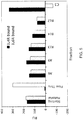
- the bispecific antibody exhibits an EC50 in a Raji killing assay of about 2.8-3.2 x 10 -12 M, or about 2.8-3.0 x 10 -12 M, and exhibits no more than about 1-10%, or 1-5%, bystander killing in a bystander cell killing assay, wherein the bystander cell does not comprise a CD20 epitope.
- the bystander cell is a 293 cell.
- bystander cell killing in the assay is measured across a concentration of bispecific antibody of about 10 -8 M to about 10 -14 M.
- a method for making a bispecific antibody comprising: obtaining a nucleic acid sequence encoding a first immunoglobulin heavy chain comprising a first variable domain that recognizes a first epitope, wherein the first immunoglobulin heavy chain comprises an IgG1, IgG2, or IgG4 isotype constant domain, or a chimeric isotype constant domain thereof; obtaining a second nucleic acid sequence encoding a second immunoglobulin heavy chain comprising a second variable domain that recognizes a second epitope, wherein the second immunoglobulin heavy chain comprises an IgG1, IgG2, or IgG4 isotype constant domain, or a chimeric isotype constant domain thereof, that comprises a modification in its CH3 domain that eradicates or reduces binding to Protein A; obtaining a third nucleic acid sequence encoding an immunoglobulin a light chain that pairs with the first and the second immunoglobulin heavy chain; introducing the first, second, and third nucleic acid sequence encoding an
- the cell is selected from a CHO, COS, 293, HeLa, and a retinal cell expressing a viral nucleic acid sequence (e.g., a PERC.6TM cell).
- a bispecific antigen-binding protein comprises a first specificity that binds an antigen and a second specificity that activates a receptor, wherein the bispecific antigen-binding protein comprises a first polypeptide comprising a first IgG1, IgG2, or IgG4 CH3 domain that comprises a Protein A-binding determinant, and a second polypeptide comprising a second IgG1, IgG3, or IgG4 CH3 domain that lacks the Protein A-binding determinant.
- the second specificity that activates the receptor binds the receptor with a K D that is in the molar, millimolar, micromolar, nanomolar, or picomolar range.
- the second specificity binds a receptor selected from a G-protein coupled receptor, a receptor tyrosine kinase, an integrin, and a toll-like receptor.
- the second specificity contacts the receptor and causes the receptor or a subunit or a protein physically associated therewith to undertake phosphorylation of a serine, threonine, or tyrosine; cause cyclicization of a nucleotide (e.g., cAMP, cADP, or cGMP); cause production of a phosphatidylinositol or derivative thereof (e.g., IP3 or PIP3); cause production of a lipid second messenger (e.g., diacylclycerol, ceramide, lysophosphatidic acid, an eicosanoid); cause dephosphorylation ( e.g., phosphatase activity); cause phosphorylation of a lipid to form a second messenger; cause hydrolysis of a second messenger; cause proteolysis; cause redox signaling; cause translocation of a protein to a cellular organelle ( e.g., to the nucleus); cause the receptor to aggregate
- a method for making a bispecific antibody comprising: isolating a bispecific antibody of interest from a quadroma, wherein the bispecific antibody of interest comprises a first heavy chain that is an IgG1, IgG2, or IgG4 isotype, a second heavy chain that is an IgG1, IgG2, or IgG4 isotype having a constant domain that comprises a modification in its CH3 domain that eradicates or reduces binding to Protein A, wherein the bispecific antibody of interest is isolated using Protein A.
- a method for making a bispecific antibody comprising a step of isolating from a disrupted cell or a mixture of antibodies a bispecific antibody having differentially modified IgG1, IgG2, or IgG4 CH3 domains, wherein the differentially modified CH3 domains are non-immunogenic or substantially non-immunogenic in a human, and wherein the modification results in a bispecific antibody with a heterodimeric heavy chain whose monomers have a differential affinity for Protein A, and the bispecific antibody is isolated from the disrupted cell or the mixture using Protein A.
- the bispecific antibody is isolated using a Protein A affinity support, wherein the bispecific antibody elutes at a pH between about 3.9 to about 4.4, about 4.0 to about 4.3, about 4.1 to about 4.2, or at about pH 4.2. In one embodiment, the bispecific antibody elutes at a pH of about 4, 4.1, 4.2, 4.3, 4.4, or 4.5.
- the bispecific antibody is isolated using a Protein A affinity support and a pH gradient or step, wherein the pH gradient or step includes an ionic modifier.
- the ionic modifier is present at a concentration of about 0.5 to about 1.0 molar.
- the ionic modifier is a salt.
- the ionic modifier is selected from the group consisting of beryllium, lithium, sodium, and potassium salts of acetate; sodium and potassium bicarbonates; lithium, sodium, potassium, and cesium carbonates; lithium, sodium, potassium, cesium, and magnesium chlorides; sodium and potassium fluorides; sodium, potassium, and calcium nitrates; sodium and potassium phosphates; and calcium and magnesium sulfates.
- the ionic modifier is a halide salt of an alkaline metal or alkaline earth metal.
- the ionic modifier is sodium chloride.
- a binding protein comprising an Fc, wherein the Fc comprises a first CH3 domain that is modified as described herein and a second CH3 that is not modified, so as to form a heterodimeric Fc, wherein the differential modification results in the binding protein eluting from a protein A affinity material at 0.5, 0.6, 0.7, 0.8, 0.9, 1.0, 1.2, 1.3, or 1.4 pH unit(s) higher than a corresponding binding protein that lacks the differential modification.
- the differentially modified binding protein elutes at a pH of about 4.2, whereas the unmodified binding protein elutes at a pH of about 3. In one embodiment the differentially modified binding protein elutes at a pH of about 4.5, whereas the unmodified binding protein elutes at a pH of about 3.5. In one embodiment, the differentially modified binding protein elutes at a pH of about 4, whereas the unmodified binding protein elutes at a pH of about 2.8-3.5, 2.8-3.2, or 2.8-3. In one embodiment, the differentially modified binding protein elutes at a pH of about 4.2, whereas the unmodified binding protein elutes at a pH of about 2.8.
- the differentially modified binding protein elutes at a pH of about 4.4, whereas the unmodified binding protein elutes at a pH of about 3.6.
- unmodified refers to lack of a modification at 435 (EU numbering), or lack of a modification at 435 and 436 (EU numbering), on both of the CH3 domains.
- antibody includes immunoglobulin molecules comprised of four polypeptide chains, two heavy (H) chains and two light (L) chains inter-connected by disulfide bonds.
- Each heavy chain comprises a heavy chain variable region (abbreviated herein as HCVR or VH) and a heavy chain constant region.
- the heavy chain constant region comprises three domains, CH1, CH2 and CH3.
- Each light chain comprises a light chain variable region (abbreviated herein as LCVR or VL) and a light chain constant region.
- the light chain constant region comprises one domain, CL.
- VH and VL regions can be further subdivided into regions of hypervariability, termed complementarity determining regions (CDR), interspersed with regions that are more conserved, termed framework regions (FR).
- CDR complementarity determining regions
- FR framework regions
- Each VH and VL is composed of three CDRs and four FRs, arranged from amino-terminus to carboxy-terminus in the following order: FR1, CDR1, FR2, CDR2, FR3, CDR3, FR4 (heavy chain CDRs may be abbreviated as HCDR1, HCDR2 and HCDR3; light chain CDRs may be abbreviated as LCDR1, LCDR2 and LCDR3.
- high affinity antibody refers to those antibodies having a binding affinity to their target of at least 10 -9 M, at least10 -10 M; at least 10 -11 M; or at least 10 -12 M, as measured by surface plasmon resonance, e.g., BIACORETM or solution-affinity ELISA.
- antigen-binding protein includes a protein having at least one CDR and that is capable of selectively recognizing an antigen, i.e., is capable of binding an antigen with a K D that is at least in the micromolar range.
- Therapeutic antigen-binding proteins e.g., therapeutic antibodies
- Antigen-binding protein also includes a protein comprising a first and a second CH3 domain as described herein and a first protein or ligand recognition domain and a second protein or ligand recognition domain, wherein the first protein or ligand recognition domain and the second protein or ligand recognition domain each independently recognize the same protein or ligand, or together recognize the same protein or ligand, or each independently recognize a different protein or ligand.
- a protein comprising a fusion protein (hetero- or homo-) dimer wherein the polypeptides of the dimer are fusion polypeptides that comprise a receptor component or a ligand component, wherein the ligand component comprises an amino acid sequence that binds a receptor.
- bispecific antibody includes an antibody capable of selectively binding two or more epitopes.
- Bispecific antibodies generally comprise two different heavy chains, with each heavy chain specifically binding a different epitope-either on two different molecules (e.g., antigens) or on the same molecule ( e.g., on the same antigen). If a bispecific antibody is capable of selectively binding two different epitopes (a first epitope and a second epitope), the affinity of the first heavy chain for the first epitope will generally be at least one to two or three or four orders of magnitude lower than the affinity of the first heavy chain for the second epitope, and vice versa.
- the epitopes recognized by the bispecific antibody can be on the same or a different target ( e.g., on the same or a different protein).
- Bispecific antibodies can be made, for example, by combining heavy chains that recognize different epitopes of the same antigen.
- nucleic acid sequences encoding heavy chain variable sequences that recognize different epitopes of the same antigen can be fused to nucleic acid sequences encoding different heavy chain constant regions, and such sequences can be expressed in a cell that expresses an immunoglobulin light chain.
- a typical bispecific antibody has two heavy chains each having three heavy chain CDRs, followed by (N-terminal to C-terminal) a CH1 domain, a hinge, a CH2 domain, and a CH3 domain, and an immunoglobulin light chain that either does not confer antigen-binding specificity but that can associate with each heavy chain, or that can associate with each heavy chain and that can bind one or more of the epitopes bound by the heavy chain antigen-binding regions, or that can associate with each heavy chain and enable binding or one or both of the heavy chains to one or both epitopes.
- cell includes any cell that is suitable for expressing a recombinant nucleic acid sequence.
- Cells include those of prokaryotes and eukaryotes (single-cell or multiple-cell), bacterial cells (e.g., strains of E. coli, Bacillus spp., Streptomyces spp., etc .), mycobacteria cells, fungal cells, yeast cells ( e.g., S. cerevisiae, S. pombe, P. pastoris, P.
- the cell is a human, monkey, ape, hamster, rat, or mouse cell.
- the cell is eukaryotic and is selected from the following cells: CHO (e.g., CHO K1, DXB-11 CHO, Veggie-CHO), COS (e.g., COS-7), retinal cell, Vero, CV1, kidney (e.g., HEK293, 293 EBNA, MSR 293, MDCK, HaK, BHK), HeLa, HepG2, WI38, MRC 5, Colo205, HB 8065, HL-60, (e.g., BHK21), Jurkat, Daudi, A431 (epidermal), CV-1, U937, 3T3, L cell, C127 cell, SP2/0, NS-0, MMT 060562, Sertoli cell, BRL 3A cell, HT1080 cell, myeloma cell, tumor cell, and a cell line derived from an aforementioned cell.
- the cell comprises one or more viral genes, e.g. a retinal cell that expresses a viral gene
- CDR complementarity determining region
- a CDR includes an amino acid sequence encoded by a nucleic acid sequence of an organism's immunoglobulin genes that normally (i.e., in a wild-type animal) appears between two framework regions in a variable region of a light or a heavy chain of an immunoglobulin molecule (e.g., an antibody or a T cell receptor).
- a CDR can be encoded by, for example, a germline sequence or a rearranged or unrearranged sequence, and, for example, by a naive or a mature B cell or a T cell.
- CDRs can be encoded by two or more sequences (e.g., germline sequences) that are not contiguous (e.g., in an unrearranged nucleic acid sequence) but are contiguous in a B cell nucleic acid sequence, e.g., as the result of splicing or connecting the sequences (e.g., V-D-J recombination to form a heavy chain CDR3).
- sequences e.g., germline sequences
- a B cell nucleic acid sequence e.g., as the result of splicing or connecting the sequences (e.g., V-D-J recombination to form a heavy chain CDR3).
- heavy chain or “immunoglobulin heavy chain” includes an immunoglobulin heavy chain constant region sequence from any organism, and unless otherwise specified includes a heavy chain variable domain.
- Heavy chain variable domains include three heavy chain CDRs and four FR regions, unless otherwise specified. Fragments of heavy chains include CDRs, CDRs and FRs, and combinations thereof.
- a typical heavy chain has, following the variable domain (from N-terminal to C-terminal), a CH1 domain, a hinge, a CH2 domain, and a CH3 domain.
- a functional fragment of a heavy chain includes a fragment that is capable of specifically recognizing an antigen (e.g., recognizing the antigen with a K D in the micromolar, nanomolar, or picomolar range), that is capable of expressing and secreting from a cell, and that comprises at least one CDR.
- an antigen e.g., recognizing the antigen with a K D in the micromolar, nanomolar, or picomolar range
- Fc-containing protein includes antibodies, bispecific antibodies, immunoadhesins, and other binding proteins that comprise at least a functional portion of an immunoglobulin CH2 and CH3 region.
- a "functional portion” refers to a CH2 and CH3 region that can bind a Fc receptor (e.g., an Fc ⁇ R; or an FcRn, i.e., a neonatal Fc receptor), and/or that can participate in the activation of complement. If the CH2 and CH3 region contains deletions, substitutions, and/or insertions or other modifications that render it unable to bind any Fc receptor and also unable to activate complement, the CH2 and CH3 region is not functional.
- Fc-containing proteins can comprise modifications in immunoglobulin domains, including where the modifications affect one or more effector function of the binding protein (e.g., modifications that affect Fc ⁇ R binding, FcRn binding and thus half-life, and/or CDC activity).
- modifications affect one or more effector function of the binding protein (e.g., modifications that affect Fc ⁇ R binding, FcRn binding and thus half-life, and/or CDC activity).
- Such modifications include, but are not limited to, the following modifications and combinations thereof, with reference to EU numbering of an immunoglobulin constant region: 238, 239, 248, 249, 250, 252, 254, 255, 256, 258, 265, 267, 268, 269, 270, 272, 276, 278, 280, 283, 285, 286, 289, 290, 292, 293, 294, 295, 296, 297, 298, 301, 303, 305, 307, 308, 309, 311, 312, 315, 318, 320, 322, 324, 326, 327, 328, 329, 330, 331, 332, 333, 334, 335, 337, 338, 339, 340, 342, 344, 356, 358, 359, 360, 361, 362, 373, 375, 376, 378, 380, 382, 383, 384, 386, 388, 389, 398, 414, 416, 419, 428, 430, 433, 434,
- the binding protein is an Fc-containing protein and exhibits enhanced serum half-life (as compared with the same Fc-containing protein without the recited modification(s)) and have a modification at position 250 (e.g., E or Q); 250 and 428 (e.g., L or F); 252 (e.g., L/Y/F/W or T), 254 (e.g., S or T), and 256 (e.g., S/R/Q/E/D or T); or a modification at 428 and/or 433 (e.g., L/R/SI/P/Q or K) and/or 434 (e.g., H/F or Y); or a modification at 250 and/or 428; or a modification at 307 or 308 (e.g., 308F, V308F), and 434.
- a modification at position 250 e.g., E or Q
- 250 and 428 e.g., L or F
- 252 e.g
- the modification can comprise a 428L (e.g., M428L) and 434S (e.g., N434S) modification; a 428L, 2591 (e.g., V259I), and a 308F (e.g., V308F) modification; a 433K (e.g., H433K) and a 434 (e.g., 434Y) modification; a 252, 254, and 256 (e.g., 252Y, 254T, and 256E) modification; a 250Q and 428L modification (e.g., T250Q and M428L); a 307 and/or 308 modification (e.g., 308F or 308P).
- a 428L e.g., M428L
- 434S e.g., N434S
- a 428L, 2591 e.g., V259I
- a 308F e.g., V308
- ionic modifier includes moieties that reduce the effect of, or disrupt, non-specific (i.e ., non-affinity) ionic interactions between proteins.
- Ionic modifiers include, for example, salts, ionic combinations of Group I and Group II metals with acetate, bicarbonate, carbonate, a halogen (e.g., chloride or fluoride), nitrate, phosphate, or sulfate.
- a non-limiting illustrative list of "ionic modifiers” includes beryllium, lithium, sodium, and potassium salts of acetate; sodium and potassium bicarbonates; lithium, sodium, potassium, and cesium carbonates; lithium, sodium, potassium, cesium, and magnesium chlorides; sodium and potassium fluorides; sodium, potassium, and calcium nitrates; sodium and potassium phosphates; and calcium and magnesium sulfates.
- Ionic modifiers include those moieties that affect ionic interactions that, upon addition to a pH gradient or step, or upon equilibration of a Protein A support in an "ionic modifier" and application of a pH step or gradient, results in a broadening of pH unit distance between elution of a homodimeric IgG and a heterodimeric IgG (e.g., a wild-type human IgG and the same IgG but bearing one or more modifications of its CH3 domain as described herein).
- a suitable concentration of an "ionic modifier” can be determined by its concentration employing the same column, pH step or gradient, with increasing concentration of "ionic modifier” until a maximal pH distance is reached at a given pH step or pH gradient.
- light chain includes an immunoglobulin light chain constant region sequence from any organism, and unless otherwise specified includes human kappa and lambda light chains.
- Light chain variable (VL) domains typically include three light chain CDRs and four framework (FR) regions, unless otherwise specified.
- FR framework
- a full-length light chain includes, from amino terminus to carboxyl terminus, a VL domain that includes FR1-CDR1-FR2-CDR2-FR3-CDR3-FR4, and a light chain constant domain.
- Light chains that can be used with this invention include those, e.g., that do not selectively bind either the first or second antigen selectively bound by the antigen-binding protein.
- Suitable light chains include those that can be identified by screening for the most commonly employed light chains in existing antibody libraries (wet libraries or in silico), where the light chains do not substantially interfere with the affinity and/or selectivity of the antigen-binding domains of the antigen-binding proteins. Suitable light chains include those that can bind one or both epitopes that are bound by the antigen-binding regions of the antigen-binding protein.
- micromolar range is intended to mean 1-999 micromolar; the phrase “nanomolar range” is intended to mean 1-999 nanomolar; the phrase “picomolar range” is intended to mean 1-999 picomolar.
- the phrase "somatically mutated” includes reference to a nucleic acid sequence from a B cell that has undergone class-switching, wherein the nucleic acid sequence of an immunoglobulin variable region (e.g., a heavy chain variable domain or including a heavy chain CDR or FR sequence) in the class-switched B cell is not identical to the nucleic acid sequence in the B cell prior to class-switching, such as, for example, a difference in a CDR or framework nucleic acid sequence between a B cell that has not undergone class-switching and a B cell that has undergone class-switching.
- an immunoglobulin variable region e.g., a heavy chain variable domain or including a heavy chain CDR or FR sequence
- “Somatically mutated” includes reference to nucleic acid sequences from affinity-matured B cells that are not identical to corresponding sequences in B cells that are not affinity-matured ( i.e ., sequences in the genome of germline cells).
- the phrase “somatically mutated” also includes reference to a nucleic acid sequence from a B cell after exposure of the B cell to an antigen of interest, wherein the nucleic acid sequence differs from the corresponding nucleic acid sequence prior to exposure of the B cell to the antigen of interest.
- mutated refers to sequences from antibodies that have been generated in an animal, e.g., a mouse having human immunoglobulin variable region nucleic acid sequences, in response to an antigen challenge, and that result from the selection processes inherently operative in such an animal.
- variable domain includes an amino acid sequence of an immunoglobulin light or heavy chain (modified as desired) that comprises the following amino acid regions, in sequence from N-terminal to C-terminal (unless otherwise indicated): FR1, CDR1, FR2, CDR2, FR3, CDR3, FR4.
- a "variable domain” includes an amino acid sequence capable of folding into a canonical domain (VH or VL) having a dual beta sheet structure wherein the beta sheets are connected by a disulfide bond between a residue of a first beta sheet and a second beta sheet.
- the inventors have developed a novel format that combines a common light chain strategy with an implementation of a selective Protein A purification scheme that can be used with human antibody components.
- the inventors have therefore devised a "minimal" format that exploits a fortuitously simple determinant of Protein A binding. It has been reported ( Jendeberg, L. et al. (1997) J. Immunological Meth. 201:25-34 )) that the inability of IgG3 to bind Protein A is determined by a single amino acid residue, Arg435 (EU numbering; Arg95 by IMGT), which corresponding position in the other IgG subclasses is occupied by a histidine residue. It is therefore possible, instead of IgG3, to use an IgG1 sequence in which His435 is mutated to Arg.
- IgG1 ⁇ A a single point mutation in IgG1 should be sufficient to create the different binding affinities amenable to a new purification scheme.
- This modification will be referred to as IgG1 ⁇ A, to denote its inability to bind Protein A (and, similarly, IgG2 ⁇ A and IgG4 ⁇ A-or more generally, Fc ⁇ A).
- the specified point mutation introduces a novel peptide sequence across the mutation, which could potentially be immunogenic.
- the point mutation could, in theory, be loaded onto an MHC class II molecule and presented to T cells, and consequently elicit an immune response.
- a dipeptide mutation H435R/Y436F (EU numbering; H95R/Y96F by IMGT) can be used.
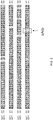
- the resulting sequence in the vicinity of the alteration is identical to that of IgG3 (see FIG. 2A ), and would therefore be expected to be immunologically "invisible,” because there would be no non-native short peptides available for presentation to T cells. It has been reported that this double mutant still does not bind Protein A ( Jendeberg, L.
- the dipeptide mutation does not include any of the residues that form the Fc dimer interface, so it is unlikely to interfere with the formation of heterodimers.
- This dipeptide mutation is designated as "IgG1 ⁇ Adp" (and, similarly, IgG2 ⁇ Adp, IgG4 ⁇ Adp, and Fc ⁇ Adp). Placement of the dipeptide modification in IgG1, IgG2, and IgG4 are indicated in FIG.
- IgG1 ⁇ Adp in the sequences denoted IgG1 ⁇ Adp, IgG2 ⁇ Adp, and IgG4 ⁇ Adp, shown with wild-type human IgG CH3 domain sequences, as well as hIgG3, showing IMGT exon numbering and EU numbering.
- the Fc ⁇ Adp modification does not include any of the residues believed to form the Fc dimer interface, so the Fc ⁇ Adp modification is unlikely to interfere with the formation of heterodimers. Because the Fc ⁇ Adp is so minimal, it can likely be incorporated into other engineered Fc forms as well. IgG2 ⁇ Adp and IgG4 ⁇ Adp may be advantageous in situations in which the effector functions (or lack thereof) associated with each of the latter are desired.
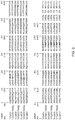
- the bispecific antibody format described above includes two antibodies of different specificity that use the same light chain, wherein the Fc region of one of them is modified to the Fc ⁇ Adp format (see FIG. 2B ).
- Its configuration is that of a natural human antibody, and should therefore share its favorable properties, including a low propensity to aggregate, in vivo stability, minimal immunogenicity, biodistribution properties similar to those of antibodies, good pharmacokinetics, and, optionally, effector functions.
- Methods for isolating such bispecific antibodies are provided that are relatively rapid and simple in execution.
- the inventors have devised a method for readily isolating a binding protein comprising an immunoglobulin heavy chain (or functional CH2 and CH3-containing fragment thereof) that is heterodimeric with respect to one or more amino acids in the CH3 domain.
- a careful selection of modifications of a mouse IgG CH domain and application of a particular separation technology confer the ability to readily isolate a binding protein comprising two differentially modified mouse CH regions from homodimers and from heterodimers that do not contain the modifications.
- Mouse IgG1 which contains a proline at 247, a threonine at 252, 254, and 256, and a lysine at 258, binds only weakly to protein A.
- Mouse IgG2a and IgG2b contain different residues at those positions (with the exception of IgG2b positions 256 and 258), and mouse IgG2a and 2b bind well to protein A.
- Differentially modifying the CH regions of two mouse IgGs in a method for making an antibody that is heterodimeric for heavy chains would confer a differential protein A binding characteristic to such an antibody.
- a differential protein A isolation scheme is devised that allows for ready separation of a modified heterodimer from any mouse IgG homodimer, whether it is a homodimer of IgG1 (which would bind only quite weakly, if at all, to protein A), or a homodimer of mouse IgG2a, a homodimer of mouse IgG2b, or a heterodimer of IgG2a/IgG2b.
- a bispecific antibody having two different heavy chain variable domains but the same isotype e.g., IgG2a
- IgG2a can be expressed in a suitable expression system that employs the heavy chain sequences, wherein only one of the IgG2a CH regions is modified to reduce or eliminate a protein A binding determinant.
- only one of the IgG2a CH regions will exhibit a substantial affinity for protein A, and any antibody formed from a dimer of an unmodified IgG2a and a modified IgG2a will be readily isolated from the modified heterodimer.
- an antibody wherein a single CH region of an Fc dimer comprises the modified CH region, whereas the other CH of the Fc dimer lacks them.
- the mouse IgG CH region is modified to comprise particular amino acids at particular positions (EU numbering), selected from the group consisting of: 252T, 254T, and 256T; 252T, 254T, 256T, and 258K; 247P, 252T, 254T, 256T, and 258K; 435R and 436F; 252T, 254T, 256T, 435R, and 436F; 252T, 254T, 256T, 258K, 435R, and 436F; 24tP, 252T, 254T, 256T, 258K, 435R, and 436F; and, 435R.
- a particular group of modifications is made, selected from the groups consisting of: M252T, S254T, S256T; M252T, S254T, S256T, I258K; I247P, M252T, S254T, S256T, I258K; H435R, H436F; M252T, S254T, S256T, H435R, H436F; M252T, S254T, S256T, I258K, H435R, H436F; I247P, M252T, S254T, S256T, I258K, H435R, H436F; and, H435R.
- Heterodimeric mouse IgG-based binding proteins can be used for a variety of applications. For example, they allow for a method of isolating bispecific antibodies with mouse constant domains, wherein the modifications do not interfere or do not substantially interfere with binding of the antibody to one or more mouse Fc receptors, such that the antibody can participate, e.g., in ADCC or CDC and also bind two or more epitopes on the same or different target.
- a method for isolating a binding protein comprising a first mouse IgG CH region and a second mouse IgG CH region, wherein the first IgG CH region is modified (but not the second IgG CH region) so as to reduce or eliminate protein A binding affinity of the first mouse IgG CH region but not the second mouse IgG CH region, and wherein the binding protein comprises a first binding moiety that binds a first epitope and a second binding moiety that binds a second epitope.
- the modification does not alter or does not substantially alter binding affinity of the binding protein to an Fc receptor.
- the binding protein comprises a modification that increases or decreases affinity for the binding protein to an Fc receptor.
- the modification does not alter or does not substantially alter the serum half-life of the binding protein in a mouse comprising native mouse Fc ⁇ R receptors and/or a native mouse FcRn, as compared with a corresponding binding protein that lacks the modification.
- the modification does not alter or does not substantially alter the serum half-life of the binding protein in a mouse that comprises a replacement of native mouse high and low affinity Fc ⁇ R receptors and/or an FcRn receptor, as compared with a corresponding binding protein that lacks the modification.
- first and the second epitope are different and are on different cells or on different proteins. In one embodiment, the first epitope and the second epitope are different and are on the same cell or the same protein.
- the Fc receptor is selected from a high affinity Fc receptor, a low affinity Fc receptor, and a FcRn.
- the Fc receptor is selected from one or more of a mouse FcRn, a mouse Fc ⁇ R, a mouse Fc ⁇ RIIB, a mouse Fc ⁇ RIII, a mouse Fc ⁇ RIV, and a combination thereof.
- the Fc receptor is selected form one or more of a human FcRn, a human Fc ⁇ R, a human Fc ⁇ RIIB, a human Fc ⁇ RIIC, a human Fc ⁇ RIIIB, a human Fc ⁇ RIIIA, a human Fc ⁇ RIIA, and a combination thereof.
- One advantage of many embodiments of the invention is the ability to employ the modification(s) to make a bispecific antibody that is both readily isolable based on differential binding to Protein A and is also non-immunogenic or substantially non-immunogenic in a human.
- This feature makes such embodiments particularly useful in making bispecific antibodies for human therapeutic use, and in making immunoadhesins, e.g., that are non-immunogenic or substantially non-immunogenic (employing human binding moieties, i.e ., human receptor components and/or human ligands).
- This feature is associated with bispecific antibodies having CH3 domains with the H95R/Y96F (IMGT numbering) modifications of IgG1, IgG2, and IgG3, and those CH3 domains that contain further modifications that result in the position being modified reflecting a wild-type sequence of a different IgG isotype.
- the modification is not found in nature associated with the particular IgG isotype, the modified sequence is locally identical with a wild-type sequence of a different IgG isotype, and the modification is not expected to be immunogenic or substantially immunogenic. It is also possible that a modification is non-immunogenic even if its sequence is not locally identical to any native sequence; such modifications would be equally useful.
- the minimal point mutation H95R (IMGT numbering) if non-immunogenic, would therefore be a suitable embodiment of the invention.
- bispecific antibodies are provided that are non-immunogenic or substantially non-immunogenic in a human, with respect to their heavy chain constant domains, but nonetheless bear one or more differential modifications of the heavy chain constant domain, including a modification that results in a differential affinity of the heavy chain constant domains with respect to an affinity reagent (e.g., Protein A).
- affinity reagent e.g., Protein A
- the bispecific antibody that is non-immunogenic or substantially non-immunogenic in a human with respect to its CH3 domain, yet having differentially modified heavy chains is a human IgG1, IgG2, or IgG4 comprising a CH3 domain that comprises one of the following modifications (or, in another embodiment, consists essentially of one of the following modifications): H95R, or H95R and Y96F (IMGT numbering).
- the bispecific antibodies are expected to be non-immunogenic, or substantially non-immunogenic, with respect to humans in whom tolerance to human IgG1, IgG2, and IgG4 isoforms has not been broken to any significant degree.
- the Fc ⁇ Adp modification is expected to be immunologically "invisible” because the binding groove of MHC class II molecules accommodates a 9-mer that comprises the major determinant recognized by variable loops of the T cell receptor, so that peptides lacking any native 9-mer subsequence would appear unlikely to elicit an immune response.
- peptides longer than 9-mers are bound by MHC class II, and it is possible that protruding segments may potentially influence binding, Therefore, additional modifications (over the Fc ⁇ Adp modification) that eliminate longer non-native sequences may further reduce potential for immunogenicity.
- V422I EU; V82I by IMGT numbering
- L445P EU; L105P by IMGT numbering
- the binding site for Protein A overlaps with the binding site for the neonatal Fc receptor, FcRN, which is thought to be responsible for conferring a prolonged serum half-life to immunoglobulins. Modifications in the vicinity of the Protein A binding site, therefore, raise the possibility that the format proposed here could have a shorter serum half-life than those of IgG1, 2, and 4, given that human IgG3 has a shorter serum half-life (about 7 days) than the other IgG subclasses (about 21 days). Some Fc mutants affecting His435 have been shown not to bind FcRN, and have a shorter half-life in mice.
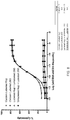
- the serum half-life of the IgG1 ⁇ A/IgG1 heterodimer is not appreciably different from that of the IgG1 homodimer (see Example 2).
- the IgG1 ⁇ Adp mutation has the advantage of ablating Protein A binding while still preserving the longer half-life of IgG1.
- a bispecific antigen-binding protein that comprises a modification of a CH3 domain as described herein, wherein the antigen-binding protein displays a pharmacokinetic profile equivalent to the same bispecific antigen-binding protein that lacks the modification at the CH3 domain.
- a bispecific antibody is provided that comprises an IgG1 ⁇ A/IgG1 heterodimeric Fc, wherein the bispecific antibody has a serum half-life that is about 1.5-fold, about 2-fold, about 2.5-fold, or about 3 fold higher than a bispecific antibody that is otherwise identical but comprises an IgG3 CH3 domain, or that is otherwise identical but comprises at least one IgG3 heavy chain.
- a bispecific antibody comprising an IgG1 ⁇ A/IgG1 heterodimeric Fc, wherein the bispecific antibody exhibits a serum half-life that is about the same as that of the bispecific antibody without the IgG1 ⁇ A modification (i.e., an IgG1 homodimeric bispecific antibody).
- Immunoglobulin heavy chain variable regions that can be used to generate bispecific antibodies with desired characteristics (e.g., desired specificities, desired affinities, desired functionalities, e.g., blocking, non-blocking, inhibiting, activating, etc.) can be generated using any method known in the art.
- the desired heavy chains can then be constructed by cloning nucleic acid sequences containing the variable regions in constructs having the desired heavy chain constant regions described herein.
- the first heavy chain comprises a variable region that is encoded by a nucleic acid that is derived from the genome of a mature B cell of a first animal that has been immunized with a first antigen, and the first heavy chain specifically recognizes the first antigen.
- the second heavy chain comprises a variable region that is encoded by a nucleic acid that is derived from the genome of a mature B cell of a second animal that has been immunized with a second antigen, and the second heavy chain specifically recognizes the second antigen.
- the first animal and/or the second animal is a genetically modified animal comprising an unrearranged human immunoglobulin heavy chain variable region. In one embodiment, the first animal and/or the second animal is a genetically modified animal comprising an unrearranged human immunoglobulin heavy chain variable region and a human immunoglobulin constant region. In one embodiment, the first animal and/or the second animal is a genetically modified mouse that comprises an unrearranged human immunoglobulin heavy chain variable region.
- Immunoglobulin heavy chain variable region sequences can be obtained by any other method known in the art, e.g., by phage display, and sequences obtained thereby can be employed to make nucleic acid constructs to be joined to nucleic acids encoding any suitable heavy chain, e.g., heavy chains with modified CH3 domains as described herein, and placed in an expression construct and transferred to a cell that is capable of making the heavy chain, e.g., in the presence of a suitable light chain.
- suitable heavy chain e.g., heavy chains with modified CH3 domains as described herein
- Bispecific antibodies comprising two heavy chains that recognize two different epitopes (or two different antigens) are more easily isolated where they can pair with the same light chain (i.e., light chains having identical variable and constant domains).
- a variety of methods are known in the art for generating light chains that can pair with two heavy chains of differing specificity, while not interfering or not substantially interfering with the selectivity and/or affinity of the heavy chain variable domain with its target antigen.
- a light chain can be selected by surveying usage statistics for all light chain variable domains, identifying the most frequently employed light chain in human antibodies, and pairing that light chain with the two heavy chains of differing specificity.
- a light chain can be selected by observing light chain sequences in a phage display library (e.g., a phage display library comprising human light chain variable region sequences, e.g., a human ScFv library) and selecting the most commonly used light chain variable region from the library.
- a phage display library e.g., a phage display library comprising human light chain variable region sequences, e.g., a human ScFv library
- a light chain in another approach, can be selected by assaying a phage display library of light chain variable sequences using the heavy chain variable sequences of both heavy chains as probes.
- a light chain that associates with both heavy chain variable sequences is selected as a light chain for the heavy chains and allows binding and/or activation with respect to both epitopes.
- a light chain can be selected by combining known light chains with desired heavy chains and assaying the resulting bispecific antibody for binding specificity, affinity, and/or activation ability.
- the light chain can be aligned with the heavy chains' cognate light chains, and modifications are made in the light chain to more closely match sequence characteristics common to the cognate light chains of both heavy chains.
- the modifications preferably result in sequences that are present in known human light chain sequences, such that proteolytic processing is unlikely to generate a T cell epitope based on parameters and methods known in the art for assessing the likelihood of immunogenicity (i.e., in silico as well as wet assays).
- human antibodies include those having heavy chain variable and heavy chain constant domains derived from human germline immunoglobulin sequences, in some embodiments derived from somatically mutated human immunoglobulin sequences (generated, e.g., in an animal that comprises human immunoglobulin gene sequences).
- human variable and/or constant regions may include amino acid residues not encoded by human germline immunoglobulin sequences or encoded as the result of recombination and/or splicing for example in the CDRs and in particular CDR3.
- Human antibodies are not intended to include antibodies in which CDR sequences derived from the germline of another mammalian species, such as a mouse, have been grafted onto human framework sequences. Those antibodies are referred to as humanized or chimeric antibodies. Human antibodies do include those comprising mutations, e.g., introduced in vitro by random or site-specific mutagenesis, but the mutations are preferably non-immunogenic in a human.
- Chimeric antibodies are antibodies in which one of a heavy chain variable region or framework or CDR or heavy chain constant region or domain are from different species (e.g., human and mouse, or human and primate).
- chimeric antibodies include antibodies having a heavy chain variable region of non-human origin (e.g., mouse) and a heavy chain constant region of human origin.
- chimeric antibodies include antibodies having a heavy chain variable region of human origin and a heavy chain constant region of non-human (e.g., mouse) origin.
- regions of mouse origin are identical or substantially identical to a mouse immunoglobulin germline sequence with or without somatic hypermutations.
- Chimeric antibodies also include antibodies having a light chain constant region that is identical or substantially identical to a human immunoglobulin germline sequence and a non-human (e.g., mouse) heavy chain or chimeric human/nonhuman heavy chain.
- Chimeric antibodies include antibodies having a light chain constant domain that is identical or substantially identical to a non-human (e.g., mouse) immunoglobulin germline sequence and a human or chimeric nonhuman/human heavy chain.
- compositions and methods are for making an affinity-matured antibody.
- an affinity-matured antibody comprises one or more alterations in one or more CDRs that result in higher affinity (e.g., K D in the nanomolar or picomolar range) of the antibody for its target antigen as compared to a substantially identical antibody that lacks the alteration(s).
- Affinity-matured antibodies can be made by any suitable method known in the art, e.g., by random or site-directed mutagenesis of CDRs and/or framework regions followed by affinity screening, VH domain shuffling, etc.
- the antibodies are neutralizing antibodies.
- Neutralizing antibodies include antibodies capable of neutralizing, inhibiting, or preventing an antigen's biological activity.
- Neutralizing antibodies include those that, upon binding an antigen, prevent or reduce the antigen's ability to act on a natural target of the antigen in vivo and in vitro.
- Examples of neutralizing antibodies include an antibody to a protein ligand of a biological receptor that prevents the ligand from binding the receptor, or an antibody to a biological receptor that prevents the receptor from binding its ligand, where ligand binding in the absence of the antibody causes the receptor to effect a change inside of a cell. Determining whether an antibody is a neutralizing antibody generally entails conducting a functional assay wherein the antibody's effect on the biological activity of the antigen is measured.
- compositions of the invention are also useful in a variety of applications for antibodies and other binding proteins. A short description of some useful applications are provided here.
- Bispecific binding proteins that comprise binding specificity toward a tumor antigen and a T-cell antigen can be made that target an antigen on a cell, e.g., CD20, and also target an antigen on a T-cell, e.g., CD3.
- the bispecific antibody targets both a cell of interest in a patient (e.g ., B cell in a lymphoma patient, via CD20 binding) as well as a T-cell of the patient.
- the bispecific antibody in various embodiments, is designed so as to activate the T-cell upon binding CD3, thus coupling T-cell activation to a specific, selected tumor cell.
- Bispecific binding proteins that comprise two binding moieties that are each directed to a binding partner (i.e., each directed to a different target) on the surface of the same cell can also be made.
- This design is particularly suited to targeting specific cells or cell types that express both targets on the surface of the same cell.
- targets might appear individually on other cells, the binding moieties of these binding proteins are selected such that each binding moiety binds its target with a relatively low affinity (e.g., low micromolar, or high nanomolar- e.g ., over a hundred nanomolar KD, e.g., 500, 600, 700, 800 nanomolar). In this way, prolonged target binding is favored only in situations where the two targets are in proximity on the same cell.
- Bispecific binding proteins that comprise two binding moieties that bind the same target, each at a different epitope of the same target, can be made. This design is particularly suited for maximizing the probability of successfully blocking a target with binding protein. Multiple extracellular loops, e.g., of a transmembrane channel or a cell surface receptor, can be targeted by the same bispecific binding molecule.
- Bispecific binding proteins that comprise two binding moieties that cluster and activate negative regulators of immune signaling to result in immune suppression can be made.
- Repression in cis can be achieved where the targets are on the same cell; repression in trans can be achieved where the targets are on different cells.
- Repression in cis e.g., can be achieved with a bispecific binding protein having an anti-IgGRIIb binding moiety and an anti-FelD1 binding moiety, such that the IgGRIIb is clustered only in the presence of FeID1, in order to down-regulate an immune response to FeID1.
- Repression in trans can be achieved with a bispecific binding protein having an anti-BTLA binding moiety and a binding moiety that specifically binds a tissue-specific antigen of interest, such that clustering of the inhibitory BTLA molecule occurs only in the selected target tissue, which potentially addresses auto-immune diseases.
- Bispecific binding proteins that activate multi-component receptors can be made.
- two binding moieties directed to two components of a receptor bind, cross-link the receptor, and activate signaling from the receptor.
- This can be done, e.g., using a bispecific binding protein with a binding moiety that binds IFNAR1 and a binding moiety that binds IFNAR2, where binding cross-links the receptor.
- a bispecific binding protein can provide an alternative to interferon treatment.
- Bispecific binding proteins that transport binding moieties across a semipermeable barrier, e.g., the blood-brain barrier, can be made.
- one binding moiety binds a target that can transit a particular selective barrier; the other binding moiety targets a molecule with a therapeutic activity, wherein the target molecule with therapeutic activity cannot normally traverse the barrier.
- This kind of bispecific binding protein is useful for bringing therapeutics to tissues that the therapeutic would not otherwise reach.
- Some examples include targeting the pIGR receptor to transport a therapeutic into the gut or lung, or targeting the transferrin receptor to transport a therapeutic across the blood-brain barrier.
- Bispecific binding proteins that transport binding moieties into specific cells or cell types can be made.
- one binding moiety targets a cell surface protein (e.g., a receptor) that is readily internalized into the cell.
- the other binding moiety targets an intracellular protein, where binding of the intracellular protein results in a therapeutic effect.
- Bispecific binding proteins that bind a surface receptor of a phagocytic immune cell and a surface molecule of an infectious pathogen (e.g., a yeast or bacterium), to bring the infectious pathogen in the vicinity of a phagocytic immune cell to facilitate phagocytosis of the pathogen.
- an infectious pathogen e.g., a yeast or bacterium
- An example of such a design would be a bispecific antibodiy that targets a CD64 or CD89 molecule and also a pathogen.
- Bispecific binding proteins that have an antibody variable region as one binding moiety and a non-Ig moiety as a second binding moiety.
- the antibody variable region achieves targeting, whereas the non-Ig moiety is an effector or a toxin linked to an Fc.
- the ligand e.g., an effector or toxin
- Bispecific binding proteins that have two moieties each bound to an Ig region (e.g., an Ig sequence containing a CH2 and CH3 region) such that any two protein moieties can be brought in each other's vicinity in the context of the Fc.
- Ig region e.g., an Ig sequence containing a CH2 and CH3 region
- traps e.g., homo- or heterodimeric trap molecules.
- Nucleic acid sequences encoding monoclonal antibodies can be obtained by any suitable method known in the art. Examples of suitable methods for obtaining monoclonal antibodies (and their nucleic acid sequences) include, for example, by a hybridoma method (see, e.g., Kohler et al. (1975) Nature 256:495-497 ) or a phage antibody library (see, e.g., see Clackson et al. (1991) Nature 352:624-628 ).
- the immunoglobulin heavy chain variable domains are derived from nucleic acid sequences of a genetically modified animal or a transgenic animal.
- the regions are derived from an animal that comprises a human immunoglobulin minilocus.
- the regions are derived from mice comprising one or more extrachromosomal nucleic acids that comprise one or more nucleic acids encoding immunoglobulin sequences.
- the animal can have one or more unrearranged human immunoglobulin nucleic acid sequences.
- the animal comprises human light chain variable regions nucleic acid sequences, in some embodiments human heavy chain variable sequences, in some embodiments both heavy and light chain variable sequences, and in some embodiments further comprises human constant region sequences.
- the nucleic acid sequences are derived from a mouse in which endogenous mouse heavy chain variable gene segments and light chain variable gene segments have been replaced with human heavy chain variable gene segments and light chain variable gene segments.
- the nucleic acid sequences are derived from naive B or T cells of such an animal. In other embodiments, the nucleic acid sequences are derived from B or T cells of an animal that has been immunized with an antigen of interest.
- the nucleic acid sequences are derived from cells by amplifying them with primers, including for example sets of degenerate primers, that comprise one or more FR, joining, or constant sequences.
- the immunoglobulin heavy chain variable domains are derived from nucleic acids of an animal that has been immunized with an antigen of interest.
- a non-human transgenic or genetically modified animal is immunized with the antigen of interest (by, e.g., exposing the animal to the antigen or a cell bearing the antigen or a nucleic acid encoding an expressible form of the antigen), allowing the animal to undergo an immune response, isolating immune cells (e.g., B cells) from the animal, optionally immortalizing the cells, and screening the cells to identify reactivity with the antigen and/or identifying and/or isolating a nucleic acid sequences that encode an immunoglobulin variable region that is capable of recognizing the antigen when placed in the context of an antibody.
- immune cells e.g., B cells
- the cell is a B cell.
- a B cell of the immunized animal is used to make a hybridoma, and a B cell expressing an antibody that specifically recognizes an epitope of the antigen is identified and nucleic acid sequences that encode a variable region amino acid sequence that recognizes the epitope is identified and/or isolated.
- the nucleic acids are derived from humans, non-human primates (e.g., apes such as chimpanzees), monkeys (e.g., cynomologous or rhesus), rodents (e.g., mice, rats, hamsters), donkeys, goats, sheep, etc.
- non-human primates e.g., apes such as chimpanzees
- monkeys e.g., cynomologous or rhesus
- rodents e.g., mice, rats, hamsters
- donkeys goats, sheep, etc.
- the heavy chains comprise sequences that are derived from human cells.
- human fetal cells exposed in vitro to an antigen and placed in a suitable host animal (e.g., a SCID mouse),
- the nucleic acids are introduced into a cell using a vector.
- Vectors include, for example, plasmids, cosmids, retroviruses, adenoviruses, adeno-associated viruses, plant viruses, YACs, BACs, EBV-derived episomes.
- the nucleic acids are present in an expression vector or expression construct.
- the expression vector or construct is a vector that contains a promoter operably linked to the nucleic acid sequence of interest such that the nucleic acid sequence of interest is capable of being expressed under suitable conditions in a suitable cell.
- Expression vectors or constructs can include leader sequences, enhancers, promoter elements that enhance transcription or translation, transcription stop sequences, splicing sequences, transcription-enhancing introns, IRES elements, marker genes, selection sequences, recombinase recognition sites, homology arms, viral sequences, operators (e.g., prokaryotic operators) etc.
- the expression vectors comprise elements that allow inducible expression, for example, a prokaryotic operator operably linked to a eukaryotic promoter.
- expression is induced upon addition of an expression inducer.
- expression is induced upon removal of an expression inhibitor.
- expression is induced by a temperature change.
- one or more heavy chain nucleotide sequences are on the same vector.
- a heavy chain nucleic acid sequence and a light chain nucleic acid sequence herein are on the same vector.
- two heavy chain nucleic acid sequences and a light chain nucleic acid sequence are on the same vector.
- the nucleic acids are expressed in a cell that comprises one or more nucleic acids from a virus.
- the virus is selected from adenovirus, adeno-associated virus, SV-40, Epstein-Barr virus, a retrovirus, a lentivirus, baculovirus, coronavirus, herpes simplex virus, poliovirus, Semliki Forest virus, Sindbis virus, and Vaccinia virus.
- Host cells are cells that can be transformed to express a nucleic acid of interest.
- transformation includes changing the nucleic acid content of a cell such that it contains exogenous nucleic acids (e.g., a nucleic acid not found in the cell in nature, or one or more additional copies of a nucleic acid corresponding to a nucleic acid sequence found in the cell in nature).
- the nucleic acid content of a cell can be changed by any suitable method known in the art, e.g., by integrating the nucleic acid into the cell's genome or by placing it in the cell in an extra-chromosomal or extra-genomic form.
- the nucleic acid content of the cell can be changed such that the cell transiently expresses the nucleic acid of interest, or the nucleic acid content can be changed such that the cell stably expresses the nucleic acid of interest.
- the change in genetic content of the cell is inherited when the cell divides.
- the Lindhofer approach failed when applied to separating an IgG1 homodimer from an IgG1 heterodimer having two IgG1 heavy chains that were identical but for the fact that one of the IgG1 CH3 domains contained an H435R/Y436F dipeptide modification.
- the inventors found that in a linear pH gradient, the dipeptide-modified IgG1 eluted at about pH 3.9, whereas the IgG1 homodimer eluted at about pH 3.7. This pH difference was deemed insufficient to achieve a satisfactory separation of the heterodimer from the homodimer using the Lindhofer method. The difference was not reproducible in a predictable manner.
- isolation of the bispecific antigen-binding protein is made in the presence of about 0.5 to about 1.0 molar ionic modifier.
- a method for separating a bispecific antigen-binding protein comprising a heterodimeric IgG with one chain comprising a modification as described herein comprises a step of employing a pH gradient in the presence of an ionic modifier.
- the ionic modifier is present at a concentration sufficient to maximize the pH difference between elution from a Protein A support of an IgG homodimer and an IgG heterodimer as described herein ( i.e., with CH3 modification(s)).
- the ionic modifier is present at a concentration of about 0.5 to about 1.0 molar.
- the ionic modifier is present at a concentration of about 0.15 to about 0.5 molar.
- the ionic modifier is a salt.
- the ionic modifier is a salt of an alkaline metal or an alkaline earth metal and a halogen.
- the salt is a chloride salt of an alkaline metal or an alkaline earth metal, e.g., NaCl, KCI, LiCI, CaCl 2 , MgCl 2 .
- the salt is present at a molarity of about 0.5, 0.6, 0.7, 0.8, 0.9, or 1.0.
- the pH gradient is from about pH 3.9 to about pH 4.5, in another embodiment from about pH 4.0 to about pH 4.4., and in another embodiment about pH 4.1 to about pH 4.3. In a specific embodiment, the gradient is a linear gradient.
- the pH gradient is a step gradient.
- the method comprises applying to an equilibrated Protein A column (equilibrated, e.g., in PBS or another suitable buffer or liquid) a step of about pH 3.9, about pH 4.0, about pH 4.1, about pH 4.2, about pH 4.3, or about pH 4.4. In a specific embodiment, the step is about pH 4.2.
- the bispecific antibody comprising the heterodimeric IgG CH3 domain elutes from the Protein A support in one or more fractions substantially free of non-heterodimeric IgG.
- the eluted bispecific antibody fraction(s) comprise less than about 1%, 0.5%, or 0.1% of total protein by weight that is non-heterodimeric antibody.
- the anti-IL-6Ra light chain was then co-expressed with the anti-IL4Ra/Fc and anti-IL6Ra/Fc ⁇ Adp heavy chains in CHO cells, and conditioned medium from these cells was subjected to Protein A chromatography.
- the elution was performed with a pH step gradient produced by varying combinations of two buffers (A: 100 mM Na citrate, 150mM NaCl, pH 6.0, and B: 100 mM Na citrate, 150 mM NaCl, pH 3.0; see FIG. 4 ) so as to produce three phases at pH 6.0, pH 4.2, and pH 3.0, respectively.
- A 100 mM Na citrate, 150mM NaCl, pH 6.0
- B 100 mM Na citrate, 150 mM NaCl, pH 3.0; see FIG. 4
- IL-4R denotes anti-IL-4Ra
- IL-6RA denotes anti-IL-6Ra(IgG1 ⁇ Adp).
- Indicated column fractions were assayed for binding to IL-6Ra and IL-4Ra proteins (see FIG. 5 ).
- a step elution was done, giving rise to one peak eluting at pH 4.2, and a second peak at pH 3.0 ( FIG. 4 ).
- BIACORETM analysis showed that the flow-through material could bind soluble IL-6Ra, but not IL-4Ra, as expected ( FIG. 5 ).
- Fractions corresponding to the pH 4.2 peak could bind approximately equal amounts of IL-6Ra and IL-4Ra, consistent with the heterodimer.
- the peak eluting at pH 3.0 could bind only IL-4Ra, and not IL-6Ra, corresponding to the expected anti-IL-4Ra homodimer. This establishes that a heterodimeric bispecific antibody could be effectively isolated using Protein A chromatography, with a simple pH step gradient.
- mice were injected with the purified heterodimeric species of anti-IL-4Ra/anti-IL-6Ra described above, and concentrations of human immunoglobulin in serum were measured over a period of 28 days ( FIG. 6 ; Table 1).
- the serum half-life of the heterodimer was about 10 days, similar to that of the wild type. This establishes that the Fc ⁇ Adp modifications had no detectable effect on serum half-life.
- Pharmacokinetics (n 5) Drug Tested Half-life (Days) (avg. ⁇ s.d.) IL-6R ⁇ /IL-4R 11.2 ⁇ 1.8 IL-6R ⁇ /IL-6R ⁇ 10.8 ⁇ 1.9 IL-4R/IL-4R 10.8 ⁇ 1.9 Control 11.2 ⁇ 1.9
- IL-2 (R & D Systems) was then added and the cells were incubated for an additional 24 hours. The cells were then split to a concentration of 0.5 x 10 6 /mL and an additional 30U IL-2 added. The cells were then incubated an additional 48 hours and used in the bioassay. On the day of the bioassay 2 x 10 6 /mL CD20 expressing target cells (Raji) were labeled for 30 minutes with 8uM calcein-AM (Invitrogen). Washed target cells were added to the activated hPBMC cells at a 1:10 ratio of target:effector cells (220,000 total cells per well) in 200 microliters total volume with the indicated amount of antibody containing supernatant.
- CHO cell supernatants from transfections as described in Example 3 were subjected to Protein A affinity chromatography, utilizing a step gradient for elution.
- the step gradient was produced by varying combinations of two buffers (A: 20 mM Na citrate, 1M NaCl, pH 5.2; B: 20 mM Na Citrate, 1M NaCl, pH 2.7) so as to produce three phases at pH 5.2, pH 4.2, and pH 2.8, respectively.
- Protein from the peak eluting at pH 4.2 was then used in a cell killing assay as described in Example 3.
- Target cell killing was observed at an EC 50 of 3 pM ( FIG. 8 ).
- An additional cytotoxicity assay was performed which examined the target specificity of the observed killing.
- target cells expressing CD20 (Raji) or without CD20 (293) were incubated with activated human PBMCs. Each target cell type was added to the assay either alone or in combination with unlabeled target cells of the other type. In all cases the CD20 expressing target cells were killed specifically with an EC 50 of 3 pM while the CD20 negative cell line was not killed.
- Example 5 Protein A Separation of a Differentially Modified hIgG2 Fc
- Differentially modified heterodimeric human IgG2 Fc/ ⁇ AdpFc and an unmodified human homodimeric IgG2 Fc/Fc were first enriched by a bind-and-wash process through a protein A column (rProtein A FF, GE).
- rProtein A FF protein A column
- a step-gradient elution was performed using a SMARTTM system (GE) as follows.
- the solvent system consisted of solvent A (PBS, 1X), solvent B (20 mM sodium citrate and 1 M NaCl, pH 5.5) and solvent C (20 mM sodium citrate and 1M NaCl, pH 2.5).
- the elution started with an isocratic elution with 100% A in the first 20 min followed by a quick switch to 100% B at 20 min. A linear gradient to 33.5% C and 66.5% B was then initiated over the next 10 min; the concentration of 33.5% of C was maintained for 20 min until the complete elution of the first peak (Fc/ ⁇ AdpFc). A linear gradient from 33.5 % C to 100 % C was followed for 30 min. The flow rate was kept 250 microliters/min and the chromatograms were detected at 280 nm by a UV detector. The hIgG2 Fc/ ⁇ AdpFc eluted at pH 4.5, whereas the hIgG2 eluted at pH 3.5.
- the elution started with an isocratic elution with 100% A in the first 20 min followed by a quick switch to 100% B at 20 min. A linear gradient to 50% C and 50% B was then initiated over the next 10 min; the concentration of 50% of C was maintained for 20 min until the complete elution of the first peak (Fc/ ⁇ AdpFc). A linear gradient from 50 % C to 100 % C was followed for 30 min. The flow rate was kept 250 microliters/min and the chromatograms were detected at 280 nm by a UV detector. The hIgG4 Fc/ ⁇ dpFc eluted at about pH 4 whereas the homodimer eluted during a gradient from about pH 4 to pH 2.8.
- Example 7 Protein A Separation of a Differentially Modified hIgG1 CD3xCD20
- Differentially modified heterodimeric anti-hCD3xCD20 IgG1 (Fc/ ⁇ AdpFc) and an unmodified homodimeric anti-hCD20 were separated on a 1 mL rProtein AFF (GE Biosciences) column as follows.
- the solvent system was buffer A1 (PBS 1X), buffer A2 (20 mM sodium citrate and 1 M NaCl pH 5.1), buffer B (20 mM sodium citrate and 1 M NaCl pH 2.8).
- the mixed sample was bound and washed in PBS and buffer A2.
- a step was used to attain a pH of 4.2, which eluted bispecific CD3*xCD20 IgG1 (Fc/ ⁇ AdpFc), then a linear gradient from pH 4.2 to pH 2.8 eluted the homodimeric anti-hCD20 IgG1.
- CM5 carboxymethylated dextran
- Qiagen amine-coupled anti-penta-his mAb
- the following his-tagged Fc receptor ectodomains were bound to the surfaces of different anti-penta-his-coated CM5 chips: Fc ⁇ RI, Fc ⁇ RIIA(R131 polymorph), Fc ⁇ RIIB, and Fc ⁇ RIIIB (each obtained from R&D Systems); and Rc ⁇ RIIA(H131 polymorph), Fc ⁇ RIIIA(V176 polymorph), and Rc ⁇ RIIIA(F176 polymorph) (each made at Regeneron).
- Antibodies were passed over the surface at three concentrations for the high affinity receptor Fc ⁇ R1 ectodomain (25 nM, 50 nM, and 100 nM), and at between 5 micromolar to 39 nanomolar for the low affinity Fc ⁇ R receptor ectodomains, and association and dissociation rate constants (k a and k d ) values were determined and used to calculate equilibrium dissociation constants (K D s) for the antibodies. Binding studies were performed at room temperature using HBS-T buffer at pH 7.2 K D s were determined for a control antibody (hmAb), an anti-CD20, and anti-CD3 ⁇ dp modification, and a CD20xCD3 ⁇ dp bispecific antibody.
- K D values for the anti-CD3 ⁇ dp antibody revealed no significant differences in binding to any of the Fc receptors tested as compared with unmodified hIgG1 isotype antibodies (Table 2).
- Table 2 K D (nM) for Binding of hlgG Abs to hFcyR Ectodomains hFcR Human IgG1 Homodimer Human IgG1 ⁇ Adp hmAb CD20-hFc CD3-hFc ⁇ Adp Homodimer Bispecific CD20xCD3 ⁇ Adp Heterodimer Fc ⁇ R1 5.00 4.27 3.17 3.61 Fc ⁇ RIIA(R131) 1,460 739 588 328 Fc ⁇ RIIA(H131) 915 458 451 222 Fc ⁇ RIIB 3,400 1,850 1,360 794 Fc ⁇ RIIIA(V176) 810 430 218 248 Fc ⁇ RIIIA(F176) 2,500 533 407 267 Fc ⁇ RIIIB 3,
- the pharmacokinetic clearance rate of bispecific anti-hCD3/hCD20 IgG1 ⁇ Adp antibody and its antibody related controls were determined in wild-type (WT) mice and mice homozygous for a replacement of mouse FcRn with a hFcRn gene (hFcRn mice).
- Wild-type and hFcRn mice were from cross-bred strains with a background containing C57BL6 (75%) and 129Sv (25%).
- Cohorts contained 4 each of either WT or hFcRn mice, except in the case of one cohort of WT mice receiving an IgG1 isotyped matched control antibody in which the cohort contained 3 mice.
- Mice received 1 mg/kg of an isotype-matched (hlgG1) control, anti-hCD3xCD20 IgG1 ⁇ Adp bispecific, anti-hCD3 lgG1, or anti-hCD3 IgG1 ⁇ Adp homodimer. All test articles were administered subcutaneously. Bleeds were collected at 0h, 6h, 1d, 2d, 3d, 4d, 7d, 10d, 14d, 21d, and 30d.
- Serum levels of human antibodies were determined by a sandwich ELISA. Briefly, a goat polyclonal anti-human IgG (Fc-specific) antibody (Jackson ImmunoResearch) was coated in 96-well plates at a concentration of one microgram/mL and incubated overnight at 4° C. After the plates were blocked with BSA, serum samples in six-dose serial dilutions and reference standards of the respective antibodies in 12-dose serial dilutions were added to the plate and incubated for one hour at room temperature.
- Fc-specific antibody Jackson ImmunoResearch
- a bispecific CD3xCD20 ⁇ Adp antibody was isolated according to the invention from a large-scale culture. Briefly, a CHO-K1 cell line expressing a bispecific anti-hCD3xCD20 ⁇ Adp (modification on the CD3 heavy chain) antibody were cultured in an 11-liter bioreactor. Cells bearing the bispecific antibody grew to a denisty of about 8.25 x 10⁶ cells/mL, yielding about 250-350 mg antibody/L. In contrast, a control anti-hCD3 antibody yielded about 100-150 mg/L.
- Antibody was isolated on an MabSelect SuReTM resin (GE) (20 cm bed height, 1 cm ID) equilibrated with 10 mM sodium phosphate, 0.5 M NaCl, pH 7.2, clarified cell culture loaded to 19 g/L, and the column was washed with 3 column volumes of 10 mM sodium phosphate, 0.5 M NaCl, pH 7.2, followed by a wash of 2 column volumes of 20 mM sodium phosphate, pH 7.2 (no NaCl). Antibody was eluted with 40 mM acetate, pH 3.0.
- GE MabSelect SuReTM resin
- CHO-K1 cells were transiently transfected with expression constructs for human IFNAR1 (hIFNAR1) and human IFNAR2 (hIFNAR2) extracellular domain fused with a wild type or a mutant (TTTK or PTTK) mlgG2a Fc.
- the ratio between hIFNAR1-mFc and hIFNAR2-mFc was held at 1:1 by transfecting cells with equal amounts of the two expression plasmids.
- Culture medium was collected 4 days after transfection and subjected to Protein A purification using 0.2 mL NAb Protein A PlusTM spin columns (Thermo Scientific/Pierce). Briefly, the columns were equilibrated with 1x PBS, pH 7.2.
- the ratio between IFNAR1-mFc and IFNAR2-mFc was held at 4:1 by transfecting cells with 4-fold more hIFNAR1-mFc expression plasmid (hIFNAR1-mIgG2a) than hIFNAR2-mFc (mlgG1 or mutant mIgG2a).
- Culture medium was collected 4 days after transfection and mFc proteins were detected by Western blot analysis.
Landscapes
- Chemical & Material Sciences (AREA)
- Health & Medical Sciences (AREA)
- Organic Chemistry (AREA)
- Immunology (AREA)
- Life Sciences & Earth Sciences (AREA)
- Medicinal Chemistry (AREA)
- General Health & Medical Sciences (AREA)
- Biochemistry (AREA)
- Biophysics (AREA)
- Genetics & Genomics (AREA)
- Molecular Biology (AREA)
- Proteomics, Peptides & Aminoacids (AREA)
- Analytical Chemistry (AREA)
- Animal Behavior & Ethology (AREA)
- Bioinformatics & Cheminformatics (AREA)
- Microbiology (AREA)
- Mycology (AREA)
- Pharmacology & Pharmacy (AREA)
- Epidemiology (AREA)
- Engineering & Computer Science (AREA)
- Public Health (AREA)
- Veterinary Medicine (AREA)
- Peptides Or Proteins (AREA)
- Preparation Of Compounds By Using Micro-Organisms (AREA)
- Micro-Organisms Or Cultivation Processes Thereof (AREA)
- Medicines Containing Antibodies Or Antigens For Use As Internal Diagnostic Agents (AREA)
Applications Claiming Priority (4)
| Application Number | Priority Date | Filing Date | Title |
|---|---|---|---|
| US22068709P | 2009-06-26 | 2009-06-26 | |
| EP15181155.1A EP2975051B1 (en) | 2009-06-26 | 2010-06-25 | Readily isolated bispecific antibodies with native immunoglobulin format |
| PCT/US2010/040028 WO2010151792A1 (en) | 2009-06-26 | 2010-06-25 | Readily isolated bispecific antibodies with native immunoglobulin format |
| EP10726775A EP2445936A1 (en) | 2009-06-26 | 2010-06-25 | Readily isolated bispecific antibodies with native immunoglobulin format |
Related Parent Applications (3)
| Application Number | Title | Priority Date | Filing Date |
|---|---|---|---|
| EP10726775A Division EP2445936A1 (en) | 2009-06-26 | 2010-06-25 | Readily isolated bispecific antibodies with native immunoglobulin format |
| EP15181155.1A Division EP2975051B1 (en) | 2009-06-26 | 2010-06-25 | Readily isolated bispecific antibodies with native immunoglobulin format |
| EP15181155.1A Division-Into EP2975051B1 (en) | 2009-06-26 | 2010-06-25 | Readily isolated bispecific antibodies with native immunoglobulin format |
Publications (1)
| Publication Number | Publication Date |
|---|---|
| EP3916011A1 true EP3916011A1 (en) | 2021-12-01 |
Family
ID=42738900
Family Applications (3)
| Application Number | Title | Priority Date | Filing Date |
|---|---|---|---|
| EP21160445.9A Pending EP3916011A1 (en) | 2009-06-26 | 2010-06-25 | Readily isolated bispecific antibodies with native immunoglobulin format |
| EP10726775A Ceased EP2445936A1 (en) | 2009-06-26 | 2010-06-25 | Readily isolated bispecific antibodies with native immunoglobulin format |
| EP15181155.1A Active EP2975051B1 (en) | 2009-06-26 | 2010-06-25 | Readily isolated bispecific antibodies with native immunoglobulin format |
Family Applications After (2)
| Application Number | Title | Priority Date | Filing Date |
|---|---|---|---|
| EP10726775A Ceased EP2445936A1 (en) | 2009-06-26 | 2010-06-25 | Readily isolated bispecific antibodies with native immunoglobulin format |
| EP15181155.1A Active EP2975051B1 (en) | 2009-06-26 | 2010-06-25 | Readily isolated bispecific antibodies with native immunoglobulin format |
Country Status (24)
| Country | Link |
|---|---|
| US (6) | US8586713B2 (https=) |
| EP (3) | EP3916011A1 (https=) |
| JP (6) | JP5816170B2 (https=) |
| KR (5) | KR101747103B1 (https=) |
| CN (2) | CN103833855A (https=) |
| AU (2) | AU2010265933B2 (https=) |
| CA (1) | CA2766220C (https=) |
| CY (1) | CY1124358T1 (https=) |
| DK (1) | DK2975051T3 (https=) |
| ES (1) | ES2865648T3 (https=) |
| HR (1) | HRP20210637T1 (https=) |
| HU (1) | HUE054257T2 (https=) |
| IL (2) | IL217000A0 (https=) |
| LT (1) | LT2975051T (https=) |
| MX (5) | MX368932B (https=) |
| MY (4) | MY192182A (https=) |
| PL (1) | PL2975051T3 (https=) |
| PT (1) | PT2975051T (https=) |
| RU (3) | RU2522002C2 (https=) |
| SG (1) | SG176868A1 (https=) |
| SI (1) | SI2975051T1 (https=) |
| SM (1) | SMT202100250T1 (https=) |
| TW (1) | TWI507525B (https=) |
| WO (1) | WO2010151792A1 (https=) |
Families Citing this family (633)
| Publication number | Priority date | Publication date | Assignee | Title |
|---|---|---|---|---|
| US20090137416A1 (en) | 2001-01-16 | 2009-05-28 | Regeneron Pharmaceuticals, Inc. | Isolating Cells Expressing Secreted Proteins |
| USRE47770E1 (en) | 2002-07-18 | 2019-12-17 | Merus N.V. | Recombinant production of mixtures of antibodies |
| DK2314629T4 (da) | 2002-07-18 | 2023-02-06 | Merus Nv | Rekombinant produktion af blandinger af antistoffer |
| US20100069614A1 (en) | 2008-06-27 | 2010-03-18 | Merus B.V. | Antibody producing non-human mammals |
| WO2004106375A1 (en) | 2003-05-30 | 2004-12-09 | Merus Biopharmaceuticals B.V. I.O. | Fab library for the preparation of anti vegf and anti rabies virus fabs |
| AU2006232287B2 (en) | 2005-03-31 | 2011-10-06 | Chugai Seiyaku Kabushiki Kaisha | Methods for producing polypeptides by regulating polypeptide association |
| US9963510B2 (en) | 2005-04-15 | 2018-05-08 | Macrogenics, Inc. | Covalent diabodies and uses thereof |
| US11254748B2 (en) | 2005-04-15 | 2022-02-22 | Macrogenics, Inc. | Covalent diabodies and uses thereof |
| US9284375B2 (en) | 2005-04-15 | 2016-03-15 | Macrogenics, Inc. | Covalent diabodies and uses thereof |
| ES2971647T3 (es) | 2005-04-15 | 2024-06-06 | Macrogenics Inc | Diacuerpos covalentes y usos de los mismos |
| CN104761637B (zh) | 2006-03-31 | 2021-10-15 | 中外制药株式会社 | 调控抗体血液动力学的方法 |
| EP2009101B1 (en) | 2006-03-31 | 2017-10-25 | Chugai Seiyaku Kabushiki Kaisha | Antibody modification method for purifying bispecific antibody |
| KR101680906B1 (ko) | 2007-09-26 | 2016-11-30 | 추가이 세이야쿠 가부시키가이샤 | 항체 정상영역 개변체 |
| ES2595638T3 (es) | 2007-09-26 | 2017-01-02 | Chugai Seiyaku Kabushiki Kaisha | Método para modificar el punto isoeléctrico de un anticuerpo mediante la sustitución de aminoácidos en una CDR |
| KR102057826B1 (ko) | 2008-04-11 | 2019-12-20 | 추가이 세이야쿠 가부시키가이샤 | 복수 분자의 항원에 반복 결합하는 항원 결합 분자 |
| JP5717624B2 (ja) | 2009-03-19 | 2015-05-13 | 中外製薬株式会社 | 抗体定常領域改変体 |
| EP2826789A1 (en) | 2009-03-19 | 2015-01-21 | Chugai Seiyaku Kabushiki Kaisha | Antibody constant region variant |
| MY192182A (en) * | 2009-06-26 | 2022-08-04 | Regeneron Pharma | Readily isolated bispecific antibodies with native immunoglobulin format |
| SI2473617T1 (sl) * | 2009-09-01 | 2020-07-31 | F. Hoffmann-La Roche Ag | Izboljšano prečiščevanje beljakovin z modificirano elucijo beljakovine A |
| WO2011028952A1 (en) | 2009-09-02 | 2011-03-10 | Xencor, Inc. | Compositions and methods for simultaneous bivalent and monovalent co-engagement of antigens |
| US10150808B2 (en) | 2009-09-24 | 2018-12-11 | Chugai Seiyaku Kabushiki Kaisha | Modified antibody constant regions |
| CA2785414C (en) * | 2009-12-25 | 2019-01-22 | Tomoyuki Igawa | Polypeptide modification method for purifying polypeptide multimers |
| US20130045492A1 (en) | 2010-02-08 | 2013-02-21 | Regeneron Pharmaceuticals, Inc. | Methods For Making Fully Human Bispecific Antibodies Using A Common Light Chain |
| US20120021409A1 (en) * | 2010-02-08 | 2012-01-26 | Regeneron Pharmaceuticals, Inc. | Common Light Chain Mouse |
| US9796788B2 (en) | 2010-02-08 | 2017-10-24 | Regeneron Pharmaceuticals, Inc. | Mice expressing a limited immunoglobulin light chain repertoire |
| SMT202600080T1 (it) | 2010-02-08 | 2026-03-09 | Regeneron Pharma | Topo con catena leggera comune |
| WO2011108714A1 (ja) | 2010-03-04 | 2011-09-09 | 中外製薬株式会社 | 抗体定常領域改変体 |
| HRP20241208T1 (hr) * | 2010-04-20 | 2024-11-22 | Genmab A/S | Heterodimerni proteini koji sadrže fc fragment protutijela i postupci za njihovu proizvodnju |
| JO3340B1 (ar) | 2010-05-26 | 2019-03-13 | Regeneron Pharma | مضادات حيوية لـعامل تمايز النمو 8 البشري |
| AU2011283694B2 (en) | 2010-07-29 | 2017-04-13 | Xencor, Inc. | Antibodies with modified isoelectric points |
| AU2011286024B2 (en) | 2010-08-02 | 2014-08-07 | Macrogenics, Inc. | Covalent diabodies and uses thereof |
| SMT201700023T1 (it) * | 2010-08-02 | 2017-03-08 | Regeneron Pharma | Topi che producono proteine leganti vl |
| ES2758994T3 (es) | 2010-11-05 | 2020-05-07 | Zymeworks Inc | Diseño anticuerpo heterodimérico estable con mutaciones en el dominio Fc |
| TWI452136B (zh) | 2010-11-17 | 2014-09-11 | 中外製藥股份有限公司 | A multiple specific antigen-binding molecule that replaces the function of Factor VIII in blood coagulation |
| JO3756B1 (ar) | 2010-11-23 | 2021-01-31 | Regeneron Pharma | اجسام مضادة بشرية لمستقبلات الجلوكاجون |
| PT3434767T (pt) | 2010-11-30 | 2026-01-23 | Chugai Pharmaceutical Co Ltd | Agente terapêutico indutor de citotoxicidade |
| EP2647706B1 (en) | 2010-11-30 | 2023-05-17 | Chugai Seiyaku Kabushiki Kaisha | Antigen-binding molecule capable of binding to plurality of antigen molecules repeatedly |
| MX352889B (es) | 2011-02-25 | 2017-12-13 | Chugai Pharmaceutical Co Ltd | Anticuerpo de fc especifico para fcyriib. |
| TWI743461B (zh) | 2011-03-28 | 2021-10-21 | 法商賽諾菲公司 | 具有交叉結合區定向之雙重可變區類抗體結合蛋白 |
| MX2018012383A (es) * | 2011-03-30 | 2023-03-07 | Chugai Pharmaceutical Co Ltd | Método para alterar la retención en plasma e inmunogenicidad de la molécula de union al antígeno. |
| BR112013029892A2 (pt) | 2011-05-21 | 2016-12-20 | Macrogenics Inc | polipeptídeo, molécula de ligação a antígeno, diacorpo e uso de uma porção polipeptídica de uma proteína de ligação a soro desimunizada |
| TWI687439B (zh) | 2011-06-30 | 2020-03-11 | 中外製藥股份有限公司 | 異源二聚化多胜肽 |
| UA117901C2 (uk) | 2011-07-06 | 2018-10-25 | Ґенмаб Б.В. | Спосіб посилення ефекторної функції вихідного поліпептиду, його варіанти та їх застосування |
| HUE047278T2 (hu) | 2011-08-05 | 2020-04-28 | Regeneron Pharma | Humanizált univerzális könnyûláncú egerek |
| CA2791109C (en) | 2011-09-26 | 2021-02-16 | Merus B.V. | Generation of binding molecules |
| JP6322411B2 (ja) | 2011-09-30 | 2018-05-09 | 中外製薬株式会社 | 複数の生理活性を有する抗原の消失を促進する抗原結合分子 |
| US12466897B2 (en) | 2011-10-10 | 2025-11-11 | Xencor, Inc. | Heterodimeric human IgG1 polypeptides with isoelectric point modifications |
| US10851178B2 (en) | 2011-10-10 | 2020-12-01 | Xencor, Inc. | Heterodimeric human IgG1 polypeptides with isoelectric point modifications |
| SG11201401181YA (en) * | 2011-10-17 | 2014-04-28 | Regeneron Pharma | Restricted immunoglobulin heavy chain mice |
| SG11201401422VA (en) | 2011-10-27 | 2014-09-26 | Genmab As | Production of heterodimeric proteins |
| CN109134658B (zh) | 2011-10-31 | 2022-10-14 | 中外制药株式会社 | 控制了重链与轻链的缔合的抗原结合分子 |
| BR112014010580B1 (pt) | 2011-11-04 | 2021-01-12 | Zymeworks, Inc. | constructo de fc heteromultimérico isolado, composição, uso de um constructo de fc heteromultimérico isolado, composição de ácido nucléico e método para expressar o constructo de fc heteromultimérico isolado |
| DK2780368T3 (en) | 2011-11-14 | 2018-02-05 | Regeneron Pharma | COMPOSITIONS AND PROCEDURES FOR INCREASING MUSCLE MASS AND MUSCLE STRENGTH BY SPECIFIC ANTAGONIZATION OF GDF8 AND / OR ACTIVIN A |
| ES2985784T3 (es) | 2011-11-18 | 2024-11-07 | Regeneron Pharma | Micropartículas de proteínas recubiertas con polímeros para formulaciones de liberación prolongada para su uso en el humor vítreo del ojo para tratar trastornos oculares vasculares |
| KR20230143201A (ko) | 2011-11-30 | 2023-10-11 | 추가이 세이야쿠 가부시키가이샤 | 면역 복합체를 형성하는 세포내로의 운반체(캐리어)를 포함하는 의약 |
| RS60499B1 (sr) | 2011-12-20 | 2020-08-31 | Medimmune Llc | Modifikovani polipeptidi za bispecifične skelete antitela |
| SG11201404751UA (en) | 2012-02-09 | 2014-09-26 | Chugai Pharmaceutical Co Ltd | Modified fc region of antibody |
| AR090219A1 (es) | 2012-03-02 | 2014-10-29 | Regeneron Pharma | Anticuerpos humanos frente a toxinas de clostridium difficile |
| MX353278B (es) | 2012-03-06 | 2018-01-05 | Regeneron Pharma | Raton con cadena ligera comun. |
| EP3517548A1 (en) | 2012-03-13 | 2019-07-31 | NovImmune S.A. | Readily isolated bispecific antibodies with native immunoglobulin format |
| US20140013456A1 (en) | 2012-03-16 | 2014-01-09 | Regeneron Pharmaceuticals, Inc. | Histidine Engineered Light Chain Antibodies and Genetically Modified Non-Human Animals for Generating the Same |
| EP3539374A1 (en) | 2012-03-16 | 2019-09-18 | Regeneron Pharmaceuticals, Inc. | Non-human animals expressing ph-sensitive immunoglobulin sequences |
| WO2013138681A1 (en) | 2012-03-16 | 2013-09-19 | Regeneron Pharmaceuticals, Inc. | Mice that produce antigen-binding proteins with ph-dependent binding characteristics |
| EP2825036B1 (en) | 2012-03-16 | 2018-05-02 | Regeneron Pharmaceuticals, Inc. | Histidine engineered light chain antibodies and genetically modified rodents for generating the same |
| GB2502127A (en) | 2012-05-17 | 2013-11-20 | Kymab Ltd | Multivalent antibodies and in vivo methods for their production |
| US9248181B2 (en) | 2012-04-20 | 2016-02-02 | Merus B.V. | Methods and means for the production of Ig-like molecules |
| KR20150008082A (ko) | 2012-04-27 | 2015-01-21 | 바이오아트라, 엘엘씨 | 수정된 항체 영역 및 그의 용도 |
| ME03551B (me) | 2012-06-12 | 2020-07-20 | Regeneron Pharma | Humanizovane nehumane živoтinje sa ograničenim lokusima imunoglobulinskog тeškog lanca |
| JP6628966B2 (ja) | 2012-06-14 | 2020-01-15 | 中外製薬株式会社 | 改変されたFc領域を含む抗原結合分子 |
| US9499634B2 (en) | 2012-06-25 | 2016-11-22 | Zymeworks Inc. | Process and methods for efficient manufacturing of highly pure asymmetric antibodies in mammalian cells |
| CN104736174B (zh) | 2012-07-06 | 2019-06-14 | 根马布私人有限公司 | 具有三重突变的二聚体蛋白质 |
| EP3632462A1 (en) | 2012-07-06 | 2020-04-08 | Genmab B.V. | Dimeric protein with triple mutations |
| US20150203591A1 (en) | 2012-08-02 | 2015-07-23 | Regeneron Pharmaceuticals, Inc. | Mutivalent antigen-binding proteins |
| JO3462B1 (ar) | 2012-08-22 | 2020-07-05 | Regeneron Pharma | أجسام مضادة بشرية تجاه gfr?3 وطرق لاستخدامها |
| SG10201709559PA (en) | 2012-08-24 | 2017-12-28 | Chugai Pharmaceutical Co Ltd | Fcγriib-specific fc region variant |
| JOP20200236A1 (ar) * | 2012-09-21 | 2017-06-16 | Regeneron Pharma | الأجسام المضادة لمضاد cd3 وجزيئات ربط الأنتيجين ثنائية التحديد التي تربط cd3 وcd20 واستخداماتها |
| AU2013322710A1 (en) * | 2012-09-25 | 2015-04-16 | Glenmark Pharmaceuticals S.A. | Purification of hetero-dimeric immunoglobulins |
| HUE042040T2 (hu) * | 2012-09-27 | 2019-06-28 | Merus Nv | Bispecifikus IGG antitestek mint T-sejt kapcsolók |
| US9714291B2 (en) | 2012-10-05 | 2017-07-25 | Kyowa Hakko Kirin Co., Ltd | Heterodimer protein composition |
| EP2914634B1 (en) | 2012-11-02 | 2017-12-06 | Zymeworks Inc. | Crystal structures of heterodimeric fc domains |
| CN110669136A (zh) | 2012-11-05 | 2020-01-10 | 全药工业株式会社 | 抗体或抗体组合物的制备方法 |
| TW202423993A (zh) * | 2012-11-14 | 2024-06-16 | 美商再生元醫藥公司 | 重組細胞表面捕捉蛋白質 |
| CN105026430B (zh) | 2012-11-28 | 2025-03-25 | 酵活英属哥伦比亚有限公司 | 工程化免疫球蛋白重链-轻链对及其用途 |
| US9914785B2 (en) | 2012-11-28 | 2018-03-13 | Zymeworks Inc. | Engineered immunoglobulin heavy chain-light chain pairs and uses thereof |
| ES2876009T3 (es) | 2012-12-27 | 2021-11-11 | Chugai Pharmaceutical Co Ltd | Polipéptido heterodimerizado |
| KR20200024345A (ko) | 2013-01-10 | 2020-03-06 | 젠맵 비. 브이 | 인간 IgG1 Fc 영역 변이체 및 그의 용도 |
| US9605084B2 (en) | 2013-03-15 | 2017-03-28 | Xencor, Inc. | Heterodimeric proteins |
| US10968276B2 (en) | 2013-03-12 | 2021-04-06 | Xencor, Inc. | Optimized anti-CD3 variable regions |
| US10487155B2 (en) | 2013-01-14 | 2019-11-26 | Xencor, Inc. | Heterodimeric proteins |
| US11053316B2 (en) | 2013-01-14 | 2021-07-06 | Xencor, Inc. | Optimized antibody variable regions |
| KR102211837B1 (ko) | 2013-01-14 | 2021-02-03 | 젠코어 인코포레이티드 | 신규한 이형이량체 단백질 |
| US10131710B2 (en) | 2013-01-14 | 2018-11-20 | Xencor, Inc. | Optimized antibody variable regions |
| US9701759B2 (en) | 2013-01-14 | 2017-07-11 | Xencor, Inc. | Heterodimeric proteins |
| WO2014113510A1 (en) | 2013-01-15 | 2014-07-24 | Xencor, Inc. | Rapid clearance of antigen complexes using novel antibodies |
| TWI635098B (zh) | 2013-02-01 | 2018-09-11 | 再生元醫藥公司 | 含嵌合恆定區之抗體 |
| MY178882A (en) | 2013-02-20 | 2020-10-21 | Regeneron Pharma | Non-human animals with modified immunoglobulin heavy chain sequences |
| US9487587B2 (en) | 2013-03-05 | 2016-11-08 | Macrogenics, Inc. | Bispecific molecules that are immunoreactive with immune effector cells of a companion animal that express an activating receptor and cells that express B7-H3 and uses thereof |
| HK1218550A1 (zh) | 2013-03-13 | 2017-02-24 | Regeneron Pharmaceuticals, Inc. | 常見輕鏈小鼠 |
| EP4545567A3 (en) | 2013-03-13 | 2025-08-13 | Regeneron Pharmaceuticals, Inc. | Mice expressing a limited immunoglobulin light chain repertoire |
| SMT202100464T1 (it) | 2013-03-14 | 2021-11-12 | Macrogenics Inc | Molecole bispecifiche che sono immunoreattive con cellule effettrici immunitarie che esprimono un recettore di attivazione |
| EP2970379B1 (en) * | 2013-03-14 | 2019-05-01 | EMD Millipore Corporation | Methods of increasing protein purity using protein a based chromatography |
| EA201591762A1 (ru) | 2013-03-14 | 2015-12-30 | Ридженерон Фармасьютикалз, Инк. | Человеческие антитела к grem1 |
| US10858417B2 (en) | 2013-03-15 | 2020-12-08 | Xencor, Inc. | Heterodimeric proteins |
| US10519242B2 (en) | 2013-03-15 | 2019-12-31 | Xencor, Inc. | Targeting regulatory T cells with heterodimeric proteins |
| EP2970486B1 (en) | 2013-03-15 | 2018-05-16 | Xencor, Inc. | Modulation of t cells with bispecific antibodies and fc fusions |
| US10106624B2 (en) | 2013-03-15 | 2018-10-23 | Xencor, Inc. | Heterodimeric proteins |
| AR095196A1 (es) | 2013-03-15 | 2015-09-30 | Regeneron Pharma | Medio de cultivo celular libre de suero |
| KR102049990B1 (ko) | 2013-03-28 | 2019-12-03 | 삼성전자주식회사 | c-Met 항체 및 VEGF 결합 단편이 연결된 융합 단백질 |
| CN105246914B (zh) | 2013-04-02 | 2021-08-27 | 中外制药株式会社 | Fc区变体 |
| US11357866B2 (en) * | 2013-04-03 | 2022-06-14 | The Administrators Of The Tulane Educational Fund | Expression of HIV inhibitors by mesenchymal stem cells |
| UA118029C2 (uk) | 2013-04-29 | 2018-11-12 | Ф. Хоффманн-Ля Рош Аг | Модифіковане антитіло, що зв'язується з людським fcrn, й способи його застосування |
| WO2014177459A2 (en) * | 2013-04-29 | 2014-11-06 | F. Hoffmann-La Roche Ag | Fc-receptor binding modified asymmetric antibodies and methods of use |
| TW201920262A (zh) | 2013-07-30 | 2019-06-01 | 美商再生元醫藥公司 | 抗活化素a之抗體及其用途 |
| UA116479C2 (uk) | 2013-08-09 | 2018-03-26 | Макродженікс, Інк. | БІСПЕЦИФІЧНЕ МОНОВАЛЕНТНЕ Fc-ДІАТІЛО, ЯКЕ ОДНОЧАСНО ЗВ'ЯЗУЄ CD32B I CD79b, ТА ЙОГО ЗАСТОСУВАННЯ |
| US11384149B2 (en) | 2013-08-09 | 2022-07-12 | Macrogenics, Inc. | Bi-specific monovalent Fc diabodies that are capable of binding CD32B and CD79b and uses thereof |
| EP2840091A1 (en) | 2013-08-23 | 2015-02-25 | MacroGenics, Inc. | Bi-specific diabodies that are capable of binding gpA33 and CD3 and uses thereof |
| EP2839842A1 (en) | 2013-08-23 | 2015-02-25 | MacroGenics, Inc. | Bi-specific monovalent diabodies that are capable of binding CD123 and CD3 and uses thereof |
| WO2015033223A2 (en) * | 2013-09-03 | 2015-03-12 | Novimmune S.A. | Readily isolated bispecific binding molecules with native format having mutated constant regions |
| US9481729B2 (en) * | 2013-09-11 | 2016-11-01 | The University Of Hong Kong | Anti-HER2 and anti-IGF-IR BI-specific antibodies and uses thereof |
| RU2019121863A (ru) | 2013-09-18 | 2019-08-29 | Регенерон Фармасьютикалз, Инк. | Антитела со встроенным в легкие цепи гистидином и генетически модифицированные отличные от человека животные для их получения |
| ES2881306T3 (es) * | 2013-09-27 | 2021-11-29 | Chugai Pharmaceutical Co Ltd | Método para la producción de heteromultímeros de polipéptidos |
| JP2016538275A (ja) | 2013-11-04 | 2016-12-08 | グレンマーク ファーマシューティカルズ, エセ.アー. | T細胞再標的化ヘテロ二量体免疫グロブリン(hetero−dimeric immunoglobulin)の製造 |
| WO2015077491A1 (en) | 2013-11-20 | 2015-05-28 | Regeneron Pharmaceuticals, Inc. | Aplnr modulators and uses thereof |
| AU2014357292B2 (en) | 2013-11-27 | 2020-06-25 | Zymeworks Bc Inc. | Bispecific antigen-binding constructs targeting HER2 |
| IL263466B2 (en) * | 2013-12-17 | 2023-10-01 | Genentech Inc | Anti-CD3 antibodies and methods of using them |
| JP2017029001A (ja) * | 2013-12-19 | 2017-02-09 | 国立研究開発法人産業技術総合研究所 | プロテインgの細胞膜外ドメインの新規な改変型タンパク質 |
| MX380658B (es) | 2014-01-15 | 2025-03-11 | Hoffmann La Roche | Variantes de region fc con union mejorada de la proteina a. |
| RU2727639C2 (ru) | 2014-01-15 | 2020-07-22 | Ф.Хоффманн-Ля Рош Аг | Варианты fc-области с модифицированной способностью связываться с fcrn и с сохраненной способностью связываться с белком а |
| TWI681969B (zh) | 2014-01-23 | 2020-01-11 | 美商再生元醫藥公司 | 針對pd-1的人類抗體 |
| TWI680138B (zh) | 2014-01-23 | 2019-12-21 | 美商再生元醫藥公司 | 抗pd-l1之人類抗體 |
| EP3107565A4 (en) * | 2014-02-21 | 2017-08-23 | Regeneron Pharmaceuticals, Inc. | Methods, compositions and kits for cell specific modulation of target antigens |
| JP6771385B2 (ja) | 2014-02-28 | 2020-10-21 | メルス ナムローゼ フェンノートシャップ | 二重特異性抗体および医薬組成物 |
| WO2015130173A1 (en) | 2014-02-28 | 2015-09-03 | Merus B.V. | Antibody that binds erbb-2 and erbb-3 |
| TWI701042B (zh) * | 2014-03-19 | 2020-08-11 | 美商再生元醫藥公司 | 用於腫瘤治療之方法及抗體組成物 |
| CA3124228C (en) | 2014-03-21 | 2024-05-14 | Regeneron Pharmaceuticals, Inc. | Non-human animals that make single domain binding proteins |
| AU2015231025A1 (en) | 2014-03-21 | 2016-09-15 | Regeneron Pharmaceuticals, Inc. | Vl antigen binding proteins exhibiting distinct binding characteristics |
| EP3699195A3 (en) | 2014-03-28 | 2020-11-04 | Xencor, Inc. | Bispecific antibodies that bind to cd38 and cd3 |
| AU2015244814B2 (en) | 2014-04-07 | 2020-12-24 | Chugai Seiyaku Kabushiki Kaisha | Immunoactivating antigen-binding molecule |
| MX2016014434A (es) * | 2014-05-13 | 2017-02-23 | Chugai Pharmaceutical Co Ltd | Molecula de union a antigeno redirigida a celulas t para celulas que tienen funcion de inmunosupresion. |
| JO3701B1 (ar) | 2014-05-23 | 2021-01-31 | Regeneron Pharma | مضادات حيوية بشرية لمتلازمة الشرق الأوسط التنفسية - بروتين كورونا فيروس الشوكي |
| CA3244731A1 (en) | 2014-05-28 | 2025-11-29 | Zymeworks Bc Inc. | Modified antigen binding polypeptide constructs and uses thereof |
| SI3148579T1 (sl) | 2014-05-28 | 2021-07-30 | Agenus Inc. | Proti GITR antitelesa in postopki z njihovo uporabo |
| EA035419B9 (ru) | 2014-05-29 | 2020-08-07 | Мэкроудженикс, Инк. | Триспецифичные связывающие молекулы и способы их применения |
| AR101262A1 (es) * | 2014-07-26 | 2016-12-07 | Regeneron Pharma | Plataforma de purificación para anticuerpos biespecíficos |
| WO2016019969A1 (en) | 2014-08-08 | 2016-02-11 | Ludwig-Maximilians-Universität München | Subcutaneously administered bispecific antibodies for use in the treatment of cancer |
| MA40579A (fr) | 2014-09-12 | 2016-03-17 | Genentech Inc | Anticorps anti-cll-1 et immunoconjugués |
| MA40764A (fr) | 2014-09-26 | 2017-08-01 | Chugai Pharmaceutical Co Ltd | Agent thérapeutique induisant une cytotoxicité |
| MX386297B (es) | 2014-09-29 | 2025-03-18 | Univ Duke | Moleculas biespecificas que comprenden un brazo orientado a la envoltura vih-1. |
| US11773166B2 (en) | 2014-11-04 | 2023-10-03 | Ichnos Sciences SA | CD3/CD38 T cell retargeting hetero-dimeric immunoglobulins and methods of their production |
| MA40894A (fr) * | 2014-11-04 | 2017-09-12 | Glenmark Pharmaceuticals Sa | Immunoglobulines hétéro-dimères reciblant des lymphocytes t cd3/cd38 et leurs procédés de production |
| DK3215528T3 (da) | 2014-11-06 | 2019-10-07 | Hoffmann La Roche | Fc-regionvarianter med modificeret FcRn-binding og anvendelsesfremgangsmåder |
| CA2960569A1 (en) * | 2014-11-06 | 2016-05-12 | F. Hoffmann-Laroche Ag | Fc-region variants with modified fcrn- and protein a-binding properties |
| US11566082B2 (en) | 2014-11-17 | 2023-01-31 | Cytiva Bioprocess R&D Ab | Mutated immunoglobulin-binding polypeptides |
| KR102614189B1 (ko) | 2014-11-17 | 2023-12-18 | 리제너론 파아마슈티컬스, 인크. | Cd3xcd20 이특이적 항체를 이용한 종양의 치료 방법 |
| US10259887B2 (en) | 2014-11-26 | 2019-04-16 | Xencor, Inc. | Heterodimeric antibodies that bind CD3 and tumor antigens |
| PE20171324A1 (es) | 2014-11-26 | 2017-09-11 | Xencor Inc | Anticuerpos heterodimericos que se unen a cd3 y a antigenos tumorales |
| EP3223907A2 (en) | 2014-11-26 | 2017-10-04 | Xencor, Inc. | Heterodimeric antibodies that bind cd3 and cd38 |
| ES2717308T3 (es) | 2014-12-06 | 2019-06-20 | Gemoab Monoclonals Gmbh | Células madre pluri- o multi-potentes genéticamente modificadas y sus usos |
| TWI702229B (zh) | 2014-12-19 | 2020-08-21 | 美商再生元醫藥公司 | 流行性感冒病毒血球凝集素之人類抗體 |
| WO2016105450A2 (en) | 2014-12-22 | 2016-06-30 | Xencor, Inc. | Trispecific antibodies |
| CA2972048C (en) | 2014-12-22 | 2023-03-07 | The Rockefeller University | Anti-mertk agonistic antibodies and uses thereof |
| TWI710573B (zh) | 2015-01-26 | 2020-11-21 | 美商再生元醫藥公司 | 抗伊波拉病毒醣蛋白之人類抗體 |
| US10227411B2 (en) | 2015-03-05 | 2019-03-12 | Xencor, Inc. | Modulation of T cells with bispecific antibodies and FC fusions |
| SG11201707538XA (en) | 2015-03-17 | 2017-10-30 | Memorial Sloan Kettering Cancer Center | Anti-muc16 antibodies and uses thereof |
| CA2979702A1 (en) | 2015-03-19 | 2016-09-22 | Regeneron Pharmaceuticals, Inc. | Non-human animals that select for light chain variable regions that bind antigen |
| TWI735433B (zh) | 2015-03-27 | 2021-08-11 | 美商再生元醫藥公司 | 偵測生物污染物之組成物及方法 |
| WO2016161010A2 (en) | 2015-03-30 | 2016-10-06 | Regeneron Pharmaceuticals, Inc. | Heavy chain constant regions with reduced binding to fc gamma receptors |
| JP7082484B2 (ja) | 2015-04-01 | 2022-06-08 | 中外製薬株式会社 | ポリペプチド異種多量体の製造方法 |
| KR20170135967A (ko) | 2015-04-15 | 2017-12-08 | 리제너론 파마슈티칼스 인코포레이티드 | Gdf8 억제제를 사용하여 강도 및 기능을 증가시키는 방법 |
| EP3885368A1 (en) | 2015-05-12 | 2021-09-29 | Regeneron Pharmaceuticals, Inc. | Multimeric protein purity determination |
| MA53355A (fr) | 2015-05-29 | 2022-03-16 | Agenus Inc | Anticorps anti-ctla-4 et leurs procédés d'utilisation |
| IL293435B1 (en) | 2015-06-15 | 2026-04-01 | Numab Therapeutics AG | Heterodimeric multispecific antibody format |
| US10501545B2 (en) | 2015-06-16 | 2019-12-10 | Genentech, Inc. | Anti-CLL-1 antibodies and methods of use |
| AU2016284871B2 (en) | 2015-06-23 | 2022-09-29 | Innate Pharma | Multispecific NK engager proteins |
| IL296285A (en) | 2015-07-06 | 2022-11-01 | Regeneron Pharma | Multispecific antigen-binding molecules and uses thereof |
| US12595316B2 (en) | 2015-07-09 | 2026-04-07 | Genmab A/S | Bispecific and multispecific antibodies and method for isolation of such |
| PL3319993T3 (pl) | 2015-07-10 | 2020-07-27 | Genmab A/S | Specyficzne wobec AXL koniugaty przeciwciało-lek do leczenia raka |
| US9914777B2 (en) | 2015-07-10 | 2018-03-13 | Merus N.V. | Human CD3 binding antibody |
| JOP20160154B1 (ar) | 2015-07-31 | 2021-08-17 | Regeneron Pharma | أجسام ضادة مضاد لل psma، وجزيئات رابطة لمستضد ثنائي النوعية الذي يربط psma و cd3، واستخداماتها |
| TWI870789B (zh) | 2015-08-04 | 2025-01-21 | 美商再生元醫藥公司 | 補充牛磺酸之細胞培養基及用法 |
| EP3307321A4 (en) * | 2015-08-26 | 2019-04-17 | Bison Therapeutics Inc. | MULTISPECIFIC ANTIBODY PLATFORM AND ASSOCIATED METHODS |
| AU2016317915B2 (en) | 2015-09-01 | 2021-02-18 | Agenus Inc. | Anti-PD-1 antibodies and methods of use thereof |
| AU2016325630B2 (en) | 2015-09-23 | 2022-11-17 | Regeneron Pharmaceuticals, Inc. | Optimized anti-CD3 bispecific antibodies and uses thereof |
| EP3359576B1 (en) | 2015-10-08 | 2024-12-25 | Zymeworks BC Inc. | Antigen-binding polypeptide constructs comprising kappa and lambda light chains and uses thereof |
| TWI756187B (zh) | 2015-10-09 | 2022-03-01 | 美商再生元醫藥公司 | 抗lag3抗體及其用途 |
| SMT202100230T1 (it) | 2015-10-23 | 2021-07-12 | Fundacio Inst De Recerca Biomedica Irb Barcelona | Molecole di legame che inibiscono la crescita tumorale |
| CN118725134A (zh) | 2015-11-08 | 2024-10-01 | 豪夫迈·罗氏有限公司 | 筛选多特异性抗体的方法 |
| WO2017086419A1 (ja) | 2015-11-18 | 2017-05-26 | 中外製薬株式会社 | 液性免疫応答の増強方法 |
| WO2017086367A1 (ja) | 2015-11-18 | 2017-05-26 | 中外製薬株式会社 | 免疫抑制機能を有する細胞に対するt細胞リダイレクト抗原結合分子を用いた併用療法 |
| CN109476737A (zh) | 2015-12-01 | 2019-03-15 | 根马布有限公司 | 抗dr5抗体及其使用方法 |
| CA3007030A1 (en) | 2015-12-07 | 2017-06-15 | Xencor, Inc. | Heterodimeric antibodies that bind cd3 and psma |
| LT3394103T (lt) | 2015-12-22 | 2023-09-11 | Regeneron Pharmaceuticals, Inc. | Antikūnų prieš pd-1 ir bispecifinių antikūnų prieš cd20/cd3 derinys, skirtas vėžiui gydyti |
| AU2016381992B2 (en) * | 2015-12-28 | 2024-01-04 | Chugai Seiyaku Kabushiki Kaisha | Method for promoting efficiency of purification of Fc region-containing polypeptide |
| GB201602156D0 (en) * | 2016-02-05 | 2016-03-23 | Jones Philip C And Boku University Of Natural Resources And Life Sciences | Heterodimers and purification thereof |
| US11072666B2 (en) | 2016-03-14 | 2021-07-27 | Chugai Seiyaku Kabushiki Kaisha | Cell injury inducing therapeutic drug for use in cancer therapy |
| WO2017165464A1 (en) | 2016-03-21 | 2017-09-28 | Elstar Therapeutics, Inc. | Multispecific and multifunctional molecules and uses thereof |
| SG11201807885PA (en) * | 2016-04-20 | 2018-10-30 | Regeneron Pharma | Compositions and methods for making antibodies based on use of expression-enhancing loci |
| BR112018071285A2 (pt) | 2016-04-20 | 2019-02-12 | Regeneron Pharma | célula, conjunto de vetores, vetor, sistema, e, método |
| CR20180554A (es) | 2016-04-28 | 2019-01-10 | Chugai Pharmaceutical Co Ltd | Preparaciones que contienen anticuerpos |
| EP3448891A1 (en) | 2016-04-28 | 2019-03-06 | Regeneron Pharmaceuticals, Inc. | Methods of making multispecific antigen-binding molecules |
| US10889615B2 (en) | 2016-05-11 | 2021-01-12 | Cytiva Bioprocess R&D Ab | Mutated immunoglobulin-binding polypeptides |
| US10513537B2 (en) | 2016-05-11 | 2019-12-24 | Ge Healthcare Bioprocess R&D Ab | Separation matrix |
| US10654887B2 (en) | 2016-05-11 | 2020-05-19 | Ge Healthcare Bio-Process R&D Ab | Separation matrix |
| JP7031934B2 (ja) | 2016-05-11 | 2022-03-08 | サイティバ・バイオプロセス・アールアンドディ・アクチボラグ | 分離マトリックス |
| US10703774B2 (en) | 2016-09-30 | 2020-07-07 | Ge Healthcare Bioprocess R&D Ab | Separation method |
| WO2017194593A1 (en) | 2016-05-11 | 2017-11-16 | Ge Healthcare Bioprocess R&D Ab | Method of cleaning and/or sanitizing a separation matrix |
| US10730908B2 (en) | 2016-05-11 | 2020-08-04 | Ge Healthcare Bioprocess R&D Ab | Separation method |
| WO2017194592A1 (en) | 2016-05-11 | 2017-11-16 | Ge Healthcare Bioprocess R&D Ab | Method of storing a separation matrix |
| TWI910495B (zh) | 2016-05-13 | 2026-01-01 | 美商再生元醫藥公司 | 藉由投予pd-1抑制劑治療皮膚癌之方法 |
| CN113831407B (zh) | 2016-05-20 | 2024-06-11 | 瑞泽恩制药公司 | 用于使用多个引导rna来破坏免疫耐受性的方法 |
| EP3464360B1 (en) | 2016-05-27 | 2025-11-12 | Agenus Inc. | Anti-tim-3 antibodies and methods of use thereof |
| CN116769024A (zh) | 2016-06-14 | 2023-09-19 | 瑞泽恩制药公司 | 抗c5抗体及其用途 |
| JP7010854B2 (ja) | 2016-06-14 | 2022-01-26 | ゼンコア インコーポレイテッド | 二重特異性チェックポイント阻害剤抗体 |
| CN109715663B (zh) | 2016-06-28 | 2022-11-25 | Xencor股份有限公司 | 结合生长抑素受体2的异源二聚抗体 |
| CA3029627A1 (en) | 2016-07-01 | 2018-01-04 | Resolve Therapeutics, Llc | Optimized binuclease fusions and methods |
| WO2018007999A1 (en) | 2016-07-08 | 2018-01-11 | Staten Biotechnology B.V. | Anti-apoc3 antibodies and methods of use thereof |
| TW201815821A (zh) | 2016-07-18 | 2018-05-01 | 美商再生元醫藥公司 | 抗茲卡病毒抗體及使用方法 |
| EP3500294A4 (en) | 2016-08-22 | 2020-07-29 | Arbutus Biopharma Corporation | ANTI-PD-1 ANTIBODIES, OR THEIR FRAGMENTS, FOR THE TREATMENT OF HEPATITIS B |
| US10793632B2 (en) | 2016-08-30 | 2020-10-06 | Xencor, Inc. | Bispecific immunomodulatory antibodies that bind costimulatory and checkpoint receptors |
| JP7066690B2 (ja) | 2016-09-23 | 2022-05-13 | リジェネロン・ファーマシューティカルズ・インコーポレイテッド | 抗muc16(ムチン16)抗体 |
| MY199468A (en) | 2016-09-23 | 2023-10-31 | Regeneron Pharma | Anti-steap2 antibodies, antibody-drug conjugates, and bispecific antigen-binding molecules that bind steap2 and cd3, and uses thereof |
| US12448411B2 (en) | 2016-09-30 | 2025-10-21 | Cytiva Bioprocess R&D Ab | Separation method |
| JP7066696B2 (ja) | 2016-10-11 | 2022-05-13 | アジェナス インコーポレイテッド | 抗lag-3抗体及びその使用方法 |
| MY203000A (en) | 2016-10-14 | 2024-06-01 | Xencor Inc | Il15/il15r� heterodimeric fc-fusion proteins |
| US20190276549A1 (en) | 2016-11-01 | 2019-09-12 | Genmab B.V. | Polypeptide variants and uses thereof |
| JP7045724B2 (ja) | 2016-11-07 | 2022-04-01 | ニューラクル サイエンス カンパニー リミテッド | 配列類似性を持つ抗ファミリー19、メンバーa5抗体及びその用途 |
| JP7784795B2 (ja) | 2016-11-15 | 2025-12-12 | ジェネンテック, インコーポレイテッド | 抗cd20/抗cd3二重特異性抗体による処置のための投与 |
| DK3551660T5 (da) | 2016-12-07 | 2024-09-02 | Agenus Inc | Anti-ctla-4-antistoffer og fremgangsmåder til anvendelse deraf |
| IL317134A (en) | 2016-12-21 | 2025-01-01 | Teneobio Inc | An antibody containing only heavy chains that binds a human B-cell maturation antigen, a pharmaceutical composition containing the same, its use in the treatment of B-cell disorders and a method for its preparation |
| US20190322767A1 (en) | 2016-12-23 | 2019-10-24 | Innate Pharma | Heterodimeric antigen binding proteins |
| TWI781130B (zh) | 2017-01-03 | 2022-10-21 | 美商再生元醫藥公司 | 抗金黃色葡萄球菌溶血素a毒素之人類抗體 |
| SG11201907321TA (en) | 2017-02-07 | 2019-09-27 | Daiichi Sankyo Co Ltd | Anti-gprc5d antibody and molecule comprising the antibody |
| EA201991673A1 (ru) | 2017-02-10 | 2020-01-17 | Регенерон Фармасьютикалз, Инк. | Меченные радиоактивным изотопом антитела к lag3 для иммуно-пэт-визуализации |
| EP3580233A1 (en) | 2017-02-10 | 2019-12-18 | Genmab B.V. | Polypeptide variants and uses thereof |
| WO2018151820A1 (en) | 2017-02-16 | 2018-08-23 | Elstar Therapeutics, Inc. | Multifunctional molecules comprising a trimeric ligand and uses thereof |
| DK3583126T3 (da) | 2017-02-17 | 2025-11-17 | Sanofi Sa | Multispecifikke bindingsmolekyler med specificitet for dystroglycan og laminin-2 |
| WO2018151841A1 (en) | 2017-02-17 | 2018-08-23 | Sanofi | Multispecific binding molecules having specificity to dystroglycan and laminin-2 |
| KR102654105B1 (ko) | 2017-02-17 | 2024-04-04 | 사노피 | 디스트로글리칸 및 라미닌-2에 대한 특이성을 갖는 다중특이적 결합 분자 |
| CN110382529B (zh) | 2017-03-02 | 2024-03-08 | 诺华股份有限公司 | 工程化的异源二聚体蛋白质 |
| WO2018183182A1 (en) | 2017-03-27 | 2018-10-04 | Celgene Corporation | Methods and compositions for reduction of immunogenicity |
| IL269656B2 (en) | 2017-03-31 | 2024-06-01 | Merus Nv | Bispecific antibodies that bind ERBB-2 and ERBB3 for use in the treatment of cells with NRG1 fusion gene |
| CN110461358A (zh) | 2017-03-31 | 2019-11-15 | 公立大学法人奈良县立医科大学 | 可用于预防和/或治疗凝血因子ⅸ异常、包含代替凝血因子ⅷ的功能的多特异性抗原结合分子的药物组合物 |
| JP7330942B2 (ja) | 2017-03-31 | 2023-08-22 | ジェンマブ ホールディング ビー.ブイ. | 二重特異性抗cd37抗体、モノクローナル抗cd37抗体、およびそれらの使用方法 |
| US11603407B2 (en) | 2017-04-06 | 2023-03-14 | Regeneron Pharmaceuticals, Inc. | Stable antibody formulation |
| SG11201909160WA (en) | 2017-04-11 | 2019-10-30 | Inhibrx Inc | Multispecific polypeptide constructs having constrained cd3 binding and methods of using the same |
| KR20240017409A (ko) | 2017-04-13 | 2024-02-07 | 아게누스 인코포레이티드 | 항-cd137 항체 및 이의 사용 방법 |
| CN110506056A (zh) | 2017-04-21 | 2019-11-26 | 斯塔滕生物技术有限公司 | 抗apoc3抗体和其使用方法 |
| LT3618863T (lt) | 2017-05-01 | 2023-10-10 | Agenus Inc. | Anti-tigit antikūnai ir jų panaudojimo būdai |
| JP7296891B2 (ja) | 2017-05-17 | 2023-06-23 | メルス ナムローゼ フェンノートシャップ | 乳癌のためのErbB-2/ErbB-3二重特異性抗体と内分泌療法との組み合わせ |
| EP3630836A1 (en) | 2017-05-31 | 2020-04-08 | Elstar Therapeutics, Inc. | Multispecific molecules that bind to myeloproliferative leukemia (mpl) protein and uses thereof |
| KR20200014379A (ko) * | 2017-06-05 | 2020-02-10 | 얀센 바이오테크 인코포레이티드 | 비대칭 ch2-ch3 영역 돌연변이를 갖는 조작된 다중특이성 항체 및 다른 다량체 단백질 |
| SG11201911527QA (en) | 2017-06-05 | 2020-01-30 | Numab Therapeutics AG | Hetero-dimeric multi-specific antibody format targeting at least cd3 and hsa |
| EP3635005A1 (en) | 2017-06-07 | 2020-04-15 | Genmab B.V. | Therapeutic antibodies based on mutated igg hexamers |
| DK3635009T3 (da) | 2017-06-07 | 2026-03-30 | Regeneron Pharma | Sammensætninger og fremgangsmåder til internalisering af enzymer |
| CA3287539A1 (en) | 2017-06-21 | 2026-03-02 | Icell Gene Therapeutics Llc | CHIMERIC ANTIGEN RECEPTORS (CARs), COMPOSITIONS AND METHODS THEREOF |
| GB201709970D0 (en) | 2017-06-22 | 2017-08-09 | Kymab Ltd | Bispecific antigen-binding molecules |
| BR112019027729A2 (pt) | 2017-06-27 | 2020-08-18 | Neuracle Science Co., Ltd | anticorpos anti-fam19a5 e seus usos |
| ES2996886T3 (en) | 2017-06-27 | 2025-02-13 | Regeneron Pharma | Rodents comprising a humanized asgr1 locus |
| PE20200488A1 (es) | 2017-06-27 | 2020-03-03 | Regeneron Pharma | Vectores virales recombinantes con tropismo modificado y usos de estos para la introduccion dirigida de material genetico a celulas humanas |
| EA202090149A1 (ru) | 2017-06-28 | 2020-05-31 | Ридженерон Фармасьютикалз, Инк. | Антигенсвязывающие белки против вируса папилломы человека (hpv) и способы их применения |
| JP2020526584A (ja) | 2017-06-28 | 2020-08-31 | ザ ロックフェラー ユニバーシティー | 抗mertkアゴニスト抗体−薬物コンジュゲートおよびその使用 |
| WO2019006472A1 (en) | 2017-06-30 | 2019-01-03 | Xencor, Inc. | TARGETED HETETRODIMERIC FUSION PROTEINS CONTAINING IL-15 / IL-15RA AND ANTIGEN-BINDING DOMAINS |
| CN111566214B (zh) * | 2017-07-06 | 2024-03-08 | 日东纺绩株式会社 | 抗人IgG4单克隆抗体及利用该抗体的人IgG4测定试剂 |
| BR112020000127A2 (pt) | 2017-07-06 | 2020-07-07 | Regeneron Pharmaceuticals, Inc. | método para selecionar um hidrolisado de soja, e, glicoproteína |
| TWI865430B (zh) | 2017-07-24 | 2024-12-11 | 美商再生元醫藥公司 | 穩定化之抗體組合物及其製法 |
| TWI799432B (zh) | 2017-07-27 | 2023-04-21 | 美商再生元醫藥公司 | 抗ctla-4抗體及其用途 |
| KR102794369B1 (ko) | 2017-08-01 | 2025-04-15 | 에이비 테라퓨틱스 인코퍼레이티드 | 이중특이 항체 및 그의 용도 |
| EP4029877B1 (en) | 2017-08-03 | 2024-01-17 | Amgen Inc. | Interleukin-21 muteins and methods of treatment |
| SG11202000198QA (en) | 2017-08-04 | 2020-02-27 | Genmab As | Binding agents binding to pd-l1 and cd137 and use thereof |
| SG11202001050PA (en) | 2017-08-09 | 2020-03-30 | Merus Nv | Antibodies that bind egfr and cmet |
| WO2019035938A1 (en) | 2017-08-16 | 2019-02-21 | Elstar Therapeutics, Inc. | MULTISPECIFIC MOLECULES BINDING TO BCMA AND USES THEREOF |
| CA3073537A1 (en) | 2017-08-22 | 2019-02-28 | Sanabio, Llc | Soluble interferon receptors and uses thereof |
| AU2018329920B2 (en) | 2017-09-08 | 2022-12-01 | Amgen Inc. | Inhibitors of KRAS G12C and methods of using the same |
| WO2019055841A1 (en) * | 2017-09-14 | 2019-03-21 | Denali Therapeutics Inc. | ANTI-TREM2 ANTIBODIES AND METHODS OF USE |
| US20190098879A1 (en) | 2017-09-29 | 2019-04-04 | Regeneron Pharmaceuticals, Inc. | Non-Human Animals Comprising A Humanized TTR Locus And Methods Of Use |
| CA3076632A1 (en) | 2017-09-29 | 2019-04-04 | Regeneron Pharmaceuticals, Inc. | Bispecific antigen-binding molecules that bind a staphylococcus target antigen and a complement component and uses thereof |
| EP3692061A1 (en) | 2017-10-04 | 2020-08-12 | Amgen Inc. | Transthyretin immunoglobulin fusions |
| CN111246885B (zh) | 2017-10-20 | 2024-06-11 | 豪夫迈·罗氏有限公司 | 从单特异性抗体生成多特异性抗体的方法 |
| JP7438942B2 (ja) | 2017-10-30 | 2024-02-27 | エフ. ホフマン-ラ ロシュ アーゲー | 単一特異性抗体から多重特異性抗体をインビボ生成させるための方法 |
| PE20210119A1 (es) | 2017-10-31 | 2021-01-19 | Staten Biotechnology B V | Anticuerpos anti-apoc3 y metodos de uso de estos |
| CN119161488A (zh) | 2017-11-01 | 2024-12-20 | 中外制药株式会社 | 具有降低的生物活性的抗体变体和同种型 |
| AU2018358804A1 (en) * | 2017-11-02 | 2020-04-09 | Bayer Aktiengesellschaft | Bispecific antibodies binding ALK-1 and BMPR-2 |
| EP3703711A4 (en) * | 2017-11-03 | 2021-01-13 | Lentigen Technology, Inc. | COMPOSITIONS AND METHODS FOR THE TREATMENT OF CANCER WITH ANTI-MMR1 IMMUNOTHERAPY |
| JP2021502100A (ja) | 2017-11-08 | 2021-01-28 | ゼンコア インコーポレイテッド | 新規抗pd−1配列を用いた二重特異性および単一特異性抗体 |
| US10981992B2 (en) | 2017-11-08 | 2021-04-20 | Xencor, Inc. | Bispecific immunomodulatory antibodies that bind costimulatory and checkpoint receptors |
| EP3713959A1 (en) | 2017-11-21 | 2020-09-30 | Innate Pharma | Multispecific antigen binding proteins |
| JP7361031B2 (ja) | 2017-11-30 | 2023-10-13 | リジェネロン・ファーマシューティカルズ・インコーポレイテッド | ヒト化trkb遺伝子座を含む非ヒト動物 |
| CA3274059A1 (en) | 2017-12-13 | 2026-03-02 | Regeneron Pharmaceuticals, Inc. | Anti-c5 antibody combinations and uses thereof |
| IL275426B2 (en) | 2017-12-19 | 2025-03-01 | Xencor Inc | Engineered il-2 fc fusion proteins |
| MX2020006639A (es) | 2017-12-22 | 2020-09-14 | Regeneron Pharma | Sistema y metodo para caracterizar las impurezas de un producto farmaceutico. |
| AU2018387829B2 (en) * | 2017-12-22 | 2024-12-19 | Argenx Bvba | Bispecific antigen binding construct |
| US12247060B2 (en) | 2018-01-09 | 2025-03-11 | Marengo Therapeutics, Inc. | Calreticulin binding constructs and engineered T cells for the treatment of diseases |
| TW201930344A (zh) | 2018-01-12 | 2019-08-01 | 美商安進公司 | 抗pd-1抗體及治療方法 |
| MA51666A (fr) | 2018-01-24 | 2020-12-02 | Genmab Bv | Variants polypeptidiques et leurs utilisations |
| US11780907B2 (en) | 2018-01-26 | 2023-10-10 | Regeneron Pharmaceuticals, Inc. | Human antibodies to influenza hemagglutinin |
| BR112020013336A2 (pt) | 2018-01-31 | 2020-12-01 | Regeneron Pharmaceuticals, Inc. | produto farmacêutico proteico, métodos para caracterizar as impurezas do produto farmacêutico proteico de alto peso molecular intermediário, para produção de um anticorpo, e para caracterizar as impurezas de fármaco com variação de carga, anticorpo, e, sistema para caracterizar impurezas de fármaco de alto peso molecular intermediário. |
| TW202411650A (zh) | 2018-02-01 | 2024-03-16 | 美商再生元醫藥公司 | 治療性單株抗體之品質屬性的定量及模型化 |
| AU2019215202B2 (en) | 2018-02-01 | 2025-11-13 | Memorial Sloan Kettering Cancer Center | Antibodies to Galectin-3 and methods of use thereof |
| TW202311746A (zh) | 2018-02-02 | 2023-03-16 | 美商再生元醫藥公司 | 用於表徵蛋白質二聚合之系統及方法 |
| US12258597B2 (en) | 2018-02-07 | 2025-03-25 | Regeneron Pharmaceuticals, Inc. | Methods and compositions for therapeutic protein delivery |
| IL325995A (en) | 2018-02-08 | 2026-03-01 | Genentech Inc | Bispecific antigen binding molecules and methods of use |
| GB201802487D0 (en) | 2018-02-15 | 2018-04-04 | Argenx Bvba | Cytokine combination therapy |
| WO2019168774A1 (en) | 2018-02-28 | 2019-09-06 | Regeneron Pharmaceuticals, Inc. | Systems and methods for identifying viral contaminants |
| MX2020008991A (es) | 2018-03-01 | 2020-12-10 | Regeneron Pharma | Metodos para alterar la composicion corporal. |
| EP3765516A2 (en) | 2018-03-14 | 2021-01-20 | Elstar Therapeutics, Inc. | Multifunctional molecules and uses thereof |
| EP3765517A1 (en) | 2018-03-14 | 2021-01-20 | Elstar Therapeutics, Inc. | Multifunctional molecules that bind to calreticulin and uses thereof |
| US12253490B2 (en) | 2018-03-19 | 2025-03-18 | Regeneron Pharmaceuticals, Inc. | Microchip capillary electrophoresis assays and reagents |
| US12259355B2 (en) | 2018-03-19 | 2025-03-25 | Regeneron Pharmaceuticals, Inc. | Microchip capillary electrophoresis assays and reagents |
| HUE065344T2 (hu) | 2018-03-19 | 2024-05-28 | Regeneron Pharma | Mikrochip kapilláris elektroforézis assay-k és reagensek |
| EP3772927B1 (en) | 2018-03-24 | 2025-01-15 | Regeneron Pharmaceuticals, Inc. | Genetically modified mice or rats for generating therapeutic antibodies against peptide-mhc complexes, methods of making and uses thereof |
| CA3096052A1 (en) | 2018-04-04 | 2019-10-10 | Xencor, Inc. | Heterodimeric antibodies that bind fibroblast activation protein |
| KR20260046525A (ko) | 2018-04-11 | 2026-04-07 | 인히브릭스 바이오사이언스, 인크. | 제한된 cd3 결합을 갖는 다중특이적 폴리펩티드 컨스트럭트 및 관련된 방법 및 용도 |
| SG11202010163QA (en) | 2018-04-18 | 2020-11-27 | Xencor Inc | Pd-1 targeted heterodimeric fusion proteins containing il-15/il-15ra fc-fusion proteins and pd-1 antigen binding domains and uses thereof |
| EP3781598A1 (en) | 2018-04-18 | 2021-02-24 | Xencor, Inc. | Tim-3 targeted heterodimeric fusion proteins containing il-15/il-15ra fc-fusion proteins and tim-3 antigen binding domains |
| KR102871690B1 (ko) | 2018-04-30 | 2025-10-16 | 리제너론 파마슈티칼스 인코포레이티드 | Her2 및/또는 aplp2에 결합하는 항체 및 이중특이적 항원-결합 분자 및 접합체 그리고 이들의 용도 |
| MX2020011552A (es) | 2018-05-03 | 2020-11-24 | Genmab Bv | Combinaciones de variantes de anticuerpos y usos de las mismas. |
| TW202016125A (zh) | 2018-05-10 | 2020-05-01 | 美商再生元醫藥公司 | 用於定量及調節蛋白質黏度之系統與方法 |
| AU2019265888B2 (en) | 2018-05-10 | 2026-04-09 | Neuracle Science Co., Ltd. | Anti-family with sequence similarity 19, member A5 antibodies and method of use thereof |
| BR112020023145A2 (pt) | 2018-05-17 | 2021-02-02 | Regeneron Pharmaceuticals, Inc. | anticorpo anti-cd63 ou fragmento de ligação ao antígeno do mesmo, molécula de ligação ao antígeno biespecífica, proteína terapêutica de múltiplos domínios, polinucleotídeo composição farmacêutica, e, composto |
| KR20210016448A (ko) | 2018-06-01 | 2021-02-15 | 컴퓨젠 엘티디. | 항-pvrig/항-tigit 이중특이적 항체 및 사용 방법 |
| TWI848953B (zh) | 2018-06-09 | 2024-07-21 | 德商百靈佳殷格翰國際股份有限公司 | 針對癌症治療之多特異性結合蛋白 |
| AU2019288299B2 (en) | 2018-06-19 | 2026-02-05 | Regeneron Pharmaceuticals, Inc. | Anti-factor XII/XIIa antibodies and uses thereof |
| TW202504917A (zh) | 2018-06-21 | 2025-02-01 | 美商再生元醫藥公司 | 用雙特異性抗CD3xMUC16抗體及抗PD-1抗體治療癌症之方法 |
| WO2019243636A1 (en) | 2018-06-22 | 2019-12-26 | Genmab Holding B.V. | Anti-cd37 antibodies and anti-cd20 antibodies, compositions and methods of use thereof |
| EP3810649A1 (en) | 2018-06-22 | 2021-04-28 | Genmab A/S | Method for producing a controlled mixture of two or more different antibodies |
| JP7397444B2 (ja) | 2018-06-26 | 2023-12-13 | 協和キリン株式会社 | コンドロイチン硫酸プロテオグリカン-5に結合する抗体 |
| TWI857959B (zh) | 2018-06-26 | 2024-10-11 | 日商協和麒麟股份有限公司 | 與細胞黏著分子3 結合之抗體 |
| WO2020003210A1 (en) | 2018-06-29 | 2020-01-02 | Kangwon National University University-Industry Cooperation Foundation | Anti-l1cam antibodies and uses thereof |
| CA3105448A1 (en) | 2018-07-03 | 2020-01-09 | Elstar Therapeutics, Inc. | Anti-tcr antibody molecules and uses thereof |
| AR115730A1 (es) * | 2018-07-10 | 2021-02-17 | Regeneron Pharma | Modificación de moléculas de unión para minimizar interacciones pre-existentes |
| TWI902667B (zh) | 2018-07-13 | 2025-11-01 | 美商再生元醫藥公司 | 醣基化肽之偵測及定量 |
| US20200017600A1 (en) | 2018-07-13 | 2020-01-16 | Genmab A/S | Variants of cd38 antibody and uses thereof |
| US20240254252A1 (en) | 2018-07-13 | 2024-08-01 | Genmab A/S | Trogocytosis-mediated therapy using cd38 antibodies |
| TWI838389B (zh) | 2018-07-19 | 2024-04-11 | 美商再生元醫藥公司 | 雙特異性抗-BCMAx抗-CD3抗體及其用途 |
| EP3827019A1 (en) | 2018-07-24 | 2021-06-02 | Inhibrx, Inc. | Multispecific polypeptide constructs containing a constrained cd3 binding domain and a receptor binding region and methods of using the same |
| US20200064353A1 (en) | 2018-08-13 | 2020-02-27 | Regeneron Pharmaceuticals, Inc. | Therapeutic Protein Selection in Simulated In Vivo Conditions |
| MY207066A (en) | 2018-08-17 | 2025-01-28 | Regeneron Pharma | Method and chromatography system for determining amount and purity of a multimeric protein |
| KR20210045449A (ko) | 2018-08-17 | 2021-04-26 | 리제너론 파아마슈티컬스, 인크. | 새로운 단백질 서열분석 방법 |
| CA3109513A1 (en) | 2018-08-23 | 2020-02-27 | Regeneron Pharmaceuticals, Inc. | Anti-fc epsilon-r1 alpha (fcer1a) antibodies, bispecific antigen-binding molecules that bind fcer1a and cd3, and uses thereof |
| CN119264211A (zh) | 2018-08-27 | 2025-01-07 | 瑞泽恩制药公司 | 拉曼光谱在下游纯化中的应用 |
| JP7511542B2 (ja) | 2018-08-30 | 2024-07-05 | リジェネロン・ファーマシューティカルズ・インコーポレイテッド | タンパク質複合体を特徴づけるための方法 |
| CA3110513A1 (en) | 2018-08-31 | 2020-03-05 | Regeneron Pharmaceuticals, Inc. | Dosing strategy that mitigates cytokine release syndrome for cd3/c20 bispecific antibodies |
| GB2576914A (en) | 2018-09-06 | 2020-03-11 | Kymab Ltd | Antigen-binding molecules comprising unpaired variable domains produced in mammals |
| AU2019355971B2 (en) | 2018-10-03 | 2025-05-08 | Xencor, Inc. | IL-12 heterodimeric Fc-fusion proteins |
| KR20210070300A (ko) | 2018-10-03 | 2021-06-14 | 스태튼 바이오테크놀로지 비.브이. | 사람 및 시노몰구스 ApoC3에 대해 특이적인 항체 및 이의 사용 방법 |
| EP3860715A1 (en) | 2018-10-04 | 2021-08-11 | Genmab Holding B.V. | Pharmaceutical compositions comprising bispecific anti-cd37 antibodies |
| CN120623346A (zh) | 2018-10-11 | 2025-09-12 | 因荷布瑞克斯生物科学公司 | Pd-1单结构域抗体及其治疗组合物 |
| JP2022504802A (ja) | 2018-10-11 | 2022-01-13 | インヒブルクス インコーポレイテッド | 5t4シングルドメイン抗体およびその治療組成物 |
| CN113166261A (zh) | 2018-10-11 | 2021-07-23 | 印希比股份有限公司 | B7h3单域抗体及其治疗性组合物 |
| JP7611820B2 (ja) | 2018-10-11 | 2025-01-10 | インヒブルクス バイオサイエンシズ インコーポレイテッド | Dll3シングルドメイン抗体およびその治療用組成物 |
| KR20210082207A (ko) | 2018-10-23 | 2021-07-02 | 리제너론 파아마슈티컬스, 인크. | 항-npr1 항체 및 이의 용도 |
| IL282411B2 (en) | 2018-10-25 | 2025-09-01 | Regeneron Pharma | Methods for analyzing viral capsid protein composition |
| KR20210086651A (ko) * | 2018-10-26 | 2021-07-08 | 테네오바이오, 인코포레이티드 | Cd38에 결합하는 중쇄 항체 |
| JP2022514122A (ja) | 2018-10-31 | 2022-02-09 | リジェネロン・ファーマシューティカルズ・インコーポレイテッド | タンパク質を同定及び定量化する方法及びシステム |
| CA3118789A1 (en) | 2018-11-06 | 2020-05-14 | Genmab A/S | Antibody formulation |
| WO2020106358A1 (en) | 2018-11-20 | 2020-05-28 | Takeda Vaccines, Inc. | Novel anti-zika virus antibodies and uses thereof |
| CA3110377A1 (en) | 2018-11-21 | 2020-05-28 | Regeneron Pharmaceuticals, Inc. | Anti-staphylococcus antibodies and uses thereof |
| US11249089B2 (en) | 2018-12-12 | 2022-02-15 | Regeneron Pharmaceuticals, Inc. | System and method of analysis of a protein using liquid chromatography-mass spectrometry |
| TWI874341B (zh) | 2018-12-18 | 2025-03-01 | 美商健生生物科技公司 | 產生異二聚體抗體之方法 |
| US11782023B2 (en) | 2018-12-19 | 2023-10-10 | Regeneron Pharmaceuticals, Inc. | Ce-western applications for antibody development |
| GB201820687D0 (en) | 2018-12-19 | 2019-01-30 | Kymab Ltd | Antagonists |
| US10815308B2 (en) | 2018-12-21 | 2020-10-27 | Kymab Limited | FIXaxFX bispecific antibody with common light chain |
| IL319262A (en) | 2018-12-24 | 2025-04-01 | Sanofi Sa | Multispecific FAB pseudoproteins bind |
| EP3904375A4 (en) | 2018-12-24 | 2022-09-28 | Seoul National University R & DB Foundation | Type 1 interferon neutralizing fc-fusion protein and use thereof |
| CN113195533B (zh) | 2019-01-02 | 2024-04-26 | 纽洛可科学有限公司 | 抗序列相似家族19成员a5的抗体及其使用方法 |
| WO2020150491A1 (en) | 2019-01-16 | 2020-07-23 | Regeneron Pharmaceuticals, Inc. | Methods for characterizing disulfide bonds |
| US12463463B2 (en) | 2019-01-28 | 2025-11-04 | Ab Therapeutics, Inc. | Bispecific antibodies and uses thereof |
| JP2022519246A (ja) | 2019-01-31 | 2022-03-22 | リジェネロン・ファーマシューティカルズ・インコーポレイテッド | 抗体電荷不均一性についてのネイティブマイクロ流体ce-ms解析法 |
| KR20210126641A (ko) | 2019-02-12 | 2021-10-20 | 리제너론 파아마슈티컬스, 인크. | 보체 및 표적 항원에 결합하기 위해 이중 특이적 항체를 사용하는 조성물 및 방법 |
| EP3927431A1 (en) | 2019-02-21 | 2021-12-29 | Marengo Therapeutics, Inc. | Anti-tcr antibody molecules and uses thereof |
| CN119039441A (zh) | 2019-02-21 | 2024-11-29 | 马伦戈治疗公司 | 与nkp30结合的抗体分子及其用途 |
| GB2599228B (en) | 2019-02-21 | 2024-02-07 | Marengo Therapeutics Inc | Multifunctional molecules that bind to T cell related cancer cells and uses thereof |
| EP3927746A1 (en) | 2019-02-21 | 2021-12-29 | Marengo Therapeutics, Inc. | Multifunctional molecules that bind to calreticulin and uses thereof |
| JP7737306B2 (ja) | 2019-02-21 | 2025-09-10 | マレンゴ・セラピューティクス,インコーポレーテッド | T細胞に結合する多機能性分子および自己免疫障害を処置するためのその使用 |
| MX2021010003A (es) | 2019-02-26 | 2021-12-10 | Inspirna Inc | Anticuerpos anti-mertk de alta afinidad y usos de los mismos. |
| CA3132185A1 (en) | 2019-03-01 | 2020-09-10 | Xencor, Inc. | Heterodimeric antibodies that bind enpp3 and cd3 |
| EA202192422A1 (ru) | 2019-03-05 | 2021-12-09 | Ридженерон Фармасьютикалз, Инк. | Человеческий сывороточный альбумин в составах |
| AU2020256225B9 (en) | 2019-04-03 | 2025-04-10 | Regeneron Pharmaceuticals, Inc. | Methods and compositions for insertion of antibody coding sequences into a safe harbor locus |
| KR102661779B1 (ko) | 2019-04-04 | 2024-04-30 | 리제너론 파마슈티칼스 인코포레이티드 | 인간화 응고 인자 12 좌위를 포함하는 비-인간 동물 |
| MX2021012335A (es) | 2019-04-10 | 2021-11-12 | Regeneron Pharma | Anticuerpos humanos que se unen a ret y metodos de uso de los mismos. |
| US20220315661A1 (en) | 2019-05-09 | 2022-10-06 | Genmab B.V. | Dosage regimens for a combination of anti-dr5 antibodies for use in treating cancer |
| EP3973291A1 (en) | 2019-05-21 | 2022-03-30 | Regeneron Pharmaceuticals, Inc. | Methods for identifying and quantitating host cell protein |
| US11891618B2 (en) | 2019-06-04 | 2024-02-06 | Regeneron Pharmaceuticals, Inc. | Mouse comprising a humanized TTR locus with a beta-slip mutation and methods of use |
| MX2021014893A (es) | 2019-06-05 | 2022-03-11 | Regeneron Pharma | Animales no humanos que tienen un repertorio de cadena ligera lambda limitado expresado a partir del locus kappa y usos de estos. |
| EP3983015A1 (en) | 2019-06-11 | 2022-04-20 | Regeneron Pharmaceuticals, Inc. | Anti-pcrv antibodies that bind pcrv, compositions comprising anti-pcrv antibodies, and methods of use thereof |
| WO2020252260A1 (en) * | 2019-06-13 | 2020-12-17 | Regeneron Pharmaceuticals, Inc. | Methods for removing undesired components during multistage chromatographic processes |
| EP3986934A1 (en) | 2019-06-21 | 2022-04-27 | Regeneron Pharmaceuticals, Inc. | Use of bispecific antigen-binding molecules that bind muc16 and cd3 in combination with 4-1bb co-stimulation |
| CN118526580A (zh) | 2019-06-21 | 2024-08-23 | 瑞泽恩制药公司 | 结合psma和cd3的双特异性抗原结合分子与4-1bb共刺激组合的用途 |
| EP3997112A1 (en) | 2019-07-08 | 2022-05-18 | Amgen, Inc | Multispecific transthyretin immunoglobulin fusions |
| MX2022000111A (es) | 2019-07-10 | 2022-02-10 | Chugai Pharmaceutical Co Ltd | Moleculas de union a claudina-6 y usos de las mismas. |
| GB201910900D0 (en) * | 2019-07-31 | 2019-09-11 | Scancell Ltd | Modified fc-regions to enhance functional affinity of antibodies and antigen binding fragments thereof |
| BR112022002067A2 (pt) | 2019-08-08 | 2022-06-14 | Regeneron Pharma | Formatos de molécula de ligação ao antígeno |
| CN114258400A (zh) | 2019-08-15 | 2022-03-29 | 詹森生物科技公司 | 用于改进的单链可变片段的材料和方法 |
| US12077603B2 (en) | 2019-08-15 | 2024-09-03 | Regeneron Pharmaceuticals, Inc. | Multispecific antigen-binding molecules for cell targeting and uses thereof |
| TW202122420A (zh) | 2019-08-30 | 2021-06-16 | 美商艾吉納斯公司 | 抗cd96抗體及其使用方法 |
| US12297451B1 (en) | 2019-10-25 | 2025-05-13 | Regeneron Pharmaceuticals, Inc. | Cell culture medium |
| IL292353A (en) | 2019-10-28 | 2022-06-01 | Regeneron Pharma | Anti-haemagglutinin antibodies and methods of using them |
| MX2022005330A (es) | 2019-11-05 | 2022-05-26 | Regeneron Pharma | Moleculas de union multiespecificas con scfv en el extremo nterminal. |
| JP2023500701A (ja) | 2019-11-06 | 2023-01-10 | ジェンマブ ビー.ブイ. | 抗体変種の組み合わせおよびその使用 |
| CA3158119A1 (en) | 2019-11-25 | 2021-06-03 | Regeneron Pharmaceuticals, Inc. | Sustained release formulations using non-aqueous emulsions |
| WO2021108363A1 (en) | 2019-11-25 | 2021-06-03 | Regeneron Pharmaceuticals, Inc. | Crispr/cas-mediated upregulation of humanized ttr allele |
| US20220409732A1 (en) | 2019-12-02 | 2022-12-29 | Regeneron Pharmaceuticals, Inc. | Peptide-mhc ii protein constructs and uses thereof |
| SG11202110968VA (en) | 2019-12-06 | 2021-10-28 | Regeneron Pharma | Anti-vegf protein compositions and methods for producing the same |
| CN114929343B (zh) | 2019-12-06 | 2025-03-18 | 瑞泽恩制药公司 | 用双特异性抗BCMA x抗CD3抗体治疗多发性骨髓瘤的方法 |
| CA3164226A1 (en) | 2019-12-11 | 2021-06-17 | Cilag Gmbh International | Multispecific binding molecules comprising ltbr and edb binding domains and uses thereof |
| WO2021127487A2 (en) | 2019-12-20 | 2021-06-24 | Regeneron Pharmaceuticals, Inc. | Novel il2 agonists and methods of use thereof |
| CA3163017A1 (en) * | 2019-12-26 | 2021-07-01 | Daehae SONG | Method for purifying biologically active peptide by using protein a affinity chromatography |
| AU2020416273A1 (en) | 2020-01-03 | 2022-07-28 | Marengo Therapeutics, Inc. | Anti-TCR antibody molecules and uses thereof |
| EP4084821A4 (en) | 2020-01-03 | 2024-04-24 | Marengo Therapeutics, Inc. | Multifunctional molecules that bind to cd33 and uses thereof |
| BR112022013481A2 (pt) | 2020-01-08 | 2022-09-13 | Regeneron Pharma | Uso de aminoácidos para aumentar o sinal em análises espectro de massa |
| US20230272105A1 (en) | 2020-01-16 | 2023-08-31 | Genmab A/S | Formulations of cd38 antibodies and uses thereof |
| CN115398236B (zh) | 2020-01-21 | 2024-06-11 | 瑞泽恩制药公司 | 用于糖基化的蛋白质的电泳的去糖基化方法 |
| MX2022009229A (es) | 2020-01-27 | 2022-08-16 | Regeneron Pharma | Cuantificacion en formato multiple por etiquetas de masa en tandem de modificaciones postraduccionales de proteinas. |
| WO2021154791A1 (en) | 2020-01-28 | 2021-08-05 | Regeneron Pharmaceuticals, Inc. | Non-human animals comprising a humanized pnpla3 locus and methods of use |
| JP7789002B2 (ja) | 2020-01-29 | 2025-12-19 | インヒブルクス バイオサイエンシズ インコーポレイテッド | Cd28シングルドメイン抗体ならびにその多価および多重特異性の構築物 |
| BR112022015097A2 (pt) | 2020-01-30 | 2022-09-20 | Regeneron Pharma | Plataforma para espectrometria de massa de cromatografia líquida nativa |
| JP2023512069A (ja) | 2020-01-31 | 2023-03-23 | リジェネロン・ファーマシューティカルズ・インコーポレイテッド | 液体クロマトグラフィー-質量分析による高信頼度の化合物同定 |
| EP4099821A1 (en) | 2020-02-07 | 2022-12-14 | Regeneron Pharmaceuticals, Inc. | <smallcaps/>? ? ?klkb1? ? ? ? ?non-human animals comprising a humanizedlocus and methods of use |
| KR20220140802A (ko) | 2020-02-11 | 2022-10-18 | 리제너론 파아마슈티컬스, 인크. | 항-acvr1 항체 및 이의 용도 |
| WO2021190980A1 (en) | 2020-03-22 | 2021-09-30 | Quadrucept Bio Limited | Multimers for viral strain evolution |
| US20230102342A1 (en) | 2020-03-23 | 2023-03-30 | Regeneron Pharmaceuticals, Inc. | Non-human animals comprising a humanized ttr locus comprising a v30m mutation and methods of use |
| BR112022018452A2 (pt) | 2020-03-25 | 2022-11-01 | Lilly Co Eli | Proteínas de ligação multiespecíficas e métodos de desenvolvimento das mesmas |
| PH12022500012A1 (en) | 2020-03-30 | 2023-04-03 | Daiichi Sankyo Co Ltd | Bispecific antibody |
| WO2021211550A1 (en) | 2020-04-14 | 2021-10-21 | Regeneron Pharmaceuticals, Inc. | Ultraviolet monitoring of chromatography performance by orthogonal partial least squares |
| CN115843312A (zh) | 2020-04-24 | 2023-03-24 | 马伦戈治疗公司 | 结合至t细胞相关癌细胞的多功能性分子及其用途 |
| AU2021268026A1 (en) | 2020-05-08 | 2023-01-19 | Regeneron Pharmaceuticals, Inc. | VEGF traps and mini-traps and methods for treating ocular disorders and cancer |
| WO2021228904A1 (en) | 2020-05-11 | 2021-11-18 | Academisch Medisch Centrum | Neutralizing antibodies binding to the spike protein of sars-cov-2 suitable for use in the treatment of covid-19, compositions comprising the same and uses thereof |
| WO2021231447A1 (en) | 2020-05-12 | 2021-11-18 | Regeneron Pharmaceuticals, Inc. | Novel il10 agonists and methods of use thereof |
| JP7702428B2 (ja) | 2020-05-12 | 2025-07-03 | リジェネロン・ファーマシューティカルズ・インコーポレイテッド | 抗glp1rアンタゴニスト抗体およびその使用方法 |
| WO2021231976A1 (en) | 2020-05-14 | 2021-11-18 | Xencor, Inc. | Heterodimeric antibodies that bind prostate specific membrane antigen (psma) and cd3 |
| WO2021263146A2 (en) | 2020-06-26 | 2021-12-30 | Regeneron Pharmaceuticals, Inc. | Non-human animals comprising a humanized ace2 locus |
| JP2023534726A (ja) | 2020-07-23 | 2023-08-10 | ジェンマブ ビー.ブイ. | 多発性骨髄腫の治療に使用するための抗dr5抗体と免疫調節イミド薬との併用 |
| SMT202500106T1 (it) | 2020-08-18 | 2025-05-12 | Cephalon Llc | Anticorpi anti-par-2 e loro metodi d'uso |
| CA3192204A1 (en) | 2020-08-19 | 2022-02-24 | Xencor, Inc. | Anti-cd28 and/or anti-b7h3 compositions |
| JP2023539107A (ja) | 2020-08-20 | 2023-09-13 | リジェネロン・ファーマシューティカルズ・インコーポレイテッド | アクチビンaアンタゴニストによる心機能障害及びcovid-19の予防及び治療方法 |
| GB2616128A (en) | 2020-08-26 | 2023-08-30 | Marengo Therapeutics Inc | Antibody molecules that bind to NKp30 and uses thereof |
| AU2021331075A1 (en) | 2020-08-26 | 2023-04-06 | Marengo Therapeutics, Inc. | Multifunctional molecules that bind to calreticulin and uses thereof |
| GB2616354A (en) | 2020-08-26 | 2023-09-06 | Marengo Therapeutics Inc | Methods of detecting TRBC1 or TRBC2 |
| WO2022047108A1 (en) | 2020-08-31 | 2022-03-03 | Regeneron Pharmaceuticals, Inc. | Asparagine feed strategies to improve cell culture performance and mitigate asparagine sequence variants |
| US20220090060A1 (en) | 2020-09-11 | 2022-03-24 | Regeneron Pharmaceuticals, Inc. | Identification and production of antigen-specific antibodies |
| MX2023003214A (es) | 2020-09-18 | 2023-05-24 | Regeneron Pharma | Moleculas de union al antigeno que se unen a cd38 y/o cd28 y usos de las mismas. |
| JP2023547329A (ja) | 2020-10-02 | 2023-11-10 | ジェンマブ エー/エス | Ror2へと結合することができる抗体ならびにror2およびcd3に結合する二重特異性抗体 |
| JP2023547795A (ja) | 2020-10-15 | 2023-11-14 | ユーシービー バイオファルマ エスアールエル | Cd45を多量体化する結合分子 |
| CA3190569A1 (en) | 2020-10-22 | 2022-04-28 | Christopher Daly | Anti-fgfr2 antibodies and methods of use thereof |
| JP7716473B2 (ja) | 2020-11-04 | 2025-07-31 | ジェネンテック, インコーポレイテッド | 抗cd20/抗cd3二重特異性抗体の皮下投薬 |
| AU2021374594B2 (en) | 2020-11-04 | 2026-03-05 | Genentech, Inc. | Dosing for treatment with anti-cd20/anti-cd3 bispecific antibodies and anti-cd79b antibody drug conjugates |
| TWI874719B (zh) | 2020-11-04 | 2025-03-01 | 美商建南德克公司 | 用抗cd20/抗cd3雙特異性抗體進行治療之給藥 |
| EP4245317A4 (en) | 2020-11-10 | 2024-11-06 | Shanghai Qilu Pharmaceutical Research and Development Centre Ltd. | BISPECIFIC ANTIBODY FOR CLAUDIN 18A2 AND CD3 AND APPLICATION OF BISPECIFIC ANTIBODY |
| WO2022115588A1 (en) | 2020-11-25 | 2022-06-02 | Regeneron Pharmaceuticals, Inc. | Sustained release formulations using non-aqueous membrane emulsification |
| CN114539416B (zh) * | 2020-11-26 | 2024-11-08 | 盛禾(中国)生物制药有限公司 | 一种双特异性抗体的层析纯化工艺 |
| KR20230121854A (ko) | 2020-12-17 | 2023-08-21 | 리제너론 파아마슈티컬스, 인크. | 단백질-캡슐화 마이크로겔의 제작 |
| US12325752B2 (en) | 2020-12-18 | 2025-06-10 | Regeneron Pharmaceuticals, Inc. | Immunoglobulin proteins that bind to NPR1 agonists |
| JP7813286B2 (ja) | 2020-12-20 | 2026-02-12 | リジェネロン・ファーマシューティカルズ・インコーポレイテッド | 生体分子中のスクランブルジスルフィドを同定するための方法 |
| US20250223379A1 (en) * | 2021-01-11 | 2025-07-10 | Adimab, Llc | Variant ch3 domains engineered for preferential ch3 heterodimerization, multi-specific antibodies comprising the same, and methods of making thereof |
| MX2023008527A (es) | 2021-01-20 | 2023-07-28 | Regeneron Pharma | Metodos para mejorar el valor proteico en cultivo celular. |
| EP4284828A1 (en) | 2021-01-28 | 2023-12-06 | Talem Therapeutics LLC | Anti-sars-cov-2 spike glycoprotein antibodies and the therapeutic use thereof |
| AU2022214319A1 (en) | 2021-01-28 | 2023-08-03 | Regeneron Pharmaceuticals, Inc. | Compositions and methods for treating cytokine release syndrome |
| KR102661163B1 (ko) | 2021-02-04 | 2024-04-26 | 주식회사 지뉴브 | 항 pd-1 항체 및 그의 용도 |
| WO2022184659A1 (en) | 2021-03-01 | 2022-09-09 | Quadrucept Bio Limited | Antibody domains & multimers |
| JP2024512299A (ja) | 2021-03-03 | 2024-03-19 | リジェネロン・ファーマシューティカルズ・インコーポレイテッド | タンパク質の粘度を定量及び変更するためのシステム及び方法 |
| US11739144B2 (en) | 2021-03-09 | 2023-08-29 | Xencor, Inc. | Heterodimeric antibodies that bind CD3 and CLDN6 |
| EP4305065A1 (en) | 2021-03-10 | 2024-01-17 | Xencor, Inc. | Heterodimeric antibodies that bind cd3 and gpc3 |
| WO2022200525A1 (en) | 2021-03-26 | 2022-09-29 | Innate Pharma | Multispecific proteins comprising an nkp46-binding site, a cancer antgienge binding site fused to a cytokine for nk cell engaging |
| CA3214264A1 (en) | 2021-03-29 | 2022-10-06 | Daiichi Sankyo Company, Limited | Stable multispecific molecule and use thereof |
| AR125255A1 (es) | 2021-04-02 | 2023-06-28 | Regeneron Pharma | Métodos de predicción y modulación de la glicación de una proteína |
| EP4314068A1 (en) | 2021-04-02 | 2024-02-07 | The Regents Of The University Of California | Antibodies against cleaved cdcp1 and uses thereof |
| WO2022216993A2 (en) | 2021-04-08 | 2022-10-13 | Marengo Therapeutics, Inc. | Multifuntional molecules binding to tcr and uses thereof |
| MX2023012724A (es) | 2021-04-27 | 2024-02-08 | Amgen Inc | Modulación de la calidad de producto de anticuerpos multiespecíficos asimétricos a través del uso de la temperatura. |
| CN117597365A (zh) | 2021-05-04 | 2024-02-23 | 再生元制药公司 | 多特异性fgf21受体激动剂及其应用 |
| CA3219609A1 (en) | 2021-05-04 | 2022-11-10 | Regeneron Pharmaceuticals, Inc. | Multispecific fgf21 receptor agonists and their uses |
| EP4337330A1 (en) | 2021-05-14 | 2024-03-20 | Genentech, Inc. | Methods for treatment of cd20-positive proliferative disorder with mosunetuzumab and polatuzumab vedotin |
| EP4346887A1 (en) | 2021-05-25 | 2024-04-10 | Edelweiss Immune Inc | C-x-c motif chemokine receptor 6 (cxcr6) binding molecules, and methods of using the same |
| BR112023024984A2 (pt) | 2021-06-01 | 2024-02-20 | Regeneron Pharma | Tampão de amostra de eletroforese aquosa, método para identificar contaminantes ou impurezas em uma amostra de droga proteica, e, kit |
| WO2022258691A1 (en) | 2021-06-09 | 2022-12-15 | Innate Pharma | Multispecific proteins binding to nkg2d, a cytokine receptor, a tumour antigen and cd16a |
| BR112023025331A2 (pt) | 2021-06-09 | 2024-02-27 | Innate Pharma | Proteína multiespecífica, composição farmacêutica, célula recombinante, ácido nucleico ou conjunto de ácidos nucleicos, uso de uma proteína ou composição, métodos ou uso |
| WO2022258678A1 (en) | 2021-06-09 | 2022-12-15 | Innate Pharma | Multispecific proteins binding to nkp30, a cytokine receptor, a tumour antigen and cd16a |
| KR20240019786A (ko) | 2021-06-09 | 2024-02-14 | 이나뜨 파르마 에스.에이. | Cd20, nkp46, cd16에 결합하고 il-2에 접합된 다중특이적 항체 |
| WO2022263357A1 (en) | 2021-06-14 | 2022-12-22 | Argenx Iip Bv | Anti-il-9 antibodies and methods of use thereof |
| US12448451B2 (en) | 2021-06-25 | 2025-10-21 | Chugai Seiyaku Kabushiki Kaisha | Anti-CTLA-4 antibody and use thereof |
| AU2022314734A1 (en) | 2021-07-19 | 2024-02-08 | Regeneron Pharmaceuticals, Inc. | Il12 receptor agonists and methods of use thereof |
| TW202322850A (zh) * | 2021-08-05 | 2023-06-16 | 美商美國禮來大藥廠 | 抗體最佳化 |
| KR20240046251A (ko) | 2021-08-16 | 2024-04-08 | 리제너론 파아마슈티컬스, 인크. | 신규 il27 수용체 효능제 및 그의 사용 방법 |
| US20240360233A1 (en) | 2021-08-27 | 2024-10-31 | Board Of Regents, The University Of Texas System | Anti-tslpr (crlf2) antibodies |
| IL311141A (en) | 2021-09-06 | 2024-04-01 | Genmab As | Antibodies capable of binding to CD27, their variants and uses thereof |
| US20230077710A1 (en) | 2021-09-08 | 2023-03-16 | Regeneron Pharmaceuticals, Inc. | HIGH-THROUGHPUT AND MASS-SPECTROMETRY-BASED METHOD FOR QUANTITATING ANTIBODIES AND OTHER Fc-CONTAINING PROTEINS |
| IL312505A (en) | 2021-11-04 | 2024-07-01 | Regeneron Pharma | Non-human animals comprising a modified cacng1 locus |
| KR20240099460A (ko) | 2021-11-11 | 2024-06-28 | 리제너론 파아마슈티컬스, 인크. | Cd20-pd1 결합 분자 및 이의 사용 방법 |
| EP4437003A1 (en) | 2021-11-24 | 2024-10-02 | Regeneron Pharmaceuticals, Inc. | Methods for treating cancer with bispecific anti-cd3 x muc16 antibodies and anti-ctla-4 antibodies |
| IL312728A (en) | 2021-11-30 | 2024-07-01 | Daiichi Sankyo Co Ltd | Protease-cleavable masked antibodies |
| JP2024542823A (ja) | 2021-12-06 | 2024-11-15 | リジェネロン・ファーマシューティカルズ・インコーポレイテッド | アンタゴニスト抗npr1抗体およびその使用方法 |
| KR20240117571A (ko) | 2021-12-08 | 2024-08-01 | 리제너론 파마슈티칼스 인코포레이티드 | 돌연변이 마이오실린 질환 모델 및 이의 용도 |
| US20250049006A1 (en) | 2021-12-20 | 2025-02-13 | C/O Regeneron Pharmaceuticals, Inc. | Non-human animals comprising humanized ace2 and tmprss loci |
| US20230312718A1 (en) | 2022-01-07 | 2023-10-05 | Regeneron Pharmaceuticals, Inc | Methods of Treating Recurrent Ovarian Cancer with Bispecific Anti-MUC16 x Anti-CD3 Antibodies Alone or in Combination with Anti-PD-1 Antibodies |
| TW202337900A (zh) | 2022-01-12 | 2023-10-01 | 美商再生元醫藥公司 | 改良使用親和層析的異二聚蛋白質自雜質之解析的方法 |
| US20250084169A1 (en) | 2022-01-12 | 2025-03-13 | Biomolecular Holdings Llc | Nk/monocyte engagers |
| WO2023150798A1 (en) | 2022-02-07 | 2023-08-10 | Regeneron Pharmaceuticals, Inc. | Compositions and methods for defining optimal treatment timeframes in lysosomal disease |
| TW202342106A (zh) | 2022-02-09 | 2023-11-01 | 日商第一三共股份有限公司 | 環境應答性遮蔽抗體及其利用 |
| AU2023218391A1 (en) | 2022-02-11 | 2024-07-11 | Regeneron Pharmaceuticals, Inc. | Compositions and methods for screening 4r tau targeting agents |
| US12365743B2 (en) * | 2022-02-23 | 2025-07-22 | Xencor, Inc. | Anti-CD28 x anti-PSMA antibodies |
| AU2023226512A1 (en) | 2022-02-23 | 2024-08-29 | Bright Peak Therapeutics Ag | Immune antigen specific il-18 immunocytokines and uses thereof |
| US20230340128A1 (en) | 2022-02-24 | 2023-10-26 | Xencor, Inc. | Anti-cd28 x anti-msln antibodies |
| WO2023164640A1 (en) | 2022-02-24 | 2023-08-31 | Xencor, Inc. | Anti-cd28 x anti-trop2 antibodies |
| TW202400228A (zh) | 2022-02-25 | 2024-01-01 | 美商再生元醫藥公司 | 減輕細胞激素釋放症候群的給藥方案 |
| US20250195645A1 (en) | 2022-03-16 | 2025-06-19 | Daiichi Sankyo Company, Limited | Combination of multispecific molecule and immune checkpoint inhibitor |
| IL315405A (en) | 2022-03-17 | 2024-11-01 | Regeneron Pharma | Methods for treating recurrent epithelioid sarcoma using bispecific anti-MUC16 and anti-CD3 antibodies alone or in combination with anti-PD-1 antibodies |
| WO2023196903A1 (en) | 2022-04-06 | 2023-10-12 | Regeneron Pharmaceuticals, Inc. | Bispecific antigen-binding molecules that bind and cd3 and tumor associated antigens (taas) and uses thereof |
| EP4507790A1 (en) | 2022-04-11 | 2025-02-19 | Regeneron Pharmaceuticals, Inc. | Compositions and methods for universal tumor cell killing |
| WO2023212677A2 (en) | 2022-04-29 | 2023-11-02 | Regeneron Pharmaceuticals, Inc. | Identification of tissue-specific extragenic safe harbors for gene therapy approaches |
| US20250302998A1 (en) | 2022-05-09 | 2025-10-02 | Regeneron Pharmaceuticals, Inc. | Vectors and methods for in vivo antibody production |
| KR20250024872A (ko) | 2022-05-11 | 2025-02-19 | 리제너론 파마슈티칼스 인코포레이티드 | 다중특이적 결합 분자 전구단백질 및 이의 용도 |
| WO2023218051A1 (en) | 2022-05-12 | 2023-11-16 | Genmab A/S | Binding agents capable of binding to cd27 in combination therapy |
| EP4522657A1 (en) | 2022-05-12 | 2025-03-19 | Genmab A/S | Binding agents capable of binding to cd27 in combination therapy |
| WO2023224912A1 (en) | 2022-05-16 | 2023-11-23 | Regeneron Pharmaceuticals, Inc. | Methods of treating metastatic castration-resistant prostate cancer with bispecific anti-psma x anti-cd3 antibodies alone or in combination with anti-pd-1 antibodies |
| US20230416396A1 (en) | 2022-05-18 | 2023-12-28 | Regeneron Pharmaceuticals, Inc. | Multispecific antigen binding molecules that bind cd38 and 4-1bb, and uses thereof |
| CA3257348A1 (en) | 2022-05-27 | 2023-11-30 | Regeneron Pharmaceuticals, Inc. | INTERLEUKIN-2 PROPROTEINS AND THEIR USES |
| CA3258187A1 (en) | 2022-06-04 | 2023-12-07 | Regeneron Pharmaceuticals, Inc. | INTERLEUKIN-2 PROPROTEINS AND THEIR USES |
| KR20250035053A (ko) | 2022-06-07 | 2025-03-11 | 리제너론 파아마슈티컬스, 인크. | T 세포 활성을 조절하기 위한 다중특이적 분자 및 이의 용도 |
| WO2024020199A1 (en) | 2022-07-21 | 2024-01-25 | Regeneron Pharmaceuticals, Inc. | Native microfluidic ce-ms analysis of antibody charge heterogeneity |
| KR20250058123A (ko) | 2022-07-29 | 2025-04-29 | 리제너론 파마슈티칼스 인코포레이티드 | 항-TfR:페이로드 융합 및 이의 사용 방법 |
| IL317261A (en) | 2022-07-29 | 2025-01-01 | Regeneron Pharma | Non-human animals containing a modified transferrin receptor locus |
| CN120659627A (zh) | 2022-07-29 | 2025-09-16 | 瑞泽恩制药公司 | 用于转铁蛋白受体(tfr)介导的脑和肌肉递送的组合物和方法 |
| IL318426A (en) | 2022-08-02 | 2025-03-01 | Regeneron Pharma | Methods for treating metastatic castration-resistant prostate cancer using bispecific antibodies against PSMA and CD28 in combination with anti-PD-1 antibodies |
| CN120051483A (zh) | 2022-08-18 | 2025-05-27 | 再生元制药公司 | 干扰素前蛋白及其用途 |
| US20240067691A1 (en) | 2022-08-18 | 2024-02-29 | Regeneron Pharmaceuticals, Inc. | Interferon receptor agonists and uses thereof |
| IL319568A (en) | 2022-09-15 | 2025-05-01 | Avidicure Ip B V | Multispecific antigen-binding proteins for NK cell stimulation and their uses |
| EP4593590A1 (en) | 2022-09-29 | 2025-08-06 | Regeneron Pharmaceuticals, Inc. | Correction of hepatosteatosis in humanized liver animals through restoration of il6/il6r/gp130 signaling in human hepatocytes |
| IL319818A (en) | 2022-10-10 | 2025-05-01 | Regeneron Pharma | Methods for reducing alloantibody levels in patients requiring solid organ transplantation |
| WO2024086852A1 (en) | 2022-10-21 | 2024-04-25 | Diagonal Therapeutics Inc. | Heteromeric agonistic antibodies to il-18 receptor |
| KR20250122541A (ko) | 2022-10-25 | 2025-08-13 | 사이즈믹 테라퓨틱, 인코포레이티드. | 변이체 IgG FC 폴리펩티드 및 그 용도 |
| WO2024092133A1 (en) | 2022-10-27 | 2024-05-02 | Regeneron Pharmaceuticals, Inc. | Anti-acvr1 antibodies and their use in the treatment of trauma-induced heterotopic ossification |
| TW202432177A (zh) | 2022-10-31 | 2024-08-16 | 丹麥商珍美寶股份有限公司 | Cd38抗體及其用途 |
| EP4612184A1 (en) | 2022-11-04 | 2025-09-10 | Regeneron Pharmaceuticals, Inc. | Calcium voltage-gated channel auxiliary subunit gamma 1 (cacng1) binding proteins and cacng1-mediated delivery to skeletal muscle |
| WO2024102948A1 (en) | 2022-11-11 | 2024-05-16 | Celgene Corporation | Fc receptor-homolog 5 (fcrh5) specific binding molecules and bispecific t-cell engaging antibodies including same and related methods |
| KR20250116795A (ko) | 2022-11-14 | 2025-08-01 | 리제너론 파마슈티칼스 인코포레이티드 | 별아교세포로의 섬유아세포 성장 인자 수용체 3-매개된 전달을 위한 조성물 및 방법 |
| AU2023379451A1 (en) | 2022-11-14 | 2025-05-01 | Regeneron Pharmaceuticals, Inc. | Anti-fgfr3 antibodies and antigen-binding fragments and methods of use thereof |
| WO2024123698A1 (en) | 2022-12-08 | 2024-06-13 | Regeneron Pharmaceuticals, Inc. | Methods to characterizing a fragment crystallizable domain of a bispecific antibody |
| EP4634220A2 (en) | 2022-12-16 | 2025-10-22 | Regeneron Pharmaceuticals, Inc. | Antigen-binding molecules that bind to aav particles and uses |
| US12195546B2 (en) | 2022-12-19 | 2025-01-14 | Sanofi | CD28/OX40 bispecific antibodies |
| US20240252601A1 (en) | 2022-12-23 | 2024-08-01 | Regeneron Pharmaceuticals, Inc. | Ace2 fusion proteins and uses thereof |
| IL322055A (en) | 2023-01-13 | 2025-09-01 | Regeneron Pharma | IL12 receptor agonists and methods of using them |
| KR20250148746A (ko) | 2023-01-13 | 2025-10-14 | 리제너론 파아마슈티컬스, 인크. | Fgfr3 결합 분자 및 그의 사용 방법 |
| AU2024210302A1 (en) | 2023-01-20 | 2025-09-04 | Invetx, Inc. | Bispecific binding agents for use in companion animals |
| EP4665764A1 (en) | 2023-02-13 | 2025-12-24 | Regeneron Pharmaceuticals, Inc. | Treatment of muscle related disorders with anti-human cacng1 antibodies |
| CN120857940A (zh) | 2023-02-17 | 2025-10-28 | 瑞泽恩制药公司 | 对cd3/taa双特异性抗体有反应的诱导型nk细胞 |
| JP2026507123A (ja) | 2023-02-28 | 2026-02-27 | リジェネロン・ファーマシューティカルズ・インコーポレイテッド | T細胞活性化剤およびその使用方法 |
| CN121057744A (zh) | 2023-02-28 | 2025-12-02 | 再生元制药公司 | 多价抗刺突蛋白结合分子及其用途 |
| US20250043001A1 (en) | 2023-03-14 | 2025-02-06 | Xencor, Inc. | Anti-cd28 compositions |
| WO2024194685A2 (en) | 2023-03-17 | 2024-09-26 | Oxitope Pharma B.V. | Anti-phosphocholine antibodies and methods of use thereof |
| KR20250173600A (ko) | 2023-03-17 | 2025-12-10 | 옥시토프 파마 비.브이. | 항-포스포콜린 항체 및 그 사용 방법 |
| CN121311250A (zh) | 2023-03-22 | 2026-01-09 | 信立泰生物医药公司 | 抗5t4抗原结合结构域、抗体-药物缀合物及其使用方法 |
| AU2024254039A1 (en) | 2023-04-07 | 2025-10-02 | Diagonal Therapeutics Inc. | Hinge-modified bispecific antibodies |
| US20250002588A1 (en) | 2023-04-07 | 2025-01-02 | Diagonal Therapeutics Inc. | Bispecific agonistic antibodies to activin a receptor like type 1 (alk1) |
| EP4695296A1 (en) | 2023-04-14 | 2026-02-18 | Xencor, Inc. | Anti-cd28 x anti-enpp3 antibodies |
| AU2024255999A1 (en) | 2023-04-14 | 2025-10-16 | Xencor, Inc. | Anti-cd28 x anti-trop2 antibodies |
| US20240366471A1 (en) | 2023-05-01 | 2024-11-07 | Regeneron Pharmaceuticals, Inc. | Multidose antibody drug products using phenol or benzyl alcohol |
| WO2024229105A1 (en) | 2023-05-02 | 2024-11-07 | Regeneron Pharmaceuticals, Inc. | Anti-human m-cadherin (cdh15) antibodies, conjugates, and uses thereof for delivery of genetic payloads to muscle cells |
| EP4709756A1 (en) | 2023-05-10 | 2026-03-18 | Regeneron Pharmaceuticals, Inc. | Cd20-pd1 binding molecules and methods of use thereof |
| CN121752592A (zh) | 2023-05-12 | 2026-03-27 | 再生元制药公司 | 干扰素受体拮抗剂及其用途 |
| TW202509071A (zh) | 2023-05-12 | 2025-03-01 | 丹麥商珍美寶股份有限公司 | 能夠與ox40結合之抗體、其變異體及其用途 |
| CN121219320A (zh) | 2023-05-19 | 2025-12-26 | 达科纳治疗有限公司 | 针对il12受体的双特异性激动性抗体 |
| WO2024254376A1 (en) | 2023-06-08 | 2024-12-12 | Regeneron Pharmaceuticals, Inc. | Animal model with rapid onset of alzheimer's amyloid beta plaque pathology |
| WO2024251884A1 (en) | 2023-06-09 | 2024-12-12 | Innate Pharma | Nk cell engager proteins comprising anti-cd20 and ant-nkp46 antibody, linked to il-2 in treatment of r/r b-nhl |
| EP4724477A1 (en) | 2023-06-11 | 2026-04-15 | Regeneron Pharmaceuticals, Inc. | Circularized antibody molecules |
| EP4724490A2 (en) | 2023-06-12 | 2026-04-15 | Amgen Inc. | Lymphotoxin beta receptor agonist binding proteins |
| IL325163A (en) | 2023-06-16 | 2026-02-01 | Regeneron Pharma | CD40 × CD40 dual-specific antigen-binding molecules and their application |
| CN121568720A (zh) | 2023-07-10 | 2026-02-24 | 瑞泽恩制药公司 | 抗人类cacng1抗体-药物缀合物及其用途 |
| CN121666401A (zh) | 2023-07-10 | 2026-03-13 | 瑞泽恩制药公司 | 双特异性PD-L1x4-1BB抗体及其使用方法 |
| WO2025014913A1 (en) | 2023-07-10 | 2025-01-16 | Regeneron Pharmaceuticals, Inc. | Bispecific pd-l1xcd28 antibodies and methods of use thereof |
| IL325613A (en) | 2023-07-19 | 2026-02-01 | Regeneron Pharma | Antibodies against factor xii/xiia and their uses |
| US20250049896A1 (en) | 2023-07-28 | 2025-02-13 | Regeneron Pharmaceuticals, Inc. | Anti-tfr:acid sphingomyelinase for treatment of acid sphingomyelinase deficiency |
| IL326018A (en) | 2023-07-28 | 2026-03-01 | Regeneron Pharma | Introduction of anti-TFR:GAA and anti-CD63:GAA for the treatment of Pompe disease |
| KR20260049559A (ko) | 2023-08-02 | 2026-04-14 | 리제너론 파아마슈티컬스, 인크. | 이중특이적 항-PSMA x 항-CD28 항체를 이용한 투명 세포 신세포 암종의 치료 방법 |
| IL325956A (en) | 2023-08-02 | 2026-03-01 | Regeneron Pharma | Methods for treating metastatic castration-resistant prostate cancer using bispecific antibodies against PSMA and CD28 |
| WO2025041097A1 (en) | 2023-08-23 | 2025-02-27 | Bright Peak Therapeutics Ag | Il-18 polypeptides fused to immune cell antigen specific binding polypeptides and uses thereof |
| WO2025049591A1 (en) | 2023-08-28 | 2025-03-06 | Regeneron Pharmaceuticals, Inc. | Anti-cxcr4 antibodies and uses thereof |
| US20250122299A1 (en) | 2023-08-28 | 2025-04-17 | Xencor, Inc. | ANTI-CD20 x ANTI-CD28 COMBINATION THERAPIES |
| WO2025090519A1 (en) | 2023-10-23 | 2025-05-01 | Diagonal Therapeutics Inc. | Heteromeric agonistic antibodies to il-18 receptor |
| WO2025090973A2 (en) | 2023-10-27 | 2025-05-01 | Xencor, Inc. | Anti-trop2 x anti-pdl1 x anti-cd28 antibodies |
| WO2025106469A1 (en) | 2023-11-14 | 2025-05-22 | Regeneron Pharmaceuticals, Inc. | Engineered heavy chain variable domains and uses thereof |
| TW202540433A (zh) | 2023-11-21 | 2025-10-16 | 美商再生元醫藥公司 | 藉由活體外接合產生共價表面修飾之腺相關病毒及共價表面修飾的腺相關病毒之純化 |
| TW202539732A (zh) | 2023-11-29 | 2025-10-16 | 美商再生元醫藥公司 | 以雙特異性抗muc16×抗cd28抗體與抗pd-1抗體之組合或與雙特異性抗muc16×抗cd3抗體之組合治療復發性卵巢癌及子宮內膜癌之方法 |
| TW202540189A (zh) | 2023-11-30 | 2025-10-16 | 德商生物新技術公司 | 在組合療法中能夠結合ox40之抗體 |
| WO2025122614A1 (en) | 2023-12-05 | 2025-06-12 | Regeneron Pharmaceuticals, Inc. | Il18 receptor agonists and methods of use thereof |
| GB202318820D0 (en) | 2023-12-08 | 2024-01-24 | UCB Biopharma SRL | Antibodies |
| TW202542187A (zh) | 2023-12-12 | 2025-11-01 | 美商再生元醫藥公司 | 以雙特異性抗muc16x抗cd3抗體單獨或與抗pd-1抗體組合治療子宮內膜癌之方法 |
| WO2025133707A1 (en) | 2023-12-19 | 2025-06-26 | Vectory Therapeutics B.V. | Anti-tdp-43 antibodies and uses thereof |
| WO2025151806A1 (en) | 2024-01-11 | 2025-07-17 | Regeneron Pharmaceuticals, Inc. | P75 neurotrophin receptor (p75ntr)-binding proteins and p75ntr-mediated delivery to the nervous system |
| WO2025149633A1 (en) | 2024-01-12 | 2025-07-17 | Laigo Bio B.V. | Bispecific antigen binding proteins |
| US20250242018A1 (en) | 2024-01-26 | 2025-07-31 | Regeneron Pharmaceuticals, Inc. | Combination immunosuppression for inhibiting an immune response and enabling immunogen administration and re-administration |
| WO2025160324A2 (en) | 2024-01-26 | 2025-07-31 | Regeneron Pharmaceuticals, Inc. | Methods and compositions for using plasma cell depleting agents and/or b cell depleting agents to suppress host anti-aav antibody response and enable aav transduction and re-dosing |
| WO2025171124A1 (en) | 2024-02-07 | 2025-08-14 | Regeneron Pharmaceuticals, Inc. | Methods of treating prostate cancer with bispecific anti-psma x anti-cd3 antibodies and bispecific anti-psma x anti-cd28 antibodies |
| WO2025184603A2 (en) | 2024-03-01 | 2025-09-04 | Regeneron Pharmaceuticals, Inc. | The use of cd40 inhibitors for inhibiting an immune response and enabling immunogen administration and re-administration |
| US20250276092A1 (en) | 2024-03-01 | 2025-09-04 | Regeneron Pharmaceuticals, Inc. | Methods and compositions for re-dosing aav using anti-cd40 antagonistic antibody to suppress host anti-aav antibody response |
| WO2025191133A1 (en) | 2024-03-15 | 2025-09-18 | Avidicure Ip B.V. | Il-21 muteins, fusion proteins comprising the same and uses thereof |
| WO2025191136A1 (en) | 2024-03-15 | 2025-09-18 | Avidicure Ip B.V. | Muteins of 4-1bb ligand extracellular domain, fusion proteins comprising the same and uses thereof |
| WO2025191139A1 (en) | 2024-03-15 | 2025-09-18 | Avidicure Ip B.V. | Conjugates of her2-specific antigen binding proteins and cytokines |
| WO2025199278A2 (en) | 2024-03-20 | 2025-09-25 | Regeneron Pharmaceuticals, Inc. | Masked multispecific antigen-binding molecules with cleavable linkers |
| WO2025199243A1 (en) | 2024-03-20 | 2025-09-25 | Regeneron Pharmaceuticals, Inc. | Trivalent multispecific binding molecules and methods of use thereof |
| US20250388688A1 (en) | 2024-04-04 | 2025-12-25 | Ethyreal Bio, Inc. | Anti-tshr antibodies and uses thereof |
| WO2025221728A2 (en) | 2024-04-15 | 2025-10-23 | Janssen Biotech, Inc. | Ltbr binding molecules and uses thereof |
| WO2025240287A1 (en) | 2024-05-13 | 2025-11-20 | Regeneron Pharmaceuticals, Inc. | Methods of treating light chain amyloidosis with bispecific bcma x cd3 antibodies |
| WO2025240335A1 (en) | 2024-05-13 | 2025-11-20 | Regeneron Pharmaceuticals, Inc. | Fgfr3 binding molecules and methods of use thereof |
| WO2025244973A1 (en) | 2024-05-20 | 2025-11-27 | Regeneron Pharmaceuticals, Inc. | Methods of treating multiple myeloma with bispecific bcma x cd3 antibodies |
| US20250361309A1 (en) | 2024-05-24 | 2025-11-27 | Regeneron Pharmaceuticals, Inc. | Tumor-targeted split il12 receptor agonists |
| WO2025250495A1 (en) | 2024-05-28 | 2025-12-04 | Regeneron Pharmaceuticals, Inc. | Acceleration of human hepatocyte engraftment in humanized liver animals by supplementing paracrine ligands or agonists that activate human liver regeneration signals |
| WO2025255452A2 (en) | 2024-06-07 | 2025-12-11 | Regeneron Pharmaceuticals, Inc. | Antigen-binding molecules that bind to aav particles and uses thereof |
| WO2025255480A1 (en) | 2024-06-07 | 2025-12-11 | Regeneron Pharmaceuticals, Inc. | Tetravalent multispecific binding molecules and methods of use thereof |
| US20260055171A1 (en) | 2024-06-11 | 2026-02-26 | Regeneron Pharmaceuticals, Inc. | Vegf antagonists and methods of use thereof |
| US20260000758A1 (en) | 2024-06-28 | 2026-01-01 | Regeneron Pharmaceuticals, Inc. | Bispecific antigen binding molecules that bind gdf8 and activin a and uses thereof |
| WO2026011013A1 (en) | 2024-07-02 | 2026-01-08 | Epibiologics, Inc. | Binding agents and uses thereof |
| WO2026015612A1 (en) | 2024-07-10 | 2026-01-15 | Regeneron Pharmaceuticals, Inc. | Methods of treating smarcb1-deficient cancers |
| US20260014252A1 (en) | 2024-07-11 | 2026-01-15 | Regeneron Pharmaceuticals, Inc. | GPRC5D x CD28 Bispecific Antibodies and Methods of Use Thereof |
| WO2026025058A1 (en) | 2024-07-25 | 2026-01-29 | Regeneron Pharmaceuticals, Inc. | Aav viral particles retargeted to egfr-expressing cancer cells |
| WO2026039325A2 (en) | 2024-08-12 | 2026-02-19 | Regeneron Pharmaceuticals, Inc. | Modified mtm1 genes and uses thereof |
| WO2026039791A1 (en) | 2024-08-16 | 2026-02-19 | Regeneron Pharmaceuticals, Inc. | Tumor-targeted split il2 receptor agonists |
| WO2026044000A1 (en) | 2024-08-20 | 2026-02-26 | Ethyreal Bio, Inc. | Multispecific antibodies and methods of use thereof |
| WO2026050255A2 (en) | 2024-08-27 | 2026-03-05 | Regeneron Pharmaceuticals, Inc. | Anti-slc3a2-apis antigen-binding proteins and methods of use thereof |
| WO2026050572A2 (en) | 2024-08-29 | 2026-03-05 | Marengo Therapeutics, Inc. | Multifunctional molecules binding to tcr and uses thereof |
| WO2026055669A2 (en) | 2024-09-09 | 2026-03-12 | Xencor, Inc. | Anti-tl1a x anti-il23 antibodies |
| WO2026059917A1 (en) | 2024-09-10 | 2026-03-19 | Regeneron Pharmaceuticals, Inc. | Methods of treating multiple myeloma with bcma inhibitors in combination with proteasome inhibitors |
| WO2026059919A1 (en) | 2024-09-10 | 2026-03-19 | Regeneron Pharmaceuticals, Inc. | Methods of treating multiple myeloma with bcma inhibitors in combination with cd38 inhibitors |
| WO2026059923A1 (en) | 2024-09-10 | 2026-03-19 | Regeneron Pharmaceuticals, Inc. | Methods of treating multiple myeloma with bcma inhibitors in combination with an immunomodulator |
| WO2026059920A1 (en) | 2024-09-10 | 2026-03-19 | Regeneron Pharmaceuticals, Inc. | Methods of treating multiple myeloma with bcma inhibitors in combination with pd1/pd-l1 inhibitors |
| WO2026059921A1 (en) | 2024-09-10 | 2026-03-19 | Regeneron Pharmaceuticals, Inc. | Methods of treating multiple myeloma with bcma inhibitors in combination with lag3 inhibitors |
| WO2026075989A1 (en) | 2024-10-01 | 2026-04-09 | Regeneron Pharmaceuticals, Inc. | Engineered igg molecules and methods of use thereof |
| WO2026076013A1 (en) | 2024-10-01 | 2026-04-09 | Regeneron Pharmaceuticals, Inc. | Tumor-targeted il2 receptor agonists and multispecific t-cell engagers |
| WO2026075981A1 (en) | 2024-10-01 | 2026-04-09 | Regeneron Pharmaceuticals, Inc. | Methods of analyzing heterodimeric proteins |
| WO2026080757A2 (en) | 2024-10-09 | 2026-04-16 | Diagonal Therapeutics Inc. | Activin receptor type ii a/b (actriia/b) antibodies |
| WO2026080752A2 (en) | 2024-10-09 | 2026-04-16 | Diagonal Therapeutics Inc. | De novo antibodies to activin a receptor like type 1 (alk1) |
| WO2026080748A2 (en) | 2024-10-09 | 2026-04-16 | Diagonal Therapeutics Inc. | Bone morphogenetic protein receptor type 2 (bmprii) antibodies |
| WO2026078231A1 (en) | 2024-10-11 | 2026-04-16 | T-Therapeutics Limited | Soluble non-aggregating immune ligand |
| WO2026083296A1 (en) | 2024-10-16 | 2026-04-23 | Bright Peak Therapeutics Ag | Trispecific compositions comprising il-18, vegf binding domains, and pd-1 binding domains |
| WO2026083295A1 (en) | 2024-10-16 | 2026-04-23 | Bright Peak Therapeutics Ag | Trispecific compositions comprising il-2, vegf binding domains, and pd-1 binding domains |
Citations (4)
| Publication number | Priority date | Publication date | Assignee | Title |
|---|---|---|---|---|
| US5945311A (en) * | 1994-06-03 | 1999-08-31 | GSF--Forschungszentrumfur Umweltund Gesundheit | Method for producing heterologous bi-specific antibodies |
| US20020051780A1 (en) * | 1996-09-03 | 2002-05-02 | Horst Lindhofer | Bi-and trispecific antibodies for the induction of anti-tumor immunity |
| WO2003063772A2 (en) * | 2001-12-21 | 2003-08-07 | Biosynexus Incorporated | Methods for blocking or alleviating staphylococcal nasal colonization by intranasal application of monoclonal antibodies |
| US7183076B2 (en) | 1997-05-02 | 2007-02-27 | Genentech, Inc. | Method for making multispecific antibodies having heteromultimeric and common components |
Family Cites Families (25)
| Publication number | Priority date | Publication date | Assignee | Title |
|---|---|---|---|---|
| US4444878A (en) * | 1981-12-21 | 1984-04-24 | Boston Biomedical Research Institute, Inc. | Bispecific antibody determinants |
| WO1986002068A1 (fr) | 1984-09-26 | 1986-04-10 | Takeda Chemical Industries, Ltd. | Separation mutuelle de proteines |
| JPH09100296A (ja) * | 1984-09-26 | 1997-04-15 | Takeda Chem Ind Ltd | 蛋白質の相互分離方法 |
| GB8626413D0 (en) | 1986-11-05 | 1986-12-03 | Gilliland L K | Antibodies |
| GB8626412D0 (en) | 1986-11-05 | 1986-12-03 | Clark M R | Antibodies |
| CA2118508A1 (en) * | 1992-04-24 | 1993-11-11 | Elizabeth S. Ward | Recombinant production of immunoglobulin-like domains in prokaryotic cells |
| US5456909A (en) * | 1992-08-07 | 1995-10-10 | T Cell Sciences, Inc. | Glycoform fractions of recombinant soluble complement receptor 1 (sCR1) having extended half-lives in vivo |
| DE122009000068I2 (de) * | 1994-06-03 | 2011-06-16 | Ascenion Gmbh | Verfahren zur Herstellung von heterologen bispezifischen Antikörpern |
| US5731168A (en) | 1995-03-01 | 1998-03-24 | Genentech, Inc. | Method for making heteromultimeric polypeptides |
| JPH0987300A (ja) * | 1995-07-14 | 1997-03-31 | Takeda Chem Ind Ltd | 雑種蛋白質およびその用途 |
| DK0826695T3 (da) | 1996-09-03 | 2002-04-15 | Gsf Forschungszentrum Umwelt | Tilintetgørelse af kontaminerende tumorceller i stamcelletransplantater med bispecifikke antistoffer |
| DE19725586C2 (de) | 1997-06-17 | 1999-06-24 | Gsf Forschungszentrum Umwelt | Verfahren zur Herstellung von Zellpräparaten zur Immunisierung mittels heterologer intakter bispezifischer und/oder trispezifischer Antikörper |
| WO2000018435A1 (de) | 1998-09-25 | 2000-04-06 | Horst Lindhofer | Verwendung von tumorzellen zeitversetzt in kombination mit intakten antikörpern zur immunisierung |
| CA2410551A1 (en) * | 2000-06-30 | 2002-01-10 | Vlaams Interuniversitair Instituut Voor Biotechnologie Vzw (Vib) | Heterodimeric fusion proteins |
| US7169903B2 (en) | 2001-12-21 | 2007-01-30 | Biosynexus Incorporated | Multifunctional monoclonal antibodies directed to peptidoglycan of gram-positive bacteria |
| DK2314629T4 (da) | 2002-07-18 | 2023-02-06 | Merus Nv | Rekombinant produktion af blandinger af antistoffer |
| JP2006507249A (ja) * | 2002-09-13 | 2006-03-02 | バイオジェン アイデック インコーポレイテッド | 疑似移動床式クロマトグラフィーによる、ポリペプチドを精製する方法 |
| US7923538B2 (en) | 2005-07-22 | 2011-04-12 | Kyowa Hakko Kirin Co., Ltd | Recombinant antibody composition |
| EP2009101B1 (en) * | 2006-03-31 | 2017-10-25 | Chugai Seiyaku Kabushiki Kaisha | Antibody modification method for purifying bispecific antibody |
| EP2125893A2 (en) | 2007-01-23 | 2009-12-02 | Xencor, Inc. | Optimized cd40 antibodies and methods of using the same |
| US9266967B2 (en) * | 2007-12-21 | 2016-02-23 | Hoffmann-La Roche, Inc. | Bivalent, bispecific antibodies |
| JP6157046B2 (ja) | 2008-01-07 | 2017-07-05 | アムジェン インコーポレイテッド | 静電的ステアリング(electrostaticsteering)効果を用いた抗体Fcヘテロ二量体分子を作製するための方法 |
| JO3672B1 (ar) * | 2008-12-15 | 2020-08-27 | Regeneron Pharma | أجسام مضادة بشرية عالية التفاعل الكيماوي بالنسبة لإنزيم سبتيليسين كنفرتيز بروبروتين / كيكسين نوع 9 (pcsk9). |
| MY192182A (en) * | 2009-06-26 | 2022-08-04 | Regeneron Pharma | Readily isolated bispecific antibodies with native immunoglobulin format |
| CA2791109C (en) | 2011-09-26 | 2021-02-16 | Merus B.V. | Generation of binding molecules |
-
2010
- 2010-06-25 MY MYPI2017703816A patent/MY192182A/en unknown
- 2010-06-25 MX MX2016010714A patent/MX368932B/es unknown
- 2010-06-25 KR KR1020147023291A patent/KR101747103B1/ko active Active
- 2010-06-25 MX MX2014000219A patent/MX342623B/es unknown
- 2010-06-25 KR KR1020127001344A patent/KR20120027055A/ko not_active Ceased
- 2010-06-25 CN CN201410072042.6A patent/CN103833855A/zh active Pending
- 2010-06-25 CN CN201080032565.8A patent/CN102471378B/zh not_active Ceased
- 2010-06-25 CA CA2766220A patent/CA2766220C/en active Active
- 2010-06-25 KR KR1020187005989A patent/KR101904065B1/ko active Active
- 2010-06-25 EP EP21160445.9A patent/EP3916011A1/en active Pending
- 2010-06-25 MX MX2011014008A patent/MX2011014008A/es active IP Right Grant
- 2010-06-25 EP EP10726775A patent/EP2445936A1/en not_active Ceased
- 2010-06-25 TW TW099120735A patent/TWI507525B/zh active
- 2010-06-25 MY MYPI2011006152 patent/MY152963A/en unknown
- 2010-06-25 DK DK15181155.1T patent/DK2975051T3/da active
- 2010-06-25 MX MX2019012601A patent/MX384993B/es unknown
- 2010-06-25 PL PL15181155T patent/PL2975051T3/pl unknown
- 2010-06-25 MY MYPI2022004149A patent/MY199658A/en unknown
- 2010-06-25 PT PT151811551T patent/PT2975051T/pt unknown
- 2010-06-25 HU HUE15181155A patent/HUE054257T2/hu unknown
- 2010-06-25 SG SG2011092970A patent/SG176868A1/en unknown
- 2010-06-25 SM SM20210250T patent/SMT202100250T1/it unknown
- 2010-06-25 JP JP2012517780A patent/JP5816170B2/ja active Active
- 2010-06-25 SI SI201032069T patent/SI2975051T1/sl unknown
- 2010-06-25 EP EP15181155.1A patent/EP2975051B1/en active Active
- 2010-06-25 KR KR1020187027792A patent/KR102010827B1/ko active Active
- 2010-06-25 KR KR1020167033847A patent/KR101835648B1/ko active Active
- 2010-06-25 LT LTEP15181155.1T patent/LT2975051T/lt unknown
- 2010-06-25 AU AU2010265933A patent/AU2010265933B2/en active Active
- 2010-06-25 WO PCT/US2010/040028 patent/WO2010151792A1/en not_active Ceased
- 2010-06-25 US US12/823,838 patent/US8586713B2/en active Active
- 2010-06-25 MY MYPI2014001118A patent/MY164121A/en unknown
- 2010-06-25 RU RU2012102602/10A patent/RU2522002C2/ru active
- 2010-06-25 ES ES15181155T patent/ES2865648T3/es active Active
-
2011
- 2011-12-15 IL IL217000A patent/IL217000A0/en active IP Right Grant
- 2011-12-16 MX MX2021009234A patent/MX2021009234A/es unknown
-
2013
- 2013-09-24 US US14/034,906 patent/US9309326B2/en active Active
-
2014
- 2014-04-10 RU RU2014114172/10A patent/RU2569157C2/ru active
-
2015
- 2015-07-31 AU AU2015207952A patent/AU2015207952B2/en active Active
- 2015-09-25 JP JP2015187704A patent/JP6247673B2/ja active Active
- 2015-09-25 RU RU2015140911A patent/RU2647758C2/ru active
-
2016
- 2016-03-01 US US15/058,026 patent/US9982013B2/en active Active
-
2017
- 2017-11-17 JP JP2017221813A patent/JP2018035193A/ja not_active Withdrawn
-
2018
- 2018-04-24 US US15/961,669 patent/US11168111B2/en active Active
-
2019
- 2019-03-31 IL IL265732A patent/IL265732B/en active IP Right Grant
-
2020
- 2020-10-15 JP JP2020173738A patent/JP7153048B2/ja active Active
-
2021
- 2021-04-22 HR HRP20210637TT patent/HRP20210637T1/hr unknown
- 2021-05-05 CY CY20211100378T patent/CY1124358T1/el unknown
- 2021-10-07 US US17/496,263 patent/US12157758B2/en active Active
-
2022
- 2022-07-19 US US17/868,305 patent/US20220389055A1/en active Pending
- 2022-09-30 JP JP2022157863A patent/JP2022173489A/ja not_active Withdrawn
-
2024
- 2024-12-11 JP JP2024216456A patent/JP2025026680A/ja active Pending
Patent Citations (4)
| Publication number | Priority date | Publication date | Assignee | Title |
|---|---|---|---|---|
| US5945311A (en) * | 1994-06-03 | 1999-08-31 | GSF--Forschungszentrumfur Umweltund Gesundheit | Method for producing heterologous bi-specific antibodies |
| US20020051780A1 (en) * | 1996-09-03 | 2002-05-02 | Horst Lindhofer | Bi-and trispecific antibodies for the induction of anti-tumor immunity |
| US7183076B2 (en) | 1997-05-02 | 2007-02-27 | Genentech, Inc. | Method for making multispecific antibodies having heteromultimeric and common components |
| WO2003063772A2 (en) * | 2001-12-21 | 2003-08-07 | Biosynexus Incorporated | Methods for blocking or alleviating staphylococcal nasal colonization by intranasal application of monoclonal antibodies |
Non-Patent Citations (14)
| Title |
|---|
| CLACKSON ET AL., NATURE, vol. 352, 1991, pages 624 - 628 |
| DEISENHOFER J: "CRYSTALLOGRAPHIC REFINEMENT AND ATOMIC MODELS OF A HUMAN FC FRAGMENT AND ITS COMPLEX WITH FRAGMENT B OF PROTEIN A FROM STAPHYLOCOCCUS AUREUS AT 2.9- AND 2.8-AA RESOLUTION", BIOCHEMISTRY, AMERICAN CHEMICAL SOCIETY, US LNKD- DOI:10.1021/BI00512A001, vol. 20, no. 9, 28 April 1981 (1981-04-28), pages 2361 - 2370, XP009051337, ISSN: 0006-2960 * |
| DUHAMEL R C ET AL: "PH GRADIENT ELUTION OF HUMAN IMMUNO GLOBULIN G-1 IMMUNO GLOBULIN G-2 AND IMMUNO GLOBULIN G-4 FROM PROTEIN A SEPHAROSE", JOURNAL OF IMMUNOLOGICAL METHODS, ELSEVIER SCIENCE PUBLISHERS B.V.,AMSTERDAM, NL, vol. 31, no. 3-4, 1 January 1979 (1979-01-01), pages 211 - 217, XP002477308, ISSN: 0022-1759, DOI: 10.1016/0022-1759(79)90133-9 * |
| JENDEBERG L ET AL: "Engineering of Fc"1 and Fc"3 from human immunoglobulin G to analyse subclass specificity for staphylococcal protein A", JOURNAL OF IMMUNOLOGICAL METHODS, ELSEVIER SCIENCE PUBLISHERS B.V.,AMSTERDAM, NL, vol. 201, no. 1, 14 February 1997 (1997-02-14), pages 25 - 34, XP004050039, ISSN: 0022-1759, DOI: 10.1016/S0022-1759(96)00215-3 * |
| JENDEBERG, L. ET AL., J. IMMUNOLOGICAL METH., vol. 201, 1997, pages 25 - 34 |
| KOHLER ET AL., NATURE, vol. 256, 1975, pages 495 - 497 |
| LINDHOFER H ET AL: "Preferential species-restricted heavy/light chain pairing in rat/mouse quadromas. Implications for a single-step purification of bispecific antibodies", JOURNAL OF IMMUNOLOGY, AMERICAN ASSOCIATION OF IMMUNOLOGISTS, US, vol. 155, no. 1, 1 July 1995 (1995-07-01), pages 219 - 225, XP002190775, ISSN: 0022-1767 * |
| LINDHOFER, H. ET AL.: "Preferential species-restricted heavy/light chain pairing in rat/mouse quadromas: Implications for a single-step purification of bispecific antibodies", J. IMMUNOL., vol. 155, no. 1, 1995, pages 219 - 225, XP002190775 |
| LINDMARK R ET AL: "Binding of immunoglobulins to protein A and immunoglobulin levels in mammalian sera", JOURNAL OF IMMUNOLOGICAL METHODS, ELSEVIER SCIENCE PUBLISHERS B.V.,AMSTERDAM, NL LNKD- DOI:10.1016/0022-1759(83)90104-7, vol. 62, no. 1, 1 January 1983 (1983-01-01), pages 1 - 13, XP023676342, ISSN: 0022-1759, [retrieved on 19830101] * |
| LOGHEM E ET AL: "Staphyloccocal protein A and human IgG subclasses and allotypes", SCANDINAVIAN JOURNAL OF IMMUNOLOGY, BLACKWELL SCIENCE PUBL., OXFORD, GB, vol. 15, no. 3, 1 March 1982 (1982-03-01), pages 275 - 278, XP008112596, ISSN: 0300-9475, DOI: 10.1111/J.1365-3083.1982.TB00649.X * |
| MELISSA A STAROVASNIK ET AL: "Antibody variable region binding by Staphylococcal protein A: Thermodynamic analysis and location of the Fv binding site on E-domain", PRS, 1 July 1999 (1999-07-01), Bristol, pages 1423 - 1431, XP055123878, Retrieved from the Internet <URL:http://onlinelibrary.wiley.com/doi/10.1110/ps.8.7.1423/abstract> DOI: 10.1110/ps.8.7.1423 * |
| ROBEN P W ET AL: "VH3 family antibodies bind domain D of staphylococcal protein A", THE JOURNAL OF IMMUNOLOGY, WILLIAMS & WILKINS CO, US, vol. 154, no. 12, 15 June 1995 (1995-06-15), pages 6437 - 6445, XP002508063, ISSN: 0022-1767 * |
| S. IBRAHIM ET AL: "Immunoglobulin Binding Specificities of the Homology Regions (Domains) of Protein A", SCANDINAVIAN JOURNAL OF IMMUNOLOGY, vol. 38, no. 4, 1 October 1993 (1993-10-01), pages 368 - 374, XP055123876, ISSN: 0300-9475, DOI: 10.1111/j.1365-3083.1993.tb01739.x * |
| WOLF, E. ET AL., DRUG DISCOVERY TODAY, vol. 10, 2005, pages 1237 - 1244 |
Also Published As
Similar Documents
| Publication | Publication Date | Title |
|---|---|---|
| US12157758B2 (en) | Readily isolated bispecific antibodies with native immunoglobulin format | |
| HK40064507A (en) | Readily isolated bispecific antibodies with native immunoglobulin format | |
| HK1219283B (en) | Readily isolated bispecific antibodies with native immunoglobulin format | |
| BRPI1015561B1 (pt) | Anticorpo biespecífico que é heterodimérico com relação à ligação à proteína a e métodos para produção e isolamento do mesmo |
Legal Events
| Date | Code | Title | Description |
|---|---|---|---|
| PUAI | Public reference made under article 153(3) epc to a published international application that has entered the european phase |
Free format text: ORIGINAL CODE: 0009012 |
|
| STAA | Information on the status of an ep patent application or granted ep patent |
Free format text: STATUS: REQUEST FOR EXAMINATION WAS MADE |
|
| 17P | Request for examination filed |
Effective date: 20210303 |
|
| AC | Divisional application: reference to earlier application |
Ref document number: 2445936 Country of ref document: EP Kind code of ref document: P Ref document number: 2975051 Country of ref document: EP Kind code of ref document: P |
|
| AK | Designated contracting states |
Kind code of ref document: A1 Designated state(s): AL AT BE BG CH CY CZ DE DK EE ES FI FR GB GR HR HU IE IS IT LI LT LU LV MC MK MT NL NO PL PT RO SE SI SK SM TR |
|
| B565 | Issuance of search results under rule 164(2) epc |
Effective date: 20211102 |
|
| REG | Reference to a national code |
Ref country code: HK Ref legal event code: DE Ref document number: 40064507 Country of ref document: HK |