EP2448938B9 - Pyrimidinones as pi3k inhibitors - Google Patents
Pyrimidinones as pi3k inhibitors Download PDFInfo
- Publication number
- EP2448938B9 EP2448938B9 EP10729035.5A EP10729035A EP2448938B9 EP 2448938 B9 EP2448938 B9 EP 2448938B9 EP 10729035 A EP10729035 A EP 10729035A EP 2448938 B9 EP2448938 B9 EP 2448938B9
- Authority
- EP
- European Patent Office
- Prior art keywords
- alkyl
- pyrimidin
- independently selected
- halo
- thiazolo
- Prior art date
- Legal status (The legal status is an assumption and is not a legal conclusion. Google has not performed a legal analysis and makes no representation as to the accuracy of the status listed.)
- Active
Links
- 0 *c(c(*)c1*=*)c(*I)nc1N Chemical compound *c(c(*)c1*=*)c(*I)nc1N 0.000 description 10
- DTQVDTLACAAQTR-UHFFFAOYSA-N OC(C(F)(F)F)=O Chemical compound OC(C(F)(F)F)=O DTQVDTLACAAQTR-UHFFFAOYSA-N 0.000 description 2
- APSAPBJDNJCSMI-KHPPLWFESA-N CC(/C(/N)=C(/C(/N=C/S)=O)\c1cccc(F)c1)N Chemical compound CC(/C(/N)=C(/C(/N=C/S)=O)\c1cccc(F)c1)N APSAPBJDNJCSMI-KHPPLWFESA-N 0.000 description 1
- ODMNLEGXJQYFIJ-UHFFFAOYSA-N CC(C(N=C1N2C(C)=CC=C1)=C(c(cccc1)c1Cl)C2=O)Nc1nc(N)nc2c1nc[nH]2 Chemical compound CC(C(N=C1N2C(C)=CC=C1)=C(c(cccc1)c1Cl)C2=O)Nc1nc(N)nc2c1nc[nH]2 ODMNLEGXJQYFIJ-UHFFFAOYSA-N 0.000 description 1
- YMWJIJQDXYPWOX-UHFFFAOYSA-N CC(C(N=C1N2C(C)=CC=C1)=C(c1cc(F)cc(F)c1)C2=O)Nc1ncnc2c1nc[nH]2 Chemical compound CC(C(N=C1N2C(C)=CC=C1)=C(c1cc(F)cc(F)c1)C2=O)Nc1ncnc2c1nc[nH]2 YMWJIJQDXYPWOX-UHFFFAOYSA-N 0.000 description 1
- GILSZDSOOJGUFW-UHFFFAOYSA-N CC(C(N=C1N2C(C)=CC=C1)=C(c1cccc(C#N)c1)C2=O)Nc1nc(N)nc2c1nc[nH]2 Chemical compound CC(C(N=C1N2C(C)=CC=C1)=C(c1cccc(C#N)c1)C2=O)Nc1nc(N)nc2c1nc[nH]2 GILSZDSOOJGUFW-UHFFFAOYSA-N 0.000 description 1
- UAFJYRXPRSODCX-UHFFFAOYSA-N CC(C(N=C1N2C(C)=CC=C1)=C(c1cccc(F)c1)C2=O)Nc1ncnc2c1nc[nH]2 Chemical compound CC(C(N=C1N2C(C)=CC=C1)=C(c1cccc(F)c1)C2=O)Nc1ncnc2c1nc[nH]2 UAFJYRXPRSODCX-UHFFFAOYSA-N 0.000 description 1
- PHLJRELXMWRSCM-UHFFFAOYSA-N CC(C(N=C1SC=C(C)N11)=C(c(cc(cc2)F)c2F)C1=O)N Chemical compound CC(C(N=C1SC=C(C)N11)=C(c(cc(cc2)F)c2F)C1=O)N PHLJRELXMWRSCM-UHFFFAOYSA-N 0.000 description 1
- RSIWALKZYXPAGW-UHFFFAOYSA-N CC(C(N=C1SC=C(C)N11)=C(c2cc(F)ccc2)C1=O)Nc1ncnc2c1nc[nH]2 Chemical compound CC(C(N=C1SC=C(C)N11)=C(c2cc(F)ccc2)C1=O)Nc1ncnc2c1nc[nH]2 RSIWALKZYXPAGW-UHFFFAOYSA-N 0.000 description 1
- VRJFILDLWVLAGX-UHFFFAOYSA-N CC(C(N=C1SC=C(C)N11)=C(c2ccccc2)C1=O)Nc1ncnc2c1nc[nH]2 Chemical compound CC(C(N=C1SC=C(C)N11)=C(c2ccccc2)C1=O)Nc1ncnc2c1nc[nH]2 VRJFILDLWVLAGX-UHFFFAOYSA-N 0.000 description 1
- ZDWNQVFDQXAYQC-WPZCJLIBSA-N CC(C(N=C1SC=C(C)[C@H]1C1)=C(c(cccc2)c2F)C1=O)Nc1nc(N)nc2c1cc[nH]2 Chemical compound CC(C(N=C1SC=C(C)[C@H]1C1)=C(c(cccc2)c2F)C1=O)Nc1nc(N)nc2c1cc[nH]2 ZDWNQVFDQXAYQC-WPZCJLIBSA-N 0.000 description 1
- ZDWVVBGMJAZGLU-UHFFFAOYSA-N CC(C(N=C1SC=CN11)=C(c2cc(F)ccc2)C1=O)Nc1ncnc2c1nc[nH]2 Chemical compound CC(C(N=C1SC=CN11)=C(c2cc(F)ccc2)C1=O)Nc1ncnc2c1nc[nH]2 ZDWVVBGMJAZGLU-UHFFFAOYSA-N 0.000 description 1
Images
Classifications
-
- C—CHEMISTRY; METALLURGY
- C07—ORGANIC CHEMISTRY
- C07D—HETEROCYCLIC COMPOUNDS
- C07D519/00—Heterocyclic compounds containing more than one system of two or more relevant hetero rings condensed among themselves or condensed with a common carbocyclic ring system not provided for in groups C07D453/00 or C07D455/00
-
- C—CHEMISTRY; METALLURGY
- C07—ORGANIC CHEMISTRY
- C07D—HETEROCYCLIC COMPOUNDS
- C07D471/00—Heterocyclic compounds containing nitrogen atoms as the only ring hetero atoms in the condensed system, at least one ring being a six-membered ring with one nitrogen atom, not provided for by groups C07D451/00 - C07D463/00
- C07D471/12—Heterocyclic compounds containing nitrogen atoms as the only ring hetero atoms in the condensed system, at least one ring being a six-membered ring with one nitrogen atom, not provided for by groups C07D451/00 - C07D463/00 in which the condensed system contains three hetero rings
-
- A—HUMAN NECESSITIES
- A61—MEDICAL OR VETERINARY SCIENCE; HYGIENE
- A61K—PREPARATIONS FOR MEDICAL, DENTAL OR TOILETRY PURPOSES
- A61K31/00—Medicinal preparations containing organic active ingredients
- A61K31/33—Heterocyclic compounds
- A61K31/395—Heterocyclic compounds having nitrogen as a ring hetero atom, e.g. guanethidine or rifamycins
- A61K31/495—Heterocyclic compounds having nitrogen as a ring hetero atom, e.g. guanethidine or rifamycins having six-membered rings with two or more nitrogen atoms as the only ring heteroatoms, e.g. piperazine or tetrazines
- A61K31/505—Pyrimidines; Hydrogenated pyrimidines, e.g. trimethoprim
- A61K31/519—Pyrimidines; Hydrogenated pyrimidines, e.g. trimethoprim ortho- or peri-condensed with heterocyclic rings
- A61K31/52—Purines, e.g. adenine
-
- A—HUMAN NECESSITIES
- A61—MEDICAL OR VETERINARY SCIENCE; HYGIENE
- A61P—SPECIFIC THERAPEUTIC ACTIVITY OF CHEMICAL COMPOUNDS OR MEDICINAL PREPARATIONS
- A61P1/00—Drugs for disorders of the alimentary tract or the digestive system
-
- A—HUMAN NECESSITIES
- A61—MEDICAL OR VETERINARY SCIENCE; HYGIENE
- A61P—SPECIFIC THERAPEUTIC ACTIVITY OF CHEMICAL COMPOUNDS OR MEDICINAL PREPARATIONS
- A61P1/00—Drugs for disorders of the alimentary tract or the digestive system
- A61P1/04—Drugs for disorders of the alimentary tract or the digestive system for ulcers, gastritis or reflux esophagitis, e.g. antacids, inhibitors of acid secretion, mucosal protectants
-
- A—HUMAN NECESSITIES
- A61—MEDICAL OR VETERINARY SCIENCE; HYGIENE
- A61P—SPECIFIC THERAPEUTIC ACTIVITY OF CHEMICAL COMPOUNDS OR MEDICINAL PREPARATIONS
- A61P1/00—Drugs for disorders of the alimentary tract or the digestive system
- A61P1/18—Drugs for disorders of the alimentary tract or the digestive system for pancreatic disorders, e.g. pancreatic enzymes
-
- A—HUMAN NECESSITIES
- A61—MEDICAL OR VETERINARY SCIENCE; HYGIENE
- A61P—SPECIFIC THERAPEUTIC ACTIVITY OF CHEMICAL COMPOUNDS OR MEDICINAL PREPARATIONS
- A61P11/00—Drugs for disorders of the respiratory system
-
- A—HUMAN NECESSITIES
- A61—MEDICAL OR VETERINARY SCIENCE; HYGIENE
- A61P—SPECIFIC THERAPEUTIC ACTIVITY OF CHEMICAL COMPOUNDS OR MEDICINAL PREPARATIONS
- A61P11/00—Drugs for disorders of the respiratory system
- A61P11/06—Antiasthmatics
-
- A—HUMAN NECESSITIES
- A61—MEDICAL OR VETERINARY SCIENCE; HYGIENE
- A61P—SPECIFIC THERAPEUTIC ACTIVITY OF CHEMICAL COMPOUNDS OR MEDICINAL PREPARATIONS
- A61P11/00—Drugs for disorders of the respiratory system
- A61P11/16—Central respiratory analeptics
-
- A—HUMAN NECESSITIES
- A61—MEDICAL OR VETERINARY SCIENCE; HYGIENE
- A61P—SPECIFIC THERAPEUTIC ACTIVITY OF CHEMICAL COMPOUNDS OR MEDICINAL PREPARATIONS
- A61P13/00—Drugs for disorders of the urinary system
- A61P13/08—Drugs for disorders of the urinary system of the prostate
-
- A—HUMAN NECESSITIES
- A61—MEDICAL OR VETERINARY SCIENCE; HYGIENE
- A61P—SPECIFIC THERAPEUTIC ACTIVITY OF CHEMICAL COMPOUNDS OR MEDICINAL PREPARATIONS
- A61P13/00—Drugs for disorders of the urinary system
- A61P13/12—Drugs for disorders of the urinary system of the kidneys
-
- A—HUMAN NECESSITIES
- A61—MEDICAL OR VETERINARY SCIENCE; HYGIENE
- A61P—SPECIFIC THERAPEUTIC ACTIVITY OF CHEMICAL COMPOUNDS OR MEDICINAL PREPARATIONS
- A61P17/00—Drugs for dermatological disorders
- A61P17/06—Antipsoriatics
-
- A—HUMAN NECESSITIES
- A61—MEDICAL OR VETERINARY SCIENCE; HYGIENE
- A61P—SPECIFIC THERAPEUTIC ACTIVITY OF CHEMICAL COMPOUNDS OR MEDICINAL PREPARATIONS
- A61P19/00—Drugs for skeletal disorders
- A61P19/02—Drugs for skeletal disorders for joint disorders, e.g. arthritis, arthrosis
-
- A—HUMAN NECESSITIES
- A61—MEDICAL OR VETERINARY SCIENCE; HYGIENE
- A61P—SPECIFIC THERAPEUTIC ACTIVITY OF CHEMICAL COMPOUNDS OR MEDICINAL PREPARATIONS
- A61P19/00—Drugs for skeletal disorders
- A61P19/08—Drugs for skeletal disorders for bone diseases, e.g. rachitism, Paget's disease
-
- A—HUMAN NECESSITIES
- A61—MEDICAL OR VETERINARY SCIENCE; HYGIENE
- A61P—SPECIFIC THERAPEUTIC ACTIVITY OF CHEMICAL COMPOUNDS OR MEDICINAL PREPARATIONS
- A61P21/00—Drugs for disorders of the muscular or neuromuscular system
- A61P21/04—Drugs for disorders of the muscular or neuromuscular system for myasthenia gravis
-
- A—HUMAN NECESSITIES
- A61—MEDICAL OR VETERINARY SCIENCE; HYGIENE
- A61P—SPECIFIC THERAPEUTIC ACTIVITY OF CHEMICAL COMPOUNDS OR MEDICINAL PREPARATIONS
- A61P25/00—Drugs for disorders of the nervous system
-
- A—HUMAN NECESSITIES
- A61—MEDICAL OR VETERINARY SCIENCE; HYGIENE
- A61P—SPECIFIC THERAPEUTIC ACTIVITY OF CHEMICAL COMPOUNDS OR MEDICINAL PREPARATIONS
- A61P27/00—Drugs for disorders of the senses
- A61P27/02—Ophthalmic agents
-
- A—HUMAN NECESSITIES
- A61—MEDICAL OR VETERINARY SCIENCE; HYGIENE
- A61P—SPECIFIC THERAPEUTIC ACTIVITY OF CHEMICAL COMPOUNDS OR MEDICINAL PREPARATIONS
- A61P29/00—Non-central analgesic, antipyretic or antiinflammatory agents, e.g. antirheumatic agents; Non-steroidal antiinflammatory drugs [NSAID]
-
- A—HUMAN NECESSITIES
- A61—MEDICAL OR VETERINARY SCIENCE; HYGIENE
- A61P—SPECIFIC THERAPEUTIC ACTIVITY OF CHEMICAL COMPOUNDS OR MEDICINAL PREPARATIONS
- A61P35/00—Antineoplastic agents
-
- A—HUMAN NECESSITIES
- A61—MEDICAL OR VETERINARY SCIENCE; HYGIENE
- A61P—SPECIFIC THERAPEUTIC ACTIVITY OF CHEMICAL COMPOUNDS OR MEDICINAL PREPARATIONS
- A61P35/00—Antineoplastic agents
- A61P35/02—Antineoplastic agents specific for leukemia
-
- A—HUMAN NECESSITIES
- A61—MEDICAL OR VETERINARY SCIENCE; HYGIENE
- A61P—SPECIFIC THERAPEUTIC ACTIVITY OF CHEMICAL COMPOUNDS OR MEDICINAL PREPARATIONS
- A61P37/00—Drugs for immunological or allergic disorders
-
- A—HUMAN NECESSITIES
- A61—MEDICAL OR VETERINARY SCIENCE; HYGIENE
- A61P—SPECIFIC THERAPEUTIC ACTIVITY OF CHEMICAL COMPOUNDS OR MEDICINAL PREPARATIONS
- A61P37/00—Drugs for immunological or allergic disorders
- A61P37/02—Immunomodulators
-
- A—HUMAN NECESSITIES
- A61—MEDICAL OR VETERINARY SCIENCE; HYGIENE
- A61P—SPECIFIC THERAPEUTIC ACTIVITY OF CHEMICAL COMPOUNDS OR MEDICINAL PREPARATIONS
- A61P37/00—Drugs for immunological or allergic disorders
- A61P37/08—Antiallergic agents
-
- A—HUMAN NECESSITIES
- A61—MEDICAL OR VETERINARY SCIENCE; HYGIENE
- A61P—SPECIFIC THERAPEUTIC ACTIVITY OF CHEMICAL COMPOUNDS OR MEDICINAL PREPARATIONS
- A61P43/00—Drugs for specific purposes, not provided for in groups A61P1/00-A61P41/00
-
- A—HUMAN NECESSITIES
- A61—MEDICAL OR VETERINARY SCIENCE; HYGIENE
- A61P—SPECIFIC THERAPEUTIC ACTIVITY OF CHEMICAL COMPOUNDS OR MEDICINAL PREPARATIONS
- A61P9/00—Drugs for disorders of the cardiovascular system
-
- A—HUMAN NECESSITIES
- A61—MEDICAL OR VETERINARY SCIENCE; HYGIENE
- A61P—SPECIFIC THERAPEUTIC ACTIVITY OF CHEMICAL COMPOUNDS OR MEDICINAL PREPARATIONS
- A61P9/00—Drugs for disorders of the cardiovascular system
- A61P9/10—Drugs for disorders of the cardiovascular system for treating ischaemic or atherosclerotic diseases, e.g. antianginal drugs, coronary vasodilators, drugs for myocardial infarction, retinopathy, cerebrovascula insufficiency, renal arteriosclerosis
-
- C—CHEMISTRY; METALLURGY
- C07—ORGANIC CHEMISTRY
- C07D—HETEROCYCLIC COMPOUNDS
- C07D471/00—Heterocyclic compounds containing nitrogen atoms as the only ring hetero atoms in the condensed system, at least one ring being a six-membered ring with one nitrogen atom, not provided for by groups C07D451/00 - C07D463/00
- C07D471/02—Heterocyclic compounds containing nitrogen atoms as the only ring hetero atoms in the condensed system, at least one ring being a six-membered ring with one nitrogen atom, not provided for by groups C07D451/00 - C07D463/00 in which the condensed system contains two hetero rings
- C07D471/04—Ortho-condensed systems
-
- C—CHEMISTRY; METALLURGY
- C07—ORGANIC CHEMISTRY
- C07D—HETEROCYCLIC COMPOUNDS
- C07D473/00—Heterocyclic compounds containing purine ring systems
- C07D473/26—Heterocyclic compounds containing purine ring systems with an oxygen, sulphur, or nitrogen atom directly attached in position 2 or 6, but not in both
- C07D473/32—Nitrogen atom
- C07D473/34—Nitrogen atom attached in position 6, e.g. adenine
-
- C—CHEMISTRY; METALLURGY
- C07—ORGANIC CHEMISTRY
- C07D—HETEROCYCLIC COMPOUNDS
- C07D487/00—Heterocyclic compounds containing nitrogen atoms as the only ring hetero atoms in the condensed system, not provided for by groups C07D451/00 - C07D477/00
- C07D487/02—Heterocyclic compounds containing nitrogen atoms as the only ring hetero atoms in the condensed system, not provided for by groups C07D451/00 - C07D477/00 in which the condensed system contains two hetero rings
- C07D487/04—Ortho-condensed systems
-
- C—CHEMISTRY; METALLURGY
- C07—ORGANIC CHEMISTRY
- C07D—HETEROCYCLIC COMPOUNDS
- C07D513/00—Heterocyclic compounds containing in the condensed system at least one hetero ring having nitrogen and sulfur atoms as the only ring hetero atoms, not provided for in groups C07D463/00, C07D477/00 or C07D499/00 - C07D507/00
- C07D513/02—Heterocyclic compounds containing in the condensed system at least one hetero ring having nitrogen and sulfur atoms as the only ring hetero atoms, not provided for in groups C07D463/00, C07D477/00 or C07D499/00 - C07D507/00 in which the condensed system contains two hetero rings
- C07D513/04—Ortho-condensed systems
Definitions
- the present invention provides pyrimidinones that modulate the activity of phosphoinositide 3-kinases (PI3Ks) and are useful in the treatment of diseases related to the activity of PI3Ks including, for example, inflammatory disorders, immune-based disorders, cancer, and other diseases.
- PI3Ks phosphoinositide 3-kinases
- PI3Ks The phosphoinositide 3-kinases (PI3Ks) belong to a large family of lipid signaling kinases that phosphorylate phosphoinositides at the D3 position of the inositol ring ( Cantley, Science, 2002, 296(5573):1655-7 ). PI3Ks are divided into three classes (class I, II, and III) according to their structure, regulation and substrate specificity.
- Class I PI3Ks which include PI3K ⁇ , PI3K ⁇ , PI3K ⁇ , and PI3K ⁇ , are a family of dual specificity lipid and protein kinases that catalyze the phosphorylation of phosphatidylinosito-4,5-bisphosphate (PIP 2 ) giving rise to phosphatidylinosito-3,4,5-trisphosphate (PIP 3 ).
- PIP 3 functions as a second messenger that controls a number of cellular processes, including growth, survival, adhesion and migration.
- PI3K isoforms exist as heterodimers composed of a catalytic subunit (p110) and a tightly associated regulatory subunit that controls their expression, activation, and subcellular localization.
- PI3K ⁇ , PI3K ⁇ , and PI3K ⁇ associate with a regulatory subunit known as p85 and are activated by growth factors and cytokines through a tyrosine kinase-dependent mechanism ( Jimenez, et al., J Biol Chem., 2002, 277(44):41556-62 ) whereas PI3K ⁇ associates with two regulatory subunits (p 101 and p84) and its activation is driven by the activation of G-protein-coupled receptors ( Brock, et al., J Cell Biol., 2003, 160(1):89-99 ).
- PI3K ⁇ and PI3K ⁇ are ubiquitously expressed. In contrast, PI3K ⁇ and PI3K ⁇ are predominantly expressed in leukocytes ( Vanhaesebroeck, et al., Trends Biochem Sci., 2005, 30(4):194-204 ).
- mice which lack PI3K ⁇ and PI3K ⁇ are viable, fertile and have a normal life span although they show an altered immune system.
- PI3K ⁇ deficiency leads to impaired recruitment of macrophages and neutrophils to sites of inflammation as well as impaired T cell activation ( Sasaki, et al., Science, 2000, 287(5455):1040-6 ).
- PI3K ⁇ -mutant mice have specific defects in B cell signaling that lead to impaired B cell development and reduced antibody responses after antigen stimulation ( Clayton, et al., J. Exp. Med. 2002, 196(6):753-63 ; Jou, et al., Mol. Cell Biol. 2002, 22(24):8580-91 ; Okkenhaug, et al., Science, 2002, 297(5583):1031-4 ).
- PI3K ⁇ and PI3K ⁇ -mutant mice suggest that these enzymes may play a role in inflammation and other immune-based diseases and this is borne out in preclinical models.
- PI3K ⁇ -mutant mice are largely protected from disease in mouse models of rheumatoid arthritis (RA) and asthma ( Camps, et al., Nat Med. 2005, 11(9):936-43 ; Thomas, et al., Eur. J. Immunol., 2005, 35(4):1283-91 ).
- PI3K isoforms may play a role in cancer.
- the gene encoding p 110 ⁇ is mutated frequently in common cancers, including breast, prostate, colon and endometrial ( Samuels, et al., Science, 2004, 304(5670):554 ; Samuels, et al., Curr. Opin. Oncol. 2006, 18(1):77-82 ). Eighty percent of these mutations are represented by one of three amino acid substitutions in the helical or kinase domains of the enzyme and lead to a significant upregulation of kinase activity resulting in oncogenic transformation in cell culture and in animal models ( Kang, et al., Proc. Natl.
- Elevated expression of PI3K ⁇ is seen in chronic myeloid leukemia ( Hickey, et al., J. Biol. Chem. 2006, 281(5):2441-50 ). Alterations in expression of PI3K ⁇ , PI3K ⁇ and PI3K ⁇ have also been observed in cancers of the brain, colon and bladder ( Benistant, et al., Oncogene, 2000, 19(44):5083-90 ; Mizoguchi, et al., Brain Pathol. 2004, 14(4):372-7 ; Knobbe, et al., Neuropathol. Appl. Neurobiol. 2005, 31(5):486-90 ). Further, these isoforms have all been shown to be oncogenic in cell culture (Kang, et al., 2006).
- WO2006/008523 describes compounds which possess Eg5 inhibitory activity and are useful for their anti cell proliferation (such as anti cancer) activity and in methods of treatment of the human or animal body.
- WO2008/064018 describes compounds which are inhibitors of PI3K-delta. These compounds are useful for treatment of conditions mediated by PI3K-delta, such as hematopoietic cancers, immune disorders, and bone resorption disorders.
- new or improved agents which inhibit kinases such as PI3K are continually needed for developing new and more effective pharmaceuticals that are aimed at augmentation or suppression of the immune and inflammatory pathways (such as immunosuppressive agents for organ transplants), as well as agents for the prevention and treatment of autoimmune diseases (e.g ., multiple sclerosis, rheumatoid arthritis, asthma, type I diabetes, inflammatory bowel disease, Crohn's disease, autoimmune thyroid disorders, Alzheimer's disease, nephritis), diseases involving a hyperactive inflammatory response ( e.g ., eczema), allergies, lung diseases, cancer ( e.g ., prostate, breast, leukemia, multiple myeloma), and some immune reactions ( e.g ., skin rash or contact dermatitis or diarrhea) caused by other therapeutics.
- autoimmune diseases e.g ., multiple sclerosis, rheumatoid arthritis, asthma, type I diabetes, inflammatory bowel disease, Crohn'
- the present invention provides, inter alia , compounds of Formula IId: or pharmaceutically acceptable salts thereof, wherein constituent members are defined herein.
- the present invention further provides pharmaceutical compositions comprising a compound of Formula IId, or a pharmaceutically acceptable salt thereof, and at least one pharmaceutically acceptable carrier.
- the present invention further provides methods of modulating an activity of one or more kinases (such as a PI3K) comprising contacting the kinase with a compound of Formula IId, or a pharmaceutically acceptable salt thereof.
- kinases such as a PI3K
- the present invention further provides a compound of Formula IId, or a pharmaceutically acceptable salt of the same for use in methods of treating a disease or a disorder associated with abnormal kinase expression or activity in a patient.
- the present invention further provides a compound of Formula IId, or a pharmaceutically acceptable salt thereof for use in methods of treating diseases such as immune-based diseases, cancer, and lung diseases in a patient.
- the present invention further provides a compound of Formula IId, or a pharmaceutically acceptable salt thereof, for use in therapy.
- the present invention further provides use of a compound of Formula IId, or a pharmaceutically acceptable salt thereof, for the production of a medicament for use in therapy.
- the present invention provides, inter alia, compounds that modulate the activity of one or more PI3Ks and are useful, for example, in the treatment of various diseases such as those associated with expression or activity of one or more PI3Ks.
- the compounds of the invention include those of Formula IId: or a pharmaceutically acceptable salt thereof, wherein:
- R 1 is NR A R B .
- R 2a is other than H.
- R 4 is H.
- R B is independently selected from H and C 1-6 alkyl.
- A is other than phenyl substituted at the 4-position by halogen.
- r is 0.
- r is 1.
- the compounds of the invention have Formula IId:
- the compound has Formula IId.
- A is phenyl optionally substituted with 1, 2, 3, 4, or 5 substituents independently selected from halo, C 1-6 alkyl, or C 1-6 haloalkyl.
- A is phenyl
- A is pyridyl optionally substituted with 1, 2, or 3 substituents independently selected from halo, C 1-6 alkyl, or C 1-6 haloalkyl.
- A is pyrazolyl optionally substituted with 1 or 2 substituents independently selected from halo, C 1-6 alkyl, or C 1-6 haloalkyl.
- R 1 is NR A R B .
- R A is:
- R A is selected from:
- R B is selected from H and C 1-6 alkyl.
- R B is H.
- R 2a is H, halo, OH, CN, C 1-6 alkyl, C 1-6 haloalkyl, C 2-6 alkenyl, or C 2-6 alkynyl.
- R 2a is C 1-6 alkyl.
- R 2a is methyl or ethyl.
- R 3 is halo, CN, NO 2 , OR a3 , SR a3 , C(O)R b3 , C(O)NR c3 R d3 , C(O)OR a3 , NR c3 R d3 , NR c3 C(O)R b3 , NR c3 S(O) 2 R b3 , NR c3 S(O) 2 NR c3 R d3 , S(O) 2 NR c3 R d3 , C 1-6 alkyl, C 2-6 alkenyl, C 2-6 alkynyl, aryl, cycloalkyl, heteroaryl, heterocycloalkyl, arylalkyl, heteroarylalkyl, cycloalkylalkyl, and heterocycloalkylalkyl, wherein the C 1-6 alkyl, C 2-6 alkenyl, C 2-6 alkynyl, aryl, cycl
- R 3 is H, halo, CN, NO 2 , OR a3 , SR a3 , C(O)R b3 , C(O)NR c3 R d3 , C(O)OR a3 , NR c3 R d3 , NR c3 C(O)R b3 , NR c3 S(O) 2 R b3 , S(O) 2 NR c3 R d3 , or C 1-6 alkyl, wherein the C 1-6 alkyl, is optionally substituted with 1, 2, 3, 4, or 5 substituents independently selected from halo, CN, OR a3 , SR a3 , C(O)R b3 , C(O)NR c3 R d3 , C(O)OR a3 , OC(O)R b3 , OC(O)NR c3 R d3 , NR c3 R
- R 3 is H or C 1-6 alkyl.
- R 3 is C 1-6 alkyl.
- R 3 is methyl
- R 4 is selected from H, halo, C 1-6 alkyl, or C 1-6 haloalkyl.
- R 4 is H.
- the compounds of the invention have Formula IIe:
- R 1 is according to any of the previously recited embodiments for R 1 .
- the compounds of the invention have Formula IIf:
- R A is according to any of the previously recited embodiments for R A .
- the compounds of the invention have Formula IIg:
- R 8 and R 9 are independently selected from H and C 1-6 alkyl.
- A is according to any of the previously recited embodiments for A.
- R 3 is according to any of the previously recited embodiments for R 3 .
- R 2a is according to any of the previously recited embodiments for R 2a .
- R B is according to any of the previously recited embodiments for R B .
- linking substituents are described. It is specifically intended that each linking substituent include both the forward and backward forms of the linking substituent.
- -NR(CR'R") n - includes both -NR(CR'R") n - and - (CR'R") n NR-.
- the Markush variables listed for that group are understood to be linking groups. For example, if the structure requires a linking group and the Markush group definition for that variable lists “alkyl” or "aryl” then it is understood that the "alkyl” or “aryl” represents a linking alkylene group or arylene group, respectively.
- n-membered where n is an integer typically describes the number of ring-forming atoms in a moiety where the number of ring-forming atoms is n.
- piperidinyl is an example of a 6-membered heterocycloalkyl ring
- pyrazolyl is an example of a 5-membered heteroaryl ring
- pyridyl is an example of a 6-membered heteroaryl ring
- 1,2,3,4-tetrahydro-naphthalene is an example of a 10-membered cycloalkyl group.
- alkyl is meant to refer to a saturated hydrocarbon group which is straight-chained or branched.
- Example alkyl groups include methyl (Me), ethyl (Et), propyl (e.g ., n-propyl and isopropyl), butyl ( e.g ., n-butyl, isobutyl, sec-butyl, t-butyl), pentyl (e.g., n-pentyl, isopentyl, sec-pentyl, neopentyl), and the like.
- An alkyl group can contain from 1 to about 20, from 2 to about 20, from 1 to about 10, from 1 to about 8, from 1 to about 6, from 1 to about 4, or from 1 to about 3 carbon atoms.
- alkenyl refers to an alkyl group having one or more carbon-carbon double bonds.
- Example alkenyl groups include ethenyl, propenyl, cyclohexenyl, and the like.
- alkynyl refers to an alkyl group having one or more carbon-carbon triple bonds.
- Example alkynyl groups include ethynyl, propynyl, and the like.
- haloalkyl refers to an alkyl group having one or more halogen substituents.
- Example haloalkyl groups include CF 3 , C 2 F 5 , CHF 2 , CCl 3 , CHCl 2 , C 2 Cl 5 , and the like.
- halosulfanyl refers to a sulfur group having one or more halogen substituents.
- Example halosulfanyl groups include pentahalosulfanyl groups such as SF 5 .
- aryl refers to monocyclic or polycyclic ( e.g ., having 2, 3 or 4 fused rings) aromatic hydrocarbons such as, for example, phenyl naphthyl, anthracenyl, phenanthrenyl, indanyl, indenyl, and the like. In some embodiments, aryl groups have from 6 to about 20 carbon atoms.
- cycloalkyl refers to non-aromatic cyclic hydrocarbons including cyclized alkyl, alkenyl, and alkynyl groups.
- Cycloalkyl groups can include mono- or polycyclic ( e.g ., having 2, 3 or 4 fused rings) groups and spirocycles. Ring-forming carbon atoms of a cycloalkyl group can be optionally substituted by oxo or sulfido. Cycloalkyl groups also include cycloalkylidenes.
- Example cycloalkyl groups include cyclopropyl, cyclobutyl, cyclopentyl, cyclohexyl, cycloheptyl, cyclopentenyl, cyclohexenyl, cyclohexadienyl, cycloheptatrienyl, norbornyl, norpinyl, norcarnyl adamantyl, and the like.
- cycloalkyl moieties that have one or more aromatic rings fused (i.e., having a bond in common with) to the cycloalkyl ring, for example, benzo or thienyl derivatives of cyclopentane, cyclopentene, cyclohexane, and the like.
- a cycloalkyl group containing a fused aromatic ring can be attached through any ring-forming atom including a ring-forming atom of the fused aromatic ring.
- heteroaryl refers to an aromatic heterocycle having at least one heteroatom ring member such as sulfur, oxygen, or nitrogen.
- Heteroaryl groups include monocyclic and polycyclic ( e.g ., having 2, 3 or 4 fused rings) systems.
- heteroaryl groups include without limitation, pyridyl, pyrimidinyl, pyrazinyl, pyridazinyl, triazinyl, furyl, quinolyl, isoquinolyl thienyl, imidazolyl, thiazolyl, indolyl, pyrryl, oxazolyl, benzofuryl, benzothienyl, benzthiazolyl isoxazolyl, pyrazolyl, triazolyl, tetrazolyl, indazolyl, 1,2,4-thiadiazolyl, isothiazolyl, benzothienyl, purinyl, carbazolyl, benzimidazolyl, indolinyl, and the like.
- bicyclic heteroaryl groups include without limitation, purinyl, indolyl, and the like.
- any ring-forming N in a heteroaryl moiety can be substituted by oxo.
- the heteroaryl goup has from 1 to about 20 carbon atoms, and in further embodiments from about 3 to about 20 carbon atoms.
- the heteroaryl group contains 3 to about 14, 4 to about 14, 9 to about 10, or 5 to 6 ring-forming atoms.
- the heteroaryl group has 1 to about 4, 1 to about 3, or 1 to 2 heteroatoms.
- heterocycloalkyl refers to non-aromatic heterocycles having one or more ring-forming heteroatoms such as an O, N, or S atom.
- Heterocycloalkyl groups include monocyclic and polycyclic ( e.g ., having 2, 3 or 4 fused rings) systems as well as spirocycles.
- heterocycloalkyl groups include morpholino, thiomorpholino, piperazinyl, tetrahydrofuranyl, tetrahydrothienyl, 2,3-dihydrobenzofuryl, 1,3-benzodioxole, benzo-1,4-dioxane, piperidinyl, pyrrolidinyl, isoxazolidinyl, isothiazolidinyl, pyrazolidinyl, oxazolidinyl, thiazolidinyl, imidazolidinyl, and the like, Ring-forming carbon atoms and heteroatoms of a heterocycloalkyl group can be optionally substituted by oxo or sulfido.
- heterocycloalkyl moieties that have one or more aromatic rings fused ( i.e ., having a bond in common with) to the nonaromatic heterocyclic ring, for example phthalimidyl, naphthalimidyl, and benzo derivatives of heterocycles.
- the heterocycloalkyl group can be attached through a ring-forming carbon atom or a ring-forming heteroatom.
- the heterocycloalkyl group containing a fused aromatic ring can be attached through any ring-forming atom including a ring-forming atom of the fused aromatic ring.
- the heterocycloalkyl group has from 1 to about 20 carbon atoms, and in further embodiments from about 3 to about 20 carbon atoms. In some embodiments, the heterocycloalkyl group contains 3 to about 14, 4 to about 14, 3 to about 7, or 5 to 6 ring-forming atoms. In some embodiments, the heterocycloalkyl group has 1 to about 4, 1 to about 3, or 1 to 2 heteroatoms. In some embodiments, the heterocycloalkyl group contains 0 to 3 double or triple bonds. In some embodiments, the heterocycloalkyl group contains 0 to 2 double or triple bonds.
- halo or halogen includes fluoro, chloro, bromo, and iodo.
- arylalkyl refers to alkyl substituted by aryl and "cycloalkylalkyl” refers to alkyl substituted by cycloalkyl.
- An example arylalkyl group is benzyl.
- heteroarylalkyl refers to alkyl substituted by heteroaryl and “heterocycloalkylalkyl” refers to alkyl substituted by heterocycloalkyl.
- amino refers to NH 2 .
- alkoxy refers to an -O-alkyl group.
- Example alkoxy groups include methoxy, ethoxy, propoxy ( e.g ., n-propoxy and isopropoxy), t-butoxy, and the like.
- haloalkoxy refers to an -O-(haloalkyl) group.
- alkylthio refers to an -S-alkyl group.
- Example alkylthio groups include meththio, ethylthio, propylthio ( e. g., n-propylthio and isopropylthio), and the like.
- alkylamino refers to an -NH-alkyl group.
- Example alkylamino groups include methylamino, ethylamino, propylamino ( e.g ., n-propylamino and isopropylamino), and the like.
- di(alkyl)amino refers to an -N(alkyl) 2 group.
- Example di(alkyl)amino groups include dimethylamino, diethylemino, dipropylamino ( e.g ., di(n-propyl)amino and di(isopropyl)amino), and the like.
- the compounds described herein can be asymmetric ( e.g ., having one or more stereocenters). All stereoisomers, such as enantiomers and diastereomers, are intended unless otherwise indicated.
- An example method includes fractional recrystallizaion using a chiral resolving acid which is an optically active, salt-forming organic acid.
- Suitable resolving agents for fractional recrystallization methods are, for example, optically active acids, such as the D and L forms of tartaric acid, diacetyltartaric acid, dibenzoyltartaric acid, mandelic acid, malic acid, lactic acid or the various optically active camphorsulfonic acids such as ⁇ -camphorsulfonic acid.
- resolving agents suitable for fractional crystallization methods include stereoisomerically pure forms of ⁇ -methylbenzylamine (e.g ., S and R forms, or diastereomerically pure forms), 2-phenylglycinol, norephedrine, ephedrine, N-methylephedrine, cyclohexylethylamine, 1,2-diaminocyclohexane, and the like.
- Resolution of racemic mixtures can also be carried out by elution on a column packed with an optically active resolving agent (e.g ., dinitrobenzoylphenylglycine).
- an optically active resolving agent e.g ., dinitrobenzoylphenylglycine
- Suitable elution solvent composition can be determined by one skilled in the art.
- Tautomeric forms result from the swapping of a single bond with an adjacent double bond together with the concomitant migration of a proton.
- Tautomeric forms include prototropic tautomers which are isomeric protonation states having the same empirical formula and total charge.
- Example prototropic tautomers include ketone - enol pairs, amide - imidic acid pairs, lactam - lactim pairs, enamine - imine pairs, and annular forms where a proton can occupy two or more positions of a heterocyclic system, for example, 1H- and 3H-imidazole, 1H-, 2H- and 4H- 1,2,4-triazole, 1H- and 2H-isoindole, and 1H- and 2H-pyrzaole.
- Tautomeric forms can be in equilibrium or sterically locked into one form by appropriate substitution.
- purine includes the 9H and a 7H tautomeric forms: Compounds of the invention can include both the 9H and 7H tautomeric forms.
- Compounds of the invention can also include all isotopes of atoms occurring in the intermediates or final compounds.
- Isotopes include those atoms having the same atomic number but different mass numbers.
- isotopes of hydrogen include tritium and deuterium.
- compound as used herein is meant to include all stereoisomers, geometric isomers, tautomers, and isotopes of the structures depicted. Compounds herein identified by name or structure as one particular tautomeric form are intended to include other tautomeric forms unless otherwise specified.
- All compounds, and pharmaceutically acceptable salts thereof, can be found together with other substances such as water and solvents (e.g. hydrates and solvates) or can be isolated.
- the compounds of the invention, or salts thereof are substantially isolated
- substantially isolated is meant that the compound is at least partially or substantially separated from the environment in which it was formed or detected.
- Partial separation can include, for example, a composition enriched in the compounds of the invention.
- Substantial separation can include compositions containing at least about 50%, at least about 60%, at least about 70%, at least about 80%, at least about 90%, at least about 95%, at least about 97%, or at least about 99% by weight of the compounds of the invention, or salt thereof. Methods for isolating compounds and their salts are routine in the art.
- phrases "pharmaceutically acceptable” is employed herein to refer to those compounds, materials, compositions, and/or dosage forms which are, within the scope of sound medical judgment, suitable for use in contact with the tissues of human beings and animals without excessive toxicity, irritation, allergic response, or other problem or complication, commensurate with a reasonable benefit/risk ratio.
- ambient temperature and “room temperature,” as used herein, are understood in the art, and refer generally to a temperature, e.g. a reaction temperature, that is about the temperature of the room in which the reaction is carried out, for example, a temperature from about 20 °C to about 30 °C.
- the present invention also includes pharmaceutically acceptably salts of the compounds described herein.
- pharmaceutically acceptable salts refers to derivatives of the disclosed compounds wherein the parent compound is modified by converting an existing acid or base moiety to its salt form.
- pharmaceutically acceptable salts include, but are not limited to, mineral or organic acid salts of basic residues such as amines; alkali or organic salts of acidic residues such as carboxylic acids; and the like.
- the pharmaceutically acceptable salts of the present invention include the conventional non-toxic salts of the parent compound formed, for example, from non-toxic inorganic or organic acids.
- the pharmaceutically acceptable salts of the present invention can be synthesized from the parent compound which contains a basic or acidic moiety by conventional chemical methods.
- such salts can be prepared by reacting the free acid or base forms of these compounds with a stoichiometric amount of the appropriate base or acid in water or in an organic solvent, or in a mixture of the two; generally, non-aqueous media like ether, ethyl acetate, alcohols (e.g., methanol, ethanol, iso-propanol, or butanol) or acetonitrile (ACN) are preferred.
- non-aqueous media like ether, ethyl acetate, alcohols (e.g., methanol, ethanol, iso-propanol, or butanol) or acetonitrile (ACN) are preferred.
- non-aqueous media like ether, ethyl acetate, alcohols (e.g., methanol, ethanol, iso-propanol, or butanol) or acetonitrile (ACN) are preferred.
- ACN acetonitrile
- the reactions for preparing compounds of the invention can be carried out in suitable solvents which can be readily selected by one of skill in the art of organic synthesis.
- suitable solvents can be substantially non-reactive with the starting materials (reactants), the intermediates, or products at the temperatures at which the reactions are carried out, e.g., temperatures which can range from the solvent's freezing temperature to the solvent's boiling temperature.
- a given reaction can be carried out in one solvent or a mixture of more than one solvent.
- suitable solvents for a particular reaction step can be selected by the skilled artisan.
- Preparation of compounds of the invention can involve the protection and deprotection of various chemical groups.
- the need for protection and deprotection, and the selection of appropriate protecting groups, can be readily determined by one skilled in the art.
- the chemistry of protecting groups can be found, for example, in T. W. Greene and P. G. M. Wuts, Protective Groups in Organic Synthesis, 3rd Ed., Wiley & Sons, Inc., New York (1999 ), which is incorporated herein by reference in its entirety.
- Reactions can be monitored according to any suitable method known in the art.
- product formation can be monitored by spectroscopic means, such as nuclear magnetic resonance spectroscopy (e.g. 1 H or 13 C), infrared spectroscopy, spectrophotometry (e.g., UV-visible), mass spectrometry, or by chromatographic methods such as high performance liquid chromatography (HPLC) or thin layer chromatography (TLC).
- spectroscopic means such as nuclear magnetic resonance spectroscopy (e.g. 1 H or 13 C), infrared spectroscopy, spectrophotometry (e.g., UV-visible), mass spectrometry, or by chromatographic methods such as high performance liquid chromatography (HPLC) or thin layer chromatography (TLC).
- HPLC high performance liquid chromatography
- TLC thin layer chromatography
- Examples synthetic methods for preparing compounds of the invention are provided in the Schemes below.
- compounds of the invention can be prepared by the general synthetic procedure shown in Scheme 1.
- Heteroaryl compounds of formula 1 can react with 4-halo-3-oxo-pentanoates 2 in the presence of polyphosphoric acid (PPA) to provide the compounds of formula 3 via a cyclocondensation reaction.
- PPA polyphosphoric acid
- These can be subjected to halogenation reaction under suitable conditions, to provide halogenated compounds 4 .
- Compounds of formula 4 can be transformed to the compounds of formula 5 through any variation of a sequence of steps.
- X 1 can be replaced with either an azide, an amine, or a heterocyclic group through an S N 2 displacement and eventually transformed to the R 1 group.
- X 2 can be converted to a desired cyclic moiety (Cy) through any of the standard cross-coupling reactions, known to one skilled in the art, e.g., using boronic acid derivatives of the
- the pyrido[1,2-a]pyrimidin-4-ones of the invention can be prepared by cyclocondensation of aminopyrimidines 6 with a ⁇ -keto ester 2.
- Halogenation of the resultant pyridopyridinones 7 under suitable conditions provides compounds of formula 8.
- the latter can be transformed to the compounds of formula 9 through an S N 2 subsitution of X 1 with a hetereocycte R 1 followed by a coupling reaction of X 2 with L-A moiety (such as a Negishi coupling of organozinc reagent; a Suzuki or Stille coupling of an arylboronic acid or arylstanne, respectively).
- X 1 can be replaced with either an amine or an azide which can be reduced to amine.
- the amine can then be subjected to coupling reaction with a R 1 moiety to give compounds of formula 9 .
- thiazolo[3,2-a]pyrimidin-5-ones of the invention can be prepared according to Scheme 3 .
- 2-Aminothiazole 10 condensed with a ⁇ -keto ester 2 provides thiazolopyrimidinone 11.
- Compounds of formula 11 can be converted to compounds of formula 13 through any variations of a sequence of steps as described above.
- compounds of the invention can be synthesized by reacting amino heterocycles 14 with an ⁇ -substituted ⁇ -keto ester 15 shown in Scheme 4 .
- halogenation such as NBS or bromine
- oxidation such as SeO 2
- Compounds of formula 17 can then be transformed to compounds of formula 18 through any variations of a sequence of steps.
- X 1 can be coupled directly with a heterocycles under any of the cross coupling conditions know to one skilled in the art (such as Buchwald-Hartwig cross coupling conditions) or converted to a halogen then the latter can be coupled with a heterocycles through S N 2 substitutions.
- a CN group can be hydrolyzed to afford an amide group; a carboxylic acid can be converted to a ester, which in turn can be reduced to an alcohol, which in turn can be further modified.
- an OH group can be converted into a better leaving group such as mesylate, which in turn is suitable for nucleophilic substitution, such as by CN.
- an OH group can be subjected to Mitsunobu reaction conditions with phenol, or heteroaryl alcohol, to afford aryl or heteroaryl ether compounds.
- reaction sequences described above can be modified to suit different target molecules.
- Cy-boronic acid can be reacted with 4 to generate the Suzuki product first.
- the X 1 group of the Suzuki product can then be further functionalized with a nucleophilic reagent such as an azide or a heterocyclic amine.
- the compounds of the invention can modulate activity of one or more of various kinases including, for example, phosphoinositide 3-kinases (PI3Ks).
- PI3Ks phosphoinositide 3-kinases
- modulate is meant to refer to an ability to increase or decrease the activity of one or more members of the PI3K family.
- the compounds of the invention can be used in methods of modulating a PI3K by contacting the PI3K with any one or more of the compounds or compositions described herein.
- compounds of the present invention can act as inhibitors of one or more PI3Ks.
- the compounds of the invention can be used to modulate activity of a PI3K in an individual in need of modulation of the receptor by administering a modulating amount of a compound of the invention, or a pharmaceutically acceptable salt thereof. In some embodiments, modulating is inhibiting.
- the present invention is useful for treating disease states characterized by drug resistant kinase mutants.
- different kinase inhibitors exhibiting different preferences in the kinases which they modulate the activities of, may be used in combination. This approach could prove highly efficient in treating disease states by targeting multiple signaling pathways, reduce the likelihood of drug-resistance arising in a cell, and reduce the toxicity of treatments for disease.
- Kinases to which the present compounds bind and/or modulate (e.g., inhibit) include any member of the PI3K family.
- the PI3K is PI3K ⁇ , PI3K ⁇ , PI3K ⁇ , or PI3K ⁇ .
- the PI3K is PI3K ⁇ or PI3K ⁇ .
- the PI3K is PI3K ⁇ .
- the PI3K is PI3K ⁇ .
- the PI3K includes a mutation.
- a mutation can be a replacement of one amino acid for another, or a deletion of one or more amino acids. In such embodiments, the mutation can be present in the kinase domain of the PI3K.
- more than one compound of the invention is used to inhibit the activity of one kinase (e.g., PI3K ⁇ or PI3K ⁇ ).
- one kinase e.g., PI3K ⁇ or PI3K ⁇ .
- more than one compound of the invention is used to inhibit more than one kinase, such as at least two kinases (e.g., PI3K ⁇ and PI3K ⁇ ).
- more than one kinase such as at least two kinases (e.g., PI3K ⁇ and PI3K ⁇ ).
- one or more of the compounds is used in combination with another kinase inhibitor to inhibit the activity of one kinase (e.g., PI3K ⁇ or PI3K ⁇ ).
- another kinase inhibitor e.g., PI3K ⁇ or PI3K ⁇ .
- one or more of the compounds is used in combination with another kinase inhibitor to inhibit the activities of more than one kinase (e.g., PI3K ⁇ or PI3K ⁇ ), such as at least two kinases.
- another kinase inhibitor to inhibit the activities of more than one kinase (e.g., PI3K ⁇ or PI3K ⁇ ), such as at least two kinases.
- the compounds of the invention can be selective.
- selective is meant that the compound binds to or inhibits a kinase with greater affinity or potency, respectively, compared to at least one other kinase.
- the compounds of the invention are selective inhibitors of PI3K ⁇ or PI3K ⁇ over PI3K ⁇ and/or PI3K ⁇ .
- the compounds of the invention are selective inhibitors of PI3K ⁇ ( e.g ., over PI3K ⁇ PI3K ⁇ and PI3K ⁇ ).
- the compounds of the invention are selective inhibitors of PI3K ⁇ (e.g., over PI3K ⁇ , PI3K ⁇ and PI3K ⁇ ).
- selectivity can be at least about 2-fold, 5-fold, 10-fold, at least about 20-fold, at least about 50-fold, at least about 100-fold, at least about 200-fold, at least about 500-fold or at least about 1000-fold.
- Selectivity can be measured by methods routine in the art.
- selectivity can be tested at the K m ATP concentration of each enzyme.
- the selectivity of compounds of the invention can be determined by cellular assays associated with particular PI3K kinase activity.
- a kinase such as PI3K
- a PI3K-associated disease can include any disease, disorder or condition that is directly or indirectly linked to expression or activity of the PI3K, including overexpression and/or abnormal activity levels.
- the disease can be linked to Akt (protein kinase B), mammalian target of rapamycin (mTOR), or phosphomosidde-dependent kinase 1 (PDK1).
- Akt protein kinase B
- mTOR mammalian target of rapamycin
- PDK1 phosphomosidde-dependent kinase 1
- the mTOR-related disease can be inflammation, atherosclerosis, psoriasis, restenosis, benign prostatic hypertrophy, bone disorders, pancreatitis, angiogenesis, diabetic retinopathy, arthritis, immunological disorders, kidney disease, or cancer.
- a PI3K-associated disease can also include any disease, disorder or condition that can be prevented, ameliorated, or cured by modulating PI3K activity.
- the disease is characterized by the abnormal activity of PI3K.
- the disease is characterized by mutant PI3K.
- the mutation can be present in the kinase domain of the PI3K.
- PI3K-associated diseases include immune-based diseases involving the system including, for example, rheumatoid arthritis, allergy, asthma, glomerulonephritis, lupus, or inflammation related to any of the above.
- PI3K-associated diseases include cancers such as breast, prostate, colon, endometrial, brain, bladder, skin, uterus, ovary, lung, pancreatic, renal, gastric, or hematological cancer.
- the hematological cancer is acute myeloblastic leukemia (AML) or chronic myeloid leukemia (CML), or B cell lymphoma.
- AML acute myeloblastic leukemia
- CML chronic myeloid leukemia
- PI3K-associated diseases include lung diseases such as acute lung injury (ALI) and adult respiratory distress syndrome (ARDS).
- ALI acute lung injury
- ARDS adult respiratory distress syndrome
- PI3K-associated diseases include osteoarthritis, restenosis, atherosclerosis, bone disorders, arthritis, diabetic retinopathy, psoriasis, benign prostatic hypertrophy, inflammation, angiogenesis, pancreatitis, kidney disease, inflammatory bowel disease, myasthenia gravis, multiple sclerosis, or Sjoegren's syndrome, and the like.
- the present invention further provides a compound described herein, or a pharmaceutically acceptable salt thereof, for use in any of the methods described herein.
- the present invention further provides use of a compound described herein, or a pharmaceutically acceptable salt thereof, for the production of a medicament for use in any of the methods described herein.
- contacting refers to the bringing together of indicated moieties in an in vitro system or an in vivo system.
- "contacting" a PI3K with a compound of the invention includes the administration of a compound of the present invention to an individual or patient, such as a human, having a PI3K, as well as, for example, introducing a compound of the invention into a sample containing a cellular or purified preparation containing the PI3K.
- the term "individual” or “patient,” used interchangeably, refers to any animal, including mammals, preferably mice, rats, other rodents, rabbits, dogs, cats, swine, cattle, sheep, horses, or primates, and most preferably humans.
- the phrase "therapeutically effective amount” refers to the amount of active compound or pharmaceutical agent that elicits the biological or medicinal response that is being sought in a tissue, system, animal, individual or human by a researcher, veterinarian, medical doctor or other clinician.
- the term "treating" or “treatment” refers to one or more of (1) preventing the disease; for example, preventing a disease, condition or disorder in an individual who may be predisposed to the disease, condition or disorder but does not yet experience or display the pathology or symptomatology of the disease; (2) inhibiting the disease; for example, inhibiting a disease, condition or disorder in an individual who is experiencing or displaying the pathology or symptomatology of the disease, condition or disorder (i.e., arresting further development of the pathology and/or symptomatology); and (3) ameliorating the disease; for example, ameliorating a disease, condition or disorder in an individual who is experiencing or displaying the pathology or symptomatology of the disease, condition or disorder (i.e., reversing the pathology and/or symptomatology) such as decreasing the severity of disease.
- preventing the disease for example, preventing a disease, condition or disorder in an individual who may be predisposed to the disease, condition or disorder but does not yet experience or display the pathology or symptomatology of
- One or more additional pharmaceutical agents such as, for example, chemotherapeutics, anti-inflammatory agents, steroids, immunosuppressants, as well as Bcr-Abl, Flt-3, EGFR, HER2, JAK, c-MET, VEGFR, PDGFR, cKit, IGF-1R, RAF and FAK kinase inhibitors such as, for example, those described in WO 2006/056399 , or other agents such as, therapeutic antibodies can be used in combination with the compounds of the present invention for treatment of PI3K-associated diseases, disorders or conditions.
- the one or more additional pharmaceutical agents can be administered to a patient simultaneously or sequentially.
- Example antibodies for use in combination therapy include but are not limited to Trastuzumab (e.g. anti-HER2), Ranibizumab (e.g. anti-VEGF-A), Bevacizumab (trade name Avastin, e.g. anti-VEGF, Panitumumab (e.g. anti-EGFR), Cetuximab (e.g. anti-EGFR), Rituxan (anti-CD20) and antibodies directed to c-MET.
- Trastuzumab e.g. anti-HER2
- Ranibizumab e.g. anti-VEGF-A
- Bevacizumab trade name Avastin, e.g. anti-VEGF, Panitumumab (e.g. anti-EGFR), Cetuximab (e.g. anti-EGFR), Rituxan (anti-CD20) and antibodies directed to c-MET.
- a cytostatic agent cisplatin, doxonibicin, taxotere, taxol, etoposide, irinotecan, camptostar, topotecan, paclitaxel, docetaxel, epothilones, tamoxifen, 5-fluorouracil, methoxtrexate, temozolomide, cyclophosphemide, SCH 66336, R115777, L778,123, BMS 214662, Iressa, Tarceva, antibodies to EGFR, GleevecTM, intron, ara-C, adriamycin, cytoxan, gemcitabine, Uracil mustard, Chlormethine, Ifosfamide, Melphalan, Chlorambucil, Pipobroman, Triethylenemelamine, Triethylenethiophosphoramine, Busulfan,
- Example chemotherapeutics include proteosome inhibitors (e.g., bortezomib), thialidomide, revlimid, and DNA-damaging agents such as melphalan, doxorubicin cyclophosphamide, vincriatine, etoposide, carmustine, and the like.
- proteosome inhibitors e.g., bortezomib
- thialidomide e.g., thialidomide
- revlimid e.g., thialidomide
- DNA-damaging agents such as melphalan, doxorubicin cyclophosphamide, vincriatine, etoposide, carmustine, and the like.
- Example steroids include corticosteroids such as dexamethasone or prednisone.
- Example Bcr-Abl inhibitors include the compounds, and pharmaceutically acceptable salts thereof, of the genera and species disclosed in U.S. Pat. No. 5,521,184 , WO 04/005281 , and U.S. Ser. No. 60/578,491 .
- Example suitable Flt-3 inhibitors include compounds, and their pharmaceutically acceptable salts, as disclosed in WO 03/037347 , WO 03/099771 , and WO 04/046120 .
- Example suitable RAF inhibitors include compounds, and their pharmaceutically acceptable salts, as disclosed in WO 00/09495 and WO 05/028444 .
- Example suitable FAK inhibitors include compounds, and their pharmaceutically acceptable salts, as disclosed in WO 04/080980 , WO 04/056786 , WO 03/024967 , WO 01/064655 , WO 00/053595 , and WO 01/014402 .
- the compounds of the invention can be used in combination with one or more other kinase inhibitors including imatinib, particularly for treating patients resistant to imatinib or other kinase inhibitors.
- the compounds of the invention can be used in combination with a chemotherapeutic in the treatment of cancer, such as multiple myeloma, and may improve the treatment response as compared to the response to the chemotherapeutic agent alone, without exacerbation of its toxic effects.
- additional pharmaceutical agents used in the treatment of multiple myeloma can include, without limitation, melphalan, melphalan plus prednisone [MP], doxorubicin, dexamethasone, and Velcade (bortezomib).
- Further additional agents used in the treatment of multiple myeloma include Bcr-Abl, Flt-3, RAF and FAK kinase inhibitors.
- Additive or synergistic effects are desirable outcomes of combining a P13K inhibitor of the present invention with an additional agent. Furthermore, resistance of multiple myeloma cells to agents such as dexamethasone may be reversible upon treatment with the PI3K inhibitor of the present invention.
- the agents can be combined with the present compound in a single or continuous dosage form, or the agents can be administered simultaneously or sequentially as separate dosage forms.
- a corticosteroid such as dexamethasone is administered to a patient in combination with the compounds of the invention where the dexamethasone is administered intermittently as opposed to continuously.
- combinations of the compounds of the invention with other therapeutic agents can be administered to a patient prior to, during, and/or after a bone marrow transplant or stem cell transplant.
- the compounds of the invention can be administered in the form of pharmaceutical compositions.
- These compositions can be prepared in a manner well known in the pharmaceutical art, and can be administered by a variety of routes, depending upon whether local or systemic treatment is desired and upon the area to be treated. Administration may be topical (including transdermal, epidermal, ophthalmic and to mucous membranes including intranasal, vaginal and rectal delivery), pulmonary ( e.g ., by inhalation or insufflation of powders or aerosols, including by nebulizer, intratracheal or intranasal), oral or parenteral.
- Parenteral administration includes intravenous, intraarterial, subcutaneous, intraperitoneal intramuscular or injection or infusion; or intracranial, e.g ., intrathecal or intraventricular, administration.
- Parenteral administration can be in the form of a single bolus dose, or may be, for example, by a continuous perfusion pump.
- Pharmaceutical compositions and formulations for topical administration may include transdermal patches, ointments, lotions, creams, gels, drops, suppositories, sprays, liquids and powders.
- Conventional pharmaceutical carriers, aqueous, powder or oily bases, thickeners and the like may be necessary or desirable. Coated condoms, gloves and the like may also be useful.
- compositions which contain, as the active ingredient, the compound of the invention or a pharmaceutically acceptable salt thereof, in combination with one or more pharmaceutically acceptable carriers (excipients).
- the composition is suitable for topical administration.
- the active ingredient is typically mixed with an excipient, diluted by an excipient or enclosed within such a carrier in the form of, for example, a capsule, sachet, paper, or other container.
- the excipient serves as a diluent, it can be a solid, semi-solid, or liquid material, which acts as a vehicle, carrier or medium for the active ingredient.
- compositions can be in the form of tablets, pills, powders, lozenges, sachets, cachets, elixirs, suspensions, emulsions, solutions, syrups, aerosols (as a solid or in a liquid medium), ointments containing, for example, up to 10% by weight of the active compound, soft and hard gelatin capsules, suppositories, sterile injectable solutions, and sterile packaged powders.
- the active compound can be milled to provide the appropriate particle size prior to combining with the other ingredients. If the active compound is substantially insoluble, it can be milled to a particle size of less than 200 mesh. If the active compound is substantially water soluble, the particle size can be adjusted by milling to provide a substantially uniform distribution in the formulation, e.g. about 40 mesh.
- the compounds of the invention may be milled using known milling procedures such as wet milling to obtain a particle size appropriate for tablet formation and for other formulation types.
- Finely divided (nanoparticulate) preparations of the compounds of the invention can be prepared by processes known in the art, e.g., see International App. No. WO 2002/000196 .
- excipients include lactose, dextrose, sucrose, sorbitol, mannitol, starches, gum acacia, calcium phosphate, alginates, tragacanth, gelatin, calcium silicate, microcrystalline cellulose, polyvinylpyrrolidone, cellulose, water, syrup, and methyl cellulose.
- the formulations can additionally include: lubricating agents such as talc, magnesium stearate, and mineral oil; wetting agents; emulsifying and suspending agents; preserving agents such as methyl- and propylhydroxy-benzoates; sweetening agents; and flavoring agents.
- the compositions of the invention can be formulated so as to provide quick, sustained or delayed release of the active ingredient after administration to the patient by employing procedures known in the art.
- compositions can be formulated in a unit dosage form, each dosage containing from about 5 to about 1000 mg (1 g), more usually about 100 to about 500 mg, of the active ingredient.
- unit dosage forms refers to physically discrete units suitable as unitary dosages for human subjects and other mammals, each unit containing a predetermined quantity of active material calculated to produce the desired therapeutic effect, in association with a suitable pharmaceutical excipient
- the compounds or compositions of the invention contain from about 5 to about 50 mg of the active ingredient.
- One having ordinary skill in the art will appreciate that this embodies compounds or compositions containing about 5 to about 10, about 10 to about 15, about 15 to about 20, about 20 to about 25, about 25 to about 30, about 30 to about 35, about 35 to about 40, about 40 to about 45, or about 45 to about 50 mg of the active ingredient.
- the compounds or compositions of the invention contain from about 50 to about 500 mg of the active ingredient
- the compounds or compositions of the invention contain from about 50 to about 500 mg of the active ingredient
- this embodies compounds or compositions containing about 50 to about 100, about 100 to about 150, about 150 to about 200, about 200 to about 250, about 250 to about 300, about 350 to about 400, or about 450 to about 500 mg of the active ingredient
- the compounds or compositions of the invention contain from about 500 to about 1000 mg of the active ingredient
- the compounds or compositions of the invention contain from about 500 to about 1000 mg of the active ingredient
- this embodies compounds or compositions containing about 500 to about 550, about 550 to about 600, about 600 to about 650, about 650 to about 700, about 700 to about 750, about 750 to about 800, about 800 to about 850, about 850 to about 900, about 900 to about 950, or about 950 to about 1000 mg of the active ingredient.
- the active compound can be effective over a wide dosage range and is generally administered in a pharmaceutically effective amount. It will be understood, however, that the amount of the compound actually administered will usually be determined by a physician, according to the relevant circumstances, including the condition to be treated, the chosen route of administration, the actual compound administered, the age, weight, and response of the individual patient, the severity of the patient's symptoms, and the like.
- the principal active ingredient is mixed with a pharmaceutical excipient to form a solid preformulation composition containing a homogeneous mixture of a compound of the present invention.
- a solid preformulation composition containing a homogeneous mixture of a compound of the present invention.
- the active ingredient is typically dispersed evenly throughout the composition so that the composition can be readily subdivided into equally effective unit dosage forms such as tablets, pills and capsules.
- This solid preformulation is then subdivided into unit dosage forms of the type described above containing from, for example, about 0.1 to about 1000 mg of the active ingredient of then present invention.
- the tablets or pills of the present invention can be coated or otherwise compounded to provide a dosage form affording the advantage of prolonged action.
- the tablet or pill can comprise an inner dosage and an outer dosage component, the latter being in the form of an envelope over the former.
- the two components can be separated by an enteric layer which serves to resist disintegration in the stomach and permit the inner component to pass intact into the duodenum or to be delayed in release.
- enteric layers or coatings such materials including a number of polymeric acids and mixtures of polymeric acids with such materials as shellac, cetyl alcohol, and cellulose acetate.
- liquid forms in which the compounds and compositions of the present invention can be incorporated for administration orally or by injection include aqueous solutions, suitably flavored syrups, aqueous or oil suspensions, and flavored emulsions with edible oils such as cottonseed oil, sesame oil, coconut oil, or peanut oil, as well as elixirs and similar pharmaceutical vehicles.
- compositions for inhalation or insufflation include solutions and suspensions in pharmaceutically acceptable, aqueous or organic solvents, or mixtures thereof, and powders.
- the liquid or solid compositions may contain suitable pharmaceutically acceptable excipients as described supra.
- the compositions are administered by the oral or nasal respiratory route for local or systemic effect.
- Compositions can be nebulized by use of inert gases. Nebulized solutions may be breathed directly from the nebulizing device or the nebulizing device can be attached to a face mask, tent, or intermittent positive pressure breathing machine. Solution, suspension, or powder compositions can be administered orally or nasally from devices which deliver the formulation in an appropriate manner.
- Topical formulations can contain one or more conventional carriers.
- ointments can contain water and one or more hydrophobic carriers selected from, for example, liquid paraffin, polyoxyethylene alkyl ether, propylene glycol, white Vaseline, and the like.
- Carrier compositions of creams can be based on water in combination with glycerol and one or more other components, e.g. glycerinemonostearate, PEG-glycerinemonostearate and cetylstearyl alcohol.
- Gels can be formulated using isopropyl alcohol and water, suitably in combination with other components such as, for example, glycerol, hydroxyethyl cellulose, and the like.
- topical formulations contain at least about 0.1, at least about 0.25, at least about 0.5, at least about 1, at least about 2, or at least about 5 wt % of the compond of the invention.
- the topical formulations can be suitably packaged in tubes of, for example, 100 g which are optionally associated with instructions for the treatment of the select indication, e.g., psoriasis or other skin condition.
- compositions can be administered to a patient already suffering from a disease in an amount sufficient to cure or at least partially arrest the symptoms of the disease and its complications. Effective doses will depend on the disease condition being treated as well as the judgment of the attending clinician depending upon factors such as the severity of the disease, the age, weight and general condition of the patient, and the like.
- compositions administered to a patient can be in the form of pharmaceutical compositions described above. These compositions can be sterilized by conventional sterilization techniques, or may be sterile filtered. Aqueous solutions can be packaged for use as is, or lyophilized, the lyophilized preparation being combined with a sterile aqueous carrier prior to administration.
- the pH of the compound preparations typically will be between 3 and 11, more preferably from 5 to 9 and most preferably from 7 to 8. It will be understood that use of certain of the foregoing excipients, carriers, or stabilizers will result in the formation of pharmaceutical salts.
- the therapeutic dosage of a compound of the present invention can vary according to, for example, the particular use for which the treatment is made, the manner of administration of the compound, the health and condition of the patient, and the judgment of the prescribing physician.
- the proportion or concentration of a compound of the invention in a pharmaceutical composition can vary depending upon a number of factors including dosage, chemical characteristics (e.g. , hydrophobicity), and the route of administration.
- the compounds of the invention can be provided in an aqueous physiological buffer solution containing about 0.1 to about 10% w/v of the compound for parenteral administration. Some typical dose ranges are from about 1 ⁇ g/kg to about 1 g/kg of body weight per day.
- the dose range is from about 0.01 mg/kg to about 100 mg/kg of body weight per day.
- the dosage is likely to depend on such variables as the type and extent of progression of the disease or disorder, the overall health status of the particular patient, the relative biological efficacy of the compound selected, formulation of the excipient, and its route of administration. Effective doses can be extrapolated from dose-response curves derived from in vitro or animal model test systems.
- compositions of the invention can further include one or more additional pharmaceutical agents such as a chemotherapeutic, steroid, anti-inflammatory compound, or immunosuppressant, examples of which are listed herein.
- additional pharmaceutical agents such as a chemotherapeutic, steroid, anti-inflammatory compound, or immunosuppressant, examples of which are listed herein.
- Another aspect of the present invention relates to labeled compounds of the invention (radio-labeled, fluorescent-labeled, etc.) that would be useful not only in imaging techniques but also in assays, both in vitro and in vivo, for localizing and quantitating PI3K in tissue samples, including human, and for identifying PI3K ligands by inhibition binding of a labeled compound.
- the present invention includes PI3K assays that contain such labeled compounds.
- the present invention further includes isotopically-labeled compounds of the invention.
- An “isotopically” or “radio-labeled” compound is a compound of the invention where one or more atoms are replaced or substituted by an atom having an atomic mass or mass number different from the atomic mass or mass number typically found in nature ( i.e ., naturally occurring).
- Suitable radionuclides that may be incorporated in compounds of the present invention include but are not limited to 2 H (also written as D for deuterium), 3 H (also written as T for tritium) 11 C, 13 C, 14 C, 13 N, 15 N, 15 O, 17 O, 18 O, 18 F, 35 S, 36 Cl, 82 Br, 75 Br, 76 Br, 77 Br, 123 I, 124 I, 125 I and 131 I.
- the radionuclide that is incorporated in the instant radio-labeled compounds will depend on the specific application of that radio-labeled compound.
- a “radio-labeled” or “labeled compound” is a compound that has incorporated at least one radionuclide.
- the radionuclide is selected from the group consisting of 3 H, 14 C, 125 I, 35 S and 82 Br.
- the present invention can further include synthetic methods for incorporating radioisotopes into compounds of the invention. Synthetic methods for incorporating radio-isotopes into organic compounds are well known in the art, and an ordinary skill in the art will readily recognize the methods applicable for the compounds of invention
- a labeled compound of the invention can be used in a screening assay to identity/evaluate compounds.
- a newly synthesized or identified compound i.e., test compound
- a test compound which is labeled can be evaluated for its ability to bind a PI3K by monitoring its concentration variation when contacting with the PI3K, through tracking of the labeling.
- a test compound (labeled) can be evaluated for its ability to reduce binding of another compound which is known to bind to a PI3K (i.e ., standard compound). Accordingly, the ability of a test compound to compete with the standard compound for binding to the PI3K directly correlates to its binding affinity.
- the standard compound is labeled and test compounds are unlabeled. Accordingly, the concentration of the labeled standard compound is monitored in order to evaluate the competition between the standard compound and the test compound, and the relative binding affinity of the test compound is thus ascertained.
- kits useful for example, in the treatment or prevention of PI3K-associated diseases or disorders, such as cancer, which include one or more containers containing a pharmaceutical composition comprising a therapeutically effective amount of a compound of the invention.
- kits can further include, if desired, one or more of various conventional pharmaceutical kit components, such as, for example, containers with one or more pharmaceutically acceptable carriers, additional containers, etc., as will be readily apparent to those skilled in the art.
- Instructions, either as inserts or as labels, indicating quantities of the components to be administered, guidelines for administration, and/or guidelines for mixing the components, can also be included in the kit.
- Step 6 2 -(1-aminopropyl)-6-methyl-3-phenyl-4H-pyrido[1,2-a]pyrimidin-4-one
- Step 1 2-(1-aminopropyl)-3-iodo-6-methyl-4H-pyrido[1,2-a]pyrimidin-4-one
- Step 5 7-(1 -aminoethyl)-3-methyl-6-phenyl-5H-[1,3]thiazolo[3,2-a]pyrimidin-5-one
- Step 1 7-(1-azidoethyl) -6-(3-fluorophenyl)-3-methyl-5H-[1,3]thiazolo[3,2-a]pyrimidin-5-one
- Step 1 7 -(1-azidoethyl)-6-(3,5-difluorophenyl)-3-methyl-5H-[1,3]thiazolo[3,2-a]pyrimidin-5-one
- Step 1 7-(1 -azidoethy / )-3-methyl-6-pyridin-2-yl-5H-[1 ,3] thiazolo[3,2-a]pyrimidin-5-one
- Step 2 7-(1-aminoethyl)-3-methyl-6-pyridin-2-yl-5H-[1,3]thiazolo[3,2-a]pyrimidin-5-one
- Step 3 3-methyl-7-[1-(9H-purin-6-ylamino)ethyl]-6-pyridin-2-yl-5H-[1,3]thiazolo[3,2-a]pyrimidin-5-one
- the reaction was quenched by addition of a solution of sodium thiosulfate (69.4 g, 439 mmol) in water (259 ml) while maintaining the batch temperature at 5- 25 °C. A large amount of solid was formed, and the pH of the mixture was 3. The mixture was stirred at 0- 5°C for 30 min. The pH was adjusted to 11 using 3 N aqueous sodium hydroxide (85 mL). In order to facilitate product purification and isolation, the N -Boc derivative of the product was prepared. To the mixture was added di- t -butyldicarbonate (28.3 g, 129 mmol) and the reaction mixture was stirred at room temperature for 2 h.
- the hydrochloride salt was dissolved in water (50 mL) and a 50% solution of sodium hydroxide (about 5 mL) was added to adjust the pH to 11. The mixture was stirred at room temperature for 20 min. The product precipitated and was isolated by filtration. The wet solid was washed with water (10 mL) and dried on the filter under vacuum for 18 h to give 7-(1-aminoethyl)-6-bromo-3-methyl-5 H -thiazolo[3,2-a]pyrimidin-5-one (18.8 g, 65.2 mmol, 90.7 % yield) as a yellow powder.
- the product at 98.48% e.e. (10.9 g) was stirred in a solution of sodium carbonate (3.9 g, 37 mmol) in water (100 mL) at room temperature for 30 min.
- the solid free base was collected by filtration, washed with water (20 mL) and dried on the filter under suction for 2 h to give a slightly wet cake (13 g).
- the wet solid was dissolved in isopropanol (325 mL) at reflux and a solution of ( S )-(+)-mandelic acid (3.613 g, 23.75 mmol) in isopropanol (325 mL) was added dropwise over 20 min to the free base solution.
- the solution was cooled to room temperature with stirring.
- the reaction mixture was degassed and heated under nitrogen at 100 °C for 16 h. HPLC indicated the starting material was consumed.
- the reaction mixture was cooled to room temperature and water (100 mL) was added.
- the resultant mixture was extracted with ethyl acetate (2 x 100 mL).
- the ethyl acetate solution was washed with saturated aqueous sodium bicarbonate (100 mL), dried over anhydrous sodium sulfate, filtered, and concentrated under reduced pressure to give a residue.
- Step 8 (S)-7-(1-(9H-purin-6-ylamino)ethyl)-6-(3-fluorophenyl)-3-methyl-5H-thiazolo[3,2-a]pyrimidin-5-one trifluoroacetic acid salt
- the residue was purified by flash column chromatography on silica gel using gradient elution starting at 100% DCM with increasing polarity to 25% of a mixture of DCM/MeOH/ aq.NH 4 OH (100:5:0.5, v/v/v) in DCM. After the silica chromatography, 2.1 g of crude product was obtained. This crude product was further purified by preparative reversed phase HPLC using 0.1 % TFA in water and acetonitrile as mobile phases at a flow rate of 60 mL/min. on a SunFire C18, 5 ⁇ M, 30 x 100 mm column.
- the resulting mixture was concentrated under reduced pressure to give an oily residue and the residue was treated with CH 2 Cl 2 (1000 mL) to give a brownish clear solution.
- the resulting solution was washed with 2.5% aqueous sodium carbonate solution (Na 2 CO 3 , 250 mL x 2) and the organic layer was concentrated under reduced pressure to afford the crude desired product as a brownish solid.
- the solution of the crude desired product in CH 2 Cl 2 was absorbed onto silica gel (300 g) and the dried silica gel was loaded onto a flash column. The flash column was eluted with pure CH 2 Cl 2 and a mixture of CH 2 Cl 2 , MeOH and aqueous NH 4 OH (2000:10:5) to afford pure desired product.
- the fractions containing pure desired product were combined and concentrated under reduced pressure.
- the resulting yellowish solid (90.3 g) was dissolved in a mixture of CH 2 Cl 2 and methanol (500 : 50 mL).
- the resulting solution was treated with ethyl acetate (900 mL) and the resulting mixture was distilled until the internal solution temperature reached 68 °C.
- the mixture was then cooled to room temperature and subsequently to 0 - 5 °C for 1 hour.
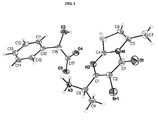
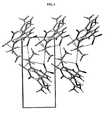
- step 5 In order to determine the absolute stereochemistry of the product from Example 15, step 5, a sample was sublimed at about 105 °C to provide colorless needles suitable for X-ray crystal structure analysis. The study determined the absolute configuration of the amine bearing carbon (C-8) is S.
- U(eq) is defined as one third of the trace of the orthogonalized Uij tensor.
- x y z U(eq) Br(1) 5816(1) 1172(1) 1875(1) 34(1) S(1) -2800(2) -1679(1) 1030(1) 28(1) O(1) 2992(7) -875(4) 2278(1) 48(1) O(2) -1818(7) -1946(3) -193(1) 33(1) O(3) -1693(5) 1147(3) -24(1) 27(1) O(4) -4576(7) -176(3) 77(1) 32(1) N(1) 285(6) -1133(4) 1670(1) 22(1) N(2) 444(8) 26(3) 965(2) 25(1) N(3) 2679(10) 1576(4) 395(2) 23(1) C(1) 2242(9) 648(4) 1173(2) 20(1) C(2) 3198(8) 351(4) 1606(2) 22(1) C(3) 2267(10) -571(4) 1891(2) 29(1) C(4) -474(9) -820(4) 1219(2) 20(1) C(5) -1135(9) -2023(4) 1878(2) 25(1) C(6) -2805(11) -
- Anisotropic displacement parameters (A ⁇ 2 x 10 ⁇ 3) (symmetry transformations used to generate equivalent atoms.
- the anisotropic displacement factor exponent takes the form: -2 pi ⁇ 2 [h ⁇ 2 a* ⁇ 2 U11 + ... + 2 h k a* b* U12) U11 U22 U33 U23 U13 U12 Br(1) 27(1) 40(1) 36(1) -4(1) -6(1) -9(1) S(1) 27(1) 24(1) 33(1) 2(1) -5(1) -7(1) O(1) 54(3) 56(3) 33(3) 9(2) -21(2) -11(2) O(2) 41(3) 13(2) 46(3) 3(2) 6(2) 4(2) O(3) 33(2) 14(2) 35(2) 5(2) -7(1) 0(2) O(4) 31(3) 21(2) 44(3) -1(2) 8(2) 0(2) N(1) 22(2) 22(2) 21(2) 1(2) -3(2) -3(2) N(2) 26(3) 21(2) 26(3) 5(2) -2(2) 0(2) N(3) 27(3) 22(3) 19(3) 4(2) 3(2) -8(2) C(1) 16(3) 19(3) 26(3) -4(2) 0(2) -3(2) C(2) 13(3) 23(3) 29
- Step 1 7-(1-azidoethyl)-3-methyl-6-(1,3-thiazol-2-yl)-5H-[1,3]thiazolo[3,2-a]pyrimidin-5-one
- Step 1 7-(1-azidoethyl)-6-(4-fluorophenyl)-3-methyl-5H-[1,3]thiazolo[3,2-a]pyrimidin-5-one
- the first enantiomer has retention time of 7.78 min and the second peak has retention time of 8.61 minutes.
- Step 3 7- ⁇ 1-[(2-amino-9H-purin-6-yl)amino]ethyl ⁇ -6-(3,5-difluorophenyl)-3-methyl-5H-[1,3]thiazolo[3,2-a]pyrimidin-5-one
- Step 4. 7-(1-azidoethyl)-6-(3,5-difluorophenyl)-5H-[1,3]thiazolo[3,2-a]pyrimidin-5-one
- Step 5 7-(1-aminoethyl)-6-(3,5-difluorophenyl)-5H-[1,3]thiazolo[3,2-a]pyrimidin-5-one
- Step 6 7- ⁇ 1-[(2-amino-9H-purin-6-yl)amino]ethyl ⁇ -6-(3,5-difluorophenyl)-5H-[1,3]thiazolo[3,2-a]pyrimidin-5-one
- Step 1 7-(1-azidoethyl)-6-(3-fluorophenyl)-5H-[1,3]thiazolo[3,2-a]pyrimidin-5-one
- Step 1 7-(1-azidoethyl)-6-(3-fluorophenyl)-3-methyl-5H-[1,3]thiazolo[3,2-a]pyrimidin-5-one
- the first enantiomer has retention time of 6.38 minutes and the second peak has retention time of 6.99 minutes.
- Step 1 7-(1-azidoethyl)-3-methyl-6-(4-methylphenyl)-5H-[1,3]thiazolo[3,2-a]pyrimidin-5-one
- Step 1 7-(1-azidoethyl)-6-(3-chlorophenyl)-3-methyl-5H-[1,3]thiazolo[3,2-a]pyrimidin-5-one
- Step 1 7-(1-azidoethyl)-6-(2-fluorophenyl)-3-methyl-5H-[1,3]thiazolo[3,2-a]pyrimidin-5-one
- Step 1 7-(1-azidoethyl)-6-(2,3-difluorophenyl)-3-methyl-5H-[1,3]thiazolo[3,2-a]pyrimidin-5-one
- Step 3 7- ⁇ 1-[(2-amino-9H-purin-6-yl)amino]ethyl ⁇ -6-(2,3-difluorophenyl)-3-methyl-5H-[1,3]thiazolo[3,2-a]pyrimidin-5-one trifluoroacetic acid salt
- Step 1 7-(1-azidoethyl)-6-(3-chloro-5-fluorophenyl)-3-methyl-5H-[1,3]thiazolo[3,2-a]pyrimidin-5-one
- Step 1 7-(1-azidoethyl)-6-(5-fluoropyridin-3-yl)-3-methyl-5H-[1,3]thiazolo[3,2-a]pyrimidin-5-one
- Step 3 7- ⁇ 1-[(2-amino-9H-purin-6-yl)amino]ethyl ⁇ -6-(5-fluoropyridin-3-yl)-3-methyl-5H-[1 ,3 ]thiazolo[3,2-a]pyrimidin-5-one trifluoroacetic acid salt
- Step 1 7-(1-azidoethyl)-6-(2-chlorophenyl)-3-methyl-5H-[1,3]thiazolo[3,2-a]pyrimidin-5-one
- 1 H NMR (DMSO- d 6 , 400 MHz) ⁇ 8.36 (1H, s), 8.32 (1H, s), 7.57 (2H, m), 7.44 (2H, m), 7.11 (1H, s), 5.04 (1H, m), 2.64 (1H, s), 1.34 (3H, d, J 6.8 Hz) ppm.
- reaction mixture was diluted with methanol and purified by RP-HPLC (XBridge C18 column, eluting with a gradient of acetonitrile/water containing 0.1% ammonium hydroxide, at flow rate of 60 mL/min) to give the desired product (7 mg, 10%) as a white solid.
- RP-HPLC XBridge C18 column, eluting with a gradient of acetonitrile/water containing 0.1% ammonium hydroxide, at flow rate of 60 mL/min
- Step 1 7- ⁇ (1S)-1-[(2-amino-9H-purin-6-yl)amino]ethyl ⁇ -6-(3-fluorophenyl)-3-methyl-5H-[1,3]thiazolo[3,2-a]pyrimidin-5-one
- the desired compound was prepared according to the procedure of Example 8, step 3, using 7-(1-bromoethyl)-3-(trifluoromethyl)-5 H -[1,3]thiazolo[3,2- a ]pyrimidin-5-one as the starting material in quantitative yield.
- LCMS for C 9 H 6 Br 2 F 3 N 2 OS (M+H) + : m/z 404.8, 406.7,408.7.
- the desired compound was prepared according to the procedure of Example 8, step 4, using 6-bromo-7-(1-bromoethyl)-3-(trifluoromethyl)-5H-[1,3]thiazolo[3,2-a]pyrimidin-5-one as the starting material in 84% yield.
- LCMS for C 9 H 6 BrF 3 N 5 OS (M+H) + : m/z 367.7, 369.8.
- Step 4. 7-(1-Azidoethyl)-6-(3-fluorophenyl)-3-(trifluoromethyl)-5H-[1,3]thiazolo[3, 2-a]pyrimidin-5-one
- the desired compound was prepared according to the procedure of Example 8, step 5, using 7-(1-azidoethyl)-6-bromo-3-(trifluoromethyl)-5 H -[1,3]thiazolo[3,2- a ]pyrimidin-5-one and (3-fluorophenyl)boronic acid as the starting materials in 29% yield.
- LCMS for C 15 H 10 F 4 N 5 OS (M+H) + : m/z 383.9.
- the desired compound was prepared according to the procedure of Example 8, step 3, using 2-(1-bromoethyl)-6-methyl-4 H -pyrido[1,2-a]pyrimidin-4-one and N -iodosuccinimide as the starting materials in 98% yield.
- LCMS for C 11 H 11 BrIN 2 O (M+H) + : m/z 392.7, 394.7.
- the desired compound was prepared according to the procedure of Example 8, step 4, using 2-(1-bromoethyl)-3-iodo-6-methyl-4 H -pyrido[1,2-a]pyrimidin-4-one as the starting material in 99% yield.
- LCMS for C 11 H 11 IN 5 O (M+H) + ; m/z 356.0.
- reaction mixture was purified by RP-HPLC (XBridge C18 column, eluting with a gradient of acetonitrile/water containing 0.05% TFA, at flow rate of 30 mL/min).
- LCMS for C 17 H 16 N 5 O (M+H) + : m/z 306.1.
- the desired compound was prepared according to the procedure of Reference Example 49 using 2-amino-6-bromopurine (instead of 6-bromo-9 H -purine in step 5).
- LCMS for C 22 H 21 N 8 O (M+H) + : m/z 413.0.
- the desired compound was prepared according to the procedure of Reference Example 49 using (3-methylphenyl)boronic acid (instead of phenylboronic acid in step 4) and 2-amino-6-bromopurine (instead of 6-bromo-9 H -purine in step 5).
- LCMS for C 23 H 23 N 8 O (M+H) + : m/z 427.0.
- the desired compound was prepared according to the procedure of Reference Example 49 using (3-chlorophenyl)boronic acid (instead of phenylboronic acid in step 4) and 2-amino-6-bromopurine (instead of 6-bromo-9 H -purine in step 5).
- LCMS for C 22 H 20 ClN 8 O (M+H) + : m/z 447.1.
- the desired compound was prepared according to the procedure of Reference Example 49 using (4-chlorophenyl)boronic acid (instead of phenylboronic acid in step 4) and 2-amino-6-bromopurine (instead of 6-bromo-9 H -purine in step 5).
- LCMS for C 22 H 20 ClN 8 O (M+H) + : m/z 447.1.
- the desired compound was prepared according to the procedure of Reference Example 49 using (2-chlorophenyl)boronic acid (instead of phenylboronic acid in step 4) and 2-amino-6-bromopurine (instead of 6-bromo-9 H -purine in step 5) as a mixture of atropisomers.
- LCMS for C 22 H 20 ClN 8 O (M+H) + : m/z 447.1.
- the desired compound was prepared according to the procedure of Reference Example 49 using (2-fluorophenyl)boronic acid (instead of phenylboronic acid in step 4) and 2-amino-6-bromopurine (instead of 6-bromo-9 H -purine in step 5).
- LCMS for C 22 H 20 FN 8 O (M+H) + : m/z 431.1.
- the desired compound was prepared according to the procedure of Reference Example 49 using (4-cyanophenyl)boronic acid (instead of phenylboronic acid in step 4) and 2-amino-6-bromopurine (instead of 6-bromo-9H-purine in step 5).
- LCMS for C 23 H 20 N 9 O (M+H) + : m/z 438.2.
- the desired compound was prepared according to the procedure of Reference Example 49 using (2-methylphenyl)boronic acid (instead of phenylboronic acid in step 4), [1,1'-bis(diphenylphosphino)ferrocene]dichloropalladium(II) complex with dichloromethane (1:1) (instead of dichloro(bis ⁇ di- tert -butyl[4-(dimethylamino)phenyl]phosphoranyl ⁇ )palladium in step 4), and potassium carbonate (instead of sodium carbonate in step 4).
- LCMS for C 23 H 22 N 7 O (M+H) + : m/z 412.1.
- the desired compound was prepared according to the procedure of Reference Example 49 using (4-methylphenyl)boronic acid (instead ofphenylboronic acid in step 4), [1,1'-bis(diphenylphosphino)ferrocene]dichloropalladium(II) complex with dichloromethane (1:1) (instead of dichloro(bis ⁇ di- tert -butyl[4-(dimethylamino)phenyl]phosphoranyl ⁇ )palladium in step 4), and potassium carbonate (instead of sodium carbonate in step 4).
- LCMS for C 23 H 22 N 7 O (M+H) + : m/z 412.1.
- the desired compound was prepared according to the procedure of Reference Example 49 using 3-methoxyphenylboronic acid (instead of phenylboronic acid in step 4), [1,1'-bis(diphenylphosphino)ferrocene]dichloropalladium(II) complex with dichloromethane (1:1) (instead of dichloro(bis ⁇ di- tert -butyl[4-(dimethylamino)phenyl]phosphoranyl ⁇ )palladium in step 4), and potassium carbonate (instead of sodium carbonate in step 4).
- LCMS for C 23 H 22 N 7 O 2 (M+H) + : m/z 428.1.
- the desired compound was prepared according to the procedure of Reference Example 49 using (2,3-difluorophenyl)boronic acid (instead of phenylboronic acid in step 4), [1,1'-bis(diphenylphosphino)ferrocene]dichloropalladium(II) complex with dichloromethane (1:1) (instead of dichloro(bis ⁇ di- tert -butyl[4-(dimethylamino)phenyl]phosphoranyl ⁇ )palladium in step 4), and potassium carbonate (instead of sodium carbonate in step 4).
- LCMS for C 22 H 18 F 2 N 7 O (M+H) + : m/z 434.2.
- the desired compound was prepared according to the procedure of Reference Example 49 using (2,5-difluorophenyl)boronic acid (instead of phenylboronic acid in step 4), [1,1'-bis(diphenylphosphino)ferrocene]dichloropalladium(II) complex with dichloromethane (1:1) (instead of dichloro(bis ⁇ di- tert -butyl[4-(dimethylamino)phenyl]phosphoranyl ⁇ )palladium in step 4), and potassium carbonate (instead of sodium carbonate in step 4).
- LCMS for C 22 H 18 F 2 N 7 O (M+H) + : m/z 434.1.
- the desired compound was prepared according to the procedure of Reference Example 49 using (3,4-difluorophenyl)boronic acid (instead of phenylboronic acid in step 4), [1,1'-bis(diphenylphosphino)ferrocene]dichloropalladium(II) complex with dichloromethane (1:1) (instead of dichloro(bis ⁇ di- tert -butyl[4-(dimethylamino)phenyl]phosphoranyl ⁇ )palladium in step 4), and potassium carbonate (instead of sodium carbonate in step 4).
- LCMS for C 22 H 18 F 2 N 7 O (M+H) + : m/z 434.0.
- the desired compound was prepared according to the procedure of Reference Example 49 using (3,5-difluorophenyl)boronic acid (instead of phenylboronic acid in step 4) and tetrakis(triphenylphosphine)palladium(0) (instead of dichloro(bis ⁇ di- tert -butyl[4-(dimethylamino)phenyl]phosphoranyl ⁇ )palladium in step 4).
- LCMS for C 22 H 18 F 2 N 7 O (M+H) + : m/z 434.0.
- the desired compound was prepared according to the procedure of Reference Example 49 using (3-fluorophenyl)boronic acid (instead of phenylboronic acid in step 4) and tetrakis(triphenylphosphine)palladium(0) (instead of dichloro(bis ⁇ di- tert -butyl[4-(dimethylamino)phenyl]phosphoranyl ⁇ )palladium in step 4).
- LCMS for C 22 H 19 FN 7 O (M+H) + : m/z 416.1.
- the desired compounds were prepared according to the procedure of Reference Example 49, step 5, using the single enantiomers of 2-(1-azidoethyl)-3-(3-fluorophenyl)-6-methyl-4H-pyrido[1,2-a]pyrimidin-4-one trifluoroacetic acid salt and (3-fluorophenyl)boronic acid as the starting materials.
- the desired compound was prepared according to the procedure of Reference Example 49 using (3-fluorophenyl)boronic acid (instead of phenylboronic acid in step 4), tetrakis(triphenylphosphine)palladium(0) (instead of dichloro(bis ⁇ di- tert -butyl[4-(dimethylamino)phenyl]phosphoranyl ⁇ )palladium in step 4), and 2-amino-6-bromopurine (instead of 6-bromo-9 H -purine in step 5).
- LCMS for C 22 H 20 FN 8 O (M+H) + : m/z 431.2.
- the desired compound was prepared according to the procedure of Reference Example 49 using 6-ethylpyridin-2-amine (instead of 6-methyl-2-pyridinamine in step 1), N- bromosuccinimide (instead of N -iodosuccinimide in step 2), (3,5-difluorophenyl)boronic acid (instead of phenylboronic acid in step 4), and tetrakis(triphenylphosphine)palladium(0) (instead of dichloro(bis ⁇ di- tert -butyl[4-(dimethylamino)phenyl]phosphoranyl ⁇ )palladium in step 4).
- the desired compound was prepared according to the procedure of Reference Example 49 using 6-ethylpyridin-2-amine (instead of 6-methyl-2-pyridinamine in step 1), N- bromosuccinimide (instead of N -iodosuccinimide in step 2), (3,5-difluorophenyl)boronic acid (instead of phenylboronic acid in step 4), tetrakis(triphenylphosphine)palladium(0) (instead of dichloro(bis ⁇ di- tert -butyl[4-(dimethylamino)phenyl]phosphoranyl ⁇ )palladium in step 4) and 2-amino-6-bromopurine (instead of 6-bromo-9 H -purine in step 5).
- the desired compound was prepared according to the procedure of Reference Example 49 using 6-ethylpyridin-2-amine (instead of 6-methyl-2-pyridinamine in step 1), N- bromosuccinimide (instead of N -iodosuccinimide in step 2), (4-fluorophenyl)boronic acid (instead of phenylboronic acid in step 4), and tetrakis(triphenylphosphine)palladium(0) (instead of dichloro(bis ⁇ di- tert -butyl[4-(dimethylamino)phenyl]phosphoranyl ⁇ )palladium in step 4).
- LCMS for C 23 H 21 FN 7 O (M+H) + : m/z 430.2.
- the desired compound was prepared according to the procedure of Reference Example 49 using 2-pyridinamine (instead of 6-methyl-2-pyridinamine in step 1), N -bromosuccinimide (instead of N -iodosuccinimide in step 2), (3,5-difluorophenyl)boronic acid (instead of phenylboronic acid in step 4), and tetrakis(triphenylphosphine)palladium(0) (instead of dichloro(bis ⁇ di- tert -butyl[4-(dimethylamino)phenyl]phosphoranyl ⁇ )palladium in step 4).
- the desired compound was prepared according to the procedure of Reference Example 49 using 2-pyridinamine (instead of 6-methyl-2-pyridinamine in step 1), N -bromosuccinimide (instead of N -iodosuccinimide in step 2), (3,5-difluorophenyl)boronic acid (instead of phenylboronic acid in step 4), tetrakis(triphenylphosphine)palladium(0) (instead of dichloro(bis ⁇ di- tert -butyl[4-(dimethylamino)phenyl]phosphoranyl ⁇ )palladium in step 4) and 2-amino-6-bromopurine (instead of 6-bromo-9 H -purine in step 5).
- the desired compound was prepared according to the procedure of Reference Example 49 using N -bromosuccinimide (instead of N -iodosuccinimide in step 2), (6-chloro-5-methylpyridin-3-yl)boronic acid (instead of phenylboronic acid in step 4), and tetrakis(triphenylphosphine)palladium(0) (instead of dichloro(bis ⁇ di- tert -butyl[4-(dimethylamino)phenyl]phosphoranyl ⁇ )palladium in step 4).
- LCMS for C 22 H 20 ClN 8 O (M+H) + : m/z 446.9.
- the desired compound was prepared according to the procedure of Reference Example 49 using N -bromosuccinimide (instead of N -iodosuccinimide in step 2), (6-chloro-5-methylpyridin-3-yl)boronic acid (instead of phenylboronic acid in step 4), tetrakis(triphenylphosphine)palladium(0) (instead of dichloro(bis ⁇ di- tert -butyl[4-(dimethylamino)phenyl]phosphoranyl ⁇ )palladium in step 4), and 2-amino-6-bromopurine (instead of 6-bromo-9 H -purine in step 5).
- the desired compound was prepared according to the procedure of Reference Example 49 using N -bromosuccinimide (instead of N -iodosuccinimide in step 2), (3-cyanophenyl)boronic acid (instead of phenylboronic acid in step 4), and tetrakis(triphenylphosphine)palladium(0) (instead of dichloro(bis ⁇ di- tert -butyl[4-(dimethylamino)phenyl]phosphoranyl ⁇ )palladium in step 4).
- LCMS for C 23 H 19 N 8 O (M+H) + : m/z 422.9.
- the desired compound was prepared according to the procedure of Reference Example 49 using N -bromosuccinimide (instead of N -iodosuccinimide in step 2), (3-cyanophenyl)boronic acid (instead of phenylboronic acid in step 4), tetrakis(triphenylphosphine)palladium(0) (instead of dichloro(bis ⁇ di- tert -butyl[4-(dimethylamino)phenyl]phosphoranyl ⁇ )palladium in step 4), and 2-amino-6-bromopurine (instead of 6-bromo-9 H -purine in step 5).
- PI3-Kinase luminescent assay kit including lipid kinase substrate, D-myo-phosphatidylinositol 4,5-bisphosphate (PtdIns(4,5)P2)D (+)-sn-1,2-di-O-octanoylglyceryl, 3-O-phospho linked (PIP2), biotinylated I(1,3,4,5)P4, PI(3,4,5)P3 Detector Protein, was purchased from Echelon Biosciences (Salt Lake City, UT).
- AlphaScreen TM GST Detection Kit including donor and acceptor beads was purchased from PerkinElmer Life Sciences (Waltham, MA).
- PI3K ⁇ (p110 ⁇ /p85 ⁇ ) was purchased from Millipore (Bedford, MA). ATP, MgCl 2 , DTT, EDTA, HEPES and CHAPS were purchased from Sigma-Aldrich (St. Louis, MO).
- the kinase reaction was conducted in 384-well REMP plate from Thermo Fisher Scientific in a final volume of 40 ⁇ L. Inhibitors were first diluted serially in DMSO and added to the plate wells before the addition of other reaction components. The final concentration of DMSO in the assay was 2%.
- the PI3K assays were carried out at room temperature in 50 mM HEPES, pH 7.4, 5mM MgCl 2 , 50 mM NaCl, 5mM DTT and CHAPS 0.04%. Reactions were initiate by the addition of ATP, the final reaction mixture consisted of 20 ⁇ M PIP2, 20 ⁇ M ATP, 1.2nM PI3K ⁇ were incubated for 20 min.
- reaction mixture 10 ⁇ L was then transferred to 5 ⁇ L 50nM biotinylated I(1,3,4,5)P4 in quench buffer: 50 mM HEPES pH 7.4, 150 mM NaCl, 10 mM EDTA, 5 mM DTT, 0.1 % Tween-20, followed with the addition of 10 ⁇ L AlphaScreen TM donor and acceptor beads suspended in quench buffer containing 25nM PI(3,4,5)P3 detector protein. The final concentration of both donor and acceptor beads is 20 mg/ml. After plate sealing, the plate was incubated in a dark location at room temperature for 2 hours. The activity of the product was determined on Fusion-alpha microplate reader (Perkin-Elmer). IC 50 determination was performed by fitting the curve of percent control activity versus the log of the inhibitor concentration using the GraphPad Prism 3.0 software.
- Lipid kinase substrate Lipid kinase substrate, phosphoinositol-4,5-bisphosphate (PIP2), was purchased from Echelon Biosciences (Salt Lake City, UT).
- PI3K isoforms ⁇ , ⁇ , ⁇ and ⁇ were purchased from Millipore (Bedford, MA).
- ATP, MgCl 2 , DTT, EDTA, MOPS and CHAPS were purchased from Sigma-Aldrich (St. Louis, MO).
- Millipore Millipore (Bedford, MA).
- ATP, MgCl 2 , DTT, EDTA, MOPS and CHAPS were purchased from Sigma-Aldrich (St. Louis, MO).
- the kinase reaction was conducted in clear-bottom 96-well plate from Thermo Fisher Scientific in a final volume of 24 ⁇ L. Inhibitors were first diluted serially in DMSO and added to the plate wells before the addition of other reaction components. The final concentration of DMSO in the assay was 0.5%.
- the PI3K assays were carried out at room temperature in 20 mM MOPS, pH 6.7, 10 mM MgCl 2 , 5 mM DTT and CHAPS 0.03%. The reaction mixture was prepared containing 50 ⁇ M PIP2, kinase and varying concentration of inhibitors. Reactions were initiated by the addition of ATP containing 2.2 ⁇ Ci [ ⁇ - 33 P]ATP to a final concentration of 1000 ⁇ M.
- the final concentration of PI3K isoforms ⁇ , ⁇ , ⁇ and ⁇ in the assay were 1.3, 9.4, 2.9 and 10.8 nM respectively.
- Reactions were incubated for 180 min and terminated by the addition of 100 ⁇ L of 1 M potassium phosphate pH 8.0, 30 mM EDTA quench buffer.
- a 100 ⁇ L aliquot of the reaction solution was then transferred to 96-well Millipore Multiscreen IP 0.45 ⁇ m PVDF filter plate (The filter plate was prewetted with 200 ⁇ L 100% ethanol, distilled water, and 1 M potassium phosphate pH 8.0, respectively).
- the filter plate was aspirated on a Millipore Manifold under vacuum and washed with 18 ⁇ 200 ⁇ L wash buffer containing 1 M potassium phosphate pH 8.0 and 1 mM ATP. After drying by aspiration and blotting the plate was air dried in an incubator at 37°C overnight. Packard TopCount adapter (Millipore) was then attached to the plate followed with addition of 120 ⁇ L Microscint 20 scintillation cocktail (Perkin Elmer) in each well. After the plate sealing, the radioactivity of the product was determined by scintillation counting on Topcount (Perkin-Elmer). IC 50 determination was performed by fitting the curve of percent control activity versus the log of the inhibitor concentration using the GraphPad Prism 3.0 software. Compounds having and IC 50 value of 10 ⁇ M or less are considered active. See Table 1 for data related to compounds of the invention.
- [ ⁇ - 33 P]ATP (10mCi/mL) was purchased from Perkin-Elmer (Waltham, MA).
- Lipid kinase substrate, D-myo-Phosphatidylinositol 4,5-bisphosphate (PtdIns(4,5)P2)D (+)-sn-1,2-di-O-octanoylglyceryl, 3-O-phospho linked (PIP2), CAS 204858-53-7 was purchased from Echelon Biosciences (Salt Lake City, UT).
- PI3K ⁇ p110 ⁇ /p85 ⁇ was purchased from Millipore (Bedford, MA).
- ATP MgCl 2 , DTT, EDTA, MOPS and CHAPS were purchased from Sigma-Aldrich (St. Louis, MO).
- the kinase reaction was conducted in polystyrene 384-well matrix white plate from Thermo Fisher Scientific in a final volume of 25 ⁇ L. Inhibitors were first diluted serially in DMSO and added to the plate wells before the addition of other reaction components. The final concentration of DMSO in the assay was 0.5%.
- the PI3K assays were carried out at room temperature in 20 mM MOPS, pH 6.7, 10 mM MgCl 2 , 5 mM DTT and CHAPS 0.03%. Reactions were initiated by the addition of ATP, the final reaction mixture consisted of 20 ⁇ M PIP2, 20 ⁇ M ATP, 0.2 ⁇ Ci [ ⁇ - 33 P] ATP, 4 nM PI3k ⁇ .
- IC 50 data for PI3K ⁇ enzyme assays A1, A2, or A3* Example PI3K ⁇ a IC 50 (nM) PI3K ⁇ b IC 50 (nM) PI3K ⁇ c IC 50 (nM) PI3K ⁇ c IC 50 (nM) PI3K ⁇ c IC 50 (nM) 1 +++ +++ 2 ++ + 3 +++ +++ 4 +++ ++ 5 +++ ++ 6 +++ +++ 7 +++ ++ 8 ++ + 9 + + + ++++ ++ ++ ++ 10 + + + ++++ ++++++++ 11 + + + ++++ ++ +++ 12 + + 13 + + + ++++ ++ +++ 14 ++ ++ 15 + + + ++++ ++++ ++++ 17 +++ 18 +++ 19 +++ 20 + 21 + 22 ++ 23 + ++++ 24 ++++ 25 ++ 26 +++ 27 +++ 28 ++++ 29 ++++ 30 + + + ++++ ++ ++++
- human PBMC were isolated from the peripheral blood of normal, drug free donors by standard density gradient centrifugation on Ficoll-Hypague (GE Healthcare, Piscataway, NJ) and incubated with anti-CD19 microbeads (Miltenyi Biotech, Auburn, CA). The B cells were then purified by positive immunosorting using an autoMacs (Miltenyi Biotech) according to the manufacturer's instruction.
- the purified B cells (2 ⁇ 10 5 /well/200 ⁇ L) were cultured in 96-well ultra-low binding plates (Corning, Corning, NY) in RPMI1640, 10% FBS and goat F(ab')2 anti-human IgM (10 ⁇ g/ml) (Invitrogen, Carlsbad, CA), in the presence of different amount of test compounds, for three days.
- Pfeiffer cell line (diffuse large B cell lymphoma) was purchased from ATCC (Manassas. VA) and maintained in the culture medium recommended (RPMI and 10% FBS).
- RPMI and 10% FBS the culture medium recommended
- the Pfeiffer cells were plated with the culture medium (2x10 3 cells / well/ per 200 ⁇ l) into 96-well ultra-low binding plates (Coming, Corning, NY), in the presence or absence of a concentration range of test compounds.
- IC 50 data for Pfeiffer cell proliferation essay* Example IC 50 (nM) 1 +++ 2 + 3 +++ 4 +++ 5 ++ 6 +++ 7 ++++ 8 + 9 + 10 + 11 + 12 +++ 13 + 14 +++++ 15 + 17 +++ 18 ++ 19 +++++ 20 ++ 21 ++ 22 +++ 23 + 24 +++ 25 ++++ 27 +++ 30 + 31 +++ 32 + 33 + 34 + 35 + 36 ++ 37 ++ 38 ++ 39
- Ramos cells B lymphocyte from Burkitts lymphoma
- ATCC Manassas, VA
- RPMI1640 10% FBS.
- the cells (3 ⁇ 10 7 cells /tube/3 mL in RPMI) were incubated with different amounts of test compounds for 2 hrs at 37°C and then stimulated with goat F(ab')2 anti-human IgM (5 ⁇ g/mL) (Invitrogen) for 17 min. in a 37 °C water bath.
- the stimulated cells were spun down at 4 °C with centrifugation and whole cell extracts prepared using 300 ⁇ L lysis buffer (Cell Signaling Technology, Danvers, MA).
- the resulting lysates were sonicated and supernatants were collected.
- the phosphorylation level of Akt in the supernatants were analyzed by using PathScan phospho-Akt1 (Ser473) sandwich ELISA kits (Cell Signaling Technology) according to the manufacturer's instruction.
Landscapes
- Health & Medical Sciences (AREA)
- Chemical & Material Sciences (AREA)
- Organic Chemistry (AREA)
- Animal Behavior & Ethology (AREA)
- Life Sciences & Earth Sciences (AREA)
- General Health & Medical Sciences (AREA)
- Public Health (AREA)
- Veterinary Medicine (AREA)
- Pharmacology & Pharmacy (AREA)
- Medicinal Chemistry (AREA)
- Nuclear Medicine, Radiotherapy & Molecular Imaging (AREA)
- Chemical Kinetics & Catalysis (AREA)
- General Chemical & Material Sciences (AREA)
- Bioinformatics & Cheminformatics (AREA)
- Engineering & Computer Science (AREA)
- Immunology (AREA)
- Pulmonology (AREA)
- Physical Education & Sports Medicine (AREA)
- Orthopedic Medicine & Surgery (AREA)
- Urology & Nephrology (AREA)
- Rheumatology (AREA)
- Cardiology (AREA)
- Neurology (AREA)
- Heart & Thoracic Surgery (AREA)
- Vascular Medicine (AREA)
- Dermatology (AREA)
- Pain & Pain Management (AREA)
- Hematology (AREA)
- Oncology (AREA)
- Ophthalmology & Optometry (AREA)
- Biomedical Technology (AREA)
- Epidemiology (AREA)
- Neurosurgery (AREA)
- Pharmaceuticals Containing Other Organic And Inorganic Compounds (AREA)
- Nitrogen And Oxygen Or Sulfur-Condensed Heterocyclic Ring Systems (AREA)
- Medicines That Contain Protein Lipid Enzymes And Other Medicines (AREA)
- Plural Heterocyclic Compounds (AREA)
Priority Applications (7)
| Application Number | Priority Date | Filing Date | Title |
|---|---|---|---|
| SI201030659T SI2448938T1 (sl) | 2009-06-29 | 2010-06-28 | Pirimidinoni kot zaviralci pi3k |
| EP14169702.9A EP2845856A1 (en) | 2009-06-29 | 2010-06-28 | Pyrimidinones as PI3K inhibitors |
| PL10729035T PL2448938T3 (pl) | 2009-06-29 | 2010-06-28 | Pirymidynony jako inhibitory PI3K |
| RS20140419A RS53494B9 (sr) | 2009-06-29 | 2010-06-28 | Pirimidinoni kao inhibitori pi3k |
| HRP20140754TT HRP20140754T2 (hr) | 2009-06-29 | 2010-06-28 | Pirimidinoni kao inhibitori pi3k |
| MEP-2014-93A ME01838B (me) | 2009-06-29 | 2010-06-28 | Pirimidinoni kao inhibitori pi3k |
| CY20141100531T CY1115351T1 (el) | 2009-06-29 | 2014-07-15 | Πυριμιδινονες ως αναστολεις ρi3κ |
Applications Claiming Priority (3)
| Application Number | Priority Date | Filing Date | Title |
|---|---|---|---|
| US22116009P | 2009-06-29 | 2009-06-29 | |
| US25976509P | 2009-11-10 | 2009-11-10 | |
| PCT/US2010/040150 WO2011008487A1 (en) | 2009-06-29 | 2010-06-28 | Pyrimidinones as pi3k inhibitors |
Related Child Applications (2)
| Application Number | Title | Priority Date | Filing Date |
|---|---|---|---|
| EP14169702.9A Division EP2845856A1 (en) | 2009-06-29 | 2010-06-28 | Pyrimidinones as PI3K inhibitors |
| EP14169702.9A Division-Into EP2845856A1 (en) | 2009-06-29 | 2010-06-28 | Pyrimidinones as PI3K inhibitors |
Publications (3)
| Publication Number | Publication Date |
|---|---|
| EP2448938A1 EP2448938A1 (en) | 2012-05-09 |
| EP2448938B1 EP2448938B1 (en) | 2014-05-28 |
| EP2448938B9 true EP2448938B9 (en) | 2015-06-10 |
Family
ID=42575792
Family Applications (2)
| Application Number | Title | Priority Date | Filing Date |
|---|---|---|---|
| EP10729035.5A Active EP2448938B9 (en) | 2009-06-29 | 2010-06-28 | Pyrimidinones as pi3k inhibitors |
| EP14169702.9A Withdrawn EP2845856A1 (en) | 2009-06-29 | 2010-06-28 | Pyrimidinones as PI3K inhibitors |
Family Applications After (1)
| Application Number | Title | Priority Date | Filing Date |
|---|---|---|---|
| EP14169702.9A Withdrawn EP2845856A1 (en) | 2009-06-29 | 2010-06-28 | Pyrimidinones as PI3K inhibitors |
Country Status (33)
Families Citing this family (74)
| Publication number | Priority date | Publication date | Assignee | Title |
|---|---|---|---|---|
| JP2012531435A (ja) * | 2009-06-25 | 2012-12-10 | アムジエン・インコーポレーテツド | PI3K阻害剤としての4H−ピリド[1,2−a]ピリミジン−4−オン誘導体 |
| EP2448938B9 (en) | 2009-06-29 | 2015-06-10 | Incyte Corporation | Pyrimidinones as pi3k inhibitors |
| WO2011075630A1 (en) | 2009-12-18 | 2011-06-23 | Incyte Corporation | Substituted fused aryl and heteroaryl derivatives as pi3k inhibitors |
| WO2011075643A1 (en) * | 2009-12-18 | 2011-06-23 | Incyte Corporation | Substituted heteroaryl fused derivatives as pi3k inhibitors |
| EP2558463A1 (en) | 2010-04-14 | 2013-02-20 | Incyte Corporation | Fused derivatives as i3 inhibitors |
| US9062055B2 (en) | 2010-06-21 | 2015-06-23 | Incyte Corporation | Fused pyrrole derivatives as PI3K inhibitors |
| JP2013544833A (ja) | 2010-12-03 | 2013-12-19 | アラーガン インコーポレイテッド | スフィンゴシン−1−リン酸(s1p)受容体モジュレーターとしての新規ピリジン誘導体 |
| JP5961187B2 (ja) | 2010-12-20 | 2016-08-02 | インサイト・ホールディングス・コーポレイションIncyte Holdings Corporation | Pi3k阻害剤としてのn−(1−(置換フェニル)エチル)−9h−プリン−6−アミン |
| US9108984B2 (en) | 2011-03-14 | 2015-08-18 | Incyte Corporation | Substituted diamino-pyrimidine and diamino-pyridine derivatives as PI3K inhibitors |
| US9126948B2 (en) | 2011-03-25 | 2015-09-08 | Incyte Holdings Corporation | Pyrimidine-4,6-diamine derivatives as PI3K inhibitors |
| MX389479B (es) | 2011-09-02 | 2025-03-20 | Incyte Holdings Corp | Heterociclilaminas como inhibidores de fosfoinositida 3-cinasas (pi3k) |
| ES2661510T3 (es) | 2011-12-15 | 2018-04-02 | Novartis Ag | Uso de inhibidores de la actividad o función de PI3K |
| AR090548A1 (es) | 2012-04-02 | 2014-11-19 | Incyte Corp | Azaheterociclobencilaminas biciclicas como inhibidores de pi3k |
| UY34893A (es) | 2012-07-10 | 2014-02-28 | Takeda Pharmaceutical | Derivados de azaindol |
| WO2014015523A1 (en) * | 2012-07-27 | 2014-01-30 | Hutchison Medipharma Limited | Novel heteroaryl and heterocycle compounds, compositions and methods |
| HK1214159A1 (zh) | 2012-11-08 | 2016-07-22 | Rhizen Pharmaceuticals S.A. | 含有PDE4抑制剂和PI3δ或双重PI3δ-γ激酶抑制剂的药物组合物 |
| EP2943485B1 (en) | 2013-01-14 | 2017-09-20 | Incyte Holdings Corporation | Bicyclic aromatic carboxamide compounds useful as pim kinase inhibitors |
| TWI662030B (zh) | 2013-01-15 | 2019-06-11 | 英塞特控股公司 | 適用作pim激酶抑制劑之噻唑甲醯胺及吡啶甲醯胺化合物 |
| TWI736135B (zh) | 2013-03-01 | 2021-08-11 | 美商英塞特控股公司 | 吡唑并嘧啶衍生物治療PI3Kδ相關病症之用途 |
| US9556197B2 (en) | 2013-08-23 | 2017-01-31 | Incyte Corporation | Furo- and thieno-pyridine carboxamide compounds useful as pim kinase inhibitors |
| WO2015091532A1 (en) * | 2013-12-19 | 2015-06-25 | Almirall, S.A. | Pyrrolopyrimidine derivatives as pi3k inhibitors |
| WO2015106014A1 (en) | 2014-01-09 | 2015-07-16 | Takeda Pharmaceutical Company Limited | Azaindole derivatives |
| US9371321B2 (en) | 2014-01-09 | 2016-06-21 | Astrazeneca Ab | Azaindole derivatives |
| CA3158254C (en) * | 2014-04-08 | 2024-05-21 | Incyte Corporation | Treatment of b-cell malignancies by a combination jak and pi3k inhibitors |
| US10077277B2 (en) | 2014-06-11 | 2018-09-18 | Incyte Corporation | Bicyclic heteroarylaminoalkyl phenyl derivatives as PI3K inhibitors |
| WO2015192761A1 (zh) * | 2014-06-17 | 2015-12-23 | 辰欣药业股份有限公司 | 作为mTOR/PI3K抑制剂的吡啶并[1,2-a]嘧啶酮类似物 |
| EA201692557A1 (ru) * | 2014-07-04 | 2017-05-31 | Люпин Лимитед | Хинолизиноновые производные в качестве ингибиторов pi3k |
| US9580418B2 (en) | 2014-07-14 | 2017-02-28 | Incyte Corporation | Bicyclic aromatic carboxamide compounds useful as Pim kinase inhibitors |
| WO2016010897A1 (en) | 2014-07-14 | 2016-01-21 | Incyte Corporation | Bicyclic heteroaromatic carboxamide compounds useful as pim kinase inhibitors |
| WO2016054491A1 (en) | 2014-10-03 | 2016-04-07 | Infinity Pharmaceuticals, Inc. | Heterocyclic compounds and uses thereof |
| BR112017008867A2 (pt) | 2014-11-01 | 2017-12-26 | Chongqing Fochon Pharmaceutical Co Ltd | inibidores de proteína quinases |
| US9637488B2 (en) | 2015-01-29 | 2017-05-02 | Fuqiang Ruan | Heterocyclic compounds as inhibitors of class I PI3KS |
| WO2016130501A1 (en) | 2015-02-09 | 2016-08-18 | Incyte Corporation | Aza-heteroaryl compounds as pi3k-gamma inhibitors |
| SG10201912302VA (en) | 2015-02-27 | 2020-02-27 | Incyte Corp | Salts of pi3k inhibitor and processes for their preparation |
| CN106008479B (zh) * | 2015-03-06 | 2020-01-10 | 南京圣和药业股份有限公司 | 作为磷脂酰肌醇3-激酶δ抑制剂的取代嘧啶类化合物及其应用 |
| US9988401B2 (en) | 2015-05-11 | 2018-06-05 | Incyte Corporation | Crystalline forms of a PI3K inhibitor |
| US9840503B2 (en) | 2015-05-11 | 2017-12-12 | Incyte Corporation | Heterocyclic compounds and uses thereof |
| US20160362424A1 (en) * | 2015-05-11 | 2016-12-15 | Incyte Corporation | Salts of (s)-7-(1-(9h-purin-6-ylamino)ethyl)-6-(3-fluorophenyl)-3-methyl-5h-thiazolo[3,2-a]pyrimidin-5-one |
| WO2016183060A1 (en) | 2015-05-11 | 2016-11-17 | Incyte Corporation | Process for the synthesis of a phosphoinositide 3-kinase inhibitor |
| WO2016196244A1 (en) | 2015-05-29 | 2016-12-08 | Incyte Corporation | Pyridineamine compounds useful as pim kinase inhibitors |
| WO2017027717A1 (en) | 2015-08-12 | 2017-02-16 | Incyte Corporation | Bicyclic fused pyrimidine compounds as tam inhibitors |
| WO2017035366A1 (en) | 2015-08-26 | 2017-03-02 | Incyte Corporation | Pyrrolopyrimidine derivatives as tam inhibitors |
| AR105967A1 (es) | 2015-09-09 | 2017-11-29 | Incyte Corp | Sales de un inhibidor de pim quinasa |
| WO2017059251A1 (en) | 2015-10-02 | 2017-04-06 | Incyte Corporation | Heterocyclic compounds useful as pim kinase inhibitors |
| RS63359B1 (sr) | 2015-11-06 | 2022-07-29 | Incyte Corp | Heterociklična jedinjenja kao inhibitori pi3k-gama |
| TWI713655B (zh) * | 2015-12-16 | 2020-12-21 | 大陸商上海嘉坦醫藥科技有限公司 | 吡啶並[1,2-a]嘧啶酮類似物的晶型及其製備方法和中間體 |
| WO2017103825A1 (en) | 2015-12-18 | 2017-06-22 | Lupin Limited | Quinolizinone derivatives as pi3k inhibitors |
| ES2995198T3 (en) | 2016-01-05 | 2025-02-07 | Incyte Corp | Pyridine compounds as pi3k-gamma inhibitors |
| US10722484B2 (en) | 2016-03-09 | 2020-07-28 | K-Gen, Inc. | Methods of cancer treatment |
| TWI828027B (zh) | 2016-03-28 | 2024-01-01 | 美商英塞特公司 | 作為tam抑制劑之吡咯并三嗪化合物 |
| US10919914B2 (en) | 2016-06-08 | 2021-02-16 | Infinity Pharmaceuticals, Inc. | Heterocyclic compounds and uses thereof |
| TW201803871A (zh) | 2016-06-24 | 2018-02-01 | 英塞特公司 | 作為PI3K-γ抑制劑之雜環化合物 |
| US10633387B2 (en) | 2017-09-27 | 2020-04-28 | Incyte Corporation | Salts of TAM inhibitors |
| KR102717072B1 (ko) | 2017-10-18 | 2024-10-15 | 인사이트 코포레이션 | Pi3k-감마 저해제로서의 3차 하이드록시기로 치환된 축합된 이미다졸 유도체 |
| TW201924683A (zh) | 2017-12-08 | 2019-07-01 | 美商英塞特公司 | 用於治療骨髓增生性贅瘤的低劑量組合療法 |
| IL278889B2 (en) | 2018-06-01 | 2025-11-01 | Incyte Corp | Dosing regimen for the treatment of pi3k related disorders |
| ES3031110T3 (en) | 2018-06-29 | 2025-07-04 | Incyte Corp | Formulations of an axl/mer inhibitor |
| CR20250050A (es) | 2018-09-05 | 2025-03-19 | Incyte Corp | Formas cristalinas de un inhibidor de fosfoinositida 3–quinasa (pi3k) (divisional 2021-0165) |
| US11161838B2 (en) | 2018-11-13 | 2021-11-02 | Incyte Corporation | Heterocyclic derivatives as PI3K inhibitors |
| WO2020102198A1 (en) | 2018-11-13 | 2020-05-22 | Incyte Corporation | Heterocyclic derivatives as pi3k inhibitors |
| WO2020102216A1 (en) | 2018-11-13 | 2020-05-22 | Incyte Corporation | Substituted heterocyclic derivatives as pi3k inhibitors |
| CN110078747B (zh) * | 2019-04-11 | 2020-04-10 | 河南科技大学第一附属医院 | 一种用于医院消毒的新型噻唑类药物分子及其制备方法 |
| TW202114681A (zh) | 2019-07-02 | 2021-04-16 | 美商eFFECTOR醫療公司 | 轉譯抑制劑及其用途 |
| CN110721188B (zh) * | 2019-11-18 | 2020-12-18 | 牡丹江医学院 | 一种治疗白血病的药物组合物 |
| MX2022006370A (es) | 2019-11-25 | 2022-09-07 | Amgen Inc | Compuestos heterocíclicos como inhibidores de delta-5 desaturasa y métodos de uso. |
| JP7254246B2 (ja) | 2019-11-25 | 2023-04-07 | アムジエン・インコーポレーテツド | デルタ-5デサチュラーゼ阻害剤としての複素環式化合物及び使用方法 |
| PH12022552347A1 (en) | 2020-03-06 | 2024-01-29 | Incyte Corp | Combination therapy comprising axl/mer and pd-1/pd-l1 inhibitors |
| TW202208380A (zh) * | 2020-05-16 | 2022-03-01 | 大陸商重慶復創醫藥研究有限公司 | 作為激酶抑制劑的化合物 |
| EP4032896A1 (en) | 2021-01-20 | 2022-07-27 | Fundación del Sector Público Estatal Centro Nacional de Investigaciones Oncológicas Carlos III (F.S.P. CNIO) | Thiazolopyrimidones as inhibitors of ddr1/2 and therapeutic uses thereof |
| US20240309095A1 (en) | 2021-07-07 | 2024-09-19 | Incyte Corporation | Anti-b7-h4 antibodies and uses thereof |
| UY40062A (es) | 2021-12-08 | 2023-06-30 | Incyte Corp | Anticuerpos anti-calreticulina (calr) mutante y usos de estos |
| WO2024086789A2 (en) * | 2022-10-20 | 2024-04-25 | Prelude Therapeutics Incorporated | Mutant pi3k-alpha inhibitors and their use as pharmaceuticals |
| CN122029155A (zh) * | 2023-10-11 | 2026-05-12 | 住友化学株式会社 | 杂环化合物及含有该杂环化合物的有害节肢动物防除组合物 |
| WO2025096716A1 (en) | 2023-11-01 | 2025-05-08 | Incyte Corporation | Anti-mutant calreticulin (calr) antibody-drug conjugates and uses thereof |
Family Cites Families (289)
| Publication number | Priority date | Publication date | Assignee | Title |
|---|---|---|---|---|
| US3169967A (en) | 1957-11-14 | 1965-02-16 | Ciba Geigy Corp | Methyl o-lower alkanoyl-reserpates |
| US3037980A (en) | 1955-08-18 | 1962-06-05 | Burroughs Wellcome Co | Pyrrolopyrimidine vasodilators and method of making them |
| DE1770420U (de) | 1958-02-27 | 1958-07-17 | Tara Union G M B H | Blumentopf aus kunststoff. |
| US3506643A (en) | 1966-12-09 | 1970-04-14 | Max Thiel | N**6-aralkyl-adenosine derivatives |
| DE2139107A1 (de) | 1971-08-04 | 1973-02-15 | Merck Patent Gmbh | Heterocyclisch substituierte adenosinverbindungen |
| US3814251A (en) | 1972-08-09 | 1974-06-04 | Sperry Rand Corp | Power transmission |
| US3962443A (en) | 1972-08-14 | 1976-06-08 | Dainippon Pharmaceutical Co., Ltd. | Antibacterial pharmaceutical compositions and processes for preparation thereof |
| DE2248232A1 (de) | 1972-10-02 | 1974-04-11 | Basf Ag | 4-thiopyrimido eckige klammer auf 4,5-d eckige klammer zu pyrimidine |
| AR204003A1 (es) | 1973-04-03 | 1975-11-12 | Dainippon Pharmaceutical Co | Procedimiento para preparar compuestos derivados del acido 2-(1-piperazinil)-5-oxopirido-(2,3-d)pirimidino-6-carboxilico y sus sales farmaceuticamente aceptables |
| US3862189A (en) | 1973-08-14 | 1975-01-21 | Warner Lambert Co | Aralkyl-substituted purines and pyrimidines as antianginal bronchodilator agents |
| US3936454A (en) | 1973-08-14 | 1976-02-03 | Warner-Lambert Company | 5-Amino-4-chloro-6-(substituted amino)-pyrimidines |
| DK3375A (enExample) | 1974-01-25 | 1975-09-15 | Ciba Geigy Ag | |
| JPS587626B2 (ja) | 1974-02-13 | 1983-02-10 | 大日本製薬株式会社 | ナフチリジン オヨビ キノリンユウドウタイノセイホウ |
| JPS50111080U (enExample) | 1974-02-21 | 1975-09-10 | ||
| JPS5625234Y2 (enExample) | 1976-01-17 | 1981-06-15 | ||
| JPS5359663U (enExample) | 1976-10-25 | 1978-05-20 | ||
| JPS5359663A (en) | 1976-11-09 | 1978-05-29 | Sumitomo Chem Co Ltd | 2-halogeno methyl indole derivatives and process for praparation of the same |
| JPS52106897A (en) | 1977-01-10 | 1977-09-07 | Dainippon Pharmaceut Co Ltd | Synthesis of piperazine derivatives |
| JPS5392767A (en) | 1977-01-27 | 1978-08-15 | Sumitomo Chem Co Ltd | Preparation of 2-phthalimidomethylindole derivatives |
| JPS5625234A (en) | 1979-08-02 | 1981-03-11 | Hitachi Denshi Ltd | Dropout display system |
| JPS56123981U (enExample) | 1980-02-20 | 1981-09-21 | ||
| JPS56123981A (en) | 1981-02-23 | 1981-09-29 | Dainippon Pharmaceut Co Ltd | Preparation of 1,4-disubstituted piperazine |
| JPS5883698A (ja) | 1981-11-13 | 1983-05-19 | Takeda Chem Ind Ltd | キノン化合物およびその製造法 |
| JPS5883698U (ja) | 1981-11-27 | 1983-06-06 | 石川島播磨重工業株式会社 | 熱交換器 |
| JPS58162949A (ja) | 1982-03-20 | 1983-09-27 | Konishiroku Photo Ind Co Ltd | ハロゲン化銀カラ−写真感光材料 |
| JPS60140373U (ja) | 1984-02-28 | 1985-09-17 | 東洋ハ−ネス株式会社 | ワイヤハ−ネスのア−ス構造 |
| JPS6190153A (ja) | 1984-10-09 | 1986-05-08 | Fuji Photo Film Co Ltd | ハロゲン化銀写真感光材料の処理方法 |
| JPS62103640A (ja) | 1985-07-18 | 1987-05-14 | Fuji Photo Film Co Ltd | ハロゲン化銀カラ−写真感光材料 |
| JPS62103640U (enExample) | 1985-12-18 | 1987-07-02 | ||
| JPH07119970B2 (ja) | 1986-04-18 | 1995-12-20 | 富士写真フイルム株式会社 | 画像形成方法 |
| JPS6310746A (ja) | 1986-07-01 | 1988-01-18 | Tanabe Seiyaku Co Ltd | ナフタレン誘導体 |
| CA1324609C (en) | 1986-07-30 | 1993-11-23 | Eastman Kodak Company | Photographic element and process |
| US4861701A (en) | 1987-10-05 | 1989-08-29 | Eastman Kodak Company | Photographic element and process comprising a compound which comprises two timing groups in sequence |
| AT388372B (de) | 1987-10-08 | 1989-06-12 | Tanabe Seiyaku Co | Neue naphthalinderivate und sie enthaltende pharmazeutika |
| JPH01250316A (ja) | 1987-12-28 | 1989-10-05 | Tanabe Seiyaku Co Ltd | 抗脂血剤 |
| EP0364598A4 (en) | 1988-03-02 | 1992-01-15 | Yoshitomi Pharmaceutical Industries, Ltd. | 3,4-dihydrothieno 2,3-d¨pyrimidine compounds and pharmaceutical application thereof |
| US5208250A (en) | 1988-05-25 | 1993-05-04 | Warner-Lambert Company | Known and selected novel arylmethylenyl derivatives of thiazolidinones, imidazolidinones and oxazolidinones useful as antiallergy agents and anti-inflammatory agents |
| ES2149761T3 (es) | 1990-04-25 | 2000-11-16 | Nissan Chemical Ind Ltd | Derivado de piridazinona. |
| SU1712359A1 (ru) | 1990-05-07 | 1992-02-15 | Уфимский Нефтяной Институт | Гидрохлорид 8 @ -гидроксихинолинового эфира 8-гидроксихинолин-7-карбоновой кислоты, в качестве бактерицида дл подавлени сульфатвосстанавливающих бактерий и культур РSеUDомоNаS и АRтнRовастеR |
| EP0464612B1 (en) | 1990-06-28 | 1998-05-13 | Fuji Photo Film Co., Ltd. | Silver halide photographic materials |
| EP0481614A1 (en) | 1990-10-01 | 1992-04-22 | Merck & Co. Inc. | Substituted pyridopyrimidinones and related heterocycles as angiotensin II antagonists |
| JPH04190232A (ja) | 1990-11-26 | 1992-07-08 | Fuji Photo Film Co Ltd | ハロゲン化銀カラー写真感光材料 |
| US5480883A (en) | 1991-05-10 | 1996-01-02 | Rhone-Poulenc Rorer Pharmaceuticals Inc. | Bis mono- and bicyclic aryl and heteroaryl compounds which inhibit EGF and/or PDGF receptor tyrosine kinase |
| AU1625192A (en) | 1991-05-31 | 1992-12-03 | Zeneca Limited | Heterocyclic derivatives |
| JP3108483B2 (ja) | 1991-09-30 | 2000-11-13 | 日清製粉株式会社 | インドール誘導体およびこれを有効成分とする抗潰瘍薬 |
| HUT64064A (en) | 1992-02-13 | 1993-11-29 | Chinoin Gyogyszer Es Vegyeszet | Process for producing puyrido/1,2-a/pyrimidine derivatives and pharmaceutical compositions comprising same as active ingredient |
| US5521184A (en) | 1992-04-03 | 1996-05-28 | Ciba-Geigy Corporation | Pyrimidine derivatives and processes for the preparation thereof |
| AU3933493A (en) | 1992-04-24 | 1993-11-29 | E.I. Du Pont De Nemours And Company | Arthropodicidal and fungicidal aminopyrimidines |
| TW229140B (enExample) | 1992-06-05 | 1994-09-01 | Shell Internat Res Schappej B V | |
| FR2714907B1 (fr) | 1994-01-07 | 1996-03-29 | Union Pharma Scient Appl | Nouveaux dérivés de l'Adénosine, leurs procédés de préparation, compositions pharmaceutiques les contenant. |
| US6342501B1 (en) | 1994-02-25 | 2002-01-29 | The Regents Of The University Of Michigan | Pyrrolo[2,3-d] pyrimidines as antiviral agents |
| JPH0987282A (ja) | 1995-09-21 | 1997-03-31 | Kyowa Hakko Kogyo Co Ltd | チアゾール誘導体 |
| JPH09176162A (ja) | 1995-12-22 | 1997-07-08 | Toubishi Yakuhin Kogyo Kk | チアゾリジンジオン誘導体及びその製造法並びにそれを含む医薬組成物 |
| JPH09176116A (ja) | 1995-12-27 | 1997-07-08 | Toray Ind Inc | 複素環誘導体およびその医薬用途 |
| JPH1025294A (ja) | 1996-03-26 | 1998-01-27 | Akira Matsuda | 縮合ヘテロ環誘導体、その製造法及びそれを含有する悪性腫瘍治療剤 |
| CA2258728C (en) | 1996-06-19 | 2011-09-27 | Rhone Poulenc Rorer Limited | Substituted azabicylic compounds and their use as inhibitors of the production of tnf and cyclic amp phosphodiesterase |
| JP4667543B2 (ja) | 1996-07-03 | 2011-04-13 | 大日本住友製薬株式会社 | 新規プリン誘導体 |
| US5866702A (en) | 1996-08-02 | 1999-02-02 | Cv Therapeutics, Incorporation | Purine inhibitors of cyclin dependent kinase 2 |
| US6630496B1 (en) | 1996-08-26 | 2003-10-07 | Genetics Institute Llc | Inhibitors of phospholipase enzymes |
| JPH10231297A (ja) | 1997-02-20 | 1998-09-02 | Japan Energy Corp | 新規なアデニン−1−n−オキシド誘導体およびその医薬用途 |
| DE69824632T2 (de) | 1997-11-12 | 2005-06-09 | Mitsubishi Chemical Corp. | Purinderivate und medikamente, welche dieselben als aktiven bestandteil enthalten |
| TW572758B (en) | 1997-12-22 | 2004-01-21 | Sumitomo Pharma | Type 2 helper T cell-selective immune response inhibitors comprising purine derivatives |
| EE200000522A (et) | 1998-02-25 | 2002-02-15 | Genetics Institute, Inc. | Fosfolipaas A2 ensüümi inhibiitor, seda sisaldav farmatseutiline kompositsioon ning meetod fosfolipaasensüümi toime pärssimiseks |
| US6828344B1 (en) | 1998-02-25 | 2004-12-07 | Genetics Institute, Llc | Inhibitors of phospholipase enzymes |
| ID27280A (id) | 1998-02-25 | 2001-03-22 | Genetics Inst | Inhibitor-inhibitor dari enzim-enzim fosfolipase |
| US6479487B1 (en) | 1998-02-26 | 2002-11-12 | Aventis Pharmaceuticals Inc. | 6, 9-disubstituted 2-[trans-(4-aminocyclohexyl)amino] purines |
| SK16352000A3 (sk) | 1998-05-04 | 2002-07-02 | Zentaris Ag | Indolové deriváty, spôsob ich výroby, ich použitie na liečivá obsahujúce tieto zlúčeniny |
| ATE482945T1 (de) | 1998-05-26 | 2010-10-15 | Chugai Pharmaceutical Co Ltd | Heterozyklische indolderivate und mono- oder diazaindol-derivate |
| JP3997651B2 (ja) | 1998-06-24 | 2007-10-24 | コニカミノルタホールディングス株式会社 | 新規色素及び画像記録材料及び感熱転写材料及びインクジェット記録液 |
| ES2342240T3 (es) | 1998-08-11 | 2010-07-02 | Novartis Ag | Derivados de isoquinolina con actividad que inhibe la angiogenia. |
| IL141513A0 (en) | 1998-08-25 | 2002-03-10 | Uab Research Foundation | Inhibitors of bacterial nad synthetase |
| US6133031A (en) | 1999-08-19 | 2000-10-17 | Isis Pharmaceuticals Inc. | Antisense inhibition of focal adhesion kinase expression |
| IL144675A0 (en) | 1999-02-01 | 2002-05-23 | Cv Therapeutics Inc | PURINE INHIBITORS OF CYCLIN DEPENDENT KINASE 2 AND IkB-α |
| GB9905075D0 (en) | 1999-03-06 | 1999-04-28 | Zeneca Ltd | Chemical compounds |
| JP2000281654A (ja) | 1999-03-26 | 2000-10-10 | Tanabe Seiyaku Co Ltd | イソキノリン誘導体 |
| DE19932571A1 (de) | 1999-07-13 | 2001-01-18 | Clariant Gmbh | Verfahren zur Herstellung von Biarylen unter Palladophosphacyclobutan-Katalyse |
| JP2001151771A (ja) | 1999-09-10 | 2001-06-05 | Kyowa Hakko Kogyo Co Ltd | 含窒素芳香族複素環誘導体 |
| GB0004890D0 (en) | 2000-03-01 | 2000-04-19 | Astrazeneca Uk Ltd | Chemical compounds |
| US6436965B1 (en) | 2000-03-02 | 2002-08-20 | Merck Frosst Canada & Co. | PDE IV inhibiting amides, compositions and methods of treatment |
| EP1138328A1 (en) | 2000-03-29 | 2001-10-04 | Eli Lilly And Company Limited | Naphthalene derivatives as CNS drugs |
| US6667300B2 (en) | 2000-04-25 | 2003-12-23 | Icos Corporation | Inhibitors of human phosphatidylinositol 3-kinase delta |
| EP1294358B1 (en) | 2000-06-28 | 2004-08-18 | Smithkline Beecham Plc | Wet milling process |
| CN1331340A (zh) | 2000-06-30 | 2002-01-16 | 上海博德基因开发有限公司 | 一种新的多肽——人拓扑异构酶12.1和编码这种多肽的多核苷酸 |
| PT1300398E (pt) | 2000-07-05 | 2006-07-31 | Astellas Pharma Inc | Processos e composicoes para terapias do cancro, utilizando genes que codificam o interferao-beta |
| FR2814073B1 (fr) | 2000-09-21 | 2005-06-24 | Yang Ji Chemical Company Ltd | Composition pharmaceutique antifongique et/ou antiparasitaire et nouveaux derives de l'indole a titre de principes actifs d'une telle composition |
| DOP2002000334A (es) | 2001-02-14 | 2002-08-30 | Warner Lambert Co | Pirimidinas biciclicas como inhibidores de metaloproteinasas de matriz |
| SE0100568D0 (sv) | 2001-02-20 | 2001-02-20 | Astrazeneca Ab | Compounds |
| CN1659143A (zh) | 2001-03-01 | 2005-08-24 | 盐野义制药株式会社 | 具有hiv整合酶抑制活性的含氮杂芳基化合物 |
| UA76977C2 (en) | 2001-03-02 | 2006-10-16 | Icos Corp | Aryl- and heteroaryl substituted chk1 inhibitors and their use as radiosensitizers and chemosensitizers |
| WO2002078701A1 (en) | 2001-03-30 | 2002-10-10 | Smithkline Beecham Corporation | Use of pyrazolopyridines as therapeutic compounds |
| EP1372643A1 (en) | 2001-03-30 | 2004-01-02 | Smithkline Beecham Corporation | Pyrazolopyridines, process for their preparation and use as therapeutic compounds |
| AU2002305143A1 (en) | 2001-04-27 | 2002-11-11 | Smithkline Beecham Corporation | Pyrazolo'1,5-a!pyridine derivatives |
| CZ294535B6 (cs) | 2001-08-02 | 2005-01-12 | Ústav Experimentální Botaniky Avčr | Heterocyklické sloučeniny na bázi N6-substituovaného adeninu, způsoby jejich přípravy, jejich použití pro přípravu léčiv, kosmetických přípravků a růstových regulátorů, farmaceutické přípravky, kosmetické přípravky a růstové regulátory tyto sloučeniny obsahující |
| GB0121033D0 (en) | 2001-08-30 | 2001-10-24 | Novartis Ag | Organic compounds |
| US8124625B2 (en) | 2001-09-14 | 2012-02-28 | Shionogi & Co., Ltd. | Method of enhancing the expression of apolipoprotein AI using olefin derivatives |
| CN100391958C (zh) | 2001-09-19 | 2008-06-04 | 安万特医药股份有限公司 | 化合物 |
| BR0212829A (pt) | 2001-09-26 | 2004-08-03 | Bayer Pharmaceuticals Corp | Derivados de 1,8-naftiridina e seu uso para tratar diabetes e distúrbios relacionados |
| US7217710B2 (en) | 2001-10-02 | 2007-05-15 | Smithkline Beecham Corporation | Substituted pyrazolopyrimidines |
| PT1441737E (pt) | 2001-10-30 | 2006-12-29 | Dana Farber Cancer Inst Inc | Derivados de estrutura como inibidores da actividade do receptor de tirosina cinase flt3 |
| US7262164B2 (en) | 2001-11-09 | 2007-08-28 | Enzon, Inc. | Polymeric thiol-linked prodrugs employing benzyl elimination systems |
| EP1314733A1 (en) | 2001-11-22 | 2003-05-28 | Aventis Pharma Deutschland GmbH | Indole-2-carboxamides as factor Xa inhibitors |
| ATE372341T1 (de) | 2001-12-06 | 2007-09-15 | Merck & Co Inc | Inhibitoren von mitotischem kinesin |
| ATE424388T1 (de) | 2001-12-06 | 2009-03-15 | Merck & Co Inc | Mitotische kinesinhemmer |
| TW200301135A (en) | 2001-12-27 | 2003-07-01 | Otsuka Maryland Res Inst Inc | Pharmaceutical compositions comprising a multifunctional phosphodiesterase inhibitor and an adenosine uptake inhibitor |
| US7402595B2 (en) | 2002-02-13 | 2008-07-22 | Takeda Pharmaceutical Company Limited | JNK inhibitor |
| AU2003225668A1 (en) | 2002-03-01 | 2003-09-16 | Pintex Pharmaceutical, Inc. | Pin1-modulating compounds and methods of use thereof |
| AU2003222106A1 (en) | 2002-04-03 | 2003-10-20 | Bristol-Myers Squibb Company | Thiopene-based tricyclic compounds and pharmaceutical compositions comprising same |
| BR0309581A (pt) | 2002-05-06 | 2005-03-29 | Genelabs Tech Inc | Derivados de nucleosìdeo para tratamento de infecção por vìrus de hepatite c |
| PE20040522A1 (es) | 2002-05-29 | 2004-09-28 | Novartis Ag | Derivados de diarilurea dependientes de la cinasa de proteina |
| GB0215676D0 (en) | 2002-07-05 | 2002-08-14 | Novartis Ag | Organic compounds |
| ATE404537T1 (de) | 2002-08-13 | 2008-08-15 | Shionogi & Co | Heterocyclische verbindungen mit hiv-integrase- hemmender wirkung |
| JP4190232B2 (ja) | 2002-08-26 | 2008-12-03 | 富士通株式会社 | 機械研磨を行う方法 |
| CA2497765A1 (en) | 2002-09-27 | 2004-04-08 | Sumitomo Pharmaceuticals Co., Ltd. | 8-hydroxy substituted adenine compounds and uses thereof |
| AR042052A1 (es) | 2002-11-15 | 2005-06-08 | Vertex Pharma | Diaminotriazoles utiles como inhibidores de proteinquinasas |
| DK2316831T3 (da) | 2002-11-21 | 2013-06-10 | Novartis Ag | 2-(Morpholin-4-yl)pyrimidiner som phosphotidylinositol (PI)-3-kinaseinhibitorer samt deres anvendelse ved behandling af cancer |
| US7494987B2 (en) | 2002-11-25 | 2009-02-24 | Mochida Pharmaceutical Co., Ltd. | Agent for treating respiratory diseases containing 4-hydroxypiperidine derivative as active ingredient |
| UA80767C2 (en) | 2002-12-20 | 2007-10-25 | Pfizer Prod Inc | Pyrimidine derivatives for the treatment of abnormal cell growth |
| CA2512000C (en) | 2002-12-26 | 2011-08-09 | Eisai Co., Ltd. | Selective estrogen receptor modulator |
| CZ294538B6 (cs) | 2002-12-30 | 2005-01-12 | Ústav Experimentální Botaniky Akademie Vědčeské Re | Substituční deriváty N6-benzyladenosinu, způsob jejich přípravy, jejich použití pro přípravu léčiv, kosmetických přípravků a růstových regulátorů, farmaceutické přípravky, kosmetické přípravky a růstové regulátory tyto sloučeniny obsahující |
| RU2233842C1 (ru) | 2003-01-13 | 2004-08-10 | Петров Владимир Иванович | Производные пурина, обладающие противовирусной активностью |
| AR043692A1 (es) | 2003-02-06 | 2005-08-10 | Novartis Ag | 2-cianopirrolopirimidinas y sus usos farmaceuticos |
| GB0304640D0 (en) | 2003-02-28 | 2003-04-02 | Novartis Ag | Organic compounds |
| GB0305929D0 (en) | 2003-03-14 | 2003-04-23 | Novartis Ag | Organic compounds |
| SE0300908D0 (sv) | 2003-03-31 | 2003-03-31 | Astrazeneca Ab | Azaindole derivatives, preparations thereof, uses thereof and compositions containing them |
| US7129264B2 (en) | 2003-04-16 | 2006-10-31 | Bristol-Myers Squibb Company | Biarylmethyl indolines and indoles as antithromboembolic agents |
| EP1619948A4 (en) | 2003-05-05 | 2007-02-14 | Neurogen Corp | SUBSTITUTED IMIDAZOLOPYRAZINE AND TRIAZOLOPYRAZINE DERIVATIVES: GABAA RECEPTOR LIGANDS |
| ES2339862T3 (es) * | 2003-06-20 | 2010-05-26 | Novartis Vaccines And Diagnostics, Inc. | Compuestos de piridino 1,2-a-pirimidin-4-ona como agentes anticancerosos. |
| WO2005000309A2 (en) | 2003-06-27 | 2005-01-06 | Ionix Pharmaceuticals Limited | Chemical compounds |
| JP4570015B2 (ja) | 2003-07-14 | 2010-10-27 | クミアイ化学工業株式会社 | 2−イソオキサゾリン誘導体及びそれを有効成分として含有する除草剤 |
| JP2007502776A (ja) | 2003-08-15 | 2007-02-15 | アイアールエム・リミテッド・ライアビリティ・カンパニー | Rtk阻害剤としての6−置換アニリノプリン類 |
| NZ546611A (en) | 2003-09-18 | 2010-02-26 | Conforma Therapeutics Corp | Novel heterocyclic compounds as HSP90-inhibitors |
| US7709476B2 (en) | 2003-09-23 | 2010-05-04 | Merck Sharp & Dohme Corp. | Isoquinolinone potassium channel inhibitors |
| PE20050952A1 (es) | 2003-09-24 | 2005-12-19 | Novartis Ag | Derivados de isoquinolina como inhibidores de b-raf |
| WO2005074603A2 (en) | 2004-02-03 | 2005-08-18 | Abbott Laboratories | Aminobenzoxazoles as therapeutic agents |
| WO2005077948A1 (ja) | 2004-02-16 | 2005-08-25 | Daiichi Pharmaceutical Co., Ltd. | 抗真菌作用複素環化合物 |
| CN1560035A (zh) | 2004-03-12 | 2005-01-05 | 沈阳药科大学 | 5-羟基吲哚-3-羧酸脂类衍生物 |
| WO2005091857A2 (en) | 2004-03-12 | 2005-10-06 | Bayer Pharmaceuticals Corporation | 1,6-naphthyridine and 1,8-naphthyridine derivatives and their use to treat diabetes and related disorders |
| WO2005092892A1 (ja) | 2004-03-26 | 2005-10-06 | Dainippon Sumitomo Pharma Co., Ltd. | 8−オキソアデニン化合物 |
| AU2005231440B9 (en) | 2004-04-02 | 2012-02-23 | Dogwood Pharmaceuticals, Inc. | Selective antagonists of A2A adenosine receptors |
| LT2612862T (lt) | 2004-05-13 | 2017-01-25 | Icos Corporation | Chinazolinonai kaip žmogaus fosfatidilinozitol-3-kinazės delta inhibitoriai |
| MXPA06013250A (es) | 2004-05-14 | 2007-02-28 | Abbott Lab | Inhibidores de quinasa como agentes terapeuticos. |
| US20070287703A1 (en) * | 2004-07-22 | 2007-12-13 | Astrazeneca Ab | Fused Pyrimidones Useful in the Treatment and the Prevention of Cancer |
| CN101027309B (zh) * | 2004-08-18 | 2010-10-27 | 阿斯利康(瑞典)有限公司 | 所选择的稠合嘧啶酮的对映体和在治疗和预防癌症中的用途 |
| DE102004044221A1 (de) | 2004-09-14 | 2006-03-16 | Boehringer Ingelheim Pharma Gmbh & Co. Kg | Neue 3-Methyl-7-butinyl-xanthine, deren Herstellung und deren Verwendung als Arzneimittel |
| GB0420719D0 (en) | 2004-09-17 | 2004-10-20 | Addex Pharmaceuticals Sa | Novel allosteric modulators |
| EP1807399A2 (en) | 2004-10-19 | 2007-07-18 | Novartis Vaccines and Diagnostics, Inc. | Indole and benzimidazole derivatives |
| EP1807417A2 (en) | 2004-11-04 | 2007-07-18 | Neurogen Corporation | Pyrazolylmethyl heteroaryl derivatives |
| US9512125B2 (en) | 2004-11-19 | 2016-12-06 | The Regents Of The University Of California | Substituted pyrazolo[3.4-D] pyrimidines as anti-inflammatory agents |
| RU2007123675A (ru) | 2004-11-24 | 2008-12-27 | Новартис АГ (CH) | Комбинации ингибиторов jak |
| US20080287469A1 (en) | 2005-02-17 | 2008-11-20 | Diacovo Thomas G | Phosphoinositide 3-Kinase Inhibitors for Inhibiting Leukocyte Accumulation |
| DE602006015658D1 (de) | 2005-06-27 | 2010-09-02 | Amgen Inc | Entzündungshemmende arylnitrilverbindungen |
| FR2889192A1 (fr) | 2005-07-27 | 2007-02-02 | Cytomics Systems Sa | Composes antifongiques, compositions contenant ces composes et leurs utilisations |
| JP2009504769A (ja) | 2005-08-16 | 2009-02-05 | ジェンザイム・コーポレーション | ケモカイン受容体結合化合物 |
| US7642270B2 (en) | 2005-09-14 | 2010-01-05 | Janssen Pharmaceutica N.V. | 5-oxo-5,8-dihydro-pyrido-pyrimidine as inhibitors of c-fms kinase |
| EP1939202A4 (en) | 2005-09-22 | 2010-06-16 | Dainippon Sumitomo Pharma Co | NEW ADENINE CONNECTION |
| GB0520657D0 (en) | 2005-10-11 | 2005-11-16 | Ludwig Inst Cancer Res | Pharmaceutical compounds |
| WO2007053452A1 (en) | 2005-11-01 | 2007-05-10 | Targegen, Inc. | Bi-aryl meta-pyrimidine inhibitors of kinases |
| EP1783114A1 (en) | 2005-11-03 | 2007-05-09 | Novartis AG | N-(hetero)aryl indole derivatives as pesticides |
| ATE486875T1 (de) | 2005-11-10 | 2010-11-15 | Chemocentryx Inc | Substituierte chinolone und verwendungsverfahren |
| HUE028588T2 (hu) | 2005-12-13 | 2016-12-28 | Incyte Holdings Corp | Heteroaril-szubsztituált pirrolo[2,3-b]piridinek és pirrolo[2,3-b]pirimidinek mint Janus-kináz inhibitorok |
| US7989461B2 (en) | 2005-12-23 | 2011-08-02 | Amgen Inc. | Substituted quinazolinamine compounds for the treatment of cancer |
| WO2007087548A2 (en) | 2006-01-25 | 2007-08-02 | Smithkline Beecham Corporation | Chemical compounds |
| PE20071025A1 (es) | 2006-01-31 | 2007-10-17 | Mitsubishi Tanabe Pharma Corp | Compuesto amina trisustituido |
| PE20070978A1 (es) | 2006-02-14 | 2007-11-15 | Novartis Ag | COMPUESTOS HETEROCICLICOS COMO INHIBIDORES DE FOSFATIDILINOSITOL 3-QUINASAS (PI3Ks) |
| US20090069304A1 (en) | 2006-03-03 | 2009-03-12 | Shionogi & Co., Ltd. | Mmp-13 selective inhibitor |
| US20100273776A1 (en) | 2006-03-29 | 2010-10-28 | FOLDRx PHARMACEUTICALS, INC | Inhibition of alpha-synuclein toxicity |
| KR20150038395A (ko) | 2006-04-04 | 2015-04-08 | 더 리젠트스 오브 더 유니이버시티 오브 캘리포니아 | 키나제 길항물질 |
| CA2656067C (en) | 2006-06-23 | 2014-08-12 | Radius Health, Inc. | Treatment of vasomotor symptoms with selective estrogen receptor modulators |
| US20080004253A1 (en) | 2006-06-30 | 2008-01-03 | Bryan James Branstetter | Thiazolopyrimidine modulators of TRPV1 |
| US20080009508A1 (en) | 2006-07-10 | 2008-01-10 | Lucie Szucova | 6,9-Disubstituted Purine Derivatives And Their Use For Treating Skin |
| AU2007272009A1 (en) | 2006-07-12 | 2008-01-17 | Syngenta Limited | Triazolopyridine derivatives as herbicides |
| AU2007282535B9 (en) | 2006-08-08 | 2013-06-20 | Chugai Seiyaku Kabushiki Kaisha | Pyrimidine derivative as PI3K inhibitor and use thereof |
| JP5336375B2 (ja) | 2006-08-30 | 2013-11-06 | セルゾーム リミテッド | キナーゼ阻害剤としてのトリアゾール誘導体 |
| WO2008032033A1 (en) | 2006-09-14 | 2008-03-20 | Astrazeneca Ab | 4-benzimidazolyl-2-morpholino-6-piperazinylpyrimidine derivatives as pi3k and mtor inhibitors for the treatment of proliferative disorders |
| EP1972631A1 (en) | 2007-03-23 | 2008-09-24 | Novartis AG | Imidazopyridazines as PI3K lipid kinase inhibitors |
| US20080114007A1 (en) | 2006-10-31 | 2008-05-15 | Player Mark R | 5-oxo-5,8-dihydro-pyrido-pyrimidines as inhibitors of c-fms kinase |
| EP2441768A1 (en) * | 2006-11-13 | 2012-04-18 | Eli Lilly & Co. | Thienopyrimidinones for treatment of inflammatory disorders and cancers |
| GEP20125658B (en) | 2006-11-22 | 2012-10-10 | Incyte Corp | Imidazotriazines and imidazo pyrimidines as kinase inhibitors |
| CA2672960A1 (en) | 2006-12-20 | 2008-07-10 | Schering Corporation | Novel jnk inhibitors |
| PT2125827E (pt) | 2006-12-29 | 2010-11-22 | Hoffmann La Roche | Derivados azaespiro |
| CA2677493A1 (en) | 2007-02-05 | 2008-08-14 | Xenon Pharmaceuticals Inc. | Pyridopyrimidinone compounds useful in treating sodium channel-mediated diseases or conditions |
| EP2134683A2 (en) | 2007-02-12 | 2009-12-23 | Intermune, Inc. | Novel inhibitors hepatitis c virus replication |
| TW200902018A (en) | 2007-03-20 | 2009-01-16 | Dainippon Sumitomo Pharma Co | Novel adenine compound |
| US20080233127A1 (en) | 2007-03-21 | 2008-09-25 | Wyeth | Imidazolopyrimidine analogs and their use as pi3 kinase and mtor inhibitors |
| HRP20160350T1 (hr) | 2007-03-23 | 2016-05-06 | Amgen Inc. | Heterociklički spojevi i njihove uporabe |
| CA2680783C (en) | 2007-03-23 | 2012-04-24 | Amgen Inc. | Heterocyclic compounds and their uses |
| US8039505B2 (en) | 2007-04-11 | 2011-10-18 | University Of Utah Research Foundation | Compounds for modulating T-cells |
| US9603848B2 (en) | 2007-06-08 | 2017-03-28 | Senomyx, Inc. | Modulation of chemosensory receptors and ligands associated therewith |
| US8633186B2 (en) | 2007-06-08 | 2014-01-21 | Senomyx Inc. | Modulation of chemosensory receptors and ligands associated therewith |
| JP2010531304A (ja) | 2007-06-18 | 2010-09-24 | ユニバーシティ オブ ルイビル リサーチ ファウンデーション、インコーポレイテッド | 抗悪性腫瘍活性を有するpfkfb3阻害物質ファミリー |
| EP2170888B1 (en) | 2007-06-29 | 2015-04-22 | Gilead Sciences, Inc. | Purine derivatives and their use as modulators of toll-like receptor 7 |
| WO2009042294A2 (en) | 2007-08-10 | 2009-04-02 | Burnham Institute For Medical Research | Tissue-nonspecific alkaline phosphatase (tnap) activators and uses thereof |
| JP2009076865A (ja) | 2007-08-29 | 2009-04-09 | Fujifilm Corp | 有機電界発光素子 |
| WO2009026701A1 (en) | 2007-08-29 | 2009-03-05 | Methylgene Inc. | Sirtuin inhibitors |
| WO2009034386A1 (en) | 2007-09-13 | 2009-03-19 | Astrazeneca Ab | Derivatives of adenine and 8-aza-adenine and uses thereof-796 |
| JP2009080233A (ja) | 2007-09-26 | 2009-04-16 | Kyocera Mita Corp | 電子写真感光体 |
| CZ300774B6 (cs) | 2007-10-05 | 2009-08-05 | Univerzita Palackého | Substituované 6-(alkylbenzylamino)purinové deriváty pro použití jako antagonisté cytokininových receptoru a prípravky obsahující tyto slouceniny |
| WO2009062118A2 (en) | 2007-11-07 | 2009-05-14 | Foldrx Pharmaceuticals, Inc. | Modulation of protein trafficking |
| WO2009063235A1 (en) | 2007-11-13 | 2009-05-22 | Astrazeneca Ab | Derivatives of 1,9-dihydro-6h-purin-6-one and uses thereof-018 |
| JP2009120686A (ja) | 2007-11-14 | 2009-06-04 | Toyo Ink Mfg Co Ltd | 光重合開始剤、重合性組成物、および重合物の製造方法。 |
| US7820665B2 (en) | 2007-12-19 | 2010-10-26 | Amgen Inc. | Imidazopyridazine inhibitors of PI3 kinase for cancer treatment |
| WO2009086123A1 (en) | 2007-12-21 | 2009-07-09 | Wyeth | Imidazo [1,2-a] pyridine compounds |
| WO2009081105A2 (en) | 2007-12-21 | 2009-07-02 | Ucb Pharma S.A. | Quinoxaline and quinoline derivatives as kinase inhibitors |
| AU2008345225A1 (en) | 2007-12-21 | 2009-07-09 | University Of Rochester | Method for altering the lifespan of eukaryotic organisms |
| US7960397B2 (en) | 2007-12-28 | 2011-06-14 | Institute Of Experimental Botany, Academy Of Sciences Of The Czech Republic | 6,9-disubstituted purine derivatives and their use as cosmetics and cosmetic compositions |
| WO2009082845A1 (fr) | 2007-12-28 | 2009-07-09 | Topharman Shanghai Co., Ltd. | N-{1-[3-(2-éthoxy-5-(4-éthylpipérazinyl)benzènesulfonyl)-4,5-dihydro-5-oxo-1,2,4-triazin-6-yl]éthyl}butyramide, son procédé de préparation et son utilisation |
| US8193182B2 (en) | 2008-01-04 | 2012-06-05 | Intellikine, Inc. | Substituted isoquinolin-1(2H)-ones, and methods of use thereof |
| KR20100116607A (ko) | 2008-01-11 | 2010-11-01 | 낫코 파마 리미티드 | 항암제로서의 신규한 피라졸로[3,4-d]피리미딘 유도체 |
| US9089572B2 (en) | 2008-01-17 | 2015-07-28 | California Institute Of Technology | Inhibitors of p97 |
| JP5608099B2 (ja) | 2008-01-30 | 2014-10-15 | ジェネンテック, インコーポレイテッド | ピラゾロピリミジンpi3k阻害剤化合物および使用方法 |
| US20110105457A1 (en) | 2008-04-18 | 2011-05-05 | Shionogi & Co., Ltd. | Heterocyclic compound having inhibitory activity on pi3k |
| US8119647B2 (en) | 2008-04-23 | 2012-02-21 | Glenmark Pharmaceuticals S.A. | Fused pyrimidineone compounds as TRPV3 modulators |
| WO2009140215A2 (en) | 2008-05-11 | 2009-11-19 | Geraghty, Erin | Method for treating drug-resistant bacterial and other infections with clioquinol, phanquinone, and related compounds |
| EP2300005A4 (en) | 2008-05-28 | 2011-07-13 | Us Of America As Represented By The Secretary Of The Army On Behalf Of U S Army Medical Res And Mate | Small-molecule inhibitors of botulinum neurotoxins |
| BRPI0914891A2 (pt) | 2008-06-20 | 2015-11-24 | Metabolex Inc | agonistas de aril gpr119 e usos dos mesmos |
| US8026271B2 (en) | 2008-07-11 | 2011-09-27 | National Health Research Institutes | Formulations of indol-3-yl-2-oxoacetamide compounds |
| WO2010018458A2 (en) | 2008-08-12 | 2010-02-18 | Crystalgenomics, Inc. | Phenol derivatives and methods of use thereof |
| WO2010036380A1 (en) | 2008-09-26 | 2010-04-01 | Intellikine, Inc. | Heterocyclic kinase inhibitors |
| KR20170060179A (ko) | 2008-11-13 | 2017-05-31 | 길리아드 칼리스토가 엘엘씨 | 혈액 종양에 대한 요법 |
| US20110245209A1 (en) | 2008-12-16 | 2011-10-06 | Schering Corporation | Pyridopyrimidine derivatives and methods of use thereof |
| AU2009330821B2 (en) | 2008-12-24 | 2015-06-11 | Bial - Portela & Ca, S.A. | Pharmaceutical compounds |
| EP2387575B1 (en) | 2009-01-15 | 2013-09-04 | Anvyl, LLC | Alpha7 nicotinic acetylcholine receptor allosteric modulators, their derivatives and uses thereof |
| US8513284B2 (en) | 2009-02-13 | 2013-08-20 | Ucb Pharma, S.A. | Fused pyridine and pyrazine derivatives as kinase inhibitors |
| TW201100428A (en) | 2009-03-31 | 2011-01-01 | Arqule Inc | Substituted indolo-piperidine compounds |
| WO2010118367A2 (en) | 2009-04-10 | 2010-10-14 | Progenics Pharmaceuticals, Inc. | Antiviral pyrimidines |
| JP2012524126A (ja) | 2009-04-20 | 2012-10-11 | ギリアド カリストガ リミテッド ライアビリティ カンパニー | 固形腫瘍の治療方法 |
| WO2010127208A1 (en) | 2009-04-30 | 2010-11-04 | Forest Laboratories Holdings Limited | Inhibitors of acetyl-coa carboxylase |
| JP5789252B2 (ja) | 2009-05-07 | 2015-10-07 | インテリカイン, エルエルシー | 複素環式化合物およびその使用 |
| NZ596479A (en) | 2009-05-22 | 2014-01-31 | Incyte Corp | N-(hetero)aryl-pyrrolidine derivatives of pyrazol-4-yl-pyrrolo[2,3-d]pyrimidines and pyrrol-3-yl-pyrrolo[2,3-d]pyrimidines as janus kinase inhibitors |
| CA2781865A1 (en) | 2009-06-25 | 2010-12-29 | Amgen Inc. | Polycyclic derivatives of pyridine and their use in the treatment of (inter alia) rheumatoid arthritis and similar diseases |
| JP2012531435A (ja) | 2009-06-25 | 2012-12-10 | アムジエン・インコーポレーテツド | PI3K阻害剤としての4H−ピリド[1,2−a]ピリミジン−4−オン誘導体 |
| FR2947269B1 (fr) | 2009-06-29 | 2013-01-18 | Sanofi Aventis | Nouveaux composes anticancereux |
| PE20120693A1 (es) | 2009-06-29 | 2012-07-04 | Agios Pharmaceuticals Inc | Compuestos heterociclos como moduladores de la piruvato cinasa m2 (pkm2) |
| AR077252A1 (es) | 2009-06-29 | 2011-08-10 | Xenon Pharmaceuticals Inc | Enantiomeros de compuestos de espirooxindol y sus usos como agentes terapeuticos |
| EP2448938B9 (en) | 2009-06-29 | 2015-06-10 | Incyte Corporation | Pyrimidinones as pi3k inhibitors |
| CA2768843A1 (en) | 2009-07-21 | 2011-01-27 | Gilead Calistoga Llc | Treatment of liver disorders with pi3k inhibitors |
| AR077974A1 (es) | 2009-08-28 | 2011-10-05 | Takeda Pharmaceutical | Compuestos de hexahidrooxazinopterina para uso como inhibidores de mtor |
| TW201113285A (en) | 2009-09-01 | 2011-04-16 | Incyte Corp | Heterocyclic derivatives of pyrazol-4-yl-pyrrolo[2,3-d]pyrimidines as janus kinase inhibitors |
| EA022120B1 (ru) | 2009-10-20 | 2015-11-30 | Целльзом Лимитид | Аналоги гетероциклил пиразолопиримидина в качестве ингибиторов jak |
| BR112012009329A2 (pt) | 2009-10-22 | 2016-06-07 | Gilead Sciences Inc | derivados de purina ou deazapurina úteis para o tratamento de infecções virais (inter alia) |
| LT2496567T (lt) | 2009-11-05 | 2017-11-27 | Rhizen Pharmaceuticals S.A. | Nauji benzopirano kinazės moduliatoriai |
| UA102336C2 (uk) | 2009-11-10 | 2013-06-25 | Пфайзер Інк. | N1-ПІРАЗОЛСПІРОКЕТОНИ ЯК ІНГІБІТОРИ АЦЕТИЛ-СоА-КАРБОКСИЛАЗ |
| WO2011058111A1 (en) | 2009-11-12 | 2011-05-19 | Ucb Pharma S.A. | Aminopurine derivatives as kinase inhibitors |
| WO2011058113A1 (en) | 2009-11-12 | 2011-05-19 | Ucb Pharma S.A. | Fused bicyclic pyridine and pyrazine derivatives as kinase inhibitors |
| CN102812033B (zh) | 2009-12-10 | 2015-11-25 | 中国医学科学院药物研究所 | N6-取代腺苷衍生物和n6-取代腺嘌呤衍生物及其用途 |
| US8633313B2 (en) | 2009-12-18 | 2014-01-21 | Amgen Inc. | Heterocyclic compounds and their uses |
| WO2011075643A1 (en) | 2009-12-18 | 2011-06-23 | Incyte Corporation | Substituted heteroaryl fused derivatives as pi3k inhibitors |
| WO2011075630A1 (en) | 2009-12-18 | 2011-06-23 | Incyte Corporation | Substituted fused aryl and heteroaryl derivatives as pi3k inhibitors |
| JP2011136925A (ja) | 2009-12-28 | 2011-07-14 | Dainippon Sumitomo Pharma Co Ltd | 含窒素二環性化合物 |
| RU2547721C2 (ru) | 2010-01-07 | 2015-04-10 | ДАУ АГРОСАЙЕНСИЗ ЭлЭлСи | ТИАЗОЛО [5, 4-d] ПИРИМИДИНЫ И ИХ ПРИМЕНЕНИЕ В КАЧЕСТВЕ АГРОХИМИЧЕСКИХ СРЕДСТВ |
| US8633183B2 (en) | 2010-01-26 | 2014-01-21 | Boehringer Ingelheim International Gmbh | 5-alkynyl-pyrimidines |
| CA2792508C (en) | 2010-03-10 | 2018-01-16 | Incyte Corporation | Piperidin-4-yl azetidine derivatives as jak1 inhibitors |
| KR20130028081A (ko) | 2010-03-22 | 2013-03-18 | 그렌마크 파머수티칼스 에스. 아. | 피리미딘온 유도체를 포함하는 약제학적 조성물 |
| UY33304A (es) | 2010-04-02 | 2011-10-31 | Amgen Inc | Compuestos heterocíclicos y sus usos |
| EP2558463A1 (en) | 2010-04-14 | 2013-02-20 | Incyte Corporation | Fused derivatives as i3 inhibitors |
| JP5951600B2 (ja) | 2010-05-21 | 2016-07-13 | インフィニティー ファーマシューティカルズ, インコーポレイテッド | キナーゼ調節のための、化合物、組成物および方法 |
| WO2011156759A1 (en) | 2010-06-11 | 2011-12-15 | Calistoga Pharmaceuticals, Inc. | Methods of treating hematological disorders with quinazolinone compounds in selected patients |
| US9062055B2 (en) | 2010-06-21 | 2015-06-23 | Incyte Corporation | Fused pyrrole derivatives as PI3K inhibitors |
| MX2012015135A (es) | 2010-07-01 | 2013-05-06 | Amgen Inc | Compuestos heterociclicos y su uso como inhibidores de la actividad pi3k. |
| JP2013530236A (ja) | 2010-07-01 | 2013-07-25 | アムジエン・インコーポレーテツド | Pi3k活性の阻害剤としての複素環式化合物およびその用途 |
| JP2013533884A (ja) | 2010-07-02 | 2013-08-29 | アムジエン・インコーポレーテツド | Pi3k活性阻害剤としての複素環化合物およびそれらの使用 |
| US20130324561A1 (en) | 2010-09-24 | 2013-12-05 | Gilead Calistroga Llc. | Atropisomers of p13k-inhibiting compounds |
| US20140031355A1 (en) | 2010-11-04 | 2014-01-30 | Amgen Inc. | Heterocyclic compounds and their uses |
| WO2012064973A2 (en) | 2010-11-10 | 2012-05-18 | Infinity Pharmaceuticals, Inc. | Heterocyclic compounds and uses thereof |
| WO2012068343A1 (en) | 2010-11-17 | 2012-05-24 | Amgen Inc. | Quinoline derivatives as pik3 inhibitors |
| ES2536415T3 (es) | 2010-11-19 | 2015-05-25 | Incyte Corporation | Pirrolopiridinas y pirrolopirimidinas sustituidas heterocíclicas como inhibidores de JAK |
| CA2818542A1 (en) | 2010-11-19 | 2012-05-24 | Incyte Corporation | Cyclobutyl substituted pyrrolopyridine and pyrrolopyrimidine derivatives as jak inhibitors |
| EP2651405A2 (en) | 2010-12-14 | 2013-10-23 | Electrophoretics Limited | Casein kinase 1 (ck1 ) inhibitors |
| JP5961187B2 (ja) | 2010-12-20 | 2016-08-02 | インサイト・ホールディングス・コーポレイションIncyte Holdings Corporation | Pi3k阻害剤としてのn−(1−(置換フェニル)エチル)−9h−プリン−6−アミン |
| MX2013007261A (es) | 2010-12-23 | 2013-11-04 | Amgen Inc | Compuestos heterociclicos y sus usos. |
| EP3238722B1 (en) | 2011-01-10 | 2019-03-13 | Infinity Pharmaceuticals, Inc. | Solid forms of isoquinolinones |
| USRE47009E1 (en) | 2011-02-01 | 2018-08-28 | The Children's Hospital Of Philadelphia | HDAC inhibitors and therapeutic methods using the same |
| US9108984B2 (en) | 2011-03-14 | 2015-08-18 | Incyte Corporation | Substituted diamino-pyrimidine and diamino-pyridine derivatives as PI3K inhibitors |
| US9126948B2 (en) | 2011-03-25 | 2015-09-08 | Incyte Holdings Corporation | Pyrimidine-4,6-diamine derivatives as PI3K inhibitors |
| US8691807B2 (en) | 2011-06-20 | 2014-04-08 | Incyte Corporation | Azetidinyl phenyl, pyridyl or pyrazinyl carboxamide derivatives as JAK inhibitors |
| EP2734520B1 (en) | 2011-07-19 | 2016-09-14 | Infinity Pharmaceuticals, Inc. | Heterocyclic compounds and uses thereof |
| TW201313721A (zh) | 2011-08-18 | 2013-04-01 | Incyte Corp | 作為jak抑制劑之環己基氮雜環丁烷衍生物 |
| MX389479B (es) | 2011-09-02 | 2025-03-20 | Incyte Holdings Corp | Heterociclilaminas como inhibidores de fosfoinositida 3-cinasas (pi3k) |
| EP2763994A4 (en) | 2011-10-04 | 2015-08-26 | Gilead Calistoga Llc | NEW QUINOXALINE INHIBITORS OF THE PI3K PATH |
| AR090548A1 (es) | 2012-04-02 | 2014-11-19 | Incyte Corp | Azaheterociclobencilaminas biciclicas como inhibidores de pi3k |
| TW201406761A (zh) | 2012-05-18 | 2014-02-16 | Incyte Corp | 做爲jak抑制劑之哌啶基環丁基取代之吡咯并吡啶及吡咯并嘧啶衍生物 |
| CA2888816A1 (en) | 2012-11-01 | 2014-05-08 | Incyte Corporation | Tricyclic fused thiophene derivatives as jak inhibitors |
| TWI736135B (zh) | 2013-03-01 | 2021-08-11 | 美商英塞特控股公司 | 吡唑并嘧啶衍生物治療PI3Kδ相關病症之用途 |
| CR20190156A (es) | 2013-05-17 | 2019-05-16 | Incyte Corp | Derivados de bipirazol como inhibidores jak |
| US10077277B2 (en) | 2014-06-11 | 2018-09-18 | Incyte Corporation | Bicyclic heteroarylaminoalkyl phenyl derivatives as PI3K inhibitors |
| SG10201912302VA (en) | 2015-02-27 | 2020-02-27 | Incyte Corp | Salts of pi3k inhibitor and processes for their preparation |
| US20160362424A1 (en) | 2015-05-11 | 2016-12-15 | Incyte Corporation | Salts of (s)-7-(1-(9h-purin-6-ylamino)ethyl)-6-(3-fluorophenyl)-3-methyl-5h-thiazolo[3,2-a]pyrimidin-5-one |
| WO2016183060A1 (en) | 2015-05-11 | 2016-11-17 | Incyte Corporation | Process for the synthesis of a phosphoinositide 3-kinase inhibitor |
| US9988401B2 (en) | 2015-05-11 | 2018-06-05 | Incyte Corporation | Crystalline forms of a PI3K inhibitor |
-
2010
- 2010-06-28 EP EP10729035.5A patent/EP2448938B9/en active Active
- 2010-06-28 SI SI201030659T patent/SI2448938T1/sl unknown
- 2010-06-28 PT PT107290355T patent/PT2448938E/pt unknown
- 2010-06-28 CA CA2766100A patent/CA2766100C/en active Active
- 2010-06-28 TW TW099121105A patent/TWI490219B/zh not_active IP Right Cessation
- 2010-06-28 PL PL10729035T patent/PL2448938T3/pl unknown
- 2010-06-28 SG SG2011096468A patent/SG177384A1/en unknown
- 2010-06-28 WO PCT/US2010/040150 patent/WO2011008487A1/en not_active Ceased
- 2010-06-28 JP JP2012518563A patent/JP5677425B2/ja not_active Expired - Fee Related
- 2010-06-28 EA EA201270100A patent/EA021595B1/ru unknown
- 2010-06-28 ME MEP-2014-93A patent/ME01838B/me unknown
- 2010-06-28 NZ NZ597050A patent/NZ597050A/en unknown
- 2010-06-28 KR KR1020127002474A patent/KR101763656B1/ko not_active Expired - Fee Related
- 2010-06-28 AR ARP100102306A patent/AR077280A1/es active IP Right Grant
- 2010-06-28 HR HRP20140754TT patent/HRP20140754T2/hr unknown
- 2010-06-28 CN CN201080038884.XA patent/CN102482278B/zh not_active Expired - Fee Related
- 2010-06-28 ES ES10729035.5T patent/ES2486715T3/es active Active
- 2010-06-28 BR BRPI1015135-4A patent/BRPI1015135B1/pt not_active IP Right Cessation
- 2010-06-28 DK DK10729035.5T patent/DK2448938T5/en active
- 2010-06-28 PE PE2011002150A patent/PE20120493A1/es active IP Right Grant
- 2010-06-28 EP EP14169702.9A patent/EP2845856A1/en not_active Withdrawn
- 2010-06-28 CN CN201510152173.XA patent/CN104945420A/zh active Pending
- 2010-06-28 TW TW104110745A patent/TW201602113A/zh unknown
- 2010-06-28 MX MX2011013816A patent/MX2011013816A/es active IP Right Grant
- 2010-06-28 US US12/824,924 patent/US8940752B2/en active Active
- 2010-06-28 RS RS20140419A patent/RS53494B9/sr unknown
- 2010-06-28 MY MYPI2011006255A patent/MY162507A/en unknown
- 2010-06-28 AU AU2010273816A patent/AU2010273816B2/en not_active Ceased
-
2011
- 2011-12-15 IL IL217044A patent/IL217044A/en active IP Right Grant
- 2011-12-19 ZA ZA2011/09340A patent/ZA201109340B/en unknown
- 2011-12-20 CR CR20110686A patent/CR20110686A/es unknown
- 2011-12-27 CO CO11179464A patent/CO6440529A2/es active IP Right Grant
- 2011-12-29 CL CL2011003346A patent/CL2011003346A1/es unknown
-
2014
- 2014-01-02 US US14/146,169 patent/US9434746B2/en active Active
- 2014-08-18 SM SM201400116T patent/SMT201400116B/xx unknown
- 2014-10-31 JP JP2014223540A patent/JP2015042673A/ja active Pending
-
2015
- 2015-05-11 IL IL238764A patent/IL238764A0/en unknown
- 2015-06-01 PH PH12015501221A patent/PH12015501221A1/en unknown
- 2015-09-11 HK HK15108918.5A patent/HK1208224A1/en unknown
- 2015-10-09 AU AU2015238897A patent/AU2015238897A1/en not_active Abandoned
-
2016
- 2016-07-27 US US15/221,163 patent/US9975907B2/en active Active
-
2018
- 2018-04-23 US US15/959,942 patent/US10428087B2/en active Active
-
2019
- 2019-08-20 US US16/545,070 patent/US10829502B2/en active Active
-
2020
- 2020-09-30 US US17/038,165 patent/US11401280B2/en active Active
Also Published As
Similar Documents
| Publication | Publication Date | Title |
|---|---|---|
| US11401280B2 (en) | Pyrimidinones as PI3K inhibitors | |
| US9108984B2 (en) | Substituted diamino-pyrimidine and diamino-pyridine derivatives as PI3K inhibitors | |
| US8759359B2 (en) | Substituted heteroaryl fused derivatives as PI3K inhibitors | |
| WO2011130342A1 (en) | FUSED DERIVATIVES AS ΡI3Κδ INHIBITORS | |
| HK1170492A (en) | Pyrimidinones as pi3k inhibitors | |
| HK1170492B (en) | Pyrimidinones as pi3k inhibitors |
Legal Events
| Date | Code | Title | Description |
|---|---|---|---|
| PUAI | Public reference made under article 153(3) epc to a published international application that has entered the european phase |
Free format text: ORIGINAL CODE: 0009012 |
|
| 17P | Request for examination filed |
Effective date: 20120123 |
|
| AK | Designated contracting states |
Kind code of ref document: A1 Designated state(s): AL AT BE BG CH CY CZ DE DK EE ES FI FR GB GR HR HU IE IS IT LI LT LU LV MC MK MT NL NO PL PT RO SE SI SK SM TR |
|
| AX | Request for extension of the european patent |
Extension state: BA ME RS |
|
| 17Q | First examination report despatched |
Effective date: 20121016 |
|
| REG | Reference to a national code |
Ref country code: HK Ref legal event code: DE Ref document number: 1170492 Country of ref document: HK |
|
| GRAP | Despatch of communication of intention to grant a patent |
Free format text: ORIGINAL CODE: EPIDOSNIGR1 |
|
| INTG | Intention to grant announced |
Effective date: 20131105 |
|
| GRAS | Grant fee paid |
Free format text: ORIGINAL CODE: EPIDOSNIGR3 |
|
| GRAA | (expected) grant |
Free format text: ORIGINAL CODE: 0009210 |
|
| AK | Designated contracting states |
Kind code of ref document: B1 Designated state(s): AL AT BE BG CH CY CZ DE DK EE ES FI FR GB GR HR HU IE IS IT LI LT LU LV MC MK MT NL NO PL PT RO SE SI SK SM TR |
|
| AX | Request for extension of the european patent |
Extension state: BA ME RS |
|
| REG | Reference to a national code |
Ref country code: GB Ref legal event code: FG4D |
|
| REG | Reference to a national code |
Ref country code: CH Ref legal event code: EP |
|
| REG | Reference to a national code |
Ref country code: AT Ref legal event code: REF Ref document number: 670296 Country of ref document: AT Kind code of ref document: T Effective date: 20140615 |
|
| REG | Reference to a national code |
Ref country code: IE Ref legal event code: FG4D |
|
| REG | Reference to a national code |
Ref country code: DE Ref legal event code: R096 Ref document number: 602010016353 Country of ref document: DE Effective date: 20140710 |
|
| REG | Reference to a national code |
Ref country code: CH Ref legal event code: NV Representative=s name: E. BLUM AND CO. AG PATENT- UND MARKENANWAELTE , CH |
|
| REG | Reference to a national code |
Ref country code: RO Ref legal event code: EPE |
|
| REG | Reference to a national code |
Ref country code: PT Ref legal event code: SC4A Free format text: AVAILABILITY OF NATIONAL TRANSLATION Effective date: 20140704 |
|
| REG | Reference to a national code |
Ref country code: HR Ref legal event code: TUEP Ref document number: P20140754 Country of ref document: HR |
|
| REG | Reference to a national code |
Ref country code: ES Ref legal event code: FG2A Ref document number: 2486715 Country of ref document: ES Kind code of ref document: T3 Effective date: 20140819 |
|
| REG | Reference to a national code |
Ref country code: DK Ref legal event code: T3 Effective date: 20140819 |
|
| REG | Reference to a national code |
Ref country code: SE Ref legal event code: TRGR |
|
| REG | Reference to a national code |
Ref country code: NL Ref legal event code: T3 |
|
| REG | Reference to a national code |
Ref country code: EE Ref legal event code: FG4A Ref document number: E009528 Country of ref document: EE Effective date: 20140825 |
|
| REG | Reference to a national code |
Ref country code: NO Ref legal event code: T2 Effective date: 20140528 |
|
| REG | Reference to a national code |
Ref country code: GR Ref legal event code: EP Ref document number: 20140401416 Country of ref document: GR Effective date: 20140901 |
|
| REG | Reference to a national code |
Ref country code: HR Ref legal event code: T1PR Ref document number: P20140754 Country of ref document: HR |
|
| REG | Reference to a national code |
Ref country code: PL Ref legal event code: T3 |
|
| REG | Reference to a national code |
Ref country code: SK Ref legal event code: T3 Ref document number: E 17146 Country of ref document: SK |
|
| REG | Reference to a national code |
Ref country code: HU Ref legal event code: AG4A Ref document number: E021597 Country of ref document: HU |
|
| REG | Reference to a national code |
Ref country code: HK Ref legal event code: GR Ref document number: 1170492 Country of ref document: HK |
|
| REG | Reference to a national code |
Ref country code: DE Ref legal event code: R097 Ref document number: 602010016353 Country of ref document: DE |
|
| RAP2 | Party data changed (patent owner data changed or rights of a patent transferred) |
Owner name: INCYTE CORPORATION |
|
| PLBE | No opposition filed within time limit |
Free format text: ORIGINAL CODE: 0009261 |
|
| STAA | Information on the status of an ep patent application or granted ep patent |
Free format text: STATUS: NO OPPOSITION FILED WITHIN TIME LIMIT |
|
| 26N | No opposition filed |
Effective date: 20150303 |
|
| REG | Reference to a national code |
Ref country code: DE Ref legal event code: R097 Ref document number: 602010016353 Country of ref document: DE Effective date: 20150303 |
|
| REG | Reference to a national code |
Ref country code: HR Ref legal event code: T2IS Ref document number: P20140754 Country of ref document: HR |
|
| REG | Reference to a national code |
Ref country code: EE Ref legal event code: LD4A Ref document number: E009528 Country of ref document: EE |
|
| REG | Reference to a national code |
Ref country code: DK Ref legal event code: T5 Effective date: 20150930 |
|
| REG | Reference to a national code |
Ref country code: SK Ref legal event code: T4 Ref document number: E 17146 Country of ref document: SK |
|
| REG | Reference to a national code |
Ref country code: DE Ref legal event code: R082 Ref document number: 602010016353 Country of ref document: DE Representative=s name: MUELLER-BORE & PARTNER PATENTANWAELTE PARTG MB, DE Ref country code: DE Ref legal event code: R081 Ref document number: 602010016353 Country of ref document: DE Owner name: INCYTE HOLDINGS CORPORATION, WILMINGTON, US Free format text: FORMER OWNER: INCYTE CORP., WILMINGTON, DEL., US |
|
| REG | Reference to a national code |
Ref country code: GB Ref legal event code: 732E Free format text: REGISTERED BETWEEN 20160218 AND 20160224 |
|
| REG | Reference to a national code |
Ref country code: PT Ref legal event code: PC4A Owner name: , US Effective date: 20160322 |
|
| REG | Reference to a national code |
Ref country code: FR Ref legal event code: PLFP Year of fee payment: 7 |
|
| REG | Reference to a national code |
Ref country code: FR Ref legal event code: TP Owner name: INCYTE HOLDINGS CORPORATION, US Effective date: 20160927 |
|
| REG | Reference to a national code |
Ref country code: CH Ref legal event code: PUE Owner name: INCYTE HOLDINGS CORPORATION, US Free format text: FORMER OWNER: INCYTE CORPORATION, US |
|
| REG | Reference to a national code |
Ref country code: NL Ref legal event code: PD Owner name: INCYTE HOLDINGS CORPORATION; US Free format text: DETAILS ASSIGNMENT: CHANGE OF OWNER(S), ASSIGNMENT; FORMER OWNER NAME: INCYTE CORPORATION Effective date: 20161216 |
|
| REG | Reference to a national code |
Ref country code: NO Ref legal event code: CHAD Owner name: INCYTE HOLDINGS CORPORATION, US |
|
| REG | Reference to a national code |
Ref country code: EE Ref legal event code: GB1A Ref document number: E009528 Country of ref document: EE |
|
| REG | Reference to a national code |
Ref country code: HR Ref legal event code: PNAN Ref document number: P20140754 Country of ref document: HR Owner name: INCYTE HOLDINGS CORPORATION, US |
|
| REG | Reference to a national code |
Ref country code: SI Ref legal event code: SP73 Owner name: INCYTE HOLDINGS CORPORATION; US Effective date: 20170123 Ref country code: HU Ref legal event code: GB9C Owner name: INCYTE HOLDINGS CORPORATION, US Free format text: FORMER OWNER(S): INCYTE CORPORATION, US Ref country code: HU Ref legal event code: FH1C Free format text: FORMER REPRESENTATIVE(S): DR. FEHERVARI FLORA, DANUBIA SZABADALMI ES JOGI IRODA KFT., HU Representative=s name: DANUBIA SZABADALMI ES JOGI IRODA KFT., HU |
|
| REG | Reference to a national code |
Ref country code: AT Ref legal event code: PC Ref document number: 670296 Country of ref document: AT Kind code of ref document: T Owner name: INCYTE HOLDINGS CORPORATION, US Effective date: 20170404 |
|
| REG | Reference to a national code |
Ref country code: SK Ref legal event code: PC4A Ref document number: E 17146 Country of ref document: SK Owner name: INCYTE HOLDINGS CORPORATION, WILMINGTON, DE, US Free format text: FORMER OWNER: INCYTE CORPORATION, WILMINGTON, DE, US Effective date: 20170428 |
|
| REG | Reference to a national code |
Ref country code: FR Ref legal event code: PLFP Year of fee payment: 8 |
|
| REG | Reference to a national code |
Ref country code: ES Ref legal event code: PC2A Owner name: INCYTE HOLDINGS CORPORATION Effective date: 20180116 |
|
| REG | Reference to a national code |
Ref country code: FR Ref legal event code: PLFP Year of fee payment: 9 |
|
| REG | Reference to a national code |
Ref country code: HR Ref legal event code: ODRP Ref document number: P20140754 Country of ref document: HR Payment date: 20190607 Year of fee payment: 10 |
|
| REG | Reference to a national code |
Ref country code: HR Ref legal event code: ODRP Ref document number: P20140754 Country of ref document: HR Payment date: 20200604 Year of fee payment: 11 |
|
| REG | Reference to a national code |
Ref country code: HR Ref legal event code: ODRP Ref document number: P20140754 Country of ref document: HR Payment date: 20210607 Year of fee payment: 12 |
|
| REG | Reference to a national code |
Ref country code: HR Ref legal event code: ODRP Ref document number: P20140754 Country of ref document: HR Payment date: 20220606 Year of fee payment: 13 |
|
| P01 | Opt-out of the competence of the unified patent court (upc) registered |
Effective date: 20230524 |
|
| REG | Reference to a national code |
Ref country code: HR Ref legal event code: ODRP Ref document number: P20140754 Country of ref document: HR Payment date: 20230601 Year of fee payment: 14 |
|
| P02 | Opt-out of the competence of the unified patent court (upc) changed |
Effective date: 20230527 |
|
| PGFP | Annual fee paid to national office [announced via postgrant information from national office to epo] |
Ref country code: IS Payment date: 20240606 Year of fee payment: 15 |
|
| PGFP | Annual fee paid to national office [announced via postgrant information from national office to epo] |
Ref country code: IE Payment date: 20240611 Year of fee payment: 15 |
|
| PGFP | Annual fee paid to national office [announced via postgrant information from national office to epo] |
Ref country code: GB Payment date: 20240606 Year of fee payment: 15 |
|
| PGFP | Annual fee paid to national office [announced via postgrant information from national office to epo] |
Ref country code: LT Payment date: 20240605 Year of fee payment: 15 |
|
| PGFP | Annual fee paid to national office [announced via postgrant information from national office to epo] |
Ref country code: DE Payment date: 20240604 Year of fee payment: 15 |
|
| PGFP | Annual fee paid to national office [announced via postgrant information from national office to epo] |
Ref country code: MC Payment date: 20240612 Year of fee payment: 15 Ref country code: DK Payment date: 20240612 Year of fee payment: 15 |
|
| PGFP | Annual fee paid to national office [announced via postgrant information from national office to epo] |
Ref country code: LU Payment date: 20240613 Year of fee payment: 15 Ref country code: GR Payment date: 20240617 Year of fee payment: 15 |
|
| PGFP | Annual fee paid to national office [announced via postgrant information from national office to epo] |
Ref country code: NL Payment date: 20240613 Year of fee payment: 15 Ref country code: HR Payment date: 20240613 Year of fee payment: 15 |
|
| REG | Reference to a national code |
Ref country code: HR Ref legal event code: ODRP Ref document number: P20140754 Country of ref document: HR Payment date: 20240613 Year of fee payment: 15 |
|
| PGFP | Annual fee paid to national office [announced via postgrant information from national office to epo] |
Ref country code: AT Payment date: 20240611 Year of fee payment: 15 Ref country code: CZ Payment date: 20240620 Year of fee payment: 15 |
|
| PGFP | Annual fee paid to national office [announced via postgrant information from national office to epo] |
Ref country code: SK Payment date: 20240612 Year of fee payment: 15 |
|
| PGFP | Annual fee paid to national office [announced via postgrant information from national office to epo] |
Ref country code: SM Payment date: 20240624 Year of fee payment: 15 Ref country code: RO Payment date: 20240612 Year of fee payment: 15 Ref country code: NO Payment date: 20240611 Year of fee payment: 15 Ref country code: FR Payment date: 20240611 Year of fee payment: 15 Ref country code: FI Payment date: 20240612 Year of fee payment: 15 Ref country code: EE Payment date: 20240604 Year of fee payment: 15 Ref country code: BG Payment date: 20240613 Year of fee payment: 15 Ref country code: SI Payment date: 20240613 Year of fee payment: 15 |
|
| PGFP | Annual fee paid to national office [announced via postgrant information from national office to epo] |
Ref country code: PL Payment date: 20240618 Year of fee payment: 15 Ref country code: PT Payment date: 20240620 Year of fee payment: 15 |
|
| PGFP | Annual fee paid to national office [announced via postgrant information from national office to epo] |
Ref country code: TR Payment date: 20240624 Year of fee payment: 15 Ref country code: SE Payment date: 20240611 Year of fee payment: 15 Ref country code: MT Payment date: 20240624 Year of fee payment: 15 Ref country code: LV Payment date: 20240604 Year of fee payment: 15 Ref country code: HU Payment date: 20240626 Year of fee payment: 15 Ref country code: BE Payment date: 20240617 Year of fee payment: 15 |
|
| PGFP | Annual fee paid to national office [announced via postgrant information from national office to epo] |
Ref country code: IT Payment date: 20240612 Year of fee payment: 15 |
|
| PGFP | Annual fee paid to national office [announced via postgrant information from national office to epo] |
Ref country code: CH Payment date: 20240704 Year of fee payment: 15 Ref country code: ES Payment date: 20240702 Year of fee payment: 15 |
|
| PGFP | Annual fee paid to national office [announced via postgrant information from national office to epo] |
Ref country code: AL Payment date: 20240621 Year of fee payment: 15 |
|
| PGFP | Annual fee paid to national office [announced via postgrant information from national office to epo] |
Ref country code: CY Payment date: 20240612 Year of fee payment: 15 |
|
| PGFP | Annual fee paid to national office [announced via postgrant information from national office to epo] |
Ref country code: MK Payment date: 20240619 Year of fee payment: 15 |
|
| REG | Reference to a national code |
Ref country code: DE Ref legal event code: R119 Ref document number: 602010016353 Country of ref document: DE |
|
| REG | Reference to a national code |
Ref country code: HR Ref legal event code: PBON Ref document number: P20140754 Country of ref document: HR Effective date: 20250628 |
|
| PG25 | Lapsed in a contracting state [announced via postgrant information from national office to epo] |
Ref country code: PT Free format text: LAPSE BECAUSE OF NON-PAYMENT OF DUE FEES Effective date: 20251229 |
|
| PG25 | Lapsed in a contracting state [announced via postgrant information from national office to epo] |
Ref country code: FI Free format text: LAPSE BECAUSE OF NON-PAYMENT OF DUE FEES Effective date: 20250628 |
|
| PG25 | Lapsed in a contracting state [announced via postgrant information from national office to epo] |
Ref country code: CY Free format text: LAPSE BECAUSE OF NON-PAYMENT OF DUE FEES Effective date: 20250628 Ref country code: CZ Free format text: LAPSE BECAUSE OF NON-PAYMENT OF DUE FEES Effective date: 20250628 |
|
| PG25 | Lapsed in a contracting state [announced via postgrant information from national office to epo] |
Ref country code: LV Free format text: LAPSE BECAUSE OF NON-PAYMENT OF DUE FEES Effective date: 20250628 |
|
| PG25 | Lapsed in a contracting state [announced via postgrant information from national office to epo] |
Ref country code: BG Free format text: LAPSE BECAUSE OF NON-PAYMENT OF DUE FEES Effective date: 20250628 |
|
| REG | Reference to a national code |
Ref country code: LT Ref legal event code: MM4D Effective date: 20250628 |
|
| PG25 | Lapsed in a contracting state [announced via postgrant information from national office to epo] |
Ref country code: RO Free format text: LAPSE BECAUSE OF NON-PAYMENT OF DUE FEES Effective date: 20250628 |
|
| REG | Reference to a national code |
Ref country code: CH Ref legal event code: H13 Free format text: ST27 STATUS EVENT CODE: U-0-0-H10-H13 (AS PROVIDED BY THE NATIONAL OFFICE) Effective date: 20260127 |
|
| PG25 | Lapsed in a contracting state [announced via postgrant information from national office to epo] |
Ref country code: MC Free format text: LAPSE BECAUSE OF NON-PAYMENT OF DUE FEES Effective date: 20250630 |
|
| REG | Reference to a national code |
Ref country code: DK Ref legal event code: EBP Effective date: 20250630 |
|
| REG | Reference to a national code |
Ref country code: SE Ref legal event code: EUG |
|
| REG | Reference to a national code |
Ref country code: NL Ref legal event code: MM Effective date: 20250701 |
|
| REG | Reference to a national code |
Ref country code: SK Ref legal event code: MM4A Ref document number: E 17146 Country of ref document: SK Effective date: 20250628 |
|
| REG | Reference to a national code |
Ref country code: AT Ref legal event code: MM01 Ref document number: 670296 Country of ref document: AT Kind code of ref document: T Effective date: 20250628 |
|
| PG25 | Lapsed in a contracting state [announced via postgrant information from national office to epo] |
Ref country code: LU Free format text: LAPSE BECAUSE OF NON-PAYMENT OF DUE FEES Effective date: 20250628 |
|
| PG25 | Lapsed in a contracting state [announced via postgrant information from national office to epo] |
Ref country code: HU Free format text: LAPSE BECAUSE OF NON-PAYMENT OF DUE FEES Effective date: 20250629 |
|
| GBPC | Gb: european patent ceased through non-payment of renewal fee |
Effective date: 20250628 |
|
| REG | Reference to a national code |
Ref country code: BE Ref legal event code: MM Effective date: 20250630 |
|
| PG25 | Lapsed in a contracting state [announced via postgrant information from national office to epo] |
Ref country code: NL Free format text: LAPSE BECAUSE OF NON-PAYMENT OF DUE FEES Effective date: 20250701 |
|
| PG25 | Lapsed in a contracting state [announced via postgrant information from national office to epo] |
Ref country code: SM Free format text: LAPSE BECAUSE OF NON-PAYMENT OF DUE FEES Effective date: 20260119 |
|
| PG25 | Lapsed in a contracting state [announced via postgrant information from national office to epo] |
Ref country code: GB Free format text: LAPSE BECAUSE OF NON-PAYMENT OF DUE FEES Effective date: 20250628 Ref country code: LT Free format text: LAPSE BECAUSE OF NON-PAYMENT OF DUE FEES Effective date: 20250628 |
|
| PG25 | Lapsed in a contracting state [announced via postgrant information from national office to epo] |
Ref country code: NO Free format text: LAPSE BECAUSE OF NON-PAYMENT OF DUE FEES Effective date: 20250630 Ref country code: DE Free format text: LAPSE BECAUSE OF NON-PAYMENT OF DUE FEES Effective date: 20260101 Ref country code: IE Free format text: LAPSE BECAUSE OF NON-PAYMENT OF DUE FEES Effective date: 20250628 |
|
| PG25 | Lapsed in a contracting state [announced via postgrant information from national office to epo] |
Ref country code: HR Free format text: LAPSE BECAUSE OF NON-PAYMENT OF DUE FEES Effective date: 20250628 Ref country code: AT Free format text: LAPSE BECAUSE OF NON-PAYMENT OF DUE FEES Effective date: 20250628 |
|
| PG25 | Lapsed in a contracting state [announced via postgrant information from national office to epo] |
Ref country code: BE Free format text: LAPSE BECAUSE OF NON-PAYMENT OF DUE FEES Effective date: 20250630 Ref country code: IT Free format text: LAPSE BECAUSE OF NON-PAYMENT OF DUE FEES Effective date: 20250628 |
|
| PG25 | Lapsed in a contracting state [announced via postgrant information from national office to epo] |
Ref country code: FR Free format text: LAPSE BECAUSE OF NON-PAYMENT OF DUE FEES Effective date: 20250630 |
|
| PG25 | Lapsed in a contracting state [announced via postgrant information from national office to epo] |
Ref country code: CH Free format text: LAPSE BECAUSE OF NON-PAYMENT OF DUE FEES Effective date: 20250630 |
|
| PG25 | Lapsed in a contracting state [announced via postgrant information from national office to epo] |
Ref country code: GR Free format text: LAPSE BECAUSE OF NON-PAYMENT OF DUE FEES Effective date: 20260108 |
|
| PG25 | Lapsed in a contracting state [announced via postgrant information from national office to epo] |
Ref country code: EE Free format text: LAPSE BECAUSE OF NON-PAYMENT OF DUE FEES Effective date: 20250630 Ref country code: SK Free format text: LAPSE BECAUSE OF NON-PAYMENT OF DUE FEES Effective date: 20250628 |
|
| PG25 | Lapsed in a contracting state [announced via postgrant information from national office to epo] |
Ref country code: PL Free format text: LAPSE BECAUSE OF NON-PAYMENT OF DUE FEES Effective date: 20250628 Ref country code: DK Free format text: LAPSE BECAUSE OF NON-PAYMENT OF DUE FEES Effective date: 20250630 |
|
| PG25 | Lapsed in a contracting state [announced via postgrant information from national office to epo] |
Ref country code: IS Free format text: LAPSE BECAUSE OF NON-PAYMENT OF DUE FEES Effective date: 20260105 |
|
| REG | Reference to a national code |
Ref country code: ES Ref legal event code: FD2A Effective date: 20260804 |
|
| PG25 | Lapsed in a contracting state [announced via postgrant information from national office to epo] |
Ref country code: SE Free format text: LAPSE BECAUSE OF NON-PAYMENT OF DUE FEES Effective date: 20250629 |