EP2814846B1 - Bispecific chimeric antigen receptors and therapeutic uses thereof - Google Patents
Bispecific chimeric antigen receptors and therapeutic uses thereof Download PDFInfo
- Publication number
- EP2814846B1 EP2814846B1 EP13748596.7A EP13748596A EP2814846B1 EP 2814846 B1 EP2814846 B1 EP 2814846B1 EP 13748596 A EP13748596 A EP 13748596A EP 2814846 B1 EP2814846 B1 EP 2814846B1
- Authority
- EP
- European Patent Office
- Prior art keywords
- cells
- car
- cell
- cars
- egfrt
- Prior art date
- Legal status (The legal status is an assumption and is not a legal conclusion. Google has not performed a legal analysis and makes no representation as to the accuracy of the status listed.)
- Active
Links
Images










Classifications
-
- C—CHEMISTRY; METALLURGY
- C07—ORGANIC CHEMISTRY
- C07K—PEPTIDES
- C07K16/00—Immunoglobulins [IG], e.g. monoclonal or polyclonal antibodies
- C07K16/18—Immunoglobulins [IG], e.g. monoclonal or polyclonal antibodies against material from animals or humans
- C07K16/28—Immunoglobulins [IG], e.g. monoclonal or polyclonal antibodies against material from animals or humans against receptors, cell surface antigens or cell surface determinants
- C07K16/2803—Immunoglobulins [IG], e.g. monoclonal or polyclonal antibodies against material from animals or humans against receptors, cell surface antigens or cell surface determinants against the immunoglobulin superfamily
-
- A—HUMAN NECESSITIES
- A61—MEDICAL OR VETERINARY SCIENCE; HYGIENE
- A61K—PREPARATIONS FOR MEDICAL, DENTAL OR TOILETRY PURPOSES
- A61K35/00—Medicinal preparations containing materials or reaction products thereof with undetermined constitution
- A61K35/12—Materials from mammals; Compositions comprising non-specified tissues or cells; Compositions comprising non-embryonic stem cells; Genetically modified cells
- A61K35/14—Blood; Artificial blood
- A61K35/17—Lymphocytes; B-cells; T-cells; Natural killer cells; Interferon-activated or cytokine-activated lymphocytes
-
- A—HUMAN NECESSITIES
- A61—MEDICAL OR VETERINARY SCIENCE; HYGIENE
- A61K—PREPARATIONS FOR MEDICAL, DENTAL OR TOILETRY PURPOSES
- A61K38/00—Medicinal preparations containing peptides
- A61K38/16—Peptides having more than 20 amino acids; Gastrins; Somatostatins; Melanotropins; Derivatives thereof
- A61K38/17—Peptides having more than 20 amino acids; Gastrins; Somatostatins; Melanotropins; Derivatives thereof from animals; from humans
- A61K38/177—Receptors; Cell surface antigens; Cell surface determinants
- A61K38/179—Receptors; Cell surface antigens; Cell surface determinants for growth factors; for growth regulators
-
- A—HUMAN NECESSITIES
- A61—MEDICAL OR VETERINARY SCIENCE; HYGIENE
- A61K—PREPARATIONS FOR MEDICAL, DENTAL OR TOILETRY PURPOSES
- A61K40/00—Cellular immunotherapy
- A61K40/10—Cellular immunotherapy characterised by the cell type used
- A61K40/11—T-cells, e.g. tumour infiltrating lymphocytes [TIL] or regulatory T [Treg] cells; Lymphokine-activated killer [LAK] cells
-
- A—HUMAN NECESSITIES
- A61—MEDICAL OR VETERINARY SCIENCE; HYGIENE
- A61K—PREPARATIONS FOR MEDICAL, DENTAL OR TOILETRY PURPOSES
- A61K40/00—Cellular immunotherapy
- A61K40/30—Cellular immunotherapy characterised by the recombinant expression of specific molecules in the cells of the immune system
- A61K40/31—Chimeric antigen receptors [CAR]
-
- A—HUMAN NECESSITIES
- A61—MEDICAL OR VETERINARY SCIENCE; HYGIENE
- A61K—PREPARATIONS FOR MEDICAL, DENTAL OR TOILETRY PURPOSES
- A61K40/00—Cellular immunotherapy
- A61K40/40—Cellular immunotherapy characterised by antigens that are targeted or presented by cells of the immune system
- A61K40/41—Vertebrate antigens
- A61K40/42—Cancer antigens
- A61K40/4202—Receptors, cell surface antigens or cell surface determinants
-
- A—HUMAN NECESSITIES
- A61—MEDICAL OR VETERINARY SCIENCE; HYGIENE
- A61K—PREPARATIONS FOR MEDICAL, DENTAL OR TOILETRY PURPOSES
- A61K40/00—Cellular immunotherapy
- A61K40/40—Cellular immunotherapy characterised by antigens that are targeted or presented by cells of the immune system
- A61K40/41—Vertebrate antigens
- A61K40/42—Cancer antigens
- A61K40/4202—Receptors, cell surface antigens or cell surface determinants
- A61K40/4203—Receptors for growth factors
- A61K40/4204—Epidermal growth factor receptors [EGFR]
-
- A—HUMAN NECESSITIES
- A61—MEDICAL OR VETERINARY SCIENCE; HYGIENE
- A61K—PREPARATIONS FOR MEDICAL, DENTAL OR TOILETRY PURPOSES
- A61K40/00—Cellular immunotherapy
- A61K40/40—Cellular immunotherapy characterised by antigens that are targeted or presented by cells of the immune system
- A61K40/41—Vertebrate antigens
- A61K40/42—Cancer antigens
- A61K40/4202—Receptors, cell surface antigens or cell surface determinants
- A61K40/421—Immunoglobulin superfamily
- A61K40/4211—CD19 or B4
-
- A—HUMAN NECESSITIES
- A61—MEDICAL OR VETERINARY SCIENCE; HYGIENE
- A61K—PREPARATIONS FOR MEDICAL, DENTAL OR TOILETRY PURPOSES
- A61K40/00—Cellular immunotherapy
- A61K40/40—Cellular immunotherapy characterised by antigens that are targeted or presented by cells of the immune system
- A61K40/41—Vertebrate antigens
- A61K40/42—Cancer antigens
- A61K40/4202—Receptors, cell surface antigens or cell surface determinants
- A61K40/4221—CD20
-
- A—HUMAN NECESSITIES
- A61—MEDICAL OR VETERINARY SCIENCE; HYGIENE
- A61K—PREPARATIONS FOR MEDICAL, DENTAL OR TOILETRY PURPOSES
- A61K47/00—Medicinal preparations characterised by the non-active ingredients used, e.g. carriers or inert additives; Targeting or modifying agents chemically bound to the active ingredient
- A61K47/50—Medicinal preparations characterised by the non-active ingredients used, e.g. carriers or inert additives; Targeting or modifying agents chemically bound to the active ingredient the non-active ingredient being chemically bound to the active ingredient, e.g. polymer-drug conjugates
- A61K47/51—Medicinal preparations characterised by the non-active ingredients used, e.g. carriers or inert additives; Targeting or modifying agents chemically bound to the active ingredient the non-active ingredient being chemically bound to the active ingredient, e.g. polymer-drug conjugates the non-active ingredient being a modifying agent
- A61K47/68—Medicinal preparations characterised by the non-active ingredients used, e.g. carriers or inert additives; Targeting or modifying agents chemically bound to the active ingredient the non-active ingredient being chemically bound to the active ingredient, e.g. polymer-drug conjugates the non-active ingredient being a modifying agent the modifying agent being an antibody, an immunoglobulin or a fragment thereof, e.g. an Fc-fragment
- A61K47/6835—Medicinal preparations characterised by the non-active ingredients used, e.g. carriers or inert additives; Targeting or modifying agents chemically bound to the active ingredient the non-active ingredient being chemically bound to the active ingredient, e.g. polymer-drug conjugates the non-active ingredient being a modifying agent the modifying agent being an antibody, an immunoglobulin or a fragment thereof, e.g. an Fc-fragment the modifying agent being an antibody or an immunoglobulin bearing at least one antigen-binding site
- A61K47/6849—Medicinal preparations characterised by the non-active ingredients used, e.g. carriers or inert additives; Targeting or modifying agents chemically bound to the active ingredient the non-active ingredient being chemically bound to the active ingredient, e.g. polymer-drug conjugates the non-active ingredient being a modifying agent the modifying agent being an antibody, an immunoglobulin or a fragment thereof, e.g. an Fc-fragment the modifying agent being an antibody or an immunoglobulin bearing at least one antigen-binding site the antibody targeting a receptor, a cell surface antigen or a cell surface determinant
-
- A—HUMAN NECESSITIES
- A61—MEDICAL OR VETERINARY SCIENCE; HYGIENE
- A61P—SPECIFIC THERAPEUTIC ACTIVITY OF CHEMICAL COMPOUNDS OR MEDICINAL PREPARATIONS
- A61P35/00—Antineoplastic agents
-
- C—CHEMISTRY; METALLURGY
- C07—ORGANIC CHEMISTRY
- C07K—PEPTIDES
- C07K14/00—Peptides having more than 20 amino acids; Gastrins; Somatostatins; Melanotropins; Derivatives thereof
- C07K14/435—Peptides having more than 20 amino acids; Gastrins; Somatostatins; Melanotropins; Derivatives thereof from animals; from humans
- C07K14/705—Receptors; Cell surface antigens; Cell surface determinants
- C07K14/70503—Immunoglobulin superfamily
- C07K14/7051—T-cell receptor (TcR)-CD3 complex
-
- C—CHEMISTRY; METALLURGY
- C07—ORGANIC CHEMISTRY
- C07K—PEPTIDES
- C07K14/00—Peptides having more than 20 amino acids; Gastrins; Somatostatins; Melanotropins; Derivatives thereof
- C07K14/435—Peptides having more than 20 amino acids; Gastrins; Somatostatins; Melanotropins; Derivatives thereof from animals; from humans
- C07K14/705—Receptors; Cell surface antigens; Cell surface determinants
- C07K14/70503—Immunoglobulin superfamily
- C07K14/70517—CD8
-
- C—CHEMISTRY; METALLURGY
- C07—ORGANIC CHEMISTRY
- C07K—PEPTIDES
- C07K14/00—Peptides having more than 20 amino acids; Gastrins; Somatostatins; Melanotropins; Derivatives thereof
- C07K14/435—Peptides having more than 20 amino acids; Gastrins; Somatostatins; Melanotropins; Derivatives thereof from animals; from humans
- C07K14/705—Receptors; Cell surface antigens; Cell surface determinants
- C07K14/70503—Immunoglobulin superfamily
- C07K14/70521—CD28, CD152
-
- C—CHEMISTRY; METALLURGY
- C07—ORGANIC CHEMISTRY
- C07K—PEPTIDES
- C07K14/00—Peptides having more than 20 amino acids; Gastrins; Somatostatins; Melanotropins; Derivatives thereof
- C07K14/435—Peptides having more than 20 amino acids; Gastrins; Somatostatins; Melanotropins; Derivatives thereof from animals; from humans
- C07K14/705—Receptors; Cell surface antigens; Cell surface determinants
- C07K14/70578—NGF-receptor/TNF-receptor superfamily, e.g. CD27, CD30, CD40, CD95
-
- C—CHEMISTRY; METALLURGY
- C07—ORGANIC CHEMISTRY
- C07K—PEPTIDES
- C07K14/00—Peptides having more than 20 amino acids; Gastrins; Somatostatins; Melanotropins; Derivatives thereof
- C07K14/435—Peptides having more than 20 amino acids; Gastrins; Somatostatins; Melanotropins; Derivatives thereof from animals; from humans
- C07K14/705—Receptors; Cell surface antigens; Cell surface determinants
- C07K14/71—Receptors; Cell surface antigens; Cell surface determinants for growth factors; for growth regulators
-
- C—CHEMISTRY; METALLURGY
- C07—ORGANIC CHEMISTRY
- C07K—PEPTIDES
- C07K16/00—Immunoglobulins [IG], e.g. monoclonal or polyclonal antibodies
- C07K16/18—Immunoglobulins [IG], e.g. monoclonal or polyclonal antibodies against material from animals or humans
- C07K16/28—Immunoglobulins [IG], e.g. monoclonal or polyclonal antibodies against material from animals or humans against receptors, cell surface antigens or cell surface determinants
- C07K16/2887—Immunoglobulins [IG], e.g. monoclonal or polyclonal antibodies against material from animals or humans against receptors, cell surface antigens or cell surface determinants against CD20
-
- C—CHEMISTRY; METALLURGY
- C07—ORGANIC CHEMISTRY
- C07K—PEPTIDES
- C07K16/00—Immunoglobulins [IG], e.g. monoclonal or polyclonal antibodies
- C07K16/18—Immunoglobulins [IG], e.g. monoclonal or polyclonal antibodies against material from animals or humans
- C07K16/28—Immunoglobulins [IG], e.g. monoclonal or polyclonal antibodies against material from animals or humans against receptors, cell surface antigens or cell surface determinants
- C07K16/2896—Immunoglobulins [IG], e.g. monoclonal or polyclonal antibodies against material from animals or humans against receptors, cell surface antigens or cell surface determinants against molecules with a "CD"-designation, not provided for elsewhere
-
- C—CHEMISTRY; METALLURGY
- C07—ORGANIC CHEMISTRY
- C07K—PEPTIDES
- C07K16/00—Immunoglobulins [IG], e.g. monoclonal or polyclonal antibodies
- C07K16/46—Hybrid immunoglobulins
- C07K16/468—Immunoglobulins having two or more different antigen binding sites, e.g. multifunctional antibodies
-
- C—CHEMISTRY; METALLURGY
- C12—BIOCHEMISTRY; BEER; SPIRITS; WINE; VINEGAR; MICROBIOLOGY; ENZYMOLOGY; MUTATION OR GENETIC ENGINEERING
- C12N—MICROORGANISMS OR ENZYMES; COMPOSITIONS THEREOF; PROPAGATING, PRESERVING, OR MAINTAINING MICROORGANISMS; MUTATION OR GENETIC ENGINEERING; CULTURE MEDIA
- C12N5/00—Undifferentiated human, animal or plant cells, e.g. cell lines; Tissues; Cultivation or maintenance thereof; Culture media therefor
- C12N5/06—Animal cells or tissues; Human cells or tissues
- C12N5/0602—Vertebrate cells
- C12N5/0634—Cells from the blood or the immune system
- C12N5/0636—T lymphocytes
-
- C—CHEMISTRY; METALLURGY
- C12—BIOCHEMISTRY; BEER; SPIRITS; WINE; VINEGAR; MICROBIOLOGY; ENZYMOLOGY; MUTATION OR GENETIC ENGINEERING
- C12N—MICROORGANISMS OR ENZYMES; COMPOSITIONS THEREOF; PROPAGATING, PRESERVING, OR MAINTAINING MICROORGANISMS; MUTATION OR GENETIC ENGINEERING; CULTURE MEDIA
- C12N7/00—Viruses; Bacteriophages; Compositions thereof; Preparation or purification thereof
-
- A—HUMAN NECESSITIES
- A61—MEDICAL OR VETERINARY SCIENCE; HYGIENE
- A61K—PREPARATIONS FOR MEDICAL, DENTAL OR TOILETRY PURPOSES
- A61K39/00—Medicinal preparations containing antigens or antibodies
- A61K2039/505—Medicinal preparations containing antigens or antibodies comprising antibodies
-
- A—HUMAN NECESSITIES
- A61—MEDICAL OR VETERINARY SCIENCE; HYGIENE
- A61K—PREPARATIONS FOR MEDICAL, DENTAL OR TOILETRY PURPOSES
- A61K2239/00—Indexing codes associated with cellular immunotherapy of group A61K40/00
- A61K2239/27—Indexing codes associated with cellular immunotherapy of group A61K40/00 characterized by targeting or presenting multiple antigens
- A61K2239/29—Multispecific CARs
-
- A—HUMAN NECESSITIES
- A61—MEDICAL OR VETERINARY SCIENCE; HYGIENE
- A61K—PREPARATIONS FOR MEDICAL, DENTAL OR TOILETRY PURPOSES
- A61K38/00—Medicinal preparations containing peptides
-
- C—CHEMISTRY; METALLURGY
- C07—ORGANIC CHEMISTRY
- C07K—PEPTIDES
- C07K2317/00—Immunoglobulins specific features
- C07K2317/20—Immunoglobulins specific features characterized by taxonomic origin
- C07K2317/24—Immunoglobulins specific features characterized by taxonomic origin containing regions, domains or residues from different species, e.g. chimeric, humanized or veneered
-
- C—CHEMISTRY; METALLURGY
- C07—ORGANIC CHEMISTRY
- C07K—PEPTIDES
- C07K2317/00—Immunoglobulins specific features
- C07K2317/30—Immunoglobulins specific features characterized by aspects of specificity or valency
- C07K2317/31—Immunoglobulins specific features characterized by aspects of specificity or valency multispecific
-
- C—CHEMISTRY; METALLURGY
- C07—ORGANIC CHEMISTRY
- C07K—PEPTIDES
- C07K2317/00—Immunoglobulins specific features
- C07K2317/50—Immunoglobulins specific features characterized by immunoglobulin fragments
- C07K2317/56—Immunoglobulins specific features characterized by immunoglobulin fragments variable (Fv) region, i.e. VH and/or VL
-
- C—CHEMISTRY; METALLURGY
- C07—ORGANIC CHEMISTRY
- C07K—PEPTIDES
- C07K2317/00—Immunoglobulins specific features
- C07K2317/60—Immunoglobulins specific features characterized by non-natural combinations of immunoglobulin fragments
- C07K2317/62—Immunoglobulins specific features characterized by non-natural combinations of immunoglobulin fragments comprising only variable region components
- C07K2317/622—Single chain antibody (scFv)
-
- C—CHEMISTRY; METALLURGY
- C07—ORGANIC CHEMISTRY
- C07K—PEPTIDES
- C07K2319/00—Fusion polypeptide
- C07K2319/01—Fusion polypeptide containing a localisation/targetting motif
- C07K2319/03—Fusion polypeptide containing a localisation/targetting motif containing a transmembrane segment
-
- C—CHEMISTRY; METALLURGY
- C07—ORGANIC CHEMISTRY
- C07K—PEPTIDES
- C07K2319/00—Fusion polypeptide
- C07K2319/70—Fusion polypeptide containing domain for protein-protein interaction
- C07K2319/74—Fusion polypeptide containing domain for protein-protein interaction containing a fusion for binding to a cell surface receptor
-
- C—CHEMISTRY; METALLURGY
- C12—BIOCHEMISTRY; BEER; SPIRITS; WINE; VINEGAR; MICROBIOLOGY; ENZYMOLOGY; MUTATION OR GENETIC ENGINEERING
- C12N—MICROORGANISMS OR ENZYMES; COMPOSITIONS THEREOF; PROPAGATING, PRESERVING, OR MAINTAINING MICROORGANISMS; MUTATION OR GENETIC ENGINEERING; CULTURE MEDIA
- C12N2510/00—Genetically modified cells
-
- C—CHEMISTRY; METALLURGY
- C12—BIOCHEMISTRY; BEER; SPIRITS; WINE; VINEGAR; MICROBIOLOGY; ENZYMOLOGY; MUTATION OR GENETIC ENGINEERING
- C12N—MICROORGANISMS OR ENZYMES; COMPOSITIONS THEREOF; PROPAGATING, PRESERVING, OR MAINTAINING MICROORGANISMS; MUTATION OR GENETIC ENGINEERING; CULTURE MEDIA
- C12N2740/00—Reverse transcribing RNA viruses
- C12N2740/00011—Details
- C12N2740/10011—Retroviridae
- C12N2740/15011—Lentivirus, not HIV, e.g. FIV, SIV
- C12N2740/15021—Viruses as such, e.g. new isolates, mutants or their genomic sequences
-
- C—CHEMISTRY; METALLURGY
- C12—BIOCHEMISTRY; BEER; SPIRITS; WINE; VINEGAR; MICROBIOLOGY; ENZYMOLOGY; MUTATION OR GENETIC ENGINEERING
- C12N—MICROORGANISMS OR ENZYMES; COMPOSITIONS THEREOF; PROPAGATING, PRESERVING, OR MAINTAINING MICROORGANISMS; MUTATION OR GENETIC ENGINEERING; CULTURE MEDIA
- C12N2740/00—Reverse transcribing RNA viruses
- C12N2740/00011—Details
- C12N2740/10011—Retroviridae
- C12N2740/15011—Lentivirus, not HIV, e.g. FIV, SIV
- C12N2740/15041—Use of virus, viral particle or viral elements as a vector
- C12N2740/15043—Use of virus, viral particle or viral elements as a vector viral genome or elements thereof as genetic vector
-
- Y—GENERAL TAGGING OF NEW TECHNOLOGICAL DEVELOPMENTS; GENERAL TAGGING OF CROSS-SECTIONAL TECHNOLOGIES SPANNING OVER SEVERAL SECTIONS OF THE IPC; TECHNICAL SUBJECTS COVERED BY FORMER USPC CROSS-REFERENCE ART COLLECTIONS [XRACs] AND DIGESTS
- Y02—TECHNOLOGIES OR APPLICATIONS FOR MITIGATION OR ADAPTATION AGAINST CLIMATE CHANGE
- Y02A—TECHNOLOGIES FOR ADAPTATION TO CLIMATE CHANGE
- Y02A50/00—TECHNOLOGIES FOR ADAPTATION TO CLIMATE CHANGE in human health protection, e.g. against extreme weather
- Y02A50/30—Against vector-borne diseases, e.g. mosquito-borne, fly-borne, tick-borne or waterborne diseases whose impact is exacerbated by climate change
Definitions
- the invention relates to chimeric antigen receptors and to genetically engineered cells using the same.
- Chimeric antigen receptors are engineered receptors which graft an immune specificity onto a genetically engineered cell.
- CAR chimeric antigen receptor
- Antigen-specific targeting region refers to the region of the CAR which targets specific antigens.
- the CARs of the disclosure comprise at least two targeting regions which target at least two different antigens.
- CARs comprise three or more targeting regions which target at least three or more different antigens.
- the targeting regions on the CAR are extracellular.
- the antigen-specific targeting regions comprise an antibody or a functional equivalent thereof or a fragment thereof or a derivative thereof and each of the targeting regions target a different antigen.
- the targeting regions may comprise full length heavy chain, Fab fragments, single chain Fv (scFv) fragments, divalent single chain antibodies or diabodies, each of which are specific to the target antigen.
- linked cytokines which leads to recognition of cells bearing the cytokine receptor
- affibodies affibodies, ligand binding domains from naturally occurring receptors, soluble protein/peptide ligand for a receptor (for example on a tumor cell), peptides, and vaccines to prompt an immune response, which may each be used in various embodiments of the invention.
- ligand binding domains from naturally occurring receptors for example on a tumor cell
- soluble protein/peptide ligand for a receptor for example on a tumor cell
- vaccines to prompt an immune response
- almost any molecule that binds a given antigen with high affinity can be used as an antigen-specific targeting region, as will be appreciated by those of skill in the art.
- CAR Chimeric antigen receptor
- CAR Chimeric antigen receptor
- CARs refers to engineered receptors, which graft an antigen specificity onto cells (for example T cells such as naive T cells, central memory T cells, effector memory T cells or combination thereof). CARs are also known as artificial T-cell receptors, chimeric T-cell receptors or chimeric immunoreceptors.
- the CARs of the disclosure comprise at least two antigen-specific targeting regions, an extracellular domain, a transmembrane domain, one or more co-stimulatory domains, and an intracellular signaling domain.
- the two or more antigen-specific targeting regions target at least two different antigens and may be arranged in tandem and separated by linker sequences.
- the extracellular spacer domain is optional.
- CARs of the invention are bispecific. A bispecific CAR is specific to two different antigens.
- Co-stimulatory domain refers to the portion of the CAR which enhances the proliferation, survival and/or development of memory cells.
- the CARs of the disclosure may comprise one or more co-stimulatory domains.
- Each co-stimulatory domain comprises the costimulatory domain of any one or more of, for example, members of the TNFR superfamily, CD28, CD137 (4-1BB), CD134 (OX40), Dap10, CD27, CD2, CD5, ICAM-1, LFA-1(CD11a/CD18), Lck, TNFR-I, TNFR-II, Fas, CD30, CD40 or combinations thereof.
- Other co-stimulatory domains e.g., from other proteins will be apparent to those of skill in the art.
- Extracellular spacer domain refers to the hydrophilic region which is between the antigen-specific targeting region and the transmembrane domain.
- CARs of the disclosure may or may not comprise an extracellular spacer domain.
- the extracellular spacer domains include but are not limited to Fc fragments of antibodies or fragments or derivatives thereof, hinge regions of antibodies or fragments or derivatives thereof, CH2 regions of antibodies, CH3 regions of antibodies, artificial spacer sequences or combinations thereof.
- extracellular spacer domains include but are not limited to CD8 ⁇ hinge, and artificial spacers made of polypeptides which may be as small as, for example, Gly3 or CH1 and CH3 domains of IgGs (such as human IgG4).
- the extracellular spacer domain is any one or more of (i) a hinge, CH2 and CH3 regions of IgG4, (ii) a hinge region of IgG4, (iii) a hinge and CH2 of IgG4, (iv) a hinge region of CD8 ⁇ , (v) a hinge, CH2 and CH3 regions of IgG1, (vi) a hinge region of IgG1 or (vi) a hinge and CH2 region of IgG1.
- Other extracellular spacer domains will be apparent to those of skill in the art.
- ⁇ chain Fc ⁇ R1 ⁇ and ⁇ chains
- MB1 (Ig ⁇ ,) chain B29 (Ig ⁇ ) chain, etc.
- human CD3 zeta chain CD3 polypeptides ( ⁇ , ⁇ and ⁇ ), syk family tyrosine kinases (Syk, ZAP 70, etc.), src family tyrosine kinases (Lck, Fyn, Lyn, etc.) and other molecules involved in T-cell transduction, such as CD2, CD5 and CD28.
- Other intracellular signaling domains will be apparent to those of skill in the art.
- Linker refers to an oligo- or polypeptide region from about 1 to 100 amino acids in length, which links together any of the domains/regions of a CAR of the disclosure.
- Linkers may be composed of flexible residues like glycine and serine so that the adjacent protein domains are free to move relative to one another. Longer linkers may be used when it is desirable to ensure that two adjacent domains do not sterically interfere with one another.
- Linkers may be cleavable or non-cleavable. Examples of cleavable linkers include 2A linkers (for example T2A), 2A-like linkers or functional equivalents thereof and combinations thereof.
- the linkers include the picornaviral 2A-like linker, CHYSEL sequences of porcine teschovirus (P2A), Thosea asigna virus (T2A) or combinations, variants and functional equivalents thereof.
- the linker sequences may comprise Asp-Val/Ile-Glu-X-Asn-Pro-Gly (2A)- Pro (2B) motif, which results in cleavage between the 2A glycine and the 2B proline.
- Other linkers will be apparent to those of skill in the art.
- Transmembrane domain refers to the region of the CAR which crosses the plasma membrane.
- the transmembrane domain is the transmembrane region of a transmembrane protein (for example Type I transmembrane proteins), an artificial hydrophobic sequence or a combination thereof.
- Other transmembrane domains will be apparent to those of skill in the art.
- Antigen loss escape variants refer to cells which exhibit reduced or loss of expression of the target antigen, which antigens are targeted by the CARs of the invention.
- B-cell associated diseases include B-cell immunodeficiencies, autoimmune diseases and/or excessive/uncontrolled cell proliferation associated with B-cells (including lymphomas and/or leukemias).
- diseases wherein bispecific CARs of the disclosure may be used for therapeutic approaches include but are not limited to systemic lupus erythematosus (SLE), diabetes, rheumatoid arthritis (RA), reactive arthritis, multiple sclerosis (MS), pemphigus vulgaris, celiac disease, Crohn's disease, inflammatory bowel disease, ulcerative colitis, autoimmune thyroid disease, X-linked agammaglobulinaemis, pre-B acute lymphoblastic leukemia, systemic lupus erythematosus, common variable immunodeficiency, chronic lymphocytic leukemia, diseases associated with selective IgA deficiency and/or IgG subclass deficiency, B lineage lymphomas (Hodgkin's lymphoma
- “Beneficial results” may include, but are in no way limited to, lessening or alleviating the severity of the disease condition, preventing the disease condition from worsening, curing the disease condition, preventing the disease condition from developing, lowering the chances of a patient developing the disease condition and prolonging a patient's life or life expectancy.
- Cancer and “cancerous” refer to or describe the physiological condition in mammals that is typically characterized by unregulated cell growth.
- Examples of cancer include, but are not limited to B-cell lymphomas (Hodgkin's lymphomas and/or non-Hodgkins lymphomas), brain tumor, breast cancer, colon cancer, lung cancer, hepatocellular cancer, gastric cancer, pancreatic cancer, cervical cancer, ovarian cancer, liver cancer, bladder cancer, cancer of the urinary tract, thyroid cancer, renal cancer, carcinoma, melanoma, head and neck cancer, brain cancer, and prostate cancer, including but not limited to androgen-dependent prostate cancer and androgen-independent prostate cancer.
- B-cell lymphomas Hodgkin's lymphomas and/or non-Hodgkins lymphomas
- gastric cancer pancreatic cancer
- cervical cancer ovarian cancer
- liver cancer bladder cancer
- cancer of the urinary tract thyroid cancer
- renal cancer carcinoma, melanoma
- head and neck cancer brain cancer
- prostate cancer including but not limited
- Co-express refers to simultaneous expression of two or more genes.
- Genes may be nucleic acids encoding, for example, a single protein or a chimeric protein as a single polypeptide chain.
- the CARs of the invention are co-expressed with a therapeutic control (truncated epidermal growth factor (EGFRt)), wherein the CAR is encoded by a first polynucleotide chain and the therapeutic control is encoded by a second polynucleotide chain.
- the first and second polynucleotide chains are linked by a nucleic acid sequence that encodes a cleavable linker.
- polynucleotides encoding the CAR and the therapeutic control system may be linked by IRES sequences.
- a CAR and therapeutic control may be encoded by two different polynucleotides that are not linked via a linker but are instead encoded by, for example, two different vectors.
- CARs may be co-expressed with a therapeutic control and CCR, a therapeutic control and DHFR (for example mutant DHFR) or a therapeutic control and CCR and DHFR (for example mutant DHFR).
- a CAR, therapeutic control and CCR may be co-expressed and encoded by first, second and third polynucleotide sequences, respectively, wherein the first, second and third polynucleotide sequences are linked via IRES sequences or sequences encoding cleavable linkers. Alternately, sequences may be not linked via linkers but instead encoded via, for example, separate vectors.
- a CAR, therapeutic control and DHFR (for example mutant DHFR) may be co-expressed and encoded by first, second and fourth polynucleotide sequences, respectively, wherein the first, second and fourth polynucleotide sequences are linked via IRES sequences or via sequences encoding cleavable linkers.
- Conditions include physiological states in which diseased cells may be targeted with CARs of the disclosure, expressing, for example, antibodies against specific antigens on the diseased cells.
- antigens which may be targeted include but are not limited to antigens expressed on B-cells (such as CD19 and CD20), antigens expressed on carcinomas, sarcomas, lymphomas, leukemia, germ cell tumors, blastomas, antigens expressed on various immune cells, and antigens expressed on cells associated with various hematologic diseases, autoimmune diseases, and/or inflammatory diseases.
- Disease targeted by genetically modified cells encompasses the targeting of any cell involved in any manner in any disease by the genetically modified cells of the disclosure, irrespective of whether the genetically modified cells target diseased cells or healthy cells to effectuate a therapeutically beneficial result.
- the genetically modified cells include but are not limited to genetically modified T-cells, NK cells, hematopoietic stem cells, pluripotent embryonic stem cells or embryonic stem cells.
- the genetically modified cells express CARs, which CARs may target any of the antigens expressed on the surface of target cells.
- antigens which may be targeted include but are not limited to antigens expressed on B-cells; antigens expressed on carcinomas, sarcomas, lymphomas, leukemia, germ cell tumors, and blastomas; antigens expressed on various immune cells; and antigens expressed on cells associated with various hematologic diseases, autoimmune diseases, and/or inflammatory diseases.
- antigens expressed on B-cells include but are not limited to antigens expressed on B-cells; antigens expressed on carcinomas, sarcomas, lymphomas, leukemia, germ cell tumors, and blastomas; antigens expressed on various immune cells; and antigens expressed on cells associated with various hematologic diseases, autoimmune diseases, and/or inflammatory diseases.
- Other antigens that may be targeted will be apparent to those of skill in the art.
- Effector function refers to the specialized function of a differentiated cell. Effector function of a T-cell, for example, may be cytolytic activity or helper activity including the secretion of cytokines.
- Genetically modified cells refer to cells that express CARs.
- Immunocell refers to the cells of the mammalian immune system including but not limited to antigen presenting cells, B-cells, basophils, cytotoxic T-cells, dendritic cells, eosinophils, granulocytes, helper T-cells, leukocytes, lymphocytes, macrophages, mast cells, memory cells, monocytes, natural killer cells, neutrophils, phagocytes, plasma cells and T-cells.
- antigen presenting cells B-cells, basophils, cytotoxic T-cells, dendritic cells, eosinophils, granulocytes, helper T-cells, leukocytes, lymphocytes, macrophages, mast cells, memory cells, monocytes, natural killer cells, neutrophils, phagocytes, plasma cells and T-cells.
- Immuno response refers to immunities including but not limited to innate immunity, humoral immunity, cellular immunity, immunity, inflammatory response, acquired (adaptive) immunity, autoimmunity and/or overactive immunity.
- “Mammal” as used herein refers to any member of the class Mammalia, including, without limitation, humans and nonhuman primates such as chimpanzees and other apes and monkey species; farm animals such as cattle, sheep, pigs, goats and horses; domestic mammals such as dogs and cats; laboratory animals including rodents such as mice, rats and guinea pigs, and the like.
- the term does not denote a particular age or sex. Thus, adult and newborn subjects, as well as fetuses, whether male or female, are intended to be included within the scope of this term.
- Polynucleotide as used herein includes but is not limited to DNA, RNA, cDNA (complementary DNA), mRNA (messenger RNA), rRNA (ribosomal RNA), shRNA (small hairpin RNA), snRNA (small nuclear RNA), snoRNA (short nucleolar RNA), miRNA (microRNA), genomic DNA, synthetic DNA, synthetic RNA, and/or tRNA.
- naked DNA refers to DNA encoding a CAR cloned in a suitable expression vector in proper orientation for expression.
- Viral vectors which may be used include but are not limited SIN lentiviral vectors, retroviral vectors, foamy virus vectors, adeno-associated virus (AAV) vectors, hybrid vectors and/or plasmid transposons (for example sleeping beauty transposon system) or integrase based vector systems.
- AAV adeno-associated virus
- Other vectors that may be used in connection with alternate embodiments of the invention will be apparent to those of skill in the art.
- Single chain variable fragment “single-chain antibody variable fragments” or “scFv” antibodies as used herein refer to forms of antibodies comprising the variable regions of only the heavy and light chains, connected by a linker peptide.
- Target cell refers to cells which are involved in a disease and can be targeted by genetically modified cells (including but not limited to genetically modified T-cells, NK cells, hematopoietic stem cells, pluripotent stem cells, and embryonic stem cells). Other target cells will be apparent to those of skill in the art.
- T-cell and "T-lymphocyte” are interchangeable and used synonymously herein. Examples include but are not limited to naive T cells, central memory T cells, effector memory T cells or combinations thereof.
- “Therapeutic agents” as used herein refers to agents that are used to, for example, treat, inhibit, prevent, mitigate the effects of, reduce the severity of, reduce the likelihood of developing, slow the progression of and/or cure, a disease.
- Diseases targeted by the therapeutic agents include but are not limited to carcinomas, sarcomas, lymphomas, leukemia, germ cell tumors, blastomas, antigens expressed on various immune cells, and antigens expressed on cells associated with various hematologic diseases, autoimmune diseases, and/or inflammatory diseases.
- Therapeutic controls refers to agents that regulate cell proliferation, facilitate cell selection (for example selecting cells which express the chimeric antigen receptors of the invention), facilitate cell tracking or a combination thereof.
- Regulating cell proliferation may optionally comprise up-regulating cell proliferation to promote cell propagation.
- Regulating cell proliferation may optionally comprise down-regulating cell proliferation so as to reduce or inhibit cell propagation.
- the agents that serve as therapeutic controls may optionally promote enrichment of cells which express the bispecific chimeric antigen receptors which may result in a therapeutic advantage.
- Transduction refers to the introduction of a foreign nucleic acid into a cell using a viral vector.
- Transfection refers to the introduction of a foreign nucleic acid into a cell using recombinant DNA technology.
- transformation means the introduction of a "foreign” (i.e. extrinsic or extracellular) gene, DNA or RNA sequence to a host cell, so that the host cell will express the introduced gene or sequence to produce a desired substance, such as a protein or enzyme coded by the introduced gene or sequence.
- the introduced gene or sequence may also be called a "cloned” or “foreign” gene or sequence, may include regulatory or control sequences, such as start, stop, promoter, signal, secretion, or other sequences used by a cell's genetic machinery.
- the gene or sequence may include nonfunctional sequences or sequences with no known function.
- a host cell that receives and expresses introduced DNA or RNA has been "transformed” and is a "transformant” or a "clone.”
- the DNA or RNA introduced to a host cell can come from any source, including cells of the same genus or species as the host cell, or cells of a different genus or species
- Treatment and “treating,” as used herein refer to both therapeutic treatment and prophylactic or preventative measures, wherein the object is to prevent or slow down (lessen) the targeted pathologic condition, prevent the pathologic condition, pursue or obtain beneficial results, or lower the chances of the individual developing the condition even if the treatment is ultimately unsuccessful.
- Those in need of treatment include those already with the condition as well as those prone to have the condition or those in whom the condition is to be prevented.
- Tumor refers to all neoplastic cell growth and proliferation, whether malignant or benign, and all pre-cancerous and cancerous cells and tissues.
- Vector refers to the vehicle by which a polynucleotide sequence (e.g. a foreign gene) can be introduced into a host cell, so as to transform the host and promote expression (e.g . transcription and translation) of the introduced sequence.
- Vectors include plasmids, phages, viruses, etc.
- the bispecific chimeric antigen receptors of the instant invention may overcome conventional therapeutic failures due to, for example, outgrowth of antigen loss escape variants that can arise in the course of various therapies when a single antigen is targeted. Accordingly, the invention is directed to bispecific CAR amino acid sequences referred to by SEQ Nos 3 and 12, nucleic acid sequences encoding the same, vectors and viruses comprising said nucleic acid sequences and genetically modified cells comprising said bispecific CARs (redirected cells).
- the CARs of the invention target CD19 and CD20.
- the bispecific CARs are co-expressed with a therapeutic control; truncated epidermal growth factor receptor (EGFRt).
- EGFRt truncated epidermal growth factor receptor
- the polynucleotides encoding the CAR and the EGFRt are linked via polynucleotide sequences encoding cleavable linkers.
- the CARs of the invention are constructed so that they may be expressed in cells, which in turn proliferate in response to the presence of at least one molecule that interacts with at least one antigen-specific targeting region, for instance, an antigen.
- therapeutic controls comprise any one or more of truncated epidermal growth factor receptor (EGFRt), thymidine kinase, cytosine deaminase, nitroreductase, xanthine-guanine phosphoribosyl transferase, human caspase 8, human caspase 9, purine nucleoside phosphorylase, linamarase/linamarin/glucose oxidase, deoxyribonucleoside kinase, horseradish peroxidase (HRP)/indole-3-acetic (IAA), Gamma-glutamylcysteine synthetase, CD20/alphaCD20, CD34/thymidine kinase chimera, dox-depedent caspase-2, mutant thymidine kinase (HSV-TKSR39) or AP1903/Fas system.
- CARs are linked to
- the CARs described herein may be synthesized as single polypeptide chains and may comprise at least two antigen-specific targeting regions, an extracellular spacer domain, a transmembrane domain, one or more co-stimulatory domains and an intracellular signaling domain.
- the antigen-specific targeting regions are at the N-terminus, arranged in tandem and are separated by a linker peptide.
- the antigen-specific targeting region is linked to an extracellular spacer domain which is linked to the transmembrane domain.
- the transmembrane domain is linked to the co-stimulatory domain.
- the co-stimulatory domain is linked to the intracellular signaling domain which is at the C-terminus.
- the multiple co-stimulatory domains may be arranged in tandem with the transmembrane domain at its N-terminus and the intracellular signaling domain at its C-terminus.
- Polynucleotides encoding these polypeptides may further comprise an N-terminal signal sequence which directs the CAR to the cell surface as a type I transmembrane protein.
- the antigen-specific targeting region may be extracellular-facing and the intracellular signaling domain may be cytoplasmic.
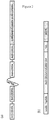
- Figure 1 shows a schematic of a chimeric antigen receptor.
- an extracellular spacer domain in the CAR is optional.
- the antigen-specific targeting regions are at the N-terminus, arranged in tandem, and separated by a linker peptide.
- the antigen-specific targeting region may be linked to the transmembrane domain.
- the transmembrane domain may be linked to the co-stimulatory domain.
- the co-stimulatory domain may be linked to the intracellular signaling domain, which is at the C-terminus. If more than one co-stimulatory domain is used, the multiple co-stimulatory domains may be arranged in tandem with the transmembrane domain at its N-terminus and the intracellular signaling domain at its C-terminus.
- Polynucleotides encoding these polypeptides may further comprise an N-terminal signal sequence which directs the CAR to the cell surface as a type I transmembrane protein.
- the antigen-specific targeting region may be extracellular-facing and the intracellular signaling domain may be cytoplasmic.
- the CARs of the disclosure may target several (such as two or more, three or more) different antigens.
- the CAR is a bispecific CAR and targets CD19 and CD20.
- the antigen-specific targeting regions of a CAR of the disclosure may be arranged in tandem and may be separated by linker peptides.
- the antigens targeted by a CAR may be antigens on single diseased cell (such as a cancerous B-cell) or antigens that are expressed on separate cells that each contribute to the disease.
- the antigens targeted are antigens which are either directly or indirectly involved in disease.
- a bispecific CAR at least two different antigen-specific antibodies or fragments thereof or derivatives thereof may be cloned into the antigen-specific targeting region.
- the antibodies may be specific for any, but at least two, distinct antigens of choice.
- the antibody specific to the antigen may be the Fab fragment of the antibody or the single chain variable fragment (scFv) of the antibody.
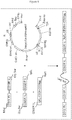
- Figure 2 depicts a CAR specific to CD19 and CD20.
- scFvs specific to multiple, but at least two different antigens may be cloned upstream (i.e., to N-terminus) of the IgG 4 -CD28-zeta domains so long as the target-antigens are expressed on cells that are targetable by the genetically modified cells described below.
- Such techniques are explained fully in the literature. ( Sambrook et al, "Molecular Cloning: A Laboratory Manual” (1989), Current Protocols in Molecular Biology. Volumes I-III [Ausubel, R. M., ed. (1994 )], Cell Biology: A Laboratory Handbook. Volumes I-III [J. E.
- each antigen-specific targeting region comprises the full-length IgG heavy chain (specific for the target antigen) having the V H , CH1, hinge, and the CH2 and CH3 (Fc) Ig domains, if the V H domain alone is sufficient to confer antigen-specificity ("single-domain antibodies").
- the full length IgG heavy chain may be linked to the co-stimulatory domain and the intracellular signaling domain via the appropriate transmesmbrane domain. If both, the V H and the V L domains, are necessary to generate a fully active antigen-specific targeting region, the V H -containing CAR and the full-length lambda light chain (IgL) are both introduced into the cells to generate an active antigen-specific targeting region.
- an extracelluar spacer domain may be linked between the antigen-specific binding domain and the transmembrane domain.
- the cells include but are not limited to T-lymphocytes (T-cells), natural killer cells, hematopoietic stem cells and/or pluripotent embryonic/induced stem cells capable of giving rise to therapeutically relevant progeny.
- each antigen-specific targeting region of the CAR comprises at least two single chain antibody variable fragments (scFv), each specific for a different target antigen.
- scFvs in which the C-terminus of one variable domain (V H or V L ) is tethered to the N-terminus of the other (V L or V H , respectively) via a polypeptide linker, have been developed without significantly disrupting antigen binding or specificity of the binding.
- the linker connects the N-terminus of the V H with the C-terminus of V L or the C-terminus of V H with the N-terminus of V L .
- These scFvs lack the constant regions (Fc) present in the heavy and light chains of the native antibody.
- the scFvs specific for at least two different antigens, are arranged in tandem and linked to the co-stimulatory domain and the intracellular signaling domain via a transmembrane domain.
- an extracelluar spacer domain may be linked between the antigen-specific binding region and the transmembrane domain.
- each scFv fragment may be fused to all or a portion of the constant domains of the heavy chain.
- the resulting antigen-specific targeting region specific for at least two different antigens, is joined to the co-stimulatory domain and the intracellular signaling domain via a transmembrane domain.
- an extracelluar spacer domain may be linked between the antigen-specific binding domain and the transmembrane domain.
- each antigen-specific targeting region of the CAR comprises a divalent (or bivalent) single-chain variable fragment (di-scFvs, bi-scFvs).
- di-scFvs divalent single-chain variable fragment
- two scFvs specific for each antigen are linked together by producing a single peptide chain with two V H and two V L regions, yielding tandem scFvs.
- CARs comprising at least two antigen-specific targeting regions would express two scFvs specific for each of the two antigens.
- the resulting antigen-specific targeting region specific for at least two different antigens, is joined to the co-stimulatory domain and the intracellular signaling domain via a transmembrane domain.
- an extracelluar spacer domain may be linked between the antigen-specific binding domain and the transmembrane domain.
- each antigen-specific targeting region of the CAR comprises a diabody.
- the scFvs are created with linker peptides that are too short for the two variable regions to fold together, driving the scFvs to dimerize.
- Still shorter linkers one or two amino acids lead to the formation of trimers, the so-called triabodies or tribodies. Tetrabodies may also be used.
- two or more individual antigen-specific targeting regions are connected to each other, either covalently or noncovalently, on a single protein molecule.
- An oligo- or polypeptide linker, an Fc hinge or membrane hinge region may be used to connect these domains to each other.
- the CARs may comprise two or more of the different antigen-specific targeting regions connected together in different combinations.
- two or more antigen-specific targeting regions containing immunoglobulin sequences e.g . scFvs and/or single-domain antibodies
- the antigen-specific targeting region of the CAR targets antigens specific for cancer, inflammatory disease, neuronal-disorders, diabetes, cardiovascular disease, infectious diseases or a combination thereof.
- antigens which may be targeted by the CARs include but are not limited to antigens expressed on B-cells, antigens expressed on carcinomas, sarcomas, lymphomas, leukemia, germ cell tumors, blastomas, antigens expressed on various immune cells, and antigens expressed on cells associated with various hematologic diseases, autoimmune diseases, and/or inflammatory diseases.
- the CARs of the invention which are specific for CD19 and CD20, may be capable of redirecting the effector function of the expressing-cells to either of both of the target antigens. This feature of the construct may overcome the issue of antigen loss escape variants when targeting, for example, genetically unstable B-cell lineage malignancies using single antigen-specificity.
- Antigens specific for cancer which may be targeted by CARs (for example bispecific CARs) of the disclosure include but are not limited to any one or more of 4-1BB, 5T4, adenocarcinoma antigen, alpha-fetoprotein, BAFF, B-lymphoma cell, C242 antigen, CA-125, carbonic anhydrase 9 (CA-IX), C-MET, CCR4, CD152, CD19, CD20, CD200, CD22, CD221, CD23 (IgE receptor), CD28, CD30 (TNFRSF8), CD33, CD4, CD40, CD44 v6, CD51, CD52, CD56, CD74, CD80, CEA, CNTO888, CTLA-4, DR5, EGFR, EpCAM, CD3, FAP, fibronectin extra domain-B, folate receptor 1, GD2, GD3 ganglioside, glycoprotein 75, GPNMB, HER2/neu, HGF, human scatter factor receptor kinase, IGF-1 receptor, I
- CARs which target the above antigens include but are not limited to bispecific CARs, bispecific CARs co-expressed with EGFRt, bispecific CARs co-expressed with EGFRt and CCR, bispecific CARs co-expressed with EGFRt and DHFR (for example mutant DHFR) or bispecific CARs co-expressed with EGFRt and CDR and DHFR (for example mutant DHFR).
- the bispecific chimeric antigen receptors target and bind at least two different antigens.
- Examples of pairings of at least two antigens bound by bispecific CARs include but are not limited to CD19 and CD20, CD19 and CD22, CD20 and L1-CAM, L1-CAM and GD2, EGFR and L1-CAM, EGFR and C-MET, EGFR and HER2, C-MET and HER2 and EGFR and ROR1.
- Other pairings of antigens specific for cancer will be apparent to those of skill in the art.
- the bispecific chimeric antigen receptor targets CD19 and CD20.
- CARs which target the above antigens include but are not limited to bispecific CARs, bispecific CARs co-expressed with EGFRt, bispecific CARs co-expressed with EGFRt and CCR, bispecific CARs co-expressed with EGFRt and DHFR (for example mutant DHFR) or bispecific CARs co-expressed with EGFRt and CDR and DHFR (for example mutant DHFR).
- Those of the invention are denoted by the claims.
- Antigens specific for inflammatory diseases which may be targeted by CARs of the disclosure include but are not limited to any one or more of AOC3 (VAP-1), CAM-3001, CCL11 (eotaxin-1), CD125, CD147 (basigin), CD154 (CD40L), CD2, CD20, CD23 (IgE receptor), CD25 ( ⁇ chain of IL-2 receptor), CD3, CD4, CD5, IFN- ⁇ , IFN- ⁇ , IgE, IgE Fc region, IL-1, IL-12, IL-23, IL-13, IL-17, IL-17A, IL-22, IL-4, IL-5, IL-5, IL-6, IL-6 receptor, integrin ⁇ 4, integrin ⁇ 4 ⁇ 7, Lama glama, LFA-1 (CD11a), MEDI-528, myostatin, OX-40, rhuMAb ⁇ 7, scleroscin, SOST, TGF beta 1, TNF- ⁇ or VEGF-A.
- CARs which target the above antigens include but are not limited to bispecific CARs, bispecific CARs co-expressed with EGFRt, bispecific CARs co-expressed with EGFRt and CCR, bispecific CARs co-expressed with EGFRt and DHFR (for example mutant DHFR) or bispecific CARs co-expressed with EGFRt and CDR and DHFR (for example mutant DHFR).
- Antigens specific for neuronal disorders which may be targeted by CARs of the disclosure include but are not limited to any one or more of beta amyloid or MABT5102A. Other antigens specific for neuronal disorders will be apparent to those of skill in the art.
- Examples of CARs which target the above antigens include but are not limited to bispecific CARs, bispecific CARs co-expressed with EGFRt, bispecific CARs co-expressed with EGFRt and CCR, bispecific CARs co-expressed with EGFRt and DHFR (for example mutant DHFR) or bispecific CARs co-expressed with EGFRt and CDR and DHFR (for example mutant DHFR).
- Antigens specific for diabetes which may be targeted by CARs of the disclosure include but are not limited to any one or more of L-1 ⁇ or CD3. Other antigens specific for diabetes or other metabolic disorders will be apparent to those of skill in the art.
- Examples of CARs which target the above antigens include but are not limited to bispecific CARs, bispecific CARs co-expressed with EGFRt, bispecific CARs co-expressed with EGFRt and CCR, bispecific CARs co-expressed with EGFRt and DHFR (for example mutant DHFR) or bispecific CARs co-expressed with EGFRt and CDR and DHFR (for example mutant DHFR).
- Antigens specific for cardiovascular diseases which may be targeted by CARs of the disclosure include but are not limited to any one or more of C5, cardiac myosin, CD41 (integrin alpha-lib), fibrin II, beta chain, ITGB2 (CD18) and sphingosine-1-phosphate.
- C5 cardiac myosin
- CD41 integrated protein alpha-lib
- fibrin II fibrin II
- beta chain beta chain
- ITGB2 CD18
- sphingosine-1-phosphate sphingosine-1-phosphate.
- Other antigens specific for cardiovascular diseases will be apparent to those of skill in the art.
- CARs which target the above antigens include but are not limited to bispecific CARs, bispecific CARs co-expressed with EGFRt, bispecific CARs co-expressed with EGFRt and CCR, bispecific CARs co-expressed with EGFRt and DHFR (for example mutant DHFR) or bispecific CARs co-expressed with EGFRt and CDR and DHFR (for example mutant DHFR).
- Antigens specific for infectious diseases which may be targeted by CARs of the disclosure include but are not limited to any one or more of anthrax toxin, CCR5, CD4, clumping factor A, cytomegalovirus, cytomegalovirus glycoprotein B, endotoxin, Escherichia coli, hepatitis B surface antigen, hepatitis B virus, HIV-1, Hsp90, Influenza A hemagglutinin, lipoteichoic acid, Pseudomonas aeruginosa, rabies virus glycoprotein, respiratory syncytial virus and TNF- ⁇ .
- Other antigens specific for infectious diseases will be apparent to those of skill in the art.
- CARs which target the above antigens include but are not limited to bispecific CARs, bispecific CARs co-expressed with EGFRt, bispecific CARs co-expressed with EGFRt and CCR, bispecific CARs co-expressed with EGFRt and DHFR (for example mutant DHFR) or bispecific CARs co-expressed with EGFRt and CDR and DHFR (for example mutant DHFR).
- target antigens include but are not limited to surface proteins found on cancer cells in a specific or amplified fashion (e.g . the IL-14 receptor, CD19, CD20 and CD40 for B-cell lymphoma, the Lewis Y and CEA antigens for a variety of carcinomas, the Tag72 antigen for breast and colorectal cancer, EGF-R for lung cancer, folate binding protein and the HER-2 protein which is often amplified in human breast and ovarian carcinomas), or viral proteins (e.g.
- gp120 and gp41 envelope proteins of HIV envelope proteins from the Hepatitis B and C viruses, the glycoprotein B and other envelope glycoproteins of human cytomegalovirus, the envelope proteins from oncoviruses such as Kaposi's sarcoma-associated Herpes virus).
- CARs include CD4, where the ligand is the HIV gp120 envelope glycoprotein, and other viral receptors, for example ICAM, which is the receptor for the human rhinovirus, and the related receptor molecule for poliovirus.
- CARs include antigens involved in B-cell associated diseases. Yet further targets of CARs will be apparent to those of skill in the art.
- CARs of the disclosure may also comprise a co-stimulatory domain. This domain may enhance cell proliferation, cell survival and development of memory cells.
- CARs may comprise one or more co-stimulatory domains.
- Each co-stimulatory domain comprises the co-stimulatory domain of any one or more of, for example, members of the TNFR super family, CD28, CD137 (4-1BB), CD134 (OX40), Dap10, CD27, CD2, CD5, ICAM-1, LFA-1, Lck, TNFR-1, TNFR-II, Fas, CD30, CD40 or combinations thereof.
- Co-stimulatory domains from other proteins may also be used with CARs. Additional co-stimulatory domains will be apparent to those of skill in the art. If a CAR comprises more than one co-stimulatory domain, these domains may be arranged in tandem, optionally separated by a linker. Products of the invention comprise 41BB domains.
- Extracellular spacer domain of chimeric antigen receptor Extracellular spacer domain of chimeric antigen receptor
- CARs of the disclosure may further comprise an extracellular spacer domain.
- this domain facilitates proper protein folding.
- the extracellular spacer domain comprises a hydrophilic region which is attached to the antigen-specific targeting region and the transmembrane domain.
- Extracellular spacer domains may include, but are not limited to, Fc fragments of antibodies or fragments or derivatives thereof, hinge regions of antibodies or fragments or derivatives thereof, CH2 regions of antibodies, CH3 regions antibodies, artificial spacer sequences or combinations thereof.
- Examples of extracellular spacer domains include but are not limited to CD8 ⁇ hinge, artificial spacers made of polypeptides such as Gly3, or CH1, CH3 domains of IgG's (such as human IgG4).
- the extracellular spacer domain may be (i) a hinge, CH2 and CH3 regions of IgG4, (ii) a hinge region of IgG4, (iii) a hinge and CH2 of IgG4, (iv) a hinge region of CD8 ⁇ , (v) a hinge, CH2 and CH3 regions of IgG1, (vi) a hinge region of IgG1 or (vi) a hinge and CH2 of IgG1 or a combination thereof. Additional extracellular spacer domains will be apparent to those of skill in the art.
- Products of the invention comprise CD8 ⁇ hinge/IgG4 hinge domains.
- CARs of the disclosure may also comprise a transmembrane domain.
- the transmembrane domain may comprise the transmembrane sequence from any protein which has a transmembrane domain, including any of the type I, type II or type III transmembrane proteins.
- the transmembrane domain of a CAR may also comprise an artificial hydrophobic sequence.
- the transmembrane domains of CARs may be selected so as not to dimerize. Additional transmembrane domains will be apparent to those of skill in the art.
- Products of the invention comprise CD28/CD8 ⁇ transmembrane domains.
- CARs of the disclosure may also comprise an intracellular signaling domain.
- This domain may be cytoplasmic and may transduce the effector function signal and direct the cell to perform its specialized function.
- intracellular signaling domains include, but are not limited to, ⁇ chain of the T-cell receptor or any of its homologs (e.g., ⁇ chain, Fc ⁇ R1 ⁇ and ⁇ chains, MB1 (Ig ⁇ ) chain, B29 (Ig ⁇ ) chain, etc.), CD3 polypeptides ( ⁇ , ⁇ and ⁇ ), syk family tyrosine kinases (Syk, ZAP 70, etc.), src family tyrosine kinases (Lck, Fyn, Lyn, etc.) and other molecules involved in T-cell transduction, such as CD2, CD5 and CD28.
- ⁇ chain of the T-cell receptor or any of its homologs e.g., ⁇ chain, Fc ⁇ R1 ⁇ and ⁇ chains, MB1 (
- the intracellular signaling domain may be human CD3 zeta chain, FcyRIII, Fc ⁇ RI, cytoplasmic tails of Fc receptors, immunoreceptor tyrosine-based activation motif (ITAM) bearing cytoplasmic receptors or combinations thereof. Additional intracellular signaling domains will be apparent to those of skill in the art.
- Products of the invention comprise CD3 zeta domains.
- two or more components of the CARs are separated by one or more linkers.
- the first targeting region on the CAR may be separated from the second targeting region on the CAR via a linker.
- the CAR may be linked to therapeutic controls via a linker.
- Linkers are oligo- or polypeptides region from about 1 to 100 amino acids in length, that link together any of the domains/regions of the CAR of the invention. Linkers may be for example, 5-12 amino acids in length, 5-15 amino acids in length or 5 to 20 amino acids in length. Linkers may be composed of flexible residues like glycine and serine so that the adjacent protein domains are free to move relative to one another.
- Linkers for example those longer than 100 amino acids, may be used, and may be selected to, for example, ensure that two adjacent domains do not sterically interfere with one another.
- linkers which may be used include but are not limited to 2A linkers (for example T2A), 2A-like linkers or functional equivalents thereof.
- Products of the invention comprise T2A linkers.
- Therapeutic controls regulate cell proliferation, facilitate cell selection (for example selecting cells which express the chimeric antigen receptors of the invention) or a combination thereof.
- regulating cell proliferation comprises up-regulating cell proliferation to promote cell propagation.
- regulating cell proliferation comprises down-regulating cell proliferation so as to reduce or inhibit cell propagation.
- the agents that serve as therapeutic controls may promote enrichment of cells which express the bispecific chimeric antigen receptors which may result in a therapeutic advantage.
- Agents which serve as therapeutic controls may biochemically interact with additional compositions so as to regulate the functioning of the therapeutic controls.
- EGFRt (a therapeutic control) may biochemically interact with cetuximab so as to regulate the function of EGFRt in selection, tracking, cell ablation or a combination thereof.
- therapeutic controls include but are not limited to any one or more of truncated epidermal growth factor receptor (EGFRt), thymidine kinase, cytosine deaminase, nitroreductase, xanthine-guanine phosphoribosyl transferase, human caspase 8, human caspase 9, purine nucleoside phosphorylase, linamarase/linamarin/glucose oxidase, deoxyribonucleoside kinase, horseradish peroxidase (HRP)/indole-3-acetic (IAA), Gamma-glutamylcysteine synthetase, CD20/alphaCD20, CD34/thymidine kinase chimera, dox-depedent caspase-2, mutant thymidine kinase (HSV-TKSR39), AP1903/Fas system, a chimeric cytokine receptor (EG
- agents which regulate the functioning of the therapeutic controls include but are not limited to any one or more of Herceptin, methotrexate, cetuximab, thymidine analogs (for example ganciclovir), (E)-5-(2-bromovinyl)-2'-deoxyuridine (BVDU), 5-flurocytosine (5-FC), 5-(azaridin-1-yl)-2, 4-dinitrobenzamide (CB1954), 6-thioguanine, a synthetic dimerizing drug (for example AP1903), fludarabine phosphate, linamarin (lin), nucleoside analogs (for exmaple BVDU, difluorodeoxycytidine (dFdC), 1- ⁇ -D-arabinofuranosylthymine (ara-T)), indole-3-acetic (IAA), 1-buthionine-S,R-sulfoximine (BSO), rituximab (RTX), doxycycline, tyrosine
- CARs may be synthesized as single polypeptide chains.
- the polynucleotide sequence encoding the CAR may be, for example, in the following configuration in the N-terminal to C-terminal direction: N-terminal signal sequence - antigen-specific targeting region 1 - linker - antigen-specific targeting region 2 - extracellular spacer domain - transmembrane domain - co-stimulatory domain - intracellular signaling domain.
- Such a CAR may comprise two or more co-stimulatory domains.
- the polynucleotide sequence encoding the CAR may be in the following configuration in the N-terminal to C-terminal direction: N-terminal signal sequence - antigen-specific targeting region 1 - linker - antigen-specific targeting region 2 - transmembrane domain - co-stimulatory domain - intracellular signaling domain.
- Such a CAR may comprise two or more co-stimulatory domains.
- the polynucleotide sequence encoding the CAR may be in the following configuration in the N-terminal to C-terminal direction: N-terminal signal sequence - antigen-specific targeting region 1-linker - antigen-specific targeting region 2 - linker - (antigen-specific targeting region) n -transmembrane domain - co-stimulatory domain - intracellular signaling domain.
- Such a CAR may further comprise an extracellular spacer domain.
- Each antigen-specific targeting region may be separated by a linker.
- Such a CAR may comprise two or more co-stimulatory domains.
- an exemplary backbone for a CAR may comprise, in the N-terminus to C-terminus orientation, IgG4hinge-CD28tm-41BB-CD3zeta, wherein the extracellular spacer domain is the IgG4 hinge region, the transmembrane domain is the transmembrane region from CD28, the co-stimulatory domain is from 4-1BB and the intracellular signaling domain is from the CD3 zeta chain ( Figure 7 ). At least two or more antigen-specific targeting regions may be inserted N-terminal to the IgG4 hinge.
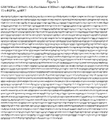
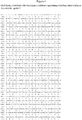
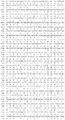
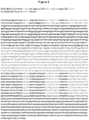
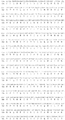
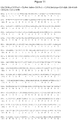
- the invention provides nucleic acid sequences where the CAR is specific to CD19 and CD20. Sequences encoding bispecific anti-CD19xCD20 CARs of the disclosure are set forth in Figures 3 , 8 , 10 , 4 , 9 and 11 .
- the bispecific CAR comprises scFvs specific for CD19 and CD20 with each scFv separated by a linker, joined to an extracellular spacer domain, which is joined to the co-stimulatory and intracellular signaling domains via a transmembrane domain.
- the CARs depict a set of scFv sequences, any scFv specific for CD19 and CD20 may be used.
- the bispecific CAR specific for CD19 and CD20 is CD19scFv-Gly4Serlinker-CD20scFv-IgG4-Hinge-CD28tm-41BB(cyto)-zeta(cyto) and is encoded by the sequences set forth in Figures 3 and 4 (SEQ IDs 1 and 3, respectively).
- This bispecific CAR comprises single chain Fv fragments specific for CD19 and CD20 linked by a Gly4Ser linker, an IgG4 hinge extracellular spacer domain, a CD28 transmembrane domain, a 41BB costimulatory domain and the cytoplasmic domain from CD3 zeta chain.
- the bispecific CAR specific for CD19 and CD20 comprises CD19scFv-Gly4serlinker-CD20scFv-hulgG4-hingeCH2CH3-CD28tm/cyto-41BB-zeta ( Figures 8-9 ).
- This bispecific CAR comprises single chain Fv fragments specific for CD19 and CD20 linked by a Gly4Ser linker, a human IgG4 hinge, CH2 and CH3 extracellular spacer domain, a CD28 transmembrane domain, a 4-1BB costimulatory domain and the cytoplasmic domain from CD3 zeta chain.
- the bispecific CAR specific for CD19 and CD20 is CD19-Gly4serlinker-CD20scFv-CD8 ⁇ hinge-CD8 ⁇ TM-41BBcostim-zetacyto ( Figures 10-11 ; SEQ IDs 10 and 12, respectively).
- This bispecific CAR comprises single chain Fv fragments specific for CD19 and CD20 linked by a Gly4Ser linker, a CD8alpha hinge extracellular spacer domain, a CD8alpha transmembrane domain, a 41BB costimulatory domain and the cytoplasmic domain from CD3 zeta chain.
- Human epidermal growth factor receptor (huEGFR)(EGFR; ErbB-1, HER1 in humans) is a receptor tyrosine kinase of the ErbB family of growth factor receptors that is not expressed by cells of the hematopoietic and lymphopoietic systems.
- Ligand (EGF, TGF- ⁇ ) binding occurs within N-terminal extracellular domains I and II of EGFR resulting from transition of receptor tyrosine kinase inactive monomers to active homodimers.
- Extracellular domain III of EGFR contains the binding sites of antibodies (for example cetuximab (Erbitux), an IgG1 chimeric antibody). It is believed that human EGFR may be rendered incapable of binding ligands (EGF, TGF- ⁇ ) by removal of domains I and II, and devoid of signaling activity by deletion of its cytoplasmic tail, while retaining an intact antibody binding site (for example cetuximab binding site), for example in extracellular domain III, IV or a combination thereof ( Wang et al., A transgene-encoded cell surface polypeptide for selection, in vivo tracking, and ablation of engineered cells Blood 118(5)1255-1263 ).
- antibodies for example cetuximab (Erbitux), an IgG1 chimeric antibody.
- human EGFR may be rendered incapable of binding ligands (EGF, TGF- ⁇ ) by removal of domains I and II, and devoid of signaling activity by deletion of its cytoplasmic tail, while retaining an intact antibody binding site
- a truncated EGFRt polypeptide described herein has at least three uses for genetic engineering of cell-based therapies: ex vivo cell purification, in vivo cell tracking, and cell ablation.
- EGFRt for use as a therapeutic control with CARs, optionally binds any one or more of EGFR-specific siRNA, a small molecule that targets EGFR, an anti-EGFR-antibody or a combination thereof.
- EGFRt comprises the sequence set forth in Figures 12 or 13 or sequences that are about 70%, about 75%, about 80%, about 85%, about 90% or about 95% homologous to the sequences set forth in Figures 12 or 13 .
- HuEGFRt may be co-expressed with CARs so as to purify cells expressing the CARs (for example ex vivo cell purification), track cells (for example in vitro or in vivo cell tracking) expressing the CARs or regulate cells (for example in vivo or in vitro or ex vivo) expressing the CARs by triggering cell ablation as required.
- CARs for example ex vivo cell purification
- track cells for example in vitro or in vivo cell tracking
- expressing the CARs or regulate cells (for example in vivo or in vitro or ex vivo) expressing the CARs by triggering cell ablation as required.
- CCR Chimeric cytokine receptor
- the invention provides T cells with an intrinsic yc cytokine signaling mechanism.
- the utility of forced constitutive chimeric cytokine receptors IL-2/IL-15R ⁇ (CyCR2) and IL-7R ⁇ (C ⁇ CR7) receptor signals were compared.
- the chimeric cytokine receptors have the ability to improve the survival, persistence, and in vivo engraftment of cytotoxic T cells (CTLs).
- CARs of the disclosure may be co-expressed with CCR.
- a bispecific CAR may be co-expressed with EGFRt and CCR.
- a bispecific CAR may be co-expressed with CCR.
- Examples of chimeric cytokine receptor include but are not limited to IL-7 cytokine-linker- IL7R ⁇ , IL-7 cytokine-linker-extracellular domain of IL-7R ⁇ -transmembrane domain of IL-7R ⁇ -cytoplasmic domain of IE-2P ⁇ , IL-7 cytokine-linker-IL2R ⁇ .
- a CCR comprising IL-7 cytokine-linker- IL7R ⁇ comprises an N-terminal signal sequence joined to the N-terminus of the IL-7 cytokine which is linked via a linker to extracellular, transmembrane and cytoplasmic domains of IL-7R ⁇ (the alpha chain of the IL-7 receptor).
- a CCR comprising IL-7 cytokine-linker-extracellular domain of IL-7R ⁇ -transmembrane domain of IL-7R ⁇ -cytoplasmic domain of IL-2R ⁇ comprises an N-terminal signal sequence joined to the N-terminus of the IL-7 cytokine which is linked via a linker to the extracellular domain and transmembrane domain of IL-7R ⁇ and to the cytoplasmic domain of IL-2R ⁇ (the beta chain of the IL-2 receptor).
- a CCR comprising IL-7 cytokine-linker-IL2R ⁇ comprises N-terminal signal sequence joined to the N-terminus of the IL-7 cytokine which is linked via a linker to extracellular, transmembrane and cytoplasmic domains of IL-2R ⁇ .
- DHFR Dihydroxyfolate Receptor
- T cells to co-express a therapeutic transgene and a drug resistant transgene that confers resistance to lymphotoxic drugs provides the opportunity to select for therapeutic cells both in vivo and ex vivo.
- a mutated human enzyme transgene dihydrofolate reductase double mutant (DHFR FS ; L22F, F31S), which confers resistance of engineered T cells to methotrexate (MTX), allowing selection of cells co-expressing a CD19-specific chimeric antigen receptor (CD19CAR) that specifically targets B-lineage tumor cells.
- DHFR FS dihydrofolate reductase double mutant
- MTX methotrexate
- CARs of the disclosure may be co-expressed with DHFR (for example mutant DHFR). Further a bispecific CAR may be co-expressed with EGFRt, CCR and DHFR (including mutant DHFR). Alternately, a bispecific CAR may be co-expressed with EGFRt and DHFR (including mutant DHFR).
- selection markers that may be used with CARs include but are not limited to methylated-DNA-protein-cysteine methyltransferase (MDMT), inosine monophosphate dehydrogenase II (IMDHP2) or a combination thereof. MDMT makes cells resistant to chemotherapy and therefore may be used if synergy between chemotherapy and T cell therapy is desired.
- MDMT methylated-DNA-protein-cysteine methyltransferase
- IMDHP2 inosine monophosphate dehydrogenase II
- Vectors encoding CARs of the disclosure are also provided herein.
- Vectors encoding CARs also encode EGFRt.
- vectors encoding CARs and EGFRt also encode CCR or DHFR (for example mutant DHFR).
- vectors encoding CARs and EGFRt also encode CCD and DHFR (for example mutant DHFR).
- the vectors may encode a bispecific CAR and EGFRt, a bispecific CAR and EGFRt and CCR, a bispecific CAR and EGFRt and DHFR (for example mutant DHFR) or a bispecific CAR and EGFRt and CCR and DHFR (for example mutant DHFR).
- Vectors which may be used to express CARs include but are not limited to lentivirus vectors, gamma retrovirus vectors, foamy virus vectors, AAV vectors, adeno virus vectors, engineered hybrid viruses, naked DNA (including but not limited to transposon mediated vectors, such as Sleeping Beauty, Piggybak, and Integrases such as Phi31.
- Vectors of the invention are disclosed in the claims.
- the bisepcific CAR specific to CD19 and CD20 disclosed herein is expressed via a lentiviral vector as illustrated in Figure 5 .
- the disclosure also provides genetically engineered cells which comprise and stably express CARs.
- a CAR expressed by a genetically engineered cell may comprise at least two antigen-specific targeting regions, an extracellular domain, a transmembrane domain, one or more co-stimulatory domains and an intracellular signaling domain.
- the polynucleotide sequence encoding the CAR may also comprise an N-terminal signal sequence.
- the CAR is a bispecific CAR.
- Each of the at least two antigen-specific targeting regions, extracellular spacer domain, transmembrane domain, one or more co-stimulatory domains and an intracellular signaling domain are described above.
- the antigen-specific targeting domains may be capable of specifically binding, in an MHC unrestricted manner, an antigen which is not normally bound by a T-cell receptor in that manner.
- genetically engineered cells that express CARs may co-express EGFRt.
- genetically engineered cells that express CARs may co-express EGFRt and CCR.
- Genetically engineered cells that express CARs may optionally co-express EGFRt and DHFR (for example mutant DHFR).
- Genetically engineered cells that express CARs may optionally co-express EGFRt, CCR and DHFR (for example mutant DHFR).
- the genetically engineered cells express a CAR having at least two antigen-specific targeting regions which are specific for at least two different target antigens.
- the antigen-specific targeting regions comprise target-specific antibodies or functional equivalents or fragments or derivatives thereof.
- the antigen-specific antibody may be the Fab fragment of the antibody or the single chain variable fragment (scFv) of the antibody.
- Genetically engineered cells which may comprise and express CARs include, but are not limited to, T-lymphocytes (T-cells), naive T cells (T N ), memory T cells (for example, central memory T cells (T CM ), effector memory cells (T EM )), natural killer cells, hematopoietic stem cells and/or pluripotent embryonic/induced stem cells capable of giving rise to therapeutically relevant progeny.
- T-lymphocytes T-cells
- T N memory T cells
- T CM central memory T cells
- T EM effector memory cells
- the genetically engineered cells are autologous cells.
- individual T-cells of the invention may be CD4+/CD8-, CD4-/CD8+, CD4-/CD8- or CD4+/CD8+.
- the T-cells may be a mixed population of CD4+/CD8- and CD4-/CD8+ cells or a population of a single clone.
- CD4+ T-cells of the invention may produce IL-2, IFN ⁇ , TNF ⁇ and other T-cell effector cytokines when co-cultured in vitro with cells expressing the target antigens (for example CD20+ and/or CD19+ tumor cells).
- CD8 + T-cells of the invention may lyse antigen-specific target cells when co-cultured in vitro with the target cells.
- T cells may be any one or more of CD45RA + CD62L + naive cells, CD45RO + CD62L + central memory cells, CD62L - effector memory cells or a combination thereof ( Berger et al., Adoptive transfer of virus-specific and tumor-specific T cell immunity. Curr Opin Immunol 2009 21(2)224-232 ).
- T-cells of the invention are disclosed in the claims.
- Genetically modified cells may be produced by stably transfecting cells with DNA encoding a CAR of the disclosure.
- DNA encoding a CAR for example bispecific CAR
- a first polynucleotide encodes the CAR (for example bispecific CAR) and is linked via IRES sequences or a polynucleotide that encodes a cleavable linker, to a second polynucleotide that encodes EGFRt.
- the first polynucleotide encodes the CAR (for example bispecific CAR) and is linked via IRES sequences or a polynucleotide that encodes a cleavable linker, to a second polynucleotide that encodes EGFRt and the first or second polynucleotides are linked to a third polynucleotide that encodes CCR or DHFR (for example mutant DHFR), also via IRES sequences or a polynucleotide that encodes a cleavable linker.
- CAR for example bispecific CAR
- the first polynucleotide encodes the CAR (for example bispecific CAR) and is linked via IRES sequences or a polynucleotide that encodes a cleavable linker, to a second polynucleotide that encodes EGFRt and the first and second polynucleotides are linked to a third polynucleotide that encodes CCR and a fourth polynucleotide that encodes DHFR (for example mutant DHFR) via IRES sequences or a polynucleotide that encodes a cleavable linker.
- Viral vectors are commonly used to carry heterologous genes into cells (e.g., T-cells).
- viral vectors which may be used to generate genetically modified cells include but are not limited to SIN lentiviral vectors, retroviral vectors, foamy virus vectors, adeno-associated virus (AAV) vectors and/or plasmid transposons (e.g ., sleeping beauty transposon system).
- SIN lentiviral vectors retroviral vectors
- foamy virus vectors foamy virus vectors
- AAV adeno-associated virus
- plasmid transposons e.g ., sleeping beauty transposon system
- a method of stably transfecting and re-directing cells is by electroporation using naked DNA.
- naked DNA By using naked DNA, the time required to produce redirected cells may be significantly reduced.
- Additional methods to genetically engineer cells using naked DNA encoding a CAR include but are not limited to chemical transformation methods (e.g ., using calcium phosphate, dendrimers, liposomes and/or cationic polymers), non-chemical transformation methods (e.g. , electroporation, optical transformation, gene electrotransfer and/or hydrodynamic delivery) and/or particle-based methods (e.g. , impalefection, using a gene gun and/or magnetofection).
- the transfected cells demonstrating presence of a single integrated un-rearranged vector and expression of the CAR may be expanded ex vivo.
- the cells selected for ex vivo expansion are CD8 + and demonstrates the capacity to specifically recognize and lyse antigen-specific target cells.
- Viral transduction methods may also be used to generate redirected cells which express CARs.
- Cell types that may be used to generate genetically modified cells expressing a bispecific CAR include but are not limited to T-lymphocytes (T-cells), natural killer cells, hematopoietic stem cells and/or pluripotent embryonic/induced stem cells capable of giving rise to therapeutically relevant progeny.
- the disclosure also provides a method of making and expanding cells expressing a CAR.
- the method comprises transfecting or transducing the cells with the vector expressing the CAR and stimulating the cells with cells expressing the target antigens, recombinant target antigens, or an antibody to the receptor to cause the cells to proliferate, so as to make and expand T-cells.
- the cells may be any one or more of T-lymphocytes (T-cells), natural killer (NK) cells, hematopoietic stem cells (HSCs) or pluripotent embryonic/induced stem cells capable of giving rise to therapeutically relevant progeny.
- T-cells T-lymphocytes
- NK natural killer
- HSCs hematopoietic stem cells
- pluripotent embryonic/induced stem cells capable of giving rise to therapeutically relevant progeny.
- the genetically engineered cells of the invention express a bispecific CAR which is specific for CD19 and CD20 antigens.
- a genetically engineered T-cell expresses the bispecific CARs CD19scFv-Gly4ser-linker-CD20scFv-hulgG4-hinge-CD28-41BB(cyto)-zeta(cyto) or CD19scFv-Gly4ser-linker-CD20scFv-hulgG4-hingeCH2CH3-CD28tm/cyto-zeta or CD19-Gly4serlinker-CD20scFv-CD8alphahinge-CD8alphaTM-41BBcostim-zetacyto.
- the disclosure provides a method of making and expanding T-cells expressing a CD19-specific and CD20-specific CAR.
- the method comprises using a lentivirus to transduce CD3xCD28 bead-stimulated purified central memory T-cells (such as T-cells from peripheral blood) with the vector expressing the CD19 and CD20 bispecific CAR, growing the T-cells in the presence of rhuIL-2 and/or IL-15 and restimulating the T-cells with CD19 + and CD20 + cells, recombinant CD19 and CD20, or an antibody to the receptor to cause the T-cells to proliferate, so as to make and expand CD19-specific and CD20-specific T-cells.
- CARs of the disclosure may be used to overcome therapeutic failures arising from antigen loss escape variants, to reduce resistance to existing therapies and/or to treat diseases associated with the antigens targeted by the CARs.
- the disclosure also provides methods for treating a disease associated with the antigen targeted by a CAR in a subject in need thereof.
- the method comprises providing a composition comprising a CAR and administering an effective amount of the composition so as to treat the disease associated with the antigen in the subject.
- the disclosure also provides methods for overcoming therapeutic failures arising from antigen loss escape variants in disease states (e.g., B-cell diseases) in subjects in need thereof.
- the method comprises providing a composition comprising the CAR of the invention and administering an effective amount of the composition so as to treat the disease associated with the antigen in the subject.
- the composition comprises a polynucleotide encoding the CAR, a protein comprising the CAR or genetically modified cells comprising the CAR.
- the genetically modified cells of the composition are T-lymphocytes (T-cells), naive T cells (T N ), memory T cells (for example, central memory T cells (T CM ), effector memory cells (T EM )), natural killer (NK) cells, hematopoietic stem cells (HSCs) or pluripotent embryonic/induced stem cells capable of giving rise to therapeutically relevant progeny, which express the CAR.
- T-cells T-lymphocytes
- T N naive T cells
- memory T cells for example, central memory T cells (T CM ), effector memory cells (T EM )
- NK natural killer cells
- HSCs hematopoietic stem cells
- pluripotent embryonic/induced stem cells capable of giving rise to therapeutically relevant progeny, which express the CAR.
- compositions comprising a pharmaceutically acceptable excipient and a therapeutically effective amount of a CAR (for example, bispecific CAR).
- the CAR in the composition may be any one or more of a polynucleotide encoding the CAR, a protein comprising the CAR or genetically modified cells comprising the CAR.
- the composition may further comprise polynucleotides encoding EGFRt, CCR and/or DHFR (for example mutant DHFR), proteins co-expressed with the CAR including EGFRt, CCR and/or DHFR or genetically modified cells that express the CAR and co-express EGFRt, CCR and/or DHFR.
- “Pharmaceutically acceptable excipient” means an excipient that is useful in preparing a pharmaceutical composition that is generally safe, non-toxic, and desirable, and includes excipients that are acceptable for veterinary use as well as for human pharmaceutical use. Such excipients may be solid, liquid, semisolid, or, in the case of an aerosol composition, gaseous.
- the invention provides pharmaceutical compositions according to claims 6 and 7.
- compositions according to the invention may be formulated for delivery via any route of administration.
- Route of administration may refer to any administration pathway known in the art, including but not limited to aerosol, nasal, oral, intravenous, intramuscular, intraperitoneal, inhalation, transmucosal, transdermal, parenteral, implantable pump, continuous infusion, topical application, capsules and/or injections.
- compositions according to the invention can also contain any pharmaceutically acceptable carrier.
- “Pharmaceutically acceptable carrier” as used herein refers to a pharmaceutically acceptable material, composition, or vehicle that is involved in carrying or transporting a compound of interest from one tissue, organ, or portion of the body to another tissue, organ, or portion of the body.
- the carrier may be a liquid or solid filler, diluent, excipient, solvent, or encapsulating material, or a combination thereof.
- Each component of the carrier must be “pharmaceutically acceptable” in that it must be compatible with the other ingredients of the formulation. It must also be suitable for use in contact with any tissues or organs with which it may come in contact, meaning that it must not carry a risk of toxicity, irritation, allergic response, immunogenicity, or any other complication that excessively outweighs its therapeutic benefits.
- compositions according to the invention can also be encapsulated, tableted or prepared in an emulsion or syrup for oral administration.
- Pharmaceutically acceptable solid or liquid carriers may be added to enhance or stabilize the composition, or to facilitate preparation of the composition.
- Liquid carriers include syrup, peanut oil, olive oil, glycerin, saline, alcohols and water.
- Solid carriers include starch, lactose, calcium sulfate, dihydrate, terra alba, magnesium stearate or stearic acid, talc, pectin, acacia, agar or gelatin.
- the carrier may also include a sustained release material such as glyceryl monostearate or glyceryl distearate, alone or with a wax.
- the pharmaceutical preparations are made following the conventional techniques of pharmacy involving milling, mixing, granulation, and compressing, when necessary, for tablet forms; or milling, mixing and filling for hard gelatin capsule forms.
- a liquid carrier When a liquid carrier is used, the preparation will be in the form of syrup, elixir, emulsion or an aqueous or non-aqueous suspension.
- Such a liquid formulation may be administered directly p.o. or filled into a soft gelatin capsule.
- the pharmaceutical compositions according to the invention may be delivered in a therapeutically effective amount.
- the precise therapeutically effective amount is that amount of the composition that will yield the most effective results in terms of efficacy of treatment in a given subject. This amount will vary depending upon a variety of factors, including but not limited to the characteristics of the therapeutic compound (including activity, pharmacokinetics, pharmacodynamics, and bioavailability), the physiological condition of the subject (including age, sex, disease type and stage, general physical condition, responsiveness to a given dosage, and type of medication), the nature of the pharmaceutically acceptable carrier or carriers in the formulation, and the route of administration.
- Figure 1 is a schematic representation of a bispecific chimeric antigen receptor.
- Figure 2 depicts the components of a bispecific anti-CD19xanti-CD20 bispecific CAR.
- Figure 2 also depicts a schematic of the complete cDNA packaged into epHIV-7 lentivirus vector transfer plasmid.
- Figures 3 and 4 show the nucleic and amino acid sequences of products of the invention, namely GMCSFss-CD19scFv-Gly4Serllinker-CD20scFv-IgG4Hinge-CD28tm-41BBzeta-T2A-EGFRt_epHIV7.
- Figure 5 is a schematic showing the vector construct of an exemplary CAR, namely, the CD19scFv-CD20scFv-IgG4-CD28tm-CD28costim-CD3zeta transgene construct.
- the CD19scFv-CD20scFv-IgG4-CD28tmCD28costim-CD3zeta transgene was assembled using the one-step isothermal DNA assembly method previously described by Gibson et. al. (Enzymatic assembly of DNA molecules upto several hindred kilobases. Nature Methods. 2009;6:343-345 ).
- V L and V H domains of the CD19 scFv construct was sequenced from a CD19CAR-CD28-Zeta transgene previously described. Schmitz N, Dreger P, Glass B, Sureda A. Allogeneic transplantation in lymphoma: current status. Haematologica. 2007;92(11):1533-1548 ) through polymerase chain reaction (PCR).
- V H and V L domains of the CD20 scFv were assembled by spliced-overlap polymerase chain reaction using a CD20R-CD28-Zeta transgene previously described ( Michael Jensen et al., CD20 is a molecular target for scFvFc:zeta receptor redirected T-cells: implications for cellular immunotherapy of CD20+ malignancy. Biology of Blood and Marrow Transplant. 1998;4:75-83 ).
- the V H and the V L domains of CD19 scFv and CD20 scFv were linked with an 18-residue linker peptide as previously described.
- the IgG4-CD28tm-CD28costim domain was sequenced using the CD19R-CD28-CD3zeta transgene by PCR.
- the CD3zeta-T2A-EGFRt_epHIV7 lentiviral destination vector was prepared by NheI and RsrII restriction digestion of the CD19R-CD28 portion from a CD19R-CD28-Zeta-T2A-EGFRt_ epHIV7 plasmid previously described ( Seitaro Terakura et al., Generation of CD19-CAR modified CD8+ T-cells derived from virus-specific central memory T-cells. Blood. Oct. 26, 2011 ).
- the final CD19scFv-CD20scFv-IgG4-CD28tm-CD28costim-CD3zeta construct was assembled by the one-step isothermal Gibson DNA assembly method using the restriction digested Zeta-epHIV7 destination vector and the CD19scFv, CD20scFv, and IgG4-CD28tm-CD28costim- DNA fragments with primers for each containing a 30 bp overlap at the 5' terminus.
- HEK 293T-cells were transfected with anti-CD19xCD20CAR-T2A-EGFRt epHIV-7 transfer plasmid or with anti-CD20xCD19CAR-T2A-EGFRt epHIV-7 transfer plasmid.
- Transfected cells were stained with biotinylated anti-Fc antibodies and streptavidin PE (SA-PE) and then were subjected to flow cytometric analysis for detection of expression of the above two CARs. Both the anti-CD19xCD20 CAR and the anti-CD20xCD19 CAR were expressed on transfected HEK 293T cells.
- EGFRt co-expression was detected on the same transfected cells using a combination of biotinlylated anti-EGFR antibodies/SA-PE staining and flow cytometric analysis.
- epHIV7 lentivirus vector also encoded EGFRt together with monospecific anti-CD19 CAR, monospecific anti-CD20 CAR or bispecific anti-CD19xCD20.
- epHIV7 lentivirus vector also encoded EGFRt together with monospecific anti-CD19 CAR, monospecific anti-CD20 CAR or bispecific anti-CD19xCD20.
- Transfected cells were stained with biotinlylated anti-EGFR antibodies and SA-PE and then were subjected to flow cytometric analysis for detection of EGFRt expression and co-expression of monospecific or bispecific CARs.
- monospecific anti-CD19 CAR 51% expressed EGFRt
- monospecific anti-CD20 CAR 38.5% expressed EGFRt
- bispecific anti-CD19xCD20 CAR 63.8% expressed EGFRt.
- T cell receptor (TCR) complex in transfected cells was also detected in the same transfected cells using FITC-conjugated anti-TCRa and anti-TCR ⁇ antibodies staining and flow cytometric analysis.
- H9 cells were genetically modified to express CD19, or CD20, or both CD19 and CD20.
- Cells were stained with anti-CD19 and anti-CD20 antibodies and then were subject to flow cytometric analysis to detect the expression of CD19 and CD20.
- Cytometric analysis confirmed the desired expression profile of CD19 + CD20 - , CD19 - CD20 + , and CD19 + CD20 + H9 cells, namely, genetically engineered H9 cells expressed CD19, or CD20, or both CD19 and CD20 thereby simulating cancer target cells, which contain antigen-negative antigen loss escape variants.
- these cell lines were subsequently used as target cells to stimulate CAR-expressing T-cell lines, which act as effector cells to kill target cells.
- SUP-B15 and DHL-6 cell lines were analyzed using anti-CD19 APC and anti-CD20 PE staining and flow cytometric analysis.
- SUP-B15 cell line expressed high level of CD19 with low level of CD20 (thus CD19 + CD20 - ), and DHL-16 cell line expressed high level of CD20 with low level of CD19 (thus CD19 - CD20 + ).
- Effector cells are primary human T-cells lentivirally transduced to express monospecific anti-CD19 CAR, monospecific anti-CD20 CAR or bispecific anti-CD19xCD20 CAR.
- the bispecific anti-CD19xCD20 CAR effector T-cells effectively lysed all CD19 + CD20 - , CD19 - CD20 + , and CD19 + CD20 + target cells, which include CD19 + CD20 - H9 cells, CD19 - CD20 + H9 cells, CD19 + CD20 + H9 cells and SUP-B15 cells.
- effector to target ratios of 1:1, 3:1, 10:1, and 30:1, about 25%, 45%, 50% and 60%, respectively, target cells were lysed.
- monospecific CAR expressing T-cell lines fail to lyse antigen-negative antigen loss escape variants, which escaped from the monospecific CAR effector cells.
- the anti-CD19 CAR effector T-cells failed to lyse CD19 - CD20 + targets and the anti-CD20 CAR effector T-cells failed to lyse CD19 + CD20 - targets.
- Bispecific CAR-expressing CD4 enriched T-cells were activated for cytokine secretion (Interferon gamma (IFN-g, IFN- ⁇ )) upon stimulation by CD19 + CD20 - , CD19 - CD20 + , and CD19 + CD20 + target cells, which include CD19 + CD20 - H9 cells, CD19 - CD20 + H9 cells, CD19 + CD20 + H9 cells and SUP-B15 cells.
- IFN- ⁇ content was measured by cytokine bead array of culture supernatants of T-cells and target cells after 24-hours of co-culture.
- bispecific CAR-expressing CD4 enriched T-cells secreted at least 2500 pg/ml INF-g upon stimulation by every type of target cells.
- monospecific CAR expressing T-cell lines were not activated for cytokine INF-g secretion upon stimulation by antigen-negative antigen loss escape variants, which escaped from the monospecific CAR effector cells.
- CD19 CAR T-cells failed to secrete IGN- ⁇ upon co-culture with CD19 - CD20 + target cells and CD20 CAR T-cells failed to secrete IGN- ⁇ upon co-culture with CD19 + CD20 - target cells.
- Stimulators (3x10 ⁇ 5): - TM-LCL - H9 parent - OKT3-TM-LCL - H9 CD19R - SUP-B15 - H9 CD20R - DHL-6 - H9 CD19/20R • Responders (1x10 ⁇ 6 on S 1 R 2 D 17 ): - CD4 enriched mock - CD8 enriched mock - CD4 enriched CD19R - CD8 enriched CD19R - CD4 enriched CD20R - CD8 enriched CD20R - CD4 enriched CD19/20R - CD8 enriched CD19/20R • Cells incubated for 24 hrs, and cell free supernatant will be harvested today for BioPlex assay
- EGFRt truncated epidermal growth factor receptor
- T2A sequence truncated epidermal growth factor receptor
- EGFRt may be linked to and co-expressed with other chimeric antigen receptors, for example, bispecific chimeric antigen receptors.
- huEGFRt truncated EGFR
- domain I and II of EGFRt have been deleted while domains III and IV have been retained.
- the CD19CAR-T2A-EGFRt-epHIV7 lentiviral construct contains: (1) the chimeric antigen receptor (CAR) sequence consisting of the V H and V L gene segments of the CD19-specific FMC63 monoclonal antibody (mAb), an IgG4 hinge-C H2 -C H3 , the transmembrane, and cytoplasmic signaling domains of the co-stimulatory molecule CD28, and the cytoplasmic domain of the CD3 ⁇ chain ( Kowolik CK. et al., CD28 costimuation provided through a CD19-specific chimeric antigen receptor enhances in vivo persistence and antitumor efficacy of adoptively transferred T cells. Cancer Res.
- CAR chimeric antigen receptor
- biotinylated cetuximab was used for either immunomagnetic selection or FACS sorting of huEGFRt + cells. Applicants used biotinylated cetuximab in conjunction with commercially available antibiotin microbeads for the immunomagnetic selection of human T cells transduced with a self-inactivating lentivirus that directs the co-expression of CD19CAR and huEGFRt.
- PBMCs or purified central memory (CD45RO + CD62L + T CM ) or effector memory (CD45RO + CD62L + T EM ) T-cell subsets were stimulated with anti-CD3/anti-CD28 beads and then transduced by lentiviral vector to generate a panel of primary human T-cell lines, of which 2.6%-40% expressed huEGFRt and CAR.
- the unselected cells were labeled with biotinylated cetuximab and anti-biotin microbeads; and then were separated to consistently obtain a selected cell population, of which 90% express huEGFRt and CAR.
- Unselected T cells and selected fraction were stained with biotinylated-cetuximab and either PE-conjugated streptavidin or PE-conjugated anti-biotin Ab, and then were subject to flow cytometric analysis.
- Selection of CD19CAR + EGFRt + cells was performed either 3 days after transduction of OKT3 blasts (enriched from 38% to 98%), or after 1 rapid expansion cycle of transduced effector memory CD62LCD45RO + -derived cells (enriched from 20% to 96%), after 3 rapid expansion cycles of transduced CMVpp65-specific TCM-derived cells (enriched from 12% to 91%), or after 2 rapid expansion cycles of transduced CD8 + TCM-derived cells (enriched from 3% to 97%).
- Selection of CD19CAR + EGFRt + IMPDH2dm + cells was performed after 1 rapid expansion cycle of transduced TCM-derived cells (enriched from 25 to 92%).
- CD19CAR-T2A-EGFRt-IMPDH2dm constructs contained in lentiviral vectors include codon optimized sequence portions of the CD19-specific, CD28 co-stimulatory CAR (CD19CAR), followed by the self-cleavable T2A, and selection markers huEGFRt and IMPDH2dm (a double mutant of the inosine monophosphate dehydrogenase 2 gene that allows for cell survival upon addition of mycophenolate 27), along with the Elongation Factor 1 promoter sequences (EF-lp), the GM-CSF receptor alpha chain signal sequences (GMCSFRss), and the 3 nucleotide stop codon.
- EF-lp Elongation Factor 1 promoter sequences
- GMCSFRss GM-CSF receptor alpha chain signal sequences
- huEGFRt can serve as a cell surface marker unique to transduced human T cells and enable subsequent cetuximab-based immunomagnetic purification of stable huEGFRt-expressing cell populations which also express CARs.
- Cetuximab binding to huEGFRt sensitizes human T cells to ADCC
- a valuable feature of a cell surface selection/tracking marker would be its capacity to serve as a target for in vivo cell ablation.
- Applicants evaluated the extent to which Cetuximab bound to huEGFRt on T cells activates ADCC of huEGFRt + T cells in vitro, and whether Cetuximab administration could attenuate the engraftment of adoptively transferred huEGFRt + T cells in NOD / scid mice.
- Applicants next derived huEGFRt + CTLL-2 murine T cells that were additionally modified to secrete autocrine IL-2 and express the firefly luciferase biophotonic reporter, and adoptively transferred these ffLuc + huEGFRt + CTLL-2 cells via intravenous injection to NOD / scid mice, which subsequently received Cetuximab or Rituxan.
- the in vivo engraftment of transferred CTLL-2 was significantly inhibited (97%, P ⁇ .05) in mice that received Erbitux (1 mg intraperitoneally daily).
- the Cetuximab-mediated elimination of the ffLuc + huEGFRt + CTLL-2 cells occurred between 4 and 6 days.
- This example describes T cells with an intrinsic yc cytokine signaling mechanism, and shows that chimeric cytokine receptors (CCR) IL-2/IL-15R ⁇ (CyCR2) and IL-7R ⁇ (C ⁇ CR7) have the ability to improve the survival, persistence, and in vivo engraftment of cytotoxic T cells (CTLs).
- CTLs cytotoxic T cells
- Truncated CD19 antigen (CD19t) was linked to C ⁇ CR via a T2A linker to show the expression of C ⁇ CR on the cell surface.
- the chimeric cytokine receptors described herein may be linked to chimeric antigen receptors, such as bispecific CARs described herein.
- C ⁇ CR chimeric yc cytokine receptors
- a C ⁇ CR that provides an IL-2/IL-15R ⁇ signal was engineered by tethering the IL-7 cytokine to the extracellular and transmembrane domain of IL-7R ⁇ fused to the cytoplasmic domain of IL-2/IL-15R ⁇ (C ⁇ CR2). These single chain chimeric receptors are expected to require endogenous ⁇ c chain for signaling.
- C ⁇ CR and CD19t are expressed as a single transcript and cleaved post-translationally at the C-terminus of the T2A self-cleaving peptide to yield two separate type 1 membrane proteins C ⁇ CR(T2A) and CD19t. Based on expression of two proteins from a single transcript, the ratio of C ⁇ CR(T2A) to CD19t expression is 1:1, therefore, cell surface CD19t is an indication of C ⁇ CR cell surface expression. Lentiviral transduction and expression of these constructs could then be measured by surface CD19t expression, such as that seen in both Jurkat and NK-92 cell lines.
- a third C ⁇ CR was also engineered, having IL-7 cytokine tethered to a truncated IL-7R ⁇ (C ⁇ CR7t), which is missing amino acids 1-126 from the extracellular domain of the IL-7R ⁇ .
- C ⁇ CR7t truncated IL-7R ⁇
- a molecular model of C ⁇ CR7t dimerization with the endogenous yc chain is necessary for signal transduction.
- the lack of amino acids 1-126 of the extracellular domain of IL-7R ⁇ renders the C ⁇ CR7t nonfunctional.
- Truncated C ⁇ CR7 expression does not functionally signal or support cytokine independent cell growth.
- Flow cytometric detected cell-surface CD19t on lentitransduced Jurkat (95% CD19t + C ⁇ CR7t + ) and Teff cell lines (97% CD19t + C ⁇ CR7t + ).
- Western blot analysis of STAT5 phosphorylation within C ⁇ CR7t expressing Jurkat cell line did not detect obvious increase of phosphorylated STAT5 as compared to non-transduced control Jurkat cell line.
- Positive controls OKT3 stimulated PBMC cultured in 50U/ml IL-2 and 10ng/ml IL-15 and K562 showed activation of increased phosphorylated STAT5. Accordingly, expansion and viability of CTLs transduced with C ⁇ CR7t cultured for 20 days were still dependent on cytokines.
- C ⁇ CR2 and C ⁇ CR7 could support the growth of CD8 + human primary T cells in the absence of exogenous cytokine
- C ⁇ CR7t Human primary T cells expressing C ⁇ CR7t were unable to expand in the absence of exogenous cytokine .
- Both C ⁇ CR2 and C ⁇ CR7 were able to support the survival and proliferation of the CD8 + T cells through maintenance of viability, in a manner similar to that of parental cells cultured in 5U/ml and 0.5 U/ml IL-2, respectively.
- the increased total cell expansion measured for C ⁇ CR2 + versus C ⁇ CR7 + CTL correlates with increased expression (i.e., MFI of 26 for C ⁇ CR7 versus 52 for C ⁇ CR2) of Ki67, a nuclear antigen protein present in G1, S, G2, and M phase of the cell cycle.
- MFI MFI of 26 for C ⁇ CR7 versus 52 for C ⁇ CR2
- Ki67 a nuclear antigen protein present in G1, S, G2, and M phase of the cell cycle.
- Bcl-2 an key antiapoptotic protein induced in response to IL-2 and IL-7 signaling
- C ⁇ CR expressing CD8 + T cells exhibit cytokine independent engraftment in vivo
- C ⁇ CR2 + CTLs had impressive significant ( P ⁇ 0.007) exogenous cytokine independent engraftment compared to C ⁇ CR7 + CTLs and the parental cells.
- both C ⁇ CR7 + CTLs P ⁇ 0.03 and C ⁇ CR2 + CTLs ( P ⁇ 0.0005) had significant exogenous cytokine independent engraftment compared to the parental cells.
- C ⁇ CR2 + CTLs had higher engraftment compared to C ⁇ CR7 + CTLs. This indicates that both C ⁇ CR7 + CTLs and C ⁇ CR2 + CTLs are capable of supporting exogenous cytokine independent engraftment but the total percentage of cells was different.
- the blood supported higher percent engraftment of C ⁇ CR2 + CTLs compared to bone marrow.
- the bone marrow supported the engraftment of C ⁇ CR7 + CTLs over a longer period of time.
- the engraftment was not infinite as the cells were no longer present in the blood and bone marrow at day 48 in either group.
- Cell intrinsic yc cytokine signals can replace the need for exogenous cytokine administration for the support of adoptively transferred CTLs.
- Providing cell intrinsic cytokine receptors can overcome the major limitation of adoptive immunotherapy; the long-term persistence of adoptively transferred CTL. This may eliminate the need for administration of exogenous cytokine, which may reduce toxicities and bystander effects on endogenous cell types.
- CD19 chimeric antigen receptor linked to EGFRt and DHFR can be regulated by methotrexate.
- the dihydroxyfolate receptor described herein may be linked to bispecific chimeric antigen receptors.
- MTX drug methotrexate
- Applicants evaluated the potential of DHFR FS (hDHFR L22F/F31S variant) mediated in vitro selection of primary human T cells that co-express a CD19-specific chimeric antigen receptor (CD19CAR for targeting of CD19-expressing tumors).
- CD19CAR CD19-specific chimeric antigen receptor
- DHFR FS -mediated selection of gene modified T cells enforced the CD19CAR therapeutic transgene expression, and allowed for the derivation of CAR + stable integrants in the presence of clinically attainable concentrations of MTX (e.g., 0.1 ⁇ M MTX).
- Applicants designed a lentiviral vector co-expressing hDHFR FS in conjunction with a CD19-specific chimeric antigen receptor (CD19CAR) and a truncated human EGFR polypeptide as a tracking marker (huEGFRt) each separated by a ribosomal skip T2A sequence.
- CD19CAR CD19-specific chimeric antigen receptor
- huEGFRt truncated human EGFR polypeptide as a tracking marker
- CTLL2 T cells were first transduced with this CD19CAR-huEGFRt-hDHFR FS lentiviral vector and evaluated for their resistance to MTX. Ten days after lenti-transduction, 7-8 % of the cells were positive for CD19CAR and huEGFRt expression.
- transduced CTLL2 cells that had been cultured in 0.1 ⁇ M MTX for 8 days were re-plated at a wider range of MTX concentrations (up to 0.75 ⁇ M). These transduced and pre-MTX selected cells were able to expand 90-100 fold at MTX concentrations up to 0.25 ⁇ M, which is equivalent to non-transduced control CTLL2 expansion in the absence of MTX.
- transduced primary human T cells with the same CD19CAR-huEGFRt-hDHFR FS lentiviral vector.
- Purified CD62L + CD45RO + T cells were used as a starting population based on their potential for persistence after adoptive transfer.
- Ten days after transduction these T cells were cultured in varying concentrations of MTX and assessed for cell number and viability over time. After 10 days, transduced and non-transduced T cells expanded equally (80-fold) in the absence of MTX.
- transduced T cells maintained a viability of 63%, while non-transduced primary human T cells exhibited strong inhibition of both viability and fold-expansion starting at concentrations as low as 0.025 ⁇ M MTX.
- MTX-mediated enrichment of transgene-expressing cells e.g., 0.025 ⁇ M MTX enriched about 54% CD19CAR + and 79% EGFRt + ; 0.05 ⁇ M MTX enriched about 76% CD19CAR + and 89% EGFRt + )
Landscapes
- Health & Medical Sciences (AREA)
- Life Sciences & Earth Sciences (AREA)
- Chemical & Material Sciences (AREA)
- Immunology (AREA)
- Organic Chemistry (AREA)
- General Health & Medical Sciences (AREA)
- Medicinal Chemistry (AREA)
- Genetics & Genomics (AREA)
- Animal Behavior & Ethology (AREA)
- Veterinary Medicine (AREA)
- Public Health (AREA)
- Biochemistry (AREA)
- Epidemiology (AREA)
- Engineering & Computer Science (AREA)
- Zoology (AREA)
- Proteomics, Peptides & Aminoacids (AREA)
- Cell Biology (AREA)
- Biophysics (AREA)
- Molecular Biology (AREA)
- Bioinformatics & Cheminformatics (AREA)
- Biomedical Technology (AREA)
- Gastroenterology & Hepatology (AREA)
- Wood Science & Technology (AREA)
- Biotechnology (AREA)
- Pharmacology & Pharmacy (AREA)
- Toxicology (AREA)
- Microbiology (AREA)
- General Engineering & Computer Science (AREA)
- Hematology (AREA)
- Virology (AREA)
- Developmental Biology & Embryology (AREA)
- Chemical Kinetics & Catalysis (AREA)
- General Chemical & Material Sciences (AREA)
- Nuclear Medicine, Radiotherapy & Molecular Imaging (AREA)
- Micro-Organisms Or Cultivation Processes Thereof (AREA)
- Peptides Or Proteins (AREA)
- Medicines Containing Antibodies Or Antigens For Use As Internal Diagnostic Agents (AREA)
- Medicines Containing Material From Animals Or Micro-Organisms (AREA)
- Medicines That Contain Protein Lipid Enzymes And Other Medicines (AREA)
- Pharmaceuticals Containing Other Organic And Inorganic Compounds (AREA)
Priority Applications (1)
| Application Number | Priority Date | Filing Date | Title |
|---|---|---|---|
| EP19173955.6A EP3594245A1 (en) | 2012-02-13 | 2013-02-13 | Bispecific chimeric antigen receptors and therapeutic uses thereof |
Applications Claiming Priority (2)
| Application Number | Priority Date | Filing Date | Title |
|---|---|---|---|
| US201261598216P | 2012-02-13 | 2012-02-13 | |
| PCT/US2013/025953 WO2013123061A1 (en) | 2012-02-13 | 2013-02-13 | Bispecific chimeric antigen receptors and therapeutic uses thereof |
Related Child Applications (2)
| Application Number | Title | Priority Date | Filing Date |
|---|---|---|---|
| EP19173955.6A Division EP3594245A1 (en) | 2012-02-13 | 2013-02-13 | Bispecific chimeric antigen receptors and therapeutic uses thereof |
| EP19173955.6A Division-Into EP3594245A1 (en) | 2012-02-13 | 2013-02-13 | Bispecific chimeric antigen receptors and therapeutic uses thereof |
Publications (3)
| Publication Number | Publication Date |
|---|---|
| EP2814846A1 EP2814846A1 (en) | 2014-12-24 |
| EP2814846A4 EP2814846A4 (en) | 2015-11-04 |
| EP2814846B1 true EP2814846B1 (en) | 2020-01-08 |
Family
ID=48984661
Family Applications (2)
| Application Number | Title | Priority Date | Filing Date |
|---|---|---|---|
| EP13748596.7A Active EP2814846B1 (en) | 2012-02-13 | 2013-02-13 | Bispecific chimeric antigen receptors and therapeutic uses thereof |
| EP19173955.6A Pending EP3594245A1 (en) | 2012-02-13 | 2013-02-13 | Bispecific chimeric antigen receptors and therapeutic uses thereof |
Family Applications After (1)
| Application Number | Title | Priority Date | Filing Date |
|---|---|---|---|
| EP19173955.6A Pending EP3594245A1 (en) | 2012-02-13 | 2013-02-13 | Bispecific chimeric antigen receptors and therapeutic uses thereof |
Country Status (7)
| Country | Link |
|---|---|
| US (6) | US9447194B2 (https=) |
| EP (2) | EP2814846B1 (https=) |
| JP (4) | JP6850528B2 (https=) |
| AU (4) | AU2013221672B2 (https=) |
| CA (1) | CA2861491C (https=) |
| ES (1) | ES2774160T3 (https=) |
| WO (1) | WO2013123061A1 (https=) |
Cited By (2)
| Publication number | Priority date | Publication date | Assignee | Title |
|---|---|---|---|---|
| US12054531B2 (en) | 2020-03-20 | 2024-08-06 | Lyell Immunopharma, Inc. | Recombinant cell surface markers |
| US12144827B2 (en) | 2021-02-25 | 2024-11-19 | Lyell Immunopharma, Inc. | ROR1 targeting chimeric antigen receptor |
Families Citing this family (530)
| Publication number | Priority date | Publication date | Assignee | Title |
|---|---|---|---|---|
| CA2832569A1 (en) | 2011-04-08 | 2012-10-11 | Baylor College Of Medicine | Reversing the effects of the tumor microenvironment using chimeric cytokine receptors |
| CA2861491C (en) | 2012-02-13 | 2020-08-25 | Seattle Children's Hospital D/B/A Seattle Children's Research Institute | Bispecific chimeric antigen receptors and therapeutic uses thereof |
| CA3285826A1 (en) | 2012-02-22 | 2026-03-02 | The Trustees Of The University Of Pennsylvania | Compositions and methods for generating a persisting population of t cells useful for the treatment of cancer |
| RU2766608C2 (ru) | 2012-04-11 | 2022-03-15 | Дзе Юнайтед Стейтс Оф Америка, Эз Репрезентед Бай Дзе Секретари, Департмент Оф Хелс Энд Хьюман Сёрвисез | Химерные антигенные рецепторы, нацеленные на антиген созревания b-клеток |
| US20130280220A1 (en) * | 2012-04-20 | 2013-10-24 | Nabil Ahmed | Chimeric antigen receptor for bispecific activation and targeting of t lymphocytes |
| JP2015524255A (ja) * | 2012-07-13 | 2015-08-24 | ザ トラスティーズ オブ ザ ユニバーシティ オブ ペンシルバニア | 二重特異性抗体を共導入することによってcart細胞の活性を強化する方法 |
| BR122020002986A8 (pt) | 2012-08-20 | 2023-04-18 | Seattle Childrens Hospital Dba Seattle Childrens Res Inst | Método e composições para imunoterapia celular |
| AU2013204922B2 (en) | 2012-12-20 | 2015-05-14 | Celgene Corporation | Chimeric antigen receptors |
| EP4282419A1 (en) | 2012-12-20 | 2023-11-29 | Purdue Research Foundation | Chimeric antigen receptor-expressing t cells as anti-cancer therapeutics |
| JP6647868B2 (ja) | 2013-02-20 | 2020-02-14 | ノバルティス アーゲー | ヒト化抗EGFRvIIIキメラ抗原受容体を用いたがんの処置 |
| US20140274801A1 (en) * | 2013-03-14 | 2014-09-18 | Elwha Llc | Compositions, methods, and computer systems related to making and administering modified t cells |
| US9587237B2 (en) | 2013-03-14 | 2017-03-07 | Elwha Llc | Compositions, methods, and computer systems related to making and administering modified T cells |
| US9499855B2 (en) | 2013-03-14 | 2016-11-22 | Elwha Llc | Compositions, methods, and computer systems related to making and administering modified T cells |
| US9657105B2 (en) | 2013-03-15 | 2017-05-23 | City Of Hope | CD123-specific chimeric antigen receptor redirected T cells and methods of their use |
| JP6493692B2 (ja) | 2013-03-15 | 2019-04-10 | セルジーン コーポレイション | 修飾されたtリンパ球 |
| CN105377897A (zh) * | 2013-05-03 | 2016-03-02 | 俄亥俄州创新基金会 | Cs1-特异性嵌合抗原受体工程化的免疫效应细胞 |
| EP3027755B1 (en) * | 2013-08-02 | 2019-10-09 | The Regents of The University of California | Engineering antiviral t cell immunity through stem cells and chimeric antigen receptors |
| CN105814083A (zh) * | 2013-10-15 | 2016-07-27 | 加州生物医学研究所 | 嵌合抗原受体t细胞开关和其用途 |
| CN105829349B (zh) | 2013-10-15 | 2023-02-03 | 斯克利普斯研究所 | 肽嵌合抗原受体t细胞开关和其用途 |
| CN105873952A (zh) * | 2013-10-31 | 2016-08-17 | 弗莱德哈钦森癌症研究中心 | 经修饰的造血干细胞/祖细胞和非t效应细胞及其用途 |
| MX373687B (es) * | 2013-11-21 | 2020-07-07 | Ucl Business Ltd | Célula natural (nk) |
| CA2932424C (en) | 2013-12-06 | 2023-10-10 | The United States Of America, As Represented By The Secretary, Department Of Health And Human Services | Thymic stromal lymphopoietin receptor-specific chimeric antigen receptors and methods using same |
| NZ759969A (en) * | 2013-12-20 | 2022-12-23 | Fred Hutchinson Cancer Center | Tagged chimeric effector molecules and receptors thereof |
| WO2015092024A2 (en) * | 2013-12-20 | 2015-06-25 | Cellectis | Method of engineering multi-input signal sensitive t cell for immunotherapy |
| CN113307880B (zh) * | 2014-01-13 | 2025-07-04 | 希望之城公司 | 在Fc间隔物区中具有突变的嵌合抗原受体(CAR)及其使用方法 |
| US10189908B2 (en) | 2014-02-05 | 2019-01-29 | The University Of Chicago | Chimeric antigen receptors recognizing cancer-specific TN glycopeptide variants |
| BR112016018100A2 (pt) * | 2014-02-07 | 2018-02-20 | Univ Mcmaster | acoplador antigênico de células t trifuncional, métodos e usos do mesmo |
| CA2939711C (en) * | 2014-02-21 | 2020-09-29 | Cellectis | Method for in situ inhibition of regulatory t cells |
| US20170335281A1 (en) | 2014-03-15 | 2017-11-23 | Novartis Ag | Treatment of cancer using chimeric antigen receptor |
| PL3119807T3 (pl) | 2014-03-19 | 2019-09-30 | Cellectis | Specyficzne wobec cd123 chimeryczne receptory antygenowe do immunoterapii nowotworów |
| CN104974261B (zh) * | 2014-04-01 | 2019-06-14 | 三生国健药业(上海)股份有限公司 | 重组抗her2/ps双特异性抗体、其制备方法和应用 |
| CN106795221B (zh) * | 2014-04-03 | 2022-06-07 | 塞勒克提斯公司 | 用于癌症免疫治疗的cd33特异性嵌合抗原受体 |
| US10611837B2 (en) * | 2014-04-10 | 2020-04-07 | Seattle Children's Hospital | Transgene genetic tags and methods of use |
| CA2946312A1 (en) * | 2014-04-23 | 2015-10-29 | Juno Therapeutics, Inc. | Methods for isolating, culturing, and genetically engineering immune cell populations for adoptive therapy |
| CA2945388A1 (en) * | 2014-04-23 | 2015-10-29 | Board Of Regents, The University Of Texas System | Chimeric antigen receptors (car) for use in therapy and methods for making the same |
| US9975960B2 (en) | 2014-05-09 | 2018-05-22 | Samsung Electronics Co., Ltd. | Anti-HER2 antibody and anti-c-Met/anti-HER2 bispecific antibodies comprising the same |
| US10604740B2 (en) | 2014-05-14 | 2020-03-31 | Carsgen Therapeutics Limited | Nucleic acids encoding chimeric antigen receptor proteins which bind epidermal growth factor receptor and T lymphocyte expressing the protein |
| WO2015179801A1 (en) * | 2014-05-23 | 2015-11-26 | University Of Florida Research Foundation, Inc. | Car based immunotherapy |
| ES2836743T3 (es) * | 2014-06-02 | 2021-06-28 | Us Health | Receptores de antígeno quiméricos que seleccionan como diana CD-19 |
| GB201506423D0 (en) | 2015-04-15 | 2015-05-27 | Tc Biopharm Ltd | Gamma delta T cells and uses thereof |
| KR20170032406A (ko) | 2014-07-15 | 2017-03-22 | 주노 쎄러퓨티크스 인코퍼레이티드 | 입양 세포 치료를 위한 조작된 세포 |
| FI3169703T4 (fi) | 2014-07-16 | 2024-03-01 | Hinrich Abken | Kimeerinen antigeenireseptori ja sen käyttö |
| JP2017528433A (ja) | 2014-07-21 | 2017-09-28 | ノバルティス アーゲー | 低い免疫増強用量のmTOR阻害剤とCARの組み合わせ |
| BR112017001183A2 (pt) | 2014-07-21 | 2017-11-28 | Novartis Ag | tratamento de câncer usando receptor de antígeno quimérico anti-bcma humanizado |
| SG10201913782UA (en) | 2014-07-21 | 2020-03-30 | Novartis Ag | Treatment of cancer using a cll-1 chimeric antigen receptor |
| TWI719942B (zh) | 2014-07-21 | 2021-03-01 | 瑞士商諾華公司 | 使用cd33嵌合抗原受體治療癌症 |
| WO2016016344A1 (en) | 2014-07-29 | 2016-02-04 | Cellectis | Ror1(ntrkr1)specific chimeric antigen receptors for cancer immunotherapy |
| US10544201B2 (en) | 2014-07-31 | 2020-01-28 | Cellectis | ROR1 specific multi-chain chimeric antigen receptor |
| US20180080008A1 (en) * | 2014-08-12 | 2018-03-22 | Anthrogenesis Corporation | Car-t lymphocytes engineered to home to lymph node b cell zone, skin, or gastrointestinal tract |
| TWI751102B (zh) | 2014-08-28 | 2022-01-01 | 美商奇諾治療有限公司 | 對cd19具專一性之抗體及嵌合抗原受體 |
| US11111288B2 (en) | 2014-08-28 | 2021-09-07 | Bioatla, Inc. | Conditionally active chimeric antigen receptors for modified t-cells |
| DK4074735T3 (da) * | 2014-08-28 | 2025-07-14 | Bioatla Inc | Betinget aktive kimæriske antigenreceptorer til modificerede t-celler |
| WO2016036916A1 (en) * | 2014-09-03 | 2016-03-10 | Bioatla, Llc | Discovering and producing conditionally active biologic proteins in the same eukaryotic cell production hosts |
| EP3189073B2 (en) | 2014-09-04 | 2025-06-11 | Cellectis | Trophoblast glycoprotein (5t4, tpbg) specific chimeric antigen receptors for cancer immunotherapy |
| JP6839074B2 (ja) | 2014-09-17 | 2021-03-03 | ノバルティス アーゲー | 養子免疫療法のためのキメラ受容体での細胞毒性細胞のターゲティング |
| BR112017005631A2 (pt) * | 2014-09-19 | 2018-06-26 | City Of Hope | células t com receptor de antígeno coestimulador quimérico direcionadas à il13ra2 |
| SI3597742T1 (sl) * | 2014-10-09 | 2022-11-30 | Yamaguchi University | CAR ekspresijski vektor in T celice, ki izražajo CAR |
| MA41538A (fr) * | 2014-10-17 | 2017-12-26 | Baylor College Medicine | Cellules immunitaires bipartites et tripartites de signalisation |
| MX392487B (es) | 2014-10-20 | 2025-03-21 | Juno Therapeutics Inc | Métodos y composiciones para dosificación en terapia celular adoptiva. |
| ES2910227T3 (es) * | 2014-10-31 | 2022-05-12 | Univ Pennsylvania | Composición y métodos para la estimulación y expansión de células T |
| CA2964958A1 (en) * | 2014-10-31 | 2016-05-06 | The Trustees Of The University Of Pennsylvania | Methods and compositions for modified t cells |
| ES2987570T3 (es) | 2014-11-05 | 2024-11-15 | Juno Therapeutics Inc | Métodos para la transducción y el procesamiento de células |
| AR102417A1 (es) * | 2014-11-05 | 2017-03-01 | Lilly Co Eli | Anticuerpos biespecíficos anti-tnf- / anti-il-23 |
| ES2819553T3 (es) | 2014-12-03 | 2021-04-16 | Juno Therapeutics Inc | Métodos y composiciones para terapia celular adoptiva |
| US20180334490A1 (en) | 2014-12-03 | 2018-11-22 | Qilong H. Wu | Methods for b cell preconditioning in car therapy |
| KR102558502B1 (ko) | 2014-12-05 | 2023-07-20 | 시티 오브 호프 | Cs1 표적화된 키메라 항원 수용체-변형된 t 세포 |
| FI3240805T3 (fi) * | 2014-12-15 | 2025-02-17 | Univ California | Cd19- ja cd20-vasteellinen bispesifinen tai-veräjän kimeerinen antigeenireseptori |
| EP3234120B1 (en) | 2014-12-15 | 2025-09-03 | The Regents of the University of California | Cytotoxic molecules responsive to intracellular ligands for selective t cell mediated killing |
| EP3233900A2 (en) | 2014-12-19 | 2017-10-25 | Dana-Farber Cancer Institute, Inc. | Chimeric antigen receptors and methods of use thereof |
| PL3560953T3 (pl) | 2014-12-24 | 2024-05-13 | Autolus Limited | Komórka |
| JP6797803B2 (ja) * | 2014-12-31 | 2020-12-09 | セルジーン コーポレイション | ナチュラルキラー細胞を用いて血液障害、固形腫瘍、又は感染性疾患を治療する方法 |
| MA41346A (fr) | 2015-01-12 | 2017-11-21 | Juno Therapeutics Inc | Eléments régulateurs post-transcriptionnels d'hépatite modifiée |
| ES2818103T3 (es) | 2015-01-16 | 2021-04-09 | Juno Therapeutics Inc | Anticuerpos y receptores de antígenos quiméricos específicos para ROR1 |
| CN107683289B (zh) | 2015-01-26 | 2021-08-06 | 芝加哥大学 | IL13Rα2结合剂和其在癌症治疗中的用途 |
| BR112017013981A2 (pt) | 2015-01-26 | 2018-01-02 | Cellectis | receptores antigênicos quiméricos com uma única cadeia específicos anti-cll1 (sccars) para imunoterapia de câncer |
| WO2016123143A1 (en) | 2015-01-26 | 2016-08-04 | The University Of Chicago | CAR T-CELLS RECOGNIZING CANCER-SPECIFIC IL 13Rα2 |
| WO2016126608A1 (en) | 2015-02-02 | 2016-08-11 | Novartis Ag | Car-expressing cells against multiple tumor antigens and uses thereof |
| CN105985444B (zh) * | 2015-02-05 | 2024-02-13 | 博生吉安科细胞技术有限公司 | 一种嵌合抗原受体、以及快速构建嵌合抗原受体的方法及应用 |
| EP3256492A4 (en) | 2015-02-09 | 2018-07-11 | University of Florida Research Foundation, Inc. | Bi-specific chimeric antigen receptor and uses thereof |
| WO2016134284A1 (en) | 2015-02-19 | 2016-08-25 | University Of Florida Research Foundation, Inc. | Chimeric antigen receptors and uses thereof |
| WO2016134371A2 (en) | 2015-02-20 | 2016-08-25 | Ohio State Innovation Foundation | Bivalent antibody directed against nkg2d and tumor associated antigens |
| US10808230B2 (en) * | 2015-02-24 | 2020-10-20 | Board Of Regents, The University Of Texas System | Selection methods for genetically-modified T cells |
| JP7237449B2 (ja) * | 2015-02-27 | 2023-03-13 | アイセル・ジーン・セラピューティクス・エルエルシー | 血液系腫瘍を標的としたキメラ抗体受容体(CARs)の構成およびその使用方法 |
| WO2016138846A1 (en) * | 2015-03-02 | 2016-09-09 | Shanghai Sidansai Biotechnology Co., Ltd | Reducing immune tolerance induced by pd‐l1 |
| EP4406604A3 (en) * | 2015-03-05 | 2024-10-23 | Fred Hutchinson Cancer Center | Immunomodulatory fusion proteins and uses thereof |
| US10738116B2 (en) * | 2015-03-19 | 2020-08-11 | The United States Of America, As Represented By The Secretary, Department Of Health And Human Services | Dual specific anti-CD22-anti-CD19 chimeric antigen receptors |
| US10800828B2 (en) | 2015-03-26 | 2020-10-13 | The Scripps Research Institute | Switchable non-scFv chimeric receptors, switches, and methods of use thereof to treat cancer |
| EA039192B1 (ru) * | 2015-03-30 | 2021-12-16 | Селджин Корпорейшн | Способ лечения рака и набор для лечения рака |
| US11045543B2 (en) | 2015-04-06 | 2021-06-29 | Cytoimmune Therapeutics, Inc. | EGFR-directed car therapy for glioblastoma |
| JP6961490B2 (ja) | 2015-04-08 | 2021-11-05 | ノバルティス アーゲー | Cd20療法、cd22療法、およびcd19キメラ抗原受容体(car)発現細胞との併用療法 |
| US11091546B2 (en) | 2015-04-15 | 2021-08-17 | The Scripps Research Institute | Optimized PNE-based chimeric receptor T cell switches and uses thereof |
| WO2016166568A1 (en) | 2015-04-16 | 2016-10-20 | Juno Therapeutics Gmbh | Methods, kits and apparatus for expanding a population of cells |
| EP3286211A1 (en) | 2015-04-23 | 2018-02-28 | Novartis AG | Treatment of cancer using chimeric antigen receptor and protein kinase a blocker |
| US10786549B2 (en) | 2015-04-23 | 2020-09-29 | Baylor College Of Medicine | CD5 chimeric antigen receptor for adoptive T cell therapy |
| GB201507111D0 (en) * | 2015-04-27 | 2015-06-10 | Ucl Business Plc | Nucleic acid construct |
| EP3288570A4 (en) | 2015-04-29 | 2018-11-21 | Fred Hutchinson Cancer Research Center | Modified stem cells and uses thereof |
| GB201507368D0 (en) * | 2015-04-30 | 2015-06-17 | Ucl Business Plc | Cell |
| EP3842448A1 (en) * | 2015-05-15 | 2021-06-30 | City of Hope | Chimeric antigen receptor compositions |
| WO2016187216A1 (en) * | 2015-05-18 | 2016-11-24 | Bluebird Bio, Inc. | Anti-ror1 chimeric antigen receptors |
| PL3298033T5 (pl) | 2015-05-18 | 2023-10-30 | TCR2 Therapeutics Inc. | Kompozycje i zastosowania medyczne do reprogramowania TCR z zastosowaniem białek fuzyjnych |
| US10752670B2 (en) | 2015-05-20 | 2020-08-25 | Cellectis | Anti-GD3 specific chimeric antigen receptors for cancer immunotherapy |
| US20160361415A1 (en) | 2015-05-28 | 2016-12-15 | Armo Biosciences, Inc. | Methods of Using Interleukin-10 for Treating Diseases and Disorders |
| WO2016196388A1 (en) | 2015-05-29 | 2016-12-08 | Juno Therapeutics, Inc. | Composition and methods for regulating inhibitory interactions in genetically engineered cells |
| US11173179B2 (en) | 2015-06-25 | 2021-11-16 | Icell Gene Therapeutics Llc | Chimeric antigen receptor (CAR) targeting multiple antigens, compositions and methods of use thereof |
| US11655452B2 (en) * | 2015-06-25 | 2023-05-23 | Icell Gene Therapeutics Inc. | Chimeric antigen receptors (CARs), compositions and methods of use thereof |
| CN107709356A (zh) * | 2015-06-26 | 2018-02-16 | 南加利福尼亚大学 | 用于肿瘤特异性活化的掩蔽嵌合抗原受体t细胞 |
| HK1255161A1 (zh) | 2015-07-15 | 2019-08-09 | Juno Therapeutics, Inc. | 用於过继性细胞治疗的工程细胞 |
| EP3328994A4 (en) * | 2015-07-31 | 2019-04-17 | Memorial Sloan-Kettering Cancer Center | CD56-Faced Antigen-Binding Proteins and Uses Thereof |
| US11667691B2 (en) | 2015-08-07 | 2023-06-06 | Novartis Ag | Treatment of cancer using chimeric CD3 receptor proteins |
| AU2016306209B2 (en) | 2015-08-07 | 2023-07-06 | Seattle Children's Hospital (dba Seattle Children's Research Institute) | Bispecific CAR T-cells for solid tumor targeting |
| WO2018028647A1 (en) | 2016-08-10 | 2018-02-15 | Legend Biotech Usa Inc. | Chimeric antigen receptors targeting bcma and methods of use thereof |
| CN105384825B (zh) * | 2015-08-11 | 2018-06-01 | 南京传奇生物科技有限公司 | 一种基于单域抗体的双特异性嵌合抗原受体及其应用 |
| SG11201800864XA (en) | 2015-08-11 | 2018-03-28 | Univ Osaka | Antibody |
| GB201514874D0 (en) | 2015-08-20 | 2015-10-07 | Autolus Ltd | Cell |
| GB201514875D0 (en) * | 2015-08-20 | 2015-10-07 | Autolus Ltd | Receptor |
| EP3347026A4 (en) | 2015-09-09 | 2019-05-08 | Seattle Children's Hospital (DBA Seattle Children's Research Institute) | GENEMANIPULATION OF MACROPHAGES FOR IMMUNOTHERAPY |
| EP3747472B1 (en) | 2015-09-15 | 2024-04-03 | Acerta Pharma B.V. | Therapeutic combinations of a cd19 inhibitor and a btk inhibitor |
| MX2018003463A (es) * | 2015-09-22 | 2018-09-06 | Univ Pennsylvania | Método de redireccionamiento de células t para tratar la infección por virus de inmunodeficiencia humana (vih). |
| JP6955487B2 (ja) | 2015-09-24 | 2021-10-27 | アブビトロ, エルエルシー | Hiv抗体組成物および使用方法 |
| MX2018003534A (es) | 2015-09-25 | 2019-04-25 | Abvitro Llc | Proceso de alto rendimiento para identificacion de blanco de receptor de celula t de secuencias de receptor de celula t apareadas de manera natural. |
| US11365391B2 (en) | 2015-09-28 | 2022-06-21 | Trustees Of Dartmouth College | Chimeric antigen receptor anti-inflammatory cells and methods of use |
| US10526413B2 (en) | 2015-10-02 | 2020-01-07 | Hoffmann-La Roche Inc. | Bispecific antibodies specific for OX40 |
| WO2017059900A1 (en) * | 2015-10-07 | 2017-04-13 | Biontech Cell & Gene Therapies Gmbh | Antigen receptors and uses thereof |
| EP3365453A2 (en) | 2015-10-22 | 2018-08-29 | Juno Therapeutics GmbH | Methods, kits, agents and apparatuses for transduction |
| AU2016341529B2 (en) | 2015-10-22 | 2023-03-30 | Juno Therapeutics Gmbh | Methods for culturing cells and kits and apparatus for same |
| MX2018004875A (es) | 2015-10-22 | 2018-08-01 | Juno Therapeutics Gmbh | Metodos para cultivar celulas y kits y aparatos para ello. |
| PL3368571T3 (pl) * | 2015-10-30 | 2023-05-02 | The Regents Of The University Of California | Polipeptydy odpowiadające na transformujący czynnik wzrostu beta i sposoby ich zastosowania |
| BR112018008442A2 (pt) | 2015-11-05 | 2018-11-06 | Juno Therapeutics Inc | receptores quiméricos contendo domínios induto-res de traf e composições e métodos relacionados |
| US11020429B2 (en) | 2015-11-05 | 2021-06-01 | Juno Therapeutics, Inc. | Vectors and genetically engineered immune cells expressing metabolic pathway modulators and uses in adoptive cell therapy |
| FI3377103T4 (fi) * | 2015-11-19 | 2025-04-16 | Revitope Limited | Funktionaalinen vasta-ainefragmenttikomplementointi kaksikomponenttiselle järjestelmälle epätoivottujen solujen uudelleenohjattua tappamista varten |
| FI3380620T3 (fi) | 2015-11-23 | 2024-08-01 | Novartis Ag | Optimoituja lentiviruksen siirtovektoreita ja niiden käyttötapoja |
| EP4212547A1 (en) | 2015-12-03 | 2023-07-19 | Juno Therapeutics, Inc. | Modified chimeric receptors and related compositions and methods |
| EP4212166A1 (en) | 2015-12-03 | 2023-07-19 | Juno Therapeutics, Inc. | Compositions and methods for reducing immune responses against cell therapies |
| US11815514B2 (en) | 2015-12-04 | 2023-11-14 | Juno Therapeutics, Inc. | Methods and compositions related to toxicity associated with cell therapy |
| RU2018127657A (ru) | 2015-12-30 | 2020-01-31 | Новартис Аг | Виды терапии на основе иммуноэффекторных клеток с улучшенной эффективностью |
| EP3419618A4 (en) * | 2016-02-26 | 2019-11-06 | iCell Gene Therapeutics, LLC | CHIMERIC ANTIGEN RECEPTORS (CAR) AGAINST HEMATOLOGIC MALIGNOMES, COMPOSITIONS AND METHODS OF USE THEREOF |
| KR20180118175A (ko) | 2016-03-04 | 2018-10-30 | 노파르티스 아게 | 다중 키메라 항원 수용체 (car) 분자를 발현하는 세포 및 그에 따른 용도 |
| EP3430548A1 (en) | 2016-03-16 | 2019-01-23 | Juno Therapeutics, Inc. | Methods for determining dosing of a therapeutic agent and related treatments |
| WO2017161212A1 (en) | 2016-03-16 | 2017-09-21 | Juno Therapeutics, Inc. | Methods for adaptive design of a treatment regimen and related treatments |
| CA3017442A1 (en) | 2016-03-17 | 2017-09-21 | Yamaguchi University | Immunocompetent cell and expression vector expressing regulatory factors of immune function |
| US11325948B2 (en) | 2016-03-19 | 2022-05-10 | Exuma Biotech Corp. | Methods and compositions for genetically modifying lymphocytes to express polypeptides comprising the intracellular domain of MPL |
| US12590321B2 (en) | 2016-03-19 | 2026-03-31 | Exuma Biotech Corp. | Methods and compositions for genetically modifying and expanding lymphocytes and regulating the activity thereof |
| US11111505B2 (en) | 2016-03-19 | 2021-09-07 | Exuma Biotech, Corp. | Methods and compositions for transducing lymphocytes and regulating the activity thereof |
| CU24649B1 (es) * | 2016-03-19 | 2023-02-13 | Exuma Biotech Corp | Retrovirus recombinantes incompetentes de replicación para la transducción de linfocitos y expansión regulada de los mismos |
| MX2018011480A (es) | 2016-03-22 | 2019-03-28 | Seattle Children´S Hospital Dba Seattle Children´S Res Institute | Metodos de intervencion temprana para prevenir o aminorar toxicidad. |
| EP3432924A1 (en) | 2016-03-23 | 2019-01-30 | Novartis AG | Cell secreted minibodies and uses thereof |
| WO2017177217A2 (en) * | 2016-04-08 | 2017-10-12 | Unum Therapeutics | Chimeric receptors and uses thereof in immune therapy |
| EP3439675A4 (en) | 2016-04-08 | 2019-12-18 | Purdue Research Foundation | METHOD AND COMPOSITIONS FOR CAR-T CELL THERAPY |
| RU2018140056A (ru) * | 2016-04-15 | 2020-05-15 | Дзе Трастиз Оф Дзе Юниверсити Оф Пенсильвания | Композиции и способы с использованием т-клеток с химерным рецептором аллоантигена |
| CN109715808A (zh) | 2016-04-15 | 2019-05-03 | 诺华股份有限公司 | 用于选择性蛋白质表达的组合物和方法 |
| WO2017184901A1 (en) * | 2016-04-20 | 2017-10-26 | Fred Hutchinson Cancer Research Center | Immunomodulatory il2r fusion proteins and uses thereof |
| WO2017186853A1 (en) * | 2016-04-27 | 2017-11-02 | Bcrt Holding Bv | T cell-based bi-specific immunotherapeutics |
| WO2017190096A1 (en) | 2016-04-29 | 2017-11-02 | University Of Florida Research Foundation Incorporated | Chimeric antigen receptors and uses thereof |
| WO2017192536A1 (en) | 2016-05-02 | 2017-11-09 | University Of Kansas | Eliminating mhc restriction from the t cell receptor as a strategy for immunotherapy |
| US20190136230A1 (en) | 2016-05-06 | 2019-05-09 | Juno Therapeutics, Inc. | Genetically engineered cells and methods of making the same |
| PL3455261T3 (pl) | 2016-05-13 | 2022-12-12 | Bioatla, Inc. | Przeciwciała anty-ror2, fragmenty przeciwciał, ich immunokoniugaty oraz ich zastosowania |
| CA3025523A1 (en) | 2016-05-27 | 2017-11-30 | Aadigen, Llc | Peptides and nanoparticles for intracellular delivery of genome-editing molecules |
| EP4011381A1 (en) | 2016-06-03 | 2022-06-15 | Memorial Sloan-Kettering Cancer Center | Adoptive cell therapies as early treatment options |
| CA3024725A1 (en) | 2016-06-06 | 2017-12-14 | Juno Therapeutics, Inc. | Methods for the treatment of b cell malignancies using adoptive cell therapy |
| CA3025667A1 (en) | 2016-06-08 | 2017-12-14 | Intrexon Corporation | Cd33 specific chimeric antigen receptors |
| CN109562126A (zh) * | 2016-06-24 | 2019-04-02 | 美商生物细胞基因治疗有限公司 | 嵌合抗原受体(car)、组合物及其使用方法 |
| US20200182884A1 (en) | 2016-06-27 | 2020-06-11 | Juno Therapeutics, Inc. | Method of identifying peptide epitopes, molecules that bind such epitopes and related uses |
| EP3475706B1 (en) | 2016-06-27 | 2021-08-11 | Juno Therapeutics, Inc. | Mhc-e restricted epitopes, binding molecules and related methods and uses |
| CA3030003A1 (en) * | 2016-07-08 | 2018-01-11 | F1 Oncology, Inc. | Methods and compositions for transducing lymphocytes and regulating the activity thereof |
| MA45783A (fr) | 2016-07-29 | 2019-06-05 | Juno Therapeutics Inc | Procédés d'évaluation de la présence ou de l'absence d'un virus compétent pour la réplication |
| US12304935B2 (en) | 2016-07-29 | 2025-05-20 | Juno Therapeutics, Inc. | Immunomodulatory polypeptides and related compositions and methods |
| JP7062640B2 (ja) | 2016-07-29 | 2022-05-06 | ジュノー セラピューティクス インコーポレイテッド | 抗cd19抗体に対する抗イディオタイプ抗体 |
| BR112019002035A2 (pt) | 2016-08-01 | 2019-05-14 | Novartis Ag | tratamento de câncer usando um receptor de antígeno quimérico em combinação com um inibidor de uma molécula pró-macrófago m2 |
| CA3032498A1 (en) | 2016-08-02 | 2018-02-08 | TCR2 Therapeutics Inc. | Compositions and methods for tcr reprogramming using fusion proteins |
| KR102546839B1 (ko) * | 2016-08-03 | 2023-06-23 | 워싱턴 유니버시티 | 키메라 항원 수용체를 이용한 t 세포 악성종양의 치료를 위한 car-t 세포의 유전자 편집 |
| KR20230167769A (ko) * | 2016-08-26 | 2023-12-11 | 베이롤 칼리지 오브 메드신 | 세포 치료요법을 위한 항상성 활성 사이토킨 수용체 |
| AU2017319702B2 (en) | 2016-09-02 | 2024-11-14 | The Regents Of The University Of California | Methods and compositions involving interleukin-6 receptor alpha-binding single chain variable fragments |
| ES2981703T3 (es) * | 2016-09-02 | 2024-10-10 | Lentigen Tech Inc | Composiciones y métodos para tratar cáncer con DuoCars |
| BR112019004662A2 (pt) | 2016-09-12 | 2019-05-28 | Juno Therapeutics Inc | conjuntos de sacos de biorreator de perfusão |
| CN107841506B (zh) * | 2016-09-20 | 2021-03-16 | 上海恒润达生生物科技有限公司 | 靶向间皮素的嵌合抗原受体及其用途 |
| WO2018057585A1 (en) * | 2016-09-21 | 2018-03-29 | The United States Of America, As Represented By The Secretary, Department Of Health And Human Services | Chimeric antigen receptor (car) that targets chemokine receptor ccr4 and its use |
| US20200016201A1 (en) * | 2016-09-23 | 2020-01-16 | University Of Southern California | Chimeric antigen receptors and compositions and methods of use thereof |
| EP3518943A4 (en) | 2016-09-28 | 2020-04-22 | Atossa Therapeutics, Inc. | METHOD FOR ADAPTIVE CELL THERAPY |
| US20190119636A1 (en) | 2017-10-23 | 2019-04-25 | Poseida Therapeutics, Inc. | Modified stem cell memory t cells, methods of making and methods of using same |
| CA3036926C (en) * | 2016-09-30 | 2022-05-31 | Poseida Therapeutics, Inc. | Modified stem cell memory t cells, methods of making and methods of using same |
| WO2018064602A1 (en) * | 2016-09-30 | 2018-04-05 | Baylor College Of Medicine | Chimeric antigen receptor therapy with reduced cytotoxicity for viral disease |
| MX2019003768A (es) | 2016-10-03 | 2019-06-24 | Juno Therapeutics Inc | Moleculas de enlace especificas de hpv. |
| BR112019006781A2 (pt) | 2016-10-07 | 2019-07-30 | Novartis Ag | receptores de antígeno quiméricos para o tratamento de câncer |
| WO2018067993A1 (en) | 2016-10-07 | 2018-04-12 | TCR2 Therapeutics Inc. | Compositions and methods for t-cell receptors reprogramming using fusion proteins |
| CA3039797A1 (en) * | 2016-10-11 | 2018-04-19 | Minerva Biotechnologies Corporation | Humanized anti-muc1* antibodies and use of cleavage enzyme |
| JP7623784B2 (ja) | 2016-10-13 | 2025-01-29 | ジュノー セラピューティクス インコーポレイテッド | トリプトファン代謝経路調節剤を含む免疫療法の方法および組成物 |
| CN120795163A (zh) * | 2016-10-14 | 2025-10-17 | 丹娜法伯癌症研究所公司 | 模块化四聚体双特异性抗体平台 |
| EP3529268B1 (en) | 2016-10-19 | 2025-02-26 | The Scripps Research Institute | Chimeric antigen receptor effector cell switches with humanized targeting moieties and/or optimized chimeric antigen receptor interacting domains and uses thereof |
| JP2019532997A (ja) | 2016-11-03 | 2019-11-14 | ジュノー セラピューティクス インコーポレイテッド | T細胞療法とbtk阻害剤との併用療法 |
| WO2018093591A1 (en) | 2016-11-03 | 2018-05-24 | Juno Therapeutics, Inc. | Combination therapy of a cell based therapy and a microglia inhibitor |
| JP7291396B2 (ja) | 2016-11-22 | 2023-06-15 | ティーシーアール2 セラピューティクス インク. | 融合タンパク質を用いたtcrの再プログラミングのための組成物及び方法 |
| CA3045339A1 (en) | 2016-12-03 | 2018-06-07 | Juno Therapeutics, Inc. | Methods and compositions for use of therapeutic t cells in combination with kinase inhibitors |
| BR112019011065A2 (pt) | 2016-12-03 | 2019-10-01 | Juno Therapeutics Inc | métodos para determinação da dosagem de células t car |
| CN110248678A (zh) | 2016-12-03 | 2019-09-17 | 朱诺治疗学股份有限公司 | 调节car-t细胞的方法 |
| KR20190098747A (ko) | 2016-12-05 | 2019-08-22 | 주노 쎄러퓨티크스 인코퍼레이티드 | 입양 세포 치료법을 위한 조작된 세포의 제조방법 |
| US11408005B2 (en) | 2016-12-12 | 2022-08-09 | Seattle Children's Hospital | Chimeric transcription factor variants with augmented sensitivity to drug ligand induction of transgene expression in mammalian cells |
| CN110191955B (zh) * | 2016-12-13 | 2024-05-31 | 西雅图儿童医院(Dba西雅图儿童研究所) | 在体外和体内对工程化的细胞中表达的化学物质诱导的信号传导复合物进行外源性药物激活的方法 |
| WO2018111340A1 (en) | 2016-12-16 | 2018-06-21 | Novartis Ag | Methods for determining potency and proliferative function of chimeric antigen receptor (car)-t cells |
| US20180100016A1 (en) * | 2016-12-22 | 2018-04-12 | Xiaotong Song | Use of car-modified human natural killer cells to treat cancer |
| CA3048211A1 (en) | 2016-12-23 | 2018-06-28 | Macrogenics, Inc. | Adam9-binding molecules, and methods of use thereof |
| CN108250301A (zh) * | 2016-12-29 | 2018-07-06 | 天津天锐生物科技有限公司 | 一种多靶点嵌合抗原受体 |
| CN108264566B (zh) * | 2016-12-30 | 2021-05-14 | 惠和生物技术(上海)有限公司 | 一种融合抗cd3抗体结构域和t细胞正共刺激分子配体的双特异性分子及其应用 |
| US11578115B2 (en) | 2017-01-10 | 2023-02-14 | The General Hospital Corporation | Chimeric antigen receptors based on alternative signal 1 domains |
| CA3048648A1 (en) | 2017-01-10 | 2018-07-19 | The General Hospital Corporation | T cells expressing a chimeric antigen receptor |
| MX2019008227A (es) | 2017-01-10 | 2020-08-17 | Juno Therapeutics Inc | Analisis epigenetico de terapia celular y metodos relacionados. |
| CA3050085A1 (en) | 2017-01-20 | 2018-07-26 | Juno Therapeutics Gmbh | Cell surface conjugates and related cell compositions and methods |
| ES2912408T3 (es) | 2017-01-26 | 2022-05-25 | Novartis Ag | Composiciones de CD28 y métodos para terapia con receptores quiméricos para antígenos |
| CN110582509A (zh) | 2017-01-31 | 2019-12-17 | 诺华股份有限公司 | 使用具有多特异性的嵌合t细胞受体蛋白治疗癌症 |
| US11649288B2 (en) | 2017-02-07 | 2023-05-16 | Seattle Children's Hospital | Phospholipid ether (PLE) CAR T cell tumor targeting (CTCT) agents |
| CN108395482B (zh) | 2017-02-08 | 2021-02-05 | 西比曼生物科技(香港)有限公司 | 一种靶向cd20抗原嵌合抗原受体的构建及其工程化t细胞的活性鉴定 |
| MX2019009552A (es) | 2017-02-17 | 2019-10-02 | Hutchinson Fred Cancer Res | Terapias de combinacion para el tratamiento de canceres relacionados con el antigeno de maduracion de celulas b (bcma) y trastornos autoinmunitarios. |
| BR112019017767A2 (pt) | 2017-02-27 | 2020-04-07 | Juno Therapeutics Inc | composições, artigos de fabricação e métodos relacionados à dosagem em terapia celular |
| WO2018160622A1 (en) | 2017-02-28 | 2018-09-07 | Endocyte, Inc. | Compositions and methods for car t cell therapy |
| WO2018160731A1 (en) | 2017-02-28 | 2018-09-07 | Novartis Ag | Shp inhibitor compositions and uses for chimeric antigen receptor therapy |
| MX2019010906A (es) | 2017-03-14 | 2020-02-12 | Juno Therapeutics Inc | Metodos para almacenamiento criogenico. |
| CN118599009A (zh) | 2017-03-16 | 2024-09-06 | 综合医院公司 | 靶向cd37的嵌合抗原受体 |
| CN119409836A (zh) | 2017-03-17 | 2025-02-11 | 弗雷德哈钦森癌症中心 | 免疫调节融合蛋白及其用途 |
| CN110573528B (zh) * | 2017-03-29 | 2023-06-09 | 豪夫迈·罗氏有限公司 | 针对共刺激性tnf受体的双特异性抗原结合分子 |
| EP3601346A1 (en) * | 2017-03-29 | 2020-02-05 | H. Hoffnabb-La Roche Ag | Bispecific antigen binding molecule for a costimulatory tnf receptor |
| AU2018246377B2 (en) | 2017-03-31 | 2025-01-30 | Cellectis Sa | Universal anti-CD22 chimeric antigen receptor engineered immune cells |
| JP6997209B2 (ja) | 2017-04-04 | 2022-02-04 | エフ・ホフマン-ラ・ロシュ・アクチェンゲゼルシャフト | Cd40およびfapに特異的に結合することができる新規な二重特異性抗原結合分子 |
| MX2019012017A (es) | 2017-04-07 | 2020-02-12 | Juno Therapeutics Inc | Celulas modificadas que expresan antigeno de membrana especifico de prostata (psma) o una forma modificada del mismo y metodos relacionados. |
| CA3059584A1 (en) | 2017-04-14 | 2018-10-18 | Juno Therapeutics, Inc. | Methods for assessing cell surface glycosylation |
| SG11201909331UA (en) | 2017-04-18 | 2019-11-28 | Fujifilm Cellular Dynamics Inc | Antigen-specific immune effector cells |
| EP3612210A4 (en) | 2017-04-19 | 2021-01-27 | Board Of Regents, The University Of Texas System | MANIPULATED ANTIGEN RECEPTORS EXPRESSING IMMUNE CELLS |
| CN108728458B (zh) * | 2017-04-21 | 2021-11-16 | 上海恒润达生生物科技股份有限公司 | 靶向mesothelin的嵌合抗原受体并联合表达IL-15的方法和用途 |
| EA201992546A1 (ru) | 2017-04-24 | 2020-03-06 | Мемориал Слоан Кеттеринг Кэнсер Сентер | Средства на основе антител к cd33 |
| JP7339160B2 (ja) | 2017-04-27 | 2023-09-05 | ジュノ セラピューティクス ゲーエムベーハー | オリゴマー粒子試薬およびその使用方法 |
| CN118948892A (zh) | 2017-05-01 | 2024-11-15 | 朱诺治疗学股份有限公司 | 细胞疗法与免疫调节化合物的组合 |
| CN110650975B (zh) | 2017-05-15 | 2024-04-05 | 美国卫生和人力服务部 | 双顺反子嵌合抗原受体及其用途 |
| AU2018275894B2 (en) | 2017-06-02 | 2025-04-24 | Juno Therapeutics, Inc. | Articles of manufacture and methods for treatment using adoptive cell therapy |
| MA48781A (fr) | 2017-06-02 | 2020-04-08 | Juno Therapeutics Inc | Articles de fabrication et procédés liés à la toxicité associée à la thérapie cellulaire |
| CA3065930A1 (en) * | 2017-06-07 | 2018-12-13 | Intrexon Corporation | Expression of novel cell tags |
| WO2018229715A1 (en) | 2017-06-16 | 2018-12-20 | Novartis Ag | Compositions comprising anti-cd32b antibodies and methods of use thereof |
| BR112019027133B8 (pt) | 2017-06-20 | 2022-08-09 | Inst Curie | Uso de uma célula imune modificada deficiente para suv39h1 |
| CA3287539A1 (en) | 2017-06-21 | 2026-03-02 | Icell Gene Therapeutics Llc | CHIMERIC ANTIGEN RECEPTORS (CARs), COMPOSITIONS AND METHODS THEREOF |
| CA3068286A1 (en) | 2017-06-22 | 2018-12-27 | Board Of Regents, The University Of Texas System | Methods for producing regulatory immune cells and uses thereof |
| JP2020524992A (ja) * | 2017-06-22 | 2020-08-27 | ユニバーシティ オブ サザン カリフォルニア | キメラ抗原受容体操作ナチュラルキラー細胞を化学療法薬物担体として使用する組み合わせがん療法 |
| JP2020526194A (ja) | 2017-06-29 | 2020-08-31 | ジュノー セラピューティクス インコーポレイテッド | 免疫療法薬と関連する毒性を評価するためのマウスモデル |
| EP3655026A4 (en) * | 2017-07-17 | 2021-07-28 | Janssen Biotech, Inc. | ANTIGBINDING REGIONS AGAINST FIBRONECTIN TYPE III DOMAINS AND METHOD OF USING THEREOF |
| EP3655439A1 (en) | 2017-07-20 | 2020-05-27 | Aptevo Research and Development LLC | Antigen binding proteins binding to 5t4 and 4-1bb and related compositions and methods |
| CN109996872A (zh) * | 2017-07-20 | 2019-07-09 | 深圳普瑞金生物药业有限公司 | 一种用于治疗肿瘤的egfr单域抗体cart及其应用 |
| SG11202000606TA (en) | 2017-07-29 | 2020-02-27 | Juno Therapeutics Inc | Reagents for expanding cells expressing recombinant receptors |
| WO2019028051A1 (en) * | 2017-07-31 | 2019-02-07 | Lentigen Technology, Inc. | COMPOSITIONS AND METHODS FOR TREATING CANCER BY ANTI-CD19 / CD20 IMMUNOTHERAPY |
| EP3664835B1 (en) | 2017-08-09 | 2024-10-23 | Juno Therapeutics, Inc. | Methods and compositions for preparing genetically engineered cells |
| KR20250016455A (ko) | 2017-08-09 | 2025-02-03 | 주노 쎄러퓨티크스 인코퍼레이티드 | 유전자 조작된 세포 조성물 및 관련 조성물의 제조 방법 |
| CN109423495A (zh) * | 2017-08-24 | 2019-03-05 | 上海恒润达生生物科技有限公司 | 一种双靶向嵌合抗原受体及其用途 |
| WO2019046832A1 (en) | 2017-09-01 | 2019-03-07 | Juno Therapeutics, Inc. | GENE EXPRESSION AND EVALUATION OF RISK OF DEVELOPMENT OF TOXICITY FOLLOWING CELL THERAPY |
| MA50079A (fr) | 2017-09-07 | 2020-07-15 | Juno Therapeutics Inc | Procédés d'identification de caractéristiques cellulaires relatives à des réponses associées à une thérapie cellulaire |
| CN109517820B (zh) | 2017-09-20 | 2021-09-24 | 北京宇繁生物科技有限公司 | 一种靶向HPK1的gRNA以及HPK1基因编辑方法 |
| US20200268795A1 (en) * | 2017-09-22 | 2020-08-27 | The Regents Of The University Of California | Interferon-gamma attenuates anti-tumor immune response to checkpoint blockade |
| EP4269560A3 (en) * | 2017-10-03 | 2024-01-17 | Precision Biosciences, Inc. | Modified epidermal growth factor receptor peptides for use in genetically-modified cells |
| JP2020537515A (ja) | 2017-10-03 | 2020-12-24 | ジュノー セラピューティクス インコーポレイテッド | Hpv特異的結合分子 |
| KR102790597B1 (ko) | 2017-10-10 | 2025-04-07 | 고쿠리츠다이가쿠호우진 야마구치 다이가쿠 | 메모리 기능을 갖는 t세포 또는 b세포의 증강제, 악성 종양 재발 억제제 및 t세포 또는 b세포에 메모리 기능을 유도하는 유도제 |
| JP2021500878A (ja) | 2017-10-12 | 2021-01-14 | ボード・オブ・リージエンツ,ザ・ユニバーシテイ・オブ・テキサス・システム | 免疫療法のためのt細胞受容体 |
| CN111479925B (zh) | 2017-10-12 | 2024-03-08 | 麦克马斯特大学 | 具有y182t突变的t细胞-抗原偶联物及其方法和用途 |
| AU2018351050B2 (en) | 2017-10-18 | 2025-09-18 | Novartis Ag | Compositions and methods for selective protein degradation |
| US10329543B2 (en) | 2017-10-23 | 2019-06-25 | Poseida Therapeutics, Inc. | Modified stem cell memory T cells, methods of making and methods of using same |
| RU2020116579A (ru) | 2017-10-25 | 2021-11-25 | Новартис Аг | Способы получения клеток, экспрессирующих химерный антигенный рецептор |
| WO2019081983A1 (en) | 2017-10-25 | 2019-05-02 | Novartis Ag | CD32B TARGETING ANTIBODIES AND METHODS OF USE |
| SG11202003879RA (en) | 2017-10-30 | 2020-05-28 | Neuropore Therapies Inc | Substituted phenyl sulfonyl phenyl triazole thiones and uses thereof |
| US20210179709A1 (en) | 2017-10-31 | 2021-06-17 | Novartis Ag | Anti-car compositions and methods |
| SG11202003501XA (en) | 2017-11-01 | 2020-05-28 | Juno Therapeutics Inc | Antibodies and chimeric antigen receptors specific for b-cell maturation antigen |
| EP3704229B1 (en) | 2017-11-01 | 2023-12-20 | Juno Therapeutics, Inc. | Process for producing a t cell composition |
| WO2019089884A2 (en) | 2017-11-01 | 2019-05-09 | Editas Medicine, Inc. | Methods, compositions and components for crispr-cas9 editing of tgfbr2 in t cells for immunotherapy |
| WO2019089858A2 (en) | 2017-11-01 | 2019-05-09 | Juno Therapeutics, Inc. | Methods of assessing or monitoring a response to a cell therapy |
| US12258580B2 (en) | 2017-11-01 | 2025-03-25 | Juno Therapeutics, Inc. | Process for generating therapeutic compositions of engineered cells |
| US11851679B2 (en) | 2017-11-01 | 2023-12-26 | Juno Therapeutics, Inc. | Method of assessing activity of recombinant antigen receptors |
| PT3703750T (pt) | 2017-11-01 | 2025-01-17 | Memorial Sloan Kettering Cancer Center | Recetores de antigénio quimérico específicos para o antigénio de maturação das células b e polinucleótidos codificantes |
| US11564946B2 (en) | 2017-11-01 | 2023-01-31 | Juno Therapeutics, Inc. | Methods associated with tumor burden for assessing response to a cell therapy |
| EP3707258A1 (en) | 2017-11-06 | 2020-09-16 | Editas Medicine, Inc. | Methods, compositions and components for crispr-cas9 editing of cblb in t cells for immunotherapy |
| MX2020004568A (es) | 2017-11-06 | 2020-10-05 | Juno Therapeutics Inc | Combinación de una terapia celular y un inhibidor de gamma secretasa. |
| CN111683962B (zh) | 2017-11-10 | 2025-05-16 | 美国政府(由卫生和人类服务部的部长所代表) | 靶向肿瘤抗原的嵌合抗原受体 |
| JP2021502094A (ja) | 2017-11-10 | 2021-01-28 | ジュノー セラピューティクス インコーポレイテッド | 閉鎖系極低温容器 |
| CN108034669B (zh) * | 2017-11-17 | 2021-07-30 | 山东兴瑞生物科技有限公司 | 一种抗vegf基因、及利用其修饰的t细胞、制备方法和应用 |
| EP3714041A1 (en) | 2017-11-22 | 2020-09-30 | Iovance Biotherapeutics, Inc. | Expansion of peripheral blood lymphocytes (pbls) from peripheral blood |
| GB201719557D0 (en) * | 2017-11-24 | 2018-01-10 | Autolus Ltd | Polypeptide |
| MA51210A (fr) | 2017-12-01 | 2020-10-07 | Juno Therapeutics Inc | Procédés de dosage et de modulation de cellules génétiquement modifiées |
| US12161670B2 (en) | 2017-12-08 | 2024-12-10 | Juno Therapeutics, Inc. | Phenotypic markers for cell therapy and related methods |
| MX2020005907A (es) | 2017-12-08 | 2020-10-19 | Juno Therapeutics Inc | Formulacion de medio libre de suero para cultivar celulas y metodos de uso de la misma. |
| CN119193493A (zh) | 2017-12-08 | 2024-12-27 | 朱诺治疗学股份有限公司 | 生产工程化t细胞组合物的过程 |
| MA51184A (fr) | 2017-12-15 | 2020-10-21 | Juno Therapeutics Inc | Molécules de liaison à l'anti-cct5 et procédés d'utilisation associés |
| IL316257A (en) | 2017-12-22 | 2024-12-01 | Fate Therapeutics Inc | Enhanced immune effector cells and use thereof |
| GB201721802D0 (en) * | 2017-12-22 | 2018-02-07 | Almac Discovery Ltd | Ror1-specific antigen binding molecules |
| MA51428A (fr) * | 2017-12-22 | 2020-11-04 | Bluebird Bio Inc | Récepteur d'antigène chimérique multivalent |
| WO2019127215A1 (en) * | 2017-12-28 | 2019-07-04 | Nanjing Legend Biotech Co., Ltd. | Multispecific chimeric receptors comprising an nkg2d domain and methods of use thereof |
| JP2021508468A (ja) * | 2017-12-29 | 2021-03-11 | シティ・オブ・ホープCity of Hope | メディトープ対応t細胞 |
| EP3735265A4 (en) | 2018-01-03 | 2021-11-10 | Qu Biologics Inc. | INNATE TARGETING OF ADOPTIVE CELL THERAPIES |
| WO2019139972A1 (en) | 2018-01-09 | 2019-07-18 | Board Of Regents, The University Of Texas System | T cell receptors for immunotherapy |
| JP7566628B2 (ja) * | 2018-01-10 | 2024-10-15 | ザ ジェネラル ホスピタル コーポレイション | キメラ抗原受容体を発現する免疫細胞 |
| US10561686B2 (en) | 2018-01-12 | 2020-02-18 | Innovative Cellular Therapeutics CO., LTD. | Modified cell expansion and uses thereof |
| CN108285486A (zh) * | 2018-01-15 | 2018-07-17 | 浙江阿思科力生物科技有限公司 | 以cd20为靶点的特异性抗体、car-nk细胞及其制备和应用 |
| US11311576B2 (en) | 2018-01-22 | 2022-04-26 | Seattle Children's Hospital | Methods of use for CAR T cells |
| KR102115236B1 (ko) * | 2018-01-29 | 2020-05-27 | (주)에스엠티바이오 | 췌장 또는 담관계암 치료를 위한 키메라 항원 수용체 |
| JP2021511802A (ja) | 2018-01-31 | 2021-05-13 | ジュノー セラピューティクス インコーポレイテッド | 複製可能ウイルスの存在または非存在を評価するための方法および試薬 |
| JP7383620B2 (ja) | 2018-01-31 | 2023-11-20 | セルジーン コーポレイション | 養子細胞療法およびチェックポイント阻害剤を使用する併用療法 |
| US12312416B2 (en) | 2018-02-06 | 2025-05-27 | Seattle Children's Hospital | Fluorescein-specific cars exhibiting optimal t cell function against FL-PLE labelled tumors |
| CN108219004A (zh) * | 2018-02-08 | 2018-06-29 | 吉林省拓华生物科技有限公司 | 双特异嵌合抗原受体修饰的t细胞、其制备方法及用途 |
| JP7387613B2 (ja) * | 2018-02-09 | 2023-11-28 | ザ トラスティーズ オブ ダートマス カレッジ | 神経変性疾患及び障害の治療のためのキメラ抗原受容体 |
| US12473336B2 (en) | 2018-02-21 | 2025-11-18 | Board Of Regents, The University Of Texas System | Methods for activation and expansion of natural killer cells and uses thereof |
| AU2019225174B2 (en) | 2018-02-23 | 2025-11-20 | Endocyte, Inc. | Sequencing method for CAR T cell therapy |
| EP3762012A1 (en) | 2018-03-09 | 2021-01-13 | Ospedale San Raffaele S.r.l. | Il-1 antagonist and toxicity induced by cell therapy |
| EA202091984A1 (ru) | 2018-03-14 | 2021-02-18 | Сиэтл Чилдрен'С Хоспитал (Дба Сиэтл Чилдрен'С Ресёрч Инститьют) | Направленная дзетакинами т-клеточная иммунотерапия, нацеленная на рецептор il-13 альфа 2 |
| KR102817092B1 (ko) | 2018-03-29 | 2025-06-09 | 페이트 세러퓨틱스, 인코포레이티드 | 조작된 면역 효과기 세포 및 이의 용도 |
| CN108251392B (zh) * | 2018-03-30 | 2021-04-20 | 广东溢多利生物科技股份有限公司 | 提高比活和热稳定性的葡萄糖氧化酶突变体及其编码基因和应用 |
| EP3773908A1 (en) | 2018-04-05 | 2021-02-17 | Juno Therapeutics, Inc. | T cell receptors and engineered cells expressing same |
| CA3094468A1 (en) | 2018-04-05 | 2019-10-10 | Juno Therapeutics, Inc. | Methods of producing cells expressing a recombinant receptor and related compositions |
| CA3095757A1 (en) | 2018-04-06 | 2019-10-10 | The Regents Of The University Of California | Methods of treating glioblastomas |
| CA3096202A1 (en) | 2018-04-06 | 2019-10-10 | The Regents Of The University Of California | Methods of treating egfrviii expressing glioblastomas |
| US10869888B2 (en) | 2018-04-17 | 2020-12-22 | Innovative Cellular Therapeutics CO., LTD. | Modified cell expansion and uses thereof |
| WO2019210057A1 (en) | 2018-04-27 | 2019-10-31 | Seattle Children's Hospital (dba Seattle Children's Research Institute) | Rapamycin resistant cells |
| WO2019210153A1 (en) | 2018-04-27 | 2019-10-31 | Novartis Ag | Car t cell therapies with enhanced efficacy |
| CN108715616A (zh) * | 2018-04-27 | 2018-10-30 | 上海恒润达生生物科技有限公司 | 靶向人源化间皮素的嵌合抗原受体方法和用途 |
| EP3788369A1 (en) | 2018-05-01 | 2021-03-10 | Novartis Ag | Biomarkers for evaluating car-t cells to predict clinical outcome |
| KR20210044736A (ko) | 2018-05-03 | 2021-04-23 | 주노 쎄러퓨티크스 인코퍼레이티드 | 키메라 항원 수용체(car) t세포 요법과 키나제 억제제의 조합요법 |
| EP3801769A1 (en) | 2018-05-25 | 2021-04-14 | Novartis AG | Combination therapy with chimeric antigen receptor (car) therapies |
| WO2019237035A1 (en) | 2018-06-08 | 2019-12-12 | Intellia Therapeutics, Inc. | Compositions and methods for immunooncology |
| CN112566643A (zh) | 2018-06-12 | 2021-03-26 | 加利福尼亚大学董事会 | 用于治疗癌症的单链双特异性嵌合抗原受体 |
| TWI890660B (zh) | 2018-06-13 | 2025-07-21 | 瑞士商諾華公司 | Bcma 嵌合抗原受體及其用途 |
| WO2019245817A1 (en) | 2018-06-19 | 2019-12-26 | Armo Biosciences, Inc. | Compositions and methods of use of il-10 agents in conjunction with chimeric antigen receptor cell therapy |
| CN110615842B (zh) * | 2018-06-20 | 2023-05-09 | 上海隆耀生物科技有限公司 | 一种包含共刺激受体的嵌合抗原受体及应用 |
| JP7611705B2 (ja) * | 2018-06-22 | 2025-01-10 | ザ ジェネラル ホスピタル コーポレイション | Cd37及びcd19を標的とするキメラ抗原受容体 |
| AR116109A1 (es) | 2018-07-10 | 2021-03-31 | Novartis Ag | Derivados de 3-(5-amino-1-oxoisoindolin-2-il)piperidina-2,6-diona y usos de los mismos |
| AU2019302603A1 (en) * | 2018-07-13 | 2021-01-14 | Nanjing Legend Biotech Co., Ltd. | Co-receptor systems for treating infectious diseases |
| US11110123B2 (en) | 2018-07-17 | 2021-09-07 | Triumvira Immunologics Usa, Inc. | T cell-antigen coupler with various construct optimizations |
| US10640562B2 (en) | 2018-07-17 | 2020-05-05 | Mcmaster University | T cell-antigen coupler with various construct optimizations |
| US12516099B2 (en) | 2018-08-09 | 2026-01-06 | Juno Therapeutics, Inc. | Processes for generating engineered cells and compositions thereof |
| CN112805378A (zh) | 2018-08-09 | 2021-05-14 | 朱诺治疗学股份有限公司 | 用于评估整合核酸的方法 |
| WO2020037120A1 (en) * | 2018-08-16 | 2020-02-20 | Nantbio, Inc. | Il7-il15 txm compositions and methods |
| US12240915B2 (en) | 2018-08-30 | 2025-03-04 | Innovative Cellular Therapeutics Holdings, Ltd. | Chimeric antigen receptor cells for treating solid tumor |
| SG11202102108QA (en) | 2018-09-11 | 2021-04-29 | Juno Therapeutics Inc | Methods for mass spectrometry analysis of engineered cell compositions |
| CN109293781A (zh) * | 2018-09-12 | 2019-02-01 | 中国人民解放军总医院 | 嵌合抗原受体及其基因和重组表达载体、cd19-cd20双靶向性的t细胞及其应用 |
| WO2020061796A1 (en) * | 2018-09-26 | 2020-04-02 | Hrain Biotechnology Co., Ltd. | Bcma-and-cd19-targeting chimeric antigen receptor and uses thereof |
| EP3860642A1 (en) | 2018-10-05 | 2021-08-11 | St. Anna Kinderkrebsforschung | A group of chimeric antigen receptors (cars) |
| EP3632460A1 (en) | 2018-10-05 | 2020-04-08 | St. Anna Kinderkrebsforschung | A group of chimeric antigen receptors (cars) |
| EP3868783A4 (en) * | 2018-10-19 | 2022-01-19 | Cartexell Inc. | ANTI-L1CAM ANTIBODY OR ANTIGEN-BINDING FRAGMENT THEREOF AND CHIMERIC ANTIGEN RECEPTOR THEREOF |
| WO2020092057A1 (en) | 2018-10-30 | 2020-05-07 | Yale University | Compositions and methods for rapid and modular generation of chimeric antigen receptor t cells |
| SG11202104355SA (en) | 2018-10-31 | 2021-05-28 | Juno Therapeutics Gmbh | Methods for selection and stimulation of cells and apparatus for same |
| MA54078A (fr) | 2018-11-01 | 2021-09-15 | Juno Therapeutics Inc | Méthodes pour le traitement au moyen de récepteurs antigéniques chimériques spécifiques de l'antigene de maturation des lymphocytes b |
| AU2019372673A1 (en) | 2018-11-01 | 2021-05-27 | Gracell Biotechnologies (Shanghai) Co., Ltd. | Compositions and methods for T cell engineering |
| ES2968737T3 (es) | 2018-11-06 | 2024-05-13 | Juno Therapeutics Inc | Proceso para producir células T manipuladas genéticamente |
| CA3117978A1 (en) | 2018-11-08 | 2020-05-14 | Juno Therapeutics, Inc. | Methods and combinations for treatment and t cell modulation |
| WO2020097395A1 (en) | 2018-11-08 | 2020-05-14 | The Regents Of The University Of California | Systems and methods for targeting cancer cells |
| IL283218B2 (en) | 2018-11-16 | 2025-11-01 | Juno Therapeutics Inc | Dosing methods of engineered T cells for the treatment of malignant B cells |
| EP3883955A1 (en) | 2018-11-19 | 2021-09-29 | Board of Regents, The University of Texas System | A modular, polycistronic vector for car and tcr transduction |
| US10918667B2 (en) | 2018-11-20 | 2021-02-16 | Innovative Cellular Therapeutics CO., LTD. | Modified cell expressing therapeutic agent and uses thereof |
| CA3120563A1 (en) | 2018-11-26 | 2020-06-04 | Nkarta, Inc. | Methods for the simultaneous expansion of multiple immune cell types, related compositions and uses of same in cancer immunotherapy |
| MX2021006208A (es) | 2018-11-28 | 2021-10-01 | Univ Texas | Edición por multiplexación del genoma de células inmunitarias para mejorar la funcionalidad y resistencia al entorno supresor. |
| MX2021006393A (es) | 2018-11-29 | 2021-10-13 | Univ Texas | Metodos para expansion ex vivo de celulas exterminadoras naturales y uso de las mismas. |
| CA3119644A1 (en) | 2018-11-30 | 2020-06-04 | Dana-Farber Cancer Institute, Inc. | Chimeric antigen receptor factories and methods of use thereof |
| CN113692285A (zh) | 2018-11-30 | 2021-11-23 | 朱诺治疗学股份有限公司 | 在过继细胞疗法中给药和治疗b细胞恶性肿瘤的方法 |
| PT3886875T (pt) | 2018-11-30 | 2024-06-27 | Juno Therapeutics Inc | Métodos para tratamento utilizando terapia celular adotiva |
| MX2021006194A (es) | 2018-12-02 | 2021-06-30 | Fate Therapeutics Inc | Inmunoterapias mediante el uso de celulas efectoras potenciadas derivadas de ipsc. |
| AU2019397033B2 (en) * | 2018-12-12 | 2023-06-29 | Kite Pharma, Inc. | Chimeric antigen receptors and CAR-T cells and methods of use |
| MA54540A (fr) * | 2018-12-19 | 2021-10-27 | Regeneron Pharma | Anticorps anti-cd28 x anti-cd22 bispécifiques et leurs utilisations |
| KR20210106437A (ko) | 2018-12-20 | 2021-08-30 | 노파르티스 아게 | 3-(1-옥소이소인돌린-2-일)피페리딘-2,6-디온 유도체를 포함하는 투약 요법 및 약학적 조합물 |
| EP3908613A4 (en) * | 2019-01-07 | 2022-10-19 | Celluris Participações Ltda. | BISPECIFIC IN-TANDEM RECEPTOR CAR AND METHODS FOR MODULATION OF THE TUMOR MICROAREA |
| MX2021008739A (es) | 2019-01-24 | 2021-10-13 | Valorisation Hsj Lp | Secuencias reguladoras de la transcripción específicas de células y usos de estas. |
| SG11202107976SA (en) | 2019-01-29 | 2021-08-30 | Juno Therapeutics Inc | Antibodies and chimeric antigen receptors specific for receptor tyrosine kinase like orphan receptor 1 (ror1) |
| WO2020163634A1 (en) * | 2019-02-08 | 2020-08-13 | Seattle Children's Hospital (dba Seattle Children's Research Institute) | Chimeric cytokine receptors |
| CN111544585B (zh) * | 2019-02-11 | 2024-12-27 | 北京卡替医疗技术有限公司 | 一种可助推免疫细胞在体内扩增的佐剂 |
| CN113490528B (zh) | 2019-02-15 | 2024-12-03 | 诺华股份有限公司 | 3-(1-氧代-5-(哌啶-4-基)异吲哚啉-2-基)哌啶-2,6-二酮衍生物及其用途 |
| CA3129501A1 (en) | 2019-02-15 | 2020-08-20 | University Of Southern California | Lym-1 and lym-2 antibody compositions and improved car constructs |
| CA3123519A1 (en) | 2019-02-15 | 2020-08-20 | Novartis Ag | Substituted 3-(1-oxoisoindolin-2-yl)piperidine-2,6-dione derivatives and uses thereof |
| CN114502188B (zh) * | 2019-02-21 | 2025-04-04 | 艾贝乐医药科技有限公司 | 人工免疫监视嵌合抗原受体及其表达细胞 |
| WO2020180733A1 (en) | 2019-03-01 | 2020-09-10 | Iovance Biotherapeutics, Inc. | Expansion of tumor infiltrating lymphocytes from liquid tumors and therapeutic uses thereof |
| EP3773918A4 (en) | 2019-03-05 | 2022-01-05 | Nkarta, Inc. | CD19 DIRECTED CHIMERIC ANTIGEN RECEPTORS AND THEIR USES IN IMMUNOTHERAPY |
| US20220145325A1 (en) * | 2019-03-08 | 2022-05-12 | Autolus Limited | Compositions and methods comprising engineered chimeric antigen receptor and modulator of car |
| ES2911273T3 (es) * | 2019-03-19 | 2022-05-18 | Miltenyi Biotec Bv & Co Kg | Método para proporcionar células personalizadas con receptores de antígeno quimérico (CAR) |
| WO2020210630A1 (en) | 2019-04-12 | 2020-10-15 | C4 Therapeutics, Inc. | Tricyclic degraders of ikaros and aiolos |
| EP3959320A1 (en) | 2019-04-24 | 2022-03-02 | Novartis AG | Compositions and methods for selective protein degradation |
| TW202110873A (zh) | 2019-04-30 | 2021-03-16 | 美商聖堤生物科技股份有限公司 | 嵌合受體及其使用方法 |
| WO2020223535A1 (en) | 2019-05-01 | 2020-11-05 | Juno Therapeutics, Inc. | Cells expressing a recombinant receptor from a modified tgfbr2 locus, related polynucleotides and methods |
| CA3136742A1 (en) | 2019-05-01 | 2020-11-05 | Juno Therapeutics, Inc. | Cells expressing a chimeric receptor from a modified cd247 locus, related polynucleotides and methods |
| EP3966236A4 (en) * | 2019-05-07 | 2023-05-10 | The Board of Trustees of the Leland Stanford Junior University | Enhancement of polypeptides and chimeric antigen receptors via hinge domains |
| US11840575B2 (en) | 2019-05-07 | 2023-12-12 | Gracell Biotechnologies (Shanghai) Co., Ltd. | Engineered immune cells targeting BCMA and their uses thereof |
| AU2020275049A1 (en) * | 2019-05-16 | 2022-01-06 | Nanjing Legend Biotech Co., Ltd. | Engineered immune cells comprsing a recognition molecule |
| CN114207136A (zh) | 2019-06-07 | 2022-03-18 | 朱诺治疗学股份有限公司 | 自动化t细胞培养 |
| KR20220034782A (ko) | 2019-06-12 | 2022-03-18 | 주노 쎄러퓨티크스 인코퍼레이티드 | 세포 매개 세포 독성 요법 및 친생존 bcl2 패밀리 단백질 억제제의 병용 요법 |
| WO2020254591A1 (en) * | 2019-06-19 | 2020-12-24 | Julius-Maximilians-Universität Würzburg | Ultramodular igg3-based spacer domain and multi-function site for implementation in chimeric antigen receptor design |
| CN114258429A (zh) | 2019-07-17 | 2022-03-29 | 菲特治疗公司 | 免疫效应细胞工程化和其用途 |
| BR112022001148A2 (pt) | 2019-07-23 | 2022-03-15 | Inst Nat Sante Rech Med | Células imunes modificadas, composição farmacêutica, kit, uso de uma célula imune modificada e invenção de produto |
| CN112390891B (zh) * | 2019-08-14 | 2022-06-03 | 苏州方德门达新药开发有限公司 | 嵌合抗原受体及其构建方法和应用 |
| CN114555112A (zh) | 2019-08-22 | 2022-05-27 | 朱诺治疗学股份有限公司 | T细胞疗法和zeste增强子同源物2(ezh2)抑制剂的组合疗法及相关方法 |
| KR20220073738A (ko) | 2019-08-30 | 2022-06-03 | 주노 쎄러퓨티크스 인코퍼레이티드 | 세포 분류를 위한 기계 학습 방법 |
| JP7711045B2 (ja) | 2019-09-02 | 2025-07-22 | アンスティテュ・クリー | 腫瘍ネオアンチゲンペプチドを標的とする免疫療法 |
| CN114981409A (zh) | 2019-09-03 | 2022-08-30 | 美洛德生物医药公司 | 用于基因组整合的方法和组合物 |
| WO2021050601A1 (en) | 2019-09-09 | 2021-03-18 | Scribe Therapeutics Inc. | Compositions and methods for use in immunotherapy |
| WO2021072353A1 (en) * | 2019-10-11 | 2021-04-15 | The Regents Of The University Of California | Chimeric antigen receptors against human cytomegalovirus |
| WO2021078910A1 (en) | 2019-10-22 | 2021-04-29 | Institut Curie | Immunotherapy targeting tumor neoantigenic peptides |
| KR20220101641A (ko) | 2019-10-30 | 2022-07-19 | 주노 테라퓨틱스 게엠베하 | 세포 선택 및/또는 자극 장치 및 사용 방법 |
| IL292667B1 (en) | 2019-11-07 | 2026-02-01 | Juno Therapeutics Inc | Combination of T-cell therapy and (s)-3-[4-(4-morpholin-4-ylmethyl-benzyloxy)-l-oxo-3,l-dihydro-isoindol-2-yl]-piperidine-6,2-dione |
| EP4065157A1 (en) | 2019-11-26 | 2022-10-05 | Novartis AG | Cd19 and cd22 chimeric antigen receptors and uses thereof |
| MX2022006715A (es) | 2019-12-06 | 2022-09-23 | Juno Therapeutics Inc | Metodos relacionados con toxicidad y respuesta asociada con terapia celular para tratar neoplasias malignas de celulas b. |
| CN115916817A (zh) | 2019-12-06 | 2023-04-04 | 朱诺治疗学股份有限公司 | 针对bcma靶向结合结构域的抗独特型抗体及相关组合物和方法 |
| EP4069742A1 (en) | 2019-12-06 | 2022-10-12 | Juno Therapeutics, Inc. | Anti-idiotypic antibodies to gprc5d-targeted binding domains and related compositions and methods |
| BR112022011902A2 (pt) | 2019-12-20 | 2022-09-06 | Novartis Ag | Terapias de combinação |
| JP7088902B2 (ja) * | 2019-12-27 | 2022-06-21 | クレージュ メディカル カンパニー,リミテッド | キメラ抗原受容体タンパク質をコードする核酸およびキメラ抗原受容体タンパク質を発現するtリンパ球 |
| KR20220141299A (ko) | 2020-01-14 | 2022-10-19 | 신테카인, 인크. | Il2 오르토로그 및 사용 방법 |
| WO2021150919A1 (en) | 2020-01-23 | 2021-07-29 | The Children's Medical Center Corporation | Stroma-free t cell differentiation from human pluripotent stem cells |
| EP4093433A1 (en) | 2020-01-24 | 2022-11-30 | Juno Therapeutics, Inc. | Methods for dosing and treatment of follicular lymphoma and marginal zone lymphoma in adoptive cell therapy |
| JP2023512209A (ja) | 2020-01-28 | 2023-03-24 | ジュノー セラピューティクス インコーポレイテッド | T細胞形質導入のための方法 |
| CN115210252A (zh) | 2020-02-04 | 2022-10-18 | 西雅图儿童医院(Dba西雅图儿童研究所) | 抗二硝基苯酚的嵌合抗原受体 |
| IL295381B1 (en) | 2020-02-12 | 2026-04-01 | Juno Therapeutics Inc | BCMA-directed chimeric T-cell antigen receptor compounds and methods and uses thereof |
| IL295384B1 (en) | 2020-02-12 | 2026-04-01 | Juno Therapeutics Inc | T-cell preparations with chimeric antigen receptor directed against CD19 and methods and uses thereof |
| US20230092787A1 (en) * | 2020-02-17 | 2023-03-23 | University Of Virginia Patent Foundation | Car t cells targeting the integrin alphav beta3 exhibit robust anti-tumor responses against gliomas and other solid tumor malignancies |
| CA3168337A1 (en) | 2020-02-17 | 2021-08-26 | Marie-Andree Forget | Methods for expansion of tumor infiltrating lymphocytes and use thereof |
| US12076343B2 (en) | 2020-02-19 | 2024-09-03 | Innovative Cellular Therapeutics Holdings, Ltd. | Engineered safety in cell therapy |
| CN115397460A (zh) | 2020-02-27 | 2022-11-25 | 诺华股份有限公司 | 制备表达嵌合抗原受体的细胞的方法 |
| CN113402612A (zh) | 2020-03-17 | 2021-09-17 | 西比曼生物科技(香港)有限公司 | 靶向cd19和cd20的联合嵌合抗原受体及其应用 |
| CN115348973A (zh) | 2020-03-31 | 2022-11-15 | 弗莱德哈钦森癌症中心 | 靶向cd33的嵌合抗原受体 |
| JP2023522857A (ja) | 2020-04-10 | 2023-06-01 | ジュノー セラピューティクス インコーポレイテッド | B細胞成熟抗原を標的とするキメラ抗原受容体によって操作された細胞療法に関する方法および使用 |
| US20210340524A1 (en) | 2020-05-01 | 2021-11-04 | Massachusetts Institute Of Technology | Methods for identifying chimeric antigen receptor-targeting ligands and uses thereof |
| US20230348854A1 (en) * | 2020-05-08 | 2023-11-02 | Seattle Children's Hospital D/B/A Seattle Children's Research Institute | Chimeric antigen receptors (cars) targeting natural killer cells |
| US20230212243A1 (en) | 2020-05-12 | 2023-07-06 | Institut Curie | Neoantigenic Epitopes Associated with SF3B1 Mutations |
| KR20230024283A (ko) | 2020-05-13 | 2023-02-20 | 주노 쎄러퓨티크스 인코퍼레이티드 | 임상 반응과 관련된 특징을 식별하는 방법 및 이의 용도 |
| CN115835873A (zh) | 2020-05-13 | 2023-03-21 | 朱诺治疗学股份有限公司 | 用于产生表达重组受体的供体分批细胞的方法 |
| AU2021275239A1 (en) | 2020-05-21 | 2022-12-15 | Board Of Regents, The University Of Texas System | T cell receptors with VGLL1 specificity and uses thereof |
| US20230203168A1 (en) * | 2020-06-02 | 2023-06-29 | H. Lee Moffitt Cancer Center And Research Institute, Inc. | Dual EGFR-MUC1 Chimeric Antigen Receptor T Cells |
| US12043654B2 (en) | 2020-06-02 | 2024-07-23 | Innovative Cellular Therapeutics Holdings, Ltd. | Anti-GCC antibody and CAR thereof for treating digestive system cancer |
| JP2023529211A (ja) | 2020-06-11 | 2023-07-07 | ノバルティス アーゲー | Zbtb32阻害剤及びその使用 |
| BR112022025806A2 (pt) | 2020-06-19 | 2023-03-07 | Fate Therapeutics Inc | Combinação de tipos de células efetoras derivadas de ipsc para uso em imunoterapia |
| KR20230027056A (ko) | 2020-06-23 | 2023-02-27 | 노파르티스 아게 | 3-(1-옥소이소인돌린-2-일)피페리딘-2,6-디온 유도체를 포함하는 투약 요법 |
| JP2023531531A (ja) | 2020-06-26 | 2023-07-24 | ジュノ セラピューティクス ゲーエムベーハー | 組換え受容体を条件付きで発現する操作されたt細胞、関連ポリヌクレオチド、および方法 |
| EP4188395A1 (en) | 2020-07-30 | 2023-06-07 | Institut Curie | Immune cells defective for socs1 |
| JP7819176B2 (ja) | 2020-08-03 | 2026-02-24 | ノバルティス アーゲー | ヘテロアリール置換3-(1-オキソイソインドリン-2-イル)ピペリジン-2,6-ジオン誘導体及びその使用 |
| EP4192868A1 (en) | 2020-08-05 | 2023-06-14 | Juno Therapeutics, Inc. | Anti-idiotypic antibodies to ror1-targeted binding domains and related compositions and methods |
| AU2021325947A1 (en) | 2020-08-13 | 2023-03-02 | Yale University | Compositions and methods for engineering and selection of CAR T cells with desired phenotypes |
| WO2022036495A1 (en) | 2020-08-17 | 2022-02-24 | Utc Therapeutics Inc. | Lymphocytes-antigen presenting cells co-stimulators and uses thereof |
| WO2022036458A1 (en) | 2020-08-21 | 2022-02-24 | 12343096 Canada Inc. | Modular assembly receptors and uses thereof |
| JP2023539871A (ja) * | 2020-08-26 | 2023-09-20 | ザ リージェンツ オブ ザ ユニバーシティ オブ カリフォルニア | グリア芽細胞腫を処置するための方法および組成物 |
| KR20230112632A (ko) | 2020-10-23 | 2023-07-27 | 애셔 바이오테라퓨틱스, 인크. | 면역 세포 기능을 조절하기 위한 cd8 항원 결합 분자와의 융합 |
| AU2021372975A1 (en) * | 2020-11-04 | 2023-06-15 | Fate Therapeutics, Inc. | Engineered ipsc and persistent immune effector cells |
| EP4243839A1 (en) | 2020-11-13 | 2023-09-20 | Catamaran Bio, Inc. | Genetically modified natural killer cells and methods of use thereof |
| KR20230118887A (ko) | 2020-12-03 | 2023-08-14 | 센츄리 쎄라퓨틱스 인코포레이티드 | 유전자 조작 세포 및 이의 용도 |
| US11661459B2 (en) | 2020-12-03 | 2023-05-30 | Century Therapeutics, Inc. | Artificial cell death polypeptide for chimeric antigen receptor and uses thereof |
| WO2022133030A1 (en) | 2020-12-16 | 2022-06-23 | Juno Therapeutics, Inc. | Combination therapy of a cell therapy and a bcl2 inhibitor |
| AR124414A1 (es) | 2020-12-18 | 2023-03-22 | Century Therapeutics Inc | Sistema de receptor de antígeno quimérico con especificidad de receptor adaptable |
| MX2023008081A (es) | 2021-01-11 | 2023-09-12 | Sana Biotechnology Inc | Uso de vectores virales dirigidos a cd8. |
| CN114807042B (zh) * | 2021-01-22 | 2024-09-03 | 南京助天中科科技发展有限公司 | 一种嵌合抗原受体改造的nk细胞及其制备方法与应用 |
| CN118146395A (zh) * | 2021-02-08 | 2024-06-07 | 浙江大学 | 一种以内源性蛋白质分子替代单结构域抗体的嵌合抗原受体 |
| KR20230171919A (ko) * | 2021-02-11 | 2023-12-21 | 더 트러스티스 오브 더 유니버시티 오브 펜실바니아 | Ccr4 표적화 키메라 항원 수용체 세포 요법 |
| CN117693508A (zh) | 2021-03-03 | 2024-03-12 | 朱诺治疗学股份有限公司 | T细胞疗法和dgk抑制剂的组合 |
| KR20240006721A (ko) | 2021-03-11 | 2024-01-15 | 엥스띠뛰 퀴리 | 막 형질 전환 네오 안티젠 펩타이드 |
| AU2022233019A1 (en) | 2021-03-11 | 2023-09-28 | INSERM (Institut National de la Santé et de la Recherche Médicale) | Tumor neoantigenic peptides |
| US20250352577A1 (en) | 2021-03-11 | 2025-11-20 | Mnemo Therapeutics | Tumor neoantigenic peptides and uses thereof |
| CN117321200A (zh) | 2021-03-22 | 2023-12-29 | 朱诺治疗学股份有限公司 | 评估病毒载体颗粒效力的方法 |
| AU2022241654A1 (en) | 2021-03-22 | 2023-09-28 | Juno Therapeutics, Inc. | Methods of determining potency of a therapeutic cell composition |
| CN115109754B (zh) * | 2021-03-23 | 2025-04-01 | 复星凯瑞(上海)生物科技有限公司 | 抗EGFR和cMet双特异性嵌合抗原受体及其应用 |
| MX2023011370A (es) | 2021-03-29 | 2023-11-24 | Juno Therapeutics Inc | Combinacion de una terapia con celulas t con receptores de antigenos quimericos (car) y un compuesto inmunomodulador para el tratamiento de linfoma. |
| CN117858719A (zh) | 2021-03-29 | 2024-04-09 | 朱诺治疗学股份有限公司 | 使用检查点抑制剂疗法和car t细胞疗法的组合进行给药和治疗的方法 |
| TW202304979A (zh) | 2021-04-07 | 2023-02-01 | 瑞士商諾華公司 | 抗TGFβ抗體及其他治療劑用於治療增殖性疾病之用途 |
| CA3217028A1 (en) | 2021-04-22 | 2022-10-27 | Baylor College Of Medicine | Methods of engineering immune cells having reduced fratricidal activity |
| CN113735978B (zh) * | 2021-04-22 | 2023-06-30 | 河北森朗生物科技有限公司 | 靶向cd19的嵌合抗原受体、制备方法及其应用 |
| WO2022229853A1 (en) | 2021-04-27 | 2022-11-03 | Novartis Ag | Viral vector production system |
| JP2024517863A (ja) | 2021-05-06 | 2024-04-23 | ジュノ・セラピューティクス・ゲゼルシャフト・ミット・ベシュレンクテル・ハフツング | 細胞を刺激し、形質導入する方法 |
| BR112023023642A2 (pt) | 2021-05-11 | 2024-01-30 | Myeloid Therapeutics Inc | Métodos e composições para integração genômica |
| AU2022283819A1 (en) | 2021-06-01 | 2024-01-04 | Triumvira Immunologics Usa, Inc. | Claudin 18.2 t cell-antigen couplers and uses thereof |
| US11453723B1 (en) | 2021-06-25 | 2022-09-27 | Mcmaster University | BCMA T cell-antigen couplers and uses thereof |
| EP4381081A1 (en) | 2021-08-04 | 2024-06-12 | Sana Biotechnology, Inc. | Use of cd4-targeted viral vectors |
| IL310550A (en) | 2021-08-04 | 2024-03-01 | Univ Colorado Regents | LAT-activating chimeric antigen receptor T cells and methods of using them |
| CA3228773A1 (en) * | 2021-08-12 | 2023-02-16 | Gaurav KHARYA | Chimeric antigen receptors (car) for b cell malignancies |
| CN118056012B (zh) * | 2021-08-24 | 2025-05-30 | 赛斯尔擎生物技术(上海)有限公司 | 一种修饰细胞的方法 |
| GB202112923D0 (en) | 2021-09-10 | 2021-10-27 | Ucl Business Ltd | Binding domain |
| US20250009879A1 (en) * | 2021-11-22 | 2025-01-09 | The Asan Foundation | Natural killer cell-specific chimeric antigen receptor and use thereof |
| EP4444874A1 (en) | 2021-12-09 | 2024-10-16 | Zygosity Limited | Vector |
| US20250059239A1 (en) | 2021-12-17 | 2025-02-20 | Sana Biotechnology, Inc. | Modified paramyxoviridae fusion glycoproteins |
| WO2023115041A1 (en) | 2021-12-17 | 2023-06-22 | Sana Biotechnology, Inc. | Modified paramyxoviridae attachment glycoproteins |
| JP2025501272A (ja) | 2021-12-28 | 2025-01-17 | ムネモ・セラピューティクス | 不活性化されたsuv39h1及び改変tcrを有する免疫細胞 |
| WO2023139269A1 (en) | 2022-01-21 | 2023-07-27 | Mnemo Therapeutics | Modulation of suv39h1 expression by rnas |
| KR20240137075A (ko) | 2022-01-28 | 2024-09-19 | 주노 쎄러퓨티크스 인코퍼레이티드 | 세포 조성물의 제조 방법 |
| EP4472646A1 (en) | 2022-02-01 | 2024-12-11 | Sana Biotechnology, Inc. | Cd3-targeted lentiviral vectors and uses thereof |
| WO2023150674A2 (en) * | 2022-02-04 | 2023-08-10 | Duke University | Compositions for and methods of effecting tumor cell death |
| US20250228940A1 (en) | 2022-03-11 | 2025-07-17 | Yale University | Compositions and methods for efficient and stable genetic modification of eukaryotic cells |
| US20250195573A1 (en) | 2022-03-18 | 2025-06-19 | The Regents Of The University Of Colorado, A Body Corporate | Genetically engineered t-cell co-receptors and methods of use thereof |
| US20250302930A1 (en) | 2022-03-24 | 2025-10-02 | Institut Curie | Immunotherapy targeting tumor transposable element derived neoantigenic peptides in glioblastoma |
| WO2023193015A1 (en) | 2022-04-01 | 2023-10-05 | Sana Biotechnology, Inc. | Cytokine receptor agonist and viral vector combination therapies |
| WO2023196921A1 (en) | 2022-04-06 | 2023-10-12 | The Regents Of The University Of Colorado, A Body Corporate | Granzyme expressing t cells and methods of use |
| US20250304913A1 (en) | 2022-04-06 | 2025-10-02 | The Regents Of The University Of Colorado, A Body Corporate | Chimeric antigen receptor t cells and methods of use thereof |
| US20250228943A1 (en) | 2022-04-08 | 2025-07-17 | Fate Therapeutics, Inc. | Cells having solid tumor targeting backbone and use thereof |
| US20250222029A1 (en) | 2022-04-08 | 2025-07-10 | Fate Therapeutics, Inc. | Chimeric antigen receptor for tumor targeting |
| EP4514382A1 (en) | 2022-04-28 | 2025-03-05 | Musc Foundation for Research Development | Chimeric antigen receptor modified regulatory t cells for treating cancer |
| US20250297282A1 (en) | 2022-05-05 | 2025-09-25 | Juno Therapeutics Gmbh | Viral-binding protein and related reagents, articles, and methods of use |
| WO2023214325A1 (en) | 2022-05-05 | 2023-11-09 | Novartis Ag | Pyrazolopyrimidine derivatives and uses thereof as tet2 inhibitors |
| WO2023220655A1 (en) | 2022-05-11 | 2023-11-16 | Celgene Corporation | Methods to overcome drug resistance by re-sensitizing cancer cells to treatment with a prior therapy via treatment with a t cell therapy |
| EP4279085A1 (en) | 2022-05-20 | 2023-11-22 | Mnemo Therapeutics | Compositions and methods for treating a refractory or relapsed cancer or a chronic infectious disease |
| EP4532695A1 (en) | 2022-05-25 | 2025-04-09 | Celgene Corporation | Methods of manufacturing t cell therapies |
| EP4543923A1 (en) | 2022-06-22 | 2025-04-30 | Juno Therapeutics, Inc. | Treatment methods for second line therapy of cd19-targeted car t cells |
| EP4547230A1 (en) | 2022-06-29 | 2025-05-07 | Juno Therapeutics, Inc. | Lipid nanoparticles for delivery of nucleic acids |
| WO2024044779A2 (en) | 2022-08-26 | 2024-02-29 | Juno Therapeutics, Inc. | Antibodies and chimeric antigen receptors specific for delta-like ligand 3 (dll3) |
| EP4583876A1 (en) | 2022-09-08 | 2025-07-16 | Juno Therapeutics, Inc. | Combination of a t cell therapy and continuous or intermittent dgk inhibitor dosing |
| CN117305248A (zh) * | 2022-09-09 | 2023-12-29 | 复星凯特生物科技有限公司 | 抗EGFR和cMet双特异性嵌合抗原受体及其应用 |
| WO2024062138A1 (en) | 2022-09-23 | 2024-03-28 | Mnemo Therapeutics | Immune cells comprising a modified suv39h1 gene |
| WO2024081820A1 (en) | 2022-10-13 | 2024-04-18 | Sana Biotechnology, Inc. | Viral particles targeting hematopoietic stem cells |
| AU2023369684A1 (en) | 2022-10-26 | 2025-04-17 | Novartis Ag | Lentiviral formulations |
| WO2024098024A1 (en) | 2022-11-04 | 2024-05-10 | Iovance Biotherapeutics, Inc. | Expansion of tumor infiltrating lymphocytes from liquid tumors and therapeutic uses thereof |
| WO2024100604A1 (en) | 2022-11-09 | 2024-05-16 | Juno Therapeutics Gmbh | Methods for manufacturing engineered immune cells |
| WO2024124132A1 (en) | 2022-12-09 | 2024-06-13 | Juno Therapeutics, Inc. | Machine learning methods for predicting cell phenotype using holographic imaging |
| JP2026504491A (ja) | 2023-02-03 | 2026-02-05 | ツェー3エス2 ゲーエムベーハー | 操作された免疫細胞の非ウイルス的製造のための方法 |
| CN121127253A (zh) | 2023-02-28 | 2025-12-12 | 朱诺治疗学股份有限公司 | 治疗系统性自身免疫性疾病的细胞疗法 |
| EP4676499A2 (en) * | 2023-03-10 | 2026-01-14 | The J. David Gladstone Institutes, A Testamentary Trust Established under The Will of J. David Gladstone | Methods and compositions for cellular immunotherapy- fib4 |
| WO2024191898A2 (en) * | 2023-03-10 | 2024-09-19 | The J. David Gladstone Institutes, A Testamentary Trust Established Under The Will Of J. David Gladstone | Methods and compositions for cellular immunotherapy - fib2 |
| WO2024192134A1 (en) * | 2023-03-13 | 2024-09-19 | Immpact Bio Usa, Inc. | Bispecific cars for the treatment of lupus and autoimmune diseases |
| KR20250131823A (ko) | 2023-03-31 | 2025-09-03 | 아벨제타 인크. | Cd20 및 bcma를 표적화하는 이중특이적 키메라 항원 수용체 |
| WO2024220588A1 (en) | 2023-04-18 | 2024-10-24 | Juno Therapeutics, Inc. | Cytotoxicity assay for assessing potency of therapeutic cell compositions |
| WO2024220560A1 (en) | 2023-04-18 | 2024-10-24 | Sana Biotechnology, Inc. | Engineered protein g fusogens and related lipid particles and methods thereof |
| WO2024220598A2 (en) | 2023-04-18 | 2024-10-24 | Sana Biotechnology, Inc. | Lentiviral vectors with two or more genomes |
| EP4698666A1 (en) | 2023-04-18 | 2026-02-25 | Sana Biotechnology, Inc. | Universal protein g fusogens and adapter systems thereof and related lipid particles and uses |
| WO2024226829A2 (en) | 2023-04-26 | 2024-10-31 | Yale University | Enpp3-binding molecules, compositions formed therefrom, and methods of use thereof for the treatment of cancer |
| WO2024226858A1 (en) | 2023-04-26 | 2024-10-31 | Juno Therapeutics, Inc. | Methods for viral vector manufacturing |
| KR20260026101A (ko) | 2023-05-23 | 2026-02-25 | 주노 쎄러퓨티크스 인코퍼레이티드 | T 세포의 활성화 마커 및 t 세포 활성화를 평가하는 방법 |
| PE20252789A1 (es) | 2023-05-24 | 2025-12-22 | Kumquat Biosciences Inc | Compuestos heterociclicos y usos de estos |
| WO2025054202A1 (en) | 2023-09-05 | 2025-03-13 | Sana Biotechnology, Inc. | Method of screening a sample comprising a transgene with a unique barcode |
| EP4520334A1 (en) | 2023-09-07 | 2025-03-12 | Mnemo Therapeutics | Methods and compositions for improving immune response |
| WO2025052001A1 (en) | 2023-09-07 | 2025-03-13 | Mnemo Therapeutics | Methods and compositions for improving immune response |
| WO2025059162A1 (en) | 2023-09-11 | 2025-03-20 | Dana-Farber Cancer Institute, Inc. | Car-engager containing il-2 variants to enhance the functionality of car t cells |
| WO2025082603A1 (en) | 2023-10-18 | 2025-04-24 | Institut Curie | Engineered immune cells overexpressing cd74 molecule |
| WO2025096975A1 (en) | 2023-11-02 | 2025-05-08 | The Regents Of The University Of Colorado, A Body Corporate | Compositions and methods of enhancing immune cell therapies by runx2 modulation |
| WO2025147545A1 (en) | 2024-01-03 | 2025-07-10 | Juno Therapeutics, Inc. | Lipid nanoparticles for delivery of nucleic acids and related methods and uses |
| WO2025151838A1 (en) | 2024-01-12 | 2025-07-17 | Sana Biotechnology, Inc. | Safety switches to control in vitro and in vivo proliferation of cell therapy products |
| WO2025163107A1 (en) | 2024-02-01 | 2025-08-07 | Institut Gustave Roussy | Immune cells defective for znf217 and uses thereof |
| WO2025176853A1 (en) | 2024-02-22 | 2025-08-28 | Miltenyi Biotec B.V. & Co. KG | Cd4- or cd8-targeted retroviral vector particles for generation of cells expressing a bispecific chimeric antigen receptor |
| WO2025184421A1 (en) | 2024-02-28 | 2025-09-04 | Juno Therapeutics, Inc. | Chimeric antigen receptors and antibodies specific for delta-like ligand 3 (dll3) and related methods |
| WO2025231185A1 (en) | 2024-05-01 | 2025-11-06 | Legend Biotech Ireland Limited | Viral glycoprotein variants and uses thereof |
| US20250345431A1 (en) | 2024-05-10 | 2025-11-13 | Juno Therapeutics, Inc. | Genetically engineered t cells expressing a cd19 chimeric antigen receptor (car) and uses thereof for allogeneic cell therapy |
| NL2037811B1 (en) | 2024-05-29 | 2025-12-12 | Univ Oslo | Treatment for Cancer |
| NL2037929B1 (en) | 2024-06-11 | 2026-01-12 | Prinses Maxima Centrum Voor Kinderoncologie B V | Brain Organoid |
| WO2026020055A2 (en) | 2024-07-18 | 2026-01-22 | Juno Therapeutics, Inc. | Methods for assessing exosomes in a cell composition and related uses |
| WO2026025092A1 (en) | 2024-07-26 | 2026-01-29 | Juno Therapeutics, Inc. | Synthetic promoters for t cell expression |
| WO2026062222A1 (en) | 2024-09-20 | 2026-03-26 | Institut Curie | Novel protein isoforms and uses |
Family Cites Families (19)
| Publication number | Priority date | Publication date | Assignee | Title |
|---|---|---|---|---|
| US6891021B2 (en) | 1993-02-12 | 2005-05-10 | Board Of Trustees Of The Leland Stanford Junior University | Regulated apoptosis |
| US5837544A (en) * | 1995-02-02 | 1998-11-17 | Cell Genesys, Inc. | Method of inducing a cell to proliferate using a chimeric receptor comprising janus kinase |
| US6103521A (en) | 1995-02-06 | 2000-08-15 | Cell Genesys, Inc. | Multispecific chimeric receptors |
| GB9526131D0 (en) * | 1995-12-21 | 1996-02-21 | Celltech Therapeutics Ltd | Recombinant chimeric receptors |
| JP3850528B2 (ja) | 1997-09-30 | 2006-11-29 | 株式会社リコー | シート材給送装置 |
| US20090257994A1 (en) * | 2001-04-30 | 2009-10-15 | City Of Hope | Chimeric immunoreceptor useful in treating human cancers |
| US20050113564A1 (en) | 2003-11-05 | 2005-05-26 | St. Jude Children's Research Hospital | Chimeric receptors with 4-1BB stimulatory signaling domain |
| RU2495882C2 (ru) * | 2006-09-08 | 2013-10-20 | Медиммун, Ллк. | Гуманизированные антитела к cd19 и их применение для лечения онкологического, связанного с трансплантацией и аутоиммунного заболевания |
| EP1975239A1 (en) * | 2006-09-27 | 2008-10-01 | Bundesrepublik Deutschland, letztvertreten durch den Präsidenten des Paul-Ehrlich-Instituts Prof. Dr. Johannes Löwer | Pseudotyping of retroviral vectors, methods for production and use thereof for targeted gene transfer and high-throughput screening |
| EP2126054B1 (en) | 2007-01-31 | 2016-07-06 | Yeda Research And Development Company Limited | Redirected, genetically-engineered t regulatory cells and their use in suppression of autoimmune and inflammatory disease |
| EP2012122A1 (en) * | 2007-07-06 | 2009-01-07 | Medigene AG | Mutated parvovirus structural proteins as vaccines |
| EP2235058A2 (en) * | 2007-12-21 | 2010-10-06 | Amgen, Inc | Anti-amyloid antibodies and uses thereof |
| SG190572A1 (en) | 2008-04-29 | 2013-06-28 | Abbott Lab | Dual variable domain immunoglobulins and uses thereof |
| CA2776143A1 (en) * | 2009-10-01 | 2011-04-07 | The United States Of America, As Represented By The Secretary, Departmen T Of Health And Human Services | Anti-vascular endothelial growth factor receptor-2 chimeric antigen receptors and use of same for the treatment of cancer |
| TR201904484T4 (tr) | 2009-11-03 | 2019-05-21 | Hope City | Transdüse T hücre seçimine yönelik kesik epiderimal büyüme faktörü reseptörü (EGFRt). |
| UA109888C2 (uk) * | 2009-12-07 | 2015-10-26 | ІЗОЛЬОВАНЕ АНТИТІЛО АБО ЙОГО ФРАГМЕНТ, ЩО ЗВ'ЯЗУЄТЬСЯ З β-КЛОТО, РЕЦЕПТОРАМИ FGF І ЇХНІМИ КОМПЛЕКСАМИ | |
| CA2861491C (en) | 2012-02-13 | 2020-08-25 | Seattle Children's Hospital D/B/A Seattle Children's Research Institute | Bispecific chimeric antigen receptors and therapeutic uses thereof |
| US20130280220A1 (en) | 2012-04-20 | 2013-10-24 | Nabil Ahmed | Chimeric antigen receptor for bispecific activation and targeting of t lymphocytes |
| JP2019055330A (ja) | 2019-01-21 | 2019-04-11 | 株式会社三洋物産 | 遊技機 |
-
2013
- 2013-02-13 CA CA2861491A patent/CA2861491C/en active Active
- 2013-02-13 EP EP13748596.7A patent/EP2814846B1/en active Active
- 2013-02-13 JP JP2014556818A patent/JP6850528B2/ja active Active
- 2013-02-13 AU AU2013221672A patent/AU2013221672B2/en active Active
- 2013-02-13 EP EP19173955.6A patent/EP3594245A1/en active Pending
- 2013-02-13 WO PCT/US2013/025953 patent/WO2013123061A1/en not_active Ceased
- 2013-02-13 ES ES13748596T patent/ES2774160T3/es active Active
- 2013-02-13 US US14/376,610 patent/US9447194B2/en active Active
-
2016
- 2016-08-10 US US15/233,140 patent/US10189903B2/en active Active
-
2017
- 2017-11-20 AU AU2017264982A patent/AU2017264982B2/en active Active
-
2019
- 2019-01-04 US US16/240,652 patent/US10829556B2/en active Active
- 2019-02-26 JP JP2019032591A patent/JP2019088330A/ja active Pending
-
2020
- 2020-05-13 AU AU2020203137A patent/AU2020203137B2/en active Active
- 2020-09-29 US US17/037,381 patent/US11639387B2/en active Active
-
2021
- 2021-05-25 JP JP2021087300A patent/JP2021121222A/ja active Pending
-
2023
- 2023-01-31 US US18/162,447 patent/US12091459B2/en active Active
- 2023-10-13 AU AU2023248177A patent/AU2023248177A1/en active Pending
-
2024
- 2024-04-19 JP JP2024068180A patent/JP7836847B2/ja active Active
- 2024-08-15 US US18/806,325 patent/US12466885B2/en active Active
Non-Patent Citations (2)
| Title |
|---|
| MONICA CASUCCI ET AL: "Mini-Review Suicide Gene Therapy to Increase the Safety of Chimeric Antigen Recep- tor-Redirected T Lymphocytes", JOURNAL OF CANCER, vol. 100616, 1 July 2011 (2011-07-01), pages 2011 - 701, XP055349641 * |
| SALIL D PATEL ET AL: "T-cell killing of heterogenous tumor or viral targets with bispecific chimeric immune receptors", CANCER GENE THERAPY, vol. 7, no. 8, 1 August 2000 (2000-08-01), GB, pages 1127 - 1134, XP055259929, ISSN: 0929-1903, DOI: 10.1038/sj.cgt.7700213 * |
Cited By (2)
| Publication number | Priority date | Publication date | Assignee | Title |
|---|---|---|---|---|
| US12054531B2 (en) | 2020-03-20 | 2024-08-06 | Lyell Immunopharma, Inc. | Recombinant cell surface markers |
| US12144827B2 (en) | 2021-02-25 | 2024-11-19 | Lyell Immunopharma, Inc. | ROR1 targeting chimeric antigen receptor |
Also Published As
Similar Documents
| Publication | Publication Date | Title |
|---|---|---|
| US12466885B2 (en) | Bispecific chimeric antigen receptors and encoding polynucleotides, vectors and cells thereof | |
| EP3313874B1 (en) | Masking chimeric antigen receptor t cells for tumor-specific activation | |
| AU2015344769A1 (en) | Inhibitory chimeric antigen receptors | |
| KR20210045418A (ko) | 크렙스 사이클을 조정하는 트랜스 대사 분자와 조합된 키메라 항원 수용체 폴리펩타이드 및 이의 치료적 용도 | |
| EP3645561B1 (en) | Compositions and methods for adoptive cell therapy for cancer | |
| TW202208415A (zh) | Il-12裝甲的免疫細胞療法及其用途 | |
| CN118510814A (zh) | 一种嵌合抗原受体及其应用 | |
| HK1205144B (en) | Bispecific chimeric antigen receptors and therapeutic uses thereof | |
| HK40109914A (zh) | 抗egfrviii抗体、多肽、表达前述多肽的细胞、包含前述细胞的医药组合物、前述细胞的制造方法、及包含编码前述多肽的碱基序列的多核苷酸或载体 | |
| HK1247625A1 (en) | Masking chimeric antigen receptor t cells for tumor-specific activation |
Legal Events
| Date | Code | Title | Description |
|---|---|---|---|
| PUAI | Public reference made under article 153(3) epc to a published international application that has entered the european phase |
Free format text: ORIGINAL CODE: 0009012 |
|
| 17P | Request for examination filed |
Effective date: 20140723 |
|
| AK | Designated contracting states |
Kind code of ref document: A1 Designated state(s): AL AT BE BG CH CY CZ DE DK EE ES FI FR GB GR HR HU IE IS IT LI LT LU LV MC MK MT NL NO PL PT RO RS SE SI SK SM TR |
|
| AX | Request for extension of the european patent |
Extension state: BA ME |
|
| DAX | Request for extension of the european patent (deleted) | ||
| RA4 | Supplementary search report drawn up and despatched (corrected) |
Effective date: 20151002 |
|
| RIC1 | Information provided on ipc code assigned before grant |
Ipc: C12P 21/00 20060101ALI20150928BHEP Ipc: C07K 16/46 20060101AFI20150928BHEP |
|
| REG | Reference to a national code |
Ref country code: HK Ref legal event code: DE Ref document number: 1205144 Country of ref document: HK |
|
| STAA | Information on the status of an ep patent application or granted ep patent |
Free format text: STATUS: EXAMINATION IS IN PROGRESS |
|
| 17Q | First examination report despatched |
Effective date: 20170307 |
|
| RIC1 | Information provided on ipc code assigned before grant |
Ipc: C12P 21/00 20060101ALI20181122BHEP Ipc: C07K 16/46 20060101AFI20181122BHEP Ipc: C07K 16/28 20060101ALI20181122BHEP |
|
| GRAP | Despatch of communication of intention to grant a patent |
Free format text: ORIGINAL CODE: EPIDOSNIGR1 |
|
| STAA | Information on the status of an ep patent application or granted ep patent |
Free format text: STATUS: GRANT OF PATENT IS INTENDED |
|
| INTG | Intention to grant announced |
Effective date: 20190108 |
|
| GRAS | Grant fee paid |
Free format text: ORIGINAL CODE: EPIDOSNIGR3 |
|
| GRAJ | Information related to disapproval of communication of intention to grant by the applicant or resumption of examination proceedings by the epo deleted |
Free format text: ORIGINAL CODE: EPIDOSDIGR1 |
|
| GRAL | Information related to payment of fee for publishing/printing deleted |
Free format text: ORIGINAL CODE: EPIDOSDIGR3 |
|
| STAA | Information on the status of an ep patent application or granted ep patent |
Free format text: STATUS: EXAMINATION IS IN PROGRESS |
|
| INTC | Intention to grant announced (deleted) | ||
| GRAJ | Information related to disapproval of communication of intention to grant by the applicant or resumption of examination proceedings by the epo deleted |
Free format text: ORIGINAL CODE: EPIDOSDIGR1 |
|
| GRAP | Despatch of communication of intention to grant a patent |
Free format text: ORIGINAL CODE: EPIDOSNIGR1 |
|
| GRAP | Despatch of communication of intention to grant a patent |
Free format text: ORIGINAL CODE: EPIDOSNIGR1 |
|
| STAA | Information on the status of an ep patent application or granted ep patent |
Free format text: STATUS: GRANT OF PATENT IS INTENDED |
|
| INTG | Intention to grant announced |
Effective date: 20190724 |
|
| GRAA | (expected) grant |
Free format text: ORIGINAL CODE: 0009210 |
|
| STAA | Information on the status of an ep patent application or granted ep patent |
Free format text: STATUS: THE PATENT HAS BEEN GRANTED |
|
| AK | Designated contracting states |
Kind code of ref document: B1 Designated state(s): AL AT BE BG CH CY CZ DE DK EE ES FI FR GB GR HR HU IE IS IT LI LT LU LV MC MK MT NL NO PL PT RO RS SE SI SK SM TR |
|
| REG | Reference to a national code |
Ref country code: GB Ref legal event code: FG4D |
|
| REG | Reference to a national code |
Ref country code: CH Ref legal event code: NV Representative=s name: BOVARD AG PATENT- UND MARKENANWAELTE, CH Ref country code: CH Ref legal event code: EP |
|
| REG | Reference to a national code |
Ref country code: DE Ref legal event code: R096 Ref document number: 602013064837 Country of ref document: DE |
|
| REG | Reference to a national code |
Ref country code: IE Ref legal event code: FG4D |
|
| REG | Reference to a national code |
Ref country code: AT Ref legal event code: REF Ref document number: 1222609 Country of ref document: AT Kind code of ref document: T Effective date: 20200215 |
|
| REG | Reference to a national code |
Ref country code: NL Ref legal event code: FP |
|
| REG | Reference to a national code |
Ref country code: LT Ref legal event code: MG4D |
|
| REG | Reference to a national code |
Ref country code: ES Ref legal event code: FG2A Ref document number: 2774160 Country of ref document: ES Kind code of ref document: T3 Effective date: 20200717 |
|
| PG25 | Lapsed in a contracting state [announced via postgrant information from national office to epo] |
Ref country code: NO Free format text: LAPSE BECAUSE OF FAILURE TO SUBMIT A TRANSLATION OF THE DESCRIPTION OR TO PAY THE FEE WITHIN THE PRESCRIBED TIME-LIMIT Effective date: 20200408 Ref country code: FI Free format text: LAPSE BECAUSE OF FAILURE TO SUBMIT A TRANSLATION OF THE DESCRIPTION OR TO PAY THE FEE WITHIN THE PRESCRIBED TIME-LIMIT Effective date: 20200108 Ref country code: PT Free format text: LAPSE BECAUSE OF FAILURE TO SUBMIT A TRANSLATION OF THE DESCRIPTION OR TO PAY THE FEE WITHIN THE PRESCRIBED TIME-LIMIT Effective date: 20200531 Ref country code: LT Free format text: LAPSE BECAUSE OF FAILURE TO SUBMIT A TRANSLATION OF THE DESCRIPTION OR TO PAY THE FEE WITHIN THE PRESCRIBED TIME-LIMIT Effective date: 20200108 Ref country code: RS Free format text: LAPSE BECAUSE OF FAILURE TO SUBMIT A TRANSLATION OF THE DESCRIPTION OR TO PAY THE FEE WITHIN THE PRESCRIBED TIME-LIMIT Effective date: 20200108 |
|
| PG25 | Lapsed in a contracting state [announced via postgrant information from national office to epo] |
Ref country code: GR Free format text: LAPSE BECAUSE OF FAILURE TO SUBMIT A TRANSLATION OF THE DESCRIPTION OR TO PAY THE FEE WITHIN THE PRESCRIBED TIME-LIMIT Effective date: 20200409 Ref country code: BG Free format text: LAPSE BECAUSE OF FAILURE TO SUBMIT A TRANSLATION OF THE DESCRIPTION OR TO PAY THE FEE WITHIN THE PRESCRIBED TIME-LIMIT Effective date: 20200408 Ref country code: IS Free format text: LAPSE BECAUSE OF FAILURE TO SUBMIT A TRANSLATION OF THE DESCRIPTION OR TO PAY THE FEE WITHIN THE PRESCRIBED TIME-LIMIT Effective date: 20200508 Ref country code: HR Free format text: LAPSE BECAUSE OF FAILURE TO SUBMIT A TRANSLATION OF THE DESCRIPTION OR TO PAY THE FEE WITHIN THE PRESCRIBED TIME-LIMIT Effective date: 20200108 Ref country code: SE Free format text: LAPSE BECAUSE OF FAILURE TO SUBMIT A TRANSLATION OF THE DESCRIPTION OR TO PAY THE FEE WITHIN THE PRESCRIBED TIME-LIMIT Effective date: 20200108 Ref country code: LV Free format text: LAPSE BECAUSE OF FAILURE TO SUBMIT A TRANSLATION OF THE DESCRIPTION OR TO PAY THE FEE WITHIN THE PRESCRIBED TIME-LIMIT Effective date: 20200108 |
|
| REG | Reference to a national code |
Ref country code: DE Ref legal event code: R097 Ref document number: 602013064837 Country of ref document: DE |
|
| PG25 | Lapsed in a contracting state [announced via postgrant information from national office to epo] |
Ref country code: DK Free format text: LAPSE BECAUSE OF FAILURE TO SUBMIT A TRANSLATION OF THE DESCRIPTION OR TO PAY THE FEE WITHIN THE PRESCRIBED TIME-LIMIT Effective date: 20200108 Ref country code: EE Free format text: LAPSE BECAUSE OF FAILURE TO SUBMIT A TRANSLATION OF THE DESCRIPTION OR TO PAY THE FEE WITHIN THE PRESCRIBED TIME-LIMIT Effective date: 20200108 Ref country code: SM Free format text: LAPSE BECAUSE OF FAILURE TO SUBMIT A TRANSLATION OF THE DESCRIPTION OR TO PAY THE FEE WITHIN THE PRESCRIBED TIME-LIMIT Effective date: 20200108 Ref country code: CZ Free format text: LAPSE BECAUSE OF FAILURE TO SUBMIT A TRANSLATION OF THE DESCRIPTION OR TO PAY THE FEE WITHIN THE PRESCRIBED TIME-LIMIT Effective date: 20200108 Ref country code: RO Free format text: LAPSE BECAUSE OF FAILURE TO SUBMIT A TRANSLATION OF THE DESCRIPTION OR TO PAY THE FEE WITHIN THE PRESCRIBED TIME-LIMIT Effective date: 20200108 Ref country code: SK Free format text: LAPSE BECAUSE OF FAILURE TO SUBMIT A TRANSLATION OF THE DESCRIPTION OR TO PAY THE FEE WITHIN THE PRESCRIBED TIME-LIMIT Effective date: 20200108 |
|
| PGFP | Annual fee paid to national office [announced via postgrant information from national office to epo] |
Ref country code: IE Payment date: 20200813 Year of fee payment: 8 Ref country code: MC Payment date: 20200814 Year of fee payment: 8 Ref country code: LU Payment date: 20200811 Year of fee payment: 8 |
|
| PLBE | No opposition filed within time limit |
Free format text: ORIGINAL CODE: 0009261 |
|
| STAA | Information on the status of an ep patent application or granted ep patent |
Free format text: STATUS: NO OPPOSITION FILED WITHIN TIME LIMIT |
|
| REG | Reference to a national code |
Ref country code: AT Ref legal event code: MK05 Ref document number: 1222609 Country of ref document: AT Kind code of ref document: T Effective date: 20200108 |
|
| PGFP | Annual fee paid to national office [announced via postgrant information from national office to epo] |
Ref country code: AT Payment date: 20200811 Year of fee payment: 8 Ref country code: BE Payment date: 20200811 Year of fee payment: 8 |
|
| 26N | No opposition filed |
Effective date: 20201009 |
|
| PGFP | Annual fee paid to national office [announced via postgrant information from national office to epo] |
Ref country code: MT Payment date: 20200812 Year of fee payment: 8 |
|
| PG25 | Lapsed in a contracting state [announced via postgrant information from national office to epo] |
Ref country code: AT Free format text: LAPSE BECAUSE OF FAILURE TO SUBMIT A TRANSLATION OF THE DESCRIPTION OR TO PAY THE FEE WITHIN THE PRESCRIBED TIME-LIMIT Effective date: 20200108 |
|
| PG25 | Lapsed in a contracting state [announced via postgrant information from national office to epo] |
Ref country code: SI Free format text: LAPSE BECAUSE OF FAILURE TO SUBMIT A TRANSLATION OF THE DESCRIPTION OR TO PAY THE FEE WITHIN THE PRESCRIBED TIME-LIMIT Effective date: 20200108 Ref country code: PL Free format text: LAPSE BECAUSE OF FAILURE TO SUBMIT A TRANSLATION OF THE DESCRIPTION OR TO PAY THE FEE WITHIN THE PRESCRIBED TIME-LIMIT Effective date: 20200108 |
|
| PG25 | Lapsed in a contracting state [announced via postgrant information from national office to epo] |
Ref country code: MC Free format text: LAPSE BECAUSE OF NON-PAYMENT OF DUE FEES Effective date: 20210301 |
|
| REG | Reference to a national code |
Ref country code: BE Ref legal event code: MM Effective date: 20210228 |
|
| PG25 | Lapsed in a contracting state [announced via postgrant information from national office to epo] |
Ref country code: LU Free format text: LAPSE BECAUSE OF NON-PAYMENT OF DUE FEES Effective date: 20210213 |
|
| PG25 | Lapsed in a contracting state [announced via postgrant information from national office to epo] |
Ref country code: IE Free format text: LAPSE BECAUSE OF NON-PAYMENT OF DUE FEES Effective date: 20210213 |
|
| PG25 | Lapsed in a contracting state [announced via postgrant information from national office to epo] |
Ref country code: TR Free format text: LAPSE BECAUSE OF FAILURE TO SUBMIT A TRANSLATION OF THE DESCRIPTION OR TO PAY THE FEE WITHIN THE PRESCRIBED TIME-LIMIT Effective date: 20200108 Ref country code: CY Free format text: LAPSE BECAUSE OF FAILURE TO SUBMIT A TRANSLATION OF THE DESCRIPTION OR TO PAY THE FEE WITHIN THE PRESCRIBED TIME-LIMIT Effective date: 20200108 |
|
| PG25 | Lapsed in a contracting state [announced via postgrant information from national office to epo] |
Ref country code: MT Free format text: LAPSE BECAUSE OF NON-PAYMENT OF DUE FEES Effective date: 20210213 Ref country code: MK Free format text: LAPSE BECAUSE OF FAILURE TO SUBMIT A TRANSLATION OF THE DESCRIPTION OR TO PAY THE FEE WITHIN THE PRESCRIBED TIME-LIMIT Effective date: 20200108 Ref country code: AL Free format text: LAPSE BECAUSE OF FAILURE TO SUBMIT A TRANSLATION OF THE DESCRIPTION OR TO PAY THE FEE WITHIN THE PRESCRIBED TIME-LIMIT Effective date: 20200108 |
|
| PG25 | Lapsed in a contracting state [announced via postgrant information from national office to epo] |
Ref country code: BE Free format text: LAPSE BECAUSE OF NON-PAYMENT OF DUE FEES Effective date: 20210228 |
|
| P01 | Opt-out of the competence of the unified patent court (upc) registered |
Effective date: 20230511 |
|
| PGFP | Annual fee paid to national office [announced via postgrant information from national office to epo] |
Ref country code: NL Payment date: 20251215 Year of fee payment: 14 Ref country code: FR Payment date: 20251208 Year of fee payment: 14 |
|
| REG | Reference to a national code |
Ref country code: CH Ref legal event code: U11 Free format text: ST27 STATUS EVENT CODE: U-0-0-U10-U11 (AS PROVIDED BY THE NATIONAL OFFICE) Effective date: 20260301 |
|
| PGFP | Annual fee paid to national office [announced via postgrant information from national office to epo] |
Ref country code: GB Payment date: 20260106 Year of fee payment: 14 |
|
| PGFP | Annual fee paid to national office [announced via postgrant information from national office to epo] |
Ref country code: ES Payment date: 20260305 Year of fee payment: 14 |
|
| PGFP | Annual fee paid to national office [announced via postgrant information from national office to epo] |
Ref country code: DE Payment date: 20251216 Year of fee payment: 14 |
|
| PGFP | Annual fee paid to national office [announced via postgrant information from national office to epo] |
Ref country code: IT Payment date: 20260122 Year of fee payment: 14 |
|
| PGFP | Annual fee paid to national office [announced via postgrant information from national office to epo] |
Ref country code: CH Payment date: 20260301 Year of fee payment: 14 |