EP3704178B1 - Umweltverträgliche waschmittel zur inaktivierung von lipidumhüllten viren - Google Patents
Umweltverträgliche waschmittel zur inaktivierung von lipidumhüllten viren Download PDFInfo
- Publication number
- EP3704178B1 EP3704178B1 EP18796419.2A EP18796419A EP3704178B1 EP 3704178 B1 EP3704178 B1 EP 3704178B1 EP 18796419 A EP18796419 A EP 18796419A EP 3704178 B1 EP3704178 B1 EP 3704178B1
- Authority
- EP
- European Patent Office
- Prior art keywords
- virus
- detergent
- compound
- factor
- triton
- Prior art date
- Legal status (The legal status is an assumption and is not a legal conclusion. Google has not performed a legal analysis and makes no representation as to the accuracy of the status listed.)
- Active
Links
Images




Classifications
-
- C—CHEMISTRY; METALLURGY
- C07—ORGANIC CHEMISTRY
- C07K—PEPTIDES
- C07K14/00—Peptides having more than 20 amino acids; Gastrins; Somatostatins; Melanotropins; Derivatives thereof
- C07K14/435—Peptides having more than 20 amino acids; Gastrins; Somatostatins; Melanotropins; Derivatives thereof from animals; from humans
- C07K14/76—Albumins
- C07K14/765—Serum albumin, e.g. HSA
-
- C—CHEMISTRY; METALLURGY
- C07—ORGANIC CHEMISTRY
- C07K—PEPTIDES
- C07K16/00—Immunoglobulins [IG], e.g. monoclonal or polyclonal antibodies
- C07K16/06—Immunoglobulins [IG], e.g. monoclonal or polyclonal antibodies from serum
- C07K16/065—Purification, fragmentation
-
- C—CHEMISTRY; METALLURGY
- C08—ORGANIC MACROMOLECULAR COMPOUNDS; THEIR PREPARATION OR CHEMICAL WORKING-UP; COMPOSITIONS BASED THEREON
- C08G—MACROMOLECULAR COMPOUNDS OBTAINED OTHERWISE THAN BY REACTIONS ONLY INVOLVING UNSATURATED CARBON-TO-CARBON BONDS
- C08G59/00—Polycondensates containing more than one epoxy group per molecule; Macromolecules obtained by polymerising compounds containing more than one epoxy group per molecule using curing agents or catalysts which react with the epoxy groups
- C08G59/14—Polycondensates modified by chemical after-treatment
- C08G59/1433—Polycondensates modified by chemical after-treatment with organic low-molecular-weight compounds
- C08G59/1438—Polycondensates modified by chemical after-treatment with organic low-molecular-weight compounds containing oxygen
- C08G59/1444—Monoalcohols
-
- C—CHEMISTRY; METALLURGY
- C08—ORGANIC MACROMOLECULAR COMPOUNDS; THEIR PREPARATION OR CHEMICAL WORKING-UP; COMPOSITIONS BASED THEREON
- C08G—MACROMOLECULAR COMPOUNDS OBTAINED OTHERWISE THAN BY REACTIONS ONLY INVOLVING UNSATURATED CARBON-TO-CARBON BONDS
- C08G65/00—Macromolecular compounds obtained by reactions forming an ether link in the main chain of the macromolecule
- C08G65/02—Macromolecular compounds obtained by reactions forming an ether link in the main chain of the macromolecule from cyclic ethers by opening of the heterocyclic ring
- C08G65/26—Macromolecular compounds obtained by reactions forming an ether link in the main chain of the macromolecule from cyclic ethers by opening of the heterocyclic ring from cyclic ethers and other compounds
- C08G65/2603—Macromolecular compounds obtained by reactions forming an ether link in the main chain of the macromolecule from cyclic ethers by opening of the heterocyclic ring from cyclic ethers and other compounds the other compounds containing oxygen
- C08G65/2606—Macromolecular compounds obtained by reactions forming an ether link in the main chain of the macromolecule from cyclic ethers by opening of the heterocyclic ring from cyclic ethers and other compounds the other compounds containing oxygen containing hydroxyl groups
- C08G65/2612—Macromolecular compounds obtained by reactions forming an ether link in the main chain of the macromolecule from cyclic ethers by opening of the heterocyclic ring from cyclic ethers and other compounds the other compounds containing oxygen containing hydroxyl groups containing aromatic or arylaliphatic hydroxyl groups
-
- C—CHEMISTRY; METALLURGY
- C08—ORGANIC MACROMOLECULAR COMPOUNDS; THEIR PREPARATION OR CHEMICAL WORKING-UP; COMPOSITIONS BASED THEREON
- C08G—MACROMOLECULAR COMPOUNDS OBTAINED OTHERWISE THAN BY REACTIONS ONLY INVOLVING UNSATURATED CARBON-TO-CARBON BONDS
- C08G65/00—Macromolecular compounds obtained by reactions forming an ether link in the main chain of the macromolecule
- C08G65/02—Macromolecular compounds obtained by reactions forming an ether link in the main chain of the macromolecule from cyclic ethers by opening of the heterocyclic ring
- C08G65/32—Polymers modified by chemical after-treatment
- C08G65/329—Polymers modified by chemical after-treatment with organic compounds
- C08G65/334—Polymers modified by chemical after-treatment with organic compounds containing sulfur
- C08G65/3344—Polymers modified by chemical after-treatment with organic compounds containing sulfur containing oxygen in addition to sulfur
- C08G65/3346—Polymers modified by chemical after-treatment with organic compounds containing sulfur containing oxygen in addition to sulfur having sulfur bound to carbon and oxygen
-
- C—CHEMISTRY; METALLURGY
- C11—ANIMAL OR VEGETABLE OILS, FATS, FATTY SUBSTANCES OR WAXES; FATTY ACIDS THEREFROM; DETERGENTS; CANDLES
- C11D—DETERGENT COMPOSITIONS; USE OF SINGLE SUBSTANCES AS DETERGENTS; SOAP OR SOAP-MAKING; RESIN SOAPS; RECOVERY OF GLYCEROL
- C11D1/00—Detergent compositions based essentially on surface-active compounds; Use of these compounds as a detergent
- C11D1/66—Non-ionic compounds
- C11D1/72—Ethers of polyoxyalkylene glycols
- C11D1/721—End blocked ethers
-
- C—CHEMISTRY; METALLURGY
- C11—ANIMAL OR VEGETABLE OILS, FATS, FATTY SUBSTANCES OR WAXES; FATTY ACIDS THEREFROM; DETERGENTS; CANDLES
- C11D—DETERGENT COMPOSITIONS; USE OF SINGLE SUBSTANCES AS DETERGENTS; SOAP OR SOAP-MAKING; RESIN SOAPS; RECOVERY OF GLYCEROL
- C11D3/00—Other compounding ingredients of detergent compositions covered in group C11D1/00
- C11D3/16—Organic compounds
- C11D3/36—Organic compounds containing phosphorus
- C11D3/362—Phosphates or phosphites
-
- C—CHEMISTRY; METALLURGY
- C11—ANIMAL OR VEGETABLE OILS, FATS, FATTY SUBSTANCES OR WAXES; FATTY ACIDS THEREFROM; DETERGENTS; CANDLES
- C11D—DETERGENT COMPOSITIONS; USE OF SINGLE SUBSTANCES AS DETERGENTS; SOAP OR SOAP-MAKING; RESIN SOAPS; RECOVERY OF GLYCEROL
- C11D3/00—Other compounding ingredients of detergent compositions covered in group C11D1/00
- C11D3/16—Organic compounds
- C11D3/37—Polymers
- C11D3/3703—Macromolecular compounds obtained otherwise than by reactions only involving carbon-to-carbon unsaturated bonds
- C11D3/3707—Polyethers, e.g. polyalkyleneoxides
-
- C—CHEMISTRY; METALLURGY
- C11—ANIMAL OR VEGETABLE OILS, FATS, FATTY SUBSTANCES OR WAXES; FATTY ACIDS THEREFROM; DETERGENTS; CANDLES
- C11D—DETERGENT COMPOSITIONS; USE OF SINGLE SUBSTANCES AS DETERGENTS; SOAP OR SOAP-MAKING; RESIN SOAPS; RECOVERY OF GLYCEROL
- C11D3/00—Other compounding ingredients of detergent compositions covered in group C11D1/00
- C11D3/43—Solvents
-
- C—CHEMISTRY; METALLURGY
- C11—ANIMAL OR VEGETABLE OILS, FATS, FATTY SUBSTANCES OR WAXES; FATTY ACIDS THEREFROM; DETERGENTS; CANDLES
- C11D—DETERGENT COMPOSITIONS; USE OF SINGLE SUBSTANCES AS DETERGENTS; SOAP OR SOAP-MAKING; RESIN SOAPS; RECOVERY OF GLYCEROL
- C11D3/00—Other compounding ingredients of detergent compositions covered in group C11D1/00
- C11D3/48—Medical, disinfecting agents, disinfecting, antibacterial, germicidal or antimicrobial compositions
-
- C—CHEMISTRY; METALLURGY
- C12—BIOCHEMISTRY; BEER; SPIRITS; WINE; VINEGAR; MICROBIOLOGY; ENZYMOLOGY; MUTATION OR GENETIC ENGINEERING
- C12N—MICROORGANISMS OR ENZYMES; COMPOSITIONS THEREOF; PROPAGATING, PRESERVING, OR MAINTAINING MICROORGANISMS; MUTATION OR GENETIC ENGINEERING; CULTURE MEDIA
- C12N7/00—Viruses; Bacteriophages; Compositions thereof; Preparation or purification thereof
-
- C—CHEMISTRY; METALLURGY
- C12—BIOCHEMISTRY; BEER; SPIRITS; WINE; VINEGAR; MICROBIOLOGY; ENZYMOLOGY; MUTATION OR GENETIC ENGINEERING
- C12N—MICROORGANISMS OR ENZYMES; COMPOSITIONS THEREOF; PROPAGATING, PRESERVING, OR MAINTAINING MICROORGANISMS; MUTATION OR GENETIC ENGINEERING; CULTURE MEDIA
- C12N2710/00—MICROORGANISMS OR ENZYMES; COMPOSITIONS THEREOF; PROPAGATING, PRESERVING, OR MAINTAINING MICROORGANISMS; MUTATION OR GENETIC ENGINEERING; CULTURE MEDIA dsDNA viruses
- C12N2710/00011—Details
- C12N2710/16011—Herpesviridae
- C12N2710/16711—Varicellovirus, e.g. human herpesvirus 3, Varicella Zoster, pseudorabies
- C12N2710/16761—Methods of inactivation or attenuation
- C12N2710/16763—Methods of inactivation or attenuation by chemical treatment
-
- C—CHEMISTRY; METALLURGY
- C12—BIOCHEMISTRY; BEER; SPIRITS; WINE; VINEGAR; MICROBIOLOGY; ENZYMOLOGY; MUTATION OR GENETIC ENGINEERING
- C12N—MICROORGANISMS OR ENZYMES; COMPOSITIONS THEREOF; PROPAGATING, PRESERVING, OR MAINTAINING MICROORGANISMS; MUTATION OR GENETIC ENGINEERING; CULTURE MEDIA
- C12N2740/00—Reverse transcribing RNA viruses
- C12N2740/00011—Details
- C12N2740/10011—Retroviridae
- C12N2740/16011—Human Immunodeficiency Virus, HIV
- C12N2740/16061—Methods of inactivation or attenuation
- C12N2740/16063—Methods of inactivation or attenuation by chemical treatment
-
- C—CHEMISTRY; METALLURGY
- C12—BIOCHEMISTRY; BEER; SPIRITS; WINE; VINEGAR; MICROBIOLOGY; ENZYMOLOGY; MUTATION OR GENETIC ENGINEERING
- C12N—MICROORGANISMS OR ENZYMES; COMPOSITIONS THEREOF; PROPAGATING, PRESERVING, OR MAINTAINING MICROORGANISMS; MUTATION OR GENETIC ENGINEERING; CULTURE MEDIA
- C12N2770/00—MICROORGANISMS OR ENZYMES; COMPOSITIONS THEREOF; PROPAGATING, PRESERVING, OR MAINTAINING MICROORGANISMS; MUTATION OR GENETIC ENGINEERING; CULTURE MEDIA ssRNA viruses positive-sense
- C12N2770/00011—Details
- C12N2770/24011—Flaviviridae
- C12N2770/24311—Pestivirus, e.g. bovine viral diarrhea virus
- C12N2770/24361—Methods of inactivation or attenuation
- C12N2770/24363—Methods of inactivation or attenuation by chemical treatment
Definitions
- the present invention relates to methods for inactivating a lipid-enveloped virus using environmentally compatible detergents, and to methods for preparing a biopharmaceutical drug using environmentally compatible detergents.
- the invention also provides environmentally compatible detergents.
- Biopharmaceutical drugs have continued to increase in importance as a method of treating many diseases, disorders, or conditions that affect an individual's health.
- Biopharmaceutical drugs are typically obtained by purification from a biological fluid or through recombinant production in host cells such as mammalian cell lines.
- viral contamination poses a significant problem. Viral contamination can be introduced to the biopharmaceutical production process by the biological fluids to be purified, or through the use of animal-derived products. In contrast to bacterial contamination, viral contamination is difficult to detect.
- viral contamination goes unnoticed and infectious virus is incorporated into the formulation of the biopharmaceutical drug, it poses a significant health risk to patients. Therefore, viral inactivation is of paramount importance in biopharmaceutical production.
- detergents are used for virus inactivation. Often, these detergents are combined with solvents in a so-called solvent/detergent (S/D) treatment.
- S/D solvent/detergent
- the detergent Triton X-100 has been used for many years for S/D treatment of commercial products.
- Triton X-100 and its break-down products can potentially behave as endocrine disrupters in aquatic organisms, raising concerns from an environmental impact perspective (see "ECHA Support document for identification of 4-(1,1,3,3-tetramethylbutyl)phenol, ethoxylated as substances of very high concern because, due to their degradation to a substance of very high concern (4-(1,1,3,3-tetramethylbutyl)phenol) with endocrine disrupting properties, they cause probable serious effects to the environment which give rise to an equivalent level of concern to those of CMRs and PBTs/vPvBs", adopted on 12 December 2012). As a consequence, alternative, environmentally compatible detergents for viral inactivation are required.
- Triton-X100 arises from the phenol moiety that has the ability to dock in certain endocrine receptors of marine life organisms. Consistently, based on in silica predictions of endocrine disruptor activity, for none of the non-phenolic polyoxyethylene ether detergents according to the present invention any evidence has been found that they are active as endocrine disruptors.
- the present inventors have surprisingly found that environmentally compatible, non-phenolic polyoxyethylene ether detergents efficiently inactivate lipid-enveloped viruses in S/D treatment.
- the inventors have also synthesized an environmentally compatible, non-phenolic polyoxyethylene ether detergent that efficiently inactivates lipid-enveloped viruses in S/D and single-detergent treatment.
- environmentally compatible, non-phenolic polyoxyethylene ether detergents as defined in the appended claims can be used in the methods for inactivating lipid-enveloped viruses of the present invention.
- the present invention provides environmentally compatible, non-phenolic polyoxyethylene ether detergents as well as improved means for inactivating lipid-enveloped viruses by providing the preferred embodiments defined in the appended claims.
- lipid-enveloped viruses can be Herpesviridae such as pseudorabies virus (PRV), herpes simplex virus, varicella-zoster virus, cytomegalovirus or Epstein-Barr virus; Hepadnaviridae such as hepatitis B virus; Togaviridae such as Sindbis virus, rubella virus or alphavirus; Arenaviridae such as Imphocytic choriomeningitis virus; Flaviviridae such as West Nile virus, bovine viral diarrhea virus (BVDV), dengue virus, hepatitis C virus or yellow fever virus; Orthomyxoviridae such as influenza virus A, influenza virus B, influenza virus C, isavirus or thogotovirus; Paramyxoviridae such as sendai virus, measles
- PRV pseudorabies virus
- Hepadnaviridae such as hepatitis B virus
- Togaviridae such as Sindbis virus, rubella virus or alphavirus
- inactivating a virus having a lipid envelope refers to disrupting the ability of the lipid-enveloped virus to infect cells.
- the ability of a lipid-enveloped virus to infect cells i.e. the infectivity of a lipid-enveloped virus, is typically assessed by determining the number of infectious virus particles in a liquid.
- inactivating a virus having a lipid envelope or “inactivating a lipid-enveloped virus” as used herein refers to reducing the number of infectious virus particles in a solution.
- Log10 reduction value or “LRV” is used interchangeably with the term “virus reduction factor”, “reduction factor”, “RF” or “R”.
- the "Log10 reduction value” or “LRV” can be used as a measure of the reduction of infectious virus particles in a liquid.
- the “Log10 reduction value” or “LRV” is defined as the logarithm (base 10) of the ratio of infectious virus particles before virus inactivation to infectious virus particles after virus inactivation.
- the LRV value is specific to a given type of virus. It is evident for a skilled person in the art that any Log10 reduction value (LRV) above zero is beneficial for improving the safety of methods and processes such as biopharmaceutical production methods and processes.
- the Log10 reduction value (LRV) that is achieved by the methods according to the present invention is determined as known to a person skilled in the art.
- the LRV can be determined by determining the number of infectious virus particles in a liquid before and after subjecting the liquid to the method for virus inactivation according to the present invention.
- infectious virus particle concentrations in a liquid can preferably be measured by plaque assay or by the TCID 50 assay, more preferably by the TCID 50 assay.
- a "TCID 50 assay” as used herein refers to a tissue culture infectious dose assay.
- the TCID 50 assay is an end-point dilution test, wherein the TCID 50 value represents the viral concentration necessary to induce cell death or pathological changes in 50% of cell cultures inoculated.
- surfactant refers to compounds that lower the surface tension between two liquids or between a liquid and a solid. Surfactants may act as detergents, wetting agents, emulsifiers, foaming agents, and dispersants.
- terms such as “adding to”, “add to” or “added to” in connection with a first- and second-mentioned solvent, detergent and/or liquid encompass a situation where the first-mentioned solvent, detergent and/or liquid is added to the second-mentioned solvent, detergent and/or liquid.
- these terms are also meant to encompass a situation where the second-mentioned solvent, detergent and/or liquid is added to the first-mentioned solvent, detergent and/or liquid.
- terms such as “adding to”, “add to” or “added to” are not meant to specify whether the first-mentioned solvent, detergent and/or liquid is to be added to the second-mentioned solvent, detergent and/or liquid, or vice versa.
- detergent is used according to its general meaning known in the art and includes in particular surfactants that can permeabilize lipid membranes.
- the detergents Triton X-100 and deoxycholate have been suggested to solubilize amphipathic membrane proteins by binding to the hydrophobic segments of proteins (see Simons et al., 1973).
- Detergents are classified into three broad groups, depending on their electrical charge.
- Anionic detergents comprise an anionic, i.e. a negatively charged, hydrophilic group.
- Exemplary anionic detergents are tetradecyltrimethylammonium bromide, dodecyltrimethylammonium bromide, sodium laureth sulphate, sodium dodecyl sulphate (SDS), cetrimide and hexadecyltrimethylammonium bromide.
- Cationic detergents comprise a cationic, i.e. a positively charged, hydrophilic group.
- Exemplary cationic detergents are benzalkonium chloride, cetyl trimethlammonium bromide (CTAB), cetylpyridinium chloride (CPC) and benzethonium chloride (BZT).
- non-ionic detergents refers to detergents having no positive or negative charge.
- exemplary non-ionic detergents are sorbitan esters (sorbitan monolaurate, sorbitan monopalmitate, sorbitan monostearate, sorbitan tristearate, sorbitan monooleate, Sorbitan trioleate), polysorbates (polyoxyethylene (20) sorbitan monolaurate (Polysorbate 20), polyoxyethylene (20) sorbitan monopalmitate, polyoxyethylene (20) Sorbitan monostearate, polyoxyethylene (20) sorbitan tristearate, polyoxyethylene (20) Sorbitan trioleate, Polyoxyethylen(20)-sorbitan-monooleate (Tween 80 / Polysorbate 80)), poloxamers (poloxamer 407, poloxamer 188) and cremophor.
- Detergents include, without limitation, Triton N-101 reduced, Triton X-100
- non-phenolic as used herein is interchangeably used with the term "phenol-free”.
- a non-phenolic detergent as used in the present invention refers to a detergent that does not contain any phenol functional groups.
- aromatic has the meaning known to a person skilled in the art.
- a detergent that is not aromatic as used in the present invention refers to a detergent that does not contain any aromatic rings.
- the term "environmentally compatible” as used herein has the meaning known to a person skilled in the art.
- the term “environmentally compatible” indicates that the detergent does not behave as an endocrine disrupter.
- Endocrine disruptors are exogenous substances that alter function(s) of the endocrine system and consequently cause adverse health effects in an intact organism or its progeny, or (sub)populations. The skilled person will be aware of various methods to identify endocrine disruptors.
- solvent as used herein has the meaning known to a person skilled in the art.
- organic solvents are used in the methods of the present invention.
- Particularly useful organic solvents create an environment promoting contact between a detergent and the lipoprotein envelope of a lipid-enveloped virus.
- an organic solvent that promotes such contact is preferably used in the methods of the present invention, including, without limitation, an ether, an alcohol, an alkylphosphate like a dialkylphosphate or a trialkylphosphate, or any combination thereof.
- Ether solvents useful in the methods disclosed herein include those having the formula R1-O-R2, wherein, R1 and R2 are independently C1-C18 alkyl or C1-C18 alkenyl which can contain an oxygen or sulfur atom, preferably C1-C18 alkyl or C1-C18 alkenyl.
- ethers include dimethyl ether, diethyl ether, ethyl propyl ether, methyl-butyl ether, methyl isopropyl ether and methyl isobutyl ether.
- Alcohol solvents useful in the method disclosed herein include those having C1-C8 alkyl groups or C1-C8 alkenyl groups.
- Non-limiting examples of alcohols include methanol, ethanol, propanol, isopropanol, n-butanol, isobutanol, n-pentanol and the isopentanols.
- Alkylphosphate solvents useful in the method disclosed herein include those having C1-C18 alkyl groups or C1-C18 alkenyl groups, either of which may contain an oxygen or sulfur atom.
- alkylphosphates include dialkylphosphates like di-(n-butyl)phosphate, di-(t-butyl)phosphate, di-(n-hexyl)phosphate, di-(2-ethylhexyl)phosphate, di-(n-decyl)phosphate, or ethyl di(n-butyl) phosphate; and trialkylphosphates like tri-(n-butyl)phosphate, tri-(t-butyl)phosphate, tri-(n-hexyl)phosphate, tri-(2-ethylhexyl)phosphate, or tri-(n-decyl)phosphate.
- biological medicinal product refers to a product, the active substance of which is a biological substance, e.g. a biological substance which is produced by mammalian cells or microorganisms.
- biological medicinal product used in the methods of the invention is not limited to the final manufactured product but preferably also includes intermediate products at any stage of the manufacturing process.
- biopharmaceutical drug as used herein has the meaning known to a person skilled in the art.
- Biopharmaceutical drugs include both recombinant biopharmaceutical drugs and biopharmaceutical drugs from other sources such as biopharmaceutical drugs obtained from human plasma.
- depth filter has the meaning known in the art.
- a filter e.g., gradient-density depth filter
- achieves filtration within the depth of the filter material e.g., gradient-density depth filter
- a common class of such filters is those that comprise a random matrix of fibers bonded (or otherwise fixed), to form a complex, tortuous maze of flow channels. Particle separation in these filters generally results from entrapment by or adsorption to, the fiber matrix.
- the most frequently used depth filter media for bioprocessing of cell culture broths and other feedstocks are cellulose fibers, a filter aid such as DE, and a positively charged resin binder.
- Depth filter media unlike absolute filters, retain particles throughout the porous media allowing for retention of particles both larger and smaller than the pore size. Particle retention is thought to involve both size exclusion and adsorption through hydrophobic, ionic and other interactions.
- purifying a biopharmaceutical drug has the meaning known to a person skilled in the art, and refers to separating the biopharmaceutical drug from other substances that may be comprised in the mixture of the present invention.
- purifying a biopharmaceutical drug refers to separating the biopharmaceutical drug from the detergent of the present invention.
- chromatography is used according to its meaning known in the art. It includes any chromatography technique which separates an analyte of interest (e.g. a target molecule such as a biopharmaceutical drug) from other molecules present in a mixture. Usually, the analyte of interest is separated from other molecules as a result of differences in rates at which the individual molecules of the mixture migrate through a stationary medium under the influence of a moving phase, or in bind and elute processes.
- an analyte of interest e.g. a target molecule such as a biopharmaceutical drug
- chromatography resin and “chromatography media” are used interchangeably herein and refer to any kind of phase (e.g., a solid phase) which separates an analyte of interest (e.g., a target molecule such as a biopharmaceutical drug) from other molecules present in a mixture.
- analyte of interest e.g., a target molecule such as a biopharmaceutical drug
- the analyte of interest is separated from other molecules as a result of differences in rates at which the individual molecules of the mixture migrate through a stationary solid phase under the influence of a moving phase, or in bind and elute processes.
- chromatography media include, for example, cation exchange resins, cation exchange membranes, affinity resins, anion exchange resins, anion exchange membranes, hydrophobic interaction resins and ion exchange monoliths.
- pharmaceutical formulation has the meaning known to a person skilled in the art and refers to any formulation that is suitable for administration to a patient.
- Pharmaceutical formulations can be prepared according to methods known in the art. For example, for any biopharmaceutical drug that is present in the formulation, a skilled person will be able to choose and add preferred additional ingredients including buffers, stabilizers, surfactants, anti-oxidants, chelating agents and/or preservatives etc.
- solvent/detergent mixture as used herein has the meaning known to the person skilled in the art.
- the solvent/detergent mixture used in accordance with the invention contains at least one solvent other than water and at least one detergent.
- the solvent used in accordance with the invention is preferably an organic solvent, and is most preferably tri-n-butyl phosphate.
- the number of different solvents and/or detergents contained in the mixture is not particularly limited.
- the solvent/detergent mixture can be composed of tri-n-butyl phosphate, Polysorbate 80 and a polyoxyethylene ether detergent according to the present invention.
- the term "between" when used to indicate a numerical range in the present invention includes the indicated lower and upper limits of the respective range. For example, when a temperature is indicated to be between 0°C and 10°C, this includes the temperatures of 0°C and 10°C. Similarly, when a variable x is indicated to be an integer between, e.g., 4 and 16, this includes the integers 4 and 16.
- 1 hour as used herein is not limited to exactly 60 minutes. As used herein, the term “1 hour” is to be understood to relate to 60 minutes ⁇ 5 minutes, preferably 60 minutes ⁇ 2 minutes.
- the method for inactivating a virus having a lipid envelope comprises the step of adding a detergent to a liquid to prepare a mixture of said detergent and said liquid and a step of incubating said mixture to inactivate said virus.
- a detergent to a liquid to prepare a mixture of said detergent and said liquid
- a step of incubating said mixture to inactivate said virus refers reducing the concentration of infectious virus particles in a solution.
- the method achieves at least a 1 Log 10 reduction value (LRV) for at least one virus, or at least a 2 Log 10 reduction value (LRV) for at least one virus, or at least a 3 Log10 reduction value (LRV) for at least one virus, or at least a 4 Log 10 reduction value (LRV) for at least one virus, or at least a 5 Log 10 reduction value (LRV) for at least one virus, or at least a 6 Log 10 reduction value (LRV) for at least one virus, or at least a 7 Log 10 reduction value (LRV) for at least one virus, or at least a 8 Log10 reduction value (LRV) for at least one virus, most preferably at least a 4 Log 10 reduction value (LRV) for at least one virus.
- LRV Log10 reduction value
- the methods of the present invention are generally for inactivating lipid-enveloped viruses
- the detergents in accordance with the present invention may also inactivate non-enveloped viruses, for example if such non-enveloped viruses acquire a lipid envelope at some stage during their replication cycle.
- the term "inactivating a virus having a lipid envelope” is not meant to exclude the possibility that in the methods of the invention, non-enveloped viruses can also be inactivated in addition to viruses having a lipid envelope.
- said liquid of the method of the present invention may be any kind of liquid or a mixture of several liquids, including a solution, a suspension, or a mixture of several suspensions and/or solutions.
- said liquid in accordance with the present invention may be blood or may contain blood or a blood fraction, may be plasma or may contain plasma or a plasma fraction, may be serum or may contain serum or a serum fraction, may be cell culture medium or may contain cell culture medium, may be a buffer or may contain a buffer.
- the liquid may also be a process intermediate, e.g. a process intermediate in the preparation of a biopharmaceutical drug.
- the liquid in accordance with the present invention may contain a virus having a lipid envelope, or it may be suspected to contain a virus having a lipid envelope (e.g. in case it is blood or contains blood or a blood fraction, plasma or contains plasma or a plasma fraction, serum or contains serum or a serum fraction, or if it contains a biopharmaceutical drug produced in cell culture).
- said liquid in accordance with the present invention contains virus having a lipid envelope.
- the origin of said virus having a lipid envelope in said liquid in accordance with the present invention is not particularly limited.
- the virus may originate from human blood that may be used to prepare the liquid in accordance with the present invention, or from human plasma that may be used to prepare the liquid in accordance with the present invention, or from human serum that may be used to prepare the liquid in accordance with the present invention, or from cell culture medium that may be used to prepare the liquid in accordance with the present invention.
- the virus may originate from animal-derived components of said cell culture medium, such as bovine serum albumin.
- a detergent is added to a liquid to prepare a mixture of said detergent and said liquid.
- Said detergent is a polyoxyethylene ether as defined in the appended claims.
- Polyoxyethylene ethers are known to a person skilled in the art and have the following structure according to Formula A: wherein n is equal to or higher than one.
- polyoxypropylene ethers can have very similar properties as the polyoxyethylene ethers in accordance with the present invention.
- Polyoxypropylene ethers are also known to a person skilled in the art and have the following structure according to Formula B: wherein n is equal to or higher than one.
- a "polyoxyethylene ether” in accordance with the invention is preferably a polyoxyethylene ether according to its common meaning in the art.
- a polyoxyethylene ether in accordance with the invention may also be a polyoxyether, where a part of, preferably the majority of the total number of polyoxyether molecules are polyoxyethylene ether molecules, but where another part of, preferably the minority of the total number of polyoxyether molecules are mixed polymers comprising oxyethylene and oxypropylene units and/or polymers comprising oxypropylene units.
- the term "the majority of the total number of polyoxyether molecules are polyoxyethylene ether molecules” means that at least 50% of the total number of polyoxyether molecules are polyoxyethylene ether molecules.
- a polyoxyethylene ether in accordance with the invention may also be a mixed polyoxyether, comprising a majority (e.g. at least 60%, preferably at least 70%, more preferably at least 80%, still more preferably at least 90%, and most preferably at least 95%) of oxyethylene units and a minority of oxypropylene units.
- the detergents for use in accordance with the methods of the present invention are non-phenolic.
- the polyoxyethylene ether detergents in accordance with the present invention can be synthetized by ethoxylation reaction.
- Ethoxylation is an industrial process performed upon alcohols (alternatively amines can be used) in order to generate alcohol ethoxylates (aka polyoxyethylene ethers).
- the reaction proceeds by passing ethylene oxide through the alcohol at high temperature (e.g., around 180°C) and under high pressure (e.g., under 1-2 bar of pressure), with a base (such as potassium hydroxide, KOH) serving as a catalyst.
- a base such as potassium hydroxide, KOH
- the reaction leads to the formation of a product with a wide polydispersity of repeat unit length (the value of n in the equation above is an average polymer length).
- polyoxyethylene ether detergents can be produced by first forming a good leaving group (such as Cl, Br, I, OMs or OTf) from the hydroxyl group of the alcohol and then reacting this substrate with a mono deprotonated polyethylenglycol.
- a good leaving group such as Cl, Br, I, OMs or OTf
- a good leaving group can be installed on the polyethylenglycol chain that is reacted in a second step with a deprotonated alcohol.
- Ethoxylation and propoxylation can also be combined in the same process and lead to a mixed product, such as a mixed polymer polyoxyether comprising oxyethylene and oxypropylene units.
- Triton-X100 arises from the phenol moiety that has the ability to dock in certain endocrine receptors of marine life organisms. By inserting a methylene group between the aromatic ring and the PEG chain, the phenol functionality of Triton-X100 is no longer present in the new structure. In addition, once the PEG chain breaks down after being released in in the environment the revealed benzyl alcohol will easily oxidize to the corresponding benzoic acid. This metabolite has a completely different polarity and geometric structure than a phenol derivative, which will prevent any inhibition in the endocrine receptors.
- non-phenolic polyoxyethylene ethers of the following general Formula (VIII):
- R represents a hydrocarbon group having a linear chain of 2 to 12 carbon atoms and one or more methyl groups as substituents on said linear chain, m represents an integer of 1 to 4, and A represents a polyoxyethylene residue, optionally with the proviso that 29-[4-(1,1,3,3-tetramethylbutyl)phenyl]-3,6,9,12,15,18,21,24,27-nonaoxanonacosan-1-ol having the following structural formula is excluded.
- R represents a hydrocarbon group having a linear chain of 2 to 12, preferably 2 to 8, more preferably 2 to 6 and most preferably 4 carbon atoms and one or more, preferably 2 to 6, and most preferably 4 methyl group(s) as substituent(s) on said linear chain.
- R represents a hydrocarbon group having a linear chain of 2 to 12, preferably 2 to 8, more preferably 2 to 6 and most preferably 4 carbon atoms and 2 methyl group(s) as substituent(s) on said linear chain; a hydrocarbon group having a linear chain of 2 to 12, preferably 2 to 8, more preferably 2 to 6 and most preferably 4 carbon atoms and 4 methyl group(s) as substituent(s) on said linear chain; or a hydrocarbon group having a linear chain of 2 to 12, preferably 2 to 8, more preferably 2 to 6 and most preferably 4 carbon atoms and 6 methyl group(s) as substituent(s) on said linear chain.
- R represents a 2,4,4-trimethyl-pent-2-yl group.
- m represents an integer of 1 to 4, preferably an integer of 1 to 2, and most preferably an integer of 1.
- A represents a polyoxyethylene residue, preferably a polyoxyethylene residue comprising 2-20 oxyethylene units, more preferably a polyoxyethylene residue comprising 4 to 16 oxyethylene units, even more preferably a polyoxyethylene residue comprising 8 to 12 oxyethylene units, and most preferably a polyoxyethylene residue comprising 9 or 10 oxyethylene units
- a preferred aspect of the compound of general Formula (VIII) is a compound wherein R represents a hydrocarbon group having a linear chain of 2 to 6 carbon atoms and 2 to 4 methyl groups as substituents on said linear chain; m represents an integer of 1 to 2; and A represents a polyoxyethylene residue comprising 8 to 12 oxyethylene units.
- R represents a hydrocarbon group having a linear chain of 2 to 6 carbon atoms and 2 to 4 methyl groups as substituents on said linear chain; m represents an integer of 1; and A represents a polyoxyethylene residue comprising 8 to 12 oxyethylene units.
- a specific preferred embodiment in accordance with the present invention is the following compound: wherein n is an integer between 4 and 16, preferably wherein n is equal to 9 or 10.
- the compound of Formula (VIII) can be synthesized by commonly known synthetic methods, such as those described in Vogel's Textbook of Practical Organic Chemistry (5th Edition, 1989, A.I. Vogel, A.R. Tatchell, B.S. Furnis, A.J. Hannaford, P.W.G. Smith).
- 4-tert-octylbenzyl alcohol polyethoxylate can be prepared by converting a phenol comprising a substituent corresponding to group R of general formula (VIII) into the corresponding benzoic acid or homobenzoic acid, reducing the acid group to an alcohol group and reacting the alcohol to form a polyethylene glycol ether (also known as polyoxyethylene ether; POE ether).
- ethylene oxide or a suitable polyethylene glycol can serve as a basis for introducing the polyethylene glycol ether functionality (Scheme 1; representative examples of experimental procedures that are effective for carrying out individual transformations can be found, for example, in Bioorganic & Medicinal Chemistry, 16(9), 4883-4907, 2008 ; Journal of Medicinal Chemistry, 48(10), 3586-3604, 2005 ; Journal of Physical Chemistry B, 107(31), 7896-7902; 2003 ; Journal of Nanoparticle Research, 15(11), 2025/1-2025/12, 12 pp., 2013 ; and PCT Int. Appl., 2005016240, 24 Feb 2005 .).
- the compound of General Formula (VIII) can be accessed through the alkylation of toluene, followed by functionalization of the benzylic methyl group and further reaction to form a polyethylene glycol ether (Scheme 2; representative examples of experimental procedures that are effective for carrying out individual transformations can be found, for example, in Russian Journal of Applied Chemistry, 82(6), 1029-1032, 2009 ; Journal of Organic Chemistry, 79(1), 223-229, 2014 ; and Chemistry - A European Journal, 23(60), 15133-15142, 2017 )).
- polyoxyethylene ethers as defined in the appended claims can be used in the methods for inactivating a virus having a lipid envelope according to the present invention.
- polyoxyethylene ethers usually yields products with a wide polydispersity of polyoxytheylene repeat unit lengths.
- this number refers to the average polyoxytheylene repeat unit length.
- the average polyoxytheylene repeat unit length refers to the average number of polyoxytheylene repeat units of all polyoxyethylene ether molecules of a sample.
- a detergent is added to a liquid to prepare a mixture of said detergent and said liquid, wherein said detergent can be a polyoxyethylene ether that has the following structure according to Formula (III): wherein n is equal to 10.
- the polyoxyethylene ether detergents used in the methods for inactivating a virus having a lipid envelope according to the present invention have an average number of polyoxytheylene repeat units of 2 to 100, 2 to 50, 2 to 20, or 4 to 16, or 9 or 10.
- the average number of polyoxytheylene repeat units is 4 to 16, more preferably 9 or 10, and most preferably 10.
- a methyl group may be attached to the terminal hydroxyl group of the polyoxyethylene/polyoxypropylene moiety (i.e., the terminal hydroxyl group may be blocked). Such blocking of the terminal hydroxyl group may facilitate synthesis. This is particularly useful for compounds not made through ethoxylation or propoxylation, such as compounds made in accordance with Scheme 1 or Scheme 2 above. Structures with a methyl-blocked polyoxyethylene/polyoxypropylene moiety are usually referred as mPEG derivatives, as illustrated by the following exemplary structures:
- polyoxypropylene ethers usually yields products with a wide polydispersity of polyoxypropylene repeat unit lengths.
- this number refers to the average polyoxypropylene repeat unit length.
- the average polyoxypropylene repeat unit length refers to the average number of polyoxypropylene repeat units of all polyoxypropylene ether molecules of a sample.
- the polyoxypropylene ether detergents used in accordance with the present disclosure have an average number of polyoxypropylene repeat units of 2 to 100, 2 to 50, 2 to 20, or 5 to 15, or 9 or 10.
- the average number of polyoxypropylene repeat units is 5 to 15, more preferably 9 or 10, and most preferably 10.
- the polyoxyethylene ether that is used in the methods for inactivating a virus having a lipid envelope according to the present disclosure has the following structure according to Formula (II):
- the compound represented by the above Formula (II) is the commercially available Triton X-100 reduced ( CAS No. 92046-34-9 ).
- the polyoxyethylene ether that is used in the methods for inactivating a virus having a lipid envelope according to the present disclosure has the following structure according to Formula (IV):
- the compound represented by the above Formula (IV) is the commercially available Triton N-101 reduced ( CAS No. 123359-41-1 ).
- the polyoxyethylene ether that is used in the methods for inactivating a virus having a lipid envelope according to the present disclosure has the following structure according to Formula (VI): wherein x equals 15.
- the compound represented by the above Formula (VI) is the commercially available Brij C10 ( CAS No. 9004-95-9 ).
- the polyoxyethylene ethers may also be replaced by monooxyethylene ethers.
- said monooxyethylene ethers have the following structure according to Formula C:
- said monooxyethylene ethers have the following structure according to Formula D: or the following structure according to Formula E:
- the present disclosure also provides monooxyethylene ethers corresponding to the polyoxyethylene ethers provided by the present disclosure.
- said monooxyethylene ethers have the following structure according to Formula F: wherein R represents a hydrocarbon group having a linear chain of 2 to 12 carbon atoms and one or more methyl groups as substituents on said linear chain; m represents an integer of 1 to 4, and A represents a polyoxyethylene residue.
- the monooxyethylene ether of Formula F is the following compound:
- the above monooxyethylene ethers with the structures according to Formula F can be used in the methods for inactivating a virus having a lipid envelope according to the present disclosure.
- a detergent is added to a liquid to prepare a mixture of said detergent and said liquid.
- the polyoxyethylene ether detergents are added to the liquid to yield a final concentration of about 0.03% (w/w) to 10% (w/w), preferably about 0.05% (w/w) to 10% (w/w), more preferably 0.1% (w/w) to 10% (w/w), even more preferably about 0.5% (w/w) to 5% (w/w), most preferably about 0.5% (w/w) to 2% (w/w) polyoxyethylene ether detergent in the liquid.
- the polyoxyethylene ethers that are used in the methods are suitable for the inactivation of said virus having a lipid envelope.
- Inactivation refers to disrupting the ability of the lipid-enveloped virus to infect cells.
- the ability of a lipid-enveloped virus to infect cells i.e. the infectivity of a lipid-enveloped virus, is typically assessed by determining the number of infectious virus particles in a solution. Exemplary methods for determining the number of infectious virus particles in a solution are described herein.
- the step of adding a detergent and a solvent to a liquid is carried out in a way that a solvent/detergent mixture for inactivation of said virus is prepared.
- said solvent is an organic solvent and even more preferably, said solvent is tri-n-butyl phosphate.
- concentration of the detergent and the type and concentration of solvent can appropriately be chosen by a skilled person, by taking into account, for instance, the potential viruses present in the liquid, the desired LRV, the properties of the biopharmaceutical drug that may be present in the liquid and the characteristics of the manufacturing process of the biopharmaceutical drug that may be present in the liquid (e.g.
- the final concentrations of an organic solvent and a single detergent during the incubation in accordance with the invention is about 0.01% (w/w) to about 5% (w/w) of organic solvent and about 0.05% (w/w) to about 10% (w/w) of detergent, preferably about 0.1% (w/w) to about 5% (w/w) of organic solvent and about 0.1% (w/w) to about 10% (w/w) of detergent, more preferably about 0.1% (w/w) to about 1% (w/w) of organic solvent and about 0.5% (w/w) to about 5% (w/w) of detergent, most preferably about 0.1% (w/w) to about 0.5% (w/w) of organic solvent and about 0.5% (w/w) to about 2% (w/w) of detergent.
- the step of adding a detergent (and optionally also a solvent) to a liquid is carried out in a way that a further detergent is added to the liquid.
- said further detergent is polyoxyethylene (80) sorbitan monooleate (also known as, e.g., Polysorbate 80 or TWEEN 80).
- said solvent is an organic solvent and even more preferably, said solvent is tri-n-butyl phosphate.
- the concentration of the detergent in accordance with the present invention, the type and concentration of the further detergent as well as the type and concentration of the solvent can appropriately be chosen by a skilled person, by taking into account, for instance, the potential viruses present in the liquid, the desired LRV, the properties of the biopharmaceutical drug that may be present in the liquid and the characteristics of the manufacturing process of the biopharmaceutical drug that may be present in the liquid (e.g. at which temperature the inactivation will be carried out).
- the final concentration of an organic solvent is about 0.01% (w/w) to about 5% (w/w)
- the final concentration of the detergent in accordance with the present invention is about 0.05% (w/w) to about 10% (w/w)
- the final concentration of the further detergent is about 0.01% (w/w) to about 5% (w/w).
- the final concentration of an organic solvent is about 0.1% (w/w) to about 5% (w/w)
- the final concentration of the detergent in accordance with the present invention is about 0.1% (w/w) to about 10% (w/w)
- the final concentration of the further detergent is about 0.1% (w/w) to about 5% (w/w).
- the final concentration of an organic solvent is about 0.1% (w/w) to about 1% (w/w)
- the final concentration of the detergent in accordance with the present invention is about 0.5% (w/w) to about 5% (w/w)
- the final concentration of the further detergent is about 0.1% (w/w) to about 1% (w/w).
- the final concentration of an organic solvent is about 0.1% (w/w) to about 0.5% (w/w)
- the final concentration of the detergent in accordance with the present invention is about 0.5% (w/w) to about 2% (w/w)
- the final concentration of the further detergent is about 0.1% (w/w) to about 0.5% (w/w).
- only one detergent is used.
- step a) no further detergent other than the detergent of the invention is added.
- no further detergent other than the detergent of the invention is added.
- no further detergent other than the detergent of the invention is used in the use of a detergent of the invention in a method for the inactivation of a virus having a lipid envelope.
- a single detergent can be removed more easily as compared to the three components used in a standard solvent/detergent (S/D) treatment, which typically include two detergents and one solvent, in particular an organic solvent.
- S/D solvent/detergent
- the composition comprising a detergent of the invention does not comprise any further detergent other than said detergent.
- no organic solvent is used.
- step a) no organic solvent is added.
- no organic solvent is used in the use of a detergent of the invention in a method for the inactivation of a virus having a lipid envelope.
- the composition comprising a detergent of the invention does not comprise any organic solvent.
- the method for inactivating a virus having a lipid envelope according to the present invention is particularly useful in biopharmaceutical production processes, wherein the absence of active (i.e., infectious) virus from the final product has to be ensured in order to guarantee patient safety.
- a detergent is added to a liquid that comprises a biological medicinal product or a biopharmaceutical drug, preferably a biopharmaceutical drug.
- said biopharmaceutical drug is not a viral vaccine.
- Biopharmaceutical drugs in accordance with the invention are not particularly limited.
- Biopharmaceutical drugs in accordance with the invention include, without limitation, blood factors, immunoglobulins, replacement enzymes, vaccines, gene therapy vectors, growth factors and their receptors.
- the biopharmaceutical drug is a therapeutic protein.
- Preferred blood factors include factor I (fibrinogen), factor II (prothrombin), Tissue factor, factor V, factor VII and factor VIIa, factor VIII, factor IX, factor X, factor XI, factor XII, factor XIII, von Willebrand Factor (VWF), prekallikrein, high-molecular-weight kininogen (HMWK), fibronectin, antithrombin III, heparin cofactor II, protein C, protein S, protein Z, plasminogen, alpha 2-antiplasmin, tissue plasminogen activator (tPA), urokinase, plasminogen activator inhibitor- 1 (PAI1), and plasminogen activator inhibitor-2 (PAI2).
- factor I fibrinogen
- factor II prothrombin
- Tissue factor factor V
- factor VII and factor VIIa factor VIII
- factor IX factor X
- factor XI factor XII
- factor XIII von Willebrand Factor
- HMWK high-mole
- Factor VIII is a particularly preferred blood factor, and recombinant Factor VIII is even more preferred.
- the blood factors that can be used in accordance with the present invention are meant to include functional polypeptide variants and polynucleotides that encode the blood factors or encode such functional variant polypeptides.
- Preferred immunoglobulins include immunoglobulins from human plasma, monoclonal antibodies and recombinant antibodies.
- the biopharmaceutical drugs in accordance with the invention are preferably the respective human or recombinant human proteins or functional variants thereof.
- the biopharmaceutical drug in accordance with the present invention may also be a gene therapy vector, including a viral gene therapy vector.
- a gene therapy vector including a viral gene therapy vector.
- the methods for inactivating a virus having a lipid envelope of the present invention generally do not inactivate non-enveloped viruses.
- the biopharmaceutical drug in accordance with the present invention is a viral gene therapy vector
- such viral gene therapy vector is based on a non-enveloped virus.
- such viral gene therapy vector is based on adeno-associated virus (AAV).
- AAV adeno-associated virus
- the method for inactivating a virus having a lipid envelope of the present invention may comprise, after the step of incubating said mixture to inactivate said virus, a step of purifying said biopharmaceutical drug.
- said purifying comprises separating said biopharmaceutical drug from said detergent(s).
- the skilled person will be aware of various methods to separate a biopharmaceutical drug from detergent(s). Such methods can be selected by a person skilled in the art taking into account the properties of the biopharmaceutical drug, the source from which it is obtained (e.g. recombinantly or from other sources such as from human plasma) and the desired biopharmaceutical application (e.g.
- a biopharmaceutical drug may be separated from detergent(s) using chromatography, such as anion exchange chromatography or cation exchange chromatography.
- said purifying from said detergent(s) comprises more than one chromatographic purifications.
- the method for inactivating a virus having a lipid envelope of the present invention may comprise a step of filtering said mixture, preferably with a depth filter.
- This step of filtering can be carried out before the step of adding a detergent to a liquid to prepare a mixture of said detergent and said liquid.
- this step of filtering can be carried out between the step of adding a detergent to a liquid to prepare a mixture of said detergent and said liquid and the step of incubating said mixture to inactivate said virus.
- the step of incubating said mixture to inactivate said virus can be carried out in a way that said mixture is incubated for at least 10 min, for at least 30 min, for at least 1 hour, for at least 2 hours, for at least 4 hours, for at least 12 hours or for at least 24 hours.
- said mixture in the step of incubating said mixture to inactivate said virus, is incubated at a low temperature, such as a temperature between 0°C and 15°C, between 0°C and 10°C, between 0°C and 8°C, between 0°C and 6°C, between 0°C and 4°C, or between 0°C and 2°C, preferably between 0°C and 10°C.
- a low temperature such as a temperature between 0°C and 15°C, between 0°C and 10°C, between 0°C and 8°C, between 0°C and 6°C, between 0°C and 4°C, or between 0°C and 2°C, preferably between 0°C and 10°C.
- said mixture in the step of incubating said mixture to inactivate said virus, is incubated at or close to room temperature, such as a temperature between 16°C and 25°C, between 18°C and 24°C, or between 20°C and 23°C.
- the way in which the steps of the method of the present invention are to be carried out is not particularly limited.
- the method steps may be carried out in a batch-wise fashion.
- the method steps may also be carried out in a semi-continuous or continuous fashion.
- the method for inactivating a virus having a lipid envelope according to the present invention is particularly useful in biopharmaceutical production processes.
- the present invention also relates to a method for preparing a biopharmaceutical drug, said method comprising the method steps of the method for inactivating a virus having a lipid envelope in accordance with the present invention and any embodiments thereof.
- the method for preparing a biopharmaceutical drug in accordance with the present invention comprises a step of preparing a pharmaceutical formulation comprising said biopharmaceutical drug, which is performed subsequent to the steps of the method for inactivating a virus having a lipid envelope according to the present invention.
- Such pharmaceutical formulation can be prepared in accordance with known standards for the preparation of pharmaceutical formulation.
- the formulation can be prepared in a way that it can be stored and administered appropriately, e.g. by using pharmaceutically acceptable components such as carriers, excipients or stabilizers.
- pharmaceutically acceptable components such as carriers, excipients or stabilizers.
- Such pharmaceutically acceptable components are not toxic in the amounts used when administering the pharmaceutical formulation to a patient.
- the present inventors have surprisingly found that the polyoxyethylene ether detergents according to the present invention are particularly useful for inactivating virus having a lipid envelope.
- the present invention also relates to the use of the disclosed polyoxyethylene ether detergents according to the present invention in any method for the inactivation of a virus having a lipid envelope.
- said method for said inactivation of said virus is a method using a solvent/detergent treatment, wherein said solvent/detergent treatment comprises the use of said detergent of the present invention.
- said virus inactivation is an inactivation of virus in a liquid comprising a biopharmaceutical drug.
- the present invention also relates to the polyoxyethylene ether detergents according to the present invention, and to a composition comprising a polyoxyethylene ether detergent according to the present invention.
- the composition comprising a polyoxyethylene ether detergent according to the present invention additionally comprises a biopharmaceutical drug and/or an organic solvent and/or a further detergent.
- kits for virus inactivation comprising a polyoxyethylene ether detergent according to the present invention or the composition comprising a polyoxyethylene ether detergent according to the present invention, and further comprising a chromatography resin for a chromatographic purification.
- said kit further comprises a depth filter.
- the present invention provides non-phenolic polyoxyethylene ethers.
- these polyoxyethylene ethers can be used in the methods for inactivating a virus having a lipid envelope according to the present invention.
- these non-phenolic polyoxyethylene ethers, as well as all other non-phenolic polyoxyethylene ethers in accordance with the present invention can also be used for various other purposes, e.g. for those in which Triton X-100 is commonly used.
- the non-phenolic polyoxyethylene ethers in accordance with the present invention can be used in the laboratory.
- lyse cells to extract protein or organelles, or to permeabilize the membranes of living cells; to permeabilize unfixed (or lightly fixed) eukaryotic cell membranes; to solubilize membrane proteins in their native state in conjunction with zwitterionic detergents such as CHAPS; as part of the lysis buffer (usually in a 5% solution in alkaline lysis buffer) in DNA extraction; to reduce surface tension of aqueous solutions during immunostaining (usually at a concentration of 0.1-0.5% in TBS or PBS Buffer); to restrict colony expansion in Aspergillus nidulans in microbiology; to decellularize animal-derived tissues; or to remove SDS from SDS-PAGE gels prior to renaturing the proteins within the gel.
- zwitterionic detergents such as CHAPS
- the non-phenolic polyoxyethylene ethers in accordance with the present invention can be used in the electronic industry, e.g. as a wetting agent for the slats to improve and speed up some procedures and operations.
- the non-phenolic polyoxyethylene ethers in accordance with the present invention can have medical uses, e.g. they can be used as a substitute for the spermicide Nonoxinol 9, or as a pharmaceutical excipient, or as an ingredient in influenza vaccine (Fluzone).
- the non-phenolic polyoxyethylene ethers in accordance with the present invention can be used in several types of cleaning compounds, ranging from heavy-duty industrial products to gentle detergents; they can be used as an ingredient in homemade vinyl record cleaning fluids together with distilled water and isopropyl alcohol; they can be used during the cleaning of diamond blades; they can be used in formulations for polymerization of emulsions; they can be used in tires; they can be used in washing and cleaning agents; they can be used in industry as starting chemical for the production of polymers or glues; they can be used in household or industrial cleaners, in paints or coatings, in pulp or paper, on the oilfield, in textiles, in agrochemicals, in metalworking fluids; they can be used for the dispersion of carbon materials for soft composite materials; or they can be used in the plating of metal.
- Example 1 HIV and PRV inactivation using Triton X-100 reduced or Triton N-101 reduced in liquids comprising intravenous immunoglobulin (Reference example)
- Triton X-100 reduced or Triton N-101 reduced for S/D treatment to inactivate the lipid-enveloped viruses human immunodeficiency virus (HIV) and pseudorabies virus (PRV) in liquids comprising intravenous immunoglobulin (IVIG) was tested and compared to Triton X-100.
- virus was added to liquids comprising IVIG.
- the virus-containing liquids comprising IVIG were then incubated with S/D mixtures comprising low concentrations of Triton X-100 reduced, Triton N-101 reduced or Triton X-100 for various time periods, and the remaining infectivity of the viruses was determined.
- Triton X-100 reduced, Triton N-101 reduced and Triton X-100 were used at low concentrations in order to evaluate the kinetics of virus inactivation, i.e., the efficiency of virus inactivation (expressed by the RF) over time.
- the detergents including Triton X-100 reduced or Triton N-101 reduced can be used at significantly higher concentrations, which will accelerate the kinetics of virus inactivation and is also expected to increase the achieved LRV.
- IVIG IVIG-containing liquid
- HIV Human immunodeficiency virus
- ssRNA enveloped
- ⁇ 80 - 100 nm
- Table 1 Virus stocks used in the experiments.
- Virus Strain Source Propagated on Titrated on Cell line Source Cell line
- Source PRV Eberhard Karls University, Tübingen, Germany Vero ECACC 1 84113001 Vero ECACC 1 84113001 Kaplan 1
- ECACC European Collection of Authenticated Cell Cultures, Public Health England Porton Down, Salisbury, SP4 0JG UK HIV NIAID 2 #398 H9
- ECACC European Collection of Authenticated Cell Cultures, Public Health England Porton Down. Salisbury.
- SP4 0JG UK 2 NIAID National Institute of Allergies and Infectious Diseases, 5601 Fishers Lane, MSC 9806, Bethesda MD 20892-9806 USA
- Virus stocks were characterized prior to use. This characterization included the determination of the virus titer by at least ten independent titrations and specification of an acceptance virus titer range for use as positive control, the determination of virus stock protein content, PCR tests for virus identity and contamination with other viruses and mycoplasma and tests for virus aggregation with filters not allowing the passage of large virus aggregates. Only virus stocks passing PCR identity/contamination tests with no significant aggregation, (i.e. difference in infectivity titers between virus stock and filtered stock was smaller than 1.0 log) were used.
- the S/D reagent mixes were stored at room temperature for use within one year. Prior to use the respective S/D reagent mix was stirred again for at least 15 minutes to assure homogeneity.
- the virus inactivation capacity and the robustness of the S/D treatment were evaluated under conditions unfavorable for virus inactivation, i.e. with short incubation times and at relatively low temperatures.
- longer incubation times and higher temperatures can be used, which will accelerate the kinetics of virus inactivation and may also increase the achieved LRV.
- low concentrations of S/D components were used.
- higher concentrations of S/D components can be used, which will accelerate the kinetics of virus inactivation and may also increase the achieved LRV.
- the IVIG-containing liquid was thawed and all further steps took place in a biosafety class II cabinet.
- the IVIG-containing liquid was incubated under stirring at a temperature of +17°C ⁇ 1°C using a double-walled vessel connected to a cryostat for incubation.
- the IVIG-containing liquid was then filtered through a 0.2 ⁇ m depth filter with an effective filter area of 25 cm 2 (Zeta Plus ® VR06, Cuno/3M or equivalent) connected to a Sartorius (SM16249) stainless steel filter holder using pressurized nitrogen at a targeted pressure of 0.9 bar (limit: 0.5 bar - 1.5 bar).
- the filter material was pre-coated with 55 l/m 2 of the Hyflo Supercel suspension (5.0 g ⁇ 0.05 g of Hyflo Supercel per L; conductivity adjusted to 3.5 mS/cm (specified range: 2.5 - 6.0 mS/cm) using 3 M NaCl) (at a pressure of ⁇ 0.5 bar) prior to filtration of the liquid.
- the filter holder was cooled and the filtrate was collected at a targeted temperature of ⁇ 18°C using a double-walled vessel connected to a cryostat. The vessel for the filtrate was cooled. In case of filter clogging, fresh preconditioned filters were used for continuing filtration of the remaining liquid. After filtration, the temperature (target: ⁇ 18°C) and the volume were measured.
- the filtered and protein adjusted IVIG-containing liquid was again adjusted under stirring to +17°C ⁇ 1°C using a double-walled vessel connected to a cryostat. This temperature range was maintained under stirring until the end of the incubation of the filtered IVIG-containing liquid with the S/D reagents and was recorded continuously.
- the spiked IVIG-containing liquid was further incubated under continued stirring at 17°C ⁇ 1°C. Within 1 - 2 minutes after spiking, samples for virus titration (0.5 mL Spike Control, SC, and 2 mL Hold Control, HC) were taken.
- the Hold Control (HC) was kept at the same temperature, i.e. at +17°C ⁇ 1°C, as the spiked process material after addition of S/D reagents, i.e. it was stored in the same cooling circle as the vessel with the IVIG-containing liquid, until the end of S/D treatment.
- the temperature of the cooling liquid was determined before insertion of the Hold Control sample and, again, shortly before the Hold Control was removed for titration after S/D treatment.
- the weight of the spiked IVIG-containing liquid was determined for calculation of the amount of the S/D reagent mix to be added.
- the weighed material was re-adjusted, if necessary, under stirring to +17°C ⁇ 1°C.
- the respective S/D reagent mix was added to the IVIG-containing liquid to give a final concentration of 0.05% of the respective polyoxyethylene ether detergent.
- the S/D reagent mix was added under stirring within 1 minute using a syringe, and the actual amount of S/D reagent mix added was determined by back-weighing the syringe.
- the spiked IVIG-containing liquid was further incubated with S/D reagents under continued stirring at +17°C ⁇ 1°C for 59 ⁇ 1 minutes.
- samples for virus titration were taken after 1 - 2 min, 10 ⁇ 1 min, 30 ⁇ 1 min and 59 ⁇ 1 min.
- the samples were diluted immediately 1:20 with cold (+2°C to +8°C) cell culture medium (i.e. 1 volume of sample plus 19 volumes of cell culture medium).
- the volumes and the titers of each spiked sample before and after treatment were used to calculate R. Whenever no virus was detected, the detection limit was taken as the virus titer for calculation.
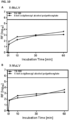
- HIV was inactivated by a virus reduction factor (RF) of at least 4 within 10 minutes ( FIG. 1A ). Similar results were obtained in a repeat experiment ( FIG. 1B ).
- RF virus reduction factor
- Example 2 HIV, PRV and BVDV inactivation using Brij C10 in liquids comprising intravenous immunoglobulin (Reference example)
- Example 1 The experiments were performed as described for Example 1 above. However, for the S/D treatment an S/D mixture comprising Brij C10 was tested and compared to an S/D mixture comprising Triton X-100.
- the composition of the S/D mixture comprising Triton X-100 was prepared as described in Example 1 above.
- the composition of the S/D mixture comprising Brij C10 was prepared as follows.
- the mixture was stirred for at least 15 minutes.
- the S/D reagent mix was stored at room temperature for use within one year. Prior to use the S/D reagent mix was stirred again for at least 15 minutes to assure homogeneity.
- the respective S/D reagent mixes were added to the IVIG-containing liquid to give a final concentration of 0.05% of the respective polyoxyethylene ether detergent.
- Table 6 Virus stocks used in the experiments. Virus Strain Source Propagated on Titrated on Cell line Source Cell line Source BVDV ATCC 1 VR-1422 MDBK ATCC 1 CRL-22 BT ATCC 1 CRL-1390 Nadl 1 ATCC: American Type Culture Collection, 10801 University Boulevard, Manassas, VA 20110 USA
- FIG. 3A When S/D treatment of an IVIG-containing liquid was performed using a mixture of Brij C10, PS80 and TnBP, HIV was inactivated by a virus reduction factor (RF) of over 4 within 10 minutes ( FIG. 3A ). Similar results were obtained in a repeat experiment ( FIG. 3B ).
- RF virus reduction factor
- Example 3 X-MuLV and BVDV inactivation using Brij C10 in liquids comprising human serum albumin (Reference example)
- Brij C10 was used at low concentrations in order to be able to evaluate the kinetics of virus inactions, i.e., the efficiency of virus inactivation (expressed by the RF) over time.
- the efficiency of virus inactivation expressed by the RF
- Brij C10 can be used at significantly higher concentrations, which will accelerate the kinetics of virus inactivation and may also increase the achieved RF.
- HSA human serum albumin
- Virus Strain Source Propagated on Titrated on Cell line
- Source Cell line Source X-MuIV ATCC 1 VR-1447 M.
- dunni ATCC 1 CRL-2017 PG4 ATCC 1 CRL-2032 pNFS Th-1 1 ATCC American Type Culture Collection, 10801 University Boulevard, Manassas, VA 20110 USA Table 7: Virus stocks used in the experiments.
- Virus Strain Source Propagated on Titrated on Cell line Source Cell line
- Virus stocks were characterized prior to use. This characterization included the determination of the virus titer by at least ten independent titrations and specification of an acceptance virus titer range for use as positive control, the determination of virus stock protein content, PCR tests for virus identity and contamination with other viruses and mycoplasma and tests for virus aggregation with filters not allowing the passage of large virus aggregates. Only virus stocks passing PCR identity/contamination tests with no significant aggregation, (i.e. difference in infectivity titers between virus stock and filtered stock was smaller than 1.0 log) were used.
- the S/D components Polysorbate 80 (PS80, Crillet 4 HP, Tween 80) and Tri-n-butyl-phosphate (TnBP) were combined with the respective detergent (i.e. Triton X-100 or Brij C10) in the following ratio (see Table 8 to Table 9): Table 8: Amount of components for Triton X-100 S/D Reagent Mix S/D Reagent Amount to be combined for S/D Reagent Mix [g] Triton X-100 10.5 ⁇ 0.1 PS80 3.2 ⁇ 0.03 TnBP 2.9 ⁇ 0.03 Resulting S/D reagent 16.6 Table 9: Amount of components for Brij C10 S/D Reagent Mix S/D Reagent Amount to be combined for S/D Reagent Mix [g] 20% (w/v) Brij C10 52.5 ⁇ 0.5 PS80 3.2 ⁇ 0.03 TnBP 2.9 ⁇ 0.03 Resulting S/D reagent 58.6
- the S/D reagent mixes were stored at room temperature for use within one year. Prior to use the respective S/D reagent mix were stirred again for at least 15 minutes to assure homogeneity.
- the virus inactivation capacity and the robustness of the S/D treatment were evaluated under conditions unfavorable for virus inactivation, i.e. with short incubation times and at relatively low temperatures.
- longer incubation times and higher temperatures can be used, which will accelerate the kinetics of virus inactivation and may also increase the achieved LRV.
- low concentrations of S/D components were used.
- higher concentrations of S/D components can be used, which will accelerate the kinetics of virus inactivation and may also increase the achieved LRV.
- the filtered HSA-containing liquid was again adjusted under stirring to +1°C ⁇ 1°C using a double-walled vessel connected to a cryostat. This temperature range was maintained under stirring until the end of the incubation of the filtered HSA-containing liquid with the S/D reagents and was recorded continuously.
- the spiked HSA-containing liquid was further incubated under continued stirring at 1°C ⁇ 1°C. Within 1 - 2 minutes after spiking, samples for virus titration (0.5 mL Spike Control, SC, and 2 mL Hold Control, HC) were taken.
- the Hold Control (HC) was kept at the same temperature, i.e. at +1°C ⁇ 1°C, as the spiked HSA-containing liquid after addition of S/D reagents, i.e. it was stored in the same cooling circle as the vessel with the HSA-containing liquid, until the end of S/D treatment.
- the temperature of the cooling liquid was determined before insertion of the Hold Control sample and, again, shortly before the Hold Control was removed for titration after S/D treatment.
- the weight of the spiked HSA-containing liquid was determined for calculation of the amount of the S/D reagent mix to be added.
- the weighed material was re-adjusted, if necessary, under stirring to +1°C ⁇ 1°C.
- the respective S/D reagent mix was added to the HSA-containing liquid to give a final concentration of 0.08% to 0.1% (w/w) of the respective polyoxyethylene ether detergent.
- the S/D reagent mix was added under stirring within 1 minute using a syringe, and the actual amount of S/D reagent mix added was determined by back-weighing the syringe.
- the spiked HSA-containing liquid was further incubated with S/D reagents under continued stirring at +1°C ⁇ 1°C for 59 ⁇ 1 minutes. During incubation, 1 mL samples for virus titration were taken after 1 - 2 min, 10 ⁇ 1 min, 30 ⁇ 1 min and 59 ⁇ 1 min. To prevent further inactivation of virus by the S/D reagents following sample drawing, the samples were diluted immediately 1:20 with cold (+2°C to +8°C) cell culture medium (i.e. 1 volume of sample plus 19 volumes of cell culture medium).
- Phenol II (170,3g, 800 mmol) was placed in a 3 neck 2 L flask equipped with an inner thermometer and stirring bar. Anhydrous CH 2 Cl 2 (1000 mL) was added to the flask and stirring was started. After dissolution of the starting material the solution was cooled to 0°C. After total dissolution NEt 3 (225 mL, 1.6 mol) was added within 10 min. A solution Tf 2 O (256 g, 907 mmol) in CH 2 Cl 2 (180 mL) was added at 0°C to the reaction mixture over 120 min and the reaction was stirred overnight at room temperature. An aqueous saturated NaHCO 3 solution (400 mL) was added and the reaction mixture was extracted.
- Carboxylic acid V (127 g, 542 mmol) was suspended in dried mTHF (1.2 L) and cooled to -10°C. A solution of LiAlH 4 in THF (1 M, 575 mL, 575 mmol) was added over 60 min, then the reaction was warmed slowly to ambient temperature and further stirred overnight. The content of the reaction vessel was transferred into a large Beaker and the excess of hydride was carefully quenched with ice (15 g). Aqueous HCl 3M (500 mL) was added within 20 min, at this point the pH was acidic as indicated by pH paper. EtOAc (300 mL) was added to the crude mixture and the 2 phases were vigorously agitated.
- Benzyl alcohol VI (84.8 g, 385 mmol) was dissolved in anhydrous CH 2 Cl 2 (1 L) and cooled in an ice/water bath. NEts (110 mL, 770 mmol) was added followed by the slow addition of a solution of MsCI (45 mL, 577 mmol) in anhydrous CH 2 Cl 2 (25 mL) over 60 min. The reaction warmed slowly to ambient temperature and was further stirred overnight. An aqueous saturated NaHCO 3 solution (420 mL) was added and the reaction mixture was agitated vigorously. The organic phase was washed repeatedly with water (2 x 500 mL) and brine (300 mL). The organic phase was then concentrated in vacuo.
- PEG400 (360 g, 900 mmol) was dissolved in anhydrous THF (1 L) and tBuOK (90 g, 802 mmol) was added at ambient temperature portion wise over 15 min and the mixture was stirred 60 min at ambient temperature and cooled in an ice bath.
- Mesylate VII (89.5 g, 300 mmol) was suspended in THF (300 mL) and the milky orange solution was added to the cooled deprotonated PEG400 solution over 20 min. The reaction was warmed slowly to ambient temperature and further stirred overnight. Ice (500 g) was added as well as aqueous HCl 1M (820 mL). The THF was removed under vacuum and EtOAc (1 L) was added.
- This step was carried out as follows: Toluene (750 mL, 7.04 mol) and concentrated H 2 SO 4 (20 mL, 0.375 mol) were cooled to 0 °C in a round bottom flask. A mixture of toluene (250 mL, 2.35 mol) and diisobutylene (as a mixture 3:1 2,4,4-trimethyl-1-pentene + 2,4,4-trimethyl-2-pentene, 200 mL, 1.28 mol) was added slowly to the reaction mixture over 90 min. The reaction was further stirred at 0°C and warmed to ambient temperature overnight. Ice (400 g) was added and the mixture was transferred to a separatory funnel.
- this step was carried out as follows: Toluene (400 mL, 3.83 mol) and nonafluoro-1-butanesulfonic acid (4 mL, 24 mmol) were stirred at ambient temperature in a round bottom flask. A mixture of toluene (200 mL, 1.92 mol) and diisobutylene (as a mixture 3:1 2,4,4-trimethyl-1-pentene + 2,4,4-trimethyl-2-pentene, 100 mL, 0.64 mol) was added slowly to the reaction mixture over 60 min. The reaction was further stirred at ambient temperature overnight. Aqueous saturated NaHCO 3 solution (200 mL) was added and the mixture was stirred for 20 min.
- this step was carried out as follows: p-Substituted toluene X (85.2 g, 417 mmol) was dissolved in Trifluorotoluene (830 mL). Other solvents such as esters or alkanes (EtOAc and hexane) are also effective. N-bromosuccinimide (NBS) (74.2 g, 417 mmol) was added as well as AIBN (Azobis(isobutyronitrile) (3.4 g, 21 mmol) while stirring (450 rpm). The mixture was heated to 80°C for 5 hours. The solvent was removed under vacuo. Petrol ether 40-60 (350 mL) was added and a white solid precipitated.
- N-bromosuccinimide (NBS) 74.2 g, 417 mmol
- AIBN Azobis(isobutyronitrile)
- this step was carried out as follows: PEG400 (475 g, 1.19 mol) was dissolved in TBME (methyl-tert-butylether) (1.0 L) at ambient temperature. tBuOK (43.2 g, 385 mmol) was added portion wise over 20 min and the mixture was stirred 90 min. In the meantime, the benzyl bromide intermediate XI (84 g, 297 mmol) was suspended in TBME (250 mL) and the solution was added to the deprotonated PEG400 solution at ambient temperature. The reaction was stirred 3 hrs at ambient temperature. Ice (200 g) and HCl (1M, 400 mL) were added to the reaction mixture.
- Example 6 PRV inactivation using 4-tert-octylbenzyl alcohol polyethoxylate in liquids comprising intravenous immunoglobulin
- Example 1 The experiments were performed as described for Example 1 above. However, for the S/D treatment an S/D mixture comprising the 4-tert-octylbenzyl alcohol polyethoxylate produced in Example 5a was tested and compared to an S/D mixture comprising Triton X-100.
- the composition of the S/D mixture comprising Triton X-100 was prepared as described in Example 1 above.
- the composition of the S/D mixture comprising 4-tert-octylbenzyl alcohol polyethoxylate was prepared as follows.
- the mixture was stirred for at least 15 minutes.
- the S/D reagent mix was stored at room temperature for use within one year. Prior to use the S/D reagent mix was stirred again for at least 15 minutes to assure homogeneity.
- the respective S/D reagent mixes were added to the IVIG-containing liquid to give a final concentration of 0.05% w/w of the respective polyoxyethylene ether detergent.
- Example 7 X-MuLV inactivation using 4-tert-octylbenzyl alcohol polyethoxylate in liquids comprising human serum albumin
- the mixture was stirred for at least 15 minutes.
- the S/D reagent mix was stored at room temperature for use within one year. Prior to use the S/D reagent mix was stirred again for at least 15 minutes to assure homogeneity.
- Example 8 BVDV inactivation using 4-tert-octylbenzyl alcohol polyethoxylate, Triton X-100 reduced or Brij C10 in buffer containing HSA
- the respective detergents were used at low concentrations in order to be able to evaluate the kinetics of virus inactivation, i.e., the efficiency of virus inactivation (expressed by the RF) over time.
- the detergents can be used at significantly higher concentrations, which will accelerate the kinetics of virus inactivation and may also increase the achieved RF.
- a buffer containing human serum albumin (HSA) was used as a model for a therapeutic antibody.
- Table 12 Virus stock used in the experiments. Virus Strain Source Propagated on Titrated on Cell line Source Cell line Source BVDV ATCC 1 VR-1422 MDBK ATCC 1 CRL-22 BT ATCC 1 CRL-1390 Nadl 1 ATCC: American Type Culture Collection, 10801 University Boulevard, Manassas, VA 20110 USA
- Virus stocks were characterized prior to use. This characterization included the determination of the virus titer by at least ten independent titrations and specification of an acceptance virus titer range for use as positive control, the determination of virus stock protein content, PCR tests for virus identity and contamination with other viruses and mycoplasma and tests for virus aggregation with filters not allowing the passage of large virus aggregates. Only virus stocks passing PCR identity/contamination tests with no significant aggregation, (i.e. difference in infectivity titers between virus stock and filtered stock was smaller than 1.0 log) were used.
- the virus inactivation capacity and the robustness of the single-detergent treatment were evaluated under conditions unfavorable for virus inactivation, i.e. with short incubation times and at relatively low temperatures.
- longer incubation times and higher temperatures can be used, which will accelerate the kinetics of virus inactivation and may also increase the achieved LRV.
- low concentrations of the respective detergents were used.
- higher concentrations of the respective detergents can be used, which will accelerate the kinetics of virus inactivation and may also increase the achieved LRV.
- the buffer containing HSA was transferred to a screw-cap flask of which the tare weight had been determined.
- the weight of the buffer containing HSA (in the closed flask) was determined for calculation of the amount of the single detergent to be added.
- the needed amount of detergent ([mg]), or the respective amount of a 1:10 dilution thereof, was added per g of buffer containing HSA to yield the following final concentrations of the respective detergent: 0.1% ⁇ 0.01% (w/w) or 0.03% ⁇ 0.01% (w/w).
- the detergent was added under stirring within 1 minute using a syringe, and the actual amount added was determined by back-weighing the syringe.
- the buffer containing HSA was stirred further after completed detergent addition for at least 10 minutes.
- the buffer containing HSA mixed with the detergent was filtered through a 0.2 ⁇ m Super syringe membrane filter (or equivalent) and the filtrate was collected at a targeted temperature of 14°C ⁇ 1°C using a double-walled vessel connected to a cryostat. The vessel for the filtrate was cooled. In case of filter clogging, fresh filters were used for continuing filtration of the buffer containing HSA. After filtration, the temperature (target: 14°C ⁇ 1°C) and the volume were measured.
- the filtered buffer containing HSA with the respective detergent was adjusted under stirring to 14°C ⁇ 1°C using a double-walled vessel connected to a cryostat. This temperature range was maintained under stirring until the end of the incubation of the buffer containing HSA with the detergent and was recorded continuously.
- the determined volume of the buffer containing HSA with detergent was spiked at a ratio of 1:31, e.g. 48 mL buffer containing HSA were spiked with 1.6 ml of virus stock solution.
- the spiked buffer containing HSA was further incubated under continued stirring at 14°C ⁇ 1°C for 59 ⁇ 1 minutes.
- samples for virus titration were taken at 1 - 2 min, 5 ⁇ 1 min, 29 ⁇ 1 min and 59 ⁇ 1 min.
- the samples were diluted immediately 1:20 with the respective cold (+2°C to +8°C) cell culture medium (i.e. 1 volume of sample plus 19 volumes of cell culture medium).
- Spike- and Hold Controls were performed on the same day: Buffer containing HSA was filtered as described above, but without prior addition of detergent. Then the filtrate was adjusted to 14°C ⁇ 1°C under stirring as described above. The buffer containing HSA was spiked at a ratio of 1:31 and further incubated at 14°C ⁇ 1°C for 59 ⁇ 1 minutes as described above. Within 1 - 2 minutes after spiking, a sample for virus titration (Spike Control) was taken. After incubation for 59 ⁇ 1 minutes a sample for virus titration (i.e. the Hold Control sample) was taken (HC).
- BVDV virus reduction factor
- BVDV was inactivated by a virus reduction factor (RF) of over 3 within 5 minutes, and of over 4 within 29 minutes ( FIG. 12B ).
- RF virus reduction factor
- Example 9 BVDV inactivation using 4-tert-octylbenzyl alcohol polyethoxylate or Triton X-100 reduced in IVIG-containinq liquid
- Triton X-100 reduced, 4-tert-octylbenzyl alcohol polyethoxylate and Triton X-100 were used at low concentrations in order to evaluate the kinetics of virus inactivation, i.e., the efficiency of virus inactivation (expressed by the RF) over time.
- the detergents including Triton X-100 reduced or 4-tert-octylbenzyl alcohol polyethoxylate can be used at significantly higher concentrations, which will accelerate the kinetics of virus inactivation and is also expected to increase the achieved LRV.
- IVIG IVIG-containing liquid
- Table 13 Virus stock used in the experiments. Virus Strain Source Propagated on Titrated on Cell line Source Cell line Source BVDV ATCC 1 VR-1422 MDBK ATCC 1 CRL-22 BT ATCC 1 CRL-1390 Nadl 1 ATCC: American Type Culture Collection, 10801 University Boulevard, Manassas, VA 20110 USA
- Virus stocks were characterized prior to use. This characterization included the determination of the virus titer by at least ten independent titrations and specification of an acceptance virus titer range for use as positive control, the determination of virus stock protein content, PCR tests for virus identity and contamination with other viruses and mycoplasma and tests for virus aggregation with filters not allowing the passage of large virus aggregates. Only virus stocks passing PCR identity/contamination tests with no significant aggregation, (i.e. difference in infectivity titers between virus stock and filtered stock was smaller than 1.0 log) were used.
- the virus inactivation capacity and the robustness of the single-detergent treatment were evaluated under conditions unfavorable for virus inactivation, i.e. with short incubation times and at relatively low temperatures.
- longer incubation times and higher temperatures can be used, which will accelerate the kinetics of virus inactivation and may also increase the achieved LRV.
- low concentrations of the respective detergents were used.
- higher concentrations of the respective detergents can be used, which will accelerate the kinetics of virus inactivation and may also increase the achieved LRV.
- the IVIG-containing liquid was thawed and all further steps took place in a biosafety class II cabinet.
- the IVIG-containing liquid was incubated under stirring at a temperature of +17°C ⁇ 1°C using a double-walled vessel connected to a cryostat for incubation.
- the IVIG-containing liquid was then filtered through a 0.2 ⁇ m depth filter with an effective filter area of 25 cm 2 (Cuno VR06 or equivalent) connected to a Sartorius (SM16249) stainless steel filter holder using pressurized nitrogen at a targeted pressure of 0.9 bar (limit: 0.5 bar - 1.5 bar).
- the filter material was pre-coated with 55 L/m 2 of the Hyflo Supercel suspension (5.0 g ⁇ 0.05 g of Hyflo Supercel per L; conductivity adjusted to 3.5 mS/cm (specified range: 2.5 - 6.0 mS/cm) using 3 M NaCl) (at a pressure of ⁇ 0.5 bar) prior to filtration of the liquid.
- the filter holder was cooled and the filtrate was collected at a targeted temperature of +17°C ⁇ 1°C using a double-walled vessel connected to a cryostat. The vessel for the filtrate was cooled. In case of filter clogging, fresh pre-conditioned filters were used for continuing filtration of the remaining liquid. After filtration the volume was measured.
- the filtered and protein adjusted IVIG-containing liquid was again adjusted under stirring to +17°C ⁇ 1°C using a double-walled vessel connected to a cryostat. This temperature range was maintained under stirring until the end of the incubation of the filtered IVIG-containing liquid with the detergent and was recorded continuously.
- the spiked IVIG-containing liquid was further incubated under continued stirring at 17°C ⁇ 1°C. Within 1 - 2 minutes after spiking, samples for virus titration (Spike Control, SC, and Hold Control, HC) were taken.
- the Hold Control (HC) was kept at the same temperature, i.e. at +17°C ⁇ 1°C, as the spiked IVIG-containing liquid after addition of detergent, i.e. it was stored in the same cooling circle as the vessel with the IVIG-containing liquid, until the end of detergent treatment.
- the temperature of the cooling liquid was determined before insertion of the Hold Control sample and, again, shortly before the Hold Control was removed for titration after detergent treatment.
- the weight of the spiked IVIG-containing liquid was determined for calculation of the amount of the detergent to be added.
- the weighed material was re-adjusted, if necessary, under stirring to +17°C ⁇ 1°C.
- the needed amount of detergent ([mg]), or the respective amount of a 1:10 dilution thereof, was added per g of IVIG-containing liquid to yield the following final concentrations of the respective detergent: 0.1% ⁇ 0.01% (w/w) or 0.03% ⁇ 0.01% (w/w).
- the detergent was added under stirring within 1 minute using a syringe, and the actual amount of detergent added was determined by back-weighing the syringe.
- the spiked IVIG-containing liquid was further incubated with the respective detergent under continued stirring at +17°C ⁇ 1°C for 59 ⁇ 1 minutes. During incubation, 1 mL samples for virus titration were taken after 1 - 2 min, 10 ⁇ 1 min, 30 ⁇ 1 min and 59 ⁇ 1 min. To prevent further inactivation of virus by the S/D reagents following sample drawing, the samples were diluted immediately 1:20 with cold (+2°C to +8°C) cell culture medium (i.e. 1 volume of sample plus 19 volumes of cell culture medium).
- BVDV virus reduction factor
- BVDV virus reduction factor
- Example 10 BVDV inactivation using 4-tert-octylbenzyl alcohol polyethoxylate or Triton X-100 reduced in FVIII-containinq liquid
- Triton X-100 reduced, 4-tert-octylbenzyl alcohol polyethoxylate and Triton X-100 were used at low concentrations in order to evaluate the kinetics of virus inactivation, i.e., the efficiency of virus inactivation (expressed by the RF) over time.
- the detergents including Triton X-100 reduced or 4-tert-octylbenzyl alcohol polyethoxylate can be used at significantly higher concentrations, which will accelerate the kinetics of virus inactivation and is also expected to increase the achieved LRV.
- a liquid comprising pdFVIII (pdFVIll-containing liquid) was frozen on dry ice and stored at ⁇ -60°C until use within one year after the date of collection.
- Table 14 Virus stock used in the experiments. Virus Strain Source Propagated on Titrated on Cell line Source Cell line Source BVDV ATCC 1 VR-1422 MDBK ATCC 1 CRL-22 BT ATCC 1 CRL-1390 Nad1 1 ATCC: American Type Culture Collection, 10801 University Boulevard, Manassas, VA 20110 USA
- Virus stocks were characterized prior to use. This characterization included the determination of the virus titer by at least ten independent titrations and specification of an acceptance virus titer range for use as positive control, the determination of virus stock protein content, PCR tests for virus identity and contamination with other viruses and mycoplasma and tests for virus aggregation with filters not allowing the passage of large virus aggregates. Only virus stocks passing PCR identity/contamination tests with no significant aggregation, (i.e. difference in infectivity titers between virus stock and filtered stock was smaller than 1.0 log) were used.
- the virus inactivation capacity and the robustness of the single-detergent treatment were evaluated under conditions unfavorable for virus inactivation, i.e. with short incubation times.
- longer incubation times can be used, which will accelerate the kinetics of virus inactivation and may also increase the achieved LRV.
- low concentrations of the respective detergents were used.
- higher concentrations of the respective detergents can be used, which will accelerate the kinetics of virus inactivation and may also increase the achieved LRV.
- the pdFVIII-containing liquid was thawed and all further steps took place in a biosafety class II cabinet. To remove possible gross aggregates the pdFVlll-containing liquid was filtered through a 0.45 ⁇ m membrane filter (e.g. Sartorius SartoScale Sartobran or equivalent). The pdFVlll-containing liquid was transferred to a screw-cap flask of which the tare weight had been determined and adjusted under stirring to a targeted temperature of +23°C ⁇ 1°C using a double-walled vessel connected to a cryostat. The determined volume of the pdFVlll-containing liquid was spiked at a ratio of 1:31, e.g.
- the Hold Control was kept at the same temperature, i.e. at +23°C ⁇ 1°C, as the spiked pdFVIII-containing liquid after addition of detergent, i.e. it was stored in the same cooling circle as the vessel with the pdFVIII-containing liquid, until the end of detergent treatment.
- the temperature of the cooling liquid was determined before insertion of the Hold Control sample and, again, shortly before the Hold Control was removed for titration after detergent treatment.
- the weight of the spiked pdFVlll-containing liquid was determined for calculation of the amount of detergent to be added.
- the weighed material was adjusted under stirring to +23°C ⁇ 1°C using a double-walled vessel connected to a cryostat. This temperature range was maintained under stirring until the end of the incubation of the spiked pdFVlll-containing liquid with the detergent and was recorded continuously.
- the detergent was added under stirring within 1 minute using a syringe, and the actual amount of detergent added was determined by back-weighing the syringe.
- the spiked pdFVlll-containing liquid was further incubated under continued stirring at +23°C ⁇ 1°C for 59 ⁇ 1 minutes.
- 1 mL samples for virus titration were taken after 1 - 2 min, 5 ⁇ 1 min, 30 ⁇ 1 min and 59 ⁇ 1 min.
- the samples were diluted immediately 1:20 with the respective cold (+2 to +8°C) cell culture medium (i.e. 1 volume of sample plus 19 volumes of cell culture medium).
- BVDV virus reduction factor
- the methods, processes and products of the invention are commercially useful, e.g. for environmentally compatible inactivation of lipid-enveloped viruses in industrial manufacturing processes.
- the invention can be used in the industrial production of biopharmaceuticals.
- the invention is industrially applicable.
Landscapes
- Chemical & Material Sciences (AREA)
- Organic Chemistry (AREA)
- Life Sciences & Earth Sciences (AREA)
- Chemical Kinetics & Catalysis (AREA)
- Health & Medical Sciences (AREA)
- Wood Science & Technology (AREA)
- Engineering & Computer Science (AREA)
- Oil, Petroleum & Natural Gas (AREA)
- Medicinal Chemistry (AREA)
- Polymers & Plastics (AREA)
- Genetics & Genomics (AREA)
- Zoology (AREA)
- Biochemistry (AREA)
- General Health & Medical Sciences (AREA)
- General Chemical & Material Sciences (AREA)
- Biophysics (AREA)
- Molecular Biology (AREA)
- Bioinformatics & Cheminformatics (AREA)
- Proteomics, Peptides & Aminoacids (AREA)
- Immunology (AREA)
- Biotechnology (AREA)
- General Engineering & Computer Science (AREA)
- Microbiology (AREA)
- Biomedical Technology (AREA)
- Virology (AREA)
- Toxicology (AREA)
- Gastroenterology & Hepatology (AREA)
- Emergency Medicine (AREA)
- Medicines Containing Material From Animals Or Micro-Organisms (AREA)
- Medicines That Contain Protein Lipid Enzymes And Other Medicines (AREA)
- Micro-Organisms Or Cultivation Processes Thereof (AREA)
- Agricultural Chemicals And Associated Chemicals (AREA)
- Organic Low-Molecular-Weight Compounds And Preparation Thereof (AREA)
- Compositions Of Macromolecular Compounds (AREA)
- Polyethers (AREA)
- Medicines Containing Antibodies Or Antigens For Use As Internal Diagnostic Agents (AREA)
- Detergent Compositions (AREA)
Claims (23)
- Verbindung, bei der es sich um die folgende Verbindung handelt:

z = 1 bis 5. - Verbindung nach Anspruch 1, wobei es sich bei der Verbindung um folgende Verbindung handelt:
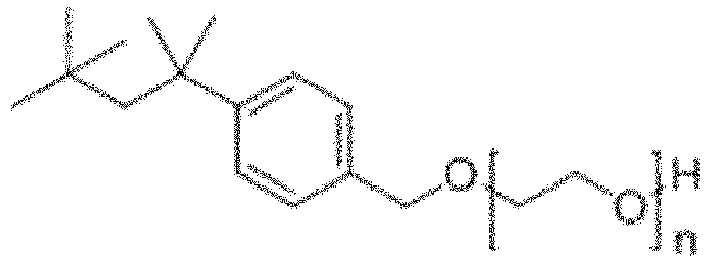
- Verfahren zum Inaktivieren eines Virus mit einer Lipidhülle, wobei das Verfahren die folgenden Schritte umfasst:a) Zugeben eines Detergens zu einer Flüssigkeit, um ein Gemisch aus dem Detergens und der Flüssigkeit herzustellen; undb) Inkubieren des Gemisches, um das Virus zu inaktivieren; wobei das Detergens ein Polyoxyethylenether ist, wobei das Detergens ein nichtphenolisches Detergens ist und wobei das Detergens die Verbindung nach einem der Ansprüche 1 bis 2 ist.
- Verfahren nach Anspruch 3, wobei das Detergens umweltverträglich ist.
- Verfahren nach einem der Ansprüche 3 bis 4, wobei Schritt a) ferner das Zugeben eines Lösungsmittels zu der Flüssigkeit umfasst und wobei in Schritt a) ein Lösungsmittel-/Detergensgemisch zum Inaktivieren des Virus durch Zugeben des Detergens und des Lösungsmittels zu der Flüssigkeit hergestellt wird.
- Verfahren nach Anspruch 5, wobei das Lösungsmittel ein organisches Lösungsmittel ist und wobei das Lösungsmittel optional Tri-n-butylphosphat ist.
- Verfahren nach einem der Ansprüche 3 bis 6, wobei die Flüssigkeit ein biologisches Medizinprodukt und/oder ein biopharmazeutisches Arzneimittel umfasst.
- Verfahren nach Anspruch 7, wobei das biopharmazeutische Arzneimittel Folgendes ist:(a) ein Blutfaktor, ein Immunglobulin wie ein monoklonaler Antikörper, ein Ersatzenzym, ein Impfstoff, ein Gentherapievektor, ein Wachstumsfaktor oder ein Wachstumsfaktorrezeptor;(b) ein therapeutisches Protein;(c) ein Blutfaktor und wobei der Blutfaktor Faktor I (Fibrinogen), Faktor II (Prothrombin), Gewebefaktor, Faktor V, Faktor VII oder VIIa, Faktor VIII, Faktor IX, Faktor X, Faktor XI, Faktor XII, Faktor XIII, Von-Willebrand-Faktor (VWF), Präkallikrein, hochmolekulares Kininogen (HMWK), Fibronektin, Antithrombin III, Heparin-Kofaktor II, Protein C, Protein S, Protein Z, Plasminogen, Alpha-2-Antiplasmin, Gewebeplasminogenaktivator (tPA), Urokinase, Plasminogenaktivator-Inhibitor-1 (PAI1) oder Plasminogenaktivator-Inhibitor-2 (PAI2) ist; und/oder(d) Faktor VIII, bevorzugt rekombinanter humaner Faktor VIII.
- Verfahren nach einem der Ansprüche 3 bis 8, wobei:(a) das Verfahren vor Schritt a) oder zwischen Schritt a) und Schritt b) ferner einen Schritt des Filterns der Flüssigkeit oder des Gemischs mit einem Tiefenfilter umfasst;(b) das Gemisch in Schritt b) mindestens 1 Stunde lang inkubiert wird; und/oder(c) das Gemisch in Schritt b) bei einer Temperatur zwischen 0 °C und 10 °C inkubiert wird oder wobei das Gemisch bei einer Temperatur zwischen 16 °C und 25 °C inkubiert wird.
- Verfahren nach einem der Ansprüche 7 bis 9, das im Anschluss an Schritt b) ferner einen folgenden Schritt umfasst:
c) Reinigen des biopharmazeutischen Arzneimittels;
und wobei:(i) das Reinigen das Abtrennen des biopharmazeutischen Arzneimittels aus dem Detergens umfasst;(ii) das Reinigen das Abtrennen des biopharmazeutischen Arzneimittels aus dem weiteren Detergens umfasst; und/oder(ii) das Reinigen des biopharmazeutischen Arzneimittels das Reinigen des biopharmazeutischen Arzneimittels durch mindestens eine chromatographische Reinigung umfasst und die mindestens eine chromatographische Reinigung optional durch Anionenaustauschchromatographie und/oder durch Kationenaustauschchromatographie erfolgt. - Verfahren zum Herstellen eines biopharmazeutischen Arzneimittels, wobei das Verfahren das Verfahren nach einem der Ansprüche 7 bis 10 umfasst, wobei das biopharmazeutische Arzneimittel wie in einem der Ansprüche 7 bis 10 definiert ist.
- Verfahren nach Anspruch 11, das im Anschluss an das Verfahren nach einem der Ansprüche 7 bis 10 ferner einen Schritt zum Herstellen einer pharmazeutischen Formulierung umfasst, die das biopharmazeutische Arzneimittel umfasst.
- Verwendung eines Detergens in einem Verfahren zum Inaktivieren eines Virus mit einer Lipidhülle, wobei das Detergens die Verbindung nach einem der Ansprüche 1 bis 2 ist.
- Verwendung nach Anspruch 13, wobei das Verfahren zum Inaktivieren des Virus ein Verfahren unter Verwendung einer Lösungsmittel-/Detergensbehandlung ist, wobei die Lösungsmittel-/Detergensbehandlung die Verwendung des Detergens umfasst, bei dem es sich um die Verbindung nach einem der Ansprüche 1 bis 2 handelt.
- Verwendung nach einem der Ansprüche 13 bis 14, wobei die Virusinaktivierung eine Inaktivierung eines Virus in einer Flüssigkeit ist, die ein biopharmazeutisches Arzneimittel wie in einem der Ansprüche 7 bis 8 definiert umfasst.
- Zusammensetzung, die ein Detergens umfasst, wobei das Detergens die Verbindung nach einem der Ansprüche 1 bis 2 ist.
- Zusammensetzung nach Anspruch 16, die ferner ein organisches Lösungsmittel wie in Anspruch 6 definiert umfasst.
- Verfahren zum Synthetisieren einer Verbindung der folgenden allgemeinen Formel (VIII),
 R eine Kohlenwasserstoffgruppe mit einer linearen Kette von 2 bis 12 Kohlenstoffatomen und einer oder mehreren Methylgruppen als Substituenten an der linearen Kette darstellt,m gleich 1 ist undA einen Polyoxyethylenrest darstellt,wobei das Verfahren die folgenden Schritte umfasst:A) Umwandeln eines Phenols der folgenden allgemeinen Formel (IX), wobei R wie vorstehend definiert ist,
 B) Umwandeln des Alkohols der allgemeinen Formel (X) in einen Polyoxyethylenether der allgemeinen Formel (VIII), wie vorstehend definiert;wobei die Verbindung der Formel (VIII) die folgende Verbindung ist:
 wobei m gleich 1 ist und z eine Ganzzahl ist, die aus der folgenden Gruppe ausgewählt ist:
z = 1 bis 5. - Verfahren zum Synthetisieren einer Verbindung der folgenden allgemeinen Formel (VIII),
 R eine Kohlenwasserstoffgruppe mit einer linearen Kette von 2 bis 12 Kohlenstoffatomen und einer oder mehreren Methylgruppen als Substituenten an der linearen Kette darstellt,m gleich 1 ist undA einen Polyoxyethylenrest darstellt,wobei das Verfahren die folgenden Schritte umfasst:(1) Umsetzen von Toluol, um ein substituiertes Toluol der folgenden allgemeinen Formel (XI) zu erhalten, wobei R wie vorstehend definiert ist,
 (2) Umwandeln des substituierten Toluols der allgemeinen Formel (XI) in eine Verbindung der folgenden allgemeinen Formel (XII), wobei R und m wie vorstehend definiert sind und X ausgewählt ist aus der Gruppe umfassend eine Hydroxylgruppe, ein Bromatom, ein Iodatom und ein Chloratom
 (3) Umwandeln der Verbindung der allgemeinen Formel (XII) in einen Polyoxyethylenether der allgemeinen Formel (VIII), wie vorstehend definiert;wobei die Verbindung der Formel (VIII) die folgende Verbindung ist:
 wobei m gleich 1 ist und z eine Ganzzahl ist, die aus der folgenden Gruppe ausgewählt ist:
z = 1 bis 5. - Verfahren zur Synthese einer Verbindung der folgenden allgemeinen Formel (VIIIa),
 R eine Kohlenwasserstoffgruppe mit einer linearen Kette von 2 bis 12 Kohlenstoffatomen und einer oder mehreren Methylgruppen als Substituenten an der linearen Kette darstellt undA einen Polyoxyethylenrest darstellt,wobei das Verfahren die folgenden Schritte umfasst:(I) Umwandeln von Benzylalkohol in eine Verbindung der folgenden allgemeinen Formel (XIII), wobei R wie vorstehend definiert ist,
 (II) Umwandeln der Verbindung der allgemeinen Formel (XIII) in einen Polyoxyethylenether der allgemeinen Formel (VIIIa), wie vorstehend definiert;wobei die Verbindung der Formel (VIIIa) die folgende Verbindung ist:
 wobei m gleich 1 ist und z eine Ganzzahl ist, die aus der folgenden Gruppe ausgewählt ist:
z = 1 bis 5. - Verfahren nach einem der Ansprüche 18 bis 20, wobei die Verbindung der Formel (VIII) die folgende Verbindung ist:
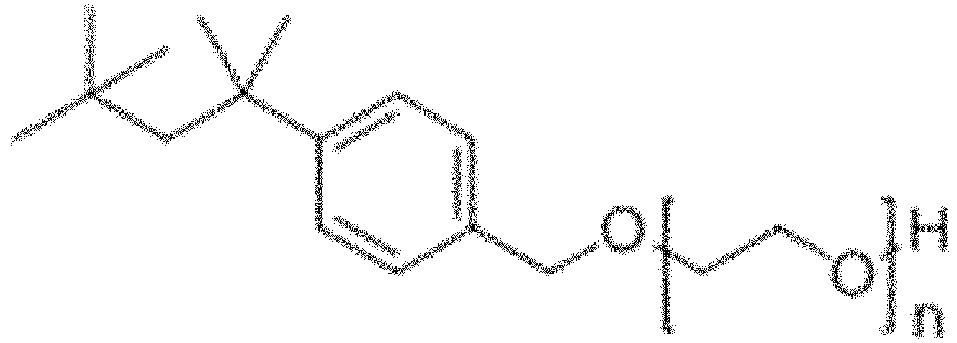
- Verfahren nach einem der Ansprüche 19 und 21, wobei:(i) das Umwandeln in Schritt (2) eine radikalische Reaktion unter Verwendung von AIBN (Azobis(isobutyronitril) als Radikalstarter ist; und/oder(ii) X ein Bromatom ist.
- Verfahren nach einem der Ansprüche 19 und 21 bis 22, wobei:(a) bei dem Umwandeln in Schritt (2) N-Bromsuccinimid (NBS) als Reagens verwendet wird;(b) bei dem Umwandeln in Schritt (3) TBME (Methyl-tert-butylether) als Lösungsmittel verwendet wird;(c) das Umwandeln in Schritt (3) mindestens 2 Stunden lang erfolgt, bevorzugt bei Raumtemperatur;(d) das Umwandeln in Schritt (3) nicht mehr als 5 Stunden lang erfolgt, bevorzugt bei Raumtemperatur; und/oder(e) das Umwandeln in Schritt (3) 3 Stunden lang erfolgt, bevorzugt bei Raumtemperatur.
Applications Claiming Priority (3)
| Application Number | Priority Date | Filing Date | Title |
|---|---|---|---|
| US201762578648P | 2017-10-30 | 2017-10-30 | |
| US201862687023P | 2018-06-19 | 2018-06-19 | |
| PCT/EP2018/079721 WO2019086463A1 (en) | 2017-10-30 | 2018-10-30 | Environmentally compatible detergents for inactivation of lipid-enveloped viruses |
Publications (2)
| Publication Number | Publication Date |
|---|---|
| EP3704178A1 EP3704178A1 (de) | 2020-09-09 |
| EP3704178B1 true EP3704178B1 (de) | 2024-07-24 |
Family
ID=64083092
Family Applications (1)
| Application Number | Title | Priority Date | Filing Date |
|---|---|---|---|
| EP18796419.2A Active EP3704178B1 (de) | 2017-10-30 | 2018-10-30 | Umweltverträgliche waschmittel zur inaktivierung von lipidumhüllten viren |
Country Status (12)
| Country | Link |
|---|---|
| US (1) | US12258540B2 (de) |
| EP (1) | EP3704178B1 (de) |
| JP (1) | JP7432506B2 (de) |
| KR (1) | KR102651043B1 (de) |
| CN (1) | CN111511800B (de) |
| AU (1) | AU2018357917B2 (de) |
| CA (1) | CA3080656A1 (de) |
| CO (1) | CO2020006181A2 (de) |
| ES (1) | ES2991988T3 (de) |
| MX (1) | MX2020004151A (de) |
| SG (1) | SG11202003793WA (de) |
| WO (1) | WO2019086463A1 (de) |
Families Citing this family (3)
| Publication number | Priority date | Publication date | Assignee | Title |
|---|---|---|---|---|
| WO2019086463A1 (en) | 2017-10-30 | 2019-05-09 | Baxalta GmbH | Environmentally compatible detergents for inactivation of lipid-enveloped viruses |
| EP4192806A1 (de) | 2020-08-05 | 2023-06-14 | Takeda Pharmaceutical Company Limited | Verfahren zur herstellung und reinigung von umweltverträglichen waschmitteln |
| WO2024115344A1 (en) | 2022-11-29 | 2024-06-06 | Merck Patent Gmbh | Method for inactivating enveloped viruses |
Family Cites Families (381)
| Publication number | Priority date | Publication date | Assignee | Title |
|---|---|---|---|---|
| US1970578A (en) | 1930-11-29 | 1934-08-21 | Ig Farbenindustrie Ag | Assistants for the textile and related industries |
| GB1041554A (en) | 1961-10-11 | 1966-09-07 | W J Bush & Company Ltd | Improvements in or relating to the dyeing of fibres |
| DE2154996A1 (de) | 1971-11-05 | 1973-05-10 | Bayer Ag | Anthrachinonfarbstoffe |
| JPS527372B2 (de) | 1972-07-14 | 1977-03-02 | ||
| US4020183A (en) | 1974-12-03 | 1977-04-26 | Ortho Pharmaceutical Corporation | Nonionic surface active anti-herpes simplex viral agents |
| SE437329B (sv) | 1975-03-14 | 1985-02-25 | Community Blood Council | Sett att ur blodserum framstella vaccin mot virushepatit |
| JPS5265591A (en) | 1975-11-26 | 1977-05-31 | Mitsui Petrochem Ind Ltd | Purification of polyolefins |
| DE2605469C3 (de) | 1976-02-12 | 1980-04-10 | Behringwerke Ag, 3550 Marburg | Verfahren zur Gewinnung eines Spaltprodukts des Tollwut-Virus und dieses enthaltender Impfstoff |
| US4113712A (en) | 1976-03-08 | 1978-09-12 | The Green Cross Corporation | HBsAG Particle composed of single polypeptide subunits and the preparation procedure |
| DE2615161A1 (de) | 1976-04-07 | 1977-10-27 | Thiemann Chem Pharm Fab | Omega-aminoalkoxy-alkane, verfahren zu ihrer herstellung und diese verbindungen enthaltende arzneimittel |
| FI66020C (fi) | 1977-09-19 | 1984-08-10 | Merck & Co Inc | Foerfarande foer framstaellning av antigeniska immunogeniska subunits av hsv-1 och hsv-2 |
| US4374127A (en) | 1977-09-19 | 1983-02-15 | Merck & Co., Inc. | Herpes sub unit vaccine |
| DE2750045A1 (de) | 1977-11-09 | 1979-05-10 | Behringwerke Ag | Verfahren zur entfernung von detergentien aus virusantigensuspensionen |
| ZA792485B (en) | 1978-06-07 | 1980-06-25 | New York Blood Center Inc | Vaccine for active immunization containing hepatitis b surface and/or e-antigens |
| DE2847959A1 (de) | 1978-11-04 | 1980-05-14 | Behringwerke Ag | Verfahren zur isolierung von virusantigenen mittels polyaethylenglykol aus loesungen, die nicht-ionische detergentien enthalten |
| JPS5940174B2 (ja) | 1978-11-16 | 1984-09-28 | 財団法人相模中央化学研究所 | 液体シンチレ−タ−溶液 |
| DK276380A (da) | 1979-07-09 | 1981-01-10 | Univ Iowa State Res Found Inc | Fremgangsmaade til fremstilling af en vaccine mod infektioes kvaeg-rhinotracheitis |
| US4452734A (en) | 1980-02-11 | 1984-06-05 | Merck & Co., Inc. | Herpes subunit vaccine |
| FR2475572A1 (fr) | 1980-02-11 | 1981-08-14 | Pasteur Institut | Procede pour l'obtention de fragments de virus a enveloppe lipidique, en particulier d'antigenes utilisables comme vaccins, produits obtenus et applications |
| DE3005495C2 (de) | 1980-02-14 | 1983-03-31 | Institut Pasteur, 75724 Paris | Herstellung von Fragmenten von Viren mit Lipidhülle und sie enthaltende Arzneimittelzubereitungen |
| DE3014189A1 (de) | 1980-04-14 | 1981-10-15 | Europäisches Laboratorium für Molekularbiologie (EMBL), 6900 Heidelberg | Verfahren zur herstellung eines immunogenen membranproteinaggregats von influenza-, parainfluenza- und rhabdo-viren |
| ZW9881A1 (en) | 1980-06-02 | 1981-12-23 | Hoffmann La Roche | Substituted phenoxyaminopropanol derivatives |
| DE3173208D1 (en) | 1980-10-06 | 1986-01-23 | Edward Shanbrom | Method of reducing undesirable activities of biological and pharmaceutical products |
| AR228580A1 (es) | 1980-11-25 | 1983-03-30 | Torre Jose Leonardo | Procedimiento para inactivar el virus de la fiebre aftosa |
| JPS5795917A (en) | 1980-12-04 | 1982-06-15 | Takeda Chem Ind Ltd | Preparation of inactivated sendai virus vaccine |
| US4327182A (en) | 1981-01-22 | 1982-04-27 | Connaught Laboratories Incorporated | Purification of influenza sub-unit vaccine |
| US4975217A (en) | 1981-07-20 | 1990-12-04 | Kimberly-Clark Corporation | Virucidal composition, the method of use and the product therefor |
| US4481189A (en) | 1982-04-14 | 1984-11-06 | New York Blood Center Inc. | Process for preparing sterilized plasma and plasma derivatives |
| US4645666A (en) | 1982-06-08 | 1987-02-24 | The Regents Of The University Of California | Vaccine for bluetongue disease employing platinum compounds |
| US4511556A (en) | 1982-06-10 | 1985-04-16 | The United States Of America As Represented By The Department Of Health And Human Services | Inactivation of a lipid virus |
| US4540573A (en) | 1983-07-14 | 1985-09-10 | New York Blood Center, Inc. | Undenatured virus-free biologically active protein derivatives |
| JPS6041770A (ja) | 1983-08-17 | 1985-03-05 | Hitachi Ltd | 燃料電池装置 |
| JPS6051120A (ja) | 1983-08-31 | 1985-03-22 | Chemo Sero Therapeut Res Inst | 単純ヘルペスサブユニットワクチン |
| GB8405521D0 (en) | 1984-03-02 | 1984-04-04 | Abm Chemicals Ltd | End-blocked nonionic surfactants |
| SE8405493D0 (sv) | 1984-11-01 | 1984-11-01 | Bror Morein | Immunogent komplex samt sett for framstellning derav och anvendning derav som immunstimulerande medel |
| US4613501A (en) | 1984-12-21 | 1986-09-23 | New York Blood Center, Inc. | Inactivation of viruses in labile blood derivatives |
| US4673733A (en) | 1985-04-11 | 1987-06-16 | Sudhish Chandra | Treatment of biological and pharmaceutical products adsorbed on a solid phase with virus and pyrogen inactivating agents |
| AT385203B (de) | 1985-04-26 | 1988-03-10 | Immuno Ag | Verfahren zur herstellung einer fruehsommermeningoenzephalitis-virus (fsme-virus)-vakzine |
| US4649192A (en) | 1985-05-30 | 1987-03-10 | Smith Kline-Rit | Method for the isolation and purification of hepatitis B surface antigen using polysorbate |
| EP0232410A4 (de) | 1985-08-15 | 1988-01-25 | Amgen | Spaltverfahren und puffer zur extraktion von hepatitis-b-oberflächenantigen aus hefezellen. |
| US5426029A (en) | 1986-03-31 | 1995-06-20 | T Cell Diagnostics, Inc. | Therapeutic and diagnostic methods using leukocyte surface antigens |
| US4789545A (en) | 1986-03-31 | 1988-12-06 | New York Blood Center, Inc. | Removal of lipid soluble process chemicals from biological materials by extraction with naturally occurring oils or synthetic substitutes thereof |
| DE3704550A1 (de) | 1987-02-13 | 1988-08-25 | Behringwerke Ag | Verfahren zur inaktivierung huellhaltiger viren in mittels einer zelle in vitro hergestellten protein-praeparationen |
| US5192539A (en) | 1988-07-21 | 1993-03-09 | Akzo N.V. | Infectious bursal disease virus production in continuous cell lines |
| US4943624A (en) | 1988-10-28 | 1990-07-24 | Lehigh University | Supramolecular surfactants: amphiphilic polymers designed to disrupt lipid membranes |
| JPH02184842A (ja) | 1989-01-11 | 1990-07-19 | Konica Corp | 帯電防止性及び塗布性が改良されたハロゲン化銀写真感光材料 |
| CA2007545A1 (en) | 1989-01-13 | 1990-07-13 | Yahiro Uemura | Production method for protein-containing composition |
| HK1003981A1 (en) | 1989-01-27 | 1998-11-13 | Immunolytics, Inc. | Composition and method for treating benign prostatic hypertrophy |
| JPH02272068A (ja) | 1989-04-13 | 1990-11-06 | Mitsubishi Monsanto Chem Co | 合わせガラス用着色ポリビニルブチラール中間膜及びその着色剤組成物 |
| US5166057A (en) | 1989-08-28 | 1992-11-24 | The Mount Sinai School Of Medicine Of The City University Of New York | Recombinant negative strand rna virus expression-systems |
| AU636907B2 (en) | 1989-08-29 | 1993-05-13 | Commonwealth Scientific And Industrial Research Organisation | Bovine ephemeral fever and antigens and vaccines derived therefrom |
| GB8919819D0 (en) | 1989-09-01 | 1989-10-18 | Coopers Animal Health | Complexes having adjuvant activity |
| JPH03168737A (ja) | 1989-11-29 | 1991-07-22 | Konica Corp | 高コントラストな画像と高品質な網点が得られるハロゲン化銀写真感光材料 |
| US5418130A (en) | 1990-04-16 | 1995-05-23 | Cryopharm Corporation | Method of inactivation of viral and bacterial blood contaminants |
| US6251644B1 (en) | 1990-04-16 | 2001-06-26 | Baxter International, Inc. | Method for inactivating non-enveloped viral contaminants with a photosensitizer by increasing viral permeability to the photosensitizer |
| US5712086A (en) | 1990-05-15 | 1998-01-27 | New York Blood Center, Inc. | Process for transfusing cell containing fractions sterilized with radiation and a quencher of type I and type II photodynamic reactions |
| US5232844A (en) | 1990-05-15 | 1993-08-03 | New York Blood Center | Photodynamic inactivation of viruses in cell-containing compositions |
| US5981163A (en) | 1990-05-15 | 1999-11-09 | New York Blood Center, Inc. | Process for the sterilization of biological compositions using irradiation and quenchers of type I and type II photodynamic reactions |
| DE4033446A1 (de) | 1990-10-20 | 1992-04-23 | Bayer Ag | Impfstoffe gegen equine herpesviren und ihre herstellung |
| US5314917A (en) | 1991-03-22 | 1994-05-24 | E. B. Michaels Research Associates, Inc. | Method for inactivating enveloped viruses and sperm |
| IT1248075B (it) | 1991-06-18 | 1995-01-05 | Sclavo Spa | Processo per la purificazione del virus dell'epatite a (hav), virus cosi` purificato e composizioni vaccinali che lo contengono. |
| AT402891B (de) | 1991-06-20 | 1997-09-25 | Immuno Ag | Verfahren zur herstellung eines inaktivierten blutproduktes |
| DE4125625C2 (de) | 1991-08-02 | 1999-12-02 | Octapharma Ag Glarus | Verfahren zur Herstellung von virusinaktivierten Immunglobulinlösungen |
| AU657168B2 (en) | 1991-09-18 | 1995-03-02 | Amgen, Inc. | Hepatitis B vaccine with bile salt adjuvant |
| FR2686221B1 (fr) | 1992-01-22 | 2000-02-25 | Hutchinson | Compositions a base d'antiseptiques et leurs applications. |
| WO1993017723A1 (en) | 1992-03-02 | 1993-09-16 | Simmons Paul L | Biodegradable surface disinfectant |
| AU667530B2 (en) | 1992-05-28 | 1996-03-28 | New York Blood Center, Inc., The | Removal of antibodies from blood-derived compositions while retaining coagulation factors |
| DZ1706A1 (fr) | 1992-08-07 | 2002-02-17 | Merck & Co Inc | Vaccin contre le virus de l'hepatite a. |
| AU6653094A (en) | 1992-12-16 | 1994-07-04 | Immuno Aktiengesellschaft | Process for preparing a virus-safe biological composition |
| FI953756L (fi) | 1993-02-09 | 1995-09-12 | Octapharma Ag | Menetelmä lipidivaipattomien virusten inaktivoimiseksi |
| SE9301582D0 (sv) | 1993-05-07 | 1993-05-07 | Kabi Pharmacia Ab | Purification of plasma proteins |
| AU696246B2 (en) | 1993-05-28 | 1998-09-03 | New York Blood Center, Inc., The | Process for the sterilization of biological compositions and the product produced thereby |
| HRP940645A2 (en) * | 1993-10-06 | 1996-12-31 | Immuno Ag | Process for virus deactivation in the presence of polyalkylene glycol and the pharmaceutical preparation thus obtained |
| DE4342132C1 (de) | 1993-12-10 | 1994-11-03 | Octapharma Ag | Verfahren zur Herstellung virusinaktivierte Vitamin K abhängige Plasmakomponenten sowie Protein C und Protein S enthaltender Mittel durch Membran-Chromatographie |
| US5486293A (en) | 1994-03-21 | 1996-01-23 | Hemasure, Inc. | Removal of small exogenous molecules from biological fluids |
| US5514781A (en) | 1994-04-11 | 1996-05-07 | Bayer Corporation | Use of azoles as virucidal agents in solutions of biologically active proteins |
| US5627080A (en) | 1994-07-29 | 1997-05-06 | Beckman Instruments, Inc. | Detergent-facilitated immunoassay for the rapid and quantitative assay of pharmacological agents |
| FR2723740B1 (fr) | 1994-08-16 | 1996-11-08 | Pasteur Merieux Serums Vacc | Procede de preparation d'antigenes du virus grippal, antigenes obtenus et leurs applications |
| WO1996028025A1 (en) | 1995-03-10 | 1996-09-19 | Hemasure, Inc. | Inactivation of pathogens in blood and/or blood products using formaldehyde |
| US5985275A (en) | 1995-04-12 | 1999-11-16 | New York Blood Center | β-Lactoglobulin modified with aromatic anhydride compound for preventing HIV infection |
| US6034073A (en) | 1995-04-24 | 2000-03-07 | Novavax, Inc. | Solvent detergent emulsions having antiviral activity |
| FI952196A0 (fi) | 1995-05-08 | 1995-05-08 | Suomen Punainen Risti Veripalv | Framstaellning av immunoglobulin |
| US6136865A (en) | 1995-05-20 | 2000-10-24 | Octapharma Ag | Method for reduction of the infectiousness of potentially infectious material |
| US5690937A (en) | 1995-06-05 | 1997-11-25 | Aviron | Temperature sensitive clustered changed-to-alanine mutants of influenza virus PB2 gene |
| DE19528221C2 (de) | 1995-08-01 | 1998-10-22 | Blutspendedienst Der Drk Lande | Verfahren zur Herstellung eines virussicheren, therapeutischen Präparates aus Humanplasma |
| DE19544297A1 (de) | 1995-11-28 | 1997-06-05 | Behringwerke Ag | Verfahren zur Entfernung von aromatischen Verbindungen aus produkthaltigen Lösungen |
| ES2099678B1 (es) | 1995-11-03 | 1998-02-16 | Grifols Grupo Sa | Procedimiento para la inactivacion de virus en proteinas. |
| US5952009A (en) | 1996-03-20 | 1999-09-14 | New York Blood Center | Methods for preventing the transmission of or treating patients infected with herpesvirus |
| US5700679A (en) | 1996-06-07 | 1997-12-23 | Novavax, Inc. | Lipid vesicles having a bilayer containing a surfactant with anti-viral and spermicidal activity |
| DE19633684A1 (de) | 1996-08-12 | 1998-02-19 | Dirk Dipl Ing Vollenbroich | Verfahren zur Inaktivierung von lipidumhüllten Viren |
| US6440980B1 (en) | 1996-09-17 | 2002-08-27 | Avanir Pharmaceuticals | Synergistic inhibition of viral replication by long-chain hydrocarbons and nucleoside analogs |
| US6403098B1 (en) | 1996-09-26 | 2002-06-11 | Merck & Co., Inc. | Rotavirus vaccine formulations |
| US6616931B1 (en) | 1996-09-26 | 2003-09-09 | Merck & Co., Inc. | Rotavirus vaccine formulations |
| JP4492826B2 (ja) | 1996-11-20 | 2010-06-30 | イントロジェン セラピューティクス,インコーポレイテッド | アデノウイルスベクターの産生および精製のための改良された方法 |
| US20060275781A1 (en) | 2004-11-03 | 2006-12-07 | Introgen Therapeutics Inc. | Novel method for the protection and purification of adenoviral vectors |
| EP1364944A1 (de) | 1997-01-06 | 2003-11-26 | Cerus Corporation | Verbindungen mit leicht spaltbaren Bindungen zur Inaktivierung von Pathogenen |
| AT405939B (de) | 1997-02-24 | 1999-12-27 | Immuno Ag | Verfahren zur inaktivierung von lipidumhüllten viren |
| AU6959998A (en) | 1997-04-10 | 1998-10-30 | Life Technologies, Inc. | Rna isolation reagent and methods |
| KR20010013377A (ko) | 1997-06-04 | 2001-02-26 | 데이비드 엠 모이어 | 마일드한 잔류성 항균 조성물 |
| KR100661760B1 (ko) | 1997-08-04 | 2006-12-28 | 가부시끼가이샤 센탈 세메 가가꾸 겐꾸쇼 | 바이러스 검출 또는 검정 방법 |
| US6162904A (en) | 1997-12-24 | 2000-12-19 | Alpha Therapeutic Corporation | Manufacturing method for intraveneously administrable immune globulin and resultant product |
| US6165458A (en) | 1997-12-26 | 2000-12-26 | Pharmaderm Laboratories Ltd. | Composition and method for dermal and transdermal administration of a cytokine |
| US6369048B1 (en) | 1998-01-12 | 2002-04-09 | V.I. Technologies, Inc. | Methods and compositions for inactivating viruses |
| US7820796B2 (en) | 1998-03-12 | 2010-10-26 | Genetics Institute, Llc. | Methods for producing Factor VIII proteins |
| FR2787465A1 (fr) | 1998-12-21 | 2000-06-23 | Transgene Sa | Procede d'inactivation des virus enveloppes dans une preparation virale de virus non enveloppes |
| SI1150712T1 (sl) | 1999-02-05 | 2009-02-28 | Merck & Co Inc | Pripravek cepiva proti humanem papiloma virusu |
| US6245568B1 (en) | 1999-03-26 | 2001-06-12 | Merck & Co., Inc. | Human papilloma virus vaccine with disassembled and reassembled virus-like particles |
| WO2000061613A2 (en) | 1999-04-09 | 2000-10-19 | The Johns Hopkins University | Channel forming toxins as antiviral agents |
| US7767216B2 (en) | 1999-04-28 | 2010-08-03 | The Regents Of The University Of Michigan | Antimicrobial compositions and methods of use |
| US6635676B2 (en) | 1999-04-28 | 2003-10-21 | Regents Of The University Of Michigan | Non-toxic antimicrobial compositions and methods of use |
| US6506803B1 (en) | 1999-04-28 | 2003-01-14 | Regents Of The University Of Michigan | Methods of preventing and treating microbial infections |
| US6559189B2 (en) | 1999-04-28 | 2003-05-06 | Regents Of The University Of Michigan | Non-toxic antimicrobial compositions and methods of use |
| US7087399B1 (en) | 1999-05-13 | 2006-08-08 | Scios, Inc. | β-secretase and modulation of β-secretase activity |
| US7273567B1 (en) | 1999-11-24 | 2007-09-25 | Microactive Corp. | Energy-activated compositions for controlled sustained release of a gas |
| US6441144B1 (en) | 1999-05-20 | 2002-08-27 | Alpha Therapeutic Corporation | Method for repairing dual virally inactivated immune globulin for intravenous administration |
| US7279318B1 (en) | 1999-06-09 | 2007-10-09 | Hybrid Systems Limited | Modification of biological elements |
| CZ20014456A3 (cs) | 1999-06-15 | 2002-05-15 | Alpha Therapeutic Corporation | Způsob přípravy intravenózního immunoglobulinu a přípravku, který jej obsahuje |
| US6861397B2 (en) | 1999-06-23 | 2005-03-01 | The Dial Corporation | Compositions having enhanced deposition of a topically active compound on a surface |
| SE9902388D0 (sv) | 1999-06-23 | 1999-06-23 | Pharmacia & Upjohn Ab | Method for purification of proteins |
| AU5471000A (en) | 1999-06-23 | 2001-01-09 | Dial Corporation, The | Antibacterial compositions |
| MXPA01013312A (es) | 1999-06-23 | 2003-09-04 | Dial Corp | Composiciones antibacterianas. |
| AU7097400A (en) | 1999-09-01 | 2001-03-26 | Otsuka Pharmaceutical Co., Ltd. | Platelet membrane glycoprotein vi (gpvi) dna and protein sequences, and uses thereof |
| GB9923176D0 (en) | 1999-09-30 | 1999-12-01 | Smithkline Beecham Biolog | Novel composition |
| US20050232868A1 (en) | 1999-10-19 | 2005-10-20 | The Procter & Gamble Company | Methods of entrapping, inactivating, and removing viral infections by the administration of respiratory tract compositions |
| US6517849B1 (en) | 1999-10-19 | 2003-02-11 | The Procter & Gamble Company | Tissue products containing antiviral agents which are mild to the skin |
| US6462180B1 (en) | 1999-11-24 | 2002-10-08 | Bayer Corporation | Method of preparing α-1 proteinase inhibitor |
| CN1286969C (zh) | 1999-12-14 | 2006-11-29 | 热生物之星公司 | 多肽和抗原的稳定稀释剂 |
| EP1241940B1 (de) | 1999-12-30 | 2004-08-25 | Kimberly-Clark Worldwide, Inc. | Antimikrobieller absorbierender artikel und verfahren zu seiner herstellung und verwendung |
| US6893462B2 (en) | 2000-01-11 | 2005-05-17 | Regeneration Technologies, Inc. | Soft and calcified tissue implants |
| US20020172656A1 (en) | 2000-01-20 | 2002-11-21 | Biedermann Kimberly Ann | Cleansing compositions |
| BR0107748A (pt) | 2000-01-20 | 2002-10-22 | Procter & Gamble | Composições antimicrobianas |
| CA2799545A1 (en) | 2000-03-07 | 2001-09-13 | Merck Sharp & Dohme Corp. | Adenovirus formulations |
| CN100489107C (zh) | 2000-04-28 | 2009-05-20 | 圣朱德儿童研究医院 | 用于产生感染性流感病毒的dna转染系统 |
| IL136552A (en) | 2000-06-05 | 2005-05-17 | Omrix Biopharmaceuticals Ltd | Method for the inactivation of viruses by a solvent - detergent combination and by nanofiltration |
| AUPQ846900A0 (en) | 2000-06-29 | 2000-07-27 | Aruba International Pty Ltd | A vaccine |
| US20090017069A1 (en) | 2000-06-29 | 2009-01-15 | Lipid Sciences, Inc. | SARS Vaccine Compositions and Methods of Making and Using Them |
| US20020018792A1 (en) | 2000-06-30 | 2002-02-14 | Unilever Home & Personal Care Usa, Division Of Conopco, Inc. | Skin care anti-sebum compositions containing 3,4,4-trichlorocarbanilide |
| JP2002085057A (ja) | 2000-09-12 | 2002-03-26 | Yoshiaki Nagaura | ウィルスを不活化する方法 |
| AU2001292917A1 (en) | 2000-09-20 | 2002-04-02 | Regeneration Technologies, Inc. | Method of preparing and processing transplant tissue |
| NZ525076A (en) | 2000-10-02 | 2004-09-24 | Glaxosmithkline Biolog S | A split enveloped RSV virus vaccine fomulation |
| ES2543829T5 (es) | 2000-12-14 | 2023-07-13 | Grifols Therapeutics Inc | Procedimiento para la preparación del inhibidor de proteinasa alfa 1 |
| US20040071734A1 (en) | 2001-02-23 | 2004-04-15 | Nathalie Garcon | Novel vaccine |
| WO2002067983A1 (en) | 2001-02-23 | 2002-09-06 | Glaxosmithkline Biologicals S.A. | Novel vaccine |
| CN1230526C (zh) | 2001-02-27 | 2005-12-07 | 成都夸常科技有限公司 | 一种除去作为病毒灭活剂的有机溶剂和/或去污剂的方法 |
| EP1370643A1 (de) | 2001-03-16 | 2003-12-17 | Oncolytics Biotech, Inc. | Methode zur extraktion von virus aus einer zellkultur |
| US6803041B2 (en) | 2001-03-20 | 2004-10-12 | Boehringer Ingelheim Vetmedica, Inc. | Equine herpesvirus vaccine |
| US6635679B2 (en) | 2001-05-14 | 2003-10-21 | Akzo Nobel N.V. | Methods and compositions for inactivating viruses |
| TWI228420B (en) | 2001-05-30 | 2005-03-01 | Smithkline Beecham Pharma Gmbh | Novel vaccine composition |
| EP2545937A1 (de) | 2001-06-05 | 2013-01-16 | The Regents Of The University Of Michigan | Nanoemulsionsimpfstoffe |
| AU2002322284A1 (en) | 2001-06-25 | 2003-01-08 | Lipid Sciences, Inc. | Systems and methods using multiple solvents for the removal of lipids from fluids |
| FR2827610B1 (fr) * | 2001-07-17 | 2005-09-02 | Commissariat Energie Atomique | Composition de degraissage utilisable pour le degraissage et/ou la decontamination de surfaces solides |
| CN1208091C (zh) | 2001-08-30 | 2005-06-29 | 成都夸常科技有限公司 | 用固定化溶剂或固定化溶剂-去污剂灭活病毒的方法 |
| US20060110407A1 (en) | 2001-12-05 | 2006-05-25 | Shelley Stopera | Immune globulin formulations for the treatment and prevention of an orthopoxvirus infection |
| US20030133829A1 (en) | 2001-12-21 | 2003-07-17 | Baxter Healthcare Corporation | Process for inactivating pathogens in a biological material |
| GB0201039D0 (en) | 2002-01-17 | 2002-03-06 | Incenta Ltd | Assay |
| BR0306925A (pt) | 2002-01-18 | 2004-11-09 | Schering Ag | Formulações estabilizadas de adenovìrus |
| US20040142450A1 (en) | 2002-05-10 | 2004-07-22 | Seo Sang Heui | Lung epithelial cell line for propagating viruses |
| ES2285120T3 (es) | 2002-05-14 | 2007-11-16 | MERCK & CO., INC. | Procedimientos de purificacion de adenovirus. |
| GB0216001D0 (en) | 2002-07-10 | 2002-08-21 | Nat Blood Authority | Process and composition |
| AR040819A1 (es) | 2002-08-08 | 2005-04-20 | Alza Corp | Dispositivo de administracion transdermica de vacuna que tiene microproyecciones revestidas |
| WO2004015004A2 (en) | 2002-08-09 | 2004-02-19 | General Motors Corporation | Gel coat composition |
| CA2496918A1 (en) | 2002-08-28 | 2004-03-11 | Introgen Therapeutics Inc. | Chromatographic methods for adenovirus purification |
| CA2500661A1 (en) | 2002-10-01 | 2004-04-15 | Chiron Corporation | Anti-cancer and anti-infectious disease compositions and methods for using same |
| SE0203551D0 (sv) | 2002-12-02 | 2002-12-02 | Biovitrum Ab | Prothrombin purification |
| NZ543467A (en) | 2003-04-10 | 2008-07-31 | Novartis Vaccines & Diagnostic | The severe acute respiratory syndrome coronavirus |
| AU2004249133B2 (en) | 2003-05-28 | 2009-05-28 | Wisconsin Alumni Research Foundation | High titer recombinant influenza viruses for vaccines and gene therapy |
| EP1633322A2 (de) | 2003-06-04 | 2006-03-15 | Nanobio Corporation | Zusammensetzungen zur inaktivierung von pathogenen mikroorganismen, verfahren zur herstellung der zusammensetzungen und anwendungsverfahren dafür |
| MXPA05013389A (es) | 2003-06-25 | 2006-03-17 | Pharmexa As | Purificacion de variantes her-2. |
| KR20060033870A (ko) | 2003-06-25 | 2006-04-20 | 파멕사 에이/에스 | Her-2 변이체의 정제 |
| HRP20080235T3 (hr) | 2003-07-24 | 2008-07-31 | Merial Limited | Formulacija vakcine koja sadrži emulziju ulje-u-vodi |
| JP5189765B2 (ja) | 2003-08-01 | 2013-04-24 | バイオコン・リミテッド | 加水分解可能なプロドラッグのためのアリールカルバメートオリゴマーおよびこれを含むプロドラッグ |
| WO2005014648A1 (en) | 2003-08-12 | 2005-02-17 | Octapharma Ag | Process for preparing an alpha-1-antitrypsin solution |
| US7037707B2 (en) | 2003-09-04 | 2006-05-02 | St. Jude Children's Research Hospital | Method for generating influenza viruses and vaccines |
| EP1691198B1 (de) | 2003-10-28 | 2010-10-20 | Advanced Life Science Institute, Inc. | Verfahren zum nachweis von hepatitis-c-virus |
| WO2005049077A2 (en) | 2003-11-17 | 2005-06-02 | Regents Of The University Of Minnesota | Avian vaccine effective against infectious bursal disease virus |
| EP1711513B1 (de) | 2003-12-01 | 2014-07-02 | Novo Nordisk Health Care AG | Nanofiltration von faktor vii lösungen zur entfernung von viren |
| BRPI0417938A (pt) | 2003-12-30 | 2007-04-17 | Wyeth Corp | formulações de proteìnas hidrofóbicas em uma composição imunogênica que possui tolerabilidade aperfeiçoada |
| EP1709162A2 (de) | 2004-01-27 | 2006-10-11 | Bharat Biotech International Limited | Neuartiges verfahren der herstellung eines hepatitis-a-impfstoffs |
| CN1922308A (zh) | 2004-02-23 | 2007-02-28 | 克鲁塞尔荷兰公司 | 病毒纯化方法 |
| DE202005022108U1 (de) | 2004-03-09 | 2013-11-12 | Novartis Vaccines And Diagnostics, Inc. | Influenza-Virus-Impfstoffe |
| WO2009131606A2 (en) | 2008-02-01 | 2009-10-29 | Belanger Julie M | Viral inactivation using crosslinkers and detergents |
| US8613934B2 (en) | 2004-03-22 | 2013-12-24 | The United States Of America, As Represented By The Secretary, Department Of Health And Human Services | Cellular and viral inactivation |
| US20050271711A1 (en) | 2004-04-26 | 2005-12-08 | The Procter & Gamble Company | Therapeutic antimicrobial compositions and methods |
| AR050902A1 (es) | 2004-04-27 | 2006-12-06 | Glaxo Group Ltd | Compuesto de quinuclidina, composicion farmaceutica que lo comprende y su usopara preparar dicha composicion |
| JP5112060B2 (ja) | 2004-06-29 | 2013-01-09 | リライアンス ライフ サイエンシーズ プライベイト リミテッド | ウイルス安全性生物学的流体の調製のための方法 |
| WO2006003926A1 (ja) | 2004-06-30 | 2006-01-12 | Terumo Kabushiki Kaisha | ウィルス不活化ヘモグロビンおよびその製造方法 |
| PL2236155T3 (pl) | 2004-09-09 | 2012-10-31 | Novartis Ag | Zmniejszenie potencjalnego zagrożenia jatrogennego związanego ze szczepionkami przeciwko grypie |
| EP2923711A1 (de) | 2004-11-03 | 2015-09-30 | Novartis Vaccines and Diagnostics, Inc. | Grippeimpfung |
| AU2005229674B2 (en) | 2004-11-18 | 2010-11-04 | Kedrion Melville Inc. | Low concentration solvent/detergent process of immuneglobulin with pre-treatment |
| EP1827099A2 (de) | 2004-12-09 | 2007-09-05 | The DIal Corporation | Zusammensetzungen mit starker antiviraler und antibakterieller wirksamkeit |
| MX2007006862A (es) | 2004-12-09 | 2008-02-15 | Dial Corp | Composiciones que tienen alta eficacia antiviral y antibacterial. |
| EP1685852A1 (de) | 2005-02-01 | 2006-08-02 | Fondation pour la Recherche Diagnostique | Set von Einwegbeuteln zur Virusinaktivierung von biologischen Fluids |
| WO2006096461A2 (en) | 2005-03-08 | 2006-09-14 | Pharmacia & Upjohn Company Llc | Composition comprising an antibody against macrophage colony-stimulating factor (m-csf) and a chelating agent |
| TW200700079A (en) | 2005-03-23 | 2007-01-01 | Glaxosmithkline Biolog Sa | Composition |
| US20070037192A1 (en) | 2005-07-25 | 2007-02-15 | Gtc Biotherapeutics, Inc. | Method of purifying recombinant human antithrombin to enhance the viral and prion safety profile |
| GB0516313D0 (en) | 2005-08-08 | 2005-09-14 | Argenta Discovery Ltd | Azole derivatives and their uses |
| EP1951200A2 (de) | 2005-08-09 | 2008-08-06 | Nanobio Corporation | Eine nanoemulsion enthaltende zusammensetzungen mit entzündungshemmender wirkung |
| WO2007022718A1 (fr) | 2005-08-25 | 2007-03-01 | Chunde Liu | Alcools alkylaryle, leurs derives et leur procede de preparation |
| ES2359214T5 (es) | 2005-11-01 | 2014-10-08 | Novartis Vaccines And Diagnostics Gmbh | Vacunas virales derivadas de células con niveles reducidos de ADN celular residual por tratamiento con beta-propiolactona |
| WO2007052059A2 (en) | 2005-11-04 | 2007-05-10 | Novartis Vaccines And Diagnostics Srl | Changing th1/th2 balance in split influenza vaccines with adjuvants |
| US20090304742A1 (en) | 2005-11-04 | 2009-12-10 | Novartis Vaccines And Diagnostics Srl | Influenza vaccines with reduced amount of emulsion adjuvant |
| CN102755645A (zh) | 2005-11-04 | 2012-10-31 | 诺华疫苗和诊断有限公司 | 佐剂配制的包含细胞因子诱导剂的流感疫苗 |
| US20100158943A1 (en) | 2005-11-04 | 2010-06-24 | Novartis Vaccines And Diagnostics Srl | Administration routes for priming/boosting with influenza vaccines |
| PL1945252T3 (pl) | 2005-11-04 | 2013-11-29 | Seqirus Uk Ltd | Szczepionki zawierające oczyszczone antygeny powierzchniowe otrzymane z wirusów grypy hodowanych w hodowli komórkowej i skwalen jako adiuwant |
| CN101346152A (zh) | 2005-11-04 | 2009-01-14 | 诺华疫苗和诊断有限公司 | 用细胞培养物培养的流感病毒制备含非病毒颗粒抗原的佐剂疫苗 |
| KR101211386B1 (ko) | 2005-11-04 | 2012-12-13 | 노바티스 백신즈 앤드 다이아그노스틱스 에스.알.엘. | 알루미늄 보조제에 즉석 흡착되는 인플루엔자 백신 |
| PL1951299T3 (pl) | 2005-11-04 | 2012-07-31 | Novartis Ag | Szczepionki przeciw grypie zawierające kombinacje adiuwantów cząsteczkowych i czynników wzmacniających immunogenność |
| US20070128693A1 (en) | 2005-12-06 | 2007-06-07 | Advantek Serum Laboratories Limited3/F | Method for the inactivation and removal of dengue virus from biological samples |
| TWI457133B (zh) | 2005-12-13 | 2014-10-21 | Glaxosmithkline Biolog Sa | 新穎組合物 |
| AU2006330922B2 (en) | 2005-12-20 | 2012-07-26 | Bristol-Myers Squibb Company | Compositions and methods for producing a composition |
| KR20080089663A (ko) | 2006-01-27 | 2008-10-07 | 노바티스 백신즈 앤드 다이아그노스틱스 게엠베하 운트 콤파니 카게 | 적혈구응집소 및 기질 단백질을 함유한 인플루엔자 백신 |
| JP2009534303A (ja) | 2006-03-24 | 2009-09-24 | ノバルティス ヴァクシンズ アンド ダイアグノスティクス ゲーエムベーハー アンド カンパニー カーゲー | 冷蔵しないインフルエンザワクチンの保存 |
| US7794755B2 (en) | 2006-04-11 | 2010-09-14 | E.I. Du Pont De Nemours And Company | Process for preparation of swellable and deformable microspheres |
| US8252339B2 (en) | 2006-04-11 | 2012-08-28 | Massachusetts Institute Of Technology | Medical treatment applications of swellable and deformable microspheres |
| KR101352165B1 (ko) | 2006-05-19 | 2014-01-15 | 바이로블럭 에스.에이. | 외피 바이러스를 불활성화시키는 조성물 |
| WO2007144772A2 (en) | 2006-06-15 | 2007-12-21 | Novartis Ag | Adjuvant-sparing multi-dose influenza vaccination regimen |
| US20080003575A1 (en) | 2006-06-28 | 2008-01-03 | Sigma-Aldrich Co. | Methods and composition for RNA extraction |
| MX2009000660A (es) | 2006-07-17 | 2009-04-08 | Glaxosmithkline Biolog Sa | Vacuna de influenza. |
| EP2052340A4 (de) | 2006-08-14 | 2010-11-17 | Massachusetts Inst Technology | Glycan-datenauswertungssystem |
| CN101501696A (zh) | 2006-08-14 | 2009-08-05 | 麻省理工学院 | 聚糖数据挖掘系统 |
| US20090081193A1 (en) | 2006-08-14 | 2009-03-26 | Massachusetts Institute Of Technology | Hemagglutinin polypeptides, and reagents and methods relating thereto |
| WO2008032219A2 (en) | 2006-09-11 | 2008-03-20 | Novartis Ag | Making influenza virus vaccines without using eggs |
| US20090035339A1 (en) | 2006-10-10 | 2009-02-05 | Rudyard Istvan | Methods of Inactivating Viruses |
| CN101553252A (zh) | 2006-12-06 | 2009-10-07 | 诺华有限公司 | 包含来自于四株流感病毒的抗原的疫苗 |
| EP2091561A2 (de) | 2006-12-15 | 2009-08-26 | Schering-Plough Ltd. | Verfahren zur replizierung eines influenza-virus in einer kultur |
| WO2008096093A1 (en) | 2007-02-06 | 2008-08-14 | Argenta Discovery Ltd. | Oxazole and thiazole derivatives and their uses |
| GB0702416D0 (en) | 2007-02-07 | 2007-03-21 | Argenta Discovery Ltd | New combination |
| GB0702385D0 (en) | 2007-02-07 | 2007-03-21 | Argenta Discovery Ltd | New combination |
| JP4829828B2 (ja) | 2007-03-28 | 2011-12-07 | シスメックス株式会社 | 血液凝固測定用試薬及び組織因子安定化方法 |
| US9452209B2 (en) | 2007-04-20 | 2016-09-27 | Glaxosmithkline Biologicals Sa | Influenza vaccine |
| US8747872B2 (en) | 2007-05-02 | 2014-06-10 | The Regents Of The University Of Michigan | Nanoemulsion therapeutic compositions and methods of using the same |
| US8288111B2 (en) | 2007-05-24 | 2012-10-16 | Abbott Laboratories | Immunoassays exhibiting reduced cross-reactivity with hydrophobic drug analyte metabolites |
| US7557072B2 (en) | 2007-06-12 | 2009-07-07 | Rhodia Inc. | Detergent composition with hydrophilizing soil-release agent and methods for using same |
| HRP20120790T1 (hr) | 2007-06-27 | 2013-01-31 | Novartis Ag | Cjepiva protiv influence sa niskom koliäśinom aditiva |
| US8497112B2 (en) | 2007-08-28 | 2013-07-30 | Baxter International Inc. | Method for producing viral vaccines |
| GB0810305D0 (en) | 2008-06-05 | 2008-07-09 | Novartis Ag | Influenza vaccination |
| WO2009081172A1 (en) | 2007-12-24 | 2009-07-02 | Novartis Ag | Assays for adsorbed influenza vaccines |
| CA2711330A1 (en) | 2008-01-03 | 2009-07-16 | Massachusetts Institute Of Technology | Decoy influenza therapies |
| WO2009089121A2 (en) | 2008-01-03 | 2009-07-16 | Massachusetts Institute Of Technology | Hemagglutinin polypeptides, and reagents and methods relating thereto |
| EP2077118A1 (de) | 2008-01-07 | 2009-07-08 | Gwo Rei Biomedical Technology Corp. | Gerinnungsfähiges Konzentrat von Plättchenwachstumsfaktoren und Herstellungsverfahren dafür |
| ES2535101T3 (es) | 2008-03-18 | 2015-05-05 | Novartis Ag | Mejoras en la preparación de antígenos en vacuna de virus de la gripe |
| US20110009520A1 (en) | 2008-03-20 | 2011-01-13 | Figuly Garret D | Dimensionally stable, shaped articles comprised of dried, aggregated, water-swellable hydrogel microspheres and method of making same |
| EP2278997B1 (de) | 2008-04-21 | 2016-08-10 | Nanobio Corporation | Nanoemulsions-grippeimpfstoff |
| EP2274320A1 (de) | 2008-04-25 | 2011-01-19 | ID Biomedical Corporation of Quebec | Verfahren für die zubereitung immunogener zusammensetzungen |
| GB0905570D0 (en) | 2009-03-31 | 2009-05-13 | Novartis Ag | Combined vaccines |
| EP2300497B1 (de) | 2008-06-24 | 2012-08-08 | Octapharma AG | Verfahren zur reinigung des gerinnungsfaktors viii |
| US20110237781A1 (en) | 2008-07-18 | 2011-09-29 | Talecris Biotherapeutics, Inc. | Method of preparing alpha-1 proteinase inhibitor |
| JP5722782B2 (ja) | 2008-09-26 | 2015-05-27 | ナノバイオ コーポレーション | ナノエマルジョン治療用組成物及びその使用方法 |
| TWI610936B (zh) | 2008-10-20 | 2018-01-11 | 艾伯維有限公司 | 使用蛋白質a親和性層析進行抗體之分離及純化 |
| US8647835B2 (en) | 2008-10-31 | 2014-02-11 | BIO MéRIEUX, INC. | Methods for separation, characterization and/or identification of microorganisms using spectroscopy |
| EP2364356B1 (de) | 2008-10-31 | 2019-06-19 | Biomerieux, Inc | Verfahren zum nachweis und zur identifizierung von mikroorganismen |
| EP2352992B1 (de) | 2008-10-31 | 2020-04-22 | bioMerieux, Inc. | Verfahren zur identifizierung von mikroorganismen mittels spektroskopie |
| BRPI0919896A2 (pt) | 2008-10-31 | 2016-02-16 | Bio Merieux Inc | metodos para a separacao,caracterizacao e/ou identificacao de micro-organismos por espectroscopia de massa. |
| CN102272585B (zh) | 2008-10-31 | 2015-10-07 | 生物梅里埃公司 | 采用拉曼光谱法分离、表征和/或鉴定微生物的方法 |
| EP2364447B1 (de) | 2008-10-31 | 2019-06-12 | Biomerieux, Inc | Verfahren zur identifizierung von mikroorganismen |
| JP2012507272A (ja) | 2008-11-05 | 2012-03-29 | グラクソスミスクライン バイオロジカルズ ソシエテ アノニム | 新規な方法 |
| CA2742817A1 (en) | 2008-11-20 | 2010-05-27 | Biogen Idec Ma Inc. | Arginine inactivation of viruses |
| WO2010092477A1 (en) | 2009-02-10 | 2010-08-19 | Novartis Ag | Influenza vaccines with increased amounts of h3 antigen |
| WO2010092476A1 (en) | 2009-02-10 | 2010-08-19 | Novartis Ag | Influenza vaccine regimens for pandemic-associated strains |
| EP2396032B1 (de) | 2009-02-10 | 2016-09-28 | Seqirus UK Limited | Influenza-impfstoffe mit reduzierten squalen-mengen |
| CA2754826A1 (en) | 2009-03-06 | 2010-09-10 | Mount Sinai School Of Medicine | Live attenuated influenza virus vaccines comprising microrna response elements |
| CA2763816A1 (en) | 2009-04-27 | 2010-11-04 | Novartis Ag | Adjuvanted vaccines for protecting against influenza |
| NZ596296A (en) | 2009-05-08 | 2013-08-30 | Novartis Ag | Generic assays for detection of influenza viruses |
| KR20120026526A (ko) | 2009-05-12 | 2012-03-19 | 트랜스진 에스.에이. | 불멸화 조류 세포주 및 그의 용도 |
| EP2401384B1 (de) | 2009-05-21 | 2012-10-03 | Novartis AG | Reverse genetik unter verwendung nichtendogener pol-i-promotoren |
| BRPI1012082B1 (pt) | 2009-05-27 | 2022-08-16 | Takeda Pharmaceutical Company Limited | Método para preparar uma composição de igg concentrada a partir de plasma |
| JP5823379B2 (ja) | 2009-05-29 | 2015-11-25 | ノバルティス アーゲー | インフルエンザウイルスヘマグルチニンについてのアッセイ |
| BRPI1014031A2 (pt) | 2009-06-16 | 2018-02-20 | Univ Michigan Regents | vacinas de nanoemulsão |
| WO2011003100A2 (en) | 2009-07-02 | 2011-01-06 | Massachusetts Institute Of Technology | Compositions and methods for diagnosing and/or treating influenza infection |
| AT516600B1 (de) | 2009-07-23 | 2016-07-15 | Baxter Int | Herstellung von faktor h (fh) und fh-derivaten aus plasma |
| CN102666860B (zh) | 2009-07-31 | 2015-06-17 | 诺华股份有限公司 | 反向遗传系统 |
| US8945895B2 (en) | 2009-07-31 | 2015-02-03 | Baxter International Inc. | Methods of purifying recombinant ADAMTS13 and other proteins and compositions thereof |
| CA2773637A1 (en) | 2009-09-10 | 2011-03-17 | Novartis Ag | Combination vaccines against respiratory tract diseases |
| US9107859B2 (en) | 2009-09-10 | 2015-08-18 | Merial, Inc. | Vaccine formulations comprising saponin-containing adjuvants |
| SI2491117T1 (sl) | 2009-10-20 | 2014-03-31 | Novartis Ag | Izboljšani postopki reverzne genetike za pridobivanje virusov |
| GB0918830D0 (en) | 2009-10-27 | 2009-12-09 | Glaxosmithkline Biolog Niederl | Process |
| US20120240937A1 (en) | 2009-12-09 | 2012-09-27 | Glaxosmithkline Llc | Coating for Latex Articles |
| IT1397061B1 (it) | 2009-12-28 | 2012-12-28 | Kedrion Spa | Nuovo processo di purificazione su scala industriale di gammaglobuline da plasma umano per uso industriale. |
| CN101732711A (zh) | 2009-12-31 | 2010-06-16 | 中国人民解放军军事医学科学院微生物流行病研究所 | 一种喷鼻免疫流感五价或多价灭活疫苗的制备及其应用 |
| US9701723B2 (en) | 2010-02-18 | 2017-07-11 | Icahn School Of Medicine At Mount Sinai | Vaccines for use in the prophylaxis and treatment of influenza virus disease |
| RU2590726C2 (ru) | 2010-03-30 | 2016-07-10 | Октафарма Аг | Способ очистки витамин к-зависимых белков, таких как коагуляционный фактор ix |
| DK2552948T3 (en) | 2010-03-30 | 2016-10-17 | Octapharma Ag | A process for the purification of the protein growth factor G-CSF |
| CA2797059A1 (en) | 2010-05-03 | 2011-11-10 | Glaxosmithkline Biologicals S.A. | Novel method |
| BR112012028146A2 (pt) | 2010-05-06 | 2015-09-15 | Novartis Ag | compostos de peróxido orgânico para inativação de microorganismos |
| JP5876036B2 (ja) | 2010-05-21 | 2016-03-02 | ノバルティス アーゲー | インフルエンザウイルス再集合方法 |
| EP2389942B1 (de) | 2010-05-25 | 2013-01-23 | GwoWei Technology Co., Ltd. | Viral inaktiviertes Wachstumsfaktoren-enthaltendes PDGF- und VEGF-depletiertes Thrombozytenlysat und Herstellungsverfahren dafür |
| AU2010202125B1 (en) | 2010-05-26 | 2010-09-02 | Takeda Pharmaceutical Company Limited | A method to produce an immunoglobulin preparation with improved yield |
| US20130243841A1 (en) | 2010-06-01 | 2013-09-19 | Novartis Ag | Concentration of vaccine antigens with lyophilization |
| DK2575872T3 (da) | 2010-06-01 | 2020-10-19 | Seqirus Uk Ltd | Koncentrering af influenzavaccineantigener uden frysetørring |
| CN103119058A (zh) | 2010-07-23 | 2013-05-22 | 巴克斯特国际公司 | 由血浆生产间-α-抑制蛋白(IAIP) |
| EP3012330A1 (de) | 2010-09-07 | 2016-04-27 | Novartis AG | Generische tests für den nachweis von säuger-reoviridae |
| EP2640405A4 (de) | 2010-09-21 | 2015-04-15 | Massachusetts Inst Technology | An den menschen angepasste ha-polypeptide, impfstoffe daraus und influenza-behandlung damit |
| SG10201709806VA (en) | 2010-10-04 | 2017-12-28 | Massachusetts Inst Technology | Hemagglutinin polypeptides, and reagents and methods relating thereto |
| BR112013010338A2 (pt) | 2010-10-27 | 2016-08-02 | Glaxosmithkline Biolog Sa | composição, métodos para preparar uma composição imunogênica, para adjuvantar uma resposta imune, para eliciar uma resposta imune contra um agente infeccioso, para evitar e/ou reduzir a deposição de amilóide ou doença de alzheimer em um indivíduo, e para tratar/reduzir/melhorar a infecção por uma agente infeccioso, uso de uma proteína, e, kit |
| WO2012061239A2 (en) | 2010-11-02 | 2012-05-10 | Opko Pharmaceuticals, Llc | Novel vaccines against pandemic influenza virus a/h1n1 |
| BR112013010830A2 (pt) | 2010-11-02 | 2017-12-12 | Hector Manuel Zepeda Lopez | vacina inovadoras contra o vírus da influenza pandêmica a/h1n1 |
| TWI537385B (zh) | 2010-11-04 | 2016-06-11 | 中央研究院 | 產生具簡單醣基化之表面蛋白質之病毒顆粒的方法 |
| CN102464974B (zh) | 2010-11-17 | 2013-08-07 | 中国石油化工股份有限公司 | 可大幅度提高原油采收率的组合物及其制备方法 |
| US20120208982A1 (en) * | 2010-12-15 | 2012-08-16 | Baxter Healthcare S.A. | Viral Inactivation Using Improved Solvent-Detergent Method |
| IL210162A0 (en) | 2010-12-21 | 2011-03-31 | Omrix Biopharmaceuticals | Viral inactivated platelet extract, use and preparation thereof |
| WO2012118789A2 (en) | 2011-02-28 | 2012-09-07 | The Ohio State University | Enhanced removal of viruses from fresh produce |
| KR20120098202A (ko) | 2011-02-28 | 2012-09-05 | (주)차바이오앤디오스텍 | 자하거 추출물 및 자하거 추출물 제조 방법 |
| ES2641618T3 (es) | 2011-03-04 | 2017-11-10 | Baxalta GmbH | Método para la determinación de polisorbato |
| US9017950B2 (en) | 2011-03-18 | 2015-04-28 | Luminescent MD, LLC | Method for enhancing enzyme assays |
| TR201810703T4 (tr) | 2011-03-25 | 2018-08-27 | Hoffmann La Roche | Yeni protein saflaştırma yöntemleri. |
| PH12013502442A1 (en) | 2011-05-26 | 2018-03-21 | Glaxo Smithkline Biologicals Sa | Inactivated dengue virus vaccine |
| AU2012279154A1 (en) | 2011-07-01 | 2014-02-20 | The Regents Of The University Of California | Herpes virus vaccine and methods of use |
| WO2013006797A1 (en) | 2011-07-06 | 2013-01-10 | Nanobio Corporation | Human respiratory syncytial virus vaccine |
| EP2734280A4 (de) | 2011-07-22 | 2015-04-15 | Bio Merieux Inc | Verfahren und kit zur isolierung von mikroorganismen aus kultur |
| HUE035941T2 (en) | 2011-08-02 | 2018-05-28 | Baxalta GmbH | Systems and Methods for Recombinant Production Methods to Increase Protein Yield |
| CN104093421A (zh) | 2011-09-09 | 2014-10-08 | 纳诺碧欧公司 | 纳米乳液呼吸道合胞病毒(rsv)亚单位疫苗 |
| GB201216121D0 (en) | 2012-09-10 | 2012-10-24 | Novartis Ag | Sample quantification by disc centrifugation |
| EP2768528A1 (de) | 2011-10-20 | 2014-08-27 | Novartis AG | Adjuvierte influenza-b-viren-impfstoffe für kinder |
| WO2013135274A1 (en) | 2012-03-13 | 2013-09-19 | Intercell Ag | Aluminium compounds for use in therapeutics and vaccines |
| TWI629283B (zh) | 2012-02-23 | 2018-07-11 | 巴克斯歐塔公司 | 來自血漿中的免疫球蛋白之i-iv-1部分沉澱 |
| ES2628301T3 (es) | 2012-03-02 | 2017-08-02 | Seqirus UK Limited | Recombinación de virus de gripe |
| GB201205189D0 (en) | 2012-03-23 | 2012-05-09 | Glaxosmithkline Biolog Sa | Novel medical use |
| US20130315955A1 (en) | 2012-04-13 | 2013-11-28 | Protein Sciences Corporation | Stability and potency of hemagglutinin |
| US9895437B2 (en) | 2012-04-18 | 2018-02-20 | Valneva Austria Gmbh | Aluminum compounds for use in therapeutics and vaccines |
| CN102614508B (zh) | 2012-04-28 | 2013-10-30 | 长春生物制品研究所有限责任公司 | 一种人用流感病毒裂解疫苗的病毒裂解灭活方法 |
| SG11201406407TA (en) | 2012-06-29 | 2014-11-27 | Emd Millipore Corp | Methods for inactivating viruses during a protein purification process |
| EP2687595B1 (de) | 2012-07-19 | 2018-05-30 | Laboratoire Français du Fractionnement et des Biotechnologies | Verfahren zur Reinigung eines transgenen Faktor VII |
| US9353165B2 (en) | 2012-07-25 | 2016-05-31 | Grifols, S.A. | Purification of cell culture derived alpha1 protease inhibitor |
| EP2879691B1 (de) | 2012-08-06 | 2019-03-27 | Biogen MA Inc. | Verfahren zur inaktivierung umhüllter viren |
| GB201218195D0 (en) | 2012-10-10 | 2012-11-21 | Istituto Zooprofilattico Sperimentale Delle Venezie | Composition |
| RU2015121410A (ru) | 2012-11-05 | 2016-12-27 | МЕДИММЬЮН, ЭлЭлСи | Способ выделения synagis® в условиях отсутствия бензоназы |
| AU2013354219A1 (en) | 2012-12-03 | 2015-07-02 | Novartis Ag | Reassortant influenza a viren |
| CN102943000A (zh) | 2012-12-17 | 2013-02-27 | 江南大学 | 一种活性氧增彩洗衣液 |
| CN109045294A (zh) | 2013-01-10 | 2018-12-21 | 思齐乐 | 流感病毒免疫原性组合物及其应用 |
| MX2015009330A (es) | 2013-01-23 | 2016-04-15 | Novartis Ag | Reordenamiento del virus de influenza. |
| TWI641382B (zh) | 2013-01-31 | 2018-11-21 | 韓美藥品股份有限公司 | 於包含因子vii之組成物中使病毒失活之方法 |
| EP2953967B1 (de) | 2013-02-07 | 2019-05-01 | Massachusetts Institute of Technology | Menschliche anpassung von h5-influenza |
| US9393252B2 (en) | 2013-03-12 | 2016-07-19 | Ecolab Usa Inc. | Aromatic carboxylic acids in combination with aromatic hydroxyamides for inactivating non-enveloped viruses |
| HK1218511A1 (zh) | 2013-03-13 | 2017-02-24 | Novartis Ag | 乙型流感病毒重配 |
| WO2014167582A2 (en) | 2013-03-31 | 2014-10-16 | Ella Foundation | Vaccine composition for prophylaxis in ruminants |
| US9758445B2 (en) | 2013-04-09 | 2017-09-12 | Materia, Inc. | Preparation of surfactants via cross-metathesis |
| WO2015126462A1 (en) | 2014-02-19 | 2015-08-27 | Materia, Inc. | Preparation of surfactants via cross-metathesis |
| WO2014179464A1 (en) | 2013-04-30 | 2014-11-06 | Massachusetts Institute Of Technology | Human adaptation of h3 influenza |
| FR3005265B3 (fr) | 2013-05-06 | 2017-01-27 | Novartis Ag | Reassortiment du virus de la grippe |
| JP2016521282A (ja) | 2013-05-10 | 2016-07-21 | ノバルティス アーゲー | インフルエンザワクチンにおけるナルコレプシーのリスクの回避 |
| WO2014197723A2 (en) | 2013-06-05 | 2014-12-11 | Massachusetts Institute Of Technology | Human adaptation of h7 ha |
| JP2016521553A (ja) | 2013-06-06 | 2016-07-25 | ノバルティス アーゲー | インフルエンザウイルス再集合 |
| EP3043813B1 (de) | 2013-08-08 | 2021-01-13 | Bioverativ Therapeutics Inc. | Reinigung von chimären fviii-molekülen |
| CN103392691B (zh) | 2013-08-14 | 2015-09-23 | 北京瑞健高科生物科技有限公司 | 一种生物组织处理、灭菌及保存的容器和方法 |
| WO2015031689A1 (en) | 2013-08-30 | 2015-03-05 | Personalis, Inc. | Methods and systems for genomic analysis |
| EP3048899B1 (de) | 2013-09-25 | 2021-09-08 | Bioverativ Therapeutics Inc. | Verfahren zur virusinaktivierung auf einer säule |
| US10364217B2 (en) | 2013-09-30 | 2019-07-30 | Resman As | Chemical compounds |
| PT3060229T (pt) | 2013-10-24 | 2021-10-07 | Astrazeneca Ab | Formulações aquosas estáveis de anticorpos |
| CA2930687C (en) | 2013-11-15 | 2024-04-23 | Genentech, Inc. | Methods for viral inactivation using eco-friendly detergents |
| US20160287693A1 (en) | 2013-11-15 | 2016-10-06 | Novartis Ag | Removal of residual cell culture impurities |
| US20160304586A1 (en) | 2013-12-05 | 2016-10-20 | Crucell Holland B.V. | Process for preparing influenza vaccines |
| WO2015100344A1 (en) | 2013-12-27 | 2015-07-02 | Emergent Product Development Gaithersburg Inc. | Temperature stable vaccine formulations |
| TWI671312B (zh) | 2014-01-17 | 2019-09-11 | 美商健臻公司 | 無菌層析法及製法 |
| CA3206112A1 (en) | 2014-01-21 | 2015-07-30 | Pfizer Inc. | Immunogenic compositions comprising conjugated capsular saccharide antigens and uses thereof |
| WO2015158776A1 (en) | 2014-04-15 | 2015-10-22 | Boehringer Ingelheim International Gmbh | Methods, apparatuses, and systems for continuously inactivating a virus during manufacture of a biological product |
| KR20170035891A (ko) | 2014-06-13 | 2017-03-31 | 산타 마리아 바이오테라퓨틱스, 인코포레이티드 | 제형화된 수용체 폴리펩타이드 및 관련 방법 |
| WO2016028776A1 (en) | 2014-08-18 | 2016-02-25 | Sanofi Pasteur Biologics Llc | Alkylated influenza vaccines |
| CN104211943B (zh) | 2014-09-17 | 2016-08-24 | 南京卡邦科技有限公司 | 一种制备分离单分散聚乙二醇的方法 |
| CN104324370B (zh) | 2014-09-30 | 2019-12-20 | 普莱柯生物工程股份有限公司 | 疫苗组合物及其制备方法和应用 |
| WO2016063299A2 (en) | 2014-10-21 | 2016-04-28 | Gennova Biopharmaceuticals Limited | A novel purification process for isolation and commercial production of recombinant tnk-tpa (tenecteplase) |
| MD3227325T2 (ro) | 2014-12-01 | 2024-09-30 | Ferring Bv | Compoziții de inhibitor selectiv trans-semnalizare de IL-6 |
| MX2017007067A (es) | 2014-12-01 | 2018-04-30 | Ferring Bv | Administracion de un inhibidor selectivo de la trans-señalizacion de il-6. |
| WO2016100926A1 (en) | 2014-12-19 | 2016-06-23 | Oregon Health & Science University | Synergistic co-administration of computationally optimized broadly reactive antigens for human and avian h5n1 influenza |
| EP3233116A4 (de) | 2014-12-19 | 2018-05-30 | Oregon Health & Science University | Synergistische ko-verwaltung von rechnerisch optimierten breit reaktiven h1n1-influenza-antigenen |
| CN104548084A (zh) | 2014-12-30 | 2015-04-29 | 吕宏亮 | 一种广谱粘膜免疫防控猪繁殖与呼吸综合症的疫苗组合物及其应用 |
| CN107428817B (zh) | 2015-03-12 | 2022-07-12 | 免疫医疗有限责任公司 | 纯化白蛋白融合蛋白的方法 |
| PT3274447T (pt) | 2015-03-27 | 2020-01-21 | Cadila Healthcare Ltd | Vacina baseada no vírus da papeira recombinante jeryl lynn 2 |
| JP6651300B2 (ja) | 2015-04-23 | 2020-02-19 | 山本化成株式会社 | フタロシアニン化合物、これを含有する近赤外線カットフィルタ |
| AU2016270979B2 (en) | 2015-06-02 | 2020-11-12 | Sanofi Pasteur Inc. | Engineered influenza antigenic polypeptides and immunogenic compositions thereof |
| WO2016201127A1 (en) | 2015-06-09 | 2016-12-15 | Sanofi Pasteur, Inc. | Methods of optimizing nucleotide sequences encoding engineered influenza proteins |
| WO2017004153A1 (en) | 2015-06-29 | 2017-01-05 | The Broad Institute Inc. | Tumor and microenvironment gene expression, compositions of matter and methods of use thereof |
| WO2017053374A1 (en) | 2015-09-21 | 2017-03-30 | Oregon Health & Science University | Design and characterization of influenza vaccines |
| WO2017053413A1 (en) | 2015-09-21 | 2017-03-30 | Oregon Health & Science University | Vaccines intelligently produced by epitope recombination (viper) for influenza |
| CN109311965B (zh) | 2016-03-11 | 2023-07-18 | 勃林格殷格翰国际公司 | 在制造蛋白质期间连续灭活病毒的方法 |
| CN106187713A (zh) | 2016-07-19 | 2016-12-07 | 南通市晗泰化工有限公司 | 烷基苯甲醇聚氧乙烯醚羟丙基烯丙基醚及衍生物及其制备方法 |
| CN106187828A (zh) | 2016-07-19 | 2016-12-07 | 南通市晗泰化工有限公司 | 烷基苯甲醇聚氧乙烯醚琥珀酸二钠盐及其制备方法 |
| CN106187714A (zh) | 2016-07-19 | 2016-12-07 | 南通市晗泰化工有限公司 | 烷基苯甲醇聚氧乙烯醚及其制备方法 |
| CN106187833A (zh) | 2016-07-19 | 2016-12-07 | 南通市晗泰化工有限公司 | 烷基苯甲醇聚氧乙烯醚硫酸铵及其制备方法 |
| CN106117264A (zh) | 2016-07-19 | 2016-11-16 | 南京林业大学 | 烷基苯甲醇聚氧乙烯醚磷酸铵及其制备方法 |
| WO2019086463A1 (en) | 2017-10-30 | 2019-05-09 | Baxalta GmbH | Environmentally compatible detergents for inactivation of lipid-enveloped viruses |
| CN109400449B (zh) | 2018-09-29 | 2022-06-10 | 中国日用化学研究院有限公司 | 一种制备烷基苯基醇聚氧乙烯醚的方法 |
-
2018
- 2018-10-30 WO PCT/EP2018/079721 patent/WO2019086463A1/en not_active Ceased
- 2018-10-30 JP JP2020523790A patent/JP7432506B2/ja active Active
- 2018-10-30 AU AU2018357917A patent/AU2018357917B2/en active Active
- 2018-10-30 EP EP18796419.2A patent/EP3704178B1/de active Active
- 2018-10-30 CN CN201880083488.5A patent/CN111511800B/zh active Active
- 2018-10-30 KR KR1020207015211A patent/KR102651043B1/ko active Active
- 2018-10-30 CA CA3080656A patent/CA3080656A1/en active Pending
- 2018-10-30 SG SG11202003793WA patent/SG11202003793WA/en unknown
- 2018-10-30 US US16/760,608 patent/US12258540B2/en active Active
- 2018-10-30 ES ES18796419T patent/ES2991988T3/es active Active
- 2018-10-30 MX MX2020004151A patent/MX2020004151A/es unknown
-
2020
- 2020-05-20 CO CONC2020/0006181A patent/CO2020006181A2/es unknown
Also Published As
| Publication number | Publication date |
|---|---|
| RU2020117357A3 (de) | 2022-03-30 |
| CO2020006181A2 (es) | 2020-10-30 |
| US20210032567A1 (en) | 2021-02-04 |
| KR102651043B1 (ko) | 2024-03-22 |
| AU2018357917B2 (en) | 2024-08-01 |
| JP7432506B2 (ja) | 2024-02-16 |
| KR20200071127A (ko) | 2020-06-18 |
| BR112020008414A2 (pt) | 2020-11-17 |
| WO2019086463A1 (en) | 2019-05-09 |
| EP3704178A1 (de) | 2020-09-09 |
| AU2018357917A1 (en) | 2020-05-07 |
| US12258540B2 (en) | 2025-03-25 |
| SG11202003793WA (en) | 2020-05-28 |
| ES2991988T3 (es) | 2024-12-05 |
| CA3080656A1 (en) | 2019-05-09 |
| CN111511800B (zh) | 2023-11-28 |
| MX2020004151A (es) | 2020-08-13 |
| CN111511800A (zh) | 2020-08-07 |
| JP2021501163A (ja) | 2021-01-14 |
| RU2020117357A (ru) | 2021-12-01 |
Similar Documents
| Publication | Publication Date | Title |
|---|---|---|
| EP3704178B1 (de) | Umweltverträgliche waschmittel zur inaktivierung von lipidumhüllten viren | |
| Moe et al. | Plaque assay for Ebola virus | |
| Jacobson et al. | Viral pathogenesis and resistance to defective interfering particles | |
| SK49798A3 (en) | Preparation of recombinant factor viii in a protein free medium | |
| Eigner et al. | A study of the 70 S component of bacteriophage φX174 | |
| CN105012947A (zh) | 狂犬病病毒的纯化方法 | |
| WO2022170835A1 (zh) | 可电离的阳离子脂质类似物材料在作为核酸药物递送载体或转染试剂中的应用 | |
| US20240010590A1 (en) | Methods for preparing and purifying environmentally compatible detergents | |
| HK40036975B (en) | Environmentally compatible detergents for inactivation of lipid-enveloped viruses | |
| HK40036975A (en) | Environmentally compatible detergents for inactivation of lipid-enveloped viruses | |
| RU2802513C2 (ru) | Экологически приемлемые моющие средства для инактивации вирусов с липидной оболочкой | |
| Weiss et al. | Defective interfering passages of Sindbis virus: nature of the intracellular defective viral RNA | |
| JP2021501163A5 (de) | ||
| HK40033347B (zh) | 灭活脂包膜病毒的环境相容性去污剂 | |
| HK40033347A (en) | Environmentally compatible detergents for inactivation of lipid-enveloped viruses | |
| BR112020008414B1 (pt) | Compostos detergentes ambientalmente compatíveis, composição que os compreende, seus usos, métodos de síntese de compostos e de preparação de fármaco biofarmacêutico, e métodos para inativação de vírus | |
| KR102544922B1 (ko) | 폴록사머 조성물 및 이의 제조 및 사용 방법 | |
| FI101399B (fi) | Menetelmä lysotsyymidimeerien valmistamiseksi | |
| Geiger et al. | Synthesis and characterization of a novel long-alkyl-chain ester-substituted benzimidazole gelator and its octan-1-ol solvate | |
| Cooper et al. | 91. Antituberculous compounds. Part VI. p-(ω-Alkoxyalkoxy)-N-arylbenzamidines and analogues | |
| Pellegrino et al. | The expression of HL-A antigens during the growth cycle of cultured human lymphoid cells | |
| CN117384052B (zh) | 一种线粒体靶向的氟化可电离脂质及其作为线粒体基因递送载体的用途 | |
| CN104498446A (zh) | 一种在疫苗生产中灭活病毒的方法 | |
| JP2632317B2 (ja) | ホップ矮化ウイロイド類の分別検出法 | |
| Sanzo | Patenting Biotherapeutics |
Legal Events
| Date | Code | Title | Description |
|---|---|---|---|
| STAA | Information on the status of an ep patent application or granted ep patent |
Free format text: STATUS: UNKNOWN |
|
| STAA | Information on the status of an ep patent application or granted ep patent |
Free format text: STATUS: THE INTERNATIONAL PUBLICATION HAS BEEN MADE |
|
| PUAI | Public reference made under article 153(3) epc to a published international application that has entered the european phase |
Free format text: ORIGINAL CODE: 0009012 |
|
| STAA | Information on the status of an ep patent application or granted ep patent |
Free format text: STATUS: REQUEST FOR EXAMINATION WAS MADE |
|
| 17P | Request for examination filed |
Effective date: 20200514 |
|
| AK | Designated contracting states |
Kind code of ref document: A1 Designated state(s): AL AT BE BG CH CY CZ DE DK EE ES FI FR GB GR HR HU IE IS IT LI LT LU LV MC MK MT NL NO PL PT RO RS SE SI SK SM TR |
|
| AX | Request for extension of the european patent |
Extension state: BA ME |
|
| DAV | Request for validation of the european patent (deleted) | ||
| DAX | Request for extension of the european patent (deleted) | ||
| RAP1 | Party data changed (applicant data changed or rights of an application transferred) |
Owner name: TAKEDA PHARMACEUTICAL COMPANY LIMITED |
|
| REG | Reference to a national code |
Ref country code: HK Ref legal event code: DE Ref document number: 40036975 Country of ref document: HK |
|
| STAA | Information on the status of an ep patent application or granted ep patent |
Free format text: STATUS: EXAMINATION IS IN PROGRESS |
|
| 17Q | First examination report despatched |
Effective date: 20220531 |
|
| GRAP | Despatch of communication of intention to grant a patent |
Free format text: ORIGINAL CODE: EPIDOSNIGR1 |
|
| STAA | Information on the status of an ep patent application or granted ep patent |
Free format text: STATUS: GRANT OF PATENT IS INTENDED |
|
| RIC1 | Information provided on ipc code assigned before grant |
Ipc: C11D 3/48 20060101ALI20240215BHEP Ipc: C11D 3/37 20060101ALI20240215BHEP Ipc: C11D 1/72 20060101ALI20240215BHEP Ipc: C12N 7/00 20060101ALI20240215BHEP Ipc: C08G 65/334 20060101ALI20240215BHEP Ipc: C08G 65/26 20060101AFI20240215BHEP |
|
| INTG | Intention to grant announced |
Effective date: 20240227 |
|
| GRAS | Grant fee paid |
Free format text: ORIGINAL CODE: EPIDOSNIGR3 |
|
| GRAA | (expected) grant |
Free format text: ORIGINAL CODE: 0009210 |
|
| STAA | Information on the status of an ep patent application or granted ep patent |
Free format text: STATUS: THE PATENT HAS BEEN GRANTED |
|
| AK | Designated contracting states |
Kind code of ref document: B1 Designated state(s): AL AT BE BG CH CY CZ DE DK EE ES FI FR GB GR HR HU IE IS IT LI LT LU LV MC MK MT NL NO PL PT RO RS SE SI SK SM TR |
|
| REG | Reference to a national code |
Ref country code: GB Ref legal event code: FG4D |
|
| REG | Reference to a national code |
Ref country code: CH Ref legal event code: EP |
|
| P01 | Opt-out of the competence of the unified patent court (upc) registered |
Free format text: CASE NUMBER: APP_39678/2024 Effective date: 20240703 |
|
| REG | Reference to a national code |
Ref country code: IE Ref legal event code: FG4D Ref country code: DE Ref legal event code: R096 Ref document number: 602018072230 Country of ref document: DE |
|
| REG | Reference to a national code |
Ref country code: NL Ref legal event code: FP |
|
| REG | Reference to a national code |
Ref country code: LT Ref legal event code: MG9D |
|
| REG | Reference to a national code |
Ref country code: ES Ref legal event code: FG2A Ref document number: 2991988 Country of ref document: ES Kind code of ref document: T3 Effective date: 20241205 |
|
| PG25 | Lapsed in a contracting state [announced via postgrant information from national office to epo] |
Ref country code: PT Free format text: LAPSE BECAUSE OF FAILURE TO SUBMIT A TRANSLATION OF THE DESCRIPTION OR TO PAY THE FEE WITHIN THE PRESCRIBED TIME-LIMIT Effective date: 20241125 |
|
| PG25 | Lapsed in a contracting state [announced via postgrant information from national office to epo] |
Ref country code: PT Free format text: LAPSE BECAUSE OF FAILURE TO SUBMIT A TRANSLATION OF THE DESCRIPTION OR TO PAY THE FEE WITHIN THE PRESCRIBED TIME-LIMIT Effective date: 20241125 |
|
| PG25 | Lapsed in a contracting state [announced via postgrant information from national office to epo] |
Ref country code: NO Free format text: LAPSE BECAUSE OF FAILURE TO SUBMIT A TRANSLATION OF THE DESCRIPTION OR TO PAY THE FEE WITHIN THE PRESCRIBED TIME-LIMIT Effective date: 20241024 |
|
| PG25 | Lapsed in a contracting state [announced via postgrant information from national office to epo] |
Ref country code: FI Free format text: LAPSE BECAUSE OF FAILURE TO SUBMIT A TRANSLATION OF THE DESCRIPTION OR TO PAY THE FEE WITHIN THE PRESCRIBED TIME-LIMIT Effective date: 20240724 Ref country code: GR Free format text: LAPSE BECAUSE OF FAILURE TO SUBMIT A TRANSLATION OF THE DESCRIPTION OR TO PAY THE FEE WITHIN THE PRESCRIBED TIME-LIMIT Effective date: 20241025 Ref country code: PL Free format text: LAPSE BECAUSE OF FAILURE TO SUBMIT A TRANSLATION OF THE DESCRIPTION OR TO PAY THE FEE WITHIN THE PRESCRIBED TIME-LIMIT Effective date: 20240724 |
|
| PG25 | Lapsed in a contracting state [announced via postgrant information from national office to epo] |
Ref country code: BG Free format text: LAPSE BECAUSE OF FAILURE TO SUBMIT A TRANSLATION OF THE DESCRIPTION OR TO PAY THE FEE WITHIN THE PRESCRIBED TIME-LIMIT Effective date: 20240724 |
|
| PG25 | Lapsed in a contracting state [announced via postgrant information from national office to epo] |
Ref country code: LV Free format text: LAPSE BECAUSE OF FAILURE TO SUBMIT A TRANSLATION OF THE DESCRIPTION OR TO PAY THE FEE WITHIN THE PRESCRIBED TIME-LIMIT Effective date: 20240724 |
|
| PG25 | Lapsed in a contracting state [announced via postgrant information from national office to epo] |
Ref country code: IS Free format text: LAPSE BECAUSE OF FAILURE TO SUBMIT A TRANSLATION OF THE DESCRIPTION OR TO PAY THE FEE WITHIN THE PRESCRIBED TIME-LIMIT Effective date: 20241124 |
|
| PG25 | Lapsed in a contracting state [announced via postgrant information from national office to epo] |
Ref country code: HR Free format text: LAPSE BECAUSE OF FAILURE TO SUBMIT A TRANSLATION OF THE DESCRIPTION OR TO PAY THE FEE WITHIN THE PRESCRIBED TIME-LIMIT Effective date: 20240724 |
|
| PG25 | Lapsed in a contracting state [announced via postgrant information from national office to epo] |
Ref country code: RS Free format text: LAPSE BECAUSE OF FAILURE TO SUBMIT A TRANSLATION OF THE DESCRIPTION OR TO PAY THE FEE WITHIN THE PRESCRIBED TIME-LIMIT Effective date: 20241024 |
|
| PG25 | Lapsed in a contracting state [announced via postgrant information from national office to epo] |
Ref country code: RS Free format text: LAPSE BECAUSE OF FAILURE TO SUBMIT A TRANSLATION OF THE DESCRIPTION OR TO PAY THE FEE WITHIN THE PRESCRIBED TIME-LIMIT Effective date: 20241024 Ref country code: PL Free format text: LAPSE BECAUSE OF FAILURE TO SUBMIT A TRANSLATION OF THE DESCRIPTION OR TO PAY THE FEE WITHIN THE PRESCRIBED TIME-LIMIT Effective date: 20240724 Ref country code: NO Free format text: LAPSE BECAUSE OF FAILURE TO SUBMIT A TRANSLATION OF THE DESCRIPTION OR TO PAY THE FEE WITHIN THE PRESCRIBED TIME-LIMIT Effective date: 20241024 Ref country code: LV Free format text: LAPSE BECAUSE OF FAILURE TO SUBMIT A TRANSLATION OF THE DESCRIPTION OR TO PAY THE FEE WITHIN THE PRESCRIBED TIME-LIMIT Effective date: 20240724 Ref country code: IS Free format text: LAPSE BECAUSE OF FAILURE TO SUBMIT A TRANSLATION OF THE DESCRIPTION OR TO PAY THE FEE WITHIN THE PRESCRIBED TIME-LIMIT Effective date: 20241124 Ref country code: HR Free format text: LAPSE BECAUSE OF FAILURE TO SUBMIT A TRANSLATION OF THE DESCRIPTION OR TO PAY THE FEE WITHIN THE PRESCRIBED TIME-LIMIT Effective date: 20240724 Ref country code: GR Free format text: LAPSE BECAUSE OF FAILURE TO SUBMIT A TRANSLATION OF THE DESCRIPTION OR TO PAY THE FEE WITHIN THE PRESCRIBED TIME-LIMIT Effective date: 20241025 Ref country code: FI Free format text: LAPSE BECAUSE OF FAILURE TO SUBMIT A TRANSLATION OF THE DESCRIPTION OR TO PAY THE FEE WITHIN THE PRESCRIBED TIME-LIMIT Effective date: 20240724 Ref country code: BG Free format text: LAPSE BECAUSE OF FAILURE TO SUBMIT A TRANSLATION OF THE DESCRIPTION OR TO PAY THE FEE WITHIN THE PRESCRIBED TIME-LIMIT Effective date: 20240724 |
|
| PG25 | Lapsed in a contracting state [announced via postgrant information from national office to epo] |
Ref country code: RO Free format text: LAPSE BECAUSE OF FAILURE TO SUBMIT A TRANSLATION OF THE DESCRIPTION OR TO PAY THE FEE WITHIN THE PRESCRIBED TIME-LIMIT Effective date: 20240724 Ref country code: SM Free format text: LAPSE BECAUSE OF FAILURE TO SUBMIT A TRANSLATION OF THE DESCRIPTION OR TO PAY THE FEE WITHIN THE PRESCRIBED TIME-LIMIT Effective date: 20240724 Ref country code: DK Free format text: LAPSE BECAUSE OF FAILURE TO SUBMIT A TRANSLATION OF THE DESCRIPTION OR TO PAY THE FEE WITHIN THE PRESCRIBED TIME-LIMIT Effective date: 20240724 |
|
| PG25 | Lapsed in a contracting state [announced via postgrant information from national office to epo] |
Ref country code: EE Free format text: LAPSE BECAUSE OF FAILURE TO SUBMIT A TRANSLATION OF THE DESCRIPTION OR TO PAY THE FEE WITHIN THE PRESCRIBED TIME-LIMIT Effective date: 20240724 |
|
| PG25 | Lapsed in a contracting state [announced via postgrant information from national office to epo] |
Ref country code: CZ Free format text: LAPSE BECAUSE OF FAILURE TO SUBMIT A TRANSLATION OF THE DESCRIPTION OR TO PAY THE FEE WITHIN THE PRESCRIBED TIME-LIMIT Effective date: 20240724 |
|
| REG | Reference to a national code |
Ref country code: DE Ref legal event code: R097 Ref document number: 602018072230 Country of ref document: DE |
|
| PG25 | Lapsed in a contracting state [announced via postgrant information from national office to epo] |
Ref country code: SK Free format text: LAPSE BECAUSE OF FAILURE TO SUBMIT A TRANSLATION OF THE DESCRIPTION OR TO PAY THE FEE WITHIN THE PRESCRIBED TIME-LIMIT Effective date: 20240724 |
|
| PLBE | No opposition filed within time limit |
Free format text: ORIGINAL CODE: 0009261 |
|
| STAA | Information on the status of an ep patent application or granted ep patent |
Free format text: STATUS: NO OPPOSITION FILED WITHIN TIME LIMIT |
|
| REG | Reference to a national code |
Ref country code: CH Ref legal event code: PL |
|
| 26N | No opposition filed |
Effective date: 20250425 |
|
| PG25 | Lapsed in a contracting state [announced via postgrant information from national office to epo] |
Ref country code: MC Free format text: LAPSE BECAUSE OF FAILURE TO SUBMIT A TRANSLATION OF THE DESCRIPTION OR TO PAY THE FEE WITHIN THE PRESCRIBED TIME-LIMIT Effective date: 20240724 |
|
| PG25 | Lapsed in a contracting state [announced via postgrant information from national office to epo] |
Ref country code: LU Free format text: LAPSE BECAUSE OF NON-PAYMENT OF DUE FEES Effective date: 20241030 |
|
| PG25 | Lapsed in a contracting state [announced via postgrant information from national office to epo] |
Ref country code: CH Free format text: LAPSE BECAUSE OF NON-PAYMENT OF DUE FEES Effective date: 20241031 |
|
| PG25 | Lapsed in a contracting state [announced via postgrant information from national office to epo] |
Ref country code: SE Free format text: LAPSE BECAUSE OF FAILURE TO SUBMIT A TRANSLATION OF THE DESCRIPTION OR TO PAY THE FEE WITHIN THE PRESCRIBED TIME-LIMIT Effective date: 20240724 |
|
| PGFP | Annual fee paid to national office [announced via postgrant information from national office to epo] |
Ref country code: NL Payment date: 20250923 Year of fee payment: 8 Ref country code: IT Payment date: 20250929 Year of fee payment: 8 |
|
| REG | Reference to a national code |
Ref country code: AT Ref legal event code: UEP Ref document number: 1706279 Country of ref document: AT Kind code of ref document: T Effective date: 20240724 |
|
| PGFP | Annual fee paid to national office [announced via postgrant information from national office to epo] |
Ref country code: BE Payment date: 20250923 Year of fee payment: 8 Ref country code: GB Payment date: 20250923 Year of fee payment: 8 |
|
| PGFP | Annual fee paid to national office [announced via postgrant information from national office to epo] |
Ref country code: FR Payment date: 20250924 Year of fee payment: 8 |
|
| PG25 | Lapsed in a contracting state [announced via postgrant information from national office to epo] |
Ref country code: IE Free format text: LAPSE BECAUSE OF NON-PAYMENT OF DUE FEES Effective date: 20241030 |
|
| PGFP | Annual fee paid to national office [announced via postgrant information from national office to epo] |
Ref country code: DE Payment date: 20250923 Year of fee payment: 8 |
|
| PGFP | Annual fee paid to national office [announced via postgrant information from national office to epo] |
Ref country code: AT Payment date: 20250926 Year of fee payment: 8 |
|
| PGFP | Annual fee paid to national office [announced via postgrant information from national office to epo] |
Ref country code: ES Payment date: 20251103 Year of fee payment: 8 |
|
| PG25 | Lapsed in a contracting state [announced via postgrant information from national office to epo] |
Ref country code: HU Free format text: LAPSE BECAUSE OF FAILURE TO SUBMIT A TRANSLATION OF THE DESCRIPTION OR TO PAY THE FEE WITHIN THE PRESCRIBED TIME-LIMIT; INVALID AB INITIO Effective date: 20181030 |