EP3456826B1 - Tal effector-mediated dna modification - Google Patents
Tal effector-mediated dna modification Download PDFInfo
- Publication number
- EP3456826B1 EP3456826B1 EP18183263.5A EP18183263A EP3456826B1 EP 3456826 B1 EP3456826 B1 EP 3456826B1 EP 18183263 A EP18183263 A EP 18183263A EP 3456826 B1 EP3456826 B1 EP 3456826B1
- Authority
- EP
- European Patent Office
- Prior art keywords
- sequence
- dna
- cell
- repeat
- target
- Prior art date
- Legal status (The legal status is an assumption and is not a legal conclusion. Google has not performed a legal analysis and makes no representation as to the accuracy of the status listed.)
- Active
Links
Images






















Classifications
-
- A—HUMAN NECESSITIES
- A61—MEDICAL OR VETERINARY SCIENCE; HYGIENE
- A61K—PREPARATIONS FOR MEDICAL, DENTAL OR TOILETRY PURPOSES
- A61K48/00—Medicinal preparations containing genetic material which is inserted into cells of the living body to treat genetic diseases; Gene therapy
-
- A—HUMAN NECESSITIES
- A61—MEDICAL OR VETERINARY SCIENCE; HYGIENE
- A61K—PREPARATIONS FOR MEDICAL, DENTAL OR TOILETRY PURPOSES
- A61K38/00—Medicinal preparations containing peptides
- A61K38/16—Peptides having more than 20 amino acids; Gastrins; Somatostatins; Melanotropins; Derivatives thereof
- A61K38/43—Enzymes; Proenzymes; Derivatives thereof
- A61K38/46—Hydrolases (3)
- A61K38/465—Hydrolases (3) acting on ester bonds (3.1), e.g. lipases, ribonucleases
-
- A—HUMAN NECESSITIES
- A61—MEDICAL OR VETERINARY SCIENCE; HYGIENE
- A61P—SPECIFIC THERAPEUTIC ACTIVITY OF CHEMICAL COMPOUNDS OR MEDICINAL PREPARATIONS
- A61P31/00—Antiinfectives, i.e. antibiotics, antiseptics, chemotherapeutics
- A61P31/12—Antivirals
-
- C—CHEMISTRY; METALLURGY
- C12—BIOCHEMISTRY; BEER; SPIRITS; WINE; VINEGAR; MICROBIOLOGY; ENZYMOLOGY; MUTATION OR GENETIC ENGINEERING
- C12N—MICROORGANISMS OR ENZYMES; COMPOSITIONS THEREOF; PROPAGATING, PRESERVING, OR MAINTAINING MICROORGANISMS; MUTATION OR GENETIC ENGINEERING; CULTURE MEDIA
- C12N15/00—Mutation or genetic engineering; DNA or RNA concerning genetic engineering, vectors, e.g. plasmids, or their isolation, preparation or purification; Use of hosts therefor
- C12N15/01—Preparation of mutants without inserting foreign genetic material therein; Screening processes therefor
-
- C—CHEMISTRY; METALLURGY
- C12—BIOCHEMISTRY; BEER; SPIRITS; WINE; VINEGAR; MICROBIOLOGY; ENZYMOLOGY; MUTATION OR GENETIC ENGINEERING
- C12N—MICROORGANISMS OR ENZYMES; COMPOSITIONS THEREOF; PROPAGATING, PRESERVING, OR MAINTAINING MICROORGANISMS; MUTATION OR GENETIC ENGINEERING; CULTURE MEDIA
- C12N15/00—Mutation or genetic engineering; DNA or RNA concerning genetic engineering, vectors, e.g. plasmids, or their isolation, preparation or purification; Use of hosts therefor
- C12N15/09—Recombinant DNA-technology
-
- C—CHEMISTRY; METALLURGY
- C12—BIOCHEMISTRY; BEER; SPIRITS; WINE; VINEGAR; MICROBIOLOGY; ENZYMOLOGY; MUTATION OR GENETIC ENGINEERING
- C12N—MICROORGANISMS OR ENZYMES; COMPOSITIONS THEREOF; PROPAGATING, PRESERVING, OR MAINTAINING MICROORGANISMS; MUTATION OR GENETIC ENGINEERING; CULTURE MEDIA
- C12N15/00—Mutation or genetic engineering; DNA or RNA concerning genetic engineering, vectors, e.g. plasmids, or their isolation, preparation or purification; Use of hosts therefor
- C12N15/09—Recombinant DNA-technology
- C12N15/10—Processes for the isolation, preparation or purification of DNA or RNA
-
- C—CHEMISTRY; METALLURGY
- C12—BIOCHEMISTRY; BEER; SPIRITS; WINE; VINEGAR; MICROBIOLOGY; ENZYMOLOGY; MUTATION OR GENETIC ENGINEERING
- C12N—MICROORGANISMS OR ENZYMES; COMPOSITIONS THEREOF; PROPAGATING, PRESERVING, OR MAINTAINING MICROORGANISMS; MUTATION OR GENETIC ENGINEERING; CULTURE MEDIA
- C12N15/00—Mutation or genetic engineering; DNA or RNA concerning genetic engineering, vectors, e.g. plasmids, or their isolation, preparation or purification; Use of hosts therefor
- C12N15/09—Recombinant DNA-technology
- C12N15/10—Processes for the isolation, preparation or purification of DNA or RNA
- C12N15/102—Mutagenizing nucleic acids
-
- C—CHEMISTRY; METALLURGY
- C12—BIOCHEMISTRY; BEER; SPIRITS; WINE; VINEGAR; MICROBIOLOGY; ENZYMOLOGY; MUTATION OR GENETIC ENGINEERING
- C12N—MICROORGANISMS OR ENZYMES; COMPOSITIONS THEREOF; PROPAGATING, PRESERVING, OR MAINTAINING MICROORGANISMS; MUTATION OR GENETIC ENGINEERING; CULTURE MEDIA
- C12N15/00—Mutation or genetic engineering; DNA or RNA concerning genetic engineering, vectors, e.g. plasmids, or their isolation, preparation or purification; Use of hosts therefor
- C12N15/09—Recombinant DNA-technology
- C12N15/10—Processes for the isolation, preparation or purification of DNA or RNA
- C12N15/1034—Isolating an individual clone by screening libraries
- C12N15/1082—Preparation or screening gene libraries by chromosomal integration of polynucleotide sequences, HR-, site-specific-recombination, transposons, viral vectors
-
- C—CHEMISTRY; METALLURGY
- C12—BIOCHEMISTRY; BEER; SPIRITS; WINE; VINEGAR; MICROBIOLOGY; ENZYMOLOGY; MUTATION OR GENETIC ENGINEERING
- C12N—MICROORGANISMS OR ENZYMES; COMPOSITIONS THEREOF; PROPAGATING, PRESERVING, OR MAINTAINING MICROORGANISMS; MUTATION OR GENETIC ENGINEERING; CULTURE MEDIA
- C12N15/00—Mutation or genetic engineering; DNA or RNA concerning genetic engineering, vectors, e.g. plasmids, or their isolation, preparation or purification; Use of hosts therefor
- C12N15/09—Recombinant DNA-technology
- C12N15/11—DNA or RNA fragments; Modified forms thereof; Non-coding nucleic acids having a biological activity
-
- C—CHEMISTRY; METALLURGY
- C12—BIOCHEMISTRY; BEER; SPIRITS; WINE; VINEGAR; MICROBIOLOGY; ENZYMOLOGY; MUTATION OR GENETIC ENGINEERING
- C12N—MICROORGANISMS OR ENZYMES; COMPOSITIONS THEREOF; PROPAGATING, PRESERVING, OR MAINTAINING MICROORGANISMS; MUTATION OR GENETIC ENGINEERING; CULTURE MEDIA
- C12N15/00—Mutation or genetic engineering; DNA or RNA concerning genetic engineering, vectors, e.g. plasmids, or their isolation, preparation or purification; Use of hosts therefor
- C12N15/09—Recombinant DNA-technology
- C12N15/11—DNA or RNA fragments; Modified forms thereof; Non-coding nucleic acids having a biological activity
- C12N15/62—DNA sequences coding for fusion proteins
-
- C—CHEMISTRY; METALLURGY
- C12—BIOCHEMISTRY; BEER; SPIRITS; WINE; VINEGAR; MICROBIOLOGY; ENZYMOLOGY; MUTATION OR GENETIC ENGINEERING
- C12N—MICROORGANISMS OR ENZYMES; COMPOSITIONS THEREOF; PROPAGATING, PRESERVING, OR MAINTAINING MICROORGANISMS; MUTATION OR GENETIC ENGINEERING; CULTURE MEDIA
- C12N15/00—Mutation or genetic engineering; DNA or RNA concerning genetic engineering, vectors, e.g. plasmids, or their isolation, preparation or purification; Use of hosts therefor
- C12N15/09—Recombinant DNA-technology
- C12N15/63—Introduction of foreign genetic material using vectors; Vectors; Use of hosts therefor; Regulation of expression
-
- C—CHEMISTRY; METALLURGY
- C12—BIOCHEMISTRY; BEER; SPIRITS; WINE; VINEGAR; MICROBIOLOGY; ENZYMOLOGY; MUTATION OR GENETIC ENGINEERING
- C12N—MICROORGANISMS OR ENZYMES; COMPOSITIONS THEREOF; PROPAGATING, PRESERVING, OR MAINTAINING MICROORGANISMS; MUTATION OR GENETIC ENGINEERING; CULTURE MEDIA
- C12N15/00—Mutation or genetic engineering; DNA or RNA concerning genetic engineering, vectors, e.g. plasmids, or their isolation, preparation or purification; Use of hosts therefor
- C12N15/09—Recombinant DNA-technology
- C12N15/63—Introduction of foreign genetic material using vectors; Vectors; Use of hosts therefor; Regulation of expression
- C12N15/64—General methods for preparing the vector, for introducing it into the cell or for selecting the vector-containing host
-
- C—CHEMISTRY; METALLURGY
- C12—BIOCHEMISTRY; BEER; SPIRITS; WINE; VINEGAR; MICROBIOLOGY; ENZYMOLOGY; MUTATION OR GENETIC ENGINEERING
- C12N—MICROORGANISMS OR ENZYMES; COMPOSITIONS THEREOF; PROPAGATING, PRESERVING, OR MAINTAINING MICROORGANISMS; MUTATION OR GENETIC ENGINEERING; CULTURE MEDIA
- C12N15/00—Mutation or genetic engineering; DNA or RNA concerning genetic engineering, vectors, e.g. plasmids, or their isolation, preparation or purification; Use of hosts therefor
- C12N15/09—Recombinant DNA-technology
- C12N15/63—Introduction of foreign genetic material using vectors; Vectors; Use of hosts therefor; Regulation of expression
- C12N15/79—Vectors or expression systems specially adapted for eukaryotic hosts
- C12N15/82—Vectors or expression systems specially adapted for eukaryotic hosts for plant cells, e.g. plant artificial chromosomes (PACs)
- C12N15/8201—Methods for introducing genetic material into plant cells, e.g. DNA, RNA, stable or transient incorporation, tissue culture methods adapted for transformation
- C12N15/8213—Targeted insertion of genes into the plant genome by homologous recombination
-
- C—CHEMISTRY; METALLURGY
- C12—BIOCHEMISTRY; BEER; SPIRITS; WINE; VINEGAR; MICROBIOLOGY; ENZYMOLOGY; MUTATION OR GENETIC ENGINEERING
- C12N—MICROORGANISMS OR ENZYMES; COMPOSITIONS THEREOF; PROPAGATING, PRESERVING, OR MAINTAINING MICROORGANISMS; MUTATION OR GENETIC ENGINEERING; CULTURE MEDIA
- C12N15/00—Mutation or genetic engineering; DNA or RNA concerning genetic engineering, vectors, e.g. plasmids, or their isolation, preparation or purification; Use of hosts therefor
- C12N15/09—Recombinant DNA-technology
- C12N15/87—Introduction of foreign genetic material using processes not otherwise provided for, e.g. co-transformation
- C12N15/90—Stable introduction of foreign DNA into chromosome
- C12N15/902—Stable introduction of foreign DNA into chromosome using homologous recombination
- C12N15/907—Stable introduction of foreign DNA into chromosome using homologous recombination in mammalian cells
-
- C—CHEMISTRY; METALLURGY
- C12—BIOCHEMISTRY; BEER; SPIRITS; WINE; VINEGAR; MICROBIOLOGY; ENZYMOLOGY; MUTATION OR GENETIC ENGINEERING
- C12N—MICROORGANISMS OR ENZYMES; COMPOSITIONS THEREOF; PROPAGATING, PRESERVING, OR MAINTAINING MICROORGANISMS; MUTATION OR GENETIC ENGINEERING; CULTURE MEDIA
- C12N9/00—Enzymes; Proenzymes; Compositions thereof; Processes for preparing, activating, inhibiting, separating or purifying enzymes
- C12N9/0004—Oxidoreductases (1.)
- C12N9/0012—Oxidoreductases (1.) acting on nitrogen containing compounds as donors (1.4, 1.5, 1.6, 1.7)
- C12N9/0014—Oxidoreductases (1.) acting on nitrogen containing compounds as donors (1.4, 1.5, 1.6, 1.7) acting on the CH-NH2 group of donors (1.4)
- C12N9/0022—Oxidoreductases (1.) acting on nitrogen containing compounds as donors (1.4, 1.5, 1.6, 1.7) acting on the CH-NH2 group of donors (1.4) with oxygen as acceptor (1.4.3)
-
- C—CHEMISTRY; METALLURGY
- C12—BIOCHEMISTRY; BEER; SPIRITS; WINE; VINEGAR; MICROBIOLOGY; ENZYMOLOGY; MUTATION OR GENETIC ENGINEERING
- C12N—MICROORGANISMS OR ENZYMES; COMPOSITIONS THEREOF; PROPAGATING, PRESERVING, OR MAINTAINING MICROORGANISMS; MUTATION OR GENETIC ENGINEERING; CULTURE MEDIA
- C12N9/00—Enzymes; Proenzymes; Compositions thereof; Processes for preparing, activating, inhibiting, separating or purifying enzymes
- C12N9/14—Hydrolases (3)
-
- C—CHEMISTRY; METALLURGY
- C12—BIOCHEMISTRY; BEER; SPIRITS; WINE; VINEGAR; MICROBIOLOGY; ENZYMOLOGY; MUTATION OR GENETIC ENGINEERING
- C12N—MICROORGANISMS OR ENZYMES; COMPOSITIONS THEREOF; PROPAGATING, PRESERVING, OR MAINTAINING MICROORGANISMS; MUTATION OR GENETIC ENGINEERING; CULTURE MEDIA
- C12N9/00—Enzymes; Proenzymes; Compositions thereof; Processes for preparing, activating, inhibiting, separating or purifying enzymes
- C12N9/14—Hydrolases (3)
- C12N9/16—Hydrolases (3) acting on ester bonds (3.1)
-
- C—CHEMISTRY; METALLURGY
- C12—BIOCHEMISTRY; BEER; SPIRITS; WINE; VINEGAR; MICROBIOLOGY; ENZYMOLOGY; MUTATION OR GENETIC ENGINEERING
- C12N—MICROORGANISMS OR ENZYMES; COMPOSITIONS THEREOF; PROPAGATING, PRESERVING, OR MAINTAINING MICROORGANISMS; MUTATION OR GENETIC ENGINEERING; CULTURE MEDIA
- C12N9/00—Enzymes; Proenzymes; Compositions thereof; Processes for preparing, activating, inhibiting, separating or purifying enzymes
- C12N9/14—Hydrolases (3)
- C12N9/16—Hydrolases (3) acting on ester bonds (3.1)
- C12N9/22—Ribonucleases [RNase]; Deoxyribonucleases [DNase]
-
- C—CHEMISTRY; METALLURGY
- C12—BIOCHEMISTRY; BEER; SPIRITS; WINE; VINEGAR; MICROBIOLOGY; ENZYMOLOGY; MUTATION OR GENETIC ENGINEERING
- C12N—MICROORGANISMS OR ENZYMES; COMPOSITIONS THEREOF; PROPAGATING, PRESERVING, OR MAINTAINING MICROORGANISMS; MUTATION OR GENETIC ENGINEERING; CULTURE MEDIA
- C12N2810/00—Vectors comprising a targeting moiety
- C12N2810/50—Vectors comprising as targeting moiety peptide derived from defined protein
- C12N2810/80—Vectors comprising as targeting moiety peptide derived from defined protein from vertebrates
- C12N2810/85—Vectors comprising as targeting moiety peptide derived from defined protein from vertebrates mammalian
-
- C—CHEMISTRY; METALLURGY
- C12—BIOCHEMISTRY; BEER; SPIRITS; WINE; VINEGAR; MICROBIOLOGY; ENZYMOLOGY; MUTATION OR GENETIC ENGINEERING
- C12Y—ENZYMES
- C12Y301/00—Hydrolases acting on ester bonds (3.1)
- C12Y301/21—Endodeoxyribonucleases producing 5'-phosphomonoesters (3.1.21)
- C12Y301/21004—Type II site-specific deoxyribonuclease (3.1.21.4)
Definitions
- the present invention relates to methods for gene targeting, and particularly to methods that include the use of transcription activator-like (TAL) effector sequences.
- TAL transcription activator-like
- gene targeting has been a long sought goal of biologists.
- gene targeting may help to discern the function of plant genes, opening up new possibilities for crop improvement.
- gene targeting it is possible to carry out the genetic surgery required to reorchestrate metabolic pathways to create high value crops, including seed with altered oil or carbohydrate profiles, food with enhanced nutritional qualities, or plants with increased resistance to disease and stress.
- animals e.g., mammals
- gene targeting may be used for treatment of disease.
- gene targeting may be used to engineer corrections in genes that are defective due to various types of mutations. Efficient methods for such gene targeting have been difficult to achieve.
- TAL effectors of plant pathogenic bacteria in the genus Xanthomonas play important roles in disease, or trigger defense, by binding host DNA and activating effector-specific host genes (see , e.g., Gu et al. (2005) Nature 435: 1122 ; Yang et al. (2006) Proc. Natl. Acad. Sci. USA 103: 10503 ; Kay et al. (2007) Science 318:648 ; Sugio et al. (2007) Proc. Natl. Acad. Sci. USA 104: 10720 ; and Römer et al. (2007) Science 318:645 ). Specificity depends on an effector-variable number of imperfect, typically 34 amino acid repeats ( Schornack et al. (2006) J. Plant Physiol. 163:256 ). Polymorphisms are present primarily at repeat positions 12 and 13, which are referred to herein as the repeat variable-diresidue (RVD).
- RVD repeat variable-diresidue
- the present invention is based in part on the fact that the RVDs of TAL effectors correspond to the nucleotides in their target sites in a direct, linear fashion, one RVD to one nucleotide, with some degeneracy and no apparent context dependence.
- This surprising finding represents a novel mechanism for protein-DNA recognition that enables target site prediction for new target specific TAL effector.
- these proteins may be useful in research and biotechnology as targeted chimeric nucleases that can facilitate homologous recombination in genome engineering (e.g., to add or enhance traits useful for biofuels or biorenewables in plants).
- These proteins also may be useful as, for example, transcription factors, and especially for therapeutic applications requiring a very high level of specificity such as therapeutics against pathogens (e.g., viruses) as non limiting examples.
- a method for modifying the genetic material of a cell comprising (a) providing a cell containing a target DNA sequence; and (b) introducing a transcription activator-like (TAL) effector -DNA modifying enzyme into the cell, the TAL effector-DNA modifying enzyme comprising (i) a DNA modifying enzyme domain that can modify double stranded DNA, and(ii) a TAL effector domain comprising a plurality of TAL effector repeat sequences that, in combination, bind to a specific nucleotide sequence in the target DNA sequence, such that the TAL effector-DNA modifying enzyme modifies the target DNA within or adjacent to the specific nucleotide sequence in the cell or progeny thereof.
- TAL effector-DNA modifying enzyme comprising (i) a DNA modifying enzyme domain that can modify double stranded DNA, and(ii) a TAL effector domain comprising a plurality of TAL effector repeat sequences that, in combination, bind to a specific nucleotide sequence in
- the method can further comprise providing to the cell a nucleic acid comprising a sequence homologous to at least a portion of the target DNA sequence, such that homologous recombination occurs between the target DNA sequence and the nucleic acid.
- the cell can be a eukaryotic cell, a mammalian cell, a plant cell, or a prokaryotic cell.
- the target DNA can be chromosomal DNA.
- the introducing can comprise transfecting the cell with a vector encoding the TAL effector-DNA modifying enzyme, mechanically injecting the TAL effector-DNA modifying enzyme into the cell as a protein, delivering the TAL effector-DNA modifying enzyme into the cell as a protein by means of the bacterial type III secretion system, or introducing the TAL effector-DNA modifying enzyme into the cell as a protein by electroporation.
- the DNA modifying enzyme can be an endonuclease (e.g., a type II restriction endonuclease, such as FokI).
- the TAL effector domain that binds to a specific nucleotide sequence within the target DNA can comprise 10 or more DNA binding repeats, and preferably 15 or more DNA binding repeats.
- Each DNA binding repeat can include a repeat variable-diresidue (RVD) that determines recognition of a base pair in the target DNA sequence, wherein each DNA binding repeat is responsible for recognizing one base pair in the target DNA sequence, and wherein the RVD comprises one or more of: HD for recognizing C;NG for recognizing T; NI for recognizing A; NN for recognizing G or A; NS for recognizing A or C or G or T; N* for recognizing C or T, where * represents a gap in the second position of the RVD; HG for recognizing T; H* for recognizing T, where * represents a gap in the second position of the RVD; IG for recognizing T; NK for recognizing G; HA for recognizing C;ND for recognizing C; HI for recognizing C; HN for recognizing G; NA for recognizing
- Each DNA binding repeat can comprise a RVD that determines recognition of a base pair in the target DNA sequence, wherein each DNA binding repeat is responsible for recognizing one base pair in the target DNA sequence, and wherein the RVD comprises one or more of: HA for recognizing C;ND for recognizing C; HI for recognizing C; HN for recognizing G; NA for recognizing G; SN for recognizing G or A; YG for recognizing T; and NK for recognizing G, and one or more of: HD for recognizing C; NG for recognizing T; NI for recognizing A; NN for recognizing G or A; NS for recognizing A or C or G or T; N* for recognizing C or T, wherein * represents a gap in the second position of the RVD; HG for recognizing T; H* for recognizing T, wherein * represents a gap in the second position of the RVD; and IG for recognizing T.
- the RVD comprises one or more of: HA for recognizing C;ND for recognizing C; HI for
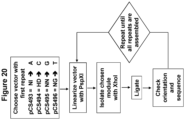
- a method for generating a nucleic acid encoding a TAL effector specific for a selected nucleotide sequence comprising: (1) linearizing a starter plasmid with PspXI, the starter plasmid comprising a nucleotide sequence that encodes a first TAL effector DNA binding repeat domain having a repeat variable-diresidue (RVD) specific for the first nucleotide of the selected nucleotide sequence, wherein the first TAL effector DNA binding repeat domain has a unique Psp XI site at its 3' end; (2) ligating into the starter plasmid PspXI site a DNA module encoding one or more TAL effector DNA binding repeat domains that have RVDs specific for the next nucleotide(s) of the selected nucleotide sequence, wherein the DNA module has XhoI sticky ends; and (3) repeating steps (1) and (2) until the nucleic acid encodes a
- a method for generating a nucleic acid encoding a transcription activator-like effector endonuclease comprising (a) identifying a first nucleotide sequence in the genome of a cell; and (b) synthesizing a nucleic acid encoding a TALEN that comprises (i) a plurality of DNA binding repeats that, in combination, bind to the first unique nucleotide sequence, and (ii) an endonuclease that generates a double-stranded cut at a position within or adjacent to the first nucleotide sequence, wherein each DNA binding repeat comprises a RVD that determines recognition of a base pair in the target DNA, wherein each DNA binding repeat is responsible for recognizing one base pair in the target DNA, and wherein the TALEN comprises one or more of the following RVDs: HD for recognizing C; NG for recognizing T; NI for recognizing A; NN for recognizing G or
- the TALEN can comprises one or more of the following RVDs: HA for recognizing C; ND for recognizing C; HI for recognizing C; HN for recognizing G; NA for recognizing G; SN for recognizing G or A; YG for recognizing T; and NK for recognizing G, and one or more of: HD for recognizing C; NG for recognizing T; NI for recognizing A; NN for recognizing G or A; NS for recognizing A or C or G or T; N* for recognizing C or T; HG for recognizing T; H* for recognizing T; and IG for recognizing T.
- the first nucleotide sequence can meet at least one of the following criteria: i) is a minimum of 15 bases long and is oriented from 5' to 3' with a T immediately preceding the site at the 5' end; ii) does not have a T in the first (5') position or an A in the second position; iii) ends in T at the last (3') position and does not have a G at the next to last position; and iv) has a base composition of 0-63% A, 11-63% C, 0-25% G, and 2-42% T.
- the method can comprise identifying a first nucleotide sequence and a second nucleotide sequence in the genome of the cell, wherein the first and second nucleotide sequences meet at least one of the criteria set forth above and are separated by 15-18 bp.
- the endonuclease can generate a double-stranded cut between the first and second nucleotide sequences.
- a TALEN comprising an endonuclease domain and a TAL effector DNA binding domain specific for a target DNA
- the DNA binding domain comprises a plurality of DNA binding repeats, each repeat comprising a RVD that determines recognition of a base pair in the target DNA, wherein each DNA binding repeat is responsible for recognizing one base pair in the target DNA
- the TALEN comprises one or more of the following RVDs: HD for recognizing C; NG for recognizing T; NI for recognizing A; NN for recognizing G or A; NS for recognizing A or C or G or T; N* for recognizing C or T; HG for recognizing T; H* for recognizing T; IG for recognizing T; NK for recognizing G; HA for recognizing C; ND for recognizing C; HI for recognizing C; HN for recognizing G; NA for recognizing G; SN for recognizing G or A; and YG for recognizing T.
- the TALEN can comprise one or more of the following RVDs: HA for recognizing C; ND for recognizing C; HI for recognizing C; HN for recognizing G; NA for recognizing G; SN for recognizing G or A; YG for recognizing T; and NK for recognizing G, and one or more of: HD for recognizing C; NG for recognizing T; NI for recognizing A; NN for recognizing G or A; NS for recognizing A or C or G or T; N* for recognizing C or T; HG for recognizing T; H* for recognizing T; and IG for recognizing T.
- the endonuclease domain can be from a type II restriction endonuclease (e.g., FokI).
- TALEN comprising an endonuclease domain and a TAL effector domain, wherein the amino acid sequence of said TALEN is selected from the group consisting of SEQ ID NO:33 to SEQ ID NO:55, SEQ ID NO:72, and SEQ ID NO:73.
- Disclosed but not part of the invention is a method for generating an animal, comprising: providing a eukaryotic cell comprising a target DNA sequence into which it is desired to introduce a genetic modification; generating a double-stranded cut within the target DNA sequence with a TALEN comprising an endonuclease domain and a TAL effector domain that binds to the target DNA sequence; and generating an animal from the cell or progeny thereof in which a double-stranded cut has occurred.
- the method can further comprise introducing into the cell an exogenous nucleic acid comprising a sequence homologous to at least a portion of the target DNA, wherein the introducing is under conditions that permit homologous recombination to occur between the exogenous nucleic acid and the target DNA sequence in the cell or progeny thereof; and generating an animal from the cell or progeny thereof in which homologous recombination has occurred.
- the animal can be a mammal.
- the genetic modification can comprise a substitution, an insertion, or a deletion.
- a method for generating a plant comprising providing a plant cell comprising a target DNA sequence into which it is desired to introduce a preselected genetic modification; generating a double-stranded cut within the target DNA sequence with a TALEN comprising an endonuclease domain and a TAL effector domain that binds to the target DNA sequence; and generating a plant from the cell or progeny thereof in which a double-stranded cut has occurred.
- the method can further comprise introducing into the plant cell an exogenous nucleic acid comprising a sequence homologous to at least a portion of the target DNA sequence, wherein the introducing is under conditions that permit homologous recombination to occur between the exogenous nucleic acid and the target DNA sequence in the cell or progeny thereof; and generating a plant from the cell or progeny thereof in which homologous recombination has occurred.
- a method for targeted genetic recombination in a cell comprising introducing into the cell a nucleic acid encoding a TAL effector endonuclease targeted to a selected DNA target sequence; inducing expression of the TAL effector endonuclease within the cell; and identifying a cell in which the selected DNA target sequence exhibits a mutation.
- the mutation can be selected from the group consisting of deletion of genetic material, insertion of genetic material, and both deletion and insertion of genetic material.
- the method can further comprise introducing donor DNA into the cell.
- the cell can be an insect cell, a plant cell, a fish cell, or a mammalian cell.
- a method for generating a TAL effector having enhanced targeting capacity for a target DNA comprising generating a nucleic acid encoding a TAL effector that comprises DNA binding domain having a plurality of DNA binding repeats, wherein each repeat comprises a RVD that determines recognition of a base pair in the target DNA, wherein each DNA binding repeat is responsible for recognizing one base pair in the target DNA, wherein the generating comprises incorporating a nucleic acid encoding a variant 0th DNA binding repeat sequence with specificity for A, C, or G, thus eliminating the requirement for T at position -1 of the binding site.
- a method for generating a TAL effector having enhanced targeting capacity for a target DNA comprising generating a nucleic acid encoding a TAL effector that comprises DNA binding domain having a plurality of DNA binding repeats, wherein each repeat comprises a RVD that determines recognition of a base pair in the target DNA, wherein each DNA binding repeat is responsible for recognizing one base pair in the target DNA, wherein the generating comprises incorporating one or more nucleic acids encoding TAL effector DNA binding domains that contain RVDs having enhanced specificity for G, and wherein said RVDs are selected from the group consisting of RN, R*, NG, NH, KN, K*, NA, NT, DN, D*, NL, NM, EN, E*, NV, NC, QN, Q*, NR, NP, HN, H*, NK, NY, SN, S*, ND, NW, TN, T*, NE, NF,
- Disclosed but not part of the invention is a method for producing a polypeptide that selectively recognizes at least one base pair in a target DNA sequence, comprising synthesizing a polypeptide comprising a repeat domain, wherein the repeat domain comprises at least one repeat unit derived from a transcription activator-like (TAL) effector, wherein the repeat unit comprises a hypervariable region which determines recognition of a base pair in the target DNA sequence, wherein the repeat unit is responsible for the recognition of one base pair in the DNA sequence, and wherein the hypervariable region comprises a member selected from the group consisting of: (a) HD for recognition of C/G; (b) NI for recognition of A/T; (c) NG for recognition of T/A; (d) NS for recognition of C/G or A/T or T/A or G/C; (e) NN for recognition of G/C or A/T; (f) IG for recognition of T/A; (g) N for recognition of C/G; (h) HG for recognition of
- this invention features a polypeptide produced by the above method, and a DNA comprising a coding sequence for the polypeptide produced by the method. Also featured is an expression cassette comprising a promoter operably linked to the above-mentioned DNA, and a non-human host cell comprising the expression cassette. In another aspect, the present invention features a transformed, non-human organism comprising the expression cassette.
- a method for selectively recognizing a base pair in a DNA sequence by a polypeptide comprising constructing a polypeptide comprising a repeat domain, wherein the repeat domain comprises at least one repeat unit derived from a TAL effector, wherein the repeat unit comprises a hypervariable region which determines recognition of a base pair in the DNA sequence, wherein the repeat unit is responsible for the recognition of one base pair in the DNA sequence, and wherein the hypervariable region comprises a member selected from the group consisting of (a) HD for recognition of C/G; (b) NI for recognition of A/T; (c) NG for recognition of T/A; (d) NS for recognition of C/G or A/T or T/A or G/C; (e) NN for recognition of G/C or A/T; (f) IG for recognition of T/A; (g) N for recognition of C/G; (h) HG for recognition of C/G or T/A; (i)
- Disclosed but not part of the invention is a method of modulating expression of a target gene in a cell, wherein cells are provided which contain a polypeptide wherein the polypeptide comprises a repeat domain, wherein the repeat domain comprises at least one repeat unit derived from a TAL effector, wherein the repeat unit comprises a hypervariable region which determines recognition of a base pair in a DNA sequence, wherein the repeat unit is responsible for the recognition of one base pair in the DNA sequence, and wherein the hypervariable region comprises a member selected from the group consisting of (a) HD for recognition of C/G; (b) NI for recognition of A/T; (c) NG for recognition of T/A; (d) NS for recognition of C/G or A/T or T/A or G/C; (e) NN for recognition of G/C or A/T; (f) IG for recognition of T/A; (g) N for recognition of C/G; (h) HG for recognition of C/G or T/A; (i)
- a polypeptide comprising a repeat domain, wherein the repeat domain comprises at least one repeat unit derived from a TAL effector, wherein the repeat unit comprises a hypervariable region which determines recognition of a base pair in a DNA sequence, wherein the repeat unit is responsible for the recognition of one base pair in the DNA sequence, and wherein the hypervariable region comprises a member selected from the group consisting of (a) HD for recognition of C/G; (b) NI for recognition of A/T; (c) NG for recognition of T/A; (d) NS for recognition of C/G or A/T or T/A or G/C; (e) NN for recognition of G/C or A/T; (f) IG for recognition of T/A; (g) N for recognition of C/G; (h) HG for recognition of C/G or T/A; (i) H for recognition of T/A; and (j) NK for recognition of G/C.
- the present invention also features a
- a DNA which is modified to include a base pair located in a target DNA sequence so that the base pair can be specifically recognized by a polypeptide comprising a repeat domain, wherein the repeat domain comprises at least one repeat unit derived from a TAL effector, wherein the repeat unit comprises a hypervariable region which determines recognition of a base pair in the DNA sequence, wherein the repeat unit is responsible for the recognition of one base pair in the DNA sequence, and wherein, to receive a selective and determined recognition by the hypervariable region, the base pair is selected from the group consisting of (a) C/G for recognition by HD; (b) A/T for recognition by NI; (c) T/A for recognition by NG; (d) CT or A/T or T/A or G/C for recognition by NS; (e) G/C or A/T for recognition by NN; (f) T/A for recognition by IG; (g) C/G or T/A for recognition by N; (h) T/A
- the method comprising synthesizing a DNA comprising a base pair that is capable of being recognized by the repeat unit, wherein the base pair is selected from the group consisting of (a) C/G for recognition by HD; (b) A/T for recognition by NI; (c) T/A for recognition by NG; (d) CT or A/T or T/A or G/C for recognition by NS; (e) G/C or A/T for recognition by NN; (f) T/A for recognition by IG; (g) C/G or T/A for recognition by N
- a method for modifying the genetic material of a plant cell can include (a) introducing into the plant cell (i) a first recombinant nucleic acid comprising a modified target nucleotide sequence, wherein the modified target nucleotide sequence comprises one or more modifications in nucleotide sequence with respect to a corresponding target nucleotide sequence present in the plant cell, and wherein the target nucleotide sequence further comprises a recognition site for a sequence-specific TAL effector endonuclease (TALEN); and (ii) a second recombinant nucleic acid comprising a nucleotide sequence encoding the sequence-specific transcription activator-like (TAL) effector endonuclease; (b) generating a plant containing the plant cell; (c) analyzing cells, seed, or tissue obtained from the plant, or progeny thereof, for recombination at the target nucleotide sequence.
- TALEN sequence-specific TAL effector endonucle
- the method can further include introducing into the plant cell (iii) a third recombinant nucleic acid comprising a nucleotide sequence encoding a selectable marker; and determining if the plant or progeny thereof expresses the selectable marker.
- the method can further include the step of screening the plant or progeny thereof for the absence of the selectable marker.
- the nucleotide sequence encoding the selectable marker may or may not be flanked on one or both sides by a sequence that is similar or identical to a sequence that is endogenous to the plant cell (e.g., a sequence at the site of cleavage for a second sequence-specific nuclease).
- the nucleotide sequence encoding the selectable marker may be flanked on both sides by recognition sites for a sequence-specific recombinase.
- the method can further include the step of out-crossing the plant, with or without the step of screening progeny of the out-cross for the absence of the selectable marker.
- the first and second recombinant nucleic acids can be simultaneously introduced into the plant cell.
- One or both of the recombinant nucleic acids can be linearized prior to the introducing step.
- the first and second recombinant nucleic acids may be present in the same construct.
- the method can include providing a primary cell containing chromosomal target DNA sequence in which it is desired to have homologous recombination occur; providing a TALEN comprising an endonuclease domain that can cleave double stranded DNA, and a TAL effector domain comprising a plurality of TAL effector repeat sequences that, in combination, bind to a specific nucleotide sequence within the target DNA in the cell; and contacting the target DNA sequence with the TALEN in the cell such that the TALEN cleaves both strands of a nucleotide sequence within or adjacent to the target DNA sequence in the cell.
- the method can further include providing a nucleic acid comprising a sequence homologous to at least a portion of the target DNA, such that homologous recombination occurs between the target DNA sequence and the nucleic acid.
- the target DNA sequence can be endogenous to the cell.
- the cell can be a plant cell, a mammalian cell, a fish cell, an insect cell or cell lines derived from these organisms for in vitro cultures or primary cells taken directly from living tissue and established for in vitro culture.
- the contacting can include transfecting the cell with a vector comprising a TALEN coding sequence, and expressing the TALEN protein in the cell, mechanically injecting a TALEN protein into the cell, delivering a TAL effector endonuclease protein into the cell by means of the bacterial type III secretion system, or introducing a TALEN protein into the cell by electroporation.
- the endonuclease domain can be from a type II restriction endonuclease (e.g., FokI).
- the TAL effector domain that binds to a specific nucleotide sequence within the target DNA can include 10 or more DNA binding repeats, more preferably 15 or more DNA binding repeats.
- the cell can be from any prokaryotic or eukaryotic organism.
- the present invention features a method for designing a sequence specific TALEN capable of cleaving DNA at a specific location.
- the method can include identifying a first unique endogenous chromosomal nucleotide sequence adjacent to a second nucleotide sequence at which it is desired to introduce a double-stranded cut; and designing a sequence specific TALEN comprising (a) a plurality of DNA binding repeat domains that, in combination, bind to the first unique endogenous chromosomal nucleotide sequence, and (b) an endonuclease that generates a double-stranded cut at the second nucleotide sequence.
- a TALEN comprising an endonuclease domain and a TAL effector DNA binding domain specific for a particular DNA sequence.
- the TALEN can further include a purification tag.
- the endonuclease domain can be from a type II restriction endonuclease (e.g., FokI).
- a method for generating a genetically modified animal into which a desired nucleic acid has been introduced can include providing a primary cell comprising an endogenous chromosomal target DNA sequence into which it is desired to introduce the nucleic acid; generating a double-stranded cut within the endogenous chromosomal target DNA sequence with a TALEN comprising an endonuclease domain and a TAL effector domain that binds to the endogenous chromosomal target DNA sequence; introducing an exogenous nucleic acid comprising a sequence homologous to at least a portion of the endogenous chromosomal target DNA into the primary cell under conditions that permit homologous recombination to occur between the exogenous nucleic acid and the endogenous chromosomal target DNA; and generating an animal from the primary cell in which homologous recombination has occurred.
- the animal can be a mammal.
- the homologous sequence can be a nucleotide sequence selected from the group consisting of a nucleotide sequence that disrupts a gene after homologous recombination, a nucleotide sequence that replaces a gene after homologous recombination, a nucleotide sequence that introduces a point mutation into a gene after homologous recombination, and a nucleotide sequence that introduces a regulatory site after homologous recombination.
- a method for generating a genetically modified plant in which a desired nucleic acid has been introduced can include providing a plant cell comprising an endogenous target DNA sequence into which it is desired to introduce the nucleic acid; generating a double-stranded cut within the endogenous target DNA sequence with a TALEN comprising an endonuclease domain and a TAL effector domain that binds to the endogenous target nucleotide sequence; introducing an exogenous nucleic acid comprising a sequence homologous to at least a portion of the endogenous target DNA into the plant cell under conditions that permit homologous recombination to occur between the exogenous nucleic acid and the endogenous target DNA; and generating a plant from the plant cell in which homologous recombination has occurred.
- a method for targeted genetic recombination in a cell can include introducing into the cell a nucleic acid molecule encoding a TALEN targeted to a selected DNA target sequence; inducing expression of the TALEN within the cell; and identifying a cell in which the selected DNA target sequence exhibits a mutation.
- the mutation can be selected from the group consisting of a deletion of genetic material, an insertion of genetic material, and both a deletion and an insertion of genetic material.
- the method can further include introducing donor DNA into the cell.
- the cell can be an insect cell, a plant cell, a fish cell, or a mammalian cell.
- a method for generating a nucleic acid encoding a sequence specific TALEN comprising (1) selecting a starter plasmid comprising a nucleotide sequence that encodes a first TAL effector DNA binding repeat domain having a RVD specific for the first nucleotide of a selected nucleotide sequence, wherein the first TAL effector DNA binding repeat domain has a unique PspX I site at its 3' end; (2) linearizing the starter plasmid with PspX I; (3) ligating into the PspX I site a DNA module encoding one or more TAL effector DNA binding repeat domains that have RVDs specific for the next nucleotide(s) of the selected nucleotide sequence, wherein the DNA module has XhoI sticky ends; and (4) repeating steps (2) and (3) until the nucleic acid encodes a TALEN capable of binding to the selected nucleotide sequence.
- the method can further
- the present patent application provides materials and methods related to sequence specific DNA recognition mediated by TAL effectors.
- the primary amino acid sequences of TAL effectors dictate the nucleotide sequences to which they bind.
- the inventors have found that relationships between TAL effector amino acid sequences and their DNA target sequences are direct, enabling target site prediction for TAL effectors, and also allowing for TAL effector customization to bind to particular nucleotide sequences. Such prediction and customization can be harnessed for a variety of purposes.
- particular TAL effector sequences can be fused to endonuclease sequences, allowing for endonuclease targeting to specific DNA sequences, and subsequent cutting of the DNA at or near the targeted sequences.
- Cuts i.e., double-stranded breaks
- TALENs can be used to facilitate site directed mutagenesis in complex genomes, that is, to knock out or alter gene function, or to add genes or other sequences with great precision and high efficiency.
- a cell e.g., a eukaryotic cell
- a cell can be transformed with a first recombinant nucleic acid construct containing a donor nucleotide sequence that includes alterations relative to a corresponding target nucleotide sequence found within the cell, and a second recombinant nucleic acid construct encoding a TAL-nuclease.
- the cell also can be transformed with a third recombinant nucleic acid construct encoding a selectable marker.
- a nucleic acid sequence from the donor nucleic acid construct can become incorporated into the genome of the transformed cell as described herein.
- plant cells produced using methods as described herein can be grown to produce plants having the altered donor nucleotide sequence incorporated into their genomes.
- Seeds from such plants can be used to produce plants having a phenotype such as, for example, an altered growth characteristic (e.g., increased resistance or tolerance to various biotic and abiotic stresses), altered appearance (e.g., altered color or height), or altered composition (e.g., increased or decreased levels of carbon, nitrogen, oil, protein, carbohydrate (e.g., sugar or starch), amino acid, fatty acid, or secondary metabolites) with respect to unmodified plants.
- an altered growth characteristic e.g., increased resistance or tolerance to various biotic and abiotic stresses
- altered appearance e.g., altered color or height
- altered composition e.g., increased or decreased levels of carbon, nitrogen, oil, protein, carbohydrate (e.g., sugar or starch), amino acid, fatty acid, or secondary metabolites
- nucleic acid and polynucleotide are used interchangeably, and refer to both RNA and DNA, including cDNA, genomic DNA, synthetic (e.g., chemically synthesized) DNA, and DNA (or RNA) containing nucleic acid analogs.
- Polynucleotides can have any three-dimensional structure.
- a nucleic acid can be double-stranded or single-stranded (i.e., a sense strand or an antisense single strand).
- Non-limiting examples of polynucleotides include genes, gene fragments, exons, introns, messenger RNA (mRNA), transfer RNA, ribosomal RNA, ribozymes, cDNA, recombinant polynucleotides, branched polynucleotides, plasmids, vectors, isolated DNA of any sequence, isolated RNA of any sequence, nucleic acid probes, and primers, as well as nucleic acid analogs.
- mRNA messenger RNA
- transfer RNA transfer RNA
- ribosomal RNA ribozymes
- cDNA recombinant polynucleotides
- branched polynucleotides branched polynucleotides
- plasmids vectors, isolated DNA of any sequence, isolated RNA of any sequence, nucleic acid probes, and primers, as well as nucleic acid analogs.
- polypeptides (such as TAL effector-DNA modifying enzyme as non-limiting example) can be introduced in a cell by using a vector encoding said polypeptides for example or as polypeptides per se by using delivery vectors associated or combined with any cellular permeabilization techniques such as sonoporation or electroporation or derivatives of these techniques.
- isolated when in reference to a nucleic acid, refers to a nucleic acid that is separated from other nucleic acids that are present in a genome, e.g., a plant genome, including nucleic acids that normally flank one or both sides of the nucleic acid in the genome.
- isolated as used herein with respect to nucleic acids also includes any non-naturally-occurring sequence, since such non-naturally-occurring sequences are not found in nature and do not have immediately contiguous sequences in a naturally-occurring genome.
- an isolated nucleic acid can be, for example, a DNA molecule, provided one of the nucleic acid sequences normally found immediately flanking that DNA molecule in a naturally-occurring genome is removed or absent.
- an isolated nucleic acid includes, without limitation, a DNA molecule that exists as a separate molecule (e.g., a chemically synthesized nucleic acid, or a cDNA or genomic DNA fragment produced by PCR or restriction endonuclease treatment) independent of other sequences, as well as DNA that is incorporated into a vector, an autonomously replicating plasmid, a virus (e.g., a pararetrovirus, a retrovirus, lentivirus, adenovirus, or herpes virus), or the genomic DNA of a prokaryote or eukaryote.
- a virus e.g., a pararetrovirus, a retrovirus, lentivirus, adenovirus, or herpes virus
- an isolated nucleic acid can include a recombinant nucleic acid such as a DNA molecule that is part of a hybrid or fusion nucleic acid.
- a nucleic acid can be made by, for example, chemical synthesis or polymerase chain reaction (PCR).
- PCR refers to a procedure or technique in which target nucleic acids are amplified. PCR can be used to amplify specific sequences from DNA as well as RNA, including sequences from total genomic DNA or total cellular RNA.
- Various PCR methods are described, for example, in PCR Primer: A Laboratory Manual, Dieffenbach and Dveksler, eds., Cold Spring Harbor Laboratory Press, 1995 .
- sequence information from the ends of the region of interest or beyond is employed to design oligonucleotide primers that are identical or similar in sequence to opposite strands of the template to be amplified.
- Various PCR strategies also are available by which site-specific nucleotide sequence modifications can be introduced into a template nucleic acid.
- Isolated nucleic acids also can be obtained by mutagenesis.
- a donor nucleic acid sequence can be mutated using standard techniques, including oligonucleotide-directed mutagenesis and site-directed mutagenesis through PCR. See, Short Protocols in Molecular Biology, Chapter 8, Green Publishing Associates and John Wiley & Sons, edited by Ausubel et al., 1992 .
- polypeptide refers to a compound of two or more subunit amino acids regardless of post-translational modification (e.g., phosphorylation or glycosylation).
- the subunits may be linked by peptide bonds or other bonds such as, for example, ester or ether bonds.
- amino acid refers to either natural and/or unnatural or synthetic amino acids, including D/L optical isomers.
- isolated or “purified” with respect to a polypeptide it is meant that the polypeptide is separated to some extent from the cellular components with which it is normally found in nature (e.g., other polypeptides, lipids, carbohydrates, and nucleic acids).
- An purified polypeptide can yield a single major band on a non-reducing polyacrylamide gel.
- a purified polypeptide can be at least about 75% pure (e.g., at least 80%, 85%, 90%, 95%, 97%, 98%, 99%, or 100% pure).
- Purified polypeptides can be obtained by, for example, extraction from a natural source, by chemical synthesis, or by recombinant production in a host cell or transgenic plant, and can be purified using, for example, affinity chromatography, immunoprecipitation, size exclusion chromatography, and ion exchange chromatography.
- affinity chromatography immunoprecipitation
- size exclusion chromatography size exclusion chromatography
- ion exchange chromatography ion exchange chromatography.
- the extent of purification can be measured using any appropriate method, including, without limitation, column chromatography, polyacrylamide gel electrophoresis, or high-performance liquid chromatography.
- a "vector” is a replicon, such as a plasmid, phage, or cosmid, into which another DNA segment may be inserted so as to bring about the replication of the inserted segment.
- a vector is capable of replication when associated with the proper control elements.
- Suitable vector backbones include, for example, those routinely used in the art such as plasmids, viruses, artificial chromosomes, BACs, YACs, or PACs.
- the term "vector” includes cloning and expression vectors, as well as viral vectors and integrating vectors.
- an "expression vector” is a vector that includes one or more expression control sequences
- an "expression control sequence” is a DNA sequence that controls and regulates the transcription and/or translation of another DNA sequence.
- Suitable expression vectors include, without limitation, plasmids and viral vectors derived from, for example, bacteriophage, baculoviruses, tobacco mosaic virus, herpes viruses, cytomegalovirus, retroviruses, vaccinia viruses, adenoviruses, and adeno-associated viruses.
- regulatory region refers to nucleotide sequences that influence transcription or translation initiation and rate, and stability and/or mobility of the transcript or polypeptide product.
- Regulatory regions include, without limitation, promoter sequences, enhancer sequences, response elements, protein recognition sites, inducible elements, promoter control elements, protein binding sequences, 5' and 3' untranslated regions (UTRs), transcriptional start sites, termination sequences, polyadenylation sequences, introns, and other regulatory regions that can reside within coding sequences, such as secretory signals, Nuclear Localization Sequences (NLS) and protease cleavage sites.
- NLS Nuclear Localization Sequences
- operably linked means incorporated into a genetic construct so that expression control sequences effectively control expression of a coding sequence of interest.
- a coding sequence is “operably linked” and “under the control” of expression control sequences in a cell when RNA polymerase is able to transcribe the coding sequence into RNA, which if an mRNA, then can be translated into the protein encoded by the coding sequence.
- a regulatory region can modulate, e.g., regulate, facilitate or drive, transcription in the plant cell, plant, or plant tissue in which it is desired to express a modified target nucleic acid.
- a promoter is an expression control sequence composed of a region of a DNA molecule, typically within 100 nucleotides upstream of the point at which transcription starts (generally near the initiation site for RNA polymerase II). Promoters are involved in recognition and binding of RNA polymerase and other proteins to initiate and modulate transcription. To bring a coding sequence under the control of a promoter, it typically is necessary to position the translation initiation site of the translational reading frame of the polypeptide between one and about fifty nucleotides downstream of the promoter. A promoter can, however, be positioned as much as about 5,000 nucleotides upstream of the translation start site, or about 2,000 nucleotides upstream of the transcription start site.
- a promoter typically comprises at least a core (basal) promoter.
- a promoter also may include at least one control element such as an upstream element.
- Such elements include upstream activation regions (UARs) and, optionally, other DNA sequences that affect transcription of a polynucleotide such as a synthetic upstream element.
- UARs upstream activation regions
- promoters The choice of promoters to be included depends upon several factors, including, but not limited to, efficiency, selectability, inducibility, desired expression level, and cell or tissue specificity. For example, tissue-, organ- and cell-specific promoters that confer transcription only or predominantly in a particular tissue, organ, and cell type, respectively, can be used. In some embodiments, promoters specific to vegetative tissues such as the stem, parenchyma, ground meristem, vascular bundle, cambium, phloem, cortex, shoot apical meristem, lateral shoot meristem, root apical meristem, lateral root meristem, leaf primordium, leaf mesophyll, or leaf epidermis can be suitable regulatory regions.
- vegetative tissues such as the stem, parenchyma, ground meristem, vascular bundle, cambium, phloem, cortex, shoot apical meristem, lateral shoot meristem, root apical
- seed-preferential promoters can be useful.
- Seed-specific promoters can promote transcription of an operably linked nucleic acid in endosperm and cotyledon tissue during seed development.
- constitutive promoters can promote transcription of an operably linked nucleic acid in most or all tissues of a plant, throughout plant development.
- Other classes of promoters include, but are not limited to, inducible promoters, such as promoters that confer transcription in response to external stimuli such as chemical agents, developmental stimuli, or environmental stimuli.
- Basal promoter is the minimal sequence necessary for assembly of a transcription complex required for transcription initiation.
- Basal promoters frequently include a "TATA box” element that may be located between about 15 and about 35 nucleotides upstream from the site of transcription initiation.
- Basal promoters also may include a "CCAAT box” element (typically the sequence CCAAT) and/or a GGGCG sequence, which can be located between about 40 and about 200 nucleotides, typically about 60 to about 120 nucleotides, upstream from the transcription start site.
- Non-limiting examples of promoters that can be included in the nucleic acid constructs provided herein include the cauliflower mosaic virus (CaMV) 35S transcription initiation region, the 1' or 2' promoters derived from T-DNA of Agrobacterium tumefaciens , promoters from a maize leaf-specific gene described by Busk ((1997) Plant J. 11:1285-1295 ), kn1-related genes from maize and other species, and transcription initiation regions from various plant genes such as the maize ubiquitin-1 promoter.
- CaMV cauliflower mosaic virus
- 1' or 2' promoters derived from T-DNA of Agrobacterium tumefaciens promoters from a maize leaf-specific gene described by Busk ((1997) Plant J. 11:1285-1295 )
- kn1-related genes from maize and other species
- transcription initiation regions from various plant genes such as the maize ubiquitin-1 promoter.
- a 5' untranslated region is transcribed, but is not translated, and lies between the start site of the transcript and the translation initiation codon and may include the +1 nucleotide.
- a 3' UTR can be positioned between the translation termination codon and the end of the transcript. UTRs can have particular functions such as increasing mRNA message stability or translation attenuation. Examples of 3' UTRs include, but are not limited to polyadenylation signals and transcription termination sequences.
- a polyadenylation region at the 3'-end of a coding region can also be operably linked to a coding sequence. The polyadenylation region can be derived from the natural gene, from various other plant genes, or from an Agrobacterium T-DNA.
- an expression vector can include, for example, origins of replication, and/or scaffold attachment regions (SARs).
- an expression vector can include a tag sequence designed to facilitate manipulation or detection (e.g., purification or localization) of the expressed polypeptide.
- Tag sequences such as green fluorescent protein (GFP), glutathione S-transferase (GST), polyhistidine, c-myc, hemagglutinin, or Flag TM tag (Kodak, New Haven, CT) sequences typically are expressed as a fusion with the encoded polypeptide.
- GFP green fluorescent protein
- GST glutathione S-transferase
- polyhistidine polyhistidine
- c-myc hemagglutinin
- hemagglutinin or Flag TM tag (Kodak, New Haven, CT) sequences typically are expressed as a fusion with the encoded polypeptide.
- Flag TM tag Kodak, New Haven, CT sequences typically are expressed as a
- delivery vector or “ delivery vectors” is intended any delivery vector which can be used in the present invention to put into cell contact or deliver inside cells or subcellular compartments agents/chemicals and molecules (proteins or nucleic acids) needed in the present invention. It includes, but is not limited to liposomal delivery vectors, viral delivery vectors, drug delivery vectors, chemical carriers, polymeric carriers, lipoplexes, polyplexes, dendrimers, microbubbles (ultrasound contrast agents), nanoparticles, emulsions or other appropriate transfer vectors. These delivery vectors allow delivery of molecules, chemicals, macromolecules (genes, proteins), or other vectors such as plasmids, peptides developed by Diatos. In these cases, delivery vectors are molecule carriers. By “delivery vector” or “delivery vectors” is also intended delivery methods to perform transfection.
- Viral vectors include retrovirus, adenovirus, parvovirus (e. g. adenoassociated viruses), coronavirus, negative strand RNA viruses such as orthomyxovirus (e. g., influenza virus), rhabdovirus (e. g., rabies and vesicular stomatitis virus), paramyxovirus (e. g. measles and Sendai), positive strand RNA viruses such as picornavirus and alphavirus, and double-stranded DNA viruses including adenovirus, herpesvirus (e. g., Herpes Simplex virus types 1 and 2, Epstein-Barr virus, cytomegalovirus), and poxvirus (e.
- orthomyxovirus e. g., influenza virus
- rhabdovirus e. g., rabies and vesicular stomatitis virus
- paramyxovirus e. g. measles and Sendai
- viruses include Norwalk virus, togavirus, flavivirus, reoviruses, papovavirus, hepadnavirus, and hepatitis virus, for example.
- retroviruses include: avian leukosis-sarcoma, mammalian C-type, B-type viruses, D type viruses, HTLV-BLV group, lentivirus, spumavirus ( Coffin, J. M., Retroviridae: The viruses and their replication, In Fundamental Virology, Third Edition, B. N. Fields, et al., Eds., Lippincott-Raven Publishers, Philadelphia, 1996 ).
- One type of preferred vector is an episome, i.e., a nucleic acid capable of extra-chromosomal replication.
- Preferred vectors are those capable of autonomous replication and/or expression of nucleic acids to which they are linked.
- Vectors capable of directing the expression of genes to which they are operatively linked are referred to herein as "expression vectors.
- a vector comprises, but is not limited to, a YAC (yeast artificial chromosome), a BAC (bacterial artificial), a baculovirus vector, a phage, a phagemid, a cosmid, a viral vector, a plasmid, a RNA vector or a linear or circular DNA or RNA molecule which may consist of chromosomal, non chromosomal, semi-synthetic or synthetic DNA.
- expression vectors of utility in recombinant DNA techniques are often in the form of "plasmids" which refer generally to circular double stranded DNA loops which, in their vector form are not bound to the chromosome. Large numbers of suitable vectors are known to those of skill in the art.
- Vectors can comprise selectable markers, for example: neomycin phosphotransferase, histidinol dehydrogenase, dihydrofolate reductase, hygromycin phosphotransferase, herpes simplex virus thymidine kinase, adenosine deaminase, glutamine synthetase, and hypoxanthine-guanine phosphoribosyl transferase for eukaryotic cell culture; TRP1 for S. cerevisiae ; tetracyclin, rifampicin or ampicillin resistance in E. coli.
- selectable markers for example: neomycin phosphotransferase, histidinol dehydrogenase, dihydrofolate reductase, hygromycin phosphotransferase, herpes simplex virus thymidine kinase, adenosine deaminase,
- said vectors are expression vectors, wherein a sequence encoding a polypeptide of interest is placed under control of appropriate transcriptional and translational control elements to permit production or synthesis of said polypeptide. Therefore, said polynucleotide is comprised in an expression cassette. More particularly, the vector comprises a replication origin, a promoter operatively linked to said encoding polynucleotide, a ribosome binding site, a RNA-splicing site (when genomic DNA is used), a polyadenylation site and a transcription termination site. It also can comprise an enhancer or silencer elements. Selection of the promoter will depend upon the cell in which the polypeptide is expressed. Suitable promoters include tissue specific and/or inducible promoters.
- inducible promoters are: eukaryotic metallothionine promoter which is induced by increased levels of heavy metals, prokaryotic lacZ promoter which is induced in response to isopropyl- ⁇ -D-thiogalacto-pyranoside (IPTG) and eukaryotic heat shock promoter which is induced by increased temperature.
- tissue specific promoters are skeletal muscle creatine kinase, prostate-specific antigen (PSA), ⁇ -antitrypsin protease, human surfactant (SP) A and B proteins, ⁇ -casein and acidic whey protein genes.
- Inducible promoters may be induced by pathogens or stress, more preferably by stress like cold, heat, UV light, or high ionic concentrations (reviewed in Potenza et al. (2004) In vitro Cell Dev Biol 40:1-22 ). Inducible promoter may be induced by chemicals [reviewed in Moore et al. (2006); Padidam (2003); (Wang et al. (2003); and (Zuo and Chua (2000)].
- Delivery vectors and vectors can be associated or combined with any cellular permeabilization techniques such as sonoporation or electroporation or derivatives of these techniques.
- telomeres may be present in a recombinant polynucleotide, e.g., introns, enhancers, upstream activation regions, and inducible elements.
- Recombinant nucleic acid constructs can include a polynucleotide sequence inserted into a vector suitable for transformation of cells (e.g., plant cells or animal cells).
- Recombinant vectors can be made using, for example, standard recombinant DNA techniques (see , e.g., Sambrook et al. (1989) Molecular Cloning: A Laboratory Manual, 2nd ed., Cold Spring Harbor Laboratory, Cold Spring Harbor, NY ).
- a recombinant nucleic acid sequence as described herein can integrate into the genome of a cell via illegitimate (i.e., random, non-homologous, non site-specific) recombination, or a recombinant nucleic acid sequence as described herein can be adapted to integrate into the genome of a cell via homologous recombination.
- Nucleic acid sequences adapted for integration via homologous recombination are flanked on both sides with sequences that are similar or identical to endogenous target nucleotide sequences, which facilitates integration of the recombinant nucleic acid at the particular site(s) in the genome containing the endogenous target nucleotide sequences.
- Nucleic acid sequences adapted for integration via homologous recombination also can include a recognition site for a sequence-specific nuclease.
- the recognition site for a sequence-specific nuclease can be located in the genome of the cell to be transformed.
- Donor nucleic acid sequences as described below typically are adapted for integration via homologous recombination.
- a nucleic acid encoding a selectable marker also can be adapted to integrate via homologous recombination, and thus can be flanked on both sides with sequences that are similar or identical to endogenous sequences within the plant genome (e.g., endogenous sequences at the site of cleavage for a sequence-specific nuclease).
- nucleic acid containing coding sequence for a selectable marker also can include a recognition site for a sequence-specific nuclease.
- the recognition site for the sequence-specific nuclease can be the same as or different from that contained within the donor nucleic acid sequence (i.e., can be recognized by the same nuclease as the donor nucleic acid sequence, or recognized by a different nuclease than the donor nucleic acid sequence).
- a recombinant nucleic acid sequence can be adapted to integrate into the genome of a cell via site-specific recombination.
- site-specific recombination refers to recombination that occurs when a nucleic acid sequence is targeted to a particular site(s) within a genome not by homology between sequences in the recombinant nucleic acid and sequences in the genome, but rather by the action of recombinase enzymes that recognize specific nucleic acid sequences and catalyze the reciprocal exchange of DNA strands between these sites.
- Site-specific recombination thus refers to the enzyme-mediated cleavage and ligation of two defined nucleotide sequences.
- a nucleic acid encoding a recombinase enzyme may be introduced into a cell in addition to a donor nucleotide sequence and a nuclease-encoding sequence, and in some cases, a selectable marker sequence. See, e.g., U.S. Patent No. 4,959,317 .
- sequence-specific nucleases and recombinant nucleic acids encoding the sequence-specific endonucleases are provided herein.
- the sequence-specific endonucleases can include TAL effector DNA binding domains and endonuclease domains.
- nucleic acids encoding such sequence-specific endonucleases can include a nucleotide sequence from a sequence-specific TAL effector linked to a nucleotide sequence from a nuclease.
- TAL effectors are proteins of plant pathogenic bacteria that are injected by the pathogen into the plant cell, where they travel to the nucleus and function as transcription factors to turn on specific plant genes.
- the primary amino acid sequence of a TAL effector dictates the nucleotide sequence to which it binds.
- target sites can be predicted for TAL effectors, and TAL effectors also can be engineered and generated for the purpose of binding to particular nucleotide sequences, as described herein.
- Fused to the TAL effector-encoding nucleic acid sequences are sequences encoding a nuclease or a portion of a nuclease, typically a nonspecific cleavage domain from a type II restriction endonuclease such as FokI ( Kim et al. (1996) Proc. Natl. Acad. Sci. USA 93:1156-1160 ).
- Other useful endonucleases may include, for example, Hha I, Hind III, Not I, BbvC I, EcoR I, Bgl I, and Alw I. The fact that some endonucleases (e.g., FokI) only function as dimers can be capitalized upon to enhance the target specificity of the TAL effector.
- each FokI monomer can be fused to a TAL effector sequence that recognizes a different DNA target sequence, and only when the two recognition sites are in close proximity do the inactive monomers come together to create a functional enzyme.
- a highly site-specific restriction enzyme can be created.
- a sequence-specific TALEN as provided herein can recognize a particular sequence within a preselected target nucleotide sequence present in a cell.
- a target nucleotide sequence can be scanned for nuclease recognition sites, and a particular nuclease can be selected based on the target sequence.
- a TALEN can be engineered to target a particular cellular sequence.
- a nucleotide sequence encoding the desired TALEN can be inserted into any suitable expression vector, and can be linked to one or more expression control sequences.
- a nuclease coding sequence can be operably linked to a promoter sequence that will lead to constitutive expression of the endonuclease in the species of plant to be transformed.
- an endonuclease coding sequence can be operably linked to a promoter sequence that will lead to conditional expression (e.g., expression under certain nutritional conditions).
- a cauliflower mosaic virus 35S promoter can be used for constitutive expression.
- Other constitutive promoters include, without limitation, the nopaline synthase promoter, the ubiquitin promoter, and the actin promoter.
- an artificial estrogen-induced promoter for can be used conditional expression, and high levels of transcription can be achieved when a plant is exposed to estrogen.
- Other conditional promoters that can be used include, for example, heat-inducible heat shock gene promoters, and light-regulated promoters such as that from the gene encoding the large subunit of ribulose bisphosphate carboxylase.
- the TAL effector-DNA modifying enzyme and a pharmaceutically acceptable excipient are administered in a therapeutically effective amount.
- Such a combination is said to be administered in a "therapeutically effective amount” if the amount administered is physiologically significant.
- An agent is physiologically significant if its presence results in a detectable change in the physiology of the recipient.
- an agent is physiologically significant if its presence results in a decrease in the severity of one or more symptoms of the targeted disease and in a genome correction of the lesion or abnormality.
- Vectors comprising targeting DNA and/or nucleic acid encoding a TAL effector-DNA modifying enzyme can be introduced into a cell by a variety of methods (e.g., injection, direct uptake, projectile bombardment, liposomes, electroporation).
- TAL effector-DNA modifying enzymes can be stably or transiently expressed into cells using expression vectors. Techniques of expression in eukaryotic cells are well known to those in the art. (See Current Protocols in Human Genetics : Chapter 12 "Vectors For Gene Therapy” and Chapter 13 "Delivery Systems for Gene Therapy”).
- the TAL effector-DNA modifying enzyme is substantially non-immunogenic, i.e., engender little or no adverse immunological response.
- a variety of methods for ameliorating or eliminating deleterious immunological reactions of this sort can be used in accordance with the invention.
- the TAL effector-DNA modifying enzyme is substantially free of N-formyl methionine.
- Another way to avoid unwanted immunological reactions is to conjugate TAL effector-DNA modifying enzyme to polyethylene glycol (“PEG”) or polypropylene glycol (“PPG”) (preferably of 500 to 20,000 daltons average molecular weight (MW)). Conjugation with PEG or PPG, as described by Davis et al.
- a donor nucleotide sequence can include a variant sequence having one or more modifications (i.e., substitutions, deletions, or insertions) with respect to a preselected target nucleotide sequence found endogenously within the genome of a cell to be transformed (also referred to herein as a "modified target nucleotide sequence").
- the variant sequence within the donor nucleic acid typically is flanked on both sides with sequences that are similar or identical to the endogenous target nucleotide sequence within the cell.
- the flanking sequences can have any suitable length, and typically are at least 50 nucleotides in length (e.g., at least 50 nucleotides, at least 75 nucleotides, at least 100 nucleotides, at least 200 nucleotides, at least 250 nucleotides, at least 300 nucleotides, at least 500 nucleotides, at least 750 nucleotides, at least 1000 nucleotides, from about 50 to about 5000 nucleotides, from about 100 to 2500 nucleotides, from about 100 to about 1000 nucleotides, from about 100 to 500 nucleotides, from about 200 to about 500 nucleotides, or from about 250 to 400 nucleotides).
- at least 50 nucleotides in length e.g., at least 50 nucleotides, at least 75 nucleotides, at least 100 nucleotides, at least 200 nucleotides, at least 250 nucleotides, at least 300 nucleot
- a donor nucleotide sequence can be generated to target any suitable sequence within a genome.
- a donor nucleotide sequence can be targeted to a lipid biosynthetic gene, carbohydrate biosynthetic gene, seed storage protein gene, disease or pest resistance gene, stress tolerance gene, drought tolerance gene, or a gene that produces an anti-nutritional.
- the donor nucleotide sequence contains a recognition site for a sequence-specific nuclease, as described herein.
- nucleotide sequence encoding a polypeptide that results in a selectable trait can be incorporated into an expression vector containing one or more expression control sequences.
- an expression vector can include sequence encoding a selectable marker operably linked to a promoter sequence that will lead to constitutive expression in the plant cell to be transformed.
- Suitable selectable markers can include, without limitation, polypeptides conferring resistance to an antibiotic such as kanamycin, G418, bleomycin, ampicillin, or hygromycin, or an herbicide such as glufosinate, chlorosulfuron, or phosphinothricin.
- an antibiotic such as kanamycin, G418, bleomycin, ampicillin, or hygromycin
- an herbicide such as glufosinate, chlorosulfuron, or phosphinothricin.
- a selectable marker can confer resistance to an herbicide that inhibits the growing point or meristem, such as an imidazolinone or a sulfonylurea.
- an herbicide that inhibits the growing point or meristem
- Exemplary polypeptides in this category code for mutant ALS and AHAS enzymes as described, for example, in U.S. Patent Nos. 5,767,366 and 5,928,937 .
- U.S. Patent Nos. 4,761,373 and 5,013,659 are directed to plants resistant to various imidazolinone or sulfonamide herbicides.
- 4,975,374 relates to plant cells and plants containing a gene encoding a mutant glutamine synthetase (GS) resistant to inhibition by herbicides that are known to inhibit GS, e.g., phosphinothricin and methionine sulfoximine.
- GS glutamine synthetase
- U.S. Patent No. 5,162,602 discloses plants resistant to inhibition by cyclohexanedione and aryloxyphenoxypropanoic acid herbicides. The resistance is conferred by an altered acetyl coenzyme A carboxylase (ACCase).
- Polypeptides for resistance to glyphosate also are suitable for use in plants. See, for example, U.S. Patent Nos. 4,940,835 and 4,769,061 .
- U.S. Patent No. 5,554,798 discloses transgenic glyphosate resistant maize plants, in which resistance is conferred by an altered 5-enolpyruvyl-3-phosphoshikimate (EPSP) synthase.
- EPP 5-enolpyruvyl-3-phosphoshikimate
- Such polypeptides can confer resistance to glyphosate herbicidal compositions including, without limitation, glyphosate salts such as the trimethylsulphonium salt, the isopropylamine salt, the sodium salt, the potassium salt and the ammonium salt. See, e.g., U.S. Patent Nos. 6,451,735 and 6,451,732 .
- Polypeptides for resistance to phosphono compounds such as glufosinate ammonium or phosphinothricin, and pyridinoxy or phenoxy propionic acids and cyclohexones also are suitable. See, for example, European Publication No. 0 242 246 , as well as U.S. Patent Nos. 5,879,903 , 5,276,268 , and 5,561,236 .
- herbicides include those that inhibit photosynthesis, such as triazine and benzonitrile (nitrilase). See, e.g., U.S. Patent No. 4,810,648 .
- Other herbicides include 2,2-dichloropropionic acid, sethoxydim, haloxyfop, imidazolinone herbicides, sulfonylurea herbicides, triazolopyrimidine herbicides, s-triazine herbicides and bromoxynil.
- herbicides that confer resistance to a protox enzyme. See, e.g., U.S. Patent Publication No. 20010016956 and U.S. Patent No. 6,084,155 .
- a recombinant nucleic acid encoding a selectable marker can be adapted to integrate into the genome of a cell (e.g., a plant cell or an animal cell) by site-specific recombination.
- a sequence encoding a selectable marker can be flanked by recognition sequences for a recombinase such as, e.g., Cre or FLP.
- a recombinant nucleic acid encoding a selectable marker can be adapted for integration into a plant genome by homologous recombination.
- the sequence encoding the selectable marker can be flanked by sequences that are similar or identical to endogenous nucleotide sequences found within the genome of the plant cell into which the recombinant nucleic acid is to be introduced. At least one of the endogenous sequences can be at the cleavage site for a sequence-specific nuclease.
- the nucleic acid encoding the selectable marker also can contain a recognition site for a sequence-specific nuclease.
- the nuclease can be the same sequence-specific nuclease as that which is targeted to the donor nucleotide sequence, or a sequence-specific nuclease that is different from that targeted to the donor nucleotide sequence.
- a recombinant nucleic acid encoding a selectable marker can be adapted for integration into the genome of a plant cell by illegitimate recombination.
- Such nucleic acids typically lack the flanking sequences and nuclease recognition sites that are contained within nucleic acids adapted for homologous or site-specific recombination as described herein.
- One or more of the constructs provided herein can be used to transform cells and/or a DNA modifying enzyme can be introduced into cells, such that a genetically modified organism (e.g., a plant or an animal) is generated.
- a genetically modified organism e.g., a plant or an animal
- genetically modified organisms and cells containing the nucleic acids and/or polypeptdes described herein also are provided.
- a transformed cell has a recombinant nucleic acid construct integrated into its genome, i.e., can be stably transformed.
- Stably transformed cells typically retain the introduced nucleic acid sequence with each cell division.
- a construct can integrate in a homologous manner, such that a nucleotide sequence endogenous to the transformed cell is replaced by the construct, where the construct contains a sequence that corresponds to the endogenous sequence, but that contains one or more modifications with respect to the endogenous sequence. It is noted that while a plant or animal containing such a modified endogenous sequence may be termed a "genetically modified organism" (GMO) herein, the modified endogenous sequence is not considered a transgene.
- GMO networkically modified organism
- a construct also can integrate in an illegitimate manner, such that it integrates randomly into the genome of the transformed cell.
- a cell can be transiently transformed, such that the construct is not integrated into its genome.
- a plasmid vector containing a TALEN coding sequence can be introduced into a cell, such that the TALEN coding sequence is expressed but the vector is not stably integrated in the genome.
- Transiently transformed cells typically lose some or all of the introduced nucleic acid construct with each cell division, such that the introduced nucleic acid cannot be detected in daughter cells after sufficient number of cell divisions. Nevertheless, expression of the TALEN coding sequence is sufficient to achieve homologous recombination between a donor sequence and an endogenous target sequence. Both transiently transformed and stably transformed cells can be useful in the methods described herein.
- cells used in the methods described herein can constitute part or all of a whole plant. Such plants can be grown in a manner suitable for the species under consideration, either in a growth chamber, a greenhouse, or in a field. Genetically modified plants can be bred as desired for a particular purpose, e.g., to introduce a recombinant nucleic acid into other lines, to transfer a recombinant nucleic acid to other species or for further selection of other desirable traits. Alternatively, genetically modified plants can be propagated vegetatively for those species amenable to such techniques. Progeny includes descendants of a particular plant or plant line.
- Progeny of an instant plant include seeds formed on F 1 , F 2 , F 3 , F 4 , F 5 , F 6 and subsequent generation plants, or seeds formed on BC 1 , BC 2 , BC 3 , and subsequent generation plants, or seeds formed on F 1 BC 1 , F 1 BC 2 , F 1 BC 3 , and subsequent generation plants. Seeds produced by a genetically modified plant can be grown and then selfed (or outcrossed and selfed) to obtain seeds homozygous for the nucleic acid construct.
- Genetically modified cells can be grown in suspension culture, or tissue or organ culture, if desired.
- solid and/or liquid tissue culture techniques can be used.
- solid medium cells can be placed directly onto the medium or can be placed onto a filter film that is then placed in contact with the medium.
- cells can be placed onto a floatation device, e.g., a porous membrane that contacts the liquid medium.
- Solid medium typically is made from liquid medium by adding agar.
- a solid medium can be Murashige and Skoog (MS) medium containing agar and a suitable concentration of an auxin, e.g., 2,4-dichlorophenoxyacetic acid (2,4-D), and a suitable concentration of a cytokinin, e.g., kinetin.
- an auxin e.g., 2,4-dichlorophenoxyacetic acid (2,4-D)
- a cytokinin e.g., kinetin.
- a cell can be transformed with one recombinant nucleic acid construct or with a plurality (e.g., 2, 3, 4, or 5) of recombinant nucleic acid constructs. If multiple constructs are utilized, they can be transformed simultaneously or sequentially.
- Techniques for transforming a wide variety of species are known in the art.
- the polynucleotides and/or recombinant vectors described herein can be introduced into the genome of a host using any of a number of known methods, including electroporation, microinjection, and biolistic methods.
- polynucleotides or vectors can be combined with suitable T-DNA flanking regions and introduced into a conventional Agrobacterium tumefaciens host vector.
- Such Agrobacterium tumefaciens -mediated transformation techniques are well known in the art.
- Other gene transfer and transformation techniques include protoplast transformation through calcium or PEG, electroporation-mediated uptake of naked DNA, liposome-mediated transfection, electroporation, viral vector-mediated transformation, and microprojectile bombardment (see , e.g ., U.S. Patents 5,538,880 , 5,204,253 , 5,591,616 , and 6,329,571 ). If a plant cell or tissue culture is used as the recipient tissue for transformation, plants can be regenerated from transformed cultures using techniques known to those skilled in the art.
- a DNA modifying enzyme e.g., a TALEN
- a polypeptide can be introduced into a cell by mechanical injection, by delivery via a bacterial type III secretion system, by electroporation, or by Agrobacterium mediated transfer. See, e.g., Vergunst et al. (2000) Science 290:979-982 for a discussion of the Agrobacterium VirB/D4 transport system, and its use to mediate transfer of a nucleoprotein T complex into plant cells.
- the polynucleotides, vectors and polypeptides described herein can be introduced into a number of monocotyledonous and dicotyledonous plants and plant cell systems, including dicots such as safflower, alfalfa, soybean, coffee, amaranth, rapeseed (high erucic acid and canola), peanut or sunflower, as well as monocots such as oil palm, sugarcane, banana, sudangrass, corn, wheat, rye, barley, oat, rice, millet, or sorghum. Also suitable are gymnosperms such as fir and pine.
- the methods described herein can be utilized with dicotyledonous plants belonging, for example, to the orders Magniolales, Illiciales, Laurales, Piperales, Aristochiales, Nymphaeales, Ranunculales, Papeverales, Sarraceniaceae, Trochodendrales, Hamamelidales, Eucomiales, Leitneriales, Myricales, Fagales, Casuarinales, Caryophyllales, Batales, Polygonales, Plumbaginales, Dilleniales, Theales, Malvales, Urticales, Lecythidales, Violates, Salicales, Capparales, Ericales, Diapensales, Ebenales, Primulales, Rosales, Fabales, Podostemales, Haloragales, Myrtales, Cornales, Proteales, Santales, Rafflesiales, Celastrales, Euphorbiales, Rhamnales, Sapindales, Juglandales, Geraniales, Polygalales, Umbell
- the methods described herein also can be utilized with monocotyledonous plants such as those belonging to the orders Alismatales, Hydrocharitales, Najadales, Triuridales, Commelinales, Eriocaulales, Restionales, Poales, Juncales, Cyperales, Typhales, Bromeliales, Zingiberales, Arecales, Cyclanthales, Pandanales, Arales, Lilliales, and Orchidales, or with plants belonging to Gymnospermae, e.g., Pihales, Ginkgoales, Cycadales and Gnetales.
- the methods can be used over a broad range of plant species, including species from the dicot genera Atropa, Alseodaphne, Anacardium, Arachis, Beilschmiedia, Brassica, Carthamus, Cocculus, Croton, Cucumis, Citrus, Citrullus, Capsicum, Catharanthus, Cocos, Coffea, Cucurbita, Daucus, Duguetia, Eschscholzia, Ficus, Fragaria, Glaucium, Glycine, Gossypium, Helianthus, Hevea, Hyoscyamus, Lactuca, Landolphia, Linum, Litsea, Lycopersicon, Lupinus, Manihot, Majorana, Malus, Medicago, Nicotiana, Olea, Parthenium, Papaver, Persea, Phaseolus, Pistacia, Pisum, Pyrus, Prunus, Raphanus, Ricinus, Senecio, Sinomenium
- a transformed cell, callus, tissue, or plant can be identified and isolated by selecting or screening the engineered cells for particular traits or activities, e.g., those encoded by marker genes or antibiotic resistance genes. Such screening and selection methodologies are well known to those having ordinary skill in the art. In addition, physical and biochemical methods can be used to identify transformants.
- eukaryotic cells refer to a fungal, yeast, plant or animal cell or a cell line derived from the organisms listed below and established for in vitro culture. More preferably, the fungus can be of the genus Aspergillus, Penicillium, Acremonium, Trichoderma, Chrysoporium, Mortierella, Kluyveromyces or Pichia.
- the fungus can be of the species Aspergillus niger, Aspergillus nidulans, Aspergillus oryzae, Aspergillus terreus, Penicillium chrysogenum, Penicillium citrinum, Acremonium chrysogenum, Trichoderma reesei, Mortierella alpine, Chrysosporium lucknowense, Kluyveromyces lactis, Pichia pastoris or Pichia ciferrii.
- the plant can be of the genus Arabidospis, Nicotiana, Solanum, Lactuca, Brassica, Oryza, Asparagus, Pisum, Medicago, Zea, Hordeum, Secale, Triticum, Capsicum, Cucumis, Cucurbita, Citrullis, Citrus, or Sorghum.
- the plant can be of the species Arabidospis thaliana, Nicotiana tabaccum, Solanum lycopersicum, Solanum tuberosum, Solanum melongena, Solanum esculentum, Lactuca saliva, Brassica napus, Brassica oleracea, Brassica rapa, Oryza glaberrima, Oryza sativa, Asparagus officinalis, Pisum sativum, Medicago sativa, Zea mays, Hordeum vulgare, Secale cereal, Triticum aestivum, Triticum durum, Capsicum sativus, Cucurbita pepo, Citrullus lanatus, Cucumis melo, Citrus aurantifolia, Citrus maxima, Citrus medica, or Citrus reticulata.
- the animal cell can be of the genus Homo, Rattus, Mus, Sus, Bos, Danio, Canis, Felis, Equus, Salmo, Oncorhynchus, Gallus, Meleagris, Drosophila, or Caenorhabditis; more preferably, the animal cell can be of the species Homo sapiens, Rattus norvegicus, Mus musculus, Sus scrofa, Bos taurus, Danio rerio, Canis lupus, Felis catus, Equus caballus, Oncorhynchus mykiss, Gallus gallus, or Meleagris gallopavo ; the animal cell can be a fish cell from Salmo salar, Teleost fish or zebrafish species as non-limiting examples.
- the animal cell in the present invention can also be an insect cell from Drosophila melanogaster as a non-limiting example; the animal cell can also be a worm cell from Caenorhabditis
- the cell can be a plant cell, a mammalian cell, a fish cell, an insect cell or cell lines derived from these organisms for in vitro cultures or primary cells taken directly from living tissue and established for in vitro culture.
- cell lines can be selected from the group consisting of CHO-K1 cells; HEK293 cells; Caco2 cells; U2-OS cells; NIH 3T3 cells; NSO cells; SP2 cells; CHO-S cells; DG44 cells; K-562 cells, U-937 cells; MRC5 cells; IMR90 cells; Jurkat cells; HepG2 cells; HeLa cells; HT-1080 cells; HCT-116 cells; Hu-h7 cells; Huvcc cells; Molt 4 cells.
- All these cell lines can be modified to provide cell line models to produce, express, quantify, detect, study a gene or a protein of interest; these models can also be used to screen biologically active molecules of interest in research and production in various fields such as chemical, biofuels, therapeutics and agronomy as non-limiting examples.
- TAL effectors are methods for harnessing the sequence-specific DNA binding domains within TAL effectors to, for example, alter the genetic material within cells, to modulate gene expression, and to target pathogenic sequences in, e.g., anti-viral therapies.
- methods for modifying cellular genetic material include introducing a polypeptide containing a TAL effector DNA binding domain, or a nucleic acid encoding such a polypeptide, into a cell.
- the TAL effector DNA binding domain can be fused to all or a portion of a DNA modifying enzyme (e.g., an endonuclease).
- the methods include introducing two or more recombinant nucleic acids into a cell.
- a first recombinant nucleic acid contains a donor nucleotide sequence that includes one or more modifications (i.e., substitutions, deletions, or insertions) with respect to a corresponding, preselected target nucleotide sequence found in the cell.
- the donor nucleotide sequence can undergo homologous recombination with the endogenous target nucleotide sequence, such that the endogenous sequence or a portion thereof is replaced with the donor sequence or a portion thereof.
- the target nucleotide sequence typically includes a recognition site for a sequence-specific TALEN.
- a target nucleotide sequence can include recognition sites for two or more distinct TALENs (e.g., two opposed target sequences that are distinct, such that TALENs having distinct DNA sequence binding specificity can be used).
- the specificity of DNA cleavage can be increased as compared to cases in which only one target sequence (or multiple copies of the same target sequence) is used.
- a second recombinant nucleic acid contains a nucleotide sequence encoding a sequence specific TALEN that binds to the recognition site in the target nucleotide sequence.
- the donor nucleotide sequence and the nucleotide sequence encoding the sequence-specific nuclease can be contained in the same nucleic acid construct.
- the donor nucleotide sequence and the TALEN coding sequence can be contained in separate constructs, or the TALEN polypeptide can be produced and introduced directly into a cell.
- a third recombinant nucleic acid containing a nucleotide sequence encoding a selectable marker also may be used.
- the second and third recombinant nucleic acids may undergo recombination with endogenous sequences and thus integrate into the genome of the cell. These recombination events can be illegitimate (i.e., random), or they can occur through homologous recombination or through site-specific recombination.
- the recombinant nucleic acids can be simultaneously or sequentially transformed into the cell, and can be linearized prior to transformation.
- the methods provided herein can further include steps such as generating a plant containing the transformed cell, generating progeny of the plant, selecting or screening for plants expressing the selectable marker (if included), generating progeny of the selected plants, and testing the plants (e.g., tissue, seed, precursor cells, or whole plants) or progeny of the plants for recombination at the target nucleotide sequence.
- the methods can include out-crossing the selected plants to remove the selectable marker, and/or screening the selected or out-crossed plants for the absence of the sequence-specific nuclease.
- a cell e.g., a prokaryotic cell, an animal cell, or a plant cell.
- the methods can include introducing into the cell a first recombinant nucleic acid containing a modified target nucleotide sequence that includes one or more modifications in nucleotide sequence with respect to a corresponding target nucleotide sequence present in the cell, as well as a recognition site for a sequence-specific TALEN, and a second recombinant nucleic acid containing a nucleotide sequence encoding the sequence-specific TALEN.
- a plant containing the cell can be generated, and cells, seed, or tissue obtained from the plant (or progeny thereof) can be analyzed for recombination at the target nucleotide sequence.
- the first and second recombinant nucleic acids can be simultaneously or serially transformed into the cell, and one or both may be linearized prior to transformation. In some cases, the first and second recombinant nucleic acids can be present in the same construct.
- the method also can include introducing into the cell a third recombinant nucleic acid containing a nucleotide sequence encoding a selectable marker, and determining whether the cell, an organism generated from the cell, or progeny thereof expresses the selectable marker.
- the method further can include screening the cell, the organism or progeny thereof for the absence of the selectable marker.
- the nucleotide sequence encoding the selectable marker may or may not be flanked on both sides by nucleotide sequences that are similar or identical to nucleotide sequences endogenous to the cell at the site of cleavage for a second sequence-specific nuclease, or by recognition sites for a sequence-specific recombinase.
- the method also can include the step of out-crossing the organism. Progeny of the out-cross can be screened for the absence of the selectable marker.
- Also provided but not part of the invention are methods for modifying the genetic material of a cell (e.g., a plant cell or an animal cell), comprising providing a cell containing a target DNA sequence, e.g., a chromosomal, mitochondrial, or chloroplast sequence, in which it is desired to have homologous recombination occur, providing a TALEN that contains a DNA modifying enzyme domain (e.g., an endonuclease domain) and a TAL effector domain having a plurality of TAL effector repeats that, in combination, bind to a specific nucleotide sequence within the target DNA sequence, providing a nucleic acid containing a sequence homologous to at least a portion of the target DNA, and contacting the target DNA sequence in the cell with the TAL endonuclease such that both strands of a nucleotide sequence within or adjacent to the target DNA sequence in the cell are cleaved.
- a target DNA sequence e.g
- Such cleavage can enhance the frequency of homologous recombination at the target DNA sequence.
- the target DNA sequence can be endogenous to the cell.
- the methods can include introducing into the cell a vector containing a cDNA encoding the TAL endonuclease, and expressing a TAL endonuclease protein in the cell.
- the TAL endonuclease protein itself can be introduced into the cell, for example, by mechanical injection, by delivery via a bacterial type III secretion system, by electroporation, or by Agrobacterium mediated transfer.
- the methods described herein can be used in a variety of situations. In agriculture, for example, methods described herein are useful to facilitate homologous recombination at a target site can be used to remove a previously integrated transgene (e.g., a herbicide resistance transgene) from a plant line, variety, or hybrid.
- the methods described herein also can be used to modify an endogenous gene such that the enzyme encoded by the gene confers herbicide resistance, e.g., modification of an endogenous 5-enolpyruvyl shikimate-3-phosphate (EPSP) synthase gene such that the modified enzyme confers resistance to glyphosate herbicides.
- ESP 5-enolpyruvyl shikimate-3-phosphate
- the methods described herein are useful to facilitate homologous recombination at regulatory regions for one or more endogenous genes in a plant or mammal metabolic pathway (e.g., fatty acid biosynthesis), such that expression of such genes is modified in a desired manner.
- the methods described herein are useful to facilitate homologous recombination in an animal (e.g., a rat or a mouse) in one or more endogenous genes of interest involved in, as non-limiting examples, metabolic and internal signaling pathways such as those encoding cell-surface markers, genes identified as being linked to a particular disease, and any genes known to be responsible for a particular phenotype of an animal cell.
- the present invention also provides methods for designing sequence-specific TAL effectors capable of interacting with particular DNA sequences (e.g., TALENs capable of cleaving DNA at specific locations).
- the methods can include identifying a target nucleotide sequence (e.g., an endogenous chromosomal sequence, a mitochondrial DNA sequence, or a chloroplast DNA sequence) at which it is desired to have TAL effector binding (e.g., a sequence adjacent to a second nucleotide sequence at which it is desired to introduce a double-stranded cut), and designing a sequence specific TAL effector that contains a plurality of DNA binding repeats that, in combination, bind to the target sequence.
- a target nucleotide sequence e.g., an endogenous chromosomal sequence, a mitochondrial DNA sequence, or a chloroplast DNA sequence
- TAL effector binding e.g., a sequence adjacent to a second nucleotide sequence at which it is desired to introduce
- TAL effectors include a number of imperfect repeats that determine the specificity with which they interact with DNA. Each repeat binds to a single base, depending on the particular di-amino acid sequence at residues 12 and 13 of the repeat. Thus, by engineering the repeats within a TAL effector (e.g., using standard techniques or the techniques described herein), particular DNA sites can be targeted. Such engineered TAL effectors can be used, for example, as transcription factors targeted to particular DNA sequences.
- FIG. 1A A diagram of a generic TAL effector is shown in FIG. 1A , with the repeat region indicated by open boxes, and the RVD in the representative repeat sequence (SEQ ID NO: 1) underlined.
- RVDs and their corresponding target nucleotides are shown in Table 1A ( See , also, PCT Publication No. WO2010/079430 ).
- Table 1A RVD Nucleotide HD C NG T NI A NN G or A NS A or C or G N* C or T HG T H* T IG T *Denotes a gap in the repeat sequence corresponding to a lack of an amino acid residue at the second position of the RVD.
- Other RVDs and their corresponding target nucleotides are shown in Table 1B
- a sequence-specific TALEN can be designed to contain (a) a plurality of DNA binding repeat domains that, in combination, bind to the endogenous chromosomal nucleotide sequence, and (b) an endonuclease that generates a double-stranded cut at the second nucleotide sequence.
- sequence-specific DNA cleavage can be useful to enhance homologous recombination, as described herein.
- Other uses for TALENs include, for example, as therapeutics against viruses. TALENs can be engineered to target particular viral sequences, cleaving the viral DNA and reducing or abolishing virulence.
- a gene may contain a plurality of sequences to which an engineered TAL effector could be targeted. As described herein, however, certain target sequences may be more effectively targeted. For example, as set forth in Example 9, sequences having particular characteristics may be more effectively targeted by TAL effectors.
- the methods provided herein can include identifying target sequences that meet particular criteria.
- sequences that: i) have a minimum length of 15 bases and an orientation from 5' to 3' with a T immediately preceding the site at the 5' end; ii) do not have a T in the first (5') position or an A in the second position; iii) end in T at the last (3') position and do not have a G at the next to last position; and iv) have a base composition of 0-63% A, 11-63% C, 0-25% G, and 2-42% T.
- some embodiments of the methods provided herein can include identifying a first genomic nucleotide sequence and a second genomic nucleotide sequence in a cell, wherein the first and second nucleotide sequences meet at least one of the criteria set forth above and are separated by 15-18 bp.
- one TALEN polypeptide can bind to each nucleotide sequences, and the endonuclease contained in the TALEN can cleave within the 15-18 bp spacer.
- Such methods can include obtaining a cell containing an endogenous chromosomal target DNA sequence into which it is desired to introduce the nucleic acid, introducing into the cell a TALEN to generate a double-stranded cut within the endogenous chromosomal target DNA sequence, introducing into the cell an exogenous nucleic acid containing a sequence homologous to at least a portion of the endogenous chromosomal target DNA, where the introduction is done under conditions that permit homologous recombination to occur between the exogenous nucleic acid and the endogenous chromosomal target DNA, and generating an animal from the primary cell in which homologous recombination has occurred.
- the homologous nucleic acid can include, e.g., a nucleotide sequence that disrupts a gene after homologous recombination, a nucleotide sequence that replaces a gene after homologous recombination, a nucleotide sequence that introduces a point mutation into a gene after homologous recombination, or a nucleotide sequence that introduces a regulatory site after homologous recombination.
- the methods provided herein also can be used to generate genetically modified plants in which a desired nucleic acid has been introduced.
- Such methods can include obtaining a plant cell containing an endogenous target DNA sequence into which it is desired to introduce the nucleic acid, introducing a TALEN to generate a double-stranded cut within the endogenous target DNA sequence, introducing into the plant cell an exogenous nucleic acid containing a sequence homologous to at least a portion of the endogenous target DNA, where the introducing is under conditions that permit homologous recombination to occur between the exogenous nucleic acid and the endogenous target DNA, and generating a plant from the plant cell in which homologous recombination has occurred.
- the DNA in cells generated by the TALEN-facilitated homologous recombination methods provided herein is modified, as compared to cells that have not undergone such methods, and cells containing the modified DNA are referred to as "genetically modified.” It is noted, however, that organisms containing such cells may not be considered GMO for regulatory purposes, since such a modification involves a homologous recombination and not random integration of a transgene. Thus, using the TALEN-facilitated methods described herein to generate genetic modifications may be advantageous in that, for example, standard regulatory procedures along with their associated time and cost may be avoided.
- Other methods of targeted genetic recombination can include introducing into a cell (e.g., a plant cell, insect cell, teleost fish cell, or animal cell) a nucleic acid molecule encoding a TALEN targeted to a selected DNA target sequence, inducing expression of the TALEN within the cell, and identifying a recombinant cell in which the selected DNA target sequence exhibits a mutation (e.g., a deletion of genetic material, an insertion of genetic material, or both a deletion and an insertion of genetic material).
- a donor DNA also can be introduced into the cell.
- a monomeric TALEN can be used.
- TALENs as described herein typically function as dimers across a bipartite recognition site with a spacer, such that two TAL effector domains are each fused to a catalytic domain of the FokI restriction enzyme, the DNA recognition sites for each resulting TALEN are separated by a spacer sequence, and binding of each TALEN monomer to the recognition site allows FokI to dimerize and create a double-strand break within the spacer ( see , e.g., Moscou and Bogdanove (2009) Science 326:1501 ).
- Monomeric TALENs also can be constructed, however, such that single TAL effectors are fused to a nuclease that does not require dimerization to function.
- One such nuclease for example, is a single-chain variant of FokI in which the two monomers are expressed as a single polypeptide ( Minczuk et al. (2008) Nucleic Acids Res. 36:3926-3938 ).
- Other naturally occurring or engineered monomeric nucleases also can serve this role.
- the DNA recognition domain used for a monomeric TALEN can be derived from a naturally occurring TAL effector. Alternatively, the DNA recognition domain can be engineered to recognize a specific DNA target. Engineered single-chain TALENs may be easier to construct and deploy, as they require only one engineered DNA recognition domain.
- a dimeric DNA sequence-specific nuclease can be generated using two different DNA binding domains (e.g., one TAL effector binding domain and one binding domain from another type of molecule).
- the TALENs described herein typically function as dimers across a bipartite recognition site with a spacer.
- This nuclease architecture also can be used for target-specific nucleases generated from, for example, one TALEN monomer and one zinc finger nuclease monomer. In such cases, the DNA recognition sites for the TALEN and zinc finger nuclease monomers can be separated by a spacer of appropriate length.
- Binding of the two monomers can allow FokI to dimerize and create a double-strand break within the spacer sequence.
- DNA binding domains other than zinc fingers such as homeodomains, myb repeats or leucine zippers, also can be fused to FokI and serve as a partner with a TALEN monomer to create a functional nuclease.
- a TAL effector can be used to target other protein domains (e.g., non-nuclease protein domains) to specific nucleotide sequences.
- a TAL effector can be linked to a protein domain from, without limitation, a DNA interacting enzyme (e.g., a methylase, a topoisomerase, an integrase, a transposase, or a ligase), a transcription activators or repressor, or a protein that interacts with or modifies other proteins such as histones.
- a DNA interacting enzyme e.g., a methylase, a topoisomerase, an integrase, a transposase, or a ligase
- transcription activators or repressor e.g., a transcription activators or repressor
- proteins such as histones.
- the spacer of the target sequence can be selected or varied to modulate TALEN specificity and activity.
- the results presented herein for TALENs that function as dimers across a bipartite recognition site with a spacer demonstrate that TALENs can function over a range of spacer lengths, and that the activity of TALENs varies with spacer length. See, e.g., Example 6 below.
- the flexibility in spacer length indicates that spacer length can be chosen to target particular sequences (e.g., in a genome) with high specificity. Further, the variation in activity observed for different spacer lengths indicates that spacer length can be chosen to achieve a desired level of TALEN activity.
- TALEN activity can be modulated by varying the number and composition of repeats within the DNA binding domain(s).
- a PthXoI-based TALEN showed greater activity than an AvrBs3-based TALEN.
- PthXo1 differs from AvrBs3 both in the number and RVD composition of its repeats.
- the naturally occurring DNA recognition sites for these proteins differ in their divergence from the respective recognition sequences predicted based on the TAL effector DNA cipher described by Moscou and Bogdanove ( supra ).
- TALENs of the same length (12 RVDs) but with differing RVD composition differed in their activity, and a 13 RVD custom TALEN had higher activity than a 12 RVD custom TALEN.
- the number of repeats can be varied to modulate activity
- different binding sites can be selected to achieve different levels of activity
- the composition of RVDs and their fit to the target site can be varied to modulate TALEN activity.
- the RVDs can be found in equivalent number in each of the two TAL effector domains, or each domain can display different numbers of RVDs. For instance, if a total of 22 RVDs is used to bind DNA in a particular heterodimeric TALEN, 11 repeats can be found in each of the two TAL effector domains; alternatively, 10 repeats can be found in one of the two TAL effector domains and 12 in the other. Also disclosed but not part of the invention is a TALEN with DNA modifying enzyme domain which functions as a monomer.
- all the RVDs can be found in a single TAL effector domain, which is fused to the monomeric enzyme.
- the number of RVDs must be equivalent to the total number of RVDs that would be found in an equivalent dimeric TALEN. For example, instead of having 10 repeats on two different TAL effector domains (as in the case for a dimeric TALEN), one would have 20 repeats in a single TAL effector domain (as in the case for a monomeric TALEN).
- the total number of repeats within the dimeric or monomeric TALEN is at least 14. In another further aspect of the disclosure which is not part of the invention, the total number of repeats within the dimeric or monomeric TALEN is at least 20. In another further aspect of the disclosure which is not part of the invention, the total number of repeats within the dimeric or monomeric TALEN is at least 24. In another further aspect of the disclosure which is not part of the invention, the total number of repeats within the dimeric or monomeric TALEN is at least 30.
- the methods can include, for example, generating a nucleic acid encoding a TAL effector that has a DNA binding domain with a plurality of DNA binding repeats, each repeat containing a RVD that determines recognition of a base pair in the target DNA, where each DNA binding repeat is responsible for recognizing one base pair in the target DNA.
- generating a nucleic acid encoding a TAL effector that has a DNA binding domain with a plurality of DNA binding repeats, each repeat containing a RVD that determines recognition of a base pair in the target DNA, where each DNA binding repeat is responsible for recognizing one base pair in the target DNA.
- generating a TAL effector encoding nucleic acid can include incorporating a nucleic acid encoding a variant 0th DNA binding repeat sequence with specificity for A, C, or G, thus eliminating the requirement for T at position -1 of the binding site.
- methods are provided herein for generating TAL effectors having enhanced targeting capacity for a target DNA.
- Such methods can include generating a nucleic acid encoding a TAL effector that comprises DNA binding domain having a plurality of DNA binding repeats, each repeat containing a RVD that determines recognition of a base pair in the target DNA.
- the specificity of NN the most common RVD that recognizes G
- methods provided herein can include using alternate RVDs that may have more robust specificity for G.
- one or more RVDs selected from the group consisting of RN, R ⁇ , NG, NH, KN, K ⁇ , NA, NT, DN, D ⁇ , NL, NM, EN, E ⁇ , NV, NC, QN, Q ⁇ , NR, NP, HN, H ⁇ , NK, NY, SN, S ⁇ , ND, NW, TN, T ⁇ , NE, NF, YN, Y ⁇ , and NQ can be used, where the asterisk indicates a gap at the second position of the RVD.
- articles of manufacture containing, for example, nucleic acid molecules encoding TALENs, TALEN polypeptides, compositions containing such nucleic acid molecules or polypeptides, or TAL endonuclease engineered cell lines. Such items can be used, for example, as research tools, or therapeutically.
- an article of manufacture can include seeds from plants generated using methods provided herein.
- the seeds can be conditioned using means known in the art and packaged using packaging material well known in the art to prepare an article of manufacture.
- a package of seed can have a label e.g., a tag or label secured to the packaging material, a label printed on the packaging material or a label inserted within the package.
- the label can indicate that the seeds contained within the package can produce a crop of genetically modified plants, and can described the traits that are altered by the genetic modification, relative to unmodified plants.
- the endonucleases according to the present invention can be part of a Transcription Activator-Like (TAL) effector endonuclease (TALEN).
- TAL Transcription Activator-Like
- variant is intended a “variant” protein, i.e. an protein that does not naturally exist in nature and that is obtained by genetic engineering or by random mutagenesis, i.e. an engineered protein.
- This variant protein can for example be obtained by substitution of at least one residue in the amino acid sequence of a wild-type, naturally-occurring, protein with a different amino acid. Said substitution(s) can for example be introduced by site-directed mutagenesis and/or by random mutagenesis.
- cell or “cells” is intended any prokaryotic or eukaryotic living cells, cell lines derived from these organisms for in vitro cultures, primary cells from animal or plant origin.
- primary cell or “primary cells” are intended cells taken directly from living tissue (i.e. biopsy material) and established for growth in vitro, that have undergone very few population doublings and are therefore more representative of the main functional components and characteristics of tissues from which they are derived from, in comparison to continuous tumorigenic or artificially immortalized cell lines. These cells thus represent a more valuable model to the in vivo state to which they refer.
- the predicted promoter region i.e., the 1,000 bp immediately preceding the annotated translational start site
- the TAL effector RVD sequence was scanned with the TAL effector RVD sequence for alignments that minimized entropy (randomness) in RVD-nucleotide associations.
- R is the set of RVDs for the effector
- D is the set of four nucleotides (A, C, G, T)
- f i,j represents the observed frequency with which the i th RVD associates with the j th nucleotide: ⁇ i ⁇ R ⁇ j ⁇ D max j f i ⁇ f i , j
- RVD-nucleotide associations were consistent, so the remaining alignments were selected based on those associations, resulting in exactly one site per TAL effector-target pair ( FIG. 1B and Table 2). Each site is preceded by a T ( FIG. 1D ).
- a weight matrix was first generated based on the frequencies of all RVD-nucleotide associations observed across the ten minimal entropy TAL effector-target site alignments ( FIG. 1B ). The weight matrix was then used to scan the promoter region, the 1,000 bp preceding the translational start, of each nonredundant gene model in rice, Oryza sativa spp. japonica cv.
- Alignments were ranked using a weight matrix score (y axis), taken as a negative log of the frequency score derived from the RVD-nucleotide association frequencies in FIG. 1B .
- the lower the score the better the match.
- PthXo1, PthXo6, PthXo7, and Tal1c the experimentally identified target gene was the best or nearly best match. Better matches were not preceded by a T, were not represented on the microarray used to identify the target, or lacked introns and EST evidence. Scanning the reverse complement promoter sequences yielded no better scoring alignments than the forward sites for the known targets.
- AvrXa27 The known target of the fifth effector, AvrXa27, is the disease resistance gene Xa2 7 (Gu et al., supra).
- the poorer rank for this match (5,368) may reflect a calibrated, or recent and sub-optimal host adaptation. Better scoring sites likely comprise genes targeted by AvrXa27 for pathogenesis.
- the RVD-nucleotide frequencies in the expanded set of 20 TAL effector nucleotide alignments were used to generate a new weight matrix, and a computational script was written in Python v2.5 (www.python.org).
- Python v2.5 www.python.org
- the script can be used to scan any collection of DNA sequences for matches to a particular TAL effector, with a user-definable weight factor for observed vs. unobserved RVD-nucleotide associations. See Moscou and Bogdanove (supra).
- TAL effector targets in a genome and construction of targets de novo are now possible.
- the ability to predict sites will expedite identification of host genes important in disease.
- the ability to construct targets holds promise for designing durable resistance genes that are responsive to conserved or multiple TAL effectors.
- Customizing TAL effectors for arbitrary gene activation or targeting of fused proteins for DNA modification also is possible, as described herein.
- Table 2 Predicted target site features for experimentally identified TAL effector-target pairs TAL effector Source RVDs Target gene TcS TATA box TIS AvrXa27' Xanthomonas oryzae pv. oryzae PXO99 A 17 Xa27 (rice) 27 -7 87 AvrBs3 2 X.
- campestris pv. vesicatoria 18 Bs3 (pepper) 59 1 123 AvrBs3 3 X. campestris pv. vesicatoria 18 UPA20 (pepper) 72 1 150 AvrBs3 ⁇ rep16 4,5 Modified AvrBs3 14 Bs3-E (pepper) 85 1 136 AvrBs3 ⁇ rep109 4 Modified AvrBs3 15 Bs3 (pepper) 59 1 123 AvrHah1 6 X. gardneri 14 Bs3 (pepper) 59 1 121 PthXo1 7 X. oryzae pv.
- Example 2 - TALENs can function in yeast
- Plasmid construction The protein coding sequence of the TAL effector, AvrBs3, was obtained by digestion from a plasmid with Bam HI . A DNA fragment encoding principally the repeat domain was excised with Sph I . The amino acid sequence of AvrBs3 can be found under GENBANK Accession No. P14727 and SEQ ID NO: 12 ( FIG. 3 ), and the nucleic acid sequence under Accession No. X16130 and SEQ ID NO: 13 ( FIG. 4 ). In FIG. 4 , the Bam HI and Sph I sites are in bold and underlined.
- the AvrBs3 Bam HI and SphI fragments were cloned into the nuclease expression vector pDW1789_TAL ( FIG. 5 ) adjacent to sequences encoding the FokI nuclease domain.
- pDW1789_TAL FIG. 5
- two complementary DNA oligos, containing two AvrBs3 recognition sites arranged in an inverted orientation with an 18 bp spacer sequence in between were synthesized with BglI I and SpeI overhangs at the 5' and 3' ends, respectively.
- Other reporter plasmids were made that had recognition sites with spacer lengths of 6, 9, 12 and 15 bp.
- the annealed DNA oligos were cloned into the reporter plasmid, pCP5 ( FIG. 6 ), which was digested with Bgl II and SpeI.
- the target reporter plasmids were transformed into the yeast strain YPH499 (a MAT a strain), and transformants were selected on synthetic complete medium lacking tryptophan (SC-W).
- the TALEN expression plasmids were transformed into YPH 500 (a MAT ⁇ strain); and transformants were plated on SC medium lacking histidine (SC-H).
- Yeast colonies carrying the target reporter plasmid and colonies carrying the TALEN expression plasmid were cultured overnight at 30°C in liquid SC-W and SC-H media, respectively. The cultures were adjusted to the same OD 600 , and 200 ⁇ l of each were mixed into 200 ⁇ l YPD medium.
- the mixture was incubated at 30°C for 4 hours to allow the two types of yeast strain to mate.
- the mixed culture was spun down and resuspended in 5 ml SC-W-H media at 30C overnight or until the OD 600 reaches a range of 0.5-1.
- the cells were harvested and quantitative ⁇ -galactosidase assays were performed as described ( Townsend et al. (2009) Nature 459:442-445 ).
- the TAL- Fok I fusion is a site-specific nuclease consisting of the TAL DNA recognition domain and the non-specific FokI DNA cleavage domain.
- the TAL DNA recognition domain can be engineered to bind different DNA sequences.
- the DNA recognition specificity for TAL effectors a novel class of DNA binding domain, has been deciphered.
- the DNA binding domain of TAL effectors contain a various number of tandem, 34-amino acid repeats, which can recognize and bind to specific DNA sequences. Amino acid sequences of the repeats are conserved except for two adjacent highly variable residues at positions 12 and 13 of the repeats.
- the architecture of the TALENs is illustrated in FIG. 7 .
- the TALENs function as dimers, with each monomer composed of engineered TAL DNA recognition repeats fused to a non-specific cleavage domain from the FokI endonuclease.
- the DNA recognition repeats can be engineered to bind target DNA sequences within a genome of interest.
- TAL nuclease monomers bind to one of two DNA half-sites that are separated by a spacer sequence. This spacing allows the FokI monomers to dimerize and create a double-strand DNA break (DSB) in the spacer sequence between the half-sites.
- DSB double-strand DNA break
- the yeast-based assay was carried out by using a TAL nuclease expression construct and a target reporter construct.
- the backbone of the nuclease expression construct contains a FokI nuclease domain and an N-terminal nuclear localization signal (NLS) under control of the yeast TEF1 promoter.
- NLS nuclear localization signal
- the target reporter construct has a disrupted lacZ reporter gene with a 125 bp duplication of coding sequence as shown in FIG. 6 .
- the duplication flanks a URA3 gene and a target sequence (composed of two half sites and a spacer sequence) recognized by TAL DNA binding domains. If the TALEN binds and generates DNA double-strand breaks (DSBs) at the target site, such breaks, in yeast, are repaired predominantly by homologous recombination between the duplicated lacZ sequences through single strand annealing ( Haber (1995) Bioessays17:609 ). Recombination results in reconstitution of a functional lacZ gene and loss of URA3 (conferring 5-fluoroorotic acid resistance). Relative cleavage activity of TALENs was measured by determining lacZ enzyme activity.
- Complementary oligonucleotides corresponding to the 102 basepairs of each of four individual TAL effector repeats, each specifying a different nucleotide, are synthesized, annealed and cloned into a high copy bacterial cloning vector, individually and in combinations of 2 and 3 repeats in all permutations to yield 4 single, 16 double, and 64 triple repeat modules using standard restriction digestion and ligation techniques (e.g., as illustrated in FIG. 11 ).
- the desired TAL effector coding sequence is assembled by introducing the appropriate modules sequentially into a Gateway-ready high copy bacterial cloning vector containing a truncated form of the tal1c gene that lacks the central repeat region except for the characteristic final half repeat.
- an 18 repeat TAL effector coding sequence can be assembled by sequentially introducing 5 triple modules and 1 double module into the truncated tallc vector.
- Plasmids and methods were developed for generating custom TAL effector-encoding genes.
- the functional specificity of TAL effectors is determined by the RVDs in the repeats, as described herein; other polymorphisms in the repeats and elsewhere in the proteins are rare and inconsequential with regard to functional specificity.
- custom TAL effector genes were generated by replacing the repeat region of an arbitrary TAL effector gene with repeats containing the desired RVDs.
- the repeat sequences outside the RVDs matched a consensus sequence (see below).
- DNA fragments encoding TAL effector repeats were sequentially assembled into modules encoding one, two, or three repeats, and the modules were cloned into a TAL effector gene from which the original repeats were removed.
- Each encoded repeat had the sequence LTPDQWAIASXXGGKQALETVQRLLPVLCQDHG (SEQ ID NO:18; FIG. 12A ).
- the last (half) repeat had the sequence LTPDQWAIASXXGGKQALES (SEQ ID NO:20; FIG. 12B ).
- "XX" indicates the location of the RVD.
- the RVDs used in the modular repeats were NI, HD, NN, and NG, which specify binding to A, C, G, and T, respectively.
- the tal1c gene of Xanthomonas oryzae pv. oryzicola strain BLS256 was used as the "backbone" for building custom TAL effector genes.
- the method described herein included five components: (1) generation of single repeat starter plasmids; (2) generation of single repeat module plasmids; (3) generation of multiple repeat modules; (4) generation of a complete set of one-, two-, and three-repeat module plasmids; and (5) assembly of custom TAL effector coding sequences.
- the tal1c gene was digested with MscI and religated to remove the entire repeat region except for the first part of the first repeat and the last part of the last, truncated repeat, resulting in the plasmid designated pCS487 ( FIG. 13 ).
- FIG. 14 shows the original and altered nucleotide sequences for codons 18-21 (SEQ ID NO:21 and SEQ ID NO:23, respectively), both of which encode the amino acid sequence ALES (SEQ ID NO:22).
- the resulting plasmid was designated pCS489.
- Single repeat module plasmids were then constructed.
- One plasmid was generated for each of the four chosen RVDs (NI, HD, NN, and NG).
- Each plasmid had a 5' compatible cohesive end that reconstituted a XhoI but not a PspXI site when ligated into a PspXI site, and a 3' compatible cohesive end that reconstituted both a Xho I and a PspXI site.
- the plasmids were generated by cloning annealed synthetic, complementary oligonucleotides with overhangs ( FIG.
- Additional single repeat modules one each for NI, HD, NN, and NG, were generated. Each had a 5' compatible cohesive end that did not reconstitute a PspXI or XhoI site when ligated into a PspXI site, a 3' compatible cohesive end that reconstituted both the XhoI and a PspXI site, and a translationally silent nucleotide substitution that destroyed the internal MscI site ( FIG. 18A ). These modules were generated by annealing synthetic, complementary oligonucleotides with overhangs.
- Additional single repeat modules were cloned iteratively into the single repeat module plasmids to generate, along with the single repeat module plasmids, a complete set of all possible one-, two-, and three-repeat modules, for a total of 84 plasmids designated pCS502 through pCS585 ( FIG. 19 ).
- Modules containing more than three repeats e.g., four, five, six, seven, eight, nine, ten, or more than ten repeats) are generated in the same manner.
- a method was then devised to assemble any sequence of repeats into the tal1c "backbone" to generate a custom TAL effector gene.
- the method included the following steps, which also are depicted in FIG. 20 :
- FIGS. 21A and 21B depict the assembly of repeat modules in construction of TAL endonucleases that will target the nucleotide sequences shown.
- FIG. 21A depicts the assembly of repeat modules in construction of TAL endonucleases that will target the nucleotide sequences shown.
- repeat modules from plasmids designated pCS519, pCS524, pCS537, pCS551, pCS583, and pCS529 are sequentially added to the sequence in the starter plasmid designated pCS493, resulting in plasmids designated pMAT55, pMAT56, pMAT57, pMAT58, pMAT59, and pMAT60.
- FIG. 21B repeat modules from plasmids designated pCS530, pCS533, pCS522, and pCS541 are sequentially added to the sequence in the plasmid designated pMAT1, resulting in plasmids designated pMAT61, pMAT62, pMAT63, and pMAT64.
- the TAL DNA recognition domain was used to create TALENs that recognize and cleave particular DNA targets ( FIG. 22A ), using the system described in Examples 4 and 5.
- a yeast assay was adapted in which LacZ activity serves as an indicator of DNA cleavage (Townsend et al., supra).
- a target plasmid and a TALEN expression plasmid are brought together in the same cell by mating.
- the target plasmid has a lacZ reporter gene with a 125-bp duplication of coding sequence. The duplication flanks a target site recognized by a given TALEN.
- AvrBs3 Two well characterized TAL effectors were used - AvrBs3 from the pepper pathogen Xanthomonas campestris pv. vesicatoria and PthXo1 from the rice pathogen X. oryzae pv. oryzae ( Bonas et al. (1989) Mol. Gen. Genet. 218: 127-136 ; and Yang et al. (2006) Proc. Natl. Acad. Sci. USA 103:10503-10508 ).
- the amino acid sequence of AvrBs3 can be found under GENBANK Accession No. P14727 and SEQ ID NO: 12 ( FIG. 3 ), and the nucleic acid sequence under Accession No.
- the amino acid sequence of PthXo1 can be found under GENBANK Accession No. ACD58243 and SEQ ID NO:31 ( FIG. 23 ), and the nucleic acid sequence under Accession No. CP000967, gene ID 6305128, and SEQ ID NO:32 ( FIG. 24 ).
- the amino acid sequence of PthXo1 under GENBANK Accession No. ACD58243 is truncated at the N-terminus due to a misannotation of the start codon. The complete sequence is presented in FIG. 23 .
- the repeat domains of both AvrBs3 and PthXo1 are encoded entirely within a conserved SphI fragment ( FIGS. 4 and 24 ).
- Both TAL effector-encoding genes also have a Bam HI restriction fragment that encompasses the coding sequence for the repeat domain and 287 amino acids prior and 231 amino acids after ( FIGS. 4 and 24 ; see, also, FIG. 22A ). Absent from the Bam HI fragment is the TAL effector transcriptional activation domain.
- Both the SphI fragments and the Bam HI fragments were fused to a DNA fragment encoding FokI that is present in the nuclease expression vector pFZ85 ( FIG. 25 ).
- the fusion proteins between FokI nuclease and the Bam HI fragments encoded by AvrBs3 and PthXo1 are given in FIGS. 26 and 27 ; SEQ ID NOS:33 and 34.
- the FokI monomers must dimerize in order to cleave, but the appropriate spacer length between the two DNA recognition sites was unclear.
- the typical spacer between the two recognition sites is 5-7 bp ( Handel et al. (2009) Mol. Ther. 17:104-111 ). Since, for example, 235 amino acids separate the repeat domain from Fok I in the Bam HI TALEN constructs used herein, a variety of spacer lengths for both the Bam HI and SphI constructs (6, 9, 12, 15, and 18 bp) were used.
- TAL effector domains were fused to a catalytically inactive FokI variant or tested against non-cognate DNA targets.
- Haploid cell types containing either TALEN expression or target plasmid in 200 ⁇ l of overnight culture were mated in YPD medium at 30°C. After 4 hours, the YPD medium was replaced with 5 ml of selective medium and incubated overnight at 30°C. Mated cultures were lysed, ONPG substrate added, and absorbance read at 415 nm using a 96-well plate reader (Townsend et al., supra). ⁇ -galactosidase levels were calculated as a function of substrate cleavage velocity. The results obtained with target reporter constructs that had a 15 bp spacer separating the two recognition sites are shown in FIG. 22B .
- TAL effector repeat domains were constructed to recognize these targets, using the most abundant RVDs from native TAL effectors (NI for A, HD for C, NN for G, and NG for T). To construct custom TALENs, repeats with these RVDs were synthesized individually and assembled into modules of one, two, or three repeats as described in Examples 4 and 5.
- the resulting custom TALENs were tested in the yeast assay as homodimeric TALENs (that is, the identical DNA binding site was duplicated in inverse orientation on either side of a 16-18 bp spacer), although it is noted that heterodimeric TALENs would need to be constructed to direct cleavage at naturally occurring DNA targets.
- Spacer lengths were chosen based on the distance closest to 15 bp from the 3' end of the next neighboring (and opposing) candidate site. Sixteen bp spacers were used for AD HI-360- 12, ADH1 -408-12r, and 18 bp spacers for ADH1 -928-12, ADH1 -975-12r, and gridlock- 2356-13r.
- the yeast assay was performed as described above.
- the 20 paired targets and TAL effectors analyzed by Moscou and Bogdanove were evaluated for overall composition bias and for positional effects on nucleotide or RVD frequencies. It was observed that sites (on the positive strand) were generally A- and C-rich, and G-poor. The average percent A was 31 ⁇ 16% (1 standard deviation). The average percent C was 37 ⁇ 13%. The average percent G was 9 ⁇ 8%, and the average percent T was 22 ⁇ 10%. Since the alignments vary in length, the analysis of positional effects was restricted to the five positions on each end. Strikingly, bias in the target sequences was apparent for A and against T at positions 1 and 3, and for T at position N and possibly 2. G was particularly rare at position N-1. This bias was reflected by matching RVDs in the effectors, with NI being most common at positions 1 and 3, no NG at position 1, nearly always NG at position N, and rarely NN at position N-1 ( FIG. 30 ).
- the Golden Gate cloning method employs the ability of Type IIS restriction endonucleases (e.g. Bsa I) to cut outside their recognition sites to create custom overhangs for ordered ligation of multiple DNA fragments simultaneously. Using this method, several DNA fragments can be fused into an array in a specific order and cloned into a desired destination vector in a single reaction ( FIG. 31 ).
- Type IIS restriction endonucleases e.g. Bsa I
- a method and reagents for assembling custom TAL effector repeat encoding arrays were developed based on the Golden Gate system.
- Bsa I sites are positioned on either side of a TAL effector repeat coding sequence, cleavage releases a repeat fragment flanked by 4-bp overhangs. Because the cleavage site is not sequence-specific, by staggering, repeat clones can be released with ordered, complementary overhangs (sticky ends), enabling the ordered assembly of multi-repeat arrays.
- FIGS. 32A and 32B A library of 58 plasmids ( FIGS. 32A and 32B ) was generated to allow the simultaneous assembly of up to 10 repeat units into "subarrays," followed by simultaneous assembly of one, two, or three of these subarrays together with a final truncated repeat into a complete, custom array.
- the overhang at the 3' end of a fragment for repeat module 1 is complementary only to the overhang at the 5' end of the fragment for repeat module 2
- the overhang at the 3' end of repeat module 2 is complementary only to the overhang at the 5' end of repeat module 3, and so on.
- the fragments in the last repeat plasmids are flanked by sites for a different Type IIS restriction endonuclease, Esp 3I. Fourteen additional plasmids, described following, were constructed as destination vectors to receive assembled subarrays.
- the first destination vector, plasmid pFUS_A was constructed to receive the first subarray of 10 repeats to be assembled into a final array of 21 or fewer repeats (counting the final, truncated repeat).
- pFUS_A was constructed such that cleavage by Bsa I creates an overhang on one side complementary to the overhang at the 5' end of the first repeat module and an overhang at the other side complementary to the overhang at the 3' end of the l0th repeat module.
- destination vector plasmids pFUS_B1, pFUS_B2, pFUS_B3, pFUS_B4, pFUS_B5, pFUS_B6, pFUS_B7, pFUS_B8, pFUS_B9, and pFUS_B10 were constructed that when cleaved by Bsa I have overhangs respectively complementary to the overhang at the 5' end of the first repeat module and the 3' end of the repeat module for the corresponding numbered position (e.g., the pFUS_B6 overhang for the 3' end of the subarray matches the overhang of the four repeat module fragments for position 6).
- Arrays cloned in pFUS_A and the pFUS_B series of plasmids are flanked by Esp3I sites in the vector and when released by digestion with Esp3I the arrays have unique complementary overhangs that allow for them to be ligated in order along with a final truncated repeat fragment into destination vector pTAL, which encodes a TALEN missing the repeat region.
- pTAL was constructed so that cleavage with Esp 3I allows insertion of the repeat array at the correct location and in the correct orientation by virtue of an overhang at one end that is complementary to the overhang at the 5' end of the first ten repeat subarray and an overhang at the other end complementary to the overhang at the 3' end of the final truncated repeat fragment ( FIG. 33 ).
- the final two destination vector plasmids pFUS_A30A and pFUS_A30B were constructed to receive the first and second ten repeat subarrays to be assembled into a final array of 22-31 repeats.
- pFUS_A30A and pFUS_A30B were constructed such that digestion with Esp3I releases the arrays with the appropriate complementary overhangs such that the arrays can be ligated in order along with a third array from a pFUS_B vector and a final truncated repeat fragment from a last repeat plasmid, released similarly by digestion with Esp3I, into pTAL ( FIG. 32 ).
- All destination vectors have the LacZ gene cloned in between the Type IIS restriction endonuclease sites, allowing for blue-white screening for recombinants. Except for pTAL, which carries a gene for ampicillin resistance, all the destination vectors carry a gene for spectinomycin resistance.
- the following method was established.
- the appropriate individual RVD module plasmids for the necessary subarrays of ten or fewer repeats are mixed together with the appropriate destination vector in one tube.
- T4 DNA ligase and Bsa I endonuclease are added and the reaction is incubated in a PCR machine for 10 cycles of 5 minutes at 37°C and 10 minutes at 16°C, the respective optimal temperatures for the two enzymes.
- the reaction mixture is then treated with the PLASMID-SAFE TM nuclease to hydrolyze all linear dsDNA fragments in order to prevent cloning of shorter, incomplete arrays by in vivo recombination, and then the mixture is used to transform chemically competent E. coli cells.
- the resulting recombinant plasmids are isolated and the correct constructs confirmed.
- the confirmed plasmids from the first step are mixed together with the appropriate last repeat plasmid and pTAL, and the digestion and ligation reaction cycle carried out as in the first step.
- the reaction products are introduced into E. coli, and the full length, final array construct is isolated and confirmed.
- the protocol can be completed by one person within a week's time.
- Repeat arrays cloned in pTAL are subcloned readily into other TAL effector gene contexts using the conserved SphI restriction endonuclease sites that flank the repeat region.
- Example 9 - Custom TALEN data show initial support for "rules" and a correlation between RVD number and activity
- Example 6 describes experiments conducted to engineer the TALEN DNA binding domain so that it can recognize unique DNA sequences. As described, these custom TALENs recognized sites in the Arabidopsis ADH1 and zebrafish gridlock genes. Additional custom TAL effector DNA binding domains were engineered to recognize not only sites in these genes, but also in the TT4 gene from Arabidopsis, and telomerase from zebrafish (Foley et al., supra; and Zhang et al., supra). These custom TALENs were made using the methods described in Examples 3, 4 and 8.
- the observed compositional and positional biases were adopted as design principles or "rules.”
- a search was conducted for sequences in the coding regions that were preceded by a 5' T and at least 15 bp in length, and that had a nucleotide composition consistent with the averages noted above. Specifically, only those sites with 0-63% A, 11-63% C, 0-25% G, and 2-42% T were selected. Such sites occurred on average every 7-9 bp. Sites were then selected that conformed to the observed positional biases described above.
- Some of the intermediate, partial length TALENs correspond to targets that break the rules for nucleotide composition and terminal T.
- Table 4A shows length, conformity to these two rules, and activity relative to that of ZFN268 for each TALEN.
- the results reveal a general trend that increasing the length of the RVD array increases activity of the resulting TALEN. This suggests that there is a minimal number of RVDs that are needed before a DNA target can be recognized in vivo. Further, conformity to the rules appears to be important. Of the six TALENs showing no detectable activity, two violated the target composition rule, two did not end in NG, and another broke both rules (one obeyed both rules).
- Example 10 Heterodimeric TALEN pairs cleave their intended naturally occurring target sequences in the yeast assay
- the data in Examples 2, 6 and 9 demonstrate that custom TALENs can be engineered to recognize novel target DNA sequences.
- the yeast activity data for the custom TALENs was gathered using individual TALEN monomers that recognized a homodimeric target site. That is, the target sequence of the TALEN was duplicated in inverse orientation on either side of a 15-18 bp spacer. Cleavage of endogenous chromosomal sequences, however, generally would require that two different custom TALENs recognize two different sequences on either side of a spacer. As described in Example 6, this ability was demonstrated for the AvrBs3 and PthXo1 TALENS together using a corresponding chimeric target site in the yeast assay.
- Example 11 - TALENs cleave native genes in Arabidopsis and introduce mutations by imprecise non-homologous end-joining
- One of the active TALEN pairs designed to recognize a target sequence in the Arabidopsis ADH1 gene was tested to determine whether it can bind, cleave and mutate chromosomal DNA.
- Each of the individual ADH1 TALENs comprising this pair (pTALENs 69 and 74) was cloned into the plant expression vector pFZ14, which places the TALENs under the control of the constitutive 35S promoter (Zhang et al., supra).
- the resulting constructs were then introduced into Arabidopsis protoplasts by electroporation. After 48 hours, genomic DNA was isolated and digested with Tth111l.
- a Tth111l cleavage site is located in the spacer sequence between the two TALEN recognition sites ( FIG.
- the four most common RVDs each have apparent one-to-one specificity for the four nucleotides, based on association frequencies. This is markedly so for HD, NG, and NI, but less so for NN ( FIG. 1C ).
- NN associates most frequently with G, but almost as commonly with A, and sometimes with C or T.
- Novel and rare RVDs for robust specificity for G The modules disclosed above (see, e.g., Example 4) used four particular RVDs (NI, HD, NN, and NG) to specify binding to the four nucleotide bases (A, C, G, and T, respectively). Repeats containing other RVDs also may be useful, and may have increased specificity and/or affinity for the four bases as compared to NI, HD, NN, and NG. Toward improving specificity for G, several repeats encoding novel and rare RVDs were constructed. The rare RVDs NK, HN, and NA associated with G, suggesting that N may be important as one or the other of the residues ( FIG. 1C ).
- RVDs having a polar amino acid R, K, D, E, Q, H, S, T, or Y
- the right columns list combinations of N in the first position with any of 17 other amino acids (G, L, V, R, K, D, E, Q, H, T, M, C, P, Y, W, or F) in the second position of the RVD.
- Novel artificial RVDs are tested for function in a quantitative reporter gene based assay for transcriptional activation activity of TAL effectors, such as a GUS or dual luciferase reporter based, Agrobacterium-mediated transient expression assay in Nicotiana benthamiana, or in the lacZ reporter based TALEN assay in Saccharomyces cerevisiae, described above (see, e.g., Example 2)
- TAL effectors such as a GUS or dual luciferase reporter based
- Agrobacterium-mediated transient expression assay in Nicotiana benthamiana or in the lacZ reporter based TALEN assay in Saccharomyces cerevisiae, described above (see, e.g., Example 2)
- Repeat modules containing RVDs to be tested are incorporated into a TAL effector or TALEN with measurable and sub-saturation levels of activity, and the resulting proteins are tested for differences in activity on a set of DNA targets with integrated permutations of all four
- TALENs containing each of the novel and rare repeats are tested in vivo against targets with G at each of the corresponding positions. For any that show increased activity, the assays are repeated with targets permutated to the other nucleotides at those positions, to ascertain specificity. Table 5.
- RVDs to be tested a Polar+N Polar* N+all RN R* NG NH KN K* NA NT DN D* NL NM EN E* NV NC QN Q* NR NP HN H* NK NY SN S* ND NW TN T* NE NF YN Y* NQ a N ⁇ , NG, and NS nt association frequencies are known.
- An asterisk represents a gap corresponding to the 2 nd position in the RVD (i.e., the 13 th position of the consensus repeat sequence).
- RVD substitutions for the RVD-analogous position of the 0 th repeat to relax specificity of T at position -1 Secondary structure predictions and alignment of the 0 th repeat and repeat consensus sequences suggested that positions occupied by KR* (asterisk denotes a gap) in the 0 th repeat were analogous to the RVD and were therefore the residues that specify the T at -1.
- Variants of PthXo1 with substitutions of HD, NG, NI, and NN for KR and separately for R* were constructed in the Tallc "backbone" construct described above.
- Activities of these variants are compared to the wild type effector in the in planta and yeast assays using targets with corresponding nucleotides at position -1, namely, C, T, A, and G, respectively.
- Additional variants of PthXo1 are constructed that have S, the residue at position 11 of the consensus repeat sequence, substituted for the K at position 11 of the 0 th repeat.
- other variants are constructed that have this substitution combined with a substitution of K, the residue at position 16 of the consensus repeat sequence, for the V at position 15 of the 0 th repeat (Table 6).
- a proximal TATA box for TAL effector activity may be included.
- PthXo1 is useful for this experiment because unlike AvrBs3, for which the T at -1 appears to be part of a TATA box, the TATA box closest to the PthXo1 binding site is 46 bp downstream and would not be perturbed by modifications at -1.
- RVDs listed in Tables 1A and 1B were grouped by the second amino acid residue in the RVD (i.e., the 13 th in the overall repeat), there was a near perfect correlation of that amino acid with the nucleotide(s) specified by the RVD, irrespective of the amino acid at the first position of the RVD (Table 7).
- RVDs ending in a gap specify C or T, or T
- RVDs ending in D specify C
- RVDs ending in G specify T
- RVDs ending in N specify G or A, or G
- amino acids at position 1 of the RVD were either H, I, N, S, or Y.
- RVD specificity is determined by the residue in the second position, independent of whether the residue at the first position is H, I, N, S, or Y. Therefore, specificities were predicted for several novel (i.e., yet unobserved) RVDs that combine residues observed at the second position with residues H, I, S, N, or Y at the first position.
- I*, S*, and Y ⁇ were predicted to specify C or T, or T; ID, SD, and YD were predicted to specify C; SG was predicted to specify T: and IN and YN were predicted to specify G or A, or G.
- K was only one instance of K at the second position, based on the observed specificity of NK, it was predicted that HK, IK, SK, and YK specify G.
- RVDs are tested and compared to existing RVDs for function and specificity in quantitative TAL effector and TALEN activity assays as described in Examples 2 and 11.
- Table 7' RV Ds grouped and ordered by their second resid ue 1 st residue 2 nd residue Nucleotide N * C or T H ⁇ T H A C N A G H D C N D C H G T I G T N G T Y G T N I A H I C N K G H N G S N G or A N N G or A 1 N S A or C or G 1 1
- An asterisk denotes a gap.
- RVD groups with like specificities are boxed in thick lines.
- Example 14 Custom TALENs cleave endogenous targets in animal cells and introduce mutations by imprecise non-homologous end-joining
- TALENs could be used for targeted mutagenesis in animal cells.
- expression of TAL effectors AvrBs3, PthXo1, and Tal1c was tested in human embryonic kidney (HEK) 293T cells.
- the stop codon was removed from the AvrBs3, PthXo1,and Tal1c encoding genes and the genes were subcloned into mammalian expression vector pcDNA3.2/V5-DEST (Invitrogen, Carlsbad, CA) in frame with the downstream sequence in that vector that encodes the V5 epitope for protein immunodetection.
- pcDNA3.2/V5-DEST places the TAL effector gene under the control of the constitutive human cytomegalovirus (CMV) promoter.
- CMV human cytomegalovirus
- HEK 293T cells were transfected using Lipofectamine 2000 (Invitrogen) with the resulting plasmids individually, and after 24 hours, total proteins were isolated from each transfected batch of cells and subjected to polyacrylamide gel electrophoresis, western blotting and immunolabeling using a mouse anti-V5 antibody.
- the labeled proteins were detected with a goat anti-mouse antibody-horse radish peroxidase conjugate using the SuperSignal Weat Pico Chemiluminescent kit (ThermoScientific, Inc.). Equivalent loading was confirmed by immunolabeling and detection of actin. Each TAL effector protein was detectably expressed with no apparent degradation ( FIG. 39 ).
- TALENs were designed as described in Example 9 to target a sequence in the endogenous human HPRT gene, and named HPRT-3254-17 and HPRT-3286-20r ( FIG. 40A and FIG. 40B ).
- Plasmids pTALEN141 encoding HPRT-3254-17 and plasmid pTALEN142 encoding HPRT-3286-20r were constructed using the Golden Gate cloning-based method and reagents described in Example 8.
- TALEN genes were then subcloned into the mammalian expression vector pCDNA3.1(-) (Invitrogen, Inc.), which places them under control of the constitutive CMV promoter, yielding plasmids pTALEN141M and pTALEN 142M.
- HEK 293T cells were then transfected with both pTALEN141M and pTALEN142M together and separately with pCDNA3.1(-) as a negative control.
- genomic DNA was isolated and digested with restriction endonuclease Bpu 10I .
- a Bpu 10I site exists within the spacer that separates the HPRT-3254-17 and HPRT-3286-20r binding sites in HPRT ( FIG 41A ).
- PCR was used to amplify a 244 bp fragment spanning the TALEN-targeted site from both the TALEN-treated and the control samples.
- the expected fragment was amplified from both samples, indicating that Bpu 10I digestion of the genomic DNA had been incomplete.
- Subsequent digestion of the PCR products with Bpu 10I resulted in complete cleavage of the product amplified from the control sample, but incomplete cleavage of the product from the TALEN treated sample ( FIG. 41B ).
- TALENs can be used for targeted mutagenesis in mammalian cells.
Landscapes
- Health & Medical Sciences (AREA)
- Life Sciences & Earth Sciences (AREA)
- Genetics & Genomics (AREA)
- Engineering & Computer Science (AREA)
- Chemical & Material Sciences (AREA)
- Organic Chemistry (AREA)
- Bioinformatics & Cheminformatics (AREA)
- Zoology (AREA)
- Wood Science & Technology (AREA)
- Biomedical Technology (AREA)
- Biotechnology (AREA)
- General Engineering & Computer Science (AREA)
- Molecular Biology (AREA)
- General Health & Medical Sciences (AREA)
- Biochemistry (AREA)
- Microbiology (AREA)
- Plant Pathology (AREA)
- Physics & Mathematics (AREA)
- Biophysics (AREA)
- Medicinal Chemistry (AREA)
- Crystallography & Structural Chemistry (AREA)
- Cell Biology (AREA)
- Virology (AREA)
- Pharmacology & Pharmacy (AREA)
- Public Health (AREA)
- Animal Behavior & Ethology (AREA)
- Veterinary Medicine (AREA)
- Bioinformatics & Computational Biology (AREA)
- Epidemiology (AREA)
- Immunology (AREA)
- Nuclear Medicine, Radiotherapy & Molecular Imaging (AREA)
- Chemical Kinetics & Catalysis (AREA)
- Communicable Diseases (AREA)
- Gastroenterology & Hepatology (AREA)
- General Chemical & Material Sciences (AREA)
- Proteomics, Peptides & Aminoacids (AREA)
- Oncology (AREA)
- Mycology (AREA)
- Micro-Organisms Or Cultivation Processes Thereof (AREA)
- Enzymes And Modification Thereof (AREA)
Applications Claiming Priority (6)
| Application Number | Priority Date | Filing Date | Title |
|---|---|---|---|
| US28532409P | 2009-12-10 | 2009-12-10 | |
| US35210810P | 2010-06-07 | 2010-06-07 | |
| US36668510P | 2010-07-22 | 2010-07-22 | |
| EP14183521.5A EP2816112B1 (en) | 2009-12-10 | 2010-12-10 | Tal effector-mediated DNA modification |
| EP10799163.0A EP2510096B2 (en) | 2009-12-10 | 2010-12-10 | Tal effector-mediated dna modification |
| PCT/US2010/059932 WO2011072246A2 (en) | 2009-12-10 | 2010-12-10 | Tal effector-mediated dna modification |
Related Parent Applications (2)
| Application Number | Title | Priority Date | Filing Date |
|---|---|---|---|
| EP14183521.5A Division EP2816112B1 (en) | 2009-12-10 | 2010-12-10 | Tal effector-mediated DNA modification |
| EP10799163.0A Division EP2510096B2 (en) | 2009-12-10 | 2010-12-10 | Tal effector-mediated dna modification |
Publications (2)
| Publication Number | Publication Date |
|---|---|
| EP3456826A1 EP3456826A1 (en) | 2019-03-20 |
| EP3456826B1 true EP3456826B1 (en) | 2023-06-28 |
Family
ID=43825298
Family Applications (3)
| Application Number | Title | Priority Date | Filing Date |
|---|---|---|---|
| EP18183263.5A Active EP3456826B1 (en) | 2009-12-10 | 2010-12-10 | Tal effector-mediated dna modification |
| EP10799163.0A Active EP2510096B2 (en) | 2009-12-10 | 2010-12-10 | Tal effector-mediated dna modification |
| EP14183521.5A Active EP2816112B1 (en) | 2009-12-10 | 2010-12-10 | Tal effector-mediated DNA modification |
Family Applications After (2)
| Application Number | Title | Priority Date | Filing Date |
|---|---|---|---|
| EP10799163.0A Active EP2510096B2 (en) | 2009-12-10 | 2010-12-10 | Tal effector-mediated dna modification |
| EP14183521.5A Active EP2816112B1 (en) | 2009-12-10 | 2010-12-10 | Tal effector-mediated DNA modification |
Country Status (17)
| Country | Link |
|---|---|
| US (10) | US8586363B2 (enExample) |
| EP (3) | EP3456826B1 (enExample) |
| JP (3) | JP2013513389A (enExample) |
| KR (2) | KR102110608B1 (enExample) |
| CN (2) | CN106834320B (enExample) |
| AU (2) | AU2010327998B2 (enExample) |
| CA (1) | CA2783351C (enExample) |
| DK (2) | DK2510096T4 (enExample) |
| ES (2) | ES2696825T3 (enExample) |
| HU (1) | HUE041436T2 (enExample) |
| IL (2) | IL220234B (enExample) |
| NO (1) | NO2510096T3 (enExample) |
| PL (2) | PL2510096T5 (enExample) |
| PT (2) | PT2510096E (enExample) |
| SG (1) | SG181601A1 (enExample) |
| TR (1) | TR201815882T4 (enExample) |
| WO (1) | WO2011072246A2 (enExample) |
Families Citing this family (848)
| Publication number | Priority date | Publication date | Assignee | Title |
|---|---|---|---|---|
| US20120196370A1 (en) | 2010-12-03 | 2012-08-02 | Fyodor Urnov | Methods and compositions for targeted genomic deletion |
| US20110239315A1 (en) | 2009-01-12 | 2011-09-29 | Ulla Bonas | Modular dna-binding domains and methods of use |
| EP2206723A1 (en) | 2009-01-12 | 2010-07-14 | Bonas, Ulla | Modular DNA-binding domains |
| CA2765488C (en) | 2009-06-30 | 2018-01-02 | Sangamo Biosciences, Inc. | Rapid screening of biologically active nucleases and isolation of nuclease-modified cells |
| ES2696825T3 (es) | 2009-12-10 | 2019-01-18 | Univ Minnesota | Modificación del ADN inducida por el efector TAL |
| US20110203012A1 (en) * | 2010-01-21 | 2011-08-18 | Dotson Stanton B | Methods and compositions for use of directed recombination in plant breeding |
| EP2534163B1 (en) * | 2010-02-09 | 2015-11-04 | Sangamo BioSciences, Inc. | Targeted genomic modification with partially single-stranded donor molecules |
| CN102939377B (zh) * | 2010-04-26 | 2016-06-08 | 桑格摩生物科学股份有限公司 | 使用锌指核酸酶对Rosa位点进行基因组编辑 |
| EP2571512B1 (en) * | 2010-05-17 | 2017-08-23 | Sangamo BioSciences, Inc. | Novel dna-binding proteins and uses thereof |
| KR102181638B1 (ko) | 2010-06-02 | 2020-11-24 | 에볼바, 인크. | 스테비올 글리코시드의 재조합 생산 |
| EP2392208B1 (en) * | 2010-06-07 | 2016-05-04 | Helmholtz Zentrum München Deutsches Forschungszentrum für Gesundheit und Umwelt (GmbH) | Fusion proteins comprising a DNA-binding domain of a Tal effector protein and a non-specific cleavage domain of a restriction nuclease and their use |
| US20110201118A1 (en) * | 2010-06-14 | 2011-08-18 | Iowa State University Research Foundation, Inc. | Nuclease activity of tal effector and foki fusion protein |
| AU2011281062B2 (en) | 2010-07-21 | 2015-01-22 | Board Of Regents, The University Of Texas System | Methods and compositions for modification of a HLA locus |
| US10920242B2 (en) | 2011-02-25 | 2021-02-16 | Recombinetics, Inc. | Non-meiotic allele introgression |
| US20240397918A1 (en) * | 2011-02-25 | 2024-12-05 | Recombinetics, Inc. | Non-meiotic allele introgression |
| EP2678434B1 (en) * | 2011-02-25 | 2018-11-07 | Recombinetics, Inc. | Genetically modified animals and methods for making the same |
| US9528124B2 (en) | 2013-08-27 | 2016-12-27 | Recombinetics, Inc. | Efficient non-meiotic allele introgression |
| JP5996630B2 (ja) * | 2011-04-05 | 2016-09-21 | セレクティスCellectis | コンパクトtale−ヌクレアーゼを作製する方法及びその使用 |
| PT2702160T (pt) * | 2011-04-27 | 2020-07-30 | Amyris Inc | Métodos para modificação genómica |
| CN103597082B (zh) | 2011-06-06 | 2017-09-15 | 拜尔作物科学公司 | 用于在预选位点修饰植物基因组的方法和手段 |
| EP2732038B1 (en) * | 2011-07-15 | 2018-09-05 | The General Hospital Corporation | Methods of transcription activator like effector assembly |
| JP6261500B2 (ja) | 2011-07-22 | 2018-01-17 | プレジデント アンド フェローズ オブ ハーバード カレッジ | ヌクレアーゼ切断特異性の評価および改善 |
| JP6072788B2 (ja) | 2011-07-25 | 2017-02-01 | サンガモ バイオサイエンシーズ, インコーポレイテッド | 嚢胞性線維症膜コンダクタンス制御因子(cftr)遺伝子を改変するための方法および組成物 |
| WO2013016434A1 (en) * | 2011-07-27 | 2013-01-31 | The Board Institute, Inc. | Compositions and methods of treating head and neck cancer |
| WO2013017950A1 (en) * | 2011-07-29 | 2013-02-07 | Cellectis | High throughput method for assembly and cloning polynucleotides comprising highly similar polynucleotidic modules |
| WO2013019745A1 (en) * | 2011-07-29 | 2013-02-07 | Georgia Health Sciences University | Methods and compositions for genetically modifiying cells |
| CN102787125B (zh) * | 2011-08-05 | 2013-12-04 | 北京大学 | 一种构建tale重复序列的方法 |
| EP3792350A1 (en) | 2011-08-08 | 2021-03-17 | Evolva SA | Recombinant production of steviol glycosides |
| US10538774B2 (en) | 2011-08-22 | 2020-01-21 | Basf Agricultural Solutions Seed, Us Llc | Methods and means to modify a plant genome |
| KR102061557B1 (ko) | 2011-09-21 | 2020-01-03 | 상가모 테라퓨틱스, 인코포레이티드 | 이식 유전자 발현의 조절을 위한 방법 및 조성물 |
| WO2013050318A1 (en) | 2011-10-07 | 2013-04-11 | Basf Plant Science Company Gmbh | Method of producing plants having increased resistance to pathogens |
| WO2013050611A1 (en) | 2011-10-07 | 2013-04-11 | Basf Plant Science Company Gmbh | Method of producing plants having increased resistance to pathogens |
| WO2013050593A1 (en) | 2011-10-07 | 2013-04-11 | Basf Plant Science Company Gmbh | Method of producing plants having increased resistance to pathogens |
| WO2013053711A1 (en) | 2011-10-10 | 2013-04-18 | Basf Plant Science Company Gmbh | Method of producing plants having increased resistance to pathogens |
| WO2013053686A1 (en) | 2011-10-10 | 2013-04-18 | Basf Plant Science Company Gmbh | Method of producing plants having increased resistance to pathogens |
| EP2766487A1 (en) | 2011-10-12 | 2014-08-20 | Bayer CropScience AG | Plants with decreased activity of a starch dephosphorylating enzyme |
| AU2013201323A1 (en) | 2011-10-12 | 2013-05-02 | Bayer Cropscience Ag | Plants with decreased activity of a starch dephosphorylating enzyme |
| JP6164488B2 (ja) | 2011-10-21 | 2017-07-19 | 国立大学法人九州大学 | Pprモチーフを利用したrna結合性蛋白質の設計方法及びその利用 |
| AU2012328682B2 (en) * | 2011-10-27 | 2017-09-21 | Sangamo Therapeutics, Inc. | Methods and compositions for modification of the HPRT locus |
| CA2853775A1 (en) | 2011-10-31 | 2013-05-10 | Pioneer Hi-Bred International, Inc. | Improving plant drought tolerance, nitrogen use efficiency and yield |
| CA2854819C (en) * | 2011-11-16 | 2022-07-19 | Sangamo Biosciences, Inc. | Modified dna-binding proteins and uses thereof |
| US20130137173A1 (en) * | 2011-11-30 | 2013-05-30 | Feng Zhang | Nucleotide-specific recognition sequences for designer tal effectors |
| US10801017B2 (en) * | 2011-11-30 | 2020-10-13 | The Broad Institute, Inc. | Nucleotide-specific recognition sequences for designer TAL effectors |
| US8450107B1 (en) | 2011-11-30 | 2013-05-28 | The Broad Institute Inc. | Nucleotide-specific recognition sequences for designer TAL effectors |
| BR112014013664A2 (pt) | 2011-12-05 | 2020-11-03 | Factor Bioscience Inc. | métodos e produtos para transfectar células |
| US8497124B2 (en) | 2011-12-05 | 2013-07-30 | Factor Bioscience Inc. | Methods and products for reprogramming cells to a less differentiated state |
| UA115772C2 (uk) | 2011-12-16 | 2017-12-26 | Таргітджин Байотекнолоджиз Лтд | Композиція програмованого нуклеопротеїнового молекулярного комплексу і спосіб модифікування заданої послідовності нуклеїнової кислоти-мішені |
| DE102011122267A1 (de) | 2011-12-23 | 2013-06-27 | Kws Saat Ag | Neue aus Pflanzen stammende cis-regulatorische Elemente für die Entwicklung Pathogen-responsiver chimärer Promotoren |
| US9688997B2 (en) | 2011-12-29 | 2017-06-27 | Iowa State University Research Foundation, Inc. | Genetically modified plants with resistance to Xanthomonas and other bacterial plant pathogens |
| GB201122458D0 (en) | 2011-12-30 | 2012-02-08 | Univ Wageningen | Modified cascade ribonucleoproteins and uses thereof |
| EP2612918A1 (en) | 2012-01-06 | 2013-07-10 | BASF Plant Science Company GmbH | In planta recombination |
| WO2013136274A1 (en) | 2012-03-13 | 2013-09-19 | University Of Guelph | Myb55 promoter and use thereof |
| HUP1400495A2 (en) | 2012-03-13 | 2015-03-02 | Univ Guelph Guelph Ontario | Methods of increasing tolerance to heat stress and amino acid content of plants |
| US11778993B2 (en) | 2012-03-15 | 2023-10-10 | Cellectis, S.A. | Repeat variable diresidues for targeting nucleotides |
| ES2683072T3 (es) | 2012-03-23 | 2018-09-24 | Cellectis | Método para superar la sensibilidad a modificaciones químicas en el ADN de dominios de unión a ADN de TALE manipulados |
| CN102628037B (zh) * | 2012-03-31 | 2013-07-24 | 西南大学 | 家蚕油蚕基因BmBlos2遗传改造系统及其制备方法和应用 |
| US20130274129A1 (en) * | 2012-04-04 | 2013-10-17 | Geneart Ag | Tal-effector assembly platform, customized services, kits and assays |
| ES2828663T3 (es) | 2012-04-18 | 2021-05-27 | Univ Leland Stanford Junior | Dirección genética no disruptiva |
| US11518997B2 (en) | 2012-04-23 | 2022-12-06 | BASF Agricultural Solutions Seed US LLC | Targeted genome engineering in plants |
| KR101904508B1 (ko) | 2012-04-25 | 2018-10-04 | 리제너론 파마슈티칼스 인코포레이티드 | 큰 표적화 벡터를 사용한 뉴클레아제-중재된 표적화 |
| WO2013163628A2 (en) | 2012-04-27 | 2013-10-31 | Duke University | Genetic correction of mutated genes |
| CN104428414B (zh) | 2012-05-02 | 2022-01-21 | 陶氏益农公司 | 苹果酸脱氢酶的靶向修饰 |
| EP2847338B1 (en) | 2012-05-07 | 2018-09-19 | Sangamo Therapeutics, Inc. | Methods and compositions for nuclease-mediated targeted integration of transgenes |
| WO2013169398A2 (en) | 2012-05-09 | 2013-11-14 | Georgia Tech Research Corporation | Systems and methods for improving nuclease specificity and activity |
| BR112014029381B1 (pt) | 2012-05-25 | 2022-09-13 | Eg Crop Science, Inc | Método para produzir uma planta de soja recombinante, método para produzir semente de soja híbrida, método para reprodução de plantas de soja e constructo |
| CN111676196A (zh) * | 2012-05-25 | 2020-09-18 | 塞勒克提斯公司 | 工程化异体和免疫抑制耐受性t细胞的方法 |
| MY189533A (en) | 2012-05-25 | 2022-02-16 | Univ California | Methods and compositions for rna-directed target dna modification and for rna-directed modulation of transcription |
| US9605274B2 (en) | 2012-05-25 | 2017-03-28 | Evolutionary Genomics, Inc. | Dirigent gene EG261 and its orthologs and paralogs and their uses for pathogen resistance in plants |
| US9890364B2 (en) | 2012-05-29 | 2018-02-13 | The General Hospital Corporation | TAL-Tet1 fusion proteins and methods of use thereof |
| EP2855671B1 (en) * | 2012-06-05 | 2019-02-20 | Cellectis | Transcription activator-like effector (tale) fusion protein |
| WO2013184197A1 (en) | 2012-06-07 | 2013-12-12 | The Children's Hospital Of Philadelphia | Controlled gene expression methods |
| CN104540382A (zh) | 2012-06-12 | 2015-04-22 | 弗·哈夫曼-拉罗切有限公司 | 用于产生条件性敲除等位基因的方法和组合物 |
| WO2013188291A2 (en) | 2012-06-15 | 2013-12-19 | E. I. Du Pont De Nemours And Company | Methods and compositions involving als variants with native substrate preference |
| EP2861737B1 (en) | 2012-06-19 | 2019-04-17 | Regents Of The University Of Minnesota | Gene targeting in plants using dna viruses |
| AR091482A1 (es) * | 2012-06-21 | 2015-02-04 | Recombinetics Inc | Celulas modificadas geneticamente y metodos par su obtencion |
| US20150291951A1 (en) * | 2012-06-22 | 2015-10-15 | Mayo Foundation For Medical Education And Research | Genome editing |
| EP2871237A4 (en) | 2012-07-06 | 2016-03-02 | Nat Inst Of Agrobio Sciences | WHEAT WITH INCREASED NUTS AND MANUFACTURING METHOD AND CHEMICAL SUBSTANCE FOR INCREASING THE NUTS OF WHEAT |
| JP6329537B2 (ja) | 2012-07-11 | 2018-05-23 | サンガモ セラピューティクス, インコーポレイテッド | 生物学的薬剤の送達のための方法および組成物 |
| US20150104873A1 (en) * | 2012-07-11 | 2015-04-16 | University of Nevada, Las Vegas | Genome Surgery with Paired, Permeant Endonuclease Construct |
| EP3816281A1 (en) | 2012-07-11 | 2021-05-05 | Sangamo Therapeutics, Inc. | Methods and compositions for the treatment of lysosomal storage diseases |
| EP2687605A1 (en) | 2012-07-19 | 2014-01-22 | Biogemma | Method for performing homologous recombination |
| WO2014018601A2 (en) | 2012-07-24 | 2014-01-30 | Cellectis | New modular base-specific nucleic acid binding domains from burkholderia rhizoxinica proteins |
| KR20230065381A (ko) * | 2012-07-25 | 2023-05-11 | 더 브로드 인스티튜트, 인코퍼레이티드 | 유도 dna 결합 단백질 및 게놈 교란 도구 및 이의 적용 |
| US10058078B2 (en) | 2012-07-31 | 2018-08-28 | Recombinetics, Inc. | Production of FMDV-resistant livestock by allele substitution |
| KR20220164090A (ko) | 2012-08-29 | 2022-12-12 | 상가모 테라퓨틱스, 인코포레이티드 | 유전적 병태를 치료하기 위한 방법 및 조성물 |
| EP2893016B1 (en) * | 2012-09-03 | 2019-06-19 | Cellectis | Methods for modulating tal specificity |
| JP6442406B2 (ja) * | 2012-09-04 | 2018-12-19 | ザ スクリプス リサーチ インスティテュート | 標的結合特異性を有するキメラポリペプチド |
| UA119135C2 (uk) | 2012-09-07 | 2019-05-10 | ДАУ АГРОСАЙЄНСІЗ ЕлЕлСі | Спосіб отримання трансгенної рослини |
| US9914930B2 (en) | 2012-09-07 | 2018-03-13 | Dow Agrosciences Llc | FAD3 performance loci and corresponding target site specific binding proteins capable of inducing targeted breaks |
| UA118090C2 (uk) | 2012-09-07 | 2018-11-26 | ДАУ АГРОСАЙЄНСІЗ ЕлЕлСі | Спосіб інтегрування послідовності нуклеїнової кислоти, що представляє інтерес, у ген fad2 у клітині сої та специфічний для локусу fad2 білок, що зв'язується, здатний індукувати спрямований розрив |
| WO2014043143A1 (en) | 2012-09-11 | 2014-03-20 | Life Technologies Corporation | Nucleic acid amplification |
| EP2895620B1 (en) | 2012-09-11 | 2017-08-02 | Life Technologies Corporation | Nucleic acid amplification |
| EP2906602B1 (en) | 2012-10-12 | 2019-01-16 | The General Hospital Corporation | Transcription activator-like effector (tale) - lysine-specific demethylase 1 (lsd1) fusion proteins |
| MX2015005255A (es) * | 2012-10-30 | 2015-10-29 | Recombinetics Inc | Control de la maduracion sexual en animales. |
| BR112015009812A2 (pt) | 2012-10-31 | 2017-08-22 | Cellectis | Método para a inserção genética específica em um genoma de planta, célula de planta transformada e seu uso, planta resistente a herbicidas, kit, vetor, e célula hospedeira |
| JP6450683B2 (ja) | 2012-11-01 | 2019-01-09 | セレクティス | 治療用タンパク質の生産のための植物 |
| BR122019025681B1 (pt) | 2012-11-01 | 2023-04-18 | Factor Bioscience Inc | Método para inserir uma sequência de ácido nucleico em uma localização segura de um genoma de uma célula |
| EP2922959A4 (en) * | 2012-11-20 | 2016-04-20 | Simplot Co J R | TAL-MEDIATED TRANSFER DNA INTRODUCTION |
| AU2013355327A1 (en) * | 2012-12-05 | 2015-06-11 | Sangamo Therapeutics, Inc. | Methods and compositions for regulation of metabolic disorders |
| AU2013355214B2 (en) | 2012-12-06 | 2017-06-15 | Sigma-Aldrich Co. Llc | Crispr-based genome modification and regulation |
| EP4299741A3 (en) | 2012-12-12 | 2024-02-28 | The Broad Institute, Inc. | Delivery, engineering and optimization of systems, methods and compositions for sequence manipulation and therapeutic applications |
| WO2014093701A1 (en) | 2012-12-12 | 2014-06-19 | The Broad Institute, Inc. | Functional genomics using crispr-cas systems, compositions, methods, knock out libraries and applications thereof |
| CN103013954B (zh) * | 2012-12-17 | 2014-03-05 | 中国科学院遗传与发育生物学研究所 | 水稻基因badh2的定点敲除系统及其应用 |
| US9708589B2 (en) | 2012-12-18 | 2017-07-18 | Monsanto Technology Llc | Compositions and methods for custom site-specific DNA recombinases |
| EP2934097B1 (en) * | 2012-12-21 | 2018-05-02 | Cellectis | Potatoes with reduced cold-induced sweetening |
| US20150351390A1 (en) | 2012-12-21 | 2015-12-10 | Pioneer Hi-Bred International, Inc. | Compositions and methods for auxin-analog conjugation |
| SG10201705926YA (en) | 2013-02-06 | 2017-08-30 | Evolva Sa | Methods for improved production of rebaudioside d and rebaudioside m |
| US10676749B2 (en) | 2013-02-07 | 2020-06-09 | The General Hospital Corporation | Tale transcriptional activators |
| MX2015010098A (es) | 2013-02-11 | 2016-04-19 | Evolva Sa | Producción eficiente de glicosidos de esteviol en huéspedes recombinantes. |
| CN103319574A (zh) * | 2013-02-16 | 2013-09-25 | 清华大学 | 分离的多肽及其应用 |
| EP2958990B1 (en) | 2013-02-20 | 2019-10-16 | Regeneron Pharmaceuticals, Inc. | Genetic modification of rats |
| WO2014128659A1 (en) | 2013-02-21 | 2014-08-28 | Cellectis | Method to counter-select cells or organisms by linking loci to nuclease components |
| US10227610B2 (en) | 2013-02-25 | 2019-03-12 | Sangamo Therapeutics, Inc. | Methods and compositions for enhancing nuclease-mediated gene disruption |
| US9393257B2 (en) * | 2013-03-01 | 2016-07-19 | Regents Of The University Of Minnesota | TALEN-based gene correction |
| US20160326540A1 (en) | 2013-03-11 | 2016-11-10 | Pioneer Hi-Bred International, Inc. | Methods and Compositions Employing a Sulfonylurea-Dependent Stabilization Domain |
| AU2014236154A1 (en) | 2013-03-14 | 2015-09-17 | Pioneer Hi-Bred International, Inc. | Compositions having dicamba decarboxylase activity and methods of use |
| WO2014150624A1 (en) | 2013-03-14 | 2014-09-25 | Caribou Biosciences, Inc. | Compositions and methods of nucleic acid-targeting nucleic acids |
| AU2014236162A1 (en) | 2013-03-14 | 2015-09-17 | Arzeda Corp. | Compositions having dicamba decarboxylase activity and methods of use |
| US10793867B2 (en) | 2013-03-15 | 2020-10-06 | Monsanto Technology, Llc | Methods for targeted transgene-integration using custom site-specific DNA recombinases |
| BR112015022778B1 (pt) | 2013-03-15 | 2023-04-11 | Cellectis | Método para a produção de uma planta de soja, método para a obtenção de óleo de soja apresentando teor de ácido oleico aumentado e teor de ácido linoleico reduzido e método para gerar uma planta de soja |
| WO2014144094A1 (en) * | 2013-03-15 | 2014-09-18 | J.R. Simplot Company | Tal-mediated transfer dna insertion |
| US10113162B2 (en) | 2013-03-15 | 2018-10-30 | Cellectis | Modifying soybean oil composition through targeted knockout of the FAD2-1A/1B genes |
| US20140273235A1 (en) * | 2013-03-15 | 2014-09-18 | Regents Of The University Of Minnesota | ENGINEERING PLANT GENOMES USING CRISPR/Cas SYSTEMS |
| US11039586B2 (en) | 2013-03-15 | 2021-06-22 | Monsanto Technology Llc | Creation and transmission of megaloci |
| US9828582B2 (en) | 2013-03-19 | 2017-11-28 | Duke University | Compositions and methods for the induction and tuning of gene expression |
| US20160053274A1 (en) | 2013-04-02 | 2016-02-25 | Bayer Cropscience Nv | Targeted genome engineering in eukaryotes |
| RU2723130C2 (ru) | 2013-04-05 | 2020-06-08 | ДАУ АГРОСАЙЕНСИЗ ЭлЭлСи | Способы и композиции для встраивания экзогенной последовательности в геном растений |
| WO2014169810A1 (zh) * | 2013-04-16 | 2014-10-23 | 深圳华大基因科技服务有限公司 | 分离的寡核苷酸及其用途 |
| RS62263B1 (sr) | 2013-04-16 | 2021-09-30 | Regeneron Pharma | Ciljana modifikacija genoma pacova |
| NZ714264A (en) | 2013-04-22 | 2020-10-30 | Univ Kyushu Nat Univ Corp | Dna-binding protein using ppr motif, and use thereof |
| EP2796558A1 (en) | 2013-04-23 | 2014-10-29 | Rheinische Friedrich-Wilhelms-Universität Bonn | Improved gene targeting and nucleic acid carrier molecule, in particular for use in plants |
| CN103233004B (zh) * | 2013-04-28 | 2015-04-29 | 新疆农垦科学院 | 一种人工dna分子及检测目标基因表达的方法 |
| WO2014186435A2 (en) | 2013-05-14 | 2014-11-20 | University Of Georgia Research Foundation, Inc. | Compositions and methods for reducing neointima formation |
| CN105531372A (zh) | 2013-06-14 | 2016-04-27 | 塞尔克蒂斯股份有限公司 | 植物中非转基因基因组编辑方法 |
| CN105492611A (zh) | 2013-06-17 | 2016-04-13 | 布罗德研究所有限公司 | 用于序列操纵的优化的crispr-cas双切口酶系统、方法以及组合物 |
| WO2014204727A1 (en) | 2013-06-17 | 2014-12-24 | The Broad Institute Inc. | Functional genomics using crispr-cas systems, compositions methods, screens and applications thereof |
| EP3011031B1 (en) | 2013-06-17 | 2020-09-30 | The Broad Institute Inc. | Delivery and use of the crispr-cas systems, vectors and compositions for hepatic targeting and therapy |
| EP2818867A1 (en) | 2013-06-27 | 2014-12-31 | INSERM (Institut National de la Santé et de la Recherche Médicale) | Antibodies conjugated to at least one nucleic acid molecule and their use in multiplex immuno-detection assays |
| WO2015002780A1 (en) * | 2013-07-01 | 2015-01-08 | The Board Of Regents Of The University Of Texas System | Transcription activator-like effector (tale) libraries and methods of synthesis and use |
| US11306328B2 (en) | 2013-07-26 | 2022-04-19 | President And Fellows Of Harvard College | Genome engineering |
| EP3027754B1 (en) | 2013-08-02 | 2022-03-02 | enEvolv, Inc. | Processes and host cells for genome, pathway, and biomolecular engineering |
| JP5931022B2 (ja) | 2013-08-09 | 2016-06-08 | 国立大学法人広島大学 | Dna結合ドメインを含むポリペプチド |
| US10006011B2 (en) | 2013-08-09 | 2018-06-26 | Hiroshima University | Polypeptide containing DNA-binding domain |
| US20150044192A1 (en) | 2013-08-09 | 2015-02-12 | President And Fellows Of Harvard College | Methods for identifying a target site of a cas9 nuclease |
| EP3041345B1 (de) | 2013-09-04 | 2024-05-01 | KWS SAAT SE & Co. KGaA | Helminthosporium turcicum-resistente pflanze |
| DE102013014637A1 (de) | 2013-09-04 | 2015-03-05 | Kws Saat Ag | HELMlNTHOSPORlUM TURClCUM-RESlSTENTE PFLANZE |
| US9228207B2 (en) | 2013-09-06 | 2016-01-05 | President And Fellows Of Harvard College | Switchable gRNAs comprising aptamers |
| IL312865B2 (en) | 2013-09-11 | 2025-06-01 | Eagle Biologics Inc | Liquid protein formulations containing viscosity-lowering agents |
| CN105579068A (zh) * | 2013-09-23 | 2016-05-11 | 伦斯勒理工学院 | 在各种细胞群中纳米颗粒介导的基因传递、基因组编辑和靶向配体的修饰 |
| BR112016008489A2 (pt) | 2013-10-18 | 2017-10-03 | Pioneer Hi Bred Int | Sequências de glifosato-n-acetiltransferase (glyat) e métodos de uso |
| EP3060682B1 (en) | 2013-10-25 | 2023-08-30 | Livestock Improvement Corporation Limited | Genetic markers and uses therefor |
| WO2015066647A2 (en) | 2013-11-03 | 2015-05-07 | The Regents Of The University Of California | Ionic liquids for transdermal drug delivery |
| WO2015066636A2 (en) | 2013-11-04 | 2015-05-07 | Dow Agrosciences Llc | Optimal maize loci |
| CN107223156A (zh) | 2013-11-04 | 2017-09-29 | 美国陶氏益农公司 | 最优玉米座位 |
| NZ735257A (en) | 2013-11-04 | 2018-09-28 | Dow Agrosciences Llc | Optimal soybean loci |
| CA2926822C (en) | 2013-11-04 | 2022-12-13 | Dow Agrosciences Llc | Optimal soybean loci |
| EP3865575A1 (en) | 2013-11-06 | 2021-08-18 | Hiroshima University | Vector for nucleic acid insertion |
| US11326209B2 (en) * | 2013-11-07 | 2022-05-10 | Massachusetts Institute Of Technology | Cell-based genomic recorded accumulative memory |
| EP2878667A1 (en) | 2013-11-29 | 2015-06-03 | Institut Pasteur | TAL effector means useful for partial or full deletion of DNA tandem repeats |
| CN103710360A (zh) * | 2013-12-03 | 2014-04-09 | 南方医科大学珠江医院 | 提高HepGL肝癌细胞氨基甲酰磷酸合成酶表达的方法 |
| ES2700596T3 (es) | 2013-12-11 | 2019-02-18 | Regeneron Pharma | Métodos y composiciones para la modificación dirigida de un genoma |
| RU2725520C2 (ru) | 2013-12-11 | 2020-07-02 | Регенерон Фармасьютикалс, Инк. | Способы и композиции для направленной модификации генома |
| CA2932479A1 (en) | 2013-12-12 | 2015-06-18 | The Rockefeller University | Delivery, use and therapeutic applications of the crispr-cas systems and compositions for hbv and viral diseases and disorders |
| WO2015089473A1 (en) | 2013-12-12 | 2015-06-18 | The Broad Institute Inc. | Engineering of systems, methods and optimized guide compositions with new architectures for sequence manipulation |
| KR20250068794A (ko) | 2013-12-12 | 2025-05-16 | 더 브로드 인스티튜트, 인코퍼레이티드 | 게놈 편집을 위한 crispr-cas 시스템 및 조성물의 전달, 용도 및 치료적 응용 |
| WO2015089486A2 (en) | 2013-12-12 | 2015-06-18 | The Broad Institute Inc. | Systems, methods and compositions for sequence manipulation with optimized functional crispr-cas systems |
| CN106103705A (zh) | 2013-12-12 | 2016-11-09 | 布罗德研究所有限公司 | 核苷酸重复障碍中crispr‑cas系统的组合物和使用方法 |
| JP2017505756A (ja) | 2013-12-13 | 2017-02-23 | ザ ジェネラル ホスピタル コーポレイション | 可溶性高分子量(hmw)タウ種およびその用途 |
| WO2015092460A1 (en) | 2013-12-18 | 2015-06-25 | INSERM (Institut National de la Santé et de la Recherche Médicale) | New gene mutations for the diagnosis of arthrogryposis multiplex congenita and congenital peripheral neuropathies disease |
| WO2015095804A1 (en) | 2013-12-19 | 2015-06-25 | Amyris, Inc. | Methods for genomic integration |
| WO2015116969A2 (en) * | 2014-01-30 | 2015-08-06 | The Board Of Trustees Of The University Of Arkansas | Method, vectors, cells, seeds and kits for stacking genes into a single genomic site |
| US9770489B2 (en) | 2014-01-31 | 2017-09-26 | Factor Bioscience Inc. | Methods and products for nucleic acid production and delivery |
| HRP20201038T1 (hr) | 2014-02-03 | 2020-10-16 | Sangamo Therapeutics, Inc. | Postupci i pripravci za liječenje beta talasemije |
| CN104844696A (zh) * | 2014-02-19 | 2015-08-19 | 北京大学 | 一种转录激活子样效应因子功能蛋白设计、合成及其应用 |
| TW201538518A (zh) | 2014-02-28 | 2015-10-16 | Dow Agrosciences Llc | 藉由嵌合基因調控元件所賦予之根部特異性表現 |
| SG11201609211VA (en) | 2014-03-05 | 2016-12-29 | Nat Univ Corp Univ Kobe | Genomic sequence modification method for specifically converting nucleic acid bases of targeted dna sequence, and molecular complex for use in same |
| BR112016019940A2 (pt) | 2014-03-21 | 2017-10-24 | Univ Leland Stanford Junior | edição de genoma sem nucleases |
| CN106459951A (zh) | 2014-03-26 | 2017-02-22 | 马里兰大学派克分院 | 驯养的大型动物的受精卵中的靶向基因组编辑 |
| WO2015153889A2 (en) * | 2014-04-02 | 2015-10-08 | University Of Florida Research Foundation, Incorporated | Materials and methods for the treatment of latent viral infection |
| US9522936B2 (en) | 2014-04-24 | 2016-12-20 | Sangamo Biosciences, Inc. | Engineered transcription activator like effector (TALE) proteins |
| CA2946881A1 (en) | 2014-04-28 | 2015-11-05 | Recombinetics, Inc. | Multiplex gene editing in swine |
| CN104611365B (zh) * | 2014-07-17 | 2017-06-16 | 清华大学 | 利用tale转录抑制子在哺乳动物细胞中模块化构建合成基因线路 |
| WO2015165276A1 (zh) * | 2014-04-30 | 2015-11-05 | 清华大学 | 利用tale转录抑制子在哺乳动物细胞中模块化构建合成基因线路的试剂盒 |
| WO2015165275A1 (zh) * | 2014-04-30 | 2015-11-05 | 清华大学 | 利用tale转录抑制子在哺乳动物细胞中模块化构建合成基因线路 |
| DE102014106327A1 (de) | 2014-05-07 | 2015-11-12 | Universitätsklinikum Hamburg-Eppendorf (UKE) | TAL-Effektornuklease zum gezielten Knockout des HIV-Korezeptors CCR5 |
| US11918695B2 (en) | 2014-05-09 | 2024-03-05 | Yale University | Topical formulation of hyperbranched polymer-coated particles |
| EP3139909B1 (en) | 2014-05-09 | 2025-01-01 | Yale University | Hyperbranched polyglycerol-coated particles |
| AU2015259191B2 (en) | 2014-05-13 | 2019-03-21 | Sangamo Therapeutics, Inc. | Methods and compositions for prevention or treatment of a disease |
| JP6688231B2 (ja) | 2014-06-06 | 2020-04-28 | リジェネロン・ファーマシューティカルズ・インコーポレイテッドRegeneron Pharmaceuticals, Inc. | 標的遺伝子座を修飾するための方法及び組成物 |
| WO2015188870A1 (en) | 2014-06-12 | 2015-12-17 | Sesvanderhave N.V. | Use of selectable marker gene in sugar beet protoplasts transformation method and system |
| US20170121723A1 (en) | 2014-06-12 | 2017-05-04 | Sesvanderhave N.V. | Transformation method of sugar beet protoplasts by talen platform technology |
| US10301637B2 (en) * | 2014-06-20 | 2019-05-28 | Cellectis | Potatoes with reduced granule-bound starch synthase |
| DK3354732T3 (da) | 2014-06-23 | 2020-04-06 | Regeneron Pharma | Nukleasemedieret dna-samling |
| EP3161128B1 (en) | 2014-06-26 | 2018-09-26 | Regeneron Pharmaceuticals, Inc. | Methods and compositions for targeted genetic modifications and methods of use |
| WO2016000237A1 (en) | 2014-07-03 | 2016-01-07 | Pioneer Overseas Corporation | Plants having enhanced tolerance to insect pests and related constructs and methods involving insect tolerance genes |
| US10077453B2 (en) | 2014-07-30 | 2018-09-18 | President And Fellows Of Harvard College | CAS9 proteins including ligand-dependent inteins |
| SG11201700651RA (en) | 2014-08-11 | 2017-02-27 | Evolva Sa | Production of steviol glycosides in recombinant hosts |
| US11071289B2 (en) | 2014-08-14 | 2021-07-27 | Biocytogen Boston Corp | DNA knock-in system |
| CN105367628B (zh) * | 2014-08-19 | 2019-07-26 | 深圳华大基因农业控股有限公司 | 一对高效编辑水稻waxy基因的talen其识别打靶位点及其应用 |
| CN105367631B (zh) * | 2014-08-25 | 2019-05-14 | 深圳华大基因科技有限公司 | 一种转录激活子样效应因子核酸酶及其编码基因和应用 |
| WO2016037162A1 (en) | 2014-09-07 | 2016-03-10 | Selecta Biosciences, Inc. | Methods and compositions for attenuating anti-viral transfer vector immune responses |
| MX2017003130A (es) | 2014-09-09 | 2017-10-24 | Evolva Sa | Produccion de glucosidos de esteviol en hospederos recombinantes. |
| KR101528812B1 (ko) * | 2014-09-18 | 2015-06-15 | 강원대학교산학협력단 | SETDB1 HMTase 발현 저해방법 |
| CN105440111B (zh) * | 2014-09-30 | 2019-08-13 | 深圳华大基因研究院 | 一对转录激活子样效应因子核酸酶及其编码序列与应用 |
| WO2016054259A1 (en) | 2014-10-01 | 2016-04-07 | Arsia Therapeutics, Inc. | Polysaccharide and nucleic acid formulations containing viscosity-lowering agents |
| CN104357440B (zh) * | 2014-10-09 | 2017-06-13 | 中山大学 | 一对靶向斑马鱼Forkhead box n1基因的Talen识别序列及其mRNA制备方法 |
| AU2015330699B2 (en) | 2014-10-10 | 2021-12-02 | Editas Medicine, Inc. | Compositions and methods for promoting homology directed repair |
| KR20170070136A (ko) | 2014-10-15 | 2017-06-21 | 리제너론 파마슈티칼스 인코포레이티드 | 만능성 세포를 생성하거나 유지하는 방법 및 조성물 |
| WO2016066671A1 (en) | 2014-10-29 | 2016-05-06 | INSERM (Institut National de la Santé et de la Recherche Médicale) | Method for treating resistant cancers using progastrin inhibitors |
| PL3216867T3 (pl) | 2014-11-04 | 2020-11-02 | National University Corporation Kobe University | Sposób modyfikowania sekwencji genomu w celu wprowadzania swoistej mutacji do docelowej sekwencji DNA poprzez reakcję usuwania zasady i stosowany w nim kompleks cząsteczkowy |
| WO2016077273A1 (en) * | 2014-11-11 | 2016-05-19 | Q Therapeutics, Inc. | Engineering mesenchymal stem cells using homologous recombination |
| DE102014016667B4 (de) | 2014-11-12 | 2024-03-07 | Kws Saat Se | Haploideninduktoren |
| JP2017533716A (ja) | 2014-11-12 | 2017-11-16 | リコンビネティクス・インコーポレイテッドRecombinetics,Inc. | 腫瘍抑制因子遺伝子のヘテロ接合性改変および神経線維腫症1型のブタモデル |
| US20160138040A1 (en) * | 2014-11-13 | 2016-05-19 | Cellectis | Brassica engineered to confer herbicide tolerance |
| WO2016094867A1 (en) | 2014-12-12 | 2016-06-16 | The Broad Institute Inc. | Protected guide rnas (pgrnas) |
| US20170327834A1 (en) | 2014-12-15 | 2017-11-16 | Syngenta Participations Ag | Pesticidal microrna carriers and use thereof |
| EP3653048B9 (en) | 2014-12-19 | 2023-10-04 | Regeneron Pharmaceuticals, Inc. | Methods and compositions for targeted genetic modification through single-step multiple targeting |
| CA2969151A1 (en) | 2014-12-23 | 2016-06-30 | Syngenta Participations Ag | Methods and compositions for identifying and enriching for cells comprising site specific genomic modifications |
| WO2016106244A1 (en) | 2014-12-24 | 2016-06-30 | The Broad Institute Inc. | Crispr having or associated with destabilization domains |
| US10752905B2 (en) | 2015-01-20 | 2020-08-25 | Mayo Foundation For Medical Education And Research | Methods and materials for assembling nucleic acid constructs |
| SG10202101358XA (en) | 2015-01-26 | 2021-03-30 | Fate Therapeutics Inc | Methods and compositions for inducing hematopoietic cell differentiation |
| US10364450B2 (en) | 2015-01-30 | 2019-07-30 | Evolva Sa | Production of steviol glycoside in recombinant hosts |
| JP2018508203A (ja) | 2015-02-02 | 2018-03-29 | セレクティス | T−dna組込みを伴わない、アグロバクテリウムが介在するゲノム改変 |
| WO2016124920A1 (en) | 2015-02-03 | 2016-08-11 | The Institute Of Genetics And Developmental Biology | Rice plants with altered seed phenotype and quality |
| US10793868B2 (en) | 2015-02-03 | 2020-10-06 | Institute Of Genetics And Developmental Biology Chinese Academy Of Sciences | Plants with increased seed size |
| JP6929791B2 (ja) | 2015-02-09 | 2021-09-01 | デューク ユニバーシティ | エピゲノム編集のための組成物および方法 |
| EP3256148A1 (en) | 2015-02-12 | 2017-12-20 | INSERM - Institut National de la Santé et de la Recherche Médicale | Methods for predicting the responsiveness of a patient affected with malignant hematological disease to chemotherapy treatment and methods of treatment of such disease |
| US11241505B2 (en) | 2015-02-13 | 2022-02-08 | Factor Bioscience Inc. | Nucleic acid products and methods of administration thereof |
| JP6590333B2 (ja) * | 2015-02-26 | 2019-10-16 | 学校法人東京理科大学 | Dna結合ドメイン組込み用ベクターおよびそのセット、融合タンパク質コーディングベクターおよびそのセットならびにその製造方法、デスティネーションベクター、植物細胞用発現ベクターおよびその製造方法、植物細胞用発現ベクター作製用キット、形質転換方法、ならびにゲノム編集方法 |
| EP3265560B1 (en) | 2015-03-02 | 2021-12-08 | Sinai Health System | Homologous recombination factors |
| WO2016142427A1 (en) | 2015-03-10 | 2016-09-15 | INSERM (Institut National de la Santé et de la Recherche Médicale) | Method ank kit for reprogramming somatic cells |
| EP3271457B1 (en) | 2015-03-16 | 2021-01-20 | DSM IP Assets B.V. | Udp-glycosyltransferases |
| EP3279321A4 (en) * | 2015-03-16 | 2018-10-31 | Institute Of Genetics And Developmental Biology, Chinese Academy Of Sciences | Method of applying non-genetic substance to perform site-directed reform of plant genome |
| KR101675023B1 (ko) * | 2015-03-26 | 2016-11-10 | 한국생명공학연구원 | 표적 유전자 특이적 핵산 프로브 및 FokⅠ 제한효소 이량체를 이용하여 세포 내에서 표적 유전자를 특이적으로 편집하기 위한 조성물 및 이의 용도 |
| WO2016161004A1 (en) * | 2015-03-30 | 2016-10-06 | The Board Of Regents Of The Nevada System Of Higher Educ. On Behalf Of The University Of Nevada, La | Compositions comprising talens and methods of treating hiv |
| EP3277823B1 (en) | 2015-04-03 | 2023-09-13 | Dana-Farber Cancer Institute, Inc. | Composition and methods of genome editing of b-cells |
| WO2016176690A2 (en) | 2015-04-30 | 2016-11-03 | The Trustees Of Columbia University In The City Of New York | Gene therapy for autosomal dominant diseases |
| CN108026566A (zh) | 2015-05-04 | 2018-05-11 | 特拉维夫大学拉莫特有限公司 | 用于使dna片段化的方法和试剂盒 |
| EP3095870A1 (en) | 2015-05-19 | 2016-11-23 | Kws Saat Se | Methods for the in planta transformation of plants and manufacturing processes and products based and obtainable therefrom |
| KR102840885B1 (ko) | 2015-06-18 | 2025-07-30 | 더 브로드 인스티튜트, 인코퍼레이티드 | 표적외 효과를 감소시키는 crispr 효소 돌연변이 |
| WO2016205759A1 (en) | 2015-06-18 | 2016-12-22 | The Broad Institute Inc. | Engineering and optimization of systems, methods, enzymes and guide scaffolds of cas9 orthologs and variants for sequence manipulation |
| ES2594486B1 (es) * | 2015-06-19 | 2017-09-26 | Biopraxis Research Aie | Molécula de ácido nucleico, proteína de fusión y método para modificar el material genético de una célula |
| CN107920486B (zh) | 2015-06-30 | 2023-06-20 | 明尼苏达大学董事会 | 用于加速基因组编辑的单倍体诱导系 |
| WO2017013409A2 (en) | 2015-07-17 | 2017-01-26 | The Institute Of Genetics And Developmental Biology | Modified plants |
| AU2016297167A1 (en) | 2015-07-23 | 2018-02-22 | Mayo Foundation For Medical Education And Research | Editing mitochondrial DNA |
| JP2018522569A (ja) | 2015-08-07 | 2018-08-16 | エヴォルヴァ エスアー.Evolva Sa. | 組換え宿主内でのステビオールグリコシドの産生 |
| WO2017031370A1 (en) | 2015-08-18 | 2017-02-23 | The Broad Institute, Inc. | Methods and compositions for altering function and structure of chromatin loops and/or domains |
| EP3337491A4 (en) * | 2015-08-19 | 2019-04-10 | Children's Research Institute, Children's National Medical Center | COMPOSITIONS AND METHODS FOR TREATING TRANSPLANT HOST REACTION |
| JP6664693B2 (ja) * | 2015-09-09 | 2020-03-13 | 国立大学法人神戸大学 | 標的化したdna配列の核酸塩基を特異的に変換する、グラム陽性菌のゲノム配列の変換方法、及びそれに用いる分子複合体 |
| US10837024B2 (en) | 2015-09-17 | 2020-11-17 | Cellectis | Modifying messenger RNA stability in plant transformations |
| WO2017066497A2 (en) | 2015-10-13 | 2017-04-20 | Duke University | Genome engineering with type i crispr systems in eukaryotic cells |
| EP3362074B1 (en) | 2015-10-16 | 2023-08-09 | President and Fellows of Harvard College | Regulatory t cell pd-1 modulation for regulating t cell effector immune responses |
| EP3365356B1 (en) | 2015-10-23 | 2023-06-28 | President and Fellows of Harvard College | Nucleobase editors and uses thereof |
| AU2016344135A1 (en) | 2015-10-27 | 2018-06-14 | Board Of Regents, The University Of Texas System | Engineering of humanized car T-cells and platelets by genetic complementation |
| AU2016343978A1 (en) | 2015-10-29 | 2018-05-17 | Dana-Farber Cancer Institute, Inc. | Methods for identification, assessment, prevention, and treatment of metabolic disorders using PM20D1 and N-lipidated amino acids |
| WO2017079428A1 (en) | 2015-11-04 | 2017-05-11 | President And Fellows Of Harvard College | Site specific germline modification |
| ES2953925T3 (es) | 2015-11-04 | 2023-11-17 | Fate Therapeutics Inc | Ingeniería genómica de células pluripotentes |
| US10858628B2 (en) | 2015-11-04 | 2020-12-08 | Fate Therapeutics, Inc. | Methods and compositions for inducing hematopoietic cell differentiation |
| AU2016355178B9 (en) | 2015-11-19 | 2019-05-30 | Massachusetts Institute Of Technology | Lymphocyte antigen CD5-like (CD5L)-interleukin 12B (p40) heterodimers in immunity |
| KR102061438B1 (ko) | 2015-11-27 | 2019-12-31 | 고쿠리츠다이가쿠호진 고베다이가쿠 | 표적화 dna 서열 중의 핵산 염기가 특이적으로 전환되어 있는 단자엽식물 게놈 서열을 전환시키는 방법, 및 그것에 사용되는 분자 복합체 |
| EP3173485B1 (de) | 2015-11-27 | 2021-08-25 | KWS SAAT SE & Co. KGaA | Kühletolerante pflanze |
| WO2017095967A2 (en) | 2015-11-30 | 2017-06-08 | Duke University | Therapeutic targets for the correction of the human dystrophin gene by gene editing and methods of use |
| KR20180088911A (ko) | 2015-12-18 | 2018-08-07 | 상가모 테라퓨틱스, 인코포레이티드 | Mhc 세포 수용체의 표적화된 붕괴 |
| WO2017106528A2 (en) | 2015-12-18 | 2017-06-22 | Sangamo Biosciences, Inc. | Targeted disruption of the t cell receptor |
| DE102015016445A1 (de) | 2015-12-21 | 2017-06-22 | Kws Saat Se | Restorer-Pflanze |
| DE102015017161A1 (de) | 2015-12-21 | 2017-06-22 | Kws Saat Se | Restorer-Pflanze |
| US11840693B2 (en) | 2015-12-21 | 2023-12-12 | KWS SAAT SE & Co. KGaA | Restorer plants |
| CN109312335B (zh) | 2016-01-11 | 2023-10-24 | 斯坦福大学托管董事会 | 嵌合蛋白和调节基因表达的方法 |
| CN108463229B (zh) | 2016-01-11 | 2023-10-17 | 斯坦福大学托管董事会 | 嵌合蛋白和免疫治疗方法 |
| UY37108A (es) | 2016-02-02 | 2017-08-31 | Cellectis | Modificación de la composición de aceites de soja mediante el knockout dirigido de los genes fad3a/b/c |
| CA3014795A1 (en) | 2016-02-16 | 2017-08-24 | Yale University | Compositions and methods for treatment of cystic fibrosis |
| AU2017221405A1 (en) | 2016-02-16 | 2018-09-20 | Carnegie Mellon University | Compositions for enhancing targeted gene editing and methods of use thereof |
| US10973930B2 (en) | 2016-02-18 | 2021-04-13 | The Penn State Research Foundation | Generating GABAergic neurons in brains |
| US20190249172A1 (en) | 2016-02-18 | 2019-08-15 | The Regents Of The University Of California | Methods and compositions for gene editing in stem cells |
| US20190032088A1 (en) | 2016-02-26 | 2019-01-31 | Cellectis | Micelle based system nuclease encapsulation for in-vivo gene editing |
| JP2019515654A (ja) | 2016-03-16 | 2019-06-13 | ザ ジェイ. デヴィッド グラッドストーン インスティテューツ | 肥満及び/又は糖尿病を処置するための方法及び組成物、並びに候補処置薬剤を識別するための方法及び組成物 |
| JP2019512271A (ja) | 2016-03-21 | 2019-05-16 | デイナ ファーバー キャンサー インスティチュート,インコーポレイテッド | T細胞疲弊状態特異的遺伝子発現調節因子およびその使用 |
| ES3038656T3 (en) | 2016-03-23 | 2025-10-14 | Univ California | Methods of treating mitochondrial disorders |
| WO2017173453A1 (en) | 2016-04-01 | 2017-10-05 | The Brigham And Women's Hospital, Inc. | Stimuli-responsive nanoparticles for biomedical applications |
| US20190127713A1 (en) | 2016-04-13 | 2019-05-02 | Duke University | Crispr/cas9-based repressors for silencing gene targets in vivo and methods of use |
| BR112018071144B1 (pt) | 2016-04-13 | 2023-04-18 | Evolva Sa | Célula hospedeira recombinante que produz um ou mais glicosídeos de esteviol ou uma composição de glicosídeo de esteviol em uma cultura de células e métodos para produzir um ou mais glicosídeos de esteviol ou uma composição de glicosídeo de esteviol, bem como cultura de células e lisado celular da dita célula hospedeira recombinante |
| EP3443088B1 (en) | 2016-04-13 | 2024-09-18 | Editas Medicine, Inc. | Grna fusion molecules, gene editing systems, and methods of use thereof |
| EP4166161A1 (en) * | 2016-04-14 | 2023-04-19 | Fred Hutchinson Cancer Center | Compositions and methods to program therapeutic cells using targeted nucleic acid nanocarriers |
| US10188749B2 (en) | 2016-04-14 | 2019-01-29 | Fred Hutchinson Cancer Research Center | Compositions and methods to program therapeutic cells using targeted nucleic acid nanocarriers |
| WO2017178585A1 (en) | 2016-04-15 | 2017-10-19 | Cellectis | A method of engineering drug-specific hypersensitive t-cells for immunotherapy by gene inactivation |
| CN107312788B (zh) * | 2016-04-26 | 2020-07-28 | 中国科学院动物研究所 | 一种tale重复序列载体的构建方法 |
| WO2017192512A2 (en) | 2016-05-02 | 2017-11-09 | Massachusetts Institute Of Technology | Amphiphilic nanoparticles for delivery of crispr based therapy |
| EP3458599A1 (en) | 2016-05-16 | 2019-03-27 | Evolva SA | Production of steviol glycosides in recombinant hosts |
| WO2017201311A2 (en) | 2016-05-18 | 2017-11-23 | Amyris, Inc. | Compositions and methods for genomic integration of nucleic acids into exogenous landing pads |
| CN105950623B (zh) * | 2016-05-19 | 2018-11-30 | 电子科技大学 | 一种用于talen高效构建的双rvd单元模块库及talen构建方法 |
| UA126901C2 (uk) | 2016-05-26 | 2023-02-22 | Нунемс Б.В. | Рослина кавуна, яка продукує безкісточкові плоди |
| US11293021B1 (en) | 2016-06-23 | 2022-04-05 | Inscripta, Inc. | Automated cell processing methods, modules, instruments, and systems |
| EP3474849B1 (en) | 2016-06-27 | 2025-05-21 | The Broad Institute, Inc. | Compositions and methods for detecting and treating diabetes |
| WO2018005589A1 (en) | 2016-06-28 | 2018-01-04 | Cellectis | Altering expression of gene products in plants through targeted insertion of nucleic acid sequences |
| CN105949293B (zh) * | 2016-06-28 | 2019-08-13 | 福建农林大学 | 植物源高效转录激活功能域sac3及应用 |
| US11466291B2 (en) | 2016-07-06 | 2022-10-11 | Cellectis | Sequential gene editing in primary immune cells |
| AU2017295898B2 (en) | 2016-07-15 | 2023-08-17 | Salk Institute For Biological Studies | Methods and compositions for genome editing in non-dividing cells |
| EP4275747A3 (en) | 2016-07-19 | 2024-01-24 | Duke University | Therapeutic applications of cpf1-based genome editing |
| CN109803530A (zh) | 2016-07-29 | 2019-05-24 | 瑞泽恩制药公司 | 包含引起c-截短的原纤维蛋白-1表达的突变的小鼠 |
| JP7231935B2 (ja) | 2016-08-03 | 2023-03-08 | プレジデント アンド フェローズ オブ ハーバード カレッジ | アデノシン核酸塩基編集因子およびそれらの使用 |
| EP3497214B1 (en) | 2016-08-09 | 2023-06-28 | President and Fellows of Harvard College | Programmable cas9-recombinase fusion proteins and uses thereof |
| EP4056031A1 (en) | 2016-08-11 | 2022-09-14 | The Jackson Laboratory | Methods and compositions relating to improved human red blood cell survival in genetically modified immunodeficient non-human animals |
| UA126801C2 (uk) | 2016-08-17 | 2023-02-08 | Монсанто Текнолоджі Ллс | Конструкція рекомбінантної днк для спільної супресії генів ендогенної оксидази |
| US10576167B2 (en) | 2016-08-17 | 2020-03-03 | Factor Bioscience Inc. | Nucleic acid products and methods of administration thereof |
| CA3034271A1 (en) | 2016-08-18 | 2018-02-22 | Cellectis | Black-spot resistant potatoes with reduced tuber-specific polyphenol oxidase activity |
| WO2018039438A1 (en) | 2016-08-24 | 2018-03-01 | President And Fellows Of Harvard College | Incorporation of unnatural amino acids into proteins using base editing |
| KR20220145913A (ko) | 2016-08-24 | 2022-10-31 | 상가모 테라퓨틱스, 인코포레이티드 | 가공된 표적 특이적 뉴클레아제 |
| WO2018044920A1 (en) | 2016-08-29 | 2018-03-08 | The Regents Of The University Of California | Topical formulations based on ionic species for skin treatment |
| US20200002709A1 (en) | 2016-09-01 | 2020-01-02 | Cellectis | Methods for altering amino acid content in plants |
| CA3035534A1 (en) | 2016-09-07 | 2018-03-15 | Sangamo Therapeutics, Inc. | Modulation of liver genes |
| CA3034643A1 (en) | 2016-09-20 | 2018-03-29 | Ellen Weisberg | Compositions and methods for identification, assessment, prevention, and treatment of aml using usp10 biomarkers and modulators |
| WO2018057790A1 (en) | 2016-09-21 | 2018-03-29 | Recombinetics, Inc. | Animal models for cardiomyopathy |
| US20190225974A1 (en) | 2016-09-23 | 2019-07-25 | BASF Agricultural Solutions Seed US LLC | Targeted genome optimization in plants |
| US12499971B2 (en) | 2016-09-28 | 2025-12-16 | The Broad Institute, Inc. | Systematic screening and mapping of regulatory elements in non-coding genomic regions, methods, compositions, and applications thereof |
| ES2811500T3 (es) | 2016-10-04 | 2021-03-12 | Prec Biosciences Inc | Dominios coestimuladores para su uso en células genéticamente modificadas |
| WO2018069232A1 (en) | 2016-10-10 | 2018-04-19 | INSERM (Institut National de la Santé et de la Recherche Médicale) | Methods for predicting the risk of having cardiac hypertrophy |
| UA127311C2 (uk) | 2016-10-10 | 2023-07-19 | Лімагрен Юроп | Нуклеїнова кислота, що кодує резистентність sm1 до оранжевої злакової галиці, і спосіб її застосування |
| EP3526320A1 (en) | 2016-10-14 | 2019-08-21 | President and Fellows of Harvard College | Aav delivery of nucleobase editors |
| GB201617559D0 (en) | 2016-10-17 | 2016-11-30 | University Court Of The University Of Edinburgh The | Swine comprising modified cd163 and associated methods |
| WO2018073393A2 (en) | 2016-10-19 | 2018-04-26 | Cellectis | Tal-effector nuclease (talen) -modified allogenic cells suitable for therapy |
| WO2018073391A1 (en) | 2016-10-19 | 2018-04-26 | Cellectis | Targeted gene insertion for improved immune cells therapy |
| WO2018081081A1 (en) | 2016-10-24 | 2018-05-03 | Javier Gil Humanes | Multiplex gene targeting in plants |
| WO2018076335A1 (en) | 2016-10-31 | 2018-05-03 | Institute Of Genetics And Developmental Biology, Chinese Academy Of Sciences | Compositions and methods for enhancing abiotic stress tolerance |
| CN109906030B (zh) | 2016-11-04 | 2022-03-18 | 安健基因公司 | 用于产生仅重链抗体的经基因修饰的非人动物和方法 |
| CN110100006A (zh) | 2016-11-07 | 2019-08-06 | 埃沃尔瓦公司 | 重组宿主中甜菊糖苷的生产 |
| WO2018089386A1 (en) | 2016-11-11 | 2018-05-17 | The Broad Institute, Inc. | Modulation of intestinal epithelial cell differentiation, maintenance and/or function through t cell action |
| WO2018092072A1 (en) | 2016-11-16 | 2018-05-24 | Cellectis | Methods for altering amino acid content in plants through frameshift mutations |
| EP3546575B1 (en) | 2016-11-28 | 2024-07-17 | Osaka University | Genome editing method |
| US10519456B2 (en) | 2016-12-02 | 2019-12-31 | Syngenta Participations Ag | Simultaneous gene editing and haploid induction |
| KR20210035022A (ko) | 2016-12-14 | 2021-03-31 | 리간달 인코포레이티드 | 핵산 및/또는 단백질 적재물 전달을 위한 조성물 및 방법 |
| WO2018112470A1 (en) | 2016-12-16 | 2018-06-21 | The Brigham And Women's Hospital, Inc. | Co-delivery of nucleic acids for simultaneous suppression and expression of target genes |
| US10745677B2 (en) | 2016-12-23 | 2020-08-18 | President And Fellows Of Harvard College | Editing of CCR5 receptor gene to protect against HIV infection |
| WO2018123938A1 (ja) * | 2016-12-27 | 2018-07-05 | 国立研究開発法人農業・食品産業技術総合研究機構 | ゲノム編集植物の作出方法 |
| EP3565535A4 (en) | 2017-01-05 | 2020-12-30 | Fred Hutchinson Cancer Research Center | SYSTEMS AND METHODS FOR IMPROVING THE EFFECTIVENESS OF A VACCINE |
| GB201700380D0 (en) | 2017-01-10 | 2017-02-22 | Plant Bioscience Ltd | Methods of increasing seed yield |
| SG11201906735RA (en) | 2017-01-23 | 2019-08-27 | Regeneron Pharma | Hydroxysteroid 17-beta dehydrogenase 13 (hsd17b13) variants and uses thereof |
| US12344826B2 (en) | 2017-01-25 | 2025-07-01 | The George Washington University, A Congressionally Chartered Not-For-Profit Corporation | Apparatus and methods for in vitro preclinical human trials |
| WO2018146481A1 (en) | 2017-02-09 | 2018-08-16 | Fujian Agriculture And Forestry University | Expression of a phosphate transporter for improving plant yield |
| CN110662838B (zh) | 2017-02-22 | 2024-05-28 | 克里斯珀医疗股份公司 | 用于基因编辑的组合物和方法 |
| EP3366778A1 (de) | 2017-02-28 | 2018-08-29 | Kws Saat Se | Haploidisierung in sorghum |
| CA3054926A1 (en) | 2017-03-03 | 2018-09-07 | Pioneer Hi-Bred International, Inc. | Non-destructive assay for soybean seeds using near infrared analysis |
| WO2018165504A1 (en) | 2017-03-09 | 2018-09-13 | President And Fellows Of Harvard College | Suppression of pain by gene editing |
| WO2018165631A1 (en) | 2017-03-09 | 2018-09-13 | President And Fellows Of Harvard College | Cancer vaccine |
| KR20190127797A (ko) | 2017-03-10 | 2019-11-13 | 프레지던트 앤드 펠로우즈 오브 하바드 칼리지 | 시토신에서 구아닌으로의 염기 편집제 |
| AU2018239433B2 (en) | 2017-03-21 | 2024-02-01 | Indiana University Research And Technology Corporation | A genetically modified mouse expressing human APOE4p and mouse Trem2 p.R47H and methods of use thereof |
| US11845953B2 (en) | 2017-03-22 | 2023-12-19 | National University Corporation Kobe University | Method for converting nucleic acid sequence of cell specifically converting nucleic acid base of targeted DNA using cell endogenous DNA modifying enzyme, and molecular complex used therein |
| KR20240116572A (ko) | 2017-03-23 | 2024-07-29 | 프레지던트 앤드 펠로우즈 오브 하바드 칼리지 | 핵산 프로그램가능한 dna 결합 단백질을 포함하는 핵염기 편집제 |
| WO2018172570A1 (en) | 2017-03-24 | 2018-09-27 | INSERM (Institut National de la Santé et de la Recherche Médicale) | Gfi1 inhibitors for the treatment of hyperglycemia |
| EP3601320A1 (en) | 2017-03-24 | 2020-02-05 | Institute Of Genetics And Developmental Biology, Chinese Academy Of Sciences | Methods for increasing grain yield |
| WO2018175924A1 (en) | 2017-03-24 | 2018-09-27 | The Broad Institute, Inc. | Methods and compositions for regulating innate lymphoid cell inflammatory responses |
| EP3604521A4 (en) | 2017-03-30 | 2021-05-19 | The University of Tokyo | MULTIPLE GENES OF DIFFERENT INTEREST EVALUATION PROCESS |
| WO2018183908A1 (en) | 2017-03-31 | 2018-10-04 | Dana-Farber Cancer Institute, Inc. | Compositions and methods for treating ovarian tumors |
| WO2018187493A1 (en) | 2017-04-04 | 2018-10-11 | Yale University | Compositions and methods for in utero delivery |
| EP3610266A4 (en) | 2017-04-12 | 2021-04-21 | Massachusetts Eye and Ear Infirmary | TUMOR SIGNATURE FOR METASTASIS, COMPOSITIONS OF MATERIAL AND THEIR METHODS OF USE |
| WO2018191520A1 (en) | 2017-04-12 | 2018-10-18 | The Broad Institute, Inc. | Respiratory and sweat gland ionocytes |
| EP3392339A1 (en) | 2017-04-18 | 2018-10-24 | Rheinisch-Westfälische Technische Hochschule (RWTH) Aachen | Improved genome editing in plant cells |
| CN116555353A (zh) | 2017-04-20 | 2023-08-08 | E开创生物技术股份有限公司 | 产生基因修改的动物的方法 |
| WO2018195486A1 (en) | 2017-04-21 | 2018-10-25 | The Broad Institute, Inc. | Targeted delivery to beta cells |
| CA3060622A1 (en) | 2017-04-25 | 2018-11-01 | Cellectis | Alfalfa with reduced lignin composition |
| CN116693411A (zh) | 2017-04-28 | 2023-09-05 | 爱康泰生治疗公司 | 用于递送核酸的新型羰基脂质和脂质纳米颗粒制剂 |
| CA3059793A1 (en) | 2017-05-03 | 2018-11-08 | Sangamo Therapeutics, Inc. | Methods and compositions for modification of a cystic fibrosis transmembrane conductance regulator (cftr) gene |
| US11591601B2 (en) | 2017-05-05 | 2023-02-28 | The Broad Institute, Inc. | Methods for identification and modification of lncRNA associated with target genotypes and phenotypes |
| JP7170666B2 (ja) | 2017-05-08 | 2022-11-14 | プレシジョン バイオサイエンシズ,インク. | 操作された抗原受容体をコードする核酸分子及び阻害性核酸分子、並びにそれらの使用方法 |
| US12226479B2 (en) | 2017-05-11 | 2025-02-18 | The General Hospital Corporation | Methods and compositions of use of CD8+ tumor infiltrating lymphocyte subtypes and gene signatures thereof |
| US11560566B2 (en) | 2017-05-12 | 2023-01-24 | President And Fellows Of Harvard College | Aptazyme-embedded guide RNAs for use with CRISPR-Cas9 in genome editing and transcriptional activation |
| RU2019140867A (ru) | 2017-05-12 | 2021-06-15 | Зе Джексон Лаборатори | Nsg мыши, не имеющие mhc класса i и класса ii |
| WO2018211032A1 (en) | 2017-05-17 | 2018-11-22 | Evolva Sa | Production of steviol glycosides in recombinant hosts |
| BR112019024739A2 (pt) | 2017-05-25 | 2020-06-16 | Institute Of Genetics And Developmental Biology Chinese Academy Of Sciences | Métodos para aumentar a produtividade do grão |
| EP3409104A1 (en) | 2017-05-31 | 2018-12-05 | Vilmorin et Cie | Tomato plant resistant to tomato yellow leaf curl virus, powdery mildew, and nematodes |
| EP3409106A1 (en) | 2017-06-01 | 2018-12-05 | Vilmorin et Cie | Tolerance in plants of solanum lycopersicum to the tobamovirus tomato brown rugose fruit virus (tbrfv) |
| WO2020249996A1 (en) | 2019-06-14 | 2020-12-17 | Vilmorin & Cie | Resistance in plants of solanum lycopersicum to the tobamovirus tomato brown rugose fruit virus |
| EP3634983A1 (en) | 2017-06-05 | 2020-04-15 | Consejo Superior de Investigaciones Científicas (CSIC) - Delegación Andalucía | Targeting of gluten by genome editing |
| IL271073B2 (en) | 2017-06-05 | 2025-10-01 | Regeneron Pharma | B4GALT1 Variants and Their Uses |
| US11820822B2 (en) | 2017-06-06 | 2023-11-21 | Dana-Farber Cancer Institute, Inc. | Methods for sensitizing cancer cells to T cell-mediated killing by modulating molecular pathways |
| US11421208B2 (en) | 2017-06-13 | 2022-08-23 | Regents Of The University Of Minnesota | Materials and methods for increasing gene editing frequency |
| WO2018232195A1 (en) | 2017-06-14 | 2018-12-20 | The Broad Institute, Inc. | Compositions and methods targeting complement component 3 for inhibiting tumor growth |
| EP3638317A4 (en) | 2017-06-15 | 2021-03-17 | The Regents of The University of California | TARGETED NONVIRAL DNA INSERTIONS |
| US11512287B2 (en) | 2017-06-16 | 2022-11-29 | Sangamo Therapeutics, Inc. | Targeted disruption of T cell and/or HLA receptors |
| US20210139870A1 (en) | 2017-06-19 | 2021-05-13 | Cellectis | Anti-hbv combination therapies involving specific endonucleases |
| PL3538645T3 (pl) | 2017-06-20 | 2021-11-08 | Institut Curie | Komórki odpornościowe z defektem suv39h1 |
| CN111315891A (zh) | 2017-06-23 | 2020-06-19 | 肯塔基大学研究基金会 | 方法 |
| US10011849B1 (en) | 2017-06-23 | 2018-07-03 | Inscripta, Inc. | Nucleic acid-guided nucleases |
| US9982279B1 (en) | 2017-06-23 | 2018-05-29 | Inscripta, Inc. | Nucleic acid-guided nucleases |
| EP3645054A4 (en) | 2017-06-26 | 2021-03-31 | The Broad Institute, Inc. | CRISPR / CAS-ADENINE DESAMINASE COMPOSITIONS, TARGETED NUCLEIC ACID EDITING SYSTEMS AND METHODS |
| EP3848459A1 (en) | 2017-06-30 | 2021-07-14 | Inscripta, Inc. | Automated cell processing methods, modules, instruments and systems |
| US11053484B2 (en) | 2017-06-30 | 2021-07-06 | Precision Biosciences, Inc. | Genetically-modified T cells comprising a modified intron in the T cell receptor alpha gene |
| US12305168B2 (en) | 2017-07-12 | 2025-05-20 | Mayo Foundation For Medical Education And Research | Materials and methods for efficient targeted knock in or gene replacement |
| WO2019014581A1 (en) | 2017-07-14 | 2019-01-17 | The Broad Institute, Inc. | METHODS AND COMPOSITIONS FOR MODULATING THE ACTIVITY OF A CYTOTOXIC LYMPHOCYTE |
| US12105089B2 (en) | 2017-07-17 | 2024-10-01 | The Broad Institute, Inc. | Cell atlas of the healthy and ulcerative colitis human colon |
| WO2019023680A1 (en) | 2017-07-28 | 2019-01-31 | President And Fellows Of Harvard College | METHODS AND COMPOSITIONS FOR EVOLUTION OF BASIC EDITORS USING PHAGE-ASSISTED CONTINUOUS EVOLUTION (PACE) |
| EP3663310A4 (en) | 2017-08-04 | 2021-08-11 | Peking University | TALE RVD SPECIFICALLY RECOGNIZING A DNA BASE MODIFIED BY METHYLATION AND CORRESPONDING APPLICATION |
| US20190045761A1 (en) | 2017-08-11 | 2019-02-14 | Recombinetics, Inc. | Inducible disease models methods of making them and use in tissue complementation |
| EP3447134B1 (en) | 2017-08-22 | 2023-10-11 | KWS SAAT SE & Co. KGaA | Increased fungal resistance in crop plants |
| EP3673054A4 (en) | 2017-08-22 | 2021-06-02 | Napigen, Inc. | ORGANEL GENOME MODIFICATION USING POLYNUCLEOTIDE-GUIDED ENDONUCLEASE |
| WO2019038417A1 (en) | 2017-08-25 | 2019-02-28 | Institute Of Genetics And Developmental Biology, Chinese Academy Of Sciences | METHODS FOR INCREASING GRAIN YIELD |
| US10738327B2 (en) | 2017-08-28 | 2020-08-11 | Inscripta, Inc. | Electroporation cuvettes for automation |
| EP4591704A3 (en) | 2017-08-29 | 2025-12-17 | KWS SAAT SE & Co. KGaA | Improved blue aleurone and other segregation systems |
| EP3676376B1 (en) | 2017-08-30 | 2025-01-15 | President and Fellows of Harvard College | High efficiency base editors comprising gam |
| CN111386343A (zh) | 2017-09-18 | 2020-07-07 | 阿迈瑞斯公司 | 用于克鲁维酵母宿主细胞基因组整合的方法 |
| WO2019055495A1 (en) | 2017-09-18 | 2019-03-21 | Amyris, Inc. | METHODS FOR GENETICALLY MODIFYING KLUYVEROMYCES HOST CELLS |
| CA3076249A1 (en) | 2017-09-21 | 2019-03-28 | Dana-Farber Cancer Institute, Inc. | Isolation, preservation, compositions and uses of extracts from justicia plants |
| BR112020003609A2 (pt) | 2017-09-29 | 2020-09-01 | Regeneron Pharmaceuticals, Inc. | sistema e método para formar uma emulsão |
| JP6985508B2 (ja) | 2017-09-30 | 2021-12-22 | インスクリプタ, インコーポレイテッド | フロースルーエレクトロポレーション機器編成 |
| EP3692057B9 (en) | 2017-10-03 | 2023-10-04 | Precision BioSciences, Inc. | Modified epidermal growth factor receptor peptides for use in genetically-modified cells |
| EP3692152B1 (en) | 2017-10-04 | 2025-09-03 | The Broad Institute, Inc. | Methods and compositions for altering function and structure of chromatin loops and/or domains |
| MX2020003838A (es) | 2017-10-13 | 2020-08-06 | Selecta Biosciences Inc | Metodos y composiciones para atenuar las respuestas de inmunoglobulina m del vector de transferencia antiviral. |
| CN111757937A (zh) | 2017-10-16 | 2020-10-09 | 布罗德研究所股份有限公司 | 腺苷碱基编辑器的用途 |
| WO2019076486A1 (en) | 2017-10-19 | 2019-04-25 | Cellectis | TARGETED GENE INTEGRATION OF NK INHIBITOR GENES FOR ENHANCED IMMUNE CELL THERAPY |
| KR102770787B1 (ko) | 2017-10-27 | 2025-02-19 | 더 리전트 오브 더 유니버시티 오브 캘리포니아 | 내인성 t 세포 수용체의 표적화된 대체 |
| US12398183B2 (en) | 2017-10-31 | 2025-08-26 | Vilmorin & Cie | Wheat comprising male fertility restorer alleles |
| WO2019089913A1 (en) | 2017-11-01 | 2019-05-09 | Precision Biosciences, Inc. | Engineered nucleases that target human and canine factor viii genes as a treatment for hemophilia a |
| WO2019094955A1 (en) | 2017-11-13 | 2019-05-16 | The Broad Institute, Inc. | Methods and compositions for targeting developmental and oncogenic programs in h3k27m gliomas |
| US12018080B2 (en) | 2017-11-13 | 2024-06-25 | The Broad Institute, Inc. | Methods and compositions for treating cancer by targeting the CLEC2D-KLRB1 pathway |
| WO2019094984A1 (en) | 2017-11-13 | 2019-05-16 | The Broad Institute, Inc. | Methods for determining spatial and temporal gene expression dynamics during adult neurogenesis in single cells |
| WO2019100053A1 (en) | 2017-11-20 | 2019-05-23 | University Of Georgia Research Foundation, Inc. | Compositions and methods for modulating hif-2α to improve muscle generation and repair |
| WO2019106163A1 (en) | 2017-12-01 | 2019-06-06 | Cellectis | Reprogramming of genetically engineered primary immune cells |
| EP3724216A1 (en) | 2017-12-15 | 2020-10-21 | Dana Farber Cancer Institute, Inc. | Stabilized peptide-mediated targeted protein degradation |
| WO2019118949A1 (en) | 2017-12-15 | 2019-06-20 | The Broad Institute, Inc. | Systems and methods for predicting repair outcomes in genetic engineering |
| WO2019125851A1 (en) | 2017-12-18 | 2019-06-27 | Syngenta Participations Ag | Targeted insertion sites in the maize genome |
| DK3501268T3 (da) | 2017-12-22 | 2021-11-08 | Kws Saat Se & Co Kgaa | Regenerering af planter i tilstedeværelse af histondeacetylase hæmmere |
| KR102791660B1 (ko) | 2017-12-22 | 2025-04-08 | 페이트 세러퓨틱스, 인코포레이티드 | 향상된 면역 효과기 세포 및 이의 용도 |
| CN107868123B (zh) | 2017-12-25 | 2020-05-12 | 中国农业科学院作物科学研究所 | 一种同时提高植物产量和抗性的基因及其应用 |
| EP3508581A1 (en) | 2018-01-03 | 2019-07-10 | Kws Saat Se | Regeneration of genetically modified plants |
| US11994512B2 (en) | 2018-01-04 | 2024-05-28 | Massachusetts Institute Of Technology | Single-cell genomic methods to generate ex vivo cell systems that recapitulate in vivo biology with improved fidelity |
| CN111566121A (zh) | 2018-01-12 | 2020-08-21 | 巴斯夫欧洲公司 | 小麦7a染色体上决定每穗小穗数QTL的基因 |
| MX2020008580A (es) | 2018-02-14 | 2020-09-21 | Inst Genetics & Developmental Biology Cas | Metodos para aumentar la eficiencia en el uso de nutrientes. |
| UY38094A (es) | 2018-02-15 | 2019-10-01 | Monsanto Technology Llc | Métodos mejorados para la producción de semillas de maíz híbridas |
| MX2020008560A (es) | 2018-02-15 | 2020-10-12 | Monsanto Technology Llc | Composiciones y metodos para mejorar los rendimientos de cultivos mediante el apilamiento de rasgos. |
| JP2021515037A (ja) | 2018-02-26 | 2021-06-17 | アントルクス,インコーポレーテッド | 寛容原性リポソーム及びその使用方法 |
| US20210062203A1 (en) | 2018-03-12 | 2021-03-04 | Pioneer Hi-Bred International, Inc. | Methods for plant transformation |
| US20210017509A1 (en) | 2018-03-23 | 2021-01-21 | The Trustees Of Columbia University In The City Of New York | Gene Editing for Autosomal Dominant Diseases |
| BR112020019301A2 (pt) | 2018-03-26 | 2021-01-05 | National University Corporation Kobe University | Método para modificar um sítio alvo de um dna de fita dupla de uma célula. |
| EP3545756A1 (en) | 2018-03-28 | 2019-10-02 | KWS SAAT SE & Co. KGaA | Regeneration of plants in the presence of inhibitors of the histone methyltransferase ezh2 |
| EP3775159A4 (en) | 2018-03-29 | 2022-01-19 | Inscripta, Inc. | AUTOMATED REGULATION OF CELL GROWTH RATES FOR INDUCTION AND TRANSFORMATION |
| CA3094473A1 (en) | 2018-03-29 | 2019-10-03 | Cellectis | Tale-nucleases for allele-specific codon modification |
| CA3093020A1 (en) | 2018-03-29 | 2019-10-03 | Fate Therapeutics, Inc. | Engineered immune effector cells and use thereof |
| WO2019204057A1 (en) | 2018-04-06 | 2019-10-24 | Dana-Farber Cancer Institute, Inc. | Kir3dl3 as an hhla2 receptor, anti-hhla2 antibodies, and uses thereof |
| US20210155959A1 (en) | 2018-04-06 | 2021-05-27 | Children's Medical Center Corporation | Compositions and methods for somatic cell reprogramming and modulating imprinting |
| GB201805865D0 (en) | 2018-04-09 | 2018-05-23 | Innes John Centre | Genes |
| WO2019200004A1 (en) | 2018-04-13 | 2019-10-17 | Inscripta, Inc. | Automated cell processing instruments comprising reagent cartridges |
| EP3781677A4 (en) | 2018-04-16 | 2022-01-19 | University of Massachusetts | COMPOSITIONS AND METHODS FOR IMPROVED GENE EDITTING |
| EP3781193A4 (en) | 2018-04-18 | 2022-01-26 | Altius Institute For Biomedical Sciences | Animal pathogen-derived polypeptides and uses thereof for genetic engineering |
| US10557216B2 (en) | 2018-04-24 | 2020-02-11 | Inscripta, Inc. | Automated instrumentation for production of T-cell receptor peptide libraries |
| SI3560330T1 (sl) | 2018-04-24 | 2022-08-31 | KWS SAAT SE & Co. KGaA | Rastline z izboljšano prebavljivostjo in markerskimi haplotipi |
| US10858761B2 (en) | 2018-04-24 | 2020-12-08 | Inscripta, Inc. | Nucleic acid-guided editing of exogenous polynucleotides in heterologous cells |
| US10501738B2 (en) | 2018-04-24 | 2019-12-10 | Inscripta, Inc. | Automated instrumentation for production of peptide libraries |
| TWI686477B (zh) | 2018-04-25 | 2020-03-01 | 國立成功大學 | 特異性造成植物葉綠體基因變異的轉殖載體、套組、方法及利用其產生之轉殖植物細胞與農桿菌 |
| US11957695B2 (en) | 2018-04-26 | 2024-04-16 | The Broad Institute, Inc. | Methods and compositions targeting glucocorticoid signaling for modulating immune responses |
| US12281301B2 (en) | 2018-04-27 | 2025-04-22 | The Broad Institute, Inc. | Sequencing-based proteomics |
| JP2021521874A (ja) | 2018-05-02 | 2021-08-30 | セレクティスCellectis | 増大した食物繊維を含むコムギの操作 |
| US20210386829A1 (en) | 2018-05-04 | 2021-12-16 | The Broad Institute, Inc. | Compositions and methods for modulating cgrp signaling to regulate innate lymphoid cell inflammatory responses |
| FI3567111T3 (fi) | 2018-05-09 | 2025-10-14 | Kws Saat Se & Co Kgaa | Heterodera-suvun pategeenin vastustusgeeni |
| CN112105420A (zh) | 2018-05-11 | 2020-12-18 | 克里斯珀医疗股份公司 | 用于治疗癌症的方法和组合物 |
| US12157760B2 (en) | 2018-05-23 | 2024-12-03 | The Broad Institute, Inc. | Base editors and uses thereof |
| GB201808424D0 (en) | 2018-05-23 | 2018-07-11 | Lucite Int Uk Ltd | Methods for producing BMA and MMA using genetically modified microorganisms |
| US20210371932A1 (en) | 2018-06-01 | 2021-12-02 | Massachusetts Institute Of Technology | Methods and compositions for detecting and modulating microenvironment gene signatures from the csf of metastasis patients |
| GB201809273D0 (en) | 2018-06-06 | 2018-07-25 | Vib Vzw | Novel mutant plant cinnamoyl-coa reductase proteins |
| EP3802839A1 (en) | 2018-06-07 | 2021-04-14 | The State of Israel, Ministry of Agriculture & Rural Development, Agricultural Research Organization (ARO) (Volcani Center) | Nucleic acid constructs and methods of using same |
| WO2019236943A2 (en) | 2018-06-07 | 2019-12-12 | The Brigham And Women's Hospital, Inc. | Methods for generating hematopoietic stem cells |
| CN112384063A (zh) | 2018-06-07 | 2021-02-19 | 以色列国家农业部、农村发展农业研究组织·沃尔卡尼中心 | 再生及转殖大麻的方法 |
| US12036240B2 (en) | 2018-06-14 | 2024-07-16 | The Broad Institute, Inc. | Compositions and methods targeting complement component 3 for inhibiting tumor growth |
| EP3807299A1 (en) | 2018-06-15 | 2021-04-21 | KWS SAAT SE & Co. KGaA | Methods for enhancing genome engineering efficiency |
| AU2019285083B2 (en) | 2018-06-15 | 2024-01-25 | KWS SAAT SE & Co. KGaA | Methods for improving genome engineering and regeneration in plant |
| US12146142B2 (en) | 2018-06-15 | 2024-11-19 | KWS SAAT SE & Co. KGaA | Methods for improving genome engineering and regeneration in plant II |
| EP3806619A1 (en) | 2018-06-15 | 2021-04-21 | Nunhems B.V. | Seedless watermelon plants comprising modifications in an abc transporter gene |
| US20210195879A1 (en) | 2018-06-21 | 2021-07-01 | The Jackson Laboratory | Genetically modified mouse models of alzheimer's disease |
| US11608506B2 (en) | 2018-06-26 | 2023-03-21 | Regents Of The University Of Minnesota | Delivery of developmental regulators to plants for the induction of meristematic tissue with genetic alterations |
| US12264181B2 (en) | 2018-06-27 | 2025-04-01 | Altius Institute For Biomedical Sciences | Nucleic acid binding domains and methods of use thereof |
| US20210324398A1 (en) | 2018-06-29 | 2021-10-21 | Pioneer Hi-Bred International, Inc. | Edited nac genes in plants |
| WO2020005383A1 (en) | 2018-06-30 | 2020-01-02 | Inscripta, Inc. | Instruments, modules, and methods for improved detection of edited sequences in live cells |
| WO2020012365A1 (en) | 2018-07-09 | 2020-01-16 | Cellectis | Canola with high oleic acid |
| EP3831946A4 (en) | 2018-07-31 | 2022-08-10 | The University of Tokyo | METHOD OF MEASUREMENT OF MEMBRANE PROTEIN ACTIVITY |
| US11939593B2 (en) | 2018-08-01 | 2024-03-26 | University Of Georgia Research Foundation, Inc. | Compositions and methods for improving embryo development |
| GB201812603D0 (en) | 2018-08-02 | 2018-09-19 | British American Tobacco Investments Ltd | Method |
| CN112585266A (zh) | 2018-08-07 | 2021-03-30 | 摩大力斯医疗株式会社 | 新型转录激活物 |
| EP3607819A1 (en) | 2018-08-10 | 2020-02-12 | Vilmorin et Cie | Resistance to xanthomonas campestris pv. campestris (xcc) in cauliflower |
| US11142740B2 (en) | 2018-08-14 | 2021-10-12 | Inscripta, Inc. | Detection of nuclease edited sequences in automated modules and instruments |
| US10532324B1 (en) | 2018-08-14 | 2020-01-14 | Inscripta, Inc. | Instruments, modules, and methods for improved detection of edited sequences in live cells |
| WO2020041380A1 (en) | 2018-08-20 | 2020-02-27 | The Broad Institute, Inc. | Methods and compositions for optochemical control of crispr-cas9 |
| KR102712986B1 (ko) | 2018-08-23 | 2024-10-07 | 상가모 테라퓨틱스, 인코포레이티드 | 조작된 표적 특이적 염기 편집기 |
| US20210189376A1 (en) | 2018-08-29 | 2021-06-24 | Amyris, Inc. | Cells and methods for selection based assay |
| CN109706155B (zh) * | 2018-08-30 | 2022-04-19 | 南京农业大学 | pOsHEN1::OsSPL14基因表达盒及其构建方法和应用 |
| MX2021002418A (es) | 2018-08-30 | 2021-04-28 | Univ North Carolina Chapel Hill | Genes sinteticos activados por retroalimentacion, casetes de coincidencia de semilla objetivo y sus usos. |
| CA3108892A1 (en) | 2018-08-30 | 2020-04-23 | Inscripta, Inc. | Improved detection of nuclease edited sequences in automated modules and instruments |
| KR20210053930A (ko) | 2018-08-31 | 2021-05-12 | 예일 유니버시티 | 공여자 올리고뉴클레오티드 기반의 유전자 편집을 향상시키기 위한 조성물 및 방법 |
| KR20210054547A (ko) | 2018-08-31 | 2021-05-13 | 예일 유니버시티 | 삼중체 및 뉴클레아제 기반 유전자 편집을 향상시키기 위한 조성물 및 방법 |
| EP3623379A1 (en) | 2018-09-11 | 2020-03-18 | KWS SAAT SE & Co. KGaA | Beet necrotic yellow vein virus (bnyvv)-resistance modifying gene |
| EP3849565A4 (en) | 2018-09-12 | 2022-12-28 | Fred Hutchinson Cancer Research Center | REDUCTION OF CD33 EXPRESSION TO SELECTIVELY PROTECT THERAPEUTIC CELLS |
| JP2022500052A (ja) | 2018-09-18 | 2022-01-04 | サンガモ セラピューティクス, インコーポレイテッド | プログラム細胞死1(pd1)特異的ヌクレアーゼ |
| KR20210070305A (ko) | 2018-09-18 | 2021-06-14 | 브이엔브이 뉴코 인크. | Arc 기반 캡시드 및 이의 용도 |
| JP2022501036A (ja) * | 2018-09-20 | 2022-01-06 | サノフイSanofi | イントロンベースの普遍的なクローニング方法および組成物 |
| US12329857B2 (en) | 2018-09-21 | 2025-06-17 | Acuitas Therapeutics, Inc. | Systems and methods for manufacturing lipid nanoparticles and liposomes |
| GB201815672D0 (en) | 2018-09-26 | 2018-11-07 | Innes John Centre | Methods for altering starch granule size profile |
| EP3862430A4 (en) | 2018-10-04 | 2022-06-15 | Kaneka Corporation | DNA CONSTRUCT FOR USE IN PLANT GENO EDITING |
| WO2020077236A1 (en) | 2018-10-12 | 2020-04-16 | The Broad Institute, Inc. | Method for extracting nuclei or whole cells from formalin-fixed paraffin-embedded tissues |
| CA3116452A1 (en) | 2018-10-15 | 2020-04-23 | Fondazione Telethon | Genome editing methods and constructs |
| US20210379057A1 (en) | 2018-10-16 | 2021-12-09 | Massachusetts Institute Of Technology | Nutlin-3a for use in treating a mycobacterium tuberculosis infection |
| CA3109984A1 (en) | 2018-10-16 | 2020-04-23 | Pioneer Hi-Bred International, Inc. | Genome edited fine mapping and causal gene identification |
| EP3870697A4 (en) | 2018-10-22 | 2022-11-09 | Inscripta, Inc. | GMO ENZYMES |
| US11214781B2 (en) | 2018-10-22 | 2022-01-04 | Inscripta, Inc. | Engineered enzyme |
| MX2021004602A (es) | 2018-10-22 | 2021-09-08 | Univ Rochester | Edición del genoma por inserción no homóloga de adn dirigida utilizando una proteína de fusión retroviral integrasacas9. |
| US12281338B2 (en) | 2018-10-29 | 2025-04-22 | The Broad Institute, Inc. | Nucleobase editors comprising GeoCas9 and uses thereof |
| WO2020092736A1 (en) | 2018-10-31 | 2020-05-07 | Mayo Foundation For Medical Education And Research | Methods and materials for treating cancer |
| WO2020092839A1 (en) | 2018-10-31 | 2020-05-07 | Mayo Foundation For Medical Education And Research | Methods and materials for treating cancer |
| MX2021004819A (es) | 2018-11-02 | 2021-06-08 | Annexon Inc | Composiciones y metodos para tratar lesiones cerebrales. |
| GB201817971D0 (en) | 2018-11-02 | 2018-12-19 | British American Tobacco Investments Ltd | Method |
| US20210290678A1 (en) | 2018-11-07 | 2021-09-23 | Crispr Therapeutics Ag | Anti-ptk7 immune cell cancer therapy |
| BR112021008082A2 (pt) | 2018-11-07 | 2021-08-10 | Crispr Therapeutics Ag | terapia contra o câncer com células imunitárias anti-liv1 |
| EP3877414A1 (en) | 2018-11-07 | 2021-09-15 | CRISPR Therapeutics AG | Anti-cd33 immune cell cancer therapy |
| US12165743B2 (en) | 2018-11-09 | 2024-12-10 | The Broad Institute, Inc. | Compressed sensing for screening and tissue imaging |
| US12402610B2 (en) | 2018-11-09 | 2025-09-02 | The Broad Institute, Inc. | Methods and compositions for modulating innate lymphoid cell pathogenic effectors |
| GB201818715D0 (en) | 2018-11-16 | 2019-01-02 | British American Tobacco Investments Ltd | Method |
| EP3883611A4 (en) | 2018-11-19 | 2023-02-22 | Dana-Farber Cancer Institute, Inc. | USE OF BIOMARKERS OF THE IRE1ALPHA-XBP1 SIGNALING PATHWAY TO MODULATE IMMUNE RESPONSE |
| IL283384B2 (en) | 2018-11-27 | 2025-07-01 | Khona Scient Inc | Bidirectional multi-enzymatic scaffolds for cannabinoid biosynthesis |
| WO2020112195A1 (en) | 2018-11-30 | 2020-06-04 | Yale University | Compositions, technologies and methods of using plerixafor to enhance gene editing |
| BR112021010331A2 (pt) | 2018-12-02 | 2021-10-05 | Fate Therapeutics, Inc. | Imunoterapias com o uso de células efetoras derivadas de ipsc intensificadas |
| WO2020118073A1 (en) | 2018-12-05 | 2020-06-11 | Vertex Pharmaceuticals Incorporated | Gene-editing systems for editing a cystic fibrosis transmembrane regulator (cftr) gene |
| KR20200071198A (ko) | 2018-12-10 | 2020-06-19 | 네오이뮨텍, 인코퍼레이티드 | Nrf2 발현 조절 기반 T 세포 항암면역치료법 |
| GB201820109D0 (en) | 2018-12-11 | 2019-01-23 | Vib Vzw | Plants with a lignin trait and udp-glycosyltransferase mutation |
| US12274205B2 (en) | 2018-12-12 | 2025-04-15 | Monsanto Technology Llc | Delayed harvest of short stature corn plants |
| WO2020131862A1 (en) | 2018-12-17 | 2020-06-25 | The Broad Institute, Inc. | Crispr-associated transposase systems and methods of use thereof |
| IL301193A (en) | 2018-12-20 | 2023-05-01 | Regeneron Pharma | Nuclease-mediated repeat expansion |
| WO2020132659A1 (en) | 2018-12-21 | 2020-06-25 | Precision Biosciences, Inc. | Genetic modification of the hydroxyacid oxidase 1 gene for treatment of primary hyperoxaluria |
| US11739156B2 (en) | 2019-01-06 | 2023-08-29 | The Broad Institute, Inc. Massachusetts Institute of Technology | Methods and compositions for overcoming immunosuppression |
| AU2020205717B2 (en) | 2019-01-11 | 2025-09-11 | Acuitas Therapeutics, Inc. | Lipids for lipid nanoparticle delivery of active agents |
| US12156877B1 (en) | 2019-01-15 | 2024-12-03 | The Regents Of The University Of California | Methods of treating conditions related to a thiamine deficiency, a thiamine-dependent enzyme, or an associated cofactor |
| MX2021008494A (es) | 2019-01-15 | 2021-08-19 | Seminis Vegetable Seeds Inc | Plantas de frijol verde con mejorada resistencia a enfermedades. |
| GB201900940D0 (en) | 2019-01-23 | 2019-03-13 | British American Tobacco Investments Ltd | Method |
| WO2020154500A1 (en) | 2019-01-23 | 2020-07-30 | The Broad Institute, Inc. | Supernegatively charged proteins and uses thereof |
| WO2020157573A1 (en) | 2019-01-29 | 2020-08-06 | The University Of Warwick | Methods for enhancing genome engineering efficiency |
| JP7611151B2 (ja) | 2019-02-06 | 2025-01-09 | ヴィルモラン・エ・シエ | 細胞質雄性不稔を司る新たな遺伝子 |
| US20230053540A1 (en) | 2019-02-19 | 2023-02-23 | Massachusetts Institute Of Technology | Treatment of liver injury |
| WO2020178193A1 (en) | 2019-03-01 | 2020-09-10 | INSERM (Institut National de la Santé et de la Recherche Médicale) | Method of treatment of sarcoidosis |
| EP3935179A4 (en) | 2019-03-07 | 2022-11-23 | The Trustees of Columbia University in the City of New York | Rna-guided dna integration using tn7-like transposons |
| EP3708651A1 (en) | 2019-03-12 | 2020-09-16 | KWS SAAT SE & Co. KGaA | Improving plant regeneration |
| WO2020186237A1 (en) | 2019-03-13 | 2020-09-17 | The Broad Institute, Inc. | Microglial progenitors for regeneration of functional microglia in the central nervous system and therapeutics uses thereof |
| MX2021011426A (es) | 2019-03-19 | 2022-03-11 | Broad Inst Inc | Metodos y composiciones para editar secuencias de nucleótidos. |
| US10815467B2 (en) | 2019-03-25 | 2020-10-27 | Inscripta, Inc. | Simultaneous multiplex genome editing in yeast |
| US11001831B2 (en) | 2019-03-25 | 2021-05-11 | Inscripta, Inc. | Simultaneous multiplex genome editing in yeast |
| SG11202108451VA (en) | 2019-04-03 | 2021-09-29 | Regeneron Pharma | Methods and compositions for insertion of antibody coding sequences into a safe harbor locus |
| CN116200342A (zh) | 2019-04-03 | 2023-06-02 | 精密生物科学公司 | 包含microRNA适应的shRNA(shRNAmiR)的遗传修饰的免疫细胞 |
| KR102487901B1 (ko) | 2019-04-04 | 2023-01-12 | 리제너론 파마슈티칼스 인코포레이티드 | 표적화된 변형의 표적화 벡터로의 무흔적 도입을 위한 방법 |
| AU2020253532B2 (en) | 2019-04-04 | 2024-06-20 | Regeneron Pharmaceuticals, Inc. | Non-human animals comprising a humanized coagulation factor 12 locus |
| BR112021019657A2 (pt) | 2019-04-05 | 2021-11-30 | Univ Osaka | Método para produzir célula knock-in |
| CA3136265A1 (en) | 2019-04-05 | 2020-10-08 | Precision Biosciences, Inc. | Methods of preparing populations of genetically-modified immune cells |
| EP3956349A1 (en) | 2019-04-17 | 2022-02-23 | The Broad Institute, Inc. | Adenine base editors with reduced off-target effects |
| CN114096684B (zh) | 2019-05-13 | 2024-11-19 | 科沃施种子欧洲股份两合公司 | 玉米的耐旱性 |
| GB201906768D0 (en) | 2019-05-14 | 2019-06-26 | British American Tobacco Investments Ltd | Method |
| PH12021553009A1 (en) | 2019-05-23 | 2022-11-07 | Univ Nanjing Agricultural | Methods for improving rice grain yield |
| AR118995A1 (es) | 2019-05-25 | 2021-11-17 | Kws Saat Se & Co Kgaa | Mejorador de la inducción de haploides |
| CN114206396A (zh) | 2019-05-28 | 2022-03-18 | 西莱克塔生物科技公司 | 用于减弱抗病毒转移载体免疫应答的方法和组合物 |
| US20220226464A1 (en) | 2019-05-28 | 2022-07-21 | Massachusetts Institute Of Technology | Methods and compositions for modulating immune responses |
| US20220243178A1 (en) | 2019-05-31 | 2022-08-04 | The Broad Institute, Inc. | Methods for treating metabolic disorders by targeting adcy5 |
| CN113874510A (zh) | 2019-06-04 | 2021-12-31 | 瑞泽恩制药公司 | 包括具有β滑移突变的人源化TTR基因座的非人动物和使用方法 |
| WO2020244759A1 (en) | 2019-06-05 | 2020-12-10 | Klemm & Sohn Gmbh & Co. Kg | New plants having a white foliage phenotype |
| AU2020288623A1 (en) | 2019-06-06 | 2022-01-06 | Inscripta, Inc. | Curing for recursive nucleic acid-guided cell editing |
| US11622547B2 (en) | 2019-06-07 | 2023-04-11 | Regeneran Pharmaceuticals, Inc. | Genetically modified mouse that expresses human albumin |
| WO2020252455A1 (en) | 2019-06-13 | 2020-12-17 | The General Hospital Corporation | Engineered human-endogenous virus-like particles and methods of use thereof for delivery to cells |
| US11845957B2 (en) | 2019-06-14 | 2023-12-19 | Regeneron Pharmaceuticals, Inc. | Models of tauopathy |
| EP3987024A4 (en) | 2019-06-20 | 2023-11-01 | University Of Massachusetts | COMPOSITIONS AND METHODS FOR ENHANCED GENOMIC EDITING |
| WO2020254850A1 (en) | 2019-06-21 | 2020-12-24 | Vilmorin & Cie | Improvement of quality and permanence of green color of peppers at maturity and over-maturity |
| CN114008070A (zh) | 2019-06-21 | 2022-02-01 | 因思科瑞普特公司 | 导致大肠杆菌赖氨酸产量增加的全基因组合理设计的突变 |
| US10927385B2 (en) | 2019-06-25 | 2021-02-23 | Inscripta, Inc. | Increased nucleic-acid guided cell editing in yeast |
| MX2022000016A (es) | 2019-06-27 | 2022-02-24 | Crispr Therapeutics Ag | Uso de linfocitos t con receptor de antigeno quimerico e inhibidores de linfocitos citoliticos naturales para el tratamiento del cancer. |
| EP3757219A1 (en) | 2019-06-28 | 2020-12-30 | KWS SAAT SE & Co. KGaA | Enhanced plant regeneration and transformation by using grf1 booster gene |
| GB201909563D0 (en) | 2019-07-03 | 2019-08-14 | British American Tobacco Investments Ltd | Method |
| KR20220039719A (ko) | 2019-07-03 | 2022-03-29 | 팩터 바이오사이언스 인크. | 양이온성 지질 및 이의 용도 |
| GB201909562D0 (en) | 2019-07-03 | 2019-08-14 | British American Tobacco Investments Ltd | Method |
| AU2020309724A1 (en) | 2019-07-05 | 2022-02-24 | Centre National De La Recherche Scientifique | Method for increasing yield in plants |
| US20230032478A1 (en) | 2019-07-11 | 2023-02-02 | The Regents Of The University Of California | Methods for Improved Regeneration of Plants Using Growth-Regulating Factor (GRF), GRF-Interacting Factor (GIF), or Chimeric GRF-GIF |
| EP4003407A1 (en) | 2019-07-23 | 2022-06-01 | Mnemo Therapeutics | Immune cells defective for suv39h1 |
| FR3099178A1 (fr) | 2019-07-24 | 2021-01-29 | Soltis | Tournesol à teneur élevée en acide oléique et procédé d’obtention |
| WO2021016608A1 (en) | 2019-07-25 | 2021-01-28 | Precision Biosciences, Inc. | Compositions and methods for sequential stacking of nucleic acid sequences into a genomic locus |
| WO2021022043A2 (en) | 2019-07-30 | 2021-02-04 | Pairwise Plants Services, Inc. | Morphogenic regulators and methods of using the same |
| US10501404B1 (en) | 2019-07-30 | 2019-12-10 | Factor Bioscience Inc. | Cationic lipids and transfection methods |
| WO2021019272A1 (en) | 2019-07-31 | 2021-02-04 | Vilmorin & Cie | Tolerance to tolcndv in cucumber |
| EP3772542A1 (en) | 2019-08-07 | 2021-02-10 | KWS SAAT SE & Co. KGaA | Modifying genetic variation in crops by modulating the pachytene checkpoint protein 2 |
| EP4017526A1 (en) | 2019-08-20 | 2022-06-29 | Precision BioSciences, Inc. | Lymphodepletion dosing regimens for cellular immunotherapies |
| WO2021035170A1 (en) | 2019-08-21 | 2021-02-25 | Precision Biosciences, Inc. | Compositions and methods for tcr reprogramming using fusion proteins |
| WO2021041922A1 (en) | 2019-08-30 | 2021-03-04 | The Broad Institute, Inc. | Crispr-associated mu transposase systems |
| WO2021042060A1 (en) | 2019-08-30 | 2021-03-04 | Yale University | Compositions and methods for delivery of nucleic acids to cells |
| CN114729325A (zh) | 2019-09-06 | 2022-07-08 | 克里斯珀医疗股份公司 | 在培养物中具有改善的持久性的基因工程化t细胞 |
| CA3147643A1 (en) | 2019-09-23 | 2021-04-01 | Omega Therapeutics, Inc. | Compositions and methods for modulating hepatocyte nuclear factor 4-alpha (hnf4.alpha.) gene expression |
| WO2021061707A1 (en) | 2019-09-23 | 2021-04-01 | Omega Therapeutics, Inc. | Compositions and methods for modulating apolipoprotein b (apob) gene expression |
| US11542513B2 (en) | 2019-09-26 | 2023-01-03 | Seminis Vegetable Seeds, Inc. | Lettuce plants having resistance to Nasonovia ribisnigri biotype Nr:1 |
| GB201914137D0 (en) | 2019-10-01 | 2019-11-13 | Univ Leeds Innovations Ltd | Modified Plants |
| US11981922B2 (en) | 2019-10-03 | 2024-05-14 | Dana-Farber Cancer Institute, Inc. | Methods and compositions for the modulation of cell interactions and signaling in the tumor microenvironment |
| US12435330B2 (en) | 2019-10-10 | 2025-10-07 | The Broad Institute, Inc. | Methods and compositions for prime editing RNA |
| EP3808170A1 (en) | 2019-10-17 | 2021-04-21 | Bejo Zaden B.V. | Lactuca sativa resistance to bremia lactucae |
| EP4045522A1 (en) | 2019-10-17 | 2022-08-24 | KWS SAAT SE & Co. KGaA | Enhanced disease resistance of crops by downregulation of repressor genes |
| WO2021087305A1 (en) | 2019-10-30 | 2021-05-06 | Precision Biosciences, Inc. | Cd20 chimeric antigen receptors and methods of use for immunotherapy |
| CN121109454A (zh) | 2019-11-06 | 2025-12-12 | 青岛清原化合物有限公司 | 在生物体内创制新基因的方法及应用 |
| US20230001019A1 (en) | 2019-11-08 | 2023-01-05 | Regeneron Pharmaceuticals, Inc. | Crispr and aav strategies for x-linked juvenile retinoschisis therapy |
| US20220389443A1 (en) | 2019-11-12 | 2022-12-08 | KWS SAAT SE & Co. KGaA | Gene for resistance to a pathogen of the genus heterodera |
| CN114901812A (zh) | 2019-11-14 | 2022-08-12 | 国立大学法人广岛大学 | 使用环状dna将抗原特异性受体基因导入至t细胞基因组的方法 |
| JP7448120B2 (ja) | 2019-11-14 | 2024-03-12 | 国立研究開発法人農業・食品産業技術総合研究機構 | プラズマを用いてゲノム編集酵素を植物細胞内に導入する方法 |
| EP4057802A1 (en) | 2019-11-14 | 2022-09-21 | Vilmorin & Cie | Resistance to acidovorax valerianellae in corn salad |
| WO2021102059A1 (en) | 2019-11-19 | 2021-05-27 | Inscripta, Inc. | Methods for increasing observed editing in bacteria |
| WO2021108363A1 (en) | 2019-11-25 | 2021-06-03 | Regeneron Pharmaceuticals, Inc. | Crispr/cas-mediated upregulation of humanized ttr allele |
| BR112022010375A2 (pt) | 2019-11-27 | 2022-08-16 | Calyxt Inc | Composição, métodos, planta, parte de planta, ou célula de planta e composição de óleo de soja |
| WO2021113543A1 (en) | 2019-12-06 | 2021-06-10 | Precision Biosciences, Inc. | Methods for cancer immunotherapy, using lymphodepletion regimens and cd19, cd20 or bcma allogeneic car t cells |
| CN114787347B (zh) | 2019-12-10 | 2024-07-12 | 因思科瑞普特公司 | 新颖的mad核酸酶 |
| US10704033B1 (en) | 2019-12-13 | 2020-07-07 | Inscripta, Inc. | Nucleic acid-guided nucleases |
| CN114787362A (zh) | 2019-12-13 | 2022-07-22 | 中外制药株式会社 | 检测细胞外嘌呤受体配体的系统和导入该系统的非人动物 |
| EP3835309A1 (en) | 2019-12-13 | 2021-06-16 | KWS SAAT SE & Co. KGaA | Method for increasing cold or frost tolerance in a plant |
| CN113061626B (zh) * | 2019-12-16 | 2024-01-19 | 中国科学院脑科学与智能技术卓越创新中心 | 一种组织特异性敲除斑马鱼基因的方法及应用 |
| EP4069851A4 (en) | 2019-12-18 | 2023-11-22 | Inscripta, Inc. | Cascade/dcas3 complementation assays for in vivo detection of nucleic acid-guided nuclease edited cells |
| GB201918902D0 (en) | 2019-12-19 | 2020-02-05 | Genome Res Ltd | Cell differentiation |
| US10689669B1 (en) | 2020-01-11 | 2020-06-23 | Inscripta, Inc. | Automated multi-module cell processing methods, instruments, and systems |
| US12165747B2 (en) | 2020-01-23 | 2024-12-10 | The Broad Institute, Inc. | Molecular spatial mapping of metastatic tumor microenvironment |
| CN115135370A (zh) | 2020-01-27 | 2022-09-30 | 因思科瑞普特公司 | 电穿孔模块和仪器 |
| WO2021155376A1 (en) | 2020-01-31 | 2021-08-05 | Calyxt, Inc. | Increased of saturated fat in soybean |
| WO2021156329A1 (en) | 2020-02-05 | 2021-08-12 | INSERM (Institut National de la Santé et de la Recherche Médicale) | Methods of treatment of cancer disease by targeting an epigenetic factor |
| WO2021158915A1 (en) | 2020-02-06 | 2021-08-12 | Precision Biosciences, Inc. | Recombinant adeno-associated virus compositions and methods for producing and using the same |
| WO2021173480A2 (en) | 2020-02-24 | 2021-09-02 | Pioneer Hi-Bred International, Inc. | Intra-genomic homologous recombination |
| AU2021226415A1 (en) | 2020-02-28 | 2022-09-15 | Pioneer Hi-Bred International, Inc. | Sorghum doubled haploid production system |
| CA3169128A1 (en) | 2020-02-28 | 2021-09-02 | Ling MENG | Immature inflorescence meristem editing |
| EP4114946A1 (en) | 2020-03-04 | 2023-01-11 | Regeneron Pharmaceuticals, Inc. | Methods and compositions for sensitization of tumor cells to immune therapy |
| WO2021183636A1 (en) | 2020-03-10 | 2021-09-16 | Calyxt, Inc. | Transformation and regeneration of cannabaceae |
| WO2021183720A1 (en) | 2020-03-11 | 2021-09-16 | Omega Therapeutics, Inc. | Compositions and methods for modulating forkhead box p3 (foxp3) gene expression |
| CN115349017A (zh) | 2020-03-26 | 2022-11-15 | 国立研究开发法人农业·食品产业技术综合研究机构 | 温度敏感性雄性不育植物的制造方法 |
| WO2021191870A1 (en) | 2020-03-27 | 2021-09-30 | Dcprime B.V. | Ex vivo use of modified cells of leukemic origin for enhancing the efficacy of adoptive cell therapy |
| US20230263121A1 (en) | 2020-03-31 | 2023-08-24 | Elo Life Systems | Modulation of endogenous mogroside pathway genes in watermelon and other cucurbits |
| WO2021202648A1 (en) | 2020-03-31 | 2021-10-07 | Calyxt, Inc. | Agrobacterium-mediated infiltration of cannabaceae |
| WO2021205000A2 (en) | 2020-04-09 | 2021-10-14 | R.J. Reynolds Tobacco Company | Method |
| CA3175222A1 (en) | 2020-04-14 | 2021-10-21 | Marcel Tijsterman | Methods for induction of endogenous tandem duplication events |
| NL2025344B1 (en) | 2020-04-14 | 2021-10-26 | Academisch Ziekenhuis Leiden | Methods for induction of endogenous tandem duplication events |
| US20210332388A1 (en) | 2020-04-24 | 2021-10-28 | Inscripta, Inc. | Compositions, methods, modules and instruments for automated nucleic acid-guided nuclease editing in mammalian cells |
| US20230212613A1 (en) | 2020-05-06 | 2023-07-06 | Cellectis S.A. | Methods for targeted insertion of exogenous sequences in cellular genomes |
| WO2021224633A1 (en) | 2020-05-06 | 2021-11-11 | Orchard Therapeutics (Europe) Limited | Treatment for neurodegenerative diseases |
| CA3177621A1 (en) | 2020-05-06 | 2021-11-11 | Alexandre Juillerat | Methods to genetically modify cells for delivery of therapeutic proteins |
| MX2022014008A (es) | 2020-05-08 | 2023-02-09 | Broad Inst Inc | Métodos y composiciones para la edición simultánea de ambas cadenas de una secuencia de nucleótidos de doble cadena objetivo. |
| US20230183664A1 (en) | 2020-05-11 | 2023-06-15 | Precision Biosciences, Inc. | Self-limiting viral vectors encoding nucleases |
| US11787841B2 (en) | 2020-05-19 | 2023-10-17 | Inscripta, Inc. | Rationally-designed mutations to the thrA gene for enhanced lysine production in E. coli |
| BR112022023443A2 (pt) | 2020-05-29 | 2022-12-20 | Kws Saat Se & Co Kgaa | Indução de haploides em plantas |
| WO2021245435A1 (en) | 2020-06-03 | 2021-12-09 | Vilmorin & Cie | Melon plants resistant to scab disease, aphids and powdery mildew |
| WO2021248052A1 (en) | 2020-06-05 | 2021-12-09 | The Broad Institute, Inc. | Compositions and methods for treating neoplasia |
| MA59015B1 (fr) | 2020-06-05 | 2023-11-30 | Vilmorin & Cie | Résistance des plants de tomate - solanum lycopersicum - au tobrfv |
| MX2022015863A (es) | 2020-06-19 | 2023-03-23 | Fate Therapeutics Inc | Combinación de tipos de células efectoras derivadas de células madre pluripotentes inducidas (ipsc) para uso en inmunoterapia. |
| WO2021260139A1 (en) | 2020-06-25 | 2021-12-30 | INSERM (Institut National de la Santé et de la Recherche Médicale) | Methods of treatment and diagnostic of pathological conditions associated with intense stress |
| EP4171617A1 (en) | 2020-06-30 | 2023-05-03 | Mendus B.V. | Use of leukemia-derived cells in ovarian cancer vaccines |
| BR112022026128A2 (pt) | 2020-07-14 | 2023-01-24 | Kws Saat Se & Co Kgaa | Métodos para identificar e selecionar plantas de milho com resistência à mangra da folha do milho do norte |
| AU2021204717A1 (en) | 2020-07-15 | 2022-02-03 | Seminis Vegetable Seeds, Inc. | Green Bean Plants with Improved Disease Resistance |
| AU2021308681A1 (en) | 2020-07-16 | 2023-03-09 | Acuitas Therapeutics, Inc. | Cationic lipids for use in lipid nanoparticles |
| CN116670154A (zh) | 2020-07-24 | 2023-08-29 | 总医院公司 | 增强的病毒样颗粒及使用其递送至细胞的方法 |
| CN116096864A (zh) | 2020-07-30 | 2023-05-09 | 居里研究所 | Socs1缺陷的免疫细胞 |
| WO2022035793A1 (en) | 2020-08-10 | 2022-02-17 | Precision Biosciences, Inc. | Antibodies and fragments specific for b-cell maturation antigen and uses thereof |
| EP4501951A3 (en) | 2020-08-25 | 2025-04-30 | Kite Pharma, Inc. | T cells with improved functionality |
| JP2023544970A (ja) | 2020-08-31 | 2023-10-26 | イエール ユニバーシティ | 細胞への核酸の送達のための組成物及び方法 |
| CA3194019A1 (en) | 2020-09-04 | 2022-03-10 | National University Corporation Kobe University | Miniaturized cytidine deaminase-containing complex for modifying double-stranded dna |
| EP4210722A1 (en) | 2020-09-07 | 2023-07-19 | Institut National de la Santé et de la Recherche Médicale (INSERM) | Methods of treatment of inflammatory bowel diseases |
| EP4214314A4 (en) | 2020-09-15 | 2024-10-16 | Inscripta, Inc. | Crispr editing to embed nucleic acid landing pads into genomes of live cells |
| EP3971295A1 (en) | 2020-09-16 | 2022-03-23 | FRAUNHOFER-GESELLSCHAFT zur Förderung der angewandten Forschung e.V. | Methods for the production of genome edited plants |
| WO2022064428A1 (en) | 2020-09-23 | 2022-03-31 | Crispr Therapeutics Ag | Genetically engineered t cells with regnase-1 and/or tgfbrii disruption have improved functionality and persistence |
| AU2021350835A1 (en) | 2020-09-24 | 2023-04-27 | President And Fellows Of Harvard College | Prime editing guide rnas, compositions thereof, and methods of using the same |
| IL301846A (en) | 2020-10-02 | 2023-06-01 | Vilmorin & Cie | A hotel with an extended shelf life |
| US20230365995A1 (en) | 2020-10-07 | 2023-11-16 | Precision Biosciences, Inc. | Lipid nanoparticle compositions |
| EP4232461A1 (en) | 2020-10-23 | 2023-08-30 | ELO Life Systems, Inc. | Methods for producing vanilla plants with improved flavor and agronomic production |
| CN116917502A (zh) | 2020-11-06 | 2023-10-20 | Inserm(法国国家健康医学研究院) | 诊断和治疗多囊卵巢综合征(pcos)的方法 |
| EP4242237A4 (en) | 2020-11-06 | 2025-01-01 | Editforce, Inc. | FOKI NUCLEASE DOMAIN VARIANT |
| US11512297B2 (en) | 2020-11-09 | 2022-11-29 | Inscripta, Inc. | Affinity tag for recombination protein recruitment |
| US20230398180A1 (en) | 2020-11-10 | 2023-12-14 | Mayo Foundation For Medical Education And Research | Methods and materials for treating heart failure |
| EP4244347A1 (en) | 2020-11-10 | 2023-09-20 | Industrial Microbes, Inc. | Microorganisms capable of producing poly(hiba) from feedstock |
| JP2023551404A (ja) | 2020-11-20 | 2023-12-08 | レビビコア, インコーポレイテッド | 異種間移植のための成長ホルモン受容体ノックアウトを有する多重トランスジェニックブタ |
| US20240003879A1 (en) | 2020-11-27 | 2024-01-04 | INSERM (Institut National de la Santé et de la Recherche Médicale) | Methods for diagnosis and monitoring of toxic epidermal necrolysis |
| WO2022112596A1 (en) | 2020-11-30 | 2022-06-02 | Cellectis Sa | Use of aminoquinoline compounds for higher gene integration |
| KR20230118887A (ko) | 2020-12-03 | 2023-08-14 | 센츄리 쎄라퓨틱스 인코포레이티드 | 유전자 조작 세포 및 이의 용도 |
| US11661459B2 (en) | 2020-12-03 | 2023-05-30 | Century Therapeutics, Inc. | Artificial cell death polypeptide for chimeric antigen receptor and uses thereof |
| CA3203609A1 (en) | 2020-12-03 | 2022-06-09 | Vilmorin & Cie | Tomato plants resistant to tobrfv, tmv, tomv and tommv and corresponding resistance genes |
| EP4019639A1 (en) | 2020-12-22 | 2022-06-29 | KWS SAAT SE & Co. KGaA | Promoting regeneration and transformation in beta vulgaris |
| EP4019638A1 (en) | 2020-12-22 | 2022-06-29 | KWS SAAT SE & Co. KGaA | Promoting regeneration and transformation in beta vulgaris |
| US20220193134A1 (en) | 2020-12-23 | 2022-06-23 | Crispr Therapeutics Ag | Co-use of lenalidomide with car-t cells |
| WO2022146654A1 (en) | 2020-12-28 | 2022-07-07 | Janssen Pharmaceuticals, Inc. | Transcription activator-like effector nucleases (talens) targeting hbv |
| EP4271802A4 (en) | 2021-01-04 | 2024-12-04 | Inscripta, Inc. | MAD-NUCLEASES |
| US11332742B1 (en) | 2021-01-07 | 2022-05-17 | Inscripta, Inc. | Mad nucleases |
| JP2024503437A (ja) | 2021-01-11 | 2024-01-25 | ザ ブロード インスティテュート,インコーポレーテッド | プライム編集効率及び精度を向上させるためのプライム編集因子バリアント、構築物、及び方法 |
| CA3207102A1 (en) | 2021-01-12 | 2022-07-21 | March Therapeutics, Inc. | Context-dependent, double-stranded dna-specific deaminases and uses thereof |
| EP4277933A4 (en) | 2021-01-14 | 2024-12-11 | Senti Biosciences, Inc. | SECRETABLE PAYLOAD REGULATION |
| KR20230135075A (ko) | 2021-01-22 | 2023-09-22 | 멘두스 비.브이. | 종양 백신접종 방법 |
| WO2022165111A1 (en) | 2021-01-28 | 2022-08-04 | Precision Biosciences, Inc. | Modulation of tgf beta signaling in genetically-modified eukaryotic cells |
| US11884924B2 (en) | 2021-02-16 | 2024-01-30 | Inscripta, Inc. | Dual strand nucleic acid-guided nickase editing |
| EP4305153A1 (en) | 2021-03-09 | 2024-01-17 | CRISPR Therapeutics AG | Genetically engineered t cells with ptpn2 knockout have improved functionality and anti-tumor activity |
| US20220305100A1 (en) | 2021-03-12 | 2022-09-29 | Dcprime B.V. | Methods of vaccination and use of cd47 blockade |
| WO2022198094A1 (en) | 2021-03-18 | 2022-09-22 | Calyxt, Inc. | Producing albumin in cannabaceae plant parts |
| WO2022198107A1 (en) | 2021-03-18 | 2022-09-22 | Calyxt, Inc. | Producing betalain in cannabaceae plant parts |
| WO2022198093A1 (en) | 2021-03-18 | 2022-09-22 | Calyxt, Inc. | Producing albumin using plant cell matrices |
| WO2022198085A2 (en) | 2021-03-18 | 2022-09-22 | Calyxt, Inc. | Plant cell matrices and methods thereof |
| WO2022198106A1 (en) | 2021-03-18 | 2022-09-22 | Calyxt, Inc. | Producing betalains using plant cell matrices |
| WO2022208489A1 (en) | 2021-04-02 | 2022-10-06 | Vilmorin & Cie | Semi-determinate or determinate growth habit trait in cucurbita |
| CN117479952A (zh) | 2021-04-07 | 2024-01-30 | 世纪治疗股份有限公司 | 用于嵌合抗原受体细胞的组合的人工细胞死亡/报告系统多肽及其用途 |
| JP2024513906A (ja) | 2021-04-07 | 2024-03-27 | センチュリー セラピューティクス,インコーポレイテッド | 人工多能性幹細胞からアルファ-ベータt細胞を生成するための組成物および方法 |
| BR112023018844A2 (pt) | 2021-04-07 | 2023-10-10 | Century Therapeutics Inc | Composições e métodos para geração de células t gama-delta de células-tronco pluripotentes induzidas |
| WO2022218998A1 (en) | 2021-04-13 | 2022-10-20 | INSERM (Institut National de la Santé et de la Recherche Médicale) | Methods for treating hepatitis b and d virus infection |
| US20240141311A1 (en) | 2021-04-22 | 2024-05-02 | North Carolina State University | Compositions and methods for generating male sterile plants |
| US20240181084A1 (en) | 2021-04-23 | 2024-06-06 | University Of Rochester | Genome Editing by Directed Non-Homologous DNA Insertion Using a Retroviral Integrase-Cas Fusion Protein and Methods of Treatment |
| IL308012A (en) | 2021-04-30 | 2023-12-01 | Cellectis Sa | Anti-MUC1 for novel chimeric antigen receptors and genetically engineered immune cells for solid tumor immunotherapy |
| CA3218511A1 (en) | 2021-05-10 | 2022-11-17 | Sqz Biotechnologies Company | Methods for delivering genome editing molecules to the nucleus or cytosol of a cell and uses thereof |
| WO2022251644A1 (en) | 2021-05-28 | 2022-12-01 | Lyell Immunopharma, Inc. | Nr4a3-deficient immune cells and uses thereof |
| US20230052243A1 (en) | 2021-06-02 | 2023-02-16 | Lyell Immunopharma, Inc. | Nr4a-deficient cells expressing c-jun and uses thereof |
| US20230045095A1 (en) | 2021-06-23 | 2023-02-09 | Massachusetts Institute Of Technology | Compositions, Methods and Systems for the Delivery of Gene Editing Material to Cells |
| EP4367242A2 (en) | 2021-07-07 | 2024-05-15 | Omega Therapeutics, Inc. | Compositions and methods for modulating secreted frizzled receptor protein 1 (sfrp1) gene expression |
| US20240200043A1 (en) | 2021-07-07 | 2024-06-20 | Calyxt, Inc. | Transcription activator-like effectors fused to inteins |
| CN118368974A (zh) | 2021-07-30 | 2024-07-19 | 科沃施种子欧洲股份两合公司 | 具有提高的消化率和标记单倍型的植物 |
| WO2023012325A1 (en) | 2021-08-06 | 2023-02-09 | Vilmorin & Cie | Resistance to leveillula taurica in pepper |
| JP7125727B1 (ja) | 2021-09-07 | 2022-08-25 | 国立大学法人千葉大学 | 核酸配列改変用組成物および核酸配列の標的部位を改変する方法 |
| US20230128917A1 (en) | 2021-09-14 | 2023-04-27 | Crispr Therapeutics Ag | Genetically engineered immune cells having a disrupted cd83 gene |
| EP4402269A1 (en) | 2021-09-17 | 2024-07-24 | Cibus Europe B.V. | Transforming cannabaceae cells |
| CA3232376A1 (en) | 2021-09-20 | 2023-03-23 | Maria KOKKINAKI | Multitransgenic pigs comprising ten genetic modifications for xenotransplantation |
| WO2023049898A1 (en) | 2021-09-27 | 2023-03-30 | Monsanto Technology Llc | Compositions and methods for transformation of monocot seed excised embryo explants |
| GB202113933D0 (en) | 2021-09-29 | 2021-11-10 | Genome Res Ltd | Methods for gene editing |
| US20230141563A1 (en) | 2021-10-12 | 2023-05-11 | Selecta Biosciences, Inc. | Methods and compositions for attenuating anti-viral transfer vector igm responses |
| PE20241173A1 (es) | 2021-10-14 | 2024-05-28 | Arsenal Biosciences Inc | Celulas inmunitarias que tienen arnhc coexpresados y sistemas de compuerta logica |
| WO2023064872A1 (en) | 2021-10-14 | 2023-04-20 | Precision Biosciences, Inc. | Combinations of anti-bcma car t cells and gamma secretase inhibitors |
| EP4405463A1 (en) | 2021-10-14 | 2024-07-31 | Lonza Sales AG | Modified producer cells for extracellular vesicle production |
| MX2024004812A (es) | 2021-10-19 | 2024-07-15 | Prec Biosciences Inc | Métodos de edición génica para el tratamiento de la deficiencia de alfa-1 antitripsina (aat). |
| US20230133695A1 (en) | 2021-10-20 | 2023-05-04 | University Of Rochester | Methods and compositions for rejuvenating cns glial populations by suppresion of transcription factors |
| US20230226116A1 (en) | 2021-10-20 | 2023-07-20 | University Of Rochester | Method for rejuvenating glial progenitor cells and rejuvenated glial progenitor cells per se |
| WO2023070043A1 (en) | 2021-10-20 | 2023-04-27 | Yale University | Compositions and methods for targeted editing and evolution of repetitive genetic elements |
| JP2024540987A (ja) | 2021-10-21 | 2024-11-06 | バーテックス ファーマシューティカルズ インコーポレイテッド | 低免疫細胞 |
| JP2024540411A (ja) | 2021-11-08 | 2024-10-31 | プロジェントス・セラピューティクス・インコーポレイテッド | 血小板由来成長因子受容体(pdgfr)アルファ阻害剤及びその使用 |
| US11753677B2 (en) | 2021-11-10 | 2023-09-12 | Encodia, Inc. | Methods for barcoding macromolecules in individual cells |
| WO2023091910A1 (en) | 2021-11-16 | 2023-05-25 | Precision Biosciences, Inc. | Methods for cancer immunotherapy |
| MX2024006051A (es) | 2021-11-23 | 2024-06-26 | Cellectis Sa | Nuevos andamios de proteinas tale con relaciones de actividad en objetivo/fuera de objetivo mejoradas. |
| US20240408236A1 (en) | 2021-11-26 | 2024-12-12 | Epigenic Therapeutics, Inc. | Method of modulating pcsk9 and uses thereof |
| GB202117314D0 (en) | 2021-11-30 | 2022-01-12 | Clarke David John | Cyclic nucleic acid fragmentation |
| US20250027097A1 (en) | 2021-11-30 | 2025-01-23 | Pioneer Hi-Bred International, Inc. | High efficiency large scale chromosomal genome manipulation |
| AU2022402249A1 (en) | 2021-12-03 | 2024-07-11 | President And Fellows Of Harvard College | Compositions and methods for efficient in vivo delivery |
| AU2022400961A1 (en) | 2021-12-03 | 2024-05-30 | President And Fellows Of Harvard College | Self-assembling virus-like particles for delivery of nucleic acid programmable fusion proteins and methods of making and using same |
| US20230193310A1 (en) | 2021-12-10 | 2023-06-22 | Seminis Vegetabe Seeds, Inc. | Lettuce plants having resistance to downy mildew |
| GB202118058D0 (en) | 2021-12-14 | 2022-01-26 | Univ Warwick | Methods to increase yields in crops |
| WO2023111913A1 (en) | 2021-12-15 | 2023-06-22 | Crispr Therapeutics Ag | Engineered anti-liv1 cell with regnase-1 and/or tgfbrii disruption |
| EP4450634A4 (en) | 2021-12-15 | 2025-12-24 | Nanjing Genscript Biotech Co Ltd | INTEGRATION SITE DETECTION METHOD |
| KR20240123832A (ko) | 2021-12-16 | 2024-08-14 | 아퀴타스 테라퓨틱스 인크. | 지질 나노입자 제형에 사용하기 위한 지질 |
| US20250087303A1 (en) * | 2021-12-17 | 2025-03-13 | Altius Institute For Biomedical Sciences | Nucleic Acid Sequences Encoding Repeated Sequences Resistant to Recombination in Viruses |
| WO2023119201A2 (en) | 2021-12-22 | 2023-06-29 | Crispr Therapeutics Ag | Genetically engineered t cells with disrupted casitas b-lineage lymphoma proto-oncogene-b (cblb) and uses thereof |
| JP2025501272A (ja) | 2021-12-28 | 2025-01-17 | ムネモ・セラピューティクス | 不活性化されたsuv39h1及び改変tcrを有する免疫細胞 |
| US20250064934A1 (en) | 2021-12-29 | 2025-02-27 | Century Therapeutics, Inc. | Genetically engineered cells having anti-cd19 / anti-cd22 chimeric antigen receptors, and uses thereof |
| AU2022424002A1 (en) | 2021-12-29 | 2024-06-13 | Bristol-Myers Squibb Company | Generation of landing pad cell lines |
| EP4472737A1 (en) | 2022-02-01 | 2024-12-11 | University of Rochester | Gpr17 promoter-based targeting and transduction of glial progenitor cells |
| EP4472648A1 (en) | 2022-02-01 | 2024-12-11 | University of Rochester | Methods of generating a population of neurons from human glial progenitor cells and genetic constructs for carrying out such methods |
| WO2023148476A1 (en) | 2022-02-03 | 2023-08-10 | Nicoventures Trading Limited | Method of modulating alkaloid content in tobacco plants |
| US20250215443A1 (en) | 2022-02-03 | 2025-07-03 | Nicoventures Trading Limited | Method of modulating alkaloid content in tobacco plants |
| US20250137005A1 (en) | 2022-02-04 | 2025-05-01 | Nicoventures Trading Limited | Method of modulating alkaloid content in tobacco plants |
| WO2023158732A1 (en) | 2022-02-16 | 2023-08-24 | Dana-Farber Cancer Institute, Inc. | Methods for decreasing pathologic alpha-synuclein using agents that modulate fndc5 or biologically active fragments thereof |
| CA3245130A1 (en) | 2022-03-01 | 2023-09-07 | Crispr Therapeutics Ag | METHODS AND COMPOSITIONS FOR THE TREATMENT OF DISORDERS RELATED TO ANGIOPOIETIN-TYPE PROTEIN 3 (ANGPTL3) |
| US20230357437A1 (en) | 2022-03-09 | 2023-11-09 | Selecta Biosciences, Inc. | Immunosuppressants in combination with anti-igm agents and related dosing |
| US20230293646A1 (en) | 2022-03-21 | 2023-09-21 | Crispr Therapeutics Ag | Methods and compositions for treating lipoprotein-related diseases |
| US20230303713A1 (en) | 2022-03-23 | 2023-09-28 | Crispr Therapeutics Ag | Anti-cd19 car-t cells with multiple gene edits and therapeutic uses thereof |
| WO2023180967A1 (en) | 2022-03-23 | 2023-09-28 | Crispr Therapeutics Ag | Anti-cd83 car-t cells with regnase-1 and/or tgfbrii disruption |
| EP4256950A1 (en) | 2022-04-06 | 2023-10-11 | Vilmorin et Cie | Tolerance to cgmmv in cucumber |
| GB202205149D0 (en) | 2022-04-07 | 2022-05-25 | Nicoventures Trading Ltd | Method |
| GB202205148D0 (en) | 2022-04-07 | 2022-05-25 | Nicoventures Trading Ltd | Method |
| IL316101A (en) | 2022-04-08 | 2024-12-01 | Fate Therapeutics Inc | Skeletal cells refer to solid tumors and their use |
| KR20250004622A (ko) | 2022-04-08 | 2025-01-08 | 페이트 세러퓨틱스, 인코포레이티드 | 종양 표적화를 위한 키메라 항원 수용체 |
| GB202205561D0 (en) | 2022-04-14 | 2022-06-01 | Nicoventures Trading Ltd | Method |
| GB202205562D0 (en) | 2022-04-14 | 2022-06-01 | Nicoventures Trading Ltd | Method |
| GB202206107D0 (en) | 2022-04-27 | 2022-06-08 | Nicoventures Trading Ltd | Method |
| GB202206109D0 (en) | 2022-04-27 | 2022-06-08 | Nicoventures Trading Ltd | Method |
| JP2025515030A (ja) | 2022-05-02 | 2025-05-13 | フォンダジオン テレソン イーティーエス | 遺伝子編集用の相同性非依存性標的組込み |
| AU2023269134A1 (en) | 2022-05-09 | 2024-12-12 | Regeneron Pharmaceuticals, Inc. | Vectors and methods for in vivo antibody production |
| WO2023225572A2 (en) | 2022-05-17 | 2023-11-23 | Nvelop Therapeutics, Inc. | Compositions and methods for efficient in vivo delivery |
| CA3253951A1 (en) | 2022-05-19 | 2023-11-23 | Lyell Immunopharma, Inc. | NR4A3 Targeted Polynucleotides and Their Uses |
| EP4278891A1 (en) | 2022-05-20 | 2023-11-22 | KWS SAAT SE & Co. KGaA | Clubroot resistance and markers in brassica |
| EP4279085A1 (en) | 2022-05-20 | 2023-11-22 | Mnemo Therapeutics | Compositions and methods for treating a refractory or relapsed cancer or a chronic infectious disease |
| GB202207774D0 (en) | 2022-05-26 | 2022-07-13 | Cambridge Entpr Ltd | Modified plants |
| WO2023240212A2 (en) | 2022-06-08 | 2023-12-14 | Century Therapeutics, Inc. | Genetically engineered cells having anti-cd133 / anti-egfr chimeric antigen receptors, and uses thereof |
| JP2025522360A (ja) | 2022-06-08 | 2025-07-15 | センチュリー セラピューティクス,インコーポレイテッド | Cd16変異体およびnkg2dを発現する遺伝子操作した細胞ならびにその使用 |
| CN119698467A (zh) | 2022-06-08 | 2025-03-25 | 世纪治疗股份有限公司 | 衍生自遗传工程化以具有膜结合的il12的诱导多能干细胞的免疫效应细胞及其用途 |
| JP2025522474A (ja) | 2022-06-17 | 2025-07-15 | クリスパー・セラピューティクス・アクチェンゲゼルシャフト | 脂質ナノ粒子(lnp)ベースの眼内デリバリー |
| US20250381304A1 (en) | 2022-06-21 | 2025-12-18 | Crispr Therapeutics Ag | Methods and compositions for in vivo editing of stem cells |
| WO2023250288A2 (en) | 2022-06-21 | 2023-12-28 | Seminis Vegetable Seeds, Inc. | Novel qtls conferring resistance to cucumber mosaic virus |
| WO2023248145A1 (en) | 2022-06-21 | 2023-12-28 | Crispr Therapeutics Ag | Compositions and methods for treating human immunodeficiency virus |
| EP4547718A1 (en) | 2022-06-29 | 2025-05-07 | CRISPR Therapeutics AG | Chimeric antigen receptor targeting gpc-3 and immune cells expressing such for therapeutic uses |
| GB2621813A (en) | 2022-06-30 | 2024-02-28 | Univ Newcastle | Preventing disease recurrence in Mitochondrial replacement therapy |
| WO2024020360A1 (en) | 2022-07-18 | 2024-01-25 | Pairwise Plants Services, Inc. | Mustard green plants named 'pwrg-1', 'pwrg-2,' and 'pwsgc' |
| EP4558173A1 (en) | 2022-07-22 | 2025-05-28 | The Johns Hopkins University | Dendrimer-enabled targeted intracellular crispr/cas system delivery and gene editing |
| WO2024023802A2 (en) | 2022-07-29 | 2024-02-01 | Crispr Therapeutics Ag | Genetically engineered immune cells having disrupted transporter associated with antigen processing-2 (tap-2) gene |
| WO2024023804A2 (en) | 2022-07-29 | 2024-02-01 | Crispr Therapeutics Ag | Genetically engineered immune cells having disrupted transporter associated with antigen processing binding protein (tapbp) gene |
| WO2024023801A2 (en) | 2022-07-29 | 2024-02-01 | Crispr Therapeutics Ag | Genetically engineered immune cells having disrupted transporter associated with antigen processing-1 (tap-1) gene |
| WO2024026474A1 (en) | 2022-07-29 | 2024-02-01 | Regeneron Pharmaceuticals, Inc. | Compositions and methods for transferrin receptor (tfr)-mediated delivery to the brain and muscle |
| LU502613B1 (en) | 2022-08-01 | 2024-02-01 | Plant Bioscience Ltd | Methods of altering the starch granule profile in plants |
| CN119562964A (zh) | 2022-08-05 | 2025-03-04 | 瑞泽恩制药公司 | tdp-43的抗聚集变体 |
| EP4577660A1 (en) | 2022-08-26 | 2025-07-02 | KWS SAAT SE & Co. KGaA | Use of paired genes in hybrid breeding |
| WO2024062388A2 (en) | 2022-09-20 | 2024-03-28 | Crispr Therapeutics Ag | Genetically engineered immune cells expressing chimeric antigen receptor targeting cd20 |
| WO2024064952A1 (en) | 2022-09-23 | 2024-03-28 | Lyell Immunopharma, Inc. | Methods for culturing nr4a-deficient cells overexpressing c-jun |
| WO2024062138A1 (en) | 2022-09-23 | 2024-03-28 | Mnemo Therapeutics | Immune cells comprising a modified suv39h1 gene |
| WO2024064958A1 (en) | 2022-09-23 | 2024-03-28 | Lyell Immunopharma, Inc. | Methods for culturing nr4a-deficient cells |
| GB202214410D0 (en) | 2022-09-30 | 2022-11-16 | Ivy Farm Tech Limited | genetically modified cells |
| WO2024077174A1 (en) | 2022-10-05 | 2024-04-11 | Lyell Immunopharma, Inc. | Methods for culturing nr4a-deficient cells |
| AU2023361162A1 (en) | 2022-10-11 | 2025-05-29 | Yale University | Compositions and methods of using cell-penetrating antibodies |
| CA3265701A1 (en) | 2022-10-11 | 2024-04-18 | KWS SAAT SE & Co. KGaA | VIRUS AND INSECT RESISTANCE AND MARKERS IN BARLEY |
| EP4605525A1 (en) | 2022-10-21 | 2025-08-27 | Keygene N.V. | Rna transfection in plant cells with modified rna |
| WO2024102838A1 (en) | 2022-11-09 | 2024-05-16 | Century Therapeutics, Inc. | Engineered interleukin-7 receptors and uses thereof |
| JP2025537284A (ja) | 2022-11-10 | 2025-11-14 | センチュリー セラピューティクス,インコーポレイテッド | 抗ネクチン4キメラ抗原受容体を有する遺伝子操作細胞、およびその使用 |
| AU2023379457A1 (en) | 2022-11-14 | 2025-05-15 | Regeneron Pharmaceuticals, Inc. | Compositions and methods for fibroblast growth factor receptor 3-mediated delivery to astrocytes |
| EP4619515A1 (en) | 2022-11-17 | 2025-09-24 | The Broad Institute, Inc. | Prime editor delivery by aav |
| IL320934A (en) | 2022-12-01 | 2025-07-01 | Univ Yale | Stimuli-responsive traceless engineering platform for intracellular payload delivery |
| WO2024124044A1 (en) | 2022-12-07 | 2024-06-13 | The Brigham And Women’S Hospital, Inc. | Compositions and methods targeting sat1 for enhancing anti¬ tumor immunity during tumor progression |
| WO2024121354A1 (en) | 2022-12-08 | 2024-06-13 | Keygene N.V. | Duplex sequencing with covalently closed dna ends |
| WO2024138087A2 (en) | 2022-12-23 | 2024-06-27 | The Broad Institute, Inc. | Methods and compositions for modulating cellular factors to increase prime editing efficiencies |
| GB202219829D0 (en) | 2022-12-29 | 2023-02-15 | Ivy Farm Tech Limited | Genetically manipulated cells |
| WO2024141599A1 (en) | 2022-12-29 | 2024-07-04 | Vilmorin & Cie | Tomato plants resistant to resistance-breaking tswv strains and corresponding resistance genes |
| WO2024155741A1 (en) | 2023-01-18 | 2024-07-25 | The Broad Institute, Inc. | Prime editing-mediated readthrough of premature termination codons (pert) |
| EP4652271A1 (en) | 2023-01-18 | 2025-11-26 | The Broad Institute, Inc. | Base editing-mediated readthrough of premature termination codons (bert) |
| GB202300905D0 (en) | 2023-01-20 | 2023-03-08 | Nicoventures Trading Ltd | Method |
| WO2024161358A1 (en) | 2023-02-01 | 2024-08-08 | Dlf Seeds A/S | Beet yellows virus resistance |
| EP4665354A1 (en) | 2023-02-13 | 2025-12-24 | Institut National de la Santé et de la Recherche Médicale | Methods of treatment of iron overload associated diseases |
| EP4665849A1 (en) | 2023-02-15 | 2025-12-24 | Arbor Biotechnologies, Inc. | Gene editing method for inhibiting aberrant splicing in stathmin 2 (stmn2) transcript |
| GB202303077D0 (en) | 2023-03-02 | 2023-04-19 | Univ Oslo | Brassica plants with improved seed retention |
| WO2024192108A1 (en) | 2023-03-14 | 2024-09-19 | Evolveimmune Therapeutics, Inc. | Genetically modified car t cells and methods of making and using the same |
| US12419265B2 (en) | 2023-03-27 | 2025-09-23 | Redsea Science And Technology Inc. | Tomato plant designated ‘X21-02’ |
| CN121152635A (zh) | 2023-03-31 | 2025-12-16 | 布里卡尔治疗公司 | 用于增强细胞疫苗的免疫原性的方法 |
| WO2024209000A1 (en) | 2023-04-04 | 2024-10-10 | Keygene N.V. | Linkers for duplex sequencing |
| AU2024202284B2 (en) | 2023-04-14 | 2025-08-14 | Seminis Vegetable Seeds, Inc. | Methods and compositions for Peronospora resistance in spinach |
| WO2024216118A1 (en) | 2023-04-14 | 2024-10-17 | Precision Biosciences, Inc. | Muscle-specific expression cassettes |
| WO2024216116A1 (en) | 2023-04-14 | 2024-10-17 | Precision Biosciences, Inc. | Muscle-specific expression cassettes |
| IT202300007968A1 (it) | 2023-04-21 | 2024-10-21 | Fond Telethon Ets | Metodi di editing genomico e costrutti |
| WO2024226499A1 (en) | 2023-04-24 | 2024-10-31 | The Broad Institute, Inc. | Compositions and methods for modifying fertility |
| WO2024223402A1 (en) | 2023-04-24 | 2024-10-31 | Institut National de la Santé et de la Recherche Médicale | Biallelic gene mutations for the diagnosis of neonatal systemic hypertension |
| AU2024261681A1 (en) | 2023-04-28 | 2025-11-13 | Vilmorin & Cie | Genetic determinants conferring improved tobrfv resistance |
| WO2024236547A1 (en) | 2023-05-18 | 2024-11-21 | Inceptor Bio, Llc | Modified phagocytic cells expressing chimeric antigen receptors comprising a herpes virus entry mediator (hvem) co-stimulatory domain and uses thereof |
| WO2024243438A2 (en) | 2023-05-23 | 2024-11-28 | Omega Therapeutics, Inc. | Compositions and methods for reducing cxcl9, cxcl10, and cxcl11 gene expression |
| WO2025003305A1 (en) | 2023-06-28 | 2025-01-02 | Vilmorin & Cie | Pepper resistance to meloidogyne enterolobii |
| WO2025003461A1 (en) | 2023-06-30 | 2025-01-02 | Institut National de la Santé et de la Recherche Médicale | Methods of treatment of metabolic disorders |
| WO2025022290A1 (en) | 2023-07-21 | 2025-01-30 | Crispr Therapeutics Ag | Modulating expression of alas1 (5'-aminolevulinate synthase 1) gene |
| WO2025021893A1 (en) | 2023-07-24 | 2025-01-30 | Vilmorin & Cie | Resistance to cysdv in melons |
| WO2025046513A1 (en) | 2023-08-29 | 2025-03-06 | Inceptor Bio, Llc | Methods of manufacturing myeloid-derived cells from hematopoietic stem cells and compositions and uses thereof |
| WO2025052001A1 (en) | 2023-09-07 | 2025-03-13 | Mnemo Therapeutics | Methods and compositions for improving immune response |
| EP4520334A1 (en) | 2023-09-07 | 2025-03-12 | Mnemo Therapeutics | Methods and compositions for improving immune response |
| WO2025059215A1 (en) | 2023-09-12 | 2025-03-20 | Aadigen, Llc | Methods and compositions for treating or preventing cancer |
| WO2025064408A1 (en) | 2023-09-18 | 2025-03-27 | The Broad Institute, Inc. | Compositions and methods for treating cardiovascular disease |
| WO2025064678A2 (en) | 2023-09-20 | 2025-03-27 | The Broad Institute, Inc. | Prime editing-mediated readthrough of frameshift mutations (perf) |
| GB202314578D0 (en) | 2023-09-22 | 2023-11-08 | Univ Manchester | Methods of producing homoplasmic modified plants or parts thereof |
| WO2025101938A2 (en) | 2023-11-10 | 2025-05-15 | Century Therapeutics, Inc. | Genetically engineered cells having multi-transmembrane domain chimeric antigen receptors utilizing g protein-coupled receptor scaffolds, and uses thereof |
| WO2025106626A1 (en) | 2023-11-15 | 2025-05-22 | Century Therapeutics, Inc. | Genetically engineered cells expressing c-x-c chemokine receptor type 4, and uses thereof |
| WO2025128981A1 (en) | 2023-12-14 | 2025-06-19 | Sohm, Inc. | Compositions and methods for genome editing |
| WO2025163107A1 (en) | 2024-02-01 | 2025-08-07 | Institut Gustave Roussy | Immune cells defective for znf217 and uses thereof |
| WO2025186726A1 (en) | 2024-03-05 | 2025-09-12 | Crispr Therapeutics Ag | Modulating expression of agt (angiotensinogen) gene |
| WO2025186284A1 (en) | 2024-03-05 | 2025-09-12 | Vilmorin & Cie | Increased yield in cucumber |
| WO2025207798A1 (en) | 2024-03-26 | 2025-10-02 | Century Therapeutics, Inc. | Genetically engineered cells having anti-cd123 chimeric antigen receptors, and uses thereof |
| WO2025207795A1 (en) | 2024-03-26 | 2025-10-02 | Juno Therapeutics, Inc. | Genetically engineered cells having anti-cd33 / anti-cd123 chimeric antigen receptors, and uses thereof |
| WO2025215354A1 (en) | 2024-04-08 | 2025-10-16 | Ivy Farm Technologies Limited | Method of culturing an animal cell |
| WO2025217462A1 (en) | 2024-04-10 | 2025-10-16 | Garuda Therapeutics, Inc. | Immune compatible cells for allogeneic cell therapies to cover global, ethnic, or disease- specific populations |
| WO2025217398A1 (en) | 2024-04-10 | 2025-10-16 | Lyell Immunopharma, Inc. | Methods for culturing cells with improved culture medium |
| WO2025224715A1 (en) | 2024-04-26 | 2025-10-30 | King Abdullah Univeristy Of Science And Technology | Methods for improving precise genome modification and reducing unwanted mutations by crispr-cas editing |
| WO2025235388A1 (en) | 2024-05-06 | 2025-11-13 | Regeneron Pharmaceuticals, Inc. | Transgene genomic identification by nuclease-mediated long read sequencing |
| WO2025247951A1 (en) | 2024-05-28 | 2025-12-04 | Institut Gustave Roussy | Fyn kinase inhibitors, combinations and uses thereof |
| US20250382627A1 (en) | 2024-06-13 | 2025-12-18 | J.R. Simplot Company | Engineering remontant flowering in rosaceae |
Family Cites Families (76)
| Publication number | Priority date | Publication date | Assignee | Title |
|---|---|---|---|---|
| US4179337A (en) | 1973-07-20 | 1979-12-18 | Davis Frank F | Non-immunogenic polypeptides |
| US4535060A (en) | 1983-01-05 | 1985-08-13 | Calgene, Inc. | Inhibition resistant 5-enolpyruvyl-3-phosphoshikimate synthetase, production and use |
| US4761373A (en) | 1984-03-06 | 1988-08-02 | Molecular Genetics, Inc. | Herbicide resistance in plants |
| US4683195A (en) | 1986-01-30 | 1987-07-28 | Cetus Corporation | Process for amplifying, detecting, and/or-cloning nucleic acid sequences |
| US4940835A (en) | 1985-10-29 | 1990-07-10 | Monsanto Company | Glyphosate-resistant plants |
| CA1293460C (en) | 1985-10-07 | 1991-12-24 | Brian Lee Sauer | Site-specific recombination of dna in yeast |
| US4810648A (en) | 1986-01-08 | 1989-03-07 | Rhone Poulenc Agrochimie | Haloarylnitrile degrading gene, its use, and cells containing the gene |
| ES2018274T5 (es) | 1986-03-11 | 1996-12-16 | Plant Genetic Systems Nv | Celulas vegetales resistentes a los inhibidores de glutamina sintetasa, preparadas por ingenieria genetica. |
| US4975374A (en) | 1986-03-18 | 1990-12-04 | The General Hospital Corporation | Expression of wild type and mutant glutamine synthetase in foreign hosts |
| US5276268A (en) | 1986-08-23 | 1994-01-04 | Hoechst Aktiengesellschaft | Phosphinothricin-resistance gene, and its use |
| US5273894A (en) | 1986-08-23 | 1993-12-28 | Hoechst Aktiengesellschaft | Phosphinothricin-resistance gene, and its use |
| US5013659A (en) | 1987-07-27 | 1991-05-07 | E. I. Du Pont De Nemours And Company | Nucleic acid fragment encoding herbicide resistant plant acetolactate synthase |
| US5006333A (en) | 1987-08-03 | 1991-04-09 | Ddi Pharmaceuticals, Inc. | Conjugates of superoxide dismutase coupled to high molecular weight polyalkylene glycols |
| US5162602A (en) | 1988-11-10 | 1992-11-10 | Regents Of The University Of Minnesota | Corn plants tolerant to sethoxydim and haloxyfop herbicides |
| US5501967A (en) | 1989-07-26 | 1996-03-26 | Mogen International, N.V./Rijksuniversiteit Te Leiden | Process for the site-directed integration of DNA into the genome of plants |
| US5484956A (en) | 1990-01-22 | 1996-01-16 | Dekalb Genetics Corporation | Fertile transgenic Zea mays plant comprising heterologous DNA encoding Bacillus thuringiensis endotoxin |
| US5204253A (en) | 1990-05-29 | 1993-04-20 | E. I. Du Pont De Nemours And Company | Method and apparatus for introducing biological substances into living cells |
| US5767366A (en) | 1991-02-19 | 1998-06-16 | Louisiana State University Board Of Supervisors, A Governing Body Of Louisiana State University Agricultural And Mechanical College | Mutant acetolactate synthase gene from Ararbidopsis thaliana for conferring imidazolinone resistance to crop plants |
| US5356802A (en) | 1992-04-03 | 1994-10-18 | The Johns Hopkins University | Functional domains in flavobacterium okeanokoites (FokI) restriction endonuclease |
| US5436150A (en) | 1992-04-03 | 1995-07-25 | The Johns Hopkins University | Functional domains in flavobacterium okeanokoities (foki) restriction endonuclease |
| US5487994A (en) | 1992-04-03 | 1996-01-30 | The Johns Hopkins University | Insertion and deletion mutants of FokI restriction endonuclease |
| US5792640A (en) | 1992-04-03 | 1998-08-11 | The Johns Hopkins University | General method to clone hybrid restriction endonucleases using lig gene |
| DK0604662T3 (da) | 1992-07-07 | 2008-10-20 | Japan Tobacco Inc | Fremgangsmåde til transformering af monocotyledon |
| JPH08510375A (ja) | 1993-02-12 | 1996-11-05 | ザ・ジョンズ−ホプキンス・ユニバーシティー | フラボバクテリウム・オケアノコイテス(foki)制限エンドヌクレアーゼの機能ドメイン |
| US6808904B2 (en) | 1994-06-16 | 2004-10-26 | Syngenta Participations Ag | Herbicide-tolerant protox genes produced by DNA shuffling |
| US7285416B2 (en) | 2000-01-24 | 2007-10-23 | Gendaq Limited | Regulated gene expression in plants |
| US6326166B1 (en) | 1995-12-29 | 2001-12-04 | Massachusetts Institute Of Technology | Chimeric DNA-binding proteins |
| US5824497A (en) | 1995-02-10 | 1998-10-20 | Mcmaster University | High efficiency translation of mRNA molecules |
| US5853973A (en) | 1995-04-20 | 1998-12-29 | American Cyanamid Company | Structure based designed herbicide resistant products |
| US6084155A (en) | 1995-06-06 | 2000-07-04 | Novartis Ag | Herbicide-tolerant protoporphyrinogen oxidase ("protox") genes |
| JPH10117776A (ja) | 1996-10-22 | 1998-05-12 | Japan Tobacco Inc | インディカイネの形質転換方法 |
| US6197928B1 (en) | 1997-03-14 | 2001-03-06 | The Regents Of The University Of California | Fluorescent protein sensors for detection of analytes |
| GB9819693D0 (en) | 1998-09-10 | 1998-11-04 | Zeneca Ltd | Glyphosate formulation |
| US7070934B2 (en) | 1999-01-12 | 2006-07-04 | Sangamo Biosciences, Inc. | Ligand-controlled regulation of endogenous gene expression |
| US6534261B1 (en) | 1999-01-12 | 2003-03-18 | Sangamo Biosciences, Inc. | Regulation of endogenous gene expression in cells using zinc finger proteins |
| US7013219B2 (en) | 1999-01-12 | 2006-03-14 | Sangamo Biosciences, Inc. | Regulation of endogenous gene expression in cells using zinc finger proteins |
| EP1147209A2 (en) | 1999-02-03 | 2001-10-24 | The Children's Medical Center Corporation | Gene repair involving the induction of double-stranded dna cleavage at a chromosomal target site |
| US6451732B1 (en) | 1999-06-04 | 2002-09-17 | Syngenta, Limited | Herbicidal compositions of glyphosate trimesium |
| ATE353361T1 (de) | 2000-04-28 | 2007-02-15 | Sangamo Biosciences Inc | Gezielten modifikation der chromatinstruktur |
| US6368227B1 (en) | 2000-11-17 | 2002-04-09 | Steven Olson | Method of swinging on a swing |
| AU2002243645A1 (en) | 2001-01-22 | 2002-07-30 | Sangamo Biosciences, Inc. | Zinc finger proteins for dna binding and gene regulation in plants |
| US7262054B2 (en) | 2002-01-22 | 2007-08-28 | Sangamo Biosciences, Inc. | Zinc finger proteins for DNA binding and gene regulation in plants |
| WO2009095742A1 (en) | 2008-01-31 | 2009-08-06 | Cellectis | New i-crei derived single-chain meganuclease and uses thereof |
| EP1504092B2 (en) | 2002-03-21 | 2014-06-25 | Sangamo BioSciences, Inc. | Methods and compositions for using zinc finger endonucleases to enhance homologous recombination |
| US7361635B2 (en) | 2002-08-29 | 2008-04-22 | Sangamo Biosciences, Inc. | Simultaneous modulation of multiple genes |
| AU2004208031B2 (en) | 2003-01-28 | 2009-10-08 | Cellectis | Use of meganucleases for inducing homologous recombination ex vivo and in toto in vertebrate somatic tissues and application thereof. |
| US7888121B2 (en) | 2003-08-08 | 2011-02-15 | Sangamo Biosciences, Inc. | Methods and compositions for targeted cleavage and recombination |
| US7189691B2 (en) * | 2004-04-01 | 2007-03-13 | The Administrators Of The Tulane Educational Fund | Methods and compositions for treating leukemia |
| US7833769B2 (en) | 2004-05-03 | 2010-11-16 | New England Biolabs, Inc. | McrA variants and uses thereof |
| WO2006042145A2 (en) * | 2004-10-07 | 2006-04-20 | Cornell Research Foundation, Inc. | THE RICE BACTERIAL BLIGHT DISEASE RESISTANCE GENE xa5 |
| WO2007060495A1 (en) | 2005-10-25 | 2007-05-31 | Cellectis | I-crei homing endonuclease variants having novel cleavage specificity and use thereof |
| US8318155B2 (en) | 2006-03-08 | 2012-11-27 | Kyoto University | Nucleic acid cleaving agent |
| WO2008010009A1 (en) | 2006-07-18 | 2008-01-24 | Cellectis | Meganuclease variants cleaving a dna target sequence from a rag gene and uses thereof |
| US8563314B2 (en) | 2007-09-27 | 2013-10-22 | Sangamo Biosciences, Inc. | Methods and compositions for modulating PD1 |
| EP2235050A1 (en) | 2007-09-28 | 2010-10-06 | Two Blades Foundation | Bs3 resistance gene and methods of use |
| BRPI0921909A2 (pt) | 2008-11-10 | 2017-06-13 | Two Blades Found | métodos para fabricar um promotor indutível por patógeno, e um gene r, para intensificar a resistência de uma planta, e para identificar uma caixa upa, promotor indutível por patógeno, cassete de expressão, molécula de ácido nucléico, planta transformada, semente da planta transformada, célula hospedeira. |
| EP2206726A1 (en) * | 2009-01-08 | 2010-07-14 | Universite Joseph Fourier | Non-invasive tools for detecting vulnerable atherosclerotic plaques |
| EP2206723A1 (en) | 2009-01-12 | 2010-07-14 | Bonas, Ulla | Modular DNA-binding domains |
| US20110239315A1 (en) | 2009-01-12 | 2011-09-29 | Ulla Bonas | Modular dna-binding domains and methods of use |
| US8772008B2 (en) | 2009-05-18 | 2014-07-08 | Sangamo Biosciences, Inc. | Methods and compositions for increasing nuclease activity |
| WO2011017293A2 (en) | 2009-08-03 | 2011-02-10 | The General Hospital Corporation | Engineering of zinc finger arrays by context-dependent assembly |
| CN102612565B (zh) * | 2009-08-11 | 2016-04-06 | 桑格摩生物科学股份有限公司 | 靶向修饰的纯合生物体 |
| RU2568056C2 (ru) | 2009-10-22 | 2015-11-10 | ДАУ АГРОСАЙЕНСИЗ ЭлЭлСи | Конструируемые белки с цинковыми пальцами, направленные на гены растений, вовлеченные в биосинтез жирных кислот |
| US8956828B2 (en) | 2009-11-10 | 2015-02-17 | Sangamo Biosciences, Inc. | Targeted disruption of T cell receptor genes using engineered zinc finger protein nucleases |
| EP2504439B1 (en) | 2009-11-27 | 2016-03-02 | BASF Plant Science Company GmbH | Optimized endonucleases and uses thereof |
| WO2011064750A1 (en) | 2009-11-27 | 2011-06-03 | Basf Plant Science Company Gmbh | Chimeric endonucleases and uses thereof |
| CN102762726A (zh) | 2009-11-27 | 2012-10-31 | 巴斯夫植物科学有限公司 | 嵌合内切核酸酶及其用途 |
| ES2696825T3 (es) | 2009-12-10 | 2019-01-18 | Univ Minnesota | Modificación del ADN inducida por el efector TAL |
| US20110203012A1 (en) | 2010-01-21 | 2011-08-18 | Dotson Stanton B | Methods and compositions for use of directed recombination in plant breeding |
| EP2534173B1 (en) | 2010-02-08 | 2019-09-11 | Sangamo Therapeutics, Inc. | Engineered cleavage half-domains |
| EP2534163B1 (en) | 2010-02-09 | 2015-11-04 | Sangamo BioSciences, Inc. | Targeted genomic modification with partially single-stranded donor molecules |
| CN102939377B (zh) | 2010-04-26 | 2016-06-08 | 桑格摩生物科学股份有限公司 | 使用锌指核酸酶对Rosa位点进行基因组编辑 |
| EP2571512B1 (en) | 2010-05-17 | 2017-08-23 | Sangamo BioSciences, Inc. | Novel dna-binding proteins and uses thereof |
| EP2392208B1 (en) | 2010-06-07 | 2016-05-04 | Helmholtz Zentrum München Deutsches Forschungszentrum für Gesundheit und Umwelt (GmbH) | Fusion proteins comprising a DNA-binding domain of a Tal effector protein and a non-specific cleavage domain of a restriction nuclease and their use |
| US20110201118A1 (en) | 2010-06-14 | 2011-08-18 | Iowa State University Research Foundation, Inc. | Nuclease activity of tal effector and foki fusion protein |
| EP3592854A1 (en) * | 2017-04-13 | 2020-01-15 | Cellectis | New sequence specific reagents targeting ccr5 in primary hematopoietic cells |
-
2010
- 2010-12-10 ES ES14183521T patent/ES2696825T3/es active Active
- 2010-12-10 PT PT107991630T patent/PT2510096E/pt unknown
- 2010-12-10 US US12/965,590 patent/US8586363B2/en active Active
- 2010-12-10 HU HUE14183521A patent/HUE041436T2/hu unknown
- 2010-12-10 KR KR1020127017754A patent/KR102110608B1/ko active Active
- 2010-12-10 DK DK10799163.0T patent/DK2510096T4/en active
- 2010-12-10 NO NO10799163A patent/NO2510096T3/no unknown
- 2010-12-10 EP EP18183263.5A patent/EP3456826B1/en active Active
- 2010-12-10 CN CN201610457321.3A patent/CN106834320B/zh active Active
- 2010-12-10 CA CA2783351A patent/CA2783351C/en active Active
- 2010-12-10 TR TR2018/15882T patent/TR201815882T4/tr unknown
- 2010-12-10 PL PL10799163T patent/PL2510096T5/pl unknown
- 2010-12-10 WO PCT/US2010/059932 patent/WO2011072246A2/en not_active Ceased
- 2010-12-10 EP EP10799163.0A patent/EP2510096B2/en active Active
- 2010-12-10 SG SG2012042479A patent/SG181601A1/en unknown
- 2010-12-10 AU AU2010327998A patent/AU2010327998B2/en active Active
- 2010-12-10 DK DK14183521.5T patent/DK2816112T3/en active
- 2010-12-10 PT PT14183521T patent/PT2816112T/pt unknown
- 2010-12-10 EP EP14183521.5A patent/EP2816112B1/en active Active
- 2010-12-10 ES ES10799163.0T patent/ES2527997T5/es active Active
- 2010-12-10 KR KR1020197002716A patent/KR102110725B1/ko active Active
- 2010-12-10 PL PL14183521T patent/PL2816112T3/pl unknown
- 2010-12-10 JP JP2012543313A patent/JP2013513389A/ja not_active Withdrawn
- 2010-12-10 CN CN201080063489.7A patent/CN102770539B/zh active Active
-
2012
- 2012-03-22 US US13/427,040 patent/US8440431B2/en active Active
- 2012-03-22 US US13/427,137 patent/US8440432B2/en active Active
- 2012-03-22 US US13/426,991 patent/US8450471B2/en active Active
- 2012-06-07 IL IL220234A patent/IL220234B/en active IP Right Grant
-
2013
- 2013-01-10 US US13/738,381 patent/US8697853B2/en active Active
-
2014
- 2014-02-24 US US14/187,713 patent/US20140335592A1/en not_active Abandoned
- 2014-04-14 US US14/252,019 patent/US9758775B2/en active Active
-
2015
- 2015-10-19 AU AU2015246062A patent/AU2015246062B2/en active Active
-
2016
- 2016-11-04 JP JP2016216110A patent/JP6526612B2/ja active Active
-
2017
- 2017-08-21 US US15/681,909 patent/US10400225B2/en active Active
- 2017-10-05 US US15/725,980 patent/US10619153B2/en active Active
-
2019
- 2019-05-08 JP JP2019088024A patent/JP6964621B2/ja active Active
- 2019-06-06 IL IL267164A patent/IL267164A/en unknown
- 2019-08-28 US US16/553,550 patent/US11274294B2/en active Active
Also Published As
Similar Documents
| Publication | Publication Date | Title |
|---|---|---|
| US11274294B2 (en) | TAL effector-mediated DNA modification | |
| HK40000299B (en) | Tal effector-mediated dna modification | |
| HK40000299A (en) | Tal effector-mediated dna modification | |
| HK1205527B (en) | Tal effector-mediated dna modification | |
| BR112012014080B1 (pt) | Método para modificação do material genético, método para geração de um ácido nucleico, monômero de endonuclease efetora tal, método para geração de um aninal não-humano, método para geração de uma planta, método para recombinação genética direcionada, ácido nucleico e cassete de expressão |
Legal Events
| Date | Code | Title | Description |
|---|---|---|---|
| PUAI | Public reference made under article 153(3) epc to a published international application that has entered the european phase |
Free format text: ORIGINAL CODE: 0009012 |
|
| STAA | Information on the status of an ep patent application or granted ep patent |
Free format text: STATUS: THE APPLICATION HAS BEEN PUBLISHED |
|
| AC | Divisional application: reference to earlier application |
Ref document number: 2816112 Country of ref document: EP Kind code of ref document: P Ref document number: 2510096 Country of ref document: EP Kind code of ref document: P |
|
| AK | Designated contracting states |
Kind code of ref document: A1 Designated state(s): AL AT BE BG CH CY CZ DE DK EE ES FI FR GB GR HR HU IE IS IT LI LT LU LV MC MK MT NL NO PL PT RO RS SE SI SK SM TR |
|
| STAA | Information on the status of an ep patent application or granted ep patent |
Free format text: STATUS: REQUEST FOR EXAMINATION WAS MADE |
|
| 17P | Request for examination filed |
Effective date: 20190719 |
|
| RBV | Designated contracting states (corrected) |
Designated state(s): AL AT BE BG CH CY CZ DE DK EE ES FI FR GB GR HR HU IE IS IT LI LT LU LV MC MK MT NL NO PL PT RO RS SE SI SK SM TR |
|
| STAA | Information on the status of an ep patent application or granted ep patent |
Free format text: STATUS: EXAMINATION IS IN PROGRESS |
|
| REG | Reference to a national code |
Ref country code: HK Ref legal event code: DE Ref document number: 40000299 Country of ref document: HK |
|
| 17Q | First examination report despatched |
Effective date: 20200206 |
|
| GRAP | Despatch of communication of intention to grant a patent |
Free format text: ORIGINAL CODE: EPIDOSNIGR1 |
|
| STAA | Information on the status of an ep patent application or granted ep patent |
Free format text: STATUS: GRANT OF PATENT IS INTENDED |
|
| RIC1 | Information provided on ipc code assigned before grant |
Ipc: C12N 15/62 20060101ALI20221220BHEP Ipc: C12N 15/01 20060101ALI20221220BHEP Ipc: C12N 9/22 20060101ALI20221220BHEP Ipc: A61P 31/12 20060101ALI20221220BHEP Ipc: C12N 15/63 20060101ALI20221220BHEP Ipc: C12N 15/10 20060101AFI20221220BHEP |
|
| INTG | Intention to grant announced |
Effective date: 20230124 |
|
| GRAS | Grant fee paid |
Free format text: ORIGINAL CODE: EPIDOSNIGR3 |
|
| GRAA | (expected) grant |
Free format text: ORIGINAL CODE: 0009210 |
|
| STAA | Information on the status of an ep patent application or granted ep patent |
Free format text: STATUS: THE PATENT HAS BEEN GRANTED |
|
| AC | Divisional application: reference to earlier application |
Ref document number: 2510096 Country of ref document: EP Kind code of ref document: P Ref document number: 2816112 Country of ref document: EP Kind code of ref document: P |
|
| AK | Designated contracting states |
Kind code of ref document: B1 Designated state(s): AL AT BE BG CH CY CZ DE DK EE ES FI FR GB GR HR HU IE IS IT LI LT LU LV MC MK MT NL NO PL PT RO RS SE SI SK SM TR |
|
| REG | Reference to a national code |
Ref country code: CH Ref legal event code: EP |
|
| REG | Reference to a national code |
Ref country code: AT Ref legal event code: REF Ref document number: 1582734 Country of ref document: AT Kind code of ref document: T Effective date: 20230715 |
|
| REG | Reference to a national code |
Ref country code: IE Ref legal event code: FG4D |
|
| REG | Reference to a national code |
Ref country code: DE Ref legal event code: R096 Ref document number: 602010068892 Country of ref document: DE |
|
| REG | Reference to a national code |
Ref country code: NL Ref legal event code: FP |
|
| REG | Reference to a national code |
Ref country code: LT Ref legal event code: MG9D |
|
| PG25 | Lapsed in a contracting state [announced via postgrant information from national office to epo] |
Ref country code: SE Free format text: LAPSE BECAUSE OF FAILURE TO SUBMIT A TRANSLATION OF THE DESCRIPTION OR TO PAY THE FEE WITHIN THE PRESCRIBED TIME-LIMIT Effective date: 20230628 Ref country code: NO Free format text: LAPSE BECAUSE OF FAILURE TO SUBMIT A TRANSLATION OF THE DESCRIPTION OR TO PAY THE FEE WITHIN THE PRESCRIBED TIME-LIMIT Effective date: 20230928 |
|
| REG | Reference to a national code |
Ref country code: AT Ref legal event code: MK05 Ref document number: 1582734 Country of ref document: AT Kind code of ref document: T Effective date: 20230628 |
|
| PG25 | Lapsed in a contracting state [announced via postgrant information from national office to epo] |
Ref country code: RS Free format text: LAPSE BECAUSE OF FAILURE TO SUBMIT A TRANSLATION OF THE DESCRIPTION OR TO PAY THE FEE WITHIN THE PRESCRIBED TIME-LIMIT Effective date: 20230628 Ref country code: LV Free format text: LAPSE BECAUSE OF FAILURE TO SUBMIT A TRANSLATION OF THE DESCRIPTION OR TO PAY THE FEE WITHIN THE PRESCRIBED TIME-LIMIT Effective date: 20230628 Ref country code: LT Free format text: LAPSE BECAUSE OF FAILURE TO SUBMIT A TRANSLATION OF THE DESCRIPTION OR TO PAY THE FEE WITHIN THE PRESCRIBED TIME-LIMIT Effective date: 20230628 Ref country code: HR Free format text: LAPSE BECAUSE OF FAILURE TO SUBMIT A TRANSLATION OF THE DESCRIPTION OR TO PAY THE FEE WITHIN THE PRESCRIBED TIME-LIMIT Effective date: 20230628 Ref country code: GR Free format text: LAPSE BECAUSE OF FAILURE TO SUBMIT A TRANSLATION OF THE DESCRIPTION OR TO PAY THE FEE WITHIN THE PRESCRIBED TIME-LIMIT Effective date: 20230929 |
|
| PG25 | Lapsed in a contracting state [announced via postgrant information from national office to epo] |
Ref country code: FI Free format text: LAPSE BECAUSE OF FAILURE TO SUBMIT A TRANSLATION OF THE DESCRIPTION OR TO PAY THE FEE WITHIN THE PRESCRIBED TIME-LIMIT Effective date: 20230628 |
|
| PG25 | Lapsed in a contracting state [announced via postgrant information from national office to epo] |
Ref country code: SK Free format text: LAPSE BECAUSE OF FAILURE TO SUBMIT A TRANSLATION OF THE DESCRIPTION OR TO PAY THE FEE WITHIN THE PRESCRIBED TIME-LIMIT Effective date: 20230628 |
|
| PG25 | Lapsed in a contracting state [announced via postgrant information from national office to epo] |
Ref country code: ES Free format text: LAPSE BECAUSE OF FAILURE TO SUBMIT A TRANSLATION OF THE DESCRIPTION OR TO PAY THE FEE WITHIN THE PRESCRIBED TIME-LIMIT Effective date: 20230628 |
|
| PG25 | Lapsed in a contracting state [announced via postgrant information from national office to epo] |
Ref country code: IS Free format text: LAPSE BECAUSE OF FAILURE TO SUBMIT A TRANSLATION OF THE DESCRIPTION OR TO PAY THE FEE WITHIN THE PRESCRIBED TIME-LIMIT Effective date: 20231028 |
|
| PG25 | Lapsed in a contracting state [announced via postgrant information from national office to epo] |
Ref country code: SM Free format text: LAPSE BECAUSE OF FAILURE TO SUBMIT A TRANSLATION OF THE DESCRIPTION OR TO PAY THE FEE WITHIN THE PRESCRIBED TIME-LIMIT Effective date: 20230628 Ref country code: SK Free format text: LAPSE BECAUSE OF FAILURE TO SUBMIT A TRANSLATION OF THE DESCRIPTION OR TO PAY THE FEE WITHIN THE PRESCRIBED TIME-LIMIT Effective date: 20230628 Ref country code: RO Free format text: LAPSE BECAUSE OF FAILURE TO SUBMIT A TRANSLATION OF THE DESCRIPTION OR TO PAY THE FEE WITHIN THE PRESCRIBED TIME-LIMIT Effective date: 20230628 Ref country code: PT Free format text: LAPSE BECAUSE OF FAILURE TO SUBMIT A TRANSLATION OF THE DESCRIPTION OR TO PAY THE FEE WITHIN THE PRESCRIBED TIME-LIMIT Effective date: 20231030 Ref country code: IS Free format text: LAPSE BECAUSE OF FAILURE TO SUBMIT A TRANSLATION OF THE DESCRIPTION OR TO PAY THE FEE WITHIN THE PRESCRIBED TIME-LIMIT Effective date: 20231028 Ref country code: ES Free format text: LAPSE BECAUSE OF FAILURE TO SUBMIT A TRANSLATION OF THE DESCRIPTION OR TO PAY THE FEE WITHIN THE PRESCRIBED TIME-LIMIT Effective date: 20230628 Ref country code: EE Free format text: LAPSE BECAUSE OF FAILURE TO SUBMIT A TRANSLATION OF THE DESCRIPTION OR TO PAY THE FEE WITHIN THE PRESCRIBED TIME-LIMIT Effective date: 20230628 Ref country code: CZ Free format text: LAPSE BECAUSE OF FAILURE TO SUBMIT A TRANSLATION OF THE DESCRIPTION OR TO PAY THE FEE WITHIN THE PRESCRIBED TIME-LIMIT Effective date: 20230628 Ref country code: AT Free format text: LAPSE BECAUSE OF FAILURE TO SUBMIT A TRANSLATION OF THE DESCRIPTION OR TO PAY THE FEE WITHIN THE PRESCRIBED TIME-LIMIT Effective date: 20230628 |
|
| PG25 | Lapsed in a contracting state [announced via postgrant information from national office to epo] |
Ref country code: PL Free format text: LAPSE BECAUSE OF FAILURE TO SUBMIT A TRANSLATION OF THE DESCRIPTION OR TO PAY THE FEE WITHIN THE PRESCRIBED TIME-LIMIT Effective date: 20230628 |
|
| REG | Reference to a national code |
Ref country code: DE Ref legal event code: R097 Ref document number: 602010068892 Country of ref document: DE |
|
| PG25 | Lapsed in a contracting state [announced via postgrant information from national office to epo] |
Ref country code: DK Free format text: LAPSE BECAUSE OF FAILURE TO SUBMIT A TRANSLATION OF THE DESCRIPTION OR TO PAY THE FEE WITHIN THE PRESCRIBED TIME-LIMIT Effective date: 20230628 |
|
| PLBE | No opposition filed within time limit |
Free format text: ORIGINAL CODE: 0009261 |
|
| STAA | Information on the status of an ep patent application or granted ep patent |
Free format text: STATUS: NO OPPOSITION FILED WITHIN TIME LIMIT |
|
| PG25 | Lapsed in a contracting state [announced via postgrant information from national office to epo] |
Ref country code: IT Free format text: LAPSE BECAUSE OF FAILURE TO SUBMIT A TRANSLATION OF THE DESCRIPTION OR TO PAY THE FEE WITHIN THE PRESCRIBED TIME-LIMIT Effective date: 20230628 |
|
| 26N | No opposition filed |
Effective date: 20240402 |
|
| PG25 | Lapsed in a contracting state [announced via postgrant information from national office to epo] |
Ref country code: SI Free format text: LAPSE BECAUSE OF FAILURE TO SUBMIT A TRANSLATION OF THE DESCRIPTION OR TO PAY THE FEE WITHIN THE PRESCRIBED TIME-LIMIT Effective date: 20230628 |
|
| PG25 | Lapsed in a contracting state [announced via postgrant information from national office to epo] |
Ref country code: LU Free format text: LAPSE BECAUSE OF NON-PAYMENT OF DUE FEES Effective date: 20231210 |
|
| PG25 | Lapsed in a contracting state [announced via postgrant information from national office to epo] |
Ref country code: MC Free format text: LAPSE BECAUSE OF FAILURE TO SUBMIT A TRANSLATION OF THE DESCRIPTION OR TO PAY THE FEE WITHIN THE PRESCRIBED TIME-LIMIT Effective date: 20230628 |
|
| PG25 | Lapsed in a contracting state [announced via postgrant information from national office to epo] |
Ref country code: MC Free format text: LAPSE BECAUSE OF FAILURE TO SUBMIT A TRANSLATION OF THE DESCRIPTION OR TO PAY THE FEE WITHIN THE PRESCRIBED TIME-LIMIT Effective date: 20230628 Ref country code: LU Free format text: LAPSE BECAUSE OF NON-PAYMENT OF DUE FEES Effective date: 20231210 |
|
| PG25 | Lapsed in a contracting state [announced via postgrant information from national office to epo] |
Ref country code: BG Free format text: LAPSE BECAUSE OF FAILURE TO SUBMIT A TRANSLATION OF THE DESCRIPTION OR TO PAY THE FEE WITHIN THE PRESCRIBED TIME-LIMIT Effective date: 20230628 |
|
| PG25 | Lapsed in a contracting state [announced via postgrant information from national office to epo] |
Ref country code: BG Free format text: LAPSE BECAUSE OF FAILURE TO SUBMIT A TRANSLATION OF THE DESCRIPTION OR TO PAY THE FEE WITHIN THE PRESCRIBED TIME-LIMIT Effective date: 20230628 |
|
| PGFP | Annual fee paid to national office [announced via postgrant information from national office to epo] |
Ref country code: NL Payment date: 20241216 Year of fee payment: 15 Ref country code: BE Payment date: 20241220 Year of fee payment: 15 |
|
| PGFP | Annual fee paid to national office [announced via postgrant information from national office to epo] |
Ref country code: GB Payment date: 20241227 Year of fee payment: 15 |
|
| PGFP | Annual fee paid to national office [announced via postgrant information from national office to epo] |
Ref country code: FR Payment date: 20241209 Year of fee payment: 15 |
|
| PGFP | Annual fee paid to national office [announced via postgrant information from national office to epo] |
Ref country code: IE Payment date: 20241209 Year of fee payment: 15 |
|
| PGFP | Annual fee paid to national office [announced via postgrant information from national office to epo] |
Ref country code: DE Payment date: 20241227 Year of fee payment: 15 |
|
| PGFP | Annual fee paid to national office [announced via postgrant information from national office to epo] |
Ref country code: CH Payment date: 20250108 Year of fee payment: 15 |
|
| PG25 | Lapsed in a contracting state [announced via postgrant information from national office to epo] |
Ref country code: CY Free format text: LAPSE BECAUSE OF FAILURE TO SUBMIT A TRANSLATION OF THE DESCRIPTION OR TO PAY THE FEE WITHIN THE PRESCRIBED TIME-LIMIT; INVALID AB INITIO Effective date: 20101210 |
|
| PG25 | Lapsed in a contracting state [announced via postgrant information from national office to epo] |
Ref country code: HU Free format text: LAPSE BECAUSE OF FAILURE TO SUBMIT A TRANSLATION OF THE DESCRIPTION OR TO PAY THE FEE WITHIN THE PRESCRIBED TIME-LIMIT; INVALID AB INITIO Effective date: 20101210 |
|
| PG25 | Lapsed in a contracting state [announced via postgrant information from national office to epo] |
Ref country code: TR Free format text: LAPSE BECAUSE OF FAILURE TO SUBMIT A TRANSLATION OF THE DESCRIPTION OR TO PAY THE FEE WITHIN THE PRESCRIBED TIME-LIMIT Effective date: 20230628 |