EP0977869B2 - Lipase und verwendung davon zur verbesserung von teigen und backwaren - Google Patents
Lipase und verwendung davon zur verbesserung von teigen und backwaren Download PDFInfo
- Publication number
- EP0977869B2 EP0977869B2 EP98913539A EP98913539A EP0977869B2 EP 0977869 B2 EP0977869 B2 EP 0977869B2 EP 98913539 A EP98913539 A EP 98913539A EP 98913539 A EP98913539 A EP 98913539A EP 0977869 B2 EP0977869 B2 EP 0977869B2
- Authority
- EP
- European Patent Office
- Prior art keywords
- lipase
- dough
- bread
- seq
- activity
- Prior art date
- Legal status (The legal status is an assumption and is not a legal conclusion. Google has not performed a legal analysis and makes no representation as to the accuracy of the status listed.)
- Expired - Lifetime
Links
- 108090001060 Lipase Proteins 0.000 title claims description 220
- 102000004882 Lipase Human genes 0.000 title claims description 215
- 239000004367 Lipase Substances 0.000 title claims description 214
- 235000019421 lipase Nutrition 0.000 title claims description 214
- 235000008429 bread Nutrition 0.000 claims abstract description 85
- 230000000694 effects Effects 0.000 claims abstract description 62
- 239000011148 porous material Substances 0.000 claims abstract description 62
- 210000004027 cell Anatomy 0.000 claims abstract description 36
- 241000228232 Aspergillus tubingensis Species 0.000 claims abstract description 34
- 108010068370 Glutens Proteins 0.000 claims abstract description 27
- 235000021312 gluten Nutrition 0.000 claims abstract description 26
- 240000004808 Saccharomyces cerevisiae Species 0.000 claims abstract description 17
- 241000233866 Fungi Species 0.000 claims abstract description 10
- 241000894006 Bacteria Species 0.000 claims abstract description 8
- 210000004102 animal cell Anatomy 0.000 claims abstract description 5
- 235000013312 flour Nutrition 0.000 claims description 67
- 238000000034 method Methods 0.000 claims description 49
- 102000004190 Enzymes Human genes 0.000 claims description 35
- 108090000790 Enzymes Proteins 0.000 claims description 35
- 229940088598 enzyme Drugs 0.000 claims description 35
- 150000004665 fatty acids Chemical class 0.000 claims description 33
- 235000014113 dietary fatty acids Nutrition 0.000 claims description 32
- 239000000194 fatty acid Substances 0.000 claims description 32
- 229930195729 fatty acid Natural products 0.000 claims description 32
- 150000001413 amino acids Chemical class 0.000 claims description 30
- 239000000203 mixture Substances 0.000 claims description 24
- 108020004511 Recombinant DNA Proteins 0.000 claims description 19
- 239000002773 nucleotide Substances 0.000 claims description 19
- 125000003729 nucleotide group Chemical group 0.000 claims description 19
- 102000053602 DNA Human genes 0.000 claims description 16
- 230000013595 glycosylation Effects 0.000 claims description 15
- 238000006206 glycosylation reaction Methods 0.000 claims description 15
- 230000007062 hydrolysis Effects 0.000 claims description 13
- 238000006460 hydrolysis reaction Methods 0.000 claims description 13
- 150000002632 lipids Chemical class 0.000 claims description 12
- 230000002829 reductive effect Effects 0.000 claims description 11
- 230000002255 enzymatic effect Effects 0.000 claims description 9
- 239000013612 plasmid Substances 0.000 claims description 9
- 238000001155 isoelectric focusing Methods 0.000 claims description 8
- DNISEZBAYYIQFB-PHDIDXHHSA-N (2r,3r)-2,3-diacetyloxybutanedioic acid Chemical group CC(=O)O[C@@H](C(O)=O)[C@H](C(O)=O)OC(C)=O DNISEZBAYYIQFB-PHDIDXHHSA-N 0.000 claims description 7
- 241000588724 Escherichia coli Species 0.000 claims description 7
- 239000002253 acid Substances 0.000 claims description 7
- 239000000654 additive Substances 0.000 claims description 7
- 239000003995 emulsifying agent Substances 0.000 claims description 7
- 108010002430 hemicellulase Proteins 0.000 claims description 6
- 239000007974 sodium acetate buffer Substances 0.000 claims description 6
- 108010065511 Amylases Proteins 0.000 claims description 5
- 102000013142 Amylases Human genes 0.000 claims description 5
- 235000019418 amylase Nutrition 0.000 claims description 5
- 229940059442 hemicellulase Drugs 0.000 claims description 5
- 244000005700 microbiome Species 0.000 claims description 5
- 102100031375 Endothelial lipase Human genes 0.000 claims description 4
- 108090000854 Oxidoreductases Proteins 0.000 claims description 4
- 102000004316 Oxidoreductases Human genes 0.000 claims description 4
- 108091005804 Peptidases Proteins 0.000 claims description 4
- 239000004365 Protease Substances 0.000 claims description 4
- 230000000996 additive effect Effects 0.000 claims description 4
- 238000001906 matrix-assisted laser desorption--ionisation mass spectrometry Methods 0.000 claims description 4
- 230000009467 reduction Effects 0.000 claims description 4
- 238000007127 saponification reaction Methods 0.000 claims description 4
- 125000002519 galactosyl group Chemical group C1([C@H](O)[C@@H](O)[C@@H](O)[C@H](O1)CO)* 0.000 claims description 3
- -1 galactosyl monoglycerides Chemical class 0.000 claims description 3
- 230000001131 transforming effect Effects 0.000 claims description 3
- 239000004382 Amylase Substances 0.000 claims description 2
- 241000228257 Aspergillus sp. Species 0.000 claims description 2
- 241001373560 Humicola sp. Species 0.000 claims description 2
- 241000088436 Neurospora sp. Species 0.000 claims description 2
- 241001557886 Trichoderma sp. Species 0.000 claims description 2
- 230000003625 amylolytic effect Effects 0.000 claims description 2
- 230000004927 fusion Effects 0.000 claims description 2
- 238000003306 harvesting Methods 0.000 claims description 2
- 230000002573 hemicellulolytic effect Effects 0.000 claims description 2
- 230000008569 process Effects 0.000 claims description 2
- 230000002797 proteolythic effect Effects 0.000 claims description 2
- 125000003275 alpha amino acid group Chemical group 0.000 claims 8
- 108010051152 Carboxylesterase Proteins 0.000 claims 1
- 102000013392 Carboxylesterase Human genes 0.000 claims 1
- 108010059892 Cellulase Proteins 0.000 claims 1
- 241001558145 Mucor sp. Species 0.000 claims 1
- 102100037486 Reverse transcriptase/ribonuclease H Human genes 0.000 claims 1
- 241000135252 Rhizomucor sp. Species 0.000 claims 1
- 229940106157 cellulase Drugs 0.000 claims 1
- 108090000765 processed proteins & peptides Proteins 0.000 abstract description 116
- 102000004196 processed proteins & peptides Human genes 0.000 abstract description 104
- 229920001184 polypeptide Polymers 0.000 abstract description 96
- 235000019626 lipase activity Nutrition 0.000 abstract description 43
- 241000196324 Embryophyta Species 0.000 abstract description 4
- 239000008351 acetate buffer Substances 0.000 abstract 1
- 239000003795 chemical substances by application Substances 0.000 abstract 1
- 101710084376 Lipase 3 Proteins 0.000 description 97
- 108090000623 proteins and genes Proteins 0.000 description 33
- 239000000047 product Substances 0.000 description 29
- 239000012634 fragment Substances 0.000 description 28
- XLYOFNOQVPJJNP-UHFFFAOYSA-N water Substances O XLYOFNOQVPJJNP-UHFFFAOYSA-N 0.000 description 26
- FAPWRFPIFSIZLT-UHFFFAOYSA-M Sodium chloride Chemical compound [Na+].[Cl-] FAPWRFPIFSIZLT-UHFFFAOYSA-M 0.000 description 20
- 238000003556 assay Methods 0.000 description 19
- 239000000523 sample Substances 0.000 description 19
- UYXTWWCETRIEDR-UHFFFAOYSA-N Tributyrin Chemical compound CCCC(=O)OCC(OC(=O)CCC)COC(=O)CCC UYXTWWCETRIEDR-UHFFFAOYSA-N 0.000 description 18
- 238000002360 preparation method Methods 0.000 description 18
- 102000004169 proteins and genes Human genes 0.000 description 18
- FROLUYNBHPUZQU-IIZJPUEISA-N (2R,3R,4S,5R)-2-(hydroxymethyl)-6-[3-[3-[(3R,4S,5R,6R)-3,4,5-trihydroxy-6-(hydroxymethyl)oxan-2-yl]oxypropoxy]propoxy]oxane-3,4,5-triol Chemical compound OC[C@H]1OC(OCCCOCCCOC2O[C@H](CO)[C@H](O)[C@H](O)[C@H]2O)[C@H](O)[C@@H](O)[C@H]1O FROLUYNBHPUZQU-IIZJPUEISA-N 0.000 description 17
- 108020004414 DNA Proteins 0.000 description 17
- 238000002474 experimental method Methods 0.000 description 17
- 101150091094 lipA gene Proteins 0.000 description 17
- 235000018102 proteins Nutrition 0.000 description 17
- 235000002639 sodium chloride Nutrition 0.000 description 16
- LFQSCWFLJHTTHZ-UHFFFAOYSA-N Ethanol Chemical compound CCO LFQSCWFLJHTTHZ-UHFFFAOYSA-N 0.000 description 15
- 235000001014 amino acid Nutrition 0.000 description 15
- 229940024606 amino acid Drugs 0.000 description 15
- 238000004458 analytical method Methods 0.000 description 15
- 235000021588 free fatty acids Nutrition 0.000 description 14
- 241000209140 Triticum Species 0.000 description 13
- 235000021307 Triticum Nutrition 0.000 description 13
- 239000002609 medium Substances 0.000 description 13
- 238000012163 sequencing technique Methods 0.000 description 13
- IJGRMHOSHXDMSA-UHFFFAOYSA-N Atomic nitrogen Chemical compound N#N IJGRMHOSHXDMSA-UHFFFAOYSA-N 0.000 description 12
- 235000014680 Saccharomyces cerevisiae Nutrition 0.000 description 12
- 235000013305 food Nutrition 0.000 description 12
- 239000004615 ingredient Substances 0.000 description 12
- 238000000855 fermentation Methods 0.000 description 11
- 230000004151 fermentation Effects 0.000 description 11
- 150000003626 triacylglycerols Chemical class 0.000 description 11
- 229920001817 Agar Polymers 0.000 description 10
- TWRXJAOTZQYOKJ-UHFFFAOYSA-L Magnesium chloride Chemical compound [Mg+2].[Cl-].[Cl-] TWRXJAOTZQYOKJ-UHFFFAOYSA-L 0.000 description 10
- 239000008272 agar Substances 0.000 description 10
- 125000004494 ethyl ester group Chemical group 0.000 description 10
- 238000000746 purification Methods 0.000 description 10
- 239000011780 sodium chloride Substances 0.000 description 10
- 101100226150 Bacillus subtilis (strain 168) estA gene Proteins 0.000 description 9
- PEDCQBHIVMGVHV-UHFFFAOYSA-N Glycerine Chemical compound OCC(O)CO PEDCQBHIVMGVHV-UHFFFAOYSA-N 0.000 description 9
- 101150013996 LIP gene Proteins 0.000 description 9
- LRHPLDYGYMQRHN-UHFFFAOYSA-N N-Butanol Chemical class CCCCO LRHPLDYGYMQRHN-UHFFFAOYSA-N 0.000 description 9
- VMHLLURERBWHNL-UHFFFAOYSA-M Sodium acetate Chemical compound [Na+].CC([O-])=O VMHLLURERBWHNL-UHFFFAOYSA-M 0.000 description 9
- 235000019486 Sunflower oil Nutrition 0.000 description 9
- 101100128403 Vibrio cholerae serotype O1 (strain ATCC 39315 / El Tor Inaba N16961) hlyC gene Proteins 0.000 description 9
- 239000000872 buffer Substances 0.000 description 9
- 101150056138 lipA1 gene Proteins 0.000 description 9
- 101150114896 lipA2 gene Proteins 0.000 description 9
- 102000039446 nucleic acids Human genes 0.000 description 9
- 108020004707 nucleic acids Proteins 0.000 description 9
- 150000007523 nucleic acids Chemical class 0.000 description 9
- 239000001632 sodium acetate Substances 0.000 description 9
- 235000017281 sodium acetate Nutrition 0.000 description 9
- 239000000758 substrate Substances 0.000 description 9
- 239000002600 sunflower oil Substances 0.000 description 9
- KFZMGEQAYNKOFK-UHFFFAOYSA-N Isopropanol Chemical compound CC(C)O KFZMGEQAYNKOFK-UHFFFAOYSA-N 0.000 description 8
- BFNBIHQBYMNNAN-UHFFFAOYSA-N ammonium sulfate Chemical compound N.N.OS(O)(=O)=O BFNBIHQBYMNNAN-UHFFFAOYSA-N 0.000 description 8
- 229910052921 ammonium sulfate Inorganic materials 0.000 description 8
- 235000011130 ammonium sulphate Nutrition 0.000 description 8
- 239000012228 culture supernatant Substances 0.000 description 8
- 230000029087 digestion Effects 0.000 description 8
- LDVVTQMJQSCDMK-UHFFFAOYSA-N 1,3-dihydroxypropan-2-yl formate Chemical compound OCC(CO)OC=O LDVVTQMJQSCDMK-UHFFFAOYSA-N 0.000 description 7
- QTBSBXVTEAMEQO-UHFFFAOYSA-N Acetic acid Chemical compound CC(O)=O QTBSBXVTEAMEQO-UHFFFAOYSA-N 0.000 description 7
- WEVYAHXRMPXWCK-UHFFFAOYSA-N Acetonitrile Chemical compound CC#N WEVYAHXRMPXWCK-UHFFFAOYSA-N 0.000 description 7
- 241000228245 Aspergillus niger Species 0.000 description 7
- 108091026890 Coding region Proteins 0.000 description 7
- WQZGKKKJIJFFOK-GASJEMHNSA-N Glucose Natural products OC[C@H]1OC(O)[C@H](O)[C@@H](O)[C@@H]1O WQZGKKKJIJFFOK-GASJEMHNSA-N 0.000 description 7
- 230000015572 biosynthetic process Effects 0.000 description 7
- 239000000706 filtrate Substances 0.000 description 7
- 238000004191 hydrophobic interaction chromatography Methods 0.000 description 7
- 239000004006 olive oil Substances 0.000 description 7
- 235000008390 olive oil Nutrition 0.000 description 7
- 239000000243 solution Substances 0.000 description 7
- 239000000126 substance Substances 0.000 description 7
- 238000012360 testing method Methods 0.000 description 7
- 239000001422 FEMA 4092 Substances 0.000 description 6
- QUZHZFAQJATMCA-UHFFFAOYSA-N Monogalactosyldiglyceride Natural products CCC=CCC=CCC=CCCCCCCCC(=O)OCC(OC(=O)CCCCCCCC=CCC=CCC=CCC)COC1OC(CO)C(O)C(O)C1O QUZHZFAQJATMCA-UHFFFAOYSA-N 0.000 description 6
- DBMJMQXJHONAFJ-UHFFFAOYSA-M Sodium laurylsulphate Chemical compound [Na+].CCCCCCCCCCCCOS([O-])(=O)=O DBMJMQXJHONAFJ-UHFFFAOYSA-M 0.000 description 6
- 238000006243 chemical reaction Methods 0.000 description 6
- 239000006167 equilibration buffer Substances 0.000 description 6
- 235000013861 fat-free Nutrition 0.000 description 6
- 235000019197 fats Nutrition 0.000 description 6
- 239000000499 gel Substances 0.000 description 6
- 230000014509 gene expression Effects 0.000 description 6
- 238000004519 manufacturing process Methods 0.000 description 6
- 238000000816 matrix-assisted laser desorption--ionisation Methods 0.000 description 6
- 238000005259 measurement Methods 0.000 description 6
- 230000004048 modification Effects 0.000 description 6
- 238000012986 modification Methods 0.000 description 6
- 229910052757 nitrogen Inorganic materials 0.000 description 6
- 239000003921 oil Substances 0.000 description 6
- 235000019198 oils Nutrition 0.000 description 6
- 150000003839 salts Chemical class 0.000 description 6
- 235000019333 sodium laurylsulphate Nutrition 0.000 description 6
- 230000009466 transformation Effects 0.000 description 6
- YBADLXQNJCMBKR-UHFFFAOYSA-M (4-nitrophenyl)acetate Chemical compound [O-]C(=O)CC1=CC=C([N+]([O-])=O)C=C1 YBADLXQNJCMBKR-UHFFFAOYSA-M 0.000 description 5
- KCXVZYZYPLLWCC-UHFFFAOYSA-N EDTA Chemical compound OC(=O)CN(CC(O)=O)CCN(CC(O)=O)CC(O)=O KCXVZYZYPLLWCC-UHFFFAOYSA-N 0.000 description 5
- 230000004988 N-glycosylation Effects 0.000 description 5
- 235000007238 Secale cereale Nutrition 0.000 description 5
- 229920002472 Starch Polymers 0.000 description 5
- 239000007983 Tris buffer Substances 0.000 description 5
- 238000012512 characterization method Methods 0.000 description 5
- 230000002538 fungal effect Effects 0.000 description 5
- 238000004128 high performance liquid chromatography Methods 0.000 description 5
- 229910001629 magnesium chloride Inorganic materials 0.000 description 5
- 238000002156 mixing Methods 0.000 description 5
- 239000011541 reaction mixture Substances 0.000 description 5
- 238000002415 sodium dodecyl sulfate polyacrylamide gel electrophoresis Methods 0.000 description 5
- 235000019698 starch Nutrition 0.000 description 5
- 239000008107 starch Substances 0.000 description 5
- 238000003756 stirring Methods 0.000 description 5
- DTQVDTLACAAQTR-UHFFFAOYSA-N trifluoroacetic acid Substances OC(=O)C(F)(F)F DTQVDTLACAAQTR-UHFFFAOYSA-N 0.000 description 5
- LENZDBCJOHFCAS-UHFFFAOYSA-N tris Chemical compound OCC(N)(CO)CO LENZDBCJOHFCAS-UHFFFAOYSA-N 0.000 description 5
- 241000228212 Aspergillus Species 0.000 description 4
- HEDRZPFGACZZDS-UHFFFAOYSA-N Chloroform Chemical compound ClC(Cl)Cl HEDRZPFGACZZDS-UHFFFAOYSA-N 0.000 description 4
- 108091034117 Oligonucleotide Proteins 0.000 description 4
- GSEJCLTVZPLZKY-UHFFFAOYSA-N Triethanolamine Chemical compound OCCN(CCO)CCO GSEJCLTVZPLZKY-UHFFFAOYSA-N 0.000 description 4
- 238000005119 centrifugation Methods 0.000 description 4
- 238000001816 cooling Methods 0.000 description 4
- 230000000875 corresponding effect Effects 0.000 description 4
- 125000000151 cysteine group Chemical group N[C@@H](CS)C(=O)* 0.000 description 4
- 239000007788 liquid Substances 0.000 description 4
- 235000010935 mono and diglycerides of fatty acids Nutrition 0.000 description 4
- 230000035772 mutation Effects 0.000 description 4
- 229940043267 rhodamine b Drugs 0.000 description 4
- 238000012216 screening Methods 0.000 description 4
- 239000002904 solvent Substances 0.000 description 4
- OLRXUEYZKCCEKK-UHFFFAOYSA-N (4-nitrophenyl) hexanoate Chemical compound CCCCCC(=O)OC1=CC=C([N+]([O-])=O)C=C1 OLRXUEYZKCCEKK-UHFFFAOYSA-N 0.000 description 3
- 208000002109 Argyria Diseases 0.000 description 3
- 101100523058 Aspergillus niger pyrG gene Proteins 0.000 description 3
- 240000002791 Brassica napus Species 0.000 description 3
- 235000004977 Brassica sinapistrum Nutrition 0.000 description 3
- OBMZMSLWNNWEJA-XNCRXQDQSA-N C1=CC=2C(C[C@@H]3NC(=O)[C@@H](NC(=O)[C@H](NC(=O)N(CC#CCN(CCCC[C@H](NC(=O)[C@@H](CC4=CC=CC=C4)NC3=O)C(=O)N)CC=C)NC(=O)[C@@H](N)C)CC3=CNC4=C3C=CC=C4)C)=CNC=2C=C1 Chemical compound C1=CC=2C(C[C@@H]3NC(=O)[C@@H](NC(=O)[C@H](NC(=O)N(CC#CCN(CCCC[C@H](NC(=O)[C@@H](CC4=CC=CC=C4)NC3=O)C(=O)N)CC=C)NC(=O)[C@@H](N)C)CC3=CNC4=C3C=CC=C4)C)=CNC=2C=C1 OBMZMSLWNNWEJA-XNCRXQDQSA-N 0.000 description 3
- 229930186217 Glycolipid Natural products 0.000 description 3
- 108091092195 Intron Proteins 0.000 description 3
- OKKJLVBELUTLKV-UHFFFAOYSA-N Methanol Chemical compound OC OKKJLVBELUTLKV-UHFFFAOYSA-N 0.000 description 3
- IMNFDUFMRHMDMM-UHFFFAOYSA-N N-Heptane Chemical compound CCCCCCC IMNFDUFMRHMDMM-UHFFFAOYSA-N 0.000 description 3
- 244000271379 Penicillium camembertii Species 0.000 description 3
- 102000035195 Peptidases Human genes 0.000 description 3
- DNIAPMSPPWPWGF-UHFFFAOYSA-N Propylene glycol Chemical compound CC(O)CO DNIAPMSPPWPWGF-UHFFFAOYSA-N 0.000 description 3
- 241000235403 Rhizomucor miehei Species 0.000 description 3
- 241000235527 Rhizopus Species 0.000 description 3
- MTCFGRXMJLQNBG-UHFFFAOYSA-N Serine Natural products OCC(N)C(O)=O MTCFGRXMJLQNBG-UHFFFAOYSA-N 0.000 description 3
- HEMHJVSKTPXQMS-UHFFFAOYSA-M Sodium hydroxide Chemical compound [OH-].[Na+] HEMHJVSKTPXQMS-UHFFFAOYSA-M 0.000 description 3
- 238000002835 absorbance Methods 0.000 description 3
- 229960000583 acetic acid Drugs 0.000 description 3
- 150000007513 acids Chemical class 0.000 description 3
- 229940025131 amylases Drugs 0.000 description 3
- 235000015173 baked goods and baking mixes Nutrition 0.000 description 3
- OGBUMNBNEWYMNJ-UHFFFAOYSA-N batilol Chemical class CCCCCCCCCCCCCCCCCCOCC(O)CO OGBUMNBNEWYMNJ-UHFFFAOYSA-N 0.000 description 3
- 230000008901 benefit Effects 0.000 description 3
- 101150014229 carA gene Proteins 0.000 description 3
- 101150070764 carB gene Proteins 0.000 description 3
- 230000000052 comparative effect Effects 0.000 description 3
- 238000010276 construction Methods 0.000 description 3
- 239000013078 crystal Substances 0.000 description 3
- 238000013461 design Methods 0.000 description 3
- 238000011549 displacement method Methods 0.000 description 3
- 238000005516 engineering process Methods 0.000 description 3
- 238000011156 evaluation Methods 0.000 description 3
- 230000001747 exhibiting effect Effects 0.000 description 3
- 238000005194 fractionation Methods 0.000 description 3
- 108020001507 fusion proteins Proteins 0.000 description 3
- 102000037865 fusion proteins Human genes 0.000 description 3
- 125000001475 halogen functional group Chemical group 0.000 description 3
- 238000011534 incubation Methods 0.000 description 3
- 239000000411 inducer Substances 0.000 description 3
- 239000003550 marker Substances 0.000 description 3
- WTJKGGKOPKCXLL-RRHRGVEJSA-N phosphatidylcholine Chemical compound CCCCCCCCCCCCCCCC(=O)OC[C@H](COP([O-])(=O)OCC[N+](C)(C)C)OC(=O)CCCCCCCC=CCCCCCCCC WTJKGGKOPKCXLL-RRHRGVEJSA-N 0.000 description 3
- 230000000284 resting effect Effects 0.000 description 3
- PYWVYCXTNDRMGF-UHFFFAOYSA-N rhodamine B Chemical compound [Cl-].C=12C=CC(=[N+](CC)CC)C=C2OC2=CC(N(CC)CC)=CC=C2C=1C1=CC=CC=C1C(O)=O PYWVYCXTNDRMGF-UHFFFAOYSA-N 0.000 description 3
- 241000894007 species Species 0.000 description 3
- 239000007858 starting material Substances 0.000 description 3
- 238000003860 storage Methods 0.000 description 3
- 235000000346 sugar Nutrition 0.000 description 3
- UFTFJSFQGQCHQW-UHFFFAOYSA-N triformin Chemical compound O=COCC(OC=O)COC=O UFTFJSFQGQCHQW-UHFFFAOYSA-N 0.000 description 3
- RYCNUMLMNKHWPZ-SNVBAGLBSA-N 1-acetyl-sn-glycero-3-phosphocholine Chemical compound CC(=O)OC[C@@H](O)COP([O-])(=O)OCC[N+](C)(C)C RYCNUMLMNKHWPZ-SNVBAGLBSA-N 0.000 description 2
- FWMNVWWHGCHHJJ-SKKKGAJSSA-N 4-amino-1-[(2r)-6-amino-2-[[(2r)-2-[[(2r)-2-[[(2r)-2-amino-3-phenylpropanoyl]amino]-3-phenylpropanoyl]amino]-4-methylpentanoyl]amino]hexanoyl]piperidine-4-carboxylic acid Chemical compound C([C@H](C(=O)N[C@H](CC(C)C)C(=O)N[C@H](CCCCN)C(=O)N1CCC(N)(CC1)C(O)=O)NC(=O)[C@H](N)CC=1C=CC=CC=1)C1=CC=CC=C1 FWMNVWWHGCHHJJ-SKKKGAJSSA-N 0.000 description 2
- 229920000936 Agarose Polymers 0.000 description 2
- QGZKDVFQNNGYKY-UHFFFAOYSA-N Ammonia Chemical compound N QGZKDVFQNNGYKY-UHFFFAOYSA-N 0.000 description 2
- FERIUCNNQQJTOY-UHFFFAOYSA-N Butyric acid Chemical compound CCCC(O)=O FERIUCNNQQJTOY-UHFFFAOYSA-N 0.000 description 2
- CURLTUGMZLYLDI-UHFFFAOYSA-N Carbon dioxide Chemical compound O=C=O CURLTUGMZLYLDI-UHFFFAOYSA-N 0.000 description 2
- 108020004705 Codon Proteins 0.000 description 2
- 108010015776 Glucose oxidase Proteins 0.000 description 2
- 239000004366 Glucose oxidase Substances 0.000 description 2
- NHTMVDHEPJAVLT-UHFFFAOYSA-N Isooctane Chemical compound CC(C)CC(C)(C)C NHTMVDHEPJAVLT-UHFFFAOYSA-N 0.000 description 2
- DCXYFEDJOCDNAF-REOHCLBHSA-N L-asparagine Chemical compound OC(=O)[C@@H](N)CC(N)=O DCXYFEDJOCDNAF-REOHCLBHSA-N 0.000 description 2
- CKLJMWTZIZZHCS-REOHCLBHSA-N L-aspartic acid Chemical compound OC(=O)[C@@H](N)CC(O)=O CKLJMWTZIZZHCS-REOHCLBHSA-N 0.000 description 2
- CSNNHWWHGAXBCP-UHFFFAOYSA-L Magnesium sulfate Chemical compound [Mg+2].[O-][S+2]([O-])([O-])[O-] CSNNHWWHGAXBCP-UHFFFAOYSA-L 0.000 description 2
- 239000005913 Maltodextrin Substances 0.000 description 2
- 229920002774 Maltodextrin Polymers 0.000 description 2
- 108091028043 Nucleic acid sequence Proteins 0.000 description 2
- 240000007817 Olea europaea Species 0.000 description 2
- 238000012408 PCR amplification Methods 0.000 description 2
- 238000013494 PH determination Methods 0.000 description 2
- 101710176384 Peptide 1 Proteins 0.000 description 2
- 239000001888 Peptone Substances 0.000 description 2
- 108010080698 Peptones Proteins 0.000 description 2
- NBIIXXVUZAFLBC-UHFFFAOYSA-N Phosphoric acid Chemical compound OP(O)(O)=O NBIIXXVUZAFLBC-UHFFFAOYSA-N 0.000 description 2
- 108010076504 Protein Sorting Signals Proteins 0.000 description 2
- JUJWROOIHBZHMG-UHFFFAOYSA-N Pyridine Chemical compound C1=CC=NC=C1 JUJWROOIHBZHMG-UHFFFAOYSA-N 0.000 description 2
- 241000235402 Rhizomucor Species 0.000 description 2
- 238000010793 Steam injection (oil industry) Methods 0.000 description 2
- 241000187747 Streptomyces Species 0.000 description 2
- 239000008049 TAE buffer Substances 0.000 description 2
- WYURNTSHIVDZCO-UHFFFAOYSA-N Tetrahydrofuran Chemical compound C1CCOC1 WYURNTSHIVDZCO-UHFFFAOYSA-N 0.000 description 2
- XSQUKJJJFZCRTK-UHFFFAOYSA-N Urea Chemical compound NC(N)=O XSQUKJJJFZCRTK-UHFFFAOYSA-N 0.000 description 2
- DRTQHJPVMGBUCF-XVFCMESISA-N Uridine Chemical compound O[C@@H]1[C@H](O)[C@@H](CO)O[C@H]1N1C(=O)NC(=O)C=C1 DRTQHJPVMGBUCF-XVFCMESISA-N 0.000 description 2
- HGEVZDLYZYVYHD-UHFFFAOYSA-N acetic acid;2-amino-2-(hydroxymethyl)propane-1,3-diol;2-[2-[bis(carboxymethyl)amino]ethyl-(carboxymethyl)amino]acetic acid Chemical compound CC(O)=O.OCC(N)(CO)CO.OC(=O)CN(CC(O)=O)CCN(CC(O)=O)CC(O)=O HGEVZDLYZYVYHD-UHFFFAOYSA-N 0.000 description 2
- 239000011543 agarose gel Substances 0.000 description 2
- 125000003368 amide group Chemical group 0.000 description 2
- AVKUERGKIZMTKX-NJBDSQKTSA-N ampicillin Chemical compound C1([C@@H](N)C(=O)N[C@H]2[C@H]3SC([C@@H](N3C2=O)C(O)=O)(C)C)=CC=CC=C1 AVKUERGKIZMTKX-NJBDSQKTSA-N 0.000 description 2
- 229960000723 ampicillin Drugs 0.000 description 2
- 150000001450 anions Chemical class 0.000 description 2
- 125000000613 asparagine group Chemical group N[C@@H](CC(N)=O)C(=O)* 0.000 description 2
- 230000001580 bacterial effect Effects 0.000 description 2
- 230000008827 biological function Effects 0.000 description 2
- 235000012813 breadcrumbs Nutrition 0.000 description 2
- 238000004364 calculation method Methods 0.000 description 2
- 229940041514 candida albicans extract Drugs 0.000 description 2
- 229910052799 carbon Inorganic materials 0.000 description 2
- KRKNYBCHXYNGOX-UHFFFAOYSA-N citric acid Chemical class OC(=O)CC(O)(C(O)=O)CC(O)=O KRKNYBCHXYNGOX-UHFFFAOYSA-N 0.000 description 2
- 238000010367 cloning Methods 0.000 description 2
- SUYVUBYJARFZHO-RRKCRQDMSA-N dATP Chemical compound C1=NC=2C(N)=NC=NC=2N1[C@H]1C[C@H](O)[C@@H](COP(O)(=O)OP(O)(=O)OP(O)(O)=O)O1 SUYVUBYJARFZHO-RRKCRQDMSA-N 0.000 description 2
- SUYVUBYJARFZHO-UHFFFAOYSA-N dATP Natural products C1=NC=2C(N)=NC=NC=2N1C1CC(O)C(COP(O)(=O)OP(O)(=O)OP(O)(O)=O)O1 SUYVUBYJARFZHO-UHFFFAOYSA-N 0.000 description 2
- RGWHQCVHVJXOKC-SHYZEUOFSA-J dCTP(4-) Chemical compound O=C1N=C(N)C=CN1[C@@H]1O[C@H](COP([O-])(=O)OP([O-])(=O)OP([O-])([O-])=O)[C@@H](O)C1 RGWHQCVHVJXOKC-SHYZEUOFSA-J 0.000 description 2
- HAAZLUGHYHWQIW-KVQBGUIXSA-N dGTP Chemical compound C1=NC=2C(=O)NC(N)=NC=2N1[C@H]1C[C@H](O)[C@@H](COP(O)(=O)OP(O)(=O)OP(O)(O)=O)O1 HAAZLUGHYHWQIW-KVQBGUIXSA-N 0.000 description 2
- NHVNXKFIZYSCEB-XLPZGREQSA-N dTTP Chemical compound O=C1NC(=O)C(C)=CN1[C@@H]1O[C@H](COP(O)(=O)OP(O)(=O)OP(O)(O)=O)[C@@H](O)C1 NHVNXKFIZYSCEB-XLPZGREQSA-N 0.000 description 2
- 230000000593 degrading effect Effects 0.000 description 2
- 235000021186 dishes Nutrition 0.000 description 2
- 238000001962 electrophoresis Methods 0.000 description 2
- 239000000796 flavoring agent Substances 0.000 description 2
- 235000010037 flour treatment agent Nutrition 0.000 description 2
- 230000006870 function Effects 0.000 description 2
- 239000007789 gas Substances 0.000 description 2
- 238000002523 gelfiltration Methods 0.000 description 2
- 239000012362 glacial acetic acid Substances 0.000 description 2
- 229940116332 glucose oxidase Drugs 0.000 description 2
- 235000019420 glucose oxidase Nutrition 0.000 description 2
- 125000005456 glyceride group Chemical group 0.000 description 2
- KWIUHFFTVRNATP-UHFFFAOYSA-N glycine betaine Chemical compound C[N+](C)(C)CC([O-])=O KWIUHFFTVRNATP-UHFFFAOYSA-N 0.000 description 2
- 239000001963 growth medium Substances 0.000 description 2
- NDJKXXJCMXVBJW-UHFFFAOYSA-N heptadecane Chemical compound CCCCCCCCCCCCCCCCC NDJKXXJCMXVBJW-UHFFFAOYSA-N 0.000 description 2
- 210000005260 human cell Anatomy 0.000 description 2
- 230000003301 hydrolyzing effect Effects 0.000 description 2
- 238000010191 image analysis Methods 0.000 description 2
- 238000002347 injection Methods 0.000 description 2
- 239000007924 injection Substances 0.000 description 2
- 238000004898 kneading Methods 0.000 description 2
- JVTAAEKCZFNVCJ-UHFFFAOYSA-N lactic acid Chemical compound CC(O)C(O)=O JVTAAEKCZFNVCJ-UHFFFAOYSA-N 0.000 description 2
- 239000000787 lecithin Substances 0.000 description 2
- 235000010445 lecithin Nutrition 0.000 description 2
- 229940035034 maltodextrin Drugs 0.000 description 2
- 238000004949 mass spectrometry Methods 0.000 description 2
- 238000000465 moulding Methods 0.000 description 2
- 229920001542 oligosaccharide Polymers 0.000 description 2
- 150000002482 oligosaccharides Chemical class 0.000 description 2
- 230000002018 overexpression Effects 0.000 description 2
- 239000008188 pellet Substances 0.000 description 2
- 235000019319 peptone Nutrition 0.000 description 2
- 125000001997 phenyl group Chemical group [H]C1=C([H])C([H])=C(*)C([H])=C1[H] 0.000 description 2
- 239000008363 phosphate buffer Substances 0.000 description 2
- SCVFZCLFOSHCOH-UHFFFAOYSA-M potassium acetate Chemical compound [K+].CC([O-])=O SCVFZCLFOSHCOH-UHFFFAOYSA-M 0.000 description 2
- 239000000843 powder Substances 0.000 description 2
- 230000005855 radiation Effects 0.000 description 2
- 230000004044 response Effects 0.000 description 2
- PCMORTLOPMLEFB-ONEGZZNKSA-N sinapic acid Chemical compound COC1=CC(\C=C\C(O)=O)=CC(OC)=C1O PCMORTLOPMLEFB-ONEGZZNKSA-N 0.000 description 2
- 239000001488 sodium phosphate Substances 0.000 description 2
- 229910000162 sodium phosphate Inorganic materials 0.000 description 2
- 239000006228 supernatant Substances 0.000 description 2
- RYFMWSXOAZQYPI-UHFFFAOYSA-K trisodium phosphate Chemical compound [Na+].[Na+].[Na+].[O-]P([O-])([O-])=O RYFMWSXOAZQYPI-UHFFFAOYSA-K 0.000 description 2
- 239000012138 yeast extract Substances 0.000 description 2
- JNYAEWCLZODPBN-JGWLITMVSA-N (2r,3r,4s)-2-[(1r)-1,2-dihydroxyethyl]oxolane-3,4-diol Chemical class OC[C@@H](O)[C@H]1OC[C@H](O)[C@H]1O JNYAEWCLZODPBN-JGWLITMVSA-N 0.000 description 1
- 108091032973 (ribonucleotides)n+m Proteins 0.000 description 1
- IIZPXYDJLKNOIY-JXPKJXOSSA-N 1-palmitoyl-2-arachidonoyl-sn-glycero-3-phosphocholine Chemical compound CCCCCCCCCCCCCCCC(=O)OC[C@H](COP([O-])(=O)OCC[N+](C)(C)C)OC(=O)CCC\C=C/C\C=C/C\C=C/C\C=C/CCCCC IIZPXYDJLKNOIY-JXPKJXOSSA-N 0.000 description 1
- CHHHXKFHOYLYRE-UHFFFAOYSA-M 2,4-Hexadienoic acid, potassium salt (1:1), (2E,4E)- Chemical compound [K+].CC=CC=CC([O-])=O CHHHXKFHOYLYRE-UHFFFAOYSA-M 0.000 description 1
- FKOKUHFZNIUSLW-UHFFFAOYSA-N 2-Hydroxypropyl stearate Chemical compound CCCCCCCCCCCCCCCCCC(=O)OCC(C)O FKOKUHFZNIUSLW-UHFFFAOYSA-N 0.000 description 1
- QKNYBSVHEMOAJP-UHFFFAOYSA-N 2-amino-2-(hydroxymethyl)propane-1,3-diol;hydron;chloride Chemical compound Cl.OCC(N)(CO)CO QKNYBSVHEMOAJP-UHFFFAOYSA-N 0.000 description 1
- GOJUJUVQIVIZAV-UHFFFAOYSA-N 2-amino-4,6-dichloropyrimidine-5-carbaldehyde Chemical group NC1=NC(Cl)=C(C=O)C(Cl)=N1 GOJUJUVQIVIZAV-UHFFFAOYSA-N 0.000 description 1
- AXAVXPMQTGXXJZ-UHFFFAOYSA-N 2-aminoacetic acid;2-amino-2-(hydroxymethyl)propane-1,3-diol Chemical compound NCC(O)=O.OCC(N)(CO)CO AXAVXPMQTGXXJZ-UHFFFAOYSA-N 0.000 description 1
- NKDFYOWSKOHCCO-YPVLXUMRSA-N 20-hydroxyecdysone Chemical compound C1[C@@H](O)[C@@H](O)C[C@]2(C)[C@@H](CC[C@@]3([C@@H]([C@@](C)(O)[C@H](O)CCC(C)(O)C)CC[C@]33O)C)C3=CC(=O)[C@@H]21 NKDFYOWSKOHCCO-YPVLXUMRSA-N 0.000 description 1
- BTJIUGUIPKRLHP-UHFFFAOYSA-N 4-nitrophenol Chemical compound OC1=CC=C([N+]([O-])=O)C=C1 BTJIUGUIPKRLHP-UHFFFAOYSA-N 0.000 description 1
- ATRRKUHOCOJYRX-UHFFFAOYSA-N Ammonium bicarbonate Chemical compound [NH4+].OC([O-])=O ATRRKUHOCOJYRX-UHFFFAOYSA-N 0.000 description 1
- 229910000013 Ammonium bicarbonate Inorganic materials 0.000 description 1
- DCXYFEDJOCDNAF-UHFFFAOYSA-N Asparagine Natural products OC(=O)C(N)CC(N)=O DCXYFEDJOCDNAF-UHFFFAOYSA-N 0.000 description 1
- 241001513093 Aspergillus awamori Species 0.000 description 1
- 240000006439 Aspergillus oryzae Species 0.000 description 1
- 241000972773 Aulopiformes Species 0.000 description 1
- 241000193830 Bacillus <bacterium> Species 0.000 description 1
- 108091003079 Bovine Serum Albumin Proteins 0.000 description 1
- 238000009010 Bradford assay Methods 0.000 description 1
- OKTJSMMVPCPJKN-UHFFFAOYSA-N Carbon Chemical compound [C] OKTJSMMVPCPJKN-UHFFFAOYSA-N 0.000 description 1
- 102000004308 Carboxylic Ester Hydrolases Human genes 0.000 description 1
- 108090000863 Carboxylic Ester Hydrolases Proteins 0.000 description 1
- 102000005575 Cellulases Human genes 0.000 description 1
- 108010084185 Cellulases Proteins 0.000 description 1
- 229920002261 Corn starch Polymers 0.000 description 1
- 241000288030 Coturnix coturnix Species 0.000 description 1
- XDTMQSROBMDMFD-UHFFFAOYSA-N Cyclohexane Chemical compound C1CCCCC1 XDTMQSROBMDMFD-UHFFFAOYSA-N 0.000 description 1
- 102000012410 DNA Ligases Human genes 0.000 description 1
- 108010061982 DNA Ligases Proteins 0.000 description 1
- 238000001712 DNA sequencing Methods 0.000 description 1
- 102000016928 DNA-directed DNA polymerase Human genes 0.000 description 1
- 108010014303 DNA-directed DNA polymerase Proteins 0.000 description 1
- IAZDPXIOMUYVGZ-UHFFFAOYSA-N Dimethylsulphoxide Chemical compound CS(C)=O IAZDPXIOMUYVGZ-UHFFFAOYSA-N 0.000 description 1
- 101710121765 Endo-1,4-beta-xylanase Proteins 0.000 description 1
- YQYJSBFKSSDGFO-UHFFFAOYSA-N Epihygromycin Natural products OC1C(O)C(C(=O)C)OC1OC(C(=C1)O)=CC=C1C=C(C)C(=O)NC1C(O)C(O)C2OCOC2C1O YQYJSBFKSSDGFO-UHFFFAOYSA-N 0.000 description 1
- 241000701959 Escherichia virus Lambda Species 0.000 description 1
- 241000192125 Firmicutes Species 0.000 description 1
- 230000005526 G1 to G0 transition Effects 0.000 description 1
- 239000001828 Gelatine Substances 0.000 description 1
- 108700007698 Genetic Terminator Regions Proteins 0.000 description 1
- 108010031186 Glycoside Hydrolases Proteins 0.000 description 1
- 102000005744 Glycoside Hydrolases Human genes 0.000 description 1
- 240000000018 Gnetum gnemon Species 0.000 description 1
- 241000208818 Helianthus Species 0.000 description 1
- 235000003222 Helianthus annuus Nutrition 0.000 description 1
- 229920002488 Hemicellulose Polymers 0.000 description 1
- 240000005979 Hordeum vulgare Species 0.000 description 1
- 235000007340 Hordeum vulgare Nutrition 0.000 description 1
- 102000004157 Hydrolases Human genes 0.000 description 1
- 108090000604 Hydrolases Proteins 0.000 description 1
- 241000235058 Komagataella pastoris Species 0.000 description 1
- 101710098556 Lipase A Proteins 0.000 description 1
- 101710099648 Lysosomal acid lipase/cholesteryl ester hydrolase Proteins 0.000 description 1
- 102100026001 Lysosomal acid lipase/cholesteryl ester hydrolase Human genes 0.000 description 1
- MSPCIZMDDUQPGJ-UHFFFAOYSA-N N-methyl-N-(trimethylsilyl)trifluoroacetamide Chemical compound C[Si](C)(C)N(C)C(=O)C(F)(F)F MSPCIZMDDUQPGJ-UHFFFAOYSA-N 0.000 description 1
- 125000001429 N-terminal alpha-amino-acid group Chemical group 0.000 description 1
- 239000004677 Nylon Substances 0.000 description 1
- 240000007594 Oryza sativa Species 0.000 description 1
- 235000007164 Oryza sativa Nutrition 0.000 description 1
- 241000228143 Penicillium Species 0.000 description 1
- 235000002245 Penicillium camembertii Nutrition 0.000 description 1
- 241000228168 Penicillium sp. Species 0.000 description 1
- 108010030544 Peptidyl-Lys metalloendopeptidase Proteins 0.000 description 1
- 108010064851 Plant Proteins Proteins 0.000 description 1
- 108010021757 Polynucleotide 5'-Hydroxyl-Kinase Proteins 0.000 description 1
- 102000008422 Polynucleotide 5'-hydroxyl-kinase Human genes 0.000 description 1
- 241000303962 Rhizopus delemar Species 0.000 description 1
- 241000209056 Secale Species 0.000 description 1
- VYPSYNLAJGMNEJ-UHFFFAOYSA-N Silicium dioxide Chemical compound O=[Si]=O VYPSYNLAJGMNEJ-UHFFFAOYSA-N 0.000 description 1
- 108020004682 Single-Stranded DNA Proteins 0.000 description 1
- 241000529895 Stercorarius Species 0.000 description 1
- 244000057717 Streptococcus lactis Species 0.000 description 1
- 235000014897 Streptococcus lactis Nutrition 0.000 description 1
- 239000012505 Superdex™ Substances 0.000 description 1
- AYFVYJQAPQTCCC-UHFFFAOYSA-N Threonine Natural products CC(O)C(N)C(O)=O AYFVYJQAPQTCCC-UHFFFAOYSA-N 0.000 description 1
- 239000004473 Threonine Substances 0.000 description 1
- 241000223262 Trichoderma longibrachiatum Species 0.000 description 1
- 241000499912 Trichoderma reesei Species 0.000 description 1
- 241000223261 Trichoderma viride Species 0.000 description 1
- 240000008042 Zea mays Species 0.000 description 1
- 235000016383 Zea mays subsp huehuetenangensis Nutrition 0.000 description 1
- 235000002017 Zea mays subsp mays Nutrition 0.000 description 1
- JLCPHMBAVCMARE-UHFFFAOYSA-N [3-[[3-[[3-[[3-[[3-[[3-[[3-[[3-[[3-[[3-[[3-[[5-(2-amino-6-oxo-1H-purin-9-yl)-3-[[3-[[3-[[3-[[3-[[3-[[5-(2-amino-6-oxo-1H-purin-9-yl)-3-[[5-(2-amino-6-oxo-1H-purin-9-yl)-3-hydroxyoxolan-2-yl]methoxy-hydroxyphosphoryl]oxyoxolan-2-yl]methoxy-hydroxyphosphoryl]oxy-5-(5-methyl-2,4-dioxopyrimidin-1-yl)oxolan-2-yl]methoxy-hydroxyphosphoryl]oxy-5-(6-aminopurin-9-yl)oxolan-2-yl]methoxy-hydroxyphosphoryl]oxy-5-(6-aminopurin-9-yl)oxolan-2-yl]methoxy-hydroxyphosphoryl]oxy-5-(6-aminopurin-9-yl)oxolan-2-yl]methoxy-hydroxyphosphoryl]oxy-5-(6-aminopurin-9-yl)oxolan-2-yl]methoxy-hydroxyphosphoryl]oxyoxolan-2-yl]methoxy-hydroxyphosphoryl]oxy-5-(5-methyl-2,4-dioxopyrimidin-1-yl)oxolan-2-yl]methoxy-hydroxyphosphoryl]oxy-5-(4-amino-2-oxopyrimidin-1-yl)oxolan-2-yl]methoxy-hydroxyphosphoryl]oxy-5-(5-methyl-2,4-dioxopyrimidin-1-yl)oxolan-2-yl]methoxy-hydroxyphosphoryl]oxy-5-(5-methyl-2,4-dioxopyrimidin-1-yl)oxolan-2-yl]methoxy-hydroxyphosphoryl]oxy-5-(6-aminopurin-9-yl)oxolan-2-yl]methoxy-hydroxyphosphoryl]oxy-5-(6-aminopurin-9-yl)oxolan-2-yl]methoxy-hydroxyphosphoryl]oxy-5-(4-amino-2-oxopyrimidin-1-yl)oxolan-2-yl]methoxy-hydroxyphosphoryl]oxy-5-(4-amino-2-oxopyrimidin-1-yl)oxolan-2-yl]methoxy-hydroxyphosphoryl]oxy-5-(4-amino-2-oxopyrimidin-1-yl)oxolan-2-yl]methoxy-hydroxyphosphoryl]oxy-5-(6-aminopurin-9-yl)oxolan-2-yl]methoxy-hydroxyphosphoryl]oxy-5-(4-amino-2-oxopyrimidin-1-yl)oxolan-2-yl]methyl [5-(6-aminopurin-9-yl)-2-(hydroxymethyl)oxolan-3-yl] hydrogen phosphate Polymers Cc1cn(C2CC(OP(O)(=O)OCC3OC(CC3OP(O)(=O)OCC3OC(CC3O)n3cnc4c3nc(N)[nH]c4=O)n3cnc4c3nc(N)[nH]c4=O)C(COP(O)(=O)OC3CC(OC3COP(O)(=O)OC3CC(OC3COP(O)(=O)OC3CC(OC3COP(O)(=O)OC3CC(OC3COP(O)(=O)OC3CC(OC3COP(O)(=O)OC3CC(OC3COP(O)(=O)OC3CC(OC3COP(O)(=O)OC3CC(OC3COP(O)(=O)OC3CC(OC3COP(O)(=O)OC3CC(OC3COP(O)(=O)OC3CC(OC3COP(O)(=O)OC3CC(OC3COP(O)(=O)OC3CC(OC3COP(O)(=O)OC3CC(OC3COP(O)(=O)OC3CC(OC3COP(O)(=O)OC3CC(OC3COP(O)(=O)OC3CC(OC3CO)n3cnc4c(N)ncnc34)n3ccc(N)nc3=O)n3cnc4c(N)ncnc34)n3ccc(N)nc3=O)n3ccc(N)nc3=O)n3ccc(N)nc3=O)n3cnc4c(N)ncnc34)n3cnc4c(N)ncnc34)n3cc(C)c(=O)[nH]c3=O)n3cc(C)c(=O)[nH]c3=O)n3ccc(N)nc3=O)n3cc(C)c(=O)[nH]c3=O)n3cnc4c3nc(N)[nH]c4=O)n3cnc4c(N)ncnc34)n3cnc4c(N)ncnc34)n3cnc4c(N)ncnc34)n3cnc4c(N)ncnc34)O2)c(=O)[nH]c1=O JLCPHMBAVCMARE-UHFFFAOYSA-N 0.000 description 1
- 230000002411 adverse Effects 0.000 description 1
- 238000005273 aeration Methods 0.000 description 1
- 229910000147 aluminium phosphate Inorganic materials 0.000 description 1
- 229910021529 ammonia Inorganic materials 0.000 description 1
- 235000012538 ammonium bicarbonate Nutrition 0.000 description 1
- 239000001099 ammonium carbonate Substances 0.000 description 1
- 238000005349 anion exchange Methods 0.000 description 1
- 238000000137 annealing Methods 0.000 description 1
- 239000002518 antifoaming agent Substances 0.000 description 1
- 235000009582 asparagine Nutrition 0.000 description 1
- 229960001230 asparagine Drugs 0.000 description 1
- 235000003704 aspartic acid Nutrition 0.000 description 1
- QVGXLLKOCUKJST-UHFFFAOYSA-N atomic oxygen Chemical compound [O] QVGXLLKOCUKJST-UHFFFAOYSA-N 0.000 description 1
- CCDWGDHTPAJHOA-UHFFFAOYSA-N benzylsilicon Chemical compound [Si]CC1=CC=CC=C1 CCDWGDHTPAJHOA-UHFFFAOYSA-N 0.000 description 1
- DRTQHJPVMGBUCF-PSQAKQOGSA-N beta-L-uridine Natural products O[C@H]1[C@@H](O)[C@H](CO)O[C@@H]1N1C(=O)NC(=O)C=C1 DRTQHJPVMGBUCF-PSQAKQOGSA-N 0.000 description 1
- OQFSQFPPLPISGP-UHFFFAOYSA-N beta-carboxyaspartic acid Natural products OC(=O)C(N)C(C(O)=O)C(O)=O OQFSQFPPLPISGP-UHFFFAOYSA-N 0.000 description 1
- 229960003237 betaine Drugs 0.000 description 1
- 238000009835 boiling Methods 0.000 description 1
- 229940098773 bovine serum albumin Drugs 0.000 description 1
- 239000007853 buffer solution Substances 0.000 description 1
- 235000014121 butter Nutrition 0.000 description 1
- 239000004202 carbamide Substances 0.000 description 1
- 150000001720 carbohydrates Chemical group 0.000 description 1
- 239000001569 carbon dioxide Substances 0.000 description 1
- 229910002092 carbon dioxide Inorganic materials 0.000 description 1
- 108010079058 casein hydrolysate Proteins 0.000 description 1
- 230000001413 cellular effect Effects 0.000 description 1
- 239000001913 cellulose Substances 0.000 description 1
- 229920002678 cellulose Polymers 0.000 description 1
- 230000008859 change Effects 0.000 description 1
- 238000011098 chromatofocusing Methods 0.000 description 1
- 239000003593 chromogenic compound Substances 0.000 description 1
- 238000003776 cleavage reaction Methods 0.000 description 1
- 230000002301 combined effect Effects 0.000 description 1
- 230000000295 complement effect Effects 0.000 description 1
- 239000002131 composite material Substances 0.000 description 1
- 230000006835 compression Effects 0.000 description 1
- 238000007906 compression Methods 0.000 description 1
- 239000012141 concentrate Substances 0.000 description 1
- 238000007796 conventional method Methods 0.000 description 1
- 239000008120 corn starch Substances 0.000 description 1
- 230000002596 correlated effect Effects 0.000 description 1
- 239000000287 crude extract Substances 0.000 description 1
- 230000022811 deglycosylation Effects 0.000 description 1
- 238000012217 deletion Methods 0.000 description 1
- 230000037430 deletion Effects 0.000 description 1
- 238000011033 desalting Methods 0.000 description 1
- 238000001514 detection method Methods 0.000 description 1
- 230000001627 detrimental effect Effects 0.000 description 1
- MNNHAPBLZZVQHP-UHFFFAOYSA-N diammonium hydrogen phosphate Chemical compound [NH4+].[NH4+].OP([O-])([O-])=O MNNHAPBLZZVQHP-UHFFFAOYSA-N 0.000 description 1
- 229910000388 diammonium phosphate Inorganic materials 0.000 description 1
- 235000019838 diammonium phosphate Nutrition 0.000 description 1
- 102000038379 digestive enzymes Human genes 0.000 description 1
- 108091007734 digestive enzymes Proteins 0.000 description 1
- 239000012470 diluted sample Substances 0.000 description 1
- 239000000539 dimer Substances 0.000 description 1
- 229960001760 dimethyl sulfoxide Drugs 0.000 description 1
- 150000002009 diols Chemical class 0.000 description 1
- 238000009826 distribution Methods 0.000 description 1
- VHJLVAABSRFDPM-QWWZWVQMSA-N dithiothreitol Chemical compound SC[C@@H](O)[C@H](O)CS VHJLVAABSRFDPM-QWWZWVQMSA-N 0.000 description 1
- 238000010828 elution Methods 0.000 description 1
- 229910052564 epsomite Inorganic materials 0.000 description 1
- 230000032050 esterification Effects 0.000 description 1
- 238000005886 esterification reaction Methods 0.000 description 1
- 150000002148 esters Chemical class 0.000 description 1
- 238000001704 evaporation Methods 0.000 description 1
- 230000008020 evaporation Effects 0.000 description 1
- 238000000105 evaporative light scattering detection Methods 0.000 description 1
- 239000000284 extract Substances 0.000 description 1
- 238000000605 extraction Methods 0.000 description 1
- 239000011536 extraction buffer Substances 0.000 description 1
- 235000013410 fast food Nutrition 0.000 description 1
- 206010016256 fatigue Diseases 0.000 description 1
- 238000001914 filtration Methods 0.000 description 1
- 235000019634 flavors Nutrition 0.000 description 1
- 239000007850 fluorescent dye Substances 0.000 description 1
- 235000010855 food raising agent Nutrition 0.000 description 1
- 238000007710 freezing Methods 0.000 description 1
- 230000008014 freezing Effects 0.000 description 1
- 239000005350 fused silica glass Substances 0.000 description 1
- 229920000159 gelatin Polymers 0.000 description 1
- 235000019322 gelatine Nutrition 0.000 description 1
- 239000008103 glucose Substances 0.000 description 1
- ZDXPYRJPNDTMRX-UHFFFAOYSA-N glutamine Natural products OC(=O)C(N)CCC(N)=O ZDXPYRJPNDTMRX-UHFFFAOYSA-N 0.000 description 1
- 125000000404 glutamine group Chemical group N[C@@H](CCC(N)=O)C(=O)* 0.000 description 1
- 239000001307 helium Substances 0.000 description 1
- 229910052734 helium Inorganic materials 0.000 description 1
- SWQJXJOGLNCZEY-UHFFFAOYSA-N helium atom Chemical compound [He] SWQJXJOGLNCZEY-UHFFFAOYSA-N 0.000 description 1
- 108010018734 hexose oxidase Proteins 0.000 description 1
- HNDVDQJCIGZPNO-UHFFFAOYSA-N histidine Natural products OC(=O)C(N)CC1=CN=CN1 HNDVDQJCIGZPNO-UHFFFAOYSA-N 0.000 description 1
- 238000009396 hybridization Methods 0.000 description 1
- 239000000416 hydrocolloid Substances 0.000 description 1
- 230000002209 hydrophobic effect Effects 0.000 description 1
- 230000006872 improvement Effects 0.000 description 1
- 238000000338 in vitro Methods 0.000 description 1
- 229910052500 inorganic mineral Inorganic materials 0.000 description 1
- 238000003780 insertion Methods 0.000 description 1
- 230000037431 insertion Effects 0.000 description 1
- 230000003993 interaction Effects 0.000 description 1
- PGLTVOMIXTUURA-UHFFFAOYSA-N iodoacetamide Chemical compound NC(=O)CI PGLTVOMIXTUURA-UHFFFAOYSA-N 0.000 description 1
- 238000002955 isolation Methods 0.000 description 1
- 238000002372 labelling Methods 0.000 description 1
- 239000004310 lactic acid Substances 0.000 description 1
- 235000014655 lactic acid Nutrition 0.000 description 1
- 150000003903 lactic acid esters Chemical class 0.000 description 1
- 229940067606 lecithin Drugs 0.000 description 1
- 230000002366 lipolytic effect Effects 0.000 description 1
- 150000004668 long chain fatty acids Chemical class 0.000 description 1
- 230000002934 lysing effect Effects 0.000 description 1
- 239000012139 lysis buffer Substances 0.000 description 1
- 229910052943 magnesium sulfate Inorganic materials 0.000 description 1
- 235000019341 magnesium sulphate Nutrition 0.000 description 1
- 230000014759 maintenance of location Effects 0.000 description 1
- 235000009973 maize Nutrition 0.000 description 1
- 235000013310 margarine Nutrition 0.000 description 1
- 239000003264 margarine Substances 0.000 description 1
- 239000000463 material Substances 0.000 description 1
- 239000011159 matrix material Substances 0.000 description 1
- 230000000813 microbial effect Effects 0.000 description 1
- 235000010755 mineral Nutrition 0.000 description 1
- 239000011707 mineral Substances 0.000 description 1
- 239000006151 minimal media Substances 0.000 description 1
- 238000010369 molecular cloning Methods 0.000 description 1
- 239000001788 mono and diglycerides of fatty acids Substances 0.000 description 1
- 239000000178 monomer Substances 0.000 description 1
- 239000004570 mortar (masonry) Substances 0.000 description 1
- 231100000350 mutagenesis Toxicity 0.000 description 1
- 238000002703 mutagenesis Methods 0.000 description 1
- 231100000219 mutagenic Toxicity 0.000 description 1
- 230000003505 mutagenic effect Effects 0.000 description 1
- 229920001778 nylon Polymers 0.000 description 1
- 239000001301 oxygen Substances 0.000 description 1
- 229910052760 oxygen Inorganic materials 0.000 description 1
- 238000012856 packing Methods 0.000 description 1
- 150000003904 phospholipids Chemical class 0.000 description 1
- 235000021118 plant-derived protein Nutrition 0.000 description 1
- 238000007747 plating Methods 0.000 description 1
- 229920001921 poly-methyl-phenyl-siloxane Polymers 0.000 description 1
- 229920000223 polyglycerol Polymers 0.000 description 1
- 238000003752 polymerase chain reaction Methods 0.000 description 1
- 229920000136 polysorbate Polymers 0.000 description 1
- 229940068965 polysorbates Drugs 0.000 description 1
- 230000004481 post-translational protein modification Effects 0.000 description 1
- 235000011056 potassium acetate Nutrition 0.000 description 1
- 239000004302 potassium sorbate Substances 0.000 description 1
- 235000010241 potassium sorbate Nutrition 0.000 description 1
- 229940069338 potassium sorbate Drugs 0.000 description 1
- 239000002243 precursor Substances 0.000 description 1
- 238000012545 processing Methods 0.000 description 1
- 230000000644 propagated effect Effects 0.000 description 1
- 229940093625 propylene glycol monostearate Drugs 0.000 description 1
- 210000001938 protoplast Anatomy 0.000 description 1
- UMJSCPRVCHMLSP-UHFFFAOYSA-N pyridine Natural products COC1=CC=CN=C1 UMJSCPRVCHMLSP-UHFFFAOYSA-N 0.000 description 1
- 238000011160 research Methods 0.000 description 1
- 230000000979 retarding effect Effects 0.000 description 1
- 238000004007 reversed phase HPLC Methods 0.000 description 1
- 230000002441 reversible effect Effects 0.000 description 1
- 235000009566 rice Nutrition 0.000 description 1
- 235000019515 salmon Nutrition 0.000 description 1
- 230000007017 scission Effects 0.000 description 1
- 238000000926 separation method Methods 0.000 description 1
- 125000003607 serino group Chemical group [H]N([H])[C@]([H])(C(=O)[*])C(O[H])([H])[H] 0.000 description 1
- PCMORTLOPMLEFB-UHFFFAOYSA-N sinapinic acid Natural products COC1=CC(C=CC(O)=O)=CC(OC)=C1O PCMORTLOPMLEFB-UHFFFAOYSA-N 0.000 description 1
- 239000011734 sodium Substances 0.000 description 1
- WXMKPNITSTVMEF-UHFFFAOYSA-M sodium benzoate Chemical compound [Na+].[O-]C(=O)C1=CC=CC=C1 WXMKPNITSTVMEF-UHFFFAOYSA-M 0.000 description 1
- 239000004299 sodium benzoate Substances 0.000 description 1
- 235000010234 sodium benzoate Nutrition 0.000 description 1
- 229940083575 sodium dodecyl sulfate Drugs 0.000 description 1
- RYYKJJJTJZKILX-UHFFFAOYSA-M sodium octadecanoate Chemical compound [Na+].CCCCCCCCCCCCCCCCCC([O-])=O RYYKJJJTJZKILX-UHFFFAOYSA-M 0.000 description 1
- 239000012064 sodium phosphate buffer Substances 0.000 description 1
- 108010079522 solysime Proteins 0.000 description 1
- 238000002798 spectrophotometry method Methods 0.000 description 1
- 238000004611 spectroscopical analysis Methods 0.000 description 1
- 238000001228 spectrum Methods 0.000 description 1
- 229910001220 stainless steel Inorganic materials 0.000 description 1
- 239000010935 stainless steel Substances 0.000 description 1
- 150000003445 sucroses Chemical class 0.000 description 1
- 238000003786 synthesis reaction Methods 0.000 description 1
- 239000008399 tap water Substances 0.000 description 1
- 235000020679 tap water Nutrition 0.000 description 1
- YLQBMQCUIZJEEH-UHFFFAOYSA-N tetrahydrofuran Natural products C=1C=COC=1 YLQBMQCUIZJEEH-UHFFFAOYSA-N 0.000 description 1
- 125000000341 threoninyl group Chemical group [H]OC([H])(C([H])([H])[H])C([H])(N([H])[H])C(*)=O 0.000 description 1
- 238000005809 transesterification reaction Methods 0.000 description 1
- 238000011426 transformation method Methods 0.000 description 1
- DCXXMTOCNZCJGO-UHFFFAOYSA-N tristearoylglycerol Chemical compound CCCCCCCCCCCCCCCCCC(=O)OCC(OC(=O)CCCCCCCCCCCCCCCCC)COC(=O)CCCCCCCCCCCCCCCCC DCXXMTOCNZCJGO-UHFFFAOYSA-N 0.000 description 1
- 238000000108 ultra-filtration Methods 0.000 description 1
- 241001515965 unidentified phage Species 0.000 description 1
- 238000011144 upstream manufacturing Methods 0.000 description 1
- DRTQHJPVMGBUCF-UHFFFAOYSA-N uracil arabinoside Natural products OC1C(O)C(CO)OC1N1C(=O)NC(=O)C=C1 DRTQHJPVMGBUCF-UHFFFAOYSA-N 0.000 description 1
- 229940045145 uridine Drugs 0.000 description 1
- 108700026220 vif Genes Proteins 0.000 description 1
- 238000011179 visual inspection Methods 0.000 description 1
- 235000013343 vitamin Nutrition 0.000 description 1
- 239000011782 vitamin Substances 0.000 description 1
- 229940088594 vitamin Drugs 0.000 description 1
- 229930003231 vitamin Natural products 0.000 description 1
- 239000003643 water by type Substances 0.000 description 1
- DGVVWUTYPXICAM-UHFFFAOYSA-N β‐Mercaptoethanol Chemical compound OCCS DGVVWUTYPXICAM-UHFFFAOYSA-N 0.000 description 1
Images

Classifications
-
- C—CHEMISTRY; METALLURGY
- C12—BIOCHEMISTRY; BEER; SPIRITS; WINE; VINEGAR; MICROBIOLOGY; ENZYMOLOGY; MUTATION OR GENETIC ENGINEERING
- C12Y—ENZYMES
- C12Y101/00—Oxidoreductases acting on the CH-OH group of donors (1.1)
- C12Y101/03—Oxidoreductases acting on the CH-OH group of donors (1.1) with a oxygen as acceptor (1.1.3)
- C12Y101/03005—Hexose oxidase (1.1.3.5)
-
- A—HUMAN NECESSITIES
- A23—FOODS OR FOODSTUFFS; TREATMENT THEREOF, NOT COVERED BY OTHER CLASSES
- A23L—FOODS, FOODSTUFFS OR NON-ALCOHOLIC BEVERAGES, NOT OTHERWISE PROVIDED FOR; PREPARATION OR TREATMENT THEREOF
- A23L7/00—Cereal-derived products; Malt products; Preparation or treatment thereof
- A23L7/10—Cereal-derived products
- A23L7/104—Fermentation of farinaceous cereal or cereal material; Addition of enzymes or microorganisms
- A23L7/107—Addition or treatment with enzymes not combined with fermentation with microorganisms
-
- A—HUMAN NECESSITIES
- A21—BAKING; EDIBLE DOUGHS
- A21D—TREATMENT OF FLOUR OR DOUGH FOR BAKING, e.g. BY ADDITION OF MATERIALS; BAKING; BAKERY PRODUCTS
- A21D2/00—Treatment of flour or dough by adding materials thereto before or during baking
- A21D2/08—Treatment of flour or dough by adding materials thereto before or during baking by adding organic substances
- A21D2/14—Organic oxygen compounds
- A21D2/16—Fatty acid esters
-
- A—HUMAN NECESSITIES
- A21—BAKING; EDIBLE DOUGHS
- A21D—TREATMENT OF FLOUR OR DOUGH FOR BAKING, e.g. BY ADDITION OF MATERIALS; BAKING; BAKERY PRODUCTS
- A21D2/00—Treatment of flour or dough by adding materials thereto before or during baking
- A21D2/08—Treatment of flour or dough by adding materials thereto before or during baking by adding organic substances
- A21D2/24—Organic nitrogen compounds
- A21D2/26—Proteins
-
- A—HUMAN NECESSITIES
- A21—BAKING; EDIBLE DOUGHS
- A21D—TREATMENT OF FLOUR OR DOUGH FOR BAKING, e.g. BY ADDITION OF MATERIALS; BAKING; BAKERY PRODUCTS
- A21D8/00—Methods for preparing or baking dough
- A21D8/02—Methods for preparing dough; Treating dough prior to baking
- A21D8/04—Methods for preparing dough; Treating dough prior to baking treating dough with microorganisms or enzymes
- A21D8/042—Methods for preparing dough; Treating dough prior to baking treating dough with microorganisms or enzymes with enzymes
-
- C—CHEMISTRY; METALLURGY
- C12—BIOCHEMISTRY; BEER; SPIRITS; WINE; VINEGAR; MICROBIOLOGY; ENZYMOLOGY; MUTATION OR GENETIC ENGINEERING
- C12N—MICROORGANISMS OR ENZYMES; COMPOSITIONS THEREOF; PROPAGATING, PRESERVING, OR MAINTAINING MICROORGANISMS; MUTATION OR GENETIC ENGINEERING; CULTURE MEDIA
- C12N9/00—Enzymes; Proenzymes; Compositions thereof; Processes for preparing, activating, inhibiting, separating or purifying enzymes
- C12N9/14—Hydrolases (3)
- C12N9/16—Hydrolases (3) acting on ester bonds (3.1)
- C12N9/18—Carboxylic ester hydrolases (3.1.1)
- C12N9/20—Triglyceride splitting, e.g. by means of lipase
-
- C—CHEMISTRY; METALLURGY
- C12—BIOCHEMISTRY; BEER; SPIRITS; WINE; VINEGAR; MICROBIOLOGY; ENZYMOLOGY; MUTATION OR GENETIC ENGINEERING
- C12N—MICROORGANISMS OR ENZYMES; COMPOSITIONS THEREOF; PROPAGATING, PRESERVING, OR MAINTAINING MICROORGANISMS; MUTATION OR GENETIC ENGINEERING; CULTURE MEDIA
- C12N9/00—Enzymes; Proenzymes; Compositions thereof; Processes for preparing, activating, inhibiting, separating or purifying enzymes
- C12N9/14—Hydrolases (3)
- C12N9/78—Hydrolases (3) acting on carbon to nitrogen bonds other than peptide bonds (3.5)
- C12N9/80—Hydrolases (3) acting on carbon to nitrogen bonds other than peptide bonds (3.5) acting on amide bonds in linear amides (3.5.1)
-
- C—CHEMISTRY; METALLURGY
- C12—BIOCHEMISTRY; BEER; SPIRITS; WINE; VINEGAR; MICROBIOLOGY; ENZYMOLOGY; MUTATION OR GENETIC ENGINEERING
- C12Y—ENZYMES
- C12Y301/00—Hydrolases acting on ester bonds (3.1)
- C12Y301/01—Carboxylic ester hydrolases (3.1.1)
- C12Y301/01003—Triacylglycerol lipase (3.1.1.3)
-
- C—CHEMISTRY; METALLURGY
- C12—BIOCHEMISTRY; BEER; SPIRITS; WINE; VINEGAR; MICROBIOLOGY; ENZYMOLOGY; MUTATION OR GENETIC ENGINEERING
- C12Y—ENZYMES
- C12Y301/00—Hydrolases acting on ester bonds (3.1)
- C12Y301/01—Carboxylic ester hydrolases (3.1.1)
- C12Y301/01004—Phospholipase A2 (3.1.1.4)
-
- C—CHEMISTRY; METALLURGY
- C12—BIOCHEMISTRY; BEER; SPIRITS; WINE; VINEGAR; MICROBIOLOGY; ENZYMOLOGY; MUTATION OR GENETIC ENGINEERING
- C12Y—ENZYMES
- C12Y301/00—Hydrolases acting on ester bonds (3.1)
- C12Y301/01—Carboxylic ester hydrolases (3.1.1)
- C12Y301/01026—Galactolipase (3.1.1.26)
-
- C—CHEMISTRY; METALLURGY
- C12—BIOCHEMISTRY; BEER; SPIRITS; WINE; VINEGAR; MICROBIOLOGY; ENZYMOLOGY; MUTATION OR GENETIC ENGINEERING
- C12Y—ENZYMES
- C12Y302/00—Hydrolases acting on glycosyl compounds, i.e. glycosylases (3.2)
-
- C—CHEMISTRY; METALLURGY
- C07—ORGANIC CHEMISTRY
- C07K—PEPTIDES
- C07K2319/00—Fusion polypeptide
Definitions
- the present invention relates to the field of food manufacturing, in particular to the preparation of improved bakery products. Specifically, the invention provides novel polypeptides having lipase activity which is capable of conferring improved characteristics to food products including bakery products.
- Lipases (EC 3.1.1.3), which can be defined as carboxylesterases which catalyze the hydrolysis of triacylglycerols, are physiologically very important enzymes as one of the three major digestive enzymes together with amylases and proteases. They hydrolyse lipids to glycerol and fatty acids, but can also function in esterification or transesterification reactions.
- Torossian and Bell used a crude commercial lipase preparation from Aspergillus niger from Amano (Japan). They determined the molecular weight to be 37 kDa and pl was 4.0. The N-terminal was determined to be XVSTSTLDELQFALQ. Sugihara et al. (Agric. Biol. Chem., 1988, 52:1591-1592 ) found the N-terminal to be SVT and the molecular weight to be 35 kDa for a lipase purified from an Amano (Japan) Aspergillus niger lipase preparation.
- US 3,368,903 discloses purified lipase preparations isolated from plant seeds which, when added to a bread dough mixture, has a significant bread staling retarding effect.
- JP-62-285749-A describes a method of bread making in which lipase is added to the dough in admixture with vital gluten and lecithin. It is stated that this lipase deteriorates quality properties such as bread volume and elasticity of the crumb.
- a bread improver comprising glucose oxidase in combination with oxidases other than glucose oxidase or hydrolases such as for example lipase is disclosed in EP 468 731 A1 .
- oxidases other than glucose oxidase or hydrolases such as for example lipase
- WO-94/04035 discloses a method of improving the properties of a dough (with and without added fat) and/or a baked product made from the dough by adding a lipase of microbial origin to the dough.
- the use of the microbial lipase resulted in an increased volume and improved softness of the baked product. Furthermore, an improved antistaling effect was found.
- EP 585 988 A1 discloses a bread improver composition comprising at least one lipase, at least one hemicellulase and at least one amylase. Baking experiments showed that the use of lipase alone in a dough without added fat resulted in a reduced volume of the baked product whereas no volume effect was observed when lipase is used in a dough containing added fat.
- the present inventions provides novel polypeptides having lipase activity which were found to confer highly desirable characteristics not disclosed in the prior art to doughs and bakery products.
- these polypeptides showed surprising and not previously taught or suggested properties when used in flour doughs, including increased crumb pore homogeneity and reduced pore diameter without concomitant negative effects on bread volume and crumb porosity.
- the use of the polypeptides according to the invention provides baked products being less prone to mechanical deformation.
- the invention provides the means of obtaining baked products with a reinforced crumb structure.
- the improved pore homogeneity of the baked product further implies the advantage that there is obtained a product which is more sliceable and resistant to physical handling due to the reinforced crumb structure.
- the reinforced crumb structure which is obtained by adding the polypeptide of the present invention to the dough, is particularly advantageous in baked products, such as toast bread, which are typically sliced immediately after baking by the manufacturer and are distributed in sliced condition to fast-food shops and supermarkets.
- polypeptide of the present invention improves the stability of the gluten network in flour doughs which implies the advantage that the tolerance to variations in fermentation time is enhanced.
- polypeptides may be derived from filamentous fungi such as e.g. Aspergillus tubigensis.
- filamentous fungi such as e.g. Aspergillus tubigensis.
- the polypeptide is only produced in small amounts in wild-type fungal strains.
- Another important objective is therefore to provide a method of producing the novel polypeptides in a cost-effective manner by using recombinant DNA technology.
- the present invention relates in a first aspect to a lipase as defined in claim 1.
- the polypeptide is one that comprises at least one amino acid sequence selected from the group consisting of SEQ ID NO:1, SEQ ID NO:2 and SEQ ID NO:3, where Xaa in said sequences is an amino acid selected from the group consisting of Ala, Arg, Asn, Asp, Cys, Gln, Glu, Gly, His, Ile, Leu, Lys, Met, Phe, Pro, Ser, Thr, Trp, Tyr and Val.
- a recombinant DNA molecule comprising a nucleotide sequence coding for the above lipase active polypeptide.
- the present invention also relates to a cell comprising the recombinant DNA molecule that is capable of expressing the polypeptide having lipase activity.
- a method of preparing the polypeptide according to the invention comprising transforming a host cell with a recombinant DNA molecule comprising a sequence coding for the polypeptide, the host cell is capable of expressing the nucleotide sequence coding for the polypeptide, cultivating the transformed host cell under conditions where the nucleotide sequence is expressed and harvesting the polypeptide.
- the invention pertains to a method of preparing a baked product having improved pore homogeneity and reduced pore diameter, the method comprising adding the polypeptide of the invention to the dough.
- the present invention relates in other aspects to the use of the polypeptide having lipase activity in a dough for a baked product to improve the stability of the gluten network in the dough or to impart improved pore homogeneity or reduced pore diameter to the baked product and a dough improving composition comprising the polypeptide and at least one further conventional dough additive component.
- the invention relates in a first aspect to a polypeptide having lipase activity.
- lipase is used to designate any triacylglycerol hydrolysing enzyme, including such enzymes that are capable of splitting off fatty acids having short, medium and long chain length.
- the lipase active polypeptide is one which retains at least 80% activity after 4 days at 20°C and at a pH in the range of 5-7.
- the polypeptide of the invention has a good thermotolerance and optimum temperature for activity, at least to an extent where it is fully active in a dough at least up to the proofed dough is heated in an oven.
- the lipase has a thermostability which renders the enzyme active during at least part of the baking process.
- the thermostability of the polypeptide is at a level where it retains at least 60% of its activity after 1 hour at 60°C in 100 mM sodium acetate buffer at pH 5.0, including a polypeptide that retains at least 80% of its activity after 1 hour at 50°C under the same conditions.
- polypeptide of the invention comprises at least one amino acid sequence shown herein as SEQ ID NO:1, SEQ ID NO:2 and SEQ ID NO:3.
- the polypeptide according to the invention shows enzymatic activity at a pH in the range of 3.5-8.0, including the range of 5-7.
- the polypeptide according to the present invention has an isoelectric point determined by isoelectric focusing in the range of 3.5-4.5 such as the range of 3.8 to 4.2 including an isoelectric point of 4.0 ⁇ 0.1.
- a highly advantageous characteristic of the polypeptide according to the invention is its capability to hydrolyse galactolipids such as galactosyl diglycerides, including digalactosyl diglyceride and monogalactosyl diglyceride, that are normally present in a flour, to the corresponding galactosyl monoglyceride.
- galactolipids such as galactosyl diglycerides, including digalactosyl diglyceride and monogalactosyl diglyceride, that are normally present in a flour, to the corresponding galactosyl monoglyceride.
- the present polypeptides are capable of hydrolysing at least 10% of the galactosyl diglycerides normally present in a flour dough to monoglycerides.
- at least 15% of these diglycerides, such as at least 25%, are hydrolysed.
- the polypeptide according to the invention can be in a glycosylated form.
- the enzymatic activity of such a glycosylated lipase may be enhanced by deglycosylation. Accordingly, it may be preferred to provide the polypeptide in a non-glycosylated form.
- the polypeptide when the polypeptide is obtained from its natural source or from a recombinant host cell in a glycosylated form, its activity can be enhanced by N-deglycosylation by at least partially removing carbohydrate moieties by digestion with a deglycosylating enzyme such as endo- ⁇ ,N-acetylglucosamidase H.
- a non-glycosylated polypeptide of the invention is provided by means of modifying a DNA sequence coding for such polypeptide so as to provide a coding sequence that does not code for amino acids or a subsequence of the polypeptide that provides glycosylation sites.
- mutated sequences coding for mutant polypeptides having lipase activity can be provided which, relative to the wild-type polypeptide, have an enhanced enzymatic activity.
- the degree of glycosylation of the polypeptide as obtained is reflected in the molecular weight.
- the polypeptide of the invention when the polypeptide of the invention is derived from Aspergillus tubigensis in a glycosylated form, it typically has a molecular weight as determined by gel filtration using Superose 12 of 32 ⁇ 1 kDa.
- matrix-assisted laser desorption ionisation mass spectrometry MALDI-MS
- the polypeptide according to the invention typically has a molecular weight of 31 ⁇ 1.5 kDa. It has been found that in this initially glycosylated polypeptide, N-linked oligosaccharides account for about 10% of the polypeptide.
- polypeptide according to the invention comprises the amino acid sequence shown herein as SEQ ID NO:9 or a homologue hereof which is at least 95% homologous to SEQ ID No. 9.
- homologous polypeptide is used herein to include polypeptides having lipase activity which, relative to the sequence shown as SEQ ID NO:9, is of a similar amino acid composition or sequence, allowing for minor variations which do not have an adverse effect on the enzymatic properties and/or biological function, or which may give interesting and useful novel properties or biological functions.
- the homologous polypeptide may be derived from any organisms or it may also be derived through the use of recombinant DNA techniques whereby a naturally occurring polypeptide is modified in its sequence.
- a homologous polypeptide is one where there is at least 95% homology to the sequence shown as SEQ ID No. 9.
- the polypeptide is part of a fusion protein that comprises further enzymatically active sequences.
- a fusion protein that comprises further enzymatically active sequences.
- additional enzymatic activity include proteolytic, amylolytic and hemicellulolytic activities.
- polypeptide When a polypeptide is obtained from a cell expressing the gene coding for the polypeptide it is generally in the form of a more or less crude preparation containing other (contaminating) enzymatic activities. In accordance with the invention, it is also possible to provide the polypeptide in a substantially pure form. Such a purified polypeptide can be obtained by subjecting a crude enzyme preparation to any conventional method for purifying polypeptides and proteins.
- the polypeptide is obtainable from Aspergilius tubigensis as it is described in the following examples. However, it can be derived from any organism that produces such a polypeptide, including fungi, yeast species, Gram-negative and Gram-positive bacteria, plant cells or animal cells, including human cells.
- the polypeptide of the invention is its capability to reduce the crumb pore diameter and to increase the pore homogeneity of the crumb of bread.
- the polypeptide is one which, when it is added to a bread dough in an amount of 5,000 lipase units (LUS) per kg flour, reduces the average pore diameter of the crumb of the bread made from the dough by at least 10%, relative to a bread which is made from a bread dough without addition of the lipase.
- the polypeptide is a polypeptide which when it is added to a bread dough in an amount of 5,000 LUS per kg flour, increases the pore homogeneity of the crumb of the bread made from the dough by at least 5%, relative to a bread which is made from a bread dough without addition of the lipase.
- a recombinant DNA molecule comprising a nucleotide sequence coding for the polypeptide having lipase activity as it is described above.
- nucleotide sequence can be isolated from a natural source or it can be constructed as it is described in details in the below examples where such a coding sequence isolated from Aspergillus tubigensis and referred to as lip A is described in details.
- the nucleotide sequence can also be synthesised based on amino acid sequences of a naturally occurring polypeptide exhibiting lipase activity.
- the recombinant DNA molecule comprises a nucleotide sequence coding for a polypeptide exhibiting lipase activity which comprises at least one of the amino acid sequences shown herein as SEQ ID NO:1, SEQ ID No:2 and SEQ ID NO:3 or a nucleotide sequence coding for a polypeptide exhibiting lipase activity which comprises the amino acid sequence shown as SEQ ID No. 9.
- the recombinant DNA molecule comprises at least one of SEQ ID NO:4, SEQ ID NO:5, SEQ ID NO:6 and SEQ ID NO:7 or at least the coding sequence of the nucleotide sequence shown as SEQ ID NO:8 or a homologue thereof which is at least 95% homologous with SEQ. ID. No. 8, or a sequence complementary thereto.
- homologue covers homology with respect to sequence and/or structure and/or function providing the resultant nucleotide sequence codes for a polypeptide having lipase activity.
- sequence homology i.e. similarity
- sequence homology preferably there is at least 75%, more preferably at least 85%, most preferably at least 95% homology to the sequence shown as SEQ ID NO:8.
- the recombinant DNA molecule may advantageously comprise a sequence that codes for a polypeptide according to invention which does not comprise amino acid(s) providing glycosylation site(s).
- Such useful recombinant DNA molecules can be selected from the plasmids deposited under the accession Nos. NCIMB 40931, NCIMB 40932, NCIMB 40933, NCIMB 40934 and NCIMB 40935.
- the invention relates to a cell comprising a recombinant DNA molecule as described above and which is capable of expressing the polypeptide according to the invention.
- a cell can be selected from fungi, yeast species, bacteria, plant cells and animal cells including human cells.
- Useful cells are selected from filamentous fungi such as an Aspergillus sp., a Penicillium sp., a Rhizomucorsp. , a Mucor sp., a Trichoderma sp. including T. reesei, T. viridae and T. longibrachiatum, a Neurospora sp. and a Humicola sp.
- Suitable Aspergillus species include A. niger, A. tubigensis, A. oryzae and A . awamori.
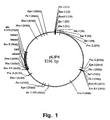
- Useful bacterial host cells include Gram-negative species such as e.g. E. coli including the E. coli strain harbouring plasmid pLIP4 as deposited under the accession No. NCIMB 40863, and Gram-negative species such as e.g. Bacillus species and lactic acid bacterial species such as Lactococcus lactis .
- the present invention also relates to a method of preparing the polypeptide according to the invention by expression of a nucleotide sequence capable of expressing the polypeptide in an appropriate transformed host cell.
- the method comprises in a first step that a suitable transformable cell is transformed with the above recombinant DNA molecule to provide a transformed host cell expressing the polypeptide.
- Procedures for transformation of prokaryotic host cells is well documented in the art, for example see Sambrook et al. (Molecular Cloning: A Laboratory Manual, 2 nd edition, 1989, Cold Spring Harbor Laboratory Press).
- transformed host cell is used herein to include any transformable organism wherein the nucleotide sequence coding for the enzyme according to the present invention has been introduced.
- the introduction of the coding sequence can be in the form of introducing an episomal replicon such as a plasmid, a bacteriophage or a cosmid into the cell.
- Such replicons can advantageously be introduced in multiple copies to obtain an increased expression of the polypeptide. It may in certain cases be advantageous that the nucleotide sequence is incorporated into the genome of the host cell organism e.g. by means of a transposable element or a recombinational event.
- a presently preferred host organism for the expression of the nucleotide sequence of the present invention and/or for the preparation of the polypeptide of the present invention is an organism of the genus Aspergillus, such as Aspergillus niger or Aspergillus tubigensis.
- a transformed Aspergillus strain according to the present invention can e.g. be prepared according to methods described by Rambosek and Leach (CRC Crit. Rev. Biotechnol., 1987, 6:357-393 ), Davis (in: Progress in Industrial Microbiology, Martinelli and Kinghorn (eds.), Elsevier Amsterdam, 1994, 29:525-560 ), Ballance (in: Molecular Industrial Mycology, Systems and Applications for Filamentous Fungi, Leong and Berka (eds.), Marcel Dekker Inc., New York 1991, pp 1-29 ) and Turner (in: Progress in Industrial Microbiology, Martinelli and Kinghorn (eds.), Elsevier Amsterdam, 1994, 29:641-666 ).
- the method of the invention makes use of a yeast host cell such as Saccharomyces cerevisiae or Pichia pastoris .
- a yeast host cell such as Saccharomyces cerevisiae or Pichia pastoris .
- Expression of heterologous genes in Saccharomyces cerevisiae has been reviewed by Goody et al. (in: Yeast Biotechnology, Berry et al. (eds.), Alien and Unwin, London, 1987, pp 401-429 ) and by King et al. (in: Molecular and Cell Biology of Yeasts, Walton and Yarronton (eds.), Blackie, Glasgow, 1989, pp 107-133 ).
- the present invention relates in a particular aspect to the use of the polypeptide according to the invention to improve the stability of the glucen network in a flour dough and to impart improved pore homogeneity and reduced pore diameter to the baked product made from said dough. It has been found that the polypeptide has these improving effects in a fat-free dough.
- fat-free dough is used to indicate that no lipid or fat is added to the flour dough.
- a preferred flour is wheat flour or a composite flour wherein part of the wheat flour is replaced by starch, optionally supplemented with plant protein and additives such as emulsifiers.
- plant protein and additives such as emulsifiers.
- Other types of flour derived from rice, maize, barley and rye are also contemplated.
- the major ingredients of the dough include flour, preferably wheat flour, water and an "gas generating substance" such as yeast or a chemical leavening agent.
- the dough may include minor ingredients such as salt, sugar, minerals, vitamins, flavouring and at least one further dough additive such as for example an emulsifying agent, a hydrocolloid, a starch degrading enzyme or a cellulose or hemicellulose degrading enzyme.
- starch and gluten form a structural network including the glycolipids in the form of liquid-crystalline phases of lamellar structure as layers between gluten protein and starch.
- the crumb structure of a baked product can be evaluated by visual inspection of the bread cross section.
- a more reliable method giving a quantitative measure of the crumb structure is by image analysis using an image analyzer which on the entire cross section of bread separates and analyses the individual pores one by one and calculate the mean pore size diameter.
- the bread cross section in its entirety is characterised by the distribution of the individual pores, for example in the form of a histogram.
- homogeneity is understood the uniformity of the pore size and in the present context the term "homogeneity" is defined as the percentage of pores that are larger than 0.5 times the average of pore diameter and smaller than 2 times the average pore diameter.
- the image analyzer also calculates the porosity which is the proportion of the entire bread cross section consisting of pores.
- baked products made from a dough as defined above including a fat-free dough which has been supplemented by addition of the polypeptide of the present invention attain/obtain an increased pore homogeneity and reduced pore size whereas the porosity is unchanged.
- a most interesting characteristic of the polypeptide according to the present invention is its ability to modify by hydrolysis the glycolipids, monogalactosyl diglyceride (MGDG) and digalactosyl diglyceride (DGDG), to the more polarcomponents monogalactosyl monoglyceride (MGMG) and digalactosyl monoglyceride (DG-MG) which are more surface active components than MGDG and DGDG.
- MGDG monogalactosyl diglyceride
- DGDG digalactosyl diglyceride
- the improved pore homogeneity of the bread crumb which is obtained by using the polypeptide of the invention in a dough is caused by the formation of the more surface active glycerides MGMG and DGMG which in combination with the released fatty acids in ionised form will contribute to the formation of mesomorphic phases of lamellar structure.
- the amount of polypeptide added to the dough corresponds to a lipase activity in the range of 100-30,000 lipase units (LUS) per kg flour, such as in the range of 500-10,000 lipase units (LUS) per kg flour including in the range of 1,000-8,000 lipase units (LUS) per kg flour.
- LOS lipase units
- the method of the invention involves combined use of the polypeptide of the invention and an emulsifier such as mono- and diglycerides, sorbitan esters, polysorbates, sucrose esters, citric acid esters of mono- and diglycerides, polyglycerol esters of fatty acids, propylene glycol monostearate, lactic acid esters, lecithins, mono- and diglycerides of edible fatty acids and diacetyl tartaric acid ester of mono- and diglycerides of edible fatty acids
- an emulsifier such as mono- and diglycerides, sorbitan esters, polysorbates, sucrose esters, citric acid esters of mono- and diglycerides, polyglycerol esters of fatty acids, propylene glycol monostearate, lactic acid esters, lecithins, mono- and diglycerides of edible fatty acids and diacetyl tartaric acid ester of mono- and diglycerides of edible fatty acids
- Diacetyl tartaric acid esters of mono- and diglycerides of edible fatty acids are well-known in the food processing technology and are widely used in the baking industry as dough additives to provide dough stability and increased volume of the baked products.
- diacetyl tartaric acid esters of mono- and diglycerides are used in an amount of up to 1% by weight of the flour.
- an expedient amount of diacetyl tartaric acid esters of mono- and diglycerides of fatty acids is in the range of 0.1 to 1.0% by weight of the flour, preferably in the range of 0.1 to 0.5% by weight of the flour and most preferred in the range of 0.1 to 0.4% by weight of the flour.
- the diacetyl tartaric acid esters of mono- and diglycerides which can be used according to the invention are characterised by having a saponification value in the range of 300 to 600, preferably a saponification value in the range of 300 to 400, and an acid value in the range of 40 to 120, preferably an acid value in the range of 50 to 100.
- the present invention relates in a further aspect to a method of preparing a baked product having improved pore homogeneity and reduced pore diameter from a dough including a fat-free dough as defined above, comprising adding the polypeptide of the invention to the dough.
- the polypeptide having lipase activity has the capability of increasing the level of ethylesters of fatty acids in a flour dough by at least 10% such as by least 50% including by at least 100%.
- the polypeptide having lipase activity has the capability increasing the gluten index in a flour dough.
- the method of preparing a baked product comprises adding to the dough the polypeptide in an amount that results in an increase of the gluten index, as determined by means of a Glutomatic 2200 apparatus, in the dough of at least 5%, relative to a dough without addition of the polypeptide.
- the gluten index is increased by at least 10% such as at least 15% or more preferably, by at least 20%.
- the present method is one wherein at least one further enzyme is added to the dough.
- further enzymes include hemicellulases, proteases, amylases, oxidoreductases such as e.g. hexose oxidase and cellulases.
- the polypeptide may conveniently be added to the dough or to any of the dough ingredients or to any mixture of the dough ingredients in the form of a dry composition or as a liquid preparation comprising the polypeptide of the present invention.
- the amount of polypeptide activity is in the range of 100-30,000 lipase units (LUS) per kg flour, including in the range of 500-10,000 lipase units (LUS) per kg flour such as in the range of 1,000-8,000 lipase units (LUS) per kg flour.
- the polypeptide of the invention is added to the dough in admixture with a diacetyl tartaric acid ester of-mono- and diglycerides of edible fatty acids.
- the baked product is toast bread.
- the assay is modified from Kouker and Jaeger (Appl. Environ. Microbiol., 1987, 53:211-213 ).
- a typical protocol for this assay is as follows: 100 ml 2% agar in 50 mM sodium phosphate buffer (pH 6.3) is heated to boiling, and after cooling to about 70°C under stirring, 5 ml 0.2% Rhodamine B is added under stirring plus 40 ml of tributyrin. The stirring is continued for 2 minutes. The mixture is then sonicated for 1 minute. After an additional 2 minutes of stirring, 20 ml of the agar mixture is poured into individual petri dishes. In the absence of lipase activity, the agar plates containing tributyrin and Rhodamine B will appear opaque and are pink coloured.
- Lipase activity based on hydrolysis of tributyrin is measured according to Food Chemical Codex, Forth Edition, National Academy Press, 1996, p. 803. With the modification that the pH is 5.5 instead of 7.
- One LUT lipase unit tributyrin is defined as the amount of enzyme which can release 2 ⁇ mol butyric acid per min. under the above assay conditions.
- Lipase activity can also be determined colorimetrically using p -nitrophenyl acetate as a substrate e.g. using the following protocol: In a microtiter plate 10 ⁇ l of sample or blank is added followed by the addition of 250 ⁇ l substrate (0.5 mg p -nitrophenyl acetate per ml 50 mM phosphate buffer, pH 6.0). The microtiter plate is incubated for 5 minutes at 30°C and the absorbance at 405 nm is read using a microplate reader. 1 unit is defined as 1 ⁇ mol p -nitrophenol released per 5 minutes.
- Lipase activity can be determined by using p -nitrophenyl hexanoate as a substrate. This assay is carried out by adding 10 ⁇ l of sample preparation or blank to a microtiter plate followed by the addition of 250 ⁇ l substrate (0.5 mg p -nitrophenyl hexanoate per ml of 20 mM phosphate buffer, pH 6.). At this concentration of substrate the reaction mixture appears as a milky solution. The microtiter plate is incubated for 5 minutes at 30°C and the absorbance at 405 nm is read in a microplate reader.
- lipase activity is determined according to Food Chemical Codex (3rd Ed., 1981, pp 492-493 ) modified to sunflower oil and pH 5.5 instead of olive oil and pH 6.5.
- the lipase activity is measured as LUS (lipase units sunflower) where 1 LUS is defined as the quantity of enzyme which can release 1 ⁇ mol of fatty acids per minute from sunflower oil under the above assay conditions.
- the protein eluted from the columns was measured by determining absorbance at 280 nm.
- the protein in the pooled samples was determined in microtiter plates by a sensitive Bradford method according to Bio-Rad (Bio-Rad Bulletin 1177 EG, 1984). Bovine serum albumin was used as a standard.
- a mutant strain of Aspergillus tubigensis was selected and used for the production of wild type lipase.
- This lipase is referred to herein as lipase 3.
- the strain was subjected to a fermentation in a 750 l fermenter containing 410.0 kg of tap water, 10.8 kg soy flour, 11.1 kg ammonium monohydrogenphosphate, 4.0 kg phosphoric acid (75%), 2.7 kg magnesium sulfate, 10.8 kg sunflower oil and 1.7 kg antifoam 1510.
- the substrate was heat treated at 121°C for 45 minutes.
- the culture media was inoculated directly with 7.5 ⁇ 10 9 spores of the mutant strain.
- the strain was cultivated for three days at 38°C, pH controlled at 6.5, aeration at 290 l/min and stirring at 180 rpm the first two days and at 360 rpm the last day.
- the fermentate was separated using a drum filter and the culture filtrate was concentrated 3.8 times by ultrafiltration.
- the concentrated filtrate was preserved with potassium sorbate (0.1%) and sodium benzoate (0.2%) and used as a starting material for purification of lipase.
- the desalted sample was applied to a Source Q30 anion exchanger column (100 ml, 5x5 cm) equilibrated in 20mM triethanolamine, pH 7.3. The column was washed with equilibration buffer until a stable baseline was obtained. Lipase activity was eluted with a 420 ml linear gradient from 0 to 0.35 M sodium chloride in equilibration buffer, flow rate 5 ml/min. Fractions of 10 ml were collected. Sodium acetate (100 ⁇ l of a 2M solution) was added to each fraction to adjust pH to 5.5. Fractions 26-32 (70 ml) were pooled.
- Fractions 33-41 were analyzed by SDS-PAGE using a NOVEX system with precast gels. Both electrophoresis and silver staining of the gels were done according to the manufacturer (Novex, San Diego, USA). (The same system was used for native electrophoresis and isoelectric focusing). It was found that fraction 40 and 41 contained lipase as the only protein.
- the apparent molecular weight of the native lipase was 37.7 kDa as measured by the above SDS-PAGE procedure.
- the purified lipase eluted at a molecular weight of 32.2 kDa from a Superose 12 gel filtration column (50 mM sodium phosphate, 0.2 M sodium chloride, pH 6.85, flow 0.65 ml/min) and is therefore a monomer.
- the molecular weight of the lipase was also determined by matrix-assisted laser desorption ionisation (MALDI) by means of a time-of-flight (TOF) mass spectrometer (Voyager Bio-Spectrometry Workstation, Perspective Biosystems). Samples were prepared by mixing 0.7 ⁇ l of desalted lipase solution and 0.7 ⁇ l of a matrix solution containing sinapic acid (3.5-dimethoxy-4-hydroxy cinnamic acid) in 70% acetonitrile (0.1% TFA, 10 mg/ml). 0.7 ⁇ l of the sample mixture was placed on top of a stainless steel probe tip and allowed to air-dry prior to introduction into the mass'spectrometer. Spectra were obtained from at least 100 laser shots and averaged to obtain a good signal to noise ratio. The molecular mass for the lipase was found to be 30,384 Da and 30,310 Da by two independent analyses.
- the isoelectric point (pl) for the lipase was determined by isoelectric focusing and was found to be 4.1.
- Eppendorf tubes with 25 ⁇ l of purified lipase 3 plus 50 ⁇ l 100 mM sodium acetate buffer (pH 5.0) were incubated for 1 hour in a water bath at respectively 30, 40, 50, and 60°C. A control was treated in the same way, but left at room temperature. After 1 hour the lipase 3 activity was determined by the p-nitrophenyl acetate assay as described above.
- the purified lipase had a good thermostability. It was found that the lipase maintained 60% of its activity after 1 hour at 60°C. 80% and 85% activity was maintained after 1 hour at 50°C and 40°C respectively.
- Purified lipase 3 (200 ⁇ l) was added to 5 ml of 50 mM buffer solutions: (sodium phosphate, pH 8.0, 7.0 and 6.0 and sodium acetate pH 5.0, 4.0 and 3.5). The control was diluted in 5 ml of 4 mM sodium acetate pH 5.5. After four days at 20°C the residual activity was measured by the Modified Food Chemical Codex assay for lipase activity as described above. The lipase was very stable in the pH range from 4.0 to 7.0 where it maintained about 100% activity relative to the control (Table 1.1). At pH 3.5 the lipase maintained 92% activity, and at pH 8.0 95% residual activity was maitained as compared to the control. Table 1.1.
- Purified lipase enzyme was freeze-dried and 100 ⁇ g of the freeze-dried material was dissolved in 50 ⁇ l of a mixture of 8 M urea and 0.4 M ammonium hydrogencarbonate, pH 8.4. The dissolved protein was denatured and reduced for 15 minutes at 50°C following overlay with nitrogen and addition of 5 ⁇ l 45 mM dithiothreitol. After cooling to room temperature, 5 ⁇ l of 100 mM iodoacetamide was added for the cysteine residues to be derivatized for 15 minutes at room temperature in the dark under nitrogen.
- the purified protein was passed through a Brownlee C2 Aquapore column (0.46 ⁇ 3 cm, 7 ⁇ m, Applied Biosystems, California, USA) using the same solvent system as above. N-terminal sequencing was then performed as described above. As the protein was not derivatized prior to sequencing, cysteine residues could not be determined.
- the Aspergillus tubigensis mutant strain was grown in PDB (Difco) for 72 hours and the mycelium was harvested. 0.5-1 g of mycelium was frozen in liquid nitrogen and ground in a mortar. Following evaporation of the nitrogen, the ground mycelium was mixed with 15 ml of an extraction buffer (100 mM Tris ⁇ HCl, pH 8.0, 50 mM EDTA, 500 mM NaCl, 10 mM ⁇ -mercaptoethanol) and 1 ml 20 % sodium dodecylsulfate. The mixture was vigorously mixed and incubated at 65°C for 10 min.
- an extraction buffer 100 mM Tris ⁇ HCl, pH 8.0, 50 mM EDTA, 500 mM NaCl, 10 mM ⁇ -mercaptoethanol
- a PCR amplification procedure based on the information in the isolated peptide sequences was carried out.
- Degenerated primers for PCR amplification of a fragment of the lipase gene were designed based on the amino acid sequences of the isolated peptides.
- the following three PCR primers were synthesised: C035: TTC CAR AAN CCN GTR TGN AC (SEQ ID NO:4.) 20 mer 256 mixture, based on peptide 1 sequence VHTGFWK (Reversed).
- C036 CAR YTN TTY GCN CAR TGG (SEQ ID NO:5) 18 mer 256 mixture, based on the N-terminal sequence QLFAQW.
- C037 GCV GCH SWY TCC CAV GC (SEQ ID NO:6) 17 mer 216 mixture, based on internal peptide 2 sequence AWESAA (reversed).
- oligonucleotides were synthesised on a Applied Biosystems model 392 DNA/RNA Synthesizer. To reduce the degree of degeneracy the rare Ala codon GCA and the Sercodon TCA have been excluded in design of primer C037.
- the PCR amplifications were performed in a MJ Research Inc. PTC-100 Thermocycler
- reaction 1 three distinct bands of about 300, 360 and 400 bp, respectively could be detected. These bands were isolated and cloned using the pT7-Blue-T-vector kit (Novagene). The sizes of these fragment is in agreement with the expected size provided that the fragment contains 0, 1 or 2 introns, respectively.
- Thermo Sekvenase fluorescent labelled primer cycle sequencing Kit (Amersham) and analyzed on a ALF sequencer (Pharmacia) according to the instructions of the manufacturer.
- the fragment of about 360 bp contained a sequence that was identified as a lipase and, as it contained the part of the N-terminal distal to the sequence used for primer design, it was concluded that the desired lip A gene fragment was obtained.
- the sequence of the about 360 bp PCR fragment (SEQ ID NO:7) is shown in the following Table 4.1.
- the peptide sequence used for primer design is underlined.
- the remaining part of the N-terminal sequence is doubly underlined.
- the finding of this sequence permitted full identification of the PCR fragment as part of the lip A gene.
- the stop codon found in the reading frame can be caused either by a PCR or a reading error or there can be an intron encoded in the fragment as a consensus intron start and ending signal (shown in bold). If the putative intron is removed a shift in reading frame will occur.
- an alignment of the deduced amino acid sequence and the fungal lipases shown in Table 2.1 suggested that the fragment was part of the desired gene.
- Aspergillus tubigensis genomic DNA was digested partially with Tsp5091 (New England Biolabs Inc.). 10 ⁇ g DNA was digested in 100 ⁇ l reaction mixture containing 2 units Tsp5091. After 5, 10, 15 and 20 minutes 25 ⁇ l was removed from the reaction mixture and the digestion was stopped by addition of 1 ⁇ l 0.5 M EDTA, pH 8.0. After all four reactions had been stopped, the samples were run on a 1 % agarose gel in TAE buffer (10 x TAE stock containing per litre: 48.4 g Trizma base, 11.5 ml glacial acetic acid, 20 ml 0.5 M EDTA pH 8.0).
- Hin dIII-digested phage Lambda DNA was used as molecular weight marker (DNA molecular weight marker II, Boehringer, Mannheim). Fragments of a size between about 5 and 10 kb were cut out of the gel and the DNA fragments were purified using Gene Clean II Kit (Bio-101 Inc.). The purified fragments were, pooled and 100 ng of the pooled fragments were ligated into 1 ⁇ g EcoRI-digested and dephosphorylated ZAP II vector (Stratagene) in a total volume of 5 ⁇ l. 2 ⁇ l of this volume was packed with Gigapack II packing extract (Stratagene) which gave a primary library of 650,000 pfu.
- DNA molecular weight marker II Boehringer, Mannheim.
- E. coli strain XLI-Blue-MRF (Stratagene) was infected with 5x 50,000 pfu of the primary library. The infected bacteria were mixed with top agarose (as NZY plates but with 6 g agarose per litre instead of the agar) and plated on 5 NZY plates (13 cm). After incubation at 37°C for 7 hours, 10 ml SM buffer (per litre: 5.8 g NaCl, 2.0 g MgCl 2 ⁇ 7H 2 O, 50 ml 1 M Tris-HCl pH 7.5, 5.0 ml of 2% (w/v) gelatine) and incubated overnight at room temperature with gently shaking.
- 10 ml SM buffer per litre: 5.8 g NaCl, 2.0 g MgCl 2 ⁇ 7H 2 O, 50 ml 1 M Tris-HCl pH 7.5, 5.0 ml of 2% (w/v) gelatine
- the buffer containing washed-out phages was collected and pooled. 5% chloroform was added and after vigorous mixing the mixture was incubated 1 hour at room temperature. After centrifugation for 2 minutes at 10,000 x g the upper phase containing the amplified library was collected and dimethylsulphoxide was added to 7%. Aliquots of the library was taken out in small tubes and frozen at -80°C. The frozen library contained 2.7 ⁇ 10 9 pfu/ml with about 6% without inserts.
- 2 x 50.000 pfu were plated on large (22 x 22 cm) NZY plates containing a medium containing per litre: 5 g NaCl, 2 g MgSO 4 ⁇ 7H 2 O, 5 g yeast extract, 10 g casein hydrolysate, 15 g agar, pH adjusted to 7.5 with NaOH.
- the medium was autoclaved and cooled to about 60°C and poured into the plates. Per plate was used 240 ml of medium.
- the inoculated NZY plates were incubated overnight at 37°C and plaque lifts of the plates were made. Two lifts were made for each plate on Hybond N (Amersham) filters.
- the DNA was fixed using UV radiation for 3 min. and the filters were hybridized as described in the following using, as the probe, the above PCR fragment of about 360 bp that was labelled with 32 P-dCTP using Ready-to-Go labelling kit (Pharmacia).
- the filters were prehybridised for one hour at 65°C in 25 ml prehybridisation buffer containing 6.25 ml 20 x SSC (0.3 M Na 3 citrate, 3 M NaCl), 1,25 ml 100 x Denhard solution, 1.25 ml 10% SDS and 16.25 ml water.
- 150 ⁇ l 10 mg/ml denatured Salmon sperm DNA was added to the prehybridization buffer immediately before use.
- the prehybridisation buffer was discarded and the filters hybridised overnight at 65°C in 25 ml prehybridisation buffer with the radiolabelled PCR fragment.
- Seven putative clones were isolated and four were purified by plating on small petri dishes and performing plaque lifts essentially as described above.
- the purified clones were converted to plasmids using an ExAssist Kit (Stratagene).
- the sequencing primers were designed based on the about 360 bp PCR fragment. The sequencing primers were used to sequence the clones and a positive clone with the lip A gene encoding lipase 3 was found. The isolated positive clone was designated pLIP4.
- a restriction map of the clone was made.
- the above 360 bp PCR fragment contained a Sac II site and as this site could be found in the genomic clone as well this site facilitated the construction of the map.
- the restriction map showing the structure of pLlP4 is shown in Fig. 1 .
- the restriction map shows that the complete gene is present in the clone. Additionally, since promoter and terminator sequences are present, it was assumed that all the important regions is present in the clone.
- the gene was sequenced using cycle sequencing and conventional sequencing technology.
- the complete sequence (SEQ ID NO:8) is shown below in Table 5.1.
- the sequence has been determined for both strands for the complete coding region and about 100 bp upstream and downstream of the coding region.
- the sequences downstream to the coding region have only been determined on one strand and contains a few uncertainties.
- Table 5.1 shown below the intron sequences are indicated as lowercase letters and the N-terminal and the two internal peptides (peptide 1 and peptide 2) are underlined:
- the peptide sequences obtained could all be found in the deduced amino acid sequence (see Table 5.1) which confirms again that the sequence found is the sequence of the lipase 3 gene.
- the gene was designated lip A.
- the amino acid sequence was aligned with the three fungal lipases used to align the peptide sequences.
- the alignment is shown in Table 5.2.
- lipase 3 is homologous to the known lipase sequences but that the homology is not very high. Deletions or insertions in the lipase 3 sequence was not observed when comparing the sequence with these three lipases. This strengthens the probability that the putative introns have been identified correctly.
- the sequence with highest homology is a mono- diacyl lipase from Penicillium camembertii where the identity is found to 42 %.
- the C- terminal of lipase 3 resembles the 2 lipases from Zygomycetes (Rhizopus and Rhizomucor ) and not the P. camembertii enzyme.
- the N-terminal of the mature lipase has been determined by N-terminal sequencing to be the serine residue No. 28 of the lipase 3 precursor (SEQ ID NO:9) as shown in Table 5.4 below. Hence the amino acids No. 1 to No. 27 is the signal sequence.
- Residues 167-176 are recognised as a common motif for the serine lipases (PROSITE).
- the crystal structure for the Rhizomucor miehei serine lipase has been examined and the residues in the active site identified ( Brady et al., Nature, 1990, 343:767-770 ; Derewanda et al., J. Mol. Biol., 1992, 227:818-839 ).
- the active site residues of R. miehei lipase have all been conserved in all the lipases and correspond to the following residues in lipase 3: serine 173, aspartic acid 228 and histidine 285.
- Lipase 3 contains 7 cysteine residues. Four of these are conserved in the P. camembertii lipase where they form disulphide bonds ( Isobe and Nokuhara, Gene, 1991, 103:61-67 ). This corresponds to disulphide bonds between residue 62- 67 and 131-134. In addition, two cysteine residues are homologous to two C residues which forms an additional disulphide bond in Rhizopus and Rhizomucor lipases corresponding to residues 49-295.
- a multicopy lip A strain was produced by transforming the pLIP4 plasmid into Aspergillus tubigensis strain 6M 179 using cotransformation with a hygromycin resistant marker plasmid.
- a screening procedure used to visualise fungal lipase after ultrathin layer isoelectric focusing was adapted to screen Aspergillus tubigensis transformants grown on agar plates. Screening of lipase producers on agar plates was done using 2% olive oil as the substrate for the enzyme (lipase) as well as the inducer for the lipase promoter. In addition, the plates contained a fluorescent dye, Rhodamine B. In the presence of olive oil, the transformants will be induced to secrete lipase. The lipase secreted into the agar plate will hydrolyse the olive oil causing the formation of orange fluorescent colonies that is visible upon UV radiation (350 nm). The appearence of fluorescent colonies was generally monitored after 24 hours of growth. After several days of growth, the lipase producing strains could be identified as orange fluorescent strains that are visible by eye. Under this plate screening condition, the untransformed strain gave no background fluorescence and appeared as opaque pink colonies.
- the cell-free culture supernatants from the five transformants were desalted using NAP 5 columns (Pharmacia) and equilibrated in 1 M ammonium sulfate (50 mM sodium acetate, pH 5.5).
- the desalted culture supernatants were fractionated by hydrophobic interaction chromatography (HlC) on a Biogel Phenyl-5 PW column (Biorad). Elution was done by a descending salt gradient of 1 M to 0 M ammonium sulfate (20 mM sodium acetate, pH 5.5). A single discrete protein peak was observed after fractionation. The area of the protein peaks were calculated among the different transformants and compared with the untransformed strain. The best transformant showed a 62-fold increase in the amount of lipase after HIC fractionation.
- FIG. 3 A chromatogram of the HIC fractionated culture supernatant of this transformant is shown in Fig. 3 and a similar chromatogram for the untransformed strain is shown in Fig. 4 .
- the fraction containing the transformed lipase was freeze-dried.
- the transformed lipase was carboxymethylated and subjected to N-terminal amino acid sequencing of the first 15 amino acids and it was found that the sequence of the recombinant lipase was exactly the same as the native lipase indicating correct signal sequence cleavage.
- the different lipase fractions collected after HIC were separated on a 12% Tris-Glycine SDS gel and silver staining revealed one protein band, confirming the homogeneity of the fractions.
- the crude extract showed a major lipase band as the only band that accumulated in the culture supernatant in very high amounts when the fungus was cultured in the olive oil-containing medium.
- the recombinant lipase was analysed by matrix-assisted laser desorption ionisation (MALDI) by means of a time-of-flight (TOF) mass spectrometer as described hereinbefore.
- MALDI matrix-assisted laser desorption ionisation
- TOF time-of-flight
- Detection of N-linked oligosaccharides was achieved by digestion of the lipase with endo- ⁇ -N-acetyl-glucosamidase H from Streptomyces (Sigma). Digestion of recombinant lipase secreted into the growth medium altered the mobility of the band seen on SDS-PAGE which moved as a single band with a molecular mass of about 30 kDa.
- lipA genes were constructed.
- a molecular model for the three dimensional structure of lipase 3 based on database comparison with known lipases and their solved crystal structures revealed the surface topology of the two putative N-glycosylation sites in lipase.
- the two possible sites responsible for glycosylation are the asparagine residues at N59 and N269.
- the 2 asparagine residues were changed by mutation either to a threonine residue (T) or to a glutamine residue (Q).
- Mutation to threonine eliminates the amide group through which asparagine is glycosylated without altering the size of the side chain as well as retaining the polar oxygen.
- Mutation to glutamine results in an extra carbon at the side chain and retention of the amide group.
- Mutagenic primers designed to incorporate specific sequence mutations were phosphorylated using T4 polynucleotide kinase as described in the Bio-Rad M13 in Vitro Mutagenesis Kit Manual. Annealing to the single stranded DNA template took place in 20mM Tris, 50mM NaCl, 2mM MgCl 2 at a molar ratio of primer to template of 30:1, incubation at 30°C for about 1.5 hours.
- the synthesis of the second strand was accomplished by T7 DNA polymerase (0.5 units) in a reaction mixture containing 0.4 mM of each dNTP, 0.75 mM ATP, 17.5 mM Tris-Cl (pH 7.4), 3.75 mM MgCl 2 , 21.5 mM DDT and 4T DNA ligase (5 units) for ligation of the newly synthesized strand to the 5' end of the primers.
- the reaction was incubated on ice for 5 minutes, then at 25°C for 5 minutes and finally at 37°C for 30 minutes and was stopped by the addition of stop buffer (10 mM Tris pH 8, 10 mM EDTA) and freezing. Reactions were analyzed on a 1% agarose gel in TAE buffer before transformation into SURE E.coli cells. The transformants were analyzed by DNA sequencing.
- the transformants were screened for production of mutant lipases. Pure cultures of transformants were propagated in liquid media in the following manner: spores were added at a density of 10 6 /ml and grown at 34°C for 5 days under shaking at 200 rpm. The medium for cultivation of transformants contained 100 ml minimal medium supplemented with 2% sunflower oil (inducer),1.5% peptone, 0.2 casamino acids and 50 ⁇ g/ml ampicillin. Culture filtrate was collected each day and tested on olive oil-rhodamine plates for lipase activity. The oil-rhodamine plates were inspected for fluorescent halos (lipase activity) after an overnight incubation at 37°C.
- a chromogenic assay using 1,2-O-dilauryl-rac-glycero-3-glutaric acid-resorufin ester (Lipase chromogenic substrate, Boehringer Mannheim Biochemica, cat. No. 1179934) was used to double check the filtrates collected on days 2, 3, 4 and 5.
- Table 8.1 below shows lipase activity of selected transformants expressing different modified lip A genes coding for mutant lipase 3. Lipase activity was measured on day 5 using the above chromogenic assay. Table 8.1.
- lipase activity in the culture filtrates of transformants S3-4, S4-3 and strain 6M 179 showed increasing lipolytic activities (Table 8.2) during fermentation from day 2 to day 5.
- Table 8.2 Lipase activity in culture filtrates during fermentation (chromogenic assay measured at 572 nm) Strain Day 2 Day 3 Day 4 Day5 S3-4 0.592 0.985 1.276 2.86 S4-3 0.176 0.452 0.680 1.75 6M 179 0.443 0.672 0.688
- Samples of culture supernatant of S2-6, S3-4, S4-1 and S4-3 fermentations, respectively were all treated in the same manner.
- a 15 ml sample was first desalted on a PD-10 column equilibrated in 20 mM triethanolamine, pH 7.3.
- the desalted sample was applied to a Source Q15 (HR5/5) anion exchanger equilibrated in 20 mM triethanolamine, pH.7.3. Flow 1.5 m ml/min.
- the column was washed with equilibration buffer until a stable baseline was obtained.
- Lipase activity was then eluted with a 30 ml linear gradient of from 0 to 0.53 M NaCl in equilibration buffer. Fractions of 1.5 ml were collected. The fractions were screened for activity using the plate assay on tributyrin as described above.
- the four different lipase glycosylation mutants behaved the same way throughout the purification.
- the specific activity of the mutant lipases expressed in S2-6, S4-1 and S4-3 is twice the specific activity of the overglycosylated lipase 3 when measured (LUS) on sunflower oil which contains long chain fatty acids like lipids normally present in flour and dough.
- LUT tributyrin
- the specific activity of the S3-4 lipase 3 is lower than that of overglycosylated lipase 3 (measured on sunflower oil).
- the mutants When assayed in the LUS assay none of the mutants have quite as good specific activity as the wild-type lipase 3, but as shown in a following example, the enzymatic activity is higher for the glycosylation mutants than for the wild-type lipase 3 in a dough system.
- the apparent molecular weight of the purified mutant lipases was determined by running the lipases on one SDS-PAGE gel. The results are shown in table 9.2. Table 9.2. Molecular weight of wild-type, overglycosylated and mutant lipases Lip. 3 Wild-type Lip. 3 Overglycosylated S2-6 S3-4 S4-1 S4-3 S5 MW (kDa) 34.8 38.9 34.8 34.8 31.2 31.2 31.2
- overglycosylated lipase gives rise to a lipase 3 molecule which has a larger molecular weight than the wild-type native lipase 3.
- the isoelectric points for the 4 different lipase glycosylation mutants were determined by chromatofocusing on a Mono P (HR5/5) to be pH 4.1 for all the mutant enzymes.
- the column was equilibrated in 25 mM bib-tris, pH 6.10.
- a pH gradient was generated by running 100% of a 10% polybuffer 74 in water (pH 3.8 with HCl) plus 2.5% betaine, this eluted the lipase(s). Flow 0.70 ml/min. Fractions of 0.4 ml were collected.
- a sample of purified lipase S4-1 (296 LUT/ml) was diluted 1:1 with 200 mM NaAc, pH 5.0. Eppendorf tubes with 1 ml of this diluted sample were incubated for 1 hour in a waterbath at 30, 40, 50 and 60°C respectively. A control was treated the same way but left at room temperature. The remaining lipase activity was determined by the p-nitrophenyl acetate assay as described previously. The results are shown below in Table 9.3. Table 9.3. Temperature stability of mutant lipase (S4-1) compared to wild-type lipase 3 Temperature (°C) Mutant lipase S4-1 (activity) 20 (Control) 100% 30 107% 40 96% 50 89% 60 53%
- Flour (Danish reform flour) 2000 g, dry yeast 30 g, salt 30 g and water corresponding to 400 Brabender units + 3%, was kneaded in a Hobart Mixer with hook for 2 min. at low speed and 10 min. at high speed. Dough temperature after kneading was 25°C. Resting time was 10 min. at 30°C.
- the dough was scaled 750 g per dough and rested again for 5 min at 33°C and 85% RH. After moulding on a Glimik moulder, the dough were proofed in tins for 50 min at 33°C and baked in a Wachtel oven for 40 min at 220°C with steam injection for 16 sec. After cooling, the bread was scaled and the volume of the bread was measured by the rape seed displacement method. The specific volume is calculated by dividing the bread volume (ml) by the weight (g) of the bread.
- Flour (Danish reform) 1500 g, compressed yeast 90 g, sugar 24 g, salt 24 g and water corresponding to 400 Brabender units - 2% were kneaded in a Hobart mixer with hook for 2 min. at low speed and 9 min at high speed. After kneading, the dough temperature was 26°C. The dough was scaled 1350 g. After resting for 10 min. at 30°C, the dough was moulded on a Fortuna moulder after which the dough was proofed for 45 min. at 34°C and baked in a Bago oven for 18 min. at 220°C with steam injection for 12 sec. After cooling, the rolls were scaled and the volume of the rolls was measured by the rape seed displacement method. Specific volume is calculated as described above.
- the pore homogeneity of the bread was measured by means of an image analyzer composed of a standard CCD-video camera, a video digitiser and a personal computer with WinGrain software. For every bread, the results of pore diameter in mm and pore homogeneity were calculated as an average of measurements from 10 slices of bread. The pore homogeneity was expressed in % of pores that are larger than 0.5 times the average of pore diameter and smaller than 2 times the average diameter.
- the firmness of bread was measured by means of an Instron UTM model 4301 connected to a personal computer.
- the conditions for measurement of bread firmness were: Load Cell Max. 100 N Piston diameter 50 mm Cross head speed 200 mm/min Compression 25% Thickness of bread slice 11 mm
- the tubes were centrifuged at 10,000 x g for 5 min. 10 ml of the supernatant was pipetted into a vial and evaporated to dryness under nitrogen cover. This sample was used for HPLC analysis.
- the mobile phases contained 1 mmol trifluoroacetic acid per I mobile phase and were adjusted to pH 6.6 with ammonia.
- Pump Waters 510 equipped with a gradient controller. Gradient: Flow (ml/min) Time (min) A (%) B (%) 1.0 0 100 0 1.0 25 0 100 1.0 30 0 100 1.0 35 100 0 1.0 40 100 0
- Detector CUNOW DDL21 (evaporative light-scattering); temperature 100°C; voltage: 600 volt; air flow: 6.0 l/min.
- Injector Hewlett Packard 1050; injection volume: 50 ⁇ l.
- the samples for analysis were dissolved in 5 ml chloroform:methanol (75:25), sonicated for 10 min and filtered through a 0.45 ⁇ m filter.
- Perkin Elmer 8420 Capillary Gas Chromatograph equipped with WCOT fused silica column 12.5 m x 0.25 mm coated with 0.1 ⁇ m stationary phase of 5% phenyl-methyl-silicone (CP Sil 8 CB from Crompack).
- Sample preparation 50 mg non-polar fraction of wheat lipids was dissolved in 12 ml heptane:pyridine (2:1) containing 2 mg/ml heptadecane as internal standard. 500 ⁇ l of the solution was transferred to a crimp vial and 100 ⁇ l N-methyl-N-trimethylsilyl-trifluoracetamide was added. The mixture was allowed to react for 15 min at 90°C.
- the gluten index also clearly correlated to the addition of lipase 3 as an indication of a more firm gluten caused by the modification of the wheat lipid components causing better dough stability and a more homogeneous bread pore structure.
- these modifications appeared to be optimal at the addition of 5,000 LUS/kg flour of lipase 3 whereas a higher dosage resulted in a too strong modification of the wheat gluten.
- Lipase 3 was tested in Danish rolls in a comparative test with two commercially available lipase products: NOVOZYM 677 BG (no. 1885) from Novo Nordisk (Denmark) and Lipase A "Amano 6" (no. 1757) from Amano (Japan). The results are summarized in Table 11.1.
- Lipase 3, lipase no. 1885 and lipase no. 1757 were tested in Danish rolls with the purpose of studying the relative hydrolysis of triglycerides as compared to the hydrolysis of digalactosyl diglyceride (DGDG).
- Fully proofed dough was freeze-dried and extracted with water saturated n-butanol.
- the extracted lipids were analysed by GLC and H PLC as described above. From the analytical results the degree of hydrolysis of triglycerides compared to the degree of hydrolysis of digalactosyl diglyceride (DGDG) at different levels of lipases was calculated.
- the levels of lipase used were for No. 1885: 0, 400 and 800 LUS/kg flour; for No.
- lipase 3 has a significant effect on the hydrolysis of digalactosyl diglyceride whereas the effect of the two commercial available lipases, No. 1757 and No. 1885, are negligible.
- lipase 3 improves both the pore homogeneity and crust quality both in bread with and without added oil.
- a high level of lipase 3 13,500 LUT/kg flour
- free fatty acids are produced when lipase 3 is added to a dough.
- the yeast produces carbon dioxide and ethanol, and the level of ethanol in a dough is normally in excess of 1% at the end of proofing.
- this enzyme not only catalyses the hydrolysis of triglycerides, but it was surprisingly found that ethyl ester of fatty acids is also formed.
- Ethylesters of fatty acid is a well-known flavour component which is i.a. used to mask off-flavours in fat based food. Baking experiments not reported here have shown that lipase added to a dough is able to mask "old" taste of bread which occurs when bread is made from flour stored at 35°C for 3 months. This might be explained by the formation of ethyl esters in the dough.
- the amount of ethyl ester of fatty acids was determined by extracting freeze-dried dough with water saturated butanol. The isolated fat phase was analysed by GLC-MS to determine both the identity and the amount of ethyl esters of fatty acids. The results from these analyses are shown in Table 15.1 Table 15.1. Content of ethyl ester of fatty acids in dough with added lipase Lipase 3, LUT/kg flour Ethyl ester of fatty acids, ppm 0 8 1,500 9 4,500 20 13,500 93
- lipase 3 was tested in a sponge cake made by the following recipe and procedure.
- Table 16.1 Specific cake volume and softness after 7 days of storage (hPa) Lipase 3 (LUT/kg flour) Specifik cake volume (cm 3 /g) Softness after 7 days of storage (hPa) 0 6.31 59 1,000 6.34 47 2,000 6.31 41 4,000 6.31 41 10,000 6.31 41
- lipase 3 improves the cake softness without changing the volume of the cake.
- Rye/wheat bread was made from a dough containing the following ingredients: Wheat flour, 667 g; sifted rye flour, 1333 g; "Back aroma sauer” 40 g; compressed yeast, 60 g; salt 44 g; water, 1160 g; lipase 3, see below; GRIN-DAMYL TM H 121 (commercial hemicellulase product of Grindsted Products, Brabrand, Denmark).
- the dough was mixed using a Kemper mixer for 2 min. at low speed and for 11 min. at high speed. Dough temperature 27°C, resting time 30 min. at 32°C, scaling 800 g, proofing 20 min. at 32°C and 85% RH, baking for 30 min. at 230°C and 10 sec. steam.
- Lipase 3 in combination with hemicellulase to rye/wheat bread clearly improved the handling properties of the dough in that the dough was less sticky.
- a dough was prepared using the following ingredients: flour, 50 g; dry yeast, 0.375 g; NaCl, 0.75 g; water, 28 g, lipase, see below.
- Flour dry yeast and salt was mixed for 1 min. in a Brabender mixing bowl (50 gram). Lipase and water was added to the dough followed by mixing for 6 min. at 62 rpm.
- the dough was transferred to a beaker provided with a lid and the dough was fermented 60 min. at 32°C.
- the dough was freeze-dried.
- the freeze-dried dough was grounded and sieved and extracted with water saturated butanol (WSB).
- WSB was evaporated under a stream of N 2 and the content of free fatty acids were determined by spectrophotometry according to Kwon, D.Y. and J.S. Rhee, 1986, JAOCS 63:89.
Landscapes
- Life Sciences & Earth Sciences (AREA)
- Chemical & Material Sciences (AREA)
- Engineering & Computer Science (AREA)
- Organic Chemistry (AREA)
- Health & Medical Sciences (AREA)
- Bioinformatics & Cheminformatics (AREA)
- Genetics & Genomics (AREA)
- Wood Science & Technology (AREA)
- Zoology (AREA)
- Biochemistry (AREA)
- General Engineering & Computer Science (AREA)
- General Health & Medical Sciences (AREA)
- Microbiology (AREA)
- Biotechnology (AREA)
- Food Science & Technology (AREA)
- Medicinal Chemistry (AREA)
- Molecular Biology (AREA)
- Biomedical Technology (AREA)
- Nutrition Science (AREA)
- Polymers & Plastics (AREA)
- Bakery Products And Manufacturing Methods Therefor (AREA)
- Enzymes And Modification Thereof (AREA)
- Noodles (AREA)
- General Preparation And Processing Of Foods (AREA)
Claims (41)
- Lipase (EC 3.1.1.3, die als eine Carboxylesterase definiert werden kann, welche die Hydrolyse von Triacylglycerolen katalysiert), die von Aspergillus tubigensis ableitbar ist, mit den folgenden Eigenschaften,(i) sie behält wenigstens 80% Aktivität nach 4 Tagen bei 20°C bei einem pH-Wert im Bereich von 5-7,(ii) sie behält wenigstens 60% ihrer Aktivität nach 1 Stunde bei 60°C in 100 mM Natriumacetat-Puffer bei einem pH-Wert von 5,0 und(iii) sie besitzt einen isoelektrischen Punkt, bestimmt durch isoelektrische Fokussierung, im Bereich von 3,5-4,5, wobei die Lipase die als SEQ ID NO:9 gezeigte Aminosäuresequenz oder eine Aminosäuresequenz, die wenigstens 95% homolog zu SEQ ID NO:9 ist, umfaßt.
- Lipase nach Anspruch 1, welche wenigstens eine Aminosäuresequenz aufweist, die aus der Gruppe ausgewählt ist, bestehend aus SEQ ID NO:1, SEQ ID NO:2 und SEQ ID NO:3, wobei Xaa in den Sequenzen eine Aminosäure ist, die aus der Gruppe ausgewählt ist, bestehend aus Ala, Arg, Asn, Asp, Cys, Gln, Glu, Gly, His, Ile, Leu, Lys, Met, Phe, Pro, Ser, Thr, Trp, Tyr und Val.
- Lipase nach Anspruch 1, welche eine enzymatische Aktivität bei einem pH-Wert im Bereich von 3,5-8 zeigt.
- Lipase nach Anspruch 1, welche wenigstens 80% ihrer Aktivität nach 1 Stunde bei 50°C in 100 mM Natriumacetatpuffer bei einem pH-Wert von 5,0 behält.
- Lipase nach Anspruch 1, welche einen isoelektrischen Punkt, bestimmt durch isoelektrische Fokussierung, von 4,1 ± 0,1 aufweist.
- Lipase nach Anspruch 1, welche in einer im wesentlichen nicht glycosylierten Form vorliegt.
- Lipase nach Anspruch 1, welche Teil eines Fusionsprodukts ist, das zusätzlich enzymatisch aktive Aminosäuresequenzen aufweist, wobei die zusätzliche enzymatische Aktivität proteolytische, amylolytische oder hemizellulolytische Aktivität ist.
- Lipase nach Anspruch 1, welche in einer im wesentlichen gereinigten Form vorliegt.
- Lipase nach Anspruch 1, welche ein Molekulargewicht, bestimmt durch matrixunterstützte Laser desorptions ionisations massen spektrometrie (MALDI-MS) von 31 ± 1,5 kDa aufweist.
- Lipase nach Anspruch 1, welche keine Aminosäure(n) aufweist, die Glycosylierungsstelle(n) bereitstellt/stellen.
- Lipase nach einem der Ansprüche 1 bis 10, welche von einem Organismus abgeleitet ist, der aus der Gruppe ausgewählt ist, bestehend aus einem Pilz, einer Hefe, einem Bakterium, einer Pflanzenzelle und einer Tierzelle.
- Rekombinantes DNA-Molekül, das eine Nukleotidsequenz aufweist, die eine Lipase nach Anspruch 1 codiert und wenigstens eine unter SEQ ID NO:4, SEQ ID NO:5, SEQ ID NO:6 und SEQ ID NO:7 umfaßt.
- Rekombinantes DNA-Molekül, welches eine Nukleotidsequenz umfaßt, das eine Lipase nach Anspruch 1 codiert, und SEQ ID NO:8 oder eine Nukleotidsequenz, welche wenigstens 75% homolog zu SEQ ID NO:8 ist, umfaßt.
- Rekombinantes DNA-Molekül nach Anspruch 12 oder Anspruch 13, welches eine Lipase codiert, wie sie in Anspruch 1 definiert ist, die keine Aminosäure(n) aufweist, die Glycosylierungsstelle(n) bereitstellt.
- Rekombinantes DNA-Molekül nach Anspruch 14, welches ein Plasmid ist, das aus der Gruppe ausgewählt ist, bestehend aus einem Plasmid, das in den E. coli-Stämmen enthalten ist, die unter den Hinterlegungsnummern NCIMB 40863, NCIMB 40931, NCIMB 40932, NCIMB 40933, NCIMB 40934 und NCIMB 40935 hinterlegt sind.
- Zelle, die ein rekombinantes DNA-Molekül nach einem der Ansprüche 12 bis 15 umfaßt und in der Lage ist, die Lipase nach einem der Ansprüche 1 bis 11 zu exprimieren.
- Zelle nach Anspruch 16, welche ein Mikroorganismus ist, der aus der Gruppe ausgewählt ist, bestehend aus einem Pilz, einer Hefe, einem Bakterium, einer Pflanzenzelle und einer Tierzelle.
- Zelle nach Anspruch 17, welche ein filamentöser Pilz ist, der aus der Gruppe ausgewählt ist, bestehend aus einem Aspergillus sp., einem Penicillium sp., einem Rhizomucor sp., einem Mucor sp., einem Trichoderma sp., einem Neurospora sp. und einem Humicola sp.
- Zelle nach Anspruch 18, welche Aspergillus tubigensis ist.
- Verfahren zur Herstellung einer Lipase nach einem der Ansprüche 1 bis 11, bei dem man eine Wirtszelle mit einem rekombinanten DNA-Molekül nach einem der Ansprüche 12 bis 15 transformiert, wobei die Wirtszelle in der Lage ist, die Nukleotidsequenz, welche die Lipase codiert, zu exprimieren, die transformierte Wirtszelle unter Bedingungen kultiviert, bei denen die Nukleotidsequenz exprimiert wird, und die Lipase erntet.
- Verfahren nach Anspruch 20, welches die weitere Stufe umfaßt, bei der man die Lipase in einer im wesentlichen reinen Form isoliert.
- Verfahren zur Herstellung eines gebackenen Produkts mit verbesserter Porenhomogenität und reduziertem Porendurchmesser, wobei das Verfahren umfaßt, daß man die Lipase nach einem der Ansprüche 1 bis 11 oder die nach Anspruch 20 oder 21 hergestellte Lipase zu dem Teig hinzufügt.
- Verfahren nach Anspruch 22, wobei der Teig keine hinzugefügten Lipide enthält.
- Verfahren nach Anspruch 22 oder 23, bei dem man die Lipase zu dem Teig in einer Menge hinzufügt, die zu einer Reduzierung des durchschnittlichen Porendurchmessers in der Krume des Brots, das aus dem Teig hergestellt wird, um wenigstens 10%, relativ zu einem Brot, welches aus einem Brotteig ohne Hinzufügung der Lipase hergestellt ist, führt.
- Verfahren nach Anspruch 22 oder 23, bei dem man die Lipase zu dem Teig in einer Menge hinzufügt, die zu einer Zunahme der Porenhomogenität in der Krume des Brotes, das aus dem Teig hergestellt ist, um wenigstens 5%, relativ zu einem Brot, welches aus einem Brotteig ohne Hinzufügung der Lipase hergestellt ist, führt.
- Verfahren nach einem der Ansprüche 22 bis 25, bei dem man die Lipase zu dem Teig in einer Menge hinzufügt, die zu einer Zunahme des Glutenindexes in dem Teig von wenigstens 5% relativ zu einem Teig ohne Zugabe der Lipase führt, wobei der Glutenindex mittels einer Glutomatic 2200-Vorrichtung bestimmt wird.
- Verfahren nach einem der Ansprüche 22 bis 26, wobei die Lipase in dem Mehlteig wenigstens 10% der Galactosyldiglyceride, die normalerweise in einem Mehlteig vorhanden sind, zu den entsprechenden Galactosylmonoglyceriden hydrolysiert.
- Verfahren nach einem der Ansprüche 22 bis 27, wobei die Lipase zu dem Teig in einer Menge hinzugefügt wird, welche in dem Bereich von 100-30.000 Lipaseeinheiten (LUS) pro kg Mehl liegt.
- Verfahren nach Anspruch 28, wobei die Menge in dem Bereich von 500-10.000 Lipaseeinheiten (LUS) pro kg Mehl liegt.
- Verfahren nach Anspruch 22, wobei zu dem Teig ein Emulgiermittel hinzugefügt wird.
- Verfahren nach Anspruch 30, wobei das Emulgiermittel Diacetylweinsäureester von Mono- und Diglyceriden genießbarer Fettsäuren ist.
- Verfahren nach Anspruch 31, wobei der Diacetylweinsäureester einen Verseifungswert im Bereich von 300-600 und eine Säurezahl im Bereich von 40-120 hat.
- Verfahren nach Anspruch 31, wobei der Diacetylweinsäureester in einer Menge hinzugefügt wird, welche in dem Bereich von 0,1-1,0 Gew.-% des Mehls liegt.
- Verfahren nach Anspruch 22, wobei wenigstens ein weiteres Enzym zu dem Teig hinzugefügt wird.
- Verfahren nach Anspruch 34, wobei das weitere Enzym aus der Gruppe ausgewählt ist, die aus einer Hemizellulase, einer Protease, einer Amylase, einer Oxidoreduktase und einer Zellulase besteht.
- Verwendung einer Lipase nach einem der Ansprüche 1 bis 11 oder einer Lipase, hergestellt nach einem Verfahren gemäß Anspruch 20, in einem Teig für ein gebackenes Produkt zur Verbesserung der Stabilität des Glutennetzwerkes in dem Teig oder zur Verleihung verbesserter Porenhomogenität oder von vermindertem Porendurchmesser in dem gebackenen Produkt.
- Verwendung nach Anspruch 36, wobei der Glutenindex in dem Teig um wenigstens 5% relativ zu einem Teig, welcher ohne Hinzufügung der Lipase hergestellt ist, erhöht wird, wobei der Glutenindex mittels einer Glutomatic 2200-Vorrichtung bestimmt wird.
- Teigverbessemde Zusammensetzung, welche die Lipase nach einem der Ansprüche 1 bis 11 und wenigstens eine weitere herkömmliche Teigzusatzkomponente umfaßt.
- Zusammensetzung nach Anspruch 38, wobei die weitere Komponente aus der Gruppe ausgewählt ist, bestehend aus einem Enzym und einem Emulgiermittel.
- Lipase (EC 3.1.1.3), die von Aspergillus tubigensis erhältlich ist, mit den folgenden Eigenschaften:(i) sie behält wenigstens 80% Aktivität nach 4 Tagen bei 20°C bei einem pH-Wert im Bereich von 5-7,(ii) sie behält wenigstens 60% ihrer Aktivität nach 1 Stunde bei 60°C in 100 mM Natriumacetat-Puffer bei einem pH-Wert von 5,0 und(iii) sie hat einen isoelektrischen Punkt, bestimmt durch isoelektrische Fokussierung, im Bereich von 3,5-4,5, und wobei die Lipase die als SEQ ID NO:9 gezeigte Aminosäuresequenz oder eine Aminosäuresequenz, die wenigstens 95% homolog zu SEQ ID NO:9 ist, umfaßt, und(iv) wenn sie zu einem Brotteig in einer Menge von 5.000 Lipaseeinheiten (LUS) pro kg Mehl hinzugefügt wird, vermindert sie den durchschnittlichen Porendurchmesser in der Krume des Brotes, das aus dem Teig hergestellt ist, um wenigstens 10% relativ zu einem Brot, welches aus einem Brotteig ohne Hinzufügung der Lipase hergestellt ist.
- Lipase (EC 3.1.1.3), welche von Aspergillus tubigensis erhältlich ist, mit den folgenden Eigenschaften:(i) sie behält wenigstens 80% Aktivität nach 4 Tagen bei 20°C und bei einem pH-Wert im Bereich von 5-7,(ii) sie behält wenigstens 60% ihrer Aktivität nach 1 Stunde bei 60°C in 100 mM Natriumacetat-Puffer bei einem pH-Wert von 5,0 und(iii) sie hat einen isoelektrischen Punkt, bestimmt durch isoelektrische Fokussierung, im Bereich von 3,5-4,5, und wobei die Lipase die als SEQ ID NO:9 gezeigte Aminosäuresequenz oder eine Aminosäuresequenz, die wenigstens 95% homolog zu SEQ ID NO:9 ist, umfaßt, und(iv) wenn sie zu einem Brotteig in einer Menge von 5.000 Lipaseeinheiten (LUS) pro kg Mehl hinzugefügt wird, erhöht sie die Porenhomogenität in der Krume des Brotes, das aus dem Teig hergestellt wird, um wenigstens 5% relativ zu einem Brot, welches aus einem Brotteig ohne die Hinzufügung der Lipase hergestellt ist.
Priority Applications (6)
| Application Number | Priority Date | Filing Date | Title |
|---|---|---|---|
| EP06002232A EP1679373A3 (de) | 1997-04-09 | 1998-04-03 | Lipase und Verwendung davon zur Verbesserung von Teigen und Backwaren |
| EP06017416A EP1721527B1 (de) | 1997-04-09 | 1998-04-03 | Lipase und Verwendung davon zur Verbesserung von Teigen und Backwaren |
| EP04076486A EP1559788A1 (de) | 1997-04-09 | 1998-04-03 | Verwendung von Lipase zur Verbesserung von Teigen und Backwaren |
| EP04075819A EP1466980B1 (de) | 1997-04-09 | 1998-04-03 | Verwendung von Lipase zur Verbesserung von Teigen Und Backwaren |
| EP01204340A EP1193314B1 (de) | 1997-04-09 | 1998-04-03 | Verwendung von Lipase zur Verbesserung von Teigen und Backwaren |
| EP04075818A EP1433852B1 (de) | 1997-04-09 | 1998-04-03 | Verwendung von Lipase zur Verbesserung von Teigen und Backwaren |
Applications Claiming Priority (3)
| Application Number | Priority Date | Filing Date | Title |
|---|---|---|---|
| DK40097 | 1997-04-09 | ||
| DK40097 | 1997-04-09 | ||
| PCT/DK1998/000137 WO1998045453A1 (en) | 1997-04-09 | 1998-04-03 | Lipase and use of same for improving doughs and baked products |
Related Child Applications (4)
| Application Number | Title | Priority Date | Filing Date |
|---|---|---|---|
| EP04076486A Division EP1559788A1 (de) | 1997-04-09 | 1998-04-03 | Verwendung von Lipase zur Verbesserung von Teigen und Backwaren |
| EP01204340A Division EP1193314B1 (de) | 1997-04-09 | 1998-04-03 | Verwendung von Lipase zur Verbesserung von Teigen und Backwaren |
| EP04075819A Division EP1466980B1 (de) | 1997-04-09 | 1998-04-03 | Verwendung von Lipase zur Verbesserung von Teigen Und Backwaren |
| EP04075818A Division EP1433852B1 (de) | 1997-04-09 | 1998-04-03 | Verwendung von Lipase zur Verbesserung von Teigen und Backwaren |
Publications (3)
| Publication Number | Publication Date |
|---|---|
| EP0977869A1 EP0977869A1 (de) | 2000-02-09 |
| EP0977869B1 EP0977869B1 (de) | 2004-07-28 |
| EP0977869B2 true EP0977869B2 (de) | 2008-11-12 |
Family
ID=8093108
Family Applications (8)
| Application Number | Title | Priority Date | Filing Date |
|---|---|---|---|
| EP04075819A Expired - Lifetime EP1466980B1 (de) | 1997-04-09 | 1998-04-03 | Verwendung von Lipase zur Verbesserung von Teigen Und Backwaren |
| EP04075818A Expired - Lifetime EP1433852B1 (de) | 1997-04-09 | 1998-04-03 | Verwendung von Lipase zur Verbesserung von Teigen und Backwaren |
| EP06002232A Withdrawn EP1679373A3 (de) | 1997-04-09 | 1998-04-03 | Lipase und Verwendung davon zur Verbesserung von Teigen und Backwaren |
| EP04076486A Withdrawn EP1559788A1 (de) | 1997-04-09 | 1998-04-03 | Verwendung von Lipase zur Verbesserung von Teigen und Backwaren |
| EP98913539A Expired - Lifetime EP0977869B2 (de) | 1997-04-09 | 1998-04-03 | Lipase und verwendung davon zur verbesserung von teigen und backwaren |
| EP98913538A Expired - Lifetime EP0973399B1 (de) | 1997-04-09 | 1998-04-03 | Verbessertes verfahren zur herstellung von mehlteigwaren sowie produkte hergestellt aus solchen teigwaren unter verwendung von glyzerinoxidase |
| EP06017416A Expired - Lifetime EP1721527B1 (de) | 1997-04-09 | 1998-04-03 | Lipase und Verwendung davon zur Verbesserung von Teigen und Backwaren |
| EP01204340A Revoked EP1193314B1 (de) | 1997-04-09 | 1998-04-03 | Verwendung von Lipase zur Verbesserung von Teigen und Backwaren |
Family Applications Before (4)
| Application Number | Title | Priority Date | Filing Date |
|---|---|---|---|
| EP04075819A Expired - Lifetime EP1466980B1 (de) | 1997-04-09 | 1998-04-03 | Verwendung von Lipase zur Verbesserung von Teigen Und Backwaren |
| EP04075818A Expired - Lifetime EP1433852B1 (de) | 1997-04-09 | 1998-04-03 | Verwendung von Lipase zur Verbesserung von Teigen und Backwaren |
| EP06002232A Withdrawn EP1679373A3 (de) | 1997-04-09 | 1998-04-03 | Lipase und Verwendung davon zur Verbesserung von Teigen und Backwaren |
| EP04076486A Withdrawn EP1559788A1 (de) | 1997-04-09 | 1998-04-03 | Verwendung von Lipase zur Verbesserung von Teigen und Backwaren |
Family Applications After (3)
| Application Number | Title | Priority Date | Filing Date |
|---|---|---|---|
| EP98913538A Expired - Lifetime EP0973399B1 (de) | 1997-04-09 | 1998-04-03 | Verbessertes verfahren zur herstellung von mehlteigwaren sowie produkte hergestellt aus solchen teigwaren unter verwendung von glyzerinoxidase |
| EP06017416A Expired - Lifetime EP1721527B1 (de) | 1997-04-09 | 1998-04-03 | Lipase und Verwendung davon zur Verbesserung von Teigen und Backwaren |
| EP01204340A Revoked EP1193314B1 (de) | 1997-04-09 | 1998-04-03 | Verwendung von Lipase zur Verbesserung von Teigen und Backwaren |
Country Status (8)
| Country | Link |
|---|---|
| US (3) | US6406723B1 (de) |
| EP (8) | EP1466980B1 (de) |
| AT (6) | ATE280221T1 (de) |
| AU (2) | AU6820698A (de) |
| DE (7) | DE69806586T2 (de) |
| DK (5) | DK1466980T3 (de) |
| ES (3) | ES2178192T3 (de) |
| WO (2) | WO1998044804A1 (de) |
Cited By (1)
| Publication number | Priority date | Publication date | Assignee | Title |
|---|---|---|---|---|
| RU2540873C1 (ru) * | 2013-09-23 | 2015-02-10 | Федеральное государственное бюджетное учреждение науки Институт цитологии и генетики Сибирского отделения Российской академии наук (ИЦиг СО РАН) | ШТАММ БАКТЕРИИ Escerichia coli XL1-blue/pQS-G3, ПРОДУЦЕНТ ТЕРМОСТАБИЛЬНОЙ ЛИПАЗЫ БАКТЕРИИ Geobacillus stearothermophilus G3 |
Families Citing this family (74)
| Publication number | Priority date | Publication date | Assignee | Title |
|---|---|---|---|---|
| US20050287250A1 (en) * | 1995-06-07 | 2005-12-29 | Danisco A/S | Method |
| US8178090B2 (en) | 1995-06-07 | 2012-05-15 | Danisco A/S | Recombinant hexose oxidase |
| GB0112226D0 (en) | 2001-05-18 | 2001-07-11 | Danisco | Method of improving dough and bread quality |
| DK0832245T4 (da) * | 1995-06-07 | 2009-01-26 | Danisco | Rekombinant hexoseoxidase, en fremgangsmåde til at fremstille samme samt anvendelse af et sådan enzym |
| US7745599B1 (en) * | 1995-06-07 | 2010-06-29 | Danisco A/S | Hexose oxidase-encoding DNAs and methods of use thereof |
| US6936289B2 (en) | 1995-06-07 | 2005-08-30 | Danisco A/S | Method of improving the properties of a flour dough, a flour dough improving composition and improved food products |
| DK0833563T4 (da) | 1995-06-07 | 2008-06-16 | Danisco | En metode for at forberede egenskaberne for meldej |
| ATE280221T1 (de) | 1997-04-09 | 2004-11-15 | Danisco | Verwendung von lipase zur verbesserung von teigen und backwaren |
| ES2188190T5 (es) | 1998-07-21 | 2007-11-16 | Danisco A/S | Producto alimentario. |
| AU2011204998B2 (en) * | 1998-11-27 | 2013-02-14 | Novozymes A/S | Lipolytic enzyme variants |
| US7312062B2 (en) | 1998-11-27 | 2007-12-25 | Novozymes A/S | Lipolytic enzyme variants |
| EP2287298A1 (de) | 1998-11-27 | 2011-02-23 | Novozymes A/S | Varianten eines lipolytischen Enzyms |
| GB2358784B (en) * | 1999-12-03 | 2004-06-30 | Danisco | Method of improving dough and bread quality |
| BR0016068A (pt) * | 1999-12-03 | 2002-08-06 | Danisco | Método para melhorar a qualidade da massa e do pão |
| AU2001254622A1 (en) | 2000-04-28 | 2001-11-12 | Novozymes A/S | Laccase mutants |
| AU7235901A (en) | 2000-07-06 | 2002-01-21 | Novozymes As | Method of preparing a dough or a baked product made from a dough, with addition of lipolytic enzymes |
| JP2004522435A (ja) | 2001-01-10 | 2004-07-29 | ノボザイムス アクティーゼルスカブ | 脂肪分解酵素変異体 |
| WO2002066622A2 (en) | 2001-02-23 | 2002-08-29 | Novozymes A/S | Method of generating diversity into lipolytic enzymes and lipolytic enzyme genes |
| CN100591212C (zh) | 2001-05-18 | 2010-02-24 | 丹尼斯科有限公司 | 改善生面团和面包质量的方法 |
| EP1468084A1 (de) | 2002-01-16 | 2004-10-20 | Novozymes A/S | Lipolytische enzymvarianten und verfahren zu ihrer herstellung |
| AU2003232821A1 (en) | 2002-05-21 | 2003-12-02 | Dsm Ip Assets B.V. | Novel phospholipases and uses thereof |
| CA2490944C (en) * | 2002-07-03 | 2012-05-15 | Novozymes A/S | Treatment of dough with a lipoxygenase and a lipolytic enzyme |
| US6923994B2 (en) * | 2002-08-08 | 2005-08-02 | Bakery Technology Centre, B.V. | Process for producing bread with extended shelf life, bread dough and bread improver composition for producing such bread |
| WO2004029084A2 (en) | 2002-09-27 | 2004-04-08 | Danisco A/S | Lipase inhibitors and uses thereof |
| GB0330016D0 (en) * | 2003-12-24 | 2004-01-28 | Danisco | Method |
| US7955814B2 (en) | 2003-01-17 | 2011-06-07 | Danisco A/S | Method |
| US20050196766A1 (en) * | 2003-12-24 | 2005-09-08 | Soe Jorn B. | Proteins |
| PT1619961E (pt) | 2003-01-17 | 2011-01-11 | Danisco | Método para a produção in situ de um emulsificador num alimento |
| MXPA05007653A (es) | 2003-01-17 | 2005-09-30 | Danisco | Metodo. |
| US20040191362A1 (en) * | 2003-03-26 | 2004-09-30 | Dasappa Indrani | Synergistic improver mix |
| US20040241283A1 (en) * | 2003-05-28 | 2004-12-02 | Domingues David J. | Method of preventing discoloration of dough, dough compositions, and dough products |
| US7718408B2 (en) | 2003-12-24 | 2010-05-18 | Danisco A/S | Method |
| KR101169265B1 (ko) * | 2003-12-24 | 2012-08-02 | 대니스코 에이/에스 | 단백질 |
| US7906307B2 (en) | 2003-12-24 | 2011-03-15 | Danisco A/S | Variant lipid acyltransferases and methods of making |
| GB0716126D0 (en) | 2007-08-17 | 2007-09-26 | Danisco | Process |
| GB0405637D0 (en) | 2004-03-12 | 2004-04-21 | Danisco | Protein |
| ATE514767T1 (de) | 2004-07-16 | 2011-07-15 | Danisco | Enzymatisches öldegummierungsverfahren |
| ATE503009T1 (de) | 2004-09-30 | 2011-04-15 | Novozymes Inc | Polypeptide mit lipase-aktivität und diese kodierende polynukleotide |
| WO2006047469A2 (en) | 2004-10-21 | 2006-05-04 | Novozymes, Inc. | Polypeptides having lipase activity and polynucleotides encoding same |
| US8741369B2 (en) * | 2005-03-21 | 2014-06-03 | Kraft Foods Group Brands Llc | Microwaveable dough compositions |
| US20070042099A1 (en) * | 2005-08-17 | 2007-02-22 | Stanton Robert P | Ready to bake refrigerated batter |
| US20110183059A1 (en) * | 2005-08-17 | 2011-07-28 | Oven Luv'n Llc | Ready to bake refridgerated batter |
| US20100074991A1 (en) * | 2006-02-06 | 2010-03-25 | Mutsaers Johanna Henrica Gerdi | Novel oxidoreductases and uses thereof |
| US8057832B2 (en) | 2006-09-13 | 2011-11-15 | Kraft Foods Global Brands Llc | Microwavable food products |
| US8354131B2 (en) * | 2006-09-13 | 2013-01-15 | Kraft Foods Global Brands Llc | Microwavable food products |
| US20090155426A1 (en) * | 2006-09-13 | 2009-06-18 | Renee Gan | Baked Microwavable Frozen Bread and Bakery Products |
| AU2007344910B2 (en) | 2007-01-25 | 2013-03-28 | Dupont Nutrition Biosciences Aps | Production of a lipid acyltransferase from transformed Bacillus licheniformis cells |
| EP2119781B1 (de) * | 2007-01-30 | 2012-08-22 | Mitsubishi-Kagaku Foods Corporation | Glyceroglykolipid-lipase |
| MX2009008090A (es) | 2007-02-01 | 2009-08-12 | Dsm Ip Assets Bv | Metodo para producir tarta con fosfolipasa a. |
| EP2235151B1 (de) | 2007-12-21 | 2012-09-12 | DuPont Nutrition Biosciences ApS | Verfahren zum Raffinieren von Speiseölen unter Verwendung einer Lipid-Acyltransferase |
| EA201001393A1 (ru) | 2008-02-29 | 2011-04-29 | ДСМ АйПи АССЕТС Б.В. | Липазы с высокой специфичностью к жирным кислотам с короткой цепью и их использование |
| WO2009130306A1 (en) * | 2008-04-24 | 2009-10-29 | Dsm Ip Assets B.V. | A method for preparing noodles dough with oxidase |
| US20110296557A1 (en) | 2008-12-12 | 2011-12-01 | Novozymes, Inc. | Polypeptides Having Lipase Activity And Polynucleotides Encoding Same |
| ES2658645T3 (es) | 2009-01-16 | 2018-03-12 | Dupont Nutrition Biosciences Aps | Generación enzimática de lípidos funcionales a partir de extracto de fibra de cereal |
| WO2010111143A2 (en) | 2009-03-23 | 2010-09-30 | Danisco Us Inc. | Cal a-related acyltransferases and methods of use, thereof |
| US9675084B2 (en) | 2009-03-31 | 2017-06-13 | Dupont Nutrition Biosciences Aps | Prevention of extract darkening and malodor formation during solubilization of plant cell wall material |
| GB0922467D0 (en) * | 2009-04-24 | 2010-02-03 | Danisco | Feed supplement |
| GB0908770D0 (en) | 2009-04-24 | 2009-07-01 | Danisco | Method |
| US20120058222A1 (en) * | 2009-05-19 | 2012-03-08 | Danisco A/S | Use |
| DE102009051013A1 (de) | 2009-10-28 | 2011-06-09 | Ab Enzymes Gmbh | Klonierung, Expression und Verwendung saurer Phospholipasen |
| GB0920089D0 (en) | 2009-11-17 | 2009-12-30 | Danisco | Method |
| US20130252291A1 (en) | 2010-10-13 | 2013-09-26 | Novozymes A/S | Processing Of Oils and Fats |
| US8759044B2 (en) | 2011-03-23 | 2014-06-24 | Butamax Advanced Biofuels Llc | In situ expression of lipase for enzymatic production of alcohol esters during fermentation |
| US8765425B2 (en) | 2011-03-23 | 2014-07-01 | Butamax Advanced Biofuels Llc | In situ expression of lipase for enzymatic production of alcohol esters during fermentation |
| AU2012241055A1 (en) | 2011-04-08 | 2013-08-15 | Danisco Us, Inc. | Compositions |
| CN102337253B (zh) * | 2011-10-13 | 2017-08-22 | 浙江大学 | 分离的多肽、多核苷酸、载体及宿主细胞 |
| EP3097112B1 (de) | 2014-01-22 | 2020-05-13 | Novozymes A/S | Polypeptide mit lipaseaktivität und polynukleotide zur codierung davon |
| DK3244743T3 (da) * | 2015-01-16 | 2020-01-27 | Novozymes As | Fremgangsmåde til forbedring af bagværks skærbarhed |
| CN107835853B (zh) * | 2015-05-19 | 2021-04-20 | 诺维信公司 | 气味减少 |
| EP3384019B1 (de) | 2015-12-01 | 2020-06-24 | Novozymes A/S | Verfahren zur herstellung von lipasen |
| CN105747103A (zh) * | 2016-03-09 | 2016-07-13 | 安徽省佛子岭面业有限公司 | 一种富含小麦低聚肽的红景天营养面条 |
| CN105747102A (zh) * | 2016-03-09 | 2016-07-13 | 安徽省佛子岭面业有限公司 | 一种富含小麦低聚肽的即食益母草营养面条 |
| EP3984368A1 (de) * | 2020-10-13 | 2022-04-20 | Mühlenchemie GmbH & Co. KG | Enzymatisch stabilisierte pastastruktur und verfahren zur herstellung davon |
| WO2023092018A1 (en) * | 2021-11-17 | 2023-05-25 | Dupont Nutrition Biosciences Aps | Improved enzymatic modification of galactolipids in food |
Family Cites Families (289)
| Publication number | Priority date | Publication date | Assignee | Title |
|---|---|---|---|---|
| AT110768B (de) | 1927-09-29 | 1928-10-10 | Patiag Patentverwertungs Und I | Windkraftmaschine. |
| US2888385A (en) | 1952-11-28 | 1959-05-26 | Grandel Felix | Process of making a preparation containing lipases and oxidases |
| US2973042A (en) * | 1954-08-17 | 1961-02-28 | Lowrey | Multi-engine aircraft feather indicating system |
| US3260606A (en) | 1964-04-29 | 1966-07-12 | Taiyo Food Co Ltd | Enzymatic treatment of egg |
| GB1092775A (en) | 1965-07-07 | 1967-11-29 | Knud Aunstrup | Preparation of amyloglucosidase |
| US3368903A (en) | 1966-02-18 | 1968-02-13 | Vanderbilt Co R T | Baked goods dough and method |
| CH461935A (fr) | 1966-05-03 | 1968-08-31 | Menzi Robert | Procédé de fabrication de pâtes alimentaires séchées |
| DE1900959A1 (de) | 1969-01-09 | 1970-08-27 | Unilever Nv | Verfahren zur Herstellung von Pflanzenphosphatiden mit universeller Emulgierkraft |
| US3634195A (en) | 1969-09-08 | 1972-01-11 | Miles Lab | Production of lipase |
| GB1375783A (de) | 1972-02-04 | 1974-11-27 | ||
| GB1442418A (en) | 1972-12-14 | 1976-07-14 | Procter & Gamble | Method of cleansing polyester-containing fabrics |
| IL46862A (en) | 1974-04-08 | 1977-12-30 | Baxter Travenol Lab | Lipolytic enzyme flavoring system for fat-containing food |
| US3973042A (en) | 1974-05-10 | 1976-08-03 | Cornell Research Foundation, Inc. | Flavor development by microbial lipases in pasteurized milk blue cheese |
| GB1525929A (en) | 1974-11-25 | 1978-09-27 | Unilever Ltd | Stabilised emulsions comprising phospholipoprotein |
| GB1577933A (en) | 1976-02-11 | 1980-10-29 | Unilever Ltd | Fat process and composition |
| US4160848A (en) | 1977-04-18 | 1979-07-10 | Pennwalt Corporation | Antistaling agent for bakery products |
| JPS6049477B2 (ja) | 1977-04-19 | 1985-11-01 | 協和醗酵工業株式会社 | グリセロ−ル酸化酵素およびその製造法ならびにグリセロ−ル酸化酵素を用いるグリセロ−ルの定量法 |
| JPS5850719B2 (ja) | 1978-10-18 | 1983-11-11 | 協和醗酵工業株式会社 | トリグリセライドの定量方法 |
| JPS602279Y2 (ja) | 1979-03-06 | 1985-01-22 | 日本板硝子株式会社 | コンクリ−トまたはモルタル注入装置 |
| US4399218A (en) | 1980-02-05 | 1983-08-16 | Boehringer Mannheim Gmbh | Method and reagent for the determination of glycerin |
| DE3273290D1 (en) | 1981-05-07 | 1986-10-23 | Unilever Plc | Fat processing |
| JPS58148696U (ja) | 1982-03-31 | 1983-10-05 | 三菱重工業株式会社 | 高速増殖炉 |
| JPS6030488B2 (ja) | 1982-11-10 | 1985-07-17 | 協和醗酵工業株式会社 | 生地の改良剤およびそれを含有してなる生地 |
| JPS59172485A (ja) | 1983-03-18 | 1984-09-29 | Tetsuzo Kato | 2,2−ジメチル−1,3−ジオキシン−4−オン誘導体の製造法 |
| JPS59183881U (ja) | 1983-05-25 | 1984-12-07 | 東商株式会社 | スナツク飲料のセツト収納袋 |
| DK289083A (da) | 1983-06-23 | 1984-12-24 | Novo Industri As | Lipase, fremgangsmaade til fremstilling deraf og anvendelse deraf |
| DK402583D0 (da) | 1983-09-05 | 1983-09-05 | Novo Industri As | Fremgangsmade til fremstilling af et immobiliseret lipasepraeparat og anvendelse deraf |
| DK152763C (da) | 1983-09-05 | 1988-10-24 | Novo Industri As | Fremgangsmaade til fremstilling af et immobiliseret lipasepraeparat |
| JPS6078529U (ja) | 1983-11-04 | 1985-05-31 | オムロン株式会社 | 押しボタンスイツチ |
| US4707364A (en) | 1984-01-27 | 1987-11-17 | Miles Laboratories, Inc. | Composition for accelerating cheese aging |
| JPS60147578U (ja) | 1984-03-13 | 1985-10-01 | トヨタ車体株式会社 | クオ−タインナパネル等内板のカバ−取付構造 |
| JPS60258766A (ja) | 1984-06-05 | 1985-12-20 | Matsushita Electric Ind Co Ltd | 光情報記録再生装置 |
| US4636468A (en) | 1984-06-25 | 1987-01-13 | Genencor, Inc. | Lipolytic enzyme derived from a aspergillus microorganism having an accelerating effect on cheese flavor development |
| CA1262654A (en) | 1984-08-10 | 1989-11-07 | Takaoki Torigoe | Food quality improving agent |
| NL8402979A (nl) | 1984-09-28 | 1986-04-16 | Tno | Werkwijze voor het bestrijden van vaatverwelkingsziekten bij gewassen, in het bijzonder de iepeziekte. |
| JPS61181390A (ja) | 1985-02-06 | 1986-08-14 | Amano Pharmaceut Co Ltd | 酵素によるグリセライドの製造法 |
| US4689297A (en) | 1985-03-05 | 1987-08-25 | Miles Laboratories, Inc. | Dust free particulate enzyme formulation |
| US5219733A (en) | 1985-03-06 | 1993-06-15 | Yoshikawa Oil & Fat Co., Ltd. | Process for preparing fatty acid esters |
| EP0195311B2 (de) | 1985-03-06 | 1996-01-17 | Yoshikawa Oil & Fat Co., Ltd. | Verfahren zur Herstellung von Fettsäureestern |
| US4683202A (en) | 1985-03-28 | 1987-07-28 | Cetus Corporation | Process for amplifying nucleic acid sequences |
| JPS61242542A (ja) | 1985-04-22 | 1986-10-28 | Fuji Oil Co Ltd | チ−ズ風味材の製造法 |
| GB8514707D0 (en) | 1985-06-11 | 1985-07-10 | Unilever Plc | Enzymatic detergent composition |
| GB8514708D0 (en) | 1985-06-11 | 1985-07-10 | Unilever Plc | Enzymatic detergent composition |
| GB8525012D0 (en) | 1985-10-10 | 1985-11-13 | Cpc International Inc | Carbohydrate refining process |
| JPS62118883A (ja) | 1985-11-15 | 1987-05-30 | Kanegafuchi Chem Ind Co Ltd | リパ−ゼの生産方法 |
| JPH065501Y2 (ja) | 1986-01-21 | 1994-02-09 | 丸井産業株式会社 | 沓摺盗み用金具 |
| GB2185990B (en) | 1986-02-05 | 1990-01-24 | Unilever Plc | Margarine fat |
| DK122686D0 (da) | 1986-03-17 | 1986-03-17 | Novo Industri As | Fremstilling af proteiner |
| US5874558A (en) | 1986-03-17 | 1999-02-23 | Novo Nordisk | Nucleic acid encoding a recombinant humicola sp. lipase |
| US5536661A (en) | 1987-03-10 | 1996-07-16 | Novo Nordisk A/S | Process for the production of protein products in aspergillus |
| US5766912A (en) | 1986-03-17 | 1998-06-16 | Novo Nordisk A/S | Humicola lipase produced in aspergillus |
| JPS62262997A (ja) | 1986-05-02 | 1987-11-16 | ノボ ノルディスク アクティーゼルスカブ | ワツクスの製造方法 |
| JPS62285749A (ja) | 1986-06-03 | 1987-12-11 | 日東製粉株式会社 | パン類の製造方法 |
| JPS6344892A (ja) | 1986-08-13 | 1988-02-25 | Kao Corp | 油脂類のエステル交換反応方法 |
| DK157560C (da) | 1986-08-29 | 1990-06-11 | Novo Nordisk As | Enzymatisk detergentadditiv, detergent indeholdende det enzymatiske detergentadditiv og fremgangsmaade til vask af tekstiler. |
| EP0258068B1 (de) | 1986-08-29 | 1994-08-31 | Novo Nordisk A/S | Enzymhaltiger Reinigungsmittelzusatz |
| EP0260573A3 (de) | 1986-09-18 | 1989-03-22 | Lucas Meyer GmbH & Co | Verfahren zur Herstellung eines hydrolysierten Lecithins, sowie Anwendung des hydrolysierten Lecithins |
| ATE117018T1 (de) | 1986-10-17 | 1995-01-15 | Novo Nordisk As | Positionsmässig nicht spezifische lipase von candida-arten; verfahren für ihre herstellung und ihre verwendung. |
| US5273898A (en) | 1986-10-17 | 1993-12-28 | Noro Nordisk A/S | Thermally stable and positionally non-specific lipase isolated from Candida |
| EP0438386A4 (en) | 1986-11-05 | 1991-09-11 | George Weston Foods Limited | Novel improvers for flour and yeast raised baked goods |
| US5108457A (en) | 1986-11-19 | 1992-04-28 | The Clorox Company | Enzymatic peracid bleaching system with modified enzyme |
| KR900003014B1 (ko) | 1986-12-27 | 1990-05-04 | 도오아 야꾸힌 고오교오 가부시끼가이샤 | 양식어(養殖魚)용 사료 첨가제 |
| US5219744A (en) | 1987-08-26 | 1993-06-15 | Ajinomoto Co., Inc. | Process for modifying fats and oils |
| EP0305216B1 (de) | 1987-08-28 | 1995-08-02 | Novo Nordisk A/S | Rekombinante Humicola-Lipase und Verfahren zur Herstellung von rekombinanten Humicola-Lipasen |
| DE3872196T3 (de) * | 1987-12-21 | 2000-04-20 | Dsm N.V. | Methode zur Verbesserung von Mehlteig. |
| DK6488D0 (da) | 1988-01-07 | 1988-01-07 | Novo Industri As | Enzymer |
| JPH0726965B2 (ja) | 1988-01-14 | 1995-03-29 | ノボ‐ノルディスク アクティーゼルスカブ | 血液試料の凝固時間の測定装置 |
| DK77788A (da) | 1988-02-16 | 1989-08-17 | Novo Industri As | Fremgangsmaade til fremstilling af kokosnoedolie |
| JP3079276B2 (ja) | 1988-02-28 | 2000-08-21 | 天野製薬株式会社 | 組換え体dna、それを含むシュードモナス属菌及びそれを用いたリパーゼの製造法 |
| EP0334462B2 (de) | 1988-03-25 | 2002-04-24 | Genencor International, Inc. | Molekulare Klonierung und Expression von Genen, die für lipolytische Enzyme kodieren |
| US5232846A (en) * | 1988-08-09 | 1993-08-03 | Unitika Ltd. | Method for producing a thermostable lipoprotein lipase from streptomyces |
| JP2709736B2 (ja) | 1988-08-11 | 1998-02-04 | 昭和産業株式会社 | 油脂の精製方法 |
| GB8906837D0 (en) | 1989-03-23 | 1989-05-10 | Unilever Plc | Bread improvers |
| DE3920561A1 (de) | 1989-06-23 | 1991-01-10 | Knoll Ag | Verfahren zur vermeidung von verdauungsstoerungen bei pflanzenfressenden tieren |
| ATE196505T1 (de) | 1989-07-07 | 2000-10-15 | Unilever Nv | Verfahren zur herstellung eines proteins mittels eines durch mehrfachkopie-integrierung eines expressionsvektors tranformierten pilzes |
| US5213968A (en) | 1989-08-21 | 1993-05-25 | Nestec S.A. | Process for preparing emulsifying agents |
| ES2047827T3 (es) | 1989-09-29 | 1994-03-01 | Unilever Nv | Productos alimenticios que contienen lisofosfolipoproteina deshidratada. |
| US5677160A (en) | 1989-10-30 | 1997-10-14 | Henkel Corporation | Fat splitting process |
| WO1991006661A1 (en) | 1989-11-03 | 1991-05-16 | Opta Food Ingredients, Inc. | Lipase-catalyzed in situ generation of mono- and di-glycerides |
| US5288619A (en) | 1989-12-18 | 1994-02-22 | Kraft General Foods, Inc. | Enzymatic method for preparing transesterified oils |
| JPH03262492A (ja) | 1990-03-06 | 1991-11-22 | P Macneil Gerald | モノグリセリドの製造方法 |
| DK19991D0 (da) | 1991-02-06 | 1991-02-06 | Novo Nordisk As | Proteinpraeparationer |
| NZ237549A (en) | 1990-03-23 | 1993-06-25 | Gist Brocades Nv | Production of enhanced levels of enzymes in the seeds of transgenic plants and the use of these seeds |
| KR100225087B1 (ko) | 1990-03-23 | 1999-10-15 | 한스 발터라벤 | 피타아제의 식물내 발현 |
| US5814501A (en) | 1990-06-04 | 1998-09-29 | Genencor International, Inc. | Process for making dust-free enzyme-containing particles from an enzyme-containing fermentation broth |
| JP3006085B2 (ja) * | 1990-11-30 | 2000-02-07 | オリエンタル酵母工業株式会社 | 製パン改良剤及びそれを用いる製パン法 |
| EP0468731A1 (de) | 1990-07-26 | 1992-01-29 | Oriental Yeast Co., Ltd. | Zusammensetzung für Brotverbesserung und Verfahren zur Herstellung von Brot |
| US5892013A (en) | 1990-09-13 | 1999-04-06 | Novo Nordisk A/S | Lipase variants |
| US5869438A (en) | 1990-09-13 | 1999-02-09 | Novo Nordisk A/S | Lipase variants |
| DK0548228T3 (da) | 1990-09-13 | 1999-05-10 | Novo Nordisk As | Lipasevarianter |
| DE69203718T2 (de) | 1991-02-13 | 1996-01-11 | Matthias 50670 Koeln Berger | Enzymatische reverse-hydrolyse von hydrophilen substraten; herstellung von amphiphilen verbindungen. |
| DE4112440C1 (de) | 1991-04-16 | 1992-10-22 | Diagen Institut Fuer Molekularbiologische Diagnostik Gmbh, 4000 Duesseldorf, De | |
| WO1992019726A1 (en) | 1991-05-01 | 1992-11-12 | Novo Nordisk A/S | Stabilized enzymes |
| DE4115938A1 (de) | 1991-05-16 | 1992-11-19 | Metallgesellschaft Ag | Enzymatisches verfahren zur verminderung des gehaltes an phosphorhaltigen bestandteilen in pflanzlichen und tierischen oelen |
| GB9114734D0 (en) | 1991-07-09 | 1991-08-28 | Univ London | Process for modifying proteins |
| CA2077020A1 (en) | 1991-09-03 | 1993-03-04 | Yoshikazu Isono | Process for producing lipoprotein-containing substance having reduced lipid content and food containing substance thus produced |
| US5879920A (en) | 1991-10-07 | 1999-03-09 | Genencor International, Inc. | Coated enzyme-containing granule |
| ATE133196T1 (de) | 1991-11-11 | 1996-02-15 | Akzo Nobel Nv | Verfahren zur herstellung von salzgranulaten |
| MX9206979A (es) | 1991-12-04 | 1993-07-01 | Novo Nordisk As | Metodo de clonacion de proteinas en levaduras |
| NZ246556A (en) | 1991-12-20 | 1996-03-26 | Novo Nordisk As | Pharmaceutical composition of a growth hormone and histidine |
| EP0558112A1 (de) | 1992-02-25 | 1993-09-01 | Unilever N.V. | Enzymatische Diglyceridentfernung |
| GB2267033B (en) | 1992-03-07 | 1996-01-24 | David Garnett | Lysophospholipid Animal Feed Supplement |
| DK42092D0 (de) | 1992-03-27 | 1992-03-27 | Novo Nordisk As | |
| DK73592D0 (da) | 1992-06-03 | 1992-06-03 | Novo Nordisk As | Nyt enzym |
| PT575133E (pt) | 1992-06-16 | 2002-11-29 | Sankyo Co | Nova fosfolipase a1 processo para a sua preparacao e sua utilizacao |
| DK88892D0 (da) | 1992-07-06 | 1992-07-06 | Novo Nordisk As | Forbindelse |
| EP0580252A2 (de) | 1992-07-20 | 1994-01-26 | Quest International B.V. | Verbesserungen bezüglich Pektin-Methylesterase |
| DK0585988T3 (da) * | 1992-07-27 | 1996-06-24 | Gist Brocades Nv | Enzymprodukt og fremgangsmåde til forbedning af brødkvalitet |
| DK104592D0 (da) | 1992-08-21 | 1992-08-21 | Novo Nordisk As | Fremgangsmaade |
| US5254645A (en) * | 1992-09-02 | 1993-10-19 | Dow Corning Corporation | Cluster azasilacycloalkyl functional polysiloxanes |
| EP0675944B1 (de) | 1992-12-22 | 2003-06-25 | Novozymes A/S | Alkalische lipase |
| DK154292D0 (da) | 1992-12-23 | 1992-12-23 | Novo Nordisk As | Nyt enzym |
| JP2980507B2 (ja) * | 1993-02-17 | 1999-11-22 | オルガノ株式会社 | テクスチャーの改良された小麦粉製品およびその製造方法 |
| JP2937746B2 (ja) | 1993-04-25 | 1999-08-23 | 昭和産業株式会社 | 油脂の精製方法 |
| CN1110059A (zh) | 1993-05-18 | 1995-10-11 | 吉斯特—布罗卡迪斯有限公司 | 无粉尘酶的制造方法 |
| ZA943640B (en) | 1993-06-07 | 1995-01-26 | Buckman Labor Inc | Synergistically stabilized liquid enzymatic compositions |
| JP2859520B2 (ja) | 1993-08-30 | 1999-02-17 | ノボ ノルディスク アクティーゼルスカブ | リパーゼ及びそれを生産する微生物及びリパーゼ製造方法及びリパーゼ含有洗剤組成物 |
| JPH09503130A (ja) | 1993-10-04 | 1997-03-31 | ノボ ノルディスク アクティーゼルスカブ | 修飾酵素を含んで成る酵素調製品 |
| ATE211621T1 (de) | 1993-10-29 | 2002-01-15 | Dsm Nv | Backverbesserende zusammensetzungen |
| EP0652289A1 (de) | 1993-11-05 | 1995-05-10 | Unilever Plc | Statistische Umesterung von Triglyceridfetten |
| DE4339556C1 (de) | 1993-11-19 | 1995-02-02 | Metallgesellschaft Ag | Verfahren zum Entschleimen von Pflanzenöl mittels Enzymen |
| US6117679A (en) | 1994-02-17 | 2000-09-12 | Maxygen, Inc. | Methods for generating polynucleotides having desired characteristics by iterative selection and recombination |
| US5605793A (en) | 1994-02-17 | 1997-02-25 | Affymax Technologies N.V. | Methods for in vitro recombination |
| AU1806595A (en) | 1994-02-21 | 1995-09-04 | Novo Nordisk A/S | Method for production of an immobilized enzyme preparation and use of the immobilized enzyme preparation |
| AU1806795A (en) | 1994-02-22 | 1995-09-04 | Novo Nordisk A/S | A method of preparing a variant of a lipolytic enzyme |
| AU695391B2 (en) | 1994-05-03 | 1998-08-13 | Novozymes A/S | Alkaline glucose oxidase |
| US5834280A (en) | 1994-05-03 | 1998-11-10 | Novo Nordisk A/S | Glucose oxidases obtained from a cladosporium |
| EP0755442B1 (de) | 1994-05-04 | 2002-10-09 | Genencor International, Inc. | Lipasen mit verbesserten tensiostabilitaet |
| EP0682116B1 (de) | 1994-05-11 | 1997-12-17 | Amano Pharmaceutical Co., Ltd. | Ascorbatoxidase, dafür kodierendes Gen, Verfahren zu ihrer Herstellung und dieselbe verwendende Reagens-Zusammensetzung |
| AU693896B2 (en) | 1994-06-16 | 1998-07-09 | Firmenich S.A. | Flavouring composition and process |
| MX9701804A (es) | 1994-09-21 | 1997-06-28 | Genencor Int | Metodos para la eliminacion funcional de substancias grasosas de productos que contienen almidon. |
| WO1996013578A1 (en) | 1994-10-26 | 1996-05-09 | Novo Nordisk A/S | Enzymatic detergent composition |
| DK0784674T3 (da) | 1994-10-26 | 2002-11-04 | Novozymes As | Hidtil ukendt lipolytisk enzym |
| CN1167503A (zh) | 1994-10-26 | 1997-12-10 | 诺沃挪第克公司 | 一种具有脂解活性的酶 |
| GB2296011B (en) | 1994-12-13 | 1999-06-16 | Solvay | Novel fusarium isolate and lipases, cutinases and enzyme compositions derived therefrom |
| US6093562A (en) | 1996-02-05 | 2000-07-25 | Novo Nordisk A/S | Amylase variants |
| JPH08228778A (ja) | 1995-02-27 | 1996-09-10 | Showa Denko Kk | 新規なリパーゼ遺伝子及びそれを用いたリパーゼの製造方法 |
| JP3359777B2 (ja) | 1995-03-06 | 2002-12-24 | 日清製粉株式会社 | 油揚げ即席麺およびその製造方法 |
| DE69632630T2 (de) | 1995-03-16 | 2005-05-25 | Novozymes A/S | Enzym mit aminopeptidaseactivität |
| AU5002096A (en) | 1995-03-30 | 1996-10-16 | Novo Nordisk A/S | Alkaline lipolytic enzyme |
| US5919746A (en) | 1995-03-30 | 1999-07-06 | Novo Nordisk A/S | Alkaline lipolytic enzyme |
| WO1996032472A1 (en) | 1995-04-11 | 1996-10-17 | Novo Nordisk A/S | Bread-improving additive comprising a xylanolytic enzyme |
| US5989599A (en) | 1995-04-24 | 1999-11-23 | Nestec S.A. | Process for the interesterification of phospholipids |
| EP0743017B1 (de) | 1995-05-15 | 2004-09-29 | DSM IP Assets B.V. | Verwendung von Phospholipasen in Tierfutter |
| GB2301103B (en) | 1995-05-23 | 1999-12-22 | Danisco | An enzyme system comprising ferulic acid esterase |
| GB0211975D0 (en) | 2002-05-24 | 2002-07-03 | Danisco | Method |
| DK0832245T4 (da) | 1995-06-07 | 2009-01-26 | Danisco | Rekombinant hexoseoxidase, en fremgangsmåde til at fremstille samme samt anvendelse af et sådan enzym |
| DK0833563T4 (da) | 1995-06-07 | 2008-06-16 | Danisco | En metode for at forberede egenskaberne for meldej |
| US6495357B1 (en) | 1995-07-14 | 2002-12-17 | Novozyme A/S | Lipolytic enzymes |
| JP4307549B2 (ja) | 1995-07-14 | 2009-08-05 | ノボザイムス アクティーゼルスカブ | 脂肪分解活性を有する修飾された酵素 |
| DE19527274A1 (de) | 1995-07-26 | 1997-01-30 | Metallgesellschaft Ag | Enzymatisches Verfahren zur Entschleimung von pflanzlichen Ölen mit Aspergillus-Phospholipase |
| WO1997007205A1 (en) | 1995-08-11 | 1997-02-27 | Novo Nordisk A/S | Method for preparing polypeptide variants |
| EP0851913B1 (de) | 1995-08-11 | 2004-05-19 | Novozymes A/S | Neuartige lipolytische enzyme |
| AU6996396A (en) | 1995-09-22 | 1997-04-09 | Medical Research Council | Improvements in or relating to mutagenesis of nucleic acids |
| FR2739860B1 (fr) | 1995-10-17 | 1998-01-02 | Coletica | Complexes amphiphiles, procede pour leur preparation et compositions en renfermant |
| EP0776604B1 (de) | 1995-12-01 | 2002-01-23 | Unilever N.V. | Mikrowellen erhitzbare knusperige Brötchen |
| US6344328B1 (en) | 1995-12-07 | 2002-02-05 | Diversa Corporation | Method for screening for enzyme activity |
| US6361974B1 (en) | 1995-12-07 | 2002-03-26 | Diversa Corporation | Exonuclease-mediated nucleic acid reassembly in directed evolution |
| WO2000058517A1 (en) | 1999-03-26 | 2000-10-05 | Diversa Corporation | Exonuclease-mediated nucleic acid reassembly in directed evolution |
| US5756328A (en) | 1995-12-20 | 1998-05-26 | Cornell Research Foundation, Inc. | Acyltransferase and cDNA encoding acyltransferase |
| TR199801407T2 (xx) | 1996-01-22 | 1998-10-21 | Novo Nordisk A/S | Döngüsel oligomerlerin enzime bağlı olarak oluşan hidrolizi |
| JP3333521B2 (ja) | 1996-01-24 | 2002-10-15 | ノボザイムス バイオテック,インコーポレイティド | アブシジア リパーゼ活性を有するポリペプチドをコードする核酸 |
| US5942430A (en) | 1996-02-16 | 1999-08-24 | Diversa Corporation | Esterases |
| US6001586A (en) | 1996-03-29 | 1999-12-14 | Genencor International, Inc. | Compartmentalization method for screening microorganisms |
| WO1997041212A1 (en) | 1996-04-25 | 1997-11-06 | Novo Nordisk A/S | Alkaline lipolytic enzyme |
| JP2000513568A (ja) | 1996-05-02 | 2000-10-17 | ノボ ノルディスク アクティーゼルスカブ | ベーキングにおける分枝酵素の使用 |
| CA2253446A1 (en) | 1996-05-02 | 1997-11-13 | Novo Nordisk A/S | Use of a dextrin glycosyl transferase in baking |
| DE19620649A1 (de) * | 1996-05-22 | 1997-11-27 | Roehm Gmbh | Rekombinant hergestellte Lysophospholipase aus Aspergillus |
| WO1998008939A1 (en) | 1996-08-27 | 1998-03-05 | Novo Nordisk A/S | Novel lipolytic enzymes |
| CA2267647C (en) | 1996-09-30 | 2007-04-10 | Genencor International, Inc. | Esterases, dna encoding therefor and vectors and host cells incorporating same |
| JPH10155493A (ja) | 1996-10-04 | 1998-06-16 | Sankyo Co Ltd | アスペルギルス属由来のホスホリパーゼa1をコードする遺伝子 |
| JP3182381B2 (ja) | 1996-10-25 | 2001-07-03 | 日清製粉株式会社 | 麺類の機械製麺法 |
| AU4772597A (en) | 1996-10-31 | 1998-05-22 | Novo Nordisk A/S | Novel phospholipase, production and use thereof |
| JP3582265B2 (ja) | 1996-11-28 | 2004-10-27 | 味の素株式会社 | 改質穀粉及びこれを使用した穀粉加工食品 |
| US6103505A (en) | 1996-12-09 | 2000-08-15 | Novo Nordisk A/S | Method for reducing phosphorus content of edible oils |
| ATE226974T1 (de) | 1996-12-09 | 2002-11-15 | Novozymes As | Verringerung von phosphorhaltigen substanzen in speiseölen mit hohem anteil an nicht- hydratisierbarem phosphor unter verwendung einer phospholipase, eine phospholipase aus fädenförmigen pilz, welche eine phospholipase a und/oder b-aktivität aufweist |
| DE19701348A1 (de) * | 1997-01-16 | 1998-07-23 | Roehm Gmbh | Protein mit Phospholipaseaktivität |
| US5821102A (en) | 1997-01-21 | 1998-10-13 | Novo Nordisk Biotech Inc. | Nucleic acids encoding polyeptides having absidia lipase activity |
| JP4018769B2 (ja) | 1997-01-28 | 2007-12-05 | 日本ケミテック株式会社 | 膵リパーゼ活性阻害剤、機能性食品及び食品添加物 |
| DK1015575T3 (da) | 1997-03-18 | 2010-08-23 | Novozymes As | Shuffling af heterologe DNA-sekvenser |
| ATE280221T1 (de) * | 1997-04-09 | 2004-11-15 | Danisco | Verwendung von lipase zur verbesserung von teigen und backwaren |
| GB9709161D0 (en) | 1997-05-06 | 1997-06-25 | Danisco | A process of preparing an anti-oxidant |
| EP0984703B1 (de) | 1997-05-16 | 2003-04-09 | Novozymes Biotech, Inc. | Verfahren zur erzeugung von proteinhydrolysaten |
| EP0882797B1 (de) | 1997-06-04 | 2003-07-16 | Loders Croklaan B.V. | Herstellung von symmetrischen Triglyceriden aba |
| RU2140751C1 (ru) | 1997-06-11 | 1999-11-10 | Ассоциация "Ассоя" | Пищевая добавка для производства хлеба и хлебобулочных изделий |
| JP2002504936A (ja) | 1997-06-23 | 2002-02-12 | ザ、プロクター、エンド、ギャンブル、カンパニー | 酵素洗剤組成物 |
| EP0913468A3 (de) | 1997-07-22 | 2001-06-13 | Dsm N.V. | Zusammensetzung zur Brotverbesserung |
| EP0897667B2 (de) | 1997-07-31 | 2008-11-12 | DSM IP Assets B.V. | Zusammensetzung für Brotverbesserung |
| US6039791A (en) * | 1997-10-23 | 2000-03-21 | Kazeef; Michael G. | Fused calcined petroleum coke and method of formation |
| US6355282B1 (en) | 1997-10-31 | 2002-03-12 | Amano Pharmaceutical Co., Ltd. | Dough composition and preparation thereof |
| US6156548A (en) | 1997-12-23 | 2000-12-05 | Novo Nordisk A/S | Immobilization of enzymes with a fluidized bed for use in an organic medium |
| AU1556699A (en) | 1997-12-23 | 1999-07-19 | Novo Nordisk A/S | A process for immobilisation of enzymes |
| AU2207099A (en) | 1997-12-24 | 1999-07-19 | Genencor International, Inc. | An improved method of assaying for a preferred enzyme and/or preferred detergentcomposition |
| GB9801408D0 (en) | 1998-01-22 | 1998-03-18 | Unilever Plc | Frozen food product |
| AU3247699A (en) | 1998-02-17 | 1999-09-06 | Novo Nordisk A/S | Lipase variant |
| DK1068302T3 (da) | 1998-04-01 | 2005-10-03 | Danisco | Ikke-maltogene exoamylaser og anvendelse heraf til forsinkelse af retrogradering af stivelse |
| AU3026399A (en) | 1998-04-08 | 1999-11-01 | Novo Nordisk A/S | An enzymatic oil-degumming process |
| JPH11290078A (ja) | 1998-04-09 | 1999-10-26 | Kansai Kagaku Kikai Seisaku Kk | 細胞表層にリパーゼを有する酵母並びにその利用 |
| US6815190B1 (en) | 1998-04-12 | 2004-11-09 | Novozymes A/S | Cutinase variants |
| WO2000034450A1 (en) | 1998-12-04 | 2000-06-15 | Novozymes A/S | Cutinase variants |
| AU754470B2 (en) | 1998-04-20 | 2002-11-14 | Novozymes A/S | Preparation of dough and baked products |
| US6365204B1 (en) | 1998-04-20 | 2002-04-02 | Novozymes | Preparation of dough and baked products |
| AU3967599A (en) | 1998-04-30 | 1999-11-16 | E.I. Du Pont De Nemours And Company | Triacylglycerol lipases |
| US20030074695A1 (en) | 1998-06-24 | 2003-04-17 | Farese Robert V. | Plant diacylglycerol O-acyltransferase and uses thereof |
| ATE442435T1 (de) | 1998-07-02 | 2009-09-15 | Calgene Llc | Diacylglyzerin-acyltransferase proteine |
| ES2188190T5 (es) | 1998-07-21 | 2007-11-16 | Danisco A/S | Producto alimentario. |
| JP3414652B2 (ja) | 1998-10-12 | 2003-06-09 | 敷島製パン株式会社 | 小麦粉焼成品、その製造方法および品質改良剤 |
| WO2000028044A1 (en) | 1998-11-10 | 2000-05-18 | Novozymes Biotech, Inc. | Polypeptides having lysophospholipase activity and nucleic acids encoding same |
| RU2235775C2 (ru) | 1998-11-27 | 2004-09-10 | Новозимс А/С | Способ получения варианта липолитического фермента и липолитический фермент (варианты) |
| WO2000032758A1 (en) | 1998-11-27 | 2000-06-08 | Novozymes A/S | Lipolytic enzyme variants |
| US7312062B2 (en) | 1998-11-27 | 2007-12-25 | Novozymes A/S | Lipolytic enzyme variants |
| PL199746B1 (pl) | 1998-12-04 | 2008-10-31 | Novozymes As | Wariant kutynazy macierzystej, sekwencja DNA kodująca wariant kutynazy macierzystej, wektor zawierający sekwencję DNA, transformowana komórka gospodarza, sposób wytwarzania wariantu kutynazy macierzystej, sposób hydrolizy enzymatycznej cyklicznego oligomeru poli(tereftalanu etylenu), sposób barwienia poliestrowej tkaniny lub przędzy, kompozycja detergentowa i sposób polepszania wykończenia specjalnego przędzy lub tkaniny zawierającej PET |
| JP2000226335A (ja) | 1998-12-04 | 2000-08-15 | Amano Pharmaceut Co Ltd | 経口用酵素製剤、酵素含有食材及び酵素製剤の服用方法 |
| ATE340861T1 (de) | 1998-12-17 | 2006-10-15 | Ca Nat Research Council | Diacylglyzerin-acyltransferase gen aus pflanzen |
| AU2542500A (en) | 1999-01-22 | 2000-08-07 | Hunza Di Maria Carmela Marazzita S.A.S. | Lipoprotein complexes and compositions containing them |
| CA2362546C (en) | 1999-02-16 | 2012-05-15 | Senesco, Inc. | Dna encoding a plant lipase, transgenic plants and a method for controlling senescence in plants |
| AU766617B2 (en) | 1999-03-16 | 2003-10-23 | Novozymes A/S | Process for producing cheese |
| US6399121B1 (en) | 1999-03-16 | 2002-06-04 | Novozymes A/S | Process for producing cheese |
| AU3418400A (en) | 1999-03-30 | 2000-10-23 | Novozymes A/S | Preparation of dough and baked products |
| JP4523178B2 (ja) | 1999-03-31 | 2010-08-11 | ノボザイムス アクティーゼルスカブ | リパーゼ変異体 |
| MXPA01010304A (es) | 1999-04-12 | 2002-05-06 | Monsanto Technology Llc | Plantas transgenicas que contienen niveles alterados de compuestos de esterol y tocoferoles. |
| US6162260A (en) | 1999-05-24 | 2000-12-19 | Novo Nordisk Biochem North America, Inc. | Single-bath biopreparation and dyeing of textiles |
| AU5060900A (en) | 1999-06-02 | 2000-12-28 | Novozymes A/S | Chemically modified lipolytic enzyme |
| EP1057415A1 (de) | 1999-06-04 | 2000-12-06 | Societe Des Produits Nestle S.A. | Mit Lipase behandelte Teigware und Verfahren ihrer Herstellung |
| US6254645B1 (en) | 1999-08-20 | 2001-07-03 | Genencor International, Inc. | Enzymatic modification of the surface of a polyester fiber or article |
| DE60045117D1 (de) | 1999-08-30 | 2010-11-25 | Monsanto Technology Llc | Pflanzen-Sterol-Acyltransferasen |
| US6337187B1 (en) | 1999-11-05 | 2002-01-08 | Millennium Pharmaceuticals, Inc. | 18891, a novel human lipase |
| ATE494366T1 (de) | 1999-10-14 | 2011-01-15 | Novozymes As | Lysophospholipase aus aspergillus |
| US6146869A (en) | 1999-10-21 | 2000-11-14 | Novo Nordisk Biotech, Inc. | Polypeptides having phospholipase B activity and nucleic acids encoding same |
| DE19953854C2 (de) | 1999-11-09 | 2002-01-17 | Max Planck Gesellschaft | Verfahren zur Herstellung von Biopolymeren mit veränderten Eigenschaften |
| GB2358784B (en) | 1999-12-03 | 2004-06-30 | Danisco | Method of improving dough and bread quality |
| BR0016068A (pt) | 1999-12-03 | 2002-08-06 | Danisco | Método para melhorar a qualidade da massa e do pão |
| GB9928968D0 (en) | 1999-12-07 | 2000-02-02 | Danisco | Enzyme |
| AU2367401A (en) | 1999-12-23 | 2001-07-09 | Dsm N.V. | Bread improver comprising bile salt and phospholipase a |
| BR0108750A (pt) | 2000-03-08 | 2002-12-24 | Danisco | Variantes da xilanase que apresentam sensibilidade alterada para inibidores da xilanase |
| US6189780B1 (en) * | 2000-04-03 | 2001-02-20 | Allen Kanter | Display container having integral reinforcement |
| DE60140385D1 (de) | 2000-04-14 | 2009-12-17 | Novozymes Inc | Pektinase-Behandlung von Kartoffelprodukten |
| AU2001254622A1 (en) | 2000-04-28 | 2001-11-12 | Novozymes A/S | Laccase mutants |
| EP1290150B1 (de) | 2000-06-02 | 2005-08-24 | Novozymes A/S | Cutinase-varianten |
| US6432898B1 (en) | 2000-10-31 | 2002-08-13 | Novozymes Biotech, Inc. | Polypeptides having lipase activity and nucleic acids encoding same |
| US6511837B2 (en) | 2000-06-26 | 2003-01-28 | Novozymes A/S | Lipolytic enzymes |
| WO2002000852A2 (en) | 2000-06-26 | 2002-01-03 | Novozymes A/S | Lipolytic enzyme |
| US6558715B1 (en) | 2000-10-31 | 2003-05-06 | Novozymes Biotech, Inc. | Methods for using lipases in baking |
| US6506588B2 (en) | 2000-06-26 | 2003-01-14 | Novozymes, A/S | Lipolytic enzymes |
| US6509182B2 (en) | 2000-06-26 | 2003-01-21 | Novozymes A/S | Lipolytic enzymes |
| EP1298205A4 (de) | 2000-07-03 | 2004-06-16 | Mochida Pharm Co Ltd | Neuartige lipase |
| AU7235901A (en) | 2000-07-06 | 2002-01-21 | Novozymes As | Method of preparing a dough or a baked product made from a dough, with addition of lipolytic enzymes |
| AU2001278918A1 (en) | 2000-07-13 | 2002-01-30 | Maxygen, Inc. | Novel lipase genes |
| ATE400648T1 (de) | 2000-08-11 | 2008-07-15 | Genencor Int | Transformation von bacillus, transformanten und mutanten-bibliotheken |
| AU2001293671A1 (en) | 2000-09-25 | 2002-01-08 | Novozymes A/S | Methods for processing crustacean material |
| WO2002024881A1 (en) | 2000-09-25 | 2002-03-28 | Novozymes A/S | Phospholipase from zygoascus hellenicus |
| WO2002030207A1 (en) | 2000-10-12 | 2002-04-18 | Novozymes A/S | Preparation of baked product from dough |
| US6660491B2 (en) | 2000-11-24 | 2003-12-09 | Ikeda Food Research Co., Ltd. | Process for producing dietary sterol fatty acid esters |
| JP2004522435A (ja) | 2001-01-10 | 2004-07-29 | ノボザイムス アクティーゼルスカブ | 脂肪分解酵素変異体 |
| AU2002229513A1 (en) | 2001-02-07 | 2002-08-19 | Novozymes A/S | Lipase variants |
| DE60207530T2 (de) | 2001-02-21 | 2006-08-10 | Novozymes A/S | Herstellung von stärkehaltigen lebensmittelprodukten |
| WO2002066622A2 (en) | 2001-02-23 | 2002-08-29 | Novozymes A/S | Method of generating diversity into lipolytic enzymes and lipolytic enzyme genes |
| CN100591212C (zh) | 2001-05-18 | 2010-02-24 | 丹尼斯科有限公司 | 改善生面团和面包质量的方法 |
| US6645749B2 (en) | 2001-05-25 | 2003-11-11 | Novozymes A/S | Lipolytic enzyme |
| US7630836B2 (en) | 2001-05-30 | 2009-12-08 | The Kitasato Institute | Polynucleotides |
| ES2345973T3 (es) | 2001-07-11 | 2010-10-07 | Cognis Ip Management Gmbh | Lipasa/aciltransferasa a partir de candida parapsilosis. |
| EP1285969B1 (de) | 2001-08-22 | 2006-10-11 | Härting, Thomas Francis | Verfahren zur Herstellung von Sterol- und Stanolestern mittels enzymatischer Transesterifikation in lösungsmittel- und wasserfreien Medien |
| GB0121387D0 (en) | 2001-09-04 | 2001-10-24 | Danisco | Modified hydrolases |
| WO2003040091A2 (en) | 2001-11-05 | 2003-05-15 | Novozymes A/S | Fat splitting process |
| EP1468084A1 (de) | 2002-01-16 | 2004-10-20 | Novozymes A/S | Lipolytische enzymvarianten und verfahren zu ihrer herstellung |
| CN1638647A (zh) | 2002-02-20 | 2005-07-13 | 诺维信公司 | 制备干酪的方法 |
| US7010968B2 (en) | 2002-04-18 | 2006-03-14 | Schrader Bridgeport International, Inc. | Determination of wheel sensor position using a wireless solution |
| AU2003232821A1 (en) | 2002-05-21 | 2003-12-02 | Dsm Ip Assets B.V. | Novel phospholipases and uses thereof |
| SE0201581D0 (sv) | 2002-05-29 | 2002-05-29 | Scandinavian Biotechnology Res | New improved acyltransferase |
| US7494676B2 (en) | 2002-05-30 | 2009-02-24 | Council Of Scientific And Industrial Research | Process for the pre-treatment of vegetable oils for physical refining |
| CA2490944C (en) | 2002-07-03 | 2012-05-15 | Novozymes A/S | Treatment of dough with a lipoxygenase and a lipolytic enzyme |
| EP2338986B1 (de) | 2002-08-19 | 2014-10-29 | DSM IP Assets B.V. | Neue Lipasen und deren Verwendung |
| GB2379165A (en) | 2002-10-22 | 2003-03-05 | Dsm Nv | Animal feed |
| JP4851093B2 (ja) | 2002-12-11 | 2012-01-11 | ノボザイムス アクティーゼルスカブ | 洗剤組成物 |
| DK1573052T3 (da) | 2002-12-12 | 2008-07-21 | Novozymes As | Fremgangsmåde til udvælgelse af lipolytisk enzym |
| WO2004059075A1 (en) | 2002-12-23 | 2004-07-15 | Novozymes North America, Inc. | A method of treating polyester fabrics |
| PT1619961E (pt) | 2003-01-17 | 2011-01-11 | Danisco | Método para a produção in situ de um emulsificador num alimento |
| CA2522954C (en) | 2003-04-28 | 2014-06-17 | Novozymes A/S | Phospholipase and method of producing it |
| EP1639102A2 (de) | 2003-06-19 | 2006-03-29 | Novozymes A/S | Phospholipasevarianten |
| WO2005005977A2 (en) | 2003-06-30 | 2005-01-20 | Applera Corporation | Fluorescent phospholipase assays and compositions |
| EP1644514A4 (de) | 2003-07-07 | 2009-05-27 | Genencor Int | Temperaturstabile amylase-polypeptide, für diese polypeptide codierende nukleinsäuren und verwendungen davon |
| CN103333870A (zh) | 2003-12-03 | 2013-10-02 | 丹尼斯科美国公司 | 过水解酶 |
| US7718408B2 (en) | 2003-12-24 | 2010-05-18 | Danisco A/S | Method |
| KR101169265B1 (ko) | 2003-12-24 | 2012-08-02 | 대니스코 에이/에스 | 단백질 |
| DE602004009713T2 (de) | 2003-12-24 | 2008-03-13 | Danisco A/S | Enzymatische behandlung von ölen |
| WO2005080540A1 (en) | 2004-02-24 | 2005-09-01 | Novozymes A/S | Enzyme stabilization in liquid detergents |
| GB0405637D0 (en) | 2004-03-12 | 2004-04-21 | Danisco | Protein |
| ATE514767T1 (de) | 2004-07-16 | 2011-07-15 | Danisco | Enzymatisches öldegummierungsverfahren |
| DE602005026541D1 (de) | 2004-09-21 | 2011-04-07 | Novozymes As | Subtilasen |
-
1998
- 1998-04-03 AT AT01204340T patent/ATE280221T1/de not_active IP Right Cessation
- 1998-04-03 DE DE69806586T patent/DE69806586T2/de not_active Expired - Lifetime
- 1998-04-03 ES ES98913538T patent/ES2178192T3/es not_active Expired - Lifetime
- 1998-04-03 ES ES01204340T patent/ES2168236T3/es not_active Expired - Lifetime
- 1998-04-03 WO PCT/DK1998/000136 patent/WO1998044804A1/en not_active Ceased
- 1998-04-03 US US09/402,664 patent/US6406723B1/en not_active Expired - Lifetime
- 1998-04-03 EP EP04075819A patent/EP1466980B1/de not_active Expired - Lifetime
- 1998-04-03 DE DE69835112T patent/DE69835112T2/de not_active Expired - Lifetime
- 1998-04-03 EP EP04075818A patent/EP1433852B1/de not_active Expired - Lifetime
- 1998-04-03 DK DK04075819T patent/DK1466980T3/da active
- 1998-04-03 ES ES06017416T patent/ES2350891T3/es not_active Expired - Lifetime
- 1998-04-03 DE DE69827172T patent/DE69827172T2/de not_active Revoked
- 1998-04-03 DK DK98913539T patent/DK0977869T4/da active
- 1998-04-03 WO PCT/DK1998/000137 patent/WO1998045453A1/en not_active Ceased
- 1998-04-03 DE DE1193314T patent/DE1193314T1/de active Pending
- 1998-04-03 AT AT98913539T patent/ATE272107T1/de not_active IP Right Cessation
- 1998-04-03 DK DK98913538T patent/DK0973399T3/da active
- 1998-04-03 AU AU68206/98A patent/AU6820698A/en not_active Abandoned
- 1998-04-03 EP EP06002232A patent/EP1679373A3/de not_active Withdrawn
- 1998-04-03 EP EP04076486A patent/EP1559788A1/de not_active Withdrawn
- 1998-04-03 DE DE69841719T patent/DE69841719D1/de not_active Expired - Lifetime
- 1998-04-03 DK DK01204340T patent/DK1193314T3/da active
- 1998-04-03 EP EP98913539A patent/EP0977869B2/de not_active Expired - Lifetime
- 1998-04-03 AT AT04075819T patent/ATE331793T1/de not_active IP Right Cessation
- 1998-04-03 AT AT06017416T patent/ATE470356T1/de active
- 1998-04-03 DK DK04075818T patent/DK1433852T3/da active
- 1998-04-03 EP EP98913538A patent/EP0973399B1/de not_active Expired - Lifetime
- 1998-04-03 EP EP06017416A patent/EP1721527B1/de not_active Expired - Lifetime
- 1998-04-03 AU AU68207/98A patent/AU6820798A/en not_active Abandoned
- 1998-04-03 AT AT98913538T patent/ATE220502T1/de not_active IP Right Cessation
- 1998-04-03 DE DE69825263T patent/DE69825263T3/de not_active Expired - Lifetime
- 1998-04-03 EP EP01204340A patent/EP1193314B1/de not_active Revoked
- 1998-04-03 DE DE69835111T patent/DE69835111T2/de not_active Expired - Lifetime
- 1998-04-03 AT AT04075818T patent/ATE331792T1/de not_active IP Right Cessation
-
2002
- 2002-01-09 US US10/040,394 patent/US6852346B2/en not_active Expired - Fee Related
-
2003
- 2003-06-16 US US10/462,527 patent/US7371423B2/en not_active Expired - Fee Related
Cited By (1)
| Publication number | Priority date | Publication date | Assignee | Title |
|---|---|---|---|---|
| RU2540873C1 (ru) * | 2013-09-23 | 2015-02-10 | Федеральное государственное бюджетное учреждение науки Институт цитологии и генетики Сибирского отделения Российской академии наук (ИЦиг СО РАН) | ШТАММ БАКТЕРИИ Escerichia coli XL1-blue/pQS-G3, ПРОДУЦЕНТ ТЕРМОСТАБИЛЬНОЙ ЛИПАЗЫ БАКТЕРИИ Geobacillus stearothermophilus G3 |
Also Published As
Similar Documents
| Publication | Publication Date | Title |
|---|---|---|
| EP0977869B2 (de) | Lipase und verwendung davon zur verbesserung von teigen und backwaren | |
| EP0815210B1 (de) | Enzym mit aminopeptidaseactivität | |
| US6730346B2 (en) | Methods for using lipases in baking | |
| EP1108360A9 (de) | Verfahren zur Verbesserung der Qualität von Teig und Brot | |
| EP2287296A1 (de) | Lipolytisches Enzym | |
| CN102459581B (zh) | 蛋白质 | |
| US20100074991A1 (en) | Novel oxidoreductases and uses thereof | |
| CN101389644B (zh) | 脂肪酶及其用途 | |
| US6485761B1 (en) | Methods for using lactonohydrolases in baking | |
| HK1037484A (en) | Method of improving dough and bread quality | |
| EP1987139A2 (de) | Neue oxidoreduktasen und verwendungen davon |
Legal Events
| Date | Code | Title | Description |
|---|---|---|---|
| PUAI | Public reference made under article 153(3) epc to a published international application that has entered the european phase |
Free format text: ORIGINAL CODE: 0009012 |
|
| 17P | Request for examination filed |
Effective date: 19991006 |
|
| AK | Designated contracting states |
Kind code of ref document: A1 Designated state(s): AT BE CH CY DE DK ES FI FR GB GR IE IT LI LU MC NL PT SE |
|
| RIN1 | Information on inventor provided before grant (corrected) |
Inventor name: ZARGAHI, MASOUD, R. Inventor name: MADRID, SUSAN, MAMPUSTI Inventor name: RASMUSSEN, PREBEN Inventor name: SOE, JORN, BORCH Inventor name: POULSEN, CHARLOTTE, HORSMANS |
|
| 17Q | First examination report despatched |
Effective date: 20030407 |
|
| RIC1 | Information provided on ipc code assigned before grant |
Ipc: 7A 21D 8/04 B Ipc: 7C 12N 15/80 B Ipc: 7C 07K 19/00 B Ipc: 7C 12N 9/20 A |
|
| GRAP | Despatch of communication of intention to grant a patent |
Free format text: ORIGINAL CODE: EPIDOSNIGR1 |
|
| GRAS | Grant fee paid |
Free format text: ORIGINAL CODE: EPIDOSNIGR3 |
|
| GRAA | (expected) grant |
Free format text: ORIGINAL CODE: 0009210 |
|
| AK | Designated contracting states |
Kind code of ref document: B1 Designated state(s): AT BE CH CY DE DK ES FI FR GB GR IE IT LI LU MC NL PT SE |
|
| PG25 | Lapsed in a contracting state [announced via postgrant information from national office to epo] |
Ref country code: LI Free format text: LAPSE BECAUSE OF FAILURE TO SUBMIT A TRANSLATION OF THE DESCRIPTION OR TO PAY THE FEE WITHIN THE PRESCRIBED TIME-LIMIT Effective date: 20040728 Ref country code: IT Free format text: LAPSE BECAUSE OF FAILURE TO SUBMIT A TRANSLATION OF THE DESCRIPTION OR TO PAY THE FEE WITHIN THE PRE;WARNING: LAPSES OF ITALIAN PATENTS WITH EFFECTIVE DATE BEFORE 2007 MAY HAVE OCCURRED AT ANY TIME BEFORE 2007. THE CORRECT EFFECTIVE DATE MAY BE DIFFERENT FROM THE ONE RECORDED.SCRIBED TIME-LIMIT Effective date: 20040728 Ref country code: FI Free format text: LAPSE BECAUSE OF FAILURE TO SUBMIT A TRANSLATION OF THE DESCRIPTION OR TO PAY THE FEE WITHIN THE PRESCRIBED TIME-LIMIT Effective date: 20040728 Ref country code: CH Free format text: LAPSE BECAUSE OF FAILURE TO SUBMIT A TRANSLATION OF THE DESCRIPTION OR TO PAY THE FEE WITHIN THE PRESCRIBED TIME-LIMIT Effective date: 20040728 Ref country code: BE Free format text: LAPSE BECAUSE OF FAILURE TO SUBMIT A TRANSLATION OF THE DESCRIPTION OR TO PAY THE FEE WITHIN THE PRESCRIBED TIME-LIMIT Effective date: 20040728 Ref country code: AT Free format text: LAPSE BECAUSE OF FAILURE TO SUBMIT A TRANSLATION OF THE DESCRIPTION OR TO PAY THE FEE WITHIN THE PRESCRIBED TIME-LIMIT Effective date: 20040728 |
|
| REG | Reference to a national code |
Ref country code: GB Ref legal event code: FG4D |
|
| REG | Reference to a national code |
Ref country code: CH Ref legal event code: EP |
|
| REG | Reference to a national code |
Ref country code: IE Ref legal event code: FG4D |
|
| REF | Corresponds to: |
Ref document number: 69825263 Country of ref document: DE Date of ref document: 20040902 Kind code of ref document: P |
|
| REG | Reference to a national code |
Ref country code: DK Ref legal event code: T3 |
|
| PG25 | Lapsed in a contracting state [announced via postgrant information from national office to epo] |
Ref country code: SE Free format text: LAPSE BECAUSE OF FAILURE TO SUBMIT A TRANSLATION OF THE DESCRIPTION OR TO PAY THE FEE WITHIN THE PRESCRIBED TIME-LIMIT Effective date: 20041028 Ref country code: GR Free format text: LAPSE BECAUSE OF FAILURE TO SUBMIT A TRANSLATION OF THE DESCRIPTION OR TO PAY THE FEE WITHIN THE PRESCRIBED TIME-LIMIT Effective date: 20041028 |
|
| PG25 | Lapsed in a contracting state [announced via postgrant information from national office to epo] |
Ref country code: ES Free format text: LAPSE BECAUSE OF FAILURE TO SUBMIT A TRANSLATION OF THE DESCRIPTION OR TO PAY THE FEE WITHIN THE PRESCRIBED TIME-LIMIT Effective date: 20041108 |
|
| REG | Reference to a national code |
Ref country code: CH Ref legal event code: PL |
|
| PG25 | Lapsed in a contracting state [announced via postgrant information from national office to epo] |
Ref country code: LU Free format text: LAPSE BECAUSE OF NON-PAYMENT OF DUE FEES Effective date: 20050403 Ref country code: CY Free format text: LAPSE BECAUSE OF FAILURE TO SUBMIT A TRANSLATION OF THE DESCRIPTION OR TO PAY THE FEE WITHIN THE PRESCRIBED TIME-LIMIT Effective date: 20050403 |
|
| PG25 | Lapsed in a contracting state [announced via postgrant information from national office to epo] |
Ref country code: IE Free format text: LAPSE BECAUSE OF NON-PAYMENT OF DUE FEES Effective date: 20050404 |
|
| PG25 | Lapsed in a contracting state [announced via postgrant information from national office to epo] |
Ref country code: MC Free format text: LAPSE BECAUSE OF NON-PAYMENT OF DUE FEES Effective date: 20050430 |
|
| PLAQ | Examination of admissibility of opposition: information related to despatch of communication + time limit deleted |
Free format text: ORIGINAL CODE: EPIDOSDOPE2 |
|
| PLBQ | Unpublished change to opponent data |
Free format text: ORIGINAL CODE: EPIDOS OPPO |
|
| ET | Fr: translation filed | ||
| PLBI | Opposition filed |
Free format text: ORIGINAL CODE: 0009260 |
|
| PLAQ | Examination of admissibility of opposition: information related to despatch of communication + time limit deleted |
Free format text: ORIGINAL CODE: EPIDOSDOPE2 |
|
| PLAR | Examination of admissibility of opposition: information related to receipt of reply deleted |
Free format text: ORIGINAL CODE: EPIDOSDOPE4 |
|
| PLBQ | Unpublished change to opponent data |
Free format text: ORIGINAL CODE: EPIDOS OPPO |
|
| PLAB | Opposition data, opponent's data or that of the opponent's representative modified |
Free format text: ORIGINAL CODE: 0009299OPPO |
|
| PLAX | Notice of opposition and request to file observation + time limit sent |
Free format text: ORIGINAL CODE: EPIDOSNOBS2 |
|
| 26 | Opposition filed |
Opponent name: DSM IP ASSETS B.V. Effective date: 20050428 |
|
| R26 | Opposition filed (corrected) |
Opponent name: DSM IP ASSETS B.V. Effective date: 20050428 |
|
| NLR1 | Nl: opposition has been filed with the epo |
Opponent name: DSM IP ASSETS B.V. |
|
| PLAF | Information modified related to communication of a notice of opposition and request to file observations + time limit |
Free format text: ORIGINAL CODE: EPIDOSCOBS2 |
|
| PLBB | Reply of patent proprietor to notice(s) of opposition received |
Free format text: ORIGINAL CODE: EPIDOSNOBS3 |
|
| PG25 | Lapsed in a contracting state [announced via postgrant information from national office to epo] |
Ref country code: PT Free format text: LAPSE BECAUSE OF NON-PAYMENT OF DUE FEES Effective date: 20041228 |
|
| PLBP | Opposition withdrawn |
Free format text: ORIGINAL CODE: 0009264 |
|
| PUAH | Patent maintained in amended form |
Free format text: ORIGINAL CODE: 0009272 |
|
| STAA | Information on the status of an ep patent application or granted ep patent |
Free format text: STATUS: PATENT MAINTAINED AS AMENDED |
|
| 27A | Patent maintained in amended form |
Effective date: 20081112 |
|
| AK | Designated contracting states |
Kind code of ref document: B2 Designated state(s): AT BE CH CY DE DK ES FI FR GB GR IE IT LI LU MC NL PT SE |
|
| REG | Reference to a national code |
Ref country code: ES Ref legal event code: FD2A Effective date: 20050404 |
|
| NLR2 | Nl: decision of opposition |
Effective date: 20081112 |
|
| REG | Reference to a national code |
Ref country code: DK Ref legal event code: T4 |
|
| NLR3 | Nl: receipt of modified translations in the netherlands language after an opposition procedure | ||
| PLAB | Opposition data, opponent's data or that of the opponent's representative modified |
Free format text: ORIGINAL CODE: 0009299OPPO |
|
| REG | Reference to a national code |
Ref country code: FR Ref legal event code: CD Owner name: DUPONT NUTRITION BIOSCIENCES APS Effective date: 20120716 |
|
| REG | Reference to a national code |
Ref country code: DE Ref legal event code: R082 Ref document number: 69825263 Country of ref document: DE Representative=s name: WSL PATENTANWAELTE PARTNERSCHAFTSGESELLSCHAFT, DE |
|
| REG | Reference to a national code |
Ref country code: DE Ref legal event code: R082 Ref document number: 69825263 Country of ref document: DE Representative=s name: WSL PATENTANWAELTE PARTNERSCHAFT MBB, DE Effective date: 20120821 Ref country code: DE Ref legal event code: R082 Ref document number: 69825263 Country of ref document: DE Representative=s name: WSL PATENTANWAELTE PARTNERSCHAFTSGESELLSCHAFT, DE Effective date: 20120821 Ref country code: DE Ref legal event code: R081 Ref document number: 69825263 Country of ref document: DE Owner name: DUPONT NUTRITION BIOSCIENCES APS, DK Free format text: FORMER OWNER: DANISCO A/S, KOPENHAGEN/KOEBENHAVN, DK Effective date: 20120821 |
|
| REG | Reference to a national code |
Ref country code: FR Ref legal event code: PLFP Year of fee payment: 18 |
|
| REG | Reference to a national code |
Ref country code: NL Ref legal event code: SD Effective date: 20150616 |
|
| PGFP | Annual fee paid to national office [announced via postgrant information from national office to epo] |
Ref country code: DK Payment date: 20150410 Year of fee payment: 18 Ref country code: GB Payment date: 20150401 Year of fee payment: 18 Ref country code: DE Payment date: 20150331 Year of fee payment: 18 |
|
| PGFP | Annual fee paid to national office [announced via postgrant information from national office to epo] |
Ref country code: NL Payment date: 20150409 Year of fee payment: 18 Ref country code: FR Payment date: 20150408 Year of fee payment: 18 |
|
| REG | Reference to a national code |
Ref country code: DE Ref legal event code: R119 Ref document number: 69825263 Country of ref document: DE |
|
| REG | Reference to a national code |
Ref country code: DK Ref legal event code: EBP Effective date: 20160430 |
|
| REG | Reference to a national code |
Ref country code: NL Ref legal event code: MM Effective date: 20160501 |
|
| GBPC | Gb: european patent ceased through non-payment of renewal fee |
Effective date: 20160403 |
|
| REG | Reference to a national code |
Ref country code: FR Ref legal event code: ST Effective date: 20161230 |
|
| PG25 | Lapsed in a contracting state [announced via postgrant information from national office to epo] |
Ref country code: NL Free format text: LAPSE BECAUSE OF NON-PAYMENT OF DUE FEES Effective date: 20160501 Ref country code: FR Free format text: LAPSE BECAUSE OF NON-PAYMENT OF DUE FEES Effective date: 20160502 Ref country code: GB Free format text: LAPSE BECAUSE OF NON-PAYMENT OF DUE FEES Effective date: 20160403 Ref country code: DE Free format text: LAPSE BECAUSE OF NON-PAYMENT OF DUE FEES Effective date: 20161101 |
|
| PG25 | Lapsed in a contracting state [announced via postgrant information from national office to epo] |
Ref country code: DK Free format text: LAPSE BECAUSE OF NON-PAYMENT OF DUE FEES Effective date: 20160430 |