EP0344029A1 - Pflanzen mit modifizierten Staubblattzellen - Google Patents
Pflanzen mit modifizierten Staubblattzellen Download PDFInfo
- Publication number
- EP0344029A1 EP0344029A1 EP89401194A EP89401194A EP0344029A1 EP 0344029 A1 EP0344029 A1 EP 0344029A1 EP 89401194 A EP89401194 A EP 89401194A EP 89401194 A EP89401194 A EP 89401194A EP 0344029 A1 EP0344029 A1 EP 0344029A1
- Authority
- EP
- European Patent Office
- Prior art keywords
- plant
- dna
- male
- promoter
- gene
- Prior art date
- Legal status (The legal status is an assumption and is not a legal conclusion. Google has not performed a legal analysis and makes no representation as to the accuracy of the status listed.)
- Granted
Links
Images







Classifications
-
- C—CHEMISTRY; METALLURGY
- C12—BIOCHEMISTRY; BEER; SPIRITS; WINE; VINEGAR; MICROBIOLOGY; ENZYMOLOGY; MUTATION OR GENETIC ENGINEERING
- C12Y—ENZYMES
- C12Y302/00—Hydrolases acting on glycosyl compounds, i.e. glycosylases (3.2)
- C12Y302/01—Glycosidases, i.e. enzymes hydrolysing O- and S-glycosyl compounds (3.2.1)
- C12Y302/01031—Beta-glucuronidase (3.2.1.31)
-
- C—CHEMISTRY; METALLURGY
- C07—ORGANIC CHEMISTRY
- C07K—PEPTIDES
- C07K14/00—Peptides having more than 20 amino acids; Gastrins; Somatostatins; Melanotropins; Derivatives thereof
- C07K14/415—Peptides having more than 20 amino acids; Gastrins; Somatostatins; Melanotropins; Derivatives thereof from plants
-
- C—CHEMISTRY; METALLURGY
- C12—BIOCHEMISTRY; BEER; SPIRITS; WINE; VINEGAR; MICROBIOLOGY; ENZYMOLOGY; MUTATION OR GENETIC ENGINEERING
- C12N—MICROORGANISMS OR ENZYMES; COMPOSITIONS THEREOF; PROPAGATING, PRESERVING, OR MAINTAINING MICROORGANISMS; MUTATION OR GENETIC ENGINEERING; CULTURE MEDIA
- C12N15/00—Mutation or genetic engineering; DNA or RNA concerning genetic engineering, vectors, e.g. plasmids, or their isolation, preparation or purification; Use of hosts therefor
- C12N15/09—Recombinant DNA-technology
- C12N15/63—Introduction of foreign genetic material using vectors; Vectors; Use of hosts therefor; Regulation of expression
- C12N15/79—Vectors or expression systems specially adapted for eukaryotic hosts
- C12N15/82—Vectors or expression systems specially adapted for eukaryotic hosts for plant cells, e.g. plant artificial chromosomes (PACs)
- C12N15/8216—Methods for controlling, regulating or enhancing expression of transgenes in plant cells
- C12N15/8222—Developmentally regulated expression systems, tissue, organ specific, temporal or spatial regulation
-
- C—CHEMISTRY; METALLURGY
- C12—BIOCHEMISTRY; BEER; SPIRITS; WINE; VINEGAR; MICROBIOLOGY; ENZYMOLOGY; MUTATION OR GENETIC ENGINEERING
- C12N—MICROORGANISMS OR ENZYMES; COMPOSITIONS THEREOF; PROPAGATING, PRESERVING, OR MAINTAINING MICROORGANISMS; MUTATION OR GENETIC ENGINEERING; CULTURE MEDIA
- C12N15/00—Mutation or genetic engineering; DNA or RNA concerning genetic engineering, vectors, e.g. plasmids, or their isolation, preparation or purification; Use of hosts therefor
- C12N15/09—Recombinant DNA-technology
- C12N15/63—Introduction of foreign genetic material using vectors; Vectors; Use of hosts therefor; Regulation of expression
- C12N15/79—Vectors or expression systems specially adapted for eukaryotic hosts
- C12N15/82—Vectors or expression systems specially adapted for eukaryotic hosts for plant cells, e.g. plant artificial chromosomes (PACs)
- C12N15/8216—Methods for controlling, regulating or enhancing expression of transgenes in plant cells
- C12N15/8222—Developmentally regulated expression systems, tissue, organ specific, temporal or spatial regulation
- C12N15/823—Reproductive tissue-specific promoters
- C12N15/8231—Male-specific, e.g. anther, tapetum, pollen
-
- C—CHEMISTRY; METALLURGY
- C12—BIOCHEMISTRY; BEER; SPIRITS; WINE; VINEGAR; MICROBIOLOGY; ENZYMOLOGY; MUTATION OR GENETIC ENGINEERING
- C12N—MICROORGANISMS OR ENZYMES; COMPOSITIONS THEREOF; PROPAGATING, PRESERVING, OR MAINTAINING MICROORGANISMS; MUTATION OR GENETIC ENGINEERING; CULTURE MEDIA
- C12N15/00—Mutation or genetic engineering; DNA or RNA concerning genetic engineering, vectors, e.g. plasmids, or their isolation, preparation or purification; Use of hosts therefor
- C12N15/09—Recombinant DNA-technology
- C12N15/63—Introduction of foreign genetic material using vectors; Vectors; Use of hosts therefor; Regulation of expression
- C12N15/79—Vectors or expression systems specially adapted for eukaryotic hosts
- C12N15/82—Vectors or expression systems specially adapted for eukaryotic hosts for plant cells, e.g. plant artificial chromosomes (PACs)
- C12N15/8241—Phenotypically and genetically modified plants via recombinant DNA technology
- C12N15/8261—Phenotypically and genetically modified plants via recombinant DNA technology with agronomic (input) traits, e.g. crop yield
- C12N15/8287—Phenotypically and genetically modified plants via recombinant DNA technology with agronomic (input) traits, e.g. crop yield for fertility modification, e.g. apomixis
- C12N15/8289—Male sterility
-
- C—CHEMISTRY; METALLURGY
- C12—BIOCHEMISTRY; BEER; SPIRITS; WINE; VINEGAR; MICROBIOLOGY; ENZYMOLOGY; MUTATION OR GENETIC ENGINEERING
- C12N—MICROORGANISMS OR ENZYMES; COMPOSITIONS THEREOF; PROPAGATING, PRESERVING, OR MAINTAINING MICROORGANISMS; MUTATION OR GENETIC ENGINEERING; CULTURE MEDIA
- C12N9/00—Enzymes; Proenzymes; Compositions thereof; Processes for preparing, activating, inhibiting, separating or purifying enzymes
- C12N9/10—Transferases (2.)
- C12N9/1085—Transferases (2.) transferring alkyl or aryl groups other than methyl groups (2.5)
-
- C—CHEMISTRY; METALLURGY
- C12—BIOCHEMISTRY; BEER; SPIRITS; WINE; VINEGAR; MICROBIOLOGY; ENZYMOLOGY; MUTATION OR GENETIC ENGINEERING
- C12N—MICROORGANISMS OR ENZYMES; COMPOSITIONS THEREOF; PROPAGATING, PRESERVING, OR MAINTAINING MICROORGANISMS; MUTATION OR GENETIC ENGINEERING; CULTURE MEDIA
- C12N9/00—Enzymes; Proenzymes; Compositions thereof; Processes for preparing, activating, inhibiting, separating or purifying enzymes
- C12N9/14—Hydrolases (3)
- C12N9/16—Hydrolases (3) acting on ester bonds (3.1)
-
- C—CHEMISTRY; METALLURGY
- C12—BIOCHEMISTRY; BEER; SPIRITS; WINE; VINEGAR; MICROBIOLOGY; ENZYMOLOGY; MUTATION OR GENETIC ENGINEERING
- C12N—MICROORGANISMS OR ENZYMES; COMPOSITIONS THEREOF; PROPAGATING, PRESERVING, OR MAINTAINING MICROORGANISMS; MUTATION OR GENETIC ENGINEERING; CULTURE MEDIA
- C12N9/00—Enzymes; Proenzymes; Compositions thereof; Processes for preparing, activating, inhibiting, separating or purifying enzymes
- C12N9/14—Hydrolases (3)
- C12N9/16—Hydrolases (3) acting on ester bonds (3.1)
- C12N9/22—Ribonucleases [RNase]; Deoxyribonucleases [DNase]
-
- C—CHEMISTRY; METALLURGY
- C12—BIOCHEMISTRY; BEER; SPIRITS; WINE; VINEGAR; MICROBIOLOGY; ENZYMOLOGY; MUTATION OR GENETIC ENGINEERING
- C12N—MICROORGANISMS OR ENZYMES; COMPOSITIONS THEREOF; PROPAGATING, PRESERVING, OR MAINTAINING MICROORGANISMS; MUTATION OR GENETIC ENGINEERING; CULTURE MEDIA
- C12N9/00—Enzymes; Proenzymes; Compositions thereof; Processes for preparing, activating, inhibiting, separating or purifying enzymes
- C12N9/14—Hydrolases (3)
- C12N9/24—Hydrolases (3) acting on glycosyl compounds (3.2)
- C12N9/2402—Hydrolases (3) acting on glycosyl compounds (3.2) hydrolysing O- and S- glycosyl compounds (3.2.1)
- C12N9/2405—Glucanases
- C12N9/2434—Glucanases acting on beta-1,4-glucosidic bonds
-
- C—CHEMISTRY; METALLURGY
- C12—BIOCHEMISTRY; BEER; SPIRITS; WINE; VINEGAR; MICROBIOLOGY; ENZYMOLOGY; MUTATION OR GENETIC ENGINEERING
- C12N—MICROORGANISMS OR ENZYMES; COMPOSITIONS THEREOF; PROPAGATING, PRESERVING, OR MAINTAINING MICROORGANISMS; MUTATION OR GENETIC ENGINEERING; CULTURE MEDIA
- C12N9/00—Enzymes; Proenzymes; Compositions thereof; Processes for preparing, activating, inhibiting, separating or purifying enzymes
- C12N9/14—Hydrolases (3)
- C12N9/48—Hydrolases (3) acting on peptide bonds (3.4)
- C12N9/50—Proteinases, e.g. Endopeptidases (3.4.21-3.4.25)
-
- C—CHEMISTRY; METALLURGY
- C12—BIOCHEMISTRY; BEER; SPIRITS; WINE; VINEGAR; MICROBIOLOGY; ENZYMOLOGY; MUTATION OR GENETIC ENGINEERING
- C12N—MICROORGANISMS OR ENZYMES; COMPOSITIONS THEREOF; PROPAGATING, PRESERVING, OR MAINTAINING MICROORGANISMS; MUTATION OR GENETIC ENGINEERING; CULTURE MEDIA
- C12N9/00—Enzymes; Proenzymes; Compositions thereof; Processes for preparing, activating, inhibiting, separating or purifying enzymes
- C12N9/14—Hydrolases (3)
- C12N9/48—Hydrolases (3) acting on peptide bonds (3.4)
- C12N9/50—Proteinases, e.g. Endopeptidases (3.4.21-3.4.25)
- C12N9/63—Proteinases, e.g. Endopeptidases (3.4.21-3.4.25) derived from plants
-
- C—CHEMISTRY; METALLURGY
- C12—BIOCHEMISTRY; BEER; SPIRITS; WINE; VINEGAR; MICROBIOLOGY; ENZYMOLOGY; MUTATION OR GENETIC ENGINEERING
- C12Y—ENZYMES
- C12Y301/00—Hydrolases acting on ester bonds (3.1)
- C12Y301/27—Endoribonucleases producing 3'-phosphomonoesters (3.1.27)
- C12Y301/27003—Ribonuclease T1 (3.1.27.3)
Definitions
- This invention relates to a male-sterile plant and to its reproduction material (e.g., seeds), in which the cells are transformed so that a foreign DNA sequence is stably integrated into their nuclear genome.
- the foreign DNA sequence of this invention contains at least one first foreign DNA (hereinafter the "male-sterility DNA”) that: 1) encodes a first RNA or protein or polypeptide which, when produced or overproduced in a stamen cell of the plant, disturbs significantly the metabolism, functioning and/or development of the stamen cell; and 2) is in the same transcriptional unit as, and under the control of, a first promoter which is capable of directing expression of the male-sterility DNA selectively in stamen cells of the plant.
- male-sterility DNA first foreign DNA
- this invention relates to such a nuclear male-sterile plant and its reproduction material, in which the forein DNA sequence of this invention is a foreign chimaeric DNA sequence that can also contain at least one second foreign DNA (the "marker DNA”) that: 1) encodes a second RNA or protein or polypeptide which, when present at least in a specific tissue or specific cells of the plant, renders the entire plant easily separable from other plants that do not contain the second RNA, protein or polypeptide at least in the specific tissue or specific cells; 2) is in the same transcriptional unit as, and under the control of, a second promoter which is capable of directing expression of the marker DNA in at least the specific tissue or the specific cells of the plant; and 3) is in the same genetic locus of the nuclear genome of the cells of the plant as the male-sterility DNA.
- the forein DNA sequence of this invention is a foreign chimaeric DNA sequence that can also contain at least one second foreign DNA (the "marker DNA”) that: 1) encodes a second RNA or protein or polypeptid
- This invention also relates to a foreign chimaeric DNA sequence that contains at least one male-sterility DNA under the control of the first promoter and that can also contain, adjacent to the male-sterility DNA, at least one marker DNA under the control of the second promoter.
- This invention further relates to a vector that contains the foreign DNA sequence of this invention and is suitable for the transformation of plant cells, whereby the foreign DNA sequence is stably integrated into the nuclear genome of the cells.
- This invention still further relates to cells of a plant and to plant cell cultures, the nuclear genomes of which are transformed with the foreing DNA sequence.
- This invention yet further relates to a process for producing a nuclear male-sterile plant and its reproduction material and its cell cultures containing the foreign DNA sequence in which the male-sterility DNA: 1) is under the control of the first promoter and optionally in the same genetic locus as the marker DNA under the control of the second promoter; 2) is stably integrated into the nuclear genome of the plant's cells; and 3) can be expressed selectively in stamen cells of the plant in the form of the first RNA, protein or polypeptide.
- the invention further relates to a process for producing hybrid seeds, which grow into hybrid plants, by crossing: 1) the male-sterile plant of this invention which includes, in its nuclear genome, the marker DNA, preferably encoding a protein conferring a resistance to a herbicide on the plant; and 2) a male-fertile plant without the marker DNA in its genome.
- This invention particularly relates to such a process for producing hybrid seeds on a commercial scale, preferably in a substantially random population, without the need for extensive hand-labor.
- This invention still further relates to a tapetum-specific promoter from a plant genome.
- This promoter can be used as the first promoter in the foreign DNA sequence of this invention for transforming the plant to render it nuclear male-sterile.
- Hybridization of plants is recognized as an important process for producing offspring having a combination of the desirable traits of the parent plants.
- the resulting hybrid offspring often have the ability to outperform the parents in different traits, such as in yield, adaptability to environmental changes, and disease resistance. This ability is called “heterosis” or “hybrid vigor”.
- hybridization has been used extensively for improving major crops, such as corn, sugarbeet and sunflower.
- the controlled cross-pollination of plants without significant self-pollination, to produce a harvest of hybrid seeds has been difficult to achieve on a commercial scale.
- Some other plant species such as Ananas comosus (pineapple), favor cross-pollination through the particular physiology of their reproductive organs. .
- Such plants have developed a so-called “self-incompatibility system” whereby the pollen of one plant is not able to fertilize the female gamete of the same plant or of another plant with the same genotype.
- male sterility There are four main types of male sterility observed in nature. All four types of male sterility are used in commercial breeding programs to ensure that there is cross-pollination to produce hybrid seed for crops such as corn, sugarbeet, oilseed rape and sunflower.
- male sterility is nuclear encoded and is believed to be inherited as a recessive allele.
- a recessive male-sterile parent plant is maintained by crossing it with a heterozygous male-fertile plant that also includes the recessive male-sterility allele, so that the offspring are 50% recessive male-sterile plants.
- the other 50% are male-fertile plants that have to be rogued out in outcrossing programs which can only be done efficiently if the recessive male-sterility allele is segregated together with a selectable or screenable marker.
- US patent 4,727,219 a procedure is described for the use of recessive male sterility for the production of hybrid maize.
- the second type of male sterility is nuclear encoded but inherited as a dominant allele.
- An advantage of dominant male sterile plants, as compared to recessive male sterile plants, is that the dominant male-sterile plants can be maintained through crossing with a male-fertile plant, to produce offspring that are 50% dominant male-sterile plants.
- the usefulness of this dominant nuclear male-sterile plant is, however, limited because its dominant male-sterility allele is in most cases not tightly linked (i.e., within the same genetic locus) to a selectable or screenable marker.
- a third type of male sterility is cytoplasmatically encoded.
- the cytoplasmic code is in the mitochondrial genome of the plant, and only in a few cases is the code in the chloroplast genome of the plant.
- the inheritance of cytoplasmatically encoded male sterility does not follow Mendelian rules but rather depends on cytoplasmic factors.
- the offspring obtained from crosses between cytoplasmic male-sterile plants and male-fertile plants all carry the cytoplasmic male-sterility gene and are therefore sterile. As a result, the offspring of plants of this type are only of commercial value if the economic product of the offspring is not for use as seed but rather for plants such as ornamentals and sugarbeet.
- a fourth type of male sterility is the result of a combination of both nuclear encoded male sterility and cytoplasmatically encoded male sterility.
- the male sterility-inducing nuclear alleles are usually recessive, and only plants that contain the male-sterility cytoplasmic allele and that are homozygous for the male sterility-inducing nuclear allele are phenotypically male sterile.
- corresponding dominant male fertility-inducing alleles or "restorers of fertility” produce a male-fertile phenotype.
- the male-sterile offspring of this type of plant can be made male-fertile by pollinating the male-sterile plants with pollen containing the restorers of fertility.
- the offspring of plants of this type are of commercial value where the economic product is seed, that is for plants such as corn, sorghum and sunflower.
- hybrid seed production has been accomplished by the large scale planting of cytoplasmic male-sterile plants and male-fertile plants and by somehow (e.g., with a distinctive marker) preventing the resulting hybrid seeds from becoming mixed with non-hybrid seeds.
- U.S. patent no. 3,842,538 hybrid seeds are tediously separated from non-hybrid seeds on the basis of color.
- U.S. patent no. 4,351,130 the problem of separating hybrid seeds from non-hybrid seeds is avoided by using short male-sterile plants and tall male-fertile plants and then destroying the tall male-female plants after pollination. According to U.S.
- patents 4,658,085, 4,517,763 and 4,658,084, cytoplasmic male-sterile plants are provided with a herbicide tolerance absent from the male-fertile plants which are destroyed with the herbicide after pollination.
- a growth hormone e.g., gibberellin
- a cell of a plant in which the nuclear genome is transformed with a foreign DNA sequence, preferably a foreign chimaeric DNA sequence, characterized by:
- a foreign chimaeric DNA sequence that comprises the male-sterility DNA and the first promoter and that can also comprise the marker DNA and the second promoter, as well as at least one additional DNA encoding a transit peptide capable of transporting the first protein or polypeptide or the second protein or polypeptide into a chloroplast or mitochondria of a plant cell in which the foreign chimaeric DNA sequence is expressed in its cytoplasm.
- a male-sterile plant and a plant cell culture each consisting of the transformed cells; a seed of the male-sterile plant; hybrid seeds and plants produced by crossing the male-sterile plant with a male-fertile plant; and a process for producing such hybrid seeds.
- a male-sterile plant is produced from a single cell of a plant by transforming the plant cell in a well known manner to stably insert, into the nuclear genome of the cell, the foreign DNA sequence of this invention.
- the foreign DNA sequence comprises at least one male-sterility DNA that is under the control of, and fused at its 5′ end to, the first promoter and is fused at its 3′ end to suitable transcription regulation signals (including a polyadenylation signal).
- suitable transcription regulation signals including a polyadenylation signal
- the foreing DNA sequence also comprises at least one marker DNA that is under the control of, and is fused at its 5′ end to, the second promoter and is fused at its 3′ end to suitable transcription regulation signals (including a polyadenylation signal).
- the marker DNA is preferably in the same genetic locus as the male-sterility, whereby the second RNA, protein or polypeptide is produced in at least the specific tissue or specific cells of the plant so that the plant can be easily distinguished and/or separated from other plants that do not contain the second RNA, protein or polypeptide in the specific tissue or specific cells. This guarantees, with a high degree of certainty, the joint segregation of both the male-sterility DNA and the marker DNA into offspring of the plant.
- the cell of a plant is preferably transformed in accordance with this invention, using a vector that is a disarmed Ti-plasmid containing the foreign DNA sequence and carried by Agrobacterium .
- This transformation can be carried out using procedures described, for example, in European patent publications 0,116,718 and 0,270,822.
- Preferred Ti-plasmid vectors contain the foreign DNA sequence between the border sequence, or at least located to the left of the right border sequence, of the T-DNA of the Ti-plasmid.
- vectors can be used to transform the plant cell, using procedures such as direct gene transfer (as described, for example, in European patent publication 0,223,247), pollen mediated transformation (as described, for example, in European patent publication 0,270,356, PCT publication WO85/01856, and European patent publication 0,275,069), in vitro protoplast transformation (as described, for example, in US patent 4,684,611), plant RNA virus-mediated transformation (as described, for example, in European patent publication 0,067,553, and US patent 4,407,956) and liposome-mediated transformation (as described, for example, in US patent 4,536,475).
- direct gene transfer as described, for example, in European patent publication 0,223,247
- pollen mediated transformation as described, for example, in European patent publication 0,270,356, PCT publication WO85/01856, and European patent publication 0,275,06
- in vitro protoplast transformation as described, for example, in US patent 4,684,611
- plant RNA virus-mediated transformation as described,
- a nuclear male-sterile plant of this invention is provided by transforming a plant cell with a disarmed Ti-plasmid vector containing the foreign DNA sequence with both a male-sterility DNA under the control of a first promoter and a marker DNA under the control of a second promoter.
- the marker DNA can be upstream or downstream of the male-sterility DNA in the Ti-plasmid vector, but preferably, the two are adjacent to one another and are located between the border sequences or at least located to the left of the right border sequence of the Ti-plasmid vector, so that they are properly transferred together into the nuclear genome of the plant cell.
- the cell can initially be transformed with a foreign DNA sequence containing a male-sterility DNA and a first promoter and can subsequently be transformed with a marker DNA and a second promoter, inserted into the same genetic locus in the cell's nuclear genome as the male-sterility DNA.
- Suitable vectors for this purpose are the same as those discussed above for transforming cells with the foreign DNA sequence.
- the preferred vector is a disarmed Ti-plasmid vector.
- male-sterility DNA is not critical.
- a suitable male-sterility DNA can be selected and isolated in a well-known manner, so that it encodes the first RNA, protein or polypeptide which significantly disturbs the proper metabolism, functioning and/or development of any stamen cell in which the male-sterility DNA is expressed, preferably leading thereby to the death of any such stamen cell.
- Preferred examples of male-sterility DNAs encode: RNases such as RNase T1 (which degrades RNA molecules by hydrolyzing the bond after any guanine residue) and Barnase; DNases such as an endonuclease (e.g., Eco RI); or proteases such as a papain (e.g., papain zymogen and papain active protein).
- male-sterility DNAs encode enzymes which catalyse the synthesis of phytohormones, such as: isopentenyl transferase which is an enzyme that catalyzes the first step in cytokinin biosynthesis and is encoded by gene 4 of Agrobacterium T-DNA; and the enzymes involved in the synthesis of auxin and encoded by gene 1 and gene 2 of Agrobacterium T-DNA.
- isopentenyl transferase which is an enzyme that catalyzes the first step in cytokinin biosynthesis and is encoded by gene 4 of Agrobacterium T-DNA
- auxin encoded by gene 1 and gene 2 of Agrobacterium T-DNA
- male-sterility DNAs encode: glucanases; lipases such as phospholipase A2 (Verheij et al (1981) Rev. Biochem. Pharmacol. 91 , 92-203); lipid peroxidases; or plant cell wall inhibitors.
- Still other examples of male-sterility DNAs encode proteins
- a male-sterility DNA is an antisense DNA which encodes a strand of DNA complementary to a strand of DNA that is naturally transcribed in the plant's stamen cells under the control of an endogenous promoter as described, for example, in European patent publication 0,223,399.
- Such an antisense DNA can be transcribed into an RNA sequence capable of binding to the coding and/or non-coding portion of an RNA, naturally produced in the stamen cell, so as to inhibit the translation of the naturally produced RNA.
- An example of such an antisense DNA is the antisense DNA of the TA29 gene (described in Example 2) which is naturally expressed, under the control of the TA29 promoter, in tapetum cells of the anthers of plants.
- a further example of a male-sterility DNA encodes a specific RNA enzyme (i.e., a so-called "ribozyme”), capable of highly specific cleavage against a given target sequence, as described by Haseloff and Gerlach (1988 ) Nature 334 , 585-591.
- a ribozyme is, for example, the ribozyme targeted against the RNA encoded by the TA29 gene.
- male-sterility DNAs encode products which can render the stamen cells susceptible to specific diseases, such as fungus infections.
- Such a male-sterility DNA can be used in a plant wherein all other cells, in which the male-sterility DNA is not expressed, are resistant to the specific disease.
- foreign DNA sequence of this invention contains a foreign male-sterility DNA and/or a foreign first promoter.
- a DNA such as a male-sterility DNA and a first promoter, as well as marker DNA, a second promoter and any other DNA in the foreign DNA sequence, is meant that such a DNA is not in the same genomic environment in a plant cell, transformed with such a DNA in accordance with this invention, as is such a DNA when it is naturally found in the cell of the plant, bacteria, animal, fungus, virus, or the like, from which such a DNA originates.
- a foreign male-sterility DNA or marker DNA can be: 1) a nuclear DNA in a plant of origin; 2) endogenous to the transformed plant cell (i.e., from a plant or origin with the same genotype as the plant being transformed); and 3) within the same transcriptional unit as its own endogenous promoter and 3′ end transcription regulation signals (from the plant of origin) in the foreign DNA sequence of this invention in the transformed plant cell; but 4) inserted in a different place in the nuclear genome of the transformed plant cell than it was in the plant of origin so that it is not surrounded in the transformed plant cell by the genes which surrounded it naturally in the plant of origin.
- a foreign male-sterility or marker DNA can also, for example, be: 1) a nuclear DNA in a plant of origin; and 2) endogenous to the transformed plant cell; but 3) in the same transcriptional unit as a different (i.e., not its own) endogenous promotor and/or 3′ end transcription regulation signals in a foreign chimaeric DNA sequence of this invention in a transformed plant cell.
- a foreign male-sterility or marker DNA can also, for example, be: 1) a nuclear DNA in a plant of origin; and 2) endogenous to the transformed plant cell; but 3) in the same transcriptional unit as a heterologous promotor and/or 3′ end transcription regulation signals in a foreign chimaeric DNA sequence of this invention in a transformed plant cell.
- a foreign male-sterility or marker DNA can also, for example, be heterologous to the transformed plant cell and in the same transcriptional unit as an endogenous promotor and/or 3′ transcription regulation signals (e.g., from the nuclear genome of a plant with the same genotype as the plant being transformed) in a foreign chimaeric DNA sequence of this invention in a transformed plant cell.
- An example of a foreign male-sterility DNA could come from the nuclear genome of a plant with the same genotype as the plant being transformed and encode a catalytic enzyme, such as a protease or ribonuclease, that is endogenous to stamen cells of the plant being transformed, so that the enzyme is overproduced in transformed stamen cells in order to disturb significantly their metabolism, functioning and/or development.
- the male-sterility DNA and the marker DNA are each heterologous to the plant cell being transformed.
- heterologous with regard to a DNA, such as a male-sterility DNA, a first promoter, a marker DNA, a second promoter and any other DNA in the foreign DNA sequence, is meant that such a DNA is not naturally found in the nuclear genome cells of a plant with the same genotype as the plant being transformed.
- heterologous DNAs include chloroplast and mitochondrial DNAs obtained from a plant with the same genotype as the plant being transformed, but preferred examples are chloroplast, mitochondrial, and nuclear DNAs from plants having a different genotype than the plant being transformed, DNAs from animal and bacterial genomes, and chromosomal and plasmidial DNAs from fungal and viral genomes.
- chimaeric with regard to the foreign DNA sequence of this invention is meant that at least one of its male-sterility DNAs: 1) is not naturally found under the control of its first promoter for the one male-sterility DNA; and/or 2) is not naturally found in the same genetic locus as at least one of its marker DNAs.
- Examples of foreign chimaeric DNA sequences of this invention comprise: a male-sterility DNA of bacterial origin under the control of a first promoter of plant origin; and a male-sterility DNA of plant origin under the control of a first promoter of plant origin and in the same genetic locus as a marker DNA of bacterial origin.
- the first promoter which controls the male-sterility DNA in the foreign DNA sequence, be a promoter capable of directing gene expression selectively in stamen cells of the plant.
- stamen is meant the organ of the flower that produces the male gamete and that includes an anther and a filament).
- stamen-specific promoter can be an endogenous promoter or an exogenous promoter and can be from the nuclear genome or from the mitochondrial or chloroplast genome of a plant cell.
- the first promoter is foreign to the nuclear genome of the plant cell, being transformed.
- the first promoter causes the male-sterility DNA to be expressed only in anther, pollen or filament cells, especially in tapetum or anther epidermal cells.
- the first promoter can be selected and isolated in a well known manner from the species of plant, to be rendered male-sterile, so that the first promoter directs expression of the male-sterility DNA selectively in stamen cells so as to kill or disable the stamen and render the plant incapable of producing fertile male gametes.
- the first promoter is preferably also selected and isolated so that it is effective to prevent expression of the male-sterility DNA in other parts of the plant that are not involved in the production of fertile pollen, especially in female organs of the plant.
- a suitable endogenous stamen-specific first promoter can be identified and isolated in a plant, to be made male-sterile, by:
- all the male-sterility DNAs can be under the control of a single first promoter, but preferably, each male-sterility DNA is under the control of its own separate first promoter.
- the male-sterility DNA also can encode the same or different first RNA(s), polypeptide(s) and protein(s).
- the male-sterility DNA encodes an RNase such as RNase T1
- RNase T1 it preferred that at least 3, particularly 4 to 6, copies of the male-sterility DNA and its first promoter be provided in the foreign DNA sequence.
- all the male-sterility DNA(s) and their first promoter(s) are preferably adjacent to one another in the foreign DNA sequence land in any vector used to transform plant cells with the foreign DNA sequence.
- a suitable marker DNA can be selected and isolated in a well known manner, so that it encodes a second RNA, protein or polypeptide that allows plants, expressing the marker DNA, to be easily distinguished and separated from plants not expressing the second RNA, protein or polypeptide .
- marker DNAs encode proteins that can provide a distinguishable color to plant cells, such as the A1 gene encoding dihydroquercetin-4-reductase (Meyer et al (1987) Nature 330 , 677-678) and the glucoronidase gene (Jefferson et al (1988) Proc. Natl. Acad. Sci.
- marker DNAs confer on plants: stress tolerance, such as is provided by the gene encoding superoxide dismutase as described in European patent application 88/402222.9; disease or pest resistance such as is provided by a gene encoding a Bacillus thuringiensis endotoxin conferring insect resistance as described in European patent application 86/300291.1 or a gene encoding a bacterial peptide that confers a bacterial resistance as described in European patent application 88/401673.4
- Preferred marker DNAs encode second proteins or polypeptides inhibiting or neutralizing the action of herbicides such as: the sfr gene and the sfr v gene encoding enzymes conferring resistance to glutamine synthetase inhibitors such as Biolaphos and phosphinotricine as described in European patent application 87/400,544.0; genes encoding modified target enzymes for certain herbicides that have a lower affinity for the herbicides than naturally produced endogenous enzymes, such as a modified glutamine synthetase as target for phosphinotricine as described in European patent publication 0,240,792 and a modified 5-enolpyruvylshikimate-3 phosphate synthase as a target for glyphosate as described in European patent publication 0,218,571.
- the second promoter which controls the marker DNA, can also be selected and isolated in a well known manner so that the marker DNA is expressed either selectively in one or more specific tissues or specific cells or constitutively in the entire plant, as desired depending on the nature of the second RNA, protein or polypeptide encoded by the marker DNA.
- the marker DNA encodes an herbicide resistance
- the marker DNA encodes a protein conferring disease resistance
- the marker DNA encodes a herbicide resistance
- the marker DNA encodes a pigment
- tissue-specific second promoter for a plant to be rendered male-sterile and easily distinguishable from non-transformed plants by:
- each marker DNA is under the control of its own separate second promoter. More preferably, each marker DNA is under the control of its own second promoter and encodes a different second RNA, protein or polypeptide, providing different distinguishable characteristics to a transformed plant.
- the marker DNA(s) and second promoter(s) should be adjacent to each other and to the one or more male-sterility DNAs contained in the foreign DNA sequence of this invention and in any vector used to transform plant cells with the foreign DNA sequence.
- the first RNA, protein or polypeptide, encoded by the male-sterility DNA interfere significantly with the stamen cells' metabolism, functioning and/or development by acting in the cytoplasm or the nucleus of the stamen cells.
- the foreign DNA sequence can further include an additional foreign DNA encoding a transit peptide.
- the additional DNA is between the male-sterility DNA and the first promoter is the first protein or polypeptide is to be so-transported and is between the marker DNA and the second promoter if the second protein or polypeptide is to be so-transported.
- transit peptide is meant a polypeptide fragment which is normally associated with a chloroplast or mitochondrial protein or subunit of the protein and is produced in a cell as a precursor protein encoded by the nuclear DNA of the cell.
- the transit peptide is responsible for the translocation process of the nuclear-encoded chloroplast or mitochondrial protein or subunit into the chloroplast or the mitochondrial, and during such a process, the transit peptide is separated or proteolytically removed form the chloroplast or mitochondrial protein or subunit.
- One or more of such additional DNA's can be provided in the foreign DNA sequence of this invention for transporting one or more first or second proteins or polypeptides as generally described in European patent applications 85/402,596.2 and 88/402,222.9 and in: Van den Broeck et al (1985) Nature 313 , 358-363; Schatz (1987) Eur. J. of Bioch. 165 , 1-6; and Boutry et al (1987) Nature 328 , 340-342.
- Transit peptide for transport into chloroplasts is the transit peptide of the small subunit of the enzyme RUBP carboxylase (European patent application 85/402,596.2) and an example of a transit peptide for transport into mitochondria is the transit peptide of the enzyme Mn-superoxide dismutase (see Example 16).
- 3′ transcription regulation signals can be selected among those which are capable of enabling correct transcription termination and polyadenylation of mRNA in plant cells.
- the transcription regulation signals can be the natural ones of the gene to be transcribed but can also be foreign or heterologous.
- heterologous transcription regulation signals are those of the octopine synthase gene (Gielen et al (1984) EMBO J. 3, , 835-845) and the T-DNA gene 7 (Velten and Schell (1985) Nucleic Acids Research ("NAR”) 13 , 6981-6998).
- plant cell cultures such as anther cell cultures, containing the foreign DNA sequence of this invention in which the first promoter effects expression of the male-sterility DNA at a given stage of pollen development, more especially after meiosis, can be used to regenerate homozygous dominant male-sterile plants ("Efficient isolation of microspores and the production of microspore-derived embryos from Brassica napus ", E.B. Swanson, M.P. Coumans, S.C. Wu, T.L. Barby and W.D. Beversdorf, Plant Cell Reports (1987) 6 : 94-97).
- processes are provided for producing hybrid seeds which can be grown into hybrid plants.
- One process involves crossing a nuclear male-sterile plant including at least one marker DNA with a male-fertile plant without the marker DNA. Both male-sterile and male-fertile plants are planted in separate rows near to each other.
- Another process involves crossing a nuclear male-sterile plant including at least two different marker DNAs with a male-fertile plant including, in common, only one of the two different marker DNAs in a homozygous form.
- Both male-sterile and male-fertile parent plants can be grown in a substantially random population, increasing the chances of cross-pollination, without the need for precise planting patterns.
- the male-fertile parent plant can thereafter be easily removed from the population, using the distinctive trait encoded by the non-common marker DNA which is not possessed by the male-fertile parent plant.
- the non-common marker DNA in the male-sterile plant is under the control of a constitutive promoter and encodes a protein or polypeptide that renders the male-sterile plant resistant to a particular herbicide.
- the male-fertile plant can then be destroyed after cross-pollination, using the particular herbicide.
- Plants, transformed with the male-sterility DNA, preferably with both the male-sterility DNA and the marker DNA encoding herbicide-resistance, stably integrated and transmissible throughout generations as dominant alleles in accordance with this invention, are alternatives to, and provide several advantages over, presently used cytoplasmic male-sterility systems for breeding and producing hybrid crops. Such advantages include:
- Scheme 1 Breeding a plant containing adjacent male-sterility DNA and marker DNA encoding herbicide-resistance
- a S A SH1H2/sh1h2 x A sh1h2/sh1h2 giving 50% A SH1H2/sh1h2 (phenotype: male-sterile, resistant to both herbicides). 50% A sh1h2/sh1h2 (phenotype: male-fertile, susceptible to both herbicides).
- B sh1H2/sh1H2 X
- B sh1H2/sh1H2 giving 100%
- B sh1H2/sh1H2 (phenotype: male-fertile, susceptible to herbicide 1 and resistant to herbicide 2).
- Example 1 Subcloning of an anther-specific gene (the "TA29 gene")
- TA29 cDNA Nicotiana tabacum anther-specific cDNA
- TA29 cDNA Nicotiana tabacum anther-specific cDNA
- the TA29 cDNA was 365 base pairs long ( ⁇ 0.4 kb) and hybridized to a tapetum-specific mRNA of 1,100 nucleotides which accounts for 0.24% of the poly A+ mRNA from anthers of the N. tabacum .
- lambda TA29 contains two Eco RI fragments, the total insert measuring 13.2 kb.
- Example 2 Nucleotide sequence determination of TA29 cDNA and its homologous sequence from pTA29S3; mapping of TA29 gene and its promoter.
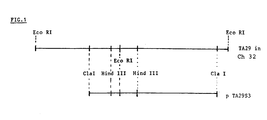
- the sequence of the Cla I insert in pTA29S3 was determined from the Cla I site to the Hind III site (3261 base pairs apart). Comparison of the TA29 cDNA sequence and the pTA29S3 sequence revealed the presence of a sequence in the pTA29S3 which was completely homologous with the TA29 cDNA sequence.
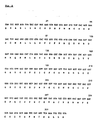
- Figure 3 shows the sequence of the TA29 gene in pTA29S3.
- the sequence in pTA29S3 that is identical to the TA29 cDNA sequence is between the arrows in Fig. 3.
- a putative open reading frame is revealed by the corresponding amino acid sequence in Fig. 3. This indicates that the TA29 gene encodes a protein of 321 amino acid residues and that there are no introns present in the coding region.
- the length of the open reading frame of 964 (+ leader) nucleotides matches the size of a transcript present in tobacco anther mRNA prepared from anthers isolated from young (12-20 mm long) tobacco flower buds and absent in the mRNA isolated from leaf and older flowers (when the buds are opened and petals have appeared). The size of this mRNA is approximately 1100 nucleotides.
- an oligomer of 24 nucleotides having the sequence: 5′ GGA GCT ACC ATT TTA CGT AAT TTC 3′, was used as it is complementary to the TA29 gene from nt 1514 to nt 1537 as shown in Fig. 3.
- This oligonucleotide was 32P labeled by kination at the 5′ end. After being hybridized with anther mRNA, the oligonucleotide was extended by reverse transcriptase. The resulting extended oligonucleotide was analyzed on a sequencing gel, next to a sequencing ladder, to determine its exact size. The fragment was shown to be 61 nucleotides long. This indicates that transcription initiation of the TA29 mRNA occurred at nt 1477 (indicated by asterisk in Fig. 3). Hence, the TA29 gene has a TATA box located 31 nucleotides upstream of the transcription initiation site.
- the mRNA contains a 51 nucleotide-long leader sequence from nt 1477 to nt 1527, a coding region of 964 nucleotides from nt 1527 to nt 2491, and a 3′ non coding region of approximately 100 nucleotides from nt 2492 to nt 2590.
- a 51 nucleotide-long leader sequence from nt 1477 to nt 1527
- a coding region of 964 nucleotides from nt 1527 to nt 2491 and a 3′ non coding region of approximately 100 nucleotides from nt 2492 to nt 2590.
- NAR Nucleic Acids Research
- a cassette was constructed as shown in Fig. 4 by subcloning a 2.5 kb Cla I/ Acc I fragment from pTA29S3 into the polylinker Acc I site of pMAC 5-8 (European patent application 87/402348.4). This produced a vector named "pMB2", shown in Fig. 4, which could be used to isolate single strand DNA for use in site directed mutagenesis.
- TA13 cDNA is a clone of 1100 bp which hybridized to two mRNA species of about 1100 and 1200 nucleotides, respectively, which are specific for tapetum cells and are abundant at a very early stage of anther development.
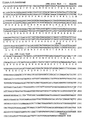
- TA13 cDNA was sequenced, using the procedure of Example 2, and then compared with the sequence of TA29 cDNA as shown in Fig. 3B. This sequence comparison reveals that TA13 cDNA and TA29 cDNA share 92% homology, and the ORF is very rich in glycine content.
- TA26 cDNA was cloned as a Pst I insert into pBR329 by poly-G/C tailing. It is a clone of 519 bp which hybridized to one tobacco mRNA species of 580 nucleotides, which mRNA is specific for tapetum cells and abundant at a certain stage of anther development.
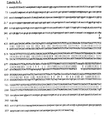
- the entire TA26 cDNA was sequenced, using the procedure of Example 2, and when compared with the sequence of TA29 cDNA, revealed no homology. The sequence of TA26 cDNA is given in Fig. 3C.
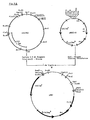
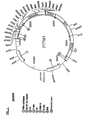
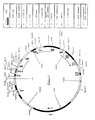
- pTTM3 shown in Fig. 5
- Fig. 5 A plasmid named "pTTM3", shown in Fig. 5, was constructed by assembling the following well known DNA fragments:
- Example 6 Introduction of the chimaeric DNA sequence of Example 5 into tobacco
- a recombinant Agrobacterium strain was constructed by mobilizing pTTM3 (from Example 5) from E . coli into Agrobacterium C58C1 Rif R containing pGV2260 (De Blaere et al (1985) NAR 13 , 4777). Mobilization was carried out using E . coli HB101 containing pRK2013 (Figurski et al (1979) PNAS 76, 1648) as a helper as described in European patent publication 0,116,718. The resulting Agrobacterium strain contained a hybrid Ti-plasmid comprising pGV2260 and pTTM3.
- This strain was used to transform tobacco leaf discs ( N . tabacum Petite Havane SR1) using standard procedures as described, for example, in European patent application 87/400,544.0. Transformed calli and shoots were selected using 5 mg/l of the herbicide phosphinothricin in the medium (De Block et al (1987) EMBO J. 6 , 2513). No beta-glucuronidase enzyme activity was detected in the transformed herbicide-resistant calli and shoots.
- the transformed shoots were rooted, transferred to soil in the greenhouse and grown until they flowered.
- the flowers were examined, and only the tapetum cells in the anthers of the stamen were found to contain beta-glucuronidase activity. This shows that the TA29 promoter is capable of directing expression of a heterologous gene, like the beta-glucuronidase gene, selectively in tapetum cells of the plants.
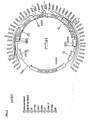
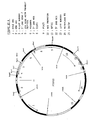
- pTTM4 A plasmid named "pTTM4", shown in Fig. 6, was constructed by assembling the following well known DNA fragments:
- Example 8 Introduction of the chimaeric DNA sequence of Example 7 into tobacco
- pTMM4 (from Example 7) was introduced with mobilization from E. coli into Agrobacterium C58C1 Rif R .
- the resulting Agrobacterium strain contained a binary type Ti-plasmid comprising pGV2260 and pTTM4.
- this strain was used to transform tobacco leaf discs, and transformed calli and shoots were selected using 5 mg/l of phosphinothricin. Transformed herbicide-resistant shoots were rooted, which shows that gene 4 was not yet being expressed in the transformed plants.
- the plants were then transferred to soil in the greenhouse and grown until they flower.
- the flowers are examined, and no functional tapetum cells are found in their anthers of their stamen. This shows that the TA29 promoter is capable of directing expression of the heterologous gene 4 selectively in tapetum cells of the plants.
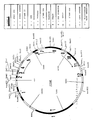
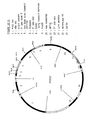
- pTTM6 shown in Fig. 7A, was constructed by assembling the following well known DNA fragments:
- Example 10 Introduction of the chimaeric DNA sequence of Example 9 into tobacco
- Example 6 a recombinant Agrobacterium strain was constructed by mobilization of pTTM6 (from Example 9) from E . coli into Agrobacterium C58C1 Rif R .
- Transformed calli and shoots were selected using 5 mg/l phosphinothricin. That the RNase T1 gene was not expressed in the transformed herbicide-resistant calli and shoots was shown by their growth.
- the transformed shoots were rooted, transferred to soil in the greenhouse and grown until they flowered.
- the transformed tobacco plants developed normal flowers except for their anthers.
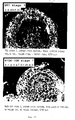
- the anthers although of normal shape, dehisched later in time, compared to the anthers of non-transformed tobacco plants (see Fig. 11).
- the pollen grains formed by the transformed plants were about 50 to 100 times smaller in volume than normal pollen grains and were irregularly shaped.
- most of the pollen grains from transformed plants failed to germinate, and the germination efficiency of pollen from transformed plants was about 0 to 2% of the germination efficiency of normal pollen grains.
- the transformed plants did not produce any seeds by self-pollination -- neither by natural self-pollination nor by hand-provoked self-pollination.
- TA29 promoter is capable of directing expression of the heterologous RNase T1 gene selectively in tapetum cells of the transformed plants, and that the RNase T1 is capable of sufficiently disturbing the functioning of the tapetum cells, so as to render the plants male-sterile.
- Example 11 Introduction of a derivative of the chimaeric DNA sequence of Example 9 into oilseed rape
- a recombinant Agrobacterium strain was constructed by mobilization of pTTM6A ⁇ from E . coli into Agrobacterium C58 Rif R containing pMP90 (Koncz and Schell (1986) Mol. Gen. Genetics 204 , 383-396).
- pMP90 provides vir and trans functions and does not carry a gene encoding ampicillin resistance.
- pTTMA6A ⁇ is a derivative of PTTM6 (from Example 9), in which the ⁇ -lactamase gene encoding ampicillin resistance has been inactivated by insertion of a DNA sequence into the Sca I site of the ⁇ -lactamase gene.
- A3144 The resulting Agrobacterium strain (named "A3144"), harboring pMP90 and pTTM6A ⁇ , was used for the transformation of Brassica napus according to the procedure of Lloyd et al (1986) Science 234 , 464-466 and Klimaszewska et al (1985) Plant Cell Tissue Organ Culture 4 , 183-197. Carbenicillin was used to kill A3144 after co-cultivation occurred. Transformed calli were selected on 5 mg/l phosphinotricine and 100 ug/ml kanamycin, and resistant calli were regenerated into plants. After induction of shoots and roots, the transformants were transferred to the greenhouse and grown until they flower.
- the flowers are examined, and they exhibit essentially the same phenotype as was observed for the transformed tobacco plants described in Example 10.
- This shows that the TA29 promoter is capable of directing the expression of the heterologous RNase T1 gene selectively in tapetum cells of plants other than tobacco, so as to render such other plants male-sterile.
- pTTM8 A plasmid named "pTTM8" shown in Fig. 8, was constructed by assembling the following well known fragments:
- Example 13 Introduction of the chimaeric DNA sequence of Example 12 into tobacco and oilseed rape
- a recombinant Agrobacterium strain was constructed by mobilizing pTTM8 (from Example 12) from E . coli into Agrobacterium C58C1 Rif R containing pMP90 (Koncz and Schell (1986) Mol. Gen. Genetics 204 , 383-396).
- the resulting strain (named "A3135"), harboring pMP90 and pTTM8, is used for tobacco leaf disc transformation and for oilseed rape transformation.
- Transformed calli and shots are selected using 5mg/l phosphinothricin and 100 ug/ml kanamycin. That the Barnase gene is not expressed in the transformed herbicide-resistant calli and shoots is shown by their growth.
- the transformed shoots are rooted, transferred to soil in the greenhouse and grown until they flower.
- the flowers of both the tobacco and oilseed rape are examined, and a phenotype is observed for the transformed plants that is essentially the same as the phenotype of the transformed tobacco plants described in Example 10.
- This shows that the TA29 promoter is capable of directing expression of the heterologous barnase gene selectively in tapetum cells of the plants, thereby rendering the plants male-sterile.
- pTVEP1 A plasmid named "pTVEP1", shown in Fig. 9A, is constructed by assembling the following well known fragments:
- a plasmid name "pTVEP2”, shown in Fig. 9B, is also constructed by assembling the following well known fragments:
- Example 15 Introduction of the chimaeric DNA sequences of Example 14 into tobacco and oilseed rape
- pTVEP1 and pTVEP2 are each mobilized from E . coli into separate Agrobacterium C58C1 Rif R carrying pMP90.
- the resulting strains harboring pMP90 with pTVEP1 and pMP90 with pTVEP2, are used to transform tobacco and oilseed rape following the procedures of Examples 11 and 13. That the papain genes are not expressed in transformed herbicide- and kanamycin-resistant calli, shoots and roots is shown by their growth.
- the transformed plants are transferred into the greenhouse and grown in soil until they flower.
- the flowers of both the tobacco and oilseed rape are examined, and phenotypes are observed for the transformed plants that are essentially the same as the phenotype of the transformed tobacco plants described in Example 10.
- This shows that the TA29 promoter is capable of directing expression of the heterologous papain genes in pTVEP1 and pTVEP2 selectively in tapetum cells of the plants, thereby rendering the plants male-sterile.
- pTVE63 shown in Fig.10A, was constructed by assembling the following well known fragments:
- Example 17 Introduction of the chimaeric DNA sequences of Example 16 into tobacco and oilseed rape
- pTVE62 and pTVE63 were mobilized from E . coli into Agrobacterium C58C1 Rif R carrying pMP90.
- the transformed plants are transferred into the greenhouse and grown in soil until they flower.
- the flowers of both the tobacco and oilseed rape are examined, and phenotypes are observed for the transformed plants that are essentially the same as of the transformed tobacco plants described in Example 10.
- This shows that the TA29 promoter is capable of directing expression of the heterologous Eco RI endonuclease gene selectively in the tapetum cells of the plants transformed with pTVE62 and pTVE63, thereby rendering the plants male-sterile.
- this invention is not limited to the transformation of any specific plant(s).
- the invention relates to any plant, the nuclear genome of which can be transformed with a male-sterility DNA under the control of a first promoter that can direct expression of the male-sterility DNA selectively in the plant's stamen cells, whereby the plant can be both self-pollinated and cross-pollinated.
- this invention relates to plants such as potato, tomato, oilseed rape, alfalfa, sunflower, cotton, celery, onion, corn, soybean, tobacco, brassica vegetables and sugarbeet.
- this invention is not limited to the specific plasmids and vectors described in the foregoing Examples, but rather encompasses any plasmids and vectors containing the male-sterility DNA under the control of the first promoter.
- this invention is not limited to the specific promoters described in the foregoing Examples, such as the TA29 promoter, but rather encompass any DNA sequence encoding a promoter capable of directing expression of the male-sterility DNA selectively in stamen cells.
- this invention encompasses the DNA sequence of the TA29 promoter of Fig. 3A, as well as any equivalent DNA sequences, such as that of the TA13 promoter of Fig. 3B and the TA 26 promoter of Fig. 3C, which can be used to control the expression of the male-sterility DNA selectively in tapetum cells of a plant.
- DNA sequences of the TA29, TA26 and TA13 promoters can be modified by: 1) replacing some codons with others that code either for the same amino acids or for other amino acids; and/or 2) deleting or adding some codons; provided that such modifications do not substantially alter the properties of the encoded promoter for controlling tapetum-specific expression of a male-sterility.
- this invention is not limited to the specific male-sterility DNAs described in the foregoing Examples but rather encompasses any DNA sequence encoding a first RNA, protein or polypeptide which disturbs significantly the metabolism functioning and/or development of a stamen cell in which it is produced, under the control of the first promoter.
- this invention is not limited to the specific marker DNAs described in the foregoing Examples but rather encompasses any DNA sequence encoding a second RNA, protein or polypeptide which confers on at least a specific plant tissue or specific plant cells, in which such DNA sequence is expressed, a distinctive trait compared to such a specific plant tissue or specific plant cells in which such DNA sequence is not expressed.
Landscapes
- Health & Medical Sciences (AREA)
- Life Sciences & Earth Sciences (AREA)
- Genetics & Genomics (AREA)
- Chemical & Material Sciences (AREA)
- Engineering & Computer Science (AREA)
- Organic Chemistry (AREA)
- Bioinformatics & Cheminformatics (AREA)
- Zoology (AREA)
- Wood Science & Technology (AREA)
- Biomedical Technology (AREA)
- General Engineering & Computer Science (AREA)
- Biotechnology (AREA)
- Biochemistry (AREA)
- Molecular Biology (AREA)
- General Health & Medical Sciences (AREA)
- Microbiology (AREA)
- Medicinal Chemistry (AREA)
- Biophysics (AREA)
- Plant Pathology (AREA)
- Cell Biology (AREA)
- Physics & Mathematics (AREA)
- Botany (AREA)
- Pregnancy & Childbirth (AREA)
- Reproductive Health (AREA)
- Gastroenterology & Hepatology (AREA)
- Proteomics, Peptides & Aminoacids (AREA)
- Breeding Of Plants And Reproduction By Means Of Culturing (AREA)
- Micro-Organisms Or Cultivation Processes Thereof (AREA)
- Cultivation Of Plants (AREA)
- Preparation Of Compounds By Using Micro-Organisms (AREA)
- Agricultural Chemicals And Associated Chemicals (AREA)
- Fertilizers (AREA)
Priority Applications (1)
| Application Number | Priority Date | Filing Date | Title |
|---|---|---|---|
| EP96107004A EP0737749B1 (de) | 1988-04-28 | 1989-04-26 | Pflanzen mit modifizierten Staubblattzellen |
Applications Claiming Priority (2)
| Application Number | Priority Date | Filing Date | Title |
|---|---|---|---|
| GB888810120A GB8810120D0 (en) | 1988-04-28 | 1988-04-28 | Transgenic nuclear male sterile plants |
| GB8810120 | 1988-04-28 |
Related Child Applications (2)
| Application Number | Title | Priority Date | Filing Date |
|---|---|---|---|
| EP96107004A Division EP0737749B1 (de) | 1988-04-28 | 1989-04-26 | Pflanzen mit modifizierten Staubblattzellen |
| EP96107004.2 Division-Into | 1989-04-26 |
Publications (2)
| Publication Number | Publication Date |
|---|---|
| EP0344029A1 true EP0344029A1 (de) | 1989-11-29 |
| EP0344029B1 EP0344029B1 (de) | 1997-01-29 |
Family
ID=10636060
Family Applications (2)
| Application Number | Title | Priority Date | Filing Date |
|---|---|---|---|
| EP89401194A Expired - Lifetime EP0344029B1 (de) | 1988-04-28 | 1989-04-26 | Pflanzen mit modifizierten Staubblattzellen |
| EP96107004A Expired - Lifetime EP0737749B1 (de) | 1988-04-28 | 1989-04-26 | Pflanzen mit modifizierten Staubblattzellen |
Family Applications After (1)
| Application Number | Title | Priority Date | Filing Date |
|---|---|---|---|
| EP96107004A Expired - Lifetime EP0737749B1 (de) | 1988-04-28 | 1989-04-26 | Pflanzen mit modifizierten Staubblattzellen |
Country Status (17)
| Country | Link |
|---|---|
| US (6) | US6372967B1 (de) |
| EP (2) | EP0344029B1 (de) |
| JP (2) | JP3020530B2 (de) |
| AT (2) | ATE395425T1 (de) |
| AU (2) | AU621113C (de) |
| CA (3) | CA1340324C (de) |
| DE (2) | DE68929558D1 (de) |
| DK (1) | DK175585B1 (de) |
| ES (1) | ES2097745T3 (de) |
| GB (1) | GB8810120D0 (de) |
| GR (1) | GR3023224T3 (de) |
| HU (1) | HU217413B (de) |
| IE (1) | IE81154B1 (de) |
| IL (1) | IL90095A (de) |
| PT (1) | PT90420B (de) |
| WO (1) | WO1989010396A1 (de) |
| ZA (1) | ZA893136B (de) |
Cited By (61)
| Publication number | Priority date | Publication date | Assignee | Title |
|---|---|---|---|---|
| EP0409628A1 (de) * | 1989-07-19 | 1991-01-23 | Calgene, Inc. | Zusammensetzung und Verfahren zur Regulierung der Gehalte an endogenen Cytokininen |
| EP0412006A1 (de) * | 1989-08-04 | 1991-02-06 | Plant Genetic Systems, N.V. | Pflanzen mit modifizierten Blüten, Samen oder Embryos |
| WO1992004454A1 (en) * | 1990-09-06 | 1992-03-19 | E.I. Du Pont De Nemours And Company | Compounds and constructs for producing male sterile plants |
| WO1992009696A1 (en) * | 1990-11-23 | 1992-06-11 | Plant Genetic Systems, N.V. | Process for transforming monocotyledonous plants |
| WO1992011379A1 (en) * | 1990-12-24 | 1992-07-09 | Nickerson Biocem Limited | Tapetum-specific promoters from brassicaceae spp |
| WO1992013956A1 (en) * | 1991-02-08 | 1992-08-20 | Plant Genetic Systems, N.V. | Stamen-specific promoters from rice |
| WO1992013957A1 (en) * | 1991-02-07 | 1992-08-20 | Plant Genetic Systems, N.V. | Stamen-specific promoters from corn |
| EP0436467A3 (en) * | 1989-12-29 | 1992-10-21 | Ciba-Geigy Ag | Expression of s-locus specific glycoprotein gene in transgenic plants |
| US5177307A (en) * | 1987-05-26 | 1993-01-05 | Calgene, Inc. | Compositions and methods for modulation of endogenous cytokinin levels |
| WO1993002197A1 (en) * | 1991-07-23 | 1993-02-04 | Nickerson Biocem Limited | CALLASE-RELATED DNAs AND THEIR USE IN ARTIFICIAL MALE STERILITY |
| EP0537399A1 (de) * | 1991-10-16 | 1993-04-21 | Plant Genetic Systems, N.V. | Neu Ribonuklease und ihre Inhibitor |
| EP0578611A1 (de) * | 1992-07-02 | 1994-01-12 | Ciba-Geigy Ag | Anthere-spezifische cDNA-Sequenzen, genomische DNA-sequenzen und rekombinante DNA-sequenzen |
| WO1994018335A3 (en) * | 1993-01-29 | 1995-01-12 | Monsanto Co | Method of controlling plant pathogenic fungi |
| EP0672155A1 (de) * | 1992-06-30 | 1995-09-20 | Asgrow Seed Company | Verfahren zur erzeugung einer pflanze mit veraenderter floraler morphologie und verfahren zum schutz von pflanzen vor schaedklingsinsekten |
| WO1996025505A1 (en) * | 1995-02-16 | 1996-08-22 | Pioneer Hi-Bred International, Inc. | Methods for maintaining sterility in plants |
| EP0757102A1 (de) | 1995-08-04 | 1997-02-05 | Plant Genetic Systems N.V. | Genetische Transformation durch Verwendung von einem PARP-Inhibitor |
| WO1996040925A3 (en) * | 1995-06-07 | 1997-05-01 | Pioneer Hi Bred Int | Regulatory elements conferring tapetum specificity |
| US5633441A (en) * | 1989-08-04 | 1997-05-27 | Plant Genetic Systems, N.V. | Plants with genetic female sterility |
| EP0790311A1 (de) * | 1996-02-16 | 1997-08-20 | Centrum Voor Plantenveredelings- En Reproduktieonderzoek | Mikrospore-spezifischer Promotor aus Tabak |
| WO1997038116A1 (en) * | 1996-04-11 | 1997-10-16 | Gene Shears Pty. Limited | The use of dna sequences for male sterility in transgenic plants |
| US5689041A (en) * | 1989-08-10 | 1997-11-18 | Plant Gentic Systems N.V. | Plants modified with barstar for fertility restoration |
| US5750867A (en) * | 1992-06-12 | 1998-05-12 | Plant Genetic Systems, N.V. | Maintenance of male-sterile plants |
| US5770718A (en) * | 1991-05-23 | 1998-06-23 | University Of Waterloo | Gene for APRT from plant tissue |
| US5843739A (en) * | 1992-12-10 | 1998-12-01 | Nickerson Biocem Limited | DNA encoding 2-acyltransferases |
| US5880331A (en) * | 1994-06-06 | 1999-03-09 | Plant Genetic Systems, N.V. | Use of anthocyanin genes to maintain male sterile plants |
| WO1999013089A1 (en) * | 1997-09-11 | 1999-03-18 | Biogemma Uk Limited | Nucleic acid sequences to reduce another dehiscence |
| WO1999042598A2 (en) | 1998-02-20 | 1999-08-26 | Zeneca Limited | Hybrid seed production |
| US6008437A (en) * | 1995-06-06 | 1999-12-28 | Plant Genetic Systems | Use of anthocyanin genes to maintain male sterile plants |
| US6046382A (en) * | 1989-08-10 | 2000-04-04 | Plant Genetic Systems, N.V. | Plants with modified flowers |
| EP0922095A4 (de) * | 1996-03-28 | 2000-07-05 | Univ Washington | Zusammensetzungen und verfahren zur herstellung maennlich-steriler pflanzen |
| US6096946A (en) * | 1995-03-31 | 2000-08-01 | Biogemma Uk Limited | Control of pod dehiscence |
| US6211437B1 (en) | 1997-03-04 | 2001-04-03 | Pioneer Hi-Bred International, Inc. | Nucleic acids from maize encoding proteins which suppress plant cell death |
| SG80514A1 (en) * | 1990-09-26 | 2001-05-22 | Fb Invest Pty Ltd | Plants and methods of modification thereof |
| WO2001041558A1 (en) * | 1999-12-08 | 2001-06-14 | Aventis Cropscience N.V. | Hybrid winter oilseed rape and methods for producing same |
| US6384304B1 (en) | 1999-10-15 | 2002-05-07 | Plant Genetic Systems N.V. | Conditional sterility in wheat |
| US6509516B1 (en) | 1999-10-29 | 2003-01-21 | Plant Genetic Systems N.V. | Male-sterile brassica plants and methods for producing same |
| EP1098965A4 (de) * | 1998-06-19 | 2003-04-23 | Advanta Tech Ltd | Verfahren zur konversion von keimplasma |
| WO2002007504A3 (en) * | 2000-07-26 | 2003-04-24 | Stine Seed Farm Inc | Hybrid soybeans and methods of production |
| US6583340B2 (en) | 1995-02-09 | 2003-06-24 | Gene Shears Pty. Limited | DNA sequence encoding plant 2-acyltransferase |
| US6890726B1 (en) | 1999-04-06 | 2005-05-10 | Oklahoma Medical Research Foundation | Method for selecting recombinase variants with altered specificity |
| EP1597965A1 (de) | 2004-05-19 | 2005-11-23 | Seminis Vegetable Seeds, Inc. | Angepasste Brokkoliart zum mühelosen Ernten |
| US7112719B2 (en) * | 1997-02-27 | 2006-09-26 | Biogemma | Use of male sterility to prevent transgene spread in plants |
| US7262055B2 (en) | 1998-08-25 | 2007-08-28 | Gendaq Limited | Regulated gene expression in plants |
| US7282624B2 (en) | 2000-10-14 | 2007-10-16 | Advanced Technologies (Cambridge) Limited | Plant cell death system |
| US7285416B2 (en) | 2000-01-24 | 2007-10-23 | Gendaq Limited | Regulated gene expression in plants |
| US7429692B2 (en) | 2004-10-14 | 2008-09-30 | Ceres, Inc. | Sucrose synthase 3 promoter from rice and uses thereof |
| EP2141239A1 (de) | 2003-12-16 | 2010-01-06 | Pioneer Hi-Bred International, Inc. | Gensuppression durch dominante Transgene und Methoden zur Verwendung |
| WO2010061276A1 (en) | 2008-11-28 | 2010-06-03 | Council Of Scientific & Industrial Research | Method for producing male sterile plants |
| US7759546B2 (en) | 1999-07-30 | 2010-07-20 | University Of Bath | Methods for modifying plant endosperm |
| EP2322542A1 (de) | 2004-09-22 | 2011-05-18 | ArborGen Inc. | Geräte zur Ablation von Fortpflanzungsgewebe |
| EP2422616A2 (de) | 2005-11-22 | 2012-02-29 | Seminis Vegetable Seeds, Inc. | Brokkoli-typ mit Köpfen mit einzeln stehenden Röschen |
| WO2012143520A1 (en) | 2011-04-21 | 2012-10-26 | Rothamsted Research Limited | A method for decreasing the viscosity of flour |
| WO2016166776A1 (en) | 2015-04-16 | 2016-10-20 | Council Of Scientific & Industrial Research | Novel reversible expression system for transgene expression in plants |
| DE102016106656A1 (de) | 2016-04-12 | 2017-10-12 | Kws Saat Se | Kernkodierte männliche Sterilität durch Mutation in Cytochrom P450 Oxidase |
| DE102016015741A1 (de) | 2016-04-12 | 2017-11-30 | Kws Saat Se | Kernkodierte männliche Sterilität durch Mutation in Cytochrom P450 Oxidase |
| US9920332B2 (en) | 2013-04-19 | 2018-03-20 | Bayer Cropscience Nv | Hybrid brassica plants and methods for producing same |
| WO2019178554A1 (en) | 2018-03-16 | 2019-09-19 | BASF Agricultural Solutions Seed US LLC | Brassica plant resistant to plasmodiophora brassicae (clubroot) |
| US10767190B2 (en) | 2015-12-15 | 2020-09-08 | Basf Agricultural Solutions Seed, Us Llc | Brassicaceae plants resistant to Plasmodiophora brassicae (clubroot) |
| WO2023004429A1 (en) | 2021-07-23 | 2023-01-26 | BASF Agricultural Solutions Seed US LLC | Blackleg resistant plants and methods for the identification of blackleg resistant plants |
| WO2024020360A1 (en) | 2022-07-18 | 2024-01-25 | Pairwise Plants Services, Inc. | Mustard green plants named 'pwrg-1', 'pwrg-2,' and 'pwsgc' |
| WO2025083165A1 (en) | 2023-10-19 | 2025-04-24 | Basf Agricultural Solutions Us Llc | Brassica napus plants having enhanced blackleg resistance |
Families Citing this family (502)
| Publication number | Priority date | Publication date | Assignee | Title |
|---|---|---|---|---|
| GB8901677D0 (en) * | 1989-01-26 | 1989-03-15 | Ici Plc | Hybrid seed production |
| US6737560B1 (en) | 1988-02-03 | 2004-05-18 | Pioneer Hi-Bred International, Inc. | Molecular methods of hybrid seed production |
| US6191343B1 (en) | 1988-02-03 | 2001-02-20 | Pioneer Hi-Bred International | Molecular methods of hybrid seed production |
| GB8901675D0 (en) * | 1989-01-26 | 1989-03-15 | Ici Plc | Inhibitor of gene expression |
| ATE294872T1 (de) * | 1989-02-02 | 2005-05-15 | Pioneer Hi Bred Int | Molekulare verfahren zur vermehrung von hybriden saaten |
| US6946587B1 (en) | 1990-01-22 | 2005-09-20 | Dekalb Genetics Corporation | Method for preparing fertile transgenic corn plants |
| US6329574B1 (en) | 1990-01-22 | 2001-12-11 | Dekalb Genetics Corporation | High lysine fertile transgenic corn plants |
| WO1991010725A1 (en) * | 1990-01-22 | 1991-07-25 | Dekalb Plant Genetics | Fertile transgenic corn plants |
| CA2042448A1 (en) * | 1990-06-05 | 1991-12-06 | Jonathan P. Duvick | Antimicrobial peptides and plant disease resistance based thereon |
| US6297426B1 (en) | 1990-06-12 | 2001-10-02 | Pioneer Hi-Bred International, Inc. | Methods of mediating female fertility in plants |
| US5432068A (en) * | 1990-06-12 | 1995-07-11 | Pioneer Hi-Bred International, Inc. | Control of male fertility using externally inducible promoter sequences |
| US5478369A (en) * | 1990-06-12 | 1995-12-26 | Pioneer Hi-Bred International, Inc. | Nucleotide sequences mediating male fertility and method of using same |
| US5824524A (en) * | 1990-06-12 | 1998-10-20 | Pioneer Hi-Bred International, Inc. | Nucleotide sequences mediating fertility and method of using same |
| CA2042447C (en) * | 1990-06-12 | 1999-09-28 | Marc C. Albertsen | Control of microsporogenesis by externally inducible promoter sequences |
| EP0540561B1 (de) * | 1990-07-20 | 1998-11-25 | Pioneer Hi-Bred International, Inc. | Binäres cryptocytotoxisches verfahren zur herstellung von hybrid-saatgut |
| US6395966B1 (en) | 1990-08-09 | 2002-05-28 | Dekalb Genetics Corp. | Fertile transgenic maize plants containing a gene encoding the pat protein |
| AU665339B2 (en) * | 1990-09-26 | 1996-01-04 | Fb Investments Pty Ltd | A plant and method of modification |
| IE921206A1 (en) * | 1991-04-16 | 1992-10-21 | Mogen Int | Male-sterile plants, method for obtaining male-sterile¹plants and recombinant dna for use therein |
| US5409823A (en) * | 1992-09-24 | 1995-04-25 | Ciba-Geigy Corporation | Methods for the production of hybrid seed |
| US6326527B1 (en) | 1993-08-25 | 2001-12-04 | Dekalb Genetics Corporation | Method for altering the nutritional content of plant seed |
| US6013859A (en) * | 1994-07-14 | 2000-01-11 | Pioneer Hi-Bred International, Inc. | Molecular methods of hybrid seed production |
| AU1214397A (en) * | 1995-12-21 | 1997-07-17 | New Zealand Institute For Crop & Food Research Limited | Production of true-breeding transgenics seeds from plants heterozygous for transgene insertions |
| US6476291B1 (en) | 1996-12-20 | 2002-11-05 | New Zealand Institute For Food And Crop Research Limited | True breeding transgenics from plants heterozygous for transgene insertions |
| GB9706381D0 (en) * | 1997-03-27 | 1997-05-14 | Cambridge Advanced Tech | Improvements relating to the specificity of gene expression |
| AR012335A1 (es) * | 1997-04-03 | 2000-10-18 | Dekalb Genetics Corp | Planta de maiz transgenica fertil y metodo para prepararla, dichas plantas endogamica y cruzada resistentes al glifosato, metodos para cultivar eincrementar el rendimiento de maiz, producir forraje, alimento para seres humanos, almidon, y criar plantas. |
| US6037523A (en) * | 1997-06-23 | 2000-03-14 | Pioneer Hi-Bred International | Male tissue-preferred regulatory region and method of using same |
| US7154024B2 (en) | 1997-06-23 | 2006-12-26 | Pioneer Hi-Bred, Inc. | Male tissue-preferred regulatory sequences of Ms45 gene and method of using same |
| US7303917B2 (en) * | 1998-03-20 | 2007-12-04 | Her Majesty The Queen In Right Of Canada As Represented By The Minister Of Agriculture And Agri-Food Eastern Cereal & Oilseed, Research Center | Modification of pollen coat protein composition |
| AUPP249298A0 (en) | 1998-03-20 | 1998-04-23 | Ag-Gene Australia Limited | Synthetic genes and genetic constructs comprising same I |
| CN101818145A (zh) | 1998-03-20 | 2010-09-01 | 联邦科学和工业研究组织 | 控制基因表达 |
| US8598332B1 (en) | 1998-04-08 | 2013-12-03 | Bayer Cropscience N.V. | Methods and means for obtaining modified phenotypes |
| US20040214330A1 (en) | 1999-04-07 | 2004-10-28 | Waterhouse Peter Michael | Methods and means for obtaining modified phenotypes |
| CN1202246C (zh) | 1998-04-08 | 2005-05-18 | 联邦科学和工业研究组织 | 获得修饰表型的方法和措施 |
| US6693185B2 (en) | 1998-07-17 | 2004-02-17 | Bayer Bioscience N.V. | Methods and means to modulate programmed cell death in eukaryotic cells |
| AR021056A1 (es) * | 1998-11-03 | 2002-06-12 | Syngenta Participations Ag | Adn que comprende un gen especifico de antera de arroz y planta transgenica transformada con el mismo |
| US6423885B1 (en) | 1999-08-13 | 2002-07-23 | Commonwealth Scientific And Industrial Research Organization (Csiro) | Methods for obtaining modified phenotypes in plant cells |
| JP2001095406A (ja) * | 1999-09-30 | 2001-04-10 | Japan Tobacco Inc | 雄性不稔植物の作出方法 |
| US6444877B1 (en) | 1999-11-04 | 2002-09-03 | Westvaco Corporation | Liquidambar styraciflua AGAMOUS (LSAG) gene |
| DE60143959D1 (de) | 2000-08-25 | 2011-03-10 | Basf Plant Science Gmbh | En kodieren |
| EP1207204A1 (de) | 2000-11-16 | 2002-05-22 | KWS Saat AG | Gewebespezifische Promotoren aus der Zuckerrübe |
| US7645919B2 (en) * | 2001-08-06 | 2010-01-12 | Monsanto Technology Llc | DNA molecules from maize and methods of use thereof |
| US7230168B2 (en) | 2001-12-20 | 2007-06-12 | The Curators Of The University Of Missouri | Reversible male sterility in transgenic plants by expression of cytokinin oxidase |
| CA2445291A1 (en) * | 2002-02-07 | 2003-08-14 | Hybrigene, Inc | Prevention of transgene escape in genetically modified perennials |
| US20100031387A1 (en) * | 2002-02-07 | 2010-02-04 | Hybrigene, Inc. | Prevention of transgene escape in genetically modified perennials |
| CA2478904A1 (en) | 2002-03-14 | 2003-09-18 | Commonwealth Scientific And Industrial Research Organisation | Modified gene-silencing rna and uses thereof |
| DE10212892A1 (de) | 2002-03-20 | 2003-10-09 | Basf Plant Science Gmbh | Konstrukte und Verfahren zur Regulation der Genexpression |
| CN100342018C (zh) * | 2002-03-22 | 2007-10-10 | 独立行政法人农业·生物系特定产业技术研究机构 | 功能性植物、为培育该功能性植物而使用的启动子及其应用方法 |
| US20050044596A1 (en) * | 2003-03-19 | 2005-02-24 | Smith Alan G. | Methods to confer enhanced floral properties to plants |
| US7786349B2 (en) | 2003-04-09 | 2010-08-31 | Bayer Bioscience N.V. | Methods and means for increasing the tolerance of plants to stress conditions |
| WO2005001101A1 (en) | 2003-06-03 | 2005-01-06 | University Of Georgia Research Foundation, Inc. | Conditional sterility in plants |
| IL157538A0 (en) | 2003-08-21 | 2004-03-28 | Bar Ilan Res & Dev Company Ltd | Plant resistant to cytoplasm-feeding parasites |
| JP2007507237A (ja) | 2003-10-03 | 2007-03-29 | ユニバーシティー オブ フロリダ リサーチ ファウンデイション インコーポレイテッド | 植物における香味および芳香性の揮発性物質の合成のための材料および方法 |
| KR100537955B1 (ko) * | 2003-10-29 | 2005-12-20 | 학교법인고려중앙학원 | 꽃가루 특이적 유전자 발현 프로모터 |
| US20070169227A1 (en) | 2003-12-16 | 2007-07-19 | Pioneer Hi-Bred International Inc. | Dominant Gene Suppression Transgenes and Methods of Using Same |
| WO2005100575A2 (en) | 2004-04-14 | 2005-10-27 | Bayer Bioscience N.V. | Rice pollen-specific promoters and uses thereof |
| KR20120138840A (ko) | 2004-09-24 | 2012-12-26 | 바이엘 크롭사이언스 엔.브이. | 스트레스 내성 식물 |
| GB0421598D0 (en) | 2004-09-29 | 2004-10-27 | Cambridge Advanced Tech | Modification of plant development and morphology |
| JP2007060979A (ja) * | 2005-08-31 | 2007-03-15 | Asahi Breweries Ltd | システインプロテアーゼ遺伝子を導入した葯の裂開を抑制する植物 |
| WO2007039454A1 (en) | 2005-09-20 | 2007-04-12 | Basf Plant Science Gmbh | Methods for controlling gene expression using ta-siran |
| US8669418B2 (en) * | 2005-12-22 | 2014-03-11 | Vib Vzw | Means and methods for mediating protein interference |
| CA2646476A1 (en) | 2006-03-21 | 2007-09-27 | Bayer Bioscience N.V. | Stress resistant plants |
| WO2007131699A2 (en) | 2006-05-12 | 2007-11-22 | Bayer Bioscience N.V. | Novel stress-related microrna molecules and uses thereof |
| CL2007003744A1 (es) | 2006-12-22 | 2008-07-11 | Bayer Cropscience Ag | Composicion que comprende un derivado 2-piridilmetilbenzamida y un compuesto insecticida; y metodo para controlar de forma curativa o preventiva hongos fitopatogenos de cultivos e insectos. |
| CL2007003743A1 (es) | 2006-12-22 | 2008-07-11 | Bayer Cropscience Ag | Composicion que comprende fenamidona y un compuesto insecticida; y metodo para controlar de forma curativa o preventiva hongos fitopatogenos de cultivos e insectos. |
| BRPI0701230B1 (pt) | 2007-02-05 | 2018-06-26 | Empresa Brasileira De Pesquisa Agropecuária - Embrapa | Composições e métodos para modificar a expressão de genes usando o promotor do gene da proteína de conjugação à ubiquitina de plantas de algodoeiro |
| BRPI0701172B1 (pt) | 2007-02-05 | 2019-11-26 | Empresa Brasileira De Pesquisa Agropecuaria Embrapa | composições e métodos para modificar a expressão de genes usando o promotor do gene da proteína de conjugação à ubiquitina de plantas de soja |
| EP1969929A1 (de) | 2007-03-12 | 2008-09-17 | Bayer CropScience AG | Substituierte Phenylamidine und deren Verwendung als Fungizide |
| WO2008110281A2 (de) | 2007-03-12 | 2008-09-18 | Bayer Cropscience Ag | 3,4-disubstituierte phenoxyphenylamidine und deren verwendung als fungizide |
| WO2008110279A1 (de) | 2007-03-12 | 2008-09-18 | Bayer Cropscience Ag | Dihalogenphenoxyphenylamidine und deren verwendung als fungizide |
| EP1969934A1 (de) * | 2007-03-12 | 2008-09-17 | Bayer CropScience AG | 4-Cycloalkyl-oder 4-arylsubstituierte Phenoxyphenylamidine und deren Verwendung als Fungizide |
| EP1969930A1 (de) | 2007-03-12 | 2008-09-17 | Bayer CropScience AG | Phenoxyphenylamidine und deren Verwendung als Fungizide |
| EP1969931A1 (de) * | 2007-03-12 | 2008-09-17 | Bayer CropScience Aktiengesellschaft | Fluoalkylphenylamidine und deren Verwendung als Fungizide |
| BRPI0701826B1 (pt) | 2007-03-16 | 2021-02-17 | Embrapa - Empresa Brasileira De Pesquisa Agropecuária | proteínas da teia de aranha nephilengys cruentata, avicularia juruensis e parawixia bistriata isoladas da biodiversidade brasileira |
| BRPI0810654B1 (pt) | 2007-04-19 | 2016-10-04 | Bayer Cropscience Ag | tiadiazoliloxifenilamidinas, seu uso e seu método de preparação, composição e método para combate de micro-organismos indesejados, semente resistente a micro-organismo indesejado, bem como método para proteger a dita semente contra micro-organismos |
| US8626337B2 (en) * | 2007-04-24 | 2014-01-07 | Pioneer Hi Bred International Inc | Method and computer program product for distinguishing and sorting seeds containing a genetic element of interest |
| US8459463B2 (en) | 2007-04-24 | 2013-06-11 | Pioneer Hi-Bred International, Inc. | Method for sorting resistant seed from a mixture with susceptible seed |
| US8452445B2 (en) | 2007-04-24 | 2013-05-28 | Pioneer Hi-Bred International, Inc. | Method and computer program product for distinguishing and sorting seeds containing a genetic element of interest |
| AU2008286701B2 (en) | 2007-08-14 | 2015-02-12 | Commonwealth Scientific And Industrial Research Organisation | Improved gene silencing methods |
| DE102007045922A1 (de) | 2007-09-26 | 2009-04-02 | Bayer Cropscience Ag | Wirkstoffkombinationen mit insektiziden und akariziden Eigenschaften |
| DE102007045957A1 (de) | 2007-09-26 | 2009-04-09 | Bayer Cropscience Ag | Wirkstoffkombinationen mit insektiziden und akarziden Eigenschaften |
| DE102007045956A1 (de) | 2007-09-26 | 2009-04-09 | Bayer Cropscience Ag | Wirkstoffkombination mit insektiziden und akariziden Eigenschaften |
| DE102007045920B4 (de) | 2007-09-26 | 2018-07-05 | Bayer Intellectual Property Gmbh | Synergistische Wirkstoffkombinationen |
| DE102007045953B4 (de) | 2007-09-26 | 2018-07-05 | Bayer Intellectual Property Gmbh | Wirkstoffkombinationen mit insektiziden und akariziden Eigenschaften |
| DE102007045955A1 (de) | 2007-09-26 | 2009-04-09 | Bayer Cropscience Ag | Wirkstoffkombinationen mit insektiziden und akariziden Eigenschaften |
| DE102007045919B4 (de) | 2007-09-26 | 2018-07-05 | Bayer Intellectual Property Gmbh | Wirkstoffkombinationen mit insektiziden und akariziden Eigenschaften |
| EP2090168A1 (de) | 2008-02-12 | 2009-08-19 | Bayer CropScience AG | Methode zur Verbesserung des Pflanzenwachstums |
| EP2064952A1 (de) | 2007-11-29 | 2009-06-03 | Bayer CropScience AG | Verfahren zur Reduzierung der Mycotoxin-Kontaminierung von Mais |
| EP2070415A1 (de) | 2007-12-11 | 2009-06-17 | Bayer CropScience AG | Wirkstoffkombinationen |
| EP2070414A1 (de) | 2007-12-11 | 2009-06-17 | Bayer CropScience AG | Wirkstoffkombinationen |
| EP2070411A1 (de) | 2007-12-11 | 2009-06-17 | Bayer CropScience AG | Wirkstoffkombinationen |
| EP2070416A1 (de) | 2007-12-11 | 2009-06-17 | Bayer CropScience AG | Verwendung von Wirkstoffkombinationen zur Bekämpfung von tierischen Schädlingen |
| EP2070413A1 (de) | 2007-12-11 | 2009-06-17 | Bayer CropScience AG | Wirkstoffkombinationen |
| WO2009085982A1 (en) | 2007-12-19 | 2009-07-09 | Monsanto Technology Llc | Method to enhance yield and purity of hybrid crops |
| EP2072506A1 (de) | 2007-12-21 | 2009-06-24 | Bayer CropScience AG | Thiazolyloxyphenylamidine oder Thiadiazolyloxyphenylamidine und deren Verwendung als Fungizide |
| EP2092824A1 (de) | 2008-02-25 | 2009-08-26 | Bayer CropScience AG | Heterocyclyl-Pyrimidine |
| EP2103615A1 (de) | 2008-03-19 | 2009-09-23 | Bayer CropScience AG | 4'4'-Dioxaspiro-spirocyclisch substituierte Tetramate |
| JP4251375B1 (ja) | 2008-04-30 | 2009-04-08 | 淳一 田中 | 遺伝子操作手法により作出される優性の雄性不稔性を用いる自殖性植物におけるゲノムシャッフリング法および同方法に基づく循環選抜育種システム。 |
| MX2010011879A (es) | 2008-04-30 | 2010-12-06 | Bayer Cropscience Ag | Esteres y tioesteres del acido tiazol-4-carboxilico como agentes fitoprotectores. |
| BRPI0913885A8 (pt) | 2008-06-27 | 2016-08-02 | Bayer Cropscience Ag | tiadiazoliloxifenilamidinas e seu uso como fungicidas |
| EP2168434A1 (de) | 2008-08-02 | 2010-03-31 | Bayer CropScience AG | Verwendung von Azolen zur Steigerung der Resistenz von Pflanzen oder Pflanzenteilen gegenüber abiotischem Stress |
| AU2009281457A1 (en) | 2008-08-14 | 2010-02-18 | Bayer Cropscience Ag | Insecticidal 4-phenyl-1H-pyrazoles |
| DE102008041695A1 (de) | 2008-08-29 | 2010-03-04 | Bayer Cropscience Ag | Methoden zur Verbesserung des Pflanzenwachstums |
| EP2161259A1 (de) | 2008-09-03 | 2010-03-10 | Bayer CropScience AG | 4-Halogenalkylsubstituierte Diaminopyrimidine als Fungizide |
| BRPI0920767B1 (pt) * | 2008-10-01 | 2018-07-17 | Bayer Intellectual Property Gmbh | tiazóis substituídos por heterociclila como agentes protetores de cultura, seus usos e seus processos de preparação, composições e seu processo de preparação, e método para combate a fungos nocivos fitopatogênicos |
| CN102238874B (zh) * | 2008-10-02 | 2015-02-18 | 拜尔农作物科学股份公司 | 含硫杂芳香酸类似物的用途 |
| BRPI0920122B1 (pt) | 2008-10-15 | 2017-12-19 | Bayer Intellectual Property Gmbh | Ditiin-tetracarboximides and their uses for combating phytopathogenic fungi |
| EP2184273A1 (de) | 2008-11-05 | 2010-05-12 | Bayer CropScience AG | Halogen-substituierte Verbindungen als Pestizide |
| TW201031327A (en) | 2008-11-14 | 2010-09-01 | Bayer Cropscience Ag | Active compound combinations having insecticidal and acaricidal properties |
| EP2201838A1 (de) | 2008-12-05 | 2010-06-30 | Bayer CropScience AG | Wirkstoff-Nützlings-Kombinationen mit insektiziden und akariziden Eigenschaften |
| WO2010069495A1 (de) * | 2008-12-18 | 2010-06-24 | Bayer Cropscience Aktiengesellschaft | Atpenine |
| EP2198710A1 (de) | 2008-12-19 | 2010-06-23 | Bayer CropScience AG | Verwendung von 5-Pyridin-4yl-(1,3)Thiazole zur Bekämpfung phytopathogener Pilze |
| EP2198709A1 (de) | 2008-12-19 | 2010-06-23 | Bayer CropScience AG | Verfahren zur Bekämpfung resistenter tierischer Schädlinge |
| EP2204094A1 (de) | 2008-12-29 | 2010-07-07 | Bayer CropScience AG | Verfahren zur verbesserten Verwendung des Herstellungspotentials von transgenen Pflanzen |
| EP2039770A2 (de) | 2009-01-06 | 2009-03-25 | Bayer CropScience AG | Verfahren zur verbesserten Nutzung des Produktionspotentials transgener Pflanzen |
| EP2039771A2 (de) | 2009-01-06 | 2009-03-25 | Bayer CropScience AG | Verfahren zur verbesserten Nutzung des Produktionspotentials transgener Pflanzen |
| EP2039772A2 (de) | 2009-01-06 | 2009-03-25 | Bayer CropScience AG | Verfahren zur verbesserten Nutzung des Produktionspotentials transgener Pflanzen |
| WO2010081646A2 (de) | 2009-01-15 | 2010-07-22 | Bayer Cropscience Aktiengesellschaft | Fungizide wirkstoffkombinationen |
| EP2387317A2 (de) | 2009-01-15 | 2011-11-23 | Bayer CropScience AG | Fungizide Wirkstoffkombinationen enthaltend Bixafen oder dessen Salze |
| WO2010081689A2 (en) | 2009-01-19 | 2010-07-22 | Bayer Cropscience Ag | Cyclic diones and their use as insecticides, acaricides and/or fungicides |
| EP2227951A1 (de) | 2009-01-23 | 2010-09-15 | Bayer CropScience AG | Verwendung von Enaminocarbonylverbindungen zur Bekämpfung von durch Insekten übertragenen Viren |
| EP2100506A2 (de) | 2009-01-23 | 2009-09-16 | Bayer CropScience AG | Verwendungen von Fluopyram |
| ES2406131T3 (es) | 2009-01-28 | 2013-06-05 | Bayer Intellectual Property Gmbh | Derivados fungicidas de N-cicloalquil-N-biciclometileno-carboxamina |
| AR075126A1 (es) | 2009-01-29 | 2011-03-09 | Bayer Cropscience Ag | Metodo para el mejor uso del potencial de produccion de plantas transgenicas |
| EP2223917A1 (de) | 2009-02-02 | 2010-09-01 | Bayer CropScience AG | Isothiazolyloxyphenylamidine und deren Verwendung als Fungizide |
| JP6121649B2 (ja) | 2009-02-03 | 2017-04-26 | バイエル・インテレクチュアル・プロパティ・ゲゼルシャフト・ミット・ベシュレンクテル・ハフツングBayer Intellectual Property GmbH | 殺細菌剤としての硫黄含有複素芳香族酸類似体の使用 |
| JP5728735B2 (ja) | 2009-02-17 | 2015-06-03 | バイエル・インテレクチュアル・プロパティ・ゲゼルシャフト・ミット・ベシュレンクテル・ハフツングBayer Intellectual Property GmbH | 殺菌性n−(フェニルシクロアルキル)カルボキサミド、n−(ベンジルシクロアルキル)カルボキサミド及びチオカルボキサミド誘導体 |
| EP2218717A1 (de) | 2009-02-17 | 2010-08-18 | Bayer CropScience AG | Fungizide N-((HET)Arylethyl)Thiocarboxamid-Derivative |
| TW201031331A (en) | 2009-02-19 | 2010-09-01 | Bayer Cropscience Ag | Pesticide composition comprising a tetrazolyloxime derivative and a fungicide or an insecticide active substance |
| DE102009001469A1 (de) | 2009-03-11 | 2009-09-24 | Bayer Cropscience Ag | Verfahren zur verbesserten Nutzung des Produktionspotentials transgener Pflanzen |
| BRPI1008949B1 (pt) | 2009-03-11 | 2018-07-10 | Bayer Intellectual Property Gmbh | Cetoenóis haloalquilmetilenóxi-fenil-substituídos e seu uso, composição, seu uso e seu método de produção, métodos para combate de pestes animais e/ou crescimento de plantas indesejadas |
| DE102010000662A1 (de) | 2009-03-18 | 2010-10-21 | Bayer Cropscience Ag | Aminopropylthiazol-Derivate als Fungizide |
| DE102009001681A1 (de) | 2009-03-20 | 2010-09-23 | Bayer Cropscience Ag | Verfahren zur verbesserten Nutzung des Produktionspotentials transgener Pflanzen |
| DE102009001728A1 (de) | 2009-03-23 | 2010-09-30 | Bayer Cropscience Ag | Verfahren zur verbesserten Nutzung des Produktionspotentials transgener Pflanzen |
| DE102009001730A1 (de) | 2009-03-23 | 2010-09-30 | Bayer Cropscience Ag | Verfahren zur verbesserten Nutzung des Produktionspotentials transgener Pflanzen |
| DE102009001732A1 (de) | 2009-03-23 | 2010-09-30 | Bayer Cropscience Ag | Verfahren zur verbesserten Nutzung des Produktionspotentials transgener Pflanzen |
| MX2011009732A (es) | 2009-03-25 | 2011-09-29 | Bayer Cropscience Ag | Combinaciones de principios activos sinergicas. |
| EP2232995A1 (de) | 2009-03-25 | 2010-09-29 | Bayer CropScience AG | Verfahren zur verbesserten Nutzung des Produktionspotentials transgener Pflanzen |
| US8828906B2 (en) | 2009-03-25 | 2014-09-09 | Bayer Cropscience Ag | Active compound combinations having insecticidal and acaricidal properties |
| CN102395271A (zh) | 2009-03-25 | 2012-03-28 | 拜尔农作物科学股份公司 | 具有杀虫和杀螨特性的活性化合物结合物 |
| MA33140B1 (fr) | 2009-03-25 | 2012-03-01 | Bayer Cropscience Ag | Combinaisons d'agents actifs ayant des proprietes insecticides et acaricides |
| CN102448305B (zh) | 2009-03-25 | 2015-04-01 | 拜尔农作物科学股份公司 | 具有杀昆虫和杀螨虫特性的活性成分结合物 |
| EP2239331A1 (de) | 2009-04-07 | 2010-10-13 | Bayer CropScience AG | Verfahren zur verbesserten Verwendung des Herstellungspotentials von transgenen Pflanzen |
| EP2245936A1 (de) | 2009-04-27 | 2010-11-03 | Bayer CropScience AG | Verwendung von 4-Azaindolderivaten zur Verringerung von Mykotoxinkontamination |
| US8835657B2 (en) | 2009-05-06 | 2014-09-16 | Bayer Cropscience Ag | Cyclopentanedione compounds and their use as insecticides, acaricides and/or fungicides |
| EP2251331A1 (de) | 2009-05-15 | 2010-11-17 | Bayer CropScience AG | Fungizide Pyrazolcarboxamid-Derivate |
| AR076839A1 (es) | 2009-05-15 | 2011-07-13 | Bayer Cropscience Ag | Derivados fungicidas de pirazol carboxamidas |
| CN102439013B (zh) | 2009-05-19 | 2015-03-18 | 拜尔农作物科学股份公司 | 螺杂环特窗酸衍生物 |
| EP2253617A1 (de) | 2009-05-20 | 2010-11-24 | Bayer CropScience AG | Halogen-substituierte Verbindungen als Pestizide |
| EP2255626A1 (de) | 2009-05-27 | 2010-12-01 | Bayer CropScience AG | Verwendung von Succinat Dehydrogenase Inhibitoren zur Steigerung der Resistenz von Pflanzen oder Pflanzenteilen gegenüber abiotischem Stress |
| CN102595889A (zh) | 2009-06-02 | 2012-07-18 | 拜耳作物科学公司 | 琥珀酸脱氢酶抑制剂在控制核盘菌属真菌中的应用 |
| EP2264011A1 (de) | 2009-06-03 | 2010-12-22 | Bayer CropScience AG | Heteroarylamidine und deren Verwendung als Fungizide |
| EP2264010A1 (de) | 2009-06-03 | 2010-12-22 | Bayer CropScience AG | Hetarylamidine |
| EP2264012A1 (de) | 2009-06-03 | 2010-12-22 | Bayer CropScience AG | Heteroarylamidine und deren Verwendung als Fungizide |
| JP5925677B2 (ja) | 2009-06-15 | 2016-06-01 | アイコン・ジェネティクス・ゲーエムベーハー | キシロシルトランスフェラーゼ活性の欠損したベンサミアナタバコ(Nicotianabenthamiana)植物 |
| WO2010145789A1 (en) | 2009-06-18 | 2010-12-23 | Bayer Cropscience Ag | Propargyloxybenzamide derivatives |
| EP2272846A1 (de) | 2009-06-23 | 2011-01-12 | Bayer CropScience AG | Thiazolylpiperidin Derivate als Fungizide |
| EP2277868A1 (de) | 2009-06-24 | 2011-01-26 | Bayer CropScience AG | Phenyloxy(thio)phenylamidbenzoxa(thia)zole |
| EP2277870A1 (de) | 2009-06-24 | 2011-01-26 | Bayer CropScience AG | Substituierte Benzoxa(thia)zole |
| EP2277869A1 (de) | 2009-06-24 | 2011-01-26 | Bayer CropScience AG | Cycloalkylamidbenzoxa(thia)zole als Fungizide |
| BR112012000170A2 (pt) | 2009-07-08 | 2019-09-24 | Bayer Cropscience Ag | derivados de fenil (oxi/tio) alcanol substituídos |
| MX2012000279A (es) | 2009-07-08 | 2012-01-27 | Bayer Cropscience Ag | Derivados de fenil (oxi/tio) alcanol. |
| KR20120051015A (ko) | 2009-07-16 | 2012-05-21 | 바이엘 크롭사이언스 아게 | 페닐 트리아졸을 함유하는 상승적 활성 물질 배합물 |
| WO2011006604A1 (de) | 2009-07-17 | 2011-01-20 | Bayer Cropscience Ag | Substituierte aminothiazole und deren verwendung als fungizide |
| WO2011009182A2 (pt) | 2009-07-24 | 2011-01-27 | Embrapa - Empresa Brasileira De Pesquisa Agropecuária | Molécula de ácido nucléico isolada, construção gênica, vetor, célula transgênica, método para obtenção de uma célula e de uma planta transgênica, polipeptídeo isolado e purificado, composição pesticida biodegradável, método para o controle de uma praga, método de obtenção de linhagens transgênicas resistentes a um inseto praga |
| WO2011015524A2 (en) | 2009-08-03 | 2011-02-10 | Bayer Cropscience Ag | Fungicide heterocycles derivatives |
| EP2292094A1 (de) | 2009-09-02 | 2011-03-09 | Bayer CropScience AG | Wirkstoffkombinationen |
| AR077956A1 (es) | 2009-09-14 | 2011-10-05 | Bayer Cropscience Ag | Combinaciones de compuestos activos |
| EP2301350A1 (de) | 2009-09-16 | 2011-03-30 | Bayer CropScience AG | Verwendung von Succinat-Dehydrogenase-Inhibitoren zur Erhöhung des Inhalts gewünschter Bestandteile in Nutzpflanzen |
| WO2011032656A1 (de) | 2009-09-18 | 2011-03-24 | Bayer Cropscience Ag | 5-fluor-2-thio-substituierte pyrimidin-derivate |
| EP2308866A1 (de) | 2009-10-09 | 2011-04-13 | Bayer CropScience AG | Phenylpyri(mi)dinylpyrazole und ihre Verwendung als Fungizide |
| CN102548412B (zh) | 2009-10-15 | 2015-06-03 | 拜尔农作物科学股份公司 | 活性化合物结合物 |
| MX2012004363A (es) | 2009-10-16 | 2012-05-22 | Bayer Cropscience Ag | Aminopropenoatos como fungicidas. |
| AU2010309840B2 (en) | 2009-10-20 | 2015-07-16 | Bayer Cropscience Nv | Methods and means to alter lipid biosynthesis by targeting multiple enzymes to suborganelle domains |
| WO2011051243A1 (en) | 2009-10-29 | 2011-05-05 | Bayer Cropscience Ag | Active compound combinations |
| WO2011051198A2 (de) | 2009-10-30 | 2011-05-05 | Bayer Cropscience Ag | Pyridin-derivate als pflanzenschutzmittel |
| EP2493886B1 (de) | 2009-10-30 | 2014-11-26 | Bayer CropScience AG | Heteroarylpiperidin und -piperazin derivate |
| UA108216C2 (uk) | 2009-11-17 | 2015-04-10 | Баєр Кропсаєнс Аг | Комбінації активних сполук |
| EP2343280A1 (de) | 2009-12-10 | 2011-07-13 | Bayer CropScience AG | Fungizid-Chinolinderivate |
| WO2011080044A2 (en) | 2009-12-16 | 2011-07-07 | Bayer Cropscience Ag | Active compound combinations |
| WO2011082941A1 (de) | 2009-12-16 | 2011-07-14 | Bayer Cropscience Ag | Benzylsubstituierte thiadiazolyloxyphenylamidiniumsalze als fungizide |
| CN102762551A (zh) | 2009-12-21 | 2012-10-31 | 拜尔农作物科学股份公司 | 噻吩基吡(嘧)啶基吡唑及其用于防治植物致病菌的用途 |
| JP5785560B2 (ja) | 2009-12-21 | 2015-09-30 | バイエル・クロップサイエンス・アクチェンゲゼルシャフト | 殺真菌剤としてのビス(ジフルオロメチル)ピラゾール |
| EP2338890A1 (de) | 2009-12-22 | 2011-06-29 | Bayer CropScience AG | 4,7-Diazaindolderivate und ihre Verwendung als Fungizide |
| CN102725282B (zh) | 2009-12-28 | 2015-12-16 | 拜尔农科股份公司 | 杀真菌剂肟基-四唑衍生物 |
| EP2519103B1 (de) | 2009-12-28 | 2014-08-13 | Bayer Intellectual Property GmbH | Fungizide Hydroximoyl-Tetrazol-Derivate |
| KR20120102142A (ko) | 2009-12-28 | 2012-09-17 | 바이엘 크롭사이언스 아게 | 살진균제 히드록시모일-헤테로사이클 유도체 |
| EA022553B1 (ru) | 2010-01-22 | 2016-01-29 | Байер Интеллектуэль Проперти Гмбх | Применение комбинации биологически активных веществ, набор и средство, содержащие комбинацию биологически активных веществ, для борьбы с вредителями животного происхождения и способ улучшения использования продукционного потенциала трансгенного растения |
| EP2353387A1 (de) | 2010-02-05 | 2011-08-10 | Bayer CropScience AG | Verwendung von Succinat-Dehydrogenase (SDH)-Inhibitoren in der Behandlung von Pflanzenarten der Familie der Süßgräser |
| JP5892949B2 (ja) | 2010-02-10 | 2016-03-23 | バイエル・インテレクチュアル・プロパティ・ゲゼルシャフト・ミット・ベシュレンクテル・ハフツングBayer Intellectual Property GmbH | ビフェニル置換環状ケトエノール類 |
| ES2545113T3 (es) | 2010-02-10 | 2015-09-08 | Bayer Intellectual Property Gmbh | Derivados de ácido tetrámico sustituidos de manera espiroheterocíclica |
| UA108638C2 (uk) | 2010-03-04 | 2015-05-25 | Застосування солей імідів малеїнової кислоти для боротьби з фітопатогенними грибами | |
| ES2523503T3 (es) | 2010-03-04 | 2014-11-26 | Bayer Intellectual Property Gmbh | 2-Amidobencimidazoles sustituidos con fluoroalquilo y su uso para el aumento de la tolerancia al estrés en plantas |
| JP2013522274A (ja) | 2010-03-18 | 2013-06-13 | バイエル・インテレクチユアル・プロパテイー・ゲー・エム・ベー・ハー | 非生物的な植物ストレスに対する活性剤としてのアリールスルホンアミド類及びヘタリールスルホンアミド類 |
| WO2011117184A1 (de) | 2010-03-24 | 2011-09-29 | Bayer Cropscience Ag | Fludioxonil-derivate |
| JP2013523795A (ja) | 2010-04-06 | 2013-06-17 | バイエル・インテレクチユアル・プロパテイー・ゲー・エム・ベー・ハー | 植物のストレス耐性を増強させるための4−フェニル酪酸及び/又はその塩の使用 |
| AR081810A1 (es) | 2010-04-07 | 2012-10-24 | Bayer Cropscience Ag | Piridinilpirazoles biciclicos |
| BR112012025848A2 (pt) | 2010-04-09 | 2015-09-08 | Bayer Ip Gmbh | uso de derivados do ácido (1-cianociclopropil) fenilfosfínico, os ésteres do mesmo e/ou os sais do mesmo para aumentar a tolerância de plantas a estresse abiótico. |
| CN102947314B (zh) | 2010-04-14 | 2015-08-26 | 拜尔农作物科学股份公司 | 二噻英并哒嗪二酮衍生物 |
| PT2706058E (pt) | 2010-04-14 | 2015-11-25 | Bayer Ip Gmbh | Derivados de ditiina como fungicidas |
| CA2796156A1 (en) | 2010-04-14 | 2011-10-20 | Bayer Cropscience Ag | Thienodithiin derivatives as fungicides |
| EP2377397A1 (de) | 2010-04-14 | 2011-10-19 | Bayer CropScience AG | Verwendung fungizider Wirkstoffe zur Kontrolle von Mykosen an Palmengewächsen |
| AR084959A1 (es) | 2010-04-14 | 2013-07-24 | Bayer Cropscience Ag | Combinaciones de compuestos activos contra hongos fitopatogenos y composicion fungicida |
| CA2796166A1 (en) | 2010-04-14 | 2011-10-20 | Bayer Intellectual Property Gmbh | Active compound combinations |
| EP2377867A1 (de) | 2010-04-14 | 2011-10-19 | Bayer CropScience AG | Dithiinopyridazinon-Derivate |
| US20130116287A1 (en) | 2010-04-28 | 2013-05-09 | Christian Beier | Fungicide hydroximoyl-heterocycles derivatives |
| BR112012027558A2 (pt) | 2010-04-28 | 2015-09-15 | Bayer Cropscience Ag | ''composto da fórmula (i), composição fungicida e método para o controle de fungos fitogênicos de colheitas'' |
| JP5960683B2 (ja) | 2010-04-28 | 2016-08-02 | バイエル・インテレクチュアル・プロパティ・ゲゼルシャフト・ミット・ベシュレンクテル・ハフツングBayer Intellectual Property GmbH | 殺真菌剤としてのケトヘテロアリールピペリジンおよび−ピペラジン誘導体 |
| WO2011134911A2 (en) | 2010-04-28 | 2011-11-03 | Bayer Cropscience Ag | Fungicide hydroximoyl-tetrazole derivatives |
| US8815775B2 (en) | 2010-05-18 | 2014-08-26 | Bayer Cropscience Ag | Bis(difluoromethyl)pyrazoles as fungicides |
| CA2800634A1 (en) | 2010-05-27 | 2011-12-01 | Bayer Intellectual Property Gmbh | Heterocyclic alkanol derivatives as fungicides |
| BR112012030191A2 (pt) | 2010-05-27 | 2015-09-22 | Bayer Intelectual Property Gmbh | derivados de alcanol heterocíclicos como fungicidas |
| WO2011147813A1 (de) | 2010-05-27 | 2011-12-01 | Bayer Cropscience Ag | Heterocyclische thiosubstituierte alkanolderivate als fungizide |
| JP5872548B2 (ja) | 2010-05-27 | 2016-03-01 | バイエル・インテレクチュアル・プロパティ・ゲゼルシャフト・ミット・ベシュレンクテル・ハフツングBayer Intellectual Property GmbH | 殺菌剤としてのヘテロ環式アルカノール誘導体 |
| WO2011147816A1 (de) | 2010-05-27 | 2011-12-01 | Bayer Cropscience Ag | Heterocyclische alkanolderivate als fungizide |
| JP2013528169A (ja) | 2010-05-27 | 2013-07-08 | バイエル・クロップサイエンス・アーゲー | 殺菌剤としてのピリジニルカルボン酸誘導体 |
| UA110703C2 (uk) | 2010-06-03 | 2016-02-10 | Байєр Кропсайнс Аг | Фунгіцидні похідні n-[(тризаміщений силіл)метил]-карбоксаміду |
| EP2576512A1 (de) | 2010-06-03 | 2013-04-10 | Bayer Intellectual Property GmbH | O-cyclopropylcyclohexyl-carboxanilide und deren verwendung als fungizide |
| WO2011151370A1 (en) | 2010-06-03 | 2011-12-08 | Bayer Cropscience Ag | N-[(het)arylalkyl)] pyrazole (thio)carboxamides and their heterosubstituted analogues |
| AU2011260332B2 (en) | 2010-06-03 | 2014-10-02 | Bayer Cropscience Ag | N-[(het)arylethyl)] pyrazole(thio)carboxamides and their heterosubstituted analogues |
| US9593317B2 (en) | 2010-06-09 | 2017-03-14 | Bayer Cropscience Nv | Methods and means to modify a plant genome at a nucleotide sequence commonly used in plant genome engineering |
| CN109504700A (zh) | 2010-06-09 | 2019-03-22 | 拜尔作物科学公司 | 植物基因组改造中常用的在核苷酸序列上修饰植物基因组的方法和工具 |
| WO2011161034A1 (de) | 2010-06-22 | 2011-12-29 | Bayer Cropscience Ag | 3-aryl-4-(2,6-dimethylbenzyliden)-isoxazol-5(4h)-one als fungizide |
| WO2011161035A1 (de) | 2010-06-22 | 2011-12-29 | Bayer Cropscience Ag | 3-aryl-4-(2-thienylmethylen)-isoxazol-5(4h)-one als fungizide |
| CA2803695A1 (en) | 2010-06-28 | 2012-01-05 | Bayer Intellectual Property Gmbh | Heteroaryl-substituted pyridine compounds for use as pesticides |
| UA111593C2 (uk) | 2010-07-07 | 2016-05-25 | Баєр Інтеллекчуел Проперті Гмбх | Аміди антранілової кислоти у комбінації з фунгіцидами |
| US20140137294A1 (en) | 2010-07-08 | 2014-05-15 | University Of Copenhagen | Glucosinolate transporter protein and uses thereof |
| CA2805806A1 (en) | 2010-07-20 | 2012-01-26 | Ruediger Fischer | Use of anthranilic acid amide derivatives for increasing the stress tolerance in plants to abiotic stress |
| CN103003246B (zh) | 2010-07-20 | 2015-11-25 | 拜尔农科股份公司 | 作为抗真菌剂的苯并环烯烃 |
| EP3058823A1 (de) | 2010-08-05 | 2016-08-24 | Bayer Intellectual Property GmbH | Wirkstoffkombinationen enhaltend prothioconazol und fluxapyroxad zur kontrolle von rapskrankheiten |
| US20120122928A1 (en) | 2010-08-11 | 2012-05-17 | Bayer Cropscience Ag | Heteroarylpiperidine and -Piperazine Derivatives as Fungicides |
| US8759527B2 (en) | 2010-08-25 | 2014-06-24 | Bayer Cropscience Ag | Heteroarylpiperidine and -piperazine derivatives as fungicides |
| EP2423210A1 (de) | 2010-08-25 | 2012-02-29 | Bayer CropScience AG | Heteroarylpiperidin- und -piperazinderivate als Fungizide |
| CA2809219A1 (en) | 2010-08-26 | 2012-03-01 | Bayer Intellectual Property Gmbh | 5-iodo-triazole derivatives |
| PH12013500415A1 (en) | 2010-09-03 | 2013-04-15 | Bayer Ip Gmbh | Dithiin-tetra(thio) carboximides for controlling phytopathogenic fungi |
| WO2012028578A1 (de) | 2010-09-03 | 2012-03-08 | Bayer Cropscience Ag | Substituierte anellierte pyrimidinone und dihydropyrimidinone |
| JP2012082186A (ja) | 2010-09-15 | 2012-04-26 | Bayer Cropscience Ag | 殺虫性アリールピロリジン類 |
| JP2012062267A (ja) | 2010-09-15 | 2012-03-29 | Bayer Cropscience Ag | 殺虫性ピロリンn−オキサイド誘導体 |
| EP2460406A1 (de) | 2010-12-01 | 2012-06-06 | Bayer CropScience AG | Verwendung von Fluopyram zum Steuern von Nematoden in nematodresistentem Pflanzen |
| BR112013006611B1 (pt) | 2010-09-22 | 2021-01-19 | Bayer Intellectual Property Gmbh | método para o controle do nematoide de cisto de soja (heterodera glycines) infestando uma planta de soja resistente a nematoide compreendendo a aplicação de n- {2- [3-cloro-5- (trifluorometil)-2-piridinil]etil}-2-(trifluorometil) benzamida (fluorpiram |
| WO2012045726A2 (en) | 2010-10-07 | 2012-04-12 | Bayer Cropscience Ag | 5-heteroarylimino-1,2,3-dithiazoles |
| US9408391B2 (en) | 2010-10-07 | 2016-08-09 | Bayer Intellectual Property Gmbh | Fungicide composition comprising a tetrazolyloxime derivative and a thiazolylpiperidine derivative |
| EP2630135B1 (de) | 2010-10-21 | 2020-03-04 | Bayer Intellectual Property GmbH | 1-(heterocyclische carbonyl)-piperidine |
| BR112013009580B1 (pt) | 2010-10-21 | 2018-06-19 | Bayer Intellectual Property Gmbh | Composto de fómrula (i), composição fungicida e método para controlar fungos fitopatogênicos |
| PE20141002A1 (es) | 2010-10-27 | 2014-08-17 | Bayer Ip Gmbh | Derivados de heteroarilpiperidina y -piperazina como fungicidas |
| CA2815117A1 (en) | 2010-11-02 | 2012-05-10 | Bayer Intellectual Property Gmbh | N-hetarylmethyl pyrazolylcarboxamides |
| WO2012062749A1 (de) | 2010-11-12 | 2012-05-18 | Bayer Cropscience Ag | Benzimidazolidinone verwendbar als fungizide |
| AR083875A1 (es) | 2010-11-15 | 2013-03-27 | Bayer Cropscience Ag | N-aril pirazol(tio)carboxamidas |
| BR112013011937B1 (pt) | 2010-11-15 | 2018-05-15 | Bayer Intellectual Property Gmbh | Derivados de cianoenamina,composição e método para controlar fungos fitopatogênicos, uso de cianoenaminas e processo para preparação de composições para controlar fungos fitopatogênicos |
| CN103354807A (zh) | 2010-11-15 | 2013-10-16 | 拜耳知识产权有限责任公司 | 氰基烯胺及其作为杀真菌剂的用途 |
| CN103391925B (zh) | 2010-11-15 | 2017-06-06 | 拜耳知识产权有限责任公司 | 5‑卤代吡唑甲酰胺 |
| US20130231303A1 (en) | 2010-11-15 | 2013-09-05 | Bayer Intellectual Property Gmbh | 5-halogenopyrazole(thio)carboxamides |
| EP2454939A1 (de) | 2010-11-18 | 2012-05-23 | Bayer CropScience AG | Verarbeitung nach der Ernte |
| EP2646418B1 (de) | 2010-11-30 | 2017-10-04 | Bayer Intellectual Property GmbH | Pyrimidin-derivate und ihre verwendung als schädlingsbekämpfungsmittel |
| EP2460407A1 (de) | 2010-12-01 | 2012-06-06 | Bayer CropScience AG | Wirkstoffkombinationen umfassend Pyridylethylbenzamide und weitere Wirkstoffe |
| KR20180096815A (ko) | 2010-12-01 | 2018-08-29 | 바이엘 인텔렉쳐 프로퍼티 게엠베하 | 작물에서 선충류를 구제하고 수확량을 증가시키기 위한 플루오피람의 용도 |
| AR083987A1 (es) | 2010-12-01 | 2013-04-10 | Bayer Cropscience Ag | Amidas de acido pirazolcarboxilico utiles para la reduccion de la contaminacion de micotoxina en las plantas |
| EP2474542A1 (de) | 2010-12-29 | 2012-07-11 | Bayer CropScience AG | Fungizide Hydroximoyl-Tetrazol-Derivate |
| US20130289077A1 (en) | 2010-12-29 | 2013-10-31 | Juergen Benting | Fungicide hydroximoyl-tetrazole derivatives |
| EP2471363A1 (de) | 2010-12-30 | 2012-07-04 | Bayer CropScience AG | Verwendung von Aryl-, Heteroaryl- und Benzylsulfonamidocarbonsäuren, -carbonsäureestern, -carbonsäureamiden und -carbonitrilen oder deren Salze zur Steigerung der Stresstoleranz in Pflanzen |
| WO2012088645A1 (en) | 2010-12-31 | 2012-07-05 | Bayer Cropscience Ag | Method for improving plant quality |
| WO2012110517A1 (en) | 2011-02-15 | 2012-08-23 | Bayer Cropscience Ag | Synergistic combinations containing a dithiino-tetracarboxamide fungicide and a herbicide, safener or plant growth regulator |
| EP2675788A1 (de) | 2011-02-17 | 2013-12-25 | Bayer Intellectual Property GmbH | Substituierte 3-(biphenyl-3-yl)-8,8-difluor-4-hydroxy-1-azaspiro[4.5]dec-3-en-2-one zur therapie |
| US9204640B2 (en) | 2011-03-01 | 2015-12-08 | Bayer Intellectual Property Gmbh | 2-acyloxy-pyrrolin-4-ones |
| EP2494867A1 (de) | 2011-03-01 | 2012-09-05 | Bayer CropScience AG | Halogen-substituierte Verbindungen in Kombination mit Fungiziden |
| BR112013022998A2 (pt) | 2011-03-10 | 2018-07-03 | Bayer Ip Gmbh | método para aprimorar a germinação das sementes. |
| EP2508072A2 (de) | 2011-03-10 | 2012-10-10 | Bayer CropScience AG | Verwendung von Dithiintetracarbonsäureamiden zur Kontrolle phytopathogener Pilzen auf Knollen |
| EP2499911A1 (de) | 2011-03-11 | 2012-09-19 | Bayer Cropscience AG | Wirkstoffkombinationen enthaltend Fenhexamid |
| CN103502238A (zh) | 2011-03-14 | 2014-01-08 | 拜耳知识产权有限责任公司 | 杀真菌剂肟基-四唑衍生物 |
| EP2502495A1 (de) | 2011-03-16 | 2012-09-26 | Bayer CropScience AG | Verwendung eines Dithiino-Tetracarboxamids zum Schutz geernter Produkte gegen phytopathogene Pilzen |
| CN103502221B (zh) | 2011-03-18 | 2016-03-30 | 拜耳知识产权有限责任公司 | N-(3-氨甲酰基苯基)-1h-吡唑-5-甲酰胺衍生物及其用于防治动物害虫的用途 |
| EP3292761A1 (de) | 2011-03-23 | 2018-03-14 | Bayer Intellectual Property GmbH | Wirkstoffkombinationen |
| CN103607892A (zh) | 2011-03-25 | 2014-02-26 | 拜耳知识产权有限责任公司 | 包含二硫杂环己二烯四甲酰亚胺杀真菌剂的杀真菌组合产品 |
| EA024512B1 (ru) | 2011-03-31 | 2016-09-30 | Байер Интеллектуэль Проперти Гмбх | Гербицидно и фунгицидно действующие 3-фенилизоксазолин-5-карбоксамиды и 3-фенилизоксазолин-5-тиоамиды |
| CN103517900A (zh) | 2011-04-08 | 2014-01-15 | 拜耳知识产权有限责任公司 | 杀真菌剂肟基-四唑衍生物 |
| AR085587A1 (es) | 2011-04-13 | 2013-10-09 | Bayer Cropscience Ag | Combinaciones de compuestos activos |
| AR085588A1 (es) | 2011-04-13 | 2013-10-09 | Bayer Cropscience Ag | Combinaciones de compuestos activos |
| EP2510787A1 (de) | 2011-04-15 | 2012-10-17 | Bayer Cropscience AG | Propenoate als Fungizide |
| AR085568A1 (es) | 2011-04-15 | 2013-10-09 | Bayer Cropscience Ag | 5-(biciclo[4.1.0]hept-3-en-2-il)-penta-2,4-dienos y 5-(biciclo[4.1.0]hept-3-en-2-il)-pent-2-en-4-inos sustituidos como principios activos contra el estres abiotico de las plantas |
| AR090010A1 (es) | 2011-04-15 | 2014-10-15 | Bayer Cropscience Ag | 5-(ciclohex-2-en-1-il)-penta-2,4-dienos y 5-(ciclohex-2-en-1-il)-pent-2-en-4-inos sustituidos como principios activos contra el estres abiotico de las plantas, usos y metodos de tratamiento |
| AR085585A1 (es) | 2011-04-15 | 2013-10-09 | Bayer Cropscience Ag | Vinil- y alquinilciclohexanoles sustituidos como principios activos contra estres abiotico de plantas |
| EP2511255A1 (de) | 2011-04-15 | 2012-10-17 | Bayer CropScience AG | Substituierte Prop-2-in-1-ol- und Prop-2-en-1-ol-Derivate |
| WO2012143127A1 (en) | 2011-04-22 | 2012-10-26 | Bayer Cropsciences Ag | Active compound combinations comprising a (thio)carboxamide derivative and a fungicidal compound |
| EP2524601A1 (de) | 2011-05-17 | 2012-11-21 | Bayer CropScience AG | Wirkstoffkombinationen enthaltend ein Derivat der Phosphonsäure und Cyazofamid |
| EP2524598A1 (de) | 2011-05-17 | 2012-11-21 | Bayer CropScience AG | Wirkstoffkombinationen enthaltend dithianon |
| HUE037039T2 (hu) | 2011-05-17 | 2018-08-28 | Bayer Ip Gmbh | Aktív vegyület kombinációk |
| EP2524599A1 (de) | 2011-05-17 | 2012-11-21 | Bayer CropScience AG | Wirkstoffkombinationen |
| EP2524600A1 (de) | 2011-05-17 | 2012-11-21 | Bayer CropScience AG | Wirkstoffkombinationen enthaltend Phosphonsäure oder ein Derivat davon sowie Tebuconazol oder Myclobutanil |
| EP2532233A1 (de) | 2011-06-07 | 2012-12-12 | Bayer CropScience AG | Wirkstoffkombinationen |
| WO2012171914A1 (en) | 2011-06-14 | 2012-12-20 | Bayer Intellectual Property Gmbh | Use of an enaminocarbonyl compound in combination with a biological control agent |
| AR086992A1 (es) | 2011-06-20 | 2014-02-05 | Bayer Ip Gmbh | Tienilpiri(mi)dinilpirazoles |
| EP2540165A1 (de) | 2011-06-30 | 2013-01-02 | Bayer CropScience AG | Verwendung eines halogenierten Pestizids in Kombination mit einem biologischen Pestizid |
| JP2014520776A (ja) | 2011-07-04 | 2014-08-25 | バイエル・インテレクチユアル・プロパテイー・ゲー・エム・ベー・ハー | 植物における非生物的ストレスに対する活性薬剤としての置換されているイソキノリノン類、イソキノリンジオン類、イソキノリントリオン類およびジヒドロイソキノリノン類または各場合でのそれらの塩の使用 |
| UA115128C2 (uk) | 2011-07-27 | 2017-09-25 | Байєр Інтеллектуал Проперті Гмбх | Протравлювання насіння для боротьби з фітопатогенними грибами |
| US9181532B2 (en) | 2011-07-29 | 2015-11-10 | Icon Genetics Gmbh | Production of galactosylated N-glycans in plants |
| IN2014DN00156A (de) | 2011-08-10 | 2015-05-22 | Bayer Ip Gmbh | |
| EP2742030B1 (de) | 2011-08-11 | 2016-07-27 | Bayer Intellectual Property GmbH | 1,2,4-triazolyl-substituierte ketoenole zum einsatz im pflanzenschutz |
| WO2013026836A1 (en) | 2011-08-22 | 2013-02-28 | Bayer Intellectual Property Gmbh | Fungicide hydroximoyl-tetrazole derivatives |
| BR112014003919A2 (pt) | 2011-08-22 | 2017-03-14 | Bayer Cropscience Ag | métodos e meios para modificar um genoma de planta |
| EP2561759A1 (de) | 2011-08-26 | 2013-02-27 | Bayer Cropscience AG | Fluoralkyl-substituierte 2-amidobenzimidazole und ihre Wirkung auf das Pflanzenwachstum |
| RU2014113760A (ru) | 2011-09-09 | 2015-10-20 | Байер Интеллекчуал Проперти Гмбх | Ацил-гомосериновые лактоновые производные для повышения урожая растений |
| CN103874681B (zh) | 2011-09-12 | 2017-01-18 | 拜耳知识产权有限责任公司 | 杀真菌性4‑取代的‑3‑{苯基[(杂环基甲氧基)亚氨基]甲基}‑1,2,4‑噁二唑‑5(4h)‑酮衍生物 |
| ES2661849T3 (es) | 2011-09-15 | 2018-04-04 | Bayer Intellectual Property Gmbh | Piperidinpirazoles como fungicidas |
| UA115971C2 (uk) | 2011-09-16 | 2018-01-25 | Байєр Інтеллектуал Проперті Гмбх | Застосування ацилсульфонамідів для покращення врожайності рослин |
| EP2755484A1 (de) | 2011-09-16 | 2014-07-23 | Bayer Intellectual Property GmbH | Verwendung von 5-phenyl- oder 5-benzyl-2-isoxazolin-3-carboxylaten für erhöhten pflanzenertrag |
| AR087873A1 (es) | 2011-09-16 | 2014-04-23 | Bayer Ip Gmbh | Uso de fenilpirazolin-3-carboxilatos para mejorar el rendimiento de las plantas |
| BR112014006940A2 (pt) | 2011-09-23 | 2017-04-04 | Bayer Ip Gmbh | uso de derivados de ácido 1-fenilpirazol-3-carboxílico 4-substituído como agentes contra estresse abiótico em plantas |
| WO2013050155A1 (en) | 2011-10-04 | 2013-04-11 | Icon Genetics Gmbh | Nicotiana benthamiana plants deficient in fucosyltransferase activity |
| ES2628436T3 (es) | 2011-10-04 | 2017-08-02 | Bayer Intellectual Property Gmbh | ARNi para el control de hongos y oomicetos por la inhibición del gen de sacaropina deshidrogenasa |
| JP6211522B2 (ja) | 2011-10-06 | 2017-10-11 | バイエル・インテレクチュアル・プロパティ・ゲゼルシャフト・ミット・ベシュレンクテル・ハフツングBayer Intellectual Property GmbH | ヘテロシクリルピリ(ミ)ジニルピラゾール |
| MX355016B (es) | 2011-10-06 | 2018-04-02 | Bayer Ip Gmbh | Heterociclilpiri(mi)dinilpirazoles como fungicidas. |
| WO2013050324A1 (de) | 2011-10-06 | 2013-04-11 | Bayer Intellectual Property Gmbh | Abiotischen pflanzenstress-reduzierende kombination enthaltend 4- phenylbuttersäure (4-pba) oder eines ihrer salze (komponente (a)) und eine oder mehrere ausgewählte weitere agronomisch wirksame verbindungen (komponente(n) (b) |
| WO2013075817A1 (en) | 2011-11-21 | 2013-05-30 | Bayer Intellectual Property Gmbh | Fungicide n-[(trisubstitutedsilyl)methyl]-carboxamide derivatives |
| WO2013076227A1 (de) | 2011-11-25 | 2013-05-30 | Bayer Intellectual Property Gmbh | Neue heterocyclische alkanol-derivate |
| MX2014006072A (es) | 2011-11-25 | 2014-08-08 | Bayer Ip Gmbh | Derivados de 2-yodo-imidazol. |
| US9725414B2 (en) | 2011-11-30 | 2017-08-08 | Bayer Intellectual Property Gmbh | Fungicidal N-bicycloalkyl and N-tricycloalkyl pyrazole-4-(thio)carboxamide derivatives |
| EP2601839A1 (de) | 2011-12-08 | 2013-06-12 | Bayer CropScience AG | Synergistische fungizide Zusammensetzungen enthaltend ein Phosphorigsäure-Derivat und Zoxamide |
| EP2606732A1 (de) | 2011-12-19 | 2013-06-26 | Bayer CropScience AG | Verwendung von Anthranildiamidderivaten mit heteroaromatischen und heterocyclischen Substituenten in Verbindung mit einem biologischen Steuermittel |
| WO2013092519A1 (en) | 2011-12-19 | 2013-06-27 | Bayer Cropscience Ag | Use of anthranilic acid diamide derivatives for pest control in transgenic crops |
| EP2794573B1 (de) | 2011-12-20 | 2017-08-30 | Bayer Intellectual Property GmbH | Neue insektizide aromatische amide |
| DK2921493T3 (da) | 2011-12-27 | 2017-11-27 | Bayer Ip Gmbh | Heteroarylpiperidin og ¿piperazinderivater |
| CN104039769B (zh) | 2011-12-29 | 2016-10-19 | 拜耳知识产权有限责任公司 | 杀真菌的3-[(1,3-噻唑-4-基甲氧基亚氨基)(苯基)甲基]-2-取代的-1,2,4-噁二唑-5(2h)-酮衍生物 |
| WO2013098147A1 (en) | 2011-12-29 | 2013-07-04 | Bayer Intellectual Property Gmbh | Fungicidal 3-[(pyridin-2-ylmethoxyimino)(phenyl)methyl]-2-substituted-1,2,4-oxadiazol-5(2h)-one derivatives |
| JP6456145B2 (ja) | 2012-01-21 | 2019-01-23 | バイエル・インテレクチュアル・プロパティ・ゲゼルシャフト・ミット・ベシュレンクテル・ハフツングBayer Intellectual Property GmbH | 有用な植物における細菌性有害微生物を防除するための宿主防御誘発物質の使用 |
| JP6182158B2 (ja) | 2012-01-25 | 2017-08-16 | バイエル・インテレクチュアル・プロパティ・ゲゼルシャフト・ミット・ベシュレンクテル・ハフツングBayer Intellectual Property GmbH | フルオピラムとバシルス(Bacillus)と生物学的防除剤とを含んだ活性化合物組合せ |
| EP2806739A1 (de) | 2012-01-25 | 2014-12-03 | Bayer Intellectual Property GmbH | Wirkstoffkombinationen mit fluopyram und einem biologischen pflanzenschutzmittel |
| EP2622961A1 (de) | 2012-02-02 | 2013-08-07 | Bayer CropScience AG | Kombinationen aktiver Verbindungen |
| US9408386B2 (en) | 2012-02-22 | 2016-08-09 | Bayer Intellectual Property Gmbh | Use of succinate dehydrogenase inhibitors (SDHIs) for controlling wood diseases in grape |
| PE20190345A1 (es) | 2012-02-27 | 2019-03-07 | Bayer Ip Gmbh | Combinaciones de compuestos activos |
| WO2013138309A1 (en) | 2012-03-13 | 2013-09-19 | Pioneer Hi-Bred International, Inc. | Genetic reduction of male fertility in plants |
| CN104703998B (zh) | 2012-03-13 | 2020-08-21 | 先锋国际良种公司 | 植物中雄性育性的遗传减少 |
| EP2825532A1 (de) | 2012-03-14 | 2015-01-21 | Bayer Intellectual Property GmbH | Arylpyrrolidine als pestizide |
| WO2013139949A1 (en) | 2012-03-23 | 2013-09-26 | Bayer Intellectual Property Gmbh | Compositions comprising a strigolactame compound for enhanced plant growth and yield |
| JP2015517996A (ja) | 2012-04-12 | 2015-06-25 | バイエル・クロップサイエンス・アーゲーBayer Cropscience Ag | 殺真菌剤として有用なn−アシル−2−(シクロ)アルキルピロリジンおよびピペリジン |
| EP2838363A1 (de) | 2012-04-20 | 2015-02-25 | Bayer Cropscience AG | N-cycloalkyl-n-[(trisubstituiertes silylphenyl)methylen]-(thio)carboxamidderivate |
| AU2013251109B2 (en) | 2012-04-20 | 2017-08-24 | Bayer Cropscience Ag | N-cycloalkyl-N-[(heterocyclylphenyl)methylene]-(thio)carboxamide derivatives |
| EP2662363A1 (de) | 2012-05-09 | 2013-11-13 | Bayer CropScience AG | 5-Halogenpyrazol-Biphenyl-Carboxamide |
| EP2662360A1 (de) | 2012-05-09 | 2013-11-13 | Bayer CropScience AG | 5-Halogenpyrazol-Indanyl-Carboxamide |
| CN104768934B (zh) | 2012-05-09 | 2017-11-28 | 拜耳农作物科学股份公司 | 吡唑茚满基甲酰胺 |
| BR112014027644A2 (pt) | 2012-05-09 | 2017-06-27 | Bayer Cropscience Ag | 5-halogenopirazol-indanil-carboxamidas |
| EP2662370A1 (de) | 2012-05-09 | 2013-11-13 | Bayer CropScience AG | 5-Halogenpyrazol-Benzofuranyl-Carboxamide |
| EP2662362A1 (de) | 2012-05-09 | 2013-11-13 | Bayer CropScience AG | Pyrazol-Indanyl-Carboxamide |
| EP2662361A1 (de) | 2012-05-09 | 2013-11-13 | Bayer CropScience AG | Pyrazol-Indanyl-Carboxamide |
| EP2662364A1 (de) | 2012-05-09 | 2013-11-13 | Bayer CropScience AG | Pyrazol-Tetrahydronaphthyl-Carboxamide |
| AR091104A1 (es) | 2012-05-22 | 2015-01-14 | Bayer Cropscience Ag | Combinaciones de compuestos activos que comprenden un derivado lipo-quitooligosacarido y un compuesto nematicida, insecticida o fungicida |
| WO2013178658A1 (en) | 2012-05-30 | 2013-12-05 | Bayer Cropscience Ag | Compositions comprising a biological control agent and an insecticide |
| EP3281526A1 (de) | 2012-05-30 | 2018-02-14 | Bayer CropScience Aktiengesellschaft | Zusammensetzung mit einem biologischen bekämpfungsmittel und einem fungizid |
| TR201816257T4 (tr) | 2012-05-30 | 2018-11-21 | Bayer Cropscience Ag | Bir biyolojik kontrol ajanı ve trifloksistrobin içeren bileşim. |
| EP2854535A1 (de) | 2012-05-30 | 2015-04-08 | Bayer Cropscience AG | Zusammensetzungen mit einem biologischen schädlingsbekämpfungsmittel und einem insektizid |
| KR20150023475A (ko) | 2012-05-30 | 2015-03-05 | 바이엘 크롭사이언스 아게 | 생물학적 방제제, 및 지질막 합성, 멜라닌 생합성, 핵산 합성 또는 신호 전달의 억제제로부터 선택된 살진균제를 포함하는 조성물 |
| PT2854552T (pt) | 2012-05-30 | 2019-07-25 | Bayer Cropscience Ag | Composição compreendendo um agente de controlo biológico e um fungicida selecionado a partir de inibidores da biossíntese de aminoácidos ou proteínas, inibidores da produção de atp e inibidores da síntese da parede celular |
| CN107027809A (zh) | 2012-05-30 | 2017-08-11 | 拜耳作物科学股份公司 | 包含生物防治剂和选自呼吸链复合物i或ii抑制剂的杀真菌剂的组合物 |
| HRP20181752T1 (hr) | 2012-05-30 | 2018-12-28 | Bayer Cropscience Ag | Pripravak koji sadrži biološko kontrolno sredstvo i fluopikolid |
| WO2013184768A1 (en) | 2012-06-05 | 2013-12-12 | University Of Georgia Research Foundation, Inc. | Compositions and methods of gene silencing in plants |
| US10119147B2 (en) | 2012-07-06 | 2018-11-06 | Washington State University | Brassica plants with modified seed oil composition |
| US9968041B2 (en) | 2012-07-06 | 2018-05-15 | Bayer Cropscience Nv | Soybean ROD1 gene sequences and uses thereof |
| AU2013285456B2 (en) | 2012-07-06 | 2018-08-02 | BASF Agricultural Solutions Seed US LLC | Brassica ROD1 gene sequences and uses thereof |
| AU2013289301A1 (en) | 2012-07-11 | 2015-01-22 | Bayer Cropscience Ag | Use of fungicidal combinations for increasing the tolerance of a plant towards abiotic stress |
| EP2879493B1 (de) | 2012-07-31 | 2018-09-19 | Bayer CropScience AG | Pestizidzusammensetzungen enthaltend eine terpenmischung und flupyradifuron |
| US20150216168A1 (en) | 2012-09-05 | 2015-08-06 | Bayer Cropscience Ag | Use of substituted 2-amidobenzimidazoles, 2-amidobenzoxazoles and 2-amidobenzothiazoles or salts thereof as active substances against abiotic plant stress |
| JP6285937B2 (ja) | 2012-09-25 | 2018-02-28 | バイエル・クロップサイエンス・アクチェンゲゼルシャフト | 除草性および殺真菌性の5−オキシ置換3−フェニルイソオキサゾリン−5−カルボキサミドおよび5−オキシ置換3−フェニルイソオキサゾリン−5−チオアミド |
| DE102012219029A1 (de) | 2012-10-18 | 2014-04-24 | Bayer Cropscience Ag | Verwendung von Dithiin-tetracarboximiden zum Bekämpfen von neuer Blattfallkrankheit Marssonia coronaria |
| MX355153B (es) | 2012-10-19 | 2018-04-06 | Bayer Cropscience Ag | Combinaciones de compuestos activos que comprenden derivados de carboxamida y un agente de control biologico. |
| CA2888559C (en) | 2012-10-19 | 2021-03-02 | Bayer Cropscience Ag | Method for enhancing tolerance to abiotic stress in plants using carboxamide or thiocarboxamide derivatives |
| PL2908640T3 (pl) | 2012-10-19 | 2020-06-29 | Bayer Cropscience Ag | Sposób stymulowania wzrostu roślin przy pomocy pochodnych karboksamidu |
| ES2665320T3 (es) | 2012-10-19 | 2018-04-25 | Bayer Cropscience Ag | Procedimiento de tratamiento de plantas contra hongos resistentes a fungicidas usando derivados de carboxamida o de tiocarboxamida |
| CN105357968A (zh) | 2012-10-19 | 2016-02-24 | 拜尔农科股份公司 | 包含羧酰胺衍生物的活性化合物复配物 |
| EP2735231A1 (de) | 2012-11-23 | 2014-05-28 | Bayer CropScience AG | Wirkstoffkombinationen |
| WO2014083088A2 (en) | 2012-11-30 | 2014-06-05 | Bayer Cropscience Ag | Binary fungicidal mixtures |
| EP2925134B1 (de) | 2012-11-30 | 2019-12-25 | Bayer CropScience AG | Ternäre fungizidmischungen |
| WO2014083033A1 (en) | 2012-11-30 | 2014-06-05 | Bayer Cropsience Ag | Binary fungicidal or pesticidal mixture |
| EP2925138A1 (de) | 2012-11-30 | 2015-10-07 | Bayer CropScience AG | Ternäre fungizid- und pestizidmischungen |
| BR112015012473A2 (pt) | 2012-11-30 | 2017-07-11 | Bayer Cropscience Ag | misturas binárias pesticidas e fungicidas |
| JP2015535532A (ja) | 2012-12-03 | 2015-12-14 | バイエル・クロップサイエンス・アクチェンゲゼルシャフト | 生物農薬および殺菌剤を含む組成物 |
| CN105007741A (zh) | 2012-12-03 | 2015-10-28 | 拜耳作物科学股份公司 | 包含生物防治剂和杀真菌剂的组合物 |
| WO2014086753A2 (en) | 2012-12-03 | 2014-06-12 | Bayer Cropscience Ag | Composition comprising biological control agents |
| EP2925144A2 (de) | 2012-12-03 | 2015-10-07 | Bayer CropScience AG | Zusammensetzung aus einem biologischen bekämpfungsmittel und einem insektizid |
| EP3318129B1 (de) | 2012-12-03 | 2019-11-06 | Bayer CropScience Aktiengesellschaft | Verfahren zur schädlingsbekäpfung durch verwendung einer zusammensetzung enthaltend paecilomyces lilacinus und fluopyram |
| WO2014086759A2 (en) | 2012-12-03 | 2014-06-12 | Bayer Cropscience Ag | Composition comprising biological control agents |
| MX2015006631A (es) | 2012-12-03 | 2015-08-05 | Bayer Cropscience Ag | Composicion que comprende un agente de control biologico y un insecticida. |
| PT2925142T (pt) | 2012-12-03 | 2018-05-18 | Bayer Cropscience Ag | Composição que compreende um agente de controlo biológico e um insecticida |
| EP2740720A1 (de) | 2012-12-05 | 2014-06-11 | Bayer CropScience AG | Substituierte bicyclische- und tricyclische Pent-2-en-4-insäure -Derivate und ihre Verwendung zur Steigerung der Stresstoleranz in Pflanzen |
| EP2740356A1 (de) | 2012-12-05 | 2014-06-11 | Bayer CropScience AG | Substituierte (2Z)-5(1-Hydroxycyclohexyl)pent-2-en-4-insäure-Derivate |
| WO2014086751A1 (de) | 2012-12-05 | 2014-06-12 | Bayer Cropscience Ag | Verwendung substituierter 1-(arylethinyl)-, 1-(heteroarylethinyl)-, 1-(heterocyclylethinyl)- und 1-(cyloalkenylethinyl)-cyclohexanole als wirkstoffe gegen abiotischen pflanzenstress |
| AR093909A1 (es) | 2012-12-12 | 2015-06-24 | Bayer Cropscience Ag | Uso de ingredientes activos para controlar nematodos en cultivos resistentes a nematodos |
| AR093996A1 (es) | 2012-12-18 | 2015-07-01 | Bayer Cropscience Ag | Combinaciones bactericidas y fungicidas binarias |
| BR112015014307A2 (pt) | 2012-12-19 | 2017-07-11 | Bayer Cropscience Ag | difluorometil-nicotínico- tetrahidronaftil carboxamidas |
| PL2953942T3 (pl) | 2013-02-06 | 2018-03-30 | Bayer Cropscience Aktiengesellschaft | Podstawione halogenem pochodne pirazolu jako środki do zwalczania szkodników |
| MX2015010259A (es) | 2013-02-11 | 2015-10-29 | Bayer Cropscience Lp | Composiciones que comprenden un agente de control biologico basado en la cepa nrrl b-50550 de streptomyces microflavus y otro agente de control biologico. |
| MX2015010260A (es) | 2013-02-11 | 2016-04-04 | Bayer Cropscience Lp | Composicion que comprenden un agente de control biologico y un fungicida. |
| KR20150119031A (ko) | 2013-02-11 | 2015-10-23 | 바이엘 크롭사이언스 엘피 | 스트렙토미세스-기반 생물학적 방제제 및 살곤충제를 포함하는 조성물 |
| JP2016515100A (ja) | 2013-03-07 | 2016-05-26 | バイエル・クロップサイエンス・アクチェンゲゼルシャフト | 殺菌性3−{フェニル[(ヘテロシクリルメトキシ)イミノ]メチル}−ヘテロ環誘導体 |
| JP2016510073A (ja) | 2013-03-12 | 2016-04-04 | バイエル・クロップサイエンス・アクチェンゲゼルシャフト | 有用植物において細菌性有害生物を防除するためのジチイン−テトラカルボキシイミドの使用 |
| US20160024513A1 (en) | 2013-03-14 | 2016-01-28 | Pioneer Hi-Bred International Inc. | Maize stress related transcription factor 18 and uses thereof |
| WO2014143996A2 (en) | 2013-03-15 | 2014-09-18 | Pioneer Hi-Bred International, Inc. | Compositions and methods of use of acc oxidase polynucleotides and polypeptides |
| EP2781151A1 (de) | 2013-03-18 | 2014-09-24 | Bayer CropScience AG | Verfahren zum Trennen von Hybridsaat von einer Mischung aus saatbiologischen Steuerungsmitteln |
| CA2909213A1 (en) | 2013-04-12 | 2014-10-16 | Bayer Cropscience Aktiengesellschaft | Novel triazole derivatives |
| EP2984080B1 (de) | 2013-04-12 | 2017-08-30 | Bayer CropScience Aktiengesellschaft | Neuartige triazolderivate |
| US9554573B2 (en) | 2013-04-19 | 2017-01-31 | Bayer Cropscience Aktiengesellschaft | Binary insecticidal or pesticidal mixture |
| BR112015026235A2 (pt) | 2013-04-19 | 2017-10-10 | Bayer Cropscience Ag | método para melhorar a utilização do potencial de produção de plantas transgênicas envolvendo a aplicação de um derivado de ftaldiamida |
| WO2014177514A1 (en) | 2013-04-30 | 2014-11-06 | Bayer Cropscience Ag | Nematicidal n-substituted phenethylcarboxamides |
| TW201507722A (zh) | 2013-04-30 | 2015-03-01 | Bayer Cropscience Ag | 做為殺線蟲劑及殺體內寄生蟲劑的n-(2-鹵素-2-苯乙基)-羧醯胺類 |
| EP2801575A1 (de) | 2013-05-07 | 2014-11-12 | Bayer CropScience AG | Heteroaryldihydropyridinderivate als Fungicide |
| CA2913068C (en) | 2013-05-23 | 2023-01-10 | Nomad Bioscience Gmbh | Process of providing plants with abiotic stress resistance |
| US9770022B2 (en) | 2013-06-26 | 2017-09-26 | Bayer Cropscience Ag | N-cycloalkyl-N-[(bicyclylphenyl)methylene]-(thio)carboxamide derivatives |
| AU2014286296B2 (en) | 2013-07-01 | 2020-04-09 | Basf Se | Methods and means for modulating flowering time in monocot plants |
| WO2015004040A1 (de) | 2013-07-09 | 2015-01-15 | Bayer Cropscience Ag | Verwendung ausgewählter pyridoncarboxamide oder deren salzen als wirkstoffe gegen abiotischen pflanzenstress |
| EP2837287A1 (de) | 2013-08-15 | 2015-02-18 | Bayer CropScience AG | Verwendung von Prothioconazol zur Erhöhung des Wurzelwachstums von Brassicaceae-Pflanzen |
| EP3041355B1 (de) | 2013-09-03 | 2017-08-09 | Bayer CropScience AG | Verwendung fungizider wirkstoffe zur kontrolle von chalara fraxinea an eschenbäumen |
| CN105793243A (zh) | 2013-12-05 | 2016-07-20 | 拜耳作物科学股份公司 | N-环烷基-n-{[2-(1-取代的环烷基)苯基]亚甲基}-(硫代)甲酰胺衍生物 |
| US10071967B2 (en) | 2013-12-05 | 2018-09-11 | Bayer Cropscience Aktiengesellschaft | N-cycloalkyl-N-{[2-(1-substitutedcycloalkyl)phenyl]methylene}-(thio)carboxamide derivatives |
| EP2865265A1 (de) | 2014-02-13 | 2015-04-29 | Bayer CropScience AG | Wirkstoffkombinationen mit Phenylamidinverbindungen und biologischen Pflanzenschutzmitteln |
| EP2865267A1 (de) | 2014-02-13 | 2015-04-29 | Bayer CropScience AG | Wirkstoffkombinationen mit Phenylamidinverbindungen und biologische Pflanzenschutzmittel |
| WO2015160620A1 (en) | 2014-04-16 | 2015-10-22 | Bayer Cropscience Lp | Compositions comprising ningnanmycin and an insecticide |
| WO2015160618A1 (en) | 2014-04-16 | 2015-10-22 | Bayer Cropscience Lp | Compositions comprising ningnanmycin and a biological control agent |
| WO2015160619A1 (en) | 2014-04-16 | 2015-10-22 | Bayer Cropscience Lp | Compositions comprising ningnanmycin and a fungicide |
| AR101214A1 (es) | 2014-07-22 | 2016-11-30 | Bayer Cropscience Ag | Ciano-cicloalquilpenta-2,4-dienos, ciano-cicloalquilpent-2-en-4-inas, ciano-heterociclilpenta-2,4-dienos y ciano-heterociclilpent-2-en-4-inas sustituidos como principios activos contra el estrés abiótico de plantas |
| AR101957A1 (es) | 2014-09-17 | 2017-01-25 | Bayer Cropscience Lp | Composiciones que comprenden células recombinantes de bacillus y un insecticida |
| AR101961A1 (es) | 2014-09-17 | 2017-01-25 | Bayer Cropscience Lp | Composiciones que comprenden células recombinantes de bacillus y otro agente de control biológico |
| MX390380B (es) | 2014-09-17 | 2025-03-20 | Basf Corp | Composiciones que comprenden celulas recombinantes de bacillus y otro agente de control biologico. |
| AR103024A1 (es) | 2014-12-18 | 2017-04-12 | Bayer Cropscience Ag | Piridoncarboxamidas seleccionadas o sus sales como sustancias activas contra estrés abiótico de las plantas |
| EP3283476B1 (de) | 2015-04-13 | 2019-08-14 | Bayer Cropscience AG | N-cycloalkyl-n-[(biheterocyclylmethylen)-(thio)carboxamid-fungizide |
| WO2017060321A1 (en) | 2015-10-09 | 2017-04-13 | Bayer Cropscience Aktiengesellschaft | Use of pydiflumetofen for the reduction of mycotoxin contamination in plants |
| EP3178313A1 (de) | 2015-12-09 | 2017-06-14 | Leibniz-Institut für Pflanzenbiochemie | Gen und protein zur synthese von oxidierten zingiberenderivaten |
| WO2017174430A1 (en) | 2016-04-06 | 2017-10-12 | Bayer Cropscience Aktiengesellschaft | Combination of nuclear polyhedrosis virus and diamides |
| WO2017178407A1 (en) | 2016-04-13 | 2017-10-19 | Bayer Cropscience Aktiengesellschaft | Fungicidal combinations |
| BR112019001764A2 (pt) | 2016-07-29 | 2019-05-07 | Bayer Cropscience Ag | combinações de compostos ativos e métodos para proteção de material de propagação de plantas |
| US20190281828A1 (en) | 2016-09-22 | 2019-09-19 | Bayer Cropscience Aktiengesellschaft | Novel triazole derivatives |
| CN109715621A (zh) | 2016-09-22 | 2019-05-03 | 拜耳作物科学股份公司 | 新的三唑衍生物 |
| WO2018077711A2 (en) | 2016-10-26 | 2018-05-03 | Bayer Cropscience Aktiengesellschaft | Use of pyraziflumid for controlling sclerotinia spp in seed treatment applications |
| RU2755433C2 (ru) | 2016-12-08 | 2021-09-16 | Байер Кропсайенс Акциенгезельшафт | Применение инсектицидов для борьбы с проволочниками |
| EP3332645A1 (de) | 2016-12-12 | 2018-06-13 | Bayer Cropscience AG | Verwendung substituierter pyrimidindione oder jeweils deren salze als wirkstoffe gegen abiotischen pflanzenstress |
| WO2018108627A1 (de) | 2016-12-12 | 2018-06-21 | Bayer Cropscience Aktiengesellschaft | Verwendung substituierter indolinylmethylsulfonamide oder deren salze zur steigerung der stresstoleranz in pflanzen |
| WO2018172181A1 (en) | 2017-03-23 | 2018-09-27 | Bayer Cropscience Nv | Anther-specific promoter and uses thereof |
| CA3058848A1 (en) | 2017-05-09 | 2018-11-15 | Vib Vzw | Means and methods for treating bacterial infections |
| DK3638665T3 (da) | 2017-06-13 | 2021-10-11 | Bayer Ag | Herbicidt virksomme 3-phenylisoxazolin-5-carboxamider af tetrahydro- og dihydrofurancarboxylsyrer og -estere |
| US11613522B2 (en) | 2017-06-13 | 2023-03-28 | Bayer Aktiengesellschaft | Herbicidally active 3-phenylisoxazoline-5-carboxamides of tetrahydro- and dihydrofurancarboxamides |
| WO2019025153A1 (de) | 2017-07-31 | 2019-02-07 | Bayer Cropscience Aktiengesellschaft | Verwendung von substituierten n-sulfonyl-n'-aryldiaminoalkanen und n-sulfonyl-n'-heteroaryldiaminoalkanen oder deren salzen zur steigerung der stresstoleranz in pflanzen |
| JP7198519B2 (ja) | 2017-08-17 | 2023-01-04 | バイエル・アクチエンゲゼルシヤフト | シクロペンチルカルボン酸類及びエステル類の除草活性3-フェニル-5-トリフルオロメチルイソオキサゾリン-5-カルボキサミド類 |
| LT3675623T (lt) | 2017-08-29 | 2025-09-10 | KWS SAAT SE & Co. KGaA | Patobulintas mėlynasis aleuronas ir kitos segregacijos sistemos |
| AU2018335125B2 (en) | 2017-09-19 | 2023-08-24 | Bayer Aktiengesellschaft | Use of Isotianil against Panama disease |
| CN111465321B (zh) | 2017-10-13 | 2022-12-06 | 先锋国际良种公司 | 用于植物细胞的细胞重编程的系统和方法 |
| EP3360417A1 (de) | 2017-11-02 | 2018-08-15 | Bayer CropScience Aktiengesellschaft | Verwendung von sulfonylindol als herbizid |
| CA3089286A1 (en) | 2018-01-25 | 2019-08-01 | Bayer Aktiengesellschaft | Herbicidally active 3-phenylisoxazoline-5-carboxamides of cyclopentenylcarboxylic acid derivatives |
| CA3004115A1 (en) | 2018-05-07 | 2019-11-07 | Bayer Cropscience Lp | Canola hybrid variety 6cn0122 |
| AR115087A1 (es) | 2018-05-15 | 2020-11-25 | Bayer Ag | 3-(4-alquinil-6-alcoxi-2-clorofenil)-3-pirrolin-2-onas, un método para su preparación y su uso como herbicidas |
| WO2019219588A1 (de) | 2018-05-15 | 2019-11-21 | Bayer Aktiengesellschaft | Speziell substituierte 2-alkyl-6-alkoxyphenyl-3-pyrroliin-2-one und deren verwendung als herbizide |
| AR115088A1 (es) | 2018-05-15 | 2020-11-25 | Bayer Ag | Espirociclohexilpirrolin-2-onas y su uso como herbicidas |
| WO2019219587A1 (de) | 2018-05-15 | 2019-11-21 | Bayer Aktiengesellschaft | 2-brom-6-alkoxyphenyl-substituierte pyrrolin-2-one und deren verwendung als herbizide |
| WO2019228787A1 (de) | 2018-05-29 | 2019-12-05 | Bayer Aktiengesellschaft | Speziell substituierte 2-alkyl-6-alkoxyphenyl-3-pyrrolin-2-one und deren verwendung als herbizide |
| WO2019228788A1 (de) | 2018-05-29 | 2019-12-05 | Bayer Aktiengesellschaft | 2-brom-6-alkoxyphenyl-substituierte pyrrolin-2-one und deren verwendung als herbizide |
| EP3802521A1 (de) | 2018-06-04 | 2021-04-14 | Bayer Aktiengesellschaft | Herbizid wirksame bizyklische benzoylpyrazole |
| MX2021000087A (es) | 2018-06-27 | 2021-05-31 | Basf Se | Rubisco activasa termoestable y usos de esta. |
| AU2019309023A1 (en) | 2018-07-26 | 2021-02-18 | Bayer Aktiengesellschaft | Use of the succinate dehydrogenase inhibitor fluopyram for controlling root rot complex and/or seedling disease complex caused by rhizoctonia solani, fusarium species and pythium species in brassicaceae species |
| EP3852532A1 (de) | 2018-09-17 | 2021-07-28 | Bayer Aktiengesellschaft | Verwendung des fungiziden isoflucypram zur bekämpfung von claviceps purpurea und zur reduzierung von sclerotia in getreide |
| JP2022500460A (ja) | 2018-09-17 | 2022-01-04 | バイエル、アクチエンゲゼルシャフトBayer Aktiengesellschaft | 穀物における麦角菌の防除および菌核の低減のためのコハク酸デヒドロゲナーゼ阻害剤フルオピラムの使用 |
| US20220030876A1 (en) | 2018-09-20 | 2022-02-03 | Bayer Cropscience Lp | Methods of controlling animal pests with paenibacillus terrae |
| WO2020065025A1 (en) | 2018-09-28 | 2020-04-02 | Bayer Aktiengesellschaft | Combination of bacterial biological control agent and fatty acids |
| EP3879985A1 (de) | 2018-11-14 | 2021-09-22 | Bayer CropScience LP | Bacillus-thuringiensis-stämme und verfahren zur bekämpfung von schädlingen |
| CN113544124B (zh) | 2019-01-14 | 2024-05-28 | 拜耳公司 | 除草的取代的n-四唑基芳基甲酰胺 |
| WO2020169509A1 (de) | 2019-02-20 | 2020-08-27 | Bayer Aktiengesellschaft | Herbizid wirksame 4-(4-trifluormethyl-6-cycloropylpyrazolyl)pyrimidine |
| ES2950189T3 (es) | 2019-03-12 | 2023-10-05 | Bayer Ag | 3-fenilisoxazolina-5-carboxamidas de ésteres de ácido ciclopentenilcarboxílico que contienen s herbicidas |
| CA3133170A1 (en) | 2019-03-15 | 2020-09-24 | Bayer Aktiengesellschaft | Specifically substituted 3-(2-halogen-6-alkyl-4-propinylphenyl)-3-pyrrolin-2-ones and to the use thereof as herbicides |
| CA3133194A1 (en) | 2019-03-15 | 2020-09-24 | Bayer Aktiengesellschaft | 3-(2-brom-4-alkynyl-6-alkoxyphenyl)-substituted 5-spirocyclohexyl-3-pyrrolin-2-ones and their use as herbicides |
| BR112021011965A2 (pt) | 2019-03-15 | 2021-09-21 | Bayer Aktiengesellschaft | 3-(2-alcoxi-6-alquil-4-propinilfenil)-3-pirrolin-2-ona especialmente substituído e sua aplicação como herbicida |
| CN113574051A (zh) | 2019-03-15 | 2021-10-29 | 拜耳公司 | 特定取代的3-苯基-5-螺环戊基-3-吡咯啉-2-酮及其作为除草剂的用途 |
| AU2020242211A1 (en) | 2019-03-15 | 2021-10-07 | Bayer Aktiengesellschaft | Novel 3-(2-brom-4-alkynyl-6-alkoxyphenyl)-3-pyrrolin-2-ones and their use as herbicides |
| CA3040289A1 (en) | 2019-04-12 | 2020-10-12 | BASF Agricultural Solutions Seed US LLC | Canola hybrid variety 7cn0298 |
| BR112021020770A2 (pt) | 2019-04-18 | 2022-01-04 | Pioneer Hi Bred Int | Fatores de embriogênese para reprogramação celular de uma célula vegetal |
| US20220090107A1 (en) | 2019-05-23 | 2022-03-24 | Nomad Bioscience Gmbh | Rna viral rna molecule for gene editing |
| CA3142286A1 (en) | 2019-06-03 | 2020-12-10 | Bayer Aktiengesellschaft | 1-phenyl-5-azinyl pyrazolyl-3-oxyalkyl acids and their use for controlling undesired plant growth |
| CA3047768A1 (en) | 2019-06-21 | 2020-12-21 | BASF Agricultural Solutions Seed US LLC | Canola hybrid variety 7cn0425 |
| WO2021004838A2 (en) | 2019-07-05 | 2021-01-14 | BASF Agricultural Solutions Seed US LLC | Rubisco activase with reduced adp inhibition and uses thereof |
| WO2021100034A1 (en) | 2019-11-19 | 2021-05-27 | Protalix Ltd. | Removal of constructs from transformed cells |
| EP4075979A1 (de) | 2019-12-19 | 2022-10-26 | Bayer Aktiengesellschaft | 1,5-diphenylpyrazolyl-3-oxyalkylsäuren und 1-phenyl-5-thienylpyrazolyl-3-oxyalkylsäuren und deren verwendung zur bekämpfung unerwünschten pflanzenwachstums |
| US20230150953A1 (en) | 2020-04-07 | 2023-05-18 | Bayer Aktiengesellschaft | Substituted isophthalic acid diamides |
| WO2021204669A1 (de) | 2020-04-07 | 2021-10-14 | Bayer Aktiengesellschaft | Substituierte isophtalsäurediamide |
| AU2021253460A1 (en) | 2020-04-07 | 2022-11-03 | Bayer Aktiengesellschaft | Substituted isophthalic acid diamides and their use as herbicides |
| BR112022019768A2 (pt) | 2020-04-07 | 2022-12-06 | Bayer Ag | Diamidas de ácido isoftálico substituídas |
| WO2021204884A1 (de) | 2020-04-09 | 2021-10-14 | Bayer Aktiengesellschaft | 3-(4-alkenyl-phenyl)-3-pyrrolin-2-one und deren verwendung als herbizide |
| WO2021209486A1 (de) | 2020-04-15 | 2021-10-21 | Bayer Aktiengesellschaft | Speziell substituierte pyrrolin-2-one und deren verwendung als herbizide |
| US11997966B2 (en) | 2020-04-24 | 2024-06-04 | BASF Agricultural Solutions Seed US LLC | Canola hybrid variety 7CN0020 |
| US11672218B2 (en) | 2020-04-24 | 2023-06-13 | BASF Agricultural Solutions Seed US LLC | Canola hybrid variety 7CN0065 |
| US11997965B2 (en) | 2020-04-24 | 2024-06-04 | BASF Agricultural Solutions Seed US LLC | Canola hybrid variety 8CN0001 |
| WO2021219527A1 (de) | 2020-04-29 | 2021-11-04 | Bayer Aktiengesellschaft | 1-pyrazinylpyrazolyl-3-oxyalkylsäuren sowie deren derivate und deren verwendung zur bekämpfung unerwünschten pflanzenwachstums |
| AR122093A1 (es) | 2020-05-13 | 2022-08-10 | Bayer Cropscience Lp | Cepas de bacillus thuringiensis y métodos para el control de plagas |
| TW202210489A (zh) | 2020-05-27 | 2022-03-16 | 德商拜耳廠股份有限公司 | 特定取代之吡咯啉-2-酮及其作為除草劑之用途 |
| WO2022040510A1 (en) | 2020-08-21 | 2022-02-24 | Bayer Cropscience Lp | Combinations of trichoderma and bradyrhizobium |
| WO2022074646A1 (en) | 2020-10-05 | 2022-04-14 | Protalix Ltd. | Dicer-like knock-out plant cells |
| MX2023004617A (es) | 2020-10-23 | 2023-05-09 | Bayer Ag | Derivados de 1-(piridil)-5-azinilpirazol y su uso para el combate del crecimiento de plantas no deseado. |
| WO2022101286A1 (en) | 2020-11-11 | 2022-05-19 | Leibniz-Institut Für Pflanzenbiochemie | Fusion protein for editing endogenous dna of a eukaryotic cell |
| EP4026833A1 (de) | 2021-01-12 | 2022-07-13 | Bayer Aktiengesellschaft | Herbizid wirksame 2-(het)arylmethylpyrimidine |
| WO2022253700A1 (de) | 2021-06-01 | 2022-12-08 | Bayer Aktiengesellschaft | Speziell substituierte pyrrolin-2-one und deren verwendung als herbizide |
| US20240391862A1 (en) | 2021-06-25 | 2024-11-28 | Bayer Aktiengesellschaft | (1,4,5-trisubstituted-1h-pyrazol-3-yl)oxy-2-alkoxy alkyl acids and their derivatives, their salts and their use as herbicidal agents |
| WO2023274869A1 (de) | 2021-06-29 | 2023-01-05 | Bayer Aktiengesellschaft | 3-(4-alkenyl-phenyl)-3-pyrrolin-2-one und deren verwendung als herbizide |
| EP4373277B1 (de) | 2021-07-19 | 2026-02-25 | Bayer Aktiengesellschaft | Verfahren zur spot-behandlung gegen unkraut |
| WO2023052562A1 (en) | 2021-10-01 | 2023-04-06 | Basf Se | Wheat plants with an increased yield |
| AU2022358470A1 (en) | 2021-10-01 | 2024-04-11 | Basf Se | Plants with improved properties |
| WO2023092050A1 (en) | 2021-11-20 | 2023-05-25 | Bayer Cropscience Lp | Beneficial combinations with recombinant bacillus cells expressing a serine protease |
| JP2024542693A (ja) | 2021-12-01 | 2024-11-15 | バイエル・アクチエンゲゼルシヤフト | (1,4,5-三置換-1h-ピラゾール-3-イル)オキシ-2-アルコキシチオアルキル酸およびその誘導体、その塩ならびに除草活性剤としてのその使用 |
| WO2024078871A1 (de) | 2022-10-14 | 2024-04-18 | Bayer Aktiengesellschaft | 1-pyridyl-5-phenylpyrazolyl-3-oxy- und -3-thioalkylsäuren und derivate und deren verwendung zur bekämpfung unerwünschten pflanzenwachstums |
| AU2024283657A1 (en) | 2023-06-04 | 2026-01-22 | Jiangsu Flag Chemical Industry Co., Ltd. | 3-phenylisoxazoline-5-carboxamide compound, and preparation method therefor, herbicidal composition thereof and use thereof |
| WO2025059184A1 (en) | 2023-09-12 | 2025-03-20 | Pioneer Hi-Bred International, Inc. | Methods and compositions for generating genome-edited paternal doubled haploids |
Citations (8)
| Publication number | Priority date | Publication date | Assignee | Title |
|---|---|---|---|---|
| US3842538A (en) | 1972-03-13 | 1974-10-22 | Gabonatermesztesi Kutato Intez | Method of production of hybrid seed-grain |
| US4305225A (en) | 1980-06-03 | 1981-12-15 | China National Seed Corporation | Hybrid rice |
| US4351130A (en) | 1981-06-16 | 1982-09-28 | The United States Of America As Represented By The Secretary Of Agriculture | Recessive tall--a fourth genetic element to facilitate hybrid cereal production |
| US4517763A (en) | 1983-05-11 | 1985-05-21 | University Of Guelph | Hybridization process utilizing a combination of cytoplasmic male sterility and herbicide tolerance |
| EP0198288A2 (de) | 1985-04-16 | 1986-10-22 | DNA Plant Technology Corporation | Pflanzentransformation zur Einführung von festverknüpften Markierungsmitteln |
| US4658084A (en) | 1985-11-14 | 1987-04-14 | University Of Guelph | Hybridization using cytoplasmic male sterility and herbicide tolerance from nuclear genes |
| US4658085A (en) | 1985-11-14 | 1987-04-14 | University Of Guelph | Hybridization using cytoplasmic male sterility, cytoplasmic herbicide tolerance, and herbicide tolerance from nuclear genes |
| EP0329308A2 (de) | 1988-02-03 | 1989-08-23 | Pioneer Hi-Bred International, Inc. | Systeme zur Bestäubungskontrolle mittels Antisens-Gensystemen zur Herstellung von hydribem Saatgut |
Family Cites Families (8)
| Publication number | Priority date | Publication date | Assignee | Title |
|---|---|---|---|---|
| US4407956A (en) | 1981-03-13 | 1983-10-04 | The Regents Of The University Of California | Cloned cauliflower mosaic virus DNA as a plant vehicle |
| US4536475A (en) | 1982-10-05 | 1985-08-20 | Phytogen | Plant vector |
| US4943674A (en) * | 1987-05-26 | 1990-07-24 | Calgene, Inc. | Fruit specific transcriptional factors |
| US4727219A (en) | 1986-11-28 | 1988-02-23 | Agracetus | Genic male-sterile maize using a linked marker gene |
| US5356799A (en) | 1988-02-03 | 1994-10-18 | Pioneer Hi-Bred International, Inc. | Antisense gene systems of pollination control for hybrid seed production |
| CA1340729C (en) * | 1988-03-23 | 1999-09-07 | Mohan Bir Singh | Ryegrass pollen allergen |
| ATE381622T1 (de) * | 1991-02-07 | 2008-01-15 | Bayer Bioscience Nv | Staubblatt spezifische promotoren aus mais |
| WO1992013956A1 (en) * | 1991-02-08 | 1992-08-20 | Plant Genetic Systems, N.V. | Stamen-specific promoters from rice |
-
1988
- 1988-04-28 GB GB888810120A patent/GB8810120D0/en active Pending
-
1989
- 1989-04-26 AT AT96107004T patent/ATE395425T1/de not_active IP Right Cessation
- 1989-04-26 EP EP89401194A patent/EP0344029B1/de not_active Expired - Lifetime
- 1989-04-26 EP EP96107004A patent/EP0737749B1/de not_active Expired - Lifetime
- 1989-04-26 ES ES89401194T patent/ES2097745T3/es not_active Expired - Lifetime
- 1989-04-26 AT AT89401194T patent/ATE148498T1/de not_active IP Right Cessation
- 1989-04-26 DE DE68929558T patent/DE68929558D1/de not_active Expired - Lifetime
- 1989-04-26 DE DE68927721T patent/DE68927721T2/de not_active Expired - Lifetime
- 1989-04-27 HU HU763/89A patent/HU217413B/hu unknown
- 1989-04-27 WO PCT/EP1989/000495 patent/WO1989010396A1/en not_active Ceased
- 1989-04-27 IL IL9009589A patent/IL90095A/en active IP Right Revival
- 1989-04-27 AU AU35371/89A patent/AU621113C/en not_active Expired
- 1989-04-27 JP JP1504514A patent/JP3020530B2/ja not_active Expired - Lifetime
- 1989-04-27 IE IE138689A patent/IE81154B1/en not_active IP Right Cessation
- 1989-04-27 CA CA000597953A patent/CA1340324C/en not_active Expired - Lifetime
- 1989-04-27 ZA ZA893136A patent/ZA893136B/xx unknown
- 1989-04-27 CA CA000616878A patent/CA1341494C/en not_active Expired - Lifetime
- 1989-04-28 PT PT90420A patent/PT90420B/pt not_active IP Right Cessation
- 1989-12-27 DK DK198906684A patent/DK175585B1/da not_active IP Right Cessation
-
1993
- 1993-03-05 US US08/027,580 patent/US6372967B1/en not_active Expired - Lifetime
-
1994
- 1994-06-09 CA CA000616879A patent/CA1341578C/en not_active Expired - Lifetime
-
1995
- 1995-06-07 US US08/485,516 patent/US6627799B1/en not_active Expired - Lifetime
- 1995-06-07 US US08/485,793 patent/US6316699B1/en not_active Expired - Lifetime
- 1995-06-07 US US08/485,511 patent/US6344598B1/en not_active Expired - Lifetime
- 1995-06-07 US US08/485,792 patent/US5652354A/en not_active Expired - Lifetime
- 1995-06-07 US US08/485,788 patent/US6320097B1/en not_active Expired - Lifetime
-
1996
- 1996-05-14 AU AU52245/96A patent/AU5224596A/en not_active Abandoned
-
1997
- 1997-04-22 GR GR970400885T patent/GR3023224T3/el unknown
-
1999
- 1999-07-21 JP JP20691299A patent/JP3727492B2/ja not_active Expired - Lifetime
Patent Citations (8)
| Publication number | Priority date | Publication date | Assignee | Title |
|---|---|---|---|---|
| US3842538A (en) | 1972-03-13 | 1974-10-22 | Gabonatermesztesi Kutato Intez | Method of production of hybrid seed-grain |
| US4305225A (en) | 1980-06-03 | 1981-12-15 | China National Seed Corporation | Hybrid rice |
| US4351130A (en) | 1981-06-16 | 1982-09-28 | The United States Of America As Represented By The Secretary Of Agriculture | Recessive tall--a fourth genetic element to facilitate hybrid cereal production |
| US4517763A (en) | 1983-05-11 | 1985-05-21 | University Of Guelph | Hybridization process utilizing a combination of cytoplasmic male sterility and herbicide tolerance |
| EP0198288A2 (de) | 1985-04-16 | 1986-10-22 | DNA Plant Technology Corporation | Pflanzentransformation zur Einführung von festverknüpften Markierungsmitteln |
| US4658084A (en) | 1985-11-14 | 1987-04-14 | University Of Guelph | Hybridization using cytoplasmic male sterility and herbicide tolerance from nuclear genes |
| US4658085A (en) | 1985-11-14 | 1987-04-14 | University Of Guelph | Hybridization using cytoplasmic male sterility, cytoplasmic herbicide tolerance, and herbicide tolerance from nuclear genes |
| EP0329308A2 (de) | 1988-02-03 | 1989-08-23 | Pioneer Hi-Bred International, Inc. | Systeme zur Bestäubungskontrolle mittels Antisens-Gensystemen zur Herstellung von hydribem Saatgut |
Non-Patent Citations (23)
| Title |
|---|
| AKIYOSHI ET AL., PNAS, vol. 76, 1984, pages 5994 |
| BARRY ET AL., PNAS, vol. 81, 1984, pages 4776 |
| BIOLOGICAL ABSTRACTS/RRM, abstract no. BR33:81569; S. McCORMICK et al.: "Identification of genes specifically expressed in reproductive organs of tomato", & PLANT BIOLOGY, vol. 4, Tomato Biotechnology; Symposium, Davis, CA, US, August 20-22, 1986 * |
| BOTTERMAN; ZABEAU, GENE, vol. 37, 1985, pages 229 - 239 |
| BOWLER ET AL., EMBO J., 1989, pages 31 - 38 |
| COHEN ET AL., GENE, vol. 48, 1986, pages 219 - 227 |
| CORNELISSEN; VANDEWIELE, NAR, vol. 17, no. 1, 1989, pages 19 - 29 |
| CORNELLISEN; VANDEWIELE, NAR, vol. 17, no. 1, 1989, pages 19 - 29 |
| DHAESE ET AL., EMBO J., vol. 2, 1983, pages 419 |
| GREEN ET AL., J. BIOL. CHEM., vol. 256, 1981, pages 2143 - 2153 |
| JEFFERSON ET AL., EMBO J., vol. 1, 1987, pages 3901 |
| JEFFERSON ET AL., PNAS, vol. 83, 1986, pages 8447 |
| JOSHIN, NUCLEIC ACIDS RESEARCH, vol. 15, no. 16, 1987, pages 6643 |
| JOURNAL OF CELLULAR BIOCHEMISTRY, Supplement 12C, UCLA SYMPOSIA ON MOLECULAR & CELLULAR BIOLOGY, ABSTRACTS 17TH ANNUAL MEETINGS, 28th February - 10th April 1988, page 137, abstract no. L021, Alan R. Liss, Inc., New York, US; C.S. GASSER et al.: "Analysis of floral specific genes" * |
| JOURNAL OF CELLULAR BIOCHEMISTRY, Supplement 12C, UCLA SYMPOSIA ON MOLECULAR & CELLULAR BIOLOGY, ABSTRACTS 17TH ANNUAL MEETINGS, 28th February - 10th April 1988, page 138, abstract no. L023, Alan R. Liss, Inc., New York, US; J.P. MASCARENHAS: "Characterization of genes that are expressed in pollen" * |
| JOURNAL OF CELLULAR BIOCHEMISTRY, Supplement 12C, UCLA SYMPOSIA ON MOLECULAR & CELLULAR BIOLOGY, ABSTRACTS 17TH ANNUAL MEETINGS, 28th February - 10th April 1988, page 168, abstract no. L137, Alan R. Liss, Inc., New York, US; R. WING et al.: "Molecular characterization of pollen specific cDNA clones from tomato (Lycopersicon esculentum)" * |
| JOURNAL OF CELLULAR BIOCHEMISTRY, Supplement 12C, UCLA SYMPOSIA ON MOLECULAR & CELLULAR BIOLOGY, ABSTRACTS 17TH ANNUAL MEETINGS, 28th February - 10th April 1988, page 212, abstract no. L616, Alan R. Liss, Inc., New York, US; J.I. MEDFORD et al.: "Manipulation of auxin, cytokinin and gus levels using the maize HSP70 promoter" * |
| JOURNAL OF CELLULAR BIOCHEMISTRY, Supplement 13D, UCLA SYMPOSIA ON MOLECULAR AND CELLULAR BIOLOGY, ABSTRACTS 18TH ANNUAL MEETINGS, 27th March - 7th April 1989, page 292, abstract no. M257, Alan R. Liss, Inc., New York, US; A.J. VAN TUNEN et al.: "Regulation of chalcone flavanone isomerase (CHI) gene-expression in Petunia hybrida: the use of alternative promoters in corolla, anthers and pollen" * |
| JOURNAL OF CELLULAR BIOCHEMISTRY, Supplement 13D, UCLA SYMPOSIA ON MOLECULAR AND CELLULAR BIOLOGY, ABSTRACTS 18TH ANNUAL MEETINGS, 27th March - 7th April 1989, page 312, abstract no. M349, Alan R. Liss, Inc, New York, US; D. TWELL et al.: "Pollen-specific expression directed by chimaeric genes in transgenic tomato and tobacco plants" * |
| KLIMASZEWSKA ET AL., PLANT CELL TISSUE ORGAN CULTURE, 1985, pages 183 - 197 |
| LLOYD ET AL., SCIENCE, vol. 234, 1986, pages 464 - 466 |
| MANIATIS ET AL.: "Molecular Clonina - A Laboratorv Manual", 1982, COLD SPRING HARBOR LABORATORY |
| SCIENCE, vol. 240, 10th June 1988, pages 1460-1467; R.B. GOLDBERG: "Plants: novel developmental processes" * |
Cited By (100)
| Publication number | Priority date | Publication date | Assignee | Title |
|---|---|---|---|---|
| US5177307A (en) * | 1987-05-26 | 1993-01-05 | Calgene, Inc. | Compositions and methods for modulation of endogenous cytokinin levels |
| EP0409628A1 (de) * | 1989-07-19 | 1991-01-23 | Calgene, Inc. | Zusammensetzung und Verfahren zur Regulierung der Gehalte an endogenen Cytokininen |
| EP0412006A1 (de) * | 1989-08-04 | 1991-02-06 | Plant Genetic Systems, N.V. | Pflanzen mit modifizierten Blüten, Samen oder Embryos |
| WO1991002068A1 (en) * | 1989-08-04 | 1991-02-21 | Plant Genetic Systems N.V. | Plants with modified flowers, seeds or embryos |
| US5633441A (en) * | 1989-08-04 | 1997-05-27 | Plant Genetic Systems, N.V. | Plants with genetic female sterility |
| US5767374A (en) * | 1989-08-04 | 1998-06-16 | Plant Genetic Systems, N.V. | Plants with modified flowers seeds or embryos |
| US5723763A (en) * | 1989-08-10 | 1998-03-03 | Plant Genetic Systems, N.V. | Plants with modified flowers |
| US5689041A (en) * | 1989-08-10 | 1997-11-18 | Plant Gentic Systems N.V. | Plants modified with barstar for fertility restoration |
| US5792929A (en) * | 1989-08-10 | 1998-08-11 | Plant Genetic Systems, N.V. | Plants with modified flowers |
| US6046382A (en) * | 1989-08-10 | 2000-04-04 | Plant Genetic Systems, N.V. | Plants with modified flowers |
| EP0436467A3 (en) * | 1989-12-29 | 1992-10-21 | Ciba-Geigy Ag | Expression of s-locus specific glycoprotein gene in transgenic plants |
| EP0825262A3 (de) * | 1989-12-29 | 1998-03-18 | Novartis AG | Gewebe-spezifische Toxinexpression in Pflanzen |
| WO1992004454A1 (en) * | 1990-09-06 | 1992-03-19 | E.I. Du Pont De Nemours And Company | Compounds and constructs for producing male sterile plants |
| SG80514A1 (en) * | 1990-09-26 | 2001-05-22 | Fb Invest Pty Ltd | Plants and methods of modification thereof |
| WO1992009696A1 (en) * | 1990-11-23 | 1992-06-11 | Plant Genetic Systems, N.V. | Process for transforming monocotyledonous plants |
| EP1213355A3 (de) * | 1990-12-24 | 2002-11-20 | Biogemma Uk Limited | Tapetumspezifische promotoren aus Brassicaceae spp |
| WO1992011379A1 (en) * | 1990-12-24 | 1992-07-09 | Nickerson Biocem Limited | Tapetum-specific promoters from brassicaceae spp |
| US5723754A (en) * | 1990-12-24 | 1998-03-03 | Scott; Roderick John | Tapetum-specific promoters from Brassicaceae spp |
| US5589610A (en) * | 1991-02-07 | 1996-12-31 | Plant Genetic Systems, N.V. | Stamen-specific promoters from corn |
| WO1992013957A1 (en) * | 1991-02-07 | 1992-08-20 | Plant Genetic Systems, N.V. | Stamen-specific promoters from corn |
| WO1992013956A1 (en) * | 1991-02-08 | 1992-08-20 | Plant Genetic Systems, N.V. | Stamen-specific promoters from rice |
| US5639948A (en) * | 1991-02-08 | 1997-06-17 | Plant Genetic Systems, N.V. | Stamen-specific promoters from rice |
| US5770718A (en) * | 1991-05-23 | 1998-06-23 | University Of Waterloo | Gene for APRT from plant tissue |
| WO1993002197A1 (en) * | 1991-07-23 | 1993-02-04 | Nickerson Biocem Limited | CALLASE-RELATED DNAs AND THEIR USE IN ARTIFICIAL MALE STERILITY |
| US5955653A (en) * | 1991-07-23 | 1999-09-21 | Biogemma Uk Limited | Callase-related DNAs and their use in artificial male sterility |
| EP0537399A1 (de) * | 1991-10-16 | 1993-04-21 | Plant Genetic Systems, N.V. | Neu Ribonuklease und ihre Inhibitor |
| WO1993008291A1 (en) * | 1991-10-16 | 1993-04-29 | Plant Genetic Systems, N.V. | A novel ribonuclease and its inhibitor |
| US5977433A (en) * | 1992-06-12 | 1999-11-02 | Plant Genetic Sysetms, N.V. | Maintenance of male-sterile plants |
| US5750867A (en) * | 1992-06-12 | 1998-05-12 | Plant Genetic Systems, N.V. | Maintenance of male-sterile plants |
| EP0672155A1 (de) * | 1992-06-30 | 1995-09-20 | Asgrow Seed Company | Verfahren zur erzeugung einer pflanze mit veraenderter floraler morphologie und verfahren zum schutz von pflanzen vor schaedklingsinsekten |
| US5477002A (en) * | 1992-07-02 | 1995-12-19 | Ciba-Geigy Corporation | Anther-specific CDNA sequences, genomic DNA sequences and recumbinant DNA sequences |
| EP0578611A1 (de) * | 1992-07-02 | 1994-01-12 | Ciba-Geigy Ag | Anthere-spezifische cDNA-Sequenzen, genomische DNA-sequenzen und rekombinante DNA-sequenzen |
| US5945323A (en) * | 1992-12-10 | 1999-08-31 | Biogemma Uk Limited | DNA encoding a 2-acyltransferases |
| US5843739A (en) * | 1992-12-10 | 1998-12-01 | Nickerson Biocem Limited | DNA encoding 2-acyltransferases |
| US6194640B1 (en) | 1992-12-10 | 2001-02-27 | Biogemma Uk Limited | Plant expressing 2-acyltransferase |
| WO1994018335A3 (en) * | 1993-01-29 | 1995-01-12 | Monsanto Co | Method of controlling plant pathogenic fungi |
| US5837850A (en) * | 1994-04-21 | 1998-11-17 | Pioneer Hi-Bred International, Inc. | Regulatory element conferring tapetum specificity |
| US5880331A (en) * | 1994-06-06 | 1999-03-09 | Plant Genetic Systems, N.V. | Use of anthocyanin genes to maintain male sterile plants |
| US7521241B2 (en) | 1994-08-20 | 2009-04-21 | Gendaq Limited | Regulated gene expression in plants |
| US6583340B2 (en) | 1995-02-09 | 2003-06-24 | Gene Shears Pty. Limited | DNA sequence encoding plant 2-acyltransferase |
| US5717129A (en) * | 1995-02-16 | 1998-02-10 | Pioneer Hi-Bred International, Inc. | Methods for maintaining sterility in plants |
| WO1996025505A1 (en) * | 1995-02-16 | 1996-08-22 | Pioneer Hi-Bred International, Inc. | Methods for maintaining sterility in plants |
| US6096946A (en) * | 1995-03-31 | 2000-08-01 | Biogemma Uk Limited | Control of pod dehiscence |
| US6008437A (en) * | 1995-06-06 | 1999-12-28 | Plant Genetic Systems | Use of anthocyanin genes to maintain male sterile plants |
| WO1996040925A3 (en) * | 1995-06-07 | 1997-05-01 | Pioneer Hi Bred Int | Regulatory elements conferring tapetum specificity |
| EP0757102A1 (de) | 1995-08-04 | 1997-02-05 | Plant Genetic Systems N.V. | Genetische Transformation durch Verwendung von einem PARP-Inhibitor |
| US6407314B1 (en) | 1996-02-16 | 2002-06-18 | Plant Research International B.V. | Microspore-specific promoter from tobacco |
| EP0790311A1 (de) * | 1996-02-16 | 1997-08-20 | Centrum Voor Plantenveredelings- En Reproduktieonderzoek | Mikrospore-spezifischer Promotor aus Tabak |
| WO1997030166A1 (en) * | 1996-02-16 | 1997-08-21 | Centrum Voor Plantenveredelings- En Reproduktieonderzoek (Cpro-Dlo) | Microspore-specific promoter from tobacco |
| EP0922095A4 (de) * | 1996-03-28 | 2000-07-05 | Univ Washington | Zusammensetzungen und verfahren zur herstellung maennlich-steriler pflanzen |
| US6403352B1 (en) | 1996-03-28 | 2002-06-11 | Washington State University Research Foundation | Compositions and methods for production of male-sterile plants |
| US6362395B1 (en) | 1996-03-28 | 2002-03-26 | Washington State University Research Foundation | Compositions and methods for production of male-sterile plants |
| AU733870B2 (en) * | 1996-04-11 | 2001-05-31 | Gene Shears Pty. Limited | The use of DNA sequences for male sterility in transgenic plants |
| WO1997038116A1 (en) * | 1996-04-11 | 1997-10-16 | Gene Shears Pty. Limited | The use of dna sequences for male sterility in transgenic plants |
| US7345222B1 (en) | 1996-04-11 | 2008-03-18 | Gene Shears Pty. Limited | Use of DNA sequences for male sterility in transgenic plants |
| US7112719B2 (en) * | 1997-02-27 | 2006-09-26 | Biogemma | Use of male sterility to prevent transgene spread in plants |
| US6211437B1 (en) | 1997-03-04 | 2001-04-03 | Pioneer Hi-Bred International, Inc. | Nucleic acids from maize encoding proteins which suppress plant cell death |
| US6599725B2 (en) | 1997-03-04 | 2003-07-29 | Pioneer Hi-Bred International, Inc. | Polypeptide compositions for controlling cell death and disease resistance in plants |
| WO1999013089A1 (en) * | 1997-09-11 | 1999-03-18 | Biogemma Uk Limited | Nucleic acid sequences to reduce another dehiscence |
| WO1999042598A3 (en) * | 1998-02-20 | 1999-10-21 | Zeneca Ltd | Hybrid seed production |
| WO1999042598A2 (en) | 1998-02-20 | 1999-08-26 | Zeneca Limited | Hybrid seed production |
| US6683230B1 (en) | 1998-02-20 | 2004-01-27 | Syngenta Limited | Hybrid seed production |
| EP2083075A1 (de) * | 1998-06-19 | 2009-07-29 | Syngenta Crop Protection AG | Verfahren zur Umwandlung von Genmaterial |
| EP1098965A4 (de) * | 1998-06-19 | 2003-04-23 | Advanta Tech Ltd | Verfahren zur konversion von keimplasma |
| US7262055B2 (en) | 1998-08-25 | 2007-08-28 | Gendaq Limited | Regulated gene expression in plants |
| US6890726B1 (en) | 1999-04-06 | 2005-05-10 | Oklahoma Medical Research Foundation | Method for selecting recombinase variants with altered specificity |
| US7759546B2 (en) | 1999-07-30 | 2010-07-20 | University Of Bath | Methods for modifying plant endosperm |
| US6384304B1 (en) | 1999-10-15 | 2002-05-07 | Plant Genetic Systems N.V. | Conditional sterility in wheat |
| US6509516B1 (en) | 1999-10-29 | 2003-01-21 | Plant Genetic Systems N.V. | Male-sterile brassica plants and methods for producing same |
| US6563026B2 (en) | 1999-12-08 | 2003-05-13 | Aventis Cropscience N.V. | Hybrid winter oilseed rape and methods for producing same |
| US6506963B1 (en) | 1999-12-08 | 2003-01-14 | Plant Genetic Systems, N.V. | Hybrid winter oilseed rape and methods for producing same |
| CZ306357B6 (cs) * | 1999-12-08 | 2016-12-21 | Bayer Cropscience Nv | Hybrid ozimé řepky olejky, způsob identifikace transgenní rostliny a souprava pro tuto identifikaci |
| WO2001041558A1 (en) * | 1999-12-08 | 2001-06-14 | Aventis Cropscience N.V. | Hybrid winter oilseed rape and methods for producing same |
| US7285416B2 (en) | 2000-01-24 | 2007-10-23 | Gendaq Limited | Regulated gene expression in plants |
| WO2002007504A3 (en) * | 2000-07-26 | 2003-04-24 | Stine Seed Farm Inc | Hybrid soybeans and methods of production |
| US7282624B2 (en) | 2000-10-14 | 2007-10-16 | Advanced Technologies (Cambridge) Limited | Plant cell death system |
| EP2141239A1 (de) | 2003-12-16 | 2010-01-06 | Pioneer Hi-Bred International, Inc. | Gensuppression durch dominante Transgene und Methoden zur Verwendung |
| EP3338542A1 (de) | 2004-05-19 | 2018-06-27 | Seminis Vegetable Seeds, Inc. | An eine einfache ernte angepasster brokkolityp |
| EP2286661A1 (de) | 2004-05-19 | 2011-02-23 | Seminis Vegetable Seeds, Inc. | Brokkoliart angepaßt für Mühelosigkeit der Ernte |
| EP1597965A1 (de) | 2004-05-19 | 2005-11-23 | Seminis Vegetable Seeds, Inc. | Angepasste Brokkoliart zum mühelosen Ernten |
| EP2322542A1 (de) | 2004-09-22 | 2011-05-18 | ArborGen Inc. | Geräte zur Ablation von Fortpflanzungsgewebe |
| EP2463298A1 (de) | 2004-09-22 | 2012-06-13 | ArborGen Inc. | Konstrukte zur Ablation von Fortpflanzungsgewebe |
| US7429692B2 (en) | 2004-10-14 | 2008-09-30 | Ceres, Inc. | Sucrose synthase 3 promoter from rice and uses thereof |
| EP2422616A2 (de) | 2005-11-22 | 2012-02-29 | Seminis Vegetable Seeds, Inc. | Brokkoli-typ mit Köpfen mit einzeln stehenden Röschen |
| US11864500B2 (en) | 2005-11-22 | 2024-01-09 | Seminis Vegetable Seeds, Inc. | Broccoli type having curds with detached florets |
| WO2010061276A1 (en) | 2008-11-28 | 2010-06-03 | Council Of Scientific & Industrial Research | Method for producing male sterile plants |
| WO2012143520A1 (en) | 2011-04-21 | 2012-10-26 | Rothamsted Research Limited | A method for decreasing the viscosity of flour |
| US9920332B2 (en) | 2013-04-19 | 2018-03-20 | Bayer Cropscience Nv | Hybrid brassica plants and methods for producing same |
| US10934556B2 (en) | 2015-04-16 | 2021-03-02 | Council Of Scientific And Industrial Research | Reversible expression system for transgene expression in plants |
| WO2016166776A1 (en) | 2015-04-16 | 2016-10-20 | Council Of Scientific & Industrial Research | Novel reversible expression system for transgene expression in plants |
| US10767190B2 (en) | 2015-12-15 | 2020-09-08 | Basf Agricultural Solutions Seed, Us Llc | Brassicaceae plants resistant to Plasmodiophora brassicae (clubroot) |
| DE102016015741A1 (de) | 2016-04-12 | 2017-11-30 | Kws Saat Se | Kernkodierte männliche Sterilität durch Mutation in Cytochrom P450 Oxidase |
| WO2017178541A1 (de) | 2016-04-12 | 2017-10-19 | Kws Saat Se | Kernkodierte männliche sterilität durch mutation in cytochrom p450 oxidase |
| DE102016106656A1 (de) | 2016-04-12 | 2017-10-12 | Kws Saat Se | Kernkodierte männliche Sterilität durch Mutation in Cytochrom P450 Oxidase |
| US11473103B2 (en) | 2016-04-12 | 2022-10-18 | KWS SAAT SE & Co. KGaA | Nucleus-encoded male sterility through mutation in cytochrome P450 oxidase |
| US12065659B2 (en) | 2016-04-12 | 2024-08-20 | KWS SAAT SE & Co. KGaA | Nucleus-encoded male sterility through mutation in cytochrome P450 oxidase |
| WO2019178554A1 (en) | 2018-03-16 | 2019-09-19 | BASF Agricultural Solutions Seed US LLC | Brassica plant resistant to plasmodiophora brassicae (clubroot) |
| WO2023004429A1 (en) | 2021-07-23 | 2023-01-26 | BASF Agricultural Solutions Seed US LLC | Blackleg resistant plants and methods for the identification of blackleg resistant plants |
| WO2024020360A1 (en) | 2022-07-18 | 2024-01-25 | Pairwise Plants Services, Inc. | Mustard green plants named 'pwrg-1', 'pwrg-2,' and 'pwsgc' |
| WO2025083165A1 (en) | 2023-10-19 | 2025-04-24 | Basf Agricultural Solutions Us Llc | Brassica napus plants having enhanced blackleg resistance |
Also Published As
Similar Documents
| Publication | Publication Date | Title |
|---|---|---|
| EP0737749B1 (de) | Pflanzen mit modifizierten Staubblattzellen | |
| US5689041A (en) | Plants modified with barstar for fertility restoration | |
| US5633441A (en) | Plants with genetic female sterility | |
| EP0412006B1 (de) | Pflanzen mit modifizierten Blüten, Samen oder Embryos | |
| CA2039165C (en) | Plants with modified flowers | |
| HK1014373A (en) | Plants with modified stamen cells | |
| HK1008051B (en) | Plants with modified stamen cells | |
| AU625509C (en) | Plants with modified flowers | |
| AU3124899A (en) | Plants with modified stamen cells |
Legal Events
| Date | Code | Title | Description |
|---|---|---|---|
| PUAI | Public reference made under article 153(3) epc to a published international application that has entered the european phase |
Free format text: ORIGINAL CODE: 0009012 |
|
| AK | Designated contracting states |
Kind code of ref document: A1 Designated state(s): AT BE CH DE ES FR GB GR IT LI LU NL SE |
|
| 17P | Request for examination filed |
Effective date: 19900418 |
|
| 17Q | First examination report despatched |
Effective date: 19911017 |
|
| GRAG | Despatch of communication of intention to grant |
Free format text: ORIGINAL CODE: EPIDOS AGRA |
|
| GRAH | Despatch of communication of intention to grant a patent |
Free format text: ORIGINAL CODE: EPIDOS IGRA |
|
| GRAH | Despatch of communication of intention to grant a patent |
Free format text: ORIGINAL CODE: EPIDOS IGRA |
|
| GRAA | (expected) grant |
Free format text: ORIGINAL CODE: 0009210 |
|
| AK | Designated contracting states |
Kind code of ref document: B1 Designated state(s): AT BE CH DE ES FR GB GR IT LI LU NL SE |
|
| REF | Corresponds to: |
Ref document number: 148498 Country of ref document: AT Date of ref document: 19970215 Kind code of ref document: T |
|
| XX | Miscellaneous (additional remarks) |
Free format text: TEILANMELDUNG 96107004.2 EINGEREICHT AM 03/05/96. |
|
| REG | Reference to a national code |
Ref country code: CH Ref legal event code: EP |
|
| REF | Corresponds to: |
Ref document number: 68927721 Country of ref document: DE Date of ref document: 19970313 |
|
| RAP2 | Party data changed (patent owner data changed or rights of a patent transferred) |
Owner name: PLANT GENETIC SYSTEMS N.V. |
|
| REG | Reference to a national code |
Ref country code: ES Ref legal event code: FG2A Ref document number: 2097745 Country of ref document: ES Kind code of ref document: T3 |
|
| ITF | It: translation for a ep patent filed | ||
| ET | Fr: translation filed | ||
| REG | Reference to a national code |
Ref country code: CH Ref legal event code: NV Representative=s name: PATENTANWAELTE SCHAAD, BALASS, MENZL & PARTNER AG |
|
| NLT2 | Nl: modifications (of names), taken from the european patent patent bulletin |
Owner name: PLANT GENETIC SYSTEMS N.V. |
|
| REG | Reference to a national code |
Ref country code: GR Ref legal event code: FG4A Free format text: 3023224 |
|
| K2C3 | Correction of patent specification (complete document) published |
Effective date: 19970129 |
|
| PLBQ | Unpublished change to opponent data |
Free format text: ORIGINAL CODE: EPIDOS OPPO |
|
| PLBI | Opposition filed |
Free format text: ORIGINAL CODE: 0009260 |
|
| PLBF | Reply of patent proprietor to notice(s) of opposition |
Free format text: ORIGINAL CODE: EPIDOS OBSO |
|
| 26 | Opposition filed |
Opponent name: PIONEER HI-BRED INTERNATIONAL INC. Effective date: 19971029 |
|
| NLR1 | Nl: opposition has been filed with the epo |
Opponent name: PIONEER HI-BRED INTERNATIONAL INC. |
|
| PLBF | Reply of patent proprietor to notice(s) of opposition |
Free format text: ORIGINAL CODE: EPIDOS OBSO |
|
| PLBF | Reply of patent proprietor to notice(s) of opposition |
Free format text: ORIGINAL CODE: EPIDOS OBSO |
|
| PLBF | Reply of patent proprietor to notice(s) of opposition |
Free format text: ORIGINAL CODE: EPIDOS OBSO |
|
| RAP2 | Party data changed (patent owner data changed or rights of a patent transferred) |
Owner name: AVENTIS CROPSCIENCE N.V. |
|
| NLT2 | Nl: modifications (of names), taken from the european patent patent bulletin |
Owner name: AVENTIS CROPSCIENCE N.V. |
|
| RAP2 | Party data changed (patent owner data changed or rights of a patent transferred) |
Owner name: AVENTIS CROPSCIENCE N.V. |
|
| NLT2 | Nl: modifications (of names), taken from the european patent patent bulletin |
Owner name: AVENTIS CROPSCIENCE N.V. |
|
| PLBL | Opposition procedure terminated |
Free format text: ORIGINAL CODE: EPIDOS OPPC |
|
| PLBM | Termination of opposition procedure: date of legal effect published |
Free format text: ORIGINAL CODE: 0009276 |
|
| STAA | Information on the status of an ep patent application or granted ep patent |
Free format text: STATUS: OPPOSITION PROCEDURE CLOSED |
|
| 27C | Opposition proceedings terminated |
Effective date: 20010514 |
|
| NLR2 | Nl: decision of opposition | ||
| REG | Reference to a national code |
Ref country code: GB Ref legal event code: IF02 |
|
| PGFP | Annual fee paid to national office [announced via postgrant information from national office to epo] |
Ref country code: DE Payment date: 20080502 Year of fee payment: 20 Ref country code: LU Payment date: 20080513 Year of fee payment: 20 Ref country code: CH Payment date: 20080502 Year of fee payment: 20 Ref country code: ES Payment date: 20080520 Year of fee payment: 20 Ref country code: FR Payment date: 20080312 Year of fee payment: 20 |
|
| PGFP | Annual fee paid to national office [announced via postgrant information from national office to epo] |
Ref country code: AT Payment date: 20080410 Year of fee payment: 20 |
|
| PGFP | Annual fee paid to national office [announced via postgrant information from national office to epo] |
Ref country code: BE Payment date: 20080616 Year of fee payment: 20 Ref country code: IT Payment date: 20080428 Year of fee payment: 20 |
|
| PGFP | Annual fee paid to national office [announced via postgrant information from national office to epo] |
Ref country code: NL Payment date: 20080403 Year of fee payment: 20 Ref country code: SE Payment date: 20080408 Year of fee payment: 20 |
|
| PGFP | Annual fee paid to national office [announced via postgrant information from national office to epo] |
Ref country code: GB Payment date: 20080430 Year of fee payment: 20 |
|
| PGFP | Annual fee paid to national office [announced via postgrant information from national office to epo] |
Ref country code: GR Payment date: 20080313 Year of fee payment: 20 |
|
| BE20 | Be: patent expired |
Owner name: *PLANT GENETIC SYSTEMS N.V. Effective date: 20090426 |
|
| REG | Reference to a national code |
Ref country code: CH Ref legal event code: PL |
|
| REG | Reference to a national code |
Ref country code: GB Ref legal event code: PE20 Expiry date: 20090425 |
|
| PG25 | Lapsed in a contracting state [announced via postgrant information from national office to epo] |
Ref country code: NL Free format text: LAPSE BECAUSE OF EXPIRATION OF PROTECTION Effective date: 20090426 |
|
| EUG | Se: european patent has lapsed | ||
| REG | Reference to a national code |
Ref country code: ES Ref legal event code: FD2A Effective date: 20090427 |
|
| NLV7 | Nl: ceased due to reaching the maximum lifetime of a patent |
Effective date: 20090426 |
|
| PG25 | Lapsed in a contracting state [announced via postgrant information from national office to epo] |
Ref country code: ES Free format text: LAPSE BECAUSE OF EXPIRATION OF PROTECTION Effective date: 20090427 |
|
| PG25 | Lapsed in a contracting state [announced via postgrant information from national office to epo] |
Ref country code: GB Free format text: LAPSE BECAUSE OF EXPIRATION OF PROTECTION Effective date: 20090425 |