EP4037708B1 - Hbv-impfstoffe und verfahren zum behandeln von hbv - Google Patents
Hbv-impfstoffe und verfahren zum behandeln von hbv Download PDFInfo
- Publication number
- EP4037708B1 EP4037708B1 EP20792808.6A EP20792808A EP4037708B1 EP 4037708 B1 EP4037708 B1 EP 4037708B1 EP 20792808 A EP20792808 A EP 20792808A EP 4037708 B1 EP4037708 B1 EP 4037708B1
- Authority
- EP
- European Patent Office
- Prior art keywords
- seq
- hbv
- polypeptide
- amino acid
- arenavirus
- Prior art date
- Legal status (The legal status is an assumption and is not a legal conclusion. Google has not performed a legal analysis and makes no representation as to the accuracy of the status listed.)
- Active
Links
Images

















Classifications
-
- C—CHEMISTRY; METALLURGY
- C07—ORGANIC CHEMISTRY
- C07K—PEPTIDES
- C07K14/00—Peptides having more than 20 amino acids; Gastrins; Somatostatins; Melanotropins; Derivatives thereof
- C07K14/005—Peptides having more than 20 amino acids; Gastrins; Somatostatins; Melanotropins; Derivatives thereof from viruses
-
- A—HUMAN NECESSITIES
- A61—MEDICAL OR VETERINARY SCIENCE; HYGIENE
- A61K—PREPARATIONS FOR MEDICAL, DENTAL OR TOILETRY PURPOSES
- A61K38/00—Medicinal preparations containing peptides
-
- A—HUMAN NECESSITIES
- A61—MEDICAL OR VETERINARY SCIENCE; HYGIENE
- A61K—PREPARATIONS FOR MEDICAL, DENTAL OR TOILETRY PURPOSES
- A61K39/00—Medicinal preparations containing antigens or antibodies
- A61K39/12—Viral antigens
-
- A—HUMAN NECESSITIES
- A61—MEDICAL OR VETERINARY SCIENCE; HYGIENE
- A61K—PREPARATIONS FOR MEDICAL, DENTAL OR TOILETRY PURPOSES
- A61K39/00—Medicinal preparations containing antigens or antibodies
- A61K39/12—Viral antigens
- A61K39/29—Hepatitis virus
- A61K39/292—Serum hepatitis virus, hepatitis B virus, e.g. Australia antigen
-
- A—HUMAN NECESSITIES
- A61—MEDICAL OR VETERINARY SCIENCE; HYGIENE
- A61K—PREPARATIONS FOR MEDICAL, DENTAL OR TOILETRY PURPOSES
- A61K45/00—Medicinal preparations containing active ingredients not provided for in groups A61K31/00 - A61K41/00
- A61K45/06—Mixtures of active ingredients without chemical characterisation, e.g. antiphlogistics and cardiaca
-
- A—HUMAN NECESSITIES
- A61—MEDICAL OR VETERINARY SCIENCE; HYGIENE
- A61P—SPECIFIC THERAPEUTIC ACTIVITY OF CHEMICAL COMPOUNDS OR MEDICINAL PREPARATIONS
- A61P31/00—Antiinfectives, i.e. antibiotics, antiseptics, chemotherapeutics
- A61P31/12—Antivirals
- A61P31/20—Antivirals for DNA viruses
-
- A—HUMAN NECESSITIES
- A61—MEDICAL OR VETERINARY SCIENCE; HYGIENE
- A61P—SPECIFIC THERAPEUTIC ACTIVITY OF CHEMICAL COMPOUNDS OR MEDICINAL PREPARATIONS
- A61P37/00—Drugs for immunological or allergic disorders
- A61P37/02—Immunomodulators
- A61P37/04—Immunostimulants
-
- C—CHEMISTRY; METALLURGY
- C12—BIOCHEMISTRY; BEER; SPIRITS; WINE; VINEGAR; MICROBIOLOGY; ENZYMOLOGY; MUTATION OR GENETIC ENGINEERING
- C12N—MICROORGANISMS OR ENZYMES; COMPOSITIONS THEREOF; PROPAGATING, PRESERVING, OR MAINTAINING MICROORGANISMS; MUTATION OR GENETIC ENGINEERING; CULTURE MEDIA
- C12N15/00—Mutation or genetic engineering; DNA or RNA concerning genetic engineering, vectors, e.g. plasmids, or their isolation, preparation or purification; Use of hosts therefor
- C12N15/09—Recombinant DNA-technology
- C12N15/63—Introduction of foreign genetic material using vectors; Vectors; Use of hosts therefor; Regulation of expression
- C12N15/79—Vectors or expression systems specially adapted for eukaryotic hosts
- C12N15/85—Vectors or expression systems specially adapted for eukaryotic hosts for animal cells
- C12N15/86—Viral vectors
-
- C—CHEMISTRY; METALLURGY
- C12—BIOCHEMISTRY; BEER; SPIRITS; WINE; VINEGAR; MICROBIOLOGY; ENZYMOLOGY; MUTATION OR GENETIC ENGINEERING
- C12N—MICROORGANISMS OR ENZYMES; COMPOSITIONS THEREOF; PROPAGATING, PRESERVING, OR MAINTAINING MICROORGANISMS; MUTATION OR GENETIC ENGINEERING; CULTURE MEDIA
- C12N9/00—Enzymes; Proenzymes; Compositions thereof; Processes for preparing, activating, inhibiting, separating or purifying enzymes
- C12N9/10—Transferases (2.)
- C12N9/12—Transferases (2.) transferring phosphorus containing groups, e.g. kinases (2.7)
- C12N9/1241—Nucleotidyltransferases (2.7.7)
- C12N9/1252—DNA-directed DNA polymerase (2.7.7.7), i.e. DNA replicase
-
- C—CHEMISTRY; METALLURGY
- C12—BIOCHEMISTRY; BEER; SPIRITS; WINE; VINEGAR; MICROBIOLOGY; ENZYMOLOGY; MUTATION OR GENETIC ENGINEERING
- C12N—MICROORGANISMS OR ENZYMES; COMPOSITIONS THEREOF; PROPAGATING, PRESERVING, OR MAINTAINING MICROORGANISMS; MUTATION OR GENETIC ENGINEERING; CULTURE MEDIA
- C12N9/00—Enzymes; Proenzymes; Compositions thereof; Processes for preparing, activating, inhibiting, separating or purifying enzymes
- C12N9/14—Hydrolases (3)
- C12N9/16—Hydrolases (3) acting on ester bonds (3.1)
- C12N9/22—Ribonucleases [RNase]; Deoxyribonucleases [DNase]
-
- C—CHEMISTRY; METALLURGY
- C12—BIOCHEMISTRY; BEER; SPIRITS; WINE; VINEGAR; MICROBIOLOGY; ENZYMOLOGY; MUTATION OR GENETIC ENGINEERING
- C12Y—ENZYMES
- C12Y207/00—Transferases transferring phosphorus-containing groups (2.7)
- C12Y207/07—Nucleotidyltransferases (2.7.7)
- C12Y207/07007—DNA-directed DNA polymerase (2.7.7.7), i.e. DNA replicase
-
- A—HUMAN NECESSITIES
- A61—MEDICAL OR VETERINARY SCIENCE; HYGIENE
- A61K—PREPARATIONS FOR MEDICAL, DENTAL OR TOILETRY PURPOSES
- A61K39/00—Medicinal preparations containing antigens or antibodies
- A61K2039/51—Medicinal preparations containing antigens or antibodies comprising whole cells, viruses or DNA/RNA
- A61K2039/525—Virus
- A61K2039/5256—Virus expressing foreign proteins
-
- A—HUMAN NECESSITIES
- A61—MEDICAL OR VETERINARY SCIENCE; HYGIENE
- A61K—PREPARATIONS FOR MEDICAL, DENTAL OR TOILETRY PURPOSES
- A61K39/00—Medicinal preparations containing antigens or antibodies
- A61K2039/545—Medicinal preparations containing antigens or antibodies characterised by the dose, timing or administration schedule
-
- C—CHEMISTRY; METALLURGY
- C07—ORGANIC CHEMISTRY
- C07K—PEPTIDES
- C07K2319/00—Fusion polypeptide
-
- C—CHEMISTRY; METALLURGY
- C12—BIOCHEMISTRY; BEER; SPIRITS; WINE; VINEGAR; MICROBIOLOGY; ENZYMOLOGY; MUTATION OR GENETIC ENGINEERING
- C12N—MICROORGANISMS OR ENZYMES; COMPOSITIONS THEREOF; PROPAGATING, PRESERVING, OR MAINTAINING MICROORGANISMS; MUTATION OR GENETIC ENGINEERING; CULTURE MEDIA
- C12N2730/00—Reverse transcribing DNA viruses
- C12N2730/00011—Details
- C12N2730/10011—Hepadnaviridae
- C12N2730/10111—Orthohepadnavirus, e.g. hepatitis B virus
- C12N2730/10122—New viral proteins or individual genes, new structural or functional aspects of known viral proteins or genes
-
- C—CHEMISTRY; METALLURGY
- C12—BIOCHEMISTRY; BEER; SPIRITS; WINE; VINEGAR; MICROBIOLOGY; ENZYMOLOGY; MUTATION OR GENETIC ENGINEERING
- C12N—MICROORGANISMS OR ENZYMES; COMPOSITIONS THEREOF; PROPAGATING, PRESERVING, OR MAINTAINING MICROORGANISMS; MUTATION OR GENETIC ENGINEERING; CULTURE MEDIA
- C12N2730/00—Reverse transcribing DNA viruses
- C12N2730/00011—Details
- C12N2730/10011—Hepadnaviridae
- C12N2730/10111—Orthohepadnavirus, e.g. hepatitis B virus
- C12N2730/10134—Use of virus or viral component as vaccine, e.g. live-attenuated or inactivated virus, VLP, viral protein
-
- C—CHEMISTRY; METALLURGY
- C12—BIOCHEMISTRY; BEER; SPIRITS; WINE; VINEGAR; MICROBIOLOGY; ENZYMOLOGY; MUTATION OR GENETIC ENGINEERING
- C12N—MICROORGANISMS OR ENZYMES; COMPOSITIONS THEREOF; PROPAGATING, PRESERVING, OR MAINTAINING MICROORGANISMS; MUTATION OR GENETIC ENGINEERING; CULTURE MEDIA
- C12N2760/00—MICROORGANISMS OR ENZYMES; COMPOSITIONS THEREOF; PROPAGATING, PRESERVING, OR MAINTAINING MICROORGANISMS; MUTATION OR GENETIC ENGINEERING; CULTURE MEDIA ssRNA viruses negative-sense
- C12N2760/00011—Details
- C12N2760/10011—Arenaviridae
- C12N2760/10034—Use of virus or viral component as vaccine, e.g. live-attenuated or inactivated virus, VLP, viral protein
-
- C—CHEMISTRY; METALLURGY
- C12—BIOCHEMISTRY; BEER; SPIRITS; WINE; VINEGAR; MICROBIOLOGY; ENZYMOLOGY; MUTATION OR GENETIC ENGINEERING
- C12N—MICROORGANISMS OR ENZYMES; COMPOSITIONS THEREOF; PROPAGATING, PRESERVING, OR MAINTAINING MICROORGANISMS; MUTATION OR GENETIC ENGINEERING; CULTURE MEDIA
- C12N2760/00—MICROORGANISMS OR ENZYMES; COMPOSITIONS THEREOF; PROPAGATING, PRESERVING, OR MAINTAINING MICROORGANISMS; MUTATION OR GENETIC ENGINEERING; CULTURE MEDIA ssRNA viruses negative-sense
- C12N2760/00011—Details
- C12N2760/10011—Arenaviridae
- C12N2760/10041—Use of virus, viral particle or viral elements as a vector
- C12N2760/10043—Use of virus, viral particle or viral elements as a vector viral genome or elements thereof as genetic vector
-
- Y—GENERAL TAGGING OF NEW TECHNOLOGICAL DEVELOPMENTS; GENERAL TAGGING OF CROSS-SECTIONAL TECHNOLOGIES SPANNING OVER SEVERAL SECTIONS OF THE IPC; TECHNICAL SUBJECTS COVERED BY FORMER USPC CROSS-REFERENCE ART COLLECTIONS [XRACs] AND DIGESTS
- Y02—TECHNOLOGIES OR APPLICATIONS FOR MITIGATION OR ADAPTATION AGAINST CLIMATE CHANGE
- Y02A—TECHNOLOGIES FOR ADAPTATION TO CLIMATE CHANGE
- Y02A50/00—TECHNOLOGIES FOR ADAPTATION TO CLIMATE CHANGE in human health protection, e.g. against extreme weather
- Y02A50/30—Against vector-borne diseases, e.g. mosquito-borne, fly-borne, tick-borne or waterborne diseases whose impact is exacerbated by climate change
Definitions
- HBV surface antigen (sAg) loss the primary marker of functional cure.
- attempts to use vaccination to treat patients with chronic hepatitis B virus (HBV) infection to improve rates of HBV surface antigen (sAg) loss have included vaccination with recombinant proteins ( Dikici, et al., J Gastroenterol Hepatol. (2003) 18(2):218-22 ; Pol, et al., J Hepatol. (2001) 34(6):917-21 ; Vandepapeliere, et al., Vaccine (2007) 25(51):8585-97 ; Yalcin, et al., J Clin Gastroenterol. (2003) 37(4):330-5 ; Al-Mahtab, Hepatol Int.
- An optimal antigen will contain highly conserved portions of HBV proteins and exclude poorly conserved regions, because highly conserved regions can induce responses against epitopes that are identical in the vaccine antigen and in the virus present in the treated patient, while poorly conserved regions may elicit immunodominant T cell responses against epitopes that are not present in the patient's infecting virus strain ( Swadling, et al., Vaccines (Basel). (2016) 4(3). Epub 2016/08/05. doi: 10.3390/vaccines4030027. PubMed PMID: 27490575 ).
- WO2017/076988 discloses genetically modified arenaviral vectors suitable as vaccines for the prevention and treatment of Hepatitis B virus infections. Also disclosed are pharmaceutical compositions and methods for the treatment of Hepatitis B virus infections.
- truncated hepatitis B virus (HBV) polymerase polypeptides e.g., capable of inducing or eliciting an immune response in a human upon administration.
- the truncated HBV polymerase polypeptide may comprise an inactivated reverse transcriptase domain and an inactivated RNase H, and may, in some instances, not comprise all of the terminal protein (TP) domain and all or part of the Spacer domain.
- the polypeptide may be no longer than 600 amino acids in length, e.g., no longer than 595, 590, 585, 580, 575, 570, 565, 560, 555, 550, 545, 540 or 535 amino acids in length.
- the reverse transcriptase domain does not comprise a YMDD motif (SEQ ID NO: 97) and the RNase H domain does not comprise an AELL motif (SEQ ID NO: 98).
- the YMDD motif (SEQ ID NO: 97) in the reverse transcriptase domain is mutated to YMHD (SEQ ID NO: 99) and wherein the AELL motif (SEQ ID NO: 98) in the RNase H domain is mutated to AHLL (SEQ ID NO: 100).
- the polypeptide may be from an HBV genotype A, B, C or D.
- the polypeptide may be from HBV genotype B and does not comprise a polypeptide sequence (e.g., the sequence is removed or deleted or not included) of SEQ ID NO: 50, or a sequence that is at least 90%, 91%, 92%, 93%, 94%, 95%, 96%, 97%, 98% or 99% identical to any one of SEQ ID NO: 50; or the polypeptide may be from HBV genotype D and does not comprise a polypeptide sequence of SEQ ID NO: 51, or a sequence that is at least 90%, 91%, 92%, 93%, 94%, 95%, 96%, 97%, 98% or 99% identical to any one of SEQ ID NO: 51.
- the truncated HBV polymerase polypeptide comprises or consists of an amino acid sequence of any one of SEQ ID NOs: 13-14, or a sequence that is at least 80%, 81%, 82%, 83%, 84%, 85%, 86%, 87%, 88%, 89%, 90%, 91%, 92%, 93%, 94%, 95%, 96%, 97%, 98% or 99% identical to any one of SEQ ID NOs: 13-14.
- HBV polymerase deletion mutant polypeptides may comprise in sequential order from the N-terminus to the C-terminus, a terminal protein (TP) domain, an inactivated reverse transcriptase domain, and an inactivated RNase H, wherein the mutant polypeptide does not comprise all or part of a Spacer domain.
- the polypeptide may be no longer than 800 amino acids in length, e.g., no longer than 795, 790, 785, 780, 775, 770, 765, 760, 755, 750, 745, 740, 735, 730, 725, 720, 715, 710 or 705 amino acids in length.
- the reverse transcriptase domain may not comprise a YMDD motif (SEQ ID NO: 97) and the RNase H domain may not comprise an AELL motif (SEQ ID NO: 98).
- the YMDD motif (SEQ ID NO: 97) in the reverse transcriptase domain may be mutated to YMHD (SEQ ID NO: 99) and wherein the AELL motif (SEQ ID NO: 98) in the RNase H domain may be mutated to AHLL (SEQ ID NO: 100).
- the polypeptide may be from an HBV genotype A, B, C or D.
- the polypeptide may be from HBV genotype A and does not comprise a polypeptide of SEQ ID NO: 42 or 46, or a sequence that is at least 90%, 91%, 92%, 93%, 94%, 95%, 96%, 97%, 98% or 99% identical to any one of SEQ ID NO: 42 or 46;
- the polypeptide may be from HBV genotype B and does not comprise a polypeptide of SEQ ID NO: 43 or 47, or a sequence that is at least 90%, 91%, 92%, 93%, 94%, 95%, 96%, 97%, 98% or 99% identical to any one of SEQ ID NO: 43 or 47;
- the polypeptide may be from HBV genotype C and does not comprise a polypeptide of SEQ ID NO: 44 or 48, or a sequence that is at least 90%, 91%, 92%, 93%, 94%, 95%, 96%, 97%, 98% or 99% identical to any one of SEQ ID NO: 44 or 48; or (d
- the HBV polymerase deletion mutant polypeptide may comprise or consist of an amino acid sequence of any one of SEQ ID NOs: 5-12, or a sequence that is at least 80%, 81%, 82%, 83%, 84%, 85%, 86%, 87%, 88%, 89%, 90%, 91%, 92%, 93%, 94%, 95%, 96%, 97%, 98% or 99% identical to any one of SEQ ID NOs: 5-12.
- the HBV polymerase deletion mutant polypeptide may further comprise ( e.g ., is a fusion protein including) an HBV core polypeptide.
- the HBV polymerase deletion mutant polypeptide may comprise in sequential order from the N-terminus to the C-terminus, an HBV core polypeptide and the HBV polymerase deletion mutant polypeptide, as described herein.
- the HBV polymerase deletion mutant polypeptide may comprise or consist of an amino acid sequence of any one of SEQ ID NOs: 19-26, or a sequence that is at least 80%, 81%, 82%, 83%, 84%, 85%, 86%, 87%, 88%, 89%, 90%, 91%, 92%, 93%, 94%, 95%, 96%, 97%, 98% or 99% identical to any one of SEQ ID NOs: 19-26.
- the core-sAg fusion protein may comprise in sequential order from the N-terminus to the C-terminus, an HBV core polypeptide and an HBV small surface antigen (sAg) polypeptide.
- the core polypeptide may be from an HBV genotype B or C and the sAg polypeptide is from an HBV genotype C.
- the core polypeptide may be from an HBV genotype D and the sAg polypeptide may be from an HBV genotype D.
- the core-sAg fusion protein may comprise: (a) a core polypeptide comprising or consisting of an amino acid sequence of SEQ ID NO: 65, or a sequence that is at least 80%, 81%, 82%, 83%, 84%, 85%, 86%, 87%, 88%, 89%, 90%, 91%, 92%, 93%, 94%, 95%, 96%, 97%, 98% or 99% identical to SEQ ID NO: 65, and a sAg polypeptide comprising or consisting of an amino acid sequence of SEQ ID NO: 3, or a sequence that is at least 80%, 81%, 82%, 83%, 84%, 85%, 86%, 87%, 88%, 89%, 90%, 91%, 92%, 93%, 94%, 95%, 96%, 97%, 98% or 99% identical SEQ ID NO: 3; or (b) a core polypeptide comprising or consisting of an amino acid sequence of SEQ ID NO: 66, or a sequence that is at least 80%
- the core polypeptide may comprise a serine (S) residue at the amino acid position corresponding to position 12, and an asparagine (N) residue at the amino acid position corresponding to position 67, wherein the position numbers are with reference to SEQ ID NO:65 or SEQ ID NO:66.
- the sAg polypeptide may comprise an isoleucine (I) residue at the amino acid position corresponding to position 68, wherein the position numbers are with reference to SEQ ID NO:3 or SEQ ID NO:4.
- the sAg polypeptide may comprise one or more of a serine (S) residue at the amino acid position corresponding to position 53, an isoleucine (I) residue at the amino acid position corresponding to position 68, a threonine (T) residue at the amino acid position corresponding to position 125, a proline (P) residue at the amino acid position corresponding to position 127, an phenylalanine (F) residue at the amino acid position corresponding to position 161, a tyrosine (Y) residue at the amino acid position corresponding to position 200, a serine (S) residue at the amino acid position corresponding to position 210, and a leucine (L) residue at the amino acid position corresponding to position 213, wherein the position numbers are with reference to SEQ ID NO:3 or SEQ ID NO:4.
- the sAg polypeptide may not comprise a pre-S1 polypeptide.
- the sAg polypeptide may not comprise a pre-S2 polypeptide.
- the sAg polypeptide may not comprise an HBV pre-S2 polypeptide comprising or consisting of an amino acid sequence of any one of SEQ ID NOs: 79-83, or a sequence that is at least 80%, 81%, 82%, 83%, 84%, 85%, 86%, 87%, 88%, 89%, 90%, 91%, 92%, 93%, 94%, 95%, 96%, 97%, 98% or 99% identical to any one of SEQ ID NOs: 79-83.
- the sAg polypeptide may not comprise both of an HBV pre-S1 polypeptide and an HBV pre-S2 polypeptide.
- the sAg polypeptide may not comprise an HBV pre-S1-pre-S2 polypeptide comprising or consisting of an amino acid sequence of any one of SEQ ID NO: 84-88, or a sequence that is at least 80%, 81%, 82%, 83%, 84%, 85%, 86%, 87%, 88%, 89%, 90%, 91%, 92%, 93%, 94%, 95%, 96%, 97%, 98% or 99% identical to any one of SEQ ID NOs: 84-88.
- the core-sAg fusion protein may comprise a cleavable linker operably linked to and positioned between the HBV core polypeptide and the HBV sAg polypeptide.
- the cleavable linker may be a 2A cleavable peptide.
- the cleavable linker may be a 2A cleavable peptide selected from foot-and-mouth disease virus (F2A), equine rhinitis A virus (E2A), porcine teschovirus-1 (P2A) and Thosea asigna virus (T2A).
- the cleavable linker may be a porcine teschovirus-1 (P2A) linker.
- the cleavable linker may comprise or consist of an amino acid sequence of ATNFSLLKQAGDVEENPGP (SEQ ID NO: 56), APVKQTLNFDLLKLAGDVESNPGP (SEQ ID NO: 57), QCTNYALLKLAGDVESNPGP (SEQ ID NO: 58), or EGRGSLLTCGDVEENPGP (SEQ ID NO: 59), or an amino acid sequence that is at least 90%, 91%, 92%, 93%, 94%, 95%, 96%, 97%, 98% or at least 99% identical to ATNFSLLKQAGDVEENPGP (SEQ ID NO: 56), APVKQTLNFDLLKLAGDVESNPGP (SEQ ID NO: 57), QCTNYALLKLAGDVESNPGP (SEQ ID NO: 58), or EGRGSLLTCGDVEENPGP (SEQ ID NO: 59).
- the cleavable linker may comprise or consist of an amino acid sequence of ATNFSLLKQAGDVEENPGP (SEQ ID NO: 56), or an amino acid sequence that is at least 90%, 91%, 92%, 93%, 94%, 95%, 96%, 97%, 98% or at least 99% identical to ATNFSLLKQAGDVEENPGP (SEQ ID NO: 56).
- the core-sAg fusion protein may comprise a flexible linker and/or a furin recognition/cleavage site operably linked to and positioned N-terminal to the cleavable linker and C-terminal to the HBV core polypeptide.
- the furin recognition/cleavage site may comprise or consist of an amino acid sequence selected from RAKR (SEQ ID NO: 60), REKR (SEQ ID NO: 61) and RRKR (SEQ ID NO: 62).
- the flexible linker may comprise a polyglycine or polyalanine sequence.
- the flexible linker may comprise or consist of a polyglycine or polyalanine sequence selected from AA, AAA, AAY, GG, GGG, GGSand GGGS (SEQ ID NO: 63).
- the core-sAg fusion protein may be no longer than 450 amino acids in length, e.g., no longer than 445, 440, 435, 430, 425, 420, 415 or 410 amino acids in length.
- the core-sAg fusion protein may comprise or consist of an amino acid sequence of any one of SEQ ID NOs: 38-41, e.g., SEQ ID NO: 41, or a sequence that is at least 90%, 91%, 92%, 93%, 94%, 95%, 96%, 97%, 98% or 99% identical to any one of SEQ ID NOs: 38-41, e.g., SEQ ID NO:41.
- the fusion polypeptide may comprise one or more of a serine (S) residue at the amino acid position corresponding to position 12, an asparagine (N) residue at the amino acid position corresponding to position 67, a valine (V) residue at the amino acid position corresponding to position 74, a phenylalanine (F) residue at the amino acid position corresponding to position 97, a threonine (T) residue at the amino acid position corresponding to position 249, a threonine (T) residue at the amino acid position corresponding to position 250, a serine (S) residue at the amino acid position corresponding to position 317, a serine (S) residue at the amino acid position corresponding to position 318, an arginine (R) residue at the amino acid position corresponding to position 326, a tyrosine (Y) residue at the amino acid position corresponding to position 338, a glycine (G) residue at the amino acid position corresponding to position 363, and an alanine (A)
- the truncated HBV polymerase polypeptide, the HBV polymerase deletion mutant polypeptide, or the core-sAg fusion protein, as described herein, may further comprise an N-terminal signal peptide or leader sequence.
- the signal peptide or leader sequence may be from a source protein selected from a serum protein, a cytokine, a chemokine, a chaperone protein, an invariant protein, and a protein that directs proteins to the lysosomal compartment.
- the signal peptide or leader sequence may be from a source protein selected from colony stimulating factor 2 (CSF2, GM-CSF), tissue type plasminogen activator (PLAT, t-PA), C-C motif chemokine ligand 7 (CCL7, MCP-3), C-X-C motif chemokine ligand 10 (CXCL10, IP-10), catenin beta 1 (CTNNB1), CD74 (p33; DHLAG; HLADG; Ia-GAMMA, invariant chain), serum albumin (ALB), polyubiquitin B/C (UBB/UBC), calreticulin (CALR), vesicular stomatitis virus G protein (VSV-G), lysosomal associated membrane protein 1 (LAMP-1) and lysosomal associated membrane protein 2 (LAMP-2).
- CSF2 colony stimulating factor 2
- PLAT tissue type plasminogen activator
- t-PA C-C motif chemokine ligand 7
- the signal peptide or leader sequence may be selected from an amino acid sequence of any one of SEQ ID NOs: 67-78, or a sequence that is at least 95%, 96%, 97%, 98%, or 99% identical to any one of SEQ ID NOs: 67-78.
- the truncated HBV polymerase polypeptide, the HBV polymerase deletion mutant polypeptide, and/or the core-sAg fusion protein, as described herein, can be recombinantly produced or chemically synthesized.
- the truncated HBV polymerase polypeptide, the HBV polymerase deletion mutant polypeptide, and/or the core-sAg fusion protein, as described herein, may be capable of inducing, promoting or stimulating an immune response (e.g ., expansion and/or activation of CD8+ and/or CD4+ T cells; production of antibodies that bind to and/or neutralize one or more of HBV polymerase, HBV core and HBV sAg) in a human.
- an immune response e.g ., expansion and/or activation of CD8+ and/or CD4+ T cells; production of antibodies that bind to and/or neutralize one or more of HBV polymerase, HBV core and HBV sAg
- the truncated HBV polymerase polypeptide, the HBV polymerase deletion mutant polypeptide, and/or the core-sAg fusion protein, as described herein, may be capable of inducing, promoting or stimulating an immune response against HBV (e.g ., that prevents, delays progression of, inhibits and/or reverses HBV infection) in a human.
- the truncated HBV polymerase polypeptide, the HBV polymerase deletion mutant polypeptide, and/or the core-sAg fusion protein, as described herein may be capable of inducing, promoting or stimulating proliferation and/or activation of one or more cell types selected from monocyte-derived dendritic cells (DCs), CD8+ T cells and CD4+ T cells.
- DCs monocyte-derived dendritic cells
- polynucleotides encoding the immunogenic HBV polypeptides, as described herein.
- polynucleotides encoding one or more of the truncated HBV polymerase polypeptides, the HBV polymerase deletion mutant polypeptide, or the core-sAg fusion protein, as described herein.
- the polynucleotide may comprise cDNA, mRNA, self-amplifying RNA (SAM), self-replicating RNA, or self-amplifying replicon RNA (RepRNA).
- SAM self-amplifying RNA
- RepRNA self-amplifying replicon RNA
- the polynucleotide may comprise self-replicating or self-amplifying alphavirus replicons.
- the polynucleotide may comprise or consist of a nucleic acid sequence of any one of SEQ ID NOs: 27-37, e.g., SEQ ID NOs: 37 and 89-94, e.g., SEQ ID NOs: 29, 89, 90 or 92, or that is at least 80%, 81%, 82%, 83%, 84%, 85%, 86%, 87%, 88%, 89%, 90%, 91%, 92%, 93%, 94%, 95%, 96%, 97%, 98% or 99% identical to any one of SEQ ID NOs: 27-37, e.g., SEQ ID NO:37 and 89-94, e.g., SEQ ID NOs: 29, 89, 90 or 92.
- lipid nanoparticle comprising one or more of the polynucleotides encoding an immunogenic HBV polypeptide, as described herein.
- the vector may be a plasmid vector, a bacterial vector or a viral vector.
- the vector may be a viral vector.
- the viral vector may be a DNA virus or an RNA virus.
- the viral vector may be from a virus selected from adenovirus, adeno-associated virus, arenavirus, alphavirus, poxvirus, cytomegalovirus, rhabdovirus, vesicular stomatitis virus, flavivirus, maraba virus and vaccinia virus.
- the viral vector may be from a virus from a taxonomic family selected from Adenoviridae, Arenaviridae, Herpesviridae (e.g. Cytomegalovirus), Poxviridae (e.g. Vaccinia virus, e.g. modified vaccinia Ankara (MVA)), Flaviviridae (e.g. Yellow fever virus), Rhabdoviridae (e.g. Vesiculovirus, e.g. Maraba vesiculovirus), Togaviridae ( e.g. , Alphavirus).
- Adenoviridae Arenaviridae
- Herpesviridae e.g. Cytomegalovirus
- Poxviridae e.g. Vaccinia virus, e.g. modified vaccinia Ankara (MVA)
- Flaviviridae e.g. Yellow fever virus
- Rhabdoviridae e.g. Vesiculovirus
- the viral vector is an arenavirus vector, and may be selected from Lymphocytic choriomeningitis mammarenavirus (LCMV), Cali mammarenavirus (a.k.a., Pichinde mammarenavirus or Pichinde arenavirus (PICV)), Guanarito virus (GTOV), Junin virus (JUNV), Lassa virus (LASV), Lujo virus (LUJV), Machupo virus (MACV), Sabia virus (SABV), and Whitewater Arroyo virus (WWAV).
- LCMV Lymphocytic choriomeningitis mammarenavirus
- Cali mammarenavirus a.k.a., Pichinde mammarenavirus or Pichinde arenavirus
- GTOV Guanarito virus
- JUNV Junin virus
- Lassa virus Lassa virus
- LJV Lujo virus
- MMV Machupo virus
- SABV Sabia virus
- WWAV Whitewater Arroyo virus
- the viral vector is an arenavirus vector selected from Lymphocytic choriomeningitis mammarenavirus (LCMV) or Cali mammarenavirus ( a.k.a., Pichinde mammarenavirus or Pichinde arenavirus (PICV)).
- the viral vector may be a human adenovirus or a simian adenovirus (e.g. , a chimpanzee adenovirus, a gorilla adenovirus or a rhesus adenovirus).
- the viral vector may be an adenovirus vector selected from adenovirus serotype 5 (Ad5), adenovirus serotype 26 (Ad26), adenovirus serotype 34 (Ad34), adenovirus serotype 35 (Ad35), adenovirus serotype 48 (Ad48), chimpanzee adenovirus ( e.g .
- the viral vector may be replication-defective, replication-deficient, replication-attenuated or replication-competent.
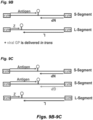
- the viral vector may be a replication-defective arenavirus having a bi-segmented genome.
- the viral vector may be a replication-attenuated arenavirus having a tri-segmented genome.
- the arenavirus vector may comprise a polynucleotide encoding an HBV core-sAg fusion polypeptide comprising or consisting of an amino acid sequence of any one of SEQ ID NOs: 38-41, e.g., SEQ ID NO:41and wherein the sAg polypeptide does not comprise an HBV pre-S1 polypeptide and/or an HBV pre-S2 polypeptide.
- the core polypeptide may comprise a serine (S) residue at the amino acid position corresponding to position 12, and an asparagine (N) residue at the amino acid position corresponding to position 67, wherein the position numbers are with reference to SEQ ID NO:65 or SEQ ID NO:66.
- the sAg polypeptide may comprise an isoleucine (I) residue at the amino acid position corresponding to position 68, wherein the position numbers are with reference to SEQ ID NO:3 or SEQ ID NO:4.
- the sAg polypeptide may comprise one or more of a serine (S) residue at the amino acid position corresponding to position 53, an isoleucine (I) residue at the amino acid position corresponding to position 68, a threonine (T) residue at the amino acid position corresponding to position 125, a proline (P) residue at the amino acid position corresponding to position 127, an phenylalanine (F) residue at the amino acid position corresponding to position 161, a tyrosine (Y) residue at the amino acid position corresponding to position 200, a serine (S) residue at the amino acid position corresponding to position 210, and a leucine (L) residue at the amino acid position corresponding to position 213, wherein the position numbers are with reference to SEQ ID NO:3
- the core-sAg fusion polypeptide may comprise one or more of a serine (S) residue at the amino acid position corresponding to position 12, an asparagine (N) residue at the amino acid position corresponding to position 67, a valine (V) residue at the amino acid position corresponding to position 74, a phenylalanine (F) residue at the amino acid position corresponding to position 97, a threonine (T) residue at the amino acid position corresponding to position 249, a threonine (T) residue at the amino acid position corresponding to position 250, a serine (S) residue at the amino acid position corresponding to position 317, a serine (S) residue at the amino acid position corresponding to position 318, an arginine (R) residue at the amino acid position corresponding to position 326, a tyrosine (Y) residue at the amino acid position corresponding to position 338, a glycine (G) residue at the amino acid position corresponding to position 363, and an a
- the polynucleotide may comprise or consist of a nucleic acid sequence of any one of SEQ ID NOs: 33-37, or that is at least 85%, 86%, 87%, 88%, 89%, 90%, 91%, 92%, 93%, 94%, 95%, 96%, 97%, 98% or 99% identical to any one of SEQ ID NOs: 33-37.
- the polynucleotide may comprise or consist of a nucleic acid sequence of SEQ ID NO: 37, or that is at least 85%, 86%, 87%, 88%, 89%, 90%, 91%, 92%, 93%, 94%, 95%, 96%, 97%, 98% or 99% identical to SEQ ID NO: 37.
- the arenavirus vector may have a bisegmented genome and further comprises a polynucleotide encoding a truncated HBV polymerase comprising or consisting of an amino acid sequence of any one of SEQ ID NOs: 13-14, or a sequence that is at least 80%, 81%, 82%, 83%, 84%, 85%, 86%, 87%, 88%, 89%, 90%, 91%, 92%, 93%, 94%, 95%, 96%, 97%, 98% or 99% identical to any one of SEQ ID NOs: 13-14, and wherein the truncated HBV polymerase does not comprise all of an HBV polymerase terminal protein (TP) domain and does not comprise all or part of an HBV polymerase Spacer domain.
- TP HBV polymerase terminal protein
- the truncated HBV polymerase may not comprise a polypeptide sequence of SEQ ID NO: 50 or SEQ ID NO: 51, or a sequence that is at least 90%, 91%, 92%, 93%, 94%, 95%, 96%, 97%, 98% or 99% identical to any one of SEQ ID NO: 50 or SEQ ID NO: 51.
- the polynucleotide may comprise or consist of a nucleic acid sequence of any one of SEQ ID NOs: 29 and 89-94, e.g., SEQ ID NOs: 29, 89, 90 or 92, or that is at least 80%, 81%, 82%, 83%, 84%, 85%, 86%, 87%, 88%, 89%, 90%, 91%, 92%, 93%, 94%, 95%, 96%, 97%, 98% or 99% identical to any one of SEQ ID NOs: 29 and 89-94, e.g., SEQ ID NOs: 29, 89, 90 or 92.
- the arenavirus vector may be a Lymphocytic choriomeningitis mammarenavirus (LCMV) vector and the polynucleotide may comprise or consist of a nucleic acid sequence of SEQ ID NO: 29, or that is at least 80%, 81%, 82%, 83%, 84%, 85%, 86%, 87%, 88%, 89%, 90%, 91%, 92%, 93%, 94%, 95%, 96%, 97%, 98% or 99% identical to any one of SEQ ID NO: 29.
- LCMV Lymphocytic choriomeningitis mammarenavirus
- an arenavirus vector comprising a polynucleotide encoding a truncated HBV polymerase comprising or consisting of an amino acid sequence of any one of SEQ ID NOs: 13-14. Also disclosed herein is an arenavirus vector comprising a polynucleotide encoding a truncated HBV polymerase comprising or consisting of an amino acid sequence that is at least 80%, 81%, 82%, 83%, 84%, 85%, 86%, 87%, 88%, 89%, 90%, 91%, 92%, 93%, 94%, 95%, 96%, 97%, 98% or 99% identical to any one of SEQ ID NOs: 13-14, and wherein the truncated HBV polymerase does not comprise all of an HBV polymerase terminal protein (TP) domain and does not comprise all or part of an HBV polymerase Spacer domain.
- TP HBV polymerase terminal protein
- the truncated HBV polymerase may not comprise a polypeptide sequence of SEQ ID NO: 50 or SEQ ID NO:51, or a sequence that is at least 90%, 91%, 92%, 93%, 94%, 95%, 96%, 97%, 98% or 99% identical to any one of SEQ ID NO: 50 or SEQ ID NO: 51.
- the polynucleotide comprises or consists of a nucleic acid sequence of any one of SEQ ID NOs: 29 and 89-94, e.g., SEQ ID NOs: 29, 89, 90 or 92, or that is at least 99% identical to any one of SEQ ID NOs: 29 and 89-94, e.g., SEQ ID NOs: 29, 89, 90 or 92.
- immunogenic compositions comprising one or more of the immunogenic HBV polypeptides, as described herein.
- the immunogenic composition may comprise one or more, e.g., two or more, of the truncated HBV polymerase polypeptides, one or more, e.g., two or more, of the HBV polymerase deletion mutant polypeptides, and/or one or more, e.g., two or more, of the core-sAg fusion protein, as described herein.
- the immunogenic composition may comprise one or more, e.g., two or more, polynucleotides encoding one or more, e.g., two or more, of the truncated HBV polymerase polypeptides, one or more, e.g., two or more, of the HBV polymerase deletion mutant polypeptides, and/or one or more, e.g., two or more, of the core-sAg fusion protein, as described herein.
- the immunogenic composition may comprise one or more, e.g., two or more, one or more, e.g., two or more, vectors comprising one or more, e.g., two or more, polynucleotides encoding one or more, e.g., two or more, of the truncated HBV polymerase polypeptides, one or more, e.g., two or more, of the HBV polymerase deletion mutant polypeptides, and/or one or more, e.g., two or more, of the core-sAg fusion protein, as described herein.
- the immunogenic compositions further comprise a pharmaceutically acceptable carrier.
- the immunogenic composition may comprise one or more polynucleotides in the form of DNA, cDNA, mRNA, or self-replicating RNA.
- an immunogenic composition comprising one or more arenavirus vectors of the present invention.
- the immunogenic composition comprises a first viral expression vector and a second viral expression vector, wherein: (a) the first viral expression vector comprises a polynucleotide encoding a truncated HBV polymerase polypeptide of the invention; and (b) the second viral expression vector comprises a polynucleotide encoding the core-sAg fusion protein of the present invention.
- the immunogenic compositions comprise a first viral expression vector and a second viral expression vector, wherein: (a) the first viral expression vector comprises a polynucleotide encoding an HBV polymerase polypeptide mutant comprising or consisting of an amino acid sequence of SEQ ID NO: 13; and (b) the second viral expression vector comprises a polynucleotide encoding the core-sAg fusion protein comprising or consisting of an amino acid sequence of SEQ ID NO: 41 .
- the core polypeptide comprises a serine (S) residue at the amino acid position corresponding to position 12, and an asparagine (N) residue at the amino acid position corresponding to position 67, wherein the position numbers are with reference to SEQ ID NO:65 or SEQ ID NO:66.
- the sAg polypeptide comprises an isoleucine (I) residue at the amino acid position corresponding to position 68, wherein the position numbers are with reference to SEQ ID NO:3 or SEQ ID NO:4.
- the sAg polypeptide may comprise one or more of a serine (S) residue at the amino acid position corresponding to position 53, an isoleucine (I) residue at the amino acid position corresponding to position 68, a threonine (T) residue at the amino acid position corresponding to position 125, a proline (P) residue at the amino acid position corresponding to position 127, an phenylalanine (F) residue at the amino acid position corresponding to position 161, a tyrosine (Y) residue at the amino acid position corresponding to position 200, a serine (S) residue at the amino acid position corresponding to position 210, and a leucine (L) residue at the amino acid position corresponding to position 213, wherein the position numbers are with reference to SEQ ID NO:3 or SEQ ID NO:4.
- the core-sAg fusion polypeptide may comprise one or more of a serine (S) residue at the amino acid position corresponding to position 12, an asparagine (N) residue at the amino acid position corresponding to position 67, a valine (V) residue at the amino acid position corresponding to position 74, a phenylalanine (F) residue at the amino acid position corresponding to position 97, a threonine (T) residue at the amino acid position corresponding to position 249, a threonine (T) residue at the amino acid position corresponding to position 250, a serine (S) residue at the amino acid position corresponding to position 317, a serine (S) residue at the amino acid position corresponding to position 318, an arginine (R) residue at the amino acid position corresponding to position 326, a tyrosine (Y) residue at the amino acid position corresponding to position 338, a glycine (G) residue at the amino acid position corresponding to position 363, and an a
- the immunogenic compositions comprise a first viral expression vector and a second viral expression vector, wherein: (a) the first viral expression vector comprises a polynucleotide comprising or consisting of a nucleic acid sequence of any one of SEQ ID NOs: 29 and 89-94 e.g., SEQ ID NOs: 29, 89, 90 or 92, or a sequence that is at least 99% identical to any one of SEQ ID NOs: 29 and 89-94 e.g., SEQ ID NOs: 29, 89, 90 or 92; and (b) the second viral expression vector comprises a polynucleotide comprising or consisting of a nucleic acid sequence of any one of SEQ ID NOs: 33-37 or a sequence that is at least 85%, 86%, 87%, 88%, 89%, 90%, 91%, 92%, 93%, 94%, 95%, 96%, 97%, 98% or 99% identical to any one of SEQ ID NOs: 33-37.
- the immunogenic composition comprises a first viral expression vector and a second viral expression vector, wherein: (a) the first viral expression vector comprises a polynucleotide comprising or consisting of a nucleic acid sequence of SEQ ID NO: 29 or 90, or a sequence that is at least 85%, 86%, 87%, 88%, 89%, 90%, 91%, 92%, 93%, 94%, 95%, 96%, 97%, 98% or 99% identical to SEQ ID NO: 29 or at least 88%, 89%, 90%, 91%, 92%, 93%, 94%, 95%, 96%, 97%, 98% or 99% identical to SEQ ID NO: 90; and (b) the second viral expression vector comprises a polynucleotide comprising or consisting of a nucleic acid sequence of SEQ ID NO: 37 or a sequence that is at least 85%, 86%, 87%, 88%, 89%, 90%, 91%, 92%, 93%, 94%, 95%, 96%,
- the first viral expression vector and the second viral expression vector may be independently from a taxonomic family selected from Adenoviridae, Arenaviridae, Herpesviridae (e.g. Cytomegalovirus), Poxviridae (e.g. Vaccinia virus, e.g. modified vaccinia Ankara (MVA)), Flaviviridae ( e.g . Yellow fever virus), Rhabdoviridae ( e.g . Vesiculovirus, e.g . Maraba vesiculovirus), Togaviridae ( e.g. , Alphavirus).
- Adenoviridae Arenaviridae
- Herpesviridae e.g. Cytomegalovirus
- Poxviridae e.g. Vaccinia virus, e.g. modified vaccinia Ankara (MVA)
- Flaviviridae e.g . Yellow fever virus
- the first viral expression vector and the second viral expression vector in the immunogenic composition can be from the same taxonomic family or different taxonomic families.
- the first viral expression vector and the second viral expression vector in the immunogenic composition are from Arenaviridae.
- the first viral expression vector and the second viral expression vector in the immunogenic composition are independently from an arenavirus vector selected from Lymphocytic choriomeningitis mammarenavirus (LCMV), Cali mammarenavirus ( a.k.a., Pichinde mammarenavirus or Pichinde arenavirus (PICV)), Guanarito virus (GTOV), Junin virus (JUNV), Lassa virus (LASV), Lujo virus (LUJV), Machupo virus (MACV), Sabia virus (SABV), and Whitewater Arroyo virus (WWAV).
- LCMV Lymphocytic choriomeningitis mammarenavirus
- PICV Pichinde mammarenavirus or Pichinde arenavirus
- GTOV Guanarito virus
- JUNV Junin virus
- Lassa virus Lassa virus
- LJV Lujo virus
- MMV Machupo virus
- SABV Sabia virus
- WWAV Whitewater Arroyo virus
- the first viral expression vector and the second viral expression vector are independently from an arenavirus vector selected from Lymphocytic choriomeningitis mammarenavirus (LCMV) or Cali mammarenavirus (a.k.a., Pichinde mammarenavirus or Pichinde arenavirus (PICV)).
- LCMV Lymphocytic choriomeningitis mammarenavirus
- PICV Pichinde mammarenavirus
- the first viral expression vector and the second viral expression vector are replication-defective or replication-deficient.
- the first viral expression vector and the second viral expression vector are replication-attenuated.
- the immunogenic composition comprises a first LCMV arenavirus expression vector and a second LCMV arenavirus expression vector, wherein: (a) the first LCMV arenavirus expression vector comprises a polynucleotide comprising or consisting of a nucleic acid sequence of SEQ ID NO: 29, or a sequence that is at least 85%, 86%, 87%, 88%, 89%, 90%, 91%, 92%, 93%, 94%, 95%, 96%, 97%, 98% or 99% identical to SEQ ID NO: 29; and (b) the second LCMV arenavirus expression vector comprises a polynucleotide comprising or consisting of a nucleic acid sequence of SEQ ID NO: 37 or a sequence that is at least 85%, 86%, 87%, 88%, 89%, 90%, 91%, 92%, 93%, 94%, 95%, 96%, 97%, 98% or 99% identical to SEQ ID NO: 37.
- the immunogenic composition comprises a first Pichinde arenavirus expression vector and a second Pichinde arenavirus expression vector, wherein: (a) the first Pichinde arenavirus expression vector comprises a polynucleotide comprising or consisting of a nucleic acid sequence of SEQ ID NO: 90, or a sequence that is at least 88%, 89%, 90%, 91%, 92%, 93%, 94%, 95%, 96%, 97%, 98% or 99% identical to SEQ ID NO: 90; and (b) the second Pichinde arenavirus expression vector comprises a polynucleotide comprising or consisting of a nucleic acid sequence of SEQ ID NO: 37 or a sequence that is at least 85%, 86%, 87%, 88%, 89%, 90%, 91%, 92%, 93%, 94%, 95%, 96%, 97%, 98% or 99% identical to any one of SEQ ID NO: 37.
- the first viral expression vector and the second viral expression vector are provided in the immunogenic composition in a ratio in the range of from 1:10 to 10:1, e.g., 1:9 to 9:1, 1:8 to 8:1, 1:7 to 7:1, 1:6 to 6:1, 1:5 to 5:1, 1:4 to 4:1, 1:3 to 3:1, 1:2 to 2:1 or 1:1.
- the immunogenic composition comprises in the range of about 10 3 to about 10 12 viral focus forming units (FFU) or plaque forming units (PFU) or infectious units (IU) or viral particles (vp) per milliliter, e.g . from about 10 4 to about 10 7 viral FFU or PFU or IU or vp per milliliter, e.g.
- the immunogenic composition further comprises one or more of an adjuvant, a detergent, a micelle-forming agent, and an oil.
- the immunogenic composition is formulated for administration via a route selected from intravenous, intramuscular, intradermal, subcutaneous and mucosal (e.g. buccal, intranasal, intrarectal, intravaginal).
- the immunogenic composition is an aqueous solution or suspension, e.g., is formulated as a liquid.
- the immunogenic composition is lyophilized.
- kits may comprise one or more, e.g., two or more, unitary doses of one or more, e.g., two or more, of a truncated HBV polymerase polypeptide, one or more, e.g., two or more, of an HBV polymerase deletion mutant polypeptide and/or one or more, e.g., two or more, of a core-sAg fusion protein, as described herein.
- the kit may comprise one or more, e.g., two or more, unitary doses of one or more, e.g., two or more, polynucleotides encoding one or more, e.g., two or more, of a truncated HBV polymerase polypeptide, one or more, e.g., two or more, of an HBV polymerase deletion mutant polypeptide and/or one or more, e.g., two or more, of a core-sAg fusion protein, as described herein.
- the kit may comprise one or more, e.g., two or more, unitary doses of one or more, e.g., two or more, vectors comprising one or more, e.g., two or more, polynucleotides encoding one or more, e.g., two or more, of a truncated HBV polymerase polypeptide, one or more, e.g., two or more, of an HBV polymerase deletion mutant polypeptide and/or one or more, e.g., two or more, of a core-sAg fusion protein, as described herein.
- the kit may comprise one or more, e.g., two or more, unitary doses of one or more, e.g., two or more, immunogenic compositions, as described herein.
- the one or more unitary doses in the kit may be in a single container.
- the one or more unitary doses in the kit may be in two or more separate containers.
- the kit may comprise one or more containers selected from vials, ampules and pre-loaded syringes.
- the kit may comprise one or more containers comprising the one or more polypeptides, one or more polynucleotides, one or more vectors or one or more immunogenic compositions in an aqueous solution or suspension, or as a lyophilized preparation.
- the one or more unitary doses can be the same or different.
- the kit may comprise one or more unitary doses of one or more viral vectors, as described herein, wherein the unitary doses are in the range of about 10 3 to about 10 12 viral focus forming units (FFU) or plaque forming units (PFU) or infectious units (IU) or viral particles (vp), e.g. from about 10 4 to about 10 7 viral FFU or PFU or IU or vp, e.g. from about 10 3 to about 10 4 , 10 5 , 10 6 , 10 7 , 10 8 , 10 9 , 10 10 , 10 11 or 10 12 viral FFU or PFU or IU or vp.
- FFU viral focus forming units
- PFU plaque forming units
- IU infectious units
- vp viral particles
- the kit may comprise one or more polynucleotides encoding, or one or more vectors expressing, or an immunogenic composition comprising, at least two immunogenic polypeptides, the immunogenic polypeptides comprising: (a) an HBV polymerase polypeptide mutant comprising or consisting of an amino acid sequence of any one of SEQ ID NOs: 5-14, or a sequence that is at least 80%, 81%, 82%, 83%, 84%, 85%, 86%, 87%, 88%, 89%, 90%, 91%, 92%, 93%, 94%, 95%, 96%, 97%, 98% or 99% identical to any one of SEQ ID NOs: 5-14; and (b) an HBV core-sAg fusion protein comprising or consisting of an amino acid sequence of any one of SEQ ID NOs: 38-41, or a sequence that is at least 80%, 81%, 82%, 83%, 84%, 85%, 86%, 87%, 88%, 89%, 90%, 91%, 9
- the kit may comprise one or more polynucleotides encoding, or one or more vectors expressing, or an immunogenic composition comprising, at least two immunogenic polypeptides, the immunogenic polypeptides comprising: (a) an HBV polymerase polypeptide mutant comprising or consisting of an amino acid sequence of any one of SEQ ID NOs: 13-14, or a sequence that is at least 80%, 81%, 82%, 83%, 84%, 85%, 86%, 87%, 88%, 89%, 90%, 91%, 92%, 93%, 94%, 95%, 96%, 97%, 98% or 99% identical to any one of SEQ ID NOs: 13-14; and (b) an HBV core-sAg fusion protein comprising or consisting of an amino acid sequence of any one of SEQ ID NOs: 38-41, or a sequence that is at least 80%, 81%, 82%, 83%, 84%, 85%, 86%, 87%, 88%, 89%, 90%, 91%, 9
- the kit may comprise one or more polynucleotides encoding, or one or more vectors expressing, or an immunogenic composition comprising, at least two immunogenic polypeptides, the immunogenic polypeptides comprising: (a) an HBV polymerase polypeptide mutant comprising or consisting of an amino acid sequence of SEQ ID NO: 13, or a sequence that is at least 80%, 81%, 82%, 83%, 84%, 85%, 86%, 87%, 88%, 89%, 90%, 91%, 92%, 93%, 94%, 95%, 96%, 97%, 98% or 99% identical to SEQ ID NO: 13; and (b) an HBV core-sAg fusion protein comprising or consisting of an amino acid sequence of SEQ ID NO: 41, or a sequence that is at least 80%, 81%, 82%, 83%, 84%, 85%, 86%, 87%, 88%, 89%, 90%, 91%, 92%, 93%, 94%, 95%, 96%, 97%,
- the core polypeptide may comprise a serine (S) residue at the amino acid position corresponding to position 12, and an asparagine (N) residue at the amino acid position corresponding to position 67, wherein the position numbers are with reference to SEQ ID NO:65 or SEQ ID NO:66.
- the sAg polypeptide comprises an isoleucine (I) residue at the amino acid position corresponding to position 68, wherein the position numbers are with reference to SEQ ID NO:3 or SEQ ID NO:4.
- the sAg polypeptide may comprise one or more of a serine (S) residue at the amino acid position corresponding to position 53, an isoleucine (I) residue at the amino acid position corresponding to position 68, a threonine (T) residue at the amino acid position corresponding to position 125, a proline (P) residue at the amino acid position corresponding to position 127, an phenylalanine (F) residue at the amino acid position corresponding to position 161, a tyrosine (Y) residue at the amino acid position corresponding to position 200, a serine (S) residue at the amino acid position corresponding to position 210, and a leucine (L) residue at the amino acid position corresponding to position 213, wherein the position numbers are with reference to SEQ ID NO:3 or SEQ ID NO:4.
- the core-sAg fusion polypeptide may comprise one or more of a serine (S) residue at the amino acid position corresponding to position 12, an asparagine (N) residue at the amino acid position corresponding to position 67, a valine (V) residue at the amino acid position corresponding to position 74, a phenylalanine (F) residue at the amino acid position corresponding to position 97, a threonine (T) residue at the amino acid position corresponding to position 249, a threonine (T) residue at the amino acid position corresponding to position 250, a serine (S) residue at the amino acid position corresponding to position 317, a serine (S) residue at the amino acid position corresponding to position 318, an arginine (R) residue at the amino acid position corresponding to position 326, a tyrosine (Y) residue at the amino acid position corresponding to position 338, a glycine (G) residue at the amino acid position corresponding to position 363, and an a
- the kit may comprise first and second vectors encoding first and second immunogenic polypeptides, respectively, the first and second immunogenic polypeptides comprising, respectively: (a) an HBV polymerase polypeptide mutant comprising or consisting of an amino acid sequence of SEQ ID NO: 13, or a sequence that is at least 80%, 81%, 82%, 83%, 84%, 85%, 86%, 87%, 88%, 89%, 90%, 91%, 92%, 93%, 94%, 95%, 96%, 97%, 98% or 99% identical to SEQ ID NO: 13; and (b) an HBV core-sAg fusion protein comprising or consisting of an amino acid sequence of SEQ ID NO: 41, or a sequence that is at least 80%, 81%, 82%, 83%, 84%, 85%, 86%, 87%, 88%, 89%, 90%, 91%, 92%, 93%, 94%, 95%, 96%, 97%, 98% or 99% identical to SEQ ID NO: 41.
- the kit may comprise a first viral expression vector and a second viral expression vector, wherein: (a) the first viral expression vector comprises a polynucleotide comprising or consisting of a nucleic acid sequence of any one of SEQ ID NOs: 27-32 and 89-94, e.g., SEQ ID NOs: 29, 89, 90 or 92, or a sequence that is at least 80%, 81%, 82%, 83%, 84%, 85%, 86%, 87%, 88%, 89%, 90%, 91%, 92%, 93%, 94%, 95%, 96%, 97%, 98% or 99% identical to any one of SEQ ID NOs: 27-32 and 89-94, e.g., SEQ ID NOs: 29, 89, 90 or 92; and (b) the second viral expression vector comprises a polynucleotide comprising or consisting of a nucleic acid sequence of any one of SEQ ID NOs: 33-37, or a sequence that is at least
- the kit may comprise a first viral expression vector and a second viral expression vector, wherein: (a) the first viral expression vector comprises a polynucleotide comprising or consisting of a nucleic acid sequence of SEQ ID NO: 29 or 90, or a sequence that is at least 80%, 81%, 82%, 83%, 84%, 85%, 86%, 87%, 88%, 89%, 90%, 91%, 92%, 93%, 94%, 95%, 96%, 97%, 98% or 99% identical to SEQ ID NO: 29 or 90; and (b) the second viral expression vector comprises a polynucleotide comprising or consisting of a nucleic acid sequence of SEQ ID NO: 37, or a sequence that is at least 80%, 81%, 82%, 83%, 84%, 85%, 86%, 87%, 88%, 89%, 90%, 91%, 92%, 93%, 94%, 95%, 96%, 97%, 98% or 99% identical to SEQ ID NO: 37.
- the kit may comprise one or more unitary doses of an immunogenic composition comprising first and second viral expression vectors, as described herein, wherein the first and second viral expression vectors comprise a replication-deficient or replication-defective Cali mammarenavirus ( a.k.a., Pichinde mammarenavirus or Pichinde arenavirus (PICV)).
- the kit may comprise one or more unitary doses of an immunogenic composition comprising first and second viral expression vectors, as described herein, wherein the first and second viral expression vectors comprise a replication-deficient or replication-defective Lymphocytic choriomeningitis mammarenavirus (LCMV).
- LCMV replication-deficient or replication-defective Lymphocytic choriomeningitis mammarenavirus
- the kit may comprise (a) one or more unitary doses of an immunogenic composition, as described herein, wherein the first and second viral expression vectors are from Adenoviridae; and (b) one or more unitary doses of an immunogenic composition, as described herein, wherein the first and second viral expression vectors are from Poxviridae (e.g., Vaccinia virus, e.g., modified vaccinia Ankara (MVA)).
- Poxviridae e.g., Vaccinia virus, e.g., modified vaccinia Ankara (MVA)
- the kit may comprise (a) one or more unitary doses of an immunogenic composition, as described herein, wherein the first and second viral expression vectors are from Arenaviridae; and (b) one or more unitary doses of an immunogenic composition, as described herein, wherein the first and second viral expression vectors are from Adenoviridae.
- the kit may comprise a first LCMV arenavirus expression vector and a second LCMV arenavirus expression vector, wherein: (a) the first LCMV arenavirus expression vector comprises a polynucleotide comprising or consisting of a nucleic acid sequence of SEQ ID NO: 29, or a sequence that is at least 80%, 81%, 82%, 83%, 84%, 85%, 86%, 87%, 88%, 89%, 90%, 91%, 92%, 93%, 94%, 95%, 96%, 97%, 98% or 99% identical to SEQ ID NO: 29; and (b) the second LCMV arenavirus expression vector comprises a polynucleotide comprising or consisting of a nucleic acid sequence of SEQ ID NO: 37, or a sequence that is at least 80%, 81%, 82%, 83%, 84%, 85%, 86%, 87%, 88%, 89%, 90%, 91%, 92%, 93%, 94%, 95%, 96%, 97%, 98% or
- the kit may comprise a first Pichinde arenavirus expression vector and a second Pichinde arenavirus expression vector, wherein: (a) the first Pichinde arenavirus expression vector comprises a polynucleotide comprising or consisting of a nucleic acid sequence of SEQ ID NO: 90, or a sequence that is at least 80%, 81%, 82%, 83%, 84%, 85%, 86%, 87%, 88%, 89%, 90%, 91%, 92%, 93%, 94%, 95%, 96%, 97%, 98% or 99% identical to SEQ ID NO: 90; and (b) the second Pichinde arenavirus expression vector comprises a polynucleotide comprising or consisting of a nucleic acid sequence of SEQ ID NO: 37, or a sequence that is at least 80%, 81%, 82%, 83%, 84%, 85%, 86%, 87%, 88%, 89%, 90%, 91%, 92%, 93%, 94%, 95%, 96%, 97%, 98%
- the kit may further comprise one or more unitary doses of one or more additional therapeutic agents.
- the kit may further comprise one or more agonists or activators of one or more toll-like receptors (TLRs).
- TLRs toll-like receptors
- the kit may further comprise one or more TLR agonists or activators selected from a TLR2 agonist, a TLR3 agonist, a TLR4 agonist, a TLR5 agonist, a TLR7 agonist, a TLR8 agonist and a TLR9 agonist.
- the kit may further comprise a TLR7 agonist selected from GS 9620 (vesatolimod), R848 (Resiquimod), DS-0509, LHC-165 and TMX-101 (imiquimod).
- the kit may further comprise a TLR8 agonist selected from GS-9688, R848 (Resiquimod) and NKTR-262 (dual TLR7/TLR8 agonist).
- the kit may further comprise one or more interleukin receptor agonists of an interleukin receptor selected from IL-2, IL-7, IL-12 and IL-15.
- the kit may further comprise one or more cytokines selected from IL-2, IL-7, IL-12, IL-15, and variants thereof.
- the kit may further comprise one or more innate immune activators.
- the kit may further comprise one or more innate immune activators comprising an agonist of a receptor selected from fms related tyrosine kinase 3 (FLT3), stimulator of interferon genes (STING) receptor, DExD/H-box helicase 58 (DDX58; a.k.a. , RIG-I), nucleotide binding oligomerization domain containing 2 (NOD2).
- the kit may further comprise one or more unitary doses of GS-3583 and/or GS-9992.
- the kit may further comprise one or more antagonists or inhibitors of an inhibitory immune checkpoint protein or receptor and/or one or more activators or agonists of a stimulatory immune checkpoint protein or receptor.
- the kit may further comprise one or more immune checkpoint proteins or receptors selected from CD27, CD70; CD40, CD40LG; CD47, CD48 (SLAMF2), transmembrane and immunoglobulin domain containing 2 (TMIGD2, CD28H), CD84 (LY9B, SLAMF5), CD96, CD160, MS4A1 (CD20), CD244 (SLAMF4); CD276 (B7H3); V-set domain containing T cell activation inhibitor 1 (VTCN1, B7H4); V-set immunoregulatory receptor (VSIR, B7H5, VISTA); immunoglobulin superfamily member 11 (IGSF11, VSIG3); natural killer cell cytotoxicity receptor 3 ligand 1 (NCR3LG1, B7H6); HERV-H LTR-associating 2 (HHLA2, B7H7); inducible T cell co-stimulator (ICOS, CD278); inducible T cell co-stimulator ligand (ICOSLG, B7H2); T
- the kit further comprises one or more blockers or inhibitors of one or more T-cell inhibitory immune checkpoint proteins or receptors.
- the kit may further comprise one or more T-cell inhibitory immune checkpoint proteins or receptors selected from CD274 (CD274, PDL1, PD-L1); programmed cell death 1 ligand 2 (PDCD1LG2, PD-L2, CD273); programmed cell death 1 (PDCD1, PD1, PD-1); cytotoxic T-lymphocyte associated protein 4 (CTLA4, CD152); CD276 (B7H3); V-set domain containing T cell activation inhibitor 1 (VTCN1, B7H4); V-set immunoregulatory receptor (VSIR, B7H5, VISTA); immunoglobulin superfamily member 11 (IGSF11, VSIG3); TNFRSF14 (HVEM, CD270), TNFSF14 (HVEML); CD272 (B and T lymphocyte associated (BTLA)); PVR related immunoglobulin domain containing (PVRIG, CD112R);
- the kit may further comprise one or more agonists or activators of one or more T-cell stimulatory immune checkpoint proteins or receptors.
- the kit may further comprise one or more T-cell stimulatory immune checkpoint proteins or receptors selected from CD27, CD70; CD40, CD40LG; inducible T cell co-stimulator (ICOS, CD278); inducible T cell co-stimulator ligand (ICOSLG, B7H2); TNF receptor superfamily member 4 (TNFRSF4, OX40); TNF superfamily member 4 (TNFSF4, OX40L); TNFRSF9 (CD137), TNFSF9 (CD137L); TNFRSF18 (GITR), TNFSF18 (GITRL); CD80 (B7-1), CD28; nectin cell adhesion molecule 2 (NECTIN2, CD112); CD226 (DNAM-1); Poliovirus receptor (PVR) cell adhesion molecule (PVR, CD155).
- T-cell stimulatory immune checkpoint proteins or receptors selected from CD27,
- the kit may further comprise one or more unitary doses of AGEN-2373 and/or AGEN-1223.
- the kit may further comprise one or more blockers or inhibitors of one or more NK-cell inhibitory immune checkpoint proteins or receptors.
- the kit may further comprise one or more NK-cell inhibitory immune checkpoint proteins or receptors selected from killer cell immunoglobulin like receptor, three Ig domains and long cytoplasmic tail 1 (KIR, CD158E1); killer cell immunoglobulin like receptor, two Ig domains and long cytoplasmic tail 1 (KIR2DL1); killer cell immunoglobulin like receptor, two Ig domains and long cytoplasmic tail 2 (KIR2DL2); killer cell immunoglobulin like receptor, two Ig domains and long cytoplasmic tail 3 (KIR2DL3); killer cell immunoglobulin like receptor, three Ig domains and long cytoplasmic tail 1 (KIR3DL1); killer cell lectin like receptor C1 (KLRC1, NKG2A, CD159A);
- the kit may further comprise one or more agonists or activators of one or more NK-cell stimulatory immune checkpoint proteins or receptors.
- the kit may further comprise one or more NK-cell stimulatory immune checkpoint proteins or receptors selected from CD16, CD226 (DNAM-1); killer cell lectin like receptor K1 (KLRK1, NKG2D, CD314); and SLAM family member 7 (SLAMF7).
- the kit may further comprise one or more proteinaceous inhibitors of PD-L1 (CD274), PD-1 (PDCD1) and/or CTLA4.
- the kit may further comprise one or more proteinaceous inhibitors of CTLA4 selected from ipilimumab, tremelimumab, BMS-986218, AGEN1181, AGEN1884, BMS-986249, MK-1308, REGN-4659, ADU-1604, CS-1002, BCD-145, APL-509, JS-007, BA-3071, ONC-392, AGEN-2041, JHL-1155, KN-044, CG-0161, ATOR-1144, PBI-5D3H5, FPT-155 (CTLA4/PD-L1/CD28), PF-06936308 (PD-1/ CTLA4), MGD-019 (PD-1/CTLA4), KN-046 (PD-1/CTLA4), MEDI-5752 (CTLA4/PD-1), XmAb-20717 (PD-1/CTLA4) and AK-104 (CTLA4/PD-1).
- CTLA4 proteinaceous inhibitors of CTLA4 selected from ipilimuma
- the kit may further comprise one or more proteinaceous inhibitors of PD-L1 (CD274) or PD-1 (PDCD1) selected from zimberelimab (AB122), pembrolizumab, nivolumab, cemiplimab, pidilizumab, AMP-224, MEDI0680 (AMP-514), spartalizumab, atezolizumab, avelumab, ASC22, durvalumab, BMS-936559, CK-301, PF-06801591, BGB-A317 (tislelizumab), GLS-010 (WBP-3055), AK-103 (HX-008), AK-105, CS-1003, HLX-10, MGA-012, BI-754091, AGEN-2034, JS-001 (toripalimab), JNJ-63723283, genolimzumab (CBT-501), LZM-009, BCD-100, LY-33
- the kit may further comprise one or more small molecule inhibitors of CD274 (PDL1, PD-L1), programmed cell death 1 (PDCD1, PD1, PD-1) and/or CTLA4.
- the kit may further comprise one or more small molecule inhibitors of CD274 or PDCD1 selected from GS-4224, GS-4416, INCB086550 and MAX10181.
- the kit may further comprise the small molecule inhibitor of CTLA4, BPI-002.
- the kit may further comprise one or more one or more anti-viral agents.
- the kit may further comprise one or more antiviral agents selected from lamivudine (LAM), adefovir dipivoxil (ADV), entecavir (ETV), telbivudine (LdT), tenofovir disoproxil fumarate (TDF), tenofovir alafenamide (TAF or VEMLIDY ® ) and ledipasvir + sofosbuvir (HARVONI ® ).
- LAM lamivudine
- ADV adefovir dipivoxil
- ETV entecavir
- LdT telbivudine
- TDF tenofovir disoproxil fumarate
- TAF or VEMLIDY ® tenofovir alafenamide
- ledipasvir + sofosbuvir HARVONI ®
- the kit may further comprise one or more therapeutic agents selected from HBV antigen inhibitors (e.g., HBV core antigen (HBcAg) inhibitors, HBV surface antigen (HBsAg) inhibitors, HBx inhibitors, HBV E antigen inhibitors), anti-HBV antigen antibodies, inhibitory nucleic acids targeting HBV (e.g., antisense oligonucleotide, short interfering RNA (siRNA), DNA-directed RNA interference (ddRNAi)), gene editors targeting HBV (e.g., CRISPR-Cas (e.g.
- Cas9, Cas12, Cascade, Cas13 zinc finger nucleases, homing endonucleases, homing meganucleases (e.g., ARCUS), synthetic nucleases, TALENs), covalently closed circular DNA (cccDNA) inhibitors and HBsAg secretion or assembly inhibitors and HBV viral entry inhibitors.
- cccDNA covalently closed circular DNA
- the methods may entail administering one or more immunogenic compositions comprising a mixture comprising a first viral expression vector and a second viral expression vector, wherein: (a) the first viral expression vector comprises a polynucleotide encoding a truncated HBV polymerase polypeptide or a HBV polymerase deletion mutant polypeptide, as described herein; and (b) the second viral expression vector comprises a polynucleotide encoding the core-sAg fusion protein, as described herein.
- the methods may entail administering to the subject a therapeutically effective amount of one or more immunogenic compositions comprising a mixture comprising a first viral expression vector and a second viral expression vector, wherein: (a) the first viral expression vector comprises a polynucleotide encoding an HBV polymerase polypeptide mutant comprising or consisting of an amino acid sequence of any one of SEQ ID NOs: 5-14, or a sequence that is at least 80%, 81%, 82%, 83%, 84%, 85%, 86%, 87%, 88%, 89%, 90%, 91%, 92%, 93%, 94%, 95%, 96%, 97%, 98% or 99% identical to any one of SEQ ID NOs: 5-14; and (b) the second viral expression vector comprises a polynucleotide encoding the core-sAg fusion protein comprising or consisting of an amino acid sequence of any one of SEQ ID NOs: 38-41, or a sequence that is at least 80%, 81%, 82%
- the methods may entail administering to the subject a therapeutically effective amount of one or more immunogenic compositions comprising a mixture comprising a first viral expression vector and a second viral expression vector, wherein: (a) the first viral expression vector comprises a polynucleotide encoding an HBV polymerase polypeptide mutant comprising or consisting of an amino acid sequence of any one of SEQ ID NOs: 13-14, or a sequence that is at least 80%, 81%, 82%, 83%, 84%, 85%, 86%, 87%, 88%, 89%, 90%, 91%, 92%, 93%, 94%, 95%, 96%, 97%, 98% or 99% identical to any one of SEQ ID NOs: 13-14; and (b) the second viral expression vector comprises a polynucleotide encoding the core-sAg fusion protein comprising or consisting of an amino acid sequence of any one of SEQ ID NOs: 38-41, or a sequence that is at least 80%, 81%, 82%
- the methods may entail administering to the subject a therapeutically effective amount of one or more immunogenic compositions comprising a mixture comprising a first viral expression vector and a second viral expression vector, wherein: (a) the first viral expression vector comprises a polynucleotide encoding an HBV polymerase polypeptide mutant comprising or consisting of an amino acid sequence of SEQ ID NO: 13, or a sequence that is at least 80%, 81%, 82%, 83%, 84%, 85%, 86%, 87%, 88%, 89%, 90%, 91%, 92%, 93%, 94%, 95%, 96%, 97%, 98% or 99% identical to SEQ ID NO: 13; and (b) the second viral expression vector comprises a polynucleotide encoding the core-sAg fusion protein comprising or consisting of an amino acid sequence of SEQ ID NO: 41, or a sequence that is at least 80%, 81%, 82%, 83%, 84%, 85%, 86%, 87%, 8
- the core polypeptide may comprise a serine (S) residue at the amino acid position corresponding to position 12, and an asparagine (N) residue at the amino acid position corresponding to position 67, wherein the position numbers are with reference to SEQ ID NO:65 or SEQ ID NO:66.
- the sAg polypeptide may comprise an isoleucine (I) residue at the amino acid position corresponding to position 68, wherein the position numbers are with reference to SEQ ID NO:3 or SEQ ID NO:4.
- the sAg polypeptide may comprise one or more of a serine (S) residue at the amino acid position corresponding to position 53, an isoleucine (I) residue at the amino acid position corresponding to position 68, a threonine (T) residue at the amino acid position corresponding to position 125, a proline (P) residue at the amino acid position corresponding to position 127, an phenylalanine (F) residue at the amino acid position corresponding to position 161, a tyrosine (Y) residue at the amino acid position corresponding to position 200, a serine (S) residue at the amino acid position corresponding to position 210, and a leucine (L) residue at the amino acid position corresponding to position 213, wherein the position numbers are with reference to SEQ ID NO:3 or SEQ ID NO:4.
- the core-sAg fusion polypeptide may comprise one or more of a serine (S) residue at the amino acid position corresponding to position 12, an asparagine (N) residue at the amino acid position corresponding to position 67, a valine (V) residue at the amino acid position corresponding to position 74, a phenylalanine (F) residue at the amino acid position corresponding to position 97, a threonine (T) residue at the amino acid position corresponding to position 249, a threonine (T) residue at the amino acid position corresponding to position 250, a serine (S) residue at the amino acid position corresponding to position 317, a serine (S) residue at the amino acid position corresponding to position 318, an arginine (R) residue at the amino acid position corresponding to position 326, a tyrosine (Y) residue at the amino acid position corresponding to position 338, a glycine (G) residue at the amino acid position corresponding to position 363, and an a
- the methods may entail administering to the subject a therapeutically effective amount of one or more immunogenic compositions comprising a mixture comprising a first viral expression vector and a second viral expression vector, wherein: (a) the first viral expression vector comprises a polynucleotide comprising or consisting of a nucleic sequence of any one of SEQ ID NOs: 27-32 and 89-94, e.g., SEQ ID NOs: 29, 89, 90 or 92, or a sequence that is at least 80%, 81%, 82%, 83%, 84%, 85%, 86%, 87%, 88%, 89%, 90%, 91%, 92%, 93%, 94%, 95%, 96%, 97%, 98% or 99% identical to any one of SEQ ID NOs: 27-32 and 89-94, e.g., SEQ ID NOs: 29, 89, 90 or 92; and (b) the second viral expression vector comprises a polynucleotide comprising or consisting of a nu
- the methods may comprise administering to the subject a therapeutically effective amount of one or more immunogenic compositions comprising a mixture comprising a first viral expression vector and a second viral expression vector, wherein: (a) the first viral expression vector comprises a polynucleotide comprising or consisting of a nucleic sequence of SEQ ID NO: 29 or 90, or a sequence that is at least 80%, 81%, 82%, 83%, 84%, 85%, 86%, 87%, 88%, 89%, 90%, 91%, 92%, 93%, 94%, 95%, 96%, 97%, 98% or 99% identical to SEQ ID NO: 29 or 90; and (b) the second viral expression vector comprises a polynucleotide comprising or consisting of a nucleic acid sequence of SEQ ID NO: 37, or a sequence that is at least 80%, 81%, 82%, 83%, 84%, 85%, 86%, 87%, 88%, 89%, 90%, 91%, 92%, 93%, 9
- the first viral expression vector and the second viral expression vector are from Arenaviridae.
- the first viral expression vector and the second viral expression vector are from an arenavirus vector selected from Lymphocytic choriomeningitis mammarenavirus (LCMV), Cali mammarenavirus ( a.k.a., Pichinde mammarenavirus or Pichinde arenavirus (PICV)), Guanarito virus (GTOV), Junin virus (JUNV), Lassa virus (LASV), Lujo virus (LUJV), Machupo virus (MACV), Sabia virus (SABV), and Whitewater Arroyo virus (WWAV).
- LCMV Lymphocytic choriomeningitis mammarenavirus
- PICV Pichinde mammarenavirus
- GTOV Guanarito virus
- JUNV Junin virus
- Lassa virus Lassa virus
- LJV Lujo virus
- MMV Machupo virus
- SABV Sabia virus
- WWAV White
- the first viral expression vector and the second viral expression vector are from an arenavirus vector selected from Lymphocytic choriomeningitis mammarenavirus (LCMV) or Cali mammarenavirus ( a.k.a., Pichinde mammarenavirus or Pichinde arenavirus (PICV)).
- LCMV Lymphocytic choriomeningitis mammarenavirus
- PICV Pichinde mammarenavirus
- the first viral expression vector and the second viral expression vector are replication-defective or replication-deficient.
- the first viral expression vector and the second viral expression vector are replication-attenuated.
- the methods may comprise administering to the subject a therapeutically effective amount of one or more immunogenic compositions comprising a mixture comprising a first LCMV arenavirus expression vector and a second LCMV arenavirus expression vector, wherein: (a) the first LCMV arenavirus expression vector comprises a polynucleotide comprising or consisting of a nucleic sequence of SEQ ID NO: 29, or a sequence that is at least 80%, 81%, 82%, 83%, 84%, 85%, 86%, 87%, 88%, 89%, 90%, 91%, 92%, 93%, 94%, 95%, 96%, 97%, 98% or 99% identical to SEQ ID NO: 29; and (b) the second LCMV arenavirus expression vector comprises a polynucleotide comprising or consisting of a nucleic acid sequence of SEQ ID NO: 37, or a sequence that is at least 80%, 81%, 82%, 83%, 84%, 85%, 86%, 87%, 88%, 89%, 90%
- the methods may comprise administering to the subject a therapeutically effective amount of one or more immunogenic compositions comprising a mixture comprising a first Pichinde arenavirus expression vector and a second Pichinde arenavirus expression vector, wherein: (a) the first Pichinde arenavirus expression vector comprises a polynucleotide comprising or consisting of a nucleic sequence of SEQ ID NO: 90, or a sequence that is at least 80%, 81%, 82%, 83%, 84%, 85%, 86%, 87%, 88%, 89%, 90%, 91%, 92%, 93%, 94%, 95%, 96%, 97%, 98% or 99% identical to SEQ ID NO: 90; and (b) the second Pichinde arenavirus expression vector comprises a polynucleotide comprising or consisting of a nucleic acid sequence of SEQ ID NO: 37, or a sequence that is at least 80%, 81%, 82%, 83%, 84%, 85%, 86%, 87%, 88%, 89%,
- the subject is infected with HBV, is suspected of being infected with HBV, or is at risk of being infected with HBV. In some methods, the subject is asymptomatic. In some methods, the subject is chronically infected with HBV. In some methods, the subject is exhibiting or experiencing one or more symptoms selected from hepatic failure, hepatic cancer, hepatic fibrosis and hepatic cirrhosis. In some methods, the subject is acutely infected with HBV.
- the subject is exhibiting or experiencing one or more symptoms selected from jaundice, visible webs of swollen blood vessels in the skin, dark-colored (e.g., orange or brown) urine, light-colored feces, fever, persistent fatigue, malaise, abdominal pain, abdominal fluid, loss of appetite, nausea, and vomiting.
- the subject is co-infected with hepatitis D virus (HDV).
- the composition is administered via a route selected from intravenous, intramuscular, intradermal, subcutaneous and mucosal (e.g. buccal, intranasal, intrarectal, intravaginal).
- the methods may entail administering to the subject from about 10 3 to about 10 12 viral focus forming units (FFU) or plaque forming units (PFU) or infectious units (IU) or viral particles (vp), e.g. from about 10 4 to about 10 7 viral FFU or PFU or IU or vp, e.g. from about 10 3 to about 10 4 , 10 5 , 10 6 , 10 7 , 10 8 , 10 9 , 10 10 , 10 11 or 10 12 viral FFU or PFU or IU or vp, per administration.
- the one or more compositions are administered multiple times.
- the methods may entail administering intravenously or intramuscularly from about 10 6 to about 10 8 viral FFU or PFU or IU or vp per administration every other week (Q2W) or monthly (Q4W).
- the methods may entail multiple administrations of the one or more immunogenic compositions over a time period of at least about 2 weeks, 3 weeks, 1 month, 2 months, 3 months, 4 months, 5 months, 6 months, 7 months, 8 months, 9 months, 10 months, 11 months, 12 months, 13 months, 14 months, 15 months, 16 months, 17 months, 18 months, 19 months, 20 months, 21 months, 22 months, 23 months, 24 months, or longer, or until sAg is not detectable in the serum or plasma of the subject.
- the methods may comprise a prime-boost regimen comprising administering a priming composition at a first time point and administering one or more boosting compositions at one or more subsequent time points.
- the methods can entail repeating the prime-boost regimen one or more iterations.
- the administrations of the priming composition and the one or more boosting compositions are spaced at least 1 week and up to at least 2 weeks, 3 weeks, 1 month, 2 months, 3 months, 4 months, 5 months or 6 months apart.
- the priming composition and the boosting composition can comprise the same immunogenic composition or can comprise different immunogenic compositions.
- the priming composition and the boosting composition comprise the same one or more polypeptides and same viral expression vector.
- the priming composition and the boosting composition comprise different polypeptides and/or different viral expression vectors.
- the methods may entail priming with a priming composition comprising one or more (e.g., first and second) viral expression vectors, and boosting with a boosting composition comprising one or more ( e.g., third and fourth) viral expression vectors.
- the prime-boost regimen may comprise: (a) Priming with a priming composition comprising one or more viral expression vectors and boosting with a boosting composition comprising one or more polynucleotides, wherein the one or more polynucleotides comprise DNA, cDNA, mRNA or self-replicating RNA; (b) Priming with a priming composition comprising one or more polynucleotides, wherein the one or more polynucleotides comprise DNA, cDNA, mRNA or self-replicating RNA, and boosting with a boosting composition comprising one or more viral expression vectors; (c) Priming with a priming composition comprising one or more viral expression vectors, and boosting with a boosting composition comprising one or more viral expression vectors, wherein the one or more viral expression vectors in the priming composition and the one or more viral expression vectors in the boosting composition are from identical, related or unrelated taxonomical families; (d) Priming with a priming composition compris
- the methods may entail a prime-boost regimen that comprises: (a) Priming with a priming composition comprising one or more Lymphocytic choriomeningitis mammarenavirus (LCMV) viral expression vectors and boosting with a boosting composition comprising one or more Pichinde mammarenavirus (PICV) viral expression vectors; (b) Priming with a priming composition comprising one or more Pichinde mammarenavirus (PICV) viral expression vectors and boosting with a boosting composition comprising one or more Lymphocytic choriomeningitis mammarenavirus (LCMV) viral expression vectors; (c) Priming with a priming composition comprising one or more replication deficient Pichinde mammarenavirus (PICV) viral expression vectors and boosting with a boosting composition comprising one or more replication deficient Lymphocytic choriomeningitis mammarenavirus (LCMV) viral expression vectors; or (d) Priming
- the priming composition and the boosting composition may comprise an immunogenic composition as described herein.
- the subject may be not receiving antiviral therapy or antiviral therapy may be discontinued prior to administration of the one or more immunogenic compositions.
- antiviral therapy is discontinued after one or more administrations of the one or more immunogenic compositions.
- the methods may further comprise administering to the subject one or more additional therapeutic agents, e.g. two, three, four, or more additional therapeutic agents.
- the methods may comprise co-administering one or more agonists or activators of one or more toll-like receptors (TLRs).
- TLRs toll-like receptors
- the methods may comprise co-administereing one or more TLR agonists or activators selected from a TLR2 agonist, a TLR3 agonist, a TLR4 agonist, a TLR5 agonist, a TLR7 agonist, a TLR8 agonist and a TLR9 agonist.
- the methods entail co-administering a TLR7 agonist selected from GS-9620 (vesatolimod), R848 (Resiquimod), DS-0509, LHC-165 and TMX-101 (imiquimod).
- the methods may entail co-administering a TLR8 agonist selected from GS-9688, R848 (Resiquimod) and NKTR-262 (dual TLR7/TLR8 agonist).
- the methods may entail co-administering one or more interleukin receptor agonists of an interleukin receptor selected from IL-2, IL-7, IL-12 and IL-15.
- the methods may entail co-administering one or more cytokines selected from IL-2, IL-7, IL-12, IL-15, and variants thereof.
- the methods may entail co-administering one or more innate immune activators.
- the methods may entail co-administering one or more innate immune activators comprising an agonist of a receptor selected from fms related tyrosine kinase 3 (FLT3), stimulator of interferon genes (STING) receptor, DExD/H-box helicase 58 (DDX58; a.k.a. , RIG-I), nucleotide binding oligomerization domain containing 2 (NOD2).
- FLT3 fms related tyrosine kinase 3
- STING stimulator of interferon genes
- DDX58 DExD/H-box helicase 58
- NOD2 nucleotide binding oligomerization domain containing 2
- the methods may entail co-administering GS-3583 and/or GS-9992.
- the methods may entail co-administering one or more antagonists or inhibitors of an inhibitory immune checkpoint protein or receptor and/or one or more activators or agonists of a stimulatory immune checkpoint protein or receptor.
- the methods may entail co-administering one or more immune checkpoint proteins or receptors selected from: CD27, CD70; CD40, CD40LG; CD47, CD48 (SLAMF2), transmembrane and immunoglobulin domain containing 2 (TMIGD2, CD28H), CD84 (LY9B, SLAMF5), CD96, CD160, MS4A1 (CD20), CD244 (SLAMF4); CD276 (B7H3); V-set domain containing T cell activation inhibitor 1 (VTCN1, B7H4); V-set immunoregulatory receptor (VSIR, B7H5, VISTA); immunoglobulin superfamily member 11 (IGSF11, VSIG3); natural killer cell cytotoxicity receptor 3 ligand 1 (NCR3LG1, B7H6);
- the methods may entail co-administering one or more blockers or inhibitors of one or more T-cell inhibitory immune checkpoint proteins or receptors.
- the methods may entail co-administering one or more T-cell inhibitory immune checkpoint proteins or receptors selected from CD274 (CD274, PDL1, PD-L1); programmed cell death 1 ligand 2 (PDCD1LG2, PD-L2, CD273); programmed cell death 1 (PDCD1, PD1, PD-1); cytotoxic T-lymphocyte associated protein 4 (CTLA4, CD152); CD276 (B7H3); V-set domain containing T cell activation inhibitor 1 (VTCN1, B7H4); V-set immunoregulatory receptor (VSIR, B7H5, VISTA); immunoglobulin superfamily member 11 (IGSF11, VSIG3); TNFRSF14 (HVEM, CD270), TNFSF14 (HVEML); CD272 (B and T lymphocyte associated (BTLA)); PVR related immunoglobulin
- the methods may entail co-administering one or more agonists or activators of one or more T-cell stimulatory immune checkpoint proteins or receptors.
- the methods may entail co-administering one or more T-cell stimulatory immune checkpoint proteins or receptors selected from CD27, CD70; CD40, CD40LG; inducible T cell co-stimulator (ICOS, CD278); inducible T cell co-stimulator ligand (ICOSLG, B7H2); TNF receptor superfamily member 4 (TNFRSF4, OX40); TNF superfamily member 4 (TNFSF4, OX40L); TNFRSF9 (CD137), TNFSF9 (CD137L); TNFRSF18 (GITR), TNFSF18 (GITRL); CD80 (B7-1), CD28; nectin cell adhesion molecule 2 (NECTIN2, CD112); CD226 (DNAM-1); Poliovirus receptor (PVR) cell adhesion molecule (PVR, CD155).
- the methods may entail co-administering AGEN-2373 and/or AGEN-1223.
- the methods may entail co-administering one or more blockers or inhibitors of one or more NK-cell inhibitory immune checkpoint proteins or receptors.
- the methods may entail co-administering one or more NK-cell inhibitory immune checkpoint proteins or receptors selected from killer cell immunoglobulin like receptor, three Ig domains and long cytoplasmic tail 1 (KIR, CD158E1); killer cell immunoglobulin like receptor, two Ig domains and long cytoplasmic tail 1 (KIR2DL1); killer cell immunoglobulin like receptor, two Ig domains and long cytoplasmic tail 2 (KIR2DL2); killer cell immunoglobulin like receptor, two Ig domains and long cytoplasmic tail 3 (KIR2DL3); killer cell immunoglobulin like receptor, three Ig domains and long cytoplasmic tail 1 (KIR3DL1); killer cell lectin like receptor C1 (
- the methods entail co-administering one or more agonists or activators of one or more NK-cell stimulatory immune checkpoint proteins or receptors.
- the methods entail co-administering one or more NK-cell stimulatory immune checkpoint proteins or receptors are selected from CD16, CD226 (DNAM-1); killer cell lectin like receptor K1 (KLRK1, NKG2D, CD314); and SLAM family member 7 (SLAMF7).
- the methods may entail co-administering one or more proteinaceous inhibitors of PD-L1 (CD274), PD-1 (PDCD1) or CTLA4.
- the methods may entail co-administering one or more proteinaceous inhibitors of CTLA4 selected from ipilimumab, tremelimumab, BMS-986218, AGEN1181, AGEN1884, BMS-986249, MK-1308, REGN-4659, ADU-1604, CS-1002, BCD-145, APL-509, JS-007, BA-3071, ONC-392, AGEN-2041, JHL-1155, KN-044, CG-0161, ATOR-1144, PBI-5D3H5, FPT-155 (CTLA4/PD-L1/CD28), PF-06936308 (PD-1/ CTLA4), MGD-019 (PD-1/CTLA4), KN-046 (PD-1/CTLA4), MEDI-5752 (CTLA4/PD-1), XmAb-20717 (PD-1/CTLA4) and AK-104 (CTLA4/PD-1).
- CTLA4 proteinaceous inhibitors of CTLA4 selected from
- the methods may entail co-administering one or more proteinaceous inhibitors of PD-L1 (CD274) or PD-1 (PDCD1) selected from zimberelimab (AB 122), pembrolizumab, nivolumab, cemiplimab, pidilizumab, AMP-224, MEDI0680 (AMP-514), spartalizumab, atezolizumab, avelumab, ASC22, durvalumab, BMS-936559, CK-301, PF-06801591, BGB-A317 (tislelizumab), GLS-010 (WBP-3055), AK-103 (HX-008), AK-105, CS-1003, HLX-10, MGA-012, BI-754091, AGEN-2034, JS-001 (toripalimab), JNJ-63723283, genolimzumab (CBT-501), LZM-009, B
- the methods may entail co-administering one or more small molecule inhibitors of CD274 (PDL1, PD-L1), programmed cell death 1 (PDCD1, PD1, PD-1) or CTLA4.
- the methods may entail co-administering one or more small molecule inhibitors of CD274 or PDCD1 selected from GS-4224, GS-4416, INCB086550 and MAX10181.
- the methods may entail co-administering BPI-002 (a small molecule inhibitor of CTLA4).
- the methods may comprise co-administering to the subject one or more antiviral agents.
- the methods may comprise co-administering one or more antiviral agents selected from lamivudine (LAM), adefovir dipivoxil (ADV), entecavir (ETV), telbivudine (LdT), tenofovir disoproxil fumarate (TDF), tenofovir alafenamide (TAF or VEMLIDY ® ) and ledipasvir + sofosbuvir (HARVONI ® ).
- LAM lamivudine
- ADV adefovir dipivoxil
- ETV entecavir
- LdT telbivudine
- TDF tenofovir disoproxil fumarate
- TAF or VEMLIDY ® ledipasvir + sofosbuvir
- the method may activate in the subject CD8+ T cells and/or CD4+ T cells targeting one or more HBV polypeptide epitopesThe method may elicit in the subject production of antibodies that bind one or more HBV polypeptides.
- polypeptides useful to elicit a protective immune response against one or more hepatitis B virus (HBV) antigens in a human are capable of eliciting preventative and/or therapeutic immune responses in a human against one or more hepatitis B virus (HBV) antigens.
- HBV hepatitis B virus
- the immunogenic polypeptides described herein contain highly conserved portions of HBV proteins in order to induce responses against epitopes that are identical in the vaccine antigen and in the infecting HBV present in the patient, while also excluding poorly conserved regions, thereby avoiding eliciting immunodominant T cell responses targeting epitopes that are not present in the patient's infecting HBV strain.
- the herein described immunogenic polypeptides furthermore induce both CD4+ and CD8+ T cell responses to facilitate infected cell elimination, and additionally anti-sAg antibody responses that facilitate sAg clearance, thereby reducing or eliminating spread of residual virus if sterilizing viral clearance is not completely achieved.
- the herein described immunogenic polypeptides are demonstrated to be immunogenic when delivered using vaccine technologies capable of inducing the desired responses in humans, and stable in the delivery vectors through sufficient rounds of vector replication to enable commercial-scale vaccine manufacture.
- the immunogenic polypeptides can be used in various vector systems known to induce CD4+ and CD8+ T cell, and antibody responses in humans and other non-human primates.
- the immunogenic polypeptides are expressed from arenavirus vectors that can be repeatedly dosed without inducing anti-vector antibodies, thereby overcoming a limitation of many previous viral vector technologies and providing the possibility of enhancing therapeutic benefit with repeated dosing.
- HBV Hepatitis B Virus
- immunogenic polypeptides useful to promote, induce and/or elicit an immunogenic response against one or more hepatitis B virus (HBV) antigens.
- the immunogenic polypeptides may comprise variants and/or fragments of polypeptides encoded by an HBV polymerase (Pol) gene and fusion polypeptides having in sequential order, from the N-terminus to the C-terminus, a variant and/or fragment of a polypeptide encoded by an HBV core gene and a variant and/or fragment of a polypeptide encoded by the surface antigen (sAg) gene.
- the immunogenic polypeptides can contain amino acid sequences based on consensus or near-consensus sequences from HBV A, B, C or D genotypes, and combinations thereof. Generally, the immunogenic polypeptides described herein do not comprise sequences of HBV X protein (HBx), pre-core, pre-S 1, pre-S2, or fragments thereof.
- the immunogenic polypeptides described herein, and/or the polynucleotides encoding such polypeptides may be provided in isolated form. This means that such the polypeptide or polynucleotide is at least 50% w/w pure of interfering proteins, cellular and other contaminants arising from its production or purification but does not exclude the possibility that the agent is combined with an excess of pharmaceutical acceptable carrier(s) or other vehicle intended to facilitate its use.
- isolated when applied to a polypeptide or polynucleotide, as described herein, denotes that the polypeptide or polynucleotide is essentially free of cellular components with which it is associated in the natural state.
- a protein that is the predominant species present in a preparation is substantially purified.
- An "isolated” or “purified” polypeptide or polynucleotide is substantially free of other cellular material, or culture medium when produced by recombinant techniques, or chemical precursors or other chemicals when chemically synthesized.
- the purified polypeptides and/or polynucleotides may be at least 60%, 70%, 75%, 80%, 85%, 90%, 91%, 92%, 93%, 94%, 95%, 96%, 97%, 98%, 99%, or 100% (w/w), separated from, purified of, or free of interfering proteins and contaminants from production or purification. Often an agent is the predominant macromolecular species remaining after its purification.
- HBV hepatitis B virus
- Wild-type HBV polymerase has four domains, arranged in tandem in a single polypeptide from N-terminus to C-terminus: the terminal protein (TP) domain conserved across the hepadnaviridae (amino acid residues 1 to 177), the Spacer region (amino acid residues 178 to 335), linking TP to the reverse transcriptase (RT) domain (amino acid residues 336 to 678; comprising NCBI conserved domain pfam00078 or cd01645) and the C-terminal RNase H (RH) domain (amino acid residues 679 to 832).
- TP terminal protein
- RT reverse transcriptase
- RH C-terminal RNase H
- the enzymatic domains i.e., the reverse transcriptase and RNase H domains
- the reverse transcriptase domain does not comprise a YMDD motif (SEQ ID NO: 97).
- the YMDD motif (SEQ ID NO: 97) in the reverse transcriptase domain is changed to YMHD (SEQ ID NO: 99).
- the RNase H domain does not comprise an AELL motif (SEQ ID NO: 98).
- the AELL motif (SEQ ID NO: 98) in the RNase H domain is changed to AHLL (SEQ ID NO: 100).
- the truncated HBV polymerase polypeptides disclosed herein may comprise an inactivated reverse transcriptase domain and an inactivated RNase H, wherein the polypeptide does not comprise all of the terminal protein (TP) domain and does not comprise all or part of the Spacer domain (i.e., the terminal protein (TP) domain and all or part of the Spacer domain is removed, excised or excluded).
- TP terminal protein
- TP terminal protein
- Spacer domain i.e., the terminal protein (TP) domain and all or part of the Spacer domain is removed, excised or excluded.
- all of the TP domain and all or part of the Spacer domain or region is deleted or removed.
- the N-terminal 300 amino acids of a native or wild-type HBV polymerase are deleted or removed from the truncated HBV polymerase polypeptides described herein.
- the inactivated reverse transcriptase domain and the inactivated RNase H can be directly fused or operably linked or connected via a linker, as described herein.
- the truncated HBV polymerase polypeptide disclosed herein may be no longer than 600 amino acids in length, e.g., no longer than 595, 590, 585, 580, 575, 570, 565, 560, 555, 550, 545, 540 or 535 amino acids in length.
- the truncated HBV polymerase polypeptides may comprise the C-terminal 528, 529, 530, 531, 532, 533, 534 or 535 amino acids of a native or wild-type HBV polymerase.
- the truncated HBV polymerase polypeptides disclosed herein may comprise an amino acid sequence corresponding to amino acid residues 300-832, 301-832, 302-832, 303-832, 304-832, 305-832, 306-832, 307-832, 308-832, 309-832, 310-832, 311-832, 312-832, 313-832, 314-832, 315-832, 316-832, 317-832, 318-832, 319-832, 320-832, 325-832, 326-832, 327-832, 328-832, 329-832, 330-832, 331-832, 332-832, 333-832, 334-832, 335-832 or 336-832 of a native or wild-type HBV polymerase.
- numbering of a given amino acid polymer or nucleic acid polymer “corresponds to”, is “corresponding to” or is “relative to” the numbering of a selected or reference amino acid polymer or nucleic acid polymer when the position of any given polymer component (e.g., amino acid, nucleotide, also referred to generically as a “residue") is designated by reference to the same or to an equivalent position (e.g., based on an optimal alignment or a consensus sequence) in the selected amino acid or nucleic acid polymer, rather than by the actual numerical position of the component in the given polymer.
- any given polymer component e.g., amino acid, nucleotide, also referred to generically as a "residue”
- an equivalent position e.g., based on an optimal alignment or a consensus sequence
- the truncated HBV polymerase polypeptides disclosed herein may comprise an amino acid sequence corresponding to amino acid residues 300-832.
- the N-terminus corresponds to amino acid position 300 of the prototype genotype D pol protein.
- the N-terminal 6 amino acid residues of this sequence is SARSQS (SEQ ID NO: 95) in the genotype D Pol antigen, and SSRSQS (SEQ ID NO: 96) in the genotype B Pol antigen.
- the truncated HBV polymerase polypeptide disclosed herein may be from HBV genotype B and comprise or consist of an amino acid sequence of SEQ ID NO: 13, or a sequence that is at least 80%, 81%, 82%, 83%, 84%, 85%, 86%, 87%, 88%, 89%, 90%, 91%, 92%, 93%, 94%, 95%, 96%, 97%, 98% or 99% identical to SEQ ID NO: 13.
- the truncated HBV polymerase polypeptide disclosed herein may be from HBV genotype B and does not comprise a polypeptide sequence ( i.e., the sequence is excluded, excised or removed; the sequence is not included) of SEQ ID NO: 50, or a sequence that is at least 90%, 91%, 92%, 93%, 94%, 95%, 96%, 97%, 98% or 99% identical to any one of SEQ ID NO: 50.
- the truncated HBV polymerase polypeptide disclosed herein may be from HBV genotype D and comprises or consists of an amino acid sequence of SEQ ID NO: 14, or a sequence that is at least 80%, 81%, 82%, 83%, 84%, 85%, 86%, 87%, 88%, 89%, 90%, 91%, 92%, 93%, 94%, 95%, 96%, 97%, 98% or 99% identical to SEQ ID NO: 14.
- the truncated HBV polymerase polypeptide disclosed herein may be from HBV genotype D and does not comprise a polypeptide sequence of SEQ ID NO: 51, or a sequence that is at least 90%, 91%, 92%, 93%, 94%, 95%, 96%, 97%, 98% or 99% identical to any one of SEQ ID NO: 51.
- Modifications may be made in the structure of the polypeptides and polynucleotides encoding such polypeptides, described herein, and still obtain a functional molecule that encodes a variant or derivative polypeptide with desirable (e.g., immunogenic) characteristics.
- desirable e.g., immunogenic
- one skilled in the art will typically change one or more of the codons of the encoding DNA sequence.
- amino acids may be substituted for other amino acids in a protein structure without appreciable loss of its ability to bind other polypeptides (e.g., antigens) or cells. Since it is the binding capacity and nature of a protein that defines that protein's biological functional activity, certain amino acid sequence substitutions can be made in a protein sequence, and, of course, its underlying DNA coding sequence, and nevertheless obtain a protein with like properties. It is thus contemplated that various changes may be made in the polypeptide sequences of the disclosed polypeptides, or corresponding DNA sequences that encode such polypeptides without appreciable loss of their biological utility or activity.
- substitution denotes the replacement of one or more amino acids or nucleotides by different amino acids or nucleotides, respectively.
- a polypeptide variant will contain one or more conservative substitutions.
- a "conservative substitution” is one in which an amino acid is substituted for another amino acid that has similar properties, such that one skilled in the art of peptide chemistry would expect the secondary structure and hydropathic nature of the polypeptide to be substantially unchanged.
- identity means the percentage of identical nucleotide or amino acid residues at corresponding positions in two or more sequences when the sequences are aligned to maximize sequence matching, i.e., taking into account gaps and insertions. Sequences are generally aligned for maximum correspondence over a designated region, e.g., a region at least 20, 25, 30, 35, 40, 45, 50, 55, 60, 65 or more amino acids or nucleotides in length, and can be up to the full length of the reference polypeptide or polynucleotide sequence. For sequence comparison, typically one sequence acts as a reference sequence, to which test sequences are compared.
- test and reference sequences are input into a computer program, subsequence coordinates are designated, if necessary, and sequence algorithm program parameters are designated. Otherwise, standard parameters can be used.
- sequence comparison algorithm then calculates the percent sequence identity for the test sequence(s) relative to the reference sequence, based on the designated program parameters.
- two sequences are said to be “identical” if the sequence of nucleotides or amino acids in the two sequences is the same when aligned for maximum correspondence, as described below. Comparisons between two sequences are typically performed by comparing the sequences over a comparison window to identify and compare local regions of sequence similarity.
- a “comparison window” as used herein refers to a segment of at least about 20 contiguous positions, usually 30 to about 75, 40 to about 50, or over the full length of a sequence, in which a sequence may be compared to a reference sequence of the same number of contiguous positions after the two sequences are optimally aligned.
- Optimal alignment of sequences for comparison may be conducted using the Megalign program in the Lasergene suite of bioinformatics software (DNASTAR, Inc., Madison, WI), using default parameters.
- This program embodies several alignment schemes described in the following references: Dayhoff, M.O. (1978) A model of evolutionary change in proteins - Matrices for detecting distant relationships. In Dayhoff, M.O. (ed.) Atlas of Protein Sequence and Structure, National Biomedical Research Foundation, Washington DC Vol. 5, Suppl. 3, pp. 345-358 ; Hein J. (1990) Unified Approach to Alignment and Phylogenes pp. 626-645 Methods in Enzymology vol.
- optimal alignment of sequences for comparison may be conducted by the local identity algorithm of Smith and Waterman (1981) Add. APL. Math 2:482 , by the identity alignment algorithm of Needleman and Wunsch (1970) J. Mol. Biol. 48:443 , by the search for similarity methods of Pearson and Lipman (1988) Proc. Natl. Acad. Sci. USA 85: 2444 , by computerized implementations of these algorithms (GAP, BESTFIT, BLAST, FASTA, and TFASTA in the Wisconsin Genetics Software Package, Genetics Computer Group (GCG), 575 Science Dr., Madison, WI), or by inspection.
- BLAST and BLAST 2.0 are described in A ltschul et al. (1977) Nucl. Acids Res. 25:3389-3402 and Altschul et al. (1990) J. Mol. Biol. 215:403-410 , respectively.
- BLAST and BLAST 2.0 can be used, for example with the parameters described herein, to determine percent sequence identity for the polynucleotides and polypeptides described herein.
- Software for performing BLAST analyses is publicly available through the National Center for Biotechnology Information (blast.ncbi.nlm.nih.gov/Blast.cgi).
- cumulative scores can be calculated using, for nucleotide sequences, the parameters M (reward score for a pair of matching residues; always >0) and N (penalty score for mismatching residues; always ⁇ 0). Extension of the word hits in each direction are halted when: the cumulative alignment score falls off by the quantity X from its maximum achieved value; the cumulative score goes to zero or below, due to the accumulation of one or more negative-scoring residue alignments; or the end of either sequence is reached.
- the BLAST algorithm parameters W, T and X determine the sensitivity and speed of the alignment.
- a scoring matrix can be used to calculate the cumulative score. Extension of the word hits in each direction are halted when: the cumulative alignment score falls off by the quantity X from its maximum achieved value; the cumulative score goes to zero or below, due to the accumulation of one or more negative-scoring residue alignments; or the end of either sequence is reached.
- the BLAST algorithm parameters W, T and X determine the sensitivity and speed of the alignment.
- the "percentage of sequence identity” is determined by comparing two optimally aligned sequences over a window of comparison of at least 20 positions, e.g., at least 50 positions, at least 100 positions, or over the full length of a reference sequence, wherein the portion of the polynucleotide or polypeptide sequence in the comparison window may comprise additions or deletions ( i.e ., gaps) of 20 percent or less, usually 5 to 15 percent, or 10 to 12 percent, as compared to the reference sequences (which does not comprise additions or deletions) for optimal alignment of the two sequences.
- additions or deletions i.e ., gaps
- the percentage is calculated by determining the number of positions at which the identical nucleic acid bases or amino acid residues occur in both sequences to yield the number of matched positions, dividing the number of matched positions by the total number of positions in the reference sequence ( i.e ., the window size) and multiplying the results by 100 to yield the percentage of sequence identity.
- polypeptide variant is a polypeptide that typically differs from a polypeptide specifically disclosed herein in one or more substitutions, deletions, additions and/or insertions. Such variants may be naturally occurring or may be synthetically generated, for example, by modifying one or more of the above polypeptide sequences described herein and evaluating one or more biological activities of the polypeptide as described herein and/or using any of a number of techniques well known in the art.
- variant may also refer to any naturally occurring or engineered molecule comprising one or more nucleotide or amino acid mutations.
- HBV polymerase truncation mutants for use in promoting, inducing or eliciting an immunogenic response, e.g., against a polymerase antigen expressed by HBV, are provided in Table A.
- Illustrative N-terminal sequence segments deleted or removed from, and therefore not contained in, the HBV polymerase truncation mutants described herein are provided in Table B.
- Table A - Pol 300 mutants - Motifs containing inactivating mutations are underlined (YMDD mutated to YMHD, AELL mutated to AHLL).
- the truncated HBV polymerase polypeptide disclosed herein may not comprise an amino sequence or fragment thereof from another HBV protein.
- the truncated HBV polymerase polypeptide disclosed herein may not comprise an amino sequence or fragment thereof from an HBV protein selected from the group consisting of pre-core, core, X and envelope (e.g., small, medium or large surface antigen (sAg)).
- HBV polymerase internal deletion mutant polypeptides may comprise in sequential order, from the N-terminus to C-terminus, a terminal protein (TP) domain, an inactivated reverse transcriptase domain, an inactivated RNase H, wherein the mutant polypeptide does not comprise all or part of a Spacer domain (i.e., all or part of the Spacer domain or region is deleted or removed).
- TP terminal protein
- RNase H inactivated reverse transcriptase domain
- the mutant polypeptide does not comprise all or part of a Spacer domain (i.e., all or part of the Spacer domain or region is deleted or removed).
- the HBV polymerase deletion mutant polypeptide may be no longer than 800 amino acids in length, e.g., no longer than 795, 790, 785, 780, 775, 770, 765, 760, 755, 750, 745, 740, 735, 730, 725, 720, 715, 710 or 705 amino acids in length.
- the HBV polymerase internal deletion mutant polypeptides may comprise in sequential order, from the N-terminus to C-terminus, a terminal protein (TP) domain, and an amino acid sequence corresponding to amino acid residues 300-832, 301-832, 302-832, 303-832, 304-832, 305-832, 306-832, 307-832, 308-832, 309-832, 310-832, 311-832, 312-832, 313-832, 314-832, 315-832, 316-832, 317-832, 318-832, 319-832, 320-832, 325-832, 326-832, 327-832, 328-832, 329-832, 330-832, 331-832, 332-832, 333-832, 334-832, 335-832 or 336-832 of a native or wild-type HBV polymerase.
- TP terminal protein
- terminal protein (TP) domain, the inactivated reverse transcriptase domain, and the inactivated RNase H independently can be directly fused or operably linked or connected via a linker, e.g., as described herein, e.g., as provided in Table J.
- the HBV polymerase internal deletion mutant polypeptide disclosed herein may be from HBV genotype A and comprise or consist of an amino acid sequence of any one of SEQ ID NOs: 5 and 9, or a sequence that is at least 80%, 81%, 82%, 83%, 84%, 85%, 86%, 87%, 88%, 89%, 90%, 91%, 92%, 93%, 94%, 95%, 96%, 97%, 98% or 99% identical to any one of SEQ ID NOs: 5 and 9.
- the HBV polymerase internal deletion mutant polypeptide disclosed herein may be from HBV genotype A and does not comprise a polypeptide of SEQ ID NO: 42 or 46, or a sequence that is at least 90%, 91%, 92%, 93%, 94%, 95%, 96%, 97%, 98% or 99% identical to any one of SEQ ID NO: 42 or 46.
- the HBV polymerase internal deletion mutant polypeptide disclosed herein may be from HBV genotype B and comprises or consists of an amino acid sequence of any one of SEQ ID NOs: 6 and 10, or a sequence that is at least 80%, 81%, 82%, 83%, 84%, 85%, 86%, 87%, 88%, 89%, 90%, 91%, 92%, 93%, 94%, 95%, 96%, 97%, 98% or 99% identical to any one of SEQ ID NOs: 6 and 10.
- the HBV polymerase internal deletion mutant polypeptide disclosed herein may be from HBV genotype B and does not comprise a polypeptide of SEQ ID NO: 43 or 47, or a sequence that is at least 90%, 91%, 92%, 93%, 94%, 95%, 96%, 97%, 98% or 99% identical to any one of SEQ ID NO: 43 or 47.
- the HBV polymerase internal deletion mutant polypeptide disclosed herein may be from HBV genotype C and comprises or consists of an amino acid sequence of any one of SEQ ID NOs: 8 and 11, or a sequence that is at least 80%, 81%, 82%, 83%, 84%, 85%, 86%, 87%, 88%, 89%, 90%, 91%, 92%, 93%, 94%, 95%, 96%, 97%, 98% or 99% identical to any one of SEQ ID NOs: 8 and 11.
- the HBV polymerase internal deletion mutant polypeptide disclosed herein may be from HBV genotype C and does not comprise a polypeptide of SEQ ID NO: 44 or 48, or a sequence that is at least 90%, 91%, 92%, 93%, 94%, 95%, 96%, 97%, 98% or 99% identical to any one of SEQ ID NO: 44 or 48.
- the HBV polymerase internal deletion mutant polypeptide disclosed herein may be from HBV genotype D and comprises or consists of an amino acid sequence of any one of SEQ ID NOs: 9 and 12, or a sequence that is at least 80%, 81%, 82%, 83%, 84%, 85%, 86%, 87%, 88%, 89%, 90%, 91%, 92%, 93%, 94%, 95%, 96%, 97%, 98% or 99% identical to any one of SEQ ID NOs: 9 and 12.
- the HBV polymerase internal deletion mutant polypeptide disclosed herein may be from HBV genotype D and does not comprise a polypeptide of SEQ ID NO: 45 or 49, or a sequence that is at least 90%, 91%, 92%, 93%, 94%, 95%, 96%, 97%, 98% or 99% identical to any one of SEQ ID NO: 45 or 49.
- the HBV polymerase internal deletion mutant polypeptide disclosed herein may not comprise an amino sequence or fragment thereof from another HBV protein.
- the HBV polymerase internal deletion mutant polypeptide may not comprise an amino sequence or fragment thereof from an HBV protein selected from the group consisting of pre-core, core, X and envelope (e.g., small, medium or large surface antigen (sAg)).
- HBV polymerase internal deletion mutants for use in promoting, inducing or eliciting an immunogenic response, e.g., against a polymerase antigen expressed by HBV, are provided in Tables C and E.
- Illustrative internal amino acid sequence segments deleted or removed from, and therefore not contained in, the HBV polymerase internal deletion mutants described herein, e.g., corresponding to all or part of an HBV polymerase Spacer region, are provided in Tables D and F.
- the truncated and internal deletion HBV polymerase polypeptide variants described herein may be fused to an HBV core polypeptide.
- the core polypeptide can be positioned either N-terminal or C-terminal to the HBV polymerase. Further disclosed are fusion polypeptides comprising in sequential order from the N-terminus to the C-terminus, an HBV core polypeptide and a truncated or internal deletion HBV polymerase polypeptide mutant, as described herein.
- the core-Pol fusion polypeptide comprises the HBV polymerase deletion mutant polypeptide, described herein, may comprise in sequential order from the N-terminus to the C-terminus, an HBV core polypeptide and an internal deletion HBV polymerase polypeptide mutant, as described herein.
- the core-Pol fusion polypeptide may comprise or consist of an amino acid sequence of any one of SEQ ID NOs: 19-26, or a sequence that is at least 80%, 81%, 82%, 83%, 84%, 85%, 86%, 87%, 88%, 89%, 90%, 91%, 92%, 93%, 94%, 95%, 96%, 97%, 98% or 99% identical to any one of SEQ ID NOs: 19-26.
- the HBV core - polymerase internal deletion mutant fusion protein may not comprise an amino sequence or fragment thereof from an HBV protein selected from the group consisting of X, pre-core, and envelope (e.g., small, medium or large surface antigen (sAg)).
- HBV protein selected from the group consisting of X, pre-core, and envelope (e.g., small, medium or large surface antigen (sAg)).
- envelope e.g., small, medium or large surface antigen (sAg)
- Illustrative core-polymerase fusion proteins for use in promoting, inducing or eliciting an immunogenic response, e.g., against a core and/or polymerase antigen expressed by HBV are provided in Table G.
- Table C - Pol ⁇ 1 mutants Motifs containing inactivating mutations are underlined (YMDD mutated to YMHD, AELL mutated to AHLL). Amino acids in bold + underline + italic mark the site of deletion (last amino acid prior to the deleted region, and the first amino acid after the deleted region) .
- SEQ ID NO: HBV genotype Length (# amino acids) Polypeptide sequence 9 A 705 10 B 703 11 C 703 12 D 703 Table F - Internal Spacer polypeptide sequences removed from Pol ⁇ 3 mutants and Core-Pol ⁇ 3 fusion proteins
- Polypeptide sequence Core-Pol mut fusion proteins - Core sequences are indicated with bold + underline.
- Motifs containing inactivating mutations in Pol are underlined (YMDD mutated to YMHD, AELL mutated to AHLL). 15 A 1030 16 B 1026 17 C 1026 18 D 1015 Core-Pol ⁇ 1 fusion proteins - Core sequences are indicated with bold + underline. Motifs containing inactivating mutations in Pol are underlined (YMDD mutated to YMHD, AELL mutated to AHLL). Amino acids in bold + italic mark the site of deletion (last amino acid prior to the deleted region, and the first amino acid after the deleted region) .
- fusion proteins composed of an N-terminal portion comprising an HBV core polypeptide, or an immunogenic fragment thereof, and a C-terminal portion comprising an HBV small surface antigen, or an immunogenic fragment thereof.
- the HBV core polypeptide or fragment thereof and the HBV small surface antigen (sAg), or fragment thereof may be directly fused or abutted.
- the HBV core polypeptide or fragment thereof and the HBV small surface antigen, or fragment thereof may be connected via a linker.
- HBV core polypeptide or an immunogenic fragment thereof
- the HBV core polypeptide, or immunogenic fragment thereof, of the core-sAg fusion protein independently may be from an HBV genotype A, B/C or D.
- HBV core polypeptide amino acid sequences that can be used in the herein described core-sAg fusion proteins are provided in Table H.
- Table H - Illustrative HBV core polypeptide sequences SEQ ID NO: HBV genotype Polypeptide sequence 64 A 65 B/C 66 D
- the core polypeptide in the core-sAg fusion polypeptide may comprise or consist of an amino acid sequence of any one of SEQ ID NOs: 64-66, or a sequence that is at least 80%, 81%, 82%, 83%, 84%, 85%, 86%, 87%, 88%, 89%, 90%, 91%, 92%, 93%, 94%, 95%, 96%, 97%, 98% or 99% identical to any one of SEQ ID NOs: 64-66.
- the core polypeptide may comprise a serine (S) residue at the amino acid position corresponding to position 12, and an asparagine (N) residue at the amino acid position corresponding to position 67, wherein the position numbers are with reference to SEQ ID NO:65 or SEQ ID NO:66.
- the HBV sAg polypeptide, or immunogenic fragment thereof, of the core-sAg fusion protein independently may be from an HBV genotype A, B, C or D.
- HBV sAg polypeptide amino acid sequences that can be used in the herein described core-sAg fusion proteins are provided in Table 1, in Example 1 below.
- the HBV core polypeptide and the HBV sAg polypeptide can be from the same or different HBV genotypes.
- the core-sAg fusion protein may comprise in sequential order, from the N-terminus to the C-terminus, an HBV core polypeptide and an HBV small surface antigen (sAg) polypeptide, wherein:
- the core-sAg fusion protein may comprise in sequential order, from the N-terminus to the C-terminus, (i) an HBV core polypeptide comprising or consisting of an amino acid sequence of SEQ ID NO: 65, or a sequence that is at least 80%, 81%, 82%, 83%, 84%, 85%, 86%, 87%, 88%, 89%, 90%, 91%, 92%, 93%, 94%, 95%, 96%, 97%, 98% or 99% identical to SEQ ID NO: 65; and (ii) an HBV small surface antigen (sAg) polypeptide comprising or consisting of an amino acid sequence of SEQ ID NO: 3, or a sequence that is at least 80%, 81%, 82%, 83%, 84%, 85%, 86%, 87%, 88%, 89%, 90%, 91%, 92%, 93%, 94%, 95%, 96%, 97%, 98% or 99% identical to SEQ ID NO: 3.
- an HBV core polypeptide comprising or
- the core-sAg fusion protein may comprise in sequential order, from the N-terminus to the C-terminus, (i) an HBV core polypeptide comprising or consisting of an amino acid sequence of SEQ ID NO: 66, or a sequence that is at least 80%, 81%, 82%, 83%, 84%, 85%, 86%, 87%, 88%, 89%, 90%, 91%, 92%, 93%, 94%, 95%, 96%, 97%, 98% or 99% identical to SEQ ID NO: 66; and (ii) an HBV small surface antigen (sAg) polypeptide comprising or consisting of an amino acid sequence of SEQ ID NO: 4, or a sequence that is at least 80%, 81%, 82%, 83%, 84%, 85%, 86%, 87%, 88%, 89%, 90%, 91%, 92%, 93%, 94%, 95%, 96%, 97%, 98% or 99% identical to SEQ ID NO: 4.
- an HBV core polypeptide compris
- HBV pre-S2 polypeptide not included in the herein described core-sAg fusion protein is provided below:
- HBV pre-S2 consensus polypeptide from HBV genotype A not included in the herein described core-sAg fusion protein is provided below: MQWNSTAFHQALQDPRVRGLYFPAGGSSSGTVNPAPNIASHISSISARTGDPVTN (SEQ ID NO: 80) .
- HBV pre-S2 consensus polypeptide from HBV genotype C not included in the herein described core-sAg fusion protein is provided below: MQWNSTTFHQALLDPRVRGLYFPAGGSSSGTVNPVPTTASPISSIFSRTGDPAPN (SEQ ID NO: 82) .
- HBV pre-S2 consensus polypeptide from HBV genotype D not included in the herein described core-sAg fusion protein is provided below: MQWNSTTFHQTLQDPRVRGLYFPAGGSSSGTVNPVPTTASPISSIFSRIGDPALN (SEQ ID NO: 83) .
- the core-sAg fusion proteins described herein may not comprise an HBV pre-S2 polypeptide comprising or consisting of an amino acid sequence of any one of SEQ ID NOs: 79-83, or a sequence that is at least 80%, 81%, 82%, 83%, 84%, 85%, 86%, 87%, 88%, 89%, 90%, 91%, 92%, 93%, 94%, 95%, 96%, 97%, 98% or 99% identical to any one of SEQ ID NOs: 79-83.
- HBV pre-S1-pre-S2 consensus polypeptide from HBV genotype A not included in the herein described core-sAg fusion protein is provided below:
- HBV pre-S1-pre-S2 consensus polypeptide from HBV genotype B not included in the herein described core-sAg fusion protein is provided below:
- HBV pre-S1-pre-S2 consensus polypeptide from HBV genotype C not included in the herein described core-sAg fusion protein is provided below:
- HBV pre-S1-pre-S2 consensus polypeptide from HBV genotype D not included in the herein described core-sAg fusion protein is provided below:
- the core-sAg fusion proteins described herein may not comprise an HBV pre-S1-pre-S2 polypeptide comprising or consisting of an amino acid sequence of any one of SEQ ID NOs: 84-88, or a sequence that is at least 80%, 81%, 82%, 83%, 84%, 85%, 86%, 87%, 88%, 89%, 90%, 91%, 92%, 93%, 94%, 95%, 96%, 97%, 98% or 99% identical to any one of SEQ ID NOs: 84-88.
- the HBV core polypeptide and the HBV sAg polypeptide in the core-sAg fusion protein can be directly abutted or fused, or can be joined, connected or linked by one or more peptide linkers.
- the one or more peptide linkers may be selected from one or more of a polyalanine linker, a polyglycine linker, a cleavable linker, a flexible linker, a rigid linker, and combinations thereof, e . g ., within a linker or within a full-length fusion polypeptide.
- a polyglycine linker may be used, e.g., GG, GGG, GGS, GSG or GGGS (SEQ ID NO:63).
- the cleavable linker may be selected from a 2A cleavable peptide.
- Illustrative 2A cleavable peptides that can be used to connect the HBV core polypeptide and the HBV sAg polypeptide are described, e.g., in Donnelly, et al., J. Gen. Virol (2001), 82, 1027-1041 and Chng, et al., mAbs (2015) 7:2, 403-412 .
- Illustrative 2A cleavable peptides that can be used to link the HBV core polypeptide and the HBV sAg polypeptide include without limitation 2A cleavage sequences ( e . g ., foot-and-mouth disease virus (F2A), equine rhinitis A virus (E2A), porcine teschovirus-1 (P2A) and Thosea asigna virus (T2A)), optionally in combination with a furin recognition/cleavage sequences ( e . g . RAKR (SEQ ID NO: 60), REKR (SEQ ID NO: 61) and RRKR (SEQ ID NO: 62)).
- a furin recognition/cleavage sequence e .
- RAKR SEQ ID NO: 60
- REKR SEQ ID NO: 61
- RRKR SEQ ID NO: 62
- a 2A cleavable peptide e.g., foot-and-mouth disease virus (F2A), equine rhinitis A virus (E2A), porcine teschovirus-1 (P2A) and Thosea asigna virus (T2A)
- F2A foot-and-mouth disease virus
- E2A equine rhinitis A virus
- P2A porcine teschovirus-1
- T2A Thosea asigna virus
- the linker may comprise a porcine teschovirus-1 (P2A) linker.
- the 2A cleavable linker may comprise or consist of an amino acid sequence of ATNFSLLKQAGDVEENPGP (SEQ ID NO: 56), APVKQTLNFDLLKLAGDVESNPGP (SEQ ID NO: 57), QCTNYALLKLAGDVESNPGP (SEQ ID NO: 58), or EGRGSLLTCGDVEENPGP (SEQ ID NO: 59), or an amino acid sequence that is at least 90%, 91%, 92%, 93%, 94%, 95%, 96%, 97%, 98% or at least 99% identical to ATNFSLLKQAGDVEENPGP (SEQ ID NO: 56), APVKQTLNFDLLKLAGDVESNPGP (SEQ ID NO: 57), QCTNYALLKLAGDVESNPGP (SEQ ID NO: 58), or EGRGSLLTCGDVEENPGP (SEQ ID NO: 59).
- the 2A cleavable linker may comprise or consist of an amino acid sequence of ATNFSLLKQAGDVEENPGP (SEQ ID NO: 56), or an amino acid sequence that is at least 90%, 91%, 92%, 93%, 94%, 95%, 96%, 97%, 98% or at least 99% identical to ATNFSLLKQAGDVEENPGP (SEQ ID NO: 56).
- a furin recognition/cleavage sequence can be positioned either at the N-terminus or the C-terminus of a 2A linker.
- the cleavable linker may comprise or consist of a furin recognition/cleavage site selected from RAKR (SEQ ID NO: 60), REKR (SEQ ID NO: 61) and RRKR (SEQ ID NO: 62).
- RAKR SEQ ID NO: 60
- REKR SEQ ID NO: 61
- RRKR SEQ ID NO: 62
- Illustrative linkers that can be used to link or connect the HBV core polypeptide and the HBV sAg polypeptide are provided in Table J.
- the core-sAg fusion protein disclosed herein may be no longer than 450 amino acids in length, e.g., no longer than 445, 440, 435, 430, 425, 420, 415 or 410 amino acids in length.
- the core-sAg fusion protein disclosed herein may not comprise an amino sequence or fragment thereof from an HBV protein selected from the group consisting of X, pre-core, pre-S1, pre-S2 and polymerase.
- the core-sAg fusion protein disclosed herein may comprise or consist of an amino acid sequence of any one of SEQ ID NOs: 38-41, e.g., SEQ ID NO: 41, or a sequence that is at least 90%, 91%, 92%, 93%, 94%, 95%, 96%, 97%, 98% or 99% identical to any one of SEQ ID NOs: 38-41, SEQ ID NO: 41.
- the fusion polypeptide may comprise one or more of a serine (S) residue at the amino acid position corresponding to position 12, an asparagine (N) residue at the amino acid position corresponding to position 67, a valine (V) residue at the amino acid position corresponding to position 74, a phenylalanine (F) residue at the amino acid position corresponding to position 97, a threonine (T) residue at the amino acid position corresponding to position 249, a threonine (T) residue at the amino acid position corresponding to position 250, a serine (S) residue at the amino acid position corresponding to position 317, a serine (S) residue at the amino acid position corresponding to position 318, an arginine (R) residue at the amino acid position corresponding to position 326, a tyrosine (Y) residue at the amino acid position corresponding to position 338, a glycine (G) residue at the amino acid position corresponding to position 363, and an alanine (A)
- Illustrative core-sAg fusion proteins for use in promoting, inducing or eliciting an immunogenic response, e . g ., against core and/or small surface antigens expressed by HBV, are provided in Table K.
- Table K - Core-sAg fusion proteins SEQ ID NO: HBV genotype Length (# amino acids)
- Polypeptide sequence Core-sAg fusion proteins - Core sequences are indicated with bold + underline.
- Flexible GSG linker indicated by italics.
- Cleavable P2A linker indicated by underlining. 38 Core: B/C 409 sAg: C 39 Core: B/C 430 sAg: C 40 Core: D 409 sAg: D 41 Core: D 430 sAg: D
- the immunogenic polypeptides described herein may comprise a signal sequence or signal peptide, e . g ., to direct intracellular trafficking of the polypeptide to a proteasomal or lysosomal compartment.
- the immunogenic polypeptide may comprise a signal sequence at the N-terminus and/or the C-terminus.
- the immunogenic polypeptide may comprise an N-terminal signal peptide or leader sequence.
- the signal peptide or leader sequence may be from a source protein selected from a serum protein, a cytokine, a chemokine, a chaperone protein, an invariant protein, and a protein that directs proteins to the lysosomal compartment.
- the signal peptide or leader sequence may be from a source protein selected from colony stimulating factor 2 (CSF2, GM-CSF), tissue type plasminogen activator (PLAT, t-PA), C-C motif chemokine ligand 7 (CCL7, MCP-3), C-X-C motif chemokine ligand 10 (CXCL10, IP-10), catenin beta 1 (CTNNB1), CD74 (p33; DHLAG; HLADG; Ia-GAMMA, invariant chain), serum albumin (ALB), polyubiquitin B/C (UBB/UBC), calreticulin (CALR), vesicular stomatitis virus G protein (VSV-G), lysosomal associated membrane protein 1 (LAMP-1) and lysosomal associated membrane protein 2 (LAMP-2).
- CSF2 colony stimulating factor 2
- PLAT tissue type plasminogen activator
- t-PA C-C motif chemokine ligand 7
- the signal peptide or leader sequence may be selected from an amino acid sequence of any one of SEQ ID NOs: 67-76, or a sequence that is at least 95%, 96%, 97%, 98%, or 99% identical to any one of SEQ ID NOs: 67-76.
- the immunogenic polypeptide may comprise N-terminal and C-terminal signal sequences from LAMP-1, e . g , SEQ ID NOs: 77 and 78, respectively.
- Illustrative signal sequences that can be used in the present immunogenic polypeptides are provided in Table L.
- the methods may comprise constructing the immunogenic polypeptides using peptide synthesis.
- the methods may comprise constructing, using synthetic or recombinant DNA technology, polynucleotides encoding each of the polypeptides of the bivalent antigen and expressing the polypeptides from an expression vector.
- the methods may further comprise inserting the polynucleotides into one or more vectors and expressing the encoded polypeptides in a cell. This can be done employing known recombinant techniques.
- polynucleotides encoding the immunogenic polypeptides, described herein, vectors comprising such polynucleotides, and host cells (e . g ., human cells, mammalian cells, yeast cells, plant cells, insect cells, bacterial cells, e.g., E. coli ) comprising such polynucleotides or expression vectors.
- host cells e . g ., human cells, mammalian cells, yeast cells, plant cells, insect cells, bacterial cells, e.g., E. coli
- polynucleotides comprising nucleotide sequence(s) encoding any of the immunogenic polypeptides provided herein, as well as expression cassettes and vector(s) comprising such polynucleotide sequences, e . g ., expression vectors for their efficient expression in host cells, e .
- the polynucleotide may be a DNA, a cDNA, an mRNA, a self-amplifying RNA (SAM), a self-replicating RNA, or a self-amplifying replicon RNA (RepRNA).
- SAM self-amplifying RNA
- RepRNA self-amplifying replicon RNA
- the polynucleotide may comprise or be expressed from an alphavirus self-replicating or self-amplifying replicon RNA (RepRNA).
- Self-replicating RNA and self-amplifying replicon RNA as modes of vaccine delivery are described, e.g., by Tews, et al., Methods Mol Biol.
- polynucleotide and “nucleic acid molecule” interchangeably refer to a polymeric form of nucleotides and includes both sense and anti-sense strands of RNA, cDNA, genomic DNA, and synthetic forms and mixed polymers of the above.
- nucleic acid molecule may be interchangeable with the term polynucleotide.
- a nucleotide may refer to a ribonucleotide, deoxynucleotide or a modified form of either type of nucleotide, and combinations thereof. The terms also include without limitation, single- and double-stranded forms of DNA.
- a polynucleotide, e a polynucleotide, e .
- a cDNA or mRNA may include either or both naturally occurring and modified nucleotides linked together by naturally occurring and/or non-naturally occurring nucleotide linkages.
- the nucleic acid molecules may be modified chemically or biochemically or may contain non-natural or derivatized nucleotide bases, as will be readily appreciated by those of skill in the art. Such modifications include, for example, labels, methylation, substitution of one or more of the naturally occurring nucleotides with an analogue, internucleotide modifications such as uncharged linkages ( e . g ., methyl phosphonates, phosphotriesters, phosphoramidates, carbamates, etc.), charged linkages ( e .
- phosphorothioates phosphorodithioates, etc.
- pendent moieties e . g ., polypeptides
- intercalators e . g ., acridine, psoralen, etc.
- chelators e . g ., alkylators, and modified linkages ( e . g ., alpha anomeric nucleic acids, etc.).
- the above term is also intended to include any topological conformation, including single-stranded, double-stranded, partially duplexed, triplex, hairpinned, circular and padlocked conformations.
- a reference to a nucleic acid sequence encompasses its complement unless otherwise specified.
- a reference to a nucleic acid molecule having a particular sequence should be understood to encompass its complementary strand, with its complementary sequence.
- the term also includes codon-biased polynucleotides for improved expression in a desired viral expression vector or host cell.
- substitution denotes the replacement of one or more amino acids or nucleotides by different amino acids or nucleotides, respectively.
- nucleic acid refers to a nucleic acid molecule that has been separated from a component of its natural environment.
- An isolated nucleic acid includes a nucleic acid molecule contained in cells that ordinarily contain the nucleic acid molecule, but the nucleic acid molecule is present extrachromosomally or at a chromosomal location that is different from its natural chromosomal location.
- isolated nucleic acid encoding an immunogenic polypeptide refers to one or more nucleic acid molecules encoding such immunogenic polypeptides, including such nucleic acid molecule(s) in a single vector or multiple separate vectors, and such nucleic acid molecule(s) present at one or more locations in a host cell.
- polynucleotide variant is a polynucleotide that typically differs from a polynucleotide specifically disclosed herein in one or more substitutions, deletions, additions and/or insertions. Such variants may be naturally occurring or may be synthetically generated, for example, by modifying one or more of the polynucleotide sequences described herein and evaluating one or more biological activities of the encoded polypeptide as described herein and/or using any of a number of techniques well known in the art.
- the nucleic acid molecule disclosed herein may be codon-biased to enhance expression in a desired host cell, e . g ., in human cells, mammalian cells, yeast cells, plant cells, insect cells, or bacterial cells, e.g., E. coli cells.
- a desired host cell e. g ., in human cells, mammalian cells, yeast cells, plant cells, insect cells, or bacterial cells, e.g., E. coli cells.
- Methods to generate codon-biased nucleic acids can be carried out by adapting the methods described in, e . g ., U.S. Patent Nos.
- Preferred codon usage for expression of the immunogenic polypeptides from desired viral expression vectors and/or in desired host cells is provided, e . g ., at kazusa.or.jp/codon/; and genscript.com/tools/codon-frequency-table.
- the polynucleotide encoding an immunogenic polypeptide, as described herein, may have at least 80%, at least 85%, at least 90%, at least 91%, at least 92%, at least 93%, at least 94%, at least 95%, at least 96%, at least 97%, at least 98%, at least 99% identical, or 100% identical to a nucleic acid sequence selected from the group consisting of SEQ ID NOs: 27-37 and 89-94, as provided in Table M.
- the 3'-end of a polynucleotide encoding one or more of the immunogenic polypeptides described herein may comprise one or multiple tandem stop codons, e.g., two or more tandem TAG ("amber"), TAA ("ochre") or TGA ("opal” or “umber”) stop codons.
- the multiple tandem stop codons can be the same or different.
- expression cassettes comprising a polynucleotide encoding an immunogenic polypeptide, as described herein, operably linked to one or more regulatory sequences.
- the polynucleotide may be operably linked to and under the control of a constitutive promoter.
- the promoter may be selected from cytomegalovirus major immediate-early (CMV), the CMV enhancer fused to the chicken beta-actin promoter (CAG), human elongation factor-1 ⁇ (HEF-1 ⁇ ), mouse cytomegalovirus (mouse CMV), Chinese hamster elongation factor-1 ⁇ (CHEF-1 ⁇ ), and phosphoglycerate kinase (PGK).
- vectors comprising one or more polynucleotides encoding one or more of the immunogenic polypeptides, described herein, or an expression cassette comprising such polynucleotides.
- a vector can be of any type, for example, a recombinant vector such as an expression vector.
- Vectors include without limitation, plasmids, cosmids, bacterial artificial chromosomes (BAC) and yeast artificial chromosomes (YAC) and vectors derived from bacteriophages or plant or animal (including human) viruses.
- Vectors can comprise an origin of replication recognized by the proposed host cell and in the case of expression vectors, promoter and other regulatory regions recognized by the host cell.
- a vector may comprise one or more polynucleotides encoding one or more immunogenic polypeptides of the disclosure operably linked to a promoter and optionally additional regulatory elements.
- Certain vectors are capable of autonomous replication in a host into which they are introduced (e . g ., vectors having a bacterial origin of replication can replicate in bacteria).
- Other vectors can be integrated into the genome of a host upon introduction into the host, and thereby are replicated along with the host genome.
- Vectors include without limitation, those suitable for recombinant production of the immunogenic polypeptides disclosed herein.
- vector refers to a nucleic acid molecule capable of propagating another nucleic acid to which it is linked.
- the term includes the vector as a self-replicating nucleic acid structure as well as the vector incorporated into the genome of a host cell into which it has been introduced.
- Some vectors are suitable for delivering the nucleic acid molecule or polynucleotide of the present application.
- Certain vectors are capable of directing the expression of nucleic acids to which they are operatively linked. Such vectors are referred to herein as expression vectors.
- operably linked refers to two or more nucleic acid sequence or polypeptide sequence elements that are usually physically linked and are in a functional relationship with each other.
- a promoter is operably linked to a coding sequence if the promoter is able to initiate or regulate the transcription or expression of a coding sequence, in which case, the coding sequence should be understood as being "under the control of' the promoter.
- vectors The choice of the vector is dependent on the recombinant procedures followed and the host used. Introduction of vectors into host cells can be effected by inter alia calcium phosphate transfection, DEAE-dextran-mediated transfection, lipofectamine transfection, electroporation, virus infection, or via administration to a subject, as described herein. Vectors may be autonomously replicating or may replicate together with the chromosome into which they have been integrated. The vectors may contain one or more selection markers. The choice of the markers may depend on the host cells of choice.
- Vectors comprising one or more nucleic acid molecules encoding the immunogenic polypeptides described herein, operably linked to one or more nucleic acid molecules encoding proteins or peptides that can be used to isolate the immunogenic polypeptides, are also covered by the disclosure.
- proteins or peptides include without limitation, glutathione-S-transferase, maltose binding protein, metal-binding polyhistidine, green fluorescent protein, luciferase and beta-galactosidase.
- the vector that is used may be pcDNA TM 3.1+ (ThermoFisher, MA).
- the vector may be a viral vector.
- the viral vector can be a DNA virus or a RNA virus, including a self-replicating RNA virus.
- Self-replicating RNA viruses include Alphaviruses, and are described, e.g., in Lundstrom, Molecules. (2016) 23(12). pii: E3310 (PMID: 30551668 ); and Ljungberg, et al., Expert Rev Vaccines. (2015) 14(2):177-94 ).
- the viral vector may be from a virus selected from the group consisting of adenovirus, adeno-associated virus, arenavirus, alphavirus, self-replicating alphavirus, poxvirus, cytomegalovirus, rhabdovirus, vesicular stomatitis virus, flavivirus, maraba virus and vaccinia virus.
- the viral vector may be from a viral family selected from the group consisting of: Adenoviridae ( e . g ., Adenovirus, adeno-associated virus), Arenaviridae ( e . g ., lymphocytic choriomeningitis mammarenavirus, Cali mammarenavirus ( a.k.a.
- Pichinde mammarenavirus PICV
- Poxviridae e.g., Vaccinia virus
- Herpesviridae e.g., Cytomegalovirus, Herpesvirus, e.g., HSV-1
- Parvoviridae e.g., Parvovirus H1
- Poxviridae e.g. Vaccinia virus, e.g. modified vaccinia Ankara (MVA)
- Flaviviridae e.g.
- Reoviridae e.g., Reovirus
- Retroviridae e.g., Lentivirus
- Picornaviridae e.g., Coxsackievirus, Seneca Valley Virus, Poliovirus
- Paramyxoviridae e.g., Measles virus, Newcastle disease virus (NDV)
- Rhabdoviridae e . g ., Vesiculovirus, including Maraba vesiculovirus and Vesicular stomatitis virus (VSV)
- Togaviridae e.g., Alphavirus, e.g., self-replicating Alphavirus; Sindbis virus
- Enteroviridae e . g ., Echovirus
- Illustrative modified vaccinia viral vectors of use for expressing the present immunogenic polypeptides are described, e.g., in WO 2019/134049 .
- the viral expression vector is an arenavirus vector, and may be selected from Lymphocytic choriomeningitis mammarenavirus (LCMV)(NCBI:txid11623), Cali mammarenavirus ( a.k.a. , Pichinde mammarenavirus or Pichinde arenavirus) (NCBI:txid2169993), Guanarito virus (GTOV) (NCBI:txid45219), Argentinian mammarenavirus ( a.k.a.
- LCMV Lymphocytic choriomeningitis mammarenavirus
- LCMV Lymphocytic choriomeningitis mammarenavirus
- Cali mammarenavirus a.k.a.
- GTOV Guanarito virus
- Argentinian mammarenavirus a.k.a.
- JUNV Junin virus
- LASV Lassa virus
- LJV Lujo virus
- MMV Machupo virus
- WWAV Whitewater Arroyo virus
- the viral expression vector is an arenavirus vector selected from Lymphocytic choriomeningitis mammarenavirus (LCMV) or Cali mammarenavirus ( a.k.a. , Pichinde mammarenavirus or Pichinde arenavirus (PICV)).
- LCMV Lymphocytic choriomeningitis mammarenavirus
- PICV Pichinde mammarenavirus
- Illustrative arenavirus vectors that can be used as delivery and expression vehicles for the herein described immunogenic polypeptides are described, e.g., in WO 2009/083210 ; WO 2015/183895 ; WO 2016/075250 ; WO 2017/198726 ; and U.S. Patent Nos. 9,943,585 and 10,342,861 , which are hereby incorporated herein by reference in their entireties for all purposes.
- the viral expression vector disclosed herein may be an adenovirus vector, e.g., from a human adenovirus or a simian adenovirus (e.g., a chimpanzee adenovirus, a gorilla adenovirus or a rhesus monkey adenovirus).
- the adenovirus vector may be selected from adenovirus serotype 5 (Ad5), adenovirus serotype 26 (Ad26), adenovirus serotype 34 (Ad34), adenovirus serotype 35 (Ad35), adenovirus serotype 48 (Ad48), chimpanzee adenovirus ( e . g .
- GC44, GC45, GC46 and rhesus adenovirus (e . g ., RhAd51, RhAd52, RhAd53, RhAd54, RhAd55, RhAd56, RhAd57, RhAd58, RhAd59, RhAd60, RhAd61, RhAd62, RhAd63, RhAd64, RhAd65, RhAd66).
- the viral expression vector may be incapable of replication (i.e.., replication-defective or replication-deficient), has reduced or diminished capacity for replication, e.g., in comparison to a wild-type viral vector (i.e., replication-attenuated) or is replication competent.
- the viral expression vector may be a replication-defective or replication-deficient arenavirus vector having a bi-segmented genome, e.g., as described in WO 2009/083210 and WO 2017/076988 .
- the viral expression vector may be a replication-attenuated arenavirus vector having a tri-segmented genome, e.g., as described in WO 2016/075250 , WO 2017/076988 and WO 2017/198726 .
- host cells comprising one or more vectors comprising the arenavirus vectors of the invention. Also disclosed herein are host cells comprising one or more polynucleotides encoding one or more of the immunogenic polypeptides or one or more vectors expressing the immunogenic polypeptides, as described herein. Any of a variety of host cells can be used.
- the host cell may be a prokaryotic cell, for example, E. coli.
- the host cell may be a eukaryotic cell, for example, a yeast cell, a plant cell, an insect cell, a mammalian cell, such as a Chinese Hamster Ovary (CHO)-based or CHO-origin cell line ( e .
- CHO-S CHO-S, CHO DG44, ExpiCHO TM , CHOZN ® ZFN-modified GS-/- CHO cell line, CHO-K1, CHO-K1a), COS cells, BHK cells, NSO cells or Bowes melanoma cells.
- human host cells are, inter alia, HeLa, 911, AT1080, A549 and HEK293 ( e . g ., HEK293E, HEK293F, HEK293H, HEK293T, Expi293 TM ).
- the immunogenic polypeptides can be expressed in a yeast cell such as Pichia (see, e.g., Powers et al., J Immunol Methods. 251:123-35 (2001 )), Hanseula , or Saccharomyces.
- host cell refers to cells into which exogenous nucleic acid has been introduced, including the progeny of such cells.
- Host cells include “transformants” and “transformed cells,” which include the primary transformed cell and progeny derived therefrom without regard to the number of passages. Progeny may not be completely identical in nucleic acid content to a parent cell, but may contain mutations. Mutant progeny that have the same function or biological activity as screened or selected for in the originally transformed cell are included herein.
- the host cells can be stably or transiently transfected with one or more polynucleotides encoding one or more immunogenic polypeptides, as described herein.
- the host cells can be infected with one or more vectors expressing one or more immunogenic polypeptides, as described herein.
- the host cells may be capable of being infected with and propagating one or more replication-attenuated or replication competent vectors expressing one or more immunogenic polypeptides, as described herein.
- Illustrative cells useful for infecting with and/or propagating viral vectors include without limitation BHK-21, A549, Vero and HEK293 (e.g., HEK293E, HEK293F, HEK293H, HEK293T, Expi293 TM ) cells.
- the host cells may express the Coxsackievirus and adenovirus receptor (CAR), e.g., MDCK, Caco-2 or Calu-3 host cells.
- CAR Coxsackievirus and adenovirus receptor
- the polynucleotides may integrate into the genome of the host cell.
- compositions or immunogenic compositions comprising one or more of the immunogenic HBV polypeptides, as described herein, or a polynucleotide encoding one or more of the immunogenic HBV polypeptides, as described herein, or a viral expression vector comprising one or more of such polynucleotides, and a pharmaceutically acceptable diluent, carrier or excipient.
- “Pharmaceutically acceptable excipient” includes without limitation any adjuvant, carrier, excipient, glidant, sweetening agent, diluent, preservative, dye/colorant, flavor enhancer, surfactant, wetting agent, dispersing agent, suspending agent, stabilizer, isotonic agent, solvent, or emulsifier which has been approved by the United States Food and Drug Administration as being acceptable for use in humans or domestic animals.
- the pharmaceutical compositions described herein are immunogenic.
- the pharmaceutical composition may comprise a therapeutically effective amount of the one or more (e.g., two or more, three or more) immunogenic HBV polypeptides, or one or more (e.g., two or more, three or more) polynucleotides encoding one or more (e.g., two or more, three or more) of the immunogenic HBV polypeptides, or one or more (e.g., two or more, three or more) viral expression vectors containing one or more (e.g., two or more, three or more) of the polynucleotides encoding one or more of the immunogenic HBV polypeptides.
- compositions Various pharmaceutically acceptable diluents, carriers, and excipients, and techniques for the preparation and use of pharmaceutical compositions will be known to those of skill in the art in light of the present disclosure. Illustrative pharmaceutical compositions and pharmaceutically acceptable diluents, carriers, and excipients are also described in, e.g., Loyd V.
- the polynucleotides or vectors may be formulated into lipid nanoparticles.
- the immunogenic HBV polypeptides are expressed from self-replicating or self-amplifying RNA molecules
- the self-replicating or self-amplifying RNA can be formulated into lipid nanoparticles (LNPs).
- LNPs lipid nanoparticles
- the term "lipid nanoparticle” refers to one or more spherical nanoparticles with an average diameter of between about 10 to about 1000 nanometers, and which comprise a solid lipid core matrix that can solubilize lipophilic molecules.
- the lipid core may be stabilized by surfactants (e.g., emulsifiers), and can comprise one or more of triglycerides (e.g., tristearin), diglycerides (e.g., glycerol bahenate), monoglycerides (e.g., glycerol monostearate), fatty acids ( e . g ., stearic acid), steroids ( e . g ., cholesterol), and waxes ( e . g ., cetyl palmitate), including combinations thereof.
- surfactants e.g., emulsifiers
- emulsifiers e.g., emulsifiers
- triglycerides e.g., tristearin
- diglycerides e.g., glycerol bahenate
- monoglycerides e.g., glycerol monostearate
- fatty acids e . g
- a self-replicating or self-amplifying RNA molecule encoding one or more of the immunogenic HBV polypeptides described herein may be formulated or condensed into polyethylenimine (PEI)-polyplex delivery vehicles, e . g ., as described in Démoulins, et al., Nanomedicine. (2016) Apr;12(3):711-722 and Démoulins, et al., J Control Release. (2017) Nov 28;266:256-271 , which can be nanoparticulate.
- PEI polyethylenimine
- the viral expression vector can be formulated for the desired route of administration, e.g., as an isotonic pharmaceutically acceptable aqueous solution or suspension suitable for intravenous, intramuscular, subcutaneous or intradermal administration.
- the viral expression vector can be formulated for mucosal, e.g., buccal, intranasal, intravaginal or intra-rectal delivery.
- Illustrative formulations for viral expression vectors that can be used in the herein described pharmaceutical compositions and methods are described, e .
- the viral expression vectors may be delivered via microneedle-mediated delivery, e.g., as described in Zaric, et al., Expert Opin Drug Deliv. (2017) Oct;14(10):1177-1187 .
- each carrier, diluent or excipient may be "acceptable” in the sense of being compatible with the other ingredients of the pharmaceutical composition and not injurious to the subject.
- the pharmaceutically acceptable carrier is an aqueous pH-buffered solution.
- Some examples of materials which can serve as pharmaceutically-acceptable carriers, diluents or excipients include: water; buffers, e.g., a buffer having a pKa in the range of about 6.0 to about 8.0, e.g., a physiologically acceptable buffer, e.g., selected from phosphate, carbonate, bicarbonate, citrate, maleate, glycine-glycine, HEPES, HEPPSO, HEPPS, imidazole, BICINE, TRICINE, Tris, and BIS-Tris; sugars, such as lactose, trehalose, glucose and sucrose; starches, such as corn starch and potato starch; cellulose, and its derivatives, such as sodium carboxymethyl
- charged amino acids including without limitation, aspartate, asparagine, glutamate, glutamine, histidine, arginine, lysine); and other non-toxic compatible substances employed in pharmaceutical formulations.
- Wetting agents, emulsifiers and lubricants, such as sodium lauryl sulfate and magnesium stearate, as well as coloring agents, release agents, coating agents, sweetening, flavoring and perfuming agents, preservatives and antioxidants can also be present in the compositions.
- the arenavirus vector e.g., a LCMV or Pichinde mammarenavirus vector (PICV)
- PICV Pichinde mammarenavirus vector
- an isotonic aqueous solution comprising a biologically compatible buffer having a pKa in the range of about 6.0 to about 8.0 (e.g., HEPES and NaCl), at a neutral or near-neutral pH and a non-ionic surfactant (e . g ., PLURONIC ® F68 (a.k.a., poloxamer 188)).
- an arenavirus vector (e.g., a LCMV or Pichinde mammarenavirus vector) described herein is formulated in an isotonic aqueous solution comprising HEPES buffer at pH 7.4, NaCl, and PLURONIC ® F68 (a.k.a., poloxamer 188).
- Schleiss, et al. describes an LCMV formulating LCMV vectors in a diluent of 25 mM HEPES, 150 mM NaCl, 0.01% PLURONIC ® F68; pH 7.4), which can be used to formulate the herein described arenavirus vectors.
- a final concentration of 10% sorbitol was added before freezing below -60°C.
- compositions will generally be adapted according to the site and the disease to be treated.
- exemplary formulations include without limitation, those suitable for parenteral administration, e . g ., intravenous, intraarterial, intramuscular, or subcutaneous administration, including formulations encapsulated in micelles, liposomes or drug-release capsules (active agents incorporated within a biocompatible coating designed for slow-release); ingestible formulations; formulations for topical use, such as creams, ointments and gels; and other formulations such as inhalants, aerosols and sprays.
- the pharmaceutical compositions may be formulated for parenteral, e . g ., intravenous, subcutaneous, or oral administration.
- the pharmaceutical compositions may be formulated for mucosal, e . g ., buccal, intranasal, intrarectal and/or intravaginal administration.
- the pharmaceutical compositions disclosed herein may be sterile.
- the pharmaceutical composition disclosed herein may have a pH in the range of 4.5 to 8.5, 4.5 to 6.5, 6.5 to 8.5, 6.0 to 8.0, 6.5 to 8.5, or a pH of about 5.0, about 5.5, about 6.0, about 6.5, about 6.6, about 6.7, about 6.8, about 6.9, about 7.0, about 7.1, about 7.2, about 7.3, about 7.5, about 8.0 or about 8.5.
- the pharmaceutical composition disclosed herein may have an osmolarity in the range of 240-260 or 250-330 mOsmol/L.
- the pharmaceutical composition disclosed herein may be isotonic or near isotonic.
- the pharmaceutical compositions disclosed herein may be liquids or solids.
- the pharmaceutical composition disclosed herein may comprise an aqueous solution or suspension.
- the pharmaceutical composition disclosed herein may be lyophilized or a frozen liquid.
- the pharmaceutical composition disclosed herein may further comprise one or more additional therapeutic agents, e . g ., a second therapeutic agent, or second and third therapeutic agents, for use in combination therapies, as described herein.
- additional therapeutic agents e . g ., a second therapeutic agent, or second and third therapeutic agents, for use in combination therapies, as described herein.
- the pharmaceutical composition disclosed herein may further comprises an adjuvant.
- adjuvants that can be co-formulated or co-administered with the herein described immunogenic HBV polypeptides, polynucleotides encoding such immunogenic HBV polypeptides and vectors expressing such immunogenic HBV polypeptides include without limitation cytokines, chemokines, immune co-stimulatory molecules, toll-like receptor agonists or inhibitors of immune suppressive pathways, as described herein, and in Li, et al., Curr Issues Mol Biol. (2017) 22:17-40 .
- CT Cholera toxin
- LTK3 and LTR72 Heat-labile enterotoxin
- Adjuvants that can be co-formulated or co-administered with the herein described immunogenic HBV polypeptides, polynucleotides encoding such immunogenic HBV polypeptides and vectors expressing such immunogenic HBV polypeptides are summarized in Apostólico, et al., J Immunol Res. (2016) 2016:1459394 .
- compositions or immunogenic compositions disclosed herein may comprise mixtures of two or more immunogenic HBV polypeptides, two or more polynucleotides encoding such immunogenic HBV polypeptides, or two or more vectors expressing such immunogenic HBV polypeptides.
- the pharmaceutical composition may comprise two or more immunogenic HBV polypeptides, two or more polynucleotides encoding such immunogenic HBV polypeptides, or two or more vectors expressing such immunogenic HBV polypeptides.
- the immunogenic composition may comprise one or more polynucleotides encoding, or one or more vectors capable of expressing, two immunogenic polypeptides, the immunogenic polypeptides comprising: (a) an HBV polymerase polypeptide mutant comprising or consisting of an amino acid sequence of any one of SEQ ID NOs: 5-14, or a sequence that is at least 80%, 81%, 82%, 83%, 84%, 85%, 86%, 87%, 88%, 89%, 90%, 91%, 92%, 93%, 94%, 95%, 96%, 97%, 98% or 99% identical to any one of SEQ ID NOs: 5-14; and (b) an HBV core-sAg fusion protein comprising or consisting of an amino acid sequence of any one of SEQ ID NOs: 38-41, or a sequence that is at least 80%, 81%, 82%, 83%, 84%, 85%, 86%, 87%, 88%, 89%, 90%, 91%, 92%, 93%, 9
- the immunogenic composition may comprise one or more polynucleotides encoding, or one or more vectors capable of expressing, two immunogenic polypeptides, the immunogenic polypeptides comprising: (a) an HBV polymerase polypeptide mutant comprising or consisting of an amino acid sequence of any one of SEQ ID NOs: 13-14, or a sequence that is at least 80%, 81%, 82%, 83%, 84%, 85%, 86%, 87%, 88%, 89%, 90%, 91%, 92%, 93%, 94%, 95%, 96%, 97%, 98% or 99% identical to any one of SEQ ID NOs: 13-14; and (b) an HBV core-sAg fusion protein comprising or consisting of an amino acid sequence of any one of SEQ ID NOs: 38-41, or a sequence that is at least 80%, 81%, 82%, 83%, 84%, 85%, 86%, 87%, 88%, 89%, 90%, 91%, 92%, 93%, 9
- the immunogenic composition may comprises one or more polynucleotides encoding, or one or more vectors capable of expressing, two immunogenic polypeptides, the immunogenic polypeptides comprising: (a) an HBV polymerase polypeptide mutant comprising or consisting of an amino acid sequence of SEQ ID NO: 13, or a sequence that is at least 80%, 81%, 82%, 83%, 84%, 85%, 86%, 87%, 88%, 89%, 90%, 91%, 92%, 93%, 94%, 95%, 96%, 97%, 98% or 99% identical to SEQ ID NO: 13; and (b) an HBV core-sAg fusion protein comprising or consisting of an amino acid sequence of SEQ ID NO: 41, or a sequence that is at least 80%, 81%, 82%, 83%, 84%, 85%, 86%, 87%, 88%, 89%, 90%, 91%, 92%, 93%, 94%, 95%, 96%, 97%, 98% or 99% identical
- the core polypeptide comprises a serine (S) residue at the amino acid position corresponding to position 12, and an asparagine (N) residue at the amino acid position corresponding to position 67, wherein the position numbers are with reference to SEQ ID NO:65 or SEQ ID NO:66.
- the sAg polypeptide comprises an isoleucine (I) residue at the amino acid position corresponding to position 68, wherein the position numbers are with reference to SEQ ID NO:3 or SEQ ID NO:4.
- the sAg polypeptide may comprise one or more of a serine (S) residue at the amino acid position corresponding to position 53, an isoleucine (I) residue at the amino acid position corresponding to position 68, a threonine (T) residue at the amino acid position corresponding to position 125, a proline (P) residue at the amino acid position corresponding to position 127, an phenylalanine (F) residue at the amino acid position corresponding to position 161, a tyrosine (Y) residue at the amino acid position corresponding to position 200, a serine (S) residue at the amino acid position corresponding to position 210, and a leucine (L) residue at the amino acid position corresponding to position 213, wherein the position numbers are with reference to SEQ ID NO:3 or SEQ ID NO:4.
- the immunogenic composition disclosed herein may comprise a first viral expression vector and a second viral expression vector, wherein: (a) the first viral expression vector comprises a polynucleotide comprising or consisting of a nucleic acid sequence of any one of SEQ ID NOs: 27-32 and 89-94, e.g., SEQ ID NOs: 29, 89, 90 and 92, or a sequence that is at least 80%, 81%, 82%, 83%, 84%, 85%, 86%, 87%, 88%, 89%, 90%, 91%, 92%, 93%, 94%, 95%, 96%, 97%, 98% or 99% identical to any one of SEQ ID NOs: 27-32 and 89-94, e.g., SEQ ID NOs: 29, 89, 90 and 92; and (b) the second viral expression vector comprises a polynucleotide comprising or consisting of a nucleic acid sequence of any one of SEQ ID NOs: 33-37 or a sequence that
- the immunogenic composition disclosed herein may comprise a first viral expression vector and a second viral expression vector, wherein: (a) the first viral expression vector comprises a polynucleotide comprising or consisting of a nucleic acid sequence of SEQ ID NO: 29 or 90, or a sequence that is at least 80%, 81%, 82%, 83%, 84%, 85%, 86%, 87%, 88%, 89%, 90%, 91%, 92%, 93%, 94%, 95%, 96%, 97%, 98% or 99% identical to SEQ ID NOs: 29, 89, 90 or 92; and (b) the second viral expression vector comprises a polynucleotide comprising or consisting of a nucleic acid sequence of SEQ ID NO: 37 or a sequence that is at least 80%, 81%, 82%, 83%, 84%, 85%, 86%, 87%, 88%, 89%, 90%, 91%, 92%, 93%, 94%, 95%, 96%, 97%, 98% or
- the immunogenic composition disclosed herein may comprise a first LCMV arenavirus expression vector and a second LCMV arenavirus expression vector, wherein: (a) the first LCMV arenavirus expression vector comprises a polynucleotide comprising or consisting of a nucleic acid sequence of SEQ ID NO: 29, or a sequence that is at least 80%, 81%, 82%, 83%, 84%, 85%, 86%, 87%, 88%, 89%, 90%, 91%, 92%, 93%, 94%, 95%, 96%, 97%, 98% or 99% identical to SEQ ID NO: 29; and (b) the second LCMV arenavirus expression vector comprises a polynucleotide comprising or consisting of a nucleic acid sequence of SEQ ID NO: 37 or a sequence that is at least 80%, 81%, 82%, 83%, 84%, 85%, 86%, 87%, 88%, 89%, 90%, 91%, 92%, 93%, 94%, 95%, 96%, 97%
- the immunogenic composition disclosed herein may comprise a first Pichinde arenavirus expression vector and a second Pichinde arenavirus expression vector, wherein: (a) the first Pichinde arenavirus expression vector comprises a polynucleotide comprising or consisting of a nucleic acid sequence of SEQ ID NO: 90, or a sequence that is at least 80%, 81%, 82%, 83%, 84%, 85%, 86%, 87%, 88%, 89%, 90%, 91%, 92%, 93%, 94%, 95%, 96%, 97%, 98% or 99% identical to SEQ ID NO: 90; and (b) the second Pichinde arenavirus expression vector comprises a polynucleotide comprising or consisting of a nucleic acid sequence of SEQ ID NO: 37 or a sequence that is at least 80%, 81%, 82%, 83%, 84%, 85%, 86%, 87%, 88%, 89%, 90%, 91%, 92%, 93%, 94%, 95%, 96%, 9
- the HBV polymerase polypeptide mutant and the HBV core-sAg fusion protein can be provided in the immunogenic composition in a ratio in the range of from 1:10 to 10:1, e.g., in the range of 1:9 to 9:1, 1:8 to 8:1, 1:7 to 7:1, 1:6 to 6:1, 1:5 to 5:1, 1:4 to 4:1, 1:3 to 3:1, 1:2 to 2:1 or 1:1.
- ratios can be measured be measured in units of plaque forming units (PFU), focus forming units (FFU), infectious units (IU), or viral particles (vp).
- the one or more polynucleotides are DNA, cDNA, mRNA, or self-replicating RNA.
- the immunogenic composition comprises a first viral expression vector and a second viral expression vector, wherein: (a) the first viral expression vector comprises a polynucleotide encoding a truncated HBV polymerase polypeptide or an HBV polymerase deletion mutant polypeptide, as described herein; and (b) the second viral expression vector comprises a polynucleotide encoding the core-sAg fusion protein, as described herein.
- the first viral expression vector and the second viral expression vector can be provided in a ratio in the range of from 1:10 to 10:1, e.g., in the range of 1:9 to 9:1, 1:8 to 8:1, 1:7 to 7:1, 1:6 to 6:1, 1:5 to 5:1, 1:4 to 4:1, 1:3 to 3:1, 1:2 to 2:1 or 1:1.
- the immunogenic composition comprise in the range of about 10 3 to about 10 12 viral focus forming units (FFU) or plaque forming units (PFU) or infectious units (IU) or viral particles (vp), e.g. from about 10 4 to about 10 7 viral FFU or PFU, e.g. from about 10 3 to about 10 4 , 10 5 , 10 6 , 10 7 , 10 8 , 10 9 , 10 10 , 10 11 or 10 12 viral FFU or PFU or IU or vp per milliliter, of each of the first viral expression vector and the second viral expression vector.
- FFU viral focus forming units
- PFU plaque forming units
- IU infectious units
- viral particles e.g. from about 10 4 to about 10 7 viral FFU or PFU, e.g. from about 10 3 to about 10 4 , 10 5 , 10 6 , 10 7 , 10 8 , 10 9 , 10 10 , 10 11 or 10 12 viral FFU or PFU or IU or vp per milliliter, of
- the first viral expression vector and the second viral expression vector in the immunogenic composition may be independently from a taxonomic family selected from Adenoviridae, Arenaviridae, Herpesviridae (e.g. Cytomegalovirus), Poxviridae (e.g. Vaccinia virus, e.g. modified vaccinia Ankara (MVA)), Flaviviridae ( e.g. Yellow fever virus), Rhabdoviridae (e.g. Vesiculovirus, e.g. Maraba vesiculovirus), Togaviridae ( e.g., Alphavirus).
- Adenoviridae Arenaviridae
- Herpesviridae e.g. Cytomegalovirus
- Poxviridae e.g. Vaccinia virus, e.g. modified vaccinia Ankara (MVA)
- Flaviviridae e.g. Yellow fever virus
- Rhabdoviridae
- the first viral expression vector and the second viral expression vector can be from the same taxonomic family or from different taxonomic families.
- both the first viral expression vector and the second viral expression vector in the immunogenic composition are from Adenoviridae, Arenaviridae, or Poxviridae (e.g. Vaccinia virus, e.g. modified vaccinia Ankara (MVA)).
- Adenoviridae Arenaviridae
- Poxviridae e.g. Vaccinia virus, e.g. modified vaccinia Ankara (MVA)
- the first viral expression vector and the second viral expression vector in the immunogenic composition are from Arenaviridae.
- the first viral expression vector and the second viral expression vector are from an arenavirus vector selected from Lymphocytic choriomeningitis mammarenavirus (LCMV), Cali mammarenavirus ( a.k.a., Pichinde mammarenavirus or Pichinde arenavirus (PICV)), Guanarito virus (GTOV), Junin virus (JUNV), Lassa virus (LASV), Lujo virus (LUJV), Machupo virus (MACV), Sabia virus (SABV), and Whitewater Arroyo virus (WWAV).
- LCMV Lymphocytic choriomeningitis mammarenavirus
- PICV Pichinde mammarenavirus
- GTOV Guanarito virus
- JUNV Junin virus
- Lassa virus Lassa virus
- LJV Lujo virus
- MMV Machupo virus
- SABV Sabia virus
- the first viral expression vector and the second viral expression vector are from an arenavirus vector selected from Lymphocytic choriomeningitis mammarenavirus (LCMV) or Cali mammarenavirus ( a.k.a., Pichinde mammarenavirus or Pichinde arenavirus (PICV)).
- LCMV Lymphocytic choriomeningitis mammarenavirus
- PICV Pichinde mammarenavirus
- LCMV Lymphocytic choriomeningitis mammarenavirus
- PICV Pichinde mammarenavirus
- the first viral expression vector and the second viral expression vector in the immunogenic composition are replication-defective or replication-deficient. In some embodiments, the first viral expression vector and the second viral expression vector in the immunogenic composition are replication-attenuated.
- kits for eliciting a protective immune response to human hepatitis B virus (HBV) in a subject in need thereof are also provided. Also provided are methods of treating or preventing human hepatitis B virus (HBV) in a subject in need thereof. Also disclosed herein are methods of inhibiting HBV replication in an infected individual. Further disclosed herein are methods for reducing the viral load associated with HBV infection. The methods disclosed herein may comprise administering to the subject an effective amount of an immunogenic composition, as described herein.
- the "subject" or the "individual” may be a human, a woodchuck, a Peking duck, a mouse or a non-human primate ( e.g., a chimpanzee).
- Treatment or “treat” or “treating” as used herein refers to an approach for obtaining beneficial or desired results.
- beneficial or desired results include, but are not limited to, alleviation of a symptom and/or diminishment of the extent of a symptom, delaying of progression and/or preventing a worsening of a symptom associated with a disease or condition.
- Treatment can include one or more of the following: a) inhibiting the disease or condition (e.g., decreasing one or more symptoms resulting from the disease or condition, and/or diminishing the extent of the disease or condition); b) slowing or arresting the development of one or more symptoms associated with the disease or condition (e.g., stabilizing the disease or condition, delaying the worsening or progression of the disease or condition); and c) relieving the disease or condition, e.g ., causing the regression of clinical symptoms, ameliorating the disease state, delaying the progression of the disease, increasing the quality of life, and/or prolonging survival.
- Delaying refers to development of a disease or condition means to defer, hinder, slow, retard, stabilize and/or postpone development of the disease or condition. This delay can be of varying lengths of time, depending on the history of the disease and/or individual being treated. As is evident to one skilled in the art, a sufficient or significant delay can, in effect, encompass prevention, in that the individual does not develop the disease or condition.
- prevention refers to a regimen that protects against the onset of the disease or disorder such that the clinical symptoms of the disease do not develop.
- prevention relates to administration of a therapy (e.g., administration of a therapeutic substance) to a subject before signs of the disease are detectable in the subject (e.g., administration of a therapeutic substance to a subject in the absence of detectable infectious agent (e.g., virus) in the subject).
- the subject may be an individual at risk of developing the disease or disorder, such as an individual who has one or more risk factors known to be associated with development or onset of the disease or disorder.
- preventing HBV infection may refer to administering to a subject who does not have a detectable HBV infection an anti-HBV therapeutic substance. It is understood that the subject for anti-HBV preventative therapy may be an individual at risk of contracting the HBV virus. It is also understood that prevention does not require a 100% success rate. In some instances, prevention may be understood as a reduction of the risk of infection, but not a complete elimination the occurrence of an infection.
- “Therapeutically effective amount” or “effective amount” as used herein refers to an amount that is effective to elicit the desired biological or medical response, including the amount of an immunogenic composition that, when administered to a subject for treating a disease, is sufficient to effect such treatment for the disease.
- the effective amount will vary depending on the immunogenic composition, the disease, and its severity and the age, weight, etc., of the subject to be treated.
- the effective amount can include a range of amounts.
- An effective amount may be in one or more doses, i.e., a single dose or multiple doses may be required to achieve the desired treatment endpoint.
- An effective amount may be considered in the context of administering one or more therapeutic agents, and a single agent may be considered to be given in an effective amount if, in conjunction with one or more other agents, a desirable or beneficial result may be or is achieved.
- Suitable doses of any co-administered compounds may optionally be lowered due to the combined action (e.g., additive or synergistic effects) of the compounds.
- the administered immunogenic composition disclosed herein may comprise a mixture comprising a first viral expression vector and a second viral expression vector, wherein: (a) the first viral expression vector comprises a polynucleotide encoding the truncated HBV polymerase polypeptide, as described herein, or the HBV polymerase deletion mutant polypeptide as described herein; and (b) the second viral expression vector comprises a polynucleotide encoding the core-sAg fusion protein, as described herein.
- the administered immunogenic composition disclosed herein may comprise a mixture comprising a first viral expression vector and a second viral expression vector, wherein: (a) the first viral expression vector comprises a polynucleotide encoding an HBV polymerase polypeptide mutant comprising or consisting of an amino acid sequence of any one of SEQ ID NOs: 5-14, or a sequence that is at least 80%, 81%, 82%, 83%, 84%, 85%, 86%, 87%, 88%, 89%, 90%, 91%, 92%, 93%, 94%, 95%, 96%, 97%, 98% or 99% identical to any one of SEQ ID NOs: 5-14; and (b) the second viral expression vector comprises a polynucleotide encoding the core-sAg fusion protein comprising or consisting of an amino acid sequence of any one of SEQ ID NOs: 38-41, or a sequence that is at least 80%, 81%, 82%, 83%, 84%, 85%, 86%, 87%, 8
- the administered immunogenic composition may comprise a first viral expression vector and a second viral expression vector, wherein: (a) the first viral expression vector comprises a polynucleotide encoding an HBV polymerase polypeptide mutant comprising or consisting of an amino acid sequence of any one of SEQ ID NOs: 13-14, or a sequence that is at least 80%, 81%, 82%, 83%, 84%, 85%, 86%, 87%, 88%, 89%, 90%, 91%, 92%, 93%, 94%, 95%, 96%, 97%, 98% or 99% identical to any one of SEQ ID NOs: 13-14; and (b) the second viral expression vector comprises a polynucleotide encoding the core-sAg fusion protein comprising or consisting of an amino acid sequence of any one of SEQ ID NOs: 38-41, or a sequence that is at least 80%, 81%, 82%, 83%, 84%, 85%, 86%, 87%, 88%, 89%
- the core polypeptide comprises a serine (S) residue at the amino acid position corresponding to position 12, and an asparagine (N) residue at the amino acid position corresponding to position 67, wherein the position numbers are with reference to SEQ ID NO:65 or SEQ ID NO:66.
- the sAg polypeptide comprises an isoleucine (I) residue at the amino acid position corresponding to position 68, wherein the position numbers are with reference to SEQ ID NO:3 or SEQ ID NO:4.
- the sAg polypeptide comprises one or more of a serine (S) residue at the amino acid position corresponding to position 53, an isoleucine (I) residue at the amino acid position corresponding to position 68, a threonine (T) residue at the amino acid position corresponding to position 125, a proline (P) residue at the amino acid position corresponding to position 127, an phenylalanine (F) residue at the amino acid position corresponding to position 161, a tyrosine (Y) residue at the amino acid position corresponding to position 200, a serine (S) residue at the amino acid position corresponding to position 210, and a leucine (L) residue at the amino acid position corresponding to position 213, wherein the position numbers are with reference to SEQ ID NO:3 or SEQ ID NO:4.
- the core-sAg fusion polypeptide comprises one or more of a serine (S) residue at the amino acid position corresponding to position 12, an asparagine (N) residue at the amino acid position corresponding to position 67, a valine (V) residue at the amino acid position corresponding to position 74, a phenylalanine (F) residue at the amino acid position corresponding to position 97, a threonine (T) residue at the amino acid position corresponding to position 249, a threonine (T) residue at the amino acid position corresponding to position 250, a serine (S) residue at the amino acid position corresponding to position 317, a serine (S) residue at the amino acid position corresponding to position 318, an arginine (R) residue at the amino acid position corresponding to position 326, a tyrosine (Y) residue at the amino acid position corresponding to position 338, a glycine (G) residue at the amino acid position corresponding to position 363, and an alan
- the administered immunogenic composition may comprise a mixture comprising a first viral expression vector and a second viral expression vector, wherein: (a) the first viral expression vector comprises a polynucleotide encoding an HBV polymerase polypeptide mutant comprising or consisting of an amino acid sequence of SEQ ID NO: 13, or a sequence that is at least 80%, 81%, 82%, 83%, 84%, 85%, 86%, 87%, 88%, 89%, 90%, 91%, 92%, 93%, 94%, 95%, 96%, 97%, 98% or 99% identical to SEQ ID NO: 13; and (b) the second viral expression vector comprises a polynucleotide encoding the core-sAg fusion protein comprising or consisting of an amino acid sequence of SEQ ID NO: 41, or a sequence that is at least 80%, 81%, 82%, 83%, 84%, 85%, 86%, 87%, 88%, 89%, 90%, 91%, 92%, 93%,
- the administered immunogenic composition may comprise a mixture comprising a first viral expression vector and a second viral expression vector, wherein: (a) the first viral expression vector comprises a polynucleotide comprising or consisting of a nucleic sequence of any one of SEQ ID NOs: 27-32 and 89-94, e.g., SEQ ID NOs: 29, 89, 90 and 92, or a sequence that is at least 80%, 81%, 82%, 83%, 84%, 85%, 86%, 87%, 88%, 89%, 90%, 91%, 92%, 93%, 94%, 95%, 96%, 97%, 98% or 99% identical to any one of SEQ ID NOs: 27-32 and 89-94, e.g., SEQ ID NOs: 29, 89, 90 and 92; and (b) the second viral expression vector comprises a polynucleotide comprising or consisting of a nucleic acid sequence of any one of SEQ ID NOs: 33-
- the administered immunogenic composition may comprise a mixture comprising a first viral expression vector and a second viral expression vector, wherein: (a) the first viral expression vector comprises a polynucleotide comprising or consisting of a nucleic sequence of SEQ ID NOs: 29, 89, 90 or 92, or a sequence that is at least 80%, 81%, 82%, 83%, 84%, 85%, 86%, 87%, 88%, 89%, 90%, 91%, 92%, 93%, 94%, 95%, 96%, 97%, 98% or 99% identical to SEQ ID NOs: 29, 89, 90 or 92; and (b) the second viral expression vector comprises a polynucleotide comprising or consisting of a nucleic acid sequence of SEQ ID NO: 37, or a sequence that is at least 80%, 81%, 82%, 83%, 84%, 85%, 86%, 87%, 88%, 89%, 90%, 91%, 92%, 93%, 94%,
- the first viral expression vector and the second viral expression vector in the administered immunogenic composition independently may be from a taxonomic family selected from Adenoviridae, Arenaviridae, Herpesviridae (e.g. Cytomegalovirus), Poxviridae (e.g. Vaccinia virus, e.g. modified vaccinia Ankara (MVA)), Flaviviridae ( e.g. Yellow fever virus), Rhabdoviridae (e.g. Vesiculovirus, e.g. Maraba vesiculovirus), Togaviridae ( e.g., Alphavirus), as described above and herein.
- Adenoviridae Arenaviridae
- Herpesviridae e.g. Cytomegalovirus
- Poxviridae e.g. Vaccinia virus, e.g. modified vaccinia Ankara (MVA)
- Flaviviridae e.g. Yellow fever virus
- the first viral expression vector and the second viral expression vector can be from the same taxonomic family or from different taxonomic families.
- both the first viral expression vector and the second viral expression vector in the administered immunogenic composition are from Adenoviridae, Arenaviridae, or Poxviridae (e.g . Vaccinia virus, e.g . modified vaccinia Ankara (MVA)).
- Adenoviridae Arenaviridae
- Poxviridae e.g . Vaccinia virus, e.g . modified vaccinia Ankara (MVA)
- the first viral expression vector and the second viral expression vector are from Arenaviridae.
- the first viral expression vector and the second viral expression vector in the administered immunogenic composition are from an arenavirus vector selected from Lymphocytic choriomeningitis mammarenavirus (LCMV), Cali mammarenavirus ( a.k.a., Pichinde mammarenavirus or Pichinde arenavirus (PICV)), Guanarito virus (GTOV), Junin virus (JUNV), Lassa virus (LASV), Lujo virus (LUJV), Machupo virus (MACV), Sabia virus (SABV), and Whitewater Arroyo virus (WWAV).
- LCMV Lymphocytic choriomeningitis mammarenavirus
- PICV Pichinde mammarenavirus
- GTOV Guanarito virus
- JUNV Junin virus
- Lassa virus Lassa virus
- LJV Lujo virus
- MMV Machupo virus
- SABV Sabia virus
- the first viral expression vector and the second viral expression vector in the administered immunogenic composition are from an arenavirus vector selected from Lymphocytic choriomeningitis mammarenavirus (LCMV) or Cali mammarenavirus ( a.k.a., Pichinde mammarenavirus or Pichinde arenavirus (PICV)).
- LCMV Lymphocytic choriomeningitis mammarenavirus
- PICV Pichinde mammarenavirus
- the first viral expression vector and the second viral expression vector in the administered immunogenic composition are replication-defective or replication-deficient. In some embodiments, the first viral expression vector and the second viral expression vector in the administered immunogenic composition are replication-attenuated.
- the administered immunogenic composition may comprise a mixture comprising a first LCMV arenavirus expression vector and a second LCMV arenavirus expression vector, wherein: (a) the first LCMV arenavirus expression vector comprises a polynucleotide comprising or consisting of a nucleic sequence of SEQ ID NO: 29, or a sequence that is at least 80%, 81%, 82%, 83%, 84%, 85%, 86%, 87%, 88%, 89%, 90%, 91%, 92%, 93%, 94%, 95%, 96%, 97%, 98% or 99% identical to SEQ ID NO: 29; and (b) the second LCMV arenavirus expression vector comprises a polynucleotide comprising or consisting of a nucleic acid sequence of SEQ ID NO: 37, or a sequence that is at least 80%, 81%, 82%, 83%, 84%, 85%, 86%, 87%, 88%, 89%, 90%, 91%, 92%, 93%, 94%, 9
- the administered immunogenic composition may comprise a mixture comprising a first Pichinde arenavirus expression vector and a second Pichinde arenavirus expression vector, wherein: (a) the first Pichinde arenavirus expression vector comprises a polynucleotide comprising or consisting of a nucleic sequence of SEQ ID NO: 90, or a sequence that is at least 80%, 81%, 82%, 83%, 84%, 85%, 86%, 87%, 88%, 89%, 90%, 91%, 92%, 93%, 94%, 95%, 96%, 97%, 98% or 99% identical to SEQ ID NO: 90; and (b) the second Pichinde arenavirus expression vector comprises a polynucleotide comprising or consisting of a nucleic acid sequence of SEQ ID NO: 37, or a sequence that is at least 80%, 81%, 82%, 83%, 84%, 85%, 86%, 87%, 88%, 89%, 90%, 91%, 92%, 93%, 94%,
- the subject may be infected with HBV, may be suspected of being infected with HBV, or may be at risk of being infected with HBV.
- At risk individual refers to an individual who is at risk of developing a condition to be treated. An individual “at risk” may or may not have detectable disease or condition, and may or may not have displayed detectable disease prior to the treatment of methods described herein.
- At risk denotes that an individual has one or more so-called risk factors, which are measurable parameters that correlate with development of a disease or condition and are known in the art. An individual having one or more of these risk factors has a higher probability of developing the disease or condition than an individual without these risk factor(s).
- the subject may be chronically infected with HBV, e.g ., infected with HBV for longer than 6 months.
- the individual is suffering from a chronic hepatitis B infection, although it is within the scope of the present disclosure to treat people who are acutely infected with HBV.
- the subject may be acutely infected with HBV.
- the subject may be co-infected with hepatitis D virus (HDV).
- HDV hepatitis D virus
- the subject may be asymptomatic.
- the subject may be experiencing or exhibiting symptoms associated with HBV infection.
- Symptoms of HBV can include, e.g ., jaundice, visible webs of swollen blood vessels in the skin, dark-colored (e.g., orange or brown) urine, light-colored feces, fever, persistent fatigue, malaise, abdominal pain, abdominal fluid, loss of appetite, nausea, and vomiting.
- Chronic infection with HBV can lead to one or more symptoms including, e.g ., hepatic failure, hepatic cancer, hepatic fibrosis and hepatic cirrhosis.
- One or more administrations of the immunogenic polypeptides, polynucleotides encoding such polypeptides, vectors, LNPs and immunogenic compositions comprising such polypeptides or polynucleotides, as described herein, can prevent, delay, alleviate, mitigate, inhibit, reverse or eliminate one or more symptoms associated with or caused by HBV infection.
- the immunogenic composition is administered via a route selected from intravenous, intramuscular, intradermal, subcutaneous and mucosal (e.g . buccal, intranasal, intrarectal, intravaginal).
- the administered dose of the immunogenic composition comprises in the range of about 10 3 to about 10 12 viral focus forming units (FFU) or plaque forming units (PFU) or infectious units (IU) or viral particles (vp), e.g., from about 10 4 to about 10 7 viral FFU or PFU, e.g., from about 10 3 to about 10 4 , 10 5 , 10 6 , 10 7 , 10 8 , 10 9 , 10 10 , 10 11 or 10 12 viral FFU or PFU or IU or vp per milliliter, of each of the first viral expression vector and the second viral expression vector.
- the methods may entail administering intravenously or intramuscularly from about 10 6 to about 10 8 viral FFU or PFU or IU or vp per administration every other week (Q2W) or monthly (Q4W).
- the methods comprise a prime-boost regimen.
- the prime-boost regimen may entail administering a priming composition at a first time point and administering one or more boosting compositions at one or more subsequent time points.
- the methods can entail repeating the prime-boost regimen one or more iterations.
- the administrations of the priming composition and the one or more boosting compositions may be spaced at least 1 week and up to at least 2 weeks, 3 weeks, 1 month, 2 months, 3 months, 4 months, 5 months or 6 months apart.
- the dosage or dosing frequency of the immunogenic composition may be adjusted over the course of the treatment, based on the judgment of the administering physician.
- a subject can be treated with multiple administrations over a time period of at least about 2 weeks to 3 weeks, 1 month, 2 months, 3 months, 4 months, 5 months, 6 months, 7 months, 8 months, 9 months, 10 months, 11 months, 12 months, 13 months, 14 months, 15 months, 16 months, 17 months, 18 months, 19 months, 20 months, 21 months, 22 months, 23 months, 24 months, or longer, or until sAg is no longer detectable in the serum or plasma of the subject.
- the subject may not exhibit symptoms of HBV in the absence of antiviral treatment for at least 6 months, at least 1 year, at least 2 years, at least 3 years, or more.
- sAg may be no longer detectable in the serum or plasma of the subject, in the absence of antiviral treatment for at least 6 months, e.g ., at least 1 year, at least 2 years, at least 3 years, or more.
- the priming composition and the boosting composition can comprise the same immunogenic composition or different immunogenic compositions.
- the priming composition and the boosting composition may comprise the same one or more polypeptides and same expression vector (e.g., viral expression vector).
- the priming composition and the boosting composition may comprise different polypeptides and/or different expression vectors ( e.g., viral expression vectors).
- the priming composition and the boosting composition may comprise the same one or more polypeptides and different expression vectors (e.g., viral vectors from different virus species within a taxonomic family, viral vectors from different taxonomic families, viral vectors with different replication competencies).
- the priming composition and the boosting composition may comprise different immunogenic polypeptides and the same expression vector (e.g., viral expression vector).
- the methods may comprise priming with a priming composition comprising one or more viral expression vectors, and boosting with a boosting composition comprising one or more viral expression vectors.
- the prime-boost regimen may comprise:
- the methods may comprise priming with a priming composition comprising one or more viral expression vectors, and boosting with a boosting composition comprising one or more viral expression vectors.
- the prime-boost regimen may comprise:
- the priming composition and the boosting composition may comprise an immunogenic composition as described herein.
- the subject may not receiving antiviral therapy or antiviral therapy is discontinued prior to administration of the one or more immunogenic compositions.
- the antiviral therapy may be discontinued after one or more administrations of the compositions.
- the treatment methods may activate in the subject CD8+ T cells targeting one or more HBV polypeptide epitopes.
- the treatment methods may elicit in the subject production of antibodies that bind one or more HBV polypeptides.
- the immunogenic polypeptides, polynucleotides encoding such polypeptides, vectors, LNPs and immunogenic compositions comprising such polypeptides or polynucleotides, as described herein may be combined or co-administered with one, two, three, four or more additional therapeutic agents.
- the immunogenic polypeptides, polynucleotides encoding such polypeptides, vectors, LNPs and immunogenic compositions comprising such polypeptides or polynucleotides, as described herein may be combined or co-administered with two additional therapeutic agents.
- the immunogenic polypeptides, polynucleotides encoding such polypeptides, vectors, LNPs and immunogenic compositions comprising such polypeptides or polynucleotides, as described herein, may be combined or co-administered with three additional therapeutic agents.
- the immunogenic polypeptides, polynucleotides encoding such polypeptides, vectors, LNPs and immunogenic compositions comprising such polypeptides or polynucleotides, as described herein may be combined or co-administered with four additional therapeutic agents.
- the one, two, three, four or more additional therapeutic agents can be different therapeutic agents selected from the same class of therapeutic agents, and/or they can be selected from different classes of therapeutic agents.
- Co-administration refers to administration of unit dosages of the immunogenic polypeptides, polynucleotides encoding such polypeptides, vectors, LNPs and immunogenic compositions comprising such polypeptides or polynucleotides, as described herein, before or after administration of unit dosages of one or more additional therapeutic agents.
- administration of the immunogenic composition disclosed herein within seconds, minutes, or hours of the administration of one or more additional therapeutic agents.
- a unit dose of an immunogenic composition of the present disclosure may be administered first, followed within seconds or minutes by administration of a unit dose of one or more additional therapeutic agents.
- a unit dose of one or more additional therapeutic agents may be administered first, followed by administration of a unit dose of an immunogenic composition of the present disclosure within seconds or minutes.
- a unit dose of the immunogenic polypeptides, polynucleotides encoding such polypeptides, vectors, LNPs and immunogenic compositions comprising such polypeptides or polynucleotides, as described herein, may be administered first, followed, after a period of hours ( e.g., 1-12 hours), by administration of a unit dose of one or more additional therapeutic agents.
- a unit dose of one or more additional therapeutic agents may be administered first, followed, after a period of hours (e.g., 1-12 hours), by administration of a unit dose of the immunogenic polypeptides, polynucleotides encoding such polypeptides, vectors, LNPs and immunogenic compositions comprising such polypeptides or polynucleotides, as described herein.
- Co-administration of the immunogenic polypeptides, polynucleotides encoding such polypeptides, vectors, LNPs and immunogenic compositions comprising such polypeptides or polynucleotides, as described herein, with one or more additional therapeutic agents generally refers to simultaneous or sequential administration of an immunogenic composition disclosed herein and one or more additional therapeutic agents, such that therapeutically effective amounts of each agent are present in the body of the patient.
- the immunogenic polypeptides, polynucleotides encoding such polypeptides, vectors, LNPs and immunogenic compositions comprising such polypeptides or polynucleotides, as described herein may be combined or co-administered with one or more additional therapeutic agents as described herein, the components of the composition are administered as a simultaneous or sequential regimen. When administered sequentially, the combination may be administered in two or more administrations.
- the immunogenic polypeptides, polynucleotides encoding such polypeptides, vectors, LNPs and immunogenic compositions comprising such polypeptides or polynucleotides, as described herein may be combined or co-administered with one, two, three, four or more additional therapeutic agents selected from HBV combination drugs, HBV vaccines, HBV DNA polymerase inhibitors, immunomodulators, toll-like receptor (TLR) modulators, interferon alpha receptor ligands, hyaluronidase inhibitors, HBV antigen inhibitors (e.g., HBV core antigen (HBcAg) inhibitors, HBV surface antigen (HBsAg) inhibitors, HBx inhibitors, HBV E antigen inhibitors), anti-HBV antigen antibodies, inhibitory nucleic acids targeting HBV (e.g., antisense oligonucleotide, short interfering RNA (siRNA), DNA-directed RNA interference (dd)
- the immunogenic polypeptides, polynucleotides encoding such polypeptides, vectors, LNPs and immunogenic compositions comprising such polypeptides or polynucleotides, as described herein may be combined or co-administered with one or more of a chemotherapeutic agent, an immunomodulator, an immunotherapeutic agent, a therapeutic antibody, a therapeutic vaccine, a bispecific antibody and "antibody-like" therapeutic protein (such as DARPins ® , anti-pMHC TCR-like antibodies, DARTs ® , Duobodies ® , Bites ® , XmAbs ® , TandAbs ® , Fab derivatives), an antibody-drug conjugate (ADC), gene modifiers or gene editors targeting HBV (e.g., CRISPR-Cas ( e.g., Cas9, Cas12, Cascade, Cas13), zinc finger nucleases, homing end
- the immunogenic polypeptides, polynucleotides encoding such polypeptides, vectors, LNPs and immunogenic compositions comprising such polypeptides or polynucleotides, as described herein may be combined or co-administered with one, two, three, four or more additional therapeutic agents, e.g ., as 3-dioxygenase (IDO) inhibitors, apolipoprotein A1 modulator, arginase inhibitors, B- and T-lymphocyte attenuator inhibitors, Bruton's tyrosine kinase (BTK) inhibitors, CCR2 chemokine antagonist, CD137 inhibitors, CD160 inhibitors, CD305 inhibitors, CD4 agonist and modulator, compounds targeting hepatitis B core antigen (HBcAg), core protein allosteric modulators, covalently closed circular DNA (cccDNA) inhibitors, cyclophilin inhibitors, cytotoxic T-lymphocyte-associated
- additional therapeutic agents
- the immunogenic polypeptides, polynucleotides encoding such polypeptides, vectors, LNPs and immunogenic compositions comprising such polypeptides or polynucleotides, as described herein may be combined or co-administered with one or more antiviral agents.
- the one or more antiviral agents may be selected from the group consisting of lamivudine (LAM), adefovir dipivoxil (ADV), entecavir (ETV), telbivudine (LdT), tenofovir disoproxil fumarate (TDF), tenofovir disoproxil fumarate and emtricitabine (TRUVADA ® ), tenofovir alafenamide (TAF or VEMLIDY ® ) and ledipasvir and sofosbuvir (HARVONI ® ).
- LAM lamivudine
- ADV adefovir dipivoxil
- ETV entecavir
- LdT telbivudine
- TDF tenofovir disoproxil fumarate
- TRUVADA ® tenofovir disoproxil fumarate and emtricitabine
- TAF or VEMLIDY ® ledipas
- Examples of other drugs for the treatment of HBV include alpha-hydroxytropolones, amdoxovir, antroquinonol, beta-hydroxycytosine nucleosides, ARB-199, CCC-0975, ccc-R08, elvucitabine, ezetimibe, cyclosporin A, gentiopicrin (gentiopicroside), HH-003, hepalatide, JNJ-56136379, nitazoxanide, birinapant, NJK14047, NOV-205 (molixan, BAM-205), oligotide, mivotilate, feron, GST-HG-131, levamisole, Ka Shu Ning, alloferon, WS-007, Y-101 (Ti Fen Tai), rSIFN-co, PEG-IIFNm, KW-3, BP-Inter-014, oleanolic acid, Hep
- combination drugs for the treatment of HBV include tenofovir disoproxil fumarate and emtricitabine (TRUVADA ® ), ledipasvir and sofosbuvir (HARVONI ® ); ABX-203 (NASVAC), lamivudine and PEG-IFN ⁇ ; adefovir and PEG-IFN ⁇ ; and INO-1800 (INO-9112 and RG7944).
- the immunogenic polypeptides, polynucleotides encoding such polypeptides, vectors, LNPs and immunogenic compositions comprising such polypeptides or polynucleotides, as described herein may be combined or co-administered with one or more HBV vaccines.
- HBV vaccines that can be combined or co-administered include both prophylactic and therapeutic vaccines.
- HBV prophylactic vaccines include Vaxelis, Hexaxim, Heplisav, Mosquirix, DTwP-HBV vaccine, Bio-Hep-B, D/T/P/HBV/M (LBVP-0101; LBVW-0101), DTwP-Hepb-Hib-IPV vaccine, Heberpenta L, DTwP-HepB-Hib, V-419, CVI-HBV-001, Tetrabhay, hepatitis B prophylactic vaccine (Advax Super D), Hepatrol-07, GSK-223192A, ENGERIX B ® , recombinant hepatitis B vaccine (intramuscular, Kangtai Biological Products), recombinant hepatitis B vaccine (Hansenual polymorpha yeast, intramuscular, Hualan Biological Engineering), recombinant hepatitis B surface antigen vaccine, Bimmugen, CARG-101, Euforavac, Eutravac,
- HBV therapeutic vaccines that can be combined or co-administered (e.g., in a prime-boost treatment regimen) include HBsAG-HBIG complex, ARB-1598, Bio-Hep-B, abi-HB (intravenous), ABX-203 (NASVAC), Tetrabhay, GX-110E, GS-4774, peptide vaccine (epsilonPA-44), Hepatrol-07, NASVAC (NASTERAP), IMP-321, BEVAC, Revac B mcf, Revac B+, MGN-1333, KW-2, CVI-HBV-002, AltraHepB, VGX-6200, FP-02, FP-02.2 (HepTcell), NU-500, HBVax, im/TriGrid/antigen vaccine, Mega-CD40L-adjuvanted vaccine, HepB-v, RG7944 (INO-1800), recombinant VLP-based therapeutic vaccine (HBV infection,
- the immunogenic polypeptides, polynucleotides encoding such polypeptides, vectors, LNPs and immunogenic compositions comprising such polypeptides or polynucleotides, as described herein, may be combined or co-administered with one or more polymerase inhibitors.
- HBV DNA polymerase inhibitors examples include adefovir (HEPSERA ® ), emtricitabine (EMTRIVA ® ), tenofovir disoproxil fumarate (VIREAD ® ), tenofovir alafenamide, tenofovir, tenofovir disoproxil, tenofovir alafenamide fumarate, tenofovir alafenamide hemifumarate, tenofovir dipivoxil , tenofovir dipivoxil fumarate, tenofovir octadecyloxyethyl ester, CMX-157, tenofovir exalidex, besifovir, entecavir (BARACLUDE ® ), entecavir maleate, telbivudine (TYZEKA ® ), filocilovir, pradefovir, clevudine
- HEPSERA ® adefo
- the immunogenic polypeptides, polynucleotides encoding such polypeptides, vectors, LNPs and immunogenic compositions comprising such polypeptides or polynucleotides, as described herein may be combined or co-administered with one or more immunomodulators (e.g., an immune checkpoint inhibitor, a tumor necrosis factor (TNF) receptor superfamily (TNFRSF) agonist, an immune stimulator, e.g. , a TLR agonist).
- immunomodulators e.g., an immune checkpoint inhibitor, a tumor necrosis factor (TNF) receptor superfamily (TNFRSF) agonist, an immune stimulator, e.g. , a TLR agonist.
- immunomodulators examples include rintatolimod, imidol hydrochloride, ingaron, dermaVir, plaquenil (hydroxychloroquine), proleukin, hydroxyurea, mycophenolate mofetil (MPA) and its ester derivative mycophenolate mofetil (MMF), JNJ-440,WF-10, AB-452, ribavirin, IL-12, INO-9112, polymer polyethyleneimine (PEI), Gepon, VGV-1, MOR-22, CRV-431, JNJ-0535, TG-1050, ABI-H2158, BMS-936559, GS-9688, RO-7011785 and corresponding prodrug RO-702053, RG-7854, RO-6871765, AIC-649, and IR-103.
- rintatolimod imidol hydrochloride
- ingaron dermaVir
- plaquenil hydroxychloroquine
- MMF mycophenolate mofetil
- TLR Toll-Like Receptor
- the immunogenic polypeptides, polynucleotides encoding such polypeptides, vectors, LNPs and immunogenic compositions comprising such polypeptides or polynucleotides, as described herein may be combined or co-administered with one or more agonists or stimulators of a toll-like receptor (TLR).
- TLR toll-like receptor
- the immunogenic polypeptides, polynucleotides encoding such polypeptides, vectors, LNPs and immunogenic compositions comprising such polypeptides or polynucleotides, as described herein, may be combined or co-administered with an agonist of a TLR, e.g., an agonist of TLR1 (NCBI Gene ID: 7096), TLR2 (NCBI Gene ID: 7097), TLR3 (NCBI Gene ID: 7098), TLR4 (NCBI Gene ID: 7099), TLR5 (NCBI Gene ID: 7100), TLR6 (NCBI Gene ID: 10333), TLR7 (NCBI Gene ID: 51284), TLR8 (NCBI Gene ID: 51311), TLR9 (NCBI Gene ID: 54106), and/or TLR10 (NCBI Gene ID: 81793), TLR11, TLR12 and TLR13.
- an agonist of a TLR e.g., an agonist of TLR1 (NCBI Gene ID:
- TLR3 agonists examples include rintatolimod, poly-ICLC, RIBOXXON ® , Apoxxim, RIBOXXIM ® , IPH-33, MCT-465, MCT-475 and ND-1. 1.
- TLR4 agonists examples include G-100, and GSK-1795091.
- Example TLR7 agonists that can be combined or co-administered include without limitation AL-034, DSP-0509, GS-9620 (vesatolimod), LHC-165, TMX-101 (imiquimod), GSK-2245035, resiquimod, DSR-6434, DSP-3025, IMO-4200, MCT-465, telratolimod (MEDI-9197), 3M-051, SB-9922, 3M-052, Limtop, TMX-30X, TMX-202, RG-7863, RG-7854, RG-7795, RO-7011785 and corresponding prodrug RO-702053, and the compounds disclosed in US20100143301 (Gilead Sciences ), US20110098248 (Gilead Sciences ), and US20090047249 (Gilead Sciences ), US20140045849 (Janssen ), US20140073642 (Janssen ), WO2014/056953 (Janssen ), WO2014
- Example dual TLR7/TLR8 agonists that can be combined or co-administered is NKTR-262, telratolimod and BDB-001.
- Example TLR8 agonists that can be co-administered include without limitation E-6887, IMO-4200, IMO-8400, IMO-9200, MCT-465, telratolimod (MEDI-9197), motolimod, resiquimod, selgantolimod (GS-9688), HRS-9950, VTX-1463, VTX-763, 3M-051, 3M-052, SBT6050, and the compounds disclosed in US2016289229 (Gilead Sciences ), US20140045849 (Janssen ), US20140073642 (Janssen ), WO2014/056953 (Janssen ), WO2014/076221 (Janssen ), WO2014/128189 (Janssen ), US20140350031 (Janssen ), WO2014/023813 (Janssen ), US20080234251 (Array Biopharma ), US20080306050 (Array Biopharma ), US20100029585 (Ventirx Pharma ),
- Example TLR9 agonists that can be combined or co-administered include without limitation AST-008, cobitolimod, CMP-001, IMO-2055, IMO-2125, S-540956, litenimod, MGN-1601, BB-001, BB-006, IMO-3100, IMO-8400, IR-103, IMO-9200, agatolimod, DIMS-9054, DV-1079, DV-1179, AZD-1419, lefitolimod (MGN-1703), CYT-003, CYT-003-QbG10, tilsotolimod and PUL-042.
- TLR7, TLR8 and TLR9 modulators that can be combined or co-administered include the compounds disclosed in WO2017047769 (Teika Seiyaku ), WO2015014815 (Janssen ), WO2018045150(Gilead Sciences Inc ), WO2018045144 (Gilead Sciences Inc ), WO2015162075 (Roche ), WO2017034986 (University of Kansas ), WO2018095426 (Jiangsu Hengrui Medicine Co Ltd ), WO2016091698(Roche ), WO2016075661 (GlaxoSmithKline Biologicals ), WO2016180743 (Roche ), WO2018089695 (Dynavax Technologies ), WO2016055553 (Roche ), WO2015168279 (Novartis ), WO2016107536 (Medshine Discovery ), WO2018086593 (Livo (Shanghai) Pharmaceutical ), WO2017106607
- the immunogenic polypeptides, polynucleotides encoding such polypeptides, vectors, LNPs and immunogenic compositions comprising such polypeptides or polynucleotides, as described herein may be combined or co-administered with a TLR7, TLR8 or TLR9 agonist.
- the immunogenic polypeptides, polynucleotides encoding such polypeptides, vectors, LNPs and immunogenic compositions comprising such polypeptides or polynucleotides, as described herein may be combined or co-administered with one or more interferon alpha receptor ligands.
- interferon alpha receptor ligands examples include interferon alpha-2b (INTRON A ® ), pegylated interferon alpha-2a (PEGASYS ® ), PEGylated interferon alpha-1b, interferon alpha 1b (HAPGEN ® ), Veldona, Infradure, Roferon-A, YPEG-interferon alfa-2a (YPEG-rhIFNalpha-2a), P-1101, Algeron, Alfarona, Ingaron (interferon gamma), rSIFN-co (recombinant super compound interferon), Ypeginterferon alfa-2b (YPEG-rhIFNalpha-2b), MOR-22, peginterferon alfa-2b (PEG-INTRON ® ), Bioferon, Novaferon, Inmutag (Inferon), MULTIFERON ® , interferon alfa
- the immunogenic polypeptides, polynucleotides encoding such polypeptides, vectors, LNPs and immunogenic compositions comprising such polypeptides or polynucleotides, as described herein may be combined or co-administered with one or more hyaluronidase inhibitors.
- hyaluronidase inhibitors examples include astodrimer.
- HsAg Hepatitis B Surface Antigen
- the immunogenic polypeptides, polynucleotides encoding such polypeptides, vectors, LNPs and immunogenic compositions comprising such polypeptides or polynucleotides, as described herein may be combined or co-administered with one or more HBsAg inhibitors.
- HBsAg inhibitors examples include AK-074, HBF-0259, GP-605, PBHBV-001, PBHBV-2-15, PBHBV-2-1, REP-9AC, REP-9C, REP-9, REP-2139, REP-2139-Ca, REP-2055, REP-2163, REP-2165, REP-2053, REP-2031 and REP-006, and REP-9AC'.
- HBsAg secretion inhibitors that can be combined or co-administered include BM601, GST-HG-131, AB-452 and ALG-010093.
- the immunogenic polypeptides, polynucleotides encoding such polypeptides, vectors, LNPs and immunogenic compositions comprising such polypeptides or polynucleotides, as described herein may be combined or co-administered with one or more cyclophilin inhibitors.
- cyclophilin inhibitors examples include CPI-431-32, EDP-494, OCB-030, SCY-635, NVP-015, NVP-018, NVP-019, STG-175, and the compounds disclosed in US8513184 (Gilead Sciences ), US20140030221 (Gilead Sciences ), US20130344030 (Gilead Sciences ), and US20130344029 (Gilead Sciences ).
- the immunogenic polypeptides, polynucleotides encoding such polypeptides, vectors, LNPs and immunogenic compositions comprising such polypeptides or polynucleotides, as described herein may be combined or co-administered with one or more HBV viral entry inhibitors.
- HBV viral entry inhibitors include bulevirtide (Hepcludex; Myrcludex B).
- the immunogenic polypeptides, polynucleotides encoding such polypeptides, vectors, LNPs and immunogenic compositions comprising such polypeptides or polynucleotides, as described herein may be combined or co-administered with one or more inhibitory nucleic acids (e.g., antisense oligonucleotide, short interfering RNA (siRNA), DNA-directed RNA interference (ddRNAi)) specifically targeting an HBV polynucleotide
- the HBV polynucleotide may encode an HBV protein ( i.e., is in a coding region within the HBV genome).
- the immunogenic polypeptides, polynucleotides encoding such polypeptides, vectors, LNPs and immunogenic compositions comprising such polypeptides or polynucleotides, as described herein may be combined or co-administered with one or more antisense oligonucleotides.
- antisense oligonucleotide targeting viral mRNA examples include ISIS-HBVRx, IONIS-HBVRx, IONIS-HBV-LRx, IONIS-GSK6-LRx, GSK-3389404, BNC-1701 and RG-6004.
- siRNA Short Interfering RNAs
- the immunogenic polypeptides, polynucleotides encoding such polypeptides, vectors, LNPs and immunogenic compositions comprising such polypeptides or polynucleotides, as described herein may be combined or co-administered with one or more siRNAs specifically targeting an HBV polynucleotide.
- siRNA specifically targeting an HBV polynucleotide examples include TKM-HBV (TKM-HepB), ALN-HBV, SR-008, HepB-nRNA, ARC-520, ARC-521, ARB-1740, ARB-1467, AB-729, DCR-HBVS, RG-6084 (PD-L1), RG-6217, ALN-HBV-02, JNJ-3989 (ARO-HBV), STSG-0002, LUNAR-HBV and DCR-HBVS (DCR-S219).
- ddRNAi DNA-Directed RNA Interference
- the immunogenic polypeptides, polynucleotides encoding such polypeptides, vectors, LNPs and immunogenic compositions comprising such polypeptides or polynucleotides, as described herein may be combined or co-administered with one or more ddRNAi specifically targeting an HBV polynucleotide.
- ddRNAi specifically targeting an HBV polynucleotide examples include BB-HB-331.
- the immunogenic polypeptides, polynucleotides encoding such polypeptides, vectors, LNPs and immunogenic compositions comprising such polypeptides or polynucleotides, as described herein may be combined or co-administered with one or more endonuclease modulators.
- endonuclease modulators examples include PGN-514.
- the immunogenic polypeptides, polynucleotides encoding such polypeptides, vectors, LNPs and immunogenic compositions comprising such polypeptides or polynucleotides, as described herein may be combined or co-administered with one or more ribonucleotide reductase inhibitors.
- ribonucleotide reductase inhibitors include Trimidox.
- NRTIs Non-Nucleoside Reverse Transcriptase Inhibitors
- the immunogenic polypeptides, polynucleotides encoding such polypeptides, vectors, LNPs and immunogenic compositions comprising such polypeptides or polynucleotides, as described herein may be combined or co-administered with one or more NNRTIs.
- NNRTIs that can be combined or co-administered include the compounds disclosed in WO2018118826 (Merck ), WO2018080903(Merck ), WO2018119013 (Merck ), WO2017100108 (Idenix ), WO2017027434 (Merck ), WO2017007701 (Merck ), WO2008005555 (Gilead ).
- the immunogenic polypeptides, polynucleotides encoding such polypeptides, vectors, LNPs and immunogenic compositions comprising such polypeptides or polynucleotides, as described herein may be combined or co-administered with one or more HBV replication inhibitors.
- HBV replication inhibitors that can be combined or co-administered include GP-31502, isothiafludine, IQP-HBV, RM-5038, and Xingantie.
- the immunogenic polypeptides, polynucleotides encoding such polypeptides, vectors, LNPs and immunogenic compositions comprising such polypeptides or polynucleotides, as described herein may be combined or co-administered with one or more cccDNA inhibitors.
- cccDNA inhibitors that can be combined or co-administered include BSBI-25, ccc-R08, and CHR-101.
- FXR Farnesoid X Receptor
- the immunogenic polypeptides, polynucleotides encoding such polypeptides, vectors, LNPs and immunogenic compositions comprising such polypeptides or polynucleotides, as described herein may be combined or co-administered with one or more FXR agonists.
- FXR agonists include EYP-001, cilofexor (GS-9674), EDP-305, MET-409, Tropifexor, AKN-083, RDX-023, BWD-100, LMB-763, INV-3, NTX-023-1, EP-024297 and GS-8670.
- the immunogenic polypeptides, polynucleotides encoding such polypeptides, vectors, LNPs and immunogenic compositions comprising such polypeptides or polynucleotides, as described herein may be combined or co-administered with one or more antibodies that specifically binds to an HBV antigen, including an HBV peptide presented in a major histocompatibility molecule (MHC) molecule (pMHC).
- MHC major histocompatibility molecule
- HBV antibodies targeting the surface antigens of the hepatitis B virus examples include lenvervimab (GC-1102), XTL-17, XTL-19, KN-003, IV Hepabulin SN, and fully human monoclonal antibody therapy (hepatitis B virus infection, Humabs BioMed).
- Antibodies targeting HBV X protein (HBx) that can be combined or co-administered are described, e.g., in Kornyeyev, et al., J Virol. 2019 Jul 30;93(16). pii: e00248-19 .
- HBV antibodies including monoclonal antibodies and polyclonal antibodies, that can be combined or co-administered
- ZBV antibodies include Zutectra, Shang Sheng Gan Di, Uman Big (Hepatitis B Hyperimmune), Omri-Hep-B, Nabi-HB, Hepatect CP, HepaGam B, igantibe, Niuliva, CT-P24, hepatitis B immunoglobulin (intravenous, pH4, HBV infection, Shanghai RAAS Blood Products), and Fovepta (BT-088).
- HBV antibodies examples include HBC-34.
- MHC major histocompatibility complex
- pMHC pMHC
- Antibodies against HBV viral peptide/major histocompatibility complex (MHC) class I (pMHC) complexes that can be combined or co-administered are described, e.g., in Sastry, et al., J Virol. 2011 Mar;85(5):1935-42 and in WO2011062562 .
- the immunogenic polypeptides, polynucleotides encoding such polypeptides, vectors, LNPs and immunogenic compositions comprising such polypeptides or polynucleotides, as described herein may be combined or co-administered with one or more CCR2 chemokine antagonists.
- CCR2 chemokine antagonists that can be combined or co-administered include propagermanium.
- the immunogenic polypeptides, polynucleotides encoding such polypeptides, vectors, LNPs and immunogenic compositions comprising such polypeptides or polynucleotides, as described herein may be combined or co-administered with one or more thymosin agonists, e.g., a recombinant thymosin alpha-1.
- thymosin agonists e.g., a recombinant thymosin alpha-1.
- thymosin agonists include Thymalfasin, and recombinant thymosin alpha 1 (GeneScience).
- recombinant thymosin alpha-1 include NL-004 and PEGylated thymosin alpha-1.
- Interleukin Receptor Agonists e.g., Cytokines
- the immunogenic polypeptides, polynucleotides encoding such polypeptides, vectors, LNPs and immunogenic compositions comprising such polypeptides or polynucleotides, as described herein may be combined or co-administered with one or more interleukin receptor agonists of an interleukin receptor selected from IL-2, IL-7, IL-12 and IL-15.
- immunogenic polypeptides, polynucleotides encoding such polypeptides, vectors, LNPs and immunogenic compositions comprising such polypeptides or polynucleotides, as described herein, may be combined or co-administered with one or more cytokines selected from the group consisting of IL-2, IL-7, IL-12, IL-15, IL-21, IL-24, and variants thereof.
- IL-2 receptor agonists examples include proleukin (aldesleukin, IL-2); celmoleukin; pegylated IL-2 (e.g., NKTR-214); modified variants of IL-2 (e.g., THOR-707), bempegaldesleukin, AIC-284, ALKS-4230, CUI-101 and Neo-2/15.
- IL-15 receptor agonists examples include ALT-803, NKTR-255, and hetIL-15, interleukin-15/Fc fusion protein, AM-0015, NIZ-985, SO-C101, IL-15 Synthorin (pegylated Il-15), P-22339, and an IL-15 -PD-1 fusion protein N-809.
- IL-7 receptor agonists examples include CYT-107.
- the immunogenic polypeptides, polynucleotides encoding such polypeptides, vectors, LNPs and immunogenic compositions comprising such polypeptides or polynucleotides, as described herein may be combined or co-administered with one or more nucleoprotein modulators.
- Nucleoprotein modulators may be either HBV core or capsid protein inhibitors.
- nucleoprotein modulators examples include GS-4882, AB-423, AB-836, AT-130, ALG-001075, ALG-001024, ALG-000184, EDP-514, GLS4, NVR-1221, NVR-3778, AL-3778, BAY 41-4109, morphothiadine mesilate, ARB-168786, ARB-880, ARB-1820, GST-HG-141, JNJ-379, JNJ-632, RG-7907, GST-HG-141, HEC-72702, KL-060332, AB-506, ABI-H0731, ABI-H3733, JNJ-440, AK-0605, HRS-5091, VNRX-9945, ABI-H2158, CB-HBV-001, AK-0605, SOC-10, SOC-11 and DVR-23.
- capsid inhibitors examples include ALG-000184, ABI-H0731, NVR 3-778, and compounds disclosed in US2018161307 (Gilead Sciences ), US20140275167 (Novira Therapeutics ), US20130251673 (Novira Therapeutics ), US20140343032 (Roche ), WO2014037480 (Roche ), US20130267517 (Roche ), WO2014131847 (Janssen ), WO2014033176 (Janssen ), WO2014033170 (Janssen ), WO2014033167 (Janssen ), WO2015/059212 (Janssen ), WO2015118057 (Janssen ), WO2015011281 (Janssen ), WO2014184365 (Janssen ), WO2014184350 (Janssen ), WO2014161888 (Janssen ), WO2013096744 (Novira ), US20150225355 (Novir
- transcript inhibitors examples include compounds disclosed in WO2017013046 (Roche ), WO2017016960 (Roche ), WO2017017042 (Roche ), WO2017017043 (Roche ), WO2017061466 (Toyoma chemicals ), WO2016177655 (Roche ), WO2016161268 (Enanta ).
- WO2017001853 (Redex Pharma ), WO2017211791 (Roche ), WO2017216685 (Novartis ), WO2017216686 (Novartis ), WO2018019297 (Ginkgo Pharma ), WO2018022282 (Newave Pharma ), US20180030053 (Novartis ), WO2018045911 (Zhejiang Pharma ).
- the immunogenic polypeptides, polynucleotides encoding such polypeptides, vectors, LNPs and immunogenic compositions comprising such polypeptides or polynucleotides, as described herein may be combined or co-administered with one or more innate immune activators.
- the one or more innate immune activators may comprise an agonist of a receptor selected from the group consisting of fms related tyrosine kinase 3 (FLT3), stimulator of interferon genes (STING) receptor, DExD/H-box helicase 58 (DDX58; a.k.a., RIG-I), nucleotide binding oligomerization domain containing 2 (NOD2).
- the methods may entail co-administering GS-3583 and/or GS-9992.
- the methods may entail combining or co-administering a FLT3 agonist, e.g., GS-3583 or CDX-301.
- the immunogenic polypeptides, polynucleotides encoding such polypeptides, vectors, LNPs and immunogenic compositions comprising such polypeptides or polynucleotides, as described herein may be combined or co-administered with a stimulator of interferon response cGAMP interactor 1 (STING or STING1; NCBI Gene ID: 340061) agonist.
- a stimulator of interferon response cGAMP interactor 1 STING or STING1; NCBI Gene ID: 340061
- the STING/STING1 agonist or activator may be selected from the group consisting of ADU-S100 (MIW-815), SB-11285, MK-1454, SR-8291, AdVCA0848, STINGVAX, GSK-532, SYN-STING, MSA-1, SR-8291, 5,6-dimethylxanthenone-4-acetic acid (DMXAA), cyclic-GAMP (cGAMP) and cyclic-di-AMP.
- STING agonists examples include the compounds disclosed in WO 2018065360 (Biolog Life Science Institute Klaslabor und Biochemica-Vertrieb GmbH, Germany ), WO 2018009466 (Aduro Biotech ), WO 2017186711 (InvivoGen ), WO 2017161349 (Immune Sensor ), WO 2017106740 (Aduro Biotech ), US 20170158724 (Glaxo Smithkline ), WO 2017075477 (Aduro Biotech ), US 20170044206 (Merck ), WO 2014179760 (University of California ), WO2018098203 (Janssen ), WO2018118665 (Merck ), WO2018118664 (Merck ), WO2018100558 (Takeda ), WO2018067423 (Merck ), WO2018060323 (Boehringer ).
- the immunogenic polypeptides, polynucleotides encoding such polypeptides, vectors, LNPs and immunogenic compositions comprising such polypeptides or polynucleotides, as described herein may be combined or co-administered with a DExD/H-box helicase 58 (DDX58; a.k.a., retinoic acid-inducible gene 1 (RIG-I), RIG1, RIGI, RLR-1, SGMRT2; NCBI Gene ID: 23586).
- DDX58 a.k.a., retinoic acid-inducible gene 1 (RIG-I), RIG1, RIGI, RLR-1, SGMRT2; NCBI Gene ID: 23586.
- Illustrative RIG-I agonists that can be combined or co-administered include inarigivir soproxil (SB-9200; GS-9992); SB-40, SB-44, ORI-7246, ORI-9350, ORI-7537, ORI-9020, ORI-9198, ORI-7170, and RGT-100.
- the immunogenic polypeptides, polynucleotides encoding such polypeptides, vectors, LNPs and immunogenic compositions comprising such polypeptides or polynucleotides, as described herein may be combined or co-administered with a nucleotide binding oligomerization domain containing 2 (NOD2; NCBI Gene ID: 64127) agonist, such as inarigivir soproxil (SB-9200; GS-9992), and IR-103.
- NOD2 nucleotide binding oligomerization domain containing 2
- SB-9200 inarigivir soproxil
- IR-103 IR-103
- the PI3K inhibitor may be a pan-PI3K inhibitor.
- PI3K inhibitors include without limitation, ACP-319, AEZA-129, AMG-319, AS252424, AZD8186, BAY 1082439, BEZ235, bimiralisib (PQR309), buparlisib (BKM120), BYI,719 (alpelisib), carboxyamidotriazole orotate (CTO), CH5132799, CLR-457, CLR-1401, copanlisib (BAY 80-6946), DS-7423, duvelisib (IPI-145), fimepinostat (CUDC-907), gedatolisib (PF-05212384), GDC-0032, GDC-0084 (RG7666), GDC-0077, pictilisib (GDC-0941), GDC-0980, GSK2636771, GSK2269577, idelalisib (
- the immunogenic polypeptides, polynucleotides encoding such polypeptides, vectors, LNPs and immunogenic compositions comprising such polypeptides or polynucleotides, as described herein may be combined or co-administered with one or more blockers or inhibitors of inhibitory immune checkpoint proteins or receptors and/or with one or more stimulators, activators or agonists of one or more stimulatory immune checkpoint proteins or receptors.
- Blockade or inhibition of inhibitory immune checkpoints can positively regulate T-cell or NK cell activation and prevent immune escape of infected cells.
- Activation or stimulation of stimulatory immune check points can augment the effect of immune checkpoint inhibitors in infective therapeutics.
- the immune checkpoint proteins or receptors may regulate T cell responses ( e.g., reviewed in Xu, et al., J Exp Clin Cancer Res. (2016) 37:110 ).
- the immune checkpoint proteins or receptors may regulate NK cell responses ( e.g., reviewed in Davis, et al., Semin Immunol. (2017) 31:64-75 and Chiossone, et al., Nat Rev Immunol. (2016) 18(11):671-688 ).
- immune checkpoint proteins or receptors include without limitation CD27 (NCBI Gene ID: 939); CD70 (NCBI Gene ID: 970); CD40 (NCBI Gene ID: 958); CD40LG (NCBI Gene ID: 959); CD47 (NCBI Gene ID: 961); CD48 (SLAMF2; NCBI Gene ID: 962); transmembrane and immunoglobulin domain containing 2 (TMIGD2, CD28H; NCBI Gene ID: 126259); CD84 (LY9B, SLAMF5; NCBI Gene ID: 8832); CD96 (NCBI Gene ID: 10225); CD160 (NCBI Gene ID: 11126); MS4A1 (CD20; NCBI Gene ID: 931); CD244 (SLAMF4; NCBI Gene ID: 51744); CD276 (B7H3; NCBI Gene ID: 80381); V-set domain containing T cell activation inhibitor 1 (VTCN1, B7H4; NCBI Gene ID: 79679); V-set immunoregulatory receptor (VSIR, B7
- the immunogenic polypeptides, polynucleotides encoding such polypeptides, vectors, LNPs and immunogenic compositions comprising such polypeptides or polynucleotides, as described herein may be combined or co-administered with one or more blockers or inhibitors of one or more T-cell inhibitory immune checkpoint proteins or receptors.
- T-cell inhibitory immune checkpoint proteins or receptors include without limitation CD274 (CD274, PDL1, PD-L1); programmed cell death 1 ligand 2 (PDCD1LG2, PD-L2, CD273); programmed cell death 1 (PDCD1, PD1, PD-1); cytotoxic T-lymphocyte associated protein 4 (CTLA4, CD152); CD276 (B7H3); V-set domain containing T cell activation inhibitor 1 (VTCN1, B7H4); V-set immunoregulatory receptor (VSIR, B7H5, VISTA); immunoglobulin superfamily member 11 (IGSF11, VSIG3); TNFRSF14 (HVEM, CD270), TNFSF14 (HVEML); CD272 (B and T lymphocyte associated (BTLA)); PVR related immunoglobulin domain containing (PVRIG, CD112R); T cell immunoreceptor with Ig and ITIM domains (TIGIT); lymphocyte activating 3 (LAG3, CD223); hepatitis
- T-cell stimulatory immune checkpoint proteins or receptors include without limitation CD27, CD70; CD40, CD40LG; inducible T cell co-stimulator (ICOS, CD278); inducible T cell co-stimulator ligand (ICOSLG, B7H2); TNF receptor superfamily member 4 (TNFRSF4, OX40); TNF superfamily member 4 (TNFSF4, OX40L); TNFRSF9 (CD137), TNFSF9 (CD137L); TNFRSF18 (GITR), TNFSF18 (GITRL); CD80 (B7-1), CD28; nectin cell adhesion molecule 2 (NECTIN2, CD112); CD226 (DNAM-1); CD244 (2B4, SLAMF4), Poliovirus receptor (PVR) cell adhesion molecule (PVR, CD155). See, e.g.,
- the immunogenic polypeptides, polynucleotides encoding such polypeptides, vectors, LNPs and immunogenic compositions comprising such polypeptides or polynucleotides, as described herein may be combined or co-administered with one or more blockers or inhibitors of one or more NK-cell inhibitory immune checkpoint proteins or receptors.
- Illustrative NK-cell inhibitory immune checkpoint proteins or receptors include without limitation killer cell immunoglobulin like receptor, three Ig domains and long cytoplasmic tail 1 (KIR, CD158E1); killer cell immunoglobulin like receptor, two Ig domains and long cytoplasmic tail 1 (KIR2DL1); killer cell immunoglobulin like receptor, two Ig domains and long cytoplasmic tail 2 (KIR2DL2); killer cell immunoglobulin like receptor, two Ig domains and long cytoplasmic tail 3 (KIR2DL3); killer cell immunoglobulin like receptor, three Ig domains and long cytoplasmic tail 1 (KIR3DL1); killer cell lectin like receptor C1 (KLRC1, NKG2A, CD159A); and killer cell lectin like receptor D1 (KLRD1, CD94).
- the immunogenic polypeptides, polynucleotides encoding such polypeptides, vectors, LNPs and immunogenic compositions comprising such polypeptides or polynucleotides, as described herein may be combined or co-administered with one or more agonists or activators of one or more NK-cell stimulatory immune checkpoint proteins or receptors.
- NK-cell stimulatory immune checkpoint proteins or receptors include without limitation CD16, CD226 (DNAM-1); CD244 (2B4, SLAMF4); killer cell lectin like receptor K1 (KLRK1, NKG2D, CD314); SLAM family member 7 (SLAMF7).
- CTL4 Cytotoxic T-Lymphocyte-Associated Protein 4
- the immunogenic polypeptides, polynucleotides encoding such polypeptides, vectors, LNPs and immunogenic compositions comprising such polypeptides or polynucleotides, as described herein may be combined or co-administered with one or more Inhibitors of cytotoxic T-lymphocyte-associated protein 4 (CTLA4) (CD152; NCBI Gene ID: 1493).
- CTLA4 cytotoxic T-lymphocyte-associated protein 4
- inhibitors of CTLA4 include without limitation ipilimumab, tremelimumab, BMS-986218, AGEN1181, AGEN1884, AGEN2041, BMS-986249, MK-1308, REGN-4659, ADU-1604, CS-1002, BCD-145, APL-509, JS-007, BA-3071, ONC-392, JHL-1155, KN-044, CG-0161, ATOR-1144, PBI-5D3H5, BPI-002, belatacept, PSI-001, PRS-010, JHL-1155, as well as multi-specific inhibitors FPT-155 (CTLA4/PD-L1/CD28), PF-06936308 (PD-1/ CTLA4), MGD-019 (PD-1/CTLA4), KN-046 (PD-1/CTLA4), MEDI-5752 (CTLA4/PD-1), XmAb-20717 (PD-1/CTLA4), and
- the immunogenic polypeptides, polynucleotides encoding such polypeptides, vectors, LNPs and immunogenic compositions comprising such polypeptides or polynucleotides, as described herein may be combined or co-administered with one or more inhibitors of programmed cell death 1 ligand 1 (PD-L1; CD274; NCBI Gene ID: 29126) or programmed cell death 1 (PD-1; PDCD1; CD279; NCBI Gene ID: 5133).
- PD-L1 programmed cell death 1 ligand 1
- PD-1 programmed cell death 1 ligand 1
- PDCD1 programmed cell death 1
- CD279 NCBI Gene ID: 5133
- inhibitors of PD-L1 (CD274) or PD-1 (PDCD1) include without limitation zimberelimab (AB122), pembrolizumab, nivolumab, cemiplimab, pidilizumab, AMP-224, MEDI0680 (AMP-514), spartalizumab, atezolizumab, avelumab (MSB0010718C), ASC22, durvalumab, ALN-PDL, BMS-936559, CK-301, PF-06801591, BGB-108, BGB-A317 (tislelizumab), GLS-010 (WBP-3055), AK-103 (HX-008), GB-226, AK-105, CS-1003, HLX-10, MGA-012, BI-754091, PDR-001, AGEN-2034, JS-001 (toripalimab), JNJ-63723283
- Examples of PD-1 inhibitors that can be combined or co-administered further include the compounds disclosed in WO2017112730 (Incyte Corp ), WO2017087777 (Incyte Corp ), WO2017017624 , WO2014151634 (BristolMyers Squibb Co ), WO201317322 (BristolMyers Squibb Co ), WO2018119286 (Incyte Corp ), WO2018119266 (Incyte Corp ), WO2018119263(Incyte Corp) , WO2018119236 (Incyte Corp) , WO2018119221(Incyte Corp) , WO2018118848 (BristolMyers Squibb Co ), WO20161266460(BristolMyers Squibb Co ), WO2017087678 (BristolMyers Squibb Co ), WO2016149351 (BristolMyers Squibb Co ), WO2015033299
- the immunogenic polypeptides, polynucleotides encoding such polypeptides, vectors, LNPs and immunogenic compositions comprising such polypeptides or polynucleotides, as described herein may be combined or co-administered with one or more proteinaceous (e.g., antibody or fragment thereof, or antibody mimetic) inhibitors of PD-L1 (CD274), PD-1 (PDCD1) or CTLA4.
- the one or more immune checkpoint inhibitors may comprise a small organic molecule inhibitor of PD-L1 (CD274), PD-1 (PDCD1) or CTLA4.
- the small molecule inhibitor of CD274 or PDCD1 may be selected from the group consisting of GS-4224, GS-4416, INCB086550 and MAX10181. Additional examples of small molecule PD-L1 inhibitors include those disclosed in U.S. Publication No. US2018305315 (Gilead Sciences ), US2020017471 (Gilead Sciences ) and US2019270727 (Gilead Sciences ).
- the small molecule inhibitor of CTLA4 may comprise BPI-002.
- T cell immunoreceptor with Ig and ITIM domains T cell immunoreceptor with Ig and ITIM domains
- the immunogenic polypeptides, polynucleotides encoding such polypeptides, vectors, LNPs and immunogenic compositions comprising such polypeptides or polynucleotides, as described herein may be combined or co-administered with one or more inhibitors of T cell immunoreceptor with Ig and ITIM domains (TIGIT) (NCBI Gene ID: 201633).
- Example anti-TIGIT antibodies that can be combined or co-administered include etigilimab, BMS-986207, tiragolumab ( a.k.a., MTIG-7192A; RG-6058; RO 7092284), AGEN1307, AGEN1327, AGEN1777, COM-902, IBI-939, AB154, MG1131 and EOS884448 (EOS-448).
- TNF Receptor Superfamily (TNFRSF) Member Agonists or Activators
- the immunogenic polypeptides, polynucleotides encoding such polypeptides, vectors, LNPs and immunogenic compositions comprising such polypeptides or polynucleotides, as described herein may be combined or co-administered with one or more agonists of one or more TNF receptor superfamily (TNFRSF) members, e.g ., an agonist of one or more of TNFRSF 1A (NCBI Gene ID: 7132), TNFRSF1B (NCBI Gene ID: 7133), TNFRSF4 (OX40, CD134; NCBI Gene ID: 7293), TNFRSF5 (CD40; NCBI Gene ID: 958), TNFRSF6 (FAS, NCBI Gene ID: 355), TNFRSF7 (CD27, NCBI Gene ID: 939), TNFRSF8 (CD30, NCBI Gene ID: 943), TNFRSF9 (4-1BB, CD137, NCBI Gene ID: 3604), TNFRSF10
- Example anti-TNFRSF4 (OX40) antibodies that can be combined or co-administered include without limitation, MEDI6469, MEDI6383, MEDI0562 (tavolixizumab), MOXR0916, PF-04518600, RG-7888, GSK-3174998, INCAGN1949, BMS-986178, GBR-8383, ABBV-368, and those described in WO2016179517 , WO2017096179 , WO2017096182 , WO2017096281 , and WO2018089628 .
- Example anti-TNFRSF5 (CD40) antibodies that can be combined or co-administered include without limitation RG7876, SEA-CD40, APX-005M and ABBV-428.
- the anti-TNFRSF7 (CD27) antibody varlilumab (CDX-1127) may be combined or co-administered.
- Example anti-TNFRSF9 (4-1BB, CD137) antibodies that can be combined or co-administered include without limitation urelumab, utomilumab (PF-05082566), AGEN-2373 and ADG-106.
- Example anti-TNFRSF18 (GITR) antibodies that can be combined or co-administered include without limitation, MEDI1873, FPA-154, INCAGN-1876, TRX-518, BMS-986156, MK-1248, GWN-323, and those described in WO2017096179 , WO2017096276 , WO2017096189 , and WO2018089628 . Also disclosed herein, an antibody, or fragment thereof, co-targeting TNFRSF4 (OX40) and TNFRSF18 (GITR) may be co-administered. Such antibodies are described, e.g. , in WO2017096179 and WO2018089628 .
- immunogenic polypeptides may be combined or co-administered with one or more inhibitors of indoleamine 2,3-dioxygenase 1 (IDO1; NCBI Gene ID: 3620).
- IDO1 indoleamine 2,3-dioxygenase 1
- IDO1 inhibitors examples include without limitation, BLV-0801, epacadostat, resminostat, F-001287, GBV-1012, GBV-1028, GDC-0919, indoximod, NKTR-218, NLG-919-based vaccine, PF-06840003, pyranonaphthoquinone derivatives (SN-35837), SBLK-200802, BMS-986205, and shIDO-ST, EOS-200271, KHK-2455, LY-3381916, and the compounds disclosed in US20100015178 (Incyte ), US2016137652 (Flexus Biosciences, Inc .), WO2014073738 (Flexus Biosciences, Inc .), and WO2015188085(Flexus Biosciences, Inc .).
- the immunogenic polypeptides, polynucleotides encoding such polypeptides, vectors, LNPs and immunogenic compositions comprising such polypeptides or polynucleotides, as described herein may be combined or co-administered with an anti-TIM-3 antibody, such as TSR-022, LY-3321367, MBG-453, INCAGN-2390.
- an anti-TIM-3 antibody such as TSR-022, LY-3321367, MBG-453, INCAGN-2390.
- the immunogenic polypeptides, polynucleotides encoding such polypeptides, vectors, LNPs and immunogenic compositions comprising such polypeptides or polynucleotides, as described herein may be combined or co-administered with an anti-LAG-3 (Lymphocyte-activation) antibody, such as relatlimab (ONO-4482), LAG-525, MK-4280, REGN-3767, INCAGN2385.
- an anti-LAG-3 (Lymphocyte-activation) antibody such as relatlimab (ONO-4482), LAG-525, MK-4280, REGN-3767, INCAGN2385.
- IAPs apoptosis proteins family proteins
- immunogenic polypeptides may be combined or co-administered with an inhibitor of apoptosis proteins family protein (IAP).
- IAP inhibitors include APG-1387.
- the immunogenic polypeptides, polynucleotides encoding such polypeptides, vectors, LNPs and immunogenic compositions comprising such polypeptides or polynucleotides, as described herein may be combined or co-administered with an inhibitor of Bruton tyrosine kinase (BTK, AGMX1, AT, ATK, BPK, IGHD3, IMD1, PSCTK1, XLA; NCBI Gene ID: 695).
- BTK Bruton tyrosine kinase
- BTK inhibitors include without limitation, (S)-6-amino-9-(1-(but-2-ynoyl)pyrrolidin-3-yl)-7-(4-phenoxyphenyl)-7H-purin-8(9H)-one, ABBV-105, acalabrutinib (ACP-196), AC-058, AC-0025, ARQ-531, BMS-986142, dasatinib, ibrutinib (PCI-32765, CRA-032765), GDC-0853, PRN-1008, SNS-062, BGB-3111, CB988, HM71224, KBP-7536, M-2951 (evobrutinib), M7583, tirabrutinib (ONO-4059), ML-319, MSC-2364447, PRN-1008, RDX-022, RG-7845, spebrutinib (CC-292), TAK-020, TAS-5315, TP-01
- the immunogenic polypeptides, polynucleotides encoding such polypeptides, vectors, LNPs and immunogenic compositions comprising such polypeptides or polynucleotides, as described herein may be combined or co-administered with an inhibitor of a lysine demethylase (KDM).
- KDM lysine demethylase
- KDM5 inhibitors examples include the compounds disclosed in WO2016057924 (Genentech/Constellation Pharmaceuticals ), US20140275092 (Genentech/Constellation Pharmaceuticals ), US20140371195 (Epitherapeutics ), US20140371214 (Epitherapeutics ), US20160102096 (Epitherapeutics ), US20140194469 (Quanticel ), US20140171432 , US20140213591 (Quanticel ), US20160039808 (Quanticel ), US20140275084 (Quanticel ), and WO2014164708 (Quanticel ).
- KDM1 inhibitors examples include the compounds disclosed in US9186337B2 (Oryzon Genomics ), GSK-2879552, RG-6016, and ORY-2001.
- the immunogenic polypeptides, polynucleotides encoding such polypeptides, vectors, LNPs and immunogenic compositions comprising such polypeptides or polynucleotides, as described herein may be combined or co-administered with an arginase inhibitor.
- Arginase inhibitors include CB-1158, C-201, and resminostat.
- the immunogenic polypeptides, polynucleotides encoding such polypeptides, vectors, LNPs and immunogenic compositions comprising such polypeptides or polynucleotides, as described herein may be combined or co-administered with a bi-specific NK-cell engager (BiKE) or a tri-specific NK-cell engager (TriKE) ( e.g., not having an Fc) or bi-specific antibody (e.g., having an Fc) against an NK cell activating receptor, e.g., CD16A, C-type lectin receptors (CD94/NKG2C, NKG2D, NKG2E/H and NKG2F), natural cytotoxicity receptors (NKp30, NKp44 and NKp46), killer cell C-type lectin-like receptor (NKp65, NKp80), Fc receptor FcyR (which mediates antibody-dependent cell cytotoxicity), SLAM family receptors
- BiKE bi-
- the anti-CD16 binding bi-specific molecules may or may not have an Fc.
- Illustrative bi-specific NK-cell engagers that can be co-administered target CD16 and one or more HBV-associated antigens as described herein.
- BiKEs and TriKEs are described, e.g. , in Felices, et al., Methods Mol Biol. (2016) 1441:333-346 ; Fang, et al., Semin Immunol. (2017) 31:37-54 .
- the immunogenic polypeptides, polynucleotides encoding such polypeptides, vectors, LNPs and immunogenic compositions comprising such polypeptides or polynucleotides, as described herein may be combined or co-administered with a long acting treatment.
- Long acting entecavir subcutaneous depot
- long acting tenofovir TAF
- An example of long acting entecavir is described in Henry, et al., Eur J Pharm Sci. (2019) 136:104958 .
- the immunogenic polypeptides, polynucleotides encoding such polypeptides, vectors, LNPs and immunogenic compositions comprising such polypeptides or polynucleotides, as described herein may be combined or co-administered with a gene or cell therapy regimen.
- Gene therapy and cell therapy include without limitation the genetic modification to silence a gene; genetic approaches to directly kill the infected cells; the infusion of immune cells designed to replace most of the patient's own immune system to enhance the immune response to infected cells, or activate the patient's own immune system to kill infected cells, or find and kill the infected cells; genetic approaches to modify cellular activity to further alter endogenous immune responsiveness against the infection.
- the genome editing system can be selected from the group consisting of: a CRISPR/Cas9 system, a zinc finger nuclease system, a TALEN system, a homing endonucleases system, and a meganuclease system (e.g., an ARCUS system); e.g., cccDNA elimination via targeted cleavage, and altering one or more of the hepatitis B virus (HBV) viral genes.
- a CRISPR/Cas9 system e.g., a zinc finger nuclease system, a TALEN system, a homing endonucleases system, and a meganuclease system (e.g., an ARCUS system)
- cccDNA elimination via targeted cleavage e.g., cccDNA elimination via targeted cleavage
- altering one or more of the hepatitis B virus (HBV) viral genes e.g.,
- Altering e.g., knocking out and/or knocking down
- the PreC, C, X, PreSI, PreS2, S, P or SP gene refers to (1) reducing or eliminating PreC, C, X, PreSI, PreS2, S, P or SP gene expression, (2) interfering with Precore, Core, X protein, Long surface protein, middle surface protein, S protein (also known as HBs antigen and HBsAg), polymerase protein, and/or Hepatitis B spliced protein function (HBe, HBc, HBx, PreS1, PreS2, S, Pol, and/or HBSP or (3) reducing or eliminating the intracellular, serum and/or intraparenchymal levels of HBe, HBc, HBx, LHBs, MHBs, SHBs, Pol, and/or HBSP proteins.
- Knockdown of one or more of the PreC, C, X, PreSI, PreS2, S, P and/or SP gene(s) is performed by targeting the gene(s) within HBV cccDNA and/or integrated HBV DNA. Additional examples genome editing systems include, but are not limited to those disclosed in US2019284543 (Gilead Sciences ), and US2019338263 (Gilead Sciences ).
- liver targeted anti-HBV gene therapy using ARCUS technology
- CRISPR/Cas9 gene editing technology or EBT-106 (LNP-delivered CRISPR/CasX nuclease.
- CAR-T cell therapy includes a population of immune effector cells engineered to express a chimeric antigen receptor (CAR), wherein the CAR includes an HBV antigen-binding domain.
- the antigen-binding domain may be a domain disclosed herein.
- the antigen-binding domain may be other than a domain disclosed herein.
- the antigen may be HBsAg (i.e. HbsAg-CART).
- the immune effector cell is a T-cell or an NK cell.
- the T-cell may be a CD4+ T-cell, a CD8+ T-cell, a NK cell or a combination thereof.
- Cells can be autologous or allogeneic. An example of a CART directed to HBV is described in Kruse, et al., Cytotherapy. (2016) 20(5):697-705 .
- TCR-T cell therapy includes T cells expressing HBV-specific T cell receptors.
- TCR-T cells are engineered to target HBV derived peptides presented on the surface of virus-infected cells.
- An example of a TCR directed to HBV is described in Wiss Mein, et al., J Clin Invest. (2019) 129(7):2932-2945 .
- TCR-T cell therapy includes T-Cells expressing HBV surface antigen (HBsAg)-specific TCR, such as IMC-I109V.
- HBV surface antigen HBsAg
- TCR-T cell therapy includes TCR-T therapy directed to treatment of HBV, such as LTCR-H2-1.
- the immunogenic polypeptides, polynucleotides encoding such polypeptides, vectors, LNPs and immunogenic compositions comprising such polypeptides or polynucleotides, as described herein may be combined or co-administered with an HBV DNA polymerase inhibitor, one or two additional therapeutic agents selected from the group consisting of immunomodulators, TLR modulators, HBsAg inhibitors, HBsAg secretion or assembly inhibitors, HBV therapeutic vaccines, HBV antibodies including HBV antibodies targeting the surface antigens of the hepatitis B virus and bispecific antibodies and "antibody-like" therapeutic proteins (such as DARTs ® , DUOBODIES ® , BITES ® , XmAbs ® , TandAbs ® , Fab derivatives, or TCR-like antibodies), cyclophilin inhibitors, stimulators of retinoic acid-inducible gene 1, stimulators of RIG-I like receptors, PD
- the immunogenic polypeptides, polynucleotides encoding such polypeptides, vectors, LNPs and immunogenic compositions comprising such polypeptides or polynucleotides, as described herein may be combined or co-administered with at least a second additional therapeutic agent selected from the group consisting of: HBV DNA polymerase inhibitors, immunomodulator, TLR modulators, HBsAg inhibitors, HBV therapeutic vaccines, HBV antibodies including HBV antibodies targeting the surface antigens of the hepatitis B virus and bispecific antibodies and "antibody-like" therapeutic proteins (such as DARPins ® , anti-pMHC TCR-like antibodies, DARTs ® , DUOBODIES ® , BITES ® , XmAbs ® , TandAbs ® , Fab derivatives, or TCR-like antibodies), cyclophilin inhibitors, stimulators of retinoic acid-inducible gene 1, stimulators of
- the immunogenic polypeptides, polynucleotides encoding such polypeptides, vectors, LNPs and immunogenic compositions comprising such polypeptides or polynucleotides, as described herein may be combined or co-administered with at least a second additional therapeutic agent selected from the group consisting of HBV DNA polymerase inhibitors, HBV viral entry inhibitors, NTCP inhibitors, HBx inhibitors, cccDNA inhibitors, HBV antibodies targeting the surface antigens of the hepatitis B virus, siRNA, miRNA gene therapy agents, sshRNAs, KDM5 inhibitors, and nucleoprotein modulators (HBV core or capsid protein inhibitors).
- a second additional therapeutic agent selected from the group consisting of HBV DNA polymerase inhibitors, HBV viral entry inhibitors, NTCP inhibitors, HBx inhibitors, cccDNA inhibitors, HBV antibodies targeting the surface antigens of the hepatitis B virus, siRNA, miRNA gene
- the immunogenic polypeptides, polynucleotides encoding such polypeptides, vectors, LNPs and immunogenic compositions comprising such polypeptides or polynucleotides, as described herein may be combined or co-administered with compounds such as those disclosed in U.S. Publication No. 2010/0143301 (Gilead Sciences ), U.S. Publication No. 2011/0098248 (Gilead Sciences ), U.S. Publication No. 2009/0047249 (Gilead Sciences ), U.S. Patent No. 8722054 (Gilead Sciences ), U.S. Publication No. 2014/0045849 (Janssen ), U.S. Publication No.
- the immunogenic polypeptides, polynucleotides encoding such polypeptides, vectors, LNPs and immunogenic compositions comprising such polypeptides or polynucleotides, as described herein may be combined or co-administered with 5-30 mg tenofovir alafenamide fumarate, tenofovir alafenamide hemifumarate, or tenofovir alafenamide.
- immunogenic polypeptides, polynucleotides encoding such polypeptides, vectors, LNPs and immunogenic compositions comprising such polypeptides or polynucleotides, as described herein, may be combined or co-administered with 5-10; 5-15; 5-20; 5-25; 25-30; 20-30; 15-30; or 10-30 mg tenofovir alafenamide fumarate, tenofovir alafenamide hemifumarate, or tenofovir alafenamide.
- immunogenic polypeptides, polynucleotides encoding such polypeptides, vectors, LNPs and immunogenic compositions comprising such polypeptides or polynucleotides, as described herein, may be combined or co-administered with 10 mg tenofovir alafenamide fumarate, tenofovir alafenamide hemifumarate, or tenofovir alafenamide.
- immunogenic polypeptides, polynucleotides encoding such polypeptides, vectors, LNPs and immunogenic compositions comprising such polypeptides or polynucleotides, as described herein, may be combined or co-administered with 25 mg tenofovir alafenamide fumarate, tenofovir alafenamide hemifumarate, or tenofovir alafenamide.
- An agent as disclosed herein may be combined with the immunogenic polypeptides, polynucleotides encoding such polypeptides, vectors, LNPs and immunogenic compositions comprising such polypeptides or polynucleotides, as described herein, in any dosage amount of the compound (e.g., from 50 mg to 500 mg of compound) the same as if each combination of dosages were specifically and individually listed.
- the immunogenic polypeptides, polynucleotides encoding such polypeptides, vectors, LNPs and immunogenic compositions comprising such polypeptides or polynucleotides, as described herein may be combined or co-administered with 100-400 mg tenofovir disoproxil fumarate, tenofovir disoproxil hemifumarate, or tenofovir disoproxil.
- An agent disclosed herein, or a pharmaceutically acceptable salt thereof may be combined with 100-150; 100-200, 100-250; 100-300; 100-350; 150-200; 150-250; 150-300; 150-350; 150-400; 200-250; 200-300; 200-350; 200-400; 250-350; 250-400; 350-400 or 300-400 mg tenofovir disoproxil fumarate, tenofovir disoproxil hemifumarate, or tenofovir disoproxil.
- An agent disclosed herein, or a pharmaceutically acceptable salt thereof may be combined with 300 mg tenofovir disoproxil fumarate, tenofovir disoproxil hemifumarate, or tenofovir disoproxil.
- An agent disclosed herein, or a pharmaceutically acceptable salt thereof may be combined with 250 mg tenofovir disoproxil fumarate, tenofovir disoproxil hemifumarate, or tenofovir disoproxil.
- An agent herein, or a pharmaceutically acceptable salt thereof may be combined with 150 mg tenofovir disoproxil fumarate, tenofovir disoproxil hemifumarate, or tenofovir disoproxil.
- An agent as disclosed herein may be combined with the immunogenic polypeptides, polynucleotides encoding such polypeptides, vectors, LNPs and immunogenic compositions comprising such polypeptides or polynucleotides, as described herein, in any dosage amount of the compound (e.g., from 50 mg to 500 mg of compound) the same as if each combination of dosages were specifically and individually listed.
- kits comprising one or more unitary doses of one or more of the truncated HBV polymerase polypeptide, one or more of the HBV polymerase deletion mutant polypeptide, one or more of the core-sAg fusion protein, one or more polynucleotides, one or more vectors, or one or more immunogenic compositions, as described herein.
- the kit may comprise one or more unitary doses of two or more of the truncated HBV polymerase polypeptide, the HBV polymerase deletion mutant polypeptide, the core-sAg fusion protein, the polynucleotides, the vectors, or the immunogenic compositions, described herein.
- the one or more unitary doses can be in a single container or in two or more separate containers.
- the one or more containers may be selected from the group consisting of vials, ampules and pre-loaded syringes.
- the one or more containers may comprise the one or more polypeptides, one or more polynucleotides, one or more vectors or one or more immunogenic compositions in an aqueous solution.
- the one or more containers may comprise the one or more polypeptides, one or more polynucleotides, one or more vectors or one or more immunogenic compositions as a lyophilized preparation.
- the one or more unitary doses can be the same or different.
- the kit may comprise one or more unitary doses of one or more viral vectors capable of expressing the immunogenic polypeptides.
- the unitary doses can be in the range of about 10 3 to about 10 12 viral focus forming units (FFU) or plaque forming units (PFU) or infectious units (IU) or viral particles (vp), e.g. from about 10 4 to about 10 7 viral FFU or PFU, e.g. from about 10 3 to about 10 4 , 10 5 , 10 6 , 10 7 , 10 8 , 10 9 , 10 10 , 10 11 or 10 12 viral FFU or PFU or IU or vp.
- FFU viral focus forming units
- PFU plaque forming units
- IU infectious units
- viral particles e.g. from about 10 4 to about 10 7 viral FFU or PFU, e.g. from about 10 3 to about 10 4 , 10 5 , 10 6 , 10 7 , 10 8 ,
- the kit may comprise one or more polynucleotides encoding, or one or more vectors capable of expressing, or an immunogenic composition comprising, two immunogenic polypeptides, the immunogenic polypeptides comprising: (a) an HBV polymerase polypeptide mutant comprising or consisting of an amino acid sequence of any one of SEQ ID NOs: 5-14, or a sequence that is at least 80%, 81%, 82%, 83%, 84%, 85%, 86%, 87%, 88%, 89%, 90%, 91%, 92%, 93%, 94%, 95%, 96%, 97%, 98% or 99% identical to any one of SEQ ID NOs: 5-14; and (b) an HBV core-sAg fusion protein comprising or consisting of an amino acid sequence of any one of SEQ ID NOs: 38-41, or a sequence that is at least 80%, 81%, 82%, 83%, 84%, 85%, 86%, 87%, 88%, 89%, 90%,
- the kit may comprise one or more polynucleotides encoding, or one or more vectors capable of expressing, or an immunogenic composition comprising, two immunogenic polypeptides, the immunogenic polypeptides comprising: (a) an HBV polymerase polypeptide mutant comprising or consisting of an amino acid sequence of any one of SEQ ID NOs: 13-14, or a sequence that is at least 80%, 81%, 82%, 83%, 84%, 85%, 86%, 87%, 88%, 89%, 90%, 91%, 92%, 93%, 94%, 95%, 96%, 97%, 98% or 99% identical to any one of SEQ ID NOs: 13-14; and (b) an HBV core-sAg fusion protein comprising or consisting of an amino acid sequence of any one of SEQ ID NOs: 38-41, or a sequence that is at least 80%, 81%, 82%, 83%, 84%, 85%, 86%, 87%, 88%, 89%, 90%, 91%, 9
- the kit may comprises one or more polynucleotides encoding, or one or more vectors capable of expressing, or an immunogenic composition comprising, two immunogenic polypeptides, the immunogenic polypeptides comprising: (a) an HBV polymerase polypeptide mutant comprising or consisting of an amino acid sequence of SEQ ID NO: 13, or a sequence that is at least 80%, 81%, 82%, 83%, 84%, 85%, 86%, 87%, 88%, 89%, 90%, 91%, 92%, 93%, 94%, 95%, 96%, 97%, 98% or 99% identical to SEQ ID NO: 13; and (b) an HBV core-sAg fusion protein comprising or consisting of an amino acid sequence of SEQ ID NO: 41, or a sequence that is at least 80%, 81%, 82%, 83%, 84%, 85%, 86%, 87%, 88%, 89%, 90%, 91%, 92%, 93%, 94%, 95%, 96%, 97%,
- the core polypeptide may comprise a serine (S) residue at the amino acid position corresponding to position 12, and an asparagine (N) residue at the amino acid position corresponding to position 67, wherein the position numbers are with reference to SEQ ID NO:65 or SEQ ID NO:66.
- the sAg polypeptide may comprise an isoleucine (I) residue at the amino acid position corresponding to position 68, wherein the position numbers are with reference to SEQ ID NO:3 or SEQ ID NO:4.
- the sAg polypeptide may comprise one or more of a serine (S) residue at the amino acid position corresponding to position 53, an isoleucine (I) residue at the amino acid position corresponding to position 68, a threonine (T) residue at the amino acid position corresponding to position 125, a proline (P) residue at the amino acid position corresponding to position 127, an phenylalanine (F) residue at the amino acid position corresponding to position 161, a tyrosine (Y) residue at the amino acid position corresponding to position 200, a serine (S) residue at the amino acid position corresponding to position 210, and a leucine (L) residue at the amino acid position corresponding to position 213, wherein the position numbers are with reference to SEQ ID NO:3 or SEQ ID NO:4.
- the core-sAg fusion polypeptide may comprise one or more of a serine (S) residue at the amino acid position corresponding to position 12, an asparagine (N) residue at the amino acid position corresponding to position 67, a valine (V) residue at the amino acid position corresponding to position 74, a phenylalanine (F) residue at the amino acid position corresponding to position 97, a threonine (T) residue at the amino acid position corresponding to position 249, a threonine (T) residue at the amino acid position corresponding to position 250, a serine (S) residue at the amino acid position corresponding to position 317, a serine (S) residue at the amino acid position corresponding to position 318, an arginine (R) residue at the amino acid position corresponding to position 326, a tyrosine (Y) residue at the amino acid position corresponding to position 338, a glycine (G) residue at the amino acid position corresponding to position 363, and an a
- the kit may comprise a first viral expression vector and a second viral expression vector, wherein: (a) the first viral expression vector comprises a polynucleotide comprising or consisting of a nucleic acid sequence of any one of SEQ ID NOs: 27-32 and 89-94, e.g., SEQ ID NOs: 29, 89, 90 and 92, or a sequence that is at least 80%, 81%, 82%, 83%, 84%, 85%, 86%, 87%, 88%, 89%, 90%, 91%, 92%, 93%, 94%, 95%, 96%, 97%, 98% or 99% identical to any one of SEQ ID NOs: 27-32 and 89-94, e.g., SEQ ID NOs: 29, 89, 90 and 92; and (b) the second viral expression vector comprises a polynucleotide comprising or consisting of a nucleic acid sequence of any one of SEQ ID NOs: 33-37, or a sequence that
- the kit may comprise a first viral expression vector and a second viral expression vector, wherein: (a) the first viral expression vector comprises a polynucleotide comprising or consisting of a nucleic acid sequence of SEQ ID NOs: 29, 89, 90 or 92, or a sequence that is at least 80%, 81%, 82%, 83%, 84%, 85%, 86%, 87%, 88%, 89%, 90%, 91%, 92%, 93%, 94%, 95%, 96%, 97%, 98% or 99% identical to SEQ ID NOs: 29, 89, 90 or 92; and (b) the second viral expression vector comprises a polynucleotide comprising or consisting of a nucleic acid sequence of SEQ ID NO: 37, or a sequence that is at least 80%, 81%, 82%, 83%, 84%, 85%, 86%, 87%, 88%, 89%, 90%, 91%, 92%, 93%, 94%, 95%, 96%, 9
- the kit may comprise: (a) one or more unitary doses of an immunogenic composition as described above and herein, wherein the first and second viral expression vectors comprise a replication-deficient or replication-defective Cali mammarenavirus ( a.k.a., Pichinde mammarenavirus or Pichinde arenavirus (PICV)); and (b) one or more unitary doses of an immunogenic composition as described above and herein, wherein the first and second viral expression vectors comprise a replication-deficient or replication-defective Lymphocytic choriomeningitis mammarenavirus (LCMV).
- LCMV replication-deficient or replication-defective Lymphocytic choriomeningitis mammarenavirus
- the kit may comprise: (a) one or more unitary doses of an immunogenic composition as described above and herein, wherein the first and second viral expression vectors are from Adenoviridae; and (b) one or more unitary doses of an immunogenic composition as described above and herein, wherein the first and second viral expression vectors are from Poxviridae (e.g., Vaccinia virus, e.g., modified vaccinia Ankara (MVA)).
- Poxviridae e.g., Vaccinia virus, e.g., modified vaccinia Ankara (MVA)
- the kit may comprise: (a) one or more unitary doses of an immunogenic composition as described above and herein, wherein the first and second viral expression vectors are from Arenaviridae; and (b) one or more unitary doses of an immunogenic composition as described above and herein, wherein the first and second viral expression vectors are from Adenoviridae.
- the kit maycomprise: (a) one or more unitary doses of an immunogenic composition as described above and herein, wherein the first and second viral expression vectors are from Arenaviridae; and (b) one or more unitary doses of an immunogenic composition as described above and herein, wherein the first and second viral expression vectors are from Poxviridae (e.g., Vaccinia virus, e.g., modified vaccinia Ankara (MVA)).
- Poxviridae e.g., Vaccinia virus, e.g., modified vaccinia Ankara (MVA)
- the kit may comprise a first LCMV arenavirus expression vector and a second LCMV arenavirus expression vector, wherein: (a) the first LCMV arenavirus expression vector comprises a polynucleotide comprising or consisting of a nucleic acid sequence of SEQ ID NO: 29, or a sequence that is at least 80%, 81%, 82%, 83%, 84%, 85%, 86%, 87%, 88%, 89%, 90%, 91%, 92%, 93%, 94%, 95%, 96%, 97%, 98% or 99% identical to SEQ ID NO: 29; and (b) the second LCMV arenavirus expression vector comprises a polynucleotide comprising or consisting of a nucleic acid sequence of SEQ ID NO: 37, or a sequence that is at least 80%, 81%, 82%, 83%, 84%, 85%, 86%, 87%, 88%, 89%, 90%, 91%, 92%, 93%, 94%, 95%, 96%, 97%
- the kit may comprise a first Pichinde arenavirus expression vector and a second Pichinde arenavirus expression vector, wherein: (a) the first Pichinde arenavirus expression vector comprises a polynucleotide comprising or consisting of a nucleic acid sequence of SEQ ID NO: 90, or a sequence that is at least 80%, 81%, 82%, 83%, 84%, 85%, 86%, 87%, 88%, 89%, 90%, 91%, 92%, 93%, 94%, 95%, 96%, 97%, 98% or 99% identical to SEQ ID NO: 90; and (b) the second Pichinde arenavirus expression vector comprises a polynucleotide comprising or consisting of a nucleic acid sequence of SEQ ID NO: 37, or a sequence that is at least 80%, 81%, 82%, 83%, 84%, 85%, 86%, 87%, 88%, 89%, 90%, 91%, 92%, 93%, 94%, 95%, 96%, 9
- the kit may comprise one or more unitary doses of one or more additional therapeutic agents.
- the kit may comprise one or more agonists or activators of one or more toll-like receptors (TLRs).
- TLRs toll-like receptors
- the TLR agonist or activator is selected from the group consisting of a TLR2 agonist, a TLR3 agonist, a TLR4 agonist, a TLR5 agonist, a TLR7 agonist, a TLR8 agonist and a TLR9 agonist.
- the TLR7 agonist may be selected from the group consisting of GS 9620 (vesatolimod), R848 (Resiquimod), DS-0509, LHC-165 and TMX-101 (imiquimod), and/or wherein the TLR8 agonist is selected from the group consisting of GS-9688, R848 (Resiquimod) and NKTR-262 (dual TLR7/TLR8 agonist).
- the kit may comprise one or more interleukin receptor agonists of an interleukin receptor selected from IL-2, IL-7, IL-12 and IL-15.
- the kit may comprise one or more cytokines selected from the group consisting of IL-2, IL-7, IL-12, IL-15, and variants thereof.
- the kit may comprise one or more innate immune activators.
- the one or more innate immune activators may comprise an agonist of a receptor selected from the group consisting of fms related tyrosine kinase 3 (FLT3), stimulator of interferon genes (STING) receptor, DExD/H-box helicase 58 (DDX58; a.k.a., RIG-I), nucleotide binding oligomerization domain containing 2 (NOD2).
- the kit may comprise one or more unitary doses of GS-3583 and/or GS-9992.
- the kit may comprise one or more antagonists or inhibitors of an inhibitory immune checkpoint protein or receptor and/or one or more activators or agonists of a stimulatory immune checkpoint protein or receptor.
- the one or more immune checkpoint proteins or receptors may be selected from the group consisting of: CD27, CD70; CD40, CD40LG; CD47, CD48 (SLAMF2), transmembrane and immunoglobulin domain containing 2 (TMIGD2, CD28H), CD84 (LY9B, SLAMF5), CD96, CD160, MS4A1 (CD20), CD244 (SLAMF4); CD276 (B7H3); V-set domain containing T cell activation inhibitor 1 (VTCN1, B7H4); V-set immunoregulatory receptor (VSIR, B7H5, VISTA); immunoglobulin superfamily member 11 (IGSF11, VSIG3); natural killer cell cytotoxicity receptor 3 ligand 1 (NCR3LG1, B7H6); HERV-H LTR-as
- the kit may comprise one or more blockers or inhibitors of one or more T-cell inhibitory immune checkpoint proteins or receptors.
- Tthe blockers or inhibitors of one or more T-cell inhibitory immune checkpoint proteins or receptors may be selected from the group consisting of CD274 (CD274, PDL1, PD-L1); programmed cell death 1 ligand 2 (PDCD1LG2, PD-L2, CD273); programmed cell death 1 (PDCD1, PD1, PD-1); cytotoxic T-lymphocyte associated protein 4 (CTLA4, CD152); CD276 (B7H3); V-set domain containing T cell activation inhibitor 1 (VTCN1, B7H4); V-set immunoregulatory receptor (VSIR, B7H5, VISTA); immunoglobulin superfamily member 11 (IGSF11, VSIG3); TNFRSF14 (HVEM, CD270), TNFSF14 (HVEML); CD272 (B and T lymphocyte associated (BTLA)); PVR related immunoglobulin domain containing
- the kit may comprise one or more agonists or activators of one or more T-cell stimulatory immune checkpoint proteins or receptors.
- the agonists or activators of one or more T-cell stimulatory immune checkpoint proteins or receptors may be selected from the group consisting of CD27, CD70; CD40, CD40LG; inducible T cell co-stimulator (ICOS, CD278); inducible T cell co-stimulator ligand (ICOSLG, B7H2); TNF receptor superfamily member 4 (TNFRSF4, OX40); TNF superfamily member 4 (TNFSF4, OX40L); TNFRSF9 (CD137), TNFSF9 (CD137L); TNFRSF18 (GITR), TNFSF18 (GITRL); CD80 (B7-1), CD28; nectin cell adhesion molecule 2 (NECTIN2, CD112); CD226 (DNAM-1); Poliovirus receptor (PVR) cell adhesion molecule (PVR, CD155).
- the kit may comprise one or more unit
- the kit may comprise one or more blockers or inhibitors of one or more NK-cell inhibitory immune checkpoint proteins or receptors.
- the NK-cell inhibitory immune checkpoint proteins or receptors may be selected from the group consisting of killer cell immunoglobulin like receptor, three Ig domains and long cytoplasmic tail 1 (KIR, CD158E1); killer cell immunoglobulin like receptor, two Ig domains and long cytoplasmic tail 1 (KIR2DL1); killer cell immunoglobulin like receptor, two Ig domains and long cytoplasmic tail 2 (KIR2DL2); killer cell immunoglobulin like receptor, two Ig domains and long cytoplasmic tail 3 (KIR2DL3); killer cell immunoglobulin like receptor, three Ig domains and long cytoplasmic tail 1 (KIR3DL1); killer cell lectin like receptor C1 (KLRC1, NKG2A, CD159A); and killer cell lectin like receptor D1 (KLRD1, CD94).
- the kit may comprise one or more agonists or activators of one or more NK-cell stimulatory immune checkpoint proteins or receptors.
- the NK-cell stimulatory immune checkpoint proteins or receptors may be selected from CD16, CD226 (DNAM-1); killer cell lectin like receptor K1 (KLRK1, NKG2D, CD314); and SLAM family member 7 (SLAMF7).
- the one or more immune checkpoint inhibitors may comprise a proteinaceous inhibitor of PD-L1 (CD274), PD-1 (PDCD1) or CTLA4.
- the proteinaceous inhibitor of CTLA4 may be selected from the group consisting of ipilimumab, tremelimumab, BMS-986218, AGEN1181, AGEN1884, BMS-986249, MK-1308, REGN-4659, ADU-1604, CS-1002, BCD-145, APL-509, JS-007, BA-3071, ONC-392, AGEN-2041, JHL-1155, KN-044, CG-0161, ATOR-1144, PBI-5D3H5, FPT-155 (CTLA4/PD-L1/CD28), PF-06936308 (PD-1/ CTLA4), MGD-019 (PD-1/CTLA4), KN-046 (PD-1/CTLA4), MEDI-5752 (CTLA4/PD-1), XmAb-207
- the proteinaceous inhibitor of PD-L1 (CD274) or PD-1 (PDCD1) may be selected from the group consisting of zimberelimab (AB122), pembrolizumab, nivolumab, cemiplimab, pidilizumab, AMP-224, MEDI0680 (AMP-514), spartalizumab, atezolizumab, avelumab, ASC22, durvalumab, BMS-936559, CK-301, PF-06801591, BGB-A317 (tislelizumab), GLS-010 (WBP-3055), AK-103 (HX-008), AK-105, CS-1003, HLX-10, MGA-012, BI-754091, AGEN-2034, JS-001 (toripalimab), JNJ-63723283, genolimzumab (CBT-501), LZM-009, BCD-100, LY-33000
- the one or more immune checkpoint inhibitors may comprise a small molecule inhibitor of CD274 (PDL1, PD-L1), programmed cell death 1 (PDCD1, PD1, PD-1) or CTLA4.
- the small molecule inhibitor of CD274 or PDCD1 may be selected from the group consisting of GS-4224, GS-4416, INCB086550 and MAX10181.
- the small molecule inhibitor of CTLA4 may comprise BPI-002.
- the kit may comprise one or more anti-viral agents.
- anti-viral agents that can be in the kit include lamivudine (LAM), adefovir dipivoxil (ADV), entecavir (ETV), telbivudine (LdT), tenofovir disoproxil fumarate (TDF), tenofovir alafenamide (TAF or VEMLIDY ® ) and ledipasvir + sofosbuvir (HARVONI ® ).
- the kit may comprise one or more therapeutic agents selected from the group consisting of HBV antigen inhibitors (e.g., HBV core antigen (HBcAg) inhibitors, HBV surface antigen (HBsAg) inhibitors, HBx inhibitors, HBV E antigen inhibitors), anti-HBV antigen antibodies, inhibitory nucleic acids targeting HBV (e.g., HBV core antigen (HBcAg) inhibitors, HBV surface antigen (HBsAg) inhibitors, HBx inhibitors, HBV E antigen inhibitors), anti-HBV antigen antibodies, inhibitory nucleic acids targeting HBV (e.g.
- HBV antigen inhibitors e.g., HBV core antigen (HBcAg) inhibitors, HBV surface antigen (HBsAg) inhibitors, HBx inhibitors, HBV E antigen inhibitors
- anti-HBV antigen antibodies e.g.
- antisense oligonucleotide short interfering RNA (siRNA), DNA-directed RNA interference (ddRNAi)), gene editors targeting HBV (e.g., CRISPR-Cas (e.g., Cas9, Cas12, Cascade, Cas13), zinc finger nucleases, homing endonucleases, homing meganucleases ( e.g. , ARCUS), synthetic nucleases, TALENs), covalently closed circular DNA (cccDNA) inhibitors and HBsAg secretion or assembly inhibitors and HBV viral entry inhibitors.
- CRISPR-Cas e.g., Cas9, Cas12, Cascade, Cas13
- zinc finger nucleases e.g., homing endonucleases, homing meganucleases (e.g. , ARCUS), synthetic nucleases, TALENs
- cccDNA covalently closed
- Optionally associated with such container(s) can be a notice in the form prescribed by a governmental agency regulating the manufacture, use or sale of pharmaceuticals or biological products, which notice reflects approval by the agency of manufacture, use or sale for human administration.
- near-consensus naturally occurring HBVsAg sequences.
- an sAg sequence that was both efficiently expressed and processed for antigen presentation, while also inducing T cell responses that react broadly across a range of HBV genotypes.
- consensus sequences or mosaic antigens can be designed to attempt to improve T cell genotype reactivity, such sequences do not occur in nature and have a risk of being inefficiently expressed or poorly processed into T-cell epitopes. Consequently, we identified near-consensus, naturally occurring HBV sAg sequences from genotypes (GT) A, B, C and D.
- HBV genotypes A, B, C and D are provided in Table 1 as SEQ ID NOs: 1-4, respectively.
- Table 1 Naturally-occurring, near-consensus sAg polypeptide sequences SEQ ID NO: HBV genotype Polypeptide sequence 1 A 2 B 3 C 4 D
- DO mice Diversity Outbred mice from Jackson Laboratories were used for vaccination. DO mice were developed by random outcross matings of 160 Collaborative Cross recombinant inbred mouse lines, and the colony is maintained by continued random matings that avoid crosses between siblings.
- DO mice capture the diversity of epitope selection and magnitude of T cell responses present in a highly genetically diverse population.
- HBV sAg All four naturally occurring, near-consensus sequences of HBV sAg were robustly immunogenic in DO mice ( Fig. 1 ). Induced T cells reacted to GT-A, B, C, and D HBV sAg peptides with approximately equal magnitude, demonstrating excellent genotype cross-reactivity of the T cell response. Geometric mean response magnitude was largest for GT-C and GT-D sAg.
- near-consensus naturally occurring HBV core and Pol sequences.
- core and Pol sequences that were both efficiently expressed and processed for antigen presentation, while also inducing T cell responses that react broadly across a range of HBV genotypes.
- consensus sequences or mosaic antigens can be designed to attempt to improve T cell genotype reactivity, such sequences do not occur in nature and have a risk of being inefficiently expressed or poorly processed into T cell epitopes. Consequently, we identified near-consensus, naturally occurring HBV core and Pol sequences from genotypes A, B, C and D.
- GT-A, B, C, and D Pol sequences were then modified to improve antigen performance.
- the enzymatic activity of polymerases can induce toxicity when overexpressed, so the enzymatic activity of the reverse transcriptase (RT) and RNase H (RNH) domains was ablated by mutations in the catalytic domains.
- RT reverse transcriptase
- RNH RNase H
- the YMDD motif in RT was mutated to YMHD
- the AELL motif in RNH was mutated to AHLL ( Radziwill, et al., J Virol. (1990) 64(2):613-20 ).
- the resulting Pol sequences are referred to as Pol mut .
- the Pol mut sequences for HBV genotypes A, B, C and D are provided in Table 2 as SEQ ID NOs: 52-55, respectively.
- Polypeptide sequence - Motifs containing inactivating mutations in Pol are underlined (YMDD mutated to YMHD, AELL mutated to AHLL) 52 A 53 B 54 C 55 D
- Pol mut sequences were then further modified to remove amino acid regions that are poorly conserved among HBV strains and genotypes, to generate Pol sequences of varying length to accommodate viral vectors with differing constraints on encoded antigen size, and to create core-Pol fusions in order to encode two antigens with a single open reading frame.
- Pol consists of four functional domains, Terminal Protein (TP), Spacer, RT, and RNH. Of these three, TP, RT, and RNH are highly conserved amongst HBV strains and genotypes and so are likely to induce strain-and genotype- cross-reactive T cells, whereas the Spacer domain is highly variable.
- GT-A, B, C, and D Pol sequences with deletions in the Spacer region.
- Pol ⁇ 1 In one set of sequences, designated Pol ⁇ 1 , the deletion was based on a previously reported deletion mutant that retains enzymatic function in vitro, indicating that the deletion is not disruptive to the expression, structure and folding of the remaining protein ( Radziwill, et al., J Virol. (1990) 64(2):613-20 ).
- Pol ⁇ 3 In a second set of vectors designated Pol ⁇ 3 , the entire poorly conserved region was identified by sequence alignment and deleted. Core-Pol fusions were generated by fusing the near-consensus core sequences to the Pol mut , Pol ⁇ 1 and Pol ⁇ 3 sequences for GT-A, B, C, and D.
- Pol 300 Lastly, to accommodate viral vectors with smaller packaging limits, we constructed shorter versions of each near-consensus inactivated Pol sequence, designated as Pol 300 .
- the Pol 300 variants have large N-terminal deletions in which the entire TP and most of the Spacer domain is removed, but the RT and RNaseH domains are maintained ( Lanford et al., J Virol. (1999);73(3): 1885-93 ).
- Table 3 and Fig 2 Sequences of the amino acids removed from each Pol deletion constructs are provided in SEQ ID NOs: 42-51. Table 3.
- each GT-A, B, C, and D core-Pol fusion construct was initially tested in C57BL/6 mice for induction of T cell responses reactive with GT-D core and Pol peptide pools, to identify the variant within each genotype inducing the largest immunogenic response ( Fig 3 ).
- a robust Pol response was detected but core responses were weaker or absent.
- the weak or absent core responses likely resulted from the fact that C57BL/6 mice are known to only respond to a single peptide from GT-D HBV core, namely, MGLKFRQL ( Chiale, et al., Antiviral Res. 2019 Aug;168:156-167 ).
- Responses to this peptide in C57BL/6 mice are often weak or absent, and the peptide has an alternate sequence in the GT-A, B, and C core sequences of MGLKIRQL.
- GT-A antigen had an increased response to core-Pol ⁇ 3 vs core-Pol mut and core-Pol ⁇ 1
- GT-B, C, and D all demonstrated reduced immunogenicity with core-Pol ⁇ 3 .
- T cell responses in inbred mouse strains are not ideal for comparing antigen immunogenicity across different genotypes because responses can be dominated by one or a few epitopes, which could vary in sequence among the antigens.
- immunogenicity was tested in DO mice to capture responses across a wide range of epitopes. DO mice were immunized with GT-A core-Pol ⁇ 3 or GT-B, C, or D core-Pol ⁇ 1 , and T cell responses were assessed for IFN- ⁇ ELISPOT response using GT-A and GT-D peptide pools ( Fig 4 ).
- GT-B core-Pol ⁇ 1 gave the best overall responses to Pol, with equally robust ELISPOT responses to GT-A and GT-D peptide pools ( Fig 4A ).
- Pol responses to GT-B core-Pol ⁇ 1 were statistically significantly higher than responses to GT-A core-Pol ⁇ 3 using GT-D peptides, and to GT-C core-Pol ⁇ 1 using both peptide genotypes.
- the geometric mean Pol ELISPOT responses to GT-D core-Pol ⁇ 1 were numerically lower than GT-B core-Pol ⁇ 1 , but the difference was not statistically significant.
- Responses to core were clearly detectable in the DO mice for all four antigen genotypes ( Fig 4B ).
- the pattern of core responses was similar to the Pol responses with GT-B core-Pol ⁇ 1 yielding the overall best results, although for core no comparisons between antigen genotypes reached statistical significance.
- AAV Adeno-Associated Virus
- mice were transduced with AAV vectors encoding a 1.2x length GT-D HBV genome, resulting in persistent HBV protein and virion production in hepatocytes, accompanied by antigenemia and viremia in serum.
- Heterologous viral vector prime-boost regimens consisting of an adenovirus (Ad) prime and poxvirus boost have yielded strong T cell responses in humans (see, e.g., Barnes, et al., Sci TranslMed. (2012) 4(115):115ra1 ; Ewer, et al., N Engl J Med. (2016) 374(17):1635-46 ; Ewer, et al. Nat Commun.
- mice were further treated with either anti-mouse PD-1 monoclonal antibody or an isotype control antibody after the boost vaccination.
- a diagram of the AAV-HBV efficacy study is shown in Figure 6 , and treatment groups are shown in Table 4.
- a control group received HBV vaccine but no AAV-HBV to determine if vaccine responses were reduced in the presence of persistent HBV.
- AAV-HBV Prime Boost Antibody 1 12 Y Ad- ⁇ -gal Vac-GFP Isotype ctrl 2 12 Y Ad-sAg GT-C Ad-core-pol ⁇ 1 GT-B Vac-sAg GT-C Vac-core-pol ⁇ 1 GT-B Isotype ctrl 3 12 Y Ad- ⁇ -gal Vac-GFP ⁇ -PD-1 4 12 Y Ad-sAg GT-C Ad-core-pol ⁇ 1 GT-B Vac-sAg GT-C Vac-core-pol ⁇ 1 GT-B ⁇ -PD-1 5 12 N Ad-sAg GT-C Ad-core-pol ⁇ 1 GT-B Vac-sAg GT-C Vac-core-pol ⁇ 1 GT-B None Ad: Adenovirus 5 vector. Vac: vaccinia vector. ⁇ -gal: beta-galactosidase. GFP: green fluorescent protein
- Figure 7 shows the IFN- ⁇ ELISPOT responses in each group. Note that responses were evaluated using GT-D peptide pools matched to the HBV strain in the AAV-HBV vector, so T cell responses are detected only if they react with the virus present in the AAV-HBV mice. Responses to core were tested but none were detected in any group, consistent with the poor immunogenicity of core in C57BL/6 mice (Chiale, et al., supra ) . Robust Pol ELISPOT responses were detected in all groups receiving Ad prime and vaccinia boost vectors encoding HBV antigens.
- Pol ELISPOT magnitude was similar in AAV-HBV mice and in control mice that did not receive AAV-HBV, indicating that the AAV-HBV does not result in T-cell tolerance to Pol.
- ELISPOT responses to sAg were greatly reduced in AAV-HBV mice compared to control mice, demonstrating that AAV-HBV induces T cell tolerance to sAg.
- 2-3 mice per group demonstrated sAg ELISPOT responses above those detected in control-vaccinated mice.
- ELISPOT response magnitudes were not changed by anti-PD-1 treatment.
- serum e antigen (HBeAg).
- Serum HBeAg is a better marker of T-cell mediated antiviral efficacy than serum HBsAg, since the latter may be reduced by the action of anti-HBsAg antibodies induced by vaccination.
- HBV vaccine alone nor anti-PD-1 alone caused any reduction in serum HBeAg compared to mice receiving control vaccine and isotype control antibody.
- the combination of HBV vaccine + anti-PD-1 resulted in loss of detectable HBeAg in serum in 4 of 12 mice ( Fig. 8 ).
- arenavirus vectors can be repeatedly administered without inducing neutralizing anti-vector antibodies. Additionally, arenavirus vectors can be produced in several variants differing in the source virus used to generate the vector, e.g., replication-incompetent with a two-segment (i.e., bi-segmented) genome ( Flatz, et al., Nat Med. (2010) 16(3):339-45 ), or replication-attenuated with a three-segment (i.e., tri-segmented) genome ( Kallert, et al., Nat Commun.
- HBV antigens were expressed in tri-segmented replication-attenuated or bi-segmented replication-defective arenavirus platforms with either a Lymphocytic choriomeningitis mammarenavirus (LCMV) or Cali mammarenavirus ( a.k.a., Pichinde mammarenavirus or Pichinde arenavirus (PICV)) vector backbone.
- LCMV Lymphocytic choriomeningitis mammarenavirus
- Cali mammarenavirus a.k.a., Pichinde mammarenavirus or Pichinde arenavirus (PICV)
- Replication-defective arenavirus vectors used are described in WO 2009/083210 .
- Replication-attenuated arenavirus vectors used are described in WO 2016075250 (LCMV ) and WO 2017/198726 (Pichinde ).
- Arenavirus vectors can accommodate antigens of approximately 500-800 amino acids per open reading frame. Therefore, we tested GT-D and GT-B Pol ⁇ 1 (SEQ ID NOs: 6 and 8), Pol ⁇ 3 (SEQ ID NOs: 10 and 12), and Pol 300 (SEQ ID NOs: 13 and 14) for immunogenicity in replication-incompetent LCMV vectors.
- C57BL/6 mice were immunized intravenously with 10 6 focus forming units (FFU) of replication-incompetent LCMV vectors and IFN- ⁇ ELISPOT responses were measured at day 7 post-immunization. All GT-B antigens and GT-D Pol 300 induced robust T cell responses, while GT-D Pol ⁇ 1 and Pol ⁇ 3 elicited reduced ELISPOT responses compared to the other antigen designs ( Fig 10 ).
- VV1 replication-incompetent LCMV vectors
- PCR polymerase chain reaction
- Table 6 Overview Table for Assessment of Genetic Stability of Pol Transgenes Genotype Vector Stable TG insertion until GT-B VV1*-Pol ⁇ 1 P1 GT-B VV1-Pol ⁇ 3 P1 GT-B VV1-Pol 300 P5 GT-D VV1-Pol ⁇ 1 P1 GT-D VV1-Pol ⁇ 3 P1 GT-D VV1-Pol 300 P2 *VV1 refers to replication-incompetent LCMV vectors. "P#" indicates the number of passages (e.g., P1 equals 1 passage).
- Core-sAg fusion proteins were generated by fusing near-consensus GT-B core and GT-C sAg, or GT-D core and GT-D sAg, with core at the N-terminus and sAg at the C-terminus. Direct fusions are expected to elicit T cell responses, but may not induce anti-sAg antibodies since the fusion protein will not secrete sAg.
- Table 7 Sequences vector antigens and antigen-encoding genes used in LCMV vectors Polynucleotide SEQ ID NO: Polypeptide SEQ ID NO: Polypeptide 27 6 GT-B Pol ⁇ 1 28 10 GT-B Pol ⁇ 3 29 13 GT-B Pol 300 30 8 GT-D Pol ⁇ 1 31 12 GT-D Pol ⁇ 3 32 14 GT-D Pol 300 33 38 GT-B/C core-sAg 34 39 GT-B/C core-P2A-sAg 35 40 GT-D core-sAg 36 41 GT-D core-P2A-sAg 37 41 GT-D iCore-P2A-sAg
- Table 8 Overview Table for Assessment of Genetic Stability of Core-sAg Transgenes Genotype Vector Stable TG insertion until GT-B/C VV1-Core-sAg P6 GT-B/C VV1-Core-P2A-sAg P7 GT-D VV1-Core-sAg P4 GT-D VV1-Core-P2A-sAg P2 GT-D VV 1-iCore-P2A-sAg P6 *VV1 refers to replication-incompetent LCMV vectors. "P#" indicates the number of passages ( e.g. , P1 equals 1 passage).
- GT-D core-P2A sAg induced robust T cell responses and the highest anti-sAg antibody responses of the tested core-sAg fusion designs, but did not have favorable genetic stability in this analysis.
- the modified transgene GT-D iCore-P2A-sAg (polynucleotide SEQ ID NO:37, encoding polypeptide SEQ ID NO:41) showed improved genetic stability in a replication-incompetent LCMV vector (Table 8).
- VV1 replication-incompetent LCMV
- DO Diversity Outbred mice
- DO mice were immunized twice at day 0 and day 28 with replication-incompetent LCMV vectors as indicated in Table 9. HBV-specific T cell responses were measured at day 42 by IFN- ⁇ ELISPOT using splenocytes.
- Table 9 Study Groups in Immunogenicity Study Group N Prime vector - Day 0 Boost vector - Day 28 Harvest Day Dose /vector 1 8 Mock Mock 42 - 2 8 W1-GT-B/C Core-P2A-sAg W1-GT-B/C Core-P2A-sAg 42 10 6 FFU 3 8 W1-GT-D iCore-P2A-sAg W1-GT-D iCore-P2A-sAg 42 10 6 FFU 4 8 W1-GT-B Pol ⁇ 3 W1-GT-B Pol ⁇ 3 42 10 6 FFU 5 8 W1-GT-B Pol 300 W1-GT-B Pol 300 42 10 6 FFU
- Replication-incompetent LCMV vectors encoding GT-B/C Core-P2A-sAg and GT-D iCore-P2A-sAg induced comparable T cell responses specific for their respective core antigen ( Fig. 14A ).
- the vector encoding GT-D iCore-P2A-sAg induced a higher frequency of T cells specific for its respective sAg antigen when compared to the vector encoding GT-B/C Core-P2A-sAg ( Fig. 14A ).
- the vector encoding GT-B Pol 300 induced a numerically superior T cell response specific to pol antigens than the vector encoding GT-B Pol ⁇ 3 ( Fig. 14B ).
- the vectors encoding for GT-D iCore-P2A-sAg and GT-B Pol 300 are more immunogenic than the vectors encoding for GT-B/C Core-P2A-sAg and GT-B Pol ⁇ 3 in outbred mice.
- the GT-D iCore-sAg and GT-B Pol 300 vectors were also able to generate T cells responses specific for antigens obtained from different viral genotypes of HBV (i.e., GT-B core, GT-B sAg, GT-D Pol antigens) ( Fig. 15A and 15B ).
- the vectors coding for GT-D iCore-sAg and GT-B Pol 300 produce T cells which are cross-reactive for different genotypes of HBV.
- Replication-incompetent LCMV vectors encoding GT-D iCore-P2A-sAg and GT-B Pol300 are immunogenic in mice. We next compared their immunogenicity of both vectors when delivered either as single vectors or as a co-formulated mixture in C57BL/6 mice.
- mice were immunized twice at day 0 and day 21 with replication-incompetent LCMV vectors as indicated in Table 10.
- HBV-specific T cell responses were measured at day 28 by IFN- ⁇ ELISPOT using splenocytes.
- vectors encoding GT-D iCore-P2A-sAg and GT-B Pol 300 induced T cells responses specific for sAg, core and Pol when administered as single vectors ( Figures 16A-16C ).
- Administration of the same vectors as a co-formulated mixture induced comparable T cell responses ( Figures 16A-C ).
- co-formulation of the LCMV vectors encoding GT-D iCore-P2A-sAg and GT-B Pol 300 does not interfere with their immunogenicity in C57BL/6 mice.
- VV1 replication-incompetent LCMV
- Ad5 and vaccinia vectors encoding for the core, sAg, and Pol 300 antigens were also tested.
- Cynomolgus macaques were immunized using different routes, different doses and different immunization schedules as indicated in Table 11.
- HBV-specific T cell responses were measured using PBMC every 2 weeks by IFN- ⁇ ELISPOT. Intracellular cytokine staining was also performed on CD4+ and CD8+ T cells at week 14 by flow cytometry. Anti-sAg antibody responses were quantified every 4 weeks by ELISA.
- Table 11 Study Groups in Immunogenicity Study Group N Vaccine Dose Route Immunization schedule (week) 1 5 W1-GT-D iCore-P2A-sAg + W1-GT-B Pol 300 5x10 6 FFU/vector i.m.
- Total HBV-specific T cell responses (defined as the sum of core, sAg and polymerase-specific responses shown in Figures 18A-18F to 20A-20F ) to the VV1 GT-D iCore-P2A-sAg and GT-B Pol 300 vectors were highest when administered via the intramuscular route (i.m.) and every 4 weeks (groups 1 and 2) ( Figures 17A-B ).
- Ad5 and vaccinia vectors encoding for the same antigens also induced comparable T cell responses.
- HBV-specific immune responses were detected after the first dose of VV1 GT-D iCore-P2A-sAg and GT-B Pol 300 vectors, and doses two through four induced progressive increases in the HBV-specific ELISPOT magnitude.
- the fifth and sixth doses did not further increase responses, indicating that the peak response to our vectors was reached after the fourth dose.
- the geometric mean response by week 14 was 1206 SFU/10 6 PBMC in animals administered the full human dose (10 8 FFU, Group 2), and approximately 2-fold lower at the lower dose 5 ⁇ 10 6 FFU (group 1) indicating dose-responsiveness.
- PBMCs from animals from group 1, 2 and 6 were analyzed by intracellular cytokine staining (ICS) on study week 14, when T cell responses were the highest. Both groups 1 and 2 had increased levels of IFN- ⁇ + CD8+ T cells in response to stimulation with HBV peptides. The background-corrected frequency of these cells ranged from 0.8 % to 1.9 % in Group 1 and from 0.2% to 4% in Group 2 ( Fig 21A ). In contrast, IFN- ⁇ + CD4+ T cells specific for HBV were detectable but at less than 0.1% of total CD4+ T cells ( Fig 21B ). Thus, the T cell response induced by our vectors in non-human primates is predominantly composed of CD8+ T cells.
- ICS intracellular cytokine staining
- Anti-HBsAg antibodies were also induced by dosing with our vectors. Anti-sAg responses increased with dose level and with repeated administration of the vectors ( Fig. 22 ).
- VV1 replication-incompetent LCMV
- AAV-HBV C57BL/6 mice were administered 3 doses of VV1-GT-D iCore-P2A-sAg and GT-B Pol300 vectors at day 0, day 21 and day 42. Mice were also treated with saline, anti-mouse inhibitory PD-1 antibody, anti-mouse inhibitory CTLA-4 antibody, anti-mouse stimulatory CD137 antibody and mouse FLT3-L as indicated in Table 12 and Fig 23 .
- a control group of mice received the HBV vaccine alone but no AAV-HBV to determine how the immunogenicity of the HBV vaccine was affected in the context of chronic HBV.
- HBV-specific T cell responses were measured at day 105 post first vaccination by IFN- ⁇ ELISPOT using splenocytes.
- VV1 GT-D iCore-P2A-sAg and GT-B Pol300 Combined administration of VV1 GT-D iCore-P2A-sAg and GT-B Pol300 with anti-PD-1, anti-CTLA-4 or anti-CD137 antibodies further improved the HBV-specific IFN- ⁇ ELISPOT responses to core and sAg, while combination of VV1 GT-D iCore-P2A-sAg and GT-B Pol300 with FLT3-L gave the highest ELISPOT magnitude for all 3 HBV antigens.
- VV1 GT-D iCore-P2A-sAg and GT-B Pol300 reduced the serum levels of HBeAg in those AAV-HBV mice as measured at baseline day -11 and at day 105 (Table 13).
- combined administration of VV1 GT-D iCore-P2A-sAg and GT-B Pol300 vectors with anti-PD-1, anti-CTLA-4, anti-CD137 antibodies or FTL3-L further reduced the serum levels of HBeAg (Table 13).
- VV1 GT-D iCore-P2A-sAg and GT-B Pol300 vectors show antiviral efficacy in the AAV-HBV mouse model which can be enhanced in combination with some immunomodulators.
- Table 13 Overview Table of Serum HBeAg Levels in AAV-HBV Mice Group Serum HBeAg Level (geometric mean, ng/mL) Animals with serum HBeAg ⁇ 100 ng/mL at day 105 Day -11 Day 105 HBV vaccine + saline 868 528 0/11 HBV vaccine + ⁇ -PD-1 879 337 3/12 HBV vaccine + ⁇ -CTLA4 661 341 2/12 HBV vaccine + ⁇ -CD137 1069 500 1/12 HBV vaccine + FLT3L-Fc 773 315 3/12
- VV2 vectors encoding the GT-D core-P2A-sAg antigen (SEQ ID NO: 41) and the GT-B Pol300 antigen (SEQ ID NO: 13), initially using the same nucleotide sequences identified to be stable and immunogenic in the replication-incompetent LCMV (VV1) vectors.
- the stability of the iCore-P2A-sAg transgene in VV2 vectors (SEQ ID NO: 37) was evaluated by PCR after serial passaging of vector containing supernatant and found to be sufficiently stable for manufacture (Table 13). Genetic stability was defined by the major band showing at the correct size of the full-length transgene (TG).
- VV2 vectors encoding the same GT-B Pol 300 antigen using different nucleotide sequences, designated VV2-Pol300_IDT_CpGdel (SEQ ID NO: 94), Pol 300 ori (SEQ ID NO: 89), and Pol 300 dint (SEQ ID NO: 90), Pol300 huCo low GC (SEQ ID NO: 91), and Pol300 oridel CpG (SEQ ID NO: 92).
- Table 14 Overview Table for Assessment of Genetic Stability of VV2-Core-P2A-sAg and Pol300 Transgenes Genotype Nucleic acid SEQ ID NO: Vector Stable TG insertion until GT-D 37 VV2-iCore-P2A-sAg P5 GT-B 29 VV2-Pol 300 P1 GT-B 94 VV2-Pol300_IDT_CpGdel P3 GT-B 91 VV2-Pol 300 huCo lowGC P4 GT-B 89 VV2-Pol 300 ori P5 GT-B 92 VV2-Pol 300 oridel CpG P5 GT-B 90 VV2-Pol 300 dint P5 *VV2 refers to replication-incompetent PICV vectors. "P#" indicates the number of passages ( e.g ., P1 equals 1 passage).
- VV2 replication-incompetent PICV
- HBV-specific T cell responses were then measured from splenocytes by IFN- ⁇ ELISPOT using Pol peptide pools.
- VV2-GT-B Pol 300 dint induced a much stronger T cell response than VV2-GT-B Pol 300 ori despite encoding identical amino acid sequences ( Fig. 25 ).
- VV2-GT-B Pol 300 dint is more immunogenic than VV2-GT-B Pol 300 ori in C57BL/6 mice.
- VV1 and VV2 vectors encoding GT-D iCore-P2A-sAg and GT-B Pol 300 using homologous prime/boost (VV1 vector followed by VV1 vector) or heterologous prime-boost (VV2 vector followed by VV1 vector) immunization regimens in C57BL/6 mice.
- mice were immunized twice with replication-incompetent LCMV and PICV vectors encoding GT-D iCore-P2A-sAg and GT-B Pol 300 as indicated in Table 15.
- HBV-specific T cell responses were measured at day 28 by IFN- ⁇ ELISPOT using splenocytes.
- Anti-sAg antibody responses were quantified at day 28 by ELISA.
- TT1 and TT2 vectors contain three genomic segments allowing genomic space to insert the two HBV antigens (the fusion protein GT-D core-P2A-sAg and the protein GT-B Pol 300 ) into the same vector.
- vectors covering the different combinations of insertion within both arenavirus vectors were generated as follows: i) GT-D core-P2A-sAg inserted into segment 1 and GT-B Pol 300 inserted into segment 2 into the LCMV backbone (TT1-GT-D core-P2A-sAg/GT-B Pol 300 ), ii) GT-D core-P2A-sAg inserted into segment 1 and GT-B Pol 300 inserted into segment 2 into the PICV backbone (TT2-GT-D core-P2A-sAg/GT-B Pol 300 ), iii) GT-D core-P2A-sAg inserted into segment 2 and GT-B Pol 300 inserted into segment 1 into the LCMV backbone (TT1-GT-B Pol 300 /GT-D core-P2A-sAg) and iv) GT-D core-P2A-sAg inserted into segment 2 and GT-B Pol 300 inserted into segment 1 into the LCMV back
- mice were immunized twice with replication-attenuated LCMV and PICV vectors encoding GT-D Core-P2A-sAg and GT-B Pol 300 as indicated in Table 16.
- HBV-specific T cell responses were measured at day 28 by IFN- ⁇ ELISPOT using splenocytes.
- TT1 and TT2 vectors expressing HBV antigens are strongly immunogenic in C57BL/6 mice.
- VV1 and VV2 vectors encoding GT-D iCore-P2A-sAg and GT-B Pol300 using homologous prime/boost (VV1 vector followed by VV1 vector) or heterologous prime-boost (VV2 vector followed by VV1 vector) immunization regimens in cynomolgus macaques.
- VV1 and VV2 vectors encoding GT-D iCore-P2A-sAg and GT-B Pol300 using homologous prime/boost (VV1 vector followed by VV1 vector) or heterologous prime-boost (VV2 vector followed by VV1 vector) immunization regimens administered with a 1-week dosing interval in cynomolgus macaques.
- VV2 replication-incompetent PICV vector
- VV1 heterologous prime/boost regimen
- VV2/VV1 heterologous prime/boost regimen
- references in the description to methods of treatment refer to the compounds, pharmaceutical compositions and medicaments of the present invention for use in a method for treatment of the human (or animal) body by therapy.
Landscapes
- Health & Medical Sciences (AREA)
- Life Sciences & Earth Sciences (AREA)
- Chemical & Material Sciences (AREA)
- Organic Chemistry (AREA)
- General Health & Medical Sciences (AREA)
- Engineering & Computer Science (AREA)
- Virology (AREA)
- Medicinal Chemistry (AREA)
- Genetics & Genomics (AREA)
- Bioinformatics & Cheminformatics (AREA)
- Molecular Biology (AREA)
- Immunology (AREA)
- Pharmacology & Pharmacy (AREA)
- Animal Behavior & Ethology (AREA)
- Public Health (AREA)
- Veterinary Medicine (AREA)
- Wood Science & Technology (AREA)
- Zoology (AREA)
- Microbiology (AREA)
- Biotechnology (AREA)
- General Engineering & Computer Science (AREA)
- Biochemistry (AREA)
- Epidemiology (AREA)
- Biomedical Technology (AREA)
- Communicable Diseases (AREA)
- Mycology (AREA)
- Chemical Kinetics & Catalysis (AREA)
- General Chemical & Material Sciences (AREA)
- Nuclear Medicine, Radiotherapy & Molecular Imaging (AREA)
- Biophysics (AREA)
- Oncology (AREA)
- Physics & Mathematics (AREA)
- Plant Pathology (AREA)
- Proteomics, Peptides & Aminoacids (AREA)
- Gastroenterology & Hepatology (AREA)
- Peptides Or Proteins (AREA)
- Medicines Containing Antibodies Or Antigens For Use As Internal Diagnostic Agents (AREA)
- Micro-Organisms Or Cultivation Processes Thereof (AREA)
- Medicines Containing Material From Animals Or Micro-Organisms (AREA)
- Medicinal Preparation (AREA)
Claims (20)
- Arenavirus-Vektor, umfassend ein Polynukleotid, das ein HBV-Core-sAg-Fusionspolypeptid codiert, umfassend eine oder bestehend aus einer Aminosäuresequenz von einer beliebigen der SEQ ID Nr. 38-41, wobei das HBV-Core-sAg-Fusionspolypeptid eine Länge von nicht länger als 450 Aminosäuren aufweist, und wobei das sAg-Polypeptid kein HBV-Prä-S1-Polypeptid und/oder kein HBV-Prä-S2-Polypeptid umfasst.
- Arenavirus-Vektor nach Anspruch 1, wobei das Polynukleotid, das das HBV-Core-sAg-Fusionspolypeptid codiert, die Aminosäuresequenz von SEQ ID Nr. 41 umfasst oder daraus besteht.
- Arenavirus-Vektor nach Anspruch 1 oder 2, wobei das Polynukleotid eine Nukleinsäuresequenz von einer beliebigen der SEQ ID Nr. 33-37 umfasst oder daraus besteht, oder die zu mindestens 85 %, 86 %, 87 %, 88 %, 89 %, 90 %, 91 %, 92 %, 93 %, 94 %, 95 %, 96 %, 97 %, 98 % oder 99 % identisch mit der vollen Länge von einer beliebigen der SEQ ID Nr. 33-37 ist, vorzugsweise wobei das Polynukleotid eine Nukleinsäuresequenz von SEQ ID Nr. 37 umfasst oder daraus besteht, oder die zu mindestens 85 %, 86 %, 87 %, 88 %, 89 %, 90 %, 91 %, 92 %, 93 %, 94 %, 95 %, 96 %, 97 %, 98 % oder 99 % identisch mit der vollen Länge von SEQ ID Nr. 37 ist.
- Arenavirus-Vektor, umfassend ein Polynukleotid, das eine verkürzte HBV-Polymerase codiert, bestehend aus einer Aminosäuresequenz von einer beliebigen der SEQ ID Nr. 13-14.
- Arenavirus-Vektor nach Anspruch 4, wobei das Polynukleotid eine Nukleinsäuresequenz von einer beliebigen der SEQ ID Nr. 29 und 89-94 oder eine Nukleinsäuresequenz, die zu mindestens 99 % identisch mit der vollen Länge von einer beliebigen der SEQ ID Nr. 29 und 89-94 ist, umfasst oder daraus besteht.
- Arenavirus-Vektor nach Anspruch 4 oder 5, wobei der Arenavirus-Vektor ein Vektor des lymphozytären Choriomeningitis-Mammarenavirus (LCMV) ist und das Polynukleotid eine Nukleinsäuresequenz von SEQ ID Nr. 29, oder die zu mindestens 85 %, 86 %, 87 %, 88 %, 89 %, 90 %, 91 %, 92 %, 93 %, 94 %, 95 %, 96 %, 97 %, 98 % oder 99 % identisch mit der vollen Länge von SEQ ID Nr. 29 ist, umfasst oder daraus besteht.
- Arenavirus-Vektor nach einem der Ansprüche 4 bis 6, wobei der Arenavirus-Vektor ein Cali-Mammarenavirus-Vektor ist und das Polynukleotid eine Nukleinsäuresequenz von SEQ ID Nr. 90, oder die zu mindestens 88 %, 89 %, 90 %, 91 %, 92 %, 93 %, 94 %, 95 %, 96 %, 97 %, 98 % oder 99 % identisch mit der vollen Länge von SEQ ID Nr. 90 ist, umfasst oder daraus besteht.
- Arenavirus-Vektor nach einem der Ansprüche 4 bis 7, wobei der Arenavirus-Vektor replikationsdefekt, replikationsdefizient oder replikationsinkompetent ist.
- Wirtszelle, umfassend einen oder mehrere Arenavirus-Vektoren nach einem der Ansprüche 1 bis 8.
- Immunogene Zusammensetzung, umfassend einen oder mehrere Arenavirus-Vektoren nach einem der Ansprüche 1 bis 8 und einen pharmazeutisch unbedenklichen Trägerstoff.
- Immunogene Zusammensetzung nach Anspruch 10, umfassend einen ersten Arenavirus-Vektor und einen zweiten Arenavirus-Vektor, wobei:(a) der erste Arenavirus-Vektor ein Polynukleotid umfasst, das eine verkürzte HBV-Polymerase codiert, bestehend aus einer Aminosäuresequenz von einer beliebigen der SEQ ID Nr. 13-14; und(b) der zweite Arenavirus-Vektor ein Polynukleotid umfasst, das ein HBV-Core-sAg-Fusionspolypeptid codiert, umfassend oder bestehend aus einer Aminosäuresequenz von einer beliebigen der SEQ ID Nr. 38-41, wobei das Fusionsprotein eine Länge von nicht länger als 450 Aminosäuren aufweist, und wobei das sAg-Polypeptid kein HBV-Prä-S1-Polypeptid und/oder kein HBV-Prä-S2-Polypeptid umfasst.
- Immunogene Zusammensetzung nach Anspruch 11, wobei der erste Arenavirus-Vektor und der zweite Arenavirus-Vektor unabhängig aus lymphozytärem Choriomeningitis-Mammarenavirus (LCMV), Cali-Mammarenavirus, Guanaritovirus (GTOV), Juninvirus (JUNV), Lassavirus (LASV), Lujovirus (LUJV), Machupovirus (MACV), Sabiavirus (SABV) und Whitewater-Arroyo-Virus (WWAV) ausgewählt sind.
- Immunogene Zusammensetzung nach einem der Ansprüche 11 bis 12, umfassend einen ersten LCMV-Arenavirus-Expressionsvektor und einen zweiten LCMV-Arenavirus-Expressionsvektor, wobei:a) der erste LCMV-Arenavirus-Expressionsvektor ein Polynukleotid umfasst, umfassend eine oder bestehend aus einer Nukleinsäuresequenz von SEQ ID Nr. 29, oder eine bzw. einer Sequenz, die zu mindestens 85 %, 86 %, 87 %, 88 %, 89 %, 90 %, 91 %, 92 %, 93 %, 94 %, 95 %, 96 %, 97 %, 98 % oder 99 % identisch mit SEQ ID Nr. 29 ist; undb) der zweite LCMV-Arenavirus-Expressionsvektor ein Polynukleotid umfasst, umfassend eine oder bestehend aus einer Nukleinsäuresequenz von SEQ ID Nr.37, oder eine bzw. einer Sequenz, die zu mindestens 85 %, 86 %, 87 %, 88 %, 89 %, 90 %, 91 %, 92 %, 93 %, 94 %, 95 %, 96 %, 97 %, 98 % oder 99 % identisch mit einer beliebigen von den SEQ ID Nr. 37 ist.
- Immunogene Zusammensetzung nach einem der Ansprüche 11 bis 12, umfassend einen ersten Pichinde-Arenavirus-Expressionsvektor und einen zweiten Pichinde-Arenavirus-Expressionsvektor, wobei:a) der erste Pichinde-Arenavirus-Expressionsvektor ein Polynukleotid umfasst, umfassend eine oder bestehend aus einer Nukleinsäuresequenz von SEQ ID Nr. 90, oder eine bzw. einer Sequenz, die zu mindestens 88 %, 89 %, 90 %, 91 %, 92 %, 93 %, 94 %, 95 %, 96 %, 97 %, 98 % oder 99 % identisch mit SEQ ID Nr. 90 ist; undb) der zweite Pichinde-Arenavirus-Expressionsvektor ein Polynukleotid umfasst, umfassend eine oder bestehend aus einer Nukleinsäuresequenz von SEQ ID Nr. 37, oder eine bzw. einer Sequenz, die zu mindestens 85 %, 86 %, 87 %, 88 %, 89 %, 90 %, 91 %, 92 %, 93 %, 94 %, 95 %, 96 %, 97 %, 98 % oder 99 % identisch mit einer beliebigen von den SEQ ID Nrn. 37 ist.
- Immunogene Zusammensetzung nach einem der Ansprüche 11 bis 14, wobei der erste Arenavirus-Vektor und der zweite Arenavirus-Vektor in einem Verhältnis im Bereich von 1:10 bis 10:1 bereitgestellt werden.
- Immunogene Zusammensetzung nach einem der Ansprüche 11 bis 15, umfassend im Bereich von etwa 103 bis etwa 1012 viralen fokusbildenden Einheiten (FBE) oder plaquebildenden Einheiten (PBE) oder infektiösen Einheiten (IE) oder viralen Partikeln (VP) pro Milliliter jedes von dem ersten Arenavirus-Vektor und dem zweiten Arenavirus-Vektor.
- Immunogene Zusammensetzung nach einem der Ansprüche 10 bis 16, zur Verabreichung mittels einer Route formuliert, die aus der Gruppe bestehend aus intravenös, intramuskulär, intradermal, subkutan und mukosal, optional bukkal, intranasal, intrarektal oder intravaginal ausgewählt ist.
- Immunogene Zusammensetzung nach einem der Ansprüche 10 bis 17, als eine Flüssigkeit, optional als eine wässrige Lösung oder Suspension formuliert.
- Immunogene Zusammensetzung nach einem der Ansprüche 10 bis 18, wobei die Zusammensetzung lyophilisiert ist.
- Immunogene Zusammensetzung nach einem der Ansprüche 10 bis 19 zur Verwendung beim Auslösen einer schützenden Immunantwort auf humanes Hepatitis-B-Virus (HBV) oder beim Behandelnd oder Verhindern von humanem Hepatitis-B-Virus (HBV).
Priority Applications (3)
| Application Number | Priority Date | Filing Date | Title |
|---|---|---|---|
| HRP20241379TT HRP20241379T1 (hr) | 2019-09-30 | 2020-09-28 | Cjepiva za hbv i postupci za liječenje hbv |
| SI202030523T SI4037708T1 (sl) | 2019-09-30 | 2020-09-28 | Cepiva proti hbv in postopki zdravljenja hbv |
| EP24200377.0A EP4458975A3 (de) | 2019-09-30 | 2020-09-28 | Hbv-impfstoffe und verfahren zur behandlung von hbv |
Applications Claiming Priority (2)
| Application Number | Priority Date | Filing Date | Title |
|---|---|---|---|
| US201962908494P | 2019-09-30 | 2019-09-30 | |
| PCT/US2020/053060 WO2021067181A1 (en) | 2019-09-30 | 2020-09-28 | Hbv vaccines and methods treating hbv |
Related Child Applications (1)
| Application Number | Title | Priority Date | Filing Date |
|---|---|---|---|
| EP24200377.0A Division EP4458975A3 (de) | 2019-09-30 | 2020-09-28 | Hbv-impfstoffe und verfahren zur behandlung von hbv |
Publications (2)
| Publication Number | Publication Date |
|---|---|
| EP4037708A1 EP4037708A1 (de) | 2022-08-10 |
| EP4037708B1 true EP4037708B1 (de) | 2024-09-18 |
Family
ID=72896090
Family Applications (2)
| Application Number | Title | Priority Date | Filing Date |
|---|---|---|---|
| EP24200377.0A Pending EP4458975A3 (de) | 2019-09-30 | 2020-09-28 | Hbv-impfstoffe und verfahren zur behandlung von hbv |
| EP20792808.6A Active EP4037708B1 (de) | 2019-09-30 | 2020-09-28 | Hbv-impfstoffe und verfahren zum behandeln von hbv |
Family Applications Before (1)
| Application Number | Title | Priority Date | Filing Date |
|---|---|---|---|
| EP24200377.0A Pending EP4458975A3 (de) | 2019-09-30 | 2020-09-28 | Hbv-impfstoffe und verfahren zur behandlung von hbv |
Country Status (29)
| Country | Link |
|---|---|
| US (4) | US11497808B2 (de) |
| EP (2) | EP4458975A3 (de) |
| JP (3) | JP7398556B2 (de) |
| KR (2) | KR20220074917A (de) |
| CN (4) | CN114555799B (de) |
| AR (1) | AR120096A1 (de) |
| AU (2) | AU2020357502B2 (de) |
| BR (1) | BR112022005687A2 (de) |
| CA (1) | CA3149557A1 (de) |
| CL (1) | CL2022000774A1 (de) |
| CO (1) | CO2022003702A2 (de) |
| CR (1) | CR20220129A (de) |
| DK (1) | DK4037708T3 (de) |
| DO (2) | DOP2022000067A (de) |
| ES (1) | ES2991059T3 (de) |
| FI (1) | FI4037708T3 (de) |
| HR (1) | HRP20241379T1 (de) |
| HU (1) | HUE069024T2 (de) |
| IL (2) | IL315295A (de) |
| LT (1) | LT4037708T (de) |
| MX (1) | MX2022003658A (de) |
| MY (1) | MY208114A (de) |
| PE (1) | PE20221111A1 (de) |
| PH (1) | PH12022550767A1 (de) |
| PL (1) | PL4037708T3 (de) |
| PT (1) | PT4037708T (de) |
| SI (1) | SI4037708T1 (de) |
| TW (2) | TW202309067A (de) |
| WO (1) | WO2021067181A1 (de) |
Families Citing this family (14)
| Publication number | Priority date | Publication date | Assignee | Title |
|---|---|---|---|---|
| EP3908591A4 (de) * | 2019-01-11 | 2023-01-25 | Agency for Science, Technology and Research | Verwendung von hla-a*11:01-beschränkten hepatitis b virus (hbv)-peptiden zur identifizierung hbv-spezifischer cd8+-t-zellen |
| EP4458975A3 (de) | 2019-09-30 | 2025-02-12 | Gilead Sciences, Inc. | Hbv-impfstoffe und verfahren zur behandlung von hbv |
| JP7696909B2 (ja) * | 2020-01-09 | 2025-06-23 | ビリオン セラピューティクス,リミティド ライアビリティ カンパニー | ヘルペスウイルス糖タンパク質dと融合したb型肝炎ウイルス抗原をコードするアデノウイルスベクター及びその使用方法 |
| CA3171231A1 (en) | 2020-03-09 | 2021-09-16 | Sean Michael Sullivan | Compositions and methods for inducing immune responses |
| KR102717887B1 (ko) * | 2020-08-14 | 2024-10-15 | 서울대학교산학협력단 | B형 간염 바이러스 유래 폴리펩티드를 포함하는 면역 어쥬번트 |
| CN116171150A (zh) | 2020-08-14 | 2023-05-26 | 阿克丘勒斯治疗公司 | 冻干脂质纳米颗粒的方法 |
| CN117320722A (zh) | 2021-04-28 | 2023-12-29 | 埃尼奥制药公司 | 使用fxr激动剂作为联合治疗强烈增强tlr3激动剂的作用 |
| CN113332263B (zh) * | 2021-06-04 | 2022-04-22 | 黑龙江中医药大学 | 一种共载HBx-siRNA和五味子油的阳离子脂质体纳米粒、制备方法及其用途 |
| CN115561456B (zh) * | 2021-07-01 | 2025-10-31 | 黄温雅 | 体外定量b肝病毒大表面蛋白的套组以及用于处理肝病的生物指标组及单株抗体组 |
| WO2023023467A1 (en) * | 2021-08-17 | 2023-02-23 | Interius Biotherapeutics, Inc. | Nucleic acid molecules and methods of using the same |
| WO2023085956A1 (en) * | 2021-11-09 | 2023-05-19 | Avalia Immunotherapies Limited | Novel therapeutic vaccines |
| EP4743487A1 (de) * | 2023-07-12 | 2026-05-20 | Henry M Jackson Found Advancement Military Medicine Inc | Zusammensetzungen und verfahren zur hemmung natürlicher killerzellen |
| CN121866044A (zh) | 2023-09-15 | 2026-04-14 | 吉利德科学公司 | 沙粒病毒制剂、方法及其用途 |
| WO2025226656A1 (en) * | 2024-04-23 | 2025-10-30 | Modernatx, Inc. | Hepatitis b virus mrna vaccines |
Citations (1)
| Publication number | Priority date | Publication date | Assignee | Title |
|---|---|---|---|---|
| WO2019115817A2 (en) * | 2017-12-15 | 2019-06-20 | Glaxosmithkline Biologicals Sa | Hepatitis b immunisation regimen and compositions |
Family Cites Families (343)
| Publication number | Priority date | Publication date | Assignee | Title |
|---|---|---|---|---|
| US6096879A (en) | 1978-12-18 | 2000-08-01 | Institut Pasteur | Nucleotide sequence comprising the genome of hepatitis B virus, nucleotide sequence coding the surface antigen of the hepatitis B virus, vectors containing the nucleotide sequences, process for the preparation thereof, and antigen obtained thereby |
| FR2480779B2 (fr) | 1979-08-30 | 1986-07-18 | Anvar | Vecteur contenant une sequence nucleotidique de l'antigene de surface du virus de l'hepatite b et procede de fabrication d'une molecule immunogene mettant en oeuvre ce vecteur |
| US6297355B1 (en) | 1978-12-22 | 2001-10-02 | Biogen, Inc. | Polypeptides displaying HBV antigenicity or hbv antigen specificity |
| US5196194A (en) | 1979-05-24 | 1993-03-23 | The Regents Of The University Of California | Vaccines containing Hepatitis B S-protein |
| EP0300213A1 (de) | 1987-06-22 | 1989-01-25 | Hexal-Pharma Gentechnik GmbH & Co. KG | Virale, immunogen wirksame Peptidpartikel von Hepatitis A |
| US6607727B1 (en) * | 1991-08-26 | 2003-08-19 | The Scripps Research Institute | Peptides for inducing cytotoxic T lymphocyte responses to hepatitus B virus |
| NZ244102A (en) | 1991-08-26 | 1996-12-20 | Scripps Research Inst | Peptides inducing cytotoxic t lymphocyte responses against hbv antigen and their use |
| US6297048B1 (en) | 1992-02-04 | 2001-10-02 | Chiron Corporation | Hepatitis therapeutics |
| US6174666B1 (en) | 1992-03-27 | 2001-01-16 | The United States Of America As Represented By The Department Of Health And Human Services | Method of eliminating inhibitory/instability regions from mRNA |
| US5595739A (en) | 1993-05-07 | 1997-01-21 | Abbott Laboratories | Hepatitis B virus mutants, reagents and methods for detection |
| GB9401987D0 (en) | 1994-02-02 | 1994-03-30 | Imperial College | Modified nucleic acid |
| US7732423B2 (en) | 1994-04-27 | 2010-06-08 | Institut Pasteur | Nucleotide vector, composition containing such vector, and vaccine for immunization against hepatitis |
| AU702802B2 (en) | 1994-10-18 | 1999-03-04 | Scottish Crop Research Institute | Method of producing a chimeric protein |
| JPH11508766A (ja) | 1995-06-20 | 1999-08-03 | ザ・ジェネラル・ホスピタル・コーポレイション | B型肝炎複製の抑制 |
| ZA973367B (en) | 1996-04-19 | 1997-11-18 | Innogenetics Nv | Method for typing and detecting HBV. |
| US6060595A (en) | 1996-09-03 | 2000-05-09 | The General Hospital Corporation | Inhibition of viral replication |
| EP0919568A1 (de) | 1997-12-01 | 1999-06-02 | Sorin Diagnostics S.r.l. | Fluchtmutanten des Oberflächenantigens des Hepatitis B Virus |
| FR2775435B1 (fr) | 1998-02-27 | 2000-05-26 | Bioalliance Pharma | Nanoparticules comprenant au moins un polymere et au moins un compose apte a complexer un ou plusieurs principes actifs |
| US6787142B2 (en) | 2001-04-30 | 2004-09-07 | Government Of Republic Of Singapore | Mutant human hepatitis B viral strain and uses thereof |
| US6558675B1 (en) | 1998-06-19 | 2003-05-06 | Government Of Republic Of Singapore | Mutant human hepatitis B viral strain and uses thereof |
| HUP0103258A3 (en) | 1998-06-19 | 2003-10-28 | Government Of The Republic Of | A vaccine-induced hepatitis b viral strain and uses thereof |
| TR200100254T2 (tr) | 1998-07-13 | 2001-06-21 | Expression Genetics, Inc. | Eriyebilir ve bakterilerle ayrışabilir bir gen iletim taşıyıcısı olarak poly-l-lysine benzeri bir poliyester. |
| EP1142906A1 (de) | 2000-03-31 | 2001-10-10 | Ortho-Clinical Diagnostics, Inc. | Eine Variante des Hepatitis B Virus (ayw Subtyp) Oberflächenantigenes |
| EP1294893B1 (de) | 2000-06-22 | 2006-03-15 | UCB Pharma Limited | Modifizierung des hepatitis b kernantigens |
| US7202354B2 (en) | 2001-03-30 | 2007-04-10 | Abbott Laboratories | Hepatitis B virus surface antigen mutant and methods of detection thereof |
| CA2492807A1 (en) | 2002-07-29 | 2004-03-04 | Nanodel Technologies Gmbh | Nanoparticles for dna administration to a target organ |
| NZ540620A (en) | 2002-12-10 | 2009-03-31 | Lorantis Ltd | Stabilized immunogenic HBc chimer particles |
| US7727969B2 (en) | 2003-06-06 | 2010-06-01 | Massachusetts Institute Of Technology | Controlled release nanoparticle having bound oligonucleotide for targeted delivery |
| SI2163260T1 (sl) * | 2004-01-23 | 2017-07-31 | Msd Italia S.R.L. | Nosilci šimpanzjih adenovirusnih cepiv |
| EP1761540B1 (de) | 2004-05-13 | 2016-09-28 | Icos Corporation | Chinazolinone als inhibitoren der humanen phosphatidylinosit-3-kinase delta |
| US7404969B2 (en) | 2005-02-14 | 2008-07-29 | Sirna Therapeutics, Inc. | Lipid nanoparticle based compositions and methods for the delivery of biologically active molecules |
| TWI382019B (zh) | 2005-08-19 | 2013-01-11 | Array Biopharma Inc | 作為類鐸受體(toll-like receptor)調節劑之胺基二氮雜呯 |
| TWI404537B (zh) | 2005-08-19 | 2013-08-11 | Array Biopharma Inc | 作為類鐸受體(toll-like receptor)調節劑之8-經取代苯并氮雜呯 |
| EP1783228A1 (de) | 2005-11-08 | 2007-05-09 | ETH Zürich | Rekombinante Expression von Multiproteinkomplexen mit Hilfe von Multigenen |
| PT2038290E (pt) | 2006-07-07 | 2013-12-10 | Gilead Sciences Inc | Moduladores de receptor do tipo toll 7 |
| CN101573449B (zh) | 2006-08-14 | 2013-09-18 | 浦项工大产学协力团 | 用于治疗慢性乙型肝炎的dna疫苗及其制备方法 |
| KR100836745B1 (ko) | 2007-01-31 | 2008-06-10 | (주)두비엘 | Hbv 백신 및 그의 제조 방법 |
| SI2170888T1 (sl) | 2007-06-29 | 2015-10-30 | Gilead Sciences, Inc. | Purinski derivati in njihova uporaba kot modulatorjev receptorja tipa toll-7 |
| US8138318B2 (en) | 2007-09-13 | 2012-03-20 | Abbott Laboratories | Hepatitis B pre-S2 nucleic acid |
| KR20100065190A (ko) | 2007-09-14 | 2010-06-15 | 닛토덴코 가부시키가이샤 | 약물 담체 |
| DE102007062962A1 (de) | 2007-12-21 | 2009-06-25 | Siemens Healthcare Diagnostics Products Gmbh | Neue Oberflächen-Protein-Mutante des Hepatitis B Virus HBV surface Antigen (HBsAg) |
| LT2604695T (lt) | 2007-12-27 | 2022-12-12 | Universität Zürich | Replikacijos defektų turintys arenaviruso vektoriai |
| WO2009092612A1 (en) | 2008-01-25 | 2009-07-30 | Universitätsklinikum Heidelberg | Hydrophobic modified pres-derived peptides of hepatitis b virus (hbv) and their use as vehicles for the specific delivery of compounds to the liver |
| ES2524266T3 (es) | 2008-07-08 | 2014-12-04 | Incyte Corporation | 1,2,5-Oxadiazoles como inhibidores de la indoleamina 2,3-dioxigenasa |
| JP5600104B2 (ja) | 2008-08-01 | 2014-10-01 | ベンティアールエックス ファーマシューティカルズ, インコーポレイテッド | Toll様受容体アゴニスト処方物およびその使用 |
| WO2010037083A1 (en) | 2008-09-29 | 2010-04-01 | Saint Louis University | Screen for anti-viral compounds against hepatitis b virus |
| WO2010037402A1 (en) | 2008-10-02 | 2010-04-08 | Dako Denmark A/S | Molecular vaccines for infectious disease |
| AU2009333559B2 (en) | 2008-12-09 | 2015-03-12 | Gilead Sciences, Inc. | Modulators of toll-like receptors |
| WO2010120874A2 (en) | 2009-04-14 | 2010-10-21 | Chimeros, Inc. | Chimeric therapeutics, compositions, and methods for using same |
| AU2010267963B2 (en) | 2009-07-02 | 2015-09-24 | Merz Pharma Gmbh & Co. Kgaa | Neurotoxins exhibiting shortened biological activity |
| BR112012002628B1 (pt) | 2009-08-07 | 2021-09-08 | Transgene Sa | Composição imunogênica, molécula de ácido nucleico, vetor, partícula viral infecciosa, micro-organismo transgênico, composição, usos da composição imunogênica e kit de partes |
| US10076570B2 (en) * | 2009-08-07 | 2018-09-18 | Transgene S.A. | Composition for treating HBV infection |
| PL2467377T3 (pl) | 2009-08-18 | 2017-10-31 | Ventirx Pharmaceuticals Inc | Podstawione benzoazepiny jako modulatory receptora toll-podobnego |
| RU2580320C2 (ru) | 2009-08-18 | 2016-04-10 | Вентиркс Фармасьютикалз, Инк. | Замещенные бензоазепины в качестве модуляторов toll-подобного рецептора |
| MX2012004706A (es) | 2009-10-22 | 2012-06-08 | Gilead Sciences Inc | Derivados de purina o deazapurina utiles para el tratamiento de (inter alia) infecciones virales. |
| WO2011055888A1 (en) | 2009-11-06 | 2011-05-12 | Chung-Ang University Industry-Academy Cooperation Foundtion | Nanoparticle-based gene delivery systems |
| SG177025A1 (en) | 2010-06-21 | 2012-01-30 | Agency Science Tech & Res | Hepatitis b virus specific antibody and uses thereof |
| WO2011106573A2 (en) | 2010-02-24 | 2011-09-01 | Oryzon Genomics, S.A. | Lysine demethylase inhibitors for diseases and disorders associated with hepadnaviridae |
| MX2012013622A (es) | 2010-05-31 | 2013-02-01 | Ono Pharmaceutical Co | Derivado de purinona. |
| US8907053B2 (en) | 2010-06-25 | 2014-12-09 | Aurigene Discovery Technologies Limited | Immunosuppression modulating compounds |
| KR101209266B1 (ko) | 2010-06-30 | 2012-12-06 | 한국과학기술연구원 | 생분해성 및 온도 감응성 폴리포스파젠계 자성 고분자, 그의 제조 방법 및 용도 |
| CN107970451A (zh) | 2010-10-01 | 2018-05-01 | 帆德制药股份有限公司 | Tlr激动剂和联合治疗的治疗应用 |
| RU2016118628A (ru) | 2010-10-01 | 2018-11-02 | Вентиркс Фармасьютикалз, Инк. | Способы лечения аллергических заболеваний |
| PY1153144A (es) | 2010-12-10 | 2015-01-01 | Gilead Sciences Inc | Inhibidores macrocíclicos de virus flaviviridae |
| NZ611439A (en) | 2010-12-30 | 2015-05-29 | Samyang Biopharmaceuticals | Carrier for negatively charged drugs comprising a cationic lipid and a preparation method thereof |
| ES2620605T3 (es) | 2011-01-12 | 2017-06-29 | Ventirx Pharmaceuticals, Inc. | Benzoazepinas sustituidas como moduladores de receptores tipo Toll |
| CA2824779C (en) | 2011-01-12 | 2020-01-14 | Array Biopharma, Inc. | Substituted benzoazepines as toll-like receptor modulators |
| US9238679B2 (en) | 2011-02-11 | 2016-01-19 | The Trustees Of The University Of Pennslyvania | Nucleic acid molecule encoding hepatitis B virus core protein and surface antigen protein and vaccine comprising the same |
| EA037377B1 (ru) | 2011-02-11 | 2021-03-22 | Дзе Трастиз Оф Дзе Юниверсити Оф Пенсильвания | Вакцина для индукции иммунного ответа на hbv |
| JP5745102B2 (ja) | 2011-02-12 | 2015-07-08 | グローブイミューン,インコーポレイテッド | 慢性b型肝炎感染症のための酵母系免疫療法組成物 |
| KR101946499B1 (ko) | 2011-04-08 | 2019-02-11 | 얀센 사이언시즈 아일랜드 언리미티드 컴퍼니 | 바이러스 감염 치료를 위한 피리미딘 유도체 |
| US8691750B2 (en) | 2011-05-17 | 2014-04-08 | Axolabs Gmbh | Lipids and compositions for intracellular delivery of biologically active compounds |
| SG194852A1 (en) | 2011-05-18 | 2013-12-30 | Janssen R & D Ireland | Quinazoline derivatives for the treatment of viral infections and further diseases |
| GB201108879D0 (en) | 2011-05-25 | 2011-07-06 | Isis Innovation | Vector |
| US9096642B2 (en) | 2011-06-08 | 2015-08-04 | Aurigene Discovery Technologies Limited | Therapeutic compounds for immunomodulation |
| TWI623618B (zh) | 2011-07-12 | 2018-05-11 | 傳斯堅公司 | Hbv聚合酶突變體 |
| DE102011080362A1 (de) | 2011-08-03 | 2013-02-07 | Robert Bosch Gmbh | Elektrisches Kontaktelement mit Rastlanze für ein Steckergehäuse |
| AU2012318580A1 (en) | 2011-10-04 | 2014-05-22 | Gilead Calistoga Llc | Novel quinoxaline inhibitors of PI3K |
| KR101383324B1 (ko) | 2011-11-10 | 2014-04-28 | 주식회사 종근당 | 신규한 유전자 전달용 조성물 |
| US8945876B2 (en) | 2011-11-23 | 2015-02-03 | University Of Hawaii | Auto-processing domains for polypeptide expression |
| DK2786996T3 (en) | 2011-11-29 | 2016-12-19 | Ono Pharmaceutical Co | Hydrochloride PURINONDERIVAT |
| JP6215223B2 (ja) | 2011-12-09 | 2017-10-18 | アンスティテュ・パストゥール | マルチプレックス免疫スクリーニングアッセイ |
| KR101939710B1 (ko) | 2011-12-21 | 2019-01-17 | 노비라 테라퓨틱스, 인코포레이티드 | B형 간염의 항바이러스성 제제 |
| WO2013116562A1 (en) | 2012-02-03 | 2013-08-08 | Gilead Calistoga Llc | Compositions and methods of treating a disease with (s)-4 amino-6-((1-(5-chloro-4-oxo-3-phenyl-3,4-dihydroquinazolin-2-yl)ethyl)amino)pyrimidine-5-carbonitrile |
| JP6283320B2 (ja) | 2012-02-08 | 2018-02-21 | ヤンセン・サイエンシズ・アイルランド・ユーシー | ウイルス感染の治療のためのピペリジノ−ピリミジン誘導体 |
| CN104159911A (zh) | 2012-03-07 | 2014-11-19 | 奥瑞基尼探索技术有限公司 | 作为免疫调节剂的模拟肽化合物 |
| EP2831108A1 (de) | 2012-03-29 | 2015-02-04 | Aurigene Discovery Technologies Limited | Cyclische immunmodulierende verbindungen aus der bc-schleife von menschlichem pd1 |
| WO2013144129A1 (en) | 2012-03-31 | 2013-10-03 | F. Hoffmann-La Roche Ag | Novel 4-methyl-dihydropyrimidines for the treatment and prophylaxis of hepatitis b virus infection |
| US20130267517A1 (en) | 2012-03-31 | 2013-10-10 | Hoffmann-La Roche Inc. | Novel 4-methyl-dihydropyrimidines for the treatment and prophylaxis of hepatitis b virus infection |
| AR091279A1 (es) | 2012-06-08 | 2015-01-21 | Gilead Sciences Inc | Inhibidores macrociclicos de virus flaviviridae |
| WO2013185090A1 (en) | 2012-06-08 | 2013-12-12 | Gilead Sciences, Inc. | Macrocyclic inhibitors of flaviviridae viruses |
| WO2013185103A1 (en) | 2012-06-08 | 2013-12-12 | Gilead Sciences, Inc. | Macrocyclic inhibitors of flaviviridae viruses |
| JP6440259B2 (ja) | 2012-06-11 | 2018-12-19 | シャアメン ユニバーシティ | Hbv感染及び関連疾患を処置するためのポリペプチド及び抗体 |
| MX369417B (es) | 2012-08-10 | 2019-11-07 | Janssen Sciences Ireland Uc | Derivados de alquilpirimidina para el tratamiento de infecciones víricas y otras enfermedades. |
| EP2882706A1 (de) | 2012-08-13 | 2015-06-17 | Massachusetts Institute of Technology | Aminhaltige lipoide und ihre verwendungen |
| CN104797561B (zh) | 2012-08-28 | 2017-03-01 | 爱尔兰詹森科学公司 | 稠合二环的氨磺酰基衍生物及其作为药物用于治疗乙型肝炎的用途 |
| UY34993A (es) | 2012-08-28 | 2014-02-28 | Janssen R & D Ireland | Sulfamoilarilamidas y su uso como medicamentos para el tratamiento de la hepatitis b |
| MX2015002954A (es) | 2012-09-10 | 2015-06-05 | Hoffmann La Roche | Nuevas 6-aminoacido-heteroarilhidropirimidinas para el tratamiento y profilaxis de la infeccion del virus de la hepatitis b. |
| BR112015007083A2 (pt) | 2012-10-02 | 2017-07-04 | Epitherapeutics Aps | inibidores de histona demetilases |
| EA035327B1 (ru) | 2012-10-10 | 2020-05-28 | Янссен Сайенсиз Айрлэнд Юси | Производные пирроло[3,2-d]пиримидина для лечения вирусных инфекций и других заболеваний |
| KR101268466B1 (ko) | 2012-11-12 | 2013-06-04 | 유병수 | 사축형 윈드 터빈 |
| ES2655843T3 (es) | 2012-11-16 | 2018-02-21 | Janssen Sciences Ireland Uc | Derivados 2-aminoquinazolínicos sustituidos heterocíclicos para el tratamiento de infecciones víricas |
| WO2014089364A1 (en) | 2012-12-06 | 2014-06-12 | Quanticel Pharmaceuticals, Inc | Histone demethylase inhibitors |
| HUE037312T2 (hu) | 2012-12-19 | 2018-08-28 | Celgene Quanticel Res Inc | Hiszton demetiláz inhibitorok |
| TW201441216A (zh) | 2012-12-21 | 2014-11-01 | Gilead Calistoga Llc | 肌醇磷酯3-激酶的抑制劑 |
| AU2013364070B2 (en) | 2012-12-21 | 2016-10-27 | Gilead Calistoga Llc | Isoquinolinone or quinazolinone phosphatidylinositol 3-kinase inhibitors |
| CA2895808A1 (en) | 2012-12-21 | 2014-06-26 | Quanticel Pharmaceuticals, Inc. | Histone demethylase inhibitors |
| MY191389A (en) | 2013-02-21 | 2022-06-22 | Janssen Sciences Ireland Uc | 2-aminopyrimidine derivatives for the treatment of viral infections |
| PE20151667A1 (es) | 2013-02-27 | 2015-11-27 | Epitherapeutics Aps | Inhibidores de histona desmetilasas |
| WO2014131847A1 (en) | 2013-02-28 | 2014-09-04 | Janssen R&D Ireland | Sulfamoyl-arylamides and the use thereof as medicaments for the treatment of hepatitis b |
| US8993771B2 (en) | 2013-03-12 | 2015-03-31 | Novira Therapeutics, Inc. | Hepatitis B antiviral agents |
| US9738637B2 (en) | 2013-03-12 | 2017-08-22 | Celgene Quantical Research, Inc. | Histone demethylase inhibitors |
| RU2015143517A (ru) | 2013-03-13 | 2017-04-19 | Дженентек, Инк. | Пиразолсодержащие соединения и их применения |
| CN104043120B (zh) | 2013-03-13 | 2017-05-31 | 南京赛威信生物医药有限公司 | 乙型肝炎疫苗 |
| JP2016513971A (ja) | 2013-03-14 | 2016-05-19 | アルトラバックス インコーポレイテッド | B型肝炎ウイルスワクチン |
| US9133166B2 (en) | 2013-03-14 | 2015-09-15 | Quanticel Pharmaceuticals, Inc. | Histone demethylase inhibitors |
| RS56561B1 (sr) | 2013-03-15 | 2018-02-28 | Quanticel Pharmaceuticals Inc | Inhibitori histon demetilaze |
| US9308236B2 (en) | 2013-03-15 | 2016-04-12 | Bristol-Myers Squibb Company | Macrocyclic inhibitors of the PD-1/PD-L1 and CD80(B7-1)/PD-L1 protein/protein interactions |
| JP6419155B2 (ja) | 2013-04-03 | 2018-11-07 | ヤンセン・サイエンシズ・アイルランド・ユーシー | N−フェニル−カルボキサミド誘導体およびb型肝炎を治療するための医薬品としてのその使用 |
| HK1221641A1 (zh) * | 2013-04-08 | 2017-06-09 | Medimmune, Llc | 疫苗组合物及使用方法 |
| EP2992000B1 (de) | 2013-05-03 | 2020-07-08 | The Regents of The University of California | Cyclische di-nukleotidinduzierung von typ-i-interferon |
| JO3583B1 (ar) | 2013-05-17 | 2020-07-05 | Janssen Sciences Ireland Uc | مشتقات سلفامويل بيرولاميد واستخدامها كادوية لمعالجة التهاب الكبد نوع بي |
| EA201592126A1 (ru) | 2013-05-17 | 2016-05-31 | Ф. Хоффманн-Ля Рош Аг | 6-мостиковые гетероарилдигидропиримидины для лечения и профилактики заражения вирусом гепатита b |
| HRP20181863T1 (hr) | 2013-05-17 | 2018-12-28 | Janssen Sciences Ireland Uc | Derivati sulfamoiltiofenamida i njihova uporaba kao lijekova za liječenje hepatitisa b |
| TR201806822T4 (tr) | 2013-06-14 | 2018-06-21 | Gilead Calistoga Llc | Fosfatidilinositol 3-kinaz inhibitörleri. |
| NO3024819T3 (de) | 2013-07-25 | 2018-07-21 | ||
| MX368625B (es) | 2013-07-30 | 2019-10-08 | Janssen Sciences Ireland Uc | Derivados de tieno[3,2-d]pirimidinas para el tratamiento de infecciones virales. |
| EP3030322A2 (de) | 2013-08-05 | 2016-06-15 | Cambridge Enterprise Limited | Hemmung der cxcr4-signalisierung in einer immuntherapie gegen krebs |
| US10471139B2 (en) | 2013-08-15 | 2019-11-12 | The University Of Kansas | Toll-like receptor agonists |
| ES2642074T3 (es) | 2013-09-04 | 2017-11-15 | Bristol-Myers Squibb Company | Compuestos útiles como inmunomoduladores |
| EP3385257A1 (de) | 2013-09-06 | 2018-10-10 | Aurigene Discovery Technologies Limited | 1,3,4-oxadiazol- und 1,3,4-thiadiazolderivate als immunmodulatoren |
| CN105814028B (zh) | 2013-09-06 | 2018-02-16 | 奥瑞基尼探索技术有限公司 | 作为免疫调节剂的1,2,4‑*二唑衍生物 |
| ES2683356T3 (es) | 2013-09-06 | 2018-09-26 | Aurigene Discovery Technologies Limited | Compuestos peptidomiméticos cíclicos como inmunomoduladores |
| WO2015036927A1 (en) | 2013-09-10 | 2015-03-19 | Aurigene Discovery Technologies Limited | Immunomodulating peptidomimetic derivatives |
| PL3043865T3 (pl) | 2013-09-11 | 2021-07-05 | Institut National De La Santé Et De La Recherche Médicale (Inserm) | SPOSOBY I KOMPOZYCjE FARMACEUTYCZNE W LECZENIU ZAKAŻENIA WIRUSEM ZAPALENIA WĄTROBY TYPU B |
| WO2015044900A1 (en) | 2013-09-27 | 2015-04-02 | Aurigene Discovery Technologies Limited | Therapeutic immunomodulating compounds |
| TWI624467B (zh) | 2013-10-14 | 2018-05-21 | 衛材R&D企管股份有限公司 | 選擇性經取代之喹啉化合物 |
| US9663486B2 (en) | 2013-10-14 | 2017-05-30 | Eisai R&D Management Co., Ltd. | Selectively substituted quinoline compounds |
| MX368158B (es) | 2013-10-23 | 2019-09-20 | Janssen Sciences Ireland Uc | Derivados de carboxamida y su uso como medicamentos para el tratamiento de la hepatitis b. |
| HK1223094A1 (zh) | 2013-11-14 | 2017-07-21 | Novira Therapeutics Inc. | 氮杂环庚烷衍生物和治疗乙型肝炎感染的方法 |
| CA2933466A1 (en) | 2013-12-13 | 2015-06-18 | Takeda Pharmaceutical Company Limited | Pyrrolo[3,2-c]pyridine derivatives as tlr inhibitors |
| WO2015095780A1 (en) | 2013-12-20 | 2015-06-25 | The University Of Kansas | Toll-like receptor 8 agonists |
| US9169212B2 (en) | 2014-01-16 | 2015-10-27 | Novira Therapeutics, Inc. | Azepane derivatives and methods of treating hepatitis B infections |
| US9181288B2 (en) | 2014-01-16 | 2015-11-10 | Novira Therapeutics, Inc. | Azepane derivatives and methods of treating hepatitis B infections |
| JP2017504633A (ja) | 2014-01-30 | 2017-02-09 | エフ.ホフマン−ラ ロシュ アーゲーF. Hoffmann−La Roche Aktiengesellschaft | B型肝炎ウイルス感染の治療及び予防のための新規なジヒドロキノリジノン |
| SG10201806297VA (en) | 2014-02-04 | 2018-08-30 | Incyte Corp | Combination of a pd-1 antagonist and an ido1 inhibitor for treating cancer |
| DK3102572T3 (en) | 2014-02-06 | 2019-02-04 | Janssen Sciences Ireland Uc | SULFAMOYLPYRROLAMIDE DERIVATIVES AND THEIR USE AS MEDICINES TO TREAT HEPATITIS B |
| EP3114144A1 (de) | 2014-03-05 | 2017-01-11 | Bristol-Myers Squibb Company | Behandlung von nierenkrebs mittels einer kombination aus einem antikörper gegen pd-1 und einem anderen krebsmittel |
| ES2714110T3 (es) | 2014-03-07 | 2019-05-27 | Hoffmann La Roche | Heteroarildihidropirimidinas 6-fusionadas novedosas para el tratamiento y profilaxis de la infección por el virus de la hepatitis B |
| US9400280B2 (en) | 2014-03-27 | 2016-07-26 | Novira Therapeutics, Inc. | Piperidine derivatives and methods of treating hepatitis B infections |
| US9850225B2 (en) | 2014-04-14 | 2017-12-26 | Bristol-Myers Squibb Company | Compounds useful as immunomodulators |
| ES2804101T3 (es) | 2014-04-22 | 2021-02-03 | Hoffmann La Roche | Compuestos de 4-amino-imidazoquinolina |
| KR102139847B1 (ko) | 2014-05-01 | 2020-07-31 | 노파르티스 아게 | 톨-유사 수용체 7 효능제로서의 화합물 및 조성물 |
| SG11201608299TA (en) | 2014-05-01 | 2016-11-29 | Novartis Ag | Compounds and compositions as toll-like receptor 7 agonists |
| CA2948080A1 (en) | 2014-05-13 | 2015-11-19 | F. Hoffmann-La Roche Ag | Novel dihydroquinolizinones for the treatment and prophylaxis of hepatitis b virus infection |
| EP3143144A4 (de) * | 2014-05-16 | 2017-12-20 | Yale University | Auf virusähnlichen vesikeln (vlvs) basierender impfstoff zur vorbeugung oder behandlung chronischen infektion mit dem hepatitis-b-virus (hbv) |
| WO2015179615A1 (en) | 2014-05-23 | 2015-11-26 | Eisai R&D Management Co., Ltd | Combination therapies for the treatment of cancer |
| WO2015183895A1 (en) | 2014-05-27 | 2015-12-03 | University Of Rochester | Novel arenavirus vaccine |
| RU2016149812A (ru) | 2014-06-06 | 2018-07-17 | Флексус Байосайенсиз, Инк. | Иммунорегулирующие средства |
| WO2016012470A1 (en) | 2014-07-25 | 2016-01-28 | F. Hoffmann-La Roche Ag | New amorphous and crystalline forms of (3s)-4-[[(4r)-4-(2-chloro-4-fluoro-phenyl)-5-methoxycarbonyl-2-thiazol-2-yl-1, 4-dihydropyrimidin-6-yl]methyl]morpholine-3-carboxylic acid |
| US9943585B2 (en) | 2014-07-30 | 2018-04-17 | University Of Rochester | Methods and compositions related to reorganization of arenavirus genome for development of novel arenavirus live-attenuated vaccines (LAV) |
| MX374633B (es) | 2014-08-01 | 2025-03-06 | Solventum Intellectual Properties Company | Combinaciones terapeuticas para usarse en el tratamiento de tumores. |
| CN106573898B (zh) | 2014-08-14 | 2018-11-09 | 豪夫迈·罗氏有限公司 | 治疗和预防乙型肝炎病毒感染的新的哒嗪酮和三嗪酮 |
| MX386981B (es) | 2014-08-15 | 2025-03-19 | Chia Tai Tianqing Pharmaceutical Group Co Ltd | Compuestos de pirrolopirimidina usados como agonistas del receptor de tipo toll 7 (tlr7). |
| WO2016029077A1 (en) | 2014-08-22 | 2016-02-25 | Janus Biotherapeutics, Inc. | Novel n2, n4, n7, 6-tetrasubstituted pteridine-2,4,7-triamine and 2, 4, 6, 7-tetrasubstituted pteridine compounds and methods of synthesis and use thereof |
| EA201790154A1 (ru) | 2014-08-27 | 2017-08-31 | Джилид Сайэнс, Инк. | Соединения и способы для ингибирования гистоновых деметилаз |
| US9884866B2 (en) | 2014-09-08 | 2018-02-06 | Regents Of The University Of Minnesota | Immunomodulators and immunomodulator conjugates |
| TN2017000084A1 (en) | 2014-09-11 | 2018-07-04 | Bristol Myers Squibb Co | Macrocyclic inhibitors of the pd-1/pd-l1 and cd80 (b7-1)/pd-li protein/protein interactions |
| WO2016057924A1 (en) | 2014-10-10 | 2016-04-14 | Genentech, Inc. | Pyrrolidine amide compounds as histone demethylase inhibitors |
| US9732119B2 (en) | 2014-10-10 | 2017-08-15 | Bristol-Myers Squibb Company | Immunomodulators |
| WO2016055553A1 (en) | 2014-10-11 | 2016-04-14 | F. Hoffmann-La Roche Ag | Compounds for use in the treatment of infectious diseases |
| US9637485B2 (en) | 2014-11-03 | 2017-05-02 | Hoffmann-La Roche Inc. | 6,7-dihydrobenzo[a]quinolizin-2-one derivatives for the treatment and prophylaxis of hepatitis B virus infection |
| UY36390A (es) | 2014-11-05 | 2016-06-01 | Flexus Biosciences Inc | Compuestos moduladores de la enzima indolamina 2,3-dioxigenasa (ido), sus métodos de síntesis y composiciones farmacéuticas que los contienen |
| MX2017006302A (es) | 2014-11-13 | 2018-02-16 | Glaxosmithkline Biologicals Sa | Derivados de adenina que son utiles en el tratamiento de enfermedades alergicas u otras afecciones inflamatorias. |
| RS60937B1 (sr) | 2014-11-13 | 2020-11-30 | Univ Geneve | Tri-segmentirani arenavirusi kao vektori za vakcinu |
| US9856292B2 (en) | 2014-11-14 | 2018-01-02 | Bristol-Myers Squibb Company | Immunomodulators |
| WO2016090470A1 (en) | 2014-12-08 | 2016-06-16 | Brian Chen | Cleavable nucleic acid linkers for protein quantification ratioing |
| RS61612B1 (sr) | 2014-12-08 | 2021-04-29 | Hoffmann La Roche | 3-supstituisana 5-amino-6h-tiazolo[4,5-d]pirimidin-2,7-dion jedinjenja za lečenje i profilaksu virusne infekcije |
| EP3233835B1 (de) | 2014-12-18 | 2019-01-23 | F.Hoffmann-La Roche Ag | Benzazepinsulfonamidverbindungen |
| US9861680B2 (en) | 2014-12-18 | 2018-01-09 | Bristol-Myers Squibb Company | Immunomodulators |
| US9944678B2 (en) | 2014-12-19 | 2018-04-17 | Bristol-Myers Squibb Company | Immunomodulators |
| AR103222A1 (es) | 2014-12-23 | 2017-04-26 | Hoffmann La Roche | Procedimiento para la preparación de análogos de 4-fenil-5-alcoxicarbonil-2-tiazol-2-il-1,4-dihidropirimidina |
| US9676793B2 (en) | 2014-12-23 | 2017-06-13 | Hoffmann-Laroche Inc. | Co-crystals of 5-amino-2-oxothiazolo[4,5-d]pyrimidin-3(2H)-yl-5-hydroxymethyl tetrahydrofuran-3-yl acetate and methods for preparing and using the same |
| CN105732635A (zh) | 2014-12-29 | 2016-07-06 | 南京明德新药研发股份有限公司 | 一类Toll样受体7激动剂 |
| CN107108610B (zh) | 2014-12-30 | 2019-06-04 | 豪夫迈·罗氏有限公司 | 用于治疗和预防肝炎b病毒感染的新的四氢吡啶并嘧啶和四氢吡啶并吡啶化合物 |
| US9527845B2 (en) | 2014-12-30 | 2016-12-27 | Novira Therapeutics, Inc. | Derivatives and methods of treating hepatitis B infections |
| CN107109497A (zh) | 2014-12-31 | 2017-08-29 | 豪夫迈·罗氏有限公司 | 通过实时PCR从细胞裂解物定量HBV cccDNA的高通量新方法 |
| MA41338B1 (fr) | 2015-01-16 | 2019-07-31 | Hoffmann La Roche | Composés de pyrazine pour le traitement de maladies infectieuses |
| WO2016120186A1 (en) | 2015-01-27 | 2016-08-04 | F. Hoffmann-La Roche Ag | Recombinant hbv cccdna, the method to generate thereof and the use thereof |
| EP3256471B1 (de) | 2015-02-11 | 2018-12-12 | F. Hoffmann-La Roche AG | Neuartige 2-oxo-6,7-dihydrobenzo[a]chinolizin-3-carboxylsäure-derivate zur behandlung und prophylaxe von hepatitis-b-virusinfektion |
| ES3011733T3 (en) * | 2015-02-13 | 2025-04-08 | Transgene | Immunotherapeutic vaccine and antibody combination therapy |
| DK3097102T3 (en) | 2015-03-04 | 2018-01-22 | Gilead Sciences Inc | TOLL-LIKE RECEPTOR MODULATING 4,6-DIAMINO-PYRIDO [3,2-D] PYRIMIDINE COMPOUNDS |
| KR102581546B1 (ko) | 2015-03-06 | 2023-09-25 | 에프. 호프만-라 로슈 아게 | 벤즈아제핀 다이카복스아미드 화합물 |
| WO2016142835A1 (en) | 2015-03-10 | 2016-09-15 | Aurigene Discovery Technologies Limited | Therapeutic cyclic compounds as immunomodulators |
| JP2018507885A (ja) | 2015-03-10 | 2018-03-22 | オーリジーン ディスカバリー テクノロジーズ リミテッドAurigene Discovery Technologies Limited | 免疫調節剤としての1,3,4−オキサジアゾールおよびチアジアゾール化合物 |
| JP2018507894A (ja) | 2015-03-10 | 2018-03-22 | オーリジーン ディスカバリー テクノロジーズ リミテッドAurigene Discovery Technologies Limited | 免疫調節剤としての3−置換−1,2,4−オキサジアゾールおよびチアジアゾール化合物 |
| AU2016230767A1 (en) | 2015-03-10 | 2017-09-07 | Aurigene Discovery Technologies Limited | 3-substituted 1,3,4-oxadiazole and thiadiazole compounds as immunomodulators |
| KR102894264B1 (ko) | 2015-03-10 | 2025-12-02 | 오리진 온콜로지 리미티드 | 면역조절제로서의 1,2,4-옥사다이아졸 및 티아다이아졸 화합물 |
| US9809625B2 (en) | 2015-03-18 | 2017-11-07 | Bristol-Myers Squibb Company | Immunomodulators |
| US10442788B2 (en) | 2015-04-01 | 2019-10-15 | Enanta Pharmaceuticals, Inc. | Hepatitis B antiviral agents |
| US10273228B2 (en) | 2015-04-17 | 2019-04-30 | Indiana University Research And Technology Corporation | Hepatitis B viral assembly effectors |
| EP3292120B1 (de) | 2015-05-04 | 2019-06-19 | H. Hoffnabb-La Roche Ag | Tetrahydropyridopyrimidine und tetrahydropyridopyridine als inhibitoren des hbsag (hbv-oberflächenantigen) und der hbv dns-produktion zur behandlung von hepatitis b virus infektionen |
| AU2016256911B2 (en) | 2015-05-07 | 2022-03-31 | Agenus Inc. | Anti-OX40 antibodies and methods of use thereof |
| WO2016180743A1 (en) | 2015-05-12 | 2016-11-17 | F. Hoffmann-La Roche Ag | Novel substituted aminothiazolopyrimidinedione for the treatment and prophylaxis of virus infection |
| MA43362A (fr) * | 2015-05-26 | 2018-10-10 | Advaxis Inc | Immunothérapie à base de vecteurs d'administration personnalisés, et leurs utilisations |
| US10196701B2 (en) | 2015-06-01 | 2019-02-05 | The Penn State Research Foundation | Hepatitis B virus capsid assembly |
| US20160376864A1 (en) | 2015-06-29 | 2016-12-29 | Cameron International Corporation | Apparatus and method for distributing fluids to a wellbore |
| GB201511477D0 (en) | 2015-06-30 | 2015-08-12 | Redx Pharma Plc | Antiviral compounds |
| WO2017001307A1 (en) | 2015-06-30 | 2017-01-05 | F. Hoffmann-La Roche Ag | Novel substituted aminothiazolopyrimidinedione for the treatment and prophylaxis of virus infection |
| US10875876B2 (en) | 2015-07-02 | 2020-12-29 | Janssen Sciences Ireland Uc | Cyclized sulfamoylarylamide derivatives and the use thereof as medicaments for the treatment of hepatitis B |
| WO2017007701A1 (en) | 2015-07-07 | 2017-01-12 | Merck Sharp & Dohme Corp. | Antiviral phosphodiamide compounds |
| CN107849037B (zh) | 2015-07-21 | 2020-04-17 | 豪夫迈·罗氏有限公司 | 用于治疗和预防乙型肝炎病毒感染的三环4-吡啶酮-3-甲酸衍生物 |
| GB201513010D0 (en) | 2015-07-23 | 2015-09-09 | Glaxosmithkline Biolog Sa | Novel formulation |
| WO2017016960A1 (en) | 2015-07-24 | 2017-02-02 | F. Hoffmann-La Roche Ag | Process for the preparation of (6s)-6-alkyl-10-alkoxy-9-(substituted alkoxy)-2-oxo-6,7-dihydrobenzo[a]quinolizine-3-carboxylic acid analogues |
| WO2017017042A1 (en) | 2015-07-27 | 2017-02-02 | F. Hoffmann-La Roche Ag | Novel tetracyclic 4-oxo-pyridine-3-carboxylic acid derivatives for the treatment and prophylaxis of hepatitis b virus infection |
| JP6559324B2 (ja) | 2015-07-28 | 2019-08-14 | エフ.ホフマン−ラ ロシュ アーゲーF. Hoffmann−La Roche Aktiengesellschaft | B型肝炎ウイルス感染の治療及び予防用の新規6,7−ジヒドロピリド[2,1−a]フタラジン−2−オン類 |
| MX2018001268A (es) | 2015-07-29 | 2018-07-06 | Novartis Ag | Combinacion de antagonista de pd-1 con un inhibidor de egfr. |
| TWI639598B (zh) | 2015-08-10 | 2018-11-01 | 美商默沙東藥廠 | 抗病毒β-胺基酸酯磷酸二醯胺化合物 |
| MX2018001814A (es) | 2015-08-13 | 2018-05-07 | Merck Sharp & Dohme | Compuestos dinucleotidos ciclicos como agonistas del estimulador de genes de interferon. |
| US11130736B2 (en) | 2015-08-21 | 2021-09-28 | University Of Kansas | Human TLR8-selective agonists |
| WO2017038909A1 (en) | 2015-08-28 | 2017-03-09 | Takeda Pharmaceutical Company Limited | Heterocyclic compounds |
| CN108026092B (zh) | 2015-08-31 | 2021-01-26 | 3M创新有限公司 | 胍取代的咪唑并[4,5-c]环化合物 |
| MX2018002744A (es) | 2015-09-04 | 2018-04-13 | Tocagen Inc | Vectores recombinantes que comprenden peptido 2a. |
| TWI721016B (zh) | 2015-09-15 | 2021-03-11 | 美商艾森伯利生物科學公司 | B型肝炎核心蛋白質調節劑 |
| JP2018527366A (ja) | 2015-09-15 | 2018-09-20 | ギリアード サイエンシーズ, インコーポレイテッド | HIVを処置するためのtoll様レセプターのモジュレーター |
| CN108055842B (zh) | 2015-09-17 | 2021-06-29 | 豪夫迈·罗氏有限公司 | 亚磺酰基苯基或磺亚胺酰基苯基苯并氮杂䓬 |
| WO2017047769A1 (ja) | 2015-09-17 | 2017-03-23 | 国立大学法人富山大学 | トール様受容体7またはトール様受容体9の活性化阻害剤 |
| EP3360554B1 (de) | 2015-10-05 | 2021-07-28 | FUJIFILM Toyama Chemical Co., Ltd. | Wirkstoff gegen hepatitis-b-virus |
| JP6769976B2 (ja) | 2015-10-07 | 2020-10-14 | 大日本住友製薬株式会社 | ピリミジン化合物 |
| US10745382B2 (en) | 2015-10-15 | 2020-08-18 | Bristol-Myers Squibb Company | Compounds useful as immunomodulators |
| ES2928164T3 (es) | 2015-10-19 | 2022-11-15 | Incyte Corp | Compuestos heterocíclicos como inmunomoduladores |
| UY36969A (es) | 2015-10-28 | 2017-05-31 | Novartis Ag | Composiciones y métodos para activar la señalización dependiente del estimulador del gen de interferon |
| US20180353483A1 (en) | 2015-11-04 | 2018-12-13 | Incyte Corporation | Pharmaceutical compositions and methods for indoleamine, 2, 3-dioxygenase inhibition and indications therefor |
| CN108779472B (zh) * | 2015-11-04 | 2022-09-09 | 霍欧奇帕生物科技有限公司 | 针对乙型肝炎病毒的疫苗 |
| CN108349982B (zh) | 2015-11-05 | 2020-05-05 | 正大天晴药业集团股份有限公司 | 作为tlr7激动剂的7-(噻唑-5-基)吡咯并嘧啶化合物 |
| CA3005855A1 (en) | 2015-11-19 | 2017-05-26 | Bristol-Myers Squibb Company | Antibodies against glucocorticoid-induced tumor necrosis factor receptor (gitr) and uses thereof |
| MD3377488T2 (ro) | 2015-11-19 | 2023-02-28 | Incyte Corp | Compuși heterociclici ca imunomodulatori |
| WO2017096276A1 (en) | 2015-12-02 | 2017-06-08 | Agenus Inc. | Anti-gitr antibodies and methods of use thereof |
| CA3007022A1 (en) | 2015-12-02 | 2017-06-08 | Agenus Inc. | Anti-gitr antibodies and methods of use thereof |
| EP3383914A4 (de) | 2015-12-02 | 2019-10-30 | Agenus Inc. | Anti-ox40-antikörper und verfahren zur verwendung davon |
| SG10201912984WA (en) | 2015-12-02 | 2020-03-30 | Agenus Inc | Antibodies and methods of use thereof |
| JP6411676B2 (ja) | 2015-12-03 | 2018-10-24 | グラクソスミスクライン、インテレクチュアル、プロパティー、ディベロップメント、リミテッドGlaxosmithkline Intellectual Property Development Limited | Stingの調節因子としての環状プリンジヌクレオチド |
| CA3006963A1 (en) | 2015-12-03 | 2017-06-08 | Ludwig Institute For Cancer Research Ltd. | Anti-ox40 antibodies and methods of use thereof |
| US10745428B2 (en) | 2015-12-10 | 2020-08-18 | Idenix Pharmaceuticals Llc | Antiviral phosphodiamide prodrugs of tenofovir |
| WO2017106740A1 (en) | 2015-12-16 | 2017-06-22 | Aduro Biotech, Inc. | Methods for identifying inhibitors of "stimulator of interferon gene"-dependent interferon production |
| MX2021006804A (es) | 2015-12-17 | 2023-01-13 | Merck Patent Gmbh | Antagonistas policiclicos del receptor 7/8 tipo toll (tlr7/8) y uso de los mismos en el tratamiento de trastornos inmunitarios. |
| MA44075A (fr) | 2015-12-17 | 2021-05-19 | Incyte Corp | Dérivés de n-phényl-pyridine-2-carboxamide et leur utilisation en tant que modulateurs des interactions protéine/protéine pd-1/pd-l1 |
| MY199705A (en) | 2015-12-22 | 2023-11-20 | Incyte Corp | Heterocyclic compounds as immunomodulators |
| WO2017132332A1 (en) | 2016-01-28 | 2017-08-03 | Svenska Vaccinfabriken Produktion Ab | Chimeric hepatitis d virus antigen and hepatitis b virus pre s1 genes for use alone or in vaccines contaning hepatitis b virus genes |
| ES2897913T3 (es) | 2016-02-19 | 2022-03-03 | Novartis Ag | Compuestos de piridona tetracíclicos como antivirales |
| CN114751950B (zh) | 2016-03-18 | 2025-04-18 | 免疫传感器公司 | 环二核苷酸化合物及使用方法 |
| WO2017163264A1 (en) | 2016-03-21 | 2017-09-28 | Council Of Scientific & Industrial Research | Blocking toll-like receptor 9 signaling with small molecule antagonist |
| US10358463B2 (en) | 2016-04-05 | 2019-07-23 | Bristol-Myers Squibb Company | Immunomodulators |
| US10533007B2 (en) | 2016-04-19 | 2020-01-14 | Innate Tumor Immunity, Inc. | NLRP3 modulators |
| BR112018071347A2 (pt) | 2016-04-19 | 2019-02-05 | Innate Tumor Immunity Inc | moduladores de nlrp3 |
| WO2017186711A1 (en) | 2016-04-25 | 2017-11-02 | Invivogen | Novel complexes of immunostimulatory compounds, and uses thereof |
| WO2017192961A1 (en) | 2016-05-06 | 2017-11-09 | Incyte Corporation | Heterocyclic compounds as immunomodulators |
| RS63116B1 (sr) | 2016-05-06 | 2022-05-31 | Shanghai De Novo Pharmatech Co Ltd | Derivat benzazepina, postupak za dobijanje, farmaceutska kompozicija i njegova upotreba |
| CN117486979A (zh) | 2016-05-18 | 2024-02-02 | 巴塞尔大学 | 作为疫苗载体的三区段pichinde病毒 |
| EP3458455B1 (de) | 2016-05-20 | 2021-06-16 | F. Hoffmann-La Roche AG | Neuartige pyrazinverbindungen mit sauerstoff-, schwefel- und stickstofflinker zur behandlung von infektionskrankheiten |
| JP7022702B2 (ja) | 2016-05-23 | 2022-02-18 | エフ・ホフマン-ラ・ロシュ・アクチェンゲゼルシャフト | 第二級アミド基を有するベンズアゼピンジカルボキサミド化合物 |
| JP6918838B2 (ja) | 2016-05-23 | 2021-08-11 | エフ・ホフマン−ラ・ロシュ・アクチェンゲゼルシャフト | 第三級アミド基を有するベンズアゼピンジカルボキサミド化合物 |
| WO2017202798A1 (en) | 2016-05-26 | 2017-11-30 | F. Hoffmann-La Roche Ag | Xanthone derivatives for the treatment and prophylaxis of hepatitis b virus disease |
| WO2017205464A1 (en) | 2016-05-26 | 2017-11-30 | Incyte Corporation | Heterocyclic compounds as immunomodulators |
| WO2017211791A1 (en) | 2016-06-07 | 2017-12-14 | F. Hoffmann-La Roche Ag | Combination therapy of an hbsag inhibitor and a tlr7 agonist |
| SG11201810834WA (en) | 2016-06-10 | 2018-12-28 | Enanta Pharm Inc | Hepatitis b antiviral agents |
| JP7012668B2 (ja) | 2016-06-12 | 2022-02-14 | エフ・ホフマン-ラ・ロシュ・アクチェンゲゼルシャフト | ジヒドロピリミジニルベンズアゼピンジカルボキサミド化合物 |
| WO2017216686A1 (en) | 2016-06-16 | 2017-12-21 | Novartis Ag | 8,9-fused 2-oxo-6,7-dihydropyrido-isoquinoline compounds as antivirals |
| WO2017216685A1 (en) | 2016-06-16 | 2017-12-21 | Novartis Ag | Pentacyclic pyridone compounds as antivirals |
| KR102685249B1 (ko) | 2016-06-20 | 2024-07-17 | 인사이트 코포레이션 | 면역조절제로서의 복소환식 화합물 |
| WO2017219931A1 (zh) | 2016-06-22 | 2017-12-28 | 四川科伦博泰生物医药股份有限公司 | 二氢蝶啶酮类衍生物、其制备方法及其用途 |
| GB2549809C (en) | 2016-06-23 | 2022-11-30 | Univ Oxford Innovation Ltd | Vector |
| US10071079B2 (en) | 2016-06-29 | 2018-09-11 | Bristol-Myers Squibb Company | [1,2,4]triazolo[1,5-a]pyridinyl substituted indole compounds |
| AU2017286890B2 (en) | 2016-06-29 | 2021-09-09 | Novira Therapeutics, Inc. | Oxadiazepinone derivatives and their use in the treatment of hepatitis B infections |
| WO2018001952A1 (en) | 2016-06-29 | 2018-01-04 | F. Hoffmann-La Roche Ag | Novel tetrahydropyridopyrimidines for the treatment and prophylaxis of hbv infection |
| WO2018001944A1 (en) | 2016-06-29 | 2018-01-04 | F. Hoffmann-La Roche Ag | Novel dihydropyrrolopyrimidines for the treatment and prophylaxis of hepatitis b virus infection |
| CA3029566A1 (en) | 2016-06-29 | 2018-01-04 | Novira Therapeutics, Inc. | Diazepinone derivatives and their use in the treatment of hepatitis b infections |
| KR102468272B1 (ko) | 2016-06-30 | 2022-11-18 | 삼성전자주식회사 | 음향 출력 장치 및 그 제어 방법 |
| JP6301402B2 (ja) | 2016-07-01 | 2018-03-28 | 日新製鋼株式会社 | フェライト系ステンレス鋼板およびその製造方法 |
| SG11201811448RA (en) | 2016-07-01 | 2019-01-30 | Janssen Sciences Ireland Unlimited Co | Dihydropyranopyrimidines for the treatment of viral infections |
| EP3507367A4 (de) | 2016-07-05 | 2020-03-25 | Aduro BioTech, Inc. | Cyclisches dinukleotidverbindungen mit eingeschlossenen nukleinsäuren und verwendungen davon |
| KR102491992B1 (ko) | 2016-07-08 | 2023-01-25 | 브리스톨-마이어스 스큅 컴퍼니 | 면역조정제로서 유용한 1,3-디히드록시-페닐 유도체 |
| EP3484883B1 (de) | 2016-07-14 | 2020-04-15 | H. Hoffnabb-La Roche Ag | Neuartige tetrahydropyrazolopyridinverbindungen zur behandlung von infektionskrankheiten |
| MA45669A (fr) | 2016-07-14 | 2019-05-22 | Incyte Corp | Composés hétérocycliques utilisés comme immunomodulateurs |
| JP7051804B2 (ja) | 2016-07-14 | 2022-04-11 | エフ.ホフマン-ラ ロシュ アーゲー | 感染症の治療のための6,7-ジヒドロ-4H-ピラゾロ[1,5-a]ピラジン化合物と6,7-ジヒドロ-4H-トリアゾロ[1,5-a]ピラジン化合物 |
| WO2018011160A1 (en) | 2016-07-14 | 2018-01-18 | F. Hoffmann-La Roche Ag | 6,7-dihydro-4h-pyrazolo[1,5-a]pyrazine compounds for the treatment of infectious diseases |
| EP3484885B1 (de) | 2016-07-14 | 2020-03-04 | H. Hoffnabb-La Roche Ag | Carboxy-6,7-dihydro-4h-pyrazolo[1,5-a]pyrazin-verbindungen zur behandlung von infektionskrankheiten |
| WO2018019297A1 (zh) | 2016-07-29 | 2018-02-01 | 银杏树药业(苏州)有限公司 | 异喹啉酮类化合物及其制备抗病毒药物的应用 |
| EP3490987B1 (de) | 2016-07-29 | 2022-09-21 | Guangzhou Lupeng Pharmaceutical Company Ltd. | Neuartige therapeutische mittel zur behandlung von hbv-infektion |
| MX391344B (es) | 2016-07-30 | 2025-03-21 | Bristol Myers Squibb Co | Compuestos indol sustituidos con dimetoxifenilo como inhibidores de receptores tipo toll 7, 8 o 9 (tlr7, tlr8 o tlr9). |
| JP2019530732A (ja) | 2016-08-03 | 2019-10-24 | アライジング・インターナショナル・インコーポレイテッドArising International, Inc. | 免疫モジュレータとして有用な対称または半対称化合物 |
| JP2019526562A (ja) | 2016-08-24 | 2019-09-19 | エフ.ホフマン−ラ ロシュ アーゲーF. Hoffmann−La Roche Aktiengesellschaft | Hbvキャプシドアセンブリ阻害剤とヌクレオシ(チ)ド類似体の併用療法 |
| EP3889158B1 (de) | 2016-08-26 | 2024-07-03 | Solventum Intellectual Properties Company | Kondensierte, mit guanidino-gruppen substituierte [1,2]imidazo[4,5-c]ring-verbindungen |
| JOP20190024A1 (ar) | 2016-08-26 | 2019-02-19 | Gilead Sciences Inc | مركبات بيروليزين بها استبدال واستخداماتها |
| WO2018044783A1 (en) | 2016-08-29 | 2018-03-08 | Incyte Corporation | Heterocyclic compounds as immunomodulators |
| US10144706B2 (en) | 2016-09-01 | 2018-12-04 | Bristol-Myers Squibb Company | Compounds useful as immunomodulators |
| MA46093A (fr) | 2016-09-02 | 2021-05-19 | Gilead Sciences Inc | Composés modulateurs du recepteur de type toll |
| WO2018045150A1 (en) | 2016-09-02 | 2018-03-08 | Gilead Sciences, Inc. | 4,6-diamino-pyrido[3,2-d]pyrimidine derivaties as toll like receptor modulators |
| WO2018043747A1 (ja) | 2016-09-05 | 2018-03-08 | 国立大学法人京都大学 | 抗b型肝炎ウイルス剤 |
| ES2893166T3 (es) | 2016-09-07 | 2022-02-08 | Glaxosmithkline Biologicals Sa | Derivados de imidazoquinolina y su uso en terapia |
| WO2018045911A1 (zh) | 2016-09-09 | 2018-03-15 | 浙江海正药业股份有限公司 | 二氢嘧啶类化合物及其制备方法和用途 |
| JP7028861B2 (ja) | 2016-09-09 | 2022-03-02 | ブリストル-マイヤーズ スクイブ カンパニー | ピリジル置換のインドール化合物 |
| EP3510033B1 (de) | 2016-09-09 | 2021-11-24 | Novartis AG | Verbindungen und zusammensetzungen als inhibitoren der endosomalen toll-like-rezeptoren |
| WO2018051254A1 (en) | 2016-09-14 | 2018-03-22 | Aurigene Discovery Technologies Limited | Cyclic substituted-1,2,4-oxadiazole compounds as immunomodulators |
| WO2018051255A1 (en) | 2016-09-14 | 2018-03-22 | Aurigene Discovery Technologies Limited | Cyclic substituted-1,3,4-oxadiazole and thiadiazole compounds as immunomodulators |
| US10537590B2 (en) | 2016-09-30 | 2020-01-21 | Boehringer Ingelheim International Gmbh | Cyclic dinucleotide compounds |
| US10414747B2 (en) | 2016-10-04 | 2019-09-17 | Merck Sharp & Dohme Corp. | Benzo[b]thiophene compounds as sting agonists |
| EP3523314A1 (de) | 2016-10-07 | 2019-08-14 | Biolog Life Science Institute Forschungslabor Und Biochemica-Vertrieb GmbH | Benzimidazolhaltige cyclische dinukleotide, verfahren zu deren herstellung und ihre verwendung zur aktivierung von stimulator von interferongenen (sting)-abhängigen signalwegen |
| FI3526323T3 (fi) | 2016-10-14 | 2023-06-06 | Prec Biosciences Inc | Hepatiitti B -viruksen genomissa oleville tunnistussekvensseille spesifisiä muokattuja meganukleaaseja |
| EP3529235A4 (de) | 2016-10-20 | 2020-07-08 | Aurigene Discovery Technologies Limited | Duale inhibitoren von vista- und pd-1-signalwegen |
| WO2018080903A1 (en) | 2016-10-26 | 2018-05-03 | Merck Sharp & Dohme Corp. | Antiviral aryl-amide phosphodiamide compounds |
| WO2018078149A1 (en) | 2016-10-31 | 2018-05-03 | F. Hoffmann-La Roche Ag | Novel cyclicsulfonimidoylpurinone compounds and derivatives for the treatment and prophylaxis of virus infection |
| EP3535280B1 (de) | 2016-11-07 | 2022-03-16 | Bristol-Myers Squibb Company | Immunomodulatoren |
| MA46770A (fr) | 2016-11-09 | 2019-09-18 | Agenus Inc | Anticorps anti-ox40, anticorps anti-gitr, et leurs procédés d'utilisation |
| JP6932394B2 (ja) | 2016-11-11 | 2021-09-08 | ヘポ ファーマスーティカル カンパニー リミテッド | 含窒素複素環化合物、製造方法、中間体、医薬組成物及び応用 |
| EP3538513A1 (de) | 2016-11-11 | 2019-09-18 | Dynavax Technologies Corporation | Toll-like-rezeptor-antagonistenverbindungen und verfahren zur verwendung |
| JOP20170188A1 (ar) | 2016-11-25 | 2019-01-30 | Janssen Biotech Inc | ثنائي النوكليوتيدات الحلقية كمنبهات ستينغ (sting) |
| KR20190084991A (ko) | 2016-11-28 | 2019-07-17 | 지앙수 헨그루이 메디슨 컴퍼니 리미티드 | 피라졸로-헤테로아릴 유도체, 이의 제조 방법 및 의학적 용도 |
| PT3512861T (pt) | 2016-12-01 | 2021-04-29 | Takeda Pharmaceuticals Co | Dinucleotídeos cíclicos |
| AU2017378783A1 (en) | 2016-12-20 | 2019-07-04 | Merck Sharp & Dohme Corp. | Cyclic dinucleotide sting agonists for cancer treatment |
| JP7106572B2 (ja) | 2016-12-20 | 2022-07-26 | ブリストル-マイヤーズ スクイブ カンパニー | 免疫調節剤として有用な化合物 |
| AU2017378782A1 (en) | 2016-12-20 | 2019-07-04 | Merck Sharp & Dohme Corp. | Combinations of PD-1 antagonists and cyclic dinucleotide sting agonists for cancer treatment |
| PE20191532A1 (es) | 2016-12-22 | 2019-10-23 | Incyte Corp | Compuestos heterociclicos como inmunomoduladores |
| EP3558973B1 (de) | 2016-12-22 | 2021-09-15 | Incyte Corporation | Pyridinderivate als immunmodulatoren |
| US20180177784A1 (en) | 2016-12-22 | 2018-06-28 | Incyte Corporation | Heterocyclic compounds as immunomodulators |
| EP3558989B1 (de) | 2016-12-22 | 2021-04-14 | Incyte Corporation | Triazolo[1,5-a]pyridin-derivate als immunmodulatoren |
| MA47131A (fr) | 2016-12-22 | 2021-05-12 | Idenix Pharmaceuticals Llc | Composés benzyl-amide phosphodiamide antiviraux |
| CA3047991A1 (en) | 2016-12-22 | 2018-06-28 | Incyte Corporation | Bicyclic heteroaromatic compounds as immunomodulators |
| KR20190100250A (ko) | 2016-12-22 | 2019-08-28 | 머크 샤프 앤드 돔 코포레이션 | 테노포비르의 항바이러스 지방족 에스테르 전구약물 |
| GB201705765D0 (en) * | 2017-04-10 | 2017-05-24 | Univ Oxford Innovation Ltd | HBV vaccine |
| BR102018007822A2 (pt) | 2017-04-20 | 2018-11-06 | Gilead Sciences, Inc. | composto, métodos para inibir pd-1, pd-l1 e/ou interação de pd-1/pd-l1 e para tratamento de câncer, composição farmacêutica, e, kit para tratamento de ou prevenção de câncer ou uma doença ou condição |
| CA3084346A1 (en) | 2017-10-16 | 2019-04-25 | Glaxosmithkline Biologicals Sa | Simian adenoviral vectors with two expression cassettes |
| KR20200066349A (ko) | 2017-10-16 | 2020-06-09 | 글락소스미스클라인 바이오로지칼즈 에스.에이. | 복제 가능 아데노바이러스 벡터 |
| GB201721068D0 (en) | 2017-12-15 | 2018-01-31 | Glaxosmithkline Biologicals Sa | Hepatitis B immunisation regimen and compositions |
| US11020476B2 (en) | 2017-12-19 | 2021-06-01 | Janssen Sciences Ireland Unlimited Company | Methods and compositions for inducing an immune response against Hepatitis B Virus (HBV) |
| EA202091513A1 (ru) * | 2017-12-19 | 2020-09-09 | Янссен Сайенсиз Айрлэнд Анлимитед Компани | Вакцины против вируса гепатита b (hbv) и их применение |
| EP3735467A4 (de) | 2018-01-05 | 2021-12-01 | Ottawa Hospital Research Institute | Modifizierte vaccinia-vektoren |
| KR102708681B1 (ko) | 2018-02-13 | 2024-09-26 | 길리애드 사이언시즈, 인코포레이티드 | Pd-1/pd-l1 억제제 |
| TW201945388A (zh) | 2018-04-12 | 2019-12-01 | 美商精密生物科學公司 | 對b型肝炎病毒基因體中之識別序列具有特異性之最佳化之經工程化巨核酸酶 |
| UA126421C2 (uk) | 2018-07-13 | 2022-09-28 | Гіліад Сайєнсіз, Інк. | Інгібітори pd-1/pd-l1 |
| US20220226467A1 (en) | 2019-06-18 | 2022-07-21 | Janssen Sciences Ireland Unlimited Company | Arenavirus vectors for hepatitis b virus (hbv) vaccines and uses thereof |
| MX2022002270A (es) | 2019-08-29 | 2022-03-22 | Vir Biotechnology Inc | Vacunas contra el virus de la hepatitis b. |
| EP4458975A3 (de) | 2019-09-30 | 2025-02-12 | Gilead Sciences, Inc. | Hbv-impfstoffe und verfahren zur behandlung von hbv |
-
2020
- 2020-09-28 EP EP24200377.0A patent/EP4458975A3/de active Pending
- 2020-09-28 PL PL20792808.6T patent/PL4037708T3/pl unknown
- 2020-09-28 CN CN202080068039.0A patent/CN114555799B/zh active Active
- 2020-09-28 CA CA3149557A patent/CA3149557A1/en active Pending
- 2020-09-28 US US17/034,706 patent/US11497808B2/en active Active
- 2020-09-28 IL IL315295A patent/IL315295A/en unknown
- 2020-09-28 AR ARP200102679A patent/AR120096A1/es unknown
- 2020-09-28 IL IL290999A patent/IL290999B2/en unknown
- 2020-09-28 ES ES20792808T patent/ES2991059T3/es active Active
- 2020-09-28 EP EP20792808.6A patent/EP4037708B1/de active Active
- 2020-09-28 AU AU2020357502A patent/AU2020357502B2/en active Active
- 2020-09-28 PE PE2022000495A patent/PE20221111A1/es unknown
- 2020-09-28 PH PH1/2022/550767A patent/PH12022550767A1/en unknown
- 2020-09-28 MX MX2022003658A patent/MX2022003658A/es unknown
- 2020-09-28 MY MYPI2022001413A patent/MY208114A/en unknown
- 2020-09-28 CN CN202510051277.5A patent/CN119770638A/zh active Pending
- 2020-09-28 FI FIEP20792808.6T patent/FI4037708T3/fi active
- 2020-09-28 HR HRP20241379TT patent/HRP20241379T1/hr unknown
- 2020-09-28 KR KR1020227014322A patent/KR20220074917A/ko active Pending
- 2020-09-28 CN CN202410013668.3A patent/CN117843811A/zh active Pending
- 2020-09-28 CR CR20220129A patent/CR20220129A/es unknown
- 2020-09-28 CN CN202410886533.8A patent/CN118846028A/zh active Pending
- 2020-09-28 PT PT207928086T patent/PT4037708T/pt unknown
- 2020-09-28 BR BR112022005687A patent/BR112022005687A2/pt unknown
- 2020-09-28 KR KR1020257007959A patent/KR20250040096A/ko active Pending
- 2020-09-28 WO PCT/US2020/053060 patent/WO2021067181A1/en not_active Ceased
- 2020-09-28 SI SI202030523T patent/SI4037708T1/sl unknown
- 2020-09-28 LT LTEPPCT/US2020/053060T patent/LT4037708T/lt unknown
- 2020-09-28 JP JP2022519697A patent/JP7398556B2/ja active Active
- 2020-09-28 DK DK20792808.6T patent/DK4037708T3/da active
- 2020-09-28 HU HUE20792808A patent/HUE069024T2/hu unknown
- 2020-09-29 TW TW111144984A patent/TW202309067A/zh unknown
- 2020-09-29 TW TW109133810A patent/TWI780492B/zh active
-
2022
- 2022-03-28 CL CL2022000774A patent/CL2022000774A1/es unknown
- 2022-03-28 CO CONC2022/0003702A patent/CO2022003702A2/es unknown
- 2022-03-28 DO DO2022000067A patent/DOP2022000067A/es unknown
- 2022-10-03 US US17/937,567 patent/US11730808B2/en active Active
-
2023
- 2023-06-15 US US18/335,810 patent/US12364751B2/en active Active
- 2023-09-27 JP JP2023166294A patent/JP7685570B2/ja active Active
-
2024
- 2024-03-05 DO DO2024000040A patent/DOP2024000040A/es unknown
-
2025
- 2025-02-04 AU AU2025200753A patent/AU2025200753A1/en active Pending
- 2025-03-26 JP JP2025051805A patent/JP2025092559A/ja active Pending
- 2025-06-13 US US19/237,483 patent/US20260053910A1/en active Pending
Patent Citations (1)
| Publication number | Priority date | Publication date | Assignee | Title |
|---|---|---|---|---|
| WO2019115817A2 (en) * | 2017-12-15 | 2019-06-20 | Glaxosmithkline Biologicals Sa | Hepatitis b immunisation regimen and compositions |
Non-Patent Citations (4)
| Title |
|---|
| A. AHIER ET AL: "Simultaneous Expression of Multiple Proteins Under a Single Promoter in Caenorhabditis elegans via a Versatile 2A-Based Toolkit", GENETICS, vol. 196, no. 3, 20 December 2013 (2013-12-20), US, pages 605 - 613, XP055231272, ISSN: 0016-6731, DOI: 10.1534/genetics.113.160846 * |
| JIN HEE KIM ET AL: "High Cleavage Efficiency of a 2A Peptide Derived from Porcine Teschovirus-1 in Human Cell Lines, Zebrafish and Mice", PLOS ONE, vol. 6, no. 4, 29 April 2011 (2011-04-29), pages e18556, XP055175691, DOI: 10.1371/journal.pone.0018556 * |
| WANG MINYANG ET AL: "Assembly of nitrogenase biosynthetic pathway in Saccharomyces cerevisiae by using polyprotein strategy", FRONTIERS IN MICROBIOLOGY, vol. 14, 2 March 2023 (2023-03-02), Lausanne, XP093086778, ISSN: 1664-302X, DOI: 10.3389/fmicb.2023.1137355 * |
| ZHU XINWEN ET AL: "Self-cleaving peptides for expression of multiple genes in Dictyostelium discoideum", PLOS ONE, vol. 18, no. 3, 2 March 2023 (2023-03-02), pages e0281211, XP093086782, DOI: 10.1371/journal.pone.0281211 * |
Also Published As
Similar Documents
| Publication | Publication Date | Title |
|---|---|---|
| US12364751B2 (en) | HBV vaccines and methods treating HBV | |
| ES3022990T3 (en) | Optimized engineered meganucleases having specificity for a recognition sequence in the hepatitis b virus genome | |
| WO2021011544A1 (en) | Hiv vaccines and methods of making and using | |
| HK40118211A (en) | Hbv vaccines and methods treating hbv | |
| HK40068993A (en) | Hbv vaccines and methods treating hbv | |
| HK40068993B (en) | Hbv vaccines and methods treating hbv | |
| HK40102383A (zh) | Hbv疫苗和治疗hbv的方法 | |
| HK40119384A (zh) | Hbv疫苗和治疗hbv的方法 | |
| HK40113589A (zh) | Hbv疫苗和治疗hbv的方法 | |
| EA052420B1 (ru) | Вакцины против вгв и способы лечения вгв | |
| EA052542B1 (ru) | Вакцины против вгв и способы лечения вгв | |
| EA047988B1 (ru) | Вакцины против вгв и способы лечения вгв | |
| HK40068406A (en) | Hbv vaccines and methods treating hbv | |
| HK40068406B (zh) | Hbv疫苗和治疗hbv的方法 | |
| WO2025240243A1 (en) | Combination therapies with bulevirtide and an inhibitory nucleic acid targeting hepatitis b virus | |
| WO2025226656A1 (en) | Hepatitis b virus mrna vaccines |
Legal Events
| Date | Code | Title | Description |
|---|---|---|---|
| REG | Reference to a national code |
Ref country code: HR Ref legal event code: TUEP Ref document number: P20241379T Country of ref document: HR |
|
| STAA | Information on the status of an ep patent application or granted ep patent |
Free format text: STATUS: UNKNOWN |
|
| STAA | Information on the status of an ep patent application or granted ep patent |
Free format text: STATUS: THE INTERNATIONAL PUBLICATION HAS BEEN MADE |
|
| PUAI | Public reference made under article 153(3) epc to a published international application that has entered the european phase |
Free format text: ORIGINAL CODE: 0009012 |
|
| STAA | Information on the status of an ep patent application or granted ep patent |
Free format text: STATUS: REQUEST FOR EXAMINATION WAS MADE |
|
| 17P | Request for examination filed |
Effective date: 20220304 |
|
| AK | Designated contracting states |
Kind code of ref document: A1 Designated state(s): AL AT BE BG CH CY CZ DE DK EE ES FI FR GB GR HR HU IE IS IT LI LT LU LV MC MK MT NL NO PL PT RO RS SE SI SK SM TR |
|
| REG | Reference to a national code |
Ref country code: HK Ref legal event code: DE Ref document number: 40068993 Country of ref document: HK |
|
| DAV | Request for validation of the european patent (deleted) | ||
| DAX | Request for extension of the european patent (deleted) | ||
| STAA | Information on the status of an ep patent application or granted ep patent |
Free format text: STATUS: EXAMINATION IS IN PROGRESS |
|
| 17Q | First examination report despatched |
Effective date: 20230515 |
|
| GRAP | Despatch of communication of intention to grant a patent |
Free format text: ORIGINAL CODE: EPIDOSNIGR1 |
|
| STAA | Information on the status of an ep patent application or granted ep patent |
Free format text: STATUS: GRANT OF PATENT IS INTENDED |
|
| INTG | Intention to grant announced |
Effective date: 20240411 |
|
| P01 | Opt-out of the competence of the unified patent court (upc) registered |
Free format text: CASE NUMBER: APP_33017/2024 Effective date: 20240603 |
|
| GRAS | Grant fee paid |
Free format text: ORIGINAL CODE: EPIDOSNIGR3 |
|
| GRAA | (expected) grant |
Free format text: ORIGINAL CODE: 0009210 |
|
| STAA | Information on the status of an ep patent application or granted ep patent |
Free format text: STATUS: THE PATENT HAS BEEN GRANTED |
|
| AK | Designated contracting states |
Kind code of ref document: B1 Designated state(s): AL AT BE BG CH CY CZ DE DK EE ES FI FR GB GR HR HU IE IS IT LI LT LU LV MC MK MT NL NO PL PT RO RS SE SI SK SM TR |
|
| REG | Reference to a national code |
Ref country code: GB Ref legal event code: FG4D |
|
| REG | Reference to a national code |
Ref country code: CH Ref legal event code: EP Ref country code: DK Ref legal event code: T3 Effective date: 20240925 |
|
| REG | Reference to a national code |
Ref country code: NL Ref legal event code: FP Ref country code: IE Ref legal event code: FG4D |
|
| REG | Reference to a national code |
Ref country code: DE Ref legal event code: R096 Ref document number: 602020038009 Country of ref document: DE |
|
| REG | Reference to a national code |
Ref country code: FI Ref legal event code: FGE |
|
| REG | Reference to a national code |
Ref country code: PT Ref legal event code: SC4A Ref document number: 4037708 Country of ref document: PT Date of ref document: 20241106 Kind code of ref document: T Free format text: AVAILABILITY OF NATIONAL TRANSLATION Effective date: 20241029 |
|
| REG | Reference to a national code |
Ref country code: SE Ref legal event code: TRGR |
|
| REG | Reference to a national code |
Ref country code: ES Ref legal event code: FG2A Ref document number: 2991059 Country of ref document: ES Kind code of ref document: T3 Effective date: 20241202 |
|
| REG | Reference to a national code |
Ref country code: HR Ref legal event code: ODRP Ref document number: P20241379T Country of ref document: HR Payment date: 20241108 Year of fee payment: 5 |
|
| REG | Reference to a national code |
Ref country code: HR Ref legal event code: T1PR Ref document number: P20241379 Country of ref document: HR |
|
| REG | Reference to a national code |
Ref country code: SK Ref legal event code: T3 Ref document number: E 45383 Country of ref document: SK Ref country code: EE Ref legal event code: FG4A Ref document number: E024755 Country of ref document: EE Effective date: 20241203 |
|
| PG25 | Lapsed in a contracting state [announced via postgrant information from national office to epo] |
Ref country code: RS Free format text: LAPSE BECAUSE OF FAILURE TO SUBMIT A TRANSLATION OF THE DESCRIPTION OR TO PAY THE FEE WITHIN THE PRESCRIBED TIME-LIMIT Effective date: 20241218 |
|
| REG | Reference to a national code |
Ref country code: GR Ref legal event code: EP Ref document number: 20240402757 Country of ref document: GR Effective date: 20250120 |
|
| PG25 | Lapsed in a contracting state [announced via postgrant information from national office to epo] |
Ref country code: RS Free format text: LAPSE BECAUSE OF FAILURE TO SUBMIT A TRANSLATION OF THE DESCRIPTION OR TO PAY THE FEE WITHIN THE PRESCRIBED TIME-LIMIT Effective date: 20241218 |
|
| REG | Reference to a national code |
Ref country code: HU Ref legal event code: AG4A Ref document number: E069024 Country of ref document: HU |
|
| REG | Reference to a national code |
Ref country code: AT Ref legal event code: UEP Ref document number: 1724138 Country of ref document: AT Kind code of ref document: T Effective date: 20240918 |
|
| PG25 | Lapsed in a contracting state [announced via postgrant information from national office to epo] |
Ref country code: SM Free format text: LAPSE BECAUSE OF FAILURE TO SUBMIT A TRANSLATION OF THE DESCRIPTION OR TO PAY THE FEE WITHIN THE PRESCRIBED TIME-LIMIT Effective date: 20240918 |
|
| REG | Reference to a national code |
Ref country code: DE Ref legal event code: R097 Ref document number: 602020038009 Country of ref document: DE |
|
| PG25 | Lapsed in a contracting state [announced via postgrant information from national office to epo] |
Ref country code: MC Free format text: LAPSE BECAUSE OF FAILURE TO SUBMIT A TRANSLATION OF THE DESCRIPTION OR TO PAY THE FEE WITHIN THE PRESCRIBED TIME-LIMIT Effective date: 20240918 |
|
| PLBE | No opposition filed within time limit |
Free format text: ORIGINAL CODE: 0009261 |
|
| STAA | Information on the status of an ep patent application or granted ep patent |
Free format text: STATUS: NO OPPOSITION FILED WITHIN TIME LIMIT |
|
| PGFP | Annual fee paid to national office [announced via postgrant information from national office to epo] |
Ref country code: NL Payment date: 20250704 Year of fee payment: 6 |
|
| 26N | No opposition filed |
Effective date: 20250619 |
|
| REG | Reference to a national code |
Ref country code: CH Ref legal event code: U11 Free format text: ST27 STATUS EVENT CODE: U-0-0-U10-U11 (AS PROVIDED BY THE NATIONAL OFFICE) Effective date: 20251001 |
|
| PGFP | Annual fee paid to national office [announced via postgrant information from national office to epo] |
Ref country code: FI Payment date: 20250912 Year of fee payment: 6 Ref country code: PT Payment date: 20250923 Year of fee payment: 6 |
|
| PGFP | Annual fee paid to national office [announced via postgrant information from national office to epo] |
Ref country code: DE Payment date: 20250702 Year of fee payment: 6 Ref country code: LT Payment date: 20250828 Year of fee payment: 6 Ref country code: DK Payment date: 20250911 Year of fee payment: 6 |
|
| REG | Reference to a national code |
Ref country code: HR Ref legal event code: ODRP Ref document number: P20241379 Country of ref document: HR Payment date: 20250807 Year of fee payment: 6 |
|
| PGFP | Annual fee paid to national office [announced via postgrant information from national office to epo] |
Ref country code: NO Payment date: 20250909 Year of fee payment: 6 Ref country code: GR Payment date: 20250818 Year of fee payment: 6 |
|
| PGFP | Annual fee paid to national office [announced via postgrant information from national office to epo] |
Ref country code: TR Payment date: 20250923 Year of fee payment: 6 Ref country code: IT Payment date: 20250825 Year of fee payment: 6 Ref country code: LU Payment date: 20250912 Year of fee payment: 6 Ref country code: PL Payment date: 20250707 Year of fee payment: 6 |
|
| PGFP | Annual fee paid to national office [announced via postgrant information from national office to epo] |
Ref country code: BG Payment date: 20250715 Year of fee payment: 6 Ref country code: HU Payment date: 20250828 Year of fee payment: 6 Ref country code: GB Payment date: 20250703 Year of fee payment: 6 Ref country code: BE Payment date: 20250703 Year of fee payment: 6 |
|
| PGFP | Annual fee paid to national office [announced via postgrant information from national office to epo] |
Ref country code: HR Payment date: 20250807 Year of fee payment: 6 |
|
| PGFP | Annual fee paid to national office [announced via postgrant information from national office to epo] |
Ref country code: FR Payment date: 20250808 Year of fee payment: 6 Ref country code: AT Payment date: 20250827 Year of fee payment: 6 |
|
| PGFP | Annual fee paid to national office [announced via postgrant information from national office to epo] |
Ref country code: MT Payment date: 20250917 Year of fee payment: 6 Ref country code: SE Payment date: 20250702 Year of fee payment: 6 |
|
| PGFP | Annual fee paid to national office [announced via postgrant information from national office to epo] |
Ref country code: IE Payment date: 20250702 Year of fee payment: 6 Ref country code: CZ Payment date: 20250922 Year of fee payment: 6 Ref country code: EE Payment date: 20250828 Year of fee payment: 6 |
|
| PGFP | Annual fee paid to national office [announced via postgrant information from national office to epo] |
Ref country code: RO Payment date: 20250828 Year of fee payment: 6 |
|
| PGFP | Annual fee paid to national office [announced via postgrant information from national office to epo] |
Ref country code: SK Payment date: 20250812 Year of fee payment: 6 |
|
| PGFP | Annual fee paid to national office [announced via postgrant information from national office to epo] |
Ref country code: IS Payment date: 20250916 Year of fee payment: 6 |
|
| PGFP | Annual fee paid to national office [announced via postgrant information from national office to epo] |
Ref country code: LV Payment date: 20250721 Year of fee payment: 6 |
|
| PGFP | Annual fee paid to national office [announced via postgrant information from national office to epo] |
Ref country code: SI Payment date: 20250724 Year of fee payment: 6 |
|
| PGFP | Annual fee paid to national office [announced via postgrant information from national office to epo] |
Ref country code: CH Payment date: 20251001 Year of fee payment: 6 |
|
| PGFP | Annual fee paid to national office [announced via postgrant information from national office to epo] |
Ref country code: CY Payment date: 20250805 Year of fee payment: 6 |
|
| PGFP | Annual fee paid to national office [announced via postgrant information from national office to epo] |
Ref country code: ES Payment date: 20251015 Year of fee payment: 6 |