EP3141562A1 - Anti-bcma antibodies - Google Patents
Anti-bcma antibodies Download PDFInfo
- Publication number
- EP3141562A1 EP3141562A1 EP16179507.5A EP16179507A EP3141562A1 EP 3141562 A1 EP3141562 A1 EP 3141562A1 EP 16179507 A EP16179507 A EP 16179507A EP 3141562 A1 EP3141562 A1 EP 3141562A1
- Authority
- EP
- European Patent Office
- Prior art keywords
- seq
- antibody
- cells
- variable domain
- cell
- Prior art date
- Legal status (The legal status is an assumption and is not a legal conclusion. Google has not performed a legal analysis and makes no representation as to the accuracy of the status listed.)
- Withdrawn
Links
- SJEYTWBKRHSHQE-MRVPVSSYSA-N CCCC[C@@](C)(CC)N Chemical compound CCCC[C@@](C)(CC)N SJEYTWBKRHSHQE-MRVPVSSYSA-N 0.000 description 1
Images






Classifications
-
- C—CHEMISTRY; METALLURGY
- C07—ORGANIC CHEMISTRY
- C07K—PEPTIDES
- C07K16/00—Immunoglobulins [IGs], e.g. monoclonal or polyclonal antibodies
- C07K16/18—Immunoglobulins [IGs], e.g. monoclonal or polyclonal antibodies against material from animals or humans
- C07K16/28—Immunoglobulins [IGs], e.g. monoclonal or polyclonal antibodies against material from animals or humans against receptors, cell surface antigens or cell surface determinants
- C07K16/2878—Immunoglobulins [IGs], e.g. monoclonal or polyclonal antibodies against material from animals or humans against receptors, cell surface antigens or cell surface determinants against the NGF-receptor/TNF-receptor superfamily, e.g. CD27, CD30, CD40, CD95
-
- A—HUMAN NECESSITIES
- A61—MEDICAL OR VETERINARY SCIENCE; HYGIENE
- A61P—SPECIFIC THERAPEUTIC ACTIVITY OF CHEMICAL COMPOUNDS OR MEDICINAL PREPARATIONS
- A61P13/00—Drugs for disorders of the urinary system
- A61P13/12—Drugs for disorders of the urinary system of the kidneys
-
- A—HUMAN NECESSITIES
- A61—MEDICAL OR VETERINARY SCIENCE; HYGIENE
- A61P—SPECIFIC THERAPEUTIC ACTIVITY OF CHEMICAL COMPOUNDS OR MEDICINAL PREPARATIONS
- A61P17/00—Drugs for dermatological disorders
-
- A—HUMAN NECESSITIES
- A61—MEDICAL OR VETERINARY SCIENCE; HYGIENE
- A61P—SPECIFIC THERAPEUTIC ACTIVITY OF CHEMICAL COMPOUNDS OR MEDICINAL PREPARATIONS
- A61P19/00—Drugs for skeletal disorders
- A61P19/02—Drugs for skeletal disorders for joint disorders, e.g. arthritis, arthrosis
-
- A—HUMAN NECESSITIES
- A61—MEDICAL OR VETERINARY SCIENCE; HYGIENE
- A61P—SPECIFIC THERAPEUTIC ACTIVITY OF CHEMICAL COMPOUNDS OR MEDICINAL PREPARATIONS
- A61P21/00—Drugs for disorders of the muscular or neuromuscular system
- A61P21/04—Drugs for disorders of the muscular or neuromuscular system for myasthenia gravis
-
- A—HUMAN NECESSITIES
- A61—MEDICAL OR VETERINARY SCIENCE; HYGIENE
- A61P—SPECIFIC THERAPEUTIC ACTIVITY OF CHEMICAL COMPOUNDS OR MEDICINAL PREPARATIONS
- A61P25/00—Drugs for disorders of the nervous system
-
- A—HUMAN NECESSITIES
- A61—MEDICAL OR VETERINARY SCIENCE; HYGIENE
- A61P—SPECIFIC THERAPEUTIC ACTIVITY OF CHEMICAL COMPOUNDS OR MEDICINAL PREPARATIONS
- A61P29/00—Non-central analgesic, antipyretic or antiinflammatory agents, e.g. antirheumatic agents; Non-steroidal antiinflammatory drugs [NSAID]
-
- A—HUMAN NECESSITIES
- A61—MEDICAL OR VETERINARY SCIENCE; HYGIENE
- A61P—SPECIFIC THERAPEUTIC ACTIVITY OF CHEMICAL COMPOUNDS OR MEDICINAL PREPARATIONS
- A61P3/00—Drugs for disorders of the metabolism
-
- A—HUMAN NECESSITIES
- A61—MEDICAL OR VETERINARY SCIENCE; HYGIENE
- A61P—SPECIFIC THERAPEUTIC ACTIVITY OF CHEMICAL COMPOUNDS OR MEDICINAL PREPARATIONS
- A61P35/00—Antineoplastic agents
-
- A—HUMAN NECESSITIES
- A61—MEDICAL OR VETERINARY SCIENCE; HYGIENE
- A61P—SPECIFIC THERAPEUTIC ACTIVITY OF CHEMICAL COMPOUNDS OR MEDICINAL PREPARATIONS
- A61P37/00—Drugs for immunological or allergic disorders
- A61P37/02—Immunomodulators
-
- A—HUMAN NECESSITIES
- A61—MEDICAL OR VETERINARY SCIENCE; HYGIENE
- A61P—SPECIFIC THERAPEUTIC ACTIVITY OF CHEMICAL COMPOUNDS OR MEDICINAL PREPARATIONS
- A61P37/00—Drugs for immunological or allergic disorders
- A61P37/02—Immunomodulators
- A61P37/04—Immunostimulants
-
- A—HUMAN NECESSITIES
- A61—MEDICAL OR VETERINARY SCIENCE; HYGIENE
- A61P—SPECIFIC THERAPEUTIC ACTIVITY OF CHEMICAL COMPOUNDS OR MEDICINAL PREPARATIONS
- A61P37/00—Drugs for immunological or allergic disorders
- A61P37/02—Immunomodulators
- A61P37/06—Immunosuppressants, e.g. drugs for graft rejection
-
- A—HUMAN NECESSITIES
- A61—MEDICAL OR VETERINARY SCIENCE; HYGIENE
- A61P—SPECIFIC THERAPEUTIC ACTIVITY OF CHEMICAL COMPOUNDS OR MEDICINAL PREPARATIONS
- A61P37/00—Drugs for immunological or allergic disorders
- A61P37/08—Antiallergic agents
-
- A—HUMAN NECESSITIES
- A61—MEDICAL OR VETERINARY SCIENCE; HYGIENE
- A61P—SPECIFIC THERAPEUTIC ACTIVITY OF CHEMICAL COMPOUNDS OR MEDICINAL PREPARATIONS
- A61P43/00—Drugs for specific purposes, not provided for in groups A61P1/00-A61P41/00
-
- A—HUMAN NECESSITIES
- A61—MEDICAL OR VETERINARY SCIENCE; HYGIENE
- A61P—SPECIFIC THERAPEUTIC ACTIVITY OF CHEMICAL COMPOUNDS OR MEDICINAL PREPARATIONS
- A61P5/00—Drugs for disorders of the endocrine system
- A61P5/14—Drugs for disorders of the endocrine system of the thyroid hormones, e.g. T3, T4
-
- A—HUMAN NECESSITIES
- A61—MEDICAL OR VETERINARY SCIENCE; HYGIENE
- A61P—SPECIFIC THERAPEUTIC ACTIVITY OF CHEMICAL COMPOUNDS OR MEDICINAL PREPARATIONS
- A61P7/00—Drugs for disorders of the blood or the extracellular fluid
-
- A—HUMAN NECESSITIES
- A61—MEDICAL OR VETERINARY SCIENCE; HYGIENE
- A61P—SPECIFIC THERAPEUTIC ACTIVITY OF CHEMICAL COMPOUNDS OR MEDICINAL PREPARATIONS
- A61P7/00—Drugs for disorders of the blood or the extracellular fluid
- A61P7/04—Antihaemorrhagics; Procoagulants; Haemostatic agents; Antifibrinolytic agents
-
- A—HUMAN NECESSITIES
- A61—MEDICAL OR VETERINARY SCIENCE; HYGIENE
- A61P—SPECIFIC THERAPEUTIC ACTIVITY OF CHEMICAL COMPOUNDS OR MEDICINAL PREPARATIONS
- A61P7/00—Drugs for disorders of the blood or the extracellular fluid
- A61P7/06—Antianaemics
-
- A—HUMAN NECESSITIES
- A61—MEDICAL OR VETERINARY SCIENCE; HYGIENE
- A61P—SPECIFIC THERAPEUTIC ACTIVITY OF CHEMICAL COMPOUNDS OR MEDICINAL PREPARATIONS
- A61P9/00—Drugs for disorders of the cardiovascular system
-
- A—HUMAN NECESSITIES
- A61—MEDICAL OR VETERINARY SCIENCE; HYGIENE
- A61K—PREPARATIONS FOR MEDICAL, DENTAL OR TOILETRY PURPOSES
- A61K39/00—Medicinal preparations containing antigens or antibodies
- A61K2039/505—Medicinal preparations containing antigens or antibodies comprising antibodies
-
- C—CHEMISTRY; METALLURGY
- C07—ORGANIC CHEMISTRY
- C07K—PEPTIDES
- C07K2317/00—Immunoglobulins specific features
- C07K2317/20—Immunoglobulins specific features characterized by taxonomic origin
- C07K2317/24—Immunoglobulins specific features characterized by taxonomic origin containing regions, domains or residues from different species, e.g. chimeric, humanized or veneered
-
- C—CHEMISTRY; METALLURGY
- C07—ORGANIC CHEMISTRY
- C07K—PEPTIDES
- C07K2317/00—Immunoglobulins specific features
- C07K2317/50—Immunoglobulins specific features characterized by immunoglobulin fragments
- C07K2317/54—F(ab')2
-
- C—CHEMISTRY; METALLURGY
- C07—ORGANIC CHEMISTRY
- C07K—PEPTIDES
- C07K2317/00—Immunoglobulins specific features
- C07K2317/50—Immunoglobulins specific features characterized by immunoglobulin fragments
- C07K2317/55—Fab or Fab'
-
- C—CHEMISTRY; METALLURGY
- C07—ORGANIC CHEMISTRY
- C07K—PEPTIDES
- C07K2317/00—Immunoglobulins specific features
- C07K2317/50—Immunoglobulins specific features characterized by immunoglobulin fragments
- C07K2317/56—Immunoglobulins specific features characterized by immunoglobulin fragments variable (Fv) region, i.e. VH and/or VL
-
- C—CHEMISTRY; METALLURGY
- C07—ORGANIC CHEMISTRY
- C07K—PEPTIDES
- C07K2317/00—Immunoglobulins specific features
- C07K2317/50—Immunoglobulins specific features characterized by immunoglobulin fragments
- C07K2317/56—Immunoglobulins specific features characterized by immunoglobulin fragments variable (Fv) region, i.e. VH and/or VL
- C07K2317/565—Complementarity determining region [CDR]
-
- C—CHEMISTRY; METALLURGY
- C07—ORGANIC CHEMISTRY
- C07K—PEPTIDES
- C07K2317/00—Immunoglobulins specific features
- C07K2317/60—Immunoglobulins specific features characterized by non-natural combinations of immunoglobulin fragments
- C07K2317/62—Immunoglobulins specific features characterized by non-natural combinations of immunoglobulin fragments comprising only variable region components
- C07K2317/622—Single chain antibody (scFv)
-
- C—CHEMISTRY; METALLURGY
- C07—ORGANIC CHEMISTRY
- C07K—PEPTIDES
- C07K2317/00—Immunoglobulins specific features
- C07K2317/70—Immunoglobulins specific features characterized by effect upon binding to a cell or to an antigen
- C07K2317/73—Inducing cell death, e.g. apoptosis, necrosis or inhibition of cell proliferation
- C07K2317/732—Antibody-dependent cellular cytotoxicity [ADCC]
Definitions
- This invention relates to antibodies that bind to the B cell surface antigen BCMA.
- the invention also relates to the use of these antibodies to detect, deplete, and otherwise manipulate various B cell subtypes.
- B cells are lymphocytes that play major roles in adaptive humoral immunity and production of antibodies that specifically recognize antigens.
- Three subclasses of B cells are na ⁇ ve B cells, memory B cells, and plasma cells.
- a B cell is said to be specific for an antigen that binds the antibodies made by that B cell.
- B cells in general are stimulated by exposure to their specific antigen (Ag).
- Na ⁇ ve B cells have not yet been exposed to their specific antigen. Such exposure (e.g., during an infection) results in proliferation of B cells and generation of sister clones.
- Sister clones can develop into plasma cells, which produce high amounts of antibody. Plasma cells may either be short lived, or may migrate into bone marrow, where they can persist for an extended period of time.
- a sister clone of an Ag-exposed B cell may also develop into a memory B cell that is quiescent until reexposed to the specific antigen.
- Memory B cells respond rapidly to reexposure to antigen by dividing to produce both plasma cells and additional memory B cells.
- Memory B cells include switched memory B cells (CD19 + CD27 high CD38 low IgD - ), unswitched memory B cells (CD19 + CD27 high CD38 low IgD + ), and double negative memory B cells (CD19 + CD2T - CD38 low IgD - ).
- B cells Malignant transformation of B cells leads to cancers, including some lymphomas such as, for example, multiple myeloma and Hodgkins' Lymphoma. Some autoimmune diseases, including systemic lupus erythematosus (SLE), also involve B cells. Both cancer and autoimmune diseases that involve B cells may be considered gain of function conditions, in that the B cells overgrow and/or attack parts of the body inappropriately. A possible strategy to control such diseases is to use antibodies that target the pathological B cells.
- SLE systemic lupus erythematosus
- BCMA The B cell maturation antigen
- TNFRSF17 and CD269 The B cell maturation antigen
- BCMA is a protein that has been shown to be expressed on the surface of plasmablasts (i.e., plasma cell precursors) and plasma cells, and is believed to stimulate survival. It therefore represents a potential target for B cell-related diseases.
- BCMA is a member of the TNF receptor family and binds the TNF family ligands BAFF and APRIL (reviewed in Kalled et al. (2005), CurrDir Autoimmun 8:206-242 ).
- BCMA is a type III membrane protein, as it lacks the signal peptide associated with type I membrane proteins found in most TNF receptor family members.
- BCMA RNA has been detected in the spleen, lymph nodes, thymus, adrenals and liver, and analysis of a number of B cell lines indicated that BCMA mRNA levels increased upon maturation.
- Human BCMA protein has been detected on various subtypes of CD38 + B cells, particularly plasma cells ( Zhang et al. (2005), Int Immunol 17:779-788 ; Darce et al. (2007), J Immunol 179:7276-7286 ; Sims et al. (2005), Blood 105:4390-4398 ; Avery et al. (2003), J Clin Invest 112:286-297 ).
- the expression of BCMA on the surface of some B cells provides a marker by which those cells may be specifically targeted.
- agents that specifically bind to BCMA and for a determination of which B cell subsets are bound by those BCMA-specific agents.
- the invention provides antibodies that specifically bind to BCMA.
- the antibodies of the invention may be used to target one or more of the following B cell subsets: plasma cells, memory B cells, and na ⁇ ve B cells.
- the invention provides antibodies that bind to BCMA and certain epitopes thereof.
- the antibodies of the invention bind to one or more subsets of B cells, such as plasma cells, memory B cells, and na ⁇ ve B cells.
- the invention also provides methods of depleting B cells or subclasses of B cells, including plasma cells, memory B cells, and na ⁇ ve B cells.
- the invention provides an isolated antibody that binds to SEQ ID NO:9 and binds to plasma cells.
- the invention provides an isolated antibody that binds to SEQ ID NO:9 and binds to memory B cells.
- the invention provides an isolated antibody that binds to SEQ ID NO:9 and binds to na ⁇ ve B cells.
- Certain anti-BCMA mAbs including clone C4E2.2 (hamster IgG) generated at Legacy Biogen (6); clone VICKY-1 (rat IgG1) (Alexis Biochemicals, Lausen, Switzerland, also sold as 6D10 by Santa Cruz Biotechnology, Santa Cruz, CA); and clone 335004 (rat IgG2a) (R&D Systems, Inc., Minneapolis, MN), are outside the scope of this invention.
- the invention provides antibodies that bind specifically to SEQ ID NO:9.
- the invention also provides to antibodies that bind to the surface of B cells or subclasses thereof, including plasma cells, memory B cells (including switched, unswitched, and double negative), and/or na ⁇ ve B cells.
- the term "antibody” as used herein, includes both full-length immunoglobulins and antibody fragments that bind to the same antigens.
- the antibodies can be, e.g., a monoclonal, polyclonal, chimeric, humanized, or single chain antibody.
- the antibody fragments are Fab fragments or F(ab')2 fragments and retain the ability to specifically bind the protein of SEQ ID NO: 9.
- the invention provides the antibodies A7D12.2, C11 D5.3, C12A3.2, and C13F12.1. Each of these is a murine monoclonal antibody.
- A7D12.2 has a murine "miscellaneous" subgroup heavy chain, a heavy chain variable domain sequence that is SEQ ID NO:1, a subgroup I kappa light chain, and a light chain variable domain sequence that is SEQ ID NO:2.
- C11 D5.3 has a subgroup li(A) heavy chain, a heavy chain variable domain sequence that is SEQ ID NO:3, a murine subgroup III kappa light chain, and a light chain variable domain sequence that is selected from SEQ ID NO:4, SEQ ID NO:11, and SEQ ID NO:12.
- the light chain variable domain sequence of C11 D5.3 is SEQ ID NO:12.
- C12A3.2 has a subgroup II(A) heavy chain, a heavy chain variable domain sequence that is SEQ ID NO:5, a murine subgroup III kappa light chain, and a light chain variable domain sequence that is SEQ ID NO:6.
- C13F12.1 has a subgroup II(A) heavy chain, a heavy chain variable domain sequence that is SEQ ID NO:7, a murine subgroup III kappa light chain, and a light chain variable domain sequence that is SEQ ID NO:8.
- Techniques for producing single-chain antibodies specific to the protein of SEQ ID NO: 9 can be adapted from e.g., those described in U.S. Patent 4,946,778 .
- methods can be adapted for the construction of Fab expression libraries (see e.g., Huse et al. (1989) Science 246:1275-1281 ) to allow rapid and effective identification of monoclonal Fab fragments with the desired specificity for a BCMA protein or derivatives, fragments, analogs or homologs thereof.
- Numerous techniques for humanizing non-human antibodies are well known in the art. See e.g., U.S. Patent 5,225,539 , 6,632,927 , or 5,648,237 , all of which are incorporated by reference.
- Antibody fragments that contain the idiotypes to a BCMA protein may be produced by any of a variety of techniques, including, but not limited to: (i) an F(ab')2 fragment produced by pepsin digestion of an antibody molecule; (ii) an Fab fragment generated by reducing the disulfide bridges of an F(ab')2 fragment; (iii) a Fab fragment generated by the treatment of the antibody molecule with papain and a reducing agent and (iv) Fv fragments.
- recombinant anti-BCMA antibodies such as chimeric and humanized monoclonal antibodies, comprising both human and non-human portions, which can be made using standard recombinant DNA techniques, are within the scope of the invention.
- Such chimeric and humanized monoclonal antibodies can be produced by recombinant DNA techniques such as, for example, the methods described in U.S. Patent No. 7,112,421 ; Better et al. (1988) Science 240:1041-1043 ; or Liu et ai. (1987) Proc. Natl. Acad. Sci. USA 84:3439-3443 .
- a chimeric form of A7D12.2 comprises a heavy chain comprising SEQ ID NO:13 and a light chain comprising SEQ ID NO:14.
- a chimeric form of C11 D5.3 comprises a heavy chain comprising SEQ ID NO:15 and a light chain comprising a sequence selected from SEQ ID NO:16 and SEQ ID NO:17, preferably SEQ ID NO:17.
- a chimeric form of C12A3.2 comprises a heavy chain comprising SEQ ID NO:18 and a light chain comprising SEQ ID NO:19.
- a chimeric form of C13F12.1 comprises a heavy chain comprising SEQ ID NO:20 and a light chain comprising SEQ ID NO:21.
- a humanized form of C11 D5.3 comprises a light chain variable domain comprising a sequence that is at least 80%, at least 85%, at least 90%, at least 95%, or 100% identical to a sequence selected from SEQ ID NOs 22-24 and a heavy chain variable domain sequence comprising a sequence that is at least 80%, at least 85%, at least 90%, at least 95%, or 100% identical to a sequence selected from SEQ ID NOs 25-29.
- a humanized form of C12A3.2 comprises a light chain variable domain comprising a sequence that is at least 80%, at least 85%, at least 90%, at least 95%, or 100% identical to a sequence selected from SEQ ID NOs 30-33 and a heavy chain variable domain sequence comprising a sequence that is at least 80%, at least 85%, at least 90%, at least 95%, or 100% identical to a sequence selected from SEQ ID NOs 34-38.
- a humanized form of C13F12.1 comprises a light chain variable domain comprising a sequence that is at least 80%, at least 85%, at least 90%, at least 95%, or 100% identical to a sequence selected from SEQ ID NOs 39-42 and a heavy chain variable domain sequence comprising a sequence that is at least 80%, at least 85%, at least 90%, at least 95%, or 100% identical to a sequence selected from SEQ ID NOs 43-47.
- the antibodies of the invention may comprise the heavy chain variable domain sequences of SEQ ID NO:1, SEQ ID NO:3, SEQ ID NO:5, or SEQ ID NO:7.
- the heavy chain variable domain sequences may consist essentially of SEQ ID NO:1, SEQ ID NO:3, SEQ ID NO:5, or SEQ ID NO:7.
- the antibodies of the invention may comprise the light chain variable domain sequences of SEQ ID NO:2, SEQ ID NO:4, SEQ ID NO:6, SEQ ID NO:8, SEQ ID NO:11, or SEQ ID NO:12.
- the light chain variable domain sequences may consist essentially of SEQ ID NO:2, SEQ ID NO:4, SEQ ID NO:6, SEQ ID NO:8, SEQ ID NO:11, or SEQ ID NO:12.
- the invention also provides a variable domain sequence comprising a sequence that is at least 80%, at least 85%, at least 90%, or at least 95% identical to a sequence selected from SEQ ID NO:1, SEQ ID NO:3, SEQ ID NO:5, and SEQ ID NO:7.
- the invention also provides a variable domain sequence comprising a sequence that is at least 80%, at least 85%, at least 90%, or at least 95% identical to a sequence selected from SEQ ID NO:2, SEQ ID NO:4, SEQ ID NO:6, SEQ ID NO:8, SEQ ID NO:11, and SEQ ID NO:12.
- the invention also provides antibodies comprising a heavy chain variable domain sequence that is at least 80%, at least 85%, at least 90%, or at least 95% identical to SEQ ID NO:1 and a light chain variable domain sequence that is at least 80%, at least 85%, at least 90%, or at least 95% identical to SEQ ID NO:2.
- the invention includes antibodies comprising a heavy chain variable domain sequence that is at least 80%, at least 85%, at least 90%, or at least 95% identical to SEQ ID NO:3 and a light chain variable domain sequence that is at least 80%, at least 85%, at least 90%, or at least 95% identical to SEQ ID NO: 4, SEQ ID NO:11, or SEQ ID NO:12.
- the invention includes antibodies comprising a heavy chain variable domain sequence that is at least 80%, at least 85%, at least 90%, or at least 95% identical to SEQ ID NO:5 and a light chain variable domain sequence that is at least 80%, at least 85%, at least 90%, or at least 95% identical to SEQ ID NO:6.
- the invention includes antibodies comprising a heavy chain variable domain sequence that is at least 80%, at least 85%, at least 90%, or at least 95% identical to SEQ ID NO:7 and a light chain variable domain sequence that is at least 80%, at least 85%, at least 90%, or at least 95% identical to SEQ ID NO:8.
- the invention also provides antibodies with particular complementarity determining regions (CDR).
- CDR complementarity determining regions
- Table 2 defines the amino acid coordinates of CDR1, CDR2, and CDR3 of SEQ ID NOs:1 through 8, 11, and 12.
- Table 2. CDR Amino Acid Coordinates SEQ ID NO Description CDR1 CDR2 CDR3 1 A7D12.2 V H 31-35 50-66 99-111 2 A7D12.2 V L 24-34 50-56 89-97 3 C11D5.3 V H 31-35 50-66 99-106 4 C11D5.3VL A 24-38 54-60 93-101 5 C12A3.2 V H 31-35 50-66 99-106 6 C12A3.2VL 24-38 54-60 93-101 7 C13F12.1 V H 31-35 50-66 99-106 8 C13F12.1 V L 24-38 54-60 93-101 11 C11 D5.3 V L B 24-38 54-60 93-101 12 C11D5.3 V L C 24-38 54-60 93-101 11 C11 D
- CDRs are designated using the Kabat definitions ( Johnson and Wu (2000), Nucleic Acids Res 28:214-218 ). As used herein, the "corresponding CDR” means the CDR in the most similar position within the variable domain amino acid sequence.
- the heavy chain variable domain of antibodies of the invention may comprise CDRs such that one, two, or three of the CDRs are identical to the corresponding CDRs of SEQ ID NO:1; identical to the corresponding CDRs of SEQ ID NO:3; identical to the corresponding CDRs of SEQ ID NO:5; or identical to the corresponding CDRs of SEQ ID NO:7.
- the light chain variable domain of antibodies of the invention may comprise CDRs such that one, two, or three of the CDRs are identical to the corresponding CDRs of SEQ ID NO:2; identical to the corresponding CDRs of SEQ ID NO:4; identical to the corresponding CDRs of SEQ ID NO:6; identical to the corresponding CDRs of SEQ ID NO:8; identical to the corresponding CDRs of SEQ ID NO:11; or identical to the corresponding CDRs of SEQ ID NO:12.
- the heavy chain variable domain may comprise CDRs identical to each of the corresponding CDRs of one of SEQ ID NO:1, SEQ ID NO:3, SEQ ID NO:5, or SEQ ID NO:7 except that one or more amino acid substitutions have been made in said CDR regions.
- CDRs of the heavy chain variable domain may have up to a total of 12 amino acid substitutions relative to SEQ ID NO:1, SEQ ID NO:3, SEQ ID NO:5, or SEQ ID NO:7.
- the heavy chain variable domain CDRs of the antibodies of the invention may have up to 10, up to 8, up to 5, or up to 3 substitutions relative to SEQ ID NO:1, SEQ ID NO:3, SEQ ID NO:5, or SEQ ID NO:7.
- the heavy chain variable domain CDRs of the antibodies of the invention are at least 80%, at least 85%, at least 90%, or at least 95% identical to the heavy chain variable domain CDRs of SEQ ID NO:1, SEQ ID NO:3, SEQ ID NO:5, or SEQ ID NO:7.
- CDR2 of SEQ ID NO:7 is replaced by CDR2 (i.e., amino acids 50-66) of SEQ ID NO:46.
- the heavy chain variable domain of an antibody of the invention may comprise CDR1 and CDR3 of SEQ ID NO:7 and CDR2 of SEQ ID NO:46.
- the heavy chain variable domain of an antibody of the invention may also comprise CDR1, CDR2, and CDR3 regions that are together at least 80%, at least 85%, at least 90%, or at least 95% identical to CDR1 and CDR3 of SEQ ID NO:7 and CDR2 of SEQ ID NO:46.
- the light chain variable domain may comprise CDRs identical to the corresponding CDRs of one of SEQ ID NO:2, SEQ ID NO:4, SEQ ID NO:6, SEQ ID NO:8, SEQ ID NO:11, or SEQ ID NO:12, except for one or more amino acid substitutions in said CDR regions.
- the antibodies of the invention comprise CDRs that are identical to the corresponding CDRs of one of SEQ ID NO:2, SEQ ID NO:4, SEQ ID NO:6, SEQ ID NO:8, SEQ ID NO:11, or SEQ ID NO:12, except for up to 12, up to 10, up to 8, up to 5, or up to 3 amino acid substitutions in said CDR regions.
- the light chain variable domain CDRs of the antibodies of the invention are at least 80%, at least 85%, at least 90%, or at least 95% identical to the light chain variable domain CDRs of SEQ ID NO:2, SEQ ID NO:4, SEQ ID NO:6, SEQ ID NO:8, SEQ ID NO:11, or SEQ ID NO:12.
- the substitutions in the CDR regions are conservative substitutions.
- the invention also provides antibodies that bind particular epitopes. Whether a pair of antibodies binds the same epitope is determined based on cross-blocking experiments, as described in Example 4. Cross-blocking profiles are defined for seven antibodies in Table 3. For the purposes of this disclosure, two antibodies are considered to bind to the same epitope if each one reduces the other's binding to BCMA (i.e., they mutually cross-block) by at least 90% according to the procedure described in Example 4. Similarly, antibodies that do not reduce each other's binding by at least 90% as described in Example 4 are considered to bind to distinct epitopes.
- the cross-blocking profiles of antibodies with certain variable domains are listed in Table 3. Pairs of antibodies that bind to distinct epitopes (as defined above) are noted with a "d.”
- the invention further encompasses antibodies that bind to the same epitope as antibodies A7D12.2, C11 D5.3, C12A3.2, or C13F12.1.
- the invention also provides antibodies that have cross-blocking profiles that match the profiles of A7D12.2, C11 D5.3, C12A3.2, or C13F12.1.
- an antibody that has the same profile as C11 D5.3 binds to the same epitope as compared to C12A3.2 and C13F12.1 but binds to a distinct epitope as compared to A7D12.2, 335004, C4E2, and Vicky-1.
- the antibodies of the invention mutually cross-block one or more of A7D12.2, C11 D5.3, C12A3.2, or C13F12.1 from binding the protein of SEQ ID NO: 9 by at least 80%, 85%, 90%, or 95%.
- the extent of cross-blocking is measured according to the procedure described in Example 4.
- the antibodies and antibody fragments of the invention bind to the extracellular domain of BCMA.
- the antibodies bind to amino acids 1-52, 1-51, 1-41, or 8-41 of SEQ ID NO:9.
- the invention also provides anti-BCMA antibodies that bind to one or more particular types of cell.
- the antibodies or antibody fragments of the invention may bind one or more of the following: plasma cells, memory B cells, na ⁇ ve B cells, or cells that express BCMA (SEQ ID NO:9), a protein similar thereto, the extracellular domain thereof, or a polypeptide similar to the extracellular domain thereof.
- the invention provides methods of depleting various types of cells.
- the methods comprise administering the antibodies of the invention, as described above.
- Types of cells that may be depleted by the methods of the invention include, without limitation, plasma cells, na ⁇ ve B cells, memory B cells (including switched, unswitched, and double negative), lymphoma cells derived from B cells, and cells that express BCMA, a protein similar thereto, the extracellular domain thereof, or a polypeptide similar to the extracellular domain thereof.
- a cell may be in more than one of the foregoing categories.
- antibody-mediated cell depletion methods see " Depletion of B Cells In Vivo by a Chimeric Mouse Human Monoclonal Antibody to CD20", Mitchell E. Reff, Blood, vol. 83, pp. 435-445, Jan. 15, 1994 .
- treatment with an antibody of the invention reduces the number of one or more of the above-listed cell types by at least 25%, at least 30%, at least 35%, at least 40%, at least 45%, at least 50%, at least 60%, at least 70%, at least 75%, at least 80%, and least 85%, at least 90%, or at least 95%. In some embodiments, treatment with an antibody of the invention reduces the number of plasma cells by at least 25%, at least 30%, at least 35%, at least 40%, at least 45%, 50%, at least 60%, at least 70%, at least 75%, at least 80%, at least 85%, at least 90%, or at least 95%.
- treatment with an antibody of the invention reduces the number of switched memory B cells by at least 25%, at least 30%, at least 35%, at least 40%, at least 45%, at least 50%, or at least 60%. In some embodiments, treatment with an antibody of the invention reduces the number of unswitched memory B cells by at least 25%, at least 30%, at least 35%, at least 40%, at least 45%, at least 50%, or at least 60%. In some embodiments, treatment with an antibody of the invention reduces the number of double negative memory B cells by at least 25%, at least 30%, at least 35%, at least 40%, at least 45%, at least 50%, or at least 60%. In some embodiments, treatment with an antibody of the invention reduces the number of naive B cells by at least 25%, at least 30%, at least 35%, at least 40%, at least 45%, at least 50%, or at least 60%.
- the invention also provides methods of reducing serum immunoglobulin levels comprising administering an antibody of the invention.
- such methods reduce serum IgM levels.
- treatment with an antibody of the invention reduces serum IgM levels by at least 25%, at least 30%, at least 35%, at least 40%, at least 45%, at least 50%, at least 55%, at least 60%, or at least 65%.
- such methods reduce serum IgG levels.
- such methods reduce the levels of one or both of IgG2 and IgG3.
- such methods reduce the levels of IgG2 by at least 25%, at least 30%, at least 35%, at least 40%, at least 50%, at least 60%, at least 65%, or at least 70%.
- such methods reduce the levels of IgG3 by at least 25%, at least 30%, at least 35%, at least 40%, at least 50%, at least 60%, at least 65%, at least 70%, at least 75%, or at least 80%. In some embodiments, such methods reduce IgG2, IgG3, and IgM levels.
- the invention also provides methods of reducing the level of at least one autoantibody comprising administering an antibody of the invention.
- such methods reduce the level of one or more autoantibodies by at least 25%, at least 30%, at least 35%, at least 40%, at least 45%, at least 50%, at least 60%, at least 70%, at least 75%, at least 80%, and least 85%, at least 90%, or at least 95%.
- the invention provides methods of treating or preventing or delaying a B-cell mediated condition disorder.
- the method includes administering to a subject in which such treatment or prevention or delay is desired, an antibody of the invention in an amount sufficient to treat, prevent, or delay a tumorigenic or immunoregulatory condition in the subject.
- the subject is a human.
- the subject is a non-human mammal.
- administration of the antibody of the invention blocks BCMA-mediated signalling in the subject, which may result in one or more of cell death, inhibition, reduction, or cessation of cell proliferation.
- the antibodies or antibody fragments of the invention use BCMA to "target" B cell lymphomas.
- targeting can be generalized as follows: antibodies or antibody fragments of the invention specific to the BCMA surface antigen of B cells are, e.g., injected into a subject and specifically bind to the BCMA cell surface antigen of (ostensibly) both normal and malignant B cells; this binding leads to the destruction and/or depletion of neoplastic B cells.
- chemical agents or radioactive labels having the potential to destroy cancer cells and/or tumors can be conjugated to the antibodies or antibody fragments of the invention such that the agent is specifically "delivered" to the targeted B cells, such as, e.g., neoplastic B cells.
- the methods of the invention comprise administering an antibody or antibody fragment that is not conjugated to a chemical agent or radioactive label. In some embodiments, the methods of the invention comprise administering an antibody or antibody fragment that is not conjugated to a cytotoxic agent.
- B cell-related disorders include, without limitation, autoimmune diseases involving inappropriate B cell activity and B cell lymphomas.
- B cell lymphomas include, without limitation, multiple myeloma, plasmacytoma, Hodgkins' lymphoma, follicular lymphomas, small non-cleaved cell lymphomas, endemic Burkitt's lymphoma, sporadic Burkitt's lymphoma, marginal zone lymphoma, extranodal mucosa-associated lymphoid tissue lymphoma, nodal monocytoid B cell lymphoma, splenic lymphoma, mantle cell lymphoma, large cell lymphoma, diffuse mixed cell lymphoma, immunoblastic lymphoma, primary mediastinal B cell lymphoma, pulmonary B cell angiocentric lymphoma, and small lymphocytic lymphoma.
- the antibodies or antibody fragments of the invention may also be used to treat cancers in which the cancer cells express BCMA.
- the B cell-related disorders additionally include B cell proliferations of uncertain malignant potential, such as, for example, lymphomatoid granulomatosis and post-transplant lymphoproliferative disorder.
- the conditions diagnosed, treated, prevented or delayed using the antibodies or antibody fragments of the invention can additionally be an immunoregulatory disorder.
- immunoregulatory disorders include those that are autoimmune in nature such as, for example, systemic lupus erythematosus, rheumatoid arthritis, myasthenia gravis, autoimmune hemolytic anemia, idiopathic thrombocytopenia purpura, anti-phospholipid syndrome, Chagas' disease, Grave's disease, Wegener's granulomatosis, poly-arteritis nodosa, Sjogren's syndrome, pemphigus vulgaris, scleroderma, multiple sclerosis, anti-phospholipid syndrome, ANCA associated vasculitis, Goodpasture's disease, Kawasaki disease, and rapidly progressive glomerulonephritis.
- the antibodies or antibody fragments of the invention may also have application in plasma cell disorders such as heavy-chain disease, primary or immunocyte-associated amyloidosis, and monoclo
- compositions and methods of treatment using the antibodies or antibody fragments of the invention can be used with any condition associated with undesired BCMA-expressing cell proliferation.
- the antibodies of the invention may also be administered in conjunction with antibody C2B8 of US Patent 5,736,137 , also known as RITUXANTM. In some embodiments, such combined administration depletes or inhibits the proliferation of multiple B cell subtypes.
- the invention further provides for the use of the antibodies of the invention to assay B cell phenotypes, such as determination of the presence, absence, or amount of a marker on the surface of a B cell or B cell subtype.
- the antibodies of the invention may be used to measure the presence of a marker associated with SLE or another B cell-related condition on the surface of na ⁇ ve B cells, memory B cells, IgD+ memory B cells, IgD- memory B cells, or double negative memory B cells.
- compositions suitable for administration typically comprise antibodies and a pharmaceutically acceptable carrier.
- pharmaceutically acceptable carrier is intended to include any and all solvents, dispersion media, coatings, antibacterial and antifungal agents, isotonic and absorption delaying agents, diluents, and the like, compatible with pharmaceutical administration. Suitable carriers are described in the most recent edition of Remington's Pharmaceutical Sciences, a standard reference text in the field, which is incorporated herein by reference. Preferred examples of such carriers or diluents include, but are not limited to, water, saline, finger's solutions, dextrose solution, and 5% human serum albumin.
- Liposomes and non-aqueous vehicles such as fixed oils may also be used.
- the use of such media and agents for pharmaceutically active substances is well known in the art. Except insofar as any conventional media or agent is incompatible with the antibodies, use thereof in the compositions is contemplated. Supplementary active compounds can also be incorporated into the compositions.
- a pharmaceutical composition comprising antibodies of the invention is formulated to be compatible with its intended route of administration.
- routes of administration include parenteral, e.g., intravenous, intradermal, subcutaneous, and rectal administration.
- Solutions or suspensions used for parenteral, intradermal, or subcutaneous application can include the following components: a sterile diluent such as water for injection, saline solution, fixed oils, polyethylene glycols, glycerine, propylene glycol or other synthetic solvents; antibacterial agents such as benzyl alcohol or methyl parabens; antioxidants such as ascorbic acid or sodium bisulfite; chelating agents such as ethylenediaminetetraacetic acid (EDTA); buffers such as acetates, citrates or phosphates, and agents for the adjustment of tonicity such as sodium chloride or dextrose.
- the pH can be adjusted with acids or bases, such as hydrochloric acid or sodium hydroxide.
- the parenteral preparation can be
- compositions suitable for injectable use include sterile aqueous solutions (where water soluble) or dispersions and sterile powders for the extemporaneous preparation of sterile injectable solutions or dispersion.
- suitable carriers include physiological saline, bacteriostatic water, Cremophor EL (BASF, Parsippany, N.J.) or phosphate buffered saline (PBS).
- the composition must be sterile and should be fluid to the extent that easy syringeability exists. It must be stable under the conditions of manufacture and storage and must be preserved against the contaminating action of microorganisms such as bacteria and fungi.
- the carrier can be a solvent or dispersion medium containing, for example, water, ethanol, polyol (for example, glycerol, propylene glycol, and liquid polyethylene glycol, and the like), and suitable mixtures thereof.
- the proper fluidity can be maintained, for example, by the use of a coating such as lecithin, by the maintenance of the required particle size in the case of dispersion and by the use of surfactants.
- Prevention of the action of microorganisms can be achieved by various antibacterial and antifungal agents, for example, parabens, chlorobutanol, phenol, ascorbic acid, thimerosal, and the like.
- isotonic agents for example, sugars, polyalcohols such as mannitol, sorbitol, and sodium chloride in the composition.
- Prolonged absorption of the injectable compositions can be brought about by including in the composition an agent which delays absorption, for example, aluminum monostearate and gelatin.
- Sterile injectable solutions can be prepared by incorporating antibodies of the invention in the required amount in an appropriate solvent with one or a combination of ingredients enumerated above, as required, followed by filtered sterilization.
- dispersions are prepared by incorporating the antibodies into a sterile vehicle that contains a basic dispersion medium and the required other ingredients from those enumerated above.
- methods of preparation are vacuum drying and freeze-drying that yields a powder of the antibodies plus any additional desired ingredient from a previously sterile-filtered solution thereof.
- the antibodies are prepared with carriers that will protect the compound against rapid elimination from the body, such as a controlled release formulation, including implants and microencapsulated delivery systems.
- a controlled release formulation including implants and microencapsulated delivery systems.
- Biodegradable, biocompatible polymers can be used, such as ethylene vinyl acetate, polyanhydrides, polyglycolic acid, collagen, polyorthoesters, and polylactic acid. Methods for preparation of such formulations will be apparent to those skilled in the art.
- the materials can also be obtained commercially from Alza Corporation and Nova Pharmaceuticals, Inc.
- Liposomal suspensions (including liposomes targeted to infected cells with monoclonal antibodies to viral antigens) can also be used as pharmaceutically acceptable carriers.
- the antibodies or antibody fragments of the invention may be used to target liposomal suspensions to B cells or subclasses thereof to which the particular antibody binds.
- B cells or subclasses thereof to which the particular antibody binds.
- These can be prepared according to methods known to those skilled in the art, for example, as described in U.S. Pat. No. 4,522,811 .
- compositions may be formulated in dosage unit form for ease of administration and uniformity of dosage.
- Dosage unit form refers to physically discrete units suited as unitary dosages for the subject to be treated; each unit containing a predetermined quantity of antibody calculated to produce the desired therapeutic effect in association with the required pharmaceutical carrier.
- the specification for the dosage unit forms of the invention are dictated by and directly dependent on the unique characteristics of the active compound and the particular therapeutic effect to be achieved.
- compositions comprising an antibody of the invention can be included in a container, pack, or dispenser together with instructions for administration.
- Anti-BCMA monoclonal antibodies were generated by immunizing female RBF mice with BCMA-Fc/KLH conjugate protein i.p. in CFA, followed by additional immunizations at regular intervals with IFA, except that the last boost used RIBI instead of IFA, prior to splenocyte fusion to the FL653 myeloma cell line after the method of Harlow and Lane (1998), Using Antibodies: A Laboratory Manual: Portable Protocol No. I, Cold Spring Harbor Laboratory, Cold Spring Harbor, NY . Briefly, splenocytes isolated from a mouse 3 days after the final boost were washed twice and mixed in a 7:1 ratio with twice-washed log phase FL653 myeloma cells.
- the cell mixture was split four ways, pelleted, and incubated in 37°C PEG for 1 min during which time cells were gently resuspended, followed by careful addition of 10 ml ice-cold DMEM. Cells were mixed, pelleted, and resuspended in AAT hybridoma growth selection media. Cell supernatants were screened for BCMA-specific reactivity by ELISA and flow cytometry. Clones that scored positive for BCMA and negative for Fc-specificity in an ELISA format, positive on BCMA-transfected cells, and negative on mock-transfected cells were expanded and subcloned.
- BCMA-specific clones were selected for further evaluation: C11 D5.3 (IgG1), C12A3.2 (IgG1), C13F12.1 (IgG1) and A7D12.2 (IgG2b).
- Anti-BCMA mAbs were biotin-conjugated for use in ELISA and FACS experiments described below using a kit according to the manufacturer's recommendations (Molecular Probes, Eugene, OR).
- Total cellular RNA from murine hybridoma cells was prepared using a Qiagen RNeasy mini kit following the manufacturer's recommended protocol.
- cDNAs encoding the variable regions of the heavy and light chains were cloned by RT-PCR from total cellular RNA, using random hexamers for priming of first strand cDNA.
- a cocktail of degenerate forward primers hybridizing to multiple murine immunoglobulin gene family signal sequences and a single back primer specific for the 5' end of the murine constant domain were used.
- PCR was performed using Clontech Advantage 2 Polymerase mix following the manufacturer's recommended protocol.
- PCR products were gel-purified and subcloned into Invitrogen's pCR2.1TOPO vector using their TOPO cloning kit following the manufacturer's recommended protocol. Inserts from multiple independent subclones were sequenced to establish a consensus sequence. Deduced mature immunoglobulin N-termini were consistent with those determined by Edman degradation from the hybridoma. Assignment to specific subgroups was based upon BLAST analysis using consensus immunoglobulin variable domain sequences from the Kabat database ( Johnson and Wu (2000), Nucleic Acids Res 28:214-218 ). CDRs were designated using the Kabat definitions ( Johnson and Wu (2000), Nucleic Acids Res 28:214-218 ).
- DHFR dihydrofolate reductase
- CHO Chinese hamster ovary
- the growth medium was changed to alpha minus MEM (Gibco, Rockville, MD), 10% dialyzed serum (Hyclone, Logan, UT), and 2 mM L-glutamine (Gibco, Rockville, MD), and cells were pooled and split into three T-75 tissue culture flasks and allowed to grow to confluence. Seven days post-transfection, the cells were pooled again and split into five T225 tissue culture flasks and allowed to grow to confluence.
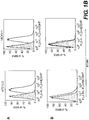
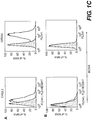
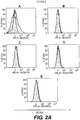
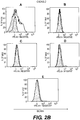
- the highest expressing clone was used for assessing new anti-human BCMA mAbs, with untransfected CHO cells as a control. Briefly, BCMA-CHO cells were pretreated with FACS buffer plus 5% normal mouse serum to block non-specific binding sites. Seven anti-BCMA mAbs-C11 D5.3, C12A3.2, C13F12.1 and A7D12.2 and the commercially available anti-BCMA mAbs, C4E2.2 (Legacy Biogen), VICKY-1 (Alexis) and 335004 (R&D Systems, Inc.)-and isotype control antibodies were incubated separately with cells for 30 minutes on ice at 1 ⁇ g/ml, and washed.
- Biotin-conjugated isotype control Abs were as follows: mouse IgG1, eBioscience cat. no. 13-4714-85; mouse IgG2a, eBioscience, cat. no. 13-4732-85; hamster IgG1, BD Pharmingen cat. no. 553970; rat IgG2a, eBioscience, cat. No. 13-4321-82.
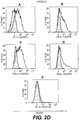
- Streptavidin-PE (Molecular Probes, Eugene, OR) was added to cells for 30 minutes on ice, after which cells were washed, fixed in 0.8% paraformaldehyde, and run on a FACScalibur flow cytometer (BDbiosciences, San Jose, CA) and analyzed using Flowjo software (Treestar, Ashland, OR). Results are shown in Figure 1 .
- Example 3 The seven anti-BCMA mAbs tested in Example 3 were then assessed in a cross-blocking assay to determine the presence or absence of epitope overlap between each antibody.
- Corning 96-well flat-bottom plates were incubated overnight at 4°C with 10 ⁇ g/ml of mouse anti-human Fc in a 50 mM pH 9.6 sodium bicarbonate solution, washed, incubated with 2 ⁇ g/ml human BCMA-Fc (SEQ ID NO:10) at 37°C for 1 hr, washed again, and non-specific binding sites were blocked with blocking buffer (3% BSA in PBS) for 30 min at 37°C.
- control readings in which the unconjugated and conjugated antibodies were the same were considered background levels, i.e., the absorbance from this control was subtracted from each experimental reading for that antibody. In some cases, this background subtraction resulted in slightly negative values. Although it is possible that the labeled antibody was blocked slightly more effectively by a different unconjugated antibody than by itself, these slightly negative values might also result from experimental variation. Results were then expressed as a percentage of the positive control value, i.e., the background-adjusted absorbance reading for the biotin-conjugated antibody in the absence of a competing unconjugated antibody.
- Antibodies were considered to bind the same epitope or very closely overlapping epitopes if they each reduced the other's binding (according to the fraction calculated as above) to below 20% of the positive control value. If they did not satisfy this condition, they were considered to have at least partially distinct epitopes. Table 3 shows which antibodies have at least partially distinct epitopes.
- Example 5 Flow cytometric analysis of antibody binding to human peripheral blood cells
- PBMCs peripheral blood mononuclear cells
- FACS buffer containing 5% normal mouse serum to block non-specific binding sites.
- fluorphore-conjugated monoclonal antibodies directed against specific B cell and plasma cell markers were used: anti-CD19-PE-Cy5, anti-IgD-FITC, anti-CD27-APC, anti-CD38-PE-Cy7 (BD Biosciences, San Jose, CA).
- Streptavidin-PE (Molecular Probes, Eugene, OR) was used to visualize biotin-conjugated anti-BCMA mAbs (10 ⁇ g/ml). Binding of an isotype control mAb as in Example 3 was also measured.
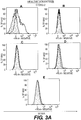
- FIG. 3 shows a comparison between samples from a healthy volunteer and a representative SLE patient.
- Antibody A7D12.2 bound to plasma cells from both healthy volunteers and SLE patients ( Fig. 3A ).
- the A7D12.2 antibody bound na ⁇ ve B cells (Fig. 3E). Binding of the A7D12.2 antibody to memory B cells ( Fig. 3B-D ), particularly double negative memory B cells ( Fig. 3D ), was increased in SLE samples.
- Example 7 Generation of cell lines producing chimeric anti-BCMA mAbs
- CHO-DG44-I a dhfr-deficient, insulin-independent Chinese hamster ovary cell line
- the host cells were cultured in CHO-S-SFM II medium with nucleosides prior to transfection.
- Chimeric antibodies were produced by transfecting cells with expression plasmids encoding the mature heavy and light chain sequences listed in Table 4.
- Table 4 Mature heavy and light chain sequences of chimeric anti-BCMA antibodies Chimeric antibody Mature heavy chain sequence Mature light chain sequence chA7D12.2 SEQ ID NO:13 SEQ ID NO:14 chC11 D5.3 SEQ ID NO:15 SEQ ID NO:16 (for Example 8) SEQ ID NO:17 (for Example 9) chC12A3.2 SEQ ID NO:18 SEQ ID NO:19 chC13F12.1 SEQ ID NO:20 SEQ ID NO:20
- Chimeric anti-BCMA expression plasmids were transfected into the CHO host cell line DG44-I using a cationic lipid (Fugene HD) method. Briefly, 1x10 6 DG44-I cells were seeded in each of two wells of a 6-well plate containing 3 mL of CHO-S-SFMII medium w/nucleosides per well. Four ⁇ g of plasmid DNA (2 ⁇ g heavy chain, 2 ⁇ g light chain) was diluted into 200 ⁇ L CHO-S-SFM II (Invitrogen) medium at room temperature. Sixteen ⁇ L of Fugene HD (Roche) reagent and allowed to complex with the DNA for approximately 15 minutes.
- Fugene HD Fugene HD
- CHO-DG44-I cells stably transfected with chimeric heavy and light chains were fermented in CHOM39 media, harvested, and the cells were removed by centrifugation. The pH of the cleared media was adjusted prior to passing through a protein A Fast Flow column.
- Antibodies were eluted with 100 mM Na-citrate buffer, pH 3.0, neutralized to pH 7.0 using 10% (v/v) of 2M glycine, pH 8.9, and the recovered antibody solution was buffer-exchanged to PBS (pH 7.2) using a Superdex 200 size exclusion chromatography under endotoxin-free conditions. The purified protein was kept at -80°C.
- JJN-3 human plasmacytoma cells (DSMZ ACC 541) were cultured in culture medium consisting of 40% Dulbecco's MEM, 40% Iscove's MDM, 20% FBS, 100 units/mL penicillin and 100 ⁇ g/mL streptomycin.
- U266 human plasmacytoma cells (ATCC TIB 196) were cultured in culture medium consisting of RPMI 1640, 15% FBS, 20 mM HEPES, 100 units/mL penicillin and 100 ⁇ g/mL streptomycin. All cells were cultured at 37 °C in a 5% CO2 atmosphere.
- Peripheral blood mononuclear cells were isolated from a consented normal healthy donor by density centrifugation through Ficoll-Paque PLUS (GE Healthcare, Uppsala, Sweden).
- ADCC antibody-dependent cellular cytotoxicity
- Assay diluent was RPMI 1640, 1% BSA, 20 mM HEPES, 100 units/mL penicillin and 100 ⁇ g/mL streptomycin.
- Human plasmacytoma cell lines JJN-3 and U266 were washed and resuspended in assay diluent to 0.4 x 10 6 cells per mL. 50 ⁇ L of each cell suspension was plated into a 96-well U bottom microtiter plate in triplicates.
- Controls included target cells alone (spontaneous LDH release), target cells alone with 2% Triton X-100 in assay diluent (maximum LDH release), effector cells with and without target cells, and human IgG1 isotype control.
- PBMCs peripheral blood mononuclear cells
- chimeric mAbs C12A3.2 and C13F12.1 demonstrated marked ADCC activity relative to HlgG1 controls.
- Chimeric clones A7D12.2 and C11 D5.3 also mediated ADCC, although to a lesser degree than C12A3.2 and C13F12.1. Table 5.
- ADCC assays were also performed using a second BCMA+ plasmacytoma cell line, JJN-3, as the target cells. As shown in Table 6, chimeric C12A3.2, C13F12.1, and A7D12.2 also mediated ADCC of JJN-3 cells. Table 6. ADCC of JJN-3 cells by anti-human BCMA mAbs mAb Clone % Killing at 1 nM % Maximal Killing (mAb concentration, nM) chC12A3.2 5 14 (100) chC13F12.1 3 ⁇ 14( ⁇ 100) 1 chA7D12.2 20 37 (100) 1 Maximum killing determination is incomplete
- NK cells were not the effector cells for chC12A3.2, chC13F12.1, or chA7D12.2 in the ADCC assays with U266 and JJN3 as target cells (data not shown).
- Generation of afucosyl variants of chC12A3.2, chC13F12.1, or chA7D12.2 did not improve activity of these mAbs (data not shown).
- HSC/NSG mice provide a useful tool for testing in vivo biologic reagents specific for human protein targets since their immune system consists of functioning human cell types ( Brehm et al. (2010), Clin Immunol [Epub ahead of print]). Humanized mice were generated as previously described ( Pearson et al. (2008), Curr Protoc Immunol Chapter 15 :Unit 15.21.PMID: 18491294). NOD/SCID/common gamma chain-deficient mice (NSG mice) were purchased from Jackson Laboratories (Bar Harbor, ME). Mice were maintained and bred under specific-pathogen-free conditions in isolator cages. Breeding pairs were established and dams were monitored for pregnancy and delivery.
- Pups ranging in age from 2-6 days old were used to create humanized mice. Pups were lightly irradiated, receiving a dose of 1 Gy (100 rad) from a 137Cs irradiator. Pups were immediately injected intra-orbitally with approximately 50,000 CD34+CD3- human stem cells (HSC) derived from umbilical cord blood (All Cell LLC, purchased from StemCell Technologies Inc., Vancouver, BC, Canada), then returned to the dam. Pups were weaned at 21 days and caged with littermates according to gender. Starting at 3 months of age mice were bled via the facial vein into heparinized tubes and the whole blood was analyzed by flow cytometry for the presence of human cells.
- HSC CD34+CD3- human stem cells
- mice were considered successfully humanized if they had at least 20% human CD45+ cells in whole blood of which 10% or more were human CD3+, the remainder being human B cells and other human hematopoietic cells. Mice were occasionally bled and analyzed to ensure that the humanization was stable, and were routinely analyzed 2 weeks prior to study enrollment.
- PC plasma cells
- HSC/NSG human stem cell humanized NSG mice
- HSC/NSG human stem cell humanized NSG mice
- mAbs directed to human cell lineage and to human B cell markers.
- the panel consisted of anti-human CD45, anti-human CD19, anti-human CD27, anti-human IgD, and anti-human CD38.
- Two markers used to exclude specific cell populations were anti-mouse CD45 and anti-human CD3.
- Cells identified as PC were human CD45+, human CD19+, human CD3-, human CD27+, human IgD- and human CD38bright.
- BCMA+ cells the biotin-conjugated anti-human BCMA mAbs, C12A3.2 and A7D12.2, were used.
- mice received chimeric anti-BCMA mAb i.p. Human IgG1 with no known reactivity (Protos Immunoresearch) was used as a negative control. Blood was collected to prepare serum for analysis of human Ig isoform levels. At the study terminus the spleen was harvested, a single cell suspension was prepared, RBCs were lysed and cells were washed 3x with PBS/5% FCS and the cell number was determined. Cells were assessed by flow cytometry for T lineage cells, B lineage cells, and plasma cells.
- Serum levels of human IgM and IgG were determined using an ELISA format (Bethyl Laboratories Inc., Montgomery, TX) and a human immunoglobulin isotyping kit (Millipore, Billerica, MA), respectively, according to the manufacturer's protocol.
- BCMA+ cells were only found in the B cell lineage.
- BCMA was found only on splenic PCs (human CD19+, human CD27+, IgD-, CD38 bright) ( Figure 4 ), and not on na ⁇ ve B cells (human CD19+, human CD27-, IgD + ), unswitched memory B cells (human CD19+, human CD27+, human IgD + ), or switched memory B cells (human CD19+, human CD27+, human IgD-) (data not shown).
- HSC/NSG mice received various amounts of chimeric anti-human BCMA clones chAC11D5.3, chC12A3.2, chC13F12.1, and chA7D12.2 (Example 7) twice weekly i.p. for 2 weeks, after which the presence of splenic PCs was determined.
- Splenic PCs from the HIgG1-treated control group were analyzed for expression of BCMA using the A7D12.2 and C12A3.2 clones and were confirmed to express cell surface BCMA (data not shown).
- PCs were identified using the flow cytometric parameters described above, and total cell numbers were determined from the flow cytometric dot plots (calculated as a percentage of the total human cell number). The numbers of na ⁇ ve human B cells, unswitched memory human B cells, and switched memory human B cells were also determined.
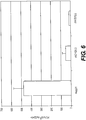
- Treatment with chC13F12.1 resulted in a statistically significant decline, 88% and 51 %, in the number of splenic PCs at the 200 ⁇ g and 20 ⁇ g dose levels, respectively ( Figure 5 ). No impact on the number of other B cell subsets or T cells was observed with chC12A3.2 and chC13F12.1 (data not shown).
- BCMA could not be detected on the surface of switched memory B cells in untreated humanized mice, it appears that while the level of BCMA was below the limit of detection by flow cytometry, it was sufficient to result in Ab-mediated killing.
- Chimeric C12A3.2 resulted in a 63%, 62% and 30% reduction in IgM for the 200, 20 and 2 ⁇ g dose levels, respectively.
- Chimeric C13F12.1 resulted in a 52%, 42% and 32% reduction in IgM for the 200, 20 and 2 ⁇ g dose levels, respectively.
- Table 8 Table 8.
- Serum human immunoglobulin levels Serum Immunoglobulin ( ⁇ g/mL) Treatment
- Mean SE Mean SE
- Mean SE Mean SE
Landscapes
- Health & Medical Sciences (AREA)
- Chemical & Material Sciences (AREA)
- Organic Chemistry (AREA)
- Medicinal Chemistry (AREA)
- General Health & Medical Sciences (AREA)
- Life Sciences & Earth Sciences (AREA)
- Animal Behavior & Ethology (AREA)
- Public Health (AREA)
- Chemical Kinetics & Catalysis (AREA)
- Nuclear Medicine, Radiotherapy & Molecular Imaging (AREA)
- Veterinary Medicine (AREA)
- Pharmacology & Pharmacy (AREA)
- General Chemical & Material Sciences (AREA)
- Bioinformatics & Cheminformatics (AREA)
- Engineering & Computer Science (AREA)
- Immunology (AREA)
- Diabetes (AREA)
- Hematology (AREA)
- Proteomics, Peptides & Aminoacids (AREA)
- Molecular Biology (AREA)
- Genetics & Genomics (AREA)
- Biophysics (AREA)
- Biochemistry (AREA)
- Orthopedic Medicine & Surgery (AREA)
- Rheumatology (AREA)
- Neurology (AREA)
- Physical Education & Sports Medicine (AREA)
- Urology & Nephrology (AREA)
- Endocrinology (AREA)
- Dermatology (AREA)
- Biomedical Technology (AREA)
- Obesity (AREA)
- Neurosurgery (AREA)
- Pulmonology (AREA)
- Pain & Pain Management (AREA)
- Transplantation (AREA)
- Heart & Thoracic Surgery (AREA)
- Cardiology (AREA)
- Peptides Or Proteins (AREA)
- Medicines Containing Antibodies Or Antigens For Use As Internal Diagnostic Agents (AREA)
Applications Claiming Priority (3)
| Application Number | Priority Date | Filing Date | Title |
|---|---|---|---|
| US15894209P | 2009-03-10 | 2009-03-10 | |
| US16292409P | 2009-03-24 | 2009-03-24 | |
| EP10708865.0A EP2406284B9 (en) | 2009-03-10 | 2010-03-10 | Anti-bcma antibodies |
Related Parent Applications (2)
| Application Number | Title | Priority Date | Filing Date |
|---|---|---|---|
| EP10708865.0A Division-Into EP2406284B9 (en) | 2009-03-10 | 2010-03-10 | Anti-bcma antibodies |
| EP10708865.0A Division EP2406284B9 (en) | 2009-03-10 | 2010-03-10 | Anti-bcma antibodies |
Publications (1)
| Publication Number | Publication Date |
|---|---|
| EP3141562A1 true EP3141562A1 (en) | 2017-03-15 |
Family
ID=42139515
Family Applications (2)
| Application Number | Title | Priority Date | Filing Date |
|---|---|---|---|
| EP16179507.5A Withdrawn EP3141562A1 (en) | 2009-03-10 | 2010-03-10 | Anti-bcma antibodies |
| EP10708865.0A Active EP2406284B9 (en) | 2009-03-10 | 2010-03-10 | Anti-bcma antibodies |
Family Applications After (1)
| Application Number | Title | Priority Date | Filing Date |
|---|---|---|---|
| EP10708865.0A Active EP2406284B9 (en) | 2009-03-10 | 2010-03-10 | Anti-bcma antibodies |
Country Status (20)
| Country | Link |
|---|---|
| US (6) | US9034324B2 (enExample) |
| EP (2) | EP3141562A1 (enExample) |
| JP (2) | JP6061469B2 (enExample) |
| KR (1) | KR101589785B1 (enExample) |
| CN (2) | CN102421801B (enExample) |
| AU (2) | AU2010224160A1 (enExample) |
| CA (1) | CA2754938C (enExample) |
| CY (1) | CY1118069T1 (enExample) |
| DK (1) | DK2406284T5 (enExample) |
| ES (1) | ES2593583T3 (enExample) |
| HR (1) | HRP20161194T1 (enExample) |
| HU (1) | HUE029619T4 (enExample) |
| IL (1) | IL214996A (enExample) |
| LT (1) | LT2406284T (enExample) |
| MX (2) | MX341884B (enExample) |
| NZ (2) | NZ594985A (enExample) |
| PL (1) | PL2406284T3 (enExample) |
| PT (1) | PT2406284T (enExample) |
| SI (1) | SI2406284T1 (enExample) |
| WO (1) | WO2010104949A2 (enExample) |
Families Citing this family (266)
| Publication number | Priority date | Publication date | Assignee | Title |
|---|---|---|---|---|
| EP2283355A2 (en) * | 2008-04-25 | 2011-02-16 | Zymogenetics, Inc. | Levels of bcma protein expression on b cells and use in diagnostic methods |
| EP2640750A1 (en) * | 2010-11-16 | 2013-09-25 | Boehringer Ingelheim International GmbH | Agents and methods for treating diseases that correlate with bcma expression |
| US20130101599A1 (en) | 2011-04-21 | 2013-04-25 | Boehringer Ingelheim International Gmbh | Bcma-based stratification and therapy for multiple myeloma patients |
| EP2710042A2 (en) | 2011-05-16 | 2014-03-26 | Fabion Pharmaceuticals, Inc. | Multi-specific fab fusion proteins and methods of use |
| UA112434C2 (uk) | 2011-05-27 | 2016-09-12 | Ґлаксо Ґруп Лімітед | Антигензв'язувальний білок, який специфічно зв'язується з всма |
| PH12013502421A1 (en) * | 2011-05-27 | 2014-01-06 | Glaxo Group Ltd | Bcma (cd269/tnfrsf17) -binding proteins |
| TWI679212B (zh) | 2011-11-15 | 2019-12-11 | 美商安進股份有限公司 | 針對bcma之e3以及cd3的結合分子 |
| WO2013154760A1 (en) | 2012-04-11 | 2013-10-17 | The United States Of America, As Represented By The Secretary, Department Of Health And Human Services | Chimeric antigen receptors targeting b-cell maturation antigen |
| EP2914628A1 (en) | 2012-11-01 | 2015-09-09 | Max-Delbrück-Centrum für Molekulare Medizin | An antibody that binds cd269 (bcma) suitable for use in the treatment of plasma cell diseases such as multiple myeloma and autoimmune diseases |
| AU2013204922B2 (en) | 2012-12-20 | 2015-05-14 | Celgene Corporation | Chimeric antigen receptors |
| EP2762496A1 (en) | 2013-02-05 | 2014-08-06 | EngMab AG | Method for the selection of antibodies against BCMA |
| EP2762497A1 (en) | 2013-02-05 | 2014-08-06 | EngMab AG | Bispecific antibodies against CD3epsilon and BCMA |
| PL2953972T3 (pl) | 2013-02-05 | 2021-03-08 | Engmab Sàrl | Metoda wyboru przeciwciał przeciwko bcma |
| WO2014124280A1 (en) | 2013-02-08 | 2014-08-14 | Institute For Myeloma & Bone Cancer Research | Improved diagnostic, prognostic, and monitoring methods for multiple myeloma, chronic lymphocytic leukemia, and b-cell non-hodgkin lymphoma |
| CN105518018B (zh) | 2013-03-15 | 2020-04-03 | 细胞基因公司 | 修饰的t淋巴细胞 |
| AR095374A1 (es) * | 2013-03-15 | 2015-10-14 | Amgen Res Munich Gmbh | Moléculas de unión para bcma y cd3 |
| CN106459990B (zh) | 2014-02-07 | 2021-06-01 | 麦克马斯特大学 | 三功能t细胞抗原偶联物及其制备方法和用途 |
| US10520494B2 (en) | 2014-03-26 | 2019-12-31 | Helmholtz Zentrum München-Deutsches Forschungszentrum Für Gesundheit Und Umwelt (Gmbh) | Flattop (FLTP) is a novel biomarker for beta cell maturation |
| EP3738597A1 (en) | 2014-04-25 | 2020-11-18 | Bluebird Bio, Inc. | Improved methods for manufacturing adoptive cell therapies |
| SI3689899T1 (sl) | 2014-04-25 | 2022-01-31 | 2Seventy Bio, Inc. | MND promotor kimeričnih antigenskih receptorjev |
| KR102526945B1 (ko) * | 2014-04-30 | 2023-04-27 | 막스-델부뤽-센트럼 퓌어 몰레쿨라레 메디친 인 데어 헬름홀츠-게마인샤프트 | Cd269에 대한 인간화 항체 |
| NZ726989A (en) | 2014-06-06 | 2020-08-28 | Bluebird Bio Inc | Improved t cell compositions |
| WO2016014565A2 (en) | 2014-07-21 | 2016-01-28 | Novartis Ag | Treatment of cancer using humanized anti-bcma chimeric antigen receptor |
| SG11201700496WA (en) | 2014-07-22 | 2017-02-27 | Cb Therapeutics Inc | Anti-pd-1 antibodies |
| SG10201900455YA (en) | 2014-07-24 | 2019-02-27 | Bluebird Bio Inc | Bcma chimeric antigen receptors |
| EP2982692A1 (en) | 2014-08-04 | 2016-02-10 | EngMab AG | Bispecific antibodies against CD3epsilon and BCMA |
| SG10201901057UA (en) | 2014-08-05 | 2019-03-28 | Cb Therapeutics Inc | Anti-pd-l1 antibodies |
| EP3023437A1 (en) | 2014-11-20 | 2016-05-25 | EngMab AG | Bispecific antibodies against CD3epsilon and BCMA |
| EP3029068A1 (en) | 2014-12-03 | 2016-06-08 | EngMab AG | Bispecific antibodies against CD3epsilon and BCMA for use in the treatment of diseases |
| DK3226897T3 (da) * | 2014-12-05 | 2021-04-19 | Memorial Sloan Kettering Cancer Center | Antistoffer der rammer b-cellemodningsantigen og fremgangsmåder til anvendelse |
| SG10201900931XA (en) | 2014-12-05 | 2019-02-27 | Memorial Sloan Kettering Cancer Center | Chimeric antigen receptors targeting b-cell maturation antigen and uses thereof |
| NZ733025A (en) | 2014-12-12 | 2022-01-28 | 2Seventy Bio Inc | Bcma chimeric antigen receptors |
| ES3012402T3 (en) * | 2015-04-13 | 2025-04-09 | Pfizer | Therapeutic antibodies and their uses |
| JP6921001B2 (ja) | 2015-04-13 | 2021-08-18 | ファイザー・インク | B細胞成熟抗原を標的にするキメラ抗原受容体 |
| KR20180029201A (ko) | 2015-05-18 | 2018-03-20 | 티씨알2 테라퓨틱스 인크. | 융합 단백질을 이용하는 tcr 리프로그래밍을 위한 조성물 및 방법 |
| US20180214553A1 (en) * | 2015-07-24 | 2018-08-02 | Oncotracker, Inc. | Gamma secretase modulators for the treatment of immune system dysfunction |
| TWI796283B (zh) | 2015-07-31 | 2023-03-21 | 德商安美基研究(慕尼黑)公司 | Msln及cd3抗體構築體 |
| TWI744242B (zh) | 2015-07-31 | 2021-11-01 | 德商安美基研究(慕尼黑)公司 | Egfrviii及cd3抗體構築體 |
| TWI829617B (zh) | 2015-07-31 | 2024-01-21 | 德商安美基研究(慕尼黑)公司 | Flt3及cd3抗體構築體 |
| EA039859B1 (ru) | 2015-07-31 | 2022-03-21 | Эмджен Рисерч (Мюник) Гмбх | Биспецифические конструкты антител, связывающие egfrviii и cd3 |
| PT3331910T (pt) | 2015-08-03 | 2020-03-24 | Engmab Sarl | Anticorpos monoclonais contra o antigénio de maturação de células b (bcma) humano |
| PT3337824T (pt) | 2015-08-17 | 2020-09-10 | Janssen Pharmaceutica Nv | Anticorpos anti-bcma, moléculas de ligação a antigénio biespecíficas que ligam bcma e cd3, e suas utilizações |
| HK1258726A1 (zh) | 2015-09-28 | 2019-11-15 | Regents Of The University Of Minnesota | 嵌合抗原受体(car)t细胞作为获得自体免疫和同种免疫的治疗性干预 |
| US10925969B2 (en) | 2015-11-13 | 2021-02-23 | The United States Of America, As Represented By The Secretary, Department Of Health And Human Service | Anti-BCMA polypeptides and proteins |
| US11479755B2 (en) | 2015-12-07 | 2022-10-25 | 2Seventy Bio, Inc. | T cell compositions |
| US11698369B2 (en) | 2016-01-12 | 2023-07-11 | Oncotracker, Inc. | Methods for monitoring immune status of a subject |
| LT3411404T (lt) | 2016-02-03 | 2022-12-27 | Amgen Research (Munich) Gmbh | Psma ir cd3 bispecifiniai, t ląsteles aktyvuojantys antikūno konstruktai |
| PT3411402T (pt) * | 2016-02-03 | 2022-02-01 | Amgen Inc | Construtos de anticorpos biespecíficos engajadores de células t contra bcma e cd3 |
| IL311107A (en) * | 2016-02-17 | 2024-04-01 | Seagen Inc | BCMA antibodies and their use for the treatment of cancer and immune disorders |
| CA3016287A1 (en) | 2016-03-04 | 2017-09-08 | Novartis Ag | Cells expressing multiple chimeric antigen receptor (car) molecules and uses therefore |
| JP7034489B2 (ja) | 2016-03-15 | 2022-03-14 | アイタブメッド (エイチケイ) リミテッド | 多重特異性Fab融合タンパクおよびその使用 |
| PL3436079T3 (pl) | 2016-04-01 | 2021-12-20 | Kite Pharma, Inc. | Antygen chimeryczny i receptory komórek t oraz sposoby ich stosowania |
| US10689450B2 (en) | 2016-04-01 | 2020-06-23 | Kite Pharma, Inc | BCMA binding molecules and methods of use thereof |
| PE20190356A1 (es) | 2016-04-01 | 2019-03-07 | Kite Pharma Inc | Receptores quimericos y metodos de uso de los mismos |
| EP3471773A4 (en) | 2016-06-21 | 2020-07-08 | Teneobio, Inc. | ANTIBODIES BINDING CD3 |
| WO2018026953A1 (en) | 2016-08-02 | 2018-02-08 | TCR2 Therapeutics Inc. | Compositions and methods for tcr reprogramming using fusion proteins |
| UA126384C2 (uk) | 2016-09-14 | 2022-09-28 | Тенеобіо, Інк. | Антитіло, яке зв'язує cd3 |
| IL302917A (en) | 2016-10-07 | 2023-07-01 | Tcr2 Therapeutics Inc | Compositions and methods for t-cell receptors reprogramming using fusion proteins |
| US11124577B2 (en) | 2016-11-02 | 2021-09-21 | Engmab Sàrl | Bispecific antibody against BCMA and CD3 and an immunological drug for combined use in treating multiple myeloma |
| KR20240005168A (ko) | 2016-11-04 | 2024-01-11 | 2세븐티 바이오, 인코포레이티드 | 항-bcma car t 세포 조성물 |
| JP7291396B2 (ja) | 2016-11-22 | 2023-06-15 | ティーシーアール2 セラピューティクス インク. | 融合タンパク質を用いたtcrの再プログラミングのための組成物及び方法 |
| IL267485B2 (en) * | 2016-12-21 | 2024-01-01 | Teneobio Inc | Anti-bcma heavy chain-only antibodies and uses thereof |
| WO2018144535A1 (en) | 2017-01-31 | 2018-08-09 | Novartis Ag | Treatment of cancer using chimeric t cell receptor proteins having multiple specificities |
| SG11201907580SA (en) * | 2017-02-17 | 2019-09-27 | Hutchinson Fred Cancer Res | Combination therapies for treatment of bcma-related cancers and autoimmune disorders |
| JP7115758B2 (ja) | 2017-02-28 | 2022-08-09 | アッフィメッド・ゲー・エム・ベー・ハー | Cd16a指向性nk細胞エンゲージメント用タンデムダイアボディ |
| JP7050333B2 (ja) | 2017-03-24 | 2022-04-08 | 全薬工業株式会社 | 抗IgM/B細胞表面抗原二重特異性抗体 |
| EP3615055A1 (en) | 2017-04-28 | 2020-03-04 | Novartis AG | Cells expressing a bcma-targeting chimeric antigen receptor, and combination therapy with a gamma secretase inhibitor |
| WO2018201051A1 (en) | 2017-04-28 | 2018-11-01 | Novartis Ag | Bcma-targeting agent, and combination therapy with a gamma secretase inhibitor |
| CA3061945A1 (en) | 2017-05-01 | 2018-11-08 | Juno Therapeutics, Inc. | Combination of a cell therapy and an immunomodulatory compound |
| US11635435B2 (en) | 2017-06-13 | 2023-04-25 | Oncotracker, Inc. | Diagnostic, prognostic, and monitoring methods for solid tumor cancers |
| EP3638319A1 (en) | 2017-06-14 | 2020-04-22 | Dana-Farber Cancer Institute, Inc. | B-cell maturation antigen (bcma)-directed nanoparticles |
| CN110945026B (zh) | 2017-06-20 | 2024-03-19 | 特纳奥尼股份有限公司 | 仅有重链的抗bcma抗体 |
| KR20250007003A (ko) * | 2017-06-20 | 2025-01-13 | 테네오바이오, 인코포레이티드 | 항-bcma 중쇄-단독 항체 |
| WO2019000223A1 (en) | 2017-06-27 | 2019-01-03 | Nanjing Legend Biotech Co., Ltd. | ENABLERS OF IMMUNE EFFECTOR CELLS OF CHIMERIC ANTIBODIES AND METHODS OF USE THEREOF |
| WO2019025983A1 (en) * | 2017-08-01 | 2019-02-07 | Medimmune, Llc | CONJUGATED MONOCLONAL ANTIBODY-MEDICINE DIRECTED AGAINST BCMA |
| WO2019035938A1 (en) | 2017-08-16 | 2019-02-21 | Elstar Therapeutics, Inc. | MULTISPECIFIC MOLECULES BINDING TO BCMA AND USES THEREOF |
| US20200207867A1 (en) | 2017-09-13 | 2020-07-02 | Teneobio, Inc. | Heavy chain antibodies binding to ectoenzymes |
| EP3689908A4 (en) * | 2017-09-29 | 2021-09-29 | Mogam Institute for Biomedical Research | ANTI-BCMA ANTIBODIES WITH HIGH AFFINITY FOR BCMA AND PHARMACEUTICAL COMPOSITION FOR THE TREATMENT OF CANCER, INCLUDING THIS |
| WO2019071358A1 (en) | 2017-10-12 | 2019-04-18 | Mcmaster University | Y182T MUTATION T CELL ANTIGEN COUPLEUR AND METHODS AND USES THEREOF |
| BR112020007576A2 (pt) | 2017-10-18 | 2020-09-24 | Novartis Ag | composições e métodos para degradação de proteína seletiva |
| CA3080904A1 (en) | 2017-11-01 | 2019-05-09 | Juno Therapeutics, Inc. | Antibodies and chimeric antigen receptors specific for b-cell maturation antigen |
| BR112020008638A2 (pt) | 2017-11-01 | 2020-10-20 | Juno Therapeutics Inc | receptores de antígenos quiméricos específicos para antígenos de maturação de células b (bcma) |
| AU2018359907A1 (en) | 2017-11-06 | 2020-05-07 | Fred Hutchinson Cancer Center | Combination of a cell therapy and a gamma secretase inhibitor |
| US20200360431A1 (en) | 2017-11-15 | 2020-11-19 | Novartis Ag | Bcma-targeting chimeric antigen receptor, cd19-targeting chimeric antigen receptor, and combination therapies |
| TW201925782A (zh) | 2017-11-30 | 2019-07-01 | 瑞士商諾華公司 | 靶向bcma之嵌合抗原受體及其用途 |
| KR102833956B1 (ko) | 2017-12-08 | 2025-07-15 | 주노 쎄러퓨티크스 인코퍼레이티드 | 세포를 배양하기 위한 무혈청 배지 제형 및 이의 사용 방법 |
| SG11202005272SA (en) | 2017-12-08 | 2020-07-29 | Juno Therapeutics Inc | Process for producing a composition of engineered t cells |
| MX2020006494A (es) | 2017-12-22 | 2020-11-24 | Teneobio Inc | Anticuerpos de cadena pesada que se unen a cd22. |
| TW201930591A (zh) | 2018-01-08 | 2019-08-01 | 瑞士商諾華公司 | 用於與嵌合抗原受體療法併用之免疫增強rna |
| EP3737692A4 (en) | 2018-01-09 | 2021-09-29 | Elstar Therapeutics, Inc. | CALRETICULIN AND MODIFIED T-LYMPHOCYTES BINDING CONSTRUCTIONS FOR THE TREATMENT OF DISEASES |
| CA3090249A1 (en) | 2018-01-31 | 2019-08-08 | Novartis Ag | Combination therapy using a chimeric antigen receptor |
| US11266690B2 (en) | 2018-02-01 | 2022-03-08 | Nanjing Iaso Biotherapeutics Co., Ltd. | Chimeric antigen receptor (CAR) binding to BCMA, and uses thereof |
| CA3074526C (en) | 2018-02-01 | 2021-08-03 | Nanjing Iaso Biotherapeutics Co., Ltd. | Chimeric antigen receptor (car) binding to bcma and application thereof |
| JP7438953B2 (ja) * | 2018-02-01 | 2024-02-27 | イノベント バイオロジックス (スウツォウ) カンパニー,リミテッド | 完全ヒト化抗b細胞成熟抗原(bcma)の単鎖抗体およびその応用 |
| WO2019160956A1 (en) | 2018-02-13 | 2019-08-22 | Novartis Ag | Chimeric antigen receptor therapy in combination with il-15r and il15 |
| MX2020009116A (es) | 2018-03-02 | 2020-12-07 | Cdr Life Ag | Proteinas triespecificas de union a antigenos. |
| JP2021514662A (ja) * | 2018-03-08 | 2021-06-17 | フェインズ セラピューティクス,インコーポレーテッド | 抗tip−1抗体及びその使用 |
| US12152073B2 (en) | 2018-03-14 | 2024-11-26 | Marengo Therapeutics, Inc. | Multifunctional molecules that bind to calreticulin and uses thereof |
| MX2020010728A (es) | 2018-04-13 | 2020-11-06 | Affimed Gmbh | Constructos de fusion de anticuerpos que se acoplan a celulas nk. |
| AU2019270624B2 (en) | 2018-05-16 | 2024-05-02 | Janssen Biotech, Inc. | Methods of treating cancers and enhancing efficacy of T cell redirecting therapeutics |
| WO2019226658A1 (en) | 2018-05-21 | 2019-11-28 | Compass Therapeutics Llc | Multispecific antigen-binding compositions and methods of use |
| TWI848951B (zh) | 2018-06-01 | 2024-07-21 | 瑞士商諾華公司 | 針對bcma之結合分子及其用途 |
| CN112566643A (zh) | 2018-06-12 | 2021-03-26 | 加利福尼亚大学董事会 | 用于治疗癌症的单链双特异性嵌合抗原受体 |
| AU2019284911A1 (en) | 2018-06-13 | 2020-12-17 | Novartis Ag | BCMA chimeric antigen receptors and uses thereof |
| CN112105391B (zh) * | 2018-06-26 | 2024-05-14 | 爱必乐生物公司 | 抗-bcma抗体及其用途 |
| AU2019297451A1 (en) | 2018-07-03 | 2021-01-28 | Marengo Therapeutics, Inc. | Anti-TCR antibody molecules and uses thereof |
| US11110123B2 (en) | 2018-07-17 | 2021-09-07 | Triumvira Immunologics Usa, Inc. | T cell-antigen coupler with various construct optimizations |
| MD3823665T2 (ro) | 2018-07-19 | 2024-05-31 | Regeneron Pharma | Receptori antigenci chimerici cu specificitate BCMA și utilizările acestora |
| TWI838389B (zh) | 2018-07-19 | 2024-04-11 | 美商再生元醫藥公司 | 雙特異性抗-BCMAx抗-CD3抗體及其用途 |
| CN112351997B (zh) | 2018-07-20 | 2023-05-26 | 坦尼奥第二公司 | 与cd19结合的重链抗体 |
| EA202190469A1 (ru) | 2018-08-09 | 2021-06-28 | Джуно Терапьютикс, Инк. | Способы оценки интегрированных нуклеиновых кислот |
| EP3833742A2 (en) | 2018-08-09 | 2021-06-16 | Juno Therapeutics, Inc. | Processes for generating engineered cells and compositions thereof |
| US20210221903A1 (en) * | 2018-08-14 | 2021-07-22 | Hrain Biotechnology Co., Ltd. | Bcma-targeting chimeric antigen receptor and uses thereof |
| ES3042082T3 (en) | 2018-08-31 | 2025-11-18 | Novartis Ag | Methods of making chimeric antigen receptor-expressing cells |
| WO2020047449A2 (en) | 2018-08-31 | 2020-03-05 | Novartis Ag | Methods of making chimeric antigen receptor-expressing cells |
| EP3847196A4 (en) | 2018-09-07 | 2023-01-04 | ITabMed (HK) Limited | BISPECIFIC ANTIGEN BINDING PROTEINS AND USES THEREOF |
| BR112021000173A2 (pt) | 2018-10-26 | 2021-05-04 | Teneobio, Inc. | anticorpos de cadeia pesada com ligação a cd38 |
| CN113227358A (zh) | 2018-10-31 | 2021-08-06 | 朱诺治疗学有限公司 | 选择并刺激细胞的方法及用于所述方法的设备 |
| AU2019372331A1 (en) | 2018-11-01 | 2021-05-27 | Juno Therapeutics, Inc. | Methods for treatment using chimeric antigen receptors specific for B-cell maturation antigen |
| AU2019374103A1 (en) | 2018-11-01 | 2021-05-20 | Juno Therapeutics, Inc. | Chimeric antigen receptors specific for G Protein-Coupled Receptor Class C Group 5 Member D (GPRC5D) |
| MX2021005366A (es) | 2018-11-08 | 2021-09-10 | Juno Therapeutics Inc | Metodos y combinaciones para el tratamiento y modulacion de celulas t. |
| PT3749338T (pt) | 2019-01-16 | 2024-09-20 | Caribou Biosciences Inc | Anticorpo de bcma humanizado e células bcma-car-t |
| EP3927747A1 (en) | 2019-02-21 | 2021-12-29 | Marengo Therapeutics, Inc. | Antibody molecules that bind to nkp30 and uses thereof |
| CN119661722A (zh) | 2019-02-21 | 2025-03-21 | 马伦戈治疗公司 | 结合t细胞相关癌细胞的多功能分子及其用途 |
| KR20210134339A (ko) | 2019-02-25 | 2021-11-09 | 노파르티스 아게 | 바이러스 전달을 위한 메조다공성 실리카 입자 조성물 |
| WO2020191316A1 (en) | 2019-03-21 | 2020-09-24 | Novartis Ag | Car-t cell therapies with enhanced efficacy |
| CN113710707B (zh) | 2019-04-05 | 2024-05-31 | 特尼奥生物股份有限公司 | 结合于psma的重链抗体 |
| WO2020210678A1 (en) | 2019-04-12 | 2020-10-15 | Novartis Ag | Methods of making chimeric antigen receptor-expressing cells |
| US20220251152A1 (en) | 2019-04-24 | 2022-08-11 | Novartis Ag | Compositions and methods for selective protein degradation |
| SG11202112382WA (en) | 2019-05-07 | 2021-12-30 | Gracell Biotechnologies Shanghai Co Ltd | Engineered immune cell targeting bcma and use thereof |
| WO2020224605A1 (zh) | 2019-05-07 | 2020-11-12 | 亘喜生物科技(上海)有限公司 | 靶向bcma的工程化免疫细胞及其用途 |
| US11162079B2 (en) | 2019-05-10 | 2021-11-02 | The Regents Of The University Of California | Blood type O Rh-hypo-immunogenic pluripotent cells |
| BR112021023048A2 (pt) | 2019-05-21 | 2022-04-19 | Novartis Ag | Moléculas de ligação a cd19 e usos das mesmas |
| CN119564852A (zh) | 2019-06-14 | 2025-03-07 | 特尼奥生物股份有限公司 | 与cd22和cd3结合的多特异性重链抗体 |
| BR112022001546A2 (pt) | 2019-07-30 | 2022-03-22 | Jiangsu Hansoh Pharmaceutical Group Co Ltd | Anticorpo anti-bcma, fragmento de ligação ao antígeno do mesmo e uso médico do mesmo |
| JP2022542431A (ja) | 2019-07-30 | 2022-10-03 | キューエルエスエフ バイオセラピューティクス, インコーポレイテッド | 二重特異性抗lrrc15及びcd3イプシロン抗体 |
| CN112409482B (zh) * | 2019-08-20 | 2022-08-26 | 杭州尚健生物技术有限公司 | Bcma抗体 |
| CN114401989B (zh) * | 2019-09-20 | 2024-02-09 | 上海吉倍生物技术有限公司 | 靶向bcma的抗体及嵌合抗原受体 |
| CA3163104A1 (en) | 2019-11-26 | 2021-06-03 | Novartis Ag | Chimeric antigen receptors and uses thereof |
| WO2021132746A1 (en) * | 2019-12-24 | 2021-07-01 | Abl Bio, Inc. | Anti-bcma/anti-4-1bb bispecific antibodies and uses thereof |
| IL293751A (en) | 2019-12-18 | 2022-08-01 | Teneofour Inc | Heavy chain antibodies binding to cd38 |
| KR20220012314A (ko) * | 2020-01-03 | 2022-02-03 | 살루브리스 (청두) 바이오테크 코., 리미티드 | Bcma에 결합하는 항체 및 그의 용도 |
| GB2609554B (en) | 2020-01-03 | 2025-08-20 | Marengo Therapeutics Inc | Anti-TCR antibody molecules and uses thereof |
| CN115315273A (zh) | 2020-01-14 | 2022-11-08 | 辛德凯因股份有限公司 | Il-2直向同源物及其使用方法 |
| CN111234020B (zh) * | 2020-01-23 | 2020-10-23 | 和铂医药(苏州)有限公司 | 一种bcma结合蛋白及其制备方法和应用 |
| KR20220146480A (ko) | 2020-01-28 | 2022-11-01 | 주노 쎄러퓨티크스 인코퍼레이티드 | T 세포 형질도입 방법 |
| IL295381A (en) | 2020-02-12 | 2022-10-01 | Juno Therapeutics Inc | bcma-directed chimeric t-cell antigen receptor compounds and methods and uses thereof |
| CN113248611A (zh) * | 2020-02-13 | 2021-08-13 | 湖南华康恒健生物技术有限公司 | 抗bcma抗体、其药物组合物及应用 |
| US20230256017A1 (en) | 2020-02-27 | 2023-08-17 | Jennifer Brogdon | Methods of making chimeric antigen receptor-expressing cells |
| BR112022016633A2 (pt) | 2020-02-27 | 2022-12-13 | Novartis Ag | Métodos para produzir células que expressam receptor de antígeno quimérico |
| KR20230009386A (ko) | 2020-04-10 | 2023-01-17 | 주노 쎄러퓨티크스 인코퍼레이티드 | B-세포 성숙 항원을 표적화하는 키메라 항원 수용체로 조작된 세포 요법 관련 방법 및 용도 |
| EP4142723A2 (en) | 2020-04-28 | 2023-03-08 | Juno Therapeutics, Inc. | Combination of bcma-directed t cell therapy and an immunomodulatory compound |
| WO2021222578A1 (en) | 2020-04-29 | 2021-11-04 | Teneobio, Inc. | Multispecific heavy chain antibodies with modified heavy chain constant regions |
| CN115715220A (zh) | 2020-04-29 | 2023-02-24 | 特尼奥生物股份有限公司 | 具有经修饰重链恒定区的多特异性重链抗体 |
| IL298046A (en) | 2020-05-11 | 2023-01-01 | Janssen Biotech Inc | Methods for treating multiple myeloma |
| JP7727662B2 (ja) | 2020-05-13 | 2025-08-21 | ジュノー セラピューティクス インコーポレイテッド | 臨床応答に関連する特徴量の特定方法およびその使用 |
| US20230332104A1 (en) | 2020-06-11 | 2023-10-19 | Novartis Ag | Zbtb32 inhibitors and uses thereof |
| WO2022006316A1 (en) | 2020-06-30 | 2022-01-06 | Teneobio, Inc. | Multi-specific antibodies binding to bcma |
| EP4192875A1 (en) | 2020-08-10 | 2023-06-14 | Precision BioSciences, Inc. | Antibodies and fragments specific for b-cell maturation antigen and uses thereof |
| EP4201960A4 (en) * | 2020-08-20 | 2024-09-04 | Chia Tai Tianqing Pharmaceutical Group Co., Ltd. | BCMA-BINDING SINGLE MOLECULE WITH VARIABLE DOMAIN AND ANTIGEN-BINDING MOLECULE |
| US20230302155A1 (en) | 2020-08-21 | 2023-09-28 | Novartis Ag | Compositions and methods for in vivo generation of car expressing cells |
| WO2022060806A1 (en) | 2020-09-16 | 2022-03-24 | Obsidian Therapeutics, Inc. | Compositions and methods for expression of anti-bcma chimeric antigen receptors with small molecule-regulated il15 in t cells |
| CN116670169A (zh) | 2020-10-16 | 2023-08-29 | 魁尔斯弗生物治疗股份有限公司 | 与pd-l1结合的多特异性结合化合物 |
| WO2022094245A1 (en) | 2020-10-30 | 2022-05-05 | Vor Biopharma, Inc. | Compositions and methods for bcma modification |
| KR20230090367A (ko) | 2020-11-04 | 2023-06-21 | 주노 쎄러퓨티크스 인코퍼레이티드 | 변형된 불변 cd3 이뮤노글로불린 슈퍼패밀리 쇄 유전자좌로부터 키메라 수용체를 발현하는 세포 및 관련 폴리뉴클레오티드 및 방법 |
| TW202233684A (zh) | 2020-11-18 | 2022-09-01 | 美商泰尼歐生物公司 | 結合於葉酸受體α之重鏈抗體 |
| CN112321713B (zh) * | 2020-12-31 | 2021-05-25 | 北京艺妙神州医药科技有限公司 | 一种抗bcma的抗体及其应用 |
| KR20230137900A (ko) | 2020-12-31 | 2023-10-05 | 사나 바이오테크놀로지, 인크. | Car-t 활성을 조정하기 위한 방법 및 조성물 |
| WO2022150731A1 (en) | 2021-01-11 | 2022-07-14 | Sana Biotechnology, Inc. | Use of cd8-targeted viral vectors |
| US20220267438A1 (en) | 2021-02-16 | 2022-08-25 | Janssen Pharmaceutica Nv | Trispecific antibody targeting bcma, gprc5d, and cd3 |
| AU2022226277A1 (en) | 2021-02-25 | 2023-08-31 | Teneobio, Inc. | Anti-psma antibodies and car-t structures |
| EP4298129A1 (en) | 2021-02-26 | 2024-01-03 | Teneobio, Inc. | Anti-muc1-c antibodies and car-t structures |
| US20240108654A1 (en) | 2021-03-03 | 2024-04-04 | Juno Therapeutics, Inc. | Combination of a t cell therapy and a dgk inhibitor |
| CN116997654A (zh) | 2021-03-17 | 2023-11-03 | 第一三共株式会社 | 编码抗乙酰胆碱受体自身抗体的嵌合受体的基因 |
| AU2022244229A1 (en) | 2021-03-22 | 2023-09-14 | Juno Therapeutics, Inc. | Method to assess potency of viral vector particles |
| CA3210581A1 (en) | 2021-03-22 | 2022-09-29 | Neil HAIG | Methods of determining potency of a therapeutic cell composition |
| TW202304994A (zh) | 2021-04-02 | 2023-02-01 | 美商泰尼歐生物公司 | 促效性抗il-2r抗體及使用方法 |
| AU2022255709A1 (en) | 2021-04-06 | 2023-09-28 | Teneobio, Inc. | Anti-cd19 antibodies and car-t structures |
| KR20240004462A (ko) | 2021-04-08 | 2024-01-11 | 마렝고 테라퓨틱스, 인크. | Tcr에 결합하는 다기능성 분자 및 이의 용도 |
| CN117337303A (zh) | 2021-04-16 | 2024-01-02 | 特尼奥生物股份有限公司 | 抗cd20抗体及car-t结构 |
| AU2022257093A1 (en) | 2021-04-16 | 2023-11-02 | Celgene Corporation | T cell therapy in patients who have had prior stem cell transplant |
| IL307612A (en) | 2021-04-16 | 2023-12-01 | Celgene Corp | Combined therapies with BCMA-directed T-cell therapy |
| CN118056008A (zh) | 2021-04-27 | 2024-05-17 | 诺华股份有限公司 | 病毒载体生产系统 |
| CN117916256A (zh) | 2021-05-06 | 2024-04-19 | 朱诺治疗学有限公司 | 用于刺激和转导t细胞的方法 |
| TW202309522A (zh) | 2021-05-11 | 2023-03-01 | 美商健生生物科技公司 | 用於監測復發性及/或難治性多發性骨髓瘤之治療的方法及組成物 |
| US20240252642A1 (en) | 2021-05-19 | 2024-08-01 | Sana Biotechnology, Inc. | Hypoimmunogenic rhd negative primary t cells |
| KR20240013135A (ko) | 2021-05-27 | 2024-01-30 | 사나 바이오테크놀로지, 인크. | 조작된 hla-e 또는 hla-g를 포함하는 저면역원성 세포 |
| KR20240037892A (ko) | 2021-06-01 | 2024-03-22 | 트리움비라 이뮤놀로직스 유에스에이, 인크. | 클라우딘 18.2 t 세포-항원 커플러 및 이의 용도 |
| WO2022271987A1 (en) | 2021-06-23 | 2022-12-29 | TeneoFour, Inc. | Anti-cd38 antibodies and epitopes of same |
| US11453723B1 (en) | 2021-06-25 | 2022-09-27 | Mcmaster University | BCMA T cell-antigen couplers and uses thereof |
| EP4362957A1 (en) | 2021-07-01 | 2024-05-08 | Indapta Therapeutics, Inc. | Engineered natural killer (nk) cells and related methods |
| EP4370541A1 (en) | 2021-07-14 | 2024-05-22 | 2seventy bio, Inc. | Engineered t cell receptors fused to binding domains from antibodies |
| AU2022309875A1 (en) | 2021-07-14 | 2024-01-25 | Sana Biotechnology, Inc. | Altered expression of y chromosome-linked antigens in hypoimmunogenic cells |
| WO2023004197A1 (en) | 2021-07-23 | 2023-01-26 | Teneoten, Inc. | Heavy chain antibodies binding to hepatitis b surface antigen |
| TW202321457A (zh) | 2021-08-04 | 2023-06-01 | 美商薩那生物科技公司 | 靶向cd4之病毒載體之用途 |
| IL310702A (en) | 2021-08-11 | 2024-04-01 | Sana Biotechnology Inc | Inducible systems for altering gene expression in hypoimmunogenic cells |
| WO2023021477A1 (en) | 2021-08-20 | 2023-02-23 | Novartis Ag | Methods of making chimeric antigen receptor–expressing cells |
| WO2023064876A1 (en) | 2021-10-14 | 2023-04-20 | Teneobio, Inc. | Mesothelin binding proteins and uses thereof |
| EP4419117A1 (en) | 2021-10-22 | 2024-08-28 | Sana Biotechnology, Inc. | Methods of engineering allogeneic t cells with a transgene in a tcr locus and associated compositions and methods |
| AU2022380722A1 (en) | 2021-11-03 | 2024-06-20 | Janssen Biotech, Inc. | Methods of treating cancers and enhancing efficacy of bcmaxcd3 bispecific antibodies |
| EP4426339A1 (en) | 2021-11-03 | 2024-09-11 | Celgene Corporation | Chimeric antigen receptors specific for b-cell maturation antigen for use in treating myeloma |
| EP4448549A2 (en) | 2021-12-17 | 2024-10-23 | Sana Biotechnology, Inc. | Modified paramyxoviridae fusion glycoproteins |
| WO2023115041A1 (en) | 2021-12-17 | 2023-06-22 | Sana Biotechnology, Inc. | Modified paramyxoviridae attachment glycoproteins |
| AU2022422147A1 (en) | 2021-12-23 | 2024-07-04 | Sana Biotechnology, Inc. | Chimeric antigen receptor (car) t cells for treating autoimmune disease and associated methods |
| CN114276452A (zh) * | 2021-12-29 | 2022-04-05 | 源道隆(苏州)医学科技有限公司 | 可结合bcma的纳米抗体及其应用 |
| US20250108113A1 (en) | 2021-12-30 | 2025-04-03 | Tr1X, Inc. | Cd4+ t cells expressing il-10 and chimeric antigen receptors and uses thereof |
| EP4463135A2 (en) | 2022-01-10 | 2024-11-20 | Sana Biotechnology, Inc. | Methods of ex vivo dosing and administration of lipid particles or viral vectors and related systems and uses |
| WO2023147515A1 (en) | 2022-01-28 | 2023-08-03 | Juno Therapeutics, Inc. | Methods of manufacturing cellular compositions |
| US20250152709A1 (en) | 2022-02-01 | 2025-05-15 | Sana Biotechnology, Inc. | Cd3-targeted lentiviral vectors and uses thereof |
| US20250144235A1 (en) | 2022-02-02 | 2025-05-08 | Sana Biotechnology, Inc. | Methods of repeat dosing and administration of lipid particles or viral vectors and related systems and uses |
| US20250222107A1 (en) | 2022-02-09 | 2025-07-10 | Hadasit Medical Research Services And Development Ltd. | Anti-bcma car to target immune-related disorders, compositions and method thereof |
| KR20240155390A (ko) | 2022-02-17 | 2024-10-28 | 사나 바이오테크놀로지, 인크. | 조작된 cd47 단백질 및 이의 용도 |
| WO2023193015A1 (en) | 2022-04-01 | 2023-10-05 | Sana Biotechnology, Inc. | Cytokine receptor agonist and viral vector combination therapies |
| CN119546327A (zh) | 2022-04-08 | 2025-02-28 | 再生元制药公司 | 多部分受体和信号传导复合物 |
| WO2023215725A1 (en) | 2022-05-02 | 2023-11-09 | Fred Hutchinson Cancer Center | Compositions and methods for cellular immunotherapy |
| US20250297282A1 (en) | 2022-05-05 | 2025-09-25 | Juno Therapeutics Gmbh | Viral-binding protein and related reagents, articles, and methods of use |
| WO2023220655A1 (en) | 2022-05-11 | 2023-11-16 | Celgene Corporation | Methods to overcome drug resistance by re-sensitizing cancer cells to treatment with a prior therapy via treatment with a t cell therapy |
| WO2023220641A2 (en) | 2022-05-11 | 2023-11-16 | Juno Therapeutics, Inc. | Methods and uses related to t cell therapy and production of same |
| WO2023230581A1 (en) | 2022-05-25 | 2023-11-30 | Celgene Corporation | Methods of manufacturing t cell therapies |
| US20250345432A1 (en) | 2022-05-25 | 2025-11-13 | Celgene Corporation | Method for predicting response to a t cell therapy |
| CA3259982A1 (en) | 2022-06-30 | 2024-01-04 | Indapta Therapeutics Inc | COMBINATION OF MODIFIED NATURAL KILLER (NK) CELLS AND ANTIBODY THERAPY AND ASSOCIATED METHODS |
| AU2023312905A1 (en) | 2022-07-27 | 2025-01-16 | Teneobio, Inc. | Mesothelin binding proteins and uses thereof |
| WO2024026377A1 (en) | 2022-07-27 | 2024-02-01 | Sana Biotechnology, Inc. | Methods of transduction using a viral vector and inhibitors of antiviral restriction factors |
| EP4311579A1 (en) * | 2022-07-29 | 2024-01-31 | Association Française contre les Myopathies | B cell-specific mab-sirna conjugates improve myasthenia |
| EP4565262A2 (en) | 2022-08-05 | 2025-06-11 | Juno Therapeutics, Inc. | Chimeric antigen receptors specific for gprc5d and bcma |
| JP2025531850A (ja) | 2022-09-08 | 2025-09-25 | ジュノー セラピューティクス インコーポレイテッド | T細胞療法および継続的または間欠的dgk阻害剤投薬の組合せ |
| EP4590688A1 (en) | 2022-09-21 | 2025-07-30 | Sana Biotechnology, Inc. | Lipid particles comprising variant paramyxovirus attachment glycoproteins and uses thereof |
| JP2025535042A (ja) | 2022-10-05 | 2025-10-22 | アムジェン インコーポレイテッド | T細胞リダイレクト療法及びアゴニスト抗il-2r抗体又はその断片を含む組み合わせ療法 |
| EP4602174A1 (en) | 2022-10-13 | 2025-08-20 | Sana Biotechnology, Inc. | Viral particles targeting hematopoietic stem cells |
| WO2024089639A1 (en) | 2022-10-26 | 2024-05-02 | Novartis Ag | Lentiviral formulations |
| WO2024097905A1 (en) | 2022-11-02 | 2024-05-10 | Celgene Corporation | Methods of treatment with t cell therapy and immunomodulatory agent maintenance therapy |
| WO2024100604A1 (en) | 2022-11-09 | 2024-05-16 | Juno Therapeutics Gmbh | Methods for manufacturing engineered immune cells |
| EP4627096A1 (en) | 2022-12-02 | 2025-10-08 | Sana Biotechnology, Inc. | Lipid particles with cofusogens and methods of producing and using the same |
| EP4658675A1 (en) | 2023-02-03 | 2025-12-10 | C3S2 GmbH | Methods for non-viral manufacturing of engineered immune cells |
| WO2024168192A1 (en) | 2023-02-10 | 2024-08-15 | Celgene Corporation | Assessment of bcma in biological samples |
| AU2024226156A1 (en) | 2023-02-21 | 2025-08-28 | Teneobio, Inc. | C-kit binding proteins, chimeric antigen receptors, and uses thereof |
| WO2024206329A1 (en) | 2023-03-27 | 2024-10-03 | Modernatx, Inc. | Nucleic acid molecules encoding bi-specific secreted engagers and uses thereof |
| WO2024220574A1 (en) | 2023-04-18 | 2024-10-24 | Sana Biotechnology, Inc. | Universal protein g fusogens and adapter systems thereof and related lipid particles and uses |
| WO2024220588A1 (en) | 2023-04-18 | 2024-10-24 | Juno Therapeutics, Inc. | Cytotoxicity assay for assessing potency of therapeutic cell compositions |
| WO2024220598A2 (en) | 2023-04-18 | 2024-10-24 | Sana Biotechnology, Inc. | Lentiviral vectors with two or more genomes |
| WO2024220560A1 (en) | 2023-04-18 | 2024-10-24 | Sana Biotechnology, Inc. | Engineered protein g fusogens and related lipid particles and methods thereof |
| WO2024220256A1 (en) | 2023-04-18 | 2024-10-24 | Qlsf Biotherapeutics, Inc. | Antibodies binding to ly6g6d |
| WO2024243365A2 (en) | 2023-05-23 | 2024-11-28 | Juno Therapeutics, Inc. | Activation markers of t cells and method for assessing t cell activation |
| AU2024274792A1 (en) | 2023-05-23 | 2025-10-23 | Sana Biotechnology, Inc. | Tandem fusogens and related lipid particles |
| US12311033B2 (en) | 2023-05-31 | 2025-05-27 | Capstan Therapeutics, Inc. | Lipid nanoparticle formulations and compositions |
| WO2025006799A1 (en) | 2023-06-27 | 2025-01-02 | Capstan Therapeutics, Inc. | Extracorporeal and ex vivo engineering of select cell populations from peripheral blood |
| WO2025043172A1 (en) | 2023-08-23 | 2025-02-27 | Sana Biotechnology, Inc. | Modified cd47 proteins and their uses |
| WO2025054202A1 (en) | 2023-09-05 | 2025-03-13 | Sana Biotechnology, Inc. | Method of screening a sample comprising a transgene with a unique barcode |
| WO2025076113A1 (en) | 2023-10-05 | 2025-04-10 | Capstan Therapeutics, Inc. | Ionizable cationic lipids with conserved spacing and lipid nanoparticles |
| US20250127728A1 (en) | 2023-10-05 | 2025-04-24 | Capstan Therapeutics, Inc. | Constrained Ionizable Cationic Lipids and Lipid Nanoparticles |
| WO2025096878A1 (en) | 2023-11-02 | 2025-05-08 | Capstan Therapeutics, Inc. | Rna for in vivo transfection with increased expression |
| WO2025101820A1 (en) | 2023-11-08 | 2025-05-15 | Fred Hutchinson Cancer Center | Compositions and methods for cellular immunotherapy |
| WO2025109119A1 (en) | 2023-11-22 | 2025-05-30 | Priothera Sas | Methods of treatment with multispecific antigen-binding proteins in combination with s1p receptor modulators |
| WO2025129201A1 (en) | 2023-12-15 | 2025-06-19 | Capstan Therapeutics, Inc. | Humanized anti-cd8 antibodies and uses thereof |
| WO2025134049A1 (en) | 2023-12-21 | 2025-06-26 | Janssen Biotech, Inc | Trispecific antibody targeting bcma, gprc5d and cd3 for the treatment of al amyloidosis |
| WO2025134050A1 (en) | 2023-12-21 | 2025-06-26 | Janssen Biotech, Inc | Trispecific antibody targeting bcma, gprc5d and cd3 for the treatment of multiple myeloma |
| WO2025147545A1 (en) | 2024-01-03 | 2025-07-10 | Juno Therapeutics, Inc. | Lipid nanoparticles for delivery of nucleic acids and related methods and uses |
| WO2025151838A1 (en) | 2024-01-12 | 2025-07-17 | Sana Biotechnology, Inc. | Safety switches to control in vitro and in vivo proliferation of cell therapy products |
| WO2025171388A1 (en) | 2024-02-09 | 2025-08-14 | Dispatch Biotherapeutics, Inc. | Engineered cancer antigens with modified domains and related methods and uses |
| WO2025171383A2 (en) | 2024-02-09 | 2025-08-14 | Dispatch Biotherapeutics, Inc. | Engineered cancer antigens and related methods and uses |
| US20250302763A1 (en) | 2024-02-22 | 2025-10-02 | Capstan Therapeutics, Inc. | Immune engineering amplification |
| WO2025184529A1 (en) | 2024-03-01 | 2025-09-04 | Sana Biotechnology, Inc. | Viral particles with fusogen display and related compositions and methods |
| US20250313641A1 (en) | 2024-04-09 | 2025-10-09 | Amgen Inc. | Agonistic anti-il-2rbg heavy-chain antibodies |
| WO2025217452A1 (en) | 2024-04-11 | 2025-10-16 | Capstan Therapeutics, Inc. | Constrained ionizable cationic lipids and lipid nanoparticles |
| WO2025217454A2 (en) | 2024-04-11 | 2025-10-16 | Capstan Therapeutics, Inc. | Ionizable cationic lipids and lipid nanoparticles |
| WO2025235357A1 (en) | 2024-05-06 | 2025-11-13 | Rondo Therapeutics, Inc. | Bispecific antibodies that bind to cd28 and nectin-4 |
Citations (8)
| Publication number | Priority date | Publication date | Assignee | Title |
|---|---|---|---|---|
| US4522811A (en) | 1982-07-08 | 1985-06-11 | Syntex (U.S.A.) Inc. | Serial injection of muramyldipeptides and liposomes enhances the anti-infective activity of muramyldipeptides |
| US4946778A (en) | 1987-09-21 | 1990-08-07 | Genex Corporation | Single polypeptide chain binding molecules |
| US5225539A (en) | 1986-03-27 | 1993-07-06 | Medical Research Council | Recombinant altered antibodies and methods of making altered antibodies |
| US5648237A (en) | 1991-09-19 | 1997-07-15 | Genentech, Inc. | Expression of functional antibody fragments |
| US5736137A (en) | 1992-11-13 | 1998-04-07 | Idec Pharmaceuticals Corporation | Therapeutic application of chimeric and radiolabeled antibodies to human B lymphocyte restricted differentiation antigen for treatment of B cell lymphoma |
| WO2002066516A2 (en) * | 2001-02-20 | 2002-08-29 | Zymogenetics, Inc. | Antibodies that bind both bcma and taci |
| US6632927B2 (en) | 1989-12-21 | 2003-10-14 | Celltech Therapeutics Limited | Humanized antibodies |
| US7112421B2 (en) | 2000-09-18 | 2006-09-26 | Biogen Idec Ma Inc. | Nucleic acids encoding BAFF receptor, chimeric proteins and methods and compositions related thereto |
Family Cites Families (20)
| Publication number | Priority date | Publication date | Assignee | Title |
|---|---|---|---|---|
| DE60005135T3 (de) | 1999-01-07 | 2015-04-09 | Zymogenetics, Inc. | Lösliche rezeptoren br43x2 und verfahren zu deren therapeutischen verwendung |
| US7833529B1 (en) | 1999-01-07 | 2010-11-16 | Zymogenetics, Inc. | Methods for inhibiting B lymphocyte proliferation with soluble ztnf4 receptor |
| US20060067933A1 (en) | 1999-01-07 | 2006-03-30 | Gross Jane A | Soluble receptor BR43x2 and methods of using |
| US6475987B1 (en) | 1999-05-06 | 2002-11-05 | National Jewish Medical And Research Center | Tall-1 receptor homologues |
| EP1210425B2 (en) | 1999-08-17 | 2015-06-17 | Biogen MA Inc. | Baff receptor (bcma), an immunoregulatory agent |
| PT1255558E (pt) | 2000-02-16 | 2006-11-30 | Genentech Inc | Anticorpos anti-april e células hibridoma |
| US20040002068A1 (en) | 2000-03-01 | 2004-01-01 | Corixa Corporation | Compositions and methods for the detection, diagnosis and therapy of hematological malignancies |
| US7371388B1 (en) | 2000-05-04 | 2008-05-13 | Human Genome Sciences, Inc. | Treatment of Sjogren's syndrome by administration of TR18 polypeptides |
| CU23007A1 (es) * | 2001-04-06 | 2004-12-17 | Ct De Inmunologia Molecular Ct De Inmunologia Mole | Combinaciones inmunoterapéuticas para el tratamiencombinaciones inmunoterapéuticas para el tratamiento de tumores que sobre-expresan gangliósidos to de tumores que sobre-expresan gangliósidos |
| WO2003013582A1 (en) | 2001-08-06 | 2003-02-20 | Genset S.A. | Genoxit agonists and antagonists for use in the treatment of metabolic disorders |
| US20080267965A1 (en) * | 2002-02-21 | 2008-10-30 | Kalled Susan L | Use of Bcma as an Immunoregulatory Agent |
| ES2871905T3 (es) * | 2002-03-01 | 2021-11-02 | Immunomedics Inc | Inmunoconjugado que comprende anticuerpos de RS7 humanizados |
| EP2322203A3 (en) | 2002-10-29 | 2011-07-27 | Genentech, Inc. | Compositions and methods for the treatment of immune related diseases |
| US20050163775A1 (en) | 2003-06-05 | 2005-07-28 | Genentech, Inc. | Combination therapy for B cell disorders |
| EP2272868B1 (en) | 2003-06-05 | 2015-03-04 | Genentech, Inc. | Combination therapy for B cell disorders |
| AU2006281978A1 (en) | 2005-08-12 | 2007-02-22 | Garvan Institute Of Medical Research | Phrophylactic and/or therapeutic method for treatment of autoimmune disease |
| EA015860B1 (ru) | 2005-10-13 | 2011-12-30 | Хьюман Дженом Сайенсиз, Инк. | Способы лечения аутоиммунных заболеваний при использовании антагониста нейтрокина-альфа |
| DOP2006000277A (es) * | 2005-12-12 | 2007-08-31 | Bayer Pharmaceuticals Corp | Anticuerpos anti mn y métodos para su utilización |
| JP2007309746A (ja) * | 2006-05-17 | 2007-11-29 | Osaka Univ | 細胞膜表面物質の結合部位解析方法 |
| EP2069393A2 (en) | 2006-10-10 | 2009-06-17 | The Government of the United States of America as represented by the Secretary of the Department of Health and Human Services | Avian influenza vaccine |
-
2010
- 2010-03-10 HR HRP20161194TT patent/HRP20161194T1/hr unknown
- 2010-03-10 CN CN201080020559.0A patent/CN102421801B/zh active Active
- 2010-03-10 CN CN201510142069.2A patent/CN104877026B/zh active Active
- 2010-03-10 MX MX2013013076A patent/MX341884B/es unknown
- 2010-03-10 EP EP16179507.5A patent/EP3141562A1/en not_active Withdrawn
- 2010-03-10 CA CA2754938A patent/CA2754938C/en active Active
- 2010-03-10 NZ NZ59498510A patent/NZ594985A/xx unknown
- 2010-03-10 AU AU2010224160A patent/AU2010224160A1/en not_active Abandoned
- 2010-03-10 DK DK10708865.0T patent/DK2406284T5/en active
- 2010-03-10 PT PT107088650T patent/PT2406284T/pt unknown
- 2010-03-10 HU HUE10708865A patent/HUE029619T4/en unknown
- 2010-03-10 ES ES10708865.0T patent/ES2593583T3/es active Active
- 2010-03-10 LT LTEP10708865.0T patent/LT2406284T/lt unknown
- 2010-03-10 US US13/255,610 patent/US9034324B2/en active Active
- 2010-03-10 MX MX2011009430A patent/MX2011009430A/es active IP Right Grant
- 2010-03-10 KR KR1020117023294A patent/KR101589785B1/ko active Active
- 2010-03-10 NZ NZ61264710A patent/NZ612647A/en unknown
- 2010-03-10 JP JP2011554150A patent/JP6061469B2/ja active Active
- 2010-03-10 SI SI201031281A patent/SI2406284T1/sl unknown
- 2010-03-10 EP EP10708865.0A patent/EP2406284B9/en active Active
- 2010-03-10 WO PCT/US2010/026825 patent/WO2010104949A2/en not_active Ceased
- 2010-03-10 PL PL10708865T patent/PL2406284T3/pl unknown
-
2011
- 2011-09-06 IL IL214996A patent/IL214996A/en active IP Right Grant
-
2014
- 2014-07-16 AU AU2014204447A patent/AU2014204447B2/en active Active
-
2015
- 2015-01-14 US US14/596,769 patent/US20150125460A1/en not_active Abandoned
- 2015-07-09 JP JP2015137493A patent/JP2015187164A/ja active Pending
-
2016
- 2016-03-09 US US15/065,641 patent/US20170029518A1/en not_active Abandoned
- 2016-09-15 CY CY20161100917T patent/CY1118069T1/el unknown
-
2018
- 2018-07-03 US US16/026,242 patent/US11111307B2/en active Active
-
2021
- 2021-07-30 US US17/444,107 patent/US20220213208A1/en not_active Abandoned
-
2024
- 2024-10-23 US US18/924,600 patent/US20250282883A1/en active Pending
Patent Citations (8)
| Publication number | Priority date | Publication date | Assignee | Title |
|---|---|---|---|---|
| US4522811A (en) | 1982-07-08 | 1985-06-11 | Syntex (U.S.A.) Inc. | Serial injection of muramyldipeptides and liposomes enhances the anti-infective activity of muramyldipeptides |
| US5225539A (en) | 1986-03-27 | 1993-07-06 | Medical Research Council | Recombinant altered antibodies and methods of making altered antibodies |
| US4946778A (en) | 1987-09-21 | 1990-08-07 | Genex Corporation | Single polypeptide chain binding molecules |
| US6632927B2 (en) | 1989-12-21 | 2003-10-14 | Celltech Therapeutics Limited | Humanized antibodies |
| US5648237A (en) | 1991-09-19 | 1997-07-15 | Genentech, Inc. | Expression of functional antibody fragments |
| US5736137A (en) | 1992-11-13 | 1998-04-07 | Idec Pharmaceuticals Corporation | Therapeutic application of chimeric and radiolabeled antibodies to human B lymphocyte restricted differentiation antigen for treatment of B cell lymphoma |
| US7112421B2 (en) | 2000-09-18 | 2006-09-26 | Biogen Idec Ma Inc. | Nucleic acids encoding BAFF receptor, chimeric proteins and methods and compositions related thereto |
| WO2002066516A2 (en) * | 2001-02-20 | 2002-08-29 | Zymogenetics, Inc. | Antibodies that bind both bcma and taci |
Non-Patent Citations (27)
| Title |
|---|
| "Remington's Pharmaceutical Sciences" |
| AVERY ET AL., J CLIN INVEST, vol. 112, 2003, pages 286 - 297 |
| BETTER ET AL., SCIENCE, vol. 240, 1988, pages 1041 - 1043 |
| BREZINSKY ET AL., J IMMUNOL METHODS, vol. 277, 2003, pages 141 - 155 |
| CHIU ET AL., BLOOD, vol. 109, 2007, pages 729 - 739 |
| DARCE ET AL., J IMMUNOL, vol. 179, 2007, pages 7276 - 7286 |
| HARLOW; LANE: "Using Antibodies: A Laboratory Manual: Portable Protocol No. I", 1998, COLD SPRING HARBOR LABORATORY |
| HATZOGLOU ET AL., J IMMUNOL, vol. 165, 2000, pages 1322 - 1330 |
| HE ET AL., J IMMUNOL, vol. 172, 2004, pages 3268 - 3279 |
| HUANG ET AL., PROC NATL ACAD SCI U S A, vol. 101, 2004, pages 17789 - 17794 |
| HUSE ET AL., SCIENCE, vol. 246, 1989, pages 1275 - 1281 |
| JOHNSON; WU, NUCLEIC ACIDS RES, vol. 28, 2000, pages 214 - 218 |
| KALLED ET AL., CURRDIR AUTOIMMUN, vol. 8, 2005, pages 206 - 242 |
| LITINSKIY ET AL., NAT IMMUNOL, vol. 3, 2002, pages 822 - 829 |
| LIU, PROC. NATL. ACAD. SCI. USA, vol. 84, 1987, pages 3439 - 3443 |
| MCKAY BROWN ET AL: "Tolerance to single, but not multiple, amino acid replacements in antibody V-H CDR2: A means of minimizing B cell wastage from somatic hypermutation?", THE JOURNAL OF IMMUNOLOGY, THE AMERICAN ASSOCIATION OF IMMUNOLOGISTS, US, vol. 156, no. 9, 1 January 1996 (1996-01-01), pages 3285 - 3291, XP002649029, ISSN: 0022-1767 * |
| MITCHELL E. REFF: "Depletion of B Cells In Vivo by a Chimeric Mouse Human Monoclonal Antibody to CD20", BLOOD, vol. 83, 15 January 1994 (1994-01-15), pages 435 - 445 |
| NOVAK ET AL., BLOOD, vol. 103, 2004, pages 689 - 694 |
| NOVAK ET AL., BLOOD, vol. 104, 2004, pages 2247 - 2253 |
| O'CONNOR ET AL., J EXP MED, vol. 199, 2004, pages 91 - 98 |
| PEARSON ET AL.: "Curr Protoc Immunol", 2008 |
| POMERANTZ; BALTIMORE, MOL CELL, vol. 10, 2002, pages 693 - 695 |
| RYAN MAUREEN C ET AL: "Antibody targeting of B-cell maturation antigen on malignant plasma cells", MOLECULAR CANCER THERAPEUTICS NOV 2007 LNKD- PUBMED:18025285,, vol. 6, no. 11, 1 November 2007 (2007-11-01), pages 3009 - 3018, XP002581270 * |
| SCHIEMANN ET AL., SCIENCE, vol. 293, 2001, pages 2111 - 2114 |
| SIMS ET AL., BLOOD, vol. 105, 2005, pages 4390 - 4398 |
| XU; LAM, MOL CELL BIOL, vol. 21, 2001, pages 4067 - 4074 |
| ZHANG ET AL., INT IMMUNOL, vol. 17, 2005, pages 779 - 788 |
Also Published As
Similar Documents
| Publication | Publication Date | Title |
|---|---|---|
| US20250282883A1 (en) | Anti-bcma antibodies | |
| ES2667522T3 (es) | Anticuerpo monoclonal humano para CD134 (OX40) humana y procedimientos de preparación y utilización del mismo | |
| AU2007240507B2 (en) | Antagonist anti-CD40 antibody pharmaceutical compositions | |
| KR20200128018A (ko) | Cd70을 표적으로 하는 키메라 항원 수용체 | |
| KR20070102608A (ko) | 항체 변이체 및 그의 용도 | |
| US11795230B2 (en) | Anti-CD27 antibodies and use thereof | |
| HK1166333B (en) | Anti-bcma antibodies | |
| US20240084014A1 (en) | Multispecific binding compounds that bind to pd-l1 |
Legal Events
| Date | Code | Title | Description |
|---|---|---|---|
| PUAI | Public reference made under article 153(3) epc to a published international application that has entered the european phase |
Free format text: ORIGINAL CODE: 0009012 |
|
| STAA | Information on the status of an ep patent application or granted ep patent |
Free format text: STATUS: THE APPLICATION HAS BEEN PUBLISHED |
|
| AC | Divisional application: reference to earlier application |
Ref document number: 2406284 Country of ref document: EP Kind code of ref document: P |
|
| AK | Designated contracting states |
Kind code of ref document: A1 Designated state(s): AT BE BG CH CY CZ DE DK EE ES FI FR GB GR HR HU IE IS IT LI LT LU LV MC MK MT NL NO PL PT RO SE SI SK SM TR |
|
| STAA | Information on the status of an ep patent application or granted ep patent |
Free format text: STATUS: THE APPLICATION IS DEEMED TO BE WITHDRAWN |
|
| 18D | Application deemed to be withdrawn |
Effective date: 20170916 |