EP1809756B1 - Docosahexaenoic acid producing strains of yarrowia lipolytica - Google Patents
Docosahexaenoic acid producing strains of yarrowia lipolytica Download PDFInfo
- Publication number
- EP1809756B1 EP1809756B1 EP05818385.6A EP05818385A EP1809756B1 EP 1809756 B1 EP1809756 B1 EP 1809756B1 EP 05818385 A EP05818385 A EP 05818385A EP 1809756 B1 EP1809756 B1 EP 1809756B1
- Authority
- EP
- European Patent Office
- Prior art keywords
- desaturase
- elongase
- seq
- gene
- gene encoding
- Prior art date
- Legal status (The legal status is an assumption and is not a legal conclusion. Google has not performed a legal analysis and makes no representation as to the accuracy of the status listed.)
- Expired - Lifetime
Links
Images














Classifications
-
- A—HUMAN NECESSITIES
- A23—FOODS OR FOODSTUFFS; TREATMENT THEREOF, NOT COVERED BY OTHER CLASSES
- A23D—EDIBLE OILS OR FATS, e.g. MARGARINES, SHORTENINGS OR COOKING OILS
- A23D9/00—Other edible oils or fats, e.g. shortenings or cooking oils
-
- C—CHEMISTRY; METALLURGY
- C12—BIOCHEMISTRY; BEER; SPIRITS; WINE; VINEGAR; MICROBIOLOGY; ENZYMOLOGY; MUTATION OR GENETIC ENGINEERING
- C12P—FERMENTATION OR ENZYME-USING PROCESSES TO SYNTHESISE A DESIRED CHEMICAL COMPOUND OR COMPOSITION OR TO SEPARATE OPTICAL ISOMERS FROM A RACEMIC MIXTURE
- C12P7/00—Preparation of oxygen-containing organic compounds
- C12P7/64—Fats; Fatty oils; Ester-type waxes; Higher fatty acids, i.e. having at least seven carbon atoms in an unbroken chain bound to a carboxyl group; Oxidised oils or fats
-
- C—CHEMISTRY; METALLURGY
- C12—BIOCHEMISTRY; BEER; SPIRITS; WINE; VINEGAR; MICROBIOLOGY; ENZYMOLOGY; MUTATION OR GENETIC ENGINEERING
- C12P—FERMENTATION OR ENZYME-USING PROCESSES TO SYNTHESISE A DESIRED CHEMICAL COMPOUND OR COMPOSITION OR TO SEPARATE OPTICAL ISOMERS FROM A RACEMIC MIXTURE
- C12P7/00—Preparation of oxygen-containing organic compounds
- C12P7/64—Fats; Fatty oils; Ester-type waxes; Higher fatty acids, i.e. having at least seven carbon atoms in an unbroken chain bound to a carboxyl group; Oxidised oils or fats
- C12P7/6409—Fatty acids
- C12P7/6427—Polyunsaturated fatty acids [PUFA], i.e. having two or more double bonds in their backbone
- C12P7/6434—Docosahexenoic acids [DHA]
-
- A—HUMAN NECESSITIES
- A23—FOODS OR FOODSTUFFS; TREATMENT THEREOF, NOT COVERED BY OTHER CLASSES
- A23K—FODDER
- A23K20/00—Accessory food factors for animal feeding-stuffs
- A23K20/10—Organic substances
- A23K20/158—Fatty acids; Fats; Products containing oils or fats
-
- A—HUMAN NECESSITIES
- A23—FOODS OR FOODSTUFFS; TREATMENT THEREOF, NOT COVERED BY OTHER CLASSES
- A23L—FOODS, FOODSTUFFS OR NON-ALCOHOLIC BEVERAGES, NOT OTHERWISE PROVIDED FOR; PREPARATION OR TREATMENT THEREOF
- A23L33/00—Modifying nutritive qualities of foods; Dietetic products; Preparation or treatment thereof
- A23L33/10—Modifying nutritive qualities of foods; Dietetic products; Preparation or treatment thereof using additives
- A23L33/115—Fatty acids or derivatives thereof; Fats or oils
- A23L33/12—Fatty acids or derivatives thereof
-
- A—HUMAN NECESSITIES
- A61—MEDICAL OR VETERINARY SCIENCE; HYGIENE
- A61P—SPECIFIC THERAPEUTIC ACTIVITY OF CHEMICAL COMPOUNDS OR MEDICINAL PREPARATIONS
- A61P1/00—Drugs for disorders of the alimentary tract or the digestive system
-
- A—HUMAN NECESSITIES
- A61—MEDICAL OR VETERINARY SCIENCE; HYGIENE
- A61P—SPECIFIC THERAPEUTIC ACTIVITY OF CHEMICAL COMPOUNDS OR MEDICINAL PREPARATIONS
- A61P1/00—Drugs for disorders of the alimentary tract or the digestive system
- A61P1/04—Drugs for disorders of the alimentary tract or the digestive system for ulcers, gastritis or reflux esophagitis, e.g. antacids, inhibitors of acid secretion, mucosal protectants
-
- A—HUMAN NECESSITIES
- A61—MEDICAL OR VETERINARY SCIENCE; HYGIENE
- A61P—SPECIFIC THERAPEUTIC ACTIVITY OF CHEMICAL COMPOUNDS OR MEDICINAL PREPARATIONS
- A61P1/00—Drugs for disorders of the alimentary tract or the digestive system
- A61P1/14—Prodigestives, e.g. acids, enzymes, appetite stimulants, antidyspeptics, tonics, antiflatulents
-
- A—HUMAN NECESSITIES
- A61—MEDICAL OR VETERINARY SCIENCE; HYGIENE
- A61P—SPECIFIC THERAPEUTIC ACTIVITY OF CHEMICAL COMPOUNDS OR MEDICINAL PREPARATIONS
- A61P11/00—Drugs for disorders of the respiratory system
-
- A—HUMAN NECESSITIES
- A61—MEDICAL OR VETERINARY SCIENCE; HYGIENE
- A61P—SPECIFIC THERAPEUTIC ACTIVITY OF CHEMICAL COMPOUNDS OR MEDICINAL PREPARATIONS
- A61P17/00—Drugs for dermatological disorders
- A61P17/02—Drugs for dermatological disorders for treating wounds, ulcers, burns, scars, keloids, or the like
-
- A—HUMAN NECESSITIES
- A61—MEDICAL OR VETERINARY SCIENCE; HYGIENE
- A61P—SPECIFIC THERAPEUTIC ACTIVITY OF CHEMICAL COMPOUNDS OR MEDICINAL PREPARATIONS
- A61P19/00—Drugs for skeletal disorders
- A61P19/02—Drugs for skeletal disorders for joint disorders, e.g. arthritis, arthrosis
-
- A—HUMAN NECESSITIES
- A61—MEDICAL OR VETERINARY SCIENCE; HYGIENE
- A61P—SPECIFIC THERAPEUTIC ACTIVITY OF CHEMICAL COMPOUNDS OR MEDICINAL PREPARATIONS
- A61P19/00—Drugs for skeletal disorders
- A61P19/08—Drugs for skeletal disorders for bone diseases, e.g. rachitism, Paget's disease
- A61P19/10—Drugs for skeletal disorders for bone diseases, e.g. rachitism, Paget's disease for osteoporosis
-
- A—HUMAN NECESSITIES
- A61—MEDICAL OR VETERINARY SCIENCE; HYGIENE
- A61P—SPECIFIC THERAPEUTIC ACTIVITY OF CHEMICAL COMPOUNDS OR MEDICINAL PREPARATIONS
- A61P25/00—Drugs for disorders of the nervous system
-
- A—HUMAN NECESSITIES
- A61—MEDICAL OR VETERINARY SCIENCE; HYGIENE
- A61P—SPECIFIC THERAPEUTIC ACTIVITY OF CHEMICAL COMPOUNDS OR MEDICINAL PREPARATIONS
- A61P25/00—Drugs for disorders of the nervous system
- A61P25/20—Hypnotics; Sedatives
-
- A—HUMAN NECESSITIES
- A61—MEDICAL OR VETERINARY SCIENCE; HYGIENE
- A61P—SPECIFIC THERAPEUTIC ACTIVITY OF CHEMICAL COMPOUNDS OR MEDICINAL PREPARATIONS
- A61P25/00—Drugs for disorders of the nervous system
- A61P25/24—Antidepressants
-
- A—HUMAN NECESSITIES
- A61—MEDICAL OR VETERINARY SCIENCE; HYGIENE
- A61P—SPECIFIC THERAPEUTIC ACTIVITY OF CHEMICAL COMPOUNDS OR MEDICINAL PREPARATIONS
- A61P25/00—Drugs for disorders of the nervous system
- A61P25/28—Drugs for disorders of the nervous system for treating neurodegenerative disorders of the central nervous system, e.g. nootropic agents, cognition enhancers, drugs for treating Alzheimer's disease or other forms of dementia
-
- A—HUMAN NECESSITIES
- A61—MEDICAL OR VETERINARY SCIENCE; HYGIENE
- A61P—SPECIFIC THERAPEUTIC ACTIVITY OF CHEMICAL COMPOUNDS OR MEDICINAL PREPARATIONS
- A61P25/00—Drugs for disorders of the nervous system
- A61P25/30—Drugs for disorders of the nervous system for treating abuse or dependence
- A61P25/32—Alcohol-abuse
-
- A—HUMAN NECESSITIES
- A61—MEDICAL OR VETERINARY SCIENCE; HYGIENE
- A61P—SPECIFIC THERAPEUTIC ACTIVITY OF CHEMICAL COMPOUNDS OR MEDICINAL PREPARATIONS
- A61P27/00—Drugs for disorders of the senses
- A61P27/02—Ophthalmic agents
-
- A—HUMAN NECESSITIES
- A61—MEDICAL OR VETERINARY SCIENCE; HYGIENE
- A61P—SPECIFIC THERAPEUTIC ACTIVITY OF CHEMICAL COMPOUNDS OR MEDICINAL PREPARATIONS
- A61P29/00—Non-central analgesic, antipyretic or antiinflammatory agents, e.g. antirheumatic agents; Non-steroidal antiinflammatory drugs [NSAID]
-
- A—HUMAN NECESSITIES
- A61—MEDICAL OR VETERINARY SCIENCE; HYGIENE
- A61P—SPECIFIC THERAPEUTIC ACTIVITY OF CHEMICAL COMPOUNDS OR MEDICINAL PREPARATIONS
- A61P3/00—Drugs for disorders of the metabolism
-
- A—HUMAN NECESSITIES
- A61—MEDICAL OR VETERINARY SCIENCE; HYGIENE
- A61P—SPECIFIC THERAPEUTIC ACTIVITY OF CHEMICAL COMPOUNDS OR MEDICINAL PREPARATIONS
- A61P3/00—Drugs for disorders of the metabolism
- A61P3/06—Antihyperlipidemics
-
- A—HUMAN NECESSITIES
- A61—MEDICAL OR VETERINARY SCIENCE; HYGIENE
- A61P—SPECIFIC THERAPEUTIC ACTIVITY OF CHEMICAL COMPOUNDS OR MEDICINAL PREPARATIONS
- A61P3/00—Drugs for disorders of the metabolism
- A61P3/08—Drugs for disorders of the metabolism for glucose homeostasis
- A61P3/10—Drugs for disorders of the metabolism for glucose homeostasis for hyperglycaemia, e.g. antidiabetics
-
- A—HUMAN NECESSITIES
- A61—MEDICAL OR VETERINARY SCIENCE; HYGIENE
- A61P—SPECIFIC THERAPEUTIC ACTIVITY OF CHEMICAL COMPOUNDS OR MEDICINAL PREPARATIONS
- A61P43/00—Drugs for specific purposes, not provided for in groups A61P1/00-A61P41/00
-
- A—HUMAN NECESSITIES
- A61—MEDICAL OR VETERINARY SCIENCE; HYGIENE
- A61P—SPECIFIC THERAPEUTIC ACTIVITY OF CHEMICAL COMPOUNDS OR MEDICINAL PREPARATIONS
- A61P9/00—Drugs for disorders of the cardiovascular system
-
- A—HUMAN NECESSITIES
- A61—MEDICAL OR VETERINARY SCIENCE; HYGIENE
- A61P—SPECIFIC THERAPEUTIC ACTIVITY OF CHEMICAL COMPOUNDS OR MEDICINAL PREPARATIONS
- A61P9/00—Drugs for disorders of the cardiovascular system
- A61P9/10—Drugs for disorders of the cardiovascular system for treating ischaemic or atherosclerotic diseases, e.g. antianginal drugs, coronary vasodilators, drugs for myocardial infarction, retinopathy, cerebrovascula insufficiency, renal arteriosclerosis
-
- A—HUMAN NECESSITIES
- A61—MEDICAL OR VETERINARY SCIENCE; HYGIENE
- A61P—SPECIFIC THERAPEUTIC ACTIVITY OF CHEMICAL COMPOUNDS OR MEDICINAL PREPARATIONS
- A61P9/00—Drugs for disorders of the cardiovascular system
- A61P9/12—Antihypertensives
-
- C—CHEMISTRY; METALLURGY
- C12—BIOCHEMISTRY; BEER; SPIRITS; WINE; VINEGAR; MICROBIOLOGY; ENZYMOLOGY; MUTATION OR GENETIC ENGINEERING
- C12N—MICROORGANISMS OR ENZYMES; COMPOSITIONS THEREOF; PROPAGATING, PRESERVING, OR MAINTAINING MICROORGANISMS; MUTATION OR GENETIC ENGINEERING; CULTURE MEDIA
- C12N1/00—Microorganisms, e.g. protozoa; Compositions thereof; Processes of propagating, maintaining or preserving microorganisms or compositions thereof; Processes of preparing or isolating a composition containing a microorganism; Culture media therefor
- C12N1/14—Fungi; Culture media therefor
- C12N1/16—Yeasts; Culture media therefor
-
- C—CHEMISTRY; METALLURGY
- C12—BIOCHEMISTRY; BEER; SPIRITS; WINE; VINEGAR; MICROBIOLOGY; ENZYMOLOGY; MUTATION OR GENETIC ENGINEERING
- C12N—MICROORGANISMS OR ENZYMES; COMPOSITIONS THEREOF; PROPAGATING, PRESERVING, OR MAINTAINING MICROORGANISMS; MUTATION OR GENETIC ENGINEERING; CULTURE MEDIA
- C12N1/00—Microorganisms, e.g. protozoa; Compositions thereof; Processes of propagating, maintaining or preserving microorganisms or compositions thereof; Processes of preparing or isolating a composition containing a microorganism; Culture media therefor
- C12N1/14—Fungi; Culture media therefor
- C12N1/16—Yeasts; Culture media therefor
- C12N1/18—Baker's yeast; Brewer's yeast
-
- C—CHEMISTRY; METALLURGY
- C12—BIOCHEMISTRY; BEER; SPIRITS; WINE; VINEGAR; MICROBIOLOGY; ENZYMOLOGY; MUTATION OR GENETIC ENGINEERING
- C12N—MICROORGANISMS OR ENZYMES; COMPOSITIONS THEREOF; PROPAGATING, PRESERVING, OR MAINTAINING MICROORGANISMS; MUTATION OR GENETIC ENGINEERING; CULTURE MEDIA
- C12N15/00—Mutation or genetic engineering; DNA or RNA concerning genetic engineering, vectors, e.g. plasmids, or their isolation, preparation or purification; Use of hosts therefor
- C12N15/09—Recombinant DNA-technology
- C12N15/11—DNA or RNA fragments; Modified forms thereof; Non-coding nucleic acids having a biological activity
- C12N15/52—Genes encoding for enzymes or proenzymes
-
- C—CHEMISTRY; METALLURGY
- C12—BIOCHEMISTRY; BEER; SPIRITS; WINE; VINEGAR; MICROBIOLOGY; ENZYMOLOGY; MUTATION OR GENETIC ENGINEERING
- C12N—MICROORGANISMS OR ENZYMES; COMPOSITIONS THEREOF; PROPAGATING, PRESERVING, OR MAINTAINING MICROORGANISMS; MUTATION OR GENETIC ENGINEERING; CULTURE MEDIA
- C12N15/00—Mutation or genetic engineering; DNA or RNA concerning genetic engineering, vectors, e.g. plasmids, or their isolation, preparation or purification; Use of hosts therefor
- C12N15/09—Recombinant DNA-technology
- C12N15/63—Introduction of foreign genetic material using vectors; Vectors; Use of hosts therefor; Regulation of expression
- C12N15/74—Vectors or expression systems specially adapted for prokaryotic hosts other than E. coli, e.g. Lactobacillus, Micromonospora
-
- C—CHEMISTRY; METALLURGY
- C12—BIOCHEMISTRY; BEER; SPIRITS; WINE; VINEGAR; MICROBIOLOGY; ENZYMOLOGY; MUTATION OR GENETIC ENGINEERING
- C12N—MICROORGANISMS OR ENZYMES; COMPOSITIONS THEREOF; PROPAGATING, PRESERVING, OR MAINTAINING MICROORGANISMS; MUTATION OR GENETIC ENGINEERING; CULTURE MEDIA
- C12N15/00—Mutation or genetic engineering; DNA or RNA concerning genetic engineering, vectors, e.g. plasmids, or their isolation, preparation or purification; Use of hosts therefor
- C12N15/09—Recombinant DNA-technology
- C12N15/63—Introduction of foreign genetic material using vectors; Vectors; Use of hosts therefor; Regulation of expression
- C12N15/74—Vectors or expression systems specially adapted for prokaryotic hosts other than E. coli, e.g. Lactobacillus, Micromonospora
- C12N15/746—Vectors or expression systems specially adapted for prokaryotic hosts other than E. coli, e.g. Lactobacillus, Micromonospora for lactic acid bacteria (Streptococcus; Lactococcus; Lactobacillus; Pediococcus; Enterococcus; Leuconostoc; Propionibacterium; Bifidobacterium; Sporolactobacillus)
-
- C—CHEMISTRY; METALLURGY
- C12—BIOCHEMISTRY; BEER; SPIRITS; WINE; VINEGAR; MICROBIOLOGY; ENZYMOLOGY; MUTATION OR GENETIC ENGINEERING
- C12N—MICROORGANISMS OR ENZYMES; COMPOSITIONS THEREOF; PROPAGATING, PRESERVING, OR MAINTAINING MICROORGANISMS; MUTATION OR GENETIC ENGINEERING; CULTURE MEDIA
- C12N15/00—Mutation or genetic engineering; DNA or RNA concerning genetic engineering, vectors, e.g. plasmids, or their isolation, preparation or purification; Use of hosts therefor
- C12N15/09—Recombinant DNA-technology
- C12N15/63—Introduction of foreign genetic material using vectors; Vectors; Use of hosts therefor; Regulation of expression
- C12N15/79—Vectors or expression systems specially adapted for eukaryotic hosts
- C12N15/80—Vectors or expression systems specially adapted for eukaryotic hosts for fungi
- C12N15/81—Vectors or expression systems specially adapted for eukaryotic hosts for fungi for yeasts
- C12N15/815—Vectors or expression systems specially adapted for eukaryotic hosts for fungi for yeasts for yeasts other than Saccharomyces
-
- C—CHEMISTRY; METALLURGY
- C12—BIOCHEMISTRY; BEER; SPIRITS; WINE; VINEGAR; MICROBIOLOGY; ENZYMOLOGY; MUTATION OR GENETIC ENGINEERING
- C12N—MICROORGANISMS OR ENZYMES; COMPOSITIONS THEREOF; PROPAGATING, PRESERVING, OR MAINTAINING MICROORGANISMS; MUTATION OR GENETIC ENGINEERING; CULTURE MEDIA
- C12N9/00—Enzymes; Proenzymes; Compositions thereof; Processes for preparing, activating, inhibiting, separating or purifying enzymes
- C12N9/0004—Oxidoreductases (1.)
- C12N9/0071—Oxidoreductases (1.) acting on paired donors with incorporation of molecular oxygen (1.14)
- C12N9/0083—Miscellaneous (1.14.99)
-
- C—CHEMISTRY; METALLURGY
- C12—BIOCHEMISTRY; BEER; SPIRITS; WINE; VINEGAR; MICROBIOLOGY; ENZYMOLOGY; MUTATION OR GENETIC ENGINEERING
- C12N—MICROORGANISMS OR ENZYMES; COMPOSITIONS THEREOF; PROPAGATING, PRESERVING, OR MAINTAINING MICROORGANISMS; MUTATION OR GENETIC ENGINEERING; CULTURE MEDIA
- C12N9/00—Enzymes; Proenzymes; Compositions thereof; Processes for preparing, activating, inhibiting, separating or purifying enzymes
- C12N9/10—Transferases (2.)
- C12N9/1025—Acyltransferases (2.3)
- C12N9/1029—Acyltransferases (2.3) transferring groups other than amino-acyl groups (2.3.1)
-
- C—CHEMISTRY; METALLURGY
- C12—BIOCHEMISTRY; BEER; SPIRITS; WINE; VINEGAR; MICROBIOLOGY; ENZYMOLOGY; MUTATION OR GENETIC ENGINEERING
- C12P—FERMENTATION OR ENZYME-USING PROCESSES TO SYNTHESISE A DESIRED CHEMICAL COMPOUND OR COMPOSITION OR TO SEPARATE OPTICAL ISOMERS FROM A RACEMIC MIXTURE
- C12P7/00—Preparation of oxygen-containing organic compounds
- C12P7/64—Fats; Fatty oils; Ester-type waxes; Higher fatty acids, i.e. having at least seven carbon atoms in an unbroken chain bound to a carboxyl group; Oxidised oils or fats
- C12P7/6436—Fatty acid esters
- C12P7/6445—Glycerides
- C12P7/6472—Glycerides containing polyunsaturated fatty acid [PUFA] residues, i.e. having two or more double bonds in their backbone
-
- A—HUMAN NECESSITIES
- A23—FOODS OR FOODSTUFFS; TREATMENT THEREOF, NOT COVERED BY OTHER CLASSES
- A23V—INDEXING SCHEME RELATING TO FOODS, FOODSTUFFS OR NON-ALCOHOLIC BEVERAGES AND LACTIC OR PROPIONIC ACID BACTERIA USED IN FOODSTUFFS OR FOOD PREPARATION
- A23V2002/00—Food compositions, function of food ingredients or processes for food or foodstuffs
Definitions
- This invention is in the field of biotechnology. More specifically, this invention pertains to an engineered strain of the oleaginous yeast Yarrowia lipolytica that is capable of producing docosahexaenoic acid (an ⁇ -3 polyunsaturated fatty acid) in high concentrations.
- Docosahexaenoic acid (DHA; cis-4, 7, 10, 13, 16, 19-docosahexaenoic acid; C22:6 ⁇ -3) is essential for the growth, functional development and healthy maintenance of brain function and is required throughout life from infancy through aging ( Horrocks, L.A. and Y.K. Yeo. Pharmacol. Res. 40(3):211-225 (1999 )). DHA deficiencies are associated with foetal alcohol syndrome, attention deficit hyperactivity disorder, cystic fibrosis, phenylketonuria, unipolar depression, aggressive hostility and adrenoleukodystrophy.
- DHA degenerative disorders
- inflammatory disorders e.g., rheumatoid arthritis
- Type II diabetes hypertension
- atherosclerosis depression
- myocardial infarction thrombosis
- some cancers for prevention of the onset of degenerative disorders such as Alzheimer's disease.
- DPA docosapentaenoic acid
- this fatty acid is the metabolic precursor of DHA and an immediate down-stream product of EPA via elongation.
- DPA is also known to be contained in fish oil, although the content is extremely low.
- the only known function for DPA is its usefulness as a carrier for transporting pharmaceutical agents into the brain (Japanese Patent Publication (Kokai) No. 61-204136 ( 1986 )). It is expected, however, that DPA may play a physiological role in the animal body, since it is known that DPA increases in compensation for a lack of DHA ( Homayoun et al., J.
- DPA and DHA must be considered as important ⁇ -3 fatty acids.
- teachings herein that are directed toward DHA are also largely applicable and relevant to DPA production, should that become a desirable product in the future.
- DHA is naturally found in different types of fish oil and marine plankton, it is expected that the supply of this ⁇ -3 fatty acid will not be sufficient to meet growing demands.
- Fish oils have highly heterogeneous compositions (thereby requiring extensive purification to enrich for DHA), unpleasant tastes and odors (making removal economically difficult and rendering the oils unacceptable as food ingredients), and are subject to environmental bioaccumulation of heavy metal contaminants and fluctuations in availability (due to weather, disease and/or over-fishing).
- DHA can also be produced microbially.
- microbial oil production involves cultivating an appropriate microorganism that is naturally capable of synthesizing DHA in a suitable culture medium to allow for oil synthesis (which occurs in the ordinary course of cellular metabolism), followed by separation of the microorganism from the fermentation medium and treatment for recovery of the intracellular oil.
- microbial organism utilized [e.g., Schizochytrium species ( U.S. 5,340,742 ; U.S. 6,582,941 ); Ulkenia ( U.S. 6,509,178 ); Pseudomonas sp. YS-180 ( U.S.
- DHA Vibrio marinus (a bacterium isolated from the deep sea; ATCC #15381); the micro-algae Cyclotella cryptica and Isochrysis galbana ; and, flagellate fungi such as Thraustochytrium aureum ( ATCC #34304; Kendrick, Lipids, 27:15 (1992 )) and the Thraustochytrium sp. designated as ATCC #28211, ATCC #20890 and ATCC #20891. And, athough several of these processes are not adaptabte for industrial commercialization as a result of various limitations, there are at least three different fermentation processes for commercial production of DHA: fermentation of C.
- microbial production of DHA using recombinant means is expected to have several advantages over production from natural microbial sources.
- recombinant microbes having preferred characteristics for oil production can be used, since the naturally occurring microbial fatty acid profile of the host can be altered by the introduction of new biosynthetic pathways in the host and/or by the suppression of undesired pathways, thereby resulting in increased levels of production of desired PUFAs (or conjugated forms thereof) and decreased production of undesired PUFAs.
- recombinant microbes can provide PUFAs in particular forms which may have specific uses.
- microbial oil production can be manipulated by controlling culture conditions, notably by providing particular substrate sources for microbially expressed enzymes, or by addition of compounds/genetic engineering to suppress undesired biochemical pathways.
- a specific PUFA e.g., DHA
- DHA Microbial production of DHA first requires the synthesis of the intermediate fatty acid, EPA. And, most microbially produced DHA is synthesized via the ⁇ 6 desaturase/elongase pathway (which is predominantly found in higher plants, algae, mosses, fungi, nematodes and humans) and wherein: 1.) oleic acid is converted to LA by the action of a ⁇ 12 desaturase; 2.) optionally, LA is converted to ALA by the action of a ⁇ 15 desaturase; 3.) LA is converted to GLA, and/or ALA is converted to STA, by the action of a ⁇ 6 desaturase; 3.) GLA is converted to DGLA, and/or STA is converted to ETA, by the action of a C 18/20 elongase; 3.) DGLA is converted to ARA, and/or ETA is converted to EPA, by the action of a ⁇ 5 desaturase; and 4.) optionally, ARA is converted to
- LA and ALA are converted to EDA and ETrA, respectively, by a ⁇ 9 elongase; 2.) EDA and ETrA are converted to DGLA and ETA, respectively, by a ⁇ 8 desaturase; and 3.) DGLA and ETA are ultimately converted to EPA, as described above.
- EPA Upon synthesis of EPA, a C 20/22 elongase is responsible for conversion of the substrate to DPA, followed by desaturation by a ⁇ 4 desaturase to yield DHA.
- WO 02/08401 A2 relates to the identification of several genes encoding enzymes involved in the elongation of polyunsaturated acids (i.e. elongases) and uses thereof. At least two of the enzymes are also involved in the elongation of monounsaturated fatty acids.
- an elongase is utilized in the conversion of gamma linolenic acid (GLA) to dihomogamma linolenic acid (DGLA) and in the conversion of DGLA or 20:4n-3 to eicosapentaenoic acid (EPA).
- GLA gamma linolenic acid
- DGLA dihomogamma linolenic acid
- EPA eicosapentaenoic acid
- Yarrowia lipolytica (formerly classified as Candida lipolytica ), as a preferred class of microorganisms for production of PUFAs such as ARA, EPA and DHA.
- Oleaginous yeast are defined as those yeast that are naturally capable of oil synthesis and accumulation, wherein oil accumulation can be up to about 80% of the cellular dry weight.
- Applicants have solved the stated problem by engineering various strains of Yarrowia lipolytica that are capable of producing greater than 5% DHA in the total oil fraction, using the ⁇ 6 desaturase/ ⁇ 6 elongase pathway. Additional metabolic engineering and fermentation methods are provided to further enhance DHA productivity in this oleaginous yeast, as well as methodology to enable production of DHA via the ⁇ 9 elongase/ ⁇ 8 desaturase pathway (thereby producing DHA-containing oil that is devoid of GLA).
- the present invention relates to recombinant production hosts engineered to produce docosahexaenoic acid (DHA), methods of making the same and food feed products containing the microbial oils produced by the recombinant hosts of the invention.
- DHA docosahexaenoic acid
- the invention provides a recombinant production host cell for the production of docosahexaenoic acid (DHA) wherein said host cell is capable of producing at least 5% DHA in the total lipids of the host cell and wherein said host cell is an oleaginous Yarrowia lipolytica which accumulates in excess of 25% of its dry cell weight as oil and into which the following genes of a ⁇ -3/ ⁇ -6 fatty acid biosynthetic pathway have been introduced:
- DHA docosahexaenoic acid
- Microbial oils can be made by the methods and production hosts of the invention.
- the microbial oils made by the methods and production hosts of the invention contain DHA but are devoid of any ⁇ -linoleic acid.
- Food products comprising an effective amount of a microbial oil produced by the methods of the invention may be made,for example, a medical food, a dietary supplement; an infant formula or a pharmaceutical comprising an effective amount of a microbial oil produced by the methods of the invention.
- an animal feed may comprise an effective amount of the microbial oil produced by the methods of the invention.
- a method for providing a human, animal or aquaculture organism diet supplement enriched with eicosapentaenoic acid may comprise providing a microbial oil produced by the methods of the invention containing docosahexaenoic acid in a form consumable or usable by humans or animals.
- a method for treating a deficiency in docosahexaenoic acid in animals or humans may comprise providing a microbial oil produced by the methods of the invention containing docosahexaenoic acid in a form consumable or usable by humans or animals to treat said deficiency
- SEQ ID Nos:1-153 and 210-221 are ORFs encoding promoters, genes or proteins (or fragments thereof) as identified in Table 1.
- alpina GPAT-partial cDNA sequence 140 (1212 bp) -- M. alpina GPAT -genomic fragment comprising -1050 bp to + 2886 bp region 141 (3935 bp) -- M. alpina GPAT -3' cDNA sequence obtained by genome walking 142 (965 bp) -- M. alpina GPAT -5'sequence obtained by genome walking 143 (1908 bp) -- M. alpina GPAT -internal sequence obtained by genome walking 144 (966 bp) -- M. alpina GPAT -intron #1 145 (275 bp) -- M. alpina GPAT -intron #2 146 (255 bp) -- M.
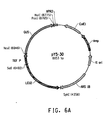
- SEQ ID Nos:154 and 156-209 are plasmids as identified in Table 2.
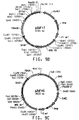
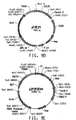
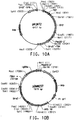
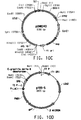
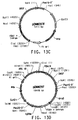
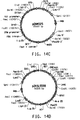
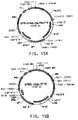
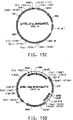
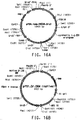
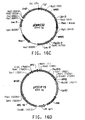
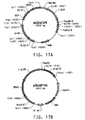
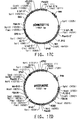
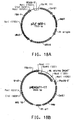
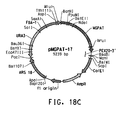
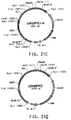
- Table 2 Summary of Plasmid SEQ ID Numbers Plasmid Corresponding Figure SEQ ID NO pY5-30 6A 154 (8,953 bp) pKUNF12T6E 8A 156 (12,649 bp) pDMW271 8B 157 (13,034 bp) pZP3L37 8C 158 (12,690 bp) pZKUT16 8D 159 (5,833 bp) pKO2UM25E 8E 160 (12,663 bp) pDMW303 9A 161 (15,996 bp) pZUF17 9B 162 (8,165 bp) pZUF4 - 163 (8,633 bp) pZUF4S 9C 164 (8,633 bp) pZP2FOEN4 9E 165 (10,660 bp) pKUNT2 10A 166
- SEQ ID NO:155 corresponds to the codon-optimized translation initiation site for genes optimally expressed in Yarrowia sp.
- SEQ ID NO:222 corresponds to a His Box 1 motif found in fungal ⁇ 15 and ⁇ 12 desaturases.
- SEQ ID NO:223 corresponds to a motif that is indicative of a fungal protein having ⁇ 15 desaturase activity
- SEQ ID NO:224 corresponds to a motif that is indicative of a fungal protein having ⁇ 12 desaturase activity.
- SEQ ID NOs:225-238 correspond to primers YL211, YL212, YL376, YL377, YL203, YL204, GPAT-5-1, GPAT-5-2, ODMW314, YL341, ODMW320, ODMW341, 27203-F and 27203-R, respectively, used to amplify Yarrowia lipolytica promoter regions.
- SEQ ID NOs:239-242 are the oligonucleotides YL-URA-16F, YL-URA-78R, GUS-767F and GUS-891 R, respectively, used for Real Time analysis.
- SEQ ID NO:243 is a mutant AHAS gene comprising a W497L mutation.
- SEQ ID NOs:244-249 correspond to primers 410, 411,412,413, 414 and 415, respectively, used for synthesis of a mutant Yarrowia lipolytica AHAS gene, comprising a W497L mutation.
- SEQ ID NOs:250-281 correspond to 16 pairs of oligonucleotides which together comprise the entire codon-optimized coding region of the Thraustochytrium aureum ⁇ 4 desaturase (i.e., D4-1A, D4-1 B, D4-2A, D4-2B, D4-3A, D4-3B, D4-4A, D4-4B, D4-5A, D4-5B, D4-6A, D4-6B, D4-7A, D4-7B, D4-8A, D4-8B, D4-9A, D4-9B, D4-10A, D4-10B, D4-11A, D4-11B, D4-12A, D4-12B, D4-13A, D4-13B, D4-14A, D4-14B, D4-15A, D4-15B, D4-16A and D4-16B).
- SEQ ID NOs:282-289 correspond to primers D4-1 F, D4-4R, D4-5F, D4-8R, D4-9F, D4-12R, D4-13 and D4-16R, respectively, used for PCR amplification during synthesis of the codon-optimized ⁇ 4 desaturase gene.
- SEQ ID NOs:290 and 291 correspond to primers YL251 and YL252, respectively, used during synthesis of the codon-optimized ⁇ 4 desaturase gene.
- SEQ ID NOs:292-307 correspond to 8 pairs of oligonucleotides which together comprise the entire codon-optimized coding region of the I . galbana ⁇ 9 elongase (i.e., IL3-1A, IL3-1B, IL3-2A, IL3-2B, IL3-3A, IL3-3B, IL3-4A, IL3-4B, IL3-5A, IL3-5B, IL3-6A, IL3-6B, IL3-7A, IL3-7B, IL3-8A and IL3-8B, respectively).
- SEQ ID NOs:308-311 correspond to primers IL3-1F, IL3-4R, IL3-5F and IL3-8R, respectively, used for PCR amplification during synthesis of the codon-optimized ⁇ 9 elongase gene.
- SEQ ID NO:312 is the 417 bp NcoI / PstI fragment described in pT9(1-4); and SEQ ID NO:313 is the 377 bp PstI / Not1 fragment described in pT9(5-8).
- SEQ ID NOs:314-339 correspond to 13 pairs of oligonucleotides which together comprise the entire codon-optimized coding region of the E. gracilis ⁇ 8 desaturase (i.e., D8-1A, D8-1 B, D8-2A, D8-2B, D8-3A, D8-3B, D8-4A, D8-4B, D8-5A, D8-5B, D8-6A, D8-6B, D8-7A, D8-7B, D8-8A, D8-8B, D8-9A, D8-9B, D8-10A, D8-10B, D8-11A, D8-11B, D8-12A, D8-12B, D8-13A and D8-13B, respectively).
- SEQ ID NOs:340-347 correspond to primers D8-1F, D8-3R, D8-4F, D8-6R, D8-7F, D8-9R, D8-10F and D8-13R, respectively, used for PCR amplification during synthesis of the codon-optimized ⁇ 8 desaturase gene.
- SEQ ID NO:348 is the 309 bp Nco / BgIII fragment described in pT8(1-3);
- SEQ ID NO:349 is the 321 bp BgIII / XhoI fragment described in pT8(4-6);
- SEQ ID NO:350 is the 264 bp XhoI / SacI fragment described in pT8(7-9);
- SEQ ID NO:351 is the 369 bp Sac1 / Not1 fragment described in pT8(10-13).
- SEQ ID NOs:352 and 353 correspond to primers ODMW390 and ODMW391, respectively, used during synthesis of D8S-2 in pDMW255.
- SEQ ID NOs:354 and 355 are the chimeric D8S-1::XPR and D8S-2::XPR genes described in Example 9.
- SEQ ID NOs:356 and 357 correspond to primers ODMW392 and ODMW393, used during synthesis of D8S-3.
- SEQ ID NOs:358 and 359 correspond to primers Eg5-1 and Eg3-3, respectively, used for amplification of the ⁇ 8 desaturase from Euglena gracilis.
- SEQ ID NOs:360-363 correspond to primers T7, M13-28Rev, Eg3-2 and Eg5-2, respectively, used for sequencing a ⁇ 8 desaturase clone.
- SEQ ID NO:364 corresponds to primer ODMW404, used for amplification of D8S-3.
- SEQ ID NO:365 is a 1272 bp chimeric gene comprising D8S-3.
- SEQ ID NOs:366 and 367 correspond to primers YL521 and YL522, respectively, used to create new restriction enzyme sites in a cloned D8S-3 gene.
- SEQ ID NOs:368-381 correspond to primers YL525, YL526, YL527, YL528, YL529, YL530, YL531, YL532, YL533, YL534, YL535, YL536, YL537 and YL538, respectively, used in site directed mutagenesis reactions to produce D8SF.
- SEQ ID NO:382 corresponds to a LoxP recombination site that is recognized by the Cre recombinase enzyme.
- SEQ ID NOs:383 and 384 correspond to primers 436 and 437, respectively, used to amplify a GPD::Fm1::XPR2 during synthesis of plasmid pY80.
- SEQ ID NOs:385-388 correspond to primers 475, 477, 478 and 476, respectively, used to clone a bifunctional ⁇ 5/ ⁇ 6 desaturase.
- SEQ ID NOs:389 and 390 correspond to primers 505 and 506, respectively, used to created plasmid pY91V from plasmid pY91 M by site-specific mutagenesis.
- SEQ ID NOs:391-393 correspond to BD-Clontech Creator Smart ® cDNA library kit primers SMART IV oligonucleotide, CDSIII/3' PCR primer and 5'-PCR primer, respectively.
- SEQ ID NO:394 corresponds to the M13 forward primer used for M. alpina cDNA library sequencing.
- SEQ ID NOs:395-398 and 400-401 correspond to primers MLPAT-F, MLPAT-R, LPAT-Re-5-1, LPAT-Re-5-2, LPAT-Re-3-1 and LPAT-Re-3-2, respectively, used for cloning of the M. alpina LPAAT2 ORF.
- SEQ ID NOs:399 and 402 correspond to a 5' (1129 bp) and 3' (938 bp) region of the Y. lipolytica LPAAT1 ORF, respectively.
- SEQ ID NOs:403 and 404 correspond to primers pzuf-mod1 and pzuf-mod2, respectively, used for creating "control" plasmid pZUF-MOD-1.
- SEQ ID NOs:405 and 406 correspond to primers MACAT-F1 and MACAT-R, respectively, used for cloning of the M. alpina DGAT1 ORF.
- SEQ ID NOs:407 and 408 correspond to primers MDGAT-F and MDGAT-R1, respectively, used for cloning of the M. alpina DGAT2 ORF.
- SEQ ID NOs:409 and 410 correspond to primers MGPAT-N1 and MGPAT-NR5, respectively, used for degenerate PCR to amplify the M. alpina GPAT.
- SEQ ID NOs:411-413 correspond to primers MGPAT-5N1, MGPAT-5N2 and MGPAT-5N3, respectively, used for amplification of the 3'-end of the M. alpina GPAT.
- SEQ ID Nos:414 and 415 correspond to the Genome Walker adaptor from ClonTech's Universal GenomeWalkerTM Kit, used for genome-walking.
- SEQ ID NOs:416-419 correspond to the PCR primers used in genome-walking: MGPAT-5-1A, Adaptor-1 (AP1), MGPAT-3N1 and Nested Adaptor Primer 2 (AP2), respectively.
- SEQ ID NOs:420 and 421 correspond to primers mgpat-cdna-5 and mgpat-cdna-R, respectively, used for amplifying the M. alpina GPAT.
- SEQ ID NOs:422 and 423 correspond to primers MA Elong 3'1 and MA elong 3'2, respectively, used for genome-walking to isolate the 3'-end region of the M. alpina ELO3.
- SEQ ID Nos:424 and 425 correspond to primers MA Elong 5'1 and MA Elong 5'2, respectively, used for genome-walking to isolate the 5'-end region of the M. alpina ELO3.
- SEQ ID NOs:426 and 427 correspond to primers MA ELONG 5' Ncol 3 and MA ELONG 3' NotI 1, respectively, used for amplifying the complete ELO3 from M. alpina cDNA.
- SEQ ID NOs:428 and 429 correspond to primers YL597 and YL598, respectively, used for amplifying the coding region of Y. lipolytica YE2.
- SEQ ID NOs:430 and 431 correspond to primers YL325 and YL326, respectively, used to amplify a NotI / PacI fragment containing the Aco 3' terminator.
- SEQ ID NOs:432-435 correspond to primers YL567, YL568, YL569 and YL570, respectively, used for amplifying the coding region of Y. lipolytica YE1.
- SEQ ID NOs:436 and 437 correspond to primers YL571 and YL572, respectively, used for site-directed mutagenesis during cloning of Y. lipolytica YE1.
- SEQ ID NOs:438 and 439 correspond to primers CPT1-5'-Ncol and CPT1-3'- NotI, respectively, used for cloning of the Y. lipolytica CPT1 ORF.
- SEQ ID NOs:440 and 441 correspond to primers Isc1F and Isc1R, respectively, used for cloning of the S. cerevisiae ISC1 ORF.
- SEQ ID NOs:442 and 443 correspond to primers Pcl1F and Pcl1R, respectively, used for cloning of the S. cerevisiae PCL1 ORF.
- SEQ ID NOs:444-447 correspond to primers P95, P96, P97 and P98, respectively, used for targeted disruption of the Y. lipolytica DGAT2 gene.
- SEQ ID NOs:448-450 correspond to primers P115, P116 and P112, respectively, used to screen for targeted integration of the disrupted Y . lipolytica DGAT2 gene.
- SEQ ID NOs:451-454 correspond to primers P39, P41, P40 and P42, respectively, used for targeted disruption of the Y. lipolytica PDAT gene.
- SEQ ID NOs:455-458 correspond to primers P51, P52, P37 and P38, respectively, used to screen for targeted integration of the disrupted Y. lipolytica PDAT gene.
- SEQ ID NOs:459 and 460 are the degenerate primers identified as P201 and P203, respectively, used for the isolation of the Y. lipolytica DGAT1.
- SEQ ID NOs:461-465 correspond to primers P214, P215, P216, P217 and P219, respectively, used for the creation of a targeting cassette for targeted disruption of the putative DGAT1 gene in Y. lipolytica.
- SEQ ID NOs:466 and 467 correspond to primers P226 and P227, respectively, used to screen for targeted integration of the disrupted Y. lipolytica DGAT1 gene.
- Applicants provide production host strains of Yarrowia lipolytica that are capable of producing greater than 5% docosahexaenoic acid (DHA, 22:6, ⁇ -3). Accumulation of this particular polyunsaturated fatty acid (PUFA) is accomplished by introduction of a functional ⁇ -3/ ⁇ -6 fatty acid biosynthetic pathway comprising proteins that encode ⁇ 6 desaturase, C 18/20 elongase, ⁇ 5 desaturase, ⁇ 17 desaturase, C 20/22 elongase and ⁇ 4 desaturase activities into the oleaginous yeast host for high-level recombinant expression.
- PUFA polyunsaturated fatty acid
- PUFAs, or derivatives thereof, made by the methodology disclosed herein can be used as dietary substitutes, or supplements, particularly infant formulas, for patients undergoing intravenous feeding or for preventing or treating malnutrition.
- the purified PUFAs (or derivatives thereof) may be incorporated into cooking oils, fats or margarines formulated so that in normal use the recipient would receive the desired amount for dietary supplementation.
- the PUFAs may also be incorporated into infant formulas, nutritional supplements or other food products and may find use as anti-inflammatory or cholesterol lowering agents.
- the compositions may be used for pharmaceutical use (human or veterinary).
- the PUFAs are generally administered orally but can be administered by any route by which they may be successfully absorbed, e.g., parenterally (e.g., subcutaneously, intramuscularly or intravenously), rectally, vaginally or topically (e.g., as a skin ointment or lotion).
- Supplementation of humans or animals with PUFAs produced by recombinant means can result in increased levels of the added PUFAs, as well as their metabolic progeny.
- treatment with DHA can result not only in increased levels of DHA, but also downstream products of DHA such as eicosanoids (i.e., prostaglandins, leukotrienes, thromboxanes).
- eicosanoids i.e., prostaglandins, leukotrienes, thromboxanes.
- Complex regulatory mechanisms can make it desirable to combine various PUFAs, or add different conjugates of PUFAs, in order to prevent, control or overcome such mechanisms to achieve the desired levels of specific PUFAs in an individual.
- PUFAs, or derivatives thereof, made by the methodology disclosed herein can be utilized in the synthesis of aquaculture feeds (i.e., dry feeds, semi-moist and wet feeds) since these formulations generally require at least 1-2% of the nutrient composition to be ⁇ -3 and/or ⁇ -6 PUFAs.
- ORF Open reading frame
- PCR Polymerase chain reaction
- ATCC American Type Culture Collection
- PUFA Polyunsaturated fatty acid
- DAG AT acylglycerol acyltransferase
- Phospholipid:diacylglycerol acyltransferase is abbreviated PDAT.
- Glycerol-3-phosphate acyltransferase is abbreviated GPAT.
- LPAAT Lisophosphatidic acid acyltransferase
- LPCAT acyl-CoA:1-acyl lysophosphatidylcholine acyltransferase
- ARE2 Acyl-CoA:sterol-acyltransferase
- DAG “Diacylglycerol” is abbreviated DAG.
- TAGs Triacylglycerols
- CoA Co-enzyme A
- PC Phosphatidyl-choline
- Fusarium moniliforme is synonymous with “ Fusarium verticillioides".
- food product refers to any food generally suitable for human consumption. Typical food products include but are not limited to meat products, cereal products, baked foods, snack foods, dairy products and the like.
- Functional food refers to those foods that encompass potentially healthful products including any modified food or ingredient that may provide a health benefit beyond the traditional nutrients it contains.
- Functional foods can include foods like cereals, breads and beverages which are fortified with vitamins, herbs and nutraceuticals.
- Functional foods contain a substance that provides health benefits beyond its nutritional value, wherein the substance either is naturally present in the food or is deliberately added.
- medical food refers to a food which is formulated to be consumed or administered enterally under the supervision of a physician and which is intended for the specific dietary management of a disease or condition for which distinctive nutritional requirements, based on recognized scientific principles, are established by medical evaluation [see section 5(b) of the Orphan Drug Act (21 U.S.C. 360ee(b)(3))].
- a food is a "medical food" only if: (i) It is a specially formulated and processed product (as opposed to a naturally occurring foodstuff used in its natural state) for the partial or exclusive feeding of a patient by means of oral intake or enteral feeding by tube; (ii) It is intended for the dietary management of a patient who, because of therapeutic or chronic medical needs, has limited or impaired capacity to ingest, digest, absorb, or metabolize ordinary foodstuffs or certain nutrients, or who has other special medically determined nutrient requirements, the dietary management of which cannot be achieved by the modification of the normal diet alone; (iii) It provides nutritional support specifically modified for the management of the unique nutrient needs that result from the specific disease or condition, as determined by medical evaluation; (iv) It is intended to be used under medical supervision; and (v) It is intended only for a patient receiving active and ongoing medical supervision wherein the patient requires medical care on a recurring basis for, among other things, instructions on the use of the medical food.
- a medical food that is intended for the specific dietary management of a disease or condition for which distinctive nutritional requirements have been established may bear scientifically valid claims relating to providing distinctive nutritional support for a specific disease or condition.
- Medical foods are distinguished from the broader category of foods for special dietary use (e.g., hypoallergenic foods) and from foods that make health claims (e.g., dietary supplements) by the requirement that medical foods be used under medical supervision.
- medical nutritional is a medical food as defined herein typically refers to a fortified beverage that is specifically designed for special dietary needs.
- the medical nutritional generally comprises a dietary composition focused at a specific medical or dietary condition. Examples of commercial medical nuturitionals include, but are not limited to Ensure® and Boost®.
- pharmaceutical means a compound or substance which if sold in the United States would be controlled by Section 505 or 505 of the Federal Food, Drug and Cosmetic Act.
- infant formula means a food which is designed exclusively for consumption by the human infant by reason of its simulation of human breast milk.
- Typical commercial examples of infant formula include bur are not limited to Similac®, and Isomil®.
- dietary supplement refers to a product that: (i) is intended to supplement the diet and thus is not represented for use as a conventional food or as a sole item of a meal or the diet; (ii) contains one or more dietary ingredients (including, e.g., vitamins, minerals, herbs or other botanicals, amino acids, enzymes and glandulars) or their constituents; (iii) is intended to be taken by mouth as a pill, capsule, tablet, or liquid; and (iv) is labeled as being a dietary supplement.
- dietary ingredients including, e.g., vitamins, minerals, herbs or other botanicals, amino acids, enzymes and glandulars
- a “food analog” is a food-like product manufactured to resemble its food counterpart, whether meat, cheese, milk or the like, and is intended to have the appearance, taste, and texture of its counterpart.
- food as used herein also encompasses food analogs.
- an aquafeed refers to artificially compounded feeds that are useful for farmed finfish and crustaceans (i.e., both lower-value staple food fish species [e.g., freshwater finfish such as carp, tilapia and catfish] and higher-value cash crop species for luxury or niche markets [e.g., mainly marine and diadromous species such as shrimp, salmon, trout, yellowtail, seabass, seabream and grouper]).
- These formulate feeds are composed of several ingredients in various proportions complementing each other to form a nutritionally complete diet for the aquacultured species.
- animal feed refers to feeds intended exclusively for consumption by animals, including domestic animals (pets, farm animals etc..) or for animals raised for the production of food e.g. fish farming.
- feed nutrient means nutrients such as proteins, lipids, carbohydrates, vitamins, minerals, and nucleic acids that may be derived from the yeast biomass comprising the recombinant production hosts of the invention.
- biomass refers specifically to spent or used yeast cellular material from the fermentation of a recombinant production host production EPA in commercially significant amounts.
- fatty acids refers to long chain aliphatic acids (alkanoic acids) of varying chain lengths, from about C 12 to C 22 (although both longer and shorter chain-length acids are known). The predominant chain lengths are between C 16 and C 22 .
- the structure of a fatty acid is represented by a simple notation system of "X:Y", where X is the total number of carbon (C) atoms in the particular fatty acid and Y is the number of double bonds.
- high-level DHA production refers to production of at least about 5% DHA in the total lipids of the microbial host, preferably at least about 10% DHA in the total lipids, more preferably at least about 15% DHA in the total lipids, more preferably at least about 20% DHA in the total lipids and most preferably at least about 25-30% DHA in the total lipids.
- the structural form of the DHA is not limiting; thus, for example, the DHA may exist in the total lipids as free fatty acids or in esterified forms such as acylglycerols, phospholipids, sulfolipids or glycolipids.
- the term "devoid of any GLA” refers to lack of any detectable GLA in the total lipids of the microbial host, when measured by GC analysis using equipment having a detectable level down to about 0.1%.
- essential fatty acid refers to a particular PUFA that an organism must ingest in order to survive, being unable to synthesize the particular essential fatty acid de novo.
- mammals can not synthesize the essential fatty acids LA (18:2, ⁇ -6) and ALA (18:3, ⁇ -3).
- Other essential fatty acids include GLA ( ⁇ -6), DGLA ( ⁇ -6), ARA ( ⁇ -6), EPA ( ⁇ -3) and DHA ( ⁇ -3).
- Microbial oils or “single cell oils” are those oils naturally produced by microorganisms (e.g., algae, oleaginous yeasts and filamentous fungi) during their lifespan.
- oil refers to a lipid substance that is liquid at 25 °C and usually polyunsaturated.
- fat refers to a lipid substance that is solid at 25 °C and usually saturated.
- Lipid bodies refer to lipid droplets that usually are bounded by specific proteins and a monolayer of phospholipid. These organelles are sites where most organisms transport/store neutral lipids. Lipid bodies are thought to arise from microdomains of the endoplasmic reticulum that contain TAG-biosynthesis enzymes; and, their synthesis and size appear to be controlled by specific protein components.
- Neutral lipids refer to those lipids commonly found in cells in lipid bodies as storage fats and oils and are so called because at cellular pH, the lipids bear no charged groups. Generally, they are completely nonpolar with no affinity for water. Neutral lipids generally refer to mono-, di-, and/or triesters of glycerol with fatty acids, also called monoacylglycerol, diacylglycerol or TAG, respectively (or collectively, acylglycerols). A hydolysis reaction must occur to release free fatty acids from acylglycerols.
- triacylglycerol refers to neutral lipids composed of three fatty acyl residues esterified to a glycerol molecule (and such terms will be used interchangeably throughout the present disclosure herein).
- oils can contain long chain PUFAs, as well as shorter saturated and unsaturated fatty acids and longer chain saturated fatty acids.
- oil biosynthesis generically refers to the synthesis of TAGs in the cell.
- acyltransferase refers to an enzyme responsible for transferring a group other than an amino-acyl group (EC 2.3.1.-).
- DAG AT refers to a diacylglycerol acyltransferase (also known as an acyl-CoA-diacylglycerol acyltransferase or a diacylglycerol O-acytransterase) (EC 2.3.1.20). This enzyme is responsible for the conversion of acyl-CoA and 1,2-diacylglycerol to TAG and CoA (thereby involved in the terminal step of TAG biosynthesis).
- the former family shares homology with the acyl-CoA:cholesterol acyltransferase (ACAT) gene family, while the latter family is unrelated ( Lardizabal et al., J. Biol. Chem. 276(42):38862-38869 (2001 )).
- ACAT acyl-CoA:cholesterol acyltransferase
- PDAT refers to a phospholipid:diacylglycerol acyltransferase enzyme (EC 2.3.1.158). This enzyme is responsible for the transfer of an acyl group from the sn-2 position of a phospholipid to the sn-3 position of 1,2-diacylglycerol, thus resulting in lysophospholipid and TAG (thereby involved in the terminal step of TAG biosynthesis). This enzyme differs from DGAT (EC 2.3.1.20) by synthesizing TAG via an acyl-CoA-independent mechanism.
- GPAT refers to a glycerol-3-phosphate O-acyltransferase enzyme (E.C. 2.3.1.15) encoded by the gpat gene and which converts acyl-CoA and sn-glycerol 3-phosphate to CoA and 1-acyl-sn-glycerol 3-phosphate (the first step of phospholipid biosynthesis).
- LPAAT refers to a lysophosphatidic acid-acyltransferase enzyme (EC 2.3.1.51). This enzyme is responsible for the transfer of an acyl-CoA group onto 1-acyl-sn-glycerol 3-phosphate (i.e., lysophosphatidic acid) to produce CoA and 1,2-diacyl-sn-glycerol 3-phosphate (phosphatidic acid).
- LPAAT acyl-CoA:1-acyl- sn -glycerol-3-phosphate 2-O-acyltransferase, 1-acyl-sn-glycerol-3-phosphate acyltransferase and/or 1-acylglycerolphosphate acyltransferase (abbreviated as AGAT).
- LPCAT refers to an acyl-CoA:1-acyl lysophosphatidylcholine acyltransferase. This enzyme is responsible for the exchange of acyl groups between CoA and phosphatidyl choline (PC). Herein it also refers to enzymes involved the acyl exchange between CoA and other phospholipids, including lysophosphatidic acid (LPA).
- Percent (%) PUFAs in the total lipid and oil fractions refers to the percent of PUFAs relative to the total fatty acids in those fractions.
- PC phosphatidylcholine
- PE phosphatidyletanolamine
- TAG or oil triacylglycerol
- PC phosphatidylcholine
- a choline molecule a phosphate group and glycerol, wherein fatty acyl chains are attached as R groups on the sn-1 and sn-2 positions of the glycerol molecule.
- PUFA biosynthetic pathway enzyme refers to any of the following enzymes (and genes which encode said enzymes) associated with the biosynthesis of a PUFA, including: a ⁇ 4 desaturase, a ⁇ 5 desaturase, a ⁇ 6 desaturase, a ⁇ 12 desaturase, a ⁇ 15 desaturase, a ⁇ 17 desaturase, a ⁇ 9 desaturase, a ⁇ 8 desaturase, a ⁇ 9 elongase, a C 14/16 elongase, a C 16/18 elongase, a C 18/20 elongase and/or a C 20/22 elongase.
- ⁇ -3/ ⁇ -6 fatty acid biosynthetic pathway refers to a set of genes which, when expressed under the appropriate conditions encode enzymes that catalyze the production of either or both ⁇ -3 and ⁇ -6 fatty acids.
- genes involved in the ⁇ -3/ ⁇ -6 fatty acid biosynthetic pathway encode some or all of the following enzyme: ⁇ 12 desaturase, ⁇ 6 desaturase, C 18/20 elongase, C 20/22 elongase, ⁇ 9 elongase, ⁇ 5 desaturase, ⁇ 17 desaturase, ⁇ 15 desaturase, ⁇ 9 desaturase, ⁇ 8 desaturase and ⁇ 4 desaturase.
- a representative pathway is illustrated in Figure 1 , providing for the conversion of oleic acid through various intermediates to DHA, which demonstrates how both ⁇ -3 and ⁇ -6 fatty acids may be produced from a common source.
- the pathway is naturally divided into two portions where one portion will generate ⁇ -3 fatty acids and the other portion, only ⁇ -6 fatty acids. That portion that only generates ⁇ -3 fatty acids will be referred to herein as the ⁇ -3 fatty acid biosynthetic pathway, whereas that portion that generates only ⁇ -6 fatty acids will be referred to herein as the ⁇ -6 fatty acid biosynthetic pathway.
- ⁇ -3/ ⁇ -6 fatty acid biosynthetic pathway means that some (or all of) the genes in the pathway express active enzymes, resulting in in vivo catalysis or substrate conversion. It should be understood that " ⁇ -3/ ⁇ -6 fatty acid biosynthetic pathway” or “functional ⁇ -3/ ⁇ -6 fatty acid biosynthetic pathway” does not imply that all the genes listed in the above paragraph are required, as a number of fatty acid products will only require the expression of a subset of the genes of this pathway.
- ⁇ -6 ⁇ 6 desaturase/ ⁇ 6 elongase pathway will refer to a DHA fatty acid biosynthetic pathway that minimally includes the following genes: ⁇ 6 desaturase, C 18/20 elongase, ⁇ 5 desaturase, ⁇ 17 desaturase, C 20/22 elongase and ⁇ 4 desaturase.
- ⁇ -3 ⁇ 6 desaturase/ ⁇ 6 elongase pathway will refer to a DHA fatty acid biosynthetic pathway that minimally includes the following genes: ⁇ 15 desaturase, ⁇ 6 desaturase, C 18/20 elongase, ⁇ 5 desaturase, C 20/22 elongase and ⁇ 4 desaturase.
- ⁇ 6 desaturase/ ⁇ 6 elongase pathway will refer to a DHA fatty acid biosynthetic pathway that minimally includes the following genes: ⁇ 15 desaturase, ⁇ 6 desaturase, C 18/20 elongase, ⁇ 5 desaturase, ⁇ 17 desaturase, C 20/22 elongase and ⁇ 4 desaturase.
- ⁇ 6 desaturase/ ⁇ 6 elongase pathway will generically refer to any one (or more) of the ⁇ 6 desaturase/ ⁇ 6 elongase pathways described above.
- ⁇ -6 ⁇ 9 elongase/ ⁇ 8 desaturase pathway will refer to a DHA fatty acid biosynthetic pathway that minimally includes the following genes: ⁇ 9 elongase, ⁇ 8 desaturase, ⁇ 5 desaturase, ⁇ 17 desaturase, C 20/22 elongase and ⁇ 4 desaturase.
- ⁇ -3 ⁇ 9 elongase/ ⁇ 8 desaturase pathway will refer to a DHA fatty acid biosynthetic pathway that minimally includes the following genes: ⁇ 15 desaturase, ⁇ 9 elongase, ⁇ 8 desaturase, ⁇ 5 desaturase, C 20/22 elongase and ⁇ 4 desaturase.
- ⁇ 9 elongase/ ⁇ 8 desaturase pathway will refer to a DHA fatty acid biosynthetic pathway that minimally includes the following genes: ⁇ 15 desaturase, ⁇ 9 elongase, ⁇ 8 desaturase ⁇ 5 desaturase, ⁇ 17 desaturase, C 20/22 elongase and ⁇ 4 desaturase.
- ⁇ 9 elongase/ ⁇ 8 desaturase pathway will generically refer to any one (or more) of the ⁇ 9 elongase/ ⁇ 8 desaturase pathways described above.
- omega-reference system refers to a polypeptide that can desaturate, i.e., introduce a double bond, in one or more fatty acids to produce a fatty acid or precursor of interest.
- ⁇ 8 desaturases that desaturate a fatty acid between the 8 th and 9 th carbon atom numbered from the carboxyl-terminal end of the molecule and which, for example, catalyze the conversion of EDA to DGLA and/or ETrA to ETA; 2.) ⁇ 6 desaturases that catalyze the conversion of LA to GLA and/or ALA to STA; 3.) ⁇ 5 desaturases that catalyze the conversion of DGLA to ARA and/or ETA to EPA; 4.) ⁇ 4 desaturases that catalyze the conversion of DPA to DHA; 5.) ⁇ 12 desaturases that catalyze the conversion of oleic acid to LA; 6.) ⁇ 15 desaturases that catalyze the conversion of LA to ALA and/or GLA to STA; 7.) ⁇ 17 desaturases that catalyze the conversion of ARA to EPA and/or DGLA to ETA; and 8.) ⁇ 9 desaturases
- ⁇ 15 desaturases of the invention means that the polypeptide has the ability to use both oleic acid and LA as an enzymatic substrate.
- ⁇ 5 desaturases of the invention means that the polypeptide has the ability to use: (1) at least one enzymatic substrate selected from the group consisting of DGLA and ETA; and (2) at least one enzymatic substrate selected from the group consisting of LA and ALA.
- enzymatic substrate it is meant that the polypeptide binds the substrate at an active site and acts upon it in a reactive manner.
- elongase system refers to a suite of four enzymes that are responsible for elongation of a fatty acid carbon chain to produce a fatty acid that is 2 carbons longer than the fatty acid substrate that the elongase system acts upon. More specifically, the process of elongation occurs in association with fatty acid synthase, whereby CoA is the acyl carrier ( Lassner et al., The Plant Cell 8:281-292 (1996 )).
- malonyl-CoA is condensed with a long-chain acyl-CoA to yield CO 2 and a ⁇ -ketoacyl-CoA (where the acyl moiety has been elongated by two carbon atoms).
- Subsequent reactions include reduction to ⁇ -hydroxyacyl-CoA, dehydration to an enoyl-CoA and a second reduction to yield the elongated acyl-CoA.
- Examples of reactions catalyzed by elongase systems are the conversion of GLA to DGLA, STA to ETA and EPA to DPA.
- an enzyme catalyzing the first condensation reaction i.e., conversion of malonyl-CoA to ⁇ -ketoacyl-CoA
- elongase an enzyme catalyzing the first condensation reaction
- the substrate selectivity of elongases is somewhat broad but segregated by both chain length and the degree and type of unsaturation. Accordingly, elongases can have different specificities.
- a C 14/16 elongase will utilize a C 14 substrate (e.g., myristic acid), a C 16/18 elongase will utilize a C 16 substrate (e.g., palmitate), a C 18/20 elongase will utilize a C 18 substrate (e.g., GLA, STA) and a C 20/22 elongase will utilize a C 20 substrate (e.g., EPA).
- a ⁇ 9 elongase is able to catalyze the conversion of LA and ALA to EDA and ETrA, respectively.
- elongases have broad specificity and thus a single enzyme may be capable of catalyzing several elongase reactions (e.g., thereby acting as both a C 16/18 elongase and a C 18/20 elongase).
- it is most desirable to empirically determine the specificity of a fatty acid elongase by transforming a suitable host with the gene for the fatty acid elongase and determining its effect on the fatty acid profile of the host.
- high affinity elongase or "EL1S” or “ELO1” refers to a C 18/20 elongase whose substrate specificity is preferably for GLA (with DGLA as a product of the elongase reaction [i.e., a ⁇ 6 elongase]).
- GLA g., GLA
- DGLA a product of the elongase reaction
- SEQ ID NOs:22 and 23 One such elongase is described in WO 00/12720 and is provided herein as SEQ ID NOs:22 and 23. However, the Applicants have shown that this enzyme also has some activity on 18:2 (LA) and 18:3 (ALA); thus, SEQ ID NO:23 shows ⁇ 9 elongase activity (in addition to its ⁇ 6 elongase activity).
- the C 18/20 elongase provided herein as SEQ ID NO:23 can function both within the ⁇ 6 desaturase/ ⁇ 6 elongase pathway as described in the invention herein and within the ⁇ 9 elongase/ ⁇ 8 desaturase pathway, as a substitute for e.g., the Isochrysis galbana ⁇ 9 elongase (SEQ ID NO:70).
- ELO2 refers to a C 18/20 elongase whose substrate specificity is preferably for GLA (with DGLA as a product of the elongase reaction) and/or STA (with STA as a product of the elongase reaction).
- GLA with DGLA as a product of the elongase reaction
- STA with STA as a product of the elongase reaction
- ELO3 refers to a Mortierella alpina C 16/18 fatty acid elongase enzyme (provided herein as SEQ ID NO:87), encoded by the elo3 gene (SEQ ID NO:86).
- YE2 refers to a Yarrowia lipolytica C 16/18 fatty acid elongase enzyme (provided herein as SEQ ID NO:95), encoded by the gene provided herein as SEQ ID NO:94. Based on data reported herein, both ELO3 amd YE2 preferentially catalyze the conversion of palmitate (16:0) to stearic acid (18:0).
- YE1 refers to a Yarrowia lipolytica C 14/16 fatty acid elongase enzyme (provided herein as SEQ ID NO:98), encoded by the gene provided herein as SEQ ID NO:97. Based on data reported herein, YE2 preferentially catalyzes the conversion of myristic acid (14:0) to palmitate (16:0).
- conversion efficiency and “percent substrate conversion” refer to the efficiency by which a particular enzyme (e.g., a desaturase or elongase) can convert substrate to product.
- the conversion efficiency is measured according to the following formula: product / substrate + product * 100 , where ⁇ product ⁇ includes the immediate product and all products in the pathway derived from it . where 'product' includes the immediate product and all products in the pathway derived from it.
- oleaginous refers to those organisms that tend to store their energy source in the form of lipid ( Weete, In: Fungal Lipid Biochemistry, 2nd Ed., Plenum, 1980 ). Generally, the cellular oil content of these microorganisms follows a sigmoid curve, wherein the concentration of lipid increases until it reaches a maximum at the late logarithmic or early stationary growth phase and then gradually decreases during the late stationary and death phases ( Yongmanitchai and Ward, Appl. Environ. Microbiol. 57:419-25 (1991 )).
- oleaginous yeast refers to those microorganisms classified as yeasts that can make oil.
- the cellular oil or triacylglycerol content of oleaginous microorganisms follows a sigmoid curve, wherein the concentration of lipid increases until it reaches a maximum at the late logarithmic or early stationary growth phase and then gradually decreases during the late stationary and death phases ( Yongmanitchai and Ward, Appl. Environ. Microbiol. 57:419-25 (1991 )). It is not uncommon for oleaginous microorganisms to accumulate in excess of about 25% of their dry cell weight as oil.
- Examples of oleaginous yeast include, but are no means limited to, the following genera: Yarrowia , Candida, Rhodotorula , Rhodosporidium, Cryptococcus , Trichosporon and Lipomyces.
- the term "fermentable carbon source” means a carbon source that a microorganism will metabolize to derive energy.
- Typical carbon sources include, but are not limited to: monosaccharides, oligosaccharides, polysaccharides, alkanes, fatty acids, esters of fatty acids, monoglycerides, diglycerides, triglycerides, carbon dioxide, methanol, formaldehyde, formate and carbon-containing amines.
- an "isolated nucleic acid fragment” is a polymer of RNA or DNA that is single- or double-stranded, optionally containing synthetic, non-natural or altered nucleotide bases.
- An isolated nucleic acid fragment in the form of a polymer of DNA may be comprised of one or more segments of cDNA, genomic DNA or synthetic DNA.
- a "substantial portion" of an amino acid or nucleotide sequence is that portion comprising enough of the amino acid sequence of a polypeptide or the nucleotide sequence of a gene to putatively identify that polypeptide or gene, either by manual evaluation of the sequence by one skilled in the art, or by computer-automated sequence comparison and identification using algorithms such as BLAST ( Basic Local Alignment Search Tool; Altschul, S. F., et al., J. Mol. Biol. 215:403-410 (1993 )). In general, a sequence of ten or more contiguous amino acids or thirty or more nucleotides is necessary in order to identify putatively a polypeptide or nucleic acid sequence as homologous to a known protein or gene.
- gene-specific oligonucleotide probes comprising 20-30 contiguous nucleotides may be used in sequence-dependent methods of gene identification (e.g., Southern hybridization) and isolation (e.g., in situ hybridization of bacterial colonies or bacteriophage plaques).
- short oligonucleotides of 12-15 bases may be used as amplification primers in PCR in order to obtain a particular nucleic acid fragment comprising the primers.
- a "substantial portion" of a nucleotide sequence comprises enough of the sequence to specifically identify and/or isolate a nucleic acid fragment comprising the sequence.
- adenosine is complementary to thymine and cytosine is complementary to guanine.
- Codon degeneracy refers to the nature in the genetic code permitting variation of the nucleotide sequence without effecting the amino acid sequence of an encoded polypeptide.
- the skilled artisan is well aware of the "codon-bias" exhibited by a specific host cell in usage of nucleotide codons to specify a given amino acid. Therefore, when synthesizing a gene for improved expression in a host cell, it is desirable to design the gene such that its frequency of codon usage approaches the frequency of preferred codon usage of the host cell.
- “Chemically synthesized”, as related to a sequence of DNA means that the component nucleotides were assembled in vitro. Manual chemical synthesis of DNA may be accomplished using well-established procedures; or, automated chemical synthesis can be performed using one of a number of commercially available machines. "Synthetic genes" can be assembled from oligonucleotide building blocks that are chemically synthesized using procedures known to those skilled in the art. These building blocks are ligated and annealed to form gene segments that are then enzymatically assembled to construct the entire gene. Accordingly, the genes can be tailored for optimal gene expression based on optimization of nucleotide sequence to reflect the codon bias of the host cell. The skilled artisan appreciates the likelihood of successful gene expression if codon usage is biased towards those codons favored by the host. Determination of preferred codons can be based on a survey of genes derived from the host cell, where sequence information is available.
- Gene refers to a nucleic acid fragment that expresses a specific protein, and that may refer to the coding region alone or may include regulatory sequences preceding (5' non-coding sequences) and following (3' non-coding sequences) the coding sequence.
- Native gene refers to a gene as found in nature with its own regulatory sequences.
- Chimeric gene refers to any gene that is not a native gene, comprising regulatory and coding sequences that are not found together in nature. Accordingly, a chimeric gene may comprise regulatory sequences and coding sequences that are derived from different sources, or regulatory sequences and coding sequences derived from the same source, but arranged in a manner different than that found in nature.
- Endogenous gene refers to a native gene in its natural location in the genome of an organism.
- a “foreign” gene refers to a gene that is introduced into the host organism by gene transfer.
- Foreign genes can comprise native genes inserted into a non-native organism, native genes introduced into a new location within the native host, or chimeric genes.
- a “transgene” is a gene that has been introduced into the genome by a transformation procedure.
- a “codon-optimized gene” is a gene having its frequency of codon usage designed to mimic the frequency of preferred codon usage of the host cell.
- Coding sequence refers to a DNA sequence that codes for a specific amino acid sequence.
- Suitable regulatory sequences refer to nucleotide sequences located upstream (5' non-coding sequences), within, or downstream (3' non-coding sequences) of a coding sequence, and which influence the transcription, RNA processing or stability, or translation of the associated coding sequence. Regulatory sequences may include promoters, translation leader sequences, introns, polyadenylation recognition sequences, RNA processing sites, effector binding sites and stem-loop structures.
- Promoter refers to a DNA sequence capable of controlling the expression of a coding sequence or functional RNA.
- a coding sequence is located 3' to a promoter sequence. Promoters may be derived in their entirety from a native gene, or be composed of different elements derived from different promoters found in nature, or even comprise synthetic DNA segments. It is understood by those skilled in the art that different promoters may direct the expression of a gene in different tissues or cell types, or at different stages of development, or in response to different environmental or physiological conditions. Promoters that cause a gene to be expressed in most cell types at most times are commonly referred to as “constitutive promoters”. It is further recognized that since in most cases the exact boundaries of regulatory sequences have not been completely defined, DNA fragments of different lengths may have identical promoter activity.
- GPAT promoter refers to the 5' upstream untranslated region in front of the 'ATG' translation initiation codon of a glycerol-3-phosphate O-acyltransferase enzyme (E.C. 2.3.1.15) encoded by the gpat gene and that is necessary for expression.
- a glycerol-3-phosphate O-acyltransferase enzyme E.C. 2.3.1.15
- suitable Yarrowia lipolytica GPAT promoter regions are described in U.S. Patent Application No. 11/225354 .
- GPD promoter refers to the 5' upstream untranslated region in front of the 'ATG' translation initiation codon of a glyceraldehyde-3-phosphate dehydrogenase enzyme (E.C. 1.2.1.12) encoded by the gpd gene and that is necessary for expression.
- E.C. 1.2.1.12 glyceraldehyde-3-phosphate dehydrogenase enzyme
- Examples of suitable Yarrowia lipolytica GPD promoter regions are described in WO 2005/003310 .
- GPM promoter refers to the 5' upstream untranslated region in front of the 'ATG' translation initiation codon of a phosphoglycerate mutase enzyme (EC 5.4.2.1) encoded by the gpm gene and that is necessary for expression. Examples of suitable Yarrowia lipolytica GPM promoter regions are described in WO 2005/003310 .
- FBA promoter or “FBA promoter region” refers to the 5' upstream untranslated region in front of the 'ATG' translation initiation codon of a fructose-bisphosphate aldolase enzyme (E.C. 4.1.2.13) encoded by the fba1 gene and that is necessary for expression.
- a fructose-bisphosphate aldolase enzyme E.C. 4.1.2.13
- suitable Yarrowia lipolytica FBA promoter regions are described in WO 2005/049805 .
- FBAI N promoter or "FBAI N promoter region” refers to the 5' upstream untranslated region in front of the 'ATG' translation initiation codon of the fba1 gene and that is necessary for expression, plus a portion of 5' coding region that has an intron of the fba1 gene. Examples of suitable Yarrowia lipolytica FBAIN promoter regions are described in WO 2005/049805 .
- GPDIN promoter or “GPDIN promoter region” refers to the 5' upstream untranslated region in front of the 'ATG' translation initiation codon of the gpd gene and that is necessary for expression, plus a portion of 5' coding region that has an intron of the gpd gene. Examples of suitable Yarrowia lipolytica GPDIN promoter regions are described in U.S. Patent Application No. 11/183664 .
- YAT1 promoter or "YAT1 promoter region” refers to the 5' upstream untranslated region in front of the 'ATG' translation initiation codon of an ammonium transporter enzyme (TC 2.A.49; GenBank Accession No. XM_504457) encoded by the yat1 gene and that is necessary for expression. Examples of suitable Yarrowia lipolytica YAT1 promoter regions are described in U.S. Patent Application No. 11/185301 .
- EXP1 promoter or "EXP1 promoter region” refers to the 5' upstream untranslated region in front of the 'ATG' translation initiation codon of a protein encoded by the Yarrowia lipolytica "YALI0C12034g” gene (GenBank Accession No. XM_501745) and that is necessary for expression. Based on significant homology of "YALI0C12034g” to the sp
- Yarrowia lipolytica EXP1 promoter region is described as SEQ ID NO:221, but this is not intended to be limiting in nature.
- SEQ ID NO:221 An example of a suitable Yarrowia lipolytica EXP1 promoter region is described as SEQ ID NO:221, but this is not intended to be limiting in nature.
- DNA fragments of increased or diminished length may have identical promoter activity.
- promoter activity will refer to an assessment of the transcriptional efficiency of a promoter. This may, for instance, be determined directly by measurement of the amount of mRNA transcription from the promoter (e.g., by Northern blotting or primer extension methods) or indirectly by measuring the amount of gene product expressed from the promoter.
- Introns are sequences of non-coding DNA found in gene sequences (either in the coding region, 5' non-coding region, or 3' non-coding region) in most eukaryotes. Their full function is not known; however, some enhancers are located in introns ( Giacopelli F. et al., Gene Expr. 11: 95-104 (2003 )). These intron sequences are transcribed, but removed from within the pre-mRNA transcript before the mRNA is translated into a protein. This process of intron removal occurs by self-splicing of the sequences (exons) on either side of the intron.
- Enhancer refers to a cis -regulatory sequence that can elevate levels of transcription from an adjacent eukaryotic promoter, thereby increasing transcription of the gene. Enhancers can act on promoters over many tens of kilobases of DNA and can be 5' or 3' to the promoter they regulate. Enhancers can also be located within introns.
- 3' non-coding sequences and “transcription terminator” refer to DNA sequences located downstream of a coding sequence. This includes polyadenylation recognition sequences and other sequences encoding regulatory signals capable of affecting mRNA processing or gene expression.
- the polyadenylation signal is usually characterized by affecting the addition of polyadenylic acid tracts to the 3' end of the mRNA precursor.
- the 3' region can influence the transcription, RNA processing or stability, or translation of the associated coding sequence.
- RNA transcript refers to the product resulting from RNA polymerase-catalyzed transcription of a DNA sequence. When the RNA transcript is a perfect complementary copy of the DNA sequence, it is referred to as the primary transcript or it may be a RNA sequence derived from post-transcriptional processing of the primary transcript and is referred to as the mature RNA. "Messenger RNA” or “mRNA” refers to the RNA that is without introns and that can be translated into protein by the cell. "cDNA” refers to a double-stranded DNA that is complementary to, and derived from, mRNA. "Sense” RNA refers to RNA transcript that includes the mRNA and so can be translated into protein by the cell.
- Antisense RNA refers to a RNA transcript that is complementary to all or part of a target primary transcript or mRNA and that blocks the expression of a target gene ( U.S. 5,107,065 ; WO 99/28508 ).
- the complementarity of an antisense RNA may be with any part of the specific gene transcript, i.e., at the 5' non-coding sequence, 3' non-coding sequence, or the coding sequence.
- “Functional RNA” refers to antisense RNA, ribozyme RNA, or other RNA that is not translated and yet has an effect on cellular processes.
- operably linked refers to the association of nucleic acid sequences on a single nucleic acid fragment so that the function of one is affected by the other.
- a promoter is operably linked with a coding sequence when it is capable of affecting the expression of that coding sequence (i.e., the coding sequence is under the transcriptional control of the promoter).
- Coding sequences can be operably linked to regulatory sequences in sense or antisense orientation.
- expression refers to the transcription and stable accumulation of sense (mRNA) or antisense RNA derived from the nucleic acid fragments described herein. Expression may also refer to translation of mRNA into a polypeptide.
- “Mature” protein refers to a post-translationally processed polypeptide; i.e., one from which any pre- or propeptides present in the primary translation product have been removed.
- "Precursor” protein refers to the primary product of translation of mRNA; i.e., with pre- and propeptides still present. Pre- and propeptides may be (but are not limited to) intracellular localization signals.
- recombinase refers to an enzyme(s) that carries out site-specific recombination to alter the DNA structure and includes transposases, lambda integration/excision enzymes, as well as site-specific recombinases.
- Recombinase site or "site-specific recombinase sequence” means a DNA sequence that a recombinase will recognize and bind to. It will be appreciated that this may be a wild type or mutant recombinase site, as long as functionality is maintained and the recombinase enzyme may still recognize the site, bind to the DNA sequence, and catalyze the recombination between two adjacent recombinase sites.
- Transformation refers to the transfer of a nucleic acid molecule into a host organism, resulting in genetically stable inheritance.
- the nucleic acid molecule may be a plasmid that replicates autonomously, for example; or, it may integrate into the genome of the host organism.
- Host organisms containing the transformed nucleic acid fragments are referred to as "transgenic” or “recombinant” or “transformed” organisms.
- Plasmid refers to an extra chromosomal element often carrying genes that are not part of the central metabolism of the cell, and usually in the form of circular double-stranded DNA fragments.
- Such elements may be autonomously replicating sequences, genome integrating sequences, phage or nucleotide sequences, linear or circular, of a single- or double-stranded DNA or RNA, derived from any source, in which a number of nucleotide sequences have been joined or recombined into a unique construction which is capable of introducing a promoter fragment and DNA sequence for a selected gene product along with appropriate 3' untranslated sequence into a cell.
- “Expression cassette” refers to a specific vector containing a foreign gene and having elements in addition to the foreign gene that allow for enhanced expression of that gene in a foreign host.
- homologous recombination refers to the exchange of DNA fragments between two DNA molecules (during cross over). The fragments that are exchanged are flanked by sites of identical nucleotide sequences between the two DNA molecules (i.e., "regions of homology").
- regions of homology refer to stretches of nucleotide sequence on nucleic acid fragments that participate in homologous recombination that have homology to each other. Effective homologous recombination will generally take place where these regions of homology are at least about 10 bp in length where at least about 50 bp in length is preferred.
- fragments that are intended for recombination contain at least two regions of homology where targeted gene disruption or replacement is desired.
- sequence analysis software refers to any computer algorithm or software program that is useful for the analysis of nucleotide or amino acid sequences.
- Sequence analysis software may be commercially available or independently developed. Typical sequence analysis software will include, but is not limited to: 1.) the GCG suite of programs (Wisconsin Package Version 9.0, Genetics Computer Group (GCG), Madison, WI); 2.) BLASTP, BLASTN, BLASTX ( Altschul et al., J. Mol. Biol. 215:403-410 (1990 )); 3.) DNASTAR (DNASTAR, Inc. Madison, WI); 4.) Sequencher (Gene Codes Corporation, Ann Arbor, MI); and 5.) the FASTA program incorporating the Smith-Waterman algorithm ( W. R.
- conserved domain or "motif” means a set of amino acids conserved at specific positions along an aligned sequence of evolutionarily related proteins. While amino acids at other positions can vary between homologous proteins, amino acids that are highly conserved at specific positions indicate amino acids that are essential in the structure, the stability, or the activity of a protein. Because they are identified by their high degree of conservation in aligned sequences of a family of protein homologues, they can be used as identifiers, or "signatures", to determine if a protein with a newly determined sequence belongs to a previously identified protein family.
- a motif that is indicative of a fungal protein having ⁇ 15 desaturase activity is provided as SEQ ID NO:223, while a motif that is indicative of a fungal protein having ⁇ 12 desaturase activity is provided as SEQ ID NO:224.
- a Preferred Microbial Host For DHA Production Yarrowia lipolytica
- oleaginous yeast Prior to work by the Applicants (see, Picataggio et al., WO2004/101757 ), oleaginous yeast have not been examined previously as a class of microorganisms suitable for use as a production platform for PUFAs.
- Genera typically identified as oleaginous yeast include, but are not limited to: Yarrowia, Candida, Rhodotorula, Rhodosporidium, Cryptococcus, Trichosporon and Lipomyces. More specifically, illustrative oil-synthesizing yeast include: Rhodosporidium toruloides, Lipomyces starkeyii, L. lipoferus, Candida revkaufi, C. pulcherrima, C. tropicalis, C. utilis, Trichosporon pullans, T. cutaneum, Rhodotorula glutinus, R. graminis and Yarrowia lipolytica (formerly classified as Candida lipolytica).
- Oleaginous yeast were considered to have several qualities that would faciliate their use as a host organism for economical, commercial production of DHA.
- the organisms are defined as those that are naturally capable of oil synthesis and accumulation, wherein the oil can comprise greater than about 25% of the cellular dry weight, more preferably greater than about 30% of the cellular dry weight and most preferably greater than about 40% of the cellular dry weight.
- the technology for growing oleaginous yeast with high oil content is well developed (for example, see EP 0 005 277B1 ; Ratledge, C., Prog. Ind. Microbiol. 16:119-206 (1982 )). And, these organisms have been commercially used for a variety of purposes in the past.
- Yarrowa lipolytica various strains of Yarrowa lipolytica have historically been used for the manufacture and production of: isocitrate lyase ( DD259637 ); lipases ( SU1454852 , WO2001083773 , DD279267 ); polyhydroxyalkanoates ( WO2001088144 ); citric acid ( RU2096461 , RU2090611 , DD285372 , DD285370 , DD275480 , DD227448 , PL160027 ); erythritol ( EP770683 ); 2-oxoglutaric acid ( DD267999 ); ⁇ -decalactone ( U.S. 6,451,565 , FR2734843 ); ⁇ -dodecalactone ( EP578388 ); and pyruvic acid ( JP09252790 ).
- Yarrowia lipolytica was selected as the preferred microbial host for the purposes herein. This selection was based on the knowledge that oleaginous strains were available that were capable of incorporating ⁇ -3 fatty acids into the TAG fraction, the organism was amenable to genetic manipulation, and previous use of the species as a Generally Recognized As Safe ("GRAS", according to the U.S. Food and Drug Administration) source of food-grade citric acid. In a further embodiment, most preferred are the Y.
- lipolytica strains designated as ATCC #20362, ATCC #8862, ATCC #18944, ATCC #76982 and/or LGAM S(7)1 ( Papanikolaou S., and Aggelis G., Bioresour. Technol. 82(1):43-9 (2002 )), due to preliminary studies targeted toward identification of wildtype strains having high lipid content (measured as a percent dry weight) and high volumetric productivity (measured as g/L h -1 ).
- Yarrowia lipolytica was previously genetically engineered to produce 1.3% ARA and 1.9% EPA, respectively, by introduction and expression of genes encoding the ⁇ -3/ ⁇ -6 biosynthetic pathway. More specifically, two different DNA expression constructs (comprising either a ⁇ 6 desaturase, ⁇ 5 desaturase and high-affinity PUFA C 18/20 elongase for ARA synthesis or a ⁇ 6 desaturase, ⁇ 5 desaturase, high-affinity PUFA C 18/20 elongase and codon-optimized ⁇ 17 desaturase for EPA synthesis) were separately transformed and integrated into the Y.
- lipolytica chromosomal URA3 gene encoding the enzyme orotidine-5'-phosphate decarboxylase (EC 4.1.1.23).
- GC analysis of the host cells fed with appropriate substrates detected production of ARA and EPA.
- this work failed to demonstrate production of DHA or suggest or perform the complex metabolic engineering required to enable synthesis of greater than 5% DHA in the total oil fraction, or more preferably greater than 10% DHA in the total oil fraction, or even more preferably greater than 15-20% DHA in the total oil fraction, or most preferably greater than 25-30% DHA in the total oil fraction.
- analogous complex metabolic engineering is performed to result in the production of greater than 5% DHA in the total oil fraction in recombinant strains of Yarrowia lipolytica. More specifically, strains were genetically engineered to utilize the ⁇ 6 desaturase/ ⁇ 6 elongase pathway; in alternate embodiments, transformant strains could be genetically engineered to utilize the ⁇ 9 elongase/ ⁇ 8 desaturase pathway and thereby produce a high-DHA oil that is devoid of GLA. Aspects of the metabolic engineering utilized will be discussed below, as will additional engineering and fermentation methods that could be performed to significantly enhance DHA productivity in this oleaginous yeast.
- Palmitate is the precursor of longer-chain saturated and unsaturated fatty acid derivates, which are formed through the action of elongases and desaturases.
- palmitate is converted to its unsaturated derivative [palmitoleic acid (16:1)] by the action of a ⁇ 9 desaturase; similarly, palmitate is elongated by a C 16/18 fatty acid elongase to form stearic acid (18:0), which can be converted to its unsaturated derivative by a ⁇ 9 desaturase to thereby yield oleic (18:1) acid.
- TAGs (the primary storage unit for fatty acids) are formed by a series of reactions that involve: 1.) the esterification of one molecule of acyl-CoA to glycerol-3-phosphate via an acyltransferase to produce lysophosphatidic acid; 2.) the esterification of a second molecule of acyl-CoA via an acyltransferase to yield 1,2-diacylglycerol phosphate (commonly identified as phosphatidic acid); 3.) removal of a phosphate by phosphatidic acid phosphatase to yield 1,2-diacylglycerol (DAG); and 4.) the addition of a third fatty acid by the action of an acyltransferase to form TAG ( Figure 2 ).
- fatty acids can be incorporated into TAGs, including saturated and unsaturated fatty acids and short-chain and long-chain fatty acids.
- Some non-limiting examples of fatty acids that can be incorporated into TAGs by acyltransferases include: capric (10:0), lauric (12:0), myristic (14:0), palmitic (16:0), palmitoleic (16:1), stearic (18:0), oleic (18:1), vaccenic (18:1), LA, eleostearic (18:3), ALA, GLA, arachidic (20:0), EDA, ETrA, DGLA, ETA, ARA, EPA, behenic (22:0), DPA, DHA, lignoceric (24:0), nervonic (24:1), cerotic (26:0) and montanic (28:0) fatty acids.
- incorporation of DHA into TAG is most desirable.
- PUFAs are formed as follows: (1) LA is converted to GLA by the action of a ⁇ 6 desaturase; (2) GLA is converted to DGLA by the action of a C 18/20 elongase; (3) DGLA is converted to ARA by the action of a ⁇ 5 desaturase; and (4) ARA is converted to EPA by the action of a ⁇ 17 desaturase.
- LA is converted to ALA, the first of the ⁇ -3 fatty acids, by the action of a ⁇ 15 desaturase
- ALA is converted to STA by the action of a ⁇ 6 desaturase
- STA is converted to ETA by the action of a C 18/20 elongase
- ETA is converted to EPA by the action of a ⁇ 5 desaturase.
- a combination of ⁇ -6 and ⁇ -3 fatty acids can be synthesized prior to production of EPA, either when ETA is produced from DGLA by the action of a ⁇ 17 desaturase, or when both ⁇ 15 desaturase and ⁇ 17 desaturase are co-expressed in conjunction with a ⁇ 16 desaturase, C 18/20 elongase and ⁇ 5 desaturase.
- Alternate pathways for the biosynthesis of EPA utilize a ⁇ 9 elongase and ⁇ 8 desaturase. More specifically, via the " ⁇ -6 ⁇ 9 elongase/ ⁇ 8 desaturase pathway", LA is converted to EDA by the action of a ⁇ 9 elongase; then, a ⁇ 8 desaturase converts EDA to DGLA. Subsequent desaturation of DGLA by the action of a ⁇ 5 desaturase yields ARA, as described above, wherein ARA can be converted directly to EPA by the action of a ⁇ 17 desaturase.
- LA is first converted to ALA by the action of a ⁇ 15 desaturase
- ALA is converted to ETrA by the action of a ⁇ 9 elongase, followed by a ⁇ 8 desaturase that converts ETrA to ETA.
- Subsequent desaturation of ETA by the action of a ⁇ 5 desaturase yields EPA.
- a C 20/22 elongase is responsible for conversion of the substrate to DPA. Then, DPA is converted to DHA by the action of a ⁇ 4 desaturase.
- Yarrowia lipolytica The particular functionalities required to be introduced into Yarrowia lipolytica for production of DHA will depend on the host cell (and its native PUFA profile and/or desaturase/elongase profile), the availability of substrate, and the desired end product(s). With respect to the native host cell, it is known that Y. lipolytica can naturally produce 18:2 fatty acids and thus possesses a native ⁇ 12 desaturase (SEQ ID NOs:28 and 29; see WO 2004/104167 ).
- the host strain additionally includes at least one of the following: a ⁇ 9 desaturase, a ⁇ 12 desaturase, a C 14/16 elongase and a C 16/18 elongase.
- the host strain additionally includes at least one of the following: a ⁇ 9 desaturase, a ⁇ 12 desaturase, a C 14/16 elongase and a C 16/18 elongase.
- Useful desaturase and elongase sequences may be derived from any source, e.g., isolated from a natural source (from bacteria, algae, fungi, plants, animals, etc.), produced via a semi-synthetic route or synthesized de novo.
- the particular source of the desaturase and elongase genes introduced into the host is not critical to the invention, considerations for choosing a specific polypeptide having desaturase or elongase activity include: 1.) the substrate specificity of the polypeptide; 2.) whether the polypeptide or a component thereof is a rate-limiting enzyme; 3.) whether the desaturase or elongase is essential for synthesis of a desired PUFA; and/or 4.) co-factors required by the polypeptide.
- the expressed polypeptide preferably has parameters compatible with the biochemical environment of its location in the host cell. For example, the polypeptide may have to compete for substrate with other enzymes in the host cell.
- Analyses of the K M and specific activity of the polypeptide are therefore considered in determining the suitability of a given polypeptide for modifying PUFA production in a given host cell.
- the polypeptide used in a particular host cell is one that can function under the biochemical conditions present in the intended host cell but otherwise can be any polypeptide having desaturase or elongase activity capable of modifying the desired PUFA.
- each enzyme will also be useful to consider the conversion efficiency of each particular desaturase and/or elongase. More specifically, since each enzyme rarely functions with 100% efficiency to convert substrate to product, the final lipid profile of un-purified oils produced in a host cell will typically be a mixture of various PUFAs consisting of the desired DHA, as well as various upstream intermediary PUFAs (e.g., as opposed to 100% DHA oil). Thus, consideration of each enzyme's conversion efficiency is also an important variable when optimizing biosynthesis of DHA, that must be considered in light of the final desired lipid profile of the product.
- candidate genes having the appropriate desaturase and elongase activities can be identified according to publicly available literature (e.g., GenBank), the patent literature, and experimental analysis of microorganisms having the ability to produce PUFAs.
- GenBank Accession Numbers refer to examples of publicly available genes useful in DHA biosynthesis: AY131238, Y055118, AY055117, AF296076, AF007561, L11421, NM_031344, AF465283, AF465281, AF110510, AF465282, AF419296, AB052086, AJ250735, AF126799, AF126798 ( ⁇ 6 desaturases); AF390174 ( ⁇ 9 elongase); AF139720 ( ⁇ 8 desaturase); AF199596, AF226273, AF320509, AB072976, AF489588, AJ510244, AF419297, AF07879, AF067654, AB022097 ( ⁇ 5 desaturases); AAG36933, AF110509, AB020033, AAL13300, AF417244, AF161219, AY332747, AAG36
- the desaturases and elongases are selected from the following (or derivatives thereof): Table 5 Preferred Desaturases And Elongases For DHA Biosynthesis In Yarrowia lipolytica ORF Organism Reference SEQ ID NOs ⁇ 6 desaturase Mortierella alpina GenBank Accession No. AF465281; U.S. 5,968,809 1, 2 ⁇ 6 desaturase Mortierella alpina GenBank Accession No. AB070555 4, 5 C 18/20 elongase ("ELO1”) Mortierella alpina GenBank Accession No.
- EAL03493 65 ⁇ 15 desaturase (Skd15) Saccharomyces kluyveri GenBank Accession No. BAD11952 66 ⁇ 15 desaturase (Dhd15p) Debaryomyces hansenii CBS767 GenBank Accession No. CAG88182 67 ⁇ 15 desaturase (Afd15p) Aspergillus fumigatus GenBank Accession No. EAL85733 68 * Note: The Aspergillus fumigatus genome project is sponsored by Sanger Institute, collaborators at the University of Manchester and The Institute of Genome Research (TIGR); the A. nidulans genome project is sponsored by the Center for Genome Research (CGR), Cambridge, MA; the M. grisea genome project is sponsored by the CGR and International Rice Blast Genome Consortium; the F. graminearium genome project is sponsored by the CGR and the International Gibberella zeae Genomics Consortium (IGGR).
- TIGR The Aspergillus fumigat
- the Applicants have performed considerable analysis of various elongases, to either determine or confirm each enzyme's substrate specificity and/or substrate selectivity when expressed in Yarrowia lipolytica.
- the coding sequences of the two Y. lipolytica elongases were publically available and each protein was annotated as a putative long-chain fatty-acyl elongase or shared significant homology to other fatty acid elongases, the substrate specificity of these enzymes had never been determined.
- YE1 was positively determined to be a fatty acid elongase that preferentially used C 14 fatty acids as substrates to produce C 16 fatty acids (i.e., a C 14/16 elongase) and YE2 was determined to be a fatty acid elongase that preferentially used C 16 fatty acids as substrates to produce C 18 fatty acids (i.e., a C 16/18 elongase).
- the sequence upon identification of the novel M. alpina ELO3 gene, the sequence was characterized as homologous to other fatty acid elongases; however, lipid profile analyses were required to confirm the specificity of ELO3 as a C 16/18 elongase.
- the Applicants have made the surprising discovery that the Fusarium moniliforme ⁇ 12 desaturase (encoded by SEQ ID NO:32) functions with greater efficiency than the native Yarrowia lipolytica ⁇ 12 desaturase in producing 18:2 in Y. lipolytica (see WO 2005/047485 ).
- expression of the F. moniliforme ⁇ 12 desaturase under the control of the TEF promoter in Y. lipolytica was determined to produce higher levels of 18:2 (68% product accumulation of LA) than were previously attainable by expression of a chimeric gene encoding the Y.
- lipolytica ⁇ 12 desaturase under the control of the TEF promoter (59% product accumulation of LA). This corresponds to a difference in percent substrate conversion (calculated as ([18:2+18:3]/ [18:1+18:2+18:3])*100) of 85% versus 74%, respectively.
- expression of the present fungal F. moniliforme ⁇ 12 desaturase is preferred relative to other known ⁇ 12 desaturases as a means to engineer a high DHA-producing strain of Y. lipolytica (however, one skilled in the art would expect that the activity of the F. moniliforme ⁇ 12 desaturase could be enhanced in Y. lipolytica, following e.g., codon-optimization).
- Saccharomyces kluyveri ⁇ 12 desaturase (GenBank Accession No. BAD08375) was described in Watanabe et al. (Biosci. Biotech. Biocheml. 68(3):721-727 (2004 )), while that from Mortierella alpina (GenBank Accession No. AB182163) was described by Sakuradani et al. (Eur. J. Biochem. 261(3):812-820 (1999 )).
- ⁇ 12 desaturases were identified by the Applicants herein: Kluyveromyces lactis gnI
- Overexpression of any of these additional ⁇ 12 desaturases in Yarrowia lipolytica could be useful as a means to increase production of LA, thereby enabling increased production of other downstream PUFAs (e.g., DHA).
- F. moniliforme (SEQ ID NOs:51 and 52) is the preferred ⁇ 15 desaturase for increasing the production of ALA, since this particular ⁇ 15 desaturase possesses several unique characteristics as compared to previously known ⁇ 15 desaturases.
- the F. moniliforme ⁇ 15 desaturase is distinguished by its significant ⁇ 12 desaturase activity (thus characterizing the enzyme as bifunctional).
- lipolytica that was transformed with a chimeric gene encoding SEQ ID NO:52 was able to demonstrate a % product accumulation of ALA of 31%, relative to the total fatty acids in the transformant host cell, which is equivalent to a conversion efficiency to ALA of 83% (calculated as [18:3]/[18:2+18:3]*100)], relative to that described for other heterologously expressed ⁇ 15 desaturases (e.g., the % product accumulation of ALA when expressing the C. elegans ⁇ 15 desaturase in the non-oleaginous yeast Sacchromyces cerevisiae was only 4.1% ( Meesapyodsuk et al., Biochem.
- the F. moniliforme ⁇ 15 enzyme has relatively broad substrate specificity on downstream ⁇ -6 derivatives of 18:2; specifically, the ⁇ 15 desaturase is able to catalyze conversion of GLA to STA, DGLA to ETA, and ARA to EPA.
- the Applicants have identified a means to readily distinguish fungal sequences having ⁇ 15 desaturase activity as opposed to ⁇ 12 desaturase activity. Specifically, when an amino acid sequence alignment was analysed that comprised Mad12, Skd12, Nc d12, Fm d12, Mg d12, An d12, Fg d12, Dhd12p, Kld12p, Cad12p, Afd12p, Mad15, Skd15, Nc d15, Fm d15, Mg d15, An d15, Fg d15, Dhd15p, Kld15p, Cad15p and Afd15p (see Table above), it became apparent that all of the fungal ⁇ 15 or ⁇ 12 desaturases contained either an Ile or Val amino acid residue, respectively, at the position that corresponds to position 102 of Fm d15 (SEQ ID NO:52) and that is only three amino acid residues away from the highly conserved His Box 1 ("HECGH"
- Ile and Val at this position is a determinant of ⁇ 15 and ⁇ 12 desaturase specificity, respectively, in fungal desaturases. More specifically, the Applicants propose that any fungal ⁇ 12 desaturase-like protein with Ile at the corresponding residue(s) (i.e., or the motif IXXHECGH [SEQ ID NO:223]) will be characterized as a ⁇ 15 desaturase and any fungal ⁇ 12 desaturase-like protein with Val at the corresponding residue(s) (i.e., or the motif VXXHECGH [SEQ ID NO:224]) will be characterized as a ⁇ 12 desaturase.
- any fungal ⁇ 12 desaturase-like protein with Ile at the corresponding residue(s) i.e., or the motif IXXHECGH [SEQ ID NO:223]
- any fungal ⁇ 12 desaturase-like protein with Val at the corresponding residue(s) i.e., or the
- this single leucine/valine amino acid will be an important residue to consider as future fungal desaturases are identified and annotated.
- mutation(s) that result in a Ile-to-Val change at this position will alter enzyme specificity, such as towards ⁇ 12 desaturation, in genes encoding fungal ⁇ 12 desaturase-like proteins (e.g., the Fusarium monoliforme desaturase described herein as SEQ ID NO: 52); and, conversely, those mutations that result in a Val-to-Ile change at this position will alter enzyme specificity, such as towards ⁇ 15 desaturation.
- various ⁇ 5 desaturases may be selected as most advantageous to express in a host cell for DHA production, depending on the particular pathway that is to be utilized. Specifically, when expressing the ⁇ -6 ⁇ 6 desaturase/ ⁇ 6 elongase pathway or the ⁇ -6 ⁇ 9 elongase/ ⁇ 8 desaturase pathway, the M. alpina, l. galbana and H. sapiens ⁇ 5 desaturases are preferred.
- ⁇ -3 ⁇ 6 desaturase/ ⁇ 6 elongase pathway or the ⁇ -3 ⁇ 9 elongase/ ⁇ 8 desaturase pathway may be advantageous to utilize an ⁇ -3-preferring ⁇ 5 desaturase, such as that from Phytopthera megasperma or from Danio rerio. Hastings et al. originally reported that expression of a Danio rerio cDNA (GenBank Accession No.
- GenBank Accession No. BC068224 as a homolog of GenBank Accession No. AF309556, that differed only by a 1 bp (T) deletion at position 984 of the ORF (resulting in a null mutation) and a 1 bp change (G to A) at position 1171 (resulting in a V to M amino acid change).
- Drd6/d5(M) A mutant protein was then created (identified herein as "Drd6/d5(M)" identical to GenBank Accession No. AF309556, with the exception of the V1171 M mutation of GenBank Accession No. BC068224.
- preliminary studies by the Applicants herein determined that expression of Drd6/d5(M) in S. cerevisiae showed about 50% less activity than GenBank Accession No. AF309556, expression in a Yarrowia strain making ETA confirmed that the bifunctional ⁇ 5/ ⁇ 6 desaturase was ⁇ -3-specific.
- this enzyme (identified herein as SEQ ID NO:18), or one with similar substrate specificity, is desirable upon expression of either the ⁇ -3 ⁇ 6 desaturase/ ⁇ 6 elongase pathway or the ⁇ -3 ⁇ 9 elongase/ ⁇ 8 desaturase pathway for increased synthesis of ⁇ -3 PUFAs.
- DNAs which are substantially identical to the desaturases and elongases encoded by SEQ ID NOs:2, 5, 7, 9, 12, 15, 18, 20, 23, 26, 29, 31, 33, 35-37, 39, 41, 43, 45, 46, 48-50, 52, 54, 56, 58, 60, 62, 64-68, 70, 78, 84, 87, 95, 98, 101 and 105 also can be used for production of DHA in Yarrowia lipolytica.
- substantially identical is intended an amino acid sequence or nucleic acid sequence exhibiting in order of increasing preference at least 80%, 90% or 95% homology to the selected polypeptides, or nucleic acid sequences encoding the amino acid sequence.
- the length of comparison sequences generally is at least 16 amino acids, preferably at least 20 amino acids or most preferably 35 amino acids.
- the length of comparison sequences generally is at least 50 nucleotides, preferably at least 60 nucleotides, more preferably at least 75 nucleotides, and most preferably 110 nucleotides.
- sequence analysis software refers to any computer algorithm or software program that is useful for the analysis of nucleotide or amino acid sequences.
- sequence analysis software may be commercially available or independently developed. Typical sequence analysis software will include, but is not limited to: 1.) the GCG suite of programs (Wisconsin Package Version 9.0, Genetics Computer Group (GCG), Madison, WI); 2.) BLASTP, BLASTN, BLASTX ( Altschul et al., J. Mol. Biol. 215:403-410 (1990 )); 3.) DNASTAR (DNASTAR, Inc., Madison, WI); and 4.) the FASTA program incorporating the Smith-Waterman algorithm ( W. R.
- codon-optimized genes encoding desaturases and elongases that are substantially identical to those described in SEQ ID NOs: 2, 9, 12, 20, 23, 26, 70, 78, 84, 101 and 105 are utilized.
- the expression of heterologous genes can be increased by increasing the translational efficiency of encoded mRNAs by replacement of codons in the native gene with those for optimal gene expression in the selected host microorganism.
- host preferred codons can be determined within a particular host species of interest by examining codon usage in proteins (preferably those expressed in the largest amount) and determining which are used with highest frequency. Then, the coding sequence for a polypeptide of interest (e.g., a desaturase, elongase, acyltransferase) can be synthesized in whole or in part using the codons preferred in the host species. All (or portions) of the DNA also can be synthesized to remove any destabilizing sequences or regions of secondary structure that would be present in the transcribed mRNA. And, all (or portions) of the DNA also can be synthesized to alter the base composition to one more preferable in the desired host cell.
- a polypeptide of interest e.g., a desaturase, elongase, acyltransferase
- All (or portions) of the DNA also can be synthesized to remove any destabilizing sequences or regions of secondary structure that would be present in the tran
- nucleotide sequences surrounding the translational initiation codon 'ATG' have been found to affect expression in yeast cells.
- the nucleotide sequences of exogenous genes can be modified to include an efficient yeast translation initiation sequence to obtain optimal gene expression. For expression in yeast, this can be done by site-directed mutagenesis of an inefficiently expressed gene by fusing it in-frame to an endogenous yeast gene, preferably a highly expressed gene.
- Yarrowia lipolytica one can determine the consensus translation initiation sequence in the host and engineer this sequence into heterologous genes for their optimal expression in the host of interest.
- DNA sequences encoding ⁇ 6 desaturase polypeptides that would be useful for introduction into Yarrowia lipolytica according to the teachings of the present invention may be obtained from microorganisms having an ability to produce GLA or STA.
- microorganisms include, for example, those belonging to the genera Mortierella, Conidiobolus, Pythium, Phytophathora, Penicillium, Porphyridium, Coidosporium, Mucor, Fusarium, Aspergillus, Rhodotorula and Entomophthora.
- Porphyridium of particular interest is P. cruentum.
- Mortierella of particular interest are M. elongata, M. exigua, M. hygrophila, M. ramanniana var. angulispora and M. alpina.
- Mucor of particular interest are M. circinelloides and M. javanicus.
- a related desaturase that is not substantially identical to the M. alpina ⁇ 6 desaturase, for example, but which can desaturate a fatty acid molecule at carbon 6 from the carboxyl end of the molecule would also be useful in the present invention as a ⁇ 6 desaturase, assuming the desaturase can still effectively convert LA to GLA and/or ALA to STA.
- related desaturases and elongases can be identified (or created) by their ability to function substantially the same as the desaturases and elongases disclosed herein.
- a fusion protein having e.g., both ⁇ 12 desaturase and ⁇ 6 desaturase activities suitable for the purposes herein. This would be possible by fusing together a ⁇ 12 desaturase and ⁇ 6 desaturase with an adjoining linker. Either the ⁇ 12 desaturase or the ⁇ 6 desaturase could be at the N-terminal portion of the fusion protein.
- Means to design and synthesize an appropriate linker molecule are readily known by one of skill in the art; for example, the linker can be a stretch of alanine or lysine amino acids and will not affect the fusion enzyme's activity.
- sequences of preferred desaturase and elongase genes are presented that encode PUFA biosynthetic pathway enzymes suitable for DHA production in Yarrowia lipolytica, these genes are not intended to be limiting to the invention herein. Numerous other genes encoding PUFA biosynthetic pathway enzymes that would be suitable for the purposes herein could be isolated from a variety of sources (e.g., a wildtype, codon-optimized, synthetic and/or mutant enzyme having appropriate desaturase or elongase activity).
- suitable elongases for the purposes herein are not limited to those from a specific source; instead, the enzymes having use for the purposes herein are characterized by their ability to elongate a fatty acid carbon chain by 2 carbons relative to the substrate the elongase acts upon, to thereby produce a mono- or polyunsaturated fatty acid.
- these elongases would be characterized by the ability to: 1.) elongate LA to EDA and/or ALA to ETrA ( ⁇ 9 elongases); 2.) elongate a C18 substrate to produce a C20 product (C 18/20 elongases); 3.) elongate a C14 substrate to produce a C16 product (C 14/16 elongases); 4.) elongate a C16 substrate to produce a C18 product (C 16/18 elongases); and/or 5.) elongate a C20 substrate to produce a C22 product (C 20/22 elongases).
- some elongases may be capable of catalyzing several elongase reactions, as a result of broad substrate specificity.
- acyltransferase gene families Four eukaryotic acyltransferase gene families have been identified which are involved in acyl-CoA-dependent or independent esterification reactions leading to neutral lipid synthesis:
- acyltransferases in Yarrowia lipolytica
- Figure 4 Focusing initially on the direct mechanism of TAG biosynthesis, the first step in this process is the esterification of one molecule of acyl-CoA to sn -glycerol-3-phosphate via GPAT to produce lysophosphatidic acid (LPA) (and CoA as a by-product). Then, lysophosphatidic acid is converted to phosphatidic acid (PA) (and CoA as a by-product) by the esterification of a second molecule of acyl-CoA, a reaction that is catalyzed by LPAAT.
- LPA lysophosphatidic acid
- PA phosphatidic acid
- Phosphatidic acid phosphatase is then responsible for the removal of a phosphate group from phosphatidic acid to yield 1,2-diacylglycerol (DAG). And, finally a third fatty acid is added to the sn-3 position of DAG by a DAG AT (e.g., DGAT1, DGAT2 or PDAT) to form TAG.
- DAG AT e.g., DGAT1, DGAT2 or PDAT
- DGAT1 was thought to be the only enzyme specifically involved in TAG synthesis, catalyzing the reaction responsible for the conversion of acyl-CoA and DAG to TAG and CoA, wherein an acyl-CoA group is transferred to DAG to form TAG.
- DGAT1 was known to be homologous to ACATs; however, recent studies have identified a new family of DAG AT enzymes that are unrelated to the ACAT gene family. Thus, nomenclature now distinguishes between the DAG AT enzymes that are related to the ACAT gene family (DGAT1 family) versus those that are unrelated (DGAT2 family) ( Lardizabal et al., J. Biol. Chem. 276(42):38862-38869 (2001 )).
- DGAT2 family members of the DGAT2 family have been identified in all major phyla of eukaryotes (fungi, plants, animals and basal eukaryotes).
- TAG synthesis can also occur in the absence of acyl-CoA, via an acyl-CoA-independent mechanism.
- PDAT removes an acyl group from the sn-2 position of a phosphotidylcholine substrate for transfer to DAG to produce TAG.
- This enzyme is structurally related to the LCAT family; and although the function of PDAT is not as well characterized as DGAT2, PDAT has been postulated to play a major role in removing "unusual" fatty acids from phospholipids in some oilseed plants ( Banas, A. et al., Biochem. Soc. Trans. 28(6):703-705 (2000 )).
- TAG synthesis in Saccharomyces cerevisiae three pathways have been described ( Sandager, L. et al., J. Biol. Chem. 277(8):6478-6482 (2002 )).
- TAGs are mainly synthesized from DAG and acyl-CoAs by the activity of DGAT2 (encoded by the DGA1 gene). More recently, however, a PDAT (encoded by the LRO1 gene) has also been identified.
- acyl-CoA:sterol-acyltransferases encoded by the ARE1 and ARE2 genes
- ARE1 and ARE2 genes are known that utilize acyl-CoAs and sterols to produce sterol esters (and TAGs in low quantities; see Sandager et al., Biochem. Soc. Trans. 28(6):700-702 (2000 )).
- PDAT and DGAT2 are responsible for approximately 95% of oil biosynthesis in S. cerevisiae.
- the final acyltransferase enzyme whose function could be important in the accumulation of DHA in the TAG fraction of Yarrowia lipolytica is LPCAT.
- this enzyme (EC 2.3.1.23) is hypothesized to be responsible for two-way acyl exchange at the sn-2 position of sn-phosphatidylcholine to enhance ⁇ -6 and ⁇ -3 PUFA biosynthesis.
- This hypothesis is based on the following studies: (1) Stymne S. and A.K. Stobart (Biochem J. 223(2):305-14(1984 )), who hypothesized that LPCAT affected exchange between the acyl-CoA pool and phosphatidylcholine (PC) pool; (2) Domergue, F.
- LPCAT allowed efficient and continuous exchange of the newly synthesized fatty acids between phospholipids and the acyl-CoA pool, since desaturases catalyze the introduction of double bonds in lipid-coupled fatty acids (sn-2 acyl PC) while elongases exclusively catalyze the elongation of CoA esterified fatty acids (acyl-CoAs).
- PUFAs in Yarrowia lipolytica are limited to 18:2 fatty acids (and less commonly, 18:3 fatty acids), it would be likely that the host organism's native genes encoding GPAT, LPAAT (i.e., LPAAT1 or LPAAT2), DGAT1, DGAT2, PDAT and LPCAT could have difficulty efficiently synthesizing TAGs comprising fatty acids that were 18:3 and greater in length (e.g., DHA).
- a heterologous (or "foreign") acyltransferase could be preferred over a native enzyme.
- GenBank Accession Numbers refer to examples of publicly available acyltransferase genes useful in lipid biosynthesis: CQ891256, AY441057, AY360170, AY318749, AY093169, AJ422054, AJ311354, AF251795, Y00771, M77003 (GPATs); Q93841, Q22267, Q99943, 015120, Q9NRZ7, Q9NRZ5, Q9NUQ2, 035083, Q9D1E8, Q924S1, Q59188, Q42670, P26647, P44848, Q9ZJN8, 025903 Q42868, Q42870, P26974, P33333, Q9XFW4, CQ891252, CQ891250, CQ891260, CQ891258, CQ891248, CQ891245, CQ891241, C
- DGAT1, DGAT2, PDAT, GPAT, LPCAT and LPAAT derived from different sources would be suitable for introduction into Yarrowia lipolytica.
- the Applicants have identified novel DGAT1s from Mortierella alpina (SEQ ID NOs:124 and 125), Neurospora crassa (SEQ ID NO:126), Gibberella zeae PH-1 (SEQ ID NO:127), Magnaporthe grisea (SEQ ID NO:128) and Aspergillus nidulans (SEQ ID NO:129); and, a novel DGAT2 (SEQ ID NOs:136 and 137), GPAT (SEQ ID NOs:138 and 139), LPAAT1 (SEQ ID NOs:108 and 109) and LPAAT2 (SEQ ID NOs:110 and 111) from Mortierella alpina.
- the DGAT1, DGAT2, PDAT, GPAT, LPAAT and LPCAT are selected from organisms producing significant amounts of longer chain ⁇ -6 (e.g., ARA) and/or ⁇ -3 (e.g., EPA, DHA) PUFAs.
- ⁇ -6 e.g., ARA
- ⁇ -3 e.g., EPA, DHA
- M. alpina was selected as a preferred source of heterologous acyltransferases since the native organism is capable of synthesizing ARA at concentrations greater than 50% of the total fatty acids (TFAs).
- C. elegans can produce up to 20-30% of its TFAs as EPA.
- acyltransferases encoded by SEQ ID NOs:108-111, 121, 124, 125 and 136-139
- SEQ ID NOs:108-111, 121, 124, 125 and 136-139 also can be used for heterologous expression in Yarrowia lipolytica to facilitate the production and accumulation of DHA in the TAG fraction.
- codon-optimized genes encoding acyltransferases that are substantially identical to those described in SEQ ID NOs:108-111, 121, 124, 125 and 136-139 are utilized.
- Microbial expression systems and expression vectors containing regulatory sequences that direct high-level expression of foreign proteins such as those leading to the high-level production of DHA are well known to those skilled in the art. Any of these could be used to construct chimeric genes encoding the preferred desaturases, elongases and acyltransferases. These chimeric genes could then be introduced into Yarrowia lipolytica using standard methods of transformation to provide high-level expression of the encoded enzymes.
- Vectors or DNA cassettes useful for the transformation of host cells are well known in the art. The specific choice of sequences present in the construct is dependent upon the desired expression products, the nature of the host cell, and the proposed means of separating transformed cells versus non-transformed cells. Typically, however, the vector or cassette contains sequences directing transcription and translation of the relevant gene(s), a selectable marker and sequences allowing autonomous replication or chromosomal integration. Suitable vectors comprise a region 5' of the gene that controls transcriptional initiation (e.g., a promoter) and a region 3' of the DNA fragment that controls transcriptional termination (i.e., a terminator). It is most preferred when both control regions are derived from genes from the transformed host cell, although it is to be understood that such control regions need not be derived from the genes native to the specific species chosen as a production host.
- each vector has a different means of selection and should lack homology to the other constructs to maintain stable expression and prevent reassortment of elements among constructs. Judicious choice of regulatory regions, selection means and method of propagation of the introduced construct can be experimentally determined so that all introduced genes are expressed at the necessary levels to provide for synthesis of the desired products.
- Constructs comprising the gene(s) of interest may be introduced into a host cell by any standard technique. These techniques include transformation (e.g., lithium acetate transformation [ Methods in Enzymology, 194:186-187 (1991 )]), protoplast fusion, bolistic impact, electroporation, microinjection, or any other method that introduces the gene(s) of interest into the host cell. More specific teachings applicable for Yarrowia lipolytica include U.S. Patents No. 4,880,741 and No. 5,071,764 and Chen, D. C. et al. (Appl Microbiol Biotechnol. 48(2):232-235 (1997 )).
- a host cell that has been manipulated by any method to take up a DNA sequence will be referred to as "transformed” or “recombinant” herein.
- the transformed host will have at least one copy of the expression construct and may have two or more, depending upon whether the gene is integrated into the genome, amplified, or is present on an extrachromosomal element having multiple copy numbers.
- the transformed host cell can be identified by various selection techniques, as described in WO 2004/101757 and WO2005/003310 .
- Preferred selection methods for use herein are resistance to kanamycin, hygromycin and the amino glycoside G418, as well as ability to grow on media lacking uracil, leucine or histidine.
- 5-fluoroorotic acid (5-fluorouracil-6-carboxylic acid monohydrate; "5-FOA"
- the compound is toxic to yeast cells that possess a functioning URA3 gene encoding orotidine 5'-monophosphate decarboxylase (OMP decarboxylase); thus, based on this toxicity, 5-FOA is especially useful for the selection and identification of Ura - mutant yeast strains ( Bartel, P.L. and Fields, S., Yeast 2-Hybrid System, Oxford University: New York, v. 7, pp 109-147, 1997 ).
- An alternate preferred selection method utilized herein relies on a dominant, non antibiotic marker for Yarrowia lipolytica based on sulfonylurea resistance.
- the technique is also generally applicable to other industrial yeast strains that may be haploid, diploid, aneuploid or heterozygous. It is expected to overcome two main limitations to the development of genetic transformation systems for industrial yeast strains, wherein: (1) there are almost no naturally auxotrophic strains, and the isolation of spontaneous or induced auxotrophic mutants is hindered by the ploidy of the strains; and, (2) the use of antibiotic resistance markers may limit the commercial application of strains due to restrictions on the release of genetically modified organisms carrying antibiotic resistance genes.
- Puig et al. J. Agric.
- the new sulfonylurea resistance selection marker disclosed herein for transforming Yarrowia lipolytica does not rely on a foreign gene but on a mutant native gene. Thus, it neither requires auxotrophy nor results in auxotrophy and allows transformation of wild type strains. More specifically, the marker gene (SEQ ID NO:243) is a native acetohydroxyacid synthase (AHAS or acetolactate synthase; E.C. 4.1.3.18) that has a single amino acid change (W497L) that confers sulfonyl urea herbicide resistance.
- AHAS or acetolactate synthase E.C. 4.1.3.18
- AHAS is the first common enzyme in the pathway for the biosynthesis of branched-chain amino acids and it is the target of the sulfonylurea and imidazolinone herbicides.
- the W497L mutation is known, based on work in Saccharomyces cerevisiae ( Falco, S. C., et al., Dev. Ind. Microbiol. 30:187-194 (1989 ); Duggleby, R.G., et. al. Eur. J. Biochem. 270:2895 (2003 ).
- Initial testing determined that Yarrowia cells were not naturally resistant to the herbicide as a result of: 1.) poor or no uptake of the herbicide; 2.) the presence of a native herbicide-resistant form of AHAS; and/or 3.) use of a herbicide-inactivating mechanism. This thereby enabled synthesis and use of the mutant AHAS gene (SEQ ID NO:243) as a means for selection of transformants.
- the site-specific recombination system consists of two elements: (1) a recombination site having a characteristic DNA sequence [e.g., LoxP]; and (2) a recombinase enzyme that binds to the DNA sequence specifically and catalyzes recombination (i.e., excision) between DNA sequences when two or more of the recombination sites are oriented in the same direction at a given interval on the same DNA molecule [e.g., Cre].
- This methodology has utility as a means of selection, since it is possible to "recycle" a pair of preferred selection markers for their use in multiple sequential transformations.
- an integration construct comprising a target gene that is desirable to insert into the host genome (e.g., a desaturase, elongase, acyltransferase), as well as a first selection marker (e.g., Ura3, hygromycin phosphotransferase [HPT]) that is flanked by recombination sites.
- a target gene e.g., a desaturase, elongase, acyltransferase
- a first selection marker e.g., Ura3, hygromycin phosphotransferase [HPT]
- the first selection marker is excised from the chromosome by the introduction of a replicating plasmid carrying a second selection marker (e.g., sulfonylurea resistance [AHAS]) and a recombinase suitable to recognize the site-specific recombination sites introduced into the genome.
- AHAS sulfonyl
- the replicating plasmid Upon selection of those transformants carrying the second marker and confirmation of excision of the first selection marker from the host genome, the replicating plasmid is then cured from the host in the absence of selection. This produces a transformant that possesses neither the first nor second selection marker, and thus the cured strain is available for another round of transformation.
- the methodology is not limited to the particular selection markers or site-specific recombination system used in the present invention.
- a gene e.g., a desaturase
- a cloning vector does not ensure that it will be successfully expressed at the level needed. It may be desirable to manipulate a number of different genetic elements that control aspects of transcription, translation, protein stability, oxygen limitation and secretion from the host cell.
- gene expression may be controlled by altering the following: the nature of the relevant transcriptional promoter and terminator sequences; the number of copies of the cloned gene; whether the gene is plasmid-borne or integrated into the genome of the host cell; the final cellular location of the synthesized foreign protein; the efficiency of translation in the host organism; the intrinsic stability of the cloned gene protein within the host cell; and the codon usage within the cloned gene, such that its frequency approaches the frequency of preferred codon usage of the host cell.
- overexpression will be discussed below, and are useful in the present invention as a means to overexpress e.g., desaturases, elongases and acyltransferases in Yarrowia lipolytica.
- Expression of the desired gene(s) can be increased at the transcriptional level through the use of a stronger promoter (either regulated or constitutive) to cause increased expression, by removing/deleting destabilizing sequences from either the mRNA or the encoded protein, or by adding stabilizing sequences to the mRNA ( U.S. 4,910,141 ).
- Initiation control regions or promoters which are useful to drive expression of desaturase, elongase and acyltransferase genes in the desired host cell are numerous and familiar to those skilled in the art. Virtually any promoter capable of directing expression of these genes in Yarrowia lipolytica is suitable for the present invention.
- Expression in the host cell can be accomplished in a transient or stable fashion. Transient expression can be accomplished by inducing the activity of a regulatable promoter operably linked to the gene of interest; alternatively, stable expression can be achieved by the use of a constitutive promoter operably linked to the gene of interest.
- the host cell is yeast
- transcriptional and translational regions functional in yeast cells are provided, particularly from the host species.
- the transcriptional initiation regulatory regions can be obtained, for example, from: 1.) genes in the glycolytic pathway, such as alcohol dehydrogenase, glyceraldehyde-3-phosphate-dehydrogenase, phosphoglycerate mutase, fructose-bisphosphate aldolase, phosphoglucose-isomerase, phosphoglycerate kinase, glycerol-3-phosphate O-acyltransferase, etc.; or 2.) regulatable genes, such as acid phosphatase, lactase, metallothionein, glucoamylase, the translation elongation factor EF1- ⁇ (TEF) protein ( U.S.
- genes in the glycolytic pathway such as alcohol dehydrogenase, glyceraldehyde-3-phosphate-dehydrogenase, phosphoglycerate mutase, fructose-bisphosphate aldolase, phosphoglucos
- Real-time PCR is based on the detection and quantitation of a fluorescent reporter. This signal increases in direct proportion to the amount of PCR product in a reaction. By recording the amount of fluorescence emission at each cycle, it is possible to monitor the PCR reaction during exponential phase where the first significant increase in the amount of PCR product correlates to the initial amount of target template.
- an endogenous control as an internal reference (e.g., a chromosomally encoded 16S rRNA gene), thereby allowing one to normalize for differences in the amount of total DNA added to each real-time PCR reaction.
- an endogenous control e.g., a chromosomally encoded 16S rRNA gene
- specific methods for real-time PCR are well documented in the art. See, for example, the Real Time PCR Special Issue ( Methods, 25(4):383-481 (2001 )).
- the recorded fluorescence intensity is used to quantitate the amount of template by use of: 1.) an absolute standard method (wherein a known amount of standard such as in vitro translated RNA (cRNA) is used); 2.) a relative standard method (wherein known amounts of the target nucleic acid are included in the assay design in each run); or 3.) a comparative C T method ( ⁇ C T ) for relative quantitation of gene expression (wherein the relative amount of the target sequence is compared to any of the reference values chosen and the result is given as relative to the reference value).
- an absolute standard method wherein a known amount of standard such as in vitro translated RNA (cRNA) is used
- a relative standard method wherein known amounts of the target nucleic acid are included in the assay design in each run
- ⁇ C T comparative C T method for relative quantitation of gene expression
- the comparative ⁇ C T calculation involves finding the difference between each sample's ⁇ C T and the baseline's ⁇ C T , and then transforming these values into absolute values according to the formula 2 - ⁇ CT .
- promoters are selected from those shown below in Table 9 (or derivatives thereof).
- Table 9 Native Promoters Preferred For Overexpression In Yarrowia lipolytica Promoter Name Location* Native Gene Activity "Rank" Reference SEQ ID NO TEF --- translation elongation factor EF1- ⁇ 1 U.S. 6,265,185 (Muller et al. ); GenBank Accession No.
- the FBAINm promoter is a modified version of the FBAIN promoter, wherein FBAINm has a 52 bp deletion between the ATG translation initiation codon and the intron of the FBAIN promoter (thereby including only 22 amino acids of the N-terminus) and a new translation consensus motif after the intron. Furthermore, while the FBAIN promoter generates a fusion protein when fused with the coding region of a gene to be expressed, the FBAINm promoter does not generate such a fusion protein.
- the activity of GPM is about the same as TEF, while the activity of GPD, FBA, FBAIN, FBAINm, GPDIN, GPAT, YAT1 and EXP1 are all greater than TEF (activity is quantified in a relative manner in the column titled "Activity Rank", wherein a '1' corresponds to the promoter with lowest activity, while a '7' corresponds to the promoter with highest activity).
- This quantitation is based on comparative studies wherein each promoter was used for creation of a chimeric gene possessing the E . coli gene encoding ⁇ -glucuronidase (GUS) as a reporter ( Jefferson, R.A. Nature.
- GUS activity in each expressed construct was measured by histochemical and/or fluorometric assays ( Jefferson, R. A. Plant Mol. Biol. Reporter 5:387-405 (1987 )) and/or by use of Real Time PCR.
- the YAT1 promoter is unique in that it is characterized by the Applicants as the first promoter identified within Yarrowia that is inducible under oleaginous conditions (i.e., nitrogen limitation). Specifically, although the YAT1 promoter is active in media containing nitrogen (e.g., up to about 0.5% ammonium sulfate), the activity of the promoter increases when the host cell is grown in nitrogen-limiting conditions (e.g., in medium containing very low levels of ammonium, or lacking ammonium). Thus, a preferred medium would be one that contains less than about 0.1% ammonium sulfate, or other suitable ammonium salts.
- the YAT1 promoter is induced when the host cell is grown in media with a high carbon to nitrogen (i.e., C:N) ratio, such as a high glucose medium (HGM) containing about 8-12% glucose, and about 0.1% or less ammonium sulfate.
- C:N carbon to nitrogen
- HGM high glucose medium
- ammonium sulfate ammonium sulfate
- the activity of the YAT1 promoter increased by -37 fold when cells were switched from a minimal medium into HGM and grown for 24 hrs; after 120 hrs in HGM, the activity was reduced somewhat but was still 25X higher than the activity in minimal medium comprising nitrogen (Example 1).
- promoters which are derived from any of the promoter regions described above in Table 9 also can be used for heterologous expression in Yarrowia lipolytica to facilitate the production and accumulation of DHA in the TAG fraction.
- modification of the lengths of any of the promoters described above can result in a mutant promoter having identical activity, since the exact boundaries of these regulatory sequences have not been completely defined.
- the enhancers located within the introns of the FBAIN and GPDIN promoters can be used to create a chimeric promoter having increased activity relative to the native Yarrowia promoter (e.g., chimeric GPM::FBAIN and GPM::GPDIN promoters (SEQ ID NOs:219 and 220) had increased activity relative to the GPM promoter alone, when driving expression of the GUS reporter gene in conjunction with a -100 bp of the 3' region of the Yarrowia Xpr gene).
- native Yarrowia promoter e.g., chimeric GPM::FBAIN and GPM::GPDIN promoters (SEQ ID NOs:219 and 220) had increased activity relative to the GPM promoter alone, when driving expression of the GUS reporter gene in conjunction with a -100 bp of the 3' region of the Yarrowia Xpr gene.
- the termination region can be derived from the 3' region of the gene from which the initiation region was obtained or from a different gene.
- a large number of termination regions are known and function satisfactorily in a variety of hosts (when utilized both in the same and different genera and species from where they were derived).
- the termination region usually is selected more as a matter of convenience rather than because of any particular property.
- the termination region is derived from a yeast gene, particularly Saccharomyces, Schizosaccharomyces, Candida, Yarrowia or Kluyveromyces.
- the 3'-regions of mammalian genes encoding ⁇ -interferon and ⁇ -2 interferon are also known to function in yeast. Termination control regions may also be derived from various genes native to the preferred hosts.
- termination regions useful in the disclosure herein include: -100 bp of the 3' region of the Yarrowia lipolytica extracellular protease (XPR; GenBank Accession No. M17741); the acyl-coA oxidase (Aco3: GenBank Accession No. AJ001301 and No. CAA04661; Pox3: GenBank Accession No. XP_503244) terminators; the Pex20 (GenBank Accession No. AF054613) terminator; the Pex16 (GenBank Accession No. U75433) terminator; the Lip1 (GenBank Accession No. Z50020) terminator; the Lip2 (GenBank Accession No. AJ012632) terminator; and the 3-oxoacyl-coA thiolase (OCT; GenBank Accession No. X69988) terminator.
- XPR GenBank Accession No. M17741
- acyl-coA oxidase Aco3: GenBank Accession No.
- Additional copies i.e., more than one copy of the desaturase, elongase and/or acyltransferase genes described above may be introduced into Yarrowia lipolytica to thereby increase DHA production and accumulation.
- additional copies of genes may be cloned within a single expression construct; and/or, additional copies of the cloned gene(s) may be introduced into the host cell by increasing the plasmid copy number or by multiple integration of the cloned gene into the genome ( infra ).
- a strain of Yarrowia lipolytica (i.e., strain Y3000) was engineered to produce greater than 5% DHA by the introduction and integration into the Yarrowia genome of chimeric genes comprising: 3 copies of a ⁇ 12 desaturase, 2 copies of a ⁇ 6 desaturase, 4 copies of a C 18/20 elongase, 5 copies of a ⁇ 5 desaturase, 3 copies of a ⁇ 17 desaturase, 3 copies of a C 16/18 elongase, 1 copy of a C 20/22 elongase and 1 copy of a ⁇ 4 desaturase.
- the DNA that is suitable for expression in an oleaginous yeast e.g., a chimeric gene comprising a promoter, ORF and terminator
- a plasmid vector capable of autonomous replication in a host cell; or, it is directly integrated into the genome of the host cell. Integration of expression cassettes can occur randomly within the host genome or can be targeted through the use of constructs containing regions of homology with the host genome sufficient to target recombination with the host locus.
- all or some of the transcriptional and translational regulatory regions can be provided by the endogenous locus where constructs are targeted to an endogenous locus.
- the preferred method of expressing genes in Yarrowia lipolytica is by integration of linear DNA into the genome of the host; and, integration into multiple locations within the genome can be particularly useful when high level expression of genes are desired. Toward this end, it is desirable to identify a sequence within the genome that is present in multiple copies.
- preferred alternate loci include: the Ura3 locus (GenBank Accession No. AJ306421), the Leu2 gene locus (GenBank Accession No. AF260230), the Lys5 gene (GenBank Accession No. M34929), the Aco2 gene locus (GenBank Accession No. AJ001300), the Pox3 gene locus (Pox3: GenBank Accession No. XP_503244; or, Aco3: GenBank Accession No. AJ001301), the ⁇ 12 desaturase gene locus (SEQ ID NO:28), the Lip1 gene locus (GenBank Accession No. Z50020) and/or the Lip2 gene locus (GenBank Accession No. AJ012632).
- the Ura3 gene can be used repeatedly in combination with 5-FOA selection ( supra ). More specifically, one can first knockout the native Ura3 gene to produce a strain having a Ura-phenotype, wherein selection occurs based on 5-FOA resistance. Then, a cluster of multiple chimeric genes and a new Ura3 gene could be integrated into a different locus of the Yarrowia genome to thereby produce a new strain having a Ura+ phenotype. Subsequent integration would produce a new Ura3- strain (again identified using 5-FOA selection), when the introduced Ura3 gene is knocked out.
- the Ura3 gene in combination with 5-FOA selection
- DHA may be found as free fatty acids or in esterified forms such as acylglycerols, phospholipids, sulfolipids or glycolipids. It is envisioned that the chimeric genes described above encoding polypeptides that permit DHA biosynthesis may be further engineered to include appropriate intracellular targeting sequences.
- Juretzek et al. (Yeast, 18:97-113 (2001 )) note that the stability of integrated plasmid copy number in Yarrowia lipolytica is dependent on the individual transformants, the recipient strain and the targeting platform used. Thus, the skilled artisan will recognize that multiple transformants must be screened in order to obtain a strain displaying the desired expression level and pattern. Such screening may be accomplished by Southern analysis of DNA blots ( Southern, J. Mol. Biol. 98:503 (1975 )), Northern analysis of mRNA expression ( Kroczek, J. Chromatogr. Biomed. Appl., 618 (1-2):133-145 (1993 )), Western analysis of protein expression, phenotypic analysis or GC analysis of the PUFA products.
- each of the means described above is useful to increase the expression of a particular gene product (e.g., a desaturase, elongase, acyltransferase) in Yarrowia lipolytica; and, one skilled in the art of biotechnology will readily be capable of selecting the most appropriate combinations of methods to enable high production of DHA.
- a particular gene product e.g., a desaturase, elongase, acyltransferase
- a Yarrowia lipolytica strain producing greater than 5% DHA in the total oil fraction, or more preferably greater than 10% DHA in the total oil fraction, or even more preferably greater than 15-20% DHA in the total oil fraction, or most preferably greater than 25-30% DHA in the total oil fraction requires at least the following genes: (1) for expression of the ⁇ 6 desaturase/ ⁇ 6 elongase pathway--a ⁇ 6 desaturase, a C 18/20 elongase, a ⁇ 5 desaturase, either a ⁇ 17 desaturase or a ⁇ 15 desaturase (or both), a C 20/22 elongase and a ⁇ 4 desaturase; or, (2) at least the following genes for expression of the ⁇ 9 elongase/ ⁇ 8 desaturase pathway--a ⁇ 9 elongase, a ⁇ 8 desaturase, a ⁇ 5 desaturase, either a
- lipolytica ⁇ 12 desaturase desaturase.
- overexpression of the F. moniliforme ⁇ 12 desaturase in conjunction with a knockout of the Y. lipolytica ⁇ 12 desaturase may result in increased product for subsequent conversion to DHA.
- a host organism's native DAG ATs since oil biosynthesis is expected to compete with polyunsaturation during oleaginy, it is possible to reduce or inactivate the activity of an organism's one or more acyltransferases (e.g., PDAT and/or DGAT1 and/or DGAT2), to thereby reduce the overall rate of oil biosynthesis while concomitantly increasing the percent of PUFAs (relative to the total fatty acids) that are incorporated into the lipid and oil fractions.
- acyltransferases e.g., PDAT and/or DGAT1 and/or DGAT2
- the oleaginous organism comprises at total of "n" native DAG ATs and the activity of a total of "n-1" acyltransferases are modified to result in a reduced rate of oil biosynthesis, while the remaining acyltransferase retains its wildtype activity.
- heterologous acyltransferases in conjunction with knockouts of the corresponding native Yarrowia lipolytica acyltransferase can significantly increase the overall DHA that is produced in the host cells.
- heterologous GPAT, LPAAT, DGAT1, DGAT2, PDAT and LPCAT acyltransferases that have specificity for those fatty acids that are C20 and greater could be preferred over the native enzymes, since naturally produced PUFAs in Y . lipolytica are limited to 18:2 fatty acids and the native enzymes may not efficiently catalyze reactions with longer-chain fatty acids.
- the Applicants identified the genes encoding GPAT, LPAAT, DGAT1 and DGAT2 in M. alpina and expressed these genes in engineered Yarrowia hosts producing EPA , resulting in increased PUFA biosynthesis (Examples 17-20 herein). Subsequently, the activity of several of the native acyltransferases (e.g., DGAT1 and DGAT2) in Y . lipolytica were diminished or knocked-out, as a means to reduce substrate competition between the native and heterologous acyltransferase. Similar results would be expected in an engineered Yarrowia host producing DHA.
- the native acyltransferases e.g., DGAT1 and DGAT2
- the synthesis of the former is dependent on the activity of a C 14/16 elongase, while the synthesis of the latter is dependent on the activity of a C 16/18 elongase.
- over-expression of the native Yarrowia lipolytica C 14/16 elongase substantially increased the production of 16:0 and 16:1 fatty acids (22% increase relative to control strains); similarly, over-expression of the native Y . lipolytica C 16/18 elongase (SEQ ID NOs:94 and 95) substantially increased the production of 18:0, 18:1, 18:2 and 18:3 fatty acids (18% increase relative to control strains) and reduced the accumulation of C 16 fatty acids (22% decrease relative to control strains).
- a heterologous C 16/18 elongase e.g., from Rattus norvegicus [GenBank Accession No. AB071986; SEQ ID NOs:83 and 84 herein] and/or from M. alpina [SEQ ID NO:86 and 87].
- a Y Y.
- lipolytica host strain must minimally be manipulated to express either: (1) a ⁇ 6 desaturase, a C 18/20 elongase, a ⁇ 5 desaturase, either a ⁇ 17 desaturase or a ⁇ 15 desaturase (or both), a C 20/22 elongase and a ⁇ 4 desaturase; or, (2) a ⁇ 9 elongase, a ⁇ 8 desaturase, a ⁇ 5 desaturase, either a ⁇ 17 desaturase or a ⁇ 15 desaturase (or both), a C 20/22 elongase and a ⁇ 4 desaturase for DHA biosynthesis, in further preferred embodiments the host strain additionally includes at least one of the following: a ⁇ 9 desaturase, a ⁇ 12 desaturase, a C 14/16 elongase and/or a C 16/18 elongase.
- those pathways that affect fatty acid degradation and TAG degradation can be modified in the yarrowia lipolytica of the present invention, to mimimize the degradation of DHA that accumulates in the cells in either the acyl-CoA pool or in the TAG fraction.
- These pathways are represented by the acyl-CoA oxidase and lipase genes, respectively. More specifically, the acyl-CoA oxidases (EC 1.3.3.6) catalyze a peroxisomal ⁇ -oxidation reaction wherein each cycle of degradation yields an acetyl-CoA molecule and a fatty acid that is two carbon atoms shorter than the fatty acid substrate.
- acyl-CoA oxidase isozymes are present in Yarrowia lipolytica, encoded by the POX1, POX2, POX3, POX4 and POX5 genes (also known as the Aco1, Aco2, Aco3, Aco4 and Aco5 genes), corresponding to GenBank Accession Nos. AJ001299- AJ001303, respectively (see also corresponding GenBank Accession Nos. XP_504703, XP_505264, XP_503244, XP_504475 and XP_502199).
- Each of the isozymes has a different substrate specificity; for example, the POX3 gene encodes an acyl-CoA oxidase that is active against short-chain fatty acids, whereas the POX2 gene encodes an acyl-CoA oxidase that is active against longer-chain fatty acids ( Wang H.J., et al. J. Bacteriol., 181:5140-5148 (1999 )). It is contemplated that the activity of any one of these genes could be reduced or eliminated, to thereby modify peroxisomal ⁇ -oxidation in the host cell of the invention in a manner that could be advantageous to the purposes herein. Finally, to avoid any confusion, the Applicants will refer to the acyl-CoA oxidases as described above as POX genes, although this terminology can be used interchangeably with the Aco gene nomeclature, according to some publicly available literature.
- lipases (EC 3.1.1.3) have been detected in Y. lipolytica, including intracellular, membrane-bound and extracellular enzymes ( Choupina, A., et al. Curr. Genet. 35:297 (1999 ); Pignede, G., et al. J. Bacteriol. 182:2802-2810 (2000 )).
- Lip1 GenBank Accession No. Z50020
- Lip3 GeneBank Accession No. AJ249751
- Lip2 GenBank Accession No. AJ012632
- Each of these lipases are targets for disruption, since the enzymes catalyze the reaction wherein TAG and water are degraded directly to DAG and a fatty acid anion.
- the activity of several phospholipases can be manipulated in the preferred host strain of Yarrowia lipolytica.
- Phospholipases play a critical role in the biosynthesis and degradation of membrane lipids. More specifically, the term "phospholipase" refers to a heterogeneous group of enzymes that share the ability to hydrolyze one or more ester linkage in glycerophospholipids. Although all phospholipases target phospholipids as substrates, each enzyme has the ability to cleave a specific ester bond. Thus, phospholipase nomeclature differentitates individual phospholipases and indicates the specific bond targeted in the phospholipid molecule.
- PLA 1 phospholipase A 1
- PLA 2 phospholipase A 2
- PLA 1 and PLA 2 results in the accumulation of free fatty acids and 2-acyl lysophospholipid or 1-acyl lysophospholipid, respectively.
- PLC Phospholipase C
- EC 3.1.4.3 hydrolyzes the phosphodiester bond in the phospholipid backbone to yield 1,2-DAG and, depending on the specific phospholipid species involved, phosphatidylcholine, phosphatidylethanolamine, etc.
- ISC1 encodes an inositol phosphosphingolipid-specific phospholipase C [ Sawai, H., et al. J. Biol. Chem.
- the second phosphodiester bond is cleaved by phospholipase D (PLD) (EC 3.1.4.4) to yield phosphatidic acid and choline or ethanolamine, again depending on the phospholipid class involved.
- PLD phospholipase D
- Phospholipase B has the capability of removing both sn-1 and sn-2 fatty acids and is unique in having both hydrolase (wherein the enzyme cleaves fatty acids from both phospholipids [PLB activity] and lysophospholipids [lysophospholipase activity] for fatty acid release) and lysophospholipase-transacylase activities (wherein the enzyme can produce phospholipid by transferring a free fatty acid to a lysophospholipid). It may be useful to overexpress one or more of these phopsholipases, in order to increase the concentration of DHA that accumulates in the total oil fraction of the transformant Yarrowia host cells. It is hypothesized that this result will be observed because the phospholipases release acyl groups from PC into the CoA pool either for elongation or incorporation into triglycerides.
- those enzymes in the CDP-choline pathway responsible for phosphatidylcholine (PC) biosynthesis can also be manipulated in the preferred host strain of Yarrowia lipolytica, as a means to increase overall DHA biosynthesis.
- the utility of this technique has been demonstrated by the overexpression of the Y . lipolytica CPT1 gene encoding diacylglycerol cholinephosphotransferase (EC 2.7.8.2), thereby resulting in increased EPA biosynthesis in an engineered strain of Y . lipolytica.
- PC phosphatidylcholine
- the endogenous activity of a particular gene can be reduced or eliminated by, for example: 1.) disrupting the gene through insertion, substitution and/or deletion of all or part of the target gene; 2.) providing a cassette for transcription of antisense sequences to the gene's transcription product; 3.) using a host cell which naturally has [or has been mutated to have] little or none of the specific gene's activity; 4.) over-expressing a mutagenized hereosubunit (i.e., in an enzyme that comprises two or more hereosubunits), to thereby reduce the enzyme's activity as a result of the "dominant negative effect"; and 5.) using iRNA technology.
- inhibition of undesired gene pathways can also be accomplished through the use of specific inhibitors (e.g., desaturase inhibitors such as those described in U.S. 4,778,630 ).
- a foreign DNA fragment (typically a selectable marker gene, but optionally a chimeric gene or chimeric gene cluster conveying a desirable phenotype upon expression) is inserted into the structural gene to be disrupted in order to interrupt its coding sequence and thereby functionally inactivate the gene. Transformation of the disruption cassette into the host cell results in replacement of the functional native gene by homologous recombination with the non-functional disrupted gene (see, for example: Hamilton et al. J. Bacteriol. 171:4617-4622 (1989 ); Balbas et al. Gene 136:211-213 (1993 ); Gueldener et al. Nucleic Acids Res. 24:2519-2524 (1996 ); and Smith et al. Methods Mol. Cell. Biol. 5:270-277(1996 )).
- Antisense technology is another method of down-regulating genes when the sequence of the target gene is known. To accomplish this, a nucleic acid segment from the desired gene is cloned and operably linked to a promoter such that the anti-sense strand of RNA will be transcribed. This construct is then introduced into the host cell and the antisense strand of RNA is produced. Antisense RNA inhibits gene expression by preventing the accumulation of mRNA that encodes the protein of interest.
- the person skilled in the art will know that special considerations are associated with the use of antisense technologies in order to reduce expression of particular genes. For example, the proper level of expression of antisense genes may require the use of different chimeric genes utilizing different regulatory elements known to the skilled artisan.
- the endogenous activity of a particular gene can be reduced by manipulating the regulatory sequences controlling the expression of the protein.
- the regulatory sequences associated with a coding sequence include transcriptional and translational "control" nucleotide sequences located upstream (5' non-coding sequences), within, or downstream (3' non-coding sequences) of the coding sequence, and which influence the transcription, RNA processing or stability, or translation of the associated coding sequence.
- manipulation of a particular gene's regulatory sequences may refer to manipulation of the gene's promoters, translation leader sequences, introns, enhancers, initiation control regions, polyadenylation recognition sequences, RNA processing sites, effector binding sites and stem-loop structures.
- the promoter of a DAG AT could be deleted or disrupted, in order to down-regulate the DAG AT's expression and thereby achieve a reduced rate of lipid and oil biosynthesis.
- the native promoter driving expression of a DAG AT could be substituted with a heterologous promoter having diminished promoter activity with respect to the native promoter. Methods useful for manipulating regulatory sequences are well known to those skilled in the art.
- transformant oleaginous microbial hosts will produce at least about 5% DHA in the total lipids, more preferably at least about 10% DHA in the total lipids, more preferably at least about 15% DHA in the total lipids, more preferably at least about 20% DHA in the total lipids and most preferably at least about 25-30% DHA in the total lipids.
- the transformed microbial host cell is grown under conditions that optimize expression of chimeric genes (e.g., encoding desaturases, elongases, acyltransferases, etc.) and produce the greatest and the most economical yield of DHA.
- media conditions that may be optimized include the type and amount of carbon source, the type and amount of nitrogen source, the carbon-to-nitrogen ratio, the oxygen level, growth temperature, pH, length of the biomass production phase, length of the oil accumulation phase and the time of cell harvest.
- Yarrowia lipolytica are generally grown in complex media (e.g., yeast extract-peptone-dextrose broth (YPD)) or a defined minimal media that lacks a component necessary for growth and thereby forces selection of the desired expression cassettes (e.g., Yeast Nitrogen Base (DIFCO Laboratories, Detroit, MI)).
- complex media e.g., yeast extract-peptone-dextrose broth (YPD)
- YPD yeast extract-peptone-dextrose broth
- a defined minimal media that lacks a component necessary for growth and thereby forces selection of the desired expression cassettes (e.g., Yeast Nitrogen Base (DIFCO Laboratories, Detroit, MI)).
- Fermentation media in the present invention must contain a suitable carbon source.
- suitable carbon sources may include, but are not limited to: monosaccharides (e.g., glucose, fructose), disaccharides (e.g., lactose, sucrose), oligosaccharides, polysaccharides (e.g., starch, cellulose or mixtures thereof), sugar alcohols (e.g., glycerol) or mixtures from renewable feedstocks (e.g., cheese whey permeate, cornsteep liquor, sugar beet molasses, barley malt).
- monosaccharides e.g., glucose, fructose
- disaccharides e.g., lactose, sucrose
- oligosaccharides e.g., polysaccharides (e.g., starch, cellulose or mixtures thereof)
- sugar alcohols e.g., glycerol
- renewable feedstocks e.g.,
- carbon sources may include alkanes, fatty acids, esters of fatty acids, monoglycerides, diglycerides, triglycerides, phospholipids and various commercial sources of fatty acids including vegetable oils (e.g., soybean oil) and animal fats.
- the carbon source may include one-carbon sources (e.g., carbon dioxide, methanol, formaldehyde, formate and carbon-containing amines) for which metabolic conversion into key biochemical intermediates has been demonstrated.
- the source of carbon utilized in the present invention may encompass a wide variety of carbon-containing sources.
- preferred carbon sources are sugars and/or fatty acids. Most preferred is glucose and/or fatty acids containing between 10-22 carbons.
- Nitrogen may be supplied from an inorganic (e.g., (NH 4 ) 2 SO 4 ) or organic (e.g., urea or glutamate) source.
- the fermentation media must also contain suitable minerals, salts, cofactors, buffers, vitamins and other components known to those skilled in the art suitable for the growth of the oleaginous yeast and promotion of the enzymatic pathways necessary for DHA production.
- metal ions e.g., Mn +2 , Co +2 , Zn +2 , Mg +2
- promote synthesis of lipids and PUFAs Nakahara, T. et al., Ind. Appl. Single Cell Oils, D. J. Kyle and R. Colin, eds. pp 61-97 (1992 )).
- Preferred growth media in the present invention are common commercially prepared media, such as Yeast Nitrogen Base (DIFCO Laboratories, Detroit, MI). Other defined or synthetic growth media may also be used and the appropriate medium for growth of Yarrowia lipolytica will be known by one skilled in the art of microbiology or fermentation science.
- a suitable pH range for the fermentation is typically between about pH 4.0 to pH 8.0, wherein pH 5.5 to pH 7.0 is preferred as the range for the initial growth conditions.
- the fermentation may be conducted under aerobic or anaerobic conditions, wherein microaerobic conditions are preferred.
- PUFAs including DHA
- DHA may be found in the host microorganism as free fatty acids or in esterified forms such as acylglycerols, phospholipids, sulfolipids or glycolipids, and may be extracted from the host cell through a variety of means well-known in the art.
- extraction techniques, quality analysis and acceptability standards for yeast lipids is that of Z. Jacobs (Critical Reviews in Biotechnology, 12(5/6):463-491 (1992 )).
- a brief review of downstream processing is also available by A. Singh and O. Ward (Adv. Appl. Microbiol., 45:271-312 (1997 )).
- means for the purification of DHA and other PUFAs may include extraction with organic solvents, sonication, supercritical fluid extraction (e.g., using carbon dioxide), saponification and physical means such as presses, or combinations thereof.
- extraction with organic solvents e.g., using organic solvents
- sonication e.g., using carbon dioxide
- saponification e.g., using carbon dioxide
- physical means such as presses, or combinations thereof.
- Oils containing DHA that have been refined and/or purified can be hydrogenated, to thereby result in fats with various melting properties and textures.
- Many processed fats including spreads, confectionary fats, hard butters, margarines, baking shortenings, etc., require varying degrees of solidity at room temperature and can only be produced through alteration of the source oil's physical properties. This is most commonly achieved through catalytic hydrogenation.
- Hydrogenation is a chemical reaction in which hydrogen is added to the unsaturated fatty acid double bonds with the aid of a catalyst such as nickel. Hydrogenation has two primary effects. First, the oxidative stability of the oil is increased as a result of the reduction of the unsaturated fatty acid content. Second, the physical properties of the oil are changed because the fatty acid modifications increase the melting point resulting in a semi-liquid or solid fat at room temperature.
- the market place currently supports a large variety of food and feed products, incorporating ⁇ -3 and/or ⁇ -6 fatty acids (particularly ARA, EPA and DHA). It is contemplated that the yeast microbial oils produced by the invention comprising DHA will function in food and feed products to impart the health benefits of current formulations.
- Microbial oils containing ⁇ -3 and/or ⁇ -6 fatty acids produced by the yeast hosts described herein will be suitable for use in a variety of food and feed products including, but not limited to food analogs, meat products, cereal products, baked foods, snack foods, and a dairy products. Additionally the present microbial oils may be used in formulations to impart health benefit in medical foods including medical nutritionals, dietary supplements, infant formula as well as pharmaceutical products.
- One of skill in the art of food processing and food formulation will understand how the amount and composition of the microbial oil may be added to the food or feed product. Such an amount will be referred to herein as an "effective" amount and will depend on the food or feed product, the diet that the product is intended to supplement or the medical condition that the medical food or medical nutritional is intended to correct or treat.
- Food analogs can be made using processes well known to those skilled in the art. There can be mentioned meat analogs, cheese analogs, milk analogs and the like. Meat analogs made from soybeans contain soy protein or tofu and other ingredients mixed together to simulate various kinds of meats. These meat alternatives are sold as frozen, canned or dried foods. Usually, they can be used the same way as the foods they replace. Examples of meat analogs include, but are not limited to: ham analogs, sausage analogs, bacon analogs, and the like.
- Food analogs can be classified as imitation or substitutes depending on their functional and compositional characteristics. For example, an imitation cheese need only resemble the cheese it is designed to replace. However, a product can generally be called a substitute cheese only if it is nutritionally equivalent to the cheese it is replacing and meets the minimum compositional requirements for that cheese. Thus, substitute cheese will often have higher protein levels than imitation cheeses and be fortified with vitamins and minerals.
- Milk analogs or nondairy food products include, but are not limited to: imitation milks and nondairy frozen desserts (e.g., those made from soybeans and/or soy protein products).
- Meat products encompass a broad variety of products.
- “meat” includes "red meats” produced from cattle, hogs and sheep.
- poultry items which include chickens, turkeys, geese, guineas, ducks and the fish and shellfish.
- seasoned and processed meat products fresh, cured and fried, and cured and cooked. Sausages and hot dogs are examples of processed meat products.
- the term "meat products” as used herein includes, but is not limited to, processed meat products.
- a cereal food product is a food product derived from the processing of a cereal grain.
- a cereal grain includes any plant from the grass family that yields an edible grain (seed). The most popular grains are barley, corn, millet, oats, quinoa, rice, rye, sorghum, triticale, wheat and wild rice. Examples of a cereal food product include, but are not limited to: whole grain, crushed grain, grits, flour, bran, germ, breakfast cereals, extruded foods, pastas, and the like.
- a baked goods product comprises any of the cereal food products mentioned above and has been baked or processed in a manner comparable to baking, i.e., to dry or harden by subjecting to heat.
- Examples of a baked good product include, but are not limited to: bread, cakes, doughnuts, bars, pastas, bread crumbs, baked snacks, mini-biscuits, mini-crackers, mini-cookies, and mini-pretzels.
- oils produced by the invention can be used as an ingredient.
- a snack food product comprises any of the above or below described food products.
- a fried food product comprises any of the above or below described food products that has been fried.
- the beverage can be in a liquid or in a dry powdered form.
- Non-carbonated drinks there can be mentioned non-carbonated drinks; fruit juices, fresh, frozen, canned or concentrate; flavored or plain milk drinks, etc.
- Infant and infant nutritional formulas are well known in the art and commercially available (e.g., Similac®, Ensure®, Jevity®, and Alimentum® from Ross Products Division, Abbott Laboratories). Infant formulas are liquids or reconstituted powders fed to infants and young children. They serve as substitutes for human milk. Infant formulas have a special role to play in the diets of infants because they are often the only source of nutrients for infants. Although breast-feeding is still the best nourishment for infants, infant formula is a close enough second that babies not only survive but thrive. Infant formula is becoming more and more increasingly close to breast milk.
- a dairy product is a product derived from milk.
- a milk analog or nondairy product is derived from a source other than milk, for example, soymilk as was discussed above. These products include, but are not limited to: whole milk, skim milk, fermented milk products such as yogurt or sour milk, cream, butter, condensed milk, dehydrated milk, coffee whitener, coffee creamer, ice cream, cheese, etc.
- DHA-containing oils produced by the invention are, for example: chewing gums, confections and frostings, gelatins and puddings, hard and soft candies, jams and jellies, white granulated sugar, sugar substitutes, sweet sauces, toppings and syrups, and dry-blended powder mixes.
- a health food product is any food product that imparts a health benefit and include functional foods, medical foods, medical nutritionals and dietary supplements.
- microbial oils produced by the invention may be used in standard pharmaceutical compositions.
- the present engineered strains of Yarrowia lipolytica or the microbial oils produced therefrom comprising DHA could readily be incorporated into the any of the above mentioned food products, to thereby produce e.g., a functional or medical food.
- more concentrated formulations comprising DHA include capsules, powders, tablets, softgels, gelcaps, liquid concentrates and emulsions which can be used as a dietary supplement in humans or animals other than humans.
- More concentrated formulations comprising DHA include capsules, powders, tablets, softgels, gelcaps, liquid concentrates and emulsions which can be used as a dietary supplement in humans or animals other than humans.
- the DHA-oil produced by the present invention is particularly suitable for incorporation into dietary supplements such as infant formulas or baby food.
- infant formulas are liquids or reconstituted powders fed to infants and young children.
- "Infant formula” is defined herein as an enteral nutritional product which can be substituted for human breast milk in feeding infants and typically is composed of a desired percentage of fat mixed with desired percentages of carbohydrates and proteins in an aquous solution (e.g., see U.S. 4,670,285 ).
- average human breast milk typically contains about 0.20% to 0.40% of total fatty acids (assuming about 50% of calories from fat); and, generally the ratio of DHA to ARA would range from about 1:1 to 1:2 (see, e.g., formulations of Enfamil LIPILTM [Mead Johnson & Company] and Similac AdvanceTM [Ross Products Division, Abbott Laboratories]).
- Infant formulas have a special role to play in the diets of infants because they are often the only source of nutrients for infants; and, although breast-feeding is still the best nourishment for infants, infant formula is a close enough second that babies not only survive but thrive.
- Animal feeds are generically defined herein as products intended for use as feed or for mixing in feed for animals other than humans. And, as was mentioned above, the DHA-comprising oils produced by the invention can be used as an ingredient in various animal feeds.
- Pet food products are those products intended to be fed to a pet [e.g., a dog, cat, bird, reptile, rodent]; these products can include the cereal and health food products above, as well as meat and meat byproducts, soy protein products, grass and hay products (e.g., alfalfa, timothy, oat or brome grass, vegetables).
- Ruminant and poultry food products are those wherein the product is intended to be fed to e.g., turkeys, chickens, cattle and swine.
- these products can include cereal and health food products, soy protein products, meat and meat byproducts, and grass and hay products as listed above.
- aquacultural food products are those products intended to be used in aquafarming which concerns the propagation, cultivation or farming of aquatic organisms and/or animals in fresh or marine waters.
- the present engineered strains of Yarrowia lipolytica that are producing high concentrations of ARA, EPA and/or DHA will be especially useful to include in most animal feed formulations.
- the yeast itself is a useful source of protein and other feed nutrients (e.g., vitamins, minerals, nucleic acids, complex carbohydrates, etc.) that can contribute to overall animal health and nutrition, as well as increase a formulation's palatablility.
- Yarrowia lipolytica (ATCC #20362) has the following approximate chemical composition, as a percent relative to the dry cell weight: 35% protein, 40% lipid, 10% carbohydrate, 5% nucleic acids, 5% ash and 5% moisture. Furthermore, within the carbohydrate fraction, ⁇ -glucans comprise approximately 45.6 mg/g, mannans comprise approximately 11.4 mg/g, and chitin comprises approximately 52.6 mg/g (while trehalose is a minor component [approximately 0.7 mg/g]).
- ⁇ -glucans since these ⁇ -1,3-D-polyglucose molecules stimulate the production of white blood cells (e.g., macrophages, neutrophils and monocytes) in a non-specific manner to thereby enable increased sensitivity and defense against a variety of pathogenic antigens or environmental stressors. More specifically, numerous studies have demonstrated that ⁇ -glucans: convey enhanced protection against viral, bacterial, fungal and parasitic infections; exert an adjuvant effect when used in conjunction with antibiotics and vaccines; enhance wound healing; counter damage resulting from free radicals; enhance tumor regression; modulate toxicity of bacterial endotoxins; and strengthen mucosal immunity (reviewed in Raa, J.
- yeast cells of the present invention would be a useful additive to animal feed formulations (e.g., as whole [lyophilized] yeast cells, as purified cells walls, as purified yeast carbohydrates or within various other fractionated forms).
- carotenoids particularly for salmonid and ornamental "aquarium” fishes, to enhance flesh and skin coloration, respectively
- binding agents to provide stability to the pellet and reduce leaching of nutrients into the water (e.g., beef heart, starch, cellulose, pectin, gelatin, gum arabic, locust bean, agar, carageenin and other alginates)
- preservatives such as antimicrobials and antioxidants, to extend the shelf-life of fish diets and reduce the rancidity of the fats (e.g., vitamin E, butylated hydroxyanisole, butylated hydroxytoluene, ethoxyquin, and sodium and potassium salts of propionic, benzoic or sorbic acids)
- chemoattractants and flavorings to enhance feed palatability and its intake
- other feedstuffs include: (1) carotenoids, particularly for salmonid and ornamental "aquarium” fishes, to enhance flesh and skin coloration, respectively; (2)
- feedstuffs can include such materials as fiber and ash (for use as a filler and as a source of calcium and phosphorus, respectively) and vegetable matter and/or fish or squid meal (e.g., live, frozen or dried algae, brine shrimp, rotifers or other zooplankton) to enhance the nutritional value of the diet and increase its acceptance by the fish.
- Fiber and ash for use as a filler and as a source of calcium and phosphorus, respectively
- vegetable matter and/or fish or squid meal e.g., live, frozen or dried algae, brine shrimp, rotifers or other zooplankton
- Nutrient Requirements of Fish (National Research Council, National Academy: Washington D.C., 1993 ) provides detailed descriptions of the essential nutrients for fish and the nutrient content of various ingredients.
- feeds are formulated to be dry (i.e., final moisture content of 6-10%), semi-moist (i.e., 35-40% water content) or wet (i.e., 50-70% water content).
- Dry feeds include the following: simple loose mixtures of dry ingredients (i.e., "mash” or “meals”); compressed pellets, crumbles or granules; and flakes.
- pellets can be made to sink or float.
- Semi-moist and wet feeds are made from single or mixed ingredients (e.g., trash fish or cooked legumes) and can be shaped into cakes or balls.
- the present engineered strains of Yarrowia lipolytica that are producing high concentrations of DHA will be especially useful to include in most aquaculture feeds.
- the yeast itself is a useful source of protein that can increase the formulation's palatablility.
- the oils produced by the present strains of Y. lipolytica could be introduced directly into the aquaculture feed formulations, following extraction and purification from the cell mass.
- the present invention demonstrates the synthesis of up to 5.6% DHA in the total lipid fraction of the oleaginous yeast, Yarrowia lipolytica.
- Y. lipolytica numerous strains of Y. lipolytica were created by integrating various genes into wildtype ATCC #20362 Y. lipolytica, wherein each transformant strain was capable of producing different amounts of PUFAs (including DHA).
- the complete lipid profile of some representative transformant organisms are shown below in Table 10.
- C 18 EL1 refers to a high affinity C 18/20 elongase (ELO1)
- C 18 EL2 refers to a C 18/20 elongase (ELO2)
- C 16 EL refers to a C 16/18 elongase
- C 20 EL refers to a C 20/22 elongase.
- Fatty acids are identified as 16:0, 16:1, 18:0, 18:1 (oleic acid), 18:2 (LA), GLA, DGLA, ARA, ETA, EPA, DPA and DHA; and the composition of each is presented as a % of the total fatty acids.
- “Lipid % dcw” represents the percentage of lipids in the cell, as measured by dry cell weight.
- the strain producing DHA comprised the genetic modifications described below (wherein complete details are provided in the Examples):
- E. coli (XL1-Blue) competent cells were purchased from the Stratagene Company (San Diego, CA). E. coli strains were typically grown at 37 °C on Luria Bertani (LB) plates.
- PCR buffer containing 10 mM KCI, 10 mM (NH 4 ) 2 SO 4 , 20 mM Tris-HCl (pH 8.75), 2 mM MgSO 4 , 0.1% Triton X-100
- 100 ⁇ g/mL BSA final concentration
- 200 ⁇ M each deoxyribonucleotide triphosphate 10 pmole of each primer and 1 ⁇ l of Pfu DNA polymerase (Stratagene, San Diego, CA), unless otherwise specified.
- Site-directed mutagenesis was performed using Stratagene's QuickChangeTM Site-Directed Mutagenesis kit, per the manufacturers' instructions. When PCR or site-directed mutagenesis was involved in subcloning, the constructs were sequenced to confirm that no errors had been introduced to the sequence. PCR products were cloned into Promega's pGEM-T-easy vector (Madison, WI).
- DNA sequence was generated on an ABI Automatic sequencer using dye terminator technology ( U.S. 5,366,860 ; EP 272,007 ) using a combination of vector and insert-specific primers. Sequence editing was performed in Sequencher (Gene Codes Corporation, Ann Arbor, MI). All sequences represent coverage at least two times in both directions. Comparisons of genetic sequences were accomplished using DNASTAR software (DNA Star, Inc.). Alternatively, manipulations of genetic sequences were accomplished using the suite of programs available from the Genetics Computer Group Inc. (Wisconsin Package Version 9.0, Genetics Computer Group (GCG), Madison, WI). The GCG program "Pileup” was used with the gap creation default value of 12, and the gap extension default value of 4. The GCG "Gap" or “Bestfit” programs were used with the default gap creation penalty of 50 and the default gap extension penalty of 3. Unless otherwise stated, in all other cases GCG program default parameters were used.
- BLAST Basic Local Alignment Search Tool; Altschul, S. F., et al., J. Mol. Biol. 215:403-410 (1993 ) and Nucleic Acids Res. 25:3389-3402 (1997 )) searches were conducted to identity isolated sequences having similarity to sequences contained in the BLAST "nr" database (comprising all non-redundant GenBank CDS translations, sequences derived from the 3-dimensional structure Brookhaven Protein Data Bank, the SWISS-PROT protein sequence database, EMBL and DDBJ databases). Sequences were translated in all reading frames and compared for similarity to all publicly available protein sequences contained in the "nr" database, using the BLASTX algorithm ( Gish, W. and States, D. J. Nature Genetics 3:266-272 (1993 )) provided by the NCBI.
- % Identity is defined as the percentage of amino acids that are identical between the two proteins.
- % Similarity is defined as the percentage of amino acids that are identical or conserved between the two proteins.
- Expectation value estimates the statistical significance of the match, specifying the number of matches, with a given score, that are expected in a search of a database of this size absolutely by chance.
- Yarrowia lipolytica strains ATCC #20362, #76982 and #90812 were purchased from the American Type Culture Collection (Rockville, MD).
- Y . lipolytica strains were usually grown at 28 °C on YPD agar (1% yeast extract, 2% bactopeptone, 2% glucose, 2% agar).
- "SD" media comprises: 0.67% yeast nitrogen base with ammonium sulfate, without amino acids and 2% glucose.
- Transformation of Y . lipolytica was performed according to the method of Chen, D. C. et al. (Appl. Microbiol Biotechnol. 48(2):232-235 (1997 )), unless otherwise noted. Briefly, Yarrowia was streaked onto a YPD plate and grown at 30 °C for approximately 18 hr. Several large loopfuls of cells were scraped from the plate and resuspended in 1 mL of transformation buffer containing: 2.25 mL of 50% PEG, average MW 3350; 0.125 mL of 2 M Li acetate, pH 6.0; 0.125 mL of 2 M DTT; and 50 ⁇ g sheared salmon sperm DNA.
- MM minimal medium
- yeast nitrogen base DIFCO Laboratories, Detroit, MI
- adenine, leucine, lysine and/or uracil were added as appropriate to a final concentration of 0.01% (thereby producing "MMA”, "MMLe”, “MMLy” and "MMU” selection media, each prepared with 20 g/L agar).
- transformants were selected on 5-fluoroorotic acid ("FOA"; also 5-fluorouracil-6-carboxylic acid monohydrate) selection media, comprising: 0.17% yeast nitrogen base (DIFCO Laboratories) without ammonium sulfate or amino acids, 2% glucose, 0.1% proline, 75 mg/L uracil, 75 mg/L uridine, 900 mg/L FOA (Zymo Research Corp., Orange, CA) and 20 g/L agar.
- FAA 5-fluoroorotic acid
- selection media comprising: 0.17% yeast nitrogen base (DIFCO Laboratories) without ammonium sulfate or amino acids, 2% glucose, 0.1% proline, 75 mg/L uracil, 75 mg/L uridine, 900 mg/L FOA (Zymo Research Corp., Orange, CA) and 20 g/L agar.
- HGM High Glucose Media
- a modified media used for some of the "two-stage growth conditions" was "SD + AA” media, which consisted of the following: 6.7 g Yeast Nitrogen Base without amino acids, but with ammonium sulfate, 20 g glucose, and 1X amino acid mix (20 mg/mL adenine sulfate, 20 mg/mL uracil, 20 mg/mL L-tryptophan, 20 mg/mL L-histidine-HCL, 20 mg/mL L-arginine-HCL, 20 mg/mL L-methionine, 30 mg/mL L-tyrosine, 30 mg/mL L-leucine, 30 mg/mL L-isoleucine, 30 mg/mL L-lysine-HCl, 50 mg/mL L-phenylalanine, 100 mg/mL L-glutamic acid, 100 mg/mL L-aspartic acid, 150 mg/mL L-valine, 200 mg/mL L-threonine and 400
- fatty acid analysis For fatty acid analysis, cells were collected by centrifugation and lipids were extracted as described in Bligh, E. G. & Dyer, W. J. (Can. J. Biochem. Physiol. 37:911-917 (1959 )). Fatty acid methyl esters were prepared by transesterification of the lipid extract with sodium methoxide ( Roughan, G., and Nishida I. Arch Biochem Biophys. 276(1):38-46 (1990 )) and subsequently analyzed with a Hewlett-Packard 6890 GC fitted with a 30-m X 0.25 mm (i.d.) HP-INNOWAX (Hewlett-Packard) column. The oven temperature was from 170 °C (25 min hold) to 185 °C at 3.5 °C/min.
- Yarrowia culture (3 mL) was harvested, washed once in distilled water, and dried under vacuum in a Speed-Vac for 5-10 min.
- Sodium methoxide (100 ⁇ l of 1 %) was added to the sample, and then the sample was vortexed and rocked for 20 min. After adding 3 drops of 1 M NaCl and 400 ⁇ l hexane, the sample was vortexed and spun. The upper layer was removed and analyzed by GC as described above.
- Plasmid pY5-30 ( Figure 6A ; SEQ ID NO:154) contained: a Yarrowia autonomous replication sequence (ARS18); a ColE1 plasmid origin of replication; an ampicillin-resistance gene (Amp R ), for selection in E. coli; a Yarrowia LEU2 gene, for selection in Yarrowia; and a chimeric TEF::GUS::XPR gene. Based on this plasmid, a series of plasmids were created wherein the TEF promoter was replaced with a variety of other native Y. lipolytica promoters.
- the putative promoter regions were amplified by PCR, using the primers shown below in Table 11 and either genomic Y. lipolytica DNA as template or a fragment of genomic DNA containing an appropriate region of DNA cloned into the pGEM-T-easy vector (Promega, Madison, WI).
- the individual PCR amplification reactions for GPD, GPDIN, GPM, FBA and FBAIN were carried out in a 50 ⁇ l total volume, as described in the General Methods.
- the thermocycler conditions were set for 35 cycles at 95°C for 1 min, 56°C for 30 sec and 72 °C for 1 min, followed by a final extension at 72°C for 10 min.
- the PCR amplification for the GPAT promoter was carried out in a 50 ⁇ l total volume using a 1:1 dilution of a premixed 2X PCR solution (TaKaRa Bio Inc., Otsu, Shiga, 520-2193, Japan).
- the final composition contained 25 mM TAPS (pH 9.3), 50 mM KCI, 2 mM MgCl 2 , 1 mM 2-mercaptoethanol, 200 ⁇ M each deoxyribonucleotide triphosphate, 10 pmole of each primer, 50 ng template and 1.25 U of TaKaRa Ex TaqTM DNA polymerase (Takara Mirus Bio, Madison, WI).
- the thermocycler conditions were set for 30 cycles at 94°C for 2.5 min, 55 °C for 30 sec and 72°C for 2.5 min, followed by a final extension at 72°C for 6 min.
- the PCR amplification for the YAT1 promoter was carried out in a composition comparable to that described above for GPAT.
- the reaction mixture was first heated to 94 °C for 150 sec.
- Amplification was carried out for 30 cycles at 94 °C for 30 sec, 55 °C for 30 sec and 72 °C for 1 min, followed by a final extension for 7 min at 72°C.
- Each PCR product was purified using a Qiagen PCR purification kit and then digested with restriction enzymes (according to the Table above using standard conditions) and the digested products were purified following gel electrophoresis in 1% (w/v) agarose.
- the digested PCR products (with the exception of those from YAT1) were then ligated into similarly digested pY5-30 vector.
- Ligated DNA from each reaction was then used to individually transform E. coli Top10, E. coli DH10B or E. coli DH5 ⁇ . Transformants were selected on LB agar containing ampicillin (100 ⁇ g/mL).
- YAT1 required additional manipulation prior to cloning into pY5-30. Specifically, upon digestion of the YAT1 PCR product with HindIII and SalI, a -600 bp fragment resulted; digestion with NcoI and HindIII resulted in a -200 bp fragment. Both products were isolated and purified. Then, plasmid pYGPAT-GUS was digested with SalI and NcoI, and a -9.5 kB fragment was isolated and purified. The three DNA fragments were ligated together to create pYAT-GUS.
- plasmids were designated as follows: pYZGDG (comprising a GPD::GUS::XPR chimeric gene), pDMW222 (comprising a GPDIN::GUS::XPR chimeric gene), pYZGMG (comprising a GPM::GUS::XPR chimeric gene), pYGPAT-GUS (comprising a GPAT::GUS::XPR chimeric gene), pDMW212 (comprising a FBA::GUS::XPR chimeric gene), pDMW214 (comprising a FBAIN::GUS::XPR chimeric gene) and pYAT-GUS (comprising a YAT1::GUS::XPR chimeric gene).
- Y. lipolytica was transformed separately into Y. lipolytica as described in the General Methods.
- the Y . lipolytica host was either Y. lipolytica ATCC #76982 or Y. lipolytica ATCC #20362, strain Y2034 ( infra [Example 13], capable of producing 10% ARA via the ⁇ -6 ⁇ 6 desaturase/ ⁇ 6 elongase pathway). All transformed cells were plated onto minimal media plates lacking leucine and maintained at 30°C for 2 to 3 days.
- Yarrowia lipolytica ATCC #76982 strains containing plasmids pY5-30, pYZGDG, pYZGMG, pDMW212 and pDMW214 were grown from single colonies in 3 mL MM at 30°C to an OD 600 ⁇ 1.0. Then, 100 ⁇ l of cells were collected by centrifugation, resuspended in 100 ⁇ l of histochemical staining buffer, and incubated at 30°C.
- Staining buffer was prepared by dissolving 5 mg of 5-bromo-4-chloro-3-indolyl glucuronide (X-Gluc) in 50 ⁇ l dimethyl formamide, followed by the addition of 5 mL 50 mM NaPO 4 , pH 7.0.
- the results of histochemical staining ( Figure 6B ) showed that the TEF promoter in construct pY5-30, the GPD promoter in construct pYZGDG, the GPM promoter in construct pYZGMG, the FBA promoter in construct pDMW212, and the FBAIN promoter in construct pDMW214 were all active. Both the FBA and FBAIN promoters appeared to be much stronger than all the other promoters, with the FBAIN promoter having the strongest promoter activity.
- Y. lipolytica Y2034 strains containing plasmids pY5-30, pYGPAT-GUS, pYAT-GUS and pDMW214 were grown from single colonies in 5 mL SD media at 30 °C for 24 hrs to an OD 600 ⁇ 8.0. Then, 1 mL of cells were collected by centrifugation. The remaining cultures were centrifuged and washed 2X with HGM, resuspended in 5 mL each of HGM and allowed to grow at 30 °C further. After 24 and 120 hrs, -0.25 mL of each culture were centrifuged to collect the cells.
- the YAT1 promoter was stronger than the GPAT promoter and comparable with the FBAIN promoter in cells grown in HGM for 24 hrs ( Figure 6C , "24 hr in HG medium”). This remained true after 120 hrs in HGM ( Figure 6C , "120 hr in HG medium”).
- the YAT1 promoter appeared to be induced in HGM, a medium that promotes oleaginous growth conditions due to nitrogen limitation.
- Yarrowia lipolytica ATCC #76982 strains containing plasmids pY5-30, pYZGDG, pYZGMG, pDMW212 and pDMW214 were grown from single colonies in 3 mL MM (as described above) at 30°C to an OD 600 ⁇ 1.0. Then, the 3 mL cultures were each added to a 500 mL flask containing 50 mL MM and grown in a shaking incubator at 30°C for about 24 hrs. The cells were collected by centrifugation, resuspended in Promega Cell Lysis Buffer and lysed using the BIO 101 Biopulverizer system (Vista, CA). After centrifugation, the supernatants were removed and kept on ice.
- Y. lipolytica strain Y2034 containing plasmids pY5-30, pYAT-GUS, pYGPAT-GUS and pDMW214 constructs, respectively, were grown from single colonies in 10 mL SD medium at 30°C for 48 hrs to an OD 600 ⁇ 5.0. Two mL of each culture was collected for GUS activity assays, as described below, while 5 mL of each culture was switched into HGM.
- Each 2 mL culture sample in SD medium was resuspended in 1 mL of 0.5X cell culture lysis reagent (Promega). Resuspended cells were mixed with 0.6 mL of glass beads (0.5 mm diameter) in a 2.0 mL screw cap tube with a rubber O-ring. The cells were then homogenized in a Biospec mini beadbeater (Bartlesville, OK) at the highest setting for 90 sec. The homogenization mixtures were centrifuged for 2 min at 14,000 rpm in an Eppendof centrifuge to remove cell debris and beads. The supernatant was used for GUS assay and protein determination.
- results of these fluorometric assays designed to compare the TEF, GPD, GPM, FBA and FBAIN promoters in Y. lipolytica ATCC #76982 strains are shown in Figure 7A .
- the FBA promoter was 2.2 times stronger than the GPD promoter in Y . lipolytica.
- the GUS activity of the FBAIN promoter was about 6.6 times stronger than the GPD promoter.
- results of these fluorometric assays designed to compare the TEF, GPAT, YAT1 and FBAIN promoters in Y. lipolytica strain Y2034 are shown in the Table below.
- Table 12 Comparison of TEF, FBAIN, YAT1 And GPAT Promoter-Activity Under Various Growth Conditions Culture Conditions Promoter TEF FBAIN YAT1 GPAT 48 hr, SD 0.401 43.333 0.536 5.252 24 hr, HGM 0.942 30.694 19.154 2.969 120 hr HGM 0.466 17.200 13.400 3.050
- the activity of the YAT1 promoter increased by -37 fold when cells were switched from SD medium into HGM and grown for 24 hrs. After 120 hrs in HGM, the activity was reduced somewhat but was still 25X higher than the activity in SD medium. In contrast, the activity of the FBAIN promoter and the GPAT promoter was reduced by 30% and 40%, respectively, when switched from SD medium into HGM for 24 hrs. The activity of the TEF promoter increased by 2.3 fold after 24 hrs in HGM.
- the YAT1 promoter is inducible under oleaginous conditions.
- the transcriptional activities of the TEF, GPD, GPDIN, FBA and FBAIN promoters were determined in Y . lipolytica containing the pY5-30, pYZGDG, pDMW222, pDMW212 and pDMW214 constructs by quantitative PCR analyses. This required isolation of RNA and real time RT-PCR.
- Y . lipolytica ATCC #76982 strains containing pY5-30, pYZGDG, pDMW222, pDMW212 and pDMW214 were grown from single colonies in 6 mL of MM in 25 mL Erlenmeyer flasks for 16 hrs at 30 °C. Each of the 6 mL starter cultures was then added to individual 500 mL flasks containing 140 mL HGM and incubated at 30 °C for 4 days.
- RNA was isolated from Yarrowia strains according to the modified Qiagen RNeasy mini protocol (Qiagen, San Diego, CA). Briefly, at each time point for each sample, 340 ⁇ L of Qiagen's buffer RLT was used to resuspend each of the two cell pellets. The buffer RLT/ cell suspension mixture from each of the two tubes was combined in a bead beating tube (Bio101, San Diego, CA). About 500 ⁇ L of 0.5 mL glass beads was added to the tube and the cells were disrupted by bead beating 2 min at setting 5 (BioPulverizer, Bio101 Company, San Diego, CA).
- the disrupted cells were then pelleted by centrifugation at 14,000 rpm for 1 min and 350 ⁇ l of the supernatent was transferred to a new microcentrifuge tube.
- Ethanol 350 ⁇ L of 70% was added to each homogenized lysate. After gentle mixing, the entire sample was added to a RNeasy mini column in a 2 mL collection tube. The sample was centrifuged for 15 sec at 10,000 rpm. Buffer RW1 (350 ⁇ L) was added to the RNeasy mini column and the column was centrifuged for 15 sec at 10,000 rpm to wash the cells. The eluate was discarded.
- RNA was first converted to cDNA and then cDNA was analyzed using Real Time PCR.
- the conversion to cDNA was performed using Applied Biosystems' High Capacity cDNA Archive Kit (PN#4322171; Foster City, CA) and Molecular Biology Grade water from MediaTech, Inc. (PN# 46-000-Con; Holly Hill, FL).
- Total RNA from Yarrowia (100 ng) was converted to cDNA by combining it with 10 ⁇ l of RT buffer, 4 ⁇ l of 25X dNTPs, 10 ⁇ l 10X Random Hexamer primers, 5 ⁇ l Multiscribe Reverse Transcriptase and 0.005 ⁇ l RNase Inhibitor, and brought to a total reaction volume of 100 ⁇ l with water.
- the reactions were incubated in a thermocycler for 10 min at 25°C followed by 2 hrs at 37°C.
- the cDNA was stored at -20°C prior to Real Time analysis.
- the reactions were thermocycled for 10 min at 95 °C followed by 40 cycles of 95 °C for 5 sec and 60°C for 1 min in an ABI 7900 Sequence Detection System instrument. Real time fluorescence data was collected during the 60°C extension during each cycle.
- the GUS mRNA in each different strain was quantified to the mRNA level of the strain with pY5-30 (TEF::GUS).
- TEF::GUS mRNA level of the strain with pY5-30
- relative quantitation of expression was calculated using the mRNA level of the strain with TEF::GUS as the reference sample.
- the normalized value for GPD::GUS, GPDIN::GUS, FBA::GUS and FBAIN::GUS was compared to the normalized value of the TEF::GUS reference. This quantity is referred to as the ⁇ CT.
- the ⁇ CT values were then converted to absolute values by utilizing the formula 2 - ⁇ CT . These values refer to the fold increase in the mRNA level of GUS in the strains comprising the chimeric GPD::GUS, GPDIN::GUS, FBA::GUS and FBAIN::GUS genes, as compared to the chimeric TEF::GUS gene. Using this methodology, it was possible to compare the activity of the TEF promoter to the GPD, GPDIN, FBA and FBAIN promoters.
- chimeric promoters consisting of a GPM::FBAIN promoter fusion and a GPM::GPDIN promoter fusion were generated to drive expression of the GUS reporter gene.
- the chimeric promoters (comprised of a "component 1" and a "component 2") are described below in Table 13.
- the activities of the GPM::FBAIN promoter and the GPM::GPDIN promoter were compared with the TEF, FBAIN, GPDIN and GPM promoters by comparing the GUS activity in Y. lipolytica strains comprising pDMW224 and pDMW225 relative to the GUS activity in Y . lipolytica strains comprising pY5-30, pYZGDG, pYZGMG and pDMW214 constructs based on results from histochemical assays (as described in Example 1). As previously determined, the FBAIN promoter was the strongest promoter.
- the chimeric GPM::FBAIN promoter and the chimeric GPM::GPDIN promoter were both much stronger than the GPM promoter and appeared to be equivalent in activity to the GPDIN promoter. Thus, this confirmed the existence of an enhancer in both the GPDIN promoter and the FBAIN promoter.
- the present Example describes the development of a dominant, non antibiotic marker for Y. lipolytica based on sulfonylurea resistance that is also generally applicable to industrial yeast strains that may be haploid, diploid, aneuploid or heterozygous.
- Acetohydroxyacid synthase is the first common enzyme in the pathway for the biosynthesis of branched-chain amino acids. It is the target of the sulfonylurea and imidazolinone herbicides. As such, sulfonyl urea herbicide resistance has been reported in both microbes and plants. For example, in Saccharomyces cerevisiae, the single W586L mutation in AHAS confers resistance to sulfonylurea herbicides ( Falco, S. C., et al., Dev. Ind. Microbiol. 30:187-194 (1989 ); Duggleby, R.G., et. al. Eur. J. Biochem. 270:2895 (2003 )).
- Trp amino acid residue at position 586 of the S. cerevisiae enzyme was equivalent to the Trp residue at position 497 of the Y . lipolytica enzyme. It was therefore hypothesized that W497L mutation in the Y. lipolytica enzyme would likely confer sulfonylurea herbicide resistance, if the wild type cells were themselves sensitive to sulfonylurea.
- the Y . lipolytica AHAS gene containing the W497L mutation was created from genomic DNA in a two-step reaction.
- the 5' portion of the AHAS gene was amplified from genomic DNA using Pfu Ultra TM High-Fidelity DNA Polymerase (Stratagene, Catalog #600380) and primers 410 and 411 [SEQ ID NOs:244 and 245]; the 3' portion of the gene was amplified similarly using primers 412 and 413 [SEQ ID NOs:246 and 237].
- the two pairs of primers were overlapping such that the overlapping region contained the W497L mutation (wherein the mutation was a 'CT' change to 'TG').
- the 5' and 3' PCR products of the correct size were gel purified and used as the template for the second round of PCR, wherein the entire mutant gene was amplified using primers 414 and 415 (SEQ ID NOs:248 and 249) and a mixture of the products from the two primary PCR reactions.
- This mutant gene carried its own native promoter and terminator sequences.
- the second round PCR product of the correct size was gel purified and cloned by an in-fusion technique into the vector backbone of plasmid pY35 [containing a chimeric TEF:: Fusarium moniliforme ⁇ 12 desaturase (Fm2) gene, the E.
- coli origin of replication a bacterial ampicillin resistance gene, the Yarrowia Leu 2 gene and the Yarrowia autonomous replication sequence (ARS); see WO 2005/047485 for additional details]
- ARS Yarrowia autonomous replication sequence
- the in-fusion reaction mixture was transformed into TOP10 competent cells (Invitrogen, Catalog #C4040-10). After one day selection on LB/Amp plates, eight (8) colonies were analyzed by DNA miniprep. Seven clones were confirmed to be correct by restriction digest. One of them that contained the sulfonylurea resistance gene as well as the LEU gene was designated "pY57” (or "pY57.YLAHAS.w497I"; Figure 3B ).
- Wild type Y. lipolytica strains ATCC #90812 and #20362 were transformed with pY57 and 'empty' LEU by a standard Lithium Acetate method. Transformation controls comprising 'No-DNA' were also utilized. Transformants were plated onto either MM or MM + sulfonylurea (SU; 100 ⁇ g/mL) agar plates and the presence or absence of colonies was evaluated following four days of growth.
- MM or MM + sulfonylurea SU; 100 ⁇ g/mL
- AHAS W497L was a good non-antibiotic selection marker in both Y. lipolytica ATCC #90812 and #20362. Subsequently, Applicants used a sulfonylurea concentration of 150 ⁇ g/mL. This new marker is advantageous for transforming Y. lipolytica since it does not rely on a foreign gene but on a mutant native gene and it neither requires auxotrophy nor results in auxotrophy. The herbicide is non-toxic to humans and animals.
- this selection method will be generally applicable to other industrial yeast strains that may be haploid, diploid, aneuploid or heterozygous, if mutant AHAS enzymes were created in a manner analogous to that described herein.
- the codon usage of the ⁇ 4 desaturase gene of Thraustochytrium aureum was optimized for expression in Y. lipolytica, in a manner similar to that described in WO 2004/101753 .
- a codon-optimized ⁇ 4 desaturase gene was designed (SEQ ID NOs:106 and 107), based on the DNA sequence of the Thraustochytrium aureum gene (SEQ ID NO:104).
- the codon-optimized ⁇ 4 desaturase gene was synthesized as follows. First, sixteen pairs of oligonucleotides were designed to extend the entire length of the codon-optimized coding region of the Thraustochytrium aureum ⁇ 4 desaturase gene (e.g., D4-1A, D4-1 B, D4-2A, D4-2B, D4-3A, D4-3B, D4-4A, D4-4B, D4-5A, D4-5B, D4-6A, D4-6A, D4-6A, D4-6B, D4-7A, D4-7B, D4-8A, D4-8B, D4-9A, D4-9B, D4-10A, D4-10B, D4-11A, D4-11B, D4-12A, D4-12B, D4-13A, D4-13B, D4-14A, D4-14B, D4-15A, D4-15B, D4-16Aand D4-16B, corresponding to SEQ ID NOs:250-
- primer D4-1 F (SEQ ID NO:282) introduced a NcoI site
- primers D4-4R (SEQ ID NO:283) and D4-5F (SEQ ID NO:284) introduced a BamHI site
- primers D4-8R (SEQ ID NO:285) and D4-9F (SEQ ID NO:286) introduced a HindIII site that changed the #274 amino acid of Phe to Leu
- primer D4-16R (SEQ ID NO:289) introduced a NotI site for subsequent subcloning.
- the amino acid change at position #274, introduced by primers D4-8R and D4-9F was subsequently corrected following whole gene assembly.
- Each oligonucleotide (100 ng) was phosphorylated at 37°C for 1 hr in a volume of 20 ⁇ l containing 50 mM Tris-HCl (pH 7.5), 10 mM MgCl 2 , 10 mM DTT, 0.5 mM spermidine, 0.5 mM ATP and 10 U of T4 polynucleotide kinase.
- Each pair of sense and antisense oligonucleotides was mixed and annealed in a thermocycler using the following parameters: 95°C (2 min), 85°C (2 min), 65°C (15 min), 37°C (15 min), 24°C (15 min) and 4 °C (15 min).
- D4-1A (SEQ ID NO:250) was annealed to D4-1 B (SEQ ID NO:251) to produce the double-stranded product "D4-1AB”.
- D4-2A (SEQ ID NO:252) was annealed to D4-2B (SEQ ID NO:253) to produce the double-stranded product "D4-2AB", etc.
- Pool 1 (comprising D4-1 AB, D4-2AB, D4-3AB and D4-4AB); Pool 2 (comprising D4-5AB, D4-6AB, D4-7AB and D4-8AB); Pool 3 (comprising D4-9AB, D4-10AB, D4-11AB and D4-12AB); and, Pool 4 (comprising D4-13AB, D4-14AB, D4-15AB and D4-16AB).
- Pool 1 (comprising D4-1 AB, D4-2AB, D4-3AB and D4-4AB); Pool 2 (comprising D4-5AB, D4-6AB, D4-7AB and D4-8AB); Pool 3 (comprising D4-9AB, D4-10AB, D4-11AB and D4-12AB); and, Pool 4 (comprising D4-13AB, D4-14AB, D4-15AB and D4-16AB).
- Each pool of annealed oligonucleotides was mixed in a volume of 20 ⁇ l with 10 U of T4
- the product of each ligation reaction was then used as template to amplify the designed DNA fragment by PCR.
- the ligated "Pool 1" mixture i.e., D4-1AB, D4-2AB, D4-3AB and D4-4AB
- oligonucleotides D4-1 F and D4-4R SEQ ID NOs:282 and 283
- the PCR amplification was carried out in a 50 ⁇ l total volume, as described in the General Methods.
- Amplification was carried out as follows: initial denaturation at 95°C for 3 min, followed by 35 cycles of the following: 95 °C for 1 min, 56 °C for 30 sec, 72 °C for 40 sec. A final extension cycle of 72 °C for 10 min was carried out, followed by reaction termination at 4 C.
- the 433 bp PCR fragment was subcloned into the pGEM-T easy vector (Promega) to generate pT4(1-4).
- the second portion of the codon-optimized ⁇ 4 desaturase gene was amplified similarly by PCR and cloned into pGEM-T-easy vector to generate pT4(5-8).
- the third portion of the codon-optimized ⁇ 4 desaturase gene was amplified similarly by PCR and cloned into pGEM-T-easy vector to generate pT4(9-12).
- the fourth portion of the codon-optimized ⁇ 4 desaturase gene was amplified similarly by PCR and cloned into pGEM-T-easy vector to generate pT4(13-16).
- E. coli was transformed separately with pT4(1-4), pT4(5-8), pT4(9-12) and pT4(13-16) and the plasmid DNA was isolated from ampicillin-resistant transformants. Plasmid DNA was purified and digested with the appropriate restriction endonucleases to liberate the 433 bp NcoI / BamHI fragment of pT4(1-4), the 383 bp BamHI / HindIII fragment of p4(5-8), the 436 bp HindIII / ApaLI fragment of p4(9-12), and the 381 bp ApaLI / NotI fragment of p4(13-16). These four fragments were then combined and directionally ligated together with Nco1 / Not1 digested pZUF17 (SEQ ID NO:162; Figure 9B ) to generate pZUF4 (SEQ ID NO:163).
- the #274 amino acid of the synthetic ⁇ 4 desaturase gene (“D4S") in pZUF4 was originally changed from Phe to Leu because of the convenience of cloning.
- the #274 amino acid of Leu was corrected to Phe by site-directed mutagenesis using pZUF4 as template and oligonucleotides YL251 and YL252 as primers (SEQ ID NOs:290 and 291).
- the resulting plasmid contained the correct synthetic amino acid sequence of ⁇ 4 desaturase gene (SEQ ID NO:106) and was designated as pZUF4S (SEQ ID NO:164; Figure 9C ).
- Construct pZUF4S an auto-replication plasmid comprising a chimeric FBAIN::D4S::Pex20 gene, was transformed into Yarrowia lipolytica strain Y20362U (an autonomous Ura- mutant of ATCC #20362, generated by selecting for FOA resistance) as described in the General Methods.
- the transformant cells were plated onto MM selection media plates and maintained at 30°C for 2 to 3 days.
- Transformants (3) grown on the MM plates were picked and re-streaked onto fresh MM plates.
- these strains were individually inoculated into 3 mL liquid MM supplied with 10 ⁇ g DPA at 30°C and shaken at 250 rpm/min for 2 days.
- the cells were collected by centrifugation, lipids were extracted, and fatty acid methyl esters were prepared by trans-esterification, and subsequently analyzed with a Hewlett-Packard 6890 GC.
- the GC results showed that there were about 2% DHA produced in these three transformants.
- the "percent (%) substrate conversion" of the codon-optimized gene was determined to be about 20%.
- the codon usage of the C 20/22 elongase gene of Ostreococcus tauri was optimized for expression in Y . lipolytica, in a manner similar to that described in WO 2004/101753 and Example 4 ( supra ).
- a codon-optimized OtElo2 elongase gene (designated "OtE2S", SEQ ID NO:102) was designed, based on the published sequence of Ostreococcus tauri (GenBank Accession No.
- pFOE2S an auto-replication plasmid comprising a chimeric FBAIN::OtE2S::Pex20 gene, was transformed into Yarrowia lipolytica strain Y20362U (an autonomous Ura-mutant of ATCC #20362, selected under FOA screening) as described in the General Methods.
- the transformant cells were plated onto MM selection media plates and maintained at 30°C for 2 to 3 days.
- Transformants (3) of Y20362U with pFOE2S grown on MM plates were picked and re-streaked onto fresh MM plates. Once grown, these strains were individually inoculated into 3 mL liquid MM supplied with 10 ⁇ g EPA at 30°C and shaken at 250 rpm/min for 2 days. The cells were collected by centrifugation, lipids were extracted, and fatty acid methyl esters were prepared by trans-esterification, and subsequently analyzed with a Hewlett-Packard 6890 GC.
- the GC results showed that there were about 1 % to 1.3% DPA, and about 0.5% EPA of total lipids in these three transformants.
- the EPA to DPA "percent (%) substrate conversion" of the codon-optimized OtE2S gene in these transformants was determined to be 67%.
- the present Example describes the construction of strain Y3000, derived from Yarrowia lipolytica ATCC #20362, capable of producing 5.6% DHA relative to the total lipids ( Figure 5 ). This strain was engineered to express the ⁇ -6 ⁇ 6 desaturase/ ⁇ 6 elongase pathway.
- strain Y3000 required the construction of strain M4 (producing 8% DGLA), strain Y2047 (producing 11% ARA), strain Y2048 (producing 11% EPA), strain Y2060 (producing 13% EPA), strain Y2072 (producing 15% EPA), strain Y2072U3 (producing 16% EPA), strain Y2098 (producing 22% EPA) and strain Y2098U (producing 21% EPA).
- Construct pKUNF12T6E ( Figure 8A ; SEQ ID NO:156) was generated to integrate four chimeric genes (comprising a ⁇ 12 desaturase, a ⁇ 6 desaturase and two C 18/20 elongases) into the Ura3 loci of wild type Yarrowia strain ATCC #20362, to thereby enable production of DGLA.
- the pKUNF12T6E plasmid contained the following components: Table 15 Description of Plasmid pKUNF12T6E (SEQ ID NO:156) RE Sites And Nucleotides Within SEQ ID NO:156 Description Of Fragment And Chimeric Gene Components AscI / BsiWI (9420-8629) 784 bp 5' part of Yarrowia Ura3 gene (GenBank Accession No. AJ306421) SphI / PacI (12128-1) 516 bp 3' part of Yarrowia Ura3 gene (GenBank Accession No.
- ⁇ 6S codon-optimized ⁇ 6 desaturase gene (SEQ ID NO:3), derived from Mortierella alpina (GenBank Accession No. AF465281) • Lip1: Lip1 terminator sequence from Yarrowia Lip1 gene (GenBank Accession No. Z50020) PmeI / ClaI (4207-1459) FBA::F. ⁇ 12::Lip2, comprising: • FBA: FBA promoter (SEQ ID NO:213) • F. ⁇ 12: Fusarium moniliforme ⁇ 12 desaturase gene (SEQ ID NO:32) • Lip2: Lip2 terminator sequence from Yarrowia Lip2 gene (GenBank Accession No.
- TEF::EL2S::XPR comprising: • TEF: TEF promoter (GenBank Accession No. AF054508) • EL2S: codon-optimized elongase gene (SEQ ID NO:27), derived from Thraustochytrium aureum ( U.S. 6,677,145 ) • XPR: ⁇ 100 bp of the 3' region of the Yarrowia Xpr gene (GenBank Accession No. M17741)
- the pKUNF12T6E plasmid was digested with AscI / SphI, and then used for transformation of wild type Y. lipolytica ATCC #20362 according to the General Methods.
- the transformant cells were plated onto FOA selection media plates and maintained at 30 °C for 2 to 3 days.
- the FOA resistant colonies were picked and streaked onto MM and MMU selection plates.
- the colonies that could grow on MMU plates but not on MM plates were selected as Ura- strains.
- Single colonies of Ura- strains were then inoculated into liquid MMU at 30°C and shaken at 250 rpm/min for 2 days.
- the cells were collected by centrifugation, lipids were extracted, and fatty acid methyl esters were prepared by trans-esterification, and subsequently analyzed with a Hewlett-Packard 6890 GC.
- GC analyses showed the presence of DGLA in the transformants containing the 4 chimeric genes of pKUNF12T6E, but not in the wild type Yarrowia control strain. Most of the selected 32 Ura - strains produced about 6% DGLA of total lipids. There were 2 strains (i.e., strains M4 and 13-8) that produced about 8% DGLA of total lipids.
- Plasmid pDMW271 ( Figure 8B ; SEQ ID NO:157) was generated to integrate three ⁇ 5 chimeric genes into the Leu2 gene of Yarrowia strain M4.
- Plasmid pDMW271 contained the following components, as described in Table 16: Table 16 Description of Plasmid pDMW271 (SEQ ID NO:157) RE Sites And Nucleotides Within SEQ ID NO:157 Description Of Fragment And Chimeric Gene Components AscI / BsiWI (5520-6315) 788 bp 5' part of Yarrowia Leu2 gene (GenBank Accession No.
- AF260230 SphI / PacI (2820-2109) 703 bp 3' part of Yarrowia Leu2 gene (GenBank Accession No. AF260230) SwaI / BsiWI (8960-6315) FBAIN::MA ⁇ 5::Pex20, comprising: • FBAIN: FBAIN promoter (SEQ ID NO:214) • MA ⁇ 5: Mortierella alpina ⁇ 5 desaturase gene (SEQ ID NO:6) (GenBank Accession No. AF067654) • Pex20: Pex20 terminator sequence of Yarrowia Pex20 gene (GenBank Accession No.
- H ⁇ 5S codon-optimized ⁇ 5 desaturase gene (SEQ ID NO:13), derived from Homo sapiens (GenBank Accession No. NP_037534) • Pex16: Pex16 terminator sequence of Yarrowia Pex16 gene (GenBank Accession No. U75433)
- Plasmid pDMW271 was digested with AscI / SphI , and then used to transform strain M4 according to the General Methods. Following transformation, the cells were plated onto MMLe plates and maintained at 30°C for 2 to 3 days. The individual colonies grown on MMLe plates were picked and streaked onto MM and MMLe plates. Those colonies that could grow on MMLe plates but not on MM plates were selected as Leu2 - strains. Single colonies of Leu2 - strains were then inoculated into liquid MMLe media at 30°C and shaken at 250 rpm/min for 2 days. The cells were collected by centrifugation, lipids were extracted, and fatty acid methyl esters were prepared by trans-esterification, and subsequently analyzed with a Hewlett-Packard 6890 GC.
- GC analyses showed the presence of ARA in pDMW271 transformants, but not in the parental M4 strain. Specifically, among the 48 selected Leu2 - transformants with pDMW271, there were 35 strains that produced less than 5% ARA of total lipids, 12 strains that produced 6-8% ARA, and 1 strain that produced about 11% ARA of total lipids in the engineered Yarrowia. The strain that produced 11% ARA was named "Y2047".
- Plasmid pZP3L37 (SEQ ID NO:158) RE Sites And Nucleotides Within SEQ ID NO:158 Description Of Fragment And Chimeric Gene Components AscI / BsiWI (6813-6043) 763 bp 5' part of Yarrowia Pox3 gene (GenBank Accession No.
- PaciI / SwaI (10345-1) FBAINm:: ⁇ 17S::Pex16, comprising: • FBAINm: FBAINm promoter (SEQ ID NO:215) • ⁇ 17S: SEQ ID NO:21 ( supra ) • Pex16: Pex16 terminator sequence of Yarrowia Pex16 gene (GenBank Accession No. U75433)
- Plasmid pZP3L37 was digested with Ascl / Sphl, and then used to transform strain Y2047 according to the General Methods. Following transformation, the cells were plated onto MM plates and maintained at 30 °C for 2 to 3 days. A total of 96 transformants grown on the MM plates were picked and re-streaked onto fresh MM plates. Once grown, these strains were individually inoculated into liquid MM at 30 °C and shaken at 250 rpm/min for 2 days. The cells were collected by centrifugation, lipids were extracted, and fatty acid methyl esters were prepared by trans-esterification, and subsequently analyzed with a Hewlett-Packard 6890 GC.
- GC analyses showed the presence of EPA in most of the transformants with pZP3L37, but not in the parental Y2047 strain.
- the 96 selected transformants with pZP3L37 there were 20 strains that produced less than 2% EPA, 23 strains that produced 2-3% EPA, 5 strains that produced 3-4% EPA, and 2 strains (i.e., strain #71 and strain #94) that produced about 6% EPA of total lipids in the engineered Yarrowia.
- Strain #71 (which produced 6% EPA) was further analyzed using "two-stage growth conditions", as described in the General Methods (i.e., 48 hrs MM, 72 hrs HGM). GC analyses showed that strain #71 produced about 11 % EPA of total lipids. The strain was designated as "Y2048".
- rELO2S is a codon-optimized rELO gene encoding a rat hepatic enzyme that elongates 16:0 to 18:0 (i.e., a C 16/18 elongase).
- the plasmid pZKUT16 contained the following components: Table 18 Description of Plasmid pZKUT16 (SEQ ID NO:159) RE Sites And Nucleotides Within SEQ ID NO:159 Description Of Fragment And Chimeric Gene Components BsiWI / PacI (1-721) 721 bp 5' part of Yarrowia Ura3 gene (GenBank Accession No. AJ306421) SaII / ClaI (3565-4289) 724 bp 3' part of Yarrowia Ura3 gene (GenBank Accession No.
- TEF::rELO2S::Pex20 comprising: • TEF: TEF promoter (GenBank Accession No. AF054508) • rELO2S: codon-optimized rELO2 elongase gene (SEQ ID NO:85), derived from rat (GenBank Accession No. AB071986) • Pex20: Pex20 terminator sequence of Yarrowia Pex20 gene (GenBank Accession No. AF054613)
- plasmid pZKUT16 was digested with Sall / Pacl, and then used to transform strain Y2048 according to the General Methods. Following transformation, cells were plated onto MM + 5-FOA selection plates and maintained at 30 °C for 2 to 3 days.
- Ura- strains were individually inoculated into liquid MMU and grown at 30°C with shaking at 250 rpm/min for 2 days. The cells were collected by centrifugation, lipids were extracted, and fatty acid methyl esters were prepared by trans-esterification, and subsequently analyzed with a Hewlett-Packard 6890 GC.
- GC analyses showed that there were 14 strains that produced less than 5% EPA, 9 strains that produced 5-5.9% EPA, 15 strains that produced 6-6.9% EPA, and 7 strains that produced 7-8% EPA of total lipids after two day growth in MMU media.
- the strains that produced 7-8% EPA were further analyzed using two-stage growth conditions, as described in the General Methods (i.e., 48 hrs MM, 96 hrs HGM). GC analyses showed that all of these strains produced more than 10% EPA; and, one of them produced about 13% EPA of the total lipids. That strain was designated as strain "Y2060".
- Construct pKO2UM25E ( Figure 8E ; SEQ ID NO:160) was created to integrate a cluster of three chimeric genes (comprising a C 18/20 elongase, a ⁇ 12 desaturase and a ⁇ 5 desaturase) and a Ura3 gene into the native Yarrowia ⁇ 12 desaturase gene site of strain Y2060.
- Plasmid pKO2UM25E contained the following components: Table 19 Description of Plasmid pKO2UM25E (SEQ ID NO:160) RE Sites And Nucleotides Within SEQ ID NO:160 Description Of Fragment And Chimeric Gene Components HindIII / AscI (1-728) 728 bp 5' part of Yarrowia ⁇ 12 desaturase gene (SEQ ID NO:28) SphI / EcoRI (3436-3992) 556 bp 3' part of Yarrowia ⁇ 12 desaturase gene (SEQ ID NO:28) BsiWI / HindIII (10437-1) GPAT::EL1S::XPR, comprising: • GPAT: GPAT promoter (SEQ ID NO:216) • EL1S: codon-optimized elongase 1 gene (SEQ ID NO:24), derived from Mortierella alpina (GenBank Accession No.
- XPR ⁇ 100 bp of the 3' region of the Yarrowia Xpr gene (GenBank Accession No. M17741) BgIII / BsiWI (7920-10437) FBAIN::M. ⁇ 12::Pex20, comprising: • FBAIN: FBAIN promoter (SEQ ID NO:214) • M. ⁇ 12: Mortierella isabellina ⁇ 12 desaturase gene (GenBank Accession No. AF417245; SEQ ID NO:30) ⁇ Pex20: Pex20 terminator sequence of Yarrowia Pex20 gene (GenBank Accession No.
- plasmid pKO2UM25E was digested with SphI / AscI, and then used to transform Y2060 according to the General Methods. Following transformation, cells were plated onto MM plates and maintained at 30 °C for 2 to 3 days.
- GC analyses showed the presence of EPA in almost all transformants with pKO2UM25E after one-day growth in MM media. Among the 63 selected transformants, there were 26 strains that produced 6-8.9% EPA and 46 strains that produced more than 9% EPA. The strains that produced more than 9% EPA were selected for further analysis using two-stage growth conditions, as described in the General Methods (i.e., 48 hrs MM, 96 hrs HGM). GC analyses showed that 45 out of the 46 selected strains produced 11-14.5% EPA while culture #2 produced 15.1% EPA of total lipids after the two-stage growth. This strain (i.e., #2) was designated as strain "Y2072".
- the construct pZKUT16 ( Figure 8D , SEQ ID NO:159; supra ) was used to integrate a TEF::rELO2S::Pex20 chimeric gene into the Ura3 gene of strain Y2072. Specifically, SaII / PacI -digested plasmid pZKUT16 was used to transform strain Y2072 according to the General Methods. Following transformation, cells were plated onto MM + 5-FOA selection plates and maintained at 30 °C for 3 to 4 days.
- Ura- strains were individually inoculated into liquid MMU at 30°C and cultured with shaking at 250 rpm/min for 2 days. The cells were collected by centrifugation, lipids were extracted, and fatty acid methyl esters were prepared by trans-esterification, and subsequently analyzed with a Hewlett-Packard 6890 GC.
- strain #12 (10.1% EPA) and #11 (9.6% EPA) were further analyzed using the two-stage growth procedure (i.e., 48 hrs MM, 96 hrs HGM). GC analyses showed that strain #12 produced about 15% EPA and this strain was designated as strain "Y2072U3". In contrast, strain #11 produced about 16% EPA and this strain was designated as strain "Y2072U4".
- Construct pDMW303 ( Figure 9A , SEQ ID NO:161) was created to integrate a cluster of four chimeric genes (comprising a C 18/20 elongase, a ⁇ 6 desaturase, a ⁇ 5 desaturase and a ⁇ 12 desaturase) and a Ura3 gene into the Yarrowia lipase1 gene site of strain Y2072U3.
- Plasmid pDMW303 contained the following components: Table 20 Description of Plasmid pDMW303 (SEQ ID NO:161) RE Sites And Nucleotides Within SEQ ID NO:161 Description Of Fragment And Chimeric Gene Components BsiWI / AscI (1-819) 819 bp 5' part of Yarrowia lipase1 gene (GenBank Accession No. Z50020) SphI / PacI (35278-4297) 769 bp 3' part of Yarrowia lipase1 gene (GenBank Accession No.
- BgIII / SwaI (10602-13300) FBAIN::D6S::Lip1, comprising: • FBAIN: FBAIN promoter (SEQ ID NO:214) • ⁇ 6S: codon-optimized ⁇ 6 desaturase gene (SEQ ID NO:3), derived from Mortierella alpina (GenBank Accession No. AF465281) • Lip1: Lip1 terminator sequence from Yarrowia Lip1 gene (GenBank Accession No.
- GPDIN::EL1S::Lip2 comprising: • GPDIN: GPDIN promoter (SEQ ID NO:211) • EL1S: codon-optimized elongase 1 gene (SEQ ID NO:24), derived from Mortierella alpina GenBank Accession No. AX464731) • Lip2: Lip2 terminator of Yarrowia lipase2 gene (GenBank Accession No. AJO12632) EcoRI / ClaI (6453-8081) Yarrowia Ura 3 gene (GenBank Accession No.
- TEF F. ⁇ 12::Pex16, comprising: • TEF: TEF promoter (GenBank Accession No. AF054508) • F. ⁇ 12: Fusarium moniliforme ⁇ 12 desaturase gene (SEQ ID NO:32) • Pex16: Pex16 terminator of Yarrowia Pex16 gene (GenBank Accession No. U75433)
- SphI / AscI -digested plasmid was transformed into strain Y2072U3 according to the General Methods. Following transformation, cells were plated onto MM plates and maintained at 30 °C for 3 to 4 days.
- strain #6 (designated as strain “Y2096") produced about 24% EPA
- strain #43 (designated as strain “Y2097”) produced about 22.3% EPA
- strain #45 (designated as strain “Y2098”) produced about 22.4% EPA
- strain #47 (designated as strain "Y2099") produced about 22.6% EPA
- strain #5 produced about 23.3% EPA (designated as strain "Y2105")
- strain #48 designated as strain "Y2106" produced about 23% EPA of total lipids.
- strain Y2096 was grown from a single colony in 3 mL SD+AA media at 30°C with shaking at 250 rpm/min. After 24 hrs of growth, the 3 mL starter culture was added to an Erlenmeyer flask containing 32 mL of SD + AA media. After 48 hrs of additional growth at 30 °C and shaking at 250 rpm/min, the cells were pelleted and the supernatents were removed. The pellets were re-suspended in 35 mL HGM in a 250 mL flask.
- the 35 mL culture was incubated at 30 °C and grown with shaking at 250 rpm/min for 4 additional days.
- An aliquot (1 mL) of culture was used for GC analysis and 30 mL of culture was used for measurement of dry cell weight.
- GC analysis was performed as described in the General Methods, except that 40 ⁇ g of C15:0 (for use as an internal control) was added into sodium methoxide for trans-esterification. Dry cell weight was determined by lyophilizing the H 2 O-washed cell pellet from 30 mL culture.
- GC analyses showed that Y2096 produced about 28.1% EPA of total lipids, with about 20.8% oil/dry cell weight.
- Strain Y2096 possessed the following genotype with respect to wildtype Yarrowia lipolytica ATCC #20362: POX3-, LIP1-, Y. ⁇ 12-, FBA::F. ⁇ 12::Lip2, TEF::F.
- the SaII / PacI -digested construct pZKUT16 (SEQ ID NOs:159) was used to integrate a TEF::rELO2S::Pex20 chimeric gene into the Ura3 gene of strain Y2098 according to the General Methods. Following transformation, cells were plated onto MM + 5-FOA selection plates and maintained at 30 °C for 2 to 3 days.
- Construct pZP2FOEN4 ( Figure 9E , SEQ ID NO:165) was used to integrate a cluster of two chimeric genes (comprising the synthetic C 20/22 “OtE2S” elongase and synthetic ⁇ 4 desaturase "D4S") into the Pox2 gene site of strain Y2098U.
- Plasmid pZP2FOEN4 contained the following components: Table 21 Description of Plasmid pZP2FOEN4 (SEQ ID NO:165) RE Sites And Nucleotides Within SEQ ID NO:165 Description Of Fragment And Chimeric Gene Components BsiWIlAscI (6152-6962) 810 bp 5' part of Yarrowia Aco2 gene (GenBank Accession No. AJ001300) SphI / EcoRI (9670-10325) 655 bp 3' part of Yarrowia Aco2 gene (GenBank Accession No.
- AJ001300 EcoRI / PacI (10640-2648) YAT:: ⁇ 4S::Pex16, comprising: • YAT promoter: YAT1 promoter (SEQ ID NO:217) • ⁇ 4S: codon-optimized ⁇ 4 desaturase gene (SEQ ID NO:106), derived from Thraustochytrium aureum (GenBank Accession No. AAN75707) • Pex16: Pex16 terminator sequence of Yarrowia Pex16 gene (GenBank Accession No.
- the plasmid pZP2FOEN4 was digested with SphI / AscI, and then used to transform Y2098U strain according to the General Methods. Following transformation, the cells were plated onto MM selection media plates and maintained at 30 °C for 2 to 3 days. A total of 24 transformants grown on the MM plates were picked and re-streaked onto fresh MM plates. Once grown, these strains were individually inoculated into 3 mL liquid MM at 30 °C and shaken at 250 rpm/min for 2 days. The cells were collected by centrifugation, lipids were extracted, and fatty acid methyl esters were prepared by trans-esterification, and subsequently analyzed with a Hewlett-Packard 6890 GC.
- GC analyses showed there were about 3.6 to 5.3% DPA and 0.4 to 1% DHA of total lipids produced in 12 of the 24 transformants.
- the 12 strains producing DPA and DHA were selected for further analyses using the two-stage growth procedure (i.e., 48 hrs MM, 96 hrs HGM). The cells were then collected by centrifugation, lipids were extracted, and fatty acid methyl esters were prepared by trans-esterification, and subsequently analyzed with a Hewlett-Packard 6890 GC.
- Strain Y2031 was generated by integration of the TEF::Y. ⁇ 12::Pex20 chimeric gene of plasmid pKUNT2 ( Figure 10A ) into the Ura3 gene locus of wild type Yarrowia strain ATCC #20362, to thereby to generate a Ura-genotype.
- Plasmid pKUNT2 contained the following components: Table 22 Description of Plasmid pKUNT2 (SEQ ID NO:116) RE Sites And Nucleotides Within SEQ ID NO:166 Description Of Fragment And Chimeric Gene Components AscI / BsiWI (3225-3015) 784 bp 5' part of Yarrowia Ura3 gene (GenBank Accession No. AJ306421) SphI / PacI (5933-13) 516 bp 3' part of Yarrowia Ura3 gene (GenBank Accession No.
- TEF TEF promoter (GenBank Accession No. AF054508) • Y. ⁇ 12: Yarrowia ⁇ 12 desaturase gene (SEQ ID NO:28) • Pex20: Pex20 terminator sequence from Yarrowia Pex20 gene (GenBank Accession No. AF054613)
- the pKUNT2 plasmid was digested with AscI / SphI, and then used for transformation of wild type Y. lipolytica ATCC #20362 according to the General Methods.
- the transformant cells were plated onto FOA selection media plates and maintained at 30 °C for 2 to 3 days.
- the FOA resistant colonies were picked and streaked onto MM and MMU selection plates.
- the colonies that could grow on MMU plates but not on MM plates were selected as Ura- strains.
- Single colonies (5) of Ura- strains were then inoculated into liquid MMU at 30 °C and shaken at 250 rpm/min for 2 days.
- the cells were collected by centrifugation, lipids were extracted, and fatty acid methyl esters were prepared by trans-esterification, and subsequently analyzed with a Hewlett-Packard 6890 GC.
- the codon usage of the ⁇ 9 elongase gene of Isochrysis galbana was optimized for expression in Y. lipolytica, in a manner similar to that described in WO 2004/101753 and Example 4. Specifically, according to the Yarrowia codon usage pattern, the consensus sequence around the ATG translation initiation codon, and the general rules of RNA stability ( Guhaniyogi, G. and J. Brewer, Gene 265(1-2):11-23 (2001 )), a codon-optimized ⁇ 9 elongase gene was designed (SEQ ID NO:71), based on the DNA sequence of the I. galbana gene (SEQ ID NO:69).
- the codon-optimized ⁇ 9 elongase gene was synthesized as follows. First, eight pairs of oligonucleotides were designed to extend the entire length of the codon-optimized coding region of the I. galbana ⁇ 9 elongase gene (e.g., IL3-1A, IL3-1B, IL3-2A, IL3-2B, IL3-3A, IL3-3B, IL3-4A, IL3-4B, IL3-5A, IL3-5B, IL3-6A, IL3-6B, IL3-7A, IL3-7B, IL3-8A and IL3-8B, corresponding to SEQ ID NOs:292-307).
- primers IL3-1F, IL3-4R, IL3-5F and IL3-8R (SEQ ID NOs:308-311) also introduced NcoI, PstI, PstI and Not1 restriction sites, respectively, for subsequent subcloning.
- Oligonucleotides (100 ng of each) were phosphorylated as described in Example 4, and then each pair of sense and antisense oligonucleotides was mixed and annealed together [e.g., IL3-1A (SEQ ID NO:292) was annealed to IL3-1 B (SEQ ID NO:293) to produce the double-stranded product "IL3-1AB” and IL3-2A (SEQ ID NO:294) was annealed to IL3-2B (SEQ ID NO:295) to produce the double-stranded product "IL3-2AB”, etc.].
- IL3-1A SEQ ID NO:292
- IL3-1 B SEQ ID NO:293
- IL3-2A SEQ ID NO:294
- IL3-2B SEQ ID NO:295
- Pool 1 (comprising IL3-1AB, IL3-2AB, IL3-3AB and IL3-4AB); and, Pool 2 (comprising IL3-5AB, IL3-6AB, IL3-7AB and IL3-8AB).
- Pool 1 (comprising IL3-1AB, IL3-2AB, IL3-3AB and IL3-4AB); and, Pool 2 (comprising IL3-5AB, IL3-6AB, IL3-7AB and IL3-8AB).
- Each pool of annealed oligonucleotides was mixed in a volume of 20 ⁇ l with 10 U of T4 DNA ligase and the ligation reaction was incubated overnight at 16 °C.
- the product of each ligation reaction was then used as template to amplify the designed DNA fragment by PCR.
- the ligated "Pool 1" mixture i.e., IL3-1AB, IL3-2AB, IL3-3AB and IL3-4AB
- oligonucleotides IL3-1F and IL3-4R SEQ ID NOs:308 and 309
- the PCR amplification was carried out in a 50 ⁇ l total volume, as described in Example 4.
- the 417 bp PCR fragment was subcloned into the pGEM-T easy vector (Promega) to generate pT9(1-4).
- the second portion of the cordon-optimized ⁇ 9 elongase gene was amplified similarly by PCR and cloned into pGEM-T-easy vector to generate pT9(5-8).
- E . coli was transformed separately with pT9(1-4) and pT9(5-8) and the plasmid DNA was isolated from ampicillin-resistant transformants. Plasmid DNA was purified and digested with the appropriate restriction endonucleases to liberate the 417 bp NcoI / PstI fragment of pT9(1-4) (SEQ ID NO:312) and the 377 bp PstI / Not1 fragment of pT9(5-8) (SEQ ID NO:313).
- Construct pDMW237 ( Figure 10B ), an auto-replication plasmid comprising a chimeric FBAIN::Ig D9e::Pex20 gene, was transformed into Y. lipolytica Y2031 strain (Example 7) as described in the General Methods. Three transformants of Y2031 with pDMW237 were grown individually in MM media for two days and the cells were collected by centrifugation, lipids were extracted, and fatty acid methyl esters were prepared by trans-esterification, and subsequently analyzed with a Hewlett-Packard 6890 GC.
- a codon-optimized ⁇ 8 desaturase gene (designated "D8S-1"; SEQ ID NO:75) was designed, based on the published sequence of Euglena gracilis (SEQ ID NOs:72 and 73), according to the Yarrowia codon usage pattern ( WO 2004/101753 ), the consensus sequence around the 'ATG' translation initiation codon, and the general rules of RNA stability ( Guhaniyogi, G. and J. Brewer, Gene 265(1-2):11-23 (2001 )). In addition to modification of the translation initiation site, 200 bp of the 1260 bp coding region were modified (15.9%). None of the modifications in the codon-optimized gene changed the amino acid sequence of the encoded protein (SEQ ID NO:73) except the second amino acid from 'K' to 'E' to add a Nco I site around the translation initiation codon.
- the codon-optimized ⁇ 8 desaturase gene was synthesized as follows. First, thirteen pairs of oligonucleotides were designed to extend the entire length of the codon-optimized coding region of the E. gracilis ⁇ 8 desaturase gene (e.g., D8-1A, D8-1B, D8-2A, D8-2B, D8-3A, D8-3B, D8-4A, D8-4B, D8-5A, D8-5B, D8-6A, D8-6B, D8-7A, D8-7B, D8-8A, D8-8B, D8-9A, D8-9B, D8-10A, D8-10B, D8-11A, D8-11B, D8-12A, D8-12B, D8-13A and D8-13B, corresponding to SEQ ID NOs:314-339).
- thirteen pairs of oligonucleotides were designed to extend the entire length of the codon-optimized coding region of the E.
- primers D8-1A, D8-3B, D8-7A, D8-9B and D8-13B SEQ ID NOs:314, 319, 326, 331 and 339) also introduced NcoI, BglII, Xho1, SacI and Not1 restriction sites, respectively, for subsequent subcloning.
- Oligonucleotides (100 ng of each) were phosphorylated as described in Example 4, and then each pair of sense and antisense oligonucleotides was mixed and annealed together [e.g., D8-1A (SEQ ID NO:314) was annealed to D8-1B (SEQ ID NO:315) to produce the double-stranded product "D8-1AB” and D8-2A (SEQ ID NO:316) was annealed to D8-2B (SEQ ID NO:316) to produce the double-stranded product "D8-2AB”, etc.].
- D8-1A SEQ ID NO:314
- D8-1B SEQ ID NO:315
- D8-2A SEQ ID NO:316
- Pool 1 (comprising D8-1AB, D8-2AB and D8-3AB); Pool 2 (comprising D8-4AB, D8-5AB and D8-6AB); Pool 3 (comprising D8-7AB, D8-8AB and D8-9AB); and, Pool 4 (comprising D8-10AB, D8-11AB, D8-12AB and D8-13AB).
- Each pool of annealed oligonucleotides was mixed in a volume of 20 ⁇ l with 10 U of T4 DNA ligase and the ligation reaction was incubated overnight at 16 °C.
- the product of each ligation reaction was then used as template to amplify the designed DNA fragment by PCR.
- the ligated "Pool 1" mixture i.e., D8-1AB, D8-2AB and D8-3AB
- oligonucleotides D8-1F and D8-3R SEQ ID NOs:340 and 341
- the PCR amplification was carried out in a 50 ⁇ l total volume, as described in Example 4.
- the 309 bp PCR fragment was subcloned into the pGEM-T easy vector (Promega) to generate pT8(1-3).
- the second portion of the codon-optimized ⁇ 8 desaturase gene was amplified similarly by PCR and cloned into pGEM-T-easy vector to generate pT8(4-6).
- the third portion of the codon-optimized ⁇ 8 desaturase gene was amplified similarly by PCR and cloned into pGEM-T-easy vector to generate pT8(7-9).
- E. coli was transformed separately with pT8(1-3), pT8(4-6), pT8(7-9) and pT8(10-13) and the plasmid DNA was isolated from ampicillin-resistant transformants. Plasmid DNA was purified and digested with the appropriate restriction endonucleases to liberate the 309 bp NcoI / BglII fragment of pT8(1-3) (SEQ ID NO:348), the 321 bp BgIII / XhoI fragment of pT8(4-6) (SEQ ID NO:349), the 264 bp XhoI / SacI fragment of pT8(7-9) (SEQ ID NO:350) and the 369 bp Sac1 / Not1 fragment of pT8(10-13) (SEQ ID NO:351).
- Yarrowia lipolytica strain ATCC #76982(Leu-) was transformed with pDMW240 ( Figure 10C ) and pDMW255, respectively, as described in the General Methods.
- Yeast containing the recombinant constructs were grown in MM supplemented with EDA [20:2(11,14)].
- single colonies of transformant Y. lipolytica containing either pDMW240 (containing D8S-1) or pDMW255 (containing D8S-2) were grown in 3 mL MM at 30 °C to an OD 600 -1.0.
- D8S-1 and D8S-2 were not functional and could not desaturate EDA.
- the chimeric D8S-1::XPR and D8S-2::XPR genes are shown in SEQ ID NOs:354 and 355, respectively.
- pDMW255 as template and ODMW392 and ODMW393 (SEQ ID NOs:356 and 357) as primers
- 9 bp were added into the synthetic D8S-2 gene by in vitro mutagenesis (Stratagene, San Diego, CA), thus producing a protein that was identical to the sequence described in WO 00/34439 and Wallis et al. (supra) (SEQ ID NO:74).
- the resulting plasmid was called pDMW261.
- the synthetic ⁇ 8 desaturase gene in pDMW261 was designated as "D8S-3" (SEQ ID NO:76).
- Euglena gracilis was obtained from Dr. Richard Triemer's lab at Michigan State University (East Lansing, MI). From 10 mL of actively growing culture, a 1 mL aliquot was transferred into 250 mL of Euglena gracilis (Eg) Medium in a 500 mL glass bottle.
- Eg medium was made by combining: 1 g of sodium acetate, 1 g of beef extract (Catalog #U126-01, Difco Laboratories, Detroit, MI), 2 g of Bacto ® Tryptone (Catalog #0123-17-3, Difco Laboratories) and 2 g of Bacto ® Yeast Extract (Catalog #0127-17-9, Difco Laboratories) in 970 mL of water. After filter sterilizing, 30 mL of Soil-Water Supernatant (Catalog #15-3790, Carolina Biological Supply Company, Burlington, NC) was aseptically added to produce the final Eg medium. E. gracilis cultures were grown at 23 °C with a 16 hr light, 8 hr dark cycle for 2 weeks with no agitation.
- TMSH trimethylsulfonium hydroxide
- Fatty acid methyl esters (5 ⁇ L injected from hexane layer) were separated and quantified using a Hewlett-Packard 6890 Gas Chromatograph fitted with an Omegawax 320 fused silica capillary column (Catalog #24152, Supelco Inc.). The oven temperature was programmed to hold at 220 °C for 2.7 min, increase to 240 °C at 20 °C /min and then hold for an additional 2.3 min. Carrier gas was supplied by a Whatman hydrogen generator. Retention times were compared to those for methyl esters of standards commercially available (Catalog #U-99-A, Nu-Chek Prep, Inc.) and the resulting chromatogram is shown in Figure 11 .
- RNA STAT-60TM reagent TEL-TEST, Inc., Friendswood, TX
- RNA STAT-60TM reagent TEL-TEST, Inc., Friendswood, TX
- the mRNA was isolated from 1 mg of total RNA using the mRNA Purification Kit (Amersham Biosciences, Piscataway, NJ) following the manufacturer's protocol provided. In this way, 85 ⁇ g of mRNA was obtained.
- cDNA was synthesized from 765 ng of mRNA using the superscriptTM Choice System for cDNA synthesis (InvitrogenTM Life Technologies, Carlsbad, CA) with the provided oligo(dT) primer according to the manufacturer's protocol.
- the synthesized cDNA was dissolved in 20 ⁇ L of water.
- the E . gracilis ⁇ 8 desaturase was amplified from cDNA with oligonucleotide primers Eg5-1 and Eg3-3 (SEQ ID NOs:358 and 359) using the conditions described below. Specifically, cDNA (1 ⁇ L) was combined with 50 pmol of Eg5-1, 50 pmol of Eg5-1, 1 ⁇ L of PCR nucleotide mix (10 mM, Promega, Madison, WI), 5 ⁇ L of 10X PCR buffer (Invitrogen), 1.5 ⁇ L of MgCl 2 (50 mM, Invitrogen), 0.5 ⁇ L of Taq polymerase (Invitrogen) and water to 50 ⁇ L.
- the reaction conditions were 94 °C for 3 min followed by 35 cycles of 94 °C for 45 sec, 55 °C for 45 sec and 72 °C for 1 min.
- the PCR was finished at 72 °C for 7 min and then held at 4 °C.
- the PCR reaction was analyzed by agarose gel electrophoresis on 5 ⁇ l and a DNA band with molecular weight around 1.3 kB was observed.
- the remaining 45 ⁇ L of product was separated by agarose gel electrophoresis and the DNA band was purified using the ZymocleanTM Gel DNA Recovery Kit (Zymo Research, Orange, CA) following the manufacturer's protocol.
- the resulting DNA was cloned into the pGEM ® - T Easy Vector (Promega) following the manufacturer's protocol. Multiple clones were sequenced using T7, M13-28Rev, Eg3-2 and Eg5-2 (SEQ ID NOS:360-363, respectively).
- Eg5 SEQ ID NO:77
- Eg12 SEQ ID NO:79
- the yeast episomal plasmid (YEp)-type vector pRS425 ( Christianson et al., Gene, 110:119-22 (1992 )) contains sequences from the Saccharomyces cerevisiae 2 ⁇ . endogenous plasmid, a LEU2 selectable marker and sequences based on the backbone of a multifunctional phagemid, pBluescript II SK +.
- the S. cerevisiae strong, constitutive glyceraldehyde-3-phosphate dehydrogenase (GPD) promoter was cloned between the SacII and Spel sites of pRS425 in the same way as described in Jia et al.
- pGPD-425 Physiological Genomics, 3:83-92 (2000 ) to produce pGPD-425.
- a Not I site was introduced into the Bam HI site of pGPD-425 (thus producing a Not I site flanked by Bam HI sites), thereby resulting in plasmid pY-75.
- Eg5 (SEQ ID NO:77) and Eg12 (SEQ ID NO:79) were released from the pGEM ® - T Easy vectors described above by digestion with NoT I and cloned into the Not I site of pY-75 to produce pY89-5 (deposited as ATCC #PTA-6048) and pY89-12, respectively.
- Plasmids pY89-5, pY89-12 and pY-75 were transformed into Saccharomyces cerevisiae BY4741 (ATCC #201388) using standard lithium acetate transformation procedures. Transformants were selected on DOBA media supplemented with CSM-leu (Qbiogene, Carlsbad, CA). Transformants from each plate were inoculated into 2 mL of DOB medium supplemented with CSM-leu (Qbiogene) and grown for 1 day at 30 °C, after which 0.5 mL was transferred to the same medium supplemented with either EDA or EtrA to 1 mM. These were incubated overnight at 30°C, 250 rpm, and pellets were obtained by centrifugation and dried under vacuum.
- CSM-leu Qbiogene, Carlsbad, CA
- Transformants from each plate were inoculated into 2 mL of DOB medium supplemented with CSM-leu (Qbiogene) and grown for 1 day at 30 °
- Pellets were transesterified with 50 ⁇ L of TMSH and analyzed by GC as described in the General Methods. Two clones for pY-75 (i.e., clones 75-1 and 75-2) and pY89-5 (i.e., clones 5-6-1 and 5-6-2) were each analyzed, while two sets of clones for pY89-12 (i.e., clones 12-8-1, 12-8-2, 12-9-1 and 12-9-2) from two independent transformations were analyzed.
- pY-75 i.e., clones 75-1 and 75-2
- pY89-5 i.e., clones 5-6-1 and 5-6-2
- the lipid profile obtained by GC analysis of clones fed EDA are shown in Table 23; and the lipid profile obtained by GC analysis of clones fed EtrA are shown in Table 24.
- Fatty acids are identified as 16:0 (palmitate), 16:1 (palmitoleic acid), 18:0,18:1 (oleic acid), 20:2 [EDA], 20:3 (8,11,14) [DGLA], 20:3 (11,14,17) [ETrA] and 20:4 (8,11,14,17) [ETA]; and the composition of each is presented as a % of the total fatty acids.
- the data in Tables 23 and 24 showed that the cloned Euglena ⁇ 8 desaturases were able to desaturate EDA and EtrA.
- the sequence set forth in SEQ ID NO:80 has one amino acid change compared to the sequence set forth in SEQ ID NO:78 and has reduced ⁇ 8 desaturase activity.
- the amino acid sequence of the synthetic D8S-3 gene in pDMW261 was corrected according to the amino acid sequence of the functional Euglena ⁇ 8 desaturase (SEQ ID NOs:77 and 78).
- pDMW261 as a template and oligonucleotides ODMW404 (SEQ ID NO:364) and D8-13R (SEQ ID NO:347)
- the DNA fragment encoding the synthetic D8S-3 desaturase gene was amplified.
- the resulting PCR fragment was purified with Bio101's Geneclean kit and subsequently digested with Kpn 1 and Not 1 (primer ODMW404 introduced a Kpn I site while primer D8-13R introduced a Not I site).
- the Kpn 1/ Not 1 fragment (SEQ ID NO:365) was cloned into Kpn 1/ Not 1 digested pKUNFmKF2 ( Figure 10E ; SEQ ID NO:169) to produce pDMW277 ( Figure 13A ).
- Oligonucleotides YL521 and YL522 (SEQ ID NOs:366 and 367), which were designed to amplify and correct the 5' end of the D8S-3 gene, were used as primers in another PCR reaction where pDMW277 was used as the template.
- the primers introduced into the PCR fragment a Nco1 site and BglII site at its 5' and 3' ends, respectively.
- the 318 bp PCR product was purified with Bio101's GeneClean kit and subsequently digested with Nco1 and BglII.
- the digested fragment along with the 954 bp BglII / Not I fragment from pDMW277, was used to exchange the NcoI / NotI fragment of pZF5T-PPC ( Figure 13B ; SEQ ID NO:170) to form pDMW287.
- this cloning reaction also placed the synthetic ⁇ 8 desaturase gene under control of the Yarrowia lipolytica FBAIN promoter (SEQ ID NO:214).
- the first reaction in a final series of site-directed mutagenesis reactions was then performed on pDMW287.
- the first set of primers, YL525 and YL526 (SEQ ID NOs:368 and 369), was designed to correct amino acid from F to S (position #50) of the synthetic D8S-3 gene in pDMW287.
- the plasmid resulting from this mutagenesis reaction then became the template for the next site-directed mutagenesis reaction with primers YL527 and YL528 (SEQ ID NOs:370 and 371).
- These primers were designed to correct the amino acid from F to S (position #67) of the D8S-3 gene and resulted in creation of plasmid pDMW287/YL527.
- amino acid P at position #333 was corrected to S in the synthetic D8S-3 gene using pDMW287/YL533-5 as the template and YL537 and YL538 (SEQ ID NOs:380 and 381) as primers.
- the resulting plasmid was named pDMW287/YL533-5-7.
- the BglIII / XhoI fragment of pDMW287/YL529-31 and the XhoI / NotI fragment of pDMW287/YL533-5-7 were used to change the BglII / NotI fragment of pDMW287/YL257 to produce pDMW287F ( Figure 13C ) containing the completely corrected synthetic ⁇ 8 desaturase gene, designated D8SF and set forth in SEQ ID NO:81.
- SEQ ID NO:82 sets forth the amino acid sequence encoded by nucleotides 2-1270 of SEQ ID NO:81, which is essentially the same as the sequence set forth in SEQ ID NO:78, except for an additional valine following the start methionine.
- the present Example describes DGLA biosynthesis and accumulation in Yarrowia lipolytica that was transformed to co-express the codon-optimized ⁇ 9 elongase and codon-optimized ⁇ 8 desaturase from Examples 8 and 9. This experiment thereby confirmed both genes' activity and Y . lipolytica's ability to express the ⁇ 9 elongase/ ⁇ 8 desaturase pathway.
- the ClaI / PacI fragment comprising a chimeric FBAIN::D8SF::Pex16 gene of construct pDMW287F (Example 9) was inserted into the ClaI / PacI sites of pDMW237 (Example 8) to generate the construct pDMW297 ( Figure 13D ; SED ID NO:123).
- Plasmid pDMW297 contained the following components: Table 25 Description of Plasmid pDMW297 (SEQ ID NO:171) RE Sites And Nucleotides Within SEQ ID NO:171 Description Of Fragment And Chimeric Gene Components EcoRI / ClaI (9053-10448) ARS18 sequence (GenBank Accession No. A17608) ClaI / PacI (1-2590) FBAIN::D8SF::Pex16, comprising: • FBAIN: FBAIN promoter (SEQ ID NO:214) • D8SF: codon-optimized ⁇ 8 desaturase gene (SEQ ID NO:81), derived from Euglena gracilis (GenBank Accession No.
- AF139720 • Pex16: Pex16 terminator sequence of Yarrowia Pex16 gene (GenBank Accession No. U75433) PacIlSalI (2590-4082) Yarrowia Ura3 gene (GenBank Accession No. AJ306421) SalI / BsiWI (4082-6257) FBAIN::IgD9e::Pex20, comprising: • FBAIN: FBAIN promoter (SEQ ID NO:214) • IgD9e: codon-optimized ⁇ 9 elongase gene (SEQ ID NO:71), derived from Isochrysis galbana (GenBank Accession No. 390174) • Pex20: Pex20 terminator sequence of Yarrowia Pex20 gene (GenBank Accession No. AF054613)
- Construct pDMW297 was then used for transformation of strain Y2031 (Example 7) according to the General Methods.
- the transformant cells were plated onto MM selection media plates and maintained at 30°C for 2 to 3 days. A total of 8 transformants grown on the MM plates were picked and re-streaked onto fresh MM plates. Once grown, these strains were individually inoculated into liquid MM at 30°C and shaken at 250 rpm/min for 2 days. The cells were collected by centrifugation, lipids were extracted, and fatty acid methyl esters were prepared by trans-esterification, and subsequently analyzed with a Hewlett-Packard 6890 GC.
- DGLA was produced in all of the transformants analyzed.
- One strain produced about 3.2%, 4 strains produced 4.3-4.5%, two strains produced 5.5-5.8% and one strain produced 6.4% DGLA (designated herein as strain "Y0489").
- the "percent (%) substrate conversion" of the codon-optimized D8SF gene in strain Y0489 was determined to be 75%.
- the present Example describes the construction of strains derived from Yarrowia lipolytica ATCC #20362, engineered to produce DHA via expression of the ⁇ -6 ⁇ 9 elongase/ ⁇ 8 desaturase pathway; thus, analysis of the complete lipid profiles of these DHA-producing strains would indicate no GLA co-synthesis in the final DHA-containing oil.
- strains Y2201 and Y2203 derived from Yarrowia lipolytica ATCC #20362, capable of producing 9% EPA relative to the total lipids ( Figure 5 ).
- Strains Y2201 and Y2203 required the construction of strains Y2152 and Y2153 (producing ⁇ 3.5% DGLA), strain Y2173 (producing 14% DGLA) and strain Y2189 (producing 5% EPA).
- Y2201 and Y2203 are Lys- strains, it would be necessary to exchange the Yarrowia Ura3 gene (GenBank Accession No. AJ306421) spanning nucleotide positions12582-11095 of pZP2FOEN4 (SEQ ID NO:165) with the Yarrowia Lys5 gene (GenBank Accession No. M34929) to create plasmid pZP2FOEN4-Lys, using methodology well known to one of skill in the art.
- strains Y2201 and Y2203 could be transformed with plasmid pZP2FOEN4-Lys, as described above in Example 6, thereby resulting in a transformant strain producing DHA using the ⁇ -6 ⁇ 9 elongase/ ⁇ 8 desaturase pathway.
- Construct pZP2C16M899 ( Figure 14A , SEQ ID NO:172) was used to integrate a cluster of four chimeric genes (comprising two ⁇ 9 elongases, a synthetic C 16/18 fatty acid elongase and a ⁇ 8 desaturase), as well as a Yarrowia AHAS gene (acetohydroxy-acid synthase) containing a single amino acid mutation.
- the mutated AHAS enzyme in Yarrowia conferred resistance to sulfonylurea, which was used as a positive screening marker.
- Plasmid pZP2C16M899 was designed to integrate into the Pox2 gene site of Yarrowia strain ATCC #20362 and thus contained the following components: Table 26 Description of Plasmid pZP2C16M899 (SEQ ID NO:172) RE Sites And Nucleotides Within SEQ ID NO:172 Description Of Fragment And Chimeric Gene Components BsiWI / AscI (6152-6962) 810 bp 5' part of Yarrowia Aco2 gene (GenBank Accession No. AJ001300) SphI / EcoRI (9670-10325) 655 bp 3' part of Yarrowia Aco2 gene (GenBank Accession No.
- GPM/FBAIN GPM::FBAIN chimeric promoter
- rELO2S codon-optimized rELO2 elongase gene (SEQ ID NO:85), derived from rat (GenBank Accession No. AB071986)
- OCT OCT terminator sequence of Yarrowia OCT gene (GenBank Accession No.
- Plasmid pZP2C16M899 was digested with SphI / AscI, and then used to transform ATCC #20362 according to the General Methods. Following transformation, cells were plated onto MM plates containing 150 mg sulfonylurea and maintained at 30°C for 2 to 3 days. The sulfonylurea resistant colonies were picked and streaked onto MM with sulfonylurea selection plates. A total of 96 transformants were then inoculated into liquid MM with sulfonylurea at 30 °C and shaken at 250 rpm/min for 2 days. The cells were collected by centrifugation, lipids were extracted, and fatty acid methyl esters were prepared by trans-esterification, and subsequently analyzed with a Hewlett-Packard 6890 GC.
- GC analyses showed the presence of DGLA in the transformants containing the 4 chimeric genes of pZP2C16M899, but not in the wild type Yarrowia control strain. Most of the selected 96 strains produced less than 2% DGLA of total lipids. There were 28 strains that produced 2-2.9% DGLA of total lipids. There were 2 strains that produced about 3.5% DGLA of total lipids. Strains #65 and #73 were designated herein as strains "Y2152" and "Y2153", respectively.
- Construct pDMW314 ( Figure 14B , SEQ ID NO:173) was used to integrate a cluster of four chimeric genes (comprising two ⁇ 9 elongases, a ⁇ 8 desaturase and a ⁇ 12 desaturase) into the Ura3 gene site of Yarrowia strains Y2152 and Y2153, to thereby enhance production of DGLA.
- Plasmid pDMW314 contained the following components: Table 27 Description of Plasmid pDMW314 (SEQ ID NO:173) RE Sites And Nucleotides Within SEQ ID NO:173 Description Of Fragment And Chimeric Gene Components AscI / BsiWI (10066-9275) 784 bp 5' part of Yarrowia Ura3 gene (GenBank Accession No. AJ306421) SphI / PacI (12774-1) 516 bp 3' part of Yarrowia Ura3 gene (GenBank Accession No.
- FBAIN::F.D12S::Pex20 comprising: • FBAIN: FBAIN promoter (SEQ ID NO:214) • F. ⁇ 12: Fusarium moniliforme ⁇ 12 desaturase gene (SEQ ID NO:32) • Pex20: Pex20 terminator sequence from Yarrowia Pex20 gene (GenBank Accession No.
- Plasmid pDMW314 was digested with AscI / SphI, and then used for transformation of Y. lipolytica strains Y2152 and Y2153 according to the General Methods.
- the transformant cells were plated onto FOA selection media plates and maintained at 30°C for 2 to 3 days.
- the FOA resistant colonies were picked and streaked onto MM and MMU selection plates.
- the colonies that could grow on MMU plates but not on MM plates were selected as Ura- strains.
- Single colonies of Ura- strains were then inoculated into liquid MMU at 30°C and shaken at 250 rpm/min for 2 days.
- the cells were collected by centrifugation, lipids were extracted, and fatty acid methyl esters were prepared by trans-esterification, and subsequently analyzed with a Hewlett-Packard 6890 GC.
- Plasmid pDMW325 ( Figure 14C , SEQ ID NO:174) was used to integrate a cluster of four chimeric genes (comprising two ⁇ 5 desaturases and two ⁇ 17 desaturases) into the Leu2 gene site of Yarrowia Y2173 strain to thereby enable production of EPA.
- Plasmid pDMW325 contained the following components: Table 28 Description Of Plasmid pDMW325 (SEQ ID NO:174) RE Sites And Nucleotides Within SEQ ID NO:174 Description Of Fragment And Chimeric Gene Components AscI / BsiWI (4837-5632) 788 bp 5' part of Yarrowia Leu2 gene (GenBank Accession No.
- AF260230 SphI / PacI (2137-1426) 703 bp 3' part of Yarrowia Leu2 gene (GenBank Accession No. AF260230) SwaI with Pme / BsiWI (8277-5632) FBAIN::MA ⁇ 5::Pex20, comprising: • FBAIN: FBAIN promoter (SEQ ID NO:214) • MA ⁇ 5: Mortierella alpina ⁇ 5 desaturase gene (SEQ ID NO:6) (GenBank Accession No. AF067654) • Pex20: Pex20 terminator sequence of Yarrowia Pex20 gene (GenBank Accession No.
- GPM/FBAIN::I. ⁇ 5S::Oct comprising: • GPM/FBAIN: GPM::FBAIN chimeric promoter (SEQ ID NO:219) • I. ⁇ 5S: codon-optimized ⁇ 5 desaturase gene (SEQ ID NO:10), derived from Isochrysis galbana (WO 2002/ 081668) • OCT: OCT terminator sequence of Yarrowia OCT gene (GenBank Accession No. X69988) EcoRI / PmeI (10876-12497) Yarrowia Ura3 gene (GenBank Accession No.
- PmeI / ClaI (12497-14651 YAT::D17S::Lip2, comprising: • YAT: YAT1 promoter (SEQ ID NO:217) • ⁇ 17S: codon-optimized ⁇ 17 desaturase gene (SEQ ID NO:21), derived from S. diclina • Lip2: Lip2 terminator of Yarrowia lipase2 gene (GenBank Accession No.
- Plasmid pDMW325 was digested with AscI / SphI, and then used to transform strain Y2173 according to the General Methods. Following transformation, the cells were plated onto MMLe plates and maintained at 30 °C for 2 to 3 days. The individual colonies grown on MMLe plates from each transformation were picked and streaked onto MM and MMLe plates. Those colonies that could grow on MMLe plates but not on MM plates were selected as Leu2 - strains. Single colonies of Leu2 - strains were then inoculated into liquid MMLe media at 30 °C and shaken at 250 rpm/min for 2 days. The cells were collected by centrifugation, lipids were extracted, and fatty acid methyl esters were prepared by trans-esterification, and subsequently analyzed with a Hewlett-Packard 6890 GC.
- GC analyses showed the presence of EPA in pDMW325 transformants, but not in the parental Y2173 strain. Specifically, among the 48 selected Leu2 - transformants of Y2173 with pDMW325, most strains produced less than 3% EPA of total lipids. There were two strains (i.e., #21 and #46, designated herein as "Y2189” and "Y2190") that produced about 4.8% and 3.4% EPA of total lipids, respectively.
- Construct pZKSL5598 ( Figure 14D , SEQ ID NO:175) was used to integrate a cluster of four chimeric genes (comprising a ⁇ 9 elongase, a ⁇ 8 desaturase and two ⁇ 5 desaturases) into the Lys5 gene (GenBank Accession No. M34929) site of Yarrowia Y2189 strain to thereby enhance production of EPA.
- Plasmid pZKSL5598 contained the following components: Table 29 Description of Plasmid pZKSL5598 (SEQ ID NO:175) RE Sites And Nucleotides Within SEQ ID NO:175 Description Of Fragment And Chimeric Gene Components AscI / BsiWI (10409-9573) 794 bp 5' part of Yarrowia Lys5 gene (GenBank Accession No. M34929) SphI / PacI (13804-13117) 687 bp 3' part of Yarrowia Lys5 gene (GenBank Accession No.
- SwaI / PmeI FBAINm::IgD9e::OCT comprising: (2381-348) • FBAINm: FBAINm promoter (SEQ ID NO:215) • IgD9e: codon-optimized ⁇ 9 elongase gene (SEQ ID NO:71), derived from I. galbana • OCT: OCT terminator sequence of Yarrowia OCT gene (GenBank Accession No.
- GPD::D8SF::Pex16 comprising: • GPD: GPD promoter (SEQ ID NO:210) • D8SF: codon-optimized ⁇ 8 desaturase gene (SEQ ID NO:81), derived from Euglena gracilis (GenBank Accession No. AF139720) • Pex16: Pex16 terminator sequence of Yarrowia Pex16 gene (GenBank Accession No. U75433) SalII / PmeI (4537-2417) Yarrowia Leu2 gene (GenBank Accession No. AF260230)
- Plasmid pZKSL5598 was digested with AscI / SphI, and then used to transform strain Y2189 according to the General Methods. Following transformation, the cells were plated onto MMLys plates and maintained at 30°C for 2 to 3 days. The individual colonies grown on MMLys plates from each transformation were picked and streaked onto MM and MMLys plates. Those colonies that could grow on MMLys plates but not on MM plates were selected as Lys - strains. Single colonies of Lys - strains were then inoculated into liquid MMLys media at 30 ° C and shaken at 250 rpm/min for 2 days. The cells were collected by centrifugation, lipids were extracted, and fatty acid methyl esters were prepared by trans-esterification, and subsequently analyzed with a Hewlett-Packard 6890 GC.
- the present Example describes the construction of strains derived from Yarrowia lipolytica ATCC #20362, engineered to produce DHA via expression of the ⁇ -3 ⁇ 9 elongase/ ⁇ 8 desaturase pathway; thus, analysis of the complete lipid profiles of these DHA-producing strains would indicate no GLA co-synthesis in the final DHA-containing oil.
- strain L116 derived from Yarrowia lipolytica ATCC #20362, capable of producing 1.3% EPA relative to the total lipids ( Figure 5 ).
- Strain L116 required the construction of strain L98 (producing ALA), strain L103 (producing increased ALA) and strain L115 (producing about 4% ETA). Additionally, strain L116 required the synthesis and expression of a novel bifunctional ⁇ 5/ ⁇ 6 desaturase derived from Danio rerio (GenBank Accession No. BC068224), characterized herein as having only (or strong) ⁇ -3 specificity.
- a L116 Ura- strain could be generated by disruption of the Ura3 gene in L116 with pKUT16, and then the L116 Ura- strain could be transformed with plasmid pZP2FOEN4, as described above in Example 6, thereby resulting in a transformant strain producing DHA using the ⁇ -3 ⁇ 9 elongase/ ⁇ 8 desaturase pathway.
- the strategy utilized to introduce multiple copies of a ⁇ 15 desaturase into Yarrowia lipolytica relied on a recyclable selection marker and a site-specific recombination system (i.e., Cre/Lox).
- the target gene i.e., Fusarium moniliforme ⁇ 15 desaturase [SEQ ID NO:51]
- selection markers e.g., Ura3 and hygromycin phosphotransferase [HPT]
- the selection marker was excised from the chromosome by the introduction of a replicating plasmid carrying a sulfonylurea resistance (SU) gene and Cre recombinase gene. Following loss of the selection marker, the Cre plasmid was cured. The cured strain was thus available for another round of transformation.
- SU sulfonylurea resistance
- Plasmid pY72 ( Figure 15A , SEQ ID NO:176) was an integration construct comprising one copy of the Fusarium moniliforme ⁇ 15 desaturase and a Ura3/HPT selection marker flanked by Lox P sites.
- Construct pY72 contained the following components: Table 30 Description of Plasmid pY72 (SEQ ID NO:176) RE Sites And Nucleotides Within SEQ ID NO:176 Description Of Fragment And Chimeric Gene Components 6763-7643 881 bp 5' part of Yarrowia Lip1 gene (GenBank Accession No. Z50020) 9422-10184 763 bp 3' part of Yarrowia Lip1 gene (GenBank Accession No.
- plasmid pY80 ( Figure 15B , SEQ ID NO:177) was used to create an integration construct comprising two copies of the Fusarium moniliforme ⁇ 15 desaturase and a Ura3/HPT selection marker flanked by Lox P sites.
- primers 436 and 437 SEQ ID NOs:383 and 384
- PCR was used to amplify the Pac I/ Fse I fragment comprising GPD::Fm1::XPR2 from the 8878 bp plasmid, pY34 ( WO 2005/047480 ).
- Pac I/ Fse I fragment was cloned into Pac I/ Fse I-digested vector pY72 by in-fusion cloning (Clontech Laboratories, Inc., Mountain View, CA) and transformed into XL-2 Ultra competent cells (BRL, Bethesda, MD). Of the ten positive transformants identified by miniprep analysis following Pac I/ Fse I digestion, only clones #3 and #4 were correct. One of the correct clones was designated "pY80".
- construct pY80 contained the following components: Table 31 Description of Plasmid pY80 (SEQ ID NO:177) RE Sites And Nucleotides Within SEQ ID NO:177 Description Of Fragment And Chimeric Gene Components PacI / FseI (4-2375) GPD::FmD15:XPR, comprising: • GPD: GPD promoter (SEQ ID NO:210) • FmD15: Fusarium moniliforme ⁇ 15 desaturase gene (SEQ ID NO:51) • XPR: ⁇ 100 bp of the 3' region of the Yarrowia Xpr gene (GenBank Accession No.
- Construct pY79 ( Figure 15C , SEQ ID NO:178) was a replicating plasmid carrying a sulfonylurea resistance (SU) gene (i.e., AHAS) and TEF::Cre recombinase gene.
- SU sulfonylurea resistance
- construct pY79 contained the following components: Table 32 Description of Plasmid pY79 (SEQ ID NO:178 ) RE Sites And Nucleotides Within SEQ ID NO:178 Description Of Fragment And Chimeric Gene Components 4329-7315 Yarrowia lipolytica AHAS gene comprising a W497L mutation (SEQ ID NO:243) 7362-1 TEF::Cre::XPR, comprising: • TEF: TEF promoter (GenBank Accession No. AF054508) • Cre: Enterobacteria phage P1 Cre gene for recombinase protein (Genbank Accession No. X03453) • XPR: -100 bp of the 3' region of the Yarrorwia Xpr gene (GenBank Accession No. M17741)
- Plasmid pY72 (SEQ ID NO:176) was digested with AscI / SphI, and then used to transform wild type Yarrowia lipolytica ATCC #20362 using a standard lithium acetate method. Following transformation, the cells were plated onto YPD+Hygromycin (250 ⁇ g/mL) plates. After 2 days, 20 transformants were picked and streaked onto fresh YPD+Hygromycin (250 ⁇ g/mL) plates and incubated at 30 ° C overnight. The cells were collected by centrifugation, lipids were extracted, and fatty acid methyl esters were prepared by trans-esterification, and subsequently analyzed with a Hewlett-Packard 6890 GC.
- GC analyses showed the presence of ALA in pY72 transformants, but not in the wild type Yarrowia control strain. The best clone produced about 27% ALA of total lipids, and displayed 80% substrate conversion.
- the Ura3/HPT markers flanked by the LoxP sites in pY72 were excised from the genome by transforming the ATCC #20362/pY72 transformants with pY79 (SEQ ID NO:178, carrying the sulfonylurea (SU) resistance marker) and selecting transformants for 3 days on MM + SU (150 ⁇ g/mL) plates.
- the SU-resistant (SU R ) transformants were restreaked on fresh MM + SU (150 ⁇ g/mL) plates for 1 day and then replica-plated onto YPD+Hygromycin (250 ⁇ g/mL) plates. All clones (except for clone #1) were sensitive to hygromycin (Hyg S ), thus indicating the HPT resistance gene had been successfully excised by the Cre recombinase.
- Plasmid pY79 was cured from Hyg S clones #6 and #14 by growing the cells in YPD without selection at 30 ° C overnight. Culture (0.1 mL) was diluted into 1 mL YPD and used to make a serial dilution, with the highest dilution being 20,000-fold. Each dilution was then plated onto a new YPD plate and incubated at 30 ° C overnight. The plates were replica-plated on MM + SU (150 ⁇ g/mL) plates. All clones were SU-sensitive (SU S ), thus indicating that they were successfully cured of pY79. Clone #6-1 was used for additional transformations.
- plasmid pY80 (SEQ ID NO:177) was digested with AscI / SphI, and then used to transform strain #6-1. Following selection on YPD+Hygromycin (250 ⁇ g/mL) plates, G.C analysis of total lipids, transformation with plasmid pY79 (SEQ ID NO:178), identification of SU R and Hyg S clones, and curing of plasmid pY79, strain #1 was identified. This strain thereby carried 3 copies of Fm ⁇ 15 and had 96.1% substrate conversion of LA to ALA.
- Strain #1 was subjected to transformation with pY80 and subsequently pY79, as described above. This resulted in creation of strain L98, possessing 5 copies of Fm ⁇ 15; however, the ⁇ 15 desaturation in this strain was not significantly improved relative to strain #1 (possessing 3 copies of Fm ⁇ 15), as a result of insufficient substrate (i.e., LA).
- Plasmid pY86 ( Figure 15D , SEQ ID NO:179) was an integration construct comprising one copy of the Fusarium moniliforme ⁇ 12 desaturase and a Ura3/HPT selection marker flanked by Lox P sites.
- pY86 contained the following components: Table 33 Description of Plasmid pY86 (SEQ ID NO:179) RE Sites And Nucleotides Within SEQ ID NO:179 Description Of Fragment And Chimeric Gene Components 3399-4207 809 bp 5' part of Yarrowia Lip1 gene (GenBank Accession No. Z50020) 6919-7681 763 bp 3' part of Yarrowia Lip1 gene (GenBank Accession No.
- plasmid pY86 was digested with AscI / SphI, and then used to transform strain L98. Following selection on YPD+Hygromycin (250 ⁇ g/mL) plates, GC analysis of total lipids, transformation with plasmid pY79 (SEQ ID NO:178) and identification of SU R and Hyg S clones, strain L103 was identified. This strain thereby carried 5 copies of Fm ⁇ 15, 1 copy of Fm ⁇ 12 and was Ura3-.
- the quantity of 18:1 in strain L103 (as a percent of total fatty acids) was reduced from 42% to about 10%
- the quantity of 18:2 in strain L103 (as a percent of total fatty acids) was increased from 2% to about 10%
- the quantity of ALA in strain L103 (as a percent of total fatty acids) was increased from 22% to 47%.
- Plasmid pY94 ( Figure 16A , SEQ ID NO:180) was an integration construct comprising one copy of a ⁇ 8 desaturase, one copy of a ⁇ 9 elongase, and a Ura3 selection marker flanked by Lox P sites.
- This plasmid contained the following components: Table 34 Description of Plasmid pY94 (SEQ ID NO:180) RE Sites And Nucleotides Within SEQ ID NO:180 Description Of Fragment And Chimeric Gene Components PacI / SwaI (1-2587) FBAIN::D8:Pex16, comprising: • FBAIN: FBAIN promoter (SEQ ID NO:214) • D8: codon-optimized ⁇ 8 desaturase gene (SEQ ID NO:81), derived from Euglena gracilis (GenBank Accession No. • Pex16: Pex16 terminator sequence of Yarrowia Pex16 gene (GenBank Accession No.
- GPAT::D9E::Lip1 comprising: • GPAT: GPAT promoter (SEQ ID NO:216) • D9E: codon-optimized ⁇ 9 elongase gene (SEQ ID NO:71), derived from I. galbana • Lip1: Lip1 terminator sequence of Yarrowia Lip1 gene (GenBank Accession No. Z50020) 4714-4747 LoxP sequence (SEQ ID NO:382) 4761-6378 Yarrowia Ura3 gene (GenBank Accession No.
- Plasmid pY94 was transformed into strain L103, using a standard lithium acetate method. Following transformation, the cells were plated onto MM plates and maintained for 3 days. Twenty-two colonies were then picked and streaked onto fresh MM plates and grown at 30°C overnight. The cells were collected by centrifugation, lipids were extracted, and fatty acid methyl esters were prepared by trans-esterification, and subsequently analyzed with a Hewlett-Packard 6890 GC. Clone #8 (herein designated as strain L104) possessed the highest ⁇ 9 elongase and ⁇ 8 desaturase percent substrate conversions.
- the Ura3 marker flanked by the LoxP sites in pY94 was excised from the genome by transforming log phase cells of strain L104 with 1 ⁇ l (-0.5 ⁇ g/ ⁇ l) pY79 (SEQ ID NO:178) and selecting transformants for 4 days on MMU + SU (100 ⁇ g/mL) plates. Twelve SU R transformants were restreaked on fresh MM and MMU plates for 2 days. All clones (except one) were URA auxotrophic (i.e., Ura S ), thus indicating the Ura3 resistance gene had been successfully excised by the Cre recombinase.
- Plasmid pY79 was cured from one URA auxotroph by making 1:10,000 to 1:50,000 dilutions in MMU from one-third of a loopful of cells. Dilutions (100 ⁇ l/plate) were plated onto YPD plates and incubated at 30 °C for 2 days. Eight colonies were picked from a YPD plate and streaked onto MMU plates and MMU + SU plates and incubated at 30 ° C for 24 hours. All clones were SU-sensitive (SU S ), thus indicating that they were successfully cured of pY79. One of these was designated L111 and thereby carried 5 copies of Fm ⁇ 15, 1 copy of Fm ⁇ 12, 1 copy of a ⁇ 8 desaturase, 1 copy of a ⁇ 9 elongase and was Ura3-.
- Strain L115 (possessing 5 copies of Fm ⁇ 15, 1 copy of Fm ⁇ 12, 2 copies of a ⁇ 8 desaturase, 2 copies of a ⁇ 9 elongase and characterized as Ura3-) was created by transforming strain L111 with pY94 (SEQ ID NO:180), using the methodology described above. GC analysis showed that strain L115 produced about 4% ETA of total lipids (complete lipid profile, infra).
- the Danio rerio desaturase identified as GenBank Accession No. AF309556 Hastings et al., PNAS 98(25):14304-14309 (2001 ) was reported to show bifunctional ⁇ 6 and ⁇ 5 desaturase activity in Saccharomyces cerevisiae, with: (1) a distinct preference for ⁇ -3 substrates as compared to ⁇ -6 substrates; and, (2) a slightly higher ⁇ 6 desaturase activity relative to ⁇ 5 desaturase activity.
- GenBank Accession No. BC068224 as a homolog of GenBank Accession No. AF309556 that differed only by a 1 bp (T) deletion at position 984 of the ORF (resulting in a null mutation) and a 1 bp change ('G' to 'A') at position 1171 (resulting in a 'V' to 'M' amino acid change).
- a mutant protein was then created (identified herein as "Drd6/d5(M)”; SEQ ID NO:18) identical to GenBank Accession No. AF309556 (identified herein as “Drd6/d5(V)”; SEQ ID NO:15), with the exception of the V1171 M mutation.
- two overlapping fragments were first amplified from GenBank Accession No. BC068224 cDNA phagemid using primer pairs 475 and 477 (SEQ ID NOs:385 and 386) and 478 and 476 (SEQ ID NOs:387 and 388) [wherein primers 477 and 478 carried the "missing T"].
- Drd6/d5(M) ORF was amplified using primers 475 and 476 and the two overlapping fragments as template.
- the ORF was placed in a replicating plasmid, containing the following components, and identified herein as plasmid "pY91 M" ( Figure 16B ): Table 35 Description of Plasmid pY91M (SEQ ID NO:181 ) RE Sites And Nucleotides Within SEQ ID NO:181 Description Of Fragment And Chimeric Gene Components 2866-4170 ARS18 sequence (GenBank Accession No. A17608) 4216-5703 Yarrowia Ura3 gene (GenBank Accession No.
- FBAIN::DrD6:Pex20 comprising: • FBAIN: FBAIN promoter (SEQ ID NO:214) • DrD6: Drd6/d5(M) gene (SEQ ID NO:17), derived from Danio rerio ⁇ 5/ ⁇ 6 desaturase (GenBank Accession No. BC068224) • Pex20: Pex20 terminator sequence of Yarrowia Pex20 gene (GenBank Accession No. AF054613)
- Plasmid pY91V was created from plasmid pY91 M by site-specific mutagenesis using a QuikChange® II Site-Directed Mutagenesis Kit, (Stratagene, Catalog #200523) and primers 505 and 506 (SEQ ID NOs:389 and 390).
- pY91V was identical to pY91 M, except for a single bp change that resulted in the M to V amino acid mutation described above.
- Drd6/d5(M) in Yarrowia lipolytica i.e., strain L115 + pY91 M
- a bifunctional enzyme having both ⁇ 6 and ⁇ 5 desaturase activities, with a higher % substrate conversion for ⁇ 5 desaturase activity (i.e., ETA to EPA) than ⁇ 6 desaturase activity (i.e., ALA to STA) and with much higher ⁇ -3 substrate preference for both ⁇ 6 and ⁇ 5 desaturase activities.
- Drd6/d5(V) i.e., strain L115 + pY91V
- Drd6/d5(M) lacked ⁇ 5 activity on ⁇ -6 substrate.
- Drd6/d5(M) had different characteristics than Drd6/d5(V).
- the differences in activity of Drd6/d5(V) from published work are likely to be related to the different host organism in which the protein was expressed and/or the origin of the substrate (i.e., substrate feeding [Hastings et al., supra ] or substrate biosynthesis [demonstrated herein]).
- the FBAIN::Drd6/d5(M)::Pex20 and FBAIN::Drd6/d5(V)::Pex20 chimeric genes were transferred into a Yarrowia replicating plasmid with LEU selection, thereby resulting in creation of plasmids pY102(M) and pY102(V), respectively. These plasmids were then transformed into strain Q-d12D, a Y. lipolytica strain comprising a ⁇ 12 desaturase knockout ( WO 2004/104167 ).
- Drd6/d5 has been reported to act on an acyl-CoA substrate, the desaturase activities can differ as a result of fatty acid feeding or de novo synthesis by the Yarrowia host.
- Drd6/d5(M) converted ETrA [20:3 (11, 14, 17)] into ETA but did not convert EDA [20:2 (11, 14)] into DGLA (i.e., the protein had ⁇ 8 desaturase activity only on the ⁇ -3 substrate).
- Drd6/d5(M) desaturase has characteristics that could provide unique advantages for pathway engineering when expressed in Yarrowia lipolytica.
- the present Example describes the construction of strain Y2067U, derived from Yarrowia lipolytica ATCC #20362, capable of producing 14% EPA relative to the total lipids ( Figure 5 ).
- This strain was engineered to express the ⁇ -6 ⁇ 6 desaturase/ ⁇ 6 elongase pathway.
- the effect of M . alpina LPAAT2, DGAT1 and DGAT2 and Y. lipolytica CPT1 gene over-expression was examined in this EPA producing strain based on analysis of TAG content and/or composition, as described in Examples 17, 18, 19 and 24, respectively ( infra ).
- strain Y2067U required the construction of strain M4 (producing 8% DGLA and described in Example 6), strain Y2034 (producing 10% ARA), strain E (producing 10% EPA), strain EU (producing 10% EPA) and strain Y2067 (producing 15% EPA).
- Plasmid pDMW232 ( Figure 16C ; SEQ ID NO:182) was generated to integrate two ⁇ 5 chimeric genes into the Leu2 gene of Yarrowia strain M4.
- Plasmid pDMW232 contained the following components, as described in Table 39: Table 39 Description of Plasmid pDMW232 (SEQ ID NO:182) RE Sites And Nucleotides Within SEQ ID NO:182 Description Of Fragment And Chimeric Gene Components AscI / BsiWI (5550-4755) 788 bp 5' part of Yarrowia Leu2 gene (GenBank Accession No.
- AF260230 SphI / PacI (8258-8967) 703 bp 3' part of Yarrowia Leu2 gene (GenBank Accession No. AF260230) SwaI / BsiWI (2114-4755) FBAIN::MA ⁇ 5::Pex20, comprising: • FBAIN: FBAIN promoter (SEQ ID NO:214) • MA ⁇ 5: Mortierella alpina ⁇ 5 desaturase gene (SEQ ID NO:6) (GenBank Accession No. AF067654) • Pex20: Pex20 terminator sequence of Yarrowia Pex20 gene (GenBank Accession No.
- TEF::MA ⁇ 5::Lip1 comprising: • TEF: TEF promoter (GenBank Accession No. AF054508) • MA ⁇ 5: SEQ ID NO:6 ( supra ) • Lip1: Lip1 terminator sequence of Yarrowia Lip1 gene (GenBank Accession No. Z50020) PmeI / ClaI (5550-4755) Yarrowia Ura3 gene (GenBank Accession No. AJ306421)
- Plasmid pDMW232 was digested with AscI / SphI , and then used to transform strain M4 according to the General Methods. Following transformation, the cells were plated onto MMLe plates and maintained at 30°C for 2 to 3 days. The individual colonies grown on MMLe plates from each transformation were picked and streaked onto MM and MMLe plates. Those colonies that could grow on MMLe plates but not on MM plates were selected as Leu2 - strains. Single colonies of Leu2 - strains were then inoculated into liquid MMLe media at 30°C and shaken at 250 rpm/min for 2 days. The cells were collected by centrifugation, lipids were extracted, and fatty acid methyl esters were prepared by trans-esterification, and subsequently analyzed with a Hewlett-Packard 6890 GC.
- GC analyses showed the presence of ARA in pDMW232 transformants, but not in the parental M4 strain. Specifically, among the 48 selected Leu2 - transformants with pDMW232, there were 34 strains that produced less than 5% ARA, 11 strains that produced 6-8% ARA, and 3 strains that produced about 10% ARA of total lipids in the engineered Yarrowia. One of the strains that produced 10% ARA was named "Y2034".
- Plasmid pZP3L37 (Example 6) was digested with AscI / SphI , and then used to transform strain Y2034 according to the General Methods. Following transformation, the cells were plated onto MM plates and maintained at 30°C for 2 to 3 days. A total of 48 transformants grown on the MM plates were picked and re-streaked onto fresh MM plates. Once grown, these strains were individually inoculated into liquid MM at 30°C and shaken at 250 rpm/min for 2 days. The cells were collected by centrifugation, lipids were extracted, and fatty acid methyl esters were prepared by trans-esterification, and subsequently analyzed with a Hewlett-Packard 6890 GC.
- the strain that produced 7% EPA was further analyzed after culturing the strain using "two-stage growth conditions", as described in the General Methods (i.e., 48 hrs MM, 72 hrs HGM). GC analyses showed that the engineered strain produced about 10% EPA of total lipids after the two-stage growth. The strain was designated as the "E" strain.
- Strain EU Ura - was created by identifying mutant cells of strain E that were 5-FOA resistant. Specifically, one loop of Yarrowia E strain cells were inoculated into 3 mL YPD medium and grown at 30°C with shaking at 250 rpm for 24 hrs. The culture was diluted with YPD to an OD 600 of 0.4 and then incubated for an additional 4 hrs. The culture was plated (100 ⁇ l/plate) onto MM+FOA plates and maintained at 30°C for 2 to 3 days. A total of 16 FOA resistant colonies were picked and streaked onto MM and MM+FOA selection plates. From these, 10 colonies grew on FOA selection plates but not on MM plates and were selected as potential Ura - strains.
- strains were used as host for transformation with pY37/F15, comprising a chimeric GPD:: Fusarium moniliforme ⁇ 15::XPR2 gene and a Ura3 gene as a selection marker ( Figure 16D ; SEQ ID NO:183). After three days of selection on MM plates, hundreds of colonies had grown on the plates and there was no colony growth of the transformation control that carried no plasmid. This experiment confirmed that the 5-FOA resistant host strain was Ura-, and this strain was designated as strain "EU”.
- Plasmid pKO2UF2PE ( Figure 17A ; SEQ ID NO:184) was created to integrate a cluster containing two chimeric genes (comprising a heterologous ⁇ 12 desaturase and a C 18/20 elongase) and a Ura3 gene into the native Yarrowia ⁇ 12 desaturase gene of strain EU.
- Plasmid pKO2UF2PE contained the following components: Table 40 Description of Plasmid pKO2UF2PE (SEQ ID NO:184) RE Sites And Nucleotides Within SEQ ID NO:184 Description Of Fragment And Chimeric Gene Components AscI / BsiWI (3382-2645) 730 bp 5' part of Yarrowia ⁇ 12 desaturase gene (SEQ ID NO:28) SphI / EcoRI (6090-6646) 556 bp 3' part of Yarrowia ⁇ 12 desaturase gene (SEQ ID NO:28) SwaI / BsiWI / (1-2645) FBAINm::F. ⁇ 12DS::Pex20, comprising: • FBAINm: FBAINm promoter (SEQ ID NO:215) • F. ⁇ 12: Fusarium moniliforme ⁇ 12 desaturase gene (SEQ ID NO:32) • Pex20: Pex20 terminator sequence of Yarrowi
- Plasmid pKO2UF2PE was digested with AscI / SphI and then used to transform strain EU according to the General Methods (although strain EU was streaked onto a YPD plate and grown for approximately 36 hr prior to suspension in transformation buffer [versus 18 hrs]). Following transformation, cells were plated onto MM plates and maintained at 30°C for 2 to 3 days. A total of 72 transformants grown on MM plates were picked and re-streaked separately onto fresh MM plates. Once grown, these strains were individually inoculated into liquid MM at 30°C and shaken at 250 rpm/min for 2 days. The cells were collected by centrifugation, lipids were extracted, and fatty acid methyl esters were prepared by trans-esterification, and subsequently analyzed with a Hewlett-Packard 6890 GC.
- GC analyses showed the presence of EPA in almost all of the transformants with pKO2UF2PE. More specifically, among the 72 selected transformants, there were 17 strains that produced 8-9.9% EPA, 27 strains that produced 10-10.9% EPA, 16 strains that produced 11-11.9% EPA, and 7 strains that produced 12-12.7% EPA of total lipids in the engineered Yarrowia. The strain that produced 12.7% EPA was further analyzed by using two-stage growth conditions, as described in the General Methods (i.e., 48 hrs MM, 72 hrs HGM). GC analyses showed that the engineered strain produced about 15% EPA of total lipids after the two-stage growth. The strain was designated as strain "Y2067".
- Plasmid pZKUT16 (Example 6) was digested with SalI / PacI , and then used to transform Y2067 strain according to the General Methods. Following transformation, cells were plated onto MM + 5-FOA selection plates and maintained at 30°C for 2 to 3 days.
- Ura- strains A total of 10 Ura- strains were individually inoculated into liquid MMU media at 30°C and grown with shaking at 250 rpm/min for 1 day. The cells were collected by centrifugation, lipids were extracted, and fatty acid methyl esters were prepared by trans-esterification, and subsequently analyzed with a Hewlett-Packard 6890 GC.
- GC analyses showed the presence of 5 to 7% EPA in all of the transformants with pZKUT16 after one day growth in MMU media.
- the strain that produced 6.2% EPA was further analyzed using the two-stage growth conditions (i.e., 48 hrs MM, 96 hrs HGM). GC analyses showed that the engineered strain produced about 14% EPA of total lipids. The strain was designated as strain "Y2067U”.
- the final genotype of this strain with respect to wildtype Yarrowia lipolytica ATCC #20362 was as follows: Ura3 -, Pox 3-, Y. ⁇ 12 -, FBA::F. ⁇ 12::Lip2, FBAINm::F.
- the present Example describes the construction of strain Y2107U1, derived from Yarrowia lipolytica ATCC #20362, capable of producing significant concentrations of EPA relative to the total lipids ( Figure 5 ).
- the affect of M. alpina GPAT gene over-expression was examined in this EPA producing strain based on analysis of TAG content and/or composition, as described in Example 20 ( infra ).
- strain Y2107U1 producing 16% EPA and possessing a Ura- phenotype
- strain M4 producing 8% DGLA and described in Example 6
- strain Y2047 producing 11% ARA and described in Example 6
- strain Y2048 producing 11% EPA and described in Example 6
- strain Y2060 producing 13% EPA and described in Example 6
- strain Y2072 producing 15% EPA and described in Example 6
- strain Y2072U1 producing 14% EPA
- Y2089 producing 18% EPA.
- Plasmid pZKUGPI5S (SEQ ID NO:187) RE Sites And Nucleotides Within SEQ ID NO:187 Description Of Fragment And Chimeric Gene Components BsiWI / PacI (318-1038) 721 bp 5' part of Yarrowia Ura3 gene (GenBank Accession No.
- Plasmid pZKUGPI5S was digested with SalI / PacI , and then used to transform strain Y2072 according to the General Methods. Following transformation, cells were plated onto MM + 5-FOA selection plates and maintained at 30°C for 3 to 4 days.
- Ura- strains were individually inoculated into liquid MMU and grown at 30°C with shaking at 250 rpm/min for 2 days. The cells were collected by centrifugation, lipids were extracted, and fatty acid methyl esters were prepared by trans-esterification, and subsequently analyzed with a Hewlett-Packard 6890 GC.
- GC analyses showed that there were 8 strains that produced 7.3-8.9% EPA, 14 strains that produced 9-9.9% EPA, 1 strain that produced 10.5% EPA (i.e., #1) and 1 strain that produced 10.7% EPA (i.e., #23) of total lipids after two day growth in MMU.
- Strains #1 and #23 were further analyzed using two-stage growth conditions (i.e., 48 hrs MM, 96 hrs HGM). GC analyses showed that these two strains produced about 14% EPA of total lipids after the two-stage growth.
- Strain #1 was designated as strain "Y2072U1".
- Construct pDMW302T16 ( Figure 17C ; SEQ ID NO:186) was created to integrate a cluster of four chimeric genes (comprising a C 16/18 elongase, a C 18/20 elongase, a ⁇ 6 desaturase and a ⁇ 12 desaturase) and a Ura3 gene into the Yarrowia lipase1 gene site of Y2072U1 strain.
- Plasmid pDMW302T16 contained the following components: Table 42 Description of Plasmid pDMW302T16 (SEQ ID NO:186 ) RE Sites And Nucleotides Within SEQ ID NO:186 Description Of Fragment And Chimeric Gene Components BsiWI / AscI (1-817) 817 bp 5' part of Yarrowia lipase1 gene (GenBank Accession No. Z50020) SphI / PacI 3525-4294 769 bp 3' part of Yarrowia lipase1 gene (GenBank Accession No.
- FBAIN::D6S::Lip1 BglII / EcoRI (10599-13306)
- FBAIN::D6S::Lip1 comprising: • FBAIN: FBAIN promoter (SEQ ID NO:214) • ⁇ 6S: codon-optimized ⁇ 6 desaturase gene (SEQ ID NO:3), derived from Mortierella alpina (GenBank Accession No. AF465281) • Lip1: Lip1 terminator sequence from Yarrowia Lip1 gene (GenBank Accession No.
- TEF TEF promoter (GenBank Accession No. AF054508)
- F. ⁇ 12 Fusarium moniliforme ⁇ 12 desaturase gene (SEQ ID NO:32)
- Pex16 Pex16 terminator of Yarrowia Pex16 gene (GenBank Accession No. U75433)
- Plasmid pDMW302T16 was digested with SphI / AscI , and then used to transform strain Y2072U1 according to the General Methods. Following transformation, cells were plated onto MM plates and maintained at 30°C for 3 to 4 days.
- GC analyses showed that EPA was produced in almost all transformants of Y2072U1 with pDMW302T16 after two-day growth in MM media. Among the 48 selected transformants, there were 27 strains that produced less than 10% EPA, 14 strains that produced 10-12.9% EPA and 5 strains that produced 13-13.9% EPA. Strain #34 (producing 13.9% EPA) was selected for further analysis using the two-stage growth procedure (i.e., 48 hrs MM, 96 hrs HGM). GC analyses showed that strain #34 produced about 18% EPA of total lipids. Strain #34 was designated as strain "Y2089".
- strain Y2089 with respect to wildtype Yarrowia lipolytica ATCC #20362 was as follows: Pox 3-, LIP1 -, Y. ⁇ 12 -, FBA::F. ⁇ 12::Lip2, TEF::F.
- FBAIN::M ⁇ 12::Pex20 TEF:: ⁇ 6S::Lip1, FBAIN:: ⁇ 6S::Lip1, FBAIN::E1S::Pex20, GPAT::E1S::Oct, GPDIN::E1S::Lip2, TEF::E2S::Xpr, FBAIN::MA ⁇ 5::Pex20, TEF::MA ⁇ 5::Lip1, TEF::H ⁇ 15S::Pex16, TEF::I ⁇ 5S::Pex20, GPAT::I ⁇ 5S::Pex20, FBAIN:: ⁇ 17S::Lip2, FBAINm:: ⁇ 17S::Pex16, TEF:: ⁇ 17S::Pex16 and 2X TEF::rELO2S::Pex20.
- Plasmid pZKUGPE1S (SEQ ID NO:187) RE Sites And Nucleotides Within SEQ ID NO:187 Description Of Fragment And Chimeric Gene Components BsiWI / PacI (318-1038) 721 bp 5' part of Yarrowia Ura3 gene (GenBank Accession No.
- Plasmid pZKUGPE1S was digested with PstI / PacI , and then used to transform strain Y2089 according to the General Methods. Following transformation, cells were plated onto MM + 5-FOA selection plates and maintained at 30°C for 3 to 4 days.
- Ura- strains A total of 8 transformants grown on MM + 5-FOA plates were picked and re-streaked onto MM plates and MM + 5-FOA plates, separately. Those strains that could grow on MM + 5-FOA plates, but not on MM plates, were selected as Ura- strains. Each of these 8 Ura- strains were individually inoculated into liquid MMU and grown at 30°C with shaking at 250 rpm/min for 2 days. The cells were collected by centrifugation, lipids were extracted, and fatty acid methyl esters were prepared by trans-esterification, and subsequently analyzed with a Hewlett-Packard 6890 GC.
- GC analyses showed that there were 6 strains that produced 6.6-8.7% EPA and 2 strains that produced 9.4-10% EPA (i.e., #4 and #5) of total lipids after two day growth in MMU. Strains #4 and #5 were further analyzed using the two-stage growth conditions (i.e., 48 hrs MM, 96 hrs HGM). GC analyses showed that these two strains produced about 16% EPA of total lipids after the two-stage growth. Strain #4 was designated as strain "Y2107U1" and strain #5 was designated as strain "Y2107U2".
- the present Example describes the construction of strain MU, derived from Yarrowia lipolytica ATCC #20362, capable of producing significant concentrations of EPA relative to the total lipids ( Figure 5 ).
- strain MU derived from Yarrowia lipolytica ATCC #20362
- the affect of various native Y. lipolytica acyltransferase knockouts were examined in this EPA producing strain based on analysis of TAG content and/or composition, as described in Example 27 ( infra ).
- strain MU producing 9-12% EPA herein
- strain M4 producing 8% DGLA and described in Example 6
- strain Y2034 producing 10% ARA and described in Example 13
- strain E producing 10% EPA and described in Example 13
- strain EU producing 10% EPA and described in Example 13
- strain M26 producing 14% EPA
- Construct pKO2UM26E (SEQ ID NO:188; Figure 17D ) was used to integrate a cluster of three chimeric genes (comprising a C 18/20 elongase, a ⁇ 6 desaturase and a ⁇ 12 desaturase) and a Ura3 gene into the Yarrowia ⁇ 12 desaturase gene site of EU strain (Example 13).
- Plasmid pKO2UM26E contained the following components: Table 44 Description of Plasmid pKO2UM26E (SEQ ID NO:188) RE Sites And Nucleotides Within SEQ ID NO:188 Description Of Fragment And Chimeric Gene Components HindIII / AscI (1-728) 728 bp 5' part of Yarrowia ⁇ 12 desaturase gene (SEQ ID NO:28) SphI / EcoRI (3436-3992) 556 bp 3' part of Yarrowia ⁇ 12 desaturase gene (SEQ ID NO:28) BsiWI / HindIII (11095-1) GPAT::EL1S::XPR, comprising: • GPAT: GPAT promoter (SEQ ID NO:216) • EL1S: codon-optimized elongase 1 gene (SEQ ID NO:24), derived from Mortierella alpina (GenBank Accession No.
- XPR ⁇ 100 bp of the 3' region of the Yarrowia Xpr gene (GenBank Accession No. M17741) BglII / BsiWI (8578-11095) FBAIN::M. ⁇ 12::Pex20, comprising: • FBAIN: FBAIN promoter (SEQ ID NO:214) • M. ⁇ 12: Mortieralla isabellina ⁇ 12 desaturase gene (GenBank Accession No. AF417245; SEQ ID NO:30) • Pex20: Pex20 terminator sequence of Yarrowia Pex20 gene (GenBank Accession No.
- the plasmid pKO2UM26E was digested with SphI / AscI , and then used to transform EU strain (Example 13) according to the General Methods. Following transformation, cells were plated onto MM plates and maintained at 30°C for 2 to 3 days.
- GC analyses showed that EPA was produced in almost all transformants with pKO2UM26E after one-day growth in MM media. Among the 48 selected transformants, 5 strains produced less than 4% EPA, 23 strains produced 4-5.9% EPA, 9 strains produced 6-6.9% EPA and 11 strains produced 7-8.2% EPA of total lipids in the engineered Yarrowia. The strain that produced 8.2% EPA was selected for further analysis using the two-stage growth procedure (i.e., 48 hrs MM, 96 hrs HGM). GC analyses showed that the engineered strain produced about 14% EPA of total lipids. The strain was designated as strain "M26".
- the genotype of the M26 strain with respect to wildtype Yarrowia lipolytica ATCC #20362 was as follows: Pox 3-, Y. ⁇ 12 -, FBA::F. ⁇ 12::Lip2 , FBAIN::M ⁇ 12::Pex20, TEF:: ⁇ 6S::Lip1, FBAIN:: ⁇ 6B::Pex20 , FBAIN::E1S::Pex20, GPAT::E1S::Xpr, TEF::E2S::Xpr, FBAIN::MA ⁇ 5::Pex20, TEF::MA ⁇ 5::Lip1, TEF::H ⁇ 5S::Pex16, FBAIN:: ⁇ 17S::Lip2, FBAINm:: ⁇ 17S::Pex16, TEF:: ⁇ 17S::Pex16 and TEF::rELO2S::Pex20.
- Strain MU was a Ura auxotroph of strain M26. This strain was made by transforming strain M26 with 5 ⁇ g of plasmid pZKUM (SEQ ID NO:189) that had been digested with PacI and HincII. Transformation was performed using the Frozen-EZ Yeast Transformation kit (Zymo Research Corporation, Orange, CA) and transformants were selected by plating 100 ⁇ l of the transformed cell mix on an agar plate with the following medium: 6.7 g/L yeast Nitrogen Base (DIFCO Laboratories, Detroit, MI), 20 g/L dextrose, 50 mg/L uracil and 800 mg/L FOA. After 7 days, small colonies appeared that were plated on MM and MMU agar plates. All were URA auxotrophs. One of the strains was designated "MU".
- the present Example describes the preparation of genomic DNA and cDNA from Mortierella alpina (ATCC #16266). This enabled isolation of the M. alpina LPAAT2, DGAT1, DGAT2, GPAT and ELO3, as described in Examples 17, 18, 19, 20 and 21, respectively.
- Genomic DNA was isolated from Mortierella alpina (ATCC #16266) using a QiaPrep Spin Miniprep Kit (Qiagen, Catalog #627106).
- Cells grown on a YPD agar plate 2% Bacto-yeast extract, 3% Bacto-peptone, 2% glucose, 2.5% bacto-agar) were scraped off and resuspended in 1.2 mL of kit buffer P1.
- the resuspended cells were placed in two 2.0 mL screw cap tubes, each containing 0.6 mL glass beads (0.5 mm diameter). The cells were homogenized at the HOMOGENIZE setting on a Biospec (Bartlesville, OK) mini bead beater for 2 min.
- the tubes were then centrifuged at 14,000 rpm in an Eppendorf microfuge for 2 min. The supernatant (0.75 mL) was transferred to three 1.5 mL microfuge tubes. Equal volumes of kit buffer P2 were added to each tube. After mixing the tubes by inversion three times, 0.35 mL of buffer N3 was added to each tube. The contents of each tube were again mixed by inversion for a total of five times. The mixture was centrifuged at 14,000 rpm in an Eppendorf microfuge for 5 min. The supernatant from each tube was transferred individually into 3 separate kit spin columns.
- the columns were then subjected to the following steps: centrifugation (1 min at 14,000 rpm), wash once with buffer PE, centrifugation (1 min at 14,000 rpm), and then a final centrifugation (1 min at 14,000 rpm). Buffer EB (50 ⁇ l) was added to each column and let stand for 1 min. The genomic DNA was then eluted by centrifugation at 14,000 rpm for 1 min.
- cDNA of Mortierella alpina was prepared using the BD-Clontech Creator Smart ® cDNA library kit (Mississauga, ON, Canada), according to the manufacturer's protocol.
- M. alpina strain ATCC #16266 was grown in 60 mL YPD medium (2% Bacto-yeast extract, 3% Bactor-peptone, 2% glucose) for 3 days at 23°C. Cells were pelleted by centrifugation at 3750 rpm in a Beckman GH3.8 rotor for 10 min and resuspended in 6X 0.6 mL Trizole reagent (Invitrogen). Resuspended cells were transferred to six 2 mL screw cap tubes each containing 0.6 mL of 0.5 mm glass beads. The cells were homogenized at the HOMOGENIZE setting on a Biospec mini bead beater for 2 min. The tubes were briefly spun to settle the beads.
- YPD medium 2% Bacto-yeast extract, 3% Bactor-peptone, 2% glucose
- RNA sample was then redissolved in 500 ⁇ l of water, and the amount of RNA was measured by A260 nm using 1:50 diluted RNA sample. A total of 3.14 mg RNA was obtained.
- RNA sample was further purified with the Qiagen RNeasy total RNA Midi kit following the manufacturer's protocol.
- the total RNA sample was diluted to 2 mL and mixed with 8 mL of buffer RLT with 80 ⁇ l of ⁇ -mercaptoethanol and 5.6 mL 100% ethanol.
- the sample was divided into 4 portions and loaded onto 4 RNeasy midid columns. The columns were then centrifuged for 5 min at 4500Xg. To wash the columns, 2 mL of buffer RPE was loaded and the columns centrifuged for 2 min at 4500Xg. The washing step was repeated once, except that the centrifugation time was extended to 5 min.
- Total RNA was eluted by applying 250 ⁇ l of RNase free water to each column, waiting for 1 min and centrifuging at 4500Xg for 3 min.
- PolyA(+)RNA was then isolated from the above total RNA sample, following the protocol of Amersham Biosciences' mRNA Purification Kit. Briefly, 2 oligo-dT-cellulose columns were used. The columns were washed twice with 1 mL each of high salt buffer. The total RNA sample from the previous step was diluted to 2 mL total volume and adjusted to 10 mM Tris/HCl, pH 8.0, 1 mM EDTA. The sample was heated at 65°C for 5 min, then placed on ice. Sample buffer (0.4 mL) was added and the sample was then loaded onto the two oligo-dT-cellulose columns under gravity feed.
- cDNA was generated, using the LD-PCR method specified by BD-Clontech and 0.1 ⁇ g of polyA(+) RNA sample. Specifically, for 1 st strand cDNA synthesis, 3 ⁇ l of the poly(A)+RNA sample was mixed with 1 ⁇ l of SMART IV oligo nucleotide (SEQ ID NO:391) and 1 ⁇ l of CDSIII/3' PCR primer (SEQ ID NO:392). The mixture was heated at 72°C for 2 min and cooled on ice for 2 min. To the tube was added the following: 2 ⁇ l first strand buffer, 1 ⁇ l 20 mM DTT, 1 ⁇ l 10 mM dNTP mix and 1 ⁇ l Powerscript reverse transcriptase. The mixture was incubated at 42°C for 1 hr and cooled on ice.
- the 1 st strand cDNA synthesis mixture was used as template for the PCR reaction.
- the reaction mixture contained the following: 2 ⁇ l of the 1 st strand cDNA mixture, 2 ⁇ l 5'-PCR primer (SEQ ID NO:393), 2 ⁇ l CDSIII/3'-PCR primer (SEQ ID NO:392), 80 ⁇ l water, 10 ⁇ l 10X Advantage 2 PCR buffer, 2 ⁇ l 50X dNTP mix and 2 ⁇ l 50X Advantage 2 polymerase mix.
- the thermocycler conditions were set for 95°C for 20 sec, followed by 14-20 cycles of 95°C for 5 sec and 68°C for 6 min on a GenAmp 9600 instrument.
- PCR product was quantitated by agarose gel electrophoresis and ethidium bromide staining.
- cDNA Seventy-five ⁇ l of the above PCR products (cDNA) were mixed with 3 ⁇ l of 20 ⁇ g/ ⁇ l proteinase K supplied with the kit. The mixture was incubated at 45 °C for 20 min, then 75 ⁇ l of water was added and the mixture was extracted with 150 ⁇ l phenol:chloroform:isoamyl alcohol mixture (25:24:1). The aqueous phase was further extracted with 150 ⁇ l chloroform:isoamyl alcohol (25:1). The aqueous phase was then mixed with 15 ⁇ l of 3 M sodium acetate, 2 ⁇ l of 20 ⁇ g/ ⁇ l glycogen and 400 ⁇ l of 100% ethanol. The mixture was immediately centrifuged at room temperature for 20 min at 14000 rpm in a microfuge. The pellet was washed once with 150 ⁇ l of 80% ethanol, air dried and dissolved in 79 ⁇ l of water.
- Dissolved cDNA was subsequently digested with SfiI (79 ⁇ l of the cDNA was mixed with 10 ⁇ l of 10X SfiI buffer, 10 ⁇ l of SfiI enzyme and 1 ⁇ l of 100X BSA and the mixture was incubated at 50°C for 2 hrs). Xylene cyanol dye (2 ⁇ l of 1%) was added. The mixture was then fractionated on the Chroma Spin-400 column provided with the kit, following the manufacturer's procedure exactly. Fractions collected from the column were analyzed by agarose gel electrophoresis. The first three fractions containing cDNA were pooled and cDNA precipitated with ethanol. The precipitated cDNA was redissolved in 7 ⁇ l of water, and ligated into kit-supplied pDNR-LIB.
- the ligation products were used to transform E. coli XL-1 Blue electroporation competent cells (Stratagene). An estimated total of 2 x 10 6 colonies was obtained. Sequencing of the cDNA library was carried out by Agencourt Bioscience Corporation (Beverly, MA), using an M13 forward primer (SEQ ID NO:394).
- the present Example describes increased EPA biosynthesis and accumulation in Yarrowia lipolytica strain Y2067U (Example 13) that was transformed to co-express the M. alpina LPAAT2 (SEQ ID NOs:110 and 111). It is contemplated that a Y. lipolytica host strain engineered to produce DHA via either the ⁇ 6 desaturase/ ⁇ 6 elongase pathway or the ⁇ 9 elongase/ ⁇ 8 desaturase pathway could demonstrate increased DHA biosynthesis and accumulation, if the M. alpina LPAAT2 was similarly co-expressed therein (e.g., in strain Y3000).
- the M. alpina LPAAT2 ORF was cloned as follows. Primers MLPAT-F and MLPAT-R (SEQ ID NOs:395 and 396) were used to amplify the LPAAT2 ORF from the cDNA of M. alpina (Example 16) by PCR.
- the reaction mixture contained 1 ⁇ l of the cDNA, 1 ⁇ l each of the primers, 22 ⁇ l water and 25 ⁇ l ExTaq premix 2X Taq PCR solution (TaKaRa Bio Inc., Otsu, Shiga, 520-2193, Japan).
- Amplification was carried out as follows: initial denaturation at 94°C for 150 sec, followed by 30 cycles of denaturation at 94°C for 30 sec, annealing at 55°C for 30 sec and elongation at 72°C for 90 sec. A final elongation cycle at 72°C for 10 min was carried out, followed by reaction termination at 4°C. A -950 bp DNA fragment was obtained from the PCR reaction. It was purified using a Qiagen (Valencia, CA) PCR purification kit according to the manufacturer's protocol.
- the purified PCR product was digested with NcoI and NotI, and cloned into Nco I-Not I cut pZUF17 vector (SEQ ID NO:162; Figure 9B ), such that the gene was under the control of the Y . lipolytica FBAIN promoter and the PEX20-3' terminator region in the auto-replicating vector for expression in Y . lipolytica. Correct transformants were confirmed by restriction analysis of miniprep DNA and the resultant plasmid was designated as "pMLPAT-17" (SEQ ID NO:190).
- plasmid pMLPAT-Int was created.
- Primers LPAT-Re-5-1 and LPAT-Re-5-2 (SEQ ID NOs:397 and 398) were used to amplify a 1129 bp DNA fragment, YLPAT-5' (SEQ ID NO:399), containing a 1103 bp fragment of Y . lipolytica genome immediately upstream of the AUG of the Y. lipolytica LPAAT1 (SEQ ID NO:112).
- the reaction mixture contained 1 ⁇ l of Y.
- lipolytica genomic DNA 1 ⁇ l each of the primers, 22 ⁇ l water and 25 ⁇ l ExTaq premix 2X Taq PCR solution (TaKaRa). Amplification was carried out as described above. A ⁇ 1130 bp DNA fragment was obtained from the PCR reaction. It was purified using Qiagen's PCR purification kit according to the manufacturer's protocol. The purified PCR product was digested with SalI and ClaI , and cloned into SalI-ClaI cut pBluescript SK (-) vector, resulting in plasmid "pYLPAT-5"'.
- Primers LPAT-Re-3-1 and LPAT-Re-3-2 (SEQ ID NOs:400 and 401) were then used to amplify a 938 bp fragment, YLPAT-3' (SEQ ID NO:402), containing a 903 bp fragment of Y . lipolytica genome immediately after the stop codon of Y . lipolytica LPAAT1, using the same conditions as above.
- the purified PCR product was digested with ClaI and XhoI, and cloned into ClaI-XhoI digested pYLPAT-5'. Correct transformants were confirmed by miniprep analysis and the resultant plasmid was designated "pYLPAT-5'-3"'.
- pMLPAT-17 (SEQ ID NO:190) was then digested with ClaI and NotI , and a -3.5 kb fragment containing the Y. lipolytica URA3 gene, the Y. lipolytica FBAIN promoter and the M. alpina LPAAT2 gene was isolated using a Qiagen QiaexlI gel purification kit according to the manufacturer's protocol. This fragment was cloned into ClaI-NotI digested pYLPAT-5'-3'. Correct transformants were confirmed by miniprep and restriction analysis. The resulting plasmid was named "pMLPAT-Int" (SEQ ID NO:191).
- Control vector pZUF-MOD-1 (SEQ ID NO:192; Figure 18A ) was prepared as follows. First, primers pzuf-mod1 and pzuf-mod2 (SEQ ID NOs:403 and 404) were used to amplify a 252 bp "stuffer" DNA fragment using pDNR-LIB (ClonTech, Palo Alto, CA) as template. The amplified fragment was purified with a Qiagen QiaQuick PCR purification kit, digested with NcoI and NotI using standard conditions, and then purified again with a QiaQuick PCR purification kit.
- This fragment was ligated into similarly digested NcoI- / NotI -cut pZUF17 vector (SEQ ID NO:162; Figure 9B ) and the resulting ligation mixture was used to transform E . coli Top10 cells (Invitrogen). Plasmid DNA was purified from 4 resulting colonies, using a Qiagen QiaPrep Spin Miniprep kit. The purified plasmids were digested with NcoI and NotI to confirm the presence of the -250 bp fragment. The resulting plasmid was named "pZUF-MOD-1" (SEQ ID NO:192).
- Y . lipolytica strain Y2067U (from Example 13, producing 14% EPA of total lipids) was transformed with plasmid pMLPAT-17, plasmid pZUF-MOD-1 (control) and SpeI / XbaI digested plasmid pMLPAT-Int, individually, according to the General Methods. Transformants were grown for 2 days in synthetic MM supplemented with amino acids, followed by 4 days in HGM. The fatty acid profile of two transformants containing pZUF-MOD-1, two transformants containing pMLPAT-17, and two transformants having pMLPAT-Int integrated into the genome are shown below in the Table, based on GC analysis (as described in the General Methods).
- Fatty acids are identified as 18:0, 18:1 (oleic acid), 18:2 (LA), GLA, DGLA, ARA, ETA and EPA; and the composition of each is presented as a % of the total fatty acids.
- Table 45 Lipid Composition In Yarrowia Strain Y2067U Engineered To Overexpress M.
- the present Example describes increased EPA biosynthesis and accumulation in Yarrowia lipolytica strain Y2067U (Example 13) that was transformed to co-express the M. alpina DGAT1 cDNA (SEQ ID NO:124). It is contemplated that a Y. lipolytica host strain engineered to produce DHA via either the ⁇ 6 desaturase/ ⁇ 6 elongase pathway or the ⁇ 9 elongase/ ⁇ 8 desaturase pathway could demonstrate increased DHA biosynthesis and accumulation, if the M. alpina DGAT1 was similarly co-expressed therein (e.g., in strain Y3000).
- the M. alpina DGAT1 ORF was cloned as follows. First, to aid the cloning of the cDNA, the sequence of the second codon of the DGAT1 was changed from 'ACA' to 'GCA', resulting in an amino acid change of threonine to alanine. This was accomplished by amplifying the complete coding region of the M. alpina DGAT1 ORF with primers MACAT-F1 and MACAT-R (SEQ ID NOs:405 and 406). Specifically, the PCR reaction mixture contained 1 ⁇ l each of a 20 ⁇ M solution of primers MACAT-F1 and MACAT-R, 1 ⁇ l of M .
- alpina cDNA (supra, Example 16), 22 ⁇ l water and 25 ⁇ l ExTaq premix 2X Taq PCR solution (TaKaRa Bio Inc., Otsu, Shiga, 520-2193, Japan).
- Amplification was carried out as follows: initial denaturation at 94 °C for 150 sec, followed by 30 cycles of denaturation at 94 °C for 30 sec, annealing at 55 °C for 30 sec, and elongation at 72 °C for 90 sec. A final elongation cycle at 72 °C for 10 min was carried out, followed by reaction termination at 4 °C.
- a -1600 bp DNA fragment was obtained from the PCR reaction. It was purified using Qiagen's PCR purification kit according to the manufacturer's protocol.
- the M . alpina DGAT1 ORF was to be inserted into Nco I- and Not I- digested plasmid pZUF17 (SEQ ID NO:162; Figure 9B ), such that the ORF was cloned under the control of the FBAIN promoter and the PEX20-3' terminator region.
- the DGAT1 ORF contained an internal NcoI site, it was necessary to perform two separate restriction enzyme digestions for cloning. First, ⁇ 2 ⁇ g of the purified PCR product was digested with BamHI and Nco I. The reaction mixture contained 20 U of each enzyme (Promega) and 6 ⁇ l of restriction buffer D in a total volume of 60 ⁇ l.
- a -320 bp fragment was separated by agarose gel electrophoresis and purified using a Qiagen Qiaex II gel purification kit. Separately, ⁇ 2 ⁇ g of the purified PCR product was digested with BamHI and Not I using identical reaction conditions to those above, except Nco I was replaced by Not I. A -1280 bp fragment was isolated and purified as above. Finally, -3 ⁇ g of pZUF17 was digested with Nco I and Not I and purified as described above, generating a -7 kB fragment.
- the ⁇ 7 kB Nco I / Not I pZUF17 fragment, the -320 bp Nco I / BamHI DGAT1 fragment and the -1280 bp BamHI / Not I DGAT1 fragment were ligated together in a three-way ligation incubated at room temperature overnight.
- the ligation mixture contained 100 ng of the 7 kB fragment and 200 ng each of the 320 bp and 1280 bp fragments, 2 ⁇ l ligase buffer, and 2 U T4 DNA ligase (Promega) in a total volume of 20 ⁇ l.
- the ligation products were used to transform E. coli Top10 chemical competent cells (Invitrogen) according to the manufacturer's protocol.
- Y. lipolytica strain Y2067U (from Example 13) was transformed with pMDGAT1-17 and pZUF-MOD-1 ( supra, Example 17), respectively, according to the General Methods. Transformants were grown for 2 days in synthetic MM supplemented with amino acids, followed by 4 days in HGM. The fatty acid profile of two transformants containing pMDGAT1-17 and two transformants containing pZUF-MOD-1 are shown below in Table 46, based on GC analysis (as described in the General Methods).
- Fatty acids are identified as 18:0, 18:1 (oleic acid), 18:2 (LA), GLA, DGLA, ARA, ETA and EPA; and the composition of each is presented as a % of the total fatty acids.
- Table 46 Lipid Composition In Yarrowia Strain Y2067U Engineered To Overexpress M.
- the present Example describes increased EPA biosynthesis and accumulation in Yarrowia lipolytica strain Y2067U (Example 13) that was transformed to co-express the M. alpina DGAT2 cDNA (SEQ ID NO:136). It is contemplated that a Y . lipolytica host strain engineered to produce DHA via either the ⁇ 6 desaturase/ ⁇ 6 elongase pathway or the ⁇ 9 elongase/ ⁇ 8 desaturase pathway could demonstrate increased DHA biosynthesis and accumulation, if the M . alpina DGAT2 was similarly co-expressed therein (e.g., in strain Y3000).
- the M. alpina DGAT2 ORF was cloned into plasmid pZUF17 as follows. First, the ORF was PCR-amplified using primers MDGAT-F and MDGAT-R1 (SEQ ID NOs:407 and 408) from the M . alpina cDNA (supra, Example 16). The expected 1015 bp fragment was isolated, purified, digested with Nco I and Not I and cloned into Nco I-Not I cut pZUF17 vector (SEQ ID NO:162; Figure 9B ), such that the gene was under the control of the Y . lipolytica FBAIN promoter and the PEX20-3' terminator region. Correct transformants were confirmed by restriction analysis of miniprep DNA and the resultant plasmid was designated as "pMDGAT2-17" (SEQ ID NO:194).
- Y . lipolytica strain Y2067U (from Example 13) was transformed with pMDGAT2-17 and pZUF-MOD-1 (supra, Example 17), respectively, according to the General Methods. Transformants were grown for 2 days in synthetic MM supplemented with amino acids, followed by 4 days in HGM. The fatty acid profile of two transformants containing pMDGAT2-17 and two transformants containing pZUF-MOD-1 are shown below based on GC analysis (as described in the General Methods).
- Fatty acids are identified as 18:0, 18:1 (oleic acid), 18:2 (LA), GLA, DGLA, ARA, ETA and EPA; and the composition of each is presented as a % of the total fatty acids.
- Table 47 Lipid Composition In Yarrowia strain Y2067U Engineered To Overexpress M.
- the present Example describes increased DGLA biosynthesis and accumulation (and reduced quantities of 18:1) in Yarrowia lipolytica strain Y2107U1 (Example 14) that was transformed to co-express the M. alpina GPAT ORF (SEQ ID NO:138). It is contemplated that a Y . lipolytica host strain engineered to produce DHA via either the ⁇ 6 desaturase/ ⁇ 6 elongase pathway or the ⁇ 9 elongase/ ⁇ 8 desaturase pathway could demonstrate increased DHA biosynthesis and accumulation, if the M . alpina GPAT was similarly co-expressed therein (e.g., in strain Y3000).
- PCR amplification was carried out in a Perkin Elmer GeneAmp 9600 PCR machine using TaKaRa ExTaq premix Taq polymerase (TaKaRa Bio Inc., Otsu, Shiga, Japan). Amplification was carried out as follows: 30 cycles of denaturation at 94 °C for 30 sec, annealing at 55 °C for 30 sec and elongation at 72 °C for 90 sec, followed by a final elongation cycle at 72 °C for 7 min.
- a fragment of -1.2 kB was obtained (SEQ ID NO:140). This fragment was purified with a Qiagen QiaQuick PCR purification kit, cloned into the TOPO ® cloning vector pCR2.1-TOPO (Invitrogen), and sequenced. The resultant sequence, when translated, had homology to known GPATs, based on BLAST program analysis.
- the 5' and 3' end regions of the M. alpina GPAT were cloned by PCR amplification and genome walking techniques. This enabled assembly of a contig, corresponding to the -1050 bp to + 2885 bp region of the M . alpina GPAT (SEQ ID NO:141). This contig included the entire coding region of GPAT and four introns (SEQ ID NOs:145, 146, 147 and 148).
- M . alpina cDNA sample described in Example 16 (1 ⁇ l) was used as a template for amplification of the 3'-end of the GPAT.
- MGPAT-5N1 SEQ ID NO:411)
- CDSIII/3' SEQ ID NO:392
- PCR amplification was carried out in a Perkin Elmer GeneAmp 9600 PCR machine using TaKaRa ExTaq premix Taq polymerase (TaKaRa Bio Inc., Otsu, Shiga, Japan).
- Amplification was carried out as follows: 30 cycles of denaturation at 94 °C for 30 sec, annealing at 55 °C for 30 sec and elongation at 72 °C for 120 sec, followed by a final elongation cycle at 72 °C for 7 min.
- the PCR product was diluted 1:10, and 1 ⁇ l of diluted PCR product was used as template for the second round of amplification, using MGPAT-5N2 (SEQ ID NO:412) and CDSIII/3' as primers. The conditions were exactly the same as described above.
- the second round PCR product was again diluted 1:10 and 1 ⁇ l of the diluted PCR product used as template for a third round of PCR, using MGPAT-5N3 (SEQ ID NO:413) and CDSIII/3' as primers.
- the PCR conditions were again the same.
- a ⁇ 1 kB fragment was generated in the third round of PCR. This fragment was purified with a Qiagen PCR purification kit and cloned into pCR2.1-TOPO vector for sequence analysis. Results from sequence analysis showed that this 965 bp fragment (SEQ ID NO:142) corresponded with the 3'-end of the GPAT gene.
- a Clontech Universal GenomeWalkerTM kit was used to obtain a piece of genomic DNA corresponding to the 5'-end region of the M. alpina GPAT. Briefly, 2.5 ⁇ g each of M. alpina genomic DNA was digested with DraI , EcoRV, Pvull or Stul individually, the digested DNA samples were purified using Qiagen Qiaquick PCR purification kits and eluted with 30 ⁇ l each of kit buffer EB, and the purified samples were then ligated with Genome Walker adaptor (SEQ ID NOs:414 [top strand] and 415 [bottom strand]), as shown below:
- Each ligation reaction mixture contained 1.9 ⁇ l of 25 ⁇ M Genome Walker adaptor, 1.6 ⁇ l 10X ligation buffer, 0.5 ⁇ l T4 DNA ligase and 4 ⁇ l of one of the purified digested genomic DNA samples.
- the reaction mixtures were incubated at 16 °C overnight. The reaction was terminated by incubation at 70 °C for 5 min. Then, 72 ⁇ l of 10 mM TrisHCl, 1 mM EDTA, pH 7.4 buffer was added to each ligation reaction mix.
- the PCR reaction mixtures contained 1 ⁇ l of ligation mixture, 0.5 ⁇ l of 20 ⁇ M MGPAT-5-1A (SEQ ID NO:416), 1 ⁇ l of 10 ⁇ M kit primer AP1 (SEQ ID NO:417), 22.5 ⁇ l water, and 25 ⁇ l ExTaq premix Taq 2X PCR solution (TaKaRa).
- the PCR reactions were carried out for 32 cycles using the following conditions: denaturation at 94 °C for 30 sec, annealing at 55 °C for 30 sec, and elongation at 72 °C for 180 sec. A final elongation cycle at 72 °C for 7 min was carried out, followed by reaction termination at 4 °C.
- each reaction mixture contained 1 ⁇ l of one of the diluted PCR product as template, 0.5 ⁇ l of 20 ⁇ M MGPAT-3N1 (SEQ ID NO:418), 21 ⁇ l of 10 ⁇ M kit primer AP2 (SEQ ID NO:419), 22.5 ⁇ l water and 25 ⁇ l of ExTaq premix Taq 2X PCR solution (TaKaRa). PCR reactions were carried out for 32 cycles using the same thermocycler conditions described above.
- a DNA fragment was obtained from the second round of PCR. This fragment was purified and cloned into pCR2.1-TOPO and sequenced. Sequence analysis showed that the 1908 bp fragment (SEQ ID NO:143) was the 5'-end of the M. alpina GPAT gene.
- a 966 bp fragment (SEQ ID NO:144) was obtained by two rounds of genome walking as described above, except using primer MGPAT-5N1 as the gene specific primer for the first round of PCR and primer MGPAT-5N2 as the gene specific primer for the second round.
- This fragment was also purified, cloned into pCR2.1-TOPO and sequenced. Sequence analysis showed that it contained a portion of the GPAT gene; however, the fragment was not long enough to extend to either end of the gene.
- Comparison with the 3' cDNA sequence (SEQ ID NO:142) showed that the last 171 bp of the ORF was not included.
- a 3935 bp sequence (SEQ ID NO:141) containing the complete GPAT gene (comprising a region extending 1050 bases upstream of the GPAT translation initiation 'ATG' codon and extending 22 bases beyond the GPAT termination codon) was assembled from the sequences of the original partial cDNA fragment (SEQ ID NO:140), the 3' cDNA fragment (SEQ ID NO:142), the internal genomic fragment (SEQ ID NO:144), and the 5' genomic fragment (SEQ ID NO:143) described above (graphically illustrated in Figure 19 ). Included in this region is the 2151 bp GPAT ORF. The complete nucleotide sequence of the M.
Landscapes
- Health & Medical Sciences (AREA)
- Life Sciences & Earth Sciences (AREA)
- Chemical & Material Sciences (AREA)
- Engineering & Computer Science (AREA)
- Organic Chemistry (AREA)
- Bioinformatics & Cheminformatics (AREA)
- Genetics & Genomics (AREA)
- Zoology (AREA)
- General Health & Medical Sciences (AREA)
- Wood Science & Technology (AREA)
- Biotechnology (AREA)
- General Chemical & Material Sciences (AREA)
- Chemical Kinetics & Catalysis (AREA)
- Medicinal Chemistry (AREA)
- Biomedical Technology (AREA)
- General Engineering & Computer Science (AREA)
- Veterinary Medicine (AREA)
- Nuclear Medicine, Radiotherapy & Molecular Imaging (AREA)
- Pharmacology & Pharmacy (AREA)
- Animal Behavior & Ethology (AREA)
- Public Health (AREA)
- Biochemistry (AREA)
- Microbiology (AREA)
- Molecular Biology (AREA)
- Mycology (AREA)
- Oil, Petroleum & Natural Gas (AREA)
- Polymers & Plastics (AREA)
- Biophysics (AREA)
- Physics & Mathematics (AREA)
- Plant Pathology (AREA)
- Neurology (AREA)
- Neurosurgery (AREA)
- Food Science & Technology (AREA)
- Diabetes (AREA)
- Physical Education & Sports Medicine (AREA)
- Rheumatology (AREA)
- Hematology (AREA)
- Heart & Thoracic Surgery (AREA)
- Orthopedic Medicine & Surgery (AREA)
- Cardiology (AREA)
Applications Claiming Priority (2)
| Application Number | Priority Date | Filing Date | Title |
|---|---|---|---|
| US62481204P | 2004-11-04 | 2004-11-04 | |
| PCT/US2005/040256 WO2006052871A2 (en) | 2004-11-04 | 2005-11-03 | Docosahexaenoic acid producing strains of yarrowia lipolytica |
Publications (3)
| Publication Number | Publication Date |
|---|---|
| EP1809756A2 EP1809756A2 (en) | 2007-07-25 |
| EP1809756A4 EP1809756A4 (en) | 2010-10-27 |
| EP1809756B1 true EP1809756B1 (en) | 2015-05-06 |
Family
ID=36337096
Family Applications (5)
| Application Number | Title | Priority Date | Filing Date |
|---|---|---|---|
| EP05818385.6A Expired - Lifetime EP1809756B1 (en) | 2004-11-04 | 2005-11-03 | Docosahexaenoic acid producing strains of yarrowia lipolytica |
| EP05851406.8A Expired - Lifetime EP1807527B1 (en) | 2004-11-04 | 2005-11-03 | High arachidonic acid producing strains of yarrowia lipolytica |
| EP13161757.3A Expired - Lifetime EP2649887B1 (en) | 2004-11-04 | 2005-11-03 | High eicosapentaenoic acid producing strains of Yarrowia lipolytica |
| EP12152258.5A Expired - Lifetime EP2458000B1 (en) | 2004-11-04 | 2005-11-03 | High arachidonic acid producing strains of yarrowia lipolytica |
| EP05818267A Withdrawn EP1807526A4 (en) | 2004-11-04 | 2005-11-03 | STRAINS PRODUCING EICOSAPENTANOIC ACID FROM YARROWIA LIPOLYTICA |
Family Applications After (4)
| Application Number | Title | Priority Date | Filing Date |
|---|---|---|---|
| EP05851406.8A Expired - Lifetime EP1807527B1 (en) | 2004-11-04 | 2005-11-03 | High arachidonic acid producing strains of yarrowia lipolytica |
| EP13161757.3A Expired - Lifetime EP2649887B1 (en) | 2004-11-04 | 2005-11-03 | High eicosapentaenoic acid producing strains of Yarrowia lipolytica |
| EP12152258.5A Expired - Lifetime EP2458000B1 (en) | 2004-11-04 | 2005-11-03 | High arachidonic acid producing strains of yarrowia lipolytica |
| EP05818267A Withdrawn EP1807526A4 (en) | 2004-11-04 | 2005-11-03 | STRAINS PRODUCING EICOSAPENTANOIC ACID FROM YARROWIA LIPOLYTICA |
Country Status (9)
| Country | Link |
|---|---|
| US (8) | US7550286B2 (enExample) |
| EP (5) | EP1809756B1 (enExample) |
| JP (3) | JP5139806B2 (enExample) |
| KR (3) | KR20070085649A (enExample) |
| CN (4) | CN101111601B (enExample) |
| CA (3) | CA2585235C (enExample) |
| DK (4) | DK1809756T3 (enExample) |
| NO (3) | NO20072517L (enExample) |
| WO (3) | WO2006055322A2 (enExample) |
Families Citing this family (173)
| Publication number | Priority date | Publication date | Assignee | Title |
|---|---|---|---|---|
| US8313911B2 (en) * | 2003-05-07 | 2012-11-20 | E I Du Pont De Nemours And Company | Production of polyunsaturated fatty acids in oleaginous yeasts |
| US11952581B2 (en) | 2003-08-01 | 2024-04-09 | Basf Plant Science Gmbh | Process for the production of polyunsaturated fatty acids in transgenic organisms |
| PT2172536T (pt) | 2003-08-01 | 2016-08-17 | Basf Plant Science Gmbh | Processo para a produção de ácidos gordos poli-insaturados em organismos transgénicos |
| CN1930277B (zh) | 2004-02-27 | 2011-02-02 | 巴斯福植物科学有限公司 | 在转基因植物中产生多不饱和脂肪酸的方法 |
| PL1756280T3 (pl) | 2004-04-22 | 2015-04-30 | Commw Scient Ind Res Org | Synteza długołańcuchowych wielonienasyconych kwasów tłuszczowych w komórkach rekombinowanych |
| ES2529572T3 (es) | 2004-04-22 | 2015-02-23 | Commonwealth Scientific And Industrial Research Organisation | Síntesis de ácidos grasos poliinsaturados de cadena larga por células recombinantes |
| AU2005250074B2 (en) * | 2004-06-04 | 2011-04-14 | Fluxome Sciences A/S | Metabolically engineered cells for the production of polyunsaturated fatty acids |
| US7550286B2 (en) | 2004-11-04 | 2009-06-23 | E. I. Du Pont De Nemours And Company | Docosahexaenoic acid producing strains of Yarrowia lipolytica |
| US20060094102A1 (en) * | 2004-11-04 | 2006-05-04 | Zhixiong Xue | Ammonium transporter promoter for gene expression in oleaginous yeast |
| US7879591B2 (en) | 2004-11-04 | 2011-02-01 | E.I. Du Pont De Nemours And Company | High eicosapentaenoic acid producing strains of Yarrowia lipolytica |
| GB0503657D0 (en) | 2005-02-22 | 2005-03-30 | Fluxome Sciences As | Metabolically engineered cells for the production of resveratrol or an oligomeric or glycosidically-bound derivative thereof |
| US7470532B2 (en) * | 2005-10-19 | 2008-12-30 | E.I. Du Pont De Nemours And Company | Mortierella alpina C16/18 fatty acid elongase |
| WO2007061742A1 (en) | 2005-11-23 | 2007-05-31 | E. I. Du Pont De Nemours And Company | Delta-9 elongases and their use in making polyunsaturated fatty acids |
| AR059376A1 (es) | 2006-02-21 | 2008-03-26 | Basf Plant Science Gmbh | Procedimiento para la produccion de acidos grasos poliinsaturados |
| US7465793B2 (en) | 2006-04-20 | 2008-12-16 | E.I. Du Pont De Nemours And Company | Synthetic Δ17 desaturase derived from Phytophthora ramourum and its use in making polyunsaturated fatty acids |
| CA2650607A1 (en) * | 2006-04-28 | 2007-11-08 | Resolvyx Pharmaceuticals, Inc. | Compositions and methods for the treatment of cardiovascular disease |
| US7943823B2 (en) | 2006-04-28 | 2011-05-17 | E.I. Du Pont De Nemours And Company | Delta-8 desaturase and its use in making polyunsaturated fatty acids |
| US7678560B2 (en) | 2006-05-17 | 2010-03-16 | E.I. Du Pont De Nemours And Company | Δ 5 desaturase and its use in making polyunsaturated fatty acids |
| US7695950B2 (en) | 2006-05-17 | 2010-04-13 | E. I. Du Pont De Nemours And Company | Δ5 desaturase and its use in making polyunsaturated fatty acids |
| GB0614442D0 (en) | 2006-07-20 | 2006-08-30 | Fluxome Sciences As | Metabolically engineered cells for the production of pinosylvin |
| CA2659993C (en) * | 2006-08-24 | 2016-01-05 | Basf Plant Science Gmbh | Isolation and characterization of a novel pythium omega 3 desaturase with specificity to all omega 6 fatty acids longer than 18 carbon chains |
| BRPI0716075A2 (pt) | 2006-08-29 | 2013-08-06 | Commw Scient Ind Res Org | sÍntese de Ácidos graxos |
| US20080095711A1 (en) * | 2006-08-31 | 2008-04-24 | Falck John R | Modulators of Pulmonary Hypertension |
| CA2663768A1 (en) | 2006-10-23 | 2008-05-29 | E. I. Du Pont De Nemours And Company | Delta-8 desaturases and their use in making polyunsaturated fatty acids |
| US7709239B2 (en) * | 2006-12-07 | 2010-05-04 | E.I. Du Pont De Nemours And Company | Mutant Δ8 desaturase genes engineered by targeted mutagenesis and their use in making polyunsaturated fatty acids |
| US8846374B2 (en) * | 2006-12-12 | 2014-09-30 | E I Du Pont De Nemours And Company | Carotenoid production in a recombinant oleaginous yeast |
| US7923223B2 (en) | 2006-12-20 | 2011-04-12 | E. I. Du Pont De Nemours And Company | Δ-9 desaturase and its use in making polyunsaturated fatty acids |
| EP2121934A2 (en) | 2007-02-12 | 2009-11-25 | E. I. Du Pont de Nemours and Company | Production of arachidonic acid in oilseed plants |
| US8188338B2 (en) | 2007-04-10 | 2012-05-29 | E. I. Du Pont De Nemours And Company | Delta-8 desaturases and their use in making polyunsaturated fatty acids |
| US8119860B2 (en) | 2007-04-16 | 2012-02-21 | E. I. Du Pont De Nemours And Company | Delta-9 elongases and their use in making polyunsaturated fatty acids |
| US7943365B2 (en) | 2007-05-03 | 2011-05-17 | E.I. Du Pont De Nemours And Company | Δ-5 desaturases and their use in making polyunsaturated fatty acids |
| US8110388B2 (en) * | 2007-05-25 | 2012-02-07 | Suntory Holdings Limited | Lysophosphatidic acid acyltransferase genes |
| JP2010528627A (ja) | 2007-06-01 | 2010-08-26 | ソラザイム、インク | 微生物による油の生産 |
| JP5451387B2 (ja) * | 2007-06-18 | 2014-03-26 | サントリーホールディングス株式会社 | グリセロール−3−リン酸アシル基転移酵素(gpat)ホモログとその利用 |
| CA2694661C (en) * | 2007-07-31 | 2017-10-03 | Basf Plant Science Gmbh | Desaturases and process for the production of polyunsaturated fatty acids in transgenic organisms |
| US8323935B2 (en) * | 2007-10-03 | 2012-12-04 | E I Du Pont De Nemours And Company | Optimized strains of Yarrowia lipolytica for high eicosapentaenoic acid production |
| CA2701130A1 (en) * | 2007-10-03 | 2009-04-09 | E.I. Du Pont De Nemours And Company | Peroxisome biogenesis factor protein (pex) disruptions for altering the content of polyunsaturated fatty acids and the total lipid content in oleaginous eukaryotic organisms |
| US8343753B2 (en) * | 2007-11-01 | 2013-01-01 | Wake Forest University School Of Medicine | Compositions, methods, and kits for polyunsaturated fatty acids from microalgae |
| US8486478B2 (en) | 2007-11-08 | 2013-07-16 | International Great Brands LLC | Structured lipid compositions |
| US8206772B2 (en) | 2007-11-08 | 2012-06-26 | Kraft Foods Global Brands Llc | Structured lipid compositions and methods of formulation thereof |
| US7879384B2 (en) | 2007-11-08 | 2011-02-01 | Kraft Foods Global Brands Llc | Structured glycerol esters useful as edible moisture barriers |
| US8733289B2 (en) * | 2008-04-07 | 2014-05-27 | Rich Products Corporation | Method for preparing edible aquatic animals for storage |
| US20090291479A1 (en) * | 2008-05-23 | 2009-11-26 | E. I. Du Pont De Nemours And Company | Manipulation of acyl-coa binding protein expression for altered lipid production in microbial hosts |
| US8168858B2 (en) | 2008-06-20 | 2012-05-01 | E. I. Du Pont De Nemours And Company | Delta-9 fatty acid elongase genes and their use in making polyunsaturated fatty acids |
| CN102088869B (zh) * | 2008-07-10 | 2013-10-30 | J-制油株式会社 | 饮食品的呈味提高剂 |
| EP2331695B1 (en) * | 2008-08-26 | 2014-07-23 | BASF Plant Science GmbH | Nucleic acids encoding desaturases and modified plant oil |
| EP2324120B1 (en) * | 2008-08-29 | 2016-01-27 | E. I. du Pont de Nemours and Company | Manipulation of snf1 protein kinase activity for altered oil content in oleaginous organisms |
| US20160324167A1 (en) | 2008-10-14 | 2016-11-10 | Terravia Holdings, Inc. | Novel microalgal food compositions |
| US20100297296A1 (en) * | 2008-10-14 | 2010-11-25 | Solazyme, Inc. | Healthier Baked Goods Containing Microalgae |
| US20100303989A1 (en) | 2008-10-14 | 2010-12-02 | Solazyme, Inc. | Microalgal Flour |
| CA3015426C (en) | 2008-11-18 | 2020-01-14 | Commonwealth Scientific And Industrial Research Organisation | Recombinant cells comprising exogenous .delta.5 and .delta.6 desaturases, .delta.5 and .delta.6 elongases, and .delta.4 desaturases |
| ES2583639T3 (es) | 2008-11-28 | 2016-09-21 | Terravia Holdings, Inc. | Producción de aceites específicos en microorganismos heterótrofos |
| CA2744716C (en) | 2008-12-18 | 2017-05-23 | E.I. Du Pont De Nemours And Company | Reducing byproduction of malonates in a fermentation process |
| AU2010225738B2 (en) | 2009-03-18 | 2015-01-29 | Suntory Holdings Limited | Novel acetyl-CoA carboxylase |
| US8207363B2 (en) * | 2009-03-19 | 2012-06-26 | Martek Biosciences Corporation | Thraustochytrids, fatty acid compositions, and methods of making and uses thereof |
| AU2010226320A1 (en) * | 2009-03-19 | 2011-10-13 | Los Angeles Biomedical Research Institute At Harbor-Ucla Medical Center | Vaccine compositions and methods for treatment of Mucormycosis and other fungal diseases |
| BRPI1009810A2 (pt) * | 2009-03-26 | 2015-08-25 | Suntory Holdings Ltd | Lisofosfolipídeo aciltransferase. |
| BRPI1009690A2 (pt) * | 2009-06-16 | 2015-08-25 | Du Pont | "célula hospedeira microbiana oleaginosa, óleo, método de elaboração de um óleo, método de aumento da eficiência de conversão de alongamento de c18 para c20 em uma célula hospedeira recombinante microbiana oleaginosa e método de aumento da eficiência de conversão de dessaturação (delta) 4 em uma célula hospedeira recombinante microbiana oleaginosa produtora de ácidos graxos póli-insaturados de cadeia longa" |
| WO2010147907A1 (en) * | 2009-06-16 | 2010-12-23 | E. I. Du Pont De Nemours And Company | High eicosapentaenoic acid oils from improved optimized strains of yarrowia lipolytica |
| CN102803289B (zh) * | 2009-06-16 | 2015-07-22 | 纳幕尔杜邦公司 | 用于高水平生产二十碳五烯酸的改善的优化的解脂耶氏酵母菌株 |
| US8399226B2 (en) * | 2009-06-16 | 2013-03-19 | E I Du Pont De Nemours And Company | High eicosapentaenoic acid oils from improved optimized strains of Yarrowia lipolytica |
| RU2499835C1 (ru) | 2009-09-18 | 2013-11-27 | Сантори Холдингз Лимитед | Глицерол-3-фосфатацилтрансфераза |
| BR112012015641A2 (pt) | 2009-12-24 | 2015-11-24 | Du Pont | "polinucleotídeo isolado, construtor de dna recombinante, célula hospedeira, método para produzir uma planta transformada, para aumentar o teor de pelo menos um um ácido graxo, para aumentar pelo menos uma eficiencia de conversão, semente transgênica, plantas, óleos, alimento humano ou de animal e plantas de progênie" |
| WO2011087981A2 (en) | 2010-01-15 | 2011-07-21 | E. I. Du Pont De Nemours And Company | Clinical benefits of eicosapentaenoic acid in humans |
| CA2993690C (en) | 2010-01-19 | 2022-03-22 | Dsm Ip Assets B.V. | Eicosapentaenoic acid-producing microorganisms, fatty acid compositions, and methods of making and uses thereof |
| US9163291B2 (en) | 2010-02-03 | 2015-10-20 | Suntory Holdings Limited | Glycerol 3-phosphate acyltransferase homologue and use thereof |
| CN103282474A (zh) | 2010-04-22 | 2013-09-04 | 纳幕尔杜邦公司 | 从微生物生物质中获得包含多不饱和脂肪酸的组合物的方法 |
| GB201008826D0 (en) | 2010-05-26 | 2010-07-14 | Fluxome Sciences As | Production of metabolites |
| SG10201504197SA (en) | 2010-05-28 | 2015-06-29 | Solazyme Inc | Food Compositions Comprising Tailored Oils |
| JP5678180B2 (ja) | 2010-06-09 | 2015-02-25 | フォトンズ コーポレーション リミテッド | 高度精製に適した、エイコサペンタエン酸を含む組成物 |
| WO2012021686A1 (en) | 2010-08-11 | 2012-02-16 | E. I. Du Pont De Nemours And Company | Improved aquaculture meat products |
| EP2603094A1 (en) | 2010-08-11 | 2013-06-19 | E.I. Du Pont De Nemours And Company | A sustainable aquaculture feeding strategy |
| US20120040076A1 (en) | 2010-08-11 | 2012-02-16 | E. I. Du Pont De Nemours And Company | Aquaculture feed compositions |
| US8703473B2 (en) * | 2010-08-26 | 2014-04-22 | E I Du Pont De Nemours And Company | Recombinant microbial host cells for high eicosapentaenoic acid production |
| AU2011293189B2 (en) | 2010-08-26 | 2017-02-16 | E. I. Du Pont De Nemours And Company | Mutant HPGG motif and HDASH motif delta-5 desaturases and their use in making polyunsaturated fatty acids |
| WO2012027676A1 (en) | 2010-08-26 | 2012-03-01 | E. I. Du Pont De Nemours And Company | Mutant delta-9 elongases and their use in making polyunsaturated fatty acids |
| CN101979622B (zh) * | 2010-09-13 | 2012-10-10 | 北京凯泰新世纪生物技术有限公司 | 一种脂肪酶催化合成鱼油乙酯的方法 |
| EP3521408B1 (en) | 2010-11-03 | 2021-12-22 | Corbion Biotech, Inc. | Genetically-engineered chlorella or prototheca microbe and oil produced therefrom |
| CN103502461A (zh) | 2010-12-30 | 2014-01-08 | 纳幕尔杜邦公司 | 在含油酵母中通过提高yap1转录因子活性提高油含量 |
| BR112013016769A2 (pt) | 2010-12-30 | 2016-10-11 | Du Pont | yarrowia lipolytica transformada e método para produzir pelo menos um produto não nativo de interesse |
| CN110066836A (zh) | 2011-02-02 | 2019-07-30 | 柯碧恩生物技术公司 | 产自重组产油微生物的定制油 |
| US20130040340A1 (en) | 2011-02-07 | 2013-02-14 | E. I. Du Pont De Nemours And Company | Production of alcohol esters in situ using alcohols and fatty acids produced by microorganisms |
| JP6061866B2 (ja) | 2011-02-11 | 2017-01-18 | イー・アイ・デュポン・ドウ・ヌムール・アンド・カンパニーE.I.Du Pont De Nemours And Company | 微生物バイオマスから脂質含有組成物を得る方法 |
| JP2014510166A (ja) * | 2011-02-11 | 2014-04-24 | イー・アイ・デュポン・ドウ・ヌムール・アンド・カンパニー | 短行程蒸留を使用する微生物源からのトリグリセリド油の精製 |
| US8969049B2 (en) | 2011-03-31 | 2015-03-03 | E I Du Pont De Nemours And Company | Yarrowia diacylglycerol acyltransferase promoter regions for gene expression in yeast |
| US20120247066A1 (en) | 2011-04-01 | 2012-10-04 | Ice House America, Llc | Ice bagging apparatus and methods |
| EP2694665A1 (en) | 2011-04-01 | 2014-02-12 | E. I. Du Pont de Nemours and Company | Yarrowia esterase/lipase promoter regions for gene expression in yeast |
| WO2012138613A1 (en) | 2011-04-05 | 2012-10-11 | E. I. Du Pont De Nemours And Company | Yarrowia n-alkane-hydroxylating cytochrome p450 promoter regions for gene expression in yeast |
| EP2702148A1 (en) | 2011-04-07 | 2014-03-05 | E.I. Du Pont De Nemours And Company | Yarrowia peroxisomal 2,4-dienoyl-coa reductase promoter regions for gene expression in yeast |
| WO2012154626A1 (en) | 2011-05-06 | 2012-11-15 | Solazyme, Inc. | Genetically engineered microorganisms that metabolize xylose |
| EP2714724A1 (en) | 2011-05-26 | 2014-04-09 | E. I. Du Pont de Nemours and Company | Expression of caleosin in recombinant oleaginous microorganisms to increase oil content therein |
| CN102373229B (zh) * | 2011-06-27 | 2013-09-11 | 中国农业科学院油料作物研究所 | 油脂酵母δ12和δ15双功能脂肪酸去饱和酶基因及其克隆方法 |
| CN102559710B (zh) * | 2011-06-27 | 2013-10-30 | 中国农业科学院油料作物研究所 | 等鞭金藻δ4-脂肪酸去饱和酶基因及其克隆方法 |
| ES2857173T3 (es) * | 2011-07-21 | 2021-09-28 | Dsm Ip Assets Bv | Aceites microbianos enriquecidos en ácidos grasos poliinsaturados |
| EA035287B1 (ru) | 2011-07-21 | 2020-05-25 | ДСМ АйПи АССЕТС Б.В. | Микроорганизмы, продуцирующие эйкозапентаеновую кислоту, композиции, содержащие жирные кислоты, и способы их получения и применения |
| EP3388516A1 (en) | 2011-10-19 | 2018-10-17 | Massachusetts Institute Of Technology | Engineered microbes and methods for microbial oil production |
| JP5685783B2 (ja) * | 2012-01-19 | 2015-03-18 | 国立大学法人名古屋大学 | 新規ヤロウィア属微生物、並びにそれを用いた油分解剤及び油分解除去方法 |
| BR112014025719A8 (pt) | 2012-04-18 | 2017-10-03 | Solazyme Inc | Óleos customizados |
| US9719114B2 (en) | 2012-04-18 | 2017-08-01 | Terravia Holdings, Inc. | Tailored oils |
| HUE033766T2 (en) | 2012-06-15 | 2018-01-29 | Commw Scient Ind Res Org | Production of long chain polyunsaturated fatty acids in plant cells |
| WO2013192007A1 (en) | 2012-06-19 | 2013-12-27 | E. I. Du Pont De Nemours And Company | MUTANT ACYL-CoA:LYSOPHOSPHATIDYLCHOLINE ACYLTRANSFERASES |
| BR112015002940A2 (pt) | 2012-08-10 | 2018-04-24 | Opx Biotechnologies Inc | microorganismos e métodos para a produção de ácidos graxos e produtos derivados de ácidos graxos. |
| BR112015009303A2 (pt) * | 2012-10-30 | 2017-08-22 | Agresearch Ltd | Novos polipeptídeos, polinucleotídeos de aciltransferase, e métodos de uso |
| JP6064573B2 (ja) * | 2012-12-12 | 2017-01-25 | 栗田工業株式会社 | 飼料用添加物及び混合飼料 |
| CA2892516A1 (en) | 2012-12-21 | 2014-06-26 | E. I. Du Pont De Nemours And Company | Down-regulation of a polynucleotide encoding a sou2 sorbitol utilization protein to modify lipid production in microbial cells |
| US9701989B2 (en) | 2012-12-21 | 2017-07-11 | E I Du Pont De Nemours And Company | Recombinant microbial cells that produce at least 28% eicosapentaenoic acid as dry cell weight |
| MX372724B (es) | 2012-12-24 | 2020-06-19 | Qualitas Health Inc | Formulaciones de acido eicosapentaenoico (epa). |
| US10098371B2 (en) | 2013-01-28 | 2018-10-16 | Solazyme Roquette Nutritionals, LLC | Microalgal flour |
| US9816079B2 (en) | 2013-01-29 | 2017-11-14 | Terravia Holdings, Inc. | Variant thioesterases and methods of use |
| US9567615B2 (en) | 2013-01-29 | 2017-02-14 | Terravia Holdings, Inc. | Variant thioesterases and methods of use |
| US9783836B2 (en) | 2013-03-15 | 2017-10-10 | Terravia Holdings, Inc. | Thioesterases and cells for production of tailored oils |
| US9290749B2 (en) | 2013-03-15 | 2016-03-22 | Solazyme, Inc. | Thioesterases and cells for production of tailored oils |
| US9447438B2 (en) | 2013-03-15 | 2016-09-20 | Cargill, Incorporated | Acetyl-coA carboxylases |
| US9249252B2 (en) | 2013-04-26 | 2016-02-02 | Solazyme, Inc. | Low polyunsaturated fatty acid oils and uses thereof |
| WO2015010103A2 (en) | 2013-07-19 | 2015-01-22 | Opx Biotechnologies, Inc. | Microorganisms and methods for the production of fatty acids and fatty acid derived products |
| US11408013B2 (en) | 2013-07-19 | 2022-08-09 | Cargill, Incorporated | Microorganisms and methods for the production of fatty acids and fatty acid derived products |
| FR3009619B1 (fr) | 2013-08-07 | 2017-12-29 | Roquette Freres | Compositions de biomasse de microalgues riches en proteines de qualite sensorielle optimisee |
| CA2916759C (en) | 2013-08-08 | 2023-02-28 | Knipbio | Methylotrophs for aquaculture and animal feed |
| JP6619229B2 (ja) * | 2013-08-22 | 2019-12-11 | 協和発酵バイオ株式会社 | アラキドン酸生産ポリケチドシンターゼ及びその利用 |
| MX369685B (es) | 2013-10-04 | 2019-11-19 | Terravia Holdings Inc | Aceites adaptables. |
| JP6824038B2 (ja) * | 2013-12-04 | 2021-02-03 | 日本水産株式会社 | ジホモ−γ−リノレン酸含有微生物油及びジホモ−γ−リノレン酸含有微生物菌体 |
| EA037817B1 (ru) | 2013-12-18 | 2021-05-25 | Коммонвелт Сайнтифик Энд Индастриэл Рисерч Организэйшн | Экстрагированный растительный липид, содержащий длинноцепочечные полиненасыщенные жирные кислоты |
| WO2015116781A2 (en) | 2014-01-31 | 2015-08-06 | Dsm Ip Assets B.V. | Promoters suitable for heterologous gene expression in yeast |
| WO2015123456A1 (en) | 2014-02-12 | 2015-08-20 | OmniGen Research, L.L.C. | Composition and method for promoting reduction of heat stress in animals |
| AU2015218647B2 (en) * | 2014-02-24 | 2021-10-21 | Ginkgo Bioworks, Inc. | Diacylglycerol acyl transferase (DGA1) polynucleotides, and methods of increasing yeast cell lipid production by overexpression of heterologous DGA1 |
| WO2015149026A1 (en) | 2014-03-28 | 2015-10-01 | Solazyme, Inc. | Lauric ester compositions |
| EP3137616B1 (en) * | 2014-05-01 | 2023-05-31 | Ginkgo Bioworks, Inc. | Increasing cellular lipid production by increasingthe activity of diacylglycerol acyltransferase and decreasing the activity of triacylglycerol lipase |
| WO2015184303A1 (en) | 2014-05-29 | 2015-12-03 | Novogy, Inc. | Increasing lipid production in oleaginous yeast |
| CN117305343A (zh) * | 2014-06-27 | 2023-12-29 | 联邦科学技术研究组织 | 包含二十二碳五烯酸的提取的植物脂质 |
| CA2953008C (en) * | 2014-06-27 | 2024-03-19 | Nuseed Pty Ltd | Lipid comprising docosapentaenoic acid |
| EP3620517A3 (en) | 2014-07-10 | 2020-07-29 | Corbion Biotech, Inc. | Ketoacyl acp synthase genes and uses thereof |
| CN104099254B (zh) * | 2014-07-11 | 2017-02-15 | 无锡超科食品有限公司 | 一株产多不饱和脂肪酸的菌株及其筛选方法 |
| US9765368B2 (en) | 2014-07-24 | 2017-09-19 | Terravia Holdings, Inc. | Variant thioesterases and methods of use |
| EP2993228B1 (en) | 2014-09-02 | 2019-10-09 | Cargill, Incorporated | Production of fatty acid esters |
| CN107208103A (zh) | 2014-09-18 | 2017-09-26 | 泰拉瑞亚控股公司 | 酰基‑acp硫酯酶及其突变体 |
| WO2016075314A1 (fr) | 2014-11-13 | 2016-05-19 | Institut National De La Recherche Agronomique | Identification de facteurs de transcription de yarrowia lipolytica affectant la production de proteines |
| FR3028527A1 (fr) | 2014-11-13 | 2016-05-20 | Pivert | Identification de facteurs de transcription de yarrowia lipolytica |
| WO2016094520A1 (en) * | 2014-12-10 | 2016-06-16 | Novogy, Inc. | Oleic acid production in yeast |
| KR20170091633A (ko) * | 2014-12-12 | 2017-08-09 | 디에스엠 아이피 어셋츠 비.브이. | 수산양식 사료에 사용하기 위한 사료 보충 물질 |
| CA2987508A1 (en) | 2015-05-28 | 2016-12-01 | Evolva Sa | Biosynthesis of phenylpropanoids and phenylpropanoid derivatives |
| CN105176848B (zh) * | 2015-08-19 | 2017-05-17 | 江南大学 | 一株过表达3‑磷酸甘油脱氢酶基因的高山被孢霉、其构建方法及应用 |
| MX2018002964A (es) | 2015-09-09 | 2018-05-17 | Omnigen Res Llc | Una composicion y/o combinacion para acuacultivo. |
| JP6897917B2 (ja) | 2015-10-01 | 2021-07-07 | ディーエスエム アイピー アセッツ ビー.ブイ.Dsm Ip Assets B.V. | ペットフードに用いるサプリメント素材 |
| FI4144844T3 (fi) | 2015-10-12 | 2025-11-24 | Dupont Us Holding Llc | Suojatut dna-templaatit geenimuokkaukseen ja homologisen rekombinaation lisäämiseen soluissa ja niiden käyttömenetelmät |
| EP3387134B1 (en) | 2015-12-11 | 2020-10-14 | Danisco US Inc. | Methods and compositions for enhanced nuclease-mediated genome modification and reduced off-target site effects |
| EP3390631B1 (en) | 2015-12-18 | 2020-04-08 | Danisco US Inc. | Methods and compositions for t-rna based guide rna expression |
| CN106434416B (zh) * | 2016-07-28 | 2019-08-30 | 中国农业科学院油料作物研究所 | 一种产二十碳五烯酸的菌株及其应用 |
| CN110494566A (zh) | 2017-02-02 | 2019-11-22 | 嘉吉公司 | 产生c6-c10脂肪酸衍生物的经遗传修饰的细胞 |
| CN107345211A (zh) * | 2017-04-27 | 2017-11-14 | 广州弘宝元生物科技有限公司 | 引入外源多肽的活细胞脂质体及其应用 |
| CN111032855A (zh) | 2017-06-01 | 2020-04-17 | 尼普生物股份有限公司 | 微生物体中异源类胡萝卜素的产生 |
| CN109234216B (zh) * | 2017-07-10 | 2022-05-20 | 上海医药工业研究院 | 一种生产鲨烯的基因工程菌及其方法 |
| CN108467841B (zh) * | 2018-03-23 | 2021-08-24 | 辽宁大学 | 蛭石固定化耐低温降解多环芳烃混合菌颗粒及其制备方法和应用 |
| CN110358692B (zh) * | 2018-04-09 | 2021-07-27 | 中国科学院青岛生物能源与过程研究所 | 生产神经酸的重组酵母菌株及其应用 |
| US11913046B2 (en) | 2018-04-23 | 2024-02-27 | Inbiose N.V. | Increasing export of 2'fucosyllactose from microbial cells through the expression of a heterologous nucleic acid |
| CN110373437B (zh) * | 2018-12-11 | 2022-09-27 | 山东理工大学 | 一种产十八碳四烯酸卷枝毛霉细胞工厂的构建及其发酵技术 |
| CN109929870B (zh) * | 2019-02-20 | 2021-03-16 | 天津大学 | 糖代谢与脂质代谢协同提高解脂耶氏酵母合成脂肪酸衍生物的产量的应用 |
| CN111685223B (zh) * | 2019-03-13 | 2024-02-02 | 吉态来博(北京)生物科技发展有限公司 | 含有解脂亚罗酵母的饲料、其制备方法及其应用 |
| CN109837256B (zh) * | 2019-03-21 | 2020-12-01 | 江南大学 | 一种二酰甘油酰基转移酶1及其在生产甘油三酯中的应用 |
| CN110229832A (zh) * | 2019-06-16 | 2019-09-13 | 山东理工大学 | 一种提高耶式解脂酵母生物量和细胞壁产量的菌株和方法 |
| CN110499259B (zh) * | 2019-07-22 | 2021-07-27 | 浙江工业大学 | 一种解酯耶氏酵母yw100-1及其应用 |
| GB201911317D0 (en) | 2019-08-07 | 2019-09-18 | Rothamsted Res Ltd | Non-human organism for producing triacylglycerol |
| CN110923261B (zh) * | 2019-12-20 | 2021-12-17 | 江南大学 | 一种提高酿酒酵母细胞膜脂肪酸c20:0和/或c22:0含量的方法 |
| WO2021130078A1 (en) | 2019-12-23 | 2021-07-01 | Dsm Ip Assets B.V. | Aquaculture feed |
| CN112538438B (zh) * | 2020-12-11 | 2023-04-04 | 南京工业大学 | 一株高产油酸的重组解脂耶氏酵母菌及其构建方法和应用 |
| CN116600653A (zh) | 2020-12-17 | 2023-08-15 | 帝斯曼知识产权资产管理有限公司 | 水产养殖饲料 |
| AU2022224053A1 (en) * | 2021-02-18 | 2023-09-14 | Cemvita Factory, Inc. | Systems and methods of making oil from microorganisms |
| CN117355229A (zh) * | 2021-03-03 | 2024-01-05 | 营养成分私人有限公司 | 微生物中磷脂的生产及其用途 |
| MX2023010280A (es) * | 2021-03-03 | 2023-09-11 | Nourish Ingredients Pty Ltd | Produccion de fosfolipidos en microbios y usos de los mismos. |
| CN113388533B (zh) * | 2021-06-11 | 2022-09-20 | 东北农业大学 | 一株发酵性能良好且具有产香功能的汉逊德巴利酵母菌及其筛选方法 |
| WO2023105498A1 (en) * | 2021-12-10 | 2023-06-15 | Phycoil Biotechnology International, Inc. | Heterotrophic production of essential long-chain polyunsaturated lipids (lcpufa) in auxenochlorella protothecoides |
| US20250109422A1 (en) | 2022-02-02 | 2025-04-03 | Dsm Ip Assets B.V. | Yarrowia production process |
| CN115029257B (zh) * | 2022-05-05 | 2023-09-26 | 南京工业大学 | 产β-胡萝卜素的重组解脂耶氏酵母及其构建方法和应用 |
| CN116396875A (zh) * | 2022-12-20 | 2023-07-07 | 华东理工大学 | 一种解脂耶氏酵母基因工程菌及其应用 |
Family Cites Families (118)
| Publication number | Priority date | Publication date | Assignee | Title |
|---|---|---|---|---|
| US2454404A (en) | 1942-10-03 | 1948-11-23 | American Cyanamid Co | Preparation of piperazine |
| US2454504A (en) | 1946-01-29 | 1948-11-23 | Franz F Ehrenhaft | Nonintermittent cinematographic projector |
| NZ190194A (en) | 1978-05-08 | 1982-02-23 | Cpc International Inc | Production of oil by fermenting yeast in fatty acids |
| US4670285A (en) | 1982-08-06 | 1987-06-02 | The University Of Toronto Innovations Foundation | Infant formula |
| US5071764A (en) | 1983-10-06 | 1991-12-10 | Pfizer Inc. | Process for integrative transformation of yarrowia lipolytica |
| US4880741A (en) | 1983-10-06 | 1989-11-14 | Pfizer Inc. | Process for transformation of Yarrowia lipolytica |
| GB8407195D0 (en) | 1984-03-20 | 1984-04-26 | Cadbury Schweppes Plc | Microbial desaturase enzyme inhibitors |
| US4792523A (en) | 1984-08-31 | 1988-12-20 | Cetus Corporation | 3'Expression enhancing fragments and method |
| DD227448A1 (de) | 1984-10-18 | 1985-09-18 | Akad Wissenschaften Ddr | Verfahren zur herstellung von zitronensaeure auf mikrobiellem wege |
| JPH075484B2 (ja) | 1985-03-06 | 1995-01-25 | 帝人株式会社 | 血液脳関門通過性医薬品組成物 |
| US5107065A (en) | 1986-03-28 | 1992-04-21 | Calgene, Inc. | Anti-sense regulation of gene expression in plant cells |
| ES2052564T3 (es) * | 1986-07-08 | 1994-07-16 | Suntory Ltd | Procedimiento para la produccion de acido bishomo-gamma-linolenico y acido eicosapanteonico. |
| JP2527340B2 (ja) | 1986-12-15 | 1996-08-21 | アプライド バイオシステムズ インコーポレイテッド | ロ―ダミン染料の5−及び6−スクシニミジルカルボキシレ―ト異性体 |
| US5246841A (en) * | 1986-12-26 | 1993-09-21 | Sagami Chemical Research Center | Microbial process for production of eicosapentaenoic acid |
| DD259637A1 (de) | 1987-04-09 | 1988-08-31 | Adw Ddr | Verfahren zur herstellung von isozitratlyase in rekombinanten mikroorganismen |
| SU1454852A1 (ru) | 1987-05-19 | 1989-01-30 | Институт Микробиологии Им.Августа Кирхенштейна | Штамм дрожжей JaRRoWIa LIроLYтIса-продуцент липазы и питательна среда дл его культивировани |
| JP2582622B2 (ja) | 1987-10-27 | 1997-02-19 | 日東化学工業株式会社 | 糸状菌による高度不飽和脂肪酸の製造法 |
| DD267999B5 (de) | 1988-01-06 | 2000-08-10 | Akad Wissenschaften Ddr | Verfahren zur herstellung von 2-oxoglutarsaeure durch hefen |
| US5340742A (en) | 1988-09-07 | 1994-08-23 | Omegatech Inc. | Process for growing thraustochytrium and schizochytrium using non-chloride salts to produce a microfloral biomass having omega-3-highly unsaturated fatty acids |
| DD275480A1 (de) | 1988-09-15 | 1990-01-24 | Ve Forschungszentrum Biotechno | Verfahren zur herstellung von zitronensaeure durch aerobe submerse kultivierung von hefen |
| US5057419A (en) | 1988-09-22 | 1991-10-15 | Rutgers University | Genetically engineered plasmid and organisms for the production of specialized oils |
| DD279267A1 (de) | 1989-01-05 | 1990-05-30 | Akad Wissenschaften Ddr | Verfahren zur herstellung mikrobieller lipase |
| PL160027B1 (pl) | 1989-03-23 | 1993-01-29 | Akad Rolnicza | Sposób jednoczesnego otrzymywania kwasu cytrynowego i kwasu izocytrynowego PL |
| DD285372A5 (de) | 1989-06-29 | 1990-12-12 | Ingenieurtechnik,Dd | Verfahren zur immobilisierung von mikroorganismen bzw. coimmobilisierung von mikroorganismen und enzymen |
| DD285370A5 (de) | 1989-06-29 | 1990-12-12 | Ingenieurtechnik Im Stammbetrieb Veb Kombinat Suesswaren,Dd | Verfahren zur immobilisierung von mikroorganismen bzw. coimmobilisierung von mikroorganismen und enzymen |
| US5366860A (en) | 1989-09-29 | 1994-11-22 | Applied Biosystems, Inc. | Spectrally resolvable rhodamine dyes for nucleic acid sequence determination |
| JP3007119B2 (ja) | 1990-01-12 | 2000-02-07 | 紀夫 村田 | グリセロール―3―リン酸アシルトランスフェラーゼをコードするdna鎖 |
| WO1991013972A1 (en) | 1990-03-16 | 1991-09-19 | Calgene, Inc. | Plant desaturases - compositions and uses |
| US5244921A (en) * | 1990-03-21 | 1993-09-14 | Martek Corporation | Eicosapentaenoic acids and methods for their production |
| DE69103753T3 (de) | 1990-05-25 | 2008-01-24 | E.I. Dupont De Nemours And Co., Wilmington | Nukleotidsequenz des gens für stearoyl-acp-desaturase aus soja. |
| US5658767A (en) * | 1991-01-24 | 1997-08-19 | Martek Corporation | Arachidonic acid and methods for the production and use thereof |
| US5246842A (en) | 1991-10-30 | 1993-09-21 | The United States Of America As Represented By The Secretary Of Agriculture | Production of eicosapentaenoic acid from filamentous fungi utilizing lactose as a primary carbon source |
| CA2124673C (en) | 1991-12-04 | 2008-08-05 | John Browse | Fatty acid desaturase genes from plants |
| US5246642A (en) * | 1992-02-04 | 1993-09-21 | Slaughter Jr Gibbs M | Method for resurfacing fiberglass boat hulls |
| JPH05308978A (ja) | 1992-05-11 | 1993-11-22 | Onoda Cement Co Ltd | 藻類によるドコサヘキサエン酸の製造方法 |
| EP0578388B1 (en) | 1992-06-25 | 1998-11-04 | INTERNATIONAL FLAVORS & FRAGRANCES INC. | Fermentation process for preparing 10-hydroxy-C18-carboxylic acid and gamma-dodecalactone derivatives |
| IT1256043B (it) | 1992-08-12 | 1995-11-21 | Ceppo mutante di yarrowia lipolytica e procedimento per la produzione di acido citrico | |
| WO1994011516A1 (en) | 1992-11-17 | 1994-05-26 | E.I. Du Pont De Nemours And Company | Genes for microsomal delta-12 fatty acid desaturases and related enzymes from plants |
| US5910630A (en) | 1994-04-06 | 1999-06-08 | Davies; Huw Maelor | Plant lysophosphatidic acid acyltransferases |
| US6093568A (en) | 1994-04-06 | 2000-07-25 | Calgene, Inc. | Plant lysophosphatidic acid acyltransferases |
| AU5346296A (en) | 1995-04-17 | 1996-11-07 | Japan As Represented By Director-General Of Agency Of Industrial Science And Technology | Novel microorganisms capable of producing highly unsaturated fatty acids and process for producing highly unsaturated fa tty acids by using the microorganisms |
| FR2734843A1 (fr) | 1995-06-02 | 1996-12-06 | Centre Nat Rech Scient | Nouveau procede de bioconversion microbienne. |
| EP0770683A1 (en) | 1995-10-04 | 1997-05-02 | Mitsubishi Chemical Corporation | Method for producing erythritol |
| JPH09252790A (ja) | 1996-03-21 | 1997-09-30 | Japan Energy Corp | 発酵法によるピルビン酸の製造方法 |
| EP1506996A3 (en) * | 1996-03-28 | 2006-06-14 | DSM IP Assets B.V. | Preparation of microbial polyunsaturated fatty acid containing oil from pasteurised biomass |
| EP0922109A1 (en) | 1996-05-21 | 1999-06-16 | Novo Nordisk A/S | Novel yeast promoters suitable for expression cloning in yeast and heterologous expression of proteins in yeast |
| DK0935667T3 (da) | 1996-07-23 | 2007-04-10 | Nagase Chemtex Corp | Fremgangsmåde til fremstilling af docosahexaensyre og docosapentaensyre |
| JP3792309B2 (ja) * | 1996-08-30 | 2006-07-05 | サントリー株式会社 | 不飽和脂肪酸含有油脂の製造方法 |
| RU2090611C1 (ru) | 1996-09-27 | 1997-09-20 | Финогенова Татьяна Васильевна | Штамм дрожжей yarrowia lipolytica - продуцент лимонной кислоты, способ получения лимонной кислоты и способ выделения цитрата натрия |
| DK0956013T3 (da) * | 1996-10-11 | 2003-08-04 | Scarista Ltd | Farmaceutisk præparat indeholdende eicosapentaensyre og/eller stearidonsyre |
| US6432684B1 (en) * | 1997-04-11 | 2002-08-13 | Abbott Laboratories | Human desaturase gene and uses thereof |
| US5972664A (en) | 1997-04-11 | 1999-10-26 | Abbott Laboratories | Methods and compositions for synthesis of long chain poly-unsaturated fatty acids |
| US5968809A (en) | 1997-04-11 | 1999-10-19 | Abbot Laboratories | Methods and compositions for synthesis of long chain poly-unsaturated fatty acids |
| US6075183A (en) | 1997-04-11 | 2000-06-13 | Abbott Laboratories | Methods and compositions for synthesis of long chain poly-unsaturated fatty acids in plants |
| EP1034308A4 (en) | 1997-12-04 | 2002-04-03 | Smithkline Beecham Corp | PROCESS USING ANTISENSE EXPRESSION SEQUENCES TO PRODUCE CONDITIONALLY EXPRESSED MUTANT CELLS |
| US20030167483A1 (en) | 1998-06-24 | 2003-09-04 | Farese Robert V. | Diacylglycerol O-acyltransferase |
| US6344548B1 (en) | 1998-06-24 | 2002-02-05 | The Regents Of The University Of California | Diacylglycerol o-acyltransferase |
| US7135617B2 (en) | 1998-07-02 | 2006-11-14 | Calgene Llc | Diacylglycerol acyl transferase proteins |
| BR9911800A (pt) | 1998-07-02 | 2001-02-28 | Calgene Llc | Proteìnas de diacil glicerol acil transferase |
| US6677145B2 (en) * | 1998-09-02 | 2004-01-13 | Abbott Laboratories | Elongase genes and uses thereof |
| US6403349B1 (en) | 1998-09-02 | 2002-06-11 | Abbott Laboratories | Elongase gene and uses thereof |
| US6100077A (en) | 1998-10-01 | 2000-08-08 | The Trustees Of Columbia University In The City Of New York | Isolation of a gene encoding diacylglycerol acyltransferase |
| EP0997533A1 (de) | 1998-10-24 | 2000-05-03 | Haarmann & Reimer Gmbh | Verfahren zur Gewinnung von Gamma-Decalacton |
| FR2785911B1 (fr) | 1998-11-18 | 2001-01-26 | Agronomique Inst Nat Rech | Gene codant pour une acyltransferase de colza, et ses utilisations |
| CA2851896C (en) | 1998-12-02 | 2016-05-17 | Karlene H. Butler | Plant diacylglycerol acyltransferases |
| CA2791961A1 (en) | 1998-12-07 | 2000-06-15 | Washington State University Research Foundation | Desaturases and methods of using them for synthesis of polyunsaturated fatty acids |
| AU779969B2 (en) * | 1998-12-17 | 2005-02-24 | National Research Council Of Canada | Diacylglycerol acyltransferase gene from plants |
| WO2000049156A2 (en) | 1999-02-22 | 2000-08-24 | E.I. Du Pont De Nemours And Company | Lysophosphatidic acid acetyltransferases |
| HUP0200480A3 (en) | 1999-04-01 | 2009-08-28 | Basf Plant Science Gmbh | Enzymes of the biosynthetic pathway for the production of triacylglycerol and recombinant dna molecules encoding these enzymes |
| KR19990046733A (ko) | 1999-04-20 | 1999-07-05 | 류성구 | 미생물슈도모나스에의한도코사핵사노인산(dha)의제조방법 |
| BR0015493A (pt) | 1999-11-12 | 2002-06-25 | Scandinavian Biotechnology Res | Uso de uma sequência de ácido nucleico, organismos transgênicos, óleos, proteìna ou um seu fragmento funcional (enzimaticamente ativo), uso de uma proteìna, e, composto |
| PL207026B1 (pl) | 2000-02-09 | 2010-10-29 | Basf Ag | Wyizolowany kwas nukleinowy, konstrukt genowy zawierający ten kwas, sekwencja aminokwasowa kodowana przez wyizolowaną sekwencję tego kwasu nukleinowego, wektor zawierający kwas nukleinowy lub konstrukt genowy, roślina transgeniczna lub mikroorganizm transgeniczny zawierający kwas nukleinowy, konstrukt genowy lub wektor, przeciwciało specyficznie wiążące się z polipeptydem kodowanym przez kwas nukleinowy, cząsteczka antysensownego kwasu nukleinowego oraz sposób wytwarzania wielonienasyconych kwasów tłuszczowych (PUFA) |
| DK1276874T3 (da) | 2000-04-28 | 2008-02-04 | Mayoly Spindler Lab | Kloning og ekspression af en syreresistent ekstracellulær lipase fra yarrowia lipolytica |
| EP1283266A4 (en) | 2000-05-19 | 2005-01-05 | Kaneka Corp | TRANSFORMANT AND PROCESS FOR PRODUCING POLYESTER USING THE TRANSFORMANT |
| US6552250B1 (en) * | 2000-06-14 | 2003-04-22 | Her Majesty The Queen In Right Of Canada As Represented By The Minister Of Agriculture And Agri-Food | Diacylglycerol O-acyltransferase |
| DE10102337A1 (de) * | 2001-01-19 | 2002-07-25 | Basf Plant Science Gmbh | Verfahren zur Herstellung mehrfach ungesättigter Fettsäuren, neue Biosynthesegene sowie neue pflanzliche Expressionskonstrukte |
| US6635451B2 (en) | 2001-01-25 | 2003-10-21 | Abbott Laboratories | Desaturase genes and uses thereof |
| GB2377455A (en) | 2001-02-09 | 2003-01-15 | Univ Hull | Method of culturing crypthecodinium cohnii |
| US7045326B2 (en) | 2001-02-23 | 2006-05-16 | The Regents Of The University Of California | Mono- and diacylglycerol acyltransferases and methods of use thereof |
| GB0107510D0 (en) | 2001-03-26 | 2001-05-16 | Univ Bristol | New elongase gene and a process for the production of -9-polyunsaturated fatty acids |
| JP2002296554A (ja) | 2001-03-30 | 2002-10-09 | Minebea Co Ltd | ファラデー回転子 |
| US7045683B2 (en) | 2001-05-04 | 2006-05-16 | Abbott Laboratories | Δ4-desaturase genes and uses thereof |
| CA2461050A1 (en) | 2001-09-21 | 2003-03-27 | National Research Council Of Canada | Higher plant cytosolic er-based glycerol-3-phosphate acyltransferase genes |
| US7211656B2 (en) | 2002-01-30 | 2007-05-01 | Abbott Laboratories | Desaturase genes, enzymes encoded thereby, and uses thereof |
| DE10219203A1 (de) * | 2002-04-29 | 2003-11-13 | Basf Plant Science Gmbh | Verfahren zur Herstellung mehrfach ungesättigter Fettsäuren in Pflanzen |
| CA2883729C (en) | 2002-05-22 | 2017-03-07 | Virginia M. Ursin | Fatty acid desaturases from fungi |
| DK1513941T3 (en) * | 2002-06-19 | 2016-04-18 | Dsm Ip Assets Bv | PREPARATION OF MICROBIAL OILS CONTAINING MULTI-Saturated FAT ACIDS |
| CA2492205A1 (en) | 2002-07-31 | 2004-02-05 | Monsanto Technology, Llc | Diacylglycerol acyltransferase nucleic acid sequences and associated products |
| BR0317304A (pt) | 2002-12-19 | 2005-11-08 | Univ Bristol | Processo para a produção de compostos, sequência de ácido nucleico isolada, sequência de aminoácidos, construção gênica, vetor, e, organismo |
| JP4280158B2 (ja) | 2002-12-27 | 2009-06-17 | 富士フイルム株式会社 | ドコサヘキサエン酸生産能を有する微生物及びその利用 |
| US20040172682A1 (en) * | 2003-02-12 | 2004-09-02 | Kinney Anthony J. | Production of very long chain polyunsaturated fatty acids in oilseed plants |
| ATE517984T1 (de) | 2003-02-27 | 2011-08-15 | Basf Plant Science Gmbh | Verfahren zur herstellung mehrfach ungesättigter fettsäuren |
| EP3121269A1 (de) * | 2003-03-31 | 2017-01-25 | University Of Bristol | Neue pflanzliche acyltransferase spezifisch für langkettige mehrfach ungesättigte fettsäuren |
| US7214491B2 (en) * | 2003-05-07 | 2007-05-08 | E. I. Du Pont De Nemours And Company | Δ-12 desaturase gene suitable for altering levels of polyunsaturated fatty acids in oleaginous yeasts |
| US7238482B2 (en) * | 2003-05-07 | 2007-07-03 | E. I. Du Pont De Nemours And Company | Production of polyunsaturated fatty acids in oleaginous yeasts |
| US7125672B2 (en) * | 2003-05-07 | 2006-10-24 | E. I. Du Pont De Nemours And Company | Codon-optimized genes for the production of polyunsaturated fatty acids in oleaginous yeasts |
| KR100952263B1 (ko) | 2003-06-04 | 2010-04-09 | 세키스이가가쿠 고교가부시키가이샤 | 경화성 수지 조성물 |
| US20060121158A1 (en) | 2003-06-04 | 2006-06-08 | Mario Ferruzzi | Weight management beverage |
| AU2003903058A0 (en) | 2003-06-18 | 2003-07-03 | Phytopharm Australia Ltd | A process and apparatus for the modification of plant extracts |
| US7459546B2 (en) * | 2003-06-25 | 2008-12-02 | E.I. Du Pont De Nemours And Company | Glyceraldehyde-3-phosphate dehydrogenase and phosphoglycerate mutase regulatory sequences for gene expression in oleaginous yeast |
| US7259255B2 (en) * | 2003-06-25 | 2007-08-21 | E. I. Du Pont De Nemours And Company | Glyceraldehyde-3-phosphate dehydrogenase and phosphoglycerate mutase promoters for gene expression in oleaginous yeast |
| US7267976B2 (en) | 2003-07-02 | 2007-09-11 | E.I. Du Pont De Nemours And Company | Acyltransferases for alteration of polyunsaturated fatty acids and oil content in oleaginous yeasts |
| PT2172536T (pt) * | 2003-08-01 | 2016-08-17 | Basf Plant Science Gmbh | Processo para a produção de ácidos gordos poli-insaturados em organismos transgénicos |
| US7504259B2 (en) * | 2003-11-12 | 2009-03-17 | E. I. Du Pont De Nemours And Company | Δ12 desaturases suitable for altering levels of polyunsaturated fatty acids in oleaginous yeast |
| US20050132441A1 (en) | 2003-11-12 | 2005-06-16 | Damude Howard G. | Delta15 desaturases suitable for altering levels of polyunsaturated fatty acids in oilseed plants and oleaginous yeast |
| US7202356B2 (en) * | 2003-11-14 | 2007-04-10 | E. I. Du Pont De Nemours And Company | Fructose-bisphosphate aldolase regulatory sequences for gene expression in oleaginous yeast |
| US7264408B2 (en) | 2004-04-28 | 2007-09-04 | Finisar Corporation | Modular optical device package |
| US7550651B2 (en) * | 2004-06-25 | 2009-06-23 | E.I. Du Pont De Nemours And Company | Delta-8 desaturase and its use in making polyunsaturated fatty acids |
| US7264949B2 (en) * | 2004-09-15 | 2007-09-04 | E.I. Du Pont De Nemours And Company | Glycerol-3-phosphate o-acyltransferase promoter for gene expression in oleaginous yeast |
| US7273746B2 (en) | 2004-11-04 | 2007-09-25 | E.I. Dupont De Nemours And Company | Diacylglycerol acyltransferases for alteration of polyunsaturated fatty acids and oil content in oleaginous organisms |
| US7550286B2 (en) | 2004-11-04 | 2009-06-23 | E. I. Du Pont De Nemours And Company | Docosahexaenoic acid producing strains of Yarrowia lipolytica |
| US7189559B2 (en) | 2004-11-04 | 2007-03-13 | E. I. Du Pont De Nemours And Company | Mortierella alpina lysophosphatidic acid acyltransferase homolog for alteration of polyunsaturated fatty acids and oil content in oleaginous organisms |
| US8685679B2 (en) | 2004-11-04 | 2014-04-01 | E I Du Pont De Nemours And Company | Acyltransferase regulation to increase the percent of polyunsaturated fatty acids in total lipids and oils of oleaginous organisms |
| US7198937B2 (en) | 2004-11-04 | 2007-04-03 | E. I. Du Pont De Nemours And Company | Mortierella alpina diacylglycerol acyltransferase for alteration of polyunsaturated fatty acids and oil content in oleaginous organisms |
| US7192762B2 (en) | 2004-11-04 | 2007-03-20 | E. I. Du Pont De Nemours And Company | Mortierella alpina glycerol-3-phosphate o-acyltransferase for alteration of polyunsaturated fatty acids and oil content in oleaginous organisms |
| US20060094102A1 (en) | 2004-11-04 | 2006-05-04 | Zhixiong Xue | Ammonium transporter promoter for gene expression in oleaginous yeast |
| US20100120103A1 (en) | 2004-12-14 | 2010-05-13 | Avesthagen Limited | Recombinant Production Docosahexaenoic Acid (DHA) in Yeast |
| US7470532B2 (en) | 2005-10-19 | 2008-12-30 | E.I. Du Pont De Nemours And Company | Mortierella alpina C16/18 fatty acid elongase |
-
2005
- 2005-11-01 US US11/264,737 patent/US7550286B2/en not_active Expired - Fee Related
- 2005-11-01 US US11/264,784 patent/US7588931B2/en not_active Expired - Fee Related
- 2005-11-02 US US11/265,761 patent/US7932077B2/en not_active Expired - Fee Related
- 2005-11-03 KR KR1020077012441A patent/KR20070085649A/ko not_active Ceased
- 2005-11-03 EP EP05818385.6A patent/EP1809756B1/en not_active Expired - Lifetime
- 2005-11-03 CA CA2585235A patent/CA2585235C/en not_active Expired - Fee Related
- 2005-11-03 EP EP05851406.8A patent/EP1807527B1/en not_active Expired - Lifetime
- 2005-11-03 JP JP2007540139A patent/JP5139806B2/ja not_active Expired - Fee Related
- 2005-11-03 KR KR1020077012473A patent/KR20070085665A/ko not_active Ceased
- 2005-11-03 EP EP13161757.3A patent/EP2649887B1/en not_active Expired - Lifetime
- 2005-11-03 DK DK05818385.6T patent/DK1809756T3/en active
- 2005-11-03 KR KR1020077012480A patent/KR20070085669A/ko not_active Ceased
- 2005-11-03 WO PCT/US2005/040306 patent/WO2006055322A2/en not_active Ceased
- 2005-11-03 CN CN200580045823.5A patent/CN101111601B/zh not_active Expired - Fee Related
- 2005-11-03 JP JP2007540127A patent/JP5080979B2/ja not_active Expired - Fee Related
- 2005-11-03 CA CA2585178A patent/CA2585178C/en not_active Expired - Fee Related
- 2005-11-03 DK DK13161757.3T patent/DK2649887T3/en active
- 2005-11-03 JP JP2007540126A patent/JP5129574B2/ja not_active Expired - Fee Related
- 2005-11-03 CN CNA2005800459100A patent/CN101437952A/zh active Pending
- 2005-11-03 CN CNA2005800457798A patent/CN101437951A/zh active Pending
- 2005-11-03 CN CN2005800459172A patent/CN101437953B/zh not_active Expired - Fee Related
- 2005-11-03 WO PCT/US2005/040255 patent/WO2006052870A2/en not_active Ceased
- 2005-11-03 DK DK05851406.8T patent/DK1807527T3/da active
- 2005-11-03 DK DK12152258.5T patent/DK2458000T3/da active
- 2005-11-03 EP EP12152258.5A patent/EP2458000B1/en not_active Expired - Lifetime
- 2005-11-03 WO PCT/US2005/040256 patent/WO2006052871A2/en not_active Ceased
- 2005-11-03 EP EP05818267A patent/EP1807526A4/en not_active Withdrawn
- 2005-11-03 CA CA2584719A patent/CA2584719C/en not_active Expired - Fee Related
-
2007
- 2007-05-15 NO NO20072517A patent/NO20072517L/no not_active Application Discontinuation
- 2007-05-16 NO NO20072516A patent/NO20072516L/no not_active Application Discontinuation
- 2007-05-21 NO NO20072575A patent/NO20072575L/no not_active Application Discontinuation
-
2009
- 2009-05-14 US US12/466,072 patent/US8685682B2/en not_active Expired - Fee Related
- 2009-07-30 US US12/512,507 patent/US20100022647A1/en not_active Abandoned
-
2010
- 2010-09-29 US US12/893,469 patent/US8518674B2/en active Active
-
2012
- 2012-11-13 US US13/675,144 patent/US20130123361A1/en not_active Abandoned
-
2013
- 2013-07-17 US US13/943,992 patent/US8815566B2/en not_active Expired - Lifetime
Also Published As
Similar Documents
| Publication | Publication Date | Title |
|---|---|---|
| EP1809756B1 (en) | Docosahexaenoic acid producing strains of yarrowia lipolytica | |
| US8323935B2 (en) | Optimized strains of Yarrowia lipolytica for high eicosapentaenoic acid production |
Legal Events
| Date | Code | Title | Description |
|---|---|---|---|
| PUAI | Public reference made under article 153(3) epc to a published international application that has entered the european phase |
Free format text: ORIGINAL CODE: 0009012 |
|
| 17P | Request for examination filed |
Effective date: 20070502 |
|
| AK | Designated contracting states |
Kind code of ref document: A2 Designated state(s): AT BE BG CH CY CZ DE DK EE ES FI FR GB GR HU IE IS IT LI LT LU LV MC NL PL PT RO SE SI SK TR |
|
| AX | Request for extension of the european patent |
Extension state: AL BA HR MK YU |
|
| DAX | Request for extension of the european patent (deleted) | ||
| R17D | Deferred search report published (corrected) |
Effective date: 20090409 |
|
| RIC1 | Information provided on ipc code assigned before grant |
Ipc: C12N 1/16 20060101AFI20090421BHEP |
|
| RBV | Designated contracting states (corrected) |
Designated state(s): DE DK GB |
|
| A4 | Supplementary search report drawn up and despatched |
Effective date: 20100929 |
|
| RIC1 | Information provided on ipc code assigned before grant |
Ipc: A23L 1/22 20060101ALI20100923BHEP Ipc: C12N 9/02 20060101ALI20100923BHEP Ipc: C12N 9/10 20060101ALI20100923BHEP Ipc: C12P 7/64 20060101AFI20100923BHEP Ipc: C12N 1/16 20060101ALI20100923BHEP Ipc: A23D 9/00 20060101ALI20100923BHEP |
|
| 17Q | First examination report despatched |
Effective date: 20130911 |
|
| RIC1 | Information provided on ipc code assigned before grant |
Ipc: A23L 1/22 20060101ALI20140730BHEP Ipc: C12N 15/81 20060101ALI20140730BHEP Ipc: A23K 1/16 20060101ALI20140730BHEP Ipc: C12N 15/74 20060101ALI20140730BHEP Ipc: C12N 9/02 20060101ALI20140730BHEP Ipc: C12N 9/10 20060101ALI20140730BHEP Ipc: A23D 9/00 20060101ALI20140730BHEP Ipc: C12N 1/16 20060101ALI20140730BHEP Ipc: A23L 1/30 20060101ALI20140730BHEP Ipc: C12P 7/64 20060101AFI20140730BHEP Ipc: C12N 15/52 20060101ALI20140730BHEP |
|
| GRAP | Despatch of communication of intention to grant a patent |
Free format text: ORIGINAL CODE: EPIDOSNIGR1 |
|
| GRAJ | Information related to disapproval of communication of intention to grant by the applicant or resumption of examination proceedings by the epo deleted |
Free format text: ORIGINAL CODE: EPIDOSDIGR1 |
|
| GRAP | Despatch of communication of intention to grant a patent |
Free format text: ORIGINAL CODE: EPIDOSNIGR1 |
|
| INTG | Intention to grant announced |
Effective date: 20141103 |
|
| INTG | Intention to grant announced |
Effective date: 20141118 |
|
| GRAS | Grant fee paid |
Free format text: ORIGINAL CODE: EPIDOSNIGR3 |
|
| GRAA | (expected) grant |
Free format text: ORIGINAL CODE: 0009210 |
|
| AK | Designated contracting states |
Kind code of ref document: B1 Designated state(s): DE DK GB |
|
| REG | Reference to a national code |
Ref country code: GB Ref legal event code: FG4D |
|
| REG | Reference to a national code |
Ref country code: DE Ref legal event code: R096 Ref document number: 602005046527 Country of ref document: DE Effective date: 20150611 |
|
| REG | Reference to a national code |
Ref country code: DK Ref legal event code: T3 Effective date: 20150724 |
|
| REG | Reference to a national code |
Ref country code: DE Ref legal event code: R097 Ref document number: 602005046527 Country of ref document: DE |
|
| PLBE | No opposition filed within time limit |
Free format text: ORIGINAL CODE: 0009261 |
|
| STAA | Information on the status of an ep patent application or granted ep patent |
Free format text: STATUS: NO OPPOSITION FILED WITHIN TIME LIMIT |
|
| 26N | No opposition filed |
Effective date: 20160209 |
|
| PGFP | Annual fee paid to national office [announced via postgrant information from national office to epo] |
Ref country code: DE Payment date: 20181023 Year of fee payment: 14 Ref country code: DK Payment date: 20181109 Year of fee payment: 14 |
|
| PGFP | Annual fee paid to national office [announced via postgrant information from national office to epo] |
Ref country code: GB Payment date: 20181031 Year of fee payment: 14 |
|
| REG | Reference to a national code |
Ref country code: DE Ref legal event code: R119 Ref document number: 602005046527 Country of ref document: DE |
|
| REG | Reference to a national code |
Ref country code: DK Ref legal event code: EBP Effective date: 20191130 |
|
| GBPC | Gb: european patent ceased through non-payment of renewal fee |
Effective date: 20191103 |
|
| PG25 | Lapsed in a contracting state [announced via postgrant information from national office to epo] |
Ref country code: DE Free format text: LAPSE BECAUSE OF NON-PAYMENT OF DUE FEES Effective date: 20200603 Ref country code: GB Free format text: LAPSE BECAUSE OF NON-PAYMENT OF DUE FEES Effective date: 20191103 Ref country code: DK Free format text: LAPSE BECAUSE OF NON-PAYMENT OF DUE FEES Effective date: 20191130 |