EP1656372B1 - 2,4-pyrimidinediamine compounds for use in the treatment or prevention of autoimmune diseases - Google Patents
2,4-pyrimidinediamine compounds for use in the treatment or prevention of autoimmune diseases Download PDFInfo
- Publication number
- EP1656372B1 EP1656372B1 EP04786150.5A EP04786150A EP1656372B1 EP 1656372 B1 EP1656372 B1 EP 1656372B1 EP 04786150 A EP04786150 A EP 04786150A EP 1656372 B1 EP1656372 B1 EP 1656372B1
- Authority
- EP
- European Patent Office
- Prior art keywords
- acid
- compound
- compounds
- group
- pyrimidinediamine
- Prior art date
- Legal status (The legal status is an assumption and is not a legal conclusion. Google has not performed a legal analysis and makes no representation as to the accuracy of the status listed.)
- Expired - Lifetime
Links
- 0 *Nc(nc(N*)nc1)c1F Chemical compound *Nc(nc(N*)nc1)c1F 0.000 description 2
- NHHQJBCNYHBUSI-UHFFFAOYSA-N CC(C)(C(N1)=O)Oc(cc2)c1nc2Nc(nc(Nc(cc1OC)cc(OC)c1OC)nc1)c1F Chemical compound CC(C)(C(N1)=O)Oc(cc2)c1nc2Nc(nc(Nc(cc1OC)cc(OC)c1OC)nc1)c1F NHHQJBCNYHBUSI-UHFFFAOYSA-N 0.000 description 1
Images

Classifications
-
- C—CHEMISTRY; METALLURGY
- C07—ORGANIC CHEMISTRY
- C07D—HETEROCYCLIC COMPOUNDS
- C07D498/00—Heterocyclic compounds containing in the condensed system at least one hetero ring having nitrogen and oxygen atoms as the only ring hetero atoms
- C07D498/02—Heterocyclic compounds containing in the condensed system at least one hetero ring having nitrogen and oxygen atoms as the only ring hetero atoms in which the condensed system contains two hetero rings
- C07D498/04—Ortho-condensed systems
-
- A—HUMAN NECESSITIES
- A61—MEDICAL OR VETERINARY SCIENCE; HYGIENE
- A61K—PREPARATIONS FOR MEDICAL, DENTAL OR TOILETRY PURPOSES
- A61K31/00—Medicinal preparations containing organic active ingredients
- A61K31/33—Heterocyclic compounds
- A61K31/395—Heterocyclic compounds having nitrogen as a ring hetero atom, e.g. guanethidine or rifamycins
- A61K31/495—Heterocyclic compounds having nitrogen as a ring hetero atom, e.g. guanethidine or rifamycins having six-membered rings with two or more nitrogen atoms as the only ring heteroatoms, e.g. piperazine or tetrazines
- A61K31/505—Pyrimidines; Hydrogenated pyrimidines, e.g. trimethoprim
- A61K31/506—Pyrimidines; Hydrogenated pyrimidines, e.g. trimethoprim not condensed and containing further heterocyclic rings
-
- A—HUMAN NECESSITIES
- A61—MEDICAL OR VETERINARY SCIENCE; HYGIENE
- A61K—PREPARATIONS FOR MEDICAL, DENTAL OR TOILETRY PURPOSES
- A61K31/00—Medicinal preparations containing organic active ingredients
- A61K31/33—Heterocyclic compounds
- A61K31/395—Heterocyclic compounds having nitrogen as a ring hetero atom, e.g. guanethidine or rifamycins
- A61K31/535—Heterocyclic compounds having nitrogen as a ring hetero atom, e.g. guanethidine or rifamycins having six-membered rings with at least one nitrogen and one oxygen as the ring hetero atoms, e.g. 1,2-oxazines
- A61K31/5375—1,4-Oxazines, e.g. morpholine
- A61K31/538—1,4-Oxazines, e.g. morpholine ortho- or peri-condensed with carbocyclic ring systems
-
- A—HUMAN NECESSITIES
- A61—MEDICAL OR VETERINARY SCIENCE; HYGIENE
- A61K—PREPARATIONS FOR MEDICAL, DENTAL OR TOILETRY PURPOSES
- A61K31/00—Medicinal preparations containing organic active ingredients
- A61K31/33—Heterocyclic compounds
- A61K31/395—Heterocyclic compounds having nitrogen as a ring hetero atom, e.g. guanethidine or rifamycins
- A61K31/54—Heterocyclic compounds having nitrogen as a ring hetero atom, e.g. guanethidine or rifamycins having six-membered rings with at least one nitrogen and one sulfur as the ring hetero atoms, e.g. sulthiame
- A61K31/541—Non-condensed thiazines containing further heterocyclic rings
-
- A—HUMAN NECESSITIES
- A61—MEDICAL OR VETERINARY SCIENCE; HYGIENE
- A61P—SPECIFIC THERAPEUTIC ACTIVITY OF CHEMICAL COMPOUNDS OR MEDICINAL PREPARATIONS
- A61P19/00—Drugs for skeletal disorders
- A61P19/02—Drugs for skeletal disorders for joint disorders, e.g. arthritis, arthrosis
-
- C—CHEMISTRY; METALLURGY
- C07—ORGANIC CHEMISTRY
- C07D—HETEROCYCLIC COMPOUNDS
- C07D403/00—Heterocyclic compounds containing two or more hetero rings, having nitrogen atoms as the only ring hetero atoms, not provided for by group C07D401/00
- C07D403/02—Heterocyclic compounds containing two or more hetero rings, having nitrogen atoms as the only ring hetero atoms, not provided for by group C07D401/00 containing two hetero rings
- C07D403/12—Heterocyclic compounds containing two or more hetero rings, having nitrogen atoms as the only ring hetero atoms, not provided for by group C07D401/00 containing two hetero rings linked by a chain containing hetero atoms as chain links
-
- C—CHEMISTRY; METALLURGY
- C07—ORGANIC CHEMISTRY
- C07D—HETEROCYCLIC COMPOUNDS
- C07D403/00—Heterocyclic compounds containing two or more hetero rings, having nitrogen atoms as the only ring hetero atoms, not provided for by group C07D401/00
- C07D403/14—Heterocyclic compounds containing two or more hetero rings, having nitrogen atoms as the only ring hetero atoms, not provided for by group C07D401/00 containing three or more hetero rings
-
- C—CHEMISTRY; METALLURGY
- C07—ORGANIC CHEMISTRY
- C07D—HETEROCYCLIC COMPOUNDS
- C07D405/00—Heterocyclic compounds containing both one or more hetero rings having oxygen atoms as the only ring hetero atoms, and one or more rings having nitrogen as the only ring hetero atom
- C07D405/02—Heterocyclic compounds containing both one or more hetero rings having oxygen atoms as the only ring hetero atoms, and one or more rings having nitrogen as the only ring hetero atom containing two hetero rings
- C07D405/12—Heterocyclic compounds containing both one or more hetero rings having oxygen atoms as the only ring hetero atoms, and one or more rings having nitrogen as the only ring hetero atom containing two hetero rings linked by a chain containing hetero atoms as chain links
-
- C—CHEMISTRY; METALLURGY
- C07—ORGANIC CHEMISTRY
- C07D—HETEROCYCLIC COMPOUNDS
- C07D405/00—Heterocyclic compounds containing both one or more hetero rings having oxygen atoms as the only ring hetero atoms, and one or more rings having nitrogen as the only ring hetero atom
- C07D405/14—Heterocyclic compounds containing both one or more hetero rings having oxygen atoms as the only ring hetero atoms, and one or more rings having nitrogen as the only ring hetero atom containing three or more hetero rings
-
- C—CHEMISTRY; METALLURGY
- C07—ORGANIC CHEMISTRY
- C07D—HETEROCYCLIC COMPOUNDS
- C07D413/00—Heterocyclic compounds containing two or more hetero rings, at least one ring having nitrogen and oxygen atoms as the only ring hetero atoms
- C07D413/02—Heterocyclic compounds containing two or more hetero rings, at least one ring having nitrogen and oxygen atoms as the only ring hetero atoms containing two hetero rings
- C07D413/12—Heterocyclic compounds containing two or more hetero rings, at least one ring having nitrogen and oxygen atoms as the only ring hetero atoms containing two hetero rings linked by a chain containing hetero atoms as chain links
-
- C—CHEMISTRY; METALLURGY
- C07—ORGANIC CHEMISTRY
- C07D—HETEROCYCLIC COMPOUNDS
- C07D413/00—Heterocyclic compounds containing two or more hetero rings, at least one ring having nitrogen and oxygen atoms as the only ring hetero atoms
- C07D413/14—Heterocyclic compounds containing two or more hetero rings, at least one ring having nitrogen and oxygen atoms as the only ring hetero atoms containing three or more hetero rings
-
- C—CHEMISTRY; METALLURGY
- C07—ORGANIC CHEMISTRY
- C07D—HETEROCYCLIC COMPOUNDS
- C07D417/00—Heterocyclic compounds containing two or more hetero rings, at least one ring having nitrogen and sulfur atoms as the only ring hetero atoms, not provided for by group C07D415/00
- C07D417/02—Heterocyclic compounds containing two or more hetero rings, at least one ring having nitrogen and sulfur atoms as the only ring hetero atoms, not provided for by group C07D415/00 containing two hetero rings
- C07D417/12—Heterocyclic compounds containing two or more hetero rings, at least one ring having nitrogen and sulfur atoms as the only ring hetero atoms, not provided for by group C07D415/00 containing two hetero rings linked by a chain containing hetero atoms as chain links
-
- C—CHEMISTRY; METALLURGY
- C07—ORGANIC CHEMISTRY
- C07D—HETEROCYCLIC COMPOUNDS
- C07D417/00—Heterocyclic compounds containing two or more hetero rings, at least one ring having nitrogen and sulfur atoms as the only ring hetero atoms, not provided for by group C07D415/00
- C07D417/14—Heterocyclic compounds containing two or more hetero rings, at least one ring having nitrogen and sulfur atoms as the only ring hetero atoms, not provided for by group C07D415/00 containing three or more hetero rings
-
- C—CHEMISTRY; METALLURGY
- C07—ORGANIC CHEMISTRY
- C07D—HETEROCYCLIC COMPOUNDS
- C07D498/00—Heterocyclic compounds containing in the condensed system at least one hetero ring having nitrogen and oxygen atoms as the only ring hetero atoms
- C07D498/02—Heterocyclic compounds containing in the condensed system at least one hetero ring having nitrogen and oxygen atoms as the only ring hetero atoms in which the condensed system contains two hetero rings
-
- C—CHEMISTRY; METALLURGY
- C07—ORGANIC CHEMISTRY
- C07D—HETEROCYCLIC COMPOUNDS
- C07D498/00—Heterocyclic compounds containing in the condensed system at least one hetero ring having nitrogen and oxygen atoms as the only ring hetero atoms
- C07D498/02—Heterocyclic compounds containing in the condensed system at least one hetero ring having nitrogen and oxygen atoms as the only ring hetero atoms in which the condensed system contains two hetero rings
- C07D498/06—Peri-condensed systems
Definitions
- the present invention relates generally to 2,4-pyrimidinediamine compounds, pharmaceutical compositions comprising the compounds, and the compounds and compositions for use in a variety of contexts, such as in the treatment or prevention of autoimmune diseases and/or the symptoms associated therewith.
- Crosslinking of Fc receptors such as the high affinity receptor for IgE (Fc ⁇ RI) and/or the high affinity receptor for IgG (Fc ⁇ RI) activates a signaling cascade in mast, basophil and other immune cells that results in the release of chemical mediators responsible for numerous adverse events.
- Fc receptors such as the high affinity receptor for IgE (Fc ⁇ RI) and/or the high affinity receptor for IgG (Fc ⁇ RI) activates a signaling cascade in mast, basophil and other immune cells that results in the release of chemical mediators responsible for numerous adverse events.
- Fc receptors such as the high affinity receptor for IgE (Fc ⁇ RI) and/or the high affinity receptor for IgG (Fc ⁇ RI) activates a signaling cascade in mast, basophil and other immune cells that results in the release of chemical mediators responsible for numerous adverse events.
- such crosslinking leads to the release of preformed mediators of Type I (immediate) anaphylactic hypersensitivity reactions, such as histamine, from storage
- the signaling cascade(s) activated by crosslinking Fc receptors such as Pc ⁇ RI and/or Fc ⁇ RI comprises an array of cellular proteins.
- Fc receptors such as Pc ⁇ RI and/or Fc ⁇ RI
- the signaling cascade(s) activated by crosslinking Fc receptors comprises an array of cellular proteins.
- the tyrosine kinases are important intracellular signal propagators.
- Syk kinase see Valent et al., 2002, Intl. J. Hematol. 75(4):257-362 for review).
- the compounds of the invention have myriad biological activities.
- the compounds comprise a 2,4-pyrimidinediamine "core" having the following structure and numbering convention:
- the compounds of the invention are substituted at the C2 nitrogen (N2) to form a secondary amine and are further substituted at the C4 nitrogen (N4), and the C5 position.
- the N4 substituent forms a secondary amine.
- prodrugs of the 2,4-pyrimidinediamine compounds may be active in their prodrug form, or may be inactive until converted under physiological or other conditions of use to an active drug form.
- one or more functional groups of the 2,4-pyrimidinediamine compounds are included in promoieties that cleave from the molecule under the conditions of use, typically by way of hydrolysis, enzymatic cleavage or some other cleavage mechanism, to yield the functional groups.
- promoieties that cleave from the molecule under the conditions of use, typically by way of hydrolysis, enzymatic cleavage or some other cleavage mechanism, to yield the functional groups.
- primary or secondary amino groups may be included in an amide promoiety that cleaves under conditions of use to generate the primary or secondary amino group.
- prodrugs disclosed herein special types of protecting groups, termed “progroups,” masking one or more functional groups of the 2,4-pyrimidinediamine compounds that cleave under the conditions of use to yield an active 2,4-pyrimidinediamine drug compound.
- Functional groups within the 2,4-pyrimidinediamine compounds that may be masked with progroups for inclusion in a promoiety include, but are not limited to, amines (primary and secondary), hydroxyls, sulfanyls (thiols), carboxyls, carbonyls, phenols, catechols, diols, alkynes, phosphates, etc.
- promoieties suitable for masking such functional groups to yield promoieties that are cleavable under the desired conditions of use are known in the art. All of these progroups, alone or in combinations, may be included in the prodrugs disclosed herein Specific examples of promoieties that yield primary or secondary amine groups that can be included in the prodrugs disclosed herein include, but are not limited to amides, carbamates, imines, ureas, phosphenyls, phosphoryls and sulfenyls.
- promoieties that yield sulfanyl groups include, but are not limited to, thioethers, for example S-methyl derivatives (monothio, dithio, oxythio, aminothio acetals), silyl thioethers, thioesters, thiocarbonates, thiocarbamates, asymmetrical disulfides, etc.
- promoieties that cleave to yield hydroxyl groups that can be included in the prodrugs disclosed herein include, but are not limited to, sulfonates, esters and carbonates.
- promoieties that yield carboxyl groups include, but are not limited to, esters (including silyl esters, oxamic acid esters and thioesters), amides and hydrazides.
- the prodrugs disclosed herein are compounds of the invention in which of R c and R d is replaced by a progroup.
- the prodrugs of the invention are compounds according to structural formula (II): including salts, hydrates, solvates and N-oxides thereof, wherein: R 2 , R 4 are as previously defined R 2b is a progroup; R 4b is progroup or an alkyl group, e.g., methyl,
- the present invention provides compositions comprising one or more compounds of the invention, and optionally prodrug a thereof, and an appropriate carrier, excipient or diluent.
- an appropriate carrier, excipient or diluent will depend upon the desired use for the composition, and may range from being suitable or acceptable for veterinary uses to being suitable or acceptable for human use.
- the intermediates are 4-pyrimidineamines according to structural formula (III). including salts, hydrates, solvates and N-oxides thereof, wherein R 4 is as previously defined LG is a leaving group such as, for example, -S(O) 2 Me, -SMe or halo ( e.g ., F, Cl, Br, I); and R 4c is hydrogen, a progroup, an alkyl group or as described herein.
- LG is a leaving group such as, for example, -S(O) 2 Me, -SMe or halo ( e.g ., F, Cl, Br, I)
- R 4c is hydrogen, a progroup, an alkyl group or as described herein.
- the intermediates may be 2-pyrimidineamines according to structural formula (IV): including salts, hydrates, solvates and N-oxides thereof, wherein R 2 is as previously defined; LG is a leaving group, such as, for example,-S(O) 2 Me, -SMe or halo ( e.g ., F, Cl, Br, I),
- the intermediates are 4-amino- or 4-hydroxy-2-pyrimidineamines according to structural formula (V): including salts, hydrates, solvates and N-oxides thereof, wherein R 2 is as previously defined R 7 is an amino or hydroxyl group and R 2c is hydrogen or a progroup.
- the intermediates are N4-substituted cytosines according to structural formula (VI): including salts, hydrates, solvates and N-oxides thereof, wherein R 4 is as previously defined for structural formula (I) and R 4c is as previously defined in formula (III).
- the methods include reacting a 4-pyrimidineamine according to structural formula (III) with an amine of the formula HR 2c N-R 2 , where R 2 and R 2c are as previously defined for structural formula (IV) to yield a 2,4-pyrimidinediamine of the invention or a prodrug according to structural formula (II).
- Alternative methods include reacting a 2-pyrimidineamine according to structural formula (IV) with an amine of the formula R 4 -NHR 4c where R 4 and R 4c are as previously defined for structural formula (III) to yield a 2,4-pyrimidinediamine of the invention or a prodrug according to structural formula (II).
- Further alternative methods include reacting a 4-amino-2-pyrimidineamine according to structural formula (V) (in which R 7 is an amino group) with an amine of the formula R 4 -HNR 4c , where R 4 and R 4c are as defined for structural formula (III), to yield a 2,4-pyrimidinediamine of the invention ora prodrug according to structural formula (II).
- the 4-amino-2-pyrimidineamine may be reacted with a compound of the formula R 4 -LG, where R 4 is as previously defined and LG is a leaving group.
- the method involves halogenating a 4-hydroxy-2-pyrimidineamine according to structural formula (V) (R 7 is a hydroxyl group) to yield a 2-pyrimidineamine according to structural formula (IV) and reacting this pyrimidineamine with an appropriate amine, as described above.
- the method involves halogenating an N4-substituted cytosine according to structural formula (VI) to yield a 4-pyrimidineamine according to structural formula (III) and reacting this pyrimidineamine with an appropriate amine, as described above.
- the 2,4-pyrimidinediamine compounds of the invention are potent inhibitors of degranulation of immune cells, such as mast, basophil, neutrophil and/or eosinophil cells.
- the compounds of present invention may be for use in methods of regulating, and in particular inhibiting, degranulation of such cells.
- the method generally involves contacting a cell that degranulates with an amount of a 2,4 pyrimidinediamine compound or prodrug of the invention, or an acceptable salt, hydrate, solvate, N-oxide and/or composition thereof, effective to regulate or inhibit degranulation of the cell.
- the method may be practiced in in vitro contexts or in in vivo contexts as a therapeutic approach towards the treatment or prevention of diseases characterized by, caused by or associated with cellular degranulation.
- biochemical data confirm that the 2,4-pyrimidinediamine compounds exert their degranulation inhibitory effect, at least in part, by blocking or inhibiting the signal transduction cascade(s) initiated by crosslinking of the high affinity Fc receptors for IgE ("Fc ⁇ RI”) and/or IgG ("Fc ⁇ RI”).
- Fc ⁇ RI high affinity Fc receptors for IgE
- Fc ⁇ RI IgG
- the 2,4-pyrimidinediamine compounds are potent inhibitors of both Fc ⁇ RI-mediated and Fc ⁇ RI-mediated degranulation.
- the 2,4-pyrimidine compounds may be for use in methods which inhibit these Fc receptor signalling cascades in any cell type expressing such Fc ⁇ RI and/or Fc ⁇ RI receptors including but not limited to macrophages, mast, basophil, neutrophil and/or eosinophil cells.
- the methods also permit the regulation of, and in particular the inhibition of, downstream processes that result as a consequence of activating such Fc receptor signaling cascade(s).
- downstream processes include, but are not limited to, Fc ⁇ RI-mediated and/or Fc ⁇ RI-mediated degranulation, cytokine production and/or the production and/or release of lipid mediators such as leukotrienes and prostaglandins.
- the method generally involves contacting a cell expressing an Fc receptor, such as one of the cell types discussed above, with an amount of a 2,4-pyrimidinediamine compound or prodrug of the invention, or an acceptable salt, hydrate, solvent, N-oxide and/or composition thereof, effective to regulate or inhibit the Fc receptor signaling cascade and/or a downstream process effected by the activation of this signaling cascade.
- an Fc receptor such as one of the cell types discussed above
- the method may be practiced in in vitro contexts or in in vivo contexts as a therapeutic approach towards the treatment or prevention of diseases characterized by, caused by or associated with the Fc receptor signaling cascade, such as diseases effected by the release of granule specific chemical mediators upon degranulation, the release and/or synthesis of cytokines and/or the release and/or synthesis of lipid mediators such as leukotrienes and prostaglandins.
- diseases characterized by, caused by or associated with the Fc receptor signaling cascade such as diseases effected by the release of granule specific chemical mediators upon degranulation, the release and/or synthesis of cytokines and/or the release and/or synthesis of lipid mediators such as leukotrienes and prostaglandins.
- the present invention provides the compounds of the invention for use in methods of treating and/or preventing diseases characterized by, caused by or associated with the release of chemical mediators as a consequence of activating Fc receptor signaling cascades, such as Fc ⁇ RI and/or Fc ⁇ RI- signaling cascades.
- the methods may be practiced in animals in veterinary contexts or in humans.
- the methods generally involve administering to an animal subject or human an amount of a 2,4-pyrimidinediamine compound or prodrug of the invention, or an acceptable salt, hydrate, solvate, N-oxide and/or composition thereof, effective to treat or prevent the disease.
- activation of the Fc ⁇ RI or Fc ⁇ RI receptor signaling cascade in certain immune cells leads to the release and/or synthesis of a variety of chemical substances that are pharmacological mediators of a wide variety of diseases.
- activation of the Fc ⁇ RI or Fc ⁇ RI signaling cascade leads to the immediate (i.e ., within 1-3 min. of receptor activation) release of preformed mediators of atopic and/or Type I hypersensitivity reactions (e.g. , histamine, proteases such as tryptase, etc.) via the degranulation process.
- atopic and/or Type I hypersensitivity reactions e.g. , histamine, proteases such as tryptase, etc.
- Such atopic or Type I hypersensitivity reactions include, but are not limited to, anaphylactic reactions to environmental and other allergens (e.g ., pollens, insect and/or animal venoms, foods, drugs, contrast dyes, etc.), anaphylactoid reactions, hay fever, allergic conjunctivitis, allergic rhinitis, allergic asthma, atopic dermatitis, eczema, urticaria, mucosal disorders, tissue disorders and certain gastrointestinal disorders.
- allergens e.g ., pollens, insect and/or animal venoms, foods, drugs, contrast dyes, etc.
- anaphylactoid reactions hay fever, allergic conjunctivitis, allergic rhinitis, allergic asthma, atopic dermatitis, eczema, urticaria, mucosal disorders, tissue disorders and certain gastrointestinal disorders.
- the immediate release of the preformed mediators via degranulation is followed by the release and/or synthesis of a variety of other chemical mediators, including, among other things, platelet activating factor (PAF), prostaglandins and leukotrienes (e.g., LTC4) and the de novo synthesis and release of cytokines such as TNF ⁇ , IL-4, IL-5, IL-6, IL-13, etc.
- PAF platelet activating factor
- prostaglandins and leukotrienes e.g., LTC4
- cytokines such as TNF ⁇ , IL-4, IL-5, IL-6, IL-13, etc.
- the first of these two processes occurs approximately 3-30 min. following receptor activation; the latter approximately 30 min. - 7 hrs. following receptor activation.
- These "late stage” mediators are thought to be in part responsible for the chronic symptoms of the above-listed atopic and Type I hypersensitivity reactions, and in addition are chemical mediators of inflammation and inflammatory diseases (e.g., osteoarthritis, inflammatory bowel disease, ulcerative colitis, Crohn's disease, idiopathic inflammatory bowel disease, irritable bowel syndrome, spastic colon, etc.), low grade scarring (e.g., scleroderma, increased fibrosis, keloids, post-surgical scars, pulmonary fibrosis, vascular spasms, migraine, reperfusion injury and post myocardial infarction), and sicca complex or syndrome. All of these diseases may be treated or prevented according to the methods in which the compounds may be for use of the invention.
- inflammatory diseases e.g., osteoarthritis, inflammatory bowel disease, ulcerative colitis, Crohn's disease, idiopathic inflammatory bowel disease, irritable bowel syndrome, spastic colon, etc.
- Additional diseases which can be treated or prevented according to the methods in which the compounds of the invention may be for use include diseases associated with basophil cell and/or mast cell pathology.
- diseases associated with basophil cell and/or mast cell pathology include, but are not limited to, diseases of the skin such as scleroderma, cardiac diseases such as post myocardial infarction, pulmonary diseases such as pulmonary muscle changes or remodeling and chronic obstructive pulmonary disease (COPD) and diseases of the gut such as inflammatory bowel syndrome (spastic colon).
- the 2,4-pyrimidinediamine compounds of the invention are also potent inhibitors of the tyrosine kinase Syk kinase.
- the present invention provides the compounds of the invention for use in methods of regulating, and in particular inhibiting, Syk kinase activity.
- the method generally involves contacting a Syk kinase or a cell comprising a Syk kinase with an amount of a 2,4 pyrimidinediamine compound of the invention or prodrug, or an acceptable salt, hydrate, solvate, N-oxide and/or composition thereof effective to regulate or inhibit Syk kinase activity.
- the Syk kinase is an isolated or recombinant Syk kinase. In another embodiment, the Syk kinase is an endogenous or recombinant Syk kinase expressed by a cell, for example a mast cell or a basophil cell.
- the method may be practiced in in vitro contexts or in in vivo contexts as a therapeutic approach towards the treatment or prevention of diseases characterized by, caused by or associated with Syk kinase activity.
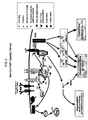
- the 2,4-pyrimdinediamine compounds of the invention inhibit cellular degranulation and/or the release of other chemical mediators primarily by inhibiting Syk kinase that gets activated through the gamma chain homodimer of Fc ⁇ RI ( see, e.g., FIG. 2 ).
- This gamma chain homodimer is shared by other Fc receptors, including Fc ⁇ RI, Fc- ⁇ RIII and Fc ⁇ RI. For all of these receptors, intracellular signal transduction is mediated by the common gamma chain homodimer.
- the 2,4-pyrimidinediamine compounds described herem may be for use in methods which regulate, and in particular inhibit, the signaling cascades of Fc receptors having this gamma chain homodimer, such as Fc ⁇ RI, Fc ⁇ RI, Pc ⁇ RIII and Fc ⁇ RI, as well as the cellular responses elicited through these receptors.
- Syk kinase is known to play a critical role in other signaling cascades.
- Syk kinase is an effector of B-cell receptor (BCR) signaling ( Turner et al., 2000, Immunology Today 21:148-154 ) and is an essential component of integrin beta(1), beta(2) and beta(3) signaling in neutrophils ( Mocsai et al., 2002, Immunity 16:547-558 ).
- 2,4-pyrimidinediamine compounds described herein are potent inhibitors of Syk kinase, they can be used to regulate, and in particular inhibit, any signaling cascade where Syk plays a role, such as, fore example, the Fc receptor, BCR and integrin signaling cascades, as well as the cellular responses elicited through these signaling cascades.
- any signaling cascade where Syk plays a role such as, fore example, the Fc receptor, BCR and integrin signaling cascades, as well as the cellular responses elicited through these signaling cascades.
- the particular cellular response regulated or inhibited will depend, in part, on the specific cell type and receptor signaling cascade, as is well known in the art.
- Non-limiting examples of cellular responses that may be regulated or inhibited with the 2,4-pyrimidinediamine compounds include a respiratory burst, cellular adhesion, cellular degranulation, cell spreading, cell migration, phagocytosis ( e.g ., in macrophages), calcium ion flux ( e.g ., in mast, basophil, neutrophil, eosinophil and B-cells), platelet aggregation, and cell maturation (e.g ., in B-cells).
- the present invention provides the compound of the invention for use in methods of regulating, and in particular inhibiting, signal transduction cascades in which Syk plays a role.
- the method generally involves contacting a Syk-dependent receptor or a cell expressing a Syk-dependent receptor with an amount of a 2,4-pyrimidinediamine compound of the invention or prodrug or an acceptable salt, hydrate, solvate, N-oxide and/or composition thereof, effective to regulate or inhibit the signal transduction cascade.
- the methods may also be used to regulate, and in particular inhibit, downstream processes or cellular responses elicited by activation of the particular Syk-dependent signal transduction cascade.
- the methods may be practiced to regulate any signal transduction cascade where Syk is not known or later discovered to play a role.
- the methods may be practiced in in vitro contexts or in in vivo contexts as a therapeutic approach towards the treatment or prevention of diseases characterized by, caused by or associated with activation of the Syk-dependent signal transduction cascade. Non-limited examples of such diseases include those previously discussed.
- 2,4-pyrimidinediamine compounds of the invention may also be for use in methods which treat or prevent autoimmune diseases and/or symptoms of such diseases.
- the methods generally involve administering to a subject suffering from an autoimmune disease or at risk of developing an autoimmune disease an amount of a 2,4-pyrimidinediamine compound of the invention or prodrug, or an acceptable salt, N-oxide, hydrate, solvate or composition thereof, effective to treat or prevent the autoimmune disease and/or its associated symptoms.
- autoimmune diseases that can be treated or prevented with methodes in which the 2,4-pyrimidinediamine compounds of the invention are for use diseases that are commonly associated with nonanaphylactic hypersensitivity reactions (Type II, Type III and/or Type IV hypersensitivity reactions) and/or those diseases that are mediated, at least in part, by activation of the Fc ⁇ R signaling cascade in monocyte cells.
- Such autoimmune disease include, but are not limited to, those autoimmune diseases that are frequently designated as single organ or single cell-type autoimmune disorders and those autoimmune disease that are frequently designated as involving systemic autoimmune disorder.
- Non-limiting examples of diseases frequently designated as single organ or single cell-type autoimmune disorders include: Hashimoto's thyroiditis, autoimmune hemolytic anemia, autoimmune atrophic gastritis of pernicious anemia, autoimmune encephalomyelitis, autoimmune orchitis, Goodpasture's disease, autoimmune thrombocytopenia, sympathetic ophthalmia, myasthenia gravis, Graves' disease, primary biliary cirrhosis, chronic aggressive hepatitis, ulcerative colitis and membranous glomerulopathy.
- Non-limiting examples of diseases often designated as involving systemic autoimmune disorder include: systemic lupus erythematosis, rheumatoid arthritis, Sjogren's syndrome, Reiter's syndrome, polymyositis-dermatomyositis, systemic sclerosis, polyarteritis nodosa, multiple sclerosis and bullous pemphigoid.
- alkyloxy or “alkoxy” refers to a group of the formula -OR
- alkylamine refers to a group of the formula -NHR
- dialkylamine refers to a group of the formula -NR"R
- each R is independently an alkyl
- haloalkoxy or “haloalkyloxy” refers to a group of the formula -OR'", where R"' is a haloalkyl.
- Protecting group refers to a group of atoms that, when attached to a reactive functional group in a molecule, mask, reduce or prevent the reactivity of the functional group. Typically, a protecting group may be selectively removed as desired during the course of a synthesis. Examples of protecting groups can be found in Greene and Wuts, Protective Groups in Organic Chemistry, 3rd Ed., 1999, John Wiley & Sons, NY and Harrison et al., Compendium of Synthetic Organic Methods, Vols. 1-8, 1971-1996, John Wiley & Sons, NY .
- Representative amino protecting groups include, but are not limited to, formyl, acetyl, trifluoroacetyl, benzyl, benzyloxycarbonyl (“CBZ”), tert -butoxycarbonyl (“Boc”), trimethylsilyl (“TMS”), 2-trimethylsilyl-ethanesulfonyl (“TES”), trityl and substituted trityl groups, allyloxycarbonyl, 9-fluorenylmethyloxycarbonyl (“FMOC”), nitro-veratryloxycarbonyl (“NVOC”) and the like.
- hydroxyl protecting groups include, but are not limited to, those where the hydroxyl group is either acylated or alkylated such as benzyl and trityl ethers, as well as alkyl ethers, tetrahydropyranyl ethers, trialkylsilyl ethers (e.g., TMS or TIPPS groups) and allyl ethers.
- Prodrug refers to a derivative of an active 2,4-pyrimidinediamine compound (drug) that requires a transformation under the conditions of use, such as within the body, to release the active 2,4-pyrimidinediamine drug.
- Prodrugs are frequently, but not necessarily, pharmacologically inactive until converted into the active drug.
- Prodrugs are typically obtained by masking a functional group in the 2,4-pyrimidinediamine drug believed to be in part required for activity with a progroup (defined below) to form a promoiety which undergoes a transformation, such as cleavage, under the specified conditions of use to release the functional group, and hence the active 2,4-pyrimidinediamine drug.
- the cleavage of the promoiety may proceed spontaneously, such as by way of a hydrolysis reaction, or it may be catalyzed or induced by another agent, such as by an enzyme, by light, by acid or base, or by a change of or exposure to a physical or environmental parameter, such as a change of temperature.
- the agent may be endogenous to the conditions of use, such as an enzyme present in the cells to which the prodrug is administered or the acidic conditions of the stomach, or it may be supplied exogenously.
- progroups as well as the resultant promoieties, suitable for masking functional groups in the active 2,4-pyrimidinediamines compounds to yield prodrugs are well-known in the art.
- a hydroxyl functional group may be masked as a sulfonate, ester or carbonate promoiety, which may be hydrolyzed in vivo to provide the hydroxyl group.
- An amino functional group may be masked as an amide, carbamate, imine, urea, phosphenyl, phosphoryl or sulfenyl promoiety, which may be hydrolyzed in vivo to provide the amino group.
- a carboxyl group may be masked as an ester (including silyl esters and thioesters), amide or hydrazide promoiety, which may be hydrolyzed in vivo to provide the carboxyl group.
- Nitrogen protecting groups and nitrogen pro-drugs of the invention may include lower alkyl groups as well as amides, carbamates, etc. Other specific examples of suitable progroups and their respective promoieties will be apparent to those of skill in the art.
- Progroup refers to a type of protecting group that, when used to mask a functional group within an active 2,4-pyrimidinediamine drug to form a promoiety, converts the drug into a prodrug.
- Progroups are typically attached to the functional group of the drug via bonds that are cleavable under specified conditions of use.
- a progroup is that portion of a promoiety that cleaves to release the functional group under the specified conditions of use.
- an amide promoiety of the formula NH-C(O)CH 3 comprises the progroup -C(O)CH 3 .
- Fc Receptor refers to a member of the family of cell surface molecules that binds the Fc portion (containing the specific constant region) of an immunoglobulin. Each Fc receptor binds immunoglobulins of a specific type. For example the Fc ⁇ receptor (“Fc ⁇ R”) binds IgA, the Fc ⁇ R binds IgE and the Fc ⁇ R binds IgG.
- Fc ⁇ R Fc ⁇ receptor
- the Fc ⁇ R family includes the polymeric Ig receptor involved in epithelial transport of IgA/IgM, the mycloid specific receptor Rc ⁇ RI (also called CD89), the Fc ⁇ / ⁇ R and at least two alternative IgA receptors (for a recent review see Monteiro & van de Winkel, 2003, Annu. Rev. Immunol, advanced e-publicati on.
- the Fc ⁇ RI is expressed on neutrophils, eosinophils, moncytes/macrophages, dendritic cells and kupfer cells.
- the Fc ⁇ RI inclues one alpha chain and the FcR gamma homodimer that bears an activation motif (ITAM) in the cytoplasmic domain and phosphorylates Syk kinase.
- ITAM activation motif
- the Fc ⁇ R family includes two types, designated Fc ⁇ RI and Fc ⁇ RII (also known as CD23).
- Fc ⁇ RI is a high affinity receptor (binds IgE with an affinity of about 10 10 M -1 ) found on mast, basophil and eosinophil cells that anchors monomeric IgE to the cell surface.
- the Fc ⁇ RI possesses one alpha chain, one beta chain and the gamma chain homodimer discussed above.
- the Fc ⁇ RII is a low affinity receptor expressed on mononuclear phagocytes, B lymphocytes, eosinophils and platelets.
- the Fc ⁇ RII comprises a single polypeptide chain and does not include the gamma chain homodimer.
- Fc ⁇ RI also known as CD64
- Fc ⁇ RII also known as CD32
- Fc ⁇ RIII also known as CD16
- Fc ⁇ RI is a high affinity receptor (binds IgG1 with an affinity of 10 8 M -1 ) found on mast, basophil, mononuclear, neutrophil, eosinophil, deudritic and phagocyte cells that anchors nomomeric IgG to the cell surface.
- the Fc ⁇ RI includes one alpha chain and the gamma chain dimer shared by Fc ⁇ RI and Fc ⁇ RI.
- the Fc ⁇ RII is a low affinity receptor expressed on neutrophils, monocytes, eosinophils, platelets and B lymphocytes.
- the Fc ⁇ RII includes one alpha chain, and does not include the gamma chain homodimer discussed above.
- the Fc ⁇ RIII is a low affinity (bindes IgG1 with an affinity of 5x10 5 M -1 ) expressed on NK, eosinophil, macrophage, neutrophil and mast cells. It comprises one alpha chain and the gamma homodimer shared by Fc ⁇ RI, Fc ⁇ RI and Fc ⁇ RI.
- Fc Receptor-Mediated Degranulation or “Fc Receptor-Induced Degranulation” refers to degranulation that proceeds via an Fc receptor signal transduction cascade initiated by crosslinking of an Fc receptor.
- IgE-Induced Degranulation or “Fc ⁇ RI-Mediated Degranulation” refers to degranulation that proceeds via the IgE receptor signal transduction cascade initiated by crosslinking of Fc ⁇ RI-bound IgE.
- the crosslinking may be induced by an IgE-specific allergen or other multivalent binding agent, such as an anti-IgE antibody.
- the Fc ⁇ RI signaling cascade leading to degranulation may be broken into two stages: upstream and downstream.
- the upstream stage includes all of the processes that occur prior to calcium ion mobilization (illustrated as "Ca 2+ " in FIG. 2 ; see also FIG. 3 ).
- the downstream stage includes calcium ion mobilization and all processes downstream thereof.
- Compounds that inhibit Fc ⁇ RI-mediated degranulation may act at any point along the Fc ⁇ RI-mediated signal transduction cascade.
- Compounds that selectively inhibit upstream Fc ⁇ RI-mediated degranulation act to inhibit that portion of the Fc ⁇ RI signaling cascade upstream of the point at which calcium ion mobilization is induced.
- compounds that selectively inhibit upstream Fc ⁇ RI-mediated degranulation inhibit degranulation of cells such as mast or basophil cells that are activated or stimulated with an IgE-specific allergen or binding agent (such as an anti-IgE antibody) but do not appreciably inhibit degranulation of cells that are activated or stimulated with degranulating agents that bypass the Fc ⁇ RI signaling pathway, such as, for example the calcium ionophores ionomycin and A23187.
- IgG-Induced Degranulation or “Fc ⁇ RI-Mediated Degranulation” refers to degranulation that proceeds via the Fc ⁇ RI signal transduction cascade initiated by crosslinking of Fc ⁇ RI-bound IgG.
- the crosslinking may be induced by an IgG-specific allergen or another multivalent binding agent, such as an anti-IgG or fragment antibody.
- the Fc ⁇ RI signaling cascade in mast and basophil cells the Fc ⁇ RI signaling cascade also leads to degranulation which may be broken into the same two stages: upstream and downstream. Similar to Fc ⁇ RI-mediated degranulation, compounds that selectively inhibit upstream Fc ⁇ RI-mediated degranulation act upstream of the point at which calcium ion mobilization is induced.
- compounds that selectively inhibit upstream Fc ⁇ RI-mediated degranulation inhibit degranulation of cells such as mast or basophil cells that are activated or stimulated with an IgG-specific allergen or binding agent (such as an anti-IgG antibody or fragment) but do not appreciably inhibit degranulation of cells that are activated or stimulated with degranulating agents that bypass the Fc ⁇ RI signaling pathway, such as, for example the calcium ionophores ionomycin and A23187.
- Ionophore-Induced Degranulation or “Ionophore-Mediated Degranulation” refers to degranulation of a cell, such as a mast or basophil cell, that occurs upon exposure to a calcium ionophore such as, for example, ionomycin or A23187.
- Syk Kinsase refers to the well-known 72kDa non-receptor (cytoplasmic) spleen protein tyrosine kinase expressed in B-cells and other hematopoetic cells. Syk kinase includes two consensus Src-homology 2 (SH2) domains in tandem that bind to phosphorylated immunoreceptor tyrosine-based activation motifs ("ITAMs”), a "linker” domain and a catalytic domain (for a review of the structure and function of Syk kinase see Sada et al., 2001, J. Biochem.
- SH2 consensus Src-homology 2
- Syk kinase has been extensively studied as an effector of B-cell receptor (BCR) signaling (Turner et al., 2000, supra). Syk kinase is also critical for tyrosine phosphorylation of multiple proteins which regulate important pathways leading from immunoreceptors, such as Ca 2+ mobilization and mitogen-activated protein kinase (MAPK) cascades (see, e.g., FIG. 2 ) and degranulation. Syk kinase also plays a critical role in integrin signaling in neutrophils (see, e.g., Mocsai et al. 2002, Immunity 16:547-558 ).
- BCR B-cell receptor
- Syk kinase includes kinases from any species of animal, including but not limited to, homosapiens, simian, bovine, porcine, rodent, etc., recognized as belonging to the Syk family. Specifically included are isoforms, splice variants, allelic variants, mutants, both naturally occuring and man-made. The amino acid sequences of such Syk kinases are well known and available from GENBANK. Specific examples of mRNAs encoding different isoforms of human Syk kinase can be found at GENBANK accession no.
- Syk mimics tyrosine kinases belonging to other families may have active sites or binding pockets that are similar in three-dimensional structure to that of Syk.
- Syk mimics are expected to catalyze phosphorylation of substrates phosphorylated by Syk.
- signal transduction cascades in which such Syk mimics play a role and biological responses effected by such Syk mimics and Syk mimic-dependent signaling cascades may be regulated, and in particular inhibited, with the 2,4-pyrimidinediamine compounds described herein.
- Syk-Dependent Signaling Cascade refers to a signal transduction cascade in which Syk kinase plays a role.
- Non-limiting examples of such Syk-dependent signaling cascades include the Fc ⁇ RI, Fc ⁇ RI, Fc ⁇ RI, Fc ⁇ RIII, BCR and integrin signaling cascades.
- Autoimmune Disease refers to those diseases which are commonly associated with the nonanaphylactic hypersensitivity reactions (Type II, Type III and/or Type IV hypersensitivity reactions) that generally result as a consequence of the subject's own humoral and/or cell-mediated immune response to one or more immunogenic substances of endogenous and/or exogenous origin. Such autoimmune diseases are distinguished from diseases associated with the anaphylactic (Type I or IgE-mediated ) hypersensitivity reactions.
- the compounds of the invention are 2,4-pyrimidinediamine compounds which are of the structural formula: and salts, hydrates, solvates and N-oxides thereof, wherein R 2 is and R 4 is wherein ...
- X is selected from the group consisting of N and CH
- Y is selected from the group consisting of O, S, SO, SO 2 , SONR 36 , NH, NR 35
- Z is selected from the group consisting of O, S, SO, SO 2 , SONR 6 , NH, NR 35
- each R 31 is independently (C1-C6) alkyl
- each R 35 is, independently of the others, selected from the group consisting of hydrogen and R 8
- R 8 is selected from the group consisting of R a , R b , R a substituted with one or more of the same or different R a or R b , -OR a substituted with one or more of the same or different R a or R b , -B(OR a
- each R 31 independently of the others, is methyl or (C1-C6) alkyl and R 4 is
- Y is O Z is NH and X is N.
- Y is O
- Z is NH
- X is N
- each R 31 is methyl.
- R 2 is not 3,4,5-trimethoxyphenyl, 3,4,5-tri (C1-C6) alkoxyphenyl or where R 21 , R 22 and R 23 are as defined for R 1 , R 2 and R 3 , respectively of U.S. Patent No. 6,235,746
- R is methoxy optionally substituted with one or more of the same or different halo groups and/or R 22 and R 23 are each, independently of one another, a methyl or ethyl optionally substituted with one or more of the same or different halo groups.
- 2,4-pyrimidinediamine compounds described herein may include functional groups that can be masked with progroups to create prodrugs. Such prodrugs are usually, but need not be, pharmacologically inactive until converted into their active drug form. Indeed, many of the active 2,4-pyrimidinediamine compounds described in TABLE 1, include promoieties that are hydrolyzable or otherwise cleavable under conditions of use. For example, ester groups commonly undergo acid-catalyzed hydrolysis to yield the parent carboxylic acid when exposed to the acidic conditions of the stomach, or base-catalyzed hydrolysis when exposed to the basic conditions of the intestine or blood.
- 2,4-pyrimidinediamines that include ester moieties may be considered prodrugs of their corresponding carboxylic acid, regardless of whether the ester form is pharmacologically active.
- ester form is pharmacologically active.
- numerous ester-containing 2,4-pyrimidinediamimes of the invention are active in their ester, "prodrug" form.
- any available functional moiety may be masked with a progroup to yield a prodrug.
- Functional groups within the 2,4-pyrimidinediamine compounds that may be masked with progroups for inclusion in a promoiety include, but are not limited to, amines (primary and secondary), hydroxyls, sulfanyls (thiols), carboxyls, etc.
- Myriad progroups suitable for masking such functional groups to yield promoieties that are cleavable under the desired conditions of use are known in the art. All of these progroups, alone or in combinations, may be included in the prodrugs of the compounds of the invention.
- the prodrugs of the compounds of the invention are compounds of the invention in which R c and R d are repluced by progroup.
- the compounds of the invention and prodrugs thereof may exhibit the phenomena of tautomerism, conformational isomerism, geometric isomerism and/or optical isomerism.
- the compounds of the invention and prodrugs thereof include one or more chiral centers and/or double bonds and as a consequence may exist as stereoisomers, such as double-bond isomers (i.e., geometric isomers), enantiomers and diasteromers and mixtures thereof, such as racemic mixtures.
- the compounds of the invention and prodrugs thereof may exist in several tautomeric forms, including the enol form, the keto form and mixtures thereof.
- the compounds of the invention and prodrugs thereof may be identified by either their chemical structure or their chemical name. When the chemical structure and the chemical name conflict, the chemical structure is determinative of the identity of the specific compound.
- the 2,4-pyrimidinediamine compounds the invention and prodrugs thereof may be in the form of salts.
- Such salts include salts suitable for pharmaceutical uses ("pharmaceutically-acceptable salts"), salts suitable for veterinary uses, etc.
- Such salts may be derived from acids or bases, as is well-known in the art.
- the salt is a pharmaceutically acceptable salt.
- pharmaceutically acceptable salts are those salts that retain substantially one or more of the desired pharmacological activities of the parent compound and which are suitable for administration to humans.
- Pharmaceutically acceptable salts include acid addition salts formed with inorganic acids or organic acids.
- Inorganic acids suitable for forming pharmaceutically acceptable acid addition salts include, by way of example and not limitation, hydrohalide acids (e.g., hydrochloric acid, hydrobromic acid, hydriodic, etc.), sulfuric acid, nitric acid, phosphoric acid, and the like.
- Organic acids suitable for forming pharmaceutically acceptable acid addition salts include, by way of example and not limitation, acetic acid, trifluoroacetic acid, propionic acid, hexanoic acid, cyclopentanepropionic acid, glycolic acid, oxalic acid, pyruvic acid, lactic acid, malonic acid, succinic acid, malic acid, maleic acid, fumaric acid, tartaric acid, citric acid, palmitic acid, benzoic acid, 3-(4-hydroxybenzoyl) benzoic acid, cinnamic acid, mandelic acid, alkylsulfonic acids ( e.g., methanesulfonic acid, ethanesulfonic acid, 1,2-ethane-disulfonic acid, 2-hydroxyethanesulfonic acid, etc.), arylsulfonic acids (e.g., benzenesulfonic acid, 4-chlorobenzenesulfonic acid, 2-naphthalene
- Pharmaceutically acceptable salts also include salts formed when an acidic proton present in the parent compound is either replaced by a metal ion (e.g ., an alkali metal ion, an alkaline earth metal ion or an aluminum ion), an ammonium ion or coordinates with an organic base (e.g., ethanolamine, diethanolamine, triethanolamine, N-methylglucamine, morpholine, piperidine, dimethylamine, diethylamine, etc.).
- a metal ion e.g ., an alkali metal ion, an alkaline earth metal ion or an aluminum ion
- an ammonium ion or coordinates with an organic base e.g., ethanolamine, diethanolamine, triethanolamine, N-methylglucamine, morpholine, piperidine, dimethylamine, diethylamine, etc.
- 2,4-pyrimidinediamine compounds of the invention may also be in the form of hydrates, solvates and N-oxides, as are well-known in the art.
- the compounds of the invention and prodrugs thereof may be synthesized via a variety of different synthetic routes using commercially available starting materials and/or starting materials prepared by conventional synthetic methods. Suitable exemplary methods that may be routinely adapted to synthesize the 2,4-pyrimidinediamine compounds of the invention and prodrugs thereof are found in U.S. Patent No. 5,958,935 , U.S. Patent Application 10/355,543, filed January 31, 2003 (US Publication US20040029902-A1 ), WO 03/063794, published August 1, 2003 , U.S. Patent Application 10/631,029, filed July 29, 2003 and WO 2004/014382, published February 19, 2004 . All of the compounds of the invention and structural formula (II) may be prepared by routine adaptation of these methods.
- the compounds can be synthesized from substituted or unsubstituted uracils or thiouracils as illustrated in Scheme (I), below:
- R 2 and R 4 are as previously defined , X is a halogen (e.g., F, Cl, Br or I) and Y and Y' are each, independently of one another, selected from the group consisting of O and S.
- uracil or thiouracil 2 is dihalogenated at the 2- and 4-positions using standard halogenating agent POX 3 (or other standard halogenating agent) under standard conditions to yield 2,4-bishalo pyrimidine 4.
- POX 3 or other standard halogenating agent
- the regioselectivity of the reaction can be controlled by adjusting the solvent and other synthetic conditions (such as temperature), as is well-known in the art.
- the uracil or thiouracil 2 starting materials may be purchased from commercial sources or prepared using standard techniques of organic chemistry.
- Commercially available uracils and thiouracils that can be used as starting materials in Scheme (I) include, by way of example and not limitation, uracil (Aldrich #13,078-8; CAS Registry 66-22-8); 2-thio-uracil (Aldrich #11,558-4; CAS Registry 141-90-2); 2,4-dithiouracil (Aldrich #15,846-1; CAS Registry 2001-93-6); 5-acetouracil (Chem.
- Amines 6 and 10 may be purchased from commercial sources or, alternatively, may be synthesized utilizing standard techniques. For example, suitable amines may be synthesized from nitro precursors using standard chemistry. Specific exemplary reactions are provided in the Examples section. See also Vogel, 1989, Practical Organic Chemistry, Addison Wesley Longman, Ltd. and John Wiley & Sons, Inc.
- amines 6 and 10 and/or uracil or thiouracil 2 may include functional groups that require protection during synthesis.
- the exact identity of any protecting group(s) used will depend upon the identity of the functional group being protected, and will be apparent to these of skill in the art.
- Guidance for selecting appropriate protecting groups, as well as synthetic strategies for their attachment and removal, may be found, for example, in Greene & Wuts, Protective Groups in Organic Synthesis, 3d Edition, John Wiley & Sons, Inc., New York (1999 ) and the references cited therein (hereinafter "Greene & Wuts").
- Scheme (I) A specific embodiment of Scheme (I) utilizing 5-fluorouracil (Aldrich #32,937-1) as a starting material is illustrated in Scheme (Ia), below:
- R 2 , R 4 are as previously defined for Scheme (I).
- 5-fluorouracil 3 is halogenated with POCl 3 to yield 2,4-dichloro-5-fluoropyrimidine 5, which is then reacted with excess amine 6 or 10 to yield N2,N4-bis substituted 5-fluoro-2,4-pyrimidinediamine 11 or 13, respectively.
- non-bis 2N,4N-disubstituted-5-fluoro-2,4-pyrimidinediamine 9 may be obtained by reacting 2,4-dichloro-5-fluoropyrimidine 5 with one equivalent of amine 10 (to yield 2-chloro-N4-substituted-5-fluoro-4-pyrimidineamine 7 ) followed by one or more equivalents of amine 6.
- 2,4-pyrimidinediamine compounds of the invention may be synthesized from substituted or unsubstituted cytosines as illustrated in Schemes (IIa) and (IIb), below:
- Protected cytosine 22 is halogenated at the C2 position using a standard halogenation reagent under standard conditions to yield 2-chloro-4N-protected4-pyrimidineamine 24. Reaction with amine 6 followed by deprotection of the C4 exocyclic amine and reaction with amine 10 yields a 2,4-pyrimidinediamine according to structural formula (I).
- cytosine 20 may be reacted with amine 10 or protected amine 21 to yield N4-substituted cytosine 23 or 27, respectively.
- substituted cytosines may then be halogenated as previously described, deprotected (in the case of N4-substituted cytosine 27 ) and reacted with amine 6 to yield a 2,4-pyrimidinediamine according to structural formula (I).
- cytosines that may be used as starting materials in Schemes (IIa) and (IIb) include, but are not limited to, cytosine (Aldrich #14,201-8; CAS Registry 71-30-7); N 4 -acetylcytosine (Aldrich #37,791-0; CAS Registry 14631-20-0); 5-fluorocytosine (Aldrich #27,159-4; CAS Registry 2022-85-7); and 5-(trifluoromethyl)-cytosine.
- cytosines useful as starting materials in Schemes (IIa) are available from General Intermediates of Canada, Inc., Edmonton, Alberta, CA (www.generalintermediates.com) and/or Interchim, France (www.interchim.com) , or may be prepared using standard techniques. Myriad textbook references teaching suitable synthetic methods are provided infra.
- 2,4-pyrimidinediamine compounds of the invention may be synthesized from substituted or unsubstituted 2-amino-4-pyrimidinols as illustrated in Scheme (III), below:
- Suitable commercially-available 2-amino-4-pyrimidinols 30 that can be used as starting materials in Scheme (III) include, but are not limited to, 2-amino-6-chloro-4-pyrimidinol hydrate (Aldrich #A4702-8; CAS Registry 00000-00-0) and 2-amino-6-hydroxy-4-pyrimidinol (Aldrich #A5040-1; CAS Registry 56-09-7).
- Other 2-amino-4-pyrimidinols 30 useful as starting materials in Scheme (III) are available from General Intermediates of Canada, Inc., Edmonton, Alberta, CA (www.generalintermediates.com) and/or Interchim, France (www.interchim.com), or may be prepared using standard techniques. Myriad textbook references teaching suitable synthetic methods are provided infra.
- 2,4-pyrimidinediamine compounds of the invention may be prepared from substituted or unsubstituted 4-amino-2 pyrimidinols as illustrated in Scheme (IV), below:
- R 2 , R 4 are as previously defined for Scheme (I) and Z represents a leaving group:
- the C2-hydroxyl of 4-amino-2 pyrimidinol 40 is more reactive towards nucleophiles than the C4-amino such that reaction with amine 6 yields N2-substituted-2,4-pyrimidinediamine 42.
- Subsequent reaction with compound 44, which includes a good leaving group Z, or amine 10 yields a 2,4-pyrimidinediamine according to structural formula (I).
- Compound 44 may include virtually any leaving group that can be displaced by the C4-amino of N2-substituted-2,4-pyrimidinediamine 42.
- Suitable leaving groups Z include, but are not limited to, halogens, methanesulfonyloxy (mesyloxy; "OMs”), trifluoromethanesulfonyloxy ("OTf") and p -toluenesulfonyloxy (tosyloxy; "OTs”), benzene sulfonyloxy ("besylate”) and metanitro benzene sulfonyloxy ("nosylate”).
- halogens methanesulfonyloxy
- OMs trifluoromethanesulfonyloxy
- p -toluenesulfonyloxy tosyloxy; "OTs”
- besylate benzene sulfonyloxy
- metanitro benzene sulfonyloxy metanitro benzene sulfonyloxy
- Substituted 4-amino-2-pyrimidinol starting materials may be obtained commercially or synthesized using standard techniques. Myriad textbook references teaching suitable synthetic methods are provided infra.
- the 2,4-pyrimidinediamine compounds of the invention can be prepared from 2-chloro-4-aminopyrimidines or 2-amino-4-chloropyrimidines as illustrated in Scheme (V), below:
- pyrimidines 50 and 54 suitable for use as starting materials in Scheme (V) are commercially available, including by way of example and not limitation, 2-amino-4,6-dichloropyrimidine (Aldrich #A4860-1; CAS Registry 56-05-3); 2-amino-4-chloro-6-methoxy pyrimidine (Aldrich #51,864-6; CAS Registry 5734-64-5); 2-amino-4-chloro-6-methylpyrimidine (Aldrich #12,288-2; CAS Registry 5600-21-5); and 2-amino-4-chloro-6-methylthiopyrimidine (Aldrich #A4600-5; CAS Registry 1005-38-5).
- 4-chloro-2-pyrimidineamines 50 may be prepared as illustrated in Scheme (Va):
- the 2,4-pyrimidinediamine compounds of the invention can be prepared from substituted or unsubstituted uridines as illustrated in Scheme (VI), below:
- R 2 , R 4 , and X are as previously defined for Scheme (I) and the superscript PG represents a protecting group, as discussed in connection with Scheme (IIb).
- uridine 60 has a C4 reactive center such that reaction with amine 10 or protected amine 21 yields N4-substituted cytidine 62 or 64, respectively.
- N4-substituted 62 or 64 Acid-catalyzed deprotection of N4-substituted 62 or 64 (when "PG” represents an acid-labile protecting group) yields N4-substituted cytosine 28, which may be subsequently halogenated at the C2-position and reacted with amine 6 to yield a 2,4-pyrimidinediamine according to structural formula (I).
- R 2 , R 4 , and X are as previously defined in Scheme (I) and the superscript PG represents a protecting group as discussed above.
- cytidine 70 has a C4 reactive center such that reaction with amine 10 or protected amine 21 yields N4-substituted cytidine 62 or 64, respectively.
- These cytidines 62 and 64 are then treated as previously described for Scheme (VI) to yield a 2,4-pyrimidinediamine according to structural formula (I).
- uridines and cytidines useful as starting materials in Schemes (VI) and (VII) are known in the art, and include, by way of example and not limitation, 5-trifluoromethyl-2'-deoxycytidine (Chem. Sources #ABCR F07669; CAS Registry 66,384-66-5); 5-bromouridine (Chem.
- 2,4-pyrimidinediamines according to the invention may also be utilized as starting materials and/or intermediates to synthesize additional 2,4-pyrimidinediamine compounds of the invention.
- substituents R 2 , R 4 may include functional groups requiring protection.
- the exact identity of the protecting group used will depend upon, among other things, the identity of the functional group being protected and the reaction conditions used in the particular synthetic scheme, and will be apparent to those of skill in the art. Guidance for selecting protecting groups and chemistries for their attachment and removal suitable for a particular application can be found, for example, in Greene & Wuts, supra.
- Prodrugs according to structural formula (II) may be prepared by routine modification of the above-described methods.
- such prodrugs may be prepared by reacting a suitably protected 2,4-pyrimidinediamine of the invention with a suitable progroup.
- Conditions for carrying out such reactions and for deprotecting the product to yield a prodrug of formula (II) are well-known.
- Active 2,4-pyrimidinediamine compounds of the invention inhibit Fc receptor signalling cascades that lead to, among other things, degranulation of cells.
- the compounds inhibit the Fc ⁇ RI and/or Fc ⁇ RI signal cascades that lead to degranulation of immune cells such as neutrophil, eosinophil, mast and/or basophil cells. Both mast and basophil cells play a central role in allergen-induced disorders, including, for example, allergic rhinitis and asthma.
- allergen-specific IgE antibodies upon exposure allergens, which may be, among other things, pollen or parasites, allergen-specific IgE antibodies are synthesized by B-cells activated by IL-4 (or IL-13) and other messengers to switch to IgE class specific antibody synthesis. These allergen-specific IgEs bind to the high affinity Fc ⁇ RI.
- the FceRl-bound IgEs Upon binding of antigen, the FceRl-bound IgEs are cross-linked and the IgE receptor signal transduction pathway is activated, which leads to degranulation of the cells and consequent release and/or synthesis of a host of chemical mediators, including histamine, proteases (e.g., tryptase and chymase), lipid mediators such as leukotrienes (e.g., LTC4), platelet-activating factor (PAF) and prostaglandins (e.g., PGD2) and a series of cytokines, including TNF- ⁇ , IL-4, IL-13, IL-5, IL-6, IL-8, GMCSF, VEGF and TGF- ⁇ .
- PGF platelet-activating factor
- PGD2 prostaglandins
- the Fc ⁇ RI is a heterotetrameric receptor composed of an IgE-binding alpha-subunit, a beta subunit, and two gamma subunits (gamma homodimer).
- Cross-linking of Fc ⁇ RI-bound IgE by multivalent binding agents induces the rapid association and activation of the Src-related kinase Lyn.
- Lyn phosphorylates immunoreceptor tyrosine-based activation motifs (ITAMS) on the intracellular beta and gamma subunits, which leads to the recruitment of additional Lyn to the beta subunit and Syk kinase to the gamma homodimer.
- ITAMS immunoreceptor tyrosine-based activation motifs
- These receptor-associated kinases which are activated by intra- and intermolecular phosphorylation, phosphorylate other components of the pathway, such as the Btk kinase, LAT, and phospholipase C-gamma PLC-gamma).
- Activated PLC-gamma initiates pathways that lead to protein kinase C activation and Ca 2+ mobilization, both of which are required for degranulation.
- Fc ⁇ R1 cross-linking also activates the three major classes of mitogen activated protein (MAP) kinases, i.e. ERK1/2, JNK1/2, and p38. Activation of these pathways is important in the transcriptional regulation of proinflammatory mediators, such as TNF- ⁇ and IL-6, as well as the lipid mediator leukotriene CA (LTC4).
- MAP mitogen activated protein
- the Fc ⁇ RI signaling cascade is believed to share some common elements with the FceRI signaling cascade.
- the Fc ⁇ RI includes a gamma homodimer that is phosphorylated and recruits Syk, and like Fc ⁇ RI, activation of the Fc ⁇ RI signaling cascade leads to, among other things, degranulation.
- Other Fc receptors that share the gamma homodimer, and which can be regulated by the active 2,4-pyrimidinediamine compounds include, but are not limited to, Fc ⁇ RI and Fc ⁇ RIII.
- the ability of the 2,4-pyrimidinediamine compounds of the invention to inhibit Fc receptor signaling cascades may be simply determined or confirmed in in vitro assays. Suitable assays for confirming inhition of Fc ⁇ RI-mediated degranulation are provided in the Examples section.
- cells capable of undergoing Fc ⁇ RI-mediated degranulation such as mast or basophil cells, are first grown in the presence of IL-4, Stem Cell Factor (SCF), IL-6 and IgE to increase expression of the Fc ⁇ RI, exposed to a 2,4-pyrimidinediamine test compound of the invention and stimulated with anti-IgE antibodies (or, alternatively, an IgE-specific allergen).
- SCF Stem Cell Factor
- the amount of a chemical mediator or other chemical agent released and/or synthesized as a consequence of activating the Fc ⁇ RI signaling cascade may be quantified using standard techniques and compared to the amount of the mediator or agent released from control cells (i.e ., cells that are stimulated but that are not exposed to test compound).
- the concentration of test compound that yields a 50% reduction in the quantity of the mediator or agent measured as compared to control cells is the IC 50 of the test compound.
- the origin of the mast or basophil cells used in the assay will depend, in part, on the desired use for the compounds and will be apparent to those of skill in the art.
- mast or basophil cells are a human or other animal which constitutes an accepted or known clinical model for the particular disease.
- the mast or basophil cells may be derived from a wide variety of animal sources, ranging from, for example, lower mammals such as mice and rats, to dogs, sheep and other mammals commonly employed in clinical testing, to higher mammals such as monkeys, chimpanzees and apes, to humans.
- cells suitable for carrying out the in vitro assays include, but are not limited to, rodent or human basophil cells, rat basophil leukemia cell lines, primary mouse mast cells (such as bone marrow-derived mouse mast cells “BMMC”) and primary human mast cells isolated from cord blood (“CHMC”) or other tissues such as lung.
- BMMC bone marrow-derived mouse mast cells
- CHMC cord blood
- Methods for isolating and culturing these cell types are well-known or are provided in the Examples section (see, e.g., Demo et al., 1999, Cytometry 36(4):340-348 and copending application Serial No. 10/053,355, filed November 8, 2001 , the disclosures of which are incorporated herein by reference).
- other types of immune cells that degranulate upon activation of the Fc ⁇ RI signaling cascade may also be used, including, for example, eosinophils.
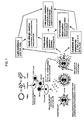
- the mediator or agent quantified is not critical. The only requirement is that it be a mediator or agent released and/or synthesized as a consequence of initiating or activating the Fc receptor signaling cascade. For example, referring to FIG. 1 , activation of the Fc ⁇ RI signaling cascade in mast and/or basophil cells leads to numerous downstream events. For example, activation of the Fc ⁇ RI signal cascade leads to the immediate release (i.e., within 1-3 min. following receptor activation) of a variety of preformed chemical mediators and agents via degranulation. Thus, in one embodiment, the mediator or agent quantified may be specific to granules ( i.e., present in granules but not in the cell cytoplasm generally).
- Such cleavable fluorogenic substrates are commercially available.
- the fluorogenic substrate 4-methylumbelliferyl-N-acetyl- ⁇ -D-glucosaminide (Sigma, St.
- hexosaminidase can be used to quantify the amount of hexosaminidase released. Histamine release may be quantified using a commercially available enzyme-linked immunosorbent assay (ELISA) such as Immunotech histamine ELISA assay #IM2015 (Beckman-Coulter, Inc.). Specific methods of quantifying the release of tryptase, hexosaminidase and histamine are provided in the Examples section. Any of these assays may be used to determine or confirm the activity of the 2,4-pyrimidinediamine compounds of the invention.
- ELISA enzyme-linked immunosorbent assay
- degranulation is only one of several responses initiated by the Fc ⁇ RI signaling cascade.
- activation of this signaling pathway leads to the de novo synthesis and release of cytokines and chemokines such as IL-4, IL-5, IL-6, TNF- ⁇ , IL-13 and MIP1- ⁇ ), and release of lipid mediators such as leukotrienes (e.g., LTC4), platelet activating factor (PAF) and prostaglandins.
- the 2,4-pyrimidinediamine compounds of the invention may also be assessed for activity by quantifying the amount of one or more of these mediators released and/or synthesized by activated cells.
- these "late stage” mediators are not released immediately following activation of the Fc ⁇ RI signaling cascade. Accordingly, when quantifying these late stage mediators, care should be taken to insure that the activated cell culture is incubated for a time sufficient to result in the synthesis (if necessary) and release of the mediator being quantified.
- PAF and lipid mediators such as leukotriene C4 are released 3-30 min. following Fc ⁇ RI activation.
- the cytokines and other late stage mediators are released approx. 4-8 hrs. following Fc ⁇ RI activation. Incubation times suitable for a specific mediator will be apparent to those of skill in the art. Specific guidance and assays are provided in the Examples section.
- the amount of a particular late stage mediator released may be quantified using any standard technique.
- the amount(s) may be quantified using ELISA assays.
- ELISA assay kits suitable for quantifying the amount of TNF ⁇ , IL-4, IL-5, IL-6 and/or IL-13 released are available from, for example, Biosource International, Inc., Camarillo, CA 93012 (see, e.g., Catalog Nos. KHC3011, KHC0042, KHC0052, KHC0061 and KHC0132).
- ELISA assay kits suitable for quantifying the amount of leukotriene C4 (LTC4) released from cells are available from Cayman Chemical Co., Ann Arbor, MI 48108 (see, e.g., Catalog No. 520211).
- active 2,4-pyrimidinediamine compounds of the invention will exhibit IC 50 s with respect to Fc ⁇ RI-mediated degranulation and/or mediator release or synthesis of about 20 ⁇ M or lower, as measured in an in vitro assay, such as one of the in vitro assays described above or in the Examples section.
- an in vitro assay such as one of the in vitro assays described above or in the Examples section.
- compounds which exhibit lower IC 50 s for example on the order of 10 ⁇ M, 1 ⁇ M, 100 nM, 10 nM, 1 nM, or even lower, are particularly useful.
- the various mediators discussed above may induce different adverse effects or exhibit different potencies with respect to the same adverse effect.
- the lipid mediator LTC4 is a potent vasoconstrictor - it is approximately 1000-fold more potent at inducing vasoconstriction than histamine.
- cytokines in addition to mediating atopic or Type I hypersensitivity reactions, can also cause tissue remodeling and cell proliferation.
- Compounds of the invention capable of inhibiting the release of more than one type of mediator may be identified by determining the IC 50 with respect to a mediator representative of each class using the various in vitro assays described above (or other equivalent in vitro assays).
- Compounds of the invention which are capable of inhibiting the release of more than one mediator type will typically exhibit an IC 50 for each mediator type tested of less than about 20 ⁇ M.
- a compound which exhibits an IC 50 of 1 ⁇ M with respect to histamine release (IC 50 histamine ) and an IC 50 of 1 nM with respect to leukotriene LTC4 synthesis and/or release (IC 50 LTC4 ) inhibits both immediate (granule-specific) and late stage mediator release.
- a compound that exhibits an IC 50 tryptase of 10 ⁇ M, an IC 50 LTC4 of 1 ⁇ M and an IC 50 IL-4 of 1 ⁇ M inhibits immediate (granule-specific), lipid and cytokine mediator release.
- Similar assays may be utilized to confirm inhibition of signal transduction cascades initiated by other Fc receptors, such as Fc ⁇ RI, Fc ⁇ RI and/or Fc ⁇ RIII signaling, with routine modification.
- Fc ⁇ RI Fc ⁇ RI
- Fc ⁇ RI Fc ⁇ RI
- Fc ⁇ RIII Fc ⁇ RIII signaling
- the ability of the compounds to inhibit Fc ⁇ RI signal transduction may be confirmed in assays similar to those described above, with the exception that the Fc ⁇ RI signaling cascade is activated, for example by incubating the cells with IgG and an IgG-specific allergen or antibody, instead of IgE and an IgE-specific allergen or antibody.
- Suitable cell types, activating agents and agents to quantify to confirm inhibition of other Fc receptors, such as Fc receptors that comprise a gamma homodimer will be apparent to those of skill in the art.
- One particularly useful class of compounds includes those 2,4-pyrimidinediamine compounds that inhibit the release of immediate granule-specific mediators and late stage mediators with approximately equivalent IC 50 s. By approximately equivalent is meant that the IC 50 s for each mediator type are within about a 10-fold range of one another.
- Another particularly useful class of compounds includes those 2,4-pyrimidinediamine compounds that inhibit the release of immediate granule-specific mediators, lipid mediators and cytokine mediators with approximately equivalent IC 50 s.
- such compounds inhibit the release of the following mediators with approximately equivalent IC 50 s: histamine, tryptase, hexosaminidase, IL-4, IL-5, IL-6, IL-13, TNF ⁇ and LTC4.
- mediators with approximately equivalent IC 50 s: histamine, tryptase, hexosaminidase, IL-4, IL-5, IL-6, IL-13, TNF ⁇ and LTC4.
- Such compounds are particularly useful for, among other things, ameliorating or avoiding altogether both the early and late stage responses associated with atopic or immediate Type I hypersensitivity reactions.
- the ability to inhibit the release of all desired types of mediators will reside in a single compound.
- mixtures of compounds can also be identified that achieve the same result.
- a first compound which inhibits the release of granule specific mediators may be used in combination with a second compound which inhibits the release and/or synthesis of cytokine mediators.
- degranulation of mast and/or basophil cells can be induced by other agents.
- ionomycin a calcium ionophore that bypasses the early Fc ⁇ RI or Fc ⁇ RI signal transduction machinery of the cell, directly induces a calcium flux that triggers degranulation.
- activated PLC ⁇ initiates pathways that lead to, among other things, calcium ion mobilization and subsequent degranulation. As illustrated, this Ca 2+ mobilization is triggered late in the Fc ⁇ RI signal transduction pathway.
- ionomycin directly induces Ca 2+ mobilization and a Ca 2+ flux that leads to degranulation.
- Other ionophores that induce degranulation in this manner include A23187.
- the ability of granulation-inducing ionophores such as ionomycin to bypass the early stages of the Fc ⁇ RI and/or Fc ⁇ RI signaling cascades may be used as a counter screen to identify active compounds of the invention that specifically exert their degranulation-inhibitory activity by blocking or inhibiting the early Fc ⁇ RI or Fc ⁇ RI signaling cascades, as discussed above.
- Compounds which specifically inhibit such early Fc ⁇ RI or Fc ⁇ RI-mediated degranulation inhibit not only degranulation and subsequent rapid release of histamine, tryptase and other granule contents, but also inhibit the pro-inflammatory activation pathways causing the release of TNF ⁇ , IL-4, IL-13 and the lipid mediators such as LTC4.
- compounds which specifically inhibit such early Fc ⁇ RI and/or Fc ⁇ RI-mediated degranulation block or inhibit not only acute atopic or Type I hypersensitivity reactions, but also late responses involving multiple inflammatory mediators.
- Compounds of the invention that specifically inhibit early Fc ⁇ RI and/or Fc ⁇ RI-mediated degranulation are those compounds that inhibit Fc ⁇ RI and/or Fc ⁇ RI-mediated degranulation (for example, have an IC 50 of less than about 20 ⁇ M with respect to the release of a granule-specific mediator or component as measured in an in vitro assay with cells stimulated with an IgE or IgG binding agent) but that do not appreciably inhibit ionophore-induced degranulation.
- compounds are considered to not appreciably inhibit ionophore-induced degranulation if they exhibit an IC 50 of ionophore-induced degranulation of greater than about 20 ⁇ M, as measured in an in vitro assay.
- active compounds that exhibit even higher IC 50 s of ionophore-induced degranulation, or that do not inhibit ionophore-induced degranulation at all, are particularly useful.
- compounds are considered to not appreciably inhibit ionophore-induced degranulation if they exhibit a greater than 10-fold difference in their IC 50 s of Fc ⁇ RI and/or Fc ⁇ RI-mediated degranulation and ionophore-induced degranulation, as measured in an in vitro assay.
- Assays suitable for determining the IC 50 of ionophore-induced degranulation include any of the previously-described degranulation assays, with the modification that the cells are stimulated or activated with a degranulation-inducing calcium ionophore such as ionomycin or A23187 (A.G. Scientific, San Diego, CA) instead of anti-IgE antibodies or an IgE-specific allergen.
- a degranulation-inducing calcium ionophore such as ionomycin or A23187 (A.G. Scientific, San Diego, CA) instead of anti-IgE antibodies or an IgE-specific allergen.
- Specific assays for assessing the ability of a particular 2,4-pyrimidinediamine compound of the invention to inhibit ionophore-induced degranulation are provided in the Examples section.
- compounds which exhibit a high degree of selectivity of Fc ⁇ RI-mediated degranulation find particular use, as such compounds selectively target the Fc ⁇ RI cascade and do not interfere with other degranulation mechanisms.
- compounds which exhibit a high degree of selectivity of Fc ⁇ RI-mediated degranulation find particular use, as such compounds selectively target the Fc ⁇ RI cascade and do not interfere with other degranulation mechanisms.
- Compounds which exhibit a high degree of selectivity are generally 10-fold or more selective for Fc ⁇ RI- or Fc ⁇ RI -mediated degranulation over ionophore-induced degranulation, such as ionomycin-induced degranulation.
- the activity of the 2,4-pyrimidinediamine compounds of the invention may also be confirmed in biochemical or cellular assays of Syk kinase activity.
- Syk kinase phosphorylates LAT and PLC-gammal, which leads to, among other things, degranulation. Any of these activities may be used to confirm the activity of the 2,4-pyrimidinediamine compounds of the invention.
- the activity is confirmed by contacting an isolated Syk kinase, or an active fragment thereof with a 2,4-pyrimidinediamine compound in the presence of a Syk kinase substrate (e.g., a synthetic peptide or a protein that is known to be phophorylated by Syk in a signaling cascade) and assessing whether the Syk kinase phosphorylated the substrate.
- a Syk kinase substrate e.g., a synthetic peptide or a protein that is known to be phophorylated by Syk in a signaling cascade
- the assay may be carried out with cells that express a Syk kinase.
- the cells may express the Syk kinase endogenously or they may be engineered to express a recombinant Syk kinase.
- the cells may optionally also express the Syk kinase substrate.
- compounds that are Syk kinase inhibitors will exhibit an IC 50 with respect to a Syk kinase activity, such as the ability of Syk kinase to phosphorylate a synthetic or endogenous substrate, in an in vitro or cellular assay in the range of about 20 ⁇ M or less.
- a Syk kinase activity such as the ability of Syk kinase to phosphorylate a synthetic or endogenous substrate
- in vitro or cellular assay in the range of about 20 ⁇ M or less.
- Skilled artisans will appreciate that compounds that exhibit lower IC50s, such as in the range of 10 ⁇ M, 1 ⁇ M, 100 nM, 10 nM, 1 nM, or even lower, are particularly useful.
- the active compounds of the invention inhibit Fc receptor signaling cascades, especially those Fc receptors including a gamma homodimer, such as the Fc ⁇ RI and/or Fc ⁇ RI signaling cascades, that lead to, among other things, the release and/or synthesis of chemical mediators from cells, either via degranulation or other processes.
- the active compounds are also potent inhibitors of Syk kinase.
- the active compounds of the invention may be for use in a variety of in vitro , in vivo and ex vivo contexts to regulate or inhibit Syk kinase, signaling cascades in which Syk kinase plays a role, Fc receptor signaling cascades, and the biological responses effected by such signaling cascades.
- the compounds may be for use in inhibiting.
- Syk kinase either in vitro or in vivo , in virtually any cell type expressing Syk kinase. They may also be for use in regulating signal transduction cascades in which Syk kinase plays a role.
- Such Syk-dependent signal transduction cascades include, but are not limited to, the Fc ⁇ RI, Fc ⁇ RI, Fc ⁇ RIII, BCR and integrin signal transduction cascades.
- the compounds may also be truse in vitro or in vivo to regulate, and in particular inhibit, cellular or biological responses effected by such Syk-dependent signal transduction cascades.
- Such cellular or biological responses include, but are not limited to, respiratory burst, cellular adhesion, cellular degranulation, cell spreading, cell migration, cell aggregation, phagcytosis cytokine synthesis and release, cell maturation and Ca 2+ flux.
- the compounds for use in inhibiting kinase in vivo as a therapeutic approach towards the treatment or prevention of diseases mediated, either wholly or in part, by a Syk kinase activity are those discussed in more detail, below.
- the active compounds may be for use in regulating or inhibiting the Fc receptor signaling cascades and/or Fc ⁇ RI- and/or Fc ⁇ RI-mediated degranulation as a therapeutic approach towards the treatment or prevention of diseases characterized by, caused by and/or associated with the release or synthesis of chemical mediators of such Fc receptor signaling cascades or degranulation.
- Such treatments may be administered to animals in veterinary contexts or to humans.
- Diseases that are characterized by, caused by or associated with such mediator release, synthesis or degranulation, and that the compounds of the invention can therefore be for use in treating or preventing include, by way of example and not limitation, atopy or anaphylactic hypersensitivity or allergic reactions, allergies (e.g., allergic conjunctivitis, allergic rhinitis, atopic asthma, atopic dermatitis and food allergies), low grade scarring ( e.g. , of scleroderma, increased fibrosis, keloids, post-surgical scars, pulmonary fibrosis, vascular spasms, migraine, reperfusion injury and post myocardial infarction), diseases associated with tissue destruction ( e.g. , of COPD, cardiobronchitis and post myocardial infarction), diseases associated with tissue inflammation ( e.g. , irritable bowel syndrome, spastic colon and inflammatory bowel disease), inflammation and scarring.
- atopy or anaphylactic hypersensitivity or allergic reactions
- autoimmune diseases In addition to the myriad diseases discussed above, cellular and animal empirical data confirm that the 2,4-pyriminediamine compounds described herein may also be for use in the treatment or prevention of autoimmune diseases, as well as the various symptoms associated with such diseases.
- the types of autoimmune diseases that the compounds of the invention may be for use in treating or preventing generally include those disorders involving tissue injury that occurs as a result of a humoral and/or cell-mediated response to immunogens or antigens of endogenous and/or exogenous origin. Such diseases are frequently referred to as diseases involving the nonanaphylactic (i.e. , Type II, Type III and/or Type IV) hypersensitivity reactions.
- Type I hypersensitivity reactions generally result from the release of pharmacologically active substances, such as histamine, from mast and/or basophil cells following contact with a specific exogenous antigen.
- pharmacologically active substances such as histamine
- histamine pharmacologically active substances
- basophil cells following contact with a specific exogenous antigen.
- Type I reactions play a role in numerous diseases, including allergic asthma, allergic rhinitis, etc.
- Type II hypersensitivity reactions also referred to as cytotoxic, cytolytic complement-dependent or cell-stimulating hypersensitivity reactions
- cytotoxic, cytolytic complement-dependent or cell-stimulating hypersensitivity reactions result when immunoglobulins react with antigenic components of cells or tissue, or with an antigen or hapten that has become intimately coupled to cells or tissue.
- Diseases that are commonly associated with Type II hypersensitivity reactions include, but are not limited, to autoimmune hemolytic anemia, erythroblastosis fetalis and Goodpasture's disease.
- Type III hypersensitivity reactions (also referred to as toxic complex, soluble complex, or immune complex hypersensitivity reactions) result from the deposition of soluble circulating antigen-immunoglobulin complexes in vessels or in tissues, with accompanying acute inflammatory reactions at the site of immune complex deposition.
- Non-limiting examples of prototypical Type III reaction diseases include the Arthus reaction, rheumatoid arthritis, serum sickness, systemic lupus erythematosis, certain types of glomerulonephritis, multiple sclerosis and bullous pemphingoid.
- Type IV hypersensitivity reactions (frequently called cellular, cell-mediated, delayed, or tuberculin-type hypersensitivity reactions) are caused by sensitized T-lymphocytes which result from contact with a specific antigen.
- diseases cited as involving Type IV reactions are contact dermatitis and allograft rejection including, but not limited to, heart transplant.
- the compounds of the invention may be for use in treating or preventing autoimmune diseases associated with any of the above nonanaphylactic
- the compounds of the invention may be for use in methods used to treat or prevent those autoimmune diseases frequently characterized as single organ or single cell-type autoimmune disorders including, but not limited to: Hashimoto's thyroiditis, autoimmune hemolytic anemia, autoimmune atrophic gastritis of pernicious anemia, autoimmune encephalomyelitis, autoimmune orchitis, Goodpastare's disease, autoimmune thrombocytopenia, sympathetic ophthalmia, myasthenia gravis, Graves' disease, primary biliary cirrhosis, chronic aggressive hepatitis, ulcerative colitis and membranous glomerulopathy, as well as those autoimmune diseases frequently characterized as involving systemic autoimmune disorder, which include but are not limited to: systemic lupus erythematosis, rheumatoid arthritis, Sjogren's syndrome, Reiter
- rheumatoid arthritis typically results in swelling, pain, loss of motion and tenderness of target joints throughout the body.
- RA is characterized by chronically inflamed synovium that is densely crowded with lymphocytes.
- the synovial membrane which is typically one cell layer thick, becomes intensely cellular and assumes a form similar to lymphoid tissue, including dentritic cells, T-, B- and NK cells, macrophages and clusters of plasma cells.
- the compounds of the invention may be for use in methods which treat or ameliorate any one, several or all of these symptoms of RA.
- the methods are considered to provide therapeutic benefit (discussed more generally, infra ) when a reduction or amelioration of any of the symptoms commonly associated with RA is achieved, regardless of whether the treatment results in a concomitant treatment of the underlying RA and/or a reduction in the amount of circulating rheumatoid factor ("RF").
- systemic lupus erythematosis is typically associated with symptoms such as fever, joint pain (arthralgias), arthritis, and serositis (pleurisy or pericarditis).
- SLE systemic lupus erythematosis
- the methods are considered to provide therapeutic benefit when a reduction or amelioration of any of the symptoms commonly associated with SLE are achieved, regardless of whether the treatment results in a concomitant treatment of the underlying SLE.
- MS multiple sclerosis
- multiple sclerosis cripples the patient by disturbing visual acuity; stimulating double vision; disturbing motor functions affecting walking and use of the hands; producing bowel and bladder incontinence; spasticity; and sensory deficits (touch, pain and temperature sensitivity).
- the methods are considered to provide therapeutic benefit when an improvement or a reduction in the progression of any one or more of the crippling effects commonly associated with MS is achieved, regardless of whether the treatment results in a concomitant treatment of the underlying MS.
- the active compounds When for use in the treatment or prevention of such diseases, the active compounds may be for administration singly, as mixtures of one or more active compounds or in mixture or combination with other agents useful for treating such diseases and/or the symptoms associated with such diseases.
- the active compounds may also be for administration in mixture or in combination with agents useful to treat other disorders or maladies, such as steroids, membrane stablizers, 5LO inhibitors, leukotriene synthesis and receptor inhibitors, inhibitors of IgE isotype switching or IgE synthesis, IgG isotype switching or IgG synthesis, ⁇ -agonists, tryptase inhibitors, aspirin, COX inhibitors, methotrexate, anti-TNF drugs, retuxin, PD4 inhibitors, P38 inhibitors, PDE4 inhibitors, and antihistamines, to name a few.
- the active compounds may be for administration per se in the form of prodrugs or as pharmaceutical compositions, comprising an active compound or prodrug.
- compositions comprising the active compounds of the invention (or prodrugs thereof) may be manufactured by means of conventional mixing, dissolving, granulating, dragee-making levigating, emulsifying, encapsulating, entrapping or lyophilization processes.
- the compositions may be formulated in conventional manner using one or more physiologically acceptable carriers, diluents, excipients or auxiliaries which facilitate processing of the active compounds into preparations which can be used pharmaceutically.
- the active compound or prodrug may be formulated in the pharmaceutical compositions per se, or in the form of a hydrate, solvate, N-oxide or pharmaceutically acceptable salt, as previously described.
- such salts are more soluble in aqueous solutions than the corresponding free acids and bases, but salts having lower solubility than the corresponding free acids and bases may also be formed.
- compositions of the invention may take a form suitable for virtually any mode of administration, including, for example, topical, ocular, oral, buccal, systemic, nasal, injection, transdermal, rectal, vaginal, etc., or a form suitable for administration by inhalation or insufflation.
- the active compound(s) or prodrug(s) may be formulated as solutions, gels, ointments, creams, suspensions, etc. as are well-known in the art.
- Systemic formulations include those designed for administration by injection, e.g. , subcutaneous, intravenous, intramuscular, intrathecal or intraperitoneal injection, as well as those designed for transdermal, transmucosal oral or pulmonary administration.
- Useful injectable preparations include sterile suspensions, solutions or emulsions of the active compound(s) in aqueous or oily vehicles.
- the compositions may also contain formulating agents, such as suspending, stabilizing and/or dispersing agent.
- the formulations for injection may be presented in unit dosage form, e.g. , in ampules or in multidose containers, and may contain added preservatives.
- the injectable formulation may be provided in powder form for reconstitution with a suitable vehicle, including but not limited to sterile pyrogen free water, buffer, dextrose solution, etc., before use.
- a suitable vehicle including but not limited to sterile pyrogen free water, buffer, dextrose solution, etc.
- the active compound(s) may be dried by any art-known technique, such as lyophilization, and reconstituted prior to use.
- penetrants appropriate to the barrier to be permeated are used in the formulation.
- penetrants are known in the art.
- the pharmaceutical compositions may take the form of, for example, lozenges, tablets or capsules prepared by conventional means with pharmaceutically acceptable excipients such as binding agents (e.g., pregelatinised maize starch, polyvinylpyrrolidone or hydroxypropyl methylcellulose); fillers (e.g., lactose, microcrystalline cellulose or calcium hydrogen phosphate); lubricants (e.g., magnesium stearate, talc or silica); disintegrants (e.g., potato starch or sodium starch glycolate); or wetting agents (e.g., sodium lauryl sulfate).
- binding agents e.g., pregelatinised maize starch, polyvinylpyrrolidone or hydroxypropyl methylcellulose
- fillers e.g., lactose, microcrystalline cellulose or calcium hydrogen phosphate
- lubricants e.g., magnesium stearate, talc or silica
- disintegrants e.g
- Liquid preparations for oral administration may take the form of, for example, elixirs, solutions, syrups or suspensions, or they may be presented as a dry product for constitution with water or other suitable vehicle before use.
- Such liquid preparations may be prepared by conventional means with pharmaceutically acceptable additives such as suspending agents (e.g., sorbitol syrup, cellulose derivatives or hydrogenated edible fats); emulsifying agents (e.g., lecithin or acacia); non-aqueous vehicles (e.g., almond oil, oily esters, ethyl alcohol, cremophoreTM or fractionated vegetable oils); and preservatives (e.g., methyl or propyl-p-hydroxybenzoates or sorbic acid).
- the preparations may also contain buffer salts, preservatives, flavoring, coloring and sweetening agents as appropriate.
- Preparations for oral administration may be suitably formulated to give controlled release of the active compound or prodrug, as is well known.
- compositions may take the form of tablets or lozenges formulated in conventional manner.
- the active compound(s) may be formulated as solutions (for retention enemas) suppositories or ointments containing conventional suppository bases such as cocoa butter or other glycerides.
- the active compound(s) or prodrug(s) can be conveniently delivered in the form of an aerosol spray from pressurized packs or a nebulizer with the use of a suitable propellant, e.g., dichlorodifluoromethane, trichlorofluoromethane, dichlorotetrafluoroethane, fluorocarbons, carbon dioxide or other suitable gas.
- a suitable propellant e.g., dichlorodifluoromethane, trichlorofluoromethane, dichlorotetrafluoroethane, fluorocarbons, carbon dioxide or other suitable gas.
- the dosage unit may be determined by providing a valve to deliver a metered amount.
- Capsules and cartridges for use in an inhaler or insufflator may be formulated containing a powder mix of the compound and a suitable powder base such as lactose or starch.
- a specific example of an aqueous suspension formulation suitable for nasal administration using commercially-available nasal spray devices includes the following ingredients: active compound or prodrug (0.5-20 mg/ml); benzalkonium chloride (0.1-0.2 mg/mL); polysorbate 80 (TWEEN® 80; 0.5-5 mg/ml); carboxymethylcellulose sodium or microcrystalline cellulose (1-15 mg/ml); phenylethanol (1-4 mg/ml); and dextrose (20-50 mg/ml).
- the pH of the final suspension can be adjusted to range from about pH5 to pH7, with a pH of about pH 5.5 being typical.
- an aqueous suspension suitable for administration of the compounds via inhalation, and in particular for such administration of a compound of the invention contains 1-20 mg/mL of the compound or prodrug, 0.1-1% (v/v) Polysorbate 80 (TWEEN®80), 50 mM citrate and/or 0.9% sodium chloride.
- the active compound(s) or prodrug(s) may be formulated as a solution, emulsion, suspension, etc. suitable for administration to the eye.
- a variety of vehicles suitable for administering compounds to the eye are known in the art. Specific non-limiting examples are described in U.S. Patent No. 6,261,547 ; U.S. Patent No. 6,197,934 ; U.S. Patent No. 6,056,950 ; U.S. Patent No. 5,800,807 ; U.S. Patent No. 5,776,445 ; U.S. Patent No. 5,698,219 ; U.S. Patent No. 5,521,222 ; U.S. Patent No. 5,403,841 ; U.S. Patent No. 5,077,033 ; U.S. Patent No. 4,882,150 ; and U.S. Patent No. 4,738,851 .
- the active compound(s) or prodrug(s) can be formulated as a depot preparation for administration by implantation or intramuscular injection.
- the active ingredient may be formulated with suitable polymeric or hydrophobic materials (e.g., as an emulsion in an acceptable oil) or ion exchange resins, or as sparingly soluble derivatives, e.g., as a sparingly soluble salt
- transdermal delivery systems manufactured as an adhesive disc or patch which slowly releases the active compound(s) for percutaneous absorption may be used.
- permeation enhancers may be used to facilitate transdermal penetration of the active compound(s). Suitable transdermal patches are described in for example, U.S. Patent No.
- Liposomes and emulsions are well-known examples of delivery vehicles that may be used to deliver active compound(s) or prodrug(s).
- Certain organic solvents such as dimethylsulfoxide (DMSO) may also be employed, although usually at the cost of greater toxicity.
- DMSO dimethylsulfoxide
- compositions may, if desired, be presented in a pack or dispenser device which may contain one or more unit dosage forms containing the active compound(s).
- the pack may, for example, comprise metal or plastic foil, such as a blister pack.
- the pack or dispenser device may be accompanied by instructions for administration.
- the active compound(s) of the invention, or prodrugs thereof, or compositions thereof, will generally be used in an amount effective to achieve the intended result, for example in an amount effective to treat or prevent the particular disease being treated.
- the compound(s) may be administered therapeutically to achieve therapeutic benefit or prophylactically to achieve prophylactic benefit.
- therapeutic benefit is meant eradication or amelioration of the underlying disorder being treated and/or eradication or amelioration of one or more of the symptoms associated with the underlying disorder such that the patient reports an improvement in feeling or condition, notwithstanding that the patient may still be afflicted with the underlying disorder.
- administration of a compound to a patient suffering from an allergy provides therapeutic benefit not only when the underlying allergic response is eradicated or ameliorated, but also when the patient reports a decrease in the severity or duration of the symptoms associated with the allergy following exposure to the allergen.
- therapeutic benefit in the context of asthma includes an improvement in respiration following the onset of an asthmatic attack, or a reduction in the frequency or severity of asthmatic episodes.
- Therapeutic benefit also includes halting or slowing the progression of the disease, regardless of whether improvement is realized.
- the compound may be administered to a patient at risk of developing one of the previously described diseases. For example, if it is unknown whether a patient is allergic to a particular drug, the compound may be administered prior to administration of the drug to avoid or ameliorate an allergic response to the drug.
- prophylactic administration may be applied to avoid the onset of symptoms in a patient diagnosed with the underlying disorder. For example, a compound may be administered to an allergy sufferer prior to expected exposure to the allergen.
- Compounds may also be administered prophylactically to healthy individuals who are repeatedly exposed to agents known to one of the above-described maladies to prevent the onset of the disorder.
- a compound may be administered to a healthy individual who is repeatedly exposed to an allergen known to induce allergies, such as latex, in an effort to prevent the individual from developing an allergy.
- a compound may be administered to a patient suffering from asthma prior to partaking in activities which trigger asthma attacks to lessen the severity of, or avoid altogether, an asthmatic episode.
- the amount of compound administered will depend upon a variety of factors, including, for example, the particular indication being treated, the mode of administration, whether the desired benefit is prophylactic or therapeutic, the severity of the indication being treated and the age and weight of the patient, the bioavailability of the particular active compound, etc. Determination of an effective dosage is well within the capabilities of those skilled in the art.
- Effective dosages may be estimated initially from in vitro assays.
- an initial dosage for use in animals may be formulated to achieve a circulating blood or serum concentration of active compound that is at or above an IC 50 of the particular compound as measured in as in vitro assay, such as the in vitro CHMC or BMMC and other in vitro assays described in the Examples section.
- Calculating dosages to achieve such circulating blood or serum concentrations taking into account the bioavailability of the particular compound is well within the capabilities of skilled artisans.
- the reader is referred to Fingl & Woodbury, "General Principles," In: Goodman and Gilman's The Pharmaceutical Basis of Therapeutics, Chapter 1, pp. 1-46, latest edition, Pagamonon Press , and the references cited therein. '
- Initial dosages can also be estimated from in vivo data, such as animal models.
- Animal models useful for testing the efficacy of compounds to treat or prevent the various diseases described above are well-known in the art. Suitable animal models of hypersensitivity or allergic reactions are described in Foster, 1995, Allergy 50(21Suppl):6-9, discussion 34-38 and Tumas et al., 2001, J. Allergy Clin. Immunol. 107(6):1025-1033 . Suitable animal models of allergic rhinitis are described in Szelenyi et al., 2000, Arzneiffenforschung 50(11):1037-42 ; Kawaguchi et al., 1994, Clin. Exp.
- Suitable animal models of atopic disorders such as atopic dermatitis, atopic eczema and atopic asthma are described in Chan et al., 2001, J. Invest. Dermatol. 117(4):977-983 and Suto et al., 1999, Int. Arch. Allergy Immunol. 120(Suppl 1):70-75 . Ordinarily skilled artisans can routinely adapt such information to determine dosages suitable for human administration. Additional suitable animal models are described in the Examples section.
- Dosage amounts will typically be in the range of from about 0.0001 or 0.001 or 0.01 mg/kg/day to about 100 mg/kg/day, but may be higher or lower, depending upon, among other factors, the activity of the compound, its bioavailability, the mode of administration and various factors discussed above. Dosage amount and interval may be adjusted individually to provide plasma levels of the compound(s) which are sufficient to maintain therapeutic or prophylactic effect.
- the compounds may be administered once per week, several times per week (e.g., every other day), once per day or multiple times per day, depending upon, among other things, the mode of administration, the specific indication being treated and the judgment of the prescribing physician.
- the effective local concentration of active compound(s) may not be related to plasma concentration. Skilled artisans will be able to optimize effective local dosages without undue experimentation.
- the compound(s) will provide therapeutic or prophylactic benefit without causing substantial toxicity.
- Toxicity of the compound(s) may be determined using standard pharmaceutical procedures.
- the dose ratio between toxic and therapeutic (or prophylactic) effect is the therapeutic index.
- Compounds(s) that exhibit high therapeutic indices are preferred.
- N4-substituted-N2-monosubstituted-4-pyrimidinediamines were prepared based on procedures described herein. Such compounds are depicted in Table 1.
- the ability of the 2,4-pyrimidinediamine compounds of the invention to inhibit IgE-induced degranulation was demonstrated in a variety of cellular assays with cultured human mast cells (CHMC) and/or mouse bone marrow derived cells (BMMC). Inhibition of degranulation was measured at both low and high cell density by quantifying the release of the granule specific factors tryptase, histamine and hexosaminidase. Inhibition of release and/or synthesis of lipid mediators was assessed by measuring the release of leukotriene LTC4 and inhibition of release and/or synthesis of cytokines was monitored by quantifying TNF- ⁇ , IL-6 and IL-13.
- CHMC human mast cells
- BMMC mouse bone marrow derived cells
- Tryptase and hexosaminidase were quantified using fluorogenic substrates as described in their respective examples. Histamine, TNF ⁇ , IL-6, IL-13 and LTC4 were quantified using the following commercial ELISA kits: histamine (Immunotech #2015, Beckman Coulter), TNF ⁇ (Biosource #KHC3011), IL-6 (Biosource #KMC0061), IL-13 (Biosource #KHC0132) and LTC4 (Cayman Chemical #520211). The protocols of the various assays are provided below.
- STEMPRO-34 complete medium 250 mL STEMPRO-34TM serum free medium (“SFM”; GibcoBRL, Catalog No. 10640) was added to a filter flask. To this was added 13 mL STEMPRO-34 Nutrient Supplement (“NS”; GibcoBRL, Catalog No. 10641) (prepared as described in more detail, below). The NS container was rinsed with approximately 10 mL SFM and the rinse added to the filter flask. Following addition of 5 mL L-glutamine (200 mM; Mediatech, Catalog No. MT 25-005-CI and 5 mL 100X penicillin/streptomycin ("pen-strep"; HyClone, Catalog No.
- the most variable aspect of preparing the CM is the method by which the NS is thawed and mixed prior to addition to the SFM.
- the NS should be thawed in a 37° C water bath and swirled, not vortexed or shaken, until it is completely in solution. While swirling, take note whether there are any lipids that are not yet in solution. If lipids are present and the NS is not uniform in appearance, return it to the water bath and repeat the swirling process until it is uniform in appearance. Sometimes this component goes into solution immediately, sometimes after a couple of swirling cycles, and sometimes not at all. If, after a couple of hours, the NS is still not in solution, discard it and thaw a fresh unit. NS that appears non-uniform after thaw should not be used.
- CD34-positive (CD34+) cells of relatively small number (1-5 x 10 6 cells) was expanded to a relatively large number of CD34-negative progenitor cells (about 2-4 x 10 9 cells) using the culture media and methods described below.
- the CD34+ cells (from a single donor) were obtained from Allcells (Berkeley, CA). Because there is a degree of variation in the quality and number of CD34+ cells that Allcells typically provides, the newly delivered cells were transferred to a 15 mL conical tube and brought up to 10 mL in CM prior to use.
- CM/SCF/flt-3 medium 20 ng/mL human Stem Cell Factor
- the culture was transferred to a sterile tube and a cell count was performed.
- the cells were spun at 1200 rpm and resuspended to a density of 275,000 cells/mL with fresh CM/SCF/flt-3 medium.
- This cycle was repeated, starting from day 0, a total of 3-5 times over the expansion period.
- the contents of all of the flasks are combined into a single container prior to performing a cell count. This ensures that an accurate cell count is achieved and provides for a degree of uniformity of treatment for the entire population.
- Each flask is checked separately for contamination under the microscope prior to combining to prevent contamination of the entire population.
- the culture can begin to go into decline (i.e. , approximately 5-10% of the total number of cells die) and fail to expand as rapidly as before.
- the cells are then monitored on a daily basis during this time, as complete failure of the culture can take place in as little as 24 hours.
- the cells are counted, spun down at 850 rpm for 15 minutes, and resuspended at a density of 350,000 cells/mL in CM/SCF/flt-3 medium to induce one or two more divisions out of the culture.
- the cells are monitored daily to avoid failure of the culture.
- the CD34-negative progenitor cells are ready to be differentiated.
- a second phase is performed to convert the expanded CD34-negative progenitor cells into differentiated mucosal mast cells.
- These mucosal cultured human mast cells (“CHMC”) are derived from CD34+ cells isolated from umbilical cord blood and treated to form a proliferated population of CD34-negative progenitor cells, as described above.
- CHMC mucosal cultured human mast cells
- the resuspension cycle for the culture was the same as that described above, except that the culture was seeded at a density of 425,000 cells/mL and 15% additional media was added on about day four or five without performing a cell count.
- CM/SCF/IL-6 medium recombinant human IL-6 (200 ng/mL; Peprotech, Catalog No. 200-06 reconstituted to 100 ug/mL in sterile 10 mM acetic acid)
- Phase I when the culture is to be resuspended on day seven of each cycle, the contents of all flasks are combined into a single container prior to performing a cell count to ensure uniformity of the entire population. Each flask is checked separately for contamination under the microscope prior to combining to prevent contamination of the entire population.
- the flask was leaned at a 45 degree angle for a couple of minutes before the remaining volume was transferred to the counting vessel.
- the cells were spun at 950 rpm for 15 min prior to seeding at 35-50 mL per flask (at a density of 425,000 cells/mL).
- a proliferated population of CD34-negative progenitor cells is prepared as above and treated to form a tryptase/chymase positive (connective tissue) phenotype.
- the methods are performed as described above for mucosal mast cells, but with the substitution of IL-4 for IL-6 in the culture medium.
- the cells obtained are typical of connective tissue mast cells.
- a proliferated population of CD34-negative progenitor cells is prepared as described in Section 7.2.1.3, above, and used to form a proliferated population of basophil cells.
- the CD34-negative cells are treated as described for mucosal mast cells, but with the substitution of IL-3 (at 20-50 ng/mL) for IL-6 in the culture medium.
- Leukotriene C4 is also quantified using an ELISA kit on appropriately diluted supernatant samples (determined empirically for each donor cell population so that the sample measurement falls within the standard curve) following the supplier's instructions.
- CHMC Cultured human mast cells
- IL-4 (20 ng/ml), SCF (200 ng/ml), IL-6 (200 ng/ml), and Human IgE (CP 1035K from Cortx Biochem, 100-500ng/ml depending on generation) in CM medium.
- cells are counted, pelleted (1000 rpm, 5-10 minutes), and resuspended at 1-2 x10 6 cells/ml in MT buffer.
- ELISAS are performed on appropriately diluted samples (determined empirically for each donor cell population so that the sample measurement falls within the standard curve) following the supplier's instructions.
- Syk kinase (Upstate, Lake Placid NY) was added to a final reaction volume of 20 uL, and the reaction was incubated for 30 minutes at room temperature.
- Final enzyme reaction conditions were 20 mM HEPES, pH 7.4, 5 mM MgCl 2 , 2 mM MnCl 2 , 1 mM DTT, 0.1 mg/mL acetylated Bovine Gamma Globulin, 0.125 ng Syk, 4 uM ATP, 2.5 uM peptide substrate (biotin-EQEDEPEGDYEEVLE-CONH2, SynPep Corporation).
- EDTA (10 mM final)/anti-phosphotyrosine antibody (1X final)/fluorescent phosphopeptide tracer (0.5X final) was added in FP Dilution Buffer to stop the reaction for a total volume of 40 uL according to manufacturer's instructions (PanVera Corporation)
- the plate was incubated for 30 minutes in the dark at room temperature. Plates were read on a Polarion fluorescence polarization plate reader (Tecan). Data were converted to amount of phosphopeptide present using a calibration curve generated by competition with the phosphopeptide competitor provided in the Tyrosine Kinase Assay Kit, Green (PanVera Corporation).
- IC-triggered immune complex-triggered inflammatory disease and subsequent tissue destruction.
- IC deposition at specific anatomic sites central nervous system (CNS) for experimental autoimmune encephalomyelitis (EAE) and synovium for collagen-induced arthritis (CIA)) leads to activation of cells expressing surface Fc ⁇ R and Fc ⁇ R, notably mast cells, macrophages, and neutrophils, which results in cytokine release, and neutrophil chemotaxis.
- Activation of the inflammatory response is responsible for downstream effector responses, including edema, hemorrhage, neutrophil infiltration, and release of pro-inflammatory mediators.
- IC-triggered events are difficult to identify in autoimmune disorders; nonetheless, many investigators have demonstrated that inhibition of the Fc ⁇ R signaling pathway in these animal models has resulted in a significant reduction in disease onset and severity.
- Immune complex (IC)-mediated acute inflammatory tissue injury is implicated in a variety of human autoimmune diseases, including vasculitis syndrome, sick serum syndrome, systemic lupus erythematosus (SLE), rheumatoid arthritis, Goodpasture's syndrome, and glomerulonephritis.
- the classical experimental model for IC-mediated tissue injury is the reverse passive Arthus reaction.
- the RPA reaction model is a convenient in vivo method to study localized inflammation, induced by ICs, without systemic effects.
- Abs antibodies
- IV injection of antigens (Ags) specifically chicken egg albumin (ovalbumin, OVA)
- ICs specifically chicken egg albumin
- OVA ovalbumin
- test compound is administered at several timepoints prior to administration of Abs and Ags.
- a solution of rabbit anti-OVA IgG (50 ⁇ g in 25 ⁇ l/mouse) is injected intradermally, and immediately following is an intravenous injection of chicken egg albumin (20 mg/kg of body weight) in a solution containing 1% Evans blue dye.
- the degree of edema and hemorrhage is measured in the dorsal skin of C57BL/6 mice using the Evan's Blue dye as an indicator of local tissue damage.
- Purified polyclonal rabbit IgG is used as a control.
- Pretreatment time in which the test compound is administered prior to Ab/Ag challenge, is 0.5 hrs in accordance with the pharmacokinetic (PK) properties of each individual compound.
- PK pharmacokinetic
- the compound tested was administered by the oral route.
- Compound 1007 showed the efficacy of edema inhibition by 89.4% and 81.3%, respectively, when administered at 1.0 mg/kg, 30 minutes prior to challenge.
- Compound 1007 showed 64.3%, 78.7%, 98.1% and 99.8%, inhibition of edema formation when administered at dose levels of 0.1 mg/kg, 0.5 mg/kg, 1.0 mg/kg and 5 mg/kg and a pretreatment time of 30, respectively. Results for the compound tested are summarized in Table 2.
- CAIA collagen antibody-induced arthritis
- Collagen-induced arthritis in rodents is frequently used as one of the experimental models for IC-mediated tissue injury.
- Administration of type II collagen into mice or rats results in an immune reaction that characteristically involves inflammatory destruction of cartilage and bone of the distal joints with concomitant swelling of surrounding tissues.
- CIA is commonly used to evaluate compounds that might be of potential use as drugs for treatment of rheumatoid arthritis and other chronic inflammatory conditions.
- CIA modeling in which the anti-type II collagen antibodies are applied to induce an antibody-mediated CIA.
- the advantages of the method are: Short time for induction of disease (developing within 24-48 hrs after an intravenous (IV) injection of antibodies); arthritis is inducible in both CIA-susceptible and CIA-resistant mouse strains; and the procedure is ideal for rapid screening of anti-inflammatory therapeutic agents.
- Arthrogen-CIA® Arthritis-inducing Monoclonal Antibody Cocktail (Chemicon International Inc.) is administered intravenously to Balb/c mice (2mg/mouse) on Day 0. Forty-eight hours later, 100 ⁇ l of LPS (25 ⁇ g) is injected intraperitoneally. On Day 4, toes may appear swollen. By Day 5, one or two paws (particular the hind legs) begin to appear red and swollen. On Day 6, and thereafter, red and swollen paws will remain for at least 1-2 weeks. During the study, the clinical signs of inflammation are scored to evaluate the intensity of edema in the paws. The severity of arthritis is recorded as the sum score of both hind paws for each animal (possible maximum score of 8). The degree of inflammation with involved paws is evaluated by measurement of diameter of the paws. Body weight changes are monitored.
- Test compounds and control compounds can be administered once a day (q.d.) or twice a day (b.i.d.), via per os (PO), depending on previously established PK profiles.
- mice are euthanized and the paws are transected at the distal tibia using a guillotine and weighed.
- the mean ⁇ standard error of the mean (SEM) for each group is determined each day from individual animal clinical scores, and hind paw weights for each experimental group are calculated and recorded at study termination. Histopathological evaluation of paws are obtained.
- Treatment with compounds should (b.i.d.) significantly reduce clinical arthritis compared with animals treated with vehicle only.
- RA Rheumatoid arthritis
- IgG-containing IC are abundant in the synovial tissue of patients with RA. While it is still debated what role these complexes play in the etiology and pathology of the disease, IC communicate with the hematopoetic cells via the Fc ⁇ R.
- CIA is a widely accepted animal model of RA that results in chronic inflammatory synovitis characterized by pannus formation and joint degradation.
- intradermal immunization with native type II collagen, emulsified with incomplete Freund's adjuvant results in an inflammatory polyarthritis within 10 or 11 days and subsequent joint destruction in 3 to 4 weeks.
- Syngeneic LOU rats were immunized on Day 0 with native chicken CII/IFA (performed at UCLA; E. Brahn, Principal Investigator). Beginning on the day of arthritis onset (Day 10), a total of 59 rats can be treated with either a vehicle control or a compound of the invention at one of four dose levels (1, 3, 10, and 30 mg/kg, q.d. by p.o. gavage).
- Hind limbs would be scored daily for clinical arthritis severity using a standardized method based on the degree of joint inflammation. High resolution digital radiographs of hind limbs can be obtained at the conclusion of the study (Day 28). These limbs can also be analyzed for histopathologic changes. IgG antibodies to native CII can be measured in quadruplicate by ELISA.
Landscapes
- Chemical & Material Sciences (AREA)
- Organic Chemistry (AREA)
- Health & Medical Sciences (AREA)
- Medicinal Chemistry (AREA)
- Pharmacology & Pharmacy (AREA)
- Life Sciences & Earth Sciences (AREA)
- Animal Behavior & Ethology (AREA)
- General Health & Medical Sciences (AREA)
- Public Health (AREA)
- Veterinary Medicine (AREA)
- Epidemiology (AREA)
- Orthopedic Medicine & Surgery (AREA)
- Immunology (AREA)
- Rheumatology (AREA)
- Engineering & Computer Science (AREA)
- Bioinformatics & Cheminformatics (AREA)
- Physical Education & Sports Medicine (AREA)
- Chemical Kinetics & Catalysis (AREA)
- General Chemical & Material Sciences (AREA)
- Nuclear Medicine, Radiotherapy & Molecular Imaging (AREA)
- Pharmaceuticals Containing Other Organic And Inorganic Compounds (AREA)
- Plural Heterocyclic Compounds (AREA)
- Nitrogen And Oxygen Or Sulfur-Condensed Heterocyclic Ring Systems (AREA)
- Heterocyclic Carbon Compounds Containing A Hetero Ring Having Nitrogen And Oxygen As The Only Ring Hetero Atoms (AREA)
Priority Applications (3)
| Application Number | Priority Date | Filing Date | Title |
|---|---|---|---|
| SI200432053T SI1656372T1 (sl) | 2003-07-30 | 2004-07-30 | Spojine 2,4-pirimidindiamina za uporabo pri zdravljenju ali preventivi avtoimunih bolezni |
| PL04786150T PL1656372T3 (pl) | 2003-07-30 | 2004-07-30 | Związki 2,4-pirymidynodiaminy do stosowania w leczeniu lub zapobieganiu chorobom autoimmunologicznym |
| CY20131100580T CY1114445T1 (el) | 2003-07-30 | 2013-07-09 | Ενωσεις 2,4-πυριμιδινοδιαμινης για χρηση στη θεραπευτικη αγωγη ή προληψη αυτοανοσων ασθενειων |
Applications Claiming Priority (4)
| Application Number | Priority Date | Filing Date | Title |
|---|---|---|---|
| US49164103P | 2003-07-30 | 2003-07-30 | |
| US53159803P | 2003-12-19 | 2003-12-19 | |
| US57224604P | 2004-05-18 | 2004-05-18 | |
| PCT/US2004/024716 WO2005016893A2 (en) | 2003-07-30 | 2004-07-30 | 2,4-pyrimidinediamine compounds for use in the treatment or prevention of autoimmune diseases |
Publications (2)
| Publication Number | Publication Date |
|---|---|
| EP1656372A2 EP1656372A2 (en) | 2006-05-17 |
| EP1656372B1 true EP1656372B1 (en) | 2013-04-10 |
Family
ID=34119815
Family Applications (1)
| Application Number | Title | Priority Date | Filing Date |
|---|---|---|---|
| EP04786150.5A Expired - Lifetime EP1656372B1 (en) | 2003-07-30 | 2004-07-30 | 2,4-pyrimidinediamine compounds for use in the treatment or prevention of autoimmune diseases |
Country Status (21)
| Country | Link |
|---|---|
| US (10) | US7122542B2 (https=) |
| EP (1) | EP1656372B1 (https=) |
| JP (2) | JP4886511B2 (https=) |
| KR (2) | KR101201603B1 (https=) |
| CN (2) | CN102358738A (https=) |
| AU (2) | AU2004265288A1 (https=) |
| BR (1) | BRPI0413018B8 (https=) |
| CA (1) | CA2533377C (https=) |
| CY (1) | CY1114445T1 (https=) |
| DK (1) | DK1656372T3 (https=) |
| ES (1) | ES2421139T3 (https=) |
| HR (1) | HRP20130602T1 (https=) |
| IL (1) | IL173299A (https=) |
| NO (1) | NO333771B1 (https=) |
| NZ (1) | NZ545270A (https=) |
| PL (1) | PL1656372T3 (https=) |
| PT (1) | PT1656372E (https=) |
| RS (1) | RS53109B (https=) |
| SG (1) | SG145698A1 (https=) |
| WO (2) | WO2005012294A1 (https=) |
| ZA (1) | ZA200601460B (https=) |
Families Citing this family (182)
| Publication number | Priority date | Publication date | Assignee | Title |
|---|---|---|---|---|
| TWI329105B (en) | 2002-02-01 | 2010-08-21 | Rigel Pharmaceuticals Inc | 2,4-pyrimidinediamine compounds and their uses |
| HRP20050089B1 (hr) | 2002-07-29 | 2015-06-19 | Rigel Pharmaceuticals | Upotreba 2,4 pirimidindiaminskog spoja za proizvodnju lijeka za lijeäśenje ili sprjeäśavanje autoimunosne bolesti |
| WO2005012294A1 (en) | 2003-07-30 | 2005-02-10 | Rigel Pharmaceuticals, Inc. | 2,4-pyrimidinediamine compounds for use in the treatment or prevention of autoimmune diseases |
| ATE506953T1 (de) * | 2003-08-07 | 2011-05-15 | Rigel Pharmaceuticals Inc | 2,4-pyrimidindiamin-verbindungen und verwendungen als antiproliferative mittel |
| US7754714B2 (en) * | 2004-05-18 | 2010-07-13 | Rigel Pharmaceuticals, Inc. | Cycloalkyl substituted pyrimidinediamine compounds and their uses |
| CN101812056A (zh) * | 2004-06-18 | 2010-08-25 | 神经研究公司 | 作为单胺神经递质再摄取抑制剂的新颖烷基取代的哌啶衍生物 |
| WO2006004776A1 (en) | 2004-06-29 | 2006-01-12 | Rigel Pharmaceuticals, Inc. | 4-pyrimidineamine compounds and their uses as anti-proliferative agents |
| JP2008511659A (ja) * | 2004-09-01 | 2008-04-17 | ライジェル ファーマシューティカルズ, インコーポレイテッド | 2,4−ピリミジンジアミン化合物の合成 |
| EP1794135A1 (en) * | 2004-09-27 | 2007-06-13 | Amgen Inc. | Substituted heterocyclic compounds and methods of use |
| GB2420559B (en) * | 2004-11-15 | 2008-08-06 | Rigel Pharmaceuticals Inc | Stereoisomerically enriched 3-aminocarbonyl bicycloheptene pyrimidinediamine compounds and their uses |
| SI1814878T1 (sl) | 2004-11-24 | 2012-06-29 | Rigel Pharmaceuticals Inc | Spojine spiro-2,4-pirimidindiamina in njihova uporaba |
| AU2006206458B2 (en) | 2005-01-19 | 2012-10-25 | Rigel Pharmaceuticals, Inc. | Prodrugs of 2,4-pyrimidinediamine compounds and their uses |
| BRPI0606793A8 (pt) | 2005-02-04 | 2018-03-13 | Astrazeneca Ab | composto ou um sal farmaceuticamente aceitável do mesmo, processo para a preparação e uso do mesmo, métodos para a inibição da atividade de trk, para o tratamento ou profilaxia de câncer e para a produção de um efeito anti-proliferativo em um animal de sangue quente, e, composição farmacêutica |
| US8227455B2 (en) | 2005-04-18 | 2012-07-24 | Rigel Pharmaceuticals, Inc. | Methods of treating cell proliferative disorders |
| EP1883302A4 (en) * | 2005-05-03 | 2009-05-20 | Rigel Pharmaceuticals Inc | JAK KINASE HEMMER AND ITS USE |
| BRPI0610876B8 (pt) | 2005-06-08 | 2021-05-25 | Rigel Pharmaceuticals Inc | composto, formulação farmacêutica, e métodos de inibir uma atividade de uma jak cinase, e de inibir uma cascata de transdução de sinal em que jak3 cinase desempenha um papel |
| US20070203161A1 (en) | 2006-02-24 | 2007-08-30 | Rigel Pharmaceuticals, Inc. | Compositions and methods for inhibition of the jak pathway |
| JP2008543855A (ja) * | 2005-06-13 | 2008-12-04 | ライジェル ファーマシューティカルズ, インコーポレイテッド | 変形性骨疾患を処置するための方法および組成物 |
| ATE352714T1 (de) * | 2005-06-17 | 2007-02-15 | Magneti Marelli Powertrain Spa | Brennstoffeinspritzventil |
| WO2007053844A2 (en) * | 2005-10-31 | 2007-05-10 | Rigel Pharmaceuticals, Inc. | Compositions and methods for treating inflammatory disorders |
| US8604042B2 (en) * | 2005-11-01 | 2013-12-10 | Targegen, Inc. | Bi-aryl meta-pyrimidine inhibitors of kinases |
| JP5191391B2 (ja) * | 2005-11-01 | 2013-05-08 | ターゲジェン インコーポレーティッド | キナーゼのビ−アリールメタ−ピリミジン阻害剤 |
| US8133900B2 (en) * | 2005-11-01 | 2012-03-13 | Targegen, Inc. | Use of bi-aryl meta-pyrimidine inhibitors of kinases |
| US7713987B2 (en) | 2005-12-06 | 2010-05-11 | Rigel Pharmaceuticals, Inc. | Pyrimidine-2,4-diamines and their uses |
| US20080318989A1 (en) * | 2005-12-19 | 2008-12-25 | Burdick Daniel J | Pyrimidine Kinase Inhibitors |
| WO2007085540A1 (en) * | 2006-01-27 | 2007-08-02 | Glaxo Group Limited | 1h-indaz0l-4-yl-2 , 4-pyrimidinediamine derivatives |
| US7659280B2 (en) | 2006-02-17 | 2010-02-09 | Rigel Pharmaceuticals, Inc. | 2,4-pyrimidinediamine compounds for treating or preventing autoimmune diseases |
| ES2622493T3 (es) | 2006-02-24 | 2017-07-06 | Rigel Pharmaceuticals, Inc. | Composiciones y métodos para la inhibición de la ruta de JAK |
| RU2008152195A (ru) | 2006-06-15 | 2010-07-20 | БЕРИНГЕР ИНГЕЛЬХАЙМ ИНТЕРНАЦИОНАЛЬ ГмбХ (DE) | 2-анилино-4-(гетероциклил)аминопиримидины, как ингибиторы протеинкиназы с-альфа |
| RU2008152193A (ru) | 2006-06-15 | 2010-07-20 | Бёрингер Ингельхайм Интернациональ Гмбх (De) | 2-амино-4-аминоалкиленаминопиримидины |
| JP5161233B2 (ja) | 2006-10-19 | 2013-03-13 | ライジェル ファーマシューティカルズ, インコーポレイテッド | 自己免疫疾患の処置のためのjakキナーゼの阻害剤としての2,4−ピリミジンアミン誘導体 |
| ES2555803T3 (es) | 2006-10-23 | 2016-01-08 | Cephalon, Inc. | Fusión de derivados bicíclicos 2,4-diaminopirimidina como utilizar inhibidores ALK y c-Met |
| ATE540041T1 (de) | 2006-11-21 | 2012-01-15 | Rigel Pharmaceuticals Inc | Prodrug-salze von 2,4-pyrimidindiaminverbindungen und anwendungen davon |
| EP1939185A1 (de) * | 2006-12-20 | 2008-07-02 | Bayer Schering Pharma Aktiengesellschaft | Neuartige Hetaryl-Phenylendiamin-Pyrimidine als Proteinkinaseinhibitoren zur Behandlung von Krebs |
| DE102007010801A1 (de) | 2007-03-02 | 2008-09-04 | Bayer Cropscience Ag | Diaminopyrimidine als Fungizide |
| WO2008118822A1 (en) | 2007-03-23 | 2008-10-02 | Rigel Pharmaceuticals, Inc. | Compositions and methods for inhibition of the jak pathway |
| US7834024B2 (en) * | 2007-03-26 | 2010-11-16 | Rigel Pharmaceuticals, Inc. | Compositions and methods for inhibition of the JAK pathway |
| MY162157A (en) * | 2007-04-16 | 2017-05-31 | Abbott Lab | Substituted indole mcl-1 inhibitors |
| CN101903357A (zh) * | 2007-07-17 | 2010-12-01 | 里格尔药品股份有限公司 | 作为pkc抑制剂的环状胺取代的嘧啶二胺 |
| EA017252B1 (ru) | 2007-08-28 | 2012-11-30 | Айрм Ллк | Производные 2-бифениламино-4-аминопиримидина в качестве ингибиторов киназ |
| US20090088371A1 (en) * | 2007-08-28 | 2009-04-02 | Rigel Pharmaceuticals, Inc. | Combination therapy with syk kinase inhibitor |
| BRPI0816278A2 (pt) * | 2007-09-05 | 2015-09-22 | Pfizer Ltd | forma sal |
| HUE030912T2 (en) | 2008-02-15 | 2017-06-28 | Rigel Pharmaceuticals Inc | Pyrimidine-2-amine compounds and their use as inhibitors of yak kinases |
| MX2010010968A (es) * | 2008-04-07 | 2010-10-26 | Irm Llc | Compuestos y composiciones como inhibidores de cinasa de proteina. |
| SG165655A1 (en) * | 2008-04-16 | 2010-11-29 | Portola Pharm Inc | 2, 6-diamino- pyrimidin- 5-yl-carboxamides as syk or JAK kinases inhibitors |
| US8063058B2 (en) * | 2008-04-16 | 2011-11-22 | Portola Pharmaceuticals, Inc. | Inhibitors of syk and JAK protein kinases |
| US8138339B2 (en) | 2008-04-16 | 2012-03-20 | Portola Pharmaceuticals, Inc. | Inhibitors of protein kinases |
| AU2009238590A1 (en) * | 2008-04-22 | 2009-10-29 | Portola Pharmaceuticals, Inc. | Inhibitors of protein kinases |
| MX353308B (es) | 2008-05-21 | 2018-01-08 | Ariad Pharma Inc | Derivados fosforosos como inhibidores de cinasa. |
| US9273077B2 (en) | 2008-05-21 | 2016-03-01 | Ariad Pharmaceuticals, Inc. | Phosphorus derivatives as kinase inhibitors |
| PE20100087A1 (es) | 2008-06-25 | 2010-02-08 | Irm Llc | Compuestos y composiciones como inhibidores de cinasa |
| US8445505B2 (en) | 2008-06-25 | 2013-05-21 | Irm Llc | Pyrimidine derivatives as kinase inhibitors |
| AU2009262198B2 (en) * | 2008-06-25 | 2012-09-27 | Irm Llc | Pyrimidine derivatives as kinase inhibitors |
| NZ603525A (en) | 2008-06-27 | 2015-02-27 | Celgene Avilomics Res Inc | Pyrimidine based compound and uses thereof |
| US8338439B2 (en) | 2008-06-27 | 2012-12-25 | Celgene Avilomics Research, Inc. | 2,4-disubstituted pyrimidines useful as kinase inhibitors |
| US11351168B1 (en) | 2008-06-27 | 2022-06-07 | Celgene Car Llc | 2,4-disubstituted pyrimidines useful as kinase inhibitors |
| EP2161259A1 (de) | 2008-09-03 | 2010-03-10 | Bayer CropScience AG | 4-Halogenalkylsubstituierte Diaminopyrimidine als Fungizide |
| US20110172217A1 (en) * | 2008-09-05 | 2011-07-14 | Shionogi & Co., Ltd. | Ring-fused morpholine derivative having pi3k-inhibiting activity |
| JP5815411B2 (ja) | 2008-12-30 | 2015-11-17 | ライジェル ファーマシューティカルズ, インコーポレイテッド | ピリミジンジアミンキナーゼ阻害剤 |
| JP5781942B2 (ja) * | 2009-01-14 | 2015-09-24 | ライジェル ファーマシューティカルズ, インコーポレイテッド | 2,4−ピリミジンジアミン化合物を用いた炎症性障害の治療法 |
| JP5603881B2 (ja) * | 2009-01-15 | 2014-10-08 | ライジェル ファーマシューティカルズ, インコーポレイテッド | プロテインキナーゼc阻害剤とその使用 |
| JP5781943B2 (ja) | 2009-01-21 | 2015-09-24 | ライジェル ファーマシューティカルズ, インコーポレイテッド | 炎症性疾患、自己免疫疾患または増殖性疾患の治療に有用なn2−(3−ピリジルまたはフェニル)−n4−(4−ピペリジル)−2,4−ピリミジンジアミン誘導体 |
| BRPI1006942A2 (pt) | 2009-01-23 | 2016-04-12 | Rigel Pharmaceuticals Inc | composto, composição farmacêutica, kit, métodos para inibir uma atividade de uma jak quinase, para tratar uma doença, para tratar a rejeição de transplante de aloenxerto em um receptor de transplante, para tratar uma reação de hipersensibilidade, e para inibir uma cascata de transdução de sinal, e, uso do composto |
| US9908884B2 (en) | 2009-05-05 | 2018-03-06 | Dana-Farber Cancer Institute, Inc. | EGFR inhibitors and methods of treating disorders |
| US8367689B2 (en) * | 2009-05-06 | 2013-02-05 | Portola Pharmaceuticals, Inc. | Inhibitors of JAK |
| UA108077C2 (xx) | 2009-07-02 | 2015-03-25 | Синтез динатрієвої солі n4-(2,2-диметил-4-$(дигідрофосфонокси)метил]-3-оксо-5-піридо$1,4]оксазин-6-іл)-5-фтор-n2-(3,4,5-триметоксифеніл)-2,4-піримідиндіаміну | |
| EP2454265A2 (en) | 2009-07-17 | 2012-05-23 | Rigel Pharmaceuticals, Inc. | Deuterated 2, 4-pyrimidinediamine compounds and prodrugs thereof and their uses |
| CN106420756A (zh) * | 2009-07-28 | 2017-02-22 | 里格尔药品股份有限公司 | 抑制jak途径的组合物和方法 |
| KR101726444B1 (ko) | 2009-08-31 | 2017-04-12 | 스미또모 가가꾸 가부시키가이샤 | 수지, 레지스트 조성물 및 레지스트 패턴의 제조 방법 |
| JP5681723B2 (ja) | 2009-11-20 | 2015-03-11 | ライジェル ファーマシューティカルズ, インコーポレイテッド | 2,4−ピリミジンジアミン化合物およびそのプロドラッグならびにそれらの使用 |
| EP2507227B1 (en) | 2009-12-01 | 2014-10-08 | Rigel Pharmaceuticals, Inc. | Tetrazolones as protein kinase c inhibitors and uses thereof |
| NZ601267A (en) | 2009-12-23 | 2014-03-28 | Takeda Pharmaceutical | Fused heteroaromatic pyrrolidinones as syk inhibitors |
| WO2011103196A1 (en) * | 2010-02-17 | 2011-08-25 | Amgen Inc. | Aryl carboxamide derivatives as sodium channel inhibitors for treatment of pain |
| CA2792278C (en) | 2010-04-13 | 2019-05-14 | Rigel Pharmaceuticals, Inc. | 2,4-pyrimidinediamine compounds and prodrugs thereof and their uses |
| US8927547B2 (en) | 2010-05-21 | 2015-01-06 | Noviga Research Ab | Pyrimidine derivatives |
| ES2577829T3 (es) | 2010-06-04 | 2016-07-19 | F. Hoffmann-La Roche Ag | Derivados de aminopirimidina como moduladores de la LRRK2 |
| JP6035238B2 (ja) * | 2010-07-21 | 2016-11-30 | ライジェル ファーマシューティカルズ, インコーポレイテッド | プロテインキナーゼc阻害剤およびその使用 |
| JP6073221B2 (ja) | 2010-07-28 | 2017-02-01 | ライジェル ファーマシューティカルズ, インコーポレイテッド | Jak経路の阻害のための組成物および方法 |
| KR101841000B1 (ko) | 2010-07-28 | 2018-03-22 | 스미또모 가가꾸 가부시키가이샤 | 포토레지스트 조성물 |
| MX336875B (es) | 2010-08-10 | 2016-02-04 | Celgene Avilomics Res Inc | Sal de besilato de un inhibidor de tirosina cinasa de bruton (btk). |
| JP6195692B2 (ja) | 2010-08-30 | 2017-09-13 | 住友化学株式会社 | レジスト組成物及びレジストパターンの製造方法並びに新規化合物及び樹脂 |
| WO2012050141A1 (ja) * | 2010-10-14 | 2012-04-19 | 住友化学株式会社 | ヘテロ芳香環化合物およびその有害生物防除用途 |
| US10028975B2 (en) | 2010-10-19 | 2018-07-24 | Beth Israel Deaconess Medical Center, Inc. | Methods for treating ischemia-reperfusion injury |
| CA2816219C (en) | 2010-11-01 | 2019-10-29 | Portola Pharmaceuticals, Inc. | Nicotinamides as syk modulators |
| EP2635284B1 (en) | 2010-11-01 | 2019-12-18 | Celgene CAR LLC | Heterocyclic compounds and uses thereof |
| WO2012061303A1 (en) | 2010-11-01 | 2012-05-10 | Avila Therapeutics, Inc. | Heteroaryl compounds and uses thereof |
| US20130317029A1 (en) | 2010-11-01 | 2013-11-28 | Portola Pharmaceuticals, Inc. | Oxypyrimidines as syk modulators |
| EP2975027A1 (en) | 2010-11-01 | 2016-01-20 | Portola Pharmaceuticals, Inc. | Nicotinamides as jak kinase modulators |
| AU2010363329A1 (en) | 2010-11-07 | 2013-05-09 | Targegen, Inc. | Compositions and methods for treating myelofibrosis |
| NO2638031T3 (https=) * | 2010-11-10 | 2018-03-10 | ||
| WO2012064706A1 (en) | 2010-11-10 | 2012-05-18 | Avila Therapeutics, Inc. | Mutant-selective egfr inhibitors and uses thereof |
| JP5879834B2 (ja) | 2010-11-15 | 2016-03-08 | 住友化学株式会社 | 塩、レジスト組成物及びレジストパターンの製造方法 |
| EP2489663A1 (en) | 2011-02-16 | 2012-08-22 | Almirall, S.A. | Compounds as syk kinase inhibitors |
| JP6034026B2 (ja) | 2011-02-25 | 2016-11-30 | 住友化学株式会社 | レジスト組成物及びレジストパターンの製造方法 |
| JP5947051B2 (ja) | 2011-02-25 | 2016-07-06 | 住友化学株式会社 | レジスト組成物及びレジストパターンの製造方法 |
| JP5829939B2 (ja) | 2011-02-25 | 2015-12-09 | 住友化学株式会社 | レジスト組成物及びレジストパターンの製造方法 |
| JP5829941B2 (ja) | 2011-02-25 | 2015-12-09 | 住友化学株式会社 | レジスト組成物及びレジストパターンの製造方法 |
| JP5947053B2 (ja) | 2011-02-25 | 2016-07-06 | 住友化学株式会社 | レジスト組成物及びレジストパターンの製造方法 |
| JP5829940B2 (ja) | 2011-02-25 | 2015-12-09 | 住友化学株式会社 | レジスト組成物及びレジストパターンの製造方法 |
| JP5898521B2 (ja) | 2011-02-25 | 2016-04-06 | 住友化学株式会社 | レジスト組成物及びレジストパターンの製造方法 |
| JP6034025B2 (ja) | 2011-02-25 | 2016-11-30 | 住友化学株式会社 | レジスト組成物及びレジストパターンの製造方法 |
| JP5898520B2 (ja) | 2011-02-25 | 2016-04-06 | 住友化学株式会社 | レジスト組成物及びレジストパターンの製造方法 |
| DK2688883T3 (en) | 2011-03-24 | 2016-09-05 | Noviga Res Ab | pyrimidine |
| EP2704572B1 (en) | 2011-05-04 | 2015-12-30 | Ariad Pharmaceuticals, Inc. | Compounds for inhibiting cell proliferation in egfr-driven cancers |
| US9145391B2 (en) | 2011-05-10 | 2015-09-29 | Merck Sharp & Dohme Corp. | Bipyridylaminopyridines as Syk inhibitors |
| CA2834062A1 (en) | 2011-05-10 | 2012-11-15 | Merck Sharp & Dohme Corp. | Pyridyl aminopyridines as syk inhibitors |
| EP2706853B1 (en) | 2011-05-10 | 2017-06-14 | Merck Sharp & Dohme Corp. | Aminopyrimidines as syk inhibitors |
| EP2723739B1 (en) | 2011-06-22 | 2016-08-24 | Takeda Pharmaceutical Company Limited | Substituted 6-aza-isoindolin-1-one derivatives |
| JP6013797B2 (ja) | 2011-07-19 | 2016-10-25 | 住友化学株式会社 | レジスト組成物及びレジストパターンの製造方法 |
| JP5977594B2 (ja) | 2011-07-19 | 2016-08-24 | 住友化学株式会社 | レジスト組成物及びレジストパターンの製造方法 |
| JP6013798B2 (ja) | 2011-07-19 | 2016-10-25 | 住友化学株式会社 | レジスト組成物及びレジストパターンの製造方法 |
| JP5912912B2 (ja) | 2011-07-19 | 2016-04-27 | 住友化学株式会社 | レジスト組成物及びレジストパターンの製造方法 |
| JP6130630B2 (ja) | 2011-07-19 | 2017-05-17 | 住友化学株式会社 | レジスト組成物及びレジストパターンの製造方法 |
| JP5977595B2 (ja) | 2011-07-19 | 2016-08-24 | 住友化学株式会社 | レジスト組成物及びレジストパターンの製造方法 |
| JP5985898B2 (ja) | 2011-07-19 | 2016-09-06 | 住友化学株式会社 | レジスト組成物及びレジストパターンの製造方法 |
| JP6130631B2 (ja) | 2011-07-19 | 2017-05-17 | 住友化学株式会社 | レジスト組成物及びレジストパターンの製造方法 |
| JP6189020B2 (ja) | 2011-07-19 | 2017-08-30 | 住友化学株式会社 | レジスト組成物及びレジストパターンの製造方法 |
| JP5886696B2 (ja) | 2011-07-19 | 2016-03-16 | 住友化学株式会社 | レジスト組成物及びレジストパターンの製造方法 |
| JP6013799B2 (ja) | 2011-07-19 | 2016-10-25 | 住友化学株式会社 | レジスト組成物及びレジストパターンの製造方法 |
| JP5990041B2 (ja) | 2011-07-19 | 2016-09-07 | 住友化学株式会社 | レジスト組成物及びレジストパターンの製造方法 |
| JP5996944B2 (ja) | 2011-07-19 | 2016-09-21 | 住友化学株式会社 | レジスト組成物及びレジストパターンの製造方法 |
| JP5977593B2 (ja) | 2011-07-19 | 2016-08-24 | 住友化学株式会社 | レジスト組成物及びレジストパターンの製造方法 |
| HRP20190186T4 (hr) | 2011-07-28 | 2024-12-20 | Rigel Pharmaceuticals, Inc. | Nove formulacije (trimetoksifenilamino)pirimidinila |
| PL2748166T3 (pl) | 2011-08-23 | 2019-05-31 | Asana Biosciences Llc | Związki pirimido-pirydazynonowe oraz ich zastosowanie |
| CN103781779B (zh) * | 2011-09-05 | 2016-06-08 | 浙江海正药业股份有限公司 | 具有蛋白激酶抑制活性的4-取代-(3-取代-1h-吡唑-5-氨基)-嘧啶衍生物及其用途 |
| EP2763975B1 (en) | 2011-10-05 | 2016-04-06 | Merck Sharp & Dohme Corp. | 3-pyridyl carboxamide-containing spleen tyrosine kinase (syk) inhibitors |
| US9216173B2 (en) | 2011-10-05 | 2015-12-22 | Merck Sharp & Dohme Corp. | 2-Pyridyl carboxamide-containing spleen tyrosine kinase (SYK) inhibitors |
| WO2013052391A1 (en) | 2011-10-05 | 2013-04-11 | Merck Sharp & Dohme Corp. | PHENYL CARBOXAMIDE-CONTAINING SPLEEN TYROSINE KINASE (Syk) INHIBITORS |
| US9364476B2 (en) | 2011-10-28 | 2016-06-14 | Celgene Avilomics Research, Inc. | Methods of treating a Bruton's Tyrosine Kinase disease or disorder |
| MX363551B (es) | 2011-11-23 | 2019-03-27 | Portola Pharmaceuticals Inc Star | Compuestos derivados de pirazina como inhibidores de cinasa. |
| US9073944B2 (en) * | 2012-02-21 | 2015-07-07 | Merck Patent Gmbh | Cyclic diaminopyrimidine derivatives |
| BR112014022790B1 (pt) | 2012-03-15 | 2022-04-19 | Celgene Car Llc | Sais de um inibidor de quinase de receptor de fator do crescimento epidermal, composição farmacêutica e usos do mesmo |
| CA2866852C (en) | 2012-03-15 | 2020-12-29 | Celgene Avilomics Research, Inc. | Solid forms of an epidermal growth factor receptor kinase inhibitor |
| WO2013169401A1 (en) | 2012-05-05 | 2013-11-14 | Ariad Pharmaceuticals, Inc. | Compounds for inhibiting cell proliferation in egfr-driven cancers |
| WO2013173506A2 (en) | 2012-05-16 | 2013-11-21 | Rigel Pharmaceuticals, Inc. | Method of treating muscular degradation |
| EP2863913B1 (en) | 2012-06-20 | 2018-09-12 | Merck Sharp & Dohme Corp. | Imidazolyl analogs as syk inhibitors |
| EP2863914B1 (en) | 2012-06-20 | 2018-10-03 | Merck Sharp & Dohme Corp. | Pyrazolyl derivatives as syk inhibitors |
| EP2863916B1 (en) | 2012-06-22 | 2018-07-18 | Merck Sharp & Dohme Corp. | Substituted pyridine spleen tyrosine kinase (syk) inhibitors |
| EP2863915B1 (en) | 2012-06-22 | 2017-12-06 | Merck Sharp & Dohme Corp. | SUBSTITUTED DIAZINE AND TRIAZINE SPLEEN TYROSINE KINASE (Syk) INHIBITORS |
| KR101446742B1 (ko) * | 2012-08-10 | 2014-10-01 | 한국화학연구원 | N2,n4-비스(4-(피페라진-1-일)페닐)피리미딘-2,4-디아민 유도체 또는 이의 약학적으로 허용가능한 염 및 이를 유효성분으로 함유하는 암의 예방 또는 치료용 약학적 조성물 |
| US9353066B2 (en) | 2012-08-20 | 2016-05-31 | Merck Sharp & Dohme Corp. | Substituted phenyl-Spleen Tyrosine Kinase (Syk) inhibitors |
| WO2014048065A1 (en) | 2012-09-28 | 2014-04-03 | Merck Sharp & Dohme Corp. | Triazolyl derivatives as syk inhibitors |
| WO2014058921A2 (en) | 2012-10-08 | 2014-04-17 | Portola Pharmaceuticals, Inc. | Substituted pyrimidinyl kinase inhibitors |
| EP2928891B1 (en) | 2012-12-04 | 2019-02-20 | Rigel Pharmaceuticals, Inc. | Protein kinase c inhibitors and uses thereof |
| EP2931281B1 (en) | 2012-12-12 | 2018-01-17 | Merck Sharp & Dohme Corp. | Amino-pyrimidine-containing spleen tyrosine kinase inhibitors |
| US9126950B2 (en) | 2012-12-21 | 2015-09-08 | Celgene Avilomics Research, Inc. | Heteroaryl compounds and uses thereof |
| EP2934525B1 (en) | 2012-12-21 | 2019-05-08 | Merck Sharp & Dohme Corp. | Thiazole-substituted aminopyridines as spleen tyrosine kinase inhibitors |
| JP2016506930A (ja) | 2013-01-25 | 2016-03-07 | ライジェル ファーマシューティカルズ, インコーポレイテッド | 炎症性腸疾患を処置するための化合物および方法 |
| MX2015009952A (es) | 2013-02-08 | 2015-10-05 | Celgene Avilomics Res Inc | Inhibidores de cinasas reguladas por señales extracelulares (erk) y sus usos. |
| CA2904610A1 (en) | 2013-03-14 | 2014-09-25 | Rigel Pharmaceuticals, Inc. | Protein kinase c inhibitors and uses thereof |
| US9611283B1 (en) | 2013-04-10 | 2017-04-04 | Ariad Pharmaceuticals, Inc. | Methods for inhibiting cell proliferation in ALK-driven cancers |
| WO2014176210A1 (en) | 2013-04-26 | 2014-10-30 | Merck Sharp & Dohme Corp. | Thiazole-substituted aminoheteroaryls as spleen tyrosine kinase inhibitors |
| EP2988749B1 (en) | 2013-04-26 | 2019-08-14 | Merck Sharp & Dohme Corp. | Thiazole-substituted aminopyrimidines as spleen tyrosine kinase inhibitors |
| US9492471B2 (en) | 2013-08-27 | 2016-11-15 | Celgene Avilomics Research, Inc. | Methods of treating a disease or disorder associated with Bruton'S Tyrosine Kinase |
| WO2015094997A1 (en) | 2013-12-20 | 2015-06-25 | Merck Sharp & Dohme Corp. | Thiazole-substituted aminoheteroaryls as spleen tyrosine kinase inhibitors |
| WO2015095444A1 (en) | 2013-12-20 | 2015-06-25 | Merck Sharp & Dohme Corp. | Thiazole-substituted aminoheteroaryls as spleen tyrosine kinase inhibitors |
| SI3083648T1 (sl) | 2013-12-20 | 2019-02-28 | Rigel Pharmaceuticals, Inc., | Farmacevtski postopek in vmesne spojine |
| US9822107B2 (en) | 2013-12-20 | 2017-11-21 | Merck Sharp & Dohme Corp. | Thiazole-substituted aminoheteroaryls as spleen tyrosine kinase inhibitors |
| US9415049B2 (en) | 2013-12-20 | 2016-08-16 | Celgene Avilomics Research, Inc. | Heteroaryl compounds and uses thereof |
| WO2015138273A1 (en) | 2014-03-13 | 2015-09-17 | Merck Sharp & Dohme Corp. | 2-pyrazine carboxamides as spleen tyrosine kinase inhibitors |
| CN104926794B (zh) * | 2014-03-17 | 2017-12-05 | 广东东阳光药业有限公司 | 取代的杂芳基化合物及其组合物和用途 |
| WO2015148867A1 (en) | 2014-03-28 | 2015-10-01 | Calitor Sciences, Llc | Substituted heteroaryl compounds and methods of use |
| CN105017159B (zh) * | 2014-04-28 | 2019-05-17 | 四川大学 | 5-氟-2,4-二取代氨基嘧啶衍生物及其制备方法和用途 |
| EP3179858B1 (en) | 2014-08-13 | 2019-05-15 | Celgene Car Llc | Forms and compositions of an erk inhibitor |
| WO2016172053A1 (en) | 2015-04-24 | 2016-10-27 | Rigel Pharmaceuticals, Inc. | Methods of treating ibrutinib-resistant disease |
| ES2854703T3 (es) * | 2015-07-09 | 2021-09-22 | Merck Patent Gmbh | Compuestos de heteroarilo como inhibidores de BTK y usos de los mismos |
| JP2018527362A (ja) | 2015-09-11 | 2018-09-20 | サンシャイン・レイク・ファーマ・カンパニー・リミテッドSunshine Lake Pharma Co.,Ltd. | 置換されたヘテロアリール化合物および使用方法 |
| US10939943B2 (en) | 2016-01-04 | 2021-03-09 | OsteoCertus, LLC | Orthopedic bone plate system |
| US10258402B2 (en) | 2016-01-04 | 2019-04-16 | OsteoCertus, LLC | Orthopedic bone plate system |
| US10478237B2 (en) | 2016-01-04 | 2019-11-19 | OsteoCertus, LLC | Orthopedic bone plate system |
| WO2017156527A1 (en) | 2016-03-11 | 2017-09-14 | H. Lee Moffitt Cancer Center And Research Institute, Inc. | Aurora kinase and janus kinase inhibitors for prevention of graft versus host disease |
| RU2621187C1 (ru) * | 2016-05-13 | 2017-06-01 | Общество с ограниченной ответственностью "Молекулярные Технологии" | Новая кристаллическая солевая форма 2,2-диметил-6-((4-((3,4,5-триметоксифенил)амино)-1,3,5-триазин-2-ил)амино)-2н-пиридо[3,2-в][1,4]оксазин-3(4н)-она для медицинского применения |
| CN118105392A (zh) | 2017-04-28 | 2024-05-31 | 自由生物有限公司 | 治疗特应性皮炎以及提高活性药物成分稳定性的制剂、方法、试剂盒和剂型 |
| CN111194319A (zh) | 2017-10-19 | 2020-05-22 | 拜耳动物保健有限责任公司 | 稠合的杂芳族吡咯烷酮类化合物用于治疗和预防动物中的疾病的用途 |
| PE20220597A1 (es) | 2019-05-10 | 2022-04-22 | Deciphera Pharmaceuticals Llc | Inhibidores de la autofagia de fenilaminopirimidina amida y metodos de uso de estos |
| US11518758B2 (en) | 2019-05-10 | 2022-12-06 | Deciphera Pharmaceuticals, Llc | Heteroarylaminopyrimidine amide autophagy inhibitors and methods of use thereof |
| WO2020243612A1 (en) | 2019-05-29 | 2020-12-03 | Rigel Pharmaceuticals, Inc. | Method of preventing and treating thrombosis |
| PE20221083A1 (es) | 2019-06-17 | 2022-07-05 | Deciphera Pharmaceuticals Llc | Inhibidores de la autofagia de la amida aminopirimidina y sus metodos de uso |
| MX2022001596A (es) | 2019-08-08 | 2022-03-11 | Rigel Pharmaceuticals Inc | Compuestos y metodos para tratar sindrome de liberacion de citocinas. |
| EP4013420B1 (en) | 2019-08-14 | 2023-11-01 | Rigel Pharmaceuticals, Inc. | Method of blocking or ameliorating cytokine release syndrome |
| CN119431398A (zh) * | 2023-07-31 | 2025-02-14 | 中国科学院上海有机化学研究所 | R406及其衍生物协同trail的抗肿瘤应用 |
| CN118702735B (zh) * | 2024-07-15 | 2025-12-30 | 河北常山生化药业股份有限公司 | 福坦替尼杂质及其制备方法 |
Family Cites Families (283)
| Publication number | Priority date | Publication date | Assignee | Title |
|---|---|---|---|---|
| US3159547A (en) * | 1963-06-28 | 1964-12-01 | Abbott Lab | Method of lowering blood pressure with 4-(2-amino-4-pyrimidylamino)-benzene-sulfonamide |
| US3320256A (en) | 1965-04-09 | 1967-05-16 | Hoffmann La Roche | Fluorinated imidazoo[1, 2-c]pyrimidines and pyrimido[1, 2-c]pyrimidines |
| US4166452A (en) * | 1976-05-03 | 1979-09-04 | Generales Constantine D J Jr | Apparatus for testing human responses to stimuli |
| US4256108A (en) * | 1977-04-07 | 1981-03-17 | Alza Corporation | Microporous-semipermeable laminated osmotic system |
| US4265874A (en) * | 1980-04-25 | 1981-05-05 | Alza Corporation | Method of delivering drug with aid of effervescent activity generated in environment of use |
| JPS5845466A (ja) | 1981-09-10 | 1983-03-16 | 松下電器産業株式会社 | 空気調和機 |
| GR80171B (en) | 1983-08-29 | 1985-01-02 | Ciba Geigy Ag | N-(2-nitrophenyl)-4-aminopyrimidine derivatives process for the preparation thereof and use |
| HU192875B (en) | 1984-10-05 | 1987-07-28 | Richter Gedeon Vegyeszet | Process for preparing 2-pyridinethiol derivatives |
| JPH07100685B2 (ja) * | 1985-08-02 | 1995-11-01 | レオ・ファ−マシュ−ティカル・プロダクツ・リミテッド・エイ/エス(レ−ベンス・ケミスケ・ファブリック・プロデュクチオンスアクチ−セルスカブ) | 新規ビタミンd類似体 |
| DE3618353A1 (de) | 1986-05-31 | 1987-12-03 | Hoechst Ag | Schaedlingsbekaempfungsmittel auf der basis von aminopyrimidin-derivaten sowie neue aminopyrimidin-verbindungen |
| EP0285571B1 (de) | 1987-04-02 | 1992-02-05 | Ciba-Geigy Ag | Reaktivfarbstoffe, deren Herstellung und Verwendung |
| SU1499883A1 (ru) | 1987-11-24 | 1991-10-23 | Научно-исследовательский институт фармакологии АМН СССР | Дихлоргидрат 2,4-бис-(п-трет-бутиланилино)-5-окси-6-метилпиримидина, обладающий анальгетической и противовоспалительной активностью |
| KR0144358B1 (ko) * | 1988-04-21 | 1998-07-15 | 피. 라이달 크리스텐슨 | 비타민 d 동족체 |
| HU206337B (en) * | 1988-12-29 | 1992-10-28 | Mitsui Petrochemical Ind | Process for producing pyrimidine derivatives and pharmaceutical compositions |
| US4969781A (en) * | 1989-04-07 | 1990-11-13 | The B. F. Goodrich Company | Blind fastener hand tool |
| IE63502B1 (en) * | 1989-04-21 | 1995-05-03 | Zeneca Ltd | Aminopyrimidine derivatives useful for treating cardiovascular disorders |
| US4983608A (en) * | 1989-09-05 | 1991-01-08 | Hoechst-Roussell Pharmaceuticals, Inc. | N-substituted-4-pyrimidinamines and pyrimidinediamines |
| US5179204A (en) | 1989-09-05 | 1993-01-12 | Hoechst-Roussel Pharmaceuticals Incorporated | N-substituted-4-pyrimidinamines and pyrimidinediamines |
| JPH03127790A (ja) | 1989-10-11 | 1991-05-30 | Morishita Pharmaceut Co Ltd | N―(1h―テトラゾール―5―イル)―2―アニリノ―5―ピリミジンカルボキシアミド類及びその合成中間体 |
| TW224941B (https=) | 1989-11-08 | 1994-06-11 | Yamanouchi Pharma Co Ltd | |
| US5532228A (en) * | 1990-02-06 | 1996-07-02 | Schering Aktiengesellschaft | Side-chain homologous vitamin D derivatives, process for their production, pharmaceutical preparations containing these derivatives and their use as pharmaceutical agents |
| DE4011682A1 (de) * | 1990-04-06 | 1991-10-10 | Schering Ag | 24-oxa-derivate in der vitamin d-reihe |
| GB9012592D0 (en) | 1990-06-06 | 1990-07-25 | Smithkline Beecham Intercredit | Compounds |
| DE4029650A1 (de) | 1990-09-19 | 1992-03-26 | Hoechst Ag | 2-anilino-pyrimidine, verfahren zu ihrer herstellung, sie enthaltene mittel und ihre verwendung als fungizide |
| JPH04178385A (ja) | 1990-11-09 | 1992-06-25 | Yamanouchi Pharmaceut Co Ltd | ジケトピリドピラジン誘導体 |
| US5246948A (en) * | 1991-05-10 | 1993-09-21 | Takeda Chemical Industries, Ltd. | Pyridine derivatives, their production and use |
| US5200400A (en) * | 1991-07-12 | 1993-04-06 | New England Deaconess Hospital Corporation | Method for inhibiting allograft rejection using photoactivatable nucleotides or nucleosides |
| CA2074864A1 (en) | 1991-07-30 | 1993-01-31 | Carmen Almansa | Tetralones with pharmacological activity |
| US5728536A (en) | 1993-07-29 | 1998-03-17 | St. Jude Children's Research Hospital | Jak kinases and regulation of Cytokine signal transduction |
| DE4141746A1 (de) * | 1991-12-13 | 1993-06-17 | Schering Ag | 20-methyl-substituierte vitamin d-derivate |
| US5521184A (en) | 1992-04-03 | 1996-05-28 | Ciba-Geigy Corporation | Pyrimidine derivatives and processes for the preparation thereof |
| US5194431A (en) * | 1992-07-08 | 1993-03-16 | Wisconsin Alumni Research Foundation | 24-cyclopropane vitamin D derivatives |
| TW287160B (https=) * | 1992-12-10 | 1996-10-01 | Hoffmann La Roche | |
| BR9407799A (pt) | 1993-10-12 | 1997-05-06 | Du Pont Merck Pharma | Composição de matéria método de tratamento e composição farmaceutica |
| IL112290A (en) | 1994-01-12 | 1999-01-26 | Novartis Ag | Transformed aryl and the troiryl pyrimidines and herbicides containing them |
| CA2150609C (en) | 1994-06-01 | 1998-12-08 | Mikiro Yanaka | Pyrimidine derivatives and pharmaceutical composition |
| US5733932A (en) * | 1995-01-06 | 1998-03-31 | The Picower Institute For Medical Research | Compounds and methods of use to derivatize neighboring lysine residues in proteins under physiological conditions |
| US6242434B1 (en) * | 1997-08-08 | 2001-06-05 | Bone Care International, Inc. | 24-hydroxyvitamin D, analogs and uses thereof |
| US5700904A (en) | 1995-06-07 | 1997-12-23 | Eli Lilly And Company | Preparation of an acylated protein powder |
| US6316635B1 (en) * | 1995-06-07 | 2001-11-13 | Sugen, Inc. | 2-indolinone derivatives as modulators of protein kinase activity |
| GB9516121D0 (en) | 1995-08-05 | 1995-10-04 | Pfizer Ltd | Organometallic addition to ketones |
| WO1997008147A1 (de) | 1995-08-24 | 1997-03-06 | Basf Aktiengesellschaft | N-heterocyclische verbindungen, zwischenprodukte für ihre herstellung, sie enthaltende mittel und ihre verwendung zur bekämpfung von schadpilzen |
| GB9523675D0 (en) * | 1995-11-20 | 1996-01-24 | Celltech Therapeutics Ltd | Chemical compounds |
| JP4058129B2 (ja) * | 1996-03-18 | 2008-03-05 | 株式会社資生堂 | ピリジン誘導体及び抗潰瘍剤、抗菌剤 |
| TW440563B (en) * | 1996-05-23 | 2001-06-16 | Hoffmann La Roche | Aryl pyrimidine derivatives and a pharmaceutical composition thereof |
| US6696448B2 (en) * | 1996-06-05 | 2004-02-24 | Sugen, Inc. | 3-(piperazinylbenzylidenyl)-2-indolinone compounds and derivatives as protein tyrosine kinase inhibitors |
| GB9619284D0 (en) | 1996-09-16 | 1996-10-30 | Celltech Therapeutics Ltd | Chemical compounds |
| US6004985A (en) * | 1996-10-09 | 1999-12-21 | Berlex Laboratories, Inc. | Thio acid derived monocylic N-heterocyclics as anticoagulants |
| WO1998033798A2 (en) | 1997-02-05 | 1998-08-06 | Warner Lambert Company | Pyrido[2,3-d]pyrimidines and 4-amino-pyrimidines as inhibitors of cell proliferation |
| GB9705361D0 (en) * | 1997-03-14 | 1997-04-30 | Celltech Therapeutics Ltd | Chemical compounds |
| US6486185B1 (en) * | 1997-05-07 | 2002-11-26 | Sugen, Inc. | 3-heteroarylidene-2-indolinone protein kinase inhibitors |
| US6316429B1 (en) * | 1997-05-07 | 2001-11-13 | Sugen, Inc. | Bicyclic protein kinase inhibitors |
| US6987113B2 (en) * | 1997-06-11 | 2006-01-17 | Sugen, Inc. | Tyrosine kinase inhibitors |
| SE9702401D0 (sv) * | 1997-06-19 | 1997-06-19 | Astra Ab | Pharmaceutical use |
| GB9718913D0 (en) * | 1997-09-05 | 1997-11-12 | Glaxo Group Ltd | Substituted oxindole derivatives |
| US6133305A (en) * | 1997-09-26 | 2000-10-17 | Sugen, Inc. | 3-(substituted)-2-indolinones compounds and use thereof as inhibitors of protein kinase activity |
| US6093820A (en) * | 1997-10-02 | 2000-07-25 | Taro Pharmaceutical Industries Ltd. | Method and reagents for N-alkylating ureides |
| US6022884A (en) | 1997-11-07 | 2000-02-08 | Amgen Inc. | Substituted pyridine compounds and methods of use |
| GB9723859D0 (en) | 1997-11-12 | 1998-01-07 | Zeneca Ltd | Compound,composition and use |
| DE19750701A1 (de) | 1997-11-15 | 1999-05-20 | Dystar Textilfarben Gmbh & Co | Verfahren zur Umsetzung von fluorsubstituierten Heterocyclen mit Aminen in Gegenwart von Phasentransfer-Katalysatoren |
| EP1054004B1 (en) | 1997-12-15 | 2008-07-16 | Astellas Pharma Inc. | Novel pyrimidine-5-carboxamide derivatives |
| AU754965B2 (en) | 1997-12-31 | 2002-11-28 | University Of Kansas, The | Water soluble prodrugs of tertiary amine containing drugs and methods of making thereof |
| JP2002503655A (ja) * | 1998-02-13 | 2002-02-05 | ファルマシア・アンド・アップジョン・カンパニー | 抗菌剤として有用な置換アミノフェニルイソオキサゾリン誘導体 |
| EA200000840A1 (ru) | 1998-02-17 | 2001-02-26 | Туларик, Инк. | Антивирусные производные пиримидина |
| JP2002506873A (ja) | 1998-03-18 | 2002-03-05 | アリアド・ファーマシューティカルズ・インコーポレイテッド | 複素環式シグナル伝達阻害剤、それを含む組成物 |
| KR100643419B1 (ko) | 1998-03-27 | 2006-11-10 | 얀센 파마슈티카 엔.브이. | Hiv를 억제하는 피리미딘 유도체 |
| EA002973B1 (ru) | 1998-03-27 | 2002-12-26 | Янссен Фармацевтика Н.В. | Производные пиримидина в качестве ингибиторов репликации вируса иммунодефицита человека |
| GB9806739D0 (en) | 1998-03-28 | 1998-05-27 | Univ Newcastle Ventures Ltd | Cyclin dependent kinase inhibitors |
| JP2003504301A (ja) | 1998-04-01 | 2003-02-04 | ブリストル−マイヤーズ スクイブ ファーマ カンパニー | インテグリンアンタゴニスト |
| US6531279B1 (en) * | 1998-04-15 | 2003-03-11 | Genset S.A. | Genomic sequence of the 5-lipoxygenase-activating protein (FLAP), polymorphic markers thereof and methods for detection of asthma |
| JP2002516322A (ja) | 1998-05-22 | 2002-06-04 | スミスクライン・ビーチャム・コーポレイション | 新規2−アルキル置換イミダゾール化合物 |
| WO2000000202A1 (en) | 1998-06-30 | 2000-01-06 | Parker Hughes Institute | Method for inhibiting c-jun expression using jak-3 inhibitors |
| KR20010089171A (ko) | 1998-08-21 | 2001-09-29 | 추후제출 | 퀴나졸린 유도체 |
| ATE342892T1 (de) | 1998-08-29 | 2006-11-15 | Astrazeneca Ab | Pyrimidine verbindungen |
| DE19851421A1 (de) | 1998-11-07 | 2000-05-11 | Boehringer Ingelheim Pharma | Neue Pyrimidine, deren Herstellung und Verwendung |
| SK287270B6 (sk) | 1998-11-10 | 2010-05-07 | Janssen Pharmaceutica N. V. | Derivát pyrimidínu |
| WO2000027802A1 (en) | 1998-11-12 | 2000-05-18 | Ariad Pharmaceuticals, Inc. | Bicyclic signal transduction inhibitors, compositions containing them & uses thereof |
| US6127376A (en) | 1998-12-04 | 2000-10-03 | Berlex Laboratories, Inc. | Aryl and heterocyclyl substituted pyrimidine derivatives as anti-coagulants |
| GB9828511D0 (en) * | 1998-12-24 | 1999-02-17 | Zeneca Ltd | Chemical compounds |
| US6841567B1 (en) * | 1999-02-12 | 2005-01-11 | Cephalon, Inc. | Cyclic substituted fused pyrrolocarbazoles and isoindolones |
| US6673908B1 (en) * | 1999-02-22 | 2004-01-06 | Nuvelo, Inc. | Tumor necrosis factor receptor 2 |
| US6624171B1 (en) * | 1999-03-04 | 2003-09-23 | Smithkline Beecham Corporation | Substituted aza-oxindole derivatives |
| GB9904995D0 (en) | 1999-03-04 | 1999-04-28 | Glaxo Group Ltd | Substituted aza-oxindole derivatives |
| US6080747A (en) * | 1999-03-05 | 2000-06-27 | Hughes Institute | JAK-3 inhibitors for treating allergic disorders |
| SE9901079D0 (sv) | 1999-03-23 | 1999-03-23 | Astra Ab | Novel compounds |
| BR0009338A (pt) | 1999-03-26 | 2001-12-26 | Astrazeneca Ab | Composto, processo para a preparação do mesmo,composição farmacêutica, processo para apreparação da mesma, uso de um composto, e,método de tratamento de uma doençainflamatória em um paciente sofrendo ou em riscode dita doença |
| GB9907658D0 (en) | 1999-04-06 | 1999-05-26 | Zeneca Ltd | Chemical compounds |
| AU4198400A (en) | 1999-04-06 | 2000-10-23 | Krenitsky Pharmaceuticals Inc. | Neurotrophic thio substituted pyrimidines |
| US7125875B2 (en) | 1999-04-15 | 2006-10-24 | Bristol-Myers Squibb Company | Cyclic protein tyrosine kinase inhibitors |
| DE19917785A1 (de) | 1999-04-20 | 2000-10-26 | Bayer Ag | 2,4-Diamino-pyrimidin-Derivate |
| WO2000076980A1 (en) | 1999-06-10 | 2000-12-21 | Yamanouchi Pharmaceutical Co., Ltd. | Novel nitrogen-contaiing heterocyclic derivatives or salts thereof |
| GB9914258D0 (en) * | 1999-06-18 | 1999-08-18 | Celltech Therapeutics Ltd | Chemical compounds |
| WO2001000213A1 (en) | 1999-06-30 | 2001-01-04 | Merck & Co., Inc. | Src kinase inhibitor compounds |
| TWI262914B (en) * | 1999-07-02 | 2006-10-01 | Agouron Pharma | Compounds and pharmaceutical compositions for inhibiting protein kinases |
| GB9918035D0 (en) | 1999-07-30 | 1999-09-29 | Novartis Ag | Organic compounds |
| US7169778B2 (en) | 1999-09-15 | 2007-01-30 | Warner-Lambert Company | Pteridinones as kinase inhibitors |
| TR200200763T2 (tr) | 1999-09-24 | 2003-09-22 | Janssen Pharmaceutica N.V. | Antiviral bileşimler |
| DE19945982A1 (de) | 1999-09-24 | 2001-03-29 | Knoll Ag | Geschwindigkeitsbestimmte Partikel |
| PL354784A1 (en) | 1999-09-30 | 2004-02-23 | Neurogen Corporation | Certain alkylene diamine-substituted heterocycles |
| KR100317935B1 (ko) | 1999-10-20 | 2001-12-22 | 유승필 | 대사성 골질환 치료용 약제조성물 및 이의 제조방법 |
| GB9924862D0 (en) | 1999-10-20 | 1999-12-22 | Celltech Therapeutics Ltd | Chemical compounds |
| WO2001030782A2 (en) | 1999-10-29 | 2001-05-03 | Syngenta Participations Ag | Novel herbicides |
| CA2392554A1 (en) | 1999-11-30 | 2001-06-28 | Parker Hughes Institute | Inhibitors of thrombin induced platelet aggregation |
| DE60037345T2 (de) | 1999-12-10 | 2008-11-13 | Pfizer Products Inc., Groton | Pyrrolo(2,3-d)pyrimidin-Verbindungen |
| CO5271715A1 (es) * | 1999-12-21 | 2003-04-30 | Sugen Inc | 7-aza-indolin-2-onas sustituidas en 4 y su uso como inhibidores de proteiuna quinasa |
| EP1246823A1 (en) | 1999-12-28 | 2002-10-09 | Pharmacopeia, Inc. | Pyrimidine and triazine kinase inhibitors |
| US20020065270A1 (en) | 1999-12-28 | 2002-05-30 | Moriarty Kevin Joseph | N-heterocyclic inhibitors of TNF-alpha expression |
| US6362172B2 (en) | 2000-01-20 | 2002-03-26 | Bristol-Myers Squibb Company | Water soluble prodrugs of azole compounds |
| EP1250137B1 (en) | 2000-01-24 | 2007-08-15 | Genzyme Corporation | Jak/stat pathway inhibitors and the use thereof for the treatment of primary generalized osteoarthritis |
| KR20010111298A (ko) * | 2000-02-05 | 2001-12-17 | 버텍스 파마슈티칼스 인코포레이티드 | Erk의 억제제로서 유용한 피라졸 조성물 |
| JP4739632B2 (ja) * | 2000-02-05 | 2011-08-03 | バーテックス ファーマシューティカルズ インコーポレイテッド | Erkのインヒビターとして有用なピラゾール組成物 |
| AU3704101A (en) | 2000-02-17 | 2001-08-27 | Amgen Inc | Kinase inhibitors |
| GB0004888D0 (en) | 2000-03-01 | 2000-04-19 | Astrazeneca Uk Ltd | Chemical compounds |
| GB0004886D0 (en) * | 2000-03-01 | 2000-04-19 | Astrazeneca Uk Ltd | Chemical compounds |
| GB0004890D0 (en) | 2000-03-01 | 2000-04-19 | Astrazeneca Uk Ltd | Chemical compounds |
| GB0004887D0 (en) | 2000-03-01 | 2000-04-19 | Astrazeneca Uk Ltd | Chemical compounds |
| US6525051B2 (en) * | 2000-03-27 | 2003-02-25 | Schering Aktiengesellschaft | N-heterocyclic derivatives as NOS inhibitors |
| AR028261A1 (es) | 2000-03-28 | 2003-04-30 | Wyeth Corp | Inhibidores triciclicos de la proteina quinasa |
| US6608048B2 (en) * | 2000-03-28 | 2003-08-19 | Wyeth Holdings | Tricyclic protein kinase inhibitors |
| AU783981C (en) | 2000-05-08 | 2007-05-03 | Janssen Pharmaceutica N.V. | HIV replication inhibitors |
| AU782948B2 (en) | 2000-05-08 | 2005-09-15 | Janssen Pharmaceutica N.V. | Prodrugs of HIV replication inhibiting pyrimidines |
| ATE423120T1 (de) | 2000-06-26 | 2009-03-15 | Pfizer Prod Inc | Pyrroloä2,3-düpyrimidin verbindungen als immunosuppressive wirkstoffe |
| GB0016877D0 (en) | 2000-07-11 | 2000-08-30 | Astrazeneca Ab | Chemical compounds |
| US20050009876A1 (en) * | 2000-07-31 | 2005-01-13 | Bhagwat Shripad S. | Indazole compounds, compositions thereof and methods of treatment therewith |
| DE60118576T2 (de) | 2000-08-18 | 2006-11-02 | 3M Innovative Properties Co., Saint Paul | Fluoro(meth)acrylatecopolymer-beschichtungsmassen |
| WO2002022605A1 (en) | 2000-09-15 | 2002-03-21 | Vertex Pharmaceuticals Incorporated | Pyrazole compounds useful as protein kinase inhibitors |
| WO2002028862A2 (en) * | 2000-10-02 | 2002-04-11 | Emory University | Triptolide analogs for the treatment of autoimmune and inflammatory disorders |
| US6448401B1 (en) * | 2000-11-20 | 2002-09-10 | Bristol-Myers Squibb Company | Process for water soluble azole compounds |
| AU2001229722A1 (en) | 2000-11-29 | 2002-06-11 | Parker Hughes Institute | Inhibitors of thrombin induced platelet aggregation |
| US20020137755A1 (en) | 2000-12-04 | 2002-09-26 | Bilodeau Mark T. | Tyrosine kinase inhibitors |
| US20020115173A1 (en) * | 2000-12-11 | 2002-08-22 | Children's Medical Center Corporation | Short peptides from the 'A-region' of protein kinases which selectively modulate protein kinase activity |
| EP1351691A4 (en) | 2000-12-12 | 2005-06-22 | Cytovia Inc | SUBSTITUTED 2-ARYL-4-ARYLAMINOPYRIMIDINES AND ANALOGUES AS ACTIVATORS OF CASPASES AND APOPTOSIS INDUCERS, AND USE THEREOF |
| WO2002055517A2 (en) * | 2000-12-20 | 2002-07-18 | Jingrong Cui | 4-(hetero)aryl substituted indolinones |
| BR0116452A (pt) * | 2000-12-21 | 2003-09-30 | Glaxo Group Ltd | Composto, composição farmacêutica, uso de um composto |
| US6989385B2 (en) | 2000-12-21 | 2006-01-24 | Vertex Pharmaceuticals Incorporated | Pyrazole compounds useful as protein kinase inhibitors |
| US20040102455A1 (en) * | 2001-01-30 | 2004-05-27 | Burns Christopher John | Method of inhibiting kinases |
| AUPR279101A0 (en) * | 2001-01-30 | 2001-02-22 | Cytopia Pty Ltd | Protein kinase signalling |
| AU2002258400A1 (en) | 2001-02-16 | 2002-08-28 | Tularik Inc. | Methods of using pyrimidine-based antiviral agents |
| GB0103926D0 (en) | 2001-02-17 | 2001-04-04 | Astrazeneca Ab | Chemical compounds |
| ES2316546T3 (es) | 2001-02-20 | 2009-04-16 | Astrazeneca Ab | 2-arilamino-pirimidinas para el tratamiento de trastornos asociados a gsk3. |
| PL364625A1 (en) | 2001-02-23 | 2004-12-13 | Merck & Co, Inc. | N-substituted nonaryl-heterocyclic nmda/nr2b antagonists |
| GB2373186A (en) | 2001-02-23 | 2002-09-18 | Astrazeneca Ab | Pharmaceutical combinations of a CCR3 antagonist and a compound which is usefulreatment of asthma, allergic disease or inflammation |
| ATE497603T1 (de) | 2001-03-02 | 2011-02-15 | Gpc Biotech Ag | Drei-hybrid-assaysystem |
| BR0209774A (pt) | 2001-05-29 | 2004-06-01 | Schering Ag | Pirimidinas inibidoras de cdk, sua preparação e aplicação como medicamento |
| MXPA03010961A (es) * | 2001-05-31 | 2004-02-27 | Vertex Pharma | Compuestos de tiazol utiles como inhibidores de proteinas cinasas. |
| US7301023B2 (en) | 2001-05-31 | 2007-11-27 | Pfizer Inc. | Chiral salt resolution |
| ES2274035T3 (es) | 2001-06-01 | 2007-05-16 | Vertex Pharmaceuticals Incorporated | Compuestos de tiazol utiles como inhibidores de proteina quinasas. |
| CA2450769A1 (en) | 2001-06-15 | 2002-12-27 | Vertex Pharmaceuticals Incorporated | 5-(2-aminopyrimidin-4-yl) benzisoxazoles as protein kinase inhibitors |
| CA2450934A1 (en) | 2001-06-19 | 2002-12-27 | Marco Dodier | Pyrimidine inhibitors of phosphodiesterase (pde) 7 |
| GB0115109D0 (en) | 2001-06-21 | 2001-08-15 | Aventis Pharma Ltd | Chemical compounds |
| AU2002315388A1 (en) | 2001-06-21 | 2003-01-08 | Ariad Pharmaceuticals, Inc. | Novel phenylamino-pyrimidines and uses thereof |
| GB0115393D0 (en) | 2001-06-23 | 2001-08-15 | Aventis Pharma Ltd | Chemical compounds |
| AP2003002929A0 (en) * | 2001-06-23 | 2003-12-31 | Aventis Pharma Inc | Pyrrolopyrimidines as protein kinase inhibitors |
| AU2002316421B2 (en) | 2001-06-26 | 2008-05-15 | Bristol-Myers Squibb Company | N-heterocyclic inhibitors of TNF-ALPHA expression |
| JO3429B1 (ar) | 2001-08-13 | 2019-10-20 | Janssen Pharmaceutica Nv | مشتقات برميدينات مثبطة فيروس الايدز |
| US7115617B2 (en) * | 2001-08-22 | 2006-10-03 | Amgen Inc. | Amino-substituted pyrimidinyl derivatives and methods of use |
| US6939874B2 (en) * | 2001-08-22 | 2005-09-06 | Amgen Inc. | Substituted pyrimidinyl derivatives and methods of use |
| US6433018B1 (en) * | 2001-08-31 | 2002-08-13 | The Research Foundation Of State University Of New York | Method for reducing hypertrophy and ischemia |
| US7070996B2 (en) * | 2001-08-31 | 2006-07-04 | Rigel Pharmaceuticals, Inc. | Production of cultured human mast cells and basophils for high throughput small molecule drug discovery |
| WO2003020698A2 (en) | 2001-09-06 | 2003-03-13 | Prochon Biotech Ltd. | Protein tyrosine kinase inhibitors |
| US6777417B2 (en) * | 2001-09-10 | 2004-08-17 | Sugen, Inc. | 3-(4,5,6,7-tetrahydroindol-2-ylmethylidiene-2-indolinone derivatives as kinase inhibitors |
| WO2003030909A1 (en) * | 2001-09-25 | 2003-04-17 | Bayer Pharmaceuticals Corporation | 2- and 4-aminopyrimidines n-substtituded by a bicyclic ring for use as kinase inhibitors in the treatment of cancer |
| WO2003026664A1 (en) | 2001-09-26 | 2003-04-03 | Bayer Corporation | 2-phenylamino-4- (5-pyrazolylamino) -pyramidine derivatives as kinase inhibitors, in particular, src kinase inhibitors |
| WO2003040141A1 (en) * | 2001-09-28 | 2003-05-15 | Bayer Pharmaceuticals Corporation | Oxazolyl-phenyl-2,4-diamino-pyrimidine compounds and methods for treating hyperproliferative disorders |
| WO2003032994A2 (de) | 2001-10-17 | 2003-04-24 | Boehringer Ingelheim Pharma Gmbh & Co. Kg | 5-substituierte 4-amino-2-phenylamino-pyrimidinderivate und ihre verwendung als beta-amyloid modulatoren |
| ATE407678T1 (de) | 2001-10-17 | 2008-09-15 | Boehringer Ingelheim Pharma | Pyrimidinderivate, arzneimittel enthaltend diese verbindungen, deren verwendung und verfahren zu ihrer herstellung |
| US6897208B2 (en) * | 2001-10-26 | 2005-05-24 | Aventis Pharmaceuticals Inc. | Benzimidazoles |
| KR101031720B1 (ko) | 2001-11-28 | 2011-04-29 | 비티지 인터내셔널 리미티드 | 질소함유 헤테로아릴 화합물을 함유하는 알츠하이머병의예방약 또는 치료약 또는 아밀로이드 단백질 섬유화억제제 |
| PY0228255A (es) | 2001-12-06 | 2004-06-01 | Pfizer Prod Inc | Compuestos cristalinos novedosos |
| SE0104140D0 (sv) | 2001-12-07 | 2001-12-07 | Astrazeneca Ab | Novel Compounds |
| WO2003055489A1 (en) | 2001-12-21 | 2003-07-10 | Bayer Pharmaceuticals Corporation | 2,4-diamino-pyrimidine derivative compounds as inhibitors of prolylpeptidase, inducers of apoptosis and cancer treatment agents |
| US20030158195A1 (en) * | 2001-12-21 | 2003-08-21 | Cywin Charles L. | 1,6 naphthyridines useful as inhibitors of SYK kinase |
| EP1470121B1 (en) | 2002-01-23 | 2012-07-11 | Bayer HealthCare LLC | Pyrimidine derivatives as rho-kinase inhibitors |
| TWI329105B (en) * | 2002-02-01 | 2010-08-21 | Rigel Pharmaceuticals Inc | 2,4-pyrimidinediamine compounds and their uses |
| US6998391B2 (en) * | 2002-02-07 | 2006-02-14 | Supergen.Inc. | Method for treating diseases associated with abnormal kinase activity |
| AU2003209077A1 (en) | 2002-02-08 | 2003-09-02 | Smithkline Beecham Corporation | Pyrimidine compounds |
| AU2003220970A1 (en) | 2002-03-01 | 2003-09-16 | Smithkline Beecham Corporation | Diamino-pyrimidines and their use as angiogenesis inhibitors |
| US7288547B2 (en) | 2002-03-11 | 2007-10-30 | Schering Ag | CDK-inhibitory 2-heteroaryl-pyrimidines, their production and use as pharmaceutical agents |
| EP1483260A1 (de) | 2002-03-11 | 2004-12-08 | Schering Aktiengesellschaft | Cdk inhibitorische 2-heteroaryl-pyrimidine, deren herstellung und verwendung als arzneimittel |
| GB0206215D0 (en) | 2002-03-15 | 2002-05-01 | Novartis Ag | Organic compounds |
| GEP20074230B (en) | 2002-03-20 | 2007-11-12 | Bristol Myers Squibb Co | Phosphate prodrugs of fluorooxindoles |
| AU2003301758A1 (en) | 2002-05-06 | 2004-05-25 | Bayer Pharmaceuticals Corporation | Use of pyrimidine derivates for the manifacture of a medicament for the treatment of hyper-proliferative disorders |
| WO2003095448A1 (en) | 2002-05-06 | 2003-11-20 | Bayer Pharmaceuticals Corporation | Pyridinyl amino pyrimidine derivatives useful for treating hyper-proliferative disorders |
| AR039540A1 (es) | 2002-05-13 | 2005-02-23 | Tibotec Pharm Ltd | Compuestos microbicidas con contenido de pirimidina o triazina |
| JP2005528443A (ja) * | 2002-05-30 | 2005-09-22 | バーテックス ファーマシューティカルズ インコーポレイテッド | Jakキナーゼおよびcdk2プロテインキナーゼのインヒビター |
| CA2489458A1 (en) | 2002-06-14 | 2003-12-24 | Altana Pharma Ag | Substituted diaminopyrimidines |
| CA2489648A1 (en) | 2002-06-17 | 2003-12-24 | Smithkline Beecham Corporation | Chemical process |
| EP1518855B1 (en) | 2002-06-28 | 2011-10-26 | Astellas Pharma Inc. | Diaminopyrimidinecarboxa mide derivative |
| US6758434B2 (en) * | 2002-07-03 | 2004-07-06 | Kimberly-Clark Worldwide, Inc. | Dispenser for multiple rolls of sheet material |
| WO2004009957A1 (en) | 2002-07-23 | 2004-01-29 | Halliburton Energy Services, Inc. | Subterranean well pressure and temperature measurement |
| HRP20050089B1 (hr) * | 2002-07-29 | 2015-06-19 | Rigel Pharmaceuticals | Upotreba 2,4 pirimidindiaminskog spoja za proizvodnju lijeka za lijeäśenje ili sprjeäśavanje autoimunosne bolesti |
| AU2003249539A1 (en) | 2002-08-13 | 2004-02-25 | Warner-Lambert Company Llc | Cyclic compounds containing zinc binding groups as matrix metalloproteinase inhibitors |
| AU2003262642B2 (en) | 2002-08-14 | 2010-06-17 | Vertex Pharmaceuticals Incorporated | Protein kinase inhibitors and uses thereof |
| DE10243291B4 (de) * | 2002-09-18 | 2015-04-30 | Mann + Hummel Gmbh | Ventil, insbesondere für den Ölkreislauf einer Brennkraftmaschine |
| AU2003286876A1 (en) | 2002-11-01 | 2004-06-07 | Vertex Pharmaceuticals Incorporated | Compositions useful as inhibitors of jak and other protein kinases |
| US7259161B2 (en) | 2002-11-04 | 2007-08-21 | Vertex Pharmaceuticals Incorporated | Compositions useful as inhibitors of JAK and other protein kinases |
| EP1560824A1 (en) | 2002-11-05 | 2005-08-10 | Vertex Pharmaceuticals Incorporated | Compounds useful as inhibitors of jak and other protein kinases |
| GB0226582D0 (en) | 2002-11-14 | 2002-12-18 | Cyclacel Ltd | Anti-viral compounds |
| GB0226583D0 (en) | 2002-11-14 | 2002-12-18 | Cyclacel Ltd | Compounds |
| TWI335913B (en) | 2002-11-15 | 2011-01-11 | Vertex Pharma | Diaminotriazoles useful as inhibitors of protein kinases |
| AU2003278529A1 (en) | 2002-11-21 | 2004-06-15 | Pfizer Products Inc. | 3-amino-piperidine derivatives and processes for their preparation |
| NZ539901A (en) | 2002-11-26 | 2007-09-28 | Pfizer Prod Inc | Method of treatment of transplant rejection |
| JP2006508997A (ja) | 2002-11-28 | 2006-03-16 | シエーリング アクチエンゲゼルシャフト | Chk−、Pdk−およびAkt−阻害性ピリミジン、それらの製造および薬剤としての使用 |
| WO2004050068A1 (en) | 2002-11-29 | 2004-06-17 | Janssen Pharmaceutica N.V. | Pharmaceutical compositions comprising a basic respectively acidic drug compound, a surfactant and a physiologically tolerable water-soluble acid respectively base |
| CA2506432A1 (en) | 2002-12-09 | 2004-06-24 | Robert A. Kirken | Methods for selectively inhibiting janus tyrosine kinase 3 (jak3) |
| JPWO2004054617A1 (ja) | 2002-12-13 | 2006-04-20 | 協和醗酵工業株式会社 | 中枢疾患の予防および/または治療剤 |
| DE60326646D1 (de) | 2002-12-18 | 2009-04-23 | Vertex Pharma | Benzisoxazolderivate, die sich als inhibitoren von proteinkinasen eigen |
| US7098332B2 (en) * | 2002-12-20 | 2006-08-29 | Hoffmann-La Roche Inc. | 5,8-Dihydro-6H-pyrido[2,3-d]pyrimidin-7-ones |
| UA80767C2 (en) | 2002-12-20 | 2007-10-25 | Pfizer Prod Inc | Pyrimidine derivatives for the treatment of abnormal cell growth |
| US20040242613A1 (en) | 2003-01-30 | 2004-12-02 | Boehringer Ingelheim Pharmaceuticals, Inc. | Pyrimidine derivatives useful as inhibitors of PKC-theta |
| BRPI0407329A (pt) | 2003-02-07 | 2006-01-10 | Janssen Pharmaceutica Nv | Derivados de pirimidina para a prevenção de infecção de hiv |
| ES2325440T3 (es) | 2003-02-20 | 2009-09-04 | Smithkline Beecham Corporation | Compuestos de pirimidina. |
| CL2004000306A1 (es) | 2003-02-20 | 2005-04-08 | Tibotec Pharm Ltd | Compuestos derivados de pirimidina sustituidas con indano; proceso para su preparacion; composicion farmaceutica que lo comprende; combinacion farmaceutica; y su uso para el tratamiento o profilaxis de una enfermedad infecciosa. |
| GB0305929D0 (en) | 2003-03-14 | 2003-04-23 | Novartis Ag | Organic compounds |
| AU2004230841A1 (en) * | 2003-04-03 | 2004-10-28 | Vertex Pharmaceuticals Incorporated | Compositions useful as inhibitors of protein kinases |
| MXPA05011523A (es) | 2003-04-30 | 2006-01-23 | Inst For Pharm Discovery Inc | Heteroarilos sustituidos como inhibidores de proteinas de tirosina fosfatasas. |
| GB0311274D0 (en) | 2003-05-16 | 2003-06-18 | Astrazeneca Ab | Chemical compounds |
| GB0311276D0 (en) | 2003-05-16 | 2003-06-18 | Astrazeneca Ab | Chemical compounds |
| EP1651595A2 (en) | 2003-05-30 | 2006-05-03 | Rigel Pharmaceuticals, Inc. | Ubiquitin ligase inhibitors |
| WO2005007646A1 (en) | 2003-07-10 | 2005-01-27 | Neurogen Corporation | Substituted heterocyclic diarylamine analogues |
| EP1781659B1 (en) | 2003-07-16 | 2008-11-05 | Janssen Pharmaceutica N.V. | Triazolopyrimidine derivatives as glycogen synthase kinase 3 inhibitors |
| AU2004260738B2 (en) | 2003-07-16 | 2009-07-16 | Janssen Pharmaceutica N.V. | Triazolopyrimidine derivatives as glycogen synthase kinase 3 inhibitors |
| WO2005009980A1 (en) | 2003-07-22 | 2005-02-03 | Neurogen Corporation | Substituted pyridin-2-ylamine analogues |
| US7442698B2 (en) | 2003-07-24 | 2008-10-28 | Amgen Inc. | Substituted heterocyclic compounds and methods of use |
| US7504429B2 (en) | 2003-07-24 | 2009-03-17 | Merck & Co., Inc. | Tyrosine kinase inhibitors |
| WO2005012294A1 (en) | 2003-07-30 | 2005-02-10 | Rigel Pharmaceuticals, Inc. | 2,4-pyrimidinediamine compounds for use in the treatment or prevention of autoimmune diseases |
| EP1648875A1 (en) | 2003-07-30 | 2006-04-26 | Cyclacel Limited | 2-aminophenyl-4-phenylpyrimidines as kinase inhibitors |
| WO2005013982A1 (en) | 2003-08-06 | 2005-02-17 | Vertex Pharmaceuticals Incorporated | Aminotriazole compounds useful as inhibitors of protein kinases |
| ATE506953T1 (de) | 2003-08-07 | 2011-05-15 | Rigel Pharmaceuticals Inc | 2,4-pyrimidindiamin-verbindungen und verwendungen als antiproliferative mittel |
| EA200600225A1 (ru) | 2003-08-14 | 2006-08-25 | Пфайзер Инк. | Производные пиперазина для лечения вич инфекций |
| PT1660458E (pt) | 2003-08-15 | 2012-04-27 | Novartis Ag | 2,4-pirimidinodiaminas úteis no tratamento de doenças neoplásicas, desordens inflamatórias e do sistema imunitário |
| TWI339206B (en) | 2003-09-04 | 2011-03-21 | Vertex Pharma | Compositions useful as inhibitors of protein kinases |
| WO2005028467A1 (en) | 2003-09-15 | 2005-03-31 | Anadys Pharmaceuticals, Inc. | Antibacterial 3,5-diaminopiperidine-substitute aromatic and heteroaromatic compounds |
| GB0321710D0 (en) | 2003-09-16 | 2003-10-15 | Novartis Ag | Organic compounds |
| US20070105839A1 (en) | 2003-09-18 | 2007-05-10 | Patricia Imbach | 2, 4-Di (phenylamino) pyrimidines useful in the treatment of proliferative disorders |
| WO2005027848A2 (en) | 2003-09-19 | 2005-03-31 | Barnes-Jewish Hospital | Methods for screening osteogenic compounds targeting syk kinase and/or vav3 and uses of syk modulators and/or vav modulators |
| CN100475815C (zh) | 2003-09-25 | 2009-04-08 | 詹森药业有限公司 | 抑制hiv复制的嘌呤衍生物 |
| KR100777885B1 (ko) | 2003-10-03 | 2007-11-28 | 화이자 인코포레이티드 | Hiv 및 염증 치료를 위한 ccr5 수용체 길항제 활성을갖는 이미다조피리딘 치환된 트로판 유도체 |
| DE10349423A1 (de) | 2003-10-16 | 2005-06-16 | Schering Ag | Sulfoximinsubstituierte Parimidine als CDK- und/oder VEGF-Inhibitoren, deren Herstellung und Verwendung als Arzneimittel |
| PE20051046A1 (es) | 2003-11-28 | 2006-01-11 | Novartis Ag | Derivados de diaril-urea en el tratamiento de enfermedades dependientes de la quinasa de proteina |
| MY141255A (en) | 2003-12-11 | 2010-03-31 | Memory Pharm Corp | Phosphodiesterase 4 inhibitors, including n-substituted diarylamine analogs |
| WO2005063722A1 (en) | 2003-12-19 | 2005-07-14 | Rigel Pharmaceuticals, Inc. | Stereoisomers and stereoisomeric mixtures of 1-(2,4-pyrimidinediamino)-2-cyclopentanecarboxamide synthetic intermediates |
| DK1704145T3 (da) | 2004-01-12 | 2012-09-24 | Ym Biosciences Australia Pty | Selektive kinaseinhibitorer |
| GB0402653D0 (en) | 2004-02-06 | 2004-03-10 | Cyclacel Ltd | Compounds |
| CN1918158B (zh) | 2004-02-14 | 2011-03-02 | Irm责任有限公司 | 作为蛋白激酶抑制剂的化合物和组合物 |
| US7745625B2 (en) * | 2004-03-15 | 2010-06-29 | Bristol-Myers Squibb Company | Prodrugs of piperazine and substituted piperidine antiviral agents |
| WO2005107760A1 (en) | 2004-04-30 | 2005-11-17 | Irm Llc | Compounds and compositions as inducers of keratinocyte differentiation |
| US7754714B2 (en) | 2004-05-18 | 2010-07-13 | Rigel Pharmaceuticals, Inc. | Cycloalkyl substituted pyrimidinediamine compounds and their uses |
| EP1598343A1 (de) * | 2004-05-19 | 2005-11-23 | Boehringer Ingelheim International GmbH | 2-Arylaminopyrimidine als PLK Inhibitoren |
| GB0419161D0 (en) | 2004-08-27 | 2004-09-29 | Novartis Ag | Organic compounds |
| US20060047135A1 (en) * | 2004-08-30 | 2006-03-02 | Chadwick Scott T | Process for preparing chloromethyl di-tert-butylphosphate |
| JP2008511659A (ja) | 2004-09-01 | 2008-04-17 | ライジェル ファーマシューティカルズ, インコーポレイテッド | 2,4−ピリミジンジアミン化合物の合成 |
| EP1794134A1 (de) | 2004-09-29 | 2007-06-13 | Bayer Schering Pharma Aktiengesellschaft | Substituierte 2-anilinopyrimidine als zellzyklus -kinase oder rezeptortyrosin-kinase inhibitoren, deren herstellung und verwendung als arzneimittel |
| ES2371924T3 (es) | 2004-09-30 | 2012-01-11 | Tibotec Pharmaceuticals | Pirimidinas 5-carbo o heterociclo- sustituidas que inhiben el hiv. |
| CA2584808A1 (en) * | 2004-10-29 | 2006-05-11 | Rigel Pharmaceuticals, Inc. | Substituted pyridines with activity on syk kinase |
| SI1814878T1 (sl) | 2004-11-24 | 2012-06-29 | Rigel Pharmaceuticals Inc | Spojine spiro-2,4-pirimidindiamina in njihova uporaba |
| US7442716B2 (en) | 2004-12-17 | 2008-10-28 | Merck Frosst Canada Ltd. | 2-(phenyl or heterocyclic)-1H-phenantrho[9,10-d]imidazoles as mPGES-1 inhibitors |
| ATE519759T1 (de) | 2004-12-30 | 2011-08-15 | Exelixis Inc | Pyrimidinderivate als kinasemodulatoren und anwendungsverfahren |
| AU2006206458B2 (en) * | 2005-01-19 | 2012-10-25 | Rigel Pharmaceuticals, Inc. | Prodrugs of 2,4-pyrimidinediamine compounds and their uses |
| EP1883302A4 (en) | 2005-05-03 | 2009-05-20 | Rigel Pharmaceuticals Inc | JAK KINASE HEMMER AND ITS USE |
| US20060251285A1 (en) | 2005-05-05 | 2006-11-09 | Mrs. Yen-Chen Chan | [surge-proof damper] |
| US20070203161A1 (en) | 2006-02-24 | 2007-08-30 | Rigel Pharmaceuticals, Inc. | Compositions and methods for inhibition of the jak pathway |
| BRPI0610876B8 (pt) | 2005-06-08 | 2021-05-25 | Rigel Pharmaceuticals Inc | composto, formulação farmacêutica, e métodos de inibir uma atividade de uma jak cinase, e de inibir uma cascata de transdução de sinal em que jak3 cinase desempenha um papel |
| JP2008543855A (ja) | 2005-06-13 | 2008-12-04 | ライジェル ファーマシューティカルズ, インコーポレイテッド | 変形性骨疾患を処置するための方法および組成物 |
| EP1904479A2 (fr) | 2005-07-11 | 2008-04-02 | Sanofi-Aventis | Nouveaux derives de 2,4-dianilinopyrimidines, leur preparation, a titre de medicaments, compositions pharmaceutiques et notamment comme inhibiteurs de ikk |
| ES2344275T3 (es) | 2005-07-28 | 2010-08-23 | Intervet International Bv | Nuevos (tio) carbamatos de benzimidazol con actividad antiparasitaria y sintesis de ellos. |
| JP4981673B2 (ja) | 2005-09-13 | 2012-07-25 | エーザイ・アール・アンド・ディー・マネジメント株式会社 | 安定性が改善されたクロロメチルフォスフェイト誘導体を含む組成物およびその製造方法 |
| JP5191391B2 (ja) * | 2005-11-01 | 2013-05-08 | ターゲジェン インコーポレーティッド | キナーゼのビ−アリールメタ−ピリミジン阻害剤 |
| US7713987B2 (en) * | 2005-12-06 | 2010-05-11 | Rigel Pharmaceuticals, Inc. | Pyrimidine-2,4-diamines and their uses |
| CA2634646C (en) | 2005-12-21 | 2012-04-10 | Pfizer Products Inc. | Pyrimidine derivatives for the treatment of abnormal cell growth |
| TW200736232A (en) | 2006-01-26 | 2007-10-01 | Astrazeneca Ab | Pyrimidine derivatives |
| WO2007085540A1 (en) | 2006-01-27 | 2007-08-02 | Glaxo Group Limited | 1h-indaz0l-4-yl-2 , 4-pyrimidinediamine derivatives |
| US7659280B2 (en) * | 2006-02-17 | 2010-02-09 | Rigel Pharmaceuticals, Inc. | 2,4-pyrimidinediamine compounds for treating or preventing autoimmune diseases |
| ES2622493T3 (es) * | 2006-02-24 | 2017-07-06 | Rigel Pharmaceuticals, Inc. | Composiciones y métodos para la inhibición de la ruta de JAK |
| US20090192158A1 (en) | 2006-05-02 | 2009-07-30 | Stacia Kargman | Methods for Treating or Preventing Neoplasias |
| US7776855B2 (en) | 2006-07-27 | 2010-08-17 | Janssen Pharmaceutica N.V. | Antimicrobial oxazolidinone prodrugs |
| JP5161233B2 (ja) | 2006-10-19 | 2013-03-13 | ライジェル ファーマシューティカルズ, インコーポレイテッド | 自己免疫疾患の処置のためのjakキナーゼの阻害剤としての2,4−ピリミジンアミン誘導体 |
| ATE540041T1 (de) * | 2006-11-21 | 2012-01-15 | Rigel Pharmaceuticals Inc | Prodrug-salze von 2,4-pyrimidindiaminverbindungen und anwendungen davon |
| CN101563327A (zh) | 2006-12-19 | 2009-10-21 | 健泰科生物技术公司 | 嘧啶类激酶抑制剂 |
| PE20081636A1 (es) | 2007-01-26 | 2009-01-10 | Smithkline Beecham Corp | Inhibidores de antranilamida para aurora quinasa |
| WO2008118822A1 (en) | 2007-03-23 | 2008-10-02 | Rigel Pharmaceuticals, Inc. | Compositions and methods for inhibition of the jak pathway |
| US7834024B2 (en) | 2007-03-26 | 2010-11-16 | Rigel Pharmaceuticals, Inc. | Compositions and methods for inhibition of the JAK pathway |
| CN101903357A (zh) * | 2007-07-17 | 2010-12-01 | 里格尔药品股份有限公司 | 作为pkc抑制剂的环状胺取代的嘧啶二胺 |
-
2004
- 2004-07-30 WO PCT/US2004/024920 patent/WO2005012294A1/en not_active Ceased
- 2004-07-30 KR KR1020067001947A patent/KR101201603B1/ko not_active Expired - Lifetime
- 2004-07-30 HR HRP20130602TT patent/HRP20130602T1/hr unknown
- 2004-07-30 NZ NZ545270A patent/NZ545270A/en not_active IP Right Cessation
- 2004-07-30 SG SG200805659-0A patent/SG145698A1/en unknown
- 2004-07-30 DK DK04786150.5T patent/DK1656372T3/da active
- 2004-07-30 PT PT47861505T patent/PT1656372E/pt unknown
- 2004-07-30 KR KR1020127008531A patent/KR20120062863A/ko not_active Ceased
- 2004-07-30 WO PCT/US2004/024716 patent/WO2005016893A2/en not_active Ceased
- 2004-07-30 JP JP2006522105A patent/JP4886511B2/ja not_active Expired - Lifetime
- 2004-07-30 US US10/903,870 patent/US7122542B2/en not_active Expired - Lifetime
- 2004-07-30 ES ES04786150T patent/ES2421139T3/es not_active Expired - Lifetime
- 2004-07-30 PL PL04786150T patent/PL1656372T3/pl unknown
- 2004-07-30 BR BRPI0413018A patent/BRPI0413018B8/pt not_active IP Right Cessation
- 2004-07-30 RS YU20060073A patent/RS53109B/sr unknown
- 2004-07-30 CN CN2011102453252A patent/CN102358738A/zh active Pending
- 2004-07-30 CN CN2004800222355A patent/CN1849318B/zh not_active Expired - Lifetime
- 2004-07-30 EP EP04786150.5A patent/EP1656372B1/en not_active Expired - Lifetime
- 2004-07-30 US US10/903,263 patent/US8178671B2/en active Active
- 2004-07-30 AU AU2004265288A patent/AU2004265288A1/en not_active Abandoned
- 2004-07-30 CA CA2533377A patent/CA2533377C/en not_active Expired - Lifetime
-
2006
- 2006-01-23 IL IL173299A patent/IL173299A/en active IP Right Grant
- 2006-02-23 ZA ZA2006/01460A patent/ZA200601460B/en unknown
- 2006-02-28 NO NO20060992A patent/NO333771B1/no unknown
- 2006-10-05 US US11/539,147 patent/US7452879B2/en not_active Expired - Lifetime
- 2006-10-05 US US11/539,142 patent/US7582648B2/en not_active Expired - Lifetime
- 2006-10-06 US US11/539,520 patent/US7560466B2/en not_active Expired - Lifetime
-
2009
- 2009-06-18 US US12/487,486 patent/US9751893B2/en not_active Expired - Fee Related
-
2011
- 2011-01-28 AU AU2011200367A patent/AU2011200367B2/en not_active Expired
- 2011-08-19 JP JP2011179459A patent/JP2011256198A/ja active Pending
-
2012
- 2012-04-09 US US13/442,480 patent/US20120253039A1/en not_active Abandoned
-
2013
- 2013-07-09 CY CY20131100580T patent/CY1114445T1/el unknown
-
2017
- 2017-03-24 US US15/468,467 patent/US10259826B2/en not_active Expired - Lifetime
-
2019
- 2019-03-21 US US16/360,958 patent/US11230554B2/en not_active Expired - Fee Related
-
2021
- 2021-11-19 US US17/531,092 patent/US20220073536A1/en not_active Abandoned
Also Published As
Similar Documents
| Publication | Publication Date | Title |
|---|---|---|
| EP1656372B1 (en) | 2,4-pyrimidinediamine compounds for use in the treatment or prevention of autoimmune diseases | |
| EP1814878B1 (en) | Spiro-2, 4-pyrimidinediamine compounds and their uses | |
| EP1984357B1 (en) | 2,4-pyrimidinediamine compounds for treating or preventing autoimmune diseases | |
| EP1534286B1 (en) | Methods of treating or preventing autoimmune diseases with 2,4-pyrimidinediamine compounds | |
| EP2316459B1 (en) | 2,4-pyrimidinediamine compounds for use in methods of treating or preventing autoimmune diseases | |
| HK1091209B (en) | 2,4-pyrimidinediamine compounds for use in the treatment or prevention of autoimmune diseases | |
| HK1079978B (en) | Methods of treating or preventing autoimmune diseases with 2,4-pyrimidinediamine compounds | |
| HK1159472B (en) | 2,4-pyrimidinediamine compounds for use in methods of treating or preventing autoimmune diseases |
Legal Events
| Date | Code | Title | Description |
|---|---|---|---|
| PUAI | Public reference made under article 153(3) epc to a published international application that has entered the european phase |
Free format text: ORIGINAL CODE: 0009012 |
|
| 17P | Request for examination filed |
Effective date: 20060222 |
|
| AK | Designated contracting states |
Kind code of ref document: A2 Designated state(s): AT BE BG CH CY CZ DE DK EE ES FI FR GB GR HU IE IT LI LU MC NL PL PT RO SE SI SK TR |
|
| AX | Request for extension of the european patent |
Extension state: HR |
|
| RIN1 | Information on inventor provided before grant (corrected) |
Inventor name: SYLVAIN, CATHERINE Inventor name: KEIM, HOLGER Inventor name: CARROLL, DAVID Inventor name: BHAMIDIPATI, SOMASEKHAR Inventor name: LI, HUI Inventor name: ANKUSH, ARGADE Inventor name: RAJINDER, SINGH Inventor name: CLOUGH, JEFFREY |
|
| RIN1 | Information on inventor provided before grant (corrected) |
Inventor name: LI, HUI Inventor name: RAJINDER, SINGH Inventor name: SYLVAIN, CATHERINE Inventor name: BHAMIDIPATI, SOMASEKHAR Inventor name: KEIM, HOLGER Inventor name: CLOUGH, JEFFREY Inventor name: CARROLL, DAVID Inventor name: ANKUSH, ARGADE |
|
| RAX | Requested extension states of the european patent have changed |
Extension state: HR Payment date: 20060222 |
|
| REG | Reference to a national code |
Ref country code: HK Ref legal event code: DE Ref document number: 1091209 Country of ref document: HK |
|
| 17Q | First examination report despatched |
Effective date: 20070529 |
|
| GRAJ | Information related to disapproval of communication of intention to grant by the applicant or resumption of examination proceedings by the epo deleted |
Free format text: ORIGINAL CODE: EPIDOSDIGR1 |
|
| GRAP | Despatch of communication of intention to grant a patent |
Free format text: ORIGINAL CODE: EPIDOSNIGR1 |
|
| GRAP | Despatch of communication of intention to grant a patent |
Free format text: ORIGINAL CODE: EPIDOSNIGR1 |
|
| RIN1 | Information on inventor provided before grant (corrected) |
Inventor name: RAJINDER, SINGH Inventor name: SYLVAIN, CATHERINE Inventor name: LI, HUI Inventor name: BHAMIDIPATI, SOMASEKHAR Inventor name: KEIM, HOLGER Inventor name: CLOUGH, JEFFREY Inventor name: ANKUSH, ARGADE Inventor name: CARROLL, DAVID |
|
| GRAP | Despatch of communication of intention to grant a patent |
Free format text: ORIGINAL CODE: EPIDOSNIGR1 |
|
| GRAS | Grant fee paid |
Free format text: ORIGINAL CODE: EPIDOSNIGR3 |
|
| GRAA | (expected) grant |
Free format text: ORIGINAL CODE: 0009210 |
|
| AK | Designated contracting states |
Kind code of ref document: B1 Designated state(s): AT BE BG CH CY CZ DE DK EE ES FI FR GB GR HU IE IT LI LU MC NL PL PT RO SE SI SK TR |
|
| AX | Request for extension of the european patent |
Extension state: HR |
|
| REG | Reference to a national code |
Ref country code: GB Ref legal event code: FG4D |
|
| REG | Reference to a national code |
Ref country code: AT Ref legal event code: REF Ref document number: 605948 Country of ref document: AT Kind code of ref document: T Effective date: 20130415 Ref country code: CH Ref legal event code: EP |
|
| REG | Reference to a national code |
Ref country code: IE Ref legal event code: FG4D |
|
| REG | Reference to a national code |
Ref country code: DE Ref legal event code: R096 Ref document number: 602004041707 Country of ref document: DE Effective date: 20130606 |
|
| REG | Reference to a national code |
Ref country code: PT Ref legal event code: SC4A Free format text: AVAILABILITY OF NATIONAL TRANSLATION Effective date: 20130618 Ref country code: RO Ref legal event code: EPE |
|
| REG | Reference to a national code |
Ref country code: DK Ref legal event code: T3 Ref country code: HR Ref legal event code: TUEP Ref document number: P20130602 Country of ref document: HR |
|
| REG | Reference to a national code |
Ref country code: SE Ref legal event code: TRGR |
|
| REG | Reference to a national code |
Ref country code: HK Ref legal event code: GR Ref document number: 1091209 Country of ref document: HK |
|
| REG | Reference to a national code |
Ref country code: HR Ref legal event code: T1PR Ref document number: P20130602 Country of ref document: HR |
|
| REG | Reference to a national code |
Ref country code: EE Ref legal event code: FG4A Ref document number: E008057 Country of ref document: EE Effective date: 20130620 |
|
| REG | Reference to a national code |
Ref country code: NL Ref legal event code: T3 |
|
| REG | Reference to a national code |
Ref country code: ES Ref legal event code: FG2A Ref document number: 2421139 Country of ref document: ES Kind code of ref document: T3 Effective date: 20130829 |
|
| REG | Reference to a national code |
Ref country code: PL Ref legal event code: T3 |
|
| REG | Reference to a national code |
Ref country code: GR Ref legal event code: EP Ref document number: 20130401389 Country of ref document: GR Effective date: 20130829 |
|
| REG | Reference to a national code |
Ref country code: SK Ref legal event code: T3 Ref document number: E 15021 Country of ref document: SK |
|
| PLBE | No opposition filed within time limit |
Free format text: ORIGINAL CODE: 0009261 |
|
| STAA | Information on the status of an ep patent application or granted ep patent |
Free format text: STATUS: NO OPPOSITION FILED WITHIN TIME LIMIT |
|
| 26N | No opposition filed |
Effective date: 20140113 |
|
| REG | Reference to a national code |
Ref country code: DE Ref legal event code: R097 Ref document number: 602004041707 Country of ref document: DE Effective date: 20140113 |
|
| REG | Reference to a national code |
Ref country code: HU Ref legal event code: AG4A Ref document number: E019077 Country of ref document: HU |
|
| REG | Reference to a national code |
Ref country code: FR Ref legal event code: PLFP Year of fee payment: 12 |
|
| REG | Reference to a national code |
Ref country code: FR Ref legal event code: PLFP Year of fee payment: 13 |
|
| REG | Reference to a national code |
Ref country code: FR Ref legal event code: PLFP Year of fee payment: 14 |
|
| REG | Reference to a national code |
Ref country code: FR Ref legal event code: PLFP Year of fee payment: 15 |
|
| REG | Reference to a national code |
Ref country code: HR Ref legal event code: ODRP Ref document number: P20130602 Country of ref document: HR Payment date: 20190703 Year of fee payment: 16 |
|
| REG | Reference to a national code |
Ref country code: HR Ref legal event code: ODRP Ref document number: P20130602 Country of ref document: HR Payment date: 20200703 Year of fee payment: 17 |
|
| REG | Reference to a national code |
Ref country code: HR Ref legal event code: ODRP Ref document number: P20130602 Country of ref document: HR Payment date: 20210705 Year of fee payment: 18 |
|
| REG | Reference to a national code |
Ref country code: HR Ref legal event code: ODRP Ref document number: P20130602 Country of ref document: HR Payment date: 20220711 Year of fee payment: 19 |
|
| P01 | Opt-out of the competence of the unified patent court (upc) registered |
Effective date: 20230502 |
|
| REG | Reference to a national code |
Ref country code: EE Ref legal event code: HC1A Ref document number: E008057 Country of ref document: EE |
|
| REG | Reference to a national code |
Ref country code: HR Ref legal event code: ODRP Ref document number: P20130602 Country of ref document: HR Payment date: 20230704 Year of fee payment: 20 |
|
| PGFP | Annual fee paid to national office [announced via postgrant information from national office to epo] |
Ref country code: NL Payment date: 20230726 Year of fee payment: 20 Ref country code: LU Payment date: 20230727 Year of fee payment: 20 |
|
| PGFP | Annual fee paid to national office [announced via postgrant information from national office to epo] |
Ref country code: TR Payment date: 20230707 Year of fee payment: 20 Ref country code: RO Payment date: 20230707 Year of fee payment: 20 Ref country code: MC Payment date: 20230706 Year of fee payment: 20 Ref country code: IT Payment date: 20230720 Year of fee payment: 20 Ref country code: IE Payment date: 20230727 Year of fee payment: 20 Ref country code: GB Payment date: 20230727 Year of fee payment: 20 Ref country code: FI Payment date: 20230725 Year of fee payment: 20 Ref country code: ES Payment date: 20230804 Year of fee payment: 20 Ref country code: EE Payment date: 20230703 Year of fee payment: 20 Ref country code: CZ Payment date: 20230713 Year of fee payment: 20 Ref country code: CY Payment date: 20230706 Year of fee payment: 20 Ref country code: CH Payment date: 20230802 Year of fee payment: 20 Ref country code: BG Payment date: 20230720 Year of fee payment: 20 Ref country code: AT Payment date: 20230705 Year of fee payment: 20 |
|
| PGFP | Annual fee paid to national office [announced via postgrant information from national office to epo] |
Ref country code: SK Payment date: 20230703 Year of fee payment: 20 Ref country code: SI Payment date: 20230705 Year of fee payment: 20 Ref country code: SE Payment date: 20230727 Year of fee payment: 20 Ref country code: PT Payment date: 20230704 Year of fee payment: 20 Ref country code: PL Payment date: 20230705 Year of fee payment: 20 Ref country code: HU Payment date: 20230713 Year of fee payment: 20 Ref country code: GR Payment date: 20230727 Year of fee payment: 20 Ref country code: FR Payment date: 20230725 Year of fee payment: 20 Ref country code: DK Payment date: 20230727 Year of fee payment: 20 Ref country code: DE Payment date: 20230727 Year of fee payment: 20 Ref country code: BE Payment date: 20230727 Year of fee payment: 20 |
|
| REG | Reference to a national code |
Ref country code: FI Ref legal event code: MAE Ref country code: DE Ref legal event code: R071 Ref document number: 602004041707 Country of ref document: DE |
|
| REG | Reference to a national code |
Ref country code: CH Ref legal event code: PL Ref country code: NL Ref legal event code: MK Effective date: 20240729 |
|
| REG | Reference to a national code |
Ref country code: BE Ref legal event code: MK Effective date: 20240730 Ref country code: DK Ref legal event code: EUP Expiry date: 20240730 |
|
| REG | Reference to a national code |
Ref country code: ES Ref legal event code: FD2A Effective date: 20240806 |
|
| REG | Reference to a national code |
Ref country code: SK Ref legal event code: MK4A Ref document number: E 15021 Country of ref document: SK Expiry date: 20240730 |
|
| REG | Reference to a national code |
Ref country code: GB Ref legal event code: PE20 Expiry date: 20240729 |
|
| REG | Reference to a national code |
Ref country code: IE Ref legal event code: MK9A |
|
| REG | Reference to a national code |
Ref country code: SE Ref legal event code: EUG |
|
| REG | Reference to a national code |
Ref country code: AT Ref legal event code: MK07 Ref document number: 605948 Country of ref document: AT Kind code of ref document: T Effective date: 20240730 |
|
| PG25 | Lapsed in a contracting state [announced via postgrant information from national office to epo] |
Ref country code: IE Free format text: LAPSE BECAUSE OF EXPIRATION OF PROTECTION Effective date: 20240730 |
|
| PG25 | Lapsed in a contracting state [announced via postgrant information from national office to epo] |
Ref country code: PT Free format text: LAPSE BECAUSE OF EXPIRATION OF PROTECTION Effective date: 20240808 Ref country code: GB Free format text: LAPSE BECAUSE OF EXPIRATION OF PROTECTION Effective date: 20240729 |
|
| PG25 | Lapsed in a contracting state [announced via postgrant information from national office to epo] |
Ref country code: ES Free format text: LAPSE BECAUSE OF EXPIRATION OF PROTECTION Effective date: 20240731 |
|
| PG25 | Lapsed in a contracting state [announced via postgrant information from national office to epo] |
Ref country code: CZ Free format text: LAPSE BECAUSE OF EXPIRATION OF PROTECTION Effective date: 20240730 |
|
| PG25 | Lapsed in a contracting state [announced via postgrant information from national office to epo] |
Ref country code: SK Free format text: LAPSE BECAUSE OF EXPIRATION OF PROTECTION Effective date: 20240730 Ref country code: SI Free format text: LAPSE BECAUSE OF EXPIRATION OF PROTECTION Effective date: 20240731 |
|
| PG25 | Lapsed in a contracting state [announced via postgrant information from national office to epo] |
Ref country code: SK Free format text: LAPSE BECAUSE OF EXPIRATION OF PROTECTION Effective date: 20240730 Ref country code: SI Free format text: LAPSE BECAUSE OF EXPIRATION OF PROTECTION Effective date: 20240731 Ref country code: PT Free format text: LAPSE BECAUSE OF EXPIRATION OF PROTECTION Effective date: 20240808 Ref country code: IE Free format text: LAPSE BECAUSE OF EXPIRATION OF PROTECTION Effective date: 20240730 Ref country code: GB Free format text: LAPSE BECAUSE OF EXPIRATION OF PROTECTION Effective date: 20240729 Ref country code: ES Free format text: LAPSE BECAUSE OF EXPIRATION OF PROTECTION Effective date: 20240731 Ref country code: CZ Free format text: LAPSE BECAUSE OF EXPIRATION OF PROTECTION Effective date: 20240730 |
|
| REG | Reference to a national code |
Ref country code: HR Ref legal event code: PB20 Ref document number: P20130602 Country of ref document: HR Effective date: 20240730 |