EP2369007B1 - Detection of nucleic acid sequence differences using coupled ligase detection and polymerase chain reactions - Google Patents
Detection of nucleic acid sequence differences using coupled ligase detection and polymerase chain reactions Download PDFInfo
- Publication number
- EP2369007B1 EP2369007B1 EP10075461.3A EP10075461A EP2369007B1 EP 2369007 B1 EP2369007 B1 EP 2369007B1 EP 10075461 A EP10075461 A EP 10075461A EP 2369007 B1 EP2369007 B1 EP 2369007B1
- Authority
- EP
- European Patent Office
- Prior art keywords
- primer
- pcr
- ldr
- ligase
- oligonucleotide
- Prior art date
- Legal status (The legal status is an assumption and is not a legal conclusion. Google has not performed a legal analysis and makes no representation as to the accuracy of the status listed.)
- Expired - Lifetime
Links
- 238000001514 detection method Methods 0.000 title claims description 124
- 102000003960 Ligases Human genes 0.000 title claims description 76
- 108090000364 Ligases Proteins 0.000 title claims description 76
- 108091028043 Nucleic acid sequence Proteins 0.000 title claims description 51
- 238000003752 polymerase chain reaction Methods 0.000 title claims description 29
- 150000007523 nucleic acids Chemical group 0.000 title claims description 22
- 238000000034 method Methods 0.000 claims description 155
- 239000000523 sample Substances 0.000 claims description 122
- 108020005187 Oligonucleotide Probes Proteins 0.000 claims description 97
- 239000002751 oligonucleotide probe Substances 0.000 claims description 97
- 108091034117 Oligonucleotide Proteins 0.000 claims description 88
- 238000006243 chemical reaction Methods 0.000 claims description 71
- JLCPHMBAVCMARE-UHFFFAOYSA-N [3-[[3-[[3-[[3-[[3-[[3-[[3-[[3-[[3-[[3-[[3-[[5-(2-amino-6-oxo-1H-purin-9-yl)-3-[[3-[[3-[[3-[[3-[[3-[[5-(2-amino-6-oxo-1H-purin-9-yl)-3-[[5-(2-amino-6-oxo-1H-purin-9-yl)-3-hydroxyoxolan-2-yl]methoxy-hydroxyphosphoryl]oxyoxolan-2-yl]methoxy-hydroxyphosphoryl]oxy-5-(5-methyl-2,4-dioxopyrimidin-1-yl)oxolan-2-yl]methoxy-hydroxyphosphoryl]oxy-5-(6-aminopurin-9-yl)oxolan-2-yl]methoxy-hydroxyphosphoryl]oxy-5-(6-aminopurin-9-yl)oxolan-2-yl]methoxy-hydroxyphosphoryl]oxy-5-(6-aminopurin-9-yl)oxolan-2-yl]methoxy-hydroxyphosphoryl]oxy-5-(6-aminopurin-9-yl)oxolan-2-yl]methoxy-hydroxyphosphoryl]oxyoxolan-2-yl]methoxy-hydroxyphosphoryl]oxy-5-(5-methyl-2,4-dioxopyrimidin-1-yl)oxolan-2-yl]methoxy-hydroxyphosphoryl]oxy-5-(4-amino-2-oxopyrimidin-1-yl)oxolan-2-yl]methoxy-hydroxyphosphoryl]oxy-5-(5-methyl-2,4-dioxopyrimidin-1-yl)oxolan-2-yl]methoxy-hydroxyphosphoryl]oxy-5-(5-methyl-2,4-dioxopyrimidin-1-yl)oxolan-2-yl]methoxy-hydroxyphosphoryl]oxy-5-(6-aminopurin-9-yl)oxolan-2-yl]methoxy-hydroxyphosphoryl]oxy-5-(6-aminopurin-9-yl)oxolan-2-yl]methoxy-hydroxyphosphoryl]oxy-5-(4-amino-2-oxopyrimidin-1-yl)oxolan-2-yl]methoxy-hydroxyphosphoryl]oxy-5-(4-amino-2-oxopyrimidin-1-yl)oxolan-2-yl]methoxy-hydroxyphosphoryl]oxy-5-(4-amino-2-oxopyrimidin-1-yl)oxolan-2-yl]methoxy-hydroxyphosphoryl]oxy-5-(6-aminopurin-9-yl)oxolan-2-yl]methoxy-hydroxyphosphoryl]oxy-5-(4-amino-2-oxopyrimidin-1-yl)oxolan-2-yl]methyl [5-(6-aminopurin-9-yl)-2-(hydroxymethyl)oxolan-3-yl] hydrogen phosphate Polymers Cc1cn(C2CC(OP(O)(=O)OCC3OC(CC3OP(O)(=O)OCC3OC(CC3O)n3cnc4c3nc(N)[nH]c4=O)n3cnc4c3nc(N)[nH]c4=O)C(COP(O)(=O)OC3CC(OC3COP(O)(=O)OC3CC(OC3COP(O)(=O)OC3CC(OC3COP(O)(=O)OC3CC(OC3COP(O)(=O)OC3CC(OC3COP(O)(=O)OC3CC(OC3COP(O)(=O)OC3CC(OC3COP(O)(=O)OC3CC(OC3COP(O)(=O)OC3CC(OC3COP(O)(=O)OC3CC(OC3COP(O)(=O)OC3CC(OC3COP(O)(=O)OC3CC(OC3COP(O)(=O)OC3CC(OC3COP(O)(=O)OC3CC(OC3COP(O)(=O)OC3CC(OC3COP(O)(=O)OC3CC(OC3COP(O)(=O)OC3CC(OC3CO)n3cnc4c(N)ncnc34)n3ccc(N)nc3=O)n3cnc4c(N)ncnc34)n3ccc(N)nc3=O)n3ccc(N)nc3=O)n3ccc(N)nc3=O)n3cnc4c(N)ncnc34)n3cnc4c(N)ncnc34)n3cc(C)c(=O)[nH]c3=O)n3cc(C)c(=O)[nH]c3=O)n3ccc(N)nc3=O)n3cc(C)c(=O)[nH]c3=O)n3cnc4c3nc(N)[nH]c4=O)n3cnc4c(N)ncnc34)n3cnc4c(N)ncnc34)n3cnc4c(N)ncnc34)n3cnc4c(N)ncnc34)O2)c(=O)[nH]c1=O JLCPHMBAVCMARE-UHFFFAOYSA-N 0.000 claims description 56
- 238000011144 upstream manufacturing Methods 0.000 claims description 46
- 125000003729 nucleotide group Chemical group 0.000 claims description 44
- 239000002773 nucleotide Substances 0.000 claims description 42
- 238000011282 treatment Methods 0.000 claims description 41
- 230000000295 complement effect Effects 0.000 claims description 40
- 230000029087 digestion Effects 0.000 claims description 29
- 238000009396 hybridization Methods 0.000 claims description 29
- 238000012217 deletion Methods 0.000 claims description 25
- 230000037430 deletion Effects 0.000 claims description 25
- 239000011541 reaction mixture Substances 0.000 claims description 25
- 108060002716 Exonuclease Proteins 0.000 claims description 23
- 102000013165 exonuclease Human genes 0.000 claims description 23
- 238000004925 denaturation Methods 0.000 claims description 19
- 230000036425 denaturation Effects 0.000 claims description 19
- 239000000203 mixture Substances 0.000 claims description 19
- 108020004707 nucleic acids Proteins 0.000 claims description 12
- 102000039446 nucleic acids Human genes 0.000 claims description 12
- 238000003780 insertion Methods 0.000 claims description 9
- 230000037431 insertion Effects 0.000 claims description 9
- 239000007787 solid Substances 0.000 claims description 8
- 230000015572 biosynthetic process Effects 0.000 claims description 6
- 239000000975 dye Substances 0.000 claims description 6
- 125000002652 ribonucleotide group Chemical group 0.000 claims description 6
- 102000004190 Enzymes Human genes 0.000 claims description 5
- 108090000790 Enzymes Proteins 0.000 claims description 5
- 230000000903 blocking effect Effects 0.000 claims description 5
- 241000588724 Escherichia coli Species 0.000 claims description 4
- 241000589500 Thermus aquaticus Species 0.000 claims description 4
- 125000002637 deoxyribonucleotide group Chemical group 0.000 claims description 4
- 238000002156 mixing Methods 0.000 claims description 4
- 230000005945 translocation Effects 0.000 claims description 4
- 108091028664 Ribonucleotide Proteins 0.000 claims description 3
- 239000000427 antigen Substances 0.000 claims description 3
- 102000036639 antigens Human genes 0.000 claims description 3
- 108091007433 antigens Proteins 0.000 claims description 3
- 239000002336 ribonucleotide Substances 0.000 claims description 3
- 241000589499 Thermus thermophilus Species 0.000 claims description 2
- 229910001385 heavy metal Inorganic materials 0.000 claims description 2
- 239000012857 radioactive material Substances 0.000 claims description 2
- 241000205160 Pyrococcus Species 0.000 claims 1
- 239000005547 deoxyribonucleotide Substances 0.000 claims 1
- 230000000415 inactivating effect Effects 0.000 claims 1
- 150000003013 phosphoric acid derivatives Chemical class 0.000 claims 1
- 238000009877 rendering Methods 0.000 claims 1
- 239000013615 primer Substances 0.000 description 181
- 239000000047 product Substances 0.000 description 167
- 230000008569 process Effects 0.000 description 102
- 108020004414 DNA Proteins 0.000 description 71
- 239000012071 phase Substances 0.000 description 57
- 108090000623 proteins and genes Proteins 0.000 description 55
- 230000003321 amplification Effects 0.000 description 41
- 238000003199 nucleic acid amplification method Methods 0.000 description 41
- 108700028369 Alleles Proteins 0.000 description 37
- 210000004027 cell Anatomy 0.000 description 35
- 238000010586 diagram Methods 0.000 description 34
- 230000035772 mutation Effects 0.000 description 29
- 206010028980 Neoplasm Diseases 0.000 description 28
- 239000000243 solution Substances 0.000 description 28
- 102100025064 Cellular tumor antigen p53 Human genes 0.000 description 26
- 239000000872 buffer Substances 0.000 description 26
- 238000001962 electrophoresis Methods 0.000 description 26
- 101000721661 Homo sapiens Cellular tumor antigen p53 Proteins 0.000 description 25
- 201000011510 cancer Diseases 0.000 description 24
- BZTDTCNHAFUJOG-UHFFFAOYSA-N 6-carboxyfluorescein Chemical compound C12=CC=C(O)C=C2OC2=CC(O)=CC=C2C11OC(=O)C2=CC=C(C(=O)O)C=C21 BZTDTCNHAFUJOG-UHFFFAOYSA-N 0.000 description 20
- TWRXJAOTZQYOKJ-UHFFFAOYSA-L Magnesium chloride Chemical compound [Mg+2].[Cl-].[Cl-] TWRXJAOTZQYOKJ-UHFFFAOYSA-L 0.000 description 18
- 102000054765 polymorphisms of proteins Human genes 0.000 description 17
- XLYOFNOQVPJJNP-UHFFFAOYSA-N water Substances O XLYOFNOQVPJJNP-UHFFFAOYSA-N 0.000 description 17
- 238000004458 analytical method Methods 0.000 description 16
- 239000000499 gel Substances 0.000 description 16
- 239000003550 marker Substances 0.000 description 16
- 108050002021 Integrator complex subunit 2 Proteins 0.000 description 15
- 102100033265 Integrator complex subunit 2 Human genes 0.000 description 15
- KCXVZYZYPLLWCC-UHFFFAOYSA-N EDTA Chemical compound OC(=O)CN(CC(O)=O)CCN(CC(O)=O)CC(O)=O KCXVZYZYPLLWCC-UHFFFAOYSA-N 0.000 description 14
- 239000012634 fragment Substances 0.000 description 14
- 210000000349 chromosome Anatomy 0.000 description 13
- 230000004544 DNA amplification Effects 0.000 description 12
- 108091092878 Microsatellite Proteins 0.000 description 12
- 239000007983 Tris buffer Substances 0.000 description 12
- 102000006943 Uracil-DNA Glycosidase Human genes 0.000 description 12
- 108010072685 Uracil-DNA Glycosidase Proteins 0.000 description 12
- 239000000543 intermediate Substances 0.000 description 12
- LENZDBCJOHFCAS-UHFFFAOYSA-N tris Chemical compound OCC(N)(CO)CO LENZDBCJOHFCAS-UHFFFAOYSA-N 0.000 description 12
- 101150029707 ERBB2 gene Proteins 0.000 description 11
- 238000012408 PCR amplification Methods 0.000 description 11
- 108010058966 bacteriophage T7 induced DNA polymerase Proteins 0.000 description 11
- 238000002474 experimental method Methods 0.000 description 11
- 239000003155 DNA primer Substances 0.000 description 10
- ZHNUHDYFZUAESO-UHFFFAOYSA-N Formamide Chemical compound NC=O ZHNUHDYFZUAESO-UHFFFAOYSA-N 0.000 description 10
- 108091000080 Phosphotransferase Proteins 0.000 description 10
- 238000013459 approach Methods 0.000 description 10
- 239000003153 chemical reaction reagent Substances 0.000 description 10
- 102000020233 phosphotransferase Human genes 0.000 description 10
- 229910001868 water Inorganic materials 0.000 description 10
- 102000012410 DNA Ligases Human genes 0.000 description 9
- 108010061982 DNA Ligases Proteins 0.000 description 9
- 229910001629 magnesium chloride Inorganic materials 0.000 description 9
- 238000011002 quantification Methods 0.000 description 9
- 101100446506 Mus musculus Fgf3 gene Proteins 0.000 description 8
- 238000003556 assay Methods 0.000 description 8
- 238000005251 capillar electrophoresis Methods 0.000 description 8
- 108700025694 p53 Genes Proteins 0.000 description 8
- 238000012360 testing method Methods 0.000 description 8
- LFQSCWFLJHTTHZ-UHFFFAOYSA-N Ethanol Chemical compound CCO LFQSCWFLJHTTHZ-UHFFFAOYSA-N 0.000 description 7
- 208000026350 Inborn Genetic disease Diseases 0.000 description 7
- 210000001766 X chromosome Anatomy 0.000 description 7
- 208000037265 diseases, disorders, signs and symptoms Diseases 0.000 description 7
- 239000007850 fluorescent dye Substances 0.000 description 7
- 208000016361 genetic disease Diseases 0.000 description 7
- 238000007834 ligase chain reaction Methods 0.000 description 7
- 108091008146 restriction endonucleases Proteins 0.000 description 7
- 238000012163 sequencing technique Methods 0.000 description 7
- 108091081062 Repeated sequence (DNA) Proteins 0.000 description 6
- FAPWRFPIFSIZLT-UHFFFAOYSA-M Sodium chloride Chemical compound [Na+].[Cl-] FAPWRFPIFSIZLT-UHFFFAOYSA-M 0.000 description 6
- 241000700605 Viruses Species 0.000 description 6
- 238000010790 dilution Methods 0.000 description 6
- 239000012895 dilution Substances 0.000 description 6
- 239000012678 infectious agent Substances 0.000 description 6
- 238000004519 manufacturing process Methods 0.000 description 6
- 238000005382 thermal cycling Methods 0.000 description 6
- 108010067770 Endopeptidase K Proteins 0.000 description 5
- BAWFJGJZGIEFAR-NNYOXOHSSA-O NAD(+) Chemical compound NC(=O)C1=CC=C[N+]([C@H]2[C@@H]([C@H](O)[C@@H](COP(O)(=O)OP(O)(=O)OC[C@@H]3[C@H]([C@@H](O)[C@@H](O3)N3C4=NC=NC(N)=C4N=C3)O)O2)O)=C1 BAWFJGJZGIEFAR-NNYOXOHSSA-O 0.000 description 5
- 108010006785 Taq Polymerase Proteins 0.000 description 5
- 239000002253 acid Substances 0.000 description 5
- 150000007513 acids Chemical class 0.000 description 5
- 239000011543 agarose gel Substances 0.000 description 5
- 210000004369 blood Anatomy 0.000 description 5
- 239000008280 blood Substances 0.000 description 5
- 238000001502 gel electrophoresis Methods 0.000 description 5
- 150000008300 phosphoramidites Chemical class 0.000 description 5
- 101150017120 sod gene Proteins 0.000 description 5
- 206010006187 Breast cancer Diseases 0.000 description 4
- 208000026310 Breast neoplasm Diseases 0.000 description 4
- 101100314454 Caenorhabditis elegans tra-1 gene Proteins 0.000 description 4
- 206010009944 Colon cancer Diseases 0.000 description 4
- 201000003883 Cystic fibrosis Diseases 0.000 description 4
- XSQUKJJJFZCRTK-UHFFFAOYSA-N Urea Chemical compound NC(N)=O XSQUKJJJFZCRTK-UHFFFAOYSA-N 0.000 description 4
- 238000000137 annealing Methods 0.000 description 4
- 230000008901 benefit Effects 0.000 description 4
- 208000035475 disorder Diseases 0.000 description 4
- 238000011068 loading method Methods 0.000 description 4
- 238000007403 mPCR Methods 0.000 description 4
- 238000013507 mapping Methods 0.000 description 4
- 229920002401 polyacrylamide Polymers 0.000 description 4
- 108091033319 polynucleotide Proteins 0.000 description 4
- 102000040430 polynucleotide Human genes 0.000 description 4
- 239000002157 polynucleotide Substances 0.000 description 4
- 238000000746 purification Methods 0.000 description 4
- 238000000926 separation method Methods 0.000 description 4
- 238000003786 synthesis reaction Methods 0.000 description 4
- 108091093088 Amplicon Proteins 0.000 description 3
- 208000011359 Chromosome disease Diseases 0.000 description 3
- 208000001333 Colorectal Neoplasms Diseases 0.000 description 3
- 206010010356 Congenital anomaly Diseases 0.000 description 3
- 241000196324 Embryophyta Species 0.000 description 3
- 102100022272 Fructose-bisphosphate aldolase B Human genes 0.000 description 3
- 101000755933 Homo sapiens Fructose-bisphosphate aldolase B Proteins 0.000 description 3
- 101001051093 Homo sapiens Low-density lipoprotein receptor Proteins 0.000 description 3
- 101001012157 Homo sapiens Receptor tyrosine-protein kinase erbB-2 Proteins 0.000 description 3
- 208000023105 Huntington disease Diseases 0.000 description 3
- 102100024640 Low-density lipoprotein receptor Human genes 0.000 description 3
- 108700020796 Oncogene Proteins 0.000 description 3
- 239000012807 PCR reagent Substances 0.000 description 3
- 102100030086 Receptor tyrosine-protein kinase erbB-2 Human genes 0.000 description 3
- 238000007844 allele-specific PCR Methods 0.000 description 3
- 239000003795 chemical substances by application Substances 0.000 description 3
- 208000024971 chromosomal disease Diseases 0.000 description 3
- 238000010367 cloning Methods 0.000 description 3
- 230000002860 competitive effect Effects 0.000 description 3
- 230000001351 cycling effect Effects 0.000 description 3
- -1 deoxynucleotides Chemical group 0.000 description 3
- 230000001419 dependent effect Effects 0.000 description 3
- 238000003745 diagnosis Methods 0.000 description 3
- 238000010438 heat treatment Methods 0.000 description 3
- 238000010348 incorporation Methods 0.000 description 3
- 208000015181 infectious disease Diseases 0.000 description 3
- 244000005700 microbiome Species 0.000 description 3
- 238000012544 monitoring process Methods 0.000 description 3
- 230000002018 overexpression Effects 0.000 description 3
- 244000052769 pathogen Species 0.000 description 3
- 238000002360 preparation method Methods 0.000 description 3
- 230000002441 reversible effect Effects 0.000 description 3
- 238000012216 screening Methods 0.000 description 3
- 239000011780 sodium chloride Substances 0.000 description 3
- 239000007790 solid phase Substances 0.000 description 3
- 239000006228 supernatant Substances 0.000 description 3
- ABZLKHKQJHEPAX-UHFFFAOYSA-N tetramethylrhodamine Chemical compound C=12C=CC(N(C)C)=CC2=[O+]C2=CC(N(C)C)=CC=C2C=1C1=CC=CC=C1C([O-])=O ABZLKHKQJHEPAX-UHFFFAOYSA-N 0.000 description 3
- 108091032973 (ribonucleotides)n+m Proteins 0.000 description 2
- HEDRZPFGACZZDS-UHFFFAOYSA-N Chloroform Chemical compound ClC(Cl)Cl HEDRZPFGACZZDS-UHFFFAOYSA-N 0.000 description 2
- 208000035473 Communicable disease Diseases 0.000 description 2
- 102100024339 Complement component C6 Human genes 0.000 description 2
- 108010014303 DNA-directed DNA polymerase Proteins 0.000 description 2
- 102000016928 DNA-directed DNA polymerase Human genes 0.000 description 2
- 229920002307 Dextran Polymers 0.000 description 2
- 201000010374 Down Syndrome Diseases 0.000 description 2
- 208000001914 Fragile X syndrome Diseases 0.000 description 2
- 102000001390 Fructose-Bisphosphate Aldolase Human genes 0.000 description 2
- 108010068561 Fructose-Bisphosphate Aldolase Proteins 0.000 description 2
- 241000711549 Hepacivirus C Species 0.000 description 2
- 241000725303 Human immunodeficiency virus Species 0.000 description 2
- 241000187479 Mycobacterium tuberculosis Species 0.000 description 2
- 208000009905 Neurofibromatoses Diseases 0.000 description 2
- 102000007530 Neurofibromin 1 Human genes 0.000 description 2
- 238000002944 PCR assay Methods 0.000 description 2
- KDLHZDBZIXYQEI-UHFFFAOYSA-N Palladium Chemical compound [Pd] KDLHZDBZIXYQEI-UHFFFAOYSA-N 0.000 description 2
- ISWSIDIOOBJBQZ-UHFFFAOYSA-N Phenol Chemical compound OC1=CC=CC=C1 ISWSIDIOOBJBQZ-UHFFFAOYSA-N 0.000 description 2
- 108010021757 Polynucleotide 5'-Hydroxyl-Kinase Proteins 0.000 description 2
- 102000008422 Polynucleotide 5'-hydroxyl-kinase Human genes 0.000 description 2
- 102000001253 Protein Kinase Human genes 0.000 description 2
- 238000002105 Southern blotting Methods 0.000 description 2
- 241000191967 Staphylococcus aureus Species 0.000 description 2
- 241000193998 Streptococcus pneumoniae Species 0.000 description 2
- 208000003028 Stuttering Diseases 0.000 description 2
- 101000803959 Thermus thermophilus (strain ATCC 27634 / DSM 579 / HB8) DNA ligase Proteins 0.000 description 2
- 108700025716 Tumor Suppressor Genes Proteins 0.000 description 2
- 102000044209 Tumor Suppressor Genes Human genes 0.000 description 2
- 208000007097 Urinary Bladder Neoplasms Diseases 0.000 description 2
- 239000008346 aqueous phase Substances 0.000 description 2
- 238000003491 array Methods 0.000 description 2
- 238000002820 assay format Methods 0.000 description 2
- 230000001580 bacterial effect Effects 0.000 description 2
- 238000005842 biochemical reaction Methods 0.000 description 2
- 238000001818 capillary gel electrophoresis Methods 0.000 description 2
- 239000004202 carbamide Substances 0.000 description 2
- 238000012512 characterization method Methods 0.000 description 2
- 208000029742 colonic neoplasm Diseases 0.000 description 2
- 238000011840 criminal investigation Methods 0.000 description 2
- 238000013461 design Methods 0.000 description 2
- 201000010099 disease Diseases 0.000 description 2
- 229940079593 drug Drugs 0.000 description 2
- 239000003814 drug Substances 0.000 description 2
- 238000005516 engineering process Methods 0.000 description 2
- 230000007613 environmental effect Effects 0.000 description 2
- ZMMJGEGLRURXTF-UHFFFAOYSA-N ethidium bromide Chemical compound [Br-].C12=CC(N)=CC=C2C2=CC=C(N)C=C2[N+](CC)=C1C1=CC=CC=C1 ZMMJGEGLRURXTF-UHFFFAOYSA-N 0.000 description 2
- 229960005542 ethidium bromide Drugs 0.000 description 2
- 238000000605 extraction Methods 0.000 description 2
- 238000002509 fluorescent in situ hybridization Methods 0.000 description 2
- 235000013305 food Nutrition 0.000 description 2
- 230000002538 fungal effect Effects 0.000 description 2
- 206010017758 gastric cancer Diseases 0.000 description 2
- 208000010749 gastric carcinoma Diseases 0.000 description 2
- 230000002068 genetic effect Effects 0.000 description 2
- 239000003102 growth factor Substances 0.000 description 2
- 238000011534 incubation Methods 0.000 description 2
- NOESYZHRGYRDHS-UHFFFAOYSA-N insulin Chemical compound N1C(=O)C(NC(=O)C(CCC(N)=O)NC(=O)C(CCC(O)=O)NC(=O)C(C(C)C)NC(=O)C(NC(=O)CN)C(C)CC)CSSCC(C(NC(CO)C(=O)NC(CC(C)C)C(=O)NC(CC=2C=CC(O)=CC=2)C(=O)NC(CCC(N)=O)C(=O)NC(CC(C)C)C(=O)NC(CCC(O)=O)C(=O)NC(CC(N)=O)C(=O)NC(CC=2C=CC(O)=CC=2)C(=O)NC(CSSCC(NC(=O)C(C(C)C)NC(=O)C(CC(C)C)NC(=O)C(CC=2C=CC(O)=CC=2)NC(=O)C(CC(C)C)NC(=O)C(C)NC(=O)C(CCC(O)=O)NC(=O)C(C(C)C)NC(=O)C(CC(C)C)NC(=O)C(CC=2NC=NC=2)NC(=O)C(CO)NC(=O)CNC2=O)C(=O)NCC(=O)NC(CCC(O)=O)C(=O)NC(CCCNC(N)=N)C(=O)NCC(=O)NC(CC=3C=CC=CC=3)C(=O)NC(CC=3C=CC=CC=3)C(=O)NC(CC=3C=CC(O)=CC=3)C(=O)NC(C(C)O)C(=O)N3C(CCC3)C(=O)NC(CCCCN)C(=O)NC(C)C(O)=O)C(=O)NC(CC(N)=O)C(O)=O)=O)NC(=O)C(C(C)CC)NC(=O)C(CO)NC(=O)C(C(C)O)NC(=O)C1CSSCC2NC(=O)C(CC(C)C)NC(=O)C(NC(=O)C(CCC(N)=O)NC(=O)C(CC(N)=O)NC(=O)C(NC(=O)C(N)CC=1C=CC=CC=1)C(C)C)CC1=CN=CN1 NOESYZHRGYRDHS-UHFFFAOYSA-N 0.000 description 2
- 238000002372 labelling Methods 0.000 description 2
- 230000033001 locomotion Effects 0.000 description 2
- 239000012139 lysis buffer Substances 0.000 description 2
- 239000000463 material Substances 0.000 description 2
- 230000001404 mediated effect Effects 0.000 description 2
- 239000002480 mineral oil Substances 0.000 description 2
- 235000010446 mineral oil Nutrition 0.000 description 2
- 238000012986 modification Methods 0.000 description 2
- 230000004048 modification Effects 0.000 description 2
- 201000004931 neurofibromatosis Diseases 0.000 description 2
- 230000001717 pathogenic effect Effects 0.000 description 2
- 239000008188 pellet Substances 0.000 description 2
- 238000004393 prognosis Methods 0.000 description 2
- 108060006633 protein kinase Proteins 0.000 description 2
- 230000010076 replication Effects 0.000 description 2
- 238000007894 restriction fragment length polymorphism technique Methods 0.000 description 2
- 150000003839 salts Chemical class 0.000 description 2
- 210000002966 serum Anatomy 0.000 description 2
- 239000012086 standard solution Substances 0.000 description 2
- 239000011550 stock solution Substances 0.000 description 2
- 201000000498 stomach carcinoma Diseases 0.000 description 2
- 210000001519 tissue Anatomy 0.000 description 2
- MYPYJXKWCTUITO-UHFFFAOYSA-N vancomycin Natural products O1C(C(=C2)Cl)=CC=C2C(O)C(C(NC(C2=CC(O)=CC(O)=C2C=2C(O)=CC=C3C=2)C(O)=O)=O)NC(=O)C3NC(=O)C2NC(=O)C(CC(N)=O)NC(=O)C(NC(=O)C(CC(C)C)NC)C(O)C(C=C3Cl)=CC=C3OC3=CC2=CC1=C3OC1OC(CO)C(O)C(O)C1OC1CC(C)(N)C(O)C(C)O1 MYPYJXKWCTUITO-UHFFFAOYSA-N 0.000 description 2
- 230000003612 virological effect Effects 0.000 description 2
- 239000011534 wash buffer Substances 0.000 description 2
- JTBBWRKSUYCPFY-UHFFFAOYSA-N 2,3-dihydro-1h-pyrimidin-4-one Chemical compound O=C1NCNC=C1 JTBBWRKSUYCPFY-UHFFFAOYSA-N 0.000 description 1
- FFMHGSYVWUODSR-UHFFFAOYSA-N 2,6-dioxo-1,3-diazinane-4-carbohydrazide Chemical compound NNC(=O)C1CC(=O)NC(=O)N1 FFMHGSYVWUODSR-UHFFFAOYSA-N 0.000 description 1
- QKNYBSVHEMOAJP-UHFFFAOYSA-N 2-amino-2-(hydroxymethyl)propane-1,3-diol;hydron;chloride Chemical compound Cl.OCC(N)(CO)CO QKNYBSVHEMOAJP-UHFFFAOYSA-N 0.000 description 1
- 206010000021 21-hydroxylase deficiency Diseases 0.000 description 1
- 101150008021 80 gene Proteins 0.000 description 1
- 108700001666 APC Genes Proteins 0.000 description 1
- 206010069754 Acquired gene mutation Diseases 0.000 description 1
- HRPVXLWXLXDGHG-UHFFFAOYSA-N Acrylamide Chemical compound NC(=O)C=C HRPVXLWXLXDGHG-UHFFFAOYSA-N 0.000 description 1
- 102100034540 Adenomatous polyposis coli protein Human genes 0.000 description 1
- 102100033312 Alpha-2-macroglobulin Human genes 0.000 description 1
- 102100022977 Antithrombin-III Human genes 0.000 description 1
- 241000712891 Arenavirus Species 0.000 description 1
- 241000244185 Ascaris lumbricoides Species 0.000 description 1
- 241000228212 Aspergillus Species 0.000 description 1
- 102000014461 Ataxins Human genes 0.000 description 1
- 108010078286 Ataxins Proteins 0.000 description 1
- 241000972773 Aulopiformes Species 0.000 description 1
- 208000023275 Autoimmune disease Diseases 0.000 description 1
- 108700040618 BRCA1 Genes Proteins 0.000 description 1
- 101150072950 BRCA1 gene Proteins 0.000 description 1
- 241000606125 Bacteroides Species 0.000 description 1
- 102100022548 Beta-hexosaminidase subunit alpha Human genes 0.000 description 1
- 206010005003 Bladder cancer Diseases 0.000 description 1
- 241000228405 Blastomyces dermatitidis Species 0.000 description 1
- 206010005949 Bone cancer Diseases 0.000 description 1
- 208000018084 Bone neoplasm Diseases 0.000 description 1
- 241000588832 Bordetella pertussis Species 0.000 description 1
- 241000180135 Borrelia recurrentis Species 0.000 description 1
- 241000589969 Borreliella burgdorferi Species 0.000 description 1
- 208000003174 Brain Neoplasms Diseases 0.000 description 1
- 241000589562 Brucella Species 0.000 description 1
- 241001440741 CHER virus Species 0.000 description 1
- 241000222122 Candida albicans Species 0.000 description 1
- CURLTUGMZLYLDI-UHFFFAOYSA-N Carbon dioxide Chemical compound O=C=O CURLTUGMZLYLDI-UHFFFAOYSA-N 0.000 description 1
- 206010008025 Cerebellar ataxia Diseases 0.000 description 1
- 241000606161 Chlamydia Species 0.000 description 1
- 206010008803 Chromoblastomycosis Diseases 0.000 description 1
- 208000015116 Chromomycosis Diseases 0.000 description 1
- 206010061764 Chromosomal deletion Diseases 0.000 description 1
- 241001112696 Clostridia Species 0.000 description 1
- 241000223205 Coccidioides immitis Species 0.000 description 1
- 108020004705 Codon Proteins 0.000 description 1
- 108010028771 Complement C6 Proteins 0.000 description 1
- 101710203188 Complement component C6 Proteins 0.000 description 1
- 241000711573 Coronaviridae Species 0.000 description 1
- 108010001237 Cytochrome P-450 CYP2D6 Proteins 0.000 description 1
- 108010015742 Cytochrome P-450 Enzyme System Proteins 0.000 description 1
- 102000002004 Cytochrome P-450 Enzyme System Human genes 0.000 description 1
- 241000701022 Cytomegalovirus Species 0.000 description 1
- 101710088194 Dehydrogenase Proteins 0.000 description 1
- 201000008163 Dentatorubral pallidoluysian atrophy Diseases 0.000 description 1
- 241000866683 Diphyllobothrium latum Species 0.000 description 1
- 235000003550 Dracunculus Nutrition 0.000 description 1
- 241000316827 Dracunculus <angiosperm> Species 0.000 description 1
- 206010059866 Drug resistance Diseases 0.000 description 1
- 206010013801 Duchenne Muscular Dystrophy Diseases 0.000 description 1
- 241000224431 Entamoeba Species 0.000 description 1
- 241000498255 Enterobius vermicularis Species 0.000 description 1
- 241000194032 Enterococcus faecalis Species 0.000 description 1
- 241000194031 Enterococcus faecium Species 0.000 description 1
- 241000991587 Enterovirus C Species 0.000 description 1
- 108700024394 Exon Proteins 0.000 description 1
- 241000589601 Francisella Species 0.000 description 1
- 101150047078 G6PD gene Proteins 0.000 description 1
- 208000034826 Genetic Predisposition to Disease Diseases 0.000 description 1
- 241000224466 Giardia Species 0.000 description 1
- WQZGKKKJIJFFOK-GASJEMHNSA-N Glucose Natural products OC[C@H]1OC(O)[C@H](O)[C@@H](O)[C@@H]1O WQZGKKKJIJFFOK-GASJEMHNSA-N 0.000 description 1
- 241000590002 Helicobacter pylori Species 0.000 description 1
- 208000031220 Hemophilia Diseases 0.000 description 1
- 208000009292 Hemophilia A Diseases 0.000 description 1
- 102100031415 Hepatic triacylglycerol lipase Human genes 0.000 description 1
- 241000700721 Hepatitis B virus Species 0.000 description 1
- 208000005176 Hepatitis C Diseases 0.000 description 1
- 241000228404 Histoplasma capsulatum Species 0.000 description 1
- 101000941289 Homo sapiens Hepatic triacylglycerol lipase Proteins 0.000 description 1
- 101000935040 Homo sapiens Integrin beta-2 Proteins 0.000 description 1
- 101001002634 Homo sapiens Interleukin-1 alpha Proteins 0.000 description 1
- 101000979629 Homo sapiens Nucleoside diphosphate kinase A Proteins 0.000 description 1
- 101000577630 Homo sapiens Vitamin K-dependent protein S Proteins 0.000 description 1
- 241000701044 Human gammaherpesvirus 4 Species 0.000 description 1
- 241000701806 Human papillomavirus Species 0.000 description 1
- 241000722343 Human papillomavirus types Species 0.000 description 1
- 238000004971 IR microspectroscopy Methods 0.000 description 1
- 208000001019 Inborn Errors Metabolism Diseases 0.000 description 1
- 102000004877 Insulin Human genes 0.000 description 1
- 108090001061 Insulin Proteins 0.000 description 1
- 102100025947 Insulin-like growth factor II Human genes 0.000 description 1
- 102100025390 Integrin beta-2 Human genes 0.000 description 1
- 241000588748 Klebsiella Species 0.000 description 1
- 208000017924 Klinefelter Syndrome Diseases 0.000 description 1
- 241000589248 Legionella Species 0.000 description 1
- 208000007764 Legionnaires' Disease Diseases 0.000 description 1
- 241000222722 Leishmania <genus> Species 0.000 description 1
- 208000000501 Lipidoses Diseases 0.000 description 1
- 206010024585 Lipidosis Diseases 0.000 description 1
- 241000186779 Listeria monocytogenes Species 0.000 description 1
- 206010058467 Lung neoplasm malignant Diseases 0.000 description 1
- 201000009906 Meningitis Diseases 0.000 description 1
- RJQXTJLFIWVMTO-TYNCELHUSA-N Methicillin Chemical compound COC1=CC=CC(OC)=C1C(=O)N[C@@H]1C(=O)N2[C@@H](C(O)=O)C(C)(C)S[C@@H]21 RJQXTJLFIWVMTO-TYNCELHUSA-N 0.000 description 1
- 208000008756 Mycetoma Diseases 0.000 description 1
- 241000545499 Mycobacterium avium-intracellulare Species 0.000 description 1
- 241000204031 Mycoplasma Species 0.000 description 1
- 206010068871 Myotonic dystrophy Diseases 0.000 description 1
- 241000498271 Necator Species 0.000 description 1
- 241000588653 Neisseria Species 0.000 description 1
- 241000588652 Neisseria gonorrhoeae Species 0.000 description 1
- 239000000020 Nitrocellulose Substances 0.000 description 1
- 241000187654 Nocardia Species 0.000 description 1
- 102100023252 Nucleoside diphosphate kinase A Human genes 0.000 description 1
- 208000008589 Obesity Diseases 0.000 description 1
- 102000043276 Oncogene Human genes 0.000 description 1
- 241000713112 Orthobunyavirus Species 0.000 description 1
- 241000702244 Orthoreovirus Species 0.000 description 1
- 206010033128 Ovarian cancer Diseases 0.000 description 1
- 241000526686 Paracoccidioides brasiliensis Species 0.000 description 1
- 241000606860 Pasteurella Species 0.000 description 1
- 229930182555 Penicillin Natural products 0.000 description 1
- JGSARLDLIJGVTE-MBNYWOFBSA-N Penicillin G Chemical compound N([C@H]1[C@H]2SC([C@@H](N2C1=O)C(O)=O)(C)C)C(=O)CC1=CC=CC=C1 JGSARLDLIJGVTE-MBNYWOFBSA-N 0.000 description 1
- 201000011252 Phenylketonuria Diseases 0.000 description 1
- 241000224016 Plasmodium Species 0.000 description 1
- 241000223960 Plasmodium falciparum Species 0.000 description 1
- 241001505293 Plasmodium ovale Species 0.000 description 1
- 241000223810 Plasmodium vivax Species 0.000 description 1
- 241000233872 Pneumocystis carinii Species 0.000 description 1
- 108010015078 Pregnancy-Associated alpha 2-Macroglobulins Proteins 0.000 description 1
- 208000033063 Progressive myoclonic epilepsy Diseases 0.000 description 1
- 206010060862 Prostate cancer Diseases 0.000 description 1
- 208000000236 Prostatic Neoplasms Diseases 0.000 description 1
- 241000588770 Proteus mirabilis Species 0.000 description 1
- 241000588767 Proteus vulgaris Species 0.000 description 1
- 241000589516 Pseudomonas Species 0.000 description 1
- 108700005075 Regulator Genes Proteins 0.000 description 1
- 102100038042 Retinoblastoma-associated protein Human genes 0.000 description 1
- 241000235527 Rhizopus Species 0.000 description 1
- 241000606651 Rickettsiales Species 0.000 description 1
- 241000710799 Rubella virus Species 0.000 description 1
- 240000004808 Saccharomyces cerevisiae Species 0.000 description 1
- 241000607142 Salmonella Species 0.000 description 1
- 241000242678 Schistosoma Species 0.000 description 1
- 108091081021 Sense strand Proteins 0.000 description 1
- 241000607768 Shigella Species 0.000 description 1
- VMHLLURERBWHNL-UHFFFAOYSA-M Sodium acetate Chemical compound [Na+].CC([O-])=O VMHLLURERBWHNL-UHFFFAOYSA-M 0.000 description 1
- 208000009415 Spinocerebellar Ataxias Diseases 0.000 description 1
- 241001149963 Sporothrix schenckii Species 0.000 description 1
- 201000005010 Streptococcus pneumonia Diseases 0.000 description 1
- OUUQCZGPVNCOIJ-UHFFFAOYSA-M Superoxide Chemical compound [O-][O] OUUQCZGPVNCOIJ-UHFFFAOYSA-M 0.000 description 1
- 210000001744 T-lymphocyte Anatomy 0.000 description 1
- 241000244155 Taenia Species 0.000 description 1
- 208000022292 Tay-Sachs disease Diseases 0.000 description 1
- 208000002903 Thalassemia Diseases 0.000 description 1
- 241000589596 Thermus Species 0.000 description 1
- RYYWUUFWQRZTIU-UHFFFAOYSA-N Thiophosphoric acid Chemical group OP(O)(S)=O RYYWUUFWQRZTIU-UHFFFAOYSA-N 0.000 description 1
- 241000223996 Toxoplasma Species 0.000 description 1
- 241000869417 Trematodes Species 0.000 description 1
- 241000589886 Treponema Species 0.000 description 1
- 241001489145 Trichuris trichiura Species 0.000 description 1
- 239000007984 Tris EDTA buffer Substances 0.000 description 1
- 208000037280 Trisomy Diseases 0.000 description 1
- 241000223104 Trypanosoma Species 0.000 description 1
- 108010078814 Tumor Suppressor Protein p53 Proteins 0.000 description 1
- 208000026928 Turner syndrome Diseases 0.000 description 1
- 208000006105 Uterine Cervical Neoplasms Diseases 0.000 description 1
- 108010059993 Vancomycin Proteins 0.000 description 1
- 102100028885 Vitamin K-dependent protein S Human genes 0.000 description 1
- 206010047697 Volvulus Diseases 0.000 description 1
- 102000040856 WT1 Human genes 0.000 description 1
- 241000244005 Wuchereria bancrofti Species 0.000 description 1
- 108700029631 X-Linked Genes Proteins 0.000 description 1
- 241000607734 Yersinia <bacteria> Species 0.000 description 1
- 230000002159 abnormal effect Effects 0.000 description 1
- 238000013019 agitation Methods 0.000 description 1
- 230000004075 alteration Effects 0.000 description 1
- 238000004630 atomic force microscopy Methods 0.000 description 1
- 201000004562 autosomal dominant cerebellar ataxia Diseases 0.000 description 1
- 235000013405 beer Nutrition 0.000 description 1
- 210000001124 body fluid Anatomy 0.000 description 1
- 239000010839 body fluid Substances 0.000 description 1
- 235000008429 bread Nutrition 0.000 description 1
- 238000009395 breeding Methods 0.000 description 1
- 230000001488 breeding effect Effects 0.000 description 1
- 238000011088 calibration curve Methods 0.000 description 1
- 229940095731 candida albicans Drugs 0.000 description 1
- 235000011089 carbon dioxide Nutrition 0.000 description 1
- 239000000969 carrier Substances 0.000 description 1
- 150000001768 cations Chemical class 0.000 description 1
- 201000007455 central nervous system cancer Diseases 0.000 description 1
- 208000025997 central nervous system neoplasm Diseases 0.000 description 1
- 230000003196 chaotropic effect Effects 0.000 description 1
- 235000013351 cheese Nutrition 0.000 description 1
- 230000002759 chromosomal effect Effects 0.000 description 1
- 201000010989 colorectal carcinoma Diseases 0.000 description 1
- 238000004624 confocal microscopy Methods 0.000 description 1
- 239000000356 contaminant Substances 0.000 description 1
- 238000011109 contamination Methods 0.000 description 1
- 238000009223 counseling Methods 0.000 description 1
- 238000005859 coupling reaction Methods 0.000 description 1
- 238000005202 decontamination Methods 0.000 description 1
- 230000003588 decontaminative effect Effects 0.000 description 1
- 230000007547 defect Effects 0.000 description 1
- 230000002950 deficient Effects 0.000 description 1
- 238000010511 deprotection reaction Methods 0.000 description 1
- 206010012601 diabetes mellitus Diseases 0.000 description 1
- 239000000539 dimer Substances 0.000 description 1
- 239000012153 distilled water Substances 0.000 description 1
- 230000009977 dual effect Effects 0.000 description 1
- 208000028715 ductal breast carcinoma in situ Diseases 0.000 description 1
- 230000005684 electric field Effects 0.000 description 1
- 229940032049 enterococcus faecalis Drugs 0.000 description 1
- 230000002255 enzymatic effect Effects 0.000 description 1
- 108700020302 erbB-2 Genes Proteins 0.000 description 1
- 210000003743 erythrocyte Anatomy 0.000 description 1
- 238000012869 ethanol precipitation Methods 0.000 description 1
- 201000005889 eumycotic mycetoma Diseases 0.000 description 1
- 238000011156 evaluation Methods 0.000 description 1
- 230000007717 exclusion Effects 0.000 description 1
- 235000019688 fish Nutrition 0.000 description 1
- 239000012530 fluid Substances 0.000 description 1
- 238000012632 fluorescent imaging Methods 0.000 description 1
- 230000002496 gastric effect Effects 0.000 description 1
- 238000012224 gene deletion Methods 0.000 description 1
- 230000008570 general process Effects 0.000 description 1
- 230000007274 generation of a signal involved in cell-cell signaling Effects 0.000 description 1
- 230000004077 genetic alteration Effects 0.000 description 1
- 238000010448 genetic screening Methods 0.000 description 1
- 230000008826 genomic mutation Effects 0.000 description 1
- 210000004602 germ cell Anatomy 0.000 description 1
- 239000011521 glass Substances 0.000 description 1
- 239000008103 glucose Substances 0.000 description 1
- 208000014829 head and neck neoplasm Diseases 0.000 description 1
- 230000036541 health Effects 0.000 description 1
- 208000019622 heart disease Diseases 0.000 description 1
- 229940037467 helicobacter pylori Drugs 0.000 description 1
- 208000006454 hepatitis Diseases 0.000 description 1
- 231100000283 hepatitis Toxicity 0.000 description 1
- 208000016245 inborn errors of metabolism Diseases 0.000 description 1
- 206010022000 influenza Diseases 0.000 description 1
- 208000015978 inherited metabolic disease Diseases 0.000 description 1
- 229940125396 insulin Drugs 0.000 description 1
- 230000002452 interceptive effect Effects 0.000 description 1
- 201000007647 intestinal volvulus Diseases 0.000 description 1
- 238000002955 isolation Methods 0.000 description 1
- 208000032839 leukemia Diseases 0.000 description 1
- 210000000265 leukocyte Anatomy 0.000 description 1
- 201000007270 liver cancer Diseases 0.000 description 1
- 208000023707 liver extraskeletal osteosarcoma Diseases 0.000 description 1
- 208000014018 liver neoplasm Diseases 0.000 description 1
- 210000005228 liver tissue Anatomy 0.000 description 1
- 244000144972 livestock Species 0.000 description 1
- 201000005202 lung cancer Diseases 0.000 description 1
- 208000020816 lung neoplasm Diseases 0.000 description 1
- 201000004792 malaria Diseases 0.000 description 1
- 239000011159 matrix material Substances 0.000 description 1
- 235000013372 meat Nutrition 0.000 description 1
- 201000001441 melanoma Diseases 0.000 description 1
- 238000002844 melting Methods 0.000 description 1
- 230000008018 melting Effects 0.000 description 1
- 229960003085 meticillin Drugs 0.000 description 1
- 230000033607 mismatch repair Effects 0.000 description 1
- 108091005601 modified peptides Chemical class 0.000 description 1
- 239000010841 municipal wastewater Substances 0.000 description 1
- 230000003387 muscular Effects 0.000 description 1
- 230000001613 neoplastic effect Effects 0.000 description 1
- 229920001220 nitrocellulos Polymers 0.000 description 1
- 235000020824 obesity Nutrition 0.000 description 1
- 238000002515 oligonucleotide synthesis Methods 0.000 description 1
- 231100000590 oncogenic Toxicity 0.000 description 1
- 230000002246 oncogenic effect Effects 0.000 description 1
- 210000000056 organ Anatomy 0.000 description 1
- 229910052763 palladium Inorganic materials 0.000 description 1
- 244000045947 parasite Species 0.000 description 1
- 230000003071 parasitic effect Effects 0.000 description 1
- 238000009928 pasteurization Methods 0.000 description 1
- 229940049954 penicillin Drugs 0.000 description 1
- 238000003322 phosphorimaging Methods 0.000 description 1
- 230000026731 phosphorylation Effects 0.000 description 1
- 238000006366 phosphorylation reaction Methods 0.000 description 1
- 239000013612 plasmid Substances 0.000 description 1
- 238000002264 polyacrylamide gel electrophoresis Methods 0.000 description 1
- 239000002244 precipitate Substances 0.000 description 1
- 230000002265 prevention Effects 0.000 description 1
- 239000002987 primer (paints) Substances 0.000 description 1
- 108090000765 processed proteins & peptides Chemical class 0.000 description 1
- 238000012545 processing Methods 0.000 description 1
- 125000001500 prolyl group Chemical group [H]N1C([H])(C(=O)[*])C([H])([H])C([H])([H])C1([H])[H] 0.000 description 1
- 229940007042 proteus vulgaris Drugs 0.000 description 1
- 238000003908 quality control method Methods 0.000 description 1
- 238000004445 quantitative analysis Methods 0.000 description 1
- 108700042226 ras Genes Proteins 0.000 description 1
- 230000008707 rearrangement Effects 0.000 description 1
- 230000006798 recombination Effects 0.000 description 1
- 238000005215 recombination Methods 0.000 description 1
- 230000008439 repair process Effects 0.000 description 1
- 238000011160 research Methods 0.000 description 1
- 235000019515 salmon Nutrition 0.000 description 1
- 238000004626 scanning electron microscopy Methods 0.000 description 1
- 238000004574 scanning tunneling microscopy Methods 0.000 description 1
- 230000035945 sensitivity Effects 0.000 description 1
- 208000007056 sickle cell anemia Diseases 0.000 description 1
- 239000002002 slurry Substances 0.000 description 1
- 235000017281 sodium acetate Nutrition 0.000 description 1
- 239000001632 sodium acetate Substances 0.000 description 1
- 230000037439 somatic mutation Effects 0.000 description 1
- 238000010186 staining Methods 0.000 description 1
- 238000010561 standard procedure Methods 0.000 description 1
- 229940031000 streptococcus pneumoniae Drugs 0.000 description 1
- 239000000758 substrate Substances 0.000 description 1
- 239000000725 suspension Substances 0.000 description 1
- 230000002381 testicular Effects 0.000 description 1
- 238000010257 thawing Methods 0.000 description 1
- 238000002054 transplantation Methods 0.000 description 1
- 125000000430 tryptophan group Chemical group [H]N([H])C(C(=O)O*)C([H])([H])C1=C([H])N([H])C2=C([H])C([H])=C([H])C([H])=C12 0.000 description 1
- 210000004881 tumor cell Anatomy 0.000 description 1
- 241000701161 unidentified adenovirus Species 0.000 description 1
- 201000005112 urinary bladder cancer Diseases 0.000 description 1
- MYPYJXKWCTUITO-LYRMYLQWSA-N vancomycin Chemical compound O([C@@H]1[C@@H](O)[C@H](O)[C@@H](CO)O[C@H]1OC1=C2C=C3C=C1OC1=CC=C(C=C1Cl)[C@@H](O)[C@H](C(N[C@@H](CC(N)=O)C(=O)N[C@H]3C(=O)N[C@H]1C(=O)N[C@H](C(N[C@@H](C3=CC(O)=CC(O)=C3C=3C(O)=CC=C1C=3)C(O)=O)=O)[C@H](O)C1=CC=C(C(=C1)Cl)O2)=O)NC(=O)[C@@H](CC(C)C)NC)[C@H]1C[C@](C)(N)[C@H](O)[C@H](C)O1 MYPYJXKWCTUITO-LYRMYLQWSA-N 0.000 description 1
- 229960003165 vancomycin Drugs 0.000 description 1
- 235000014101 wine Nutrition 0.000 description 1
- 239000012224 working solution Substances 0.000 description 1
- 239000002676 xenobiotic agent Substances 0.000 description 1
- 235000013618 yogurt Nutrition 0.000 description 1
Images












Classifications
-
- C—CHEMISTRY; METALLURGY
- C12—BIOCHEMISTRY; BEER; SPIRITS; WINE; VINEGAR; MICROBIOLOGY; ENZYMOLOGY; MUTATION OR GENETIC ENGINEERING
- C12Q—MEASURING OR TESTING PROCESSES INVOLVING ENZYMES, NUCLEIC ACIDS OR MICROORGANISMS; COMPOSITIONS OR TEST PAPERS THEREFOR; PROCESSES OF PREPARING SUCH COMPOSITIONS; CONDITION-RESPONSIVE CONTROL IN MICROBIOLOGICAL OR ENZYMOLOGICAL PROCESSES
- C12Q1/00—Measuring or testing processes involving enzymes, nucleic acids or microorganisms; Compositions therefor; Processes of preparing such compositions
- C12Q1/68—Measuring or testing processes involving enzymes, nucleic acids or microorganisms; Compositions therefor; Processes of preparing such compositions involving nucleic acids
- C12Q1/6813—Hybridisation assays
-
- C—CHEMISTRY; METALLURGY
- C12—BIOCHEMISTRY; BEER; SPIRITS; WINE; VINEGAR; MICROBIOLOGY; ENZYMOLOGY; MUTATION OR GENETIC ENGINEERING
- C12Q—MEASURING OR TESTING PROCESSES INVOLVING ENZYMES, NUCLEIC ACIDS OR MICROORGANISMS; COMPOSITIONS OR TEST PAPERS THEREFOR; PROCESSES OF PREPARING SUCH COMPOSITIONS; CONDITION-RESPONSIVE CONTROL IN MICROBIOLOGICAL OR ENZYMOLOGICAL PROCESSES
- C12Q1/00—Measuring or testing processes involving enzymes, nucleic acids or microorganisms; Compositions therefor; Processes of preparing such compositions
- C12Q1/68—Measuring or testing processes involving enzymes, nucleic acids or microorganisms; Compositions therefor; Processes of preparing such compositions involving nucleic acids
- C12Q1/6876—Nucleic acid products used in the analysis of nucleic acids, e.g. primers or probes
-
- C—CHEMISTRY; METALLURGY
- C12—BIOCHEMISTRY; BEER; SPIRITS; WINE; VINEGAR; MICROBIOLOGY; ENZYMOLOGY; MUTATION OR GENETIC ENGINEERING
- C12Q—MEASURING OR TESTING PROCESSES INVOLVING ENZYMES, NUCLEIC ACIDS OR MICROORGANISMS; COMPOSITIONS OR TEST PAPERS THEREFOR; PROCESSES OF PREPARING SUCH COMPOSITIONS; CONDITION-RESPONSIVE CONTROL IN MICROBIOLOGICAL OR ENZYMOLOGICAL PROCESSES
- C12Q1/00—Measuring or testing processes involving enzymes, nucleic acids or microorganisms; Compositions therefor; Processes of preparing such compositions
- C12Q1/68—Measuring or testing processes involving enzymes, nucleic acids or microorganisms; Compositions therefor; Processes of preparing such compositions involving nucleic acids
- C12Q1/6813—Hybridisation assays
- C12Q1/6827—Hybridisation assays for detection of mutation or polymorphism
-
- C—CHEMISTRY; METALLURGY
- C12—BIOCHEMISTRY; BEER; SPIRITS; WINE; VINEGAR; MICROBIOLOGY; ENZYMOLOGY; MUTATION OR GENETIC ENGINEERING
- C12Q—MEASURING OR TESTING PROCESSES INVOLVING ENZYMES, NUCLEIC ACIDS OR MICROORGANISMS; COMPOSITIONS OR TEST PAPERS THEREFOR; PROCESSES OF PREPARING SUCH COMPOSITIONS; CONDITION-RESPONSIVE CONTROL IN MICROBIOLOGICAL OR ENZYMOLOGICAL PROCESSES
- C12Q1/00—Measuring or testing processes involving enzymes, nucleic acids or microorganisms; Compositions therefor; Processes of preparing such compositions
- C12Q1/68—Measuring or testing processes involving enzymes, nucleic acids or microorganisms; Compositions therefor; Processes of preparing such compositions involving nucleic acids
- C12Q1/6813—Hybridisation assays
- C12Q1/6827—Hybridisation assays for detection of mutation or polymorphism
- C12Q1/683—Hybridisation assays for detection of mutation or polymorphism involving restriction enzymes, e.g. restriction fragment length polymorphism [RFLP]
-
- C—CHEMISTRY; METALLURGY
- C12—BIOCHEMISTRY; BEER; SPIRITS; WINE; VINEGAR; MICROBIOLOGY; ENZYMOLOGY; MUTATION OR GENETIC ENGINEERING
- C12Q—MEASURING OR TESTING PROCESSES INVOLVING ENZYMES, NUCLEIC ACIDS OR MICROORGANISMS; COMPOSITIONS OR TEST PAPERS THEREFOR; PROCESSES OF PREPARING SUCH COMPOSITIONS; CONDITION-RESPONSIVE CONTROL IN MICROBIOLOGICAL OR ENZYMOLOGICAL PROCESSES
- C12Q1/00—Measuring or testing processes involving enzymes, nucleic acids or microorganisms; Compositions therefor; Processes of preparing such compositions
- C12Q1/68—Measuring or testing processes involving enzymes, nucleic acids or microorganisms; Compositions therefor; Processes of preparing such compositions involving nucleic acids
- C12Q1/6844—Nucleic acid amplification reactions
- C12Q1/6851—Quantitative amplification
-
- C—CHEMISTRY; METALLURGY
- C12—BIOCHEMISTRY; BEER; SPIRITS; WINE; VINEGAR; MICROBIOLOGY; ENZYMOLOGY; MUTATION OR GENETIC ENGINEERING
- C12Q—MEASURING OR TESTING PROCESSES INVOLVING ENZYMES, NUCLEIC ACIDS OR MICROORGANISMS; COMPOSITIONS OR TEST PAPERS THEREFOR; PROCESSES OF PREPARING SUCH COMPOSITIONS; CONDITION-RESPONSIVE CONTROL IN MICROBIOLOGICAL OR ENZYMOLOGICAL PROCESSES
- C12Q1/00—Measuring or testing processes involving enzymes, nucleic acids or microorganisms; Compositions therefor; Processes of preparing such compositions
- C12Q1/68—Measuring or testing processes involving enzymes, nucleic acids or microorganisms; Compositions therefor; Processes of preparing such compositions involving nucleic acids
- C12Q1/6844—Nucleic acid amplification reactions
- C12Q1/6853—Nucleic acid amplification reactions using modified primers or templates
-
- C—CHEMISTRY; METALLURGY
- C12—BIOCHEMISTRY; BEER; SPIRITS; WINE; VINEGAR; MICROBIOLOGY; ENZYMOLOGY; MUTATION OR GENETIC ENGINEERING
- C12Q—MEASURING OR TESTING PROCESSES INVOLVING ENZYMES, NUCLEIC ACIDS OR MICROORGANISMS; COMPOSITIONS OR TEST PAPERS THEREFOR; PROCESSES OF PREPARING SUCH COMPOSITIONS; CONDITION-RESPONSIVE CONTROL IN MICROBIOLOGICAL OR ENZYMOLOGICAL PROCESSES
- C12Q1/00—Measuring or testing processes involving enzymes, nucleic acids or microorganisms; Compositions therefor; Processes of preparing such compositions
- C12Q1/68—Measuring or testing processes involving enzymes, nucleic acids or microorganisms; Compositions therefor; Processes of preparing such compositions involving nucleic acids
- C12Q1/6844—Nucleic acid amplification reactions
- C12Q1/6858—Allele-specific amplification
-
- C—CHEMISTRY; METALLURGY
- C12—BIOCHEMISTRY; BEER; SPIRITS; WINE; VINEGAR; MICROBIOLOGY; ENZYMOLOGY; MUTATION OR GENETIC ENGINEERING
- C12Q—MEASURING OR TESTING PROCESSES INVOLVING ENZYMES, NUCLEIC ACIDS OR MICROORGANISMS; COMPOSITIONS OR TEST PAPERS THEREFOR; PROCESSES OF PREPARING SUCH COMPOSITIONS; CONDITION-RESPONSIVE CONTROL IN MICROBIOLOGICAL OR ENZYMOLOGICAL PROCESSES
- C12Q1/00—Measuring or testing processes involving enzymes, nucleic acids or microorganisms; Compositions therefor; Processes of preparing such compositions
- C12Q1/68—Measuring or testing processes involving enzymes, nucleic acids or microorganisms; Compositions therefor; Processes of preparing such compositions involving nucleic acids
- C12Q1/6844—Nucleic acid amplification reactions
- C12Q1/686—Polymerase chain reaction [PCR]
-
- C—CHEMISTRY; METALLURGY
- C12—BIOCHEMISTRY; BEER; SPIRITS; WINE; VINEGAR; MICROBIOLOGY; ENZYMOLOGY; MUTATION OR GENETIC ENGINEERING
- C12Q—MEASURING OR TESTING PROCESSES INVOLVING ENZYMES, NUCLEIC ACIDS OR MICROORGANISMS; COMPOSITIONS OR TEST PAPERS THEREFOR; PROCESSES OF PREPARING SUCH COMPOSITIONS; CONDITION-RESPONSIVE CONTROL IN MICROBIOLOGICAL OR ENZYMOLOGICAL PROCESSES
- C12Q1/00—Measuring or testing processes involving enzymes, nucleic acids or microorganisms; Compositions therefor; Processes of preparing such compositions
- C12Q1/68—Measuring or testing processes involving enzymes, nucleic acids or microorganisms; Compositions therefor; Processes of preparing such compositions involving nucleic acids
- C12Q1/6844—Nucleic acid amplification reactions
- C12Q1/6862—Ligase chain reaction [LCR]
-
- C—CHEMISTRY; METALLURGY
- C12—BIOCHEMISTRY; BEER; SPIRITS; WINE; VINEGAR; MICROBIOLOGY; ENZYMOLOGY; MUTATION OR GENETIC ENGINEERING
- C12Q—MEASURING OR TESTING PROCESSES INVOLVING ENZYMES, NUCLEIC ACIDS OR MICROORGANISMS; COMPOSITIONS OR TEST PAPERS THEREFOR; PROCESSES OF PREPARING SUCH COMPOSITIONS; CONDITION-RESPONSIVE CONTROL IN MICROBIOLOGICAL OR ENZYMOLOGICAL PROCESSES
- C12Q1/00—Measuring or testing processes involving enzymes, nucleic acids or microorganisms; Compositions therefor; Processes of preparing such compositions
- C12Q1/68—Measuring or testing processes involving enzymes, nucleic acids or microorganisms; Compositions therefor; Processes of preparing such compositions involving nucleic acids
- C12Q1/6869—Methods for sequencing
-
- C—CHEMISTRY; METALLURGY
- C12—BIOCHEMISTRY; BEER; SPIRITS; WINE; VINEGAR; MICROBIOLOGY; ENZYMOLOGY; MUTATION OR GENETIC ENGINEERING
- C12Q—MEASURING OR TESTING PROCESSES INVOLVING ENZYMES, NUCLEIC ACIDS OR MICROORGANISMS; COMPOSITIONS OR TEST PAPERS THEREFOR; PROCESSES OF PREPARING SUCH COMPOSITIONS; CONDITION-RESPONSIVE CONTROL IN MICROBIOLOGICAL OR ENZYMOLOGICAL PROCESSES
- C12Q1/00—Measuring or testing processes involving enzymes, nucleic acids or microorganisms; Compositions therefor; Processes of preparing such compositions
- C12Q1/68—Measuring or testing processes involving enzymes, nucleic acids or microorganisms; Compositions therefor; Processes of preparing such compositions involving nucleic acids
- C12Q1/6876—Nucleic acid products used in the analysis of nucleic acids, e.g. primers or probes
- C12Q1/6881—Nucleic acid products used in the analysis of nucleic acids, e.g. primers or probes for tissue or cell typing, e.g. human leukocyte antigen [HLA] probes
-
- C—CHEMISTRY; METALLURGY
- C12—BIOCHEMISTRY; BEER; SPIRITS; WINE; VINEGAR; MICROBIOLOGY; ENZYMOLOGY; MUTATION OR GENETIC ENGINEERING
- C12Q—MEASURING OR TESTING PROCESSES INVOLVING ENZYMES, NUCLEIC ACIDS OR MICROORGANISMS; COMPOSITIONS OR TEST PAPERS THEREFOR; PROCESSES OF PREPARING SUCH COMPOSITIONS; CONDITION-RESPONSIVE CONTROL IN MICROBIOLOGICAL OR ENZYMOLOGICAL PROCESSES
- C12Q2600/00—Oligonucleotides characterized by their use
- C12Q2600/156—Polymorphic or mutational markers
-
- C—CHEMISTRY; METALLURGY
- C12—BIOCHEMISTRY; BEER; SPIRITS; WINE; VINEGAR; MICROBIOLOGY; ENZYMOLOGY; MUTATION OR GENETIC ENGINEERING
- C12Q—MEASURING OR TESTING PROCESSES INVOLVING ENZYMES, NUCLEIC ACIDS OR MICROORGANISMS; COMPOSITIONS OR TEST PAPERS THEREFOR; PROCESSES OF PREPARING SUCH COMPOSITIONS; CONDITION-RESPONSIVE CONTROL IN MICROBIOLOGICAL OR ENZYMOLOGICAL PROCESSES
- C12Q2600/00—Oligonucleotides characterized by their use
- C12Q2600/16—Primer sets for multiplex assays
Definitions
- the present invention relates to the detection of nucleic acid sequence differences using coupled ligase detection reaction (“LDR”) and polymerase chain reaction (“PCR”).
- LDR coupled ligase detection reaction
- PCR polymerase chain reaction
- the present invention involves use of a ligase detection reaction coupled to a polymerase chain reaction.
- a variety of DNA hybridization techniques are available for detecting the presence of one or more selected polynucleotide sequences in a sample containing a large number of sequence regions.
- a fragment containing a selected sequence is captured by hybridization to an immobilized probe.
- the captured fragment can be labeled by hybridization to a second probe which contains a detectable reporter moiety.
- Another widely used method is Southern blotting.
- a mixture of DNA fragments in a sample is fractionated by gel electrophoresis, then fixed on a nitrocellulose filter.
- the filter By reacting the filter with one or more labeled probes under hybridization conditions, the presence of bands containing the probe sequences can be identified.
- the method is especially useful for identifying fragments in a restriction-enzyme DNA digest which contains a given probe sequence and for analyzing restriction-fragment length polymorphisms ("RFLPs").
- Another approach to detecting the presence of a given sequence or sequences in a polynucleotide sample involves selective amplification of the sequence(s) by polymerase chain reactions.
- primers complementary to opposite end portions of the selected sequence(s) are used to promote, in conjunction with thermal cycling, successive rounds of primer-initiated replication.
- the amplified sequence(s) may be readily identified by a variety of techniques. This approach is particularly useful for detecting the presence of low-copy sequences in a polynucleotide-containing sample, e.g., for detecting pathogen sequences in a body-fluid sample.
- the confronting ends of the probe elements can be joined by ligation, e.g., by treatment with ligase.
- the ligated probe element is then assayed, evidencing the presence of the target sequence.
- the ligated probe elements act as a template for a pair of complementary probe elements.
- the target sequence is amplified lineally, allowing very small amounts of target sequence to be detected and/or amplified.
- This approach is referred to as ligase detection reaction.
- the process is referred to as the ligase chain reaction which achieves exponential amplification of target sequences.
- Jou, et. al., "Deletion Detection in Dystrophia Gene by Multiplex Gap Ligase Chain Reaction and Immunochromatographic Strip Technology," Human Mutation 5:86-93 (1995 ) relates to the use of a so called “gap ligase chain reaction” process to amplify simultaneously selected regions of multiple exons with the amplified, products being read on an immunochromatographic strip having antibodies specific to the different baptens on the probes for each exon.
- Solid-phase hybridization assays require multiple liquid-handling steps, and some incubation and wash temperatures must be carefully controlled to keep the stringency needed for single-nucleotide mismatch discrimination. Multiplexing of this approach has proven difficult as optimal hybridization conditions vary greatly among probe sequences.
- Allele-specific PCR products generally have the same size, and an assay result is scored by the presence or absence of the product band(s) in the gel lane associated with each reaction tube.
- PCR has also discriminated alleles by attaching different fluorescent dyes to competing allelic primers in a single reaction tube ( F.F. Chehab, et al., Proc. Natl. Acad. Sci.
- Ligation of allele-specific probes generally has used solid-phase capture ( U. Landegren et al., Science. 241:1077-1080 (1988 ); Nickerson et al., Proc. Natl. Acad. Sci. USA, 87:8923-8927 (1990 )) or size-dependent separation ( D.Y. Wu, et al., Genomics, 4:560-569 (1989 ) and F. Barany, Proc. Natl. Acad. Sci., 88:189-193 (1991 )) to resolve the allelic signals, the latter method being limited in multiplex scale by the narrow size range of ligation probes.
- Tandem repeat DNA sequences known as microsatellites represent a very common and highly polymorphic class of genetic elements within the human genome. These microsatellite markers containing small repeat sequences have been used for primary gene mapping and linkage analysis. Weber, J.L. et al., Am. J. Hum. Genet. 44: 388-396 (1989 ); Weissenbach, J. et al., Nature (London) 359: 794-800 (1992 ). PCR amplification of these repeats allows rapid assessment for loss of heterozygosity and can greatly simplify procedures for mapping tumor suppressor genes. Ruppert, J.M.. et al., Cancer Res. 53: 5093-94 (1993 ); van der Riet, et al., Cancer Res.
- PCR is commonly used for microsatellite analysis in identifying both the appearance of new polymorphism and the loss of heterozygosity in cancer detection.
- L. Mao, et. al. "Microsatellite Alterations as Clonal Markers for the Detection of Human Cancer," Proc. Nat'l Acad Sci USA 91(21): 9871-75 (1994 );
- L. Mao, et. al. "Molecular Detection of Primary Bladder Cancer by Microsatellite Analysis.” Science 271:659-62 (1996 ); D. Radford, et.
- Microsatellite markers have also been used for colon cancer detection ( L. Cawkwell, et. al., "frequency of Allele Loss of DCC, p53, RB1, WT1, NF1, NM23, and APC/MCC in Colorectal Cancer Assayed by Fluorescent Multiplex Polymerase Chain Reaction," Br. J. Cancer 70(5): 813-18 (1994 )) and for genome mapping ( P. Reed, et. al., “Chromosome-specific Microsatellite Sets for Fluorescent-Based, Semi-Automated Genome Mapping," Nat. Genet, 7(3): 390-95 (1994 )).
- the key to such multiplex processes is the ability to perform them in a single reaction tube.
- PCR has also been used for human identification, such as paternity testing, criminal investigations, and military personnel identification.
- A. Syvanen et. al. identification of Individuals by Analysis of Biallelic DNA Markers.
- Using PCR and Solid-phase Mini-Sequencing Am. J. Hum. Genet. 52(1), 46-59 (1993 ) describes a mini-sequoncing approach to human identification.
- the technique requires PCR amplifications of individual markers with at most 4 PCR tcactions being carried out at a time in a single PCR tube.
- Mini-sequencing is carried out to determine individual polymorphisms.
- WO 96/15271 describes a multiplex ligation-dependent amplification process.
- EP 0 624 643 relates to decontamination of nucleic acid amplification reactions.
- the present invention is directed to the detection of nucleic acid sequence differences using coupled LDR and PCR processes.
- the present invention relates to LDR coupled to PCR as set out in the claims and requires the use of coupled reactions for multiplex detection of nucleic acid sequence differences where oligonucleotides from an early phase of each process contain sequences which may be used by oligonucleotides from a later phase of the process.
- the invention relates to a method as set out in the claims for identifying one or more of a plurality of sequences differing by one or more single-base changes, insertions, deletions, or translocations in a plurality of target nucleotide sequences.
- This method has a ligase detection reaction phase followed by a polymerase chain reaction phase.
- This method involves providing a sample potentially containing one or more target nucleotide sequences with a plurality of sequence differences.
- oligonucleotide probe sets are provided. Each set has a first oligonucleotide probe, having a target-specific portion and a 5' upstream primer-specific portion, and a second oligonucleotide probe, having a target-specific portion and a 3' downstream primer-specific portion.
- the oligonucleotide probes in a particular set are suitable for ligation together when hybridized adjacent to one another on a corresponding target nucleotide sequence. However, there is a mismatch which interferes with such ligation when they are hybridized to any other nucleotide sequence present in the sample.
- the sample, the plurality of oligonucleotide probe sets, and a ligase are blended together to form a ligase detection reaction mixture.
- the ligase detection reaction mixture is subjected to one or more ligase detection reaction cycles. These cycles include a denaturation treatment and a hybridization treatment. In the denaturation treatment, any hybridized oligonucleotides are separated from the target nucleotide sequences.
- the hybridization treatment causes the oligonucleotide probe sets to hybridize at adjacent positions in a base-specific manner to their respective target nucleotide sequences if present in the sample. Once hybridized, the oligonucleotide probe sets ligate to one another to form a ligation product sequence. This product contains the 5' upstream primer-specific portion, the target-specific portions connected together, and the 3' downstream primer-specific portion.
- the ligation product sequence for each set is distinguishable from other nucleic acids in the ligase detection reaction mixture.
- the oligonucleotide probe sets hybridized to nucleotide sequences in the sample other than their respective target nucleotide sequences but do not ligate together due to a presence of one or more mismatches and individually separate during the subsequent denaturation treatment.
- a plurality of oligonucleotide primer sets are provided. Each set has an upstream primer containing the same sequence as the 5' upstream primer-specific portion of the ligation product sequence and a downstream primer complementary to the 3' downstream primer-specific portion of the ligation product sequence, where one primer has a detectable reporter label.
- the ligase detection reaction mixture is blended with the one or a plurality of oligonucleotide primer sets and the polymerase to form a polymerase chain reaction mixture.
- the polymerase chain reaction mixture is subjected to one or more polymerase chain reaction cycles which include a denaturation treatment, a hybridization treatment, and an extension treatment.
- a denaturation treatment hybridized nucleic acid sequences are separated.
- the hybridization treatment causes primers to hybridize to their complementary primer-specific portions of the ligation product sequence.
- hybridized primers are extended to form extension products complementary to the sequences to which the primers are hybridized.
- the downstream primer hybridizes to the 3' downstream primer-specific portion of the ligation product sequence and is extended to form an extension product complementary to the ligation product sequence.
- the upstream primer hybridizes to the 5' upstream primer-specific portion of the extension product complementary to the ligation product sequence and the downstream primer hybridizes to the 3' downstream portion of the ligation product sequence.
- the reporter labels are detected and the extension products are distinguished to indicate the presence of one or more target nucleotide sequences in the sample.
- One embodiment of the LDR/PCR process of the present invention achieves improved results over the use of LDR alone in measuring the number of gene copies in a cell (i.e. gene dosage).
- LDR alone it is difficult to produce sufficient target copies which are needed ultimately to quantify a plurality of genes.
- the LDR phase ligation product sequences are produced in a ratio proportional to the ratio of the genes from which they were derived within the sample.
- the PCR phase amplifies ligation product sequences to the same degree so that their proportionality is maintained.
- Target sequences originally found in the sample being analyzed are not amplified by the PCR phase, because such target sequences do not contain PCR primer-specific portions.
- only the oligonucleotide primers for the PCR phase have reporter labels, only extension products with those labels will be detected.
- Determination of variation in gene dosage is important in a number of biomedical applications.
- the result (having one copy of an X-linked gene) is similar to the situation in male cells and is usually tolerated without manifestations of an inherited disorder. However, if the woman's son inherits her deleted X chronaosome, he will have no copies of the genes in the deletion region and suffer from the X-linleed disorder related to the absence of the gene.
- the detection of chromosomal deletions therefore, is one application of the LDR/PCR process of the present invention.
- Congenital chromosome disorders occur when a fertilized egg has an abnormal compliment of chromosomes.
- the most common congenital chromosomal disorder is Down Syndrome, which occurs when there is an additional chromosome 21 in each cell, designated 47,XX+21 or 47,XY+21.
- the LDR/PCR process of the present invention can be designed to identify congenital chromosomal disorders.
- the LDR/PC,R process of the present invention is also useful for distinguishing polymorphisms in mono-nucleotide and di-nucleotide repeat sequences. It will also be useful in distinguishing minor populations of cells containing unique polymorphism for detection of clonality.
- the LDR/PCR process can be used with both gel and non-gel (i.e. DNA array) technologies. It allows multiplex analysis of many gene amplifications and deletions simultaneously, allows quantitative analysis, and does not require an external standard. The only relatively minor challenge presented by the LDR/PCR process is that it is difficult to use in determining the boundaries of large deletions in chromosomes.
- microsatellite marker analysis cannot be used to detect small regions that are deleted or amplified, is not compatible with simultaneous detection of amplified regions, and depends on the availability of informative markers.
- Competitive PCR i.e. differential PCR
- Southern hybridization is time consuming, labor intensive, is not amenable to multiplexing due to the need for multiple steps for each probe tested, and requires large quantities of DNA.
- Fluorescent in situ hybridization (“FISH”) requires specialized expertise, is time consuming, and requires large probes to analyze for suspected deleted or amplified regions.
- FISH fluorescent in situ hybridization
- the present invention relates to a method for identifying one or more of a plurality of sequences differing by one or more single-base changes, insertions, deletions, or translocations in a plurality of target nucleotide sequences.
- This method has a ligase detection reaction phase followed by a polymerase chain reaction phase.
- This method involves providing a sample potentially containing one or more target nucleotide sequences with a plurality of sequence differences.
- oligonucleotide probe sets are provided. Each set has a first oligonucleotide probe, having a target-specific portion and a 5' upstream primer-specific portion, and a second oligonucleotide probe, having a target-specific portion and a 3' downstream primer-specific portion.
- the oligonucleotide probes in a particular set are suitable for ligation together when hybridized adjacent to one another on a corresponding target nucleotide sequence. However, there is a mismatch which interferes with such ligation when they are hybridized to any other nucleotide sequence present in the sample.
- the sample, the plurality of oligonucleotide probe sets, and a ligase are blended together to form a ligase detection reaction mixture.
- the ligase detection reaction mixture is subjected to one or more ligase detection reaction cycles. These cycles include a denaturation treatment and a hybridization treatment. In the denaturation treatment, any hybridized oligonucleotides are separated from the target nucleotide sequences.
- the hybridization treatment causes the oligonucleotide probe sets to hybridize at adjacent positions in a base-specific manner to their respective target nucleotide sequences if present in the sample. Once hybridized, the oligonucleotide probe sets ligate to one another to form a ligation product sequence. This product contains the 5' upstream primer-specific portion, the target-specific portions connected together, and the 3' downstream primer-specific portion.
- the ligation, product sequence for each set is distinguishable from other nucleic acids in the ligase detection reaction mixture.
- the oligonucleotide probe sets hybridized to nucleotide sequences in the sample other than their respective target nucleotide sequences but do not ligate together due to a presence of one or more mismatches and individually separate during the denaturation treatment.
- a plurality of oligonucleotide primer sets are provided. Each set has an upstream primer containing the same sequence as the 5' upstream primer-specific portion of the ligation product sequence and a downstream primer complementaty to the 3' downstream primer-specific portion of the ligation product sequence, were one primer has a detectable reporter label.
- the ligase detection reaction mixture is blended with the one or a plurality of oligonucleotide primer sets and the polymerase to form a polymerase chain reaction mixture.
- the polymerase chain reaction mixture is subjected to one or more polymerase chain reaction cycles which include a denaturation treatment, a hybridization treatment, and an extension treatment.
- a denaturation treatment hybridized nucleic acid sequences are separated.
- the hybridization treatment causes primers to hybridize to their complementary primer-specific portions of the ligation product sequence.
- hybridized primers are extended to form extension products complementary to the sequences to which the primers are hybridized.
- the downstream primer hybridizes to the 3' downstream primer-specific portion of the ligation product sequence and is extended to form an extension product complementary to the ligation product sequence.
- the upstream primer hybridizes to the 5' upstream primer-specific portion of the extension product complementary to the ligation product sequence and the 3' downstream primer hybridizes to the 3' downstream portion of the ligation product sequence.
- the reporter labels are detected and the extension products are distinguished to indicate the presence of one or more target nucleotide sequences in the sample.
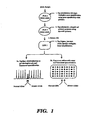
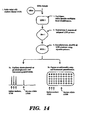
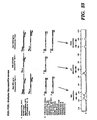
- FIG. 8 is a flow diagram depicting the LDR/PCR process of the present invention with or without restriction endonuclease digestion and using capillary electrophoresis detection.
- a DNA sample is mixed with Taq ligase and oligonucleotide probes containing a target-specific portion and a primer-specific portion.
- the mixture is subjected to an LDR process to produce ligation product sequences containing the ligated target-specific portions and the primer-specific portions.
- Step 2 involves mixing the ligation product sequences with Taq polymerase and primers and subjecting the mixture to a PCR process.
- the next step is determined as a function of whether the ligation product sequences are the same or different sizes.
- step 3a is selected which involves subjecting the extension products from PCR to capillary electrophoresis or gel electrophoresis, either of which is followed by fluorescent quantification.
- step 3b is utilized where the ligation product sequences are the same size and involves subjecting the extension products from the PCR phase to restriction endonuclease digestion. This generates digestion fragments of unique size which can be subjected to capillary electrophoresis or gel electrophoresis, followed by fluorescent quantification, according to step 4b.
- step 3a the curve generated as a result of electrophoresis shows three ligation product sequences migrating at lengths of 104, 107, and 110, with the peak areas representing amplification of the Her-2 gene, loss of heterozygosity of the p53 gene, and the control SOD gene, respectively.
- the electrophoresis curve where steps 3b and 4b are used involves three ligation product sequence restriction fragments at lengths of 58, 70, and 76, with the peak areas representing amplification of the Her-2 gene, loss of heterozygosity of the p53 gene, and the control SOD gene, respectively.
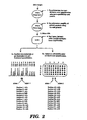
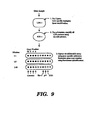
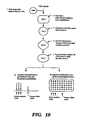
- Figure 9 shows the LDR/PCR process of the present invention where, in step 3, the extension products are captured on an array of capture oligonucleotide addresses.
- the capture oligonucleotide probes can be complementary to a nucleotide sequence across the ligation junction.
- the number of gene copies captured on the array of capture oligonucleotides is then determined by fluorescent quantification as compared with known controls.
- such analysis of the array indicates ligation product sequences hybridizing to gene-specific addresses, where the fluorescent intensity represents amplification of the Her-2 gene, loss of heterozygosity of the p53 gene, and the control SOD gene, respectively.
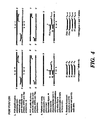
- Figure 10 is a schematic diagram depicting an LDR/PCR process for multiplex detection of gene amplifications and deletions.
- the ratio of the Her-2/neu gene from Chromosome 17q, the p53 gene from Chromosome 17p, and the SOD gene from Chromosome 21q is detected.
- pairs of oligonucleotide probes, having a target-specific portion and a primer-specific portion are allowed to anneal adjacent to each other on target nucleic acids and ligate to one another (in the absence of mismatches).
- This ligase detection reaction is curried out with Tth ligase at a hybridization/ligation temperature of 65° C which is well below the T m values of 75° C for the oligonucleotide probes.
- the ligation product sequences are simultaneously amplified by PCR using Taq polymerase and two common primers complementary to the primer-specific portion, one of which is fluorescently labeled. This maintains the proportionality of the target sequences initially present in the sample.
- the extension products are then digested with Hae III and Hin p1I which releases fluorescently labeled fragments of unique sizes for each target sequence present in the sample. The digestion products are separated and analyzed on an Applied Biosystems, Inc. (Foster City, Calif.) 373A DNA Sequencer. The peak heights and areas are related to the relative copies of genes present in the initial target sample.
- Figure 11 is a schematic diagram, depicting a problem which can be encountered with the allele-specific LDR/PCR process. While a PCR/LDR process is very powerful, there may be circumstances where a multiplexed allele-specific LDR/PCR process of the present invention would be preferred.
- the concept is to have one or more sets of LDR oligonucleotide probes, each set characterized by (a) a first oligonucleotide probe, having a target-specific portion and a 5' upstream primer-specific portion, and (b) a second oligonucleotide probe, having a target-specific portion and a 3' downstream primer-specific portion.
- the LDR oligonucleotide probes anneal adjacent to each other on the target sequence.
- An LDR reaction using thermostable ligase black dot would form a ligation product sequence provided there is perfect complementarity at the ligation junction.
- the ligation product sequences are PCR amplified with primer sets, each set characterized by (a) an upstream primer containing the same sequence as the 5' upstream primer-specific portion of a ligation product sequence and (b) a downstream primer complementary to the 3' downstream primer-specific portion of that ligation product sequence.
- the primers are shown as black lines in step 2.
- one primer is fluorescently labeled, it will generate a fluorescent product which may be detected in a variety of detection schemes.
- a PCR extension product should not be formed in the absence of a ligation event.
- polymerase can make several complementary copies of the downstream LDR probe using the downstream primer.
- this downstream LDR probe extension product can anneal to the upstream LDR probe extension Product off the target sequence, and generate a sequence containing the target region flanked by the two primer-specific sequences. This product will amplify as the LDR product, and thus yield a false positive signal.
- Figure 12 is a schematic drawing showing a solution to the allele specific LDR/PCR problem, utilizing an intermediate exonuclease digestion step. Allele-specific LDR/PCR can be achieved while significantly reducing background ligation independent (incorrect) target amplification. To do so, it is necessary to eliminate one or more of the components required for ligation independent PCR amplification, without removing the information content of the ligation product sequence.
- One solution is to use exonuclease in step 2 to digest unreacted LDR oligonucleotide probes from step 1. By blocking the end which is not ligated, for example the 3' end of the downstream oligonucleotide probe, one probe can be made substantially resistant to digestion, while the other is sensitive.
- Blocking groups include use of a thiophosphate group and/or use of 2-O-methyl ribose sugar groups in the backbone.
- Exonucleases include Exo I (3'-5'), Exo III (3'-5'), and Exo IV (both 5'-3' and 3'-5'), the later requiring blocking on both sides.
- One convenient way to block both probes is by using one long "padlock" probe (see M. Nilsson et. al., "Padlock Probes: Circularizing Oligonucleotides for Localized DNA Detection,"Science 265: 2085-88 (1994 ),), although this is by no means required.
- exonucleases for example a combination of Exo I (single strand specific) and Exo III (double strand specific), is the ability to destroy both target and one LDR probe, while leaving the ligation product sequences substantially undigested.
- an exonuclease treatment prior to PCR in accordance with steps 3 and 4, either one or both oligonucleotide probes in each set are substantially reduced, and thus hybridization of the remaining oligonucleotide probes to the original target DNA (which is also substantially reduced by exonuclease treatment) and formation of a ligation product sequence which is a suitable substrate for PCR amplification by the oligonucleotide primer set is substantially reduced. In other words, formation of ligation independent labeled extension products is substantially reduced or eliminated.
- FIG. 13 is a flow diagram showing an allele-specific LDR/PCR process using exonuclease digestion with either size based- or DNA array based-detection.
- the flow diagram shows the three reactions required for the multiplexed allele-specific LDR/PCR process.
- sets of LDR oligonucleotide probes (wherein the downstream probes are blocked on their 3' ends) are ligated in the presence of the correct allele target using Taq DNA ligase. Unreacted upstream probes are digested with exonuclease in step 2, coincidentally, target is also digested.
- primer sets are used to amplify the ligation product sequence by hybridizing to the primer specific portions of ligation product sequences.
- the LDR oligonucleotide probes in a given particular set generate a unique length product, and thus may be distinguished from either oligonucleotide probes or other ligation products.
- the products are separated by size or electrophoretic mobility. Labels on the PCR primers are detected, and the products are distinguished by size.
- the LDR oligonucleotide probes in a particular set use may be distinguished from either oligonucleotide probes or other ligation product sequences by differences in the sequences of the PCR primers.
- each set characterized by (a) an upstream primer containing the same sequence as the 5' upstream primer-specific portion of a ligation product sequence, and (b) a downstream primer complementary to the 3' downstream primer-specific portion of that ligation product sequence, wherein one primer has a detectable reporter label and the other primer contains an addressable nucleotide sequence linked to the 5' end of that primer such that the addressable nucleotide sequence remains single stranded after a PCR reaction, all the products can be distinguished.
- the latter may be achieved by using a non-natural base within a PCR primer which polymerase cannot extend through, thus generating PCR products which have single stranded tails. See C.
- FIG 14 is a flow diagram showing a quantitative allele-specific LDR/PCR process using exonuclease digestion in step 3 with either size based- or DNA array based-detection.
- the flow diagram shows how one can quantify the amounts of different targets (especially low abundance cancer mutations) by adding marker sequence(s) (step 1) at the start of the LDR reaction (step 2).
- the biochemical reactions i.e. PCR (step 4)
- the relative amount of mutant product to marker product are quantified using capillary or gel electrophoresis (step 5a) or capture on an addressable array (step 5b).
- the amount of mutant target present in the original sample can then be determined.
- FIG 15 is a schematic drawing showing an allele-specific LDR/PCR process with exonuclease digestion (step 2) for detection of mutations or polymorphisms. Mutations and polymorphisms may be distinguished as described in Figure 12 .
- the upstream LDR oligonucleotide probes which have the discriminating allele-specific base at the 3' end of the target-specific portion, have different 5' upstream primer-specific portions.
- different primers in the PCR amplification step (i.e. step 3)
- An array based detection scheme may also be used, were the upstream (allele-specific) probes have different 5' upstream primer-specific portions, and the different PCR primer contain different addressable nucleotide sequences which remain single stranded after a PCR reaction.
- Figure 16 is a schematic drawing showing an allele-specific LDR (step 1)/PCR (step 3) process using exonuclease digestion (step 2) for detection of mononucleotide or dinucleotide repeat polymorphism.
- LDR/PCR is for detecting nucleotide repeat polymorphisms, a task which cannot be achieved by allele-specific PCR (because the 3' nucleotide is always the same), nor easily achieved by observing PCR product size variation (due to Taq polymerase slippage during amplifications).
- the LDR oligonucleotide probes distinguish between an A 9 and A 10 mononucleotide repeat sequence by virtue of the specificity of thermostable DNA ligase. LDR products are only formed on the correct length target sequence, and thus the presence of that target is distinguished (step 4).
- FIG 17 is schematic drawing showing an allele-specific LDR/PCR process using exonuclease digestion (step 2) for detection of low abundance mononucleotide or dinucleotide repeat mutations.
- Mononucleotide repeat length mutations may be distinguished as described in Figure 12 .
- the LDR oligonucleotide probes (step 1) distinguish between an A 8 , A 9 (mutants), and A 10 (normal) mononucleotide repeat sequences by virtue of the specificity of thermostable DNA ligase.
- the two upstream LDR oligonucleotide probes differ in the length of the mononucleotide sequence at their 3' ends of their target specific portion and have different 5' upstream primer-specific portions.
- different primers in the PCR amplification step (step 3) may be labeled with different fluorescent groups (Fam and Tet) to allow for distinction of products (step 4).
- This has the distinct advantage of allowing mononucleotide repeat polymorphisms to be distinguished based on fluorescent label instead of size, the latter being susceptible to false positives due to polymerase slippage.
- An array based detection scheme may also be used, where the upstream (allele-specific) probes have different 5' upstream primer-specific portions, and the different PCR primers contain different addressable nucleotide sequences which remain single stranded after a PCR reaction.
- Figure 18 is a flow diagram, showing an allele-specific LDR/PCR process using uracil N-glycosylase selection with either size based- or DNA array based-detection.
- the flow diagram shows the four reactions required for multiplexed allele-specific LDR/PCR.
- Sets of LDR oligonucleotide probes (wherein one or both probes contain deoxy-uracil in place of deoxythimidine) are ligated in the presence of the correct allele target using Taq DNA ligase in step 1.
- a complementary copy of the ligation product sequence is made with sequenase in step 2.
- Sequenase is a modified T7 polymerase, with any easily inactivated polymerase (i.e.
- PCR primer sets are used to amplify the sequenase extension products in step 4.
- the LDR oligonucleotide probes in a particular set generate a unique length product, and thus may be distinguished from either probes or other ligation products.
- the products are separated by size or electrophoretic mobility. Labels on the PCR primers are detected, and products are distinguished by size.
- the LDR oligonucleotide probes in a particular set may be distinguished from either probes or other ligation product sequences by differences in the sequences of the primer-specific portions.
- each set characterized by (a) an upstream primer containing the same sequence as the 5' upstream primer-specific portion of a ligation product sequence, and (b) a downstream primer complementary to the 3' downstream primer-specific portion of that ligation product sequence.
- One primer has a detectable reporter label, and the other primer contains an addressable array-specific portion linked to the 5' end of that primer such that the addressable array-specific portion remains single stranded after a PCR reaction, one can distinguish all the products.
- the PCR extension products can be hybridized to the DNA array.
- the labels of extension product sequences captured using the addressable nucleotide sequence portions and immobilized to the DNA array at particular sites can be detected to indicate the presence of one or more target nucleotide sequences in the sample.
- FIG 19 is a flow diagram showing a quantitative allele-specific LDR/PCR process using uracil N-glycosylase selection with either size based- or DNA array based-detection.
- the flow diagram shows how one can quantify the amounts of different targets (especially low abundance cancer mutations) by adding marker sequence(s) in step 1 at the start of the LDR phase in step 2.
- the biochemical reactions i.e. sequenase treatment (step 3), uracil N-glycosylase selection (step 4), and PCR (step 5)
- the relative amount of mutant product to marker product is quantified using capillary or gel electrophoresis (step 6a) or capture on an addressable array (step 6b). From this information, the amount of mutant target present in the original sample can be determined.
- FIG 20 is a schematic drawing showing an allele-specific LDR/PCR process using uracil N-glycosylase selection (step 3) (after sequenase treatment (step 2)) for detection of mononucleotide or dinucleotide repeat polymorphisms.
- step 3 after sequenase treatment (step 2)) for detection of mononucleotide or dinucleotide repeat polymorphisms.
- One of the most powerful uses of the LDR/PCR process is for - detecting nucleotide repeat polymorphisms, a task which cannot be achieved by allele-specific PCR (since the 3' nucleotide is always the same), nor easily achieved by observing PCR product size variation (due to Taq polymerase slippage during amplification), as in step 4.
- the LDR (step 1) oligonucleotide probes distinguish between an A 9 and A 10 mononucleotide repeat sequence by virtue of the specificity of thermostable DNA ligase. Ligation product sequences are only formed on the correct length target sequence, and, thus, the presence of that target is distinguished in step 5.
- Figure 21 is a schematic drawing showing an allele-specific LDR/PCR process using uracil N-glycosylase selection for detection of low abundance mononucleotide or dinucleotide repeat mutations.
- Mononucleotide repeat length mutations may be distinguished as described in Figure 18 .
- the LDR oligonucleotide probes distinguish between an A 8 , A 9 (mutants), and A 10 (normal) mononucleotide repeat sequences by virtue of the specificity of thermostable DNA ligase (step 1). Sequenase treatment (step 2) and uracil N-glycosylase selection (step 3) are then carried out.
- the two upstream LDR oligonucleotide probes differ in the length of the mononucleotide sequence at the 3' ends of their target-specific portion, and have different 5' upstream primer-specific portions.
- different primers in the PCR amplification step (steps 4-5)
- Fam and Tet fluorescent groups
- This has the distinct advantage of allowing one to distinguish mononucleotide repeat polymorphisms based on fluorescent label instead of size, the latter being susceptible to false positives due to polymerase slippage.
- An array based detection scheme may also be used, where the upstream (allele-specific) probes have different 5' upstream primer-specific portions, and the different PCR primers contain different addressable array-specific portions which remain single stranded after a PCR reaction.
- the LDR/exonuclease/PCR process described with reference to Figures 11 to 17 and the LDR/sequenase/uracil N-glycosylase/PCR process set forth in Figures 18-21 provide the ability to multiplex detect and then PCR amplify many different target sequences and to distinguish multiple single-base or sequence variations, all in a single reaction tube. This is achieved by combining the sensitivity of PCR with the selectivity of LDR. Since the selection of mutant sequences is mediated by LDR rather than PCR, the primary PCR/secondary PCR/LDR process is less susceptible to false-positive signal generation.
- the primary PCR/secondary PCR/LDR process allows detection of closely-clustered mutations, detection of single base or small insertions and deletions in small repeat sequences, quantitative detection of less than 1% mutations in high background of normal DNA, and detection of ligation product sequences using addressable arrays. Detection of single base or small insertions and deletions in small and medium repeat sequences may cause "stutter" when the primary amplification is PCR. No other currently-available technique can adequately solve this problem, especially when the target sequence containing the mononucleotide repeat polymorphism is present in a lower abundance than normal DNA. In fact, analysis of genomic mutations which involve repeat sequence changes is severely hampered by the PCR "stutter" problem.
- the ligase detection reaction is described generally in WO 90/17239 to Barany et al ., F. Barany et al., "Cloning, Overexpression and Nucleotide Sequence of a Thermostable DNA Ligase-encoding Gene," Gene, 109:1-11 (1991 ), and F. Barany, “Genetic Disease Detection and DNA Amplification Using Cloned Thermostable Ligase,” Proc. Natl. Acad. Sci. USA, 88:189-193 (1991 ).
- the ligase detection reaction can use 2 sets of complementary oligonucleotides. This is known as the ligase chain reaction which is described in the 3 immediately preceding references.
- the ligase detection reaction can involve a single cycle which is known as the oligonucleotide ligation assay. See Landegren, et al., "A Ligase-Mediated Gene Detection Technique," Science 241: 1077-80 (1988 ); Landegren, et al., “DNA Diagnostics - Molecular Techniques and Automation,” Science 242:229-37 (1988 ); and U.S. Patent No. 4,988,617 to Landegren, et al ..
- the denaturation treatment is carried out at a temperature of 80-105°C, while hybridization takes place at 50-85°C.
- Each cycle comprises a denaturation treatment and a thermal hybridization treatment which in total is from about one to five minutes long.
- the ligation detection reaction involves repeatedly denaturing and hybridizing for 2 to 50 cycles.
- the total time for the ligase detection reaction phase is 1 to 250 minutes.
- the oligonucleotide probe sets or primers can be in the form of ribonucleotides, deoxynucleotides, modified ribonucleotides, modified deoxyribonucleotides, modified phosphate-sugar-backbone oligonucleotides, nucleotide analogs, and mixtures thereof.
- the oligonucleotides of the oligonucleotide probe sets each have a hybridization or melting temperature (i.e. T m ) of 66-70°C. These oligonucleotides are 20-28 nucleotides long.
- the oligonucleotide probe sets or primers have a reporter label suitable for detection.
- useful labels include chromophores, fluorescent moieties, enzymes, antigens, heavy metals, magnetic probes, dyes, phosphorescent groups, radioactive materials, chemiluminescent moieties, and electrochemical detecting moieties.
- the signal generated by the reporter label, resulting from capture of ligation product sequences produced from the sample being analysed are detected.
- the strength of this signal is compared to a calibration curve produced from signals generated by capture of ligation product sequences in samples with known amounts of target nucleotide sequence.
- This techniques involves use of an external standard.
- Another quantification method in accordance with the present invention, relates to an internal standard.
- a known amount of one or more marker target nucleotide sequences is added to the sample.
- a plurality of marker-specific oligonucleotide probe sets are added along with the ligase, the previously-discussed oligonucleotide probe sets, and the sample to a mixture.
- the marker-specific oligonucleotide probe sets have (1) a first oligonucleotide probe with a target-specific portion complementary to the marker target nucleotide sequence, and (2) a second oligonucleotide probe with a target-specific portion complementary to the marker target nucleotide sequence and a detectable reporter label.
- the oligonucleotide probes in a particular marker-specific oligonucleotide set are suitable for ligation together when hybridized adjacent to one another on a corresponding marker target nucleotide sequence. However, there is a mismatch which interferes with such ligation when hybridized to any other nucleotide sequence present in the sample or added marker sequences.
- the presence of ligation product sequences is identified by detection of reporter labels.
- the amount of target nucleotide sequences in the sample is then determined by comparing the amount of ligation product sequence generated from known amounts of marker target nucleotide sequences with the amount of other ligation product sequences.
- Another quantification method involves, analysis of a sample containing two or more of a plurality of target nucleotide sequences with a plurality of sequence differences.
- ligation product sequences corresponding to the target nucleotide sequences ar6 detected and distinguished by any of the previously-discussed techniques.
- the relative amounts of the target nucleotide sequences in the sample are then quantified by comparing the relative amounts of captured ligation product sequences generated. This provides a quantitative measure of the relative level of the target nucleotide sequences in the sample.
- thermostable ligase is that derived from Thermus aquaticus. This enzyme can be isolated from that organism. M. Takahashi, et al., "Thermophillic DNA Ligase, " J.Biol. Chem. 259:10041-47 (1984 ). Alternatively, it can be prepared recombinantly, Procedures for such isolation as well as the recombinant production of Thermus aquaticus ligase (as well as Thermus themophilus ligase) are disclosed in WO 90/17239 to Barany , et . al ., and F.
- the ligation detection reaction mixture may include a carrier DNA, such as salmon sperm DNA.
- the hybridization step in the ligase detection reaction which is preferably a thermal hybridization treatment discriminates between nucleotide sequences based on a distinguishing nucleotide at the ligation junctions.
- the difference between the target nucleotide sequences can be, for example, a single nucleic acid base difference, a nucleic acid deletion, a nucleic acid insertion, or rearrangement. Such sequence differences involving more than one base can also be detected.
- the oligonucleotide probe sets have substantially the same length so that they hybridize to target nucleotide sequences at substantially similar hybridization conditions.
- the process of the present invention is able to detect infections diseases, genetic diseases, and cancer. It is also useful in environmental monitoring, forensics, and food science.
- infectious diseases can be detected by the process of the present invention. Typically, these are caused by bacterial, viral, parasite, and fungal infectious agents. The resistance of various infectious agents to drugs can also be determined using the present invention.
- Bacterial infectious agents which can be detected by the present invention include Escherichia coli, Salmonella, Shigella, Klebsiella, Pseudomonas, Listeria monocytogenes, Mycobacterium tuberculosis, Mycobacterium avium-intracellulare , Yersinia , Francisella, Pasteurella, Brucella, Clostridia, Bordetella pertussis, Bacteroides, Staphylococcus aureus, Streptococcus pneumonia, B-Hemolytic strep., Corynebacteria, Legionella, Mycoplasma, Ureoplosma, Chlamydia, Neisseria gonorrhea, Neisseria meningitides, Hemophilus influenza, Enterococcus faecalis, Proteus vulgaris, Proteus mirabilis, Helicobacter pylori, Treponema palladium, Borrelia burg
- Fungal infectious agents which can be detected by the present invention include Cryprococcus neoformans, Blastomyces dermatitidis, Histoplasma capsulatum, Coccidioides immitis, Paracoccidioides brasiliensis, Candida albicans, Aspergillus fumigautus, Phycomycetes (Rhizopus), Sporothrix schenckii, Chromomycosis, and Maduromycosis .
- Viral infectious agents which can be detected by the present invention include human immunodeficiency virus, human T-cell lymphocytotrophic virus, hepatitis viruses (e.g., Hepatitis B Virus and Hepatitis C Virus), Epstein-Barr Virus, cytomegalovirus, human papillomaviruses, orthomyxo viruses, paramyxo viruses, adenoviruses, corona viruses, rhabdo viruses, polio viruses, toga viruses, bunya viruses, arena viruses, rubella viruses, and reo viruses,
- human immunodeficiency virus e.g., human T-cell lymphocytotrophic virus
- hepatitis viruses e.g., Hepatitis B Virus and Hepatitis C Virus
- Epstein-Barr Virus Epstein-Barr Virus
- cytomegalovirus human papillomaviruses
- orthomyxo viruses paramyxo viruses
- corona viruses coron
- Parasitic agents which can be detected by the present invention include Plasmodium falciparum, Plasmodium malaria, Plasmodium vivax, Plasmodium ovale, Onchoverva volvulus, Leishmania, Trypanosoma spp., Schistosoma spp..
- Entamoeba hislolytica Cryptosporidum, Giardia spp., Trichimonas spp., Balatidium coli, Wuchereria bancrofti, Toxoplasma spp., Enterobius vermicularis, Ascaris lumbricoides, Trichuris trichiura, Dracunculus medinesis, trematodes, Diphyllobothrium latum, Taenia spp., Pneumocystis carinii, and Necator americanis .
- the present invention is also useful for detection of drug resistance by infectious agents.
- vancomycin-resistant Enterococcus faecium methicillin-resistant Staphylococcus aureus, penicillin-resistant Streptococcus pneumoniae, multi-drug resistant Mycobacterium tuberculosis, and AZT-resistant human immunodeficiency virus can all be identified with the present invention.
- Genetic diseases can also be detected by the process of the present invention. This can be carried out by prenatal or post-natal screening for chromosomal and genetic aberrations or for genetic diseases.
- detectable genetic diseases include: 21 hydroxylase deficiency, cystic fibrosis, Fragile X Syndrome, Turner Syndrome, Duchenne Muscular Dystrophy, Down Syndrome or other trisomies, heart disease, single gene diseases, HLA typing, phenylketonuria, sickle cell anemia, Tay-Sachs Disease, thalassemia, Klinefelter Syndrome, Huntington Disease, autoimmune diseases, lipidosis, obesity defects, hemophilia, inborn errors of metabolism, and diabetes.
- Cancers which can be detected by the process of the present invention generally involve oncogenes, tumor suppressor genes, or genes involved in DNA amplification, replication, recombination, or repair.
- oncogenes include: BRCA1 gene, p53 gene, APC gene, Her2/Neu amplification, Bcr/Ab1, K-ras gene, and human papillomavirus Types 16 and 18.
- Various aspects of the present invention can be used to identify amplifications, large deletions as well as point mutations and small deletions/insertions of the above genes in the following common human cancers: leukemia, colon cancer, breast cancer, lung cancer, prostate cancer, brain tumors, central nervous system tumors, bladder tumors, melanomas, liver cancer, osteosarcoma and other bone cancers, testicular and ovarian carcinomas, head and neck tumors, and cervical neoplasms.
- the present invention can be used for detection, identification, and monitoring of pathogenic and indigenous microorganisms in natural and engineered ecosystems and microcosms such as in municipal waste water purification systems and water reservoirs or in polluted areas undergoing bioremediation. It is also possible to detect plasmids containing genes that can metabolize xenobiotics, to monitor specific target microorganism in population dynamic studies, or either to detect, identify, or monitor genetically modified microorganisms in the environment and in industrial plants.
- the present invention can also be used in a variety of forensic areas, including for human identification for military personnel and criminal investigation, paternity testing and family relation analysis, HLA compatibility typing, and screening blood, sperm, or transplantation organs for contamination.
- the present invention has a wide variety of applications. For example, it can be used for identification and characterization of production organisms such as yeast for production of beer, wine, cheese, yogurt, bread, etc. Another area of use is with regard to quality control and certification of products and processes (e.g., livestock, pasteurization, and meat processing) for contaminants. Other uses include the characterization of plants, bulbs, and seeds for breeding purposes, identification of the presence of plant-specific pathogens, and detection and identification of veterinary infections.
- production organisms such as yeast for production of beer, wine, cheese, yogurt, bread, etc.
- Another area of use is with regard to quality control and certification of products and processes (e.g., livestock, pasteurization, and meat processing) for contaminants.
- Other uses include the characterization of plants, bulbs, and seeds for breeding purposes, identification of the presence of plant-specific pathogens, and detection and identification of veterinary infections.
- the oligonucleotide probes are suitable for ligation together at a ligation junction when hybridized adjacent to one another on a corresponding target nucleotide sequence due to perfect complementarity at the ligation junction.
- the oligonucleotide probes in the set are hybridized to any other nucleotide sequence present in the sample, there is a mismatch at a base at the ligation junction which interferes with ligation.
- the mismatch is at the base adjacent the 3' base at the ligation junction.
- the mismatch can be at the bases adjacent to bases at the ligation junction.
- detection and quantification can be carried out using capillary or gel electrophoresis or on a solid support with an array capture oligonucleotides.
- the mixture is contacted with the solid support at a temperature of 45-90°C and for a time period of up to 60 minutes.
- Hybridizations may be accelerated by adding cations, volume exclusion or chaotropic agents.
- the array is washed sequentially with a low stringency wash buffer and then a high stringency wash buffer.
- oligonucleotide sets and the capture oligonucleotides be configured so that the oligonucleotides sets hybridize to the target nucleotide sequences at a termperature less than that which the capture oligonucleotides hybridize to the addressable array-specific portions. Unless the oligonucleotides are designed in this fashion, false positive signals may result due to capture of adjacent unreacted oligonucleotides from the same oligonucleotides set which are hybridized to the target.
- the capture oligonucleotides can be in the form of ribonucleotides, deoxyribonucloetides, modified ribonucleotides, modified deoxyribonucleotides, peptide nucleotide analogues, modified peptide nucleotide analogues, modified phosphate-sugar backbone oligonucleotides, nucleotide analogues, and mixtures thereof.
- the detection phase of the process involves scanning and identifying if LDR or PCR products have been produced and correlating the presence of such products to a presence or absence of the target nucleotide sequence in the test sample.
- Scanning can be carried out by scanning electron microscopy, confocal microscopy, charge-coupled device, scanning tunneling electron microscopy, infrared microscopy, atomic force microscopy, electrical conductance, and fluorescent or phosphor imaging. Correlating is carried out with a computer.
- Genomic DNA was prepared from the blood of two normal human volunteer, one male and one female, according to standard techniques. Briefly, approximately 12 ml of blood was obtained in EDTA-containing blood collection tubes. Red blood cells were lysed by mixing the blood samples with 4 volumes of lysis buffer (10 mM Tris pH 8.0, 10 mM EDTA). After 10 min on ice with occasional agitation, the suspensions were centrifuged and the supernatants were decanted. The white blood cell pellets were resuspended in 20 ml of lysis buffer, and the above process was repeated.
- lysis buffer (10 mM Tris pH 8.0, 10 mM EDTA).
- Each cell pellet was then suspended in 15 ml of digestion buffer (50 mM Tris pH 8.0, 5 mM EDTA, 100 mM NaCl, 1% SDS) and 3 mg (0.2 mg/ml) of proteinase K was added.
- the cells were digested at 37° C for 5 hours.
- the digests were extracted twice with equal volumes of phenol, then once with equal volumes of a 1:1 henol:chlooroform mixture and finally once with equal volumes of chloroform, each time centrifuging the mixture and removing the aqueous phase for the next extraction. After the final extraction and removing the aqueous phases, one tenth volume of 3 M sodium acetate, pH 6.5, was added.
- oligonucleotides were synthesized on a 394A DNA Synthesizer (Applied Biosystems Division of Perkim-Elmer corp., Foster City, CA.). Oligonucleotides labeled with 6-FAM were synthesized using the manufacturer's suggested modifications to the synthesis cycle (Applied Biosystems Inc., 1994) and were subsequently deprotected at 55° C for 4 hr. LDR oligonucleotides were purified by ethanol precipitation after overnight deprotection at 55° C. The primer-specific portions of the oligonucleotides used for PCR amplification were purified by polyacrylamide gel electrophoresis on 10% acrylamide/7M urea gels.
- Oligonuclectides were visualized after electrophoresis by UV shadowing against a lightening screen and excised from the gel (Applied Biosystems Inc., 1992). They were then eluted overnight at 64° C in TNE (i.e. Tris-sodium EDTA) buffer (100 mM Tris/HCl pH 8.0 containing 500 mM NaCl and 5 mM EDTA) and recovered from the eluate using Sep Pak cartridges (Millipore Corp, Milford, MA.) following the manufacture's instructions.
- TNE i.e. Tris-sodium EDTA
- the concentrations of the LDR probes are given in Table 1.
- the concentrations of oligonucleotides complementary to the oligonucleotide probes of the ligase detection reaction were higher.
- ZipALg1F was 3.75 ⁇ g/ ⁇ l and ZipBLg2R was 2.01. ⁇ g/ ⁇ l or 524 pm/ ⁇ l and 281 pm/ ⁇ l, respectively, as determined by the formula above.
- the downstream LDR oligonucleotides probes were phosphorylated with T4 polynucleotide kinase. Aliquots of the 5 downstream oligonuelcotides equivalent to 200 pm (see Table 1) were combined with 10 ⁇ l of 10X kinase buffer (500 mM Tris/HCl pH 8.0, 100 mM MgCl 2 ), 10 ⁇ l of 10 mM ATP, 20 U T4 kinase, and sufficient water-ME to give a final volume of 100 ⁇ l. Phosphoxylation was carried out at 37° C for 30 min followed by incubation for 10 min at 85° C to inactivate the T4 enzyme. The resulting concentration of the kinased LDR probe solution was 2 pm/ ⁇ l or 2000 fm/ ⁇ l in each probe.
- 10X kinase buffer 500 mM Tris/HCl pH 8.0, 100 mM MgCl 2
- 10 ⁇ l of 10 mM ATP 20 U
- the solutions of the LDR and PCR oligonucleotides were adjusted to convenient concentrations.
- the kinased LDR probe solution was diluted fourfold in water to yield a concentration of 500fm/ ⁇ l.
- a solution of the upstream LDR probes was made by combining volumes of the probes equivalent to 200 pm (see Table 1) with sufficient water to give a final volume of 400 ⁇ l. This created a solution 500 fm/ ⁇ l in each of the upstream LDR probes. Aliquots (20 ⁇ l) of the kinased and unkinased LDR probes were frozen for subsequent use.
- Standard solutions of the PCR primers (10 pm/ ⁇ l) were prepared from their original solutions by combining 9.5 ⁇ l of ZipALg1F and 17.8 ⁇ l of ZipBLg2R with sufficient water to achieve a total volume of 500 ⁇ l. These solutions were frozen for use in the LDR/PCR process.
- Figure 24 shows the design of LDLR oligonucleotide probes for quantification of gene amplifications and deletions in the LDR/PCR process.
- These oligonucleotide probes were designed to recognize exon 8 in the p53 tumor suppressor gene (on chromosome 17p), exon 3 of int-2 (on chromosome 11q), an internal exon in HER-2/neu (i.e. HER-2/neu/erbB oncogene) (on chromosome 17q), exon 3 in SOD (i.e. super oxide dimutase) (on chromosocne 21q), and exon 6 in G6PD (i.e.
- Each pair of LDR oligonucleotide probes has the following features: (i) The left oligonucleotide probe contains from 5' to 3' an 18 base sequence identical to the fluorescently labeled secondary oligonucleotide primer- (black bar), an "adjustment sequence" (white bar), and a target-specific sequence of from 22 to 28 bases with a T m of 75 °C (patterned bar); (ii) The right oligonucleotide probe contains from 5' to 3' a target-specific sequence of 20-25 bases with a T m of 75°C (patterned bar), a single Hae III or Hin P1I restriction site at slightly different positions within the target-specific sequence, and an "adjustment sequence” (white bars).
- the two oligonucleotide probes are designed such that their combined length is exactly 96 bases, with 50 G+C bases and 46 A+T bases.
- the position of each unique restriction site generates a product which differs by at least 2 bases from the other products.
- Each oligonucleotide probe set has an exon-specific region chosen to ligate the junction sequence of (A, T)C ⁇ C(A, T). This junction sequence corresponds to either a proline residue (codon CCN) or the complementary sequence of a tryptophan residue (TGG). These sequences were chosen to minimize differences in ligation rates and the chance of a polymorphism at the ligation junction.
- LDR was initiated by holding at 96° C for 2 minutes to denature the DNA followed by 10 cycles of 94° C for 30 seconds and 65° C for 4 minutes.
- the ErbB2 peak In the normal female, the ErbB2 peak is lower, and the p53 peak is slightly lower than the remaining 3 peaks. See Figures 25A-D .
- the G6PD, Int-2, p53, and SOD peak areas would vary somewhat, but all 5 peaks would retain the same relative profile from one sample to the next for a given experiment.
- the G6PD peak When comparing male with female DNA, the G6PD peak was about half the area of other peaks, consistent with a single X-chromosome in males, while the other peaks were essentially the same.
- the ErB2 peak for the NM10 Breast Cancer cell line is slightly elevated, while that in cell line SKBR3 is several fold greater than the normal female control, reflecting the known ErbB-2 gene amplification in these two cell lines.
- cell line NM10 appears to have undergone LOH (i.e. a loss of heterozygosity) of p53
- cell line SKBR3 appears to have undergone LOH of G6PD and p53.
- Some of the cells in cell line SKBR3 may have lost both copies of the p53 gene: Repeating these amplifications in the absence of the ErbB-2 primers was used to confirm the presence of these additional gene deletions (see below).
- the ratios differ for each gene, (due to different efficiencies of LDR/PCR for each gene,) the ratios are generally consistent between the male and female sample, except for the G6PD/SOD ratio.
- the G6PD for the female is about twice the value as the male, accurately reflecting the presence of two and one X chromosome, respectively.
- Table 5 - Ratio of Peak Areas Ratios ErbB/2 G6PD Int2 p53
- the ErbB2 peak In the normal female, the ErbB2 peak is lower than the remaining 4 peaks. In different experiments, it was observed that the G6PD, Int-2, p53, and SOD peak areas would vary somewhat, but would retain the same relative profile from one sample to the next. See Figures 26A-C . The ErbB2 peak was consistently lower, and slight shoulders were observed on the G6PD and SOD peaks, for unknown reasons. The ErbB-2 peak in both cell line samples is several fold greater than the normal female control, reflecting the known ErbB-2 gene amplification in these two cell lines. In addition, the ZR-75-30 line appears to show LOH of p53, while the SKGT-2 cell line appears to have a slight amplification of the Int-2 region.
- the ratios are remarkably consistent between the four primer set and the five primer set experiments. The only exception is the G6PD peak for the SKGT2 cell line, where the huge peak for ErbB-2 may have added to the G6PD peak.
- the ratios from using 4 sets of primers can be compared with 5 sets of primers to ascertain the internal consistency of this technique.
- Table 8 Ratio of Peak Area Ratios ErbB G6PD Int2 p53 Female; 4/5 NA 1.10 1.16 1.07 ZR7530; 4/5 NA 0.89 1.04 1.16 SKGT2; 4/5 NA 0.79 0.97 1.04 ZR7530/Female; 4/4 NA 0.90 0.94 0.46 ZR7530; Female; 5/5 16.05 1.12 1.04 0.43 SKGT2/Female; 4/4 NA 1.08 2.17 0.93 SKGT2; Female; 5/5 43.69 1.52 2.59 0.96
- the values on the bottom half of Table 8 show the extent of ErbB-2 amplification. The numbers are quite consistent for the 4 primer and 5 primer amplifications (with the exception of SKGT2-G6PD noted above).
- the ZR7530 cell line demonstrates a clear LOH for p53, while the SKGT2 cell line shows amplification of the Int-2 region, and both p53 genes present.
- Oligonucleotides were assembled by standard phosphoramidite chemistry on an Expedite DNA synthesizer (Perseptive Biosystems, Framingham, MA). Oligonucleotides 5'-end labeled with 6-FAM, TET, and HEX were synthesized using the appropriate dye phosphoramidites (Perkin Elmer-Applied Biosystems) and purified with Oligonucleotide Purification Cartridges (Perkin Elmer-Applied Biosystems) following the manufacturer's protocol ( Applied Biosystems Division-Perkin Elmer Corp., "Synthesis and Purification of Fluorescently Labeled Oligonucleotides Using Dye Phosphoramidites," User Bulletin, number 78, Applied Biosystems Division, Foster City, CA, (1994 )), which is hereby incorporated by reference.
- oligonucleotides were checked for purity on an Applied Biosystems 270-HT capillary electrophoresis instrument using a mPAGE-3 column (J&W Scientific, Folsom, CA). Only oligonucleotides that were greater than 95 % pure were used for the experiments. Oligonucleotides were resuspended in 250 ml TE (10 mM Tris/HCl and 5 mM EDTA pH 8.0). Typical concentrations were 300-500 mM for crude stock solutions and 100-200 mM for OPC (i.e. O ligonucleotide P urification C olumns available from Applied Biosystems) purified stock solutions. For PCR and LDR, oligonucleotides were diluted to working solutions of 10 mM (10 pmoles/ml) or 5 mM (5 pmoles/ml).
- LDLR primer sets were designed in two ways: (i) allele-specific primers were of the same length but contained either FAM or TET label; or (ii) the allele-specific primers were both labeled with HEX but differed in length by two bases.
- T4 polynucleotide kinase (Boehringer Mannheim, Indianapolis, IN).
- a common oligomer was diluted into 50 ⁇ l of kinase buffer (50 mM Tris/HCl, 10 mM MgCl 2 , and 1 mM ATP) to a final concentration of 1 mM (500 pmol in 50 ⁇ l).
- Ten units of T4 kinase was added, and the reaction was incubated at 37°C for 30 min. The T4 kinase was inactivated by heating at 95°C for 10 min.
- PCR amplifications were performed using genomic DNA isolated from whole blood using the Purgene DNA Isolation Kit (Gentra Systems, Inc., Minneapolis, MI) according to the manufacturer's instructions.
- PCR buffer (10 mM Tris/HCl pH 8.3, 10 mM KCl, 4 mM MgCl 2 , 0.4 mM each dNTP), 10-100 ng of genomic target DNA, PCR hybrid primer pairs 1-12 (2 pmol of each primer), and 1.3 units of AmpliTaq DNA polymerase Stoffel fragment (Applied Biosystems) was placed in a thin-walled MicroAmp reaction tube (Applied Biosystems).
- Each hybrid primer consisted of a gene-specific 3' region (16-29 bases) and a 5' region (22 bases) corresponding to one of two sets of universal (i.e.
- Forward and reverse hybrid primers for loci 1,3,5,7,10, and 12 contained 5' end regions identical to universal primers ALg1 and BLg2 respectively.
- Forward and reverse primers to loci 2,4,6,8,9, and 11 contained 5' end regions identical to universal primers CLg3 and DLg4, respectively.
- the rationale for using a low concentration of the hybrid primers in the PCR phase was to deplete the hybrid primers during the reaction. This would theoretically allow products with low amplification efficiencies to "catch up with" those that had high amplification efficiencies. Amplification was attained by thermal cycling for 1 cycle of 96°C for 15 sec to denature, then 15 cycles of 94°C for 15 sec to denature and 65°C for 60 sec to anneal and extend.
- the primary PCR process was carried out under the following conditions: 5.9 ⁇ l H 2 O 5 ⁇ l primer pairs 1-12 (2 pmol each primer) 2.5 ⁇ l 10X Stoffel fragment 4 ⁇ l 25 mM MgCl 2 5 ⁇ l 2 nM dNTP stock (each) 2.5 ⁇ l genomic DNA (10 ng) 0.13 ⁇ l Stoffel Frag. (1.3 units) 25 ⁇ l Total
- the primary PCR cycling conditions were as follows: 96 °C 15" 94 °C 15", 65°C1'x15 65 °C Hold
- the secondary PCR process was carried out under the following conditions: 13.37 ⁇ l H 2 O 5 ⁇ l zip primer pairs (25 pmol each primer) 2.5 ⁇ l 10X Stoffel fragment 4 ⁇ l 25 mM MgCl 2 0.13 ⁇ l Stoffel Frag. (1.3 units) 25 ⁇ l Total
- the secondary PCR cycling conditions were as follows:
- the PCR products were separated on an Applied Biosystems 373 DNA sequencer.
- a 3 ml aliquot of PCR sample was mixed with 3 ml of formamide containing fluorescently labeled Genescan-2500 [TAMRA] size standard (Applied Biosystems).
- the formamide/standard solution was prepared by adding 50 ml Genescan-2500 size standard [TAMRA] to 450 ml of formamide.
- the sample was heated at 95°C for 2 min, quick cooled in ice, and electrophoresed through a denaturing 8% polyacrylamide gel in an Applied Biosystems 373 DNA sequencer running Genescan version 1.2 software.
- the sizes of the fluorescently labeled products were automatically computed by the Genescan analysis software using the local Southern method.
- the electropherograms clearly showed 12 distinct products ( Figure 28 ).
- the uniform amount of each product was attributed to the similar size of each amplicon and the use of the primary primers with portions complementary to the secondary primers, which annealed with identical affinities to the 12 amplicons without the need to carefully adjust reaction conditions.
- the computed sizes of the products which ranged from 135 to 175 bp, matched exactly to their actual sizes (see Table 12).
- PCR product amplified using unlabeled PCR universal primers served as the target for the LDR.
- the polymerase in the PCR was inactivated by either freeze-thawing or adding EDTA/proteinase K to a final concentration of 5 mM and 100 mg/ml, respectively, and heating to 37°C for 30 min and 95°C for 10 min.
- Proteinase K digestion was carried out under the following conditions: 20 ⁇ l PCR product + 2.5 ⁇ l 500 mg / ml proteinase K ⁇ 25 ⁇ l Total 60°C for 60 min. 95°C for 10 min to heat kill proteinase K.
- PCR product Four microliters of PCR product was diluted in 20 ⁇ l of LDR mix containing 50 mM Tris/HCl pH 8.5, 50 mM KCl, 10 mM MgCl 2 . 1 mM NAD+, 10 mM DTT, LDR oligonucleotide sets 1-12 (200 fmol of each oligonucleotide), and 10 units of Thermus aquaticus DNA ligase ( Barany, F. and Gelfand, D., "Cloning, Overexpression, and Nucleotide Sequence of a Thermostable DNA Ligase-Encoding Gene," Gene, 109:1-11 (1991 ).
- Each LDR oligonucleotide probe set consisted of two allele-specific oligonucleotides and a common oligonucleotide.
- Each pair of discriminating allele-specific oligonucleotide probes in the LDR oligonucleotide probe sets 1,2,3,4,6,7,8, and 9 were the same size, with one oligonucleotide labeled with 6-FAM and the other labeled with TET.
- each pair of allele-specific oligonucleotides differed by 2 bases (the larger oligonucleotide had a 5' tail that was not complementary to the target sequence), and both oligonucleotides were labeled with HEX.
- Thermal cycling was performed for 1 cycle of 95°C for 2 min to denature, then 20 cycles of 95°C for 30 sec to denature, and 65°C for 4 min to ligate.
- the LDR process was carried out as follows: 4 ⁇ l PCR product 2 ⁇ l LDR oligo sets 1-12 (200 fmol each oligo) 2 ⁇ l 10X T. ligase buffer 2 ⁇ l 10 mM NAD+ 1 ⁇ l 200 mM DTT 9 ⁇ l H 2 O 20 ⁇ l Total + 1 ⁇ l Taq Ligase (10 units)
- the first individual ( Figure 29A-D ; Table 13, individual 1) was heterozygous at polymorphic sites 1-7, and 10-12.
- Heterozygosity at sites 1-4 and 6-7 was indicated by the detection of both 6-FAM and TET labeled products ( Figure 29 , panels B and C) at the respective positions on the electropherograms.
- Heterozygosity at sites 5 and 11-12 was indicated by the presence of two HEX labeled products, differing in size by 2 bases, for each of these loci ( Figure 29 , panel D).
- the one product detected at sites 8 and 9 ( Figure 29 , panels B and C) established that each of these loci was homozygous.
- the second individual ( Figure 29E-F and G-H ; Table 13, individual 2) was heterozygous only at sites 3,5,6 and 9 and homozygous at sites 1, 2, 4, 7, 8, 10-12. There was a total of 8 differences in the genotypes at these positions between the two persons. Three additional individuals were typed, and all 5 persons had distinct genotypes based on the 12 loci (Table 13).
Landscapes
- Chemical & Material Sciences (AREA)
- Life Sciences & Earth Sciences (AREA)
- Organic Chemistry (AREA)
- Proteomics, Peptides & Aminoacids (AREA)
- Health & Medical Sciences (AREA)
- Zoology (AREA)
- Engineering & Computer Science (AREA)
- Wood Science & Technology (AREA)
- Analytical Chemistry (AREA)
- Immunology (AREA)
- Microbiology (AREA)
- Molecular Biology (AREA)
- Physics & Mathematics (AREA)
- Biotechnology (AREA)
- Biophysics (AREA)
- Biochemistry (AREA)
- Bioinformatics & Cheminformatics (AREA)
- General Engineering & Computer Science (AREA)
- General Health & Medical Sciences (AREA)
- Genetics & Genomics (AREA)
- Chemical Kinetics & Catalysis (AREA)
- Cell Biology (AREA)
- Measuring Or Testing Involving Enzymes Or Micro-Organisms (AREA)
Applications Claiming Priority (3)
| Application Number | Priority Date | Filing Date | Title |
|---|---|---|---|
| US1853296P | 1996-05-29 | 1996-05-29 | |
| EP06011667.0A EP1736554B1 (en) | 1996-05-29 | 1997-05-27 | Detection of nucleic acid sequence differences using coupled ligase detection and polymerase chain reactions |
| EP97927787A EP0912761A4 (en) | 1996-05-29 | 1997-05-27 | DETERMINATION OF DIFFERENCES IN THE NUCLEIC ACID SEQUENCE BY MEANS OF A COMBINATION OF LIGASE DETERMINATION AND POLYMERASE CHAIN REACTION |
Related Parent Applications (6)
| Application Number | Title | Priority Date | Filing Date |
|---|---|---|---|
| WOPCT/EP20/06011687 Previously-Filed-Application | 1997-05-27 | ||
| EP97927787A Division EP0912761A4 (en) | 1996-05-29 | 1997-05-27 | DETERMINATION OF DIFFERENCES IN THE NUCLEIC ACID SEQUENCE BY MEANS OF A COMBINATION OF LIGASE DETERMINATION AND POLYMERASE CHAIN REACTION |
| EP06011667.0A Division EP1736554B1 (en) | 1996-05-29 | 1997-05-27 | Detection of nucleic acid sequence differences using coupled ligase detection and polymerase chain reactions |
| EP97927787.8 Division | 1997-12-04 | ||
| EP06011667.0 Division | 2006-06-06 | ||
| PCT/EP2006/011687 Previously-Filed-Application WO2007071322A1 (en) | 2005-12-22 | 2006-12-05 | Modular cooling system and refrigeration device for such a system |
Publications (2)
| Publication Number | Publication Date |
|---|---|
| EP2369007A1 EP2369007A1 (en) | 2011-09-28 |
| EP2369007B1 true EP2369007B1 (en) | 2015-07-29 |
Family
ID=21788414
Family Applications (3)
| Application Number | Title | Priority Date | Filing Date |
|---|---|---|---|
| EP10075461.3A Expired - Lifetime EP2369007B1 (en) | 1996-05-29 | 1997-05-27 | Detection of nucleic acid sequence differences using coupled ligase detection and polymerase chain reactions |
| EP97927787A Withdrawn EP0912761A4 (en) | 1996-05-29 | 1997-05-27 | DETERMINATION OF DIFFERENCES IN THE NUCLEIC ACID SEQUENCE BY MEANS OF A COMBINATION OF LIGASE DETERMINATION AND POLYMERASE CHAIN REACTION |
| EP06011667.0A Expired - Lifetime EP1736554B1 (en) | 1996-05-29 | 1997-05-27 | Detection of nucleic acid sequence differences using coupled ligase detection and polymerase chain reactions |
Family Applications After (2)
| Application Number | Title | Priority Date | Filing Date |
|---|---|---|---|
| EP97927787A Withdrawn EP0912761A4 (en) | 1996-05-29 | 1997-05-27 | DETERMINATION OF DIFFERENCES IN THE NUCLEIC ACID SEQUENCE BY MEANS OF A COMBINATION OF LIGASE DETERMINATION AND POLYMERASE CHAIN REACTION |
| EP06011667.0A Expired - Lifetime EP1736554B1 (en) | 1996-05-29 | 1997-05-27 | Detection of nucleic acid sequence differences using coupled ligase detection and polymerase chain reactions |
Country Status (6)
| Country | Link |
|---|---|
| US (18) | US6027889A (enExample) |
| EP (3) | EP2369007B1 (enExample) |
| JP (3) | JP4468488B2 (enExample) |
| AU (1) | AU730633B2 (enExample) |
| CA (1) | CA2255774C (enExample) |
| WO (1) | WO1997045559A1 (enExample) |
Families Citing this family (873)
| Publication number | Priority date | Publication date | Assignee | Title |
|---|---|---|---|---|
| US6919211B1 (en) | 1989-06-07 | 2005-07-19 | Affymetrix, Inc. | Polypeptide arrays |
| US5744101A (en) | 1989-06-07 | 1998-04-28 | Affymax Technologies N.V. | Photolabile nucleoside protecting groups |
| US6955915B2 (en) | 1989-06-07 | 2005-10-18 | Affymetrix, Inc. | Apparatus comprising polymers |
| US5547839A (en) | 1989-06-07 | 1996-08-20 | Affymax Technologies N.V. | Sequencing of surface immobilized polymers utilizing microflourescence detection |
| US6652808B1 (en) * | 1991-11-07 | 2003-11-25 | Nanotronics, Inc. | Methods for the electronic assembly and fabrication of devices |
| EP1382386A3 (en) * | 1992-02-19 | 2004-12-01 | The Public Health Research Institute Of The City Of New York, Inc. | Novel oligonucleotide arrays and their use for sorting, isolating, sequencing, and manipulating nucleic acids |
| US5710000A (en) * | 1994-09-16 | 1998-01-20 | Affymetrix, Inc. | Capturing sequences adjacent to Type-IIs restriction sites for genomic library mapping |
| USRE43097E1 (en) | 1994-10-13 | 2012-01-10 | Illumina, Inc. | Massively parallel signature sequencing by ligation of encoded adaptors |
| US6852487B1 (en) * | 1996-02-09 | 2005-02-08 | Cornell Research Foundation, Inc. | Detection of nucleic acid sequence differences using the ligase detection reaction with addressable arrays |
| US20020150921A1 (en) * | 1996-02-09 | 2002-10-17 | Francis Barany | Detection of nucleic acid sequence differences using the ligase detection reaction with addressable arrays |
| US6881571B1 (en) * | 1998-03-11 | 2005-04-19 | Exonhit Therapeutics S.A. | Qualitative differential screening |
| US6458530B1 (en) | 1996-04-04 | 2002-10-01 | Affymetrix Inc. | Selecting tag nucleic acids |
| US6251691B1 (en) | 1996-04-25 | 2001-06-26 | Bioarray Solutions, Llc | Light-controlled electrokinetic assembly of particles near surfaces |
| AU730633B2 (en) | 1996-05-29 | 2001-03-08 | Phillip Belgrader | Detection of nucleic acid sequence differences using coupled ligase detection and polymerase chain reactions |
| US6312892B1 (en) * | 1996-07-19 | 2001-11-06 | Cornell Research Foundation, Inc. | High fidelity detection of nucleic acid differences by ligase detection reaction |
| EP0867506A1 (en) * | 1996-09-13 | 1998-09-30 | Laboratory of Molecular Biophotonics | Solid phase for target nucleic acid detection, process for production thereof, and method of target nucleic acid detection |
| GB9624165D0 (en) * | 1996-11-19 | 1997-01-08 | Amdex A S | Use of nucleic acids bound to carrier macromolecules |
| WO1998029736A1 (en) | 1996-12-31 | 1998-07-09 | Genometrix Incorporated | Multiplexed molecular analysis apparatus and method |
| US7622294B2 (en) | 1997-03-14 | 2009-11-24 | Trustees Of Tufts College | Methods for detecting target analytes and enzymatic reactions |
| US6327410B1 (en) | 1997-03-14 | 2001-12-04 | The Trustees Of Tufts College | Target analyte sensors utilizing Microspheres |
| US20030027126A1 (en) | 1997-03-14 | 2003-02-06 | Walt David R. | Methods for detecting target analytes and enzymatic reactions |
| EP2327797B1 (en) | 1997-04-01 | 2015-11-25 | Illumina Cambridge Limited | Method of nucleic acid sequencing |
| US6143496A (en) | 1997-04-17 | 2000-11-07 | Cytonix Corporation | Method of sampling, amplifying and quantifying segment of nucleic acid, polymerase chain reaction assembly having nanoliter-sized sample chambers, and method of filling assembly |
| JP4294740B2 (ja) * | 1997-05-23 | 2009-07-15 | ソレクサ・インコーポレイテッド | 分析物の系列的プロセシングのためのシステムおよび装置 |
| US6607878B2 (en) | 1997-10-06 | 2003-08-19 | Stratagene | Collections of uniquely tagged molecules |
| US7348181B2 (en) | 1997-10-06 | 2008-03-25 | Trustees Of Tufts College | Self-encoding sensor with microspheres |
| US7115884B1 (en) | 1997-10-06 | 2006-10-03 | Trustees Of Tufts College | Self-encoding fiber optic sensor |
| GB9725197D0 (en) * | 1997-11-29 | 1998-01-28 | Secr Defence | Detection system |
| US7569342B2 (en) | 1997-12-10 | 2009-08-04 | Sierra Molecular Corp. | Removal of molecular assay interferences |
| US20100105572A1 (en) * | 1997-12-19 | 2010-04-29 | Kris Richard M | High throughput assay system |
| US20030096232A1 (en) * | 1997-12-19 | 2003-05-22 | Kris Richard M. | High throughput assay system |
| US20030039967A1 (en) * | 1997-12-19 | 2003-02-27 | Kris Richard M. | High throughput assay system using mass spectrometry |
| US20020177144A1 (en) * | 1997-12-30 | 2002-11-28 | Jose Remacle | Detection and/or quantification method of a target molecule by a binding with a capture molecule fixed on the surface of a disc |
| US20050053962A1 (en) * | 1998-01-27 | 2005-03-10 | Gary Blackburn | Amplification of nucleic acids with electronic detection |
| US6759192B1 (en) * | 1998-06-05 | 2004-07-06 | Genset S.A. | Polymorphic markers of prostate carcinoma tumor antigen-1(PCTA-1) |
| US7060431B2 (en) | 1998-06-24 | 2006-06-13 | Illumina, Inc. | Method of making and decoding of array sensors with microspheres |
| US20040203078A1 (en) * | 1998-07-22 | 2004-10-14 | National Institute Of Advanced Industrial Science And Technology | Labeled complex, process for producing same and process for utilizing same |
| US6703228B1 (en) | 1998-09-25 | 2004-03-09 | Massachusetts Institute Of Technology | Methods and products related to genotyping and DNA analysis |
| EP1001037A3 (en) * | 1998-09-28 | 2003-10-01 | Whitehead Institute For Biomedical Research | Pre-selection and isolation of single nucleotide polymorphisms |
| US6949370B1 (en) | 1998-10-30 | 2005-09-27 | Cornell Research Foundation, Inc. | High fidelity thermostable ligase and uses thereof |
| JP2002531902A (ja) * | 1998-11-27 | 2002-09-24 | シナプティックス (ユーケー)リミテッド | 位置センサ |
| AU775179B2 (en) | 1999-03-15 | 2004-07-22 | Applied Biosystems, Llc | Probe/mobility modifier complexes for multiplex nucleic acid detection |
| JP4601830B2 (ja) * | 1999-03-19 | 2010-12-22 | コーネル リサーチ ファンデーション インク. | カップル性ポリメラーゼ連鎖反応−制限エンドヌクレアーゼ消化−リガーゼ検出反応法 |
| US6506594B1 (en) * | 1999-03-19 | 2003-01-14 | Cornell Res Foundation Inc | Detection of nucleic acid sequence differences using the ligase detection reaction with addressable arrays |
| US7014994B1 (en) | 1999-03-19 | 2006-03-21 | Cornell Research Foundation,Inc. | Coupled polymerase chain reaction-restriction-endonuclease digestion-ligase detection reaction process |
| US6355431B1 (en) | 1999-04-20 | 2002-03-12 | Illumina, Inc. | Detection of nucleic acid amplification reactions using bead arrays |
| US20060275782A1 (en) * | 1999-04-20 | 2006-12-07 | Illumina, Inc. | Detection of nucleic acid reactions on bead arrays |
| US20030215821A1 (en) * | 1999-04-20 | 2003-11-20 | Kevin Gunderson | Detection of nucleic acid reactions on bead arrays |
| US7056661B2 (en) * | 1999-05-19 | 2006-06-06 | Cornell Research Foundation, Inc. | Method for sequencing nucleic acid molecules |
| US20030096321A1 (en) * | 1999-05-19 | 2003-05-22 | Jose Remacle | Method for the identification and/or the quantification of a target compound obtained from a biological sample upon chips |
| AU7569600A (en) | 1999-05-20 | 2000-12-28 | Illumina, Inc. | Combinatorial decoding of random nucleic acid arrays |
| US6544732B1 (en) | 1999-05-20 | 2003-04-08 | Illumina, Inc. | Encoding and decoding of array sensors utilizing nanocrystals |
| US8481268B2 (en) | 1999-05-21 | 2013-07-09 | Illumina, Inc. | Use of microfluidic systems in the detection of target analytes using microsphere arrays |
| US8080380B2 (en) * | 1999-05-21 | 2011-12-20 | Illumina, Inc. | Use of microfluidic systems in the detection of target analytes using microsphere arrays |
| JP3911909B2 (ja) * | 1999-06-09 | 2007-05-09 | 株式会社日立製作所 | Dna試料調製方法及びdna試料調製装置 |
| US20020119448A1 (en) * | 1999-06-23 | 2002-08-29 | Joseph A. Sorge | Methods of enriching for and identifying polymorphisms |
| US6964847B1 (en) | 1999-07-14 | 2005-11-15 | Packard Biosciences Company | Derivative nucleic acids and uses thereof |
| ATE409236T1 (de) * | 1999-07-14 | 2008-10-15 | Packard Bioscience Company | Derivatisierte nukleinsäuren und deren verwendung |
| US7482443B2 (en) * | 2000-03-09 | 2009-01-27 | Genetag Technology, Inc. | Systems and methods to quantify and amplify both signaling probes for cDNA chips and genes expression microarrays |
| US6692915B1 (en) | 1999-07-22 | 2004-02-17 | Girish N. Nallur | Sequencing a polynucleotide on a generic chip |
| ATE542916T1 (de) * | 1999-08-18 | 2012-02-15 | Illumina Inc | Methoden zur erzeugung von oligonukleotidlösungen |
| HK1049339B (en) * | 1999-09-10 | 2008-06-27 | Geron Corporation | Oligonucleotide n3'-p5' thiophosphoramidates: their synthesis and use |
| US6692918B2 (en) | 1999-09-13 | 2004-02-17 | Nugen Technologies, Inc. | Methods and compositions for linear isothermal amplification of polynucleotide sequences |
| ATE262595T1 (de) | 1999-09-13 | 2004-04-15 | Nugen Technologies Inc | Methoden und zusammensetzungen zur linearen isothermalen amplifikation von polynukleotidsequenzen |
| FR2798673B1 (fr) * | 1999-09-16 | 2004-05-28 | Exonhit Therapeutics Sa | Methodes et compositions pour la detection d'evenements pathologiques |
| EP1136568A4 (en) | 1999-10-04 | 2004-12-15 | Olympus Optical Corp Ltd | METHOD FOR DETERMINING NUCLEIC ACID |
| JP3668075B2 (ja) * | 1999-10-12 | 2005-07-06 | 光夫 板倉 | 遺伝物質シーケンス決定用懸濁系、その懸濁系を用いた遺伝物質シーケンス決定方法およびその懸濁系を用いたSNPs高速スコアリング方法 |
| US6618679B2 (en) * | 2000-01-28 | 2003-09-09 | Althea Technologies, Inc. | Methods for analysis of gene expression |
| US6913884B2 (en) * | 2001-08-16 | 2005-07-05 | Illumina, Inc. | Compositions and methods for repetitive use of genomic DNA |
| JP2003521252A (ja) * | 2000-02-07 | 2003-07-15 | イルミナ インコーポレイテッド | ユニバーサルプライミングを用いる核酸検出方法 |
| US7955794B2 (en) * | 2000-09-21 | 2011-06-07 | Illumina, Inc. | Multiplex nucleic acid reactions |
| WO2001057268A2 (en) * | 2000-02-07 | 2001-08-09 | Illumina, Inc. | Nucleic acid detection methods using universal priming |
| US7611869B2 (en) * | 2000-02-07 | 2009-11-03 | Illumina, Inc. | Multiplexed methylation detection methods |
| US7361488B2 (en) | 2000-02-07 | 2008-04-22 | Illumina, Inc. | Nucleic acid detection methods using universal priming |
| US8076063B2 (en) * | 2000-02-07 | 2011-12-13 | Illumina, Inc. | Multiplexed methylation detection methods |
| US7582420B2 (en) * | 2001-07-12 | 2009-09-01 | Illumina, Inc. | Multiplex nucleic acid reactions |
| US20050214825A1 (en) * | 2000-02-07 | 2005-09-29 | John Stuelpnagel | Multiplex sample analysis on universal arrays |
| US6770441B2 (en) | 2000-02-10 | 2004-08-03 | Illumina, Inc. | Array compositions and methods of making same |
| CA2399908A1 (en) * | 2000-02-10 | 2001-08-16 | Todd Dickinson | Array of individual arrays as substrate for bead-based simultaneous processing of samples and manufacturing method therefor |
| EP1130113A1 (en) * | 2000-02-15 | 2001-09-05 | Johannes Petrus Schouten | Multiplex ligation dependent amplification assay |
| EP1967595A3 (en) | 2000-02-16 | 2008-12-03 | Illumina, Inc. | Parallel genotyping of multiple patient samples |
| DE10010281B4 (de) * | 2000-02-25 | 2005-03-10 | Epigenomics Ag | Ligase/Polymerase-Verfahren zur Detektion von Cytosin-Methylierung in DNA Proben |
| US6368801B1 (en) | 2000-04-12 | 2002-04-09 | Molecular Staging, Inc. | Detection and amplification of RNA using target-mediated ligation of DNA by RNA ligase |
| CA2405412A1 (en) | 2000-04-14 | 2001-10-25 | Cornell Research Foundation, Inc. | Method of designing addressable array for detection of nucleic acid sequence differences using ligase detection reaction |
| AU5452901A (en) * | 2000-05-09 | 2001-11-20 | Diatech Pty Ltd | Methods for identifying polynucleotide repeat regions of defined length |
| WO2001092579A2 (en) * | 2000-05-30 | 2001-12-06 | Pe Corporation (Ny) | Methods for detecting target nucleic acids using coupled ligation and amplification |
| US7087414B2 (en) | 2000-06-06 | 2006-08-08 | Applera Corporation | Methods and devices for multiplexing amplification reactions |
| US9709559B2 (en) | 2000-06-21 | 2017-07-18 | Bioarray Solutions, Ltd. | Multianalyte molecular analysis using application-specific random particle arrays |
| AU7299301A (en) * | 2000-06-21 | 2002-01-02 | Bioarray Solutions Ltd | Multianalyte molecular analysis using application-specific random particle arrays |
| EP1356094B1 (en) * | 2000-06-26 | 2010-01-13 | Nugen Technologies, Inc. | Methods and compositions for transcription-based nucleic acid amplification |
| US7846733B2 (en) * | 2000-06-26 | 2010-12-07 | Nugen Technologies, Inc. | Methods and compositions for transcription-based nucleic acid amplification |
| ES2256274T3 (es) * | 2000-07-01 | 2006-07-16 | Clondiag Chip Technologies Gmbh | Procedimiento para la deteccion cualitativa y/o cuantitativa de interacciones moleculares en matrices de sondas. |
| US6511810B2 (en) * | 2000-07-03 | 2003-01-28 | Applera Corporation | Polynucleotide sequence assay |
| JP4310599B2 (ja) * | 2000-07-05 | 2009-08-12 | 東洋紡績株式会社 | 塩基多型を検出する方法 |
| SG144729A1 (en) * | 2000-07-06 | 2008-08-28 | Bio Merieux | Method for controlling the microbiological quality of an aqueous medium and kit therefor |
| US20050260574A1 (en) * | 2000-07-27 | 2005-11-24 | Gibbs Mark J | Combinatorial probes and uses therefor |
| AU2001285155A1 (en) * | 2000-08-21 | 2002-03-04 | Lynx Therapeutics, Inc. | Polymorphic dna fragments and uses thereof |
| US20050272085A1 (en) * | 2000-09-06 | 2005-12-08 | Hodge Timothy A | Methods for forensic and congenic screening |
| EP1978110B1 (en) * | 2000-09-06 | 2010-05-26 | Transnetyx, Inc. | Computer-based method and system for screening genomic DNA |
| US20050239125A1 (en) * | 2000-09-06 | 2005-10-27 | Hodge Timothy A | Methods for genotype screening |
| US20030207289A1 (en) * | 2001-09-04 | 2003-11-06 | Hodge Timothy A. | Detection of genetic sequences using a bipartite probe |
| US20040185464A1 (en) * | 2000-09-15 | 2004-09-23 | Kris Richard M. | High throughput assay system |
| DE10048944A1 (de) * | 2000-10-03 | 2002-04-18 | Andreas Kage | Verfahren zur Selektion hochaffin an ein Target bindender Nukleinsäuren durch zweidimensionale Auftrennung |
| DE60131903T2 (de) * | 2000-10-24 | 2008-11-27 | The Board of Trustees of the Leland S. Stanford Junior University, Palo Alto | Direkte multiplex charakterisierung von genomischer dna |
| US20040018491A1 (en) * | 2000-10-26 | 2004-01-29 | Kevin Gunderson | Detection of nucleic acid reactions on bead arrays |
| WO2002044733A2 (en) * | 2000-11-30 | 2002-06-06 | Boston Probes, Inc. | Methods and compositions for sorting and/or determining microorganisms |
| EP1427847B1 (en) | 2000-12-13 | 2010-07-28 | Nugen Technologies, Inc. | Methods and compositions for generation of multiple copies of nucleic acid sequences and methods of detection thereof |
| US6312929B1 (en) * | 2000-12-22 | 2001-11-06 | Cepheid | Compositions and methods enabling a totally internally controlled amplification reaction |
| CA2433674A1 (en) * | 2001-01-05 | 2002-07-11 | Invitrogen Corporation | Method for relative quantification of attached nucleic acids |
| FI115139B (fi) * | 2001-01-10 | 2005-03-15 | Valtion Teknillinen | Menetelmä ja testipakkaus solu- tai kudosnäytteissä olevien polynukleotidien määrässä tapahtuvien vaihteluiden kvantitatiiviseen ja/tai vertailevaan arvioimiseen |
| EP1229128A1 (en) * | 2001-01-31 | 2002-08-07 | Boehringer Mannheim Gmbh | New method for genotype determination |
| AU2002250066A1 (en) * | 2001-02-12 | 2002-08-28 | Rosetta Inpharmatics, Inc. | Confirming the exon content of rna transcripts by pcr using primers complementary to each respective exon |
| WO2003012147A1 (en) * | 2001-02-20 | 2003-02-13 | Datascope Investment Corp. | Method for reusing standard blots and microarrays utilizing dna dendrimer technology |
| MXPA02012739A (es) * | 2001-03-09 | 2004-04-20 | Nugen Technologies Inc | Metodos y composiciones para amplificacion de secuencias de arn. |
| EP1390537B1 (en) | 2001-03-09 | 2013-11-13 | Nugen Technologies, Inc. | Methods and compositions for amplification of rna sequences |
| US20030077609A1 (en) * | 2001-03-25 | 2003-04-24 | Jakobsen Mogens Havsteen | Modified oligonucleotides and uses thereof |
| US7029919B2 (en) * | 2001-05-04 | 2006-04-18 | Agilent Technologies, Inc. | Electro-optical device and methods for hybridization and detection |
| WO2002090561A1 (en) * | 2001-05-07 | 2002-11-14 | Curagen Corporation | Methods and composition for nucleic acid amplification |
| AU2003303395A1 (en) * | 2001-05-22 | 2004-07-22 | Dahl, Gary, A. | Target-dependent transcription using deletion mutants of n4 rna polymerase |
| GB0112868D0 (en) * | 2001-05-25 | 2001-07-18 | Secr Defence | Detection system |
| DE10126630A1 (de) * | 2001-05-31 | 2003-01-09 | Peter Und Traudl Engelhorn Sti | Verfahren zur Zellsortierung |
| EP1395805A4 (en) * | 2001-06-11 | 2005-03-09 | Illumina Inc | MULTIPLEXED DETECTION TECHNIQUES |
| US7262063B2 (en) | 2001-06-21 | 2007-08-28 | Bio Array Solutions, Ltd. | Directed assembly of functional heterostructures |
| MXPA03012075A (es) * | 2001-06-22 | 2005-07-01 | Marshfield Clinic | Metodos y oligonucleotidos para la deteccion de salmonela sp., e. coli o157:h7 y listeria monocitogenes. |
| US20030170695A1 (en) * | 2001-06-29 | 2003-09-11 | Liang Shi | Enzymatic ligation-based identification of nucleotide sequences |
| US20030082584A1 (en) * | 2001-06-29 | 2003-05-01 | Liang Shi | Enzymatic ligation-based identification of transcript expression |
| US7473767B2 (en) * | 2001-07-03 | 2009-01-06 | The Institute For Systems Biology | Methods for detection and quantification of analytes in complex mixtures |
| EP1481076A4 (en) * | 2001-07-12 | 2005-05-11 | Illumina Inc | MULTIPLEX NUCLEIC REACTIONS |
| WO2003062783A2 (en) * | 2001-07-20 | 2003-07-31 | North Carolina State University | Light addressable electrochemical detection of duplex structures |
| US20030096277A1 (en) * | 2001-08-30 | 2003-05-22 | Xiangning Chen | Allele specific PCR for genotyping |
| US20060014186A1 (en) * | 2001-09-04 | 2006-01-19 | Hodge Timothy A | Methods for genotype screening of a strain disposed on an adsorbent carrier |
| US7153656B2 (en) * | 2001-09-11 | 2006-12-26 | Los Alamos National Security, Llc | Nucleic acid sequence detection using multiplexed oligonucleotide PCR |
| JP2005504275A (ja) * | 2001-09-18 | 2005-02-10 | ユー.エス. ジェノミクス, インコーポレイテッド | 高分解能線形解析用のポリマーの差示的タグ付け |
| AU2002341891A1 (en) * | 2001-09-26 | 2003-04-07 | Epigenx Pharmaceuticals, Inc. | Assays for dna methylation changes |
| ES2712173T3 (es) * | 2001-10-15 | 2019-05-09 | Bioarray Solutions Ltd | Análisis multiplexado de loci polimórficos mediante consulta simultánea y detección mediada por enzimas |
| US20080138800A1 (en) * | 2001-10-15 | 2008-06-12 | Alice Xiang Li | Multiplexed analysis of polymorphic loci by concurrent interrogation and enzyme-mediated detection |
| JP3829690B2 (ja) * | 2001-10-30 | 2006-10-04 | 株式会社日立製作所 | 核酸配列の検査方法 |
| US7208295B2 (en) | 2001-11-19 | 2007-04-24 | Affymetrix, Inc. | Multiplex oligonucleotide addition and target amplification |
| US20110151438A9 (en) | 2001-11-19 | 2011-06-23 | Affymetrix, Inc. | Methods of Analysis of Methylation |
| EP1319718A1 (en) * | 2001-12-14 | 2003-06-18 | Keygene N.V. | High throughput analysis and detection of multiple target sequences |
| WO2003054167A2 (en) * | 2001-12-20 | 2003-07-03 | Merck & Co., Inc. | Identification of novel polymorphic sites in the human mglur8 gene and uses thereof |
| US20060088826A1 (en) * | 2001-12-28 | 2006-04-27 | Van Eijk Michael Josephus Ther | Discrimination and detection of target nucleotide sequences using mass spectrometry |
| EP1327682B1 (de) * | 2002-01-11 | 2009-05-13 | BioSpring Gesellschaft für Biotechnologie mbH | Verfahren zur Herstellung von DNA |
| DE10201463B4 (de) | 2002-01-16 | 2005-07-21 | Clondiag Chip Technologies Gmbh | Reaktionsgefäß zur Durchführung von Array-Verfahren |
| US20050208491A1 (en) * | 2002-02-08 | 2005-09-22 | Rudolf Zirwes | Specific multiplex analysis of nucleic acids |
| AU2003215240A1 (en) | 2002-02-14 | 2003-09-04 | Illumina, Inc. | Automated information processing in randomly ordered arrays |
| WO2003078587A2 (en) * | 2002-03-13 | 2003-09-25 | Syngenta Participations, Ag. | Nucleic acid detection method |
| US7081339B2 (en) * | 2002-04-12 | 2006-07-25 | Primera Biosystems, Inc. | Methods for variation detection |
| DE10220935B3 (de) * | 2002-05-10 | 2004-02-05 | Siemens Ag | Verfahren für die biochemische Analytik von DNA und zugehörige Anordnung |
| JP2005527219A (ja) * | 2002-05-24 | 2005-09-15 | シジェン インコーポレイテッド | デオキシリボ核酸の平行二重鎖及びその使用方法 |
| US7371520B2 (en) * | 2002-05-28 | 2008-05-13 | U.S. Genomics, Inc. | Methods and apparati using single polymer analysis |
| ATE426815T1 (de) * | 2002-06-12 | 2009-04-15 | Genencor Int | Verfahren zur verbesserung einer bindungseigenschaft eines molekuls |
| FI20021325A0 (fi) * | 2002-07-05 | 2002-07-05 | Valtion Teknillinen | Menetelmä ja reagenssipakkaus yksittäisten polynukleotidien määrän määrittämiseksi |
| US7192700B2 (en) * | 2002-12-20 | 2007-03-20 | Orchid Cellmark Inc. | Methods and compositions for conducting primer extension and polymorphism detection reactions |
| WO2004027384A2 (en) * | 2002-09-17 | 2004-04-01 | Perkinelmer Life Sciences, Inc. | Real-time detection of nucleic acid reactions |
| US7153658B2 (en) * | 2002-09-19 | 2006-12-26 | Applera Corporation | Methods and compositions for detecting targets |
| CN1318606C (zh) * | 2002-09-19 | 2007-05-30 | 阿普里拉股份有限公司 | 检测靶序列的方法和组合物 |
| US20040259105A1 (en) * | 2002-10-03 | 2004-12-23 | Jian-Bing Fan | Multiplex nucleic acid analysis using archived or fixed samples |
| GB0223563D0 (en) * | 2002-10-10 | 2002-11-20 | Secr Defence | Detection system |
| US20040235005A1 (en) * | 2002-10-23 | 2004-11-25 | Ernest Friedlander | Methods and composition for detecting targets |
| WO2004040020A1 (en) * | 2002-10-23 | 2004-05-13 | Applera Corporation | Methods and composition for detecting targets |
| WO2004047007A1 (en) | 2002-11-15 | 2004-06-03 | Bioarray Solutions, Ltd. | Analysis, secure access to, and transmission of array images |
| EP1572974A2 (en) * | 2002-11-19 | 2005-09-14 | Applera Corporation | Polynucleotide sequence detection assays and analysis |
| WO2004046344A2 (en) * | 2002-11-19 | 2004-06-03 | Applera Corporation | Polynucleotide sequence detection assays |
| GB2395557A (en) * | 2002-11-22 | 2004-05-26 | Dynal Biotech Ltd | Nucleic acid probes |
| JP2006508662A (ja) | 2002-12-04 | 2006-03-16 | アプレラ コーポレイション | ポリヌクレオチドの多重増幅 |
| EP1578952B1 (en) * | 2002-12-12 | 2011-11-23 | Nanosphere, Inc. | Direct snp detection with unamplified dna |
| US7851150B2 (en) * | 2002-12-18 | 2010-12-14 | Third Wave Technologies, Inc. | Detection of small nucleic acids |
| US8206904B2 (en) * | 2002-12-18 | 2012-06-26 | Third Wave Technologies, Inc. | Detection of nucleic acids |
| US9487823B2 (en) * | 2002-12-20 | 2016-11-08 | Qiagen Gmbh | Nucleic acid amplification |
| EP1608952B1 (en) | 2002-12-20 | 2016-08-10 | Life Technologies Corporation | Assay apparatus and method using microfluidic arrays |
| EP2474630B1 (en) | 2002-12-20 | 2016-04-27 | Celera Corporation | Genetic polymorphisms associated with myocardial infarction, methods of detection and uses thereof |
| US20060094108A1 (en) * | 2002-12-20 | 2006-05-04 | Karl Yoder | Thermal cycler for microfluidic array assays |
| US20040180369A1 (en) * | 2003-01-16 | 2004-09-16 | North Carolina State University | Photothermal detection of nucleic acid hybridization |
| WO2004065000A1 (en) | 2003-01-21 | 2004-08-05 | Illumina Inc. | Chemical reaction monitor |
| US6943768B2 (en) | 2003-02-21 | 2005-09-13 | Xtellus Inc. | Thermal control system for liquid crystal cell |
| US8043834B2 (en) * | 2003-03-31 | 2011-10-25 | Qiagen Gmbh | Universal reagents for rolling circle amplification and methods of use |
| DE10315074A1 (de) | 2003-04-02 | 2004-10-14 | Clondiag Chip Technologies Gmbh | Vorrichtung zur Vervielfältigung und zum Nachweis von Nukleinsäuren |
| JP2006523465A (ja) * | 2003-04-14 | 2006-10-19 | ニューゲン テクノロジーズ, インコーポレイテッド | ランダムにプライミングされる複合プライマーを用いる大規模増幅 |
| US20050009052A1 (en) * | 2003-04-22 | 2005-01-13 | Irm Llc, A Delaware Limited Liability Company | Differential tag length analysis of cell proliferation |
| WO2004104172A2 (en) * | 2003-05-15 | 2004-12-02 | Bioarray Solutions, Ltd. | Hybridization-mediated analysis of polymorphisms |
| DE10323685A1 (de) * | 2003-05-22 | 2004-12-09 | Rühe, Jürgen, Prof. Dr. | Verfahren zur kovalenten Immobilisierung von Sonden-Biomolekülen an organischen Oberflächen |
| WO2004106547A2 (en) * | 2003-06-02 | 2004-12-09 | Check-Points Bv | Fast method for detecting micro-organisms in food samples |
| WO2005001129A2 (en) * | 2003-06-06 | 2005-01-06 | Applera Corporation | Mobility cassettes |
| WO2004111266A1 (en) | 2003-06-17 | 2004-12-23 | Human Genetic Signatures Pty Ltd | Methods for genome amplification |
| WO2005001113A2 (en) * | 2003-06-27 | 2005-01-06 | Thomas Jefferson University | Methods for detecting nucleic acid variations |
| US20100291637A1 (en) * | 2003-06-30 | 2010-11-18 | Panasonic Corporation | Method for modifying nucleotide chain |
| WO2005014808A1 (ja) * | 2003-06-30 | 2005-02-17 | Matsushita Electric Industrial Co., Ltd. | ヌクレオチド鎖修飾方法 |
| CN1580283A (zh) * | 2003-08-13 | 2005-02-16 | 清华大学 | 一种检测核酸分子的方法 |
| GB0319949D0 (en) * | 2003-08-26 | 2003-09-24 | Univ Strathclyde | Nucleic acid sequence identification |
| JP5117722B2 (ja) | 2003-09-02 | 2013-01-16 | キージーン ナムローゼ フェンノートシャップ | 標的核酸配列の検出のためのolaベースの方法 |
| CA2537810C (en) * | 2003-09-04 | 2012-12-18 | Human Genetic Signatures Pty Ltd | Nucleic acid detection assay |
| WO2005026329A2 (en) * | 2003-09-12 | 2005-03-24 | Cornell Research Foundation, Inc. | Methods for identifying target nucleic acid molecules |
| WO2005029705A2 (en) * | 2003-09-18 | 2005-03-31 | Bioarray Solutions, Ltd. | Number coding for identification of subtypes of coded types of solid phase carriers |
| PT1664722E (pt) | 2003-09-22 | 2011-12-28 | Bioarray Solutions Ltd | Polielectrólito imobilizado à superfície com grupos funcionais múltiplos capazes de se ligarem covalentemente às biomoléculas |
| EP1692298A4 (en) * | 2003-10-28 | 2008-08-13 | Bioarray Solutions Ltd | OPTIMIZATION OF GENE EXPRESSION ANALYSIS USING IMMOBILIZED CATCHES |
| US20050089916A1 (en) * | 2003-10-28 | 2005-04-28 | Xiongwu Xia | Allele assignment and probe selection in multiplexed assays of polymorphic targets |
| WO2005045060A2 (en) | 2003-10-29 | 2005-05-19 | Bioarray Solutions, Ltd. | Multiplexed nucleic acid analysis by fragmentation of double-stranded dna |
| US20100000881A1 (en) * | 2003-10-30 | 2010-01-07 | North Carolina State University | Electrochemical detection of nucleic acid hybridization |
| WO2005042783A1 (en) * | 2003-10-30 | 2005-05-12 | North Carolina State University | Temperature-jump enhanced electrochemical detection of nucleic acid hybridization |
| EP1711622A2 (en) | 2003-11-26 | 2006-10-18 | Applera Corporation | Genetic polymorphisms associated with cardiovascular disorders and drug response, methods of detection and uses thereof |
| US20050130213A1 (en) * | 2003-12-10 | 2005-06-16 | Tom Morrison | Selective ligation and amplification assay |
| US7582430B2 (en) * | 2004-01-20 | 2009-09-01 | United States Of America As Represented By The Secretary Of The Army | Immunoliposome-nucleic acid amplification (ILNAA) assay |
| DE102004003860A1 (de) | 2004-01-26 | 2005-08-18 | Clondiag Chip Technologies Gmbh | Verfahren zur Geno- und Pathotypisierung von Pseudomonas aeruginosa |
| EP1561823A1 (de) * | 2004-02-04 | 2005-08-10 | Biotez Berlin-Buch GmbH | Verfahren zum Nachweis von Einzelnukleotid-polymorphismen (SNP) in Genen des Arzneimittelmetabolismus und Testkit zur Durchführung des Verfahrens |
| CA2555704A1 (en) * | 2004-02-10 | 2005-08-25 | Cornell Research Foundation, Inc. | Method for detection of promoter methylation status |
| US7250260B2 (en) * | 2004-02-18 | 2007-07-31 | Applera Corporation | Multi-step bioassays on modular microfluidic application platforms |
| AU2005220746A1 (en) * | 2004-03-05 | 2005-09-22 | Medical College Of Ohio | Methods and compositions for assessing nucleic acids and alleles |
| WO2005092038A2 (en) * | 2004-03-22 | 2005-10-06 | The Johns Hopkins University | Methods for the detection of nucleic acid differences |
| EP1730312B1 (en) * | 2004-03-24 | 2008-07-02 | Applera Corporation | Encoding and decoding reactions for determining target polynucleotides |
| WO2005106036A2 (en) * | 2004-04-12 | 2005-11-10 | Medical College Of Ohio | Methods and compositions for assaying analytes |
| US8168777B2 (en) | 2004-04-29 | 2012-05-01 | Human Genetic Signatures Pty. Ltd. | Bisulphite reagent treatment of nucleic acid |
| US20050282195A1 (en) * | 2004-04-30 | 2005-12-22 | Applera Corporation | Compositions, methods, and kits for (MIS)ligating oligonucleotides |
| US7364855B2 (en) * | 2004-04-30 | 2008-04-29 | Applera Corporation | Methods and kits for methylation detection |
| DE102004022263A1 (de) | 2004-05-06 | 2005-12-15 | Clondiag Chip Technologies Gmbh | Vorrichtung und Verfahren zum Nachweis von molekularen Wechselwirkungen |
| DE102005052713A1 (de) | 2005-11-04 | 2007-05-16 | Clondiag Chip Tech Gmbh | Vorrichtung und Verfahren zum Nachweis von molekularen Wechselwirkungen |
| WO2005111241A2 (en) | 2004-05-07 | 2005-11-24 | Applera Corporation | Genetic polymorphisms associated with liver fibrosis methods of detection and uses thereof |
| US7622281B2 (en) * | 2004-05-20 | 2009-11-24 | The Board Of Trustees Of The Leland Stanford Junior University | Methods and compositions for clonal amplification of nucleic acid |
| US7575863B2 (en) | 2004-05-28 | 2009-08-18 | Applied Biosystems, Llc | Methods, compositions, and kits comprising linker probes for quantifying polynucleotides |
| WO2005118871A1 (en) * | 2004-05-28 | 2005-12-15 | The Arizona Board Of Regents | Surface plasmon resonance sensor for detecting changes in polynucleotides mass |
| US7785843B2 (en) * | 2004-06-23 | 2010-08-31 | Sequenom, Inc. | Target-specific compomers and methods of use |
| WO2006005055A2 (en) * | 2004-06-30 | 2006-01-12 | Applera Corporation | Methods reaction mixtures and kits for ligating polynucleotides |
| US7363170B2 (en) * | 2004-07-09 | 2008-04-22 | Bio Array Solutions Ltd. | Transfusion registry network providing real-time interaction between users and providers of genetically characterized blood products |
| CN101087890A (zh) * | 2004-07-26 | 2007-12-12 | 帕拉列勒生物科学公司 | 多个基因组的同时分析 |
| DE102004037081A1 (de) * | 2004-07-30 | 2006-03-23 | Universität Bremen | Verfahren zum Analysieren von Proben mittels einer Hybridisierung |
| WO2006013052A1 (de) * | 2004-07-30 | 2006-02-09 | Universität Bremen | Verfahren zum analysieren von proben mittels einer hybridisierung |
| US7848889B2 (en) | 2004-08-02 | 2010-12-07 | Bioarray Solutions, Ltd. | Automated analysis of multiplexed probe-target interaction patterns: pattern matching and allele identification |
| EP1623996A1 (en) * | 2004-08-06 | 2006-02-08 | Deutsches Krebsforschungszentrum Stiftung des öffentlichen Rechts | Improved method of selecting a desired protein from a library |
| US20060040258A1 (en) * | 2004-08-23 | 2006-02-23 | Huiyan Guo | Water-soluble conjugates and methods of preparation |
| WO2006026828A1 (en) | 2004-09-10 | 2006-03-16 | Human Genetic Signatures Pty Ltd | Amplification blocker comprising intercalating nucleic acids (tna) containing intercalating pseudonucleotides (ipn) |
| WO2006034387A1 (en) | 2004-09-21 | 2006-03-30 | Applera Corporation | TWO-COLOR REAL-TIME/END-POINT QUANTITATION OF MICRORNAS (miRNAs) |
| ES2301268B1 (es) * | 2004-10-25 | 2009-05-01 | Centro De Investigacion Biomolecular Aplicada Salamanca, S.L. | Empleo del gen slug, o de sus productos de replicacion, transcripcion o expresion, en la identificacion, diagnostico, prevencion o tratamiento de la diseminacion del cancer y/o desarrollo de metastasis. |
| EP1829967A4 (en) * | 2004-12-03 | 2008-04-23 | Aichi Prefecture | METHOD FOR DIAGNOSIS OF MALIGNEM LYMPHOMA AND ASSESSMENT OF THE FORECASTING THEREOF |
| CN101111606B (zh) | 2004-12-03 | 2012-05-16 | 人类遗传标记控股有限公司 | 通过化学修饰胞嘧啶而简化微生物核酸的方法 |
| US20060134650A1 (en) * | 2004-12-21 | 2006-06-22 | Illumina, Inc. | Methylation-sensitive restriction enzyme endonuclease method of whole genome methylation analysis |
| ATE457363T1 (de) * | 2004-12-29 | 2010-02-15 | Applied Biosystems Llc | Verfahren, zusammensetzungen und kits zur bildung einander ergänzender polynukleotide |
| US20060211024A1 (en) * | 2005-03-10 | 2006-09-21 | Gwc Technologies Incorporated | Methods for analysis of a nucleic acid sample |
| EP2113572B1 (en) | 2005-03-11 | 2012-12-05 | Celera Corporation | Genetic polymorphisms associated with coronary heart disease, methods of detection and uses thereof |
| US20060205090A1 (en) * | 2005-03-14 | 2006-09-14 | Newton Michael W | Water-soluble conjugates for electrochemical detection |
| US20070026423A1 (en) * | 2005-03-16 | 2007-02-01 | Thomas Koehler | Method and test kit for the detection of target nucleic acids |
| EP1863908B1 (de) * | 2005-04-01 | 2010-11-17 | Qiagen GmbH | Reverse transkription und amplifikation von rna bei simultaner degradierung von dna |
| US20060240442A1 (en) * | 2005-04-20 | 2006-10-26 | Vevea Dirk N | Methods and oligonucleotides for the detection of Salmonella SP., E coli 0157:H7, and Listeria monocytogenes |
| US20060246463A1 (en) * | 2005-04-20 | 2006-11-02 | Vevea Dirk N | Methods and oligonucleotides for the detection of Salmonella SP., E coli 0157:H7, and Listeria monocytogenes |
| US20070009925A1 (en) * | 2005-05-05 | 2007-01-11 | Applera Corporation | Genomic dna sequencing methods and kits |
| EP1883707B1 (en) | 2005-05-26 | 2014-04-09 | Human Genetic Signatures PTY Ltd | Isothermal strand displacement amplification using primers containing a non-regular base |
| AU2006341607B2 (en) * | 2005-05-31 | 2011-03-17 | Applied Biosystems, Llc. | Multiplexed amplification of short nucleic acids |
| US8486629B2 (en) | 2005-06-01 | 2013-07-16 | Bioarray Solutions, Ltd. | Creation of functionalized microparticle libraries by oligonucleotide ligation or elongation |
| US20060276220A1 (en) * | 2005-06-03 | 2006-12-07 | Judith Schure | Cell phone case with magnifier and method |
| US20070065844A1 (en) * | 2005-06-08 | 2007-03-22 | Massachusetts Institute Of Technology | Solution-based methods for RNA expression profiling |
| US20070087360A1 (en) * | 2005-06-20 | 2007-04-19 | Boyd Victoria L | Methods and compositions for detecting nucleotides |
| DE602006018622D1 (de) * | 2005-06-30 | 2011-01-13 | Ge Healthcare Bio Sciences | Nachweisverfahren für die genexpression |
| US7977108B2 (en) * | 2005-07-25 | 2011-07-12 | Roche Molecular Systems, Inc. | Method for detecting a mutation in a repetitive nucleic acid sequence |
| US20070065847A1 (en) * | 2005-08-11 | 2007-03-22 | Affymetrix, Inc. | Degeneratively Labeled Probes |
| WO2007025281A2 (en) * | 2005-08-24 | 2007-03-01 | Applera Corporation | A method to quantify sirnas, mirnas and polymorphic mirnas |
| EP1929046B1 (en) * | 2005-09-07 | 2012-07-11 | Nugen Technologies, Inc. | Improved nucleic acid amplification procedure |
| EP1762627A1 (de) | 2005-09-09 | 2007-03-14 | Qiagen GmbH | Verfahren zur Aktivierung einer Nukleinsäure für eine Polymerase-Reaktion |
| DE602005005333T2 (de) * | 2005-09-13 | 2008-09-18 | Eppendorf Array Technologies S.A. | Verfahren zum Nachweis von homologen Sequenzen, welche sich durch eine Base unterscheiden, auf einem Mikroarray |
| CA2621932A1 (en) | 2005-09-14 | 2007-03-22 | Human Genetic Signatures Pty Ltd | Assay for hpv and methylated genomic dna targets to screen for cervical cancer |
| US7799530B2 (en) | 2005-09-23 | 2010-09-21 | Celera Corporation | Genetic polymorphisms associated with cardiovascular disorders and drug response, methods of detection and uses thereof |
| EP1957667A1 (en) * | 2005-11-15 | 2008-08-20 | Solexa Ltd. | Method of target enrichment |
| WO2007065025A2 (en) * | 2005-11-29 | 2007-06-07 | Wisconsin Alumni Research Foundation | Method of dna analysis using micro/nanochannel |
| WO2007076129A2 (en) | 2005-12-23 | 2007-07-05 | Nanostring Technologies, Inc. | Nanoreporters and methods of manufacturing and use thereof |
| US20100009373A1 (en) * | 2005-12-23 | 2010-01-14 | Perkinelmer Health Sciences, Inc. | Methods and compositions relating to multiplex genomic gain and loss assays |
| EP2508622B1 (en) * | 2005-12-23 | 2016-09-14 | Perkinelmer Las, Inc. | Comparative genomic hybridization on encoded multiplex particles |
| US7932037B2 (en) * | 2007-12-05 | 2011-04-26 | Perkinelmer Health Sciences, Inc. | DNA assays using amplicon probes on encoded particles |
| US20090104613A1 (en) * | 2005-12-23 | 2009-04-23 | Perkinelmer Las, Inc. | Methods and compositions relating to multiplexed genomic gain and loss assays |
| WO2007081385A2 (en) | 2006-01-11 | 2007-07-19 | Raindance Technologies, Inc. | Microfluidic devices and methods of use in the formation and control of nanoreactors |
| EP1975254A4 (en) | 2006-01-20 | 2009-12-02 | Olympus Corp | METHOD FOR DETECTING NUCLEOTIDE SEQUENCES WITH AN INTRAMOLE PROBE |
| SG10201806098QA (en) | 2006-02-13 | 2018-08-30 | Us Gov Health & Human Services | Primers and probes for detection and discrimination of types and subtypes of influenza viruses |
| US20070196832A1 (en) * | 2006-02-22 | 2007-08-23 | Efcavitch J William | Methods for mutation detection |
| WO2007101075A2 (en) * | 2006-02-22 | 2007-09-07 | Applera Corporation | Double-ligation method for haplotype and large-scale polymorphism detection |
| DK1991698T3 (en) * | 2006-03-01 | 2014-03-10 | Keygene Nv | "High-throughput" -sekvensbaseret detection of SNPs using ligeringsassays |
| US8673567B2 (en) * | 2006-03-08 | 2014-03-18 | Atila Biosystems, Inc. | Method and kit for nucleic acid sequence detection |
| US10522240B2 (en) | 2006-05-03 | 2019-12-31 | Population Bio, Inc. | Evaluating genetic disorders |
| US7702468B2 (en) | 2006-05-03 | 2010-04-20 | Population Diagnostics, Inc. | Evaluating genetic disorders |
| DE102006020885A1 (de) * | 2006-05-05 | 2007-11-08 | Qiagen Gmbh | Einführung von Sequenzelementen in Nukleinsäuren |
| US9562837B2 (en) | 2006-05-11 | 2017-02-07 | Raindance Technologies, Inc. | Systems for handling microfludic droplets |
| WO2007133710A2 (en) | 2006-05-11 | 2007-11-22 | Raindance Technologies, Inc. | Microfluidic devices and methods of use thereof |
| US7833716B2 (en) | 2006-06-06 | 2010-11-16 | Gen-Probe Incorporated | Tagged oligonucleotides and their use in nucleic acid amplification methods |
| US20090286694A1 (en) * | 2006-08-21 | 2009-11-19 | Gafur Zainiev | Nucleic acid array with releaseable nucleic acid probes |
| US20080044822A1 (en) * | 2006-08-21 | 2008-02-21 | Gafur Zainiev | Nucleic acid array with releaseable nucleic acid probes |
| US20100056388A1 (en) * | 2006-08-21 | 2010-03-04 | Cnvgenes, Inc. | Nucleic acid array having fixed nucleic acid anti-probes and complementary free nucleic acid probes |
| US20080044821A1 (en) * | 2006-08-21 | 2008-02-21 | Gafur Zainiev | Nucleic acid array having fixed nucleic acid anti-probes and complementary free nucleic acid probes |
| US20080050724A1 (en) * | 2006-08-24 | 2008-02-28 | Microfluidic Systems, Inc. | Method of detecting one or more limited copy targets |
| JP2008072950A (ja) * | 2006-09-21 | 2008-04-03 | Sysmex Corp | 変換処理の確認方法及びこれに用いられる核酸分子 |
| US8568979B2 (en) | 2006-10-10 | 2013-10-29 | Illumina, Inc. | Compositions and methods for representational selection of nucleic acids from complex mixtures using hybridization |
| US20080090238A1 (en) * | 2006-10-12 | 2008-04-17 | Dan-Hui Dorothy Yang | Increased sensitivity of proximity ligation assays |
| CA2666346C (en) | 2006-10-20 | 2016-02-23 | Celera Corporation | Genetic polymorphisms associated with venous thrombosis, methods of detection and uses thereof |
| US20090074637A1 (en) * | 2006-11-03 | 2009-03-19 | Murphy Michael C | Optimized Modular Microfluidic Devices |
| US8133701B2 (en) * | 2006-12-05 | 2012-03-13 | Sequenom, Inc. | Detection and quantification of biomolecules using mass spectrometry |
| US7902345B2 (en) * | 2006-12-05 | 2011-03-08 | Sequenom, Inc. | Detection and quantification of biomolecules using mass spectrometry |
| JP2008148570A (ja) * | 2006-12-14 | 2008-07-03 | Hitachi Ltd | 微生物検出システム |
| EP3095873B1 (en) | 2006-12-21 | 2018-04-18 | Gen-Probe Incorporated | Methods and compositions for nucleic acid amplification |
| CA2673870A1 (en) | 2006-12-27 | 2008-07-10 | Emory University | Compositions and methods for the treatment of infections and tumors |
| US8930178B2 (en) | 2007-01-04 | 2015-01-06 | Children's Hospital Medical Center | Processing text with domain-specific spreading activation methods |
| US20080182235A1 (en) * | 2007-01-30 | 2008-07-31 | Celsis International Plc | Detection of Analytes in Samples Using Liposome-Amplified Luminescence and Magnetic Separation |
| WO2008097559A2 (en) | 2007-02-06 | 2008-08-14 | Brandeis University | Manipulation of fluids and reactions in microfluidic systems |
| EP2522743A3 (en) | 2007-02-07 | 2013-08-07 | Decode Genetics EHF. | Genetic variants contributing to risk of prostate cancer |
| WO2008118839A1 (en) * | 2007-03-23 | 2008-10-02 | Dana-Farber Cancer Institute, Inc. | Exon grouping analysis |
| WO2008118998A2 (en) * | 2007-03-27 | 2008-10-02 | Primera Biosystems Inc. | Method for multiplex detection and quantitation of nucleic acids |
| WO2008130623A1 (en) | 2007-04-19 | 2008-10-30 | Brandeis University | Manipulation of fluids, fluid components and reactions in microfluidic systems |
| US20080274458A1 (en) * | 2007-05-01 | 2008-11-06 | Latham Gary J | Nucleic acid quantitation methods |
| CN103298950B (zh) | 2007-05-21 | 2015-01-21 | 健泰科生物技术公司 | 用于鉴定和治疗狼疮的方法和组合物 |
| US20090036325A1 (en) * | 2007-05-25 | 2009-02-05 | Applera Corporation | Directed assembly of amplicons to enhance read pairing signature with massively parallel short read sequencers |
| EP2535425A1 (en) | 2007-05-25 | 2012-12-19 | Decode Genetics EHF. | Variantes génétiques sur les chr 10q26 utilisées comme marqueurs dans l'évaluation, le diagnostic, le pronostic et le traitement d'un risque de cancer du sein |
| US7947446B2 (en) * | 2007-05-29 | 2011-05-24 | Ming-Sheng Lee | High throughput mutation screening methods and kits using a universalized approach—differential sequence fill-in (DSF)-enabled sequential adapter ligation and amplification |
| US20120115131A1 (en) | 2007-05-31 | 2012-05-10 | Yale University | Genetic lesion associated with cancer |
| AU2008255569A1 (en) * | 2007-06-01 | 2008-12-04 | Monoquant Pty Ltd | A method for DNA breakpoint analysis |
| US20080305486A1 (en) * | 2007-06-06 | 2008-12-11 | Bio-Rad Laboratories, Inc. | Signal amplification using circular hairpin probes |
| JP5165933B2 (ja) * | 2007-06-12 | 2013-03-21 | 日本碍子株式会社 | 標的核酸中の特定部分配列の検出方法及びアレイ |
| US8008010B1 (en) | 2007-06-27 | 2011-08-30 | Applied Biosystems, Llc | Chimeric oligonucleotides for ligation-enhanced nucleic acid detection, methods and compositions therefor |
| US9512470B2 (en) * | 2007-07-11 | 2016-12-06 | Pathofinder Holding B.V. | Method for the simultaneous detection of multiple nucleic acid sequences in a sample |
| WO2009032781A2 (en) | 2007-08-29 | 2009-03-12 | Sequenom, Inc. | Methods and compositions for universal size-specific polymerase chain reaction |
| CA2697640C (en) * | 2007-09-21 | 2016-06-21 | Katholieke Universiteit Leuven | Tools and methods for genetic tests using next generation sequencing |
| EA201000427A1 (ru) * | 2007-10-04 | 2010-10-29 | Хэлсион Молекулар | Секвенирование нуклеиново-кислотных полимеров с использованием электронной микроскопии |
| EP2207894A2 (en) * | 2007-10-12 | 2010-07-21 | Decode Genetics EHF | Sequence variants for inferring human pigmentation patterns |
| US10125388B2 (en) | 2007-10-31 | 2018-11-13 | Akonni Biosystems, Inc. | Integrated sample processing system |
| US9428746B2 (en) | 2007-10-31 | 2016-08-30 | Akonni Biosystems, Inc. | Method and kit for purifying nucleic acids |
| US20090111193A1 (en) | 2007-10-31 | 2009-04-30 | Cooney Christopher G | Sample preparation device |
| US7759112B2 (en) * | 2007-10-31 | 2010-07-20 | Akonni Biosystems, Inc. | Apparatus, system, and method for purifying nucleic acids |
| US8039212B2 (en) | 2007-11-05 | 2011-10-18 | Celera Corporation | Genetic polymorphisms associated with liver fibrosis, methods of detection and uses thereof |
| CA2706740C (en) | 2007-11-27 | 2017-01-17 | Human Genetic Signatures Pty Ltd | Enzymes for amplification and copying bisulphite modified nucleic acids |
| WO2009073629A2 (en) | 2007-11-29 | 2009-06-11 | Complete Genomics, Inc. | Efficient shotgun sequencing methods |
| US8093063B2 (en) * | 2007-11-29 | 2012-01-10 | Quest Diagnostics Investments Incorporated | Assay for detecting genetic abnormalities in genomic nucleic acids |
| US8697360B2 (en) | 2007-11-30 | 2014-04-15 | Decode Genetics Ehf. | Genetic variants on CHR 11Q and 6Q as markers for prostate and colorectal cancer predisposition |
| US20090181390A1 (en) * | 2008-01-11 | 2009-07-16 | Signosis, Inc. A California Corporation | High throughput detection of micrornas and use for disease diagnosis |
| JP5685085B2 (ja) * | 2008-01-14 | 2015-03-18 | アプライド バイオシステムズ リミテッド ライアビリティー カンパニー | リボ核酸を検出するための組成物、方法およびキット |
| US8034568B2 (en) * | 2008-02-12 | 2011-10-11 | Nugen Technologies, Inc. | Isothermal nucleic acid amplification methods and compositions |
| CA2714521A1 (en) * | 2008-02-14 | 2009-08-20 | Decode Genetics Ehf | Susceptibility variants for lung cancer |
| US20090221620A1 (en) | 2008-02-20 | 2009-09-03 | Celera Corporation | Gentic polymorphisms associated with stroke, methods of detection and uses thereof |
| BRPI0908748A2 (pt) * | 2008-03-15 | 2015-07-28 | Hologic Inc | Composições e métodos para análise de moléculas de ácido nucleico durante reações de amplificação |
| US7846666B2 (en) | 2008-03-21 | 2010-12-07 | Nugen Technologies, Inc. | Methods of RNA amplification in the presence of DNA |
| JP5319148B2 (ja) * | 2008-03-27 | 2013-10-16 | 日本碍子株式会社 | 標的核酸中の変異の検出方法及びアレイ |
| NZ588905A (en) | 2008-04-01 | 2012-08-31 | Decode Genetics Ehf | Genetic testing method for determining susceptibility to abdominal aortic aneurysm by assay for selected polymorphisms associated with the disease |
| DK2271767T3 (en) * | 2008-04-03 | 2016-08-29 | Cb Biotechnologies Inc | Amplikonredning-multiplex polymerase chain reaction for the amplification of multiple target |
| WO2009129521A2 (en) * | 2008-04-19 | 2009-10-22 | New York University | Immunodominant mycobacterium tuberculosis peptides from cell wall proteins for early diagnosis and immunization |
| JP2009268665A (ja) * | 2008-05-07 | 2009-11-19 | Canon Inc | 吸入装置 |
| US20110160080A1 (en) | 2008-05-14 | 2011-06-30 | Chang Sherman H | Diagnosis of Melanoma and Solar Lentigo by Nucleic Acid Analysis |
| CN101586150B (zh) * | 2008-05-23 | 2016-09-28 | 陕西佰美基因股份有限公司 | 检测探针、通用寡核苷酸芯片及核酸检测方法及其用途 |
| WO2010001419A2 (en) * | 2008-07-04 | 2010-01-07 | Decode Genetics Ehf | Copy number variations predictive of risk of schizophrenia |
| CA2729934A1 (en) | 2008-07-07 | 2010-01-14 | Decode Genetics Ehf | Genetic variants for breast cancer risk assessment |
| EP2310525B1 (en) | 2008-07-09 | 2014-02-26 | Celera Corporation | Genetic polymorphisms associated with cardiovascular diseases, methods of detection and uses thereof |
| US12038438B2 (en) | 2008-07-18 | 2024-07-16 | Bio-Rad Laboratories, Inc. | Enzyme quantification |
| EP4047367A1 (en) | 2008-07-18 | 2022-08-24 | Bio-Rad Laboratories, Inc. | Method for detecting target analytes with droplet libraries |
| WO2010012002A1 (en) * | 2008-07-25 | 2010-01-28 | Saryna Medical Corporation | Methods and systems for genetic analysis of fetal nucleated red blood cells |
| CA2735250A1 (en) * | 2008-07-30 | 2010-02-04 | Nippon Steel Kankyo Engineering Co., Ltd. | Universal nucleic acid probe set and method for utilization thereof |
| CA2733910A1 (en) * | 2008-08-12 | 2010-02-18 | Decode Genetics Ehf. | Genetic variants useful for risk assessment of thyroid cancer |
| US20110212855A1 (en) * | 2008-08-15 | 2011-09-01 | Decode Genetics Ehf. | Genetic Variants Predictive of Cancer Risk |
| WO2010027870A2 (en) * | 2008-08-26 | 2010-03-11 | Fluidigm Corporation | Assay methods for increased throughput of samples and/or targets |
| ES2716807T3 (es) | 2008-11-07 | 2019-06-17 | Univ Utah Res Found | Sesgo de amplificación de alelos |
| MX2011005691A (es) | 2008-11-28 | 2011-07-20 | Univ Emory | Metodos para el tratamiento de infecciones y tumores. |
| US9534255B2 (en) * | 2008-12-17 | 2017-01-03 | Life Technologies Corporation | Methods, compositions, and kits for detecting allelic variants |
| ES2565331T3 (es) | 2009-01-30 | 2016-04-04 | Kantonsspital Aarau Ag | Análisis de dosificación génica |
| AU2010221721A1 (en) | 2009-02-06 | 2011-08-18 | Yale University | A SNP marker of breast and ovarian cancer risk |
| US20120004133A1 (en) | 2009-02-20 | 2012-01-05 | The Johns Hopkins University | Method for the diagnosis of age-associated vascular disorders |
| WO2010111231A1 (en) | 2009-03-23 | 2010-09-30 | Raindance Technologies, Inc. | Manipulation of microfluidic droplets |
| EP3249053A1 (en) | 2009-03-27 | 2017-11-29 | Life Technologies Corporation | Methods, compositions, and kits for detecting allelic variants |
| WO2010113088A1 (en) * | 2009-03-31 | 2010-10-07 | Centre Hospitalier Universitaire Vaudois | Methylation ligation-dependent macroarray (mlm) |
| WO2010114599A1 (en) * | 2009-04-01 | 2010-10-07 | Dx Terity Diagnostics Inc. | Chemical ligation dependent probe amplification (clpa) |
| CN103952482A (zh) | 2009-04-02 | 2014-07-30 | 弗卢伊蒂格姆公司 | 用于对目标核酸进行条形码化的多引物扩增方法 |
| EP2414543B1 (en) | 2009-04-03 | 2016-10-12 | Decode Genetics EHF | Genetic markers for risk management of atrial fibrillation and stroke |
| EP2256215A1 (en) | 2009-04-30 | 2010-12-01 | Steffen Mergemeier | Assay system using a nuclease activity of a nucleic acid polymerase |
| AU2010245598A1 (en) * | 2009-05-08 | 2011-11-17 | Decode Genetics Ehf | Genetic variants contributing to risk of prostate cancer |
| US20110003301A1 (en) * | 2009-05-08 | 2011-01-06 | Life Technologies Corporation | Methods for detecting genetic variations in dna samples |
| US20100299773A1 (en) * | 2009-05-20 | 2010-11-25 | Monsanto Technology Llc | Methods and compositions for selecting an improved plant |
| AU2010253978B2 (en) | 2009-05-29 | 2014-12-11 | Ventana Medical Systems, Inc. | Methods of scoring gene copy number in a biological sample using in situ hybridization |
| WO2010138908A1 (en) | 2009-05-29 | 2010-12-02 | Ventana Medical Systems, Inc. | Igfir gene copy number as a prognostic marker in a non-small cell lung cancer |
| WO2010138926A1 (en) | 2009-05-29 | 2010-12-02 | The Government Of The United States Of America As Represented By The Secretary Of The Department Of Health And Human Services, Centers For Disease Control And Prevention | Nucleic acids for detection and discrimination of genotypes of chlamydophila psittaci |
| JP2012531210A (ja) | 2009-06-25 | 2012-12-10 | イェール ユニバ−シティ− | Brca1における一塩基多型および癌のリスク |
| CA2766391C (en) | 2009-07-01 | 2021-04-20 | Gen-Probe Incorporated | Methods and compositions for multiplex nucleic acid amplification |
| US8796182B2 (en) | 2009-07-10 | 2014-08-05 | Decode Genetics Ehf. | Genetic markers associated with risk of diabetes mellitus |
| US9487839B2 (en) * | 2009-09-29 | 2016-11-08 | Case Western Reserve University | Method for detecting single nucleotide polymorphisms |
| EP2486152B1 (en) | 2009-10-07 | 2017-12-06 | F. Hoffmann-La Roche AG | Methods for diagnosing lupus |
| US9175339B2 (en) * | 2009-10-29 | 2015-11-03 | Ngk Insulators, Ltd. | Method for detection of target nucleic acid |
| WO2011071923A2 (en) * | 2009-12-07 | 2011-06-16 | Illumina, Inc. | Multi-sample indexing for multiplex genotyping |
| US8835358B2 (en) | 2009-12-15 | 2014-09-16 | Cellular Research, Inc. | Digital counting of individual molecules by stochastic attachment of diverse labels |
| EP2526207A4 (en) | 2010-01-22 | 2013-10-09 | Univ California | COMPOSITIONS AND METHODS FOR CHEMICAL SCREENING AT SIGNATURE BASE |
| US9399797B2 (en) | 2010-02-12 | 2016-07-26 | Raindance Technologies, Inc. | Digital analyte analysis |
| EP4435111A1 (en) | 2010-02-12 | 2024-09-25 | Bio-Rad Laboratories, Inc. | Digital analyte analysis |
| US8774488B2 (en) | 2010-03-11 | 2014-07-08 | Cellscape Corporation | Method and device for identification of nucleated red blood cells from a maternal blood sample |
| US10066257B2 (en) * | 2010-03-29 | 2018-09-04 | Dxterity Diagnostics Incorporated | Methods and compositions for detecting target nucleic acids |
| US10787701B2 (en) | 2010-04-05 | 2020-09-29 | Prognosys Biosciences, Inc. | Spatially encoded biological assays |
| KR101866401B1 (ko) | 2010-04-05 | 2018-06-11 | 프로그노시스 바이오사이언스, 인코포레이티드 | 공간적으로 엔코딩된 생물학적 검정 |
| US20190300945A1 (en) | 2010-04-05 | 2019-10-03 | Prognosys Biosciences, Inc. | Spatially Encoded Biological Assays |
| AU2011243039B2 (en) | 2010-04-16 | 2015-01-15 | The Government Of The United States Of America As Represented By The Secretary Of The Department Of Health And Human Services, Centers For Disease Control And Prevention | Real time PCR assay for detection of bacterial respiratory pathogens |
| US9828637B2 (en) | 2010-04-18 | 2017-11-28 | Wake Forest University Health Sciences | Methods of predicting predisposition to or risk of kidney disease |
| US20110269735A1 (en) | 2010-04-19 | 2011-11-03 | Celera Corporation | Genetic polymorphisms associated with statin response and cardiovascular diseases, methods of detection and uses thereof |
| US20130316338A1 (en) | 2010-06-29 | 2013-11-28 | The United States Government As Represented By The Department Of Veterans Affairs | CCR6 As A Biomarker of Alzheimer's Disease |
| WO2012003330A2 (en) | 2010-06-30 | 2012-01-05 | Stratos Genomics, Inc | Multiplexed identification of nucleic acid sequences |
| AU2011274642B2 (en) * | 2010-07-09 | 2015-05-21 | Cergentis B.V. | 3-d genomic region of interest sequencing strategies |
| EP2601609B1 (en) | 2010-08-02 | 2017-05-17 | Population Bio, Inc. | Compositions and methods for discovery of causative mutations in genetic disorders |
| US10167508B2 (en) | 2010-08-06 | 2019-01-01 | Ariosa Diagnostics, Inc. | Detection of genetic abnormalities |
| US11031095B2 (en) | 2010-08-06 | 2021-06-08 | Ariosa Diagnostics, Inc. | Assay systems for determination of fetal copy number variation |
| US20130040375A1 (en) | 2011-08-08 | 2013-02-14 | Tandem Diagnotics, Inc. | Assay systems for genetic analysis |
| US20130261003A1 (en) | 2010-08-06 | 2013-10-03 | Ariosa Diagnostics, In. | Ligation-based detection of genetic variants |
| US20140342940A1 (en) | 2011-01-25 | 2014-11-20 | Ariosa Diagnostics, Inc. | Detection of Target Nucleic Acids using Hybridization |
| US11203786B2 (en) | 2010-08-06 | 2021-12-21 | Ariosa Diagnostics, Inc. | Detection of target nucleic acids using hybridization |
| US20120034603A1 (en) | 2010-08-06 | 2012-02-09 | Tandem Diagnostics, Inc. | Ligation-based detection of genetic variants |
| US8700338B2 (en) | 2011-01-25 | 2014-04-15 | Ariosa Diagnosis, Inc. | Risk calculation for evaluation of fetal aneuploidy |
| US10533223B2 (en) | 2010-08-06 | 2020-01-14 | Ariosa Diagnostics, Inc. | Detection of target nucleic acids using hybridization |
| KR20140016865A (ko) | 2010-08-30 | 2014-02-10 | 다우 아그로사이언시즈 엘엘씨 | 사탕수수 간균형 바이러스(scbv) 인핸서 및 식물 기능유전체학에서의 그의 용도 |
| CN103221543B (zh) | 2010-08-30 | 2016-10-05 | 陶氏益农公司 | 用于玉米的激活标签化平台和所得的带标签的群体和植物 |
| CA2810252C (en) | 2010-09-10 | 2019-03-12 | Bio-Rad Laboratories, Inc. | Detection of rna-interacting regions in dna |
| US9353406B2 (en) | 2010-10-22 | 2016-05-31 | Fluidigm Corporation | Universal probe assay methods |
| US20120108651A1 (en) | 2010-11-02 | 2012-05-03 | Leiden University Medical Center (LUMC) Acting on Behalf of Academic Hospital Leiden (AZL) | Genetic polymorphisms associated with venous thrombosis and statin response, methods of detection and uses thereof |
| US8932868B2 (en) | 2010-12-08 | 2015-01-13 | Imec | Biosensor using impedimetric real-time monitoring |
| WO2012095872A1 (en) | 2011-01-13 | 2012-07-19 | Decode Genetics Ehf | Genetic variants as markers for use in urinary bladder cancer risk assessment, diagnosis, prognosis and treatment |
| US20120196294A1 (en) | 2011-01-17 | 2012-08-02 | Life Technologies Corporation | Workflow for detection of ligands using nucleic acids |
| US11270781B2 (en) | 2011-01-25 | 2022-03-08 | Ariosa Diagnostics, Inc. | Statistical analysis for non-invasive sex chromosome aneuploidy determination |
| US9994897B2 (en) | 2013-03-08 | 2018-06-12 | Ariosa Diagnostics, Inc. | Non-invasive fetal sex determination |
| US10131947B2 (en) | 2011-01-25 | 2018-11-20 | Ariosa Diagnostics, Inc. | Noninvasive detection of fetal aneuploidy in egg donor pregnancies |
| US20120190021A1 (en) | 2011-01-25 | 2012-07-26 | Aria Diagnostics, Inc. | Detection of genetic abnormalities |
| SG192108A1 (en) | 2011-01-25 | 2013-08-30 | Almac Diagnostics Ltd | Colon cancer gene expression signatures and methods of use |
| US8756020B2 (en) | 2011-01-25 | 2014-06-17 | Ariosa Diagnostics, Inc. | Enhanced risk probabilities using biomolecule estimations |
| EP2675913B1 (en) | 2011-02-15 | 2016-12-14 | Bio-Rad Laboratories, Inc. | Detecting methylation in a subpopulation of genomic dna |
| WO2012112804A1 (en) | 2011-02-18 | 2012-08-23 | Raindance Technoligies, Inc. | Compositions and methods for molecular labeling |
| WO2012112883A1 (en) | 2011-02-18 | 2012-08-23 | Yale University | The kras-variant and endometriosis |
| WO2012118745A1 (en) | 2011-02-28 | 2012-09-07 | Arnold Oliphant | Assay systems for detection of aneuploidy and sex determination |
| US8759036B2 (en) | 2011-03-21 | 2014-06-24 | Affymetrix, Inc. | Methods for synthesizing pools of probes |
| AU2012203968A1 (en) | 2011-03-21 | 2012-10-11 | Yale University | The KRAS variant and tumor biology |
| SG194050A1 (en) | 2011-04-01 | 2013-11-29 | Genentech Inc | Biomarkers for predicting sensitivity to cancer treatments |
| GB201106254D0 (en) | 2011-04-13 | 2011-05-25 | Frisen Jonas | Method and product |
| US10172305B2 (en) | 2011-04-29 | 2019-01-08 | Monsanto Technology Llc | Diagnostic molecular markers for seed lot purity traits in soybeans |
| CA2834679C (en) | 2011-05-02 | 2021-12-28 | Board Of Regents Of The University Of Nebraska | Method for producing a plant with useful traits by suppressing msh1 gene |
| US8741564B2 (en) | 2011-05-04 | 2014-06-03 | Htg Molecular Diagnostics, Inc. | Quantitative nuclease protection assay (QNPA) and sequencing (QNPS) improvements |
| US8809238B2 (en) | 2011-05-09 | 2014-08-19 | Fluidigm Corporation | Probe based nucleic acid detection |
| SG10201605049QA (en) | 2011-05-20 | 2016-07-28 | Fluidigm Corp | Nucleic acid encoding reactions |
| EP2714970B1 (en) | 2011-06-02 | 2017-04-19 | Raindance Technologies, Inc. | Enzyme quantification |
| US9567628B2 (en) | 2011-06-08 | 2017-02-14 | Life Technologies Corporation | Polymerization of nucleic acids using proteins having low isoelectric points |
| EP3461807B1 (en) | 2011-06-08 | 2023-07-12 | Life Technologies Corporation | Design and development of novel detergents for use in pcr systems |
| WO2013006684A1 (en) | 2011-07-05 | 2013-01-10 | The Gov. Of The U.S.A. As Represented By The Secretary Of The Dept. Of Health And Human Services. | Hiv-1 genotyping assay for global surveillance of hiv-1 drug resistance |
| AU2012281242B2 (en) | 2011-07-08 | 2016-12-22 | Keygene N.V. | Sequence based genotyping based on oligonucleotide ligation assays |
| EP2744916A4 (en) | 2011-07-13 | 2015-06-17 | Primeradx Inc | MULTIMODAL PROCEDURE FOR THE SIMULTANEOUS DETECTION AND QUANTIFICATION OF MULTIPLE NUCLEIC ACIDS IN ONE SAMPLE |
| US8658430B2 (en) | 2011-07-20 | 2014-02-25 | Raindance Technologies, Inc. | Manipulating droplet size |
| US9670540B2 (en) | 2011-07-21 | 2017-06-06 | Cornell University | Methods and devices for DNA sequencing and molecular diagnostics |
| HUE059863T2 (hu) | 2011-08-31 | 2023-01-28 | Seminis Vegetable Seeds Inc | Eljárás és készítmények görögdinnye keménységhez |
| US8712697B2 (en) | 2011-09-07 | 2014-04-29 | Ariosa Diagnostics, Inc. | Determination of copy number variations using binomial probability calculations |
| KR101912488B1 (ko) | 2011-09-07 | 2018-10-26 | 휴먼 제네틱 시그너처스 피티와이 엘티디 | 분자 검출 분석법 |
| WO2013049613A1 (en) * | 2011-09-29 | 2013-04-04 | Luminex Corporation | Hydrolysis probes |
| WO2013049535A2 (en) | 2011-09-30 | 2013-04-04 | The United States Of America, As Represented By The Secretary, Department Of Health & Human Services | Influenza vaccine |
| WO2013054200A2 (en) | 2011-10-10 | 2013-04-18 | The Hospital For Sick Children | Methods and compositions for screening and treating developmental disorders |
| EP2769007B1 (en) | 2011-10-19 | 2016-12-07 | Nugen Technologies, Inc. | Compositions and methods for directional nucleic acid amplification and sequencing |
| EP2773779B1 (en) | 2011-11-04 | 2020-10-14 | Population Bio, Inc. | Methods and compositions for diagnosing, prognosing, and treating neurological conditions |
| WO2013071119A2 (en) | 2011-11-10 | 2013-05-16 | Genentech, Inc | Methods for treating, diagnosing and monitoring alzheimer's disease |
| EP2780466B1 (en) | 2011-11-15 | 2019-02-27 | Université Libre de Bruxelles | Streptococcus pneumoniae detection in blood |
| EP3483288B1 (en) | 2011-11-30 | 2022-03-16 | Children's Hospital Medical Center | Personalized pain management and anesthesia: preemptive risk identification |
| AU2012346540C1 (en) | 2011-11-30 | 2019-07-04 | Genentech, Inc. | ErbB3 mutations in cancer |
| KR20140145575A (ko) | 2011-12-14 | 2014-12-23 | 드 슈타트 데르 네덜란덴, 베르테겐부어디그트 두어 드 미니스터 반 베이웨이에스, 미니스테리 반 폭스겐트존하이트, 벨지인 엔 스포츠 | 폴리오바이러스 스트레인의 식별 |
| US10648030B2 (en) | 2012-01-13 | 2020-05-12 | Affymetrix, Inc. | Methods of determining the presence or absence of a plurality of target polynucleotides in a sample |
| CN105861487B (zh) | 2012-01-26 | 2020-05-05 | 纽亘技术公司 | 用于靶向核酸序列富集和高效文库产生的组合物和方法 |
| US10407724B2 (en) | 2012-02-09 | 2019-09-10 | The Hospital For Sick Children | Methods and compositions for screening and treating developmental disorders |
| US20130210659A1 (en) * | 2012-02-10 | 2013-08-15 | Andrew Watson | Molecular diagnostic screening assay |
| WO2013122826A1 (en) * | 2012-02-14 | 2013-08-22 | Gnubio, Inc. | Cascaded addition of target specific universal adapters to nucleic acids |
| WO2013130512A2 (en) | 2012-02-27 | 2013-09-06 | The University Of North Carolina At Chapel Hill | Methods and uses for molecular tags |
| EP2843047B1 (en) * | 2012-02-27 | 2019-10-30 | Toray Industries, Inc. | Nucleic acid detection method |
| EP3321378B1 (en) | 2012-02-27 | 2021-11-10 | Becton, Dickinson and Company | Compositions for molecular counting |
| EP3287531B1 (en) * | 2012-02-28 | 2019-06-19 | Agilent Technologies, Inc. | Method for attaching a counter sequence to a nucleic acid sample |
| RU2639517C2 (ru) | 2012-02-29 | 2017-12-21 | ДАУ АГРОСАЙЕНСИЗ ЭлЭлСи | Энхансер палочковидного вируса сахарного тростника (scbv) и его применение в функциональной геномике растений |
| US9045803B2 (en) | 2012-02-29 | 2015-06-02 | Abbott Molecular Inc. | Hepatitis B virus typing and resistance assay |
| WO2013148147A1 (en) | 2012-03-26 | 2013-10-03 | The U.S.A., As Represented By The Secretary Dept. Of Health And Human Services | Dna methylation analysis for the diagnosis, prognosis and treatment of adrenal neoplasms |
| US9803251B2 (en) | 2012-05-03 | 2017-10-31 | The Government Of The United States Of America As Represented By The Secretary Of The Department Of Health And Human Services | Methods of detecting influenza virus |
| KR101184566B1 (ko) | 2012-05-11 | 2012-09-20 | 케이맥(주) | 실시간 중합효소 연쇄반응과 dna 칩이 통합된 검사 시스템 및 이를 이용한 통합 분석방법 |
| US10289800B2 (en) | 2012-05-21 | 2019-05-14 | Ariosa Diagnostics, Inc. | Processes for calculating phased fetal genomic sequences |
| CN104471077B (zh) | 2012-05-21 | 2017-05-24 | 富鲁达公司 | 颗粒群的单颗粒分析 |
| CA2874407A1 (en) | 2012-05-24 | 2013-11-28 | Fundacio Institut D'investigacio Biomedica De Bellvitge (Idibell) | Method for the identification of the origin of a cancer of unknown primary origin by methylation analysis |
| US9394574B2 (en) | 2012-06-12 | 2016-07-19 | The United States Of America As Represented By The Secretary Of The Department Of Health And Human Services | Methods for detecting Legionella nucleic acids in a sample |
| US9951378B2 (en) | 2012-06-14 | 2018-04-24 | Life Technologies Corporation | Compositions, methods and kits for real time polymerase chain reaction (PCR) |
| CA2877094A1 (en) | 2012-06-18 | 2013-12-27 | Nugen Technologies, Inc. | Compositions and methods for negative selection of non-desired nucleic acid sequences |
| WO2013192292A1 (en) | 2012-06-21 | 2013-12-27 | Justin Lamb | Massively-parallel multiplex locus-specific nucleic acid sequence analysis |
| US20150011396A1 (en) | 2012-07-09 | 2015-01-08 | Benjamin G. Schroeder | Methods for creating directional bisulfite-converted nucleic acid libraries for next generation sequencing |
| CN104583421A (zh) | 2012-07-19 | 2015-04-29 | 阿瑞奥萨诊断公司 | 遗传变体的基于多重的顺序连接的检测 |
| US9951386B2 (en) | 2014-06-26 | 2018-04-24 | 10X Genomics, Inc. | Methods and systems for processing polynucleotides |
| US10323279B2 (en) | 2012-08-14 | 2019-06-18 | 10X Genomics, Inc. | Methods and systems for processing polynucleotides |
| US10752949B2 (en) | 2012-08-14 | 2020-08-25 | 10X Genomics, Inc. | Methods and systems for processing polynucleotides |
| US9701998B2 (en) | 2012-12-14 | 2017-07-11 | 10X Genomics, Inc. | Methods and systems for processing polynucleotides |
| US10584381B2 (en) | 2012-08-14 | 2020-03-10 | 10X Genomics, Inc. | Methods and systems for processing polynucleotides |
| US11591637B2 (en) | 2012-08-14 | 2023-02-28 | 10X Genomics, Inc. | Compositions and methods for sample processing |
| CN114891871A (zh) | 2012-08-14 | 2022-08-12 | 10X基因组学有限公司 | 微胶囊组合物及方法 |
| US10273541B2 (en) | 2012-08-14 | 2019-04-30 | 10X Genomics, Inc. | Methods and systems for processing polynucleotides |
| US10059983B2 (en) | 2012-09-10 | 2018-08-28 | Genesky Diagnostics (Suzhou) Inc. | Multiplex nucleic acid analysis |
| DK2895621T3 (da) | 2012-09-14 | 2020-11-30 | Population Bio Inc | Fremgangsmåder og sammensætning til diagnosticering, prognose og behandling af neurologiske tilstande |
| WO2014052855A1 (en) | 2012-09-27 | 2014-04-03 | Population Diagnostics, Inc. | Methods and compositions for screening and treating developmental disorders |
| EP2900836B1 (en) | 2012-09-28 | 2023-05-10 | Cepheid | Two-primer pcr for microrna multiplex assay |
| EP3901280B1 (en) | 2012-10-17 | 2025-03-12 | 10x Genomics Sweden AB | Methods and product for optimising localised or spatial detection of gene expression in a tissue sample |
| WO2014071315A1 (en) | 2012-11-02 | 2014-05-08 | Life Technologies Corporation | Novel compositions, methods and kits for enhancing pcr specificity |
| WO2014074942A1 (en) | 2012-11-08 | 2014-05-15 | Illumina, Inc. | Risk variants of alzheimer's disease |
| US10314253B2 (en) | 2012-12-04 | 2019-06-11 | Seminis Vegetable Seeds, Inc. | Methods and compositions for watermelon sex expression |
| WO2014089536A1 (en) * | 2012-12-07 | 2014-06-12 | Invitae Corporation | Multiplex nucleic acid detection methods |
| US10533221B2 (en) | 2012-12-14 | 2020-01-14 | 10X Genomics, Inc. | Methods and systems for processing polynucleotides |
| EP3567116A1 (en) | 2012-12-14 | 2019-11-13 | 10X Genomics, Inc. | Methods and systems for processing polynucleotides |
| EP2943590A4 (en) * | 2013-01-13 | 2017-02-15 | Unitaq Bio | Methods and compositions for pcr using blocked and universal primers |
| KR20230003659A (ko) | 2013-02-08 | 2023-01-06 | 10엑스 제노믹스, 인크. | 폴리뉴클레오티드 바코드 생성 |
| RU2015140573A (ru) | 2013-02-25 | 2017-03-30 | Дженентек, Инк. | Способы и композиции для обнаружения и лечения устойчивого к лекарственным средствам мутанта акт |
| US9982255B2 (en) * | 2013-03-11 | 2018-05-29 | Kailos Genetics, Inc. | Capture methodologies for circulating cell free DNA |
| WO2014165210A2 (en) | 2013-03-12 | 2014-10-09 | Life Technologies Corporation | Universal reporter-based genotyping methods and materials |
| US10612088B2 (en) | 2013-03-14 | 2020-04-07 | The Broad Institute, Inc. | Massively multiplexed RNA sequencing |
| US20140272959A1 (en) * | 2013-03-14 | 2014-09-18 | President And Fellows Of Harvard College | Methods of Hybridizing Probes to Genomic DNA |
| EP2971130A4 (en) | 2013-03-15 | 2016-10-05 | Nugen Technologies Inc | SEQUENTIAL SEQUENCING |
| WO2014144495A1 (en) | 2013-03-15 | 2014-09-18 | Abvitro, Inc. | Single cell bar-coding for antibody discovery |
| WO2014145296A2 (en) | 2013-03-15 | 2014-09-18 | Theranos, Inc. | Nuclei acid amplification |
| US10450595B2 (en) | 2013-03-15 | 2019-10-22 | Theranos Ip Company, Llc | Nucleic acid amplification |
| SG11201507261WA (en) | 2013-03-15 | 2015-10-29 | Theranos Inc | Nucleic acid amplification |
| US10294489B2 (en) | 2013-03-15 | 2019-05-21 | Board Of Trustees Of Southern Illinois University | Soybean resistant to cyst nematodes |
| AU2014233145A1 (en) | 2013-03-15 | 2015-09-17 | Theranos Ip Company, Llc | Nucleic acid amplification |
| US9822418B2 (en) | 2013-04-22 | 2017-11-21 | Icahn School Of Medicine At Mount Sinai | Mutations in PDGFRB and NOTCH3 as causes of autosomal dominant infantile myofibromatosis |
| US10059999B2 (en) | 2013-06-10 | 2018-08-28 | Monsanto Technology Llc | Molecular markers associated with soybean tolerance to low iron growth conditions |
| CN105074011B (zh) | 2013-06-13 | 2020-10-02 | 阿瑞奥萨诊断公司 | 用于非入侵性性染色体非整倍性确定的统计分析 |
| CN111500680B (zh) | 2013-06-25 | 2024-04-16 | 普罗格诺西斯生物科学公司 | 检测样品中生物靶标的空间分布的方法和系统 |
| CN105659091A (zh) * | 2013-08-19 | 2016-06-08 | 卓异生物公司 | 用于单分子检测的测定及其应用 |
| CN105705659B (zh) | 2013-08-28 | 2019-11-29 | 贝克顿迪金森公司 | 大规模平行单细胞分析 |
| US10395758B2 (en) | 2013-08-30 | 2019-08-27 | 10X Genomics, Inc. | Sequencing methods |
| US20150132743A1 (en) | 2013-09-04 | 2015-05-14 | Fluidigm Corporation | Proximity assays for detecting nucleic acids and proteins in a single cell |
| US10767188B2 (en) | 2013-09-25 | 2020-09-08 | Nutech Ventures | Methods and compositions for obtaining useful plant traits |
| US11901041B2 (en) | 2013-10-04 | 2024-02-13 | Bio-Rad Laboratories, Inc. | Digital analysis of nucleic acid modification |
| CN105745528A (zh) | 2013-10-07 | 2016-07-06 | 赛卢拉研究公司 | 用于以数字方式对阵列上的特征进行计数的方法和系统 |
| NZ630628A (en) | 2013-10-08 | 2015-04-24 | Seminis Vegetable Seeds Inc | Methods and compositions for peronospora resistance in spinach |
| EP3060686B1 (en) | 2013-10-22 | 2018-08-01 | The Government of the United States of America as represented by the Secretary of the Department of Health and Human Services | Compositions and methods for detection of influenza viruses |
| JP6742238B2 (ja) | 2013-10-25 | 2020-08-19 | ライフ テクノロジーズ コーポレーション | Pcrシステムにおいて使用するための新規化合物及びその用途 |
| EP2891722B1 (en) | 2013-11-12 | 2018-10-10 | Population Bio, Inc. | Methods and compositions for diagnosing, prognosing, and treating endometriosis |
| US10364465B2 (en) | 2013-11-12 | 2019-07-30 | Life Technologies Corporation | Reagents and methods for sequencing |
| JP6525473B2 (ja) | 2013-11-13 | 2019-06-05 | ニューゲン テクノロジーズ, インコーポレイテッド | 複製物配列決定リードを同定するための組成物および方法 |
| CN105765080A (zh) * | 2013-11-26 | 2016-07-13 | 伯乐实验室公司 | 用于检测核酸相邻性的方法 |
| NZ718164A (en) | 2013-11-27 | 2017-04-28 | Seminis Vegetable Seeds Inc | Disease resistance loci in onion |
| US9944977B2 (en) | 2013-12-12 | 2018-04-17 | Raindance Technologies, Inc. | Distinguishing rare variations in a nucleic acid sequence from a sample |
| US9824068B2 (en) | 2013-12-16 | 2017-11-21 | 10X Genomics, Inc. | Methods and apparatus for sorting data |
| WO2015106209A1 (en) * | 2014-01-10 | 2015-07-16 | Bio-Rad Laboratories, Inc. | Intercalating dyes for differential detection |
| US10260111B1 (en) | 2014-01-20 | 2019-04-16 | Brett Eric Etchebarne | Method of detecting sepsis-related microorganisms and detecting antibiotic-resistant sepsis-related microorganisms in a fluid sample |
| EP3107373A4 (en) | 2014-02-21 | 2017-11-08 | Syngenta Participations AG | Genetic loci associated with increased fertility in maize |
| EP3107930A1 (en) | 2014-02-21 | 2016-12-28 | THE UNITED STATES OF AMERICA, represented by the S | Hiv-2 nucleic acids and methods of detection |
| US10878939B2 (en) | 2014-02-24 | 2020-12-29 | Children's Hospital Medical Center | Methods and compositions for personalized pain management |
| NZ630710A (en) | 2014-02-27 | 2016-03-31 | Seminis Vegetable Seeds Inc | Compositions and methods for peronospora resistance in spinach |
| WO2015131107A1 (en) | 2014-02-28 | 2015-09-03 | Nugen Technologies, Inc. | Reduced representation bisulfite sequencing with diversity adaptors |
| WO2015147370A1 (en) * | 2014-03-28 | 2015-10-01 | Seegene, Inc. | Detection of target nucleic acid sequences using different detection temperatures |
| WO2015153732A2 (en) | 2014-04-01 | 2015-10-08 | Cornell University | Use of double-stranded dna in exosomes: a novel biomarker in cancer detection |
| US10221447B2 (en) | 2014-04-01 | 2019-03-05 | Cornell University | Detection of DNA methylation using combined nuclease ligation reactions |
| EP3792366A1 (en) * | 2014-04-04 | 2021-03-17 | Affymetrix, Inc. | Improved compositions and methods for molecular inversion probe assays |
| US9694361B2 (en) | 2014-04-10 | 2017-07-04 | 10X Genomics, Inc. | Fluidic devices, systems, and methods for encapsulating and partitioning reagents, and applications of same |
| US20170044631A1 (en) | 2014-04-14 | 2017-02-16 | The Unite States of America, as represented by the Secretary, Dept. of Health and Human Services | Methods for rapid detection and identification of viral nucleic acids |
| EP3146046B1 (en) | 2014-05-23 | 2020-03-11 | Digenomix Corporation | Haploidome determination by digitized transposons |
| WO2015185564A1 (en) * | 2014-06-02 | 2015-12-10 | Base4 Innovation Ltd | Nucleotide polymorphism detection method |
| ES2935285T3 (es) | 2014-06-06 | 2023-03-03 | Univ Cornell | Método para identificación y enumeración de cambios en la secuencia de ácidos nucleicos, expresión, copia, o metilación de ADN, usando reacciones combinadas de nucleasa, ligasa, polimerasa y secuenciación |
| WO2015199976A1 (en) | 2014-06-24 | 2015-12-30 | The United States Of America, As Represented By The Secretary, Department Of Health & Human Services | Target activated microdissection |
| KR20170026383A (ko) | 2014-06-26 | 2017-03-08 | 10엑스 제노믹스, 인크. | 핵산 서열의 분석 |
| EP4574974A3 (en) | 2014-06-26 | 2025-10-08 | 10x Genomics, Inc. | Methods of analyzing nucleic acids from individual cells or cell populations |
| US12312640B2 (en) | 2014-06-26 | 2025-05-27 | 10X Genomics, Inc. | Analysis of nucleic acid sequences |
| US10316369B2 (en) | 2014-06-27 | 2019-06-11 | Seminis Vegetable Seeds, Inc. | Methods and assays for male sterile watermelon |
| US20170252364A1 (en) | 2014-07-30 | 2017-09-07 | Mor Research Applications Ltd. | Compositions for treatment of acute lymphoblastic leukemia and methods of use thereof |
| GB201413718D0 (en) * | 2014-08-01 | 2014-09-17 | Olink Ab | Method for selecting a target nucleic acid sequence |
| EP3177738B1 (en) | 2014-08-08 | 2019-10-09 | Children's Hospital Medical Center | Diagnostic method for distinguishing forms of esophageal eosinophilia |
| AU2014403832B2 (en) | 2014-08-22 | 2021-11-04 | Cepheid | Methods of detecting influenza |
| CA2996445A1 (en) | 2014-09-05 | 2016-03-10 | Eli Hatchwell | Methods and compositions for inhibiting and treating neurological conditions |
| US10683534B2 (en) | 2015-01-27 | 2020-06-16 | BioSpyder Technologies, Inc. | Ligation assays in liquid phase |
| US9856521B2 (en) | 2015-01-27 | 2018-01-02 | BioSpyder Technologies, Inc. | Ligation assays in liquid phase |
| US11091810B2 (en) | 2015-01-27 | 2021-08-17 | BioSpyder Technologies, Inc. | Focal gene expression profiling of stained FFPE tissues with spatial correlation to morphology |
| US10590483B2 (en) | 2014-09-15 | 2020-03-17 | Abvitro Llc | High-throughput nucleotide library sequencing |
| WO2016044673A1 (en) * | 2014-09-17 | 2016-03-24 | Theranos, Inc. | Hybrid multi-step nucleic acid amplification |
| EP4026914A1 (en) * | 2014-10-08 | 2022-07-13 | Cornell University | Method for identification and relative quantification of nucleic acid methylation changes using combined nuclease, ligation, and polymerase reactions with carryover prevention |
| EP3005862A1 (en) | 2014-10-10 | 2016-04-13 | Seminis Vegetable Seeds, Inc. | Melon plants with improved disease tolerance |
| EP3207156A1 (en) | 2014-10-13 | 2017-08-23 | Life Technologies Corporation | Methods, kits & compositions for determining gene copy numbers |
| WO2016069853A2 (en) | 2014-10-30 | 2016-05-06 | Cepheid | Methods of detecting ebola |
| US9975122B2 (en) | 2014-11-05 | 2018-05-22 | 10X Genomics, Inc. | Instrument systems for integrated sample processing |
| EP3216866B1 (en) * | 2014-11-06 | 2021-04-14 | Osaka City University | Clamping probe |
| CN114717264A (zh) | 2014-11-14 | 2022-07-08 | 沃雅戈治疗公司 | 治疗肌萎缩性侧索硬化(als)的组合物和方法 |
| WO2016089920A1 (en) | 2014-12-01 | 2016-06-09 | The Broad Institute, Inc. | Method for in situ determination of nucleic acid proximity |
| US10085951B2 (en) | 2014-12-11 | 2018-10-02 | Designs For Health, Inc. | Curcuminoid formulations and related methods of treatment |
| HK1247255A1 (zh) | 2014-12-15 | 2018-09-21 | Cepheid | 底数大於2的指数核酸扩增 |
| WO2016098595A1 (ja) * | 2014-12-19 | 2016-06-23 | 栄研化学株式会社 | 一塩基多型検出用オリゴヌクレオチドプローブ及び一塩基多型検出方法 |
| KR101728023B1 (ko) * | 2015-01-02 | 2017-04-18 | 주식회사 랩 지노믹스 | Pcr―ldr을 이용한 atp7b 유전자의 돌연변이 검출 |
| AU2016207023B2 (en) | 2015-01-12 | 2019-12-05 | 10X Genomics, Inc. | Processes and systems for preparing nucleic acid sequencing libraries and libraries prepared using same |
| US9984201B2 (en) | 2015-01-18 | 2018-05-29 | Youhealth Biotech, Limited | Method and system for determining cancer status |
| JP6580331B2 (ja) * | 2015-01-30 | 2019-09-25 | 倉敷紡績株式会社 | 一本鎖dna産物の調製方法 |
| ES2891085T3 (es) * | 2015-01-30 | 2022-01-26 | Harvard College | Obtención de imágenes sin microscopio |
| EP3259371B1 (en) | 2015-02-19 | 2020-09-02 | Becton, Dickinson and Company | High-throughput single-cell analysis combining proteomic and genomic information |
| EP4286516A3 (en) | 2015-02-24 | 2024-03-06 | 10X Genomics, Inc. | Partition processing methods and systems |
| US20160246813A1 (en) * | 2015-02-25 | 2016-08-25 | International Business Machines Corporation | System and method for machine information life cycle |
| CN107250445A (zh) | 2015-02-27 | 2017-10-13 | 富鲁达公司 | 用于高通量研究的单个细胞核酸 |
| WO2016138496A1 (en) | 2015-02-27 | 2016-09-01 | Cellular Research, Inc. | Spatially addressable molecular barcoding |
| US11873483B2 (en) | 2015-03-11 | 2024-01-16 | The Broad Institute, Inc. | Proteomic analysis with nucleic acid identifiers |
| US9434996B1 (en) | 2015-03-13 | 2016-09-06 | Tracy Ann Hayden | All mini-STR multiplex with increased C.E. through-put by STR prolongation template fusion |
| CN107406888A (zh) | 2015-03-30 | 2017-11-28 | 赛卢拉研究公司 | 用于组合条形编码的方法和组合物 |
| US20160299129A1 (en) * | 2015-04-07 | 2016-10-13 | Xiaolei Qiu | Ultra Sensitive and Specific Multiplex Biosensor System Based on Multiple Cooperative Interactions |
| EP4321627A3 (en) | 2015-04-10 | 2024-04-17 | 10x Genomics Sweden AB | Spatially distinguished, multiplex nucleic acid analysis of biological specimens |
| EP3286329B1 (en) * | 2015-04-23 | 2019-10-30 | PathoFinder B.V. | Method for the simultaneous detection of multiple nucleic acid sequences in a sample |
| EP3286326B1 (en) * | 2015-04-23 | 2025-01-22 | Becton, Dickinson and Company | Method for whole transcriptome amplification |
| WO2016176286A1 (en) | 2015-04-28 | 2016-11-03 | Monsanto Technology Llc | Methods and compositions for producing brachytic corn plants |
| US10415101B2 (en) | 2015-04-30 | 2019-09-17 | Monsanto Technology Llc | Methods for producing canola plants with clubroot resistance and compositions thereof |
| US11124823B2 (en) | 2015-06-01 | 2021-09-21 | Becton, Dickinson And Company | Methods for RNA quantification |
| WO2016205233A2 (en) | 2015-06-15 | 2016-12-22 | Cepheid | Integrated purification and measurement of dna methylation and co-measurement of mutations and/or mrna expression levels in an automated reaction cartridge |
| CN108350500A (zh) | 2015-07-29 | 2018-07-31 | 普罗格尼迪公司 | 用于检测染色体异常的核酸和方法 |
| AU2016308339A1 (en) | 2015-08-18 | 2018-04-12 | Baylor College Of Medicine | Methods and compositions for altering function and structure of chromatin loops and/or domains |
| CR20180164A (es) | 2015-08-18 | 2018-09-04 | Monsanto Technology Llc | Métodos para producir plantas de algodón con tolerancia mejorada a la sequía y composiciones de estas |
| US10448595B2 (en) | 2015-09-03 | 2019-10-22 | Seminis Vegetable Seeds, Inc. | Downy mildew resistant lettuce plants |
| US11118216B2 (en) | 2015-09-08 | 2021-09-14 | Affymetrix, Inc. | Nucleic acid analysis by joining barcoded polynucleotide probes |
| WO2017044744A2 (en) | 2015-09-10 | 2017-03-16 | Monsanto Technology Llc | Methods for producing corn plants with downy mildew resistance and compositions thereof |
| WO2017044574A1 (en) | 2015-09-11 | 2017-03-16 | Cellular Research, Inc. | Methods and compositions for nucleic acid library normalization |
| US20180274021A1 (en) | 2015-09-24 | 2018-09-27 | Abvitro Llc | Single amplicon activated exclusion pcr |
| KR20180085717A (ko) | 2015-09-24 | 2018-07-27 | 에이비비트로, 엘엘씨 | 친화성-올리고뉴클레오타이드 콘쥬게이트 및 그것의 사용 |
| AU2016326734B2 (en) | 2015-09-25 | 2022-07-07 | Abvitro Llc | High throughput process for T cell receptor target identification of natively-paired T cell receptor sequences |
| CN115418401A (zh) | 2015-10-08 | 2022-12-02 | 会聚基因学有限公司 | 用于膀胱癌的尿监测的诊断测定 |
| EP3371211B1 (en) | 2015-11-04 | 2025-01-01 | Icahn School of Medicine at Mount Sinai | Rho-associated protein kinase ("rock") inhibitor for treating tumors and cancer, and identifying candidate subjects for such treatment |
| EP3377647B1 (en) | 2015-11-16 | 2020-03-11 | Progenity, Inc. | Nucleic acids and methods for detecting methylation status |
| US20170145476A1 (en) * | 2015-11-19 | 2017-05-25 | 10X Genomics, Inc. | Transformable tagging compositions, methods, and processes incorporating same |
| US11371094B2 (en) | 2015-11-19 | 2022-06-28 | 10X Genomics, Inc. | Systems and methods for nucleic acid processing using degenerate nucleotides |
| JP6703824B2 (ja) * | 2015-11-30 | 2020-06-03 | シスメックス株式会社 | 細胞選択方法、細胞検出方法、細胞選択装置、および細胞検出装置 |
| KR102723865B1 (ko) | 2015-12-04 | 2024-10-29 | 10엑스 제노믹스, 인크. | 핵산 분석을 위한 방법 및 조성물 |
| CA3006994A1 (en) | 2015-12-16 | 2017-06-22 | Fluidigm Corporation | High-level multiplex amplification |
| CA3006080A1 (en) | 2015-12-18 | 2017-06-22 | Monsanto Technology Llc | Methods for producing corn plants with northern leaf blight resistance and compositions thereof |
| WO2017123696A1 (en) | 2016-01-12 | 2017-07-20 | Interleukin Genetics, Inc. | Methods for predicting response to treatment |
| EP3402572B1 (en) | 2016-01-13 | 2022-03-16 | Children's Hospital Medical Center | Compositions and methods for treating allergic inflammatory conditions |
| JP6735348B2 (ja) | 2016-02-11 | 2020-08-05 | 10エックス ジェノミクス, インコーポレイテッド | 全ゲノム配列データのデノボアセンブリのためのシステム、方法及び媒体 |
| EP3448881B1 (en) | 2016-04-26 | 2023-06-07 | Icahn School of Medicine at Mount Sinai | Treatment of hippo pathway mutant tumors and methods of identifying subjects as candidates for treatment |
| CN109790581A (zh) | 2016-04-27 | 2019-05-21 | 米拉迪克斯有限公司 | Kras-变体癌症患者的基于免疫的治疗 |
| EP3452614B1 (en) | 2016-05-02 | 2023-06-28 | Becton, Dickinson and Company | Accurate molecular barcoding |
| WO2017197343A2 (en) | 2016-05-12 | 2017-11-16 | 10X Genomics, Inc. | Microfluidic on-chip filters |
| WO2017197338A1 (en) | 2016-05-13 | 2017-11-16 | 10X Genomics, Inc. | Microfluidic systems and methods of use |
| US10301677B2 (en) | 2016-05-25 | 2019-05-28 | Cellular Research, Inc. | Normalization of nucleic acid libraries |
| WO2017205691A1 (en) | 2016-05-26 | 2017-11-30 | Cellular Research, Inc. | Molecular label counting adjustment methods |
| US10640763B2 (en) | 2016-05-31 | 2020-05-05 | Cellular Research, Inc. | Molecular indexing of internal sequences |
| WO2017210341A1 (en) | 2016-05-31 | 2017-12-07 | The Regents Of The University Of California | Methods for evaluating, monitoring, and modulating aging process |
| US10202641B2 (en) | 2016-05-31 | 2019-02-12 | Cellular Research, Inc. | Error correction in amplification of samples |
| WO2017218938A1 (en) | 2016-06-16 | 2017-12-21 | Life Technologies Corporation | Novel compositions, methods and kits for microorganism detection |
| WO2018005284A1 (en) | 2016-06-27 | 2018-01-04 | The United State Of America, As Represented By The Secretary, Department Of Health And Human Services | Methods and compositions for influenza a virus subtyping |
| WO2018009705A1 (en) | 2016-07-06 | 2018-01-11 | Youhealth Biotech, Limited | Liver cancer methylation markers and uses thereof |
| EP3481403B1 (en) | 2016-07-06 | 2022-02-09 | Youhealth Biotech, Limited | Solid tumor methylation markers and uses thereof |
| EP3481941A4 (en) | 2016-07-06 | 2020-04-15 | Youhealth Biotech, Limited | METHYLIZATION MARKERS FOR BREAST AND OVARIAL CANCER AND THEIR USE |
| WO2018009696A1 (en) | 2016-07-06 | 2018-01-11 | Youhealth Biotech, Limited | Colon cancer methylation markers and uses thereof |
| US10093986B2 (en) | 2016-07-06 | 2018-10-09 | Youhealth Biotech, Limited | Leukemia methylation markers and uses thereof |
| US10822648B1 (en) | 2016-07-29 | 2020-11-03 | Labrador Diagnostics Llc | Hybrid multi-step nucleic acid amplification |
| WO2018031874A1 (en) | 2016-08-11 | 2018-02-15 | Monsanto Technology Llc | Methods and compositions for producing corn plants with resistance to late wilt |
| EP3504342B1 (en) | 2016-08-26 | 2026-05-20 | Life Technologies Corporation | NUCLEIC ACID EXTRACTION AND AMPLIFICATION CONTROLS AND ASSOCIATED METHODS OF USE |
| WO2018039640A1 (en) | 2016-08-26 | 2018-03-01 | The Broad Institute, Inc. | Nucleic acid amplification assays for detection of pathogens |
| EP3516079B1 (en) | 2016-09-20 | 2022-06-22 | President and Fellows of Harvard College | Molecular product authentication systems |
| AU2017332495A1 (en) | 2016-09-24 | 2019-04-11 | Abvitro Llc | Affinity-oligonucleotide conjugates and uses thereof |
| IL265478B2 (en) | 2016-09-26 | 2024-10-01 | Becton Dickinson Co | Measurement of protein expression using reagents with barcoded oligonucleotide sequences |
| AU2017232187B2 (en) | 2016-09-30 | 2023-11-09 | Seminis Vegetable Seeds, Inc. | Xanthomonas resistant brassica oleracea plants |
| US11725232B2 (en) | 2016-10-31 | 2023-08-15 | The Hong Kong University Of Science And Technology | Compositions, methods and kits for detection of genetic variants for alzheimer's disease |
| MX2019006522A (es) | 2016-12-06 | 2020-02-20 | Univ Oregon State | Composiciones y metodos para produccion mejorada de enduracidina en una cepa geneticamente modificada de streptomyces fungicidicus. |
| WO2018111935A1 (en) | 2016-12-12 | 2018-06-21 | Cepheid | Integrated purification and measurement of dna methylation and co-measurement of mutations and/or mrna expression levels in an automated reaction cartridge |
| WO2018111782A1 (en) | 2016-12-12 | 2018-06-21 | Cepheid | Integrated immuno-pcr and nucleic acid analysis in an automated reaction cartridge |
| WO2018118808A1 (en) | 2016-12-19 | 2018-06-28 | The Broad Institute, Inc. | Methods of treating autism spectrum disorders |
| US10815525B2 (en) | 2016-12-22 | 2020-10-27 | 10X Genomics, Inc. | Methods and systems for processing polynucleotides |
| US10550429B2 (en) | 2016-12-22 | 2020-02-04 | 10X Genomics, Inc. | Methods and systems for processing polynucleotides |
| EP3565906B1 (en) | 2017-01-05 | 2021-01-27 | Tervisetehnoloogiate Arenduskeskus AS | Quantifying dna sequences |
| US10329620B2 (en) | 2017-01-12 | 2019-06-25 | Cardioforecast Ltd. | Methods and kits for treating cardiovascular disease |
| WO2018132610A1 (en) | 2017-01-13 | 2018-07-19 | Cellular Research, Inc. | Hydrophilic coating of fluidic channels |
| EP3571309A4 (en) | 2017-01-20 | 2020-11-25 | Children's Hospital Medical Center | METHODS AND COMPOSITIONS RELATED TO THE METHYLATION OF OPRM1 DNA TO MANAGE PAIN IN PEOPLE |
| EP4310183B1 (en) | 2017-01-30 | 2025-07-09 | 10X Genomics, Inc. | Methods and systems for droplet-based single cell barcoding |
| US12264411B2 (en) | 2017-01-30 | 2025-04-01 | 10X Genomics, Inc. | Methods and systems for analysis |
| US11319583B2 (en) | 2017-02-01 | 2022-05-03 | Becton, Dickinson And Company | Selective amplification using blocking oligonucleotides |
| US10240205B2 (en) | 2017-02-03 | 2019-03-26 | Population Bio, Inc. | Methods for assessing risk of developing a viral disease using a genetic test |
| WO2018145041A1 (en) | 2017-02-06 | 2018-08-09 | 10X Genomics, Inc. | Systems and methods for nucleic acid preparation |
| BR112019018272A2 (pt) | 2017-03-02 | 2020-07-28 | Youhealth Oncotech, Limited | marcadores metilação para diagnosticar hepatocelular carcinoma e câncer |
| EP3378950A1 (en) * | 2017-03-21 | 2018-09-26 | Sequencing Multiplex SLK | Easy one-step amplification and labeling (eosal) |
| WO2018175399A1 (en) | 2017-03-24 | 2018-09-27 | Bio-Rad Laboratories, Inc. | Universal hairpin primers |
| US12492430B2 (en) | 2017-04-11 | 2025-12-09 | Tecan Genomics, Inc. | Library quantitation and qualification |
| WO2018200505A1 (en) | 2017-04-24 | 2018-11-01 | Genentech, Inc. | Erbb2/her2 mutations in the transmbrane or juxtamembrane domain |
| WO2018204175A1 (en) | 2017-05-03 | 2018-11-08 | The United States Of America, As Represented By The Secretary, Department Of Health And Human Services | Rapid detection of zika virus by reverse transcription loop-mediated isothermal amplification |
| EP3618839A4 (en) | 2017-05-05 | 2021-06-09 | Voyager Therapeutics, Inc. | COMPOSITIONS AND METHODS OF TREATMENT OF AMYOTROPHIC LATERAL SCLEROSIS (ALS) |
| WO2018213803A1 (en) | 2017-05-19 | 2018-11-22 | Neon Therapeutics, Inc. | Immunogenic neoantigen identification |
| US10844372B2 (en) | 2017-05-26 | 2020-11-24 | 10X Genomics, Inc. | Single cell analysis of transposase accessible chromatin |
| US12049667B2 (en) | 2017-05-26 | 2024-07-30 | Abvitro Llc | High-throughput polynucleotide library sequencing and transcriptome analysis |
| CN116064732A (zh) | 2017-05-26 | 2023-05-05 | 10X基因组学有限公司 | 转座酶可接近性染色质的单细胞分析 |
| JP7536450B2 (ja) | 2017-06-05 | 2024-08-20 | ベクトン・ディキンソン・アンド・カンパニー | 単一細胞用のサンプルインデックス付加 |
| US11466329B2 (en) | 2017-06-14 | 2022-10-11 | The United States Of America, As Represented By The Secretary, Department Of Health And Human Services | Detection of blaIMP antibacterial resistance genes |
| MA50079A (fr) | 2017-09-07 | 2020-07-15 | Juno Therapeutics Inc | Procédés d'identification de caractéristiques cellulaires relatives à des réponses associées à une thérapie cellulaire |
| WO2019055829A1 (en) | 2017-09-15 | 2019-03-21 | Nazarian Javad | METHODS OF DETECTION OF CANCER BIOMARKERS |
| WO2019060907A1 (en) | 2017-09-25 | 2019-03-28 | Fred Hutchinson Cancer Research Center | HIGH PERFORMANCE TARGETED IN SITU PANGENOMIC PROFILING |
| US10837047B2 (en) | 2017-10-04 | 2020-11-17 | 10X Genomics, Inc. | Compositions, methods, and systems for bead formation using improved polymers |
| WO2019071054A1 (en) | 2017-10-04 | 2019-04-11 | The Broad Institute, Inc. | METHODS AND COMPOSITIONS FOR MODIFYING THE FUNCTION AND STRUCTURE OF BUCKLES AND / OR CHROMATIN DOMAINS |
| TW202413649A (zh) | 2017-10-16 | 2024-04-01 | 美商航海家醫療公司 | 肌萎縮性脊髓側索硬化症(als)之治療 |
| US11099202B2 (en) | 2017-10-20 | 2021-08-24 | Tecan Genomics, Inc. | Reagent delivery system |
| WO2019084043A1 (en) | 2017-10-26 | 2019-05-02 | 10X Genomics, Inc. | METHODS AND SYSTEMS FOR NUCLEIC ACID PREPARATION AND CHROMATIN ANALYSIS |
| CN111479631B (zh) | 2017-10-27 | 2022-02-22 | 10X基因组学有限公司 | 用于样品制备和分析的方法和系统 |
| JP2021502825A (ja) | 2017-11-13 | 2021-02-04 | ライフ テクノロジーズ コーポレイション | 尿路微生物検出のための組成物、方法、およびキット |
| EP3625361A1 (en) | 2017-11-15 | 2020-03-25 | 10X Genomics, Inc. | Functionalized gel beads |
| WO2019099908A1 (en) | 2017-11-17 | 2019-05-23 | 10X Genomics, Inc. | Methods and systems for associating physical and genetic properties of biological particles |
| WO2019108851A1 (en) | 2017-11-30 | 2019-06-06 | 10X Genomics, Inc. | Systems and methods for nucleic acid preparation and analysis |
| CN118818037A (zh) | 2017-12-12 | 2024-10-22 | 10X基因组学有限公司 | 用于单细胞处理的系统和方法 |
| CN111492068B (zh) | 2017-12-19 | 2025-03-21 | 贝克顿迪金森公司 | 与寡核苷酸相关联的颗粒 |
| WO2019126789A1 (en) | 2017-12-22 | 2019-06-27 | 10X Genomics, Inc. | Systems and methods for processing nucleic acid molecules from one or more cells |
| WO2019133727A1 (en) | 2017-12-29 | 2019-07-04 | The United States Of America, As Represented By The Secretary, Department Of Health And Human Services | Universal influenza virus probe set for enrichment of any influenza virus nucleic acid |
| US11814674B2 (en) | 2018-02-02 | 2023-11-14 | The United States Of America, As Represented By The Secretary Department Of Health And Human Services | Random amplification methods for extremely low input nucleic acids |
| EP3752832A1 (en) | 2018-02-12 | 2020-12-23 | 10X Genomics, Inc. | Methods characterizing multiple analytes from individual cells or cell populations |
| US11976332B2 (en) | 2018-02-14 | 2024-05-07 | Dermtech, Inc. | Gene classifiers and uses thereof in non-melanoma skin cancers |
| US11639928B2 (en) | 2018-02-22 | 2023-05-02 | 10X Genomics, Inc. | Methods and systems for characterizing analytes from individual cells or cell populations |
| US11859250B1 (en) | 2018-02-23 | 2024-01-02 | Children's Hospital Medical Center | Methods for treating eosinophilic esophagitis |
| WO2019169028A1 (en) | 2018-02-28 | 2019-09-06 | 10X Genomics, Inc. | Transcriptome sequencing through random ligation |
| US12142104B2 (en) | 2018-03-22 | 2024-11-12 | President And Fellows Of Harvard College | Methods and compositions for molecular authentication |
| EP3775272B1 (en) | 2018-04-02 | 2025-07-30 | Enumera Molecular, Inc. | Methods, systems, and compositions for counting nucleic acid molecules |
| EP3775271B1 (en) | 2018-04-06 | 2025-03-12 | 10X Genomics, Inc. | Systems and methods for quality control in single cell processing |
| AU2019256617B2 (en) * | 2018-04-20 | 2022-09-29 | Longhorn Vaccines And Diagnostics, Llc | Rapid methods for the detection of microbial resistance |
| US12360103B2 (en) | 2018-04-20 | 2025-07-15 | Children's Hospital Medical Center | Blood biomarker for eosinophilic gastrointestinal disorders |
| CA3097976A1 (en) | 2018-05-03 | 2019-11-07 | Becton, Dickinson And Company | High throughput multiomics sample analysis |
| EP3788170B1 (en) | 2018-05-03 | 2025-01-01 | Becton, Dickinson and Company | Molecular barcoding on opposite transcript ends |
| US12235273B2 (en) | 2018-05-04 | 2025-02-25 | Abbott Laboratories | HBV diagnostic, prognostic, and therapeutic methods and products |
| CN108531599A (zh) * | 2018-05-08 | 2018-09-14 | 杭州泰领生物技术有限公司 | 一种人hla-b*5801基因型的试剂盒及方法 |
| WO2019217758A1 (en) | 2018-05-10 | 2019-11-14 | 10X Genomics, Inc. | Methods and systems for molecular library generation |
| US11268102B2 (en) | 2018-05-16 | 2022-03-08 | University Of Florida Research Foundation, Incorporated | Compositions and methods for identifying and selecting brachytic locus in solanaceae |
| US11932899B2 (en) | 2018-06-07 | 2024-03-19 | 10X Genomics, Inc. | Methods and systems for characterizing nucleic acid molecules |
| AU2019287163B2 (en) | 2018-06-12 | 2025-08-21 | Keygene N.V. | Nucleic acid amplification method |
| US11703427B2 (en) | 2018-06-25 | 2023-07-18 | 10X Genomics, Inc. | Methods and systems for cell and bead processing |
| US12188014B1 (en) | 2018-07-25 | 2025-01-07 | 10X Genomics, Inc. | Compositions and methods for nucleic acid processing using blocking agents |
| AU2019309520B2 (en) | 2018-07-27 | 2025-04-03 | Aperta Biosciences, Llc | Spinosyn formulations for treatment of demodex-induced ocular and facial conditions |
| US20200032335A1 (en) | 2018-07-27 | 2020-01-30 | 10X Genomics, Inc. | Systems and methods for metabolome analysis |
| US12163179B2 (en) | 2018-08-03 | 2024-12-10 | 10X Gemomics, Inc. | Methods and systems to minimize barcode exchange |
| FI4177356T3 (fi) | 2018-08-08 | 2024-08-07 | Pml Screening Llc | Menetelmiä virustaudin kehittymisriskin arviointiin geenitestillä |
| WO2020041148A1 (en) | 2018-08-20 | 2020-02-27 | 10X Genomics, Inc. | Methods and systems for detection of protein-dna interactions using proximity ligation |
| US12065688B2 (en) | 2018-08-20 | 2024-08-20 | 10X Genomics, Inc. | Compositions and methods for cellular processing |
| US11519033B2 (en) | 2018-08-28 | 2022-12-06 | 10X Genomics, Inc. | Method for transposase-mediated spatial tagging and analyzing genomic DNA in a biological sample |
| EP3861134B1 (en) | 2018-10-01 | 2024-09-04 | Becton, Dickinson and Company | Determining 5' transcript sequences |
| EP3867405A4 (en) | 2018-10-17 | 2022-07-20 | The University of Queensland | EPIGENETIC BIOMARKER AND USES THEREOF |
| EP3874064A1 (en) | 2018-10-29 | 2021-09-08 | Cepheid | Exponential base-3 nucleic acid amplification with reduced amplification time using nested overlapping primers |
| EP3877520B1 (en) | 2018-11-08 | 2025-03-19 | Becton, Dickson And Company | Whole transcriptome analysis of single cells using random priming |
| EP3894585A2 (en) | 2018-12-10 | 2021-10-20 | 10X Genomics, Inc. | Generating capture probes for spatial analysis |
| US11459607B1 (en) | 2018-12-10 | 2022-10-04 | 10X Genomics, Inc. | Systems and methods for processing-nucleic acid molecules from a single cell using sequential co-partitioning and composite barcodes |
| US12529094B2 (en) | 2018-12-10 | 2026-01-20 | 10X Genomics, Inc. | Imaging system hardware |
| EP3894552B1 (en) | 2018-12-13 | 2026-01-28 | Becton, Dickinson and Company | Selective extension in single cell whole transcriptome analysis |
| US11926867B2 (en) | 2019-01-06 | 2024-03-12 | 10X Genomics, Inc. | Generating capture probes for spatial analysis |
| US11649485B2 (en) | 2019-01-06 | 2023-05-16 | 10X Genomics, Inc. | Generating capture probes for spatial analysis |
| US12169198B2 (en) | 2019-01-08 | 2024-12-17 | 10X Genomics, Inc. | Systems and methods for sample analysis |
| US11845983B1 (en) | 2019-01-09 | 2023-12-19 | 10X Genomics, Inc. | Methods and systems for multiplexing of droplet based assays |
| CA3126761C (en) | 2019-01-15 | 2023-01-10 | Seminis Vegetable Seeds, Inc. | Green bean plants with improved disease resistance |
| WO2020150356A1 (en) | 2019-01-16 | 2020-07-23 | Becton, Dickinson And Company | Polymerase chain reaction normalization through primer titration |
| EP3914728B1 (en) | 2019-01-23 | 2023-04-05 | Becton, Dickinson and Company | Oligonucleotides associated with antibodies |
| WO2020163630A1 (en) | 2019-02-06 | 2020-08-13 | Singular Genomics Systems, Inc. | Compositions and methods for nucleic acid sequencing |
| WO2020168013A1 (en) | 2019-02-12 | 2020-08-20 | 10X Genomics, Inc. | Methods for processing nucleic acid molecules |
| US11851683B1 (en) | 2019-02-12 | 2023-12-26 | 10X Genomics, Inc. | Methods and systems for selective analysis of cellular samples |
| US12305239B2 (en) | 2019-02-12 | 2025-05-20 | 10X Genomics, Inc. | Analysis of nucleic acid sequences |
| US11467153B2 (en) | 2019-02-12 | 2022-10-11 | 10X Genomics, Inc. | Methods for processing nucleic acid molecules |
| WO2020167866A1 (en) | 2019-02-12 | 2020-08-20 | 10X Genomics, Inc. | Systems and methods for transposon loading |
| US12275993B2 (en) | 2019-02-12 | 2025-04-15 | 10X Genomics, Inc. | Analysis of nucleic acid sequences |
| WO2020167862A1 (en) | 2019-02-12 | 2020-08-20 | 10X Genomics, Inc. | Systems and methods for transfer of reagents between droplets |
| CN113454234B (zh) | 2019-02-14 | 2025-03-18 | 贝克顿迪金森公司 | 杂合体靶向和全转录物组扩增 |
| EP3927840A1 (en) | 2019-02-21 | 2021-12-29 | Keygene N.V. | Genotyping of polyploids |
| US12297501B2 (en) | 2019-02-25 | 2025-05-13 | Children's Hospital Medical Center | Methods for diagnosing and treating eosinophilic gastritis |
| US11655499B1 (en) | 2019-02-25 | 2023-05-23 | 10X Genomics, Inc. | Detection of sequence elements in nucleic acid molecules |
| SG11202111242PA (en) | 2019-03-11 | 2021-11-29 | 10X Genomics Inc | Systems and methods for processing optically tagged beads |
| CA3134936A1 (en) | 2019-03-26 | 2020-10-01 | Dermtech, Inc. | Novel gene classifiers and uses thereof in skin cancers |
| EP3947722A1 (en) | 2019-03-27 | 2022-02-09 | 10X Genomics, Inc. | Systems and methods for processing rna from cells |
| CN113924369A (zh) * | 2019-03-27 | 2022-01-11 | 迪亚金诺德股份公司 | 一种高通量测序方法和试剂盒 |
| WO2020206170A1 (en) | 2019-04-02 | 2020-10-08 | Progenity, Inc. | Methods, systems, and compositions for counting nucleic acid molecules |
| WO2020210754A1 (en) | 2019-04-10 | 2020-10-15 | University Of Pittsburgh - Of The Commonwealth System Of Higher Education | Computational filtering of methylated sequence data for predictive modeling |
| US11965208B2 (en) | 2019-04-19 | 2024-04-23 | Becton, Dickinson And Company | Methods of associating phenotypical data and single cell sequencing data |
| EP3976820A1 (en) | 2019-05-30 | 2022-04-06 | 10X Genomics, Inc. | Methods of detecting spatial heterogeneity of a biological sample |
| EP3980561A1 (en) | 2019-06-06 | 2022-04-13 | Sitokine Limited | Compositions and methods for treating lung, colorectal and breast cancer |
| WO2021016239A1 (en) | 2019-07-22 | 2021-01-28 | Becton, Dickinson And Company | Single cell chromatin immunoprecipitation sequencing assay |
| WO2021028469A1 (en) | 2019-08-12 | 2021-02-18 | Sitokine Limited | Compositions and methods for treating cytokine release syndrome and neurotoxicity |
| US12235262B1 (en) | 2019-09-09 | 2025-02-25 | 10X Genomics, Inc. | Methods and systems for single cell protein analysis |
| US11287422B2 (en) | 2019-09-23 | 2022-03-29 | Element Biosciences, Inc. | Multivalent binding composition for nucleic acid analysis |
| US11542513B2 (en) | 2019-09-26 | 2023-01-03 | Seminis Vegetable Seeds, Inc. | Lettuce plants having resistance to Nasonovia ribisnigri biotype Nr:1 |
| US11844800B2 (en) | 2019-10-30 | 2023-12-19 | Massachusetts Institute Of Technology | Methods and compositions for predicting and preventing relapse of acute lymphoblastic leukemia |
| US20220389497A1 (en) | 2019-11-04 | 2022-12-08 | Mirnax Biosens, S.L. | Bivalent reverse primer |
| EP3901286A1 (en) | 2020-04-24 | 2021-10-27 | Mirnax Biosens, S.L. | Bivalent reverse primer |
| WO2021091611A1 (en) | 2019-11-08 | 2021-05-14 | 10X Genomics, Inc. | Spatially-tagged analyte capture agents for analyte multiplexing |
| EP4025711A2 (en) | 2019-11-08 | 2022-07-13 | 10X Genomics, Inc. | Enhancing specificity of analyte binding |
| EP4055160B1 (en) | 2019-11-08 | 2024-04-10 | Becton Dickinson and Company | Using random priming to obtain full-length v(d)j information for immune repertoire sequencing |
| EP4081656A1 (en) | 2019-12-23 | 2022-11-02 | 10X Genomics, Inc. | Compositions and methods for using fixed biological samples in partition-based assays |
| EP4752521A3 (en) | 2019-12-23 | 2026-08-12 | 10X Genomics, Inc. | Reversible fixing reagents and methods of use thereof |
| CN121022991A (zh) | 2019-12-23 | 2025-11-28 | 10X基因组学有限公司 | 使用rna模板化连接进行空间分析的方法 |
| CN115244184A (zh) | 2020-01-13 | 2022-10-25 | 贝克顿迪金森公司 | 用于定量蛋白和rna的方法和组合物 |
| US12365942B2 (en) | 2020-01-13 | 2025-07-22 | 10X Genomics, Inc. | Methods of decreasing background on a spatial array |
| CN115279919A (zh) | 2020-01-13 | 2022-11-01 | 贝克顿迪金森公司 | 使用含有du的寡核苷酸的细胞捕获 |
| US12405264B2 (en) | 2020-01-17 | 2025-09-02 | 10X Genomics, Inc. | Electrophoretic system and method for analyte capture |
| EP3851542A1 (en) | 2020-01-20 | 2021-07-21 | Tecan Genomics, Inc. | Depletion of abundant uninformative sequences |
| US11702693B2 (en) | 2020-01-21 | 2023-07-18 | 10X Genomics, Inc. | Methods for printing cells and generating arrays of barcoded cells |
| US11732299B2 (en) | 2020-01-21 | 2023-08-22 | 10X Genomics, Inc. | Spatial assays with perturbed cells |
| US20210230681A1 (en) | 2020-01-24 | 2021-07-29 | 10X Genomics, Inc. | Methods for spatial analysis using proximity ligation |
| WO2021155057A1 (en) | 2020-01-29 | 2021-08-05 | Becton, Dickinson And Company | Barcoded wells for spatial mapping of single cells through sequencing |
| US11821035B1 (en) | 2020-01-29 | 2023-11-21 | 10X Genomics, Inc. | Compositions and methods of making gene expression libraries |
| US12076701B2 (en) | 2020-01-31 | 2024-09-03 | 10X Genomics, Inc. | Capturing oligonucleotides in spatial transcriptomics |
| CN113275053A (zh) | 2020-02-03 | 2021-08-20 | 帝肯基因组学公司 | 试剂存储系统 |
| US12110541B2 (en) | 2020-02-03 | 2024-10-08 | 10X Genomics, Inc. | Methods for preparing high-resolution spatial arrays |
| US11898205B2 (en) | 2020-02-03 | 2024-02-13 | 10X Genomics, Inc. | Increasing capture efficiency of spatial assays |
| US11732300B2 (en) | 2020-02-05 | 2023-08-22 | 10X Genomics, Inc. | Increasing efficiency of spatial analysis in a biological sample |
| US20230049979A1 (en) * | 2020-02-06 | 2023-02-16 | OncoHost Ltd. | Machine learning prediction of therapy response |
| US12129516B2 (en) | 2020-02-07 | 2024-10-29 | 10X Genomics, Inc. | Quantitative and automated permeabilization performance evaluation for spatial transcriptomics |
| US11835462B2 (en) | 2020-02-11 | 2023-12-05 | 10X Genomics, Inc. | Methods and compositions for partitioning a biological sample |
| US12449419B1 (en) | 2020-02-12 | 2025-10-21 | 10X Genomics, Inc. | Methods for detecting binding of peptide-MHC monomers to T cells |
| US12281357B1 (en) | 2020-02-14 | 2025-04-22 | 10X Genomics, Inc. | In situ spatial barcoding |
| US12399123B1 (en) | 2020-02-14 | 2025-08-26 | 10X Genomics, Inc. | Spatial targeting of analytes |
| CN116157533A (zh) | 2020-02-21 | 2023-05-23 | 10X基因组学有限公司 | 使用杂交方法捕获遗传靶标 |
| US11891654B2 (en) | 2020-02-24 | 2024-02-06 | 10X Genomics, Inc. | Methods of making gene expression libraries |
| US12153043B2 (en) | 2020-02-25 | 2024-11-26 | Becton, Dickinson And Company | Bi-specific probes to enable the use of single-cell samples as single color compensation control |
| US11926863B1 (en) | 2020-02-27 | 2024-03-12 | 10X Genomics, Inc. | Solid state single cell method for analyzing fixed biological cells |
| US11768175B1 (en) | 2020-03-04 | 2023-09-26 | 10X Genomics, Inc. | Electrophoretic methods for spatial analysis |
| WO2021205013A1 (en) | 2020-04-09 | 2021-10-14 | Sitokine Limited | Compositions and methods for treating covid-19 |
| EP4139485B1 (en) | 2020-04-22 | 2023-09-06 | 10X Genomics, Inc. | Methods for spatial analysis using targeted rna depletion |
| US20210403981A1 (en) | 2020-04-27 | 2021-12-30 | Cepheid | Exponential base-3 and greater nucleic acid amplification with cycling probe |
| US11851700B1 (en) | 2020-05-13 | 2023-12-26 | 10X Genomics, Inc. | Methods, kits, and compositions for processing extracellular molecules |
| WO2021231779A1 (en) | 2020-05-14 | 2021-11-18 | Becton, Dickinson And Company | Primers for immune repertoire profiling |
| US12416603B2 (en) | 2020-05-19 | 2025-09-16 | 10X Genomics, Inc. | Electrophoresis cassettes and instrumentation |
| EP4153775B1 (en) | 2020-05-22 | 2024-07-24 | 10X Genomics, Inc. | Simultaneous spatio-temporal measurement of gene expression and cellular activity |
| AU2021275906A1 (en) | 2020-05-22 | 2022-12-22 | 10X Genomics, Inc. | Spatial analysis to detect sequence variants |
| WO2021242834A1 (en) | 2020-05-26 | 2021-12-02 | 10X Genomics, Inc. | Method for resetting an array |
| US12265079B1 (en) | 2020-06-02 | 2025-04-01 | 10X Genomics, Inc. | Systems and methods for detecting analytes from captured single biological particles |
| EP4600376A3 (en) | 2020-06-02 | 2025-10-22 | 10X Genomics, Inc. | Spatial transcriptomics for antigen-receptors |
| EP4025692A2 (en) | 2020-06-02 | 2022-07-13 | 10X Genomics, Inc. | Nucleic acid library methods |
| CN115803445A (zh) | 2020-06-02 | 2023-03-14 | 贝克顿迪金森公司 | 用于5撇基因表达测定的寡核苷酸和珠 |
| US12031177B1 (en) | 2020-06-04 | 2024-07-09 | 10X Genomics, Inc. | Methods of enhancing spatial resolution of transcripts |
| EP4421186B1 (en) | 2020-06-08 | 2025-08-13 | 10X Genomics, Inc. | Methods of determining a surgical margin and methods of use thereof |
| EP4164796A4 (en) | 2020-06-10 | 2024-03-06 | 10x Genomics, Inc. | Fluid delivery methods |
| US12435363B1 (en) | 2020-06-10 | 2025-10-07 | 10X Genomics, Inc. | Materials and methods for spatial transcriptomics |
| EP4446430A3 (en) | 2020-06-10 | 2024-12-18 | 10X Genomics, Inc. | Methods for determining a location of an analyte in a biological sample |
| EP4450639B1 (en) | 2020-06-25 | 2025-10-15 | 10X Genomics, Inc. | Spatial analysis of dna methylation |
| BR112022026414A2 (pt) | 2020-06-26 | 2023-03-14 | Cepheid | Métodos para detectar sars-cov-2, influenza e rsv |
| US12209280B1 (en) | 2020-07-06 | 2025-01-28 | 10X Genomics, Inc. | Methods of identifying abundance and location of an analyte in a biological sample using second strand synthesis |
| US11981960B1 (en) | 2020-07-06 | 2024-05-14 | 10X Genomics, Inc. | Spatial analysis utilizing degradable hydrogels |
| US11761038B1 (en) | 2020-07-06 | 2023-09-19 | 10X Genomics, Inc. | Methods for identifying a location of an RNA in a biological sample |
| US11932901B2 (en) | 2020-07-13 | 2024-03-19 | Becton, Dickinson And Company | Target enrichment using nucleic acid probes for scRNAseq |
| AU2021204717B2 (en) | 2020-07-15 | 2026-05-28 | Seminis Vegetable Seeds, Inc. | Green Bean Plants with Improved Disease Resistance |
| CN116075597A (zh) | 2020-07-23 | 2023-05-05 | 生命技术公司 | 在生物测定中使用的能量转移染料缀合物 |
| WO2022020731A2 (en) | 2020-07-23 | 2022-01-27 | Life Technologies Corporation | Compositions, systems and methods for biological analysis involving energy transfer dye conjugates and analytes comprising the same |
| WO2022026909A1 (en) | 2020-07-31 | 2022-02-03 | Becton, Dickinson And Company | Single cell assay for transposase-accessible chromatin |
| US12553898B1 (en) | 2020-08-10 | 2026-02-17 | 10X Genomics, Inc. | Fluorescent hybridization of antibody-oligonucleotide for multiplexing and signal amplification |
| US11981958B1 (en) | 2020-08-20 | 2024-05-14 | 10X Genomics, Inc. | Methods for spatial analysis using DNA capture |
| WO2022047328A1 (en) * | 2020-08-31 | 2022-03-03 | Applied Materials, Inc. | Slides for calibration of mfish |
| WO2022056078A1 (en) | 2020-09-11 | 2022-03-17 | The United States Of America, As Represented By The Secretary, Department Of Health And Human Services | Rnase h-assisted detection assay for rna (radar) |
| CN116194590A (zh) | 2020-09-18 | 2023-05-30 | 10X基因组学有限公司 | 样品处理设备和图像配准方法 |
| WO2022061305A1 (en) | 2020-09-21 | 2022-03-24 | Progenity, Inc. | Compositions and methods for isolation of cell-free dna |
| US11926822B1 (en) | 2020-09-23 | 2024-03-12 | 10X Genomics, Inc. | Three-dimensional spatial analysis |
| BR112023006262A2 (pt) | 2020-10-06 | 2023-05-09 | Cepheid | Métodos de diagnóstico de tuberculose e de diferenciação entre tuberculose ativa e latente |
| US12655450B1 (en) | 2020-10-27 | 2026-06-16 | 10X Genomics, Inc. | Methods, systems, and kits for detection of nucleic acid molecules |
| US12480158B1 (en) | 2020-11-05 | 2025-11-25 | 10X Genomics, Inc. | Methods and systems for processing polynucleotides |
| US12084715B1 (en) | 2020-11-05 | 2024-09-10 | 10X Genomics, Inc. | Methods and systems for reducing artifactual antisense products |
| US11827935B1 (en) | 2020-11-19 | 2023-11-28 | 10X Genomics, Inc. | Methods for spatial analysis using rolling circle amplification and detection probes |
| WO2022109343A1 (en) | 2020-11-20 | 2022-05-27 | Becton, Dickinson And Company | Profiling of highly expressed and lowly expressed proteins |
| CN116685850A (zh) | 2020-12-15 | 2023-09-01 | 贝克顿迪金森公司 | 单细胞分泌组分析 |
| WO2022140028A1 (en) | 2020-12-21 | 2022-06-30 | 10X Genomics, Inc. | Methods, compositions, and systems for capturing probes and/or barcodes |
| US12398262B1 (en) | 2021-01-22 | 2025-08-26 | 10X Genomics, Inc. | Triblock copolymer-based cell stabilization and fixation system and methods of use thereof |
| ES2989523T3 (es) | 2021-02-19 | 2024-11-26 | 10X Genomics Inc | Método de uso de un dispositivo modular de soporte para ensayos |
| AU2022227563A1 (en) | 2021-02-23 | 2023-08-24 | 10X Genomics, Inc. | Probe-based analysis of nucleic acids and proteins |
| EP4524261B1 (en) | 2021-03-18 | 2026-07-22 | 10X Genomics, Inc. | Multiplex capture of gene and protein expression from a biological sample |
| EP4305196B1 (en) | 2021-04-14 | 2025-04-02 | 10X Genomics, Inc. | Methods of measuring mislocalization of an analyte |
| EP4320271B1 (en) | 2021-05-06 | 2025-03-19 | 10X Genomics, Inc. | Methods for increasing resolution of spatial analysis |
| IL308870A (en) | 2021-05-26 | 2024-01-01 | Centarix Biotech Ltd | Methods for identifying critically short telomeres |
| ES3030033T3 (en) | 2021-06-03 | 2025-06-26 | 10X Genomics Inc | Methods, compositions, kits, and systems for enhancing analyte capture for spatial analysis |
| US12553805B2 (en) | 2021-08-02 | 2026-02-17 | 10X Genomics, Inc. | Methods of preserving a biological sample |
| WO2023034489A1 (en) | 2021-09-01 | 2023-03-09 | 10X Genomics, Inc. | Methods, compositions, and kits for blocking a capture probe on a spatial array |
| CN117106887A (zh) | 2021-10-22 | 2023-11-24 | 塞弗德公司 | 诊断和治疗结核病的组合物和方法 |
| EP4419707A1 (en) | 2021-11-10 | 2024-08-28 | 10X Genomics, Inc. | Methods, compositions, and kits for determining the location of an analyte in a biological sample |
| EP4305195A2 (en) | 2021-12-01 | 2024-01-17 | 10X Genomics, Inc. | Methods, compositions, and systems for improved in situ detection of analytes and spatial analysis |
| US20230193310A1 (en) | 2021-12-10 | 2023-06-22 | Seminis Vegetabe Seeds, Inc. | Lettuce plants having resistance to downy mildew |
| EP4441711A1 (en) | 2021-12-20 | 2024-10-09 | 10X Genomics, Inc. | Self-test for pathology/histology slide imaging device |
| US12637706B2 (en) | 2022-03-23 | 2026-05-26 | 10X Genomics, Inc. | Methods and compositions related to microsphere surface gelation |
| US12680133B2 (en) | 2022-04-22 | 2026-07-14 | Singular Genomics Systems, Inc. | Methods, compositions, and solid supports for multi-dimensional sequencing |
| AU2023263416A1 (en) | 2022-04-29 | 2024-11-07 | Cepheid | Nucleic acid extraction and isolation with heat labile silanes and chemically modified solid supports |
| EP4526479A1 (en) | 2022-05-19 | 2025-03-26 | Cepheid | Mvp cartridge and methods of use and manufacture |
| US20230404003A1 (en) | 2022-06-21 | 2023-12-21 | Seminis Vegetable Seeds, Inc. | Novel qtls conferring resistance to cucumber mosaic virus |
| CA3264896A1 (en) | 2022-08-15 | 2024-02-22 | Element Biosciences, Inc. | SPATIAL RESOLUTION SURFACE CAPTURE OF NUCLEIC ACIDS |
| KR20250068724A (ko) | 2022-09-15 | 2025-05-16 | 아보트 러보러터리즈 | Hbv 진단학적, 예후적 및 치료학적 방법 및 생성물 |
| EP4685239A1 (en) | 2022-11-09 | 2026-01-28 | 10X Genomics, Inc. | Methods, compositions, and kits for determining the location of multiple analytes in a biological sample |
| CN120641576A (zh) | 2022-12-16 | 2025-09-12 | 塞弗德公司 | Mpox演化支ii生物标志物组 |
| WO2024158797A1 (en) | 2023-01-23 | 2024-08-02 | Next Gen Diagnostics Llc | Methods for the rapid identification of cefepime-resistance in escherichia coli |
| CN121001822A (zh) | 2023-01-30 | 2025-11-21 | 塞弗德公司 | 呼吸道生物标志物组合 |
| WO2024191684A1 (en) | 2023-03-10 | 2024-09-19 | The United States Of America, As Represented By The Secretary, Department Of Health And Human Services | Detection of hepatitis c virus ribonucleic acid from whole blood using reverse transcription loop-mediated isothermal amplification |
| MX2024004405A (es) | 2023-04-14 | 2024-11-08 | Seminis Vegetable Seeds Inc | Métodos y composiciones de resistencia a peronospora en la espinaca |
| WO2025006633A1 (en) | 2023-06-27 | 2025-01-02 | Cepheid | Pancoronavirus biomarker panel |
| US20250171840A1 (en) | 2023-09-18 | 2025-05-29 | Cepheid | Three-phase nested amplification and multi-phasic detection |
| WO2025101548A2 (en) | 2023-11-08 | 2025-05-15 | Cepheid | Her2 low quantification method |
| WO2025175133A1 (en) | 2024-02-14 | 2025-08-21 | Cepheid | Melt shape genotyping |
| WO2025179142A1 (en) | 2024-02-22 | 2025-08-28 | Cepheid | Maximizing optical channel capabilities for target detection |
| US20250297303A1 (en) | 2024-03-21 | 2025-09-25 | Cepheid | Compositions and methods for selective extraction of oligonucleotides from complex matrices |
| WO2025207561A1 (en) | 2024-03-27 | 2025-10-02 | Cepheid | Isothermal amplification using novel synthetic oligonucleotides |
| WO2026019604A1 (en) | 2024-07-19 | 2026-01-22 | Cepheid | Exponential base-x amplification with hairpin nested primers and universal flanking primers |
| EP4686762A1 (en) * | 2024-07-29 | 2026-02-04 | ICHORtec GmbH | A method to characterize nucleic acid |
| WO2026055639A1 (en) | 2024-09-06 | 2026-03-12 | Cepheid | Sample in sequencing-ready library out automated library preparation solution |
| WO2026059956A1 (en) | 2024-09-11 | 2026-03-19 | Seminis Vegetable Seeds, Inc. | Qtls conferring resistance to cucurbit aphid-borne yellow virus |
| WO2026096392A1 (en) | 2024-10-28 | 2026-05-07 | Prima Mente, Inc. | Dementia methylation and end-motif profiles in cell-free dna and uses thereof |
| WO2026106907A1 (en) | 2024-11-18 | 2026-05-21 | Cepheid | Fast pcr by tandem primer embedded with ribonucleotide |
| WO2026136820A1 (en) | 2024-12-20 | 2026-06-25 | Cepheid | Dna polymerase inhibitor |
| WO2026147894A2 (en) | 2025-01-06 | 2026-07-09 | Cepheid | Multi-modal modular biological sample processing apparatus, system, and methods of use |
| WO2026148337A2 (en) | 2025-01-06 | 2026-07-09 | Cepheid | Ultrafast amplification of nucleic acids |
| WO2026148315A1 (en) | 2025-01-06 | 2026-07-09 | Cepheid | Fast respiratory infection amplification assay |
Citations (1)
| Publication number | Priority date | Publication date | Assignee | Title |
|---|---|---|---|---|
| EP0416817A2 (en) * | 1989-09-06 | 1991-03-13 | Zeneca Limited | Amplification processes |
Family Cites Families (128)
| Publication number | Priority date | Publication date | Assignee | Title |
|---|---|---|---|---|
| US5258506A (en) * | 1984-10-16 | 1993-11-02 | Chiron Corporation | Photolabile reagents for incorporation into oligonucleotide chains |
| US4883750A (en) * | 1984-12-13 | 1989-11-28 | Applied Biosystems, Inc. | Detection of specific sequences in nucleic acids |
| US4683202A (en) | 1985-03-28 | 1987-07-28 | Cetus Corporation | Process for amplifying nucleic acid sequences |
| US4925785A (en) * | 1986-03-07 | 1990-05-15 | Biotechnica Diagnostics, Inc. | Nucleic acid hybridization assays |
| US5202231A (en) * | 1987-04-01 | 1993-04-13 | Drmanac Radoje T | Method of sequencing of genomes by hybridization of oligonucleotide probes |
| US5525464A (en) | 1987-04-01 | 1996-06-11 | Hyseq, Inc. | Method of sequencing by hybridization of oligonucleotide probes |
| EP0359789B1 (en) | 1988-01-21 | 1993-08-04 | Genentech, Inc. | Amplification and detection of nucleic acid sequences |
| GB8810400D0 (en) * | 1988-05-03 | 1988-06-08 | Southern E | Analysing polynucleotide sequences |
| US4988617A (en) * | 1988-03-25 | 1991-01-29 | California Institute Of Technology | Method of detecting a nucleotide change in nucleic acids |
| US5700637A (en) | 1988-05-03 | 1997-12-23 | Isis Innovation Limited | Apparatus and method for analyzing polynucleotide sequences and method of generating oligonucleotide arrays |
| US5185243A (en) * | 1988-08-25 | 1993-02-09 | Syntex (U.S.A.) Inc. | Method for detection of specific nucleic acid sequences |
| AU629845B2 (en) | 1988-08-30 | 1992-10-15 | Abbott Laboratories | Detection and amplification of target nucleic acid sequences |
| AU636875B2 (en) | 1989-03-17 | 1993-05-13 | Abbott Laboratories | Method and device for improved reaction kinetics in nucleic acid hybridizations |
| WO1990012115A1 (en) | 1989-03-21 | 1990-10-18 | Collaborative Research, Inc. | A dna diagnostic test using an exonuclease activity |
| US5035996A (en) * | 1989-06-01 | 1991-07-30 | Life Technologies, Inc. | Process for controlling contamination of nucleic acid amplification reactions |
| US5143854A (en) * | 1989-06-07 | 1992-09-01 | Affymax Technologies N.V. | Large scale photolithographic solid phase synthesis of polypeptides and receptor binding screening thereof |
| US6040138A (en) | 1995-09-15 | 2000-03-21 | Affymetrix, Inc. | Expression monitoring by hybridization to high density oligonucleotide arrays |
| US5527681A (en) | 1989-06-07 | 1996-06-18 | Affymax Technologies N.V. | Immobilized molecular synthesis of systematically substituted compounds |
| US5424186A (en) * | 1989-06-07 | 1995-06-13 | Affymax Technologies N.V. | Very large scale immobilized polymer synthesis |
| US5744101A (en) | 1989-06-07 | 1998-04-28 | Affymax Technologies N.V. | Photolabile nucleoside protecting groups |
| US5104792A (en) * | 1989-12-21 | 1992-04-14 | The United States Of America As Represented By The Department Of Health And Human Services | Method for amplifying unknown nucleic acid sequences |
| US5516663A (en) | 1990-01-26 | 1996-05-14 | Abbott Laboratories | Ligase chain reaction with endonuclease IV correction and contamination control |
| CA2040896C (en) | 1990-04-20 | 2002-01-29 | Edwin F. Ullman | Double receptor polynucleotide assay method |
| US5494810A (en) * | 1990-05-03 | 1996-02-27 | Cornell Research Foundation, Inc. | Thermostable ligase-mediated DNA amplifications system for the detection of genetic disease |
| DE69133629D1 (de) | 1990-05-03 | 2010-04-15 | Cornell Res Foundation Inc | nssystem zur Bestimmung von genetischen Krankheiten |
| EP0540693B1 (en) * | 1990-07-24 | 1999-01-20 | F. Hoffmann-La Roche Ag | THE REDUCTION OF NON-SPECIFIC AMPLIFICATION DURING $i(IN VITRO) NUCLEIC ACID AMPLIFICATION USING MODIFIED NUCLEIC ACID BASES |
| US5484699A (en) * | 1990-09-28 | 1996-01-16 | Abbott Laboratories | Nucleotide sequences useful as type specific probes, PCR primers and LCR probes for the amplification and detection of human papilloma virus, and related kits and methods |
| CA2046713A1 (en) * | 1990-10-16 | 1992-04-17 | Richard M. Martinelli | Amplification of midivariant dna templates |
| US5700636A (en) * | 1990-10-19 | 1997-12-23 | Becton Dickinson And Company | Methods for selectively detecting microorganisms associated with vaginal infections in complex biological samples |
| CA2055755A1 (en) | 1990-11-22 | 1992-05-23 | Toshihiko Kishimoto | Method of immobilizing single-stranded dna on carrier at terminal |
| DE69132905T2 (de) * | 1990-12-06 | 2002-08-01 | Affymetrix, Inc. (N.D.Ges.D.Staates Delaware) | Detektion von Nukleinsäuresequenzen |
| DE4039348A1 (de) | 1990-12-10 | 1992-06-11 | Henkel Kgaa | Teppichreinigungsmittel |
| WO1992010566A1 (en) | 1990-12-13 | 1992-06-25 | Board Of Regents, The University Of Texas System | In-situ hybridization probes for identification and banding of specific human chromosomes and regions |
| EP0566670A4 (en) * | 1990-12-17 | 1993-12-08 | Idexx Laboratories, Inc. | Nucleic acid sequence detection by triple helix formation |
| US5290925A (en) * | 1990-12-20 | 1994-03-01 | Abbott Laboratories | Methods, kits, and reactive supports for 3' labeling of oligonucleotides |
| RU1794088C (ru) * | 1991-03-18 | 1993-02-07 | Институт Молекулярной Биологии Ан@ Ссср | Способ определени нуклеотидной последовательности ДНК и устройство дл его осуществлени |
| DE69212156T2 (de) * | 1991-05-24 | 1996-12-05 | Harvard College | Paralleler und sequentieller reaktor |
| US5278298A (en) * | 1991-05-29 | 1994-01-11 | Merck & Co., Inc. | Eimeria brunetti 16s rDNA probes |
| GB9112251D0 (en) | 1991-06-07 | 1991-07-24 | Amersham Int Plc | Quantitative detection of nucleic acid amplification products |
| EP0519338B1 (en) * | 1991-06-20 | 1996-08-28 | F. Hoffmann-La Roche Ag | Improved methods for nucleic acid amplification |
| US5371241A (en) * | 1991-07-19 | 1994-12-06 | Pharmacia P-L Biochemicals Inc. | Fluorescein labelled phosphoramidites |
| WO1993004199A2 (en) | 1991-08-20 | 1993-03-04 | Scientific Generics Limited | Methods of detecting or quantitating nucleic acids and of producing labelled immobilised nucleic acids |
| JP3097866B2 (ja) | 1991-10-15 | 2000-10-10 | マルティライト リミティド | 標識試薬を使用した結合検定法 |
| WO1993009250A1 (en) | 1991-11-01 | 1993-05-13 | Adelaide Children's Hospital | Solid phase amplification process |
| US5594121A (en) | 1991-11-07 | 1997-01-14 | Gilead Sciences, Inc. | Enhanced triple-helix and double-helix formation with oligomers containing modified purines |
| US5324633A (en) * | 1991-11-22 | 1994-06-28 | Affymax Technologies N.V. | Method and apparatus for measuring binding affinity |
| US5412087A (en) | 1992-04-24 | 1995-05-02 | Affymax Technologies N.V. | Spatially-addressable immobilization of oligonucleotides and other biological polymers on surfaces |
| EP1382386A3 (en) * | 1992-02-19 | 2004-12-01 | The Public Health Research Institute Of The City Of New York, Inc. | Novel oligonucleotide arrays and their use for sorting, isolating, sequencing, and manipulating nucleic acids |
| WO1993020227A1 (en) | 1992-03-31 | 1993-10-14 | Abbott Laboratories | Method of multiplex ligase chain reaction |
| US5470705A (en) * | 1992-04-03 | 1995-11-28 | Applied Biosystems, Inc. | Probe composition containing a binding domain and polymer chain and methods of use |
| JP2775346B2 (ja) | 1992-04-03 | 1998-07-16 | アプライド バイオシステムズ,インコーポレイテッド | プローブ構成物および方法 |
| EP0642592A4 (en) | 1992-05-29 | 1997-01-02 | Abbott Lab | LIGASE CHAIN REACTION STARTING WITH RNA SEQUENCES. |
| EP0607151B1 (en) | 1992-06-17 | 2002-11-13 | City Of Hope | A method of detecting and discriminating between nucleic acid sequences |
| US5981176A (en) | 1992-06-17 | 1999-11-09 | City Of Hope | Method of detecting and discriminating between nucleic acid sequences |
| WO1994001446A2 (en) | 1992-07-09 | 1994-01-20 | Beckman Instruments, Inc. | Derivatized organic solid support for nucleic acid synthesis |
| GB9214873D0 (en) | 1992-07-13 | 1992-08-26 | Medical Res Council | Process for categorising nucleotide sequence populations |
| ES2154648T3 (es) | 1992-08-03 | 2001-04-16 | Abbott Lab | Deteccion y amplificacion de acidos nucleicos blanco con actividad exonucleolitica. |
| US6180338B1 (en) | 1992-08-04 | 2001-01-30 | Beckman Coulter, Inc. | Method, reagent and kit for the detection and amplification of nucleic acid sequences |
| WO1994006906A1 (en) | 1992-09-18 | 1994-03-31 | Merck & Co., Inc. | DNA ENCODING MURINE PRECURSOR INTERLEUKIN 1β CONVERTING ENZYME |
| AU4848393A (en) | 1992-09-25 | 1994-04-26 | Abbott Laboratories | Ligase chain reaction method for detecting small mutations |
| WO1994009022A1 (en) * | 1992-10-09 | 1994-04-28 | Oncor, Inc. | Methods for the detection of chromosome structural abnormalities by in situ hybridization to fixed tissue |
| US5795714A (en) * | 1992-11-06 | 1998-08-18 | Trustees Of Boston University | Method for replicating an array of nucleic acid probes |
| JP2575270B2 (ja) * | 1992-11-10 | 1997-01-22 | 浜松ホトニクス株式会社 | 核酸の塩基配列決定方法、単一分子検出方法、その装置及び試料の作成方法 |
| US5605798A (en) * | 1993-01-07 | 1997-02-25 | Sequenom, Inc. | DNA diagnostic based on mass spectrometry |
| AU6027794A (en) | 1993-01-15 | 1994-08-15 | Public Health Research Institute Of The City Of New York, Inc., The | Diagnostic assays and kits for rna using rna binary probes and an rna-directed rna ligase |
| DE69430665T2 (de) | 1993-01-15 | 2002-11-21 | The Public Health Research Institute Of The City Of New York, Inc. | Empfindlicher nukleinsäure-sandwichhybridisierungs-assay und kits |
| EP0682716A4 (en) | 1993-01-15 | 1999-10-27 | New York Health Res Inst | RNA ASSAYS USING BINARY RNA PROBES AND A RIBOZYME-LIGASE. |
| WO1994017210A1 (en) * | 1993-01-27 | 1994-08-04 | Oncor, Inc. | Amplification of nucleic acid sequences |
| US5593840A (en) * | 1993-01-27 | 1997-01-14 | Oncor, Inc. | Amplification of nucleic acid sequences |
| WO1994017206A1 (en) * | 1993-01-27 | 1994-08-04 | Oncor, Inc. | Method for amplifying nucleic acid sequences |
| US5985548A (en) | 1993-02-04 | 1999-11-16 | E. I. Du Pont De Nemours And Company | Amplification of assay reporters by nucleic acid replication |
| DE69413574T2 (de) * | 1993-02-09 | 1999-05-12 | Agfa-Gevaert N.V., Mortsel | Eine Verarbeitungslösung und Verfahren zur Herstellung einer lithographischen Offsetdruckplatte nach dem Silbersalz-Diffusionsübertragungsverfahren |
| US5593826A (en) | 1993-03-22 | 1997-01-14 | Perkin-Elmer Corporation, Applied Biosystems, Inc. | Enzymatic ligation of 3'amino-substituted oligonucleotides |
| US5422252A (en) * | 1993-06-04 | 1995-06-06 | Becton, Dickinson And Company | Simultaneous amplification of multiple targets |
| CA2122203C (en) * | 1993-05-11 | 2001-12-18 | Melinda S. Fraiser | Decontamination of nucleic acid amplification reactions |
| US6709813B1 (en) | 1993-05-14 | 2004-03-23 | Ortho-Clinical Diagnostics, Inc. | Diagnostic compositions, elements, methods and test kits for amplification and detection of human CMV DNA using primers having matched melting temperatures |
| US5652106A (en) * | 1993-06-04 | 1997-07-29 | The United States Of America As Represented By The Secretary Of The Department Of Health And Human Services | Rapid amplification-based subtyping of mycobacterium tuberculosis |
| DK72493D0 (da) | 1993-06-18 | 1993-06-18 | Risoe Forskningscenter | Solid supports for use in peptide synthesis and assays |
| US5837832A (en) | 1993-06-25 | 1998-11-17 | Affymetrix, Inc. | Arrays of nucleic acid probes on biological chips |
| US5858659A (en) | 1995-11-29 | 1999-01-12 | Affymetrix, Inc. | Polymorphism detection |
| US5731171A (en) * | 1993-07-23 | 1998-03-24 | Arch Development Corp. | Sequence independent amplification of DNA |
| US5601978A (en) * | 1993-09-03 | 1997-02-11 | Abbott Laboratories | Oligonucleotides and methods for the detection of chlamydia trachomatis |
| US5415839A (en) | 1993-10-21 | 1995-05-16 | Abbott Laboratories | Apparatus and method for amplifying and detecting target nucleic acids |
| US6156501A (en) | 1993-10-26 | 2000-12-05 | Affymetrix, Inc. | Arrays of modified nucleic acid probes and methods of use |
| US5352582A (en) * | 1993-10-28 | 1994-10-04 | Hewlett-Packard Company | Holographic based bio-assay |
| US5429807A (en) | 1993-10-28 | 1995-07-04 | Beckman Instruments, Inc. | Method and apparatus for creating biopolymer arrays on a solid support surface |
| US5415087A (en) * | 1994-01-21 | 1995-05-16 | Norfolk Southern Railway Co. | Mobile tie banding apparatus |
| JPH10500567A (ja) | 1994-05-13 | 1998-01-20 | アボツト・ラボラトリーズ | マイコバクテリアの検出用材料及び検出方法 |
| US5631130A (en) * | 1994-05-13 | 1997-05-20 | Abbott Laboratories | Materials and methods for the detection of Mycobacterium tuberculosis |
| US5508168A (en) * | 1994-05-16 | 1996-04-16 | Hoffmann-La Roche Inc. | Methods and reagents for the detection of herpes simplex virus, treponema pallidum, and haemophilus ducreyi |
| US7378236B1 (en) | 1994-06-17 | 2008-05-27 | The Board Of Trustees Of The Leland Stanford Junior University | Method for analyzing gene expression patterns |
| WO1995035390A1 (en) * | 1994-06-22 | 1995-12-28 | Mount Sinai School Of Medicine Of The City University Of New York | Ligation-dependent amplification for the detection of infectious pathogens and abnormal genes |
| US5876924A (en) * | 1994-06-22 | 1999-03-02 | Mount Sinai School Of Medicine | Nucleic acid amplification method hybridization signal amplification method (HSAM) |
| US5942391A (en) * | 1994-06-22 | 1999-08-24 | Mount Sinai School Of Medicine | Nucleic acid amplification method: ramification-extension amplification method (RAM) |
| US5834181A (en) | 1994-07-28 | 1998-11-10 | Genzyme Corporation | High throughput screening method for sequences or genetic alterations in nucleic acids |
| ATE226983T1 (de) * | 1994-08-19 | 2002-11-15 | Pe Corp Ny | Gekoppeltes ampflikation- und ligationverfahren |
| US5648213A (en) | 1994-08-30 | 1997-07-15 | Beckman Instruments, Inc. | Compositions and methods for use in detection of analytes |
| US5604097A (en) * | 1994-10-13 | 1997-02-18 | Spectragen, Inc. | Methods for sorting polynucleotides using oligonucleotide tags |
| US5695934A (en) * | 1994-10-13 | 1997-12-09 | Lynx Therapeutics, Inc. | Massively parallel sequencing of sorted polynucleotides |
| US5512441A (en) * | 1994-11-15 | 1996-04-30 | American Health Foundation | Quantative method for early detection of mutant alleles and diagnostic kits for carrying out the method |
| WO1996015271A1 (en) | 1994-11-16 | 1996-05-23 | Abbott Laboratories | Multiplex ligations-dependent amplification |
| CA2220968C (en) | 1995-06-05 | 2008-01-29 | Akzo Nobel Nv | Device and method for detecting microorganisms |
| US5728526A (en) | 1995-06-07 | 1998-03-17 | Oncor, Inc. | Method for analyzing a nucleotide sequence |
| EP0832287B1 (en) | 1995-06-07 | 2007-10-10 | Solexa, Inc | Oligonucleotide tags for sorting and identification |
| US5667974A (en) | 1995-06-07 | 1997-09-16 | Abbott Laboratories | Method for detecting nucleic acid sequences using competitive amplification |
| US5759779A (en) | 1995-08-29 | 1998-06-02 | Dehlinger; Peter J. | Polynucleotide-array assay and methods |
| US5723320A (en) | 1995-08-29 | 1998-03-03 | Dehlinger; Peter J. | Position-addressable polynucleotide arrays |
| US5695937A (en) * | 1995-09-12 | 1997-12-09 | The Johns Hopkins University School Of Medicine | Method for serial analysis of gene expression |
| US5856096A (en) | 1995-09-20 | 1999-01-05 | Ctrc Research Foundation | Rapid and sensitive assays for detecting and distinguishing between processive and non-processive telomerase activities |
| US5854033A (en) | 1995-11-21 | 1998-12-29 | Yale University | Rolling circle replication reporter systems |
| DK0862656T3 (da) | 1995-11-21 | 2001-04-09 | Univ Yale | Unimolekylær segmentamplifikation og -detektering |
| EP0880598A4 (en) | 1996-01-23 | 2005-02-23 | Affymetrix Inc | RAPID EVALUATION OF NUCLEIC ACID ABUNDANCE DIFFERENCE, WITH A HIGH-DENSITY OLIGONUCLEOTIDE SYSTEM |
| US6962263B2 (en) * | 1996-01-24 | 2005-11-08 | Sambrailo Packaging, Inc. | Produce packaging system having produce containers with double-arched ventilation channels |
| AU735440B2 (en) | 1996-02-09 | 2001-07-05 | Cornell Research Foundation Inc. | Detection of nucleic acid sequence differences using the ligase detection reaction with addressable arrays |
| US20020150921A1 (en) | 1996-02-09 | 2002-10-17 | Francis Barany | Detection of nucleic acid sequence differences using the ligase detection reaction with addressable arrays |
| US6852487B1 (en) | 1996-02-09 | 2005-02-08 | Cornell Research Foundation, Inc. | Detection of nucleic acid sequence differences using the ligase detection reaction with addressable arrays |
| US5868136A (en) | 1996-02-20 | 1999-02-09 | Axelgaard Manufacturing Co. Ltd. | Medical electrode |
| AU730633B2 (en) | 1996-05-29 | 2001-03-08 | Phillip Belgrader | Detection of nucleic acid sequence differences using coupled ligase detection and polymerase chain reactions |
| US6312892B1 (en) | 1996-07-19 | 2001-11-06 | Cornell Research Foundation, Inc. | High fidelity detection of nucleic acid differences by ligase detection reaction |
| EP0991419A1 (en) | 1997-02-25 | 2000-04-12 | Eli Lilly And Company | Treatment of infertility with leptin receptor ligands |
| US6313048B1 (en) * | 1997-03-03 | 2001-11-06 | Micron Technology, Inc. | Dilute cleaning composition and method for using same |
| US5932711A (en) | 1997-03-05 | 1999-08-03 | Mosaic Technologies, Inc. | Nucleic acid-containing polymerizable complex |
| US6899889B1 (en) * | 1998-11-06 | 2005-05-31 | Neomend, Inc. | Biocompatible material composition adaptable to diverse therapeutic indications |
| US7014994B1 (en) | 1999-03-19 | 2006-03-21 | Cornell Research Foundation,Inc. | Coupled polymerase chain reaction-restriction-endonuclease digestion-ligase detection reaction process |
| US6506594B1 (en) | 1999-03-19 | 2003-01-14 | Cornell Res Foundation Inc | Detection of nucleic acid sequence differences using the ligase detection reaction with addressable arrays |
| CA2366459A1 (en) | 1999-03-26 | 2000-10-05 | Affymetrix, Inc. | Universal arrays |
| US20030215821A1 (en) | 1999-04-20 | 2003-11-20 | Kevin Gunderson | Detection of nucleic acid reactions on bead arrays |
| DE60131903T2 (de) | 2000-10-24 | 2008-11-27 | The Board of Trustees of the Leland S. Stanford Junior University, Palo Alto | Direkte multiplex charakterisierung von genomischer dna |
-
1997
- 1997-05-27 AU AU32160/97A patent/AU730633B2/en not_active Expired
- 1997-05-27 WO PCT/US1997/009012 patent/WO1997045559A1/en not_active Ceased
- 1997-05-27 EP EP10075461.3A patent/EP2369007B1/en not_active Expired - Lifetime
- 1997-05-27 JP JP54287897A patent/JP4468488B2/ja not_active Expired - Lifetime
- 1997-05-27 EP EP97927787A patent/EP0912761A4/en not_active Withdrawn
- 1997-05-27 CA CA002255774A patent/CA2255774C/en not_active Expired - Lifetime
- 1997-05-27 EP EP06011667.0A patent/EP1736554B1/en not_active Expired - Lifetime
- 1997-05-28 US US08/864,473 patent/US6027889A/en not_active Expired - Lifetime
-
1999
- 1999-11-15 US US09/440,523 patent/US6268148B1/en not_active Expired - Lifetime
-
2001
- 2001-07-30 US US09/918,156 patent/US6797470B2/en not_active Expired - Lifetime
-
2004
- 2004-05-12 US US10/843,720 patent/US7166434B2/en not_active Expired - Fee Related
- 2004-05-24 US US10/852,289 patent/US7097980B2/en not_active Expired - Fee Related
-
2005
- 2005-09-16 US US11/229,366 patent/US7429453B2/en not_active Expired - Fee Related
-
2006
- 2006-10-31 US US11/590,529 patent/US7364858B2/en not_active Expired - Fee Related
- 2006-10-31 US US11/590,056 patent/US7312039B2/en not_active Expired - Fee Related
- 2006-10-31 US US11/590,384 patent/US7320865B2/en not_active Expired - Fee Related
- 2006-10-31 US US11/590,383 patent/US7332285B2/en not_active Expired - Fee Related
-
2007
- 2007-10-31 US US11/931,403 patent/US7556924B2/en not_active Expired - Fee Related
-
2008
- 2008-01-04 JP JP2008000124A patent/JP4781372B2/ja not_active Expired - Lifetime
-
2009
- 2009-07-01 US US12/496,447 patent/US8283121B2/en not_active Expired - Fee Related
-
2011
- 2011-04-22 JP JP2011096201A patent/JP5634936B2/ja not_active Expired - Lifetime
-
2012
- 2012-06-14 US US13/523,252 patent/US8597890B2/en not_active Expired - Fee Related
- 2012-07-06 US US13/543,365 patent/US8597891B2/en not_active Expired - Fee Related
- 2012-07-06 US US13/543,432 patent/US8642269B2/en not_active Expired - Fee Related
-
2013
- 2013-05-01 US US13/874,697 patent/US8802373B2/en not_active Expired - Fee Related
-
2014
- 2014-07-03 US US14/323,716 patent/US20140315757A1/en not_active Abandoned
- 2014-09-26 US US14/498,448 patent/US20150018249A1/en not_active Abandoned
Patent Citations (1)
| Publication number | Priority date | Publication date | Assignee | Title |
|---|---|---|---|---|
| EP0416817A2 (en) * | 1989-09-06 | 1991-03-13 | Zeneca Limited | Amplification processes |
Also Published As
Similar Documents
| Publication | Publication Date | Title |
|---|---|---|
| US6027889A (en) | Detection of nucleic acid sequence differences using coupled ligase detection and polymerase chain reactions | |
| EP0956359B1 (en) | High fidelity detection of nucleic acid differences by ligase detection reaction | |
| EP1165838B1 (en) | Coupled polymerase chain reaction-restriction endonuclease digestion-ligase detection reaction process |
Legal Events
| Date | Code | Title | Description |
|---|---|---|---|
| PUAI | Public reference made under article 153(3) epc to a published international application that has entered the european phase |
Free format text: ORIGINAL CODE: 0009012 |
|
| AC | Divisional application: reference to earlier application |
Ref document number: 0912761 Country of ref document: EP Kind code of ref document: P Ref document number: 1736554 Country of ref document: EP Kind code of ref document: P |
|
| AK | Designated contracting states |
Kind code of ref document: A1 Designated state(s): CH DE FR GB IT LI SE |
|
| 17P | Request for examination filed |
Effective date: 20120328 |
|
| 17Q | First examination report despatched |
Effective date: 20130311 |
|
| GRAP | Despatch of communication of intention to grant a patent |
Free format text: ORIGINAL CODE: EPIDOSNIGR1 |
|
| INTG | Intention to grant announced |
Effective date: 20150203 |
|
| GRAS | Grant fee paid |
Free format text: ORIGINAL CODE: EPIDOSNIGR3 |
|
| GRAA | (expected) grant |
Free format text: ORIGINAL CODE: 0009210 |
|
| AC | Divisional application: reference to earlier application |
Ref document number: 1736554 Country of ref document: EP Kind code of ref document: P Ref document number: 0912761 Country of ref document: EP Kind code of ref document: P |
|
| AK | Designated contracting states |
Kind code of ref document: B1 Designated state(s): CH DE FR GB IT LI SE |
|
| REG | Reference to a national code |
Ref country code: GB Ref legal event code: FG4D |
|
| REG | Reference to a national code |
Ref country code: CH Ref legal event code: EP |
|
| REG | Reference to a national code |
Ref country code: DE Ref legal event code: R096 Ref document number: 69740797 Country of ref document: DE |
|
| PG25 | Lapsed in a contracting state [announced via postgrant information from national office to epo] |
Ref country code: SE Free format text: LAPSE BECAUSE OF FAILURE TO SUBMIT A TRANSLATION OF THE DESCRIPTION OR TO PAY THE FEE WITHIN THE PRESCRIBED TIME-LIMIT Effective date: 20150729 |
|
| PG25 | Lapsed in a contracting state [announced via postgrant information from national office to epo] |
Ref country code: IT Free format text: LAPSE BECAUSE OF FAILURE TO SUBMIT A TRANSLATION OF THE DESCRIPTION OR TO PAY THE FEE WITHIN THE PRESCRIBED TIME-LIMIT Effective date: 20150729 |
|
| REG | Reference to a national code |
Ref country code: DE Ref legal event code: R097 Ref document number: 69740797 Country of ref document: DE |
|
| REG | Reference to a national code |
Ref country code: FR Ref legal event code: PLFP Year of fee payment: 20 |
|
| PLBE | No opposition filed within time limit |
Free format text: ORIGINAL CODE: 0009261 |
|
| STAA | Information on the status of an ep patent application or granted ep patent |
Free format text: STATUS: NO OPPOSITION FILED WITHIN TIME LIMIT |
|
| 26N | No opposition filed |
Effective date: 20160502 |
|
| PGFP | Annual fee paid to national office [announced via postgrant information from national office to epo] |
Ref country code: GB Payment date: 20160527 Year of fee payment: 20 Ref country code: DE Payment date: 20160527 Year of fee payment: 20 |
|
| PGFP | Annual fee paid to national office [announced via postgrant information from national office to epo] |
Ref country code: FR Payment date: 20160530 Year of fee payment: 20 |
|
| REG | Reference to a national code |
Ref country code: CH Ref legal event code: PL |
|
| PG25 | Lapsed in a contracting state [announced via postgrant information from national office to epo] |
Ref country code: CH Free format text: LAPSE BECAUSE OF NON-PAYMENT OF DUE FEES Effective date: 20160531 Ref country code: LI Free format text: LAPSE BECAUSE OF NON-PAYMENT OF DUE FEES Effective date: 20160531 |
|
| REG | Reference to a national code |
Ref country code: DE Ref legal event code: R071 Ref document number: 69740797 Country of ref document: DE |
|
| REG | Reference to a national code |
Ref country code: GB Ref legal event code: PE20 Expiry date: 20170526 |
|
| PG25 | Lapsed in a contracting state [announced via postgrant information from national office to epo] |
Ref country code: GB Free format text: LAPSE BECAUSE OF EXPIRATION OF PROTECTION Effective date: 20170526 |