EP2365750B1 - Benzoxazole kinase inhibitors and methods of use - Google Patents
Benzoxazole kinase inhibitors and methods of use Download PDFInfo
- Publication number
- EP2365750B1 EP2365750B1 EP09823947.8A EP09823947A EP2365750B1 EP 2365750 B1 EP2365750 B1 EP 2365750B1 EP 09823947 A EP09823947 A EP 09823947A EP 2365750 B1 EP2365750 B1 EP 2365750B1
- Authority
- EP
- European Patent Office
- Prior art keywords
- compound
- cancer
- compounds
- cell
- acid
- Prior art date
- Legal status (The legal status is an assumption and is not a legal conclusion. Google has not performed a legal analysis and makes no representation as to the accuracy of the status listed.)
- Active
Links
- 0 *c1nc2ccc(*O)cc2[o]1 Chemical compound *c1nc2ccc(*O)cc2[o]1 0.000 description 9
- XDTMQSROBMDMFD-UHFFFAOYSA-N C1CCCCC1 Chemical compound C1CCCCC1 XDTMQSROBMDMFD-UHFFFAOYSA-N 0.000 description 4
- VCDPGLWOTUISTA-UHFFFAOYSA-N Nc1nc(cc(cc2)-c3n[n](C(C4)CC4=O)c4ncnc(N)c34)c2[o]1 Chemical compound Nc1nc(cc(cc2)-c3n[n](C(C4)CC4=O)c4ncnc(N)c34)c2[o]1 VCDPGLWOTUISTA-UHFFFAOYSA-N 0.000 description 1
Images









Classifications
-
- A—HUMAN NECESSITIES
- A61—MEDICAL OR VETERINARY SCIENCE; HYGIENE
- A61K—PREPARATIONS FOR MEDICAL, DENTAL OR TOILETRY PURPOSES
- A61K31/00—Medicinal preparations containing organic active ingredients
- A61K31/33—Heterocyclic compounds
- A61K31/395—Heterocyclic compounds having nitrogen as a ring hetero atom, e.g. guanethidine or rifamycins
- A61K31/495—Heterocyclic compounds having nitrogen as a ring hetero atom, e.g. guanethidine or rifamycins having six-membered rings with two or more nitrogen atoms as the only ring heteroatoms, e.g. piperazine or tetrazines
- A61K31/505—Pyrimidines; Hydrogenated pyrimidines, e.g. trimethoprim
- A61K31/519—Pyrimidines; Hydrogenated pyrimidines, e.g. trimethoprim ortho- or peri-condensed with heterocyclic rings
-
- C—CHEMISTRY; METALLURGY
- C07—ORGANIC CHEMISTRY
- C07D—HETEROCYCLIC COMPOUNDS
- C07D487/00—Heterocyclic compounds containing nitrogen atoms as the only ring hetero atoms in the condensed system, not provided for by groups C07D451/00 - C07D477/00
- C07D487/02—Heterocyclic compounds containing nitrogen atoms as the only ring hetero atoms in the condensed system, not provided for by groups C07D451/00 - C07D477/00 in which the condensed system contains two hetero rings
- C07D487/04—Ortho-condensed systems
-
- A—HUMAN NECESSITIES
- A61—MEDICAL OR VETERINARY SCIENCE; HYGIENE
- A61K—PREPARATIONS FOR MEDICAL, DENTAL OR TOILETRY PURPOSES
- A61K31/00—Medicinal preparations containing organic active ingredients
- A61K31/275—Nitriles; Isonitriles
-
- A—HUMAN NECESSITIES
- A61—MEDICAL OR VETERINARY SCIENCE; HYGIENE
- A61K—PREPARATIONS FOR MEDICAL, DENTAL OR TOILETRY PURPOSES
- A61K31/00—Medicinal preparations containing organic active ingredients
- A61K31/275—Nitriles; Isonitriles
- A61K31/277—Nitriles; Isonitriles having a ring, e.g. verapamil
-
- A—HUMAN NECESSITIES
- A61—MEDICAL OR VETERINARY SCIENCE; HYGIENE
- A61K—PREPARATIONS FOR MEDICAL, DENTAL OR TOILETRY PURPOSES
- A61K31/00—Medicinal preparations containing organic active ingredients
- A61K31/33—Heterocyclic compounds
- A61K31/335—Heterocyclic compounds having oxygen as the only ring hetero atom, e.g. fungichromin
- A61K31/337—Heterocyclic compounds having oxygen as the only ring hetero atom, e.g. fungichromin having four-membered rings, e.g. taxol
-
- A—HUMAN NECESSITIES
- A61—MEDICAL OR VETERINARY SCIENCE; HYGIENE
- A61K—PREPARATIONS FOR MEDICAL, DENTAL OR TOILETRY PURPOSES
- A61K31/00—Medicinal preparations containing organic active ingredients
- A61K31/33—Heterocyclic compounds
- A61K31/395—Heterocyclic compounds having nitrogen as a ring hetero atom, e.g. guanethidine or rifamycins
- A61K31/435—Heterocyclic compounds having nitrogen as a ring hetero atom, e.g. guanethidine or rifamycins having six-membered rings with one nitrogen as the only ring hetero atom
- A61K31/44—Non condensed pyridines; Hydrogenated derivatives thereof
- A61K31/455—Nicotinic acids, e.g. niacin; Derivatives thereof, e.g. esters, amides
-
- A—HUMAN NECESSITIES
- A61—MEDICAL OR VETERINARY SCIENCE; HYGIENE
- A61K—PREPARATIONS FOR MEDICAL, DENTAL OR TOILETRY PURPOSES
- A61K31/00—Medicinal preparations containing organic active ingredients
- A61K31/33—Heterocyclic compounds
- A61K31/395—Heterocyclic compounds having nitrogen as a ring hetero atom, e.g. guanethidine or rifamycins
- A61K31/535—Heterocyclic compounds having nitrogen as a ring hetero atom, e.g. guanethidine or rifamycins having six-membered rings with at least one nitrogen and one oxygen as the ring hetero atoms, e.g. 1,2-oxazines
- A61K31/5375—1,4-Oxazines, e.g. morpholine
- A61K31/5377—1,4-Oxazines, e.g. morpholine not condensed and containing further heterocyclic rings, e.g. timolol
-
- A—HUMAN NECESSITIES
- A61—MEDICAL OR VETERINARY SCIENCE; HYGIENE
- A61K—PREPARATIONS FOR MEDICAL, DENTAL OR TOILETRY PURPOSES
- A61K31/00—Medicinal preparations containing organic active ingredients
- A61K31/70—Carbohydrates; Sugars; Derivatives thereof
- A61K31/7042—Compounds having saccharide radicals and heterocyclic rings
- A61K31/7052—Compounds having saccharide radicals and heterocyclic rings having nitrogen as a ring hetero atom, e.g. nucleosides, nucleotides
- A61K31/706—Compounds having saccharide radicals and heterocyclic rings having nitrogen as a ring hetero atom, e.g. nucleosides, nucleotides containing six-membered rings with nitrogen as a ring hetero atom
- A61K31/7064—Compounds having saccharide radicals and heterocyclic rings having nitrogen as a ring hetero atom, e.g. nucleosides, nucleotides containing six-membered rings with nitrogen as a ring hetero atom containing condensed or non-condensed pyrimidines
- A61K31/7068—Compounds having saccharide radicals and heterocyclic rings having nitrogen as a ring hetero atom, e.g. nucleosides, nucleotides containing six-membered rings with nitrogen as a ring hetero atom containing condensed or non-condensed pyrimidines having oxo groups directly attached to the pyrimidine ring, e.g. cytidine, cytidylic acid
-
- A—HUMAN NECESSITIES
- A61—MEDICAL OR VETERINARY SCIENCE; HYGIENE
- A61K—PREPARATIONS FOR MEDICAL, DENTAL OR TOILETRY PURPOSES
- A61K39/00—Medicinal preparations containing antigens or antibodies
- A61K39/395—Antibodies; Immunoglobulins; Immune serum, e.g. antilymphocytic serum
- A61K39/39533—Antibodies; Immunoglobulins; Immune serum, e.g. antilymphocytic serum against materials from animals
- A61K39/3955—Antibodies; Immunoglobulins; Immune serum, e.g. antilymphocytic serum against materials from animals against proteinaceous materials, e.g. enzymes, hormones, lymphokines
-
- A—HUMAN NECESSITIES
- A61—MEDICAL OR VETERINARY SCIENCE; HYGIENE
- A61K—PREPARATIONS FOR MEDICAL, DENTAL OR TOILETRY PURPOSES
- A61K45/00—Medicinal preparations containing active ingredients not provided for in groups A61K31/00 - A61K41/00
- A61K45/06—Mixtures of active ingredients without chemical characterisation, e.g. antiphlogistics and cardiaca
-
- A—HUMAN NECESSITIES
- A61—MEDICAL OR VETERINARY SCIENCE; HYGIENE
- A61K—PREPARATIONS FOR MEDICAL, DENTAL OR TOILETRY PURPOSES
- A61K9/00—Medicinal preparations characterised by special physical form
- A61K9/0012—Galenical forms characterised by the site of application
- A61K9/0014—Skin, i.e. galenical aspects of topical compositions
-
- A—HUMAN NECESSITIES
- A61—MEDICAL OR VETERINARY SCIENCE; HYGIENE
- A61K—PREPARATIONS FOR MEDICAL, DENTAL OR TOILETRY PURPOSES
- A61K9/00—Medicinal preparations characterised by special physical form
- A61K9/0012—Galenical forms characterised by the site of application
- A61K9/0019—Injectable compositions; Intramuscular, intravenous, arterial, subcutaneous administration; Compositions to be administered through the skin in an invasive manner
-
- A—HUMAN NECESSITIES
- A61—MEDICAL OR VETERINARY SCIENCE; HYGIENE
- A61K—PREPARATIONS FOR MEDICAL, DENTAL OR TOILETRY PURPOSES
- A61K9/00—Medicinal preparations characterised by special physical form
- A61K9/0012—Galenical forms characterised by the site of application
- A61K9/0053—Mouth and digestive tract, i.e. intraoral and peroral administration
-
- A—HUMAN NECESSITIES
- A61—MEDICAL OR VETERINARY SCIENCE; HYGIENE
- A61K—PREPARATIONS FOR MEDICAL, DENTAL OR TOILETRY PURPOSES
- A61K9/00—Medicinal preparations characterised by special physical form
- A61K9/0012—Galenical forms characterised by the site of application
- A61K9/007—Pulmonary tract; Aromatherapy
- A61K9/0073—Sprays or powders for inhalation; Aerolised or nebulised preparations generated by other means than thermal energy
- A61K9/0078—Sprays or powders for inhalation; Aerolised or nebulised preparations generated by other means than thermal energy for inhalation via a nebulizer such as a jet nebulizer, ultrasonic nebulizer, e.g. in the form of aqueous drug solutions or dispersions
-
- A—HUMAN NECESSITIES
- A61—MEDICAL OR VETERINARY SCIENCE; HYGIENE
- A61P—SPECIFIC THERAPEUTIC ACTIVITY OF CHEMICAL COMPOUNDS OR MEDICINAL PREPARATIONS
- A61P35/00—Antineoplastic agents
-
- C—CHEMISTRY; METALLURGY
- C07—ORGANIC CHEMISTRY
- C07D—HETEROCYCLIC COMPOUNDS
- C07D413/00—Heterocyclic compounds containing two or more hetero rings, at least one ring having nitrogen and oxygen atoms as the only ring hetero atoms
- C07D413/02—Heterocyclic compounds containing two or more hetero rings, at least one ring having nitrogen and oxygen atoms as the only ring hetero atoms containing two hetero rings
- C07D413/04—Heterocyclic compounds containing two or more hetero rings, at least one ring having nitrogen and oxygen atoms as the only ring hetero atoms containing two hetero rings directly linked by a ring-member-to-ring-member bond
-
- C—CHEMISTRY; METALLURGY
- C07—ORGANIC CHEMISTRY
- C07D—HETEROCYCLIC COMPOUNDS
- C07D413/00—Heterocyclic compounds containing two or more hetero rings, at least one ring having nitrogen and oxygen atoms as the only ring hetero atoms
- C07D413/14—Heterocyclic compounds containing two or more hetero rings, at least one ring having nitrogen and oxygen atoms as the only ring hetero atoms containing three or more hetero rings
-
- C—CHEMISTRY; METALLURGY
- C07—ORGANIC CHEMISTRY
- C07F—ACYCLIC, CARBOCYCLIC OR HETEROCYCLIC COMPOUNDS CONTAINING ELEMENTS OTHER THAN CARBON, HYDROGEN, HALOGEN, OXYGEN, NITROGEN, SULFUR, SELENIUM OR TELLURIUM
- C07F5/00—Compounds containing elements of Groups 3 or 13 of the Periodic Table
- C07F5/02—Boron compounds
- C07F5/025—Boronic and borinic acid compounds
Definitions
- the activity of cells can be regulated by external signals that stimulate or inhibit intracellular events.
- the process by which stimulatory or inhibitory signals are transmitted into and within a cell to elicit an intracellular response is referred to as signal transduction.
- cascades of signal transduction events have been elucidated and found to play a central role in a variety of biological responses. Defects in various components of signal transduction pathways have been found to account for a vast number of diseases, including numerous forms of cancer, inflammatory disorders, metabolic disorders, vascular and neuronal diseases ( Gaestel et al. Current Medicinal Chemistry (2007) 14:2214-2234 ).
- Kinases represent a class of important signaling molecules. Kinases can generally be classified into protein kinases and lipid kinases, and certain kinases exhibit dual specificities. Protein kinases are enzymes that phosphorylate other proteins and/or themselves (i.e., autophosphorylation).
- Protein kinases can be generally classified into three major groups based upon their substrate utilization: tyrosine kinases which predominantly phosphorylate substrates on tyrosine residues (e.g., erb2, PDGF receptor, EGF receptor, VEGF receptor, src, abl), serine/threonine kinases which predominantly phosphorylate substrates on serine and/or threonine residues (e.g., mTorC1, mTorC2, ATM, ATR, DNA-PK, Akt), and dual-specificity kinases which phosphorylate substrates on tyrosine, serine and/or threonine residues.
- tyrosine kinases which predominantly phosphorylate substrates on tyrosine residues (e.g., erb2, PDGF receptor, EGF receptor, VEGF receptor, src, abl), serine/threonine kinases which predominantly phosphorylate substrates on
- Lipid kinases are enzymes that catalyze the phosphorylation of lipids. These enzymes, and the resulting phosphorylated lipids and lipid-derived biologically active organic molecules, play a role in many different physiological processes, including cell proliferation, migration, adhesion, and differentiation. Certain lipid kinases are membrane associated and they catalyze the phosphorylation of lipids contained in or associated with cell membranes. Examples of such enzymes include phosphoinositide(s) kinases (such as PI3-kinases, PI4-Kinases), diacylglycerol kinases, and sphingosine kinases.
- PI3Ks The phosphoinositide 3-kinases (PI3Ks) signaling pathway is one of the most highly mutated systems in human cancers. PI3K signaling is also a key factor in many other diseases in humans. PI3K signaling is involved in many disease states including allergic contact dermatitis, rheumatoid arthritis, osteoarthritis, inflammatory bowel diseases, chronic obstructive pulmonary disorder, psoriasis, multiple sclerosis, asthma, disorders related to diabetic complications, and inflammatory complications of the cardiovascular system such as acute coronary syndrome.
- PI3Ks are members of a unique and conserved family of intracellular lipid kinases that phosphorylate the 3'-OH group on phosphatidylinositols or phosphoinositides.
- the PI3K family comprises 15 kinases with distinct substrate specificities, expression patterns, and modes of regulation (Katso et al., 2001).
- the class I PI3Ks (p110 ⁇ , p110 ⁇ , p110 ⁇ , and p110 ⁇ ) are typically activated by tyrosine kinases or G-protein coupled receptors to generate phosphatidylinositol-3,4,5-trisphosphate (PIP 3 ), which engages downstream effectors such as those in the Akt/PDK1 pathway, mTOR, the Tec family kinases, and the Rho family GTPases.
- the class II and III PI3-Ks play a key role in intracellular trafficking through the synthesis of PI(3)P and PI(3,4)P2.
- the PIKKs are protein kinases that control cell growth (mTORC1) or monitor genomic integrity (ATM, ATR, DNA-PK, and hSmg-1).
- PIP 3 initiates potent growth and survival signals.
- the PI3K pathway is activated by direct genetic mutation.
- PI3K signaling pathway plays a pivotal role in cell proliferation and differentiation, inhibition of this pathway is believed to be beneficial in hyperproliferative diseases.
- Downstream mediators of the PI3K signal transduction pathway include Akt and mammalian target of rapamycin (mTOR).
- Akt posseses a plckstrin homology (PH) domain that bind PIP3, leading to Akt kinase activation.
- Akt phosphorylates many substrates and is a central downstream effector of PI3K for diverse cellular responses.
- Full activation of Akt typically requires phosphorylation of T308 in the activation loop and S473 in a hydrophobic motif.
- One important function of Akt is to augment the activity of mTOR, through phosphorylation of TSC2 and other mechanisms.
- mTOR is a serine-threonine kinase related to the lipid kinases of the PI3K family. mTOR has been implicated in a wide range of biological processes including cell growth, cell proliferation, cell motility and survival. Disregulation of the mTOR pathway has been reported in various types of cancer. mTOR is a multifunctional kinase that integrates growth factor and nutrient signals to regulate protein translation, nutrient uptake, autophagy, and mitochondrial function.
- mTOR exists in two complexes, mTORC1 and mTORC2.
- mTORC1 contains the raptor subunit and mTORC2 contains rictor. These complexes are differentially regulated, and have distinct substrate specificities and rapamycin sensitivity.
- mTORC1 phosphorylates S6 kinase (S6K) and 4EBP1, promoting increased translation and ribosome biogenesis to facilitate cell growth and cell cycle progression. S6K also acts in a feedback pathway to attenuate PI3K/Akt activation.
- mTORC2 is generaly insensitive to rapamycin.
- mTORC2 is though to modulate growth factor signaling by phosphorylating the C-terminal hydrophobic motif of some AGC kinases such as Akt. In many cellular contexts, mTORC2 is required for phosphorylation of the S473 site of Akt.
- mTOR has drawn considerable attention due to its role in cell growth control and its involvement in human diseases.
- mTor has been implicated in a wide range of disorders including but not limited to cancer, diabetes, obesity, cardiovascular diseases and neurological disorders. It has been shown that mTOR modulates many fundamental biological processes including transcription, translation, autophagy, actin organization and ribosome biogenesis by integrating intracellular and extracellular signals, such as signals mediated by growth factors, nutrients, energy levels and cellular stress.
- kinases particularly protein kinases such as mTor and Akt, as well as lipid kinases such as PI3Ks are prime targets for drug development.
- the present invention addresses this need in the art by providing a new class of kinase inhibitors.
- US 2007/293516 discloses PI3-kinase inhibitors and their medical use in the treatment of cancer.
- the invention provides the compound and its use as a medicament as defined in the claims. Also disclosed are compounds of or a pharmaceutically acceptable salt thereof, wherein:
- the inhibiting takes place in a subject suffering from a disorder selected from the group consisting of cancer, kidney disease, bone disorder, inflammatory disease, immune disease, nervous system disease, metabolic disease, respiratory disease, cardiac disease, and any other conditions disclosed herein. Further, in some embodiments of the method of the invention a second therapeutic agent is administered.
- the present invention provies a compound for use in a method of substantially inhibiting proliferation of a neoplastic cell comprising contacting the cell with an effective amount of the compound of the invention that inhibits full activation of Akt in a cell and an anti-cancer agent, wherein said inhibition of cell proliferation is enhanced through a synergistic effect of said compound and said anti-cancer agent.
- the anti-cancer agent utlized in the subject methods can include but are not limited to rapamycin, Gleevec, or derivative thereof, which inhibits a mammalian target of rapamycin or Gleevec.
- neoplastic conditions can be treated using one or more of the subject compositions.
- Such conditions include but are not limited to neoplastic condition such as restenosis, cancer selected from B cell lymphoma, T cell lymphoma, non small cell lung carcinoma, and leukemia, or an autoimmune disorder.
- the compound of the invention and/or the anti-cancer agent can be administered parenterally, orally, intraperitoneally, intravenously, intraarterially, transdermally, intramuscularly, liposomally, via local delivery by catheter or stent, subcutaneously, intraadiposally, or intrathecally.
- the term "effective amount” or “therapeutically effective amount” refers to that amount of a compound described herein that is sufficient to effect the intended application including but not limited to disease treatment, as defined below.
- the therapeutically effective amount may vary depending upon the intended application (in vitro or in vivo), or the subject and disease condition being treated, e.g., the weight and age of the subject, the severity of the disease condition, the manner of administration and the like, which can readily be determined by one of ordinary skill in the art.
- the term also applies to a dose that will induce a particular response in target cells, e.g. reduction of platelet adhesion and/or cell migration.
- the specific dose will vary depending on the particular compounds chosen, the dosing regimen to be followed, whether it is administered in combination with other compounds, timing of administration, the tissue to which it is administered, and the physical delivery system in which it is carried.
- treatment or “treating,” or “palliating” or “ameliorating” is used interchangeably herein. These terms refer to an approach for obtaining beneficial or desired results including but not limited to a therapeutic benefit and/or a prophylactic benefit.
- therapeutic benefit is meant eradication or amelioration of the underlying disorder being treated.
- a therapeutic benefit is achieved with the eradication or amelioration of one or more of the physiological symptoms associated with the underlying disorder such that an improvement is observed in the subject, notwithstanding that the subject may still be afflicted with the underlying disorder.
- the compositions may be administered to a subject at risk of developing a particular disease, or to a subject reporting one or more of the physiological symptoms of a disease, even though a diagnosis of this disease may not have been made.
- a prophylactic effect includes delaying or eliminating the appearance of a disease or condition, delaying or eliminating the onset of symptoms of a disease or condition, slowing, halting, or reversing the progression of a disease or condition, or any combination thereof.
- co-administration encompass administration of two or more agents to an animal so that both agents and/or their metabolites are present in the subject at the same time.
- Co-administration includes simultaneous administration in separate compositions, administration at different times in separate compositions, or administration in a composition in which both agents are present.
- pharmaceutically acceptable salt refers to salts derived from a variety of organic and inorganic counter ions well known in the art and include, by way of example only, sodium, potassium, calcium, magnesium, ammonium, tetraalkylammonium, and the like, when the molecule contains an acidic functionality; and when the molecule contains a basic functionality, salts of organic or inorganic acids, such as hydrochloride, hydrobromide, tartrate, mesylate (methane sulfonate), ethane sulfonate, acetate, maleate, oxalate, phosphate, and the like.
- organic or inorganic acids such as hydrochloride, hydrobromide, tartrate, mesylate (methane sulfonate), ethane sulfonate, acetate, maleate, oxalate, phosphate, and the like.
- more than one of the basic moieties may be converted to the salt form, including but not limited to a bis- or tris- salt.
- a compound having more than one basic moiety may form a salt at only one of the basic moieties.
- antagonists are used interchangeably, and they refer to a compound having the ability to inhibit a biological function of a target protein, whether by inhibiting the activity or expression of the target protein. Accordingly, the terms “antagonist” and “inhibitors” are defined in the context of the biological role of the target protein. While preferred antagonists herein specifically interact with (e.g. bind to) the target, compounds that inhibit a biological activity of the target protein by interacting with other members of the signal transduction pathway of which the target protein is a member are also specifically included within this definition. A preferred biological activity inhibited by an antagonist is associated with the development, growth, or spread of a tumor.
- agonist refers to a compound having the ability to initiate or enhance a biological function of a target protein, whether by inhibiting the activity or expression of the target protein. Accordingly, the term “agonist” is defined in the context of the biological role of the target polypeptide. While preferred agonists herein specifically interact with (e.g. bind to) the target, compounds that initiate or enhance a biological activity of the target polypeptide by interacting with other members of the signal transduction pathway of which the target polypeptide is a member are also specifically included within this definition.
- agent refers to a biological, pharmaceutical, or chemical compound or other moiety.
- Non-limiting examples include a simple or complex organic or inorganic molecule, a peptide, a protein, an oligonucleotide, an antibody, an antibody derivative, antibody fragment, a vitamin derivative, a carbohydrate, a toxin, or a chemotherapeutic compound.
- Various compounds can be synthesized, for example, small molecules and oligomers (e.g., oligopeptides and oligonucleotides), and synthetic organic compounds based on various core structures.
- various natural sources can provide compounds for screening, such as plant or animal extracts, and the like.
- Signal transduction is a process during which stimulatory or inhibitory signals are transmitted into and within a cell to elicit an intracellular response.
- a modulator of a signal transduction pathway refers to a compound which modulates the activity of one or more cellular proteins mapped to the same specific signal transduction pathway.
- a modulator may augment (agonist) or suppress (antagonist) the activity of a signaling molecule.
- an “anti-cancer agent”, “anti-tumor agent” or “chemotherapeutic agent” refers to any agent useful in the treatment of a neoplastic condition.
- One class of anti-cancer agents comprises chemotherapeutic agents.
- “Chemotherapy” means the administration of one or more chemotherapeutic drugs and/or other agents to a cancer patient by various methods, including intravenous, oral, intramuscular, intraperitoneal, intravesical, subcutaneous, transdermal, buccal, or inhalation or in the form of a suppository.
- cell proliferation refers to a phenomenon by which the cell number has changed as a result of division. This term also encompasses cell growth by which the cell morphology has changed (e.g., increased in size) consistent with a proliferative signal.
- selective inhibition refers to a biologically active agent refers to the agent's ability to preferentially reduce the target signaling activity as compared to off-target signaling activity, via direct or indirect interaction with the target.
- mTorC1 and/or mTorC2 activity refers to the agent's ability to modulate signal transduction mediated by mTorC1 and/or mTorC2.
- modulation of mTorC1 and/or mTorC2 activity is evidenced by alteration in signaling output from the PI3K/Akt/mTor pathway.
- B-ALL refers to B-cell Acute Lymphoblastic Leukemia.
- Subject refers to an animal, such as a mammal, for example a human.
- the methods described herein can be useful in both human therapaeutics and veterinary applications.
- the subject is a mammal, and in some embodiments, the subject is human.
- Radionuclides e.g., actinium and thorium radionuclides
- LET low linear energy transfer
- beta emitters conversion electron emitters
- high-energy radiation including without limitation x-rays, gamma rays, and neutrons.
- an “anti-cancer agent”, “anti-tumor agent” or “chemotherapeutic agent” refers to any agent useful in the treatment of a neoplastic condition.
- One class of anti-cancer agents comprises chemotherapeutic agents.
- “Chemotherapy” means the administration of one or more chemotherapeutic drugs and/or other agents to a cancer patient by various methods, including intravenous, oral, intramuscular, intraperitoneal, intravesical, subcutaneous, transdermal, buccal, or inhalation or in the form of a suppository.
- the compounds of the invention may be prepared by the routes described below. Materials used herein are either commercially available or prepared by synthetic methods generally known in the art.
- compounds are synthesized by condensing a functionalized heterocycle A-1 with formamide, to provide a pyrazolopyrimidine A-2.
- the pyrazolopyrimidine is treated with N-iodosuccinimide, which introduces an iodo substituent in the pyrazole ring as in A-3.
- the R 1 substituent is introduced by reacting the pyrazolopyrimidine A3 with a compound of Formula R 1 -Lg in the presence of a base such as potassium carbonate to produce a compound of Formula A-4.
- bases that are suitable for use in this step include but are not limited to sodium hydride and potassium t- butoxide.
- the compound of Formula R 1 -Lg has a moiety R 1 as defined for R 1 of a compound of Formula I'-A', as set out above, and wherein -Lg is an appropriate leaving group such as halide (including bromo, iodo, and chloro), tosylate, or other suitable leaving group,
- Mitsunobu chemistry can be used to obtain alkylated pyrazolopyrimidine A-4, as shown in Scheme A-1.
- Iodopyrazolopyrimidine A-3 is reacted with a suitable alcohol, in the presence of triphenylphosphine and diisopropylazodicarboxylate (DIAD) to produce pyrazolopyrimidine A-4.
- DIAD diisopropylazodicarboxylate
- the compounds of the invention may be synthesized via a reaction scheme represented generally in Scheme B.
- the synthesis proceeds via coupling a compound of Formula A with a compound of Formula B to yield a compound of Formula C.
- the coupling step is typically catalyzed by using, e.g., a palladium catalyst, including but not limited to palladium tetrakis (triphenylphosphine).
- the coupling is generally performed in the presence of a suitable base, a nonlimiting example being sodium carbonate.
- a suitable solvent for the reaction is aqueous dioxane.
- a compound of Formula A for use in Scheme B has a structure of Formula A, wherein T 1 is triflate or halo (including bromo, chloro, and iodo), and wherein R 1 , X 1 , X 2 , X 3 , R 31 and R 32 are defined as for a compound of Formula I'-A'.
- M is either M 1 or M 2 .
- M 1 is defined as for a compound of Formula I'-A'.
- M 1 can be a 5- benzoxazolyl or a 6- benzoxazolyl moiety, including but not limited to those M 1 moieties disclosed herein.
- M 2 is a moiety which is synthetically transformed to form M 1 , after the M 2 moiety has been coupled to the bicyclic core of the compound of Formula A.
- G is hydrogen or R G1 , wherein R G1 is alkyl, alkenyl, or aryl.
- B(OG) 2 is taken together to form a 5- or 6- membered cyclic moiety.
- the compound of Formula B is a compound having a structure of Formula E:
- G is H or R G1 ;
- R G1 is alkyl, alkenyl, or aryl. Alternatively, forms a 5- or 6- membered cyclic moiety; and
- R 2 is a R G2 moiety, wherein the R G2 moiety is H, acyl, or an amino protecting group including but not limited to tert-butyl carbamate (Boc), carbobenzyloxy (Cbz), benzyl (Bz), fluorenylmethyloxycarbonyl (FMOC), p-methoxybenzyl (PMB), and the like.
- a compound of Formula B is a compound of Formula B', wherein G is R G1 . or a compound of Formula B", wherein G is hydrogen.
- Scheme C depicts an exemplary scheme for synthesizing a compound of Formula B' or, optionally, Formula B" for use in Reaction Scheme C.
- This reaction proceeds via reacting a compound of Formula D with a trialkyl borate or a boronic acid derivative to produce a compound of Formula B'.
- the reaction is typically run a solvent such as dioxane or tetrahydrofuran.
- the trialkyl borate includes but is not limited to triisopropyl borate and the boronic acid derivative includes but is not limited to bis(pinacolato)diboron.
- a base such as n-butyllithium is first added to the compound of Formula D to generate an anion, prior to the addition of the borate.
- a boronic acid derivative such as bis(pinacolato)diboron
- a palladium catalyst and a base is used.
- Typical palladium catalysts include but is not limited to palladium chloride (diphenylphosphino)ferrocene).
- a suitable base includes but is not limited to potassium acetate.
- a compound of Formula D for use in Scheme C is a compound wherein T 2 is halo or another leaving group, and M is as defined above in Scheme B.
- the compound of Formula B' may further be converted to a compound of Formula B" by treatment with an acid such as hydrochloric acid.
- the G groups are hydrogen. In another of a compound of Formula B, B', B", or E, the G groups are R G1 .
- no further synthetic transformation of M 1 moiety is performed after the coupling reaction when, e.g. M 1 is 2- N-acetyl-benzoxazol-5-yl.
- a compound of Formula E is synthesized from a compound of Formula F, as shown in Scheme C-1:
- Scheme C-1 depicts an exemplary scheme for synthesizing a compound of Formula E. This reaction proceeds via reacting a compound of Formula F with a trialkyl borate or a boronic acid derivative to produce a compound of Formula E. The conditions of the reaction are as described above in Scheme C.
- a compound of Formula F for use in Scheme C-1 is a compound wherein T 2 is halo (including Br, Cl, and I) or another leaving group (including but not limited to triflate, tosylate, and mesylate), and the G p moiety is H, acyl, or an amino protecting group including but not limited to tert-butyl carbamate (Boc), carbobenzyloxy (Cbz), benzyl (Bz), fluorenylmethyloxycarbonyl (FMOC), p-methoxybenzyl (PMB), and the like.
- T 2 is halo (including Br, Cl, and I) or another leaving group (including but not limited to triflate, tosylate, and mesylate)
- the G p moiety is H, acyl, or an amino protecting group including but not limited to tert-butyl carbamate (Boc), carbobenzyloxy (Cbz), benzyl (Bz), fluorenylmethyloxy
- the compound of Formula E, wherein G is alkyl may further be converted to a compound of Formula E, wherein G is hydrogen, by treatment with an acid such as hydrochloric acid
- deprotection of a substituent e.g., removal of Boc protection from an amino substituent
- M 1 of Formula C benzoxazolyl moiety
- Some exemplary compounds with such protecting groups include but are not limited to compounds of the following formulae:
- Step 1 a compound of Formula 3-1 is reacted with boronic acid 3-2, in the presence of palladium tetrakis (triphenylphosphine) and a suitable base, such as sodium carbonate in an aqueous/ organic solvent mixture to produce a compound of Formula 3-3.
- Step 2 the compound of Formula 3-3 is reacted with about 2 equivalents of nitric acid in acetic acid as solvent to produce a compound of Formula 3-4.
- Two alternative transformations may be used to effect the next transformation of Step 3.
- the compound of Formula 3-4 is treated with sodium dithionite and sodium hydroxide in water to produce a compound of Formula 3-5.
- the compound of Formula 3-4 is reduced using palladium on carbon in a suitable solvent under a hydrogen atmosphere to yield a compound of Formula 3-5.
- Step 4 compound 3-5 is reacted with about 1.2 equivalents of cyanogen bromide in a solvent such as methanol/tetrahydrofuran mixture to produce a compound of Formula 3-6.
- a solvent such as methanol/tetrahydrofuran mixture
- the compound of Formula 3-6 may be further transformed by other substitution or derivatization.
- a compound of Formula 3-1 useful in the method of Scheme D is a compound having a structure of Formula 3-1, wherein wherein T 1 is triflate or halo (including bromo, chloro, and iodo), and wherein R 1 , X 1 , X 2 , X 3 , R 31 and R 32 are defined as for a compound of Formula I'-A'.
- Exemplary compounds having a pyrazolopyrimidine core can be synthesized via Scheme E.
- Step 1 of Scheme E compound A-2 in dimethylformamide (DMF), is reacted with an N-halosuccinimide (NT 1 S) at about 80°C, to provide compound 4-1, where T 1 is iodo or bromo.
- compound 4-1 in DMF is reacted with a compound R 1 T x , in the presence of potassium carbonate, to provide compound 4-2.
- compound 4-2 is coupled with a compound of Formula B using palladium catalysis such as palladium tetrakis (triphenylphosphine), and in the presence of sodium carbonate, to yield a pyrazolopyrimidine compound as shown.
- palladium catalysis such as palladium tetrakis (triphenylphosphine
- a compound of Formula R 1 T x suitable for use in Reaction Scheme E is the compound wherein R 1 is cycloalkyl or alkyl and T x is halo (including bromo, iodo, or chloro) or a leaving group, including but not limited to mesylate or tosylate.
- Reaction Schemes F-M illustrate methods of synthesis of borane reagents useful in preparing intermediates of use in synthesis of the compounds of the invention as described in Reaction Schemes A, B, and E above, to introduce M 1 substituents.
- a compound of Formula N-1 and a compound of N-2 are coupled to produce a compound of Formula C.
- the coupling step is typically catalyzed by using, e.g., a palladium catalyst, including but not limited to palladium tetrakis (triphenylphosphine).
- the coupling is generally performed in the presence of a suitable base, a nonlimiting example being sodium carbonate.
- a suitable base a nonlimiting example being sodium carbonate.
- a suitable solvent for the reaction is aqueous dioxane.
- a compound of Formula N-1 for use in Scheme N has a structure of Formula N-1, wherein G is hydrogen or R G1 , wherein R G1 is alkyl, alkenyl, or aryl.
- B(OG) 2 of the compound of Formula N-1 is taken together to form a 5- or 6- membered cyclic moiety.
- R 1 , X 1 , X 2 , X 3 , R 31 and R 32 of the compound of Formula N-1 are defined as for a compound of Formula I'-A'.
- a compound of Formula N-2 for use in Scheme N has a structure of Formula N-2 wherein T 1 is triflate or halo (including bromo, chloro, and iodo).
- M of the compound of Formula N-2 is either M 1 or M 2 .
- M 1 is defined as for a compound of Formula I
- M 1 can be a 5- benzoxazolyl or a 6- benzoxazolyl moiety, including but not limited to those M 1 moieties disclosed herein.
- M 2 is a moiety which is synthetically transformed to form M 1 , after the M 2 moiety has been coupled to the bicyclic core of the compound of Formula N-1.
- a compound of Formula N-1 may be synthesized as shown in Scheme N-1.
- a compound of Formula N-1 is reacted with a trialkyl borate or a boronic acid derivative to produce a compound of Formula N-1.
- the reaction is typically run a solvent such as dioxane or tetrahydrofuran.
- the trialkyl borate includes but is not limited to triisopropyl borate and the boronic acid derivative includes but is not limited to bis(pinacolato)diboron.
- a base such as n-butyllithium is first added to the compound of Formula N-3 to generate an anion, prior to the addition of the borate.
- a boronic acid derivative such as bis(pinacolato)diboron
- a palladium catalyst and a base is used.
- Typical palladium catalysts include but is not limited to palladium chloride (diphenylphosphino)ferrocene).
- a suitable base includes but is not limited to potassium acetate.
- a compound of Formula N-3 suitable for use in Scheme N-1 is a compound wherein T 2 is halo or another leaving group such as mesylate, tosylate, or triflate.
- X 1 , X 2 , X 3 , R 1 , R 31 , and R 32 of the compound of Formula N-3 is as defined for a compound of Formula I'-A'.
- a compound of Formula A, B, B', B", C, C", D, E, E", 3-1, 3-2, 3-3, 3-4, 3-5, 3-6, N-1", N-3", 3-1", 3-3", 3-4", 3-5", 3-6", N-1", or N-3" is provided as its salt, including but not limited to hydrochloride, acetate, formate, nitrate, sulfate, and boronate.
- a palladium compound including but not limited to palladium chloride (diphenylphosphino)ferrocene) and palladium tetrakis (triphenylphosphine), is used in the synthesis of a compound of Formula A, B, B', B", C, C", D, E, E", 3-1, 3-2, 3-3, 3-4, 3-5, 3-6, N-1", N-3", 3-1", 3-3", 3-4", 3-5", 3-6", N-1", or N-3” .
- palladium chloride diphenylphosphino
- triphenylphosphine palladium tetrakis
- a palladium compound When a palladium compound is present in the synthesis of a compound of Formula A, B, B', B", C, C", D, E, E", 3-1, 3-2, 3-3, 3-4, 3-5, 3-6, N-1", N-3", 3-1", 3-3", 3-4", 3-5", 3-6", N-1", or N-3" , it is present in an amount ranging from about 0.005 molar equivalents to about 0.5 molar equivalents, from about 0.05 molar equivalents to about 0.20 molar equivalents, from about 0.05 molar equivalents to about 0.25 molar equivalents, from about 0.07 molar equivalents to about 0.15 molar equivalents, or about 0.8 molar equivalents to about 0.1 molar equivalents of the compound of Formula A, B, B', B", C, D, E, 3-1, 3-2, 3-3, 3-4, 3-5, 3-6, N-1, or N-3.
- a a palladium compound including but not limited to palladium chloride (diphenylphosphino)ferrocene) and palladium tetrakis (triphenylphosphine) is present in the synthesis of a compound of Formula A, B, B', B", C, C", D, E, E", 3-1, 3-2, 3-3, 3-4, 3-5, 3-6, N-1", N-3", 3-1", 3-3", 3-4", 3-5", 3-6", N-1", or N-3" in about 0.07, about 0.08, about 0.09, about 0.10, about 0.11, about 0.12, about 0.13, about 0.14, or about 0.15 molar equivalents of a starting material of Formula A, B, B', B", C, C", D, E, E", 3-1, 3-2, 3-3, 3-4, 3-5, 3-6, N-1", N-3", 3-1", 3-3", 3-4", 3-5", 3-6", N-1", or N-3" that is used
- the R G2 moiety is removed, using suitable methods, at any point desired, whereupon the compound of Formula C, 3-1, 3-3, 3-4, 3-5, 3-6, A-2, 4-1, 4-2, N-1 or N-3 has a R 31 hydrogen replacing the R G2 moiety on the amino moiety.
- This transformation is specifically illustrated for the conversion of a compound of Formula C" to a compound of C (i.e., as in Step 4 of Scheme E') and for the conversion of a compound of Formula 3-6" to a compound of Formula 3-6 (ie., as in Step 5 of Scheme D').
- This illustration is in no way limiting as to the choice of steps wherein a compound comprising a NR 31 R G2 moiety may be converted to a compound comprising a NR 31 R 32 moiety wherein the R 32 moiety is hydrogen.
- the invention encompasses methods of synthesis of the compounds of A, B, B', B", C, E, 3-1, 3-2, 3-3, 3-4, 3-5, 3-6, N-1 or N-3, wherein one or more of M, M 1 , or R 1 has a protecting group present during one or more steps of the synthesis.
- Protecting groups suitable for use for a M, M 1 , or R 1 moiety are well known in the art, as well as the methods of incorporation and removal, and the reagents suitable for such transformations.
- Table 1 shows the biological activity in mTOR and PI3K kinase assays of several compounds, including compound (1), the compound of the invention.
- the scale utilized in Table 1 is as follows: ++++less than 100nM; +++ less than 1.0 ⁇ M; ++ less than 10 ⁇ M; and + greater than 10 ⁇ M.
- any of the compounds shown above may show a biological activity in an mTOR or PI3K inhibition assay of between about 0.5nM and 25 ⁇ M (IC 50 ).
- one or more compounds of Table 1 may bind specifically to a PI3 kinase or a protein kinase selected from the group consisting of mTor, DNA-dependent protein kinase DNA-dependent protein kinase (Pubmed protein accession number (PPAN) AAA79184), Abl tyrosine kinase (CAA52387), Bcr-Abl, hemopoietic cell kinase (PPAN CAI19695), Src (PPAN CAA24495), vascular endothelial growth factor receptor 2 (PPAN ABB82619), vascular endothelial growth factor receptor-2 (PPAN ABB82619), epidermal growth factor receptor (PPAN AG43241), EPH receptor B4 (PPAN EAL23820), stem cell factor receptor (PPAN AAF22141), Tyrosine-protein kinase receptor TIE-2 (PPAN Q02858), fms-related tyrosine kinase or
- the IC 50 of a compound of Table 1 for p110 ⁇ , p110 ⁇ , p110 ⁇ , or p110 ⁇ is less than about 1 uM, less than about 100 nM, less than about 50 nM, less than about 10 nM, less than 1 nM or even less than about 0.5nM. In some embodiments, the IC 50 of a compound of the invention for mTor is less than about 1 uM, less than about 100 nM, less than about 50 nM, less than about 10 nM, less than 1 nM or even less than about 0.5nM.
- one or more compounds of Table 1 exhibit dual binding specificity and are capable of inhibiting a PI3 kinase (e.g., a class I PI3 kinease) as well as a protein kinase (e.g., mTor) with an IC 50 value less than about 1 uM, less than about 100 nM, less than about 50 nM, less than about 10 nM, less than 1 nM or even less than about 0.5 nM.
- a PI3 kinase e.g., a class I PI3 kinease
- protein kinase e.g., mTor
- one or more compounds of Table 1 may be capable of inhibiting tyrosine kinases including, for example, DNA-dependent protein kinase DNA-dependent protein kinase (Pubmed protein accession number (PPAN) AAA79184), Abl tyrosine kinase (CAA52387), Bcr-Abl, hemopoietic cell kinase (PPAN CAI19695), Src (PPAN CAA24495), vascular endothelial growth factor receptor 2 (PPAN ABB82619), vascular endothelial growth factor receptor-2 (PPAN ABB82619), epidermal growth factor receptor (PPAN AG43241), EPH receptor B4 (PPAN EAL23820), stem cell factor receptor (PPAN AAF22141), Tyrosine-protein kinase receptor TIE-2 (PPAN Q02858), fms-related tyrosine kinase 3 (PPAN NP_004110), platelet
- one or more compounds of Table 1 yield selective inhibition of mTor-mediated signal transduction as compared to upstream PI3K.
- the compounds provided herein can inhibit mTor-mediated activity more effectively than rapamycin, hence providing an alternative treatment for rapamycin-resistant conditions.
- the compounds of Table 1 selectively inhibit both mTorC1 and mTorC2 activity relative to one, two, three or all type I phosphatidylinositol 3-kinases (P13-kinase).
- type I PI3-kinases are PI3-kinase ⁇ , PI3-kinase ⁇ , PI3-kinase ⁇ , and PI3-kinase ⁇ .
- one or more compounds of the invention may inhibit mTORC1 and mTORC2 with an IC 50 that is 1/10 th , 1/20 th , 1/25 th , 1/50 th , 1/100 th , 1/200 th , 1/300 th , 1/400 th , 1/500 th , 1/1000 th , 1/2000 th or less than the IC 50 for one or more type IPI3-kinases consisting of PI3-kinase ⁇ , PI3-kinase ⁇ , PI3-kinase ⁇ , and PI3-kinase ⁇ .
- one or more compounds of Table 1 are substantially ineffective in inhibiting a type I PI3-kinase at a concentration of 100nM, 200nM, 500nM, or 1uM, 5 uM or 10uM, or higher in an in vitro kinase assay.
- the compounds of Table 1 including but not limited to compound 1 and others shown in Table 1 selectively inhibit both mTORC1 and mTORC2 activity relative to one, two, three or all type II or III PI3-kinases, for example, PI3KC2 ⁇ , PI3KC2 ⁇ , and VPS34.
- one or more of the compounds of the invention may inhibit mTORC1 and mTORC2 with an IC 50 that is 1/10 th , 1/20 th , 1/25 th , 1/50 th , 1/100 th , 1/200 th , 1/300 th , 1/400 th , 1/500 th , 1/1000 th , 1/2000 th or less than the IC 50 for one or more type II or III PI3-kinases.
- compounds of Table 1 selectively inhibit both mTORC1 and mTORC2 activity relative to one or more PI4-kinases such as PI4K ⁇ and PI4K ⁇ .
- one or more compounds of the invention may inhibit mTORC1 and mTORC2 with an IC 50 that is 1/10 th , 1/20 th , 1/25 th , 1/50 th , 1/100 th , 1/200 th , 1/300 th , 1/400 th , 1/500 th , 1/1000 th , 1/2000 th or less than the IC 50 for one or more PI4-kinases.
- the compounds of Table 1 selectively inhibit both mTORC1 and mTORC2 activity relative to one or more protein kinases including serine/threonine kinase such as DNA-PK.
- Such selective inhibition can be evidenced by, e.g., the IC 50 value of the compound of the invention that can be 1 ⁇ 2, 1/3 rd , 1/4 th , 1/5 th , 1/7 th , 1/10 th , 1/15 th , 1/20 th , 1/25 th , 1/30 th , 1/40 th , 1/50 th , 1/100 th , 1/150 th , 1/200 th , 1/300 th , 1/400 th , 1/500 th , 1/1000 th , 1/2000 th or less as compared to that of a reference protein kinase.
- the compounds of the invention including but not limited to those shown in Table 1 lack substantial cross-reactivity with at least about 100, 200, 300, or more protein kinases other than mTORC1 or mTORC2.
- the lack of substantial cross-reactivity with other non-mTor protein kinases can be evidenced by, e.g., at least 50%, 60%, 70%, 80%, 90% or higher kinase activity retained when the compound of the invention is applied to the protein kinase at a concentration of 1. ⁇ M, 5 ⁇ M, 10 ⁇ M or higher.
- one or more compounds of Table 1 selectively inhibits both mTor activity with an IC 50 value of about 100 nM, 50 nM, 10 nM, 5 nM, 100 pM, 10 pM or even 1 pM, or less as ascertained in an in vitro kinase assay.
- one or more compounds of Table 1 inhibits phosphorylation of Akt (S473) and Akt (T308) more effectively than rapamycin when tested at a comparable molar concentration in an in vitro kinase assay.
- one or more compounds of Table 1 competes with ATP for binding to ATP-binding site on mTorC1 and/or mTorC2.
- one or more compounds of Table 1 are capable of inhibiting and/or otherwise modulating cellular signal transduction via one or more protein kinases or lipid kianses disclosed herein.
- one or more compounds of the invention are capable of inhibiting or modulating the output of a signal transduction pathway.
- Output of signaling transduction of a given pathway can be measured by the level of phosphorylation, dephosphorylation, fragmentation, reduction, oxidation of a signaling molecule in the pathway of interest.
- the output of the pathway may be a cellular or phenotypic output (e.g.
- one or more compounds of the invention are capable of, by way of example, causing apoptosis, causing cell cycle arrest, inhibiting cellular proliferation, inhibiting tumor growth, inhibiting angiogenesis, inhibiting vascularization, inhibiting metastases, and/or inhibiting cell invasion.
- one or more compounds of Table 1 causes apoptosis of said cell or cell cycle arrest.
- Cell cyle can be arrested at the G0/G1 phase, S phase, and/or G2/M phase by the subject compounds.
- one or more compounds of the invention including but not limited to the compounds listed in Table 1 are capable of inhibiting cellular proliferation.
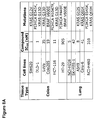
- one or more compounds listed in Table 1 may inhibit proliferation of tumor cells or tumor cell lines with a wide range of genetic makeup.
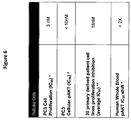
- the compounds of the invention may inhibit PC3 cell proliferation in vitro or in an in vivo model such as a xenograft mouse model.
- in vitro cultured PC3 cell proliferation may be inhibited with an IC 50 of less than 100nM, 75nM, 50nM, 25nM, 15nM, 10nM, 5nM, 3nM, 2nM, 1nM, 0.5nM, 0.1nM or less by one or more compounds of the invention listed in Table 1.
- phosphorylation of AKT may be inhibited with an IC 50 of less than 100nM, 75nM, 50nM, 25nM, 15nM, 10nM, 5nM, 3nM, 2nM, 1nM, 0.5nM, 0.1nM or less by one or more compounds of the invention listed in Table 1.
- Inhibition of phosphorylation of AKT may be a partially or completely blocked by the addition of human whole blood.
- the one or more compounds of the invention listed in Table 1 exhibit specific binding and/or inhibition of mTOR as evidenced by a small (e.g. less than about 0.5-fold, 1-fold, 2-fold, or 3-fold) increase in IC 50 for inhibition of AKT phosphorylation of cells cultured in whole blood as compared to standard culture media (e.g. DMEM 10%FBS).
- proliferation of primary tumors derived from subjects can be inhibited by the compound of the invention as shown by in vitro assays, or in vivo models (e.g. using the subjects' tumor cells for generating a xenograft mode).
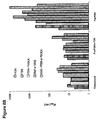
- primary tumor cell line proliferation may be inhibited with an IC 50 of less than 100nM, 75nM, 50nM, 25nM, 15nM, 10nM, 5nM, 3nM, 2nM, 1nM, 0.5nM, 0.1nM or even less by one or more compounds of the invention listed in Table 1.
- the average IC 50 of the compound of the invention for inhibiting a panel 10, 20, 30, 40, 50, 100 or more primary tumor cells may be about 200nM, 100nM, 75nM, 50nM, 25nM, 15nM, 10nM, 5nM, 3nM, 2nM, 1nM, 0.5nM, 0.1nM or even less.
- the tumor cells that can be inhibited by the compounds of the present invention include but are not limited to pancreatic, renal (kidney), bone, nasopharyngeal, gastric, stomach, ovarian, oral, breast, blood, prostate, rectal, colon, colorectal, blial, neural, lung, and dermal cells.
- the compound of the invention is effective in blocking cell proliferation signals in cells deficient in PTEN activity but expressing PI3K ⁇ .
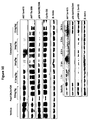
- cell proliferation signalling may be inhibited by the compound of the invention including those shown in Table 1 as evidenced by Western blot analysis of phosphorylation of proteins such as AKT (phosphorylation at T308 or S473), 4EBP1 (phosphorylation at S65), S6 (phosphorylation at S240/244), FOXO1 (phosphorylation at T24/3a T32), GSK3 ⁇ (phosphorylation at S9), PRAS40 (phosphorylation at T246), or MAPK phosphorylation.
- AKT phosphorylation at T308 or S473
- 4EBP1 phosphorylation at S65
- S6 phosphorylation at S240/244
- FOXO1 phosphorylation at T24/3a T32
- GSK3 ⁇ phosphorylation at S9
- PRAS40 phosphorylation at T246
- MAPK phosphorylation MAPK phospho
- the compounds can inhibit phosphorylation of any one of these targets to a greater degree than rapamycin under the conditions tested.
- the compounds of the invention can inhibit phosphorylation of signaling proteins and suppress proliferation of cells containing these signaling proteins but are resistant to existing chemotherapeutic agents including but not limited to rapamycin, Gleevec, dasatinib, alkylating agents, antimetabolites, anthracyclines, plant alkaloids, topoisomerase inhibitors and other antitumor agents disclosed herein.
- the compounds shown in Table 1 may inhibit tumor cells comprising a wide range of activating or tumor-causing mutations.
- Such mutations include but are not limited to mutations in KRAS, PI3KC ⁇ , BRAF, TSC1/2, PBKclass A, LAT1, and PTEN.
- one or more compounds of Table 1, including compound 1 may inhibit proliferation of tumor cells comprising mutations in KRAS at G 12, G 13, or mutations in Q61 including but not limited to the G12V, G12S, G13D, Q61K, and Q61H mutations.
- one or more of these compounds may inhibit proliferation of tumor cells comprising mutations in BRAF at V600 including but not limited to the mutation V600E.
- one or more compounds of Table 1 may inhibit proliferation of tumor cells comprising a mutation in PI3KC ⁇ at E545, P449, or H1047 including but not limited to the E545K, H1047R, and P449T mutations.
- one or more compounds of Table 1 may inhibit proliferation of tumor cells comprising activating mutations in one or more combinations of genes such as for example activating mutations in PTEN and KRAS, PTEN and BRAF, or PTEN and PI3KC ⁇ .
- one or more compounds of Table 1 may inhibit tumor cells or tumor cell lines comprising activating mutations in one or more combinations of genes such as for example activating mutations in BRAF and PI3KC ⁇ .
- one or more compounds of Table 1 may cause cell cyle arrest.
- cells treated with compound 1 and others in Table 1 may arrest or take longer to proceed through one or more cell cycle stages such as G 0 /G 1 , S, or G 2 /M.
- cells treated with one or more compounds of Table 1 may arrest or take longer to proceed through the G 0 /G 1 cell cycle stage.
- about 35%, 40%, 50%, 55%, 60%, 65%, 70% or more of cells treated with one or more compounds of the invention may be in the G 0 /G 1 cell cycle stage.
- cells exhibiting cell cycle arrest in the G 0 /G 1 cell cycle stage in response to treatment with the compounds of the invention are tumor cells or rapidly dividing cells.
- cells exhibiting cell cycle arrest in the G 0 /G 1 cell cycle stage in response to treatment with one or more compounds of the present invention are HCT116 cells or SW620 cells.
- one or more compounds of Table 1, including but not limited to compound 1 exhibit a comparable or a greater degree of G 0 /G 1 arrest as compared to an inhibitor that inhibits one or more PI3-kinases.
- the compounds of the invention effect a comparable or a greater degree of G 0 /G 1 arrest as compared to an inhibitor that inhibits both mTOR and one or more PI3Ks in tumor cells.
- the compounds of the invention efffect a comparable or a greater degree of G 0 /G 1 arrest as compared to rapamycin or doxorubicin.
- cell signalling in tumor cells xenografted into female athymic nude mice may be inhibited by one or more compounds of Table 1, including but not limited to compound 1.
- cell signalling may be inhibited by these compounds as evidenced by western blot detection of phosphorylation of proteins extracted from homogenized tumors, such as AKT phosphorylation at T308 or S473, 4EBP1 phosphorylation at S65, S6 phosphorylation at S240/244.
- inhibition of phosphorylation may be comparable to or greater than that provided by known inhibitors of phosphorylation such as a Pan PI3K inhibitor that also inhibits one or more isoforms of mTOR (Pan PI3K/mTor inhibitor) under the conditions tested.
- one or more compounds of the invention may inhibit phosphorylation of proteins that other inhibitors such as Pan PI3K/mTor inhibitors do not affect, or have little effect on, e.g., phosphorylation of AKT at T308 and S473.
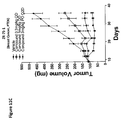
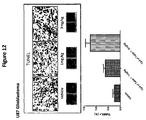
- compound 1 and others shown in Table 1 cause a reduction in tumor volume of xenograft tumors in female nude athymic mice.
- treatment with one or more compounds of the invention results in a reduction in the growth or tumor volume caused by engraftment of U87-MG, A549, ZR-75-1, or 786-O tumor cells in nude mice.
- the compound of the invention may be administered orally, subcutaneously, or intravenously, or any other compound administration methods provided herein. In some cases, the compounds may be administered once a week, every other day, once a day, twice a day, three times a day, four times a day or more.
- 0.01mg/kg of compound is administered, 0.05mg/kg, 0.1mg/kg, 0.2mg/kg, 0.4mg/kg, 0.5mg/kg, 1mg/kg, 1.5mg/kg, 2mg/kg, 3mg/kg, 4mg/kg, 5mg/kg, 7.5mg/kg, 10mg/kg, 100mg/kg or more compound is administered at a time.
- a significant reduction in tumor volume may be detected within 5, 10, 15, 20, 25, or 30 days of tumor engraftment.
- the invention provides a pharmaceutical composition comprising the compounds of the invention.
- the invention provides pharmaceutical compositions for the treatment of disorders such as hyperproliferative disorders including but not limited to cancers such as acute myeloid leukemia, lymphoma, thymus, brain, lung, squamous cell, skin, eye, retinoblastoma, intraocular melanoma, mesothelioma, mediastinum, oral cavity and oropharyngeal, bladder, gastric, stomach, pancreatic, bladder, breast, cervical, head, neck, renal, kidney, liver, hepatobiliary system, small intestine, colon, rectum, anus, endometrial, prostate, colorectal, urethra, esophageal, testicular, gynecological, penis, testis, ovarian, endocrine system, skin, thyroid, CNS, PNS, AIDS related AIDS-Related (e.g.
- cancers such as acute my
- Lymphoma and Kaposi's Sarcoma other viral-nduced cancers, sarcomas of the soft tissue and bone, and melanomas of cutaneous and intraocular origin.
- Cancers includes solid tumors as well as hematological malignancies.
- a cancer at any stage of progression can be treated, such as primary, metastatic, and recurrent cancers.
- the invention provides a pharmaceutical composition for treating ophthalmic disorders.
- the composition is formulated for ocular administration and it contains an effective amount of a compound of the present invention and a pharmaceutical excipient suitable for ocular administration.
- Pharmaceutical compositions of the invention suitable for ocular administration can be presented as discrete dosage forms, such as drops or sprays each containing a predetermined amount of an active ingredient a solution, or a suspension in an aqueous or non-aqueous liquid, an oil-in-water emulsion, or a water-in-oil liquid emulsion.
- Eye drops may be prepared by dissolving the active ingredient in a sterile aqueous solution such as physiological saline, buffering solution, etc., or by combining powder compositions to be dissolved before use.
- Other vehicles may be chosen, as is known in the art, including but not limited to: balance salt solution, saline solution, water soluble polyethers such as polyethyene glycol, polyvinyls, such as polyvinyl alcohol and povidone, cellulose derivatives such as methylcellulose and hydroxypropyl methylcellulose, petroleum derivatives such as mineral oil and white petrolatum, animal fats such as lanolin, polymers of acrylic acid such as carboxypolymethylene gel, vegetable fats such as peanut oil and polysaccharides such as dextrans, and glycosaminoglycans such as sodium hyaluronate.
- additives ordinarily used in the eye drops can be added.
- Such additives include isotonizing agents (e.g., sodium chloride, etc.), buffer agent (e.g., boric acid, sodium monohydrogen phosphate, sodium dihydrogen phosphate, etc.), preservatives (e.g., benzalkonium chloride, benzethonium chloride, chlorobutanol, etc.), thickeners (e.g., saccharide such as lactose, mannitol, maltose, etc.; e.g., hyaluronic acid or its salt such as sodium hyaluronate, potassium hyaluronate, etc.; e.g., mucopolysaccharide such as chondroitin sulfate, etc.; e.g., sodium polyacrylate, carboxyvinyl polymer, crosslinked polyacrylate, polyvinyl alcohol, polyvinyl pyrrolidone, methyl cellulose
- compositions are typically formulated to provide a therapeutically effective amount of the compound of the present invention as the active ingredient, or a pharmaceutically acceptable salt, ester, prodrug, solvate, hydrate or derivative thereof.
- the pharmaceutical compositions contain pharmaceutically acceptable salt and/or coordination complex thereof, and one or more pharmaceutically acceptable excipients, carriers, including inert solid diluents and fillers, diluents, including sterile aqueous solution and various organic solvents, permeation enhancers, solubilizers and adjuvants.
- compositions can be administered alone or in combination with one or more other agents, which are also typically administered in the form of pharmaceutical compositions.
- the compound of the invention and other agent(s) may be mixed into a preparation or both components may be formulated into separate preparations to use them in combination separately or at the same time.
- the concentration of one or more compounds provided in the pharmaceutical compositions of the present invention is less than 100%, 90%, 80%, 70%, 60%, 50%, 40%, 30%, 20%, 19%, 18%, 17%, 16%, 15%, 14%, 13%, 12%, 11%, 10%, 9%, 8%, 7%, 6%, 5%, 4%, 3%, 2%, 1%, 0.5%, 0.4%, 0.3%, 0.2%, 0.1%, 0.09%, 0.08%, 0.07%, 0.06%, 0.05%, 0.04%, 0.03%, 0.02%, 0.01%, 0.009%, 0.008%, 0.007%, 0.006%, 0.005%, 0.004%, 0.003%, 0.002%, 0.001%, 0.0009%, 0.0008%, 0.0007%, 0.0006%, 0.0005%, 0.0004%, 0.0003%, 0.0002%, or 0.0001% w/w, w/v or v/v.
- the concentration of the compound of the invention is greater than 90%, 80%, 70%, 60%, 50%, 40%, 30%, 20%, 19.75%, 19.50%, 19.25% 19%, 18.75%, 18.50%, 18.25% 18%, 17.75%, 17.50%, 17.25% 17%, 16.75%, 16.50%, 16.25% 16%, 15.75%, 15.50%, 15.25% 15%, 14.75%, 14.50%, 14.25% 14%, 13.75%, 13.50%, 13.25% 13%, 12.75%, 12.50%, 12.25% 12%, 11.75%, 11.50%, 11.25% 11%, 10.75%, 10.50%, 10.25% 10%, 9.75%, 9.50%, 9.25% 9%, 8.75%, 8.50%, 8.25% 8%, 7.75%, 7.50%, 7.25% 7%, 6.75%, 6.50%, 6.25% 6%, 5.75%, 5.50%, 5.25% 5%, 4.75%, 4.50%, 4.25%, 4%
- the concentration of the compound of the invention is in the range from approximately 0.0001% to approximately 50%, approximately 0.001% to approximately 40 %, approximately 0.01% to approximately 30%, approximately 0.02% to approximately 29%, approximately 0.03% to approximately 28%, approximately 0.04% to approximately 27%, approximately 0.05% to approximately 26%, approximately 0.06% to approximately 25%, approximately 0.07% to approximately 24%, approximately 0.08% to approximately 23%, approximately 0.09% to approximately 22%, approximately 0.1% to approximately 21%, approximately 0.2% to approximately 20%, approximately 0.3% to approximately 19%, approximately 0.4% to approximately 18%, approximately 0.5% to approximately 17%, approximately 0.6% to approximately 16%, approximately 0.7% to approximately 15%, approximately 0.8% to approximately 14%, approximately 0.9% to approximately 12%, approximately 1% to approximately 10% w/w, w/v or v/v.
- the concentration of the compound of the invention is in the range from approximately 0.001% to approximately 10%, approximately 0.01% to approximately 5%, approximately 0.02% to approximately 4.5%, approximately 0.03% to approximately 4%, approximately 0.04% to approximately 3.5%, approximately 0.05% to approximately 3%, approximately 0.06% to approximately 2.5%, approximately 0.07% to approximately 2%, approximately 0.08% to approximately 1.5%, approximately 0.09% to approximately 1%, approximately 0.1% to approximately 0.9% w/w, w/v or v/v.
- the amount of the compound of the invention is equal to or less than 10 g, 9.5 g, 9.0 g, 8.5 g, 8.0 g, 7.5 g, 7.0 g, 6.5 g, 6.0 g, 5.5 g, 5.0 g, 4.5 g, 4.0 g, 3.5 g, 3.0 g, 2.5 g, 2.0 g, 1.5 g, 1.0 g, 0.95 g, 0.9 g, 0.85 g, 0.8 g, 0.75 g, 0.7 g, 0.65 g, 0.6 g, 0.55 g, 0.5 g, 0.45 g, 0.4 g, 0.35 g, 0.3 g, 0.25 g, 0.2 g, 0.15 g, 0.1 g, 0.09 g, 0.08 g, 0.07 g, 0.06 g, 0.05 g, 0.04 g, 0.03 g, 0.02 g, 0.01 g, 0.009 g, 0.008
- the amount the compound of the invention is more than 0.0001 g, 0.0002 g, 0.0003 g, 0.0004 g, 0.0005 g, 0.0006 g, 0.0007 g, 0.0008 g, 0.0009 g, 0.001 g, 0.0015 g, 0.002 g, 0.0025 g, 0.003 g, 0.0035 g, 0.004 g, 0.0045 g, 0.005 g, 0.0055 g, 0.006 g, 0.0065 g, 0.007 g, 0.0075 g, 0.008 g, 0.0085 g, 0.009 g, 0.0095 g, 0.01 g, 0.015 g, 0.02 g, 0.025 g, 0.03 g, 0.035 g, 0.04 g, 0.045 g, 0.05 g, 0.055 g, 0.06 g, 0.065 g, 0.07 g, 0.075 g, 0.
- the amount of the compound of the invention is in the range of 0.0001-10 g, 0.0005-9 g, 0.001-8 g, 0.005-7 g, 0.01-6 g, 0.05-5 g, 0.1-4 g, 0.5-4 g, or 1-3 g.
- the compound according to the invention is effective over a wide dosage range.
- dosages from 0.01 to 1000 mg, from 0.5 to 100 mg, from 1 to 50 mg per day, and from 5 to 40 mg per day are examples of dosages that may be used.
- An exemplary dosage is 10 to 30 mg per day. The exact dosage will depend upon the route of administration, the form in which the compound is administered, the subject to be treated, the body weight of the subject to be treated, and the preference and experience of the attending physician.
- a pharmaceutical composition of the invention typically contains an active ingredient (e.g., a compound) of the present invention or a pharmaceutically acceptable salt and/or coordination complex thereof, and one or more pharmaceutically acceptable excipients, carriers, including but not limited to inert solid diluents and fillers, diluents, sterile aqueous solution and various organic solvents, permeation enhancers, solubilizers and adjuvants.
- compositions and methods for preparing the same are non-limiting exemplary pharmaceutical compositions and methods for preparing the same.
- compositions for oral administration In some embodiments, the invention provides a pharmaceutical composition for oral administration containing the compound of the invention, and a pharmaceutical excipient suitable for oral administration.
- the invention provides a solid pharmaceutical composition for oral administration containing: (i) an effective amount of the compound of the invention; optionally (ii) an effective amount of a second agent; and (iii) a pharmaceutical excipient suitable for oral administration.
- the composition further contains: (iv) an effective amount of a third agent.
- the pharmaceutical composition may be a liquid pharmaceutical composition suitable for oral consumption.
- Pharmaceutical compositions of the invention suitable for oral administration can be presented as discrete dosage forms, such as capsules, cachets, or tablets, or liquids or aerosol sprays each containing a predetermined amount of an active ingredient as a powder or in granules, a solution, or a suspension in an aqueous or non-aqueous liquid, an oil-in-water emulsion, or a water-in-oil liquid emulsion.
- Such dosage forms can be prepared by any of the methods of pharmacy, but all methods include the step of bringing the active ingredient into association with the carrier, which constitutes one or more necessary ingredients.
- compositions are prepared by uniformly and intimately admixing the active ingredient with liquid carriers or finely divided solid carriers or both, and then, if necessary, shaping the product into the desired presentation.
- a tablet can be prepared by compression or molding, optionally with one or more accessory ingredients.
- Compressed tablets can be prepared by compressing in a suitable machine the active ingredient in a free-flowing form such as powder or granules, optionally mixed with an excipient such as, but not limited to, a binder, a lubricant, an inert diluent, and/or a surface active or dispersing agent.
- Molded tablets can be made by molding in a suitable machine a mixture of the powdered compound moistened with an inert liquid diluent.
- This invention further encompasses anhydrous pharmaceutical compositions and dosage forms comprising an active ingredient, since water can facilitate the degradation of some compounds.
- water may be added (e.g., 5%) in the pharmaceutical arts as a means of simulating long-term storage in order to determine characteristics such as shelf-life or the stability of formulations over time.
- Anhydrous pharmaceutical compositions and dosage forms of the invention can be prepared using anhydrous or low moisture containing ingredients and low moisture or low humidity conditions.
- Pharmaceutical compositions and dosage forms of the invention which contain lactose can be made anhydrous if substantial contact with moisture and/or humidity during manufacturing, packaging, and/or storage is expected.
- An anhydrous pharmaceutical composition may be prepared and stored such that its anhydrous nature is maintained.
- anhydrous compositions may be packaged using materials known to prevent exposure to water such that they can be included in suitable formulary kits.
- suitable packaging include, but are not limited to, hermetically sealed foils, plastic or the like, unit dose containers, blister packs, and strip packs.
- An active ingredient can be combined in an intimate admixture with a pharmaceutical carrier according to conventional pharmaceutical compounding techniques.
- the carrier can take a wide variety of forms depending on the form of preparation desired for administration.
- any of the usual pharmaceutical media can be employed as carriers, such as, for example, water, glycols, oils, alcohols, flavoring agents, preservatives, coloring agents, and the like in the case of oral liquid preparations (such as suspensions, solutions, and elixirs) or aerosols; or carriers such as starches, sugars, micro-crystalline cellulose, diluents, granulating agents, lubricants, binders, and disintegrating agents can be used in the case of oral solid preparations, in some embodiments without employing the use of lactose.
- suitable carriers include powders, capsules, and tablets, with the solid oral preparations. If desired, tablets can be coated by standard aqueous or nonaqueous techniques.
- Binders suitable for use in pharmaceutical compositions and dosage forms include, but are not limited to, corn starch, potato starch, or other starches, gelatin, natural and synthetic gums such as acacia, sodium alginate, alginic acid, other alginates, powdered tragacanth, guar gum, cellulose and its derivatives (e.g., ethyl cellulose, cellulose acetate, carboxymethyl cellulose calcium, sodium carboxymethyl cellulose), polyvinyl pyrrolidone, methyl cellulose, pre-gelatinized starch, hydroxypropyl methyl cellulose, microcrystalline cellulose, and mixtures thereof.
- natural and synthetic gums such as acacia, sodium alginate, alginic acid, other alginates, powdered tragacanth, guar gum, cellulose and its derivatives (e.g., ethyl cellulose, cellulose acetate, carboxymethyl cellulose calcium, sodium carboxymethyl cellulose), polyvinyl pyrrol
- suitable fillers for use in the pharmaceutical compositions and dosage forms disclosed herein include, but are not limited to, talc, calcium carbonate (e.g., granules or powder), microcrystalline cellulose, powdered cellulose, dextrates, kaolin, mannitol, silicic acid, sorbitol, starch, pre-gelatinized starch, and mixtures thereof.
- talc calcium carbonate
- microcrystalline cellulose e.g., powdere., powdered cellulose, dextrates, kaolin, mannitol, silicic acid, sorbitol, starch, pre-gelatinized starch, and mixtures thereof.
- Disintegrants may be used in the compositions of the invention to provide tablets that disintegrate when exposed to an aqueous environment. Too much of a disintegrant may produce tablets which may disintegrate in the bottle. Too little may be insufficient for disintegration to occur and may thus alter the rate and extent of release of the active ingredient(s) from the dosage form. Thus, a sufficient amount of disintegrant that is neither too little nor too much to detrimentally alter the release of the active ingredient(s) may be used to form the dosage forms of the compounds disclosed herein. The amount of disintegrant used may vary based upon the type of formulation and mode of administration, and may be readily discernible to those of ordinary skill in the art.
- Disintegrants that can be used to form pharmaceutical compositions and dosage forms of the invention include, but are not limited to, agar-agar, alginic acid, calcium carbonate, microcrystalline cellulose, croscarmellose sodium, crospovidone, polacrilin potassium, sodium starch glycolate, potato or tapioca starch, other starches, pre-gelatinized starch, other starches, clays, other algins, other celluloses, gums or mixtures thereof.
- Lubricants which can be used to form pharmaceutical compositions and dosage forms of the invention include, but are not limited to, calcium stearate, magnesium stearate, mineral oil, light mineral oil, glycerin, sorbitol, mannitol, polyethylene glycol, other glycols, stearic acid, sodium lauryl sulfate, talc, hydrogenated vegetable oil (e.g., peanut oil, cottonseed oil, sunflower oil, sesame oil, olive oil, corn oil, and soybean oil), zinc stearate, ethyl oleate, ethyl laureate, agar, or mixtures thereof.
- Additional lubricants include, for example, a syloid silica gel, a coagulated aerosol of synthetic silica, or mixtures thereof.
- a lubricant can optionally be added, in an amount of less than about 1 weight percent of the pharmaceutical composition.
- the active ingredient therein may be combined with various sweetening or flavoring agents, coloring matter or dyes and, if so desired, emulsifying and/or suspending agents, together with such diluents as water, ethanol, propylene glycol, glycerin and various combinations thereof.
- the tablets can be uncoated or coated by known techniques to delay disintegration and absorption in the gastrointestinal tract and thereby provide a sustained action over a longer period.
- a time delay material such as glyceryl monostearate or glyceryl distearate can be employed.
- Formulations for oral use can also be presented as hard gelatin capsules wherein the active ingredient is mixed with an inert solid diluent, for example, calcium carbonate, calcium phosphate or kaolin, or as soft gelatin capsules wherein the active ingredient is mixed with water or an oil medium, for example, peanut oil, liquid paraffin or olive oil.
- Surfactant which can be used to form pharmaceutical compositions and dosage forms of the invention include, but are not limited to, hydrophilic surfactants, lipophilic surfactants, and mixtures thereof. That is, a mixture of hydrophilic surfactants may be employed, a mixture of lipophilic surfactants may be employed, or a mixture of at least one hydrophilic surfactant and at least one lipophilic surfactant may be employed.
- a suitable hydrophilic surfactant may generally have an HLB value of at least 10, while suitable lipophilic surfactants may generally have an HLB value of or less than about 10.
- An empirical parameter used to characterize the relative hydrophilicity and hydrophobicity of non-ionic amphiphilic compounds is the hydrophilic-lipophilic balance ("HLB" value).
- HLB hydrophilic-lipophilic balance
- Surfactants with lower HLB values are more lipophilic or hydrophobic, and have greater solubility in oils, while surfactants with higher HLB values are more hydrophilic, and have greater solubility in aqueous solutions.
- Hydrophilic surfactants are generally considered to be those compounds having an HLB value greater than about 10, as well as anionic, cationic, or zwitterionic compounds for which the HLB scale is not generally applicable.
- lipophilic (i.e., hydrophobic) surfactants are compounds having an HLB value equal to or less than about 10.
- HLB value of a surfactant is merely a rough guide generally used to enable formulation of industrial, pharmaceutical and cosmetic emulsions.
- Hydrophilic surfactants may be either ionic or non-ionic. Suitable ionic surfactants include, but are not limited to, alkylammonium salts; fusidic acid salts; fatty acid derivatives of amino acids, oligopeptides, and polypeptides; glyceride derivatives of amino acids, oligopeptides, and polypeptides; lecithins and hydrogenated lecithins; lysolecithins and hydrogenated lysolecithins; phospholipids and derivatives thereof; lysophospholipids and derivatives thereof; carnitine fatty acid ester salts; salts of alkylsulfates; fatty acid salts; sodium docusate; acyl lactylates; mono- and di-acetylated tartaric acid esters of mono- and di-glycerides; succinylated mono- and di-glycerides; citric acid esters of mono- and di-glycerides; and mixture
- ionic surfactants include, by way of example: lecithins, lysolecithin, phospholipids, lysophospholipids and derivatives thereof; carnitine fatty acid ester salts; salts of alkylsulfates; fatty acid salts; sodium docusate; acylactylates; mono- and di-acetylated tartaric acid esters of mono- and di-glycerides; succinylated mono- and di-glycerides; citric acid esters of mono- and di-glycerides; and mixtures thereof.
- Ionic surfactants may be the ionized forms of lecithin, lysolecithin, phosphatidylcholine, phosphatidylethanolamine, phosphatidylglycerol, phosphatidic acid, phosphatidylserine, lysophosphatidylcholine, lysophosphatidylethanolamine, lysophosphatidylglycerol, lysophosphatidic acid, lysophosphatidylserine, PEG-phosphatidylethanolamine, PVP-phosphatidylethanolamine, lactylic esters of fatty acids, stearoyl-2-lactylate, stearoyl lactylate, succinylated monoglycerides, mono/diacetylated tartaric acid esters of mono/diglycerides, citric acid esters of mono/diglycerides, cholylsarcosine, caproate, caprylate, caprate,
- Hydrophilic non-ionic surfactants may include, but are not limited to, alkylglucosides; alkylmaltosides; alkylthioglucosides; lauryl macrogolglycerides; polyoxyalkylene alkyl ethers such as polyethylene glycol alkyl ethers; polyoxyalkylene alkylphenols such as polyethylene glycol alkyl phenols; polyoxyalkylene alkyl phenol fatty acid esters such as polyethylene glycol fatty acids monoesters and polyethylene glycol fatty acids diesters; polyethylene glycol glycerol fatty acid esters; polyglycerol fatty acid esters; polyoxyalkylene sorbitan fatty acid esters such as polyethylene glycol sorbitan fatty acid esters; hydrophilic transesterification products of a polyol with at least one member of the group consisting of glycerides, vegetable oils, hydrogenated vegetable oils, fatty acids, and sterols; polyoxyethylene sterols,
- hydrophilic-non-ionic surfactants include, without limitation, PEG-10 laurate, PEG-12 laurate, PEG-20 laurate, PEG-32 laurate, PEG-32 dilaurate, PEG-12 oleate, PEG-15 oleate, PEG-20 oleate, PEG-20 dioleate, PEG-32 oleate, PEG-200 oleate, PEG-400 oleate, PEG-15 stearate, PEG-32 distearate, PEG-40 stearate, PEG-100 stearate, PEG-20 dilaurate, PEG-25 glyceryl trioleate, PEG-32 dioleate, PEG-20 glyceryl laurate, PEG-30 glyceryl laurate, PEG-20 glyceryl stearate, PEG-20 glyceryl oleate, PEG-30 glyceryl oleate, PEG-30 glyceryl oleate
- Suitable lipophilic surfactants include, by way of example only: fatty alcohols; glycerol fatty acid esters; acetylated glycerol fatty acid esters; lower alcohol fatty acids esters; propylene glycol fatty acid esters; sorbitan fatty acid esters; polyethylene glycol sorbitan fatty acid esters; sterols and sterol derivatives; polyoxyethylated sterols and sterol derivatives; polyethylene glycol alkyl ethers; sugar esters; sugar ethers; lactic acid derivatives of mono- and di-glycerides; hydrophobic transesterification products of a polyol with at least one member of the group consisting of glycerides, vegetable oils, hydrogenated vegetable oils, fatty acids and sterols; oil-soluble vitamins/vitamin derivatives; and mixtures thereof.
- preferred lipophilic surfactants include glycerol fatty acid esters, propylene glycol fatty acid esters, and mixtures thereof, or are hydrophobic transesterification products of a polyol with at least one member of the group consisting of vegetable oils, hydrogenated vegetable oils, and triglycerides.
- the composition may include a solubilizer to ensure good solubilization and/or dissolution of the compound of the present invention and to minimize precipitation of the compound of the present invention. This can be especially important for compositions for non-oral use, e.g., compositions for injection.
- a solubilizer may also be added to increase the solubility of the hydrophilic drug and/or other components, such as surfactants, or to maintain the composition as a stable or homogeneous solution or dispersion.
- solubilizers include, but are not limited to, the following: alcohols and polyols, such as ethanol, isopropanol, butanol, benzyl alcohol, ethylene glycol, propylene glycol, butanediols and isomers thereof, glycerol, pentaerythritol, sorbitol, mannitol, transcutol, dimethyl isosorbide, polyethylene glycol, polypropylene glycol, polyvinylalcohol, hydroxypropyl methylcellulose and other cellulose derivatives, cyclodextrins and cyclodextrin derivatives; ethers of polyethylene glycols having an average molecular weight of about 200 to about 6000, such as tetrahydrofurfuryl alcohol PEG ether (glycofurol) or methoxy PEG ; amides and other nitrogen-containing compounds such as 2-pyrrolidone, 2-piperidone, ⁇ -caprolact
- solubilizers may also be used. Examples include, but not limited to, triacetin, triethylcitrate, ethyl oleate, ethyl caprylate, dimethylacetamide, N-methylpyrrolidone, N-hydroxyethylpyrrolidone, polyvinylpyrrolidone, hydroxypropyl methylcellulose, hydroxypropyl cyclodextrins, ethanol, polyethylene glycol 200-100, glycofurol, transcutol, propylene glycol, and dimethyl isosorbide.
- Particularly preferred solubilizers include sorbitol, glycerol, triacetin, ethyl alcohol, PEG-400, glycofurol and propylene glycol.
- the amount of solubilizer that can be included is not particularly limited.
- the amount of a given solubilizer may be limited to a bioacceptable amount, which may be readily determined by one of skill in the art.
- the solubilizer can be in a weight ratio of 10%, 25%, 50%, 100%, or up to about 200% by weight, based on the combined weight of the drug, and other excipients.
- very small amounts of solubilizer may also be used, such as 5%, 2%, 1% or even less.
- the solubilizer may be present in an amount of about 1% to about 100%, more typically about 5% to about 25% by weight.
- the composition can further include one or more pharmaceutically acceptable additives and excipients.
- additives and excipients include, without limitation, detackifiers, anti-foaming agents, buffering agents, polymers, antioxidants, preservatives, chelating agents, viscomodulators, tonicifiers, flavorants, colorants, odorants, opacifiers, suspending agents, binders, fillers, plasticizers, lubricants, and mixtures thereof.
- an acid or a base may be incorporated into the composition to facilitate processing, to enhance stability, or for other reasons.
- pharmaceutically acceptable bases include amino acids, amino acid esters, ammonium hydroxide, potassium hydroxide, sodium hydroxide, sodium hydrogen carbonate, aluminum hydroxide, calcium carbonate, magnesium hydroxide, magnesium aluminum silicate, synthetic aluminum silicate, synthetic hydrocalcite, magnesium aluminum hydroxide, diisopropylethylamine, ethanolamine, ethylenediamine, triethanolamine, triethylamine, triisopropanolamine, trimethylamine, tris(hydroxymethyl)aminomethane (TRIS) and the like.
- bases that are salts of a pharmaceutically acceptable acid, such as acetic acid, acrylic acid, adipic acid, alginic acid, alkanesulfonic acid, amino acids, ascorbic acid, benzoic acid, boric acid, butyric acid, carbonic acid, citric acid, fatty acids, formic acid, fumaric acid, gluconic acid, hydroquinosulfonic acid, isoascorbic acid, lactic acid, maleic acid, oxalic acid, para-bromophenylsulfonic acid, propionic acid, p-toluenesulfonic acid, salicylic acid, stearic acid, succinic acid, tannic acid, tartaric acid, thioglycolic acid, toluenesulfonic acid, uric acid, and the like.
- a pharmaceutically acceptable acid such as acetic acid, acrylic acid, adipic acid, alginic acid, alkanesulfonic acid, amino acids
- Salts of polyprotic acids such as sodium phosphate, disodium hydrogen phosphate, and sodium dihydrogen phosphate can also be used.
- the cation can be any convenient and pharmaceutically acceptable cation, such as ammonium, alkali metals, alkaline earth metals, and the like.
- Example may include, but not limited to, sodium, potassium, lithium, magnesium, calcium and ammonium.
- Suitable acids are pharmaceutically acceptable organic or inorganic acids.
- suitable inorganic acids include hydrochloric acid, hydrobromic acid, hydriodic acid, sulfuric acid, nitric acid, boric acid, phosphoric acid, and the like.
- suitable organic acids include acetic acid, acrylic acid, adipic acid, alginic acid, alkanesulfonic acids, amino acids, ascorbic acid, benzoic acid, boric acid, butyric acid, carbonic acid, citric acid, fatty acids, formic acid, fumaric acid, gluconic acid, hydroquinosulfonic acid, isoascorbic acid, lactic acid, maleic acid, methanesulfonic acid, oxalic acid, para-bromophenylsulfonic acid, propionic acid, p-toluenesulfonic acid, salicylic acid, stearic acid, succinic acid, tannic acid, tartaric acid, thioglycolic
- compositions for injection In some embodiments, the invention provides a pharmaceutical composition for injection containing the compound of the present invention and a pharmaceutical excipient suitable for injection. Components and amounts of agents in the compositions are as described herein.
- Aqueous solutions in saline are also conventionally used for injection.
- Ethanol, glycerol, propylene glycol, liquid polyethylene glycol, and the like (and suitable mixtures thereof), cyclodextrin derivatives, and vegetable oils may also be employed.
- the proper fluidity can be maintained, for example, by the use of a coating, such as lecithin, for the maintenance of the required particle size in the case of dispersion and by the use of surfactants.
- the prevention of the action of microorganisms can be brought about by various antibacterial and antifungal agents, for example, parabens, chlorobutanol, phenol, sorbic acid, thimerosal, and the like.
- Sterile injectable solutions are prepared by incorporating the compound of the present invention in the required amount in the appropriate solvent with various other ingredients as enumerated above, as required, followed by filtered sterilization.
- dispersions are prepared by incorporating the various sterilized active ingredients into a sterile vehicle which contains the basic dispersion medium and the required other ingredients from those enumerated above.
- certain desirable methods of preparation are vacuum-drying and freeze-drying techniques which yield a powder of the active ingredient plus any additional desired ingredient from a previously sterile-filtered solution thereof.
- compositions for topical (e.g., transdermal) delivery are provided.
- the invention provides a pharmaceutical composition for transdermal delivery containing the compound of the present invention and a pharmaceutical excipient suitable for transdermal delivery.
- compositions of the present invention can be formulated into preparations in solid, semi-solid, or liquid forms suitable for local or topical administration, such as gels, water soluble jellies, creams, lotions, suspensions, foams, powders, slurries, ointments, solutions, oils, pastes, suppositories, sprays, emulsions, saline solutions, dimethylsulfoxide (DMSO)-based solutions.
- DMSO dimethylsulfoxide
- carriers with higher densities are capable of providing an area with a prolonged exposure to the active ingredients.
- a solution formulation may provide more immediate exposure of the active ingredient to the chosen area.
- compositions also may comprise suitable solid or gel phase carriers or excipients, which are compounds that allow increased penetration of, or assist in the delivery of, therapeutic molecules across the stratum corneum permeability barrier of the skin.
- suitable solid or gel phase carriers or excipients which are compounds that allow increased penetration of, or assist in the delivery of, therapeutic molecules across the stratum corneum permeability barrier of the skin.
- humectants e.g., urea
- glycols e.g., propylene glycol
- alcohols e.g., ethanol
- fatty acids e.g., oleic acid
- surfactants e.g., isopropyl myristate and sodium lauryl sulfate
- pyrrolidones e.g., isopropyl myristate and sodium lauryl sulfate
- pyrrolidones e.glycerol monolaurate, sulfoxides, terpenes (e.g., menthol)
- amines amides, alkanes, alkanols, water, calcium carbonate, calcium phosphate, various sugars, starches, cellulose derivatives, gelatin, and polymers such as polyethylene glycols.
- transdermal delivery devices patches
- Such transdermal patches may be used to provide continuous or discontinuous infusion of a compound of the present invention in controlled amounts, either with or without another agent.
- transdermal patches for the delivery of pharmaceutical agents is well known in the art. See, e.g., U.S. Pat. Nos. 5,023,252 , 4,992,445 and 5,001,139 . Such patches may be constructed for continuous, pulsatile, or on demand delivery of pharmaceutical agents.
- compositions for inhalation include solutions and suspensions in pharmaceutically acceptable, aqueous or organic solvents, or mixtures thereof, and powders.
- the liquid or solid compositions may contain suitable pharmaceutically acceptable excipients as described supra.
- the compositions are administered by the oral or nasal respiratory route for local or systemic effect.
- Compositions in preferably pharmaceutically acceptable solvents may be nebulized by use of inert gases. Nebulized solutions may be inhaled directly from the nebulizing device or the nebulizing device may be attached to a face mask tent, or intermittent positive pressure breathing machine. Solution, suspension, or powder compositions may be administered, preferably orally or nasally, from devices that deliver the formulation in an appropriate manner.
- compositions may also be prepared from compositions described herein and one or more pharmaceutically acceptable excipients suitable for sublingual, buccal, rectal, intraosseous, intraocular, intranasal, epidural, or intraspinal administration. Preparations for such pharmaceutical compositions are well-known in the art.
- Administration of the compound or pharmaceutical composition of the present invention can be effected by any method that enables delivery of the compounds to the site of action. These methods include oral routes, intraduodenal routes, parenteral injection (including intravenous, intraarterial, subcutaneous, intramuscular, intravascular, intraperitoneal or infusion), topical (e.g. transdermal application), rectal administration, via local delivery by catheter or stent or through inhalation.
- the compound can also be administered intraadiposally or intrathecally.
- an effective dosage is in the range of about 0.001 to about 100 mg per kg body weight per day, preferably about 1 to about 35 mg/kg/day, in single or divided doses. For a 70 kg human, this would amount to about 0.05 to 7 g/day, preferably about 0.05 to about 2.5 g/day. In some instances, dosage levels below the lower limit of the aforesaid range may be more than adequate, while in other cases still larger doses may be employed without causing any harmful side effect, e.g. bydividing such larger doses into several small doses for administration throughout the day.
- the compound of the invention is administered in a single dose.
- administration will be by injection, e.g., intravenous injection, in order to introduce the agent quickly.
- other routes may be used as appropriate.
- a single dose of a compound of the invention may also be used for treatment of an acute condition.
- the compound of the invention is administered in multiple doses. Dosing may be about once, twice, three times, four times, five times, six times, or more than six times per day. Dosing may be about once a month, once every two weeks, once a week, or once every other day. In another embodiment a compound of the invention and another agent are administered together about once per day to about 6 times per day. In another embodiment the administration of a compound of the invention and an agent continues for less than about 7 days. In yet another embodiment the administration continues for more than about 6, 10, 14, 28 days, two months, six months, or one year. In some cases, continuous dosing is achieved and maintained as long as necessary.
- Administration of the compounds of the invention may continue as long as necessary.
- the compound of the invention is administered for more than 1, 2, 3, 4, 5,6, 7, 14, or 28 days.
- the compound of the invention is administered for less than 28, 14, 7, 6, 5, 4, 3, 2, or 1 day.
- the compound of the invention is administered chronically on an ongoing basis, e.g., for the treatment of chronic effects.
- An effective amount of the compound of the invention may be administered in either single or multiple doses by any of the accepted modes of administration of agents having similar utilities, including rectal, buccal, intranasal and transdermal routes, by intra-arterial injection, intravenously, intraperitoneally, parenterally, intramuscularly, subcutaneously, orally, topically, or as an inhalant.
- compositions of the invention may also be delivered via an impregnated or coated device such as a stent, for example, or an artery-inserted cylindrical polymer.
- a method of administration may, for example, aid in the prevention or amelioration of restenosis following procedures such as balloon angioplasty.
- compounds of the invention may slow or inhibit the migration and proliferation of smooth muscle cells in the arterial wall which contribute to restenosis.
- the compound of the invention may be administered, for example, by local delivery from the struts of a stent, from a stent graft, from grafts, or from the cover or sheath of a stent.
- a compound of the invention is admixed with a matrix.
- Such a matrix may be a polymeric matrix, and may serve to bond the compound to the stent.
- Polymeric matrices suitable for such use include, for eample, lactone-based polyesters or copolyesters such as polylactide, polycaprolactonglycolide, polyorthoesters, polyanhydrides, polyaminoacids, polysaccharides, polyphosphazenes, poly (ether-ester) copolymers
- Suitable matrices may be nondegrading or may degrade with time, releasing the compound or compounds.
- the compound of the invention may be applied to the surface of the stent by various methods such as dip/spin coating, spray coating, dip-coating, and/or brush-coating.
- the compounds may be applied in a solvent and the solvent may be allowed to evaporate, thus forming a layer of compound onto the stent.
- the compound may be located in the body of the stent or graft, for example in microchannels or micropores. When implanted, the compound diffuses out of the body of the stent to contact the arterial wall.
- Such stents may be prepared by dipping a stent manufactured to contain such micropores or microchannels into a solution of the compound of the invention in a suitable solvent, followed by evaporation of the solvent. Excess drug on the surface of the stent may be removed via an additional brief solvent wash.
- compounds of the invention may be covalently linked to a stent or graft.
- a covalent linker may be used which degrades in vivo, leading to the release of the compound of the invention. Any bio-labile linkage may be used for such a purpose, such as ester, amide or anhydride linkages.
- the compound of the invention may additionally be administered intravascularly from a balloon used during angioplasty. Extravascular administration of the compounds via the pericard or via advential application of formulations of the invention may also be performed to decrease restenosis.
- the compound of the invention may be administered in dosages. It is known in the art that due to intersubject variability in compound pharmacokinetics, individualization of dosing regimen is necessary for optimal therapy. Dosing for the compound of the invention may be found by routine experimentation in light of the instant disclosure.
- the agent When the compound of the invention is administered in a composition that comprises one or more agents, and the agent has a shorter half-life than the compound of the invention unit dose forms of the agent and the compound of the invention may be adjusted accordingly.
- the subject pharmaceutical composition may, for example, be in a form suitable for oral administration as a tablet, capsule, pill, powder, sustained release formulations, solution, suspension, for parenteral injection as a sterile solution, suspension or emulsion, for topical administration as an ointment or cream or for rectal administration as a suppository.
- the pharmaceutical composition may be in unit dosage forms suitable for single administration of precise dosages.
- the pharmaceutical composition will include a conventional pharmaceutical carrier or excipient and a compound according to the invention as an active ingredient. In addition, it may include other medicinal or pharmaceutical agents, carriers, adjuvants, etc.
- Exemplary parenteral administration forms include solutions or suspensions of active compound in sterile aqueous solutions, for example, aqueous propylene glycol or dextrose solutions. Such dosage forms can be suitably buffered, if desired.
- kits include a compound or compounds of the present invention as described herein, in suitable packaging, and written material that can include instructions for use, discussion of clinical studies, listing of side effects, and the like.
- kits may also include information, such as scientific literature references, package insert materials, clinical trial results, and/or summaries of these and the like, which indicate or establish the activities and/or advantages of the composition, and/or which describe dosing, administration, side effects, drug interactions, or other information useful to the health care provider.
- Such information may be based on the results of various studies, for example, studies using experimental animals involving in vivo models and studies based on human clinical trials.
- the kit may further contain another agent.
- the compound of the present invention and the agent are provided as separate compositions in separate containers within the kit. In some embodiments, the compound of the present invention and the agent are provided as a single composition within a container in the kit. Suitable packaging and additional articles for use (e.g., measuring cup for liquid preparations, foil wrapping to minimize exposure to air, and the like) are known in the art and may be included in the kit. Kits described herein can be provided, marketed and/or promoted to health providers, including physicians, nurses, pharmacists, formulary officials, and the like. Kits may also, in some embodiments, be marketed directly to the consumer.
- the invention also provides the compound or pharmaceutical compositions of the present invention for use in a method to treat disease conditions, including but not limited to conditions implicated by mTORC1, mTORC2 and/or PI3-kinases malfunction.
- the invention also relates to a compound for use in a method of treating a hyperproliferative disorder in a mammal that comprises administering to said mammal a therapeutically effective amount of a compound of the present invention, or a pharmaceutically acceptable salt, ester, prodrug, solvate, hydrate or derivative thereof.
- said method relates to the treatment of cancer such as acute myeloid leukemia, thymus, brain, lung, squamous cell, skin, eye, retinoblastoma, intraocular melanoma, oral cavity and oropharyngeal, bladder, gastric, stomach, pancreatic, bladder, breast, cervical, head, neck, renal, kidney, liver, ovarian, prostate, colorectal, esophageal, testicular, gynecological, thyroid, CNS, PNS, AIDS related (e.g. Lymphoma and Kaposi's Sarcoma) or Viral-Induced cancer.
- cancer such as acute myeloid leukemia, thymus, brain, lung, squamous cell, skin, eye, retinoblastoma, intraocular melanoma, oral cavity and oropharyngeal, bladder, gastric, stomach, pancreatic, bladder, breast, cervical, head, neck, renal, kidney, liver, ovarian,
- the treatment methods provided herein comprise administering to the subject a therapeutically effective amount of the compound of the invention.
- the invention also relates to a compound for use in a method of treating diseases related to vasculogenesis or angiogenesis in a mammal that comprises administering to said mammal a therapeutically effective amount of a compound of the invention, or a pharmaceutically acceptable salt, ester, prodrug, solvate, hydrate or derivative thereof.
- said method is for treating a disease selected from the group consisting of tumor angiogenesis, hemangioma, glioma, melanoma, Kaposi's sarcoma and ovarian, breast, lung, pancreatic, prostate, colon and epidermoid cancer.
- Subjects that can be treated with compounds of the invention, or pharmaceutically acceptable salt, ester, solvate, hydrate or derivative of said compounds, according to the methods of this invention include, for example, subjects that have been diagnosed as having BPH; breast cancer such as a ductal carcinoma in duct tissue in a mammary gland, medullary carcinomas, colloid carcinomas, tubular carcinomas, and inflammatory breast cancer; ovarian cancer, including epithelial ovarian tumors such as adenocarcinoma in the ovary and an adenocarcinoma that has migrated from the ovary into the abdominal cavity; uterine cancer; cervical cancer such as adenocarcinoma in the cervix epithelial including squamous cell carcinoma and adenocarcinomas; prostate cancer, such as a prostate cancer selected from the following: an adenocarcinoma or an adenocarinoma that has migrated to the bone; pancreatic cancer such as epitheliod carcinoma in the pancre
- the invention also relates to a compound for use in a method of treating diabetes in a mammal that comprises administering to said mammal a therapeutically effective amount of a compound of the invention, or a pharmaceutically acceptable salt, ester, solvate, hydrate or derivative thereof.
- a compound for use in a method for treating ophthalmic disease by administering one or more compounds of the invention or pharmaceutical compositions to the eye of a subject.
- Methods are further provided for administering the compounds of the present invention via eye drop, intraocular injection, intravitreal injection, topically, or through the use of a drug eluting device, microcapsule, implant, or microfluidic device.
- the compounds of the present invention are administered with a carrier or excipient that increases the intraocular penetrance of the compound such as an oil and water emulsion with colloid particles having an oily core surrounded by an interfacial film. It is contemplated that all local routes to the eye may be used including topical, subconjunctival, periocular, retrobulbar, subtenon, intracameral, intravitreal, intraocular, subretinal, juxtascleral and suprachoroidal administration.
- Systemic or parenteral administration may be feasible including but not limited to intravenous, subcutaneous, and oral delivery.
- An exemplary method of administration will be intravitreal or subtenon injection of solutions or suspensions, or intravitreal or subtenon placement of bioerodible or non-bioerodible devices, or by topical ocular administration of solutions or suspensions, or posterior juxtascleral administration of a gel or cream formulation.
- the colloid particles include at least one cationic agent and at least one non-ionic sufactant such as a poloxamer, tyloxapol, a polysorbate, a polyoxyethylene castor oil derivative, a sorbitan ester, or a polyoxyl stearate.
- the cationic agent is an alkylamine, a tertiary alkyl amine, a quarternary ammonium compound, a cationic lipid, an amino alcohol, a biguanidine salt, a cationic compound or a mixture thereof.
- the cationic agent is a biguanidine salt such as chlorhexidine, polyaminopropyl biguanidine, phenformin, alkylbiguanidine, or a mixture thereof.
- the quaternary ammonium compound is a benzalkonium halide, lauralkonium halide, cetrimide, hexadecyltrimethylammonium halide, tetradecyltrimethylammonium halide, dodecyltrimethylammonium halide, cetrimonium halide, benzethonium halide, behenalkonium halide, cetalkonium halide, cetethyldimonium halide, cetylpyridinium halide, benzododecinium halide, chlorallyl methenamine halide, rnyristylalkonium halide, stearalkonium halide or a mixture of two or more thereof.
- cationic agent is a benzalkonium chloride, lauralkonium chloride, benzododecinium bromide, benzethenium chloride, hexadecyltrimethylammonium bromide, tetradecyltrimethylammonium bromide, dodecyltrimethylammonium bromide or a mixture of two or more thereof.
- the oil phase is mineral oil and light mineral oil, medium chain triglycerides (MCT), coconut oil; hydrogenated oils comprising hydrogenated cottonseed oil, hydrogenated palm oil, hydrogenate castor oil or hydrogenated soybean oil; polyoxyethylene hydrogenated castor oil derivatives comprising poluoxyl-40 hydrogenated castor oil, polyoxyl-60 hydrogenated castor oil or polyoxyl-100 hydrogenated castor oil.
- MCT medium chain triglycerides
- coconut oil hydrogenated oils comprising hydrogenated cottonseed oil, hydrogenated palm oil, hydrogenate castor oil or hydrogenated soybean oil
- polyoxyethylene hydrogenated castor oil derivatives comprising poluoxyl-40 hydrogenated castor oil, polyoxyl-60 hydrogenated castor oil or polyoxyl-100 hydrogenated castor oil.
- the kinase is selected from the group consisting of mTor, including different isoforms such as mTORC1 and mTORC2;PI3 kinase including different isorforms such as PI3 kinase ⁇ , PI3 kinase ⁇ , PI3 kinase ⁇ , PI3 kinase ⁇ ; DNA-PK; Abl, VEGFR, Ephrin receptor B4 (EphB4); TEK receptor tyrosine kinase (TIE2); FMS-related tyrosine kinase 3 (FLT-3); Platelet derived growth factor receptor (PDGFR); RET; ATM; ATR; hSmg-1; Hck; Src; Epidermal growth factor receptor (EGFR); KIT; Inulsin Receptor (IR) and IGFR.
- mTor including different isoforms such as mTORC1 and mTORC2
- the present invention provides a compound for use in methods of treating a disease mediated by mTOR activity in a subject in need of such treatment.
- Such therapy includes but is not limited to the combination of one or more compounds of the invention with chemotherapeutic agents, therapeutic antibodies, and radiation treatment, to provide a synergistic or additive therapeutic effect.
- the compounds or pharmaceutical compositions of the invention may present synergistic or additive efficacy when administered in combination with agents that inhibit IgE production or activity. Such combination can reduce the undesired effect of high level of IgE associated with the use of one or more PI3K ⁇ inhibitors, if such effect occurs. This may be particularly useful in treatment of autoimmune and inflammatory disorders (AIID) such as rheumatoid arthritis. Additionally, the administration of PI3K ⁇ or PI3K ⁇ / ⁇ inhibitors of the invention in combination with inhibitors of mTOR may also exhibit synergy through enhanced inhibition of the PI3K pathway.
- AIID autoimmune and inflammatory disorders
- the compound of the invention may be formulated or administered in conjunction with other agents that act to relieve the symptoms of inflammatory conditions such as encephalomyelitis, asthma, and the other diseases described herein.
- agents include non-steroidal anti-inflammatory drugs (NSAIDs), e.g. acetylsalicylic acid; ibuprofen; naproxen; indomethacin; nabumetone; tolmetin; etc.
- NSAIDs non-steroidal anti-inflammatory drugs
- Corticosteroids are used to reduce inflammation and suppress activity of the immune system.
- the most commonly prescribed drug of this type is Prednisone.
- Chloroquine (Aralen) or hydroxychloroquine (Plaquenil) may also be very useful in some individuals with lupus.
- Azathioprine Imuran
- Cytoxan cyclophosphamide
- Other agents e.g. methotrexate and cyclosporin are used to control the symptoms of lupus.
- Anticoagulants are employed to prevent blood from clotting rapidly. They range from aspirin at very low dose which prevents platelets from sticking, to heparin/coumadin.
- this invention also relates to a compound and pharmaceutical compositions for use in methods for inhibiting abnormal cell growth in a mammal which comprises an amount of a compound of the invention, or a pharmaceutically acceptable salt, solvate, or hydrate thereof, in combination with an amount of an anti-cancer agent (e.g. a chemotherapeutic agent).
- an anti-cancer agent e.g. a chemotherapeutic agent.
- Many chemotherapeutics are presently known in the art and can be used in combination with the compound of the invention.
- the chemotherapeutic is selected from the group consisting of mitotic inhibitors, alkylating agents, anti-metabolites, intercalating antibiotics, growth factor inhibitors, cell cycle inhibitors, enzymes, topoisomerase inhibitors, biological response modifiers, anti-hormones, angiogenesis inhibitors, and anti-androgens.
- Non-limiting examples are chemotherapeutic agents, cytotoxic agents, and non-peptide small molecules such as Gleevec® (Imatinib Mesylate), Velcade® (bortezomib), Casodex (bicalutamide), Iressa® (gefitinib), and Adriamycin as well as a host of chemotherapeutic agents.
- Non-limiting examples of chemotherapeutic agents include alkylating agents such as thiotepa and cyclosphosphamide (CYTOXANTM); alkyl sulfonates such as busulfan, improsulfan and piposulfan; aziridines such as benzodopa, carboquone, meturedopa, and uredopa; ethylenimines and methylamelamines including altretamine, triethylenemelamine, trietylenephosphoramide, triethylenethiophosphaoramide and trimethylolomelamine; nitrogen mustards such as chlorambucil, chlornaphazine, cholophosphamide, estramustine, ifosfamide, mechlorethamine, mechlorethamine oxide hydrochloride, melphalan, novembichin, phenesterine, prednimustine, trofosfamide, uracil mustard; nitrosureas such as car
- paclitaxel TAXOLTM, Bristol-Myers Squibb Oncology, Princeton, N.J.
- docetaxel TAXOTERETM, Rhone-Poulenc Rorer, Antony, France
- retinoic acid esperamicins
- capecitabine ecitabine
- pharmaceutically acceptable salts, acids or derivatives of any of the above TAXOLTM, Bristol-Myers Squibb Oncology, Princeton, N.J.
- chemotherapeutic cell conditioners are anti-hormonal agents that act to regulate or inhibit hormone action on tumors such as anti-estrogens including for example tamoxifen, (NolvadexTM), raloxifene, aromatase inhibiting 4(5)-imidazoles, 4-hydroxytamoxifen, trioxifene, keoxifene, LY 117018, onapristone, and toremifene (Fareston); and anti-androgens such as flutamide, nilutamide, bicalutamide, leuprolide, and goserelin; chlorambucil; gemcitabine; 6-thioguanine; mercaptopurine; methotrexate; platinum analogs such as cisplatin and carboplatin; vinblastine; platinum; etoposide (VP-16); ifosfamide; mitomycin C; mitoxantrone; vincristine; vinorelbine; navelbine;
- the compounds or pharmaceutical composition of the present invention can be used in combination with commonly prescribed anti-cancer drugs such as Herceptin®, Avastin®, Erbitux®, Rituxan®, Taxol®, Arimidex®, Taxotere®, ABVD, AVICINE, Abagovomab, Acridine carboxamide, Adecatumumab, 17-N-Allylamino-17-demethoxygeldanamycin, Alpharadin, Alvocidib, 3-Aminopyridine-2-carboxaldehyde thiosemicarbazone, Amonafide, Anthracenedione, Anti-CD22 immunotoxins, Antineoplastic, Antitumorigenic herbs, Apaziquone, Atiprimod, Azathioprine, Belotecan, Bendamustine, BIBW 2992, Biricodar, Brostallicin, Bryostatin, Buthionine sulfoximine, CBV (chemotherapy), Calyculin
- Techniques for administering radiation therapy are known in the art, and these techniques can be used in the combination therapy described herein.
- the administration of the compound of the invention in this combination therapy can be determined as described herein.
- Radiation therapy can be administered through one of several methods, or a combination of methods, including without limitation external-beam therapy, internal radiation therapy, implant radiation, stereotactic radiosurgery, systemic radiation therapy, radiotherapy and permanent or temporary interstitial brachytherapy.
- brachytherapy refers to radiation therapy delivered by a spatially confined radioactive material inserted into the body at or near a tumor or other proliferative tissue disease site.
- the term is intended without limitation to include exposure to radioactive isotopes (e.g. At-211, I-131, I-125, Y-90, Re-186, Re-188, Sm-153, Bi-212, P-32, and radioactive isotopes of Lu).
- Suitable radiation sources for use as a cell conditioner of the present invention include both solids and liquids.
- the radiation source can be a radionuclide, such as I-125, I-131, Yb-169, Ir-192 as a solid source, I-125 as a solid source, or other radionuclides that emit photons, beta particles, gamma radiation, or other therapeutic rays.
- the radioactive material can also be a fluid made from any solution of radionuclide(s), e.g., a solution of I-125 or I-131, or a radioactive fluid can be produced using a slurry of a suitable fluid containing small particles of solid radionuclides, such as Au-198, Y-90.
- the radionuclide(s) can be embodied in a gel or radioactive micro spheres.
- the compound of the present invention can render abnormal cells more sensitive to treatment with radiation for purposes of killing and/or inhibiting the growth of such cells.
- a method for sensitizing abnormal cells in a mammal to treatment with radiation which comprises administering to the mammal an amount of a compound of the present invention or pharmaceutically acceptable salt, ester, solvate, hydrate or derivative thereof, which amount is effective is sensitizing abnormal cells to treatment with radiation.
- the amount of the compound, salt, or solvate in this method can be determined according to the means for ascertaining effective amounts of such compounds described herein.
- the compound or pharmaceutical compositions of the invention can be used in combination with an amount of one or more substances selected from anti-angiogenesis agents, signal transduction inhibitors, antiproliferative agents, glycolysis inhibitors, or autophagy inhibitors.
- Anti-angiogenesis agents such as MMP-2 (matrix-metalloproteinase 2) inhibitors, MMP-9 (matrix-metalloprotienase 9) inhibitors, and COX-11 (cyclooxygenase 11) inhibitors, can be used in conjunction with a compound of the invention and pharmaceutical compositions described herein.
- Anti-angiogenesis agents include, for example, rapamycin, temsirolimus (CCI-779), everolimus (RAD001), sorafenib, sunitinib, and bevacizumab.
- Examples of useful COX-II inhibitors include CELEBREXTM (alecoxib), valdecoxib, and rofecoxib.
- MMP-2 and MMP-9 inhibitors are those that have little or no activity inhibiting MMP-1. More preferred, are those that selectively inhibit MMP-2 and/or AMP-9 relative to the other matrix-metalloproteinases (i.
- MMP inhibitors useful in the invention are AG-3340, RO 32-3555, and RS 13-0830.
- Autophagy inhibitors include, but are not limited to chloroquine, 3-methyladenine, hydroxychloroquine (PlaquenilTM), bafilomycin A1, 5-amino-4-imidazole carboxamide riboside (AICAR), okadaic acid, autophagy-suppressive algal toxins which inhibit protein phosphatases of type 2A or type 1, analogues of cAMP, and drugs which elevate cAMP levels such as adenosine, LY204002, N6-mercaptopurine riboside, and vinblastine.
- antisense or siRNA that inhibits expression of proteins including but not limited to ATG5 (which are implicated in autophagy), may also be used.
- tissue barriers also known as lubricants.
- tissue barriers include, but are not limited to, polysaccharides, polyglycans, seprafilm, interceed and hyaluronic acid.
- Medicaments which may be administered in conjunction with the compounds described herein include any suitable drugs usefully delivered by inhalation for example, analgesics, e.g. codeine, dihydromorphine, ergotamine, fentanyl or morphine; anginal preparations, e.g. diltiazem; antiallergics, e.g. cromoglycate, ketotifen or nedocromil; anti-infectives, e.g. cephalosporins, penicillins, streptomycin, sulphonamides, tetracyclines or pentamidine; antihistamines, e.g. methapyrilene; anti-inflammatories, e.g.
- analgesics e.g. codeine, dihydromorphine, ergotamine, fentanyl or morphine
- anginal preparations e.g. diltiazem
- antiallergics e.g
- ephedrine adrenaline, fenoterol, formoterol, isoprenaline, metaproterenol, phenylephrine, phenylpropanolamine, pirbuterol, reproterol, rimiterol, salbutamol, salmeterol, terbutalin, isoetharine, tulobuterol, orciprenaline or (-)-4-amino-3,5-dichloro- ⁇ -[[[6-[2-(2-pyridinyl)ethoxy]hexyl]-amino]methyl]benzenemethanol; diuretics, e.g. amiloride; anticholinergics e.g.
- the medicaments may be used in the form of salts (e.g. as alkali metal or amine salts or as acid addition salts) or as esters (e.g. lower alkyl esters) or as solvates (e.g. hydrates) to optimize the activity and/or stability of the medicament.
- salts e.g. as alkali metal or amine salts or as acid addition salts
- esters e.g. lower alkyl esters
- solvates e.g. hydrates
- exemplary therapeutic agents useful for a combination therapy include but are not limited to agents as described above, radiation therapy, hormone antagonists, hormones and their releasing factors, thyroid and antithyroid drugs, estrogens and progestins, androgens, adrenocorticotropic hormone; adrenocortical steroids and their synthetic analogs; inhibitors of the synthesis and actions of adrenocortical hormones, insulin, oral hypoglycemic agents, and the pharmacology of the endocrine pancreas, agents affecting calcification and bone turnover: calcium, phosphate, parathyroid hormone, vitamin D, calcitonin, vitamins such as water-soluble vitamins, vitamin B complex, ascorbic acid, fat-soluble vitamins, vitamins A, K, and E, growth factors, cytokines, chemokines, muscarinic receptor agonists and antagonists; anticholinesterase agents; agents acting at the neuromuscular junction and/or autonomic ganglia; catecholamines, sympathomimetic drugs,
- Therapeutic agents can also include agents for pain and inflammation such as histamine and histamine antagonists, bradykinin and bradykinin antagonists, 5-hydroxytryptamine (serotonin), lipid substances that are generated by biotransformation of the products of the selective hydrolysis of membrane phospholipids, eicosanoids, prostaglandins, thromboxanes, leukotrienes, aspirin, nonsteroidal anti-inflammatory agents, analgesic-antipyretic agents, agents that inhibit the synthesis of prostaglandins and thromboxanes, selective inhibitors of the inducible cyclooxygenase, selective inhibitors of the inducible cyclooxygenase-2, autacoids, paracrine hormones, somatostatin, gastrin, cytokines that mediate interactions involved in humoral and cellular immune responses, lipid-derived autacoids, eicosanoids, ⁇ -adrenergic agonists, ipratropium,
- Additional therapeutic agents contemplated herein include diuretics, vasopressin, agents affecting the renal conservation of water, rennin, angiotensin, agents useful in the treatment of myocardial ischemia, antihypertensive agents, angiotensin converting enzyme inhibitors, ⁇ -adrenergic receptor antagonists, agents for the treatment of hypercholesterolemia, and agents for the treatment of dyslipidemia.
- therapeutic agents contemplated include drugs used for control of gastric acidity, agents for the treatment of peptic ulcers, agents for the treatment of gastroesophageal reflux disease, prokinetic agents, antiemetics, agents used in irritable bowel syndrome, agents used for diarrhea, agents used for constipation, agents used for inflammatory bowel disease, agents used for biliary disease, agents used for pancreatic disease.
- Therapeutic agents used to treat protozoan infections drugs used to treat Malaria, Amebiasis, Giardiasis, Trichomoniasis, Trypanosomiasis, and/or Leishmaniasis, and/or drugs used in the chemotherapy of helminthiasis.
- therapeutic agents include antimicrobial agents, sulfonamides, trimethoprim-sulfamethoxazole quinolones, and agents for urinary tract infections, penicillins, cephalosporins, and other, ⁇ -lactam antibiotics, an agent comprising an aminoglycoside, protein synthesis inhibitors, drugs used in the chemotherapy of tuberculosis, mycobacterium avium complex disease, and leprosy, antifungal agents, antiviral agents including nonretroviral agents and antiretroviral agents.
- anti-receptor tyrosine kinase antibodies cetuximab, panitumumab, trastuzumab
- anti CD20 antibodies rituximab, tositumomab
- other antibodies such as alemtuzumab, bevacizumab, and gemtuzumab.
- therapeutic agents used for immunomodulation such as immunomodulators, immunosuppressive agents, tolerogens, and immunostimulants are contemplated by the methods herein.
- therapeutic agents acting on the blood and the blood-forming organs hematopoietic agents, growth factors, minerals, and vitamins, anticoagulant, thrombolytic, and antiplatelet drugs.
- a compound of the present invention including but not limited to compound 1 of Table 1 with sorafenib and/or avastin.
- a compound of the present invention including but not limited to compound 1 of Table 1 with doxorubincin, taxotere (taxol), and/or cisplatin (carboplatin).
- a compound of the present invention including but not limited to compound 1 of Table 1 with cisplatin (carboplatin), taxotere, doxorubincin, topotecan, and/or tamoxifen.
- a compound of the present invention including but not limited to compound 1 of Table 1 with taxotere (taxol), gemcitabine (capecitabine), tamoxifen, letrozole, tarceva, lapatinib, PD0325901, avastin, herceptin, OSI-906, and/or OSI-930.
- taxotere taxol
- gemcitabine gemcitabine
- tamoxifen letrozole
- tarceva lapatinib
- PD0325901 avastin
- herceptin herceptin
- OSI-906 herceptin
- OSI-930 OSI-930
- a compound of the present invention including but not limited to compound 1 of Table 1 with taxotere (taxol), gemcitabine, cisplatin, pemetrexed, Tarceva, PD0325901, and/or avastin.
- the compounds described herein can be used in combination with the agents disclosed herein or other suitable agents, depending on the condition being treated. Hence, in some embodiments the one or more compounds of the invention will be co-administer with other agents as described above.
- the compounds described herein may be administered with the second agent simultaneously or separately.
- This administration in combination can include simultaneous administration of the two agents in the same dosage form, simultaneous administration in separate dosage forms, and separate administration. That is, a compound described herein and any of the agents described above can be formulated together in the same dosage form and administered simultaneously. Alternatively, a compound of the invention and any of the agents described above can be simultaneously administered, wherein both the agents are present in separate formulations.
- a compound of the present invention can be administered just followed by and any of the agents described above, or vice versa.
- a compound of the invention and any of the agents described above may be administered a few minutes apart, or a few hours apart, or a few days apart.
- Administration of the compound of the present invention can be effected by any method that enables delivery of the compounds to the site of action.
- An effective amount of a compound of the invention may be administered in either single or multiple doses by any of the accepted modes of administration of agents having similar utilities, including rectal, buccal, intranasal and transdermal routes, by intra-arterial injection, intravenously, intraperitoneally, parenterally, intramuscularly, subcutaneously, orally, topically, as an inhalant, or via an impregnated or coated device such as a stent, for example, or an artery-inserted cylindrical polymer.
- an effective dosage is in the range of about 0.001 to about 100 mg per kg body weight per day, preferably about 1 to about 35 mg/kg/day, in single or divided doses. For a 70 kg human, this would amount to about 0.05 to 7 g/day, preferably about 0.05 to about 2.5 g/day. In some instances, dosage levels below the lower limit of the aforesaid range may be more than adequate, while in other cases still larger doses may be employed without causing any harmful side effect, e.g. by dividing such larger doses into several small doses for administration throughout the day.
- the compound of the invention is administered in a single dose.
- administration will be by injection, e.g., intravenous injection, in order to introduce the agent quickly.
- other routes may be used as appropriate.
- a single dose of a compound of the invention may also be used for treatment of an acute condition.
- the compound of the invention is administered in multiple doses. Dosing may be about once, twice, three times, four times, five times, six times, or more than six times per day. Dosing may be about once a month, once every two weeks, once a week, or once every other day. In another embodiment the compound of the invention and another agent are administered together about once per day to about 6 times per day. In another embodiment the administration of a compound of the invention and an agent continues for less than about 7 days. In yet another embodiment the administration continues for more than about 6, 10, 14, 28 days, two months, six months, or one year. In some cases, continuous dosing is achieved and maintained as long as necessary.
- an agent of the invention is administered for more than 1, 2, 3, 4, 5, 6, 7, 14, or 28 days. In some embodiments, an agent of the invention is administered for less than 28, 14, 7, 6, 5, 4, 3, 2, or 1 day. In some embodiments, an agent of the invention is administered chronically on an ongoing basis, e.g., for the treatment of chronic effects.
- unit dose forms of the agent and the compound of the invention may be adjusted accordingly.
- Example 1 Expression and Inhibition Assays of p110 ⁇ /p85 ⁇ , p110 ⁇ / p85 ⁇ , p110 ⁇ / p85 ⁇ , and p110 ⁇ :
- Class I PI3-Ks can be either purchased (p110 ⁇ /p85 ⁇ , p110 ⁇ /p85 ⁇ , p110 ⁇ /p85 ⁇ from Upstate, and p110 ⁇ from Sigma) or expressed as previously described (Knight et al., 2004).
- IC 50 values are measured using either a standard TLC assay for lipid kinase activity (described below) or a high-throughput membrane capture assay.
- Kinase reactions are performed by preparing a reaction mixture containing kinase, inhibitor (2% DMSO final concentration), buffer (25 mM HEPES, pH 7.4, 10 mM MgC12), and freshly sonicated phosphatidylinositol (100 ⁇ g/ml).
- Reactions are initiated by the addition of ATP containing 10 ⁇ Ci of ⁇ -32P-ATP to a final concentration 10 or 100 ⁇ M and allowed to proceed for 5 minutes at room temperature.
- ATP containing 10 ⁇ Ci of ⁇ -32P-ATP
- reactions are then terminated by the addition of 105 ⁇ l 1N HCl followed by 160 ⁇ l CHCl3:MeOH (1:1).
- the biphasic mixture is vortexed, briefly centrifuged, and the organic phase is transferred to a new tube using a gel loading pipette tip precoated with CHCl 3 .
- This extract is spotted on TLC plates and developed for 3 - 4 hours in a 65:35 solution of n-propanol:1M acetic acid.
- TLC plates are then dried, exposed to a phosphorimager screen (Storm, Amersham), and quantitated.
- kinase activity is measured at 10 - 12 inhibitor concentrations representing two-fold dilutions from the highest concentration tested (typically, 200 ⁇ M).
- IC 50 determinations are repeated two to four times, and the reported value is the average of these independent measurements.
- kits or systems for assaying PI3-K activities are avaiable.
- the commercially available kits or systems can be used to screen for inhibitors and/or agonists of PI3-Ks including but not limited to PI3-Kinase ⁇ , ⁇ , ⁇ , and ⁇ .
- An exemplary system is PI3-Kinase (human) HTRFTM Assay from Upstate.
- the assay can be carried out according to the procedures suggested by the manufacturer. Briefly, the assay is a time resolved FRET assay that indirectly measures PIP3 product formed by the activity of a PI3-K.
- the kinase reaction is performed in a microtitre plate (e.g., a 384 well microtitre plate).
- the total reaction volume is approximately 20ul per well.
- each well receives 2ul of test compound in 20% dimethylsulphoxide resulting in a 2% DMSO final concentration.
- approximately 14.5ul of a kinase/PIP2 mixture (diluted in 1X reaction buffer) is added per well for a final concentration of 0.25-0.3ug/ml kinase and 10uM PIP2.
- the plate is sealed and incubated for 15 minutes at room temperature.
- 3.5ul of ATP (diluted in 1X reaction buffer) is added per well for a final concentration of 10uM ATP.
- the plate is sealed and incubated for 1 hour at room temperature.
- the reaction is stopped by adding 5ul of Stop Solution per well and then 5ul of Detection Mix is added per well.
- the plate is sealed, incubated for 1 hour at room temperature, and then read on an appropriate plate reader. Data is analyzed and IC 50 s are generated using GraphPad Prism 5.
- the cross-activity or lack thereof of one or more compounds of the invention against Abl kinase can be measured according to any procedures known in the art or methods disclosed below.
- the compounds described herein can be assayed in triplicate against recombinant full-length Abl or Abl (T3151) (Upstate) in an assay containing 25 mM HEPES, pH 7.4, 10 mM MgC12, 200 ⁇ M ATP (2.5 ⁇ Ci of ⁇ -32P-ATP), and 0.5 mg/mL BSA.
- the optimized Abl peptide substrate EAIYAAPFAKKK is used as phosphoacceptor (200 ⁇ M). Reactions are terminated by spotting onto phosphocellulose sheets, which are washed with 0.5% phosphoric acid (approximately 6 times, 5-10 minutes each). Sheets are dried and the transferred radioactivity quantitated by phosphorimaging.
- the cross-activity or lack thereof of one or more compounds of the invention against Hck kinase can be measured according to any procedures known in the art or methods disclosed below.
- the compounds described herein can be assayed in triplicate against recombinant full-length Hck in an assay containing 25 mM HEPES, pH 7.4, 10 mM MgCl2, 200 ⁇ M ATP (2.5 ⁇ Ci of ⁇ -32P-ATP), and 0.5 mg/mL BSA.
- the optimized Src family kinase peptide substrate EIYGEFKKK is used as phosphoacceptor (200 ⁇ M). Reactions are terminated by spotting onto phosphocellulose sheets, which are washed with 0.5% phosphoric acid (approximately 6 times, 5-10 minutes each). Sheets are dried and the transferred radioactivity quantitated by phosphorimaging.
- the cross-activity or lack thereof of one or more compounds of the invention against IR receptor kinase can be measured according to any procedures known in the art or methods disclosed below.
- the compounds described herein can be assayed in triplicate against recombinant insulin receptor kinase domain (Upstate) in an assay containing 25 mM HEPES, pH 7.4, 10 mM MgC12, 10 mM MnCl2, 200 ⁇ M ATP (2.5 ⁇ Ci of ⁇ -32P-ATP), and 0.5 mg/mL BSA.
- Poly E-Y Sigma; 2 mg/mL is used as a substrate.
- Reactions are terminated by spotting onto nitrocellulose, which is washed with 1M NaCl/1% phosphoric acid (approximately 6 times, 5-10 minutes each). Sheets are dried and the transferred radioactivity quantitated by phosphorimaging.
- the cross-activity or lack thereof of one or more compounds of the invention against Src kinase can be measured according to any procedures known in the art or methods disclosed below.
- the compounds described herein can be assayed in triplicate against recombinant full-length Src or Src (T338I) in an assay containing 25 mM HEPES, pH 7.4, 10 mM MgC12, 200 ⁇ M ATP (2.5 ⁇ Ci of ⁇ -32P-ATP), and 0.5 mg/mL BSA.
- the optimized Src family kinase peptide substrate EIYGEFKKK is used as phosphoacceptor (200 ⁇ M). Reactions are terminated by spotting onto phosphocellulose sheets, which are washed with 0.5% phosphoric acid (approximately 6 times, 5-10 minutes each). Sheets were dried and the transferred radioactivity quantitated by phosphorimaging.
- DNA-PK can be purchased from Promega and assayed using the DNA-PK Assay System (Promega) according to the manufacturer's instructions.
- the ability of one or more compounds of the invention to inhibit mTor activity can be measured according to any procedures known in the art or methods disclosed below.
- the compounds described herein can be tested against recombinant mTOR (Invitrogen) in an assay containing 50 mM HEPES, pH 7.5, 1mM EGTA, 10 mM MgCl2, 2.5 mM, 0.01% Tween, 10 ⁇ M ATP (2.5 ⁇ Ci of ⁇ -32P-ATP), and 3 ⁇ g/mL BSA.
- Rat recombinant PHAS-1/4EBP1 (Calbiochem; 2 mg/mL) is used as a substrate.
- Reactions are terminated by spotting onto nitrocellulose, which is washed with 1M NaCl/1% phosphoric acid (approximately 6 times, 5-10 minutes each). Sheets are dried and the transferred radioactivity quantitated by phosphorimaging.
- kits or systems for assaying mTOR activity are commercially avaiable. For instance, one can use Invitrogen's LanthaScreenTM Kinase assay to test the inhibitors of mTOR disclosed herein.
- This assay is a time resolved FRET platform that measures the phosphorylation of GFP labeled 4EBP1 by mTOR kinase.
- the kinase reaction is performed in a white 384 well microtitre plate. The total reaction volume is 20ul per well and the reaction buffer composition is 50mM HEPES pH7.5, 0.01% Polysorbate 20, 1mM EGTA, 10mM MnCl2, and 2mM DTT.
- each well receives 2ul of test compound in 20% dimethylsulphoxide resulting in a 2% DMSO final concentration.
- 8ul of mTOR diluted in reaction buffer is added per well for a 60ng/ml final concentration.
- 10ul of an ATP/GFP-4EBP1 mixture (diluted in reaction buffer) is added per well for a final concentration of 10uM ATP and 0.5uM GFP-4EBP1.
- the plate is sealed and incubated for 1 hour at room temperature.
- the reaction is stopped by adding 10ul per well of a Tb-anti-pT46 4EBP1 antibody/EDTA mixture (diluted in TR-FRET buffer) for a final concentration of 1.3nM antibody and 6.7mM EDTA.
- the plate is sealed, incubated for 1 hour at room temperature, and then read on a plate reader set up for LanthaScreenTM TR-FRET. Data is analyzed and IC50s are generated using GraphPad Prism 5.
- Example 8 Expression and Inhibition Assays of Vascular endothelial growth receptor
- the cross-activity or lack thereof of one or more compounds of the invention against VEGF receptor can be measured according to any procedures known in the art or methods disclosed below.
- the compounds described herein can be tested against recombinant KDR receptor kinase domain (Invitrogen) in an assay containing 25 mM HEPES, pH 7.4, 10 mM MgCl2, 0.1% BME, 10 ⁇ M ATP (2.5 ⁇ Ci of ⁇ -32P-ATP), and 3 ⁇ g/mL BSA.
- Poly E-Y Sigma; 2 mg/mL is used as a substrate.
- Reactions are terminated by spotting onto nitrocellulose, which is washed with 1M NaCl/1% phosphoric acid (approximately 6 times, 5-10 minutes each). Sheets are dried and the transferred radioactivity quantitated by phosphorimaging.
- the cross-activity or lack thereof of one or more compounds of the invention against EphB4 can be measured according to any procedures known in the art or methods disclosed below.
- the compounds described herein can be tested against recombinant Ephrin receptor B4 kinase domain (Invitrogen) in an assay containing 25 mM HEPES, pH 7.4, 10 mM MgCl2, 0.1% BME, 10 ⁇ M ATP (2.5 ⁇ Ci of ⁇ -32P-ATP), and 3 ⁇ g/mL BSA.
- Poly E-Y Sigma; 2 mg/mL is used as a substrate.
- Reactions are terminated by spotting onto nitrocellulose, which is washed with 1M NaCl/1% phosphoric acid (approximately 6 times, 5-10 minutes each). Sheets are dried and the transferred radioactivity quantitated by phosphorimaging.
- the cross-activity or lack thereof of one or more compounds of the invention against EGFR kinase can be measured according to any procedures known in the art or methods disclosed below.
- the compounds described herein can be tested against recombinant EGF receptor kinase domain (Invitrogen) in an assay containing 25 mM HEPES, pH 7.4, 10 mM MgCl2, 0.1% BME, 10 ⁇ M ATP (2.5 ⁇ Ci of ⁇ -32P-ATP), and 3 ⁇ g/mL BSA.
- Poly E-Y Sigma; 2 mg/mL is used as a substrate.
- Reactions are terminated by spotting onto nitrocellulose, which is washed with 1M NaCl/1% phosphoric acid (approximately 6 times, 5-10 minutes each). Sheets are dried and the transferred radioactivity quantitated by phosphorimaging.
- the cross-activity or lack thereof of one or more compounds of the invention against KIT kinase can be measured according to any procedures known in the art or methods disclosed below.
- the compounds described herein can be tested against recombinant KIT kinase domain (Invitrogen) in an assay containing 25 mM HEPES, pH 7.4, 10 mM MgCl2, 1mM DTT, 10mM MnCl2, 10 ⁇ M ATP (2.5 ⁇ Ci of ⁇ -32P-ATP), and 3 ⁇ g/mL BSA.
- Poly E-Y Sigma; 2 mg/mL is used as a substrate.
- Reactions are terminated by spotting onto nitrocellulose, which is washed with 1M NaCl/1% phosphoric acid (approximately 6 times, 5-10 minutes each). Sheets are dried and the transferred radioactivity quantitated by phosphorimaging.
- the cross-activity or lack thereof of one or more compounds of the invention against RET kinase can be measured according to any procedures known in the art or methods disclosed below.
- the compounds described herein can be tested against recombinant RET kinase domain (Invitrogen) in an assay containing 25 mM HEPES, pH 7.4, 10 mM MgCl2, 2.5mM DTT,10 ⁇ M ATP (2.5 ⁇ Ci of ⁇ -32P-ATP), and 3 ⁇ g/mL BSA.
- the optimized Abl peptide substrate EAIYAAPFAKKK is used as phosphoacceptor (200 ⁇ M). Reactions are terminated by spotting onto phosphocellulose sheets, which are washed with 0.5% phosphoric acid (approximately 6 times, 5-10 minutes each). Sheets are dried and the transferred radioactivity quantitated by phosphorimaging.
- Example 13 Expression and Inhibition Assays of Platelet derived growth factor receptor (PDGFR )
- the cross-activity or lack thereof of one or more compounds of the invention against PDGFR kinase can be measured according to any procedures known in the art or methods disclosed below.
- the compounds described herein can be tested against recombinant PDG receptor kinase domain (Invitrogen) in an assay containing 25 mM HEPES, pH 7.4, 10 mM MgCl2, 2.5mM DTT,10 ATP (2.5 ⁇ Ci of ⁇ -32P-ATP), and 3 ⁇ g/mL BSA.
- the optimized Abl peptide substrate EAIYAAPFAKKK is used as phosphoacceptor (200 ⁇ M). Reactions are terminated by spotting onto phosphocellulose sheets, which are washed with 0.5% phosphoric acid (approximately 6 times, 5-10 minutes each). Sheets are dried and the transferred radioactivity quantitated by phosphorimaging.
- Example 14 Expression and Inhibition Assays of FMS-related tyrosine kinase 3 (FLT-3)
- the cross-activity or lack thereof of one or more compounds of the invention against FLT-3 kinase can be measured according to any procedures known in the art or methods disclosed below.
- the compounds described herein can be tested against recombinant FLT-3 kinase domain (Invitrogen) in an assay containing 25 mM HEPES, pH 7.4, 10 mM MgCl2, 2.5mM DTT,10 ⁇ M ATP (2.5 ⁇ Ci of ⁇ -32P-ATP), and 3 ⁇ g/mL BSA.
- the optimized Abl peptide substrate EAIYAAPFAKKK is used as phosphoacceptor (200 ⁇ M). Reactions are terminated by spotting onto phosphocellulose sheets, which are washed with 0.5% phosphoric acid (approximately 6 times, 5-10 minutes each). Sheets are dried and the transferred radioactivity quantitated by phosphorimaging.
- TIE2 TEK receptor tyrosine kinase
- the cross-activity or lack thereof of one or more compounds of the invention against TIE2 kinase can be measured according to any procedures known in the art or methods disclosed below.
- the compounds described herein can be tested against recombinant TIE2 kinase domain (Invitrogen) in an assay containing 25 mM HEPES, pH 7.4, 10 mM MgCl2, 2mM DTT, 10mM MnCl2, 10 ⁇ M ATP (2.5 ⁇ Ci of ⁇ -32P-ATP), and 3 ⁇ g/mL BSA.
- Poly E-Y Sigma; 2 mg/mL is used as a substrate.
- Reactions are terminated by spotting onto nitrocellulose, which is washed with 1M NaCl/1% phosphoric acid (approximately 6 times, 5-10 minutes each). Sheets are dried and the transferred radioactivity quantitated by phosphorimaging.
- an in vitro cellular proliferation assay is established that measures the metabolic activity of live cells.
- the assay is performed in a 96 well microtiter plate using Alamar Blue reduction.
- Balb/c splenic B cells are purified over a Ficoll-PaqueTM PLUS gradient followed by magnetic cell separation using a MACS B cell Isolation Kit (Miletenyi).
- Cells are plated in 90ul at 50,000 cells/well in B Cell Media (RPMI + 10%FBS + Penn/Strep + 50uM bME + 5mM HEPES).
- a compound disclosed herein is diluted in B Cell Media and added in a 10ul volume.
- Plates are incubated for 30min at 37C and 5% CO 2 (0.2% DMSO final concentration).
- a 50ul B cell stimulation cocktail is then added containing either 10ug/ml LPS or 5ug/ml F(ab')2 Donkey anti-mouse IgM plus 2ng/ml recombinant mouse IL4 in B Cell Media. Plates are incubated for 72 hours at 37°C and 5% CO 2 .
- a volume of 15uL of Alamar Blue reagent is added to each well and plates are incubated for 5 hours at 37C and 5% CO 2 .
- Alamar Blue fluoresce is read at 560Ex/590Em, and IC 50 or EC 50 values are calculated using GraphPad Prism 5.
- an in vitro cellular proliferation assay can be performed to measure the metabolic activity of live cells.
- the assay is performed in a 96 well microtiter plate using Alamar Blue reduction.
- Human tumor cell lines are obtained from ATCC (e.g., MCF7, U-87 MG, MDA-MB-468, PC-3, and any other cell lines listed in Figure 1A-B ), grown to confluency in T75 flasks, trypsinized with 0.25% trypsin, washed one time with Tumor Cell Media (DMEM + 10%FBS), and plated in 90ul at 5,000 cells/well in Tumor Cell Media.
- a compound disclosed herein is diluted in Tumor Cell Media and added in a 10ul volume. Plates are incubated for 72 hours at 37C and 5% CO 2 . A volume of 10uL of Alamar Blue reagent is added to each well and plates are incubated for 3 hours at 37C and 5% CO 2 . Alamar Blue fluoresce is read at 560Ex/590Em, and IC 50 values are calculated using GraphPad Prism 5.
- the results depicted in Figure 1A , Figure 1B and Figure 7A show that a compound of the present invention effectively inhibits proliferation of a wide range of tumor cells. In some instance, the compound of the invention yields 50% inhibition of cell proliferation at a concentration that is one or two orders of magnitude less than that of a conventional anti-cancer drug when tested under the same condition.
- the compounds described herein can be evaluated in a panel of human and murine tumor models.
- This tumor model is established from a tumor biopsy of an ovarian cancer patient. Tumor biopsy is taken from the patient.
- the compounds described herein are administered to nude mice bearing staged tumors using an every 2 days x 5 schedule.
- A2780Tax is a paclitaxel-resistant human ovarian carcinoma model. It is derived from the sensitive parent A2780 line by co-incubation of cells with paclitaxel and verapamil, an MDR-reversal agent. Its resistance mechanism has been shown to be non-MDR related and is attributed to a mutation in the gene encoding the beta-tubulin protein.
- the compounds described herein can be administered to mice bearing staged tumors on an every 2 days x 5 schedule.
- HCT116/VM46 is an MDR-resistant colon carcinoma developed from the sensitive HCT116 parent line. In vivo, grown in nude mice, HCT116/VM46 has consistently demonstrated high resistance to paclitaxel.
- the compounds described herein can be administered to mice bearing staged tumors on an every 2 days x 5 schedule.
- M5076 is a mouse fibrosarcoma that is inherently refractory to paclitaxel in vivo.
- the compounds described herein can be administered to mice bearing staged tumors on an every 2 days x 5 schedule.
- One or more compounds of the invention can be used in combination other therapeutic agents in vivo in the multidrug resistant human colon carcinoma xenografts HCT/VM46 or any other model known in the art including those described herein.
- one or more compounds of the present invention are potent inhibitors of tumor growth in vivo under the conditions tested.
- the stability of one or more compounds of the invention is determined according to standard procedures known in the art.
- stability of one or more compounds of the invention is established by an in vitro assay.
- an in vitro microsome stability assay is established that measures stability of one or more compounds of the invention when reacting with mouse, rat or human microsomes from liver.
- the microsome reaction with compounds is performed in 1.5 mL Eppendorf tube. Each tube contains 0.1 ⁇ L of 10.0 mg/ml NADPH; 75 ⁇ L of 20.0 mg/ml mouse, rat or human liver microsome; 0.4 ⁇ L of 0.2 M phosphate buffer, and 425 ⁇ L of ddH 2 O.
- Negative control (without NADPH) tube contains 75 ⁇ L of 20.0 mg/ml mouse, rat or human liver microsome; 0.4 ⁇ L of 0.2 M phosphate buffer, and 525 ⁇ L of ddH 2 O.
- the reaction is started by adding 1.0 ⁇ L of 10.0 mM tested compound.
- the reaction tubes are incubated at 37°C. 100 ⁇ L sample is collected into new Eppendorf tube containing 300 ⁇ L cold Methanol at 0, 5, 10, 15, 30 and 60 minutes of reaction. Samples are centrifuged at 15,000 rpm to remove protein. Supernatant of centrifuged sample is transferred to new tube.
- LC-MS Liquid Chromatography/Mass Spectrometry
- the stability of one or more compounds of the invention in plasma is determined according to standard procedures known in the art. See, e.g., Rapid Commun. Mass Spectrom., 10: 1019-1026. The following procedure is an HPLC-MS/MS assay using human plasma; other species including monkey, dog, rat, and mouse are also available. Frozen, heparinized human plasma is thawed in a cold water bath and spun for 10 minutes at 2000 rpm at 4 °C prior to use.
- a compound of the invention is added from a 400 ⁇ M stock solution to an aliquot of prewarmed plasma to give a final assay volume of 400 ⁇ L (or 800 ⁇ L for half-life determination), containing 5 ⁇ M test compound and 0.5 % DMSO.
- Reactions are incubated, with shaking, for 0 minutes and 60 minutes at 37 °C, or for 0, 15, 30, 45 and 60 minutes at 37 C for half life determination. Reactions are stopped by transferring 50 ⁇ L of the incubation mixture to 200 ⁇ L of ice-cold acetonitrile and mixed by shaking for 5 minutes.
- the samples are centrifuged at 6000 x g for 15 minutes at 4°C and 120 ⁇ L of supernatant removed into clean tubes. The samples are then evaporated to dryness and submitted for analysis by HPLC-MS/MS.
- one or more control or reference compounds (5 ⁇ M) are tested simultaneously with the test compounds: one compound, propoxycaine, with low plasma stability and another compound, propantheline, with intermediate plasma stability.
- Samples are reconstituted in acetonitrile/methanol/water (1/1/2, v/v/v) and analyzed via (RP)HPLC-MS/MS using selected reaction monitoring (SRM).
- the HPLC conditions consist of a binary LC pump with autosampler, a mixed-mode, C12, 2 x 20 mm column, and a gradient program. Peak areas corresponding to the analytes are recorded by HPLC-MS/MS. The ratio of the parent compound remaining after 60 minutes relative to the amount remaining at time zero, expressed as percent, is reported as plasma stability. In case of half-life determination, the half-life is estimated from the slope of the initial linear range of the logarithmic curve of compound remaining (%) vs. time, assuming first order kinetics.
- the chemical stability of one or more compounds of the invention is determined according to standard procedures known in the art. The following details an exemplary procedure for ascertaining chemical stability of a subject compound.
- the default buffer used for the chemical stability assay is phosphate-buffered saline (PBS) at pH 7.4; other suitable buffers can be used.
- PBS phosphate-buffered saline
- a compound of the invention is added from a 100 ⁇ M stock solution to an aliquot of PBS (in duplicate) to give a final assay volume of 400 ⁇ L, containing 5 ⁇ M test compound and 1% DMSO (for half-life determination a total sample volume of 700 ⁇ L is prepared).
- Reactions are incubated, with shaking, for 0 minutes and 24 hours at 37°C; for half-life determination samples are incubated for 0, 2, 4, 6, and 24 hours. Reactions are stopped by adding immediately 100 ⁇ L of the incubation mixture to 100 ⁇ L of acetonitrile and vortexing for 5 minutes. The samples are then stored at -20°C until analysis by HPLC-MS/MS. Where desired, a control compound or a reference compound such as chlorambucil (5 ⁇ M) is tested simultaneously with a compound of the invention of interest, as this compound is largely hydrolyzed over the course of 24 hours. Samples are analyzed via (RP)HPLC-MS/MS using selected reaction monitoring (SRM).
- SRM selected reaction monitoring
- the HPLC conditions consist of a binary LC pump with autosampler, a mixed-mode, C12, 2 x 20 mm column, and a gradient program. Peak areas corresponding to the analytes are recorded by HPLC-MS/MS. The ratio of the parent compound remaining after 24 hours relative to the amount remaining at time zero, expressed as percent, is reported as chemical stability. In case of half-life determination, the half-life is estimated from the slope of the initial linear range of the logarithmic curve of compound remaining (%) vs. time, assuming first order kinetics.
- Cells comprising components of the Akt/mTOR pathway including but not limited to L6 myoblasts, B-ALL cells, B-cells, T-cells, leukemia cells, bone marrow cells, p190 transduced cells, philladelphia chromosome positive cells (Ph+), and mouse embryonic fibroblasts, are typically grown in cell growth media such as DMEM supplemented with fetal bovine serum and/or antibiotics, and grown to confluency.
- cell growth media such as DMEM supplemented with fetal bovine serum and/or antibiotics
- the selected cells are serum starved overnight and incubated with one or more compounds disclosed herein or about 0.1% DMSO for approximately 1 minute to about 1 hour prior to stimulation with insulin (e.g. 100 nM) for about 1 minutes to about 1 hour.
- insulin e.g. 100 nM
- Cells are lysed by scraping into ice cold lysis buffer containing detergents such as sodium dodecyl sulfate and protease inhibitors (e.g., PMSF).
- the solution After contacting cells with lysis buffer, the solution is briefly sonicated, cleared by centrifugation, resolved by SDS-PAGE, transferred to nitrocellulose or PVDF and immunoblotted using antibodies to phospho- Akt S473, phospho- Akt T308, Akt, and ⁇ -actin (Cell Signaling Technologies).
- the class of compounds that can inhibit Akt signalling more effectively than rapamycin as shown herien include those (e.g., compounds shown in Table 1) that inhibit mTORC2 and mTORC1.
- PI3K/ Akt /mTor signaling is measured in blood cells using the phosflow method (Methods Enzymol. 2007;434:131-54).
- the advantage of this method is that it is by nature a single cell assay so that cellular heterogeneity can be detected rather than population averages. This allows concurrent dinstinction of signaling states in different populations defined by other markers. Phosflow is also highly quantitative.
- unfractionated splenocytes, or peripheral blood mononuclear cells are stimulated with anti-CD3 to initiate T-cell receptor signaling. The cells are then fixed and stained for surface markers and intracellular phosphoproteins. It is expected that inhibitors disclosed herein inhibit anti-CD3 mediated phosphorylation of Akt -S473 and S6, whereas rapamycin inhibits S6 phosphorylation and enhances Akt phosphorylation under the conditions tested.
- T cell receptor anti-CD3 with secondary antibody
- BCR B cell receptor
- Fab'2 fragments anti-kappa light chain antibody
- the level of phosphrylation of kinase substrates such as Akt and S6 are then measured by incubating the fixed cells with labeled antibodies specific to the phosphorylated isoforms of these proteins.
- the population of cells is then analyzed by flow cytometery. The results are expected to show that one or more of the compounds of the invention can selectively inhibit signaling of one or more members of PI3K, mTOR, and Akt in blood cells under the conditions tested.
- Murine bone marrow cells freshly transformed with a p190 BCR-Abl retrovirus (herein referred to as p190 transduced cells) are plated in the presence of various drug combinations in M3630 methylcellulose media for about 7 days with recombinant human IL-7 in about 30% serum, and the number of colonies formed is counted by visual examination under a microscope. It is expected that compounds of the invention potentiate the effects of a half maximal concentration of known chemotherapeutic agents such as and without limitation imatinib, rapamycin, and dasatinib at the concentrations examined.
- known chemotherapeutic agents such as and without limitation imatinib, rapamycin, and dasatinib at the concentrations examined.
- human peripheral blood mononuclear cells are obtained from Philladelphia chromosome positive (Ph+) and negative (Ph-) subjects upon initial diagnosis or relapse. Live cells are isolated and enriched for CD19+ CD34+ B cell progenitors. After overnight liquid culture, cells are plated in methocult GF+ H4435, Stem Cell Tehcnologies) suplemented with cytokines (IL-3, IL-6, IL-7, G-CSF, GM-CSF, CF, Flt3 ligand, and erythropoietin) and various concentrations of known chemotherapeutic agents in combination with either compounds of the invention. Colonies are counted by microscopy 12-14 days later. This method can be used to test for the additive or synergistic activity of various combination therapies utilizing the subject composition. It is expected that one or more the compounds of the present invention are potent and selective inhibitors of p190 transduced cell colony formation under the conditions tested.
- mice Female recipient mice are lethally irradiated from a y source in two doses about 4 hr apart, with approximately 5Gy each. About 1hr after the second radiation dose, mice are injected i.v. with about 1x10 6 leukemic cells (e.g. Ph+ human or murine cells, or p190 transduced bone marrow cells). These cells are administered together with a radioprotective dose of about 5x10 6 normal bone marrow cells from 3-5 week old donor mice. Recipients are given antibiotics in the water and monitored daily. Mice who become sick after about 14 days are euthanized and lymphoid organs are harvested for analysis. Kinase inhibitor treatment begins about 10 days after leukemic cell injection and continues daily until the mice become sick or a maximum of approximately 35 days post-transplant. Inhibitors are given by oral lavage.
- leukemic cells e.g. Ph+ human or murine cells, or p190 transduced bone marrow cells.
- Recipients
- Peripheral blood cells are collected approximately on day 10 (pre-treatment) and upon euthanization (post treatment), contacted with labled anti-hCD4 antibodies and counted by flow cytometry.
- This method can be used to demonstrate that the synergistic effect of one or more compounds of the invention alone or in combination with known chemotherapeutic agents significantly reduce leukemic blood cell counts as compared to treatment with known chemotherapeutic agents (e.g. Gleevec) alone under the conditions tested.
- Example 26 Inhibition of Proliferation of Tumor Cells Deficient in PTEN Activity but Expressing PI3-kinases
- a compound of the present invention e.g., a compound of Table 1
- p-AKT(473), p-S6K, and p-4EBP1 were detected by using rabbit anti-human primary antibodies (Cell Signaling, Danvers, MA) followed by an HRP-conjugated anti-rabbit secondary antibody (Cell Signaling, Danvers, MA).
- the LumiGLO substrate KPL, Inc., Gaithersburg, MD is used to detect the phosphoproteins on the Western blot.
- FcyRIIb knockout mice R2KO, Jackson Labs
- FcyRIIb knockout mice S. Bolland and J.V. Ravtech 2000. Immunity 12:277-285 ).
- the R2KO mice develop lupus-like disease with anti-nuclear antibodies, glomerulonephritis and proteinurea within about 4-6 months of age.
- the rapamycin analogue RAD001 available from LC Laboratories
- This compound has been shown to ameliorate lupus symptoms in the B6.
- Sle1z.Sle3z model T. Wu et-al. J. Clin Invest. 117:2186-2196 ).
- Lupus disease model mice such as R2KO, BXSB or MLR/lpr are treated at about 2 months old, approximately for about two months. Mice are given doses of: vehicle, RAD001 at about 10mg/kg, or compounds disclosed herein at approximately 10mg/kg to about 50mg/kg. Blood and urine samples are obtained at approximately throughout the testing period, and tested for antinuclear antibodies (in dilutions of serum) or protein concentration (in urine). Serum is also tested for anti-ssDNA and anti-dsDNA antibodies by ELISA. Animals are euthanized at day 60 and tissues harvested for measuring spleen weight and kidney disease. Glomerulonephritis is assessed in kidney sections stained with H&E. Other animals are studied for about two months after cessation of treatment, using the same endpoints.
- This model established in the art can be employed to test that the kinase inhibitors disclosed herein can suppress or delay the onset of lupus symptoms in lupus disease model mice.
- mice Female recipient mice are lethally irradiated from a y ray source. About 1hr after the radiation dose, mice are injected with about 1x10⁶ leukemic cells from early passage p190 transduced cultures (e.g. as described in Cancer Genet Cytogenet. 2005 Aug;161(1):51-6 ). These cells are administered together with a radioprotective dose of approximately 5x10⁶ normal bone marrow cells from 3-5wk old donor mice. Recipients are given antibiotics in the water and monitored daily. Mice who become sick after about 14 days are euthanized and lymphoid organs harvested for flow cytometry and/or magnetic enrichment. Treatment begins on approximately day 10 and continues daily until mice become sick, or after a maximum of about 35 days post-transplant.
- Drugs are given by oral gavage (p.o.).
- a dose of chemotherapeutic that is not curative but delays leukemia onset by about one week or less is identified; controls are vehicle-treated or treated with chemotherapeutic agent, previously shown to delay but not cure leukemogenesis in this model (e.g. imatinib at about 70mg/kg twice daily).
- chemotherapeutic agent previously shown to delay but not cure leukemogenesis in this model (e.g. imatinib at about 70mg/kg twice daily).
- chemotherapeutic agent previously shown to delay but not cure leukemogenesis in this model (e.g. imatinib at about 70mg/kg twice daily).
- p190 cells that express eGFP are used, and postmortem analysis is limited to enumeration of the percentage of leukemic cells in bone marrow, spleen and lymph node (LN) by flow cytometry.
- p190 cells that express a tailless form of human CD4 are used and the postmortem analysis includes magnetic sorting of hCD4+ cells from spleen followed by immunoblot analysis of key signaling endpoints: p Akt-T308 and S473; pS6 and p4EBP-1.
- sorted cells are incubated in the presence or absence of kinase inhibitors of the present disclosure inhibitors before lysis.
- "phosflow" is used to detect p Akt - S473 and pS6-S235/236 in hCD4-gated cells without prior sorting.
- Plasma samples of peripheral blood are obtained weekly from all mice, starting on day 10 immediately prior to commencing treatment.
- Plasma is used for measuring drug concentrations, and cells are analyzed for leukemia markers (eGFP or hCD4) and signaling biomarkers as described herein. It is expected that the results of the analysis demonstrate effective therapuetic doses of the compounds disclosed herein for inhibiting the proliferation of leukemic cells.
- combination therapy of the inhibitors disclosed herein with other chemotherapeutic agents including but not limited to those disclosed herein (e.g. Gleevec and dasatinib) exhibit a greater degree of efficacy or decreased toxicity in comparison to the use of a single chemotherapeutic agent.
- mice In order to study the pharmacokinetics of the compounds of the invention a set of 4-10 week old mice are grouped according to the following table: Group# Mice/ group Compound Administration from dav-1 to day-7 (mg/kg) Route Regimen 1 3 1 Po BID for 7 days 2 3 3 3 3 10 4 3 30 5 3 60
- compounds are dosed acutely (e.g. once) and after a time (e.g. about 0, 30s, 1m, 5m, 10m, 20m,, 30m, 1hr, 2hr, 3hr, 5hr, 8hr, 10hr, 12 hr, 1d, 2d, etc.) blood is collected and analyzed as described below.
- a time e.g. about 0, 30s, 1m, 5m, 10m, 20m,, 30m, 1hr, 2hr, 3hr, 5hr, 8hr, 10hr, 12 hr, 1d, 2d, etc.
- Compounds of the invention are dissolved in an appropriate vehicle (e.g. 5% 1-methyl-2-pyrrolidinone, 85% polyethylene glycol 400, 10% Solutor) and administered orally at 12 hour intervals daily. All animals are euthanized in CO 2 2 hours after the final compound is administered. Blood is collected immediately and kept on ice for plasma isolation. Plasma is isolated by centrifuging at 5000 rpm for 10 minutes. Harvested plasma is frozen for pharmacokinetic detection.
- an appropriate vehicle e.g. 5% 1-methyl-2-pyrrolidinone, 85% polyethylene glycol 400, 10% Solutor
- the results are expected to demonstrate the pharmacokinetic parameters such as absorption, distribution, metabolism, excretion, and toxicity for the compounds of the invention.
- Example 30 Combination use of PI3K ⁇ inhibitors and agents that inhibit IgE production or activity
- the compounds of the invention may present synergistic or additive efficacy when administered in combination with an inhibitors selective for one or more PI3-kinase, e.g., PI3K ⁇ .
- PI3K ⁇ inhibitors may be efficacious in treatment of autoimmune and inflammatory disorders (AIID) for example rheumatoid arthritis.
- AIID autoimmune and inflammatory disorders
- a PI3K ⁇ inhibitor cause an undesired level of IgE production
- one may choose to administer it in combination with an agent that inhibits IgE production or IgE activity such as an mTORC1 and/or mTORC2 inhibitor disclosed herein.
- an agent that inhibits IgE production or IgE activity such as an mTORC1 and/or mTORC2 inhibitor disclosed herein.
- the administration of PI3K ⁇ or PI3K ⁇ / ⁇ inhibitors in combination with inhibitors of mTOR may also exhibit synergy through enhanced inhibition of the PI3K pathway.
- AIID in vitro B-cell antibody production assay
- b in vitro TNP assay
- c rodent collagen induced arthritis model
- mice are euthanized, and the spleens are removed and dispersed through a nylon mesh to generate a single-cell suspension.
- the splenocytes are washed (following removal of erythrocytes by osmotic shock) and incubated with anti-CD43 and anti-Mac-1 antibody-conjugated microbeads (Miltenyi Biotec).
- the bead-bound cells are separated from unbound cells using a magnetic cell sorter.
- the magnetized column retains the unwanted cells and the resting B cells are collected in the flow-through.
- Purified B-cells are stimulated with lipopolysaccharide or an anti-CD40 antibody and interleukin 4.
- Stimulated B-cells are treated with vehicle alone or with a PI3K ⁇ inhibitor with and without mTOR inhibitors such as rapamycin, rapalogs, or mTORC1/C2 inhibitors disclosed herein.
- mTOR inhibitors such as rapamycin, rapalogs, or mTORC1/C2 inhibitors disclosed herein.
- the results are expected to show that in the presence of mTOR inhibitors alone (e.g., rapamycin as well as the subject inhibitiors capable of inhibiting both mTORC1 and mTORC2), there is little to no substantial effect on IgG and IgE response.
- the B-cells are expected to exhibit a decreased IgG response as compared to the B-cells treated with vehicle alone, and the B-cells are expected to exhibit a decreased IgE response as compared to the response from B-cells treated with PI3K ⁇ inhibitors alone.
- mice are immunized with TNP-Ficoll or TNP-KHL and treated with: vehicle, a PI3K ⁇ inhibitor, an mTOR inhibitor, for example rapamycin, or a PI3K ⁇ inhibitor in combination with an mTOR inhibitor such as rapamycin.
- Antigen-specific serum IgE is measured by ELISA using TNP-BSA coated plates and isotype specific labeled antibodies. This assay can be used to test that mice treated with an mTOR inhibitor alone exhibit little or no substantial effect on antigen specific IgG3 response and no statistically significant elevation in IgE response as compared to the vehicle control.
- This assay can also be used to test that mice treated with both PI3K ⁇ inhibitor and mTOR inhibitor exhibit a reduction in antigen specific IgG3 response as compared to the mice treated with vehicle alone. Additionally, this assay can be employed to test that the mice treated with both PI3K ⁇ inhibitor and mTOR inhibitor exhibit a decrease in IgE response as compared to the mice treated with PI3K ⁇ inhibitor alone.
- mice Female Lewis rats are anesthetized and given collagen injections prepared and administered as described previously on day 0. On day 6, animals are anesthetized and given a second collagen injection. Caliper measurements of normal (pre-disease) right and left ankle joints are performed on day 9. On days 10-11, arthritis typically occurs and rats are randomized into treatment groups. Randomization is performed after ankle joint swelling is obviously established and there is good evidence of bilateral disease.
- mice After an animal is selected for enrollment in the study, treatment is initiated. Animals are given vehicle, PI3K ⁇ inhibitor, or PI3K ⁇ inhibitor in combination with an mTOR inhibitor. Dosing is administered on days 1-6. Rats are weighed on days 1-7 following establishment of arthritis and caliper measurements of ankles taken every day. Final body weights are taken on day 7 and animals are euthanized.
- This assay can be uesed to test that the combination treatment using PI3K ⁇ inhibitor and an inhibitor of mTOR provides greater efficacy than treatment with PI3K ⁇ inhibitor alone.
- Example 31 Inhibition of tumor growth in vivo
- Tumor cell lines such as A549, U87, ZR-75-1 and 786-O are obtained from American Type Culture Collection (ATCC, Manassas, VA). Cells are proliferated and preserved cryogenically at early passage (e.g. passage 3). One aliquot is used for further proliferation to get enough cells for one TGI study (at about passage 9).
- mice Female athymic nude mice are supplied by Harlan. Mice are received at 4 to 6 weeks of age. All mice are acclimated for about one day to two weeks prior to handling. The mice are housed in microisolator cages and maintained under specific pathogen-free conditions. The mice are fed with irradiated mouse chow and freely available autoclaved water is provided.
- Tumor Xenograft Model Mice are inoculated subcutaneously in the right flank with 0.01 to 0.5 ml of tumor cells such as those listed above (approximately 1.0 x 10 5 to 1.0 x 10 8 cells/mouse). Five to 10 days following inoculation, tumors are measured using calipers and tumor weight is calculated, for example using the animal study management software, such as Study Director V.1.6.70 (Study Log). Mice with tumor sizes of about 120 mg are pair-matched into desired groups using Study Director (Day 1). Body weights are recorded when the mice are pair-matched. Tumor volume and bodyweight measurements are taken one to four times weekly and gross observations are made at least once daily.
- mice On Day 1, compounds of the present invention and reference compounds as well as vehicle control are administered by oral gavage or iv as indicated.
- mice are sacrificed and their tumors are collected 1-4 hours after the final dose. The tumors are excised and cut into two sections. One third of the tumor is fixed in formalin and embedded in paraffin blocks and the remaining two thirds of tumor is snap frozen and stored at -80°C.
- TGI tumor growth inhibition
- TS tumor shrinkage
- the model can be employed to show whether the compounds of the invention can inhibit tumor cell growth including but not limited to renal carcinomoa cell growth, breast cancer cell growth, lung cancer cell growth, or glioblastoma cell growth under the conditions tested.
- a compound of the invention of Formula I'-A' reduces tumor size in the U87 human glioblastoma xenograft mdoel in a dose dependent manner over a period of 14-day treatment.
- FIG 3C shows that the compound has no substantial toxic effect on the animal as there was no significant weight loss during the treatment.
- Excised tumors ( Figure 3C ) were further examined by Western blot analysis which revealed inhibition of mTOR/Akt signalling by the compound of the invention ( Figures 4B and 10 ).
- inhibition of mTOR/Akt signalling was evidenced by a decrease in phosphorylated Akt at residues S473 and T308, pS6, p4EBP-1,and Cyclin D1.
- the compound of the invention is more potent in inhibiting mTOR/Akt signalling as compared to an inhibitor that is not selective for mTORs, such as one commonly referred to as PanPI3K/mTor inhibitor.
- the excised tumors were also subject to TUNEL staining ( Figure 12 ) which shows tumor cell death after the treatment.
- tumor cell A549 induced NSCLC non-small cell lung cancer
- tumor cell ZR-75-1 induced breast cancer tumor cell ZR-75-1 induced breast cancer
- tumor cell 786-O induced RCC renal cell carcinoma
Landscapes
- Health & Medical Sciences (AREA)
- Chemical & Material Sciences (AREA)
- Organic Chemistry (AREA)
- Life Sciences & Earth Sciences (AREA)
- Medicinal Chemistry (AREA)
- Veterinary Medicine (AREA)
- Pharmacology & Pharmacy (AREA)
- Animal Behavior & Ethology (AREA)
- General Health & Medical Sciences (AREA)
- Public Health (AREA)
- Epidemiology (AREA)
- Engineering & Computer Science (AREA)
- Bioinformatics & Cheminformatics (AREA)
- Molecular Biology (AREA)
- Dermatology (AREA)
- Chemical Kinetics & Catalysis (AREA)
- General Chemical & Material Sciences (AREA)
- Nuclear Medicine, Radiotherapy & Molecular Imaging (AREA)
- Mycology (AREA)
- Microbiology (AREA)
- Immunology (AREA)
- Endocrinology (AREA)
- Physiology (AREA)
- Nutrition Science (AREA)
- Pulmonology (AREA)
- Otolaryngology (AREA)
- Dispersion Chemistry (AREA)
- Pharmaceuticals Containing Other Organic And Inorganic Compounds (AREA)
- Nitrogen Condensed Heterocyclic Rings (AREA)
- Medicines That Contain Protein Lipid Enzymes And Other Medicines (AREA)
- Peptides Or Proteins (AREA)
- Measuring Or Testing Involving Enzymes Or Micro-Organisms (AREA)
- Micro-Organisms Or Cultivation Processes Thereof (AREA)
Priority Applications (3)
| Application Number | Priority Date | Filing Date | Title |
|---|---|---|---|
| EP16171888.7A EP3153023B8 (en) | 2008-11-03 | 2009-11-02 | Benzoxazole kinase inhibitors and methods of use |
| HRP20161074TT HRP20161074T1 (hr) | 2008-11-03 | 2009-11-02 | Benzoksazolski inhibitori kinaza i postupci njihove upotrebe |
| SI200931500A SI2365750T1 (sl) | 2008-11-03 | 2009-11-02 | Benzoksazolni kinazni inhibitorji in postopki uporabe |
Applications Claiming Priority (7)
| Application Number | Priority Date | Filing Date | Title |
|---|---|---|---|
| US19820008P | 2008-11-03 | 2008-11-03 | |
| US20192308P | 2008-12-16 | 2008-12-16 | |
| US21426109P | 2009-04-20 | 2009-04-20 | |
| US23065509P | 2009-07-31 | 2009-07-31 | |
| US12/586,241 US8476431B2 (en) | 2008-11-03 | 2009-09-17 | Benzoxazole kinase inhibitors and methods of use |
| US12/586,309 US8476282B2 (en) | 2008-11-03 | 2009-09-17 | Benzoxazole kinase inhibitors and methods of use |
| PCT/US2009/005959 WO2010051043A1 (en) | 2008-11-03 | 2009-11-02 | Benzoxazole kinase inhibitors and methods of use |
Related Child Applications (1)
| Application Number | Title | Priority Date | Filing Date |
|---|---|---|---|
| EP16171888.7A Division EP3153023B8 (en) | 2008-11-03 | 2009-11-02 | Benzoxazole kinase inhibitors and methods of use |
Publications (3)
| Publication Number | Publication Date |
|---|---|
| EP2365750A1 EP2365750A1 (en) | 2011-09-21 |
| EP2365750A4 EP2365750A4 (en) | 2012-08-01 |
| EP2365750B1 true EP2365750B1 (en) | 2016-06-08 |
Family
ID=42337454
Family Applications (2)
| Application Number | Title | Priority Date | Filing Date |
|---|---|---|---|
| EP09823947.8A Active EP2365750B1 (en) | 2008-11-03 | 2009-11-02 | Benzoxazole kinase inhibitors and methods of use |
| EP16171888.7A Active EP3153023B8 (en) | 2008-11-03 | 2009-11-02 | Benzoxazole kinase inhibitors and methods of use |
Family Applications After (1)
| Application Number | Title | Priority Date | Filing Date |
|---|---|---|---|
| EP16171888.7A Active EP3153023B8 (en) | 2008-11-03 | 2009-11-02 | Benzoxazole kinase inhibitors and methods of use |
Country Status (25)
Families Citing this family (136)
| Publication number | Priority date | Publication date | Assignee | Title |
|---|---|---|---|---|
| EP1831225A2 (en) | 2004-11-19 | 2007-09-12 | The Regents of the University of California | Anti-inflammatory pyrazolopyrimidines |
| WO2007114926A2 (en) | 2006-04-04 | 2007-10-11 | The Regents Of The University Of California | Kinase antagonists |
| GB2467670B (en) | 2007-10-04 | 2012-08-01 | Intellikine Inc | Chemical entities and therapeutic uses thereof |
| MX2010007419A (es) | 2008-01-04 | 2010-11-12 | Intellikine Inc | Ciertas entidades quimicas, composiciones y metodos. |
| US8193182B2 (en) | 2008-01-04 | 2012-06-05 | Intellikine, Inc. | Substituted isoquinolin-1(2H)-ones, and methods of use thereof |
| US8993580B2 (en) * | 2008-03-14 | 2015-03-31 | Intellikine Llc | Benzothiazole kinase inhibitors and methods of use |
| EP2252293B1 (en) | 2008-03-14 | 2018-06-27 | Intellikine, LLC | Kinase inhibitors and methods of use |
| BRPI0915231A2 (pt) | 2008-07-08 | 2018-06-12 | Intellikine Inc | compostos inibidores de quinase e métodos de uso |
| US20110224223A1 (en) | 2008-07-08 | 2011-09-15 | The Regents Of The University Of California, A California Corporation | MTOR Modulators and Uses Thereof |
| CA2738429C (en) | 2008-09-26 | 2016-10-25 | Intellikine, Inc. | Heterocyclic kinase inhibitors |
| EP2358720B1 (en) | 2008-10-16 | 2016-03-02 | The Regents of The University of California | Fused ring heteroaryl kinase inhibitors |
| US8476431B2 (en) * | 2008-11-03 | 2013-07-02 | Itellikine LLC | Benzoxazole kinase inhibitors and methods of use |
| JP5789252B2 (ja) | 2009-05-07 | 2015-10-07 | インテリカイン, エルエルシー | 複素環式化合物およびその使用 |
| NZ598220A (en) | 2009-08-17 | 2014-02-28 | Intellikine Llc | Heterocyclic compounds and uses thereof |
| WO2011047384A2 (en) | 2009-10-16 | 2011-04-21 | The Regents Of The University Of California | Methods of inhibiting ire1 |
| CA2799579A1 (en) | 2010-05-21 | 2011-11-24 | Intellikine, Inc. | Chemical compounds, compositions and methods for kinase modulation |
| CN103153062B (zh) | 2010-05-24 | 2015-07-15 | 因特利凯有限责任公司 | 杂环化合物及其用途 |
| WO2012037547A2 (en) * | 2010-09-17 | 2012-03-22 | Mount Sinai School Of Medicine | Methods and compositions for inhibiting autophagy for the treatment of fibrosis |
| JP2013545749A (ja) | 2010-11-10 | 2013-12-26 | インフィニティー ファーマシューティカルズ, インコーポレイテッド | 複素環化合物及びその使用 |
| US8754114B2 (en) | 2010-12-22 | 2014-06-17 | Incyte Corporation | Substituted imidazopyridazines and benzimidazoles as inhibitors of FGFR3 |
| MX2013007171A (es) * | 2010-12-23 | 2013-11-04 | Genentech Inc | Inductor de autofagia y terapia de combinacion inhibidora para el tratamiento de neoplasias. |
| ES2637113T3 (es) | 2011-01-10 | 2017-10-10 | Infinity Pharmaceuticals, Inc. | Procedimientos para preparar isoquinolinonas y formas sólidas de isoquinolinonas |
| WO2012116237A2 (en) * | 2011-02-23 | 2012-08-30 | Intellikine, Llc | Heterocyclic compounds and uses thereof |
| US9295673B2 (en) | 2011-02-23 | 2016-03-29 | Intellikine Llc | Combination of mTOR inhibitors and P13-kinase inhibitors, and uses thereof |
| JP6047149B2 (ja) * | 2011-05-04 | 2016-12-21 | インテリカイン, エルエルシー | 併用の医薬組成物およびその使用 |
| JP6122420B2 (ja) * | 2011-05-06 | 2017-04-26 | ザ リージェンツ オブ ザ ユニバーシティ オブ カリフォルニア | 多発性嚢胞疾患の治療 |
| WO2012154608A1 (en) * | 2011-05-06 | 2012-11-15 | Intellikine, Llc | Reactive mtor and pi3 kinase inhibitors and uses thereof |
| HK1198443A1 (en) | 2011-07-19 | 2015-04-24 | 无限药品股份有限公司 | Heterocyclic compounds and uses thereof |
| AR088218A1 (es) | 2011-07-19 | 2014-05-21 | Infinity Pharmaceuticals Inc | Compuestos heterociclicos utiles como inhibidores de pi3k |
| MY186267A (en) * | 2011-08-11 | 2021-07-01 | Intellikine Llc | Kinase inhibitor polymorphs |
| MX2014002542A (es) | 2011-08-29 | 2014-07-09 | Infinity Pharmaceuticals Inc | Compuestos heterociclicos y usos de los mismos. |
| CA2846496C (en) | 2011-09-02 | 2020-07-14 | The Regents Of The University Of California | Substituted pyrazolo[3,4-d]pyrimidines and uses thereof |
| MX2014003873A (es) * | 2011-09-30 | 2014-05-28 | Dana Farber Cancer Inst Inc | Metodo para tratar el carcinoma mucoepidermoide. |
| WO2013070976A1 (en) * | 2011-11-08 | 2013-05-16 | Intellikine, Llc | Treatment regimens using multiple pharmaceutical agents |
| US9403820B2 (en) | 2011-11-11 | 2016-08-02 | Intellikine Llc | Kinase inhibitor polymorphs |
| JP6130391B2 (ja) * | 2011-11-23 | 2017-05-17 | インテリカイン, エルエルシー | Mtor阻害剤を使用する強化された治療レジメン |
| CN104159900B (zh) | 2011-12-15 | 2016-08-24 | 拜耳知识产权有限责任公司 | 取代的苯并噻吩基-吡咯并三嗪及其在癌症治疗中的用途 |
| UY34484A (es) | 2011-12-15 | 2013-07-31 | Bayer Ip Gmbh | Benzotienilo-pirrolotriazinas disustituidas y sus usos |
| JP6082033B2 (ja) | 2012-02-23 | 2017-02-15 | バイエル・インテレクチュアル・プロパティ・ゲゼルシャフト・ミット・ベシュレンクテル・ハフツングBayer Intellectual Property GmbH | 置換ベンゾチエニル−ピロロトリアジンおよびその使用 |
| CA2868302A1 (en) | 2012-03-23 | 2013-09-26 | Dennis M. Brown | Compositions and methods to improve the therapeutic benefit of indirubin and analogs thereof, including meisoindigo |
| US8940742B2 (en) | 2012-04-10 | 2015-01-27 | Infinity Pharmaceuticals, Inc. | Heterocyclic compounds and uses thereof |
| KR20160027219A (ko) | 2012-05-23 | 2016-03-09 | 에프. 호프만-라 로슈 아게 | 내배엽 및 간세포를 수득하고 사용하는 조성물 및 방법 |
| CN103420994B (zh) * | 2012-05-24 | 2016-04-06 | 天津药物研究院 | 作为前药的达比加群酯衍生物及其制备方法和用途 |
| RS58514B1 (sr) | 2012-06-13 | 2019-04-30 | Incyte Holdings Corp | Supstituisana triciklična jedinjenja kao inhibitori fgfr |
| US8828998B2 (en) | 2012-06-25 | 2014-09-09 | Infinity Pharmaceuticals, Inc. | Treatment of lupus, fibrotic conditions, and inflammatory myopathies and other disorders using PI3 kinase inhibitors |
| JP6280546B2 (ja) | 2012-06-26 | 2018-02-14 | デル マー ファーマシューティカルズ | ジアンヒドロガラクチトール、ジアセチルジアンヒドロガラクチトール、ジブロモズルシトール、又はこれらの類似体若しくは誘導体を用いた、遺伝子多型又はahi1の調節不全若しくは変異を有する患者におけるチロシンキナーゼインヒビター抵抗性悪性腫瘍を処置するための方法 |
| US9388185B2 (en) | 2012-08-10 | 2016-07-12 | Incyte Holdings Corporation | Substituted pyrrolo[2,3-b]pyrazines as FGFR inhibitors |
| CN102838627A (zh) * | 2012-09-10 | 2012-12-26 | 盛世泰科生物医药技术(苏州)有限公司 | 2-氨基苯并恶唑-5-硼酸的合成 |
| JP2015532287A (ja) | 2012-09-26 | 2015-11-09 | ザ・リージエンツ・オブ・ザ・ユニバーシテイー・オブ・カリフオルニア | Ire1の調節 |
| WO2014052550A1 (en) * | 2012-09-27 | 2014-04-03 | Thomas Jefferson University | Use of parp inhibitors to treat breast cancer |
| AU2013337717B2 (en) | 2012-11-01 | 2018-10-25 | Infinity Pharmaceuticals, Inc. | Treatment of cancers using PI3 kinase isoform modulators |
| WO2014072937A1 (en) | 2012-11-08 | 2014-05-15 | Rhizen Pharmaceuticals Sa | Pharmaceutical compositions containing a pde4 inhibitor and a pi3 delta or dual pi3 delta-gamma kinase inhibitor |
| US9266892B2 (en) | 2012-12-19 | 2016-02-23 | Incyte Holdings Corporation | Fused pyrazoles as FGFR inhibitors |
| US9050345B2 (en) | 2013-03-11 | 2015-06-09 | Bristol-Myers Squibb Company | Pyrrolotriazines as potassium ion channel inhibitors |
| EP2970138B1 (en) | 2013-03-13 | 2019-01-16 | Canadian Blood Services | Pyrazole derivatives and their uses thereof |
| US9481667B2 (en) | 2013-03-15 | 2016-11-01 | Infinity Pharmaceuticals, Inc. | Salts and solid forms of isoquinolinones and composition comprising and methods of using the same |
| US20160089371A1 (en) * | 2013-03-15 | 2016-03-31 | Intellikine, Llc | Combination of Kinase Inhibitors and Uses Thereof |
| WO2014153509A1 (en) * | 2013-03-22 | 2014-09-25 | Millennium Pharmaceuticals, Inc. | Combination of catalytic mtorc 1/2 inhibitors and selective inhibitors of aurora a kinase |
| KR20160061911A (ko) | 2013-04-08 | 2016-06-01 | 데니스 엠. 브라운 | 최적하 투여된 화학 화합물의 치료 효과 |
| PH12015502383B1 (en) | 2013-04-19 | 2023-02-03 | Incyte Holdings Corp | Bicyclic heterocycles as fgfr inhibitors |
| EP2997030B1 (en) * | 2013-05-14 | 2017-08-09 | Nerviano Medical Sciences S.R.L. | Pyrrolo[2,3-d]pyrimidine derivatives, process for their preparation and their use as kinase inhibitors |
| CN104250250A (zh) * | 2013-06-25 | 2014-12-31 | 苏州科捷生物医药有限公司 | 4-芳香胺基嘧啶类化合物及其抗肿瘤用途 |
| CN112472699A (zh) | 2013-07-26 | 2021-03-12 | 种族肿瘤学公司 | 改善比生群及衍生物的治疗益处的组合方法 |
| PT3052485T (pt) | 2013-10-04 | 2021-10-22 | Infinity Pharmaceuticals Inc | Compostos heterocíclicos e suas utilizações |
| US9751888B2 (en) | 2013-10-04 | 2017-09-05 | Infinity Pharmaceuticals, Inc. | Heterocyclic compounds and uses thereof |
| AU2014348657A1 (en) | 2013-11-13 | 2016-05-19 | Novartis Ag | mTOR inhibitors for enhancing the immune response |
| US20170304288A1 (en) * | 2013-11-20 | 2017-10-26 | Texas Southern University | Formulations of Methionine Aminopeptidase Inhibitors for Treating Infectious Diseases |
| ES2918501T3 (es) | 2013-12-19 | 2022-07-18 | Novartis Ag | Receptores de antígenos quiméricos de mesotelina humana y usos de los mismos |
| EP3087101B1 (en) | 2013-12-20 | 2024-06-05 | Novartis AG | Regulatable chimeric antigen receptor |
| US20170335281A1 (en) | 2014-03-15 | 2017-11-23 | Novartis Ag | Treatment of cancer using chimeric antigen receptor |
| MX382033B (es) | 2014-03-19 | 2025-03-13 | Infinity Pharmaceuticals Inc | Compuestos heterocíclicos para utilizarlos en el tratamiento de trastornos mediados por pi3k-gamma. |
| WO2015148626A1 (en) * | 2014-03-26 | 2015-10-01 | Millennium Pharmaceuticals, Inc. | Treatment of fibrotic disorders |
| WO2015148623A1 (en) | 2014-03-26 | 2015-10-01 | Millennium Pharmaceuticals, Inc. | Treatment of fibrotic respiratory disorders |
| WO2015148615A1 (en) | 2014-03-26 | 2015-10-01 | Millennium Pharmaceuticals, Inc. | Treatment of bronchiolitis obliterans syndrome |
| AU2015244039B2 (en) | 2014-04-07 | 2021-10-21 | Novartis Ag | Treatment of cancer using anti-CD19 chimeric antigen receptor |
| WO2015160975A2 (en) | 2014-04-16 | 2015-10-22 | Infinity Pharmaceuticals, Inc. | Combination therapies |
| US10519160B2 (en) | 2014-07-18 | 2019-12-31 | The General Hospital Corporation | Imaging agents for neural flux |
| TWI719942B (zh) | 2014-07-21 | 2021-03-01 | 瑞士商諾華公司 | 使用cd33嵌合抗原受體治療癌症 |
| JP2017528433A (ja) | 2014-07-21 | 2017-09-28 | ノバルティス アーゲー | 低い免疫増強用量のmTOR阻害剤とCARの組み合わせ |
| US11542488B2 (en) | 2014-07-21 | 2023-01-03 | Novartis Ag | Sortase synthesized chimeric antigen receptors |
| EP4205749A1 (en) | 2014-07-31 | 2023-07-05 | Novartis AG | Subset-optimized chimeric antigen receptor-containing cells |
| AU2015301460B2 (en) | 2014-08-14 | 2021-04-08 | Novartis Ag | Treatment of cancer using GFR alpha-4 chimeric antigen receptor |
| MX2017002205A (es) | 2014-08-19 | 2017-08-21 | Novartis Ag | Receptor quimerico de antigeno (car) anti-cd123 para uso en el tratamiento de cancer. |
| CN113620978A (zh) | 2014-09-11 | 2021-11-09 | 加利福尼亚大学董事会 | mTORC1抑制剂 |
| JP6839074B2 (ja) | 2014-09-17 | 2021-03-03 | ノバルティス アーゲー | 養子免疫療法のためのキメラ受容体での細胞毒性細胞のターゲティング |
| WO2016054491A1 (en) | 2014-10-03 | 2016-04-07 | Infinity Pharmaceuticals, Inc. | Heterocyclic compounds and uses thereof |
| KR20170068504A (ko) | 2014-10-08 | 2017-06-19 | 노파르티스 아게 | 키메라 항원 수용체 요법에 대한 치료 반응성을 예측하는 바이오마커 및 그의 용도 |
| US10118890B2 (en) | 2014-10-10 | 2018-11-06 | The Research Foundation For The State University Of New York | Trifluoromethoxylation of arenes via intramolecular trifluoromethoxy group migration |
| EP3209665B1 (en) | 2014-10-22 | 2019-08-14 | Bristol-Myers Squibb Company | Substituted pyrrolotriazine amine compounds as pi3k inhibitors |
| US10851105B2 (en) | 2014-10-22 | 2020-12-01 | Incyte Corporation | Bicyclic heterocycles as FGFR4 inhibitors |
| ES2807785T3 (es) | 2014-10-22 | 2021-02-24 | Bristol Myers Squibb Co | Compuestos de heteroarilamina bicíclicos como inhibidores de pi3k |
| WO2016106351A1 (en) * | 2014-12-23 | 2016-06-30 | Millennium Pharmaceuticals, Inc. | Combination of raf inhibitors and mtor inhibitors |
| MA41551A (fr) | 2015-02-20 | 2017-12-26 | Incyte Corp | Hétérocycles bicycliques utilisés en tant qu'inhibiteurs de fgfr4 |
| TWI712601B (zh) | 2015-02-20 | 2020-12-11 | 美商英塞特公司 | 作為fgfr抑制劑之雙環雜環 |
| US9580423B2 (en) | 2015-02-20 | 2017-02-28 | Incyte Corporation | Bicyclic heterocycles as FGFR4 inhibitors |
| ES2876974T3 (es) | 2015-04-07 | 2021-11-15 | Novartis Ag | Combinación de terapia con receptor de antígeno quimérico y derivados de amino pirimidina |
| AU2016249005B2 (en) | 2015-04-17 | 2022-06-16 | Novartis Ag | Methods for improving the efficacy and expansion of chimeric antigen receptor-expressing cells |
| EP3286211A1 (en) | 2015-04-23 | 2018-02-28 | Novartis AG | Treatment of cancer using chimeric antigen receptor and protein kinase a blocker |
| WO2017048702A1 (en) | 2015-09-14 | 2017-03-23 | Infinity Pharmaceuticals, Inc. | Solid forms of isoquinolinone derivatives, process of making, compositions comprising, and methods of using the same |
| WO2017161116A1 (en) | 2016-03-17 | 2017-09-21 | Infinity Pharmaceuticals, Inc. | Isotopologues of isoquinolinone and quinazolinone compounds and uses thereof as pi3k kinase inhibitors |
| KR102483020B1 (ko) | 2016-03-28 | 2023-01-04 | 인사이트 코포레이션 | Tam 저해제로서의 피롤로트리아진 화합물 |
| WO2017214269A1 (en) | 2016-06-08 | 2017-12-14 | Infinity Pharmaceuticals, Inc. | Heterocyclic compounds and uses thereof |
| CN107513068A (zh) * | 2016-06-16 | 2017-12-26 | 中国科学院上海药物研究所 | 一种具有fgfr抑制活性的新型化合物及其制备和应用 |
| SG11201811237WA (en) | 2016-06-24 | 2019-01-30 | Infinity Pharmaceuticals Inc | Combination therapies |
| EP3487878A4 (en) | 2016-07-20 | 2020-03-25 | University of Utah Research Foundation | CD229-CAR-T CELLS AND METHOD FOR USE THEREOF |
| JP7201586B6 (ja) * | 2016-09-08 | 2024-02-08 | サビラ バイオサイエンシズ エルエルシー | 神経保護作用、自己免疫性ならびに癌の疾患および病状において有用な1,2-ジチオラン化合物 |
| BR112019006781A2 (pt) | 2016-10-07 | 2019-07-30 | Novartis Ag | receptores de antígeno quiméricos para o tratamento de câncer |
| WO2018144791A1 (en) * | 2017-02-03 | 2018-08-09 | Millennium Pharmaceuticals, Inc. | Combination of vps34 inhibitors and mtor inhibitors |
| GB201705971D0 (en) * | 2017-04-13 | 2017-05-31 | Cancer Res Tech Ltd | Inhibitor compounds |
| EP3615055A1 (en) | 2017-04-28 | 2020-03-04 | Novartis AG | Cells expressing a bcma-targeting chimeric antigen receptor, and combination therapy with a gamma secretase inhibitor |
| AR111960A1 (es) | 2017-05-26 | 2019-09-04 | Incyte Corp | Formas cristalinas de un inhibidor de fgfr y procesos para su preparación |
| WO2018226794A1 (en) * | 2017-06-06 | 2018-12-13 | Cornell University | Akt isozyme-specific covalent inhibitors derived from redox-signaling lipids |
| WO2019210153A1 (en) | 2018-04-27 | 2019-10-31 | Novartis Ag | Car t cell therapies with enhanced efficacy |
| EP3788369A1 (en) | 2018-05-01 | 2021-03-10 | Novartis Ag | Biomarkers for evaluating car-t cells to predict clinical outcome |
| IL312291A (en) | 2018-05-01 | 2024-06-01 | Revolution Medicines Inc | C-26-linked rapamycin analogs as MTOR inhibitors |
| MX2020011565A (es) | 2018-05-01 | 2021-01-29 | Revolution Medicines Inc | Analogos de rapamicina ligados a c40, c28 y c-32 como inhibidores de mtor. |
| AU2019262579B2 (en) | 2018-05-04 | 2024-09-12 | Incyte Corporation | Salts of an FGFR inhibitor |
| HRP20241288T1 (hr) | 2018-05-04 | 2024-12-06 | Incyte Corporation | Čvrsti oblici fgfr inhibitora i postupci za njihovu proizvodnju |
| CA3102279A1 (en) | 2018-06-01 | 2019-12-05 | Cornell University | Combination therapy for pi3k-associated disease or disorder |
| US12194023B2 (en) | 2018-11-29 | 2025-01-14 | The Research Foundation For The State University Of New York | Compositions and methods for modular control of bioorthogonal ligation |
| US11628162B2 (en) | 2019-03-08 | 2023-04-18 | Incyte Corporation | Methods of treating cancer with an FGFR inhibitor |
| CN114206332B (zh) | 2019-06-04 | 2024-08-23 | 艾库斯生物科学有限公司 | 2,3,5-三取代吡唑并[1,5-a]嘧啶化合物 |
| US11591329B2 (en) | 2019-07-09 | 2023-02-28 | Incyte Corporation | Bicyclic heterocycles as FGFR inhibitors |
| WO2021067374A1 (en) | 2019-10-01 | 2021-04-08 | Incyte Corporation | Bicyclic heterocycles as fgfr inhibitors |
| CA3157361A1 (en) | 2019-10-14 | 2021-04-22 | Incyte Corporation | Bicyclic heterocycles as fgfr inhibitors |
| WO2021076728A1 (en) | 2019-10-16 | 2021-04-22 | Incyte Corporation | Bicyclic heterocycles as fgfr inhibitors |
| CA3163875A1 (en) | 2019-12-04 | 2021-06-10 | Incyte Corporation | Tricyclic heterocycles as fgfr inhibitors |
| JP7832891B2 (ja) | 2019-12-04 | 2026-03-18 | インサイト・コーポレイション | Fgfr阻害剤の誘導体 |
| US20210205322A1 (en) * | 2020-01-08 | 2021-07-08 | Albert Einstein College Of Medicine | Rictor-targeted therapy in the management of brain metastases |
| US12012409B2 (en) | 2020-01-15 | 2024-06-18 | Incyte Corporation | Bicyclic heterocycles as FGFR inhibitors |
| EP4146828A4 (en) * | 2020-05-07 | 2024-07-17 | Lutronic Vision Inc. | Stimulation of the healing process on the retinal pigment epithelium after r:gen with rtf technology |
| WO2022221170A1 (en) | 2021-04-12 | 2022-10-20 | Incyte Corporation | Combination therapy comprising an fgfr inhibitor and a nectin-4 targeting agent |
| US11939331B2 (en) | 2021-06-09 | 2024-03-26 | Incyte Corporation | Tricyclic heterocycles as FGFR inhibitors |
| CA3220155A1 (en) | 2021-06-09 | 2022-12-15 | Incyte Corporation | Tricyclic heterocycles as fgfr inhibitors |
| CA3256390A1 (en) | 2022-05-25 | 2023-11-30 | Revolution Medicines, Inc. | CANCER TREATMENT METHODS USING AN MTOR INHIBITOR |
| EP4703162A1 (en) | 2023-04-26 | 2026-03-04 | Nabhan, José Marcos | Detection system for remedying high concentrations of carbon dioxide inside the passenger compartment of motor vehicles |
Family Cites Families (364)
| Publication number | Priority date | Publication date | Assignee | Title |
|---|---|---|---|---|
| GB812366A (en) | 1955-08-18 | 1959-04-22 | Wellcome Found | Improvements in and relating to derivatives of pyrimidine and the preparation thereof |
| GB937725A (en) | 1960-05-11 | 1963-09-25 | Ciba Ltd | Pyrazolo[3:4-d]pyrimidines |
| DE2004713A1 (de) | 1970-02-03 | 1971-08-12 | Boehnnger Mannheim GmbH, 6800 Mann heim Waldhof | Nitrofuryl triazolo pyrimidine und Verfahren zu ihrer Herstellung |
| US3657744A (en) | 1970-05-08 | 1972-04-25 | Univ Minnesota | Method for fixing prosthetic implants in a living body |
| IT1153216B (it) | 1981-10-16 | 1987-01-14 | Schering Ag | Procedimento per la preparazione di composti cianoeterociclici |
| DE3406533A1 (de) | 1984-02-23 | 1985-08-29 | Boehringer Mannheim Gmbh, 6800 Mannheim | Verwendung von adenosin-derivaten als antiallergica und arzneimittel, die diese enthalten |
| US5310731A (en) | 1984-06-28 | 1994-05-10 | Whitby Research, Inc. | N-6 substituted-5'-(N-substitutedcarboxamido)adenosines as cardiac vasodilators and antihypertensive agents |
| JPS61109797A (ja) | 1984-11-01 | 1986-05-28 | Yuki Gosei Yakuhin Kogyo Kk | 標識化ヌクレオチドおよび標識化ポリヌクレオチド |
| US4733665C2 (en) | 1985-11-07 | 2002-01-29 | Expandable Grafts Partnership | Expandable intraluminal graft and method and apparatus for implanting an expandable intraluminal graft |
| US5023252A (en) | 1985-12-04 | 1991-06-11 | Conrex Pharmaceutical Corporation | Transdermal and trans-membrane delivery of drugs |
| US5061273A (en) | 1989-06-01 | 1991-10-29 | Yock Paul G | Angioplasty apparatus facilitating rapid exchanges |
| US5350395A (en) | 1986-04-15 | 1994-09-27 | Yock Paul G | Angioplasty apparatus facilitating rapid exchanges |
| US5040548A (en) | 1989-06-01 | 1991-08-20 | Yock Paul G | Angioplasty mehtod |
| US4748982A (en) | 1987-01-06 | 1988-06-07 | Advanced Cardiovascular Systems, Inc. | Reinforced balloon dilatation catheter with slitted exchange sleeve and method |
| US4992445A (en) | 1987-06-12 | 1991-02-12 | American Cyanamid Co. | Transdermal delivery of pharmaceuticals |
| US5001139A (en) | 1987-06-12 | 1991-03-19 | American Cyanamid Company | Enchancers for the transdermal flux of nivadipine |
| WO1990003370A1 (en) | 1988-09-28 | 1990-04-05 | Microprobe Corporation | DERIVATIVES OF PYRAZOLO[3,4-d]PYRIMIDINE |
| CA1322628C (en) | 1988-10-04 | 1993-10-05 | Richard A. Schatz | Expandable intraluminal graft |
| GB8827305D0 (en) | 1988-11-23 | 1988-12-29 | British Bio Technology | Compounds |
| US5428125A (en) | 1989-07-17 | 1995-06-27 | The Dow Chemical Company | Mesogenic polycyanates and thermosets thereof |
| US5442039A (en) | 1989-07-17 | 1995-08-15 | The Dow Chemical Company | Mesogenic polycyanates and thermosets thereof |
| US6344053B1 (en) | 1993-12-22 | 2002-02-05 | Medtronic Ave, Inc. | Endovascular support device and method |
| US5292331A (en) | 1989-08-24 | 1994-03-08 | Applied Vascular Engineering, Inc. | Endovascular support device |
| US5674278A (en) | 1989-08-24 | 1997-10-07 | Arterial Vascular Engineering, Inc. | Endovascular support device |
| US5646128A (en) | 1989-09-15 | 1997-07-08 | Gensia, Inc. | Methods for treating adenosine kinase related conditions |
| US5674998A (en) | 1989-09-15 | 1997-10-07 | Gensia Inc. | C-4' modified adenosine kinase inhibitors |
| US5721356A (en) | 1989-09-15 | 1998-02-24 | Gensia, Inc. | Orally active adenosine kinase inhibitors |
| US5763597A (en) | 1989-09-15 | 1998-06-09 | Metabasis Therapeutics, Inc. | Orally active adenosine kinase inhibitors |
| US5763596A (en) | 1989-09-15 | 1998-06-09 | Metabasis Therapeutics, Inc. | C-4' modified adenosine kinase inhibitors |
| US5795977A (en) | 1989-09-15 | 1998-08-18 | Metabasis Therapeutics, Inc. | Water soluble adenosine kinase inhibitors |
| GB9009542D0 (en) | 1990-04-27 | 1990-06-20 | Beecham Group Plc | Novel compounds |
| GB9113137D0 (en) | 1990-07-13 | 1991-08-07 | Ici Plc | Thioxo heterocycles |
| US5563257A (en) | 1990-08-20 | 1996-10-08 | Boehringer Mannheim Gmbh | Phospholipid derivatives of nucleosides |
| DE4026265A1 (de) * | 1990-08-20 | 1992-02-27 | Boehringer Mannheim Gmbh | Neue phospholipid-derivate von nucleosiden, deren herstellung sowie deren verwendung als antivirale arzneimittel |
| AU654507B2 (en) | 1990-09-25 | 1994-11-10 | Rhone-Poulenc Rorer International (Holdings) Inc. | Compounds having antihypertensive and anti-ischemic properties |
| US5561134A (en) * | 1990-09-25 | 1996-10-01 | Rhone-Poulenc Rorer Pharmaceuticals Inc. | Compounds having antihypertensive, cardioprotective, anti-ischemic and antilipolytic properties |
| US5652366A (en) | 1990-09-25 | 1997-07-29 | Rhone-Poulenc Rorer Pharmaceuticals Inc. | DI (1R)-(-)camphosulfonic acid) salt, preparation thereof and use thereof |
| GB9103839D0 (en) | 1991-02-23 | 1991-04-10 | Smithkline Beecham Plc | Pharmaceuticals |
| US5916891A (en) * | 1992-01-13 | 1999-06-29 | Smithkline Beecham Corporation | Pyrimidinyl imidazoles |
| MX9300141A (es) | 1992-01-13 | 1994-07-29 | Smithkline Beecham Corp | Compuestos de imidazol novedosos, procedimiento para su preparacion y composiciones farmaceuticas que lo contienen. |
| DE4204032A1 (de) | 1992-02-12 | 1993-08-19 | Boehringer Mannheim Gmbh | Neue liponucleotide, deren herstellunmg sowie deren verwendung als antivirale arzneimittel |
| DE4204031A1 (de) | 1992-02-12 | 1993-08-19 | Boehringer Mannheim Gmbh | Neue lipidphosphonsaeure-nucleosid-konjugate sowie deren verwendung als antivirale arzneimittel |
| WO1993018035A1 (en) | 1992-03-04 | 1993-09-16 | Abbott Laboratories | Angiotensin ii receptor antagonists |
| GB9208135D0 (en) | 1992-04-13 | 1992-05-27 | Ludwig Inst Cancer Res | Polypeptides having kinase activity,their preparation and use |
| AU4115693A (en) | 1992-04-24 | 1993-11-29 | Sri International | In vivo homologous sequence targeting in eukaryotic cells |
| WO1994000950A1 (en) * | 1992-06-19 | 1994-01-06 | Honeywell Inc. | Infrared camera with thermoelectric temperature stabilization |
| US6057305A (en) | 1992-08-05 | 2000-05-02 | Institute Of Organic Chemistry And Biochemistry Of The Academy Of Sciences Of The Czech Republic | Antiretroviral enantiomeric nucleotide analogs |
| TW370529B (en) | 1992-12-17 | 1999-09-21 | Pfizer | Pyrazolopyrimidines |
| US5455258A (en) | 1993-01-06 | 1995-10-03 | Ciba-Geigy Corporation | Arylsulfonamido-substituted hydroxamic acids |
| IL108523A0 (en) | 1993-02-03 | 1994-05-30 | Gensia Inc | Pharmaceutical compositions containing adenosine kinase inhibitors for preventing or treating conditions involving inflammatory responses and pain |
| WO1994018215A1 (en) * | 1993-02-03 | 1994-08-18 | Gensia, Inc. | Adenosine kinase inhibitors comprising lyxofuranosyl derivatives |
| WO1995012588A1 (en) | 1993-11-05 | 1995-05-11 | Biochem Pharma Inc. | Antineoplastic heteronaphthoquinones |
| US5654307A (en) | 1994-01-25 | 1997-08-05 | Warner-Lambert Company | Bicyclic compounds capable of inhibiting tyrosine kinases of the epidermal growth factor receptor family |
| IL112249A (en) | 1994-01-25 | 2001-11-25 | Warner Lambert Co | Pharmaceutical compositions containing di and tricyclic pyrimidine derivatives for inhibiting tyrosine kinases of the epidermal growth factor receptor family and some new such compounds |
| US6632789B1 (en) * | 1994-04-29 | 2003-10-14 | The United States Of America As Represented By The Secretary Of The Navy | Methods for modulating T cell responses by manipulating intracellular signal transduction |
| DE4418690A1 (de) | 1994-05-28 | 1996-01-11 | Boehringer Mannheim Gmbh | Neue Lipidester von Nucleosid-Monophosphaten und deren Verwendung als immunsuppressive Arzneimittel |
| US6323201B1 (en) | 1994-12-29 | 2001-11-27 | The Regents Of The University Of California | Compounds for inhibition of ceramide-mediated signal transduction |
| US5863949A (en) | 1995-03-08 | 1999-01-26 | Pfizer Inc | Arylsulfonylamino hydroxamic acid derivatives |
| CA2214086C (en) | 1995-04-03 | 2008-07-29 | Novartis Ag | Pyrazole derivatives and processes for the preparation thereof |
| US6312894B1 (en) | 1995-04-03 | 2001-11-06 | Epoch Pharmaceuticals, Inc. | Hybridization and mismatch discrimination using oligonucleotides conjugated to minor groove binders |
| ES2153031T4 (es) | 1995-04-20 | 2001-05-16 | Pfizer | Derivados del acido arilsulfonil hidroxamico como inhibidores de mmp y tnf. |
| US5977061A (en) | 1995-04-21 | 1999-11-02 | Institute Of Organic Chemistry And Biochemistry Of The Academy Of Sciences Of The Czech Republic | N6 - substituted nucleotide analagues and their use |
| US5593997A (en) | 1995-05-23 | 1997-01-14 | Pfizer Inc. | 4-aminopyrazolo(3-,4-D)pyrimidine and 4-aminopyrazolo-(3,4-D)pyridine tyrosine kinase inhibitors |
| US6403599B1 (en) | 1995-11-08 | 2002-06-11 | Pfizer Inc | Corticotropin releasing factor antagonists |
| WO1996040256A1 (en) * | 1995-06-07 | 1996-12-19 | G.D. Searle & Co. | Method to treat cardiofibrosis with a combination of an angiotensin ii antagonist and spironolactone |
| AU725689B2 (en) | 1995-06-07 | 2000-10-19 | G.D. Searle & Co. | Epoxy-steroidal aldosterone antagonist and angiotensin II antagonist combination therapy for treatment of congestive heart failure |
| KR19990022723A (ko) * | 1995-06-07 | 1999-03-25 | 윌리암스 로저 에이 | 울혈성심부전의 치료를 위한 스피로노락톤 및 앤지오텐신 ii 길 항제 복합요법 |
| US5665721A (en) | 1995-06-07 | 1997-09-09 | Abbott Laboratories | Heterocyclic substituted cyclopentane compounds |
| US5763885A (en) | 1995-12-19 | 1998-06-09 | Loral Infrared & Imaging Systems, Inc. | Method and apparatus for thermal gradient stabilization of microbolometer focal plane arrays |
| GB9521987D0 (en) | 1995-10-26 | 1996-01-03 | Ludwig Inst Cancer Res | Phosphoinositide 3-kinase modulators |
| ATE225343T1 (de) | 1995-12-20 | 2002-10-15 | Hoffmann La Roche | Matrix-metalloprotease inhibitoren |
| US5747235A (en) | 1996-01-26 | 1998-05-05 | Eastman Kodak Company | Silver halide light sensitive emulsion layer having enhanced photographic sensitivity |
| CH690773A5 (de) | 1996-02-01 | 2001-01-15 | Novartis Ag | Pyrrolo(2,3-d)pyrimide und ihre Verwendung. |
| DE19603576A1 (de) | 1996-02-01 | 1997-08-07 | Bayer Ag | Acylierte 4-Amino und 4-Hydrazinopyrimidine |
| US5914488A (en) | 1996-03-05 | 1999-06-22 | Mitsubishi Denki Kabushiki Kaisha | Infrared detector |
| GB9611460D0 (en) | 1996-06-01 | 1996-08-07 | Ludwig Inst Cancer Res | Novel lipid kinase |
| WO1997048694A1 (en) * | 1996-06-20 | 1997-12-24 | Board Of Regents, The University Of Texas System | Compounds and methods for providing pharmacologically active preparations and uses thereof |
| KR20000067904A (ko) | 1996-07-18 | 2000-11-25 | 디. 제이. 우드, 스피겔 알렌 제이 | 매트릭스 메탈로프로테아제의 포스피네이트계 억제제 |
| KR20000068248A (ko) | 1996-08-23 | 2000-11-25 | 디. 제이. 우드, 스피겔 알렌 제이 | 아릴설포닐아미노 하이드록삼산 유도체 |
| US6251911B1 (en) | 1996-10-02 | 2001-06-26 | Novartis Ag | Pyrimidine derivatives and processes for the preparation thereof |
| US5990169A (en) | 1996-10-23 | 1999-11-23 | Zymogenetics, Inc. | Compositions and methods for treating bone deficit conditions |
| US5965573A (en) | 1996-10-23 | 1999-10-12 | Zymogenetics, Inc. | Compositions and methods for treating bone deficit conditions |
| US6342514B1 (en) * | 1996-10-23 | 2002-01-29 | Zymogenetics, Inc. | Compositions and methods for treating bone deficit conditions |
| US5922753A (en) | 1996-10-23 | 1999-07-13 | Zymogenetics, Inc. | Methods for treating bone deficit conditions with benzothiazole |
| US5948776A (en) | 1996-10-23 | 1999-09-07 | Zymogenetic, Inc. | Compositions and methods for treating bone deficit conditions |
| US6251901B1 (en) | 1996-10-23 | 2001-06-26 | Zymogenetics, Inc. | Compositions and methods for treating bone deficit conditions |
| US5919808A (en) | 1996-10-23 | 1999-07-06 | Zymogenetics, Inc. | Compositions and methods for treating bone deficit conditions |
| US6153631A (en) | 1996-10-23 | 2000-11-28 | Zymogenetics, Inc. | Compositions and methods for treating bone deficit conditions |
| US5994358A (en) | 1996-10-23 | 1999-11-30 | Zymogenetics, Inc. | Compositions and methods for treating bone deficit conditions |
| US5858753A (en) | 1996-11-25 | 1999-01-12 | Icos Corporation | Lipid kinase |
| ATE346085T1 (de) * | 1996-12-06 | 2006-12-15 | Vertex Pharma | Inhibitoren des interleukin-1-beta konvertierenden enzyms |
| US6093737A (en) | 1996-12-30 | 2000-07-25 | Merck & Co., Inc. | Inhibitors of farnesyl-protein transferase |
| JP3338064B2 (ja) | 1997-01-06 | 2002-10-28 | ファイザー・インク | 環状スルホン誘導体 |
| NZ336840A (en) | 1997-02-03 | 2001-01-26 | Pfizer Prod Inc | Arylsulfonylamino hydroxamic acid derivatives useful in the treatment of tumor necrosis factor and matrix metalloproteinase mediated diseases |
| JP2000507975A (ja) | 1997-02-07 | 2000-06-27 | ファイザー・インク | N−ヒドロキシ−β−スルホニルプロピオンアミド誘導体類及びそれらのマトリックスメタロプロテイナーゼ阻害薬としての使用 |
| US6390821B1 (en) | 1997-02-07 | 2002-05-21 | Princeton University | Engineered protein kinases which can utilize modified nucleotide triphosphate substrates |
| EP0960098A1 (en) | 1997-02-11 | 1999-12-01 | Pfizer Inc. | Arylsulfonyl hydroxamic acid derivatives |
| TR199902301T2 (xx) | 1997-03-19 | 1999-12-21 | Basf Aktiengesellschaft | Pirilo $2,3D]pirimidinler ve onlar�n kullan�m�. |
| US7863444B2 (en) | 1997-03-19 | 2011-01-04 | Abbott Laboratories | 4-aminopyrrolopyrimidines as kinase inhibitors |
| US6214834B1 (en) | 1997-03-28 | 2001-04-10 | Dupont Pharmaceuticals Company | Integrin inhibitor prodrugs |
| AU7449598A (en) | 1997-05-23 | 1998-12-11 | Nippon Shinyaku Co. Ltd. | Medicinal composition for prevention or treatment of hepatopathy |
| GB9711650D0 (en) | 1997-06-05 | 1997-07-30 | Pfizer Ltd | Compounds useful in therapy |
| US6207679B1 (en) | 1997-06-19 | 2001-03-27 | Sepracor, Inc. | Antimicrobial agents uses and compositions related thereto |
| ATE404539T1 (de) | 1997-10-02 | 2008-08-15 | Eisai R&D Man Co Ltd | Kondensierte pyridinderivate |
| US6649631B1 (en) | 1997-10-23 | 2003-11-18 | The Board Of Regents Of The University Of Texas System | Compositions and methods for treating bone deficit conditions |
| CN1130363C (zh) | 1997-11-12 | 2003-12-10 | 三菱化学株式会社 | 嘌呤衍生物以及含有其作为有效成分的药物 |
| GB9725782D0 (en) | 1997-12-05 | 1998-02-04 | Pfizer Ltd | Therapeutic agents |
| US6191170B1 (en) | 1998-01-13 | 2001-02-20 | Tularik Inc. | Benzenesulfonamides and benzamides as therapeutic agents |
| GB9801690D0 (en) | 1998-01-27 | 1998-03-25 | Pfizer Ltd | Therapeutic agents |
| US7715989B2 (en) | 1998-04-03 | 2010-05-11 | Elitech Holding B.V. | Systems and methods for predicting oligonucleotide melting temperature (TmS) |
| US6127121A (en) | 1998-04-03 | 2000-10-03 | Epoch Pharmaceuticals, Inc. | Oligonucleotides containing pyrazolo[3,4-D]pyrimidines for hybridization and mismatch discrimination |
| PA8469501A1 (es) | 1998-04-10 | 2000-09-29 | Pfizer Prod Inc | Hidroxamidas del acido (4-arilsulfonilamino)-tetrahidropiran-4-carboxilico |
| PA8469401A1 (es) | 1998-04-10 | 2000-05-24 | Pfizer Prod Inc | Derivados biciclicos del acido hidroxamico |
| US6251689B1 (en) | 1998-05-14 | 2001-06-26 | Telik, Inc. | Methods for the solid phase synthesis of combinatorial libraries of benzimidazoles benzoxazoles benzothiazoles and derivatives thereof |
| JP4611524B2 (ja) | 1998-06-02 | 2011-01-12 | オーエスアイ・ファーマスーティカルズ・インコーポレーテッド | ピロロ[2,3d]ピリミジン組成物およびその使用 |
| JP2000072773A (ja) | 1998-08-28 | 2000-03-07 | Zeria Pharmaceut Co Ltd | プリン誘導体 |
| US6713474B2 (en) | 1998-09-18 | 2004-03-30 | Abbott Gmbh & Co. Kg | Pyrrolopyrimidines as therapeutic agents |
| ES2253930T3 (es) | 1998-09-18 | 2006-06-01 | ABBOTT GMBH & CO. KG | 4-aminopirrolopirimidinas como inhibidores de quinasa. |
| JP2002529481A (ja) | 1998-11-16 | 2002-09-10 | ビーエーエスエフ アクチェンゲゼルシャフト | 除草剤3−[ベンゾ(オキサ/チア)ゾール−7−イル]−1h−ピリミジン−2,4−ジオン類 |
| US6319660B1 (en) | 1998-12-28 | 2001-11-20 | Eastman Kodak Company | Color photographic element containing speed improving compound |
| US6383790B1 (en) | 1999-01-11 | 2002-05-07 | Princeton University | High affinity protein kinase inhibitors |
| CZ27399A3 (cs) * | 1999-01-26 | 2000-08-16 | Ústav Experimentální Botaniky Av Čr | Substituované dusíkaté heterocyklické deriváty, způsob jejich přípravy, tyto deriváty pro použití jako léčiva, farmaceutická kompozice a kombinovaný farmaceutický přípravek tyto deriváty obsahující a použití těchto derivátů pro výrobu léčiv |
| EP1040831A3 (en) * | 1999-04-02 | 2003-05-02 | Pfizer Products Inc. | Use of corticotropin releasing factor (CRF) antagonists to prevent sudden death |
| SE515856C2 (sv) | 1999-05-19 | 2001-10-22 | Ericsson Telefon Ab L M | Bärare för elektronikkomponenter |
| AU5179000A (en) | 1999-06-03 | 2000-12-28 | Basf Aktiengesellschaft | Benzothiazinone and benzoxazinone compounds |
| US6387894B1 (en) * | 1999-06-11 | 2002-05-14 | Pfizer Inc. | Use of CRF antagonists and renin-angiotensin system inhibitors |
| TWI262914B (en) | 1999-07-02 | 2006-10-01 | Agouron Pharma | Compounds and pharmaceutical compositions for inhibiting protein kinases |
| PE20010306A1 (es) | 1999-07-02 | 2001-03-29 | Agouron Pharma | Compuestos de indazol y composiciones farmaceuticas que los contienen utiles para la inhibicion de proteina kinasa |
| GB9919588D0 (en) | 1999-08-18 | 1999-10-20 | Hoechst Schering Agrevo Gmbh | Fungicidal compounds |
| WO2001016114A2 (en) | 1999-08-27 | 2001-03-08 | Chemocentryx, Inc. | Heterocyclic compounds and methods for modulating cxcr3 function |
| JP4994552B2 (ja) * | 1999-09-16 | 2012-08-08 | キュリス,インコーポレイテッド | ヘッジホッグシグナル伝達経路のメディエーター、組成物及びそれらと関連する利用 |
| US6921763B2 (en) | 1999-09-17 | 2005-07-26 | Abbott Laboratories | Pyrazolopyrimidines as therapeutic agents |
| JP2003509428A (ja) | 1999-09-17 | 2003-03-11 | アボツト・ゲー・エム・ベー・ハー・ウント・コンパニー・カーゲー | 治療薬としてのピラゾロピリミジン |
| US6506769B2 (en) | 1999-10-06 | 2003-01-14 | Boehringer Ingelheim Pharmaceuticals, Inc. | Heterocyclic compounds useful as inhibitors of tyrosine kinases |
| CA2384378C (en) | 1999-10-06 | 2011-05-24 | Boehringer Ingelheim Pharmaceuticals, Inc. | Heterocyclic compounds useful as inhibitors of tyrosine kinases |
| US6472153B1 (en) | 1999-10-26 | 2002-10-29 | Epoch Biosciences, Inc. | Hybridization-triggered fluorescent detection of nucleic acids |
| US6660845B1 (en) | 1999-11-23 | 2003-12-09 | Epoch Biosciences, Inc. | Non-aggregating, non-quenching oligomers comprising nucleotide analogues; methods of synthesis and use thereof |
| GB0002032D0 (en) | 2000-01-28 | 2000-03-22 | Zeneca Ltd | Chemical compounds |
| US7217722B2 (en) | 2000-02-01 | 2007-05-15 | Kirin Beer Kabushiki Kaisha | Nitrogen-containing compounds having kinase inhibitory activity and drugs containing the same |
| US7115653B2 (en) | 2000-03-30 | 2006-10-03 | Curis, Inc. | Small organic molecule regulators of cell proliferation |
| US6613798B1 (en) | 2000-03-30 | 2003-09-02 | Curis, Inc. | Small organic molecule regulators of cell proliferation |
| US6667300B2 (en) | 2000-04-25 | 2003-12-23 | Icos Corporation | Inhibitors of human phosphatidylinositol 3-kinase delta |
| GEP20084317B (en) * | 2000-04-25 | 2008-02-25 | Icos Corp | Inhibitors of human phosphatidyl-inositol 3-kinase delta |
| US6777439B2 (en) | 2000-05-30 | 2004-08-17 | Advanced Research & Technology Institute, Inc. | Compositions and methods for identifying agents which modulate PTEN function and PI-3 kinase pathways |
| KR20030011371A (ko) * | 2000-06-27 | 2003-02-07 | 진랩스 테크놀러지스, 인크. | 항세균, 항진균 또는 항암 활성을 갖는 신규 화합물 |
| US6534691B2 (en) | 2000-07-18 | 2003-03-18 | E. I. Du Pont De Nemours And Company | Manufacturing process for α-olefins |
| AU2002213467A8 (en) * | 2000-10-11 | 2009-07-30 | Chemocentryx Inc | Modulation of ccr4 function |
| EP1317464B1 (en) | 2000-10-11 | 2009-05-13 | Applera Corporation | Fluorescent nucleobase conjugates having anionic linkers |
| JP2002131859A (ja) | 2000-10-19 | 2002-05-09 | Konica Corp | 撮影用赤外感光性ハロゲン化銀写真感光材料及び赤外感光性ハロゲン化銀乳剤 |
| US6890747B2 (en) * | 2000-10-23 | 2005-05-10 | Warner-Lambert Company | Phosphoinositide 3-kinases |
| NZ526622A (en) | 2000-12-11 | 2006-07-28 | Amgen Sf Llc | CXCR3 antagonists |
| JP4212358B2 (ja) * | 2000-12-28 | 2009-01-21 | 第一三共株式会社 | Vla−4阻害薬 |
| US7105499B2 (en) | 2001-01-22 | 2006-09-12 | Merck & Co., Inc. | Nucleoside derivatives as inhibitors of RNA-dependent RNA viral polymerase |
| SK286630B6 (sk) | 2001-01-22 | 2009-02-05 | Merck & Co., Inc. | Nukleozidové deriváty, farmaceutický prostriedok s ich obsahom a ich použitie |
| MXPA03008560A (es) | 2001-03-22 | 2004-06-30 | Abbot Gmbh & Co Kg | Pirazolopirimidinas como agentes terapeuticos. |
| WO2002088025A1 (en) | 2001-04-26 | 2002-11-07 | New York University | Method for dissolving carbon nanotubes |
| WO2002090334A1 (en) | 2001-05-08 | 2002-11-14 | Kudos Pharmaceuticals Limited | Isoquinolinone derivatives as parp inhibitors |
| US7144903B2 (en) * | 2001-05-23 | 2006-12-05 | Amgen Inc. | CCR4 antagonists |
| US20030236198A1 (en) | 2001-06-13 | 2003-12-25 | Genesoft, Inc. | Antipathogenic benzamide compounds |
| EP1470119A4 (en) | 2001-06-13 | 2005-10-19 | Genesoft Pharmaceuticals Inc | BENZOTHIOPHENE COMPOUNDS WITH ANTI-INFECTIOUS ACTIVITY |
| CA2450625A1 (en) | 2001-06-13 | 2002-12-19 | Genesoft Pharmaceuticals, Inc. | Isoquinoline compounds having antiinfective activity |
| GB0115109D0 (en) | 2001-06-21 | 2001-08-15 | Aventis Pharma Ltd | Chemical compounds |
| WO2003000187A2 (en) | 2001-06-21 | 2003-01-03 | Ariad Pharmaceuticals, Inc. | Novel pyrazolo-and pyrrolo-pyrimidines and uses thereof |
| EP1414443B1 (en) | 2001-08-01 | 2006-11-15 | Merck & Co., Inc. | BENZIMIDAZO 4,5-f|ISOQUINOLINONE DERIVATIVES |
| WO2003020880A2 (en) | 2001-08-03 | 2003-03-13 | Abbott Laboratories | Method of identifying inhibitors of lck |
| ES2572030T3 (es) | 2001-08-10 | 2017-07-19 | Shionogi & Co., Ltd. | Agente antiviral |
| JP2003073357A (ja) | 2001-09-03 | 2003-03-12 | Mitsubishi Pharma Corp | アミド化合物を含有するRhoキナーゼ阻害剤 |
| WO2003024969A1 (en) | 2001-09-14 | 2003-03-27 | Merck & Co., Inc. | Tyrosine kinase inhibitors |
| WO2004043335A2 (en) | 2001-09-13 | 2004-05-27 | Genesoft, Inc. | Methods of treating infection by drug resistant bacteria |
| AUPR769501A0 (en) * | 2001-09-14 | 2001-10-11 | Biomolecular Research Institute Limited | Cytokine receptor 1 |
| TWI330183B (cg-RX-API-DMAC7.html) * | 2001-10-22 | 2010-09-11 | Eisai R&D Man Co Ltd | |
| WO2003037860A2 (en) | 2001-10-30 | 2003-05-08 | Conforma Therapeutics Corporation | Purine analogs having hsp90-inhibiting activity |
| US7319858B2 (en) | 2001-11-16 | 2008-01-15 | Cingular Wireless Ii, Llc | System and method for querying message information |
| WO2003048081A2 (en) | 2001-12-04 | 2003-06-12 | Bristol-Myers Squibb Company | Glycinamides as factor xa inhibitors |
| EP1465869B1 (en) | 2001-12-21 | 2013-05-15 | Exelixis Patent Company LLC | Modulators of lxr |
| JP4085237B2 (ja) | 2001-12-21 | 2008-05-14 | 日本電気株式会社 | 携帯電話の利用契約システムと通信方法 |
| BR0207583A (pt) | 2001-12-26 | 2004-04-27 | Genelabs Tech Inc | Derivados de poliamida possuindo atividade antibacteriana, antifungo ou antitumor |
| US7414036B2 (en) | 2002-01-25 | 2008-08-19 | Muscagen Limited | Compounds useful as A3 adenosine receptor agonists |
| US20030225098A1 (en) | 2002-03-21 | 2003-12-04 | Hirst Gavin C. | Kinase inhibitors |
| AU2003225933A1 (en) | 2002-03-22 | 2003-10-13 | Cellular Genomics, Inc. | AN IMPROVED FORMULATION OF CERTAIN PYRAZOLO(3,4-d) PYRIMIDINES AS KINASE MODULATORS |
| CA2480468C (en) | 2002-03-26 | 2012-03-13 | Biofrontera Discovery Gmbh | Fredericamycin derivatives |
| US7166293B2 (en) | 2002-03-29 | 2007-01-23 | Carlsbad Technology, Inc. | Angiogenesis inhibitors |
| DE10217046A1 (de) | 2002-04-17 | 2003-11-06 | Bioleads Gmbh | Fredericamycin-Derivate |
| JP2005529889A (ja) | 2002-04-26 | 2005-10-06 | ファイザー・プロダクツ・インク | ピリミジン−2,4,6−トリオンメタロ−プロテイナーゼ阻害剤 |
| EP1517904A4 (en) | 2002-05-23 | 2007-02-21 | Merck & Co Inc | INHIBITORS OF MITOTIC KINESINE |
| CA2489367A1 (en) | 2002-06-14 | 2003-12-24 | Cytokinetics, Inc. | Compounds, compositions, and methods |
| US7265111B2 (en) | 2002-06-27 | 2007-09-04 | Sanofi-Aventis Deutschland Gmbh | Adenosine analogues and their use as pharmaceutical agents |
| AU2003243921B2 (en) | 2002-06-27 | 2009-05-07 | Novo Nordisk A/S | Aryl carbonyl derivatives as therapeutic agents |
| RU2340605C2 (ru) | 2002-06-27 | 2008-12-10 | Ново Нордиск А/С | Арилкарбонильные производные в качестве терапевтических средств |
| DE10230917A1 (de) | 2002-07-09 | 2004-02-05 | Bioleads Gmbh | Fredericamycin-Derivate |
| AU2003249244A1 (en) | 2002-07-15 | 2004-02-02 | Combinatorx, Incorporated | Methods for the treatment of neoplasms |
| WO2004014377A1 (en) * | 2002-08-13 | 2004-02-19 | Warner-Lambert Company Llc | 4-hydroxyquinoline derivatives as matrix metalloproteinase inhibitors |
| US7598377B2 (en) | 2002-08-16 | 2009-10-06 | Astrazeneca Ab | Inhibition of phosphoinositide 3-kinase β |
| WO2004018058A2 (en) | 2002-08-21 | 2004-03-04 | Cytokinetics, Inc. | Compounds, compositions, and methods |
| US20030139427A1 (en) | 2002-08-23 | 2003-07-24 | Osi Pharmaceuticals Inc. | Bicyclic pyrimidinyl derivatives and methods of use thereof |
| WO2004031177A1 (ja) | 2002-09-30 | 2004-04-15 | Banyu Pharmaceutical Co., Ltd. | 2−アミノベンズイミダゾール誘導体 |
| JP2004161716A (ja) | 2002-11-15 | 2004-06-10 | Takeda Chem Ind Ltd | Jnk阻害剤 |
| UA80171C2 (en) | 2002-12-19 | 2007-08-27 | Pfizer Prod Inc | Pyrrolopyrimidine derivatives |
| WO2004058717A1 (en) | 2002-12-20 | 2004-07-15 | X-Ceptor Therapeutics, Inc. | Isoquinolinone derivatives and their use as therapeutic agents |
| US7247736B2 (en) * | 2002-12-23 | 2007-07-24 | 4Sc Ag | Method of identifying inhibitors of DHODH |
| US7365094B2 (en) | 2002-12-23 | 2008-04-29 | 4Sc Ag | Compounds as anti-inflammatory, immunomodulatory and anti-proliferatory agents |
| WO2004056746A1 (en) | 2002-12-23 | 2004-07-08 | 4Sc Ag | Cycloalkene dicarboxylic acid compounds as anti-inflammatory, immunomodulatory and anti-proliferatory agents |
| WO2004078702A1 (en) | 2003-03-06 | 2004-09-16 | Dsm Ip Assets B.V. | PROCESS FOR THE PREPARATION OF AN α-AMINO CARBONYL COMPOUND |
| CA2518465A1 (en) | 2003-03-25 | 2004-10-14 | Takeda San Diego, Inc. | Dipeptidyl peptidase inhibitors |
| GB0306907D0 (en) | 2003-03-26 | 2003-04-30 | Angiogene Pharm Ltd | Boireductively-activated prodrugs |
| US7217794B2 (en) | 2003-04-02 | 2007-05-15 | Daiamed, Inc. | Compounds and methods for treatment of thrombosis |
| EP1646615B1 (en) | 2003-06-06 | 2009-08-26 | Vertex Pharmaceuticals Incorporated | Pyrimidine derivatives as modulators of atp-binding cassette transporters |
| US7429596B2 (en) | 2003-06-20 | 2008-09-30 | The Regents Of The University Of California | 1H-pyrrolo [2,3-D] pyrimidine derivatives and methods of use thereof |
| WO2005002585A1 (en) | 2003-07-02 | 2005-01-13 | Warner-Lambert Company Llc | Combination of an allosteric inhibitor of matrix metalloproteinase-13 and a ligand to an alpha-2-delta receptor |
| WO2005011597A2 (en) | 2003-07-29 | 2005-02-10 | Irm Llc | Compounds and compositions as protein kinase inhibitors |
| GB0317951D0 (en) | 2003-07-31 | 2003-09-03 | Trigen Ltd | Compounds |
| US7501538B2 (en) * | 2003-08-08 | 2009-03-10 | Transtech Pharma, Inc. | Aryl and heteroaryl compounds, compositions and methods of use |
| US7208601B2 (en) * | 2003-08-08 | 2007-04-24 | Mjalli Adnan M M | Aryl and heteroaryl compounds, compositions, and methods of use |
| WO2005016348A1 (en) | 2003-08-14 | 2005-02-24 | Icos Corporation | Method of inhibiting immune responses stimulated by an endogenous factor |
| US20050054614A1 (en) | 2003-08-14 | 2005-03-10 | Diacovo Thomas G. | Methods of inhibiting leukocyte accumulation |
| MXPA06001758A (es) | 2003-08-15 | 2006-08-11 | Irm Llc | Anilino purinas sustituidas en la posicion 6 utiles como inhibidores de rtk. |
| US7390820B2 (en) | 2003-08-25 | 2008-06-24 | Amgen Inc. | Substituted quinolinone derivatives and methods of use |
| WO2005044181A2 (en) | 2003-09-09 | 2005-05-19 | Temple University-Of The Commonwealth System Of Higher Education | Protection of tissues and cells from cytotoxic effects of ionizing radiation by abl inhibitors |
| MXPA06002997A (es) | 2003-09-18 | 2007-02-08 | Conforma Therapeutics Corp | Novedosos compuestos heterociclicos como inhibidores- hsp90. |
| GB0322409D0 (en) | 2003-09-25 | 2003-10-29 | Astrazeneca Ab | Quinazoline derivatives |
| AU2004279427B2 (en) | 2003-10-08 | 2008-07-03 | Irm Llc | Compounds and compositions as protein kinase inhibitors |
| AU2004289303A1 (en) | 2003-11-10 | 2005-05-26 | Synta Pharmaceuticals, Corp. | Fused heterocyclic compounds |
| CA2546192C (en) | 2003-11-17 | 2010-04-06 | Pfizer Products Inc. | Pyrrolopyrimidine compounds useful in treatment of cancer |
| AR046845A1 (es) | 2003-11-21 | 2005-12-28 | Novartis Ag | Derivados de 1h-imidazo[4,5-c]quinolina para tratamiento de enfermedades dependientes de las proteino-quinasas |
| EP1692112A4 (en) | 2003-12-08 | 2008-09-24 | Cytokinetics Inc | COMPOUNDS, COMPOSITIONS, AND METHODS |
| WO2005063258A1 (en) | 2003-12-22 | 2005-07-14 | Gilead Sciences, Inc. | Kinase inhibitor phosphonate conjugates |
| AU2004309420B2 (en) | 2003-12-23 | 2008-10-30 | Novartis Ag | Bicyclic heterocyclic p-38 kinase inhibitors |
| CA2552664A1 (en) | 2004-01-08 | 2005-07-28 | Michigan State University | Methods for treating and preventing hypertension and hypertension-related disorders |
| JP2007520559A (ja) | 2004-02-03 | 2007-07-26 | アボット・ラボラトリーズ | 治療薬としてのアミノベンゾオキサゾール類 |
| RU2358969C2 (ru) | 2004-02-13 | 2009-06-20 | Баниу Фармасьютикал Ко., Лтд. | Конденсированное 4-оксопиримидиновое производное |
| US20050187418A1 (en) | 2004-02-19 | 2005-08-25 | Small Brooke L. | Olefin oligomerization |
| CA2556589A1 (en) | 2004-02-24 | 2005-09-01 | Bioaxone Therapeutique Inc. | 4-substituted piperidine derivatives |
| CN1934111A (zh) | 2004-02-27 | 2007-03-21 | 霍夫曼-拉罗奇有限公司 | 杂芳基稠合的吡唑并衍生物 |
| WO2005085249A1 (en) | 2004-02-27 | 2005-09-15 | F. Hoffmann-La Roche Ag | Fused derivatives of pyrazole |
| EP2168968B1 (en) | 2004-04-02 | 2017-08-23 | OSI Pharmaceuticals, LLC | 6,6-bicyclic ring substituted heterobicyclic protein kinase inhibitors |
| US20070293489A1 (en) | 2004-04-02 | 2007-12-20 | Jerry Adams | Substituted Pyrazolopyrimidines |
| ZA200609259B (en) | 2004-04-30 | 2008-07-30 | Takeda Pharmaceutical | Heterocyclic amide compound and use thereof as an mmp-13 inhibitor |
| DE102004022897A1 (de) | 2004-05-10 | 2005-12-08 | Bayer Cropscience Ag | Azinyl-imidazoazine |
| WO2005113556A1 (en) | 2004-05-13 | 2005-12-01 | Icos Corporation | Quinazolinones as inhibitors of human phosphatidylinositol 3-kinase delta |
| CA2566436C (en) * | 2004-05-13 | 2011-05-10 | Vanderbilt University | Phosphoinositide 3-kinase delta selective inhibitors for inhibiting angiogenesis |
| WO2005117889A1 (en) | 2004-05-25 | 2005-12-15 | Icos Corporation | Methods for treating and/or preventing aberrant proliferation of hematopoietic |
| EP1750715A1 (en) | 2004-06-04 | 2007-02-14 | Icos Corporation | Methods for treating mast cell disorders |
| GB0420722D0 (en) | 2004-09-17 | 2004-10-20 | Addex Pharmaceuticals Sa | Novel allosteric modulators |
| WO2006038865A1 (en) | 2004-10-01 | 2006-04-13 | Betagenon Ab | Nucleotide derivatives for the treatment of type 2 diabetes and other disorders |
| US8212012B2 (en) | 2004-11-03 | 2012-07-03 | University Of Kansas | Novobiocin analogues having modified sugar moieties |
| WO2006050501A2 (en) | 2004-11-03 | 2006-05-11 | University Of Kansas | Novobiocin analogues as anticancer agents |
| US8212011B2 (en) | 2004-11-03 | 2012-07-03 | University Of Kansas | Novobiocin analogues |
| US7622451B2 (en) | 2004-11-03 | 2009-11-24 | University Of Kansas | Novobiocin analogues as neuroprotective agents and in the treatment of autoimmune disorders |
| GB0425035D0 (en) | 2004-11-12 | 2004-12-15 | Novartis Ag | Organic compounds |
| EP1831225A2 (en) | 2004-11-19 | 2007-09-12 | The Regents of the University of California | Anti-inflammatory pyrazolopyrimidines |
| WO2006058088A2 (en) | 2004-11-23 | 2006-06-01 | Ptc Therapeutics, Inc. | Carbazole, carboline and indole derivatives useful in the inhibition of vegf production |
| DE602006016566D1 (de) | 2005-01-10 | 2010-10-14 | Bristol Myers Squibb Co | Als antikoagulanzien verwendbare phenylglycinamid-derivate |
| US20060156485A1 (en) | 2005-01-14 | 2006-07-20 | The Procter & Gamble Company | Keratin dyeing compounds, keratin dyeing compositions containing them, and use thereof |
| PE20061119A1 (es) | 2005-01-19 | 2006-11-27 | Aventis Pharma Sa | PIRAZOLO PIRIDINAS SUSTITUIDAS COMO INHIBIDORES DE CINASAS FAK, KDR Y Tie |
| GB0501999D0 (en) | 2005-02-01 | 2005-03-09 | Sentinel Oncology Ltd | Pharmaceutical compounds |
| WO2006089106A2 (en) | 2005-02-17 | 2006-08-24 | Icos Corporation | Phosphoinositide 3-kinase inhibitors for inhibiting leukocyte accumulation |
| US7579348B2 (en) | 2005-02-25 | 2009-08-25 | Pgxhealth, Llc | Derivatives of 8-substituted xanthines |
| US20090124654A1 (en) | 2005-03-01 | 2009-05-14 | Mjalli Adnan M M | Aryl and Heteroaryl Compounds, Compositions, Methods of Use |
| RU2007140733A (ru) | 2005-04-06 | 2009-05-20 | Айрм Ллк (Bm) | Диариламинсодержащие соединения и композиции, и их применение в качестве модуляторов ядерных рецепторов стероидного гормона |
| KR100781704B1 (ko) | 2005-04-20 | 2007-12-03 | 에스케이케미칼주식회사 | 피리딘 유도체와 이의 제조방법, 및 이를 포함하는약제조성물 |
| AR055916A1 (es) | 2005-04-22 | 2007-09-12 | Wyeth Corp | Derivados de dihidrobenzofurano, usos de los mismos en la preparacion de un medicamento y composicion farmaceutica |
| WO2006114065A2 (en) | 2005-04-25 | 2006-11-02 | Institute Of Organic Chemistry And Biochemistry A Cademy Of Sciences Of The Czech Republic | Use of compounds to inhibit neoplasia |
| PT1906965E (pt) | 2005-06-22 | 2015-09-03 | Chemocentryx Inc | Compostos de azaindazol e métodos de utilização |
| JP2008546843A (ja) | 2005-06-27 | 2008-12-25 | アムゲン インコーポレイティッド | 抗炎症性アリールニトリル化合物 |
| BRPI0615522A2 (pt) | 2005-07-11 | 2012-04-10 | Devgen Nv | derivados da amida como inibidores da quinase |
| US20100168102A9 (en) | 2005-07-11 | 2010-07-01 | Devgen Nv | Amide Derivatives as Kinase Inhibitors |
| GB0516723D0 (en) | 2005-08-15 | 2005-09-21 | Novartis Ag | Organic compounds |
| BRPI0614884A2 (pt) * | 2005-08-25 | 2011-04-19 | Hoffmann La Roche | inibidores de p38 map cinase e métodos para uso dos mesmos |
| KR20080039438A (ko) | 2005-08-25 | 2008-05-07 | 에프. 호프만-라 로슈 아게 | P38 mαp 키나아제 저해제 및 이의 사용 방법 |
| US20070049591A1 (en) | 2005-08-25 | 2007-03-01 | Kalypsys, Inc. | Inhibitors of MAPK/Erk Kinase |
| EP1919873A1 (de) | 2005-09-01 | 2008-05-14 | BioAgency AG | Fredericamycin-derivate |
| BRPI0616459A2 (pt) * | 2005-09-29 | 2011-06-21 | Wyeth Corp | compostos das fórmulas i, ii, e iii; processos para o tratamento ou para a prevenção de: um estado de saúde com melhora devido à recaptação de monoamina; pelo menos um sintoma vasomotor; pelo menos um distúrbio depressivo; pelo menos uma disfunção sexual; para a prevenção de dor; de distúrbio gastrointestinal ou genitourinário; de sìndrome de fadiga crÈnica; de sìndrome de fibromialgia; de esquizofrenia; e uso de um composto |
| ES2365869T3 (es) | 2005-11-17 | 2011-10-11 | OSI Pharmaceuticals, LLC | COMPUESTOS BICÍCLICOS FUSIONADOS INHIBIDORES DE LA mTOR. |
| WO2007061763A2 (en) * | 2005-11-22 | 2007-05-31 | Merck & Co., Inc. | Indole orexin receptor antagonists |
| AR057960A1 (es) | 2005-12-02 | 2007-12-26 | Osi Pharm Inc | Inhibidores de proteina quinasa biciclicos |
| JP2009520028A (ja) | 2005-12-19 | 2009-05-21 | オーエスアイ・ファーマスーティカルズ・インコーポレーテッド | Igfr抑制剤および抗癌剤の併用 |
| ES2545907T3 (es) * | 2005-12-29 | 2015-09-16 | Abbvie Inc. | Inhibidores de proteína quinasa |
| TW200738725A (en) | 2006-01-25 | 2007-10-16 | Osi Pharm Inc | Unsaturated mTOR inhibitors |
| WO2007089669A2 (en) * | 2006-01-26 | 2007-08-09 | Wyeth | Processes for the preparation of compounds which modulate cell proliferation |
| WO2007103308A2 (en) | 2006-03-07 | 2007-09-13 | Array Biopharma Inc. | Heterobicyclic pyrazole compounds and methods of use |
| EP1996193A2 (en) | 2006-03-13 | 2008-12-03 | OSI Pharmaceuticals, Inc. | Combined treatment with an egfr kinase inhibitor and an agent that sensitizes tumor cells to the effects of egfr kinase inhibitors |
| TWI428448B (zh) | 2006-03-24 | 2014-03-01 | Syntonix Pharmaceuticals Inc | 作為第九因子(factor ix)原肽處理酶之pc5 |
| US20100273776A1 (en) | 2006-03-29 | 2010-10-28 | FOLDRx PHARMACEUTICALS, INC | Inhibition of alpha-synuclein toxicity |
| WO2007114926A2 (en) | 2006-04-04 | 2007-10-11 | The Regents Of The University Of California | Kinase antagonists |
| WO2007121453A2 (en) | 2006-04-17 | 2007-10-25 | The Regents Of The University Of California | 2-hydroxy-1-oxo 1,2 dihydro isoquinoline chelating agents |
| EP2010754A4 (en) | 2006-04-21 | 2016-02-24 | Shell Int Research | ADJUSTING ALLOY COMPOSITIONS FOR SELECTED CHARACTERISTICS IN TEMPERATURE-LIMITED HEATERS |
| GB0607950D0 (en) | 2006-04-21 | 2006-05-31 | Novartis Ag | Organic compounds |
| PT2322525E (pt) | 2006-04-21 | 2013-12-26 | Novartis Ag | Derivados de purina para utilização como agonistas do recetor de adenosina a2a |
| GB0607948D0 (en) | 2006-04-21 | 2006-05-31 | Novartis Ag | Organic compounds |
| EP2037931A2 (en) | 2006-04-25 | 2009-03-25 | Astex Therapeutics Limited | Pharmaceutical combinations of pk inhibitors and other active agents |
| WO2007125315A2 (en) | 2006-04-25 | 2007-11-08 | Astex Therapeutics Limited | Pharmaceutical compounds |
| DE102006020327A1 (de) | 2006-04-27 | 2007-12-27 | Bayer Healthcare Ag | Heterocyclisch substituierte, anellierte Pyrazol-Derivate und ihre Verwendung |
| WO2007135398A1 (en) | 2006-05-22 | 2007-11-29 | Astrazeneca Ab | Indole derivatives |
| GB0610242D0 (en) | 2006-05-23 | 2006-07-05 | Novartis Ag | Organic compounds |
| US20080003254A1 (en) * | 2006-05-23 | 2008-01-03 | Abbott Laboratories | Systems and methods for delivering a rapamycin analog that do not inhibit human coronary artery endothelial cell migration |
| GB0610317D0 (en) | 2006-05-24 | 2006-07-05 | Medical Res Council | Antiparasitic compounds and compositions |
| DE602007006835D1 (de) | 2006-07-20 | 2010-07-08 | Amgen Inc | Substituierte pyridonverbindungen und anwendungsverfahren |
| RU2009106722A (ru) | 2006-07-28 | 2010-09-10 | Новартис АГ (CH) | 2,4-замещенные хиназолины в качестве ингибиторов липидной киназы |
| CN101528231A (zh) * | 2006-08-16 | 2009-09-09 | 埃克塞利希斯股份有限公司 | 在癌症的治疗中使用pi3k和mek调控剂 |
| WO2008023357A1 (en) * | 2006-08-22 | 2008-02-28 | Technion Research And Development Foundation Ltd. | Heterocyclic derivatives binding to the peripheral-type benzodiazepine receptor (pbr) |
| CA2661436A1 (en) * | 2006-08-24 | 2008-02-28 | Serenex, Inc. | Isoquinoline, quinazoline and phthalazine derivatives |
| BRPI0719123A2 (pt) * | 2006-09-01 | 2013-12-17 | Cylene Pharmaceuticals Inc | Moduladores de serina-treonina proteína cinase e parp |
| WO2008025755A1 (de) | 2006-09-01 | 2008-03-06 | Basf Se | Verwendung von n-haltigen heterozyklen in dermokosmetika |
| EP1903044A1 (en) | 2006-09-14 | 2008-03-26 | Novartis AG | Adenosine Derivatives as A2A Receptor Agonists |
| EP1900729A1 (en) | 2006-09-15 | 2008-03-19 | Novartis AG | Benzoxazoles and oxazolopyridines being useful as Janus kinases inhibitors |
| US8492405B2 (en) | 2006-10-18 | 2013-07-23 | Takeda Pharmaceutical Company Limited | Glucokinase-activating fused heterocyclic compounds and methods of treating diabetes and obesity |
| US7772180B2 (en) | 2006-11-09 | 2010-08-10 | Bristol-Myers Squibb Company | Hepatitis C virus inhibitors |
| KR20090087027A (ko) | 2006-11-13 | 2009-08-14 | 일라이 릴리 앤드 캄파니 | 염증 질환 및 암의 치료를 위한 티에노피리미디논 |
| WO2008063625A2 (en) | 2006-11-20 | 2008-05-29 | Adolor Corporation | Pyridine compounds and methods of their use |
| CN101611007A (zh) | 2006-12-20 | 2009-12-23 | 先灵公司 | 新颖的jnk抑制剂 |
| WO2008079028A1 (en) | 2006-12-22 | 2008-07-03 | Industrial Research Limited | Azetidine analogues of nucleosidase and phosphorylase inhibitors |
| WO2008083070A1 (en) | 2006-12-29 | 2008-07-10 | Neurogen Corporation | Crf1 receptor ligands comprising fused bicyclic heteroaryl moieties |
| KR20090112732A (ko) * | 2007-01-26 | 2009-10-28 | 아이알엠 엘엘씨 | 플라스모듐 관련 질환의 치료를 위한 키나제 억제제로서의 퓨린 화합물 및 조성물 |
| US8586619B2 (en) | 2007-03-12 | 2013-11-19 | Vm Therapeutics Llc | Agents of calcium ion channel modulators |
| EP2139882B1 (en) | 2007-03-23 | 2013-12-25 | Amgen Inc. | 3- substituted quinoline or quinoxaline derivatives and their use as phosphatidylinositol 3-kinase (pi3k) inhibitors |
| DK2137186T3 (en) | 2007-03-23 | 2016-04-18 | Amgen Inc | Heterocyclic compounds and their uses |
| EP2132207A2 (en) | 2007-03-23 | 2009-12-16 | Amgen Inc. | Heterocyclic compounds and their uses |
| US7867983B2 (en) | 2007-03-29 | 2011-01-11 | The University Of Connecticut | Methods to protect skeletal muscle against injury |
| WO2008125014A1 (fr) | 2007-04-13 | 2008-10-23 | Institute Of Pharmacology And Toxicology Academy Of Military Medical Sciences P.L.A. | Composés d'urée, leurs procédés de préparation et leurs utilisations pharmaceutiques |
| KR20100015546A (ko) | 2007-04-13 | 2010-02-12 | 사노피-아벤티스 | N-아미노인돌의 전이 금속 촉매된 합성 |
| JP2010163361A (ja) | 2007-04-27 | 2010-07-29 | Dainippon Sumitomo Pharma Co Ltd | キノリン誘導体 |
| US7960353B2 (en) | 2007-05-10 | 2011-06-14 | University Of Kansas | Novobiocin analogues as neuroprotective agents and in the treatment of autoimmune disorders |
| WO2008147852A1 (en) | 2007-05-22 | 2008-12-04 | Taigen Biotechnology Co., Ltd. | Kinesin inhibitors |
| US7928111B2 (en) | 2007-06-08 | 2011-04-19 | Senomyx, Inc. | Compounds including substituted thienopyrimidinone derivatives as ligands for modulating chemosensory receptors |
| US9603848B2 (en) | 2007-06-08 | 2017-03-28 | Senomyx, Inc. | Modulation of chemosensory receptors and ligands associated therewith |
| KR20100033484A (ko) | 2007-06-26 | 2010-03-30 | 사노피-아벤티스 | 어닐링된 벤즈이미다졸 및 아자벤즈이미다졸의 위치선택적 금속 촉매된 합성 |
| EP2170274A1 (en) | 2007-07-02 | 2010-04-07 | Technion Research and Development Foundation, Ltd. | Compositions, articles and methods comprising tspo ligands for preventing or reducing tobacco-associated damage |
| RU2345996C1 (ru) | 2007-07-17 | 2009-02-10 | Андрей Александрович Иващенко | Аннелированные азагетероциклические амиды, включающие пиримидиновый фрагмент, способ их получения и применения |
| WO2009042294A2 (en) * | 2007-08-10 | 2009-04-02 | Burnham Institute For Medical Research | Tissue-nonspecific alkaline phosphatase (tnap) activators and uses thereof |
| CN101821276B (zh) | 2007-08-13 | 2016-08-31 | 症变治疗公司 | 新颖的葡糖激酶活化剂 |
| WO2009021990A1 (en) | 2007-08-14 | 2009-02-19 | Bayer Schering Pharma Aktiengesellschaft | Fused imidazoles for cancer treatment |
| JP5227965B2 (ja) | 2007-10-03 | 2013-07-03 | 独立行政法人理化学研究所 | ニトロトリアゾール誘導体、およびそれを用いる化合物の製造方法 |
| GB2467670B (en) | 2007-10-04 | 2012-08-01 | Intellikine Inc | Chemical entities and therapeutic uses thereof |
| MX2010004074A (es) | 2007-10-15 | 2010-07-02 | Astrazeneca Ab | Combinacion 059. |
| JP2009104221A (ja) * | 2007-10-19 | 2009-05-14 | Fujitsu Ltd | 情報システム |
| US20110218210A1 (en) | 2007-11-02 | 2011-09-08 | Taiga Biotechnologies | Compounds for treating abnormal cellular proliferation |
| CN101952292A (zh) | 2007-11-13 | 2011-01-19 | 艾科斯有限公司 | 人磷脂酰肌醇3-激酶δ的抑制剂 |
| AU2008338963A1 (en) | 2007-12-13 | 2009-06-25 | Sri International | PPAR-delta ligands and methods of their use |
| US7960397B2 (en) | 2007-12-28 | 2011-06-14 | Institute Of Experimental Botany, Academy Of Sciences Of The Czech Republic | 6,9-disubstituted purine derivatives and their use as cosmetics and cosmetic compositions |
| US8193182B2 (en) | 2008-01-04 | 2012-06-05 | Intellikine, Inc. | Substituted isoquinolin-1(2H)-ones, and methods of use thereof |
| MX2010007419A (es) | 2008-01-04 | 2010-11-12 | Intellikine Inc | Ciertas entidades quimicas, composiciones y metodos. |
| CN101938904A (zh) | 2008-01-09 | 2011-01-05 | PGx健康有限责任公司 | 用a2ar激动剂鞘内治疗神经性疼痛 |
| US20090203689A1 (en) | 2008-02-07 | 2009-08-13 | Arvinder Dhalla | Abca-1 elevating compounds and methods |
| WO2009100406A2 (en) | 2008-02-07 | 2009-08-13 | Synta Pharmaceuticals Corp. | Topical formulations for the treatment of psoriasis |
| TWI444384B (zh) | 2008-02-20 | 2014-07-11 | Gilead Sciences Inc | 核苷酸類似物及其在治療惡性腫瘤上的用途 |
| US8993580B2 (en) | 2008-03-14 | 2015-03-31 | Intellikine Llc | Benzothiazole kinase inhibitors and methods of use |
| EP2252293B1 (en) | 2008-03-14 | 2018-06-27 | Intellikine, LLC | Kinase inhibitors and methods of use |
| CA2716856C (en) | 2008-03-20 | 2013-02-19 | Amgen Inc. | Aurora kinase modulators and method of use |
| US20090312406A1 (en) | 2008-06-12 | 2009-12-17 | Hsing-Pang Hsieh | Coumarin compounds and their use for treating viral infection |
| BRPI0915231A2 (pt) | 2008-07-08 | 2018-06-12 | Intellikine Inc | compostos inibidores de quinase e métodos de uso |
| US20110224223A1 (en) | 2008-07-08 | 2011-09-15 | The Regents Of The University Of California, A California Corporation | MTOR Modulators and Uses Thereof |
| JP2011528368A (ja) | 2008-07-16 | 2011-11-17 | シェーリング コーポレイション | 二環式ヘテロ環誘導体およびgpcrモジュレーターとしてのその使用 |
| US8450344B2 (en) * | 2008-07-25 | 2013-05-28 | Aerie Pharmaceuticals, Inc. | Beta- and gamma-amino-isoquinoline amide compounds and substituted benzamide compounds |
| AU2009282480B2 (en) | 2008-08-11 | 2015-05-07 | Children's Medical Center Corporation | Halofuginone analogs for inhibition of tRNA synthetases and uses thereof |
| CA2738313A1 (en) | 2008-09-23 | 2010-04-08 | Georgetown University | Viral and fungal inhibitors |
| CA2738429C (en) | 2008-09-26 | 2016-10-25 | Intellikine, Inc. | Heterocyclic kinase inhibitors |
| WO2010049481A1 (en) * | 2008-10-31 | 2010-05-06 | Novartis Ag | Combination of a phosphatidylinositol-3-kinase (pi3k) inhibitor and a mtor inhibitor |
| US8476431B2 (en) * | 2008-11-03 | 2013-07-02 | Itellikine LLC | Benzoxazole kinase inhibitors and methods of use |
| WO2010088050A2 (en) | 2009-01-28 | 2010-08-05 | Cara Therapeutics, Inc. | Bicyclic pyrazolo-heterocycles |
| WO2010099139A2 (en) | 2009-02-25 | 2010-09-02 | Osi Pharmaceuticals, Inc. | Combination anti-cancer therapy |
| WO2010118367A2 (en) | 2009-04-10 | 2010-10-14 | Progenics Pharmaceuticals, Inc. | Antiviral pyrimidines |
| JP5789252B2 (ja) | 2009-05-07 | 2015-10-07 | インテリカイン, エルエルシー | 複素環式化合物およびその使用 |
| CN101602768B (zh) | 2009-07-17 | 2012-05-30 | 河南省农科院农副产品加工研究所 | 一种芝麻素和芝麻林素的提纯方法 |
| US9295673B2 (en) | 2011-02-23 | 2016-03-29 | Intellikine Llc | Combination of mTOR inhibitors and P13-kinase inhibitors, and uses thereof |
-
2009
- 2009-09-17 US US12/586,241 patent/US8476431B2/en active Active
- 2009-09-17 US US12/586,309 patent/US8476282B2/en active Active
- 2009-11-02 CN CN200980153705.4A patent/CN102271513B/zh active Active
- 2009-11-02 HR HRP20161074TT patent/HRP20161074T1/hr unknown
- 2009-11-02 KR KR1020117012657A patent/KR101690339B1/ko active Active
- 2009-11-02 DK DK09823947.8T patent/DK2365750T3/en active
- 2009-11-02 WO PCT/US2009/005959 patent/WO2010051043A1/en not_active Ceased
- 2009-11-02 KR KR1020147030732A patent/KR101737192B1/ko active Active
- 2009-11-02 EP EP09823947.8A patent/EP2365750B1/en active Active
- 2009-11-02 WO PCT/US2009/005958 patent/WO2010051042A1/en not_active Ceased
- 2009-11-02 JP JP2011534529A patent/JP5897333B2/ja active Active
- 2009-11-02 MX MX2016011082A patent/MX361811B/es unknown
- 2009-11-02 MX MX2011004523A patent/MX2011004523A/es active IP Right Grant
- 2009-11-02 MY MYPI2015001118A patent/MY182533A/en unknown
- 2009-11-02 PT PT98239478T patent/PT2365750T/pt unknown
- 2009-11-02 MY MYPI2011001927A patent/MY166032A/en unknown
- 2009-11-02 CN CN201510006838.6A patent/CN104710428B/zh active Active
- 2009-11-02 PL PL09823947.8T patent/PL2365750T3/pl unknown
- 2009-11-02 NZ NZ592608A patent/NZ592608A/xx unknown
- 2009-11-02 BR BRPI0920500-4A patent/BRPI0920500B1/pt active IP Right Grant
- 2009-11-02 AU AU2009310364A patent/AU2009310364B2/en active Active
- 2009-11-02 NZ NZ609221A patent/NZ609221A/en unknown
- 2009-11-02 SG SG10201501703TA patent/SG10201501703TA/en unknown
- 2009-11-02 EP EP16171888.7A patent/EP3153023B8/en active Active
- 2009-11-02 LT LTEP09823947.8T patent/LT2365750T/lt unknown
- 2009-11-02 SG SG10201501702WA patent/SG10201501702WA/en unknown
- 2009-11-02 ES ES09823947.8T patent/ES2588197T3/es active Active
- 2009-11-02 HU HUE09823947A patent/HUE029906T2/en unknown
- 2009-11-02 SI SI200931500A patent/SI2365750T1/sl unknown
- 2009-11-02 CA CA2741898A patent/CA2741898C/en active Active
-
2011
- 2011-04-28 IL IL212586A patent/IL212586A/en active IP Right Grant
- 2011-04-29 MX MX2014006582A patent/MX341591B/es unknown
- 2011-05-05 ZA ZA2011/03270A patent/ZA201103270B/en unknown
-
2013
- 2013-05-13 US US13/893,163 patent/US20140128599A1/en not_active Abandoned
- 2013-05-13 US US13/893,187 patent/US20140030256A1/en not_active Abandoned
-
2014
- 2014-07-16 IL IL233677A patent/IL233677A/en active IP Right Grant
- 2014-09-04 JP JP2014179810A patent/JP5897667B2/ja active Active
-
2015
- 2015-06-01 US US14/727,336 patent/US9345706B2/en active Active
- 2015-08-23 IL IL240771A patent/IL240771A0/en unknown
-
2016
- 2016-03-02 JP JP2016039988A patent/JP6235058B2/ja active Active
- 2016-04-07 US US15/092,833 patent/US20160287596A1/en not_active Abandoned
- 2016-08-11 CY CY20161100802T patent/CY1117913T1/el unknown
- 2016-08-17 SM SM201600278T patent/SMT201600278B/it unknown
-
2017
- 2017-10-25 JP JP2017205797A patent/JP2018021073A/ja not_active Withdrawn
-
2019
- 2019-06-12 JP JP2019109399A patent/JP2019178151A/ja not_active Withdrawn
-
2020
- 2020-10-14 JP JP2020173377A patent/JP2021008514A/ja not_active Withdrawn
-
2022
- 2022-09-01 JP JP2022139129A patent/JP2022169786A/ja not_active Withdrawn
-
2023
- 2023-08-04 JP JP2023127917A patent/JP2023139324A/ja active Pending
Also Published As
Similar Documents
| Publication | Publication Date | Title |
|---|---|---|
| EP2365750B1 (en) | Benzoxazole kinase inhibitors and methods of use | |
| AU2014273946B2 (en) | Treatment of cancers using PI3 kinase isoform modulators | |
| CN105102000B (zh) | 使用pi3激酶亚型调节剂的癌症疗法 | |
| US20180002335A1 (en) | Treatment of cancers using pi3 kinase isoform modulators | |
| HK1162855B (en) | Benzoxazole kinase inhibitors and methods of use | |
| HK1236070A1 (en) | Benzoxazole kinase inhibitors and methods of use | |
| HK1236070B (en) | Benzoxazole kinase inhibitors and methods of use | |
| HK1219870B (en) | Treatment of cancers using pi3 kinase isoform modulators |
Legal Events
| Date | Code | Title | Description |
|---|---|---|---|
| PUAI | Public reference made under article 153(3) epc to a published international application that has entered the european phase |
Free format text: ORIGINAL CODE: 0009012 |
|
| 17P | Request for examination filed |
Effective date: 20110603 |
|
| AK | Designated contracting states |
Kind code of ref document: A1 Designated state(s): AT BE BG CH CY CZ DE DK EE ES FI FR GB GR HR HU IE IS IT LI LT LU LV MC MK MT NL NO PL PT RO SE SI SK SM TR |
|
| DAX | Request for extension of the european patent (deleted) | ||
| A4 | Supplementary search report drawn up and despatched |
Effective date: 20120629 |
|
| RIC1 | Information provided on ipc code assigned before grant |
Ipc: A01N 43/78 20060101AFI20120625BHEP |
|
| REG | Reference to a national code |
Ref country code: HK Ref legal event code: DE Ref document number: 1162855 Country of ref document: HK |
|
| RAP1 | Party data changed (applicant data changed or rights of an application transferred) |
Owner name: INTELLIKINE, LLC |
|
| 17Q | First examination report despatched |
Effective date: 20130403 |
|
| REG | Reference to a national code |
Ref country code: DE Ref legal event code: R079 Ref document number: 602009039165 Country of ref document: DE Free format text: PREVIOUS MAIN CLASS: A01N0043780000 Ipc: C07D0487040000 |
|
| GRAP | Despatch of communication of intention to grant a patent |
Free format text: ORIGINAL CODE: EPIDOSNIGR1 |
|
| RIC1 | Information provided on ipc code assigned before grant |
Ipc: C07D 487/04 20060101AFI20151118BHEP |
|
| INTG | Intention to grant announced |
Effective date: 20151222 |
|
| GRAS | Grant fee paid |
Free format text: ORIGINAL CODE: EPIDOSNIGR3 |
|
| GRAA | (expected) grant |
Free format text: ORIGINAL CODE: 0009210 |
|
| AK | Designated contracting states |
Kind code of ref document: B1 Designated state(s): AT BE BG CH CY CZ DE DK EE ES FI FR GB GR HR HU IE IS IT LI LT LU LV MC MK MT NL NO PL PT RO SE SI SK SM TR |
|
| REG | Reference to a national code |
Ref country code: GB Ref legal event code: FG4D |
|
| REG | Reference to a national code |
Ref country code: CH Ref legal event code: EP |
|
| REG | Reference to a national code |
Ref country code: IE Ref legal event code: FG4D |
|
| REG | Reference to a national code |
Ref country code: CH Ref legal event code: NV Representative=s name: VOSSIUS AND PARTNER, CH |
|
| REG | Reference to a national code |
Ref country code: AT Ref legal event code: REF Ref document number: 805152 Country of ref document: AT Kind code of ref document: T Effective date: 20160715 Ref country code: CH Ref legal event code: PFA Owner name: INTELLIKINE, LLC, US Free format text: FORMER OWNER: INTELLIKINE, LLC, US |
|
| REG | Reference to a national code |
Ref country code: DE Ref legal event code: R096 Ref document number: 602009039165 Country of ref document: DE |
|
| REG | Reference to a national code |
Ref country code: PT Ref legal event code: SC4A Ref document number: 2365750 Country of ref document: PT Date of ref document: 20160812 Kind code of ref document: T Free format text: AVAILABILITY OF NATIONAL TRANSLATION Effective date: 20160801 |
|
| REG | Reference to a national code |
Ref country code: RO Ref legal event code: EPE |
|
| REG | Reference to a national code |
Ref country code: HR Ref legal event code: TUEP Ref document number: P20161074 Country of ref document: HR Ref country code: NL Ref legal event code: FP |
|
| REG | Reference to a national code |
Ref country code: DK Ref legal event code: T3 Effective date: 20160823 |
|
| REG | Reference to a national code |
Ref country code: SE Ref legal event code: TRGR |
|
| REG | Reference to a national code |
Ref country code: EE Ref legal event code: FG4A Ref document number: E012343 Country of ref document: EE Effective date: 20160824 |
|
| REG | Reference to a national code |
Ref country code: HR Ref legal event code: T1PR Ref document number: P20161074 Country of ref document: HR |
|
| REG | Reference to a national code |
Ref country code: NO Ref legal event code: T2 Effective date: 20160608 |
|
| REG | Reference to a national code |
Ref country code: ES Ref legal event code: FG2A Ref document number: 2588197 Country of ref document: ES Kind code of ref document: T3 Effective date: 20161031 |
|
| REG | Reference to a national code |
Ref country code: FR Ref legal event code: PLFP Year of fee payment: 8 |
|
| REG | Reference to a national code |
Ref country code: GR Ref legal event code: EP Ref document number: 20160401903 Country of ref document: GR Effective date: 20161118 |
|
| REG | Reference to a national code |
Ref country code: DE Ref legal event code: R097 Ref document number: 602009039165 Country of ref document: DE |
|
| PLBE | No opposition filed within time limit |
Free format text: ORIGINAL CODE: 0009261 |
|
| STAA | Information on the status of an ep patent application or granted ep patent |
Free format text: STATUS: NO OPPOSITION FILED WITHIN TIME LIMIT |
|
| REG | Reference to a national code |
Ref country code: HU Ref legal event code: AG4A Ref document number: E029906 Country of ref document: HU |
|
| 26N | No opposition filed |
Effective date: 20170309 |
|
| REG | Reference to a national code |
Ref country code: HK Ref legal event code: GR Ref document number: 1162855 Country of ref document: HK |
|
| REG | Reference to a national code |
Ref country code: FR Ref legal event code: PLFP Year of fee payment: 9 |
|
| REG | Reference to a national code |
Ref country code: AT Ref legal event code: UEP Ref document number: 805152 Country of ref document: AT Kind code of ref document: T Effective date: 20160608 |
|
| REG | Reference to a national code |
Ref country code: HR Ref legal event code: ODRP Ref document number: P20161074 Country of ref document: HR Payment date: 20191021 Year of fee payment: 11 |
|
| PGFP | Annual fee paid to national office [announced via postgrant information from national office to epo] |
Ref country code: SM Payment date: 20191028 Year of fee payment: 11 |
|
| REG | Reference to a national code |
Ref country code: HR Ref legal event code: ODRP Ref document number: P20161074 Country of ref document: HR Payment date: 20201021 Year of fee payment: 12 |
|
| PG25 | Lapsed in a contracting state [announced via postgrant information from national office to epo] |
Ref country code: SM Free format text: LAPSE BECAUSE OF NON-PAYMENT OF DUE FEES Effective date: 20210607 |
|
| REG | Reference to a national code |
Ref country code: NO Ref legal event code: CHAD Owner name: TAKEDA PHAMACEUTICAL COMPANY LIMITED, JP |
|
| REG | Reference to a national code |
Ref country code: GB Ref legal event code: 732E Free format text: REGISTERED BETWEEN 20210812 AND 20210818 |
|
| REG | Reference to a national code |
Ref country code: EE Ref legal event code: GB1A Ref document number: E012343 Country of ref document: EE |
|
| REG | Reference to a national code |
Ref country code: HU Ref legal event code: GB9C Owner name: TAKEDA PHARMACEUTICAL COMPANY LIMITED, JP Free format text: FORMER OWNER(S): INTELLIKINE, LLC, US |
|
| REG | Reference to a national code |
Ref country code: FI Ref legal event code: PCE Owner name: TAKEDA PHARMACEUTICAL COMPANY LIMITED |
|
| REG | Reference to a national code |
Ref country code: HR Ref legal event code: PPPP Ref document number: P20161074 Country of ref document: HR Owner name: TAKEDA PHARMACEUTICAL COMPANY LIMITED, JP |
|
| REG | Reference to a national code |
Ref country code: SI Ref legal event code: SP73 Owner name: TAKEDA PHARMACEUTICAL COMPANY LIMITED; JP Effective date: 20210907 |
|
| REG | Reference to a national code |
Ref country code: DE Ref legal event code: R081 Ref document number: 602009039165 Country of ref document: DE Owner name: TAKEDA PHARMACEUTICAL COMPANY LIMITED, OSAKA-S, JP Free format text: FORMER OWNER: INTELLIKINE, LLC, LA JOLLA, CALIF., US |
|
| REG | Reference to a national code |
Ref country code: HR Ref legal event code: ODRP Ref document number: P20161074 Country of ref document: HR Payment date: 20211019 Year of fee payment: 13 |
|
| REG | Reference to a national code |
Ref country code: NL Ref legal event code: PD Owner name: TAKEDA PHARMACEUTICAL COMPANY LIMITED; JP Free format text: DETAILS ASSIGNMENT: CHANGE OF OWNER(S), ASSIGNMENT; FORMER OWNER NAME: INTELLIKINE, LLC Effective date: 20211105 |
|
| REG | Reference to a national code |
Ref country code: LU Ref legal event code: PD Owner name: TAKEDA PHARMACEUTICAL COMPANY LIMITED; JP Free format text: FORMER OWNER: INTELLIKINE LLC Effective date: 20211124 |
|
| REG | Reference to a national code |
Ref country code: ES Ref legal event code: PC2A Owner name: TAKEDA PHARMACEUTICAL COMPANY LIMITED Effective date: 20211227 |
|
| REG | Reference to a national code |
Ref country code: AT Ref legal event code: PC Ref document number: 805152 Country of ref document: AT Kind code of ref document: T Owner name: TAKEDA PHARMACEUTICAL COMPANY LIMITED, JP Effective date: 20211214 |
|
| REG | Reference to a national code |
Ref country code: NO Ref legal event code: CHAD Owner name: TAKEDA PHARMACEUTICAL COMPANY LIMITED, JP |
|
| REG | Reference to a national code |
Ref country code: BE Ref legal event code: PD Owner name: TAKEDA PHARMACEUTICAL COMPANY LIMITED; JP Free format text: DETAILS ASSIGNMENT: CHANGE OF OWNER(S), ASSIGNMENT; FORMER OWNER NAME: INTELLIKINE, LLC Effective date: 20220413 |
|
| REG | Reference to a national code |
Ref country code: HR Ref legal event code: ODRP Ref document number: P20161074 Country of ref document: HR Payment date: 20221027 Year of fee payment: 14 |
|
| P01 | Opt-out of the competence of the unified patent court (upc) registered |
Effective date: 20230522 |
|
| PG25 | Lapsed in a contracting state [announced via postgrant information from national office to epo] |
Ref country code: CY Free format text: LAPSE BECAUSE OF NON-PAYMENT OF DUE FEES Effective date: 20221102 |
|
| REG | Reference to a national code |
Ref country code: HR Ref legal event code: ODRP Ref document number: P20161074 Country of ref document: HR Payment date: 20230919 Year of fee payment: 15 |
|
| PGFP | Annual fee paid to national office [announced via postgrant information from national office to epo] |
Ref country code: CY Payment date: 20231129 Year of fee payment: 15 |
|
| PGFP | Annual fee paid to national office [announced via postgrant information from national office to epo] |
Ref country code: MK Payment date: 20231019 Year of fee payment: 15 |
|
| REG | Reference to a national code |
Ref country code: HR Ref legal event code: ODRP Ref document number: P20161074 Country of ref document: HR Payment date: 20240918 Year of fee payment: 16 |
|
| PG25 | Lapsed in a contracting state [announced via postgrant information from national office to epo] |
Ref country code: CY Free format text: LAPSE BECAUSE OF NON-PAYMENT OF DUE FEES Effective date: 20241102 |
|
| PGFP | Annual fee paid to national office [announced via postgrant information from national office to epo] |
Ref country code: SI Payment date: 20250717 Year of fee payment: 17 |
|
| PGFP | Annual fee paid to national office [announced via postgrant information from national office to epo] |
Ref country code: GR Payment date: 20250829 Year of fee payment: 17 |
|
| PGFP | Annual fee paid to national office [announced via postgrant information from national office to epo] |
Ref country code: PL Payment date: 20250917 Year of fee payment: 17 Ref country code: TR Payment date: 20250918 Year of fee payment: 17 |
|
| PGFP | Annual fee paid to national office [announced via postgrant information from national office to epo] |
Ref country code: BG Payment date: 20250818 Year of fee payment: 17 |
|
| PGFP | Annual fee paid to national office [announced via postgrant information from national office to epo] |
Ref country code: HR Payment date: 20250917 Year of fee payment: 17 |
|
| PGFP | Annual fee paid to national office [announced via postgrant information from national office to epo] |
Ref country code: MT Payment date: 20250916 Year of fee payment: 17 |
|
| PGFP | Annual fee paid to national office [announced via postgrant information from national office to epo] |
Ref country code: EE Payment date: 20250822 Year of fee payment: 17 Ref country code: CZ Payment date: 20250918 Year of fee payment: 17 |
|
| PGFP | Annual fee paid to national office [announced via postgrant information from national office to epo] |
Ref country code: RO Payment date: 20250730 Year of fee payment: 17 |
|
| PGFP | Annual fee paid to national office [announced via postgrant information from national office to epo] |
Ref country code: SK Payment date: 20250717 Year of fee payment: 17 |
|
| PGFP | Annual fee paid to national office [announced via postgrant information from national office to epo] |
Ref country code: IS Payment date: 20250924 Year of fee payment: 17 |
|
| PGFP | Annual fee paid to national office [announced via postgrant information from national office to epo] |
Ref country code: LV Payment date: 20250818 Year of fee payment: 17 |
|
| REG | Reference to a national code |
Ref country code: HR Ref legal event code: ODRP Ref document number: P20161074 Country of ref document: HR Payment date: 20250917 Year of fee payment: 17 |
|
| REG | Reference to a national code |
Ref country code: CH Ref legal event code: U11 Free format text: ST27 STATUS EVENT CODE: U-0-0-U10-U11 (AS PROVIDED BY THE NATIONAL OFFICE) Effective date: 20251201 |
|
| PGFP | Annual fee paid to national office [announced via postgrant information from national office to epo] |
Ref country code: PT Payment date: 20251022 Year of fee payment: 17 |
|
| PGFP | Annual fee paid to national office [announced via postgrant information from national office to epo] |
Ref country code: LU Payment date: 20251106 Year of fee payment: 17 Ref country code: NL Payment date: 20251106 Year of fee payment: 17 |
|
| PGFP | Annual fee paid to national office [announced via postgrant information from national office to epo] |
Ref country code: DE Payment date: 20251029 Year of fee payment: 17 |
|
| PGFP | Annual fee paid to national office [announced via postgrant information from national office to epo] |
Ref country code: LT Payment date: 20251017 Year of fee payment: 17 Ref country code: GB Payment date: 20251030 Year of fee payment: 17 |
|
| PGFP | Annual fee paid to national office [announced via postgrant information from national office to epo] |
Ref country code: MC Payment date: 20251106 Year of fee payment: 17 Ref country code: NO Payment date: 20251110 Year of fee payment: 17 |
|
| PGFP | Annual fee paid to national office [announced via postgrant information from national office to epo] |
Ref country code: AT Payment date: 20251107 Year of fee payment: 17 |
|
| PGFP | Annual fee paid to national office [announced via postgrant information from national office to epo] |
Ref country code: IT Payment date: 20251111 Year of fee payment: 17 Ref country code: FI Payment date: 20251113 Year of fee payment: 17 Ref country code: DK Payment date: 20251106 Year of fee payment: 17 |
|
| PGFP | Annual fee paid to national office [announced via postgrant information from national office to epo] |
Ref country code: HU Payment date: 20251022 Year of fee payment: 17 Ref country code: FR Payment date: 20251106 Year of fee payment: 17 |
|
| PGFP | Annual fee paid to national office [announced via postgrant information from national office to epo] |
Ref country code: BE Payment date: 20251106 Year of fee payment: 17 |
|
| PGFP | Annual fee paid to national office [announced via postgrant information from national office to epo] |
Ref country code: CH Payment date: 20251201 Year of fee payment: 17 Ref country code: SE Payment date: 20251113 Year of fee payment: 17 |
|
| PGFP | Annual fee paid to national office [announced via postgrant information from national office to epo] |
Ref country code: IE Payment date: 20251106 Year of fee payment: 17 |
|
| PGFP | Annual fee paid to national office [announced via postgrant information from national office to epo] |
Ref country code: ES Payment date: 20251204 Year of fee payment: 17 |