WO2012165637A1 - トナー - Google Patents
トナー Download PDFInfo
- Publication number
- WO2012165637A1 WO2012165637A1 PCT/JP2012/064333 JP2012064333W WO2012165637A1 WO 2012165637 A1 WO2012165637 A1 WO 2012165637A1 JP 2012064333 W JP2012064333 W JP 2012064333W WO 2012165637 A1 WO2012165637 A1 WO 2012165637A1
- Authority
- WO
- WIPO (PCT)
- Prior art keywords
- tpa
- resin
- toner
- mass
- temperature
- Prior art date
- Legal status (The legal status is an assumption and is not a legal conclusion. Google has not performed a legal analysis and makes no representation as to the accuracy of the status listed.)
- Ceased
Links
Images



Classifications
-
- G—PHYSICS
- G03—PHOTOGRAPHY; CINEMATOGRAPHY; ANALOGOUS TECHNIQUES USING WAVES OTHER THAN OPTICAL WAVES; ELECTROGRAPHY; HOLOGRAPHY
- G03G—ELECTROGRAPHY; ELECTROPHOTOGRAPHY; MAGNETOGRAPHY
- G03G9/00—Developers
- G03G9/08—Developers with toner particles
- G03G9/093—Encapsulated toner particles
- G03G9/09307—Encapsulated toner particles specified by the shell material
- G03G9/09314—Macromolecular compounds
- G03G9/09328—Macromolecular compounds obtained otherwise than by reactions only involving carbon-to-carbon unsaturated bonds
-
- G—PHYSICS
- G03—PHOTOGRAPHY; CINEMATOGRAPHY; ANALOGOUS TECHNIQUES USING WAVES OTHER THAN OPTICAL WAVES; ELECTROGRAPHY; HOLOGRAPHY
- G03G—ELECTROGRAPHY; ELECTROPHOTOGRAPHY; MAGNETOGRAPHY
- G03G9/00—Developers
- G03G9/08—Developers with toner particles
- G03G9/087—Binders for toner particles
-
- G—PHYSICS
- G03—PHOTOGRAPHY; CINEMATOGRAPHY; ANALOGOUS TECHNIQUES USING WAVES OTHER THAN OPTICAL WAVES; ELECTROGRAPHY; HOLOGRAPHY
- G03G—ELECTROGRAPHY; ELECTROPHOTOGRAPHY; MAGNETOGRAPHY
- G03G9/00—Developers
- G03G9/08—Developers with toner particles
- G03G9/087—Binders for toner particles
- G03G9/08784—Macromolecular material not specially provided for in a single one of groups G03G9/08702 - G03G9/08775
- G03G9/08788—Block polymers
-
- G—PHYSICS
- G03—PHOTOGRAPHY; CINEMATOGRAPHY; ANALOGOUS TECHNIQUES USING WAVES OTHER THAN OPTICAL WAVES; ELECTROGRAPHY; HOLOGRAPHY
- G03G—ELECTROGRAPHY; ELECTROPHOTOGRAPHY; MAGNETOGRAPHY
- G03G9/00—Developers
- G03G9/08—Developers with toner particles
-
- G—PHYSICS
- G03—PHOTOGRAPHY; CINEMATOGRAPHY; ANALOGOUS TECHNIQUES USING WAVES OTHER THAN OPTICAL WAVES; ELECTROGRAPHY; HOLOGRAPHY
- G03G—ELECTROGRAPHY; ELECTROPHOTOGRAPHY; MAGNETOGRAPHY
- G03G9/00—Developers
- G03G9/08—Developers with toner particles
- G03G9/087—Binders for toner particles
- G03G9/08784—Macromolecular material not specially provided for in a single one of groups G03G9/08702 - G03G9/08775
- G03G9/08797—Macromolecular material not specially provided for in a single one of groups G03G9/08702 - G03G9/08775 characterised by their physical properties, e.g. viscosity, solubility, melting temperature, softening temperature, glass transition temperature
-
- G—PHYSICS
- G03—PHOTOGRAPHY; CINEMATOGRAPHY; ANALOGOUS TECHNIQUES USING WAVES OTHER THAN OPTICAL WAVES; ELECTROGRAPHY; HOLOGRAPHY
- G03G—ELECTROGRAPHY; ELECTROPHOTOGRAPHY; MAGNETOGRAPHY
- G03G9/00—Developers
- G03G9/08—Developers with toner particles
- G03G9/093—Encapsulated toner particles
- G03G9/09307—Encapsulated toner particles specified by the shell material
-
- G—PHYSICS
- G03—PHOTOGRAPHY; CINEMATOGRAPHY; ANALOGOUS TECHNIQUES USING WAVES OTHER THAN OPTICAL WAVES; ELECTROGRAPHY; HOLOGRAPHY
- G03G—ELECTROGRAPHY; ELECTROPHOTOGRAPHY; MAGNETOGRAPHY
- G03G9/00—Developers
- G03G9/08—Developers with toner particles
- G03G9/093—Encapsulated toner particles
- G03G9/09307—Encapsulated toner particles specified by the shell material
- G03G9/09314—Macromolecular compounds
- G03G9/09321—Macromolecular compounds obtained by reactions only involving carbon-to-carbon unsaturated bonds
-
- G—PHYSICS
- G03—PHOTOGRAPHY; CINEMATOGRAPHY; ANALOGOUS TECHNIQUES USING WAVES OTHER THAN OPTICAL WAVES; ELECTROGRAPHY; HOLOGRAPHY
- G03G—ELECTROGRAPHY; ELECTROPHOTOGRAPHY; MAGNETOGRAPHY
- G03G9/00—Developers
- G03G9/08—Developers with toner particles
- G03G9/093—Encapsulated toner particles
- G03G9/0935—Encapsulated toner particles specified by the core material
-
- G—PHYSICS
- G03—PHOTOGRAPHY; CINEMATOGRAPHY; ANALOGOUS TECHNIQUES USING WAVES OTHER THAN OPTICAL WAVES; ELECTROGRAPHY; HOLOGRAPHY
- G03G—ELECTROGRAPHY; ELECTROPHOTOGRAPHY; MAGNETOGRAPHY
- G03G9/00—Developers
- G03G9/08—Developers with toner particles
- G03G9/093—Encapsulated toner particles
- G03G9/09392—Preparation thereof
Definitions
- the present invention relates to a toner used in an image forming method using an electrophotographic method, an electrostatic recording method or a toner jet recording method. Specifically, a toner used in an image forming method for forming a toner image on an electrostatic latent image carrier and then transferring the image onto a transfer material to form a toner image and fixing the image under thermal pressure to obtain a fixed image About.
- Patent Document 1 proposes a solution suspension method toner using a block polymer in which a polyester resin, a polyurethane resin, a polyurea resin, a polyamide resin, and a polyether resin are used in a crystalline part and an amorphous part as a binder resin.
- the endothermic peak temperature Ta derived from the block polymer in the measurement of heat of fusion using a differential scanning calorimeter (DSC) and the viscoelastic behavior in the temperature range before and after the melting start temperature X in the descending flow tester.
- DSC differential scanning calorimeter
- the viscoelastic behavior in the temperature range before and after the melting start temperature X in the descending flow tester Propose to control.
- crystalline polyester is used as the binder resin, it is possible to impart sharp melt properties to the toner, but the viscosity at the time of melting the toner is insufficient, and hot offset tends to occur in the fixing process on the high temperature side.
- Patent Document 2 proposes that a large amount of crystallizable structures such as long chain alkyl groups and crystalline polyester units are introduced into the shell material to impart sharp melt properties to the shell material. And heat-resistant storage stability. It has been found that this method makes it difficult to maintain the viscosity when the toner is melted and has insufficient hot offset resistance. For this reason, in the toner having a core-shell structure, it is necessary not only to impart sharp melt properties but also to suppress a decrease in viscosity of the entire toner due to melting of the binder resin.
- Patent Document 3 in the aggregation method toner having a crystalline structure in the core, the high molecular weight of the toner is obtained by cross-linking between the molecular chains of the resin using metal ions in the aggregating agent used when the fine particles are aggregated. Maintaining viscosity on the side. As a result, the viscosity of the binder resin when the toner is melted is maintained to improve the temperature range in which fixing can be performed.
- this method it has been found that since the molecular chains are chemically strongly bonded by ionic crosslinking, a decrease in viscosity at the time of melting the toner is suppressed and it is difficult to improve the fixing temperature range. Therefore, technical improvement not only gives sharp melting property to the shell material but also suppresses the viscosity decrease of the shell material when the toner melts on the high temperature side of the fixing process, and maintains the viscoelasticity decrease of the whole toner. Had to do.
- the present invention provides a toner that is excellent in low-temperature fixability and hot offset resistance, has a wide fixing temperature range from a low-temperature portion to a high-temperature portion, and has high heat-resistant storage stability.
- the present invention relates to a toner having core-shell structure toner particles in which a shell phase containing a resin A is formed on a core containing a binder resin, a colorant and a wax, and (i) a differential scanning calorific value of the resin A
- the peak temperature TpA (° C.) of the maximum endothermic peak at the first temperature rise is 55 ° C. or more and 80 ° C. or less.
- the loss elastic modulus at the TpA (° C.) is G ′′ a (TpA) [Pa]
- the loss elastic modulus at a temperature TpA + 10 (° C.) 10 ° C. higher than the TpA is G ′′ a (TpA + 10) [Pa].
- the loss elastic modulus at a temperature TpA + 25 (° C.) 25 ° C. higher than the TpA is G ′′ a (TpA + 25) [Pa]
- the loss elastic modulus at the TpA + 10 (° C.) is G ′ in the viscoelasticity measurement of the binder resin.
- both the sharp melt property of the toner and the maintenance of the viscosity at the time of melting the toner are achieved. Therefore, it is possible to provide a toner having high heat-resistant storage stability.
- FIG. 1 is a schematic view of a measurement sample and jig for measuring viscoelasticity of the present invention.
- FIG. 2 is a diagram showing the viscoelasticity of the toner of the present invention.
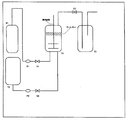
- FIG. 3 is a schematic view of the toner manufacturing apparatus.
- FIG. 4 is a schematic view of an apparatus for measuring the triboelectric charge amount.
- the toner of the present invention is a toner having core-shell toner particles in which a shell phase containing a resin A is formed on the surface of a core containing a binder resin, a colorant and a wax.
- the shell phase may cover the core as a layer having a clear interface, but may have a form in which the core is covered in a state where no clear interface exists.
- the resin A in the toner of the present invention has a peak temperature TpA (° C.) of a maximum endothermic peak at the first temperature increase of 55 ° C. or more and 80 ° C. or less, preferably measured by a differential scanning calorimeter (DSC). It is 55 degreeC or more and 75 degrees C or less.
- TpA When TpA is less than 55 ° C., the heat-resistant storage stability is lowered, and toner aggregation tends to occur due to a temperature increase during operation in the printer. When TpA exceeds 80 ° C., the control of the viscoelasticity of the toner is severe, and it becomes impossible to design a toner having a sharp melt property in the fixing temperature region, and the low temperature fixing property is lowered.
- TpA can be adjusted to the above range by appropriately changing the type of the monomer that is a raw material used for the synthesis of the resin A.
- the loss elastic modulus G ′′ a (TpA-10) [Pa] at a temperature TpA-10 (° C.) 10 ° C. lower than TpA is 1 ⁇ 10 7 Pa in the viscoelasticity measurement of the resin A. As described above, it is 1 ⁇ 10 8 Pa or less, preferably 2.0 ⁇ 10 7 Pa or more and 1.0 ⁇ 10 8 Pa or less.
- G ′′ a (TpA-10) [Pa] is less than 1 ⁇ 10 7 Pa, the heat resistance of the toner layer is lowered because the viscosity of the toner surface layer is too low.
- G ′′ a (TpA-10) [Pa] exceeds 1 ⁇ 10 8 Pa
- the low-temperature fixability deteriorates because the viscosity of the toner before melting is too high.
- the resin As the resin A, but G ′′ a (TpA-10) can be obtained by appropriately changing the kind of the raw material used for the synthesis of the resin A, the composition of the resin A, and the degree of polymerization. It is possible to adjust to the range.
- the toner of the present invention has a loss elastic modulus at TpA (° C.) of G ′′ a (TpA) [Pa] and a loss elastic modulus at a temperature TpA + 10 (° C.) 10 ° C. higher than TpA.
- G ′′ a (TpA + 10) [Pa] the relationship of the following formula (1) is satisfied.
- ⁇ log (G ′′ a (TpA)) ⁇ log (G ′′ a (TpA + 10)) ⁇ represents the amount of change in viscoelasticity in the vicinity of the melting point of the resin A.
- the loss elastic modulus at a temperature TpA + 10 (° C.) 10 ° C. higher than TpA is G ′′ a (TpA + 10) [Pa]
- ⁇ Log (G ′′ a (TpA + 10)) ⁇ log (G ′′ a (TpA + 25)) ⁇ in the formula (2) is the loss elastic modulus of the resin A from TpA + 10 (° C.) to TpA + 25 (° C.). The amount of change is expressed.
- the resin A is a copolymer of a vinyl monomer a having a molecular structure with a site capable of forming a crystal structure and a vinyl monomer b having no molecular structure with a site capable of having a crystal structure. It is preferable that it is resin obtained by doing.
- the part which can take the above-mentioned crystal structure means a part which regularly arranges and expresses crystallinity when a large number of the parts are collected, and means a crystalline polymer chain.
- the composition of the vinyl monomer a is not particularly limited, and examples of the site capable of taking a crystal structure include a vinyl monomer containing a linear alkyl group in the molecular structure or a vinyl monomer containing a polyester component in the molecular structure. Among these, a vinyl monomer containing a polyester component in the molecular structure is particularly preferable.
- the polyester component as a portion capable of taking a crystal structure is a crystalline polyester component.
- a vinyl monomer containing a linear alkyl group in the molecular structure and a vinyl monomer containing a polyester component in the molecular structure can be used in combination.
- the polyester component is preferably a crystalline polyester component obtained by reacting an aliphatic diol having 4 to 20 carbon atoms and a polycarboxylic acid.
- the aliphatic diol is preferably a linear aliphatic diol that easily improves crystallinity. Examples of the linear aliphatic diol include the following, but are not limited thereto. In some cases, it is also possible to use a mixture.
- 1,4-butanediol 1,5-pentanediol, 1,6-hexanediol, 1,7-heptanediol, 1,8-octanediol, 1,9-nonanediol, 1,10-decanediol, , 11-undecanediol, 1,12-dodecanediol, 1,13-tridecanediol, 1,14-tetradecanediol, 1,18-octadecanediol, 1,20-eicosanediol.
- the polyvalent carboxylic acid is preferably an aromatic dicarboxylic acid or an aliphatic dicarboxylic acid, more preferably an aliphatic dicarboxylic acid, and particularly preferably a linear aliphatic dicarboxylic acid from the viewpoint of forming a crystal structure.
- the aliphatic dicarboxylic acid include, but are not limited to, the following. In some cases, it is also possible to use a mixture.
- Succinic acid malonic acid, succinic acid, glutaric acid, adipic acid, pimelic acid, suberic acid, azelaic acid, sebacic acid, 1,9-nonanedicarboxylic acid, 1,10-decanedicarboxylic acid, 1,11-undecanedicarboxylic acid, 1,12-dodecanedicarboxylic acid, 1,13-tridecanedicarboxylic acid, 1,14-tetradecanedicarboxylic acid, 1,16-hexadecanedicarboxylic acid, 1,18-octadecanedicarboxylic acid. Or its lower alkyl ester or acid anhydride.
- sebacic acid adipic acid, 1,10-decanedicarboxylic acid or its lower alkyl ester and acid anhydride are preferred.
- aromatic dicarboxylic acid include the following. Terephthalic acid, isophthalic acid, 2,6-naphthalenedicarboxylic acid, 4,4′-biphenyldicarboxylic acid.
- preferred as the linear aliphatic dicarboxylic acid are adipic acid, sebacic acid, 1,12-dodecanedicarboxylic acid and 1,16-hexadecanedicarboxylic acid. It is an acid.
- the method for producing the crystalline polyester component is not particularly limited, and can be produced by a general polyester polymerization method in which an acid component and an alcohol component are reacted.
- direct polycondensation or transesterification can be performed using a monomer. Depending on the type, it can be manufactured separately.
- the production of the crystalline polyester component is preferably carried out at a polymerization temperature of 180 ° C. or higher and 230 ° C. or lower. If necessary, the reaction system is reduced in pressure and reacted while removing water and alcohol generated during condensation. Is preferred.
- a solvent having a high boiling point is preferably added as a solubilizer and dissolved.
- the dissolution auxiliary solvent is distilled off. If there is a monomer with poor compatibility in the copolymerization reaction, the monomer with poor compatibility and the monomer and the acid or alcohol to be polycondensed are condensed in advance and then polycondensed together with the main component. preferable.
- a catalyst which can be used at the time of manufacture of the said crystalline polyester component the following can be mentioned, for example. Titanium catalyst of titanium tetraethoxide, titanium tetrapropoxide, titanium tetraisopropoxide, titanium tetrabutoxide. Tin catalyst of dibutyltin dichloride, dibutyltin oxide, diphenyltin oxide.
- the crystalline polyester component is preferably alcohol-terminated. Therefore, in the preparation of the crystalline polyester, the molar ratio of the acid component to the alcohol component (alcohol component / carboxylic acid component) is preferably 1.02 or more and 1.20 or less.
- hydroxyl group-containing vinyl monomer examples include hydroxystyrene, N-methylolacrylamide, N-methylolmethacrylamide, hydroxyethyl acrylate, hydroxyethyl methacrylate, hydroxypropyl acrylate, hydroxypropyl methacrylate, polyethylene glycol acrylate, polyethylene glycol monomethacrylate, Allyl alcohol, methallyl alcohol, crotyl alcohol, isocrotyl alcohol, 1-buten-3-ol, 2-buten-1-ol, 2-butene-1,4-diol, propargyl alcohol, 2-hydroxyethylpropenyl Examples include ether and sucrose allyl ether.
- hydroxyethyl methacrylate preferred is hydroxyethyl methacrylate.
- diisocyanate include the following. C6-C20 aromatic diisocyanate, C2-C18 aliphatic diisocyanate, C4-C15 alicyclic diisocyanate, and these diisocyanates. Modified product (urethane group, carbodiimide group, allophanate group, urea group, burette group, uretdione group, uretoimine group, isocyanurate group, oxazolidone group-containing modified product, hereinafter also referred to as modified diisocyanate), and two or more of these blend.
- modified diisocyanate examples include the following.
- alicyclic diisocyanate include the following. Isophorone diisocyanate (IPDI), dicyclohexylmethane-4,4′-diisocyanate, cyclohexylene diisocyanate, methylcyclohexylene diisocyanate.
- aromatic diisocyanate include the following. m- and / or p-xylylene diisocyanate (XDI), ⁇ , ⁇ , ⁇ ′, ⁇ ′-tetramethylxylylene diisocyanate.
- aromatic diisocyanates having 6 to 15 carbon atoms preferred are aromatic diisocyanates having 6 to 15 carbon atoms, aliphatic diisocyanates having 4 to 12 carbon atoms, and alicyclic diisocyanates having 4 to 15 carbon atoms, and particularly preferred are HDI. And IPDI and XDI.
- trifunctional or higher isocyanate compounds can also be used.
- the crystalline polyester component preferably has a maximum endothermic peak temperature of 55 ° C. or higher and 80 ° C. or lower in DSC measurement. By being this range, it becomes possible to make TpA of resin A into the above-mentioned range.
- the crystalline polyester component preferably has a number average molecular weight (Mn) of 1000 or more and 20000 or less in gel permeation chromatography (GPC) soluble in tetrahydrofuran (THF). Moreover, it is preferable that a weight average molecular weight (Mw) is 2000-40000. By being in this range, it is possible to maintain good heat-resistant storage stability and to impart sharp melt properties to the toner. A more preferable range of Mn is 2000 or more and 15000 or less. A more preferable range of Mw is 3000 or more and 20000 or less. Further, Mw / Mn is preferably 5 or less, and a more preferable range of Mw / Mn is 3 or less.
- the alkyl acrylate or alkyl methacrylate whose carbon number of an alkyl group is 12 or more are preferable, for example, the following can be mentioned.
- the resin A is based on the total amount of polymerizable monomers forming the resin A, and the vinyl monomer a is 20.0% by mass or more and 50.0% by mass or less, and a vinyl-based single monomer described later. It is preferable that it is resin obtained by copolymerizing body b 50.0 mass% or more and 80.0 mass% or less.
- the formula (1) is a change in the loss elastic modulus of the resin A from the temperature TpA (° C.) to TpA + 10 (° C.). It becomes possible to satisfy the relationship 1).
- the loss elastic modulus of the resin A can satisfy the relationship of the formula (2).
- the vinyl monomer b used for the synthesis of the resin A is composed of one or more kinds of vinyl monomers.
- the vinyl monomer b used in the present invention contains a vinyl monomer (hereinafter also referred to as a high Tg vinyl monomer) having a glass transition temperature (Tg (° C.)) of 105 ° C. or higher in the homopolymer. It is preferable to do.
- methyl methacrylate (Tg 107 ° C)
- the glass transition temperature Tg of the homopolymer is an average value (neat resin) measured as a homopolymer alone in the polymer database (polyinfo) value of NIMS (National Institute for Materials Science). Quote the median).
- the content of the high Tg vinyl monomer is preferably 1.0% by mass or more and 15.0% by mass or less, more preferably, based on all monomers used for the copolymerization of the resin A.
- the vinyl monomer b can be used in combination with the following monomers in addition to the high Tg vinyl monomer. Specific examples include the following.
- Aliphatic vinyl hydrocarbons alkenes (ethylene, propylene, butene, isobutylene, pentene, heptene, diisobutylene, octene, dodecene, octadecene, other ⁇ -olefins); alkadienes (butadiene, isoprene, 1,4-pentadiene) 1,6-hexadiene and 1,7-octadiene).
- alkenes ethylene, propylene, butene, isobutylene, pentene, heptene, diisobutylene, octene, dodecene, octadecene, other ⁇ -olefins
- alkadienes butadiene, isoprene, 1,4-pentadiene) 1,6-hexadiene and 1,7-octadiene).
- Alicyclic vinyl hydrocarbons mono- or di-cycloalkenes and alkadienes (cyclohexene, cyclopentadiene, vinylcyclohexene, ethylidenebicycloheptene); terpenes (pinene, limonene, indene).
- Aromatic vinyl hydrocarbon Styrene and its hydrocarbyl (alkyl, cycloalkyl, aralkyl and / or alkenyl) substituted products ( ⁇ -methylstyrene, vinyltoluene, 2,4-dimethylstyrene, ethylstyrene, isopropylstyrene, butylstyrene , Phenylstyrene, cyclohexylstyrene, benzylstyrene, crotylbenzene, divinylbenzene, divinyltoluene, divinylxylene, trivinylbenzene); and vinylnaphthalene.
- Carboxyl group-containing vinyl monomers and metal salts thereof unsaturated monocarboxylic acids having 3 to 30 carbon atoms, unsaturated dicarboxylic acids and their anhydrides and monoalkyl [1 to 11 carbon atoms] esters (maleic acid, anhydrous) Maleic acid, maleic acid monoalkyl ester, fumaric acid, fumaric acid monoalkyl ester, crotonic acid, itaconic acid, itaconic acid monoalkyl ester, itaconic acid glycol monoether, citraconic acid, citraconic acid monoalkyl ester, carboxyl group of cinnamic acid Containing vinyl monomers).
- Vinyl esters (vinyl acetate, vinyl butyrate, vinyl propionate, vinyl butyrate, diallyl phthalate, diallyl adipate, isopropenyl acetate, vinyl methacrylate, methyl 4-vinylbenzoate, cyclohexyl methacrylate, benzyl methacrylate, phenyl acrylate, phenyl methacrylate, vinyl methoxy Acetate, vinyl benzoate, ethyl ⁇ -ethoxy acrylate), alkyl acrylate and alkyl methacrylate (alkyl acrylate, methyl methacrylate, ethyl acrylate, ethyl methacrylate, propyl acrylate, alkyl group having 1 to 11 carbon atoms (straight or branched), Propyl methacrylate, butyl acrylate, butyl methacrylate, 2-ethyl Hexyl acrylate, 2-ethylhexyl meth
- a vinyl monomer having an organic polysiloxane structure represented by the following chemical formula 1 can be used in combination.
- the use of the vinyl monomer having an organic polysiloxane structure is suitable for a method for producing toner particles using high-pressure carbon dioxide as a dispersion medium described later.
- R 1 and R 2 each independently represent an alkyl group, preferably each having 1 to 3 carbon atoms, and more preferably 1 carbon atoms in R 1 .
- R 3 is preferably an alkylene group, and more preferably 1 to 3 carbon atoms.
- R 4 represents hydrogen or a methyl group.
- N is a degree of polymerization, and the degree of polymerization n is preferably an integer of 2 or more and 100 or less, more preferably 2 or more and 18 or less, and further preferably 2 or more and 15 or less.
- the resin A is a vinyl monomer having an organic polysiloxane structure represented by the above chemical formula 1 out of 100.0% by mass of all monomers used for copolymerization of the resin A, 20% It is preferable that it is a vinyl resin obtained by adding 0.0 mass% or less and copolymerizing.
- the organic polysiloxane structure in the resin A is likely to have an appropriate amount, and in the production method using carbon dioxide in a liquid state or a supercritical state as a dispersion medium, It becomes easy to disperse stably in a dispersion medium in the state of resin fine particles.
- the number average molecular weight (Mn) is preferably 8000 or more and 40000 or less. Moreover, it is preferable that a weight average molecular weight (Mw) is 15000 or more and 90000 or less. By being in this range, it is possible to maintain good heat-resistant storage stability and to impart sharp melt properties to the toner.
- Mn is 8000 or more and 25000 or less. Moreover, the more preferable range of Mw is 20000 or more and 80000 or less. Further, Mw / Mn is preferably 7 or less.
- the resin forming the shell phase in the present invention is preferably not dissolved in the dispersion medium when toner particles are produced by the method described later. Therefore, a crosslinked structure may be introduced into the resin. Further, the ratio of the resin A in the resin forming the shell phase in the present invention is not particularly limited, but is preferably 50.0% by mass or more, and it is particularly preferable not to use a resin other than the resin A as the shell phase. preferable.
- ⁇ log (G ′′ a (TpA + 10)) ⁇ log (G ′′ b (TpA + 10)) ⁇ represents the difference in viscosity between the binder resin and the resin A at the temperature at which the resin A is melted. It represents.
- the difference in viscosity between the binder resin and the resin A as the core material at the time of melting does not become excessively large. By satisfying this requirement, the shell phase does not hinder the elution of the binder resin during fixing, and the fixing property is stabilized.
- ⁇ log (G ′′ a (TpA + 10)) ⁇ log (G ′′ b (TpA + 10)) ⁇ indicates the combination of the binder resin and the raw materials constituting the resin A, and the degree of polymerization of each resin. It is possible to adjust to the said range by changing suitably.
- G ′′ b (TpA + 25) [Pa] is preferably 1.0 ⁇ 10 3 Pa or more and 1.0 ⁇ 10 5 Pa or less, more preferably 5.0 ⁇ 10 3 Pa or more, 8.0. ⁇ 10 4 Pa or less.
- the binder resin either a crystalline resin or an amorphous resin can be used. These may be mixed or used.
- the binder resin preferably contains a crystalline resin.
- the crystalline resin means a resin having a crystal structure in which polymer molecular chains are regularly arranged. Therefore, it hardly softens to the vicinity of the melting point, melting occurs from the vicinity of the melting point and softens rapidly.
- the toner of the present invention when the content of the crystalline resin in the binder resin is 50% by mass or more and 85% by mass or less, it is possible to further improve the low temperature fixability and the heat resistant storage stability.
- the peak temperature of the maximum endothermic peak derived from the crystalline resin in the first temperature increase is preferably 55 ° C. or higher and 80 ° C. or lower in the measurement with a differential scanning calorimeter (DSC). . Within this range, the viscosity relationship between the resin A and the binder resin can easily satisfy the expressions (3) and (4).
- a monomer that can be used for the synthesis of the crystalline polyester component that can be used for the resin A is preferably used for the synthesis.
- an aliphatic diol having a double bond can also be used as the aliphatic diol.
- the aliphatic diol having a double bond include the following compounds. 2-butene-1,4-diol, 3-hexene-1,6-diol, 4-octene-1,8-diol.
- a dicarboxylic acid having a double bond can also be used as the polyvalent carboxylic acid.
- Such dicarboxylic acids include, but are not limited to, fumaric acid, maleic acid, 3-hexenedioic acid, and 3-octenedioic acid. Moreover, these lower alkyl esters and acid anhydrides are also included. Among these, fumaric acid and maleic acid are preferable in terms of cost.
- an amorphous resin that can be used for the binder resin of the present invention will be described. Examples of the amorphous resin used for the binder resin include, but are not limited to, vinyl resins such as polyurethane resins, polyester resins, styrene acrylic resins, and polystyrene. These resins may be modified with urethane, urea, or epoxy.
- polyester resins and polyurethane resins are preferably used from the viewpoint of maintaining elasticity.
- the monomer used in the polyester resin as the amorphous resin include divalent or trivalent or higher carboxylic acids as described in “Polymer Data Handbook: Basic Edition” (Edited by Polymer Society: Bafukan). And divalent or trivalent or higher alcohols. Specific examples of these monomer components include the following compounds.
- Divalent carboxylic acids include succinic acid, adipic acid, sebacic acid, phthalic acid, isophthalic acid, terephthalic acid, malonic acid, dodecenyl succinic acid dibasic acid, anhydrides thereof and lower alkyl esters thereof, maleic acid , Fumaric acid, itaconic acid, citraconic acid aliphatic unsaturated dicarboxylic acid.
- Examples of the trivalent or higher carboxylic acid include 1,2,4-benzenetricarboxylic acid, anhydrides thereof, and lower alkyl esters thereof. These may be used individually by 1 type and may use 2 or more types together.
- Examples of the divalent alcohol include the following compounds.
- Bisphenol A hydrogenated bisphenol A, ethylene oxide adduct of bisphenol A, propylene oxide adduct of bisphenol A, 1,4-cyclohexanediol, 1,4-cyclohexanedimethanol, ethylene glycol, propylene glycol.
- trivalent or higher alcohol include the following compounds. Glycerin, trimethylol ethane, trimethylol propane, pentaerythritol. These may be used individually by 1 type and may use 2 or more types together.
- a monovalent acid such as acetic acid or benzoic acid
- a monovalent alcohol such as cyclohexanol or benzyl alcohol
- the polyester resin can be synthesized by a conventionally known method using the monomer component.
- the polyurethane resin as the amorphous resin will be described.
- the polyurethane resin is a reaction product of an aliphatic diol and a diisocyanate, and the functionality of the resulting resin can be changed by changing the aliphatic diol and the diisocyanate.
- the diisocyanate include diisocyanates that can be used for the resin A.
- Alkylene glycol ethylene glycol, 1,2-propylene glycol, 1,3-propylene glycol
- alkylene ether glycol polyethylene glycol, polypropylene glycol
- alicyclic diol 1,4-cyclohexanedimethanol
- bisphenols bisphenol
- alkylene oxide ethylene oxide, propylene oxide
- adduct of the alicyclic diol the alkyl portion of the alkylene ether glycol may be linear or branched.
- an alkylene glycol having a branched structure can also be preferably used.
- the glass transition temperature (Tg) of the amorphous resin in the binder resin is preferably 50 ° C. or higher and 130 ° C. or lower. More preferably, it is 70 degreeC or more and 130 degrees C or less. By being in this range, the elasticity in the fixing region is easily maintained.
- a block polymer in which a portion that can take a crystal structure and a portion that cannot take a crystal structure are chemically bonded is used as a main component of the binder resin.
- the “main component of the binder resin” in the present invention means that the content of the block polymer with respect to 100 parts by mass of the binder resin is 50 parts by mass or more.
- the block polymer is a polymer in which polymers are linked by a covalent bond within one molecule.
- the part which can take a crystal structure is crystalline polyester
- the part which cannot take a crystal structure is polyester or polyurethane as an amorphous resin.
- the block polymer includes an AB type diblock polymer, an ABA type triblock polymer, a BAB type triblock polymer, an ABAB type, which has a part (A) that can take a crystal structure and a part (B) that cannot take a crystal structure.
- Type multi-block polymers, and any form can be used in the present invention.
- examples of a bonding form in which a portion that can take a crystal structure and a portion that cannot take a crystal structure are covalently bonded include an ester bond, a urea bond, and a urethane bond. Among these, a block polymer bonded with a urethane bond is more preferable.
- the content of the portion capable of taking the crystal structure in the binder resin is preferably 50% by mass or more with respect to the total mass of the binder resin.
- a method of preparing the block polymer a method of preparing a component that can take a crystal structure and a component that forms a site that cannot take a crystal structure separately and combining them is used (two-step method). be able to.
- a method (one-step method) in which a component that forms a site capable of taking a crystal structure and a raw material of a component that forms a site that cannot take a crystal structure are simultaneously prepared and prepared at one time can be used.
- the block polymer in the present invention can be synthesized by selecting from various methods in consideration of the reactivity of each terminal functional group.
- each component can be prepared separately and then bonded using a binder.
- the reaction temperature is preferably about 200 ° C.
- These binders can be used for synthesis by dehydration reaction or addition reaction.
- the crystalline polyester alcohol ends and polyurethane isocyanate It can be prepared by urethanating the end.
- the synthesis can also be performed by mixing a crystalline polyester having an alcohol terminal and a diol and diisocyanate constituting polyurethane and heating.
- the number average molecular weight of the block polymer is preferably 3000 or more and 40000 or less, and more preferably 7000 or more and 25000 or less. Moreover, it is preferable that the weight average molecular weights of the said block polymer are 10,000 or more and 60000 or less, More preferably, they are 20000 or more and 50000 or less.
- the acid value of the block polymer is preferably 3.0 mgKOH / g or more and 30.0 mgKOH / g or less, more preferably 5.0 mgKOH / g or more and 20.0 mgKOH / g or less.
- the acid value of the block polymer is adjusted by changing the terminal isocyanate group, hydroxyl group and carboxyl group of the block polymer to polyvalent carboxylic acids, polyhydric alcohols, polyvalent isocyanates, polyfunctional epoxies, This can be done by modifying with acid anhydrides or polyvalent amines.
- a charge control agent in the toner of the present invention, can be mixed with toner particles and used as necessary. Further, it may be added when the toner particles are produced. By blending the charge control agent, the charge characteristics can be stabilized and the optimum triboelectric charge amount can be controlled according to the development system.
- the charge control agent a known one can be used, and a charge control agent that has a high charging speed and can stably maintain a constant charge amount is particularly preferable. Examples of the charge control agent that control the toner to be negatively charged include the following.
- Organic metal compounds and chelate compounds are effective, and examples include monoazo metal compounds, acetylacetone metal compounds, aromatic oxycarboxylic acids, aromatic dicarboxylic acids, oxycarboxylic acids, and dicarboxylic acid-based metal compounds.
- the toner of the present invention can contain these charge control agents alone or in combination of two or more.
- a preferable blending amount of the charge control agent is 0.01 parts by mass or more and 20 parts by mass or less, and more preferably 0.5 parts by mass or more and 10 parts by mass or less with respect to 100 parts by mass of the binder resin.
- the toner particles used in the toner of the present invention contain a wax.
- the wax is not particularly limited, but includes the following.
- the wax particularly preferably used in the present invention is, in the dissolution suspension method, easy preparation of the wax dispersion, easy incorporation into the prepared toner, seepage from the toner during fixing, release From the viewpoint of properties, aliphatic hydrocarbon waxes and ester waxes are preferred.
- the ester wax only needs to have at least one ester bond in one molecule, and either natural ester wax or synthetic ester wax may be used.
- the synthetic ester wax include monoester waxes synthesized from a long-chain linear saturated fatty acid and a long-chain linear saturated aliphatic alcohol.
- natural ester waxes include candelilla wax, carnauba wax, rice wax, and derivatives thereof.
- more preferable waxes are synthetic ester waxes composed of long-chain linear saturated fatty acids and long-chain linear saturated aliphatic alcohols, or natural waxes based on the above esters.
- the ester is a monoester in addition to the linear structure described above.
- the wax content in the toner is preferably 1.0% by mass or more and 20.0% by mass or less, more preferably 2.0% by mass or more and 15.0% by mass.
- the wax content in the toner is preferably 1.0% by mass or more and 20.0% by mass or less, more preferably 2.0% by mass or more and 15.0% by mass.
- the wax preferably has a maximum endothermic peak at 60 ° C. or higher and 120 ° C. or lower as measured by a differential scanning calorimeter (DSC). More preferably, it is 60 degreeC or more and 90 degrees C or less.
- the exposure of the wax on the toner surface can be brought into an appropriate state, so that the heat resistant storage stability can be further improved.
- the wax is easily melted appropriately at the time of fixing, the low-temperature fixing property and the offset resistance can be further improved.
- the toner of the present invention requires a colorant in order to impart coloring power.
- the colorant preferably used in the present invention include the following organic pigments, organic dyes, and inorganic pigments, and the colorants conventionally used in toners can be used.
- the colorant used in the toner of the present invention is selected from the viewpoints of hue angle, saturation, brightness, light resistance, OHP transparency, and dispersibility in the toner. The following are mentioned as a coloring agent used for this invention.
- Examples of the colorant for yellow include compounds represented by condensed azo compounds, isoindolinone compounds, anthraquinone compounds, azo metal complexes, methine compounds, and allylamide compounds. Specific examples include the following. C. I.
- the colorant for magenta include condensed azo compounds, diketopyrrolopyrrole compounds, anthraquinones, quinacridone compounds, basic dye lake compounds, naphthol compounds, benzimidazolone compounds, thioindigo compounds, and perylene compounds. Specific examples include the following. C. I.
- the colorant for cyan include copper phthalocyanine compounds and derivatives thereof, anthraquinone compounds, and basic dye lake compounds. Specific examples include the following.
- black colorants include the following.
- the content of the colorant when used as a colorant for an ordinary color toner, is preferably 2.0% by mass or more and 15.0% by mass or less based on the toner.
- the content of the colorant is preferably 2.0% by mass or more and 15.0% by mass or less based on the toner.
- the color space can be expanded while improving the coloring power. More preferably, it is 2.5 mass% or more and 12.0 mass% or less.
- a light color toner having a reduced density can be preferably used in combination with a normal color toner.
- the content of the colorant is preferably 0.5% by mass or more and 5.0% by mass or less with respect to the toner.
- inorganic fine powder As a fluidity improver to the toner particles used in the present invention.
- the inorganic fine powder added to the toner particles used in the present invention include fine powders such as silica fine powder, titanium oxide fine powder, alumina fine powder, and double oxide fine powders thereof.
- silica fine powder and titanium oxide fine powder are preferable.
- the silica fine powder include dry silica or fumed silica produced by vapor phase oxidation of silicon halide, and wet silica produced from water glass.
- dry silica having less silanol groups on the surface and inside the silica fine powder and less Na 2 O and SO 3 2 ⁇ is preferable.
- the dry silica may be a composite fine powder of silica and another metal oxide produced by using a metal halogen compound such as aluminum chloride or titanium chloride together with a silicon halogen compound in the production process.
- Specific examples of the inorganic fine particles include the following.
- Silica alumina, titanium oxide, barium titanate, magnesium titanate, calcium titanate, strontium titanate, zinc oxide, tin oxide, silica sand, clay, mica, wollastonite, diatomaceous earth, chromium oxide, cerium oxide, bengara , Antimony trioxide, magnesium oxide, zirconium oxide, barium sulfate, barium carbonate, calcium carbonate, silicon carbide, silicon nitride.
- the inorganic fine powder is preferably externally added to the toner particles in order to improve the fluidity of the toner and make the toner particles uniformly charged.
- the hydrophobic treatment of the inorganic fine powder makes it possible to adjust the charge amount of the toner, improve the environmental stability, and improve the characteristics in a high-humidity environment. More preferably, the body is used. When the inorganic fine powder added to the toner absorbs moisture, the charge amount as the toner is lowered, and the developability and transferability are easily lowered.
- treatment agents for the hydrophobic treatment of inorganic fine powder unmodified silicone varnish, various modified silicone varnishes, unmodified silicone oil, various modified silicone oils, silane compounds, silane coupling agents, other organosilicon compounds, organotitanium Compounds. These treatment agents may be used alone or in combination. Among these, inorganic fine powder treated with silicone oil is preferable.
- the hydrophobicity-treated inorganic fine powder treated with silicone oil treated with silicone oil simultaneously or after the hydrophobic treatment of the inorganic fine powder with a coupling agent increases the charge amount of the toner particles even in a high humidity environment. It is good for maintaining high and reducing selective developability.
- the amount of the inorganic fine powder added is preferably 0.1 parts by mass or more and 4.0 parts by mass or less, more preferably 0.2 parts by mass or more and 3.5 parts by mass with respect to 100 parts by mass of the toner particles. It is as follows.
- the toner of the present invention is a toner having a core-shell structure having a shell phase on the surface of the core.
- the shell phase may be formed at the same time as the core formation step or after the core is formed. From the viewpoint of simplicity, it is preferable to simultaneously perform the formation of the core and the shell phase.
- the method for forming the shell phase is not limited at all. For example, when the shell phase is provided after the core is formed, the core and the resin fine particles are dispersed in an aqueous medium, and then the resin fine particles are formed on the core surface. There is a method of agglomerating and adsorbing.
- the resin fine particles forming the shell phase are preferably 3.0 parts by mass or more and 15.0 parts by mass or less with respect to 100 parts by mass of the binder resin (resin contained in the core).
- the toner particles used in the present invention particularly contain 3.0 parts by mass or more and 15.0 parts by mass or less of the resin A contained in the shell phase with respect to 100.0 parts by mass of the core. preferable.
- an emulsion aggregation method and a dissolution suspension method can be used as a method for preparing toner particles having a core-shell structure.
- a dissolution suspension method capable of preparing toner particles having a core-shell structure in one step is preferable.
- the dissolution suspension method a resin composition obtained by dissolving a binder resin as a core in an organic medium is dispersed in an aqueous medium in which resin fine particles as a shell phase are dispersed. Then, the organic medium is removed to obtain toner particles.
- the method for preparing the resin fine particles is not particularly limited, and may be prepared by dissolving the emulsion polymerization method or the resin in a solvent or liquefying it and suspending it in an aqueous medium. it can. At this time, a known surfactant or dispersant can be used, or the resin constituting the fine particles can be made self-emulsifying.
- Solvents that can be used as an organic medium for dissolving the binder resin include hydrocarbon solvents such as ethyl acetate, xylene, and hexane, halogenated hydrocarbon solvents such as methylene chloride, chloroform, and dichloroethane, methyl acetate, ethyl acetate, Examples thereof include ester solvents such as butyl acetate and isopropyl acetate, ether solvents such as diethyl ether, and ketone solvents such as acetone, methyl ethyl ketone, diisobutyl ketone, 2-butanone, cyclohexanone and methylcyclohexane.
- hydrocarbon solvents such as ethyl acetate, xylene, and hexane
- halogenated hydrocarbon solvents such as methylene chloride, chloroform, and dichloroethane
- methyl acetate ethyl a
- ком ⁇ онент examples include ethyl acetate and 2-butanone.
- aqueous medium used in the present invention water alone may be used, but a solvent miscible with water may be used in combination.
- miscible solvents include alcohol (methanol, isopropanol, ethylene glycol), dimethylformamide, tetrahydrofuran, cellosolves (methylcellosolve), and lower ketones (acetone, 1-butanone).
- the method for dispersing the resin composition or the like in a dispersion medium is not particularly limited, and general-purpose devices such as a low-speed shear method, a high-speed shear method, a friction method, a high-pressure jet method, and an ultrasonic wave can be used. It is preferable to use a general-purpose emulsifier or disperser.
- Ultra Tarrax manufactured by IKA
- Polytron manufactured by Kinematica
- TK Auto Homo Mixer manufactured by Special Machine Industries Co., Ltd.
- Ebara Milder manufactured by Ebara Corporation
- TK Homomic Line Flow (Made by Special Machine Industries Co., Ltd.)
- colloid mill made by Shinko Pantech Co., Ltd.
- slasher trigonal wet pulverizer
- trigonal wet pulverizer made by Mitsui Miike Chemical Co., Ltd.
- Cavitron made by Eurotech
- fine flow mill examples thereof include a continuous emulsifier (manufactured by Taiheiyo Kiko Co., Ltd.), a batch type of CLEARMIX (manufactured by M Technique Co., Ltd.), a batch type of FILMIX (manufactured by Tokushu Kika Kogyo Co., Ltd.), or a continuous-use emulsifier.
- the number of rotations is not particularly limited, but is usually 1000 rpm to 30000 rpm, preferably 3000 rpm to 20000 rpm.
- the dispersion time is usually from 0.1 minutes to 5 minutes.
- the temperature during dispersion is usually 10 ° C. or higher and 55 ° C. or lower, preferably 10 ° C. or higher and 40 ° C. or lower.
- the toner particles (I) a step of obtaining a resin composition in which the binder resin, the colorant and the wax are dissolved or dispersed in a medium containing an organic solvent, (II) the resin composition , A step of dispersing the resin fine particles containing the resin (A) in a dispersion medium having carbon dioxide in a supercritical state or a liquid state to obtain a dispersion, and (III) removing the organic solvent from the dispersion. Since it was formed by passing through the process of removing, it is preferable.
- the resin composition is granulated by dispersing it in carbon dioxide in a supercritical state or liquid state obtained by applying high pressure to carbon dioxide, and the organic solvent contained in the granulated particles is oxidized.
- carbon dioxide is separated from the particles by vaporizing the carbon dioxide by extracting the carbon phase and removing it, and then releasing the pressure to obtain toner particles.
- liquid or supercritical carbon dioxide as a dispersion medium, a hydrophobic toner material that is easily compatible with carbon dioxide is easily oriented on the surface of the toner particles, and the resulting toner particle surface is also hydrophobic. It is easy to become.
- This represents carbon dioxide under the gas / liquid boundary line, the isotherm of the critical temperature, and the temperature and pressure conditions of the portion surrounded by the solid-liquid boundary line.
- the carbon dioxide in a supercritical state represents carbon dioxide under temperature and pressure conditions above the critical point of the carbon dioxide.
- a dispersion medium is a carbon dioxide main component (50 mass% or more).
- the dispersion medium may contain an organic solvent as another component.
- carbon dioxide and the organic solvent form a homogeneous phase.
- a binder resin solution As the dispersant, a resin fine particle dispersant is used.
- the particle diameter of the resin A fine particles is preferably 5 nm to 500 nm in volume average particle diameter so that the toner particles form a core-shell structure. More preferably, it is 50 nm or more and 300 nm or less.
- any method may be used as a method for dispersing the dispersant in carbon dioxide in a liquid state or a supercritical state.
- a method for dispersing the dispersant in carbon dioxide in a liquid state or a supercritical state there is a method in which the dispersant and liquid or supercritical carbon dioxide are charged in a container and directly dispersed by stirring or ultrasonic irradiation.
- a dispersion liquid in which the dispersant is dispersed in an organic solvent is introduced into a container charged with carbon dioxide in a liquid state or a supercritical state using a high-pressure pump.
- any method may be used for dispersing the binder resin solution in liquid or supercritical carbon dioxide.
- the binder resin solution into a container containing carbon dioxide in a liquid state or a supercritical state in which the dispersant is dispersed using a high-pressure pump.
- carbon dioxide in a liquid state or a supercritical state in which the dispersant is dispersed may be introduced into a container charged with the binder resin solution.
- the liquid or supercritical carbon dioxide dispersion medium is a single phase.
- the carbon dioxide phase and the organic solvent phase exist in a separated state, which causes the stability of the oil droplets to be impaired. Therefore, the temperature and pressure of the dispersion medium, and the amount of the binder resin solution with respect to carbon dioxide in a liquid state or supercritical state can be adjusted within a range in which carbon dioxide and an organic solvent can form a homogeneous phase. preferable.
- the temperature and pressure of the dispersion medium attention should be paid to granulation properties (ease of oil droplet formation) and solubility of the constituent components in the binder resin solution in the dispersion medium. .
- the binder resin and wax in the binder resin solution may be dissolved in the dispersion medium depending on temperature conditions and pressure conditions.
- the lower the temperature and the lower the pressure the more the solubility of the above components in the dispersion medium is suppressed, but the formed oil droplets are likely to agglomerate and coalesce, and the granulation property is lowered.
- the granulation property is improved as the temperature and pressure are increased, the components tend to be easily dissolved in the dispersion medium.
- carbon dioxide in the liquid state or supercritical state can be obtained by increasing the temperature even at a low pressure, but it can be obtained by increasing the pressure at a low temperature in order to reduce the influence of the temperature on the toner material. It is preferable.
- the temperature of the dispersion medium for example, when a crystalline polyester component is used as a toner material, the temperature is lower than the melting point of the crystalline polyester component so as not to impair the crystallinity of the crystalline polyester component. It is preferable to make it. Therefore, in the production of the toner particles of the present invention, the temperature of the dispersion medium is preferably 10 ° C. or higher and 40 ° C. or lower.
- the pressure in the container forming the dispersion medium is preferably 1.0 MPa or more and 20.0 MPa or less, and more preferably 2.0 MPa or more and 15.0 MPa or less.
- the pressure in this invention shows the total pressure, when components other than a carbon dioxide are contained in a dispersion medium.
- the proportion of carbon dioxide in the dispersion medium in the present invention is preferably 70% by mass or more, more preferably 80% by mass or more, and further preferably 90% by mass or more.
- the mixing of the dispersion medium and the carbon dioxide in the liquid state or the supercritical state may be performed by adding liquid state or supercritical carbon dioxide obtained by applying a higher pressure to the dispersion medium.
- the dispersion medium may be added to liquid or supercritical carbon dioxide obtained by applying a lower pressure than this.
- As a method for replacing carbon dioxide containing an organic solvent with carbon dioxide in a liquid state or supercritical state there is a method of circulating liquid state or supercritical carbon dioxide while keeping the pressure in the container constant. Can be mentioned. At this time, the toner particles formed are captured while being captured by a filter.
- the dispersion medium When the liquid medium or the supercritical carbon dioxide is not sufficiently substituted, and the organic solvent remains in the dispersion medium, the dispersion medium is used when the container is decompressed in order to recover the obtained toner particles. In some cases, the organic solvent dissolved therein may condense and the toner particles may be redissolved or the toner particles may coalesce. Therefore, the substitution with carbon dioxide in the liquid or supercritical state must be performed until the organic solvent is completely removed.
- the amount of carbon dioxide in the liquid state or supercritical state to be circulated is preferably 1 to 100 times, more preferably 1 to 50 times, most preferably 1 or more times the volume of the dispersion medium. 30 times or less.
- the pressure When removing the toner particles from the dispersion containing carbon dioxide in a liquid state or supercritical state in which the toner particles are dispersed by depressurizing the container, the pressure may be reduced to normal temperature and normal pressure at once, but the pressure is controlled independently. The pressure may be reduced stepwise by providing the container in multiple stages. The decompression speed is preferably set within a range where the toner particles do not foam.
- the organic solvent, liquid, or supercritical carbon dioxide used in the present invention can be recycled.
- the toner of the present invention has a number average molecular weight (Mn) of 5000 to 40000 and a weight average molecular weight (Mw) of 15000 to 60000 in gel permeation chromatography (GPC) soluble in tetrahydrofuran (THF). Is preferred. By being in this range, it is possible to maintain good heat-resistant storage stability and to impart an appropriate sharp melt property to the toner.
- Mn number average molecular weight
- Mw weight average molecular weight
- Mw weight average molecular weight
- THF tetrahydrofuran
- the peak temperature of the maximum endothermic peak in the present invention is measured under the following conditions using DSC Q1000 (manufactured by TA Instruments). Temperature increase rate: 10 ° C / min Measurement start temperature: 20 ° C Measurement end temperature: 180 ° C
- the temperature correction of the device detection unit uses the melting points of indium and zinc, and the correction of heat uses the heat of fusion of indium. Specifically, about 5 mg of a sample is precisely weighed, placed in a silver pan, and measured once. A silver empty pan is used as a reference.
- the peak temperature of the maximum endothermic peak in the first temperature increase of the resin A is TpA (° C.).
- the “melting point” of the crystalline material is the peak temperature of the maximum endothermic peak at the first temperature rise of the crystalline material in the above method.
- the glass transition temperature of resin A is TpA. The glass transition temperature is determined as follows.
- the loss modulus G ′′ is measured using a viscoelasticity measuring device (rheometer) ARES (manufactured by Rheometrics Scientific). The outline of the measurement is described in ARES operation manuals 902-30004 (August 1997 version) and 902-00153 (July 1993 version) published by Rheometrics Scientific, Inc., and is as follows.
- ⁇ Measurement jig torsion rectangular Measurement sample: A rectangular parallelepiped sample having a width of about 12 mm, a height of about 20 mm, and a thickness of about 2.5 mm is prepared for the resin used as the shell phase (maintaining 15 kN for 1 minute at room temperature).
- the press molding machine uses a 100 kN press NT-100H manufactured by NPa Systems. After the jig and sample are left at room temperature (23 ° C.) for 1 hour, the sample is attached to the jig. See FIG. As shown in the figure, the measurement unit is fixed so that the width is about 12 mm, the thickness is about 2.5 mm, and the height is 10.0 mm. The temperature is controlled over 10 minutes up to the measurement start temperature of 30 ° C., and then measured with the following settings. Measurement frequency: 6.28 rad / s ⁇ Measurement strain setting: Initial value is set to 0.1% and measurement is performed in automatic measurement mode ⁇ Sample extension correction: Adjustment in automatic measurement mode ⁇ Measurement temperature: 2 from 30 ° C.
- TpA-10 (° C.), TpA (° C.), TpA + 10 (° C.), and TpA + 25 (° C.) at each temperature with respect to the value of TpA determined by the above ⁇ Method for measuring peak temperature of maximum endothermic peak>.
- the values of loss elastic modulus G ′′ a (TpA ⁇ 10), G ′′ a (TpA), G ′′ a (TpA + 10), and G ′′ a (TpA + 25) are read.
- the same measurement was performed for the binder resin used as the core, and the measured values of the loss modulus G ′′ b (TpA + 10) and G ′′ b (TpA + 25) at each temperature of TpA + 10 (° C.) and TpA + 25 (° C.) were measured. Read. See FIG.
- the weight average particle diameter (D4) and number average particle diameter (D1) of the toner are calculated as follows.
- a precise particle size distribution measuring device “Coulter Counter Multisizer 3” (registered trademark, manufactured by Beckman Coulter, Inc.) using a pore electrical resistance method equipped with a 100 ⁇ m aperture tube is used.
- the attached dedicated software “Beckman Coulter Multisizer 3 Version 3.51” (manufactured by Beckman Coulter, Inc.) is used. The measurement is performed with 25,000 effective measurement channels.
- the electrolytic aqueous solution used for the measurement special grade sodium chloride is dissolved in ion-exchanged water so as to have a concentration of about 1% by mass, for example, “ISOTON II” (manufactured by Beckman Coulter) can be used.
- ISOTON II manufactured by Beckman Coulter
- the dedicated software is set as follows. On the “Change Standard Measurement Method (SOM)” screen of the dedicated software, set the total count in the control mode to 50000 particles, set the number of measurements once, and set the Kd value to “standard particles 10.0 ⁇ m” (Beckman Coulter Set the value obtained using By pressing the “Threshold / Noise Level Measurement Button”, the threshold and noise level are automatically set.
- the current is set to 1600 ⁇ A
- the gain is set to 2
- the electrolyte is set to ISOTON II
- the “aperture tube flush after measurement” is checked.
- the bin interval is set to logarithmic particle size, the particle size bin to 256 particle size bin, and the particle size range from 2 ⁇ m to 60 ⁇ m.
- the specific measurement method is as follows. (1) About 200 ml of the electrolytic solution is placed in a glass 250 ml round bottom beaker exclusively for Multisizer 3, set on a sample stand, and the stirrer rod is stirred counterclockwise at 24 rpm.
- the height position of the beaker is adjusted so that the resonance state of the liquid surface of the electrolytic aqueous solution is maximized.
- (5) In a state where the electrolytic aqueous solution in the beaker of (4) is irradiated with ultrasonic waves, about 10 mg of toner is added to the electrolytic aqueous solution little by little and dispersed. Then, the ultrasonic dispersion process is continued for another 60 seconds. In the ultrasonic dispersion, the temperature of the water tank is appropriately adjusted so as to be 10 ° C. or higher and 40 ° C. or lower.
- the electrolyte solution of (5) in which the toner is dispersed is dropped using a pipette, and the measurement concentration is adjusted to about 5%. . Then, measurement is performed until the number of measured particles reaches 50,000. (7)
- the measurement data is analyzed with the dedicated software attached to the apparatus, and the weight average particle diameter (D4) and the number average particle diameter (D1) are calculated.
- the “average diameter” on the “analysis / volume statistics (arithmetic average)” screen when the graph / volume% is set in the dedicated software is the weight average particle size (D4).
- the “average diameter” on the “analysis / number statistics (arithmetic average)” screen is the number average particle diameter (D1).
- the number average molecular weight Mn and the weight average molecular weight Mw of the resin by gel permeation chromatography (GPC) were measured by GPC using THF as a solvent for the tetrahydrofuran (THF) soluble content of the resin.
- the measurement conditions are as follows. (1) Preparation of measurement sample Resin (sample) and THF were mixed at a concentration of about 0.5 to 5 mg / mL (for example, about 5 mg / mL) and left at room temperature for several hours (for example, 5 to 6 hours).
- a sample processing filter (pore size: 0.45 to 0.5 ⁇ m, Mysori Disc H-25-2 [manufactured by Tosoh Corp.], Excro Disc 25CR [manufactured by Gelman Science Japan Ltd.] can be preferably used) was used as a GPC sample.
- ⁇ Measurement method of particle diameter of colorant particle, wax particle, resin fine particle for shell> The particle diameter of each of the above fine particles is measured using a Microtrac particle size distribution analyzer HRA (X-100) (manufactured by Nikkiso Co., Ltd.) with a range setting of 0.001 ⁇ m to 10 ⁇ m, and a volume average particle diameter ( ⁇ m or nm). Measure as In addition, water was selected as a dilution solvent.
- A ⁇ (BC) ⁇ f ⁇ 5.61 ⁇ / S (Where A: acid value (mgKOH / g), B: amount of addition of potassium hydroxide solution in blank test (ml), C: amount of addition of potassium hydroxide solution in this test (ml), f: hydroxylation Factor of potassium solution, S: sample (g).)
- the ratio (mol%) of the portion capable of forming a crystal structure in the binder resin is measured by 1 H-NMR under the following conditions.
- Measuring apparatus FT NMR apparatus JNM-EX400 (manufactured by JEOL Ltd.) Measurement frequency: 400MHz Pulse condition: 5.0 ⁇ s Frequency range: 10500Hz Integration count: 64 times Measurement temperature: 30 ° C
- Sample A block polymer (50 mg) is placed in a sample tube having an inner diameter of 5 mm, deuterated chloroform (CDCl 3 ) is added as a solvent, and this is dissolved in a constant temperature bath at 40 ° C.
- a peak independent of the peaks attributed to the other constituent elements is selected from the peaks attributed to the constituent elements of the portion that can take the crystal structure, and the integration of this peak is selected. to calculate the value S 1.
- an integrated value S 2 is calculated for this peak.
- Crystalline polyester 1 was synthesize
- Table 1 shows the physical properties of the crystalline polyester 1.
- Table 1 shows the physical properties of the crystalline polyesters 2 to 5.
- the amorphous polyester 1 was obtained by air-cooling when it became a viscous state and stopping reaction.
- the number average molecular weight Mn of the amorphous polyester 1 was 7,200
- the weight average molecular weight Mw was 43,000
- the glass transition temperature Tg was 63 ° C.
- X-22-2475 which is a vinyl monomer having an organic polysiloxane structure, has the following formula (1): R 1 is a methyl group, R 2 is a methyl group, R 3 is a propylene group, R 4 is a methyl group, It is a vinyl monomer having a structure in which n is 3. Subsequently, a part of the shell resin dispersion 1 was removed under reduced pressure by a rotary evaporator at 40 ° C. for 5 hours to obtain a shell resin A1. DSC measurement was performed on the shell resin A1, and it was confirmed that the peak temperature of the maximum endothermic peak was 61 ° C.
- the viscoelasticity of the shell resin A1 was measured based on the above ⁇ Method for Measuring Loss Elastic Modulus G ′′>.
- Table 7 shows the physical properties of the loss elastic modulus of the shell resin A1.
- the number average molecular weight and the weight average molecular weight of the resin A1 for the shell were also measured based on ⁇ Method for measuring number average molecular weight Mn and weight average molecular weight Mw by gel permeation chromatography (GPC)>. The results are shown in Table 4.
- the glass transition temperature was determined from the reversing heat flow curve at the time of temperature increase obtained by DSC measurement, and TpA was set to 63 ° C. Further, the viscoelasticity of the shell resin A26 was measured based on the above ⁇ Measurement Method of Loss Modulus G ''. Table 7 shows the physical properties of the resin A26 for shell.
- ⁇ Preparation example of core resin solution 1> Block polymer 1 100.0 parts by mass Acetone 100.0 parts by mass The above materials are put in a closed container equipped with a stirring blade, the temperature is raised to 70 ° C., and the mixture is stirred at 3000 rpm for 30 minutes, and then to room temperature. After cooling, a core resin solution 1 was obtained. A part of the core resin solution 1 was removed under reduced pressure by a rotary evaporator at 40 ° C. for 5 hours to obtain a core resin 1. The viscoelasticity of the core resin 1 was measured based on the above ⁇ Method for Measuring Loss Elastic Modulus G ′′>.
- the core resin 1 had a portion capable of taking a crystal structure of 70 mass%.
- the physical properties of the core resin 1 are shown in Tables 5 and 7.
- ⁇ Preparation examples of core resin solutions 2 to 9> In the preparation example of the core resin solution 1, instead of the block polymer 1, the core resin solutions 2 to 9 were obtained by changing the materials, blending amounts, and solvents shown in Table 5. Further, a part of the core resin solutions 2 to 9 was removed under reduced pressure at 40 ° C. for 5 hours by a rotary evaporator to obtain core resins 2 to 9. The physical properties of the core resins 2 to 9 are shown in Tables 5 and 7.
- the wax was dissolved in ethyl acetate by heating the system to 80 ° C. Next, the system was gradually cooled while gently stirring at 50 rpm, and cooled to 25 ° C. over 3 hours to obtain a milky white liquid.
- This solution is put into a heat-resistant container together with 20 parts by mass of 1 mm glass beads, dispersed for 3 hours with a paint shaker (manufactured by Toyo Seiki), glass beads are removed with a nylon mesh, and the wax content is 20 0.0% by mass of wax dispersion 2 was obtained.
- the wax particle diameter in the wax dispersion 2 was 200 nm in terms of volume average particle diameter.
- Pigment Blue 15 3 100.0 parts by mass, ethyl acetate 150.0 parts by mass, glass beads (1 mm) 200.0 parts by mass
- the above materials are put into a heat-resistant glass container and dispersed for 5 hours in a paint shaker.
- the glass beads were removed with a nylon mesh to obtain a colorant dispersion 1 having a solid content of 40.0% by mass.
- the volume average particle diameter of the colorant particles was 100 nm.
- Pigment Blue 15 3 100.0 parts by mass / cationic surfactant Neogen RK (Daiichi Kogyo Seiyaku) 5.0 parts by mass / ion-exchanged water 145.0 parts by mass / glass beads (1 mm) 200.0 parts by mass
- Neogen RK Diichi Kogyo Seiyaku
- the material was put into a heat-resistant glass container, dispersed for 5 hours with a paint shaker, glass beads were removed with a nylon mesh, and a colorant dispersion 2 having a solid content of 40.0% by mass was obtained.
- the volume average particle diameter of the colorant particles was 100 nm.
- resin solution tank T2 is charged with: 180.0 parts by mass of resin solution 1 for core, 25.0 parts by mass of wax dispersion 1, 12.5 parts by mass of colorant dispersion 1, 15.0 parts by mass of acetone, The internal temperature was adjusted to 30 ° C.
- the valve V2 is opened and the contents of the resin solution tank T2 are introduced into the granulation tank T1 using the pump P2 while stirring the inside of the granulation tank T1 at 2000 rpm. Valve V2 was closed.
- the internal pressure of the granulation tank T1 after the introduction was 7.0 MPa.
- the mass of the introduced carbon dioxide is determined from the temperature of carbon dioxide (30 ° C.) and the pressure (7.0 MPa) from the density of carbon dioxide in the literature (Journal of Physical and Chemical Reference data, vol. 25, P. 1509 to 1596). ). Calculated by multiplying this by the volume of the granulation tank T1, the amount of carbon dioxide introduced was 150.0 parts by mass. After the introduction of the contents of the resin solution tank T2 into the granulation tank T1, granulation was performed by further stirring at 2000 rpm for 3 minutes. Next, the valve V1 was opened, and carbon dioxide was introduced into the granulation tank T1 from the cylinder B1 using the pump P1.
- the pressure regulating valve V3 was set to 10.0 MPa, and carbon dioxide was further circulated while maintaining the internal pressure of the granulation tank T1 at 10.0 MPa.
- carbon dioxide containing the organic solvent mainly acetone
- the introduction of carbon dioxide into the granulation tank T1 was stopped when it reached 15 times the mass of carbon dioxide initially introduced into the granulation tank T1. At this point, the operation of replacing carbon dioxide containing an organic solvent with carbon dioxide not containing an organic solvent was completed.
- Toner particles 1 had a core-shell structure.
- Table 6 shows the physical properties of the toner particles 1.
- Toner Particles 2 to 4 and 35 to 37 In the production example of toner particles 1, toner particles 2 to 4 and 35 to 37 were obtained in the same manner except that the type of the shell resin dispersion used was changed as shown in Table 6. Table 6 shows the physical properties of Toner Particles 2 to 4 and 35 to 37.
- aqueous phase 1 -Resin dispersion 5 for shells 35.0 parts by mass-50% aqueous solution of sodium dodecyl diphenyl ether disulfonate (Eleminol MON-7, manufactured by Sanyo Chemical Industries) 30.0 parts by mass-10.0% by mass aqueous solution of carboxymethyl cellulose 100.0 parts by mass ⁇ Propylamine (manufactured by Kanto Chemical Co., Ltd.) 5.0 parts by mass ⁇ Ion-exchanged water 400.0 parts by mass ⁇ Ethyl acetate 50.0 parts by mass The aqueous phase 1 was prepared by stirring for 1 minute.
- sodium dodecyl diphenyl ether disulfonate Eleminol MON-7, manufactured by Sanyo Chemical Industries
- carboxymethyl cellulose 100.0 parts by mass ⁇
- Propylamine manufactured by Kanto Chemical Co., Ltd.
- Ion-exchanged water 400.0 parts by mass ⁇ Ethyl acetate 50.0 parts by mass
- the oil phase 1 is added to the water phase 1, the number of revolutions of the TK homomixer is increased to 10,000 rpm, and stirring is continued for 1 minute.
- the oil phase 1 is suspended in the water phase 1, and then 30 rpm at 50 rpm using a stirring blade. After stirring for a minute, it was transferred to a 2 L eggplant flask. While rotating at 30 rpm using a 25 ° C. water bath and a rotary evaporator, nitrogen gas was blown onto the liquid surface at a rate of 10 L / min for 1 hour to obtain toner particle dispersion 5.
- ⁇ Production Example of Toner Particles 32> -Core resin solution 7 400.0 parts by mass-Anionic surfactant 3.0 parts by mass (sodium dodecylbenzenesulfonate) ⁇ Ion-exchanged water 400.0 parts by mass
- the above materials were mixed, heated to 40 ° C., and stirred for 10 minutes at 8000 rpm using an emulsifier (IKA, Ultra Tarrax T-50).
- the core resin dispersion 7 was prepared by evaporation.
- -Core resin dispersion 7 360.0 parts by mass-Colorant dispersion 3 12.5 parts by mass-Wax dispersion 3 25.0 parts by mass-10 mass% polyaluminum chloride aqueous solution 1.5 parts by mass
- the mixture was mixed in a stainless steel flask, mixed and dispersed with an Ultra Turrax T50 manufactured by IKA, and then held at 45 ° C. for 60 minutes with stirring. afterwards, -Add 35.0 parts by mass of resin dispersion 26 for shell 26 and adjust the pH in the system to 6 with 0.5 mol / L sodium hydroxide aqueous solution, then seal the stainless steel flask and use a magnetic seal
- the mixture was heated to 96 ° C. while stirring was continued.
- a silane coupling agent 3- (2-aminoethylaminopropyl) trimethyl
- a coating resin a copolymer of methyl methacrylate and methyl methacrylate having a perfluoroalkyl group (copolymerization ratio [mass basis] 8: 1 weight average molecular weight 45,000) was used.
- the coating resin To 100 parts by weight of the coating resin, 10 parts by weight of melamine particles with a particle size of 290 nm, 6 parts by weight of carbon particles with a specific resistance of 1 ⁇ 10 ⁇ 2 ⁇ ⁇ cm and a particle size of 30 nm are added, and dispersed for 30 minutes with an ultrasonic disperser. I let you. Furthermore, a mixed solvent coating solution of methyl ethyl ketone and toluene was prepared so that the coating resin content was 2.5 parts by mass with respect to the magnetic resin particles (solution concentration: 10% by mass). The coating solution was applied to the surface of the magnetic resin particles by volatilizing the solvent at 70 ° C. while continuously applying a shear stress.
- the resin-coated magnetic carrier particles were heat-treated with stirring at 100 ° C. for 2 hours, cooled and crushed, and then classified with a 200-mesh sieve to obtain a number average particle size of 33 ⁇ m, a true specific gravity of 3.53 g / cm 3 , A carrier having an apparent specific gravity of 1.84 g / cm 3 and a magnetization strength of 42 Am 2 / kg was obtained.
- Example 1> (Preparation of toner 1 and two-component developer 1) Next, 0.9 part by mass of anatase-type titanium oxide fine powder (BET specific surface area 80 m 2 / g, number average particle size: 15 nm, isobutyltrimethoxysilane 12% by mass treatment) with respect to 100 parts by mass of the toner particles 1.
- anatase-type titanium oxide fine powder BET specific surface area 80 m 2 / g, number average particle size: 15 nm, isobutyltrimethoxysilane 12% by mass treatment
- Example 2 to 27 Comparative Examples 1 to 10>
- toner particles 2 to 37 were externally added to obtain toners 2 to 37.
- Two-component developers 2 to 37 prepared by mixing 8.0 parts by mass of the toners 2 to 37 and 92.0 parts by mass of the carrier were prepared.
- Various evaluations to be described later were performed using the toners 2 to 37 or the two-component developers 2 to 37. The various evaluation results are shown in Table 8.
- ⁇ Image evaluation> A method for evaluating the obtained toner or two-component developer will be described.
- a commercially available Canon color copier (trade name: CLC5000) was used.
- CLC5000 color laser copying machine
- the paper used was A4 paper (“Prober Bond paper”: 105 g / m 2 , manufactured by Fox River).
- the fixing device of LBP5900 manufactured by Canon Inc.
- the pressure at the time of fixing was set to 0.75 kgf / cm 2 .
- Each of the above-mentioned “solid” unfixed images was increased by increasing the fixing temperature by 5 ° C. in the range of 80 ° C. to 180 ° C. in the normal temperature and humidity environment (23 ° C./60% RH) using the modified fixing device.
- a fixed image at temperature was obtained.
- the image area of the obtained fixed image with a soft thin paper (for example, trade name “Dasper”, manufactured by Ozu Sangyo Co., Ltd.), and apply the load of 1.0 KPa on the thin paper three times, Rubbed.
- the image density before and after rubbing was measured, respectively, and the reduction rate ⁇ D (%) of the image density was calculated by the following formula.
- the temperature at which ⁇ D (%) was less than 10% was defined as the fixing start temperature, and the low temperature fixability was evaluated according to the following evaluation criteria.
- the image density was measured with a color reflection densitometer (Color reflection densitometer X-Rite 404A: manufacturer X-Rite).
- ⁇ D (%) (Image density before rubbing ⁇ Image density after rubbing) / Image density before rubbing ⁇ 100
- a rank to C rank were judged as good low temperature fixability.
- the upper limit range in which hot offset does not occur was set as the fixable temperature, and the difference between the fixable temperature and the fixing start temperature was evaluated as the fixing temperature range.
- the evaluation criteria for the fixing temperature range are as follows. In the present invention, it was determined that the rank A to the rank C had a good fixing temperature range. (Evaluation criteria) A: Fixing temperature range is 70 ° C. or more B: Fixing temperature range is 60 ° C. or more and less than 70 ° C. C: Fixing temperature range is 50 ° C. or more and less than 60 ° C. D: Fixing temperature range is less than 50 ° C.
- the toner chargeability was evaluated using the initial charge amount in an N / N (temperature 23 ° C., relative humidity 50%) environment and the rate of decrease in the toner triboelectric charge amount before and after leaving the environment under each environment.
- N / N temperature 23 ° C., relative humidity 50%
- a method for measuring the triboelectric charge amount of the toner will be described below. First, 1.0 g and 19.0 g of toner and carrier (Japanese Image Society standard carrier, spherical carrier (N-01) having a ferrite core surface-treated) are placed in a plastic bottle, respectively.
- N / N temperature 23 ° C., relative humidity 50%
- the carrier and toner are put in a plastic bottle with a lid, and shaken for 1 minute at a speed of 4 reciprocations per second using a shaker (YS-LD, manufactured by Yayoi Co., Ltd.). And the toner is charged.
- the triboelectric charge amount is measured using the measuring apparatus shown in FIG. In FIG. 4, about 0.5 to 1.5 g of the developer described above is placed in a metal measuring container 2 having a 500 mesh screen 3 at the bottom, and a metal lid 4 is formed. The mass of the entire measurement container at this time is weighed and is defined as W1 (g).
- a rank to the C rank have good chargeability. (Evaluation criteria for rate of charge reduction) A: Charge amount decrease rate is less than 20% B: Charge amount decrease rate is 20% or more and less than 30% C: Charge amount decrease rate is 30% or more and less than 40% D: Charge amount decrease rate is 40% or more
- Toner particles 1 to 33 and 35 to 37 were all particles having a core-shell structure.
Landscapes
- Physics & Mathematics (AREA)
- General Physics & Mathematics (AREA)
- Spectroscopy & Molecular Physics (AREA)
- Chemical & Material Sciences (AREA)
- Chemical Kinetics & Catalysis (AREA)
- Developing Agents For Electrophotography (AREA)
Priority Applications (2)
| Application Number | Priority Date | Filing Date | Title |
|---|---|---|---|
| KR1020137034323A KR101600160B1 (ko) | 2011-06-03 | 2012-06-01 | 토너 |
| US13/741,359 US8741519B2 (en) | 2011-06-03 | 2013-01-14 | Toner |
Applications Claiming Priority (2)
| Application Number | Priority Date | Filing Date | Title |
|---|---|---|---|
| JP2011-125764 | 2011-06-03 | ||
| JP2011125764 | 2011-06-03 |
Related Child Applications (1)
| Application Number | Title | Priority Date | Filing Date |
|---|---|---|---|
| US13/741,359 Continuation US8741519B2 (en) | 2011-06-03 | 2013-01-14 | Toner |
Publications (1)
| Publication Number | Publication Date |
|---|---|
| WO2012165637A1 true WO2012165637A1 (ja) | 2012-12-06 |
Family
ID=47259485
Family Applications (1)
| Application Number | Title | Priority Date | Filing Date |
|---|---|---|---|
| PCT/JP2012/064333 Ceased WO2012165637A1 (ja) | 2011-06-03 | 2012-06-01 | トナー |
Country Status (4)
| Country | Link |
|---|---|
| US (1) | US8741519B2 (https=) |
| JP (1) | JP5836888B2 (https=) |
| KR (1) | KR101600160B1 (https=) |
| WO (1) | WO2012165637A1 (https=) |
Cited By (2)
| Publication number | Priority date | Publication date | Assignee | Title |
|---|---|---|---|---|
| US20160187798A1 (en) * | 2014-12-26 | 2016-06-30 | Canon Kabushiki Kaisha | Resin fine particle, method of producing resin particle including using the resin fine particle, and method of producing toner |
| JP2017203864A (ja) * | 2016-05-11 | 2017-11-16 | キヤノン株式会社 | トナー及びトナー製造方法 |
Families Citing this family (64)
| Publication number | Priority date | Publication date | Assignee | Title |
|---|---|---|---|---|
| EP2717100B1 (en) | 2011-06-03 | 2017-09-13 | Canon Kabushiki Kaisha | Toner |
| DE112012006443B4 (de) * | 2012-06-01 | 2020-04-23 | Canon Kabushiki Kaisha | Toner und Verfahren zur Herstellung eines Toners |
| JP6107464B2 (ja) * | 2013-06-25 | 2017-04-05 | コニカミノルタ株式会社 | 静電荷像現像用トナー |
| CN104678724B (zh) * | 2013-11-29 | 2018-10-09 | 佳能株式会社 | 调色剂 |
| JP6261307B2 (ja) * | 2013-11-29 | 2018-01-17 | キヤノン株式会社 | 定着方法 |
| JP6335582B2 (ja) | 2014-03-28 | 2018-05-30 | キヤノン株式会社 | トナー |
| JP6409385B2 (ja) * | 2014-07-22 | 2018-10-24 | コニカミノルタ株式会社 | 静電荷像現像用トナーおよびその製造方法 |
| JP2016090750A (ja) * | 2014-10-31 | 2016-05-23 | キヤノン株式会社 | トナーの製造方法 |
| US9857713B2 (en) * | 2014-12-26 | 2018-01-02 | Canon Kabushiki Kaisha | Resin particle and method of producing the resin particle, and toner and method of producing the toner |
| JP6463154B2 (ja) * | 2015-01-30 | 2019-01-30 | キヤノン株式会社 | トナー |
| JP6727837B2 (ja) | 2015-03-25 | 2020-07-22 | キヤノン株式会社 | トナー及びトナーの製造方法 |
| JP6812134B2 (ja) | 2015-05-14 | 2021-01-13 | キヤノン株式会社 | トナーおよびトナーの製造方法 |
| JP6739982B2 (ja) | 2015-05-28 | 2020-08-12 | キヤノン株式会社 | トナー |
| US9798256B2 (en) | 2015-06-30 | 2017-10-24 | Canon Kabushiki Kaisha | Method of producing toner |
| US9823595B2 (en) | 2015-06-30 | 2017-11-21 | Canon Kabushiki Kaisha | Toner |
| JP6587456B2 (ja) | 2015-08-21 | 2019-10-09 | キヤノン株式会社 | トナー |
| US9904193B2 (en) | 2015-08-28 | 2018-02-27 | Canon Kabushiki Kaisha | Toner and method of producing toner |
| JP2017083822A (ja) | 2015-10-29 | 2017-05-18 | キヤノン株式会社 | トナーの製造方法および樹脂粒子の製造方法 |
| JP6708401B2 (ja) | 2015-12-04 | 2020-06-10 | キヤノン株式会社 | トナーの製造方法 |
| WO2017115734A1 (ja) | 2015-12-28 | 2017-07-06 | 三菱化学株式会社 | 静電荷像現像用トナー |
| JP6870322B2 (ja) * | 2015-12-28 | 2021-05-12 | 三菱ケミカル株式会社 | 静電荷像現像用トナー |
| JP2017191312A (ja) | 2016-04-11 | 2017-10-19 | キヤノン株式会社 | トナー |
| JP2018124317A (ja) * | 2017-01-30 | 2018-08-09 | コニカミノルタ株式会社 | 静電荷像現像用トナー、静電荷像現像用二成分現像剤及び静電荷像現像用トナーの製造方法 |
| US10409180B2 (en) | 2017-02-13 | 2019-09-10 | Canon Kabushiki Kaisha | Resin fine particles, method of producing resin fine particles, method of producing resin particles, and method of producing toner |
| US10545420B2 (en) | 2017-07-04 | 2020-01-28 | Canon Kabushiki Kaisha | Magnetic toner and image-forming method |
| JP7005289B2 (ja) | 2017-11-07 | 2022-02-10 | キヤノン株式会社 | トナー |
| DE102018127479A1 (de) | 2017-11-07 | 2019-05-09 | Canon Kabushiki Kaisha | Toner und verfahren zur herstellung von toner |
| JP7066439B2 (ja) | 2018-02-14 | 2022-05-13 | キヤノン株式会社 | トナー用外添剤、トナー用外添剤の製造方法及びトナー |
| US10768540B2 (en) | 2018-02-14 | 2020-09-08 | Canon Kabushiki Kaisha | External additive, method for manufacturing external additive, and toner |
| US10969704B2 (en) | 2018-06-13 | 2021-04-06 | Canon Kabushiki Kaisha | Magnetic toner and method for manufacturing magnetic toner |
| US11112709B2 (en) | 2018-06-13 | 2021-09-07 | Canon Kabushiki Kaisha | Toner and toner manufacturing method |
| US10732530B2 (en) | 2018-06-13 | 2020-08-04 | Canon Kabushiki Kaisha | Toner and method for producing toner |
| US10877388B2 (en) | 2018-06-13 | 2020-12-29 | Canon Kabushiki Kaisha | Toner |
| US10877389B2 (en) | 2018-06-13 | 2020-12-29 | Canon Kabushiki Kaisha | Toner |
| JP7297503B2 (ja) * | 2018-06-13 | 2023-06-26 | キヤノン株式会社 | トナー |
| US10877390B2 (en) | 2018-08-02 | 2020-12-29 | Canon Kabushiki Kaisha | Toner |
| JP7267705B2 (ja) | 2018-10-02 | 2023-05-02 | キヤノン株式会社 | 磁性トナー |
| JP7267706B2 (ja) | 2018-10-02 | 2023-05-02 | キヤノン株式会社 | 磁性トナー |
| JP7198643B2 (ja) * | 2018-11-20 | 2023-01-04 | 花王株式会社 | 静電荷像現像用トナー |
| JP7224885B2 (ja) | 2018-12-10 | 2023-02-20 | キヤノン株式会社 | トナー |
| JP7207981B2 (ja) | 2018-12-10 | 2023-01-18 | キヤノン株式会社 | トナー及びトナーの製造方法 |
| JP2020095083A (ja) | 2018-12-10 | 2020-06-18 | キヤノン株式会社 | トナー |
| JP7301560B2 (ja) * | 2019-03-08 | 2023-07-03 | キヤノン株式会社 | トナー |
| JP7237667B2 (ja) * | 2019-03-13 | 2023-03-13 | キヤノン株式会社 | トナー及びトナーの製造方法 |
| JP7292965B2 (ja) | 2019-05-13 | 2023-06-19 | キヤノン株式会社 | トナーおよびトナーの製造方法 |
| JP7341718B2 (ja) | 2019-05-13 | 2023-09-11 | キヤノン株式会社 | トナー |
| JP7313931B2 (ja) | 2019-06-27 | 2023-07-25 | キヤノン株式会社 | トナー |
| JP7313930B2 (ja) | 2019-06-27 | 2023-07-25 | キヤノン株式会社 | トナー |
| JP7532140B2 (ja) | 2019-08-21 | 2024-08-13 | キヤノン株式会社 | トナー |
| JP7330821B2 (ja) | 2019-08-29 | 2023-08-22 | キヤノン株式会社 | トナー |
| US11599036B2 (en) | 2019-08-29 | 2023-03-07 | Canon Kabushiki Kaisha | Toner |
| JP7313987B2 (ja) * | 2019-09-06 | 2023-07-25 | キヤノン株式会社 | 光輝性トナー |
| JP7463086B2 (ja) | 2019-12-12 | 2024-04-08 | キヤノン株式会社 | トナー |
| JP7374745B2 (ja) | 2019-12-12 | 2023-11-07 | キヤノン株式会社 | トナー |
| JP7475887B2 (ja) | 2020-02-14 | 2024-04-30 | キヤノン株式会社 | 磁性トナーの製造方法 |
| JP7483428B2 (ja) | 2020-03-16 | 2024-05-15 | キヤノン株式会社 | トナー |
| JP7621769B2 (ja) | 2020-10-23 | 2025-01-27 | キヤノン株式会社 | トナー |
| JP7665311B2 (ja) | 2020-10-23 | 2025-04-21 | キヤノン株式会社 | トナー |
| JP7551449B2 (ja) | 2020-10-23 | 2024-09-17 | キヤノン株式会社 | トナー及びトナーの製造方法 |
| JP7731734B2 (ja) | 2020-12-25 | 2025-09-01 | キヤノン株式会社 | トナー |
| JP7642370B2 (ja) | 2020-12-25 | 2025-03-10 | キヤノン株式会社 | トナー |
| US12578664B2 (en) | 2021-04-13 | 2026-03-17 | Canon Kabushiki Kaisha | Toner and method for producing toner |
| JP7760328B2 (ja) | 2021-10-20 | 2025-10-27 | キヤノン株式会社 | 磁性トナー |
| JP2023164081A (ja) * | 2022-04-28 | 2023-11-10 | キヤノン株式会社 | 画像形成装置 |
Citations (8)
| Publication number | Priority date | Publication date | Assignee | Title |
|---|---|---|---|---|
| JP2006337751A (ja) * | 2005-06-02 | 2006-12-14 | Fuji Xerox Co Ltd | カラー画像形成方法、及びカラートナー製造方法 |
| JP2007277511A (ja) * | 2006-03-16 | 2007-10-25 | Sanyo Chem Ind Ltd | 樹脂粒子の製造方法 |
| JP2008287088A (ja) * | 2007-05-18 | 2008-11-27 | Sanyo Chem Ind Ltd | 電子写真トナー用樹脂粒子、及びその製造方法 |
| JP2009294655A (ja) * | 2008-06-06 | 2009-12-17 | Xerox Corp | トナー組成物 |
| JP2010055094A (ja) * | 2008-08-27 | 2010-03-11 | Xerox Corp | トナー組成物 |
| JP2010175933A (ja) * | 2009-01-30 | 2010-08-12 | Ricoh Co Ltd | トナーおよび二成分現像剤、これを用いた画像形成装置、プロセスカートリッジならびに画像形成方法 |
| JP2011232738A (ja) * | 2010-04-06 | 2011-11-17 | Ricoh Co Ltd | トナー及びその製造方法 |
| WO2011152008A1 (ja) * | 2010-05-31 | 2011-12-08 | 三洋化成工業株式会社 | 樹脂粒子及びその製造方法 |
Family Cites Families (68)
| Publication number | Priority date | Publication date | Assignee | Title |
|---|---|---|---|---|
| DE69034064T2 (de) | 1989-10-05 | 2004-03-04 | Canon K.K. | Verfahren zur Wärmefixierung und Verwendung von wärmefixierbarem Toner |
| US5135833A (en) | 1990-01-19 | 1992-08-04 | Canon Kabushiki Kaisha | Electrostatic image developing toner and fixing method |
| JPH0754077B2 (ja) | 1991-03-12 | 1995-06-07 | 株式会社協和エクシオ | 立坑の構築方法および立坑掘削用シールド掘削機 |
| US5300386A (en) | 1991-03-22 | 1994-04-05 | Canon Kabushiki Kaisha | Developer for developing electrostatic image, image forming method and heat fixing method |
| JP3262378B2 (ja) | 1991-08-29 | 2002-03-04 | キヤノン株式会社 | 静電荷像現像用カラートナー |
| JP2899177B2 (ja) | 1991-09-19 | 1999-06-02 | キヤノン株式会社 | 静電荷像現像用トナー及び静電荷像現像用二成分系現像剤 |
| US5354640A (en) | 1991-09-25 | 1994-10-11 | Canon Kabushiki Kaisha | Toner for developing electrostatic image |
| DE69329704T2 (de) | 1992-06-29 | 2001-05-10 | Canon K.K., Tokio/Tokyo | Bilderzeugungsverfahrenn und Wärmefixierverfahren |
| US5529873A (en) | 1993-04-20 | 1996-06-25 | Canon Kabushiki Kaisha | Toner for developing electrostatic images and process for producing toner |
| US5571653A (en) | 1993-10-20 | 1996-11-05 | Canon Kabushiki Kaisha | Toner for developing electrostatic images, and process for its production |
| JP3028276B2 (ja) | 1993-10-29 | 2000-04-04 | キヤノン株式会社 | 静電荷像現像用カラートナー,その製造方法及びカラー画像形成方法 |
| US6002895A (en) | 1994-05-13 | 1999-12-14 | Canon Kabushiki Kaisha | Process cartridge |
| DE69511328T2 (de) | 1994-05-13 | 2000-03-30 | Canon K.K., Tokio/Tokyo | Toner zur Entwicklung elektrostatischer Bilder, Prozesskassette und Bilderzeugungsverfahren |
| DE69603380T2 (de) | 1995-02-01 | 2000-04-06 | Canon K.K. | Entwickler zur Entwicklung eines elektrostatischen Bildes und Bilderzeugungsverfahren |
| US5972553A (en) | 1995-10-30 | 1999-10-26 | Canon Kabushiki Kaisha | Toner for developing electrostatic image, process-cartridge and image forming method |
| US5712073A (en) | 1996-01-10 | 1998-01-27 | Canon Kabushiki Kaisha | Toner for developing electrostatic image, apparatus unit and image forming method |
| JP3347646B2 (ja) | 1996-07-31 | 2002-11-20 | キヤノン株式会社 | 静電荷潜像現像用磁性黒色トナー及びマルチカラー又はフルカラー画像形成方法 |
| DE69926685T2 (de) | 1998-05-13 | 2006-01-19 | Canon K.K. | Toner und Bildherstellungsverfahren |
| US6300024B1 (en) | 1999-06-30 | 2001-10-09 | Canon Kabushiki Kaisha | Toner, two-component type developer, heat fixing method, image forming method and apparatus unit |
| KR100402219B1 (ko) | 1999-10-06 | 2003-10-22 | 캐논 가부시끼가이샤 | 토너, 토너 제조 방법, 화상 형성 방법 및 장치 유니트 |
| US6485875B1 (en) | 1999-10-26 | 2002-11-26 | Canon Kabushiki Kaisha | Toner and resin composition for the toner |
| JP4387613B2 (ja) | 2000-07-10 | 2009-12-16 | キヤノン株式会社 | マゼンタトナー |
| US6569589B2 (en) | 2000-07-28 | 2003-05-27 | Canon Kabushiki Kaisha | Toner, toner production process and image forming method |
| US6875549B2 (en) | 2001-04-10 | 2005-04-05 | Canon Kabushiki Kaisha | Dry toner, toner production process, image forming method and process cartridge |
| EP1760536A3 (en) | 2001-12-28 | 2007-03-14 | Canon Kabushiki Kaisha | Image-forming method having at least two speed modes |
| EP1329774B1 (en) | 2002-01-18 | 2006-12-20 | Canon Kabushiki Kaisha | Color toner, and full-color image-forming method |
| US6881527B2 (en) | 2002-03-26 | 2005-04-19 | Canon Kabushiki Kaisha | Toner, and process cartridge |
| EP1398673A3 (en) | 2002-09-12 | 2005-08-31 | Canon Kabushiki Kaisha | Developer |
| EP1403723B1 (en) | 2002-09-27 | 2013-02-20 | Canon Kabushiki Kaisha | Toner |
| EP2244129B1 (en) | 2002-10-02 | 2012-07-18 | Canon Kabushiki Kaisha | Silica fine particle, toner, two-component developer and image forming method |
| JP4290015B2 (ja) | 2003-01-10 | 2009-07-01 | キヤノン株式会社 | カラートナー及び画像形成装置 |
| CN1550919B (zh) | 2003-05-14 | 2010-04-28 | 佳能株式会社 | 磁性载体及双组分显影剂 |
| JP2005062797A (ja) | 2003-07-30 | 2005-03-10 | Canon Inc | 磁性トナー |
| EP1502933B1 (en) | 2003-07-30 | 2010-09-08 | Canon Kabushiki Kaisha | Toner comprising hydrophobic inorganic fine particles |
| US7288354B2 (en) | 2003-08-01 | 2007-10-30 | Canon Kabushiki Kaisha | Toner |
| US7273686B2 (en) | 2003-08-01 | 2007-09-25 | Canon Kabushiki Kaisha | Toner |
| US7452649B2 (en) | 2003-09-12 | 2008-11-18 | Canon Kabushiki Kaisha | Magnetic toner, and image forming method |
| JP4285289B2 (ja) | 2004-03-19 | 2009-06-24 | 富士ゼロックス株式会社 | 電子写真用トナー及びその製造方法、電子写真用現像剤並びに画像形成方法 |
| KR20070119756A (ko) | 2005-04-15 | 2007-12-20 | 캐논 가부시끼가이샤 | 흑색 토너 |
| US7582401B2 (en) | 2005-04-22 | 2009-09-01 | Canon Kabushiki Kaisha | Toner with hybrid binder resin |
| EP1875312B1 (en) | 2005-04-22 | 2009-12-02 | Canon Kabushiki Kaisha | Magnetic toner |
| US7678524B2 (en) | 2005-05-19 | 2010-03-16 | Canon Kabushiki Kaisha | Magnetic toner |
| US20070117945A1 (en) | 2005-11-11 | 2007-05-24 | Canon Kabushiki Kaisha | Novel polymer, charge control agent, and toner for developing electrostatic latent images |
| EP1951769B1 (en) | 2005-11-11 | 2009-03-18 | Canon Kabushiki Kaisha | Polymer having sulfonic acid group or sulfonic acid ester group and amide group, and toner for developing electrostatic latent image having the polymer |
| EP1950617B1 (en) | 2005-11-11 | 2016-01-27 | Canon Kabushiki Kaisha | Resin for toner and toner |
| US8110329B2 (en) | 2005-11-11 | 2012-02-07 | Canon Kabushiki Kaisha | Charge controlling agent and toner |
| EP2031451B1 (en) | 2006-06-08 | 2012-06-13 | Canon Kabushiki Kaisha | Toner |
| JP2008009211A (ja) * | 2006-06-30 | 2008-01-17 | Ricoh Co Ltd | 現像剤並びに画像形成方法 |
| EP2063322B1 (en) | 2006-10-11 | 2015-12-30 | Canon Kabushiki Kaisha | Toner |
| EP2124107B1 (en) | 2007-03-12 | 2014-05-07 | Canon Kabushiki Kaisha | Process for producing polymerization toner and toner |
| KR101220603B1 (ko) | 2007-05-21 | 2013-01-10 | 캐논 가부시끼가이샤 | 중합 토너의 제조 방법, 중합 토너, 토너용 결착 수지의 제조 방법 및 토너용 결착 수지 |
| WO2008156117A1 (ja) | 2007-06-19 | 2008-12-24 | Canon Kabushiki Kaisha | カラートナー |
| JP5159239B2 (ja) | 2007-10-15 | 2013-03-06 | キヤノン株式会社 | トナー |
| JP4537496B2 (ja) | 2007-12-27 | 2010-09-01 | キヤノン株式会社 | トナー |
| CN101960391B (zh) | 2008-02-25 | 2013-01-16 | 佳能株式会社 | 调色剂 |
| EP2249207B1 (en) | 2008-02-25 | 2014-09-03 | Canon Kabushiki Kaisha | Toner |
| JP5153864B2 (ja) | 2008-03-10 | 2013-02-27 | キヤノン株式会社 | トナー |
| WO2009122687A1 (ja) | 2008-03-31 | 2009-10-08 | 三洋化成工業株式会社 | トナーバインダーおよびトナー |
| JP4590486B2 (ja) | 2008-05-16 | 2010-12-01 | キヤノン株式会社 | 疎水性無機微粒子及びトナー |
| JP5164715B2 (ja) | 2008-07-25 | 2013-03-21 | キヤノン株式会社 | トナー |
| WO2010013838A1 (ja) | 2008-07-31 | 2010-02-04 | キヤノン株式会社 | シアントナー |
| JP5442407B2 (ja) | 2008-11-26 | 2014-03-12 | 三洋化成工業株式会社 | 樹脂粒子の製造方法 |
| EP2401656A4 (en) | 2009-02-27 | 2012-11-21 | Canon Kk | YELLOW TONER |
| JP4565054B2 (ja) | 2009-02-27 | 2010-10-20 | キヤノン株式会社 | 黒トナー |
| JP4565053B2 (ja) | 2009-02-27 | 2010-10-20 | キヤノン株式会社 | マゼンタトナー |
| US8652725B2 (en) | 2009-12-04 | 2014-02-18 | Canon Kabushiki Kaisha | Toner |
| MY164036A (en) | 2010-05-31 | 2017-11-15 | Canon Kk | Magnetic toner |
| JP5921109B2 (ja) | 2010-08-23 | 2016-05-24 | キヤノン株式会社 | トナー |
-
2012
- 2012-06-01 JP JP2012126584A patent/JP5836888B2/ja active Active
- 2012-06-01 WO PCT/JP2012/064333 patent/WO2012165637A1/ja not_active Ceased
- 2012-06-01 KR KR1020137034323A patent/KR101600160B1/ko not_active Expired - Fee Related
-
2013
- 2013-01-14 US US13/741,359 patent/US8741519B2/en active Active
Patent Citations (8)
| Publication number | Priority date | Publication date | Assignee | Title |
|---|---|---|---|---|
| JP2006337751A (ja) * | 2005-06-02 | 2006-12-14 | Fuji Xerox Co Ltd | カラー画像形成方法、及びカラートナー製造方法 |
| JP2007277511A (ja) * | 2006-03-16 | 2007-10-25 | Sanyo Chem Ind Ltd | 樹脂粒子の製造方法 |
| JP2008287088A (ja) * | 2007-05-18 | 2008-11-27 | Sanyo Chem Ind Ltd | 電子写真トナー用樹脂粒子、及びその製造方法 |
| JP2009294655A (ja) * | 2008-06-06 | 2009-12-17 | Xerox Corp | トナー組成物 |
| JP2010055094A (ja) * | 2008-08-27 | 2010-03-11 | Xerox Corp | トナー組成物 |
| JP2010175933A (ja) * | 2009-01-30 | 2010-08-12 | Ricoh Co Ltd | トナーおよび二成分現像剤、これを用いた画像形成装置、プロセスカートリッジならびに画像形成方法 |
| JP2011232738A (ja) * | 2010-04-06 | 2011-11-17 | Ricoh Co Ltd | トナー及びその製造方法 |
| WO2011152008A1 (ja) * | 2010-05-31 | 2011-12-08 | 三洋化成工業株式会社 | 樹脂粒子及びその製造方法 |
Cited By (3)
| Publication number | Priority date | Publication date | Assignee | Title |
|---|---|---|---|---|
| US20160187798A1 (en) * | 2014-12-26 | 2016-06-30 | Canon Kabushiki Kaisha | Resin fine particle, method of producing resin particle including using the resin fine particle, and method of producing toner |
| US9798262B2 (en) * | 2014-12-26 | 2017-10-24 | Canon Kabushiki Kaisha | Method of producing toner |
| JP2017203864A (ja) * | 2016-05-11 | 2017-11-16 | キヤノン株式会社 | トナー及びトナー製造方法 |
Also Published As
| Publication number | Publication date |
|---|---|
| KR101600160B1 (ko) | 2016-03-04 |
| JP2013011883A (ja) | 2013-01-17 |
| JP5836888B2 (ja) | 2015-12-24 |
| KR20140017675A (ko) | 2014-02-11 |
| US20130130170A1 (en) | 2013-05-23 |
| US8741519B2 (en) | 2014-06-03 |
Similar Documents
| Publication | Publication Date | Title |
|---|---|---|
| JP5836888B2 (ja) | トナー | |
| JP6000850B2 (ja) | トナー及びトナーの製造方法 | |
| JP5743959B2 (ja) | トナー | |
| JP6000660B2 (ja) | トナーおよび該トナーの製造方法 | |
| JP5812737B2 (ja) | トナー | |
| JP5274692B2 (ja) | トナー | |
| JP4929411B2 (ja) | トナー | |
| JP5289614B2 (ja) | トナー | |
| JP6008644B2 (ja) | トナー | |
| JP5582956B2 (ja) | トナー | |
| JP6463154B2 (ja) | トナー | |
| JP5734123B2 (ja) | トナー | |
| JP2015004972A (ja) | トナーの製造方法 | |
| JP6004815B2 (ja) | トナー | |
| JP6033062B2 (ja) | トナー | |
| JP2018017858A (ja) | トナー、およびトナーの製造方法 | |
| JP6157200B2 (ja) | トナー | |
| JP2016090750A (ja) | トナーの製造方法 | |
| JP6272105B2 (ja) | トナーの製造方法 | |
| JP2016126327A (ja) | 樹脂粒子及び樹脂粒子の製造方法、並びに、トナー及びトナーの製造方法 | |
| JP6316079B2 (ja) | トナーの製造方法 |
Legal Events
| Date | Code | Title | Description |
|---|---|---|---|
| 121 | Ep: the epo has been informed by wipo that ep was designated in this application |
Ref document number: 12791967 Country of ref document: EP Kind code of ref document: A1 |
|
| NENP | Non-entry into the national phase |
Ref country code: DE |
|
| ENP | Entry into the national phase |
Ref document number: 20137034323 Country of ref document: KR Kind code of ref document: A |
|
| 122 | Ep: pct application non-entry in european phase |
Ref document number: 12791967 Country of ref document: EP Kind code of ref document: A1 |