EP4582609A1 - Clothes treatment device - Google Patents
Clothes treatment device Download PDFInfo
- Publication number
- EP4582609A1 EP4582609A1 EP23858520.2A EP23858520A EP4582609A1 EP 4582609 A1 EP4582609 A1 EP 4582609A1 EP 23858520 A EP23858520 A EP 23858520A EP 4582609 A1 EP4582609 A1 EP 4582609A1
- Authority
- EP
- European Patent Office
- Prior art keywords
- airflow
- space
- housing
- moisture
- desorption
- Prior art date
- Legal status (The legal status is an assumption and is not a legal conclusion. Google has not performed a legal analysis and makes no representation as to the accuracy of the status listed.)
- Pending
Links
Images

Classifications
-
- D—TEXTILES; PAPER
- D06—TREATMENT OF TEXTILES OR THE LIKE; LAUNDERING; FLEXIBLE MATERIALS NOT OTHERWISE PROVIDED FOR
- D06F—LAUNDERING, DRYING, IRONING, PRESSING OR FOLDING TEXTILE ARTICLES
- D06F25/00—Washing machines with receptacles, e.g. perforated, having a rotary movement, e.g. oscillatory movement, the receptacle serving both for washing and for centrifugally separating water from the laundry and having further drying means, e.g. using hot air
-
- D—TEXTILES; PAPER
- D06—TREATMENT OF TEXTILES OR THE LIKE; LAUNDERING; FLEXIBLE MATERIALS NOT OTHERWISE PROVIDED FOR
- D06F—LAUNDERING, DRYING, IRONING, PRESSING OR FOLDING TEXTILE ARTICLES
- D06F58/00—Domestic laundry dryers
- D06F58/02—Domestic laundry dryers having dryer drums rotating about a horizontal axis
- D06F58/04—Details
-
- D—TEXTILES; PAPER
- D06—TREATMENT OF TEXTILES OR THE LIKE; LAUNDERING; FLEXIBLE MATERIALS NOT OTHERWISE PROVIDED FOR
- D06F—LAUNDERING, DRYING, IRONING, PRESSING OR FOLDING TEXTILE ARTICLES
- D06F58/00—Domestic laundry dryers
- D06F58/20—General details of domestic laundry dryers
-
- D—TEXTILES; PAPER
- D06—TREATMENT OF TEXTILES OR THE LIKE; LAUNDERING; FLEXIBLE MATERIALS NOT OTHERWISE PROVIDED FOR
- D06F—LAUNDERING, DRYING, IRONING, PRESSING OR FOLDING TEXTILE ARTICLES
- D06F58/00—Domestic laundry dryers
- D06F58/20—General details of domestic laundry dryers
- D06F58/24—Condensing arrangements
-
- D—TEXTILES; PAPER
- D06—TREATMENT OF TEXTILES OR THE LIKE; LAUNDERING; FLEXIBLE MATERIALS NOT OTHERWISE PROVIDED FOR
- D06F—LAUNDERING, DRYING, IRONING, PRESSING OR FOLDING TEXTILE ARTICLES
- D06F58/00—Domestic laundry dryers
- D06F58/20—General details of domestic laundry dryers
- D06F58/26—Heating arrangements, e.g. gas heating equipment
-
- D—TEXTILES; PAPER
- D06—TREATMENT OF TEXTILES OR THE LIKE; LAUNDERING; FLEXIBLE MATERIALS NOT OTHERWISE PROVIDED FOR
- D06F—LAUNDERING, DRYING, IRONING, PRESSING OR FOLDING TEXTILE ARTICLES
- D06F58/00—Domestic laundry dryers
- D06F58/02—Domestic laundry dryers having dryer drums rotating about a horizontal axis
-
- Y—GENERAL TAGGING OF NEW TECHNOLOGICAL DEVELOPMENTS; GENERAL TAGGING OF CROSS-SECTIONAL TECHNOLOGIES SPANNING OVER SEVERAL SECTIONS OF THE IPC; TECHNICAL SUBJECTS COVERED BY FORMER USPC CROSS-REFERENCE ART COLLECTIONS [XRACs] AND DIGESTS
- Y02—TECHNOLOGIES OR APPLICATIONS FOR MITIGATION OR ADAPTATION AGAINST CLIMATE CHANGE
- Y02B—CLIMATE CHANGE MITIGATION TECHNOLOGIES RELATED TO BUILDINGS, e.g. HOUSING, HOUSE APPLIANCES OR RELATED END-USER APPLICATIONS
- Y02B40/00—Technologies aiming at improving the efficiency of home appliances, e.g. induction cooking or efficient technologies for refrigerators, freezers or dish washers
Definitions
- the present application relates to the field of household appliances, and in particular to a laundry treatment apparatus.
- a full-automatic washer-dryer machine can dry the laundry directly after washing, eliminating the need for long-time airing. This function is especially suitable for laundry washing in humid and rainy weather, and thus has become more and more favored by consumers.
- an evaporator In most of the drying systems of the existing laundry treatment apparatuses, an evaporator is used to heat and absorb moisture from the humid air in the inner drum of a washer-dryer machine to obtain high temperature air, which re-enters the inner drum of the washer-dryer machine to evaporate the moisture in the laundry.
- the overall temperature of the evaporator is consistent, and in the process of evaporating the humid air, the evaporator's ability to absorb moisture from the humid air decreases, resulting in low moisture absorbing efficiency, long drying time and high power consumption.
- the moisture is removed from a humid airflow directly by condensate spraying or by a condenser, in which case the treated airflow is still high in moisture content and needs to undergo a process of "heating-cooling and dehumidifying-reheating" for a recycling purpose, resulting in low dehumidifying efficiency and high power consumption.
- the existing drying assembly can no longer meet the needs of consumers, and it is necessary to propose a new drying structure and improve the structure of the existing laundry treatment apparatus.
- the technical problem to be solved by the present application is to provide a laundry treatment apparatus with shorter drying time and higher drying efficiency.
- a laundry treatment apparatus including: a drum and a drying module, wherein
- a temperature difference between at least partial surfaces on both sides of the moisture adsorption-desorption component ranges from 70°C to 80°C in the moisture absorbing space.
- a temperature difference between substantially symmetrical positions of the first moisture absorbing space and the second moisture absorbing space ranges from 70°C to 80°C, or a temperature difference between substantially symmetrical positions on surfaces of both sides of the moisture adsorption-desorption component ranges from 70°C to 80°C.
- At least a first airflow inlet is formed in the first housing; at least a first airflow outlet is formed in the second housing; and the first airflow inlet and the first airflow outlet are respectively provided to be adjacent to the at least two partition members.
- the moisture adsorption-desorption component rotates sequentially through the desorption space, the first airflow outlet, and the first airflow inlet; and during at least part of the dehumidifying operation period, in the moisture absorbing space, the temperature at a location between the first airflow outlet and the first airflow inlet ranges from 70°C to 80°C.
- the first heating power is between 400 W and 800 W
- the second heating power is between 1200 W and 1600 W.
- a thickness-to-diameter ratio of the moisture adsorption-desorption component ranges from 1/80 to 1/4.
- a thickness-to-diameter ratio of the moisture adsorption-desorption component ranges from 1/20 to 1/10.
- the present application further provides a laundry treatment apparatus, including: a drum and a drying module, wherein
- a temperature of an airflow at least at a position on the drum close to the drum air outlet is a second airflow temperature, which ranges from 50°C to 60°C.
- At least one air exhaust duct is provided between the first airflow inlet and the drum air outlet; and a temperature of an airflow at least at a position in the air exhaust duct close to the drum air outlet is a second airflow temperature, which ranges from 50°C to 60°C.
- a temperature difference between the first airflow temperature and the second airflow temperature is 25 ⁇ 5°C.
- an air intake duct is provided between the first airflow outlet and the drum air inlet; a first temperature detection unit is provided on the air intake duct at a position close to the drum air inlet; and a second temperature detection unit is provided on the drum or the air exhaust duct close to the drum air outlet.
- the drying module includes a heating assembly provided in the desorption space; and the heating assembly operates between a first heating power and a second heating power in a fluctuated or alternate manner.
- the first heating power is between 400 W and 800 W
- the second heating power is between 1200 W and 1600 W.
- a thickness-to-diameter ratio of the moisture adsorption-desorption component ranges from 1/80 to 1/4.
- a thickness-to-diameter ratio of the moisture adsorption-desorption component ranges from 1/20 to 1/10.
- a circulating fan and a regenerating fan are provided on an airflow path where the moisture absorbing space is located and an airflow path where the desorption space is located, respectively.
- the operating power of the heating assembly and the thickness-to-diameter ratio of the moisture adsorption-desorption component are limited to a certain range, such that the temperature difference between at least part of the first moisture absorbing space and at least part of the second moisture absorbing space ranges from 70°C to 80°C for at least part of the dehumidifying operation period.
- the operating power of the heating assembly and the thickness-to-diameter ratio of the moisture adsorption-desorption component are limited to a certain range, such that the first airflow temperature at least at a position close to the drum air inlet between the first airflow outlet and the drum air inlet ranges from 70°C to 80°C.
- the first airflow temperature is limited to a certain temperature range, not only the power consumption can be reduced, a better drying effect can also be achieved, and the hand feel and dryness of the laundry treated at this temperature are satisfactory.
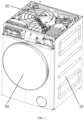
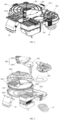
- 10-outer casing 20-drying module, 201-moisture absorbing space, 2011-first airflow inlet, 2012-first airflow outlet, 202-desorption space, 203-moisture adsorption-desorption component, 204-circulating fan, 205-regenerating fan, 206-housing, 2061-first housing, 2062-second housing, 2063-separator, 207-rotating portion, 208-heating module, 2081-cover, 2082-heating assembly, 30-drum, 40-drum air exhaust duct, 50-drum air intake duct.
- the high-temperature dry air as processed is discharged into the drum 30 from the first airflow outlet 2012 of the moisture absorbing space 201 via the air intake duct 40.
- the air circulates in the drum 30 and the moisture absorbing space 201, allowing for continuous heat exchange between the laundry in the drum 30 and the circulating airflow to remove residual moisture from the laundry, thereby achieving the purpose of drying the laundry.
- the moisture adsorption-desorption component 203 dynamically and periodically switches between the moisture absorbing space 201 and the desorption space 202.
- the part of the moisture adsorption-desorption component 203 disposed in the moisture absorbing space 201 absorbs water vapor in the circulating airflow, and heats the passing circulating airflow by virtue of its own high temperature. Then, this part rotates to the desorption space 202 to be heated by the heating assembly 2082, thereby quickly desorbing the moisture in this part.
- the moisture adsorption-desorption component 203 can continuously carry out moisture absorbing and heating on the circulating airflow in the moisture absorbing space 201, and can also continuously discharge the moisture absorbed by the moisture adsorption-desorption component 203 to maintain a good water absorbing capacity all the way, such that the moisture absorbing efficiency is improved.
- the moisture adsorption-desorption component 203 may be configured as a disc-shaped structure with a certain thickness, and the thickness-to-diameter ratio is 1/80 to 1/4 to adapt to the overall structure of the laundry treatment apparatus.
- the thickness-to-diameter ratio of the moisture adsorption-desorption component 203 is 1/20 to 1/10 to improve the moisture absorbing efficiency of the moisture adsorption-desorption component 203.
- the moisture adsorption-desorption component 203 may be made of materials with a strong water absorbing capacity, such as zeolite, alkali metal aluminosilicate, lithium chloride, silica gel, modified silica gel, and activated alumina.
- the purpose of configuring the second heating power to be between 1200 W and 1600 W is to prevent the moisture adsorption-desorption component 203 from reaching a too high temperature after passing through the desorption space 202, and from overheating the circulating airflow after rotating to the moisture absorbing space 201, such that the circulating airflow can be prevented from damaging the laundry after entering the drum 30 and the moisture adsorption-desorption component can be prevented from being affected in the moisture absorbing efficiency due to the high temperature.
- the operating power of the heating assembly 2082 is configured to alternate between the first heating power and the second heating power, and the ranges of the first heating power and the second heating power are defined, such that a higher regeneration efficiency can be achieved and the temperature of the circulating airflow entering the drum can be controlled, thereby preventing damaging the laundry.
- the heating assembly 2082 operates between the first heating power and the second heating power in a fluctuated manner, for example, in the form of periodic waveforms such as square waves or sine/cosine waves.
- the first heating power is between 400 W and 800 W and the second heating power is between 1200 W and 1600 W.
- the cooling stage refers to the stage in which the heating assembly 2082 stops working, and the circulating fan 204, the regenerating fan 205, and the motor continue to operate until the laundry is cooled.
- the controller determines that the laundry has been dried and then turns off the heating assembly. That is, the drying process ends, and the cooling stage is entered. Then, the circulating fan 204, the regenerating fan 205, and the motor continue to operate; the laundry inside the drum 30 enters a cooling process; and various parameters such as fan speed gradually return to zero.
- the moisture adsorption-desorption component 203 absorbs moisture from the circulating airflow by virtue of its own water absorbing properties, such that water vapor is absorbed from the circulating airflow to thus decrease the humidity of the circulating airflow, and meanwhile, the latent heat of condensation in the water vapor is released to consequently increase the temperature of the circulating airflow.
- the moisture adsorption-desorption component 203 rotates from the desorption space 202 to the moisture absorbing space 201, it heats the circulating airflow passing therethrough by virtue of its own high temperature as achieved, thereby increasing the temperature of the circulating airflow. In this way, after passing through the moisture adsorption-desorption component 203, the circulating airflow decreases in humidity and increases in temperature, thereby forming a temperature difference within a certain range between the first moisture absorbing space and the second moisture absorbing space.
- the laundry treatment apparatus further includes a controller, and an air intake duct is provided between the first airflow outlet and the drum air inlet; a first temperature detection unit is provided on the air intake duct at a position close to the drum air inlet; and a second temperature detection unit is provided on the drum or the air exhaust duct close to the drum air outlet.
- the temperature detected by the first temperature detection unit and the second temperature detection unit can be used to control the power or speed of the circulating fan 204, the regenerating fan 205, or the heating assembly 2082 respectively by the controller.
- the thickness-to-diameter ratio of the moisture adsorption-desorption component, the rotational speed of a dehumidifying turntable, and the operating power of the heating assembly are limited within a certain range, which ensures that during at least part of the dehumidifying operation stage, a first airflow temperature detected by the first temperature detection unit is approximately between 70°C and 80°C, and a second airflow temperature detected by the second temperature detection unit is approximately between 50°C and 60°C. In an embodiment, a temperature difference between the first airflow temperature and the second airflow temperature is 25 ⁇ 5°C.
- the inventor found through research that during at least part of the dehumidifying operation period, when the temperature difference between the first and second moisture absorbing spaces in the moisture absorbing space 201 is stabilized within the range from 70°C to 80°C for drying, the laundry treatment apparatus can achieve a good drying effect, and the hand feel and dryness of the laundry treated at this temperature are satisfactory.
- a temperature difference between at least partial surfaces on both sides of the moisture adsorption-desorption component 203 ranges from 70°C to 80°C in the moisture absorbing space 201.
- a temperature difference between substantially symmetrical positions of the first moisture absorbing space and the second moisture absorbing space ranges from 70°C to 80°C, or a temperature difference between substantially symmetrical positions on surfaces of both sides of the moisture adsorption-desorption component 203 ranges from 70°C to 80°C.
- the moisture adsorption-desorption component 203 rotates sequentially through the desorption space 202, the first airflow outlet 2012, and the first airflow inlet 2011; and during at least part of the dehumidifying operation period, a temperature difference of positions in the moisture absorbing space 201 and between the first airflow outlet 2012 and the first airflow inlet 2011 ranges from 70°C to 80°C.
- the laundry as washed weighs about 4 Kg; the thickness-to-diameter ratio of the moisture adsorption-desorption component 203 is limited to approximately 1/20 to 1/10; the rotational speed of the moisture adsorption-desorption component 203 is limited to 2 rpm to 10 rpm; and in the dehumidifying operation stage, the first heating power of the heating assembly 2082 is limited to about 400 W to 800 W, and the second heating power to about 1200 W to 1600 W.
- the detection points for the temperature difference may be arranged at substantially symmetrical positions of the first moisture absorbing space and the second moisture absorbing space, or at substantially symmetrical positions on surfaces of both sides of the moisture adsorption-desorption component 203, or at positions located at the first airflow outlet 2012 and the first airflow inlet 2011. It should be noted that the weight of the laundry is only illustrative and is not a parameter affecting the drying effect.
- the regeneration and moisture absorbing properties of the moisture adsorption-desorption component 203 itself are affected by the heating temperature. If the temperature is above or below the optimal regeneration temperature range, it will result in a decrease in the regeneration performance of the moisture adsorption-desorption component 203. At the same time, when the affected part of the moisture adsorption-desorption component 203 rotates to the moisture absorbing space 201, its temperature will also be higher or lower than the optimal moisture absorbing temperature range, resulting in a decrease in the moisture absorbing performance of the moisture adsorption-desorption component 203. As a result, the final drying efficiency of the laundry is affected.
- the actual temperature difference between the first and second moisture absorbing spaces varies approximately within the range of 72.7°C to 77.9°C, with a drying time of about 128 minutes.
- the moisture adsorption-desorption component 203 is lower in rotational speed than that in Embodiment 1 and longer in heating time when passing through the desorption space 202, the temperature of the part of the moisture adsorption-desorption component 203 passing through the desorption space 202 is still within the optimal regeneration temperature range, and this rotational speed has no significant impact on the moisture absorbing efficiency of the moisture adsorption-desorption component 203.
- the actual temperature difference between the first and second moisture absorbing spaces varies approximately within the range of 72.9°C to 78.6°C, with a drying time of about 130 minutes.
- the heating efficiency for the circulating airflow somewhat decreases due to the decreased temperature of the moisture adsorption-desorption component 203 that has passed through the moisture absorbing space 201.
- the temperature of the circulating airflow is still controlled within a preset range, such that the impact on the final drying efficiency is relatively small. Based on experimental measurements, during the dehumidifying operation stage, the actual temperature difference between the first and second moisture absorbing spaces varies approximately within the range of 70.2°C to 75.6°C, with a drying time of about 136 minutes.
- the heating temperature is relatively high, but still within the optimal regeneration temperature range; and when the moisture adsorption-desorption component 203 rotates to the moisture absorbing space 201 to absorb moisture, its temperature is still within the optimal moisture absorbing temperature range.
- the regeneration efficiency and moisture absorbing efficiency of the moisture adsorption-desorption component 203 itself Consequently, there is a relatively small impact on the regeneration efficiency and moisture absorbing efficiency of the moisture adsorption-desorption component 203 itself, and the heating efficiency for the circulating airflow somewhat increases due to the increased temperature within the moisture absorbing space 201.
- the temperature of the circulating airflow is still controlled within a preset range, such that no damage is caused to the laundry. Based on experimental measurements, during the dehumidifying operation stage, the actual temperature difference between the first and second moisture absorbing spaces varies approximately within the range of 73.7°C to 79.5°C, with a drying time of about 130 minutes.
- the dimension of the moisture adsorption-desorption component 203 increases, and the heating power remains unchanged; when the moisture adsorption-desorption component 203 passes through the desorption space 202, its temperature as increased is lower than that in Embodiment 1 but still within the optimal regeneration temperature range; and when the moisture adsorption-desorption component 203 rotates to the moisture absorbing space 201 to absorb moisture, its temperature is still within the optimal moisture absorbing temperature range.
- the dimension of the moisture adsorption-desorption component 203 decreases, and the heating power remains unchanged; when the moisture adsorption-desorption component 203 passes through the desorption space 202, its temperature as increased is higher than that in Embodiment 1 but still within the optimal regeneration temperature range; and when the moisture adsorption-desorption component 203 rotates to the moisture absorbing space 201 to absorb moisture, its temperature is still within the optimal moisture absorbing temperature range.
- the thickness-to-diameter ratio and rotational speed of the moisture adsorption-desorption component 203, and the heating efficiency of the heating assembly 2082 are adjusted outside the selected range, such that the regeneration temperature of the moisture adsorption-desorption component 203 in the desorption space 202 is increased or decreased to go beyond the optimal regeneration temperature range, leading to a reduced regeneration performance of the moisture adsorption-desorption component 203 itself.
- the affected part of the moisture adsorption-desorption component 203 rotates into the moisture absorbing space 201, its moisture absorbing performance also decreases, such that the final drying efficiency on the laundry is affected.
- the heating efficiency for the circulating airflow also varies greatly due to the temperature increase or decrease of the moisture adsorption-desorption component 203 in the moisture absorbing space 201, such that the final drying effect on the laundry is affected.
- the following Comparative Examples 1 to 6 all involve the adjustment of relevant parameters outside the defined range, so as to give a greater impact on the regeneration efficiency and moisture absorbing efficiency of the moisture adsorption-desorption component 203 and heating efficiency for the circulating airflow. Therefore, during the dehumidifying operation stage, the temperature difference between the first moisture absorbing space and the second moisture absorbing space in the moisture absorbing space 201 may not be maintained within the range of 70°C to 80°C. At this time, the drying time for the laundry is relatively long and the drying effect is bad, which may in some cases cause damages to the laundry.
- the heating time in the desorption space 202 is relatively long, the temperature of the moisture adsorption-desorption component 203 in the desorption space 202 is higher than the optimal regeneration temperature range, and then, the moisture adsorption-desorption component 203 goes beyond the optimal moisture absorbing temperature range during part of time after rotating to the moisture absorbing space 201, resulting in a decrease in both the regeneration efficiency and moisture absorbing efficiency of the moisture adsorption-desorption component 203 itself.
- the heating efficiency of the moisture adsorption-desorption component 203 for the circulating airflow passing through is also increased due to the increase in the temperature of the moisture absorbing space 201.
- the heating temperature is relatively low, resulting in that the temperature of the moisture adsorption-desorption component 203 in the desorption space 202 is lower than the optimal regeneration temperature range; and the temperature of the moisture adsorption-desorption component 203 goes beyond the optimal moisture absorbing temperature range during part of time after rotating to the moisture absorbing space 201, resulting in a decrease in both the regeneration efficiency and moisture absorbing efficiency of the moisture adsorption-desorption component 203 itself.
- the heating efficiency for the circulating airflow decreases due to the decrease in temperature of the moisture absorbing space 201.
- the dimension of the moisture adsorption-desorption component 203 increases, and the heating power remains unchanged.
- the moisture adsorption-desorption component 203 passes through the desorption space 202, the temperature as increased is relatively low, resulting in that the temperature of the moisture adsorption-desorption component 203 in the desorption space 202 is lower than the optimal regeneration temperature range.
- the moisture absorbing and dehumidifying component 203 rotates to the moisture absorbing space 201 to absorb moisture, its temperature will also be lower than the optimal moisture absorbing temperature range, resulting in a decrease in both the regeneration efficiency and moisture absorbing efficiency of the moisture adsorption-desorption component 203 itself.
- the dehumidification and heating of the circulating airflow by the moisture absorbing and dehumidifying component 203 is insufficient, such that the temperature difference between the first and second moisture absorbing spaces is lower than the range of 70°C to 80°C, and the drying time is longer.
- the actual temperature difference between the first and second moisture absorbing spaces is approximately 75.1°C to 82.9°C, and the drying time is about 155 minutes.
- the moisture absorbing and dehumidifying component 203 rotates to the moisture absorbing space 201 to absorb moisture, its temperature is still higher than the optimal moisture absorbing temperature range, resulting in a decrease in both the regeneration efficiency and moisture absorbing efficiency of the moisture adsorption-desorption component 203 itself.
- the moisture absorbing efficiency further decreases due to the reduction in dimension of the moisture adsorption-desorption component 203.
- the heating efficiency for the circulating airflow is somewhat improved due to the increase in temperature in the moisture absorbing space 201; and after being heated, the circulating airflow entering the drum 30 may damage the laundry if the temperature is too high.
- the circulating airflow is subjected to insufficient dehumidification and excessive heating, such that the temperature difference between the first and second moisture absorbing spaces is higher than 70°C- 80°C, and the drying time is longer.
- the actual temperature difference between the first and second moisture absorbing spaces is approximately 77.1°C to 89.6°C, and the drying time is about 159 minutes.
- optimal regeneration temperature and optimal moisture absorbing temperature described in the above embodiments only indicate the temperatures at which the moisture absorbing efficiency and regeneration efficiency are highest, rather than indicating that the regeneration and moisture absorption cannot be achieved outside of these temperature ranges.
- the present application provides a laundry treatment apparatus, in which the structural parameters of the moisture adsorption-desorption component in the drying module and the effective operating power of the heating assembly are defined, to ensure that the temperature difference between at least part of the first moisture absorbing space and at least part of the second moisture absorbing space ranges from 70°C to 80°C.
- the first airflow temperature at least at a position close to the drum air inlet is approximately between 70°C and 80°C.
Landscapes
- Engineering & Computer Science (AREA)
- Textile Engineering (AREA)
- Detail Structures Of Washing Machines And Dryers (AREA)
- Drying Of Gases (AREA)
- Drying Of Solid Materials (AREA)
- Accessory Of Washing/Drying Machine, Commercial Washing/Drying Machine, Other Washing/Drying Machine (AREA)
- Control Of Washing Machine And Dryer (AREA)
- Main Body Construction Of Washing Machines And Laundry Dryers (AREA)
Applications Claiming Priority (4)
| Application Number | Priority Date | Filing Date | Title |
|---|---|---|---|
| CN202111023112.5A CN113981647A (zh) | 2021-09-01 | 2021-09-01 | 一种洗烘一体机 |
| CN202211060628.1A CN115287866B (zh) | 2021-09-01 | 2022-08-31 | 烘干模组和洗烘一体机 |
| CN202211057592.1A CN115726127B (zh) | 2021-09-01 | 2022-08-31 | 洗烘一体机的控制方法、装置、洗烘一体机及存储介质 |
| PCT/CN2023/072564 WO2024045477A1 (zh) | 2021-09-01 | 2023-01-17 | 一种衣物处理装置 |
Publications (1)
| Publication Number | Publication Date |
|---|---|
| EP4582609A1 true EP4582609A1 (en) | 2025-07-09 |
Family
ID=79735318
Family Applications (3)
| Application Number | Title | Priority Date | Filing Date |
|---|---|---|---|
| EP23858520.2A Pending EP4582609A1 (en) | 2021-09-01 | 2023-01-17 | Clothes treatment device |
| EP23859230.7A Pending EP4570978A1 (en) | 2021-09-01 | 2023-08-24 | All-in-one washing and drying machine having dehumidification function, and dehumidification method |
| EP23859264.6A Pending EP4582615A1 (en) | 2021-09-01 | 2023-08-25 | Laundry treatment apparatus |
Family Applications After (2)
| Application Number | Title | Priority Date | Filing Date |
|---|---|---|---|
| EP23859230.7A Pending EP4570978A1 (en) | 2021-09-01 | 2023-08-24 | All-in-one washing and drying machine having dehumidification function, and dehumidification method |
| EP23859264.6A Pending EP4582615A1 (en) | 2021-09-01 | 2023-08-25 | Laundry treatment apparatus |
Country Status (7)
| Country | Link |
|---|---|
| EP (3) | EP4582609A1 (https=) |
| JP (3) | JP2025527846A (https=) |
| KR (2) | KR20250047409A (https=) |
| CN (20) | CN113981647A (https=) |
| AU (2) | AU2023332256A1 (https=) |
| TW (5) | TWM664529U (https=) |
| WO (3) | WO2024045477A1 (https=) |
Families Citing this family (31)
| Publication number | Priority date | Publication date | Assignee | Title |
|---|---|---|---|---|
| CN113981647A (zh) * | 2021-09-01 | 2022-01-28 | 北京石头世纪科技股份有限公司 | 一种洗烘一体机 |
| WO2023030375A1 (zh) * | 2021-09-01 | 2023-03-09 | 深圳洛克创新科技有限公司 | 洗烘一体机 |
| EP4582610A1 (en) * | 2022-08-31 | 2025-07-09 | Nanjing Roborock Innovation Technology Co., Ltd. | Clothes treatment apparatus and control method therefor |
| CN218621460U (zh) * | 2022-08-31 | 2023-03-14 | 深圳洛克创新科技有限公司 | 洗烘一体机 |
| WO2024046358A1 (zh) * | 2022-08-31 | 2024-03-07 | 深圳洛克创新科技有限公司 | 一种烘干模组及洗烘一体机 |
| WO2024046211A1 (zh) * | 2022-08-31 | 2024-03-07 | 深圳洛克创新科技有限公司 | 烘干模组以及洗烘一体机 |
| TWI906653B (zh) * | 2022-08-31 | 2025-12-01 | 大陸商南京石頭創新科技有限公司 | 衣物處理裝置 |
| AU2023335613A1 (en) * | 2022-08-31 | 2025-04-10 | Shenzhen Roborock Innovation Technology Co., Ltd. | Tableware treatment device |
| CN115247341A (zh) * | 2022-08-31 | 2022-10-28 | 深圳洛克创新科技有限公司 | 洗烘一体机 |
| JP2025527778A (ja) * | 2022-08-31 | 2025-08-22 | ナンジン・ロボロック・イノヴェーション・テクノロジー・カンパニー・リミテッド | 乾燥モジュールおよび洗濯乾燥一体型洗濯機 |
| JP2026501419A (ja) * | 2023-01-05 | 2026-01-14 | ナンジン・ロボロック・イノヴェーション・テクノロジー・カンパニー・リミテッド | 加熱装置、乾燥モジュール及び衣類処理設備 |
| KR20250133395A (ko) * | 2023-01-05 | 2025-09-05 | 난징 로보락 이노베이션 테크놀러지 컴퍼니 리미티드 | 필터 청소 장치 및 의류 처리 설비 |
| WO2024152598A1 (zh) * | 2023-01-17 | 2024-07-25 | 深圳洛克创新科技有限公司 | 一种衣物处理设备 |
| KR20250126871A (ko) * | 2023-01-17 | 2025-08-25 | 난징 로보락 이노베이션 테크놀러지 컴퍼니 리미티드 | 건조 기능을 구비한 의류 처리 장치 |
| TWI882580B (zh) * | 2023-01-17 | 2025-05-01 | 大陸商南京石頭創新科技有限公司 | 過濾器清潔裝置以及衣物處理設備 |
| CN118498015A (zh) * | 2023-01-17 | 2024-08-16 | 南京石头创新科技有限公司 | 一种具有烘干功能的衣物处理装置 |
| CN219315306U (zh) * | 2023-02-17 | 2023-07-07 | 深圳洛克创新科技有限公司 | 衣物处理设备 |
| CN118547477A (zh) * | 2023-02-24 | 2024-08-27 | 青岛海尔洗衣机有限公司 | 一种晾衣机 |
| CN118854636A (zh) * | 2023-04-28 | 2024-10-29 | 青岛海尔洗衣机有限公司 | 一种衣物处理设备 |
| WO2024208189A1 (zh) * | 2023-04-04 | 2024-10-10 | 青岛海尔洗衣机有限公司 | 一种衣物处理设备 |
| CN118854637A (zh) * | 2023-04-28 | 2024-10-29 | 青岛海尔洗衣机有限公司 | 一种衣物处理设备 |
| CN117090005A (zh) * | 2023-08-23 | 2023-11-21 | 成都市笑脸科技有限公司 | 一种循环烘干微波除水装置及方法 |
| CN117339346B (zh) * | 2023-08-24 | 2025-12-09 | 江苏远东环保工程有限公司 | 用于voc气体处理的沸石转轮吸附浓缩装置 |
| CN119571591A (zh) * | 2023-08-31 | 2025-03-07 | 南京石头创新科技有限公司 | 衣物处理设备 |
| CN119571593A (zh) * | 2023-08-31 | 2025-03-07 | 南京石头创新科技有限公司 | 加热模块、烘干模组与衣物处理设备 |
| WO2025044077A1 (zh) * | 2023-08-31 | 2025-03-06 | 南京石头创新科技有限公司 | 加热组件、烘干模块、家用烘干设备和衣物处理装置 |
| KR20260036355A (ko) * | 2023-08-31 | 2026-03-16 | 난징 로보락 이노베이션 테크놀러지 컴퍼니 리미티드 | 건조 모듈 및 전기 제품 |
| WO2025045095A1 (zh) * | 2023-08-31 | 2025-03-06 | 南京石头创新科技有限公司 | 衣物处理设备 |
| CN119711131A (zh) * | 2023-09-28 | 2025-03-28 | 无锡小天鹅电器有限公司 | 一种底座装置及衣物处理设备 |
| WO2025232776A1 (zh) * | 2024-05-07 | 2025-11-13 | 南京石头创新科技有限公司 | 烘干模组和衣物处理设备 |
| WO2025232791A1 (zh) * | 2024-05-07 | 2025-11-13 | 南京石头创新科技有限公司 | 一种烘干模组以及电器设备 |
Family Cites Families (80)
| Publication number | Priority date | Publication date | Assignee | Title |
|---|---|---|---|---|
| JPH0994388A (ja) * | 1995-09-28 | 1997-04-08 | Sharp Corp | 全自動洗濯乾燥機 |
| JPH1176696A (ja) * | 1997-09-03 | 1999-03-23 | Sharp Corp | 衣類乾燥装置 |
| JP2001170398A (ja) * | 1999-12-21 | 2001-06-26 | Tokyo Gas Co Ltd | 衣類乾燥機 |
| JP4269950B2 (ja) * | 2004-01-21 | 2009-05-27 | パナソニック株式会社 | 除湿装置 |
| JP4494142B2 (ja) * | 2004-09-14 | 2010-06-30 | パナソニック株式会社 | ドラム式洗濯乾燥機 |
| CN1782170A (zh) * | 2004-11-30 | 2006-06-07 | 乐金电子(天津)电器有限公司 | 兼具烘干功能的滚筒洗衣机 |
| JP4760095B2 (ja) * | 2005-03-31 | 2011-08-31 | パナソニック株式会社 | 除湿装置 |
| CN1888268A (zh) * | 2005-06-30 | 2007-01-03 | 乐金电子(天津)电器有限公司 | 具除湿功能的衣类烘干机 |
| JP2007098262A (ja) * | 2005-10-04 | 2007-04-19 | Matsushita Electric Ind Co Ltd | 除湿機 |
| JP2007098261A (ja) * | 2005-10-04 | 2007-04-19 | Matsushita Electric Ind Co Ltd | 除湿機 |
| JP4696858B2 (ja) * | 2005-11-04 | 2011-06-08 | パナソニック株式会社 | 除湿システム |
| CN1312445C (zh) * | 2005-11-17 | 2007-04-25 | 上海交通大学 | 超声波强化再生除湿的除湿空调装置 |
| JP4641970B2 (ja) * | 2006-04-13 | 2011-03-02 | 三洋電機株式会社 | 洗濯機 |
| JP2008035958A (ja) * | 2006-08-02 | 2008-02-21 | Sharp Corp | 洗濯乾燥機 |
| JP4910607B2 (ja) * | 2006-10-02 | 2012-04-04 | パナソニック株式会社 | 除湿装置 |
| CN101343826B (zh) * | 2008-01-23 | 2010-08-11 | 松下家电研究开发(杭州)有限公司 | 一种带烘干装置的洗衣机 |
| JP4559502B2 (ja) * | 2008-03-14 | 2010-10-06 | 三菱電機株式会社 | 除湿機 |
| JP4972612B2 (ja) * | 2008-05-30 | 2012-07-11 | 日立アプライアンス株式会社 | 洗濯機、および洗濯乾燥機 |
| JP2010167178A (ja) * | 2009-01-26 | 2010-08-05 | Mitsubishi Electric Corp | 洗濯乾燥機 |
| CN101967746A (zh) * | 2009-07-27 | 2011-02-09 | 海尔集团公司 | 滚筒式洗衣干衣机及温度检测方法 |
| US9109317B2 (en) * | 2009-08-21 | 2015-08-18 | Whirlpool Corporation | Controlled moisture removal in a laundry treating appliance |
| JP2012070956A (ja) * | 2010-09-29 | 2012-04-12 | Panasonic Corp | 衣類乾燥機 |
| CN102206916B (zh) * | 2011-06-23 | 2016-08-31 | 青岛海尔洗衣机有限公司 | 一种用于滚筒干衣的热泵烘干系统及控制方法 |
| CN102286872B (zh) * | 2011-07-12 | 2016-11-16 | 青岛海尔滚筒洗衣机有限公司 | 一种带热泵烘干和除湿功能的洗衣干衣机 |
| KR101882275B1 (ko) * | 2012-02-22 | 2018-07-26 | 엘지전자 주식회사 | 의류 처리장치 |
| AU2013244150B2 (en) * | 2012-04-06 | 2016-02-11 | Lg Electronics Inc. | Laundry treating machine |
| JP6145686B2 (ja) * | 2012-07-09 | 2017-06-14 | パナソニックIpマネジメント株式会社 | 衣類乾燥機 |
| CN103266458B (zh) * | 2013-03-28 | 2016-07-06 | 无锡小天鹅股份有限公司 | 洗衣机滚筒和具有其的滚筒洗衣机 |
| KR101579465B1 (ko) * | 2013-07-19 | 2015-12-23 | 엘지전자 주식회사 | 건조기 |
| CN104514136B (zh) * | 2013-09-27 | 2018-05-01 | 海尔集团公司 | 一种带风门切换的冷凝式干衣机及干衣方法 |
| CN103712333B (zh) * | 2014-01-06 | 2016-09-21 | 广东科龙空调器有限公司 | 抽湿机用加热装置及转轮式抽湿机 |
| CN104947387B (zh) * | 2014-03-27 | 2019-06-28 | 青岛海尔洗衣机有限公司 | 一种具有自清洁功能的洗衣机循环节水过滤装置及洗衣机 |
| CN203980455U (zh) * | 2014-06-24 | 2014-12-03 | 广东美的集团芜湖制冷设备有限公司 | 加湿除湿装置及具有其的空调器 |
| CN106498683A (zh) * | 2015-09-07 | 2017-03-15 | 青岛海尔洗衣机有限公司 | 一种干衣机及控制方法 |
| CN106592183A (zh) * | 2015-10-20 | 2017-04-26 | 杭州三花家电热管理系统有限公司 | 烘干系统、衣物干燥装置及衣物干燥装置的工作方法 |
| CN105463812B (zh) * | 2015-12-30 | 2019-03-01 | Tcl家用电器(合肥)有限公司 | 洗烘一体机 |
| CN205483320U (zh) * | 2016-01-19 | 2016-08-17 | 深圳麦开网络技术有限公司 | 一种可隔空快速测量水温的测温模块及装置 |
| CN105951347B (zh) * | 2016-05-31 | 2019-05-21 | 无锡小天鹅股份有限公司 | 衣物处理装置的热泵模组及衣物处理装置 |
| CN107447472B (zh) * | 2016-05-31 | 2019-09-17 | 无锡小天鹅电器有限公司 | 热泵安装盒及热泵干衣机或热泵洗干一体机 |
| CN106016517A (zh) * | 2016-07-13 | 2016-10-12 | 珠海格力电器股份有限公司 | 空调器及其换新风系统 |
| US10087569B2 (en) * | 2016-08-10 | 2018-10-02 | Whirlpool Corporation | Maintenance free dryer having multiple self-cleaning lint filters |
| CN108265459B (zh) * | 2016-12-30 | 2020-08-04 | 浙江三花智能控制股份有限公司 | 洗衣机和洗衣机的控制方法 |
| JP2018117898A (ja) * | 2017-01-25 | 2018-08-02 | 東芝ライフスタイル株式会社 | 洗濯乾燥機 |
| CN108729106A (zh) * | 2017-04-25 | 2018-11-02 | 青岛海尔洗衣机有限公司 | 洗衣机的烘干系统以及洗衣机 |
| CN109402988B (zh) * | 2017-08-16 | 2022-02-22 | 青岛海尔洗涤电器有限公司 | 烘干系统控制方法及衣物处理装置 |
| CN107558128B (zh) * | 2017-09-11 | 2023-06-30 | 珠海格力电器股份有限公司 | 衣物干燥设备及其控制方法 |
| CN110055730B (zh) * | 2018-01-18 | 2022-01-04 | 重庆海尔滚筒洗衣机有限公司 | 一种热泵干衣机及控制方法 |
| US10870940B2 (en) * | 2018-03-21 | 2020-12-22 | Haier Us Appliance Solutions, Inc. | Washing machine appliance and methods for moisture removal |
| PL3561381T3 (pl) * | 2018-04-25 | 2022-12-19 | Bleckmann Gmbh & Co. Kg | Sposób regulacji komponentu systemu ogrzewania dla prostej i bezpiecznej pracy oraz służący do tego komponent systemu ogrzewania |
| JP7269703B2 (ja) * | 2018-05-01 | 2023-05-09 | 青島海爾洗衣机有限公司 | 洗濯乾燥機 |
| CN208618146U (zh) * | 2018-06-11 | 2019-03-19 | 可林艾尔精密空调系统(苏州)股份有限公司 | 一种烘干除湿一体机 |
| CN111101351B (zh) * | 2018-10-26 | 2022-08-26 | 无锡小天鹅电器有限公司 | 烘干系统和衣物处理装置 |
| CN109112804B (zh) * | 2018-11-07 | 2019-11-12 | 珠海格力电器股份有限公司 | 烘干系统和洗衣机 |
| CN109654867A (zh) * | 2018-12-29 | 2019-04-19 | 孙鹏 | 一种烘干方法及烘干机 |
| CN109629206B (zh) * | 2019-02-18 | 2023-11-28 | 珠海格力电器股份有限公司 | 烘干设备及该烘干设备的运行方法 |
| CN212431694U (zh) * | 2019-05-05 | 2021-01-29 | 贵州中烟工业有限责任公司 | 一种旋转式滚筒干燥设备的温度检测系统 |
| CN210031236U (zh) * | 2019-05-07 | 2020-02-07 | 珠海格力电器股份有限公司 | 烘干风道结构及具有其的洗衣机 |
| CN211036459U (zh) * | 2019-07-30 | 2020-07-17 | 长虹美菱股份有限公司 | 一种滚筒洗烘机 |
| CN112726111B (zh) * | 2019-10-15 | 2023-01-24 | 青岛海尔洗衣机有限公司 | 一种衣物处理装置及其烘干判断方法 |
| CN111575986A (zh) * | 2020-05-29 | 2020-08-25 | 苏州易来科得科技有限公司 | 一种洗脱烘干一体机 |
| CN111928355B (zh) * | 2020-07-20 | 2026-02-10 | 青岛海尔空调器有限总公司 | 用于湿度调节的装置 |
| CN111962252A (zh) * | 2020-08-25 | 2020-11-20 | 海信(山东)冰箱有限公司 | 洗衣机 |
| CN213955461U (zh) * | 2020-12-10 | 2021-08-13 | 广东美的制冷设备有限公司 | 加湿装置及空调器 |
| JP2022098680A (ja) * | 2020-12-22 | 2022-07-04 | 青島海爾洗衣机有限公司 | 洗濯乾燥機 |
| CN112726155B (zh) * | 2020-12-24 | 2023-04-28 | 廷镁创智(浙江)服饰股份有限公司 | 一种可控湿度的浴袍干燥机及其干燥方法 |
| CN112831995B (zh) * | 2020-12-31 | 2022-03-22 | 无锡小天鹅电器有限公司 | 衣物处理设备 |
| KR20220114269A (ko) * | 2021-02-08 | 2022-08-17 | 엘지전자 주식회사 | 의류처리장치 |
| CN113201899B (zh) * | 2021-04-13 | 2022-08-26 | 合肥美的洗衣机有限公司 | 衣物处理设备 |
| CN214747116U (zh) * | 2021-04-27 | 2021-11-16 | 河南瑞德克气力输送设备有限公司 | 一种鼓风干燥装置 |
| CN113418242A (zh) * | 2021-06-03 | 2021-09-21 | 重庆海尔空调器有限公司 | 无水加湿装置、空调器 |
| WO2023030375A1 (zh) * | 2021-09-01 | 2023-03-09 | 深圳洛克创新科技有限公司 | 洗烘一体机 |
| CN113981647A (zh) * | 2021-09-01 | 2022-01-28 | 北京石头世纪科技股份有限公司 | 一种洗烘一体机 |
| CN216585700U (zh) * | 2021-09-01 | 2022-05-24 | 北京石头世纪科技股份有限公司 | 一种洗烘一体机 |
| CN216274879U (zh) * | 2021-09-13 | 2022-04-12 | 无锡小天鹅电器有限公司 | 一种出风结构及衣物处理装置 |
| CN114016266A (zh) * | 2021-11-08 | 2022-02-08 | 方晨 | 应用于智能家居的衣物智能干燥处理系统 |
| CN216919741U (zh) * | 2021-11-30 | 2022-07-08 | 珠海格力电器股份有限公司 | 一种具有烘干功能的衣物处理设备 |
| CN216769639U (zh) * | 2021-12-30 | 2022-06-17 | 广东鸦米创新科技有限公司 | 一种转轮除湿机温控装置及转轮除湿机 |
| CN216769611U (zh) * | 2022-01-05 | 2022-06-17 | 宁波奥克斯电气股份有限公司 | 一种转轮结构、无水加湿模块及空调器 |
| CN217052784U (zh) * | 2022-03-31 | 2022-07-26 | 无锡小天鹅电器有限公司 | 衣物处理装置 |
| CN114775216B (zh) * | 2022-04-29 | 2023-07-21 | 珠海格力电器股份有限公司 | 一种衣物处理装置及其处理方法和洗干机 |
-
2021
- 2021-09-01 CN CN202111023112.5A patent/CN113981647A/zh active Pending
-
2022
- 2022-08-31 CN CN202222320975.5U patent/CN218711570U/zh active Active
- 2022-08-31 CN CN202222305009.6U patent/CN218492015U/zh active Active
- 2022-08-31 CN CN202211060807.5A patent/CN115726128A/zh active Pending
- 2022-08-31 CN CN202211057592.1A patent/CN115726127B/zh active Active
- 2022-08-31 CN CN202222322145.6U patent/CN218521470U/zh active Active
- 2022-08-31 CN CN202211066537.9A patent/CN115726129A/zh active Pending
- 2022-08-31 CN CN202211060628.1A patent/CN115287866B/zh active Active
- 2022-08-31 CN CN202222324363.3U patent/CN218842642U/zh active Active
- 2022-08-31 CN CN202222320973.6U patent/CN218521469U/zh active Active
- 2022-08-31 CN CN202211056667.4A patent/CN115928365A/zh active Pending
- 2022-08-31 CN CN202222305979.6U patent/CN218540129U/zh active Active
- 2022-08-31 CN CN202211056653.2A patent/CN115897118B/zh active Active
- 2022-08-31 CN CN202222322147.5U patent/CN218521471U/zh active Active
- 2022-08-31 CN CN202222307078.0U patent/CN218492017U/zh active Active
- 2022-08-31 CN CN202222305027.4U patent/CN218580287U/zh active Active
- 2022-08-31 CN CN202211058646.6A patent/CN115198476A/zh active Pending
- 2022-08-31 CN CN202222307069.1U patent/CN218812688U/zh active Active
- 2022-08-31 CN CN202211057581.3A patent/CN115262161A/zh active Pending
- 2022-08-31 CN CN202211056654.7A patent/CN115216913A/zh active Pending
-
2023
- 2023-01-17 JP JP2025512898A patent/JP2025527846A/ja active Pending
- 2023-01-17 EP EP23858520.2A patent/EP4582609A1/en active Pending
- 2023-01-17 WO PCT/CN2023/072564 patent/WO2024045477A1/zh not_active Ceased
- 2023-01-17 AU AU2023332256A patent/AU2023332256A1/en active Pending
- 2023-08-24 WO PCT/CN2023/114624 patent/WO2024046197A1/zh not_active Ceased
- 2023-08-24 KR KR1020257009476A patent/KR20250047409A/ko active Pending
- 2023-08-24 JP JP2025512816A patent/JP2025529169A/ja active Pending
- 2023-08-24 EP EP23859230.7A patent/EP4570978A1/en active Pending
- 2023-08-25 WO PCT/CN2023/114994 patent/WO2024046232A1/zh not_active Ceased
- 2023-08-25 KR KR1020257010508A patent/KR20250053192A/ko active Pending
- 2023-08-25 EP EP23859264.6A patent/EP4582615A1/en active Pending
- 2023-08-25 AU AU2023335427A patent/AU2023335427A1/en active Pending
- 2023-08-25 JP JP2025512782A patent/JP2025527824A/ja active Pending
- 2023-08-25 TW TW112209095U patent/TWM664529U/zh unknown
- 2023-08-28 TW TW112132301A patent/TWI892216B/zh active
- 2023-08-29 TW TW112132505A patent/TWI844461B/zh active
- 2023-08-30 TW TW112132718A patent/TWI844464B/zh active
- 2023-08-30 TW TW112132736A patent/TWI852750B/zh active
Also Published As
Similar Documents
| Publication | Publication Date | Title |
|---|---|---|
| EP4582609A1 (en) | Clothes treatment device | |
| AU2022338834B2 (en) | Laundry treatment apparatus | |
| EP3022352B1 (en) | Drying machine | |
| EP4582623A1 (en) | Clothing treatment equipment | |
| CN115875815A (zh) | 转轮除湿机的控制方法、装置、转轮除湿机和存储介质 | |
| RU2860368C2 (ru) | Устройство для обработки белья | |
| CN219315306U (zh) | 衣物处理设备 | |
| JP2025527869A (ja) | 衣類処理デバイスおよびその制御方法 | |
| CN223780597U (zh) | 衣物处理设备 | |
| CN223103309U (zh) | 一种衣物处理设备 | |
| RU2843157C2 (ru) | Объединенная стирально-сушильная машина | |
| RU2852032C2 (ru) | Стиральный агрегат и способ эксплуатации стирального агрегата | |
| CN219861987U (zh) | 一种具有烘干功能的衣物处理装置 | |
| CN223422986U (zh) | 衣物处理设备的烘干系统及衣物处理设备 | |
| CN222865101U (zh) | 一种能近似等温送风的新风除湿机 | |
| CN223548293U (zh) | 烘干系统及衣物处理设备 | |
| RU2829711C2 (ru) | Стиральный агрегат | |
| JPH06154486A (ja) | 浴室乾燥機 | |
| RU2860538C2 (ru) | Оборудование для обработки одежды | |
| CN220707562U (zh) | 一种用于工业转轮除湿超低电耗联供装置 | |
| JP2002317967A (ja) | 調湿機 | |
| JP2001289464A (ja) | 調湿機 | |
| WO2024152598A1 (zh) | 一种衣物处理设备 | |
| JP2023149899A (ja) | 調湿装置 | |
| CN118441457A (zh) | 一种衣物处理设备 |
Legal Events
| Date | Code | Title | Description |
|---|---|---|---|
| STAA | Information on the status of an ep patent application or granted ep patent |
Free format text: STATUS: THE INTERNATIONAL PUBLICATION HAS BEEN MADE |
|
| PUAI | Public reference made under article 153(3) epc to a published international application that has entered the european phase |
Free format text: ORIGINAL CODE: 0009012 |
|
| STAA | Information on the status of an ep patent application or granted ep patent |
Free format text: STATUS: REQUEST FOR EXAMINATION WAS MADE |
|
| 17P | Request for examination filed |
Effective date: 20250331 |
|
| AK | Designated contracting states |
Kind code of ref document: A1 Designated state(s): AL AT BE BG CH CY CZ DE DK EE ES FI FR GB GR HR HU IE IS IT LI LT LU LV MC ME MK MT NL NO PL PT RO RS SE SI SK SM TR |
|
| DAV | Request for validation of the european patent (deleted) | ||
| DAX | Request for extension of the european patent (deleted) |