EP4553149A2 - Leberorganoid, verwendungen davon und kulturverfahren zur gewinnung davon - Google Patents
Leberorganoid, verwendungen davon und kulturverfahren zur gewinnung davon Download PDFInfo
- Publication number
- EP4553149A2 EP4553149A2 EP24221861.8A EP24221861A EP4553149A2 EP 4553149 A2 EP4553149 A2 EP 4553149A2 EP 24221861 A EP24221861 A EP 24221861A EP 4553149 A2 EP4553149 A2 EP 4553149A2
- Authority
- EP
- European Patent Office
- Prior art keywords
- liver
- cells
- medium
- cell
- wnt
- Prior art date
- Legal status (The legal status is an assumption and is not a legal conclusion. Google has not performed a legal analysis and makes no representation as to the accuracy of the status listed.)
- Pending
Links
Images









Classifications
-
- C—CHEMISTRY; METALLURGY
- C12—BIOCHEMISTRY; BEER; SPIRITS; WINE; VINEGAR; MICROBIOLOGY; ENZYMOLOGY; MUTATION OR GENETIC ENGINEERING
- C12N—MICROORGANISMS OR ENZYMES; COMPOSITIONS THEREOF; PROPAGATING, PRESERVING, OR MAINTAINING MICROORGANISMS; MUTATION OR GENETIC ENGINEERING; CULTURE MEDIA
- C12N5/00—Undifferentiated human, animal or plant cells, e.g. cell lines; Tissues; Cultivation or maintenance thereof; Culture media therefor
- C12N5/06—Animal cells or tissues; Human cells or tissues
- C12N5/0602—Vertebrate cells
- C12N5/067—Hepatocytes
-
- A—HUMAN NECESSITIES
- A61—MEDICAL OR VETERINARY SCIENCE; HYGIENE
- A61K—PREPARATIONS FOR MEDICAL, DENTAL OR TOILETRY PURPOSES
- A61K35/00—Medicinal preparations containing materials or reaction products thereof with undetermined constitution
- A61K35/12—Materials from mammals; Compositions comprising non-specified tissues or cells; Compositions comprising non-embryonic stem cells; Genetically modified cells
- A61K35/37—Digestive system
- A61K35/407—Liver; Hepatocytes
-
- A—HUMAN NECESSITIES
- A61—MEDICAL OR VETERINARY SCIENCE; HYGIENE
- A61P—SPECIFIC THERAPEUTIC ACTIVITY OF CHEMICAL COMPOUNDS OR MEDICINAL PREPARATIONS
- A61P1/00—Drugs for disorders of the alimentary tract or the digestive system
- A61P1/16—Drugs for disorders of the alimentary tract or the digestive system for liver or gallbladder disorders, e.g. hepatoprotective agents, cholagogues, litholytics
-
- C—CHEMISTRY; METALLURGY
- C12—BIOCHEMISTRY; BEER; SPIRITS; WINE; VINEGAR; MICROBIOLOGY; ENZYMOLOGY; MUTATION OR GENETIC ENGINEERING
- C12N—MICROORGANISMS OR ENZYMES; COMPOSITIONS THEREOF; PROPAGATING, PRESERVING, OR MAINTAINING MICROORGANISMS; MUTATION OR GENETIC ENGINEERING; CULTURE MEDIA
- C12N5/00—Undifferentiated human, animal or plant cells, e.g. cell lines; Tissues; Cultivation or maintenance thereof; Culture media therefor
-
- C—CHEMISTRY; METALLURGY
- C12—BIOCHEMISTRY; BEER; SPIRITS; WINE; VINEGAR; MICROBIOLOGY; ENZYMOLOGY; MUTATION OR GENETIC ENGINEERING
- C12N—MICROORGANISMS OR ENZYMES; COMPOSITIONS THEREOF; PROPAGATING, PRESERVING, OR MAINTAINING MICROORGANISMS; MUTATION OR GENETIC ENGINEERING; CULTURE MEDIA
- C12N5/00—Undifferentiated human, animal or plant cells, e.g. cell lines; Tissues; Cultivation or maintenance thereof; Culture media therefor
- C12N5/06—Animal cells or tissues; Human cells or tissues
- C12N5/0602—Vertebrate cells
- C12N5/0652—Cells of skeletal and connective tissues; Mesenchyme
- C12N5/0662—Stem cells
-
- C—CHEMISTRY; METALLURGY
- C12—BIOCHEMISTRY; BEER; SPIRITS; WINE; VINEGAR; MICROBIOLOGY; ENZYMOLOGY; MUTATION OR GENETIC ENGINEERING
- C12N—MICROORGANISMS OR ENZYMES; COMPOSITIONS THEREOF; PROPAGATING, PRESERVING, OR MAINTAINING MICROORGANISMS; MUTATION OR GENETIC ENGINEERING; CULTURE MEDIA
- C12N5/00—Undifferentiated human, animal or plant cells, e.g. cell lines; Tissues; Cultivation or maintenance thereof; Culture media therefor
- C12N5/06—Animal cells or tissues; Human cells or tissues
- C12N5/0602—Vertebrate cells
- C12N5/067—Hepatocytes
- C12N5/0671—Three-dimensional culture, tissue culture or organ culture; Encapsulated cells
-
- C—CHEMISTRY; METALLURGY
- C12—BIOCHEMISTRY; BEER; SPIRITS; WINE; VINEGAR; MICROBIOLOGY; ENZYMOLOGY; MUTATION OR GENETIC ENGINEERING
- C12N—MICROORGANISMS OR ENZYMES; COMPOSITIONS THEREOF; PROPAGATING, PRESERVING, OR MAINTAINING MICROORGANISMS; MUTATION OR GENETIC ENGINEERING; CULTURE MEDIA
- C12N5/00—Undifferentiated human, animal or plant cells, e.g. cell lines; Tissues; Cultivation or maintenance thereof; Culture media therefor
- C12N5/06—Animal cells or tissues; Human cells or tissues
- C12N5/0602—Vertebrate cells
- C12N5/067—Hepatocytes
- C12N5/0672—Stem cells; Progenitor cells; Precursor cells; Oval cells
-
- C—CHEMISTRY; METALLURGY
- C12—BIOCHEMISTRY; BEER; SPIRITS; WINE; VINEGAR; MICROBIOLOGY; ENZYMOLOGY; MUTATION OR GENETIC ENGINEERING
- C12N—MICROORGANISMS OR ENZYMES; COMPOSITIONS THEREOF; PROPAGATING, PRESERVING, OR MAINTAINING MICROORGANISMS; MUTATION OR GENETIC ENGINEERING; CULTURE MEDIA
- C12N2500/00—Specific components of cell culture medium
- C12N2500/30—Organic components
- C12N2500/38—Vitamins
-
- C—CHEMISTRY; METALLURGY
- C12—BIOCHEMISTRY; BEER; SPIRITS; WINE; VINEGAR; MICROBIOLOGY; ENZYMOLOGY; MUTATION OR GENETIC ENGINEERING
- C12N—MICROORGANISMS OR ENZYMES; COMPOSITIONS THEREOF; PROPAGATING, PRESERVING, OR MAINTAINING MICROORGANISMS; MUTATION OR GENETIC ENGINEERING; CULTURE MEDIA
- C12N2501/00—Active agents used in cell culture processes, e.g. differentation
- C12N2501/10—Growth factors
- C12N2501/11—Epidermal growth factor [EGF]
-
- C—CHEMISTRY; METALLURGY
- C12—BIOCHEMISTRY; BEER; SPIRITS; WINE; VINEGAR; MICROBIOLOGY; ENZYMOLOGY; MUTATION OR GENETIC ENGINEERING
- C12N—MICROORGANISMS OR ENZYMES; COMPOSITIONS THEREOF; PROPAGATING, PRESERVING, OR MAINTAINING MICROORGANISMS; MUTATION OR GENETIC ENGINEERING; CULTURE MEDIA
- C12N2501/00—Active agents used in cell culture processes, e.g. differentation
- C12N2501/10—Growth factors
- C12N2501/119—Other fibroblast growth factors, e.g. FGF-4, FGF-8, FGF-10
-
- C—CHEMISTRY; METALLURGY
- C12—BIOCHEMISTRY; BEER; SPIRITS; WINE; VINEGAR; MICROBIOLOGY; ENZYMOLOGY; MUTATION OR GENETIC ENGINEERING
- C12N—MICROORGANISMS OR ENZYMES; COMPOSITIONS THEREOF; PROPAGATING, PRESERVING, OR MAINTAINING MICROORGANISMS; MUTATION OR GENETIC ENGINEERING; CULTURE MEDIA
- C12N2501/00—Active agents used in cell culture processes, e.g. differentation
- C12N2501/10—Growth factors
- C12N2501/12—Hepatocyte growth factor [HGF]
-
- C—CHEMISTRY; METALLURGY
- C12—BIOCHEMISTRY; BEER; SPIRITS; WINE; VINEGAR; MICROBIOLOGY; ENZYMOLOGY; MUTATION OR GENETIC ENGINEERING
- C12N—MICROORGANISMS OR ENZYMES; COMPOSITIONS THEREOF; PROPAGATING, PRESERVING, OR MAINTAINING MICROORGANISMS; MUTATION OR GENETIC ENGINEERING; CULTURE MEDIA
- C12N2501/00—Active agents used in cell culture processes, e.g. differentation
- C12N2501/10—Growth factors
- C12N2501/155—Bone morphogenic proteins [BMP]; Osteogenins; Osteogenic factor; Bone inducing factor
-
- C—CHEMISTRY; METALLURGY
- C12—BIOCHEMISTRY; BEER; SPIRITS; WINE; VINEGAR; MICROBIOLOGY; ENZYMOLOGY; MUTATION OR GENETIC ENGINEERING
- C12N—MICROORGANISMS OR ENZYMES; COMPOSITIONS THEREOF; PROPAGATING, PRESERVING, OR MAINTAINING MICROORGANISMS; MUTATION OR GENETIC ENGINEERING; CULTURE MEDIA
- C12N2501/00—Active agents used in cell culture processes, e.g. differentation
- C12N2501/40—Regulators of development
- C12N2501/415—Wnt; Frizzeled
-
- C—CHEMISTRY; METALLURGY
- C12—BIOCHEMISTRY; BEER; SPIRITS; WINE; VINEGAR; MICROBIOLOGY; ENZYMOLOGY; MUTATION OR GENETIC ENGINEERING
- C12N—MICROORGANISMS OR ENZYMES; COMPOSITIONS THEREOF; PROPAGATING, PRESERVING, OR MAINTAINING MICROORGANISMS; MUTATION OR GENETIC ENGINEERING; CULTURE MEDIA
- C12N2533/00—Supports or coatings for cell culture, characterised by material
- C12N2533/90—Substrates of biological origin, e.g. extracellular matrix, decellularised tissue
Definitions
- the invention relates to a liver organoid, uses thereof and method for obtaining them.
- liver lobule The basic architectural unit of the liver is the liver lobule.
- Each lobule consists of plates of hepatocytes lined by sinusoidal capillaries that radiate toward a central efferent vein.
- Liver lobules are roughly hexagonal with each of six corners demarcated by the presence of a portal triad (portal vein, bile duct, and hepatic artery).
- portal triad portal triad
- hepatocytes are the major parenchymal cell type of the liver they function in concert with cholangiocytes (biliary epithelial cells), endothelial cells, sinusoidal endothelial cells, Kupffer cells, natural killer cells and hepatic stellate cells. This complex architecture is crucial for hepatic function.
- liver stem cells The existence of liver stem cells remains controversial. On one hand, tissue maintenance in the liver and liver regeneration upon certain types of injury, are not driven by stem cells but rather by division of the mature cells (hepatocytes or cholangyocytes). However, liver injury models in which hepatocyte proliferation has been inhibited also demonstrated the ability of the organ to regenerate in response to damage. This suggests that the liver can be considered as an organ with facultative stem cells.
- ES Embryonic Stem cells
- Pluripotent Stem Cells do not expand and self renew for longer periods.
- the cells may initially be cultured in an expansion medium that additionally contains Wnt and Noggin, for example an "ENRW” medium containing EGF, Noggin, R-spondin and Wnt, and optionally FGF, HGF and Nicotinamide.
- Wnt and Noggin for example an "ENRW" medium containing EGF, Noggin, R-spondin and Wnt, and optionally FGF, HGF and Nicotinamide.
- biliary duct may be isolated from a liver as described in the examples enclosed herein. Briefly, an adult liver tissue may be washed in a cold (4-10°C) culture medium, preferably Advanced-DMEM/F12 (Invitrogen) and then, the tissue can be chopped into pieces of around 5mm and further washed with cold dissociation buffer (collagenase, dispase, FBS in DMEM media). The tissue fragments are preferably incubated with the dissociation buffer for about 2 h at about 37°C.
- a cold (4-10°C) culture medium preferably Advanced-DMEM/F12 (Invitrogen)
- cold dissociation buffer collagenase, dispase, FBS in DMEM media
- the tissue fragments can be vigorously suspended in 10 ml of cold (4-10°C) isolation buffer with a 10 ml pipette.
- the first supernatant containing dead cells is preferably discarded and the sediment preferably suspended with dissociation buffer (e.g. 10-15 ml).
- dissociation buffer e.g. 10-15 ml.
- the supernatant is enriched in biliary ducts.
- a suspension containing biliary ducts can in this way be obtained and biliary ducts are collected under the microscope and retained in cold media (DMEM + 5-10% FBS). This procedure may be repeated until at least 10-20 biliary ducts/well are collected.
- the isolated biliary ducts may be precipitated.
- Isolated bile ducts are preferably seeded in 50ul of matrigel at an approximate ratio of 20 biliary ducts/ well.
- liver epithelial stem cells isolated according to the invention are self-renewing and grow indefinitely. It has been found that the self-renewing population of cells are those which are capable of expressing Lgr5 on their surface. Lgr5 negative cells do not self-renew.
- the term "self-renewing" should be understood to represent the capacity of a cell to reproduce itself whilst maintaining the original proliferation and differentiation properties of cells of the invention. Such cells proliferate by dividing to form clones, which further divide into clones and therefore expand the size of the cell population without the need for external intervention, without evolving into cells with a more restricted differentiation potential.
- a preferred method is based on the fact that liver stem cells according to the invention express Lgr5 and/or Lgr6 on their surface; these proteins belong to the large G protein-coupled receptor (GPCR) superfamily (see, for example, WO2009/022907 , the contents of which are incorporated herein in their entirety).
- GPCR G protein-coupled receptor
- the Lgr subfamily is unique in carrying a large leucine-rich ectodomain important for ligand binding.
- a preferred method therefore comprises preparing a cell suspension from said epithelial tissue as described above, contacting said cell suspension with an Lgr5 and/or 6 binding compound (such as an antibody), isolating the Lgr5 and/or 6 binding compound, and isolating the stem cells from said binding compound.
- a single cell suspension comprising the epithelial stem cells is mechanically generated from the isolated biliary duct.
- Small organoid fragments generated in this way by mechanical disruption are preferably split at a ratio of approximately 1:6. If necessary, such fragments can be incubated for a short time (only 2 or 3 minutes) in trypsin at a dilution of approximately 1:2. It has been found that at this stage epithelial stem cells treated with trypsin yielded rather low survival rates: if the cells are split into individual cells, then only those expressing Lgr5 survive. This fraction is rather small (approximately 12% of the total cell population).
- Lgr5 and/or 6 binding compounds comprise antibodies, such as monoclonal antibodies that specifically recognize and bind to the extracellular domain of either Lgr5 or Lgr6, such as monoclonal antibodies including mouse and rat monoclonal antibodies (see, for example, WO2010/016766 , the contents of which are incorporated herein in their entirety).
- Lgr5 and/or Lgr6-expressing stem cells can be isolated, for example with the aid of magnetic beads or through fluorescence-activated cell sorting, as is clear to a skilled person.
- Using a method of the invention it is possible to isolate one single Lgr5 and/or Lgr6 expressing cell and to apply a method of the invention to it.
- a liver organoid may therefore be derived from one single cell.
- Suitable synthetic materials for such a scaffold comprise polymers selected from porous solids, nanofibers, and hydrogels such as, for example, peptides including self-assembling peptides, hydrogels composed of polyethylene glycol phosphate, polyethylene glycol fumarate, polyacrylamide, polyhydroxyethyl methacrylate, polycellulose acetate, and/or co-polymers thereof (see, for example, Saha et al., 2007. Curr Opin Chem Biol. 11(4): 381-387 ; Saha et al., 2008. Biophysical Journal 95: 4426-4438 ; Little et al., 2008. Chem. Rev 108, 1787-1796 ).
- hydrogels such as, for example, peptides including self-assembling peptides, hydrogels composed of polyethylene glycol phosphate, polyethylene glycol fumarate, polyacrylamide, polyhydroxyethyl methacrylate, polycellulose acetate, and/or co-polymers thereof (see, for example, Saha
- a preferred scaffold comprises biodegradable (co)polymers that are replaced by natural occurring components after transplantation in a subject, for example to promote tissue regeneration and/or wound healing. It is furthermore preferred that said scaffold does not substantially induce an immunogenic response after transplantation in a subject.
- Said scaffold is supplemented with natural, semi-synthetic or synthetic ligands, which provide the signals that are required for proliferation and/or differentiation, and/or migration of stem cells.
- said ligands comprise defined amino acid fragments.
- said synthetic polymers comprise Pluronic ® F127 block copolymer surfactant (BASF), and Ethisorb ® (Johnson and Johnson).
- Said ECM can be provided by culturing ECM-producing cells, such as for example fibroblast cells, in a receptacle, prior to the removal of these cells and the addition of isolated liver fragments or isolated biliary duct or isolated epithelial stem cells.
- extracellular matrix-producing cells are chondrocytes, producing mainly collagen and proteoglycans, fibroblast cells, producing mainly type IV collagen, laminin, interstitial procollagens, and fibronectin, and colonic myofibroblasts producing mainly collagens (type I, III, and V), chondroitin sulfate proteoglycan, hyaluronic acid, fibronectin, and tenascin-C.
- said ECM is commercially provided.
- extracellular matrix proteins Extracellular matrix proteins (Invitrogen) and basement membrane preparations from Engelbreth-Holm-Swarm (EHS) mouse sarcoma cells (e.g. Matrigel TM (BD Biosciences)).
- EHS Engelbreth-Holm-Swarm
- a synthetic extracellular matrix material such as ProNectin (Sigma Z378666) may be used. Mixtures of extracellular matrix materials may be used, if desired.
- the use of an ECM for culturing stem cells enhanced long-term survival of the stem cells and the continued presence of undifferentiated stem cells. In the absence of an ECM, stem cell cultures could not be cultured for longer periods and no continued presence of undifferentiated stem cells was observed.
- the extracellular matrix material will normally be coated onto a cell culture vessel, but may (in addition or alternatively) be supplied in solution.
- a fibronectin solution of about 1mg/ml may be used to coat a cell culture vessel, or between about 1 ⁇ g/cm 2 to about 250 ⁇ g/cm 2 , or at about 1 ⁇ g/cm 2 to about 150 ⁇ g/cm 2 .
- a cell culture vessel is coated with fibronectin at between 8 ⁇ g/cm 2 and 125 ⁇ g/cm 2 .
- a preferred ECM for use in a method of the invention comprises at least two distinct glycoproteins, such as two different types of collagen or a collagen and laminin.
- the ECM can be a synthetic hydrogel extracellular matrix or a naturally occurring ECM.
- a further preferred ECM is provided by Matrigel TM (BD Biosciences), which comprises laminin, entactin, and collagen IV.
- compositions of the invention may comprise serum, or may be serum-free and/or serum-replacement free, as described elsewhere herein.
- Culture media and cell preparations are preferably GMP processes in line with standards required by the FDA for biologics products and to ensure product consistency.
- a cell culture medium that is used in a method of the invention comprises any suitable cell culture medium, subject to the limitations provided herein.
- Cell culture media typically contain a large number of ingredients, which are necessary to support maintenance of the cultured cells. Suitable combinations of ingredients can readily be formulated by the skilled person, taking into account the following disclosure.
- a culture medium according to the invention will generally be a nutrient solution comprising standard cell culture ingredients, such as amino acids, vitamins, inorganic salts, a carbon energy source, and a buffer, as described in more detail in the literature and below.
- a culture medium of the invention will normally be formulated in deionized, distilled water.
- a culture medium of the invention will typically be sterilized prior to use to prevent contamination, e.g. by ultraviolet light, heating, irradiation or filtration.
- the culture medium may be frozen (e.g. at -20°C or -80°C) for storage or transport.
- the medium may contain one or more antibiotics to prevent contamination.
- the medium may have an endotoxin content of less that 0.1 endotoxin units per ml, or may have an endotoxin content less than 0.05 endotoxin units per ml. Methods for determining the endotoxin content of culture media are known in the art.
- a preferred cell culture medium is a defined synthetic medium that is buffered at a pH of 7.4 (preferably with a pH 7. 2 - 7.6 or at least 7.2 and not higher than 7.6) with a carbonate-based buffer, while the cells are cultured in an atmosphere comprising between 5 % and 10% CO2, or at least 5% and not more than 10% CO2, preferably 5 % CO2.
- a preferred cell culture medium is selected from DMEM/F12 and RPMI 1640 supplemented with glutamine, insulin, Penicillin/streptomycin and transferrin.
- Advanced DMEM/F12 or Advanced RPMI is used, which is optimized for serum free culture and already includes insulin.
- said Advanced DMEM/F12 or Advanced RPMI medium is preferably supplemented with glutamine and Penicillin/streptomycin.
- the basal medium comprises Advanced DMEM F12, hepes, penicillin/streptomycin, Glutamin, NAcetyl Cystein, B27, N2 and Gastrin.
- culture is initiated with a basal medium comprising N2 and Gastrin and penicillin/streptomycin but these are later withdrawn.
- N2 and Gastrin and penicillin/streptomycin are present in an EM1 medium of the invention but not in an EM2 or DM.
- N2 and Gastrin and penicillin/streptomycin are present in an EM1 and EM2 medium of the invention but not in a DM.
- the basal medium is Advanced DMEM/F12 or a DMEM variant supplemented with penicillin/streptomycin, N2, B27, glutamine and gastrin.
- the basal medium comprises Gastrin. In some embodiments, the basal medium also comprises NAc and/or B27.
- said cell culture medium is supplemented with a purified, natural, semi-synthetic and/or synthetic growth factor and does not comprise an undefined component such as fetal bovine serum or fetal calf serum.
- a purified, natural, semi-synthetic and/or synthetic growth factor does not comprise an undefined component such as fetal bovine serum or fetal calf serum.
- Various different serum replacement formulations are commercially available and are known to the skilled person. Where a serum replacement is used, it may be used at between about 1% and about 30% by volume of the medium, according to conventional techniques.
- a cell culture medium which comprises or consists of a basal medium for animal or human cells to which is added: Epidermal Growth Factor, an FGF able to bind to FGFR2 or FGFR4, preferably FGF10 as a mitogenic growth factor, Nicotinamide, and preferably, a Wnt agonist, preferably R-spondin 1.
- This medium is referred to as EM2.
- the EM2 medium does not comprise noggin, and more preferably does not comprise a BMP-inhibitor. In some embodiments, the EM2 medium does not comprise Wnt, for example Wnt-3a.
- HGF is present in addition to FGF.
- a preferred medium comprising HGF in addition to FGF is ERFHNic (EGF + R-spondin (preferably R-spondin1) + FGF (preferably FGF10) + HGF + Nicotinamide).
- ERFHNic ERFHNic
- R-spondin preferably R-spondin1
- FGF FGF
- Nicotinamide a preferred medium comprising HGF in addition to FGF.
- HGF was found to be essential for maintaining a good proliferation rate during long-term culture.
- the invention provides the use of an ERFHNic medium of the invention for culturing cells for at least 2 weeks, at least 1 month, at least 2 months, more preferably at least 3, at least 4, at least 5, at least 6, at least 7, at least 8, at least 9, at least 10, at least 15, at least 20, at least 24, at least 25, at least 30 or more months, for example 3 or more years.
- some embodiments of the invention comprise the use of E2 for around 20-30 passages of the cells.
- the cells may be split 20-30 times, generally once a week.
- the cells will expand at a rate of about 4 fold per week or two population doublings a week.
- the invention further provides the use of an ERFHNic medium of the invention for culturing cells for at least 10 passages, for example, at least 11, at least 12, at least 15, at least 20, at least 25, at least 30, at least 40, at least 50, at least 60 passages or for between 15-35 passages, for example approximately 20-30 passages.
- a TGF-beta inhibitor such as A83-01 is additionally present in the EM2 medium. This is particularly useful when human cells or organoids are being cultured.
- the A83-01 is present at a concentration of between 400-600 nM, for example 450-550 nM, 470-530 nM or approximately 500 nM.
- a Notch inhibitor is preferably not present.
- the invention provides a cell culture medium comprising or consisting of a basal medium for animal or human cells to which is added EGF, a BMP inhibitor, R-spondin and Wnt.
- the BMP inhibitor is Noggin and the EM1 medium is termed "ENRW" (EGF, Noggin, R-spondin and Wnt).
- EGF EGF
- R-spondin R-spondin
- Wnt EGF, Noggin, R-spondin and Wnt
- This medium is referred to as EM1.
- the inventors have found that a medium containing Wnt and Noggin is ideal for stimulating initial expansion of cells.
- the EM1 medium is used for just 1 passage or 1 week but it is also envisaegd that EM1 medium can be used for around a year because it is not farmful for the cells.
- a cell culture medium which comprises or consists of a basal medium for animal or human cells to which is added: Epidermal Growth Factor, an FGF able to bind to FGFR2 or FGFR4, preferably FGF10 and HGF as mitogenic growth factors,
- Nicotinamide is also referred to herein as "Nic".
- N2 Supplement' is available from Invitrogen, Carlsbad, CA; www.invitrogen.com; catalog no. 17502-048; and from PAA Laboratories GmbH, Pasching, Austria; www.paa.com; catalog no. F005-004; Bottenstein & Sato, PNAS, 76(1):514-517, 1979 .
- N2 Supplement is supplied by PAA Laboratories GmbH as a 100x liquid concentrate, containing 500 ⁇ g/ml human transferrin, 500 ⁇ g/ml bovine insulin, 0.63 ⁇ g/ml progesterone, 1611 ⁇ g/ml putrescine, and 0.52 ⁇ g/ml sodium selenite.
- N2 Supplement may be added to a culture medium as a concentrate or diluted before addition to a culture medium. It may be used at a 1x final concentration or at other final concentrations. Use of N2 Supplement is a convenient way to incorporate transferrin, insulin, progesterone, putrescine and sodium selenite into a culture medium of the invention.
- 'B27 Supplement' (available from Invitrogen, Carlsbad, CA; www.invitrogen.com; currently catalog no. 17504-044; and from PAA Laboratories GmbH, Pasching, Austria; www.paa.com; catalog no. F01-002; Brewer et al., J Neurosci Res., 35(5):567-76, 1993 ) may be used to formulate a culture medium that comprises biotin, cholesterol, linoleic acid, linolenic acid, progesterone, putrescine, retinol, retinyl acetate, sodium selenite, tri-iodothyronine (T3), DL-alpha tocopherol (vitamin E), albumin, insulin and transferrin.
- a culture medium that comprises biotin, cholesterol, linoleic acid, linolenic acid, progesterone, putrescine, retinol, retinyl acetate, sodium
- B27 Supplement is supplied by PAA Laboratories GmbH as a liquid 50x concentrate, containing amongst other ingredients biotin, cholesterol, linoleic acid, linolenic acid, progesterone, putrescine, retinol, retinyl acetate, sodium selenite, tri-iodothyronine (T3), DL-alpha tocopherol (vitamin E), albumin, insulin and transferrin. Of these ingredients at least linolenic acid, retinol, retinyl acetate and tri-iodothyronine (T3) are nuclear hormone receptor agonists.
- B27 Supplement may be added to a culture medium as a concentrate or diluted before addition to a culture medium. It may be used at a 1x final concentration or at other final concentrations.
- Use of B27 Supplement is a convenient way to incorporate biotin, cholesterol, linoleic acid, linolenic acid, progesterone, putrescine, retinol, retinyl acetate, sodium selenite, tri-iodothyronine (T3), DL-alpha tocopherol (vitamin E), albumin, insulin and transferrin into a culture medium of the invention.
- a component that is preferably added to the basal culture medium is a BMP inhibitor.
- BMPs bind as a dimeric ligand to a receptor complex consisting of two different receptor serine/threonine kinases, type I and type II receptors.
- the type II receptor phosphorylates the type I receptor, resulting in the activation of this receptor kinase.
- the type I receptor subsequently phosphorylates specific receptor substrates (SMAD), resulting in a signal transduction pathway leading to transcriptional activity.
- SAD specific receptor substrates
- a BMP inhibitor is defined as an agent that binds to a BMP molecule to form a complex wherein the BMP activity is neutralized, for example by preventing or inhibiting the binding of the BMP molecule to a BMP receptor.
- said inhibitor is an agent that acts as an antagonist or reverse agonist.
- This type of inhibitor binds with a BMP receptor and prevents binding of a BMP to said receptor.
- An example of a latter agent is an antibody that binds a BMP receptor and prevents binding of BMP to the antibody-bound receptor.
- a BMP inhibitor may be added to the media in an amount effective to inhibit a BMP-dependent activity in a cell to at most 90%, more preferred at most 80%, more preferred at most 70%, more preferred at most 50%, more preferred at most 30%, more preferred at most 10%, more preferred 0%, relative to a level of a BMP activity in the absence of said inhibitor, as assessed in the same cell type.
- a BMP activity can be determined by measuring the transcriptional activity of BMP, for example as exemplified in Zilberberg et al., 2007. BMC Cell Biol. 8:41 .
- BMP-binding proteins include Noggin (Peprotech), Chordin and chordin-like proteins (R&D systems) comprising chordin domains, Follistatin and follistatin-related proteins (R&D systems) comprising a follistatin domain, DAN and DAN-like proteins (R&D systems) comprising a DAN cysteine-knot domain, sclerostin /SOST (R&D systems), decorin (R&D systems), and alpha-2 macroglobulin (R&D systems).
- Noggin Pheprotech
- Chordin and chordin-like proteins comprising chordin domains
- Follistatin and follistatin-related proteins comprising a follistatin domain
- DAN and DAN-like proteins comprising a DAN cysteine-knot domain
- sclerostin /SOST R&D systems
- decorin R&D systems
- alpha-2 macroglobulin R&D systems
- a preferred BMP inhibitor for use in a method of the invention is selected from Noggin, DAN, and DAN-like proteins including Cerberus and Gremlin (R&D systems). These diffusible proteins are able to bind a BMP ligand with varying degrees of affinity and inhibit their access to signalling receptors. The addition of any of these BMP inhibitors to the basal culture medium prevents the loss of stem cells.
- a preferred BMP inhibitor is Noggin.
- Noggin is also referred to herein as "N".
- Noggin is preferably added to the basal culture medium at a concentration of at least 10 ng/ml, more preferred at least 20 ng/ml, more preferred at least 50 ng/ml, more preferred at least 100 ng/ml.
- a still more preferred concentration is approximately 100 ng/ml or exactly 100 ng/ml.
- said BMP inhibitor may be added to the culture medium when required, for example, daily or every other day.
- the BMP inhibitor is preferably added to the culture medium every second day.
- the culture medium may be refreshed when required, for example, daily or every other day, although is preferably refreshed every fourth day.
- a further component that may be added to the basal culture medium is a Wnt agonist.
- the Wnt agonist is also referred to herein as "W”.
- the Wnt signalling pathway is defined by a series of events that occur when a Wnt protein binds to a cell-surface receptor of a Frizzled receptor family member. This results in the activation of Dishevelled family proteins which inhibit a complex of proteins that includes axin, GSK-3, and the protein APC to degrade intracellular ⁇ -catenin. The resulting enriched nuclear ⁇ -catenin enhances transcription by TCF/LEF family transcription factors.
- a Wnt agonist is defined as an agent that activates TCF/LEF-mediated transcription in a cell.
- Wnt agonists are therefore selected from true Wnt agonists that bind and activate a Frizzled receptor family member including any and all of the Wnt family proteins, an inhibitor of intracellular ⁇ -catenin degradation, and activators of TCF/LEF.
- Said Wnt agonist is added to the media in an amount effective to stimulate a Wnt activity in a cell by at least 10%, more preferred at least 20%, more preferred at least 30%, more preferred at least 50%, more preferred at least 70%, more preferred at least 90%, more preferred at least 100%, relative to a level of said Wnt activity in the absence of said molecule, as assessed in the same cell type.
- a Wnt activity can be determined by measuring the transcriptional activity of Wnt, for example by pTOPFLASH and pFOPFLASH Tcf luciferase reporter constructs ( Korinek et al., 1997. Science 275:1784-1787 ).
- a Wnt agonist may comprise a secreted glycoprotein including Wnt-1/Int-1; Wnt-2/Irp (Int-1-related Protein); Wnt-2b/13; Wnt-3/Int-4; Wnt-3a (R&D systems); Wnt-4; Wnt-5a; Wnt-5b; Wnt-6 ( Kirikoshi H et al. 2001. Biochem Biophys Res Com 283: 798-805 );; Wnt-7a (R&D systems); Wnt-7b; Wnt-8a/8d; Wnt-8b; Wnt-9a/14; Wnt-9b/14b/15; Wnt-10a; Wnt-10b/12; Wnt-11; and Wnt-16.
- An overview of human Wnt proteins is provided in "THE WNT FAMILY OF SECRETED PROTEINS", R&D Systems Catalog, 2004.
- Wnt agonists include the R-spondin family of secreted proteins, which is implicated in the activation and regulation of Wnt signaling pathway and which is comprised of 4 members (R-spondin 1 (NU206, Nuvelo, San Carlos, CA), R-spondin 2 ((R&D systems), R-spondin 3, and R-spondin-4); and Norrin (also called Norrie Disease Protein or NDP) (R&D systems), which is a secreted regulatory protein that functions like a Wnt protein in that it binds with high affinity to the Frizzled-4 receptor and induces activation of the Wnt signaling pathway ( Kestutis Planutis et al. (2007) BMC Cell Biol. 8: 12 ).
- Wnt agonists of the invention Compounds that mimic the activity of R-spondin may be used as Wnt agonists of the invention. It has recently been found that R-spondin interacts with Lgr5. Thus, Lgr5 agonists such as agonistic anti-Lgr5 antibodies are examples of Wnt agonists that may be used in the invention.
- R-spondin is also referred to herein as "R".
- a small-molecule agonist of the Wnt signaling pathway was recently identified and is also expressly included as a Wnt agonist ( Liu et al. (2005) Angew Chem Int Ed Engl. 44, 1987-90 ).
- GSK-inhibitors comprise small-interfering RNAs (siRNA; Cell Signaling), lithium (Sigma), kenpaullone (Biomol International; Leost, M. et al. (2000) Eur. J. Biochem. 267, 5983-5994 ), 6-Bromoindirubin-30-acetoxime ( Meijer, L. et al. (2003) Chem. Biol. 10, 1255-1266 ), SB 216763 and SB 415286 (Sigma-Aldrich), and FRAT-family members and FRAT-derived peptides that prevent interaction of GSK-3 with axin.
- said Wnt agonist is selected from one or more of a Wnt family member, R-spondin 1-4 (for example, R-spondin 1 or R-spondin 4), Norrin, and a GSK-inhibitor. It was found by the inventors that the addition of at least one Wnt agonists to the basal culture medium is important for proliferation of the liver epithelial stem cells or isolated biliary duct or isolated liver fragments.
- said Wnt agonist comprises or consists of R-spondin 1.
- R-spondin 1 is preferably added to the basal culture medium at a concentration of at least 200 ng/ml, more preferred at least 300 ng/ml, more preferred at least 500 ng/ml. A still more preferred concentration of R-spondin 1 is approximately 500 ng/ml or exactly 500 ng/ml.
- said Wnt family member may be added to the culture medium when required, for example, daily or every other day.
- the Wnt family member is preferably added to the culture medium every second day.
- the culture medium may be refreshed when required, for example, daily or every other day, although is preferably refreshed every fourth day.
- a Wnt agonist is selected from the group consisting of: R-spondin, Wnt-3a and Wnt-6. More preferably, R-spondin and Wnt-3a are both used as a Wnt agonist. This combination is particularly preferred since this combination surprisingly has a synergistic effect on organoid formation.
- Preferred concentrations are 1-500 ng/ml, for example, 1-10 ng/ml, 10-100 ng/ml, 1-50 ng/ml, 10-200 ng/ml, 200 to 500 ng/ml, 30 ng/ml for R-spondin and 100 ng/ml to 1000 ng/ml, for example, 100 ng/ml or 1000 ng/ml for Wnt3a.
- a Wnt agonist is preferably a Wnt ligand, such as for example Wnt3a, and may be freshly added to a culture medium.
- a Wnt ligand is expressed in a cell line by transfecting or infected a cell line with a suitable expression construct expressing said Wnt ligand. Said cell line is cultured and the culture medium comprising the secreted Wnt ligand is harvested at suitable time intervals. For example, cells will produce Wnt3a as soon as they reach confluency and stop growing. Culture medium from cells that were not transfected or infected with said expression construct is used as a control.
- the conditioned medium is harvested and tested, for example in an assay wherein luciferase expression in controlled by TCF responsive elements to test for the presence of a Wnt agonist such as Wnt3a ( Korinek et al., 1997. Science 275:1784-1787 ).
- the medium is diluted when used in the cultures to regenerate tissue.
- Wnt agonist such as Wnt3a
- the addition of an excess of Wnt ligand sometimes is as detrimental for the culture as is the addition of too little Wnt ligand. Therefore, the actual dilution of the conditioned medium will depend on the amount of Wnt ligand that is determined in the test.
- a further component that is added to the basal culture medium is a combination of mitogenic growth factors, selected from the group of epidermal growth factor (EGF; (preferably from Peprotech), a fibroblast growth factor (FGF) able to bind to FGFR2 or FGFR4, and hepatocyte growth factor (HGF) (also preferably from Peprotech).
- EGF epidermal growth factor
- FGF fibroblast growth factor
- HGF hepatocyte growth factor
- An FGF able to bind to FGFR2 (FGF receptor) or FGFR4 is preferably FGF4, FGF7 or FGF10 (preferably from Peprotech), most preferably FGF10.
- EGF epidermal growth factor
- FGF fibroblast growth factor
- HGF hepatocyte growth factor
- EGF is also referred to herein as "E”
- FGF is also referred to herein as “F”
- HGF is also referred to herein as "H”.
- EGF is a potent mitogenic factor for a variety of cultured ectodermal and mesodermal cells and has a profound effect on the differentiation of specific cells in vivo and in vitro and of some fibroblasts in cell culture.
- the EGF precursor exists as a membrane-bound molecule which is proteolytically cleaved to generate the 53-amino acid peptide hormone that stimulates cells. EGF exerts its effects in the target cells by binding to the plasma membrane located EGF receptor.
- the EGF receptor is a transmembrane protein tyrosine kinase. Binding of EGF to the receptor causes activation of the kinase and subsequently receptor autophosphorylation. The autophosphorylation is essential for the interaction of the receptor with its substrates.
- the signal transduction pathways activated by EGF include the phosphatidylinositol pathway, leading to activation of protein kinase C and to increase in the intracellular Ca2+ concentration, and to the ras pathway leading to MAP kinase activation. These pathways are involved in regulating cellular proliferation, differentiation, and survival ( Herbst, 2004, Int Journal of radiation oncology, 59, 2, S21-S26 ).
- EGF is preferably added to the basal culture medium at a concentration of between 5 and 500 ng/ml or of at least 5 and not higher than 500 ng/ml.
- a preferred concentration is at least 10, 20, 25, 30, 40, 45, or 50 ng/ml and not higher than 500, 450, 400, 350, 300, 250, 200, 150, or 100 ng/ml.
- a more preferred concentration is at least 50 and not higher than 100 ng/ml.
- An even more preferred concentration is about 50 ng/ml or 50 ng/ml.
- FGF10 is a protein that belongs to the fibroblast growth factor (FGF) family of proteins. FGF family members possess broad mitogenic and cell survival activities, and are involved in a variety of biological processes, including embryonic development, cell growth, morphogenesis, tissue repair, tumor growth and invasion. FGFs stimulate cells by interacting with cell surface tyrosine kinase receptors (FGFR). Four closely related receptors (FGFR1-FGFR4) have been identified. FGFR1-FGFR3 genes have been shown to encode multiple isoforms, and these isoforms can be critical in determining ligand specificity. Most FGFs bind more than one receptor ( Omitz J Biol Chem. 1998 Feb 27;273 (9):5349-57 ).
- FGF fibroblast growth factor
- FGF10 and FGF7 are unique among FGFs in that they interact only with a specific isoform of FGFR2, designated FGFR2b which is expressed exclusively by epithelial cells ( Igarashi, J Biol Chem. 1998 273(21):13230-5 ). FGF10 is a preferred FGF able to bind to FGFR2 or FGFR4.
- a TGF-beta inhibitor such as A83-01 is additionally present in the EM1 medium. This is particularly useful when human cells or organoids are being cultured.
- the A83-01 is present at a concentration of between 400-600 nM, for example 450-550 nM, 470-530 nM or approximately 500 nM.
- a Notch inhibitor is preferably not present.
- an cell culture medium may comprise or consist of a basal medium to which is added: EGF and R-spondin 1 supplemented with FGF10, HGF and Nicotinamide; for example, EGF (50 ng/ml) and R-spondin 1 (1ug/ml) supplemented with FGF10 (100ng/ml), HGF (25-50ng/ml) and Nicotinamide (1-10mM).
- EGF 50 ng/ml
- the basal medium is preferably supplemented with B27, N2 and 200ng/ml N-Acetylcysteine.
- the basal medium is Advanced-DMEM/F12.
- any other suitable basal medium may be used.
- Another preferred cell culture medium, and method of using this medium is described in the examples, and comprises or consists of Advanced-DMEM/F12 preferably supplemented with B27, N2, 200ng/ml N-Acetyleysteine, 50ng/ml EGF, 1 ⁇ g/ml R-spondin1, 10 nM gastrin, 100 ng/ml FGF10, 10mM Nicotinamide and 50ng/ml HGF and 50% Wnt conditioned media and, preferably 10-100ng/ml Noggin.
- Wnt conditioned media comprises Advanced DMEM, P/S, B27, N2 and also FCS. 293T cells transfected with Wnt3A expression plasmid produce Wnt. The whole medium is taken after a few days (i.e. with secreted Wnt) and used as the Wnt source.
- the invention therefore provides a cell culture medium, comprising or consisting of a basal medium for animal or human cells to which is added:
- the invention thus encompasses a first preferred culture medium comprising or consisting of a basal medium for animal or human cells to which is added:
- This medium may be used as an EM1 cell culture medium of the invention to stimulate initial expansion of cells.
- the medium used as an EM1 cell culture medium comprises all the components of an EM2 culture medium of the invention and additionally comprises Wnt-3a and Noggin.
- the basal medium is supplemented with N-Acetylcysteine, B27 and N2
- the following are preferably added to the culture media: EGF, R-spondin1, gastrin, FGF10, Nicotinamide and HGF and Wnt-conditioned media.
- the basal medium is supplemented with N-Acetylcysteine, EGF, R-spondin1, gastrin, FGF10, Nicotinamide and HGF and Wnt-conditioned media in accordance with the quantities described hereinabove.
- the basal medium may be supplemented with 150ng/ml to 250 ng/ml N-Acetylcysteine; preferably, the basal medium is supplemented with, about or exactly 200ng/ml N-Acetylcysteine.
- the basal medium may be supplemented with 40ng/ml to 60ng/ml EGF; preferably, the basal medium is supplemented with about or exactly 50ng/ml EGF.
- the basal medium may be supplemented with 0.5 ⁇ g/ml to 1.5 ⁇ g/ml R-spondin1; preferably, the basal medium is supplemented with about or exactly 1 ⁇ g/ml R-spondin1.
- the basal medium may be supplemented with 5nM to 15nM gastrin; preferably, the basal medium is supplemented with about or exactly 10nM gastrin.
- the basal medium may be supplemented with 25-200ng/ml FGF10, for example 70 ng/ml to 130 ng/ml FGF10; preferably, the basal medium is supplemented with about or exactly 100 ng/ml FGF10.
- the basal medium may be supplemented with 5mM to 15mM Nicotinamide; preferably, the basal medium is supplemented with about or exactly 10mM Nicotinamide.
- the basal medium may be supplemented with 25ng/ml to 100 ng/ml HGF, for example 35ng/ml to 65ng/ml HGF; preferably, the basal medium is supplemented with about or exactly and 50ng/ml HGF.
- the basal medium may be supplemented with 35% to 65% Wnt-conditioned media; preferably, the basal medium is supplemented with about or exactly 50% Wnt-conditioned media.
- gastrin and N2 are not present in the cell culture medium.
- the basal medium is advanced-DMEM/F12.
- This first culture medium (for example, EM1, EM2 or both EM1 and EM2) is preferably used during the first two weeks of the culture method of the invention. However, it may be used for a shorter time period, such as for 1, 2, 3, 5, 7, or 10 days, or a longer time period, such as 3, 4, 5, 10, 20 or more weeks, 5 months or more, for example, 6, 7, 8, 9, 10, 11, 12 months or more.
- a second cell culture medium which comprises or consists of a basal medium for animal or human cells to which is added: EGF, a TGF-beta inhibitor, and a Notch inhibitor.
- EGF EGF
- TGF-beta inhibitor TGF-beta inhibitor
- Notch inhibitor a basal medium for animal or human cells to which is added.
- the inventors have found that this medium is useful for differentiating cells.
- the medium used for differentiating the cells may be referred to herein as DM.
- the second cell culture medium also comprises FGF and/or HGF.
- the second culture medium comprises or consists of a basal medium for animal or human cells to which is added:
- the TGF-beta inhibitor is A83-01 and/or the Notch inhibitor is DAPT.
- the DM cell culture medium additionally comprises Dexamethasone.
- a preferred second cell culture medium, and method of using this medium is described in the examples, and comprises or consists of a basal medium to which is added: 50ng/ml EGF, 100 ng/ml FGF10, 50 nM A8301 and 10 uM DAPT.
- Advanced-DMEM/F12 may be used as the basal medium as may any other suitable basal medium.
- the second cell culture medium does not comprise R-spondin or Wnt. In some embodiments, the second cell culture medium does not comprise a Wnt agonist. In some embodiments, the second cell culture medium does not comprise Nicotinamide. In some embodiments, the second cell culture medium does not comprise a BMP inhibitor.
- R-spondin1 and Nicotinamide both inhibit the expression of the mature hepatocyte marker CYP3A11 and yet promote the expression of the hepatoblast marker albumin. Therefore, to increase differentiation of the cells to more mature liver fates, the inventors removed R-spondin and Nicotinamide from the cell culture.
- the inventors have also discovered that the expression of specific biliary transcription factors is highly upregulated in expansion cultures containing R-spondin1, indicating that the culture gene expression was unbalanced towards a more biliary cell fate. Notch and TGF-beta signaling pathways have been implicated in biliary cell fate in vivo.
- TGF-beta inhibitor such as A8301
- a Notch inhibitor such as DAPT
- Notch is a transmembrane surface receptor that can be activated through multiple proteolytic cleavages, one of them being cleavage by a complex of proteins with protease activity, termed gamma-secretase.
- Gamma-secretase is a protease that performs its cleavage activity within the membrane.
- Gamma-secretase is a multicomponent enzyme and is composed of at least four different proteins, namely, presenilins (presenilin 1 or 2), nicastrin, PEN-2 and APH-I. Presenilin is the catalytic centre of gamma-secretase.
- Examples of preferred Notch inhibitors that can be used in the context of this invention are: gamma-secretase inhibitors, such as DAPT or dibenzazepine (DBZ) or benzodiazepine (BZ) or LY-411575, an inhibitor capable of diminishing ligand mediated activation of Notch (for example via a dominant negative ligand of Notch or via a dominant negative Notch or via an antibody capable of at least in part blocking the interacting between a Notch ligand and Notch), or an inhibitor of ADAM proteases.
- gamma-secretase inhibitors such as DAPT or dibenzazepine (DBZ) or benzodiazepine (BZ) or LY-411575
- an inhibitor capable of diminishing ligand mediated activation of Notch for example via a dominant negative ligand of Notch or via a dominant negative Notch or via an antibody capable of at least in part blocking the interacting between a Notch ligand and Notch
- TGF-beta signalling is involved in many cellular functions, including cell growth, cell fate and apoptosis. Signalling typically begins with binding of a TGF-beta superfamily ligand to a type II receptor which recruits and phosphorylates a type I receptor. The type 1 receptor then phosphorylates SMADs, which act as transcription factors in the nucleus and regulate target gene expression. Alternatively, TGF-beta signalling can activate MAP kinase signalling pathways, for example, via p38 MAP kinase.
- the TGF-beta superfamily ligands comprise bone morphogenic proteins (BMPs), growth and differentiation factors (GDFs), anti-müllerian hormone (AMH), activin, nodal and TGF-betas.
- BMPs bone morphogenic proteins
- GDFs growth and differentiation factors
- AH anti-müllerian hormone
- a TGF-beta inhibitor is an agent that reduces the activity of the TGF-beta signalling pathway.
- the TGF-beta signaling may be disrupted by: inhibition of TGF-beta expression by a small-interfering RNA strategy; inhibition of furin (a TGF-beta activating protease); inhibition of the pathway by physiological inhibitors, such as inhibition of BMP by Noggin, DAN or DAN-like proteins; neutralisation of TGF-beta with a monoclonal antibody; inhibition with small-molecule inhibitors of TGF-beta receptor kinase 1 (also known as activin receptor-like kinase, ALK5), ALK4, ALK6, ALK7 or other TGF-beta-related receptor kinases; inhibition of Smad 2 and Smad 3 signaling by overexpression of their physiological inhibitor, Smad 7,
- a cellular assay may be used in which cells are stably transfected with a reporter construct comprising the human PAI-1 promoter or Smad binding sites, driving a luciferase reporter gene. Inhibition of luciferase activity relative to control groups can be used as a measure of compound activity ( De Gouville et al., Br J Pharmacol. 2005 May; 145(2): 166-177 ).
- a TGF-beta inhibitor according to the present invention may be a protein, peptide, small-molecules, small-interfering RNA, antisense oligonucleotide, aptamer or antibody.
- the inhibitor may be naturally occurring or synthetic.
- Examples of preferred small-molecule TGF-beta inhibitors that can be used in the context of this invention include the small molecule inhibitors listed in table 1: Table 1: Small-molecule TGF-beta inhibitors targeting receptor kinases Inhibitor Targets IC50 (nM) Mol Wt Name Formula A83-01 ALK5 (TGF- ⁇ R1) 12 421.52 3-(6-Methyl-2-pyridinyl)-N-phenyl-4-(4-quinolinyl)-1H-pyrazole-1-carbothioamide C25H19N5S ALK4 45 ALK7 7.5 SB-431542 ALK5 94 384.39 4-[4-(1,3-benzodioxol-5-yl)-5-(2-pyridinyl)-1H-imidazol-2-yl]benzamide C22H16N4O3 ALK4 ALK7 SB-505124 ALK5 47 335.4 2-(5-benzo[1,3]dioxol-5-
- SB-203580 is a p38 MAP kinase inhibitor that, at high concentrations (for example, approximate 10 uM or more) is thought to inhibit ALK5. Any such inhibitor that inhibits the TGF-beta signalling pathway can also be used in the context of this invention.
- A83-01 may be added to the culture medium at a concentration of between 10 nM and 10 uM, or between 20 nM and 5 uM, or between 50 nM and 1 uM.
- A83-01 may be added to the culture medium at approximately 500 nM.
- A83-01 may be added to the culture medium at a concentration of between 350-650 nM, for example, 450-550 nM, more preferably approximately 500 nM.
- A83-01 may be added to the culture medium at a concentration of between 25-75 nM, for example, 40-60 nM or approximately 50nM.
- SB-431542 may be added to the culture medium at a concentration of between 80 nM and 80 uM, or between 100 nM and 40 uM, or between 500 nM and 10 uM.
- SB-431542 may be added to the culture medium at approximately 1 uM.
- SB-505124 may be added to the culture medium at a concentration of between 40 nM and 40 uM, or between 80 nM and 20 uM, or between 200 nM and 1 uM.
- SB-505124 may be added to the culture medium at approximately 500 nM.
- SB-525334 may be added to the culture medium at a concentration of between 10 nM and 10 uM, or between 20 nM and 5 uM, or between 50 nM and 1 uM.
- SB-525334 may be added to the culture medium at approximately 100 nM.
- LY 364947 may be added to the culture medium at a concentration of between 40 nM and 40 uM, or between 80 nM and 20 uM, or between 200 nM and 1 uM. For example, LY 364947 may be added to the culture medium at approximately 500 nM.
- SD-208 may be added to the culture medium at a concentration of between 40 nM and 40 uM, or between 80 nM and 20 uM, or between 200 nM and 1 uM. For example, SD-208 may be added to the culture medium at approximately 500 nM.
- SJN 2511 may be added to the culture medium at a concentration of between 20 nM and 20 uM, or between 40 nM and 10 uM, or between 100 nM and 1 uM.
- A83-01 may be added to the culture medium at approximately 200 nM.
- the invention provides an alternative second culture medium comprising or consisting of a basal medium for animal or human cells to which is added:
- This alternative second culture medium is useful as a differentiation medium (DM).
- This alternative second culture medium is preferably used after the two first weeks of culture. At this stage, it seems that a BMP inhibitor and a Wnt ligand are no longer needed.
- the alternative second culture medium does not comprise a BMP inhibitor or a Wnt ligand.
- the alternative second culture medium does not comprise a BMP inhibitor or a Wnt agonist.
- the basal medium may in some embodiments be supplemented with N-Acetylcysteine, EGF, gastrin, FGF10, Nicotinamide and HGF in accordance with the quantities described hereinabove.
- the basal medium is supplemented with about or exactly 200ng/ml N-Acetylcysteine.
- the basal medium is supplemented with about or exactly 50ng/ml EGF.
- the basal medium is supplemented with about or exactly 10nM gastrin.
- the basal medium is supplemented with about or exactly 100 ng/ml FGF10.
- the basal medium is supplemented with about or exactly 10mM Nicotinamide.
- the basal medium is supplemented with about or exactly and 50ng/ml HGF.
- a first and a second cell culture medium used according to the invention allows the survival and/or proliferation and/or differentiation of epithelial stem cells or liver epithelial stem cells or isolated biliary duct or isolated liver fragments on an extracellular matrix.
- a medium allowing for survival and/or proliferation is a medium which preferably induces or promotes the survival and/or proliferation of cells during at least 5, 10, 15, 20, 30, 40, 50, 60, 70, 80, 90, 100, 120, 140, 160, 180, 200 days of culture.
- Proliferation can be assessed using techniques known in the art such as BrdU staining, Edu staining, Ki67 staining and the use of growth curves assay can be done. For example, we have shown that from 10 biliary ducts, it is possible after 6 days to dilute to 6 wells with 10 organoids per well (60 new organoids). In each passage of 6 days we can generate around 360 organoids.
- the second medium as identified above preferably induces or promotes a specific differentiation of cells during at least five days of culture. Differentiation may be measured by detecting the presence of a specific marker associated with the liver lineage as defined herein. Differentiation may be measured by detecting the presence of a specific marker associated with the liver lineage as defined herein. Depending on the identity of the marker, the expression of said marker may be assessed by RTPCR or immuno-histochemistry after at least 5, 7, 8, 9, 10, 11, 12, 13, 14, 15, 16 days of culture in a first medium or in a first subsequently in a second medium as defined herein.
- a differentiation medium is a medium which preferably induces or promotes a specific differentiation of cells during at least five days of culture. Differentiation may be measured by detecting the presence of a specific marker associated with the liver lineage as defined herein.
- cell culture medium is synonymous with medium, culture medium or cell medium or basal medium or basal cell medium or basal cell culture medium or expansion medium or differentiation medium.
- a hermetically-sealed vessel containing a culture medium of the invention.
- the culture medium is an expansion medium.
- the culture medium is a differentiation medium.
- Hermetically-sealed vessels may be preferred for transport or storage of the culture media, to prevent contamination.
- the vessel may be any suitable vessel, such as a flask, a plate, a bottle, a jar, a vial or a bag.
- the method for obtaining and/or culturing a liver fragment or a liver organoid comprises culturing epithelial stem cells, and/or isolated tissue fragments comprising said epithelial stem cells in contact with an extracellular matrix in the presence of one or more cell culture media according to the invention.
- a method for obtaining and/or culturing a liver fragment or a liver organoid comprises culturing epithelial stem cells, and/or isolated tissue fragments comprising said epithelial stem cells in contact with an extracellular matrix in the presence of EM1 medium and then EM2 medium and then DM medium.
- a method for obtaining and/or culturing a liver fragment or a liver organoid comprises culturing epithelial stem cells, and/or isolated tissue fragments comprising said epithelial stem cells in contact with an extracellular matrix in the presence of EM2 medium and then DM medium without the use of EM1 medium.
- a method for obtaining and/or culturing a liver fragment or a liver organoid comprises culturing epithelial stem cells, and/or isolated tissue fragments comprising said epithelial stem cells in contact with an extracellular matrix in the presence of EM1 medium and then DM medium without the use of EM2 medium.
- the method for obtaining and/or culturing a liver fragment or a liver organoid may comprise:
- the method comprises culturing the epithelial stem cells, and/or isolated tissue fragments comprising said epithelial stem cells in contact with an extracellular matrix in the presence of a medium comprising or consisting of a basal medium for animal or human cells to which is added EGF, a BMP inhibitor, R-spondin and Wnt.
- a medium comprising or consisting of a basal medium for animal or human cells to which is added EGF, a BMP inhibitor, R-spondin and Wnt.
- the BMP inhibitor is Noggin and the EM1 medium is termed "ENRW" (EGF, Noggin, R-spondin and Wnt).
- a method for obtaining and/or culturing a liver fragment or a liver organoid comprising: culturing epithelial stem cells, and/or isolated tissue fragments comprising said epithelial stem cells in contact with an extracellular matrix in a medium comprising a BMP inhibitor, a Wnt agonist, Epidermal Growth Factor, a FGF able to bind to FGFR2 or FGFR4, preferably FGF10 and HGF as mitogenic growth factors, gastrin, Nicotinamide, B27, N2 and N-Acetylcysteine.
- the culture is continued in a medium that does not comprise a BMP inhibitor and a Wnt agonist. In some embodiments, this culture is continued in an EM2 of the invention. In alternative embodiments, the culture is continued in a second medium of the invention (DM), which additionally comprises a TGF-beta inhibitor, such as A83-01, and a Notch inhibitor, such as DAPT. In some embodiments, this culture is continued in an EM2 and then a DM medium of the invention.
- DM second medium of the invention
- a liver organoid, epithelial stem cells, and/or isolated liver tissue fragments comprising said epithelial stem cells are cultured in a first step in the first medium (EM), then subsequently in a discrete second step in the second medium (DM).
- the first culture step may have a duration of at least two weeks and may be longer, for example, 3 weeks or longer, 4 weeks or longer or 1, 2, 3, 4, 5, 6, 7, 8 months or longer.
- the second step preferably has a duration of 6 weeks or less, more preferably 1 month or less, for example 3 weeks or less, 2 weeks or less, 1 week or less.
- the second step is 2 weeks or less or at most 1 month.
- the second step may have a duration of 8, 9, 10, 11, 12, 13, 14, 15, 16 days or 3 weeks or 1, 2, 3, 4, 5, 6 months or longer.
- Each step is preferably carried out using an extracellular matrix as defined herein, and using the culture media described in detail herein.
- said method is carried out in the first medium, without switch to the second medium.
- This method may have a duration of 8, 9, 10, 11, 12, 13, 14, 15, 16 days or 3 weeks or 1, 2, 3, 4, 5, 6, 7, 8 months or longer.
- the step of culturing in the first medium of the invention comprises both culturing in EM1 medium and then culturing in EM2 medium.
- the periods described above may refer to the total period in which the cells or fragments are cultured in the EM1 and subsequently in the EM2 media.
- the step of culturing in the EM1 culture medium may have a duration of less than 10 days, for example, less than 9, less than 8, less than 7, less than 6, less than 5, less than 4, less than 3, less than 2 or less than 1 day.
- the step of culturing in the EM1 culture medium may have a duration of between 1 and 10 days, for example, 1-7 days, 2-6 days, 3-5 days, for example 4 or 5 days.
- the step of culturing in the EM2 medium may have a duration of 10 days or longer, for example, 11, 12, 13, 14, 15, 16 days or longer, or 1-3 weeks or 2-4 weeks or 3-6 weeks or 1, 2, 3, 4, 5, 6 months or longer.
- the methods described herein for obtaining and/or culturing a liver fragment or a liver organoid may also be used to obtain and/or culture a population of cells expressing Lgr5 and such methods are encompassed by the invention.
- a population of cells expressing Lgr5 obtained by a method of the invention is thus also provided.
- Feeder cell layers are often used to support the culture of stem cells, and to inhibit their differentiation.
- a feeder cell layer is generally a monolayer of cells that is co-cultured with, and which provides a surface suitable for growth of, the cells of interest.
- the feeder cell layer provides an environment in which the cells of interest can grow.
- Feeder cells are often mitotically inactivated (e.g. by irradiation or treatment with mitomycin C) to prevent their proliferation.
- the use of feeder cells is undesirable, because it complicates passaging of the cells (the cells must be separated from the feeder cells at each passage, and new feeder cells are required at each passage).
- the use of feeder cells can also lead to contamination of the desired cells with the feeder cells. This is clearly problematic for any medical applications, and even in a research context, complicates analysis of the results of any experiments performed on the cells.
- the culture media of the invention are particularly advantageous because they can be used to culture cells without feeder cell contact, i.e. the methods of the invention do not require a layer of feeder cells to support the cells whose growth is being sponsored.
- compositions of the invention may be feeder cell-free compositions.
- a composition is conventionally considered to be feeder cell-free if the liver cells in the composition have been cultured for at least one passage in the absence of a feeder cell layer.
- a feeder cell-free composition of the invention will normally contain less than about 5%, less than about 4%, less than about 3%, less than about 2%, less than about 1% feeder cells (expressed as a % of the total number of cells in the composition) or preferably no feeder cells at all.
- the method may start from epithelial cells or from an isolated liver fragment.
- the cells or liver fragment may be autologous or allogeneic.
- Autologous cells are cells which originated from the same organism into which they are being re-introduced for cellular therapy, for example in order to permit tissue regeneration.
- An autologous cell does not, in principle, require matching to the patient in order to overcome the problems of immune rejection, and/or reduces the need for immune suppression interventions upon transplant.
- Allogeneic cells are cells which originated from an individual which is different from the individual into which the cells are being introduced for cellular therapy, for example in order to permit tissue regeneration, although of the same species. Some degree of patient matching may still be required to prevent the problems of rejection. Techniques for minimising tissue rejection will be known to those of skill in the art.
- a preferred method of the invention encompasses a method for culturing an isolated liver fragment comprising said epithelial stem cells.
- Another preferred method encompasses a method for obtaining a liver organoid from epithelial stem cells and/or isolated liver fragments comprising said epithelial stem cells.
- Another preferred method encompasses a method for obtaining and culturing a liver organoid from epithelial stem cells and/or isolated liver fragments comprising said epithelial stem cells.
- the BMP inhibitor is selected from Noggin, DAN, and DAN-like proteins including Cerberus and Gremlin, preferably comprises or is Noggin, and/or said Wnt agonist is selected from one or more of Wnt, preferably Wnt-3a, R-spondin 1-4, Norrin, and a GSK-inhibitor, more preferably comprises or is Wnt-3a and/or R-spondin.
- a liver organoid originates from one single cell, preferably a cell expressing Lgr5, more preferably wherein the single cell comprises a nucleic acid construct comprising a nucleic acid molecule of interest.
- the cell may also express liver-specific markers such as Hnf1 ⁇ , and Hnf4.
- Cells according to this aspect of the invention may also up-regulate Wnt target genes, including for example, MMP7, Sp5 and Tnfrs19. This provides strong evidence of the requirement for an active and robust canonical Wnt signalling activity to maintain the self renewing capacity of these cultures.
- Natural expression is meant that the cells have not been manipulated recombinantly in any way, i.e., the cells have not been artificially induced to express these markers or to modulate these markers' expression by introduction of exogenous genetic material, such as introduction of heterologous (non-natural) or stronger promoters or other regulatory sequences operably linked to either the endogenous genes or exogenously-introduced forms of the genes.
- Natural expression is from genomic DNA within the cells, including introns between the exon coding sequences where these exist. Natural expression is not from cDNA. Natural expression can if necessary be proven by any one of various methods, such as sequencing out from within the reading frame of the gene to check that no extraneous heterogenous sequence is present.
- Adult means post-embryonic.
- the term “adult stem cell” means that the stem cell is isolated from a tissue or organ of an animal at a stage of growth later than the embryonic stage.
- This stem cell population can also be characterised by a lack of natural expression of certain markers at any significant level, many of which are associated with cellular differentiation. Specifically, the cells of the isolated adult stem cell population do not naturally express one or more of Cd11b, CD13, CD14, AFP, Pdx1, any CYP member (e.g. CYP3A11, CYP 11A1) at a significant level. As defined herein, these markers are said be to be negative markers.
- the term “expressed” is used to describe the presence of a marker within a cell. In order to be considered as being expressed, a marker must be present at a detectable level. By “detectable level” is meant that the marker can be detected using one of the standard laboratory methodologies such as PCR, blotting or FACS analysis. A gene is considered to be expressed by a cell of the population of the invention if expression can be reasonably detected after 30 PCR cycles, which corresponds to an expression level in the cell of at least about 100 copies per cell. The terms “express” and “expression” have corresponding meanings. At an expression level below this threshold, a marker is considered not to be expressed.
- the comparison between the expression level of a marker in a cell of the invention, and the expression level of the same marker in another cell, such as for example an embryonic stem cell, may preferably be conducted by comparing the two cell types that have been isolated from the same species.
- this species is a mammal, and more preferably this species is human.
- Such comparison may conveniently be conducted using a reverse transcriptase polymerase chain reaction (RT-PCR) experiment.
- RT-PCR reverse transcriptase polymerase chain reaction
- any one of a number of physical methods of separation known in the art may be used to select the cells of this aspect of the invention and distinguish these from other cell types. Such physical methods may involve FACS and various immuno-affinity methods based upon makers specifically expressed by the cells of the invention. As described above, Lgr5, Hnf1 ⁇ and Hnf4 are 3 of the cell markers expressed at high levels in the cells of the invention. Therefore, by way of illustration only, the cells of the invention may be isolated by a number of physical methods of separation, which rely on the presence of these markers.
- the cells of the invention may be isolated by FACS utilizing an antibody, for example, against one of these markers.
- an antibody for example, against one of these markers.
- this may be achieved through a fluorescent labeled antibody, or through a fluorescent labeled secondary antibody with binding specificity for the primary antibody.
- suitable fluorescent labels includes, but is not limited to, FITC, Alexa Fluor ® 488, GFP, CFSE, CFDA-SE, DyLight 488, PE, PerCP, PE-Alexa Fluor ® 700, PE-Cy5 (TRI-COLOR ® ), PE-Cy5.5, PI , PE-Alexa Fluor ® 750, and PE-Cy7 . This list is provided by way of example only, and is not intended to be limiting.
- FACS analysis using an anti-Lgr5 antibody will provide a purified cell population.
- the cells of the invention may be isolated by immuno-affinity purification, which is a separation method well known in the art.
- the cells of the invention may be isolated by immuno-affinity purification directed towards c-kit.
- this method relies upon the immobilisation of antibodies on a purification column. The cell sample is then loaded onto the column, allowing the appropriate cells to be bound by the antibodies, and therefore bound to the column. Following a washing step, the cells are eluted from the column using a competitor which binds preferentially to the immobilised anti-c-kit antibody, and permits the cells to be released from the column.
- immuno-affinity purification using an immobilised antibody will provide a purified cell population.
- the cells may be purified through a FACS step using an anti-Lgr5 antibody, followed by an immuno-affinity purification step using a SSEA-1 affinity column.
- the cells may be cultured after isolation for at least about 15, at least about 20 days, at least about 25 days, or at least about 30 days.
- the cells are expanded in culture longer to improve the homogeneity of the cell phenotype in the cell population.
- Single-cell suspensions or small clusters of cells (2-50 cells/cluster) will normally be seeded, rather than large clusters of cells, as in known in the art. As they divide, such cells will be seeded onto a support at a density that promotes cell proliferation.
- the plating density typically, when single cells are isolated the plating density of at least 1-500 cells/well is used, the surface of the well being 0.32 cm 2 .
- the plating density is preferably 250-2500 cells/cm 2 .
- a density of between about 2500 cells/ cm 2 and about 5,000 cells/ cm 2 may be used.
- single-cell suspensions or small cluster of cells will normally be seeded, rather than large clusters of cells, as in known in the art.
- liver organoid obtainable by a method of the invention is a further aspect of the invention.
- this is the first time that a liver organoid has been obtained that is functional and alive after such an extended period of time (i.e. at least 7 months of culture; see examples included herein).
- Functionality is preferably characterized by the presence of a liver marker as defined herein and/or by the structure of said organoid as defined herein. Since the final amount of liver organoids obtained correlates with the duration of culture, the skilled person will understand that the invention is a pioneer invention and potentially opens new possibilities in for example regenerative medicine.
- an organoid according to the present invention may comprise a population of cells of at least 1 ⁇ 10 3 cells, at least 1 x 10 4 cells, at least 1 ⁇ 10 5 cells, at least 1 ⁇ 10 6 cells, at least 1 ⁇ 10 7 cells or more.
- each organoid comprises between approximately 1 ⁇ 10 3 cells and 5 ⁇ 10 3 cells; generally, 10-20 organoids may be grown together in one well of a 24 well plate.
- Cells and organoids according to the present invention may be non-human animal or human.
- the inventors have shown, for the first time, that it is possible to grow and maintain both animal and human liver organoids in vitro, using the culture media and methods of the invention.
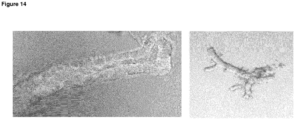
- organoids generated according to the invention may possess a cystic structure, with on the outside, a layer of cells with at least one bud and a central lumen.
- the organoids in the outside of the matrigel tend to be larger than the organoids in the center of the matrigel, perhaps because they have better access to the necessary growth factors.
- organoids according to the invention are often elongated in shape. They may include one or more budding structure - a single cell epithelial layer which has a structure not unlike a bile duct. Under confocal microscopy, the structures may stain positive for keratin.
- the organoids may include cells with polarised nuclei and small cytoplasm.
- the organoids may have a section which is formed of multiple layers; such cells often tend to have their nuclei more central to the cells, i.e. not polarized.
- the cells in the multilayer section may organise themselves to include a gap, or lumen between the cells.
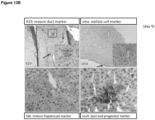
- a liver organoid preferably comprises a hepatocyte and a cholangiocyte cell, more preferably wherein at least one of the following markers could be detected: at least one hepatocyte marker such as albumin, transthyretrin, B-1 integrin and Glutamine synthetase and/or at least one of CYP3A11, FAH, tbx3, TAT and Gck and/or at least one cholangiocyte maker such as Keratin 7 and 19.
- the skilled person knows how to detect each of these markers (i.e. RT-PCR and/or immunohistochemistry).
- the expression of each of these markers is assessed as carried out in the experimental part.
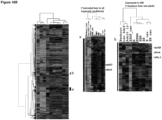
- Each of these markers is usually expressed after at least two weeks, three weeks or one month of culture using a method of the invention. Microarray analysis of the organoids in both culture conditions showed that liver organoids resemble adult liver tissue.
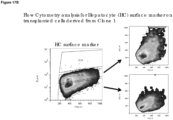
- approximately 35% of the cells in a liver organoid express a hepatocyte surface marker, for example, 25-45%, 30-40%, 33-37%, 35% or less, or 15-35% of cells.
- cells and organoids generated according to the invention also possess hepatocyte functions, such as expressing or staining positive for the mature hepatic markers albumin, B-1 integrin,, CK-8, CK-18, transthyretin (TTR), glucose 6P, Met, Glutamine synthase (Glul), transferrin, Fahd1, Fahd2a, K7, K19 and cytochrome P450 isoforms 3A13 (CYP3A13), 51 (CYP51) 2D10 (CYP2D10), 2j6 (CYP2j6), 39A1 (CYP39A1), 4A10 (CYP4A10), 4F13 (CYP4F13) 4F16 (CYP4F16), CYP4B1 and 20A1(CYP20A1).
- embryonic liver gene AFP is in some embodiments not detected in neither of both culture conditions, as in adult liver.
- the expression of alpha fetal protein is just above the background gene expression.
- liver transcription factors as HNF1a, HNF1b and HNF4a are highly expressed in both conditions.
- pancreas are closely related organs, we investigated whether our liver cultures also expressed pancreas-specific genes.
- the pancreas is functionally divided into endocrine and exocrine pancreas.
- the endocrine pancreas is mainly characterized for expressing insulin, glucagon and somatostatin.
- the expression of these hormones is tightly regulated by a set of endocrine pancreas-specific transcription factors, the most important being Pdx1 and NeuroD.
- the exocrine pancreas is formed by acinar and ductal compartments responsible of producing the digestive enzymes amylase, pancreatic lipase and chymotrypsin, among others.
- the expression of these genes is also regulated by specific exocrine pancreatic genes as Ptfl.
- pancreas specific genes Ptfla, pancreatic amylase (Amy2a4), pancreatic lipase (Pnlip), insulin (ins1 and ins2), glucagon (Gcg), chymotrypsin (cela1), Pdx1 and NeuroD were absent in the liver cultures here described.
- one or more or all of the following genes are expressed in the liver organoids at a similar level to the corresponding gene in adult liver hepatocytes: Aqp1, Bmp2, Apo3, Apol7a, Sord, C3, Ppara, Pparg, tbx3, lgfl, Il17rb, Il1b, Tgfbi, Apoa1, Apoa4, Apob, Cyp26b1, Cyp27a1, Cyp2b13, Cyp2b9, Cyp2c37, Cyp2f2, Cyp2g1, Cyp2j13, Cyp3a11, Cyp4a10 and Cypf14.
- one or more of the following genes is expressed in the liver organoids at a similarly shut down level compared to the corresponding gene in adult liver hepatocytes: Ccl2, Osmr, Icam1 and Cxcl2.
- one or both of the following genes is differentially expressed in both a liver organoid and newborn liver: mKi67 and cdkn3.
- one, two or all of the following genes are expressed at a similar level in a liver organoid and a newborn liver: cyp2j6, olfm4 and Lefty 1.
- cyp2j6, olfm4 and Lefty 1 For example, see Figure 16B .
- a liver organoid of the invention expresses adult liver markers when cultured in a differentiation medium of the invention.
- a liver organoid of the invention has a gene expression profile as shown in Figure 16C .
- a mouse liver cell population or organoid of the invention has the gene expression profile as shown in Figure 18 .
- a mouse liver cell population or organoid of the invention has the gene expression profile as shown in Figure 18 .
- a mouse liver cell population or organoid of the invention :
- a mouse liver cell population or organoid of the invention has all of features a) to f) above.
- the gene expression profile described above for a mouse cell population or organoid of the invention is for a mouse cell population or organoid cultured in expansion medium of the invention.
- a human liver cell population or organoid of the invention that has the gene expression signature shown in Figure 19 .
- a human liver cell population or organoid cultured in EM1 of the invention preferably expresses the genes indicated in Figure 19 as being expressed in EM1 cell culture medium.
- a human liver cell population or organoid cultured in EM2 of the invention preferably expresses the genes indicated in Figure 19 as being expressed in EM2 cell culture medium.
- a human liver cell population or organoid cultured in DM of the invention preferably expresses the genes indicated in Figure 19 as being expressed in DM cell culture medium.
- a human liver cell population or organoid of the invention for example, in one preferred embodiment, a human liver cell population or organoid of the invention:
- a human liver cell population or organoid of the invention has all of features a) to e) above.
- the genes in a human liver cell population or organoid of the invention are upregulated or downregulated relative to expression of a reference RNA as shown in Figure 19 .
- the reference RNA is Universal Human Reference RNA (Stratagene, Catalog #740000).
- a gene is upregulated or downregulated relative to the reference RNA if it is also shown in Figure 19 as being upregulated or downregulated relative to the reference RNA but the extent of upregulation or downregulation need not be the same.
- the extent of upregulation or downregulation is +/-35%, +/-30%, +/-25%, +/-20%, +/-20%, +/-15%, +/-10%, +/-5%, +/-3 or approximately the same as shown in Figure 19 .
- the absolute level of expression of the genes in a human organoid of the invention is +/-35%, +/-30%, +/-25%, +/-20%, +/-15%, +/-10%, +/-5%, +/-3% or approximately the same as shown in Figure 19 .
- the human liver cell population or organoids of the invention also preferably express Lgr5 and/or Tnfrsf19, preferably both.
- the human liver cell population or organoids when cultured in expansion medium of the invention express Lgr5 and/or Tnfrsf19, preferably both.
- expression of Lgr5 and/or Tnfrsfr19 is detected by RT PCR.
- Lgr5 and/or Tnfrsf19 are present at much lower levels of expression in organoids or cells when cultured in the differentiation medium compared to their level of expression organoids or cells when cultured in the expansion medium (for example at least 2-fold, at least 3-fold, at least 4-fold, at least 5-fold, at least 10-fold, at least 15-fold lower).
- Cells and organoids according to the present invention may preferably be capable of secreting albumin, for example, at a rate of between approximately 1 ⁇ g per hour per 10 6 cells and 10 ⁇ g per hour per 10 6 cells, preferably between 2 ⁇ g and 6 ⁇ g per hour per 10 6 cells.
- such cells and organoids may secrete urea.
- the activity of urea synthesis may be between 1 ⁇ g and 50 ⁇ g in 48 hours, preferably between 5 ⁇ g and 30 ⁇ g.
- Cells and organoids according to the invention may show visible glycogen stores, for example, when stained.
- the capacity for cells and organoids according to the invention to synthesize glycogen actively can be tested by switching the culture media from low-glucose differentiation media to high-glucose DMEM supplemented with 10% FBS and 0.2 ⁇ M dexamethasone for two days.
- Cells and organoids according to the invention may possess inducible cytochrome P450 activity (e.g. CYP1A). Such activity may be tested, for example, using an ethoxyresorufin-O-deethylase (EROD) assay ( Cancer Res, 2001, 61: 8164-8170 ).
- cytochrome P450 activity e.g. CYP1A
- EROD ethoxyresorufin-O-deethylase
- cells or organoids may be exposed to a P450 substrate such as 3-methylcholanthrene and the levels of EROD activity compared to control cells.
- the cells appear hepatocyte-like.
- a preferred liver organoid comprises or consists of a cystic structure with on the outside a layer of cells with buds and a central lumen as depicted in Figure 2 .
- This liver organoid may have one or more (e.g. 2, 3, or all 4) of the following characteristics: (a) having a cell density of >5 ⁇ 10 5 cells/cm 3 , preferably >10 ⁇ 10 5 cells/cm 3 ; (b) having a thickness equivalent to 2-30 layers of cells, preferably a thickness equivalent to 2-15 layers of cells; (c) the cells mutually contact in three dimensions, (d) demonstrate a function inherent to healthy liver tissue, (e) have an elongated shape, with 2 defined domains, i.e.
- liver organoid is preferably not a liver fragment and/or does not comprise a blood vessel, and/or does not comprise a liver lobule or a bile duct.
- a liver fragment is a part of an adult liver, preferably a human adult liver.
- a liver organoid as identified herein is therefore not a liver fragment.
- a liver organoid is preferably obtained using a cell from an adult liver, preferably an epithelial stem cell from an adult liver, more preferably an epithelial stem cell from an adult liver expressing Lgr5.
- a liver organoid comprises cells that express Lgr5.
- Lgr5. express Lgr5.
- the invention provides a cell or a population of cells which express Lgr5, wherein said cells are obtained from a liver organoid of the invention. The progeny of such cells is also encompassed by the invention.
- a liver organoid is a liver organoid which is still being cultured using a method of the invention and is therefore in contact with an extracellular matrix.
- a liver organoid is embedded in a non-mesenchymal extracellular matrix.
- in contact means a physical or mechanical or chemical contact, which means that for separating said liver organoid from said extracellular matrix a force needs to be used.
- a liver organoid could be cultured during at least 2, 3, 4, 5, 6, 7, 8, 9, 10 weeks or 1, 2, 3, 4, 5, 6, 7, 8, 9, 10 months or longer.
- a liver organoid originates from a single cell, preferably expressing Lgr5, more preferably wherein the single cell comprises a nucleic acid construct comprising a nucleic acid molecule of interest.
- the invention further provides the use of a culture medium according to the invention for culturing epithelial stem cells or isolated organoid structures that comprise these stem cells on an extracellular matrix, whereby said stem cells preferably do not comprise human embryonic stem cells. Preferred are human adult stem cells. Furthermore, single sorted epithelial stem cells from the liver are also able to initiate these 3 dimensional organoids in a culture medium according to the invention. The invention further provides the use of a culture medium according to the invention for culturing liver fragments comprising stem cells.
- the invention further provides a liver organoid, preferably comprising at least 50% viable cells, more preferred at least 60% viable cells, more preferred at least 70% viable cells, more preferred at least 80% viable cells, more preferred at least 90% viable cells. Viability of cells may be assessed using Hoechst staining or Propidium Iodide staining in FACS.
- the viable cells preferably possess hepatic functions, or characteristics of hepatocytes, as described above.
- the invention provides the use of a liver cell or organoid according to the invention as described above in a drug discovery screen, toxicity assay or in regenerative medicine.
- the invention furthermore provides the use of the progeny of liver organoids of the invention, in toxicity assays.
- toxicity assays may be in vitro assays using a cell derived from a liver organoid or a liver organoid or part thereof.
- Such progeny and liver organoids are easy to culture and more closely resemble primary epithelial cells than, for example, epithelial cell lines such as Caco-2 (ATCC HTB-37), I-407 (ATCC CCL6), and XBF (ATCC CRL 8808) which are currently used in toxicity assays. It is anticipated that toxicity results obtained with liver organoids more closely resemble results obtained in patients.
- a cell-based toxicity test is used for determining organ specific cytotoxicity. Compounds that are tested in said test comprise cancer chemopreventive agents, environmental chemicals, food supplements, and potential toxicants. The cells are exposed to multiple concentrations of a test agent for certain period of time.
- the concentration ranges for test agents in the assay are determined in a preliminary assay using an exposure of five days and log dilutions from the highest soluble concentration. At the end of the exposure period, the cultures are evaluated for inhibition of growth. Data are analyzed to determine the concentration that inhibited end point by 50 percent (TC50).
- induction of cytochrome P450 enzymes in liver hepatocytes is a key factor that determines the efficacy and toxicity of drugs.
- induction of P450s is an important mechanism of troublesome drug-drug interactions, and it is also an important factor that limits drug efficacy and governs drug toxicity.
- Cytochrome P450 induction assays have been difficult to develop, because they require intact normal human hepatocytes. These cells have proven intractable to production in numbers sufficient to sustain mass production of high throughput assays.
- a candidate compound may be contacted with cell or organoid as described herein, and any change to the cells or in to activity of the cells may be monitored.
- examples of other non-therapeutic uses of the cells or organoids of the present invention include research of liver embryology, liver cell lineages, and differentiation pathways; gene expression studies including recombinant gene expression; mechanisms involved in liver injury and repair; research of inflammatory and infectious diseases of the liver; studies of pathogenetic mechanisms; and studies of mechanisms of liver cell transformation and aetiology of liver cancer.
- said liver organoids are cultured in multiwell plates such as, for example, 96 well plates or 384 well plates.
- Libraries of molecules are used to identify a molecule that affects said organoids.
- Preferred libraries comprise antibody fragment libraries, peptide phage display libraries, peptide libraries (e.g. LOPAP TM , Sigma Aldrich), lipid libraries (BioMol), synthetic compound libraries (e.g. LOP AC TM , Sigma Aldrich) or natural compound libraries (Specs, TimTec).
- genetic libraries can be used that induce or repress the expression of one of more genes in the progeny of the adenoma cells. These genetic libraries comprise cDNA libraries, antisense libraries, and siRNA or other non-coding RNA libraries.
- the cells are preferably exposed to multiple concentrations of a test agent for certain period of time. At the end of the exposure period, the cultures are evaluated.
- the term "affecting" is used to cover any change in a cell, including, but not limited to, a reduction in, or loss of, proliferation, a morphological change, and cell death.
- Said liver organoids can also be used to identify drugs that specifically target epithelial carcinoma cells, but not said liver organoids.
- Liver organoids according to the invention can further replace the use of cell lines such as Caco-2 cells in toxicity assays of potential novel drugs or of known or novel food supplements.
- liver organoids can be used for culturing of a pathogen.
- liver organoids are useful in regenerative medicine, for example in post-radiation and/or post-surgery repair of the liver epithelium, in the repair of the epithelium in patients suffering from chronic or acute liver failure or disease.
- Liver diseases include, but are not limited to Hepatocellular Carcinoma, Alagille Syndrome, Alpha- 1- Antitrypsin Deficiency, Autoimmune Hepatitis, Biliary Atresia, Chronic Hepatitis, Cancer of the Liver , Cirrhosis Liver Cysts Fatty Liver, Galactosemia Gilbert's Syndrome, Primary Biliary Cirrhosis, Hepatitis A, Hepatitis B, Hepatitis C, Primary Sclerosing Cholangitis, Reye's Syndrome, Sarcoidosis, Tyrosinemia, Type I Glycogen Storage Disease, Wilson's Disease, Neonatal Hepatitis, Non-alchoholic SteatoHepatitis, Porphyria, and Hemochromatos
- Genetic conditions that lead to liver failure could benefit from cell-based therapy in the form of partial or full cell replacement using cells cultured according to the media and/or methods of the invention.
- a non-limiting list of genetic conditions that lead to liver failure includes: Progressive familial intrahepatic cholestasis, Glycogen storage disease type III, Tyrosinemia, Deoxyguanosine kinase deficiency, Pyruvate carboxylase deficiency, Congenital dyserythropoietic anemia, Polycystic Liver Disease Polycystic Kidney Disease, Alpha-1 antitrypsine deficiency, Ureum cycle defects, Organic acidemiea, lysosomal storage diseases, and Fatty Acid Oxydation Disorders.
- Other conditions that may also benefit from cell-based therapy include Wilson's Disease and Hereditary Amyloidosis (FAP).
- Non-hepatocyte related causes of liver failure may still benefit from some temporary restoration of function using cell-based therapy using cells cultured according to the media and/or methods of the invention.
- a non-limiting list of examples of such conditions includes: Primary Biliary Cirrhosis, Primary Sclerosing Cholangitis, Aglagille syndrome, Homozygous Familial hypercholesterolemia, Hepatitis B with cirrhosis, Hepatitis C with cirrhosis, Budd-Chiari syndrome, Primary hyperoxaluria, Autoimmune Hepatitis, and Alcoholic liver disease.
- the liver organoids of the invention may be used in a method of treating a hereditary disease that involves malfunctioning hepatocytes.
- diseases may be early onset or late onset.
- Early onset disease include metabolite related organ failure (e.g. alpha-1-antitrypsin deficiency), glycogen storage diseases (e.g. GSD II, Pompe's disease), tyrosinemia, mild DGUOK, CDA type I, Ureum cycle defects (e.g. OTC deficiency), organic academia and fatty acid oxidation disorders.
- Late onset diseases include primary hyperoxaluria, familial hypercholesterolemia, Wilson's disease, Hereditary Amyloidosis and Polycystic liver disease. Partial or full replacement with healthy hepatocytes arising from liver organoids of the invention may be used to restore liver function or to postpone liver failure.
- the liver organoids of the invention may be used in a method of treating chronic liver failure arising due to hereditary metabolic disease or as a result of hepatocyte infection.
- Treatment of a hereditary metabolic disease may involve administration of genetically modified autologous liver organoids of the invention.
- Treatment of hepatocyte infections may involve administration of allogeneic liver organoids of the invention.
- the liver organoids are administered over a period of 2-3 months.
- the liver organoids of the invention may be used to treat acute liver failure, for example, as a result of liver intoxication which may result from use of paracetamol, medication or alcohol.
- the therapy to restore liver function will comprise injecting hepatocyte suspension from frozen, ready to use allogenic hepatocytes obtained from organoids of the invention.
- the ability to freeze suitable organoids means that the organoids can be available for immediate delivery and so it is not necessary to wait for a blood transfusion.
- liver organoids generated according to the present invention. It is thought that only about 10% of hepatic cell mass is necessary for adequate function. This makes implantation of organoid unit compositions into children especially preferable to whole organ transplantation, due to the relatively limited availability of donors and smaller size of juvenile organs. For example, an 8-month-old child has a normal liver that weighs approximately 250g. That child would therefore need about 25g of tissue. An adult liver weighs-approximately 1500g; therefore, the required implant would only be about 1.5% of the adult liver.
- the inventors have also demonstrated successful transplantation of the organoids, grown by methods of the present invention, into immunodeficient mice (see example 7), with transplanted organoid-derived cells generating both cholangyocytes and hepatocytes in vivo. Therefore, in one embodiment the invention provides organoids or organoid-derived cells of the invention for transplanting into human or animals.
- the use of human liver organoids for transplantation purposes is advantageous over the use of fetal or adult hepatocytes for a number of reasons.
- the culture methods of the invention provide unlimited expansion of cells and hence, an unlimited supply.
- the inventors have shown that under the correct culture conditions (e.g. using the expansion culture medium of the invention), that Lgr5+ cells can undergo more than 1000 divisions in vitro. Therefore, Lgr5+ cells can be extracted from the liver organoids and repassaged providing a continual self-renewing source of transplantable hepatocyte and cholangyocyte-generating cells.
- fetal or adult hepatocytes are derived from donor livers which only provide a single round of transplantation.
- liver organoids of the invention can be frozen and later be defrosted without loss of function. This enables cell banking, easy storage and rapid availability for acute use.
- Organoids can also be grown from cells or tissue fragments taken as small biopsies from live donors minimising any ethical objections to the treatment. The donor may even be from the patient that is to be treated, which could reduce any negative side-effects associated with transplantation of foreign cells and organs and reduce the need for immunosuppressive drugs.
- cellular therapy encompasses the administration of cells or organoids generated according to the invention to a patient through any appropriate means. Specifically, such methods of treatment involve the regeneration of damaged tissue.
- administration refers to well recognized forms of administration, such as intravenous or injection, as well as to administration by transplantation, for example transplantation by surgery, grafting or transplantation of tissue engineered liver derived from cells or organoids according to the present invention.
- transplantation for example transplantation by surgery, grafting or transplantation of tissue engineered liver derived from cells or organoids according to the present invention.
- systemic administration to an individual may be possible, for example, by infusion into the superior mesenteric artery, the celiac artery, the subclavian vein via the thoracic duct, infusion into the heart via the superior vena cava, or infusion into the peritoneal cavity with subsequent migration of cells via subdiaphragmatic lymphatics, or directly into liver sites via infusion into the hepatic arterial blood supply or into the portal vein.
- cells per 100 kg person may be administered per infusion.
- Preferably, between about 1-5x10 4 and 1-5x10 7 cells may be infused intravenously per 100 kg person. More preferably, between about 1x10 4 and 10x10 6 cells may be infused intravenously per 100 kg person.
- a single administration of cells or organoids is provided. In other embodiments, multiple administrations are used. Multiple administrations can be provided over an initial treatment regime, for example, of 3-7 consecutive days, and then repeated at other times.
- liver organoid from one single cell expressing Lgr5 as defined herein.
- This single cell may have been modified by introduction of a nucleic acid construct as defined herein, for example, to correct a genetic deficiency or mutation.
- siRNA siRNA
- Potential polypeptides to be expressed could be any of those that are deficient in metabolic liver diseases, including, for example, AAT (alpha antitrypsin).
- AAT alpha antitrypsin
- the expression or inactivation of genes responsible for liver drug metabolism would be of high interest
- gene therapy can additionally be used in a method directed at repairing damaged or diseased tissue.
- Use can, for example, be made of an adenoviral or retroviral gene delivery vehicle to deliver genetic information, like DNA and/or RNA to stem cells.
- a skilled person can replace or repair particular genes targeted in gene therapy.
- a normal gene may be inserted into a nonspecific location within the genome to replace a non functional gene.
- an abnormal gene sequence can be replaced for a normal gene sequence through homologous recombination.
- selective reverse mutation can return a gene to its normal function.
- a further example is altering the regulation (the degree to which a gene is turned on or off) of a particular gene.
- the stem cells are ex vivo treated by a gene therapy approach and are subsequently transferred to the mammal, preferably a human being in need of treatment.
- organoid-derived cells may be genetically modified in culture before transplantation into patients.
- the invention further provides a method of diagnosing liver injury comprising detecting whether Lgr5 is expressed, wherein the expression of Lgr5 protein indicates liver injury.
- the invention also provides a method of monitoring the repair or regeneration of the liver by monitoring the expression of Lgr5 in the liver.
- Lgr5 expression may be detected by any suitable method, for example, flow cytometry, immunohistochemistry or by use of PCR methods.
- the invention also provides a composition or cell culture vessel comprising cells and/or organoids according to any one of the aspects of the invention described above, and a culture medium according to any one of the aspects of the invention described above.
- a composition or cell culture vessel may comprise any number of cells or organoids cultured according to a method of the invention, in a culture medium as described above.
- a nucleic acid construct comprises a nucleic acid molecule of interest and will ensure expression of the given nucleic acid molecule in the cells wherein it had been introduced.
- a particularly preferred nucleic acid construct is an expression vector wherein a nucleic acid molecule encoding a polypeptide is operably linked to a promoter capable of directing expression of said nucleic acid molecule (i.e a coding sequence) in said cells.
- expression vector generally refers to a nucleic acid molecule that is capable of effecting expression of a gene/nucleic acid molecule it contains in a cell compatible with such sequences. These expression vectors typically include at least suitable promoter sequences and optionally, transcription termination signals.
- a nucleic acid or DNA or nucleotide sequence encoding a polypeptide is incorporated into a DNA/nucleic acid construct capable of introduction into and expression in an in vitro cell culture as identified in a method of the invention.
- a DNA construct prepared for introduction into a particular cell typically include a replication system recognized by said cell, an intended DNA segment encoding a desired polypeptide, and transcriptional and translational initiation and termination regulatory sequences operably linked to the polypeptide-encoding segment.
- a DNA segment is "operably linked" when it is placed into a functional relationship with another DNA segment. For example, a promoter or enhancer is operably linked to a coding sequence if it stimulates the transcription of the sequence.
- DNA for a signal sequence is operably linked to DNA encoding a polypeptide if it is expressed as a preprotein that participates in the secretion of a polypeptide.
- a DNA sequence that is operably linked are contiguous, and, in the case of a signal sequence, both contiguous and in reading phase.
- enhancers need not be contiguous with a coding sequence whose transcription they control. Linking is accomplished by ligation at convenient restriction sites or at adapters or linkers inserted in lieu thereof.
- an appropriate promoter sequence generally depends upon the host cell selected for the expression of a DNA segment.
- suitable promoter sequences include eukaryotic promoters well known in the art (see, e.g. Sambrook and Russell, 2001, supra ) .
- a transcriptional regulatory sequence typically includes a heterologous enhancer or promoter that is recognised by the cell.
- Suitable promoters include the CMV promoter.
- An expression vector includes the replication system and transcriptional and translational regulatory sequences together with the insertion site for the polypeptide encoding segment can be employed. Examples of workable combinations of cell lines and expression vectors are described in Sambrook and Russell (2001, supra ) and in Metzger et al. (1988) Nature 334: 31-36 .
- the invention is not limited to a specific polypeptide or nucleic acid molecule of interest to be expressed in a cell expressing Lgr5 as identified herein.
- a polypeptide in a liver cell and/or to inactivate the expression of a polypeptide in a liver cell.
- Potential polypeptides to be expressed could be all of those that are deficient in metabolic liver diseases, as eg AAT (alpha antitrypsin).
- AAT alpha antitrypsin
- the expression or inactivation of genes responsible for liver drug metabolism would be of high interest.
- nucleic acid construct or expression vector comprising a nucleotide sequence as defined above, wherein the vector is a vector that is suitable for gene therapy.
- Vectors that are suitable for gene therapy are described in Anderson 1998, Nature 392: 25-30 ; Walther and Stein, 2000, Drugs 60: 249-71 ; Kay et al., 2001, Nat. Med. 7: 33-40 ; Russell, 2000, J. Gen. Virol. 81: 2573-604 ; Amado and Chen, 1999, Science 285: 674-6 ; Federico, 1999, Curr. Opin. Biotechnol. 10: 448-53 ; Vigna and Naldini, 2000, J. Gene Med.
- a particularly suitable gene therapy vector includes an Adenoviral (Ad) and Adeno-associated virus (AAV) vector. These vectors infect a wide number of dividing and non-dividing cell types including liver cells.
- Ad Adenoviral
- AAV Adeno-associated virus
- adenoviral vectors are capable of high levels of transgene expression.
- these viral vectors are most suited for therapeutic applications requiring only transient expression of the transgene ( Russell, 2000, J. Gen. Virol. 81: 2573-2604 ; Goncalves, 2005, Virol J. 2(1):43 ) as indicated above.
- Preferred adenoviral vectors are modified to reduce the host response as reviewed by Russell (2000, supra ) .
- AAV2 is the best characterized serotype for gene transfer studies both in humans and experimental models.
- AAV2 presents natural tropism towards skeletal muscles, neurons, vascular smooth muscle cells and hepatocytes. AAV2 is therefore a good choice of vector to target liver tissues.
- adeno-associated virus-based non integrative vectors include AAV1, AAV3, AAV4, AAV5, AAV6, AAV7, AAV8, AAV9, AAV10, AAV11 and pseudotyped AAV.
- an adenovirus serotype 5 or an AAV serotype 2, 7 or 8 have been shown to be effective vectors and therefore a preferred Ad or AAV serotype ( Gao, Molecular Therapy (2006) 13, 77-87 ).
- a preferred retroviral vector for application in the present invention is a lentiviral based expression construct.
- Lentiviral vectors have the unique ability to infect non-dividing cells ( Amado and Chen, 1999 Science 285: 674-6 ). Methods for the construction and use of lentiviral based expression constructs are described in U.S. Patent No.'s 6,165,782 , 6,207,455 , 6,218,181 , 6,277,633 and 6,323,031 and in Federico (1999, Curr Opin Biotechnol 10: 448-53 ) and Vigna et al. (2000, J Gene Med 2000; 2: 308-16 ).
- gene therapy vectors will be as the expression vectors described above in the sense that they comprise a nucleotide sequence encoding a polypeptide of the invention to be expressed, whereby a nucleotide sequence is operably linked to the appropriate regulatory sequences as indicated above.
- Such regulatory sequence will at least comprise a promoter sequence.
- Suitable promoters for expression of a nucleotide sequence encoding a polypeptide from gene therapy vectors include e.g.
- CMV cytomegalovirus
- LTRs viral long terminal repeat promoters
- MMLV murine moloney leukaemia virus
- HTLV-1 hematoma virus
- SV 40 herpes simplex virus thymidine kinase promoter
- inducible promoter systems have been described that may be induced by the administration of small organic or inorganic compounds.
- Such inducible promoters include those controlled by heavy metals, such as the metallothionine promoter ( Brinster et al. 1982 Nature 296: 39-42 ; Mayo et al. 1982 Cell 29: 99-108 ), RU-486 (a progesterone antagonist) ( Wang et al. 1994 Proc. Natl. Acad. Sci. USA 91: 8180-8184 ), steroids ( Mader and White, 1993 Proc. Natl. Acad. Sci. USA 90: 5603-5607 ), tetracycline ( Gossen and Bujard 1992 Proc. Natl. Acad. Sci.
- RNA polymerase III promoters for nucleotide sequences encoding small RNAs for knock down of specific genes by RNA interference (see below) include, in addition to the above mentioned polymerase II promoters, polymerase III promoters.
- the RNA polymerase III (pol III) is responsible for the synthesis of a large variety of small nuclear and cytoplasmic non-coding RNAs including 5S, U6, adenovirus VA1, Vault, telomerase RNA, and tRNAs.
- the promoter structures of a large number of genes encoding these RNAs have been determined and it has been found that RNA pol III promoters fall into three types of structures (for a review see Geiduschek and Tocchini-Valentini, 1988 Annu. Rev.
- RNA pol III promoters Particularly suitable for expression of siRNAs are the type 3 of the RNA pol III promoters, whereby transcription is driven by cis-acting elements found only in the 5'-flanking region, i.e. upstream of the transcription start site. Upstream sequence elements include a traditional TATA box ( Mattaj et al., 1988 Cell 55, 435-442 ), proximal sequence element and a distal sequence element (DSE; Gupta and Reddy, 1991 Nucleic Acids Res. 19, 2073-2075 ).
- DSE distal sequence element
- U6 small nuclear RNA U6 small nuclear RNA
- 7SK 7SK
- Y Y
- MRP H1
- telomerase RNA genes see e.g. Myslinski et al., 2001, Nucl. Acids Res. 21: 2502-09 ).
- a gene therapy vector may optionally comprise a second or one or more further nucleotide sequence coding for a second or further polypeptide.
- a second or further polypeptide may be a (selectable) marker polypeptide that allows for the identification, selection and/or screening for cells containing the expression construct. Suitable marker proteins for this purpose are e.g.
- the fluorescent protein GFP and the selectable marker genes HSV thymidine kinase (for selection on HAT medium), bacterial hygromycin B phosphotransferase (for selection on hygromycin B), Tn5 aminoglycoside phosphotransferase (for selection on G418), and dihydrofolate reductase (DHFR) (for selection on methotrexate), CD20, the low affinity nerve growth factor gene.
- HSV thymidine kinase for selection on HAT medium
- bacterial hygromycin B phosphotransferase for selection on hygromycin B
- Tn5 aminoglycoside phosphotransferase for selection on G418)
- DHFR dihydrofolate reductase
- a second or further nucleotide sequence may encode a polypeptide that provides for fail-safe mechanism that allows a subject from the transgenic cells to be cured, if deemed necessary.
- a nucleotide sequence often referred to as a suicide gene, encodes a polypeptide that is capable of converting a prodrug into a toxic substance that is capable of killing the transgenic cells in which the polypeptide is expressed.
- Suitable examples of such suicide genes include e.g. the E.
- ganciclovir may be used as prodrug to kill the IL-10 transgenic cells in the subject (see e.g. Clair et al., 1987, Antimicrob. Agents Chemother. 31: 844-849 ).
- RNAi agent i.e. an RNA molecule that is capable of RNA interference or that is part of an RNA molecule that is capable of RNA interference.
- RNA molecules are referred to as siRNA (short interfering RNA, including e.g. a short hairpin RNA).
- siRNA short interfering RNA, including e.g. a short hairpin RNA.
- a siRNA molecule may directly, e.g. in a pharmaceutical composition that is administered within or in the neighborhood of a cell expressing Lgr5, or of a liver cell (i.e. hepatocyte or cholangiocyte) or of a liver organoid.
- siRNA preferably means a small interfering RNA that is a short-length double-stranded RNA that are not toxic in mammalian cells ( Elbashir et al., 2001, Nature 411: 494-98 ; Caplen et al., 2001, Proc. Natl. Acad. Sci. USA 98: 9742-47 ).
- the length is not necessarily limited to 21 to 23 nucleotides. There is no particular limitation in the length of siRNA as long as it does not show toxicity.
- siRNAs can be, e.g. at least 15, 18 or 21 nucleotides and up to 25, 30, 35 or 49 nucleotides long.
- the double-stranded RNA portion of a final transcription product of siRNA to be expressed can be, e.g. at least 15, 18 or 21 nucleotides and up to 25, 30, 35 or 49 nucleotides long.
- Antisense RNA is preferably an RNA strand having a sequence complementary to a target gene mRNA, and thought to induce RNAi by binding to the target gene mRNA.
- Sense RNA has a sequence complementary to the antisense RNA, and annealed to its complementary antisense RNA to form siRNA.
- target gene in this context preferably refers to a gene whose expression is to be silenced due to siRNA to be expressed by the present system, and can be arbitrarily selected. As this target gene, for example, genes whose sequences are known but whose functions remain to be elucidated, and genes whose expressions are thought to be causative of diseases are preferably selected.
- a target gene may be one whose genome sequence has not been fully elucidated, as long as a partial sequence of mRNA of the gene having at least 15 nucleotides or more, which is a length capable of binding to one of the strands (antisense RNA strand) of siRNA, has been determined. Therefore, genes, expressed sequence tags (ESTs) and portions of mRNA, of which some sequence (preferably at least 15 nucleotides) has been elucidated, may be selected as the "target gene” even if their full length sequences have not been determined.
- ESTs expressed sequence tags
- the double-stranded RNA portions of siRNAs in which two RNA strands pair up are not limited to the completely paired ones, and may contain nonpairing portions due to mismatch (the corresponding nucleotides are not complementary), bulge (lacking in the corresponding complementary nucleotide on one strand), and the like.
- a non-pairing portions can be contained to the extent that they do not interfere with siRNA formation.
- the "bulge” used herein preferably comprise 1 to 2 non-pairing nucleotides, and the double-stranded RNA region of siRNAs in which two RNA strands pair up contains preferably 1 to 7, more preferably 1 to 5 bulges.
- the "mismatch" used herein is preferably contained in the double-stranded RNA region of siRNAs in which two RNA strands pair up, preferably 1 to 7, more preferably 1 to 5, in number.
- one of the nucleotides is guanine, and the other is uracil.
- Such a mismatch is due to a mutation from C to T, G to A, or mixtures thereof in DNA coding for sense RNA, but not particularly limited to them.
- a double-stranded RNA region of siRNAs in which two RNA strands pair up may contain both bulge and mismatched, which sum up to, preferably 1 to 7, more preferably 1 to 5 in number.
- Such non-pairing portions can suppress the below-described recombination between antisense and sense code DNAs and make the siRNA expression system as described below stable. Furthermore, although it is difficult to sequence stem loop DNA containing no non-pairing portion in the double-stranded RNA region of siRNAs in which two RNA strands pair up, the sequencing is enabled by introducing mismatches or bulges as described above. Moreover, siRNAs containing mismatches or bulges in the pairing double-stranded RNA region have the advantage of being stable in E. coli or animal cells.
- the terminal structure of siRNA may be either blunt or cohesive (overhanging) as long as siRNA enables to silence the target gene expression due to its RNAi effect.
- the cohesive (overhanging) end structure is not limited only to the 3' overhang, and the 5' overhanging structure may be included as long as it is capable of inducing the RNAi effect.
- the number of overhanging nucleotide is not limited to the already reported 2 or 3, but can be any numbers as long as the overhang is capable of inducing the RNAi effect.
- the overhang consists of 1 to 8, preferably 2 to 4 nucleotides.
- the total length of siRNA having cohesive end structure is expressed as the sum of the length of the paired double-stranded portion and that of a pair comprising overhanging single-strands at both ends. For example, in the case of 19 bp double-stranded RNA portion with 4 nucleotide overhangs at both ends, the total length is expressed as 23 bp. Furthermore, since this overhanging sequence has low specificity to a target gene, it is not necessarily complementary (antisense) or identical (sense) to the target gene sequence.
- siRNA may contain a low molecular weight RNA (which may be a natural RNA molecule such as tRNA, rRNA or viral RNA, or an artificial RNA molecule), for example, in the overhanging portion at its one end.
- RNA which may be a natural RNA molecule such as tRNA, rRNA or viral RNA, or an artificial RNA molecule
- the terminal structure of the "siRNA” is necessarily the cut off structure at both ends as described above, and may have a stem-loop structure in which ends of one side of double-stranded RNA are connected by a linker RNA (a "shRNA").
- the length of the double-stranded RNA region (stem-loop portion) can be, e.g. at least 15, 18 or 21 nucleotides and up to 25, 30, 35 or 49 nucleotides long.
- the length of the double-stranded RNA region that is a final transcription product of siRNAs to be expressed is, e.g. at least 15, 18 or 21 nucleotides and up to 25, 30, 35 or 49 nucleotides long.
- the linker portion may have a clover-leaf tRNA structure.
- the linker portion may include introns so that the introns are excised during processing of precursor RNA into mature RNA, thereby allowing pairing of the stem portion.
- either end (head or tail) of RNA with no loop structure may have a low molecular weight RNA.
- this low molecular weight RNA may be a natural RNA molecule such as tRNA, rRNA, snRNA or viral RNA, or an artificial RNA molecule.
- a DNA construct of the present invention comprise a promoter as defined above.
- the number and the location of the promoter in the construct can in principle be arbitrarily selected as long as it is capable of expressing antisense and sense code DNAs.
- a tandem expression system can be formed, in which a promoter is located upstream of both antisense and sense code DNAs. This tandem expression system is capable of producing siRNAs having the aforementioned cut off structure on both ends.
- stem-loop siRNA expression system antisense and sense code DNAs are arranged in the opposite direction, and these DNAs are connected via a linker DNA to construct a unit.
- a promoter is linked to one side of this unit to construct a stem-loop siRNA expression system.
- the linker DNA there is no particular limitation in the length and sequence of the linker DNA, which may have any length and sequence as long as its sequence is not the termination sequence, and its length and sequence do not hinder the stem portion pairing during the mature RNA production as described above.
- DNA coding for the above-mentioned tRNA and such can be used as a linker DNA.
- the 5' end may be have a sequence capable of promoting the transcription from the promoter. More specifically, in the case of tandem siRNA, the efficiency of siRNA production may be improved by adding a sequence capable of promoting the transcription from the promoters at the 5' ends of antisense and sense code DNAs. In the case of stem-loop siRNA, such a sequence can be added at the 5' end of the above-described unit. A transcript from such a sequence may be used in a state of being attached to siRNA as long as the target gene silencing by siRNA is not hindered.
- an antisense and sense RNAs may be expressed in the same vector or in different vectors.
- a terminator of transcription may be a sequence of four or more consecutive adenine (A) nucleotides.
- the verb "to comprise” and its conjugations is used in its non-limiting sense to mean that items following the word are included, but items not specifically mentioned are not excluded.
- the verb "to consist” may be replaced by "to consist essentially of” meaning that a product as defined herein may comprise additional component(s) than the ones specifically identified, said additional component(s) not altering the unique characteristic of the invention.
- a method as defined herein may comprise additional step(s) than the ones specifically identified, said additional step(s) not altering the unique characteristic of the invention.
- reference to an element by the indefinite article “a” or “an” does not exclude the possibility that more than one of the element is present, unless the context clearly requires that there be one and only one of the elements.
- the indefinite article “a” or “an” thus usually means “at least one”.
- the word “about” or “approximately” when used in association with a numerical value (about 10) preferably means that the value may be the given value of 10 more or less 1% of the value.
- the numbers (log2) in the left four columns are the result of a comparison between the sample and a reference (commercial) RNA sample which is used for all arrays.
- the relative expression of mRNA in each sample compared to the RNA present in the reference sample is shown.
- the reference RNA used was Universal Human Reference RNA (Stratagene, Catalog #740000). Thus, negative numbers in these columns do not relate to real expression levels it just means there is less of that RNA then in the Reference sample.
- the 4 columns on the right are absolute figures. If they are below 100, they are considered as undetected.
- Example 1 An expansion medium for liver organoid growth and expansion
- biliary ducts were suspended in Matrigel and cultured in different growth factor conditions.
- EGF 50ng/ml
- R-spondin 1 (1ug/ml) supplemented with FGF10 (100ng/ml), HGF (25-50ng/ml) and Nicotinamide (1-10mM), (ERFHNic) were essential for the long term maintenance of the cultures, indicating that Wnt signalling and EGF signalling are strictly required to maintain adult liver progenitor proliferation in vitro.
- Noggin 100ng/ml
- Wnt conditioned media 50%) also showed long term maintenance of the cultures (see Figs. 1A and 1B ).
- liver organoids Under these conditions that supported long-term maintenance, Lgr5 expression as well as hepatocyte markers (Albumin) and cholangiocyte markers (K7) were detected by RT-PCR (see Fig. 1C ). Under these conditions liver organoids have been weekly passaged by mechanical or enzymatic dissociation, at 1:8 dilution, and have been grown for many months ( Fig. 1D ).
- Lgr5 cells When single Lgr5 cells from a Lgr5LacZ or Lgr5GFP mouse were sorted, single colonies grew into organoids. These cultures also express markers of cholangiocyte and hepatocyte lineages and have been maintained and regularly split into 1:6-1:8 for more than 4 months (see Figs. 5A & B ). Interestingly, only the cultures derived from Lgr5 positive cells grew into organoids ( Figs 5C & D ). These data indicate that Lgr5 cells are progenitor cells of these cultures and able to propagate progeny of the 2 different liver lineages.
- FGF10 FGF10
- Nicotinamide FGF10
- Hepatocyte Growth Factor The genetic signature of the adult liver and the 2 liver culture conditions was subsequently derived via comparative gene expression profiling in respect to the expression of a Universal RNA reference.
- the use of the same reference RNA for the hybridization to all the samples allowed us to compare the 3 independent samples among them (adult liver, ER and ENRW).
- the heat map analysis revealed that the expression profile of both culture conditions highly resemble the adult liver tissue expression profile, whereas they do not share the same profile when compared to muscle or adipose tissue profile (see Fig 6 ).
- liver specific genes as HNF1a, HNF1b, HNF4, Alb, Glul, Met, G6P, Fahd1, Fahd2a, CYP4B1, K7 and K19 are detected.
- the heat map analysis reveals that both culture conditions present similar expression pattern among each other and when compared to the adult liver sample. However, when analyzing the data in detail, we can observe that the condition without Wnt and without noggin shows a more differentiated pattern that the condition including both growth factors.
- non-specific adult liver genes as AFP, and non-liver transcription factors as Pdx1 or NeuroD can be detected.
- the stem cell marker Lgr5 was one of the most highly enriched genes in the liver culture signature. Also, cell markers of progenitor populations in small intestine and stomach as Cd44 and Sox9 ( Barker & Huch et al Cell stem cell 2010 ) were highly expressed in both culture conditions but not in adult liver, indicating again the self-renewal capacity of the liver cultures as well as the quiescent status of the normal adult liver.
- Example 2 An improved differentiation medium
- liver cultures Under ER or ENRW conditions the liver cultures self-renew, and can be maintained and expanded in a weekly basis, for up to 1 year ( figure 7A ).
- the karyotypic analysis after 1 year shows no evidence of chromosomal aberrations. More than 66% of the cells analysed presented normal chromosomal counts and 13% of them also showed polyploidy, a characteristic trait of hepatocytes ( Figure 7B ).
- the first approach involved testing a series of compounds in addition to the EGF + FGF10 or HGF condition.
- a complete list of the compounds analysed is shown in table 2.
- Table 2 Compounds Signal Concentration Result Alb CYP3AII Exendin4 Glucagon like peptide 2 analog Sigma E7144 0.1-1uM Retinoic Acid RAR-RXR receptor ligand Sigma 25nM Retinoic Acid + Exendin 4 Sonic Hedgehog Invitrogen C25II 500-100ng/ml BMP4 BMP signaling Peprotech 120-05 20ng/ml DAPT Gamma-secretase inhibitor Sigma D5942 10 nM A8301 Alk5/4 /7 inhibitor Tocris Bioscience 2939 50 nM DAPT + A8301 +++ +++ FGF4 FGFR1,2 ligand Peprotech 50ng/ml FGF1 FGFR1,2,3,4 ligand Peprotech 450-33A 100ng/ml Dexamethasone Sigma
- Notch and TGF-beta signaling pathways have been implicated in biliary cell fate in vivo.
- deletion of Rbpj essential to achieve active Notch signalling results in abnormal tubulogenesis ( Zong Y. Development 2009 ) and the addition of TGF-beta to liver explants facilitates the biliary differentiation in vitro (C lotman F. Genes and Development 2005 ). Since both Notch and TGF-beta signalling pathways were highly upregulated in the liver cultures ( Figure 9 ) we reasoned that inhibition of biliary duct cell-fate might trigger the differentiation of the cells towards a more hepatocytic phenotype.
- A8301 was selected as an inhibitor of TGF-beta receptor ALK5, 4, and 7 and DAPT as inhibitor of the gamma-secretase, the active protease essential to activate the Notch pathway.
- ER media the expansion conditions
- figure 10A we started the differentiation conditions by adding the combination of the different compounds. Media was changed every other day, and the expression of differentiated markers was analysed 8-9 days later. The ER and ENRW conditions were used as negative control.
- EGF + FGF10 with DAPT and A8301 resulted in surprisingly large enhancement of expression of the hepatocyte markers analysed (CYP3A11, TAT, Albumin) ( figure 10B ).
- the effect was already detectable by day 5 and peaked at days 8-9 ( figure 10C ).
- the maximal concentration efficiency was achieved at 10uM (DAPT) and 50 nM (A8301) ( figure 10D ) respectively.
- dexamethasone (a known hepatocyte differentiation molecule) did not result in any improvement in gene expression.
- Isolated adult liver tissue was washed in cold Advanced-DMEM/F12 (Invitrogen) and then, the tissue was chopped into pieces of around 5mm animals and further washed with cold dissociation buffer (collagenase, dispase, FBS in DMEM media). The tissue fragments were incubated with the dissociation buffer for 2 h at 37°C. Then, the tissue fragments were vigorously suspended in 10 ml of cold isolation buffer with a 10 ml pipette. The first supernatant containing death cells was discarded and the sediment was suspended with 10-15ml of dissociation buffer. After further vigorous suspension of the tissue fragments the supernatant is enriched in biliary ducts. This procedure is repeated until enough biliary ducts are obtained.
- cold dissociation buffer collagenase, dispase, FBS in DMEM media
- Isolated biliary ducts are pelleted and mixed with 50 ⁇ l of Matrigel (BD Bioscience), seeded on 24-well tissue culture plates and incubated for 5-10 min at 37°C until complete polymerization of the Matrigel. After polymerization, 500 ⁇ l of tissue culture media are overloaded.
- Matrigel BD Bioscience
- Media composition Advanced-DMEM/F12 supplemented with B27, N2, 200ng/ml N-Acetylcysteine, 50ng/ml EGF, 1 ⁇ g/ml R-spondin1, gastrin: 10 nM, FGF10 100 ng/ml, Nicotinamide 10mM and HGF: 50ng/ml and 50% Wnt conditioned media.
- HGF Human Hepatocyte Growth Factor
- RNA was isolated using a Qiagen RNAase kit, from adult liver or from liver cultures cultured in media without Wntcm and Noggin (ER) or with Wntcm and Noggin (ENRW). 150ng of total RNA was labelled with low RNA Input Linear Amp kit (Agilent Technologies, Palo Alto, CA). Universal mouse Reference RNA (Agilent) was differentially labelled and hybridized to either adult liver tissue or ER or ENRW treated cultures. A 4X44K Agilent Whole Mouse Genome dual colour Microarrays (G4122F) was used. Labelling, hybridization, and washing were performed according to Agilent guidelines.
- Example 4 Lgr5 expression is upregulated following liver injury
- Wnt signalling is active in central vein areas. We have recently observed that Wnt signaling plays a key role in liver metabolism ( Boj et al. personal communication ). In the liver duct cells, Wnt signalling is activated following liver injury ( Hu et al 2007, Gastroenterology, 133(5): 1579-91 ). Similarly, using the Axin2-LacZ allele, which represents a faithful, general reporter for Wnt signalling, we also have observed upregulation of Wnt signaling in the whole liver parenquima after injection of the Wnt agonist Rspo1 (see figure 12A) or following liver injury by the hepatotoxic compound carbon tetrachloride (CC14) (see figure 12B).
- the Wnt target gene Lgr5 marks stem cells in several actively self-renewing tissues, but has not previously been reported to be expressed upon injury.
- Our previously described Lgr5-LacZ knockin mice Barker et al, 2007, Nature 449 (7165): 1003-7 ) show that Lgr5 is essentially undetectable in healthy liver although a residual mRNA expression is detected by qPCR.
- Lgr5 expression at sites of active regeneration suggested that Lgr5 might herald de novo activation by Wnt of regenerative stem cells/progenitors upon injury. Indeed, we found that the novo appearing Lgr5 cells do not express markers of mature liver cells (K19 or FAH) or stellate cells (SMA) but instead, they are positive for the recently described liver progenitor marker Sox9 ( figure 13B ).
- Lgr5+ cells which are the starting point for obtaining in vitro organoids, can be obtained from liver fragments by inducing liver injury or by stimulating Wnt signalling with R-spondin.
- the induction of Lgr5 expression in liver cells by injury or by R-spondin may be carried out in vivo before the cells are obtained, ex vivo in an isolated liver, or in vitro in a liver fragment or population of liver cells.
- HGF is essential for maintaining a good proliferating rate after long-term maintenance ( figure 15 ).
- Example 6 Markers expressed in liver organoids under differentiation conditions
- Cells that were positive for the hepatocyte surface marker show a larger scatter indicating larger cells, which represent granularity and maturity i.e. mature hepatocyte cells.
- the cells that were negative for the hepatocyte surface marker resulted in less scattering indicating smaller cells i.e. less mature progenitors. Therefore, all cell types are present (mature and immature cells) in a differentiating culture. The rest of the differentiated cells, so the cells not used for FACS analysis were used for the transplantation experiments.
- Organoids from mouse liver cultured in accordance with a method of the invention were analysed using microarray analysis to determine which genes are expressed and which genes are not expressed.
- Organoids from human liver cultured using the EM1, EM2 and DM media of the invention and human liver were analysed using oligonucleotide microarray analysis to determine which genes are expressed and which genes are not expressed.
- a significantly different gene expression profile was noticeable between the genes expressed in expansion media, the genes expressed in differentiation medium and the genes expressed in adult liver.
- the trend for hepatocyte gene expression is roughly the same as for in the mouse but the differentiation of the organoids was less than in the mouse liver organoids. This may be due to use of the human cell used.
- Lgr5 and Tnfrsfl9 were not detected. However, they were found to be present in organoids cultured in the expansion medium.
- Liver tissues were isolated and immediately incubated for 2 hours in a 20-fold volume of ice-cold fixative (1 % Formaldehyde; 0.2 % Gluteraldehyde; 0.02 % NP40 in PBS0) at 4 0 C on a rolling platform.
- the fixative was removed and the tissues washed twice in washing buffer (PBS0; 2 mM MgCl 2 ; 0.02 % NP40; 0.1 % NaDeoxycholate) for 20 minutes at room temperature on a rolling platform.
- the ⁇ -galactosidase substrate (5 mM K 3 FE(CN) 6 ; 5 mM K 4 Fe(CN) 6 .3H 2 0; 2 mM MgCl 2 ; 0.02 % NP40; 0.1 % NaDeoxycholate; 1 mg/ml X-gal in PBS0) was then added and the tissues incubated in the dark at 37°C for 2h and overnight at room temperature. The substrate was removed and the tissues washed twice PBS0 for 20 minutes at room temperature on a rolling platform. The tissues were then fixed overnight in a 20-fold volume of 4 % Paraformaldehyde (PFA) in PBS0 at 4°C in the dark on a rolling platform. The PFA was removed and the tissues washed twice in PBS0 for 20 minutes at room temperature on a rolling platform.
- PFA Paraformaldehyde
- tissue cassettes and paraffin blocks prepared using standard methods. Tissue sections (4 ⁇ M) were prepared and counterstained with neutral red.
- Axin2-lacZ mice aged 6-8 weeks were injected IP with 100 ⁇ g of purified human R-spondin1 and sacrificed 48 hours later for LacZ expression analysis in the liver.
- the primary antibodies used were rabbit anti-Sox9 (1:600; 1h at RT, Millipore), mouse anti-SMA (1:1000, overnight at 4°C, Sigma), rabbit anti-FAH (1:5000; overnight 37°C, gift from M. Grompe), rabbit anti-K19 (1:500; overnight 4°C, gift from M. Grompe).
- the peroxidase conjugated secondary antibodies used were Mouse or Rabbit Brightvision (Immunologic).
- organoids or isolated biliary ducts were fixed with acetone (organoids) or PFA4% (biliary ducts) for 30min, washed once with PBS, permeabilized with PBS 0.3%Triton-X100 for 5min, blocked using Universal blocking solution (Power block HK085-5KE BioGenex) and incubated overnight with the primary antibodies diluted in PBS1%FBS. Following several washes in PBS, samples were incubated with the secondary antibody. Nuclei were stained with Hoescht33342. Images were acquired using confocal microscopy (Leica, SP5). Three-dimensional reconstruction was performed using Volocity Software (Improvision). The primary antibodies used were rabbit anti-K19 (1:500; gift from M.
- rat anti-hepatocyte surface marker (1:50, gift M. Grompe)
- goat anti-albumin (1:50, santa Cruz).
- the secondary antibodies used were all raised in donkey and conjugated to different Alexa fluorofores (donkey anti-goat 568, donkey anti rat-488, donkey anti rabbit-647, Molecular probes).
- Dissociated cells were resuspended at 1 x10 4 cells per milliliter in 1ml of DMEM + 2% FBS prior to the addition of MIC1-1C3 hybridoma supernatant at a 1:20 dilution or OC2-2F8 hybridoma supernatant at a 1:50 dilution, and incubated for 30 min at 4°C. After a wash with cold Dulbecco's Phosphate Buffered Saline (DPBS), cells were resuspended in DMEM + 2% FBS containing a 1:200 dilution of APC-conjugated goat anti-rat secondary antibody adsorbed against mouse serum proteins (Jackson Immunoresearch). Propidium iodide staining was used to label dead cells for exclusion. Cells were analyzed and sorted with a Cytopeia inFluxV-GS (Becton-Dickenson).
Landscapes
- Health & Medical Sciences (AREA)
- Engineering & Computer Science (AREA)
- Life Sciences & Earth Sciences (AREA)
- Biomedical Technology (AREA)
- Biotechnology (AREA)
- Chemical & Material Sciences (AREA)
- Zoology (AREA)
- Organic Chemistry (AREA)
- Bioinformatics & Cheminformatics (AREA)
- Genetics & Genomics (AREA)
- Wood Science & Technology (AREA)
- General Health & Medical Sciences (AREA)
- Cell Biology (AREA)
- Microbiology (AREA)
- Biochemistry (AREA)
- General Engineering & Computer Science (AREA)
- Gastroenterology & Hepatology (AREA)
- Developmental Biology & Embryology (AREA)
- Animal Behavior & Ethology (AREA)
- Veterinary Medicine (AREA)
- Medicinal Chemistry (AREA)
- Public Health (AREA)
- Pharmacology & Pharmacy (AREA)
- Physiology (AREA)
- Virology (AREA)
- Nutrition Science (AREA)
- Epidemiology (AREA)
- Immunology (AREA)
- Rheumatology (AREA)
- Chemical Kinetics & Catalysis (AREA)
- Nuclear Medicine, Radiotherapy & Molecular Imaging (AREA)
- General Chemical & Material Sciences (AREA)
- Micro-Organisms Or Cultivation Processes Thereof (AREA)
- Medicines Containing Material From Animals Or Micro-Organisms (AREA)
- Measuring Or Testing Involving Enzymes Or Micro-Organisms (AREA)
- Materials For Medical Uses (AREA)
- Investigating Or Analysing Biological Materials (AREA)
Applications Claiming Priority (6)
| Application Number | Priority Date | Filing Date | Title |
|---|---|---|---|
| US36873610P | 2010-07-29 | 2010-07-29 | |
| EP10171265A EP2412800A1 (de) | 2010-07-29 | 2010-07-29 | Leberorganoid, Verwendungen davon und Kultivierungsverfahren zum Erhalten davon |
| US201161520569P | 2011-06-10 | 2011-06-10 | |
| PCT/IB2011/002167 WO2012014076A2 (en) | 2010-07-29 | 2011-07-29 | Liver organoid, uses thereof and culture method for obtaining them |
| EP19167639.4A EP3564361B1 (de) | 2010-07-29 | 2011-07-29 | Leberorganoid, verwendung und kultivierungsverfahren zur gewinnung davon |
| EP11764293.4A EP2598633B1 (de) | 2010-07-29 | 2011-07-29 | Leberorganoid, verwendung und kultivierungsverfahren zu seiner gewinnung |
Related Parent Applications (2)
| Application Number | Title | Priority Date | Filing Date |
|---|---|---|---|
| EP11764293.4A Division EP2598633B1 (de) | 2010-07-29 | 2011-07-29 | Leberorganoid, verwendung und kultivierungsverfahren zu seiner gewinnung |
| EP19167639.4A Division EP3564361B1 (de) | 2010-07-29 | 2011-07-29 | Leberorganoid, verwendung und kultivierungsverfahren zur gewinnung davon |
Publications (2)
| Publication Number | Publication Date |
|---|---|
| EP4553149A2 true EP4553149A2 (de) | 2025-05-14 |
| EP4553149A3 EP4553149A3 (de) | 2025-07-23 |
Family
ID=42753028
Family Applications (4)
| Application Number | Title | Priority Date | Filing Date |
|---|---|---|---|
| EP10171265A Withdrawn EP2412800A1 (de) | 2009-02-03 | 2010-07-29 | Leberorganoid, Verwendungen davon und Kultivierungsverfahren zum Erhalten davon |
| EP24221861.8A Pending EP4553149A3 (de) | 2010-07-29 | 2011-07-29 | Leberorganoid, verwendungen davon und kulturverfahren zur gewinnung davon |
| EP11764293.4A Active EP2598633B1 (de) | 2010-07-29 | 2011-07-29 | Leberorganoid, verwendung und kultivierungsverfahren zu seiner gewinnung |
| EP19167639.4A Active EP3564361B1 (de) | 2010-07-29 | 2011-07-29 | Leberorganoid, verwendung und kultivierungsverfahren zur gewinnung davon |
Family Applications Before (1)
| Application Number | Title | Priority Date | Filing Date |
|---|---|---|---|
| EP10171265A Withdrawn EP2412800A1 (de) | 2009-02-03 | 2010-07-29 | Leberorganoid, Verwendungen davon und Kultivierungsverfahren zum Erhalten davon |
Family Applications After (2)
| Application Number | Title | Priority Date | Filing Date |
|---|---|---|---|
| EP11764293.4A Active EP2598633B1 (de) | 2010-07-29 | 2011-07-29 | Leberorganoid, verwendung und kultivierungsverfahren zu seiner gewinnung |
| EP19167639.4A Active EP3564361B1 (de) | 2010-07-29 | 2011-07-29 | Leberorganoid, verwendung und kultivierungsverfahren zur gewinnung davon |
Country Status (19)
| Country | Link |
|---|---|
| US (3) | US9765301B2 (de) |
| EP (4) | EP2412800A1 (de) |
| JP (3) | JP6110299B2 (de) |
| KR (2) | KR102245909B1 (de) |
| CN (1) | CN103237888B (de) |
| AU (3) | AU2011284445C1 (de) |
| CA (2) | CA2806760C (de) |
| DK (1) | DK2598633T3 (de) |
| ES (2) | ES2735248T3 (de) |
| HR (2) | HRP20191087T1 (de) |
| HU (2) | HUE044255T2 (de) |
| IL (1) | IL224409A (de) |
| MX (1) | MX353579B (de) |
| PL (2) | PL3564361T3 (de) |
| PT (1) | PT2598633T (de) |
| RU (1) | RU2579995C2 (de) |
| SG (3) | SG10202111101TA (de) |
| TR (1) | TR201910320T4 (de) |
| WO (1) | WO2012014076A2 (de) |
Families Citing this family (140)
| Publication number | Priority date | Publication date | Assignee | Title |
|---|---|---|---|---|
| EP2022848A1 (de) | 2007-08-10 | 2009-02-11 | Hubrecht Institut | Verfahren zur Identifikation, Vermehrung und Entfernung erwachsener Stammzellen und Krebsstammzellen |
| GB201111244D0 (en) * | 2011-06-30 | 2011-08-17 | Konink Nl Akademie Van Wetenschappen Knaw | Culture media for stem cells |
| EP2412800A1 (de) * | 2010-07-29 | 2012-02-01 | Koninklijke Nederlandse Akademie van Wetenschappen | Leberorganoid, Verwendungen davon und Kultivierungsverfahren zum Erhalten davon |
| US9752124B2 (en) | 2009-02-03 | 2017-09-05 | Koninklijke Nederlandse Akademie Van Wetenschappen | Culture medium for epithelial stem cells and organoids comprising the stem cells |
| HUE062459T2 (hu) | 2009-02-03 | 2023-11-28 | Koninklijke Nederlandse Akademie Van Wetenschappen | Tenyésztõközeg epiteliális õssejtek és az epiteliális õssejteket tartalmazó organoidok részére |
| US8563307B2 (en) | 2009-02-24 | 2013-10-22 | James Wang | Treatment of immunosuppression-related disorders |
| WO2011140441A2 (en) | 2010-05-06 | 2011-11-10 | Children's Hospital Medical Center | Methods and systems for converting precursor cells into intestinal tissues through directed differentiation |
| US8679474B2 (en) | 2010-08-04 | 2014-03-25 | StemBios Technologies, Inc. | Somatic stem cells |
| GB201106395D0 (en) | 2011-04-14 | 2011-06-01 | Hubrecht Inst | Compounds |
| TWI571513B (zh) | 2011-09-28 | 2017-02-21 | 幹細胞生物科技股份有限公司 | 體幹細胞及其製備方法 |
| CN103081893B (zh) * | 2011-11-07 | 2014-09-03 | 北京清美联创干细胞科技有限公司 | 一种心肌细胞的中药保存液及其应用 |
| US8497124B2 (en) | 2011-12-05 | 2013-07-30 | Factor Bioscience Inc. | Methods and products for reprogramming cells to a less differentiated state |
| EP3045912B1 (de) | 2011-12-19 | 2018-09-19 | UMC Utrecht Holding B.V. | Quantitativer schnelltest zur messung von cftr-funktionen bei einem primären intestinalen kulturmodell |
| EP3320914B1 (de) | 2012-09-10 | 2020-12-30 | Yeda Research And Development Co. Ltd. At The Weizmann Institute Of Science | Th1-typ adjuvans zur behandlung von amyotropher lateralsklerose |
| CN104822827B (zh) * | 2012-12-06 | 2020-01-21 | 干细胞生物科技公司 | Lgr5+体干细胞 |
| EP2746769A1 (de) | 2012-12-21 | 2014-06-25 | Stembios Technologies, Inc. | Verfahren zur Beurteilung der Wirkung einer Aktion basierend auf Stammzelldynamik auf eine Person |
| DK2968470T3 (da) | 2013-03-12 | 2021-02-01 | Massachusetts Gen Hospital | Modificeret müllersk inhiberende substans (mis)-proteiner og anvendelser deraf til behandlingen af sygdomme |
| BR112015023261A2 (pt) | 2013-03-14 | 2017-07-18 | Massachusetts Inst Technology | composições e métodos para expansão e cultura de células-tronco epiteliais |
| JP6602745B2 (ja) * | 2013-03-15 | 2019-11-06 | ザ ジャクソン ラボラトリー | 非胚性幹細胞の単離とその使用 |
| EP3046582A4 (de) * | 2013-09-20 | 2017-05-10 | The General Hospital Corporation | Verwendung von modifizierten müllerschen hemmstoff (mis)-proteinen zur behandlung von neurodegenerativen erkrankungen |
| EP3079712B1 (de) | 2013-12-11 | 2022-02-02 | The General Hospital Corporation | Verwendung von anti-müller-hormon (amh)-proteine zur kontrazeption und ovariellen reservekonservierung |
| JP2017507670A (ja) * | 2014-02-24 | 2017-03-23 | エナジーシス ファーマシューティカルズ, インコーポレイテッド | ヒト褐色脂肪細胞前駆体の分化を誘導するための方法および組成物 |
| WO2015173425A1 (en) | 2014-05-16 | 2015-11-19 | Koninklijke Nederlandse Akademie Van Wetenschappen | Improved culture method for organoids |
| CN103966166B (zh) * | 2014-05-26 | 2017-01-18 | 北京赛贝生物技术有限公司 | 尿液细胞培养基及尿液细胞的培养方法 |
| EP3712254A1 (de) | 2014-05-28 | 2020-09-23 | Children's Hospital Medical Center | Verfahren und systeme zur umwandlung von vorläuferzellen in magengewebe durch gezielte differenzierung |
| CN104027810B (zh) * | 2014-06-30 | 2016-02-10 | 王涛 | 一种构建先天性肝内胆管发育不良综合征动物模型的方法 |
| KR102493376B1 (ko) | 2014-09-03 | 2023-01-27 | 더 브리검 앤드 우먼즈 하스피털, 인크. | 청력 손실의 치료를 위해 내이 털세포를 생성하기 위한 조성물, 시스템, 및 방법 |
| EP4219564A1 (de) | 2014-09-12 | 2023-08-02 | The Board of Trustees of the Leland Stanford Junior University | Agonistenmoleküle des wnt-signalwegs |
| WO2016061464A1 (en) | 2014-10-17 | 2016-04-21 | Children's Hospital Center, D/B/A Cincinnati Children's Hospital Medical Center | In vivo model of human small intetine using pluripotent stem cells and methods of making and using same |
| GB201421092D0 (en) | 2014-11-27 | 2015-01-14 | Koninklijke Nederlandse Akademie Van Wetenschappen | Culture medium |
| GB201421094D0 (en) | 2014-11-27 | 2015-01-14 | Koninklijke Nederlandse Akademie Van Wetenschappen | Culture medium |
| US10926001B2 (en) * | 2014-12-02 | 2021-02-23 | Polarityte, Inc. | Methods related to minimally polarized functional units |
| AU2016218977C1 (en) | 2015-02-13 | 2023-03-23 | Factor Bioscience Inc. | Nucleic acid products and methods of administration thereof |
| DK3277799T3 (en) | 2015-04-03 | 2020-12-14 | Propagenix Inc | Ex vivo proliferation af epithelceller |
| US10100285B2 (en) | 2015-04-03 | 2018-10-16 | Propagenix Inc. | Ex vivo proliferation of epithelial cells |
| EP3347450B1 (de) | 2015-09-11 | 2021-03-17 | Propagenix Inc. | Ex-vivo-proliferation von epithelzellen |
| CN106554936B (zh) * | 2015-09-30 | 2020-05-05 | 海门雨霖细胞科技有限责任公司 | 诱导人干细胞向肝细胞定向分化的新方法 |
| US11732241B2 (en) | 2015-10-15 | 2023-08-22 | Wake Forest University Health Sciences | Methods of producing in vitro liver constructs and uses thereof |
| CN106754636B (zh) * | 2015-11-19 | 2019-08-30 | 中国人民解放军第二军医大学 | 体外诱导原代肝细胞胆管化并长期培养、扩增和分化的方法及其应用 |
| CN106916781A (zh) * | 2015-12-25 | 2017-07-04 | 清华大学 | 一种体外三维人体肝组织的构建方法及其应用 |
| JP2019506153A (ja) * | 2016-01-08 | 2019-03-07 | マサチューセッツ インスティテュート オブ テクノロジー | 分化した腸内分泌細胞およびインスリン産生細胞の作製 |
| US20190100724A1 (en) * | 2016-02-18 | 2019-04-04 | Keio University | Cell culture medium, culture method, and organoid |
| GB201603569D0 (en) * | 2016-03-01 | 2016-04-13 | Koninklijke Nederlandse Akademie Van Wetenschappen | Improved differentiation method |
| US10213511B2 (en) | 2016-03-02 | 2019-02-26 | Frequency Therapeutics, Inc. | Thermoreversible compositions for administration of therapeutic agents |
| US10201540B2 (en) | 2016-03-02 | 2019-02-12 | Frequency Therapeutics, Inc. | Solubilized compositions for controlled proliferation of stem cells / generating inner ear hair cells using GSK3 inhibitors: I |
| US11260130B2 (en) | 2016-03-02 | 2022-03-01 | Frequency Therapeutics, Inc. | Solubilized compositions for controlled proliferation of stem cells / generating inner ear hair cells using a GSK3 inhibitor: IV |
| WO2017156341A1 (en) * | 2016-03-09 | 2017-09-14 | Beijing Percans Oncology Co. Ltd. | Tumor cell suspension cultures and related methods |
| CA3016641A1 (en) | 2016-05-05 | 2017-11-09 | Children's Hospital Medical Center | Methods for the in vitro manufacture of gastric fundus tissue and compositions related to same |
| CN111334463B (zh) * | 2016-05-18 | 2024-02-20 | 学校法人庆应义塾 | 类器官培养用细胞培养基、培养方法及类器官 |
| WO2018022714A1 (en) * | 2016-07-27 | 2018-02-01 | Georgetown University | Process for continuous cell culture of cancer cells and cancer stem cells |
| WO2018035377A1 (en) | 2016-08-17 | 2018-02-22 | Factor Bioscience Inc. | Nucleic acid products and methods of administration thereof |
| JP2024174893A (ja) * | 2016-11-04 | 2024-12-17 | チルドレンズ ホスピタル メディカル センター | 肝臓オルガノイド組成物ならびにその作製および使用方法 |
| KR102546194B1 (ko) * | 2016-11-04 | 2023-06-21 | 칠드런즈 호스피탈 메디칼 센터 | 간 유사 장기 조성물 및 이를 제조 및 사용하는 방법 |
| WO2018097127A1 (ja) * | 2016-11-22 | 2018-05-31 | 国立大学法人京都大学 | 肝芽細胞から胆管上皮前駆細胞への段階的誘導方法 |
| KR102559192B1 (ko) * | 2016-11-23 | 2023-07-27 | 몰포셀 테크놀로지스 인코포레이티드 | 캡슐화된 간 조직 |
| KR102807995B1 (ko) | 2016-12-05 | 2025-05-16 | 칠드런즈 호스피탈 메디칼 센터 | 결장 유사장기 및 이를 제조 및 사용하는 방법 |
| US11518793B2 (en) | 2016-12-14 | 2022-12-06 | The General Hospital Corporation | Mullerian inhibiting substance (MIS) proteins for ovarian and uterine oncoprotection, and ovarian reserve and uterine preservation |
| CA3048220A1 (en) | 2016-12-30 | 2018-07-05 | Frequency Therapeutics, Inc. | 1h-pyrrole-2,5-dione compounds and methods of using them to induce self-renewal of stem/progenitor supporting cells |
| EP3574019A4 (de) | 2017-01-26 | 2021-03-03 | Surrozen, Inc. | Gewebespezifische, wnt-signal verstärkende moleküle und verwendungen davon |
| US20210333265A1 (en) * | 2017-02-03 | 2021-10-28 | The Johns Hopkins University | Mini-cancers utilization for personalized cancer drug regimens |
| CN106967672B (zh) * | 2017-03-24 | 2021-01-26 | 四川大学华西医院 | 一种肺及肺癌组织培养方法以及用其构建肺癌小鼠动物模型方法 |
| CN106834212B (zh) * | 2017-03-24 | 2021-02-09 | 四川大学华西医院 | 一种用于肺组织3d培养的培养基 |
| JP7248586B2 (ja) | 2017-04-14 | 2023-03-29 | チルドレンズ ホスピタル メディカル センター | 複数ドナー幹細胞組成物およびそれを作製する方法 |
| WO2018218344A1 (en) * | 2017-05-29 | 2018-12-06 | Stemcell Technologies Canada Inc. | Compositions and methods for obtaining organoids |
| CN110914408A (zh) * | 2017-06-09 | 2020-03-24 | 儿童医院医学中心 | 肝类器官组合物以及其制备和使用方法 |
| GB201709704D0 (en) * | 2017-06-19 | 2017-08-02 | Cambridge Entpr Ltd | Methods of expanding cholangiocytes |
| WO2019048689A1 (en) | 2017-09-11 | 2019-03-14 | Imba - Institut Für Molekulare Biotechnologie Gmbh | TUMOR ORGANOID MODEL |
| WO2019074793A1 (en) | 2017-10-10 | 2019-04-18 | Children's Hospital Medical Center | OESOPHAGIAN TISSUE COMPOSITIONS AND / OR ORGANOIDS AND METHODS OF MAKING SAME |
| CN107970435B (zh) * | 2017-10-26 | 2020-01-21 | 南方医科大学 | 联合诱导内源Lgr5+肝脏干细胞增多的方法及应用 |
| CN108251423B (zh) * | 2017-12-07 | 2020-11-06 | 嘉兴市第一医院 | CRISPR-Cas9系统特异性靶向人RSPO2基因的sgRNA及激活方法和应用 |
| CN111699003B (zh) | 2017-12-19 | 2024-05-03 | 瑟罗泽恩奥普瑞汀公司 | 抗lrp5/6抗体和使用方法 |
| JP7418332B2 (ja) | 2017-12-19 | 2024-01-19 | スロゼン オペレーティング, インコーポレイテッド | 抗フリズルド抗体及び使用方法 |
| CN111727203B (zh) | 2017-12-19 | 2024-04-26 | 瑟罗泽恩奥普瑞汀公司 | Wnt替代分子和其用途 |
| WO2019126626A1 (en) | 2017-12-21 | 2019-06-27 | Children's Hospital Medical Center | Digitalized human organoids and methods of using same |
| KR102017110B1 (ko) | 2018-03-08 | 2019-09-02 | 한국화학연구원 | 구역화된 간소엽 모사체 및 이를 이용한 구역별 간독성 평가방법 |
| WO2019185017A1 (zh) * | 2018-03-30 | 2019-10-03 | 中国科学院上海生命科学研究院 | 用于肝细胞培养及肝脏类器官制备的培养基 |
| WO2019200397A1 (en) | 2018-04-13 | 2019-10-17 | Chan Zuckerberg Biohub, Inc. | Compositions and methods for modulating left-right differentiation factor (lefty) and bone morphogenic factor (bmp) |
| WO2019210279A1 (en) * | 2018-04-27 | 2019-10-31 | The Regents Of The University Of California | De novo formation of the biliary system by hepatocyte transdifferentiation |
| US12104168B2 (en) | 2018-05-10 | 2024-10-01 | Agency For Science, Technology And Research (A*Star) | Cell culture medium |
| US12275957B2 (en) | 2018-06-09 | 2025-04-15 | Arizona Board Of Regents On Behalf Of Arizona State University | Next generation designer liver organoids and their methods of preparation and use |
| JP2021529796A (ja) | 2018-07-05 | 2021-11-04 | スロゼン, インコーポレイテッド | 多特異性Wnt代替分子及びその使用 |
| JP2021530223A (ja) | 2018-07-09 | 2021-11-11 | スロゼン, インコーポレイテッド | 組織特異性Wntシグナル増強分子及びその使用 |
| CA3106634A1 (en) | 2018-07-26 | 2020-01-30 | Children's Hospital Medical Center | Hepato-biliary-pancreatic tissues and methods of making same |
| GB201813127D0 (en) * | 2018-08-10 | 2018-09-26 | Cambridge Entpr Ltd | Hepatoblast Organoids |
| GB201813128D0 (en) * | 2018-08-10 | 2018-09-26 | Cambridge Entpr Ltd | Biliary organoids |
| CN109055304B (zh) * | 2018-08-16 | 2021-12-07 | 洪玥 | 一种非柱状上皮干细胞培养基及培养方法 |
| CA3109647A1 (en) | 2018-08-17 | 2020-02-20 | Frequency Therapeutics, Inc. | Compositions and methods for generating hair cells by upregulating jag-1 |
| EP3837351A1 (de) | 2018-08-17 | 2021-06-23 | Frequency Therapeutics, Inc. | Zusammensetzungen und verfahren zur herstellung von haarzellen durch herunterregulierung von foxo |
| AT521641B1 (de) * | 2018-09-12 | 2020-07-15 | Fianostics Gmbh | Verfahren zur Diagnose von Lebererkrankungen |
| US12428622B2 (en) | 2018-09-12 | 2025-09-30 | Children's Hospital Medical Center | Organoid compositions for the production of hematopoietic stem cells and derivatives thereof |
| CN109337858B (zh) * | 2018-09-20 | 2022-03-15 | 中国人民解放军第二军医大学 | 用于乙肝病毒感染的原代肝细胞来源的肝前体样细胞模型、制备方法及应用 |
| KR102107057B1 (ko) * | 2018-09-21 | 2020-05-07 | 오가노이드사이언스 주식회사 | 간 유래 줄기세포를 포함하는 간 오가노이드의 제조방법 및 이의 용도 |
| CN110982776B (zh) * | 2018-09-30 | 2023-07-04 | 中国科学院分子细胞科学卓越创新中心 | 肝细胞的体外扩增培养方法及应用 |
| CN109517783B (zh) * | 2018-11-07 | 2022-12-16 | 复旦大学 | 一种用于肝脏类器官培养的全小分子培养基及其用途 |
| GB201819224D0 (en) | 2018-11-26 | 2019-01-09 | Koninklijke Nederlandse Akademie Van Wetenschappen | Hepatocyte expansion methods |
| CN111500528A (zh) * | 2019-01-31 | 2020-08-07 | 中国科学院广州生物医药与健康研究院 | 一种淘选和扩增培养肝脏干细胞的方法及其应用 |
| GB201903573D0 (en) | 2019-03-15 | 2019-05-01 | Koninklijke Nederlandse Akademie Van Wetenschappen | Culture method for head and neck organoids |
| CN110004109B (zh) * | 2019-04-01 | 2023-01-17 | 南通大学附属医院 | 一种肝癌类器官模型的体外构建方法 |
| US20220177852A1 (en) * | 2019-04-11 | 2022-06-09 | Genex Health CO., LTD. | Method for culturing primary cells of gastric cancer and gallbladder and bile duct cancer, and supporting reagents |
| GB201906978D0 (en) | 2019-05-17 | 2019-07-03 | Koninklijke Nederlandse Akademie Van Wetenschappen | Improved culture method using integrin agonist |
| MX2022000183A (es) | 2019-07-03 | 2022-05-20 | Factor Bioscience Inc | Lipidos cationicos y usos de estos. |
| US10501404B1 (en) | 2019-07-30 | 2019-12-10 | Factor Bioscience Inc. | Cationic lipids and transfection methods |
| EP3772538A1 (de) | 2019-08-09 | 2021-02-10 | Urosphere | Verfahren zur differenzierung von epithelialstammzellen |
| WO2021045374A1 (ko) * | 2019-09-04 | 2021-03-11 | 한국생명공학연구원 | 증식 가능한 간 오가노이드 분화용 배지 조성물 및 이를 이용한 간 오가노이드의 제조방법 |
| KR20220113357A (ko) * | 2019-10-10 | 2022-08-12 | 유니버시티 오브 휴스턴 시스템 | 층상 상피 줄기 세포를 위한 피더 기반 및 피더 부재 줄기 세포 배양 시스템, 및 이와 관련된 용도 |
| US12451250B2 (en) | 2019-10-22 | 2025-10-21 | Tempus Ai, Inc. | Systems and methods for predicting therapeutic sensitivity |
| WO2021081663A1 (en) * | 2019-10-31 | 2021-05-06 | University Health Network | Medium and methods for culturing organoids |
| US11629385B2 (en) | 2019-11-22 | 2023-04-18 | Tempus Labs, Inc. | Tumor organoid culture compositions, systems, and methods |
| EP4070232A4 (de) | 2019-12-05 | 2024-01-31 | Tempus Labs, Inc. | Systeme und verfahren für hochdurchsatz-wirkstoffscreening |
| JP7642949B2 (ja) | 2019-12-16 | 2025-03-11 | Jsr株式会社 | 増殖性肝オルガノイド、代謝活性化肝オルガノイド、及びそれらの使用 |
| CN111826338B (zh) * | 2019-12-27 | 2022-03-29 | 四川大学华西医院 | 一种快速培养肝芽类器官的方法 |
| CN111206013A (zh) * | 2020-02-13 | 2020-05-29 | 上海交通大学医学院附属仁济医院 | 一种长时间维持人原代肝细胞的功能状态的培养方法 |
| EP4118188A1 (de) | 2020-03-11 | 2023-01-18 | Bit Bio Limited | Verfahren zur erzeugung von leberzellen |
| CN113493763A (zh) * | 2020-03-18 | 2021-10-12 | 四川大学华西医院 | 可应用于基因编辑的小鼠卵巢原代细胞培养基及体外培养方法 |
| CN111394299B (zh) * | 2020-03-26 | 2020-12-25 | 南京鼓楼医院 | 一种肝脏类器官的体外构建方法及应用 |
| US11561178B2 (en) | 2020-04-20 | 2023-01-24 | Tempus Labs, Inc. | Artificial fluorescent image systems and methods |
| CN111394314B (zh) * | 2020-04-22 | 2020-12-01 | 创芯国际生物科技(广州)有限公司 | 一种肠癌类器官的培养基及培养方法 |
| CN111411084A (zh) * | 2020-04-28 | 2020-07-14 | 江苏信安佳医疗科技有限公司 | 一种用于构建肝肿瘤无支架类器官的培养基及培养方法 |
| CN111979183B (zh) * | 2020-08-10 | 2021-05-28 | 创芯国际生物科技(广州)有限公司 | 一种基于肝脏类器官模型的药物肝毒性评价方法 |
| CN111979179B (zh) * | 2020-08-24 | 2022-12-27 | 扬州大学 | 一种猪肝脏组织类器官模型及其体外构建方法 |
| CN114377209B (zh) * | 2020-10-19 | 2022-09-23 | 清华大学 | 含有胆管和肝脏组织的人工肝结构体及其制备方法与应用 |
| KR20230109668A (ko) | 2020-11-16 | 2023-07-20 | 서로젠 오퍼레이팅, 인크. | 간-특이적 Wnt 신호 증강 분자 및 그의 용도 |
| WO2022154090A1 (ja) * | 2021-01-14 | 2022-07-21 | Jsr株式会社 | ヒト肝実質細胞の培養方法、培養ヒト肝実質細胞、培地及びその製造方法、ヒト肝非実質細胞の培養上清の製造方法 |
| CN113278586A (zh) * | 2021-01-28 | 2021-08-20 | 深圳市第二人民医院(深圳市转化医学研究院) | 一种用于培养甲状腺癌类器官的培养基和培养方法 |
| US20230101335A1 (en) | 2021-05-06 | 2023-03-30 | Massachusetts Institute Of Technology | Ex vivo tissue explant and graft platform and uses thereof |
| GB202109913D0 (en) | 2021-07-09 | 2021-08-25 | Stichting Hubrecht Organoid Tech | Organoid-derived monolayers and uses thereof |
| CN113512524B (zh) * | 2021-09-14 | 2022-02-01 | 广东乾晖生物科技有限公司 | 一种三维肝脏类器官复苏液和三维肝脏类器官的复苏方法 |
| WO2023070060A1 (en) * | 2021-10-21 | 2023-04-27 | University Of Washington | Generating and utilizing adult hepatocyte organoids |
| CN116083341B (zh) * | 2021-11-05 | 2024-07-19 | 山东伯桢生物科技有限公司 | 甲状腺类器官培养基及其应用 |
| CN114317444B (zh) * | 2022-03-10 | 2022-05-27 | 北京大橡科技有限公司 | 肠癌类器官培养液、培养试剂组合及培养方法 |
| GB202204266D0 (en) | 2022-03-25 | 2022-05-11 | Stichting Hubrecht Organoid Tech | Methods for co-culturing genotoxic bacteria and organoids |
| CN114946837B (zh) * | 2022-06-14 | 2023-03-21 | 福建瑞庚生物科技有限公司 | 一种类器官培养用组织保存液及其制备方法 |
| CN115161261B (zh) * | 2022-07-06 | 2024-07-16 | 南方医科大学南方医院 | 一种人胆管胆囊细胞3d培养的培养基与培养方法 |
| CN115466716B (zh) * | 2022-10-24 | 2024-09-10 | 徐州市中心医院 | 一种患者源性口腔黏液表皮样癌类器官的构建方法及应用 |
| CN116555166B (zh) * | 2023-07-10 | 2024-02-20 | 苏州近岸蛋白质科技股份有限公司 | 用于制备鼠胆管类器官的组合物及鼠胆管类器官的制备方法和用途 |
| EP4495227A1 (de) | 2023-07-18 | 2025-01-22 | HUB Organoids IP B.V. | Co-kulturen von organoiden und stromazellen |
| CN116836916B (zh) * | 2023-08-31 | 2023-11-21 | 四川大学华西医院 | 用于预测分化型甲状腺癌摄碘能力的类器官、系统及方法 |
| WO2025093674A2 (en) | 2023-11-02 | 2025-05-08 | MAX-PLANCK-Gesellschaft zur Förderung der Wissenschaften e.V. | Method for expanding liver cells |
| EP4640825A1 (de) * | 2024-04-03 | 2025-10-29 | Universita' Degli Studi Di Trieste | Verfahren zur erzeugung von stammzellen in kultiviertem lebergewebe |
| WO2025229150A1 (en) * | 2024-05-02 | 2025-11-06 | Umc Utrecht Holding B.V. | Method for producing hepatocyte-like liver organoids |
Citations (9)
| Publication number | Priority date | Publication date | Assignee | Title |
|---|---|---|---|---|
| US5464758A (en) | 1993-06-14 | 1995-11-07 | Gossen; Manfred | Tight control of gene expression in eucaryotic cells by tetracycline-responsive promoters |
| US6165782A (en) | 1997-12-12 | 2000-12-26 | Cell Genesys, Inc. | Method and means for producing high titer, safe, recombinant lentivirus vectors |
| US6207455B1 (en) | 1997-05-01 | 2001-03-27 | Lung-Ji Chang | Lentiviral vectors |
| US6218181B1 (en) | 1998-03-18 | 2001-04-17 | The Salk Institute For Biological Studies | Retroviral packaging cell line |
| US6277633B1 (en) | 1997-05-13 | 2001-08-21 | The University Of North Carolina At Chapel Hill | Lentivirus-based gene transfer vectors |
| US6323031B1 (en) | 1999-03-05 | 2001-11-27 | Bundesrepublik Deutschland Letztvertreten Durch Den Prasidenten Des Paul-Elrich-Instituts Prof. Dr. R. Kruth | Lentiviral vectors derived from SIVagm, methods for their preparation and their use for gene transfer into mammalian cells |
| US6432705B1 (en) | 1996-08-07 | 2002-08-13 | The Regents Of The University Of California | Inducible expression system |
| WO2009022907A2 (en) | 2007-08-10 | 2009-02-19 | Hubrecht Instituut | A method for identifying, expanding, and removing adult stem cells and cancer stem cells |
| WO2010016766A2 (en) | 2008-08-08 | 2010-02-11 | Koninklijke Nederlandse Akademie Van Wetenschappen | Antibodies recognizing endogenous human lgr5 and/or lgr6 |
Family Cites Families (114)
| Publication number | Priority date | Publication date | Assignee | Title |
|---|---|---|---|---|
| US5981483A (en) | 1994-05-04 | 1999-11-09 | Mount Sinai Hospital Corporation | Compositions comprising modulators of cytokines of the TGF-β superfamily |
| US6043092A (en) | 1996-03-18 | 2000-03-28 | University Of Pittsburgh | Cell culture media for mammalian cells |
| US6224912B1 (en) * | 1996-04-03 | 2001-05-01 | The Rogo Institute | Cancer-cell proliferation-suppressing material produced by cancer cells restricted by entrapment |
| EP0953633A1 (de) | 1998-04-28 | 1999-11-03 | Livercell L.L.C. | Zellkulturverfahren und Medium zur Herstellung von vermehrungsfähige, normale, differenzierte Humane Leberzellen |
| WO2000050049A2 (en) | 1999-02-24 | 2000-08-31 | The Government Of The United States Of America, As Represented By The Secretary, Department Of Health And Human Services | Artificial salivary gland |
| FR2794473B1 (fr) | 1999-06-03 | 2003-09-26 | Centre Nat Rech Scient | Procede de multiplication de cellules souches |
| WO2001023528A1 (en) | 1999-09-27 | 2001-04-05 | University Of Florida Research Foundation | Reversal of insulin-dependent diabetes by islet-producing stem cells, islet progenitor cells and islet-like structures |
| AU5904101A (en) | 2000-04-05 | 2001-10-23 | Hyseq Inc | Methods and materials relating to novel stem cell growth factor-like polypeptides and polynucleotides |
| WO2002018544A2 (en) | 2000-08-31 | 2002-03-07 | Loyola University Chicago | Method and reagents for treatment of skin disorders by modulating the notch pathway |
| JP2002247978A (ja) * | 2001-02-23 | 2002-09-03 | Kazumori Funatsu | 肝細胞オルガノイドおよびその製造方法 |
| US7411052B2 (en) | 2001-03-05 | 2008-08-12 | Nuvelo, Inc. | Methods and materials relating to stem cell growth factor-like polypeptides and polynucleotides |
| US20030032034A1 (en) | 2001-03-05 | 2003-02-13 | Tang Y. Tom | Methods and materials relating to stem cell growth factor-like polypeptides and polynucleotides |
| US20030003088A1 (en) | 2001-05-03 | 2003-01-02 | Board Of Trustees Operating Michigan State University | Human pancreatic pluripotential stem cell line |
| WO2003076564A2 (en) | 2001-05-16 | 2003-09-18 | The General Hospital Corporation | Tissue-engineered organs |
| AU2002331669A1 (en) | 2001-08-23 | 2003-03-10 | The Wistar Institute Of Anatomy And Biology | An organotypic intestinal culture and methods of use thereof |
| EP2228443A1 (de) | 2001-08-30 | 2010-09-15 | ARCA biopharma, Inc. | Methoden und Materialien basierend auf Stem Cell Growth Factor-ähnlichen Polypeptiden und Polynucleotiden |
| AU2002342010A1 (en) | 2001-10-03 | 2003-04-14 | Incyte Genomics Inc. | Secreted proteins |
| JP2005506074A (ja) * | 2001-10-18 | 2005-03-03 | イクシオン・バイオテクノロジー・インコーポレーテッド | 肝臓の幹細胞および前駆細胞の膵臓機能細胞への転換 |
| CA2469941A1 (en) | 2001-12-10 | 2003-07-03 | Nuvelo, Inc. | Novel nucleic acids and polypeptides |
| GB0130738D0 (en) | 2001-12-21 | 2002-02-06 | Serono Internat S A | Protein |
| US7193069B2 (en) | 2002-03-22 | 2007-03-20 | Research Association For Biotechnology | Full-length cDNA |
| US7056685B1 (en) | 2002-11-05 | 2006-06-06 | Amgen Inc. | Receptor ligands and methods of modulating receptors |
| EP1567639A4 (de) | 2002-12-05 | 2005-12-21 | Technion Res & Dev Foundation | Kultivierte menschliche pankreasinselnund deren verwendungen |
| EP1440981A3 (de) | 2003-01-21 | 2005-11-23 | Research Association for Biotechnology | Vollständige humane cDNS |
| US20070020637A1 (en) | 2003-01-21 | 2007-01-25 | Research Association For Biotechnology | Full-length cDNA |
| WO2004087896A2 (en) * | 2003-03-31 | 2004-10-14 | Pfizer Products Inc. | Hepatocyte differentiation of stem cells |
| US20040229355A1 (en) | 2003-05-14 | 2004-11-18 | Board Of Regents University Of Texas System | Culture medium for long-term culture of hepatocytes |
| US20070010008A1 (en) | 2005-06-29 | 2007-01-11 | Tissuetech, Inc. | Ex vivo expansion of primary animal cells |
| US20050054829A1 (en) | 2003-07-22 | 2005-03-10 | Wiley Steven R. | Compositions and methods relating to TSP-30a, b, c and d |
| US20050058687A1 (en) | 2003-09-12 | 2005-03-17 | Becton, Dickinson And Company | Covalently attached collagen VI for cell attachment and proliferation |
| EP2093298A3 (de) | 2003-10-10 | 2009-09-23 | Deutsches Krebsforschungszentrum | Zusammensetzungen zur Diagnose und Therapie für mit aberranter Expression von Futrins (R-Spondins) assoziierten Krankheiten |
| WO2005040391A1 (en) | 2003-10-27 | 2005-05-06 | Murdoch Childrens Research Institute | Compositions and methods for differentiating stem cells |
| US20050256036A1 (en) | 2004-01-27 | 2005-11-17 | Boyle Bryan J | Gastrointestinal proliferative factor and uses thereof |
| SE0400974D0 (sv) | 2004-04-15 | 2004-04-15 | Cellmax Technologies Ab | Dipole design |
| EP1745125A1 (de) | 2004-05-14 | 2007-01-24 | Becton, Dickinson and Company | Zellkultur für die serum-freie expansion mesenchymaler stammzellen |
| US20070036769A9 (en) | 2004-06-03 | 2007-02-15 | Linheng Li | BMP pathway methods and compositions |
| JP2006032544A (ja) | 2004-07-14 | 2006-02-02 | Eeshikku Kk | チップ型電子部品及びその製造方法 |
| SE0402734D0 (sv) | 2004-11-10 | 2004-11-10 | Anders Grubb | Antimiicrobial compounds |
| US8597947B2 (en) | 2004-12-29 | 2013-12-03 | Hadasit Medical Research Services & Development Limited | Undifferentiated stem cell culture systems |
| US7439327B2 (en) | 2005-01-18 | 2008-10-21 | Nuvelo, Inc. | Stem cell factor-like proteins and uses thereof |
| CA2613812A1 (en) * | 2005-01-31 | 2006-08-10 | Es Cell International Pte Ltd. | Directed differentiation of embryonic stem cells and uses thereof |
| WO2006088867A2 (en) | 2005-02-15 | 2006-08-24 | Medistem Laboratories, Incorporated | Method for expansion of stem cells |
| EP1860180A4 (de) | 2005-02-23 | 2009-03-11 | Found Biomedical Res & Innov | Verfahren zur amplifikation einer endothelvorläuferzelle in vitro |
| JP2006325444A (ja) | 2005-05-24 | 2006-12-07 | Toyobo Co Ltd | 細胞増殖培地 |
| WO2006126574A1 (ja) * | 2005-05-24 | 2006-11-30 | Kumamoto University | Es細胞の分化誘導方法 |
| AU2006202209B2 (en) | 2005-05-27 | 2011-04-14 | Lifescan, Inc. | Amniotic fluid derived cells |
| US20090036369A1 (en) | 2005-07-26 | 2009-02-05 | Kirin Pharma Kabushiki Kaisha | Anti-tumor agents comprising r-spondins |
| US7541431B2 (en) | 2005-09-07 | 2009-06-02 | Maine Medical Center | Cristin/R-spondin ligands active in the Wnt signaling pathway and methods, compositions and kits relating thereto |
| US20080242594A1 (en) | 2005-09-08 | 2008-10-02 | Mckay Ronald D G | Methods for Promoting Stem Cell Proliferation and Survival |
| EP1942926A4 (de) | 2005-10-07 | 2010-06-16 | Nuvelo Inc | Stammzell-faktor-artiges protein scfa1 und seine verwendungen |
| WO2007050043A2 (en) | 2005-10-24 | 2007-05-03 | Agency For Science, Technology And Research | Methods of specifying mesodermal, endodermal and mesoendodermal cell fates |
| JP2007116926A (ja) | 2005-10-25 | 2007-05-17 | Reprocell Inc | 体外における幹細胞の維持と純化に関する方法、組成物およびシステム |
| EP1792979A1 (de) | 2005-12-01 | 2007-06-06 | Stiftung Caesar Center of Advanced European Studies and Research | Zellkultursystem für die Anreicherung und Expansion von Stammzellen |
| ATE498005T1 (de) * | 2005-12-21 | 2011-02-15 | Univ Catholique Louvain | Isolierte leberstammzellen |
| CN113088483A (zh) | 2006-02-23 | 2021-07-09 | 维亚赛特公司 | 用于培养可分化细胞的组合物和方法 |
| EP2021462B1 (de) | 2006-04-28 | 2019-01-09 | Lifescan, Inc. | Differenzierung menschlicher embryonischer stammzellen |
| US7989204B2 (en) * | 2006-04-28 | 2011-08-02 | Viacyte, Inc. | Hepatocyte lineage cells |
| US8741643B2 (en) | 2006-04-28 | 2014-06-03 | Lifescan, Inc. | Differentiation of pluripotent stem cells to definitive endoderm lineage |
| WO2007149182A2 (en) | 2006-06-19 | 2007-12-27 | Geron Corporation | Differentiation and enrichment of islet-like cells from human pluripotent stem cells |
| JP2008044926A (ja) | 2006-08-14 | 2008-02-28 | Trustees Of Columbia Univ In The City Of New York | Wnt信号伝達に関係した分泌タンパク質 |
| JP2008061569A (ja) | 2006-09-07 | 2008-03-21 | Toyobo Co Ltd | 幹細胞の培養方法及びその培地 |
| US8628964B2 (en) | 2006-10-11 | 2014-01-14 | Drexel University | Fetal pulmonary cells and uses thereof |
| MX2009003726A (es) | 2006-10-20 | 2009-04-22 | Deutsches Krebsforsch | R-espondinas como moduladores de la angiogenesis y vasculogenesis. |
| RU2323252C1 (ru) | 2006-10-25 | 2008-04-27 | Антонина Ивановна Колесникова | Способ культивирования мезенхимальных стволовых клеток человека ex vivo |
| US20080182328A1 (en) | 2006-12-19 | 2008-07-31 | The Burnham Institute | Mammalian extraembryonic endoderm cells and methods of isolation |
| WO2008075796A1 (ja) | 2006-12-21 | 2008-06-26 | Kyowa Hakko Kirin Co., Ltd. | 血球回復促進剤 |
| WO2008088524A2 (en) | 2006-12-28 | 2008-07-24 | Nuvelo, Inc. | Thrombospondin-domain-deficient r-spondin 1 protein as gastrointestinal tract epithelial proliferation factor |
| KR20090115142A (ko) | 2007-01-30 | 2009-11-04 | 유니버시티 오브 조지아 리서치 파운데이션, 인코포레이티드 | 초기 중배엽 세포,내배엽 및 중배엽 계통의 생성에 유용한 중내배엽 세포의 안정한 집단 및 다능성 유주 세포(mmc) |
| WO2008101215A1 (en) | 2007-02-16 | 2008-08-21 | Varian Medical Systems Technologies, Inc. | Preparative regimen for engraftment, growth and differentiation of non-hematopoeitic cells in vivo |
| EP2164512A2 (de) | 2007-06-20 | 2010-03-24 | Actogenix N.V. | Verfahren und zusammensetzungen zur behandlung von mucositis |
| HUE027154T2 (en) | 2007-07-02 | 2016-08-29 | Oncomed Pharm Inc | Preparations and procedures for the treatment and diagnosis of cancer |
| CA2693156C (en) | 2007-07-18 | 2018-03-06 | Alireza Rezania | Differentiation of human embryonic stem cells |
| JP2009195142A (ja) * | 2008-02-20 | 2009-09-03 | Institute Of Physical & Chemical Research | 肝臓卵形細胞の取得方法 |
| KR101597731B1 (ko) * | 2008-02-21 | 2016-02-26 | 센토코 오르토 바이오테크 인코포레이티드 | 세포 부착, 배양 및 탈리를 위한 방법, 표면 개질 플레이트 및 조성물 |
| EP2385370A1 (de) | 2008-04-10 | 2011-11-09 | Massachusetts Institute of Technology (MIT) | Verfahren zur Erkennung und Verwendung von auf Krebsstammzellen abzielenden Mitteln |
| AU2009267137A1 (en) * | 2008-06-30 | 2010-01-07 | Centocor Ortho Biotech Inc. | Differentiation of pluripotent stem cells |
| WO2010011352A2 (en) | 2008-07-25 | 2010-01-28 | The University Of Georgia Research Foundation, Inc. | Compositions for mesoderm derived isl1+ multipotent cells (imps), epicardial progenitor cells (epcs) and multipotent cxcr4+cd56+ cells (c56cs) and methods of use |
| US9464275B2 (en) | 2008-08-21 | 2016-10-11 | The Board Of Trustees Of The Leland Stanford Junior University | Ex vivo culture, proliferation and expansion of intestinal epithelium |
| EP2362899A1 (de) * | 2008-10-31 | 2011-09-07 | Katholieke Universiteit Leuven | Optimierte verfahren zur differenzierung von zellen zu zellen mit hepatozyt- und hepatozytenvorläufer-phänotypen, mit den verfahren produzierte zellen und verfahren zur verwendung der zellen |
| CN106692162A (zh) | 2008-12-08 | 2017-05-24 | 索利吉尼克斯公司 | 用于辐射伤和化学治疗伤的局部活性类固醇 |
| CN102317442B (zh) | 2008-12-17 | 2014-08-13 | 斯克里普斯研究所 | 干细胞的产生和保持 |
| HUE062459T2 (hu) | 2009-02-03 | 2023-11-28 | Koninklijke Nederlandse Akademie Van Wetenschappen | Tenyésztõközeg epiteliális õssejtek és az epiteliális õssejteket tartalmazó organoidok részére |
| EP2412800A1 (de) | 2010-07-29 | 2012-02-01 | Koninklijke Nederlandse Akademie van Wetenschappen | Leberorganoid, Verwendungen davon und Kultivierungsverfahren zum Erhalten davon |
| US9752124B2 (en) | 2009-02-03 | 2017-09-05 | Koninklijke Nederlandse Akademie Van Wetenschappen | Culture medium for epithelial stem cells and organoids comprising the stem cells |
| GB201111244D0 (en) | 2011-06-30 | 2011-08-17 | Konink Nl Akademie Van Wetenschappen Knaw | Culture media for stem cells |
| US8703708B2 (en) | 2009-03-18 | 2014-04-22 | The Brigham And Women's Hospital, Inc. | Agents and methods for tissue repair and regeneration |
| WO2010108126A2 (en) | 2009-03-19 | 2010-09-23 | Fate Therapeutics, Inc. | Reprogramming compositions and methods of using the same |
| EP2419133A1 (de) | 2009-04-15 | 2012-02-22 | Deutsches Krebsforschungszentrum | Rspondin-3-unterdrückung bei knochenkrankheiten |
| JP5961110B2 (ja) | 2009-04-27 | 2016-08-02 | バイアサイト インク | 低分子サポート多能性細胞成育およびその方法 |
| US20110002897A1 (en) | 2009-06-11 | 2011-01-06 | Burnham Institute For Medical Research | Directed differentiation of stem cells |
| UA108638C2 (uk) | 2010-03-04 | 2015-05-25 | Застосування солей імідів малеїнової кислоти для боротьби з фітопатогенними грибами | |
| EP2580320B1 (de) | 2010-06-14 | 2018-08-01 | The Scripps Research Institute | Neuprogrammierung von zellen für ein neues zellschicksal |
| SG10201508118WA (en) | 2010-09-30 | 2015-11-27 | Agency Science Tech & Res | Methods and reagents for detection and treatment of esophageal metaplasia |
| KR20200113286A (ko) | 2010-12-22 | 2020-10-06 | 페이트 세러퓨틱스, 인코포레이티드 | 단세포 분류 및 iPSC의 증강된 재프로그래밍을 위한 세포 배양 플랫폼 |
| GB201106395D0 (en) | 2011-04-14 | 2011-06-01 | Hubrecht Inst | Compounds |
| EP2725901A4 (de) | 2011-06-29 | 2014-10-29 | Penn State Res Found | Zusammensetzungen, verfahren und kits zur behandlung von leukämie |
| US20130052729A1 (en) | 2011-08-29 | 2013-02-28 | Olivier Pourquie | Method for preparing induced paraxial mesoderm progenitor (ipam) cells and their use |
| MX2014004074A (es) * | 2011-10-05 | 2014-06-05 | Genentech Inc | Metodo de tratamiento de condiciones del higado utilizando antagonistas de notch2. |
| GB201117469D0 (en) | 2011-10-10 | 2011-11-23 | Cell Guidance Systems Ltd | Culture media for pluripotent stem cells |
| US20140328808A1 (en) | 2011-10-27 | 2014-11-06 | National University Corporation Tokyo Medical And Dental University | Technique for isolating/culturing colorectal epithelial stem cell, and technique for transplanting colorectal epithelium employing said technique |
| EP3045912B1 (de) | 2011-12-19 | 2018-09-19 | UMC Utrecht Holding B.V. | Quantitativer schnelltest zur messung von cftr-funktionen bei einem primären intestinalen kulturmodell |
| US20150284689A1 (en) | 2012-10-26 | 2015-10-08 | The Regents Of The University Of California | Strategy for engineering various 3d tissues, organoids and vasculature |
| WO2014127170A1 (en) | 2013-02-13 | 2014-08-21 | Wake Forest University Health Sciences | Bioengineered liver constructs and methods relating thereto |
| US20150368616A1 (en) | 2013-02-14 | 2015-12-24 | The Cleveland Clinic Foundation | Methods for induction of cell fates from pluripotent cells |
| SG10201803131TA (en) | 2013-02-18 | 2018-06-28 | Univ Health Network | Methods for generating hepatocytes and cholangiocytes from pluripotent stem cells |
| BR112015023261A2 (pt) | 2013-03-14 | 2017-07-18 | Massachusetts Inst Technology | composições e métodos para expansão e cultura de células-tronco epiteliais |
| KR102588702B1 (ko) | 2013-03-15 | 2023-10-16 | 더 보드 오브 리젠츠 오브 더 유니버시티 오브 텍사스 시스템 | 누트린-3a 및 펩티드에 의한 폐 섬유증의 저해 |
| US10251934B2 (en) | 2013-04-16 | 2019-04-09 | Orbsen Therapeutics Limited | Syndecan-2 compositions and methods of use |
| WO2015173425A1 (en) | 2014-05-16 | 2015-11-19 | Koninklijke Nederlandse Akademie Van Wetenschappen | Improved culture method for organoids |
| WO2016016894A1 (en) | 2014-07-30 | 2016-02-04 | Yeda Research And Development Co. Ltd. | Media for culturing pluripotent stem cells |
| EP3204489A4 (de) | 2014-10-08 | 2018-09-05 | Agency for Science, Technology and Research | Verfahren zur differenzierung von stammzellen in leberzelllinien |
| GB201421094D0 (en) | 2014-11-27 | 2015-01-14 | Koninklijke Nederlandse Akademie Van Wetenschappen | Culture medium |
| GB201421092D0 (en) | 2014-11-27 | 2015-01-14 | Koninklijke Nederlandse Akademie Van Wetenschappen | Culture medium |
| CN111334463B (zh) | 2016-05-18 | 2024-02-20 | 学校法人庆应义塾 | 类器官培养用细胞培养基、培养方法及类器官 |
-
2010
- 2010-07-29 EP EP10171265A patent/EP2412800A1/de not_active Withdrawn
-
2011
- 2011-07-29 IL IL224409A patent/IL224409A/en active IP Right Grant
- 2011-07-29 RU RU2013108820/10A patent/RU2579995C2/ru active
- 2011-07-29 CA CA2806760A patent/CA2806760C/en active Active
- 2011-07-29 PT PT11764293T patent/PT2598633T/pt unknown
- 2011-07-29 WO PCT/IB2011/002167 patent/WO2012014076A2/en not_active Ceased
- 2011-07-29 SG SG10202111101TA patent/SG10202111101TA/en unknown
- 2011-07-29 AU AU2011284445A patent/AU2011284445C1/en active Active
- 2011-07-29 SG SG10201505887VA patent/SG10201505887VA/en unknown
- 2011-07-29 TR TR2019/10320T patent/TR201910320T4/tr unknown
- 2011-07-29 KR KR1020197020540A patent/KR102245909B1/ko active Active
- 2011-07-29 SG SG2013006473A patent/SG187219A1/en unknown
- 2011-07-29 EP EP24221861.8A patent/EP4553149A3/de active Pending
- 2011-07-29 DK DK11764293.4T patent/DK2598633T3/da active
- 2011-07-29 ES ES11764293T patent/ES2735248T3/es active Active
- 2011-07-29 HU HUE11764293 patent/HUE044255T2/hu unknown
- 2011-07-29 MX MX2013001045A patent/MX353579B/es active IP Right Grant
- 2011-07-29 ES ES19167639T patent/ES3009899T3/es active Active
- 2011-07-29 HU HUE19167639A patent/HUE070499T2/hu unknown
- 2011-07-29 CN CN201180044709.6A patent/CN103237888B/zh active Active
- 2011-07-29 PL PL19167639.4T patent/PL3564361T3/pl unknown
- 2011-07-29 PL PL11764293T patent/PL2598633T3/pl unknown
- 2011-07-29 KR KR1020137005407A patent/KR102034121B1/ko active Active
- 2011-07-29 CA CA3064220A patent/CA3064220C/en active Active
- 2011-07-29 EP EP11764293.4A patent/EP2598633B1/de active Active
- 2011-07-29 HR HRP20191087TT patent/HRP20191087T1/hr unknown
- 2011-07-29 US US13/812,614 patent/US9765301B2/en active Active
- 2011-07-29 EP EP19167639.4A patent/EP3564361B1/de active Active
- 2011-07-29 JP JP2013521247A patent/JP6110299B2/ja active Active
- 2011-07-29 HR HRP20250051TT patent/HRP20250051T1/hr unknown
-
2015
- 2015-08-11 AU AU2015213283A patent/AU2015213283B2/en active Active
-
2017
- 2017-03-09 JP JP2017044694A patent/JP6535043B2/ja active Active
- 2017-06-02 AU AU2017203722A patent/AU2017203722B2/en active Active
- 2017-07-31 US US15/665,363 patent/US11034935B2/en active Active
-
2019
- 2019-05-30 JP JP2019101150A patent/JP6889754B2/ja active Active
-
2021
- 2021-03-03 US US17/191,650 patent/US20210317416A1/en active Pending
Patent Citations (9)
| Publication number | Priority date | Publication date | Assignee | Title |
|---|---|---|---|---|
| US5464758A (en) | 1993-06-14 | 1995-11-07 | Gossen; Manfred | Tight control of gene expression in eucaryotic cells by tetracycline-responsive promoters |
| US6432705B1 (en) | 1996-08-07 | 2002-08-13 | The Regents Of The University Of California | Inducible expression system |
| US6207455B1 (en) | 1997-05-01 | 2001-03-27 | Lung-Ji Chang | Lentiviral vectors |
| US6277633B1 (en) | 1997-05-13 | 2001-08-21 | The University Of North Carolina At Chapel Hill | Lentivirus-based gene transfer vectors |
| US6165782A (en) | 1997-12-12 | 2000-12-26 | Cell Genesys, Inc. | Method and means for producing high titer, safe, recombinant lentivirus vectors |
| US6218181B1 (en) | 1998-03-18 | 2001-04-17 | The Salk Institute For Biological Studies | Retroviral packaging cell line |
| US6323031B1 (en) | 1999-03-05 | 2001-11-27 | Bundesrepublik Deutschland Letztvertreten Durch Den Prasidenten Des Paul-Elrich-Instituts Prof. Dr. R. Kruth | Lentiviral vectors derived from SIVagm, methods for their preparation and their use for gene transfer into mammalian cells |
| WO2009022907A2 (en) | 2007-08-10 | 2009-02-19 | Hubrecht Instituut | A method for identifying, expanding, and removing adult stem cells and cancer stem cells |
| WO2010016766A2 (en) | 2008-08-08 | 2010-02-11 | Koninklijke Nederlandse Akademie Van Wetenschappen | Antibodies recognizing endogenous human lgr5 and/or lgr6 |
Non-Patent Citations (59)
| Title |
|---|
| AMADOCHEN, SCIENCE, vol. 285, 1999, pages 674 - 6 |
| ANDERSON, NATURE, vol. 392, 1998, pages 25 - 30 |
| AZUMA ET AL., NATURE BIOTECH, vol. 25, no. 8, 2007, pages 903 - 910 |
| BARKER ET AL., NATURE, vol. 449, no. 7165, 2007, pages 1003 - 1007 |
| BARKERHUCH ET AL., CELL STEM CELL, 2010 |
| BOTTENSTEINSATO, PNAS, vol. 76, no. 1, 1979, pages 514 - 517 |
| BREWER ET AL., J NEUROSCI RES., vol. 35, no. 5, 1993, pages 567 - 76 |
| BRINSTER ET AL., NATURE, vol. 296, 1982, pages 39 - 42 |
| CANCER RES, vol. 61, 2001, pages 8164 - 8170 |
| CAPLEN ET AL., PROC. NATL. ACAD. SCI. USA, vol. 98, 2001, pages 9742 - 47 |
| CHEM. BIOL., vol. 10, 2003, pages 1255 - 1266 |
| CLAIR ET AL., ANTIMICROB. AGENTS CHEMOTHER., vol. 11, 1987, pages 844 - 849 |
| DE GOUVILLE ET AL., BR J PHARMACOL., vol. 145, no. 2, May 2005 (2005-05-01), pages 166 - 177 |
| ELBASHIR ET AL., NATURE, vol. 411, pages 494 - 98 |
| FEDERICO, CURR OPIN BIOTECHNOL, vol. 10, 1999, pages 448 - 53 |
| FUCHS, O.: "Inhibition of TGF- Signaling for the Treatment of Tumor Metastasis and Fibrotic Diseases", CURRENT SIGNAL TRANSDUCTION THERAPY, vol. 6, no. 1, January 2011 (2011-01-01), pages 29 - 43 |
| FURTH ET AL., PROC. NATL. ACAD. SCI. USA, vol. 91, 1994, pages 9302 - 9306 |
| FURUYAMA K ET AL., NAT GENETICS, vol. 43, 2001, pages 34 - 41 |
| GAO, MOLECULAR THERAPY, vol. 13, 2006, pages 77 - 87 |
| GEIDUSCHEKTOCCHINI-VALENTINI, ANNU. REV. BIOCHEM., vol. 52, 1988, pages 873 - 914 |
| GONCALVES, VIROL J., vol. 2, no. 1, 2005, pages 43 |
| GOSSENBUJARD, PROC. NATL. ACAD. SCI. USA, vol. 89, 1992, pages 5547 - 5551 |
| GUPTAREDDY, NUCLEIC ACIDS RES., vol. 19, 1991, pages 2073 - 2075 |
| HERBST, INT JOURNAL OF RADIATION ONCOLOGY, vol. 59, no. 2, 2004, pages S21 - S26 |
| HERNANDEZ, J. BIOL. CHEM., vol. 276, 2001, pages 26733 - 36 |
| HOWE ET AL., J. BIOL. CHEM., vol. 220, 1995, pages 14168 - 14174 |
| HU ET AL., GASTROENTEROLOGY, vol. 133, no. 5, 2007, pages 1579 - 91 |
| IGARASHI, J BIOL CHEM., vol. 273, no. 21, 1998, pages 13230 - 5 |
| KAPLITT, FEIGIN, LANCET, 2009 |
| KAY ET AL., NAT. MED., vol. 7, 2001, pages 33 - 40 |
| KESTUTIS PLANUTIS ET AL., BMC CELL BIOL., vol. 8, 2007, pages 12 |
| KIRIKOSHI H ET AL., BIOCHEM BIOPHYS RES COM, vol. 283, 2001, pages 798 - 805 |
| KORINEK ET AL., SCIENCE, vol. 275, 1997, pages 1784 - 1787 |
| LEOST, M. ET AL., BIOMOL INTERNATIONAL, 2000 |
| LIAO ET AL., ENDOCRINOLOGY, vol. 145, no. 6, 2004, pages 2941 - 9 |
| LITTLE ET AL., CHEM. REV, vol. 108, 2008, pages 1787 - 1796 |
| LIU ET AL., ANGEW CHEM INT ED ENGL., vol. 44, 2005, pages 1987 - 90 |
| MADERWHITE, PROC. NATL. ACAD. SCI. USA, vol. 90, 1993, pages 5603 - 5607 |
| MANNO ET AL., NAT MEDICINE, 2006 |
| MARIN ET AL., MOL. MED. TODAY, vol. 1, 1997, pages 396 - 403 |
| MATTAJ ET AL., CELL, vol. 55, 1988, pages 435 - 442 |
| MAYO ET AL., CELL, vol. 29, 1982, pages 99 - 108 |
| MEIJER ET AL., TRENDS IN PHARMACOLOGICAL SCIENCES, vol. 25, 2004, pages 471 - 480 |
| METZGER ET AL., NATURE, vol. 334, 1988, pages 31 - 36 |
| MYSLINSKI ET AL., NUCL. ACIDS RES., vol. 21, 2001, pages 2502 - 09 |
| OMITZ, J BIOL CHEM., vol. 273, no. 9, 27 February 1998 (1998-02-27), pages 5349 - 57 |
| PENGRUSSELL, CURR. OPIN. BIOTECHNOL., vol. 10, 1999, pages 454 - 53 |
| REISER, GENE THER., vol. 7, 2000, pages 910 - 3 |
| RESNITZKY ET AL., MOL. CELL. BIOL., vol. 14, 1994, pages 1669 - 1679 |
| RUSSELL, J. GEN. VIROL., vol. 81, 2000, pages 2573 - 2604 |
| SAHA ET AL., BIOPHYSICAL JOURNAL, vol. 95, 2008, pages 4426 - 4438 |
| SAHA ET AL., CURR OPIN CHEM BIOL., vol. 11, no. 4, 2007, pages 381 - 387 |
| SHOCKETT ET AL., PROC. NATL. ACAD. SCI. USA, vol. 92, 1995, pages 6522 - 6526 |
| SOMMERFELT, J. GEN. VIROL., vol. 80, 1999, pages 3049 - 64 |
| STROES ET AL., ATVB, 2008 |
| VIGNA ET AL., J GENE MED, vol. 2, 2000, pages 308 - 16 |
| VIGNANALDINI, J. GENE MED., vol. 2, 2000, pages 308 - 16 |
| WALTHERSTEIN, DRUGS, vol. 60, 2000, pages 249 - 71 |
| WILLIS, EUR. J. BIOCHEM., vol. 212, 1993, pages 5983 - 5994 |
Also Published As
Similar Documents
| Publication | Publication Date | Title |
|---|---|---|
| US20210317416A1 (en) | Liver organoid, uses thereof and culture method for obtaining them | |
| US9752124B2 (en) | Culture medium for epithelial stem cells and organoids comprising the stem cells | |
| AU2015261380A1 (en) | Improved culture method for organoids | |
| HK40016319A (en) | Liver organoid, uses thereof and culture method for obtaining them | |
| HK40016319B (en) | Liver organoid, uses thereof and culture method for obtaining them | |
| HK1188253B (en) | Liver organoid, uses thereof and culture method for obtaining them | |
| HK1188253A (en) | Liver organoid, uses thereof and culture method for obtaining them | |
| BR112013002249B1 (pt) | Método para obter um organóide de fígado e meio de cultura de células |
Legal Events
| Date | Code | Title | Description |
|---|---|---|---|
| PUAI | Public reference made under article 153(3) epc to a published international application that has entered the european phase |
Free format text: ORIGINAL CODE: 0009012 |
|
| STAA | Information on the status of an ep patent application or granted ep patent |
Free format text: STATUS: THE APPLICATION HAS BEEN PUBLISHED |
|
| AC | Divisional application: reference to earlier application |
Ref document number: 2598633 Country of ref document: EP Kind code of ref document: P Ref document number: 3564361 Country of ref document: EP Kind code of ref document: P |
|
| AK | Designated contracting states |
Kind code of ref document: A2 Designated state(s): AL AT BE BG CH CY CZ DE DK EE ES FI FR GB GR HR HU IE IS IT LI LT LU LV MC MK MT NL NO PL PT RO RS SE SI SK SM TR |
|
| REG | Reference to a national code |
Ref country code: DE Ref legal event code: R079 Free format text: PREVIOUS MAIN CLASS: C12N0005071000 Ipc: C12N0005074000 |
|
| PUAL | Search report despatched |
Free format text: ORIGINAL CODE: 0009013 |
|
| AK | Designated contracting states |
Kind code of ref document: A3 Designated state(s): AL AT BE BG CH CY CZ DE DK EE ES FI FR GB GR HR HU IE IS IT LI LT LU LV MC MK MT NL NO PL PT RO RS SE SI SK SM TR |
|
| RIC1 | Information provided on ipc code assigned before grant |
Ipc: C12N 5/074 20100101AFI20250613BHEP Ipc: C12N 5/071 20100101ALI20250613BHEP Ipc: A61P 1/16 20060101ALI20250613BHEP |