EP1940881B1 - Compositions comprising cross-species-specific antibodies and uses thereof - Google Patents
Compositions comprising cross-species-specific antibodies and uses thereof Download PDFInfo
- Publication number
- EP1940881B1 EP1940881B1 EP06806155.5A EP06806155A EP1940881B1 EP 1940881 B1 EP1940881 B1 EP 1940881B1 EP 06806155 A EP06806155 A EP 06806155A EP 1940881 B1 EP1940881 B1 EP 1940881B1
- Authority
- EP
- European Patent Office
- Prior art keywords
- seq
- human
- single chain
- antibody
- amino acid
- Prior art date
- Legal status (The legal status is an assumption and is not a legal conclusion. Google has not performed a legal analysis and makes no representation as to the accuracy of the status listed.)
- Revoked
Links
Images














Classifications
-
- A—HUMAN NECESSITIES
- A61—MEDICAL OR VETERINARY SCIENCE; HYGIENE
- A61K—PREPARATIONS FOR MEDICAL, DENTAL OR TOILETRY PURPOSES
- A61K39/00—Medicinal preparations containing antigens or antibodies
- A61K39/395—Antibodies; Immunoglobulins; Immune serum, e.g. antilymphocytic serum
- A61K39/39533—Antibodies; Immunoglobulins; Immune serum, e.g. antilymphocytic serum against materials from animals
- A61K39/39558—Antibodies; Immunoglobulins; Immune serum, e.g. antilymphocytic serum against materials from animals against tumor tissues, cells, antigens
-
- A—HUMAN NECESSITIES
- A61—MEDICAL OR VETERINARY SCIENCE; HYGIENE
- A61K—PREPARATIONS FOR MEDICAL, DENTAL OR TOILETRY PURPOSES
- A61K45/00—Medicinal preparations containing active ingredients not provided for in groups A61K31/00 - A61K41/00
- A61K45/06—Mixtures of active ingredients without chemical characterisation, e.g. antiphlogistics and cardiaca
-
- A—HUMAN NECESSITIES
- A61—MEDICAL OR VETERINARY SCIENCE; HYGIENE
- A61P—SPECIFIC THERAPEUTIC ACTIVITY OF CHEMICAL COMPOUNDS OR MEDICINAL PREPARATIONS
- A61P35/00—Antineoplastic agents
-
- A—HUMAN NECESSITIES
- A61—MEDICAL OR VETERINARY SCIENCE; HYGIENE
- A61P—SPECIFIC THERAPEUTIC ACTIVITY OF CHEMICAL COMPOUNDS OR MEDICINAL PREPARATIONS
- A61P37/00—Drugs for immunological or allergic disorders
-
- A—HUMAN NECESSITIES
- A61—MEDICAL OR VETERINARY SCIENCE; HYGIENE
- A61P—SPECIFIC THERAPEUTIC ACTIVITY OF CHEMICAL COMPOUNDS OR MEDICINAL PREPARATIONS
- A61P43/00—Drugs for specific purposes, not provided for in groups A61P1/00-A61P41/00
-
- C—CHEMISTRY; METALLURGY
- C07—ORGANIC CHEMISTRY
- C07K—PEPTIDES
- C07K16/00—Immunoglobulins [IG], e.g. monoclonal or polyclonal antibodies
- C07K16/18—Immunoglobulins [IG], e.g. monoclonal or polyclonal antibodies against material from animals or humans
- C07K16/28—Immunoglobulins [IG], e.g. monoclonal or polyclonal antibodies against material from animals or humans against receptors, cell surface antigens or cell surface determinants
- C07K16/2803—Immunoglobulins [IG], e.g. monoclonal or polyclonal antibodies against material from animals or humans against receptors, cell surface antigens or cell surface determinants against the immunoglobulin superfamily
- C07K16/2809—Immunoglobulins [IG], e.g. monoclonal or polyclonal antibodies against material from animals or humans against receptors, cell surface antigens or cell surface determinants against the immunoglobulin superfamily against the T-cell receptor (TcR)-CD3 complex
-
- C—CHEMISTRY; METALLURGY
- C07—ORGANIC CHEMISTRY
- C07K—PEPTIDES
- C07K16/00—Immunoglobulins [IG], e.g. monoclonal or polyclonal antibodies
- C07K16/18—Immunoglobulins [IG], e.g. monoclonal or polyclonal antibodies against material from animals or humans
- C07K16/28—Immunoglobulins [IG], e.g. monoclonal or polyclonal antibodies against material from animals or humans against receptors, cell surface antigens or cell surface determinants
- C07K16/30—Immunoglobulins [IG], e.g. monoclonal or polyclonal antibodies against material from animals or humans against receptors, cell surface antigens or cell surface determinants from tumour cells
-
- C—CHEMISTRY; METALLURGY
- C07—ORGANIC CHEMISTRY
- C07K—PEPTIDES
- C07K16/00—Immunoglobulins [IG], e.g. monoclonal or polyclonal antibodies
- C07K16/40—Immunoglobulins [IG], e.g. monoclonal or polyclonal antibodies against enzymes
-
- C—CHEMISTRY; METALLURGY
- C07—ORGANIC CHEMISTRY
- C07K—PEPTIDES
- C07K16/00—Immunoglobulins [IG], e.g. monoclonal or polyclonal antibodies
- C07K16/46—Hybrid immunoglobulins
- C07K16/468—Immunoglobulins having two or more different antigen binding sites, e.g. multifunctional antibodies
-
- A—HUMAN NECESSITIES
- A61—MEDICAL OR VETERINARY SCIENCE; HYGIENE
- A61K—PREPARATIONS FOR MEDICAL, DENTAL OR TOILETRY PURPOSES
- A61K39/00—Medicinal preparations containing antigens or antibodies
- A61K2039/505—Medicinal preparations containing antigens or antibodies comprising antibodies
-
- C—CHEMISTRY; METALLURGY
- C07—ORGANIC CHEMISTRY
- C07K—PEPTIDES
- C07K2317/00—Immunoglobulins specific features
- C07K2317/30—Immunoglobulins specific features characterized by aspects of specificity or valency
- C07K2317/31—Immunoglobulins specific features characterized by aspects of specificity or valency multispecific
-
- C—CHEMISTRY; METALLURGY
- C07—ORGANIC CHEMISTRY
- C07K—PEPTIDES
- C07K2317/00—Immunoglobulins specific features
- C07K2317/30—Immunoglobulins specific features characterized by aspects of specificity or valency
- C07K2317/34—Identification of a linear epitope shorter than 20 amino acid residues or of a conformational epitope defined by amino acid residues
-
- C—CHEMISTRY; METALLURGY
- C07—ORGANIC CHEMISTRY
- C07K—PEPTIDES
- C07K2317/00—Immunoglobulins specific features
- C07K2317/50—Immunoglobulins specific features characterized by immunoglobulin fragments
- C07K2317/56—Immunoglobulins specific features characterized by immunoglobulin fragments variable (Fv) region, i.e. VH and/or VL
-
- C—CHEMISTRY; METALLURGY
- C07—ORGANIC CHEMISTRY
- C07K—PEPTIDES
- C07K2317/00—Immunoglobulins specific features
- C07K2317/60—Immunoglobulins specific features characterized by non-natural combinations of immunoglobulin fragments
- C07K2317/62—Immunoglobulins specific features characterized by non-natural combinations of immunoglobulin fragments comprising only variable region components
- C07K2317/622—Single chain antibody (scFv)
Definitions
- the present invention relates to bispecific antibodies exhibiting cross-species specificity for use in methods for evaluating the in vivo safety and/or activity and/or pharmacokinetic profile of the same in non-human species and humans.
- the present invention relates to pharmaceutical compositions comprising bispecific single chain antibodies exhibiting cross-species specificity and to said bispecific single chain antibodies exhibiting cross-species specificity for use in methods for the treatment of diseases.
- any new candidate medication must pass through rigorous testing. Roughly, this testing can be subdivided into preclinical and clinical phases: Whereas the latter - further subdivided into the generally known clinical phases I, II and III - is performed in human patients, the former is performed in animals.
- the aim of pre-clinical testing is to prove that the drug candidate works and is efficacious and safe.
- the purpose of these animal studies is to prove that the drug is not carcinogenic, mutagenic or teratogenic, as well as to understand the pharmacokinetic of the drug. Only when the safety in animals and possible effectiveness of the drug candidate has been established in preclinical testing will this drug candidate be approved for clinical testing in humans.
- antibody One format of drug candidate which often acts differently in animals than in humans is an antibody.
- antibodies function by way of highly specific recognition of - usually proteinaceous - target molecules.
- Most antibody drug candidates are monoclonal antibodies; they recognize only a single site, or epitope, on their target molecule.
- this discriminatory ability inherent to monoclonal antibodies and fragments thereof makes these compounds very interesting candidates for drug development, it also complicates their preclinical testing. This is because of species-dependent variations in the sequence of the target molecule bound by such antibodies.
- monoclonal antibodies e.g. against human antigens
- monoclonal antibodies by design tend to have limited reactivity to phylogenetically distant species such as rodents, except in the very rare cases in which the antigen is highly conserved.
- anti-CD3 monoclonal antibodies This has also been observed for anti-CD3 monoclonal antibodies.
- One of the most widely used and best characterized monoclonal antibodies specific for the CD3 complex is OKT-3 which reacts with chimpanzee CD3 but not with the CD3 homolog of other primates, such as macaques, or with dog CD3 ( Sandusky et al., J. Med. Primatol. 15 (1986), 441-451 ).
- the anti-CD3 monoclonal antibody UCHT-1 is also reactive with CD3 from chimpanzee but not with CD3 from macaques (own data; see the following Examples).
- monoclonal antibodies which recognize macaque antigens, but not their human counterparts.
- bispecific antibodies for example a recombinant bispecific single chain antibody of the general type disclosed in, for example, US patent 5,260,203 .
- This added difficulty is due to the fact that a bispecific antibody, for example a bispecific single chain antibody, comprises two distinct binding domains, either one of which - or both - may fail to recognize the non-human counterpart of its human target molecule. Effectively, the risk that e.g. a bispecific single chain antibody, will fail to recognize its intended respective target molecules in an animal is twice as high as with a monospecific antibody or fragment thereof.
- chimpanzee is the closest genetic relative to human, identical to the latter in over 99% of its genome, so the chimpanzee variant of a molecule specifically bound by a (bispecific) antibody drug candidate or fragment thereof is very likely to be identical to the human variant of this molecule.
- the danger of non-recognition of this molecule by the (bispecific) antibody drug candidate or fragment thereof in chimpanzee is therefore minimized.
- testing in chimpanzees is very expensive and fraught with ethical problems.
- chimpanzees are endangered animals so that the number of animals which can be used in experimentation is very limited. For most developers of (bispecific) antibody therapeutics, such preclinical testing in chimpanzees is therefore precluded.
- Another approach adapts the molecule used in preclinical testing to the animal used for this testing.
- the requisite safety information is obtained in preclinical studies by constructing so-called "surrogate" antibodies for administration to test animals.
- a surrogate antibody is an antibody which has been modified so as to specifically recognize and bind to the test animal counterpart of the target molecule bound by the non-surrogate antibody, i.e. the actual drug candidate in humans.
- two different molecules have to be separately developed and investigated: the clinical drug candidate and a candidate for preclinical testing in an animal species corresponding to the target specificity of the clinical candidate.
- One example of the adaptation of the test animal to the drug candidate intended for administration to humans is the creation of a transgenic animal expressing the human molecule specifically bound by the (bispecific) antibody or fragment thereof instead of the non-human molecule which is endogenous to its own species.
- the (bispecific) antibody or fragment thereof administered in preclinical trials will encounter and bind to the human antigen in the transgenic test animal.
- Bugelski et al. Bugelski et al., Hum Exp Toxicol.
- Keliximab is a monoclonal antibody with specificity for human and chimpanzee CD4.
- the authors conclude that the use of transgenic mice expressing human proteins provides a useful alternative to studies in chimpanzees with biopharmaceutical agents having limited cross-species specificity ( Bugelski et al., Hum Exp Toxicol. 19 (2000), 230-243 ).
- creation of transgenic animals for test purposes is very labor- and therefore cost-intensive.
- WO 2005/061547 discloses bispecific antibody comprising two antibody variable domains on a single polypeptide chain, wherein a first portion of the bispecific antibody is capable of recruiting the activity of a human immune effector cell by specifically binding to an effector antigen on the human immune effector cell, and a second portion of the bispecific antibody specifically binds to a target antigen other than the effector antigen.
- WO 2004/106380 provides a method for the preparation of a human binding molecule, fragment or derivative thereof which specifically binds to the human CD3 complex.
- BscAb bispecific single-chain antibody directed to human CD3 and EpCAM to generate variants that bind to CD3 with higher or lower affinity.
- US 2002/0142000 provides recombinant immunotoxin polypeptides comprising a CD3-binding domain and a Pseudomonas exotoxin mutant. Knechtle et al.
- US 2006/0034835 and WO 2006/084264 provide humanized and chimeric anti-CD20 antibodies for the treatment of CD20 positive malignancies and autoimmune diseases.
- Holt et al. (2003), Trends Biotechnol 21(11): 484-490 describes human domain antibodies which are said to be the robust variable regions of the heavy and light chains of immunoglobulins (VH and VL respectively).
- Davies et al. (1996), Immunotechnology 2(3): 169-179 describes methods for affinity improvement of single antibody VH domains.
- an alternative approach often employed is to inject a non-transgenic test animal with human cells expressing the molecule to be specifically bound by the (bispecific) antibody or fragment thereof being tested.
- this approach presents other problems.
- immunocompetent mice foreign cells introduced into the animal are often recognized by the immune system of the test animal and are systematically eliminated.
- immunodeficient mice allow the injection and growth of non-syngeneic cells, for instance in xenograft tumor models, the applicability of the data obtained for the drug candidate in such studies is limited due to the phylogenetic distance between rodents and humans.
- multiple blood extractions are problematic in lower animals, say a mouse. However, such multiple blood extractions are essential for the determination of pharmacokinetic parameters and the continuous testing of blood parameters for evaluating the biological effects of a drug candidate in preclinical animal testing.
- bispecific single chain antibodies as defined in the claims and herein exhibiting cross-species specificity which bind to human and non-chimpanzee primate target molecules and therefore can be used both for preclinical evaluation of safety, activity and/or pharmacokinetic profile of said bispecific antibody in primates and - in the identical form - as drugs in humans.
- one aspect of the invention relates to the use of a bispecific single chain antibody comprising a first bi nding domain binding to a non-chimpanzee primate CD3, and a second binding domain binding to a cell surface antigen antigen, wherein said first binding domain binds to an epitope of human and non-chimpanzee primate CD3, wherein the epitope comprises the amino acid sequence "FSEXE" (SEQ ID N. 240), wherein "X” represents L (leucine) or M (methionine), and wherein the non-chimpanzee primate CD3-epsilon comprises or consists of an amino acid sequence shown in SEQ ID NO.
- a method for evaluating the ( in vivo) safety and/or activity and/or pharmacokinetic profile of said bispecific single chain antibody in humans comprising (i) administering said bispecific single chain antibody to a non-chimpanzee primate, (ii) measuring said ( in vivo ) safety and/or activity and/or pharmacokinetic profile of said bispecific single chain antibody in said non-chimpanzee primate, and (iii) evaluating the ( in vivo) safety and/or activity and/or pharmacokinetic profile of said bispecific single chain antibody in humans.
- the invention relates to a bispecific single chain antibody as defined above for use in a method for evaluating the biological activity/safety/toxicity, comprising
- a "bispecific single chain antibody” denotes a single polypeptide chain comprising two binding domains.
- Each binding domain comprises one variable region from an antibody heavy chain ("VH region"), wherein the VH region of the first binding domain specifically binds to said first molecule, i.e. the CD3 molecule, and the VH region of the second binding domain specifically binds to a cell surface antigen, as defined in more detail below.
- VH region antibody heavy chain
- the two binding domains are optionally linked to one another by a short polypeptide spacer generally comprising on the order of 5 amino acids.
- Each binding domain may additionally comprise one variable region from an antibody light chain ("VL region"), the VH region and VL region within each of the first and second binding domains being linked to one another via a polypeptide linker, for example of the type disclosed and claimed in EP 623679 B1 , but in any case long enough to allow the VH region and VL region of the first binding domain and the VH region and VL region of the second binding domain to pair with one another such that, together, they are able to specifically bind to the respective first and second molecules.
- VL region antibody light chain
- the term “binds” or related expressions such as “binding” or “reactivity with/to” etc. refer to the ability of the first and/or second binding domains of the bispecific single chain antibody as defined herein to discriminate between the respective first and/or second molecule to such an extent that, from a pool of a plurality of different molecules as potential binding partners, only said respective first and/or second molecule is/are bound, or is/are significantly bound.
- binding measurements can be routinely performed e.g. on a Biacore apparatus.
- the first binding domain of the bispecific single chain antibody as defined herein binds to human CD3 and to non-chimpanzee primate CD3.
- non-chimpanzee primate is explained in more detail below.
- the first binding domain of the bispecific single chain antibodies exhibiting cross-species specificity as defined herein may also bind, e.g., to chimpanzee CD3.
- binding domains which only bind to human CD3, but not to non-chimpanzee primate CD3, are excluded from the scope of the invention. This applies mutatis mutandis to binding domains which only bind to non-chimpanzee primate CD3, but not to human CD3, such as e.g. those of monoclonal antibody FN-18.
- the second binding domain of the bispecific single chain antibodies as defined herein binds to a cell surface antigen, preferably a tumor antigen, as set forth below.
- both binding molecules of the bispecific single chain antibodies as defined herein are binding to their respective human and non-chimpanzee primate target molecules.
- the second binding domain thus, binds to a human cell surface antigen and to the corresponding homolog of the cell surface antigen in a non-chimpanzee primate.
- the identification and determination of homologs of human cell surface antigens in non-chimpanzee primates is well known to the person skilled in the art and can be carried out e.g. by sequence alignments.
- cross-species specificity or "interspecies specificity” as used herein means binding of at least one of the two binding domains, preferably of both binding domains, of the bispecific single chain antibody described herein to the same target molecule in humans and non-chimpanzee primates.
- cross-species specificity or “interspecies specificity” is to be understood as an interspecies reactivity to the same molecule X, but not to a molecule other than X.
- Cross-species specificity of a monoclonal antibody recognizing e.g. human CD3, to a non-chimpanzee primate CD3, e.g. macaque CD3, can be determined, for instance, by FACS analysis.
- the FACS analysis is carried out in a way that the respective monoclonal antibody is tested for binding to human and non-chimpanzee primate cells, e.g. macaque cells, expressing said human and non-chimpanzee primate CD3 antigens, respectively.
- An appropriate assay is shown in the following examples.
- For the generation of the first binding domain of the bispecific single chain antibodies as defined herein e.g. monoclonal antibodies binding to both the human and non-chimpanzee CD3 (e.g. macaque CD3) can be used.
- monoclonal antibodies binding to both of the respective human and non-chimpanzee primate cell surface antigens can be utilized.
- Appropriate binding domains for the bispecific single chain antibodies as defined herein can be derived from cross-species specific monoclonal antibodies by recombinant methods described in the art.
- a monoclonal antibody binding to a human cell surface antigen and to the homolog of said cell surface antigen in a non-chimpanzee primate can be tested by FACS assays as set forth above.
- cross-species specific monoclonal antibodies can also be generated by hybridoma techniques described in the literature ( Milstein and Köhler, Nature 256 (1975), 495-7 ). For example, mice may be alternately immunized with human and non-chimpanzee primate CD3.
- human and “man” refers to the species Homo sapiens. A “human” molecule is therefore the variant of that molecule as it is naturally expressed in Homo sapiens. As far as the medical uses of the constructs described herein are concerned, human patients are to be treated with the same.
- a “non-chimpanzee primate” or “non-chimp primate” or grammatical variants thereof refers to any primate other than chimpanzee, i.e. other than an animal of belonging to the genus Pan, and including the species Pan paniscus and Pan troglodytes, also known as Anthropopithecus troglodytes or Simia satyrus.
- a “primate”, “primate species”, “primates” or grammatical variants thereof denote/s an order of eutherian mammals divided into the two suborders of prosimians and anthropoids and comprising man, apes, monkeys and lemurs.
- primates as used herein comprises the suborder Strepsirrhini (non-tarsier prosimians), including the infraorder Lemuriformes (itself including the superfamilies Cheirogaleoidea and Lemuroidea), the infraorder Chiromyiformes (itself including the family Daubentoniidae ) and the infraorder Lorisiformes (itself including the families Lorisidae and Galagidae).
- Principals as used herein also comprises the suborder Haplorrhini, including the infraorder Tarsiiformes (itself including the family Tarsiidae), the infraorder Simiiformes (itself including the Platyrrhini, or New World monkeys, and the Catarrhini, including the Cercopithecidea, or Old-World Monkeys).
- Haplorrhini including the infraorder Tarsiiformes (itself including the family Tarsiidae), the infraorder Simiiformes (itself including the Platyrrhini, or New World monkeys, and the Catarrhini, including the Cercopithecidea, or Old-World Monkeys).
- non-chimpanzee primate species may be understood within the meaning of the invention to be a lemur, a tarsier, a gibbon, a marmoset (belonging to New World Monkeys of the family Cebidae) or an Old-World Monkey (belonging to the superfamily Cercopithecoidea ).
- an "Old-World Monkey” comprises any monkey falling in the superfamily Cercopithecoidea, itself subdivided into the families: the Cercopithecinae, which are mainly African but include the diverse genus of macaques which are Asian and North African; and the Colobinae, which include most of the Asian genera but also the African colobus monkeys.
- an advantageous non-chimpanzee primate may be from the Tribe Cercopithecini, within the genus Allenopithecus (Allen's Swamp Monkey, Allenopithecus nigroviridis); within the genus Miopithecus (Angolan Talapoin, Miopithecus talapoin; Gabon Talapoin, Miopithecus ogouensis); within the genus Erythrocebus (Patas Monkey, Erythrocebus patas ); within the genus Chlorocebus ⁇ Green Monkey, Chlorocebus sabaceus; Grivet, Chlorocebus aethiops; Bale Mountains Vervet, Chlorocebus djamdjamensis; Tantalus Monkey, Chlorocebus tantalus; Vervet Monkey, Chlorocebus pygerythrus; Malbrouck, Chlorocebus cynos
- an advantageous non-chimpanzee primate also within the subfamily Cercopithecinae but within the Tribe Papionini, may be from within the genus Macaca (Barbary Macaque, Macaca sylvanus; Lion-tailed Macaque, Macaca silenus; Southern Pig-tailed Macaque or Beruk, Macaca nemestrina; Northern Pig-tailed Macaque, Macaca leonina; Pagai Island Macaque or Bokkoi, Macaca pagensis; Siberut Macaque, Macaca siberu; Moor Macaque, Macaca maura; Booted Macaque, Macaca ochreata; Tonkean Macaque, Macaca tonkeana; Heck's Macaque, Macaca homei; Gorontalo Macaque, Macaca nigriscens; Celebes Crested Macaque or Black "Ape", Macaca nigra; Cyno
- Macaca fascicularis also known as Cynomolgus monkey and, therefore, in the Examples named “Cynomolgus”
- Macaca mulatta rhesus monkey, named “rhesus”
- an advantageous non-chimpanzee primate may be from the African group, within the genus Colobus (Black Colobus, Colobus satanas; Angola Colobus, Colobus angolensis; King Colobus, Colobus polykomos; Ursine Colobus, Colobus vellerosus; Mantled Guereza, Colobus guereza ); within the genus Piliocolobus (Western Red Colobus, Piliocolobus badius; Piliocolobus badius badius; Piliocolobus badius temminckii; Piliocolobus badius waldronae; Pennant's Colobus, Piliocolobus pennantii; Piliocolobus pennantii pennantii; Piliocolobus pennantii epieni; Piliocolobus pennantii bouvieri; Preuss's Red Colobus, Piliocolobus (Black Colobus, Colobus
- an advantageous non-chimpanzee primate may alternatively be from the Langur (leaf monkey) group, within the genus Semnopithecus (Nepal Gray Langur, Semnopithecus schistaceus; Kashmir Gray Langur, Semnopithecus ajax; Tarai Gray Langur, Semnopithecus hector; Northern Plains Gray Langur, Semnopithecus entellus; Black-footed Gray Langur, Semnopithecus hypoleucos; Southern Plains Gray Langur, Semnopithecus dussumieri; Tufted Gray Langur, Semnopithecus priam ); within the T.
- obscurus group of the genus Trachypithecus (Dusky Leaf Monkey or Spectacled Leaf Monkey, Trachypithecus obscurus; Phayre's Leaf Monkey, Trachypithecus phayrei ); within the T. pileatus group of the genus Trachypithecus (Capped Langur, Trachypithecus pileatus; Shortridge's Langur, Trachypithecus shortridgei; Gee's Golden Langur, Trachypithecus geei); within the T.
- an advantageous non-chimpanzee primate may alternatively be from the Odd-Nosed group, within the genus Pygathrix (Red-shanked Douc, Pygathrix nemaeus; Black-shanked Douc, Pygathrix nigripes; Gray-shanked Douc, Pygathrix cinerea ); within the genus Rhinopithecus (Golden Snub-nosed Monkey, Rhinopithecus roxellana; Black Snub-nosed Monkey, Rhinopithecus bieti; Gray Snub-nosed Monkey, Rhinopithecus brelichi; Tonkin Snub-nosed Langur, Rhinopithecus avunculus ); within the genus Nasalis (Proboscis Monkey, Nasalis larvatus ); or within the genus Simias (Pig-tailed Langur, Simias (Pig-tailed Langur
- the term "marmoset” denotes any New World Monkeys of the genus Callithrix, for example belonging to the Atlantic marmosets of subgenus Callithrix (sic!) (Common Marmoset, Callithrix ( Callithrix ) jacchus; Black-tufted Marmoset, Callithrix ( Callithrix ) penicillata; Wied's Marmoset, Callithrix (Callithrix) kuhlii; White-headed Marmoset, Callithrix ( Callithrix ) geoffroyi; Buffy-headed Marmoset, Callithrix ( Callithrix ) flaviceps; Buffy-tufted Marmoset, Callithrix (Callithrix) aurita ); belonging to the Amazonian marmosets of subgenus Mico (Rio Acari Marmoset, Callithrix (Mico) acariensis; Manicore Marmoset, Callith
- CD3 denotes a molecule expressed as part of the T cell receptor and has the meaning as typically ascribed to it in the prior art. In human, it encompasses in individual or independently combined form all known CD3 subunits, for example CD3 epsilon, CD3 delta, CD3 gamma, CD3 zeta, CD3 alpha and CD3 beta.
- the non-chimpanzee primate CD3 antigens as referred to herein are, for example, Macaca fascicularis CD3 and Macaca mulatta CD3. In Macaca fascicularis, it encompasses CD3 epsilon FN-18 negative and CD3 epsilon FN-18 positive, CD3 gamma and CD3 delta.
- CD3 epsilon In Macaca mulatta, it encompasses CD3 epsilon, CD3 gamma and CD3 delta.
- said CD3 as used herein is CD3 epsilon.
- the human CD3 epsilon is indicated in GenBank Accession No.NM_000733 and comprises SEQ ID NO. 134.
- the human CD3 gamma is indicated in GenBank Accession No. NM_000073 and comprises SEQ ID NO. 142.
- the human CD3 delta is indicated in GenBank Accession No. NM_000732 and comprises SEQ ID NO. 143.
- the CD3 epsilon "FN-18 negative" of Macaca fascicularis i.e.
- CD3 epsilon not recognized by monoclonal antibody FN-18 due to a polymorphism as set forth above is indicated in GenBank Accession No. AB073994 and comprises SEQ ID NO. 136.
- the CD3 epsilon "FN-18 positive" of Macaca fascicularis i.e. CD3 epsilon recognized by monoclonal antibody FN-18
- GenBank Accession No. AB073993 and comprises SEQ ID NO. 135.
- the CD3 gamma of Macaca fascicularis is indicated in GenBank Accession No. AB073992 and comprises SEQ ID NO. 144.
- the CD3 delta of Macaca fascicularis is indicated in GenBank Accession No. AB073991 and comprises SEQ ID NO. 145.
- nucleic acid sequences and amino acid sequences of the respective CD3 epsilon, gamma and delta homologs of Macaca mulatta can be identified and isolated by recombinant techniques described in the art ( Sambrook et al. Molecular Cloning: A Laboratory Manual; Cold Spring Harbor Laboratory Press, 3rd edition 2001 ). This applies mutatis mutandis to the CD3 epsilon, gamma and delta homologs of other non-chimpanzee primates as defined herein.
- the first binding domain of the bispecific single chain antibody comprised in the inventive pharmaceutical composition leads to an epitope of human and non-chimpanzee primate CD3 which comprises the amino acid sequence "phenylalanine (F) - serine (S) - glutamic acid (E)" as defined in the claims.
- F phenylalanine
- S serine
- E glutamic acid
- the person skilled in the art is readily in the position to deduce an epitope detected by a given antibody/binding molecule and/or (as in the present invention) a given "binding domain" of a single chain construct by methods known in the art, said methods are also illustrated in the appended examples and may comprise Western blot analysis, epitope mapping or pepspot analysis and the like.
- the epitope to be detected by said first binding domain is preferably in the range of 15 amino acids +/- 3 amino acids. Envisaged are (but not limiting) 18, 17, 16, 15, 14, 13, 12, 11, 10, 9, 8, 7, 6, 5, 4 or 3 amino acids in said epitope comprising the "F-S-E" stretch/"F-S-E" core epitope as defined in the claims.
- the minimum core epitope of human and non-chimpanzee primate CD3 bound by the first binding domain of the bispecific single chain antibody as defined herein is an epitope comprising the amino acid residues "FSE” as defined in the claims. More specifically, the minimum epitope comprises the amino acid residues "FSEXE” (SEQ ID NOs. 202 and 204), wherein the substitution ("X") of methionine to leucine is a conserved amino acid substitution between two neutral, non-polar amino acid residues.
- the minimum epitope may be part of a discontinuous epitope.
- discontinuous epitope is to be understood as at least two non-adjacent amino acid sequence stretches within a given polypeptide chain, here e.g. CD3 (preferably CD3 epsilon), which are simultaneously bound by an antibody. These amino acid stretches might be of different length and may also be involved in the interaction of antibody and antigen. Accordingly, in addition to the minimum (core) epitope as defined above, the bispecific single chain antibody may simultaneously bind to one, two or even more non-adjacent epitopes. This (these) non-adjacent epitope(s) in combination with the minimal (core) epitope could represent the contact site between antigen and antibody.
- CD3 preferably CD3 epsilon
- such simultaneous binding may be of the polypeptide in linear form.
- the polypeptide forming an extended loop, in one region of which the two sequences for example are more or less in parallel and in proximity of one another.
- Non-adjacent epitopes in the linear sequence could form a three dimensional structure leading to a close proximity of these epitopes.
- they are simultaneously bound by the bispecific single chain antibody as defined herein.
- simultaneous binding of the at least two sequence stretches of the polypeptide indicated above including the minimum (core) epitope
- the mature polypeptide has already formed its tertiary conformation as it normally exists in vivo.
- the polypeptide chain is folded in such a manner as to bring the at least two sequence stretches indicated above into spatial proximity, for example, on the outer surface of a particular region of mature, folded polypeptide, where they are then recognized by virtue of their three-dimensional conformation in the context of the surrounding polypeptide sequences.
- cell surface antigen denotes a molecule which is displayed on the surface of a cell. In most cases, this molecule will be located in or on the plasma membrane of the cell such that at least part of this molecule remains accessible from outside the cell in tertiary form.
- a non-limiting example of a cell surface molecule which is located in the plasma membrane is a transmembrane protein comprising, in its tertiary conformation, regions of hydrophilicity and hydrophobicity.
- at least one hydrophobic region allows the cell surface molecule to be embedded, or inserted in the hydrophobic plasma membrane of the cell while the hydrophilic regions extend on either side of the plasma membrane into the cytoplasm and extracellular space, respectively.
- Non-limiting examples of a cell surface molecules which are located on the plasma membrane are proteins which have been modified at a cysteine residue to bear a palmitoyl group, proteins modified at a C-terminal cysteine residue to bear a famesyi group or proteins which have been modified at the C-terminus to bear a glycosyl phosphatidyl inositol (“GPI”) anchor. These groups allow covalent attachment of proteins to the outer surface of the plasma membrane, where they remain accessible for recognition by extracellular molecules such as antibodies.
- GPI glycosyl phosphatidyl inositol
- tumor antigen as used herein may be understood as those antigens that are presented on tumor cells. These antigens can be presented on the cell surface with an extracellular part which is often combined with a transmembrane and cytoplasmic part of the molecule. These antigens can sometimes be presented only by tumor cells and never by the normal ones. Tumor antigens can be exclusively expressed on tumor cells or might represent a tumor specific mutation compared to normal cells. In this case, they are called tumor-specific antigens. More common are antigens that are presented by tumor cells and normal cells, and they are called tumor-associated antigens.
- tumor-associated antigens can be overexpressed compared to normal cells or are accessible for antibody binding in tumor cells due to the less compact structure of the tumor tissue compared to normal tissue.
- tumor antigens as used herein are EpCAM ( Naundorf, Int. J. Cancer 100/1 (2002), 101-110 ), EGFR ( Liu, Br. J. Cancer 82/12 (2000), 1991-1999 ; Bonner, Semin. Radiat. Oncol. 12 (2002), 11-20 ; Kiyota, Oncology 63/1 (2002), 92-98 ; Kuan, Brain Tumor Pathol. 17/2 (2000), 71-78 ), EGFRvIII ( Kuan, Brain Tumor Pathol.
- the corresponding sequences of the human and non-chimpanzee primate nucleic acid and amino acid sequences can be found e.g. in NCBI databases.
- a cross-species-specific monoclonal antibody binding to a human cell surface antigen (preferably a tumor antigen) and to the homolog of said cell surface antigen (preferably a tumor antigen) in a non-chimpanzee primate can be generated as set out above.
- "Homologs" as used herein refer to genes (encoding e.g. CD3, CD3 epsilon, cell surface antigens or tumor antigens) which encode gene products with similar or identical biological function in different species and which genes can be attributed to a common precursor gene.
- Cross-species specificity of said monoclonal antibody to the human and non-chimpanzee primate tumor antigen can be tested by FACS assays as set forth above.
- immunohistochemistry, radioimmunoassay, or ELISA assays may be used as known to the person skilled in the art.
- the second binding domain of the bispecific single chain antibody exhibiting cross-species specificity as described herein can for example be derived from such cross-species specific monoclonal antibodies by recombinant techniques described in the following examples.
- the term "evaluating the in vivo safety and/or activity and/or pharmacokinetic profile" of the bispecific single chain antibody as used herein may be understood as set forth below. Before a new candidate medication can be marketed it must pass through rigorous testing, which may be roughly subdivided into preclinical testing in animals and clinical phases in human patients. The aim of preclinical testing in animals is to prove that the drug candidate is safe and efficacious (see e.g. the Preclinical safety evaluation of biotechnology-derived pharmaceuticals; ICH Harmonised Tripartite Guideline; ICH Steering Committee meeting on July 16, 1997 ).
- drug drug candidate or “pharmaceutical composition” as used herein refers to bispecific single chain antibodies defined herein.
- the biological activity of the bispecific single chain antibody as defined herein can be determined for instance by cytotoxicity assays, as described in the following examples, in WO 99/54440 or by Schlereth et al. (Cancer Immunol. Immunother. 20 (2005), 1 - 12 ).
- "Efficacy” or "in vivo efficacy” as used herein refers to the response to therapy by the bispecific single chain antibody as defined herein, using e.g. standardized NCI response criteria.
- the success or in vivo efficacy of the therapy using a bispecific single chain antibody as defined herein refers to the effectiveness of the bispecific single chain antibody as defined herein for its intended purpose, i.e. the ability of the bispecific antibody to cause its desired effect, i.e.
- pathologic cells e.g. tumor cells.
- the in vivo efficacy may be monitored by established standard methods for the respective disease entities including, but not limited to white blood cell counts, differentials, Fluorescence Activated Cell Sorting, bone marrow aspiration.
- various disease specific clinical chemistry parameters and other established standard methods may be used.
- computer-aided tomography, X-ray, nuclear magnetic resonance tomography e.g.
- positron-emission tomography scanning white blood cell counts, differentials, Fluorescence Activated Cell Sorting, bone marrow aspiration, lymph node biopsies/histologies, and various lymphoma specific clinical chemistry parameters (e.g. lactate dehydrogenase) and other established standard methods may be used.
- pharmacokinetic profile of the drug candidate i.e. a profile of the pharmacokinetic parameters that effect the ability of a particular drug to treat a given condition
- Pharmacokinetic parameters of the drug influencing the ability of a drug for treating a certain disease entity include, but are not limited to: half-life, volume of distribution, hepatic first-pass metabolism and the degree of blood serum binding.
- the efficacy of a given drug agent can be influenced by each of the parameters mentioned above.
- “Half-life” means the time where 50% of an administered drug are eliminated through biological processes, e.g. metabolism, excretion, etc.
- hepatic first-pass metabolism is meant the propensity of a drug to be metabolized upon first contact with the liver, i.e. during its first pass through the liver.
- Volume of distribution means the degree of retention of a drug throughout the various compartments of the body, like e.g. intracellular and extracellular spaces, tissues and organs, etc. and the distribution of the drug within these compartments.
- Degree of blood serum binding means the propensity of a drug to interact with and bind to blood serum proteins, such as albumin, leading to a reduction or loss of biological activity of the drug.
- Pharmacokinetic parameters also include bioavailability, lag time (Tlag), Tmax, absorption rates, more onset and/or Cmax for a given amount of drug administered.
- Bioavailability means the amount of a drug in the blood compartment.
- Lag time means the time delay between the administration of the drug and its detection and measurability in blood or plasma.
- Tmax is the time after which maximal blood concentration of the drug is reached, and
- Cmax is the blood concentration maximally obtained with a given drug. The time to reach a blood or tissue concentration of the drug which is required for its biological effect is influenced by all parameters.
- Pharmacokinetik parameters of the bispecific single chain antibodies exhibiting cross-species specificity which may be determined in preclinical animal testing in non-chimpanzee primates as outlined above are also set forth e.g. in the publication by Schlereth et al. (Cancer Immunol. Immunother. 20 (2005), 1 - 12 ).
- toxicity refers to the toxic effects of a drug manifested in adverse events or severe adverse events. These side events might refer to a lack of tolerability of the drug in general and/or a lack of local tolerance after administration. Toxicity could also include teratogenic or carcinogenic effects caused by the drug.
- safety means the administration of a drug without inducing severe adverse events directly after administration (local tolerance) and during a longer period of application of the drug.
- Safety can be evaluated e.g. at regular intervals during the treatment and follow-up period. Measurements include clinical evaluation, e.g. organ manifestations, and screening of laboratory abnormalities. Clinical evaluation may be carried out and deviating to normal findings recorded/coded according to NCI-CTC and/or MedDRA standards.
- Organ manifestations may include criteria such as allergy/immunology, blood/bone marrow, cardiac arrhythmia, coagulation and the like, as set forth e.g. in the Common Terminology Criteria for adverse events v3.0 (CTCAE).
- Laboratory parameters which may be tested include for instance haematology, clinical chemistry, coagulation profile and urine analysis and examination of other body fluids such as serum, plasma, lymphoid or spinal fluid, liquor and the like.
- Safety can thus be assessed e.g. by physical examination, imaging techniques (i.e. ultrasound, x-ray, CT scans, Magnetic Resonance Imaging (MRI), other measures with technical devices (i.e. electrocardiogram), vital signs, by measuring laboratory parameters and recording adverse events.
- adverse events in non-chimpanzee primates in the uses and methods according to the invention may be examined by histopathological and/or histochemical methods.
- effective and non-toxic dose refers to a tolerable dose of the bispecific single chain antibody as defined herein which is high enough to cause depletion of pathologic cells, tumor elimination, tumor shrinkage or stabilisation of disease without or essentially without major toxic effects.
- effective and non-toxic doses may be determined e.g. by dose escalation studies described in the art and should be below the dose inducing severe adverse side events (dose limiting toxicity, DLT).
- bispecific antibody-based therapeutics for humans wherein the identical molecule can also be used in preclinical animal testing.
- This is due to the unexpected identification of bispecific single chain antibodies which, in addition to binding to human antigens (and due to genetic similarity likely to chimpanzee counterparts), also bind to the homologs of said antigens of non-chimpanzee primates, such as macaques.
- the need to construct a surrogate bispecific single chain antibody for testing in a phylogenetic distant (from humans) species disappears.
- the very same bispecific single chain antibody can be used in animal preclinical testing as is intended to be administered to humans in clinical testing as well as following market approval.
- the surrogate antibody to be used in human therapy in fact differs in sequence and also likely in structure from the one used in preclinical testing in pharmacokinetic parameters and/or biological activity, with the consequence that data obtained in preclinical animal testing have limited applicability / transferability to the human case.
- the use of surrogate molecules requires the construction; production, purification and characterization of a completely new antibody construct. This leads to additional development costs and time necessary to obtain that molecule.
- surrogates have to be developed separately in addition to the actual drug to be used in human therapy, so that two lines of development for two bispecific single chain antibody molecules have to be carried out. Therefore, a major advantage of the bispecific antibody-based constructs exhibiting cross-species specificity described herein is that the identical molecule can be used for therapeutics in humans and in preclinical animal testing.
- the test animal it is also no longer necessary to adapt the test animal to the bispecific antibody-drug candidate intended for administration to humans, such as e.g. the creation of transgenic animals producing the human molecules bound by the bispecific antibody.
- the bispecific single chain antibodies exhibiting cross-species specificity according to the uses and methods of invention can be directly used for preclinical testing in non-chimpanzee primates, without any genetic manipulation of the animals.
- approaches in which the test animal is adapted to the drug candidate always bear the risk that the results obtained in the preclinical safety testing are less representative and predictive for humans due to the modification of the animal.
- the proteins encoded by the transgenes are often highly over-expressed. Thus, data obtained for the biological activity of an antibody against this protein antigen may be limited in their predictive value for humans in which the protein is expressed at much lower, more physiological levels.
- a further advantage of the uses of the bispecific single chain antibody exhibiting cross-species specificity of the invention lies in the avoidance of chimpanzee as a species for animal testing.
- Chimpanzees are the closest relatives to humans and were recently grouped into the family of hominids based on the genome sequencing data ( Wildman et al., PNAS 100 (2003), 7181 ). Therefore, data obtained with chimpanzee is generally considered to be highly predictive for humans. However, due to their status as endangered species, the number of chimpanzees which can be used for medical experiments is highly restricted. As stated above, maintenance .of chimpanzees for animal testing is therefore both costly and ethically problematic.
- bispecific single chain antibody of the invention avoids both financial burden and ethical objection during preclinical testing without prejudicing the quality, i.e. applicability, of the animal testing data obtained.
- the uses of bispecific single chain antibodies exhibiting cross-species specificity and methods according to the invention for preclinical animal testing in non-chimpanzee primates provides for a reasonable alternative for studies in chimpanzees.
- a further advantage of the bispecific single chain antibody of the invention is the ability of extracting multiple blood samples when using it as part of animal preclinical testing, for example in the course of pharmacokinetic animal studies. Multiple blood extractions can be much more readily obtained with a non-chimpanzee primate than with lower animals, say a mouse.
- the extraction of multiple blood samples allows continuous testing of blood parameters for the determination of the biological effects induced by the bispecific single chain antibody of the invention.
- the extraction of multiple blood samples enables the researcher to evaluate the pharmacokinetic profile of the bispecific single chain antibody as defined herein.
- potential side effects which may be induced by said bispecific single chain antibody reflected in blood parameters can be measured in different blood samples extracted during the course of the administration of said antibody. This allows the determination of the potential toxicity profile of the bispecific single chain antibody as defined herein.
- compositions comprising bispecific single chain antibodies exhibiting cross-species specificity, uses of said bispecific antibodies and methods according to the invention may be briefly summarized as follows:
- a further aspect of the invention relates to a bispecific single chain antibody as defined above for use in a method of determining the biological activity and/or efficacy of said bispecific antibody, wherein said bispecific single chain antibody is administered to a non-chimpanzee primate and the in vivo activity is measured.
- said in vivo activity is T cell activation, tumor target cell depletion, cytotoxicity, toxicity, occurrence of adverse side effects, and/or cytokine release. Methods for the determination of said in vivo activity are set forth e.g. in WO 99/54440 .
- the present invention in another aspect also provides for a pharmaceutical composition for the treatment of a human patient, comprising a bispecific single chain antibody which comprises
- the term "pharmaceutical composition” relates to a composition for administration to a patient, preferably a human patient.
- the pharmaceutical composition comprises suitable formulations of carriers, stabilizers and/or excipients.
- the pharmaceutical composition comprises a composition for parenteral, transdermal, intraluminal, intraarterial, intrathecal and/or intranasal administration or by direct injection into tissue. It is in particular envisaged that said composition is administered to a patient via infusion or injection.
- Administration of the suitable compositions may be effected by different ways, e.g., by intravenous, intraperitoneal, subcutaneous, intramuscular, topical or intradermal administration.
- composition of the present invention may further comprise a pharmaceutically acceptable carrier.
- suitable pharmaceutical carriers include phosphate buffered saline solutions, water, emulsions, such as oil/water emulsions, various types of wetting agents, sterile solutions, liposomes, etc..
- Compositions comprising such carriers can be formulated by well known conventional methods. These compositions can be administered to the subject at a suitable dose which can be determined e.g. by dose escalating studies by administration of increasing doses of the bispecific single chain antibody exhibiting cross-species specificity described herein to non-chimpanzee primates, for instance macaques.
- the bispecific single chain antibody exhibiting cross-species specificity described herein can be advantageously used in identical form in preclinical testing in non-chimpanzee primates and as drug in humans.
- These compositions can also be administered in combination with other proteinaceous and non-proteinaceous drugs.
- These drugs may be administered simultaneously with the composition comprising the bispecific single chain antibody as defined herein or separately before or after administration of said bispecific antibody in timely defined intervals and doses.
- the dosage regimen will be determined by the attending physician and clinical factors. As is well known in the medical arts, dosages for any one patient depend upon many factors, including the patient's size, body surface area, age, the particular compound to be administered, sex, time and route of administration, general health, and other drugs being administered concurrently.
- Preparations for parenteral administration include sterile aqueous or non-aqueous solutions, suspensions, and emulsions.
- non-aqueous solvents are propylene glycol, polyethylene glycol, vegetable oils such as olive oil, and injectable organic esters such as ethyl oleate.
- Aqueous carriers include water, alcoholic/aqueous solutions, emulsions or suspensions, including saline and buffered media.
- Parenteral vehicles include sodium chloride solution, Ringer's dextrose, dextrose and sodium chloride, lactated Ringer's, or fixed oils.
- Intravenous vehicles include fluid and nutrient replenishers, electrolyte replenishers (such as those based on Ringer's dextrose), and the like. Preservatives and other additives may also be present such as, for example, antimicrobials, anti-oxidants, chelating agents, inert gases and the like.
- the composition of the present invention might comprise proteinaceous carriers, like, e.g., serum albumin or immunoglobulin, preferably of human origin. It is envisaged that the composition of the invention might comprise, in addition to the bispecific single chain antibody as defined herein, further biologically active agents, depending on the intended use of the composition.
- Such agents might be drugs acting on the gastro-intestinal system, drugs acting as cytostatica, drugs preventing hyperurikemia, drugs inhibiting immunoreactions (e.g. corticosteroids), drugs modulating the inflammatory response, drugs acting on the circulatory system and/or agents such as cytokines known in the art.
- drugs acting on the gastro-intestinal system drugs acting as cytostatica
- drugs preventing hyperurikemia drugs inhibiting immunoreactions (e.g. corticosteroids)
- drugs modulating the inflammatory response drugs acting on the circulatory system and/or agents such as cytokines known in the art.
- the first binding domain of the bispecific single chain antibody as defined herein of the pharmaceutical composition of the invention binds to an epitope of human and non-chimpanzee primate CD3 comprising the amino acid sequence "FSE” as defined in the claims.
- the minimum epitope comprises the amino acid sequence "FSEXE” (SEQ ID NOs. 202 and 204; wherein "X” corresponds to a leucine (L) or to a methionine (M)) or non-adjacent epitopes as defined herein are preferably 18, 17, 16, 15, 14, 13, 12, 11, 10, 9, 8, 7, 6, 5, 4 or 3 amino acid residues in length.
- said epitopes are 13 amino acid residues in length.
- the epitope with the "FSEXE” (SEQ ID NOs. 202 and 204; wherein "X” corresponds to a leucine (L) or to a methionine (M)) - motif comprises the amino acid sequence "EFSELEQSGYYVC” (SEQ ID NO. 195) of human CD3 epsilon.
- EFSELEQSGYYVC SEQ ID NO. 195
- the corresponding epitope reads "EFSEMEQSGYYVC” (SEQ ID NO. 201).
- the substitution of methionine to leucine is a conserved amino acid substitution between two neutral, non-polar amino acid residues.
- the bispecific single chain antibody as defined herein not only binds to this epitope, but also to amino-acid stretches non-adjacent to said minimal epitope.
- the bispecific single chain antibody as defined herein in addition to the minimum core epitope may simultaneously bind to (an) epitope(s) of human CD3 epsilon contained in said CD3 epsilon chain.
- said epitope may additionally comprise the amino acid sequence "QYPGSEILWQHND” (SEQ ID NO. 203).
- additional or (further) epitopes of cynomolgus CD3 epsilon contained in said chain may be detected by the binding molecule or molecule comprising the binding domains as defined therein.
- These additional or further sequences may comprise the amino acid sequence "QDGNEEMGSITQT” (SEQ ID NO. 199) and "YYVSYPRGSNPED” (SEQ ID NO. 200).
- the minimal epitope is most likely part of a discontinuous epitope or a conformational epitope.
- the scope of the present invention includes bispecific single chain antibodies not only binding to this minimum (core) epitope, but also to one, two or even more non-adjacent amino acid sequence stretches within CD3 (preferably CD3 epsilon).
- CD3 epsilon preferably CD3 epsilon
- the minimum epitope comprises the amino acid sequence "FSEXE" (SEQ ID NO. 204), wherein X represents L (Leucine) or M (Methionine) and stands for a substitution of non-polar, neutral amino acid residues.
- said first binding domain of the bispecific single chain antibody of the pharmaceutical composition of the invention is located C-terminally to the second binding domain.
- a bispecific construct wherein the "first binding domain to a non-chimpanzee primate CD3" is located N-terminally to the herein defined "second binding domain to a cell surface antigen”.
- the arrangement of the binding domains in the bispecific single chain antibody defined herein may therefore be one in which the first binding domain is located C-terminally to the second binding domain.
- the arrangement of the V chains may be VH (cell surface antigen)-VL(cell surface antigen)-VL(CD3) -VH(CD3), VH(cell surface antigen)-VL(cell surface antigen)-VH(CD3) -VL(CD3), VL(cell surface antigen)-VH(cell surface antigen)-VL(CD3) -VH(CD3) or VL(cell surface antigen)-VH(cell surface antigen)-VH(CD3) -VL(CD3).
- N-terminally to or C-terminally to and grammatical variants thereof denote relative location within the primary amino acid sequence rather than placement at the absolute N- or C-terminus of the bispecific single chain antibody.
- a first binding domain which is "located C-terminally to the second binding domain” simply denotes that the first binding domain is located to the carboxyl side of the second binding domain within the bispecific single chain antibody, and does not exclude the possibility that an additional sequence, for example a His-tag, or another proteinaceous or non-proteinaceous compound such as a radioisotope, is located at the ultimate C-terminus of the bispecific single chain antibody.
- the second binding domain binds to a cell surface antigen and to the non-chimpanzee primate homolog of said cell surface antigen.
- both the first and second binding domains of the bispecific single chain antibody described herein specifically bind to both human and non-chimpanzee primate variants of said first and second molecules, respectively.
- this is particularly advantageous since sufficient (cross-species) specificity exists on both sides of the bispecific single chain antibody, thus ensuring interspecies compatibility with respect to both first and second molecules and hence optimal extrapolability of the data obtained in preclinical animal studies to the case of administration in humans.
- said cell surface antigen is a tumor antigen.
- said tumor antigen is EpCAM ( Naundorf, Int. J. Cancer 100/1 (2002), 101-110 ), EGFR ( Liu, Br. J. Cancer 82/12 (2000), 1991-1999 ; Bonner, Semin. Radiat. Oncol. 12 (2002), 11-20 ; Kiyota, Oncology 63/1 (2002), 92-98 ; Kuan, Brain Tumor Pathol. 17/2 (2000), 71-78 ), EGFRvIII ( Kuan, Brain Tumor Pathol. 17/2 (2000), 71-78 ), or Carboanhydrase IX (MN/CA IX ( Uemura, Br. J.
- cell surface antigen and/or tumor antigen is EpCAM.
- EpCAM EpCAM
- the present application for the first time provides for the nucleic acid and amino acid sequences of the extracellular domain of cynomolgus EpCAM shown in SEQ ID NOs. 47 and 48, respectively. Said sequences are essential tools for the generation and characterization of the bispecific single chain antibodies as defined herein exhibiting cross-species specificity to human and cynomolgus EpCAM.
- the first binding domain comprises a VH region having an amino acid sequence as shown in any of SEQ ID NOs. 2, 110 or 6. It is envisaged and preferred that the VH region of the first binding domain comprises at least a third CDR (CDR-H3) comprising an amino acid sequence as set out in SEQ ID NO. 112 or CDR-H3* comprising an amino acid sequence as set out in SEQ ID NO. 113.
- the first binding domain may additionally comprise a second CDR (CDR-H2) comprising an amino acid sequence as set out in SEQ ID NO. 114.
- the first binding domain may in addition comprise a first CDR (CDR-H1) comprising an amino acid sequence as set out in SEQ ID NO. 115.
- the VH region of the first binding domain thus may comprise one, two or all three of the mentioned CDRs.
- the mentioned CDRs are included for example in the VH regions shown in SEQ ID NOs. 2 and 110.
- the VH region of the first binding domain comprises a third CDR (CDR-H3) comprising an amino acid sequence as set out in SEQ ID NO. 119.
- the first binding domain additionally comprises a second CDR (CDR-H2) comprising an amino acid sequence as set out in SEQ ID NO. 120.
- the first binding domain additionally comprises a first CDR (CDR-H1) comprising an amino acid sequence as set out in SEQ ID NO. 121.
- the VH region of the first binding domain thus may comprise one, two or all three of the mentioned CDRs.
- the above-indicated CDRs are included for example in the VH region shown in SEQ ID NO. 6.
- the first binding domain comprises a VL region having an amino acid sequence as shown in any of SEQ ID NOs. 4, 148, 168 or 8. It is envisaged and preferred that the VL region of the first binding domain comprises at least a third CDR (CDR-L3) comprising an amino acid sequence as set out in SEQ ID NO. 116.
- the VL region may further comprise a second CDR (CDR-L2) comprising an amino acid sequence as set out in SEQ ID NO. 117.
- the VL region may in addition comprise a first CDR (CDR-L1) comprising an amino acid sequence as set out in SEQ ID NO. 118.
- the VL region of the first binding domain thus may comprise one, two or all three of the mentioned CDRs.
- the above-indicated CDRs are included for example in the VL regions shown in SEQ ID NOs. 4, 148 and 168.
- the VL region of the first binding domain comprises a third CDR (CDR-L3) comprising an amino acid sequence as set out in SEQ ID NO. 164.
- the first binding domain additionally comprises a second CDR (CDR-L2) comprising an amino acid sequence as set out in SEQ ID NO. 165.
- the first binding domain additionally comprises a first CDR (CDR-L1) comprising an amino acid sequence as set out in SEQ ID NO. 166.
- the VL region of the first binding domain thus may comprise one, two or all three of the mentioned CDRs.
- the above-indicated CDRs are included for example in the VL region shown in SEQ ID NO. 8.
- the first binding domain comprises CDR-L1 (SEQ ID NO. 118), CDR-L2 (SEQ ID NO. 117), and CDR-L3 (SEQ ID NO. 116) and CDR-H1 (SEQ ID NO. 115), CDR-H2 (SEQ ID NO. 114) and CDR-H3 (SEQ ID NO. 112) or CDR-H3* comprising the amino acid sequence "VSWFAY" (SEQ ID NO. 113).
- the first binding domain comprises CDR-L1 (SEQ ID NO. 166), CDR-L2 (SEQ ID NO. 165), and CDR-L3 (SEQ ID NO. 164) and CDR-H (SEQ ID NO. 121), CDR-H2 (SEQ ID NO. 120) and CDR H3 (SEQ ID NO. 119).
- the VH region of the first binding domain comprises or consists of the amino acid sequence shown in SEQ ID NO. 2 and the VL region of the first binding domain comprises or consists of the amino acid sequence shown SEQ ID NO. 4; or the VH region of the first binding domain comprises or consists of the amino acid sequence shown in SEQ ID NO. 110 and the VL region of the first binding domain comprises or consists of the amino acid sequence shown in SEQ ID NO. 148; or the VH region of the first binding domain comprises or consists of the amino acid sequence shown in SEQ ID NO. 110 and the VL region of the first binding domain comprises or consists of the amino acid sequence shown in SEQ ID NO.
- VH region of the first binding domain comprises or consists of the amino acid sequence shown in SEQ ID NO. 6 and the VL region of the first binding domain comprises or consists of the amino acid sequence shown in SEQ ID NO. 8.
- the VH region of the first binding domain comprises or consists of the amino acid sequence shown in SEQ ID NO. 2 and the VL region of the first binding domain comprises or consists of the amino acid sequence shown in SEQ ID NO. 148.
- the VH region of the first binding domain comprises or consists of the amino acid sequence shown in SEQ ID NO. 110 and the VL region of the first binding domain comprises or consists of the amino acid sequence shown in SEQ ID NO. 4.
- the VH region of the first binding domain comprises or consists of the amino acid sequence shown in SEQ ID NO. 2 and the VL region of the first binding domain comprises or consists of the amino acid sequence shown in SEQ ID NO. 168.
- the order of the variable regions of the first binding domain may be VH-VL or VL-VH. Both arrangements are within the scope of the invention.
- VH-VL arrangement is shown in SEQ ID NOs. 9 and 10
- VL-VH arrangement is depicted in SEQ ID NOs. 11 and 12.
- first binding domain comprising the VH of SEQ ID NO. 110 and the VL of SEQ ID NO. 148 the VH-VL arrangement is shown in SEQ ID NOs. 146 and 147.
- VH-VL arrangement is shown in SEQ ID NOs. 169 and 170, whereas the VL-VH arrangement is depicted in SEQ ID NOs. 193 and 194.
- VH-VL arrangement is shown in SEQ ID NOs. 13 and 14, whereas the VL-VH arrangement is depicted in SEQ ID NOs. 15 and 16.
- variable regions of the second binding domain may be VH-VL or VL-VH. Both arrangements are within the scope of the invention.
- VH-VL arrangement of a second binding domain exhibiting cross-species specificity to human and cynomolgus EpCAM is shown in SEQ ID NOs. 53 and 54, whereas the VL-VH arrangement is depicted in SEQ ID NOs. 55 and 56.
- the bispecific single chain antibody as defined herein comprises an amino acid sequence selected from the group consisting of:
- only the first binding domain (binding to CD3) exhibits cross-species specificity.
- the bispecific single chain antibody as defined herein comprises an amino acid sequence selected from the group consisting of:
- both the first and second binding domains exhibit cross-species specificity.
- the non-chimpanzee primate is a baboon, marmoset or an old world monkey.
- the old world monkey is a monkey of the macaque genus.
- the monkey of the macaque genus is Assamese macaque (Macaca assamensis), Barbary macaque (Macaca sylvanus), Bonnet macaque (Macaca radiata), Booted or Sulawesi-Booted macaque (Macaca ochreata), Sulawesi-crested macaque (Macaca nigra), Formosan rock macaque (Macaca cyclopsis), Japanese snow macaque or Japanese macaque (Macaca fuscata), Cynomologus monkey or crab-eating macaque or long-tailed macaque or Java macaque (Macaca fascicularis), Lion-tailed macaque (Macaca silenus), Pigtailed macaque (Macaca nemestrina), Rhesus macaque (Macaca mulatta), Vietnamese macaque (Macaca thibetana), Tonkean macaque (Macaca tonke
- the non-chimpanzee primate CD3 comprises or consists of an amino acid sequence shown in SEQ ID NOs. 135, 136, 144, or 145.
- At least one of said first or second binding domains is human, humanized, CDR-grafted and/or deimmunized.
- human antibody as used herein is to be understood as meaning that the bispecific single chain antibody as defined herein, comprises (an) amino acid sequence(s) contained in the human germline antibody repertoire.
- said bispecific single chain antibody may therefore be considered human if it consists of such (a) human germline amino acid sequence(s), i.e. if the amino acid sequence(s) of the bispecific single chain antibody in question is (are) identical to (an) expressed human germline amino acid sequence(s).
- a bispecific single chain antibody as defined herein may also be regarded as human if it consists of (a) sequence(s) that deviate(s) from its (their) closest human germline sequence(s) by no more than would be expected due to the imprint of somatic hypermutation.
- the antibodies of many non-human mammals for example rodents such as mice and rats, comprise VH CDR3 amino acid sequences which one may expect to exist in the expressed human antibody repertoire as well. Any such sequence(s) of human or non-human origin which may be expected to exist in the expressed human repertoire would also be considered "human” for the purposes of the present invention.
- humanized As used herein, the term “humanized”, “humanization”, “human-like” or grammatically related variants thereof are used interchangeably to refer to a bispecific single chain antibody comprising in at least one of its binding domains at least one complementarity determining region ("CDR") from a non-human antibody or fragment thereof.
- CDR complementarity determining region
- the term encompasses the case in which a variable region of at least one binding domain comprises a single CDR region, for example the third CDR region of the VH, from another non-human animal, for example a rodent, as well as the case in which a or both variable region/s comprise at each of their respective first, second and third CDRs the CDRs from said non-human animal.
- a variable region of at least one binding domain comprises a single CDR region, for example the third CDR region of the VH, from another non-human animal, for example a rodent
- a or both variable region/s comprise at each of their respective first, second and third CDRs the CDRs from said non-human animal.
- humanized or grammatically related variants thereof also encompasses cases in which, in addition to replacement of one or more CDR regions within a VH and/or VL of the first and/or second binding domain further mutation/s (e.g. substitutions) of at least one single amino acid residue/s within the framework ("FR") regions between the CDRs has/have been effected such that the amino acids at that/those positions correspond/s to the amino acid/s at that/those position/s in the animal from which the CDR regions used for replacement is/are derived.
- FR framework
- humanized may further encompass (an) amino acid substitution(s) in the CDR regions from a non-human animal to the amino acid(s) of a corresponding CDR region from a human antibody, in addition to the amino acid substitutions in the framework regions as described above.
- the term "deimmunized,” “deimmunization” or grammatically related variants thereof denotes modification of the first and/or second binding domain vis-à-vis an original wild type construct by rendering said wild type construct non-immunogenic or less immunogenic in humans.
- Deimmunization approaches are shown e.g. in WO 00/34317 , WO 98/52976 , WO 02/079415 or WO 92/10755 .
- the term “deimmunized” also relates to constructs, which show reduced propensity to generate T cell epitopes.
- the term "reduced propensity to generate T cell epitopes” relates to the removal of T-cell epitopes leading to specific T-cell activation. Furthermore, “reduced propensity to generate T cell epitopes” means substitution of amino acids contributing to the formation of T cell epitopes, i.e. substitution of amino acids, which are essential for formation of a T cell epitope. In other words, “reduced propensity to generate T cell epitopes” relates to reduced immunogenicity or reduced capacity to induce antigen independent T cell proliferation.
- T cell epitope relates to short peptide sequences which can be released during the degradation of peptides, polypeptides or proteins within cells and subsequently be presented by molecules of the major histocompatibility complex (MHC) in order to trigger the activation of T cells; see inter alia WO 02/066514 .
- MHC major histocompatibility complex
- Reduced propensity to generate T-cell epitopes" and/or “deimmunization” may be measured by techniques known in the art. Preferably, deimmunization of proteins may be tested in vitro by T cell proliferation assay.
- PBMCs from donors representing > 80 % of HLA-DR alleles in the world are screened for proliferation in response to either wild type or de-immunized peptides.
- cell proliferation is only detected upon loading of the antigen-presenting cells with wild type peptides.
- binding of e.g. fluorescence-labeled peptides on PBMCs can be measured.
- deimmunization can be proven by determining whether antibodies against the deimmunized molecules have been formed after administration in patients.
- antibody derived molecules are deimmunized in the framework regions and most of the CDR regions are not modified in order to generate reduced propensity to induce T cell epitope so that the binding affinity of the CDR regions is not affected. Even elimination of one T cell epitope results in reduced immunogenicity.
- the invention also provides for a pharmaceutical composition
- a pharmaceutical composition comprising a nucleic acid sequence encoding a bispecific single chain antibody as defined herein.
- the invention further relates to a pharmaceutical composition
- a pharmaceutical composition comprising a vector which comprises a nucleic acid sequence as defined above.
- said vector further comprises a regulatory sequence which is operably linked to said nucleic acid sequence defined above.
- said vector is an expression vector.
- the invention relates to a pharmaceutical composition
- a pharmaceutical composition comprising a host transformed or transfected with a vector defined above.
- a further aspect of the invention relates to a pharmaceutical composition as defined hereinabove, further comprising a proteinaceous compound capable of providing an activation signal for immune effector cells.
- the pharmaceutical composition further comprises suitable formulations of carriers, stabilizers and/or excipients.
- the invention in another aspect, relates to a process for the production of a pharmaceutical composition as defined above, said process comprising culturing a host as defined above under conditions allowing the expression of the bispecific single chain antibody as defined hereinabove and recovering the produced bispecific single chain antibody from the culture.
- a further aspect of the invention relates to a use of a bispecific single chain antibody as defined hereinabove or as produced by the process as defined hereinabove, a nucleic acid molecule as defined hereinabove, a vector as defined hereinabove or a host as defined hereinabove for the preparation of a pharmaceutical composition for the prevention, treatment or amelioration of a disease.
- Another aspect of the invention relates to an effective amount of a pharmaceutical composition of the invention or as produced according by the process set forth above for use in a method for the prevention, treatment or amelioration of a disease in a subject in the need thereof.
- said disease is a proliferative disease, a tumorous disease, or an immunological disorder.
- said tumorous disease is a malignant disease, preferably cancer.
- Cross-species specific bispecific single chain antibodies as defined herein with specificity for EpCAM, EGFR or EGFRvIII can be used for the therapy of epithelial cancers and tumors.
- Cross-species specific bispecific single chain antibody constructs as defined herein with specificity for CAIX can be used for the treatment of tumors with hypoxical regions or areas.
- said CAIX constructs may be used for the treatment of renal or cervical carcinomas.
- said pharmaceutical composition as defined hereinabove is suitable to be administered in combination with an additional drug, i.e. as part of a co-therapy.
- an active agent may be optionally included in the same pharmaceutical composition as the bispecific single chain antibody, or may be included in a separate pharmaceutical composition.
- said separate pharmaceutical composition is suitable for administration prior to, simultaneously as or following administration of said pharmaceutical composition comprising the bispecific single chain antibody.
- the additional drug or pharmaceutical composition may be a non-proteinaceous compound or a proteinaceous compound. In the case that the additional drug is a proteinaceous compound, it is advantageous that the proteinaceous compound be capable of providing an activation signal for immune effector cells.
- said proteinaceous compound or non-proteinaceous compound may be administered simultaneously or non-simultaneously with a bispecific single chain antibody as defined hereinabove, a nucleic acid molecule as defined hereinabove, a vector as defined as defined hereinabove, or a host as defined as defined hereinabove.
- said subject to be treated is a human.
- the invention relates to a kit comprising a bispecific single chain antibody as defined hereinabove, a nucleic acid molecule as defined hereinabove, a vector as defined hereinabove, or a host as defined hereinabove.
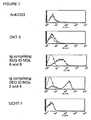
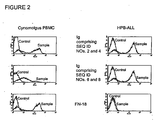
- Cross-species specificity of anti-human CD3 antibodies to macaque CD3 was tested by flow cytometric analysis.
- Antibodies tested were an anti-CD3 antibody as described in WO 99/54440 (as shown in SEQ ID NO. 162 of the present application), monoclonal antibody (mAb) OKT-3 (Jansen-Cilag), UCHT-1-PE (BD PharMingen, San Diego, California), an immunoglobulin (Ig) comprising the VH and VL chains shown in SEQ ID NOs. 2 and 4, respectively, and an Ig comprising the VH and VL chains shown in SEQ ID NOs. 6 and 8, respectively.
- mAb monoclonal antibody
- OKT-3 Jansen-Cilag
- UCHT-1-PE BD PharMingen, San Diego, California
- Ig immunoglobulin
- 2x10 5 cells (macaque T cell lines of Macaca fascicularis and Macaca mulatta, respectively, as kindly provided by H. Fickenscher, Heidelberg, Germany) per sample were stained for 30 minutes at 4°C in 25 ⁇ l of PBS/1%FCS/0.05%NaN 3 containing working dilutions of monoclonal antibodies (as determined individually by titration). Cells were washed two times in PBS/1%FCS/0.05%NaN 3 and a secondary antibody was added where necessary. After the addition of the secondary antibody, cells were washed again two times in the same solution and 10.000 living cells were acquired. A FACS Calibur flow cytometer and the CellQuest software from Becton Dickinson were used to collect and analyze the data.
- Non viable cells were excluded using forward and side scatter electronic gating.
- Isotype control or secondary antibody only were used as a negative control.
- Fig. 1 only the Ig comprising the VH and VL chains shown in SEQ ID NOs. 2 and 4, respectively, and the Ig comprising the VH and VL chains shown in SEQ ID NOs. 6 and 8, respectively, showed cross-species specificity for a non-chimpanzee primate CD3, i.e. macaque CD3.
- EXAMPLE 2 FACS assay for binding of an Ig comprising SEQ ID NOs. 2 and 4, an Ig comprising SEQ ID NOs. 6 and 8 and mAb FN18 to HPB-ALL cells and cynomolgus PBMC
- Binding of an Ig comprising SEQ ID NOs. 2 and 4, an Ig comprising SEQ ID NOs. 6 and 8 and mAb FN18 to the cynomolgus CD3 antigen on cynomolgus PBMC and to the human CD3 antigen on HPB-ALL cells (DSMZ No. ACC 483) was tested using an FACS assay.
- 2,5x10 5 cells were incubated with the FITC-conjugated Ig comprising SEQ ID NOs. 6 and 8 and the FITC-conjugated Ig comprising SEQ ID NOs. 2 and 4 diluted 1:25 in 50 ⁇ l PBS with 2% FCS, respectively.
- EXAMPLE 3 Sequence determination of the variable regions of two anti-human CD3 antibodies exhibiting species specificity for non-human primates
- PCR denaturation at 93 °C for 5 min, annealing at 58°C for 1 min, elongation at 72°C for 1 min for the first cycle; denaturation at 93°C for 1 min, annealing at 58°C for 1 min, elongation at 72°C for 1 min for 30 cycles; terminal extension at 72°C for 5 min
- PCR denaturation at 93 °C for 5 min, annealing at 58°C for 1 min, elongation at 72°C for 1 min for 30 cycles; terminal extension at 72°C for 5 min
- a set of 5' primers was used in combination with a constant 3' primer whereby the 3' primer was chosen according to the isotype of the respective antibody and there were two different sets of primers for the 5' region, one for the light chain variable region and the other for the heavy chain variable region.
- the primer combinations used in the PCR reactions are given below.
- the obtained sequences were examined for functional variable region coding sequences and for the heavy chain and the light chain of each antibody a sequence coding for the variable region was obtained.
- the nucleotide and amino acid sequences of the heavy and light chain variable regions of the cross-species specific anti-CD3 antibodies are described in SEQ ID NOs. 1 through 8 in the sequence listing included in the description, respectively.
- EXAMPLE 4 Cloning of anti human EpCAM and CD3 cross-species specific bispecific single chain antibodies
- the amplified variable regions had to be modified by PCR to obtain the corresponding single chain Fv antibody fragments.
- two different single chain Fv antibodies were generated for each antibody.
- a two-step fusion PCR was used to amplify the sequence coding for the variable regions.
- a set of appropriate primers was designed to perform the PCR-based cloning steps, finally resulting in a single chain antibody connecting the two variable domains with a 15 amino acid linker ([Gly 4 Ser] 3 ) in the order VH-Linker-VL and VL-Linker-VH.
- the corresponding nucleotide and amino acid sequences are described in SEQ ID NO. 9 through 12 and in SEQ ID NO. 13 through 16 of the sequence listing included in the description.
- scFv antibody is flanked at the 5'end with a small Ser(Gly 4 )Ser linker preceded by the restriction enzyme recognition site for BspEI and at the 3'end with a 6 histidine affinity tag followed by a stop codon and by the restriction enzyme recognition site for SalI.
- the second single chain Fv antibody was an anti human EpCAM specificity designated "5-10" which is described in SEQ ID NO. 33 and 34 of the sequence listing included in the description.
- the coding sequence of the single chain Fv antibodies was then cloned via BspEI (5' to the Ser(Gly 4 )Ser linker) and SalI into the pEFDHFR expression vector (pEFDHFR was described in Mack et al. Proc. Natl. Acad. Sci. USA 92 (1995) 7021-7025 ) containing the coding sequence for the human EpCAM specific single chain Fv antibody 5-10 and the restriction enzyme recognition site for BspEI.
- the coding sequence of an murine immunoglobulin leader peptide is described in SEQ ID NO. 35 and 36 of the sequence listing included in the description, preceded by a Kozak translation initiation consensus sequence and the restriction enzyme recognition site for EcoRI.
- Single clones of the constructs were isolated and sequenced with primers complementary to flanking regions in the vector according to standard protocols ( Sambrook, Molecular Cloning; A Laboratory Manual, Cold Spring Harbor Laboratory Press, Cold Spring Harbor, New York (1989) (2001 )). For further experiments a clone of each construct was selected.
- the nucleotide and amino acid sequences are described for 5-10LHxSE ID NO.12 in SEQ ID NOs. 37 and 38, for 5-10LHxSEQ ID NO.10 in SEQ ID NOs. 39 and 40, for 5-10LHxSEQ ID NO.16 in SEQ ID NOs. 41 and 42 and for 5-10LHxSEQ ID NOs.14 in SEQ ID NO. 43 and 44 of the sequence listing included in the description.
- EXAMPLE 5 Expression of the 5-10LHxSEQ ID NO.12, 5-10LHxSEQ ID NO.10, 5-10LHxSEQ ID NO.16 and 5-10LHxSEQ ID NO.14 bispecific single chain antibodies in CHO cells
- the plasmids with the sequences coding for the bispecific single chain antibodies were transfected into DHFR deficient CHO cells for eukaryotic expression of the construct as described in Kaufmann R.J. (1990) Methods Enzymol. 185, 537-566 ).
- Gene amplification of the construct was induced by increasing concentrations of Methotrexat (MTX) to a final concentration of up to 500nM MTX.
- MTX Methotrexat
- the transfected cells were then expanded and 1 liter of supernatant produced.
- the construct was finally purified out of the culture supernatant as described in Kufer et al. Cancer immunity Vol. 1, p. 10 (2001 ).
- EXAMPLE 6 FACS assay for binding of 5-10LHxSEQ ID NO.12, 5-10LHxSEQ ID NO.10, 5-10LHxSEQ ID NO.16 and 5-10LHxSEQ ID NO.14 to Kato III cells or human EpCAM transfected CHO cells and to HPB-ALL cells
- Binding of the bifunctional constructs to the EpCAM antigen on human Kato III cells expressing EpCAM (ATCC No. HTB-103) or on human EpCAM transfected CHO cells and to the human CD3 antigen on HPB-ALL cells was tested using an FACS assay. For that purpose 2.5x10 5 cells were incubated with 50 ⁇ l of cell culture supernatant containing the construct. The binding of the construct was detected with an anti-His antibody (Penta-His Antibody, BSA free, obtained from Qiagen GmbH, Hilden, FRG) at 2 ⁇ g/ml in 50 ⁇ l PBS with 2%FCS.
- an anti-His antibody Penta-His Antibody, BSA free, obtained from Qiagen GmbH, Hilden, FRG
- a R-Phycoerythrin-conjugated affinity purified F(ab')2 fragment, goat anti-mouse IgG, Fc-gamma fragment specific antibody, diluted 1:100 in 50 ⁇ l PBS with 2% FCS (obtained from Dianova, Hamburg, FRG) was used.
- the samples were measured on a FACSscan (BD biosciences, Heidelberg, FRG). Antigen binding was clearly detectable for the anti human EpCAM specificity as well as for the anti CD3 specificities on the cell line positive for human CD3 (see Fig. 3 ).
- Bioactivity of 5-10LHxSEQ ID NO.12, 5-10LHxSEQ ID NO.10, and 5LH-10xSEQ ID NO.14 was analyzed by FACS-based in vitro cytotoxicity assays using the human EpCAM positive Kato III cells as target cells and human PBMCs as effector cells.
- Target cells were washed twice with PBS and labeled with PKH26 dye (Sigma-Aldrich, Germany) according to the manufacturer's instructions. Labeled target cells were washed twice with RPMI/10% FCS and mixed with freshly isolated effector cells at an E:T ratio of 10:1.
- Sigmoidal dose response killing curves were analyzed by Prism Software (GraphPad Software Inc., San Diego, USA) and the BiTE concentration calculated that induced half maximal killing (EC50 value). The results of this assay are shown below in Fig 4 . All constructs showed cytotoxic activity.
- the resulting EC50 values for 5-10LHxSEQ ID NO.14, 5-10LHxSEQ ID NO.12 and 5-10LHxSEQ ID NO.10 were 1.3 ⁇ g/ml, 1.5 pg/ml and 5.8 pg/ml respectively.
- Bioactivity of 5-10LHxSEQ ID NO.12, 5-10LHxSEQ ID NO.10, and 5-10LHxSEQ ID NO.14 was analyzed by FACS-based in vitro cytotoxicity assays using the human EpCAM positive Kato III cells as target cells and cynomolgus PBMCs as effector cells.
- Target cells were washed twice with PBS and labeled with PKH26 dye (Sigma-Aldrich, Germany) according to the manufacturer's instructions. Labeled target cells were washed twice with RPMI/10% FCS and mixed with freshly isolated effector cells at an E:T ratio of 10:1. Two times 10 4 target and 2x10 5 effector cells in a volume of 50 ⁇ l RPMI/10% FCS were added per well in a 96-well round bottom plate. Ten-fold serial dilutions of different Bispecific single chain antibodies were prepared in RPMI/10% FCS to obtain a starting concentration of 1000 ng/ml in the final reaction volume. 50 ⁇ l of the different solutions were added in triplicates to the corresponding wells. Individual cytotoxicity mixtures were incubated for 24 to 48 hours at 37°C, 5% CO 2 .
- PKH26 dye Sigma-Aldrich, Germany
- Sigmoidal dose response killing curves were analyzed by Prism Software (GraphPad Software Inc., San Diego, USA) and the bispecific single chain antibody concentration calculated that induced half maximal killing (EC50 value). The results of this assay are shown below in Fig 5 .
- 5-10LRxSEQ ID NO.14, 5-10LHxSEQ ID NO.12 and 5-10LHxSEQ ID NO.10 showed cytotoxic activity.
- the resulting EC50 values for 5-10LHxSEQ ID NO.14, 5-10LHxSEQ ID NO.12 and 5-10LHxSEQ ID NO.10 were 87pg/ml, 69 pg/ml and 52 pg/ml respectively.
- 5-10LHxdi-anti CD3 (deimmunised anti-CD3 antibody as shown in SEQ ID NO.163) showed no activity. This is due to the fact that di-anti CD3 antibody only binds to human CD3, but not to cynomolgus CD3.
- EXAMPLE 9 Sequence determination of the cynomolgus EpCAM antigen and generation of cynomolgus EpCAM transfected CHO cells
- a PCR (denaturation at 93 °C for 5 min, annealing at 58°C for 1 min, elongation at 72°C for 1 min for the first cycle; denaturation at 93°C for 1 min, annealing at 58°C for 1 min, elongation at 72°C for 1 min for 35 cycles; terminal extension at 72°C for 5 min) was used to amplify the coding sequence of the EpCAM antigen.
- appropriate primers (5' primer described in SEQ ID NO. 45, 3' primer described in SEQ ID NO. 46) for the PCR reaction were designed according to the known coding sequence of the human EpCAM antigen ( Szala S.
- the obtained sequences were examined by comparison with the coding sequence of the human EpCAM antigen. As shown in Figure 6 , there is a high degree of sequence homology between the coding sequence of the human EpCAM antigen and the sequences obtained from the colon samples of the 3 cynomolgus monkeys.
- a clone of the aforementioned coding sequence of the cynomolgus EpCAM antigen subcloned into pEFDHFR with a verified nucleotide sequence was transfected into DHFR deficient CHO cells for eukaryotic expression of the construct as described in Kaufmann R.J. (1990) Methods Enzymol. 185, 537-566 ). Gene amplification of the construct was induced by increasing concentrations of MTX to a final concentration of up to 500nM MTX. The transfected cells were then tested for expression of cynomolgus EpCAM using an FACS assay.
- the binding of the antibodies was detected with a R-Phycoerythrin-conjugated affinity purified F(ab')2 fragment, goat anti-mouse IgG, Fc-gamma fragment specific antibody, diluted 1:100 in 50 ⁇ l PBS with 2% FCS (obtained from Dianova, Hamburg, FRG) was used.
- the samples were measured on a FACSscan (BD biosciences, Heidelberg, FRG).
- the anti EpCAM antibody 2G8 was recognized as cross-species specific and the expression of cynomolgus EpCAM was confirmed (see Fig. 7 ).
- Transfectants (depicted as non-filled curves) as compared to untransfected cells (depicted as filled curves) showed binding only with the supernatant of the 2G8 hybridoma which is therefore recognized as antibody species specific for human and cynomolgus EpCAM.
- EXAMPLE 10 Sequence determination of the variable regions of an anti human EpCAM antibody cross-species specific for non-human primates
- the respective hybridoma cell line was used for isolation of total RNA and cDNA synthesis by random-primed reverse transcription, which were performed according to standard protocols ( Sambrook, Molecular Cloning; A Laboratory Manual, Cold Spring Harbour Laboratory Press, Cold Spring Harbour, New York (1989) (2001 )).
- a PCR (denaturation at 93 °C for 5 min, annealing at 58°C for 1 min, elongation at 72°C for 1 min for the first cycle; denaturation at 93°C for 1 min, annealing at 58°C for 1 min, elongation at 72°C for 1 min for 30 cycles; terminal extension at 72°C for 5 min) was used to amplify the coding sequences of the variable regions of the antibody.
- the aforementioned set of 5' primers was used in combination with a constant 3' primer whereby the 3' primer was chosen according to the isotype of the antibody.
- variable region coding sequences were examined for functional variable region coding sequences and for the heavy chain and the light chain of the antibody a sequence coding for the variable region was isolated.
- the nucleotide and amino acid sequences of the variable regions are described in SEQ ID NOs. 49 through 52 in the sequence listing included in the description, respectively.
- EXAMPLE 11 Cloning of EpCAM and CD3 cross-species specific bispecific single chain antibodies
- the amplified variable regions of the 2G8 antibody had to be modified by PCR to obtain the corresponding single chain Fv antibody fragments.
- Two single chain Fv antibodies with different arrangements of the light and heavy chain variable regions were generated.
- a two-step fusion PCR was used to amplify the sequence coding for the variable regions.
- a set of appropriate primers was designed to perform the PCR-based cloning steps, finally resulting in a 2G8 single chain antibody connecting the two variable domains with a 15 amino acid linker ([Gly 4 Ser] 3 ) in the order VH-Linker-VL and VL-Linker-VH.
- the nucleotide and amino acid sequences are described in SEQ ID NOs. 53 through 56 of the sequence listing included in the description, respectively.
- the coding sequence of the EpCAM specific single chain Fv antibodies was then cloned via BsrGI and BspEI into the pEFDHFR expression vectors described above replacing the 5-10LH scFv.
- Single clones of the constructs were isolated and sequenced with primers complementary to flanking regions in the vector according to standard protocols ( Sambrook, Molecular Cloning; A Laboratory Manual, Cold Spring Harbor Laboratory Press, Cold Spring Harbor, New York (1989)(2001 )).
- a clone of each construct was selected.
- the nucleotide and amino acid sequences are described for 2G8LHxSEQ ID NO.12 in SEQ ID NOs. 65 and 66, for 2G8LHxSEQ ID NO.10 in SEQ ID NOs.
- EXAMPLE 12 Expression of the 2G8LHxSEQ ID NO.12, 2G8LHxSEQ ID NO.10, 2G8LHxSEQ ID NO.16, 2G8LHxSEQ ID NO.14, 2G8HLxSEQ ID NO.12, 2G8HLxSEQ ID NO.10, 2G8HLxSEQ ID NO.16 and 2G8HLxSEQ ID NO.14 bispecific single chain antibodies in CHO cells
- the plasmids with the sequences coding for the bispecific single chain antibodies were transfected into DHFR deficient CHO cells for eukaryotic expression of the construct as described in Kaufmann R.J. (1990) Methods Enzymol. 185, 537-566 ). Gene amplification of the construct was induced by increasing concentrations of MTX to a final concentration of up to 500nM MTX. The transfected cells were then expanded and 1 liter of supernatant produced. The construct was finally purified out of the culture supernatant as described in Kufer et al. Cancer Immunity Vol. 1, p. 10 (2001 ).
- EXAMPLE 13 FACS assay for binding of 2G8LHxSEQ ID NO.12, 2G8LHxSEQ ID NO.10, 2G8LHxSEQ ID NO.16, 2G8LHxSEQ ID NO.14, 2G8HLxSEQ ID NO.12, 2G8HLxSEQ ID NO.10, 2G8HLxSEQ ID NO.16 and 2G8HLxSEQ ID NO.14 on Kato III cells or cynomolgus EpCAM transfected CHO cells and HPB-ALL cells
- Binding of the bifunctional constructs from cell culture supernatants or binding of purified bifunctional constructs to the human EpCAM antigen on Kato III cells or cynomolgus EpCAM transfected CHO cells and to the CD3 antigen on HPB-ALL cells was tested using an FACS assay.
- 2,5x10 5 cells were incubated with 50 ⁇ l supernatant or with 5 ⁇ g/ml of the purified constructs in 50 ⁇ l PBS with 2%FCS.
- the binding of the constructs was detected with an anti-His antibody (Penta-His Antibody, BSA free, obtained from Qiagen GmbH, Hilden, FRG) at 2 ⁇ g/ml in 50 ⁇ l PBS with 2%FCS.
- a R-Phycoerythrin-conjugated affinity purified F(ab')2 fragment, goat anti-mouse IgG, Fc-gamma fragment specific antibody, diluted 1:100 in 50 ⁇ l PBS with 2% FCS (obtained from Dianova, Hamburg, FRG) was used.
- the samples were measured on a FACSscan (BD biosciences, Heidelberg, FRG). Antigen binding was clearly detectable for the anti EpCAM specificities as well as for the anti CD3 specificities (see Fig. 8 ).
- the 5-10LHxSEQ ID NO.10 construct As a negative control for binding to cynomolgus EpCAM, the 5-10LHxSEQ ID NO.10 construct was included which shows binding on human CD3 (HPB-ALL cells) but no binding to Cynomolgus EpCAM (cynomolgus EpCAM transfected CHO cells). The 5-10LH part only binds to human EpCAM.
- Bioactivity of selected bispecific single chain antibodies was analyzed by FACS-based in vitro cytotoxicity assays using the cynomolgus EpCAM transfected CHO cells as target cells and human PBMCs as effector cells.
- Target cells were washed twice with PBS and labeled with PKH26 dye (Sigma-Aldrich, Germany) according to the manufacturer's instructions. Labeled target cells were washed twice with RPMI/10% FCS and mixed with freshly isolated effector cells at an E:T ratio of 10:1. 2x10 4 target and 2x10 5 effector cells in a volume of 50 ⁇ l RPMI/10% FCS were added per well in a 96-well round bottom plate. Ten-fold serial dilutions of different bispecific single chain antibodies were prepared in RPMI/10% FCS to obtain a starting concentration of 5000 ng/ml in the final reaction volume. 50 ⁇ l of the different solutions were added in triplicates to the corresponding wells and incubated for 24 to 48 hours at 37°C, 5% CO 2 .
- PKH26 dye Sigma-Aldrich, Germany
- Statistical dose response killing curves were analyzed by Prism Software (GraphPad Software Inc., San Diego, USA) and the bispecific single chain antibody concentration calculated that induced half maximal killing (EC50 value).
- the results of this assay are shown below in Fig 9 .
- the resulting EC50 values for 2G8LHxSEQ ID NO.10 and 2G8HLxSEQ ID NO.12 were 1103 pg/ml and 3638 pg/ml, respectively.
- 5-10LHxdi-anti CD3 (deimmunised version of the anti-CD3 antibody as shown in SEQ ID NO.163 binding to human CD3, but not to cynomolgus CD3) was included as negative control and showed no activity. This is due to the fact that 5-10LH only binds to human EpCAM but lacks cross-species specificity to cynomolgus EpCAM.
- Bioactivity of selected bispecific single chain antibodies was analyzed by FACS-based in vitro cytotoxicity assays using the cynomolgus EpCAM transfected CHO cells as target cells and cynomolgus PBMCs as effector cells.
- Target cells were washed twice with PBS and labeled with PKH26 dye (Sigma-Aldrich, Germany) according to the manufacturer's instructions. Labeled target cells were washed twice with RPMI/10% FCS and mixed with freshly isolated effector cells at an E:T ratio of 10:1. 2x10 4 target and 2x10 5 effector cells in a volume of 50 ⁇ l RPMI/10% FCS were added per well in a 96-well round bottom plate. Ten-fold serial dilutions of different bispecific single chain antibodies were prepared in RPMI/10% FCS to obtain a starting concentration of 5000 ng/ml in the final reaction volume. 50 ⁇ l of the different solutions were added in triplicates to the corresponding wells. Individual cytotoxicity mixtures were incubated for 24 to 48 hours at 37°C, 5% CO 2 .
- PKH26 dye Sigma-Aldrich, Germany
- Example 14 The resulting EC50 values for 2G8LHxSEQ ID NO.10 and 2G8HLxSEQ ID NO.12 were 39810 pg/ml and 60350 pg/ml respectively.
- 5-10LHxdi-anti CD3 (deimmunised version of the anti-CD3 antibody as shown in SEQ ID NO.163) was included as negative control and showed no activity.
- Di-anti CD3 only binds to human CD3, but fails to bind to macaque/cynomolgus CD3.
- 5-10LH only binds to human EpCAM but lacks cross-species specificity to cynomolgus EpCAM.
- EXAMPLE 16 Generation of a human-like CD3 antibody fragment that binds to human and cynomolgus CD3
- the amino acid sequence of the murine VH chain shown in SEQ ID NO. 2 was aligned to the repertoire of human VH germline sequences ( http://vbase.mrc-cpe.cam.ac.uk ) using the Vector NTI DNA analysis software. On the basis of this analysis, the human VH segment 3-73 was chosen as a template sequence (see Fig. 11 ). Definitions of CDRs and frameworks are according to the Kabat numbering scheme.
- the afore-mentioned human-like VH region was gene synthesized (Entelechon, Germany) and subcloned via the restriction sites XhoI and BstEII into a suitable bacterial expression vector.
- This vector already contained the sequence coding for a VL chain (amino acid sequence shown in SEQ ID NO. 148; N-terminus in comparison to the original VL shown in SEQ ID NO. 4 slightly changed for cloning reasons) pairing with the human like VH region followed by a Flag and a His-6 Tag and preceded by a leader sequence that directs the functional scFv into the periplasma of E. coli.
- the functional domain arrangement after cloning was Leader sequence-VH-(G 4 S) 3 -VL-Flag-His6.
- Plasmid DNA encoding a) for the original murine VH (SEQ ID NO. 2) and VL (SEQ ID NO. 4) and b) for the human-like VH (SEQ ID NO. 110) combined with the VL (SEQ ID NO. 148) was each transformed into E. coli TG1 according to standard protocols.
- the nucleotide and amino acid sequences of the VH-VL scFv comprising the original murine VH (SEQ ID NO. 2) and VL (SEQ ID NO. 4) are shown in SEQ ID NOs. 9 and 10, respectively.
- SEQ ID NOs. 147 and 146 are shown in SEQ ID NOs. 147 and 146, respectively.
- Expression of different clones was performed in E. coli TG-1 in 96-well format. 100 ⁇ l LB/0.1% glucose were inoculated with 10 ⁇ l of an overnight culture of single clones and grown for 4 h at 37°C. After addition of IPTG to a final concentration of 1 mM, the culture was grown at 30°C for another 18-20 h. Per well, 40 ⁇ l of BEL-buffer (400 mM boric acid, 320 mM NaCl, 4 mM EDTA pH 8.0 + 2.5 mg/ml lysozyme) were added and shaken at room temperature for 1 h.
- BEL-buffer 400 mM boric acid, 320 mM NaCl, 4 mM EDTA pH 8.0 + 2.5 mg/ml lysozyme
- the human T cell line HPB-All and T cells in cynomolgus peripheric blood mononuclear cells were used as human CD3 and cynomolgus CD3 positive cells, respectively.
- PBMC cynomolgus peripheric blood mononuclear cells
- 100,000 cells were incubated with 50 ⁇ l of the scFv containing bacterial supernatants and incubated for 30 min on ice. Afterwards the cells were washed three times with PBS and subsequently resuspended in 50 ⁇ l PBS containing anti-His antibody (Pentahis, Roche) and further incubated on ice for 30 min.
- the control scFv of SEQ ID NO. 10 shows a clear shift on human CD3 positive cells as well as on cynomolgus CD3 positive cells indicative of binding to both human and cynomolgus CD3.
- the scFv shown in SEQ ID NO. 146 containing the human-like VH also shows clear binding to CD3 positive human (see Fig. 13 ) and cynomolgus cells (see Fig. 14 ).
- the amino acid sequence of the murine VH chain shown in SEQ ID NO. 2 was aligned to the repertoire of human VL germline sequences ( http://vbase.mrc-cpe.cam.ac.uk ) using the Vector NTI DNA analysis software.
- the human Vlambda segment 7a was chosen as a template sequence (see Fig. 21 ). Definitions of CDRs and frameworks are according to the Kabat numbering scheme.
- the corresponding amino acid residues that differ between the murine VL chain shown in SEQ ID NO. 4 and the human Vlambda segment 7a within the framework regions were mutated on the DNA level towards the human residues.
- the construct retained potentially crucial framework residues of the original murine Vlambda sequence (according to the Kabat numbering scheme): L 36, L 46, L 49, L 57 (see Fig. 21 ).
- an amino acid sequence was designed that was identical to the murine VL chain shown in SEQ ID NO. 4 sequence within its CDRs.
- the corresponding amino acid sequence of the generated human-like VL is shown in SEQ ID NO. 168, whereas the corresponding nucleic acid sequence is shown in SEQ ID NO. 167.
- the N-terminal VL sequence was changed to "EL" to generate a suitable N-terminal cloning site.
- the above-mentioned human-like VL region was gene synthesized (Entelechon, Germany) and subcloned via the restriction sites SacI and BsiWI into a suitable bacterial expression vector.
- This vector already contained the sequence coding for the above-mentioned human-like VH chain (amino acid sequence shown in SEQ ID NO. 110) pairing with the human-like VL region (amino acid sequence shown in SEQ ID NO. 168) followed by a Flag and a His-6 Tag and preceded by a leader sequence that directs the functional scFv into the periplasma of E. coli.
- the functional domain arrangement after cloning was Leader sequence-VH-(G 4 S) 3 linker-VL-Flag tag-His6 tag.
- Plasmid DNA encoding a) for the original murine VH (SEQ ID NO. 2) and VL (SEQ ID NO. 4) and b) for the human-like VH (SEQ ID NO. 110) combined with the human-like VL (SEQ ID NO. 168) was each transformed into E. coli TG1 according to standard protocols.
- the nucleotide and amino acid sequences of the VH-VL scFv comprising the original murine VH (SEQ ID NO. 2) and VL (SEQ ID NO. 4) are shown in SEQ ID NOs. 9 and 10, respectively.
- VL-VH scFv the human-like VL (SEQ ID NO. 168) and the human-like VH (SEQ ID NO. 110) are shown in SEQ ID NOs. 169 and 170, respectively.
- the human T cell line HPB-ALL and human and cynomolgus T cells in peripheric blood mononuclear cells (PBMCs) were used as human CD3 and cynomolgus CD3 positive cells, respectively.
- PBMCs peripheric blood mononuclear cells
- 100,000 cells were incubated with 50 ⁇ l of the scFv containing bacterial supernatants and incubated for 30 min on ice.
- the control scFv of SEQ ID NO. 10 shows a clear shift on human CD3 positive cells as depicted in Fig. 22 .
- the shift on human and cynomolgus T cells is less pronounced, most probably due to the less sensitive detection system ( Fig. 23 ).
- the human-like scFv of SEQ ID NO. 170 shows a positive shift on HPB-ALL cells ( Fig. 22 ) and clear shifts on human as well as cynomolgus T cells ( Fig. 23 , upper panel).
- the shifts of cells stained with the above-mentioned murine scFv or the human-like scFv decrease significantly, underlining the similar binding region of the scFvs and the original murine antibody; see Fig. 23 lower panel.
- Example 17 Determination of an epitope for cross-species specific anti-CD3 antibodies binding both human and cynomolgus CD3 epsilon
- epitope mapping was carried out with antibody I (Ig comprising the VH chain shown in SEQ ID NO. 2 and the VL chain shown in SEQ ID NO. 4) and antibody II (Ig comprising the VH chain shown in SEQ ID NO. 6 and the VL chain shown in SEQ ID NO. 8), both binding to human and cynomolgus CD3 epsilon; see also Fig. 1 .
- peptide-spotting For the peptide-spotting ("pepspot") analysis, overlapping 13mer peptides derived from the amino acid sequences of human and cynomolgus CD3 epsilon (see Figure 15 ) were covalently linked to a Whatman 50 cellulose- ⁇ -alanine-membrane via the C-terminus while the acetylated N-terminus remained free.
- the amino acid cystein - wherever occurring in the corresponding CD3 epsilon sequence - was exchanged by the amino acid serin.
- the individual 13mer peptides generated are shown in Figures 16 and 17 .
- the length of the overlapping sequence of two adjacent peptides was set to be 11 amino acids.
- the pepspot experiments were performed as follows. According to the manufacturer's protocol, the membrane was rinsed with methanol for 1 min, washed with 1xTBS and blocked with 1xTBS/1% (w/v) blocking reagent (BM Chemiluminescence Blotting Substrate (POD) of Roche Diagnostics GmbH) for 3 h. All incubation and washing steps were performed on an orbital shaker at room temperature, except for the overnight incubation of the primary antibody.
- BM Chemiluminescence Blotting Substrate (POD) of Roche Diagnostics GmbH BM Chemiluminescence Blotting Substrate (POD) of Roche Diagnostics GmbH
- the membranes were incubated overnight with 5 or 3 ⁇ g/ml of cross-species specific anti-CD3 antibodies as set forth above in 1xTBS/0.5% (w/v) blocking reagent at 4 °C on an orbital shaker. After washing 4 times with 1xTBS/0.05% Tween for 15 min, detection of bound anti-CD3 antibody was accomplished by incubation for 2h with a commercially available horseradish-peroxidase-conjugated anti-IgG (F(ab) 2 specific) antibody or an alkaline phosphatase-labeled anti-IgG antibody (diluted according to the manufacturer's recommendation in 1xTBS/0.5% blocking reagent, respectively).
- F(ab) 2 specific horseradish-peroxidase-conjugated anti-IgG
- alkaline phosphatase-labeled anti-IgG antibody diluted according to the manufacturer's recommendation in 1xTBS/0.5% blocking reagent, respectively.
- control pepspot assay (see Figure 18(A) ) showed signals on spots 33 and 42 of cynomolgus CD3 epsilon and on spots 37, 39 and 46 of human CD3 epsilon. These signals are regarded as unspecific and will not be mentioned further.
- anti-CD3 antibody I (Ig comprising the VH chain shown in SEQ ID NO. 2 and the VL chain shown in SEQ ID NO. 4)
- Cross-species specific anti-CD3 antibody I bound to peptide-spots 15, 28, 32, 33 and 40 derived from human CD3 epsilon (see Figure 18(B) ).
- the stretch of peptide-spots 28 to 33 corresponds to the amino acid residues 47-69 of human CD3 epsilon and comprises the minimal amino acid motif 57-59 (FSE).
- Spots 15 and 40 correspond to amino acid residues 30-42 (QYPGSEILWQHND) and 71-83 (RGSKPEDANFYLY), respectively.
- anti-CD3 antibody II (Ig comprising the VH chain shown in SEQ ID NO. 6 and the VL chain shown in SEQ ID NO. 8)
- the pepspot analysis with cross-species specific anti-CD3 antibody II (Ig comprising the VH chain shown in SEQ ID NO. 6 and the VL chain shown in SEQ ID NO. 8) showed strong signals to cynomolgus CD3 epsilon on the stretch of peptide-spots 27-29 as well as on spot 33 (see Figure 19 ).
- the stretch spanning spots 27 and 29 corresponds to the amino acid residues 53-69 of cynomolgus CD3 epsilon (see Figure 15 ), wherein the 13mer peptides have the minimal stretch of amino acids 57-61 (FSEME) in common.
- Spot 33 correlates with amino acid residues 65-77 (YYVSYPRGSNPED).
- Cross-reactive anti-CD3 antibody II bound the peptide-spots 15, 19, 32 and 33, 37, 39 and 40 of human CD3 epsilon (see Figure 19 ).
- Spot 19 corresponds to amino acid residues 38-46 d (WQHNDKNIGGDED) of human CD3 epsilon (see Figure 15 ).
- the small stretch of spots 32 to 33 corresponds to amino acid residues 55-69 containing the minimal peptide FSELE (amino acids 57-61).
- the spots 37 and 39 match amino acid residues 65-77 (YYVSYPRGSKPED) and 69-81 (YPRGSKPEDANFY) of human CD3 epsilon, respectively.
- the correlations of spots 15 and 40 are already mentioned above.
- both cross-species specific anti-CD3 antibodies recognize discontinous epitopes on human and cynomolgus CD3 epsilon.
- cynomolgus CD3 epsilon both cross-species specific anti-CD3 antibodies recognized a clear overlapping stretch of peptide-spots 27-29 (see Figure 16 ). All 13mer peptides covering this region contain one minimal peptide FSEME (amino acid residues 57-61 of cynomolgus CD3 epsilon).
- the peptide-intersection on human CD3 epsilon bound by both antibodies can be determined for spots 32 and 33 (see Figure 17 ). This section contains the minimal peptide FSELE corresponding to residues 57-61 of human CD3 epsilon.
- Example 18 Determination of the epitope for the human-like cross-species specific anti-CD3 antibody binding both to human and cynomolgus CD3 epsilon
- SEQ ID NO. 170 The epitope mapping of the human-like cross-species specific anti-CD3 antibody fragment described in Example 16 (SEQ ID NO. 170) was carried out by peptide-spotting ("pepspot") analysis as described in Example 17.
- said single chain Fv fragment shown in SEQ ID NO. 170 was converted into a full IgG antibody with a murine gamma1 heavy chain comprising the VH region as shown in SEQ ID NO. 110 and a kappa light chain comprising the VL region as shown in SEQ ID NO. 168.
- the procedure of the pepspot experiment was identical to the protocol used in Example 17.
- the pepspot membrane was incubated with 4 ⁇ g/ml of the mentioned IgG1 antibody, and an alkaline phosphatase-labeled goat-anti-mouse IgG antibody detecting bound CD3 antibody.
- a second membrane was incubated with alkaline phosphatase-labeled goat-anti-mouse IgG antibody alone to reveal unspecific binding of the detection antibody.
- the cross-species specific anti-CD3 antibody (murine IgG1 comprising the VH chain shown in SEQ ID NO. 110 and the VL chain shown in SEQ ID NO. 168) bound to the peptide-spots 1 and 33 as well as to the amino acid stretch of peptide-spots 24-29 ( Figure 24(B) ) derived from cynomolgus CD3 epsilon.
- the stretch spanning spots 24 and 29 corresponds to the amino acid residues 47-69 of cynomolgus CD3 epsilon (see Figures 15 and 16 ), wherein the 13mer peptides have the minimal stretch of amino acids 56-59 (EFSE) in common.
- Spot 1 and spot 33 correspond to amino acid residues 1-13 ("QDGNEEMGSITQT”; SEQ ID NO. 199) and 65-77 (“YYVSYPRGSNPED”; SEQ ID NO. 200) of cynomolgus CD3 epsilon, respectively.
- Binding signals of the mentioned cross-species specific anti-CD3 IgG1 antibody to peptides derived from human CD3 epsilon were found on spots 28 and 33, which correspond to the amino acid residues 47-59 and 57-69 of human CD3 epsilon (see Figure 17 ), respectively.
- the two stained spots comprise the minimal amino acid motif 57-59 (FSE).
- the human-like cross-species specific anti-CD3 antibody recognizes the same discontinuous epitopes on human and cynomolgus CD3 epsilon as antibody I and II described in Examples 1 and 17. Binding signals of said human-like antibody on the peptide membrane reveal the peptide-intersections corresponding to the amino acid sequence "FSEME” (amino acid residues 57-61) of cynomolgus CD3 epsilon and those corresponding to amino acid sequence "FSELE” (amino acid residues 57-61) of human CD3 epsilon as core region. This is in line with the epitope determined for the cross-species specific anti-CD3 antibodies I and II on both cynomolgus and human CD3 epsilon (see Example 17).
- Example 19 Verification of the identified epitope on human CD3 epsilon for the human-like cross-species specific anti-CD3 antibody
- the identified binding region as determined in Experiment 18 was further analyzed by a dot-blotting assay using a 13mer peptide covering the defined binding area of amino acid residues "FSELE" on human CD3 epsilon.
- This peptide comprises the amino acid sequence "EFSELEQSGYYVC” (SEQ ID NO. 195) of human CD3 epsilon.
- the peptide exists in two forms and is either biotinylated N- or C-terminally. In case of the N-terminal labelling, a short linker connects the peptide with the biotin.
- the antibody fragment was converted to a murine IgG format with a murine gammal heavy chain comprising the VH region as shown in (SEQ ID NO. 110 and a kappa light chain comprising the VL region as shown in SEQ ID NO. 168.
- the dot blotting was performed as follows. The Minifold I Spot Blot System from Schleicher & Schuell was used for immobilizing the peptides on a nitrocellulose membrane (Protran BA 85, 0,45 ⁇ m). 75 ⁇ g of each peptide in 100 ⁇ l TBS were filtered through the membrane using vacuum.
- the membrane was blocked with IxTBS/1% (w/v) blocking reagent (BM Chemiluminescence Blotting Substrate (POD) of Roche Diagnostics GmbH) for 2 h. All incubation and washing steps were performed on an orbital shaker at room temperature, except for the overnight incubation of the primary antibody. Directly after discarding the blocking solution, the membrane was incubated overnight with 3 ⁇ g/ml of the above-mentioned anti-CD3 antibody in 1xTBS/0.5% (w/v) blocking reagent at 4 °C on an orbital shaker.
- IxTBS/1% (w/v) blocking reagent BM Chemiluminescence Blotting Substrate (POD) of Roche Diagnostics GmbH
- the anti-CD3 murine IgG1 antibody UCHT1 (BD Biosciences) binding to human CD3 epsilon was applied to a second membrane blotted with the same amounts of the two peptides. After washing three times with 1xTBS/0.05% Tween for 10 min, detection of bound anti-CD3 antibody was accomplished by incubation for 2h with a commercially available alkaline phosphatase-conjugated anti-IgG antibody (diluted according to the manufacturer's recommendation in 1xTBS/0.5% blocking reagent). Subsequently, the membranes were washed three times with 1xTBS/0.05%Tween for 10min. Alkaline phosphatase was visualized using 5-bromo-4-chloro-indolyl phosphate/nitro blue tetrazolium liquid substrate system (Sigma).
- the mentioned CD3 specific antibody comprising the VH region shown in SEQ ID NO. 110 and the VL region shown in SEQ ID NO. 168 bound to both forms of the peptide "EFSELEQSGYYVC" (SEQ ID NO. 195) blotted to the membrane (see Figure 25(A)(1) and (2) ), whereas no binding could be obtained for the anti-CD3 murine IgG antibody UCHT1 (see Figure 25 (B) (1) und (2) ).
- the epitope recognized by anti-CD3 antibody UCHT1 is described e.g. in Kjer-Nielsen et al., loc.cit; Arnett et al., PNAS (2204), p.16268-73 .
- Example 20 Generation of CHO cells transfected with cynomolgus EGFR
- RNA was used for cDNA synthesis by random-primed reverse transcription.
- kit manual Qiagen, RNeasy Mini Kit.
- RNA was used for cDNA synthesis by random-primed reverse transcription.
- oligonucleotides were used:
- a PCR (denaturation at 93 °C for 5 min, annealing at 58°C for 1 min, elongation at 72°C for 2 min for the first cycle; denaturation at 93°C for 1 min, annealing at 58°C for 1 min, elongation at 72°C for 2 min for 30 cycles; terminal extension at 72°C for 5 min) was used to amplify the coding sequence.
- the PCR product was subsequently digested with XbaI and SalI, ligated into the appropriately digested expression vector pEF-DHFR, and transformed into E.coli.
- Example 21 Generation of EGFR and CD3 cross-species specific bispecific single chain antibodies
- bispecific single chain antibody molecules each comprising a domain with a binding specificity for the human and the cynomolgus CD3 antigen as well as a domain with a binding specificity for the human and the cynomolgus EGFR antigen, were designed as set out in the following Table 1: Table 1: Formats of anti-CD3 and anti-EGFR cross-species specific bispecific single chain antibody molecules SEQ ID (nucl/prot) Formats of protein constructs (N ⁇ C) 171/172 EGFR HL x SEQ ID NO. 170 173/174 EGFR LH x SEQ ID NO. 170 175/176 EGFR HL x SEQ ID NO.
- SEQ ID NO. 170 corresponds to amino acid sequence of the anti-CD3 VH-VL scFv comprising the human-like VH (SEQ ID NO. 110) and the human-like VL (SEQ ID NO. 168).
- VL-VH scFv corresponds to the amino acid sequence of the anti-CD3 VL-VH scFv comprising the human-like VL (SEQ ID NO. 168) and the human-like VH (SEQ ID NO. 110).
- the constructs were then transfected into DHFR-deficient CHO-cells by electroporation.
- Example 22 Expression and purification of the EGFR and CD3 cross-species specific bispecific single chain antibodies
- the bispecific single chain antibodies were expressed in chinese hamster ovary cells (CHO). Eukaryotic protein expression in DHFR deficient CHO cells was performed as described in Kaufmann R.J. (1990) Methods Enzymol. 185, 537-566 . Gene amplification of the constructs were induced by increasing concentrations of MTX to a final concentration of up to 20 nM MTX. After two passages of stationary culture the cells were grown in roller bottles with CHO modified MEM medium for 7 days before harvest. The cells were removed by centrifugation and the supernatant containing the expressed protein was stored at -20°C.
- IMAC Immobilized metal affinity chromatography
- the bispecific single chain antibodies were isolated in a two step purification process of IMAC and gel filtration.
- the main product had a molecular weight of about 52 kDa under native conditions as determined by gel filtration in PBS. This molecular weight corresponds to the bispecific single chain antibody. All constructs were purified according to this method.
- Purified bispecific single chain antibody protein was analyzed in SDS PAGE under reducing conditions performed with pre-cast 4-12% Bis Tris gels (Invitrogen). Sample preparation and application were performed according to the protocol provided by the manufacturer. The molecular weight was determined with MultiMark protein standard (Invitrogen). The gel was stained with colloidal Coomassie (Invitrogen protocol). The purity of the isolated protein was >95% as determined by SDS-PAGE.
- Western Blot was performed using an Optitran® BA-S83 membrane and the Invitrogen Blot Module according to the protocol provided by the manufacturer.
- the antibodies used were directed against the His Tag (Penta His, Qiagen) and Goat-anti-mouse Ig labeled with alkaline phosphatase (AP) (Sigma), and BCIP/NBT (Sigma) as substrate.
- the bispecific single chain antibody could be specifically detected by Western Blot. A single band was detected at 52 kD corresponding to the purified bispecific molecule.
- Example 23 Flow cytometric binding analysis of the EGFR and CD3 cross-species specific bispecific antibodies
- a FACS analysis was performed.
- the EGFR positive epidermoid carcinoma A431 cells ATCC, CRL-1555
- CD3 positive human T cell leukemia cell line HPB-ALL DSMZ, Braunschweig, ACC483
- the binding reactivity to cynomolgus antigens was tested by using the generated cynomolgus EGFR transfectants described in Example 20 and cynomolgus PBMCs which were obtained by Ficoll density gradient centrifugation.
- Bioactivity of the generated bispecific single chain antibodies was analyzed by chromium 51 release in vitro cytotoxicity assays using the EGFR positive cell lines described in Example 23; see also Figures 39 and 40 . As effector cells stimulated human CD8 positive T cells or stimulated cynomolgus PBMCs were used, respectively.
- the generation of the stimulated CD8+ T cells was performed as follows:
- Target cells were washed twice with PBS and labeled with 11,1 MBq 51 Cr in a final volume of 100 ⁇ l RPMI with 50% FCS for 45 minutes at 37°C. Subsequently the labeled target cells were washed 3 times with 5 ml RPMI and then used in the cytotoxicity assay. The assay was performed in a 96 well plate in a total volume of 250 ⁇ l supplemented RPMI (as above) with an E:T ratio of 10:1 corresponding to 1000 target cells and 10000 effector cells per well. 1 ⁇ g/ml of the cross-species specific bispecific single chain antibody molecules and 20 threefold dilutions thereof were applied.
- the assay time was 18 hours and cytotoxicity was measured as relative values of released chromium in the supernatant related to the difference of maximum lysis (addition of Triton-X) and spontaneous lysis (without effector cells). All measurements were done in quadruplicates. Measurement of chromium activity in the supernatants was performed with a Wizard 3 gammacounter (Perkin Elmer Life Sciences GmbH, GmbH, Germany). Analysis of the experimental data was performed with Prism 4 for Windows (version 4.02, GraphPad Software Inc., San Diego, California, USA). Sigmoidal dose response curves typically had R 2 values >0.90 as determined by the software. EC 50 values calculated by the analysis program were used for comparison of bioactivity.
- Table 2 Formats of CAIX and CD3 cross-species specific bispecific single chain antibodies SEQ ID (nucl/prot) Formats of protein constructs (N ⁇ C) 189/190 CAIX HL x SEQ ID NO. 170 191/192 CAIX LH x SEQ ID NO. 170 187/188 CAIX HL x SEQ ID NO. 194
- CAIX/MN Carboanhydrase IX
- CD3 cross-species specific bispecific single chain antibodies containing the variable light-chain (L) and variable heavy-chain (H) domains reactive with the human and cynomolgus CAIX antigen were created and subsequently cloned into an expression vector comprising the CD3 specific VH and VL combinations reactive with the human and cynomolgus CD3.
- the experiments were carried out in essence as described in Examples 20 to 24, with the following exceptions:
- the generated CAIX and CD3 cross-species specific bispecific single chain antibodies demonstrated binding to both the human and cynomolgus antigens and proved to be fully cross-species specific.
- the cytolytic bioactivity of the analysed constructs is shown in Figures 37 and 38 .
- a bispecific single chain antibody with a variable domain reactive with CAIX and a de-immunized human CD3-specific variable domain has been used as a positive control.
- the same construct has been used as a negative control.
Landscapes
- Health & Medical Sciences (AREA)
- Chemical & Material Sciences (AREA)
- Immunology (AREA)
- Organic Chemistry (AREA)
- Life Sciences & Earth Sciences (AREA)
- Medicinal Chemistry (AREA)
- General Health & Medical Sciences (AREA)
- Molecular Biology (AREA)
- Genetics & Genomics (AREA)
- Biophysics (AREA)
- Proteomics, Peptides & Aminoacids (AREA)
- Biochemistry (AREA)
- Veterinary Medicine (AREA)
- Pharmacology & Pharmacy (AREA)
- Public Health (AREA)
- Animal Behavior & Ethology (AREA)
- Engineering & Computer Science (AREA)
- Bioinformatics & Cheminformatics (AREA)
- General Chemical & Material Sciences (AREA)
- Nuclear Medicine, Radiotherapy & Molecular Imaging (AREA)
- Chemical Kinetics & Catalysis (AREA)
- Epidemiology (AREA)
- Cell Biology (AREA)
- Microbiology (AREA)
- Oncology (AREA)
- Biomedical Technology (AREA)
- Mycology (AREA)
- Peptides Or Proteins (AREA)
- Medicines Containing Antibodies Or Antigens For Use As Internal Diagnostic Agents (AREA)
- Preparation Of Compounds By Using Micro-Organisms (AREA)
- Pharmaceuticals Containing Other Organic And Inorganic Compounds (AREA)
- Investigating Or Analysing Biological Materials (AREA)
- Medicines That Contain Protein Lipid Enzymes And Other Medicines (AREA)
Priority Applications (2)
| Application Number | Priority Date | Filing Date | Title |
|---|---|---|---|
| EP20180123.0A EP3770174A1 (en) | 2005-10-11 | 2006-10-10 | Compositions comprising cross-species-specific antibodies and uses thereof |
| EP16200832.0A EP3178850B1 (en) | 2005-10-11 | 2006-10-10 | Compositions comprising cross-species-specific antibodies and uses thereof |
Applications Claiming Priority (2)
| Application Number | Priority Date | Filing Date | Title |
|---|---|---|---|
| US72478105P | 2005-10-11 | 2005-10-11 | |
| PCT/EP2006/009782 WO2007042261A2 (en) | 2005-10-11 | 2006-10-10 | Compositions comprising cross-species-specific antibodies and uses thereof |
Related Child Applications (2)
| Application Number | Title | Priority Date | Filing Date |
|---|---|---|---|
| EP16200832.0A Division EP3178850B1 (en) | 2005-10-11 | 2006-10-10 | Compositions comprising cross-species-specific antibodies and uses thereof |
| EP20180123.0A Division EP3770174A1 (en) | 2005-10-11 | 2006-10-10 | Compositions comprising cross-species-specific antibodies and uses thereof |
Publications (2)
| Publication Number | Publication Date |
|---|---|
| EP1940881A2 EP1940881A2 (en) | 2008-07-09 |
| EP1940881B1 true EP1940881B1 (en) | 2016-11-30 |
Family
ID=37943161
Family Applications (3)
| Application Number | Title | Priority Date | Filing Date |
|---|---|---|---|
| EP06806155.5A Revoked EP1940881B1 (en) | 2005-10-11 | 2006-10-10 | Compositions comprising cross-species-specific antibodies and uses thereof |
| EP16200832.0A Active EP3178850B1 (en) | 2005-10-11 | 2006-10-10 | Compositions comprising cross-species-specific antibodies and uses thereof |
| EP20180123.0A Pending EP3770174A1 (en) | 2005-10-11 | 2006-10-10 | Compositions comprising cross-species-specific antibodies and uses thereof |
Family Applications After (2)
| Application Number | Title | Priority Date | Filing Date |
|---|---|---|---|
| EP16200832.0A Active EP3178850B1 (en) | 2005-10-11 | 2006-10-10 | Compositions comprising cross-species-specific antibodies and uses thereof |
| EP20180123.0A Pending EP3770174A1 (en) | 2005-10-11 | 2006-10-10 | Compositions comprising cross-species-specific antibodies and uses thereof |
Country Status (8)
| Country | Link |
|---|---|
| US (4) | US8236308B2 (https=) |
| EP (3) | EP1940881B1 (https=) |
| JP (1) | JP5686953B2 (https=) |
| AU (1) | AU2006301492B2 (https=) |
| CA (1) | CA2625440C (https=) |
| DK (1) | DK1940881T3 (https=) |
| ES (2) | ES2616316T3 (https=) |
| WO (1) | WO2007042261A2 (https=) |
Cited By (5)
| Publication number | Priority date | Publication date | Assignee | Title |
|---|---|---|---|---|
| US10202452B2 (en) | 2012-04-20 | 2019-02-12 | Aptevo Research And Development Llc | CD3 binding polypeptides |
| US10870874B2 (en) | 2010-04-02 | 2020-12-22 | Amunix Pharmaceuticals, Inc. | Binding fusion proteins, binding fusion protein-drug conjugates, XTEN-drug conjugates and methods of making and using same |
| US11352426B2 (en) | 2015-09-21 | 2022-06-07 | Aptevo Research And Development Llc | CD3 binding polypeptides |
| US11713358B2 (en) | 2015-08-28 | 2023-08-01 | Amunix Pharmaceuticals, Inc. | Chimeric polypeptide assembly and methods of making and using the same |
| US12060424B2 (en) | 2017-12-21 | 2024-08-13 | Amunix Pharmaceuticals, Inc. | Release segments and binding compositions comprising same |
Families Citing this family (433)
| Publication number | Priority date | Publication date | Assignee | Title |
|---|---|---|---|---|
| US20040077081A1 (en) * | 2001-02-07 | 2004-04-22 | Egbert Oosterwijk | Hybridoma cell line g250 and its use for producing monoclonal antibodies |
| US7632496B2 (en) * | 2002-07-01 | 2009-12-15 | Wilex Ag | Co-administration of cG250 and IL-2 or IFN-α for treating cancer such as renal cell carcinomas |
| DE10303974A1 (de) | 2003-01-31 | 2004-08-05 | Abbott Gmbh & Co. Kg | Amyloid-β(1-42)-Oligomere, Verfahren zu deren Herstellung und deren Verwendung |
| EP1940881B1 (en) * | 2005-10-11 | 2016-11-30 | Amgen Research (Munich) GmbH | Compositions comprising cross-species-specific antibodies and uses thereof |
| HRP20140240T4 (hr) | 2005-11-30 | 2017-02-24 | Abbvie Inc. | Monoklonalna antitijela protiv amiloidnih beta proteina i njihova upotreba |
| US8691224B2 (en) | 2005-11-30 | 2014-04-08 | Abbvie Inc. | Anti-Aβ globulomer 5F7 antibodies |
| US8455626B2 (en) | 2006-11-30 | 2013-06-04 | Abbott Laboratories | Aβ conformer selective anti-aβ globulomer monoclonal antibodies |
| US8895004B2 (en) | 2007-02-27 | 2014-11-25 | AbbVie Deutschland GmbH & Co. KG | Method for the treatment of amyloidoses |
| RU2769948C2 (ru) * | 2007-04-03 | 2022-04-11 | Эмджен Рисерч (Мьюник) Гмбх | CD3-Эпсилон-связывающий домен с межвидовой специфичностью |
| RS53008B2 (sr) * | 2007-04-03 | 2022-12-30 | Amgen Res Munich Gmbh | Interspecijski specifičan cd3-epsilon vezujući domen |
| RS52492B (sr) * | 2007-04-03 | 2013-02-28 | Amgen Research (Munich) Gmbh | Molekuli koji se interspecijski specifično bispecifično vezuju |
| MX2009010611A (es) * | 2007-04-03 | 2010-03-26 | Micromet Ag | Enlazadores biespecificos, especificos para especies. |
| US8048420B2 (en) | 2007-06-12 | 2011-11-01 | Ac Immune S.A. | Monoclonal antibody |
| NZ581835A (en) * | 2007-06-12 | 2012-09-28 | Ac Immune Sa | Monoclonal anti beta amyloid antibody |
| US8613923B2 (en) | 2007-06-12 | 2013-12-24 | Ac Immune S.A. | Monoclonal antibody |
| AU2008311367B2 (en) | 2007-10-05 | 2014-11-13 | Ac Immune S.A. | Use of anti-amyloid beta antibody in ocular diseases |
| SG190572A1 (en) | 2008-04-29 | 2013-06-28 | Abbott Lab | Dual variable domain immunoglobulins and uses thereof |
| TW201006485A (en) | 2008-06-03 | 2010-02-16 | Abbott Lab | Dual variable domain immunoglobulins and uses thereof |
| CA2726087A1 (en) | 2008-06-03 | 2009-12-10 | Tariq Ghayur | Dual variable domain immunoglobulins and uses thereof |
| CN102149825B (zh) | 2008-07-08 | 2015-07-22 | Abbvie公司 | 前列腺素e2双重可变结构域免疫球蛋白及其用途 |
| DK2352763T4 (da) | 2008-10-01 | 2022-10-17 | Amgen Res Munich Gmbh | Bispecifikke enkeltkædede antistoffer med specificitet for højmolekylære målantigener |
| US20110293619A1 (en) | 2008-10-01 | 2011-12-01 | Micromet Ag | CROSS-SPECIES-SPECIFIC PSMAxCD3 BISPECIFIC SINGLE CHAIN ANTIBODY |
| EP2352765B1 (en) * | 2008-10-01 | 2018-01-03 | Amgen Research (Munich) GmbH | Cross-species-specific single domain bispecific single chain antibody |
| EP2370467B1 (en) * | 2008-10-01 | 2016-09-07 | Amgen Research (Munich) GmbH | Cross-species-specific pscaxcd3, cd19xcd3, c-metxcd3, endosialinxcd3, epcamxc d3, igf-1rxcd3 or fapalpha xcd3 bispecific single chain antibody |
| GB0909904D0 (en) * | 2009-06-09 | 2009-07-22 | Affitech As | Product |
| WO2011028811A2 (en) | 2009-09-01 | 2011-03-10 | Abbott Laboratories | Dual variable domain immunoglobulins and uses thereof |
| WO2011028952A1 (en) | 2009-09-02 | 2011-03-10 | Xencor, Inc. | Compositions and methods for simultaneous bivalent and monovalent co-engagement of antigens |
| TWI629357B (zh) * | 2009-10-02 | 2018-07-11 | 安進研究(慕尼黑)有限責任公司 | 跨物種特異性的PSMAxCD3雙特異性單鏈抗體 |
| BR112012008833A2 (pt) | 2009-10-15 | 2015-09-08 | Abbott Lab | imunoglobulinas de dominio variavel duplo e usos das mesmas |
| UY32979A (es) | 2009-10-28 | 2011-02-28 | Abbott Lab | Inmunoglobulinas con dominio variable dual y usos de las mismas |
| TWI653333B (zh) * | 2010-04-01 | 2019-03-11 | 安進研究(慕尼黑)有限責任公司 | 跨物種專一性之PSMAxCD3雙專一性單鏈抗體 |
| KR20130010123A (ko) | 2010-04-07 | 2013-01-25 | 아비에 인코포레이티드 | TNF-α 결합 단백질 |
| US8987419B2 (en) | 2010-04-15 | 2015-03-24 | AbbVie Deutschland GmbH & Co. KG | Amyloid-beta binding proteins |
| AU2011283694B2 (en) | 2010-07-29 | 2017-04-13 | Xencor, Inc. | Antibodies with modified isoelectric points |
| EP2598882B1 (en) | 2010-07-30 | 2017-07-26 | AC Immune S.A. | Safe and functional humanized antibodies for use in treating an amyloidosis |
| EP3252072A3 (en) | 2010-08-03 | 2018-03-14 | AbbVie Inc. | Dual variable domain immunoglobulins and uses thereof |
| EP3533803B1 (en) | 2010-08-14 | 2021-10-27 | AbbVie Inc. | Anti-amyloid-beta antibodies |
| JP2013539364A (ja) | 2010-08-26 | 2013-10-24 | アッヴィ・インコーポレイテッド | 二重可変ドメイン免疫グロブリンおよびその使用 |
| US10239952B2 (en) * | 2011-04-01 | 2019-03-26 | Memorial Sloan Kettering Cancer Center | Anti-WT1/HLA bi-specific antibody |
| EP2699596A4 (en) | 2011-04-22 | 2015-01-14 | Emergent Product Dev Seattle | PROSTATE-SPECIFIC MEMBRANE-BINDING PROTEINS AND COMPOSITIONS AND METHOD THEREFOR |
| JOP20200043A1 (ar) | 2011-05-10 | 2017-06-16 | Amgen Inc | طرق معالجة أو منع الاضطرابات المختصة بالكوليسترول |
| WO2012158818A2 (en) * | 2011-05-16 | 2012-11-22 | Fabion Pharmaceuticals, Inc. | Multi-specific fab fusion proteins and methods of use |
| KR102060389B1 (ko) * | 2011-05-21 | 2019-12-31 | 마크로제닉스, 인크. | 사람 및 비-사람 cd3에 결합할 수 있는 cd3-결합 분자 |
| WO2013026839A1 (en) | 2011-08-23 | 2013-02-28 | Roche Glycart Ag | Bispecific antibodies specific for t-cell activating antigens and a tumor antigen and methods of use |
| US10851178B2 (en) | 2011-10-10 | 2020-12-01 | Xencor, Inc. | Heterodimeric human IgG1 polypeptides with isoelectric point modifications |
| US12466897B2 (en) | 2011-10-10 | 2025-11-11 | Xencor, Inc. | Heterodimeric human IgG1 polypeptides with isoelectric point modifications |
| TWI679212B (zh) | 2011-11-15 | 2019-12-11 | 美商安進股份有限公司 | 針對bcma之e3以及cd3的結合分子 |
| PE20141937A1 (es) | 2011-11-16 | 2014-12-18 | Amgen Inc | Metodos para tratar trastornos relacionados con mutante viii de eliminacion de factor de crecimiento epidermico |
| TW201333035A (zh) | 2011-12-30 | 2013-08-16 | Abbvie Inc | 針對il-13及/或il-17之雙特異性結合蛋白 |
| US10633451B2 (en) * | 2012-02-03 | 2020-04-28 | Hoffmann-La Roche Inc. | Bispecific antibody molecules with antigen-transfected T-cells and their use in medicine |
| MX353382B (es) | 2012-03-01 | 2018-01-10 | Amgen Res Munich Gmbh | Moleculas de union polipeptido de larga duracion. |
| WO2014004549A2 (en) | 2012-06-27 | 2014-01-03 | Amgen Inc. | Anti-mesothelin binding proteins |
| CN104736174B (zh) | 2012-07-06 | 2019-06-14 | 根马布私人有限公司 | 具有三重突变的二聚体蛋白质 |
| CN102775500A (zh) * | 2012-08-03 | 2012-11-14 | 郑骏年 | 嵌合抗原受体iRGD-scFv(G250)-CD8-CD28-CD137-CD3ζ及其用途 |
| JOP20200236A1 (ar) * | 2012-09-21 | 2017-06-16 | Regeneron Pharma | الأجسام المضادة لمضاد cd3 وجزيئات ربط الأنتيجين ثنائية التحديد التي تربط cd3 وcd20 واستخداماتها |
| RU2015117393A (ru) | 2012-10-08 | 2016-12-10 | Роше Гликарт Аг | Лишенные fc антитела, содержащие два Fab-фрагмента, и способы их применения |
| TW202037609A (zh) | 2012-11-01 | 2020-10-16 | 美商艾伯維有限公司 | 抗-vegf/dll4雙重可變區域免疫球蛋白及其用途 |
| US9701759B2 (en) | 2013-01-14 | 2017-07-11 | Xencor, Inc. | Heterodimeric proteins |
| US10131710B2 (en) | 2013-01-14 | 2018-11-20 | Xencor, Inc. | Optimized antibody variable regions |
| KR102211837B1 (ko) | 2013-01-14 | 2021-02-03 | 젠코어 인코포레이티드 | 신규한 이형이량체 단백질 |
| US11053316B2 (en) | 2013-01-14 | 2021-07-06 | Xencor, Inc. | Optimized antibody variable regions |
| US10968276B2 (en) | 2013-03-12 | 2021-04-06 | Xencor, Inc. | Optimized anti-CD3 variable regions |
| US10487155B2 (en) | 2013-01-14 | 2019-11-26 | Xencor, Inc. | Heterodimeric proteins |
| US9605084B2 (en) | 2013-03-15 | 2017-03-28 | Xencor, Inc. | Heterodimeric proteins |
| WO2014113510A1 (en) | 2013-01-15 | 2014-07-24 | Xencor, Inc. | Rapid clearance of antigen complexes using novel antibodies |
| JO3519B1 (ar) | 2013-01-25 | 2020-07-05 | Amgen Inc | تركيبات أجسام مضادة لأجل cdh19 و cd3 |
| EP2762496A1 (en) | 2013-02-05 | 2014-08-06 | EngMab AG | Method for the selection of antibodies against BCMA |
| WO2014122143A1 (en) | 2013-02-05 | 2014-08-14 | Engmab Ag | Method for the selection of antibodies against bcma |
| EP2762497A1 (en) | 2013-02-05 | 2014-08-06 | EngMab AG | Bispecific antibodies against CD3epsilon and BCMA |
| LT2961771T (lt) | 2013-02-26 | 2020-03-10 | Roche Glycart Ag | Bispecifinės t ląstelę aktyvinančios antigeną surišančios molekulės, specifinės cd3 ir cea antigenams |
| EP2961773B1 (en) | 2013-02-26 | 2019-03-20 | Roche Glycart AG | Bispecific t cell activating antigen binding molecules |
| CN105283201B (zh) | 2013-03-14 | 2019-08-02 | 斯克利普斯研究所 | 靶向剂抗体偶联物及其用途 |
| SMT202100464T1 (it) * | 2013-03-14 | 2021-11-12 | Macrogenics Inc | Molecole bispecifiche che sono immunoreattive con cellule effettrici immunitarie che esprimono un recettore di attivazione |
| US10858417B2 (en) | 2013-03-15 | 2020-12-08 | Xencor, Inc. | Heterodimeric proteins |
| WO2014144280A2 (en) | 2013-03-15 | 2014-09-18 | Abbvie Inc. | DUAL SPECIFIC BINDING PROTEINS DIRECTED AGAINST IL-1β AND / OR IL-17 |
| EP2970446A1 (en) | 2013-03-15 | 2016-01-20 | Amgen Research (Munich) GmbH | Antibody constructs for influenza m2 and cd3 |
| AR095374A1 (es) | 2013-03-15 | 2015-10-14 | Amgen Res Munich Gmbh | Moléculas de unión para bcma y cd3 |
| EP2970486B1 (en) | 2013-03-15 | 2018-05-16 | Xencor, Inc. | Modulation of t cells with bispecific antibodies and fc fusions |
| US10106624B2 (en) | 2013-03-15 | 2018-10-23 | Xencor, Inc. | Heterodimeric proteins |
| US10519242B2 (en) | 2013-03-15 | 2019-12-31 | Xencor, Inc. | Targeting regulatory T cells with heterodimeric proteins |
| PL2970449T3 (pl) | 2013-03-15 | 2020-04-30 | Amgen Research (Munich) Gmbh | Jednołańcuchowe cząsteczki wiążące zawierające N-końcowy ABP |
| EP2789630A1 (en) | 2013-04-09 | 2014-10-15 | EngMab AG | Bispecific antibodies against CD3e and ROR1 |
| ME03675B (me) | 2013-07-05 | 2020-10-20 | Genmab As | Humanizovana ili himerna anтi-cd3 antiтela |
| CN105722859B (zh) | 2013-07-25 | 2021-05-07 | 西托姆克斯治疗公司 | 多特异性抗体、多特异性可活化抗体及其使用方法 |
| AR097648A1 (es) | 2013-09-13 | 2016-04-06 | Amgen Inc | Combinación de factores epigenéticos y compuestos biespecíficos que tienen como diana cd33 y cd3 en el tratamiento de leucemia mieloide |
| JP2016538275A (ja) * | 2013-11-04 | 2016-12-08 | グレンマーク ファーマシューティカルズ, エセ.アー. | T細胞再標的化ヘテロ二量体免疫グロブリン(hetero−dimeric immunoglobulin)の製造 |
| AU2014364593A1 (en) | 2013-12-17 | 2016-07-07 | Genentech, Inc. | Methods of treating cancer using PD-1 axis binding antagonists and an anti-CD20 antibody |
| JP2017507900A (ja) | 2013-12-17 | 2017-03-23 | ジェネンテック, インコーポレイテッド | Pd−1軸結合アンタゴニスト及び抗her2抗体を使用してher2陽性がんを治療する方法 |
| IL263466B2 (en) | 2013-12-17 | 2023-10-01 | Genentech Inc | Anti-CD3 antibodies and methods of using them |
| TWI701042B (zh) | 2014-03-19 | 2020-08-11 | 美商再生元醫藥公司 | 用於腫瘤治療之方法及抗體組成物 |
| EP3699195A3 (en) | 2014-03-28 | 2020-11-04 | Xencor, Inc. | Bispecific antibodies that bind to cd38 and cd3 |
| CN106459201A (zh) * | 2014-05-28 | 2017-02-22 | 豪夫迈·罗氏有限公司 | 结合人和食蟹猴CD3ε的抗体 |
| US9212225B1 (en) | 2014-07-01 | 2015-12-15 | Amphivena Therapeutics, Inc. | Bispecific CD33 and CD3 binding proteins |
| WO2016001810A1 (en) | 2014-07-01 | 2016-01-07 | Pfizer Inc. | Bispecific heterodimeric diabodies and uses thereof |
| CA2955947A1 (en) * | 2014-07-25 | 2016-01-28 | Cytomx Therapeutics, Inc. | Anti-cd3 antibodies, activatable anti-cd3 antibodies, multispecific anti-cd3 antibodies, multispecific activatable anti-cd3 antibodies, and methods of using the same |
| UY36245A (es) | 2014-07-31 | 2016-01-29 | Amgen Res Munich Gmbh | Constructos de anticuerpos para cdh19 y cd3 |
| MX384418B (es) | 2014-07-31 | 2025-03-14 | Amgen Res Munich Gmbh | Constructo de anticuerpo de cadena individual biespecífico con distribución mejorada de tejido. |
| EP3174901B1 (en) | 2014-07-31 | 2019-06-26 | Amgen Research (Munich) GmbH | Optimized cross-species specific bispecific single chain antibody constructs |
| EP3177643B1 (en) | 2014-08-04 | 2019-05-08 | F.Hoffmann-La Roche Ag | Bispecific t cell activating antigen binding molecules |
| MA40579A (fr) | 2014-09-12 | 2016-03-17 | Genentech Inc | Anticorps anti-cll-1 et immunoconjugués |
| MX386297B (es) | 2014-09-29 | 2025-03-18 | Univ Duke | Moleculas biespecificas que comprenden un brazo orientado a la envoltura vih-1. |
| EP3204415B1 (en) * | 2014-10-09 | 2020-06-17 | EngMab Sàrl | Bispecific antibodies against cd3epsilon and ror1 |
| WO2016073791A1 (en) | 2014-11-05 | 2016-05-12 | Genentech, Inc. | Methods of producing two chain proteins in bacteria |
| US10066002B2 (en) | 2014-11-05 | 2018-09-04 | Genentech, Inc. | Methods of producing two chain proteins in bacteria |
| KR102614189B1 (ko) | 2014-11-17 | 2023-12-18 | 리제너론 파아마슈티컬스, 인크. | Cd3xcd20 이특이적 항체를 이용한 종양의 치료 방법 |
| PT3221356T (pt) | 2014-11-20 | 2020-10-29 | Hoffmann La Roche | Moléculas de ligação ao antigénio biespecíficas ativadoras das células t contra folr1 e cd3 |
| EP4141032B1 (en) | 2014-11-20 | 2024-05-29 | F. Hoffmann-La Roche AG | Combination therapy of t cell activating bispecific antigen binding molecules and pd-1 axis binding antagonists |
| DK3221357T3 (da) | 2014-11-20 | 2020-08-10 | Hoffmann La Roche | Fælles letkæder og fremgangsmåder til anvendelse |
| PE20171324A1 (es) | 2014-11-26 | 2017-09-11 | Xencor Inc | Anticuerpos heterodimericos que se unen a cd3 y a antigenos tumorales |
| EP3223907A2 (en) | 2014-11-26 | 2017-10-04 | Xencor, Inc. | Heterodimeric antibodies that bind cd3 and cd38 |
| US10259887B2 (en) | 2014-11-26 | 2019-04-16 | Xencor, Inc. | Heterodimeric antibodies that bind CD3 and tumor antigens |
| US10093733B2 (en) | 2014-12-11 | 2018-10-09 | Abbvie Inc. | LRP-8 binding dual variable domain immunoglobulin proteins |
| WO2016105450A2 (en) | 2014-12-22 | 2016-06-30 | Xencor, Inc. | Trispecific antibodies |
| US10544220B2 (en) * | 2015-01-08 | 2020-01-28 | Genmab A/S | Bispecific antibodies against CD3 and CD20 |
| EP3262217A4 (en) | 2015-02-24 | 2018-07-18 | BioAtla LLC | Conditionally active biological proteins |
| US10227411B2 (en) | 2015-03-05 | 2019-03-12 | Xencor, Inc. | Modulation of T cells with bispecific antibodies and FC fusions |
| TWI703159B (zh) * | 2015-04-13 | 2020-09-01 | 美商輝瑞股份有限公司 | Bcma特異性治療性抗體及其用途 |
| CN107750255B (zh) | 2015-04-17 | 2022-08-30 | 安进研发(慕尼黑)股份有限公司 | 用于cdh3和cd3的双特异性抗体构建体 |
| EP3291836A4 (en) * | 2015-05-06 | 2018-11-14 | Janssen Biotech, Inc. | Prostate specific membrane antigen (psma) bispecific binding agents and uses thereof |
| CN114920848B (zh) | 2015-05-13 | 2024-10-11 | 埃博灵克斯股份有限公司 | 基于cd3反应性的t细胞募集多肽 |
| LT3611192T (lt) | 2015-05-13 | 2025-06-25 | Ablynx N.V. | T ląstelių rekrutingo polipeptidai tcr alfa/beta reaktyvumo pagrindu |
| US9708412B2 (en) | 2015-05-21 | 2017-07-18 | Harpoon Therapeutics, Inc. | Trispecific binding proteins and methods of use |
| US10738118B2 (en) | 2015-05-29 | 2020-08-11 | Amphivena Therapeutics, Inc. | Methods of using bispecific CD33 and CD3 binding proteins |
| AR105618A1 (es) | 2015-05-29 | 2017-10-25 | Genentech Inc | Metilación del promotor del ligando al receptor de muerte programada (pd-l1) en cáncer |
| TW201710286A (zh) | 2015-06-15 | 2017-03-16 | 艾伯維有限公司 | 抗vegf、pdgf及/或其受體之結合蛋白 |
| DK3310814T5 (da) | 2015-06-16 | 2024-10-07 | Hoffmann La Roche | Humaniserede og affinitetsmodnede antistoffer mod FcRH5 og fremgangsmåder til anvendelse |
| US10501545B2 (en) | 2015-06-16 | 2019-12-10 | Genentech, Inc. | Anti-CLL-1 antibodies and methods of use |
| KR102689256B1 (ko) | 2015-06-17 | 2024-07-30 | 제넨테크, 인크. | Pd-1 축 결합 길항제 및 탁산을 사용하여 국소적 진행성 또는 전이성 유방암을 치료하는 방법 |
| TWI744242B (zh) | 2015-07-31 | 2021-11-01 | 德商安美基研究(慕尼黑)公司 | Egfrviii及cd3抗體構築體 |
| TWI717375B (zh) | 2015-07-31 | 2021-02-01 | 德商安美基研究(慕尼黑)公司 | Cd70及cd3抗體構築體 |
| TWI829617B (zh) | 2015-07-31 | 2024-01-21 | 德商安美基研究(慕尼黑)公司 | Flt3及cd3抗體構築體 |
| TWI793062B (zh) | 2015-07-31 | 2023-02-21 | 德商安美基研究(慕尼黑)公司 | Dll3及cd3抗體構築體 |
| TWI796283B (zh) | 2015-07-31 | 2023-03-21 | 德商安美基研究(慕尼黑)公司 | Msln及cd3抗體構築體 |
| EA039859B1 (ru) | 2015-07-31 | 2022-03-21 | Эмджен Рисерч (Мюник) Гмбх | Биспецифические конструкты антител, связывающие egfrviii и cd3 |
| SI3331910T1 (sl) | 2015-08-03 | 2020-07-31 | Engmab Sarl | Monoklonska protitelesa proti humani antigen dozorevanja limfocitov B (BCMA) |
| JO3620B1 (ar) | 2015-08-05 | 2020-08-27 | Amgen Res Munich Gmbh | مثبطات نقطة فحص مناعية للاستخدام في علاج سرطانات محمولة عبر الدم |
| MX2018002043A (es) | 2015-08-17 | 2018-07-06 | Janssen Pharmaceutica Nv | ANTICUERPOS ANTI-BCMA, MOLíCULAS DE UNIíN A ANTíGENOS BIESPECíFICAS QUE SE UNEN A BCMA Y CD3, Y USOS DE ESTOS. |
| AR106188A1 (es) | 2015-10-01 | 2017-12-20 | Hoffmann La Roche | Anticuerpos anti-cd19 humano humanizados y métodos de utilización |
| PE20180484A1 (es) | 2015-10-02 | 2018-03-07 | Hoffmann La Roche | Moleculas biespecificas de union a antigeno activadoras de celulas t |
| EA201891084A1 (ru) | 2015-11-02 | 2019-10-31 | Антитела к il1rap, биспецифические антигенсвязывающие молекулы, которые связываются с il1rap и cd3, и их применение | |
| TW201720458A (zh) * | 2015-12-04 | 2017-06-16 | 宏觀基因股份有限公司 | 能夠結合cd19 和cd3 的雙特異性單價雙抗體以及其用途 |
| CA3007030A1 (en) | 2015-12-07 | 2017-06-15 | Xencor, Inc. | Heterodimeric antibodies that bind cd3 and psma |
| EP3178848A1 (en) | 2015-12-09 | 2017-06-14 | F. Hoffmann-La Roche AG | Type ii anti-cd20 antibody for reducing formation of anti-drug antibodies |
| IL313608A (en) | 2015-12-09 | 2024-08-01 | Hoffmann La Roche | Antibody against CD20 type II to reduce the formation of antibodies against drugs |
| KR20180097615A (ko) | 2016-01-08 | 2018-08-31 | 에프. 호프만-라 로슈 아게 | Pd-1 축 결합 길항물질 및 항-cea/항-cd3 이중특이성 항체를 사용하는 cea-양성 암의 치료 방법 |
| TW201734049A (zh) | 2016-01-22 | 2017-10-01 | 健生生物科技公司 | 抗-ror1抗體、ror1 x cd3雙特異性抗體及使用其之方法 |
| IL313507A (en) | 2016-02-03 | 2024-08-01 | Amgen Res Munich Gmbh | Constructs of bispecific antibodies to BCMA and CD3 that bind to T cells, preparations containing the same and uses thereof |
| EA201891753A1 (ru) | 2016-02-03 | 2019-01-31 | Эмджен Рисерч (Мюник) Гмбх | Биспецифические конструкции антител к psma и cd3, вовлекающие т-клетки |
| KR102891788B1 (ko) * | 2016-02-04 | 2025-11-26 | 더 스크립스 리서치 인스티튜트 | 인간화 항-cd3 항체, 접합체 및 이의 용도 |
| US11421028B2 (en) | 2016-02-06 | 2022-08-23 | Epimab Biotherapeutics, Inc. | Fabs-in-tandem immunoglobulin and uses thereof |
| EP3430058A4 (en) | 2016-03-15 | 2019-10-23 | Generon (Shanghai) Corporation Ltd. | MULTISPECIFIC FAB FUSION PROTEINS AND USES THEREOF |
| JP7015244B2 (ja) | 2016-03-22 | 2022-02-02 | エフ・ホフマン-ラ・ロシュ・アクチェンゲゼルシャフト | プロテアーゼ活性化t細胞二重特異性分子 |
| JOP20170091B1 (ar) | 2016-04-19 | 2021-08-17 | Amgen Res Munich Gmbh | إعطاء تركيبة ثنائية النوعية ترتبط بـ cd33 وcd3 للاستخدام في طريقة لعلاج اللوكيميا النخاعية |
| WO2017201493A1 (en) | 2016-05-20 | 2017-11-23 | Harpoon Therapeutics, Inc. | Single chain variable fragment cd3 binding proteins |
| EP3493844A4 (en) | 2016-05-20 | 2021-03-24 | Harpoon Therapeutics Inc. | SINGLE DOMAIN SERUM ALBUMIN BINDING PROTEIN |
| US11623958B2 (en) | 2016-05-20 | 2023-04-11 | Harpoon Therapeutics, Inc. | Single chain variable fragment CD3 binding proteins |
| EP3252078A1 (en) | 2016-06-02 | 2017-12-06 | F. Hoffmann-La Roche AG | Type ii anti-cd20 antibody and anti-cd20/cd3 bispecific antibody for treatment of cancer |
| WO2018220099A1 (en) | 2017-06-02 | 2018-12-06 | F. Hoffmann-La Roche Ag | Type ii anti-cd20 antibody and anti-cd20/cd3 bispecific antibody for treatment of cancer |
| JP7010854B2 (ja) | 2016-06-14 | 2022-01-26 | ゼンコア インコーポレイテッド | 二重特異性チェックポイント阻害剤抗体 |
| KR20250175345A (ko) | 2016-06-21 | 2025-12-16 | 테네오바이오, 인코포레이티드 | Cd3 결합 항체 |
| CN109715663B (zh) | 2016-06-28 | 2022-11-25 | Xencor股份有限公司 | 结合生长抑素受体2的异源二聚抗体 |
| TWI781108B (zh) | 2016-07-20 | 2022-10-21 | 比利時商健生藥品公司 | 抗gprc5d抗體、結合gprc5d與cd3之雙特異性抗原結合分子及其用途 |
| WO2018027204A1 (en) | 2016-08-05 | 2018-02-08 | Genentech, Inc. | Multivalent and multiepitopic anitibodies having agonistic activity and methods of use |
| WO2018029124A1 (en) | 2016-08-08 | 2018-02-15 | F. Hoffmann-La Roche Ag | Therapeutic and diagnostic methods for cancer |
| JP7033328B2 (ja) | 2016-08-16 | 2022-03-10 | エピムアブ バイオセラピューティクス インコーポレイテッド | 一価の非対称タンデムFab二重特異性抗体 |
| US10793632B2 (en) | 2016-08-30 | 2020-10-06 | Xencor, Inc. | Bispecific immunomodulatory antibodies that bind costimulatory and checkpoint receptors |
| PE20241349A1 (es) | 2016-09-14 | 2024-07-03 | Teneobio Inc | Anticuerpos de union a cd3 |
| US10882918B2 (en) | 2016-09-30 | 2021-01-05 | Hoffmann-La Roche Inc. | Bispecific T cell activating antigen binding molecules |
| MY203000A (en) | 2016-10-14 | 2024-06-01 | Xencor Inc | Il15/il15r� heterodimeric fc-fusion proteins |
| JP7267914B2 (ja) | 2016-11-02 | 2023-05-02 | エンクマフ エスアーエールエル | Bcma及びcd3に対する二重特異性抗体、及び多発性骨髄腫を治療するために併用して使用される免疫療法薬 |
| JP7784795B2 (ja) | 2016-11-15 | 2025-12-12 | ジェネンテック, インコーポレイテッド | 抗cd20/抗cd3二重特異性抗体による処置のための投与 |
| TW201829463A (zh) | 2016-11-18 | 2018-08-16 | 瑞士商赫孚孟拉羅股份公司 | 抗hla-g抗體及其用途 |
| AU2017363300A1 (en) | 2016-11-23 | 2019-06-20 | Harpoon Therapeutics, Inc. | Prostate specific membrane antigen binding protein |
| WO2018098356A1 (en) | 2016-11-23 | 2018-05-31 | Harpoon Therapeutics, Inc. | Psma targeting trispecific proteins and methods of use |
| AU2017380981B2 (en) | 2016-12-19 | 2025-01-30 | F. Hoffmann-La Roche Ag | Combination therapy with targeted 4-1BB (CD137) agonists |
| KR102692708B1 (ko) | 2016-12-20 | 2024-08-07 | 에프. 호프만-라 로슈 아게 | 항-cd20/항-cd3 이중특이성 항체 및 4-1bb(cd137) 작용물질의 병용 요법 |
| IL317134A (en) | 2016-12-21 | 2025-01-01 | Teneobio Inc | An antibody containing only heavy chains that binds a human B-cell maturation antigen, a pharmaceutical composition containing the same, its use in the treatment of B-cell disorders and a method for its preparation |
| JP7202185B2 (ja) | 2016-12-22 | 2023-01-11 | 第一三共株式会社 | 抗cd3抗体及び該抗体を含む分子 |
| US20190336615A1 (en) * | 2017-01-27 | 2019-11-07 | Silverback Therapeutics, Inc. | Tumor targeting conjugates and methods of use thereof |
| WO2018144784A1 (en) | 2017-02-01 | 2018-08-09 | Smet Pharmaceutical Inc. | MONOMERIC HUMAN IgG1 Fc AND BISPECIFIC ANTIBODIES |
| SMT202500367T1 (it) | 2017-02-02 | 2025-11-10 | Amgen Res Munich Gmbh | Composizione farmaceutica a basso ph comprendente costrutti di anticorpo che reclutano le cellule t |
| AU2018219887B2 (en) | 2017-02-08 | 2024-08-15 | Dragonfly Therapeutics, LLC | Multi-specific binding proteins for activation of natural killer cells and therapeutic uses thereof to treat cancer |
| CN110944661A (zh) | 2017-02-20 | 2020-03-31 | 蜻蜓疗法股份有限公司 | 结合her2、nkg2d和cd16的蛋白质 |
| TW201834688A (zh) | 2017-02-24 | 2018-10-01 | 日商中外製藥股份有限公司 | 藥學組成物、抗原結合分子、治療方法以及篩選方法 |
| US11535668B2 (en) | 2017-02-28 | 2022-12-27 | Harpoon Therapeutics, Inc. | Inducible monovalent antigen binding protein |
| MX2019011769A (es) | 2017-04-03 | 2019-11-07 | Hoffmann La Roche | Anticuerpos que se unen a steap-1. |
| EP3618870A4 (en) | 2017-05-01 | 2021-04-21 | The Trustees of The University of Pennsylvania | MONOCLONAL ANTIBODIES AGAINST ALPHA-SYNUCLEIN FIBRILLES |
| UY37726A (es) | 2017-05-05 | 2018-11-30 | Amgen Inc | Composición farmacéutica que comprende constructos de anticuerpos biespecíficos para almacenamiento y administración mejorados |
| EP3621994A4 (en) | 2017-05-12 | 2020-12-30 | Harpoon Therapeutics, Inc. | MESOTHELIN BINDING PROTEINS |
| WO2018209304A1 (en) | 2017-05-12 | 2018-11-15 | Harpoon Therapeutics, Inc. | Msln targeting trispecific proteins and methods of use |
| EP3409322A1 (en) | 2017-06-01 | 2018-12-05 | F. Hoffmann-La Roche AG | Treatment method |
| WO2018224441A1 (en) | 2017-06-05 | 2018-12-13 | Numab Innovation Ag | Novel anti-cd3 antibodies |
| EP3634998B8 (en) | 2017-06-05 | 2025-04-09 | Numab Therapeutics AG | Anti-cd3 epsilon antibodies |
| KR20250007003A (ko) | 2017-06-20 | 2025-01-13 | 테네오바이오, 인코포레이티드 | 항-bcma 중쇄-단독 항체 |
| CN110945026B (zh) | 2017-06-20 | 2024-03-19 | 特纳奥尼股份有限公司 | 仅有重链的抗bcma抗体 |
| AR112257A1 (es) | 2017-06-21 | 2019-10-09 | Gilead Sciences Inc | Anticuerpos multiespecíficos dirigidos al vih-1 gp120 y cd3 humana, composiciones que los comprende, ácido nucleico, vector y célula huésped relacionados, método para producirlos, método para detectar células que expresan gp120 y cd3, kit de anticuerpos, fragmentos de anticuerpo que se une a gp120 y método para producirlos |
| WO2019000223A1 (en) | 2017-06-27 | 2019-01-03 | Nanjing Legend Biotech Co., Ltd. | ENABLERS OF IMMUNE EFFECTOR CELLS OF CHIMERIC ANTIBODIES AND METHODS OF USE THEREOF |
| WO2019006472A1 (en) | 2017-06-30 | 2019-01-03 | Xencor, Inc. | TARGETED HETETRODIMERIC FUSION PROTEINS CONTAINING IL-15 / IL-15RA AND ANTIGEN-BINDING DOMAINS |
| WO2019034580A1 (en) | 2017-08-14 | 2019-02-21 | Morphosys Ag | HUMANIZED ANTIBODIES FOR CD3 |
| US12486325B2 (en) | 2017-09-21 | 2025-12-02 | WuXi Biologics Ireland Limited | Anti-CD3epsilon antibodies |
| CN115991777A (zh) | 2017-09-21 | 2023-04-21 | 上海药明生物技术有限公司 | 新型抗CD3ε抗体 |
| IL315737A (en) | 2017-10-13 | 2024-11-01 | Harpoon Therapeutics Inc | B-cell maturation antigen-binding proteins |
| MX2020003915A (es) | 2017-10-13 | 2020-10-08 | Harpoon Therapeutics Inc | Proteinas trispecificas y metodos de uso. |
| EP3694885A1 (en) | 2017-10-14 | 2020-08-19 | CytomX Therapeutics, Inc. | Antibodies, activatable antibodies, bispecific antibodies, and bispecific activatable antibodies and methods of use thereof |
| KR101973060B1 (ko) * | 2017-10-20 | 2019-04-26 | 주식회사 녹십자 | 항-cd3 항체 및 이를 포함하는 암 치료용 약학적 조성물 |
| BR112020007630A2 (pt) | 2017-11-01 | 2020-11-17 | F. Hoffmann-La Roche Ag | anticorpo biespecífico ox40, produto farmacêutico, composição farmacêutica e anticorpos biespecíficos anti-fap/ anti-ox40 |
| JP2021502100A (ja) | 2017-11-08 | 2021-01-28 | ゼンコア インコーポレイテッド | 新規抗pd−1配列を用いた二重特異性および単一特異性抗体 |
| US10981992B2 (en) | 2017-11-08 | 2021-04-20 | Xencor, Inc. | Bispecific immunomodulatory antibodies that bind costimulatory and checkpoint receptors |
| JP7542438B2 (ja) * | 2017-11-21 | 2024-08-30 | ノバルティス アーゲー | 腫瘍関連抗原に対する三重特異性結合分子及びその使用 |
| AU2018383679B2 (en) | 2017-12-11 | 2025-10-09 | Amgen Inc. | Continuous manufacturing process for bispecific antibody products |
| IL275426B2 (en) | 2017-12-19 | 2025-03-01 | Xencor Inc | Engineered il-2 fc fusion proteins |
| MX2020006119A (es) | 2017-12-21 | 2020-08-24 | Hoffmann La Roche | Anticuerpos de union a hla-a2/wt1. |
| IL275462B2 (en) | 2017-12-22 | 2026-01-01 | Genentech Inc | Targeted integration of nucleic acids |
| JP2021508479A (ja) | 2017-12-27 | 2021-03-11 | テネオバイオ, インコーポレイテッド | ヘテロ二量体特異的抗体上のcd3デルタ及びcd3イプシロン |
| TW201940518A (zh) | 2017-12-29 | 2019-10-16 | 美商安進公司 | 針對muc17和cd3之雙特異性抗體構建體 |
| EP3746470A1 (en) | 2018-01-31 | 2020-12-09 | F. Hoffmann-La Roche AG | Stabilized immunoglobulin domains |
| WO2019149716A1 (en) | 2018-01-31 | 2019-08-08 | F. Hoffmann-La Roche Ag | Bispecific antibodies comprising an antigen-binding site binding to lag3 |
| CA3237846A1 (en) | 2018-02-08 | 2019-08-15 | Dragonfly Therapeutics, Inc. | Antibody variable domains targeting the nkg2d receptor |
| IL325995A (en) | 2018-02-08 | 2026-03-01 | Genentech Inc | Bispecific antigen binding molecules and methods of use |
| BR112020015994A2 (pt) | 2018-02-08 | 2020-12-15 | Dragonfly Therapeutics, Inc. | Terapia de combinação do câncer que envolve proteínas de ligação multiespecíficas que ativam células natural killer |
| TWI829667B (zh) | 2018-02-09 | 2024-01-21 | 瑞士商赫孚孟拉羅股份公司 | 結合gprc5d之抗體 |
| EP3753956A4 (en) * | 2018-02-14 | 2021-12-22 | Chugai Seiyaku Kabushiki Kaisha | ANTIGIBONDING MOLECULE AND COMBINATION |
| JP7337079B2 (ja) * | 2018-02-15 | 2023-09-01 | マクロジェニクス,インコーポレーテッド | 変異型cd3結合ドメイン、及び疾患の治療のための併用療法におけるその使用 |
| WO2019164930A1 (en) | 2018-02-20 | 2019-08-29 | Dragonfly Therapeutics, Inc. | Multi-specific binding proteins that bind cd33, nkg2d, and cd16, and methods of use |
| TWI841551B (zh) | 2018-03-13 | 2024-05-11 | 瑞士商赫孚孟拉羅股份公司 | 使用靶向4-1bb (cd137)之促效劑的組合療法 |
| EP3765489B1 (en) | 2018-03-13 | 2024-10-16 | F. Hoffmann-La Roche AG | Therapeutic combination of 4-1bb agonists with anti-cd20 antibodies |
| CN120399075A (zh) * | 2018-03-14 | 2025-08-01 | 诺维莫尼公司 | 抗-CD3ε抗体及其应用方法 |
| CN110305217B (zh) | 2018-03-27 | 2022-03-29 | 广州爱思迈生物医药科技有限公司 | 双特异性抗体及其应用 |
| JP2021519073A (ja) | 2018-03-29 | 2021-08-10 | ジェネンテック, インコーポレイテッド | 哺乳動物細胞におけるラクトジェニック活性の制御 |
| CA3096052A1 (en) | 2018-04-04 | 2019-10-10 | Xencor, Inc. | Heterodimeric antibodies that bind fibroblast activation protein |
| AR115052A1 (es) | 2018-04-18 | 2020-11-25 | Hoffmann La Roche | Anticuerpos multiespecíficos y utilización de los mismos |
| AR114789A1 (es) | 2018-04-18 | 2020-10-14 | Hoffmann La Roche | Anticuerpos anti-hla-g y uso de los mismos |
| SG11202010163QA (en) | 2018-04-18 | 2020-11-27 | Xencor Inc | Pd-1 targeted heterodimeric fusion proteins containing il-15/il-15ra fc-fusion proteins and pd-1 antigen binding domains and uses thereof |
| EP3781598A1 (en) | 2018-04-18 | 2021-02-24 | Xencor, Inc. | Tim-3 targeted heterodimeric fusion proteins containing il-15/il-15ra fc-fusion proteins and tim-3 antigen binding domains |
| EP3788079A4 (en) | 2018-05-03 | 2022-12-21 | Shanghai Epimab Biotherapeutics Co., Ltd. | ANTIBODIES WITH HIGH AFFINITY TO PD-1 AND LAG-3 AND BI-SPECIFIC BINDING PROTEINS PRODUCTION THEREOF |
| BR112020023330A2 (pt) | 2018-05-14 | 2021-04-20 | Harpoon Therapeutics, Inc. | porção de ligação para ativação condicional de moléculas de imunoglobulina |
| UA130542C2 (uk) | 2018-05-16 | 2026-03-18 | Янссен Байотек, Інк. | Антитіло до cd38 та терапевтичний засіб, який перенаправляє т-клітини, для лікування множинної мієломи у суб'єкта |
| JOP20190116A1 (ar) | 2018-05-24 | 2019-11-24 | Janssen Biotech Inc | الأجسام المضادة لتكتل التمايز 33 (cd33)، والأجسام المضادة ثنائية النوعية لتكتل التمايز 33 (cd33)/تكتل التمايز 3 (cd3) واستخداماتها |
| KR102870868B1 (ko) | 2018-06-01 | 2025-10-15 | 노파르티스 아게 | Bcma에 대한 결합 분자 및 이의 용도 |
| EP3802599B1 (en) | 2018-06-03 | 2023-12-20 | LamKap Bio beta AG | Bispecific antibodies against ceacam5 and cd47 |
| TWI848953B (zh) * | 2018-06-09 | 2024-07-21 | 德商百靈佳殷格翰國際股份有限公司 | 針對癌症治療之多特異性結合蛋白 |
| WO2019241216A1 (en) * | 2018-06-14 | 2019-12-19 | Bioatla, Llc | Multi-specific antibody constructs |
| GB201811415D0 (en) | 2018-07-12 | 2018-08-29 | F Star Beta Ltd | Anti-Mesothelin Anti bodies |
| CA3107186A1 (en) | 2018-07-30 | 2020-02-06 | Amgen Research (Munich) Gmbh | Prolonged administration of a bispecific antibody construct binding to cd33 and cd3 |
| CA3105729A1 (en) | 2018-07-31 | 2020-02-06 | Amgen Research (Munich) Gmbh | Dosing regimen for bcma-cd3 bispecific antibodies |
| WO2020025792A1 (en) | 2018-08-03 | 2020-02-06 | Amgen Research (Munich) Gmbh | Antibody constructs for cldn18.2 and cd3 |
| EA202091888A1 (ru) | 2018-08-08 | 2020-10-23 | Драгонфлай Терапьютикс, Инк. | Вариабельные домены антител, нацеленные на рецептор nkg2d |
| KR102835308B1 (ko) | 2018-08-08 | 2025-07-21 | 드래곤플라이 쎄라퓨틱스, 인크. | Nkg2d, cd16 및 종양 관련 항원에 결합하는 단백질 |
| EP3833392A4 (en) | 2018-08-08 | 2022-05-18 | Dragonfly Therapeutics, Inc. | MULTISPECIFIC BINDING PROTEINS FOR BINDING CD33, NKG2D AND CD16 AND METHODS OF USE |
| CA3110513A1 (en) | 2018-08-31 | 2020-03-05 | Regeneron Pharmaceuticals, Inc. | Dosing strategy that mitigates cytokine release syndrome for cd3/c20 bispecific antibodies |
| EP3847196A4 (en) | 2018-09-07 | 2023-01-04 | ITabMed (HK) Limited | BISPECIFIC ANTIGEN BINDING PROTEINS AND USES THEREOF |
| EP3850013A4 (en) | 2018-09-10 | 2022-10-05 | Nanjing Legend Biotech Co., Ltd. | SINGLE DOMAIN ANTIBODIES AGAINST CLL1 AND USES THEREOF |
| AR114732A1 (es) | 2018-09-18 | 2020-10-07 | Hoffmann La Roche | Utilización de un inhibidor de catepsina s contra la formación de anticuerpos antifármaco |
| KR102739487B1 (ko) | 2018-09-21 | 2024-12-10 | 제넨테크, 인크. | 3중-음성 유방암에 대한 진단 방법 |
| US12195544B2 (en) | 2018-09-21 | 2025-01-14 | Harpoon Therapeutics, Inc. | EGFR binding proteins and methods of use |
| US10815311B2 (en) | 2018-09-25 | 2020-10-27 | Harpoon Therapeutics, Inc. | DLL3 binding proteins and methods of use |
| AU2019355971B2 (en) | 2018-10-03 | 2025-05-08 | Xencor, Inc. | IL-12 heterodimeric Fc-fusion proteins |
| JP7644706B2 (ja) | 2018-10-11 | 2025-03-12 | アムジエン・インコーポレーテツド | 二重特異性抗体コンストラクトの下流プロセシング |
| JP7410143B2 (ja) * | 2018-11-01 | 2024-01-09 | 山▲東▼新▲時▼代▲薬▼▲業▼有限公司 | 二重特異性抗体及びその用途 |
| EP3877407B1 (en) | 2018-11-05 | 2026-03-11 | F. Hoffmann-La Roche AG | Methods of producing two chain proteins in prokaryotic host cells |
| CR20210330A (es) | 2018-12-21 | 2021-07-20 | Hoffmann La Roche | ANTICUERPOS QUE SE UNEN A CD3 (Divisional 2021-0325) |
| AU2019403279A1 (en) | 2018-12-21 | 2021-07-01 | Genentech, Inc. | Targeted integration of nucleic acids |
| EP3897719A4 (en) | 2018-12-21 | 2022-11-02 | Zhejiang Shimai Pharmaceutical Co., Ltd. | Protease cleavable bispecific antibodies and uses thereof |
| WO2020132810A1 (en) | 2018-12-24 | 2020-07-02 | Generon (Shanghai) Corporation Ltd. | Multispecific antigen binding proteins capable of binding cd19 and cd3, and use thereof |
| KR102794884B1 (ko) | 2019-01-23 | 2025-04-15 | 제넨테크, 인크. | 진핵 숙주 세포에서 다합체 단백질을 생산하는 방법 |
| CA3132185A1 (en) | 2019-03-01 | 2020-09-10 | Xencor, Inc. | Heterodimeric antibodies that bind enpp3 and cd3 |
| CA3134335A1 (en) * | 2019-03-22 | 2020-10-01 | Regeneron Pharmaceuticals, Inc. | Egfr x cd28 multispecific antibodies |
| WO2020206330A1 (en) | 2019-04-05 | 2020-10-08 | Teneobio, Inc. | Heavy chain antibodies binding to psma |
| AU2020275002A1 (en) | 2019-05-14 | 2021-12-23 | Harpoon Therapeutics, Inc. | EpCAM binding proteins and methods of use |
| JP7489407B2 (ja) | 2019-05-21 | 2024-05-23 | ノバルティス アーゲー | Cd19結合分子及びその使用 |
| MX2021014644A (es) | 2019-06-13 | 2022-04-06 | Amgen Inc | Control de perfusion basado en biomasa automatizado en la fabricacion de productos biologicos. |
| CR20210622A (es) | 2019-06-14 | 2022-06-27 | Teneobio Inc | Anticuerpos multiespecíficos de cadena pesada que se unen a cd22 y cd3 |
| MX2021015882A (es) * | 2019-06-26 | 2022-04-18 | Amunix Pharmaceuticals Inc | Fragmentos de unión a antígeno egfr y composiciones que los comprenden. |
| CA3143519A1 (en) * | 2019-06-26 | 2020-12-30 | Volker Schellenberger | Cd3 antigen binding fragments and compositions comprising same |
| JP6881658B2 (ja) | 2019-07-05 | 2021-06-02 | 小野薬品工業株式会社 | Pd−1/cd3二重特異性タンパク質による血液がん治療 |
| CN114174338A (zh) | 2019-07-31 | 2022-03-11 | 豪夫迈·罗氏有限公司 | 与gprc5d结合的抗体 |
| CA3248329A1 (en) | 2019-07-31 | 2025-11-29 | F. Hoffmann-La Roche Ag | Antibodies binding to gprc5d |
| US20220306741A1 (en) | 2019-09-10 | 2022-09-29 | Amgen Inc. | Purification Method for Bispecific antigen-binding Polypeptides with Enhanced Protein L Capture Dynamic Binding Capacity |
| WO2021053587A1 (en) | 2019-09-18 | 2021-03-25 | Klaus Strein | Bispecific antibodies against ceacam5 and cd3 |
| PH12022550646A1 (en) | 2019-09-18 | 2023-04-03 | Genentech Inc | Anti-klk7 antibodies, anti-klk5 antibodies, multispecific anti-klk5/klk7 antibodies, and methods of use |
| TWI878355B (zh) * | 2019-10-02 | 2025-04-01 | 德商百靈佳殷格翰國際股份有限公司 | 用於癌症治療之多重專一性結合蛋白 |
| WO2021091906A1 (en) | 2019-11-04 | 2021-05-14 | Amgen Inc. | Methods for treating leukemia |
| LT3819007T (lt) | 2019-11-11 | 2024-10-10 | Amgen Research (Munich) Gmbh | Dozavimo režimas, skirtas anti-bcma agentams |
| US20220396599A1 (en) | 2019-11-13 | 2022-12-15 | Amgen Inc. | Method for Reduced Aggregate Formation in Downstream Processing of Bispecific Antigen-Binding Molecules |
| US20230025707A1 (en) * | 2019-11-19 | 2023-01-26 | The Trustees Of The University Of Pennsylvania | Anti-Alpha-Synuclein Monoclonal Antibodies, and Methods Using Same |
| JP7773466B2 (ja) | 2019-11-26 | 2025-11-19 | シャンハイ エピムアブ バイオセラピューティクス カンパニー リミテッド | Cd3およびbcmaに対する抗体およびそれらから作製した二重特異性結合タンパク質 |
| EP3831849A1 (en) | 2019-12-02 | 2021-06-09 | LamKap Bio beta AG | Bispecific antibodies against ceacam5 and cd47 |
| WO2021119505A1 (en) | 2019-12-13 | 2021-06-17 | Genentech, Inc. | Anti-ly6g6d antibodies and methods of use |
| KR20220100963A (ko) | 2019-12-18 | 2022-07-18 | 에프. 호프만-라 로슈 아게 | Hla-a2/mage-a4에 결합하는 항체 |
| KR20220118527A (ko) | 2019-12-23 | 2022-08-25 | 제넨테크, 인크. | 아포지질단백질 l1-특이적 항체 및 이용 방법 |
| US20230093169A1 (en) | 2020-01-22 | 2023-03-23 | Amgen Research (Munch) Gmbh | Combinations of antibody constructs and inhibitors of cytokine release syndrome and uses thereof |
| JP2023511403A (ja) * | 2020-01-23 | 2023-03-17 | バイオアトラ インコーポレイテッド | 条件的に活性な抗her2抗体、抗体断片、それらの免疫コンジュゲート、およびそれらの使用 |
| CN115768463A (zh) | 2020-02-21 | 2023-03-07 | 哈普恩治疗公司 | Flt3结合蛋白及使用方法 |
| JP7735291B2 (ja) | 2020-02-21 | 2025-09-08 | エーアールエス ファーマシューティカルズ、インコーポレイテッド | ネクチン-4抗体コンジュゲートおよびその使用 |
| JP2023518841A (ja) | 2020-03-26 | 2023-05-08 | ジェネンテック, インコーポレイテッド | 宿主細胞タンパク質が減少した修飾哺乳動物細胞 |
| US20230265204A1 (en) | 2020-04-24 | 2023-08-24 | Hoffmann-La Roche Inc. | Enzyme and pathway modulation with sulfhydryl compounds and their derivatives |
| IL297601A (en) | 2020-04-29 | 2022-12-01 | Teneobio Inc | Multispecific heavy chain antibodies with modified heavy chain constant regions |
| CN116096754A (zh) | 2020-05-04 | 2023-05-09 | 免疫里森公司 | 前体三特异性抗体构建体及其使用方法 |
| JP7512394B2 (ja) | 2020-05-06 | 2024-07-08 | ドラゴンフライ セラピューティクス, インコーポレイテッド | Nkg2d、cd16及びclec12aに結合するタンパク質 |
| MX2022013797A (es) | 2020-05-08 | 2022-11-30 | Genmab As | Anticuerpos biespecificos contra cd3 y cd20. |
| JP2023524875A (ja) | 2020-05-11 | 2023-06-13 | ヤンセン バイオテツク,インコーポレーテツド | 多発性骨髄腫を治療するための方法 |
| WO2021231976A1 (en) | 2020-05-14 | 2021-11-18 | Xencor, Inc. | Heterodimeric antibodies that bind prostate specific membrane antigen (psma) and cd3 |
| CA3183756A1 (en) | 2020-05-19 | 2021-11-25 | Amgen Inc. | Mageb2 binding constructs |
| US20240209085A1 (en) | 2020-05-29 | 2024-06-27 | Amgen Inc. | Adverse effects-mitigating administration of a bispecific construct binding to cd33 and cd3 |
| PE20240080A1 (es) | 2020-06-08 | 2024-01-16 | Hoffmann La Roche | Anticuerpos anti-hbv y metodos de uso |
| AU2021293038A1 (en) | 2020-06-16 | 2023-02-02 | F. Hoffmann-La Roche Ag | Methods and compositions for treating triple-negative breast cancer |
| PH12022553489A1 (en) | 2020-06-19 | 2024-04-22 | Hoffmann La Roche | Antibodies binding to cd3 and folr1 |
| WO2021255146A1 (en) | 2020-06-19 | 2021-12-23 | F. Hoffmann-La Roche Ag | Antibodies binding to cd3 and cea |
| WO2021255155A1 (en) | 2020-06-19 | 2021-12-23 | F. Hoffmann-La Roche Ag | Antibodies binding to cd3 and cd19 |
| PE20230835A1 (es) | 2020-06-19 | 2023-05-19 | Hoffmann La Roche | Anticuerpos que se unen a cd3 |
| CA3184747A1 (en) | 2020-06-24 | 2021-12-30 | Genentech, Inc. | Apoptosis resistant cell lines |
| JP2023532665A (ja) | 2020-06-24 | 2023-07-31 | ジェネンテック, インコーポレイテッド | 核酸の標的化組み込み |
| JP2023532304A (ja) | 2020-07-01 | 2023-07-27 | エーアールエス ファーマシューティカルズ オペレーションズ,インク. | 抗asgr1抗体コンジュゲートおよびその使用 |
| PH12023550112A1 (en) | 2020-07-17 | 2024-06-24 | Genentech Inc | Anti-notch2 antibodies and methods of use |
| CA3192204A1 (en) | 2020-08-19 | 2022-02-24 | Xencor, Inc. | Anti-cd28 and/or anti-b7h3 compositions |
| CA3192344A1 (en) | 2020-08-28 | 2022-03-03 | Genentech, Inc. | Crispr/cas9 multiplex knockout of host cell proteins |
| CA3190376A1 (en) | 2020-09-10 | 2022-03-17 | Brian Elliott | Bispecific antibody against cd3 and cd20 in combination therapy for treating follicular lymphoma |
| US20240034812A1 (en) | 2020-09-10 | 2024-02-01 | Genmab A/S | Bispecific antibody against cd3 and cd20 in combination therapy for treating diffuse large b-cell lymphoma |
| CA3189883A1 (en) | 2020-09-10 | 2022-03-17 | Brian Elliott | Bispecific antibody against cd3 and cd20 in combination therapy for treating follicular lymphoma |
| KR20230066040A (ko) | 2020-09-10 | 2023-05-12 | 젠맵 에이/에스 | 만성 림프구성 백혈병을 치료하기 위한 cd3 및 cd20에 대한 이중특이적 항체 |
| CN116782933A (zh) | 2020-09-10 | 2023-09-19 | 健玛保 | 用于治疗弥漫性大b细胞淋巴瘤的联合疗法中的针对cd3和cd20的双特异性抗体 |
| WO2022060878A1 (en) | 2020-09-16 | 2022-03-24 | Amgen Inc. | Methods for treating prostate cancer |
| MX2023003041A (es) | 2020-09-16 | 2023-05-09 | Amgen Inc | Métodos para administrar dosis terapéuticas de moléculas de acoplamiento a células t biespecíficas para el tratamiento de cáncer. |
| JP2023543826A (ja) | 2020-09-29 | 2023-10-18 | イノベント バイオロジクス(シンガポール)プライベート リミティド | 抗cd3抗体およびその使用 |
| CA3200865A1 (en) | 2020-09-29 | 2022-04-07 | Innovent Biologics (Suzhou) Co., Ltd. | Anti-claudin18.2 and cd3 bispecific antibody and use thereof |
| WO2022087211A1 (en) * | 2020-10-22 | 2022-04-28 | Janux Therapeutics, Inc. | Antibodies targeting her2 and cd3 and uses thereof |
| AU2021374594B2 (en) | 2020-11-04 | 2026-03-05 | Genentech, Inc. | Dosing for treatment with anti-cd20/anti-cd3 bispecific antibodies and anti-cd79b antibody drug conjugates |
| TWI874719B (zh) | 2020-11-04 | 2025-03-01 | 美商建南德克公司 | 用抗cd20/抗cd3雙特異性抗體進行治療之給藥 |
| JP7716473B2 (ja) | 2020-11-04 | 2025-07-31 | ジェネンテック, インコーポレイテッド | 抗cd20/抗cd3二重特異性抗体の皮下投薬 |
| UY39507A (es) | 2020-11-06 | 2022-03-31 | Amgen Res Munich Gmbh | Construcciones polipeptídicas que se unen selectivamente a cldn6 y cd3 |
| CR20230229A (es) | 2020-11-06 | 2023-09-05 | Amgen Res Munich Gmbh | Moléculas de unión a antígeno biespecíficas con múltiples dianas de selectividad aumentada |
| TW202225188A (zh) | 2020-11-06 | 2022-07-01 | 德商安美基研究(慕尼黑)公司 | 與cd3結合的多肽構建體 |
| WO2022096704A1 (en) | 2020-11-06 | 2022-05-12 | Amgen Inc. | Antigen binding domain with reduced clipping rate |
| EP4243936A1 (en) | 2020-11-10 | 2023-09-20 | Amgen Inc. | Methods for administering a bcma x cd3 binding molecule |
| CN116635071A (zh) | 2020-11-16 | 2023-08-22 | 安斯泰来制药株式会社 | 抗tspan8-抗cd3双特异性抗体和抗tspan8抗体 |
| IL303328A (en) * | 2020-12-01 | 2023-07-01 | Aptevo Res & Development Llc | Heterodimeric psma and cd3-binding bispecific antibodies |
| CN114573703A (zh) * | 2020-12-02 | 2022-06-03 | 康诺亚生物医药科技(成都)有限公司 | 一种t细胞衔接器治疗剂的开发和应用 |
| MX2023007133A (es) | 2020-12-17 | 2023-06-27 | Hoffmann La Roche | Anticuerpos anti-hla-g y uso de estos. |
| IL303740A (en) | 2020-12-18 | 2023-08-01 | Sanofi Sa | T cell recruiting polypeptides based on tcr alpha/beta reactivity |
| EP4288455A1 (en) | 2021-02-03 | 2023-12-13 | Mozart Therapeutics, Inc. | Binding agents and methods of using the same |
| WO2022169872A1 (en) | 2021-02-03 | 2022-08-11 | Genentech, Inc. | Multispecific binding protein degrader platform and methods of use |
| JP2024507180A (ja) | 2021-02-16 | 2024-02-16 | ヤンセン ファーマシューティカ エヌ.ベー. | Bcma、gprc5d、及びcd3を標的とする三重特異的抗体 |
| EP4301774A4 (en) | 2021-03-03 | 2025-08-13 | Dragonfly Therapeutics Inc | METHODS OF TREATING CANCER USING MULTI-SPECIFIC BINDING PROTEINS THAT BIND TO NKG2D, CD16, AND A TUMOR-ASSOCIATED ANTIGEN |
| US11739144B2 (en) | 2021-03-09 | 2023-08-29 | Xencor, Inc. | Heterodimeric antibodies that bind CD3 and CLDN6 |
| EP4305065A1 (en) | 2021-03-10 | 2024-01-17 | Xencor, Inc. | Heterodimeric antibodies that bind cd3 and gpc3 |
| WO2022192647A1 (en) | 2021-03-12 | 2022-09-15 | Genentech, Inc. | Anti-klk7 antibodies, anti-klk5 antibodies, multispecific anti-klk5/klk7 antibodies, and methods of use |
| JP7714675B2 (ja) | 2021-03-24 | 2025-07-29 | ヤンセン バイオテツク,インコーポレーテツド | CD79b、CD20、及びCD3を標的とする三重特異性抗体 |
| US20240209080A1 (en) | 2021-04-10 | 2024-06-27 | Profoundbio Us Co. | Folr1 binding agents, conjugates thereof and methods of using the same |
| EP4326855A1 (en) | 2021-04-19 | 2024-02-28 | Genentech, Inc. | Modified mammalian cells |
| AU2022262542A1 (en) | 2021-04-22 | 2023-11-02 | Astellas Pharma Inc. | Anti-cldn4/anti-cd137 bispecific antibody |
| CA3216459A1 (en) | 2021-04-23 | 2022-10-27 | Profoundbio Us Co. | Anti-cd70 antibodies, conjugates thereof and methods of using the same |
| TW202244059A (zh) | 2021-04-30 | 2022-11-16 | 瑞士商赫孚孟拉羅股份公司 | 用抗cd20/抗cd3雙特異性抗體進行治療之給藥 |
| CA3213632A1 (en) | 2021-04-30 | 2022-11-03 | F. Hoffmann-La Roche Ag | Dosing for combination treatment with anti-cd20/anti-cd3 bispecific antibody and anti-cd79b antibody drug conjugate |
| JP2024518369A (ja) | 2021-05-06 | 2024-05-01 | アムジェン リサーチ (ミュニック) ゲゼルシャフト ミット ベシュレンクテル ハフツング | 増殖性疾患で使用されるcd20及びcd22標的化抗原結合分子 |
| EP4337330A1 (en) | 2021-05-14 | 2024-03-20 | Genentech, Inc. | Methods for treatment of cd20-positive proliferative disorder with mosunetuzumab and polatuzumab vedotin |
| CN117396599A (zh) | 2021-05-21 | 2024-01-12 | 基因泰克公司 | 用于生产目的重组产物的经修饰的细胞 |
| WO2022253248A1 (zh) * | 2021-06-02 | 2022-12-08 | 启愈生物技术(上海)有限公司 | 抗cd3抗体变异体、融合蛋白及应用 |
| TW202320857A (zh) | 2021-07-06 | 2023-06-01 | 美商普方生物製藥美國公司 | 連接子、藥物連接子及其結合物及其使用方法 |
| JP7826449B2 (ja) | 2021-07-13 | 2026-03-09 | ジェネンテック, インコーポレイテッド | サイトカイン放出症候群を予測する多変量モデル |
| EP4373859A1 (en) | 2021-07-22 | 2024-05-29 | F. Hoffmann-La Roche AG | Heterodimeric fc domain antibodies |
| CN117794953A (zh) | 2021-08-03 | 2024-03-29 | 豪夫迈·罗氏有限公司 | 双特异性抗体及使用方法 |
| WO2023076876A1 (en) | 2021-10-26 | 2023-05-04 | Mozart Therapeutics, Inc. | Modulation of immune responses to viral vectors |
| MX2024005392A (es) | 2021-11-03 | 2024-08-06 | Janssen Biotech Inc | Métodos para tratar cánceres y potenciar la eficacia de anticuerpos biespecíficos para bcmaxcd3. |
| WO2023078446A1 (en) * | 2021-11-05 | 2023-05-11 | Vibrant Pharma Limited | Multispecific antibodies and uses thereof |
| AR127887A1 (es) | 2021-12-10 | 2024-03-06 | Hoffmann La Roche | Anticuerpos que se unen a cd3 y plap |
| US20230322958A1 (en) | 2022-01-19 | 2023-10-12 | Genentech, Inc. | Anti-Notch2 Antibodies and Conjugates and Methods of Use |
| WO2023178357A1 (en) | 2022-03-18 | 2023-09-21 | Evolveimmune Therapeutics, Inc. | Bispecific antibody fusion molecules and methods of use thereof |
| WO2023183231A1 (en) | 2022-03-21 | 2023-09-28 | Amgen Inc. | Combination therapy methods with t-cell engaging molecules for treatment of prostate cancer |
| MX2024011468A (es) | 2022-03-23 | 2024-09-25 | Hoffmann La Roche | Tratamiento conjunto de un anticuerpo biespecifico anti-cd20/anti-cd3 y quimioterapia. |
| KR20240167685A (ko) | 2022-03-28 | 2024-11-27 | 포트비타 바이오로직스 (싱가포르) 피티이. 리미티드 | 항-Claudin18.2 및 CD3 이중특이성 항체를 포함하는 제제 및 이의 제조 방법과 용도 |
| EP4504782A2 (en) * | 2022-04-01 | 2025-02-12 | CytomX Therapeutics, Inc. | Cd3-binding proteins and methods of use thereof |
| WO2023198727A1 (en) | 2022-04-13 | 2023-10-19 | F. Hoffmann-La Roche Ag | Pharmaceutical compositions of anti-cd20/anti-cd3 bispecific antibodies and methods of use |
| EP4522651A1 (en) | 2022-05-12 | 2025-03-19 | Amgen Research (Munich) GmbH | Multichain multitargeting bispecific antigen-binding molecules of increased selectivity |
| CA3256973A1 (en) * | 2022-05-12 | 2025-06-17 | Astellas Pharma Inc. | MULTI-SPECIFIC ANTI-CD3 AND ANTI-CD3 ANTIBODY |
| AU2023290487A1 (en) | 2022-06-14 | 2025-01-30 | Ablynx Nv | Immunoglobulin single variable domains targeting t cell receptor |
| TW202417504A (zh) | 2022-07-22 | 2024-05-01 | 美商建南德克公司 | 抗steap1抗原結合分子及其用途 |
| WO2024030956A2 (en) | 2022-08-03 | 2024-02-08 | Mozart Therapeutics, Inc. | Cd39-specific binding agents and methods of using the same |
| TW202421650A (zh) | 2022-09-14 | 2024-06-01 | 美商安進公司 | 雙特異性分子穩定組成物 |
| EP4598958A1 (en) | 2022-10-05 | 2025-08-13 | Amgen Inc. | Combination therapies comprising t-cell redirecting therapies and agonistic anti-il-2r antibodies or fragments thereof |
| TW202423970A (zh) | 2022-10-10 | 2024-06-16 | 瑞士商赫孚孟拉羅股份公司 | Gprc5d tcb及cd38抗體之組合療法 |
| TW202430211A (zh) | 2022-10-10 | 2024-08-01 | 瑞士商赫孚孟拉羅股份公司 | Gprc5d tcb及imid之組合療法 |
| TW202423969A (zh) | 2022-10-10 | 2024-06-16 | 瑞士商赫孚孟拉羅股份公司 | Gprc5d tcb及蛋白酶體抑制劑之組合療法 |
| WO2024081918A1 (en) | 2022-10-14 | 2024-04-18 | Talem Therapeutics Llc | Anti-trkb/cd3 antibodies and uses thereof |
| WO2024088987A1 (en) | 2022-10-26 | 2024-05-02 | F. Hoffmann-La Roche Ag | Combination therapy for the treatment of cancer |
| EP4612178A1 (en) | 2022-11-03 | 2025-09-10 | F. Hoffmann-La Roche AG | Combination therapy with anti-cd19/anti-cd28 bispecific antibody |
| KR20250107893A (ko) | 2022-11-15 | 2025-07-14 | 제넨테크, 인크. | 숙주 세포로의 트랜스포존 매개 통합 및 핵산의 표적 통합의 조합 |
| WO2024129594A1 (en) | 2022-12-12 | 2024-06-20 | Genentech, Inc. | Optimizing polypeptide sialic acid content |
| EP4649148A1 (en) | 2023-01-12 | 2025-11-19 | Genentech, Inc. | Combinatorial vector cloning and transfection strategies for targeted integration of nucleic acids |
| CN120569410A (zh) | 2023-01-25 | 2025-08-29 | 豪夫迈·罗氏有限公司 | 与csf1r和cd3结合的抗体 |
| JP2026510318A (ja) | 2023-03-06 | 2026-04-02 | エフ・ホフマン-ラ・ロシュ・アクチェンゲゼルシャフト | 抗EGFRvIII/抗CD3抗体と腫瘍標的化4-1BBアゴニストの併用療法 |
| JP2026509243A (ja) | 2023-03-10 | 2026-03-17 | ジェネンテック, インコーポレイテッド | プロテアーゼとの融合およびその使用 |
| EP4680638A1 (en) | 2023-03-13 | 2026-01-21 | F. Hoffmann-La Roche AG | Treatment of cancer using an anti-hla-g/anti-cd3 bispecific antibody and a 4-1bb (cd137) agonist |
| CN118667026A (zh) | 2023-03-15 | 2024-09-20 | 三生国健药业(上海)股份有限公司 | 抗muc17*cd3*cd28三特异性抗体 |
| EP4680641A1 (en) | 2023-03-16 | 2026-01-21 | Itabmed Co., Ltd. | Multispecific antigen binding proteins and uses thereof |
| CN120936626A (zh) | 2023-03-31 | 2025-11-11 | 基因泰克公司 | 抗αvβ8整合素抗体及使用方法 |
| EP4709752A1 (en) | 2023-05-08 | 2026-03-18 | F. Hoffmann-La Roche AG | Targeted interferon alpha fusion proteins and methods of use |
| WO2024243423A1 (en) | 2023-05-24 | 2024-11-28 | Mozart Therapeutics, Inc. | Cd8-specific binding proteins and methods of using the same |
| UY40797A (es) | 2023-06-14 | 2024-12-31 | Amgen Inc | Moléculas captadoras de enmascaramiento de células t |
| KR20260026086A (ko) | 2023-06-21 | 2026-02-25 | 에프. 호프만-라 로슈 아게 | Fap 표적화 림포톡신 베타 수용체 작용제를 이용한 조합 요법 |
| EP4731668A1 (en) | 2023-06-22 | 2026-04-29 | Genentech, Inc. | Antibodies and uses thereof |
| AU2024300993A1 (en) | 2023-07-26 | 2026-01-22 | F. Hoffmann-La Roche Ag | Antibodies binding to cd3 |
| WO2025051767A1 (en) | 2023-09-04 | 2025-03-13 | Sanofi | Polypeptides for use in the treatment of glypican-3-expressing tumours |
| AU2024345039A1 (en) | 2023-09-20 | 2026-03-19 | Evolveimmune Therapeutics, Inc. | Multispecific antibodies that bind cd3 and cd2 and methods of use thereof |
| AR133909A1 (es) | 2023-09-25 | 2025-11-12 | Hoffmann La Roche | ANTICUERPO QUE SE UNE A C3bBb |
| AR133955A1 (es) | 2023-09-26 | 2025-11-19 | Profoundbio Us Co | Agentes de unión a ptk7, conjugados de éstos y métodos de uso de los mismos |
| AU2024364781A1 (en) | 2023-10-17 | 2025-04-24 | BioNTech SE | Antigen binding proteins specifically binding to cd3 and their use in medicine |
| WO2025085705A1 (en) | 2023-10-18 | 2025-04-24 | Genentech, Inc. | Retroviral-like particle-reduced chinese hamster ovary production cell lines |
| TW202535955A (zh) | 2023-11-27 | 2025-09-16 | 丹麥商珍美寶股份有限公司 | 用於ptk7檢測之抗體及方法 |
| WO2025114529A1 (en) | 2023-12-01 | 2025-06-05 | Ablynx Nv | Multispecific antibodies recognising human serum albumin, tcr and a tumor antigen recognising moiety |
| WO2025125386A1 (en) | 2023-12-14 | 2025-06-19 | F. Hoffmann-La Roche Ag | Antibodies that bind to folr1 and methods of use |
| WO2025132503A1 (en) | 2023-12-20 | 2025-06-26 | F. Hoffmann-La Roche Ag | Antibodies binding to ceacam5 |
| WO2025137086A1 (en) | 2023-12-20 | 2025-06-26 | Genentech, Inc. | Reducing alpha-gal |
| WO2025134049A1 (en) | 2023-12-21 | 2025-06-26 | Janssen Biotech, Inc | Trispecific antibody targeting bcma, gprc5d and cd3 for the treatment of al amyloidosis |
| WO2025134050A1 (en) | 2023-12-21 | 2025-06-26 | Janssen Biotech, Inc | Trispecific antibody targeting bcma, gprc5d and cd3 for the treatment of multiple myeloma |
| WO2025133042A2 (en) | 2023-12-22 | 2025-06-26 | F. Hoffmann-La Roche Ag | Activatable fusion proteins and methods of use |
| WO2025149661A1 (en) | 2024-01-10 | 2025-07-17 | Genmab A/S | Slitrk6 binding agents, conjugates thereof and methods of using the same |
| EP4585612A1 (en) * | 2024-01-12 | 2025-07-16 | Fundació de Recerca Clínic Barcelona-Institut d'Investigacions Biomèdiques August Pi I Sunyer | Fusion proteins containing citomegalovirus us6 protein |
| US20250381289A1 (en) | 2024-02-29 | 2025-12-18 | Genmab A/S | Egfr and c-met bispecific binding agents, conjugates thereof and methods of using the same |
| WO2025181189A1 (en) | 2024-03-01 | 2025-09-04 | F. Hoffmann-La Roche Ag | Antibodies binding to cd3 |
| WO2025188920A1 (en) | 2024-03-06 | 2025-09-12 | Mdx Management Llc | Local application of agents inhibiting tyrosine kinase or shp-1 signaling |
| WO2025201240A1 (en) * | 2024-03-25 | 2025-10-02 | Tavotek Biotherapeutics (Hong Kong) Limited | Antibodies targeting cd3, cd28, and pd-l1 and uses thereof |
| TW202602940A (zh) | 2024-04-09 | 2026-01-16 | 美商安進公司 | 激動性抗il-2rbg重鏈抗體 |
| WO2025215060A1 (en) | 2024-04-11 | 2025-10-16 | F. Hoffmann-La Roche Ag | Antibodies that specifically bind modified oligonucleotides |
| WO2025222129A2 (en) | 2024-04-19 | 2025-10-23 | Mozart Therapeutics, Inc. | Engineered cytokines and targeted cytokine delivery |
| WO2025233264A1 (en) | 2024-05-07 | 2025-11-13 | Innate Pharma | Use of cd73 blocking agents in combination with anti-cd20 x cd3 t cell engagers |
| WO2025233266A1 (en) | 2024-05-07 | 2025-11-13 | Innate Pharma | Use of cd39 blocking agents in combination with anti-cd20 x cd3 t cell engagers |
| WO2025245399A1 (en) | 2024-05-23 | 2025-11-27 | Indapta Therapeutics, Inc. | Method of treating cancer with natural killer cells |
| WO2026006162A2 (en) | 2024-06-24 | 2026-01-02 | Genentech, Inc. | B vitamin modulation |
| WO2026006495A1 (en) | 2024-06-25 | 2026-01-02 | Alloy Therapeutics, Inc. | Anti-wt1/hla-a2 antibody and uses thereof |
| WO2026006492A2 (en) | 2024-06-25 | 2026-01-02 | Ypsilon Therapeutics, Inc. | Anti-prame/hla-a2 antibodies and uses thereof |
| WO2026041568A1 (en) | 2024-08-20 | 2026-02-26 | F. Hoffmann-La Roche Ag | Antibodies binding to cd3 and dotam |
| WO2026078647A1 (en) | 2024-10-11 | 2026-04-16 | Janssen Biotech, Inc. | Combination of trispecific antibody targeting bcma, gprc5d and cd3, and pomalidomide for the treatment of multiple myeloma |
| WO2026078659A1 (en) | 2024-10-11 | 2026-04-16 | Janssen Biotech, Inc. | Combination of trispecific antibody targeting bcma, gprc5d and cd3, and an anti-cd38 antibody for the treatment of multiple myeloma |
Citations (8)
| Publication number | Priority date | Publication date | Assignee | Title |
|---|---|---|---|---|
| US20020142000A1 (en) | 1999-01-15 | 2002-10-03 | Digan Mary Ellen | Anti-CD3 immunotoxins and therapeutic uses therefor |
| WO2004106380A2 (en) | 2003-05-31 | 2004-12-09 | Micromet Ag | Human-anti-human cd3 binding molecules |
| WO2004106383A1 (en) | 2003-05-31 | 2004-12-09 | Micromet Ag | Pharmaceutical composition comprising a bispecific antibody for epcam |
| WO2004106381A1 (en) | 2003-05-31 | 2004-12-09 | Micromet Ag | Pharmaceutical compositions comprising bispecific anti-cd3, anti-cd19 antibody constructs for the treatment of b-cell related disorders |
| WO2005061547A2 (en) | 2003-12-22 | 2005-07-07 | Micromet Ag | Bispecific antibodies |
| US20060034835A1 (en) | 2002-12-16 | 2006-02-16 | Genentech, Inc. | Immunoglobulin variants and uses thereof |
| US20060084264A1 (en) | 2002-01-10 | 2006-04-20 | Semitool, Inc. | Method for applying metal features onto metallized layers using electrochemical deposition and alloy treatment |
| WO2008119567A2 (en) | 2007-04-03 | 2008-10-09 | Micromet Ag | Cross-species-specific cd3-epsilon binding domain |
Family Cites Families (24)
| Publication number | Priority date | Publication date | Assignee | Title |
|---|---|---|---|---|
| US5260203A (en) | 1986-09-02 | 1993-11-09 | Enzon, Inc. | Single polypeptide chain binding molecules |
| ATE243754T1 (de) | 1987-05-21 | 2003-07-15 | Micromet Ag | Multifunktionelle proteine mit vorbestimmter zielsetzung |
| GB8928874D0 (en) | 1989-12-21 | 1990-02-28 | Celltech Ltd | Humanised antibodies |
| FI932561L (fi) | 1990-12-05 | 1993-06-04 | Novo Nordisk As | Proteiner med foeraendrade epitoper och foerfaranden foer deras framstaellning |
| EP1400536A1 (en) | 1991-06-14 | 2004-03-24 | Genentech Inc. | Method for making humanized antibodies |
| US5714350A (en) | 1992-03-09 | 1998-02-03 | Protein Design Labs, Inc. | Increasing antibody affinity by altering glycosylation in the immunoglobulin variable region |
| IT1271461B (it) * | 1993-12-01 | 1997-05-28 | Menarini Ricerche Sud Spa | Anticorpo monoclonale bispecifico anti-cd3/anti-egfr,processo per la produzione e suo uso. |
| EP0983303B1 (en) | 1997-05-21 | 2006-03-08 | Biovation Limited | Method for the production of non-immunogenic proteins |
| US7112324B1 (en) | 1998-04-21 | 2006-09-26 | Micromet Ag | CD 19×CD3 specific polypeptides and uses thereof |
| KR20010071271A (ko) * | 1998-05-15 | 2001-07-28 | 존 비. 랜디스 | 방사선 및 성장 인자 수용체 티로신 키나아제 억제제에의한 사람 종양의 치료법 |
| AU776910B2 (en) | 1998-12-08 | 2004-09-23 | Merck Patent Gesellschaft Mit Beschrankter Haftung | Modifying protein immunogenicity |
| US7605238B2 (en) * | 1999-08-24 | 2009-10-20 | Medarex, Inc. | Human CTLA-4 antibodies and their uses |
| US20020147312A1 (en) * | 2001-02-02 | 2002-10-10 | O'keefe Theresa | Hybrid antibodies and uses thereof |
| CN100522242C (zh) | 2001-02-19 | 2009-08-05 | 默克专利有限公司 | 具有降低的免疫原性的人工蛋白质 |
| WO2002079415A2 (en) | 2001-03-30 | 2002-10-10 | Lexigen Pharmaceuticals Corp. | Reducing the immunogenicity of fusion proteins |
| JP3803790B2 (ja) * | 2003-02-17 | 2006-08-02 | 株式会社東北テクノアーチ | 新規なダイアボディ型二重特異性抗体 |
| EP1716178B1 (en) * | 2004-02-16 | 2010-08-11 | Micromet AG | Less immunogenic binding molecules |
| CA2569509C (en) | 2004-06-03 | 2014-08-12 | Novimmune S.A. | Anti-cd3 antibodies and methods of use thereof |
| DOP2006000029A (es) | 2005-02-07 | 2006-08-15 | Genentech Inc | Antibody variants and uses thereof. (variantes de un anticuerpo y usos de las mismas) |
| WO2007008943A2 (en) * | 2005-07-08 | 2007-01-18 | Xencor, Inc. | Optimized anti-ep-cam antibodies |
| EP1940881B1 (en) | 2005-10-11 | 2016-11-30 | Amgen Research (Munich) GmbH | Compositions comprising cross-species-specific antibodies and uses thereof |
| AU2009303318B2 (en) * | 2008-10-10 | 2016-06-30 | Aptevo Research And Development Llc | TCR complex immunotherapeutics |
| CN103047654B (zh) | 2013-01-07 | 2015-05-20 | 重庆赛迪工业炉有限公司 | 空气煤气双蓄热燃烧装置 |
| RU2672944C2 (ru) | 2014-08-26 | 2018-11-21 | КБА-НотаСис СА | Машина комбинированной печати |
-
2006
- 2006-10-10 EP EP06806155.5A patent/EP1940881B1/en not_active Revoked
- 2006-10-10 ES ES06806155.5T patent/ES2616316T3/es active Active
- 2006-10-10 DK DK06806155.5T patent/DK1940881T3/en active
- 2006-10-10 CA CA2625440A patent/CA2625440C/en active Active
- 2006-10-10 EP EP16200832.0A patent/EP3178850B1/en active Active
- 2006-10-10 WO PCT/EP2006/009782 patent/WO2007042261A2/en not_active Ceased
- 2006-10-10 AU AU2006301492A patent/AU2006301492B2/en active Active
- 2006-10-10 JP JP2008534920A patent/JP5686953B2/ja active Active
- 2006-10-10 ES ES16200832T patent/ES2856451T3/es active Active
- 2006-10-10 US US12/083,351 patent/US8236308B2/en active Active
- 2006-10-10 EP EP20180123.0A patent/EP3770174A1/en active Pending
-
2012
- 2012-08-06 US US13/567,672 patent/US20130129729A1/en not_active Abandoned
-
2018
- 2018-08-29 US US16/116,293 patent/US11925684B2/en active Active
-
2024
- 2024-02-02 US US18/431,108 patent/US20250064927A1/en active Pending
Patent Citations (8)
| Publication number | Priority date | Publication date | Assignee | Title |
|---|---|---|---|---|
| US20020142000A1 (en) | 1999-01-15 | 2002-10-03 | Digan Mary Ellen | Anti-CD3 immunotoxins and therapeutic uses therefor |
| US20060084264A1 (en) | 2002-01-10 | 2006-04-20 | Semitool, Inc. | Method for applying metal features onto metallized layers using electrochemical deposition and alloy treatment |
| US20060034835A1 (en) | 2002-12-16 | 2006-02-16 | Genentech, Inc. | Immunoglobulin variants and uses thereof |
| WO2004106380A2 (en) | 2003-05-31 | 2004-12-09 | Micromet Ag | Human-anti-human cd3 binding molecules |
| WO2004106383A1 (en) | 2003-05-31 | 2004-12-09 | Micromet Ag | Pharmaceutical composition comprising a bispecific antibody for epcam |
| WO2004106381A1 (en) | 2003-05-31 | 2004-12-09 | Micromet Ag | Pharmaceutical compositions comprising bispecific anti-cd3, anti-cd19 antibody constructs for the treatment of b-cell related disorders |
| WO2005061547A2 (en) | 2003-12-22 | 2005-07-07 | Micromet Ag | Bispecific antibodies |
| WO2008119567A2 (en) | 2007-04-03 | 2008-10-09 | Micromet Ag | Cross-species-specific cd3-epsilon binding domain |
Non-Patent Citations (27)
| Title |
|---|
| "Conformational and biochemical differences in the TCR- CD 3 complex of CE8+ versus CD 4+ mature lymphocytes revealed in the absence of CD 3y*", THE JOURNAL OF BIOLOGICAL CHEMISTRY, vol. 274, no. 49, 1999, XP055541183 |
| "Demonstration of thyroid antigen-specific B cells and recombination- activating gene expression in chemokine-containing active intrathyroidal germinal centers", AMERICAN JOURNAL OF PATHOLOGY, vol. 159, no. 3, September 2001 (2001-09-01), XP055541188 |
| "Lipopolysaccharide and ceramide docking to CD 14 provokes ligand-specific receptor clustering in rafts", EUR. J. IMMUNOL., vol. 31, 2001, pages 3153 - 3164, XP055541184 |
| ALBEROLA-IIA ET AL.: "Stimulation through the TCR/ CD 3 complex up-regulates the CD 2 surface expression on Human T Lymphocytes", THE JOURNAL OF IMMUNOLOGY, vol. 146, no. 4, 15 February 1991 (1991-02-15), pages 1085 - 1092, XP055416218 |
| BIOSOURCE, 6 December 2005 (2005-12-06) |
| BORTOLETTO NICOLA ET AL.: "Optimizing anti-CD3 affinity for effective T cell targeting against tumor cells", EUROPEAN JOURNAL OF IMMUNOLOGY, vol. 32, no. 11, November 2002 (2002-11-01), pages 3102 - 3107, XP002436763 |
| BROK ET AL.: "an extensive monoclonal antibody panal for the phenotyping of leukocyte subsets in the common marmoest and the cotton-top tamarin", CYTOMETRY, vol. 45, 2001, pages 294 - 303, XP055416225 |
| DAVIES J ET AL: "Affinity improvement of single antibody VH domains: residues in all three hypervariable regions affect antigen binding", IMMUNOTECHNOLOGY, ELSEVIER SCIENCE PUBLISHERS BV, NL, vol. 2, no. 3, 1 September 1996 (1996-09-01), pages 169 - 179, XP004070292, ISSN: 1380-2933 * |
| DAVIES J. ET AL.: "Affinity improvement of single antibody VH domains: residues in all three hypervariable regions affect antigen binding", IMMUNOTECHNOLOGY, vol. 2, no. 3, 1 September 1996 (1996-09-01), pages 169 - 179, XP004070292 |
| HOLT L J ET AL: "Domain antibodies: proteins for therapy", TRENDS IN BIOTECHNOLOGY, ELSEVIER PUBLICATIONS, CAMBRIDGE, GB, vol. 21, no. 11, 1 November 2003 (2003-11-01), pages 484 - 490, XP004467495, ISSN: 0167-7799 * |
| HOLT L. J. ET AL.: "Domain antibodies: proteins for therapy", TRENDS IN BIOTECHNOLOGY, vol. 21, no. 11, 1 November 2003 (2003-11-01), CAMBRIDGE, GB, pages 484 - 490, XP004467495 |
| J. MCMICHAEL: "Leucocyte Typing III", NUFFIELD DEPARTMENT OF CLINICAL MEDICINE, 1987 |
| KATHRYN CHAPMAN: "Opportunities for reducing the use of non-human primates in thedevelopment of monoclonal antibodies - a workshop reportMay 2006", NATIONAL CENTRE FOR THE REPLSCEMENT REFINRMRNT AND REDUCTION OF ANIMALS IN RESEARCH, May 2006 (2006-05-01), pages 1 - 30, XP055416211 |
| KNECHTLE S. J. ET AL.: "FN18-CRM9 immunotoxin promotes tolerance in primate renal allografts", TRANSPLANTATION, vol. 63, no. 1, 15 January 1997 (1997-01-15), pages 1 - 6, XP002453509 |
| MARIA L.LARA-MARQUEZ ET AK: "Selective gene expression and activation-dependent regulation of vasoactive intestinal peptide receptor Type 1 and Type 2 human T cells", J IMMUNOL, vol. 166, 2001, pages 2522 - 2530, XP055541182 |
| NEVILLE ET AL.: "IN VIVO T-CELL ABLATION BY A HOLO-IMMUNOTOXIN DIRECTED AT HUMAN CD3", PROCEEDINGS OF THE NATIONAL ACADEMY OF SCIENCES OF USA, vol. 89, April 1992 (1992-04-01), WASHINGTON, DC, US, pages 2585 - 2589, XP002083390 |
| NOOIJ ET AL.: "Polymorphism for RhT3, a CD 3-like cell surface antigen, expressed on rhesus monkey T lymphocytes", IMMUNOLOGY, vol. 59, 1986, pages 611 - 620, XP000971963 |
| ROGERS ET AL.: "IgG Fc Receptor III Homologues in Nonhuman Primate Species: Genetic Characterization and Ligand Interactions", J. IMMUNOL, vol. 177, no. 6, 15 September 2006 (2006-09-15), pages 3848 - 3856, XP055248767 |
| ROGERS KENNETH A. ET AL.: "Identification and characterization of macaque CD89 (immunoglobulin A Fc receptor)", IMMUNOLOGY, vol. 113, no. 2, October 2004 (2004-10-01), pages 178 - 186, XP002453510 |
| SALMERON ET AL.: "A conformational epitope expressed upon association of CD 3-epsilon with either CD 3-6 or CD 3- is the main target for recognition by anti- CD 3 antibodies", THE JOURNAL OF IMMUNOLOGY, vol. 147, no. 9, 1 November 1991 (1991-11-01), pages 3047 - 3052, XP002453512 |
| SANCHO ET AL.: "CD3-c Surface Expression Is Required for CD4-p56-mediated up-regulationof T Cell Antigen Receptor-CD3 Signaling inT Cells", THE JOURNAL OF BIOLOGICAL CHEMISTRY, vol. 267, 1992, pages 7871 - 7879, XP055416223 |
| SCHLERETH ET AL.: "T-cell activation and B-cell depletion in chimpanzees treated with a bispecific anti-CD19/anti-CD3 single-chain antibody construct", CANCER IMMUNOLOGY, IMMUNOTHERAPY, vol. 55, no. 5, 20 July 2005 (2005-07-20), pages 503 - 514, XP019333227 |
| WILSON ET AL.: "Selection of monoclonal antibodies for the identification of lymphocyte surface antigens in the New World primate Saguinus oedipus oedipus (cotton top tamarin)", JOURNAL OF IMMUNOLOGICAL METHODS, vol. 178, 27 January 1994 (1994-01-27), pages 195 - 200, XP004021112 |
| YOHEI IKEZUMI ET AL: "The sialoadhesin ( CD 169) expressing a macrophage subset in human proliferative glomerulonephritis", NEPHROL DIAL TRANSPLANT, vol. 20, 2005, pages 2704 - 2713, XP055541192 |
| YOSHINO ET AL.: "Upgrading of Flow Cytometric Analysis for Absolute Counts, Cytokines and Other Antigenic Molecules of Cynomolgus Monkeys (Macaca fascicularis ) by Using Anti-Human Cross-Reactive Antibodies", EXP. ANIM., vol. 49, no. 2, 2000, pages 97 - 110, XP008135248 |
| YOSHINO ET AL.: "Upgrading of Flow Cytometric Analysis for Absolute Counts,Cytokines and Other Antigenic Molecules of CynomolgusMonkeys (Macaca fascicularis) by Using Anti-HumanCross-Reactive Antibodies", EXP. ANIM., vol. 49, no. 2, 2000, pages 97 - 110, XP008135248 |
| ZAPATA ET AL.: "Biochemical Differences in the af3 T Cell Receptor·CD3 SurfaceComplex between CDS+ and CD4+ Human Mature T Lymphocytes*", THE JOURNAL OF BIOLOGICAL CHEMISTRY, vol. 279, no. 23, 4 June 2004 (2004-06-04), pages 24485 - 24492, XP055416213 |
Cited By (6)
| Publication number | Priority date | Publication date | Assignee | Title |
|---|---|---|---|---|
| US10870874B2 (en) | 2010-04-02 | 2020-12-22 | Amunix Pharmaceuticals, Inc. | Binding fusion proteins, binding fusion protein-drug conjugates, XTEN-drug conjugates and methods of making and using same |
| US10202452B2 (en) | 2012-04-20 | 2019-02-12 | Aptevo Research And Development Llc | CD3 binding polypeptides |
| US11713358B2 (en) | 2015-08-28 | 2023-08-01 | Amunix Pharmaceuticals, Inc. | Chimeric polypeptide assembly and methods of making and using the same |
| US11981744B2 (en) | 2015-08-28 | 2024-05-14 | Amunix Pharmaceuticals, Inc. | Chimeric polypeptide assembly and methods of making and using the same |
| US11352426B2 (en) | 2015-09-21 | 2022-06-07 | Aptevo Research And Development Llc | CD3 binding polypeptides |
| US12060424B2 (en) | 2017-12-21 | 2024-08-13 | Amunix Pharmaceuticals, Inc. | Release segments and binding compositions comprising same |
Also Published As
| Publication number | Publication date |
|---|---|
| AU2006301492A1 (en) | 2007-04-19 |
| ES2856451T3 (es) | 2021-09-27 |
| US8236308B2 (en) | 2012-08-07 |
| JP5686953B2 (ja) | 2015-03-18 |
| EP3178850B1 (en) | 2021-01-13 |
| US20250064927A1 (en) | 2025-02-27 |
| EP3178850A1 (en) | 2017-06-14 |
| US20090252683A1 (en) | 2009-10-08 |
| WO2007042261A9 (en) | 2020-05-07 |
| CA2625440A1 (en) | 2007-04-19 |
| EP1940881A2 (en) | 2008-07-09 |
| AU2006301492B2 (en) | 2011-06-09 |
| ES2616316T3 (es) | 2017-06-12 |
| JP2009511521A (ja) | 2009-03-19 |
| DK1940881T3 (en) | 2017-02-20 |
| WO2007042261A2 (en) | 2007-04-19 |
| CA2625440C (en) | 2023-06-13 |
| EP3770174A1 (en) | 2021-01-27 |
| US20190070290A1 (en) | 2019-03-07 |
| US11925684B2 (en) | 2024-03-12 |
| US20130129729A1 (en) | 2013-05-23 |
| WO2007042261A3 (en) | 2007-12-21 |
Similar Documents
| Publication | Publication Date | Title |
|---|---|---|
| US20250064927A1 (en) | Compositions comprising cross-species-specific antibodies and uses thereof | |
| US11987633B2 (en) | Cross-species-specific single domain bispecific single chain antibody | |
| US11472886B2 (en) | Cross-species-specific PSMAxCD3 bispecific single chain antibody | |
| AU2008234020B2 (en) | Cross-species-specific CD3-epsilon binding domain | |
| EP2520590B1 (en) | Cross-species-specific binding domain | |
| HK40072623A (en) | Cross-species-specific binding domain | |
| HK40006433A (en) | Cross-species-specific binding domain | |
| HK1178542B (en) | Cross-species-specific binding domain | |
| HK1178542A (en) | Cross-species-specific binding domain | |
| HK1141300B (en) | Cross-species-specific cd3-epsilon binding domain |
Legal Events
| Date | Code | Title | Description |
|---|---|---|---|
| PUAI | Public reference made under article 153(3) epc to a published international application that has entered the european phase |
Free format text: ORIGINAL CODE: 0009012 |
|
| 17P | Request for examination filed |
Effective date: 20080327 |
|
| AK | Designated contracting states |
Kind code of ref document: A2 Designated state(s): AT BE BG CH CY CZ DE DK EE ES FI FR GB GR HU IE IS IT LI LT LU LV MC NL PL PT RO SE SI SK TR |
|
| AX | Request for extension of the european patent |
Extension state: AL BA HR MK RS |
|
| RIN1 | Information on inventor provided before grant (corrected) |
Inventor name: RAUM, TOBIAS Inventor name: KISCHEL, ROMAN Inventor name: RAU, DORIS Inventor name: KUFER, PETER Inventor name: SCHLERETH, BERND Inventor name: CIERPKA, RONNY |
|
| REG | Reference to a national code |
Ref country code: HK Ref legal event code: DE Ref document number: 1113165 Country of ref document: HK |
|
| 17Q | First examination report despatched |
Effective date: 20100324 |
|
| RAP1 | Party data changed (applicant data changed or rights of an application transferred) |
Owner name: AMGEN RESEARCH (MUNICH) GMBH |
|
| REG | Reference to a national code |
Ref country code: HK Ref legal event code: WD Ref document number: 1113165 Country of ref document: HK |
|
| GRAP | Despatch of communication of intention to grant a patent |
Free format text: ORIGINAL CODE: EPIDOSNIGR1 |
|
| GRAS | Grant fee paid |
Free format text: ORIGINAL CODE: EPIDOSNIGR3 |
|
| GRAA | (expected) grant |
Free format text: ORIGINAL CODE: 0009210 |
|
| INTG | Intention to grant announced |
Effective date: 20161006 |
|
| AK | Designated contracting states |
Kind code of ref document: B1 Designated state(s): AT BE BG CH CY CZ DE DK EE ES FI FR GB GR HU IE IS IT LI LT LU LV MC NL PL PT RO SE SI SK TR |
|
| AX | Request for extension of the european patent |
Extension state: AL BA HR MK RS |
|
| REG | Reference to a national code |
Ref country code: CH Ref legal event code: EP Ref country code: GB Ref legal event code: FG4D |
|
| REG | Reference to a national code |
Ref country code: AT Ref legal event code: REF Ref document number: 849725 Country of ref document: AT Kind code of ref document: T Effective date: 20161215 |
|
| REG | Reference to a national code |
Ref country code: IE Ref legal event code: FG4D |
|
| REG | Reference to a national code |
Ref country code: DE Ref legal event code: R096 Ref document number: 602006051095 Country of ref document: DE |
|
| REG | Reference to a national code |
Ref country code: DK Ref legal event code: T3 Effective date: 20170214 |
|
| REG | Reference to a national code |
Ref country code: SE Ref legal event code: TRGR |
|
| PG25 | Lapsed in a contracting state [announced via postgrant information from national office to epo] |
Ref country code: LV Free format text: LAPSE BECAUSE OF FAILURE TO SUBMIT A TRANSLATION OF THE DESCRIPTION OR TO PAY THE FEE WITHIN THE PRESCRIBED TIME-LIMIT Effective date: 20161130 |
|
| REG | Reference to a national code |
Ref country code: LT Ref legal event code: MG4D |
|
| REG | Reference to a national code |
Ref country code: NL Ref legal event code: MP Effective date: 20161130 |
|
| PG25 | Lapsed in a contracting state [announced via postgrant information from national office to epo] |
Ref country code: GR Free format text: LAPSE BECAUSE OF FAILURE TO SUBMIT A TRANSLATION OF THE DESCRIPTION OR TO PAY THE FEE WITHIN THE PRESCRIBED TIME-LIMIT Effective date: 20170301 Ref country code: LT Free format text: LAPSE BECAUSE OF FAILURE TO SUBMIT A TRANSLATION OF THE DESCRIPTION OR TO PAY THE FEE WITHIN THE PRESCRIBED TIME-LIMIT Effective date: 20161130 |
|
| PG25 | Lapsed in a contracting state [announced via postgrant information from national office to epo] |
Ref country code: FI Free format text: LAPSE BECAUSE OF FAILURE TO SUBMIT A TRANSLATION OF THE DESCRIPTION OR TO PAY THE FEE WITHIN THE PRESCRIBED TIME-LIMIT Effective date: 20161130 Ref country code: PL Free format text: LAPSE BECAUSE OF FAILURE TO SUBMIT A TRANSLATION OF THE DESCRIPTION OR TO PAY THE FEE WITHIN THE PRESCRIBED TIME-LIMIT Effective date: 20161130 Ref country code: PT Free format text: LAPSE BECAUSE OF FAILURE TO SUBMIT A TRANSLATION OF THE DESCRIPTION OR TO PAY THE FEE WITHIN THE PRESCRIBED TIME-LIMIT Effective date: 20170330 |
|
| REG | Reference to a national code |
Ref country code: ES Ref legal event code: FG2A Ref document number: 2616316 Country of ref document: ES Kind code of ref document: T3 Effective date: 20170612 |
|
| PG25 | Lapsed in a contracting state [announced via postgrant information from national office to epo] |
Ref country code: NL Free format text: LAPSE BECAUSE OF FAILURE TO SUBMIT A TRANSLATION OF THE DESCRIPTION OR TO PAY THE FEE WITHIN THE PRESCRIBED TIME-LIMIT Effective date: 20161130 |
|
| PG25 | Lapsed in a contracting state [announced via postgrant information from national office to epo] |
Ref country code: CZ Free format text: LAPSE BECAUSE OF FAILURE TO SUBMIT A TRANSLATION OF THE DESCRIPTION OR TO PAY THE FEE WITHIN THE PRESCRIBED TIME-LIMIT Effective date: 20161130 Ref country code: SK Free format text: LAPSE BECAUSE OF FAILURE TO SUBMIT A TRANSLATION OF THE DESCRIPTION OR TO PAY THE FEE WITHIN THE PRESCRIBED TIME-LIMIT Effective date: 20161130 Ref country code: EE Free format text: LAPSE BECAUSE OF FAILURE TO SUBMIT A TRANSLATION OF THE DESCRIPTION OR TO PAY THE FEE WITHIN THE PRESCRIBED TIME-LIMIT Effective date: 20161130 Ref country code: RO Free format text: LAPSE BECAUSE OF FAILURE TO SUBMIT A TRANSLATION OF THE DESCRIPTION OR TO PAY THE FEE WITHIN THE PRESCRIBED TIME-LIMIT Effective date: 20161130 |
|
| REG | Reference to a national code |
Ref country code: DE Ref legal event code: R026 Ref document number: 602006051095 Country of ref document: DE |
|
| PG25 | Lapsed in a contracting state [announced via postgrant information from national office to epo] |
Ref country code: BE Free format text: LAPSE BECAUSE OF FAILURE TO SUBMIT A TRANSLATION OF THE DESCRIPTION OR TO PAY THE FEE WITHIN THE PRESCRIBED TIME-LIMIT Effective date: 20161130 Ref country code: BG Free format text: LAPSE BECAUSE OF FAILURE TO SUBMIT A TRANSLATION OF THE DESCRIPTION OR TO PAY THE FEE WITHIN THE PRESCRIBED TIME-LIMIT Effective date: 20170228 |
|
| PLBI | Opposition filed |
Free format text: ORIGINAL CODE: 0009260 |
|
| REG | Reference to a national code |
Ref country code: FR Ref legal event code: PLFP Year of fee payment: 12 |
|
| 26 | Opposition filed |
Opponent name: MORPHOSYS AG Effective date: 20170830 Opponent name: APTEVO RESEARCH & DEVELOPMENT LLC Effective date: 20170830 |
|
| PLAX | Notice of opposition and request to file observation + time limit sent |
Free format text: ORIGINAL CODE: EPIDOSNOBS2 |
|
| PLBB | Reply of patent proprietor to notice(s) of opposition received |
Free format text: ORIGINAL CODE: EPIDOSNOBS3 |
|
| PG25 | Lapsed in a contracting state [announced via postgrant information from national office to epo] |
Ref country code: MC Free format text: LAPSE BECAUSE OF FAILURE TO SUBMIT A TRANSLATION OF THE DESCRIPTION OR TO PAY THE FEE WITHIN THE PRESCRIBED TIME-LIMIT Effective date: 20161130 |
|
| PG25 | Lapsed in a contracting state [announced via postgrant information from national office to epo] |
Ref country code: LU Free format text: LAPSE BECAUSE OF NON-PAYMENT OF DUE FEES Effective date: 20171010 |
|
| REG | Reference to a national code |
Ref country code: FR Ref legal event code: PLFP Year of fee payment: 13 |
|
| RDAF | Communication despatched that patent is revoked |
Free format text: ORIGINAL CODE: EPIDOSNREV1 |
|
| STAA | Information on the status of an ep patent application or granted ep patent |
Free format text: STATUS: THE PATENT HAS BEEN GRANTED |
|
| APBM | Appeal reference recorded |
Free format text: ORIGINAL CODE: EPIDOSNREFNO |
|
| APBP | Date of receipt of notice of appeal recorded |
Free format text: ORIGINAL CODE: EPIDOSNNOA2O |
|
| PG25 | Lapsed in a contracting state [announced via postgrant information from national office to epo] |
Ref country code: HU Free format text: LAPSE BECAUSE OF FAILURE TO SUBMIT A TRANSLATION OF THE DESCRIPTION OR TO PAY THE FEE WITHIN THE PRESCRIBED TIME-LIMIT; INVALID AB INITIO Effective date: 20061010 |
|
| APAH | Appeal reference modified |
Free format text: ORIGINAL CODE: EPIDOSCREFNO |
|
| REG | Reference to a national code |
Ref country code: AT Ref legal event code: UEP Ref document number: 849725 Country of ref document: AT Kind code of ref document: T Effective date: 20161130 |
|
| APBQ | Date of receipt of statement of grounds of appeal recorded |
Free format text: ORIGINAL CODE: EPIDOSNNOA3O |
|
| PG25 | Lapsed in a contracting state [announced via postgrant information from national office to epo] |
Ref country code: CY Free format text: LAPSE BECAUSE OF NON-PAYMENT OF DUE FEES Effective date: 20161130 |
|
| PG25 | Lapsed in a contracting state [announced via postgrant information from national office to epo] |
Ref country code: TR Free format text: LAPSE BECAUSE OF FAILURE TO SUBMIT A TRANSLATION OF THE DESCRIPTION OR TO PAY THE FEE WITHIN THE PRESCRIBED TIME-LIMIT Effective date: 20161130 |
|
| PG25 | Lapsed in a contracting state [announced via postgrant information from national office to epo] |
Ref country code: IS Free format text: LAPSE BECAUSE OF FAILURE TO SUBMIT A TRANSLATION OF THE DESCRIPTION OR TO PAY THE FEE WITHIN THE PRESCRIBED TIME-LIMIT Effective date: 20170330 |
|
| PLAB | Opposition data, opponent's data or that of the opponent's representative modified |
Free format text: ORIGINAL CODE: 0009299OPPO |
|
| R26 | Opposition filed (corrected) |
Opponent name: APTEVO RESEARCH & DEVELOPMENT LLC Effective date: 20170830 |
|
| APAH | Appeal reference modified |
Free format text: ORIGINAL CODE: EPIDOSCREFNO |
|
| PGFP | Annual fee paid to national office [announced via postgrant information from national office to epo] |
Ref country code: IE Payment date: 20220921 Year of fee payment: 17 Ref country code: GB Payment date: 20220922 Year of fee payment: 17 Ref country code: DK Payment date: 20220920 Year of fee payment: 17 |
|
| REG | Reference to a national code |
Ref country code: DE Ref legal event code: R103 Ref document number: 602006051095 Country of ref document: DE Ref country code: DE Ref legal event code: R064 Ref document number: 602006051095 Country of ref document: DE |
|
| PLBP | Opposition withdrawn |
Free format text: ORIGINAL CODE: 0009264 |
|
| PGFP | Annual fee paid to national office [announced via postgrant information from national office to epo] |
Ref country code: FR Payment date: 20220921 Year of fee payment: 17 |
|
| PGFP | Annual fee paid to national office [announced via postgrant information from national office to epo] |
Ref country code: IT Payment date: 20220920 Year of fee payment: 17 Ref country code: ES Payment date: 20221102 Year of fee payment: 17 Ref country code: DE Payment date: 20220920 Year of fee payment: 17 Ref country code: AT Payment date: 20220921 Year of fee payment: 17 |
|
| APBU | Appeal procedure closed |
Free format text: ORIGINAL CODE: EPIDOSNNOA9O |
|
| PGFP | Annual fee paid to national office [announced via postgrant information from national office to epo] |
Ref country code: SI Payment date: 20221003 Year of fee payment: 17 Ref country code: CH Payment date: 20221101 Year of fee payment: 17 |
|
| RDAG | Patent revoked |
Free format text: ORIGINAL CODE: 0009271 |
|
| STAA | Information on the status of an ep patent application or granted ep patent |
Free format text: STATUS: PATENT REVOKED |
|
| REG | Reference to a national code |
Ref country code: CH Ref legal event code: PL |
|
| 27W | Patent revoked |
Effective date: 20221115 |
|
| GBPR | Gb: patent revoked under art. 102 of the ep convention designating the uk as contracting state |
Effective date: 20221115 |
|
| REG | Reference to a national code |
Ref country code: AT Ref legal event code: MA03 Ref document number: 849725 Country of ref document: AT Kind code of ref document: T Effective date: 20221115 |
|
| REG | Reference to a national code |
Ref country code: SE Ref legal event code: ECNC |
|
| PGFP | Annual fee paid to national office [announced via postgrant information from national office to epo] |
Ref country code: SE Payment date: 20230922 Year of fee payment: 18 |
|
| REG | Reference to a national code |
Ref country code: SI Ref legal event code: NC00 Effective date: 20231023 |