EP1411064A2 - Gangliosid-assoziierte rekombinante antikörper und deren verwendung bei der diagnose und behandlung von tumoren - Google Patents
Gangliosid-assoziierte rekombinante antikörper und deren verwendung bei der diagnose und behandlung von tumoren Download PDFInfo
- Publication number
- EP1411064A2 EP1411064A2 EP20020759752 EP02759752A EP1411064A2 EP 1411064 A2 EP1411064 A2 EP 1411064A2 EP 20020759752 EP20020759752 EP 20020759752 EP 02759752 A EP02759752 A EP 02759752A EP 1411064 A2 EP1411064 A2 EP 1411064A2
- Authority
- EP
- European Patent Office
- Prior art keywords
- monoclonal antibody
- antibodies
- human
- murine
- mab
- Prior art date
- Legal status (The legal status is an assumption and is not a legal conclusion. Google has not performed a legal analysis and makes no representation as to the accuracy of the status listed.)
- Granted
Links
Images




Classifications
-
- C—CHEMISTRY; METALLURGY
- C07—ORGANIC CHEMISTRY
- C07K—PEPTIDES
- C07K16/00—Immunoglobulins [IGs], e.g. monoclonal or polyclonal antibodies
- C07K16/42—Immunoglobulins [IGs], e.g. monoclonal or polyclonal antibodies against immunoglobulins
- C07K16/4208—Immunoglobulins [IGs], e.g. monoclonal or polyclonal antibodies against immunoglobulins against an idiotypic determinant on Ig
-
- A—HUMAN NECESSITIES
- A61—MEDICAL OR VETERINARY SCIENCE; HYGIENE
- A61K—PREPARATIONS FOR MEDICAL, DENTAL OR TOILETRY PURPOSES
- A61K31/00—Medicinal preparations containing organic active ingredients
- A61K31/70—Carbohydrates; Sugars; Derivatives thereof
- A61K31/7028—Compounds having saccharide radicals attached to non-saccharide compounds by glycosidic linkages
- A61K31/7032—Compounds having saccharide radicals attached to non-saccharide compounds by glycosidic linkages attached to a polyol, i.e. compounds having two or more free or esterified hydroxy groups, including the hydroxy group involved in the glycosidic linkage, e.g. monoglucosyldiacylglycerides, lactobionic acid, gangliosides
-
- A—HUMAN NECESSITIES
- A61—MEDICAL OR VETERINARY SCIENCE; HYGIENE
- A61K—PREPARATIONS FOR MEDICAL, DENTAL OR TOILETRY PURPOSES
- A61K31/00—Medicinal preparations containing organic active ingredients
- A61K31/70—Carbohydrates; Sugars; Derivatives thereof
- A61K31/715—Polysaccharides, i.e. having more than five saccharide radicals attached to each other by glycosidic linkages; Derivatives thereof, e.g. ethers, esters
- A61K31/739—Lipopolysaccharides
-
- A—HUMAN NECESSITIES
- A61—MEDICAL OR VETERINARY SCIENCE; HYGIENE
- A61K—PREPARATIONS FOR MEDICAL, DENTAL OR TOILETRY PURPOSES
- A61K39/00—Medicinal preparations containing antigens or antibodies
- A61K39/0005—Vertebrate antigens
- A61K39/0011—Cancer antigens
- A61K39/001169—Tumor associated carbohydrates
- A61K39/001171—Gangliosides, e.g. GM2, GD2 or GD3
-
- A—HUMAN NECESSITIES
- A61—MEDICAL OR VETERINARY SCIENCE; HYGIENE
- A61K—PREPARATIONS FOR MEDICAL, DENTAL OR TOILETRY PURPOSES
- A61K39/00—Medicinal preparations containing antigens or antibodies
- A61K39/395—Antibodies; Immunoglobulins; Immune serum, e.g. antilymphocytic serum
-
- A—HUMAN NECESSITIES
- A61—MEDICAL OR VETERINARY SCIENCE; HYGIENE
- A61K—PREPARATIONS FOR MEDICAL, DENTAL OR TOILETRY PURPOSES
- A61K39/00—Medicinal preparations containing antigens or antibodies
- A61K39/395—Antibodies; Immunoglobulins; Immune serum, e.g. antilymphocytic serum
- A61K39/39533—Antibodies; Immunoglobulins; Immune serum, e.g. antilymphocytic serum against materials from animals
- A61K39/39558—Antibodies; Immunoglobulins; Immune serum, e.g. antilymphocytic serum against materials from animals against tumor tissues, cells, antigens
-
- A—HUMAN NECESSITIES
- A61—MEDICAL OR VETERINARY SCIENCE; HYGIENE
- A61K—PREPARATIONS FOR MEDICAL, DENTAL OR TOILETRY PURPOSES
- A61K39/00—Medicinal preparations containing antigens or antibodies
- A61K39/395—Antibodies; Immunoglobulins; Immune serum, e.g. antilymphocytic serum
- A61K39/39533—Antibodies; Immunoglobulins; Immune serum, e.g. antilymphocytic serum against materials from animals
- A61K39/39566—Antibodies; Immunoglobulins; Immune serum, e.g. antilymphocytic serum against materials from animals against immunoglobulins, e.g. anti-idiotypic antibodies
-
- A—HUMAN NECESSITIES
- A61—MEDICAL OR VETERINARY SCIENCE; HYGIENE
- A61P—SPECIFIC THERAPEUTIC ACTIVITY OF CHEMICAL COMPOUNDS OR MEDICINAL PREPARATIONS
- A61P35/00—Antineoplastic agents
-
- A—HUMAN NECESSITIES
- A61—MEDICAL OR VETERINARY SCIENCE; HYGIENE
- A61P—SPECIFIC THERAPEUTIC ACTIVITY OF CHEMICAL COMPOUNDS OR MEDICINAL PREPARATIONS
- A61P35/00—Antineoplastic agents
- A61P35/04—Antineoplastic agents specific for metastasis
-
- A—HUMAN NECESSITIES
- A61—MEDICAL OR VETERINARY SCIENCE; HYGIENE
- A61P—SPECIFIC THERAPEUTIC ACTIVITY OF CHEMICAL COMPOUNDS OR MEDICINAL PREPARATIONS
- A61P37/00—Drugs for immunological or allergic disorders
-
- A—HUMAN NECESSITIES
- A61—MEDICAL OR VETERINARY SCIENCE; HYGIENE
- A61P—SPECIFIC THERAPEUTIC ACTIVITY OF CHEMICAL COMPOUNDS OR MEDICINAL PREPARATIONS
- A61P37/00—Drugs for immunological or allergic disorders
- A61P37/02—Immunomodulators
- A61P37/04—Immunostimulants
-
- A—HUMAN NECESSITIES
- A61—MEDICAL OR VETERINARY SCIENCE; HYGIENE
- A61P—SPECIFIC THERAPEUTIC ACTIVITY OF CHEMICAL COMPOUNDS OR MEDICINAL PREPARATIONS
- A61P43/00—Drugs for specific purposes, not provided for in groups A61P1/00-A61P41/00
-
- C—CHEMISTRY; METALLURGY
- C07—ORGANIC CHEMISTRY
- C07K—PEPTIDES
- C07K16/00—Immunoglobulins [IGs], e.g. monoclonal or polyclonal antibodies
-
- C—CHEMISTRY; METALLURGY
- C07—ORGANIC CHEMISTRY
- C07K—PEPTIDES
- C07K16/00—Immunoglobulins [IGs], e.g. monoclonal or polyclonal antibodies
- C07K16/18—Immunoglobulins [IGs], e.g. monoclonal or polyclonal antibodies against material from animals or humans
-
- C—CHEMISTRY; METALLURGY
- C07—ORGANIC CHEMISTRY
- C07K—PEPTIDES
- C07K16/00—Immunoglobulins [IGs], e.g. monoclonal or polyclonal antibodies
- C07K16/18—Immunoglobulins [IGs], e.g. monoclonal or polyclonal antibodies against material from animals or humans
- C07K16/28—Immunoglobulins [IGs], e.g. monoclonal or polyclonal antibodies against material from animals or humans against receptors, cell surface antigens or cell surface determinants
- C07K16/30—Immunoglobulins [IGs], e.g. monoclonal or polyclonal antibodies against material from animals or humans against receptors, cell surface antigens or cell surface determinants from tumour cells
-
- C—CHEMISTRY; METALLURGY
- C07—ORGANIC CHEMISTRY
- C07K—PEPTIDES
- C07K16/00—Immunoglobulins [IGs], e.g. monoclonal or polyclonal antibodies
- C07K16/18—Immunoglobulins [IGs], e.g. monoclonal or polyclonal antibodies against material from animals or humans
- C07K16/28—Immunoglobulins [IGs], e.g. monoclonal or polyclonal antibodies against material from animals or humans against receptors, cell surface antigens or cell surface determinants
- C07K16/30—Immunoglobulins [IGs], e.g. monoclonal or polyclonal antibodies against material from animals or humans against receptors, cell surface antigens or cell surface determinants from tumour cells
- C07K16/3076—Immunoglobulins [IGs], e.g. monoclonal or polyclonal antibodies against material from animals or humans against receptors, cell surface antigens or cell surface determinants from tumour cells against structure-related tumour-associated moieties
-
- C—CHEMISTRY; METALLURGY
- C07—ORGANIC CHEMISTRY
- C07K—PEPTIDES
- C07K16/00—Immunoglobulins [IGs], e.g. monoclonal or polyclonal antibodies
- C07K16/18—Immunoglobulins [IGs], e.g. monoclonal or polyclonal antibodies against material from animals or humans
- C07K16/28—Immunoglobulins [IGs], e.g. monoclonal or polyclonal antibodies against material from animals or humans against receptors, cell surface antigens or cell surface determinants
- C07K16/30—Immunoglobulins [IGs], e.g. monoclonal or polyclonal antibodies against material from animals or humans against receptors, cell surface antigens or cell surface determinants from tumour cells
- C07K16/3076—Immunoglobulins [IGs], e.g. monoclonal or polyclonal antibodies against material from animals or humans against receptors, cell surface antigens or cell surface determinants from tumour cells against structure-related tumour-associated moieties
- C07K16/3084—Immunoglobulins [IGs], e.g. monoclonal or polyclonal antibodies against material from animals or humans against receptors, cell surface antigens or cell surface determinants from tumour cells against structure-related tumour-associated moieties against tumour-associated gangliosides
-
- C—CHEMISTRY; METALLURGY
- C07—ORGANIC CHEMISTRY
- C07K—PEPTIDES
- C07K16/00—Immunoglobulins [IGs], e.g. monoclonal or polyclonal antibodies
- C07K16/42—Immunoglobulins [IGs], e.g. monoclonal or polyclonal antibodies against immunoglobulins
- C07K16/4208—Immunoglobulins [IGs], e.g. monoclonal or polyclonal antibodies against immunoglobulins against an idiotypic determinant on Ig
- C07K16/4241—Immunoglobulins [IGs], e.g. monoclonal or polyclonal antibodies against immunoglobulins against an idiotypic determinant on Ig against anti-human or anti-animal Ig
-
- C—CHEMISTRY; METALLURGY
- C07—ORGANIC CHEMISTRY
- C07K—PEPTIDES
- C07K16/00—Immunoglobulins [IGs], e.g. monoclonal or polyclonal antibodies
- C07K16/42—Immunoglobulins [IGs], e.g. monoclonal or polyclonal antibodies against immunoglobulins
- C07K16/4208—Immunoglobulins [IGs], e.g. monoclonal or polyclonal antibodies against immunoglobulins against an idiotypic determinant on Ig
- C07K16/4241—Immunoglobulins [IGs], e.g. monoclonal or polyclonal antibodies against immunoglobulins against an idiotypic determinant on Ig against anti-human or anti-animal Ig
- C07K16/4258—Immunoglobulins [IGs], e.g. monoclonal or polyclonal antibodies against immunoglobulins against an idiotypic determinant on Ig against anti-human or anti-animal Ig against anti-receptor Ig
- C07K16/4266—Immunoglobulins [IGs], e.g. monoclonal or polyclonal antibodies against immunoglobulins against an idiotypic determinant on Ig against anti-human or anti-animal Ig against anti-receptor Ig against anti-tumor receptor Ig
-
- C—CHEMISTRY; METALLURGY
- C12—BIOCHEMISTRY; BEER; SPIRITS; WINE; VINEGAR; MICROBIOLOGY; ENZYMOLOGY; MUTATION OR GENETIC ENGINEERING
- C12N—MICROORGANISMS OR ENZYMES; COMPOSITIONS THEREOF; PROPAGATING, PRESERVING, OR MAINTAINING MICROORGANISMS; MUTATION OR GENETIC ENGINEERING; CULTURE MEDIA
- C12N5/00—Undifferentiated human, animal or plant cells, e.g. cell lines; Tissues; Cultivation or maintenance thereof; Culture media therefor
- C12N5/06—Animal cells or tissues; Human cells or tissues
- C12N5/0602—Vertebrate cells
- C12N5/0693—Tumour cells; Cancer cells
- C12N5/0694—Cells of blood, e.g. leukemia cells, myeloma cells
-
- G—PHYSICS
- G01—MEASURING; TESTING
- G01N—INVESTIGATING OR ANALYSING MATERIALS BY DETERMINING THEIR CHEMICAL OR PHYSICAL PROPERTIES
- G01N33/00—Investigating or analysing materials by specific methods not covered by groups G01N1/00 - G01N31/00
- G01N33/48—Biological material, e.g. blood, urine; Haemocytometers
- G01N33/50—Chemical analysis of biological material, e.g. blood, urine; Testing involving biospecific ligand binding methods; Immunological testing
- G01N33/53—Immunoassay; Biospecific binding assay; Materials therefor
- G01N33/577—Immunoassay; Biospecific binding assay; Materials therefor involving monoclonal antibodies binding reaction mechanisms characterised by the use of monoclonal antibodies; monoclonal antibodies per se are classified with their corresponding antigens
-
- G—PHYSICS
- G01—MEASURING; TESTING
- G01N—INVESTIGATING OR ANALYSING MATERIALS BY DETERMINING THEIR CHEMICAL OR PHYSICAL PROPERTIES
- G01N33/00—Investigating or analysing materials by specific methods not covered by groups G01N1/00 - G01N31/00
- G01N33/48—Biological material, e.g. blood, urine; Haemocytometers
- G01N33/50—Chemical analysis of biological material, e.g. blood, urine; Testing involving biospecific ligand binding methods; Immunological testing
- G01N33/68—Chemical analysis of biological material, e.g. blood, urine; Testing involving biospecific ligand binding methods; Immunological testing involving proteins, peptides or amino acids
- G01N33/6854—Immunoglobulins
- G01N33/686—Anti-idiotype
-
- A—HUMAN NECESSITIES
- A61—MEDICAL OR VETERINARY SCIENCE; HYGIENE
- A61K—PREPARATIONS FOR MEDICAL, DENTAL OR TOILETRY PURPOSES
- A61K39/00—Medicinal preparations containing antigens or antibodies
- A61K2039/505—Medicinal preparations containing antigens or antibodies comprising antibodies
-
- A—HUMAN NECESSITIES
- A61—MEDICAL OR VETERINARY SCIENCE; HYGIENE
- A61K—PREPARATIONS FOR MEDICAL, DENTAL OR TOILETRY PURPOSES
- A61K39/00—Medicinal preparations containing antigens or antibodies
- A61K2039/555—Medicinal preparations containing antigens or antibodies characterised by a specific combination antigen/adjuvant
- A61K2039/55505—Inorganic adjuvants
-
- C—CHEMISTRY; METALLURGY
- C07—ORGANIC CHEMISTRY
- C07K—PEPTIDES
- C07K2317/00—Immunoglobulins specific features
- C07K2317/20—Immunoglobulins specific features characterized by taxonomic origin
- C07K2317/24—Immunoglobulins specific features characterized by taxonomic origin containing regions, domains or residues from different species, e.g. chimeric, humanized or veneered
-
- C—CHEMISTRY; METALLURGY
- C07—ORGANIC CHEMISTRY
- C07K—PEPTIDES
- C07K2317/00—Immunoglobulins specific features
- C07K2317/50—Immunoglobulins specific features characterized by immunoglobulin fragments
- C07K2317/56—Immunoglobulins specific features characterized by immunoglobulin fragments variable (Fv) region, i.e. VH and/or VL
- C07K2317/565—Complementarity determining region [CDR]
-
- C—CHEMISTRY; METALLURGY
- C07—ORGANIC CHEMISTRY
- C07K—PEPTIDES
- C07K2317/00—Immunoglobulins specific features
- C07K2317/50—Immunoglobulins specific features characterized by immunoglobulin fragments
- C07K2317/56—Immunoglobulins specific features characterized by immunoglobulin fragments variable (Fv) region, i.e. VH and/or VL
- C07K2317/567—Framework region [FR]
-
- C—CHEMISTRY; METALLURGY
- C07—ORGANIC CHEMISTRY
- C07K—PEPTIDES
- C07K2317/00—Immunoglobulins specific features
- C07K2317/70—Immunoglobulins specific features characterized by effect upon binding to a cell or to an antigen
- C07K2317/76—Antagonist effect on antigen, e.g. neutralization or inhibition of binding
-
- C—CHEMISTRY; METALLURGY
- C12—BIOCHEMISTRY; BEER; SPIRITS; WINE; VINEGAR; MICROBIOLOGY; ENZYMOLOGY; MUTATION OR GENETIC ENGINEERING
- C12N—MICROORGANISMS OR ENZYMES; COMPOSITIONS THEREOF; PROPAGATING, PRESERVING, OR MAINTAINING MICROORGANISMS; MUTATION OR GENETIC ENGINEERING; CULTURE MEDIA
- C12N5/00—Undifferentiated human, animal or plant cells, e.g. cell lines; Tissues; Cultivation or maintenance thereof; Culture media therefor
- C12N5/10—Cells modified by introduction of foreign genetic material
- C12N5/12—Fused cells, e.g. hybridomas
- C12N5/16—Animal cells
- C12N5/163—Animal cells one of the fusion partners being a B or a T lymphocyte
-
- G—PHYSICS
- G01—MEASURING; TESTING
- G01N—INVESTIGATING OR ANALYSING MATERIALS BY DETERMINING THEIR CHEMICAL OR PHYSICAL PROPERTIES
- G01N2800/00—Detection or diagnosis of diseases
- G01N2800/70—Mechanisms involved in disease identification
- G01N2800/7023—(Hyper)proliferation
- G01N2800/7028—Cancer
-
- G01N33/57515—
Definitions
- the present invention is related to the biotechnology field, in particular with new recombinant antibodies obtained by genetic engineering, specifically with chimeric and humanized antibodies obtained from the murine monoclonal antibody P3 (MAb P3) and its anti-idiotype murine monoclonal antibody 1E10 (MAbai 1 E10).
- the invention is related with antibodies that bind to gangliosides containing N-glycolylated sialic acid, but not with the acetylated forms of the gangliosides neither with neuter glycolipids.
- Gangliosides containing N-glycolylated sialic acid are antigens widely expressed in breast cancer and melanomas.
- the anti-tumor effect of the MAbai 1E10 has also been demonstrated in experimental models.
- the present invention is also related with the pharmaceutical compositions that contain the previously described recombinant antibodies useful in the diagnosis and therapy of cancer, particularly breast cancer and melanomas.
- Gangliosides are glycosphingolipids that contain sialic acid and they are present in the plasmatic membrane of cells of vertebrates (Stults et al. (1989): Glycosphingolipids: structure, biological source and properties, Methods Enzymology, 179:167-214). Some of these molecules have been reported in the literature as antigens associated to tumors or tumor markers (Hakomori et al. (1991): Possible functions of tumor associated carbohydrate antigens, Curr. Opin. Immunol., 3: 646-653), for that reason the use of anti-gangliosides antibodies has been described as useful in the diagnosis and therapy of cancer (Hougton et al.
- Sialic acids more frequently expressed in animals are N-acetyl (NeuAc) and N-glycolyl (NeuGc) (Corfield et al. (1982): Occurrence of sialic acids, Cell. Biol. Monogr., 10: 5-50).
- NeuGc is not expressed in normal human and chickens tissues in general, but it is broadly distributed in other vertebrates (Leeden and Yu, (1976): Chemistry and analysis of sialic acid. In: Biological Role of Sialic Acid. Rosemberg A and Shengtrund CL (Eds). Plenum Press, New York, 1-48; Kawai et al.
- the monoclonal antibody (Mab) P3 produced by the cell line deposited with accession number ECACC 94113026 (European Patent EP 0 657 471 B1), it is a murine monoclonal antibody with IgM isotype, that was obtained when fusing murine splenocytes from a BALB/c mouse immunized with liposomes containing GM3(NeuGc) and tetanic toxoid, with the cell line P3-X63-Ag8.653; which is a murine myeloma.
- This Mab P3 reacts strongly with gangliosides containing N-glycolylated sialic acid but not with the acetylated forms of the gangliosides neither with the neuter glycolipids. It was demonstrated by immunocytochemical and immunohistochemical studies carried out with cell lines and tissues from benign and neoplasic tumors that the Mab P3 recognizes breast cancer (Vázquez et al. (1995): Generation of a murine monoclonal antibody specific for N -glycolylneuraminic acid-containing gangliosides that also recognizes sulfated glycolipids, Hybridoma, 14: 551-556) and melanoma.
- the role of the electronegative groups, sialic acid (for gangliosides) and SO 3 - (for sulfatides), in the recognition properties of this antibody was suggested by immunochemical analysis (Moreno et al. (1998): Delineation of epitope recognized by an antibody specific for N -glycolylneuraminic acid-containing gangliosides, Glycobiology, 8: 695-705).
- the anti-idiotypic Mab 1E10 (Mabai 1E10) of subtype IgG1, was obtained from a mouse BALB/c immunized with the Mab P3 coupled to KLH (US Patent 6,063,379, cell line deposited under accession number ECACC 97112901). Mabai 1E10 recognized specifically the MAb P3 and it did not bind other IgM anti-ganglioside antibodies. Moreover, Mabai 1 E10 inhibited the specific binding of Mab P3 to the GM3(NeuGc) and to a cell line MDA-MB-435 derived from ductal breast carcinoma (positive for Mab P3 binding).
- the MAbai 1E10 induced a strong immune response of Ab3 antibodies when mice from syngeneic or alogenic models were immunized, these Ab3 antibodies didn't exhibit the same specificity as the Mab P3 eve when they carry idiotopes similar to those carried by the Ab1 antibody (Vázquez et al. (1998): Syngeneic anti-idiotypic monoclonal antibodies to an anti-NeuGc-containing ganglioside monoclonal antibody, Hybridoma, 17: 527-534).
- MAbai 1E10 induced a strong antitumor effect in syngeneic as well as alogenic mice.
- the growth of the mammary carcinoma cell line F3II was significantly reduced by the repeated dose of the MAbai 1E10 coupled KLH in Freund's adjuvant, when BALB/c mice were vaccinated. Also the number of spontaneous lung metastasis was reduced after the vaccination.
- the resulting antibody retains its antigen binding specificity and to be less immunogenic than either its murine or chimeric predecessor (Mateo et al. (2000): Removal of T cell epitopes from genetically engineered antibodies: Production of modified immunoglobulins with reduced immunogenicity, Hybridoma 19: 463-71), these properties increases their therapeutic utility. Using this new procedure only few mutations, and of course less genetic manipulations, have to be done.
- the present invention is related to recombinant antibodies, obtained by genetic engineering technology. Specifically, the invention is related with a chimeric antibody derived from the murine monoclonal antibody P3, produced by hybridoma cell line with deposit number ECACC 94113026.
- MAB P3 recognizes an antigen expressed in breast tumor cells and melanomas.
- the MAb P3 is characterized by the following sequences of the hypervariable regions (CDRs) of the heavy and light chains:
- the FRs sequences of the heavy and light chain are the following:
- the chimeric antibody of the present invention contains the constant region of heavy chain human IgG1 and the constant region of light chain human Ck.
- the present invention is related with a humanized antibody derived from the Mab P3 produced by the hybridoma cell line with deposit number ECACC 94113026, characterized because it contains the constant region of human heavy chain IgG1 and the constant region of human light chain human Ck and FRs regions of the light chain contains any of the following point mutations:
- the invention is related with a chimeric antibody derived from the murine monoclonal antibody 1E10 produced by the hybridoma cell line with deposit number ECACC 97112901, and it is an antidiotype antibody, which recognizes the MAb P3.
- the MAbai 1E10 is characterized by the following sequences of the hypervariable regions (CDRs) of the heavy and light chains:
- the FRs sequences of the heavy and light chain are the following:
- the chimeric antibody of the present invention contains the constant region of heavy chain human IgG1 and the constant region of light chain human Ck.
- the present invention is related with a humanized antibody derived from the Mab 1E10 produced by the hybridoma cell line with deposit number ECACC 97112901, characterized in that it contains the constant region of human heavy chain IgG1 and the constant region of human light chain Ck and FRs regions of the heavy and light chain contains any of the following point mutations:
- the present invention is related with the cell lines that express the described chimeric and humanized antibodies; additionally the invention is related with pharmaceutical compositions comprising the described antibodies.
- compositions for the treatment of breast, lung, digestive system, urogenital system, melanomas, sarcomas and neuroectodermic tumors, their metastases and relapses comprising the described antibodies and an appropriate exicipient.
- the pharmaceutical compositions can be used for the localization and diagnosis in vivo of breast, lung, digestive system, urogenital system, melanomas, sarcomas and neuroectodérmico tumors, their metastases and relapses, comprising the described antibodies.
- Cytoplasmic RNA was extracted from about 10 6 hybridoma cells of P3 (murine IgM MAb, that recognizes to the GM3 N-glycolylated ganglioside) or of 1E10 (antidiotype anti-P3 antibody). The RNA was extracted by using the reagent TRIZOL (GIBCO BRL, Grand Island, NY), according to the manufacturer's instructions.
- the cDNA synthesis reaction was carried out mixing 5 ⁇ g of the RNA, 25 pmoles of Vh (complementary to the constant region of murine IgM for VHP3, and with the constant region of murine IgG1 for VH 1E10) or Vk (complementary to constant murine kappa region for both antibodies), 2.5 mM of each dNTPs, 50 mM Tris-Hcl pH 7.5, 75 mM KCI, 10 mM DTT, 8 mM MgCl2 and 15 units of RNAse inhibitor in a 50 ⁇ l reaction mixture. It was heated at 70°C, for 10 minutes and slowly cooled up to 37°C. Then, 100 units of MLV reverse transcriptase enzyme were added and the incubation at 42°C continued for one hour.
- variable regions VK and VH cDNAs were amplified by PCR. Shortly, 5 ⁇ l cADN of VH or VK were mixed with 25 pmoles of specific primers, 2.5 mM of each dNTP, 5 ⁇ l constituents of 10X buffer Taq DNA polymerase and 1 unit of this enzyme. The samples were subjected to 25 thermal cycles at 94°C, 30 sec; 50°C, 30 sec; 72°C, 1 min, and a last incubation for 5 minutes at 72°C.
- the PCRs products of VH and VK (of the P3 and of the 1E10 respectively) were cloned into TA vector (TA Cloning kit. Promega, USA). The resulting clones were sequenced by the dideoxy method using T7 DNA Polymerase (T7 sequencing kit, Pharmacia, Sweden).
- VH VK genes were excised from TA vectors by enzymatic digestion and they were cloned into the respective expression vectors (Coloma et al. (1992): Novel vectors for the expression of antibody molecules using variable regions generated by polymerase chain reaction, J. Immunol. Meth., 152: 89-104).
- the VH genes were excised from the TA vector by enzymatic digestion with EcoRV and Nhel and cloned in an expression vector (PAH 4604) that has included a variable region human IgG1 and the histidinol resistance gene.
- the resultant constructions were P3VH-PAH4604 and 1E10VH-PAH4604.
- the VK genes were excised from TA vector by enzymatic digestion with EcoRV and Sall and cloned in an expression vector (PAG4622). This vector has included mycophenolic acid resistance gene and the human kappa constant region.
- the resultant constructions were P3VK-PAG4622 and 1E10VK-PAG4622.
- NS-0 cells were electroporated with 10 ⁇ g of P3VK-PAG4622 or 1E10VK-PAG4622, clones expressing human kappa light chains were transfected with 10 ⁇ g of P3VH-PAH4604 or 1E10VH-PAH4604.
- the DNAs were linearized by digestion with Pvul enzyme, precipitated with ethanol and dissolved in 50 ⁇ l of PBS. Approximately 10 7 cells were harvested by centrifugation and resupended in 0.5 ml of PBS together with the digested DNA in an electroporation cuvette. After 10 minutes on ice, the cells were given a pulse of 200 volts and 960 ⁇ F and left in ice for a further 10 minutes. The cells were distributed into 96 wells plate with D'MEM F12 plus 10% fetal calf serum. Two or four days later, it is added selective medium (D'MEM F12 with mycophenolic acid 0,45 ⁇ g/mL or histidinol 10mM, respectively). Transfected clones were visible with the naked eyes 14 days later.
- the presence of human antibody in the medium of the wells containing transfected clones was measured by ELISA.
- Microtiter plate wells were coated with goat anti-human kappa light chain (for human kappa chain producing clones) or anti-human IgG (gamma chain specific) (for the complete antibody producing clones) antibodies.
- PBST saline phosphate buffered solution containing 0.05% Tween 20
- diluted culture medium of the wells containing transfectants was added to each microtiter well for one hour at 37°C.
- the wells were washed with PBS-T and peroxidase of spicy radish-conjugated goat anti-human kappa light chain or alkaline phosphatase-conjugated goat anti-human IgG (gamma chain specific), were added and incubated at 37°C one hour.
- the wells were washed with PBS-T and substrate buffer containing o -phenylendiamine or p -nitrophenylphosphate, respectively, was added. After half hour, absorbance at 492 or 405 nm respectively, was measured.
- the amino acid sequences of murine variable regions were compared with the immunoglobulin sequences included in the GeneBank and EMBL database (available in Internet). The most homologous human variable region sequence was determined for each antibody.
- Software PC-TWO HIBIO PROSIS 06-00 (Hitachi) was used for sequences homology searching.
- the aim of the method is to reduce immunogenicity breaking or humanizing potential immunogenic T epitopes, with a minimum of changes.
- the method comprises judiciously replacement of few amino acid residues, located into helical amphipatic segments.
- the amino acids which are mainly responsible for canonical structures and also the residues in the immediate neighbourhood of the CDRs or into Vernier zone, must be retained.
- murine variable region sequences were compared with the most homologous human sequence and different aminoacid residues at each position between the murine MAb and the most homologous human sequence were identified, only residues into FRs were taken into account (Kabat (1991), Sequences of proteins of immunological interest, Fifth Edition, National Institute of Health), the previously defined residues were replaced by those residues present in the most homologous human sequence. Replacements were made by directed mutagenesis techniques.
- Residues involved in three-dimensional structure of the binding site were not mutated; it could affect antigen recognition. Additional information about the influence of the replacements in the tertiary structure can be obtained by molecular modelling of the antigen binding site.
- the genetic constructions corresponding to the P3hu and 1E10hu were cloned in expression vectors following the method described for the chimeric antibodies.
- the resultants constructions were P3VKhu-PAG4622 or 1E10Vkhu-PAG4622 and P3VHhu-PAH4604 and 1E10VHhu-PAH4604. They were transfected into NS-0 cells following the protocol described previously for chimeric antibodies.
- the recombinant antibodies were purified by affinity chromatography using protein A (Pharmacia, Upssala, Sweden).
- the specific binding to antigen measured by ELISA tested the biological activity of the recombinant antibodies.
- microtiter plates were coated with GM3(NeuGc) ganglioside in methanol. After drying one hour, unspecific binding was blockade with bovine sera albumin (BSA) 1% in Tris-HCl buffer, incubated for one hour at 37°C. The wells were washed with PBS and incubated for 1 hour at 37°C with purified recombinant Mab P3. The wells were washed with tris-HCl and a goat anti- human antibody conjugated with alkaline phosphatase was added and incubated at 37°C for one hour. Finally, the wells were washed and the substrate buffer containing p-nitrophenylphosphate was added. After half hour absorbance at 405 or 492 nm respectively, was measured.
- BSA bovine sera albumin
- the ELISA assay was similar, except that wells were coated with Mab P3 and washing were made with PBS-0.05% Tween 20.
- Example 1 Obtaining of chimeric MAb P3.
- the cDNA synthesis was obtained by a reaction with reverse transcriptase enzyme, starting with RNA from the hybridoma producing Mab P3, as described previously.
- the sequence of the specific primers used in this reaction is shown: cDNA VHP3 and cDNA VKP3 were amplified by PCR using Taq Polymerase and specific primers.
- the restriction sites included in the primers were ECORV /NHEI, for VH and ECORV/SALI for VK.
- the primers sequences used were the following:
- VHP3 and VKP3 sequences ( Figures 1 and 2) have high homology with groups IB and V respectively according to Kabat's classification.
- NS-0 cells were transfected with 10 ⁇ g of P3VK-PAG4622, a clone expressing light chain was transfected with 10 ⁇ g P3VH-PAH4604, in both cases DNA is linearized with Pvul, ethanol precipitated and dissolved in 50 ⁇ l of PBS before transfection.
- the presence of human antibody in the medium of wells containing transfected clones was measured by ELISA.
- Microtiter plate wells were coated with goat anti-human kappa light chain (for human kappa chain producing clones) or anti-human IgG (gamma chain specific) (for the complete antibody producing clones) antibodies.
- PBST saline phosphate buffered solution containing 0.05% Tween 20
- diluted culture medium of the wells containing transfectants was added to each Microtiter well for one hour at 37°C.
- the wells were washed with PBS-T and peroxidase of spicy radish-conjugated goat anti-human kappa light chain or alkaline phosphatase-conjugated goat anti-human IgG (gamma chain specific), were added and incubated at room temperature one hour.
- the wells were washed with PBS-T and substrate buffer containing o-phenylendiamine or p-nitrophenylphosphate, respectively, was added. After half hour absorbance at 492 or 405 nm respectively, was measured.
- Example 2 Obtaining different versions of the Humanized Antibody P3.
- Murine VHP3 and VKP3 sequences were compared with human sequences.
- Figures 3 and 4 show the most homologous human sequences.
- Helical amphipatic regions or potential T cell epitopes were searched on murine P3 variable region sequences and according with the method a judiciously strategy for aminoacid replacements was established in order to break or humanize potential T cell epitopes into the murine sequences.
- VHP3 rendered ( Figure 3) 2 amphipatic segments the first one embraces CDR1, FR2 and some residues of the CDR2, the second one embraces the end of FR3 and CDR3.
- the main differences of murine sequence in comparison with the most homologous human sequence were founded in CDRs or residues involved with the three dimensional structure of the binding site. For that reason it was decided do not replace any aminoacid in murine VHP3.
- VKP3 rendered also 2 amphipatic segments ( Figure 4), the first segment embraces FR1, the second one embraces CDR2 and some residues of the FR3. It was decide to replace residues at positions 8,9,10,11 and 13 by residues at the same position in the most homologous human sequence.
- the amino acids aminoácidos His, Lys, Phe, Met and Thr were replaced by Pro, Ser, Ser, Leu, and Ala, respectively.
- the replacements were made by PCR overlapping (Kammann et al. (1989) Rapid insertional mutagenesis of DNA by polymerase chain reaction (PCR), Nucleic Acids Res., 17: 5404) using primers 1 and 2 and 3 and 4 whose sequences are the following:
- the point mutations were verified by sequencing.
- the resultant construct was P3Vkhu and it was cloned in PAG 4622 expression vector.
- the resultant construct was P3VKhu-PAG4622.
- NS-0 cells were transfected with P3VH-PAH4604 and P3VKhu-PAG4622
- P3hu antibody was transfected following the same procedure of electroporation and detection described previously for the chimeric antibodies.
- Example 3 Biological activity of chimeric MAb P3.
- the specific binding to antigen measured by ELISA tested the biological activity of the Mab P3 chimeric.
- microtiter plates were coated with GM3(NeuGc) ganglioside in methanol. After drying one hour at 37°C, unspecific binding was blockade with bovine sera albumin (BSA) 1% in Tris-HCl buffer, incubated for one hour at 37°C. The wells were washed with PBS and incubated for 1 hour at 37°C with purified recombinant Mab P3. The wells were washed with tris-HCl and a goat anti- human antibody conjugated with alkaline phosphatase was added and incubated at 37°C for one hour. Finally, the wells were washed with Tris-HCl and the substrate buffer containing p-nitrophenylphosphate was added. After half hour absorbance at 405 nm, was measured.
- BSA bovine sera albumin
- Mab T1 chimeric was used as negative control.
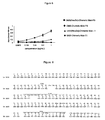
- Figure 5 shows the specific binding of Mab P3 chimeric to the antigen.
- the cDNA synthesis was obtained by a reaction with reverse transcriptase enzyme, starting with RNA from the hybridoma producing Mab 1E10, as described previously.
- the sequence of the specific primers used in this reaction is shown following: cDNA VH1E10 and cDNA VK1E10 were amplified by PCR using Taq Pol and specific primers.
- PCR products were cloned into TA vector (TA cloning kit, Invitrogen). Twelve independent clones were sequenced ( Figures 7 and 8) by the dideoxy method using T7 DNA Pol (Pharmacia). By homology search analysis it was determined the most homologous sequence group for VH1E10 and VK1E10. VH1E10 and VK1E10 sequences have high homology with groups miscellaneous and V respectively according to Kabat's classification.
- NS-0 cells were transfected with 10 ⁇ g of 1E10VK-PAG4622, a clone expressing light chain was transfected with 10 ⁇ g 1E10VH-PAH4604, in both cases DNA is linearized with Pvul, ethanol precipitated and dissolved in 50 ul of PBS before transfection.
- the presence of human antibody in the medium of wells containing transfected clones was measured by ELISA.
- Microtiter plate wells were coated with goat anti-human kappa light chain (for human kappa chain producing clones) or anti-human IgG (gamma chain specific) (for the complete antibody producing clones) antibodies.
- PBST phosphate buffered saline containing 0.05% Tween 20
- diluted culture medium of the wells containing transfectants was added to each Microtiter well for one hour at 37°C.
- the wells were washed with PBS-T and peroxidase of spicy radish-conjugated goat anti-human kappa light chain or alkaline phosphatase-conjugated goat anti-human IgG (gamma chain specific), were added and incubated at room temperature one hour.
- the wells were washed with PBS-T and substrate buffer containing o-phenylendiamine or p-nitrophenylphosphate, respectively, was added. After half hour absorbance at 492 or 405 nm respectively, was measured.
- Example 5 Obtaining different versions of the Humanized Antibody 1E10.
- Murine VH1E10 VK1E10 sequences ( Figures 6 and 7) were compared with human sequences, Figures 8 and 9 shown the most homologous human sequences.
- Helical amphipatic regions or potential T cell epitopes were searched on murine 1E10 variable region sequences and according with the method a judiciously strategy for aminoacid replacements was established in order to break or humanize potential T cell epitopes into the murine sequences
- Primers for mutation at position 5 of the heavy chain were 1 and 2 and 3 and 4 whose sequences are the following:
- the point mutations were verified by sequencing.
- the resultant construct was 1E10VHhu and it was cloned in PAH4604 expression vector.
- the resultant construct was 1 E10VH-PAH4604.
- VK1 E10 rendered also 3 amphipatic segments (Figure 9), the first segment embraces FR1, the second one embraces CDR1 and the thirst one embraces FR3. It was decide to replace residues at positions 7,8 and 15 by residues at the same position in the most homologous human sequence.
- the amino acids Thr, Thr and Leu were replaced by Ser, Pro and Val, respectively.
- the replacements were made by PCR overlapping (Kammann et al. (1989) Rapid insertional mutagenesis of DNA by polymerase chain reaction (PCR), Nucleic Acids Res., 17: 5404) using primers 1 and 2 and 3 and 4 whose sequences are the following:
- the point mutations were verified by sequencing.
- the resultant construct was 1 E10Vkhu and it was cloned in PAG 4622 expression vector.
- the resultant construct was 1E10VKhu-PAG4622.
- NS-0 cells were transfected with 1E10VHhu-PAH4604 and 1E10VKhu-PAG4622 1E10hu antibody was transfected following the same procedure of electroporation and detection described previously for the chimeric antibodies.
- Example 6 Biological activity of chimeric MAb1E10.
- the specific binding to antigen measured by ELISA tested the biological activity of the Mab 1E10 chimeric.
- Mab C5 chimeric was used as negative control.
- Figure 10 shows the specific binding of Mab 1 E10 chimeric to Mab P3.
Landscapes
- Health & Medical Sciences (AREA)
- Chemical & Material Sciences (AREA)
- Life Sciences & Earth Sciences (AREA)
- Immunology (AREA)
- Medicinal Chemistry (AREA)
- Organic Chemistry (AREA)
- General Health & Medical Sciences (AREA)
- Molecular Biology (AREA)
- Engineering & Computer Science (AREA)
- Biochemistry (AREA)
- Genetics & Genomics (AREA)
- Pharmacology & Pharmacy (AREA)
- Animal Behavior & Ethology (AREA)
- Public Health (AREA)
- Veterinary Medicine (AREA)
- Proteomics, Peptides & Aminoacids (AREA)
- Biophysics (AREA)
- Epidemiology (AREA)
- Microbiology (AREA)
- Bioinformatics & Cheminformatics (AREA)
- Biomedical Technology (AREA)
- Cell Biology (AREA)
- Mycology (AREA)
- Oncology (AREA)
- Chemical Kinetics & Catalysis (AREA)
- Hematology (AREA)
- General Chemical & Material Sciences (AREA)
- Nuclear Medicine, Radiotherapy & Molecular Imaging (AREA)
- Biotechnology (AREA)
- Urology & Nephrology (AREA)
- Physics & Mathematics (AREA)
- Food Science & Technology (AREA)
- Analytical Chemistry (AREA)
- General Physics & Mathematics (AREA)
- Pathology (AREA)
- Wood Science & Technology (AREA)
- Zoology (AREA)
- General Engineering & Computer Science (AREA)
- Peptides Or Proteins (AREA)
- Medicines Containing Antibodies Or Antigens For Use As Internal Diagnostic Agents (AREA)
Priority Applications (2)
| Application Number | Priority Date | Filing Date | Title |
|---|---|---|---|
| EP06076643A EP1798243B1 (de) | 2001-04-06 | 2002-04-08 | Ganglioside-assozierte rekombinante Antikörper und deren Gebrauch fuer Diagnose und Therapien von Tumoren |
| CY20081100107T CY1107163T1 (el) | 2001-04-06 | 2008-01-31 | Συνδεδεμενα με γαγγλιοζιτη ανασυνδυασμενα αντισωματα και η χρησιμοποιηση αυτων στη διαγνωση και θεραπευτικη αγωγη ογκων |
Applications Claiming Priority (3)
| Application Number | Priority Date | Filing Date | Title |
|---|---|---|---|
| CU842001 | 2001-04-06 | ||
| CU2001008420010084A CU23007A1 (es) | 2001-04-06 | 2001-04-06 | Combinaciones inmunoterapéuticas para el tratamiencombinaciones inmunoterapéuticas para el tratamiento de tumores que sobre-expresan gangliósidos to de tumores que sobre-expresan gangliósidos |
| PCT/CU2002/000003 WO2002081496A2 (es) | 2001-04-06 | 2002-04-08 | Anticuerpos recombinantes asociados a gangliósidos. su uso en el diagnóstico y tratamiento de tumores |
Related Child Applications (1)
| Application Number | Title | Priority Date | Filing Date |
|---|---|---|---|
| EP06076643A Division EP1798243B1 (de) | 2001-04-06 | 2002-04-08 | Ganglioside-assozierte rekombinante Antikörper und deren Gebrauch fuer Diagnose und Therapien von Tumoren |
Publications (2)
| Publication Number | Publication Date |
|---|---|
| EP1411064A2 true EP1411064A2 (de) | 2004-04-21 |
| EP1411064B1 EP1411064B1 (de) | 2007-11-14 |
Family
ID=40291118
Family Applications (3)
| Application Number | Title | Priority Date | Filing Date |
|---|---|---|---|
| EP06076643A Expired - Lifetime EP1798243B1 (de) | 2001-04-06 | 2002-04-08 | Ganglioside-assozierte rekombinante Antikörper und deren Gebrauch fuer Diagnose und Therapien von Tumoren |
| EP02759752A Expired - Lifetime EP1411064B1 (de) | 2001-04-06 | 2002-04-08 | Gangliosid-assoziierte rekombinante antikörper und deren verwendung bei der diagnose und behandlung von tumoren |
| EP02759751A Expired - Lifetime EP1384726B1 (de) | 2001-04-06 | 2002-04-08 | Immunotherapeutische kombinationen zur behandlung von tumoren, die ganglioside überexprimieren |
Family Applications Before (1)
| Application Number | Title | Priority Date | Filing Date |
|---|---|---|---|
| EP06076643A Expired - Lifetime EP1798243B1 (de) | 2001-04-06 | 2002-04-08 | Ganglioside-assozierte rekombinante Antikörper und deren Gebrauch fuer Diagnose und Therapien von Tumoren |
Family Applications After (1)
| Application Number | Title | Priority Date | Filing Date |
|---|---|---|---|
| EP02759751A Expired - Lifetime EP1384726B1 (de) | 2001-04-06 | 2002-04-08 | Immunotherapeutische kombinationen zur behandlung von tumoren, die ganglioside überexprimieren |
Country Status (36)
| Country | Link |
|---|---|
| US (3) | US20040253233A1 (de) |
| EP (3) | EP1798243B1 (de) |
| JP (2) | JP4366080B2 (de) |
| KR (3) | KR100946168B1 (de) |
| CN (3) | CN100349920C (de) |
| AR (2) | AR033123A1 (de) |
| AT (3) | ATE378356T1 (de) |
| AU (3) | AU2002308348B2 (de) |
| BG (2) | BG66293B1 (de) |
| BR (3) | BR0208675A (de) |
| CA (2) | CA2441845C (de) |
| CU (1) | CU23007A1 (de) |
| CZ (2) | CZ304424B6 (de) |
| DE (2) | DE60223547T2 (de) |
| DK (2) | DK1384726T3 (de) |
| EA (2) | EA006936B1 (de) |
| EC (2) | ECSP034787A (de) |
| ES (2) | ES2296986T3 (de) |
| HR (2) | HRP20030805B1 (de) |
| HU (2) | HU228106B1 (de) |
| IL (2) | IL158246A0 (de) |
| IS (2) | IS6965A (de) |
| MX (2) | MXPA03008738A (de) |
| MY (3) | MY145703A (de) |
| NO (2) | NO20034437L (de) |
| NZ (2) | NZ528598A (de) |
| PE (1) | PE20020972A1 (de) |
| PL (2) | PL371770A1 (de) |
| PT (2) | PT1384726E (de) |
| SG (1) | SG161737A1 (de) |
| SI (2) | SI1384726T1 (de) |
| SK (2) | SK287914B6 (de) |
| UA (3) | UA75393C2 (de) |
| UY (2) | UY27243A1 (de) |
| WO (2) | WO2002081496A2 (de) |
| ZA (2) | ZA200307585B (de) |
Cited By (3)
| Publication number | Priority date | Publication date | Assignee | Title |
|---|---|---|---|---|
| WO2007024535A3 (en) * | 2005-08-19 | 2007-04-19 | Wyeth Corp | Antagonist antibodies against gdf-8 and uses in treatment of als and other gdf-8-associated disorders |
| WO2010127642A1 (es) * | 2009-05-04 | 2010-11-11 | Centro De Inmunologia Molecular | Anticuerpos que reconocen sulfatidos y proteoglicanos sulfatados y su uso |
| US8992913B2 (en) | 2012-06-15 | 2015-03-31 | Pfizer Inc. | Antagonist antibodies against GDF-8 and uses therefor |
Families Citing this family (23)
| Publication number | Priority date | Publication date | Assignee | Title |
|---|---|---|---|---|
| US7297336B2 (en) * | 2003-09-12 | 2007-11-20 | Baxter International Inc. | Factor IXa specific antibodies displaying factor VIIIa like activity |
| CN103143004A (zh) * | 2005-02-04 | 2013-06-12 | 萨瓦克公司 | 存活蛋白肽疫苗 |
| FI20055398A0 (fi) * | 2005-07-08 | 2005-07-08 | Suomen Punainen Risti Veripalv | Menetelmä solupopulaatioiden evaluoimiseksi |
| CN105017423B (zh) * | 2005-08-11 | 2019-06-04 | 阿皮·马托西安-罗杰斯 | 用于自身免疫性疾病治疗和诊断的TCR-V-β相关肽 |
| ITFI20060163A1 (it) * | 2006-06-29 | 2006-09-28 | Menarini Internat Operations Luxembourg Sa | Composizione farmaceutica contenente un anticorpo monoclonale anti idiotipico anti-ca-125 ed alluminio |
| TWI434855B (zh) * | 2006-11-21 | 2014-04-21 | Hoffmann La Roche | 結合物及其在免疫分析中作為參考標準之用途 |
| EP2255787A4 (de) * | 2008-02-22 | 2014-08-27 | Katayama Chemical Ind Co Ltd | Synthetische glycolipidhaltige liposomen |
| EP2166085A1 (de) | 2008-07-16 | 2010-03-24 | Suomen Punainen Risti Veripalvelu | Divalente modifizierte Zellen |
| TWI445716B (zh) | 2008-09-12 | 2014-07-21 | Rinat Neuroscience Corp | Pcsk9拮抗劑類 |
| CN102421801B (zh) * | 2009-03-10 | 2016-03-16 | 比奥根Ma公司 | 抗-bcma抗体 |
| SG174992A1 (en) | 2009-04-01 | 2011-11-28 | Genentech Inc | Anti-fcrh5 antibodies and immunoconjugates and methods of use |
| WO2011026242A1 (en) * | 2009-09-03 | 2011-03-10 | Vancouver Biotech Ltd. | Monoclonal antibodies against gonadotropin-releasing hormone receptor |
| CA2824389A1 (en) * | 2011-01-10 | 2012-07-19 | Emory University | Antibodies directed against influenza |
| CU24070B1 (es) * | 2011-12-27 | 2015-01-29 | Ct De Inmunología Molecular | Composiciones farmacéuticas para el tratamiento de tumores que expresan regf y gangliósidos n-glicolilados gm3 (neugcgm3) |
| EP2641916A1 (de) | 2012-03-23 | 2013-09-25 | Centre National de la Recherche Scientifique (C.N.R.S) | Neue Antikörper gegen Anti-sPLA2-IIA und Verwendungen damit |
| TWI725931B (zh) | 2013-06-24 | 2021-05-01 | 美商建南德克公司 | 抗fcrh5抗體 |
| HRP20240939T1 (hr) | 2013-12-17 | 2024-10-25 | Genentech, Inc. | Anti-cd3 protutijela i metode uporabe |
| SG11201607258SA (en) * | 2014-04-10 | 2016-10-28 | Obi Pharma Inc | Antibodies, pharmaceutical compositions and uses thereof |
| TWI715587B (zh) | 2015-05-28 | 2021-01-11 | 美商安可美德藥物股份有限公司 | Tigit結合劑和彼之用途 |
| JP6871874B2 (ja) | 2015-06-16 | 2021-05-19 | ジェネンテック, インコーポレイテッド | FcRH5に対するヒト化親和性成熟抗体及び使用方法 |
| WO2018017864A2 (en) * | 2016-07-20 | 2018-01-25 | Oncomed Pharmaceuticals, Inc. | Pvrig-binding agents and uses thereof |
| EP3548071A4 (de) | 2016-11-30 | 2020-07-15 | OncoMed Pharmaceuticals, Inc. | Verfahren zur behandlung von krebs mit tigit-bindenden wirkstoffen |
| CU20170173A7 (es) * | 2017-12-27 | 2019-11-04 | Ct Inmunologia Molecular | Nano-partículas que contienen el gangliósido gm3 como inmunomoduladoras |
Family Cites Families (12)
| Publication number | Priority date | Publication date | Assignee | Title |
|---|---|---|---|---|
| JP2754206B2 (ja) * | 1987-11-17 | 1998-05-20 | メクト株式会社 | α2→3結合を認識するモノクローナル抗体 |
| US6051225A (en) * | 1988-10-19 | 2000-04-18 | The Dow Chemical Company | Family of high affinity, modified antibodies for cancer treatment |
| ES2144440T3 (es) * | 1992-08-18 | 2000-06-16 | Centro Inmunologia Molecular | Anticuerpos monoclonales que reconocen el receptor del factor de crecimiento epidermico, celulas y metodos para su produccion y compuestos que los contienen. |
| JPH07101999A (ja) * | 1993-10-06 | 1995-04-18 | Hagiwara Yoshihide | 抗癌ヒトモノクローナル抗体に対する抗イデイオタイプ抗体のアミノ酸配列およびそれをコードするdna塩基配列 |
| CU22702A1 (es) * | 1997-10-21 | 2001-07-31 | Centro Inmunologia Molecular | Anticuerpos monoclonales anti - idiotipo, su uso en la inmunoterapia activa de tumores malignos, hibridoma que los produce y composiciones que los contienen |
| US6063379A (en) * | 1993-12-09 | 2000-05-16 | Centro De Inmunologia Molecular | Anti-idiotypic monoclonal antibodies and compositions including the anti-idiotypic monoclonal antibodies |
| ES2166770T3 (es) * | 1993-12-09 | 2002-05-01 | Centro Inmunologia Molecular | Anticuerpos monoclonales contra gangliosidos y sus utilizaciones en la inmunoterapia activa especifica de tumores malignos. |
| CU22420A1 (es) * | 1993-12-29 | 1996-01-31 | Centro Inmunologia Molecular | Composicion vacunal para el desarrollo de una respuesta contra gangliosidos n glicolilados y su uso para el tratamiento del cancer |
| US6149921A (en) * | 1993-12-29 | 2000-11-21 | Centro De Inmunologia Molecular | Vaccine compositions for eliciting an immune response against N-acetylated gangliosides and their use for cancer treatment |
| CU22615A1 (es) * | 1994-06-30 | 2000-02-10 | Centro Inmunologia Molecular | Procedimiento de obtención de anticuerpos monoclonales murinos menos inmunogénicos. anticuerpos monoclonales obtenidos |
| CU22731A1 (es) * | 1998-02-05 | 2002-02-28 | Centro Inmunologia Molecular | Anticuerpo monoclonal que reconoce el oligosacárido ácido siálico n´glicolilado-galactosa-glucosa (ngcneu-gal-glu) en tumores malignos y composiciones farmacéuticas que los contienen |
| US7442776B2 (en) * | 1999-10-08 | 2008-10-28 | Young David S F | Cancerous disease modifying antibodies |
-
2001
- 2001-04-06 CU CU2001008420010084A patent/CU23007A1/es unknown
-
2002
- 2002-04-05 MY MYPI20081190A patent/MY145703A/en unknown
- 2002-04-05 MY MYPI20021239A patent/MY157372A/en unknown
- 2002-04-05 AR ARP020101264A patent/AR033123A1/es not_active Application Discontinuation
- 2002-04-05 UY UY27243A patent/UY27243A1/es unknown
- 2002-04-05 MY MYPI20021228A patent/MY137078A/en unknown
- 2002-04-05 UY UY27242A patent/UY27242A1/es not_active Application Discontinuation
- 2002-04-05 AR ARP020101263A patent/AR033122A1/es unknown
- 2002-04-08 AU AU2002308348A patent/AU2002308348B2/en not_active Ceased
- 2002-04-08 BR BR0208675-1A patent/BR0208675A/pt not_active IP Right Cessation
- 2002-04-08 SI SI200230766T patent/SI1384726T1/sl unknown
- 2002-04-08 ES ES02759752T patent/ES2296986T3/es not_active Expired - Lifetime
- 2002-04-08 JP JP2002580025A patent/JP4366080B2/ja not_active Expired - Fee Related
- 2002-04-08 AU AU2002308347A patent/AU2002308347B2/en not_active Ceased
- 2002-04-08 WO PCT/CU2002/000003 patent/WO2002081496A2/es not_active Ceased
- 2002-04-08 DE DE60223547T patent/DE60223547T2/de not_active Expired - Lifetime
- 2002-04-08 US US10/473,977 patent/US20040253233A1/en not_active Abandoned
- 2002-04-08 ES ES02759751T patent/ES2312610T3/es not_active Expired - Lifetime
- 2002-04-08 MX MXPA03008738A patent/MXPA03008738A/es not_active Application Discontinuation
- 2002-04-08 EA EA200301097A patent/EA006936B1/ru not_active IP Right Cessation
- 2002-04-08 SG SG200506530-5A patent/SG161737A1/en unknown
- 2002-04-08 AT AT02759752T patent/ATE378356T1/de active
- 2002-04-08 BR BRPI0208675-1A patent/BRPI0208675B1/pt unknown
- 2002-04-08 HR HR20030805A patent/HRP20030805B1/xx not_active IP Right Cessation
- 2002-04-08 EP EP06076643A patent/EP1798243B1/de not_active Expired - Lifetime
- 2002-04-08 SK SK1226-2003A patent/SK287914B6/sk not_active IP Right Cessation
- 2002-04-08 DK DK02759751T patent/DK1384726T3/da active
- 2002-04-08 BR BRPI0208676-0A patent/BR0208676B1/pt not_active IP Right Cessation
- 2002-04-08 CN CNB028086309A patent/CN100349920C/zh not_active Expired - Fee Related
- 2002-04-08 DK DK02759752T patent/DK1411064T3/da active
- 2002-04-08 NZ NZ528598A patent/NZ528598A/en not_active IP Right Cessation
- 2002-04-08 CZ CZ2003-2668A patent/CZ304424B6/cs not_active IP Right Cessation
- 2002-04-08 IL IL15824602A patent/IL158246A0/xx unknown
- 2002-04-08 CZ CZ20032641A patent/CZ296276B6/cs not_active IP Right Cessation
- 2002-04-08 PE PE2002000283A patent/PE20020972A1/es not_active Application Discontinuation
- 2002-04-08 HU HU0401355A patent/HU228106B1/hu not_active IP Right Cessation
- 2002-04-08 CN CN2007101021039A patent/CN101054417B/zh not_active Expired - Fee Related
- 2002-04-08 EP EP02759752A patent/EP1411064B1/de not_active Expired - Lifetime
- 2002-04-08 WO PCT/CU2002/000002 patent/WO2002081661A2/es not_active Ceased
- 2002-04-08 US US10/473,978 patent/US20050069535A1/en not_active Abandoned
- 2002-04-08 EP EP02759751A patent/EP1384726B1/de not_active Expired - Lifetime
- 2002-04-08 KR KR1020037012969A patent/KR100946168B1/ko not_active Expired - Fee Related
- 2002-04-08 AT AT06076643T patent/ATE477279T1/de not_active IP Right Cessation
- 2002-04-08 SI SI200230660T patent/SI1411064T1/sl unknown
- 2002-04-08 KR KR1020037012938A patent/KR100863509B1/ko not_active Expired - Fee Related
- 2002-04-08 PL PL02371770A patent/PL371770A1/xx not_active Application Discontinuation
- 2002-04-08 CA CA2441845A patent/CA2441845C/en not_active Expired - Fee Related
- 2002-04-08 PT PT02759751T patent/PT1384726E/pt unknown
- 2002-04-08 HU HU0401695A patent/HU228105B1/hu not_active IP Right Cessation
- 2002-04-08 MX MXPA03008739A patent/MXPA03008739A/es active IP Right Grant
- 2002-04-08 CA CA2443372A patent/CA2443372C/en not_active Expired - Fee Related
- 2002-04-08 PT PT02759752T patent/PT1411064E/pt unknown
- 2002-04-08 JP JP2002579482A patent/JP2004528033A/ja active Pending
- 2002-04-08 DE DE60228561T patent/DE60228561D1/de not_active Expired - Lifetime
- 2002-04-08 EA EA200301098A patent/EA006310B1/ru not_active IP Right Cessation
- 2002-04-08 CN CNB028084330A patent/CN1319991C/zh not_active Expired - Fee Related
- 2002-04-08 NZ NZ528599A patent/NZ528599A/en not_active IP Right Cessation
- 2002-04-08 HR HR20030806A patent/HRP20030806B1/xx not_active IP Right Cessation
- 2002-04-08 SK SK1216-2003A patent/SK287783B6/sk not_active IP Right Cessation
- 2002-04-08 AT AT02759751T patent/ATE406386T1/de active
- 2002-04-08 PL PL371937A patent/PL208109B1/pl unknown
- 2002-08-04 UA UA2003108989A patent/UA75393C2/uk unknown
- 2002-08-04 UA UA2003108988A patent/UA76745C2/uk unknown
-
2003
- 2003-09-23 IS IS6965A patent/IS6965A/is unknown
- 2003-09-23 IS IS6964A patent/IS2701B/is unknown
- 2003-09-29 ZA ZA200307585A patent/ZA200307585B/en unknown
- 2003-09-30 EC EC2003004787A patent/ECSP034787A/es unknown
- 2003-09-30 EC EC2003004788A patent/ECSP034788A/es unknown
- 2003-10-01 ZA ZA2003/07679A patent/ZA200307679B/en unknown
- 2003-10-02 IL IL158246A patent/IL158246A/en not_active IP Right Cessation
- 2003-10-03 NO NO20034437A patent/NO20034437L/no not_active Application Discontinuation
- 2003-10-03 NO NO20034436A patent/NO331533B1/no not_active IP Right Cessation
- 2003-10-03 BG BG108227A patent/BG66293B1/en unknown
- 2003-10-03 BG BG108228A patent/BG66304B1/bg unknown
-
2005
- 2005-12-20 UA UAA200512270A patent/UA86768C2/ru unknown
-
2007
- 2007-10-26 AU AU2007231687A patent/AU2007231687B2/en not_active Expired - Fee Related
-
2008
- 2008-08-07 KR KR1020087019420A patent/KR100919617B1/ko not_active Expired - Fee Related
-
2009
- 2009-03-19 US US12/407,046 patent/US8758753B2/en not_active Expired - Fee Related
Non-Patent Citations (1)
| Title |
|---|
| See references of WO02081496A2 * |
Cited By (16)
| Publication number | Priority date | Publication date | Assignee | Title |
|---|---|---|---|---|
| US8956608B2 (en) | 2005-08-19 | 2015-02-17 | Wyeth Llc | Method for treating sarcopenia using antagonist antibodies against GDF-8 |
| EP3327033A1 (de) * | 2005-08-19 | 2018-05-30 | Wyeth LLC | Antagonistische antikörper gegen gdf-8 und deren verwendungen bei der behandlung von als und anderen mit gdf-8 verbundenen erkrankungen |
| US7888486B2 (en) | 2005-08-19 | 2011-02-15 | Wyeth Llc | Antagonist antibodies against GDF-8 |
| US7910107B2 (en) | 2005-08-19 | 2011-03-22 | Wyeth Llc | Antagonist antibodies against GDF-8 and uses in treatment of ALS and other GDF-8 associated disorders |
| EP2407486A1 (de) * | 2005-08-19 | 2012-01-18 | Wyeth LLC | Antagonistische Antikörper gegen GDF-8 und deren Verwendungen bei der Behandlung von ALS und anderen mit GDF-8 verbundenen Erkrankungen |
| US8349327B2 (en) | 2005-08-19 | 2013-01-08 | Wyeth Llc | Method for treating muscular dystrophy using antagonist antibodies against GDF-8 |
| US8372625B2 (en) | 2005-08-19 | 2013-02-12 | Wyeth Llc | Polynucleotides encoding antagonist antibodies against GDF-8 |
| US9926368B2 (en) | 2005-08-19 | 2018-03-27 | Wyeth Llc | Method for treating muscle wasting syndrome using antagonist antibodies against GDF-8 |
| WO2007024535A3 (en) * | 2005-08-19 | 2007-04-19 | Wyeth Corp | Antagonist antibodies against gdf-8 and uses in treatment of als and other gdf-8-associated disorders |
| RU2502744C2 (ru) * | 2009-05-04 | 2013-12-27 | Сентро Де Инмунологиа Молекулар | Антитела к сульфатидам и сульфатированным протеогликанам и их применение |
| AU2010244859B2 (en) * | 2009-05-04 | 2014-05-29 | Centro De Inmunologia Molecular | Antibodies that recognize sulphatides and sulphated proteoglycans and the use thereof |
| KR101374263B1 (ko) * | 2009-05-04 | 2014-03-13 | 센트로 데 인뮤놀러지아 모레큘러 | 항 황산염 및 항 항산화 프로테오글리칸 항체 및 이들의 용도 |
| US8470322B2 (en) | 2009-05-04 | 2013-06-25 | Centro De Inmunologia Molecular | Anti sulfatides and anti sufated proteoglycans antibodies and their use |
| WO2010127642A1 (es) * | 2009-05-04 | 2010-11-11 | Centro De Inmunologia Molecular | Anticuerpos que reconocen sulfatidos y proteoglicanos sulfatados y su uso |
| US8992913B2 (en) | 2012-06-15 | 2015-03-31 | Pfizer Inc. | Antagonist antibodies against GDF-8 and uses therefor |
| US9751937B2 (en) | 2012-06-15 | 2017-09-05 | Pfizer Inc. | Antagonist antibodies against GDF-8 and uses therefor |
Also Published As
Similar Documents
| Publication | Publication Date | Title |
|---|---|---|
| US8758753B2 (en) | Ganglioside associated recombinant antibodies and the use thereof in the treatment of tumors | |
| EP1623997B1 (de) | Rekombinante antikörper und fragmente, die gangliosid-n-glycolyl-gm3 erkennen und deren verwendung bei der diagnose und behandlung von tumoren | |
| KR20030083698A (ko) | 물질 | |
| HK1109160B (en) | Ganglioside-associated recombinant antibodies and the use thereof in the diagnosis and treatment of tumours | |
| HK1070080B (en) | Ganglioside-associated recombinant antibodies and the use thereof in the preparation of medicament for the diagnosis and treatment of tumors |
Legal Events
| Date | Code | Title | Description |
|---|---|---|---|
| PUAI | Public reference made under article 153(3) epc to a published international application that has entered the european phase |
Free format text: ORIGINAL CODE: 0009012 |
|
| 17P | Request for examination filed |
Effective date: 20031021 |
|
| AK | Designated contracting states |
Kind code of ref document: A2 Designated state(s): AT BE CH CY DE DK ES FI FR GB GR IE IT LI LU MC NL PT SE TR |
|
| AX | Request for extension of the european patent |
Extension state: AL LT LV MK RO SI |
|
| RAP1 | Party data changed (applicant data changed or rights of an application transferred) |
Owner name: CENTRO DE INMUNOLOGIA MOLECULAR |
|
| 17Q | First examination report despatched |
Effective date: 20060816 |
|
| 17Q | First examination report despatched |
Effective date: 20060816 |
|
| GRAP | Despatch of communication of intention to grant a patent |
Free format text: ORIGINAL CODE: EPIDOSNIGR1 |
|
| GRAS | Grant fee paid |
Free format text: ORIGINAL CODE: EPIDOSNIGR3 |
|
| GRAA | (expected) grant |
Free format text: ORIGINAL CODE: 0009210 |
|
| AK | Designated contracting states |
Kind code of ref document: B1 Designated state(s): AT BE CH CY DE DK ES FI FR GB GR IE IT LI LU MC NL PT SE TR |
|
| AX | Request for extension of the european patent |
Extension state: AL LT LV MK RO SI |
|
| REG | Reference to a national code |
Ref country code: GB Ref legal event code: FG4D |
|
| RIN1 | Information on inventor provided before grant (corrected) |
Inventor name: MATEO DE ACOSTA DEL RIO, CRISTINA MARIA Inventor name: LOMBARDERO VALLADARES, JOSEFA AGUSTINA 70 ENTRE SA Inventor name: LOPEZ REQUENA, ALEJANDRO,AV. DE ACOSTA 210(BAJOS) Inventor name: ROQUE NAVARRO, LOURDES TATIANA |
|
| REG | Reference to a national code |
Ref country code: CH Ref legal event code: EP |
|
| REG | Reference to a national code |
Ref country code: IE Ref legal event code: FG4D |
|
| REF | Corresponds to: |
Ref document number: 60223547 Country of ref document: DE Date of ref document: 20071227 Kind code of ref document: P |
|
| REG | Reference to a national code |
Ref country code: PT Ref legal event code: SC4A Free format text: AVAILABILITY OF NATIONAL TRANSLATION Effective date: 20080130 |
|
| REG | Reference to a national code |
Ref country code: CH Ref legal event code: NV Representative=s name: KATZAROV S.A. Ref country code: GR Ref legal event code: EP Ref document number: 20080400262 Country of ref document: GR |
|
| REG | Reference to a national code |
Ref country code: SE Ref legal event code: TRGR |
|
| REG | Reference to a national code |
Ref country code: DK Ref legal event code: T3 |
|
| REG | Reference to a national code |
Ref country code: ES Ref legal event code: FG2A Ref document number: 2296986 Country of ref document: ES Kind code of ref document: T3 |
|
| ET | Fr: translation filed | ||
| PLBE | No opposition filed within time limit |
Free format text: ORIGINAL CODE: 0009261 |
|
| STAA | Information on the status of an ep patent application or granted ep patent |
Free format text: STATUS: NO OPPOSITION FILED WITHIN TIME LIMIT |
|
| 26N | No opposition filed |
Effective date: 20080815 |
|
| PG25 | Lapsed in a contracting state [announced via postgrant information from national office to epo] |
Ref country code: IT Free format text: LAPSE BECAUSE OF NON-PAYMENT OF DUE FEES Effective date: 20090408 |
|
| PGRI | Patent reinstated in contracting state [announced from national office to epo] |
Ref country code: IT Effective date: 20110616 |
|
| PGFP | Annual fee paid to national office [announced via postgrant information from national office to epo] |
Ref country code: MC Payment date: 20120327 Year of fee payment: 11 |
|
| PGFP | Annual fee paid to national office [announced via postgrant information from national office to epo] |
Ref country code: TR Payment date: 20120327 Year of fee payment: 11 |
|
| PGFP | Annual fee paid to national office [announced via postgrant information from national office to epo] |
Ref country code: GR Payment date: 20120330 Year of fee payment: 11 |
|
| PGFP | Annual fee paid to national office [announced via postgrant information from national office to epo] |
Ref country code: BE Payment date: 20120412 Year of fee payment: 11 Ref country code: DK Payment date: 20120411 Year of fee payment: 11 Ref country code: CH Payment date: 20120412 Year of fee payment: 11 Ref country code: LU Payment date: 20120426 Year of fee payment: 11 Ref country code: IE Payment date: 20120411 Year of fee payment: 11 |
|
| PGFP | Annual fee paid to national office [announced via postgrant information from national office to epo] |
Ref country code: FI Payment date: 20120411 Year of fee payment: 11 Ref country code: SE Payment date: 20120411 Year of fee payment: 11 |
|
| PGFP | Annual fee paid to national office [announced via postgrant information from national office to epo] |
Ref country code: CY Payment date: 20120326 Year of fee payment: 11 |
|
| PGFP | Annual fee paid to national office [announced via postgrant information from national office to epo] |
Ref country code: PT Payment date: 20120404 Year of fee payment: 11 |
|
| PGFP | Annual fee paid to national office [announced via postgrant information from national office to epo] |
Ref country code: AT Payment date: 20120327 Year of fee payment: 11 |
|
| REG | Reference to a national code |
Ref country code: PT Ref legal event code: MM4A Free format text: LAPSE DUE TO NON-PAYMENT OF FEES Effective date: 20131008 |
|
| BERE | Be: lapsed |
Owner name: CENTRO DE INMUNOLOGIA MOLECULAR Effective date: 20130430 |
|
| REG | Reference to a national code |
Ref country code: LT Ref legal event code: MM9D Effective date: 20130408 |
|
| PG25 | Lapsed in a contracting state [announced via postgrant information from national office to epo] |
Ref country code: MC Free format text: LAPSE BECAUSE OF NON-PAYMENT OF DUE FEES Effective date: 20130430 |
|
| REG | Reference to a national code |
Ref country code: CH Ref legal event code: PL |
|
| REG | Reference to a national code |
Ref country code: SE Ref legal event code: EUG |
|
| REG | Reference to a national code |
Ref country code: DK Ref legal event code: EBP Effective date: 20130430 |
|
| REG | Reference to a national code |
Ref country code: AT Ref legal event code: MM01 Ref document number: 378356 Country of ref document: AT Kind code of ref document: T Effective date: 20130430 |
|
| REG | Reference to a national code |
Ref country code: GR Ref legal event code: ML Ref document number: 20080400262 Country of ref document: GR Effective date: 20131104 |
|
| REG | Reference to a national code |
Ref country code: IE Ref legal event code: MM4A |
|
| PG25 | Lapsed in a contracting state [announced via postgrant information from national office to epo] |
Ref country code: BE Free format text: LAPSE BECAUSE OF NON-PAYMENT OF DUE FEES Effective date: 20130430 Ref country code: LI Free format text: LAPSE BECAUSE OF NON-PAYMENT OF DUE FEES Effective date: 20130430 Ref country code: PT Free format text: LAPSE BECAUSE OF NON-PAYMENT OF DUE FEES Effective date: 20131008 Ref country code: SE Free format text: LAPSE BECAUSE OF NON-PAYMENT OF DUE FEES Effective date: 20130409 Ref country code: CY Free format text: LAPSE BECAUSE OF FAILURE TO SUBMIT A TRANSLATION OF THE DESCRIPTION OR TO PAY THE FEE WITHIN THE PRESCRIBED TIME-LIMIT Effective date: 20130703 Ref country code: AT Free format text: LAPSE BECAUSE OF NON-PAYMENT OF DUE FEES Effective date: 20130430 Ref country code: CH Free format text: LAPSE BECAUSE OF NON-PAYMENT OF DUE FEES Effective date: 20130430 |
|
| PG25 | Lapsed in a contracting state [announced via postgrant information from national office to epo] |
Ref country code: FI Free format text: LAPSE BECAUSE OF NON-PAYMENT OF DUE FEES Effective date: 20130408 Ref country code: GR Free format text: LAPSE BECAUSE OF NON-PAYMENT OF DUE FEES Effective date: 20131104 |
|
| PG25 | Lapsed in a contracting state [announced via postgrant information from national office to epo] |
Ref country code: CY Free format text: LAPSE BECAUSE OF FAILURE TO SUBMIT A TRANSLATION OF THE DESCRIPTION OR TO PAY THE FEE WITHIN THE PRESCRIBED TIME-LIMIT Effective date: 20130408 |
|
| PG25 | Lapsed in a contracting state [announced via postgrant information from national office to epo] |
Ref country code: IE Free format text: LAPSE BECAUSE OF NON-PAYMENT OF DUE FEES Effective date: 20130408 Ref country code: DK Free format text: LAPSE BECAUSE OF NON-PAYMENT OF DUE FEES Effective date: 20130430 |
|
| PG25 | Lapsed in a contracting state [announced via postgrant information from national office to epo] |
Ref country code: LU Free format text: LAPSE BECAUSE OF NON-PAYMENT OF DUE FEES Effective date: 20130408 |
|
| PG25 | Lapsed in a contracting state [announced via postgrant information from national office to epo] |
Ref country code: TR Free format text: LAPSE BECAUSE OF NON-PAYMENT OF DUE FEES Effective date: 20130408 |
|
| REG | Reference to a national code |
Ref country code: FR Ref legal event code: PLFP Year of fee payment: 15 |
|
| REG | Reference to a national code |
Ref country code: FR Ref legal event code: PLFP Year of fee payment: 16 |
|
| PGFP | Annual fee paid to national office [announced via postgrant information from national office to epo] |
Ref country code: NL Payment date: 20170426 Year of fee payment: 16 |
|
| PGFP | Annual fee paid to national office [announced via postgrant information from national office to epo] |
Ref country code: FR Payment date: 20170426 Year of fee payment: 16 Ref country code: DE Payment date: 20170427 Year of fee payment: 16 Ref country code: GB Payment date: 20170427 Year of fee payment: 16 |
|
| PGFP | Annual fee paid to national office [announced via postgrant information from national office to epo] |
Ref country code: IT Payment date: 20170421 Year of fee payment: 16 Ref country code: ES Payment date: 20170516 Year of fee payment: 16 |
|
| REG | Reference to a national code |
Ref country code: DE Ref legal event code: R119 Ref document number: 60223547 Country of ref document: DE |
|
| REG | Reference to a national code |
Ref country code: NL Ref legal event code: MM Effective date: 20180501 |
|
| GBPC | Gb: european patent ceased through non-payment of renewal fee |
Effective date: 20180408 |
|
| PG25 | Lapsed in a contracting state [announced via postgrant information from national office to epo] |
Ref country code: DE Free format text: LAPSE BECAUSE OF NON-PAYMENT OF DUE FEES Effective date: 20181101 Ref country code: NL Free format text: LAPSE BECAUSE OF NON-PAYMENT OF DUE FEES Effective date: 20180501 |
|
| REG | Reference to a national code |
Ref country code: SI Ref legal event code: KO00 Effective date: 20181204 |
|
| PG25 | Lapsed in a contracting state [announced via postgrant information from national office to epo] |
Ref country code: GB Free format text: LAPSE BECAUSE OF NON-PAYMENT OF DUE FEES Effective date: 20180408 |
|
| PG25 | Lapsed in a contracting state [announced via postgrant information from national office to epo] |
Ref country code: IT Free format text: LAPSE BECAUSE OF NON-PAYMENT OF DUE FEES Effective date: 20180408 Ref country code: FR Free format text: LAPSE BECAUSE OF NON-PAYMENT OF DUE FEES Effective date: 20180430 |
|
| REG | Reference to a national code |
Ref country code: ES Ref legal event code: FD2A Effective date: 20190911 |
|
| PG25 | Lapsed in a contracting state [announced via postgrant information from national office to epo] |
Ref country code: ES Free format text: LAPSE BECAUSE OF NON-PAYMENT OF DUE FEES Effective date: 20180409 |