EP0374705A2 - Photopolymerisierbare Verbindungen, diese enthaltendes photopolymerisierbares Gemisch und daraus hergestelltes photopolymerisierbares Aufzeichnungsmaterial - Google Patents
Photopolymerisierbare Verbindungen, diese enthaltendes photopolymerisierbares Gemisch und daraus hergestelltes photopolymerisierbares Aufzeichnungsmaterial Download PDFInfo
- Publication number
- EP0374705A2 EP0374705A2 EP89122996A EP89122996A EP0374705A2 EP 0374705 A2 EP0374705 A2 EP 0374705A2 EP 89122996 A EP89122996 A EP 89122996A EP 89122996 A EP89122996 A EP 89122996A EP 0374705 A2 EP0374705 A2 EP 0374705A2
- Authority
- EP
- European Patent Office
- Prior art keywords
- group
- compounds
- photopolymerisable
- photopolymerizable
- pbw
- Prior art date
- Legal status (The legal status is an assumption and is not a legal conclusion. Google has not performed a legal analysis and makes no representation as to the accuracy of the status listed.)
- Granted
Links
Classifications
-
- C—CHEMISTRY; METALLURGY
- C07—ORGANIC CHEMISTRY
- C07D—HETEROCYCLIC COMPOUNDS
- C07D219/00—Heterocyclic compounds containing acridine or hydrogenated acridine ring systems
- C07D219/02—Heterocyclic compounds containing acridine or hydrogenated acridine ring systems with only hydrogen, hydrocarbon or substituted hydrocarbon radicals, directly attached to carbon atoms of the ring system
-
- C—CHEMISTRY; METALLURGY
- C07—ORGANIC CHEMISTRY
- C07D—HETEROCYCLIC COMPOUNDS
- C07D221/00—Heterocyclic compounds containing six-membered rings having one nitrogen atom as the only ring hetero atom, not provided for by groups C07D211/00 - C07D219/00
- C07D221/02—Heterocyclic compounds containing six-membered rings having one nitrogen atom as the only ring hetero atom, not provided for by groups C07D211/00 - C07D219/00 condensed with carbocyclic rings or ring systems
- C07D221/04—Ortho- or peri-condensed ring systems
- C07D221/06—Ring systems of three rings
- C07D221/16—Ring systems of three rings containing carbocyclic rings other than six-membered
-
- G—PHYSICS
- G03—PHOTOGRAPHY; CINEMATOGRAPHY; ANALOGOUS TECHNIQUES USING WAVES OTHER THAN OPTICAL WAVES; ELECTROGRAPHY; HOLOGRAPHY
- G03F—PHOTOMECHANICAL PRODUCTION OF TEXTURED OR PATTERNED SURFACES, e.g. FOR PRINTING, FOR PROCESSING OF SEMICONDUCTOR DEVICES; MATERIALS THEREFOR; ORIGINALS THEREFOR; APPARATUS SPECIALLY ADAPTED THEREFOR
- G03F7/00—Photomechanical, e.g. photolithographic, production of textured or patterned surfaces, e.g. printing surfaces; Materials therefor, e.g. comprising photoresists; Apparatus specially adapted therefor
- G03F7/004—Photosensitive materials
- G03F7/027—Non-macromolecular photopolymerisable compounds having carbon-to-carbon double bonds, e.g. ethylenic compounds
- G03F7/028—Non-macromolecular photopolymerisable compounds having carbon-to-carbon double bonds, e.g. ethylenic compounds with photosensitivity-increasing substances, e.g. photoinitiators
- G03F7/031—Organic compounds not covered by group G03F7/029
-
- Y—GENERAL TAGGING OF NEW TECHNOLOGICAL DEVELOPMENTS; GENERAL TAGGING OF CROSS-SECTIONAL TECHNOLOGIES SPANNING OVER SEVERAL SECTIONS OF THE IPC; TECHNICAL SUBJECTS COVERED BY FORMER USPC CROSS-REFERENCE ART COLLECTIONS [XRACs] AND DIGESTS
- Y10—TECHNICAL SUBJECTS COVERED BY FORMER USPC
- Y10S—TECHNICAL SUBJECTS COVERED BY FORMER USPC CROSS-REFERENCE ART COLLECTIONS [XRACs] AND DIGESTS
- Y10S430/00—Radiation imagery chemistry: process, composition, or product thereof
- Y10S430/1053—Imaging affecting physical property or radiation sensitive material, or producing nonplanar or printing surface - process, composition, or product: radiation sensitive composition or product or process of making binder containing
- Y10S430/1055—Radiation sensitive composition or product or process of making
- Y10S430/114—Initiator containing
- Y10S430/12—Nitrogen compound containing
- Y10S430/121—Nitrogen in heterocyclic ring
-
- Y—GENERAL TAGGING OF NEW TECHNOLOGICAL DEVELOPMENTS; GENERAL TAGGING OF CROSS-SECTIONAL TECHNOLOGIES SPANNING OVER SEVERAL SECTIONS OF THE IPC; TECHNICAL SUBJECTS COVERED BY FORMER USPC CROSS-REFERENCE ART COLLECTIONS [XRACs] AND DIGESTS
- Y10—TECHNICAL SUBJECTS COVERED BY FORMER USPC
- Y10S—TECHNICAL SUBJECTS COVERED BY FORMER USPC CROSS-REFERENCE ART COLLECTIONS [XRACs] AND DIGESTS
- Y10S522/00—Synthetic resins or natural rubbers -- part of the class 520 series
- Y10S522/904—Monomer or polymer contains initiating group
Definitions
- the invention relates to new photopolymerizable compounds, a photopolymerizable mixture which contains these compounds, and a photopolymerizable recording material comprising a support and a photopolymerizable layer which consists of the mixture.
- DE-C 20 27 467 discloses photopolymerizable mixtures which contain polymeric binders, polymerizable compounds and, as photoinitiators, derivatives of acridine and phenazine.
- the preferred representatives have the disadvantage that they tend to move from photopolymerizable layers and in particular from light-cured photoresist layers into certain treatment baths, e.g. B. to migrate acidic galvanic baths and cause an annoying yellowing there.
- the known photopolymerizable materials frequently have a mechanical strength and hardness which are inadequate for some purposes in the light-cured state. This applies particularly to applications as solder mask, permanent resist and as planographic printing plates.
- the object of the invention was to provide photopolymerizable compounds and mixtures which give recording materials with the same light sensitivity and image reproduction as the preferred known mixtures, but the photoinitiators show a lower tendency to migrate from the photopolymerizable or photopolymerized layer and the light-cured layers a higher one have mechanical resistance and strength.
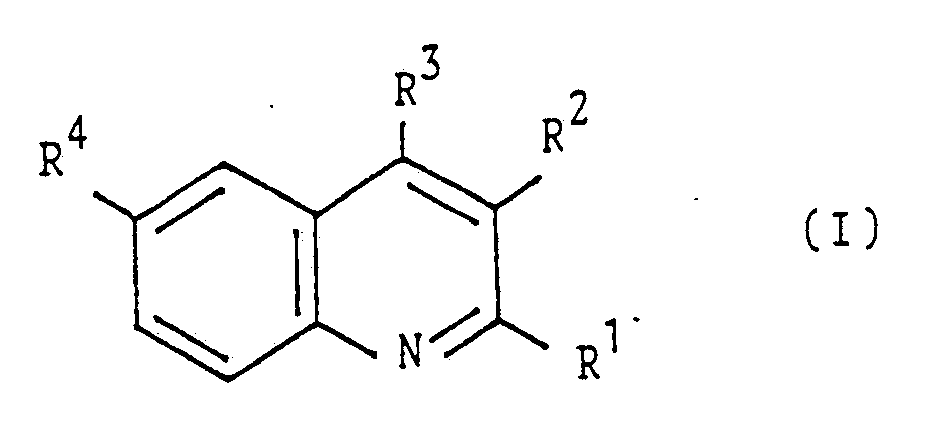
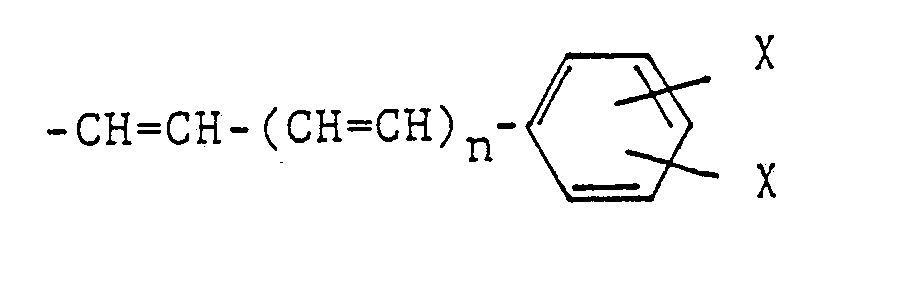
- R1 is a group of the formula
- R2 is a hydrogen atom or a methyl group or R1 and R2 together form an optionally substituted 5- or 6-membered carbocyclic ring
- R3 represents a hydrogen atom, a methyl group or an optionally substituted phenyl group
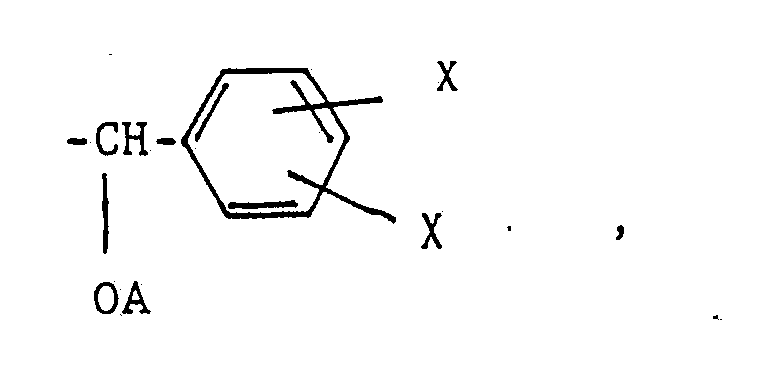
- R4 is a hydrogen or halogen atom, a methyl group, an optionally substituted benzoyl group or a group of the formula n zero or 1
- X represents a hydrogen or chlorine atom, an alkyl group having 1 to 4 carbon atoms or one of the groups OA, CH2OA, CH2NHA or C2H4OA, where several X may be the same or different
- A is an acryloyl or methacryloyl group, where the compounds each contain at least one group A.
- the mixture according to the invention is characterized in that the N-heterocyclic compound is a compound of the general formula I above.
- a photopolymerizable recording material with a layer support and a photopolymerizable layer applied thereon which consists of the photopolymerizable mixture defined above.
- the compounds of the invention are new. They are by esterifying the hydroxy compounds on which they are based with activated derivatives, e.g. B. anhydrides or chlorides, acrylic or methacrylic acid. Some of the hydroxy compounds are known, some are produced in analogy to known processes.
- the 9- (4-hydroxyphenyl) acridine is known; the 2- (4-hydroxystyryl) quinoline can be e.g. B. by condensing 1 mol quinaldine with 1 mol 4-hydroxybenzaldehyde in acetic anhydride with the addition of a few drops of concentrated sulfuric acid to give 2- (4-acetoxystyryl) quinoline.
- the free hydroxy compound is obtained from this by hydrolysis with alcoholic potassium hydroxide solution.
- other quinoline derivatives with activated methylene groups e.g. B. the 9-phenyl-2,3-dihydro-1H-cyclopenta [b] quinoline can be used.
- the intermediate product obtained is 3- (4-acetoxy-benzylidene) -9-phenyl-2,3-dihydro-1H-cyclopenta [b] quinoline, which can then be saponified.
- suitable compounds are described in EP-A 220 589.
- the corresponding aromatic dihydroxy compounds can be used.
- R 1 and R 2 are connected to form a ring which can be aromatic or partially hydrogenated, but is preferably a benzene ring.
- R3 is preferably a phenyl group which in particular carries one or more X substituents.
- a substituent is preferably in the 4-position. If R1 and R2 together represent a benzene ring, this is preferably substituted, especially in the 2-position of the acridine nucleus formed with it. Substituents which are particularly important are those of R4.
- Acridine compounds in which the 2- and 7-position carry such substituents are particularly advantageous since they have a greatly reduced diffusion capacity, analogously to the compounds described in the simultaneously filed patent application P 38 43 204.8 (Hoe 88 / K089).
- the compounds according to the invention can have one or more, generally 1 to 3, acryloyl or methacryloyl groups, compounds with two polymerizable groups being particularly advantageous because of their crosslinking action.
- Examples of suitable compounds according to the invention are 2- [4- (4-acryloyloxy-phenyl) butadienyl] quinoline, 3- (3,4-bis-acryloyloxy-benzylidene) -9-methyl-2,3-dihydro-1H-cyclopenta [ b] quinoline, 3- (2,4-bis-methacryloyloxy-benzylidene) -7-chloro-9- (2-chlorophenyl) -2,3-dihydro-1H-cyclopenta [b] quinoline, 2,7-dimethyl- 9- (4-acryloylaminomethyl-phenyl) acridine, 2,7-bis- ( ⁇ -methacryloyloxy-4-tert-butyl-benzyl) -9- (4-tert.- butyl-phenyl) acridine, 2,7-bis (4-acryloyloxymethylbenzoyl) -9- (4-acryloyloxymethylphenyl
- the proportion of the compounds of the formula I in the mixture according to the invention is generally 0.01 to 10, preferably 0.1 to 5% by weight, based on the non-volatile constituents.
- Polymerizable compounds suitable for the purposes of the invention are known and e.g. B. described in US-A 2,760,863 and 3,060,023.
- Preferred examples are acrylic and methacrylic acid esters of mono- or polyhydric, preferably at least dihydric alcohols, such as ethylene glycol diacrylate, polyethylene glycol dimethacrylate, acrylates and methacrylates of trimethylolethane, trimethylolpropane, pentaerythritol and dipentaerythritol and of polyhydric alicyclic alcohols or N-substituted acrylic amides and methacrylates.
- Reaction products of mono- or diisocyanates with partial esters of polyhydric alcohols are also advantageously used.
- Such monomers are described in DE-A 20 64 079, 23 61 041 and 28 22 190.
- the proportion of monomers in the layer is generally about 10 to 80, preferably 20 to 60,% by weight.
- the mixture also contains a polymeric binder.
- a large number of soluble organic polymers can be used as binders.
- polyamides polyvinyl esters, polyvinyl acetals, polyvinyl ethers, epoxy resins, polyacrylic acid esters, polymethacrylic acid esters, polyesters, alkyd resins, polyacrylamide, polyvinyl alcohol, polyethylene oxide, polydimethylacrylamide, polyvinylpyrrolidone, polyvinylmethylformamide, polyvinyl methylacetate and monomers, dieopolymerized diesters, and monomers, diepolymerizate dieates and monomers, dieopolymeric dieisate derate and mixed polymers.
- binders are natural substances or converted natural substances, e.g. B. gelatin and cellulose ether.
- binders which are water-insoluble but soluble or at least swellable in aqueous alkaline solutions, since layers with such binders can be developed with the preferred aqueous alkaline developers.
- binders can contain, for example, the following groups: -COOH, -PO3H2, -SO3H; -SO2NH-, -SO2-NH-SO2- and -SO2-NH-CO-.
- Examples include: maleate resins, polymers of ⁇ - (methacryloyloxy) ethyl N- (p-tolylsulfonyl) carbamate and copolymers of these and similar monomers with other monomers as well as vinyl acetate / crotonic acid and styrene / maleic anhydride copolymers.
- the amount of binder is generally 20 to 90, preferably 40 to 80% by weight of the constituents of the layer.
- the photopolymerizable mixtures can contain various substances as additives.
- examples are: Inhibitors to prevent thermal polymerization of the monomers, Hydrogen donors, substances modifying the spectral sensitivity of such layers, Dyes, colored and uncolored pigments, Color formers, Indicators, Plasticizers, for example polyglycols or esters of p-hydroxybenzoic acid.
- constituents are expediently to be selected so that they absorb as little as possible in the actinic radiation range which is important for the initiation process.
- actinic radiation should be understood to mean any radiation whose energy corresponds at least to that of the short-wave visible light.
- Long-wave UV radiation is suitable, but also electron, X-ray and laser radiation.
- the photopolymerizable mixture can be used for a wide variety of applications, for example for the production of safety glass, of lacquers which are emitted by light or corpuscular rays, e.g. As electron beams, are cured in the dental field and in particular as a light-sensitive material in the reproductive field.
- lacquers which are emitted by light or corpuscular rays, e.g. As electron beams, are cured in the dental field and in particular as a light-sensitive material in the reproductive field.
- the commercial utilization of the mixture for the stated purposes can be in the form of a liquid solution or dispersion, e.g. B. as a photoresist solution, made by the consumer himself on an individual carrier, for. B. for molding etching, for the production of copied circuits, screen printing stencils and the like, is applied.
- the mixture can also be a solid photosensitive layer on a suitable support in the form of a storable precoated photosensitive copying material, e.g. B. for the production of printing forms, it is also suitable for the production of dry resist.
- cover film which is not very permeable to oxygen. This can be self-supporting and can be removed before the copy layer is developed.
- cover film can also consist of a material that dissolves in the developer liquid or at least can be removed at the non-hardened points during development. Suitable for this Materials include waxes, polyvinyl alcohol, polyphosphates, sugar, etc.
- Aluminum, steel, zinc, copper and plastic films for. B. from polyethylene terephthalate or cellulose acetate, and screen printing supports, such as Perlongaze, suitable.
- the photosensitive materials are produced in a known manner using the mixture according to the invention.
- Thick layers are advantageously produced by extrusion or compression as a self-supporting film, which is then optionally laminated onto the carrier.
- solutions of the mixture are applied to transparent supports and dried.
- the light-sensitive layers - thickness between about 10 and 100 microns - are then also first laminated onto the desired substrate by lamination together with the temporary support.
- the materials are processed in a known manner. They are used for development a suitable developer solution, preferably a weakly alkaline aqueous solution, wherein the unexposed portions of the layer are removed and the exposed areas of the copying layer remain on the support.
- a suitable developer solution preferably a weakly alkaline aqueous solution
- the recording materials according to the invention are notable for a low loss of photosensitivity during storage. This advantage is apparently caused by a higher diffusion resistance of the initiators in the photopolymerizable layer compared to the unsubstituted 9-phenyl acridine.
- the initiators do not migrate out of the light-cured layer, or migrate to a much lesser extent than known initiators. After exposure, the materials produce layers with higher mechanical strength and resistance to abrasion, e.g. B. in printing.
- parts by weight (Gt) and parts by volume (Vt) are in the ratio of g to ccm. Unless otherwise stated, percentage and quantity ratios are in weight units.
- the product was acrylated with acrylic acid chloride and triethylamine in acetone.
- the resist layers were laminated in a commercially available laminating device at 115 ° C. to a phenolic laminate plate laminated with 35 ⁇ m thick copper foil and exposed for 20 seconds using a commercially available exposure device (5 kW metal halide lamp).
- a 13-step exposure wedge with density increments of 0.15 served as a template.
- the plates were then developed with 1.0% sodium carbonate solution in a spray processor for 90 seconds. Both resists were hardened to level 8.
- the hardness of the layer was then determined on fully exposed samples.
- the Buchholz indentation hardness test described in DIN 53 153 was used for this purpose. In this test, a suitable device measured the penetration of a circular knife into the layer to be tested under defined load. This gives an impression that the longer the softer the material to be tested, the longer. The value then becomes the hardness number specified.
- the sample according to the invention had the Buchholz hardness 81, the comparison sample had the hardness 72.
- the printing plates thus obtained were exposed with a 5 kW metal halide lamp for 15 seconds at a distance of 110 cm under a negative test template together with a 13-stage exposure wedge containing density increments of 0.15.
- the parts which had not been hardened by light were wiped off removed with a developer solution of the following composition: 3 pbw of sodium metasilicate x 9 H2O, 0.05 pbw of strontium chloride, 0.03 pbw non-ionic wetting agent (coconut fatty alcohol polyoxyethylene ether with approx. 8 oxyethylene units) 0.003 pbw of anti-foaming agent, 100 pbw of demineralized water.
- the printing plates were then clamped side by side in an offset printing machine and tested under forced conditions (doubled contact pressure between blanket and printing plate using a particularly abrasive printing ink).
- the printing results of plate 2 b decreased from 70,000.
Landscapes
- Chemical & Material Sciences (AREA)
- Organic Chemistry (AREA)
- Physics & Mathematics (AREA)
- Spectroscopy & Molecular Physics (AREA)
- General Physics & Mathematics (AREA)
- Polymerisation Methods In General (AREA)
- Photosensitive Polymer And Photoresist Processing (AREA)
- Quinoline Compounds (AREA)
- Other In-Based Heterocyclic Compounds (AREA)
- Materials For Photolithography (AREA)
- Non-Silver Salt Photosensitive Materials And Non-Silver Salt Photography (AREA)
Abstract
R¹ eine Gruppe der Formel
R² ein Wasserstoffatom oder eine Methylgruppe ist oder
R¹ und R² gemeinsam einen 5- oder 6-gliedrigen Ring bilden,
R³ ein Wasserstoffatom, eine Methylgruppe oder eine Arylgruppe,
R⁴ ein Wasserstoff- oder Halogenatom, eine Methylgruppe, eine ggf. substituierte Benzoylgruppe oder eine Gruppe der Formel
X ein Wasserstoff- oder Chloratom, eine Alkylgruppe mit 1 bis 4 Kohlenstoffatomen oder eine der Gruppen 0A, CH₂OA, CH₂NHA oder C₂H₄OA bedeutet, und
A eine Acryloyl- oder Methacryloylgruppe ist,
wobei die Verbindungen jeweils mindestens eine Gruppe A enthalten. Die Verbindungen sind als diffusionsfeste Photoinitiatoren in photopolymerisierbaren Gemischen für die Herstellung von Photoresists und Druckplatten geeignet.
Description
- Die Erfindung betrifft neue photopolymerisierbare Verbindungen, ein photopolmerisierbares Gemisch, das diese Verbindungen enthält, sowie ein photopolymerisierbares Aufzeichnungsmaterial aus einem Schichtträger und einer photopolymerisierbaren Schicht, die aus dem Gemisch besteht.
- Aus der DE-C 20 27 467 sind photopolymerisierbare Gemische bekannt, die polymere Bindemittel, polymerisierbare Verbindungen und als Photoinitiatoren Derivate des Acridins und Phenazins enthalten. Einige Vertreter dieser Verbindungsklasse, z. B. das 9-Phenyl-acridin, zeichnen sich durch eine hohe Lichtempfindlichkeit aus. Die bevorzugten Vertreter haben den Nachteil, daß sie dazu neigen, aus photopolymerisierbaren Schichten und insbesondere aus lichtgehärteten Photoresistschichten in bestimmte Behandlungsbäder, z. B. saure galvanische Bäder zu wandern und dort eine störende Gelbfärbung hervorzurufen.
- Aus den EP-A 11 786 und 220 589 sind entsprechende Gemische bekannt, die als Photoinitiatoren bestimmte Chinolinderivate enthalten. Auch diese Gemische, die ähnlich lichtempfindlich wie die vorstehend genannten sind, leiden unter den gleichen Nachteilen.
- Die bekannten photopolymerisierbaren Materialien haben häufig im lichtgehärteten Zustand eine für manche Zwecke nicht ausreichende mechanische Festigkeit und Härte. Dies gilt besonders bei Anwendungen als Lötstopmasken, als Permanentresist und als Flachdruckplatten.
- Aufgabe der Erfindung war es, photopolymerisierbare Verbindungen und Gemische zur Verfügung zu stellen, die Aufzeichnungsmaterialien mit gleich guter Lichtempfindlichkeit und Bildwiedergabe wie die bevorzugten bekannten Gemische ergeben, wobei die Photoinitiatoren aber eine geringere Wanderungstendenz aus der photopolymerisierbaren oder photopolymerisierten Schicht zeigen und die lichtgehärteten Schichten eine höhere mechanische Resistenz und Festigkeit aufweisen.
- Erfindungsgemäß werden Verbindungen der allgemeinen Formel I

R¹ eine Gruppe der Formel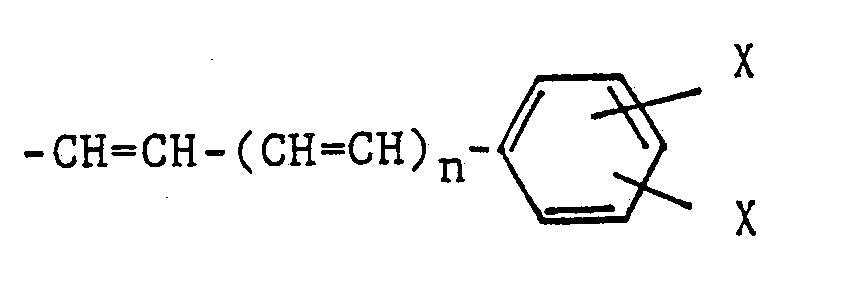
R¹ und R² gemeinsam einen ggf. substituierten 5- oder 6-gliedrigen carbocyclischen Ring bilden,
R³ ein Wasserstoffatom, eine Methylgruppe oder eine ggf. substituierte Phenylgruppe,
R⁴ ein Wasserstoff- oder Halogenatom, eine Methylgruppe, eine ggf. substituierte Benzoylgruppe oder eine Gruppe der Formel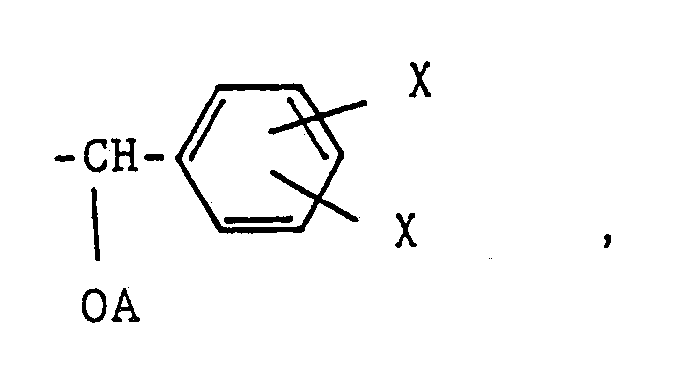
X ein Wasserstoff- oder Chloratom, eine Alkylgruppe mit 1 bis 4 Kohlenstoffatomen oder eine der Gruppen OA, CH₂OA, CH₂NHA oder C₂H₄OA bedeutet, wobei mehrere X untereinander gleich oder verschieden sein können, und
A eine Acryloyl- oder Methacryloylgruppe ist,
wobei die Verbindungen jeweils mindestens eine Gruppe A enthalten. - Erfindungsgemäß wird ferner ein photopolymerisierbares Gemisch vorgeschlagen, das als wesentliche Bestandteile
- a) ein polymeres Bindemittel,
- b) eine polymerisierbare Verbindung mit mindestens einer endständigen ethylenischen Doppelbindung und einem Siedepunkt oberhalb 100° C bei Normaldruck und
- c) eine N-heterocyclische Verbindung als Photoinitiator
- Das erfindungsgemäße Gemisch ist dadurch gekennzeichnet, daß die N-heterocyclische Verbindung eine Verbindung der vorstehenden allgemeinen Formel I ist.
- Erfindungsgemäß wird schließlich ein photopolymerisierbares Aufzeichnungsmaterial mit einem Schichtträger und einer darauf aufgebrachten photopolymerisierbaren Schicht vorgeschlagen, die aus dem vorstehend definierten photopolymerisierbaren Gemisch besteht.
- Die erfindungsgemäßen Verbindungen sind neu. Sie werden durch Verestern der ihnen zugrundeliegenden Hydroxyverbindungen mit aktivierten Derivaten, z. B. Anhydriden oder Chloriden, der Acryl- oder Methacrylsäure hergestellt. Die Hydroxyverbindungen sind teils bekannt, teils werden sie in Analogie zu bekannten Verfahren hergestellt. Das 9-(4-Hydroxyphenyl)acridin ist bekannt; das 2-(4-Hydroxystyryl)chinolin läßt sich z. B. durch Kondensation von 1 mol Chinaldin mit 1 mol 4-Hydroxybenzaldehyd in Essigsäureanhydrid unter Zusatz von einigen Tropfen konzentrierter Schwefelsäure zu 2-(4-Acetoxystyryl)chinolin umsetzen. Durch Hydrolyse mit alkoholischer Kalilauge wird daraus die freie Hydroxyverbindung erhalten. Anstelle von Chinaldin können andere Chinolinderivate mit aktivierten Methylengruppen, z. B. das 9-Phenyl-2,3-dihydro-1H-cyclopenta[b]chinolin, eingesetzt werden. Man erhält hierbei als Zwischenprodukt das 3-(4-Acetoxy-benzyliden)-9-phenyl-2,3-dihydro-1H-cyclopenta[b]chinolin, das anschließend verseift werden kann. Diese und weitere geeignete Verbindungen sind in der EP-A 220 589 beschrieben. Anstelle von p-Hydroxybenzaldehyd oder p-Hydroxyzimtaldehyd können die entsprechenden aromatischen Dihydroxyverbindungen eingesetzt werden.
- Verbindungen der Formel I, in denen R¹ und R² einen Benzolring bilden, werden hergestellt, indem Diphenylamin oder seine einfachen Substitutionsprodukte, z. B. 3-Methyldiphenylamin oder ein Chlordiphenylamin, mit Benzoesäure oder einfachen Benzoesäurederivaten, z. B. t- Butylbenzoesäure, Benzophenon-4-carbonsäure, Diphenyl-4-carbonsäure, 4-Aminomethyl-benzoesäure oder Terephthalsäure in einem geeigneten Reaktionsmedium wie Polyphosphorsäure bei etwa 150 - 200 °C zum 2,7-Dibenzoyl-9-phenyl-acridinderivat kondensiert werden. Anschließend werden die Carbonylgruppen der ggf. substituierten Benzoylgruppen z. B. mit Natriumboranat zur -CHOH-Gruppe reduziert.
- Von den erfindungsgemäßen Verbindungen werden diejenigen bevorzugt, in denen R¹ und R² zu einem Ring verbunden sind, der aromatisch oder partiell hydriert sein kann, vorzugsweise aber ein Benzolring ist. R³ ist bevorzugt eine Phenylgruppe, die insbesondere einen oder mehrere Substituenten X trägt. Ein Substituent steht bevorzugt in 4-Stellung. Wenn R¹ und R² zusammen einen Benzolring bedeuten, ist dieser vorzugsweise substituiert, insbesondere in der 2-Stellung des mit ihm gebildeten Acridinkerns. Als Substituenten kommen vor allem solche der Bedeutung von R⁴ in Betracht. Acridinverbindungen, in denen die 2- und 7-Stellung solche Substituenten trägt, sind besonders vorteilhaft, da sie ein stark reduziertes Diffusionsvermögen aufweisen, analog den in der gleichzeitig eingereichten Patentanmeldung P 38 43 204.8 (Hoe 88/K089) beschriebenen Verbindungen. Die erfindungsgemäßen Verbindungen können eine oder mehrere, im allgemeinen 1 bis 3, Acryloyl- oder Methacryloylgruppen aufweisen, wobei Verbindungen mit zwei polymerisierbaren Gruppen wegen ihrer Vernetzungswirkung besonders vorteilhaft sind.
- Beispiele für geeignete erfindungsgemäße Verbindungen sind 2-[4-(4-Acryloyloxy-phenyl)butadienyl]chinolin, 3-(3,4-Bis-acryloyloxy-benzyliden)-9-methyl-2,3-dihydro-1H-cyclopenta[b]chinolin, 3-(2,4-Bis-methacryloyloxy-benzyliden)-7-chlor-9-(2-chlorphenyl)-2,3-dihydro-1H-cyclopenta[b]chinolin, 2,7-Dimethyl-9-(4-acryloylaminomethyl-phenyl)acridin, 2,7-Bis-(α-methacryloyloxy-4-tert.butyl-benzyl)-9-(4- tert.- butyl-phenyl)acridin, 2,7-Bis-(4-acryloyloxymethylbenzoyl)-9-(4-acryloyloxymethylphenyl)acridin, 9-(4-methacryloyloxyethylphenyl)acridin und 2,7-Bis-(α-methacryloyloxy-benzyl)-9-phenyl-acridin.
- Der Mengenanteil der Verbindungen der Formel I in dem erfindungsgemäßen Gemisch beträgt im allgemeinen 0,01 bis 10, vorzugsweise 0,1 bis 5 Gew.-%, bezogen auf die nichtflüchtigen Bestandteile.
- Für die Zwecke der Erfindung geeignete polymerisierbare Verbindungen sind bekannt und z. B. in den US-A 2 760 863 und 3 060 023 beschrieben.
- Bevorzugte Beispiele sind Acryl- und Methacrylsäureester von ein- oder mehrwertigen, bevorzugt mindestens zweiwertigen Alkoholen, wie Ethylenglykoldiacrylat, Polyethylenglykoldimethacrylat, Acrylate und Methacrylate von Trimethylolethan, Trimethylolpropan, Pentaerythrit und Dipentaerythrit und von mehrwertigen alicyclischen Alkoholen oder N-substituierte Acryl- und Methacrylsäureamide. Mit Vorteil werden auch Umsetzungsprodukte von Mono- oder Diisocyanaten mit Partialestern mehrwertiger Alkohole eingesetzt. Derartige Monomere sind in den DE-A 20 64 079, 23 61 041 und 28 22 190 beschrieben. Der Mengenanteil der Schicht an Monomeren beträgt im allgemeinen etwa 10 bis 80, vorzugsweise 20 bis 60 Gew.-%.
- Das Gemisch enthält außerdem noch ein polymeres Bindemittel. Als Bindemittel kann eine Vielzahl löslicher organischer Polymerisate Einsatz finden.
- Als Beispiele seien genannt: Polyamide, Polyvinylester, Polyvinylacetale, Polyvinylether, Epoxidharze, Polyacrylsäureester, Polymethacrylsäureester, Polyester, Alkydharze, Polyacrylamid, Polyvinylalkohol, Polyethylenoxid, Polydimethylacrylamid, Polyvinylpyrrolidon, Polyvinylmethylformamid, Polyvinylmethylacetamid sowie Mischpolymerisate der Monomeren, die die aufgezählten Homopolymerisate bilden.
- Ferner kommen als Bindemittel Naturstoffe oder umgewandelte Naturstoffe in Betracht, z. B. Gelatine und Celluloseether.
- Mit besonderem Vorteil werden Bindemittel verwendet, die wasserunlöslich, aber in wäßrig-alkalischen Lösungen löslich oder mindestens quellbar sind, da sich Schichten mit solchen Bindemitteln mit den bevorzugten wäßrigalkalischen Entwicklern entwickeln lassen. Derartige Bindemittel können z B. die folgenden Gruppen enthalten: -COOH, -PO₃H₂, -SO₃H; -SO₂NH-, -SO₂-NH-SO₂- und -SO₂-NH-CO-.
- Als Beispiele hierfür seien genannt: Maleinatharze, Polymerisate aus N-(p-Tolyl-sulfonyl)-carbaminsäure-ß-(methacryloyloxy)-ethylester und Mischpolymerisate dieser und ähnlicher Monomerer mit anderen Monomeren sowie Vinylacetat/Crotonsäure- und Styrol/Maleinsäureanhydrid-Mischpolymerisate. Alkylmethacrylat/Methacrylsäure-Mischpolymerisate und Mischpolymerisate aus Methacrylsäure, höheren Alkylmethacrylaten und Methylmethacrylat und/oder Styrol, Acrylnitril u. a., wie sie in den DE-A 20 64 080 und 23 63 806 beschrieben sind, werden bevorzugt.
- Die Menge des Bindemittels beträgt im allgemeinen 20 bis 90, vorzugsweise 40 bis 80 Gew.-% der Bestandteile der Schicht.
- Die photopolymerisierbaren Gemische können je nach geplanter Anwendung und je nach den gewünschten Eigenschaften verschiedenartige Stoffe als Zusätze enthalten. Beispiele sind:
Inhibitoren zur Verhinderung der thermischen Polymerisation der Monomeren,
Wasserstoffdonatoren,
die spektrale Lichtempfindlichkeit derartiger Schichten modifizierende Stoffe,
Farbstoffe,
gefärbte und ungefärbte Pigmente,
Farbbildner,
Indikatoren,
Weichmacher, z.B. Polyglykole oder Ester der p-Hydroxybenzoesäure. - Diese Bestandteile sind zweckmäßig so auszuwählen, daß sie in dem für den Initiierungsvorgang wichtigen aktinischen Strahlungsbereich möglichst wenig absorbieren.
- Als aktinische Strahlung soll im Rahmen dieser Beschreibung jede Strahlung verstanden werden, deren Energie mindestens der des kurzwelligen sichtbaren Lichts entspricht. Geeignet ist langwellige UV-Strahlung, aber auch Elektronen-, Röntgen- und Laserstrahlung.
- Das photopolymerisierbare Gemisch kann für die verschiedensten Anwendungen Einsatz finden, beispielsweise zur Herstellung von Sicherheitsglas, von Lacken, die durch Licht oder Korpuskularstrahlen, z. B. Elektronenstrahlen, gehärtet werden, auf dem Dentalgebiet und insbesondere als lichtempfindliches Aufzeichnungsmaterial auf dem Reproduktionsgebiet.
- Die detaillierte Beschreibung der Erfindung beschränkt sich auf dieses Anwendungsgebiet, jedoch ist die Erfindung nicht hierauf beschränkt. Als Anwendungsmöglichkeiten auf diesem Gebiet seien genannt: Aufzeichnungsschichten für die photomechanische Herstellung von Druckformen für den Hochdruck, den Flachdruck, den Tiefdruck, den Siebdruck, von Reliefkopien, z. B. Herstellung von Texten in Blindenschrift, von Einzelkopien, Gerbbildern, Pigmentbildern usw.. Weiter sind die Gemische zur photomechanischen Herstellung von Ätzreservagen, z. B. für die Fertigung von Namensschildern, von kopierten Schaltungen und für das Form teilätzen, anwendbar. Besondere Bedeutung haben die erfindungsgemäßen Gemische als Kopierschichten für die photomechanische Herstellung von Flachdruckformen und für die Photoresisttechnik.
- Die gewerbliche Verwertung des Gemischs für die genannten Anwendungszwecke kann in der Form einer flüssigen Lösung oder Dispersion, z. B. als Photoresistlösung, erfolgen, die vom Verbraucher selbst auf einen individuellen Träger, z. B. zum Formteilätzen, für die Herstellung kopierter Schaltungen, von Siebdruckschablonen und dgl., aufgebracht wird. Das Gemisch kann auch als feste lichtempfindliche Schicht auf einem geeigneten Träger in Form eines lagerfähig vorbeschichteten lichtempfindlichen Kopiermaterials, z. B. für die Herstellung von Druckformen, vorliegen, Ebenso ist es für die Herstellung von Trockenresist geeignet.
- Es ist im allgemeinen günstig, die Gemische während der Lichtpolymerisation dem Einfluß des Luftsauerstoffes weitgehend zu entziehen. Im Fall der Anwendung des Gemischs in Form dünner Kopierschichten ist es empfehlenswert, einen geeigneten, für Sauerstoff wenig durchlässigen Deckfilm aufzubringen. Dieser kann selbsttragend sein und vor der Entwicklung der Kopierschicht abgezogen werden. Für diesen Zweck sind z. B. Polyesterfilme geeignet. Der Deckfilm kann auch aus einem Material bestehen, das sich in der Entwicklerflüssigkeit löst oder mindestens an den nicht gehärteten Stellen bei der Entwicklung entfernen läßt. Hierfür geeig nete Materialien sind z B. Wachse, Polyvinylalkohol, Polyphosphate, Zucker usw..
- Als Schichtträger für mit dem erfindungsgemäßen Gemisch hergestellte Kopiermaterialien sind beispielsweise Aluminium, Stahl, Zink, Kupfer und Kunststoff-Folien, z. B. aus Polyethylenterephthalat oder Cellulosacetat, sowie Siebdruckträger, wie Perlongaze, geeignet.
- Die Herstellung der lichtempfindlichen Materialien unter Verwendung des erfindungsgemäßen Gemischs erfolgt in bekannter Weise.
- So kann man dieses in einem Lösungsmittel aufnehmen und die Lösung bzw. Dispersion durch Gießen, Sprühen, Tauchen, Antrag mit Walzen usw. auf den vorgesehenen Träger als Film antragen und anschließend antrocknen. Dicke Schichten (z. B. von 250 µm und darüber) werden vorteilhaft durch Extrudieren oder Verpressen als selbsttragende Folie hergestellt, welche dann ggf. auf den Träger laminiert wird. Im Falle von Trockenresist werden Lösungen des Gemischs auf transparente Träger aufgebracht und angetrocknet. Die lichtempfindlichen Schichten - Dicke etwa zwischen 10 und 100 µm - werden dann gleichfalls zunächst durch Laminieren zusammen mit dem temporären Träger auf das gewünschte Substrat auflaminiert.
- Die Verarbeitung der Materialien wird in bekannter Weise vorgenommen. Zur Entwicklung werden sie mit einer geeigneten Entwicklerlösung, bevorzugt einer schwach alkalischen wäßrigen Lösung, behandelt, wobei die unbelichteten Anteile der Schicht entfernt werden und die belichteten Bereiche der Kopierschicht auf dem Träger zurückbleiben.
- Die erfindungsgemäßen Aufzeichnungsmaterialien zeichnen sich durch einen geringen Lichtempfindlichkeitsverlust beim Lagern aus. Dieser Vorteil wird offenbar durch eine höhere Diffusionsfestigkeit der Initiatoren in der photopolymerisierbaren Schicht gegenüber dem unsubstituierten 9-Phenyl-acridin bewirkt. Aus der lichtgehärteten Schicht wandern die Initiatoren nicht oder in wesentlich geringerem Maße aus als bekannte Initiatoren. Die Materialien ergeben nach der Belichtung Schichten mit höherer mechanischer Festigkeit und Resistenz gegen Abrieb, z. B. beim Druck.
- Im folgenden werden Beispiele für das erfindungsgemäße Gemisch angegeben. Dabei wird zunächst die Herstellung von Verbindungen der Formel 1 beschrieben. Anschließend werden Anwendungsbeispiele für die photopolymerisierbaren Gemische beschrieben.
- In den Beispielen stehen Gewichtsteile (Gt) und Volumenteile (Vt) im Verhältnis von g zu ccm. Sofern nicht anders angegeben, verstehen sich Prozent- und Mengenverhältnisse in Gewichtseinheiten.
- 197 Gt (1 mol) 4,4-Dimethyl-diphenylamin und 151 Gt (1 mol) 4-Aminomethyl-benzoesäure wurden in 5000 Gt Polyphosphorsäure 1 Stunde auf 200 °C erhitzt. Nach dem Abkühlen wurde das Reaktionsgemisch mit Wasser und Ammoniak versetzt, das 2,7-Dimethyl-9-(4-aminomethyl-phenyl)-acridin abgesaugt, gereinigt und getrocknet (Fp 220 °C).
- Das Produkt wurde mit Acrylsäurechlorid und Triethylamin in Aceton acryliert.
- 1 Gt Diphenylamin und 15 Gt Polyphosphorsäure wurden unter Rühren auf 100 °C erwärmt. Nach Zugabe von 2,5 Gt Benzoesäure wurde das Gemisch 45 Minuten auf 200 °C erhitzt. Nach dem Abkühlen auf 100 °C wurde die Mischung in 70 Gt Wasser gegossen, das 2,7-Dibenzoyl-9-phenylacridin abfiltriert und gereinigt (Fp 210 °C).
- 1 Gt 2,7-Dibenzoyl-9-phenylacridin wurde in 4 Gt Ethanol suspendiert und mit 0,1 Gt Natriumboranat (portionsweise) bei 20 - 50 °C reduziert. Nach 24 Stunden wurde das Reaktionsprodukt 2,7-Bis(α-hydroxybenzyl)-9-phenylacridin mit Wasser ausgefällt, gereinigt und getrocknet (Fp oberhalb 280 °C).
- 1 Gt 2,7-Bis-(α-hydroxybenzyl)-9-phenylacridin wurde in 4 Gt Aceton suspendiert und mit 0,8 Gt Methacrylsäureanhydrid und 0,001 Gt 4-Dimethylamino-pyridin 1 Stunde unter Rückfluß erhitzt. Das Gemisch wurde danach mit Wasser versetzt und das Produkt abfiltriert und getrocknet.
- Die folgenden zwei Beschichtungslösungen wurden hergestellt aus:
52 Gt eines Terpolymerisats aus Styrol, Methacrylsäure und n-Hexylmethacrylat (10:30:60; Säurezahl 190),
17,6 Gt Polyethylenglykol-400-dimethacrylat,
0,04 Gt eines blauen Azofarbstoffs, erhalten durch Kuppeln von 2,4-Dinitro-6-chlor-benzoldiazoniumsalz mit 2-Methoxy-5-acetylamino-N,N-diethylanilin,
0,12 Gt 1,4-Bis-(4-tert.butoxy-phenylamino)-5,8-dihydroxy-anthrachinon,
90 Gt Butanon und
50 Gt Ethanol,
denen als Photoinitiator - a) 1 Gt 2,7-Dimethyl-9-(4-methacryloylaminomethyl-phenyl)-acridin und
- b) 1 Gt 2,7-Dimethyl-9-(4-acetylaminomethyl-phenyl)-acridin (Vergleich)
- Die Resistschichten wurden nach Abziehen der Polypropylendeckfolie in einer handelsüblichen Laminiervorrichtung bei 115 °C auf eine mit 35 µm starker Kupferfolie kaschierte Phenoplast-Schichtstoffplatte laminiert und 20 Sekunden mit einem handelsüblichen Belichtungsgerät (5 kW Metallhalogenid-Lampe) belichtet. Als Vorlage diente ein 13-stufiger Belichtungskeil mit Dichteinkrementen von 0,15. Anschließend wurden die Platten mit 1 ,0 %iger Sodalösung in einem Sprühprozessor 90 Sekunden entwickelt. Beide Resists waren bis zur Stufe 8 gehärtet.
- An vollflächig belichteten Mustern wurde dann die Härte der Schicht bestimmt. Hierzu wurde die Eindruck-Härteprüfung nach Buchholz, beschrieben in DIN 53 153, angewandt. Bei dieser Prüfung wird mittels eines geeigneten Geräts das Eindringen eines Kreismessers in die zu prüfende Schicht unter definierter Belastung gemessen. Dabei wird ein Eindruck erhalten, der umso länger ist, je weicher das zu prüfende Material war. Als Härtezahl wird dann der Wert
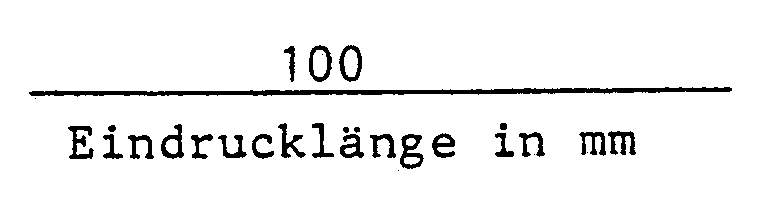
- Das erfindungsgemäße Muster hatte die Buchholzhärte 81, das Vergleichsmuster die Härte 72.
- In Beschichtungslösungen aus
40 Gt eines Copolymerisats aus Methylmethacrylat und Methacrylsäure (Säurezahl 115),
40 Gt Trimethylolpropantriacrylat und
0,5 Gt Farbstoff Disperse Blue 134 (C.I. 61 551) in
520 Gt 2-Methoxy-ethanol
wurden als Photoinitiatoren - a) 1,2 Gt 2,7-Bis-(α-acryloyloxybenzyl)-9-phenylacridin und
- b) 1,2 Gt 2,7-Bis-(α-acetoxybenzyl)-9-phenylacridin (Vergleich)
- Die so erhaltenen Druckplatten wurden mit einer 5-kW-Metallhalogenidlampe 15 Sekunden in einem Abstand von 110 cm unter einer Negativtestvorlage zusammen mit einem 13-stufigen Belichtungskeil, der Dichteinkremente von 0,15 enthält, belichtet, Die durch Licht nicht gehärteten Teile wurden durch überwischen mit einer Entwicklerlösung folgender Zusammensetzung entfernt:
3 Gt Natriummetasilikat x 9 H₂O,
0,05 Gt Strontiumchlorid,
0,03 Gt nichtionogenes Netzmittel (Kokosfettalkohol-Polyoxyethylenether mit ca. 8 Oxyethyleneinheiten)
0,003 Gt Antischaummittel,
100 Gt vollentsalztes Wasser. - Anschließend wurden die Druckplatten nebeneinander in eine Offsetdruckmaschine gespannt und unter forcierten Bedingungen (verdoppelter Anpreßdruck zwischen Gummituch und Druckplatte unter Einsatz einer besonders abrasiven Druckfarbe) getestet. Die Druckergebnisse der Platte 2 b ließen ab 70.000 nach. Bei der Auflage 80.000 war die Farbannahme der Platte 2 b stark reduziert, die Drucke der Platte 2 a waren dagegen noch erstklassig.
- Eine Beschichtungslösung aus
40 Gt des in Beispiel 1 angegebenen Terpolymerisats,
40 Gt des Diurethans aus 1 mol 2,2,4-Trimethyl-hexamethylendiisocyanat und 2 mol 2-Hydroxyethylmethacrylat,
0,04 Gt 1,4-Bis-(4-tert.-butoxy-phenylamino)-5,8-dihydroxy-anthrachinon,
0,75 Gt Leukokristallviolett,
0,5 Gt 3-(4-methacryloyloxy-benzyliden-9-phenyl-2,3-dihydro-1H-cyclopenta[b]chinolin und
0,6 Gt 2,2-Dibrommalonsäureamid in
90 Gt Butanon und
50 Gt Ethanol
wurde auf eine 25 µm starke Polyethylenterephthalatfolie aufgebracht. Anschließend wurde 2 Minuten bei 100 °C im Trockenschrank getrocknet. Man erhielt mit einem Schichtgewicht von 44 g/m² einen Trockenresist, der für Ätzverfahren und Galvanoanwendungen besonders gut geeignet ist.
Claims (9)

R¹ eine Gruppe der Formel

R² ein Wasserstoffatom oder eine Methylgruppe ist oder
R¹ und R² gemeinsam einen ggf. substituierten 5- oder 6-gliedrigen carbocyclischen Ring bilden,
R³ ein Wasserstoffatom, eine Methylgruppe oder eine ggf. substituierte Phenylgruppe,
R⁴ ein Wasserstoff- oder Halogenatom, eine Methylgruppe, eine ggf. substituierte Benzoylgruppe oder eine Gruppe der Formel

X ein Wasserstoff- oder Chloratom, eine Alkylgruppe mit 1 bis 4 Kohlenstoffatomen oder eine der Gruppen OA, CH₂OA, CH₂NHA oder C₂H₄OA bedeutet, wobei mehrere X untereinander gleich oder verschieden sein können, und
A eine Acryloyl- oder Methacryloylgruppe ist,
wobei die Verbindungen jeweils mindestens eine Gruppe A enthalten.
a) ein polymeres Bindemittel,
b) eine polymerisierbare Verbindung mit mindestens einer endständigen ethylenischen Doppelbindung und einem Siedepunkt oberhalb 100°C bei Normaldruck und
c) eine N-heterocyclische Verbindung als Photoinitiator
enthält, dadurch gekennzeichnet, daß die N-heterocyclische Verbindung eine Verbindung der allgemeinen Formel I gemäß einem der Ansprüche 1 bis 5 ist.
Applications Claiming Priority (2)
| Application Number | Priority Date | Filing Date | Title |
|---|---|---|---|
| DE3843205 | 1988-12-22 | ||
| DE3843205A DE3843205A1 (de) | 1988-12-22 | 1988-12-22 | Photopolymerisierbare verbindungen, diese enthaltendes photopolymerisierbares gemisch und daraus hergestelltes photopolymerisierbares aufzeichnungsmaterial |
Publications (3)
| Publication Number | Publication Date |
|---|---|
| EP0374705A2 true EP0374705A2 (de) | 1990-06-27 |
| EP0374705A3 EP0374705A3 (de) | 1991-01-30 |
| EP0374705B1 EP0374705B1 (de) | 1994-09-21 |
Family
ID=6369826
Family Applications (1)
| Application Number | Title | Priority Date | Filing Date |
|---|---|---|---|
| EP89122996A Expired - Lifetime EP0374705B1 (de) | 1988-12-22 | 1989-12-13 | Photopolymerisierbare Verbindungen, diese enthaltendes photopolymerisierbares Gemisch und daraus hergestelltes photopolymerisierbares Aufzeichnungsmaterial |
Country Status (5)
| Country | Link |
|---|---|
| US (1) | US5200299A (de) |
| EP (1) | EP0374705B1 (de) |
| JP (1) | JPH02226149A (de) |
| CA (1) | CA2006073A1 (de) |
| DE (2) | DE3843205A1 (de) |
Cited By (2)
| Publication number | Priority date | Publication date | Assignee | Title |
|---|---|---|---|---|
| EP0374704A3 (de) * | 1988-12-22 | 1991-11-13 | Morton International, Inc. | Photopolymerisierbares Gemisch und dieses enthaltendes photopolymerisierbares Aufzeichnungsmaterial |
| US5217845A (en) * | 1988-12-22 | 1993-06-08 | Hoechst Aktiengesellschaft | Photopolymerizable mixture and photopolymerizable copying material containing same |
Families Citing this family (184)
| Publication number | Priority date | Publication date | Assignee | Title |
|---|---|---|---|---|
| JPH05224439A (ja) * | 1992-02-12 | 1993-09-03 | Fuji Electric Co Ltd | 電子写真用感光体 |
| CA2243381A1 (en) * | 1996-11-20 | 1998-05-28 | Polaroid Corporation | Protective overcoat useful for enhancing an article's resistance to ambient humidity |
| JP4130030B2 (ja) | 1999-03-09 | 2008-08-06 | 富士フイルム株式会社 | 感光性組成物および1,3−ジヒドロ−1−オキソ−2h−インデン誘導体化合物 |
| JP4132707B2 (ja) | 2001-03-29 | 2008-08-13 | 富士フイルム株式会社 | 画像記録材料 |
| JP2003202671A (ja) | 2002-01-08 | 2003-07-18 | Fuji Photo Film Co Ltd | 画像記録材料 |
| JP2003302770A (ja) | 2002-02-08 | 2003-10-24 | Fuji Photo Film Co Ltd | 画像形成方法 |
| JP4137577B2 (ja) | 2002-09-30 | 2008-08-20 | 富士フイルム株式会社 | 感光性組成物 |
| EP1464486B1 (de) | 2003-03-26 | 2009-06-17 | FUJIFILM Corporation | Flachdruckverfahren und vorsensibilisierte Platte |
| JP4291638B2 (ja) | 2003-07-29 | 2009-07-08 | 富士フイルム株式会社 | アルカリ可溶性ポリマー及びそれを用いた平版印刷版原版 |
| US20050153239A1 (en) | 2004-01-09 | 2005-07-14 | Fuji Photo Film Co., Ltd. | Lithographic printing plate precursor and lithographic printing method using the same |
| JP2005231255A (ja) | 2004-02-20 | 2005-09-02 | Fuji Photo Film Co Ltd | 平版印刷方法及びそれに用いる平版印刷版原版 |
| US20070144384A1 (en) | 2004-05-19 | 2007-06-28 | Fuji Photo Film Co., Ltd | Image recording method |
| EP1602982B1 (de) | 2004-05-31 | 2013-12-18 | FUJIFILM Corporation | Flachdruckverfahren |
| JP4452572B2 (ja) | 2004-07-06 | 2010-04-21 | 富士フイルム株式会社 | 感光性組成物およびそれを用いた画像記録方法 |
| ATE398298T1 (de) | 2004-07-20 | 2008-07-15 | Fujifilm Corp | Bilderzeugendes material |
| US7425406B2 (en) | 2004-07-27 | 2008-09-16 | Fujifilm Corporation | Lithographic printing plate precursor and lithographic printing method |
| ATE389900T1 (de) | 2004-08-24 | 2008-04-15 | Fujifilm Corp | Verfahren zur herstellung einer lithographischen druckplatte |
| JP4607521B2 (ja) | 2004-08-25 | 2011-01-05 | コダック株式会社 | 平版印刷版原版の現像処理方法及び装置 |
| JP2006062188A (ja) | 2004-08-26 | 2006-03-09 | Fuji Photo Film Co Ltd | 色画像形成材料及び平版印刷版原版 |
| JP4429116B2 (ja) | 2004-08-27 | 2010-03-10 | 富士フイルム株式会社 | 平版印刷版原版及び平版印刷版の製版方法 |
| JP2006068963A (ja) | 2004-08-31 | 2006-03-16 | Fuji Photo Film Co Ltd | 重合性組成物、それを用いた親水性膜、及び、平版印刷版原版 |
| JP5089866B2 (ja) | 2004-09-10 | 2012-12-05 | 富士フイルム株式会社 | 平版印刷方法 |
| US20060150846A1 (en) | 2004-12-13 | 2006-07-13 | Fuji Photo Film Co. Ltd | Lithographic printing method |
| JP2006181838A (ja) | 2004-12-27 | 2006-07-13 | Fuji Photo Film Co Ltd | 平版印刷版原版 |
| EP1685957B1 (de) | 2005-01-26 | 2013-12-11 | FUJIFILM Corporation | Flachdruckverfahrenstapel |
| EP1696268B1 (de) | 2005-02-28 | 2016-11-09 | FUJIFILM Corporation | Flachdruckplattenvorläufer |
| EP1701213A3 (de) | 2005-03-08 | 2006-11-22 | Fuji Photo Film Co., Ltd. | Lichtempfindliche Zusammensetzung |
| JP4538350B2 (ja) | 2005-03-18 | 2010-09-08 | 富士フイルム株式会社 | 感光性組成物および画像記録材料並びに画像記録方法 |
| JP4538351B2 (ja) * | 2005-03-18 | 2010-09-08 | 富士フイルム株式会社 | 感光性組成物 |
| JP4574506B2 (ja) | 2005-03-23 | 2010-11-04 | 富士フイルム株式会社 | 平版印刷版原版、及びその製版方法 |
| JP4524235B2 (ja) | 2005-03-29 | 2010-08-11 | 富士フイルム株式会社 | 平版印刷版原版 |
| JP4474317B2 (ja) | 2005-03-31 | 2010-06-02 | 富士フイルム株式会社 | 平版印刷版の作製方法 |
| JP4792326B2 (ja) | 2005-07-25 | 2011-10-12 | 富士フイルム株式会社 | 平版印刷版の作製方法および平版印刷版原版 |
| JP4815270B2 (ja) | 2005-08-18 | 2011-11-16 | 富士フイルム株式会社 | 平版印刷版の作製方法及び作製装置 |
| JP4759343B2 (ja) | 2005-08-19 | 2011-08-31 | 富士フイルム株式会社 | 平版印刷版原版および平版印刷方法 |
| JP4694324B2 (ja) | 2005-09-09 | 2011-06-08 | 富士フイルム株式会社 | 感光性平版印刷版の製造方法 |
| JP5171005B2 (ja) | 2006-03-17 | 2013-03-27 | 富士フイルム株式会社 | 高分子化合物およびその製造方法、並びに顔料分散剤 |
| JP4777226B2 (ja) | 2006-12-07 | 2011-09-21 | 富士フイルム株式会社 | 画像記録材料、及び新規化合物 |
| US8771924B2 (en) | 2006-12-26 | 2014-07-08 | Fujifilm Corporation | Polymerizable composition, lithographic printing plate precursor and lithographic printing method |
| JP2008163081A (ja) | 2006-12-27 | 2008-07-17 | Fujifilm Corp | レーザー分解性樹脂組成物およびそれを用いるパターン形成材料ならびにレーザー彫刻型フレキソ印刷版原版 |
| JP4945432B2 (ja) | 2006-12-28 | 2012-06-06 | 富士フイルム株式会社 | 平版印刷版の作製方法 |
| EP2447780B1 (de) | 2007-01-17 | 2013-08-28 | Fujifilm Corporation | Verfahren zur Herstellung einer Lithographiedruckplatte |
| JP4881756B2 (ja) | 2007-02-06 | 2012-02-22 | 富士フイルム株式会社 | 感光性組成物、平版印刷版原版、平版印刷方法、及び新規シアニン色素 |
| ATE471812T1 (de) | 2007-03-23 | 2010-07-15 | Fujifilm Corp | Negativ-lithografiedruckplattenvorläufer und lithografiedruckverfahren damit |
| JP4860525B2 (ja) | 2007-03-27 | 2012-01-25 | 富士フイルム株式会社 | 硬化性組成物及び平版印刷版原版 |
| JP2008238711A (ja) | 2007-03-28 | 2008-10-09 | Fujifilm Corp | 親水性部材及び下塗り組成物 |
| EP1974914B1 (de) | 2007-03-29 | 2014-02-26 | FUJIFILM Corporation | Verfahren zur Herstellung einer Lithographiedruckplatte |
| JP5030638B2 (ja) | 2007-03-29 | 2012-09-19 | 富士フイルム株式会社 | カラーフィルタ及びその製造方法 |
| EP1975710B1 (de) | 2007-03-30 | 2013-10-23 | FUJIFILM Corporation | Plattenherstellungsverfahren eines Lithografiedruckplattenvorläufers |
| EP1975706A3 (de) | 2007-03-30 | 2010-03-03 | FUJIFILM Corporation | Lithografiedruckplattenvorläufer |
| JP5046744B2 (ja) | 2007-05-18 | 2012-10-10 | 富士フイルム株式会社 | 平版印刷版原版、及びそれを用いた印刷方法 |
| EP2006738B1 (de) | 2007-06-21 | 2017-09-06 | Fujifilm Corporation | Lithographiedruckplattenvorläufer |
| EP2006091B1 (de) | 2007-06-22 | 2010-12-08 | FUJIFILM Corporation | Lithographiedruckplattenvorläufer und Plattenherstellungsverfahren |
| US8221957B2 (en) | 2007-07-02 | 2012-07-17 | Fujifilm Corporation | Planographic printing plate precursor and printing method using the same |
| JP5213375B2 (ja) | 2007-07-13 | 2013-06-19 | 富士フイルム株式会社 | 顔料分散液、硬化性組成物、それを用いるカラーフィルタ及び固体撮像素子 |
| KR101412719B1 (ko) | 2007-07-17 | 2014-06-26 | 후지필름 가부시키가이샤 | 감광성 조성물, 경화성 조성물, 신규 화합물, 광중합성조성물, 컬러 필터, 및, 평판 인쇄판 원판 |
| EP2048539A1 (de) | 2007-09-06 | 2009-04-15 | FUJIFILM Corporation | Verarbeitetes Pigment, pigmentverstreute Zusammensetzung, farbige, lichtempfindliche Zusammensetzung, Farbfilter, Flüssigkristallanzeigeelement und Festbildaufnahmeelement |
| JP2009091555A (ja) | 2007-09-18 | 2009-04-30 | Fujifilm Corp | 硬化性組成物、画像形成材料及び平版印刷版原版 |
| JP2009069761A (ja) | 2007-09-18 | 2009-04-02 | Fujifilm Corp | 平版印刷版の製版方法 |
| KR20100061730A (ko) | 2007-09-19 | 2010-06-08 | 후지필름 가부시키가이샤 | 아세틸렌 화합물, 그 염, 그 축합물 및 그 조성물 |
| US9442372B2 (en) | 2007-09-26 | 2016-09-13 | Fujifilm Corporation | Pigment dispersion composition, photocurable composition and color filter |
| JP2009083106A (ja) | 2007-09-27 | 2009-04-23 | Fujifilm Corp | 平版印刷版用版面保護剤及び平版印刷版の製版方法 |
| JP5002399B2 (ja) | 2007-09-28 | 2012-08-15 | 富士フイルム株式会社 | 平版印刷版原版の処理方法 |
| EP2042311A1 (de) | 2007-09-28 | 2009-04-01 | FUJIFILM Corporation | Lithographiedruckplattenvorläufer, Verfahren zur Herstellung einer Lithographiedruckplatte und Lithographiedruckverfahren |
| JP5244518B2 (ja) | 2007-09-28 | 2013-07-24 | 富士フイルム株式会社 | 平版印刷版原版及び平版印刷版の作製方法 |
| EP2042928B1 (de) | 2007-09-28 | 2010-07-28 | FUJIFILM Corporation | Negatives lichtempfindliches Material und negativer planographischer Druckplattenvorläufer |
| JP4890408B2 (ja) | 2007-09-28 | 2012-03-07 | 富士フイルム株式会社 | 重合性組成物及びそれを用いた平版印刷版原版、アルカリ可溶性ポリウレタン樹脂、並びに、ジオール化合物の製造方法 |
| JP4994175B2 (ja) | 2007-09-28 | 2012-08-08 | 富士フイルム株式会社 | 平版印刷版原版、及びそれに用いる共重合体の製造方法 |
| JP5055077B2 (ja) | 2007-09-28 | 2012-10-24 | 富士フイルム株式会社 | 画像形成方法および平版印刷版原版 |
| JP4951454B2 (ja) | 2007-09-28 | 2012-06-13 | 富士フイルム株式会社 | 平版印刷版の作成方法 |
| JP5322537B2 (ja) | 2007-10-29 | 2013-10-23 | 富士フイルム株式会社 | 平版印刷版原版 |
| JP5448416B2 (ja) | 2007-10-31 | 2014-03-19 | 富士フイルム株式会社 | 着色硬化性組成物、カラーフィルタ及びその製造方法、ならびに固体撮像素子 |
| CN101430505B (zh) | 2007-11-08 | 2013-04-17 | 富士胶片株式会社 | 激光雕刻用树脂组合物、激光雕刻用树脂印刷版原版、凸版印刷版以及制备凸版印刷版的方法 |
| WO2009063824A1 (ja) | 2007-11-14 | 2009-05-22 | Fujifilm Corporation | 塗布膜の乾燥方法及び平版印刷版原版の製造方法 |
| JP2009139852A (ja) | 2007-12-10 | 2009-06-25 | Fujifilm Corp | 平版印刷版の作製方法及び平版印刷版原版 |
| JP2009186997A (ja) | 2008-01-11 | 2009-08-20 | Fujifilm Corp | 平版印刷版原版、平版印刷版の作製方法及び平版印刷版方法 |
| JP5155677B2 (ja) | 2008-01-22 | 2013-03-06 | 富士フイルム株式会社 | 平版印刷版原版、およびその製版方法 |
| JP5500831B2 (ja) | 2008-01-25 | 2014-05-21 | 富士フイルム株式会社 | レリーフ印刷版の作製方法及びレーザー彫刻用印刷版原版 |
| JP5241252B2 (ja) | 2008-01-29 | 2013-07-17 | 富士フイルム株式会社 | レーザー彫刻用樹脂組成物、レーザー彫刻用レリーフ印刷版原版、レリーフ印刷版及びレリーフ印刷版の製造方法 |
| JP5371449B2 (ja) | 2008-01-31 | 2013-12-18 | 富士フイルム株式会社 | 樹脂、顔料分散液、着色硬化性組成物、これを用いたカラーフィルタ及びその製造方法 |
| JP2009184188A (ja) | 2008-02-05 | 2009-08-20 | Fujifilm Corp | 平版印刷版原版および印刷方法 |
| JP5150287B2 (ja) | 2008-02-06 | 2013-02-20 | 富士フイルム株式会社 | 平版印刷版の作製方法及び平版印刷版原版 |
| JP5137618B2 (ja) | 2008-02-28 | 2013-02-06 | 富士フイルム株式会社 | レーザー彫刻用樹脂組成物、レーザー彫刻用レリーフ印刷版原版、レリーフ印刷版及びレリーフ印刷版の製造方法 |
| EP2095970A1 (de) | 2008-02-29 | 2009-09-02 | Fujifilm Corporation | Harzzusammensetzung für die Lasergravur, Harzdruckplattenvorläufer für die Lasergravur, Reliefdruckplatte und Verfahren zur Herstellung der Reliefdruckplatte |
| JP5448352B2 (ja) | 2008-03-10 | 2014-03-19 | 富士フイルム株式会社 | 着色硬化性組成物、カラーフィルタ、及び、固体撮像素子 |
| JP5175582B2 (ja) | 2008-03-10 | 2013-04-03 | 富士フイルム株式会社 | 平版印刷版の作製方法 |
| JP2009214428A (ja) | 2008-03-11 | 2009-09-24 | Fujifilm Corp | 平版印刷版原版および平版印刷方法 |
| KR101671249B1 (ko) | 2008-03-17 | 2016-11-01 | 후지필름 가부시키가이샤 | 착색 감광성 조성물, 컬러필터, 액정표시소자, 및 고체촬상소자 |
| JP5334624B2 (ja) | 2008-03-17 | 2013-11-06 | 富士フイルム株式会社 | 着色硬化性組成物、カラーフィルタ、及びカラーフィルタの製造方法 |
| KR20090100262A (ko) | 2008-03-18 | 2009-09-23 | 후지필름 가부시키가이샤 | 감광성 수지 조성물, 차광성 컬러필터와 그 제조 방법, 및 고체촬상소자 |
| JP5305704B2 (ja) | 2008-03-24 | 2013-10-02 | 富士フイルム株式会社 | 新規化合物、光重合性組成物、カラーフィルタ用光重合性組成物、カラーフィルタ、及びその製造方法、固体撮像素子、並びに、平版印刷版原版 |
| JP2009258705A (ja) | 2008-03-25 | 2009-11-05 | Fujifilm Corp | 平版印刷版原版 |
| JP2009236942A (ja) | 2008-03-25 | 2009-10-15 | Fujifilm Corp | 平版印刷版原版及びその製版方法 |
| JP5422146B2 (ja) | 2008-03-25 | 2014-02-19 | 富士フイルム株式会社 | 平版印刷版作成用処理液および平版印刷版原版の処理方法 |
| JP2009236355A (ja) | 2008-03-26 | 2009-10-15 | Fujifilm Corp | 乾燥方法及び装置 |
| JP5183268B2 (ja) | 2008-03-27 | 2013-04-17 | 富士フイルム株式会社 | 平版印刷版原版 |
| EP2259137B1 (de) | 2008-03-27 | 2016-08-31 | FUJIFILM Corporation | Verfahren zur herstellung einer lithografieplatte |
| JP5173528B2 (ja) | 2008-03-28 | 2013-04-03 | 富士フイルム株式会社 | 感光性樹脂組成物、遮光性カラーフィルター及びその製造方法、並びに、固体撮像素子 |
| JP5322575B2 (ja) | 2008-03-28 | 2013-10-23 | 富士フイルム株式会社 | レーザー彫刻用樹脂組成物、画像形成材料、レーザー彫刻用レリーフ印刷版原版、レリーフ印刷版、及びレリーフ印刷版の製造方法 |
| EP2105298B1 (de) | 2008-03-28 | 2014-03-19 | FUJIFILM Corporation | Negativ arbeitender Lithografiedruckplattenvorläufer und Lithografiedruckverfahren damit |
| JP5507054B2 (ja) | 2008-03-28 | 2014-05-28 | 富士フイルム株式会社 | 重合性組成物、カラーフィルタ、カラーフィルタの製造方法、及び固体撮像素子 |
| JP2009244421A (ja) | 2008-03-28 | 2009-10-22 | Fujifilm Corp | 平版印刷版の製版方法 |
| JP5528677B2 (ja) | 2008-03-31 | 2014-06-25 | 富士フイルム株式会社 | 重合性組成物、固体撮像素子用遮光性カラーフィルタ、固体撮像素子および固体撮像素子用遮光性カラーフィルタの製造方法 |
| JP4914864B2 (ja) | 2008-03-31 | 2012-04-11 | 富士フイルム株式会社 | 平版印刷版の作製方法 |
| JP5305793B2 (ja) | 2008-03-31 | 2013-10-02 | 富士フイルム株式会社 | レリーフ印刷版及びレリーフ印刷版の製造方法 |
| EP2110261B1 (de) | 2008-04-18 | 2018-03-28 | FUJIFILM Corporation | Aluminiumlegierungsplatte für eine lithographische Druckplatte, lithographische Druckplattenträger, Druckplattenvorläufer, Verfahren zur Herstellung einer Aluminiumlegierungsplatte für eine lithographische Druckplatte und Verfahren zur Herstellung eines lithographischen Druckplatteträgers |
| KR101441998B1 (ko) | 2008-04-25 | 2014-09-18 | 후지필름 가부시키가이샤 | 중합성 조성물, 차광성 컬러필터, 흑색 경화성 조성물, 고체촬상소자용 차광성 컬러필터와 그 제조 방법, 및 고체촬상소자 |
| JP5222624B2 (ja) | 2008-05-12 | 2013-06-26 | 富士フイルム株式会社 | 黒色感光性樹脂組成物、及びカラーフィルタ並びにその製造方法 |
| JP5171506B2 (ja) | 2008-06-30 | 2013-03-27 | 富士フイルム株式会社 | 新規化合物、重合性組成物、カラーフィルタ、及びその製造方法、固体撮像素子、並びに、平版印刷版原版 |
| JP5296434B2 (ja) | 2008-07-16 | 2013-09-25 | 富士フイルム株式会社 | 平版印刷版用原版 |
| JP5444933B2 (ja) | 2008-08-29 | 2014-03-19 | 富士フイルム株式会社 | ネガ型平版印刷版原版及びそれを用いる平版印刷方法 |
| JP5364513B2 (ja) | 2008-09-12 | 2013-12-11 | 富士フイルム株式会社 | 平版印刷版原版用現像液及び平版印刷版の製造方法 |
| JP5398282B2 (ja) | 2008-09-17 | 2014-01-29 | 富士フイルム株式会社 | レーザー彫刻用樹脂組成物、レーザー彫刻用レリーフ印刷版原版、レリーフ印刷版の製造方法、及びレリーフ印刷版 |
| JP5466462B2 (ja) | 2008-09-18 | 2014-04-09 | 富士フイルム株式会社 | 平版印刷版原版、平版印刷版の製造方法及び平版印刷版 |
| JP2010097175A (ja) | 2008-09-22 | 2010-04-30 | Fujifilm Corp | 平版印刷版の作製方法及び平版印刷版原版 |
| JP5449898B2 (ja) | 2008-09-22 | 2014-03-19 | 富士フイルム株式会社 | 平版印刷版原版、及びそれを用いた印刷方法 |
| JP5408942B2 (ja) | 2008-09-22 | 2014-02-05 | 富士フイルム株式会社 | 平版印刷版原版および製版方法 |
| US8151705B2 (en) | 2008-09-24 | 2012-04-10 | Fujifilm Corporation | Method of preparing lithographic printing plate |
| BRPI0918828A2 (pt) | 2008-09-24 | 2018-04-24 | Fujifilm Corporation | método de preparação de placa de impressão litográfica |
| JP2010102322A (ja) | 2008-09-26 | 2010-05-06 | Fujifilm Corp | 平版印刷版の製版方法 |
| JP5171514B2 (ja) | 2008-09-29 | 2013-03-27 | 富士フイルム株式会社 | 着色硬化性組成物、カラーフィルタ、及びカラーフィルタの製造方法 |
| JP5127651B2 (ja) | 2008-09-30 | 2013-01-23 | 富士フイルム株式会社 | 着色硬化性組成物、カラーフィルタ及びその製造方法、並びに固体撮像素子 |
| JP5140540B2 (ja) | 2008-09-30 | 2013-02-06 | 富士フイルム株式会社 | 平版印刷版原版および平版印刷版の作製方法 |
| JP5660268B2 (ja) | 2008-09-30 | 2015-01-28 | 富士フイルム株式会社 | 平版印刷版原版、平版印刷版の製版方法及び重合性モノマー |
| JP5340102B2 (ja) | 2008-10-03 | 2013-11-13 | 富士フイルム株式会社 | 分散組成物、重合性組成物、遮光性カラーフィルタ、固体撮像素子、液晶表示装置、ウェハレベルレンズ、及び撮像ユニット |
| US20120021358A1 (en) | 2008-11-26 | 2012-01-26 | Fujifilm Corporation | Process for making lithographic printing plate, developer for lithographic printing plate precursor, and replenisher for lithographic printing plate precursor development |
| CN102264537B (zh) | 2008-12-26 | 2014-07-16 | 富士胶片株式会社 | 表面金属膜材料、表面金属膜材料的制作方法、金属图案材料的制作方法及金属图案材料 |
| EP2204698B1 (de) | 2009-01-06 | 2018-08-08 | FUJIFILM Corporation | Plattenoberflächenbehandlungsmittel für eine lithografische Druckplatte und Verfahren zur Behandlung der lithografischen Druckplatte |
| JP5669386B2 (ja) | 2009-01-15 | 2015-02-12 | 富士フイルム株式会社 | 新規化合物、重合性組成物、カラーフィルタ、及びその製造方法、固体撮像素子、並びに、平版印刷版原版 |
| EP2221665A3 (de) | 2009-02-19 | 2011-03-16 | Fujifilm Corporation | Dispersionszusammensetzung, lichtempfindliche Harzzusammensetzung für einen lichtabschirmenden Farbfilter, lichtabschirmender Farbfilter, Herstellungsverfahren dafür und Festkörperbildsensor mit dem Farbfilter |
| JP5554106B2 (ja) | 2009-03-31 | 2014-07-23 | 富士フイルム株式会社 | 着色硬化性組成物、カラーフィルタの製造方法、カラーフィルタ、固体撮像素子、および液晶表示装置 |
| JP5535814B2 (ja) | 2009-09-14 | 2014-07-02 | 富士フイルム株式会社 | 光重合性組成物、カラーフィルタ、及びその製造方法、固体撮像素子、液晶表示装置、平版印刷版原版、並びに、新規化合物 |
| JP5501175B2 (ja) | 2009-09-28 | 2014-05-21 | 富士フイルム株式会社 | 分散組成物及びその製造方法、遮光性カラーフィルタ用感光性樹脂組成物及びその製造方法、遮光性カラーフィルタ及びその製造方法、並びに固体撮像素子 |
| JP5701576B2 (ja) | 2009-11-20 | 2015-04-15 | 富士フイルム株式会社 | 分散組成物及び感光性樹脂組成物、並びに固体撮像素子 |
| JP2012003225A (ja) | 2010-01-27 | 2012-01-05 | Fujifilm Corp | ソルダーレジスト用重合性組成物及びソルダーレジストパターンの形成方法 |
| JP5525873B2 (ja) | 2010-03-15 | 2014-06-18 | 富士フイルム株式会社 | 平版印刷版の作製方法 |
| JP2011221522A (ja) | 2010-03-26 | 2011-11-04 | Fujifilm Corp | 平版印刷版の作製方法 |
| JP5049366B2 (ja) | 2010-03-29 | 2012-10-17 | 富士フイルム株式会社 | レーザー彫刻型フレキソ印刷版原版 |
| JP5791874B2 (ja) | 2010-03-31 | 2015-10-07 | 富士フイルム株式会社 | 着色組成物、インクジェット用インク、カラーフィルタ及びその製造方法、固体撮像素子、並びに表示装置 |
| JP5638285B2 (ja) | 2010-05-31 | 2014-12-10 | 富士フイルム株式会社 | 重合性組成物、硬化膜、カラーフィルタ、カラーフィルタの製造方法、および固体撮像素子 |
| JP5457955B2 (ja) | 2010-06-28 | 2014-04-02 | 富士フイルム株式会社 | レーザー彫刻用樹脂組成物、レーザー彫刻用レリーフ印刷版原版、レーザー彫刻用レリーフ印刷版原版の製造方法、及び、レリーフ印刷版の製版方法 |
| JP5544239B2 (ja) | 2010-07-29 | 2014-07-09 | 富士フイルム株式会社 | 重合性組成物 |
| JP2012073594A (ja) | 2010-08-31 | 2012-04-12 | Fujifilm Corp | 平版印刷版の作製方法 |
| JP2012068357A (ja) | 2010-09-22 | 2012-04-05 | Eastman Kodak Co | 平版印刷版原版 |
| JP5274598B2 (ja) | 2011-02-22 | 2013-08-28 | 富士フイルム株式会社 | レーザー彫刻用組成物、レリーフ印刷版原版、レリーフ印刷版の製版方法、及び、レリーフ印刷版 |
| JP5705584B2 (ja) | 2011-02-24 | 2015-04-22 | 富士フイルム株式会社 | 平版印刷版の製版方法 |
| JP5705969B2 (ja) | 2011-03-28 | 2015-04-22 | 富士フイルム株式会社 | 平版印刷版の製版方法 |
| JP5255100B2 (ja) | 2011-07-29 | 2013-08-07 | 富士フイルム株式会社 | レーザー彫刻型フレキソ印刷版原版及びその製造方法、並びに、フレキソ印刷版及びその製版方法 |
| JP5438074B2 (ja) | 2011-08-12 | 2014-03-12 | 富士フイルム株式会社 | レーザー彫刻用フレキソ印刷版原版の製造方法 |
| EP2565037B1 (de) | 2011-08-31 | 2014-10-01 | Fujifilm Corporation | Verfahren zur Herstellung eines Flexodruckplattenvorläufers für Lasergravierung, und Verfahren zur Herstellung einer Flexodruckplatte |
| JP5714544B2 (ja) | 2011-09-15 | 2015-05-07 | 富士フイルム株式会社 | 製版処理廃液のリサイクル方法 |
| CN103827749B (zh) | 2011-09-26 | 2018-06-15 | 富士胶片株式会社 | 平版印刷版的制版方法 |
| WO2013047229A1 (ja) | 2011-09-26 | 2013-04-04 | 富士フイルム株式会社 | 平版印刷版の製版方法 |
| JP5690696B2 (ja) | 2011-09-28 | 2015-03-25 | 富士フイルム株式会社 | 平版印刷版の製版方法 |
| IN2014CN03280A (de) | 2011-11-04 | 2015-07-03 | Fujifilm Corp | |
| CN103135345A (zh) | 2011-11-28 | 2013-06-05 | 富士胶片株式会社 | 激光雕刻用树脂组合物、激光雕刻用柔性印刷版原版及其制法、及柔性印刷版及其制版法 |
| JP5913938B2 (ja) | 2011-11-30 | 2016-05-11 | 富士フイルム株式会社 | 光拡散性転写材料、光拡散層の形成方法、及び有機電界発光装置の製造方法 |
| JP5466689B2 (ja) | 2011-11-30 | 2014-04-09 | 富士フイルム株式会社 | フレキソ印刷版用樹脂組成物、フレキソ印刷版原版及びその製造方法、並びに、フレキソ印刷版及びその製版方法 |
| JP5628943B2 (ja) | 2012-01-31 | 2014-11-19 | 富士フイルム株式会社 | レーザー彫刻型フレキソ印刷版用樹脂組成物、レーザー彫刻型フレキソ印刷版原版及びその製造方法、並びに、フレキソ印刷版及びその製版方法 |
| CN106183520B (zh) | 2012-03-29 | 2019-05-17 | 富士胶片株式会社 | 平版印刷版原版、及其印刷方法 |
| JP2013240998A (ja) | 2012-04-27 | 2013-12-05 | Fujifilm Corp | レーザー彫刻用樹脂組成物、レーザー彫刻用レリーフ印刷版原版の製造方法、レリーフ印刷版原版、レリーフ印刷版の製版方法及びレリーフ印刷版 |
| JP5955454B2 (ja) | 2013-03-14 | 2016-07-20 | 富士フイルム株式会社 | 製版処理廃液の濃縮方法及びリサイクル方法 |
| JP2015047744A (ja) | 2013-08-30 | 2015-03-16 | 富士フイルム株式会社 | レーザー彫刻用樹脂組成物、レーザー彫刻用レリーフ印刷版原版の製造方法、レリーフ印刷版原版、レリーフ印刷版の製版方法及びレリーフ印刷版 |
| JP2015047743A (ja) | 2013-08-30 | 2015-03-16 | 富士フイルム株式会社 | レーザー彫刻用樹脂組成物、レーザー彫刻用フレキソ印刷版原版の製造方法、フレキソ印刷版原版、フレキソ印刷版の製版方法及びフレキソ印刷版 |
| EP3045320A4 (de) | 2013-09-13 | 2017-05-31 | Fujifilm Corporation | Verfahren zur herstellung einer flexodruckoriginalplatte für lasergravur, verfahren zur herstellung einer flexodruckplatte und harzzusammensetzung für lasergravur |
| WO2015046297A1 (ja) | 2013-09-26 | 2015-04-02 | 富士フイルム株式会社 | レーザー彫刻用樹脂組成物、レーザー彫刻用フレキソ印刷版原版及びその製造方法、並びに、フレキソ印刷版及びその製版方法 |
| JP2015123714A (ja) | 2013-12-27 | 2015-07-06 | 富士フイルム株式会社 | レーザー彫刻用樹脂組成物、レーザー彫刻型フレキソ印刷版原版及びその製造方法、並びに、フレキソ印刷版の製版方法 |
| JP6387614B2 (ja) | 2014-01-09 | 2018-09-12 | セイコーエプソン株式会社 | 三次元造形物の製造方法およびインクセット |
| JP2015131398A (ja) | 2014-01-09 | 2015-07-23 | セイコーエプソン株式会社 | 三次元造形物の製造方法、三次元造形物製造装置、インクセットおよび三次元造形物 |
| JP6273849B2 (ja) | 2014-01-15 | 2018-02-07 | セイコーエプソン株式会社 | 三次元造形物の製造方法、三次元造形物製造装置およびインクセット |
| JP2015157423A (ja) | 2014-02-25 | 2015-09-03 | セイコーエプソン株式会社 | 三次元造形物製造装置、三次元造形物の製造方法および三次元造形物 |
| JP6061911B2 (ja) | 2014-02-27 | 2017-01-18 | 富士フイルム株式会社 | レーザー彫刻用樹脂組成物、レーザー彫刻用フレキソ印刷版原版及びその製造方法、並びに、フレキソ印刷版の製版方法 |
| JP2015168111A (ja) | 2014-03-05 | 2015-09-28 | セイコーエプソン株式会社 | 三次元造形物製造装置、三次元造形物の製造方法および三次元造形物 |
| JP2015174272A (ja) | 2014-03-14 | 2015-10-05 | セイコーエプソン株式会社 | 三次元造形物の製造方法、三次元造形物製造装置および三次元造形物 |
| JP2015174338A (ja) | 2014-03-14 | 2015-10-05 | セイコーエプソン株式会社 | 三次元造形物製造装置、三次元造形物の製造方法および三次元造形物 |
| JP2015174339A (ja) | 2014-03-14 | 2015-10-05 | セイコーエプソン株式会社 | 三次元造形物製造装置、三次元造形物の製造方法および三次元造形物 |
| JP2015174361A (ja) | 2014-03-17 | 2015-10-05 | セイコーエプソン株式会社 | 三次元造形物の製造方法および三次元造形物 |
| JP6458346B2 (ja) | 2014-03-18 | 2019-01-30 | セイコーエプソン株式会社 | 三次元造形物製造装置および三次元造形物の製造方法 |
| JP6454977B2 (ja) | 2014-03-26 | 2019-01-23 | セイコーエプソン株式会社 | 三次元造形物製造装置 |
| JP2015182434A (ja) | 2014-03-26 | 2015-10-22 | セイコーエプソン株式会社 | 三次元造形物製造装置、三次元造形物の製造方法および三次元造形物 |
| JP2016010870A (ja) | 2014-06-27 | 2016-01-21 | セイコーエプソン株式会社 | 三次元造形物の製造方法および三次元造形物 |
| TW201609934A (zh) | 2014-07-01 | 2016-03-16 | 精工愛普生股份有限公司 | 三維造形用組合物、三維造形物之製造方法及三維造形物 |
| JP6515557B2 (ja) | 2015-02-04 | 2019-05-22 | セイコーエプソン株式会社 | 三次元造形物製造用部材、三次元造形物製造装置、三次元造形物の製造方法および三次元造形物 |
| TWI634135B (zh) | 2015-12-25 | 2018-09-01 | 日商富士軟片股份有限公司 | 樹脂、組成物、硬化膜、硬化膜的製造方法及半導體元件 |
Family Cites Families (9)
| Publication number | Priority date | Publication date | Assignee | Title |
|---|---|---|---|---|
| DE2027467C3 (de) * | 1970-06-04 | 1974-08-15 | Kalle Ag, 6202 Wiesbaden-Biebrich | Photopolymerisierbare Kopiermasse |
| JPS514181A (en) * | 1974-06-28 | 1976-01-14 | Hitachi Ltd | 99 * pp binirufueniru * akurijinnoseizoho |
| DE2850585A1 (de) * | 1978-11-22 | 1980-06-04 | Hoechst Ag | Photopolymerisierbares gemisch |
| JPS5824562A (ja) * | 1981-08-06 | 1983-02-14 | Agency Of Ind Science & Technol | 新規な重合性複素環化合物及びその製造方法 |
| US4444868A (en) * | 1981-08-06 | 1984-04-24 | Agency Of Industrial Science & Technology | Photosensitive composition |
| JPS59226002A (ja) * | 1983-06-06 | 1984-12-19 | Fuji Photo Film Co Ltd | 光重合性組成物 |
| DE3425328A1 (de) * | 1984-07-10 | 1986-01-16 | Hoechst Ag, 6230 Frankfurt | Lichtempfindliches gemisch und damit hergestelltes lichtempfindliches aufzeichnungsmaterial |
| DE3537380A1 (de) * | 1985-10-21 | 1987-04-23 | Hoechst Ag | Photopolymerisierbares gemisch und dieses enthaltendes photopolymerisierbares aufzeichnungsmaterial |
| EP0360443A1 (de) * | 1988-09-03 | 1990-03-28 | Hitachi Chemical Co., Ltd. | Acridinverbindung und ihre Verwendung in photopolymerisierbarer Zusammensetzung |
-
1988
- 1988-12-22 DE DE3843205A patent/DE3843205A1/de not_active Withdrawn
-
1989
- 1989-12-13 EP EP89122996A patent/EP0374705B1/de not_active Expired - Lifetime
- 1989-12-13 DE DE58908406T patent/DE58908406D1/de not_active Expired - Fee Related
- 1989-12-20 CA CA002006073A patent/CA2006073A1/en not_active Abandoned
- 1989-12-21 US US07/454,199 patent/US5200299A/en not_active Expired - Fee Related
- 1989-12-22 JP JP1334658A patent/JPH02226149A/ja active Pending
Cited By (2)
| Publication number | Priority date | Publication date | Assignee | Title |
|---|---|---|---|---|
| EP0374704A3 (de) * | 1988-12-22 | 1991-11-13 | Morton International, Inc. | Photopolymerisierbares Gemisch und dieses enthaltendes photopolymerisierbares Aufzeichnungsmaterial |
| US5217845A (en) * | 1988-12-22 | 1993-06-08 | Hoechst Aktiengesellschaft | Photopolymerizable mixture and photopolymerizable copying material containing same |
Also Published As
| Publication number | Publication date |
|---|---|
| US5200299A (en) | 1993-04-06 |
| EP0374705A3 (de) | 1991-01-30 |
| DE3843205A1 (de) | 1990-06-28 |
| CA2006073A1 (en) | 1990-06-22 |
| EP0374705B1 (de) | 1994-09-21 |
| DE58908406D1 (de) | 1994-10-27 |
| JPH02226149A (ja) | 1990-09-07 |
Similar Documents
| Publication | Publication Date | Title |
|---|---|---|
| EP0374705B1 (de) | Photopolymerisierbare Verbindungen, diese enthaltendes photopolymerisierbares Gemisch und daraus hergestelltes photopolymerisierbares Aufzeichnungsmaterial | |
| EP0230941B1 (de) | Photopolymerisierbares Gemisch und dieses enthaltendes photopolymerisierbares Aufzeichnungsmaterial | |
| DE2027467C3 (de) | Photopolymerisierbare Kopiermasse | |
| EP0316706B1 (de) | Polymerisierbare Verbindungen und dieses enthaltendes durch Strahlung polymerisierbares Gemisch | |
| EP0374704B1 (de) | Photopolymerisierbares Gemisch und dieses enthaltendes photopolymerisierbares Aufzeichnungsmaterial | |
| EP0451561B1 (de) | Photopolymerisierbares Gemisch und daraus hergestelltes Aufzeichnungsmaterial | |
| DE2039861C3 (de) | Photopolymensierbare Kopier masse | |
| EP0311926B1 (de) | Photopolymerisierbares Gemisch | |
| EP0003804B1 (de) | Photopolymerisierbares Gemisch, das einen Monoazofarbstoff enthält | |
| DE3602093A1 (de) | Photopolymerisierbare zusammensetzung | |
| EP0243784B1 (de) | Photopolymerisierbares Gemisch und dieses enthaltendes photopolymerisierbares Aufzeichnungsmaterial | |
| EP0103218B1 (de) | 10-Phenyl-1,3,9-triazaanthracene und diese enthaltendes photopolymerisierbares Gemisch | |
| EP0220589B1 (de) | Photopolymerisierbares Gemisch und dieses enthaltendes photopolymerisierbares Aufzeichnungsmaterial | |
| US5217845A (en) | Photopolymerizable mixture and photopolymerizable copying material containing same | |
| EP0780376B1 (de) | 2-Acylamino-9-aryl-acridine, Verfahren zu ihrer Herstellung und diese enthaltende lichtempfindliche Gemische | |
| EP0163257B1 (de) | Photopolymerisierbares Gemisch, das als Photoinitiator ein 1,3,10-Triazaanthracen-4-on enthält | |
| DE2558812C2 (de) | Photopolymerisierbares Gemisch | |
| EP0102586B1 (de) | 1,3-Diaza-9-thia-anthracen-2,4-dione und diese enthaltendes photopolymerisierbares Gemisch | |
| DE3227913A1 (de) | Photopolymerisierbares gemisch und damit hergestelltes photopolymerisierbares kopiermaterial |
Legal Events
| Date | Code | Title | Description |
|---|---|---|---|
| PUAI | Public reference made under article 153(3) epc to a published international application that has entered the european phase |
Free format text: ORIGINAL CODE: 0009012 |
|
| AK | Designated contracting states |
Kind code of ref document: A2 Designated state(s): DE FR GB |
|
| PUAL | Search report despatched |
Free format text: ORIGINAL CODE: 0009013 |
|
| 17P | Request for examination filed |
Effective date: 19901117 |
|
| AK | Designated contracting states |
Kind code of ref document: A3 Designated state(s): DE FR GB |
|
| 17Q | First examination report despatched |
Effective date: 19930723 |
|
| GRAA | (expected) grant |
Free format text: ORIGINAL CODE: 0009210 |
|
| AK | Designated contracting states |
Kind code of ref document: B1 Designated state(s): DE FR GB |
|
| REF | Corresponds to: |
Ref document number: 58908406 Country of ref document: DE Date of ref document: 19941027 |
|
| ET | Fr: translation filed | ||
| GBT | Gb: translation of ep patent filed (gb section 77(6)(a)/1977) |
Effective date: 19941213 |
|
| PLBE | No opposition filed within time limit |
Free format text: ORIGINAL CODE: 0009261 |
|
| STAA | Information on the status of an ep patent application or granted ep patent |
Free format text: STATUS: NO OPPOSITION FILED WITHIN TIME LIMIT |
|
| 26N | No opposition filed | ||
| PGFP | Annual fee paid to national office [announced via postgrant information from national office to epo] |
Ref country code: DE Payment date: 20001027 Year of fee payment: 12 |
|
| PGFP | Annual fee paid to national office [announced via postgrant information from national office to epo] |
Ref country code: FR Payment date: 20001103 Year of fee payment: 12 |
|
| PGFP | Annual fee paid to national office [announced via postgrant information from national office to epo] |
Ref country code: GB Payment date: 20001108 Year of fee payment: 12 |
|
| PG25 | Lapsed in a contracting state [announced via postgrant information from national office to epo] |
Ref country code: GB Free format text: LAPSE BECAUSE OF NON-PAYMENT OF DUE FEES Effective date: 20011213 |
|
| REG | Reference to a national code |
Ref country code: GB Ref legal event code: IF02 |
|
| PG25 | Lapsed in a contracting state [announced via postgrant information from national office to epo] |
Ref country code: DE Free format text: LAPSE BECAUSE OF NON-PAYMENT OF DUE FEES Effective date: 20020702 |
|
| GBPC | Gb: european patent ceased through non-payment of renewal fee |
Effective date: 20011213 |
|
| PG25 | Lapsed in a contracting state [announced via postgrant information from national office to epo] |
Ref country code: FR Free format text: LAPSE BECAUSE OF NON-PAYMENT OF DUE FEES Effective date: 20020830 |
|
| REG | Reference to a national code |
Ref country code: FR Ref legal event code: ST |