EP2279064B2 - Verfahren zum aufschneiden von lebensmitteln - Google Patents
Verfahren zum aufschneiden von lebensmitteln Download PDFInfo
- Publication number
- EP2279064B2 EP2279064B2 EP09753594.2A EP09753594A EP2279064B2 EP 2279064 B2 EP2279064 B2 EP 2279064B2 EP 09753594 A EP09753594 A EP 09753594A EP 2279064 B2 EP2279064 B2 EP 2279064B2
- Authority
- EP
- European Patent Office
- Prior art keywords
- cutting
- knife
- sensor
- product
- food
- Prior art date
- Legal status (The legal status is an assumption and is not a legal conclusion. Google has not performed a legal analysis and makes no representation as to the accuracy of the status listed.)
- Active
Links
Images
Classifications
-
- B—PERFORMING OPERATIONS; TRANSPORTING
- B26—HAND CUTTING TOOLS; CUTTING; SEVERING
- B26D—CUTTING; DETAILS COMMON TO MACHINES FOR PERFORATING, PUNCHING, CUTTING-OUT, STAMPING-OUT OR SEVERING
- B26D1/00—Cutting through work characterised by the nature or movement of the cutting member or particular materials not otherwise provided for; Apparatus or machines therefor; Cutting members therefor
- B26D1/0006—Cutting members therefor
-
- B—PERFORMING OPERATIONS; TRANSPORTING
- B26—HAND CUTTING TOOLS; CUTTING; SEVERING
- B26D—CUTTING; DETAILS COMMON TO MACHINES FOR PERFORATING, PUNCHING, CUTTING-OUT, STAMPING-OUT OR SEVERING
- B26D5/00—Arrangements for operating and controlling machines or devices for cutting, cutting-out, stamping-out, punching, perforating, or severing by means other than cutting
-
- B—PERFORMING OPERATIONS; TRANSPORTING
- B26—HAND CUTTING TOOLS; CUTTING; SEVERING
- B26D—CUTTING; DETAILS COMMON TO MACHINES FOR PERFORATING, PUNCHING, CUTTING-OUT, STAMPING-OUT OR SEVERING
- B26D5/00—Arrangements for operating and controlling machines or devices for cutting, cutting-out, stamping-out, punching, perforating, or severing by means other than cutting
- B26D5/007—Control means comprising cameras, vision or image processing systems
-
- B—PERFORMING OPERATIONS; TRANSPORTING
- B26—HAND CUTTING TOOLS; CUTTING; SEVERING
- B26D—CUTTING; DETAILS COMMON TO MACHINES FOR PERFORATING, PUNCHING, CUTTING-OUT, STAMPING-OUT OR SEVERING
- B26D7/00—Details of apparatus for cutting, cutting-out, stamping-out, punching, perforating, or severing by means other than cutting
-
- B—PERFORMING OPERATIONS; TRANSPORTING
- B26—HAND CUTTING TOOLS; CUTTING; SEVERING
- B26D—CUTTING; DETAILS COMMON TO MACHINES FOR PERFORATING, PUNCHING, CUTTING-OUT, STAMPING-OUT OR SEVERING
- B26D7/00—Details of apparatus for cutting, cutting-out, stamping-out, punching, perforating, or severing by means other than cutting
- B26D7/0006—Means for guiding the cutter
-
- B—PERFORMING OPERATIONS; TRANSPORTING
- B26—HAND CUTTING TOOLS; CUTTING; SEVERING
- B26D—CUTTING; DETAILS COMMON TO MACHINES FOR PERFORATING, PUNCHING, CUTTING-OUT, STAMPING-OUT OR SEVERING
- B26D7/00—Details of apparatus for cutting, cutting-out, stamping-out, punching, perforating, or severing by means other than cutting
- B26D7/08—Means for treating work or cutting member to facilitate cutting
-
- B—PERFORMING OPERATIONS; TRANSPORTING
- B26—HAND CUTTING TOOLS; CUTTING; SEVERING
- B26D—CUTTING; DETAILS COMMON TO MACHINES FOR PERFORATING, PUNCHING, CUTTING-OUT, STAMPING-OUT OR SEVERING
- B26D7/00—Details of apparatus for cutting, cutting-out, stamping-out, punching, perforating, or severing by means other than cutting
- B26D7/26—Means for mounting or adjusting the cutting member; Means for adjusting the stroke of the cutting member
- B26D7/2628—Means for adjusting the position of the cutting member
-
- B—PERFORMING OPERATIONS; TRANSPORTING
- B26—HAND CUTTING TOOLS; CUTTING; SEVERING
- B26D—CUTTING; DETAILS COMMON TO MACHINES FOR PERFORATING, PUNCHING, CUTTING-OUT, STAMPING-OUT OR SEVERING
- B26D7/00—Details of apparatus for cutting, cutting-out, stamping-out, punching, perforating, or severing by means other than cutting
- B26D7/26—Means for mounting or adjusting the cutting member; Means for adjusting the stroke of the cutting member
- B26D7/2628—Means for adjusting the position of the cutting member
- B26D7/2635—Means for adjusting the position of the cutting member for circular cutters
-
- B—PERFORMING OPERATIONS; TRANSPORTING
- B26—HAND CUTTING TOOLS; CUTTING; SEVERING
- B26D—CUTTING; DETAILS COMMON TO MACHINES FOR PERFORATING, PUNCHING, CUTTING-OUT, STAMPING-OUT OR SEVERING
- B26D2210/00—Machines or methods used for cutting special materials
- B26D2210/02—Machines or methods used for cutting special materials for cutting food products, e.g. food slicers
-
- B—PERFORMING OPERATIONS; TRANSPORTING
- B26—HAND CUTTING TOOLS; CUTTING; SEVERING
- B26D—CUTTING; DETAILS COMMON TO MACHINES FOR PERFORATING, PUNCHING, CUTTING-OUT, STAMPING-OUT OR SEVERING
- B26D2210/00—Machines or methods used for cutting special materials
- B26D2210/02—Machines or methods used for cutting special materials for cutting food products, e.g. food slicers
- B26D2210/08—Idle cutting
-
- B—PERFORMING OPERATIONS; TRANSPORTING
- B26—HAND CUTTING TOOLS; CUTTING; SEVERING
- B26D—CUTTING; DETAILS COMMON TO MACHINES FOR PERFORATING, PUNCHING, CUTTING-OUT, STAMPING-OUT OR SEVERING
- B26D5/00—Arrangements for operating and controlling machines or devices for cutting, cutting-out, stamping-out, punching, perforating, or severing by means other than cutting
- B26D5/20—Arrangements for operating and controlling machines or devices for cutting, cutting-out, stamping-out, punching, perforating, or severing by means other than cutting with interrelated action between the cutting member and work feed
- B26D5/30—Arrangements for operating and controlling machines or devices for cutting, cutting-out, stamping-out, punching, perforating, or severing by means other than cutting with interrelated action between the cutting member and work feed having the cutting member controlled by scanning a record carrier
- B26D5/32—Arrangements for operating and controlling machines or devices for cutting, cutting-out, stamping-out, punching, perforating, or severing by means other than cutting with interrelated action between the cutting member and work feed having the cutting member controlled by scanning a record carrier with the record carrier formed by the work itself
-
- B—PERFORMING OPERATIONS; TRANSPORTING
- B26—HAND CUTTING TOOLS; CUTTING; SEVERING
- B26D—CUTTING; DETAILS COMMON TO MACHINES FOR PERFORATING, PUNCHING, CUTTING-OUT, STAMPING-OUT OR SEVERING
- B26D5/00—Arrangements for operating and controlling machines or devices for cutting, cutting-out, stamping-out, punching, perforating, or severing by means other than cutting
- B26D5/20—Arrangements for operating and controlling machines or devices for cutting, cutting-out, stamping-out, punching, perforating, or severing by means other than cutting with interrelated action between the cutting member and work feed
- B26D5/30—Arrangements for operating and controlling machines or devices for cutting, cutting-out, stamping-out, punching, perforating, or severing by means other than cutting with interrelated action between the cutting member and work feed having the cutting member controlled by scanning a record carrier
- B26D5/34—Arrangements for operating and controlling machines or devices for cutting, cutting-out, stamping-out, punching, perforating, or severing by means other than cutting with interrelated action between the cutting member and work feed having the cutting member controlled by scanning a record carrier scanning being effected by a photosensitive device
-
- B—PERFORMING OPERATIONS; TRANSPORTING
- B26—HAND CUTTING TOOLS; CUTTING; SEVERING
- B26D—CUTTING; DETAILS COMMON TO MACHINES FOR PERFORATING, PUNCHING, CUTTING-OUT, STAMPING-OUT OR SEVERING
- B26D7/00—Details of apparatus for cutting, cutting-out, stamping-out, punching, perforating, or severing by means other than cutting
- B26D7/06—Arrangements for feeding or delivering work of other than sheet, web, or filamentary form
- B26D7/0625—Arrangements for feeding or delivering work of other than sheet, web, or filamentary form by endless conveyors, e.g. belts
-
- B—PERFORMING OPERATIONS; TRANSPORTING
- B26—HAND CUTTING TOOLS; CUTTING; SEVERING
- B26D—CUTTING; DETAILS COMMON TO MACHINES FOR PERFORATING, PUNCHING, CUTTING-OUT, STAMPING-OUT OR SEVERING
- B26D7/00—Details of apparatus for cutting, cutting-out, stamping-out, punching, perforating, or severing by means other than cutting
- B26D7/08—Means for treating work or cutting member to facilitate cutting
- B26D7/12—Means for treating work or cutting member to facilitate cutting by sharpening the cutting member
-
- B—PERFORMING OPERATIONS; TRANSPORTING
- B26—HAND CUTTING TOOLS; CUTTING; SEVERING
- B26D—CUTTING; DETAILS COMMON TO MACHINES FOR PERFORATING, PUNCHING, CUTTING-OUT, STAMPING-OUT OR SEVERING
- B26D7/00—Details of apparatus for cutting, cutting-out, stamping-out, punching, perforating, or severing by means other than cutting
- B26D7/27—Means for performing other operations combined with cutting
- B26D7/30—Means for performing other operations combined with cutting for weighing cut product
-
- Y—GENERAL TAGGING OF NEW TECHNOLOGICAL DEVELOPMENTS; GENERAL TAGGING OF CROSS-SECTIONAL TECHNOLOGIES SPANNING OVER SEVERAL SECTIONS OF THE IPC; TECHNICAL SUBJECTS COVERED BY FORMER USPC CROSS-REFERENCE ART COLLECTIONS [XRACs] AND DIGESTS
- Y10—TECHNICAL SUBJECTS COVERED BY FORMER USPC
- Y10T—TECHNICAL SUBJECTS COVERED BY FORMER US CLASSIFICATION
- Y10T83/00—Cutting
- Y10T83/04—Processes
- Y10T83/0448—With subsequent handling [i.e., of product]
-
- Y—GENERAL TAGGING OF NEW TECHNOLOGICAL DEVELOPMENTS; GENERAL TAGGING OF CROSS-SECTIONAL TECHNOLOGIES SPANNING OVER SEVERAL SECTIONS OF THE IPC; TECHNICAL SUBJECTS COVERED BY FORMER USPC CROSS-REFERENCE ART COLLECTIONS [XRACs] AND DIGESTS
- Y10—TECHNICAL SUBJECTS COVERED BY FORMER USPC
- Y10T—TECHNICAL SUBJECTS COVERED BY FORMER US CLASSIFICATION
- Y10T83/00—Cutting
- Y10T83/929—Tool or tool with support
Definitions
- the present invention relates to a method according to the preamble of claim 1.
- the cut slices are usually combined into portions with constant number of plates and packaged.
- the prior art methods and devices have the disadvantage that problems occur completely unprepared or that changes to the product can not be adequately addressed.
- the DE 10 2004 033568 A1 discloses a method according to the preamble of claim 1.
- the problem is solved with a method for slicing a food bar according to claim 1.
- rod-shaped or otherwise shaped food such as sausage, cheese, ham or the like are cut into slices with a very high cutting performance.
- the food bar by means of a regulated drive by a stationary cutting plane in which the cut is made by a fast-moving, usually rotating knife transported.
- the slice thickness results from the feed distance of the food bar between two cuts. Accordingly, at a constant blade speed, the regulation of the slice thickness is performed via the feed rate of the food bar.
- the cut slices are usually combined into portions with constant number of plates and packaged. For the portioning, the knife is preferably moved out of the cutting plane and / or the food to be sliced is withdrawn.
- the device is assigned at least one vibration sensor and preferably at least one product sensor which determines at least one parameter of the food bar, the signal of which is used to monitor and / or adjust the device or the slicing process.
- the vibration sensor is either placed directly on the device and thus absorbs its vibrations directly and / or it is placed in the vicinity and absorbs vibrations of the air, which is excited by the device.
- the vibration sensor may accordingly be, for example, a piezoelectric sensor or a microphone.
- the product sensor may be a camera that can pick up waves of light visible to the human eye, ultraviolet radiation and / or infrared radiation. On the one hand, this camera can be used to determine what kind of food product it is and / or, second, what temperature it has.
- the sensor may also be a simple temperature sensor.
- the sensor may be a sensor that receives mechanical properties of the product. The sensor may be located in the entry, in the slicing region and downstream of the knife. A measurement downstream of the knife has the advantage that values such as the temperature or mechanical values in the core of the product to be sliced can also be determined.
- the signal of the vibration sensor and / or the product sensor is passed on to an evaluation unit, which evaluates their signal.
- this signal can be used to determine the wear of parts such as a bearing and other moving parts. Based on this analysis, a proactive service concept can be created in which, for example, the lowest possible maintenance date is determined and / or the required parts are ordered online.
- the vibration sensor is used to adjust the cutting gap.
- the cutting gap is the gap between the knife and a cutter bar.
- the size of this gap can be changed.
- the cutting gap should be as small as possible, and the blade should not touch the cutting edge when it is rotating.
- the knife is then moved towards the cutter bar until it almost touches, changing the vibrations that the sensor measures.
- the evaluation unit then knows that the cutting gap is very small.
- the gap is then increased again by a predetermined amount.
- This adjustment of the cutting gap is preferably carried out under operating conditions at the selected cutting performance. Preferably, it is done after the knife has been moved away from the cutting bar and back to produce a blank.
- the height of the blade's rotational speed, the effects of temperature, the type of food to be sliced, and / or wear alter the shape of the blade and therefore the size of the cutting gap during slicing.
- the signal of the vibration sensor it is possible to check this cutting gap during the slicing of a food and optionally reset and repeat this setting as often as desired without the cutting process must be interrupted.
- the degree of blunting of the blade is determined with the vibration sensors.
- the vibration behavior of the slicer and / or the noise during cutting of the food products changes.
- the evaluation device can determine how sharp the knife is still and what life it still has before it must be replaced and thereby preferably create a proactive blade switching strategy. This reduces the service life during replacement.
- the setting of at least one machine parameter takes place as a function of the signal of the product sensor.
- the product sensor determines the nature of the product and / or its temperature. Based on these measurements, for example, the speed of the knife, the feed rate of the food bar, the cutting gap, the movement of the tray table, the axial movement of the blade or the rotor to produce a blank, the product position transverse to the feed direction and / or the XY orientation of the cutting head set.
- the measurement and the adjustment preferably take place automatically, so that operating errors are at least reduced. For example, with frozen products, the speed of the blade can be reduced to prevent the cut-off products from having an undesirable trajectory.
- the cut food slices usually fall on a storage table on which appropriate portions are formed.
- this tray table By certain movements of this tray table differently shaped portions, such as shingled portions can be generated.
- the movement of this table can now be controlled depending on the signal of a sensor, since the storage location changes depending on, for example, product parameters such as temperature.
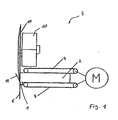
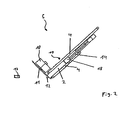
- FIGS. 1 . 2 show the slicing device according to the invention.
- FIGS. 1 and 2 show a slicing machine according to the invention.
- the slicing machine 5 has a knife 11 which cuts a food bar 2 into food slices 12.
- the knife 11 rotates about a cutter head 10.
- the sliced food slices 12 are configured into portions on a tray table (not shown) and then packaged.
- the person skilled in the art recognizes that several food bars can be cut open at the same time.
- the food bars 2 are transported with two conveyor belts 4 continuously or discontinuously along the product path in the direction of the cutting plane 6, which is defined by the blade 11 and the cutter bar 1.
- the knife 11 and the cutting bar 1 act together when cutting. There must always be a cutting gap between the knife 11 and the cutter bar 1 to prevent the knife from touching the cutter bar.
- the slice thickness results from the feed distance of the food bar between two cuts. At a constant knife speed, the regulation of the slice thickness takes place via the feed speed of the food bar.
- the conveyor belts 4 are open on the inlet side.
- for portioning must be performed at Hochadosslicern blank cuts in which the knife rotates without getting into engagement with the product. This preferably takes place in that the knife 11 is moved away from the cutting plane 6 and away from the product 2. As soon as a sufficient number of idle cuts have been carried out, the knife is moved back in the direction of the cutting bar 1. In particular FIG. 2 can be removed, the food bar is brought at its rear end 17 with a gripper 18 in contact.
- a product sensor 13, here a camera illustrated the function will be explained below.
- the device 5 has at least one vibration sensor (not shown) and preferably at least one product sensor 13, which determines at least one parameter of the food bar.
- the signal of at least the vibration sensor is used to monitor and / or adjust the device or the slicing process.
- the vibration sensor is either placed directly on the device and thus absorbs its vibrations directly and / or it is placed in the vicinity and absorbs vibrations of the air, which is excited by the device.
- the vibration sensor may therefore be, for example, a piezoelectric sensor or a microphone.
- the vibration sensor measures the frequency and the amplitude of the vibrations occurring.
- At least one parameter is determined with the product sensor 13.
- the product sensor 13 is a camera that can pick up and process waves of light visible to the human eye, ultraviolet radiation and / or infrared radiation. However, it will be understood by those skilled in the art that in certain applications it may also be useful to filter the wavelength of the observed light.
- this camera can be used to determine what kind of food product it is and / or what temperature it has.
- the sensor may also be a sensor that absorbs mechanical properties of the product.
- the sensor can be placed in the entrance, in the slicing area and downstream of the knife.
- the camera 13 is arranged to measure the knife and can determine, for example, the temperature in the core of the food bar.
- the camera may be directed to the food bar 2 and / or to the cut food slices 12.
- the signal of the vibration sensor and optionally after the signal of the product sensor will pass on to an evaluation that evaluates their signal. For example, an evaluation can be made by comparing the measured frequencies and amplitudes of the oscillations with stored values in order to determine changes. As a result, wear of parts, such as a warehouse and other moving parts can be determined.
- the vibration sensor is used to adjust the cutting gap.
- the cutting gap is the gap between the knife 11 and a cutting bar 1.
- the size of this gap is changed
- the cutting gap should be as small as possible, the knife, the cutting bar, during its rotation , not touched.
- the blade 11 rotating With the blade 11 rotating, the knife is now moved towards the cutting bar until it almost touches, which changes the vibrations that the sensor measures.
- the evaluation unit then knows that the cutting gap is very small.
- the gap is then increased again by a predetermined amount by the knife is moved away from the cutting bar. This adjustment of the cutting gap is preferably carried out under operating conditions at the selected cutting power (rated speed).
- the blade Preferably, it takes place after the blade has been moved away from the cutting bar 1 and back to generate a blank cut.
- the height of the blade's rotational speed, the effects of temperature, the type of food to be sliced, and / or wear alter the shape of the blade and therefore the size of the cutting gap during slicing.
- With the signal of the vibration sensor it is possible to check this cutting gap during the slicing of a food and optionally reset and repeat this setting as often as required without interrupting the cutting process or the speed of the blade must be reduced.
- the degree of blunting of the blade is determined with the vibration sensors.
- the vibration behavior of the slicer and / or the noise during cutting of the food products changes.
- the evaluation device can determine how sharp the knife is still and what life it still has before it must be replaced and thereby preferably create a proactive blade switching strategy. This reduces the downtime during replacement.
- the setting of at least one machine parameter takes place as a function of the signal of the product sensor 13.
- the product sensor determines the type of product and / or its temperature. Based on this measurement, for example, the rotational speed of the blade 11, the feed speed of the food bar 2, the cutting gap, the movement of the tray table and / or the XY orientation of the cutting head 10 are set.
- the measurement and the adjustment preferably take place automatically, so that operating errors are at least reduced. For example, with frozen products, the speed of the blade can be reduced to prevent the cut-off products from having an undesirable trajectory.
Landscapes
- Engineering & Computer Science (AREA)
- Forests & Forestry (AREA)
- Mechanical Engineering (AREA)
- Life Sciences & Earth Sciences (AREA)
- Computer Vision & Pattern Recognition (AREA)
- Processing Of Meat And Fish (AREA)
- Control And Other Processes For Unpacking Of Materials (AREA)
- Food-Manufacturing Devices (AREA)
- Formation And Processing Of Food Products (AREA)
- Mechanical Treatment Of Semiconductor (AREA)
- Meat, Egg Or Seafood Products (AREA)
- Dairy Products (AREA)
- Details Of Cutting Devices (AREA)
- Apparatuses For Bulk Treatment Of Fruits And Vegetables And Apparatuses For Preparing Feeds (AREA)
- Confectionery (AREA)
- Coloring Foods And Improving Nutritive Qualities (AREA)
- General Preparation And Processing Of Foods (AREA)
- Preparation Of Fruits And Vegetables (AREA)
Description
- Die vorliegende Erfindung betrifft ein Verfahren gemäss dem Oberbegriff von Patentanspruch 1.
- Verfahren, sind von Hochleistungsaufschneidemaschinen bekannt, wie sie beispielsweise in der
DE 100 01 338 , derEP 0 107 056 , derEP 0 867 263 sowie derGB 2 386 317 DE 10 2004 033568 A1 offenbart ein Verfahren gemäss Oberbegriff von Anspruch 1. - Es war deshalb die Aufgabe der vorliegenden Erfindung ein Verfahren zur Verfügung zu stellen, die die Nachteile des Standes der Technik nicht aufweist.
- Gelöst wird die Aufgabe mit Verfahren zum Aufschneiden eines Lebensmittelriegels gemäß Patentanspruch 1.
- Bei dem erfindungsgemäßen Verfahren werden stangenförmige oder anders geformte Lebensmittel, beispielsweise Wurst, Käse, Schinken oder dergleichen mit einer sehr hohen Schneidleistung in Scheiben geschnitten. Dabei wird beispielsweise die Lebensmittelstange mittels eines geregelten Antriebs durch eine ortsfeste Schneidebene, in der der Schnitt durch ein schnell bewegtes, in der Regel rotierendes Messer erfolgt, transportiert. Die Scheibenstärke ergibt sich aus der Vorschubstrecke des Lebensmittelriegels zwischen zwei Schnitten. Demnach erfolgt bei einer konstanten Messergeschwindigkeit die Regelung der Scheibenstärke über die Vorschubgeschwindigkeit des Lebensmittelriegels. Die geschnittenen Scheiben werden in der Regel mit konstanter Scheibenzahl zu Portionen zusammengefasst und verpackt. Für die Portionierung wird vorzugsweise das Messer aus der Schneidebene heraus bewegt und/oder das aufzuschneidende Lebensmittel zurückgezogen.
- Weiterhin erfindungsgemäß wird der Vorrichtung mindestens ein Schwingungssensor und vorzugsweise mindestens ein Produktsensor, der mindestens einen Parameter des Lebensmittelriegels ermittelt, zugeordnet, dessen Signal zur Überwachung und/oder Einstellung der Vorrichtung oder des Aufschneidevorgangs verwendet wird.
- Der Schwingungssensor wird entweder direkt an der Vorrichtung angeordnet und nimmt somit deren Schwingungen direkt auf und/oder er wird in der Nähe angeordnet und nimmt Schwingungen der Luft auf, die von der Vorrichtung angeregt wird. Bei dem Schwingungssensor kann es sich demnach beispielsweise um einen Piezosensor oder um ein Mikrophon handeln.
- Vorzugsweise wird mit einem Produktsensor mindestens ein Parameter ermittelt. Bei dem Produktsensor kann es sich um eine Kamera handeln, die Wellen des für das menschliche Auge sichtbaren Lichtes, ultraviolette Strahlung und/oder Infrarotstrahlung aufnehmen -kann. Mit dieser Kamera kann zum einen festgestellt werden um was für ein Lebensmittelprodukt es sich handelt und/oder zum anderen welche Temperatur es aufweist. Bei dem Sensor kann es sich aber auch um einen einfachen Temperatursensor handeln. Weiterhin kann es sich bei dem Sensor um einen Sensor handeln, der mechanische Eigenschaften des Produktes aufnimmt, Der Sensor kann im Eingangs-, im Aufschneidebereich und stromabwärts des Messers angeordnet werden. Eine Messung stromabwärts des Messers hat den Vorteil, dass auch Werte, wie beispielsweise die Temperatur oder mechanische Werte im Kern des aufzuschneidenden Produktes ermittelt werden können.
- Das Signal des Schwingungssensors und/oder des Produktsensors wird an eine Auswerteeinheit weitergeben, das deren Signal auswertet.
- Beispielsweise kann dieses Signal zur Ermittlung des Verschleißes von Teilen, wie beispielsweise einem Lager und sonstigen bewegten Teilen herangezogen werden. Basierend auf dieser Analyse kann ein proaktives Servicekonzept erstellt werden, bei dem beispielsweise ein möglichst günstiger Wartungstermin festgelegt und/oder die benötigten Teile online bestellt werden.
- Erfindungsgemäß wird der Schwingungssensor zur Einstellung des Schneidspaltes herangezogen. Der Schneidspalt ist der Spalt zwischen dem Messer und einer Schneidleiste. Durch Verstellung des Messers kann die Größe dieses Spaltes verändert werden. Prinzipiell sollte, für ein optimales Schneidergebnis, der Schneidspalt so klein wie möglich sein, wobei das Messer die Schneidleiste, bei dessen Rotation, nicht berühren sollte. Das Messer wird nun solange auf die Schneidleiste zubewegt, bis sie sich fast berühren, wodurch sich die Schwingungen, die der Sensor misst verändern. Die Auswerteeinheit weiß dann, dass der Schneidspalt sehr klein ist. Vorzugsweise wird der Spalt dann wieder um ein vorgegebenes Maß vergrößert werden. Diese Einstellung des Schneidspalts wird vorzugsweise unter Betriebsbedingungen, bei der gewählten Schneidleistung durchgeführt. Vorzugsweise erfolgt sie nach dem das Messer zur Erzeugung eines Leerschnitts von der Schneidleiste weg- und wieder zurückbewegt worden ist. Durch die Höhe der Drehzahl des Messers, durch Temperatureinflüsse, durch die Art des aufzuschneidenden Lebensmittels und/oder durch Verschleiß verändert sich die Form des Messers und damit die Größe des Schneidspaltes während des Aufschneidens. Mit dem Signal des Schwingungssensors ist es möglich diesen Schneidspalt während des Aufschneidens eines Lebensmittels zu überprüfen und gegebenenfalls neu einzustellen und diese Einstellung beliebig oft zu wiederholen, ohne dass der Schneidvorgang unterbrochen werden muss.
- Weiterhin bevorzugt wird mit den Schwingungssensoren der Grad der Abstumpfung des Messers ermittelt. Je nach Schärfegrad des Messers ändert sich das Schwingungsverhalten der Aufschneidevorrichtung und/oder die Geräuschentwicklung beim Schneiden der Lebensmittelprodukte. Beispielsweise durch einen Vergleich mit hinterlegten Schwingungsprofilen kann die Auswertevorrichtung ermitteln, wie scharf das Messer noch ist und welche Standzeit es noch hat, bevor es ausgewechselt werden muss und dadurch vorzugsweise eine proaktive Messerwechselstrategie erstellen. Dadurch wird die Standzeit während des Auswechselns reduziert.
- In einer weiteren bevorzugten Ausführungsform des erfindungsgemäßen Verfahrens erfolgt die Einstellung mindestens eines Maschinenparameters in Abhängigkeit von dem Signal des Produktsensors. Beispielsweise ermittelt der Produktsensor die Art des Produktes und/oder dessen Temperatur. Basierend auf diesen Messungen wird beispielsweise die Drehzahl des Messers, die Vorschubgeschwindigkeit des Lebensmittelriegels, der Schneidspalt, die Bewegung des Ablagetischs, die Axialbewegung des Messers oder des Rotors zur Erzeugung eines Leerschnitts, die Produktlage quer zur Vorschubrichtung und/oder die X-Y-Ausrichtung des Schneidkopfes eingestellt. Die Messung und die Einstellung erfolgen vorzugsweise automatisch, so dass Bedienfehler zumindest reduziert werden. Beispielsweise kann bei gefrorenen Produkten die Drehzahl des Messers reduziert werden, um zu verhindern, dass die abgeschnittenen Produkte eine unerwünschte Flugbahn haben.
- Die abgeschnittenen Lebensmittelscheiben fallen in der Regel auf einen Ablagetisch, auf dem entsprechende Portionen gebildet werden. Durch bestimmte Bewegungen dieses Ablagetisches können unterschiedlich ausgebildete Portionen, beispielsweise geschindelte Portionen erzeugt werden. Die Bewegung dieses Tisches kann nun abhängig von dem Signal eines Sensors gesteuert werden, da sich der Ablageort in Abhängigkeit von beispielsweise Produktparametem wie Temperatur ändert.
- Vorzugsweise werden mehrere Lebensmittelriegel gleichzeitig aufgeschnitten.
- Im Folgenden wird die Erfindung anhang der Figuren erläutert. Diese Erläuterungen sind lediglich beispielhaft und schränken den allgemeinen Erfindungsgedanken nicht ein. Die Erläuterungen gelten für alle Erfindungsgegenstände gleichermaßen.
-
Figuren 1 ,2 zeigen die erfindungsgemäße Aufschneidevorrichtung. -
Figuren 1 und2 zeigen eine erfindungsgemäße Aufschneidemaschine. Die Aufschneidemaschine 5 weist ein Messer 11 auf, das einen Lebensmittelriegel 2 in Lebensmittelscheiben 12 schneidet. Das Messer 11 rotiert um einen Messerkopf 10. In der Regel werden die aufgeschnittenen Lebensmittelscheiben 12 auf einem Ablagetisch (nicht dargestellt) zu Portionen konfiguriert und danach verpackt. Der Fachmann erkennt, dass mehrere Lebensmittelriegel gleichzeitig aufgeschnitten werden können. Die Lebensmittelriegel 2 werden mit zwei Förderbändern 4 kontinuierlich oder diskontinuierlich entlang der Produkttrasse in Richtung der Schneidebene 6, die durch das Messers 11 und die Schneidleiste 1 definiert wird, transportiert. Das Messer 11 und die Schneidleiste 1 wirken beim Schneiden zusammen. Zwischen dem Messer 11 und der Schneidleiste 1 muss sich immer ein Schneidspalt befinden, um zu verhindern, dass das Messer die Schneidleiste berührt. Dieser Schneidspalt sollte jedoch möglichst klein sein, um ein "Abreißen" der jeweiligen Scheibe und oder "Bartbidung" zu verhindern. Die Scheibenstärke ergibt sich aus der Vorschubstrecke des Lebensmittelriegels zwischen zwei Schnitten. Bei konstanter Messergeschwindigkeit erfolgt die Regelung der Scheibenstärke über die Vorschubgeschwindigkeit des Lebensmittelriegels. Die Förderbänder 4 sind einlaufseitig offen. Insbesondere zur Portionsbildung müssen bei Hochleistungsslicern Leerschnitte durchgeführt werden, bei denen sich das Messer dreht ohne in Eingriff mit dem Produkt zu gelangen. Dies erfolgt bevorzugt dadurch, dass das Messer 11 aus der Schneidebene 6 und von dem Produkt 2 wegbewegt wird. Sobald hinreichend viele Leerschnitte durchgeführt worden sind, wird das Messer in Richtung der Schneidleiste 1 zurückbewegt. Wie insbesondereFigur 2 entnommen werden kann, wird der Lebensmittelriegel an seinem hinteren Ende 17 mit einem Greifer 18 in Kontakt gebracht. Weiterhin ist inFigur 2 ein Produktsensor 13, hier eine Kamera, dargestellt der Funktion weiter unten erläutert wird. - Die erfindungsgemäße Vorrichtung 5 weist mindestens einen Schwingungssensor (nicht dargestellt) und vorzugsweise mindestens ein Produktsensor 13, der mindestens einen Parameter des Lebensmittelriegels ermittelt, auf. Das Signal mindestens des Schwingungssensors wird zur Überwachung und/oder Einstellung der Vorrichtung oder des Aufschneidevorgangs verwendet.
- Der Schwingungssensor wird entweder direkt an der Vorrichtung angeordnet und nimmt somit deren Schwingungen direkt auf und/oder er wird in der Nähe angeordnet und nimmt Schwingungen der Luft auf, die von der Vorrichtung angeregt wird. Bei dem Schwingungssensor kann es sich demnach beispielsweise um einen Piezosensor oder um ein Mikrophon.
- Der Schwingungssensor misst die Frequenz und die Amplitude der auftretenden Schwingungen.
- Mit dem Produktsensor 13 wird mindestens ein Parameter ermittelt. In dem vorliegenden Fall handelt es sich um eine Kamera, die Wellen des für das menschliche Auge sichtbaren Lichtes, ultraviolette Strahlung und/oder Infrarotstrahlung aufnehmen und verarbeiten kann. Der Fachmann versteht, dass es bei bestimmten Anwendungen jedoch auch sinnvoll sein kann, die Wellenlänge des beobachteten Lichtes zu filtern. Mit dieser Kamera kann zum einen festgestellt werden, um was für ein Lebensmittelprodukt es sich handelt und/oder zum anderen welche Temperatur es aufweist. Bei dem Sensor kann es sich auch um einen Sensor handeln, der mechanische Eigenschaften des Produktes aufnimmt. Der Sensor kann im Eingangs-, im Aufschneidebereich und stromabwärts des Messers angeordnet werden. Bei der Darstellung gemäß
Figur 2 ist die Kamera 13 Messung des Messers angeordnet und kann beispielsweise die Temperatur im Kern des Lebensmittelriegels ermitteln. Die Kamera kann auf den Lebensmittelriegel 2 und/oder auf die abgeschnittenen Lebensmittelscheiben 12 gerichtet sein. - Das Signal des Schwingungssensors und gegebenenfalls nach das Signal des Produktsensors wird an eine Auswerteeinheit weitergeben, dass deren Signal auswertet. Eine Auswertung kann beispielsweise durch einen Vergleich der gemessenen Frequenzen und Amplituden der Schwingungen mit hinterlegten Werten erfolgen, um Veränderungen festzustellen. Dadurch lässt sich Verschleißes von Teilen, wie beispielsweise einem Lager und sonstigen bewegten Teilen ermitteln.
- Weiterhin wird der Schwingungssensor zur Einstellung des Schneidspaltes herangezogen. Der Schneidspalt ist der Spalt zwischen dem Messer 11 und einer Schneidleiste 1. Durch Verstellung des Messers 11 wird die Größe dieses Spaltes verändert Prinzipiell sollte, für ein optimales Schneidergebnis, der Schneidspalt so klein wie möglich sein, wobei das Messer die Schneidleiste, bei dessen Rotation, nicht berührt. Das Messer wird nun, bei sich drehendem Messer 11, solange auf die Schneidleiste zubewegt bis sie sich fast berühren, wodurch sich die Schwingungen, die der Sensor misst, verändern. Die Auswerteeinheit weiß dann, dass der Schneidspalt sehr klein ist. Vorzugsweise wird der Spalt dann wieder um ein vorgegebenes Maß vergrößert, indem das Messer von der Schneidleiste weg bewegt wird. Diese Einstellung des Schneidspalts wird vorzugsweise unter Betriebsbedingungen, bei der gewählten Schneidleistung (Nenndrehzahl) durchgeführt. Vorzugsweise erfolgt sie nachdem das Messer zur Erzeugung eines Leerschnitts von der Schneidleiste 1 weg und wieder zurückbewegt worden ist. Durch die Höhe der Drehzahl des Messers, durch Temperatureinflüsse, durch die Art des aufzuschneidenden Lebensmittels und/oder durch Verschleiß verändert sich die Form des Messers und damit die Größe des Schneidspaltes während des Aufschneidens. Mit dem Signal des Schwingungssensors ist es möglich diesen Schneidspalt während des Aufschneidens eines Lebensmittels zu überprüfen und gegebenenfalls neu einzustellen und diese Einstellung beliebig oft zu wiederholen, ohne dass der Schneidvorgang unterbrochen oder die Drehzahl des Messers reduziert werden muss.
- Weiterhin bevorzugt wird mit den Schwingungssensoren der Grad der Abstumpfung des Messers ermittelt. Je nach Schärfegrad des Messers ändert sich das Schwingungsverhalten der Aufschneidevorrichtung und/oder die Geräuschentwicklung beim Schneiden der Lebensmittelprodukte. Beispielsweise durch einen Vergleich mit hinterlegten Schwingungsprofilen kann die Auswertevorrichtung ermitteln, wie scharf das Messer noch ist und welche Standzeit es noch hat, bevor es ausgewechselt werden muss und dadurch vorzugsweise eine proaktive Messerwechselstrategie erstellen. Dadurch wird die Stillstandszeit während des Auswechselns reduziert.
- Weiterhin erfolgt die Einstellung mindestens eines Maschinenparameters in Abhängigkeit von dem Signal des Produktsensors 13 Beispielsweise ermittelt der Produktsensor die Art des Produktes und/oder dessen Temperatur. Basierend auf dieser Messung wird beispielsweise die Drehzahl des Messers 11, die Vorschubgeschwindigkeit des Lebensmittelriegels 2, der Schneidspalt, die Bewegung des Ablagetischs und/oder die XY-Ausrichtung des Schneidkopfes 10 eingestellt. Die Messung und die Einstellung erfolgen vorzugsweise automatisch, so dass Bedienfehler zumindest reduziert werden. Beispielsweise kann bei gefrorenen Produkten die Drehzahl des Messers reduziert werden, um zu verhindern, dass die abgeschnittenen Produkte eine unerwünschte Flugbahn haben.
-
- 1 Schneidkante, Schneidleiste
- 2 Lebensmittelriegel
- 4 Transportmittel, Traktionsband
- 5 Aufschneidevorrichtung
- 6 Schneidebene
- 10 Schneidkopf
- 11 Messer
- 12 Lebensmittelscheibe
- 13 Produktsensor
- 14 Produkttrasse
- 17 dem Messer abgewandtes Ende des Produktriegels
- 18 Greifer
Claims (7)
- Verfahren zum Aufschneiden eines Lebensmittelriegels (2) mit einer Vorrichtung, die ein rotierendes Messer (11) und mindestens ein Transportmittel (4, 18) aufweist, bei dem der Lebensmittelriegel in eine Vorschubtrasse (14) eingelegt und von dem Transportmittel (4, 18) in Richtung des Messers (11) transportiert und dabei aufgeschnitten wird, wobei der Vorrichtung mindestens ein Schwingungssensor zugeordnet wird, dessen Signal zur Überwachung und/oder Einstellung der Vorrichtung verwendet wird, wobei die Vorrichtung eine Schneidleiste (1) aufweist und die Einstellung des Schneidspalts zwischen dem Messer (11) und der Schneidleiste (1) unter Zuhilfenahme des Schwingungssensors durchgeführt wird, dadurch gekennzeichnet, dass zur Einstellung des Schneidspaltes das Messer in Richtung der Schneidleiste bewegt wird, bis sie sich fast berühren, wodurch sich die Schwingungen, die der Schwingungssensor misst verändern und dass zur Portionsbildung mindestens ein Leerschnitt ausgeführt wird, wofür das Messer aus der Schneidebene herausbewegt wird.
- Verfahren nach Anspruch 1, dadurch gekennzeichnet, dass die Einstellung des Schneidspalts bei der jeweiligen Schneiddrehzahl durchgeführt wird.
- Verfahren nach einem der voranstehenden Ansprüche, dadurch gekennzeichnet, dass die Einstellung des Schneidspalts nach einem Leerschnitt erfolgt.
- Verfahren nach einem der voranstehenden Ansprüche, dadurch gekennzeichnet, dass mehrere Lebensmittelriegel gleichzeitig aufgeschnitten werden.
- Verfahren nach einem der voranstehenden Ansprüche, dadurch gekennzeichnet, dass ein Produktsensor vorgesehen wird und dass die Einstellung mindestens eines Maschinenparameters in Abhängigkeit von dem Signal des Produktsensors erfolgt.
- Verfahren nach Anspruch 5, dadurch gekennzeichnet, dass in Abhängigkeit von der Temperatur des Produktes die Drehzahl des Messers eingestellt wird.
- Verfahren nach einem der Ansprüche 5 oder 6, dadurch gekennzeichnet, dass die Bewegung eines Ablagetischs abhängig vom Signal des Produktsensors geregelt wird, der die Art des Produktes und/oder dessen Temperatur ermittelt.
Priority Applications (7)
| Application Number | Priority Date | Filing Date | Title |
|---|---|---|---|
| PL09753594T PL2279064T5 (pl) | 2008-04-18 | 2009-04-17 | Sposób krajania na plastry artykułów spożywczych |
| PL11008345T PL2425940T3 (pl) | 2008-04-18 | 2009-04-17 | Nóż do krojenia artykułów spożywczych |
| EP12001764.5A EP2471635B1 (de) | 2008-04-18 | 2009-04-17 | Verfahren zum Aufschneiden von Lebensmitteln |
| DK12001764.5T DK2471635T3 (en) | 2008-04-18 | 2009-04-17 | A method for the slicing of food products |
| PL12001764T PL2471635T3 (pl) | 2008-04-18 | 2009-04-17 | Sposób nacinania artykułów spożywczych |
| EP20110008345 EP2425940B1 (de) | 2008-04-18 | 2009-04-17 | Messer zum Aufschneiden von Lebensmitteln |
| EP12174769.5A EP2508310B1 (de) | 2008-04-18 | 2009-04-17 | Verfahren zum Aufschneiden von Lebensmitteln |
Applications Claiming Priority (2)
| Application Number | Priority Date | Filing Date | Title |
|---|---|---|---|
| DE200810019776 DE102008019776A1 (de) | 2008-04-18 | 2008-04-18 | Verfahren, Vorrichtung sowie Messer zum Aufschneiden von Lebensmitteln |
| PCT/EP2009/002828 WO2009143939A2 (de) | 2008-04-18 | 2009-04-17 | Verfahren, vorrichtung sowie messer zum aufschneiden von lebensmitteln |
Related Child Applications (7)
| Application Number | Title | Priority Date | Filing Date |
|---|---|---|---|
| EP12001764.5A Division EP2471635B1 (de) | 2008-04-18 | 2009-04-17 | Verfahren zum Aufschneiden von Lebensmitteln |
| EP12001764.5A Division-Into EP2471635B1 (de) | 2008-04-18 | 2009-04-17 | Verfahren zum Aufschneiden von Lebensmitteln |
| EP12174769.5A Division EP2508310B1 (de) | 2008-04-18 | 2009-04-17 | Verfahren zum Aufschneiden von Lebensmitteln |
| EP12174769.5A Division-Into EP2508310B1 (de) | 2008-04-18 | 2009-04-17 | Verfahren zum Aufschneiden von Lebensmitteln |
| EP20110008345 Division EP2425940B1 (de) | 2008-04-18 | 2009-04-17 | Messer zum Aufschneiden von Lebensmitteln |
| EP20110008345 Division-Into EP2425940B1 (de) | 2008-04-18 | 2009-04-17 | Messer zum Aufschneiden von Lebensmitteln |
| EP11008345.8 Division-Into | 2011-10-17 |
Publications (3)
| Publication Number | Publication Date |
|---|---|
| EP2279064A2 EP2279064A2 (de) | 2011-02-02 |
| EP2279064B1 EP2279064B1 (de) | 2012-04-11 |
| EP2279064B2 true EP2279064B2 (de) | 2015-04-29 |
Family
ID=40887075
Family Applications (4)
| Application Number | Title | Priority Date | Filing Date |
|---|---|---|---|
| EP12174769.5A Active EP2508310B1 (de) | 2008-04-18 | 2009-04-17 | Verfahren zum Aufschneiden von Lebensmitteln |
| EP12001764.5A Active EP2471635B1 (de) | 2008-04-18 | 2009-04-17 | Verfahren zum Aufschneiden von Lebensmitteln |
| EP20110008345 Active EP2425940B1 (de) | 2008-04-18 | 2009-04-17 | Messer zum Aufschneiden von Lebensmitteln |
| EP09753594.2A Active EP2279064B2 (de) | 2008-04-18 | 2009-04-17 | Verfahren zum aufschneiden von lebensmitteln |
Family Applications Before (3)
| Application Number | Title | Priority Date | Filing Date |
|---|---|---|---|
| EP12174769.5A Active EP2508310B1 (de) | 2008-04-18 | 2009-04-17 | Verfahren zum Aufschneiden von Lebensmitteln |
| EP12001764.5A Active EP2471635B1 (de) | 2008-04-18 | 2009-04-17 | Verfahren zum Aufschneiden von Lebensmitteln |
| EP20110008345 Active EP2425940B1 (de) | 2008-04-18 | 2009-04-17 | Messer zum Aufschneiden von Lebensmitteln |
Country Status (10)
| Country | Link |
|---|---|
| US (2) | US20110296964A1 (de) |
| EP (4) | EP2508310B1 (de) |
| AT (1) | ATE552948T1 (de) |
| DE (1) | DE102008019776A1 (de) |
| DK (2) | DK2471635T3 (de) |
| ES (4) | ES2385777T5 (de) |
| HU (2) | HUE027473T2 (de) |
| PL (4) | PL2471635T3 (de) |
| PT (1) | PT2508310T (de) |
| WO (1) | WO2009143939A2 (de) |
Families Citing this family (44)
| Publication number | Priority date | Publication date | Assignee | Title |
|---|---|---|---|---|
| DE102009011860A1 (de) † | 2009-03-05 | 2010-09-09 | Weber Maschinenbau Gmbh Breidenbach | Vorrichtung und Verfahren zur Einstellung eines Schneidspalts an einer Schneidvorrichtung |
| US20110179922A1 (en) * | 2009-12-21 | 2011-07-28 | Weber Maschinenbau Gmbh Breidenbach | Apparatus for slicing food products |
| DE102009059856A1 (de) * | 2009-12-21 | 2011-06-22 | Weber Maschinenbau GmbH Breidenbach, 35236 | Vorrichtung zum Aufschneiden von Lebensmittelprodukten |
| DE102010012709A1 (de) | 2010-03-25 | 2011-09-29 | Weber Maschinenbau Gmbh Breidenbach | Vorrichtung und Verfahren zum Aufschneiden von Lebensmittelprodukten |
| DE102010019248A1 (de) * | 2010-05-03 | 2011-11-03 | CFS Bühl GmbH | Verfahren zum Betrieb einer Aufschneidevorrichtung mit mehrspurigen Antrieben |
| DE102010034360A1 (de) * | 2010-06-11 | 2011-12-15 | CFS Bühl GmbH | Verfahren und Vorrichtung zur Schneidspalteinstellung einer Aufschneidevorrichtung |
| WO2012011494A1 (ja) * | 2010-07-20 | 2012-01-26 | 株式会社日清製粉グループ本社 | 食品のサクミ測定法 |
| DE102010045823A1 (de) * | 2010-09-20 | 2012-03-22 | Rudi Siller | Scheibenschneidmaschine für strangförmige Lebensmittel |
| DE102011109067A1 (de) * | 2011-08-01 | 2013-02-07 | Weber Maschinenbau Gmbh Breidenbach | Vorrichtung und Verfahren zum Aufschneiden von Lebensmittelprodukten |
| DE102011114180A1 (de) * | 2011-09-22 | 2013-03-28 | Weber Maschinenbau Gmbh Breidenbach | Vorrichtung zum Aufschneiden von einem Lebensmittelprodukt und Vorrichtung mit einem Roboter |
| DE102011119719A1 (de) * | 2011-11-30 | 2013-06-06 | GEA CFS Bühl GmbH | Verfahren zum Aufschneiden eines Lebensmittelriegels unter Verwendung eines Schwingungssensors |
| DE102012007013A1 (de) | 2012-04-05 | 2013-10-10 | Weber Maschinenbau Gmbh Breidenbach | Schnittstelle zwischen Messer und Messeraufnahme |
| JP5836194B2 (ja) * | 2012-05-21 | 2015-12-24 | ユニ・チャーム株式会社 | トウを含む複数の繊維を有する連続ウエブの切断装置、及び切断方法 |
| JP5656915B2 (ja) * | 2012-05-21 | 2015-01-21 | ユニ・チャーム株式会社 | トウを含む複数の繊維を有するウエブ部材の切断装置、及び切断方法 |
| DE102012214741A1 (de) | 2012-08-20 | 2014-02-20 | Textor Maschinenbau GmbH | Vorrichtung und Verfahren zum Aufschneiden von Lebensmittelprodukten |
| DE102012218853A1 (de) | 2012-10-16 | 2014-04-17 | Textor Maschinenbau GmbH | Aufschneidevorrichtung |
| DE102012024947A1 (de) * | 2012-12-19 | 2014-06-26 | Weber Maschinenbau Gmbh Breidenbach | Verfahren und Lebensmittelaufschneidevorrichtung mit Schneidkraftbestimmung |
| DE102012224195A1 (de) | 2012-12-21 | 2014-06-26 | Textor Maschinenbau GmbH | Verfahren und Vorrichtung zum Einstellen eines Schneidspalts |
| WO2014128145A1 (en) * | 2013-02-19 | 2014-08-28 | Gea Food Solutions Germany Gmbh | Slicer with a vibrating knife |
| DE102013214663A1 (de) | 2013-07-26 | 2015-01-29 | Weber Maschinenbau Gmbh Breidenbach | Vorrichtung zum Aufschneiden von Lebensmittelprodukten |
| DE102013218158A1 (de) * | 2013-09-11 | 2015-03-12 | Weber Maschinenbau Gmbh Breidenbach | Verfahren zum Ermitteln einer axialen Referenzstellung eines Schneidmessers |
| US20160250767A1 (en) * | 2013-10-30 | 2016-09-01 | Gea Food Solutions Germany Gmbh | Slicer blade made of plastics |
| WO2015154871A1 (de) * | 2014-04-09 | 2015-10-15 | Gea Food Solutions Germany Gmbh | Aufschneidevorrichtung mit rapid-manufacturing-teilen |
| CH710403B1 (de) * | 2014-11-24 | 2019-06-14 | Multivac Haggenmueller Kg | Aufschnittschneidmaschine. |
| EP3224005B1 (de) * | 2014-11-25 | 2019-08-07 | GEA Food Solutions Germany GmbH | Hochleistungsslicer mit stoffschlüssigem greifer |
| DE102015003632A1 (de) | 2015-03-19 | 2016-09-22 | Weber Maschinenbau Gmbh Breidenbach | Lebensmittelaufschneidevorrichtung mit Vorkühlungseinrichtung |
| WO2016202508A1 (de) * | 2015-06-15 | 2016-12-22 | Gea Food Solutions Germany Gmbh | Verfahren zum aufschneiden eines lebensmittelriegels unter verwendung eines temperatursensors |
| DE102016101753A1 (de) * | 2016-02-01 | 2017-08-03 | Textor Maschinenbau GmbH | Aufschneiden von lebensmittelprodukten |
| US10160602B2 (en) | 2017-01-04 | 2018-12-25 | Provisur Technologies, Inc. | Configurable in-feed for a food processing machine |
| US10639798B2 (en) | 2017-01-04 | 2020-05-05 | Provisur Technologies, Inc. | Gripper actuating system in a food processing machine |
| US9950869B1 (en) | 2017-01-04 | 2018-04-24 | Provisur Technologies, Inc. | Belt tensioner in a food processing machine |
| US10836065B2 (en) | 2017-01-04 | 2020-11-17 | Provisur Technologies, Inc. | Exposed load cell in a food processing machine |
| DK3495104T3 (da) * | 2017-12-05 | 2020-09-28 | Marel Meat Bv | Et fødevareseparatorapparat |
| CN108406887A (zh) * | 2018-03-22 | 2018-08-17 | 山东农业大学 | 一种基于图像视觉技术的条状果蔬加工装置及加工方法 |
| DE112019001833A5 (de) | 2018-05-08 | 2020-12-24 | Gea Food Solutions Germany Gmbh | Asymmetrische montage- und stabilitätsoptimierte Vorrichtung zum Aufschneiden von Lebensmittelriegeln |
| US11647699B2 (en) * | 2019-10-15 | 2023-05-16 | Dinotooth Cutter, LLC | Tree saw |
| CN115362416A (zh) * | 2020-04-03 | 2022-11-18 | 利乐拉瓦尔集团及财务有限公司 | 用于处理来自食品处理线的输入数据以确定用于采样的触发数据的系统及其方法 |
| US20230126530A1 (en) | 2021-10-25 | 2023-04-27 | Provisur Technologies, Inc. | Food product gripping assembly for a food product slicing apparatus |
| WO2023135306A1 (de) * | 2022-01-17 | 2023-07-20 | Gea Food Solutions Germany Gmbh | Vorrichtung zum schneiden von lebensmitteln in scheiben |
| WO2023212638A2 (en) | 2022-04-29 | 2023-11-02 | Provisur Technologies, Inc. | Food product slicing apparatus having a product gate assembly and method of operating same |
| DE102022113920A1 (de) | 2022-06-02 | 2023-12-07 | Multivac Sepp Haggenmüller Se & Co. Kg | Messer, Schneideinheit sowie Aufschneide-Maschine |
| US20250332751A1 (en) * | 2023-07-11 | 2025-10-30 | Provisur Technologies, Inc. | Slicing blade assembly for a food product slicing apparatus |
| DE102023128255A1 (de) * | 2023-10-16 | 2025-04-17 | Multivac Sepp Haggenmüller Se & Co. Kg | Messer für eine Aufschneidemaschine und Aufschneidemaschine |
| USD1124768S1 (en) * | 2023-10-27 | 2026-05-05 | Multivac Sepp Haggenmüller Se & Co. Kg | Cutting knife |
Citations (2)
| Publication number | Priority date | Publication date | Assignee | Title |
|---|---|---|---|---|
| DE10333661A1 (de) † | 2003-07-23 | 2005-02-10 | Cfs Kempten Gmbh | Axial verschiebbares Messer |
| DE102004033568A1 (de) † | 2004-07-09 | 2006-02-09 | Cfs Kempten Gmbh | Schneidleiste |
Family Cites Families (84)
| Publication number | Priority date | Publication date | Assignee | Title |
|---|---|---|---|---|
| GB307126A (en) | 1927-03-07 | 1929-03-14 | Fiennes Thomas Lambert | Improvements in or relating to bacon slicing machines and the like |
| GB324252A (en) | 1929-02-07 | 1930-01-23 | Berkel & Parnall Mach Mfg Co | Improvements relating to slicing machines |
| US1957623A (en) * | 1931-11-21 | 1934-05-08 | Ind Patents Corp | Slicing machine |
| US1973526A (en) * | 1932-03-23 | 1934-09-11 | Ward Baking Co | Slicing apparatus and method |
| GB496562A (en) | 1937-05-31 | 1938-11-30 | Berkel & Parnall Mach Mfg Co | Improvements in last-slice holders of slicing-machines |
| US2472876A (en) * | 1944-04-21 | 1949-06-14 | Us Slicing Machine Co | Rotary disk knife |
| DE1035521B (de) | 1957-11-12 | 1958-07-31 | Faber Castell A W | Radiergummi |
| US3299925A (en) * | 1964-07-16 | 1967-01-24 | Swift & Co | Blade design |
| US3491818A (en) | 1967-04-27 | 1970-01-27 | Hobam Inc | Knife assembly for meat cutting machine |
| AT326514B (de) | 1972-08-22 | 1975-12-10 | Kuchler Fritz | Ablegeeinrichtung für eine aufschneidemaschine |
| CH565592A5 (de) * | 1972-08-31 | 1975-08-29 | Tecmed Ag | |
| DE2306822A1 (de) | 1973-02-12 | 1974-08-15 | Paul Dipl Ing Kohlhaas | Scheibenmesser, insbesondere umlaufendes scheibenmesser |
| US3921485A (en) * | 1974-06-25 | 1975-11-25 | Itt | Rotary blade assembly |
| US3969966A (en) * | 1975-06-09 | 1976-07-20 | Cashin Systems Corporation | Apparatus for slicing meat products |
| US4015494A (en) | 1975-06-24 | 1977-04-05 | Cashin Systems Corporation | Cold cut slicing system |
| US4043238A (en) * | 1976-04-21 | 1977-08-23 | Sanders Associates, Inc. | Cable cutter |
| US4379416A (en) * | 1977-06-01 | 1983-04-12 | Brain Dust Patents Establishment | Food-slicing machine and method |
| DE8007660U1 (de) | 1980-03-20 | 1984-01-26 | Dipl.-Ing. Schindler & Wagner KG, 7067 Plüderhausen | Schneidmaschine |
| DE3239178A1 (de) | 1982-10-22 | 1984-04-26 | Natec Reich, Summer GmbH & Co KG, 8999 Heimenkirch | Maschine zum schneiden von schneidgutriegeln |
| DE3412743C1 (de) | 1984-04-05 | 1985-10-10 | Alexanderwerk Ag, 5630 Remscheid | Messerkopf fuer Kutter |
| US4625782A (en) * | 1985-08-05 | 1986-12-02 | Jameson Gary O | Log splitter |
| DE3617349A1 (de) | 1986-05-23 | 1987-11-26 | Knecht Gmbh Maschbau | Messerkopf fuer fleischkutter |
| DE3935320C2 (de) | 1988-12-07 | 1996-04-25 | Walter Feuring | Messerkopf für Kuttermesser |
| EP0413845B1 (de) * | 1989-08-24 | 1993-04-28 | Carl Schenck Ag | Verfahren zur Schadensfrüherkennung an Maschinenteilen |
| US5058434A (en) * | 1990-02-27 | 1991-10-22 | Carl Schenck Ag | Process for early detection of damage to machine parts |
| US5065656A (en) * | 1990-09-21 | 1991-11-19 | Oscar Mayer Foods Corporation | Food slicing with multiple cutting surface blade |
| DE4031671C2 (de) * | 1990-10-05 | 1994-02-24 | Natec Reich Summer Gmbh Co Kg | Kreismesser zum Schneiden von Lebensmitteln, insbesondere Wurst und Käse |
| DE9107225U1 (de) | 1991-06-12 | 1991-09-19 | holac Maschinenbau GmbH, 89520 Heidenheim | Schneidemaschine für Lebensmittel |
| DE4214264C2 (de) | 1992-05-01 | 1994-06-01 | Natec Reich Summer Gmbh Co Kg | Schneidevorrichtung zum aufschneiden von lebensmittelprodukten, insbesondere wurst, schinken, speck, fleisch, kaese und dergleichen |
| US5988033A (en) * | 1992-10-29 | 1999-11-23 | Kraft Foods, Inc. | Food slicing apparatus, blade and method |
| DE4413568C5 (de) | 1994-04-19 | 2007-11-15 | Weber Maschinenbau Gmbh & Co. Kg | Verfahren und Vorrichtung zum Aufschneiden von Lebensmittelprodukten |
| DE4429046A1 (de) | 1994-08-16 | 1996-02-22 | Biforce Anstalt | Slicermesser |
| US5628237A (en) * | 1994-10-11 | 1997-05-13 | Formax, Inc. | Slicing machine for two or more food loaves |
| JPH08257982A (ja) | 1995-03-22 | 1996-10-08 | Ryowa Kk | 食品スライス機 |
| DE19518597C2 (de) * | 1995-05-20 | 1999-02-25 | Schindler & Wagner Kg | Schneidmaschine |
| DE19525742A1 (de) | 1995-07-14 | 1997-01-16 | Biforce Anstalt | Produktzuführung für eine Schneidvorrichtung |
| DE19612055A1 (de) * | 1996-03-27 | 1997-10-02 | Wabaema Gmbh | Sichelmesser |
| DE19654733C1 (de) * | 1996-12-30 | 1998-05-20 | Eberhard Dr Haack | Kuttermesser |
| AUPO530297A0 (en) * | 1997-02-26 | 1997-03-20 | Arbortech Industries Pty Limited | Cutting apparatus |
| DE19713163A1 (de) | 1997-03-27 | 1998-10-15 | Biforce Anstalt | Vorrichtung zum Aufschneiden von Lebensmittelprodukten |
| US5905440A (en) * | 1997-12-19 | 1999-05-18 | Battelle Memorial Institute | Acoustic emission severance detector and method |
| DE19801782A1 (de) | 1998-01-19 | 1999-07-22 | Alpma Alpenland Masch | Verfahren und Vorrichtung zum Transport eines Gegenstands |
| US5989116A (en) * | 1998-02-03 | 1999-11-23 | Swift & Company, Inc. | High-speed bone-in loin slicer |
| JPH11239995A (ja) | 1998-02-26 | 1999-09-07 | Watanabe Fuumakku Kk | 食品スライサ |
| DE19820058C5 (de) * | 1998-05-06 | 2010-10-21 | Dipl.-Ing. Schindler & Wagner Kg | Verfahren zum Zerteilen von Produktlaiben sowie Vorrichtung zu seiner Durchführung |
| IT1302763B1 (it) | 1998-09-07 | 2000-09-29 | Tristano Ciani | Utensile circolare per il taglio di rotoli di carta e simili |
| DE19855617C2 (de) | 1998-12-02 | 2003-07-17 | Rieter Automatik Gmbh | Granuliervorrichtung mit Schneidrotor |
| JP4127738B2 (ja) | 1999-03-31 | 2008-07-30 | プリマハム株式会社 | ハム等の食物原木スライス装置 |
| DE19917536A1 (de) | 1999-04-19 | 2000-10-26 | Dixie Union Gmbh & Co Kg | Aufschneidemaschine zum Aufschneiden von Lebensmittelriegeln |
| JP4120099B2 (ja) * | 1999-07-09 | 2008-07-16 | 日本精工株式会社 | 軸受の異常診断方法および異常診断装置 |
| DE10001338C2 (de) | 2000-01-17 | 2002-02-28 | Schindler & Wagner Gmbh & Co | Schneidmaschine für laibförmige Produkte |
| US6642421B1 (en) | 2000-04-18 | 2003-11-04 | Exxonmobil Research And Engineering Company | Method for isolating enriched source of conducting polymers precursors |
| DE10030691A1 (de) * | 2000-06-23 | 2002-01-03 | Dixie Union Gmbh & Co Kg | Schneidvorrichtung insbesondere zum Schneiden von Lebensmitteln |
| DE10108018B4 (de) * | 2001-02-19 | 2006-02-02 | Karl Dietrich Schiller | Rotationsmesser |
| DE10131701A1 (de) * | 2001-06-29 | 2003-01-16 | Biforce Anstalt Vaduz | Aufschneideverfahren und -vorrichtung |
| GB0117101D0 (en) * | 2001-07-13 | 2001-09-05 | Aew Eng Co Ltd | Slicing machine |
| DE10141713B4 (de) * | 2001-08-25 | 2004-03-11 | Oliver Haack | Messer für Schneidmaschinen |
| DE10143508A1 (de) | 2001-09-05 | 2003-03-20 | Biforce Anstalt Vaduz | Verfahren zur Schneidspalteinstellung |
| DE10146155A1 (de) | 2001-09-19 | 2003-04-10 | Weber Maschb Gmbh & Co Kg | Positionierverfahren |
| DE10148595A1 (de) | 2001-10-02 | 2003-04-10 | Weber Maschb Gmbh & Co Kg | Vorrichtung zum Aufschneiden von Lebensmittelprodukten |
| DE20120688U1 (de) | 2001-12-20 | 2002-02-28 | Siller, Rudi, 74232 Abstatt | Maschine zum Schneiden von Kotelettstangen |
| GB2386317B (en) | 2002-03-13 | 2004-02-04 | Aew Eng Co Ltd | Improvements in and relating to slicing machines |
| US6935215B2 (en) | 2002-08-14 | 2005-08-30 | Formax, Inc. | Slicing machine and conveyor system with automatic product width compensation |
| DE10316303A1 (de) | 2003-04-08 | 2004-10-21 | Cfs Germany Gmbh | Messerkopf für Fleischkutter |
| DE10327249A1 (de) * | 2003-06-17 | 2005-01-05 | Weber Maschinenbau Gmbh & Co. Kg | Schneidemaschine |
| DE502004011215D1 (de) * | 2003-07-23 | 2010-07-08 | Cfs Buehl Gmbh | Axial verschiebbares messer |
| DE10359149A1 (de) * | 2003-12-16 | 2005-07-21 | Cfs Kempten Gmbh | Schneidspalteinstellung |
| DE10353114A1 (de) * | 2003-10-15 | 2005-05-12 | Cfs Kempten Gmbh | Verfahren und Vorrichtung zum Aufschneiden von Lebensmittelriegeln |
| US20070214969A1 (en) | 2003-10-15 | 2007-09-20 | Peter Mueller | Method and Device for Slicing Food Bars |
| DE10355521A1 (de) * | 2003-11-22 | 2005-06-30 | Hauni Primary Gmbh | Vorrichtung und Verfahren zum Trennen von Tabak von einem Tabakkuchen |
| DE102004006120A1 (de) * | 2004-02-06 | 2005-08-25 | Cfs Kempten Gmbh | Aufschneidevorrichtung mit verschiebbaren Mundstücken |
| EP1715987B1 (de) * | 2004-02-13 | 2008-01-30 | CFS Kempten GmbH | Verfahren und vorrichtung zur erzeugung von portionen |
| DE102004007671A1 (de) * | 2004-02-13 | 2005-09-22 | Cfs Kempten Gmbh | Verfahren und Vorrichtung zur Erzeugung von Portionen |
| DE102004059479B4 (de) * | 2004-05-13 | 2006-04-06 | Astor Schneidwerkzeuge Gmbh | Rotationsmesser |
| DE102004032829A1 (de) | 2004-07-06 | 2006-02-09 | Claas Selbstfahrende Erntemaschinen Gmbh | Klopfsensoranordnung |
| JP4529602B2 (ja) * | 2004-09-13 | 2010-08-25 | 日本精工株式会社 | 異常診断装置及び異常診断方法 |
| DE102005010184A1 (de) | 2005-03-02 | 2006-09-07 | Cfs Kempten Gmbh | Greifer mit Anlageflächen |
| DE102006007490A1 (de) * | 2006-02-17 | 2006-08-17 | Weber Maschinenbau Gmbh & Co. Kg | Aufschneiden von Lebensmittelprodukten |
| DE102006015152A1 (de) * | 2006-03-30 | 2008-09-25 | Claas Selbstfahrende Erntemaschinen Gmbh | Körperschallsensoreinheit |
| DE102006037856A1 (de) | 2006-08-11 | 2008-02-14 | CFS Bühl GmbH | XY-Verstellung des Messers einer Lebensmittelaufschneidemaschine |
| DE102006062336B3 (de) * | 2006-12-22 | 2008-02-07 | Reifenhäuser, Uwe, Dipl.-Ing. | Maschine zum Schneiden von strangförmigen Lebensmitteln in Scheiben sowie Schneidverfahren |
| DE102007040350A1 (de) * | 2007-08-27 | 2009-03-05 | Weber Maschinenbau Gmbh Breidenbach | Schneidmesser |
| US8336434B2 (en) * | 2007-10-22 | 2012-12-25 | Formax, Inc. | Food article end detection system for a food article slicing machine |
| DE102008026359B4 (de) | 2008-05-31 | 2019-06-06 | Volkswagen Ag | Ablagefach in einem Fahrzeug, insbesondere in einer Instrumententafel eines Fahrzeugs |
-
2008
- 2008-04-18 DE DE200810019776 patent/DE102008019776A1/de not_active Withdrawn
-
2009
- 2009-04-17 ES ES09753594.2T patent/ES2385777T5/es active Active
- 2009-04-17 EP EP12174769.5A patent/EP2508310B1/de active Active
- 2009-04-17 EP EP12001764.5A patent/EP2471635B1/de active Active
- 2009-04-17 PL PL12001764T patent/PL2471635T3/pl unknown
- 2009-04-17 ES ES12174769.5T patent/ES2614183T3/es active Active
- 2009-04-17 PL PL12174769T patent/PL2508310T3/pl unknown
- 2009-04-17 ES ES12001764.5T patent/ES2561880T3/es active Active
- 2009-04-17 EP EP20110008345 patent/EP2425940B1/de active Active
- 2009-04-17 DK DK12001764.5T patent/DK2471635T3/en active
- 2009-04-17 US US12/988,027 patent/US20110296964A1/en not_active Abandoned
- 2009-04-17 WO PCT/EP2009/002828 patent/WO2009143939A2/de not_active Ceased
- 2009-04-17 HU HUE12001764A patent/HUE027473T2/en unknown
- 2009-04-17 EP EP09753594.2A patent/EP2279064B2/de active Active
- 2009-04-17 PL PL11008345T patent/PL2425940T3/pl unknown
- 2009-04-17 AT AT09753594T patent/ATE552948T1/de active
- 2009-04-17 HU HUE12174769A patent/HUE033040T2/en unknown
- 2009-04-17 DK DK12174769.5T patent/DK2508310T3/en active
- 2009-04-17 PT PT121747695T patent/PT2508310T/pt unknown
- 2009-04-17 PL PL09753594T patent/PL2279064T5/pl unknown
- 2009-04-17 ES ES11008345.8T patent/ES2515340T3/es active Active
-
2013
- 2013-09-30 US US14/041,123 patent/US9272428B2/en active Active
Patent Citations (2)
| Publication number | Priority date | Publication date | Assignee | Title |
|---|---|---|---|---|
| DE10333661A1 (de) † | 2003-07-23 | 2005-02-10 | Cfs Kempten Gmbh | Axial verschiebbares Messer |
| DE102004033568A1 (de) † | 2004-07-09 | 2006-02-09 | Cfs Kempten Gmbh | Schneidleiste |
Also Published As
| Publication number | Publication date |
|---|---|
| EP2508310B1 (de) | 2016-11-02 |
| DE102008019776A1 (de) | 2009-10-22 |
| EP2425940A1 (de) | 2012-03-07 |
| ES2614183T3 (es) | 2017-05-30 |
| EP2279064B1 (de) | 2012-04-11 |
| WO2009143939A3 (de) | 2010-02-04 |
| ES2385777T3 (es) | 2012-07-31 |
| EP2471635A1 (de) | 2012-07-04 |
| PL2425940T3 (pl) | 2015-04-30 |
| EP2508310A1 (de) | 2012-10-10 |
| DK2471635T3 (en) | 2016-02-15 |
| ES2561880T3 (es) | 2016-03-01 |
| HUE033040T2 (en) | 2017-11-28 |
| PL2279064T3 (pl) | 2012-11-30 |
| EP2471635B1 (de) | 2015-11-04 |
| US9272428B2 (en) | 2016-03-01 |
| US20140090535A1 (en) | 2014-04-03 |
| ES2515340T3 (es) | 2014-10-29 |
| PL2471635T3 (pl) | 2016-04-29 |
| EP2279064A2 (de) | 2011-02-02 |
| HUE027473T2 (en) | 2016-09-28 |
| US20110296964A1 (en) | 2011-12-08 |
| PT2508310T (pt) | 2017-01-31 |
| EP2425940B1 (de) | 2014-07-30 |
| PL2279064T5 (pl) | 2018-08-31 |
| ES2385777T5 (es) | 2015-08-19 |
| PL2508310T3 (pl) | 2017-04-28 |
| WO2009143939A2 (de) | 2009-12-03 |
| ATE552948T1 (de) | 2012-04-15 |
| DK2508310T3 (en) | 2017-02-13 |
Similar Documents
| Publication | Publication Date | Title |
|---|---|---|
| EP2279064B1 (de) | Verfahren zum aufschneiden von lebensmitteln | |
| EP2599598B1 (de) | Verfahren zum Aufschneiden eines Lebensmittelriegels unter Verwendung eines Schwingungssensors | |
| EP2580033B1 (de) | Verfahren und vorrichtung zur schneidspalteinstellung einer aufschneidevorrichtung | |
| EP2900440B2 (de) | Vorrichtung und verfahren zum kontinuierlichen aufschneiden von lebensmittelprodukten | |
| EP2572841A2 (de) | Vorrichtung zum Aufschneiden von einem Lebensmittelprodukt und Vorrichtung mit einem Roboter | |
| EP4699759A1 (de) | Aufschneidevorrichtung | |
| EP3204201A1 (de) | Geteilte lebensmittelportionen | |
| DE102010012709A1 (de) | Vorrichtung und Verfahren zum Aufschneiden von Lebensmittelprodukten | |
| EP2825354B1 (de) | Schneidmesser mit einem mittel zur erzeugung eines luftstroms | |
| EP2532494B1 (de) | Verfahren zum Aufschneiden von Produkten | |
| EP2437920B1 (de) | Schneidvorrichtung | |
| EP2754540B1 (de) | Verfahren und Vorrichtung zum Schneiden von Nahrungsmitteln | |
| EP3139752B1 (de) | Greifer mit einem ultraschallsensor | |
| EP3500410B2 (de) | Verfahren zum aufschneiden von gewichtsgenauen portionen | |
| DE102013218368A1 (de) | Einschneidevorrichtung | |
| EP3380419A1 (de) | Verfahren und vorrichtung zum portionieren von lebensmittelscheiben mit formveränderung, insbesondere faltung, der portion | |
| DE102009059856A1 (de) | Vorrichtung zum Aufschneiden von Lebensmittelprodukten | |
| DE102004006120A1 (de) | Aufschneidevorrichtung mit verschiebbaren Mundstücken | |
| WO2016202508A1 (de) | Verfahren zum aufschneiden eines lebensmittelriegels unter verwendung eines temperatursensors | |
| DE102015120481A1 (de) | Vorrichtung zum Bearbeiten eines Lebensmittelprodukts mit einer Oberflächenschicht | |
| DE102013218263A1 (de) | Schneidleiste mit einem integrierten Verschleißteil | |
| WO2023135306A1 (de) | Vorrichtung zum schneiden von lebensmitteln in scheiben | |
| EP3386693A1 (de) | Verfahren zur durchführung eines trimmschnitts |
Legal Events
| Date | Code | Title | Description |
|---|---|---|---|
| PUAI | Public reference made under article 153(3) epc to a published international application that has entered the european phase |
Free format text: ORIGINAL CODE: 0009012 |
|
| 17P | Request for examination filed |
Effective date: 20101118 |
|
| AK | Designated contracting states |
Kind code of ref document: A2 Designated state(s): AT BE BG CH CY CZ DE DK EE ES FI FR GB GR HR HU IE IS IT LI LT LU LV MC MK MT NL NO PL PT RO SE SI SK TR |
|
| AX | Request for extension of the european patent |
Extension state: AL BA RS |
|
| 17Q | First examination report despatched |
Effective date: 20110414 |
|
| DAX | Request for extension of the european patent (deleted) | ||
| GRAP | Despatch of communication of intention to grant a patent |
Free format text: ORIGINAL CODE: EPIDOSNIGR1 |
|
| RIC1 | Information provided on ipc code assigned before grant |
Ipc: B26D 5/32 20060101ALI20120105BHEP Ipc: B26D 7/00 20060101ALI20120105BHEP Ipc: B26D 1/00 20060101AFI20120105BHEP Ipc: B26D 7/06 20060101ALI20120105BHEP Ipc: B26D 5/34 20060101ALI20120105BHEP Ipc: B26D 7/08 20060101ALI20120105BHEP Ipc: B23Q 7/12 20060101ALI20120105BHEP Ipc: B26D 7/26 20060101ALI20120105BHEP |
|
| RTI1 | Title (correction) |
Free format text: METHOD FOR SLICING FOODSTUFF |
|
| GRAS | Grant fee paid |
Free format text: ORIGINAL CODE: EPIDOSNIGR3 |
|
| GRAA | (expected) grant |
Free format text: ORIGINAL CODE: 0009210 |
|
| AK | Designated contracting states |
Kind code of ref document: B1 Designated state(s): AT BE BG CH CY CZ DE DK EE ES FI FR GB GR HR HU IE IS IT LI LT LU LV MC MK MT NL NO PL PT RO SE SI SK TR |
|
| REG | Reference to a national code |
Ref country code: GB Ref legal event code: FG4D Free format text: NOT ENGLISH |
|
| REG | Reference to a national code |
Ref country code: CH Ref legal event code: EP |
|
| REG | Reference to a national code |
Ref country code: AT Ref legal event code: REF Ref document number: 552948 Country of ref document: AT Kind code of ref document: T Effective date: 20120415 |
|
| REG | Reference to a national code |
Ref country code: IE Ref legal event code: FG4D Free format text: LANGUAGE OF EP DOCUMENT: GERMAN |
|
| REG | Reference to a national code |
Ref country code: DE Ref legal event code: R096 Ref document number: 502009003226 Country of ref document: DE Effective date: 20120606 |
|
| REG | Reference to a national code |
Ref country code: NL Ref legal event code: T3 |
|
| REG | Reference to a national code |
Ref country code: ES Ref legal event code: FG2A Ref document number: 2385777 Country of ref document: ES Kind code of ref document: T3 Effective date: 20120731 |
|
| LTIE | Lt: invalidation of european patent or patent extension |
Effective date: 20120411 |
|
| PG25 | Lapsed in a contracting state [announced via postgrant information from national office to epo] |
Ref country code: SE Free format text: LAPSE BECAUSE OF FAILURE TO SUBMIT A TRANSLATION OF THE DESCRIPTION OR TO PAY THE FEE WITHIN THE PRESCRIBED TIME-LIMIT Effective date: 20120411 Ref country code: FI Free format text: LAPSE BECAUSE OF FAILURE TO SUBMIT A TRANSLATION OF THE DESCRIPTION OR TO PAY THE FEE WITHIN THE PRESCRIBED TIME-LIMIT Effective date: 20120411 Ref country code: IS Free format text: LAPSE BECAUSE OF FAILURE TO SUBMIT A TRANSLATION OF THE DESCRIPTION OR TO PAY THE FEE WITHIN THE PRESCRIBED TIME-LIMIT Effective date: 20120811 Ref country code: LT Free format text: LAPSE BECAUSE OF FAILURE TO SUBMIT A TRANSLATION OF THE DESCRIPTION OR TO PAY THE FEE WITHIN THE PRESCRIBED TIME-LIMIT Effective date: 20120411 Ref country code: NO Free format text: LAPSE BECAUSE OF FAILURE TO SUBMIT A TRANSLATION OF THE DESCRIPTION OR TO PAY THE FEE WITHIN THE PRESCRIBED TIME-LIMIT Effective date: 20120711 Ref country code: CY Free format text: LAPSE BECAUSE OF FAILURE TO SUBMIT A TRANSLATION OF THE DESCRIPTION OR TO PAY THE FEE WITHIN THE PRESCRIBED TIME-LIMIT Effective date: 20120411 |
|
| PG25 | Lapsed in a contracting state [announced via postgrant information from national office to epo] |
Ref country code: PT Free format text: LAPSE BECAUSE OF FAILURE TO SUBMIT A TRANSLATION OF THE DESCRIPTION OR TO PAY THE FEE WITHIN THE PRESCRIBED TIME-LIMIT Effective date: 20120813 Ref country code: SI Free format text: LAPSE BECAUSE OF FAILURE TO SUBMIT A TRANSLATION OF THE DESCRIPTION OR TO PAY THE FEE WITHIN THE PRESCRIBED TIME-LIMIT Effective date: 20120411 Ref country code: HR Free format text: LAPSE BECAUSE OF FAILURE TO SUBMIT A TRANSLATION OF THE DESCRIPTION OR TO PAY THE FEE WITHIN THE PRESCRIBED TIME-LIMIT Effective date: 20120411 Ref country code: MC Free format text: LAPSE BECAUSE OF NON-PAYMENT OF DUE FEES Effective date: 20120430 Ref country code: GR Free format text: LAPSE BECAUSE OF FAILURE TO SUBMIT A TRANSLATION OF THE DESCRIPTION OR TO PAY THE FEE WITHIN THE PRESCRIBED TIME-LIMIT Effective date: 20120712 Ref country code: LV Free format text: LAPSE BECAUSE OF FAILURE TO SUBMIT A TRANSLATION OF THE DESCRIPTION OR TO PAY THE FEE WITHIN THE PRESCRIBED TIME-LIMIT Effective date: 20120411 |
|
| REG | Reference to a national code |
Ref country code: PL Ref legal event code: T3 |
|
| PLBI | Opposition filed |
Free format text: ORIGINAL CODE: 0009260 |
|
| REG | Reference to a national code |
Ref country code: IE Ref legal event code: MM4A |
|
| PG25 | Lapsed in a contracting state [announced via postgrant information from national office to epo] |
Ref country code: SK Free format text: LAPSE BECAUSE OF FAILURE TO SUBMIT A TRANSLATION OF THE DESCRIPTION OR TO PAY THE FEE WITHIN THE PRESCRIBED TIME-LIMIT Effective date: 20120411 Ref country code: IE Free format text: LAPSE BECAUSE OF NON-PAYMENT OF DUE FEES Effective date: 20120417 Ref country code: EE Free format text: LAPSE BECAUSE OF FAILURE TO SUBMIT A TRANSLATION OF THE DESCRIPTION OR TO PAY THE FEE WITHIN THE PRESCRIBED TIME-LIMIT Effective date: 20120411 Ref country code: DK Free format text: LAPSE BECAUSE OF FAILURE TO SUBMIT A TRANSLATION OF THE DESCRIPTION OR TO PAY THE FEE WITHIN THE PRESCRIBED TIME-LIMIT Effective date: 20120411 Ref country code: RO Free format text: LAPSE BECAUSE OF FAILURE TO SUBMIT A TRANSLATION OF THE DESCRIPTION OR TO PAY THE FEE WITHIN THE PRESCRIBED TIME-LIMIT Effective date: 20120411 |
|
| 26 | Opposition filed |
Opponent name: WEBER MASCHINENBAU GMBH BREIDENBACH Effective date: 20130109 |
|
| PLAX | Notice of opposition and request to file observation + time limit sent |
Free format text: ORIGINAL CODE: EPIDOSNOBS2 |
|
| PG25 | Lapsed in a contracting state [announced via postgrant information from national office to epo] |
Ref country code: IT Free format text: LAPSE BECAUSE OF FAILURE TO SUBMIT A TRANSLATION OF THE DESCRIPTION OR TO PAY THE FEE WITHIN THE PRESCRIBED TIME-LIMIT Effective date: 20120411 Ref country code: MK Free format text: LAPSE BECAUSE OF FAILURE TO SUBMIT A TRANSLATION OF THE DESCRIPTION OR TO PAY THE FEE WITHIN THE PRESCRIBED TIME-LIMIT Effective date: 20120411 |
|
| REG | Reference to a national code |
Ref country code: DE Ref legal event code: R026 Ref document number: 502009003226 Country of ref document: DE Effective date: 20130109 |
|
| PLAB | Opposition data, opponent's data or that of the opponent's representative modified |
Free format text: ORIGINAL CODE: 0009299OPPO |
|
| PLAF | Information modified related to communication of a notice of opposition and request to file observations + time limit |
Free format text: ORIGINAL CODE: EPIDOSCOBS2 |
|
| R26 | Opposition filed (corrected) |
Opponent name: WEBER MASCHINENBAU GMBH BREIDENBACH Effective date: 20130109 |
|
| PG25 | Lapsed in a contracting state [announced via postgrant information from national office to epo] |
Ref country code: BG Free format text: LAPSE BECAUSE OF FAILURE TO SUBMIT A TRANSLATION OF THE DESCRIPTION OR TO PAY THE FEE WITHIN THE PRESCRIBED TIME-LIMIT Effective date: 20120711 Ref country code: MT Free format text: LAPSE BECAUSE OF FAILURE TO SUBMIT A TRANSLATION OF THE DESCRIPTION OR TO PAY THE FEE WITHIN THE PRESCRIBED TIME-LIMIT Effective date: 20120411 |
|
| PLBB | Reply of patent proprietor to notice(s) of opposition received |
Free format text: ORIGINAL CODE: EPIDOSNOBS3 |
|
| PG25 | Lapsed in a contracting state [announced via postgrant information from national office to epo] |
Ref country code: TR Free format text: LAPSE BECAUSE OF FAILURE TO SUBMIT A TRANSLATION OF THE DESCRIPTION OR TO PAY THE FEE WITHIN THE PRESCRIBED TIME-LIMIT Effective date: 20120411 |
|
| PG25 | Lapsed in a contracting state [announced via postgrant information from national office to epo] |
Ref country code: LU Free format text: LAPSE BECAUSE OF NON-PAYMENT OF DUE FEES Effective date: 20120417 |
|
| PG25 | Lapsed in a contracting state [announced via postgrant information from national office to epo] |
Ref country code: HU Free format text: LAPSE BECAUSE OF FAILURE TO SUBMIT A TRANSLATION OF THE DESCRIPTION OR TO PAY THE FEE WITHIN THE PRESCRIBED TIME-LIMIT Effective date: 20090417 |
|
| RAP2 | Party data changed (patent owner data changed or rights of a patent transferred) |
Owner name: GEA FOOD SOLUTIONS GERMANY GMBH |
|
| APAH | Appeal reference modified |
Free format text: ORIGINAL CODE: EPIDOSCREFNO |
|
| APBM | Appeal reference recorded |
Free format text: ORIGINAL CODE: EPIDOSNREFNO |
|
| APBP | Date of receipt of notice of appeal recorded |
Free format text: ORIGINAL CODE: EPIDOSNNOA2O |
|
| APBU | Appeal procedure closed |
Free format text: ORIGINAL CODE: EPIDOSNNOA9O |
|
| RIN2 | Information on inventor provided after grant (corrected) |
Inventor name: MUELLER, RALF-PETER |
|
| PUAH | Patent maintained in amended form |
Free format text: ORIGINAL CODE: 0009272 |
|
| STAA | Information on the status of an ep patent application or granted ep patent |
Free format text: STATUS: PATENT MAINTAINED AS AMENDED |
|
| 27A | Patent maintained in amended form |
Effective date: 20150429 |
|
| AK | Designated contracting states |
Kind code of ref document: B2 Designated state(s): AT BE BG CH CY CZ DE DK EE ES FI FR GB GR HR HU IE IS IT LI LT LU LV MC MK MT NL NO PL PT RO SE SI SK TR |
|
| REG | Reference to a national code |
Ref country code: DE Ref legal event code: R102 Ref document number: 502009003226 Country of ref document: DE |
|
| REG | Reference to a national code |
Ref country code: CH Ref legal event code: AELC |
|
| REG | Reference to a national code |
Ref country code: DE Ref legal event code: R102 Ref document number: 502009003226 Country of ref document: DE Effective date: 20150429 |
|
| REG | Reference to a national code |
Ref country code: CH Ref legal event code: NV Representative=s name: FREI PATENTANWALTSBUERO AG, CH |
|
| REG | Reference to a national code |
Ref country code: ES Ref legal event code: DC2A Ref document number: 2385777 Country of ref document: ES Kind code of ref document: T5 Effective date: 20150819 Ref country code: NL Ref legal event code: T3 |
|
| REG | Reference to a national code |
Ref country code: FR Ref legal event code: PLFP Year of fee payment: 8 |
|
| PGFP | Annual fee paid to national office [announced via postgrant information from national office to epo] |
Ref country code: NL Payment date: 20160422 Year of fee payment: 8 |
|
| PGFP | Annual fee paid to national office [announced via postgrant information from national office to epo] |
Ref country code: CZ Payment date: 20160504 Year of fee payment: 8 Ref country code: CH Payment date: 20160422 Year of fee payment: 8 Ref country code: GB Payment date: 20160422 Year of fee payment: 8 Ref country code: ES Payment date: 20160422 Year of fee payment: 8 |
|
| PGFP | Annual fee paid to national office [announced via postgrant information from national office to epo] |
Ref country code: AT Payment date: 20160420 Year of fee payment: 8 Ref country code: PL Payment date: 20160504 Year of fee payment: 8 Ref country code: FR Payment date: 20160422 Year of fee payment: 8 Ref country code: BE Payment date: 20160422 Year of fee payment: 8 |
|
| REG | Reference to a national code |
Ref country code: CH Ref legal event code: PL |
|
| REG | Reference to a national code |
Ref country code: NL Ref legal event code: MM Effective date: 20170501 |
|
| REG | Reference to a national code |
Ref country code: AT Ref legal event code: MM01 Ref document number: 552948 Country of ref document: AT Kind code of ref document: T Effective date: 20170417 |
|
| GBPC | Gb: european patent ceased through non-payment of renewal fee |
Effective date: 20170417 |
|
| REG | Reference to a national code |
Ref country code: FR Ref legal event code: ST Effective date: 20171229 |
|
| PG25 | Lapsed in a contracting state [announced via postgrant information from national office to epo] |
Ref country code: CZ Free format text: LAPSE BECAUSE OF NON-PAYMENT OF DUE FEES Effective date: 20170417 Ref country code: AT Free format text: LAPSE BECAUSE OF NON-PAYMENT OF DUE FEES Effective date: 20170417 Ref country code: NL Free format text: LAPSE BECAUSE OF NON-PAYMENT OF DUE FEES Effective date: 20170501 Ref country code: FR Free format text: LAPSE BECAUSE OF NON-PAYMENT OF DUE FEES Effective date: 20170502 |
|
| PG25 | Lapsed in a contracting state [announced via postgrant information from national office to epo] |
Ref country code: CH Free format text: LAPSE BECAUSE OF NON-PAYMENT OF DUE FEES Effective date: 20170430 Ref country code: GB Free format text: LAPSE BECAUSE OF NON-PAYMENT OF DUE FEES Effective date: 20170417 Ref country code: LI Free format text: LAPSE BECAUSE OF NON-PAYMENT OF DUE FEES Effective date: 20170430 |
|
| REG | Reference to a national code |
Ref country code: BE Ref legal event code: MM Effective date: 20170430 |
|
| PG25 | Lapsed in a contracting state [announced via postgrant information from national office to epo] |
Ref country code: BE Free format text: LAPSE BECAUSE OF NON-PAYMENT OF DUE FEES Effective date: 20170430 |
|
| REG | Reference to a national code |
Ref country code: ES Ref legal event code: FD2A Effective date: 20180704 |
|
| PG25 | Lapsed in a contracting state [announced via postgrant information from national office to epo] |
Ref country code: ES Free format text: LAPSE BECAUSE OF NON-PAYMENT OF DUE FEES Effective date: 20170418 |
|
| PG25 | Lapsed in a contracting state [announced via postgrant information from national office to epo] |
Ref country code: PL Free format text: LAPSE BECAUSE OF NON-PAYMENT OF DUE FEES Effective date: 20170417 |
|
| P01 | Opt-out of the competence of the unified patent court (upc) registered |
Effective date: 20230514 |
|
| PGFP | Annual fee paid to national office [announced via postgrant information from national office to epo] |
Ref country code: DE Payment date: 20250430 Year of fee payment: 17 |
|
| REG | Reference to a national code |
Ref country code: DE Ref legal event code: R081 Ref document number: 502009003226 Country of ref document: DE Owner name: WEBER FOOD TECHNOLOGY SE & CO. KG, DE Free format text: FORMER OWNER: CFS BUEHL GMBH, 87437 KEMPTEN, DE Ref country code: DE Ref legal event code: R082 Ref document number: 502009003226 Country of ref document: DE Representative=s name: MANITZ FINSTERWALD PATENT- UND RECHTSANWALTSPA, DE |