EP1418170B1 - Verfahren zur Herstellung von optisch aktiven Aminoalkoholen durch Racematspaltung - Google Patents
Verfahren zur Herstellung von optisch aktiven Aminoalkoholen durch Racematspaltung Download PDFInfo
- Publication number
- EP1418170B1 EP1418170B1 EP04002913A EP04002913A EP1418170B1 EP 1418170 B1 EP1418170 B1 EP 1418170B1 EP 04002913 A EP04002913 A EP 04002913A EP 04002913 A EP04002913 A EP 04002913A EP 1418170 B1 EP1418170 B1 EP 1418170B1
- Authority
- EP
- European Patent Office
- Prior art keywords
- amino
- cyclopentene
- hydroxymethyl
- methanol
- azabicyclo
- Prior art date
- Legal status (The legal status is an assumption and is not a legal conclusion. Google has not performed a legal analysis and makes no representation as to the accuracy of the status listed.)
- Expired - Lifetime
Links
- 238000000034 method Methods 0.000 title claims description 13
- 150000001414 amino alcohols Chemical class 0.000 title claims description 7
- 238000002360 preparation method Methods 0.000 title abstract description 29
- 230000003287 optical effect Effects 0.000 title abstract 5
- DDUFYKNOXPZZIW-UHFFFAOYSA-N 3-azabicyclo[2.2.1]hept-5-en-2-one Chemical compound C1C2C(=O)NC1C=C2 DDUFYKNOXPZZIW-UHFFFAOYSA-N 0.000 claims abstract description 26
- 150000003839 salts Chemical class 0.000 claims abstract description 20
- UXKZFJDNFBNQHE-RITPCOANSA-N [(1s,4r)-4-aminocyclopent-2-en-1-yl]methanol Chemical compound N[C@@H]1C[C@H](CO)C=C1 UXKZFJDNFBNQHE-RITPCOANSA-N 0.000 claims abstract description 18
- 150000001875 compounds Chemical class 0.000 claims abstract description 7
- 238000004519 manufacturing process Methods 0.000 claims abstract description 7
- 125000003118 aryl group Chemical group 0.000 claims abstract description 4
- 125000004104 aryloxy group Chemical group 0.000 claims abstract description 4
- -1 (1S,4R)-1-Amino-4-(hydroxymethyl)-2-cyclopentene hydrogen Chemical class 0.000 claims description 38
- FEWJPZIEWOKRBE-UHFFFAOYSA-N Tartaric acid Natural products [H+].[H+].[O-]C(=O)C(O)C(O)C([O-])=O FEWJPZIEWOKRBE-UHFFFAOYSA-N 0.000 claims description 20
- FEWJPZIEWOKRBE-JCYAYHJZSA-N Dextrotartaric acid Chemical compound OC(=O)[C@H](O)[C@@H](O)C(O)=O FEWJPZIEWOKRBE-JCYAYHJZSA-N 0.000 claims description 12
- UXKZFJDNFBNQHE-NTSWFWBYSA-N [(1r,4s)-4-aminocyclopent-2-en-1-yl]methanol Chemical class N[C@H]1C[C@@H](CO)C=C1 UXKZFJDNFBNQHE-NTSWFWBYSA-N 0.000 claims description 11
- 229910052987 metal hydride Inorganic materials 0.000 claims description 10
- 150000004681 metal hydrides Chemical class 0.000 claims description 10
- 239000001358 L(+)-tartaric acid Substances 0.000 claims description 7
- 235000011002 L(+)-tartaric acid Nutrition 0.000 claims description 7
- FEWJPZIEWOKRBE-LWMBPPNESA-N L-(+)-Tartaric acid Natural products OC(=O)[C@@H](O)[C@H](O)C(O)=O FEWJPZIEWOKRBE-LWMBPPNESA-N 0.000 claims description 7
- ZHNUHDYFZUAESO-UHFFFAOYSA-N Formamide Chemical compound NC=O ZHNUHDYFZUAESO-UHFFFAOYSA-N 0.000 claims description 6
- FEWJPZIEWOKRBE-LWMBPPNESA-M D-tartrate(1-) Chemical compound OC(=O)[C@@H](O)[C@H](O)C([O-])=O FEWJPZIEWOKRBE-LWMBPPNESA-M 0.000 claims description 5
- FEWJPZIEWOKRBE-JCYAYHJZSA-L L-tartrate(2-) Chemical compound [O-]C(=O)[C@H](O)[C@@H](O)C([O-])=O FEWJPZIEWOKRBE-JCYAYHJZSA-L 0.000 claims description 4
- 239000011975 tartaric acid Substances 0.000 claims description 4
- 235000002906 tartaric acid Nutrition 0.000 claims description 4
- IHEDZPMXLKYPSA-NKWVEPMBSA-N [(1r,4s)-4-(2-amino-6-chloropurin-9-yl)cyclopent-2-en-1-yl]methanol Chemical compound C12=NC(N)=NC(Cl)=C2N=CN1[C@H]1C[C@@H](CO)C=C1 IHEDZPMXLKYPSA-NKWVEPMBSA-N 0.000 claims description 2
- 239000001257 hydrogen Substances 0.000 claims description 2
- 229910052739 hydrogen Inorganic materials 0.000 claims description 2
- OSFRHUVOPNVUGL-NKWVEPMBSA-N n-[2-amino-4-chloro-6-[[(1s,4r)-4-(hydroxymethyl)cyclopent-2-en-1-yl]amino]pyrimidin-5-yl]formamide Chemical compound NC1=NC(Cl)=C(NC=O)C(N[C@@H]2C=C[C@H](CO)C2)=N1 OSFRHUVOPNVUGL-NKWVEPMBSA-N 0.000 claims description 2
- 125000004178 (C1-C4) alkyl group Chemical group 0.000 claims 1
- 125000000229 (C1-C4)alkoxy group Chemical group 0.000 claims 1
- FEWJPZIEWOKRBE-LWMBPPNESA-L D-tartrate(2-) Chemical compound [O-]C(=O)[C@@H](O)[C@H](O)C([O-])=O FEWJPZIEWOKRBE-LWMBPPNESA-L 0.000 claims 1
- UXKZFJDNFBNQHE-UHFFFAOYSA-N (4-aminocyclopent-2-en-1-yl)methanol Chemical compound NC1CC(CO)C=C1 UXKZFJDNFBNQHE-UHFFFAOYSA-N 0.000 abstract description 12
- 125000000217 alkyl group Chemical group 0.000 abstract description 6
- 125000003545 alkoxy group Chemical group 0.000 abstract description 3
- 102000004157 Hydrolases Human genes 0.000 abstract 3
- 108090000604 Hydrolases Proteins 0.000 abstract 3
- 239000003795 chemical substances by application Substances 0.000 abstract 3
- 102000004882 Lipase Human genes 0.000 abstract 1
- 108090001060 Lipase Proteins 0.000 abstract 1
- 239000004367 Lipase Substances 0.000 abstract 1
- 125000002252 acyl group Chemical group 0.000 abstract 1
- 230000007073 chemical hydrolysis Effects 0.000 abstract 1
- 238000006460 hydrolysis reaction Methods 0.000 abstract 1
- 235000019421 lipase Nutrition 0.000 abstract 1
- OKKJLVBELUTLKV-UHFFFAOYSA-N Methanol Chemical compound OC OKKJLVBELUTLKV-UHFFFAOYSA-N 0.000 description 150
- LFQSCWFLJHTTHZ-UHFFFAOYSA-N Ethanol Chemical compound CCO LFQSCWFLJHTTHZ-UHFFFAOYSA-N 0.000 description 61
- WYURNTSHIVDZCO-UHFFFAOYSA-N Tetrahydrofuran Chemical compound C1CCOC1 WYURNTSHIVDZCO-UHFFFAOYSA-N 0.000 description 32
- AMQJEAYHLZJPGS-UHFFFAOYSA-N N-Pentanol Chemical compound CCCCCO AMQJEAYHLZJPGS-UHFFFAOYSA-N 0.000 description 24
- VEXZGXHMUGYJMC-UHFFFAOYSA-N Hydrochloric acid Chemical compound Cl VEXZGXHMUGYJMC-UHFFFAOYSA-N 0.000 description 23
- 239000000203 mixture Substances 0.000 description 22
- CSCPPACGZOOCGX-UHFFFAOYSA-N Acetone Chemical compound CC(C)=O CSCPPACGZOOCGX-UHFFFAOYSA-N 0.000 description 21
- 238000006243 chemical reaction Methods 0.000 description 21
- RYHBNJHYFVUHQT-UHFFFAOYSA-N 1,4-Dioxane Chemical compound C1COCCO1 RYHBNJHYFVUHQT-UHFFFAOYSA-N 0.000 description 20
- 239000000047 product Substances 0.000 description 19
- 239000002904 solvent Substances 0.000 description 18
- XLYOFNOQVPJJNP-UHFFFAOYSA-N water Substances O XLYOFNOQVPJJNP-UHFFFAOYSA-N 0.000 description 18
- RTZKZFJDLAIYFH-UHFFFAOYSA-N Diethyl ether Chemical compound CCOCC RTZKZFJDLAIYFH-UHFFFAOYSA-N 0.000 description 15
- YLQBMQCUIZJEEH-UHFFFAOYSA-N tetrahydrofuran Natural products C=1C=COC=1 YLQBMQCUIZJEEH-UHFFFAOYSA-N 0.000 description 15
- XTHFKEDIFFGKHM-UHFFFAOYSA-N Dimethoxyethane Chemical compound COCCOC XTHFKEDIFFGKHM-UHFFFAOYSA-N 0.000 description 13
- 239000000706 filtrate Substances 0.000 description 13
- WFDIJRYMOXRFFG-UHFFFAOYSA-N Acetic anhydride Chemical compound CC(=O)OC(C)=O WFDIJRYMOXRFFG-UHFFFAOYSA-N 0.000 description 12
- YMWUJEATGCHHMB-UHFFFAOYSA-N Dichloromethane Chemical compound ClCCl YMWUJEATGCHHMB-UHFFFAOYSA-N 0.000 description 12
- YXFVVABEGXRONW-UHFFFAOYSA-N Toluene Chemical compound CC1=CC=CC=C1 YXFVVABEGXRONW-UHFFFAOYSA-N 0.000 description 12
- VLKZOEOYAKHREP-UHFFFAOYSA-N n-Hexane Chemical compound CCCCCC VLKZOEOYAKHREP-UHFFFAOYSA-N 0.000 description 12
- 238000010992 reflux Methods 0.000 description 12
- HEMHJVSKTPXQMS-UHFFFAOYSA-M sodium hydroxide Inorganic materials [OH-].[Na+] HEMHJVSKTPXQMS-UHFFFAOYSA-M 0.000 description 11
- AVXURJPOCDRRFD-UHFFFAOYSA-N Hydroxylamine Chemical compound ON AVXURJPOCDRRFD-UHFFFAOYSA-N 0.000 description 10
- 229910052783 alkali metal Inorganic materials 0.000 description 10
- 150000001340 alkali metals Chemical class 0.000 description 10
- 239000011541 reaction mixture Substances 0.000 description 10
- 239000000725 suspension Substances 0.000 description 10
- XEKOWRVHYACXOJ-UHFFFAOYSA-N Ethyl acetate Chemical compound CCOC(C)=O XEKOWRVHYACXOJ-UHFFFAOYSA-N 0.000 description 9
- ZMANZCXQSJIPKH-UHFFFAOYSA-N Triethylamine Chemical compound CCN(CC)CC ZMANZCXQSJIPKH-UHFFFAOYSA-N 0.000 description 9
- 150000001298 alcohols Chemical class 0.000 description 9
- KFZMGEQAYNKOFK-UHFFFAOYSA-N Isopropanol Chemical compound CC(C)O KFZMGEQAYNKOFK-UHFFFAOYSA-N 0.000 description 8
- 230000015572 biosynthetic process Effects 0.000 description 8
- 238000004821 distillation Methods 0.000 description 8
- AUONNNVJUCSETH-UHFFFAOYSA-N icosanoyl icosanoate Chemical compound CCCCCCCCCCCCCCCCCCCC(=O)OC(=O)CCCCCCCCCCCCCCCCCCC AUONNNVJUCSETH-UHFFFAOYSA-N 0.000 description 8
- KWGKDLIKAYFUFQ-UHFFFAOYSA-M lithium chloride Chemical compound [Li+].[Cl-] KWGKDLIKAYFUFQ-UHFFFAOYSA-M 0.000 description 8
- 239000003960 organic solvent Substances 0.000 description 8
- ZAFNJMIOTHYJRJ-UHFFFAOYSA-N Diisopropyl ether Chemical compound CC(C)OC(C)C ZAFNJMIOTHYJRJ-UHFFFAOYSA-N 0.000 description 7
- 239000012448 Lithium borohydride Substances 0.000 description 7
- DFJSXBUVSKWALM-IBTYICNHSA-N [(1s,4r)-4-aminocyclopent-2-en-1-yl]methanol;hydrochloride Chemical compound Cl.N[C@@H]1C[C@H](CO)C=C1 DFJSXBUVSKWALM-IBTYICNHSA-N 0.000 description 7
- 229910052784 alkaline earth metal Inorganic materials 0.000 description 7
- 239000013078 crystal Substances 0.000 description 7
- 239000007858 starting material Substances 0.000 description 7
- ZWNCJCPLPUBNCZ-UHFFFAOYSA-N 1,2-dimethoxyethane;hydrate Chemical compound O.COCCOC ZWNCJCPLPUBNCZ-UHFFFAOYSA-N 0.000 description 6
- RNHDAKUGFHSZEV-UHFFFAOYSA-N 1,4-dioxane;hydrate Chemical compound O.C1COCCO1 RNHDAKUGFHSZEV-UHFFFAOYSA-N 0.000 description 6
- WEVYAHXRMPXWCK-UHFFFAOYSA-N Acetonitrile Chemical compound CC#N WEVYAHXRMPXWCK-UHFFFAOYSA-N 0.000 description 6
- OKTJSMMVPCPJKN-UHFFFAOYSA-N Carbon Chemical compound [C] OKTJSMMVPCPJKN-UHFFFAOYSA-N 0.000 description 6
- LRHPLDYGYMQRHN-UHFFFAOYSA-N N-Butanol Chemical compound CCCCO LRHPLDYGYMQRHN-UHFFFAOYSA-N 0.000 description 6
- FAPWRFPIFSIZLT-UHFFFAOYSA-M Sodium chloride Chemical compound [Na+].[Cl-] FAPWRFPIFSIZLT-UHFFFAOYSA-M 0.000 description 6
- 230000010933 acylation Effects 0.000 description 6
- 238000005917 acylation reaction Methods 0.000 description 6
- 239000000654 additive Substances 0.000 description 6
- 239000012298 atmosphere Substances 0.000 description 6
- 239000011261 inert gas Substances 0.000 description 6
- ZXEKIIBDNHEJCQ-UHFFFAOYSA-N isobutanol Chemical compound CC(C)CO ZXEKIIBDNHEJCQ-UHFFFAOYSA-N 0.000 description 6
- 239000012279 sodium borohydride Substances 0.000 description 6
- 229910000033 sodium borohydride Inorganic materials 0.000 description 6
- VLXSIHLNPYRFFN-UHFFFAOYSA-N 1,4-dioxane;methanol Chemical compound OC.C1COCCO1 VLXSIHLNPYRFFN-UHFFFAOYSA-N 0.000 description 5
- VYPSYNLAJGMNEJ-UHFFFAOYSA-N Silicium dioxide Chemical compound O=[Si]=O VYPSYNLAJGMNEJ-UHFFFAOYSA-N 0.000 description 5
- 229910052796 boron Inorganic materials 0.000 description 5
- 238000004128 high performance liquid chromatography Methods 0.000 description 5
- DYHSDKLCOJIUFX-UHFFFAOYSA-N tert-butoxycarbonyl anhydride Chemical compound CC(C)(C)OC(=O)OC(=O)OC(C)(C)C DYHSDKLCOJIUFX-UHFFFAOYSA-N 0.000 description 5
- WQDUMFSSJAZKTM-UHFFFAOYSA-N Sodium methoxide Chemical compound [Na+].[O-]C WQDUMFSSJAZKTM-UHFFFAOYSA-N 0.000 description 4
- QAOWNCQODCNURD-UHFFFAOYSA-N Sulfuric acid Chemical compound OS(O)(=O)=O QAOWNCQODCNURD-UHFFFAOYSA-N 0.000 description 4
- DKGAVHZHDRPRBM-UHFFFAOYSA-N Tert-Butanol Chemical compound CC(C)(C)O DKGAVHZHDRPRBM-UHFFFAOYSA-N 0.000 description 4
- 150000001342 alkaline earth metals Chemical class 0.000 description 4
- 239000002585 base Substances 0.000 description 4
- 238000004587 chromatography analysis Methods 0.000 description 4
- 238000001816 cooling Methods 0.000 description 4
- 238000004817 gas chromatography Methods 0.000 description 4
- 125000005843 halogen group Chemical group 0.000 description 4
- 125000004029 hydroxymethyl group Chemical group [H]OC([H])([H])* 0.000 description 4
- 150000002500 ions Chemical class 0.000 description 4
- AMXOYNBUYSYVKV-UHFFFAOYSA-M lithium bromide Chemical compound [Li+].[Br-] AMXOYNBUYSYVKV-UHFFFAOYSA-M 0.000 description 4
- BDERNNFJNOPAEC-UHFFFAOYSA-N propan-1-ol Chemical compound CCCO BDERNNFJNOPAEC-UHFFFAOYSA-N 0.000 description 4
- 239000000126 substance Substances 0.000 description 4
- 238000003786 synthesis reaction Methods 0.000 description 4
- PYOKUURKVVELLB-UHFFFAOYSA-N trimethyl orthoformate Chemical compound COC(OC)OC PYOKUURKVVELLB-UHFFFAOYSA-N 0.000 description 4
- 238000005292 vacuum distillation Methods 0.000 description 4
- 0 *[C@@]1C=CC(*c2nc(*)nc(Cl)c2*)C1 Chemical compound *[C@@]1C=CC(*c2nc(*)nc(Cl)c2*)C1 0.000 description 3
- UIJPWDSKPZLJAN-UHFFFAOYSA-N 2-(1,4-dioxan-2-yl)ethanol Chemical compound OCCC1COCCO1 UIJPWDSKPZLJAN-UHFFFAOYSA-N 0.000 description 3
- MSXVEPNJUHWQHW-UHFFFAOYSA-N 2-methylbutan-2-ol Chemical compound CCC(C)(C)O MSXVEPNJUHWQHW-UHFFFAOYSA-N 0.000 description 3
- XKRFYHLGVUSROY-UHFFFAOYSA-N Argon Chemical compound [Ar] XKRFYHLGVUSROY-UHFFFAOYSA-N 0.000 description 3
- ZOXJGFHDIHLPTG-UHFFFAOYSA-N Boron Chemical compound [B] ZOXJGFHDIHLPTG-UHFFFAOYSA-N 0.000 description 3
- WSFSSNUMVMOOMR-UHFFFAOYSA-N Formaldehyde Chemical compound O=C WSFSSNUMVMOOMR-UHFFFAOYSA-N 0.000 description 3
- PEDCQBHIVMGVHV-UHFFFAOYSA-N Glycerine Chemical compound OCC(O)CO PEDCQBHIVMGVHV-UHFFFAOYSA-N 0.000 description 3
- ZMXDDKWLCZADIW-UHFFFAOYSA-N N,N-Dimethylformamide Chemical compound CN(C)C=O ZMXDDKWLCZADIW-UHFFFAOYSA-N 0.000 description 3
- KWYUFKZDYYNOTN-UHFFFAOYSA-M Potassium hydroxide Chemical compound [OH-].[K+] KWYUFKZDYYNOTN-UHFFFAOYSA-M 0.000 description 3
- LTSTZOJHLZNDFG-GOTCFCLBSA-N [(1r,4s)-4-aminocyclopent-2-en-1-yl]methanol;(2r,3r)-2,3-dihydroxybutanedioic acid Chemical compound N[C@H]1C[C@@H](CO)C=C1.OC(=O)[C@H](O)[C@@H](O)C(O)=O LTSTZOJHLZNDFG-GOTCFCLBSA-N 0.000 description 3
- IHEDZPMXLKYPSA-RQJHMYQMSA-N [(1s,4r)-4-(2-amino-6-chloropurin-9-yl)cyclopent-2-en-1-yl]methanol Chemical compound C12=NC(N)=NC(Cl)=C2N=CN1[C@@H]1C[C@H](CO)C=C1 IHEDZPMXLKYPSA-RQJHMYQMSA-N 0.000 description 3
- 230000000996 additive effect Effects 0.000 description 3
- RWCCWEUUXYIKHB-UHFFFAOYSA-N benzophenone Chemical compound C=1C=CC=CC=1C(=O)C1=CC=CC=C1 RWCCWEUUXYIKHB-UHFFFAOYSA-N 0.000 description 3
- 239000012965 benzophenone Substances 0.000 description 3
- 125000001797 benzyl group Chemical group [H]C1=C([H])C([H])=C(C([H])=C1[H])C([H])([H])* 0.000 description 3
- BTANRVKWQNVYAZ-UHFFFAOYSA-N butan-2-ol Chemical compound CCC(C)O BTANRVKWQNVYAZ-UHFFFAOYSA-N 0.000 description 3
- 125000000484 butyl group Chemical group [H]C([*])([H])C([H])([H])C([H])([H])C([H])([H])[H] 0.000 description 3
- 150000001244 carboxylic acid anhydrides Chemical class 0.000 description 3
- 239000003638 chemical reducing agent Substances 0.000 description 3
- 229910052801 chlorine Inorganic materials 0.000 description 3
- LYCAIKOWRPUZTN-UHFFFAOYSA-N ethylene glycol Natural products OCCO LYCAIKOWRPUZTN-UHFFFAOYSA-N 0.000 description 3
- 229910052731 fluorine Inorganic materials 0.000 description 3
- 239000007789 gas Substances 0.000 description 3
- 239000011521 glass Substances 0.000 description 3
- WGCNASOHLSPBMP-UHFFFAOYSA-N hydroxyacetaldehyde Natural products OCC=O WGCNASOHLSPBMP-UHFFFAOYSA-N 0.000 description 3
- 239000012280 lithium aluminium hydride Substances 0.000 description 3
- 239000012452 mother liquor Substances 0.000 description 3
- RUNIEFCRNHEYJO-UHFFFAOYSA-N oxolane;sodium Chemical class [Na].C1CCOC1 RUNIEFCRNHEYJO-UHFFFAOYSA-N 0.000 description 3
- 239000012071 phase Substances 0.000 description 3
- 229920006395 saturated elastomer Polymers 0.000 description 3
- 239000011780 sodium chloride Substances 0.000 description 3
- YONLFQNRGZXBBF-ZIAGYGMSSA-N (2r,3r)-2,3-dibenzoyloxybutanedioic acid Chemical compound O([C@@H](C(=O)O)[C@@H](OC(=O)C=1C=CC=CC=1)C(O)=O)C(=O)C1=CC=CC=C1 YONLFQNRGZXBBF-ZIAGYGMSSA-N 0.000 description 2
- IHLRGGLJGGTPCY-HWKANZROSA-N (e)-hept-5-en-3-one Chemical compound CCC(=O)C\C=C\C IHLRGGLJGGTPCY-HWKANZROSA-N 0.000 description 2
- RVLYPTUGQCBPHD-UHFFFAOYSA-N 2-chloro-7h-purin-1-ium;chloride Chemical compound Cl.ClC1=NC=C2NC=NC2=N1 RVLYPTUGQCBPHD-UHFFFAOYSA-N 0.000 description 2
- JHUUPUMBZGWODW-UHFFFAOYSA-N 3,6-dihydro-1,2-dioxine Chemical compound C1OOCC=C1 JHUUPUMBZGWODW-UHFFFAOYSA-N 0.000 description 2
- JPZOAVGMSDSWSW-UHFFFAOYSA-N 4,6-dichloropyrimidin-2-amine Chemical compound NC1=NC(Cl)=CC(Cl)=N1 JPZOAVGMSDSWSW-UHFFFAOYSA-N 0.000 description 2
- QCQCHGYLTSGIGX-GHXANHINSA-N 4-[[(3ar,5ar,5br,7ar,9s,11ar,11br,13as)-5a,5b,8,8,11a-pentamethyl-3a-[(5-methylpyridine-3-carbonyl)amino]-2-oxo-1-propan-2-yl-4,5,6,7,7a,9,10,11,11b,12,13,13a-dodecahydro-3h-cyclopenta[a]chrysen-9-yl]oxy]-2,2-dimethyl-4-oxobutanoic acid Chemical compound N([C@@]12CC[C@@]3(C)[C@]4(C)CC[C@H]5C(C)(C)[C@@H](OC(=O)CC(C)(C)C(O)=O)CC[C@]5(C)[C@H]4CC[C@@H]3C1=C(C(C2)=O)C(C)C)C(=O)C1=CN=CC(C)=C1 QCQCHGYLTSGIGX-GHXANHINSA-N 0.000 description 2
- VTYYLEPIZMXCLO-UHFFFAOYSA-L Calcium carbonate Chemical compound [Ca+2].[O-]C([O-])=O VTYYLEPIZMXCLO-UHFFFAOYSA-L 0.000 description 2
- HEDRZPFGACZZDS-UHFFFAOYSA-N Chloroform Chemical compound ClC(Cl)Cl HEDRZPFGACZZDS-UHFFFAOYSA-N 0.000 description 2
- DGAQECJNVWCQMB-PUAWFVPOSA-M Ilexoside XXIX Chemical compound C[C@@H]1CC[C@@]2(CC[C@@]3(C(=CC[C@H]4[C@]3(CC[C@@H]5[C@@]4(CC[C@@H](C5(C)C)OS(=O)(=O)[O-])C)C)[C@@H]2[C@]1(C)O)C)C(=O)O[C@H]6[C@@H]([C@H]([C@@H]([C@H](O6)CO)O)O)O.[Na+] DGAQECJNVWCQMB-PUAWFVPOSA-M 0.000 description 2
- 229910010082 LiAlH Inorganic materials 0.000 description 2
- AFVFQIVMOAPDHO-UHFFFAOYSA-N Methanesulfonic acid Chemical compound CS(O)(=O)=O AFVFQIVMOAPDHO-UHFFFAOYSA-N 0.000 description 2
- BZLVMXJERCGZMT-UHFFFAOYSA-N Methyl tert-butyl ether Chemical compound COC(C)(C)C BZLVMXJERCGZMT-UHFFFAOYSA-N 0.000 description 2
- NBIIXXVUZAFLBC-UHFFFAOYSA-N Phosphoric acid Chemical compound OP(O)(O)=O NBIIXXVUZAFLBC-UHFFFAOYSA-N 0.000 description 2
- ZLMJMSJWJFRBEC-UHFFFAOYSA-N Potassium Chemical compound [K] ZLMJMSJWJFRBEC-UHFFFAOYSA-N 0.000 description 2
- JUJWROOIHBZHMG-UHFFFAOYSA-N Pyridine Chemical compound C1=CC=NC=C1 JUJWROOIHBZHMG-UHFFFAOYSA-N 0.000 description 2
- CDBYLPFSWZWCQE-UHFFFAOYSA-L Sodium Carbonate Chemical compound [Na+].[Na+].[O-]C([O-])=O CDBYLPFSWZWCQE-UHFFFAOYSA-L 0.000 description 2
- UIIMBOGNXHQVGW-UHFFFAOYSA-M Sodium bicarbonate Chemical compound [Na+].OC([O-])=O UIIMBOGNXHQVGW-UHFFFAOYSA-M 0.000 description 2
- DTQVDTLACAAQTR-UHFFFAOYSA-N Trifluoroacetic acid Chemical compound OC(=O)C(F)(F)F DTQVDTLACAAQTR-UHFFFAOYSA-N 0.000 description 2
- 239000002253 acid Substances 0.000 description 2
- 229910001860 alkaline earth metal hydroxide Inorganic materials 0.000 description 2
- AZDRQVAHHNSJOQ-UHFFFAOYSA-N alumane Chemical group [AlH3] AZDRQVAHHNSJOQ-UHFFFAOYSA-N 0.000 description 2
- RDOXTESZEPMUJZ-UHFFFAOYSA-N anisole Chemical compound COC1=CC=CC=C1 RDOXTESZEPMUJZ-UHFFFAOYSA-N 0.000 description 2
- 239000011260 aqueous acid Substances 0.000 description 2
- 229910052786 argon Inorganic materials 0.000 description 2
- HSDAJNMJOMSNEV-UHFFFAOYSA-N benzyl chloroformate Chemical compound ClC(=O)OCC1=CC=CC=C1 HSDAJNMJOMSNEV-UHFFFAOYSA-N 0.000 description 2
- 229910052794 bromium Inorganic materials 0.000 description 2
- DVECBJCOGJRVPX-UHFFFAOYSA-N butyryl chloride Chemical compound CCCC(Cl)=O DVECBJCOGJRVPX-UHFFFAOYSA-N 0.000 description 2
- 239000011575 calcium Substances 0.000 description 2
- 125000004218 chloromethyl group Chemical group [H]C([H])(Cl)* 0.000 description 2
- 238000004440 column chromatography Methods 0.000 description 2
- 239000012043 crude product Substances 0.000 description 2
- 238000002425 crystallisation Methods 0.000 description 2
- 230000008025 crystallization Effects 0.000 description 2
- SBZXBUIDTXKZTM-UHFFFAOYSA-N diglyme Chemical compound COCCOCCOC SBZXBUIDTXKZTM-UHFFFAOYSA-N 0.000 description 2
- 238000001035 drying Methods 0.000 description 2
- 150000002148 esters Chemical class 0.000 description 2
- 150000002170 ethers Chemical class 0.000 description 2
- 125000001495 ethyl group Chemical group [H]C([H])([H])C([H])([H])* 0.000 description 2
- 239000012065 filter cake Substances 0.000 description 2
- 238000001914 filtration Methods 0.000 description 2
- 238000011065 in-situ storage Methods 0.000 description 2
- 125000000959 isobutyl group Chemical group [H]C([H])([H])C([H])(C([H])([H])[H])C([H])([H])* 0.000 description 2
- JMMWKPVZQRWMSS-UHFFFAOYSA-N isopropanol acetate Natural products CC(C)OC(C)=O JMMWKPVZQRWMSS-UHFFFAOYSA-N 0.000 description 2
- 229940011051 isopropyl acetate Drugs 0.000 description 2
- GWYFCOCPABKNJV-UHFFFAOYSA-N isovaleric acid Chemical compound CC(C)CC(O)=O GWYFCOCPABKNJV-UHFFFAOYSA-N 0.000 description 2
- PQXKHYXIUOZZFA-UHFFFAOYSA-M lithium fluoride Chemical compound [Li+].[F-] PQXKHYXIUOZZFA-UHFFFAOYSA-M 0.000 description 2
- 229910003002 lithium salt Inorganic materials 0.000 description 2
- 159000000002 lithium salts Chemical class 0.000 description 2
- 239000011777 magnesium Substances 0.000 description 2
- 125000002496 methyl group Chemical group [H]C([H])([H])* 0.000 description 2
- LSAUIACGRIPSRR-UHFFFAOYSA-N n-(2-amino-4,6-dichloro-1h-pyrimidin-4-yl)formamide Chemical compound NC1=NC(Cl)=CC(Cl)(NC=O)N1 LSAUIACGRIPSRR-UHFFFAOYSA-N 0.000 description 2
- 239000012074 organic phase Substances 0.000 description 2
- 125000001997 phenyl group Chemical group [H]C1=C([H])C([H])=C(*)C([H])=C1[H] 0.000 description 2
- 239000000843 powder Substances 0.000 description 2
- 125000001436 propyl group Chemical group [H]C([*])([H])C([H])([H])C([H])([H])[H] 0.000 description 2
- 239000003586 protic polar solvent Substances 0.000 description 2
- 238000000746 purification Methods 0.000 description 2
- 238000001953 recrystallisation Methods 0.000 description 2
- 238000000926 separation method Methods 0.000 description 2
- HELHAJAZNSDZJO-OLXYHTOASA-L sodium L-tartrate Chemical compound [Na+].[Na+].[O-]C(=O)[C@H](O)[C@@H](O)C([O-])=O HELHAJAZNSDZJO-OLXYHTOASA-L 0.000 description 2
- 239000001433 sodium tartrate Substances 0.000 description 2
- 229960002167 sodium tartrate Drugs 0.000 description 2
- 235000011004 sodium tartrates Nutrition 0.000 description 2
- 239000007787 solid Substances 0.000 description 2
- 238000003756 stirring Methods 0.000 description 2
- 125000001424 substituent group Chemical group 0.000 description 2
- 229940095064 tartrate Drugs 0.000 description 2
- DDUFYKNOXPZZIW-CRCLSJGQSA-N vince lactam Chemical compound C1[C@H]2C(=O)N[C@@H]1C=C2 DDUFYKNOXPZZIW-CRCLSJGQSA-N 0.000 description 2
- XSSYCIGJYCVRRK-RQJHMYQMSA-N (-)-carbovir Chemical compound C1=NC=2C(=O)NC(N)=NC=2N1[C@@H]1C[C@H](CO)C=C1 XSSYCIGJYCVRRK-RQJHMYQMSA-N 0.000 description 1
- VTCHZFWYUPZZKL-CRCLSJGQSA-N (1r,4s)-4-azaniumylcyclopent-2-ene-1-carboxylate Chemical compound N[C@H]1C[C@@H](C(O)=O)C=C1 VTCHZFWYUPZZKL-CRCLSJGQSA-N 0.000 description 1
- DDUFYKNOXPZZIW-UHNVWZDZSA-N (1s,4r)-3-azabicyclo[2.2.1]hept-5-en-2-one Chemical compound C1[C@@H]2C(=O)N[C@H]1C=C2 DDUFYKNOXPZZIW-UHNVWZDZSA-N 0.000 description 1
- LTSTZOJHLZNDFG-WUUYCOTASA-N (4-aminocyclopent-2-en-1-yl)methanol;(2s,3s)-2,3-dihydroxybutanedioic acid Chemical compound NC1CC(CO)C=C1.OC(=O)[C@@H](O)[C@H](O)C(O)=O LTSTZOJHLZNDFG-WUUYCOTASA-N 0.000 description 1
- DURPTKYDGMDSBL-UHFFFAOYSA-N 1-butoxybutane Chemical compound CCCCOCCCC DURPTKYDGMDSBL-UHFFFAOYSA-N 0.000 description 1
- KWKAKUADMBZCLK-UHFFFAOYSA-N 1-octene Chemical compound CCCCCCC=C KWKAKUADMBZCLK-UHFFFAOYSA-N 0.000 description 1
- 238000005160 1H NMR spectroscopy Methods 0.000 description 1
- XNWFRZJHXBZDAG-UHFFFAOYSA-N 2-METHOXYETHANOL Chemical compound COCCO XNWFRZJHXBZDAG-UHFFFAOYSA-N 0.000 description 1
- JBMBVWROWJGFMG-UHFFFAOYSA-N 2-chloro-7h-purine Chemical compound ClC1=NC=C2NC=NC2=N1 JBMBVWROWJGFMG-UHFFFAOYSA-N 0.000 description 1
- DGMOBVGABMBZSB-UHFFFAOYSA-N 2-methylpropanoyl chloride Chemical compound CC(C)C(Cl)=O DGMOBVGABMBZSB-UHFFFAOYSA-N 0.000 description 1
- VMZCDNSFRSVYKQ-UHFFFAOYSA-N 2-phenylacetyl chloride Chemical compound ClC(=O)CC1=CC=CC=C1 VMZCDNSFRSVYKQ-UHFFFAOYSA-N 0.000 description 1
- VGUWZCUCNQXGBU-UHFFFAOYSA-N 3-[(4-methylpiperazin-1-yl)methyl]-5-nitro-1h-indole Chemical compound C1CN(C)CCN1CC1=CNC2=CC=C([N+]([O-])=O)C=C12 VGUWZCUCNQXGBU-UHFFFAOYSA-N 0.000 description 1
- VHYFNPMBLIVWCW-UHFFFAOYSA-N 4-dimethylaminopyridine Substances CN(C)C1=CC=NC=C1 VHYFNPMBLIVWCW-UHFFFAOYSA-N 0.000 description 1
- VGCXGMAHQTYDJK-UHFFFAOYSA-N Chloroacetyl chloride Chemical compound ClCC(Cl)=O VGCXGMAHQTYDJK-UHFFFAOYSA-N 0.000 description 1
- MTCFGRXMJLQNBG-UWTATZPHSA-N D-Serine Chemical compound OC[C@@H](N)C(O)=O MTCFGRXMJLQNBG-UWTATZPHSA-N 0.000 description 1
- 229930195711 D-Serine Natural products 0.000 description 1
- UFHFLCQGNIYNRP-UHFFFAOYSA-N Hydrogen Chemical compound [H][H] UFHFLCQGNIYNRP-UHFFFAOYSA-N 0.000 description 1
- CPELXLSAUQHCOX-UHFFFAOYSA-N Hydrogen bromide Chemical class Br CPELXLSAUQHCOX-UHFFFAOYSA-N 0.000 description 1
- FYYHWMGAXLPEAU-UHFFFAOYSA-N Magnesium Chemical compound [Mg] FYYHWMGAXLPEAU-UHFFFAOYSA-N 0.000 description 1
- XOBKSJJDNFUZPF-UHFFFAOYSA-N Methoxyethane Chemical compound CCOC XOBKSJJDNFUZPF-UHFFFAOYSA-N 0.000 description 1
- SECXISVLQFMRJM-UHFFFAOYSA-N N-Methylpyrrolidone Chemical compound CN1CCCC1=O SECXISVLQFMRJM-UHFFFAOYSA-N 0.000 description 1
- 241000589540 Pseudomonas fluorescens Species 0.000 description 1
- 241000589771 Ralstonia solanacearum Species 0.000 description 1
- LTSTZOJHLZNDFG-IBSOYGIKSA-N [(1s,4r)-4-aminocyclopent-2-en-1-yl]methanol;(2r,3r)-2,3-dihydroxybutanedioic acid Chemical compound N[C@@H]1C[C@H](CO)C=C1.OC(=O)[C@H](O)[C@@H](O)C(O)=O LTSTZOJHLZNDFG-IBSOYGIKSA-N 0.000 description 1
- WETWJCDKMRHUPV-UHFFFAOYSA-N acetyl chloride Chemical compound CC(Cl)=O WETWJCDKMRHUPV-UHFFFAOYSA-N 0.000 description 1
- 239000012346 acetyl chloride Substances 0.000 description 1
- 238000005903 acid hydrolysis reaction Methods 0.000 description 1
- 238000010306 acid treatment Methods 0.000 description 1
- 229910000288 alkali metal carbonate Inorganic materials 0.000 description 1
- 150000008041 alkali metal carbonates Chemical class 0.000 description 1
- 150000008044 alkali metal hydroxides Chemical class 0.000 description 1
- 229910000272 alkali metal oxide Inorganic materials 0.000 description 1
- 125000003342 alkenyl group Chemical group 0.000 description 1
- 229910052782 aluminium Inorganic materials 0.000 description 1
- XAGFODPZIPBFFR-UHFFFAOYSA-N aluminium Chemical compound [Al] XAGFODPZIPBFFR-UHFFFAOYSA-N 0.000 description 1
- 229910000147 aluminium phosphate Inorganic materials 0.000 description 1
- 150000001412 amines Chemical class 0.000 description 1
- 150000001413 amino acids Chemical class 0.000 description 1
- 239000012300 argon atmosphere Substances 0.000 description 1
- PASDCCFISLVPSO-UHFFFAOYSA-N benzoyl chloride Chemical compound ClC(=O)C1=CC=CC=C1 PASDCCFISLVPSO-UHFFFAOYSA-N 0.000 description 1
- 125000000051 benzyloxy group Chemical group [H]C1=C([H])C([H])=C(C([H])=C1[H])C([H])([H])O* 0.000 description 1
- 125000005997 bromomethyl group Chemical group 0.000 description 1
- 125000004799 bromophenyl group Chemical group 0.000 description 1
- CDQSJQSWAWPGKG-UHFFFAOYSA-N butane-1,1-diol Chemical compound CCCC(O)O CDQSJQSWAWPGKG-UHFFFAOYSA-N 0.000 description 1
- YHASWHZGWUONAO-UHFFFAOYSA-N butanoyl butanoate Chemical compound CCCC(=O)OC(=O)CCC YHASWHZGWUONAO-UHFFFAOYSA-N 0.000 description 1
- 125000004106 butoxy group Chemical group [*]OC([H])([H])C([H])([H])C(C([H])([H])[H])([H])[H] 0.000 description 1
- 229910000019 calcium carbonate Inorganic materials 0.000 description 1
- AXCZMVOFGPJBDE-UHFFFAOYSA-L calcium dihydroxide Chemical compound [OH-].[OH-].[Ca+2] AXCZMVOFGPJBDE-UHFFFAOYSA-L 0.000 description 1
- 239000000920 calcium hydroxide Substances 0.000 description 1
- 229910001861 calcium hydroxide Inorganic materials 0.000 description 1
- 239000003054 catalyst Substances 0.000 description 1
- 125000004803 chlorobenzyl group Chemical group 0.000 description 1
- 238000003776 cleavage reaction Methods 0.000 description 1
- 238000002485 combustion reaction Methods 0.000 description 1
- 125000002433 cyclopentenyl group Chemical group C1(=CCCC1)* 0.000 description 1
- 238000001514 detection method Methods 0.000 description 1
- 125000006286 dichlorobenzyl group Chemical group 0.000 description 1
- 125000004772 dichloromethyl group Chemical group [H]C(Cl)(Cl)* 0.000 description 1
- MTHSVFCYNBDYFN-UHFFFAOYSA-N diethylene glycol Chemical compound OCCOCCO MTHSVFCYNBDYFN-UHFFFAOYSA-N 0.000 description 1
- NKDDWNXOKDWJAK-UHFFFAOYSA-N dimethoxymethane Chemical compound COCOC NKDDWNXOKDWJAK-UHFFFAOYSA-N 0.000 description 1
- 150000002009 diols Chemical class 0.000 description 1
- 239000012467 final product Substances 0.000 description 1
- 238000002290 gas chromatography-mass spectrometry Methods 0.000 description 1
- ZSIAUFGUXNUGDI-UHFFFAOYSA-N hexan-1-ol Chemical compound CCCCCCO ZSIAUFGUXNUGDI-UHFFFAOYSA-N 0.000 description 1
- 150000003840 hydrochlorides Chemical class 0.000 description 1
- 238000005984 hydrogenation reaction Methods 0.000 description 1
- 229910052500 inorganic mineral Inorganic materials 0.000 description 1
- 229910052740 iodine Inorganic materials 0.000 description 1
- 238000002955 isolation Methods 0.000 description 1
- 125000001449 isopropyl group Chemical group [H]C([H])([H])C([H])(*)C([H])([H])[H] 0.000 description 1
- 229910052744 lithium Inorganic materials 0.000 description 1
- HSZCZNFXUDYRKD-UHFFFAOYSA-M lithium iodide Inorganic materials [Li+].[I-] HSZCZNFXUDYRKD-UHFFFAOYSA-M 0.000 description 1
- 239000001095 magnesium carbonate Substances 0.000 description 1
- 229910000021 magnesium carbonate Inorganic materials 0.000 description 1
- 238000003760 magnetic stirring Methods 0.000 description 1
- 238000010907 mechanical stirring Methods 0.000 description 1
- 229910052751 metal Inorganic materials 0.000 description 1
- 239000002184 metal Substances 0.000 description 1
- 229940098779 methanesulfonic acid Drugs 0.000 description 1
- MLSKXPOBNQFGHW-UHFFFAOYSA-N methoxy(dioxido)borane Chemical compound COB([O-])[O-] MLSKXPOBNQFGHW-UHFFFAOYSA-N 0.000 description 1
- UZKWTJUDCOPSNM-UHFFFAOYSA-N methoxybenzene Substances CCCCOC=C UZKWTJUDCOPSNM-UHFFFAOYSA-N 0.000 description 1
- 244000005700 microbiome Species 0.000 description 1
- 235000010755 mineral Nutrition 0.000 description 1
- 239000011707 mineral Substances 0.000 description 1
- JVSLVBYLHIRGJQ-SFYZADRCSA-N n-[(1r,4s)-4-(hydroxymethyl)cyclopent-2-en-1-yl]acetamide Chemical compound CC(=O)N[C@@H]1C[C@H](CO)C=C1 JVSLVBYLHIRGJQ-SFYZADRCSA-N 0.000 description 1
- PVRSHAUROLANIJ-BDAKNGLRSA-N n-[(1r,4s)-4-(hydroxymethyl)cyclopent-2-en-1-yl]butanamide Chemical compound CCCC(=O)N[C@@H]1C[C@H](CO)C=C1 PVRSHAUROLANIJ-BDAKNGLRSA-N 0.000 description 1
- 229910052757 nitrogen Inorganic materials 0.000 description 1
- 239000012299 nitrogen atmosphere Substances 0.000 description 1
- 238000010899 nucleation Methods 0.000 description 1
- 239000002777 nucleoside Substances 0.000 description 1
- 238000005191 phase separation Methods 0.000 description 1
- 125000000951 phenoxy group Chemical group [H]C1=C([H])C([H])=C(O*)C([H])=C1[H] 0.000 description 1
- 229910052700 potassium Inorganic materials 0.000 description 1
- 239000011591 potassium Substances 0.000 description 1
- 235000007686 potassium Nutrition 0.000 description 1
- 229910000028 potassium bicarbonate Inorganic materials 0.000 description 1
- 235000015497 potassium bicarbonate Nutrition 0.000 description 1
- 239000011736 potassium bicarbonate Substances 0.000 description 1
- BWHMMNNQKKPAPP-UHFFFAOYSA-L potassium carbonate Substances [K+].[K+].[O-]C([O-])=O BWHMMNNQKKPAPP-UHFFFAOYSA-L 0.000 description 1
- 229910000027 potassium carbonate Inorganic materials 0.000 description 1
- RZWZRACFZGVKFM-UHFFFAOYSA-N propanoyl chloride Chemical compound CCC(Cl)=O RZWZRACFZGVKFM-UHFFFAOYSA-N 0.000 description 1
- WYVAMUWZEOHJOQ-UHFFFAOYSA-N propionic anhydride Chemical compound CCC(=O)OC(=O)CC WYVAMUWZEOHJOQ-UHFFFAOYSA-N 0.000 description 1
- UMJSCPRVCHMLSP-UHFFFAOYSA-N pyridine Natural products COC1=CC=CN=C1 UMJSCPRVCHMLSP-UHFFFAOYSA-N 0.000 description 1
- 238000007363 ring formation reaction Methods 0.000 description 1
- 230000007017 scission Effects 0.000 description 1
- 238000010583 slow cooling Methods 0.000 description 1
- 229910052708 sodium Inorganic materials 0.000 description 1
- 239000011734 sodium Substances 0.000 description 1
- 229910000030 sodium bicarbonate Inorganic materials 0.000 description 1
- 235000017557 sodium bicarbonate Nutrition 0.000 description 1
- 229910000029 sodium carbonate Inorganic materials 0.000 description 1
- 235000017550 sodium carbonate Nutrition 0.000 description 1
- BEOOHQFXGBMRKU-UHFFFAOYSA-N sodium cyanoborohydride Chemical compound [Na+].[B-]C#N BEOOHQFXGBMRKU-UHFFFAOYSA-N 0.000 description 1
- 150000005846 sugar alcohols Polymers 0.000 description 1
- 238000006277 sulfonation reaction Methods 0.000 description 1
- 150000003892 tartrate salts Chemical class 0.000 description 1
- NQIZWJGHIYDHRL-SFYZADRCSA-N tert-butyl (1s,4r)-2-oxo-3-azabicyclo[2.2.1]hept-5-ene-3-carboxylate Chemical compound C1[C@@]2([H])C=C[C@]1([H])N(C(=O)OC(C)(C)C)C2=O NQIZWJGHIYDHRL-SFYZADRCSA-N 0.000 description 1
- RMZJPEGRFQHGBT-UHFFFAOYSA-N tert-butyl carbonofluoridate Chemical compound CC(C)(C)OC(F)=O RMZJPEGRFQHGBT-UHFFFAOYSA-N 0.000 description 1
- MVIWPMBRXBNBDX-BDAKNGLRSA-N tert-butyl n-[(1r,4s)-4-(hydroxymethyl)cyclopent-2-en-1-yl]carbamate Chemical compound CC(C)(C)OC(=O)N[C@@H]1C[C@H](CO)C=C1 MVIWPMBRXBNBDX-BDAKNGLRSA-N 0.000 description 1
- 125000005931 tert-butyloxycarbonyl group Chemical group [H]C([H])([H])C(OC(*)=O)(C([H])([H])[H])C([H])([H])[H] 0.000 description 1
- WFRBDWRZVBPBDO-UHFFFAOYSA-N tert-hexyl alcohol Natural products CCCC(C)(C)O WFRBDWRZVBPBDO-UHFFFAOYSA-N 0.000 description 1
- ILWRPSCZWQJDMK-UHFFFAOYSA-N triethylazanium;chloride Chemical compound Cl.CCN(CC)CC ILWRPSCZWQJDMK-UHFFFAOYSA-N 0.000 description 1
- 150000004072 triols Chemical class 0.000 description 1
- 238000005406 washing Methods 0.000 description 1
- 238000010626 work up procedure Methods 0.000 description 1
Classifications
-
- C—CHEMISTRY; METALLURGY
- C07—ORGANIC CHEMISTRY
- C07C—ACYCLIC OR CARBOCYCLIC COMPOUNDS
- C07C213/00—Preparation of compounds containing amino and hydroxy, amino and etherified hydroxy or amino and esterified hydroxy groups bound to the same carbon skeleton
- C07C213/02—Preparation of compounds containing amino and hydroxy, amino and etherified hydroxy or amino and esterified hydroxy groups bound to the same carbon skeleton by reactions involving the formation of amino groups from compounds containing hydroxy groups or etherified or esterified hydroxy groups
-
- C—CHEMISTRY; METALLURGY
- C07—ORGANIC CHEMISTRY
- C07C—ACYCLIC OR CARBOCYCLIC COMPOUNDS
- C07C213/00—Preparation of compounds containing amino and hydroxy, amino and etherified hydroxy or amino and esterified hydroxy groups bound to the same carbon skeleton
-
- C—CHEMISTRY; METALLURGY
- C07—ORGANIC CHEMISTRY
- C07C—ACYCLIC OR CARBOCYCLIC COMPOUNDS
- C07C213/00—Preparation of compounds containing amino and hydroxy, amino and etherified hydroxy or amino and esterified hydroxy groups bound to the same carbon skeleton
- C07C213/08—Preparation of compounds containing amino and hydroxy, amino and etherified hydroxy or amino and esterified hydroxy groups bound to the same carbon skeleton by reactions not involving the formation of amino groups, hydroxy groups or etherified or esterified hydroxy groups
-
- C—CHEMISTRY; METALLURGY
- C07—ORGANIC CHEMISTRY
- C07C—ACYCLIC OR CARBOCYCLIC COMPOUNDS
- C07C213/00—Preparation of compounds containing amino and hydroxy, amino and etherified hydroxy or amino and esterified hydroxy groups bound to the same carbon skeleton
- C07C213/10—Separation; Purification; Stabilisation; Use of additives
-
- C—CHEMISTRY; METALLURGY
- C07—ORGANIC CHEMISTRY
- C07C—ACYCLIC OR CARBOCYCLIC COMPOUNDS
- C07C215/00—Compounds containing amino and hydroxy groups bound to the same carbon skeleton
- C07C215/42—Compounds containing amino and hydroxy groups bound to the same carbon skeleton having amino groups or hydroxy groups bound to carbon atoms of rings other than six-membered aromatic rings of the same carbon skeleton
-
- C—CHEMISTRY; METALLURGY
- C07—ORGANIC CHEMISTRY
- C07C—ACYCLIC OR CARBOCYCLIC COMPOUNDS
- C07C233/00—Carboxylic acid amides
- C07C233/01—Carboxylic acid amides having carbon atoms of carboxamide groups bound to hydrogen atoms or to acyclic carbon atoms
- C07C233/16—Carboxylic acid amides having carbon atoms of carboxamide groups bound to hydrogen atoms or to acyclic carbon atoms having the nitrogen atom of at least one of the carboxamide groups bound to a carbon atom of a hydrocarbon radical substituted by singly-bound oxygen atoms
- C07C233/23—Carboxylic acid amides having carbon atoms of carboxamide groups bound to hydrogen atoms or to acyclic carbon atoms having the nitrogen atom of at least one of the carboxamide groups bound to a carbon atom of a hydrocarbon radical substituted by singly-bound oxygen atoms with the substituted hydrocarbon radical bound to the nitrogen atom of the carboxamide group by a carbon atom of a ring other than a six-membered aromatic ring
-
- C—CHEMISTRY; METALLURGY
- C07—ORGANIC CHEMISTRY
- C07C—ACYCLIC OR CARBOCYCLIC COMPOUNDS
- C07C271/00—Derivatives of carbamic acids, i.e. compounds containing any of the groups, the nitrogen atom not being part of nitro or nitroso groups
- C07C271/06—Esters of carbamic acids
- C07C271/08—Esters of carbamic acids having oxygen atoms of carbamate groups bound to acyclic carbon atoms
- C07C271/24—Esters of carbamic acids having oxygen atoms of carbamate groups bound to acyclic carbon atoms with the nitrogen atom of at least one of the carbamate groups bound to a carbon atom of a ring other than a six-membered aromatic ring
-
- C—CHEMISTRY; METALLURGY
- C07—ORGANIC CHEMISTRY
- C07D—HETEROCYCLIC COMPOUNDS
- C07D473/00—Heterocyclic compounds containing purine ring systems
-
- C—CHEMISTRY; METALLURGY
- C07—ORGANIC CHEMISTRY
- C07D—HETEROCYCLIC COMPOUNDS
- C07D473/00—Heterocyclic compounds containing purine ring systems
- C07D473/40—Heterocyclic compounds containing purine ring systems with halogen atoms or perhalogeno-alkyl radicals directly attached in position 2 or 6
-
- C—CHEMISTRY; METALLURGY
- C12—BIOCHEMISTRY; BEER; SPIRITS; WINE; VINEGAR; MICROBIOLOGY; ENZYMOLOGY; MUTATION OR GENETIC ENGINEERING
- C12P—FERMENTATION OR ENZYME-USING PROCESSES TO SYNTHESISE A DESIRED CHEMICAL COMPOUND OR COMPOSITION OR TO SEPARATE OPTICAL ISOMERS FROM A RACEMIC MIXTURE
- C12P13/00—Preparation of nitrogen-containing organic compounds
- C12P13/001—Amines; Imines
-
- C—CHEMISTRY; METALLURGY
- C12—BIOCHEMISTRY; BEER; SPIRITS; WINE; VINEGAR; MICROBIOLOGY; ENZYMOLOGY; MUTATION OR GENETIC ENGINEERING
- C12P—FERMENTATION OR ENZYME-USING PROCESSES TO SYNTHESISE A DESIRED CHEMICAL COMPOUND OR COMPOSITION OR TO SEPARATE OPTICAL ISOMERS FROM A RACEMIC MIXTURE
- C12P13/00—Preparation of nitrogen-containing organic compounds
- C12P13/02—Amides, e.g. chloramphenicol or polyamides; Imides or polyimides; Urethanes, i.e. compounds comprising N-C=O structural element or polyurethanes
-
- C—CHEMISTRY; METALLURGY
- C12—BIOCHEMISTRY; BEER; SPIRITS; WINE; VINEGAR; MICROBIOLOGY; ENZYMOLOGY; MUTATION OR GENETIC ENGINEERING
- C12P—FERMENTATION OR ENZYME-USING PROCESSES TO SYNTHESISE A DESIRED CHEMICAL COMPOUND OR COMPOSITION OR TO SEPARATE OPTICAL ISOMERS FROM A RACEMIC MIXTURE
- C12P41/00—Processes using enzymes or microorganisms to separate optical isomers from a racemic mixture
- C12P41/006—Processes using enzymes or microorganisms to separate optical isomers from a racemic mixture by reactions involving C-N bonds, e.g. nitriles, amides, hydantoins, carbamates, lactames, transamination reactions, or keto group formation from racemic mixtures
- C12P41/007—Processes using enzymes or microorganisms to separate optical isomers from a racemic mixture by reactions involving C-N bonds, e.g. nitriles, amides, hydantoins, carbamates, lactames, transamination reactions, or keto group formation from racemic mixtures by reactions involving acyl derivatives of racemic amines
-
- C—CHEMISTRY; METALLURGY
- C07—ORGANIC CHEMISTRY
- C07B—GENERAL METHODS OF ORGANIC CHEMISTRY; APPARATUS THEREFOR
- C07B2200/00—Indexing scheme relating to specific properties of organic compounds
- C07B2200/07—Optical isomers
-
- C—CHEMISTRY; METALLURGY
- C07—ORGANIC CHEMISTRY
- C07C—ACYCLIC OR CARBOCYCLIC COMPOUNDS
- C07C2601/00—Systems containing only non-condensed rings
- C07C2601/06—Systems containing only non-condensed rings with a five-membered ring
- C07C2601/10—Systems containing only non-condensed rings with a five-membered ring the ring being unsaturated
Definitions
- the present invention relates to a novel process for the preparation of (1R, 4S) - or (1S, 4R) -1-amino-4- (hydroxymethyl) -2-cyclopentene of the formulas their salts, or their D- or L-hydrogentartrates and their further conversion to (1S, 4R) - or (1R, 4S) -4- (2-amino-6-chloro-9-H-purin-9-yl) - 2-cyclopentene.
- (1R, 4S) -1-amino-4- (hydroxymethyl) -2-cyclopentene of the formula IV is an important intermediate for the preparation of carbocyclic nucleosides such.
- Carbovir® Campbell et al., J. Org. Chem 1995, 60, 4602-4616)
- the starting material is either D-glucone- ⁇ -lactone or D-serine, with about 15 stages of synthesis to the formation of (1R, 4S) -N-tert-butoxycarbonyl-4-hydroxymethyl-2-cyclopentene, which then to (1R, 4S) -1-amino-4- (hydroxymethyl) -2-cyclopentene deprotelttioniert necessary
- WO 93/17020 describes a process for the preparation of (1R, 4S) -1-amino-4- (hydroxymethyl) -2-cyclopentene, wherein (1R, 4S) -4-amino-2-cyclopentene-1-carboxylic acid with Lithium aluminum hydride is reduced to the desired product.
- a disadvantage of this method is, on the one hand, that the double bond of the cyclopentene ring is reduced, the poor handling of lithium aluminum hydride and, on the other hand, that it is too expensive.
- Taylor SJ et al. (Tetrahetron: Asymmetry Vol. 4, No.
- the object of the present invention was to provide a simple, economical and inexpensive process for the preparation of (1R, 4S) -1-amino-4- (hydroxymethyl) -2-cyclopentene, which in turn can be used in multistage syntheses.
- the chemical resolution is carried out with an optically active tartaric acid as with D - (-) - tartaric acid or L - (+) - tartaric acid.
- the racemate resolution with D - (-) - tartaric acid is conveniently carried out so that the racemic 1-amino-4- (hydroxymethyl) -2-cyclopentene first with the D - (-) - tartaric acid in the presence of a C 1-6 alcohol brought to implementation.
- Suitable C 1-6 alcohols are the same as those previously described. Preference is given to using methanol.
- the reaction leading to salt formation is usually carried out at a temperature between 20.degree. C. and the reflux temperature of the solvent, preferably at reflux temperature.
- the resulting 1-amino-4- (hydroxymethyl) -2-cyclopentene-D-tartrate can be further purified by recrystallization from a C 1-6 -alcohol such as methanol.
- the racemate resolution with L - (+) - tartaric acid is conveniently carried out analogously to that with D - (-) - tartaric acid. That is, the racemate resolution with L - (+) - tartaric acid can also be carried out in the presence of a C 1-6 -alcohol and at a temperature between 20 ° C and reflux temperature of the solvent, preferably at reflux temperature. After cooling, the (1S, 4R) -1-amino-4- (hydroxymethyl) -2-cyclopentene-hydrogen-L-tartrate crystallizes out. The (1R, 4S) -1-amino-4- (hydroxymethyl) -2-cyclopentene hydrogen L-tartrate is present in particular dissolved in the mother liquor.
- Suitable bases are alkali metal alcoholates, alkali metal or alkaline earth metal carbonates and alkali metal or alkaline earth metal hydroxides.
- alkali metal alcoholates sodium or potassium alkoxides can be used.
- alkali metal carbonate potassium or sodium carbonate, potassium or sodium bicarbonate can be used, and as the alkaline earth metal carbonate, magnesium or calcium carbonate can be used.
- alkali metal hydroxide sodium or potassium hydroxide may be used, and as the alkaline earth metal hydroxide, calcium hydroxide may be used.
- the reaction to the corresponding salt is usually carried out with a mineral acid such as with sulfuric acid, hydrochloric acid or phosphoric acid, preferably with hydrochloric acid.
- the chemical resolution is carried out with D - (+) - tartaric acid because of the higher performance, technical ease and more efficient racemate resolution.
- the racemic cis-aminoalcohol of the formula I is obtained.
- racemic aminoalcohol of the formula I can be prepared in a chemical resolution in the (1R, 4S) - or (1S, 4R) -1-amino-4- (hydroxymethyl) -2-cyclopenten of the formula V or VI or their salts are reacted.
- a further component of the present invention is the further reaction, the acylation, of (1R, 4S) - or (1S, 4R) -1-amino-4- (hydroxymethyl) -2-cyclopentenes to the (1R, 4S) - or ( 1S, 4R) -1-amino-4- (hydroxymethyl) -2-cyclopentene derivatives of the general formulas Where R is C 1-4 -alkyl, C 1-4 -alkoxy, aryl or aryloxy.
- C 1-4 alkyl may be substituted or unsubstituted.
- the halogen atom F, Cl, Br or J can be used.
- Examples of C 1-4 -alkyl are methyl, ethyl, propyl, butyl, isobutyl, tert. Butyl, isopropyl, chloromethyl, bromomethyl, dichloromethyl, dibromomethyl.
- 4 alkyl is methyl, ethyl, propyl, butyl, isobutyl or chloromethyl used - preferably is a C. 1
- C 1-4 alkoxy for example methoxy, ethoxy, propoxy or butoxy
- aryl for example, phenyl or benzyl substituted or unsubstituted can be used.
- Substituted phenyl or benzyl is understood in the following to be substituted by one or more halogen atoms phenyl or benzyl, such as. Chlorobenzyl, dichlorobenzyl, bromophenyl or dibromophenyl.
- aryloxy for example, benzyloxy or phenoxy substituted with the above-described substituents or unsubstituted can be used.
- aminoalcohol of formula I can be converted with an acid into the corresponding salts, such as, for example, in hydrohalide salts.
- hydrohalide salts such as, for example, in hydrohalide salts.
- Hydrohalogenidsalze hydrobromides and hydrochlorides are suitable.
- the educt, the ( ⁇ ) -2-azabicyclo [2.2.1] hept-5-en-3-one can be prepared according to EP-A 0 508 352.
- alkali metal or alkaline earth metal hydrides and also binary or complex metal hydrides of the boron or aluminum group, for example alkali metal and alkaline earth metal borohydrides and alkali metal and alkaline earth metal aluminum hydrides.
- Suitable alkali metal or alkaline earth metal hydrides are LiH, NaH, KH, BeH 2 , MgH 2 or CaH 2 .
- binary alkali metal or alkaline earth metal borohydrides NaBH 4 , LiBH 4 , KBH 4 , NaAlH 4 , LiAlH 4 , KAlH 4 , Mg (BH 4 ) 2 , Ca (BH 4 ) 2 , Mg (AlH 4 ) 2 , Ca (AlH 4 ) 2 can be used.
- Complex metal hydrides of the boron or aluminum group may have the general formula M 1 M 2 H n L m where n is an integer from 1 to 4 and m is an integer from 4 to 4 minus the corresponding number n, M 1 Alkali metal atom, M 2 is boron or aluminum and LC is C 1-4 alkyl, C 1-4 alkenyl, C 1-4 alkoxy, CN or an amine or the complex metal hydrides may have the general formula M 2 H O L p have, in which M 2 has the meaning mentioned, and O is an integer from 0 to 3 and p is a whole number from 3 to 3 multiplied by the corresponding number p.
- LiBH x (OCH 3 ) 4-x As M 1 M 2 H n L m LiBH (C 2 H 5 ) 3 , LiBH x (OCH 3 ) 4-x , where x is an integer from 1 to 3, LiAlH (OC (CH 3 ) 3 ), NaAlH 2 (OC 2 H 4 OCH 3 ) 2 , NaAlH 2 (C 2 H 5 ) 2 or NaBH 3 CN.
- the reduction is carried out with a metal borohydride.
- the mentioned metal hydrides such.
- B. LiBH 4 are also generated "in situ". Common methods for the preparation of LiBH 4 are, for example, the reaction of an alkali metal borohydride with a lithium halide (Brown, HC et al., Inorg.
- the metal hydrides are used in a molar ratio of 1 to 5 per mole of ( ⁇ ) -2-azabicyclo [2.2.1] hept-5-en-3-one.
- the metal hydrides in particular NaBH 4
- the metal hydrides are used with lithium salt additives.
- lithium salts LiCl, LiBr, LiF, LiI, Li 2 SO 4 , LiHSO 4 , Li 2 CO 3 , Li (OCH 3 ) and LiCO 3 can be used.
- the reduction is carried out under an inert gas atmosphere, for example under argon or nitrogen atmosphere.
- the reduction may be carried out at a temperature of -20 to 200 ° C, preferably at a temperature of 60 to 150 ° C.
- Suitable solvents are aprotic or protic organic solvents.
- Suitable aprotic organic solvents include ethers or glycol ethers such as diethyl ether, dibutyl ether, ethyl methyl ether, diisopropyl ether, tert-butyl methyl ether, anisole, dioxane, tetrahydrofuran, mono-glyme, diglyme and formaldehyde dimethyl acetal.
- Alprootic organic solvents include C 1-6 alcohols such as methanol, ethanol, propanol, isopropanol, butanol, tert-butanol, pentanol, tert-amyl alcohol or hexanol and mixtures of these with water.
- protic organic solvents are mixtures of one of the said ethers, glycol ethers with water or with one of the alcohols mentioned, such as a mixture of a C 1-6 -alcohol with an ether or glycol ether, in particular a mixture of methanol, ethanol or water with diethyl ether, tetrahydrofuran, dioxane, glyme or diglyme.
- the solvent used is a protic organic solvent such as a mixture of a C 1-6 alcohol or water with an ether or glycol ethers, are used.
- the reduction is carried out in the presence of an additive, for example in the presence of water or of a mono- or polyhydric C 1-6 -alcohol.
- an additive for example in the presence of water or of a mono- or polyhydric C 1-6 -alcohol.
- the monohydric C 1-6 -alcohol methanol, ethanol, methoxyethanol, n-propanol, isopropanol, isobutanol, tert-butanol, n-butanol can be used.
- polyhydric alcohols for example, diols such as butanediol and triols such as glycerol can be used.
- methanol or ethanol is used as the C 1-6 -alcohol.
- the C 1-6 -alcohol is used in a molar ratio of 2 to 15 per mole of ( ⁇ ) -2-azabicyclo [2.2.1] hept-5-en-3-one.
- the corresponding amino acid ester can be formed in situ (intermediately).
- the starting material used is (+) - 2-azabicyclo [2.2.1] hept-5-en-3-one, according to the invention the corresponding (+) - amino acid ester can be formed.
- the (-) - amino acid ester can accordingly be formed as an intermediate according to the invention.
- the acylation can be carried out with a carboxylic acid halide of the general formula wherein X is a halogen atom and R has the meaning given, or with a carboxylic anhydride of the general formula wherein R has the meaning given, be carried out.
- a carboxylic acid halide of the general formula wherein X is a halogen atom and R has the meaning given or with a carboxylic anhydride of the general formula wherein R has the meaning given, be carried out.
- halogen atom X, F, Cl, Br or I can be used.
- Cl or F is used.
- carboxylic acid halides are: acetyl chloride, chloroacetyl chloride, butyric acid chloride, isobutyric acid chloride, phenylacetic acid chloride, benzyl chloroformate (Cbz-Cl), propionic acid chloride, benzoyl chloride, alkyl chloroformate or tert-butyloxycarbonyl fluoride.
- carboxylic anhydrides are tert-butoxycarbonyl anhydride, butyric anhydride, acetic anhydride or propionic anhydride.
- the acylation is carried out with a carboxylic acid anhydride, especially with tert-butoxycarbonylanlihydride.
- the acylation can be carried out without solvent or with an aprotic organic solvent. Conveniently, the acylation is carried out in an aprotic organic solvent.
- Suitable aprotic organic solvents are, for example, pyridine, acetonitrile, dimethylformamide, diisopropyl ether, tetrahydrofuran, toluene, methylene chloride, N-methylpyrrolidone, triethylamine, chloroform, ethyl acetate and acetic anhydride or mixtures of these.
- the acylation is carried out at a temperature of from -20 to 100 ° C, preferably from 0 to 80 ° C.
- N- (2-amino-4,6-dichloropyrimidine) -5-yl) formamide can be prepared according to WO 95/216161.
- the reaction is carried out in the presence of a base.
- Suitable bases are the same ones as described above for releasing the (1R, 4S) - or (1S, 4R) -1-amino-4- (hydroxymethyl) -2-cyclopentenes from the corresponding tartrate.
- the reaction is carried out in a protic solvent.
- a protic solvent C 1-6 alcohols such as methanol, ethanol, propanol, isopropanol, butanol or isobutanol can be used.
- the cyclization is carried out in solution in trialkyl orthoformates in the presence of a concentrated aqueous acid.
- a concentrated aqueous acid for example, trimethyl or Triethylorthoformiat can be used.
- aqueous acid for example, hydrochloric acid, sulfuric acid or methanesulfonic acid can be used.
- the structure detection of the product was carried out by H-NMR, GC and GC-MS.
- Example 1.6 The reaction was carried out under the same conditions as Example 1.6, except that instead of the addition Y, the reaction was carried out in various methanol concentrations.
- Table 2 example methanol methanol ( ⁇ ) -2-azabicyclo- [2.2.1] hept-5-en-3-one aminoalcohol mmol equivalents Yield% 1.7.1 9.2 1 27.5 44.8 1.7.2 18.3 2 13.1 66.8 1.7.3 27.5 3 24.7 54.8 1.7.4 36.6 4 5.7 56.8 1.7.5 45.8 5 12.0 58.3 1.7.6 55.0 6 7.2 33.0
- Example 1.6 the reaction was carried out in various additives (alcohols or water). However, in contrast to Example 1.6, sodium borohydride (0.51 g, 13.7 mmol) was used as the reducing agent.
- Table 6 ⁇ / b> example
Landscapes
- Chemical & Material Sciences (AREA)
- Organic Chemistry (AREA)
- Life Sciences & Earth Sciences (AREA)
- Engineering & Computer Science (AREA)
- Zoology (AREA)
- Wood Science & Technology (AREA)
- Chemical Kinetics & Catalysis (AREA)
- Biochemistry (AREA)
- Genetics & Genomics (AREA)
- General Chemical & Material Sciences (AREA)
- Biotechnology (AREA)
- Health & Medical Sciences (AREA)
- Microbiology (AREA)
- Bioinformatics & Cheminformatics (AREA)
- General Engineering & Computer Science (AREA)
- General Health & Medical Sciences (AREA)
- Analytical Chemistry (AREA)
- Proteomics, Peptides & Aminoacids (AREA)
- Organic Low-Molecular-Weight Compounds And Preparation Thereof (AREA)
- Preparation Of Compounds By Using Micro-Organisms (AREA)
- Pharmaceuticals Containing Other Organic And Inorganic Compounds (AREA)
- Indole Compounds (AREA)
- Nitrogen Condensed Heterocyclic Rings (AREA)
- Pyridine Compounds (AREA)
Description
- Die vorliegende Erfindung betrifft ein neues Verfahren zur Herstellung von (1R,4S)- oder (1S,4R)-1-Amino-4-(hydroxymethyl)-2-cyclopenten der Formeln

- Ein Verfahren zur Herstellung von (1R,4S)-1-Amino-4-(hydroxymethyl)-2-cyclopenten ist beispielsweise von Campbell et al (ibid) und von Park K H. & Rapoport H. (J. Org. Chem. 1994, 59, 394 - 399) beschrieben
Bei diesem Verfahren dient als Edukt entweder D-glucon-δ-lacton oder D-Serin, wobei ca. 15 Synthesestufen bis zur Bildung von (1R,4S)-N-tert-Butoxycarbonyl-4-hydroxymethyl-2-cyclopenten, welches dann zum (1R,4S)-1-Amino-4-(hydroxymethyl)-2-cyclopenten deprotelttioniert wird, notwendig sind
Diese beiden Verfahren sind kostspielig, umständlich und grosstechnisch nicht gangbar.
Die WO 93/17020 beschreibt ein Verfahren zur Herstellung von (1R,4S)-1-Amino-4-(hydroxymethyl)-2-cyclopenten, wobei (1R,4S)-4-Amino-2-cyclopenten-1-carbonsäure mit Lithiumaluminiumhydrid zum gewünschten Produkt reduziert wird.
Nachteilig bei diesem Verfahren ist zum einen, dass auch die Doppelbindung des Cyclopentenringes reduziert wird, die schlechte Handhabbarkeit von Lithiumaluminiumhydrid und zum anderen, dass es zu kostspielig ist.
Taylor S. J. et al. (Tetrahetron: Asymmetry Vol. 4, No. 6, 1993, 1117 - 1128) beschreiben ein Verfahren zur Herstellung von (1R,4S)-1-Amino-4-(hydroxymethyl)-2-cyclopenten ausgehend von (±)-2-Azabicyclo[2.2.1]hept-5-en-3-on als Edukt Dabei wird das Edukt mittels Mikroorganismen der Spezies Pseudomonas solanacearum oder Pseudomonas fluorescens in (1R,4S)-2-Azabicyclo[2.2.1]hept-5-en-3-on überführt, welches dann mit Di-tert-butyldicarbonat in das (1R,4S)-N-tert-butoxycarbonyl-2-azabicyclo[2.2.1]hept-5-en-3-on umgesetzt wird. Letzteres wird mit Natriumborhydrid und Trifluoressigsäure zum gewünschten Produkt reduziert. Auch ist dieses Verfahren viel zu kostspielig. - Desweiteren beschreiben Martinez et al. (J. Org. Chem. 1996, 61, 7963 - 7966) eine 10stufige Synthese von (1R,4S)-1-Amino-4-(hydroxymethyl)-2-cyclopenten ausgehend von Dialkylmalonsäurediethylester. Auch dieses Verfahren hat den Nachteil, dass es umständlich und grosstechnisch nicht gangbar ist.
Bekannt ist auch, dass man N-substituierte-(±)-2-Azabicyclo[2.2.1]hept-5-en-3-one, welche einen elektronenziehenden Substituenten tragen, mit einem Metallhydrid zu den entsprechenden N-substituierten Aminoalkoholen reduzieren kann (Katagiri et al., Tetrahedron Letters, 1989, 30, 1645 - 1648; Taylor et al., ibid).
Im Gegensatz dazu ist bekannt, dass unsubstituiertes (±)-2-Azabicyclo[2.2.1]hept-5-en-3-on der Formel
- Bekannt ist auch, racemisches 1-Amino-4-(hydroxymethyl)-2-cyclopenten mittels (-)- Dibenzoylweinsäure zu spalten (US-A 034 394). Diese Umsetzung hat einerseits den Nachteil, dass die (-)-Dibenzoylweinsäure teuer ist, anderseits, dass die Trennung in Gegenwart eines genau definierten Gemisches von Acetonitril und Ethanol erfolgen muss. Dieses Lösungsmittetgemisch kann nicht getrennt werden und muss der Verbrennung zugeführt werden.
- Aufgabe der vorliegenden Erfindung war es, ein einfaches, ökonomisches und kostengünstiges Verfahren zur Herstellung von (1R,4S)-1-Amino-4-(hydroxymethyl)-2-cyclopenten zur Verfügung zu stellen, welche hrerseits in mehrstufigen Synthesen verwendet werden können.
- Diese Aufgabe wurde entsprechend Anspruch 1 gelöst, indem der racemische, bevorzugt der cis-racemische, Aminoalkohol der Formel I mit einer optisch aktiven Weinsäure in einer chemischen Racematspaltung in das (1R,4S)- oder (1S,4R)-1-Amino-4-(hydroxymethyl)-2-cyclopenten der Formel

- Die chemische Racematspaltung wird mit einer optisch aktiven Weinsäure wie mit D-(-)-Weinsäure oder L-(+)-Weinsäure durchgeführt.
- Die Racematspaltung mit D-(-)-Weinsäure wird zweckmässig so durchgeführt, dass das racemische 1-Amino-4-(hydroxymethyl)-2-cyclopenten zunächst mit der D-(-)-Weinsäure in Gegenwart eines C1-6-Alkohols zur Umsetzung gebracht wird.
Geeignete C1-6-Alkohole sind die gleichen wie die zuvor beschriebenen. Bevorzugt wird Methanol eingesetzt.
Die Umsetzung, die zur Salzbildung führt, wird üblicherweise bei einer Temperatur zwischen 20°C und Rückflusstemperatur des Lösungsmittels, vorzugsweise bei Rückflusstemperatur durchgeführt.
Wenn gewünscht, kann das hierbei entstehende 1-Amino-4-(hydroxymethyl)-2-cyclopenten-D-tartrat durch Umkristallisation aus einem C1-6-Alkohol wie Methanol weiter gereinigt werden. - Die Racematspaltung mit L-(+)-Weinsäure wird zweckmässig analog zu der mit D-(-)-Weinsäure durchgeführt. D.h. dass die Racematspaltung mit L-(+)-Weinsäure ebenfalls in Gegenwart eines C1-6-Alkohols und bei einer Temperatur zwischen 20 °C und Rückflusstemperatur des Lösungsmittels, vorzugsweise bei Rückflusstemperatur durchgerührt werden kann. Nach Abkühlen kristallisiert das (1S,4R)-1-Amino-4-(hydroxymethyl)-2-cyclopenten-hydrogen-L-tartrat aus.
Das (1R,4S)-1-Amino-4-(hydroxymethyl)-2-cyclopenten hydrogen-L-tartrat liegt insbesondere gelöst in der Mutterlauge vor.
Die lsolatiorr, die weitere Reinigung (Freisetzung) sowie die Umsetzung zum, entsprechenden Salz des (1R,4S)- oder (1S,4R)-1-Amino-4-(hydroxymethyl)-2-cyclopentens erfolgt mit einer Base und anschliessender Säurebehandlung. Geeignete Basen sind Alkalimetallalkoholate, Alkalimetall- oder Erdalkalimetallcarbonate und Alkallmetall- oder Erdalkalimetallhydroxide. Als Alkalimetallalkoholate können Natrium- oder Kaliumalkoholate eingesetzt werden. Als Alkalimetallcarbonat kann Kalium- oder Natriumcarbonat, Kalium- oder Natriumhydrogen-carbonat und als Erdalkalimetallcarbonat kann Magnesium- oder Calciumcarbonat eingesetzt werden. Als Alkalimetallhydroxid kann Natrium- oder Kaliumhydroxid und als Erdalkalimetallhydroxid kann Calciumhydroxid verwendet werden. Die Umsetzung zum entsprechenden Salz erfolgt üblicherweise mit einer Mineralsäure wie mit Schwefelsäure, Salzsäure oder Phosphorsäure, vorzugsweise mit Salzsäure. - Das (1R,4S)- oder (1S,4R)-1-Amino-4-(hydroxymethyl)-2-cyclopenten hydrogen-D-tartrat und das (1R,4S)- oder (1S,4R)-1-Amino-4-(hydroxymethyl)-2-cyclopenten hydrogen-L-tartrat sind als nicht literaturbekannte Verbindungen ebenfalls Gegenstand der Erfindung.
- Bevorzugt wird die chemische Racematspaltung mit D-(+)-Weinsäure wegen der höheren Leistung, technischen Leichtigkeit und effizienteren Racematspaltung durchgeführt.
- Analog zum racemischen Aminoalkohol können selbstverständlich auch die optisch aktiven (1R,4S)- oder (1S,4R)-1-Amino-4-(hydroxymethyl)-2-cyclopentene mit D-(-)- oder L-(+)-Weinsäure zu den entsprechenden Tartraten umgesetzt werden.
- Überraschenderweise wurde nun gefunden, dass wenn man (±)-2-Azabicyclo[2.2.1]hept-5-en-3-on der Formel


- Vorzugsweise wird der racemische cis-Aminoalkohol der Formel I erhalten.
- Wie vorstehend beschrieben, kann der racemische Aminoalkohol der Formel I in einer chemischen Racematspaltung in das (1R,4S)- oder (1S,4R)-1-Amino-4-(hydroxymethyl)-2-cyclopenten der Formel V oder VI bzw. deren Salze umgesetzt werden.
- Ein weiterer Bestandteil der vorliegenden Erfindung ist die Weiterumsetzung, die Acylierung, der (1R,4S)- oder (1S,4R)-1-Amino-4-(hydroxymethyl)-2-cyclopentene zu den (1R,4S)- oder (1S, 4R)-1-Amino-4-(hydroxymethyl)-2-cyclopentenderivaten der allgemeinen Formeln

- C1-4-Alkyl kann substituiert oder unsubstituiert sein. Unter substituiertem C1-4-Alkyl wird im folgenden mit einem oder mehreren Halogenatomen substituiertes C1-4-Alkyl verstanden. Als Halogenatom kann F, Cl, Br oder J angewendet werden. Beispiele für C1-4-Alkyl sind Methyl, Ethyl, Propyl, Butyl, Isobutyl, tert. Butyl, Isopropyl, Chlormethyl, Brommethyl, Dichlormethyl, Dibrommethyl. Vorzugsweise wird als C1-4-Alkyl Methyl, Ethyl, Propyl, Butyl, Isobutyl oder Chlormethyl verwendet.
- Als C1-4-Alkoxy kann beispielsweise Methoxy, Ethoxy, Propoxy oder Butoxy verwendet werden. Als Aryl kann beispielsweise Phenyl oder Benzyl, substituiert oder unsubstituiert, verwendet werden. Als substituiertes Phenyl oder Benzyl wird im folgenden mit einem oder mehreren Halogenatomen substituiertes Phenyl oder Benzyl verstanden, wie bspw.
Chlorbenzyl, Dichlorbenzyl, Bromphenyl oder Dibromphenyl.
Als Aryloxy kann beispielsweise Benzyloxy oder Phenoxy, substituiert mit den zuvor beschriebenen Substituenten oder unsubstituiert, verwendet werden. - Wie fachmännisch üblich kann der Aminoalkohol der Formel I mit einer Säure in die entsprechenden Salze überführt werden, wie beispielsweise in Hydrohalogenidsalze. Als Hydrohalogenidsalze sind Hydrobromide und Hydrochloride geeignet.
- Das Edukt, das (±)-2-Azabicyclo[2.2.1]hept-5-en-3-on, kann gemäss der EP-A 0 508 352 hergestellt werden.
- Als Metallhydride können Alkalimetall- oder Erdalkalimetallhydride sowie binäre oder komplexe Metallhydride der Bor- oder Aluminiumgruppe eingesetzt werden, beispielsweise Alkalimetall- und Erdalkalimetallborhydride und Alkalimetall- und Erdalkalimetallaluminiumhydride.
- Als Alkalimetall- oder Erdalkalimetallhydride sind LiH, NaH, KH, BeH2, MgH2 oder CaH2 geeignet. Als binäre Alkalimetall- oder Erdalkalimetallborhydride können NaBH4, LiBH4, KBH4, NaAlH4, LiAlH4, KAlH4, Mg(BH4)2, Ca(BH4)2, Mg(AlH4)2, Ca(AlH4)2 verwendet werden. Komplexe Metallhydride der Bor- oder Aluminiumgruppe können die allgemeine Formel M1 M2 HnLm haben, worin n eine ganze Zahl von 1 bis 4 ist und m eine ganze Zahl von 4 bis 4 minus der entsprechenden Zahl n ist, M1 ein Alkalimetallatom bedeutet, M2 Bor oder Aluminium bedeutet und L C1-4-Alkyl, C1-4-Alkenyl, C1-4-Alkoxy, CN oder ein Amin ist oder die komplexen Metallhydride können die allgemeine Formel M2HOLp haben, worin M2 die genannte Bedeutung hat und O eine ganze Zahl von 0 bis 3 ist und p eine ganze Zahl von 3 bis 3 minus der entsprechenden Zahl p ist. Als M1 M2 HnLm können LiBH (C2H5)3, LiBHx (OCH3)4-x, worin x eine ganze Zahl von 1 bis 3 bedeutet, LiAlH(OC(CH3)3), NaAlH2(OC2H4OCH3)2, NaAlH2(C2H5)2 oder NaBH3CN eingesetzt werden. Vorzugsweise wird die Reduktion mit einem Metallborhydrid durchgeführt.
Wie fachmännisch bekannt, können die erwähnten Metallhydride wie z. B. LiBH4 auch "in situ" erzeugt werden. Gängige Darstellungsmethoden für LiBH4 sind beispielsweise die Umsetzung eines Alkalimetallborhydrids mit einem Lithiumhalogenid (H. C. Brown et al., Inorg. Chem. 20, 1981, 4456 - 4457), die Umsetzung von LiH mit B2O3 in Gegenwart von Wasserstoff und einem Hydrierkatalysator (EP-A 0 512 895), die Umsetzung von LiH mit (H5C2)OBF3 (DE-OS 94 77 02) und die von LiH mit B(OCH3)3 (US-A 2,534,533). - Zweckmässig werden die Metallhydride in einem molaren Verhältnis von 1 bis 5 pro mol (±)-2-Azabicyclo[2.2.1]hept-5-en-3-on eingesetzt.
- Vorzugsweise werden die Metallhydride, insbesondere NaBH4, mit Lithiumsalzzusätzen verwendet. Als Lithiumsalze können LiCl, LiBr, LiF, LiJ, Li2SO4, LiHSO4, Li2CO3, Li(OCH3) und LiCO3 verwendet werden.
- Zweckmässig wird die Reduktion unter Inertgasatmosphäre, beispielsweise unter Argon- oder Stickstoffatmosphäre, durchgeführt.
- Die Reduktion kann bei einer Temperatur von -20 bis 200 °C, vorzugsweise bei einer Temperatur von 60 bis 150 °C, durchgeführt werden.
- Als Lösungsmittel sind aprotische oder protische organische Lösungsmittel geeignet. Als aprotische organische Lösungsmitten können Ether oder Glykolether wie beispielsweise Diethylether, Dibutylether, Ethylmethylether, Diisopropylether, tert-Butylmethylether, Anisol, Dioxan, Tetrahydrofuran, Mono-Glyme, Diglyme und Formaldehyddimethylacetal eingesetzt werden. Alsprotische organische Lösungsmitten sind C1-6-Alkohole wie Methanol, Ethanol, Propanol, Isopropanol, Butanol, tert-Butanol, Pentanol, tert-Amylalkohol oder Hexanol sowie Mischungen von diesen mit Wasser geeignet. Als protische organische Lösungsmittel ebenso geeignet sind Mischungen von einem der genannten Ether, Glykolether mit Wasser oder mit einem der genannten Alkohole wie eine Mischung von einem-C1-6-Alkohol mit einem Ether oder Glykolether, insbesondere eine Mischung von Methanol, Ethanol oder Wasser mit Diethylether, Tetrahydrofuran, Dioxan, Glyme oder Diglyme. Vorzugsweise wird als Lösungsmittel ein protisches organisches Lösungsmittel, wie eine Mischung von einem C1-6-Alkohol oder Wasser mit einem Ether oder Glykolether, eingesetzt.
- In einer bevorzugten Ausführungsform wird die Reduktion in Gegenwart eines Zusatzes, beispielsweise in Gegenwart von Wasser oder eines ein- oder mehrwertigen C1-6-Alkohols durchgeführt. Als einwertige C1-6-Alkohol können Methanol, Ethanol, Methoxyethanol, n-Propanol, Isopropanol, Isobutanol, tert-Butanol, n-Butanol verwendet werden. Als mehrwertige Alkohole können bspw. Diole wie Butandiol und Triole wie Glycerin verwendet werden. Insbesondere wird als C1-6-Alkohol Methanol oder Ethanol verwendet. Zweckmässig wird dabei der C1-6-Alkohol in einem molaren Verhältnis von 2 bis 15 pro mol (±)-2-Azabicyclo[2.2.1]hept-5-en-3-on eingesetzt.
- Wird die Umsetzung in Gegenwart der genannten Alkohole durchgeführt, kann in situ (intermediär) der entsprechende Aminosäureester gebildet werden. D. h. wird als Edukt (+)-2-Azabicyclo[2.2.1]hept-5-en-3-on verwendet, kann erfindungsgemäss der entsprechende (+)-Aminosäureester gebildet werden.
- Wird als Edukt (-)-2-Azabicyclo[2.2.1]hept-5-en-3-on verwendet, kann erfindungsgemäss dementsprechend der (-)-Aminosäureester intermediär gebildet werden.
- Die Acylierung kann mit einem Carbonsäurehalogenid der allgemeinen Formel


Als Halogenatom X können F, Cl, Br oder I verwendet werden. Vorzugsweise wird Cl oder F verwendet. - Beispiele für Carbonsäurehalogenide sind: Acetylchlorid, Chloracetylchlorid, Buttersäurechlorid, Isobuttersäurechlorid, Phenylessigsäurechlorid, Chlorameisensäurebenzylester (Cbz-Cl), Propionsäurechlorid, Benzoylchlorid, Chlorameisensäurealkylester oder tert-Butyloxycarbonylfluorid.
- Beispiele für Carbonsäureanhydride sind tert-Butoxycarbonylanhydrid, Buttersäureanhydrid, Essigsäureanhydrid oder Propionsäureanhydrid. Vorzugsweise wird die Acylierung mit einem Carbonsäureanhydrid, insbesondere mit tert-Butoxycarbonylanliydrid durchgeführt.
Die Acylierung kann ohne Lösungsmittel oder mit einem aprotischen organischen Lösungsmittel durchgeführt werden. Zweckmässig wird die Acylierung in einem aprotischen organischen Lösungsmittel durchgeführt. Als aprotisches organisches Lösungsmittel sind beispielsweise Pyridin, Acetonitril, Dimethylformamid, Diisopropylether, Tetrahydrofuran, Toluol, Methylenchlorid, N-Methylpyrrolidon, Triethylamin, Chloroform, Essigsäureethylester und Essigsäureanhydrid bzw. Mischungen von diesen geeignet. - Zweckmässig wird die Acylierung bei einer Temperatur von -20 bis 100 °C, vorzugsweise von 0 bis 80 °C, durchgeführt.
- Die erfindungsgemässe Weiterumsetzung vom (1R,4S)- oder (1S,4R)-1-Amino-4-(hydroxymethyl)-2-cyclopentenhydrogen-D- oder L-tartrat zum (1S,4R)- oder (1 R,4S)-4-(2-amino-6-chlor-9-H-purin-9-yl)-2-cyclopenten-1-methanol, oder dessen Salzen, der Formeln


- Das N-(2-amino-4,6-dichlorpyrimidin)-5-yl)formamid kann gemäss der WO 95 / 21 161 hergestellt werden.
- Zweckmässig wird die Umsetzung in Gegenwart einer Base durchgeführt. Als Basen sind die gleichen geeignet, die wie zuvor beschrieben zur Freisetzung der (1R,4S)- oder (1S,4R)-1-Amino-4-(hydroxymethyl)-2-cyclopentene aus dem entsprechenden Tartrat eingesetzt werden.
- Zweckmässig wird die Umsetzung in einem protischen Lösungsmittel durchgeführt. Als protisches Lösungsmittel können C1-6-Alkohole wie Methanol, Ethanol, Propanol, Isopropanol, Butanol oder Isobutanol verwendet werden.
- Dann wird das (1S,4R)- oder (1R,4S)-4-[(2-amino-6-chlor-5-formamido-4-pyrimidinyl)-amino]-2-cyclopenten-1-methanol der Formel XIV oder XV auf bekannte Weise gemäss der WO 95 / 21 161 ins Endprodukt gemäss Formel XI oder XII cyclisiert.
- Üblicherweise wird die Cyclisierung gelöst in Trialkylorthoformiaten in Gegenwart von einer konzentrierten wässrigen Säure durchgeführt. Als Trialkylorthoformiate können beispielsweise Trimethyl- oder Triethylorthoformiat Verwendung finden.
Als wässrige Säure kann beispielsweise Chlorwasserstoffsäure, Schwefelsäure oder Methansulfonsäure verwendet werden. - Eine Suspension von (±)-2-Azabicyclo[2.2.1]hept-5-en-3-on (10,00 g, 91,6 mmol) und Lithiumborhydrid (4,00 g, 183,7 mmol) in trockenem Dioxan (100 ml) wurde unter Inertgasatmosphäre (Argon) 4 h bei 110°C unter Rückflusstemperatur erhitzt. Nach dieser Zeit waren ca. 20 - 25 % des Eduktes zum Produkt umgesetzt (GC-Analyse mit internem Standard Benzophenon nach Aufarbeitung des Reaktionsgemisches; Aufarbeitung: 0,05 ml des Reaktionsgemisches wurden mit 0,1 ml 1M HCl gequencht und direkt im Anschluss mit 0,2 ml 1M NaOH basisch gestellt).
- Der Strukturnachweis des Produktes erfolgte durch H-NMR, GC und GC-MS.
- In einem 25 ml Rundkolben wurden 1,0 g (9,2 mmol) (÷)-2-Azabicyclo[2.2.1]hept-5-en-3-on und 0,4 g (18,4 mmol) Lithiumborhydrid, unter Inertgasatmosphäre, in 10 ml Dioxan vorgelegt und 3 h bei 110 °C refluxiert. Überschüssiges Reduktionsmittel wurde durch Zugabe von ca. 5 ml halbkonzentrierter HCl vernichtet (auf pH 3 gestellt). Sofort im Anschluss daran wurde durch Zugabe von ca. 1 ml gesättigter NaHCO3-Lösung bei pH 8 gepuffert. GC Analyse zeigte hier die Bildung des Produktes. Das gesamte Reaktionsgemisch wurde nun zur Trockene eingedampft und mittels Säulenchromatographie (Gradient: Hexan/Essigester/MeOH = 1:1:1 -> MeOH) gereinigt. Auf diese Weise wurde cis-(+)-2-Azabicyclo[2.2.1]hept-5-en-3-on reisoliert und der entsprechende (+)-Aminoalkohol gewonnen.
- In einem 25 ml Rundkolben wurden 1,0 g (9,2 mmol) (-)-2-Azabicyclo[2.2.1]hept-5-en-3-on und 0,4 g (18,4 mmol) Lithiumborhydrid, unter Inertgasatmosphäre, in 10 ml Dioxan vorgelegt und 3 h bei 110°C refluxiert. Überschüssiges Reduktionsmittel wurde durch Zugabe von ca. 5 ml halbkonzentrierter HCl vernichtet (auf pH 3 gestellt). Sofort im Anschluss daran wurde durch Zugabe von ca. 1 ml gesättigter NaHCO3-Lösung bei pH 8 gepufferet. GC Analyse zeigte hier die Bildung des Produktes in 18 % Ausbeute an. (GC-Standard ist Benzophenon). Das gesamte Reaktionsgemisch wurde nun zur Trockene eingedampft und mittels Säulenchromatographie (Gradient: Hexan/Essigester/MeOH = 1:1:1 -> MeOH) gereinigt. Auf diese Weise wurde 0,43g (43 %) cis-(-)-2-Azabicyclo[2.2.1]hept-5-en-3-on reisoliert sowie 0,04g (4 %) entsprechender (-)-Aminoalkohol gewonnen. Durch HPLC war nur das (-)-Enantiomer des Aminoalkohols detektierbar. Der ee des Produktes ist somit >98 %.
- In einem 100 ml Rundkolben mit magnetischer Rührung wurden 3,0 g (27,5 mmol) (±)-2-Azabicyclo[2.2. 1]hept-5-en-3-on und 1,2 g (28,3 mmol) Lithiumborhydrid, unter Inertgasatmosphäre, in 35 g 2-Butanol vorgelegt und 3 h bei 60 °C gerührt. GC-Analyse eines Musters (Aufarbeitung: 0,1 g Probe mit 0,2 ml lM HCl sauergestellt, dann mit 0,1 ml gesättigter NaHCO3 rasch basisch gestellt) zeigte nach dieser Zeit die Bildung des Produktes in 12 %iger Ausbeute an (GC-Standard ist Benzophenon).
- In einem 10 ml Rundkolben wurden unter Inertgasatmosphäre 0,5 g (4,6 mmol) (±)-2-Azabicyclo[2.2.1]hept-5-en-3-on und 0,59 g (18,4 mmol) Methanol in 7,5 ml Dioxan (abs.) vorgelegt Dazu gab man 0,21 g (9,2 mmol) Lithiumborhydrid und heizte für 4 h bei 60°C. Dann kühlte man mit einem Eis/Wasser Bad auf 5°C und gab vorsichtig ca. 10 ml halbkonzentrierte HCl zum Reaktionsgemisch (heftige Reaktion, Gasentwicklung), wodurch eine gelblich klare Lösung entstand. Diese Lösung wurde direkt durch ein quantitatives ionenchromatografisches Verfahren analysiert Sie enthielt 0,60 mmol (13,1%) cis-(±)-2-Azabicyclo[2.2.1]hept-5-en-3-on (bestimmt als HCl-Salz der entsprechenden Aminosäure, welche das saure Hydrolyseprodukt des (±)-2-Azabicyclo[2.2.1]hept-5-en-3-ons ist) und 3,06 mmol Produkt, entsprechend einer Ausbeute von 66,8%, Aminoalkohol.
- In einem 10 ml Rundkolben wurden 0,50 g (4,6 mmol) (±)-2-Azabicyclo[2.2.1]hept-5-en-3-on und 0,30 g (13,7 mmol) Lithiumborhydrid in 7,5 ml abs. Dioxan vorgelegt und auf 60 °C aufgeheizt. Bei dieser Temperatur wurde während 30 min. mittels Spritze X mmol des Zusatzes Y (Alkohol oder Wasser) zugetropft. Nun wurde 2 h bei 60 °C gerührt, abgekühlt auf ca. 20 °C und auf ca. 10 ml halbkonzentrierte HCl gegeben. Der Gehalt wurde dann direkt durch ein quantitatives ionenchromatografisches Verfahren bestimmt (vgl. Tabelle 1).
Tabelle 1 Beispiel Zusatz Y X X (±)-2-Azabi- cyclo[2.2.1]-hept-5-en-3-on Aminoalkohol mmol Aequivalente Ausbeute % 1.6.1 - - - 15 52 1.6.2 Wasser 17,1 1,25 23,3 67,5 1.6.3 Wasser 34,3 2,5 32,3 58,3 1.6.4 Methanol 34,3 2,5 4,5 83,1 1.6.5 Ethanol 34,3 2,5 6,5 74,7 1.6.6 Isopropanol 34,3 2,5 28,1 52,3 - Die Reaktion wurde unter den gleichen Bedingungen wie Beispiel 1.6 durchgeführt, jedoch mit der Ausnahme, dass anstatt des Zusatzes Y die Reaktion in verschiedenen Methanol-Konzentrationen durchgeführt wurde. Die Ergebnisse sind in Tabelle 2 zusammengefasst.
Tabelle 2 Beispiel Methanol Methanol (±)-2-Azabicyclo-[2.2.1] hept-5-en-3-on Aminoalkohol mmol Aequivalente Ausbeute % 1.7.1 9,2 1 27,5 44,8 1.7.2 18,3 2 13,1 66,8 1.7.3 27,5 3 24,7 54,8 1.7.4 36,6 4 5,7 56,8 1.7.5 45,8 5 12,0 58,3 1.7.6 55,0 6 7,2 33,0 - Die Reaktion wurde unter den gleichen Bedingungen wie Beispiel 1.6 durchgeführt, jedoch mit der Ausnahme, dass anstatt des Zusatzes Y 1,1 g Methanol zugetropft wurden und anstatt Dioxan als Lösungsmittel die Reaktion in verschiedenen Lösungsmitteln (7,5 ml) durchgeführt wurde und der Gehalt bestimmt wurde. Die Ergebnisse sind in Tabelle 3 zusammengefasst.
Tabelle 3 Beispiel Lösungsmittel X (±)-2-Azabicyclo[2.2.1] hept-5-en-3-on Aminoalkohol Ausbeute % 1.8.1 Dioxan 13,6 79,8 1.8.2 Diethylether 10,8 68,6 1.8.3 Tetrahydrofuran 22,4 67,6 1.8.4 Diisopropyl-Ether 12,6 51,3 1.8.5 tert-Butylmethyl-Ether 10,0 71,3 1.8.6 Mono-Glyme 15,5 75,3 1.8.7 Formaldehyddimethylacetal 12,0 74,2 - Die Reaktion wurde unter den gleichen Bedingungen wie in Beispiel 1.6 durchgeführt, jedoch mit der Ausnahme, dass anstatt Zusatz Y 2,5 mol Methanol eingesetzt wurden und die Reaktion mit verschiedenen LiBH4-Konzentrationen durchgeführt und der Gehalt bestimmt wurde. Die Ergebnisse sind in Tabelle 4 zusammengefasst.
Tabelle 4 Beispiel LiBH4 LiBH4 (±)-2-Azabicyclo[2.2.1] hept-5-en-3-on Aminoalkohol mmol Aequivalente Ausbeute % 1.9.1 4,6 1 11,9 47,9 1.9.2 6,9 1,5 9,6 45,6 1.9.3 9,2 2 12,7 71,3 1.9.4 11,5 2,5 13,3 74,5 1.9.5 13,8 3 12,8 77,1 1.96 16,1 3,5 12,7 62,4 - In einem 10 ml Rundkolben mit magnetischer Rührung wurden 0,50 g (4,6 mmol) (+)- oder (-)-3-Azabicyclo[2.2.1]hept-5-en-3-on und 0,30 g (13,7 mmol) Lithiumborhydrid in 6 ml verschiedener Lösungsmittel vorgelegt und auf 60°C aufgeheizt. Bei dieser Temperatur wird während 30 min. mittels Spritze 34,3 mmol des Zusatzes Y zugetropft. Nun wurde 2h bei 60°C gerührt, abgekühlt auf ca. 20°C und auf ca. 10 ml halbkonzentrierte HCl gegeben.
Der Gehalt wird dann direkt durch ein quantitatives ionenchromatografisches Verfahren bestimmt (vgl. Tabelle 5). Der ee-Wert des Produktes wurde mittels HPLC ermittelt.
Die Ergebnisse sind in Tabelle 5 zusammengefasst.Tabelle 5 (-)-2-Azabicyclo[2.2.1] hept-5-en-3-on (+)-2-Azabicyclo-[2.2.1]hept-5-en-3-on Aminoalkohol Beispiel ee-Wert Lösungsmittel Zusatz Y Ausbeute (IC) ee-Wert (HPLC) 1.1.0.1 98,0 Dioxan Wasser 64,3 >99,0 1.10.2 98,0 Glyme Wasser 68,0 >99,0 1.10.3 75,9 Dioxan Wasser 65,1 76,0 1.10.4 75,9 Glyme Wasser 63,5 75,6 1.10.5 50,2 Dioxan Wasser 74,8 51,4 1.10.6 51,6. Glyme Wasser 64,1 53,0 1.10.7 25,3 Dioxan Wasser 61,1 30,4 1.10.8 25,6 Glyme Wasser 61,0 29,6 1.10.9 98,0 Dioxan Methanol 83,1 98,2 1.10.10 98,0 Glyme Methanol 81,5 99,2 1.10.11 75,9 Dioxan Methanol 81,4 78,0 1.10.12 76,2 Glyme Methanol 79,9 78,6 1.10.13 50,4 Dioxan Methanol 81,3 54,4 1.10.14 51,5 Glyme Methanol 82,0 55,2 1.10.15 24,8 Dioxan Methanol 65,2 27,4 1.10.16 27.8 Glyme Methanol 81,7 32.2 1.10.17 98,0 Dioxan Ethanol 80,8 80,8 1.10.18 98,0 Glyme Ethanol 85,1 85,1 1.10.19 75,5 Dioxan Ethanol 85,3 78,2 1.10.20 75,6 Glyme Ethanol 83,6 78,4 1.10.21 50,7 Dioxan Ethanol 76,3 54,4 1.10.22 51,1 Glyme Ethanol 71,3 55,2 1.10.23 25,4 Dioxan Ethanol 73,0 28,6 1.10.24 25,5 Glyme Ethanol 7.5,0 28,6 1.10.25 98,0 Dioxan Wasser 62,0 >99,0 1.10.26 98,0 Glyme Wasser 59,5 >99,0 1.10.27 51,3 Dioxan Wasser 79,0 52,2 1.10.28 49,0 Glyme Wasser 61,3 52,0 1.10.29 98,0 Dioxan Methanol 77,2 >99,0 1.10.30 98,0 Glyme Methanol 80,0 >99,0 1.10.31 49,0 Dioxan Methanol 80,8 46,8 1.10.32 49,5 Glyme Methanol 80,9 48,8 - Entsprechend zu Beispiel 1.6 wurde die Reaktion in verschiedenen Zusätzen (Alkohole oder Wasser) durchgeführt. Im Unterschied zu Beispiel 1.6 wurde jedoch Natriumborhydrid (0,51g; 13,7 mmol) als Reduktionsmittel eingesetzt. Die Ergebnisse sind in Tabelle 6 zusammengefasst.
Tabelle 6 Beispiel Zusatz Y X X (±)-2-Azabicyclo[2.2.1] hept-5-en-3-on Aminoalkohol mmol Aequivalente Ausbeute % 1.11.1 Wasser 17,1 1,25 75,4 20,1 1.11.2 Wasser 34,3 2,5 71,9 26,7 1.11.3 Methanol 34,3 2,5 39,2 22,2 1.11.4 Ethanol 34,3 2,5 67,8 8,6 1.11.5 - - - 62,2 3,5 - In einem 100 ml Sulfierkolben mit mechanischer Rührung wurden 60 ml Dioxan und 8,6 g (137 mmol) Natriumcyanborhydrid sowie 11,9 g (137 mmol) Lithiumbromid über Nacht für 15 h bei 110°C rückflussiert. Dann wurde auf 60°C abgekühlt und eine Lösung von 5,0 g (45,8 mmol) (±)-2-Azabicyclo[2.2.1]hept-5-en-3-on mit 15ml Methanol während 30 min. zugetropft. Die weisse Suspension wurde für 3 h bei 60°C gerührt, abgekühlt auf ca. 5°C.und auf ca. 100 ml halbkonzentrierte HCl gegeben. Der Gehalt wurde dann direkt durch ein quantitatives ionenchromatografisches Verfahren bestimmt. Die Ausbeute an Aminoalkohol betrug ca. 4%.
- 2.1.1 Ein Gemisch aus 8 g (70,6 mmol) racemisches 1-Amino-4-(hydroxymethyl)-2-cyclopenten und 10,6 g (70,6 mmol) D-(-)-Weinsäure in 186 g Methanol wurde bei Rückflusstemperatur gelöst. Anschliessend wurde in 2 h auf 20 °C gekühlt. Bei 43 °C wurden Impfkristalle des reinen (1R,4S)-1-Amino-4-(hydroxymethyl)-2-cyclopenten hydrogen-D-tartrat zugegeben. Das kristallisierte Produkt wurde abfiltriert und getrocknet. Ausbeute : 8,49 g (45,6 % bezogen auf racemisches Edukt) (1R,4S)-1-Amino-4-(hydroxymethyl)-2-cyclopenten hydrogen-D-tartrat, ee-Wert : 91,1 %. Zur Reinigung wurden 8,49 g (32,25 mmol)-des Hydrogentartrats in 30 ml Methanol suspendiert und 2 Äquivalente 30 % Natriummethylat zugegeben. Das Natriumtartrat wurde abfiltiert und das Methanol abdestilliert.
Der Rückstand würde in 35 ml Pentanol aufgenommen. Darauf wurden bei 55 °C 1,5 g HCl eingeleitet, die Lösung wurde langsam abgekühlt. Bei 40°C wurde die Lösung mit (1R,4S)-1-Amino-4-(hydroxymethyl)-2-cyclopenten-hydrochlorid angeimpft. Anschliessend wurden 45 ml Aceton zudosiert, die Suspension langsam auf 0 °C abgekühlt, filtriert und der Rückstand getrocknet.
Es wurden 3,91 g (1R,4S)-1-Amino-4-(hydroxymethyl)-2-cyclopenten hydrochlorid mit einem ee-Wert von > 98 % erhalten, entsprechend einer Ausbeute bezogen auf eingesetztes racemisches (1R,4S)-1-Amino-4-(hydroxymethyl)-2-cyclopenten von 37 %. - 2.1.2 Ein Gemisch aus 64 g racemisches 1-Amino-4-(hydroxymethyl)-2-cyclopenten (0,5 mol) und 75,2 g D-(-)-Weinsäure in 1330 g Methanol wurde bei Rückflusstemperatur gelöst und anschliessend in 2 h auf 20°C gekühlt. Bei 43 °C wurden Impfkristalle des reinen. 1R,4S-Enantiomers zugegeben. Das kristallisierte Produkt wurde abfiltriert und getrocknet. Ausbeute : 63,2 g (48,0 % bezogen auf racemisches 1-Amino-4-(hydroxymethyl)-2-cyclopenten) 1R,4S-(1-Amino-4-(hydroxymethyl)-2-cyclopenten-hydrogentartrat, ee-Wert : 91,1 %. Der ee-Wert in der Mutterlauge betrug 76,0 %.
- 61,84 g 1R,4S-(4-Amino-2-cyclopenten-1-yl)methanol-D-hydrogentartrat (0,235 mol, ee-Wert 91,1 %) wurden gelöst in 752 g Methanol unter Rückfluss. Die Lösung wurde abgekühlt auf 20 °C innert 90 min., anschliessend wurde das Produkt abfiltriert und mit 64 g kaltem Methanol nachgewaschen. Nach Trocknung wurde 54,56 g 1R,4S-(4-Amino-2-cyclopenten-1-yl)methanol-D-hydrogentartrat erhalten, ee-Wert 99,4 % (Ausbeute 88,2 %, 42,3 % bezüglich racemischem 1-Amino-4-(hydroxymethyl)-2-cyclopenten). Dieses wurde tel quel in die Chlorpurinsynthese eingesetzt.
- 2.1.4 Analog zu Beispiel 2.1.2, aber mit 223 g Methanol und Animpfen bei 50 °C wurde die Racemattrennung durchgeführt. Die Ausbeute betrug 7,98 g (42,9 % bezogen auf eingesetztes racemisches (11R,4S)-1-Amino-4-(hydroxymethyl)-2-cyclopenten).
- 2.2.1 Ein Gemisch aus S g (70,6 mmol) racemischem 1-Amino-4-(hydroxymethyl)-2-cyclopenten und 10,6 g (70,6 mmol) L-(+)-Weinsäure in 186 g Methanol wurde bei Rückflusstemperatur gelöst Anschliessend wurde in 2 h auf 20 °C gekühlt. Bei 43 °C wurden Impfkristalle des reinen (1S,4R)-1-Amino-4-(hydroxymethyl)-2-cyclopenten hydrogen-L-tartrat zugegeben. Das kristallisierte (1S,4R)-1-Amino-4-(hydroxymethyl)-2-cyclopenten hydrogen-L-tartrat wurde abfiltriert und getrocknet. (ee-Wert : 91,1 %) Zu der Mutterlauge wurden 14 g 30 % methanolisches Natriummethylat zugegeben, darauf das Methanol eingeengt. Der Rückstand wurde in 35 ml Isobutanol aufgenommen und das unlösliche Natriumtartrat abfiltriert. In das Filtrat wurden bei 55 °C 2 g gasförmige HCl eingeleitet. Man gab dann 38 ml Aceton hinzu und liess innerhalb von 1 h auf 10 °C abkühlen. Nach 1 h wurde das (1R,4S)-1-Amino-4-(hydroxymethyl)-2-cyclopenten-hydrochlorid abgenutscht und mit 8 ml Aceton nachgewaschen. Nach dem Trocknen im Vakuum erhielt man das (1R,4S)-1-Amino-4-(hydroxymethyl)-2-cyclopenten-hydrochlorid in einer Ausbeute von 34 g 31,6 % bezogen auf racemisches 1-Amino-4-(hydroxymethyl)-2-cyclopenten mit einem ee-Wert von > 98 %.
- In einen mit N2 inertisierten 2 l- Autoklaven (V4A) wurden 61,4 g Natriumborhydrid 97,5% (1,623 Mol), 70,2 g Lithiumchlorid 98,5% (1,656 Mol), 13,2 g Celite sowie 1410 g Tetrahydrofuran eingefüllt. Der Autoklav wurde verschlossen, es wurde auf eine Innentemperatur von 130 °C aufgeheizt und 4,5 Stunden bei dieser Temperatur gerührt (max. 8,0 bar). Nach Abkühlen auf ca. 60 °C wurden die in Tetrahydrofuran unlöslichen Natriumsalze (NaCl, NaBH4) abfiltriert. Diese wurden mit 353 g Tetrahydrofuran gewaschen und die vereinigten Filtrate wurden in einem 1 1-Glasrührwerk durch Destillation bei Normaldruck auf ca. die Hälfte eingeengt (Destillat 1: ca. 710 g Tetrahydrofuran). Anschliessend wurde durch weitere Destillation, im Wechsel mit portionsweiser Zugabe von insgesamt 936 g Dioxan der Lösungsmitteltausch vollendet (Destiilat 2: ca. 1289 g Tetrahydrofuran/Dioxan).
Zur auf ca. 60 °C gekühlten LiBH4-Suspension wurden 56,7 g (-)-2-Azabicyclo[2.2.1]hept-5-en-3-on (97,5%) addiert.
Bei ca. 60 °C beginnend wurden in exakt einer Stunde 132,5 g Methanol so zudosiert, dass ein Temperaturbereich von 58 - 62 °C eingehalten wurde. Es wurde eine weitere Stunde bei 60 °C nachreagieren gelassen. Anschliessend wurden weitere 397,0 g Methanol addiert (Probe enthält eine analytische Ausbeute von 70,5%) und der Rührwerksinhalt wurde auf 0 °C abgekühlt. Bei dieser Temperatur wurden 90,0 g HCl in die Reaktionsmischung eingeleitet (leicht exotherm) und es wurde eine weitere Stunde bei ca 0 °C gerührt. Durch Destillation bei Normaldruck (bis zu einer Kopftemperatur von 75 °C) wurden die Leichtsieder (Methanol, Borester) und ca. 70% des Dioxans entfernt (Destillat 3: ca. 1093 g). Anschliessend wurde durch Vakuumdestillation (ca. 30 mbar), im Wechsel mit portionsweiser Zugabe von insgesamt 282 g 1-Pentanol der Lösungsmitteltausch vollendet (Destillat 4: ca. 240 g Dioxan / Pentanol). Nach Zugabe weiterer 302 g 1-Pentanol wurde 1 Stunde bei 50 °C gerührt und die ausgefallenen Salze, ca. 39 g Feuchtgewicht, wurden abfiltriert und mit 200 g 1-Pentanol gewaschen. Die vereinigten Filtrate wurden durch erneute Vakuumdestillation (ca. 20 mbar) eingeengt (Destillat 5: ca. 235 g 1-Pentanol). Dann wurden bei ca. 50 °C 236 g Aceton zudosiert und die Reaktionsmischung wurde mit einigen Kristallen (1R,4S)-Amino-4-(hydroxymethyl)-2-cyclopenten angeimpft, Innerhalb einer Stunde wurde auf 5 °C abgekühlt und zur Vollendung der Kristallisation wurde weitere 6 h bei 5 °C gerührt.
Das Kristallisat wurde abfiltriert, mit 63 g Aceton gewaschen und bei max. 50 °C im Vakuumtrockenschrank (10 mbar) getrocknet. Man erhielt 83,5 g Rohprodukt * (Gehalt: 56,5%).
Dies entsprach einer Ausbeute von 61,4 % bzgl. eingesetztem (-)-2-Azabicyclo-[2.2.1]hept-5-en-3-on. - In einen mit N2 inertisierten 2 1 - Autoklaven (V4A) wurden 41,56 g Natriumborhydrid 97,5% (1,071 Mol), 51,48 g Lithiumchlorid 98,5% (1,196 Mol), 9,30 g Celite sowie 955,0 g Tetrahydrofuran eingefüllt. Der Autoklav wurde verschlossen, es wurde auf eine Innentemperatur von 130 °C aufgeheizt und 6 Stüriden-bei dieser Temperatur gerührt (max. 6,3 bar).
Nach Abkühlen auf ca. 60 °C wurden die in Tetrahydrofuran unlöslichen Natriumsalze (NaCI, NaBH4) abfiltriert. Diese wurden mit 239,0 g Tetrahydrofuran gewaschen und die vereinigten Filtrate wurden in einem ll-Glasrührwerk durch Destillation bei Normaldruck auf ca die Hälfte eingeengt (Destillat 1: ca. 590 g THF). Anschliessend wurde durch weitere Destillation, im Wechsel mit portionsweiser Zugabe von insgesamt 661,0 g Dioxan der Lösungsmitteltausch vollendet (Destillat 2: ca. 685 g Tetrahydrofuran/Dioxan). Zur auf ca. 60 °C gekühlten LiBH4-Suspension wurden 36,0 g 2-Azabicyclo[2.2.1]hept-5-en-3-on (97,5%) addiert. Bei ca. 60 °C beginnend wurden in exakt einer Stunde 77,6 g Methanol so zudosiert, dass ein Temperaturbereich von 58 - 62 °C eingehalten wurde. Es wurde eine weitere Stunde bei 60 °C nachreagieren gelassen. Anschliessend wurden weitere 233,0 g Methanol addiert und der. Rührwerksinhatt wurde auf 0 °C abgekühlt. Bei dieser Temperatur wurden 52,9 g HCl in die Reaktionsmischung eingeleitet (leicht exotherm) und es wurde eine weitere Stunde bei ca 0 °C gerührt.
Durch Destillation bei Normaldruck (bis zu einer Kopftemperatur von 75 °C) wurden die Leichtsieder (Methanol, Borester) und ca. 70% des Dioxans entfernt (Destillat 3: ca. 700 g). - Anschliessend wurde durch Vakuumdestillation (ca. 30 mbar), im Wechsel mit portionsweiser Zugabe von insgesamt 169,4 g 1-Pentanol der Lösungsmitteltausch vollendet (Destillat 4: ca. 183 g Dioxan / Pentanol). Nach Zugabe weiterer 127,1 g 1-Pentanol wurde 1 Stunde bei 50 °C gerührt und die ausgefallenen Salze, ca.41 g Feuchtgewicht, wurden abfiltriert und mit 63,5 g 1-Pentanol gewaschen. Die vereinigten Filtrate wurden durch erneute Vakuumdestillation (ca. 20 mbar) eingeengt (Destillat 5: ca. 235 g 1-Pentanol). Dann wurden bei ca. 50 °C 238,0 g Aceton zudosiert und die Reaktionsmischung wurde mit einigen Kristallen Aminoalkohol-Hydrochloridsalz angeimpft. Innerhalb einer Stunde wurde auf 5 °C abgekühlt und zur Vollendung der Kristallisation wurde weitere 6 Stunden bei 5 °C gerührt.
Das Kristallisat wurde abfiltriert, mit 61,0 g Aceton gewaschen und bei max. 50 °C im Vakuumtrockenschrank (10 mbar) getrocknet. Man erhielt 50,0 g Rohprodukt (Gehalt: ca. 50% Aminoalkohol-Hydrochloridsalz). Dies entsprach einer Ausbeute von 52,0 % bzgl. eingesetztem 2-Azabicyclo[2.2.1]hept-5-en-3-on. - 75 g einer Lösung von (1R,4S)-1-Amino-4-hydroxymethyl-2-cyclopenten wurde mit 30 %igen NaOH auf pH S gestellt und mit 6 g NaHCO3 versetzt. Das Gemisch wurde auf 52 °C erwärmt. Unter guter Rührung wurde dazu 60 ml Diisopropylether zugegeben und dann während 2 h eine Lösung von 11,12 g BOC-Anhydrid in 18,2 ml Diisopropylether zudosiert. Die Mischung wurde über Celite filtriert und die Phasen getrennt. Die Wasserphase wurde mit 65 ml Diisopropylether extrahiert. Die vereinigten organischen Phasen wurden mit 45 ml Wasser gewaschen, dann auf 37,5 g eingedampft und auf 50 °C erwärmt. Zu der Lösung wurde 31 ml n-Hexan zugetropft.
Nach langsamer Kühlung auf 0 °C (2 h), wurde die Titelverbindung filtriert, mit 12 ml n-Hexan/ Diisopropylether 1/1 gewaschen und getrocknet. Man erhielt 6,75 g Produkt. Die Ausbeute betrug 71 % - 25 g (1R,4S)-1-Amino-4-(hydroxymethyl)-2-cyclopenten-hydrochlorid wurden in 182 ml Essigsäureanhydrid gelöst und bei 0 °C mit einer Lösung von 18,25 g Triethylamin in 60 ml Essigsäureanhydrid versetzt. Die Mischung wurde bei 80 °C 3 h gerührt, dann auf Raumtemperatur abgekühlt. Das Triethylaminhydrochlorid wurde abfiltriert und mit 120 ml n-Hexan gewaschen. Das Filtrat wurde eingedampft. Der Rückstand wurde mit 300 ml Toluol versetzt und bei Raumtemperatur in Gegenwart von 5,2 g Aktivkohle und 13 g Celite 20 Min. gerührt. Nach Filtration und Waschen des Filterkuchens (3 mal 40 ml Toluol), wurde das Lösungsmittel vollständig eingeengt. Der Rückstand wurde mit 180 ml Methanol und 15,5 g K2CO3 versetzt und bei Raumtemperatur 10 h gerührt. Die Suspension wurde abfiltriert und das Filtrat eingedampft. Der Rückstand wurde in 750 ml Isopropylacetat suspendiert und in Gegenwart von 0,5 g Aktivkohle auf Rückfluss 1,5 h abgekocht. Nach der Aktivkohle-Filtration (70 - 80 °C) wurde das Filtrat über Nacht bei 0 °C gekühlt. Die Titelverbindung wurde filtriert, mit 80 ml kaltem Isopropylacetat gewaschen und unter Vakuum getrocknet. Man erhielt 17,2 g Produkt. Die Ausbeute betrug 66 %.
- 34,7 g (1R,4S)-1-Amino-4-hydroxymethyl-2-cyclopenter-hydrochlorid und 2 g N,N-4-Dimethylaminopyridin wurden in 600 ml Methylenchlorid gelöst. Die Lösung wurde auf 0 °C gekühlt. Dann wurden 52 g Triethylamin zugetropft (5 Min.). Das Gemisch wurde noch 30 Min weitergerührt Zu der Mischung wurde bei 0 °C eine Lösung von 35,2 g Butyrylchlorid in 60 ml Methylenchlorid während 1 h zudosiert. Das Gemisch wurde noch zwischen 0 bis 20°C 1,5 h weitergerührt, dann mit 600 ml Wasser versetzt.
Nach Phasentrennung wurde die Wasserphase mit 600 ml Methylenchlorid extrahiert. Die vereinigten organischen Phasen wurden 3mal mit je 500 ml 10 %iger NaOH gewaschen, dann vollständig eingedampft. Der getrocknete Feststoff wurde in 120 ml Methanol gelöst. Die Lösung wurde mit 5 g K2CO3 versetzt und bei Raumtemperatur 2 h weitergerührt. Die anorganischen Salze wurden abfiltriert und mit 20 ml Methanol gespült. Das Filtrat wurde mit 2N HCl neutralisiert. Die Suspension wurde abfiltriert und der Filterkuchen mit 20 ml Methanol gewaschen. Das Filtrat wurde vollständig eingedampft. Der feste Rückstand wurde getrocknet und in 150 ml Toluol kristallisiert. Man erhielt 28,5 g Titelverbindung. Die Ausbeute betrug 67 %. - 47,4 g 1R,4S-(4-Amino-2-cyclopenten-1-yl)methanol-D-hydrogentartrat (0,18 mol, ee > 98 %) in 200 ml Ethanol wurde vorgelegt. Bei Raumtemperatur wurden 54,6 g NaHCO3 (0,65 mol) und 37,3 g (0,18 mol) N-(2-Amino-4,6-dichlor-4-pyrimidyl)formamid zugegeben, 9 h unter Rückfluss gekocht und dann auf Raumtemperatur gekühlt. Die Salze wurden abfiltriert und mit 50 ml Ethanol nachgewaschen. Das Filtrat wurde im Rotavapor auf 280 g aufkonzentriert. In der erhaltenen Lösung wurden 18,4 g HCl Gas bei T < 25°C eingeleitet, dann wurden 95,5 g (0,9 mol) Trimethylorthoformiat zugegeben und das Ganze auf 40 °C aufgeheizt (10 min). Bei dieser Temperatur wurde mit Chlorpurin Hydrochlorid angeimpft Nach 2 h bei 42°C kristallisierte das Produkt aus. Die Suspension wurde auf 15 °C gekühlt. Das Produkt wurde filtriert und 3mal mit 50 ml Ethanol nachgewaschen, anschliessend bei 50°C in Vakuum getrocknet. Die Ausbeute betrug 41,9 g (75.8 %). Beiges Pulver, Gehalt (HPLC) : 95.0 %.
- In einen mit N2 inertisierten 2 l - Autoklaven (V4A) wurden 61,4 g Natriumborhydrid 97.5% (1,623 Mol), 70,2 g Lithiumchlorid 98,5% (1,656 Mol), 13,2 g Celite sowie 1410 g Tetrahydrofuran eingefüllt. Der Autoklav wurde verschlossen, es wurde auf eine Innentemperatur von 130°C aufgeheizt und 4,5 Stunden bei dieser Temperatur gerührt (max. 8,0 bar). Nach Abkühlen auf ca. 60 °C wurden die in Tetrahydrofuran unlöslichen Natriumsalze (NaCl, NaBH4) abfiltriert. Diese wurden mit 353 g Tetrahydrofuran gewaschen und die vereinigten Filtrate wurden in einem 1 1-Glasrührwerk durch Destillation bei Normaldruck auf ca die Hälfte eingeengt (Destillat 1: ca. 710 g Tetrahydrofuran). Anschliessend wurde durch weitere Destillation, im Wechsel mit portionsweiser Zugabe von insgesamt 936 g Dioxan der Lösungsmitteltausch vollendet (Destillat 2: ca. 1289 g Tetrahydrofuran/Dioxan).
Zur auf ca. 60 °C gekühlten LiBH4-Suspension wurden 56,7 g (-)-2-Azabicyclo[2.2.1]hept-5-en-3-on (97,5% / 0,507 Mol) addiert. Bei ca. 60 °C beginnend wurden in exakt einer Stunde 132,5 g Methanol so zudosiert, dass ein Temperaturbereich von 58 - 62 °C eingehalten wurde. Es wurde eine weitere Stunde bei 60 °C nachreagieren gelassen. Anschliessend wurden weitere 397,0 g Methanol addiert (Probe enthält eine analytische Ausbeute von 70,5%) und der Rührwerksinhalt wurde auf 0 °C abgekühlt. Bei dieser Temperatur wurden 90,0 g HCl in die Reaktionsmischung eingeleitet (leicht exotherm) und es wurde eine weitere Stunde bei ca 0 °C gerührt. Die Lösung wurde am Rotavapor bei 50° C unter Vakuum eingeengt, 200 ml Methanol wurden zugesetzt und das Methanol wurde wieder entfernt (absaugen des Methylborates). Vorgang wurde mit weiteren 200 ml Methanol wiederholt. Das erhaltene Oel (253,4 g enthalten 3,16 % Aminoalkohol dies entsprach 0,360 Mol) wurde mit 250 ml Ethanol versetzt und in einem 11-Doppelmantelrührgefäss gegeben. Bei Raumtemperatur 72,6 g NaHCO3 (0,86 Mol) und 74,6 g (0,360 Mol) N-(2-Amino-4,6-dichlor-4-pyrimidyl)formamid zugeben, 9 h wurde rückflussiert, auf Raumtemperatur gekühlt, Salze abfiltriert und mit 100 ml Ethanol nachwaschen.
Das Filtrat im Rotavapor wurde auf 560 g aufkonzentriert. In der erhaltenen Lösung wurden 63,4 g HCl Gas bei T < 25°C eingeleitet, dann 191,0 g (1,80 Mol) Trimethylorthoformiat zugeben, auf 40 °C aufgeheizt (10 min). Bei dieser Temperatur mit Chlorpurin Hydrochlorid angeimpft, 2 h bei 42 °C wurde kristallisiert getassen. Die Suspension wurde auf 15 °C gekühlt. Das Produkt wurde filtriert und mit 3-mal 50 ml Ethanol nachgewaschen, anschliessend bei 50 °C i. V. getrocknet. Die Ausbeute betrug 66,0 g (59,7 %). Beiges Pulver, Gehalt(HPLC): 89,3 %
Dies entsprach einer Ausbeute von 42,4 % bzgl. eingesetztem Vince-Lactam.
Claims (6)
- Verfahren zur Herstellung von (1S,4R)- oder (1R,4S)-1-Amino-4-(hydroxymethyl)-2-cyclopenten der Formeln


- Verfahren nach Anspruch 1, dadurch gekennzeichnet, dass die Racematspaltung mit D-(-)- oder L-(+)-Weinsäure durchgeführt wird.
- Verfahren zur Herstellung von (1R,4S)- oder (1S,4R)-1-Amino-4-(hydroxymethyl)-2-cyclopentenderivaten der allgemeinen Formeln


- Verfahren zur Herstellung von (1S,4R)- oder (1R,4S)-4-(2-amino-6-chlor-9-H-purin-9-yl)-2-cyclopenten-1-methanol, oder dessen Salzen, der Formeln

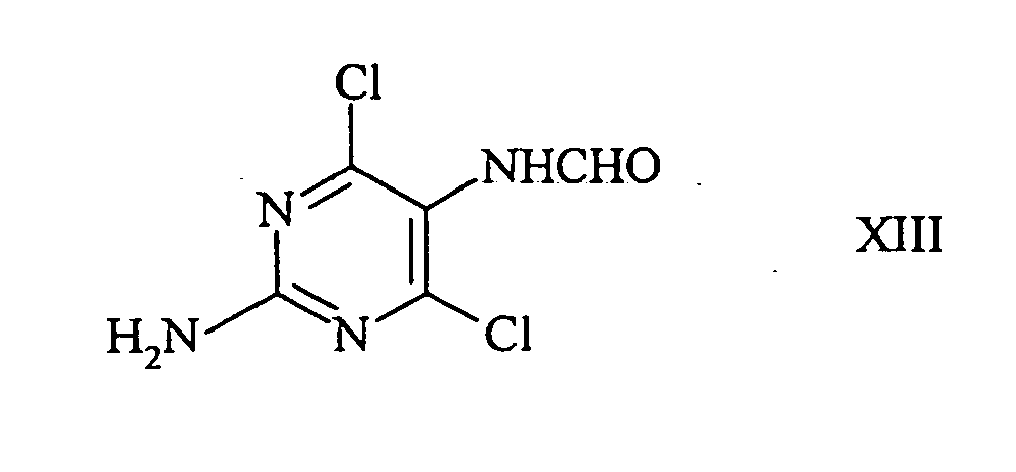

- (1R,4S)-1-Amino-4-(hydroxymethyl)-2-cyclopenten-hydrogen-D- oder L-tartrat
- (1S,4R)-1-Amino-4-(hydroxymethyl)2-cyclopenten-hydrogen-L- oder D-tartrat.
Priority Applications (5)
| Application Number | Priority Date | Filing Date | Title |
|---|---|---|---|
| EP04027540A EP1508565B1 (de) | 1997-11-27 | 1998-11-24 | Verfahren zur Herstellung von optisch aktiven Aminoalkoholen |
| EP04002913A EP1418170B1 (de) | 1997-11-27 | 1998-11-24 | Verfahren zur Herstellung von optisch aktiven Aminoalkoholen durch Racematspaltung |
| DK06002571.5T DK1657243T3 (da) | 1997-11-27 | 1998-11-24 | Fremgangsmåde til fremstilling af aminoalkoholer |
| EP06002571A EP1657243B1 (de) | 1997-11-27 | 1998-11-24 | Verfahren zur Herstellung von Aminoalkoholen |
| EP08161021A EP1982985A3 (de) | 1997-11-27 | 1998-11-24 | Verfahren zur Herstellung eines Purinderivats |
Applications Claiming Priority (12)
| Application Number | Priority Date | Filing Date | Title |
|---|---|---|---|
| CH273997 | 1997-11-27 | ||
| CH273997 | 1997-11-27 | ||
| CH278197 | 1997-12-03 | ||
| CH278197 | 1997-12-03 | ||
| CH13398 | 1998-01-21 | ||
| CH13398 | 1998-01-21 | ||
| CH72398 | 1998-03-27 | ||
| CH72398 | 1998-03-27 | ||
| EP98118895 | 1998-10-07 | ||
| EP98118895 | 1998-10-07 | ||
| EP04002913A EP1418170B1 (de) | 1997-11-27 | 1998-11-24 | Verfahren zur Herstellung von optisch aktiven Aminoalkoholen durch Racematspaltung |
| EP98122293A EP0926131B1 (de) | 1997-11-27 | 1998-11-24 | Verfahren zur Herstellung von 1-Amino-4-(hydroxymethyl)-2-cyclopenten |
Related Parent Applications (2)
| Application Number | Title | Priority Date | Filing Date |
|---|---|---|---|
| EP98122293A Division EP0926131B1 (de) | 1997-11-27 | 1998-11-24 | Verfahren zur Herstellung von 1-Amino-4-(hydroxymethyl)-2-cyclopenten |
| EP98122293.8 Division | 1998-11-24 |
Related Child Applications (2)
| Application Number | Title | Priority Date | Filing Date |
|---|---|---|---|
| EP06002571A Division EP1657243B1 (de) | 1997-11-27 | 1998-11-24 | Verfahren zur Herstellung von Aminoalkoholen |
| EP04027540A Division EP1508565B1 (de) | 1997-11-27 | 1998-11-24 | Verfahren zur Herstellung von optisch aktiven Aminoalkoholen |
Publications (3)
| Publication Number | Publication Date |
|---|---|
| EP1418170A2 EP1418170A2 (de) | 2004-05-12 |
| EP1418170A3 EP1418170A3 (de) | 2004-05-19 |
| EP1418170B1 true EP1418170B1 (de) | 2006-06-07 |
Family
ID=27508776
Family Applications (5)
| Application Number | Title | Priority Date | Filing Date |
|---|---|---|---|
| EP04027540A Expired - Lifetime EP1508565B1 (de) | 1997-11-27 | 1998-11-24 | Verfahren zur Herstellung von optisch aktiven Aminoalkoholen |
| EP04002913A Expired - Lifetime EP1418170B1 (de) | 1997-11-27 | 1998-11-24 | Verfahren zur Herstellung von optisch aktiven Aminoalkoholen durch Racematspaltung |
| EP98122293A Expired - Lifetime EP0926131B1 (de) | 1997-11-27 | 1998-11-24 | Verfahren zur Herstellung von 1-Amino-4-(hydroxymethyl)-2-cyclopenten |
| EP06002571A Expired - Lifetime EP1657243B1 (de) | 1997-11-27 | 1998-11-24 | Verfahren zur Herstellung von Aminoalkoholen |
| EP08161021A Withdrawn EP1982985A3 (de) | 1997-11-27 | 1998-11-24 | Verfahren zur Herstellung eines Purinderivats |
Family Applications Before (1)
| Application Number | Title | Priority Date | Filing Date |
|---|---|---|---|
| EP04027540A Expired - Lifetime EP1508565B1 (de) | 1997-11-27 | 1998-11-24 | Verfahren zur Herstellung von optisch aktiven Aminoalkoholen |
Family Applications After (3)
| Application Number | Title | Priority Date | Filing Date |
|---|---|---|---|
| EP98122293A Expired - Lifetime EP0926131B1 (de) | 1997-11-27 | 1998-11-24 | Verfahren zur Herstellung von 1-Amino-4-(hydroxymethyl)-2-cyclopenten |
| EP06002571A Expired - Lifetime EP1657243B1 (de) | 1997-11-27 | 1998-11-24 | Verfahren zur Herstellung von Aminoalkoholen |
| EP08161021A Withdrawn EP1982985A3 (de) | 1997-11-27 | 1998-11-24 | Verfahren zur Herstellung eines Purinderivats |
Country Status (17)
| Country | Link |
|---|---|
| US (5) | US6723868B1 (de) |
| EP (5) | EP1508565B1 (de) |
| JP (4) | JP4372873B2 (de) |
| KR (4) | KR100615370B1 (de) |
| CN (4) | CN1550500A (de) |
| AT (4) | ATE404689T1 (de) |
| CA (4) | CA2591571A1 (de) |
| CZ (4) | CZ298144B6 (de) |
| DE (4) | DE59814270D1 (de) |
| DK (3) | DK1657243T3 (de) |
| ES (3) | ES2312906T3 (de) |
| HU (3) | HU226475B1 (de) |
| IL (5) | IL142623A (de) |
| NO (4) | NO318697B1 (de) |
| PL (2) | PL200436B1 (de) |
| PT (4) | PT1418170E (de) |
| SK (4) | SK284416B6 (de) |
Families Citing this family (21)
| Publication number | Priority date | Publication date | Assignee | Title |
|---|---|---|---|---|
| IL143229A0 (en) | 1998-12-23 | 2002-04-21 | Lonza Ag | Method for producing optically active 1-amino-4-(hydroxymethyl)-cyclopent-2-ene derivatives |
| US8042740B2 (en) * | 2000-11-24 | 2011-10-25 | Metrologic Instruments, Inc. | Method of reading bar code symbols on objects at a point-of-sale station by passing said objects through a complex of stationary coplanar illumination and imaging planes projected into a 3D imaging volume |
| ES2278061T3 (es) * | 2001-09-25 | 2007-08-01 | F. Hoffmann-La Roche Ag | Proceso enzimatico para preparacion del acido 2-amino-3-(2-amino-fenilsulfanil)-propionico sustituido. |
| KR100684772B1 (ko) | 2004-12-08 | 2007-02-22 | 주식회사농심 | 찹쌀을 이용한 푸딩 촉감의 식품 및 그의 제조 방법. |
| US8805134B1 (en) | 2012-02-17 | 2014-08-12 | Soraa Laser Diode, Inc. | Methods and apparatus for photonic integration in non-polar and semi-polar oriented wave-guided optical devices |
| US9250044B1 (en) | 2009-05-29 | 2016-02-02 | Soraa Laser Diode, Inc. | Gallium and nitrogen containing laser diode dazzling devices and methods of use |
| US9039655B2 (en) | 2009-11-06 | 2015-05-26 | Crisi Medical Systems, Inc. | Medication injection site and data collection system |
| CN102603652A (zh) * | 2011-12-27 | 2012-07-25 | 河南师范大学 | 5-甲酰基嘧啶碳环核苷及制备方法 |
| CN102719512B (zh) * | 2012-06-21 | 2014-06-11 | 浙江工业大学 | 一种r-2-(4-羟基苯氧基)丙酸酯的制备方法 |
| CN104098478B (zh) * | 2013-04-08 | 2017-05-17 | 安徽贝克联合制药有限公司 | 一种氨基醇的拆分方法 |
| US10385006B2 (en) * | 2014-10-27 | 2019-08-20 | Granules India Limited | Process for the preparation of amino alcohol derivatives or salts thereof |
| CN104974051A (zh) * | 2015-06-30 | 2015-10-14 | 苏州开元民生科技股份有限公司 | (1S,4R)-cis-4-氨基-2-环戊烯-1-甲醇盐酸盐的合成方法 |
| CN106220515A (zh) * | 2016-08-12 | 2016-12-14 | 郸城巨鑫生物科技有限公司 | 一种(1r,4s)‑1‑氨基‑4‑羟甲基‑2‑环戊烯盐酸盐的合成方法 |
| JP7590810B2 (ja) * | 2016-10-06 | 2024-11-27 | ヤンセン ファーマシューティカ エヌ.ベー. | Btk阻害剤を調製するための方法および中間体 |
| US11239637B2 (en) | 2018-12-21 | 2022-02-01 | Kyocera Sld Laser, Inc. | Fiber delivered laser induced white light system |
| US11421843B2 (en) | 2018-12-21 | 2022-08-23 | Kyocera Sld Laser, Inc. | Fiber-delivered laser-induced dynamic light system |
| CN109735582B (zh) * | 2018-12-24 | 2022-06-21 | 浙江工业大学 | 一种脂肪酶催化在线合成环己醇类β-氨基醇衍生物的方法 |
| US12000552B2 (en) | 2019-01-18 | 2024-06-04 | Kyocera Sld Laser, Inc. | Laser-based fiber-coupled white light system for a vehicle |
| US11884202B2 (en) | 2019-01-18 | 2024-01-30 | Kyocera Sld Laser, Inc. | Laser-based fiber-coupled white light system |
| US12152742B2 (en) | 2019-01-18 | 2024-11-26 | Kyocera Sld Laser, Inc. | Laser-based light guide-coupled wide-spectrum light system |
| CN116730856B (zh) * | 2023-06-19 | 2024-06-07 | 浙江竹子制药有限公司 | 一种氨甲环酸的合成方法 |
Family Cites Families (19)
| Publication number | Priority date | Publication date | Assignee | Title |
|---|---|---|---|---|
| US2534533A (en) | 1945-11-05 | 1950-12-19 | Hermann I Schlesinger | Methods of preparing alkali metal borohydrides |
| DE947702C (de) | 1954-07-16 | 1956-08-23 | Metallgesellschaft Ag | Verfahren zur Herstellung borhaltiger Metallhydride |
| US4268672A (en) * | 1977-02-09 | 1981-05-19 | The Regents Of The University Of Minnesota | Adenosine deaminase resistant antiviral purine nucleosides and method of preparation |
| US4138562A (en) | 1977-02-09 | 1979-02-06 | The Regents Of The University Of Minnesota | Adenosine deaminase resistant antiviral purine nucleosides and method of preparation |
| US4916224A (en) * | 1988-01-20 | 1990-04-10 | Regents Of The University Of Minnesota | Dideoxycarbocyclic nucleosides |
| GB8815265D0 (en) * | 1988-06-27 | 1988-08-03 | Wellcome Found | Therapeutic nucleosides |
| AU626314B2 (en) * | 1988-09-09 | 1992-07-30 | Ferag Ag | Method and means for tabloid further processing |
| MY104575A (en) * | 1989-12-22 | 1994-04-30 | The Wellcome Foundation Ltd | Therapeutic nucleosides. |
| JPH0484896A (ja) * | 1990-07-26 | 1992-03-18 | Kyowa Hakko Kogyo Co Ltd | 光学活性なイソインドリン―1―オン誘導体の製造法 |
| US5200527A (en) | 1991-04-08 | 1993-04-06 | Lonza Ltd. | Process for the production of 2-azabicyclo [2.2.1] hept-5-en-3-one |
| FR2676042B1 (fr) | 1991-05-02 | 1993-07-23 | Commissariat Energie Atomique | Procede de preparation d'un borohydrure de metal alcalin tel que le borohydrure de lithium. |
| GB9204015D0 (en) * | 1992-02-25 | 1992-04-08 | Wellcome Found | Therapeutic nucleosides |
| GB9402161D0 (en) * | 1994-02-04 | 1994-03-30 | Wellcome Found | Chloropyrimidine intermediates |
| GB9417249D0 (en) * | 1994-08-26 | 1994-10-19 | Wellcome Found | A novel salt |
| JPH09124564A (ja) * | 1995-11-06 | 1997-05-13 | Nikko Rika Kk | 光学活性体混合物ならびにその製造方法 |
| DK0861233T3 (da) * | 1995-11-16 | 2000-08-07 | Searle & Co | N-Beskyttede/N-substituerede beta-aminohydroxysulfonater |
| IL127235A (en) * | 1996-05-30 | 2003-04-10 | Lonza Ag | Process for the preparation of amino alcohols and derivatives thereof |
| SK285228B6 (sk) * | 1997-05-13 | 2006-09-07 | Lonza Ag | Spôsob výroby racemického alebo opticky aktívnehoderivátu 4-(hydroxymetyl)-2-cyklopenténu a racemicky N-butyryl-1-amino-4- (hydroxymetyl)-2-cyklopentén |
| GB9721780D0 (en) * | 1997-10-14 | 1997-12-10 | Glaxo Group Ltd | Process for the synthesis of chloropurine intermediates |
-
1998
- 1998-11-23 CZ CZ20070123A patent/CZ298144B6/cs not_active IP Right Cessation
- 1998-11-23 SK SK1615-98A patent/SK284416B6/sk not_active IP Right Cessation
- 1998-11-23 SK SK402-2004A patent/SK284595B6/sk not_active IP Right Cessation
- 1998-11-23 SK SK403-2004A patent/SK284596B6/sk not_active IP Right Cessation
- 1998-11-23 CZ CZ20070124A patent/CZ299083B6/cs not_active IP Right Cessation
- 1998-11-23 SK SK401-2004A patent/SK284594B6/sk not_active IP Right Cessation
- 1998-11-23 CZ CZ20070122A patent/CZ298913B6/cs not_active IP Right Cessation
- 1998-11-23 CZ CZ0381798A patent/CZ298102B6/cs not_active IP Right Cessation
- 1998-11-24 AT AT04027540T patent/ATE404689T1/de active
- 1998-11-24 PT PT04002913T patent/PT1418170E/pt unknown
- 1998-11-24 EP EP04027540A patent/EP1508565B1/de not_active Expired - Lifetime
- 1998-11-24 EP EP04002913A patent/EP1418170B1/de not_active Expired - Lifetime
- 1998-11-24 AT AT06002571T patent/ATE478073T1/de active
- 1998-11-24 PT PT04027540T patent/PT1508565E/pt unknown
- 1998-11-24 DE DE59814270T patent/DE59814270D1/de not_active Expired - Lifetime
- 1998-11-24 PT PT98122293T patent/PT926131E/pt unknown
- 1998-11-24 ES ES04027540T patent/ES2312906T3/es not_active Expired - Lifetime
- 1998-11-24 PT PT06002571T patent/PT1657243E/pt unknown
- 1998-11-24 AT AT98122293T patent/ATE259345T1/de active
- 1998-11-24 DK DK06002571.5T patent/DK1657243T3/da active
- 1998-11-24 DE DE59810751T patent/DE59810751D1/de not_active Expired - Lifetime
- 1998-11-24 US US09/198,427 patent/US6723868B1/en not_active Expired - Fee Related
- 1998-11-24 EP EP98122293A patent/EP0926131B1/de not_active Expired - Lifetime
- 1998-11-24 DK DK04002913T patent/DK1418170T3/da active
- 1998-11-24 DE DE59814466T patent/DE59814466D1/de not_active Expired - Lifetime
- 1998-11-24 EP EP06002571A patent/EP1657243B1/de not_active Expired - Lifetime
- 1998-11-24 DE DE59813589T patent/DE59813589D1/de not_active Expired - Lifetime
- 1998-11-24 KR KR1019980050483A patent/KR100615370B1/ko not_active Expired - Fee Related
- 1998-11-24 DK DK98122293T patent/DK0926131T3/da active
- 1998-11-24 AT AT04002913T patent/ATE328863T1/de active
- 1998-11-24 EP EP08161021A patent/EP1982985A3/de not_active Withdrawn
- 1998-11-24 ES ES04002913T patent/ES2270192T3/es not_active Expired - Lifetime
- 1998-11-24 ES ES98122293T patent/ES2215264T3/es not_active Expired - Lifetime
- 1998-11-25 CA CA002591571A patent/CA2591571A1/en not_active Abandoned
- 1998-11-25 CA CA2591818A patent/CA2591818C/en not_active Expired - Fee Related
- 1998-11-25 CA CA002254693A patent/CA2254693C/en not_active Expired - Fee Related
- 1998-11-25 CA CA2591566A patent/CA2591566C/en not_active Expired - Fee Related
- 1998-11-26 IL IL14262398A patent/IL142623A/en not_active IP Right Cessation
- 1998-11-26 IL IL14262298A patent/IL142622A/en not_active IP Right Cessation
- 1998-11-26 IL IL12727798A patent/IL127277A/en not_active IP Right Cessation
- 1998-11-26 IL IL160787A patent/IL160787A/en not_active IP Right Cessation
- 1998-11-26 NO NO19985511A patent/NO318697B1/no not_active IP Right Cessation
- 1998-11-27 CN CNA2004100435584A patent/CN1550500A/zh active Pending
- 1998-11-27 HU HU0700624A patent/HU226475B1/hu not_active IP Right Cessation
- 1998-11-27 HU HU9802758A patent/HU225895B1/hu not_active IP Right Cessation
- 1998-11-27 CN CNB981230229A patent/CN1259306C/zh not_active Expired - Fee Related
- 1998-11-27 PL PL329989A patent/PL200436B1/pl unknown
- 1998-11-27 JP JP33743798A patent/JP4372873B2/ja not_active Expired - Fee Related
- 1998-11-27 CN CNB2004100435565A patent/CN1323057C/zh not_active Expired - Fee Related
- 1998-11-27 PL PL380973A patent/PL207859B1/pl not_active IP Right Cessation
- 1998-11-27 CN CNB2004100435550A patent/CN1277807C/zh not_active Expired - Fee Related
- 1998-11-27 HU HU0700623A patent/HU226473B1/hu not_active IP Right Cessation
-
2001
- 2001-01-30 US US09/772,501 patent/US6448402B2/en not_active Expired - Fee Related
-
2003
- 2003-10-29 US US10/695,930 patent/US7229981B2/en not_active Expired - Fee Related
-
2004
- 2004-03-08 IL IL16078704A patent/IL160787A0/xx active IP Right Grant
- 2004-10-14 NO NO20044369A patent/NO327575B1/no not_active IP Right Cessation
- 2004-10-14 NO NO20044368A patent/NO326251B1/no not_active IP Right Cessation
- 2004-10-14 NO NO20044370A patent/NO20044370L/no not_active Application Discontinuation
-
2006
- 2006-01-26 KR KR1020060008435A patent/KR100648030B1/ko not_active Expired - Fee Related
- 2006-01-26 KR KR1020060008436A patent/KR100672268B1/ko not_active Expired - Fee Related
- 2006-01-26 KR KR1020060008437A patent/KR100584638B1/ko not_active Expired - Fee Related
- 2006-05-31 US US11/421,266 patent/US7358073B2/en not_active Expired - Fee Related
- 2006-12-26 US US11/616,088 patent/US7338945B2/en not_active Expired - Fee Related
-
2009
- 2009-05-25 JP JP2009125244A patent/JP2009227685A/ja not_active Withdrawn
- 2009-05-25 JP JP2009125243A patent/JP2009227684A/ja not_active Withdrawn
- 2009-05-25 JP JP2009125242A patent/JP2009221215A/ja not_active Ceased
Also Published As
Similar Documents
| Publication | Publication Date | Title |
|---|---|---|
| DE19525137C2 (de) | 6-Dimethylaminomethyl-1-phenyl-cyclohexanverbin -dungen als Zwischenprodukte zur Herstellung pharmazeutischer Wirkstoffe | |
| EP0926131B1 (de) | Verfahren zur Herstellung von 1-Amino-4-(hydroxymethyl)-2-cyclopenten | |
| EP1633697B1 (de) | Verfahren zur herstellung substituierter 3-aryl-butyl-aminverbindungen | |
| US5362883A (en) | Process for cyclic amino acid anticonvulsant compounds | |
| EP0780369A1 (de) | 1-Phenyl-2-dimethylaminomethyl-cyclohexan-1-olverbindungen als pharmazeutische Wirkstoffe | |
| EP2387556B1 (de) | Trennung eines enantiomerengemischs von (r)- und (s)-3-amino-1-butanol | |
| EP0432504A1 (de) | Verfahren zur Herstellung von 1-(Aminomethyl)cyclohexanessigsäure | |
| DE2413102A1 (de) | Verfahren zur herstellung von 1-(3,5dihydroxyphenyl)-1-hydroxy-2- eckige klammer auf 1-methyl-2-(4-hydroxyphenyl)-aethyl eckige klammer zu -amino-aethan | |
| DE69014480T2 (de) | Verfahren zur Herstellung von antikonvulsanten cyclischen Aminosäureverbindungen. | |
| DE19945594A1 (de) | Substituierte Piperazinderivate, ihre Herstellung und ihre Verwendung als Arzneimittel | |
| DE69402142T2 (de) | Ornithine-decarboxylase hemmende cyclische aminooxy-verbindungen | |
| DE69325660T2 (de) | Amidderivate | |
| DE69932269T2 (de) | Herstellung optisch aktiver Cyclohexylphenylglykolsäureester | |
| DE60031299T2 (de) | Verfahren zur industriellen Herstellung von (Aminomethyl)trifluormethlcarbinol-Derivaten | |
| DE602005004834T2 (de) | Ein verbessertes Verfahren für die Synthese von Methylphenidaten und Zwischenprodukten | |
| WO2000026193A1 (de) | Verfahren zur herstellung von 4-[(2',5'-diamino-6'-halogenpyrimidin-4'-yl)amino]-cyclopent-2-enylmethanolen | |
| DE69733209T2 (de) | Verfahren zur stereoselektiven herstellung von nitro-enamin-verbindungen | |
| DE2409675A1 (de) | Alpha-alkyl(oder -aryl)-thio-5-hydroxytryptophan-derivat und verfahren zu seiner herstellung | |
| US4078085A (en) | 3-Aminomethyl-4-homoisotwistane and its salt and process for producing same | |
| EP0102929B1 (de) | Propylamin-Derivate, Verfahren zu ihrer Herstellung, pharmazeutische Präparate enthaltend diese Verbindungen, sowie ihre therapeutische Verwendung | |
| EP0538692A1 (de) | Verwendung von teilweise bekannten substituierten Pyrrolidinen als Arzneimittel, neue Wirkstoffe und Verfahren zu ihrer Herstellung | |
| DE69311725T2 (de) | Verfahren zur herstellung von optisch aktiven aminodiol | |
| JPH107652A (ja) | ピロリジン誘導体の製造方法 | |
| SU671726A3 (ru) | Способ получени 4-а-арил-транс-декагидро-изохинолинов | |
| AT412720B (de) | Verfahren zur herstellung von chiralen alpha-aminoalkoholen durch reduktion von chiralen cyanhydrinen |
Legal Events
| Date | Code | Title | Description |
|---|---|---|---|
| PUAI | Public reference made under article 153(3) epc to a published international application that has entered the european phase |
Free format text: ORIGINAL CODE: 0009012 |
|
| PUAL | Search report despatched |
Free format text: ORIGINAL CODE: 0009013 |
|
| 17P | Request for examination filed |
Effective date: 20040210 |
|
| AC | Divisional application: reference to earlier application |
Ref document number: 0926131 Country of ref document: EP Kind code of ref document: P |
|
| AK | Designated contracting states |
Kind code of ref document: A2 Designated state(s): AT BE CH DE DK ES FI FR GB GR IE IT LI NL PT SE |
|
| AK | Designated contracting states |
Kind code of ref document: A3 Designated state(s): AT BE CH DE DK ES FI FR GB GR IE IT LI NL PT SE |
|
| RIN1 | Information on inventor provided before grant (corrected) |
Inventor name: BERCHTOLD KATJA Inventor name: PETERSEN, MICHAEL, DR. Inventor name: BERNEGGER-EGLI, CHRISTINE, DR. Inventor name: RODUIT, JEAN-PAUL, DR. Inventor name: URBAN, EVA MARIA |
|
| AKX | Designation fees paid |
Designated state(s): AT BE CH DE DK ES FI FR GB GR IE IT LI NL PT SE |
|
| 17Q | First examination report despatched |
Effective date: 20050628 |
|
| GRAP | Despatch of communication of intention to grant a patent |
Free format text: ORIGINAL CODE: EPIDOSNIGR1 |
|
| GRAS | Grant fee paid |
Free format text: ORIGINAL CODE: EPIDOSNIGR3 |
|
| GRAA | (expected) grant |
Free format text: ORIGINAL CODE: 0009210 |
|
| AC | Divisional application: reference to earlier application |
Ref document number: 0926131 Country of ref document: EP Kind code of ref document: P |
|
| AK | Designated contracting states |
Kind code of ref document: B1 Designated state(s): AT BE CH DE DK ES FI FR GB GR IE IT LI NL PT SE |
|
| PG25 | Lapsed in a contracting state [announced via postgrant information from national office to epo] |
Ref country code: IT Free format text: LAPSE BECAUSE OF FAILURE TO SUBMIT A TRANSLATION OF THE DESCRIPTION OR TO PAY THE FEE WITHIN THE PRESCRIBED TIME-LIMIT;WARNING: LAPSES OF ITALIAN PATENTS WITH EFFECTIVE DATE BEFORE 2007 MAY HAVE OCCURRED AT ANY TIME BEFORE 2007. THE CORRECT EFFECTIVE DATE MAY BE DIFFERENT FROM THE ONE RECORDED. Effective date: 20060607 |
|
| REG | Reference to a national code |
Ref country code: GB Ref legal event code: FG4D Free format text: NOT ENGLISH |
|
| REG | Reference to a national code |
Ref country code: CH Ref legal event code: EP |
|
| REG | Reference to a national code |
Ref country code: IE Ref legal event code: FG4D Free format text: LANGUAGE OF EP DOCUMENT: GERMAN |
|
| REF | Corresponds to: |
Ref document number: 59813589 Country of ref document: DE Date of ref document: 20060720 Kind code of ref document: P |
|
| REG | Reference to a national code |
Ref country code: SE Ref legal event code: TRGR |
|
| REG | Reference to a national code |
Ref country code: DK Ref legal event code: T3 |
|
| GBT | Gb: translation of ep patent filed (gb section 77(6)(a)/1977) |
Effective date: 20060923 |
|
| REG | Reference to a national code |
Ref country code: PT Ref legal event code: SC4A Effective date: 20060906 |
|
| REG | Reference to a national code |
Ref country code: GR Ref legal event code: EP Ref document number: 20060403058 Country of ref document: GR |
|
| ET | Fr: translation filed | ||
| REG | Reference to a national code |
Ref country code: ES Ref legal event code: FG2A Ref document number: 2270192 Country of ref document: ES Kind code of ref document: T3 |
|
| PLBE | No opposition filed within time limit |
Free format text: ORIGINAL CODE: 0009261 |
|
| STAA | Information on the status of an ep patent application or granted ep patent |
Free format text: STATUS: NO OPPOSITION FILED WITHIN TIME LIMIT |
|
| 26N | No opposition filed |
Effective date: 20070308 |
|
| PGFP | Annual fee paid to national office [announced via postgrant information from national office to epo] |
Ref country code: GB Payment date: 20100927 Year of fee payment: 13 |
|
| PGFP | Annual fee paid to national office [announced via postgrant information from national office to epo] |
Ref country code: AT Payment date: 20100927 Year of fee payment: 13 |
|
| PGFP | Annual fee paid to national office [announced via postgrant information from national office to epo] |
Ref country code: DE Payment date: 20100927 Year of fee payment: 13 |
|
| PG25 | Lapsed in a contracting state [announced via postgrant information from national office to epo] |
Ref country code: IT Free format text: LAPSE BECAUSE OF NON-PAYMENT OF DUE FEES Effective date: 20091124 |
|
| PGFP | Annual fee paid to national office [announced via postgrant information from national office to epo] |
Ref country code: GR Payment date: 20101130 Year of fee payment: 13 |
|
| PGFP | Annual fee paid to national office [announced via postgrant information from national office to epo] |
Ref country code: IT Payment date: 20101119 Year of fee payment: 13 |
|
| PGRI | Patent reinstated in contracting state [announced from national office to epo] |
Ref country code: IT Effective date: 20110616 |
|
| PGFP | Annual fee paid to national office [announced via postgrant information from national office to epo] |
Ref country code: DK Payment date: 20110926 Year of fee payment: 14 |
|
| PGFP | Annual fee paid to national office [announced via postgrant information from national office to epo] |
Ref country code: SE Payment date: 20110922 Year of fee payment: 14 Ref country code: FI Payment date: 20110922 Year of fee payment: 14 Ref country code: FR Payment date: 20111005 Year of fee payment: 14 Ref country code: PT Payment date: 20110913 Year of fee payment: 14 |
|
| PGFP | Annual fee paid to national office [announced via postgrant information from national office to epo] |
Ref country code: NL Payment date: 20110927 Year of fee payment: 14 |
|
| PGFP | Annual fee paid to national office [announced via postgrant information from national office to epo] |
Ref country code: ES Payment date: 20111123 Year of fee payment: 14 Ref country code: IE Payment date: 20111011 Year of fee payment: 14 Ref country code: BE Payment date: 20110922 Year of fee payment: 14 Ref country code: CH Payment date: 20111006 Year of fee payment: 14 |
|
| BERE | Be: lapsed |
Owner name: *LONZA A.G. Effective date: 20121130 |
|
| REG | Reference to a national code |
Ref country code: PT Ref legal event code: MM4A Free format text: LAPSE DUE TO NON-PAYMENT OF FEES Effective date: 20130524 |
|
| REG | Reference to a national code |
Ref country code: NL Ref legal event code: V1 Effective date: 20130601 |
|
| REG | Reference to a national code |
Ref country code: CH Ref legal event code: PL |
|
| REG | Reference to a national code |
Ref country code: DK Ref legal event code: EBP |
|
| REG | Reference to a national code |
Ref country code: AT Ref legal event code: MM01 Ref document number: 328863 Country of ref document: AT Kind code of ref document: T Effective date: 20121124 |
|
| GBPC | Gb: european patent ceased through non-payment of renewal fee |
Effective date: 20121124 |
|
| PG25 | Lapsed in a contracting state [announced via postgrant information from national office to epo] |
Ref country code: CH Free format text: LAPSE BECAUSE OF NON-PAYMENT OF DUE FEES Effective date: 20121130 Ref country code: LI Free format text: LAPSE BECAUSE OF NON-PAYMENT OF DUE FEES Effective date: 20121130 Ref country code: AT Free format text: LAPSE BECAUSE OF NON-PAYMENT OF DUE FEES Effective date: 20121124 Ref country code: SE Free format text: LAPSE BECAUSE OF NON-PAYMENT OF DUE FEES Effective date: 20121125 |
|
| REG | Reference to a national code |
Ref country code: IE Ref legal event code: MM4A |
|
| REG | Reference to a national code |
Ref country code: FR Ref legal event code: ST Effective date: 20130731 |
|
| PG25 | Lapsed in a contracting state [announced via postgrant information from national office to epo] |
Ref country code: NL Free format text: LAPSE BECAUSE OF NON-PAYMENT OF DUE FEES Effective date: 20130601 Ref country code: FI Free format text: LAPSE BECAUSE OF NON-PAYMENT OF DUE FEES Effective date: 20121124 Ref country code: IT Free format text: LAPSE BECAUSE OF NON-PAYMENT OF DUE FEES Effective date: 20121124 Ref country code: PT Free format text: LAPSE BECAUSE OF NON-PAYMENT OF DUE FEES Effective date: 20130524 Ref country code: GR Free format text: LAPSE BECAUSE OF NON-PAYMENT OF DUE FEES Effective date: 20130604 Ref country code: BE Free format text: LAPSE BECAUSE OF NON-PAYMENT OF DUE FEES Effective date: 20121130 |
|
| REG | Reference to a national code |
Ref country code: GR Ref legal event code: ML Ref document number: 20060403058 Country of ref document: GR Effective date: 20130604 |
|
| REG | Reference to a national code |
Ref country code: DE Ref legal event code: R119 Ref document number: 59813589 Country of ref document: DE Effective date: 20130601 |
|
| PG25 | Lapsed in a contracting state [announced via postgrant information from national office to epo] |
Ref country code: DE Free format text: LAPSE BECAUSE OF NON-PAYMENT OF DUE FEES Effective date: 20130601 Ref country code: IE Free format text: LAPSE BECAUSE OF NON-PAYMENT OF DUE FEES Effective date: 20121124 Ref country code: DK Free format text: LAPSE BECAUSE OF NON-PAYMENT OF DUE FEES Effective date: 20121130 |
|
| PG25 | Lapsed in a contracting state [announced via postgrant information from national office to epo] |
Ref country code: GB Free format text: LAPSE BECAUSE OF NON-PAYMENT OF DUE FEES Effective date: 20121124 Ref country code: FR Free format text: LAPSE BECAUSE OF NON-PAYMENT OF DUE FEES Effective date: 20121130 |
|
| REG | Reference to a national code |
Ref country code: ES Ref legal event code: FD2A Effective date: 20140305 |
|
| PG25 | Lapsed in a contracting state [announced via postgrant information from national office to epo] |
Ref country code: ES Free format text: LAPSE BECAUSE OF NON-PAYMENT OF DUE FEES Effective date: 20121125 |
|
| P01 | Opt-out of the competence of the unified patent court (upc) registered |
Effective date: 20230522 |