JP5460552B2 - Semiconductor device - Google Patents
Semiconductor device Download PDFInfo
- Publication number
- JP5460552B2 JP5460552B2 JP2010233285A JP2010233285A JP5460552B2 JP 5460552 B2 JP5460552 B2 JP 5460552B2 JP 2010233285 A JP2010233285 A JP 2010233285A JP 2010233285 A JP2010233285 A JP 2010233285A JP 5460552 B2 JP5460552 B2 JP 5460552B2
- Authority
- JP
- Japan
- Prior art keywords
- insulating layer
- layer
- oxide
- oxide semiconductor
- halogen element
- Prior art date
- Legal status (The legal status is an assumption and is not a legal conclusion. Google has not performed a legal analysis and makes no representation as to the accuracy of the status listed.)
- Active
Links
Images


Classifications
-
- H—ELECTRICITY
- H10—SEMICONDUCTOR DEVICES; ELECTRIC SOLID-STATE DEVICES NOT OTHERWISE PROVIDED FOR
- H10P—GENERIC PROCESSES OR APPARATUS FOR THE MANUFACTURE OR TREATMENT OF DEVICES COVERED BY CLASS H10
- H10P14/00—Formation of materials, e.g. in the shape of layers or pillars
- H10P14/20—Formation of materials, e.g. in the shape of layers or pillars of semiconductor materials
- H10P14/38—Formation of materials, e.g. in the shape of layers or pillars of semiconductor materials characterised by treatments done after the formation of the materials
-
- H—ELECTRICITY
- H10—SEMICONDUCTOR DEVICES; ELECTRIC SOLID-STATE DEVICES NOT OTHERWISE PROVIDED FOR
- H10D—INORGANIC ELECTRIC SEMICONDUCTOR DEVICES
- H10D30/00—Field-effect transistors [FET]
- H10D30/01—Manufacture or treatment
- H10D30/021—Manufacture or treatment of FETs having insulated gates [IGFET]
- H10D30/031—Manufacture or treatment of FETs having insulated gates [IGFET] of thin-film transistors [TFT]
-
- H—ELECTRICITY
- H10—SEMICONDUCTOR DEVICES; ELECTRIC SOLID-STATE DEVICES NOT OTHERWISE PROVIDED FOR
- H10D—INORGANIC ELECTRIC SEMICONDUCTOR DEVICES
- H10D30/00—Field-effect transistors [FET]
- H10D30/60—Insulated-gate field-effect transistors [IGFET]
- H10D30/67—Thin-film transistors [TFT]
- H10D30/6704—Thin-film transistors [TFT] having supplementary regions or layers in the thin films or in the insulated bulk substrates for controlling properties of the device
-
- H—ELECTRICITY
- H10—SEMICONDUCTOR DEVICES; ELECTRIC SOLID-STATE DEVICES NOT OTHERWISE PROVIDED FOR
- H10D—INORGANIC ELECTRIC SEMICONDUCTOR DEVICES
- H10D30/00—Field-effect transistors [FET]
- H10D30/60—Insulated-gate field-effect transistors [IGFET]
- H10D30/67—Thin-film transistors [TFT]
- H10D30/6729—Thin-film transistors [TFT] characterised by the electrodes
- H10D30/6737—Thin-film transistors [TFT] characterised by the electrodes characterised by the electrode materials
- H10D30/6739—Conductor-insulator-semiconductor electrodes
-
- H—ELECTRICITY
- H10—SEMICONDUCTOR DEVICES; ELECTRIC SOLID-STATE DEVICES NOT OTHERWISE PROVIDED FOR
- H10D—INORGANIC ELECTRIC SEMICONDUCTOR DEVICES
- H10D30/00—Field-effect transistors [FET]
- H10D30/60—Insulated-gate field-effect transistors [IGFET]
- H10D30/67—Thin-film transistors [TFT]
- H10D30/674—Thin-film transistors [TFT] characterised by the active materials
- H10D30/6755—Oxide semiconductors, e.g. zinc oxide, copper aluminium oxide or cadmium stannate
-
- H—ELECTRICITY
- H10—SEMICONDUCTOR DEVICES; ELECTRIC SOLID-STATE DEVICES NOT OTHERWISE PROVIDED FOR
- H10D—INORGANIC ELECTRIC SEMICONDUCTOR DEVICES
- H10D99/00—Subject matter not provided for in other groups of this subclass
-
- H—ELECTRICITY
- H10—SEMICONDUCTOR DEVICES; ELECTRIC SOLID-STATE DEVICES NOT OTHERWISE PROVIDED FOR
- H10P—GENERIC PROCESSES OR APPARATUS FOR THE MANUFACTURE OR TREATMENT OF DEVICES COVERED BY CLASS H10
- H10P14/00—Formation of materials, e.g. in the shape of layers or pillars
- H10P14/20—Formation of materials, e.g. in the shape of layers or pillars of semiconductor materials
- H10P14/34—Deposited materials, e.g. layers
- H10P14/3402—Deposited materials, e.g. layers characterised by the chemical composition
- H10P14/3434—Deposited materials, e.g. layers characterised by the chemical composition being oxide semiconductor materials
-
- H—ELECTRICITY
- H10—SEMICONDUCTOR DEVICES; ELECTRIC SOLID-STATE DEVICES NOT OTHERWISE PROVIDED FOR
- H10P—GENERIC PROCESSES OR APPARATUS FOR THE MANUFACTURE OR TREATMENT OF DEVICES COVERED BY CLASS H10
- H10P14/00—Formation of materials, e.g. in the shape of layers or pillars
- H10P14/60—Formation of materials, e.g. in the shape of layers or pillars of insulating materials
- H10P14/63—Formation of materials, e.g. in the shape of layers or pillars of insulating materials characterised by the formation processes
- H10P14/6326—Deposition processes
- H10P14/6328—Deposition from the gas or vapour phase
- H10P14/6329—Deposition from the gas or vapour phase using physical ablation of a target, e.g. physical vapour deposition or pulsed laser deposition
-
- H—ELECTRICITY
- H10—SEMICONDUCTOR DEVICES; ELECTRIC SOLID-STATE DEVICES NOT OTHERWISE PROVIDED FOR
- H10W—GENERIC PACKAGES, INTERCONNECTIONS, CONNECTORS OR OTHER CONSTRUCTIONAL DETAILS OF DEVICES COVERED BY CLASS H10
- H10W42/00—Arrangements for protection of devices
-
- H—ELECTRICITY
- H10—SEMICONDUCTOR DEVICES; ELECTRIC SOLID-STATE DEVICES NOT OTHERWISE PROVIDED FOR
- H10P—GENERIC PROCESSES OR APPARATUS FOR THE MANUFACTURE OR TREATMENT OF DEVICES COVERED BY CLASS H10
- H10P14/00—Formation of materials, e.g. in the shape of layers or pillars
- H10P14/20—Formation of materials, e.g. in the shape of layers or pillars of semiconductor materials
- H10P14/22—Formation of materials, e.g. in the shape of layers or pillars of semiconductor materials using physical deposition, e.g. vacuum deposition or sputtering
-
- H—ELECTRICITY
- H10—SEMICONDUCTOR DEVICES; ELECTRIC SOLID-STATE DEVICES NOT OTHERWISE PROVIDED FOR
- H10P—GENERIC PROCESSES OR APPARATUS FOR THE MANUFACTURE OR TREATMENT OF DEVICES COVERED BY CLASS H10
- H10P14/00—Formation of materials, e.g. in the shape of layers or pillars
- H10P14/20—Formation of materials, e.g. in the shape of layers or pillars of semiconductor materials
- H10P14/34—Deposited materials, e.g. layers
- H10P14/3402—Deposited materials, e.g. layers characterised by the chemical composition
- H10P14/3424—Deposited materials, e.g. layers characterised by the chemical composition being Group IIB-VIA materials
- H10P14/3426—Oxides
Landscapes
- Thin Film Transistor (AREA)
- Electroluminescent Light Sources (AREA)
- Liquid Crystal (AREA)
- Formation Of Insulating Films (AREA)
- Physical Vapour Deposition (AREA)
- Devices For Indicating Variable Information By Combining Individual Elements (AREA)
- Physical Deposition Of Substances That Are Components Of Semiconductor Devices (AREA)
- Semiconductor Integrated Circuits (AREA)
- Physics & Mathematics (AREA)
- Optics & Photonics (AREA)
Description
酸化物半導体を用いる半導体装置及びその作製方法に関する。 The present invention relates to a semiconductor device using an oxide semiconductor and a manufacturing method thereof.
なお、本明細書中において半導体装置とは、半導体特性を利用することで機能しうる装置全般を指し、電気光学装置、半導体回路および電子機器は全て半導体装置である。 Note that in this specification, a semiconductor device refers to all devices that can function by utilizing semiconductor characteristics, and an electro-optical device, a semiconductor circuit, and an electronic device are all semiconductor devices.
絶縁表面を有する基板上に形成された半導体薄膜を用いて薄膜トランジスタ(TFT)を構成する技術が注目されている。薄膜トランジスタは液晶テレビに代表されるような表示装置に用いられている。薄膜トランジスタに適用可能な半導体薄膜としてシリコン系半導体材料が公知であるが、その他の材料として酸化物半導体が注目されている。 A technique for forming a thin film transistor (TFT) using a semiconductor thin film formed over a substrate having an insulating surface has attracted attention. Thin film transistors are used in display devices typified by liquid crystal televisions. A silicon-based semiconductor material is known as a semiconductor thin film applicable to a thin film transistor, but an oxide semiconductor has attracted attention as another material.
酸化物半導体の材料としては、酸化亜鉛又は酸化亜鉛を成分とするものが知られている。そして、電子キャリア濃度が1018/cm3未満である非晶質酸化物(酸化物半導体)なるもので形成された薄膜トランジスタが開示されている(特許文献1乃至3参照。)。
As materials for oxide semiconductors, zinc oxide or a material containing zinc oxide as a component is known. A thin film transistor formed using an amorphous oxide (oxide semiconductor) having an electron carrier concentration of less than 10 18 / cm 3 is disclosed (see
しかしながら酸化物半導体は薄膜形成工程において化学量論的組成からのずれが生じてしまう。例えば、酸素の過不足によって酸化物半導体の電気伝導度が変化してしまう。また、酸化物半導体の薄膜形成中に混入する水素や水分が酸素(O)−水素(H)結合を形成して電子供与体となり、電気伝導度を変化させる要因となる。さらにO−Hは極性分子なので、酸化物半導体によって作製される薄膜トランジスタのような能動デバイスに対して特性の変動要因となる。 However, the oxide semiconductor is deviated from the stoichiometric composition in the thin film formation process. For example, the electrical conductivity of an oxide semiconductor changes due to excess or deficiency of oxygen. In addition, hydrogen or moisture mixed during the formation of an oxide semiconductor thin film forms an oxygen (O) -hydrogen (H) bond to become an electron donor, which causes a change in electrical conductivity. Furthermore, since O—H is a polar molecule, it becomes a variable factor of characteristics for an active device such as a thin film transistor manufactured using an oxide semiconductor.
このような問題に鑑み本発明の一形態は、安定した電気的特性を有する酸化物半導体を用いた半導体装置を提供することを目的とする。 In view of such a problem, an object of one embodiment of the present invention is to provide a semiconductor device including an oxide semiconductor having stable electrical characteristics.
酸化物半導体層を用いる薄膜トランジスタの電気的特性変動を抑止するために、酸化物半導体層及び、該酸化物半導体層と接して形成される絶縁層との界面において、変動要因となる水素、水分、水酸基又は水素化物(水素化合物ともいう)などの不純物を排除する。 In order to suppress fluctuations in electrical characteristics of a thin film transistor using an oxide semiconductor layer, hydrogen, moisture, which cause fluctuations, at the interface between the oxide semiconductor layer and an insulating layer formed in contact with the oxide semiconductor layer, Eliminates impurities such as hydroxyl groups or hydrides (also referred to as hydrogen compounds).
フッ素や塩素に代表されるハロゲン元素により、酸化物半導体層に含まれる水素や水分(水素原子や、H2Oなど水素原子を含む化合物)などの不純物を、酸化物半導体層より排除し、上記酸化物半導体層中の不純物濃度を低減する。本明細書において、ハロゲン元素とは周期表において第17族元素(フッ素(F)、塩素(Cl)、臭素(Br)、ヨウ素(I)など)のことを意味し、代表的には、フッ素、塩素を用いることができ、用いるハロゲン元素は一種でも複数種でもよい。 With a halogen element typified by fluorine or chlorine, impurities such as hydrogen and moisture (a hydrogen atom or a compound containing a hydrogen atom such as H 2 O) contained in the oxide semiconductor layer are excluded from the oxide semiconductor layer. The impurity concentration in the oxide semiconductor layer is reduced. In this specification, a halogen element means a group 17 element (fluorine (F), chlorine (Cl), bromine (Br), iodine (I), etc.) in the periodic table. Chlorine can be used, and one or more halogen elements can be used.
ハロゲン元素は酸化物半導体層と接して設けられるゲート絶縁層、保護絶縁層となる絶縁層に含ませて形成することができ、またハロゲン元素を含むガス雰囲気下でのプラズマ処理によって酸化物半導体層に付着させてもよい。 The halogen element can be formed by being included in a gate insulating layer provided in contact with the oxide semiconductor layer and an insulating layer serving as a protective insulating layer, and can be formed by plasma treatment in a gas atmosphere containing a halogen element. It may be attached to.
ハロゲン元素は成膜中にゲート絶縁層や絶縁層に含まれるように、成膜ガス(スパッタガス)に導入してもよいし、前工程におけるクリーニング処理によって処理室に残留したハロゲン元素を用いて膜中に含ませてもよい。また、成膜後にゲート絶縁層や絶縁層に添加してもよい。また、プラズマ処理によって酸化物半導体層との界面に付着させてもよい。ゲート絶縁層や絶縁層にハロゲン元素を含ませる場合、ゲート絶縁層や絶縁層中におけるハロゲン元素濃度は5×10¹⁸atoms/cm3乃至1×1020atoms/cm3程度とすればよい。
The halogen element may be introduced into a deposition gas (sputtering gas) so as to be included in the gate insulating layer or the insulating layer during the film formation, or the halogen element remaining in the treatment chamber by the cleaning process in the previous process is used. It may be included in the film. Further, it may be added to the gate insulating layer or the insulating layer after film formation. Alternatively, the oxide semiconductor layer may be attached to the interface with plasma treatment. In the case where the gate insulating layer or the insulating layer contains a halogen element, the halogen element concentration in the gate insulating layer or the insulating layer may be approximately 5 × 10 18 atoms /
上記いずれかの方法でハロゲン元素により、酸化物半導体層に含まれる水素、水分、水酸基又は水素化物などの不純物を、ゲート絶縁層、及び/又は絶縁層に拡散させ、上記酸化物半導体層中の不純物濃度を低減させる。 An impurity such as hydrogen, moisture, a hydroxyl group, or a hydride contained in the oxide semiconductor layer is diffused into the gate insulating layer and / or the insulating layer by the halogen element by any of the above methods, and the oxide semiconductor layer Reduce impurity concentration.
また、絶縁層は酸素過剰とし、不対結合手に代表される欠陥を多く含むことが好ましい。欠陥を多く含む絶縁層は、主に水素に対して束縛エネルギーがより大きくなり、酸化物半導体層から絶縁層への拡散がより促進され、絶縁層において不純物が安定化させることができるため好ましい。 The insulating layer is preferably oxygen-excess and contains many defects typified by dangling bonds. An insulating layer containing a large number of defects is preferable because binding energy is mainly larger than that of hydrogen, diffusion from the oxide semiconductor layer to the insulating layer is further promoted, and impurities can be stabilized in the insulating layer.
また、ゲート絶縁層、酸化物半導体層、又は酸化物半導体層に接する絶縁層を、クライオポンプを用いて排気して不純物濃度が低減された成膜室内で、成膜すればよい。 The gate insulating layer, the oxide semiconductor layer, or the insulating layer in contact with the oxide semiconductor layer may be formed in a deposition chamber in which the impurity concentration is reduced by evacuation using a cryopump.
また、ゲート絶縁層、酸化物半導体層、及び酸化物半導体層に接する絶縁層を、成膜する際に用いるスパッタガス(ハロゲン元素を含むガスも含め)も水素、水、水酸基又は水素化物などの不純物が、濃度ppm程度、濃度ppb程度まで除去された高純度ガスを用いることが好ましい。 A sputtering gas (including a gas containing a halogen element) used for forming the gate insulating layer, the oxide semiconductor layer, and the insulating layer in contact with the oxide semiconductor layer is also hydrogen, water, a hydroxyl group, hydride, or the like. It is preferable to use a high purity gas from which impurities are removed to a concentration of about ppm and a concentration of about ppb.
本明細書で開示する発明の構成の一形態は、ゲート電極層と、ゲート電極層上にハロゲン元素を含むゲート絶縁層と、ハロゲン元素を含むゲート絶縁層上に酸化物半導体層と、酸化物半導体層上にソース電極層及びドレイン電極層と、酸化物半導体層、ソース電極層及びドレイン電極層上に酸化物半導体層の一部と接する絶縁層を有する半導体装置である。 One embodiment of the structure of the invention disclosed in this specification includes a gate electrode layer, a gate insulating layer containing a halogen element over the gate electrode layer, an oxide semiconductor layer over the gate insulating layer containing a halogen element, and an oxide A semiconductor device includes a source electrode layer and a drain electrode layer over a semiconductor layer, and an oxide semiconductor layer, and an insulating layer in contact with part of the oxide semiconductor layer over the source electrode layer and the drain electrode layer.
本明細書で開示する発明の構成の他の一形態は、ゲート電極層と、ゲート電極層上にゲート絶縁層と、ゲート絶縁層上に酸化物半導体層と、酸化物半導体層上にソース電極層及びドレイン電極層と、酸化物半導体層、ソース電極層及びドレイン電極層上に酸化物半導体層の一部と接するハロゲン元素を含む絶縁層を有する半導体装置である。 Another embodiment of the structure of the invention disclosed in this specification includes a gate electrode layer, a gate insulating layer over the gate electrode layer, an oxide semiconductor layer over the gate insulating layer, and a source electrode over the oxide semiconductor layer. The semiconductor device includes a layer and a drain electrode layer, and an insulating layer containing a halogen element in contact with part of the oxide semiconductor layer over the oxide semiconductor layer, the source electrode layer, and the drain electrode layer.
本明細書で開示する発明の構成の他の一形態は、ゲート電極層と、ゲート電極層上にハロゲン元素を含むゲート絶縁層と、ハロゲン元素を含むゲート絶縁層上に酸化物半導体層と、酸化物半導体層上にソース電極層及びドレイン電極層と、酸化物半導体層、ソース電極層及びドレイン電極層上に酸化物半導体層の一部と接するハロゲン元素を含む絶縁層を有する半導体装置である。 Another embodiment of the structure of the invention disclosed in this specification includes a gate electrode layer, a gate insulating layer containing a halogen element over the gate electrode layer, an oxide semiconductor layer over the gate insulating layer containing a halogen element, A semiconductor device includes a source electrode layer and a drain electrode layer over an oxide semiconductor layer, and an insulating layer containing a halogen element in contact with part of the oxide semiconductor layer over the oxide semiconductor layer and the source electrode layer and the drain electrode layer. .
上記構成において、さらに絶縁層を覆う保護絶縁層を有する構成であってもよい。また、ゲート絶縁層を積層構造とし、ゲート電極層側から窒化物絶縁層、酸化物絶縁層からなる積層としてもよい。この場合、少なくとも酸化物半導体層と接する酸化物絶縁層にハロゲン元素を含ませるとよい。 In the above structure, a structure having a protective insulating layer covering the insulating layer may be used. Alternatively, the gate insulating layer may have a stacked structure, and may include a nitride insulating layer and an oxide insulating layer from the gate electrode layer side. In this case, it is preferable that a halogen element be included in at least the oxide insulating layer in contact with the oxide semiconductor layer.
本明細書で開示する発明の構成の他の一形態は、基板上にゲート電極層を形成し、該基板をハロゲン元素を含むガスを用いてクリーニング処理し減圧状態に保持された第1の処理室に導入し、ゲート電極層を覆うハロゲン元素を含むゲート絶縁層を形成した後、該基板を減圧状態に保持された第2の処理室に導入し、第2の処理室内の残留水分を除去しつつ水素及び水分が除去されたスパッタガスを導入し、第2の処理室内に装着された金属酸化物のターゲットを用いてハロゲン元素を含むゲート絶縁層上に酸化物半導体層を形成し、酸化物半導体層上にソース電極層及びドレイン電極層を形成した後、該基板を第3の処理室に導入し、第3の処理室内の残留水分を除去しつつ水素及び水分が除去された酸素を含むスパッタガスを導入し、第3の処理室内に装着されたシリコンを含むターゲットを用いて、酸化物半導体層上に、絶縁層を形成し、該基板を100℃乃至400℃の温度に加熱して酸化物半導体層中に含まれる水素若しくは水分をハロゲン元素を含むゲート絶縁層側に拡散させる半導体装置の作製方法である。 Another embodiment of the structure of the invention disclosed in this specification is a first process in which a gate electrode layer is formed over a substrate, the substrate is cleaned using a gas containing a halogen element, and the substrate is kept under reduced pressure. After introducing into the chamber and forming a gate insulating layer containing a halogen element covering the gate electrode layer, the substrate is introduced into the second processing chamber held under reduced pressure to remove residual moisture in the second processing chamber. Then, a sputtering gas from which hydrogen and moisture have been removed is introduced, and an oxide semiconductor layer is formed on the gate insulating layer containing a halogen element by using a metal oxide target mounted in the second treatment chamber. After the source electrode layer and the drain electrode layer are formed over the physical semiconductor layer, the substrate is introduced into the third treatment chamber, and the residual moisture in the third treatment chamber is removed while hydrogen and oxygen from which moisture has been removed. Introduce sputtering gas containing An insulating layer is formed over the oxide semiconductor layer using a silicon-containing target mounted in the treatment chamber, and the substrate is heated to a temperature of 100 ° C. to 400 ° C. to be contained in the oxide semiconductor layer. This is a method for manufacturing a semiconductor device in which hydrogen or moisture is diffused to a gate insulating layer containing a halogen element.
上記構成において、酸化物半導体層中に含まれる水素若しくは水分をハロゲン元素を含むゲート絶縁層側に拡散させる加熱処理は、ハロゲン元素を含むゲート絶縁層上に酸化物半導体層が形成した後であればいつ行ってもよく、絶縁層の形成前に行ってもよい。 In the above structure, heat treatment for diffusing hydrogen or moisture contained in the oxide semiconductor layer to the gate insulating layer containing a halogen element may be performed after the oxide semiconductor layer is formed over the gate insulating layer containing a halogen element. It may be performed at any time or before the formation of the insulating layer.
本明細書で開示する発明の構成の他の一形態は、基板上にゲート電極層及び該ゲート電極層を覆うゲート絶縁層を形成した後、該基板を減圧状態に保持された第1の処理室に導入し、第1の処理室内の残留水分を除去しつつ水素及び水分が除去されたスパッタガスを導入し、第1の処理室内に装着された金属酸化物のターゲットを用いてゲート絶縁層上に酸化物半導体層を形成し、酸化物半導体層上にソース電極層及びドレイン電極層を形成した後、該基板を第2の処理室に導入し、第2の処理室内の残留水分を除去しつつ水素及び水分が除去された酸素及びハロゲン元素を含むスパッタガスを導入し、第2の処理室内に装着されたシリコンを含むターゲットを用いて、酸化物半導体層上に、ハロゲン元素を含む絶縁層を形成し、該基板を100℃乃至400℃の温度に加熱して酸化物半導体層中に含まれる水素若しくは水分をハロゲン元素を含む絶縁層側に拡散させる半導体装置の作製方法である。 Another embodiment of the structure of the invention disclosed in this specification is a first treatment in which a gate electrode layer and a gate insulating layer covering the gate electrode layer are formed over the substrate, and then the substrate is held under reduced pressure. The gate insulating layer is introduced into the chamber by introducing a sputtering gas from which hydrogen and moisture have been removed while removing residual moisture in the first processing chamber, and using a metal oxide target mounted in the first processing chamber. An oxide semiconductor layer is formed over the source electrode layer and the drain electrode layer over the oxide semiconductor layer, and then the substrate is introduced into the second treatment chamber to remove residual moisture in the second treatment chamber. However, a sputtering gas containing oxygen and a halogen element from which hydrogen and moisture have been removed is introduced, and an insulation containing a halogen element is formed over the oxide semiconductor layer using a target containing silicon mounted in the second treatment chamber. Layer is formed and the substrate is The 0 ℃ to 400 ° C. hydrogen or moisture contained heated in the oxide semiconductor layer to a temperature which is a method for manufacturing a semiconductor device to diffuse the insulating layer side containing a halogen element.
本明細書で開示する発明の構成の他の一形態は、基板上にゲート電極層及び該ゲート電極層を覆うゲート絶縁層を形成した後、該基板を減圧状態に保持された第1の処理室に導入し、第1の処理室内の残留水分を除去しつつ水素及び水分が除去されたスパッタガスを導入し、第1の処理室内に装着された金属酸化物のターゲットを用いてゲート絶縁層上に酸化物半導体層を形成し、酸化物半導体層上にソース電極層及びドレイン電極層を形成した後、酸化物半導体層にハロゲン元素を含むガス雰囲気下でプラズマ処理を行い酸化物半導体層表面にハロゲン元素を付着させ、該基板を第2の処理室に導入し、第2の処理室内の残留水分を除去しつつ水素及び水分が除去された酸素を含むスパッタガスを導入し、第2の処理室内に装着されたシリコンを含むターゲットを用いて、酸化物半導体層上に、絶縁層を形成し、該基板を100℃乃至400℃の温度に加熱して酸化物半導体層中に含まれる水素若しくは水分を絶縁層側に拡散させる半導体装置の作製方法である。 Another embodiment of the structure of the invention disclosed in this specification is a first treatment in which a gate electrode layer and a gate insulating layer covering the gate electrode layer are formed over the substrate, and then the substrate is held under reduced pressure. The gate insulating layer is introduced into the chamber by introducing a sputtering gas from which hydrogen and moisture have been removed while removing residual moisture in the first processing chamber, and using a metal oxide target mounted in the first processing chamber. An oxide semiconductor layer is formed over the oxide semiconductor layer, a source electrode layer and a drain electrode layer are formed over the oxide semiconductor layer, and then the oxide semiconductor layer is subjected to plasma treatment in a gas atmosphere containing a halogen element. A halogen element is attached to the substrate, the substrate is introduced into the second treatment chamber, a sputtering gas containing hydrogen and oxygen from which moisture has been removed is introduced while removing residual moisture in the second treatment chamber, Siri installed in the processing chamber An insulating layer is formed over the oxide semiconductor layer using a target including silicon, and the substrate is heated to a temperature of 100 ° C. to 400 ° C. so that hydrogen or moisture contained in the oxide semiconductor layer is removed from the insulating layer side. This is a method for manufacturing a semiconductor device to be diffused.
上記半導体装置の作製方法において、絶縁層を形成する際の基板温度は0℃乃至50℃の温度とすることができる。 In the above method for manufacturing a semiconductor device, the substrate temperature when forming the insulating layer can be set to 0 ° C. to 50 ° C.
上記半導体装置の作製方法において、ゲート絶縁層、及び/又は酸化物半導体層、及び/又は絶縁層を作製する際に、第1の処理室及び/又は第2の処理室及び/又は第3の処理室の排気は吸着型の真空ポンプを用いることが好ましい。例えば、クライオポンプ、イオンポンプ、チタンサブリメーションポンプを用いることが好ましい。上記吸着型の真空ポンプは、ゲート絶縁層、及び/又は酸化物半導体層、及び/又は絶縁層に含まれる水素、水、水酸基又は水素化物の量を低減するように作用する。 In the manufacturing method of the semiconductor device, when the gate insulating layer and / or the oxide semiconductor layer and / or the insulating layer are manufactured, the first processing chamber and / or the second processing chamber and / or the third processing chamber An exhaust vacuum pump is preferably used for exhausting the processing chamber. For example, it is preferable to use a cryopump, an ion pump, or a titanium sublimation pump. The adsorption vacuum pump acts to reduce the amount of hydrogen, water, hydroxyl, or hydride contained in the gate insulating layer and / or the oxide semiconductor layer and / or the insulating layer.
上記半導体装置の作製方法において、酸化物半導体層を成膜するためのターゲットは、酸化亜鉛を主成分として含むものを用いることができる。また、ターゲットとして、インジウム、ガリウム、亜鉛を含む金属酸化物を用いることができる。 In the above method for manufacturing a semiconductor device, a target for forming an oxide semiconductor layer can be a target containing zinc oxide as a main component. As the target, a metal oxide containing indium, gallium, and zinc can be used.
上記半導体装置の作製方法において、絶縁層として酸化シリコン層を成膜するためのシリコンを含むターゲットは、シリコン半導体のターゲット又は合成石英のターゲットを用いることができる。 In the above method for manufacturing a semiconductor device, a silicon semiconductor target or a synthetic quartz target can be used as a target containing silicon for forming a silicon oxide layer as an insulating layer.
上記各構成は、上記課題の少なくとも一つを解決する。 Each of the above configurations solves at least one of the above problems.
なお、酸化物半導体層としては、InMO3(ZnO)m(m>0)で表記される薄膜であり、その薄膜を酸化物半導体層として用いた薄膜トランジスタを作製する。なお、Mは、Ga、Fe、Ni、Mn及びCoから選ばれた一の金属元素または複数の金属元素を示す。例えばMとして、Gaの場合があることの他、GaとNiまたはGaとFeなど、Ga以外の上記金属元素が含まれる場合がある。また、上記酸化物半導体において、Mとして含まれる金属元素の他に、不純物元素としてFe、Niその他の遷移金属元素、または該遷移金属の酸化物が含まれているものがある。本明細書においては、InMO3(ZnO)m(m>0)で表記される構造の酸化物半導体層のうち、MとしてGaを含む構造の酸化物半導体をIn−Ga−Zn−O系酸化物半導体とよび、その薄膜をIn−Ga−Zn−O系非単結晶膜とも呼ぶ。 Note that the oxide semiconductor layer is a thin film represented by InMO 3 (ZnO) m (m> 0), and a thin film transistor using the thin film as an oxide semiconductor layer is manufactured. Note that M represents one metal element or a plurality of metal elements selected from Ga, Fe, Ni, Mn, and Co. For example, M may be Ga, and may contain the above metal elements other than Ga, such as Ga and Ni or Ga and Fe. In addition to the metal element contained as M, some of the above oxide semiconductors contain Fe, Ni, other transition metal elements, or oxides of the transition metal as impurity elements. In this specification, among oxide semiconductor layers having a structure represented by InMO 3 (ZnO) m (m> 0), an oxide semiconductor having a structure containing Ga as M is represented by In—Ga—Zn—O-based oxidation. It is called a physical semiconductor and its thin film is also called an In—Ga—Zn—O-based non-single-crystal film.
また、酸化物半導体層に適用する金属酸化物として上記の他にも、In−Sn−O系、In−Sn−Zn−O系、In−Al−Zn−O系、Sn−Ga−Zn−O系、Al−Ga−Zn−O系、Sn−Al−Zn−O系、In−Zn−O系、Sn−Zn−O系、Al−Zn−O系、In−O系、Sn−O系、Zn−O系の金属酸化物を適用することができる。また上記金属酸化物からなる酸化物半導体層に酸化シリコンを含ませてもよい。 In addition to the above, a metal oxide applied to the oxide semiconductor layer includes an In—Sn—O-based material, an In—Sn—Zn—O-based material, an In—Al—Zn—O-based material, a Sn—Ga—Zn— O-based, Al-Ga-Zn-O-based, Sn-Al-Zn-O-based, In-Zn-O-based, Sn-Zn-O-based, Al-Zn-O-based, In-O-based, Sn-O-based A ZnO-based metal oxide can be used. Further, silicon oxide may be included in the oxide semiconductor layer formed of the metal oxide.
また、酸化物半導体層とソース電極及びドレイン電極の間に、酸化物導電層を形成してもよい。酸化物導電層とソース電極及びドレイン電極を形成するための金属層は、連続成膜が可能である。 Further, an oxide conductive layer may be formed between the oxide semiconductor layer and the source and drain electrodes. The metal layer for forming the oxide conductive layer and the source and drain electrodes can be continuously formed.
また、薄膜トランジスタは静電気などにより破壊されやすいため、ゲート線またはソース線に対して、画素部の薄膜トランジスタの保護用の保護回路を同一基板上に設けることが好ましい。保護回路は、酸化物半導体層を用いた非線形素子を用いて構成することが好ましい。 In addition, since the thin film transistor is easily broken by static electricity or the like, it is preferable to provide a protective circuit for protecting the thin film transistor in the pixel portion over the same substrate with respect to the gate line or the source line. The protective circuit is preferably formed using a non-linear element using an oxide semiconductor layer.
なお、第1、第2として付される序数詞は便宜上用いるものであり、工程順又は積層順を示すものではない。また、本明細書において発明を特定するための事項として固有の名称を示すものではない。 In addition, the ordinal numbers attached as the first and second are used for convenience and do not indicate the order of steps or the order of lamination. In addition, a specific name is not shown as a matter for specifying the invention in this specification.
安定した電気的特性を有する酸化物半導体を用いた半導体装置を提供することができる。 A semiconductor device including an oxide semiconductor having stable electrical characteristics can be provided.
以下では、本発明の実施の形態について図面を用いて詳細に説明する。ただし、本発明は以下の説明に限定されず、その形態および詳細を様々に変更し得ることは、当業者であれば容易に理解される。また、本発明は以下に示す実施の形態の記載内容に限定して解釈されるものではない。 Hereinafter, embodiments of the present invention will be described in detail with reference to the drawings. However, the present invention is not limited to the following description, and it will be easily understood by those skilled in the art that modes and details can be variously changed. In addition, the present invention is not construed as being limited to the description of the embodiments below.
(実施の形態1)
本実施の形態の半導体装置及び半導体装置の作製方法の一形態を、図1を用いて説明する。本実施の形態で示す半導体装置は薄膜トランジスタである。
(Embodiment 1)
One embodiment of a semiconductor device and a method for manufacturing the semiconductor device of this embodiment will be described with reference to FIGS. The semiconductor device described in this embodiment is a thin film transistor.
図1(A)乃至(F)に半導体装置の断面構造の一例を示す。図1(A)乃至(F)に示す薄膜トランジスタ110は、ボトムゲート構造の一つであり逆スタガ型薄膜トランジスタともいう。
1A to 1F illustrate an example of a cross-sectional structure of a semiconductor device. A
図1(A)乃至(F)に示す薄膜トランジスタ110は、絶縁表面を有する基板100上に、ゲート電極層101、ゲート絶縁層131、ゲート絶縁層132、酸化物半導体層112、ソース電極層115a、及びドレイン電極層115bを含む。また、薄膜トランジスタ110を覆い、酸化物半導体層112に接する酸化物絶縁層116が設けられ、さらにその上に保護絶縁層103が積層されている。
A
酸化物半導体層を用いる薄膜トランジスタの電気的特性変動を抑止するために、酸化物半導体層及び、該酸化物半導体層と接して形成されるゲート絶縁層及び/又は絶縁層との界面において、変動要因となる水素、水分、水酸基又は水素化物(水素化合物ともいう)などの不純物を排除する。具体的には、酸化物半導体層及び、該酸化物半導体層と接して形成される絶縁層との界面における水素濃度は5×1019atoms/cm3以下、好ましくは1×1019atoms/cm3以下とすることが望ましい。 In order to suppress variation in electrical characteristics of a thin film transistor using an oxide semiconductor layer, a variation factor is generated at the interface between the oxide semiconductor layer and the gate insulating layer and / or the insulating layer formed in contact with the oxide semiconductor layer. Impurities such as hydrogen, moisture, hydroxyl groups or hydrides (also referred to as hydrogen compounds) are eliminated. Specifically, the hydrogen concentration at the interface between the oxide semiconductor layer and the insulating layer formed in contact with the oxide semiconductor layer is 5 × 10 19 atoms / cm 3 or less, preferably 1 × 10 19 atoms / cm 3. 3 or less is desirable.
フッ素や塩素に代表されるハロゲン元素により、酸化物半導体層に含まれる水素や水分(水素原子や、H2Oなど水素原子を含む化合物)などの不純物を、酸化物半導体層より排除し、上記酸化物半導体層中の不純物濃度を低減する。ゲート絶縁層や絶縁層にハロゲン元素を含ませる場合、ゲート絶縁層や絶縁層中におけるハロゲン元素濃度は5×10¹⁸atoms/cm3乃至1×1020atoms/cm3程度とすればよい。
With a halogen element typified by fluorine or chlorine, impurities such as hydrogen and moisture (a hydrogen atom or a compound containing a hydrogen atom such as H 2 O) contained in the oxide semiconductor layer are excluded from the oxide semiconductor layer. The impurity concentration in the oxide semiconductor layer is reduced. In the case where the gate insulating layer or the insulating layer contains a halogen element, the halogen element concentration in the gate insulating layer or the insulating layer may be approximately 5 × 10 18 atoms /
なお、前記水素濃度及びハロゲン元素濃度は二次イオン質量分析(SIMS:Secondary Ion Mass Spectrometry)による各濃度の定量結果である。 The hydrogen concentration and the halogen element concentration are quantification results of each concentration by secondary ion mass spectrometry (SIMS: Secondary Ion Mass Spectrometry).
ハロゲン元素は酸化物半導体層と接して設けられるゲート絶縁層、絶縁層に含ませて形成することができ、またハロゲン元素を含むガス雰囲気下でのプラズマ処理によって酸化物半導体層に付着させてもよい。上記ハロゲン元素を半導体装置に含ませる方法(成膜時にゲート絶縁層に含ませる、成膜時に絶縁層に含ませる、プラズマ処理により絶縁層との界面に付着させる)は、少なくとも1つ以上行えばよく、もちろん複数行ってもよい。 The halogen element can be formed so as to be included in the gate insulating layer and the insulating layer provided in contact with the oxide semiconductor layer, or may be attached to the oxide semiconductor layer by plasma treatment in a gas atmosphere containing the halogen element. Good. At least one or more methods for including the halogen element in the semiconductor device (including in the gate insulating layer during film formation, included in the insulating layer during film formation, and attached to the interface with the insulating layer by plasma treatment) may be performed. Of course, you can go multiple times.
上記少なくともいずれかの方法でハロゲン元素により、酸化物半導体層に含まれる水素、水分、水酸基又は水素化物などの不純物を、ゲート絶縁層、及び/又は絶縁層に拡散させ、上記酸化物半導体層中の不純物濃度を低減させる。 In the oxide semiconductor layer, impurities such as hydrogen, moisture, hydroxyl group, or hydride contained in the oxide semiconductor layer are diffused into the gate insulating layer and / or the insulating layer by the halogen element by at least one of the above methods. To reduce the impurity concentration.
ハロゲン元素が水素などの不純物に与える影響を結合エネルギーの計算により検証した。ハロゲン元素としてはフッ素(F)、ハロゲン元素が含まれる絶縁層としては酸化シリコン(SiOx)を用いた。 The effect of halogen elements on impurities such as hydrogen was verified by calculating the binding energy. Fluorine (F) was used as the halogen element, and silicon oxide (SiO x ) was used as the insulating layer containing the halogen element.
なお、計算には、Gauss基底を用いた密度汎関数法(DFT)を用いた。DFTでは、交換相関相互作用を電子密度で表現された一電子ポテンシャルの汎関数(関数の関数の意)で近似しているため、計算は高速かつ高精度である。ここでは、混合汎関数であるB3LYPを用いて、交換と相関エネルギーに係る各パラメータの重みを規定した。また、基底関数として、6−311G(それぞれの原子価軌道に三つの短縮関数を用いたtriple split valence基底系の基底関数)を全ての原子に適用した。上述の基底関数により、例えば、水素原子であれば、1s〜3sの軌道が考慮され、また、酸素原子であれば、1s〜4s、2p〜4pの軌道が考慮されることになる。さらに、計算精度向上のため、分極基底系として、水素原子にはp関数を、水素原子以外にはd関数を加えた。なお、量子化学計算プログラムとしては、Gaussian 03を使用した。計算は、ハイパフォーマンスコンピュータ(SGI社製、Altix4700)を用いて行った。 For the calculation, a density functional method (DFT) using a Gauss basis was used. In DFT, the exchange correlation interaction is approximated by a functional (meaning function function) of a one-electron potential expressed in electron density, so that the calculation is fast and accurate. Here, the weight of each parameter related to exchange and correlation energy is defined using B3LYP which is a mixed functional. As a basis function, 6-311G (a basis function of a triple split valence basis set using three shortening functions for each valence orbital) was applied to all atoms. With the above-mentioned basis functions, for example, orbits of 1s to 3s are considered for hydrogen atoms, and orbits of 1s to 4s and 2p to 4p are considered for oxygen atoms. Furthermore, in order to improve calculation accuracy, a p function was added to hydrogen atoms and a d function was added to other than hydrogen atoms as a polarization basis set. Note that Gaussian 03 was used as the quantum chemistry calculation program. The calculation was performed using a high performance computer (manufactured by SGI, Altix 4700).
以下では、フッ素が点在した酸化シリコン(SiO2)中に、水素がマイグレーションした場合に、水素がフッ素に結合するか、SiO2中の酸素に結合するか、SiO2中のシリコンに結合するかについて計算を行った。具体的には、フッ素を添加したSiO2中に水素が存在するとき、水素がフッ素、酸素とシリコンのどの原子と結合を形成すると安定化するかを計算した。図30に計算モデルの模式図を示す。また、表1にH−F、H−O、H−Si結合の結合エネルギーを示す。 In the following, in the silicon oxide with fluorine interspersed (SiO 2), when the hydrogen has migrated, whether hydrogen is bonded to a fluorine, or bonded to the oxygen in SiO 2, is bonded to the silicon in SiO 2 Calculations were made. Specifically, when hydrogen is present in SiO 2 to which fluorine has been added, it was calculated which atom of which fluorine, oxygen and silicon would form a bond when hydrogen was bonded. FIG. 30 shows a schematic diagram of a calculation model. Table 1 shows binding energies of H—F, H—O, and H—Si bonds.
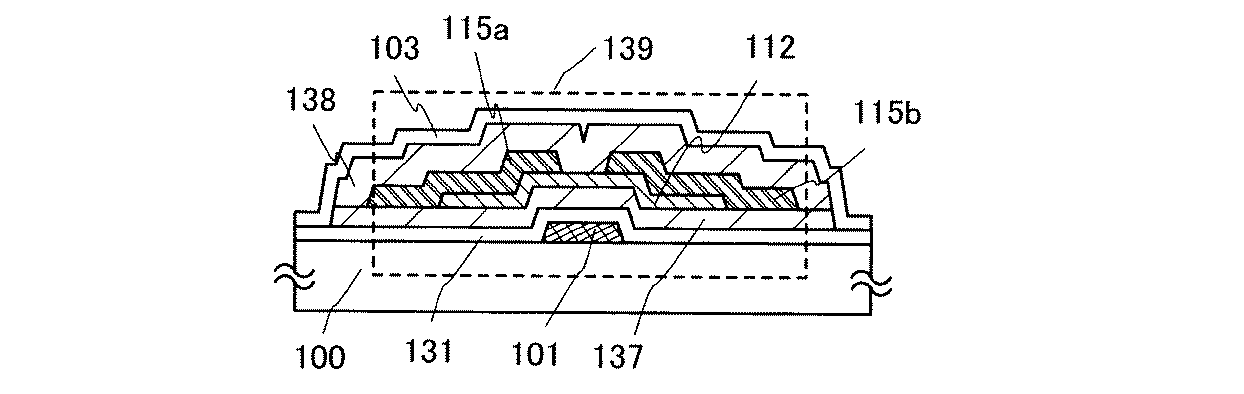
表1に示すように、水素は酸素やシリコンと結合するよりも、フッ素と結合しやすい事がわかる。よって、フッ素が添加されたSiOxを層間膜に用いる事で、加熱処理によりマイグレーションしている水素はSiOx中のフッ素と結合して安定化し、捉えられやすいと言える。 As shown in Table 1, it can be seen that hydrogen is more likely to bind to fluorine than to oxygen or silicon. Therefore, it can be said that by using SiO x to which fluorine is added for the interlayer film, hydrogen migrated by the heat treatment is combined with fluorine in SiO x to be stabilized and easily captured.
フッ素や塩素に代表されるハロゲン元素は電気陰性度が大きいために、不純物である水素の電気陰性度との差が大きく、ハロゲン元素と水素とはイオン結合の結合力が大きく作用する。 Since halogen elements typified by fluorine and chlorine have a large electronegativity, there is a large difference from the electronegativity of hydrogen, which is an impurity, and the binding force of ionic bonds acts greatly between halogen elements and hydrogen.
従って、ゲート絶縁層又は/及び絶縁層に含まれるハロゲン元素により、酸化物半導体層中の水素や水分(水素原子や、H2Oなど水素原子を含む化合物)などの不純物をゲート絶縁層又は/及び絶縁層へより効果的に拡散し、酸化物半導体層中より排除することができる。 Therefore, an impurity such as hydrogen or moisture (a hydrogen atom or a compound containing a hydrogen atom such as H 2 O) in the oxide semiconductor layer is removed from the gate insulating layer or / and the halogen element contained in the gate insulating layer or / and the insulating layer. And more effectively diffused into the insulating layer and eliminated from the oxide semiconductor layer.
本実施の形態では、ゲート絶縁層にハロゲン元素を含ませる例であり、酸化物半導体層112に接して設けられるゲート絶縁層132はハロゲン元素を含む。
In this embodiment, the gate insulating layer contains a halogen element, and the
図25は、酸化物半導体を用いた逆スタガ型の薄膜トランジスタの縦断面図を示す。ゲート電極(GE1)上にゲート絶縁膜(GI)を介して酸化物半導体層(OS)が設けられ、その上にソース電極(S)及びドレイン電極(D)が設けられている。 FIG. 25 is a longitudinal sectional view of an inverted staggered thin film transistor using an oxide semiconductor. An oxide semiconductor layer (OS) is provided over the gate electrode (GE1) through a gate insulating film (GI), and a source electrode (S) and a drain electrode (D) are provided thereover.
図26は、図25に示すA−A’断面におけるエネルギーバンド図(模式図)を示す。図26(A)はソースとドレインの間の電圧を等電位(VD=0V)とした場合を示し、図26(B)はソースに対しドレインに正の電位(VD>0)を加えた場合を示す。 FIG. 26 shows an energy band diagram (schematic diagram) in the A-A ′ cross section shown in FIG. 25. FIG. 26A shows the case where the voltage between the source and the drain is equipotential (VD = 0V), and FIG. 26B shows the case where a positive potential (VD> 0) is applied to the drain with respect to the source. Indicates.
図27は、図25におけるB−B’の断面におけるエネルギーバンド図(模式図)である。図27(A)はゲート(G1)に正の電位(+VG)が印加された状態であり、ソースとドレインと間にキャリア(電子)が流れるオン状態を示している。また、図27(B)は、ゲート(G1)に負の電位(−VG)が印加された状態であり、オフ状態(少数キャリアは流れない)である場合を示す。 FIG. 27 is an energy band diagram (schematic diagram) of the B-B ′ cross section in FIG. 25. FIG. 27A shows a state where a positive potential (+ VG) is applied to the gate (G1), and shows an on state in which carriers (electrons) flow between the source and the drain. FIG. 27B illustrates a case where a negative potential (−VG) is applied to the gate (G1) and an off state (minority carriers do not flow).
図28は、真空準位と金属の仕事関数(φM)、酸化物半導体の電子親和力(χ)の関係を示す。 FIG. 28 shows the relationship between the vacuum level, the metal work function (φM), and the electron affinity (χ) of the oxide semiconductor.
常温において金属中の電子は縮退しており、フェルミ準位は伝導帯内に位置する。一方、従来の酸化物半導体は一般にn型であり、その場合のフェルミ準位(EF)は、バンドギャップ中央に位置する真性フェルミ準位(Ei)から離れて、伝導帯寄りに位置している。なお、酸化物半導体において水素はドナーでありn型化する一つの要因であることが知られている。 At room temperature, the electrons in the metal are degenerated and the Fermi level is located in the conduction band. On the other hand, conventional oxide semiconductors are generally n-type, and the Fermi level (E F ) in that case is located away from the intrinsic Fermi level (Ei) located at the center of the band gap and closer to the conduction band. Yes. Note that in an oxide semiconductor, hydrogen is a donor and is known to be one factor of becoming n-type.
これに対して本発明に係る酸化物半導体は、n型不純物である水素を酸化物半導体から除去し、酸化物半導体の主成分以外の不純物が極力含まれないように高純度化することにより真性(i型)とし、又は真性型とせんとしたものである。すなわち、不純物を添加してi型化するのでなく、水素や水等の不純物を極力除去したことにより、高純度化されたi型(真性半導体)又はそれに近づけることを特徴としている。そうすることにより、フェルミ準位(EF)は真性フェルミ準位(Ei)と同じレベルにまですることができる。 On the other hand, the oxide semiconductor according to the present invention is intrinsic by removing hydrogen, which is an n-type impurity, from the oxide semiconductor and purifying it so that impurities other than the main component of the oxide semiconductor are contained as much as possible. (I-type) or intrinsic type. That is, the impurity is not made i-type by adding impurities, but by removing impurities such as hydrogen and water as much as possible, it is characterized by being highly purified i-type (intrinsic semiconductor) or approaching it. By doing so, the Fermi level (E F ) can be brought to the same level as the intrinsic Fermi level (Ei).
酸化物半導体のバンドギャップ(Eg)が3.15eVである場合、電子親和力(χ)は4.3eVと言われている。ソース電極及びドレイン電極を構成するチタン(Ti)の仕事関数は、酸化物半導体の電子親和力(χ)とほぼ等しい。この場合、金属−酸化物半導体界面において、電子に対してショットキー型の障壁は形成されない。 When the band gap (Eg) of an oxide semiconductor is 3.15 eV, the electron affinity (χ) is said to be 4.3 eV. The work function of titanium (Ti) constituting the source electrode and the drain electrode is substantially equal to the electron affinity (χ) of the oxide semiconductor. In this case, no Schottky barrier is formed for electrons at the metal-oxide semiconductor interface.
すなわち、金属の仕事関数(φM)と酸化物半導体の電子親和力(χ)がほぼ等しい場合、両者が接触すると図26(A)で示すようなエネルギーバンド図(模式図)が示される。 That is, when the work function (φM) of the metal and the electron affinity (χ) of the oxide semiconductor are approximately equal, an energy band diagram (schematic diagram) as shown in FIG.
図26(B)において黒丸(●)は電子を示し、ドレインに正の電位が印加されると、電子はバリア(h)をこえて酸化物半導体に注入され、ドレインに向かって流れる。この場合、バリア(h)の高さは、ゲート電圧とドレイン電圧に依存して変化するが、正のドレイン電圧が印加された場合には、電圧印加のない図26(A)のバリアの高さすなわちバンドギャップ(Eg)の1/2よりもバリア(h)の高さは小さい値となる。 In FIG. 26B, black circles (●) indicate electrons, and when a positive potential is applied to the drain, the electrons are injected into the oxide semiconductor over the barrier (h) and flow toward the drain. In this case, the height of the barrier (h) changes depending on the gate voltage and the drain voltage. However, when a positive drain voltage is applied, the height of the barrier in FIG. That is, the height of the barrier (h) is smaller than ½ of the band gap (Eg).
このとき電子は、図27(A)で示すようにゲート絶縁膜と高純度化された酸化物半導体との界面における、酸化物半導体側のエネルギー的に安定な最低部を移動する。 At this time, as shown in FIG. 27A, electrons move through the lowest part of the oxide semiconductor side, which is stable in terms of energy, at the interface between the gate insulating film and the highly purified oxide semiconductor.
また、図27(B)において、ゲート電極(G1)に負の電位(逆バイアス)が印加されると、少数キャリアであるホールは実質的にゼロであるため、電流は限りなくゼロに近い値となる。 In FIG. 27B, when a negative potential (reverse bias) is applied to the gate electrode (G1), the number of holes that are minority carriers is substantially zero; It becomes.
例えば、薄膜トランジスタのチャネル幅Wが1×104μmでチャネル長が3μmの素子であっても、オフ電流が10−13A以下であり、サブスレッショルドスイング値(S値)が0.1V/dec.(ゲート絶縁膜厚100nm)が得られる。
For example, even if the thin film transistor has a channel width W of 1 × 10 4 μm and a channel length of 3 μm, the off-current is 10 −13 A or less, and the subthreshold swing value (S value) is 0.1 V / dec. . (Gate insulating
このように、酸化物半導体の主成分以外の不純物が極力含まれないように高純度化することにより、薄膜トランジスタの動作を良好なものとすることができる。 In this manner, the operation of the thin film transistor can be improved by purification so that impurities other than the main component of the oxide semiconductor are included as much as possible.
また、薄膜トランジスタ110はシングルゲート構造の薄膜トランジスタを用いて説明するが、必要に応じて、チャネル形成領域を複数有するマルチゲート構造の薄膜トランジスタも形成することができる。
Although the
以下、図1(A)乃至(F)を用い、基板100上に薄膜トランジスタ110を作製する工程を説明する。
Hereinafter, a process for manufacturing the
まず、絶縁表面を有する基板100上に導電膜を形成した後、第1のフォトリソグラフィ工程及びエッチング工程によりゲート電極層101を形成する(図1(A)参照。)。形成されたゲート電極層の端部はテーパ形状であると、上に積層するゲート絶縁層の被覆性が向上するため好ましい。なお、レジストマスクをインクジェット法で形成してもよい。レジストマスクをインクジェット法で形成するとフォトマスクを使用しないため、製造コストを低減できる。
First, after a conductive film is formed over the
絶縁表面を有する基板100に使用することができる基板に大きな制限はないが、少なくとも、後の加熱処理に耐えうる程度の耐熱性を有していることが必要となる。バリウムホウケイ酸ガラスやアルミノホウケイ酸ガラスなどのガラス基板を用いることができる。
There is no particular limitation on a substrate that can be used as the
また、ガラス基板としては、後の加熱処理の温度が高い場合には、歪み点が730℃以上のものを用いると良い。また、ガラス基板には、例えば、アルミノシリケートガラス、アルミノホウケイ酸ガラス、バリウムホウケイ酸ガラスなどのガラス材料が用いられている。なお、酸化ホウ酸と比較して酸化バリウム(BaO)を多く含ませることで、より実用的な耐熱ガラスが得られる。このため、B2O3よりBaOを多く含むガラス基板を用いることが好ましい。 As the glass substrate, a glass substrate having a strain point of 730 ° C. or higher is preferably used when the temperature of the subsequent heat treatment is high. For the glass substrate, for example, a glass material such as aluminosilicate glass, aluminoborosilicate glass, or barium borosilicate glass is used. In addition, a more practical heat-resistant glass can be obtained by containing more barium oxide (BaO) than boric oxide. For this reason, it is preferable to use a glass substrate containing more BaO than B 2 O 3 .
なお、上記のガラス基板に代えて、セラミック基板、石英基板、サファイア基板などの絶縁体でなる基板を用いても良い。他にも、結晶化ガラスなどを用いることができる。また、プラスチック基板等も適宜用いることができる。 Note that a substrate formed of an insulator such as a ceramic substrate, a quartz substrate, or a sapphire substrate may be used instead of the glass substrate. In addition, crystallized glass or the like can be used. A plastic substrate or the like can also be used as appropriate.
下地膜となる絶縁膜を基板100とゲート電極層101との間に設けてもよい。下地膜は、基板100からの不純物元素の拡散を防止する機能があり、窒化シリコン膜、酸化シリコン膜、窒化酸化シリコン膜、又は酸化窒化シリコン膜から選ばれた一又は複数の膜による積層構造により形成することができる。
An insulating film serving as a base film may be provided between the
また、ゲート電極層101の材料は、モリブデン、チタン、クロム、タンタル、タングステン、アルミニウム、銅、ネオジム、スカンジウム等の金属材料又はこれらを主成分とする合金材料を用いて、単層で又は積層して形成することができる。
The material of the
例えば、ゲート電極層101の2層の積層構造としては、アルミニウム層上にモリブデン層が積層された2層の積層構造、または銅層上にモリブデン層を積層した2層構造、または銅層上に窒化チタン層若しくは窒化タンタル層を積層した2層構造、窒化チタン層とモリブデン層とを積層した2層構造とすることが好ましい。3層の積層構造としては、タングステン層または窒化タングステン層と、アルミニウムとシリコンの合金層またはアルミニウムとチタンの合金層と、窒化チタン層またはチタン層とを積層した積層や、モリブデン層、アルミニウム層、モリブデン層の3層を用いることができる。なお、透光性を有する導電膜を用いてゲート電極層を形成することもできる。透光性を有する導電膜としては、透光性導電性酸化物等をその例に挙げることができる。
For example, the two-layer structure of the
次いで、ゲート電極層101上にゲート絶縁層を形成する。本実施の形態では、ゲート絶縁層にハロゲン元素を含ませて形成する。ゲート絶縁層が積層構造の場合、少なくとも酸化物半導体層に接するゲート絶縁層にハロゲン元素を含ませる。
Next, a gate insulating layer is formed over the
ゲート絶縁層は、プラズマCVD法又はスパッタリング法等を用いて、酸化シリコン層、窒化シリコン層、酸化窒化シリコン層、窒化酸化シリコン層、又は酸化アルミニウム層を単層で又は積層して形成することができる。スパッタリング法により酸化シリコン層を成膜する場合には、ターゲットとしてシリコンターゲット又は石英ターゲットを用い、スパッタガスとして酸素又は、酸素及びアルゴンの混合ガスを用いて行う。 The gate insulating layer may be formed using a single layer or a stacked layer of a silicon oxide layer, a silicon nitride layer, a silicon oxynitride layer, a silicon nitride oxide layer, or an aluminum oxide layer by a plasma CVD method, a sputtering method, or the like. it can. In the case of forming a silicon oxide layer by a sputtering method, a silicon target or a quartz target is used as a target, and oxygen or a mixed gas of oxygen and argon is used as a sputtering gas.
ここで、不純物を除去することによりi型化又は実質的にi型化された酸化物半導体(高純度化された酸化物半導体)は界面準位、界面電荷に対して極めて敏感であるため、ゲート絶縁層との界面は重要である。そのため高純度化された酸化物半導体に接するゲート絶縁層(GI)は、高品質化が要求される。 Here, by removing impurities, an i-type or substantially i-type oxide semiconductor (a highly purified oxide semiconductor) is extremely sensitive to interface states and interface charges. The interface with the gate insulating layer is important. Therefore, the gate insulating layer (GI) in contact with the highly purified oxide semiconductor is required to have high quality.
例えば、μ波(2.45GHz)を用いた高密度プラズマCVDは、緻密で絶縁耐圧の高い高品質な絶縁層を形成できるので好ましい。高純度化された酸化物半導体と高品質ゲート絶縁層とが密接することにより、界面準位を低減して界面特性を良好なものとすることができるからである。 For example, high-density plasma CVD using μ-wave (2.45 GHz) is preferable because a high-quality insulating layer with high density and high withstand voltage can be formed. This is because when the highly purified oxide semiconductor and the high-quality gate insulating layer are in close contact with each other, the interface state can be reduced and interface characteristics can be improved.
もちろん、ゲート絶縁層として良質な絶縁層を形成できるものであれば、スパッタリング法やプラズマCVD法など他の成膜方法を適用することができる。また、成膜後の熱処理によってゲート絶縁層の膜質、酸化物半導体との界面特性が改質される絶縁層であっても良い。いずれにしても、ゲート絶縁層としての膜質が良好であることは勿論のこと、酸化物半導体との界面準位密度を低減し、良好な界面を形成できるものであれば良い。 Needless to say, another film formation method such as a sputtering method or a plasma CVD method can be used as long as a high-quality insulating layer can be formed as the gate insulating layer. Alternatively, an insulating layer in which the film quality of the gate insulating layer and the interface characteristics with the oxide semiconductor are modified by heat treatment after film formation may be used. In any case, any film can be used as long as it can reduce the interface state density with an oxide semiconductor and form a favorable interface as well as the film quality as a gate insulating layer is good.
さらに、85℃、2×10⁶V/cm、12時間のゲートバイアス・熱ストレス試験(BT試験)においては、不純物が酸化物半導体に添加されていると、不純物と酸化物半導体の主成分との結合手が、強電界(B:バイアス)と高温(T:温度)により切断され、生成された不対結合手がしきい値電圧(Vth)のドリフトを誘発することとなる。 Further, in the gate bias / thermal stress test (BT test) for 12 hours at 85 ° C., 2 × 10 6 V / cm, when impurities are added to the oxide semiconductor, the impurities and the main components of the oxide semiconductor are These bonds are disconnected by a strong electric field (B: bias) and high temperature (T: temperature), and the generated unpaired bonds induce a threshold voltage (Vth) drift.
これに対して、本明細書に開示する発明は、酸化物半導体の不純物、特に水素や水等を極力除去し、上記のようにゲート絶縁層との界面特性を良好にすることにより、BT試験に対しても安定な薄膜トランジスタを得ることを可能としている。 In contrast, the invention disclosed in this specification removes impurities of oxide semiconductors, particularly hydrogen and water, as much as possible, and improves the interface characteristics with the gate insulating layer as described above, thereby performing the BT test. It is possible to obtain a stable thin film transistor.
本実施の形態では、ゲート電極層101側からゲート絶縁層131、ゲート絶縁層132の積層構造でゲート絶縁層を形成する(図1(B)参照。)。積層するゲート絶縁層は、ゲート電極層101側から窒化シリコン層と酸化シリコン層の積層構造を用いることができる。ゲート絶縁層131としてスパッタリング法により膜厚50nm以上200nm以下の窒化シリコン層(SiNy(y>0))を形成し、ゲート絶縁層131上にゲート絶縁層132として膜厚5nm以上300nm以下のハロゲン元素を含む酸化シリコン層(SiOx(x>0))を積層して、膜厚100nmのゲート絶縁層とする。
In this embodiment, the gate insulating layer is formed with a stacked structure of the
ハロゲン元素は成膜中にゲート絶縁層に含まれるように、成膜ガス(スパッタガス)に導入してもよいし、前工程におけるクリーニング処理によって処理室に残留したハロゲン元素を用いて膜中に含ませてもよい。また、成膜後にゲート絶縁層に添加してもよい。 The halogen element may be introduced into a deposition gas (sputtering gas) so as to be included in the gate insulating layer during the film formation, or the halogen element remaining in the processing chamber by the cleaning process in the previous process may be used in the film. It may be included. Further, it may be added to the gate insulating layer after film formation.
成膜ガス(スパッタガス)として成膜中に導入されるハロゲン元素を含むガスとしては、NF3などを用いることができる。また、成膜を行う処理室のクリーニング処理に上記NF3のようなハロゲン元素を含むガスを用いて、処理室内に残留するフッ素などのハロゲン元素を成膜時にゲート絶縁層に含ませるように成膜することができる。上記のように成膜と同時にハロゲン元素をゲート絶縁層に添加すると、工程数を増加させずに、ハロゲン元素を含むゲート絶縁層を形成できる利点がある。 As a gas containing a halogen element introduced during film formation as a film formation gas (sputtering gas), NF 3 or the like can be used. In addition, a gas containing a halogen element such as NF 3 is used for cleaning treatment of a treatment chamber in which film formation is performed, and a halogen element such as fluorine remaining in the treatment chamber is included in the gate insulating layer at the time of film formation. Can be membrane. When a halogen element is added to the gate insulating layer simultaneously with film formation as described above, there is an advantage that a gate insulating layer containing a halogen element can be formed without increasing the number of steps.
ハロゲン元素を含むガスとしては、フッ素を含むガス(フッ素系ガス、例えば四弗化炭素(CF4)、弗化硫黄(SF6)、弗化窒素(NF3)、トリフルオロメタン(CHF3)など)、塩素を含むガス(塩素系ガス、例えば塩素(Cl2)、塩化硼素(BCl3)、塩化珪素(SiCl4)、四塩化炭素(CCl4)など)などを適宜用いることができる。 Examples of the gas containing a halogen element include a gas containing fluorine (fluorine-based gas such as carbon tetrafluoride (CF 4 ), sulfur fluoride (SF 6 ), nitrogen fluoride (NF 3 ), trifluoromethane (CHF 3 ), and the like. ), A gas containing chlorine (chlorine-based gas such as chlorine (Cl 2 ), boron chloride (BCl 3 ), silicon chloride (SiCl 4 ), carbon tetrachloride (CCl 4 ), or the like can be used as appropriate.
また、ゲート絶縁層を、成膜する際に用いる成膜ガス(ハロゲン元素を含むガスも含め)も水素、水、水酸基又は水素化物などの不純物が、濃度ppm程度、濃度ppb程度まで除去された高純度ガスを用いることが好ましい。 In addition, impurities such as hydrogen, water, a hydroxyl group, or hydride are removed to a concentration of about ppm and a concentration of about ppb in a film formation gas (including a gas containing a halogen element) used for forming the gate insulating layer. It is preferable to use a high purity gas.
また、ゲート絶縁層131、ゲート絶縁層132に水素、水酸基及び水分がなるべく含まれないようにするために、成膜の前処理として、スパッタリング装置の予備加熱室でゲート電極層101が形成された基板100を200℃以上の温度で加熱し、基板100に吸着した不純物を除去することが好ましい。
In order to prevent the
次いで、ゲート絶縁層131、ゲート絶縁層132上に、膜厚2nm以上200nm以下の酸化物半導体膜を形成する。
Next, an oxide semiconductor film with a thickness of 2 nm to 200 nm is formed over the
なお、酸化物半導体膜をスパッタリング法により成膜する前に、アルゴンガスを導入してプラズマを発生させる逆スパッタを行い、ゲート絶縁層132の表面に付着しているゴミを除去することが好ましい。逆スパッタとは、ターゲット側に電圧を印加せずに、アルゴン雰囲気下で基板側にRF電源を用いて電圧を印加して基板近傍にプラズマを形成して表面を改質する方法である。なお、アルゴン雰囲気に代えて窒素、ヘリウム、酸素などを用いてもよい。
Note that before the oxide semiconductor film is formed by a sputtering method, it is preferable that reverse sputtering in which an argon gas is introduced to generate plasma is performed to remove dust attached to the surface of the
酸化物半導体膜はスパッタリング法により成膜する。酸化物半導体膜は、In−Ga−Zn−O系非単結晶膜、In−Sn−Zn−O系、In−Al−Zn−O系、Sn−Ga−Zn−O系、Al−Ga−Zn−O系、Sn−Al−Zn−O系、In−Zn−O系、Sn−Zn−O系、Al−Zn−O系、In−O系、Sn−O系、Zn−O系の酸化物半導体膜を用いる。本実施の形態では、酸化物半導体膜をIn−Ga−Zn−O系酸化物半導体ターゲットを用いてスパッタリング法により成膜する。また、酸化物半導体膜は、スパッタガスとして希ガス(代表的にはアルゴン)、酸素、又は希ガス(代表的にはアルゴン)及び酸素を用いることができ、該スパッタガスの雰囲気下においてスパッタリング法により形成することができる。また、スパッタリング法を用いる場合、SiO2を2重量%以上10重量%以下含むターゲットを用いて成膜を行ってもよい。 The oxide semiconductor film is formed by a sputtering method. An oxide semiconductor film includes an In—Ga—Zn—O-based non-single-crystal film, an In—Sn—Zn—O-based film, an In—Al—Zn—O-based film, a Sn—Ga—Zn—O-based film, and an Al—Ga— film. Zn-O, Sn-Al-Zn-O, In-Zn-O, Sn-Zn-O, Al-Zn-O, In-O, Sn-O, Zn-O An oxide semiconductor film is used. In this embodiment, the oxide semiconductor film is formed by a sputtering method with the use of an In—Ga—Zn—O-based oxide semiconductor target. For the oxide semiconductor film, a rare gas (typically argon), oxygen, or a rare gas (typically argon) and oxygen can be used as a sputtering gas. A sputtering method is performed in an atmosphere of the sputtering gas. Can be formed. In the case where the sputtering method is used, the film may be formed using a target containing 2 wt% or more and 10 wt% or less of SiO 2 .
酸化物半導体膜を、成膜する際に用いるスパッタガスは水素、水、水酸基又は水素化物などの不純物が、濃度ppm程度、濃度ppb程度まで除去された高純度ガスを用いることが好ましい。 As a sputtering gas used for forming the oxide semiconductor film, a high-purity gas from which impurities such as hydrogen, water, a hydroxyl group, or hydride are removed to a concentration of about ppm and a concentration of ppb is preferably used.
酸化物半導体膜をスパッタリング法で作製するためのターゲットとして、酸化亜鉛を主成分とする金属酸化物のターゲットを用いることができる。また、金属酸化物のターゲットの他の例としては、In、Ga、及びZnを含む酸化物半導体ターゲット(組成比として、In2O3:Ga2O3:ZnO=1:1:1[mol数比]、In:Ga:Zn=1:1:0.5[at.比])を用いることができる。また、In、Ga、及びZnを含む酸化物半導体ターゲットとして、In:Ga:Zn=1:1:1[atom比]、又はIn:Ga:Zn=1:1:2[atom比]の組成比を有するターゲットを用いることもできる。酸化物半導体ターゲットの充填率は90%以上100%以下、好ましくは95%以上99.9%以下である。充填率の高い酸化物半導体ターゲットを用いることにより、成膜した酸化物半導体膜は緻密な膜となる。 As a target for forming the oxide semiconductor film by a sputtering method, a metal oxide target containing zinc oxide as a main component can be used. As another example of the metal oxide target, an oxide semiconductor target containing In, Ga, and Zn (composition ratio: In 2 O 3 : Ga 2 O 3 : ZnO = 1: 1: 1 [mol Number ratio], In: Ga: Zn = 1: 1: 0.5 [at. Ratio]). As an oxide semiconductor target containing In, Ga, and Zn, a composition of In: Ga: Zn = 1: 1: 1 [atom ratio] or In: Ga: Zn = 1: 1: 2 [atom ratio] is used. A target having a ratio can also be used. The filling rate of the oxide semiconductor target is 90% to 100%, preferably 95% to 99.9%. By using an oxide semiconductor target with a high filling rate, the formed oxide semiconductor film becomes a dense film.
減圧状態に保持された処理室内に基板を保持し、基板を400℃未満の温度に加熱する。そして、処理室内の残留水分を除去しつつ水素及び水分が除去されたスパッタガスを導入し、金属酸化物をターゲットとして基板100上に酸化物半導体膜を成膜する。処理室内の残留水分を除去するためには、吸着型の真空ポンプを用いることが好ましい。例えば、クライオポンプ、イオンポンプ、チタンサブリメーションポンプを用いることが好ましい。また、排気手段としては、ターボ分子ポンプにコールドトラップを加えたものであってもよい。クライオポンプを用いて排気した成膜室は、例えば、水素原子や、H2Oなど水素原子を含む化合物や、炭素原子を含む化合物等が排気されるため、当該成膜室で成膜した酸化物半導体膜に含まれる不純物の濃度を低減できる。
The substrate is held in a processing chamber kept under reduced pressure, and the substrate is heated to a temperature of less than 400 ° C. Then, a sputtering gas from which hydrogen and moisture are removed is introduced while moisture remaining in the treatment chamber is removed, and an oxide semiconductor film is formed over the
成膜条件の一例としては、基板とターゲットの間との距離を100mm、圧力0.6Pa、直流(DC)電源0.5kW、酸素(酸素流量比率100%)雰囲気下の条件が適用される。なお、パルス直流(DC)電源を用いると、ごみが軽減でき、膜厚分布も均一となるために好ましい。酸化物半導体膜は好ましくは5nm以上30nm以下とする。なお、適用する酸化物半導体材料により適切な厚みは異なり、材料に応じて適宜厚みを選択すればよい。 As an example of the film forming conditions, the distance between the substrate and the target is 100 mm, the pressure is 0.6 Pa, the direct current (DC) power source is 0.5 kW, and the oxygen (oxygen flow rate is 100%) atmosphere is applied. Note that a pulse direct current (DC) power source is preferable because dust can be reduced and the film thickness can be uniform. The oxide semiconductor film is preferably 5 nm to 30 nm. Note that an appropriate thickness differs depending on an oxide semiconductor material to be used, and the thickness may be selected as appropriate depending on the material.
上記のようにして酸化物半導体膜をスパッタリング法で成膜することで、二次イオン質量分析(SIMS:Secondary Ion Mass Spectrometry)による水素濃度の定量結果が5×10¹⁹atoms/cm3以下、好ましくは1×1019atoms/cm3以下(さらに好ましくは5×1018atoms/cm3以下)、に抑制された酸化物半導体膜を得ることができる。 By forming an oxide semiconductor film by a sputtering method as described above, a quantitative result of the hydrogen concentration by secondary ion mass spectrometry (SIMS) is 5 × 10 19 atoms / cm 3 or less, preferably Can provide an oxide semiconductor film suppressed to 1 × 10 19 atoms / cm 3 or less (more preferably 5 × 10 18 atoms / cm 3 or less).
酸化物半導体膜は、成膜時に膜にダメージを与えないようなスパッタリング条件で成膜する。また、基板を400℃未満の温度として成膜することによって、高温の加熱処理による酸化物半導体膜の変質(例えば、In−Ga−Zn−O系非単結晶膜であれば、ZnOが膜の外部に析出してしまうなど)を防止することができる。 The oxide semiconductor film is formed under sputtering conditions that do not damage the film during film formation. In addition, when the substrate is formed at a temperature lower than 400 ° C., the oxide semiconductor film is altered by high-temperature heat treatment (for example, in the case of an In—Ga—Zn—O-based non-single-crystal film, ZnO can be Etc.).
スパッタリング法にはスパッタ用電源に高周波電源を用いるRFスパッタリング法と、DCスパッタリング法があり、さらにパルス的にバイアスを与えるパルスDCスパッタリング法もある。RFスパッタリング法は主に絶縁膜を成膜する場合に用いられ、DCスパッタリング法は主に金属膜を成膜する場合に用いられる。 Sputtering methods include an RF sputtering method using a high frequency power source as a sputtering power source and a DC sputtering method, and also a pulsed DC sputtering method that applies a bias in a pulsed manner. The RF sputtering method is mainly used when an insulating film is formed, and the DC sputtering method is mainly used when a metal film is formed.
また、材料の異なるターゲットを複数設置できる多元スパッタ装置もある。多元スパッタ装置は、同一チャンバーで異なる材料膜を積層成膜することも、同一チャンバーで複数種類の材料を同時に放電させて成膜することもできる。 There is also a multi-source sputtering apparatus in which a plurality of targets of different materials can be installed. The multi-source sputtering apparatus can be formed by stacking different material films in the same chamber, or by simultaneously discharging a plurality of types of materials in the same chamber.
また、チャンバー内部に磁石機構を備えたマグネトロンスパッタリング法を用いるスパッタ装置や、グロー放電を使わずマイクロ波を用いて発生させたプラズマを用いるECRスパッタリング法を用いるスパッタ装置がある。 Further, there are a sputtering apparatus using a magnetron sputtering method having a magnet mechanism inside a chamber, and a sputtering apparatus using an ECR sputtering method using plasma generated using microwaves without using glow discharge.
また、スパッタリング法を用いる成膜方法として、成膜中にターゲット物質とスパッタガス成分とを化学反応させてそれらの化合物薄膜を形成するリアクティブスパッタリング法や、成膜中に基板にも電圧をかけるバイアススパッタリング法もある。 In addition, as a film formation method using a sputtering method, a reactive sputtering method in which a target material and a sputtering gas component are chemically reacted during film formation to form a compound thin film thereof, or a voltage is applied to the substrate during film formation. There is also a bias sputtering method.
次いで、酸化物半導体膜を第2のフォトリソグラフィ工程及びエッチング工程により島状の酸化物半導体層121に加工する(図1(C)参照。)。また、島状の酸化物半導体層121を形成するためのレジストマスクをインクジェット法で形成してもよい。レジストマスクをインクジェット法で形成するとフォトマスクを使用しないため、製造コストを低減できる。
Next, the oxide semiconductor film is processed into an island-shaped
また、ゲート絶縁層132にコンタクトホールを形成する場合、その工程は酸化物半導体層121の形成時に行うことができる。
In the case where a contact hole is formed in the
なお、ここでの酸化物半導体膜のエッチングは、ドライエッチングでもウェットエッチングでもよく、両方を用いてもよい。 Note that the etching of the oxide semiconductor film here may be either dry etching or wet etching, or both.
ドライエッチングに用いるエッチングガスとしては、塩素を含むガス(塩素系ガス、例えば塩素(Cl2)、塩化硼素(BCl3)、塩化珪素(SiCl4)、四塩化炭素(CCl4)など)が好ましい。 As an etching gas used for dry etching, a gas containing chlorine (chlorine-based gas such as chlorine (Cl 2 ), boron chloride (BCl 3 ), silicon chloride (SiCl 4 ), carbon tetrachloride (CCl 4 ), or the like) is preferable. .
また、フッ素を含むガス(フッ素系ガス、例えば四弗化炭素(CF4)、弗化硫黄(SF6)、弗化窒素(NF3)、トリフルオロメタン(CHF3)など)、臭化水素(HBr)、酸素(O2)、これらのガスにヘリウム(He)やアルゴン(Ar)などの希ガスを添加したガス、などを用いることができる。 In addition, a gas containing fluorine (fluorine-based gas such as carbon tetrafluoride (CF 4 ), sulfur fluoride (SF 6 ), nitrogen fluoride (NF 3 ), trifluoromethane (CHF 3 ), etc.), hydrogen bromide ( HBr), oxygen (O 2 ), a gas obtained by adding a rare gas such as helium (He) or argon (Ar) to these gases, or the like can be used.
ドライエッチング法としては、平行平板型RIE(Reactive Ion Etching)法や、ICP(Inductively Coupled Plasma:誘導結合型プラズマ)エッチング法を用いることができる。所望の加工形状にエッチングできるように、エッチング条件(コイル型の電極に印加される電力量、基板側の電極に印加される電力量、基板側の電極温度等)を適宜調節する。 As the dry etching method, a parallel plate RIE (Reactive Ion Etching) method or an ICP (Inductively Coupled Plasma) etching method can be used. Etching conditions (such as the amount of power applied to the coil-type electrode, the amount of power applied to the substrate-side electrode, the substrate-side electrode temperature, etc.) are adjusted as appropriate so that the desired processed shape can be etched.
ウェットエッチングに用いるエッチング液としては、燐酸と酢酸と硝酸を混ぜた溶液、アンモニア過水(31重量%過酸化水素水:28重量%アンモニア水:水=5:2:2)などを用いることができる。また、ITO07N(関東化学社製)を用いてもよい。 As an etchant used for wet etching, a mixed solution of phosphoric acid, acetic acid, and nitric acid, ammonia perwater (31 wt% hydrogen peroxide solution: 28 wt% ammonia water: water = 5: 2: 2), or the like may be used. it can. In addition, ITO07N (manufactured by Kanto Chemical Co., Inc.) may be used.
また、ウェットエッチング後のエッチング液はエッチングされた材料とともに洗浄によって除去される。その除去された材料を含むエッチング液の廃液を精製し、含まれる材料を再利用してもよい。当該エッチング後の廃液から酸化物半導体層に含まれるインジウム等の材料を回収して再利用することにより、資源を有効活用し低コスト化することができる。 In addition, the etchant after the wet etching is removed by cleaning together with the etched material. The waste solution of the etching solution containing the removed material may be purified and the contained material may be reused. By recovering and reusing materials such as indium contained in the oxide semiconductor layer from the waste liquid after the etching, resources can be effectively used and costs can be reduced.
所望の加工形状にエッチングできるように、材料に合わせてエッチング条件(エッチング液、エッチング時間、温度等)を適宜調節する。 Etching conditions (such as an etchant, etching time, and temperature) are adjusted as appropriate depending on the material so that the material can be etched into a desired shape.
なお、次工程の導電膜を形成する前に逆スパッタを行い、酸化物半導体層121及びゲート絶縁層132の表面に付着しているレジスト残渣などを除去することが好ましい。
Note that before the conductive film in the next step is formed, reverse sputtering is preferably performed to remove a resist residue or the like attached to the surfaces of the
次いで、ゲート絶縁層132、及び酸化物半導体層121上に、導電膜を形成する。導電膜をスパッタリング法や真空蒸着法で形成すればよい。導電膜の材料としては、Al、Cr、Cu、Ta、Ti、Mo、Wから選ばれた元素、または上述した元素を成分とする合金か、上述した元素を組み合わせた合金膜等が挙げられる。また、マンガン、マグネシウム、ジルコニウム、ベリリウム、トリウムのいずれか一または複数から選択された材料を用いてもよい。また、金属導電膜は、単層構造でも、2層以上の積層構造としてもよい。例えば、シリコンを含むアルミニウム膜の単層構造、アルミニウム膜上にチタン膜を積層する2層構造、Ti膜と、そのTi膜上に重ねてアルミニウム膜を積層し、さらにその上にTi膜を成膜する3層構造などが挙げられる。また、Alに、チタン(Ti)、タンタル(Ta)、タングステン(W)、モリブデン(Mo)、クロム(Cr)、ネオジム(Nd)、スカンジウム(Sc)から選ばれた元素を単数、又は複数組み合わせた膜、合金膜、もしくは窒化膜を用いてもよい。
Next, a conductive film is formed over the
第3のフォトリソグラフィ工程により導電膜上にレジストマスクを形成し、選択的にエッチングを行ってソース電極層115a、ドレイン電極層115bを形成した後、レジストマスクを除去する(図1(D)参照。)。
A resist mask is formed over the conductive film by a third photolithography step, and selective etching is performed to form the
なお、導電膜のエッチングの際に、酸化物半導体層121は除去されないようにそれぞれの材料及びエッチング条件を適宜調節する。
Note that each material and etching conditions are adjusted as appropriate so that the
本実施の形態では、導電膜としてTi膜を用いて、酸化物半導体層121にはIn−Ga−Zn−O系酸化物を用いて、エッチャントとして過水アンモニア水(アンモニア、水、過酸化水素水の混合液)を用いる。
In this embodiment, a Ti film is used as the conductive film, an In—Ga—Zn—O-based oxide is used as the
なお、第3のフォトリソグラフィ工程後のエッチング工程では、酸化物半導体層121は一部のみがエッチングされ、溝部(凹部)を有する酸化物半導体層となることもある。また、ソース電極層115a、ドレイン電極層115bを形成するためのレジストマスクをインクジェット法で形成してもよい。レジストマスクをインクジェット法で形成するとフォトマスクを使用しないため、製造コストを低減できる。
Note that in the etching step after the third photolithography step, only part of the
また、フォトリソグラフィ工程で用いるフォトマスク数及び工程数を削減するため、透過した光が複数の強度となる露光マスクである多階調マスクによって形成されたレジストマスクを用いてエッチング工程を行ってもよい。多階調マスクを用いて形成したレジストマスクは複数の膜厚を有する形状となり、エッチングを行うことでさらに形状を変形することができるため、異なるパターンに加工する複数のエッチング工程に用いることができる。よって、一枚の多階調マスクによって、少なくとも二種類以上の異なるパターンに対応するレジストマスクを形成することができる。よって露光マスク数を削減することができ、対応するフォトリソグラフィ工程も削減できるため、工程の簡略化が可能となる。 In order to reduce the number of photomasks used in the photolithography process and the number of processes, the etching process may be performed using a resist mask formed by a multi-tone mask that is an exposure mask in which transmitted light has a plurality of intensities. Good. A resist mask formed using a multi-tone mask has a shape with a plurality of thicknesses, and the shape can be further deformed by etching. Therefore, the resist mask can be used for a plurality of etching processes for processing into different patterns. . Therefore, a resist mask corresponding to at least two kinds of different patterns can be formed by using one multi-tone mask. Therefore, the number of exposure masks can be reduced, and the corresponding photolithography process can be reduced, so that the process can be simplified.
N2O、N2、またはArなどのガスを用いたプラズマ処理によって露出している酸化物半導体層の表面に付着した吸着水などを除去してもよい。また、酸素とアルゴンの混合ガスを用いてプラズマ処理を行ってもよい。 The adsorbed water attached to the surface of the oxide semiconductor layer exposed by plasma treatment using a gas such as N 2 O, N 2 , or Ar may be removed. Further, plasma treatment may be performed using a mixed gas of oxygen and argon.
プラズマ処理を行った場合、大気に触れることなく、酸化物半導体層の一部に接する保護絶縁膜となる酸化物絶縁層として酸化物絶縁層116を形成する。本実施の形態では、酸化物半導体層121がソース電極層115a、ドレイン電極層115bと重ならない領域において、酸化物半導体層121と酸化物絶縁層116とが接するように形成する(図1(E)参照。)。
In the case where plasma treatment is performed, the
酸化物絶縁層116として、島状の酸化物半導体層121、ソース電極層115a、ドレイン電極層115bまで形成された基板100を100℃未満の温度に加熱し、水素及び水分が除去された高純度酸素を含むスパッタガスを導入しシリコン半導体のターゲットを用いて、酸化シリコン層を成膜する。なお、酸化物絶縁層116は、欠陥を含む酸化シリコン層となるように形成すると好ましい。
The
酸化物絶縁層116を、成膜する際に用いるスパッタガスは水素、水、水酸基又は水素化物などの不純物が、濃度ppm程度、濃度ppb程度まで除去された高純度ガスを用いることが好ましい。
As a sputtering gas used for forming the
例えば、純度が6Nであり、ボロンがドープされたシリコンターゲット(抵抗値0.01Ωcm)を用い、ターゲットと基板との間の距離(T−S間距離)を89mm、圧力0.4Pa、直流(DC)電源6kW、酸素(酸素流量比率100%)雰囲気下でパルスDCスパッタリング法により酸化シリコン層を成膜する。膜厚は300nmとする。なお、シリコンターゲットに代えて石英(好ましくは合成石英)を酸化シリコン層を成膜するためのターゲットとして用いることができる。なお、スパッタガスとして酸素又は、酸素及びアルゴンの混合ガスを用いて行う。 For example, a silicon target (resistance value: 0.01 Ωcm) having a purity of 6N and doped with boron is used, the distance between the target and the substrate (T-S distance) is 89 mm, the pressure is 0.4 Pa, and the direct current ( DC) A silicon oxide layer is formed by a pulsed DC sputtering method in a 6 kW power source and an oxygen (oxygen flow rate ratio: 100%) atmosphere. The film thickness is 300 nm. Note that quartz (preferably synthetic quartz) can be used instead of the silicon target as a target for forming the silicon oxide layer. Note that oxygen or a mixed gas of oxygen and argon is used as a sputtering gas.
この場合において、処理室内の残留水分を除去しつつ酸化物絶縁層116を成膜することが好ましい。酸化物半導体層121及び酸化物絶縁層116に水素、水酸基又は水分が含まれないようにするためである。
In this case, it is preferable that the
なお、酸化物絶縁層116としては、酸化シリコン層に代えて、酸化窒化シリコン層、酸化アルミニウム層、または酸化窒化アルミニウム層などを用いることもできる。
Note that as the
次に、ハロゲン元素を含む酸化物絶縁層であるゲート絶縁層132と酸化物半導体層121とを接した状態で100℃乃至400℃で加熱処理を行う。この加熱処理によって酸化物半導体層121中に含まれる水素若しくは水分をハロゲン元素を含む酸化物絶縁層であるゲート絶縁層132に拡散させることができる。ゲート絶縁層132はハロゲン元素を含むため、島状の酸化物半導体層121に含まれる水素、水酸基又水分等の不純物は、酸化物半導体層121とゲート絶縁層132が接する界面を介して、ゲート絶縁層132に拡散する。具体的には、酸化物半導体層121に含まれる水素原子や、H2Oなど水素原子を含む化合物や、炭素原子を含む化合物等がゲート絶縁層132に拡散し移動し易くなる。
Next, heat treatment is performed at 100 ° C. to 400 ° C. with the
また、酸化物絶縁層116は酸素過剰とし、不対結合手に代表される欠陥を多く含むことが好ましい。欠陥を多く含む酸化物絶縁層116は、主に水素に対して束縛エネルギーがより大きくなり、酸化物半導体層から酸化物絶縁層116への拡散がより促進され、酸化物絶縁層116において不純物が安定化させることができるため好ましい。
The
以上の工程で、水素や水分などの不純物を排除し、水素や水分などの不純物を極低濃度とすることによって、酸化物半導体層表層部のバックチャネル側での寄生チャネルの発生を抑えることができる。 Through the above steps, impurities such as hydrogen and moisture are eliminated, and impurities such as hydrogen and moisture are reduced to a very low concentration, so that generation of parasitic channels on the back channel side of the oxide semiconductor layer surface layer portion can be suppressed. it can.
従って水素及び水素化物の濃度が低減された酸化物半導体層112を有する薄膜トランジスタ110を形成することができる(図1(F)参照。)。
Accordingly, the
上記のように酸化物半導体膜を成膜するに際し、反応雰囲気中の残留水分を除去することで、該酸化物半導体膜中の水素及び水素化物の濃度を低減することができる。それにより酸化物半導体膜の安定化を図ることができる。 When the oxide semiconductor film is formed as described above, residual moisture in the reaction atmosphere is removed, whereby the concentration of hydrogen and hydride in the oxide semiconductor film can be reduced. Accordingly, stabilization of the oxide semiconductor film can be achieved.
酸化物絶縁層上に保護絶縁層を設けてもよい。本実施の形態では、保護絶縁層103を酸化物絶縁層116上に形成する。保護絶縁層103としては、窒化シリコン膜、窒化酸化シリコン膜、または窒化アルミニウム膜などを用いる。
A protective insulating layer may be provided over the oxide insulating layer. In this embodiment, the protective insulating
保護絶縁層103として、酸化物絶縁層116まで形成された基板100を100℃〜400℃の温度に加熱し、水素及び水分が除去された高純度窒素を含むスパッタガスを導入しシリコン半導体のターゲットを用いて窒化シリコン膜を成膜する。この場合においても、酸化物絶縁層116と同様に、処理室内の残留水分を除去しつつ保護絶縁層103を成膜することが好ましい。
The
保護絶縁層103を形成する場合、保護絶縁層103の成膜時に100℃〜400℃に基板100を加熱することで、酸化物半導体層中に含まれる水素若しくは水分をハロゲン元素を含むゲート絶縁層に拡散させることができる。よって上記酸化物絶縁層116の形成後に加熱処理を行わなくてもよい。
In the case where the protective insulating
酸化物絶縁層116と保護絶縁層103として窒化シリコン層を積層する場合、酸化シリコン層と窒化シリコン層を同じ処理室において、共通のシリコンターゲットを用いて成膜することができる。先に酸素を含むスパッタリングガスを導入して、処理室内に装着されたシリコンターゲットを用いて酸化シリコン層を形成し、次にスパッタリングガスを窒素を含むスパッタリングガスに切り替えて同じシリコンターゲットを用いて窒化シリコン層を成膜する。酸化シリコン層と窒化シリコン層とを大気に曝露せずに連続して形成することができるため、酸化シリコン層表面に水素や水分などの不純物が吸着することを防止することができる。この場合、酸化物絶縁層116と保護絶縁層103として窒化シリコン層を積層した後、酸化物半導体層中に含まれる水素若しくは水分をハロゲン元素を含むゲート絶縁層に拡散させる加熱処理(温度100℃乃至400℃)を行えばよい。
In the case where a silicon nitride layer is stacked as the
保護絶縁層の形成後、さらに大気中、100℃以上200℃以下、1時間以上30時間以下での加熱処理を行ってもよい。この加熱処理は一定の加熱温度を保持して加熱してもよいし、室温から、100℃以上200℃の加熱温度への昇温と、加熱温度から室温までの降温を複数回くりかえして行ってもよい。また、この加熱処理を、酸化物絶縁膜の形成前に、減圧下で行ってもよい。減圧下で加熱処理を行うと、加熱時間を短縮することができる。この加熱処理よって、ノーマリーオフとなる薄膜トランジスタを得ることができる。よって半導体装置の信頼性を向上できる。 After the protective insulating layer is formed, heat treatment may be further performed in the air at 100 ° C. to 200 ° C. for 1 hour to 30 hours. This heat treatment may be performed while maintaining a constant heating temperature, or by repeatedly raising the temperature from room temperature to a heating temperature of 100 ° C. or more and 200 ° C., and lowering the temperature from the heating temperature to the room temperature a plurality of times. Also good. Further, this heat treatment may be performed under reduced pressure before formation of the oxide insulating film. When the heat treatment is performed under reduced pressure, the heating time can be shortened. Through this heat treatment, a normally-off thin film transistor can be obtained. Therefore, the reliability of the semiconductor device can be improved.
基板を加熱して窒化シリコン層を成膜することで、酸化物半導体層からハロゲン元素を含むゲート絶縁層に水素、水分を拡散させつつ、同時に外気から水分の侵入を防ぐバリア膜を設けることができる。 By forming a silicon nitride layer by heating the substrate, it is possible to provide a barrier film that diffuses hydrogen and moisture from the oxide semiconductor layer to the gate insulating layer containing a halogen element and at the same time prevents moisture from entering from the outside air. it can.
また、ゲート絶縁層上にチャネル形成領域とする酸化物半導体層を成膜するに際し、反応雰囲気中の残留水分を除去することで、該酸化物半導体層中の水素及び水素化物の濃度を低減することができる。また、酸化物半導体層に接してハロゲン元素を含むゲート絶縁層を設けることで酸化物半導体層中の水素、水分を酸化シリコン膜へ拡散させ酸化物半導体層の水素及び水素化合物の濃度を低減することができる。 In addition, when an oxide semiconductor layer serving as a channel formation region is formed over the gate insulating layer, residual moisture in the reaction atmosphere is removed, so that the concentration of hydrogen and hydride in the oxide semiconductor layer is reduced. be able to. In addition, by providing a gate insulating layer containing a halogen element in contact with the oxide semiconductor layer, hydrogen and moisture in the oxide semiconductor layer are diffused into the silicon oxide film, so that the concentration of hydrogen and a hydrogen compound in the oxide semiconductor layer is reduced. be able to.
図23は酸化物半導体膜及び酸化物半導体膜を用いた半導体装置の作製に用いることのできる成膜装置1000の一例を示す。
FIG. 23 illustrates an example of a
成膜装置1000は、ローダー室1110と、アンローダー室1120を有し、それぞれ処理前の基板を収納するカセット1111と、処理済みの基板を収納するカセット1121が設置されている。ローダー室1110と、アンローダー室1120の間には第1の搬送室1100があり、基板を搬送する搬送手段1101が設置されている。
The
成膜装置1000は第2の搬送室1200を有している。第2の搬送室1200には搬送手段1201が設置され、ゲートバルブを介して周囲に4つの処理室(第1の処理室1210、第2の処理室1220、第3の処理室1230、及び第4の処理室1240)と接続されている。なお、第1の処理室1210はゲートバルブを介して、一方が第1の搬送室1100と接続され、他方が第2の搬送室1200と接続されている。
The
第2の搬送室1200、第1の処理室1210、第2の処理室1220、第3の処理室1230、及び第4の処理室1240には、それぞれ排気手段1205、排気手段1215、排気手段1225、排気手段1235、及び排気手段1245が設けられている。また、これらの排気手段は各処理室の使用用途に応じて適宜排気装置を選定すればよいが、特にクライオポンプを備えた排気手段が好ましい。また、ターボ分子ポンプにコールドトラップを備えた手段であってもよい。
In the
酸化物半導体膜を成膜する場合、酸化物半導体膜を成膜する処理室はもちろんのこと、酸化物半導体膜に接する膜、及び酸化物半導体膜の成膜前後の工程において、処理室内に残留する水分が不純物として混入しないよう、クライオポンプなどの排気手段を用いることが好ましい。 In the case of forming an oxide semiconductor film, the process chamber in which the oxide semiconductor film is formed, the film in contact with the oxide semiconductor film, and the process before and after the formation of the oxide semiconductor film remain in the process chamber. It is preferable to use an evacuation unit such as a cryopump so that moisture to be mixed is not mixed as an impurity.
第1の処理室1210には、基板加熱手段1211が設けられている。また、第1の処理室1210は、大気圧状態の第1の搬送室1100から減圧状態の第2の搬送室1200に、基板を搬送する受け渡し室の役割を有している。受け渡し室を設けることにより、第2の搬送室1200を大気による汚染から守ることができる。
A substrate heating means 1211 is provided in the
第2の処理室1220、第3の処理室1230、及び第4の処理室1240には、それぞれスパッタリング法により窒化シリコン膜、酸化シリコン膜、酸化物半導体膜を成膜するための構成が備えられている。すなわち、各処理室にはターゲット、基板加熱手段が備えられ、スパッタガスを導入するガス供給手段、グロー放電生成手段が付加されている。
The
成膜装置1000の動作の一例について説明する。ここでは、ゲート電極層101が形成された基板にゲート絶縁層と酸化物半導体層を連続成膜する方法について説明する。
An example of the operation of the
搬送手段1101が、カセット1111から第1の処理室1210に、ゲート電極層101が形成された基板100を搬送する。次いで、ゲートバルブを閉じ第1の処理室1210で基板100を予備加熱し、基板に吸着した不純物を脱離させ排気する。不純物は、例えば、水素原子や、H2Oなど水素原子を含む化合物や、炭素原子を含む化合物などである。
The
次いで、基板100を第2の処理室1220に搬送して窒化シリコン層を成膜し、その後基板100を第3の処理室1230に搬送してハロゲン元素を含む酸化シリコン層を成膜してゲート絶縁層131、132を形成する。第2の処理室1220、及び第3の処理室1230はクライオポンプ等により排気され、成膜室内の不純物濃度が低減されていると好ましい。不純物が低減された処理室内で積層された窒化シリコン膜と酸化シリコン膜は、含有する水素、水酸基又は水分等が抑制されたゲート絶縁層131、132として用いる。
Next, the
ゲート絶縁層132にハロゲン元素を含ませる工程は、成膜中に、第3の処理室1230にハロゲン元素を含むガスを導入してゲート絶縁層132の膜中にハロゲン元素を含ませることができる。また、ゲート絶縁層132を成膜する第3の処理室1230をハロゲン元素を含むガスを用いてクリーニング処理し、第3の処理室1230にハロゲン元素を残留させた状態で基板100を搬送して、その残留させたハロゲン元素を取り込むようにゲート絶縁層132を成膜し、ハロゲン元素を含ませてもよい。
In the step of including a halogen element in the
次いで、基板100を第4の処理室1240に搬送する。第4の処理室1240は、酸化物半導体用のターゲットを備えており、排気手段としてクライオポンプを有している。第4の処理室1240では、酸化物半導体層を成膜する。
Next, the
第4の処理室1240において酸化物半導体膜を形成する方法を図22を用いて説明する。図22に示すように第4の処理室1240は排気室5002を介してメインバルブによって排気手段1245と接続され、電源5003、ドライポンプ5001、カソード5005、ステージ昇降機構5006、基板ステージ5007、ゲートバルブ5008、冷却水5009、流量調節器5010、ガスタンク5011を有しており、基板ステージ5007上に基板100が保持され、カソード5005側に酸化物半導体用のターゲット5004が装着されている。
A method for forming an oxide semiconductor film in the
第4の処理室1240はまずドライポンプ5001によって排気室5002を介して排気され、減圧化される。次にクライオポンプである排気手段1245によって排気され、第4の処理室1240内の水素、水分、水素化物、水素化合物などの不純物を排気する。なお、クライオポンプに代えて、ターボ分子ポンプを用い、当該ターボ分子ポンプの吸気口上に水分等を吸着させるべくコールドトラップを設ける構成としても良い。
The
ゲート絶縁層132まで形成された基板100をゲートバルブ5008を通って第4の処理室1240へ搬送し、基板ステージ5007上に保持する。ガスタンク5011から流量調節器5010によって流量を制御しながらスパッタガスを第4の処理室1240内に導入し、電源5003よりカソードに電圧を印加してプラズマを発生させ、ターゲット5004を用いて基板100上に酸化物半導体膜を形成する。
The
図22では第4の処理室を例として説明したが、本明細書における成膜装置のどの処理室においても図22の方法が適宜適用できる。 Although the fourth treatment chamber is described as an example in FIG. 22, the method of FIG. 22 can be appropriately applied to any treatment chamber of the film formation apparatus in this specification.
第4の処理室1240では室内に残留する水分がクライオポンプにより除去され、酸化物半導体膜の水素濃度を低減することができる。また、酸化物半導体膜は基板を加熱しながら成膜する。クライオポンプにより処理室内に残留する水分を除去しながらスパッタ成膜を行うことで、酸化物半導体膜を成膜する際の基板温度は400℃以下とすることができる。
In the
以上のようにして、成膜装置1000によってゲート絶縁層132から酸化物半導体膜を連続して形成することができる。なお、図23では、3つ以上の処理室が搬送室を介して接続する構成を有しているがこれに限られない。例えば、基板の搬入口と搬出口を有し、各処理室が互いに接続する構成、所謂インライン型の構成としてもよい。
As described above, the oxide semiconductor film can be continuously formed from the
図24は、図1(E)(F)で示すように島状の酸化物半導体層121上に、酸化物絶縁層116及び保護絶縁層103を形成するための成膜装置3000の一例を示す。
FIG. 24 illustrates an example of a
成膜装置3000は、ローダー室3110と、アンローダー室3120を有し、それぞれ処理前の基板を収納するカセット3111と、処理済みの基板を収納するカセット3121が設置されている。
The
また、成膜装置3000は第1の搬送室3100を有している。第1の搬送室3100には搬送手段3101が設置され、ゲートバルブを介して周囲に5つの処理室(第1の処理室3210、第2の処理室3220、第3の処理室3230、第4の処理室3240、及び第5の処理室3250)と接続されている。
In addition, the
ローダー室3110、アンローダー室3120、第1の搬送室3100、第1の処理室3210、第2の処理室3220、第3の処理室3230、第4の処理室3240、及び第5の処理室3250には、それぞれ排気手段3115、排気手段3125、排気手段3105、排気手段3215、排気手段3225、排気手段3235、排気手段3245、及び排気手段3255が設けられており、減圧状態を実現できる。また、これらの排気手段は各処理室の使用用途に応じて適宜排気装置を選定すればよいが、特にクライオポンプを備えた排気手段が好ましい。また、ターボ分子ポンプにコールドトラップを備えた手段であってもよい。
ローダー室3110、及びアンローダー室3120は第1の搬送室3100に、基板を搬送する受け渡し室の役割を有している。受け渡し室を設けることにより、第1の搬送室3100を大気による汚染から守ることができる。
The
第1の処理室3210及び第4の処理室3240には、それぞれ基板加熱手段3211、及び基板加熱手段3241が設けられている。第2の処理室3220、第3の処理室3230には、それぞれスパッタリング法により酸化シリコン膜、窒化シリコン膜を成膜するための構成が備えられている。すなわち、各処理室にはターゲット、基板加熱手段が備えられ、スパッタガスを導入するガス供給手段、グロー放電生成手段が付加されている。また、第5の処理室3250には冷却手段3251が設けられている。
The
成膜装置3000の動作の一例について説明する。ここでは、島状の酸化物半導体層121上に、酸化物絶縁層116及び保護絶縁層103を形成する方法について説明する。
An example of the operation of the
はじめに、ローダー室3110を排気し、ローダー室3110の圧力が第1の搬送室3100の圧力と概略等しくなったら、ゲートバルブを開き第1の搬送室3100を介してローダー室3110から第1の処理室3210へ基板100を搬送する。
First, the
次いで、基板100を第1の処理室3210の基板加熱手段3211で予備加熱し、基板に吸着した不純物を脱離し排気することが好ましい。不純物としては、例えば、水素原子や、H2Oなど水素原子を含む化合物や、炭素原子を含む化合物などである。なお、予備加熱の温度としては、100℃以上400℃以下好ましくは150℃以上300℃以下である。なお、第1の処理室3210に設ける排気手段はクライオポンプが好ましい。基板100に吸着していた不純物が予備加熱により脱離し、第1の処理室3210内に拡散するため、クライオポンプを用いて不純物を第1の処理室3210から排出する必要がある。なお、この予備加熱の処理は省略することもできる。
Next, the
次いで、基板100を第2の処理室3220に搬送し、酸化物絶縁層116を成膜する。例えば、酸化物絶縁層116として酸化シリコン膜を成膜する。第2の処理室3220はクライオポンプ等により排気され、処理室内の不純物濃度が低減されている。不純物が低減された処理室内で成膜された酸化物絶縁膜は、不純物濃度が抑制される。具体的には、酸化物絶縁膜に含まれる水素濃度を低減することができる。また、酸化物絶縁層116は基板100を加熱しながら成膜しても良いが、酸化物絶縁層116に欠陥を含ませるため0℃乃至50℃程度の温度、好ましくは室温で成膜することが望ましい。
Next, the
スパッタリング法により酸化物絶縁層116として酸化シリコン膜を成膜する場合、ターゲットとして石英ターゲットまたはシリコンターゲットを用いることができる。シリコンターゲットを用いて、酸素、及び希ガス雰囲気下でスパッタリング法により成膜した酸化シリコン膜は、シリコン原子または酸素原子の不対結合手(ダングリングボンド)を含ませることができる。
In the case where a silicon oxide film is formed as the
酸化物絶縁層にハロゲン元素を含ませる場合は、酸化物絶縁層にハロゲン元素を含ませる工程は、成膜中に、第2の処理室3220にハロゲン元素を含むガスを導入して酸化物絶縁層の膜中にハロゲン元素を含ませることができる。また、酸化物絶縁層を成膜する第2の処理室3220をハロゲン元素を含むガスを用いてクリーニング処理し、第2の処理室3220にハロゲン元素を残留させた状態で基板100を搬送して、その残留させたハロゲン元素を取り込むように酸化物絶縁層を成膜し、ハロゲン元素を含ませてもよい。
In the case where the oxide insulating layer includes a halogen element, the step of including the halogen element in the oxide insulating layer is performed by introducing a gas containing a halogen element into the
次いで、基板100を第3の処理室3230に搬送し、酸化物絶縁層116上に保護絶縁層103を成膜する。保護絶縁層103としては、不純物元素の拡散を防止する機能があればよく、例えば窒化シリコン膜、窒化酸化シリコン膜などにより形成することができる。また、第3の処理室3230はクライオポンプ等により排気され、処理室内の不純物濃度が低減されている状態が好ましい。
Next, the
保護絶縁層103は薄膜トランジスタ110の外部から不純物が拡散し、侵入することを防止する。不純物は、水素、H2Oなど水素原子を含む化合物や、炭素原子を含む化合物などである。
The protective
スパッタリング法により保護絶縁層103として窒化シリコン膜を成膜する場合、例えば、シリコンターゲットを用い、第3の処理室3230に窒素とアルゴンの混合ガスを導入して、反応性スパッタリングにより成膜を行う。基板温度を、100℃以上400℃以下例えば200℃以上350℃以下として成膜する。加熱しながら成膜することにより、水素、水酸基又は水分など水素原子を含む不純物をハロゲン元素を含むゲート絶縁層132に拡散させ、島状の酸化物半導体層121における当該不純物濃度を低減させることができる。特に、水素原子の拡散が促進される200℃以上350℃以下の温度範囲が好適である。
In the case where a silicon nitride film is formed as the protective insulating
また、酸化物絶縁層116と保護絶縁層103として窒化シリコン層を積層する場合、酸化シリコン層と窒化シリコン層を同じ処理室において、共通のシリコンターゲットを用いて成膜することができる。先に酸素を含むスパッタリングガスを導入して、処理室内に装着されたシリコンターゲットを用いて酸化シリコン層を形成し、次にスパッタリングガスを窒素を含むスパッタリングガスに切り替えて同じシリコンターゲットを用いて窒化シリコン層を成膜する。酸化シリコン層と窒化シリコン層とを大気に曝露せずに連続して形成することができるため、酸化シリコン層表面に水素や水分などの不純物が吸着することを防止することができる。この場合、酸化物絶縁層116と保護絶縁層103として窒化シリコン層を積層した後、酸化物半導体層中に含まれる水素若しくは水分をハロゲン元素を含むゲート絶縁層132に拡散させる加熱処理(温度100℃乃至400℃)を行えばよい。
In the case where a silicon nitride layer is stacked as the
なお、水素、水酸基又は水分など水素原子を含む不純物をハロゲン元素を含むゲート絶縁層132に拡散させ、島状の酸化物半導体層121における当該不純物濃度を低減させるために、保護絶縁層103を成膜した後に加熱処理を行っても良い。
Note that the protective insulating
例えば、図24で示すように、基板100を第4の処理室3240に搬送し成膜後の加熱処理を行う。成膜後の加熱処理において基板温度を100℃以上400℃以下とする。加熱処理により、酸化物半導体層に含まれる不純物を島状の酸化物半導体層121とハロゲン元素を含むゲート絶縁層132が接する界面を介して、ハロゲン元素を含むゲート絶縁層132に拡散し易くなる。具体的には、島状の酸化物半導体層121に含まれる水素原子や、H2Oなど水素原子を含む化合物がハロゲン元素を含むゲート絶縁層132に拡散移動し易くなる。その結果、酸化物半導体層の不純物濃度が低減される。
For example, as shown in FIG. 24, the
また、酸化物半導体層中に含まれる水素若しくは水分をハロゲン元素を含むゲート絶縁層132に拡散させる加熱処理は、酸化物絶縁層116の形成前に行ってもよい。
The heat treatment for diffusing hydrogen or moisture contained in the oxide semiconductor layer into the
加熱処理の後は、基板100を第5の処理室3250に搬送する。成膜後の加熱処理の基板温度Tから、再び水等の不純物が入らないよう、十分低い温度まで冷却する。具体的には加熱処理の基板温度Tよりも100℃以上下がるまで徐冷する。冷却は、ヘリウム、ネオン、アルゴン等を第5の処理室3250に導入して行ってもよい。なお、冷却に用いる窒素、またはヘリウム、ネオン、アルゴン等の希ガスに、水、水素などが含まれないことが好ましい。または、窒素、またはヘリウム、ネオン、アルゴン等の希ガスの純度を、6N(99.9999%)以上、好ましくは7N(99.99999%)以上、(即ち不純物濃度を1ppm以下、好ましくは0.1ppm以下)とすることが好ましい。
After the heat treatment, the
クライオポンプを設けた排気手段を適用した成膜装置3000を用いることで、処理室内の不純物を低減できる。処理室の内壁に吸着していた不純物が脱離し、成膜中の基板や、膜の中に不純物が混入する不具合を低減できる。また、予備加熱中の雰囲気から脱離する不純物を排気して、基板に再吸着される現象を防ぐことができる。
By using the
このようにして形成した酸化物半導体層は、含まれる不純物濃度を低減できる。従って、例えば、本実施の形態で例示する成膜装置を用いて形成したゲート絶縁層及び酸化物絶縁層が接して設けられた酸化物半導体層をチャネル形成領域に適用した薄膜トランジスタは、ゲート電極に電圧を印加しない状態、所謂オフ状態において、チャネル形成領域のキャリア濃度が低減されているため、オフ電流が少なく、良好な特性を示す。 The oxide semiconductor layer formed in this manner can reduce the concentration of impurities contained therein. Therefore, for example, a thin film transistor in which an oxide semiconductor layer provided in contact with a gate insulating layer and an oxide insulating layer formed using the film formation apparatus described in this embodiment is applied to a channel formation region. In a state where no voltage is applied, that is, in a so-called off state, the carrier concentration in the channel formation region is reduced.
なお、図24では、3つ以上の処理室が搬送室を介して接続する構成を例示したがこれに限られない。例えば、基板の搬入口と搬出口を有し、各処理室が互いに接続する構成、所謂インライン型の構成としてもよい。 Note that although FIG. 24 illustrates a configuration in which three or more processing chambers are connected via the transfer chamber, the present invention is not limited to this. For example, the substrate may have a carry-in port and a carry-out port, and the processing chambers may be connected to each other, that is, a so-called in-line configuration.
本実施の形態を用いた工程は、液晶表示パネル、エレクトロルミネセンス表示パネル、電子インクを用いた表示装置などのバックプレーン(薄膜トランジスタが形成された基板)の製造に用いることができる。本実施の形態を用いた工程は、400℃以下の温度で行われるため、厚さが1mm以下で、一辺が1mを超えるガラス基板を用いる製造工程にも適用することができる。また、400℃以下の処理温度で全ての工程を行うことができるので、表示パネルを製造するために多大なエネルギーを消費しないで済む。 The process using this embodiment can be used for manufacturing a backplane (a substrate on which a thin film transistor is formed) such as a liquid crystal display panel, an electroluminescent display panel, or a display device using electronic ink. Since the process using this embodiment is performed at a temperature of 400 ° C. or lower, it can also be applied to a manufacturing process using a glass substrate having a thickness of 1 mm or less and a side exceeding 1 m. In addition, since all the steps can be performed at a processing temperature of 400 ° C. or less, it is not necessary to consume a great deal of energy for manufacturing the display panel.
以上のように、酸化物半導体層を用いる薄膜トランジスタを有する半導体装置において、安定な電気特性を有し信頼性の高い半導体装置を提供することができる。 As described above, in a semiconductor device including a thin film transistor using an oxide semiconductor layer, a highly reliable semiconductor device having stable electric characteristics can be provided.
(実施の形態2)
本実施の形態は、本明細書で開示する半導体装置に適用できる薄膜トランジスタの他の例を示す。上記実施の形態と同一部分又は同様な機能を有する部分、及び工程は、上記実施の形態を適用することができ、繰り返しの説明は省略する。また同じ箇所の詳細な説明は省略する。
(Embodiment 2)
This embodiment shows another example of a thin film transistor that can be applied to the semiconductor device disclosed in this specification. The above embodiment can be applied to the same portion as the above embodiment or a portion having a function similar to that of the above embodiment, and a process is not described repeatedly. Detailed descriptions of the same parts are omitted.
図2(A)乃至(F)に半導体装置の断面構造の一例を示す。図2(A)乃至(F)に示す薄膜トランジスタ130は、ボトムゲート構造の一つであり逆スタガ型薄膜トランジスタともいう。
2A to 2F illustrate an example of a cross-sectional structure of a semiconductor device. A
図2(A)乃至(F)に示す薄膜トランジスタ130は、絶縁表面を有する基板100上に、ゲート電極層101、ゲート絶縁層131、ゲート絶縁層102、酸化物半導体層112、ソース電極層115a、及びドレイン電極層115bを含む。また、薄膜トランジスタ130を覆い、酸化物半導体層112に接する酸化物絶縁層136が設けられ、さらにその上に保護絶縁層103が積層されている。
2A to 2F includes a
酸化物半導体層を用いる薄膜トランジスタの電気的特性変動を抑止するために、酸化物半導体層及び、該酸化物半導体層と接して形成される酸化物絶縁層(酸化シリコン層)との界面において、変動要因となる水素、水分、水酸基又は水素化物(水素化合物ともいう)などの不純物を排除する。具体的には、酸化物半導体層及び、該酸化物半導体層と接して形成される酸化物絶縁層との界面における水素濃度は5×10¹⁹atoms/cm3以下、好ましくは1×1019atoms/cm3以下とすることが望ましい。 In order to suppress fluctuation in electrical characteristics of a thin film transistor using an oxide semiconductor layer, fluctuation occurs at an interface between the oxide semiconductor layer and an oxide insulating layer (silicon oxide layer) formed in contact with the oxide semiconductor layer. Eliminates impurities such as hydrogen, moisture, hydroxyl groups, or hydrides (also referred to as hydrogen compounds), which are factors. Specifically, the hydrogen concentration at the interface between the oxide semiconductor layer and the oxide insulating layer formed in contact with the oxide semiconductor layer is 5 × 10 19 atoms / cm 3 or less, preferably 1 × 10 19 atoms. / Cm 3 or less is desirable.
フッ素や塩素に代表されるハロゲン元素により、酸化物半導体層に含まれる水素や水分(水素原子や、H2Oなど水素原子を含む化合物)などの不純物を、酸化物半導体層より排除し、上記酸化物半導体層中の不純物濃度を低減する。ゲート絶縁層や酸化物絶縁層にハロゲン元素を含ませる場合、ゲート絶縁層や酸化物絶縁層中におけるハロゲン元素濃度は5×10¹⁸atoms/cm3乃至1×1020atoms/cm3程度とすればよい。
With a halogen element typified by fluorine or chlorine, impurities such as hydrogen and moisture (a hydrogen atom or a compound containing a hydrogen atom such as H 2 O) contained in the oxide semiconductor layer are excluded from the oxide semiconductor layer. The impurity concentration in the oxide semiconductor layer is reduced. In the case where a halogen element is contained in the gate insulating layer or the oxide insulating layer, the halogen element concentration in the gate insulating layer or the oxide insulating layer is about 5 × 10 18 atoms /
フッ素や塩素に代表されるハロゲン元素は電気陰性度が大きいために、不純物である水素の電気陰性度との差が大きく、ハロゲン元素と水素とはイオン結合の結合力が大きく作用する。従って、ゲート絶縁層又は/及び酸化物絶縁層に含まれるハロゲン元素により、酸化物半導体層中の水素や水分(水素原子や、H2Oなど水素原子を含む化合物)などの不純物をゲート絶縁層又は/及び酸化物絶縁層へより効果的に拡散し、酸化物半導体層中より排除することができる。 Since halogen elements typified by fluorine and chlorine have a large electronegativity, there is a large difference from the electronegativity of hydrogen, which is an impurity, and the binding force of ionic bonds acts greatly between halogen elements and hydrogen. Accordingly, impurities such as hydrogen and moisture (a compound containing a hydrogen atom such as hydrogen atom or H 2 O) in the oxide semiconductor layer are removed from the gate insulating layer by a halogen element contained in the gate insulating layer and / or the oxide insulating layer. Alternatively, it can diffuse more effectively into the oxide insulating layer and be excluded from the oxide semiconductor layer.
ハロゲン元素は酸化物半導体層と接して設けられるゲート絶縁層、酸化物絶縁層に含ませて形成することができ、またハロゲン元素を含むガス雰囲気下でのプラズマ処理によって酸化物半導体層に付着させてもよい。上記ハロゲン元素を半導体装置に含ませる方法(成膜時にゲート絶縁層に含ませる、成膜時に酸化物絶縁層に含ませる、プラズマ処理により酸化物絶縁層との界面に付着させる)は、少なくとも1つ以上行えばよく、もちろん複数行ってもよい。 The halogen element can be formed to be included in the gate insulating layer and the oxide insulating layer provided in contact with the oxide semiconductor layer, and can be attached to the oxide semiconductor layer by plasma treatment in a gas atmosphere containing the halogen element. May be. The method of including the halogen element in the semiconductor device (including in the gate insulating layer during film formation, included in the oxide insulating layer during film formation, and attached to the interface with the oxide insulating layer by plasma treatment) is at least 1 One or more may be performed and, of course, a plurality may be performed.
上記少なくともいずれかの方法でハロゲン元素により、酸化物半導体層に含まれる水素、水分、水酸基又は水素化物などの不純物を、ゲート絶縁層、及び/又は酸化物絶縁層に拡散させ、上記酸化物半導体層中の不純物濃度を低減させる。 Impurities such as hydrogen, moisture, hydroxyl groups, or hydrides contained in the oxide semiconductor layer are diffused into the gate insulating layer and / or the oxide insulating layer with the halogen element by at least one of the above methods, and the oxide semiconductor Reduce the impurity concentration in the layer.
本実施の形態では、保護絶縁層となる酸化物絶縁層136にハロゲン元素を含ませる例であり、酸化物半導体層112に接して設けられる酸化物絶縁層136はハロゲン元素を含む。
In this embodiment, the
また、薄膜トランジスタ130はシングルゲート構造の薄膜トランジスタを用いて説明したが、必要に応じて、チャネル形成領域を複数有するマルチゲート構造の薄膜トランジスタも形成することができる。
Although the
以下、図2(A)乃至(F)を用い、基板100上に薄膜トランジスタ130を作製する工程を説明する。
Hereinafter, a process for manufacturing the
まず、絶縁表面を有する基板100上に導電膜を形成した後、第1のフォトリソグラフィ工程によりゲート電極層101を形成する(図2(A)参照。)。
First, after a conductive film is formed over the
次いで、ゲート電極層101上にゲート絶縁層131、ゲート絶縁層102を形成する。
Next, the
ゲート絶縁層は、プラズマCVD法又はスパッタリング法等を用いて、酸化シリコン層、窒化シリコン層、酸化窒化シリコン層、窒化酸化シリコン層、酸化アルミニウム層、酸化窒化アルミニウム層、窒化酸化アルミニウム層を単層で又は積層して形成することができる。μ波(2.45GHz)を用いた高密度プラズマCVDは、緻密で絶縁耐圧の高い高品質な絶縁層を形成できるので好ましい。 As the gate insulating layer, a single layer of a silicon oxide layer, a silicon nitride layer, a silicon oxynitride layer, a silicon nitride oxide layer, an aluminum oxide layer, an aluminum oxynitride layer, and an aluminum nitride oxide layer is formed using a plasma CVD method, a sputtering method, or the like. Or can be laminated. High-density plasma CVD using μ-wave (2.45 GHz) is preferable because a high-quality insulating layer with high density and high withstand voltage can be formed.
本実施の形態では、ゲート電極層101側からゲート絶縁層131、ゲート絶縁層102の積層構造でゲート絶縁層を形成する(図2(B)参照。)。積層するゲート絶縁層は、ゲート電極層101側から窒化シリコン層と酸化シリコン層の積層構造を用いることができる。ゲート絶縁層131としてスパッタリング法により膜厚50nm以上200nm以下の窒化シリコン層(SiNy(y>0))を形成し、ゲート絶縁層131上にゲート絶縁層102として膜厚5nm以上300nm以下の酸化シリコン層(SiOx(x>0))を積層して、膜厚100nmのゲート絶縁層とする。
In this embodiment, the gate insulating layer is formed with a stacked structure of the
また、ゲート絶縁層131、102を、成膜する際に用いる成膜ガス(ハロゲン元素を含むガスも含め)も水素、水、水酸基又は水素化物などの不純物が、濃度ppm程度、濃度ppb程度まで除去された高純度ガスを用いることが好ましい。
In addition, a film forming gas (including a gas containing a halogen element) used for forming the
次いで、ゲート絶縁層131、ゲート絶縁層102上に、酸化物半導体膜を形成し、第2のフォトリソグラフィ工程及びエッチング工程により島状の酸化物半導体層121に加工する(図2(C)参照。)。本実施の形態では、酸化物半導体膜としてIn−Ga−Zn−O系酸化物半導体ターゲットを用いてスパッタリング法により成膜する。
Next, an oxide semiconductor film is formed over the
次いで、ゲート絶縁層102、及び酸化物半導体層121上に、導電膜を形成する。第3のフォトリソグラフィ工程により導電膜上にレジストマスクを形成し、選択的にエッチングを行ってソース電極層115a、ドレイン電極層115bを形成した後、レジストマスクを除去する(図2(D)参照。)。
Next, a conductive film is formed over the
次いで、ゲート絶縁層102、酸化物半導体層121、ソース電極層115a、及びドレイン電極層115b上に、酸化物絶縁層136を形成する(図2(E)参照。)。
Next, an
また、酸化物半導体層を用いる薄膜トランジスタの電気的特性変動を抑止するために、本実施の形態では、酸化物絶縁層136としてハロゲン元素を含む酸化絶縁層(フッ素を含む酸化シリコン層)を形成する。
In this embodiment, an oxide insulating layer containing a halogen element (a silicon oxide layer containing fluorine) is formed as the
本実施の形態では、酸化物絶縁層136として、ソース電極層115a、及びドレイン電極層115bまで形成された基板100を100℃未満の温度に加熱し、水素及び水分が除去された高純度酸素及びハロゲン元素を含むスパッタガスを導入しシリコン半導体のターゲットを用いて、ハロゲン元素を含む酸化シリコン層を成膜する。
In this embodiment, as the
ハロゲン元素は成膜中に、酸化物絶縁層136に含まれるように、成膜ガス(スパッタガス)に導入してもよいし、前工程におけるクリーニング処理によって処理室に残留したハロゲン元素を用いて膜中に含ませてもよい。また、成膜後にゲート絶縁層や酸化物絶縁層に添加してもよい。
During the film formation, the halogen element may be introduced into a film formation gas (sputtering gas) so as to be included in the
成膜ガス(スパッタガス)として成膜中に導入されるハロゲン元素を含むガスとしては、NF3などを用いることができる。また、成膜を行う処理室のクリーニング処理に上記NF3のようなハロゲン元素を含むガスを用いて、処理室内に残留するフッ素などのハロゲン元素を成膜時に、酸化物絶縁層136に含ませるように成膜することができる。
As a gas containing a halogen element introduced during film formation as a film formation gas (sputtering gas), NF 3 or the like can be used. Further, a gas containing a halogen element such as NF 3 is used for cleaning treatment of a treatment chamber in which film formation is performed, and a halogen element such as fluorine remaining in the treatment chamber is included in the
ハロゲン元素を含むガスとしては、フッ素を含むガス(フッ素系ガス、例えば四弗化炭素(CF4)、弗化硫黄(SF6)、弗化窒素(NF3)、トリフルオロメタン(CHF3)など)、塩素を含むガス(塩素系ガス、例えば塩素(Cl2)、塩化硼素(BCl3)、塩化珪素(SiCl4)、四塩化炭素(CCl4)など)などを適宜用いることができる。 Examples of the gas containing a halogen element include a gas containing fluorine (fluorine-based gas such as carbon tetrafluoride (CF 4 ), sulfur fluoride (SF 6 ), nitrogen fluoride (NF 3 ), trifluoromethane (CHF 3 ), and the like. ), A gas containing chlorine (chlorine-based gas such as chlorine (Cl 2 ), boron chloride (BCl 3 ), silicon chloride (SiCl 4 ), carbon tetrachloride (CCl 4 ), or the like can be used as appropriate.
また、酸化物絶縁層136を、成膜する際に用いる成膜ガス(ハロゲン元素を含むガスも含め)も水素、水、水酸基又は水素化物などの不純物が、濃度ppm程度、濃度ppb程度まで除去された高純度ガスを用いることが好ましい。
In addition, a film formation gas (including a gas containing a halogen element) used for forming the
この場合において、処理室内の残留水分を除去しつつ酸化物絶縁層136を成膜することが好ましい。酸化物半導体層121及び酸化物絶縁層136に水素、水酸基又は水分が含まれないようにするためである。
In this case, the
なお、酸化物絶縁層136は、酸化シリコン層に代えて、酸化窒化シリコン層、酸化アルミニウム層、または酸化窒化アルミニウムなどを用いることもできる。
Note that the
次に、ハロゲン元素を含む酸化物絶縁層136と酸化物半導体層121とを接した状態で100℃乃至400℃で加熱処理を行う。この加熱処理によって酸化物半導体層121中に含まれる水素若しくは水分をハロゲン元素を含む酸化物絶縁層136に拡散させることができる。酸化物絶縁層136はハロゲン元素を含むため、島状の酸化物半導体層121に含まれる水素、水酸基又水分等の不純物は、酸化物半導体層121と酸化物絶縁層136が接する界面を介して、酸化物絶縁層136に拡散する。具体的には、酸化物半導体層121に含まれる水素原子や、H2Oなど水素原子を含む化合物や、炭素原子を含む化合物等が酸化物絶縁層136に拡散し移動し易くなる。
Next, heat treatment is performed at 100 ° C. to 400 ° C. with the
また、酸化物絶縁層136は酸素過剰とし、不対結合手に代表される欠陥を多く含むことが好ましい。欠陥を多く含む酸化物絶縁層136は、主に水素に対して束縛エネルギーがより大きくなり、酸化物半導体層から酸化物絶縁層136への拡散がより促進され、酸化物絶縁層136において不純物が安定化させることができるため好ましい。
The
次いで、保護絶縁層103を酸化物絶縁層136上に形成する。保護絶縁層103としては、窒化シリコン膜、窒化酸化シリコン膜、または窒化アルミニウムなどを用いる。保護絶縁層103として、酸化物絶縁層136まで形成された基板100を100℃〜400℃の温度に加熱し、水素及び水分が除去された高純度窒素を含むスパッタガスを導入しシリコン半導体のターゲットを用いて窒化シリコン膜を成膜する。
Next, the protective insulating
以上の工程で、水素や水分などの不純物を排除し、水素や水分などの不純物を極低濃度とすることによって、酸化物半導体層表層部のバックチャネル側での寄生チャネルの発生を抑えることができる。 Through the above steps, impurities such as hydrogen and moisture are eliminated, and impurities such as hydrogen and moisture are reduced to a very low concentration, so that generation of parasitic channels on the back channel side of the oxide semiconductor layer surface layer portion can be suppressed. it can.
従って水素及び水素化物の濃度が低減された酸化物半導体層112を有する薄膜トランジスタ130を形成することができる(図2(F)参照。)。
Accordingly, the
ハロゲン元素を含む酸化物絶縁層136を酸化物半導体層112に接して設けることにより、酸化物半導体層112中の水素、水酸基又は水分など水素原子を含む不純物は、ハロゲン元素を含む酸化物絶縁層136に拡散でき、酸化物半導体層112における電気特性の変動要因となる当該不純物濃度を低減させることができる。
By providing the
以上のように、酸化物半導体層を用いる薄膜トランジスタを有する半導体装置において、安定な電気特性を有し信頼性の高い半導体装置を提供することができる。 As described above, in a semiconductor device including a thin film transistor using an oxide semiconductor layer, a highly reliable semiconductor device having stable electric characteristics can be provided.
(実施の形態3)
本実施の形態は、本明細書で開示する半導体装置に適用できる薄膜トランジスタの他の例を示す。上記実施の形態と同一部分又は同様な機能を有する部分、及び工程は、上記実施の形態を適用することができ、繰り返しの説明は省略する。また同じ箇所の詳細な説明は省略する。
(Embodiment 3)
This embodiment shows another example of a thin film transistor that can be applied to the semiconductor device disclosed in this specification. The above embodiment can be applied to the same portion as the above embodiment or a portion having a function similar to that of the above embodiment, and a process is not described repeatedly. Detailed descriptions of the same parts are omitted.
図3(A)乃至(F)に半導体装置の断面構造の一例を示す。図3(A)乃至(F)に示す薄膜トランジスタ135は、ボトムゲート構造の一つであり逆スタガ型薄膜トランジスタともいう。
3A to 3F illustrate an example of a cross-sectional structure of the semiconductor device. A
図3(A)乃至(F)に示す薄膜トランジスタ135は、絶縁表面を有する基板100上に、ゲート電極層101、ゲート絶縁層131、ゲート絶縁層132、酸化物半導体層112、ソース電極層115a、及びドレイン電極層115bを含む。また、薄膜トランジスタ135を覆い、酸化物半導体層112に接する酸化物絶縁層136が設けられ、さらにその上に保護絶縁層103が積層されている。
3A to 3F includes a
酸化物半導体層を用いる薄膜トランジスタの電気的特性変動を抑止するために、酸化物半導体層及び、該酸化物半導体層と接して形成される酸化物絶縁層(酸化シリコン層)との界面において、変動要因となる水素、水分、水酸基又は水素化物(水素化合物ともいう)などの不純物を排除する。具体的には、酸化物半導体層及び、該酸化物半導体層と接して形成される酸化物絶縁層との界面における水素濃度は5×10¹⁹atoms/cm3以下、好ましくは1×1019atoms/cm3以下とすることが望ましい。 In order to suppress fluctuation in electrical characteristics of a thin film transistor using an oxide semiconductor layer, fluctuation occurs at an interface between the oxide semiconductor layer and an oxide insulating layer (silicon oxide layer) formed in contact with the oxide semiconductor layer. Eliminates impurities such as hydrogen, moisture, hydroxyl groups, or hydrides (also referred to as hydrogen compounds), which are factors. Specifically, the hydrogen concentration at the interface between the oxide semiconductor layer and the oxide insulating layer formed in contact with the oxide semiconductor layer is 5 × 10 19 atoms / cm 3 or less, preferably 1 × 10 19 atoms. / Cm 3 or less is desirable.
フッ素や塩素に代表されるハロゲン元素により、酸化物半導体層に含まれる水素や水分(水素原子や、H2Oなど水素原子を含む化合物)などの不純物を、酸化物半導体層より排除し、上記酸化物半導体層中の不純物濃度を低減する。ゲート絶縁層や酸化物絶縁層にハロゲン元素を含ませる場合、ゲート絶縁層や酸化物絶縁層中におけるハロゲン元素濃度は5×10¹⁸atoms/cm3乃至1×1020atoms/cm3程度とすればよい。
With a halogen element typified by fluorine or chlorine, impurities such as hydrogen and moisture (a hydrogen atom or a compound containing a hydrogen atom such as H 2 O) contained in the oxide semiconductor layer are excluded from the oxide semiconductor layer. The impurity concentration in the oxide semiconductor layer is reduced. In the case where a halogen element is contained in the gate insulating layer or the oxide insulating layer, the halogen element concentration in the gate insulating layer or the oxide insulating layer is about 5 × 10 18 atoms /
フッ素や塩素に代表されるハロゲン元素は電気陰性度が大きいために、不純物である水素の電気陰性度との差が大きく、ハロゲン元素と水素とはイオン結合の結合力が大きく作用する。従って、ゲート絶縁層又は/及び酸化物絶縁層に含まれるハロゲン元素により、酸化物半導体層中の水素や水分(水素原子や、H2Oなど水素原子を含む化合物)などの不純物をゲート絶縁層又は/及び酸化物絶縁層へより効果的に拡散し、酸化物半導体層中より排除することができる。 Since halogen elements typified by fluorine and chlorine have a large electronegativity, there is a large difference from the electronegativity of hydrogen, which is an impurity, and the binding force of ionic bonds acts greatly between halogen elements and hydrogen. Accordingly, impurities such as hydrogen and moisture (a compound containing a hydrogen atom such as hydrogen atom or H 2 O) in the oxide semiconductor layer are removed from the gate insulating layer by a halogen element contained in the gate insulating layer and / or the oxide insulating layer. Alternatively, it can diffuse more effectively into the oxide insulating layer and be excluded from the oxide semiconductor layer.
ハロゲン元素は酸化物半導体層と接して設けられるゲート絶縁層、酸化物絶縁層に含ませて形成することができ、またハロゲン元素を含むガス雰囲気下でのプラズマ処理によって酸化物半導体層に付着させてもよい。上記ハロゲン元素を半導体装置に含ませる方法(成膜時にゲート絶縁層に含ませる、成膜時に酸化物絶縁層に含ませる、プラズマ処理により酸化物絶縁層との界面に付着させる)は、少なくとも1つ以上行えばよく、もちろん複数行ってもよい。 The halogen element can be formed to be included in the gate insulating layer and the oxide insulating layer provided in contact with the oxide semiconductor layer, and can be attached to the oxide semiconductor layer by plasma treatment in a gas atmosphere containing the halogen element. May be. The method of including the halogen element in the semiconductor device (including in the gate insulating layer during film formation, included in the oxide insulating layer during film formation, and attached to the interface with the oxide insulating layer by plasma treatment) is at least 1 One or more may be performed and, of course, a plurality may be performed.
上記少なくともいずれかの方法でハロゲン元素により、酸化物半導体層に含まれる水素、水分、水酸基又は水素化物などの不純物を、ゲート絶縁層、及び/又は酸化物絶縁層に拡散させ、上記酸化物半導体層中の不純物濃度を低減させる。 Impurities such as hydrogen, moisture, hydroxyl groups, or hydrides contained in the oxide semiconductor layer are diffused into the gate insulating layer and / or the oxide insulating layer with the halogen element by at least one of the above methods, and the oxide semiconductor Reduce the impurity concentration in the layer.
本実施の形態では、ゲート絶縁層132及び保護絶縁層となる酸化物絶縁層136にハロゲン元素を含ませる例であり、酸化物半導体層112に接して設けられるゲート絶縁層132及び酸化物絶縁層136はハロゲン元素を含む。
In this embodiment, a halogen element is included in the
また、薄膜トランジスタ135はシングルゲート構造の薄膜トランジスタを用いて説明したが、必要に応じて、チャネル形成領域を複数有するマルチゲート構造の薄膜トランジスタも形成することができる。
Although the
以下、図3(A)乃至(F)を用い、基板100上に薄膜トランジスタ135を作製する工程を説明する。
Hereinafter, a process for manufacturing the
まず、絶縁表面を有する基板100上に導電膜を形成した後、第1のフォトリソグラフィ工程及びエッチング工程によりゲート電極層101を形成する(図3(A)参照。)。
First, after a conductive film is formed over the
次いで、ゲート電極層101上にゲート絶縁層131、ゲート絶縁層132を形成する。本実施の形態では、ゲート絶縁層にハロゲン元素を含ませて形成する。ゲート絶縁層が積層構造の場合、少なくとも酸化物半導体層に接するゲート絶縁層にハロゲン元素を含ませる。
Next, the
ゲート絶縁層は、プラズマCVD法又はスパッタリング法等を用いて、酸化シリコン層、窒化シリコン層、酸化窒化シリコン層、窒化酸化シリコン層、酸化アルミニウム層、酸化窒化アルミニウム層、窒化酸化アルミニウム層を単層で又は積層して形成することができる。μ波(2.45GHz)を用いた高密度プラズマCVDは、緻密で絶縁耐圧の高い高品質な絶縁層を形成できるので好ましい。 As the gate insulating layer, a single layer of a silicon oxide layer, a silicon nitride layer, a silicon oxynitride layer, a silicon nitride oxide layer, an aluminum oxide layer, an aluminum oxynitride layer, and an aluminum nitride oxide layer is formed using a plasma CVD method, a sputtering method, or the like. Or can be laminated. High-density plasma CVD using μ-wave (2.45 GHz) is preferable because a high-quality insulating layer with high density and high withstand voltage can be formed.
本実施の形態では、ゲート電極層101側からゲート絶縁層131、ゲート絶縁層132の積層構造でゲート絶縁層を形成する(図3(B)参照。)。積層するゲート絶縁層は、ゲート電極層101側から窒化シリコン層と酸化シリコン層の積層構造を用いることができる。ゲート絶縁層131としてスパッタリング法により膜厚50nm以上200nm以下の窒化シリコン層(SiNy(y>0))を形成し、ゲート絶縁層131上にゲート絶縁層132として膜厚5nm以上300nm以下のハロゲン元素を含む酸化シリコン層(SiOx(x>0))を積層して、膜厚100nmのゲート絶縁層とする。
In this embodiment, the gate insulating layer is formed with a stacked structure of the
成膜ガス(スパッタガス)として成膜中に導入されるハロゲン元素を含むガスとしては、NF3などを用いることができる。また、成膜を行う処理室のクリーニング処理に上記NF3のようなハロゲン元素を含むガスを用いて、処理室内に残留するフッ素などのハロゲン元素を成膜時にゲート絶縁層に含ませるように成膜することができる。上記のように成膜と同時にハロゲン元素をゲート絶縁層に添加すると、工程数を増加させずに、ハロゲン元素を含むゲート絶縁層を形成できる利点がある。 As a gas containing a halogen element introduced during film formation as a film formation gas (sputtering gas), NF 3 or the like can be used. In addition, a gas containing a halogen element such as NF 3 is used for cleaning treatment of a treatment chamber in which film formation is performed, and a halogen element such as fluorine remaining in the treatment chamber is included in the gate insulating layer at the time of film formation. Can be membrane. When a halogen element is added to the gate insulating layer simultaneously with film formation as described above, there is an advantage that a gate insulating layer containing a halogen element can be formed without increasing the number of steps.
ハロゲン元素を含むガスとしては、フッ素を含むガス(フッ素系ガス、例えば四弗化炭素(CF4)、弗化硫黄(SF6)、弗化窒素(NF3)、トリフルオロメタン(CHF3)など)、塩素を含むガス(塩素系ガス、例えば塩素(Cl2)、塩化硼素(BCl3)、塩化珪素(SiCl4)、四塩化炭素(CCl4)など)などを適宜用いることができる。 Examples of the gas containing a halogen element include a gas containing fluorine (fluorine-based gas such as carbon tetrafluoride (CF 4 ), sulfur fluoride (SF 6 ), nitrogen fluoride (NF 3 ), trifluoromethane (CHF 3 ), and the like. ), A gas containing chlorine (chlorine-based gas such as chlorine (Cl 2 ), boron chloride (BCl 3 ), silicon chloride (SiCl 4 ), carbon tetrachloride (CCl 4 ), or the like can be used as appropriate.
また、ゲート絶縁層131、132を、成膜する際に用いる成膜ガス(ハロゲン元素を含むガスも含め)も水素、水、水酸基又は水素化物などの不純物が、濃度ppm程度、濃度ppb程度まで除去された高純度ガスを用いることが好ましい。
In addition, a film forming gas (including a gas containing a halogen element) used for forming the
次いで、ゲート絶縁層131、ゲート絶縁層132上に、酸化物半導体膜を形成し、第2のフォトリソグラフィ工程及びエッチング工程により島状の酸化物半導体層121に加工する(図3(C)参照。)。本実施の形態では、酸化物半導体膜としてIn−Ga−Zn−O系酸化物半導体ターゲットを用いてスパッタリング法により成膜する。
Next, an oxide semiconductor film is formed over the
次いで、ゲート絶縁層132、及び酸化物半導体層121上に、導電膜を形成する。第3のフォトリソグラフィ工程により導電膜上にレジストマスクを形成し、選択的にエッチングを行ってソース電極層115a、ドレイン電極層115bを形成した後、レジストマスクを除去する(図3(D)参照。)。
Next, a conductive film is formed over the
次いで、ゲート絶縁層132、酸化物半導体層121、ソース電極層115a、及びドレイン電極層115b上に、酸化物絶縁層136を形成する(図3(E)参照。)。
Next, an
また、酸化物半導体層を用いる薄膜トランジスタの電気的特性変動を抑止するために、本実施の形態では、酸化物絶縁層136としてハロゲン元素を含む酸化絶縁層(フッ素を含む酸化シリコン層)を形成する。
In this embodiment, an oxide insulating layer containing a halogen element (a silicon oxide layer containing fluorine) is formed as the
本実施の形態では、酸化物絶縁層136として、ソース電極層115a、及びドレイン電極層115bまで形成された基板100を100℃未満の温度に加熱し、水素及び水分が除去された高純度酸素及びハロゲン元素を含むスパッタガスを導入しシリコン半導体のターゲットを用いて、ハロゲン元素を含む酸化シリコン層を成膜する。
In this embodiment, as the
ハロゲン元素は成膜中に、酸化物絶縁層136に含まれるように、成膜ガス(スパッタガス)に導入してもよいし、前工程におけるクリーニング処理によって処理室に残留したハロゲン元素を用いて膜中に含ませてもよい。また、成膜後にゲート絶縁層や酸化物絶縁層に添加してもよい。
During the film formation, the halogen element may be introduced into a film formation gas (sputtering gas) so as to be included in the
成膜ガス(スパッタガス)として成膜中に導入されるハロゲン元素を含むガスとしては、NF3などを用いることができる。また、成膜を行う処理室のクリーニング処理に上記NF3のようなハロゲン元素を含むガスを用いて、処理室内に残留するフッ素などのハロゲン元素を成膜時に、酸化物絶縁層136に含ませるように成膜することができる。
As a gas containing a halogen element introduced during film formation as a film formation gas (sputtering gas), NF 3 or the like can be used. Further, a gas containing a halogen element such as NF 3 is used for cleaning treatment of a treatment chamber in which film formation is performed, and a halogen element such as fluorine remaining in the treatment chamber is included in the
ハロゲン元素を含むガスとしては、フッ素を含むガス(フッ素系ガス、例えば四弗化炭素(CF4)、弗化硫黄(SF6)、弗化窒素(NF3)、トリフルオロメタン(CHF3)など)、塩素を含むガス(塩素系ガス、例えば塩素(Cl2)、塩化硼素(BCl3)、塩化珪素(SiCl4)、四塩化炭素(CCl4)など)などを適宜用いることができる。 Examples of the gas containing a halogen element include a gas containing fluorine (fluorine-based gas such as carbon tetrafluoride (CF 4 ), sulfur fluoride (SF 6 ), nitrogen fluoride (NF 3 ), trifluoromethane (CHF 3 ), and the like. ), A gas containing chlorine (chlorine-based gas such as chlorine (Cl 2 ), boron chloride (BCl 3 ), silicon chloride (SiCl 4 ), carbon tetrachloride (CCl 4 ), or the like can be used as appropriate.
また、酸化物絶縁層136を、成膜する際に用いる成膜ガス(ハロゲン元素を含むガスも含め)も水素、水、水酸基又は水素化物などの不純物が、濃度ppm程度、濃度ppb程度まで除去された高純度ガスを用いることが好ましい。
In addition, a film formation gas (including a gas containing a halogen element) used for forming the
この場合において、処理室内の残留水分を除去しつつ酸化物絶縁層136を成膜することが好ましい。酸化物半導体層121及び酸化物絶縁層136に水素、水酸基又は水分が含まれないようにするためである。
In this case, the
なお、酸化物絶縁層136は、酸化シリコン層に代えて、酸化窒化シリコン層、酸化アルミニウム層、または酸化窒化アルミニウムなどを用いることもできる。
Note that the
次に、ハロゲン元素を含むゲート絶縁層132及びハロゲン元素を含む酸化物絶縁層136と酸化物半導体層121とを接した状態で100℃乃至400℃で加熱処理を行う。この加熱処理によって酸化物半導体層121中に含まれる水素若しくは水分をハロゲン元素を含むゲート絶縁層132及びハロゲン元素を含む酸化物絶縁層136に拡散させることができる。ゲート絶縁層132及び酸化物絶縁層136はハロゲン元素を含むため、島状の酸化物半導体層121に含まれる水素、水酸基又水分等の不純物は、酸化物半導体層121とゲート絶縁層132又は酸化物絶縁層136が接する界面を介して、ゲート絶縁層132又は酸化物絶縁層136に拡散する。具体的には、酸化物半導体層121に含まれる水素原子や、H2Oなど水素原子を含む化合物や、炭素原子を含む化合物等がゲート絶縁層132及び酸化物絶縁層136に拡散し移動し易くなる。
Next, heat treatment is performed at 100 ° C. to 400 ° C. with the
また、酸化物絶縁層136は酸素過剰とし、不対結合手に代表される欠陥を多く含むことが好ましい。欠陥を多く含む酸化物絶縁層136は、主に水素に対して束縛エネルギーがより大きくなり、酸化物半導体層から酸化物絶縁層136への拡散がより促進され、酸化物絶縁層136において不純物が安定化させることができるため好ましい。
The
次いで、保護絶縁層103を酸化物絶縁層136上に形成する。保護絶縁層103としては、窒化シリコン膜、窒化酸化シリコン膜、または窒化アルミニウムなどを用いる。保護絶縁層103として、酸化物絶縁層136まで形成された基板100を100℃〜400℃の温度に加熱し、水素及び水分が除去された高純度窒素を含むスパッタガスを導入しシリコン半導体のターゲットを用いて窒化シリコン膜を成膜する。
Next, the protective insulating
以上の工程で、水素や水分などの不純物を排除し、水素や水分などの不純物を極低濃度とすることによって、酸化物半導体層表層部のバックチャネル側での寄生チャネルの発生を抑えることができる。 Through the above steps, impurities such as hydrogen and moisture are eliminated, and impurities such as hydrogen and moisture are reduced to a very low concentration, so that generation of parasitic channels on the back channel side of the oxide semiconductor layer surface layer portion can be suppressed. it can.
従って水素及び水素化物の濃度が低減された酸化物半導体層112を有する薄膜トランジスタ135を形成することができる(図3(F)参照。)。
Accordingly, the
ハロゲン元素を含むゲート絶縁層132及びハロゲン元素を含む酸化物絶縁層136を酸化物半導体層112に接して設けることにより、酸化物半導体層112中の水素、水酸基又は水分など水素原子を含む不純物は、ハロゲン元素を含むゲート絶縁層132及びハロゲン元素を含む酸化物絶縁層136に拡散でき、酸化物半導体層112における電気特性の変動要因となる当該不純物濃度を低減させることができる。
By providing the
以上のように、酸化物半導体層を用いる薄膜トランジスタを有する半導体装置において、安定な電気特性を有し信頼性の高い半導体装置を提供することができる。 As described above, in a semiconductor device including a thin film transistor using an oxide semiconductor layer, a highly reliable semiconductor device having stable electric characteristics can be provided.
(実施の形態4)
本実施の形態は、本明細書で開示する半導体装置に適用できる薄膜トランジスタの他の例を示す。上記実施の形態と同一部分又は同様な機能を有する部分、及び工程は、上記実施の形態を適用することができ、繰り返しの説明は省略する。また同じ箇所の詳細な説明は省略する。
(Embodiment 4)
This embodiment shows another example of a thin film transistor that can be applied to the semiconductor device disclosed in this specification. The above embodiment can be applied to the same portion as the above embodiment or a portion having a function similar to that of the above embodiment, and a process is not described repeatedly. Detailed descriptions of the same parts are omitted.
図4(A)乃至(D)に半導体装置の断面構造の一例を示す。図4(A)乃至(D)に示す薄膜トランジスタ180は、ボトムゲート構造の一つであり逆スタガ型薄膜トランジスタともいう。
4A to 4D illustrate an example of a cross-sectional structure of the semiconductor device. A
図4(A)乃至(D)に示す薄膜トランジスタ180は、絶縁表面を有する基板100上に、ゲート電極層101、ゲート絶縁層131、ゲート絶縁層102、酸化物半導体層112、ソース電極層115a、及びドレイン電極層115bを含む。また、薄膜トランジスタ180を覆い、酸化物半導体層112に接する酸化物絶縁層116が設けられ、さらにその上に保護絶縁層103が積層されている。
4A to 4D includes a
酸化物半導体層を用いる薄膜トランジスタの電気的特性変動を抑止するために、酸化物半導体層及び、該酸化物半導体層と接して形成される酸化物絶縁層(酸化シリコン層)との界面において、変動要因となる水素、水分、水酸基又は水素化物(水素化合物ともいう)などの不純物を排除する。具体的には、酸化物半導体層及び、該酸化物半導体層と接して形成される酸化物絶縁層との界面における水素濃度は5×10¹⁹atoms/cm3以下、好ましくは1×1019atoms/cm3以下とすることが望ましい。 In order to suppress fluctuation in electrical characteristics of a thin film transistor using an oxide semiconductor layer, fluctuation occurs at an interface between the oxide semiconductor layer and an oxide insulating layer (silicon oxide layer) formed in contact with the oxide semiconductor layer. Eliminates impurities such as hydrogen, moisture, hydroxyl groups, or hydrides (also referred to as hydrogen compounds), which are factors. Specifically, the hydrogen concentration at the interface between the oxide semiconductor layer and the oxide insulating layer formed in contact with the oxide semiconductor layer is 5 × 10 19 atoms / cm 3 or less, preferably 1 × 10 19 atoms. / Cm 3 or less is desirable.
フッ素や塩素に代表されるハロゲン元素により、酸化物半導体層に含まれる水素や水分(水素原子や、H2Oなど水素原子を含む化合物)などの不純物を、酸化物半導体層より排除し、上記酸化物半導体層中の不純物濃度を低減する。 With a halogen element typified by fluorine or chlorine, impurities such as hydrogen and moisture (a hydrogen atom or a compound containing a hydrogen atom such as H 2 O) contained in the oxide semiconductor layer are excluded from the oxide semiconductor layer. The impurity concentration in the oxide semiconductor layer is reduced.
フッ素や塩素に代表されるハロゲン元素は電気陰性度が大きいために、不純物である水素の電気陰性度との差が大きく、ハロゲン元素と水素とはイオン結合の結合力が大きく作用する。従って、ゲート絶縁層又は/及び酸化物絶縁層に含まれるハロゲン元素により、酸化物半導体層中の水素や水分(水素原子や、H2Oなど水素原子を含む化合物)などの不純物をゲート絶縁層又は/及び酸化物絶縁層へより効果的に拡散し、酸化物半導体層中より排除することができる。 Since halogen elements typified by fluorine and chlorine have a large electronegativity, there is a large difference from the electronegativity of hydrogen, which is an impurity, and the binding force of ionic bonds acts greatly between halogen elements and hydrogen. Accordingly, impurities such as hydrogen and moisture (a compound containing a hydrogen atom such as hydrogen atom or H 2 O) in the oxide semiconductor layer are removed from the gate insulating layer by a halogen element contained in the gate insulating layer and / or the oxide insulating layer. Alternatively, it can diffuse more effectively into the oxide insulating layer and be excluded from the oxide semiconductor layer.
ハロゲン元素は酸化物半導体層と接して設けられるゲート絶縁層、酸化物絶縁層に含ませて形成することができ、またハロゲン元素を含むガス雰囲気下でのプラズマ処理によって酸化物半導体層に付着させてもよい。上記ハロゲン元素を半導体装置に含ませる方法(成膜時にゲート絶縁層に含ませる、成膜時に酸化物絶縁層に含ませる、プラズマ処理により酸化物絶縁層との界面に付着させる)は、少なくとも1つ以上行えばよく、もちろん複数行ってもよい。 The halogen element can be formed to be included in the gate insulating layer and the oxide insulating layer provided in contact with the oxide semiconductor layer, and can be attached to the oxide semiconductor layer by plasma treatment in a gas atmosphere containing the halogen element. May be. The method of including the halogen element in the semiconductor device (including in the gate insulating layer during film formation, included in the oxide insulating layer during film formation, and attached to the interface with the oxide insulating layer by plasma treatment) is at least 1 One or more may be performed and, of course, a plurality may be performed.
上記少なくともいずれかの方法でハロゲン元素により、酸化物半導体層に含まれる水素、水分、水酸基又は水素化物などの不純物を、ゲート絶縁層、及び/又は酸化物絶縁層に拡散させ、上記酸化物半導体層中の不純物濃度を低減させる。 Impurities such as hydrogen, moisture, hydroxyl groups, or hydrides contained in the oxide semiconductor layer are diffused into the gate insulating layer and / or the oxide insulating layer with the halogen element by at least one of the above methods, and the oxide semiconductor Reduce the impurity concentration in the layer.
本実施の形態では、ハロゲン元素を含むガス雰囲気下でのプラズマ処理によって酸化物半導体層112にハロゲン元素133を付着させる。
In this embodiment, the
また、薄膜トランジスタ180はシングルゲート構造の薄膜トランジスタを用いて説明したが、必要に応じて、チャネル形成領域を複数有するマルチゲート構造の薄膜トランジスタも形成することができる。
Although the
以下、図4(A)乃至(D)を用い、基板100上に薄膜トランジスタ180を作製する工程を説明する。
Hereinafter, a process of manufacturing the
まず、絶縁表面を有する基板100上に導電膜を形成した後、第1のフォトリソグラフィ工程及びエッチング工程によりゲート電極層101を形成する。
First, after a conductive film is formed over the
次いで、ゲート電極層101上にゲート絶縁層131、ゲート絶縁層102の積層構造でゲート絶縁層を形成する。積層するゲート絶縁層は、ゲート電極層101側から窒化シリコン層と酸化シリコン層の積層構造を用いることができる。
Next, a gate insulating layer is formed over the
次いで、ゲート絶縁層131、ゲート絶縁層102上に、酸化物半導体膜を形成し、第2のフォトリソグラフィ工程により島状の酸化物半導体層121に加工する。本実施の形態では、酸化物半導体膜としてIn−Ga−Zn−O系酸化物半導体ターゲットを用いてスパッタリング法により成膜する。
Next, an oxide semiconductor film is formed over the
次いで、ゲート絶縁層102、及び酸化物半導体層121上に、導電膜を形成する。第3のフォトリソグラフィ工程により導電膜上にレジストマスクを形成し、選択的にエッチングを行ってソース電極層115a、ドレイン電極層115bを形成した後、レジストマスクを除去する(図4(A)参照。)。
Next, a conductive film is formed over the
次に、酸化物半導体層121上にハロゲン元素を含むガス雰囲気下でのプラズマ処理によって、ハロゲン元素133を酸化物半導体層121に付着させてもよい。
Next, the
ハロゲン元素を付着させるプラズマ処理は、ソース電極層115a、ドレイン電極層115bを形成する際のレジストマスクを除去する前に、形成した状態で行ってもよい。
The plasma treatment for attaching the halogen element may be performed in a formed state before removing the resist mask in forming the
ハロゲン元素を含むガスとしては、フッ素を含むガス(フッ素系ガス、例えば四弗化炭素(CF4)、弗化硫黄(SF6)、弗化窒素(NF3)、トリフルオロメタン(CHF3)など)、塩素を含むガス(塩素系ガス、例えば塩素(Cl2)、塩化硼素(BCl3)、塩化珪素(SiCl4)、四塩化炭素(CCl4)など)などを適宜用いることができる。 Examples of the gas containing a halogen element include a gas containing fluorine (fluorine-based gas such as carbon tetrafluoride (CF 4 ), sulfur fluoride (SF 6 ), nitrogen fluoride (NF 3 ), trifluoromethane (CHF 3 ), and the like. ), A gas containing chlorine (chlorine-based gas such as chlorine (Cl 2 ), boron chloride (BCl 3 ), silicon chloride (SiCl 4 ), carbon tetrachloride (CCl 4 ), or the like can be used as appropriate.
次いで、ゲート絶縁層102、酸化物半導体層121、ソース電極層115a、及びドレイン電極層115b上に、酸化物絶縁層116を形成する(図4(C)参照。)。
Next, the
本実施の形態では、酸化物絶縁層116として、ソース電極層115a、及びドレイン電極層115bまで形成された基板100を100℃未満の温度に加熱し、水素及び水分が除去された高純度酸素及びハロゲン元素を含むスパッタガスを導入しシリコン半導体のターゲットを用いて、ハロゲン元素を含む酸化シリコン層を成膜する。
In this embodiment, as the
次に、酸化物絶縁層116と酸化物半導体層121とをハロゲン元素133を界面に有して接した状態で100℃乃至400℃で加熱処理を行う。この加熱処理によって酸化物半導体層121中に含まれる水素若しくは水分をハロゲン元素により酸化物絶縁層116に拡散させることができる。界面に設けられたハロゲン元素のため、島状の酸化物半導体層121に含まれる水素、水酸基又水分等の不純物は、酸化物半導体層121と酸化物絶縁層116が接する界面を介して、酸化物絶縁層116に拡散する。具体的には、酸化物半導体層121に含まれる水素原子や、H2Oなど水素原子を含む化合物や、炭素原子を含む化合物等が酸化物絶縁層116に拡散し移動し易くなる。
Next, heat treatment is performed at 100 ° C. to 400 ° C. with the
次いで、保護絶縁層103を酸化物絶縁層116上に形成する。保護絶縁層103としては、窒化シリコン膜、窒化酸化シリコン膜、または窒化アルミニウムなどを用いる。保護絶縁層103として、酸化物絶縁層116まで形成された基板100を100℃〜400℃の温度に加熱し、水素及び水分が除去された高純度窒素を含むスパッタガスを導入しシリコン半導体のターゲットを用いて窒化シリコン膜を成膜する。
Next, the protective insulating
以上の工程で、水素や水分などの不純物を排除し、水素や水分などの不純物を極低濃度とすることによって、酸化物半導体層表層部のバックチャネル側での寄生チャネルの発生を抑えることができる。 Through the above steps, impurities such as hydrogen and moisture are eliminated, and impurities such as hydrogen and moisture are reduced to a very low concentration, so that generation of parasitic channels on the back channel side of the oxide semiconductor layer surface layer portion can be suppressed. it can.
従って水素及び水素化物の濃度が低減された酸化物半導体層112を有する薄膜トランジスタ180を形成することができる(図4(D)参照。)。
Accordingly, the
ハロゲン元素を、酸化物絶縁層116と酸化物半導体層112の界面に設けることにより、酸化物半導体層112中の水素、水酸基又は水分など水素原子を含む不純物は、ハロゲン元素により酸化物絶縁層116に拡散でき、酸化物半導体層112における電気特性の変動要因となる当該不純物濃度を低減させることができる。
By providing a halogen element at the interface between the
以上のように、酸化物半導体層を用いる薄膜トランジスタを有する半導体装置において、安定な電気特性を有し信頼性の高い半導体装置を提供することができる。 As described above, in a semiconductor device including a thin film transistor using an oxide semiconductor layer, a highly reliable semiconductor device having stable electric characteristics can be provided.
本実施の形態は、他の実施の形態と適宜組み合わせて実施することが可能である。 This embodiment can be implemented in appropriate combination with any of the other embodiments.
(実施の形態5)
本実施の形態は、本明細書で開示する半導体装置に適用できる薄膜トランジスタの他の例を示す。
(Embodiment 5)
This embodiment shows another example of a thin film transistor that can be applied to the semiconductor device disclosed in this specification.
本実施の形態の半導体装置及び半導体装置の作製方法の一形態を、図5を用いて説明する。 One embodiment of a semiconductor device and a method for manufacturing the semiconductor device of this embodiment will be described with reference to FIGS.
図5(A)乃至(E)に半導体装置の断面構造の一例を示す。図5(A)乃至(E)に示す薄膜トランジスタ160は、チャネル保護型(チャネルストップ型ともいう)と呼ばれるボトムゲート構造の一つであり逆スタガ型薄膜トランジスタともいう。
FIGS. 5A to 5E illustrate an example of a cross-sectional structure of a semiconductor device. A
酸化物半導体層を用いる薄膜トランジスタの電気的特性変動を抑止するために、酸化物半導体層及び、該酸化物半導体層と接して形成される酸化物絶縁層(酸化シリコン層)との界面において、変動要因となる水素、水分、水酸基又は水素化物(水素化合物ともいう)などの不純物を排除する。具体的には、酸化物半導体層及び、該酸化物半導体層と接して形成される酸化物絶縁層との界面における水素濃度は5×10¹⁹atoms/cm3以下、好ましくは1×1019atoms/cm3以下とすることが望ましい。 In order to suppress fluctuation in electrical characteristics of a thin film transistor using an oxide semiconductor layer, fluctuation occurs at an interface between the oxide semiconductor layer and an oxide insulating layer (silicon oxide layer) formed in contact with the oxide semiconductor layer. Eliminates impurities such as hydrogen, moisture, hydroxyl groups, or hydrides (also referred to as hydrogen compounds), which are factors. Specifically, the hydrogen concentration at the interface between the oxide semiconductor layer and the oxide insulating layer formed in contact with the oxide semiconductor layer is 5 × 10 19 atoms / cm 3 or less, preferably 1 × 10 19 atoms. / Cm 3 or less is desirable.
フッ素や塩素に代表されるハロゲン元素により、酸化物半導体層に含まれる水素や水分(水素原子や、H2Oなど水素原子を含む化合物)などの不純物を、酸化物半導体層より排除し、上記酸化物半導体層中の不純物濃度を低減する。 With a halogen element typified by fluorine or chlorine, impurities such as hydrogen and moisture (a hydrogen atom or a compound containing a hydrogen atom such as H 2 O) contained in the oxide semiconductor layer are excluded from the oxide semiconductor layer. The impurity concentration in the oxide semiconductor layer is reduced.
ハロゲン元素は酸化物半導体層と接して設けられるゲート絶縁層、酸化物絶縁層に含ませて形成することができ、またハロゲン元素を含むガス雰囲気下でのプラズマ処理によって酸化物半導体層に付着させてもよい。上記ハロゲン元素を半導体装置に含ませる方法(成膜時にゲート絶縁層に含ませる、成膜時に酸化物絶縁層に含ませる、プラズマ処理により酸化物絶縁層との界面に付着させる)は、少なくとも1つ以上行えばよく、もちろん複数行ってもよい。 The halogen element can be formed to be included in the gate insulating layer and the oxide insulating layer provided in contact with the oxide semiconductor layer, and can be attached to the oxide semiconductor layer by plasma treatment in a gas atmosphere containing the halogen element. May be. The method of including the halogen element in the semiconductor device (including in the gate insulating layer during film formation, included in the oxide insulating layer during film formation, and attached to the interface with the oxide insulating layer by plasma treatment) is at least 1 One or more may be performed and, of course, a plurality may be performed.
ゲート絶縁層や酸化物絶縁層にハロゲン元素を含ませる場合、ゲート絶縁層や酸化物絶縁層中におけるハロゲン元素濃度は5×10¹⁸atoms/cm3乃至1×1020atoms/cm3程度とすればよい。
In the case where a halogen element is contained in the gate insulating layer or the oxide insulating layer, the halogen element concentration in the gate insulating layer or the oxide insulating layer is about 5 × 10 18 atoms /
上記少なくともいずれかの方法でハロゲン元素により、酸化物半導体層に含まれる水素、水分、水酸基又は水素化物などの不純物を、ゲート絶縁層、及び/又は酸化物絶縁層に拡散させ、上記酸化物半導体層中の不純物濃度を低減させる。 Impurities such as hydrogen, moisture, hydroxyl groups, or hydrides contained in the oxide semiconductor layer are diffused into the gate insulating layer and / or the oxide insulating layer with the halogen element by at least one of the above methods, and the oxide semiconductor Reduce the impurity concentration in the layer.
また、薄膜トランジスタ160はシングルゲート構造の薄膜トランジスタを用いて説明したが、必要に応じて、チャネル形成領域を複数有するマルチゲート構造の薄膜トランジスタも形成することができる。
Although the
以下、図5(A)乃至(E)を用い、基板150上に薄膜トランジスタ160を作製する工程を説明する。
Hereinafter, a process of manufacturing the
まず、絶縁表面を有する基板150上に導電膜を形成した後、第1のフォトリソグラフィ工程及びエッチング工程によりゲート電極層151を形成する。なお、レジストマスクをインクジェット法で形成してもよい。レジストマスクをインクジェット法で形成するとフォトマスクを使用しないため、製造コストを低減できる。
First, after a conductive film is formed over the
また、ゲート電極層151の材料は、モリブデン、チタン、クロム、タンタル、タングステン、アルミニウム、銅、ネオジム、スカンジウム等の金属材料又はこれらを主成分とする合金材料を用いて、単層で又は積層して形成することができる。
The material of the
次いで、ゲート電極層151上にゲート絶縁層154、152を形成する。ゲート絶縁層152としてハロゲン元素を含む酸化物絶縁層を形成してもよい。
Next,
ハロゲン元素は成膜中にゲート絶縁層に含まれるように、成膜ガス(スパッタガス)に導入してもよいし、前工程におけるクリーニング処理によって処理室に残留したハロゲン元素を用いて膜中に含ませてもよい。また、成膜後にゲート絶縁層や酸化物絶縁層に添加してもよい。 The halogen element may be introduced into a deposition gas (sputtering gas) so as to be included in the gate insulating layer during the film formation, or the halogen element remaining in the processing chamber by the cleaning process in the previous process may be used in the film. It may be included. Further, it may be added to the gate insulating layer or the oxide insulating layer after film formation.
成膜ガス(スパッタガス)として成膜中に導入されるハロゲン元素を含むガスとしては、NF3などを用いることができる。また、成膜を行う処理室のクリーニング処理に上記NF3のようなハロゲン元素を含むガスを用いて、処理室内に残留するフッ素などのハロゲン元素を成膜時にゲート絶縁層に含ませるように成膜することができる。 As a gas containing a halogen element introduced during film formation as a film formation gas (sputtering gas), NF 3 or the like can be used. In addition, a gas containing a halogen element such as NF 3 is used for cleaning treatment of a treatment chamber in which film formation is performed, and a halogen element such as fluorine remaining in the treatment chamber is included in the gate insulating layer at the time of film formation. Can be membrane.
本実施の形態では、ゲート絶縁層154としてスパッタリング法により窒化シリコン層、ゲート絶縁層152としてスパッタリング法により酸化シリコン層を形成する。
In this embodiment, a silicon nitride layer is formed as the
次いで、ゲート絶縁層152上に、酸化物半導体膜を形成し、第2のフォトリソグラフィ工程及びエッチング工程により島状の酸化物半導体層171に加工する。本実施の形態では、酸化物半導体膜としてIn−Ga−Zn−O系酸化物半導体ターゲットを用いてスパッタリング法により成膜する。
Next, an oxide semiconductor film is formed over the
減圧状態に保持された処理室内に基板を保持し、基板を400℃未満の温度に加熱する。そして、処理室内の残留水分を除去しつつ水素及び水分が除去されたスパッタガスを導入し、金属酸化物をターゲットとして基板150上に酸化物半導体膜を成膜する。処理室内の残留水分を除去するためには、吸着型の真空ポンプを用いることが好ましい。例えば、クライオポンプ、イオンポンプ、チタンサブリメーションポンプを用いることが好ましい。また、排気手段としては、ターボ分子ポンプにコールドトラップを加えたものであってもよい。クライオポンプを用いて排気した成膜室は、例えば、水素原子や、H2Oなど水素原子を含む化合物や、炭素原子を含む化合物等が排気されるため、当該成膜室で成膜した酸化物半導体膜に含まれる不純物の濃度を低減できる。
The substrate is held in a processing chamber kept under reduced pressure, and the substrate is heated to a temperature of less than 400 ° C. Then, a sputtering gas from which hydrogen and moisture are removed is introduced while moisture remaining in the treatment chamber is removed, and an oxide semiconductor film is formed over the
成膜条件の一例としては、基板とターゲットの間との距離を100mm、圧力0.6Pa、直流(DC)電源0.5kW、酸素(酸素流量比率100%)雰囲気下の条件が適用される。なお、パルス直流(DC)電源を用いると、ごみが軽減でき、膜厚分布も均一となるために好ましい。酸化物半導体膜は好ましくは5nm以上30nm以下とする。なお、適用する酸化物半導体材料により適切な厚みは異なり、材料に応じて適宜厚みを選択すればよい。 As an example of the film forming conditions, the distance between the substrate and the target is 100 mm, the pressure is 0.6 Pa, the direct current (DC) power source is 0.5 kW, and the oxygen (oxygen flow rate is 100%) atmosphere is applied. Note that a pulse direct current (DC) power source is preferable because dust can be reduced and the film thickness can be uniform. The oxide semiconductor film is preferably 5 nm to 30 nm. Note that an appropriate thickness differs depending on an oxide semiconductor material to be used, and the thickness may be selected as appropriate depending on the material.
また、酸化物半導体層171上にフッ素や塩素などのハロゲン元素を含むガス雰囲気下でのプラズマ処理によって、フッ素や塩素などのハロゲン元素を酸化物半導体層171に付着させてもよい。
Alternatively, a halogen element such as fluorine or chlorine may be attached to the
次いで、ゲート絶縁層152、及び酸化物半導体層171上に、酸化物絶縁層173を形成する(図5(B)参照。)。
Next, the
酸化物絶縁層173として、島状の酸化物半導体層171まで形成された基板150を室温又は100℃未満の温度に加熱し、水素及び水分が除去された高純度酸素を含むスパッタガスを導入しシリコン半導体のターゲットを用いて、酸化シリコン層を成膜する。
As the
また、酸化物半導体層を用いる薄膜トランジスタの電気的特性変動を抑止するために、本実施の形態では、酸化物絶縁層173としてハロゲン元素を含む酸化物絶縁層を形成する。
In this embodiment, an oxide insulating layer containing a halogen element is formed as the
ハロゲン元素は成膜中に、酸化物絶縁層173に含まれるように、成膜ガス(スパッタガス)に導入してもよいし、前工程におけるクリーニング処理によって処理室に残留したハロゲン元素を用いて膜中に含ませてもよい。また、成膜後にゲート絶縁層や酸化物絶縁層に添加してもよい。
During the film formation, the halogen element may be introduced into a film formation gas (sputtering gas) so as to be included in the
成膜ガス(スパッタガス)として成膜中に導入されるハロゲン元素を含むガスとしては、NF3などを用いることができる。また、成膜を行う処理室のクリーニング処理に上記NF3のようなハロゲン元素を含むガスを用いて、処理室内に残留するフッ素などのハロゲン元素を成膜時に、酸化物絶縁層173に含ませるように成膜することができる。
As a gas containing a halogen element introduced during film formation as a film formation gas (sputtering gas), NF 3 or the like can be used. Further, a gas containing a halogen element such as NF 3 is used for cleaning treatment of a treatment chamber in which film formation is performed, and a halogen element such as fluorine remaining in the treatment chamber is included in the
また、酸化物絶縁層173において、酸素の不対結合手を欠陥として多く含む酸化物絶縁層173であると、より酸化物半導体層171から、水素若しくは水素を含む不純物を、酸化物絶縁層173に拡散させることができるために好ましい。
Further, in the
例えば、純度が6Nであり、ボロンがドープされたシリコンターゲット(抵抗値0.01Ωcm)を用い、ターゲットと基板との間の距離(T−S間距離)を89mm、圧力0.4Pa、直流(DC)電源6kW、酸素(酸素流量比率100%)雰囲気下でパルスDCスパッタリング法により酸化物絶縁層173を成膜する。膜厚は300nmとする。なお、シリコンターゲットに代えて石英(好ましくは合成石英)を酸化物絶縁層173を成膜するためのターゲットとして用いることができる。また、酸化物絶縁層173は基板150を加熱しながら成膜しても良いが、酸化物絶縁層173に欠陥を含ませるため0℃乃至50℃程度の温度、好ましくは室温で成膜することが望ましい。
For example, a silicon target (resistance value: 0.01 Ωcm) having a purity of 6N and doped with boron is used, the distance between the target and the substrate (T-S distance) is 89 mm, the pressure is 0.4 Pa, and the direct current ( DC) An
この場合において、処理室内の残留水分を除去しつつ酸化物絶縁層173を成膜することが好ましい。酸化物半導体層171及び酸化物絶縁層173に水素、水酸基又は水分が含まれないようにするためである。
In this case, the
なお、酸化物絶縁層173は、酸化シリコン層に代えて、酸化窒化シリコン層、酸化アルミニウム層、または酸化窒化アルミニウムなどを用いることもできる。
Note that the
次に、ハロゲン元素を含む酸化物絶縁層173と酸化物半導体層171とを接した状態で100℃乃至400℃で加熱処理を行う。この加熱処理によって酸化物半導体層171中に含まれる水素若しくは水分をハロゲン元素を含む酸化物絶縁層173に拡散させることができる。ハロゲン元素を含む酸化物絶縁層173はハロゲン元素を含むため、島状の酸化物半導体層171に含まれる水素、水酸基又水分等の不純物は、酸化物半導体層171と酸化物絶縁層173が接する界面を介して、酸化物絶縁層173に拡散する。具体的には、酸化物半導体層171に含まれる水素原子や、H2Oなど水素原子を含む化合物や、炭素原子を含む化合物等が酸化物絶縁層173に拡散移動し易くなる。
Next, heat treatment is performed at 100 ° C. to 400 ° C. with the
水素及び水素化物の濃度が低減された酸化物半導体層162を形成することができる。具体的には、酸化物半導体層162及び酸化物絶縁層173との界面における水素濃度が5×10¹⁹atoms/cm3以下、好ましくは1×1019atoms/cm3以下とすることができる。
The oxide semiconductor layer 162 in which the concentration of hydrogen and hydride is reduced can be formed. Specifically, the hydrogen concentration at the interface between the oxide semiconductor layer 162 and the
酸化物絶縁層173上に第3のフォトリソグラフィ工程によりレジストマスクを形成し、選択的にエッチングを行って酸化物絶縁層166を形成した後、レジストマスクを除去する(図5(C)参照。)。
A resist mask is formed over the
次いで、ゲート絶縁層154、152、酸化物半導体層162、及び酸化物絶縁層166上に、導電膜を形成した後、第4のフォトリソグラフィ工程によりレジストマスクを形成し、選択的にエッチングを行ってソース電極層165a、ドレイン電極層165bを形成した後、レジストマスクを除去する(図5(D)参照。)。
Next, after a conductive film is formed over the
ソース電極層165a、ドレイン電極層165bの材料としては、Al、Cr、Cu、Ta、Ti、Mo、Wから選ばれた元素、または上述した元素を成分とする合金か、上述した元素を組み合わせた合金膜等が挙げられる。また、金属導電膜は、単層構造でも、2層以上の積層構造としてもよい。
As a material of the
以上の工程で、水素及び水素化物の濃度が低減された酸化物半導体層162を有する薄膜トランジスタ160を形成することができる(図5(D)参照。)。
Through the above steps, the
上記のように酸化物半導体膜を成膜するに際し、反応雰囲気中の残留水分を除去することで、該酸化物半導体膜中の水素及び水素化物の濃度を低減することができる。それにより酸化物半導体膜の安定化を図ることができる。 When the oxide semiconductor film is formed as described above, residual moisture in the reaction atmosphere is removed, whereby the concentration of hydrogen and hydride in the oxide semiconductor film can be reduced. Accordingly, stabilization of the oxide semiconductor film can be achieved.
酸化物絶縁層上に保護絶縁層を設けてもよい。本実施の形態では、保護絶縁層153を酸化物絶縁層166、ソース電極層165a、ドレイン電極層165b上に形成する。保護絶縁層153としては、窒化シリコン膜、窒化酸化シリコン膜、または窒化アルミニウムなどを用いる。本実施の形態では、保護絶縁層153を、窒化シリコン膜を用いて形成する(図5(E)参照。)。
A protective insulating layer may be provided over the oxide insulating layer. In this embodiment, the protective insulating
なお、ソース電極層165a、ドレイン電極層165b、酸化物絶縁層166上にさらに酸化物絶縁層を形成し、該酸化物絶縁層上に保護絶縁層153を積層してもよい。また、保護絶縁層153上に平坦化絶縁層を形成してもよい。
Note that an oxide insulating layer may be further formed over the
酸化物絶縁層上に、基板を加熱して窒化シリコン層を成膜することで、さらに酸化物半導体層から該酸化物絶縁層に水素、水分を拡散させつつ、同時に外気から水分の侵入を防ぐバリア膜を設けることができる。 A silicon nitride layer is formed by heating the substrate over the oxide insulating layer, thereby further diffusing hydrogen and moisture from the oxide semiconductor layer to the oxide insulating layer, and at the same time preventing moisture from entering from the outside air A barrier film can be provided.
また、ゲート絶縁層上にチャネル形成領域とする酸化物半導体層を成膜するに際し、反応雰囲気中の残留水分を除去することで、該酸化物半導体層中の水素及び水素化物の濃度を低減することができる。また、酸化物半導体層に接してハロゲン元素を含む絶縁層を設けることで酸化物半導体層中の水素、水分をハロゲン元素を含む絶縁層へ拡散させ酸化物半導体層の水素及び水素化合物の濃度を低減することができる。 In addition, when an oxide semiconductor layer serving as a channel formation region is formed over the gate insulating layer, residual moisture in the reaction atmosphere is removed, so that the concentration of hydrogen and hydride in the oxide semiconductor layer is reduced. be able to. In addition, by providing an insulating layer containing a halogen element in contact with the oxide semiconductor layer, hydrogen and moisture in the oxide semiconductor layer are diffused into the insulating layer containing a halogen element, so that the concentration of hydrogen and a hydrogen compound in the oxide semiconductor layer is increased. Can be reduced.
本実施の形態は、他の実施の形態と適宜組み合わせて実施することが可能である。 This embodiment can be implemented in appropriate combination with any of the other embodiments.
以上のように、酸化物半導体層を用いる薄膜トランジスタを有する半導体装置において、安定な電気特性を有し信頼性の高い半導体装置を提供することができる。 As described above, in a semiconductor device including a thin film transistor using an oxide semiconductor layer, a highly reliable semiconductor device having stable electric characteristics can be provided.
(実施の形態6)
本実施の形態は、本明細書で開示する半導体装置に適用できる薄膜トランジスタの他の例を示す。
(Embodiment 6)
This embodiment shows another example of a thin film transistor that can be applied to the semiconductor device disclosed in this specification.
本実施の形態の半導体装置及び半導体装置の作製方法の一形態を、図6を用いて説明する。 One embodiment of a semiconductor device and a method for manufacturing the semiconductor device of this embodiment will be described with reference to FIGS.
酸化物半導体層を用いる薄膜トランジスタの電気的特性変動を抑止するために、酸化物半導体層及び、該酸化物半導体層と接して形成される酸化物絶縁層(酸化シリコン層)との界面において、変動要因となる水素、水分、水酸基又は水素化物(水素化合物ともいう)などの不純物を排除する。具体的には、酸化物半導体層及び、該酸化物半導体層と接して形成される酸化物絶縁層との界面における水素濃度は5×10¹⁹atoms/cm3以下、好ましくは1×1019atoms/cm3以下とすることが望ましい。 In order to suppress fluctuation in electrical characteristics of a thin film transistor using an oxide semiconductor layer, fluctuation occurs at an interface between the oxide semiconductor layer and an oxide insulating layer (silicon oxide layer) formed in contact with the oxide semiconductor layer. Eliminates impurities such as hydrogen, moisture, hydroxyl groups, or hydrides (also referred to as hydrogen compounds), which are factors. Specifically, the hydrogen concentration at the interface between the oxide semiconductor layer and the oxide insulating layer formed in contact with the oxide semiconductor layer is 5 × 10 19 atoms / cm 3 or less, preferably 1 × 10 19 atoms. / Cm 3 or less is desirable.
フッ素や塩素に代表されるハロゲン元素により、酸化物半導体層に含まれる水素や水分(水素原子や、H2Oなど水素原子を含む化合物)などの不純物を、酸化物半導体層より排除し、上記酸化物半導体層中の不純物濃度を低減する。 With a halogen element typified by fluorine or chlorine, impurities such as hydrogen and moisture (a hydrogen atom or a compound containing a hydrogen atom such as H 2 O) contained in the oxide semiconductor layer are excluded from the oxide semiconductor layer. The impurity concentration in the oxide semiconductor layer is reduced.
ハロゲン元素は酸化物半導体層と接して設けられるゲート絶縁層、酸化物絶縁層に含ませて形成することができ、またハロゲン元素を含むガス雰囲気下でのプラズマ処理によって酸化物半導体層に付着させてもよい。上記ハロゲン元素を半導体装置に含ませる方法(成膜時にゲート絶縁層に含ませる、成膜時に酸化物絶縁層に含ませる、プラズマ処理により酸化物絶縁層との界面に付着させる)は、少なくとも1つ以上行えばよく、もちろん複数行ってもよい。 The halogen element can be formed to be included in the gate insulating layer and the oxide insulating layer provided in contact with the oxide semiconductor layer, and can be attached to the oxide semiconductor layer by plasma treatment in a gas atmosphere containing the halogen element. May be. The method of including the halogen element in the semiconductor device (including in the gate insulating layer during film formation, included in the oxide insulating layer during film formation, and attached to the interface with the oxide insulating layer by plasma treatment) is at least 1 One or more may be performed and, of course, a plurality may be performed.
ゲート絶縁層や酸化物絶縁層にハロゲン元素を含ませる場合、ゲート絶縁層や酸化物絶縁層中におけるハロゲン元素濃度は5×10¹⁸atoms/cm3乃至1×1020atoms/cm3程度とすればよい。
In the case where a halogen element is contained in the gate insulating layer or the oxide insulating layer, the halogen element concentration in the gate insulating layer or the oxide insulating layer is about 5 × 10 18 atoms /
上記少なくともいずれかの方法でハロゲン元素により、酸化物半導体層に含まれる水素、水分、水酸基又は水素化物などの不純物を、ゲート絶縁層、及び/又は酸化物絶縁層に拡散させ、上記酸化物半導体層中の不純物濃度を低減させる。 Impurities such as hydrogen, moisture, hydroxyl groups, or hydrides contained in the oxide semiconductor layer are diffused into the gate insulating layer and / or the oxide insulating layer with the halogen element by at least one of the above methods, and the oxide semiconductor Reduce the impurity concentration in the layer.
また、薄膜トランジスタ190はシングルゲート構造の薄膜トランジスタを用いて説明したが、必要に応じて、チャネル形成領域を複数有するマルチゲート構造の薄膜トランジスタも形成することができる。
Although the
以下、図6(A)乃至(C)を用い、基板140上に薄膜トランジスタ190を作製する工程を説明する。
Hereinafter, a process of manufacturing the
まず、絶縁表面を有する基板140上に導電膜を形成した後、第1のフォトリソグラフィ工程及びエッチング工程によりゲート電極層181を形成する。本実施の形態では、ゲート電極層181として、膜厚150nmのタングステン膜を、スパッタリング法を用いて形成する。
First, after a conductive film is formed over the
次いで、ゲート電極層181上にゲート絶縁層143、ゲート絶縁層142を形成する。ゲート絶縁層142としてハロゲン元素を含む酸化物絶縁層を形成してもよい。
Next, the
ハロゲン元素は成膜中にゲート絶縁層に含まれるように、成膜ガス(スパッタガス)に導入してもよいし、前工程におけるクリーニング処理によって処理室に残留したハロゲン元素を用いて膜中に含ませてもよい。また、成膜後にゲート絶縁層や酸化物絶縁層に添加してもよい。 The halogen element may be introduced into a deposition gas (sputtering gas) so as to be included in the gate insulating layer during the film formation, or the halogen element remaining in the processing chamber by the cleaning process in the previous process may be used in the film. It may be included. Further, it may be added to the gate insulating layer or the oxide insulating layer after film formation.
成膜ガス(スパッタガス)として成膜中に導入されるハロゲン元素を含むガスとしては、NF3などを用いることができる。また、成膜を行う処理室のクリーニング処理に上記NF3のようなハロゲン元素を含むガスを用いて、処理室内に残留するフッ素などのハロゲン元素を成膜時にゲート絶縁層に含ませるように成膜することができる。 As a gas containing a halogen element introduced during film formation as a film formation gas (sputtering gas), NF 3 or the like can be used. In addition, a gas containing a halogen element such as NF 3 is used for cleaning treatment of a treatment chamber in which film formation is performed, and a halogen element such as fluorine remaining in the treatment chamber is included in the gate insulating layer at the time of film formation. Can be membrane.
本実施の形態では、プラズマCVD法によりゲート絶縁層143として窒化シリコン層、ゲート絶縁層142として酸化シリコン層を形成する。
In this embodiment, a silicon nitride layer is formed as the
次いで、ゲート絶縁層142に、導電膜を形成し、第2のフォトリソグラフィ工程により導電膜上にレジストマスクを形成し、選択的にエッチングを行ってソース電極層195a、ドレイン電極層195bを形成した後、レジストマスクを除去する。
Next, a conductive film was formed over the
次に酸化物半導体膜を形成し、第3のフォトリソグラフィ工程及びエッチング工程により島状の酸化物半導体層141に加工する(図6(A)参照。)。本実施の形態では、酸化物半導体膜としてIn−Ga−Zn−O系酸化物半導体ターゲットを用いてスパッタリング法により成膜する。
Next, an oxide semiconductor film is formed and processed into an island-shaped
減圧状態に保持された処理室内に基板を保持し、基板を400℃未満の温度に加熱する。そして、処理室内の残留水分を除去しつつ水素及び水分が除去されたスパッタガスを導入し、金属酸化物をターゲットとして基板140上に酸化物半導体膜を成膜する。処理室内の残留水分を除去するためには、吸着型の真空ポンプを用いることが好ましい。例えば、クライオポンプ、イオンポンプ、チタンサブリメーションポンプを用いることが好ましい。また、排気手段としては、ターボ分子ポンプにコールドトラップを加えたものであってもよい。クライオポンプを用いて排気した成膜室は、例えば、水素原子や、H2Oなど水素原子を含む化合物や、炭素原子を含む化合物等が排気されるため、当該成膜室で成膜した酸化物半導体膜に含まれる不純物の濃度を低減できる。
The substrate is held in a processing chamber kept under reduced pressure, and the substrate is heated to a temperature of less than 400 ° C. Then, a sputtering gas from which hydrogen and moisture are removed is introduced while moisture remaining in the treatment chamber is removed, and an oxide semiconductor film is formed over the
成膜条件の一例としては、基板とターゲットとの間の距離を100mm、圧力0.6Pa、直流(DC)電源0.5kW、酸素(酸素流量比率100%)雰囲気下の条件が適用される。なお、パルス直流(DC)電源を用いると、ごみが軽減でき、膜厚分布も均一となるために好ましい。酸化物半導体膜は好ましくは5nm以上30nm以下とする。なお、適用する酸化物半導体材料により適切な厚みは異なり、材料に応じて適宜厚みを選択すればよい。 As an example of the film forming conditions, a distance between the substrate and the target is 100 mm, a pressure is 0.6 Pa, a direct current (DC) power source is 0.5 kW, and an oxygen (oxygen flow rate ratio: 100%) atmosphere is applied. Note that a pulse direct current (DC) power source is preferable because dust can be reduced and the film thickness can be uniform. The oxide semiconductor film is preferably 5 nm to 30 nm. Note that an appropriate thickness differs depending on an oxide semiconductor material to be used, and the thickness may be selected as appropriate depending on the material.
また、酸化物半導体層141上にフッ素や塩素などのハロゲン元素を含むガス雰囲気下でのプラズマ処理によって、フッ素や塩素などのハロゲン元素を酸化物半導体層141に付着させてもよい。
Alternatively, a halogen element such as fluorine or chlorine may be attached to the
次いで、ゲート絶縁層142、酸化物半導体層141、ソース電極層195a、及びドレイン電極層195b上に、酸化物絶縁層196を形成する。
Next, the
酸化物絶縁層196として、島状の酸化物半導体層192まで形成された基板140を100℃未満の温度に加熱し、水素及び水分が除去された高純度酸素を含むスパッタガスを導入しシリコン半導体のターゲットを用いて、酸化シリコン層を成膜する。
As the
また、酸化物半導体層を用いる薄膜トランジスタの電気的特性変動を抑止するために、本実施の形態では、酸化物絶縁層196としてハロゲン元素を含む酸化絶縁層(フッ素を含む酸化シリコン層)を形成する。
In this embodiment, an oxide insulating layer containing a halogen element (a silicon oxide layer containing fluorine) is formed as the
ハロゲン元素は成膜中に、酸化物絶縁層196に含まれるように、成膜ガス(スパッタガス)に導入してもよいし、前工程におけるクリーニング処理によって処理室に残留したハロゲン元素を用いて膜中に含ませてもよい。また、成膜後にゲート絶縁層や酸化物絶縁層に添加してもよい。
The halogen element may be introduced into a deposition gas (sputtering gas) so as to be included in the
成膜ガス(スパッタガス)として成膜中に導入されるハロゲン元素を含むガスとしては、NF3などを用いることができる。また、成膜を行う処理室のクリーニング処理に上記NF3のようなハロゲン元素を含むガスを用いて、処理室内に残留するフッ素などのハロゲン元素を成膜時に、酸化物絶縁層196に含ませるように成膜することができる。
As a gas containing a halogen element introduced during film formation as a film formation gas (sputtering gas), NF 3 or the like can be used. Further, a gas containing a halogen element such as NF 3 is used for cleaning treatment of a treatment chamber in which film formation is performed, and a halogen element such as fluorine remaining in the treatment chamber is included in the
また、酸化物絶縁層196において、酸素の不対結合手を欠陥として多く含む酸化物絶縁層196であると、より酸化物半導体層141から、水素若しくは水素を含む不純物を、酸化物絶縁層196に拡散させることができるために好ましい。
Further, in the
例えば、純度が6Nであり、ボロンがドープされたシリコンターゲット(抵抗値0.01Ωcm)を用い、ターゲットと基板との間の距離(T−S間距離)を89mm、圧力0.4Pa、直流(DC)電源6kW、酸素(酸素流量比率100%)雰囲気下でパルスDCスパッタリング法により酸化物絶縁層196を成膜する。膜厚は300nmとする。なお、シリコンターゲットに代えて石英(好ましくは合成石英)を酸化物絶縁層196を成膜するためのターゲットとして用いることができる。また、酸化物絶縁層196は基板140を加熱しながら成膜しても良いが、酸化物絶縁層196に欠陥を含ませるため0℃乃至50℃程度の温度、好ましくは室温で成膜することが望ましい。
For example, a silicon target (resistance value: 0.01 Ωcm) having a purity of 6N and doped with boron is used, the distance between the target and the substrate (T-S distance) is 89 mm, the pressure is 0.4 Pa, and the direct current ( DC) An
この場合において、処理室内の残留水分を除去しつつ酸化物絶縁層196を成膜することが好ましい。酸化物半導体層141及び酸化物絶縁層196に水素、水酸基又は水分が含まれないようにするためである。
In this case, the
なお、酸化物絶縁層196は、酸化シリコン層に代えて、酸化窒化シリコン層、酸化アルミニウム層、または酸化窒化アルミニウムなどを用いることもできる。
Note that the
次いで、保護絶縁層183を酸化物絶縁層196上に形成する。保護絶縁層183としては、窒化シリコン膜、窒化酸化シリコン膜、または窒化アルミニウムなどを用いる。保護絶縁層183として、酸化物絶縁層196まで形成された基板140を100℃〜400℃の温度に加熱し、水素及び水分が除去された高純度窒素を含むスパッタガスを導入しシリコン半導体のターゲットを用いて窒化シリコン膜を成膜する。
Next, the protective insulating
保護絶縁層183の成膜時に100℃〜400℃に基板140を加熱することで、酸化物半導体層中に含まれる水素若しくは水分をハロゲン元素を含む酸化物絶縁層196に拡散させることができる。ハロゲン元素を含む酸化物絶縁層196はハロゲン元素を含むため、島状の酸化物半導体層141に含まれる水素、水酸基又水分等の不純物は、酸化物半導体層141とハロゲン元素を含む酸化物絶縁層196が接する界面を介して、ハロゲン元素を含む酸化物絶縁層196に拡散する。具体的には、酸化物半導体層141に含まれる水素原子や、H2Oなど水素原子を含む化合物や、炭素原子を含む化合物等がハロゲン元素を含む酸化物絶縁層196に拡散移動し易くなる。
By heating the
以上の工程で、水素及び水素化物の濃度が低減された酸化物半導体層192を有する薄膜トランジスタ190を形成することができる(図6(C)参照。)。具体的には、酸化物半導体層141及び酸化物絶縁層196との界面における水素濃度が5×10¹⁹atoms/cm3以下、好ましくは1×1019atoms/cm3以下とすることができる。
Through the above steps, the
本実施の形態は、他の実施の形態と適宜組み合わせて実施することが可能である。 This embodiment can be implemented in appropriate combination with any of the other embodiments.
以上のように、酸化物半導体層を用いる薄膜トランジスタを有する半導体装置において、安定な電気特性を有し信頼性の高い半導体装置を提供することができる。 As described above, in a semiconductor device including a thin film transistor using an oxide semiconductor layer, a highly reliable semiconductor device having stable electric characteristics can be provided.
(実施の形態7)
本実施の形態は、本明細書で開示する半導体装置に適用できる薄膜トランジスタの例を示す。
(Embodiment 7)
This embodiment shows an example of a thin film transistor which can be applied to the semiconductor device disclosed in this specification.
本実施の形態では、ゲート電極層、ソース電極層及びドレイン電極層に透光性を有する導電材料を用いる例を示す。従って、他は上記実施の形態と同様に行うことができ、上記実施の形態と同一部分又は同様な機能を有する部分、及び工程の繰り返しの説明は省略する。また同じ箇所の詳細な説明は省略する。 In this embodiment, an example in which a light-transmitting conductive material is used for the gate electrode layer, the source electrode layer, and the drain electrode layer is described. Accordingly, other steps can be performed in the same manner as in the above embodiment mode, and the description of the same portion as in the above embodiment mode or a portion having the same function and the process is omitted. Detailed descriptions of the same parts are omitted.
例えば、ゲート電極層、ソース電極層、ドレイン電極層の材料として、可視光に対して透光性を有する導電材料、例えばIn−Sn−O系、In−Sn−Zn−O系、In−Al−Zn−O系、Sn−Ga−Zn−O系、Al−Ga−Zn−O系、Sn−Al−Zn−O系、In−Zn−O系、Sn−Zn−O系、Al−Zn−O系、In−O系、Sn−O系、Zn−O系の金属酸化物を適用することができ、膜厚は50nm以上300nm以下の範囲内で適宜選択する。ゲート電極層、ソース電極層、ドレイン電極層に用いる金属酸化物の成膜方法は、スパッタリング法や真空蒸着法(電子ビーム蒸着法など)や、アーク放電イオンプレーティング法や、スプレー法を用いる。また、スパッタリング法を用いる場合、SiO2を2重量%以上10重量%以下含むターゲットを用いて成膜を行い、透光性を有する導電膜に結晶化を阻害するSiOx(X>0)を含ませ、後の工程で行う加熱処理の際に酸化物半導体膜が結晶化してしまうのを抑制することが好ましい。 For example, as a material for the gate electrode layer, the source electrode layer, and the drain electrode layer, a conductive material that transmits visible light, such as an In—Sn—O-based material, an In—Sn—Zn—O-based material, or an In—Al-based material. -Zn-O, Sn-Ga-Zn-O, Al-Ga-Zn-O, Sn-Al-Zn-O, In-Zn-O, Sn-Zn-O, Al-Zn A —O-based, In—O-based, Sn—O-based, or Zn—O-based metal oxide can be used, and the film thickness is appropriately selected within a range of 50 nm to 300 nm. As a method for forming a metal oxide used for the gate electrode layer, the source electrode layer, and the drain electrode layer, a sputtering method, a vacuum evaporation method (such as an electron beam evaporation method), an arc discharge ion plating method, or a spray method is used. In the case of using a sputtering method, a film containing a target containing SiO 2 in an amount of 2% by weight to 10% by weight is formed, and the light-transmitting conductive film contains SiOx (X> 0) that inhibits crystallization. Note that it is preferable that the oxide semiconductor film be prevented from being crystallized in heat treatment performed in a later step.
なお、透光性を有する導電膜の組成比の単位は原子%とし、電子線マイクロアナライザー(EPMA:Electron Probe X−ray MicroAnalyzer)を用いた分析により評価するものとする。 Note that the unit of the composition ratio of the light-transmitting conductive film is atomic%, and the evaluation is performed by analysis using an electron probe microanalyzer (EPMA: Electron Probe X-ray MicroAnalyzer).
また、薄膜トランジスタが配置される画素には、画素電極層、またはその他の電極層(容量電極層など)や、その他の配線層(容量配線層など)に可視光に対して透光性を有する導電膜を用いると、高開口率を有する表示装置を実現することができる。勿論、画素に存在するゲート絶縁層、酸化物絶縁層、保護絶縁層、平坦化絶縁層も可視光に対して透光性を有する膜を用いることが好ましい。 In addition, in a pixel in which a thin film transistor is provided, the pixel electrode layer, other electrode layer (capacitance electrode layer, or the like), or other wiring layer (capacitance wiring layer or the like) has a light-transmitting property with respect to visible light. When a film is used, a display device having a high aperture ratio can be realized. Needless to say, it is preferable to use a film having a property of transmitting visible light for the gate insulating layer, the oxide insulating layer, the protective insulating layer, and the planarization insulating layer in the pixel.
本明細書において、可視光に対して透光性を有する膜とは可視光の透過率が75〜100%である膜厚を有する膜を指し、その膜が導電性を有する場合は透明の導電膜とも呼ぶ。また、ゲート電極層、ソース電極層、ドレイン電極層、画素電極層、またはその他の電極層や、その他の配線層に適用する金属酸化物として、可視光に対して半透明の導電膜を用いてもよい。可視光に対して半透明とは可視光の透過率が50〜75%であることを指す。 In this specification, a film having a light-transmitting property with respect to visible light refers to a film having a film thickness with a visible light transmittance of 75% to 100%. When the film has conductivity, a transparent conductive film is used. Also called a membrane. In addition, as a metal oxide applied to a gate electrode layer, a source electrode layer, a drain electrode layer, a pixel electrode layer, other electrode layers, or other wiring layers, a conductive film that is translucent to visible light is used. Also good. Translucent to visible light means that the visible light transmittance is 50 to 75%.
薄膜トランジスタに透光性を持たせると、開口率を向上させることができる。特に10インチ以下の小型の液晶表示パネルにおいて、ゲート配線の本数を増やすなどして表示画像の高精細化を図るため、画素寸法を微細化しても、高い開口率を実現することができる。また、薄膜トランジスタの構成部材に透光性を有する膜を用いることで、広視野角を実現するため、1画素を複数のサブピクセルに分割しても高い開口率を実現することができる。即ち、高密度の薄膜トランジスタ群を配置しても開口率を大きくとることができ、表示領域の面積を十分に確保することができる。例えば、一つの画素内に2〜4個のサブピクセルを有する場合、薄膜トランジスタが透光性を有するため、開口率を向上させることができる。また、薄膜トランジスタの構成部材と同工程で同材料を用いて保持容量を形成すると、保持容量も透光性とすることができるため、さらに開口率を向上させることができる。 When the thin film transistor has a light-transmitting property, the aperture ratio can be improved. In particular, in a small liquid crystal display panel of 10 inches or less, a high aperture ratio can be realized even if the pixel size is miniaturized in order to increase the display image by increasing the number of gate wirings. In addition, by using a light-transmitting film as a constituent member of the thin film transistor, a wide viewing angle is realized, so that a high aperture ratio can be realized even if one pixel is divided into a plurality of subpixels. That is, even when a high-density thin film transistor group is arranged, the aperture ratio can be increased, and the display area can be sufficiently secured. For example, in the case where 2 to 4 subpixels are included in one pixel, an aperture ratio can be improved because a thin film transistor has a light-transmitting property. In addition, when a storage capacitor is formed using the same material in the same step as the constituent member of the thin film transistor, the storage capacitor can be light-transmitting, so that the aperture ratio can be further improved.
本実施の形態は、他の実施の形態と適宜組み合わせて実施することが可能である。 This embodiment can be implemented in appropriate combination with any of the other embodiments.
(実施の形態8)
本実施の形態は、本明細書で開示する半導体装置に適用できる薄膜トランジスタの例を示す。
(Embodiment 8)
This embodiment shows an example of a thin film transistor which can be applied to the semiconductor device disclosed in this specification.
本実施の形態では、断面から見て酸化物半導体層を窒化物絶縁層で囲む例を図7に示す。図7は、酸化物絶縁層の上面形状及び端部の位置が図23と異なる点、ゲート絶縁層の構成が異なる点以外は同じであるため、同じ箇所には同じ符号を用い、同じ箇所の詳細な説明は省略する。 In this embodiment, an example in which an oxide semiconductor layer is surrounded by a nitride insulating layer as viewed from a cross section is illustrated in FIGS. 7 is the same except that the top surface shape and end position of the oxide insulating layer are different from those in FIG. 23 and the configuration of the gate insulating layer is different. Therefore, the same reference numerals are used for the same portions, and the same portions are used. Detailed description is omitted.
図7に示す薄膜トランジスタ139はボトムゲート型の薄膜トランジスタであり、絶縁表面を有する基板100上に、ゲート電極層101、窒化物絶縁層を用いたゲート絶縁層131、ハロゲン元素を含む酸化物絶縁層を用いたゲート絶縁層137、酸化物半導体層112、ソース電極層115a、及びドレイン電極層115bを含む。また、薄膜トランジスタ139を覆い、酸化物半導体層112のチャネル形成領域に接するハロゲン元素を含む酸化物絶縁層138が設けられている。酸化物絶縁層138上にはさらに窒化物絶縁層を用いた保護絶縁層103が形成されている。保護絶縁層103は窒化物絶縁層であるゲート絶縁層131と接する構成とする。
A
本実施の形態では、薄膜トランジスタ139においてゲート絶縁層をゲート電極層側から窒化物絶縁層と酸化物絶縁層との積層構造とする。また、窒化物絶縁層である保護絶縁層103の形成前に、ハロゲン元素を含む酸化物絶縁層である酸化物絶縁層138と、ゲート絶縁層137を選択的に除去し、窒化物絶縁層であるゲート絶縁層131が露出するように加工する。
In this embodiment, in the
少なくとも酸化物絶縁層138、ゲート絶縁層137の上面形状は、酸化物半導体層112の上面形状よりも広く、薄膜トランジスタ139を覆う上面形状とすることが好ましい。
At least the top surface shape of the
さらに酸化物絶縁層138の上面と、酸化物絶縁層138及びゲート絶縁層137の側面とを覆い、かつ窒化物絶縁層であるゲート絶縁層131に接して、窒化物絶縁層である保護絶縁層103を形成する。
Further, the protective insulating layer that is a nitride insulating layer covers the top surface of the
窒化物絶縁層からなる保護絶縁層103及びゲート絶縁層131は、スパッタ法やプラズマCVD法で得られる窒化珪素膜、酸化窒化珪素膜、窒化アルミニウム膜、酸化窒化アルミニウム膜などの水分や、水素イオンや、OH−などの不純物を含まず、これらが外部から侵入することをブロックする無機絶縁膜を用いる。
The protective
本実施の形態では、窒化物絶縁層からなる保護絶縁層103として、酸化物半導体層112の下面、上面、及び側面を囲むようにRFスパッタ法を用い、膜厚100nmの窒化珪素層を設ける。
In this embodiment, as the protective insulating
図7に示す構造とすることで、酸化物半導体層は、接して囲う様に設けられるハロゲン元素を含むゲート絶縁層137及び酸化物絶縁層138によって、水素、水分、水酸基又は水素化物などの不純物は低減され、かつ窒化物絶縁層であるゲート絶縁層131及び保護絶縁層103によってさらに外部を覆うように囲まれているので、保護絶縁層103の形成後の製造プロセスにおいて、外部からの水分の侵入を防ぐことができる。また、半導体装置、例えば表示装置としてデバイスが完成した後にも長期的に、外部からの水分の侵入を防ぐことができデバイスの長期信頼性を向上することができる。
With the structure illustrated in FIG. 7, the oxide semiconductor layer can contain impurities such as hydrogen, moisture, a hydroxyl group, or hydride due to the
また、本実施の形態では一つの薄膜トランジスタを窒化物絶縁層で囲む構成を示したが特に限定されず、複数の薄膜トランジスタを窒化物絶縁層で囲む構成としてもよいし、画素部の複数の薄膜トランジスタをまとめて窒化物絶縁層で囲む構成としてもよい。少なくともアクティブマトリクス基板の画素部の周縁を囲むように保護絶縁層103とゲート絶縁層131とが接する領域を設ける構成とすればよい。
In this embodiment mode, a structure in which one thin film transistor is surrounded by a nitride insulating layer is shown; however, there is no particular limitation, and a plurality of thin film transistors may be surrounded by a nitride insulating layer. It is good also as a structure enclosed in a nitride insulating layer collectively. A region where the protective insulating
本実施の形態は、他の実施の形態と適宜組み合わせて実施することが可能である。 This embodiment can be implemented in appropriate combination with any of the other embodiments.
(実施の形態9)
本実施の形態では、実施の形態1乃至8に示した半導体装置において、薄膜トランジスタと、エレクトロルミネッセンスを利用する発光素子とを用い、アクティブマトリクス型の発光表示装置を作製する一例を示す。
(Embodiment 9)
In this embodiment, an example of manufacturing an active matrix light-emitting display device using the thin film transistor and a light-emitting element utilizing electroluminescence in the semiconductor device described in any of
エレクトロルミネッセンスを利用する発光素子は、発光材料が有機化合物であるか、無機化合物であるかによって区別され、一般的に、前者は有機EL素子、後者は無機EL素子と呼ばれている。 A light-emitting element using electroluminescence is distinguished depending on whether the light-emitting material is an organic compound or an inorganic compound. Generally, the former is called an organic EL element and the latter is called an inorganic EL element.
有機EL素子は、発光素子に電圧を印加することにより、一対の電極から電子および正孔がそれぞれ発光性の有機化合物を含む層に注入され、電流が流れる。そして、それらキャリア(電子および正孔)が再結合することにより、発光性の有機化合物が励起状態を形成し、その励起状態が基底状態に戻る際に発光する。このようなメカニズムから、このような発光素子は、電流励起型の発光素子と呼ばれる。 In the organic EL element, by applying a voltage to the light emitting element, electrons and holes are respectively injected from the pair of electrodes into the layer containing the light emitting organic compound, and a current flows. Then, these carriers (electrons and holes) recombine, whereby the light-emitting organic compound forms an excited state, and emits light when the excited state returns to the ground state. Due to such a mechanism, such a light-emitting element is referred to as a current-excitation light-emitting element.
無機EL素子は、その素子構成により、分散型無機EL素子と薄膜型無機EL素子とに分類される。分散型無機EL素子は、発光材料の粒子をバインダ中に分散させた発光層を有するものであり、発光メカニズムはドナー準位とアクセプター準位を利用するドナー−アクセプター再結合型発光である。薄膜型無機EL素子は、発光層を誘電体層で挟み込み、さらにそれを電極で挟んだ構造であり、発光メカニズムは金属イオンの内殻電子遷移を利用する局在型発光である。なお、ここでは、発光素子として有機EL素子を用いて説明する。 Inorganic EL elements are classified into a dispersion-type inorganic EL element and a thin-film inorganic EL element depending on the element structure. The dispersion-type inorganic EL element has a light-emitting layer in which particles of a light-emitting material are dispersed in a binder, and the light emission mechanism is donor-acceptor recombination light emission using a donor level and an acceptor level. The thin-film inorganic EL element has a structure in which a light emitting layer is sandwiched between dielectric layers and further sandwiched between electrodes, and the light emission mechanism is localized light emission utilizing inner-shell electron transition of metal ions. Note that description is made here using an organic EL element as a light-emitting element.
図8は、半導体装置の例としてデジタル時間階調駆動を適用可能な画素構成の一例を示す図である。 FIG. 8 is a diagram illustrating an example of a pixel configuration to which digital time grayscale driving can be applied as an example of a semiconductor device.
デジタル時間階調駆動を適用可能な画素の構成及び画素の動作について説明する。ここでは酸化物半導体層をチャネル形成領域に用いるnチャネル型のトランジスタを1つの画素に2つ用いる例を示す。 A structure and operation of a pixel to which digital time gray scale driving can be applied will be described. Here, an example is shown in which two n-channel transistors each using an oxide semiconductor layer for a channel formation region are used for one pixel.
画素6400は、スイッチング用トランジスタ6401、駆動用トランジスタ6402、発光素子6404及び容量素子6403を有している。スイッチング用トランジスタ6401はゲートが走査線6406に接続され、第1電極(ソース電極及びドレイン電極の一方)が信号線6405に接続され、第2電極(ソース電極及びドレイン電極の他方)が駆動用トランジスタ6402のゲートに接続されている。駆動用トランジスタ6402は、ゲートが容量素子6403を介して電源線6407に接続され、第1電極が電源線6407に接続され、第2電極が発光素子6404の第1電極(画素電極)に接続されている。発光素子6404の第2電極は共通電極6408に相当する。共通電極6408は、同一基板上に形成される共通電位線と電気的に接続される。
The
なお、発光素子6404の第2電極(共通電極6408)には低電源電位が設定されている。なお、低電源電位とは、電源線6407に設定される高電源電位を基準にして低電源電位<高電源電位を満たす電位であり、低電源電位としては例えばGND、0Vなどが設定されていても良い。この高電源電位と低電源電位との電位差を発光素子6404に印加して、発光素子6404に電流を流して発光素子6404を発光させるため、高電源電位と低電源電位との電位差が発光素子6404の順方向しきい値電圧以上となるようにそれぞれの電位を設定する。
Note that a low power supply potential is set for the second electrode (the common electrode 6408) of the light-emitting
なお、容量素子6403は駆動用トランジスタ6402のゲート容量を代用して省略することも可能である。駆動用トランジスタ6402のゲート容量については、チャネル領域とゲート電極との間で容量が形成されていてもよい。
Note that the
ここで、電圧入力電圧駆動方式の場合には、駆動用トランジスタ6402のゲートには、駆動用トランジスタ6402が十分にオンするか、オフするかの二つの状態となるようなビデオ信号を入力する。つまり、駆動用トランジスタ6402は線形領域で動作させる。駆動用トランジスタ6402は線形領域で動作させるため、電源線6407の電圧よりも高い電圧を駆動用トランジスタ6402のゲートにかける。なお、信号線6405には、(電源線電圧+駆動用トランジスタ6402のVth)以上の電圧をかける。
Here, in the case of the voltage input voltage driving method, a video signal is input to the gate of the driving
また、デジタル時間階調駆動に代えて、アナログ階調駆動を行う場合、信号の入力を異ならせることで、図8と同じ画素構成を用いることができる。 Further, in the case of performing analog grayscale driving instead of digital time grayscale driving, the same pixel configuration as that in FIG. 8 can be used by changing signal input.
アナログ階調駆動を行う場合、駆動用トランジスタ6402のゲートに発光素子6404の順方向電圧+駆動用トランジスタ6402のVth以上の電圧をかける。発光素子6404の順方向電圧とは、所望の輝度とする場合の電圧を指しており、少なくとも順方向しきい値電圧を含む。なお、駆動用トランジスタ6402が飽和領域で動作するようなビデオ信号を入力することで、発光素子6404に電流を流すことができる。駆動用トランジスタ6402を飽和領域で動作させるため、電源線6407の電位は、駆動用トランジスタ6402のゲート電位よりも高くする。ビデオ信号をアナログとすることで、発光素子6404にビデオ信号に応じた電流を流し、アナログ階調駆動を行うことができる。
In the case of performing analog gradation driving, a voltage equal to or higher than the forward voltage of the
なお、図8に示す画素構成は、これに限定されない。例えば、図8に示す画素に新たにスイッチ、抵抗素子、容量素子、トランジスタ又は論理回路などを追加してもよい。 Note that the pixel structure illustrated in FIG. 8 is not limited thereto. For example, a switch, a resistor, a capacitor, a transistor, a logic circuit, or the like may be newly added to the pixel illustrated in FIG.
次に、発光素子の構成について、図9を用いて説明する。ここでは、駆動用TFTがn型の場合を例に挙げて、画素の断面構造について説明する。図9(A)(B)(C)の半導体装置に用いられる駆動用TFT7001、7011、7021は、実施の形態1乃至8で示す薄膜トランジスタを適用することができる。本実施の形態では実施の形態2及び実施の形態7を適用する例を示し、実施の形態2及び実施の形態7と同様に作製できる、酸化物半導体層を含む透光性の薄膜トランジスタを用いる例を示す。
Next, the structure of the light-emitting element will be described with reference to FIG. Here, the cross-sectional structure of the pixel will be described with an example in which the driving TFT is an n-type. The thin film transistors described in any of
駆動用TFT7001、7011、7021においては、実施の形態2のようにハロゲン元素を含む絶縁層7031、7041、7051を積層し、加熱処理することにより酸化物半導体層中に含まれる水素や水は絶縁層7031、7041、7051に拡散され、酸化物半導体層は水素や水が低減されている。従って、駆動用TFT7001、7011、7021は電気的特性の安定な信頼性の高い薄膜トランジスタである。
In the driving
ハロゲン元素は酸化物半導体層と接して設けられるゲート絶縁層、絶縁層に含ませて形成することができ、またハロゲン元素を含むガス雰囲気下でのプラズマ処理によって酸化物半導体層に付着させてもよい。上記ハロゲン元素を半導体装置に含ませる方法(成膜時にゲート絶縁層に含ませる、成膜時に絶縁層に含ませる、プラズマ処理により絶縁層との界面に付着させる)は、少なくとも1つ以上行えばよく、もちろん複数行ってもよい。 The halogen element can be formed so as to be included in the gate insulating layer and the insulating layer provided in contact with the oxide semiconductor layer, or may be attached to the oxide semiconductor layer by plasma treatment in a gas atmosphere containing the halogen element. Good. At least one or more methods for including the halogen element in the semiconductor device (including in the gate insulating layer during film formation, included in the insulating layer during film formation, and attached to the interface with the insulating layer by plasma treatment) may be performed. Of course, you can go multiple times.
発光素子は発光を取り出すために少なくとも陽極又は陰極の一方が透明であればよい。そして、基板上に薄膜トランジスタ及び発光素子を形成し、基板とは逆側の面から発光を取り出す上面射出構造や、基板側の面から発光を取り出す下面射出構造や、基板側及び基板とは反対側の面から発光を取り出す両面射出構造の発光素子があり、画素構成はどの射出構造の発光素子にも適用することができる。 In order to extract light emitted from the light-emitting element, at least one of the anode and the cathode may be transparent. Then, a thin film transistor and a light emitting element are formed on the substrate, and a top emission structure that extracts light from a surface opposite to the substrate, a bottom emission structure that extracts light from a surface on the substrate side, and the substrate side and the side opposite to the substrate There is a light-emitting element having a dual emission structure in which light emission is extracted from the surface, and the pixel configuration can be applied to a light-emitting element having any emission structure.
下面射出構造の発光素子について図9(A)を用いて説明する。 A light-emitting element having a bottom emission structure will be described with reference to FIG.
駆動用TFT7011がn型で、発光素子7012から発せられる光が第1の電極7013側に射出する場合の、画素の断面図を示す。図9(A)では、駆動用TFT7011のドレイン電極層と電気的に接続された透光性を有する導電膜7017上に、発光素子7012の第1の電極7013が形成されており、第1の電極7013上にEL層7014、第2の電極7015が順に積層されている。
A cross-sectional view of a pixel in the case where the driving
透光性を有する導電膜7017としては、酸化タングステンを含むインジウム酸化物、酸化タングステンを含むインジウム亜鉛酸化物、酸化チタンを含むインジウム酸化物、酸化チタンを含むインジウム錫酸化物、インジウム錫酸化物、インジウム亜鉛酸化物、酸化ケイ素を添加したインジウム錫酸化物などの透光性を有する導電膜を用いることができる。
As the light-transmitting
また、発光素子の第1の電極7013は様々な材料を用いることができる。例えば、第1の電極7013を陰極として用いる場合には、仕事関数が小さい材料、具体的には、例えば、LiやCs等のアルカリ金属、およびMg、Ca、Sr等のアルカリ土類金属、およびこれらを含む合金(Mg:Ag、Al:Liなど)の他、YbやEr等の希土類金属等が好ましい。図9(A)では、第1の電極7013の膜厚は、光を透過する程度(好ましくは、5nm〜30nm程度)とする。例えば20nmの膜厚を有するアルミニウム膜を、第1の電極7013として用いる。
In addition, various materials can be used for the
なお、透光性を有する導電膜とアルミニウム膜を積層成膜した後、選択的にエッチングして透光性を有する導電膜7017と第1の電極7013を形成してもよく、この場合、同じマスクを用いてエッチングすることができるため、好ましい。
Note that after the light-transmitting conductive film and the aluminum film are stacked, the light-transmitting
また、第1の電極7013の周縁部は、隔壁7019で覆う。隔壁7019は、ポリイミド、アクリル、ポリアミド、エポキシ等の有機樹脂膜、無機絶縁膜または有機ポリシロキサンを用いて形成する。隔壁7019は、特に感光性の樹脂材料を用い、第1の電極7013上に開口部を形成し、その開口部の側壁が連続した曲率を持って形成される傾斜面となるように形成することが好ましい。隔壁7019として感光性の樹脂材料を用いる場合、レジストマスクを形成する工程を省略することができる。
In addition, the periphery of the
また、第1の電極7013及び隔壁7019上に形成するEL層7014は、少なくとも発光層を含めば良く、単数の層で構成されていても、複数の層が積層されるように構成されていてもどちらでも良い。EL層7014が複数の層で構成されている場合、陰極として機能する第1の電極7013上に電子注入層、電子輸送層、発光層、ホール輸送層、ホール注入層の順に積層する。なおこれらの層を全て設ける必要はない。
In addition, the
また、上記積層順に限定されず、第1の電極7013を陽極として機能させ、第1の電極7013上にホール注入層、ホール輸送層、発光層、電子輸送層、電子注入層の順に積層してもよい。ただし、消費電力を比較する場合、第1の電極7013を陰極として機能させ、第1の電極7013上に電子注入層、電子輸送層、発光層、ホール輸送層、ホール注入層の順に積層するほうが、駆動回路部の電圧上昇を抑制でき、消費電力を少なくできるため好ましい。
The
また、EL層7014上に形成する第2の電極7015としては、様々な材料を用いることができる。例えば、第2の電極7015を陽極として用いる場合、仕事関数が大きい材料、例えば、ZrN、Ti、W、Ni、Pt、Cr等や、ITO、IZO、ZnOなどの透明導電性材料が好ましい。また、第2の電極7015上に遮蔽膜7016、例えば光を遮光する金属、光を反射する金属等を用いる。本実施の形態では、第2の電極7015としてITO膜を用い、遮蔽膜7016としてTi膜を用いる。
For the
第1の電極7013及び第2の電極7015で、発光層を含むEL層7014を挟んでいる領域が発光素子7012に相当する。図9(A)に示した素子構造の場合、発光素子7012から発せられる光は、矢印で示すように第1の電極7013側に射出する。
A region where the
なお、図9(A)ではゲート電極層として透光性を有する導電膜を用い、かつソース電極層及びドレイン電極層に透光性を有するような薄膜を用いる例を示しており、発光素子7012から発せられる光は、カラーフィルタ層7033を通過し、基板を通過して射出させることができる。
Note that FIG. 9A illustrates an example in which a light-transmitting conductive film is used as a gate electrode layer and a light-transmitting thin film is used for a source electrode layer and a drain electrode layer. The light emitted from the light passes through the
カラーフィルタ層7033はインクジェット法などの液滴吐出法や、印刷法、フォトリソグラフィ技術を用いたエッチング方法などでそれぞれ形成する。
The
また、カラーフィルタ層7033はオーバーコート層7034で覆われ、さらに保護絶縁層7035によって覆う。なお、図9(A)ではオーバーコート層7034は薄い膜厚で図示したが、オーバーコート層7034は、カラーフィルタ層7033に起因する凹凸を平坦化する機能を有している。
The
また、保護絶縁層7035、絶縁層7032、及び絶縁層7031に形成され、且つ、ドレイン電極層に達するコンタクトホールは、隔壁7019と重なる位置に配置する。
A contact hole which is formed in the protective insulating
次に、両面射出構造の発光素子について、図9(B)を用いて説明する。 Next, a light-emitting element having a dual emission structure will be described with reference to FIG.
図9(B)では、駆動用TFT7021のドレイン電極層と電気的に接続された透光性を有する導電膜7027上に、発光素子7022の第1の電極7023が形成されており、第1の電極7023上にEL層7024、第2の電極7025が順に積層されている。
In FIG. 9B, the
透光性を有する導電膜7027としては、酸化タングステンを含むインジウム酸化物、酸化タングステンを含むインジウム亜鉛酸化物、酸化チタンを含むインジウム酸化物、酸化チタンを含むインジウム錫酸化物、インジウム錫酸化物、インジウム亜鉛酸化物、酸化ケイ素を添加したインジウム錫酸化物などの透光性を有する導電膜を用いることができる。
As the light-transmitting
また、第1の電極7023は様々な材料を用いることができる。例えば、第1の電極7023を陰極として用いる場合、仕事関数が小さい材料、具体的には、例えば、LiやCs等のアルカリ金属、およびMg、Ca、Sr等のアルカリ土類金属、およびこれらを含む合金(Mg:Ag、Al:Liなど)の他、YbやEr等の希土類金属等が好ましい。本実施の形態では、第1の電極7023を陰極として用い、その膜厚は、光を透過する程度(好ましくは、5nm〜30nm程度)とする。例えば20nmの膜厚を有するアルミニウム膜を、陰極として用いる。
The
なお、透光性を有する導電膜とアルミニウム膜を積層成膜した後、選択的にエッチングして透光性を有する導電膜7027と第1の電極7023を形成してもよく、この場合、同じマスクを用いてエッチングすることができ、好ましい。
Note that after the light-transmitting conductive film and the aluminum film are stacked, the light-transmitting
また、第1の電極7023の周縁部は、隔壁7029で覆う。隔壁7029は、ポリイミド、アクリル、ポリアミド、エポキシ等の有機樹脂膜、無機絶縁膜または有機ポリシロキサンを用いて形成する。隔壁7029は、特に感光性の樹脂材料を用い、第1の電極7023上に開口部を形成し、その開口部の側壁が連続した曲率を持って形成される傾斜面となるように形成することが好ましい。隔壁7029として感光性の樹脂材料を用いる場合、レジストマスクを形成する工程を省略することができる。
In addition, the peripheral edge portion of the
また、第1の電極7023及び隔壁7029上に形成するEL層7024は、発光層を含めば良く、単数の層で構成されていても、複数の層が積層されるように構成されていてもどちらでも良い。EL層7024が複数の層で構成されている場合、陰極として機能する第1の電極7023上に電子注入層、電子輸送層、発光層、ホール輸送層、ホール注入層の順に積層する。なおこれらの層を全て設ける必要はない。
In addition, the
また、上記積層順に限定されず、第1の電極7023を陽極として用い、陽極上にホール注入層、ホール輸送層、発光層、電子輸送層、電子注入層の順に積層してもよい。ただし、消費電力を比較する場合、第1の電極7023を陰極として用い、陰極上に電子注入層、電子輸送層、発光層、ホール輸送層、ホール注入層の順に積層するほうが消費電力が少ないため好ましい。
The
また、EL層7024上に形成する第2の電極7025としては、様々な材料を用いることができる。例えば、第2の電極7025を陽極として用いる場合、仕事関数が大きい材料、例えば、ITO、IZO、ZnOなどの透明導電性材料を好ましく用いることができる。本実施の形態では、第2の電極7025を陽極として用い、酸化シリコンを含むITO膜を形成する。
For the
第1の電極7023及び第2の電極7025で、発光層を含むEL層7024を挟んでいる領域が発光素子7022に相当する。図9(B)に示した素子構造の場合、発光素子7022から発せられる光は、矢印で示すように第2の電極7025側と第1の電極7023側の両方に射出する。
A region where the
なお、図9(B)ではゲート電極層として透光性を有する導電膜を用い、かつソース電極層及びドレイン電極層に透光性を有するような薄膜を用いる例を示しており、発光素子7022から第1の電極7023側に発せられる光は、カラーフィルタ層7043を通過し、基板を通過して射出させることができる。
Note that FIG. 9B illustrates an example in which a light-transmitting conductive film is used for the gate electrode layer and a light-transmitting thin film is used for the source electrode layer and the drain electrode layer. To the
カラーフィルタ層7043はインクジェット法などの液滴吐出法や、印刷法、フォトリソグラフィ技術を用いたエッチング方法などでそれぞれ形成する。
The
また、カラーフィルタ層7043はオーバーコート層7044で覆われ、さらに保護絶縁層7045によって覆う。
The
また、保護絶縁層7045、絶縁層7042及び、絶縁層7041に形成され、且つ、ドレイン電極層に達するコンタクトホールは、隔壁7029と重なる位置に配置する。
In addition, a contact hole which is formed in the protective insulating
ただし、両面射出構造の発光素子を用い、どちらの表示面もフルカラー表示とする場合、第2の電極7025側からの光はカラーフィルタ層7043を通過しないため、別途カラーフィルタ層を備えた封止基板を第2の電極7025上方に設けることが好ましい。
However, in the case where a light emitting element having a dual emission structure is used and both display surfaces are displayed in full color, light from the
次に、上面射出構造の発光素子について、図9(C)を用いて説明する。 Next, a light-emitting element having a top emission structure will be described with reference to FIG.
図9(C)に、駆動用TFT7001がn型で、発光素子7002から発せられる光が第2の電極7005側に抜ける場合の、画素の断面図を示す。図9(C)では、駆動用TFT7001のドレイン電極層と第1の電極7003と接しており、駆動用TFT7001と発光素子7002の第1の電極7003とを電気的に接続している。第1の電極7003上にEL層7004、第2の電極7005が順に積層されている。
FIG. 9C is a cross-sectional view of a pixel in the case where the driving
また、第1の電極7003は様々な材料を用いることができる。例えば、第1の電極7003を陰極として用いる場合、仕事関数が小さい材料、具体的には、例えば、LiやCs等のアルカリ金属、およびMg、Ca、Sr等のアルカリ土類金属、およびこれらを含む合金(Mg:Ag、Al:Liなど)の他、YbやEr等の希土類金属等が好ましい。
The
また、第1の電極7003の周縁部は、隔壁7009で覆う。隔壁7009は、ポリイミド、アクリル、ポリアミド、エポキシ等の有機樹脂膜、無機絶縁膜または有機ポリシロキサンを用いて形成する。隔壁7009は、特に感光性の樹脂材料を用い、第1の電極7003上に開口部を形成し、その開口部の側壁が連続した曲率を持って形成される傾斜面となるように形成することが好ましい。隔壁7009として感光性の樹脂材料を用いる場合、レジストマスクを形成する工程を省略することができる。
In addition, the periphery of the
また、第1の電極7003及び隔壁7009上に形成するEL層7004は、少なくとも発光層を含めば良く、単数の層で構成されていても、複数の層が積層されるように構成されていてもどちらでも良い。EL層7004が複数の層で構成されている場合、陰極として用いる第1の電極7003上に電子注入層、電子輸送層、発光層、ホール輸送層、ホール注入層の順に積層する。なおこれらの層を全て設ける必要はない。
In addition, the
また、上記積層順に限定されず、陽極として用いる第1の電極7003上にホール注入層、ホール輸送層、発光層、電子輸送層、電子注入層の順に積層してもよい。
The order of stacking is not limited, and a hole injection layer, a hole transport layer, a light-emitting layer, an electron transport layer, and an electron injection layer may be stacked in this order over the
図9(C)ではTi膜、アルミニウム膜、Ti膜の順に積層した積層膜上に、ホール注入層、ホール輸送層、発光層、電子輸送層、電子注入層の順に積層し、その上にMg:Ag合金薄膜とITOとの積層を形成する。 In FIG. 9C, a hole injection layer, a hole transport layer, a light emitting layer, an electron transport layer, and an electron injection layer are stacked in this order on a stacked film in which a Ti film, an aluminum film, and a Ti film are stacked in this order, and Mg is formed thereon. : A laminate of an Ag alloy thin film and ITO is formed.
ただし、駆動用TFT7001がn型の場合、第1の電極7003上に電子注入層、電子輸送層、発光層、ホール輸送層、ホール注入層の順に積層するほうが、駆動回路における電圧上昇を抑制することができ、消費電力を少なくできるため好ましい。
However, in the case where the driving
第2の電極7005は光を透過する透光性を有する導電性材料を用いて形成し、例えば酸化タングステンを含むインジウム酸化物、酸化タングステンを含むインジウム亜鉛酸化物、酸化チタンを含むインジウム酸化物、酸化チタンを含むインジウム錫酸化物、インジウム錫酸化物、インジウム亜鉛酸化物、酸化ケイ素を添加したインジウム錫酸化物などの透光性を有する導電膜を用いても良い。
The
第1の電極7003及び第2の電極7005で発光層を含むEL層7004を挟んでいる領域が発光素子7002に相当する。図9(C)に示した画素の場合、発光素子7002から発せられる光は、矢印で示すように第2の電極7005側に射出する。
A region where the
また、図9(C)において、駆動用TFT7001のドレイン電極層は、絶縁層7051、保護絶縁層7052、平坦化絶縁層7056、平坦化絶縁層7053、及び絶縁層7055に設けられたコンタクトホールを介して第1の電極7003と電気的に接続する。平坦化絶縁層7036、7046、7053、7056は、ポリイミド、アクリル、ベンゾシクロブテン、ポリアミド、エポキシ等の樹脂材料を用いることができる。また上記樹脂材料の他に、低誘電率材料(low−k材料)、シロキサン系樹脂、PSG(リンガラス)、BPSG(リンボロンガラス)等を用いることができる。なお、これらの材料で形成される絶縁膜を複数積層させることで、平坦化絶縁層7036、7046、7053、7056を形成してもよい。平坦化絶縁層7036、7046、7053、7056の形成法は、特に限定されず、その材料に応じて、スパッタリング法、スピンコート法、ディッピング法、スプレー塗布法、液滴吐出法(インクジェット法、スクリーン印刷、オフセット印刷等)、ロールコート法、カーテンコート法、ナイフコート法等を用いることができる。
In FIG. 9C, the drain electrode layer of the driving
また、第1の電極7003と、隣り合う画素の第1の電極とを絶縁するために隔壁7009を設ける。隔壁7009は、ポリイミド、アクリル、ポリアミド、エポキシ等の有機樹脂膜、無機絶縁膜または有機ポリシロキサンを用いて形成する。隔壁7009は、特に感光性の樹脂材料を用い、第1の電極7003上に開口部を形成し、その開口部の側壁が連続した曲率を持って形成される傾斜面となるように形成することが好ましい。隔壁7009として感光性の樹脂材料を用いる場合、レジストマスクを形成する工程を省略することができる。
In addition, a
また、図9(C)の構造においては、フルカラー表示を行う場合、例えば発光素子7002として緑色発光素子とし、隣り合う一方の発光素子を赤色発光素子とし、もう一方の発光素子を青色発光素子とする。また、3種類の発光素子だけでなく白色発光素子を加えた4種類の発光素子でフルカラー表示ができる発光表示装置を作製してもよい。
In the structure of FIG. 9C, when full color display is performed, for example, the
また、図9(C)の構造においては、配置する複数の発光素子を全て白色発光素子として、発光素子7002上方にカラーフィルタなどを有する封止基板を配置する構成とし、フルカラー表示ができる発光表示装置を作製してもよい。白色などの単色の発光を示す材料を形成し、カラーフィルタや色変換層を組み合わせることによりフルカラー表示を行うことができる。
In the structure of FIG. 9C, a light-emitting display capable of full-color display has a structure in which a plurality of light-emitting elements to be arranged are all white light-emitting elements and a sealing substrate having a color filter or the like is disposed above the light-emitting
もちろん単色発光の表示を行ってもよい。例えば、白色発光を用いて照明装置を形成してもよいし、単色発光を用いてエリアカラータイプの発光装置を形成してもよい。 Of course, monochromatic light emission may be displayed. For example, a lighting device may be formed using white light emission, or an area color type light emitting device may be formed using monochromatic light emission.
また、必要があれば、円偏光板などの偏光フィルムなどの光学フィルムを設けてもよい。 If necessary, an optical film such as a polarizing film such as a circularly polarizing plate may be provided.
なお、ここでは、発光素子として有機EL素子について述べたが、発光素子として無機EL素子を設けることも可能である。 Note that although an organic EL element is described here as a light-emitting element, an inorganic EL element can also be provided as a light-emitting element.
なお、発光素子の駆動を制御する薄膜トランジスタ(駆動用TFT)と発光素子が電気的に接続されている例を示したが、駆動用TFTと発光素子との間に電流制御用TFTが接続されている構成であってもよい。 Although an example in which a thin film transistor (driving TFT) for controlling driving of a light emitting element and the light emitting element are electrically connected is shown, a current control TFT is connected between the driving TFT and the light emitting element. It may be a configuration.
本実施の形態は、他の実施の形態と適宜組み合わせて実施することが可能である。 This embodiment can be implemented in appropriate combination with any of the other embodiments.
(実施の形態10)
本実施の形態では、発光表示パネル(発光パネルともいう)の外観及び断面について、図10を用いて説明する。図10(A)は、第1の基板上に形成された薄膜トランジスタ及び発光素子を、第2の基板との間にシール材によって封止した、パネルの平面図であり、図10(B)は、図10(A)のH−Iにおける断面図に相当する。
(Embodiment 10)
In this embodiment, the appearance and a cross section of a light-emitting display panel (also referred to as a light-emitting panel) will be described with reference to FIGS. FIG. 10A is a plan view of a panel in which a thin film transistor and a light-emitting element formed over a first substrate are sealed with a sealant between the second substrate and FIG. 10B. 10 corresponds to a cross-sectional view taken along line HI in FIG.
第1の基板4501上に設けられた画素部4502、信号線駆動回路4503a、4503b、及び走査線駆動回路4504a、4504bを囲むようにして、シール材4505が設けられている。また画素部4502、信号線駆動回路4503a、4503b、及び走査線駆動回路4504a、4504bの上に第2の基板4506が設けられている。よって画素部4502、信号線駆動回路4503a、4503b、及び走査線駆動回路4504a、4504bは、第1の基板4501とシール材4505と第2の基板4506とによって、充填材4507と共に密封されている。このように外気に曝されないように気密性が高く、脱ガスの少ない保護フィルム(貼り合わせフィルム、紫外線硬化樹脂フィルム等)やカバー材でパッケージング(封入)することが好ましい。
A
また第1の基板4501上に設けられた画素部4502、信号線駆動回路4503a、4503b、及び走査線駆動回路4504a、4504bは、薄膜トランジスタを複数有しており、図10(B)では、画素部4502に含まれる薄膜トランジスタ4510と、信号線駆動回路4503aに含まれる薄膜トランジスタ4509とを例示している。
Further, the
薄膜トランジスタ4509、4510は、実施の形態1乃至8のいずれか一の薄膜トランジスタを適宜用いることができ、同様な工程及び材料で形成することができる。薄膜トランジスタ4509、4510は、酸化物半導体層にハロゲン元素を含む酸化物絶縁層及び/又はゲート絶縁層を接して形成し、加熱処理することにより酸化物半導体層中に含まれる水素や水は酸化物絶縁層及び/又はゲート絶縁層に拡散され、酸化物半導体層は水素や水が低減されている。従って、薄膜トランジスタ4509、4510は電気的特性の安定な信頼性の高い薄膜トランジスタである。
As the
ハロゲン元素は酸化物半導体層と接して設けられるゲート絶縁層、絶縁層に含ませて形成することができ、またハロゲン元素を含むガス雰囲気下でのプラズマ処理によって酸化物半導体層に付着させてもよい。上記ハロゲン元素を半導体装置に含ませる方法(成膜時にゲート絶縁層に含ませる、成膜時に絶縁層に含ませる、プラズマ処理により絶縁層との界面に付着させる)は、少なくとも1つ以上行えばよく、もちろん複数行ってもよい。 The halogen element can be formed so as to be included in the gate insulating layer and the insulating layer provided in contact with the oxide semiconductor layer, or may be attached to the oxide semiconductor layer by plasma treatment in a gas atmosphere containing the halogen element. Good. At least one or more methods for including the halogen element in the semiconductor device (including in the gate insulating layer during film formation, included in the insulating layer during film formation, and attached to the interface with the insulating layer by plasma treatment) may be performed. Of course, you can go multiple times.
なお、駆動回路用の薄膜トランジスタ4509としては、薄膜トランジスタの酸化物半導体層のチャネル形成領域と重なる位置に導電層を設けた構造とする。本実施の形態において、薄膜トランジスタ4509、4510はnチャネル型薄膜トランジスタである。
Note that the
酸化物絶縁層4542上において駆動回路用の薄膜トランジスタ4509の酸化物半導体層のチャネル形成領域と重なる位置に導電層4540が設けられている。導電層4540を酸化物半導体層のチャネル形成領域と重なる位置に設けることによって、BT試験前後における薄膜トランジスタ4509のしきい値電圧の変化量を低減することができる。また、導電層4540は、電位が薄膜トランジスタ4509のゲート電極層と同じでもよいし、異なっていても良く、第2のゲート電極層として機能させることもできる。また、導電層4540の電位がGND、0V、或いはフローティング状態であってもよい。
A
また、導電層4540は外部の電場を遮蔽する、すなわち外部の電場が内部(薄膜トランジスタを含む回路部)に作用しないようにする機能(特に静電気に対する静電遮蔽機能)も有する。導電層の4540の遮蔽機能により、静電気などの外部の電場の影響により薄膜トランジスタの電気的な特性が変動することを防止することができる。
The
また、薄膜トランジスタ4510の酸化物半導体層を覆う酸化物絶縁層4542が形成されている。薄膜トランジスタ4510のソース電極層又はドレイン電極層は薄膜トランジスタ上に設けられた酸化物絶縁層4542及び絶縁層4551に形成された開口において配線層4550と電気的に接続されている。配線層4550は第1の電極4517と接して形成されており、薄膜トランジスタ4510と第1の電極4517とは配線層4550を介して電気的に接続されている。
In addition, an
酸化物絶縁層4542はハロゲン元素を含む場合、実施の形態2で示した酸化物絶縁層136と同様な材料及び方法で形成すればよい。
In the case where the
発光素子4511の発光領域と重なるようにカラーフィルタ層4545が、絶縁層4551上に形成される。
A
また、カラーフィルタ層4545の表面凹凸を低減するため平坦化絶縁膜として機能するオーバーコート層4543で覆う構成となっている。
In addition, the
また、オーバーコート層4543上に絶縁層4544が形成されている。絶縁層4544は、実施の形態1で示した保護絶縁層103と同様に形成すればよく、例えば窒化シリコン膜をスパッタリング法で形成すればよい。
An insulating
また4511は発光素子に相当し、発光素子4511が有する画素電極である第1電極4517は、薄膜トランジスタ4510のソース電極層またはドレイン電極層と配線層4550を介して電気的に接続されている。なお発光素子4511の構成は、第1電極4517、電界発光層4512、第2電極4513の積層構造であるが、示した構成に限定されない。発光素子4511から取り出す光の方向などに合わせて、発光素子4511の構成は適宜変えることができる。
4511 corresponds to a light-emitting element, and the
隔壁4520は、有機樹脂膜、無機絶縁膜または有機ポリシロキサンを用いて形成する。特に感光性の材料を用い、第1電極4517上に開口部を形成し、その開口部の側壁が連続した曲率を持って形成される傾斜面となるように形成することが好ましい。
A
電界発光層4512は、単数の層で構成されていても、複数の層が積層されるように構成されていてもどちらでも良い。
The
発光素子4511に酸素、水素、水分、二酸化炭素等が侵入しないように、第2電極4513及び隔壁4520上に保護膜を形成してもよい。保護膜としては、窒化シリコン膜、窒化酸化シリコン膜、DLC膜等を形成することができる。
A protective film may be formed over the
また、信号線駆動回路4503a、4503b、走査線駆動回路4504a、4504b、または画素部4502に与えられる各種信号及び電位は、FPC4518a、4518bから供給されている。
In addition, a variety of signals and potentials are supplied to the signal
接続端子電極4515が、発光素子4511が有する第1電極4517と同じ導電膜から形成され、端子電極4516は、薄膜トランジスタ4509のソース電極層及びドレイン電極層と同じ導電膜から形成されている。
The
接続端子電極4515は、FPC4518aが有する端子と、異方性導電膜4519を介して電気的に接続されている。
The
発光素子4511からの光の取り出し方向に位置する第2の基板は透光性でなければならない。その場合には、ガラス板、プラスチック板、ポリエステルフィルムまたはアクリルフィルムのような透光性を有する材料を用いる。
The second substrate located in the direction in which light is extracted from the light-emitting
また、充填材4507としては窒素やアルゴンなどの不活性な気体の他に、紫外線硬化樹脂または熱硬化樹脂を用いることができ、PVC(ポリビニルクロライド)、アクリル、ポリイミド、エポキシ樹脂、シリコーン樹脂、PVB(ポリビニルブチラル)またはEVA(エチレンビニルアセテート)を用いることができる。例えば充填材として窒素を用いればよい。
In addition to inert gas such as nitrogen and argon, an ultraviolet curable resin or a thermosetting resin can be used as the
また、必要であれば、発光素子の射出面に偏光板、又は円偏光板(楕円偏光板を含む)、位相差板(λ/4板、λ/2板)などの光学フィルムを適宜設けてもよい。また、偏光板又は円偏光板に反射防止膜を設けてもよい。例えば、表面の凹凸により反射光を拡散し、映り込みを低減できるアンチグレア処理を施すことができる。 Further, if necessary, an optical film such as a polarizing plate, a circularly polarizing plate (including an elliptical polarizing plate), a retardation plate (λ / 4 plate, λ / 2 plate), or the like is appropriately provided on the emission surface of the light emitting element. Also good. Further, an antireflection film may be provided on the polarizing plate or the circularly polarizing plate. For example, anti-glare treatment can be performed that diffuses reflected light due to surface irregularities and reduces reflection.
シール材は、スクリーン印刷法、インクジェット装置またはディスペンス装置を用いて形成することができる。シール材は、代表的には可視光硬化性、紫外線硬化性または熱硬化性の樹脂を含む材料を用いることができる。また、フィラーを含んでもよい。 The sealing material can be formed using a screen printing method, an inkjet device, or a dispensing device. As the sealant, a material containing a visible light curable resin, an ultraviolet curable resin, or a thermosetting resin can be typically used. Moreover, a filler may be included.
信号線駆動回路4503a、4503b、及び走査線駆動回路4504a、4504bは、別途用意された基板上に単結晶半導体膜又は多結晶半導体膜によって形成された駆動回路で実装されていてもよい。また、信号線駆動回路のみ、或いは一部、又は走査線駆動回路のみ、或いは一部のみを別途形成して実装しても良く、図10の構成に限定されない。
The signal
以上の工程により、半導体装置として信頼性の高い発光表示装置(表示パネル)を作製することができる。 Through the above process, a highly reliable light-emitting display device (display panel) as a semiconductor device can be manufactured.
本実施の形態は、他の実施の形態と適宜組み合わせて実施することが可能である。 This embodiment can be implemented in appropriate combination with any of the other embodiments.
(実施の形態11)
半導体装置の一形態に相当する液晶表示パネルの外観及び断面について、図16を用いて説明する。図16(A)(C)は、薄膜トランジスタ4010、4011、及び液晶素子4013を、第1の基板4001と第2の基板4006との間にシール材4005によって封止した、パネルの平面図であり、図16(B)は、図16(A)または図16(C)のM−Nにおける断面図に相当する。
(Embodiment 11)
The appearance and a cross section of a liquid crystal display panel, which is one embodiment of a semiconductor device, will be described with reference to FIGS. 16A and 16C are plan views of a panel in which
第1の基板4001上に設けられた画素部4002と、走査線駆動回路4004とを囲むようにして、シール材4005が設けられている。また画素部4002と、走査線駆動回路4004の上に第2の基板4006が設けられている。よって画素部4002と、走査線駆動回路4004とは、第1の基板4001とシール材4005と第2の基板4006とによって、液晶層4008と共に封止されている。また第1の基板4001上のシール材4005によって囲まれている領域とは異なる領域に、別途用意された基板上に単結晶半導体膜又は多結晶半導体膜で形成された信号線駆動回路4003が実装されている。
A
なお、別途形成した駆動回路の接続方法は、特に限定されるものではなく、COG方法、ワイヤボンディング方法、或いはTAB方法などを用いることができる。図16(A)は、COG方法により信号線駆動回路4003を実装する例であり、図16(C)は、TAB方法により信号線駆動回路4003を実装する例である。
Note that a connection method of a driver circuit which is separately formed is not particularly limited, and a COG method, a wire bonding method, a TAB method, or the like can be used. FIG. 16A illustrates an example in which the signal
また第1の基板4001上に設けられた画素部4002と、走査線駆動回路4004は、薄膜トランジスタを複数有しており、図16(B)では、画素部4002に含まれる薄膜トランジスタ4010と、走査線駆動回路4004に含まれる薄膜トランジスタ4011とを例示している。薄膜トランジスタ4010、4011上には絶縁層4041、4042、4021が設けられている。
In addition, the
薄膜トランジスタ4010、4011は、実施の形態1乃至8のいずれか一の薄膜トランジスタを適宜用いることができ、同様な工程及び材料で形成することができる。薄膜トランジスタ4010、4011は、酸化物半導体層にハロゲン元素を含む絶縁層4041又は/及びゲート絶縁層4020を接して形成し、加熱処理することにより酸化物半導体層中に含まれる水素や水は酸化物絶縁層及び/又はゲート絶縁層に拡散され、酸化物半導体層は水素や水が低減されている。従って、薄膜トランジスタ4010、4011は電気的特性の安定な信頼性の高い薄膜トランジスタである。
As the
ハロゲン元素は酸化物半導体層と接して設けられるゲート絶縁層、絶縁層に含ませて形成することができ、またハロゲン元素を含むガス雰囲気下でのプラズマ処理によって酸化物半導体層に付着させてもよい。上記ハロゲン元素を半導体装置に含ませる方法(成膜時にゲート絶縁層に含ませる、成膜時に絶縁層に含ませる、プラズマ処理により絶縁層との界面に付着させる)は、少なくとも1つ以上行えばよく、もちろん複数行ってもよい。 The halogen element can be formed so as to be included in the gate insulating layer and the insulating layer provided in contact with the oxide semiconductor layer, or may be attached to the oxide semiconductor layer by plasma treatment in a gas atmosphere containing the halogen element. Good. At least one or more methods for including the halogen element in the semiconductor device (including in the gate insulating layer during film formation, included in the insulating layer during film formation, and attached to the interface with the insulating layer by plasma treatment) may be performed. Of course, you can go multiple times.
絶縁層4021上において、駆動回路用の薄膜トランジスタ4011の酸化物半導体層のチャネル形成領域と重なる位置に導電層4040が設けられている。導電層4040を酸化物半導体層のチャネル形成領域と重なる位置に設けることによって、BT試験前後における薄膜トランジスタ4011のしきい値電圧の変化量を低減することができる。また、導電層4040は、電位が薄膜トランジスタ4011のゲート電極層と同じでもよいし、異なっていても良く、第2のゲート電極層として機能させることもできる。また、導電層4040の電位がGND、0V、或いはフローティング状態であってもよい。
A
また、液晶素子4013が有する画素電極層4030は、薄膜トランジスタ4010のソース電極層又はドレイン電極層と電気的に接続されている。そして液晶素子4013の対向電極層4031は第2の基板4006上に形成されている。画素電極層4030と対向電極層4031と液晶層4008とが重なっている部分が、液晶素子4013に相当する。なお、画素電極層4030、対向電極層4031はそれぞれ配向膜として機能する絶縁層4032、4033が設けられ、絶縁層4032、4033を介して液晶層4008を挟持している。
In addition, the
なお、第1の基板4001、第2の基板4006としては、透光性基板を用いることができ、ガラス、セラミックス、プラスチックを用いることができる。プラスチックとしては、FRP(Fiberglass−Reinforced Plastics)板、PVF(ポリビニルフルオライド)フィルム、ポリエステルフィルム、またはアクリル樹脂フィルムを用いることができる。
Note that a light-transmitting substrate can be used as the
また4035は絶縁膜を選択的にエッチングすることで得られる柱状のスペーサであり、画素電極層4030と対向電極層4031との間の距離(セルギャップ)を制御するために設けられている。なお球状のスペーサを用いていても良い。また、対向電極層4031は、薄膜トランジスタ4010と同一基板上に設けられる共通電位線と電気的に接続される。共通接続部を用いて、一対の基板間に配置される導電性粒子を介して対向電極層4031と共通電位線とを電気的に接続することができる。なお、導電性粒子はシール材4005に含有させる。
また、配向膜を用いないブルー相を示す液晶を用いてもよい。ブルー相は液晶相の一つであり、コレステリック液晶を昇温していくと、コレステリック相から等方相へ転移する直前に発現する相である。ブルー相は狭い温度範囲でしか発現しないため、温度範囲を改善するために5重量%以上のカイラル剤を混合させた液晶組成物を用いて液晶層4008に用いる。ブルー相を示す液晶とカイラル剤とを含む液晶組成物は、応答速度が1msec以下と短く、光学的等方性であるため配向処理が不要であり、視野角依存性が小さい。また配向膜を設けなくてもよいのでラビング処理も不要となるため、ラビング処理によって引き起こされる静電破壊を防止することができ、作製工程中の液晶表示装置の不良や破損を軽減することができる。よって液晶表示装置の生産性を向上させることが可能となる。特に、酸化物半導体層を用いる薄膜トランジスタは、静電気の影響により薄膜トランジスタの電気的な特性が著しく変動して設計範囲を逸脱する恐れがある。よって酸化物半導体層を用いる薄膜トランジスタを有する液晶表示装置にブルー相の液晶材料を用いることはより効果的である。
Alternatively, a liquid crystal exhibiting a blue phase for which an alignment film is unnecessary may be used. The blue phase is one of the liquid crystal phases. When the temperature of the cholesteric liquid crystal is increased, the blue phase appears immediately before the transition from the cholesteric phase to the isotropic phase. Since the blue phase appears only in a narrow temperature range, a liquid crystal composition mixed with 5% by weight or more of a chiral agent is used for the
なお透過型液晶表示装置の他に、半透過型液晶表示装置でも適用できる。 In addition to the transmissive liquid crystal display device, a transflective liquid crystal display device can also be applied.
また、液晶表示装置では、基板の外側(視認側)に偏光板を設け、内側に着色層、表示素子に用いる電極層という順に設ける例を示すが、偏光板は基板の内側に設けてもよい。また、偏光板と着色層の積層構造も本実施の形態に限定されず、偏光板及び着色層の材料や作製工程条件によって適宜設定すればよい。また、表示部以外にブラックマトリクスとして機能する遮光膜を設けてもよい。 In the liquid crystal display device, a polarizing plate is provided on the outer side (viewing side) of the substrate, a colored layer is provided on the inner side, and an electrode layer used for the display element is provided in this order, but the polarizing plate may be provided on the inner side of the substrate. . Further, the stacked structure of the polarizing plate and the colored layer is not limited to this embodiment mode, and may be set as appropriate depending on the material and manufacturing process conditions of the polarizing plate and the colored layer. In addition to the display portion, a light shielding film functioning as a black matrix may be provided.
薄膜トランジスタ4011、4010上には、酸化物半導体層に接して絶縁層4041が形成されている。絶縁層4041はハロゲン元素を含む場合、実施の形態2で示した酸化物絶縁層136と同様な材料及び方法で形成すればよい。ここでは、絶縁層4041として、実施の形態2を用いてスパッタリング法によりハロゲン元素を含む酸化シリコン層を形成する。また、絶縁層4041上に接して絶縁層4042を形成する。また、絶縁層4042は実施の形態1で示した保護絶縁層103と同様に形成すればよく、例えば窒化シリコン層を用いることができる。また、絶縁層4042上に薄膜トランジスタの表面凹凸を低減するため平坦化絶縁膜として機能する絶縁層4021で覆う構成となっている。
An insulating
また、平坦化絶縁膜として絶縁層4021を形成する。絶縁層4021としては、ポリイミド、アクリル、ベンゾシクロブテン、ポリアミド、エポキシ等の、耐熱性を有する有機材料を用いることができる。また上記有機材料の他に、低誘電率材料(low−k材料)、シロキサン系樹脂、PSG(リンガラス)、BPSG(リンボロンガラス)等を用いることができる。なお、これらの材料で形成される絶縁膜を複数積層させることで、絶縁層4021を形成してもよい。
In addition, the insulating
絶縁層4021の形成法は、特に限定されず、その材料に応じて、スパッタリング法、スピンコート法、ディッピング法、スプレー塗布法、液滴吐出法(インクジェット法、スクリーン印刷、オフセット印刷等)、ロールコート法、カーテンコート法、ナイフコート法等を用いることができる。絶縁層4021の焼成工程と半導体層のアニールを兼ねることで効率よく半導体装置を作製することが可能となる。
The formation method of the insulating
画素電極層4030、対向電極層4031は、酸化タングステンを含むインジウム酸化物、酸化タングステンを含むインジウム亜鉛酸化物、酸化チタンを含むインジウム酸化物、酸化チタンを含むインジウム錫酸化物、インジウム錫酸化物(以下、ITOと示す。)、インジウム亜鉛酸化物、酸化ケイ素を添加したインジウム錫酸化物などの透光性を有する透光性の導電性材料を用いることができる。
The
また、画素電極層4030、対向電極層4031として、導電性高分子(導電性ポリマーともいう)を含む導電性組成物を用いて形成することができる。導電性組成物を用いて形成した画素電極は、シート抵抗が10000Ω/□以下、波長550nmにおける透光率が70%以上であることが好ましい。また、導電性組成物に含まれる導電性高分子の抵抗率が0.1Ω・cm以下であることが好ましい。
The
導電性高分子としては、いわゆるπ電子共役系導電性高分子が用いることができる。例えば、ポリアニリンまたはその誘導体、ポリピロールまたはその誘導体、ポリチオフェンまたはその誘導体、若しくはこれらの2種以上の共重合体などがあげられる。 As the conductive polymer, a so-called π-electron conjugated conductive polymer can be used. For example, polyaniline or a derivative thereof, polypyrrole or a derivative thereof, polythiophene or a derivative thereof, or a copolymer of two or more kinds thereof can be given.
また別途形成された信号線駆動回路4003と、走査線駆動回路4004または画素部4002に与えられる各種信号及び電位は、FPC4018から供給されている。
In addition, a variety of signals and potentials are supplied to the signal
接続端子電極4015が、液晶素子4013が有する画素電極層4030と同じ導電膜から形成され、端子電極4016は、薄膜トランジスタ4010、4011のソース電極層及びドレイン電極層と同じ導電膜で形成されている。
The
接続端子電極4015は、FPC4018が有する端子と、異方性導電膜4019を介して電気的に接続されている。
The
また図16においては、信号線駆動回路4003を別途形成し、第1の基板4001に実装している例を示しているがこの構成に限定されない。走査線駆動回路を別途形成して実装しても良いし、信号線駆動回路の一部または走査線駆動回路の一部のみを別途形成して実装しても良い。
FIG. 16 illustrates an example in which the signal
また、ブラックマトリクス(遮光層)、偏光部材、位相差部材、反射防止部材などの光学部材(光学基板)などは適宜設ける。例えば、偏光基板及び位相差基板による円偏光を用いてもよい。また、光源としてバックライト、サイドライトなどを用いてもよい。 In addition, an optical member (an optical substrate) such as a black matrix (light shielding layer), a polarizing member, a retardation member, or an antireflection member, and the like are provided as appropriate. For example, circularly polarized light using a polarizing substrate and a retardation substrate may be used. Further, a backlight, a sidelight, or the like may be used as the light source.
アクティブマトリクス型の液晶表示装置においては、マトリクス状に配置された画素電極を駆動することによって、画面上に表示パターンが形成される。詳しくは選択された画素電極と該画素電極に対応する対向電極との間に電圧が印加されることによって、画素電極と対向電極との間に配置された液晶層の光学変調が行われ、この光学変調が表示パターンとして観察者に認識される。 In an active matrix liquid crystal display device, a display pattern is formed on a screen by driving pixel electrodes arranged in a matrix. Specifically, by applying a voltage between the selected pixel electrode and the counter electrode corresponding to the pixel electrode, optical modulation of the liquid crystal layer disposed between the pixel electrode and the counter electrode is performed. The optical modulation is recognized by the observer as a display pattern.
液晶表示装置の動画表示において、液晶分子自体の応答が遅いため、残像が生じる、または動画のぼけが生じるという問題がある。液晶表示装置の動画特性を改善するため、全面黒表示を1フレームおきに行う、所謂、黒挿入と呼ばれる駆動技術がある。 In moving image display of a liquid crystal display device, there is a problem that an afterimage is generated or a moving image is blurred because the response of the liquid crystal molecules themselves is slow. In order to improve the moving image characteristics of a liquid crystal display device, there is a so-called black insertion driving technique in which black display is performed every other frame.
また、垂直同期周期を通常の1.5倍若しくは2倍以上にすることで応答速度を改善する、所謂、倍速駆動と呼ばれる駆動技術もある。 There is also a so-called double speed drive technique that improves the response speed by increasing the vertical synchronization period to 1.5 times or more than the normal period.
また、液晶表示装置の動画特性を改善するため、バックライトとして複数のLED(発光ダイオード)光源または複数のEL光源などを用いて面光源を構成し、面光源を構成している各光源を独立して1フレーム期間内で間欠点灯駆動する駆動技術もある。面光源として、3種類以上のLEDを用いてもよいし、白色発光のLEDを用いてもよい。独立して複数のLEDを制御できるため、液晶層の光学変調の切り替えタイミングに合わせてLEDの発光タイミングを同期させることもできる。この駆動技術は、LEDを部分的に消灯することができるため、特に一画面を占める黒い表示領域の割合が多い映像表示の場合には、消費電力の低減効果が図れる。 In addition, in order to improve the moving image characteristics of the liquid crystal display device, a surface light source is configured using a plurality of LED (light emitting diode) light sources or a plurality of EL light sources as a backlight, and each light source constituting the surface light source is independent. There is also a driving technique that performs intermittent lighting driving within one frame period. As the surface light source, three or more kinds of LEDs may be used, or white light emitting LEDs may be used. Since a plurality of LEDs can be controlled independently, the light emission timings of the LEDs can be synchronized with the optical modulation switching timing of the liquid crystal layer. Since this driving technique can partially turn off the LED, an effect of reducing power consumption can be achieved particularly in the case of video display in which the ratio of the black display area occupying one screen is large.
これらの駆動技術を組み合わせることによって、液晶表示装置の動画特性などの表示特性を従来よりも改善することができる。 By combining these driving techniques, the display characteristics such as the moving picture characteristics of the liquid crystal display device can be improved as compared with the related art.
また、薄膜トランジスタは静電気などにより破壊されやすいため、さらに画素部または駆動回路と同一基板上に保護回路を設けることが好ましい。保護回路は、酸化物半導体層を用いた非線形素子を用いて構成することが好ましい。例えば、保護回路は画素部と、走査線入力端子及び信号線入力端子との間に配設されている。本実施の形態では複数の保護回路を配設して、走査線、信号線及び容量バス線に静電気等によりサージ電圧が印加され、画素トランジスタなどが破壊されないように構成されている。そのため、保護回路にはサージ電圧が印加されたときに、共通配線に電荷を逃がすように構成する。また、保護回路は、走査線に対して並列に配置された非線形素子によって構成されている。非線形素子は、ダイオードのような二端子素子又はトランジスタのような三端子素子で構成される。例えば、画素部の薄膜トランジスタと同じ工程で形成することも可能であり、例えばゲート端子とドレイン端子を接続することによりダイオードと同様の特性を持たせることができる。 In addition, since the thin film transistor is easily broken by static electricity or the like, it is preferable that a protective circuit be provided over the same substrate as the pixel portion or the driver circuit. The protective circuit is preferably formed using a non-linear element using an oxide semiconductor layer. For example, the protection circuit is provided between the pixel portion and the scanning line input terminal and the signal line input terminal. In this embodiment mode, a plurality of protection circuits are provided so that a surge voltage is applied to the scanning lines, signal lines, and capacitor bus lines due to static electricity or the like, so that the pixel transistors and the like are not destroyed. For this reason, the protection circuit is configured to release charges to the common wiring when a surge voltage is applied. The protection circuit is configured by a non-linear element arranged in parallel to the scanning line. The nonlinear element is configured by a two-terminal element such as a diode or a three-terminal element such as a transistor. For example, it can be formed in the same process as the thin film transistor in the pixel portion. For example, by connecting a gate terminal and a drain terminal, characteristics similar to those of a diode can be provided.
また、液晶表示モジュールには、TN(Twisted Nematic)モード、IPS(In−Plane−Switching)モード、FFS(Fringe Field Switching)モード、ASM(Axially Symmetric aligned Micro−cell)モード、OCB(Optical Compensated Birefringence)モード、FLC(Ferroelectric Liquid Crystal)モード、AFLC(AntiFerroelectric Liquid Crystal)モードなどを用いることができる。 The liquid crystal display module includes a TN (Twisted Nematic) mode, an IPS (In-Plane-Switching) mode, an FFS (Fringe Field Switching) mode, an ASM (Axially Symmetrical Coated CellBic) mode, and an OCBic mode. Mode, FLC (Ferroelectric Liquid Crystal) mode, AFLC (Antiferroelectric Liquid Crystal) mode, etc. can be used.
このように、本明細書に開示される半導体装置としては、特に限定されず、TN液晶、OCB液晶、STN液晶、VA液晶、ECB型液晶、GH液晶、高分子分散型液晶、ディスコティック液晶などを用いることができるが、中でもノーマリーブラック型の液晶パネル、例えば垂直配向(VA)モードを採用した透過型の液晶表示装置とすることが好ましい。垂直配向モードとしては、いくつか挙げられるが、例えば、MVA(Multi−Domain Vertical Alignment)モード、PVA(Patterned Vertical Alignment)モード、ASVモードなどを用いることができる。 Thus, the semiconductor device disclosed in this specification is not particularly limited, and includes TN liquid crystal, OCB liquid crystal, STN liquid crystal, VA liquid crystal, ECB liquid crystal, GH liquid crystal, polymer dispersed liquid crystal, discotic liquid crystal, and the like. In particular, a normally black liquid crystal panel, for example, a transmissive liquid crystal display device employing a vertical alignment (VA) mode is preferable. There are several examples of the vertical alignment mode. For example, an MVA (Multi-Domain Vertical Alignment) mode, a PVA (Patterned Vertical Alignment) mode, an ASV mode, and the like can be used.
以下にVA型の液晶表示装置の一例を示す。 An example of a VA liquid crystal display device is shown below.
VA型の液晶表示装置とは、液晶表示パネルの液晶分子の配列を制御する方式の一種である。VA型の液晶表示装置は、電圧が印加されていないときにパネル面に対して液晶分子が垂直方向を向く方式である。本実施の形態では、特に画素(ピクセル)をいくつかの領域(サブピクセル)に分け、それぞれ別の方向に分子を倒すよう工夫されている。これをマルチドメイン化あるいはマルチドメイン設計という。以下の説明では、マルチドメイン設計が考慮された液晶表示装置について説明する。 A VA liquid crystal display device is a type of a method for controlling the alignment of liquid crystal molecules of a liquid crystal display panel. The VA liquid crystal display device is a method in which liquid crystal molecules face a vertical direction with respect to a panel surface when no voltage is applied. In the present embodiment, the pixel (pixel) is divided into several regions (sub-pixels), and each molecule is devised to tilt the molecules in different directions. This is called multi-domain or multi-domain design. In the following description, a liquid crystal display device considering multi-domain design will be described.
図12と図13は、VA型液晶表示パネルの画素構造を示している。図13は基板600の平面図であり、図中に示す切断線Y−Zに対応する断面構造を図12に表している。以下の説明ではこの両図を参照して説明する。
12 and 13 show a pixel structure of a VA liquid crystal display panel. FIG. 13 is a plan view of the
この画素構造は、一つの画素に複数の画素電極層が有り、それぞれの画素電極層にTFTが接続されている。各TFTは、異なるゲート信号で駆動されるように構成されている。すなわち、マルチドメイン設計された画素において、個々の画素電極層に印加する信号を、独立して制御する構成を有している。 In this pixel structure, a single pixel has a plurality of pixel electrode layers, and a TFT is connected to each pixel electrode layer. Each TFT is configured to be driven by a different gate signal. In other words, a multi-domain designed pixel has a configuration in which a signal applied to each pixel electrode layer is controlled independently.
画素電極層624は、酸化物絶縁層620、及び絶縁膜622をそれぞれ貫通するコンタクトホール623において、配線618でTFT628と接続している。また、画素電極層626は、酸化物絶縁層620、及び絶縁膜622をそれぞれ貫通するコンタクトホール627において、配線619でTFT629と接続している。TFT628のゲート配線602と、TFT629のゲート配線603には、異なるゲート信号を与えることができるように分離されている。一方、データ線として機能するソース電極層又はドレイン電極層616は、TFT628とTFT629で共通に用いられている。なお、ゲート配線602、ゲート配線603上にはゲート絶縁層606a、606bが形成されている。
The
TFT628とTFT629は実施の形態1乃至8のいずれか一の薄膜トランジスタを適宜用いることができる。本実施の形態のTFT628及びTFT629においては、実施の形態3で示した薄膜トランジスタと同様に酸化物半導体層と接するゲート絶縁層606b及び酸化物絶縁層620にハロゲン元素を含む例である。ハロゲン元素を含むゲート絶縁層及び酸化物絶縁層を接して形成し、加熱処理を行うことによって、酸化物半導体層に含まれる水素、水分、水酸基又は水素化物などの不純物は低減されている。よって、TFT628とTFT629は電気的特性の安定な信頼性の高いTFTである。
As the
ハロゲン元素は酸化物半導体層と接して設けられるゲート絶縁層、絶縁層に含ませて形成することができ、またハロゲン元素を含むガス雰囲気下でのプラズマ処理によって酸化物半導体層に付着させてもよい。上記ハロゲン元素を半導体装置に含ませる方法(成膜時にゲート絶縁層に含ませる、成膜時に絶縁層に含ませる、プラズマ処理により絶縁層との界面に付着させる)は、少なくとも1つ以上行えばよく、もちろん複数行ってもよい。 The halogen element can be formed so as to be included in the gate insulating layer and the insulating layer provided in contact with the oxide semiconductor layer, or may be attached to the oxide semiconductor layer by plasma treatment in a gas atmosphere containing the halogen element. Good. At least one or more methods for including the halogen element in the semiconductor device (including in the gate insulating layer during film formation, included in the insulating layer during film formation, and attached to the interface with the insulating layer by plasma treatment) may be performed. Of course, you can go multiple times.
また、容量配線690が設けられ、ゲート絶縁層606a、606bの積層を誘電体とし、画素電極層または画素電極層と電気的に接続する容量電極と保持容量を形成する。
In addition, a
画素電極層624と画素電極層626の形状は異なっており、スリット625によって分離されている。V字型に広がる画素電極層624の外側を囲むように画素電極層626が形成されている。画素電極層624と画素電極層626に印加する電圧のタイミングを、TFT628及びTFT629により異ならせることで、液晶の配向を制御している。この画素構造の等価回路を図15に示す。TFT628とTFT629は、共にソース電極層又はドレイン電極層616と接続している。ゲート配線602とゲート配線603に異なるゲート信号を与えることで、液晶素子651と液晶素子652の動作を異ならせることができる。すなわち、TFT628とTFT629の動作を個別に制御することにより、液晶の配向を精密に制御して視野角を広げることができる。
The
対向基板601には、遮光膜632、第2の着色膜636、対向電極層640が形成されている。また、第2の着色膜636と対向電極層640の間にはオーバーコート膜とも呼ばれる平坦化膜637が形成され、液晶の配向乱れを防いでいる。図14に対向基板側の構造を示す。対向電極層640は異なる画素間で共通化されている電極であるが、スリット641が形成されている。このスリット641と、画素電極層624及び画素電極層626側のスリットとを交互に咬み合うように配置することで、斜め電界が効果的に発生させて液晶の配向を制御することができる。これにより、液晶が配向する方向を場所によって異ならせることができ、視野角を広げている。
A
対向電極層640は画素部に設けられる第1の対向電極層であり、駆動回路部に設けられる開口パターンを有する第2の対向電極層と同電位である。開口パターンを有する第2の対向電極層を駆動回路部に設けることによって、高信頼性及び低消費電力の半導体装置とすることができる。
The
画素電極層624と液晶層650と対向電極層640が重なり合うことで、第1の液晶素子が形成されている。また、画素電極層626と液晶層650と対向電極層640が重なり合うことで、第2の液晶素子が形成されている。また、一画素に第1の液晶素子と第2の液晶素子が設けられたマルチドメイン構造である。
The
本実施の形態は、他の実施の形態と適宜組み合わせて実施することが可能である。 This embodiment can be implemented in appropriate combination with any of the other embodiments.
(実施の形態12)
本実施の形態では、本発明の一実施の形態である半導体装置として電子ペーパーの例を示す。
(Embodiment 12)
In this embodiment, an example of electronic paper is described as a semiconductor device which is an embodiment of the present invention.
図11は、本発明の一実施の形態を適用した半導体装置の例としてアクティブマトリクス型の電子ペーパーを示す。半導体装置に用いられる薄膜トランジスタ581としては、実施の形態1乃至8のいずれか一の薄膜トランジスタを適宜用いることができ、同様な工程及び材料で形成することができる。
FIG. 11 illustrates active matrix electronic paper as an example of a semiconductor device to which an embodiment of the present invention is applied. As the
本実施の形態の薄膜トランジスタ581においては、実施の形態1で示した薄膜トランジスタと同様に酸化物半導体層と接するゲート絶縁層582にハロゲン元素を含む例である。ハロゲン元素を含むゲート絶縁層を接して形成し、加熱処理を行うことによって、酸化物半導体層に含まれる水素、水分、水酸基又は水素化物などの不純物は低減されている。よって、薄膜トランジスタ581は電気的特性の安定な信頼性の高い薄膜トランジスタである。
The
ハロゲン元素は酸化物半導体層と接して設けられるゲート絶縁層、絶縁層に含ませて形成することができ、またハロゲン元素を含むガス雰囲気下でのプラズマ処理によって酸化物半導体層に付着させてもよい。上記ハロゲン元素を半導体装置に含ませる方法(成膜時にゲート絶縁層に含ませる、成膜時に絶縁層に含ませる、プラズマ処理により絶縁層との界面に付着させる)は、少なくとも1つ以上行えばよく、もちろん複数行ってもよい。 The halogen element can be formed so as to be included in the gate insulating layer and the insulating layer provided in contact with the oxide semiconductor layer, or may be attached to the oxide semiconductor layer by plasma treatment in a gas atmosphere containing the halogen element. Good. At least one or more methods for including the halogen element in the semiconductor device (including in the gate insulating layer during film formation, included in the insulating layer during film formation, and attached to the interface with the insulating layer by plasma treatment) may be performed. Of course, you can go multiple times.
図11の電子ペーパーは、ツイストボール表示方式を用いた表示装置の例である。ツイストボール表示方式とは、白と黒に塗り分けられた球形粒子を表示素子に用い、電極層である第1の電極層及び第2の電極層の間に配置し、第1の電極層及び第2の電極層に電位差を生じさせての球形粒子の向きを制御することにより、表示を行う方法である。 The electronic paper in FIG. 11 is an example of a display device using a twisting ball display system. The twist ball display method uses spherical particles that are painted in white and black as a display element, and is arranged between the first electrode layer and the second electrode layer, which are electrode layers, In this method, display is performed by controlling the orientation of the spherical particles by generating a potential difference in the second electrode layer.
基板580上に設けられた薄膜トランジスタ581はボトムゲート構造の薄膜トランジスタであり、ソース電極層又はドレイン電極層は、酸化物絶縁層583、保護絶縁層584、絶縁層585に形成される開口において第1の電極層587と接して電気的に接続されている。
The
第1の電極層587と第2の電極層588との間には黒色領域590a及び白色領域590bを有し、周りに液体で満たされているキャビティ594を含む球形粒子が設けられており、球形粒子の周囲は樹脂等の充填材595で充填されている(図11参照。)。本実施の形態においては、第1の電極層587が画素電極に相当し、対向基板596に設けられる第2の電極層588が共通電極に相当する。
Between the
また、ツイストボールの代わりに、電気泳動素子を用いることも可能である。透明な液体と、正に帯電した白い微粒子と負に帯電した黒い微粒子とを封入した直径10μm〜200μm程度のマイクロカプセルを用いる。第1の電極層と第2の電極層との間に設けられるマイクロカプセルは、第1の電極層と第2の電極層によって、電場が与えられると、白い微粒子と、黒い微粒子が逆の方向に移動し、白または黒を表示することができる。この原理を応用した表示素子が電気泳動表示素子であり、一般的に電子ペーパーとよばれている。電気泳動表示素子は、液晶表示素子に比べて反射率が高いため、補助ライトは不要であり、また消費電力が小さく、薄暗い場所でも表示部を認識することが可能である。また、表示部に電源が供給されない場合であっても、一度表示した像を保持することが可能であるため、電波発信源から表示機能付き半導体装置(単に表示装置、又は表示装置を具備する半導体装置ともいう)を遠ざけた場合であっても、表示された像を保存しておくことが可能となる。 Further, instead of the twisting ball, an electrophoretic element can be used. A microcapsule having a diameter of about 10 μm to 200 μm in which transparent liquid, positively charged white microparticles, and negatively charged black microparticles are enclosed is used. In the microcapsule provided between the first electrode layer and the second electrode layer, when an electric field is applied by the first electrode layer and the second electrode layer, the white particles and the black particles are in opposite directions. And can display white or black. A display element using this principle is an electrophoretic display element, and is generally called electronic paper. Since the electrophoretic display element has higher reflectance than the liquid crystal display element, an auxiliary light is unnecessary, power consumption is small, and the display portion can be recognized even in a dim place. Further, even when power is not supplied to the display portion, an image once displayed can be held; therefore, a semiconductor device with a display function from a radio wave source (simply a display device or a semiconductor having a display device) Even when the device is also moved away, the displayed image can be stored.
以上の工程により、半導体装置として信頼性の高い電子ペーパーを作製することができる。 Through the above steps, highly reliable electronic paper as a semiconductor device can be manufactured.
本実施の形態は、他の実施の形態と適宜組み合わせて実施することが可能である。 This embodiment can be implemented in appropriate combination with any of the other embodiments.
(実施の形態13)
本明細書に開示する半導体装置は、さまざまな電子機器(遊技機も含む)に適用することができる。電子機器としては、例えば、テレビジョン装置(テレビ、またはテレビジョン受信機ともいう)、コンピュータ用などのモニタ、デジタルカメラ、デジタルビデオカメラ、デジタルフォトフレーム、携帯電話機(携帯電話、携帯電話装置ともいう)、携帯型ゲーム機、携帯情報端末、音響再生装置、パチンコ機などの大型ゲーム機などが挙げられる。
(Embodiment 13)
The semiconductor device disclosed in this specification can be applied to a variety of electronic devices (including game machines). Examples of the electronic device include a television device (also referred to as a television or a television receiver), a monitor for a computer, a digital camera, a digital video camera, a digital photo frame, a mobile phone (also referred to as a mobile phone or a mobile phone device). ), Large game machines such as portable game machines, portable information terminals, sound reproducing devices, and pachinko machines.
図17(A)は、携帯電話機の一例である携帯電話機1600を示している。携帯電話機1600は、筐体1601に組み込まれた表示部1602の他、操作ボタン1603a、1603b、外部接続ポート1604、スピーカ1605、マイク1606などを備えている。
FIG. 17A illustrates a
図17(A)に示す携帯電話機1600は、表示部1602を指などで触れることで、情報を入力ことができる。また、電話を掛ける、或いはメールを打つなどの操作は、表示部1602を指などで触れることにより行うことができる。
A
表示部1602の画面は主として3つのモードがある。第1は、画像の表示を主とする表示モードであり、第2は、文字等の情報の入力を主とする入力モードである。第3は表示モードと入力モードの2つのモードが混合した表示+入力モードである。
There are mainly three screen modes of the
例えば、電話を掛ける、或いはメールを作成する場合は、表示部1602を文字の入力を主とする文字入力モードとし、画面に表示させた文字の入力操作を行えばよい。この場合、表示部1602の画面のほとんどにキーボードまたは番号ボタンを表示させることが好ましい。
For example, when making a phone call or creating an e-mail, the
また、携帯電話機1600内部に、ジャイロ、加速度センサ等の傾きを検出するセンサを有する検出装置を設けることで、携帯電話機1600の向き(縦か横か)を判断して、表示部1602の画面表示を自動的に切り替えるようにすることができる。
Further, by providing a detection device having a sensor for detecting the inclination of a gyroscope, an acceleration sensor, or the like inside the
また、画面モードの切り替えは、表示部1602を触れること、又は筐体1601の操作ボタン1603の操作により行われる。また、表示部1602に表示される画像の種類によって切り替えるようにすることもできる。例えば、表示部に表示する画像信号が動画のデータであれば表示モード、テキストデータであれば入力モードに切り替える。
Further, the screen mode is switched by touching the
また、入力モードにおいて、表示部1602の光センサで検出される信号を検知し、表示部1602のタッチ操作による入力が一定期間ない場合には、画面のモードを入力モードから表示モードに切り替えるように制御してもよい。
Further, in the input mode, when a signal detected by the optical sensor of the
表示部1602は、イメージセンサとして機能させることもできる。例えば、表示部1602に掌や指を触れることで、掌紋、指紋等を撮像することで、本人認証を行うことができる。また、表示部に近赤外光を発光するバックライトまたは近赤外光を発光するセンシング用光源を用いれば、指静脈、掌静脈などを撮像することもできる。
The
表示部1602には、上記実施の形態に示す半導体装置を適用することができ、例えば画素のスイッチング素子として、上記他の実施の形態に示す薄膜トランジスタを複数配置することができる。
The semiconductor device described in any of the above embodiments can be applied to the
図17(B)も携帯電話機の一例である。図17(B)を一例とした携帯型情報端末は、複数の機能を備えることができる。例えば電話機能に加えて、コンピュータを内蔵し、様々なデータ処理機能を備えることもできる。 FIG. 17B is also an example of a mobile phone. A portable information terminal whose example is illustrated in FIG. 17B can have a plurality of functions. For example, in addition to the telephone function, a computer can be built in and various data processing functions can be provided.
図17(B)に示す携帯型情報端末は、筐体1800及び筐体1801の二つの筐体で構成されている。筐体1800には、表示パネル1802、スピーカー1803、マイクロフォン1804、ポインティングデバイス1806、カメラ用レンズ1807、外部接続端子1808などを備え、筐体1801には、キーボード1810、外部メモリスロット1811などを備えている。また、アンテナは筐体1801内部に内蔵されている。
A portable information terminal illustrated in FIG. 17B includes two housings, a
また、表示パネル1802はタッチパネルを備えており、図17(B)には映像表示されている複数の操作キー1805を点線で示している。
The
また、上記構成に加えて、非接触ICチップ、小型記録装置などを内蔵していてもよい。 In addition to the above structure, a non-contact IC chip, a small recording device, or the like may be incorporated.
上記実施の形態に示す半導体装置は、表示パネル1802に用いることができ、使用形態に応じて表示の方向が適宜変化する。また、表示パネル1802と同一面上にカメラ用レンズ1807を備えているため、テレビ電話が可能である。スピーカー1803及びマイクロフォン1804は音声通話に限らず、テレビ電話、録音、再生などが可能である。さらに、筐体1800と筐体1801は、スライドし、図17(B)のように展開している状態から重なり合った状態とすることができ、携帯に適した小型化が可能である。
The semiconductor device described in any of the above embodiments can be used for the
外部接続端子1808はACアダプタ及びUSBケーブルなどの各種ケーブルと接続可能であり、充電及びパーソナルコンピュータなどとのデータ通信が可能である。また、外部メモリスロット1811に記録媒体を挿入し、より大量のデータ保存及び移動に対応できる。
The
また、上記機能に加えて、赤外線通信機能、テレビ受信機能などを備えたものであってもよい。 In addition to the above functions, an infrared communication function, a television reception function, or the like may be provided.
図18(A)は、テレビジョン装置の一例であるテレビジョン装置9600を示している。テレビジョン装置9600は、筐体9601に表示部9603が組み込まれている。表示部9603により、映像を表示することが可能である。また、ここでは、スタンド9605により筐体9601を支持した構成を示している。
FIG. 18A illustrates a
テレビジョン装置9600の操作は、筐体9601が備える操作スイッチや、別体のリモコン操作機9610により行うことができる。リモコン操作機9610が備える操作キー9609により、チャンネルや音量の操作を行うことができ、表示部9603に表示される映像を操作することができる。また、リモコン操作機9610に、当該リモコン操作機9610から出力する情報を表示する表示部9607を設ける構成としてもよい。
The
なお、テレビジョン装置9600は、受信機やモデムなどを備えた構成とする。受信機により一般のテレビ放送の受信を行うことができ、さらにモデムを介して有線または無線による通信ネットワークに接続することにより、一方向(送信者から受信者)または双方向(送信者と受信者間、あるいは受信者間同士など)の情報通信を行うことも可能である。
Note that the
表示部9603には、上記実施の形態に示す半導体装置を適用することができ、例えば画素のスイッチング素子として、上記他の実施の形態に示す薄膜トランジスタを複数配置することができる。
The semiconductor device described in any of the above embodiments can be applied to the
図18(B)は、デジタルフォトフレームの一例であるデジタルフォトフレーム9700を示している。例えば、デジタルフォトフレーム9700は、筐体9701に表示部9703が組み込まれている。表示部9703は、各種画像を表示することが可能であり、例えばデジタルカメラなどで撮影した画像データを表示させることで、通常の写真立てと同様に機能させることができる。
FIG. 18B illustrates a
表示部9703には、上記実施の形態に示す半導体装置を適用することができ、例えば画素のスイッチング素子として、上記他の実施の形態に示す薄膜トランジスタを複数配置することができる。
The semiconductor device described in any of the above embodiments can be applied to the
なお、デジタルフォトフレーム9700は、操作部、外部接続用端子(USB端子、USBケーブルなどの各種ケーブルと接続可能な端子など)、記録媒体挿入部などを備える構成とする。これらの構成は、表示部と同一面に組み込まれていてもよいが、側面や裏面に備えるとデザイン性が向上するため好ましい。例えば、デジタルフォトフレーム9700の記録媒体挿入部に、デジタルカメラで撮影した画像データを記憶したメモリを挿入して画像データを取り込み、取り込んだ画像データを表示部9703に表示させることができる。
Note that the
また、デジタルフォトフレーム9700は、無線で情報を送受信できる構成としてもよい。無線により、所望の画像データを取り込み、表示させる構成とすることもできる。
Further, the
図19は携帯型遊技機であり、筐体9881と筐体9891の2つの筐体で構成されており、連結部9893により、開閉可能に連結されている。筐体9881には表示部9882が組み込まれ、筐体9891には表示部9883が組み込まれている。
FIG. 19 illustrates a portable game machine which includes two housings, a
表示部9883には、上記実施の形態に示す半導体装置を適用することができ、例えば画素のスイッチング素子として、上記他の実施の形態に示す薄膜トランジスタを複数配置することができる。
The semiconductor device described in any of the above embodiments can be applied to the
また、図19に示す携帯型遊技機は、その他、スピーカ部9884、記録媒体挿入部9886、LEDランプ9890、入力手段(操作キー9885、接続端子9887、センサ9888(力、変位、位置、速度、加速度、角速度、回転数、距離、光、液、磁気、温度、化学物質、音声、時間、硬度、電場、電流、電圧、電力、放射線、流量、湿度、傾度、振動、におい又は赤外線を測定する機能を含むもの)、マイクロフォン9889)等を備えている。もちろん、携帯型遊技機の構成は上述のものに限定されず、少なくとも本明細書に開示する薄膜トランジスタを備えた構成であればよく、その他付属設備が適宜設けられた構成とすることができる。図19に示す携帯型遊技機は、記録媒体に記録されているプログラム又はデータを読み出して表示部に表示する機能や、他の携帯型遊技機と無線通信を行って情報を共有する機能を有する。なお、図19に示す携帯型遊技機が有する機能はこれに限定されず、様々な機能を有することができる。
In addition, the portable game machine shown in FIG. 19 includes a
図21は、上記実施の形態を適用して形成される半導体装置の一例である発光装置を、室内の照明装置3001として用いた例である。本明細書に示す発光装置は大面積化も可能であるため、大面積の照明装置として用いることができる。また、上記実施の形態で示した発光装置は、卓上照明器具3002として用いることも可能である。なお、照明器具には天井固定型の照明器具、卓上照明器具の他にも、壁掛け型の照明器具、車内用照明、誘導灯なども含まれる。
FIG. 21 illustrates an example in which a light-emitting device that is an example of a semiconductor device formed by applying the above embodiment is used as an
以上のように、実施の形態1乃至12のいずれか一で示した半導体装置は、上記のような様々な電子機器の表示パネルに適用することができ、信頼性の高い電子機器を提供することができる。
As described above, the semiconductor device described in any one of
(実施の形態14)
本明細書に開示する半導体装置は、電子ペーパーとして適用することができる。電子ペーパーは、情報を表示するものであればあらゆる分野の電子機器に用いることが可能である。例えば、電子ペーパーを用いて、電子書籍(電子ブック)、ポスター、電車などの乗り物の車内広告、クレジットカード等の各種カードにおける表示等に適用することができる。電子機器の一例を図20に示す。
(Embodiment 14)
The semiconductor device disclosed in this specification can be applied as electronic paper. Electronic paper can be used for electronic devices in various fields as long as they display information. For example, the electronic paper can be applied to an electronic book (electronic book), a poster, an advertisement in a vehicle such as a train, and a display on various cards such as a credit card. An example of the electronic device is illustrated in FIG.
図20は、電子書籍の一例である電子書籍2700を示している。例えば、電子書籍2700は、筐体2701および筐体2703の2つの筐体で構成されている。筐体2701および筐体2703は、軸部2711により一体とされており、該軸部2711を軸として開閉動作を行うことができる。このような構成により、紙の書籍のような動作を行うことが可能となる。
FIG. 20 illustrates an
筐体2701には表示部2705が組み込まれ、筐体2703には表示部2707が組み込まれている。表示部2705および表示部2707は、続き画面を表示する構成としてもよいし、異なる画面を表示する構成としてもよい。異なる画面を表示する構成とすることで、例えば右側の表示部(図20では表示部2705)に文章を表示し、左側の表示部(図20では表示部2707)に画像を表示することができる。
A
また、図20では、筐体2701に操作部などを備えた例を示している。例えば、筐体2701において、電源2721、操作キー2723、スピーカ2725などを備えている。操作キー2723により、頁を送ることができる。なお、筐体の表示部と同一面にキーボードやポインティングデバイスなどを備える構成としてもよい。また、筐体の裏面や側面に、外部接続用端子(イヤホン端子、USB端子、またはACアダプタおよびUSBケーブルなどの各種ケーブルと接続可能な端子など)、記録媒体挿入部などを備える構成としてもよい。さらに、電子書籍2700は、電子辞書としての機能を持たせた構成としてもよい。
FIG. 20 illustrates an example in which the
また、電子書籍2700は、無線で情報を送受信できる構成としてもよい。無線により、電子書籍サーバから、所望の書籍データなどを購入し、ダウンロードする構成とすることも可能である。
Further, the
本実施の形態は、他の実施の形態と適宜組み合わせて実施することが可能である。
(実施の形態15)
本実施の形態は、本明細書で開示する半導体装置に適用できる薄膜トランジスタの例を示す。
This embodiment can be implemented in appropriate combination with any of the other embodiments.
(Embodiment 15)
This embodiment shows an example of a thin film transistor which can be applied to the semiconductor device disclosed in this specification.
本実施の形態では、酸化物半導体層に接するゲート絶縁層及び/又は保護絶縁層として窒化物絶縁層を用いる構成の例を図29示す。よって、該構成が異なる点以外は同じであるため、同じ箇所には同じ符号を用い、同じ箇所の詳細な説明は省略する。 In this embodiment, an example of a structure in which a nitride insulating layer is used as a gate insulating layer and / or a protective insulating layer in contact with an oxide semiconductor layer is illustrated in FIG. Therefore, since the configuration is the same except for the difference, the same reference numerals are used for the same portions, and detailed description of the same portions is omitted.
図29に示す薄膜トランジスタ175はボトムゲート型の薄膜トランジスタであり、絶縁表面を有する基板100上に、ゲート電極層101、ゲート絶縁層176、酸化物半導体層112、ソース電極層115a、及びドレイン電極層115bを含む。また、薄膜トランジスタ175を覆い、酸化物半導体層112のチャネル形成領域に接する保護絶縁層として絶縁層178が設けられている。
A
酸化物半導体層を用いる薄膜トランジスタの電気的特性変動を抑止するために、酸化物半導体層及び、該酸化物半導体層と接して形成される絶縁層との界面において、変動要因となる水素、水分、水酸基又は水素化物(水素化合物ともいう)などの不純物を排除する。具体的には、酸化物半導体層及び、該酸化物半導体層と接して形成される絶縁層との界面における水素濃度は5×10¹⁹atoms/cm3以下、好ましくは1×1019atoms/cm3以下とすることが望ましい。 In order to suppress fluctuations in electrical characteristics of a thin film transistor using an oxide semiconductor layer, hydrogen, moisture, which cause fluctuations, at the interface between the oxide semiconductor layer and an insulating layer formed in contact with the oxide semiconductor layer, Eliminates impurities such as hydroxyl groups or hydrides (also referred to as hydrogen compounds). Specifically, the hydrogen concentration at the interface between the oxide semiconductor layer and the insulating layer formed in contact with the oxide semiconductor layer is 5 × 10 19 atoms / cm 3 or less, preferably 1 × 10 19 atoms / cm 3. 3 or less is desirable.
フッ素や塩素に代表されるハロゲン元素により、酸化物半導体層に含まれる水素や水分(水素原子や、H2Oなど水素原子を含む化合物)などの不純物を、酸化物半導体層より排除し、上記酸化物半導体層中の不純物濃度を低減する。ゲート絶縁層や絶縁層にハロゲン元素を含ませる場合、ゲート絶縁層や絶縁層中におけるハロゲン元素濃度は5×10¹⁸atoms/cm3乃至1×1020atoms/cm3程度とすればよい。
With a halogen element typified by fluorine or chlorine, impurities such as hydrogen and moisture (a hydrogen atom or a compound containing a hydrogen atom such as H 2 O) contained in the oxide semiconductor layer are excluded from the oxide semiconductor layer. The impurity concentration in the oxide semiconductor layer is reduced. In the case where the gate insulating layer or the insulating layer contains a halogen element, the halogen element concentration in the gate insulating layer or the insulating layer may be approximately 5 × 10 18 atoms /
ハロゲン元素は酸化物半導体層と接して設けられるゲート絶縁層、絶縁層に含ませて形成することができ、またハロゲン元素を含むガス雰囲気下でのプラズマ処理によって酸化物半導体層に付着させてもよい。上記ハロゲン元素を半導体装置に含ませる方法(成膜時にゲート絶縁層に含ませる、成膜時に絶縁層に含ませる、プラズマ処理により酸化物絶縁層との界面に付着させる)は、少なくとも1つ以上行えばよく、もちろん複数行ってもよい。 The halogen element can be formed so as to be included in the gate insulating layer and the insulating layer provided in contact with the oxide semiconductor layer, or may be attached to the oxide semiconductor layer by plasma treatment in a gas atmosphere containing the halogen element. Good. At least one or more methods of including the halogen element in the semiconductor device (including in the gate insulating layer during film formation, included in the insulating layer during film formation, and attached to the interface with the oxide insulating layer by plasma treatment) Of course, it is sufficient to do so.
上記少なくともいずれかの方法でハロゲン元素により、酸化物半導体層に含まれる水素、水分、水酸基又は水素化物などの不純物を、ゲート絶縁層、及び/又は絶縁層に拡散させ、上記酸化物半導体層中の不純物濃度を低減させる。 In the oxide semiconductor layer, impurities such as hydrogen, moisture, hydroxyl group, or hydride contained in the oxide semiconductor layer are diffused into the gate insulating layer and / or the insulating layer by the halogen element by at least one of the above methods. To reduce the impurity concentration.
本実施の形態では、ゲート絶縁層176及び絶縁層178にハロゲン元素を含ませる例であり、酸化物半導体層112に接して設けられるゲート絶縁層176及び絶縁層178はハロゲン元素を含む。
In this embodiment, a halogen element is included in the
本実施の形態においては、酸化物半導体層と接するゲート絶縁層176及び/又は絶縁層178として窒化物絶縁層を用いる。ゲート絶縁層176及び絶縁層178両方に窒化物絶縁層を用いてもよいし、どちらか一方に用いて他方には酸化物絶縁層を用いてもよい。ゲート絶縁層176に窒化物絶縁層、絶縁層178に酸化物絶縁層を用いる組みあわせ(例えば、ゲート絶縁層176に窒化シリコン層、絶縁層178に酸化シリコン層)、ゲート絶縁層176に酸化物絶縁層、絶縁層178に窒化物絶縁層(例えば、ゲート絶縁層176に酸化シリコン層、絶縁層178に窒化シリコン層)を用いる組みあわせなどとすることができる。
In this embodiment, a nitride insulating layer is used as the
窒化物絶縁層を用いると外部からの水分の侵入を防ぐことができデバイスの長期信頼性を向上することができる。 When the nitride insulating layer is used, moisture can be prevented from entering from the outside, and the long-term reliability of the device can be improved.
ゲート絶縁層176、絶縁層178は、プラズマCVD法又はスパッタリング法等を用いることができ、またμ波(2.45GHz)を用いた高密度プラズマCVDは、緻密で絶縁耐圧の高い高品質な絶縁層を形成できるので好ましい。
The
ゲート絶縁層176、絶縁層178として用いることのできる窒化物絶縁層としては、窒化シリコン層、窒化酸化シリコン層、窒化アルミニウム層、又は窒化酸化アルミニウム層などの単層、又は積層を用いることができる。
As the nitride insulating layer that can be used as the
ゲート絶縁層176、絶縁層178として用いることのできる酸化物絶縁層としては、酸化シリコン層、酸化窒化シリコン層、酸化アルミニウム層、又は酸化窒化アルミニウム層などの単層、又は積層を用いることができる。
As the oxide insulating layer that can be used as the
本実施の形態では、ゲート絶縁層176を、μ波(2.45GHz)を用いた高密度プラズマCVD法によりハロゲン元素を含む窒化シリコン層により形成し、絶縁層178をスパッタリング法によりハロゲン元素を含む窒化シリコン層により形成する。
In this embodiment, the
ハロゲン元素を含むゲート絶縁層176及びハロゲン元素を含む絶縁層178を酸化物半導体層112に接して設けることにより、酸化物半導体層112中の水素、水酸基又は水分など水素原子を含む不純物は、ハロゲン元素を含むゲート絶縁層176及びハロゲン元素を含む絶縁層178に拡散でき、酸化物半導体層112における電気特性の変動要因となる当該不純物濃度を低減させることができる。
By providing the
以上のように、酸化物半導体層を用いる薄膜トランジスタを有する半導体装置において、安定な電気特性を有し信頼性の高い半導体装置を提供することができる。 As described above, in a semiconductor device including a thin film transistor using an oxide semiconductor layer, a highly reliable semiconductor device having stable electric characteristics can be provided.
本実施の形態は、他の実施の形態と適宜組み合わせて実施することが可能である。 This embodiment can be implemented in appropriate combination with any of the other embodiments.
Claims (10)
前記酸化物半導体層と接する領域を有する絶縁層と、を有し、An insulating layer having a region in contact with the oxide semiconductor layer,
前記絶縁層は、ハロゲン元素を有し、The insulating layer has a halogen element,
前記絶縁層は、前記ハロゲン元素の濃度が、5×10The insulating layer has a halogen element concentration of 5 × 10 5. 1818 atoms/cmatoms / cm 33 乃至1×10To 1 × 10 2020 atoms/cmatoms / cm 33 である領域を有することを特徴とする半導体装置。A semiconductor device having a region which is
前記酸化物半導体層上方の絶縁層と、を有し、An insulating layer above the oxide semiconductor layer,
前記絶縁層は、ハロゲン元素を有し、The insulating layer has a halogen element,
前記絶縁層は、前記ハロゲン元素の濃度が、5×10The insulating layer has a halogen element concentration of 5 × 10 5. 1818 atoms/cmatoms / cm 33 乃至1×10To 1 × 10 2020 atoms/cmatoms / cm 33 である領域を有することを特徴とする半導体装置。A semiconductor device having a region which is
前記絶縁層上方の酸化物半導体層と、を有し、An oxide semiconductor layer above the insulating layer,
前記絶縁層は、ハロゲン元素を有し、The insulating layer has a halogen element,
前記絶縁層は、前記ハロゲン元素の濃度が、5×10The insulating layer has a halogen element concentration of 5 × 10 5. 1818 atoms/cmatoms / cm 33 乃至1×10To 1 × 10 2020 atoms/cmatoms / cm 33 である領域を有することを特徴とする半導体装置。A semiconductor device having a region which is
前記第1の絶縁層上方の酸化物半導体層と、An oxide semiconductor layer above the first insulating layer;
前記酸化物半導体層上方の第2の絶縁層と、を有し、A second insulating layer above the oxide semiconductor layer,
前記第1の絶縁層は、第1のハロゲン元素を有し、The first insulating layer includes a first halogen element;
前記第2の絶縁層は、第2のハロゲン元素を有し、The second insulating layer includes a second halogen element;
前記第1の絶縁層は、前記第1のハロゲン元素の濃度が、5×10The first insulating layer has a concentration of the first halogen element of 5 × 10 5. 1818 atoms/cmatoms / cm 33 乃至1×10To 1 × 10 2020 atoms/cmatoms / cm 33 である領域を有し、Has an area that is
前記第2の絶縁層は、前記第2のハロゲン元素の濃度が、5×10In the second insulating layer, the concentration of the second halogen element is 5 × 10 5. 1818 atoms/cmatoms / cm 33 乃至1×10To 1 × 10 2020 atoms/cmatoms / cm 33 である領域を有することを特徴とする半導体装置。A semiconductor device having a region which is
前記酸化物半導体層と接する領域を有する絶縁層と、を有し、An insulating layer having a region in contact with the oxide semiconductor layer,
前記絶縁層は、ハロゲン元素を有し、The insulating layer has a halogen element,
前記絶縁層は、前記ハロゲン元素の濃度が、5×10The insulating layer has a halogen element concentration of 5 × 10 5. 1818 atoms/cmatoms / cm 33 乃至1×10To 1 × 10 2020 atoms/cmatoms / cm 33 である領域を有し、Has an area that is
前記ハロゲン元素は、フッ素、塩素、臭素、又はヨウ素であることを特徴とする半導体装置。The semiconductor device, wherein the halogen element is fluorine, chlorine, bromine, or iodine.
前記酸化物半導体層上方の絶縁層と、を有し、An insulating layer above the oxide semiconductor layer,
前記絶縁層は、ハロゲン元素を有し、The insulating layer has a halogen element,
前記絶縁層は、前記ハロゲン元素の濃度が、5×10The insulating layer has a halogen element concentration of 5 × 10 5. 1818 atoms/cmatoms / cm 33 乃至1×10To 1 × 10 2020 atoms/cmatoms / cm 33 である領域を有し、Has an area that is
前記ハロゲン元素は、フッ素、塩素、臭素、又はヨウ素であることを特徴とする半導体装置。 The semiconductor device, wherein the halogen element is fluorine, chlorine, bromine, or iodine.
前記絶縁層上方の酸化物半導体層と、を有し、An oxide semiconductor layer above the insulating layer,
前記絶縁層は、ハロゲン元素を有し、The insulating layer has a halogen element,
前記絶縁層は、前記ハロゲン元素の濃度が、5×10The insulating layer has a halogen element concentration of 5 × 10 5. 1818 atoms/cmatoms / cm 33 乃至1×10To 1 × 10 2020 atoms/cmatoms / cm 33 である領域を有し、Has an area that is
前記ハロゲン元素は、フッ素、塩素、臭素、又はヨウ素であることを特徴とする半導体装置。The semiconductor device, wherein the halogen element is fluorine, chlorine, bromine, or iodine.
前記第1の絶縁層上方の酸化物半導体層と、An oxide semiconductor layer above the first insulating layer;
前記酸化物半導体層上方の第2の絶縁層と、を有し、A second insulating layer above the oxide semiconductor layer,
前記第1の絶縁層は、第1のハロゲン元素を有し、The first insulating layer includes a first halogen element;
前記第2の絶縁層は、第2のハロゲン元素を有し、The second insulating layer includes a second halogen element;
前記第1の絶縁層は、前記第1のハロゲン元素の濃度が、5×10The first insulating layer has a concentration of the first halogen element of 5 × 10 5. 1818 atoms/cmatoms / cm 33 乃至1×10To 1 × 10 2020 atoms/cmatoms / cm 33 である領域を有し、Has an area that is
前記第2の絶縁層は、前記第2のハロゲン元素の濃度が、5×10In the second insulating layer, the concentration of the second halogen element is 5 × 10 5. 1818 atoms/cmatoms / cm 33 乃至1×10To 1 × 10 2020 atoms/cmatoms / cm 33 である領域を有し、Has an area that is
前記第1のハロゲン元素は、フッ素、塩素、臭素、又はヨウ素であり、The first halogen element is fluorine, chlorine, bromine, or iodine;
前記第2のハロゲン元素は、フッ素、塩素、臭素、又はヨウ素であることを特徴とする半導体装置。The semiconductor device, wherein the second halogen element is fluorine, chlorine, bromine, or iodine.
前記酸化物半導体層は、インジウム、ガリウム、又は亜鉛を有することを特徴とする半導体装置。 In any one of Claims 1 thru | or 8 ,
Wherein the oxide semiconductor layer, a semiconductor device characterized in that it comprises indium, gallium, or zinc.
前記ハロゲン元素の濃度の値は、二次イオン質量分析によるものであることを特徴とする半導体装置。2. The semiconductor device according to claim 1, wherein the halogen element concentration value is determined by secondary ion mass spectrometry.
Priority Applications (1)
| Application Number | Priority Date | Filing Date | Title |
|---|---|---|---|
| JP2010233285A JP5460552B2 (en) | 2009-10-21 | 2010-10-18 | Semiconductor device |
Applications Claiming Priority (3)
| Application Number | Priority Date | Filing Date | Title |
|---|---|---|---|
| JP2009242777 | 2009-10-21 | ||
| JP2009242777 | 2009-10-21 | ||
| JP2010233285A JP5460552B2 (en) | 2009-10-21 | 2010-10-18 | Semiconductor device |
Related Child Applications (2)
| Application Number | Title | Priority Date | Filing Date |
|---|---|---|---|
| JP2012182999A Division JP5220944B2 (en) | 2009-10-21 | 2012-08-22 | Semiconductor device |
| JP2014003953A Division JP5566546B2 (en) | 2009-10-21 | 2014-01-14 | Light emitting device |
Publications (3)
| Publication Number | Publication Date |
|---|---|
| JP2011109078A JP2011109078A (en) | 2011-06-02 |
| JP2011109078A5 JP2011109078A5 (en) | 2013-11-14 |
| JP5460552B2 true JP5460552B2 (en) | 2014-04-02 |
Family
ID=43878611
Family Applications (11)
| Application Number | Title | Priority Date | Filing Date |
|---|---|---|---|
| JP2010233285A Active JP5460552B2 (en) | 2009-10-21 | 2010-10-18 | Semiconductor device |
| JP2012182999A Active JP5220944B2 (en) | 2009-10-21 | 2012-08-22 | Semiconductor device |
| JP2014003953A Active JP5566546B2 (en) | 2009-10-21 | 2014-01-14 | Light emitting device |
| JP2014124029A Active JP5870159B2 (en) | 2009-10-21 | 2014-06-17 | Semiconductor device |
| JP2014234201A Active JP5959604B2 (en) | 2009-10-21 | 2014-11-19 | Method for manufacturing semiconductor device |
| JP2014234203A Withdrawn JP2015084426A (en) | 2009-10-21 | 2014-11-19 | Semiconductor device |
| JP2016122772A Active JP6154049B2 (en) | 2009-10-21 | 2016-06-21 | Method for manufacturing semiconductor device |
| JP2017107685A Expired - Fee Related JP6334033B2 (en) | 2009-10-21 | 2017-05-31 | Method for manufacturing semiconductor device |
| JP2018084378A Withdrawn JP2018113491A (en) | 2009-10-21 | 2018-04-25 | Semiconductor device |
| JP2019222311A Withdrawn JP2020057798A (en) | 2009-10-21 | 2019-12-09 | Semiconductor device |
| JP2022066031A Active JP7394909B2 (en) | 2009-10-21 | 2022-04-13 | semiconductor equipment |
Family Applications After (10)
| Application Number | Title | Priority Date | Filing Date |
|---|---|---|---|
| JP2012182999A Active JP5220944B2 (en) | 2009-10-21 | 2012-08-22 | Semiconductor device |
| JP2014003953A Active JP5566546B2 (en) | 2009-10-21 | 2014-01-14 | Light emitting device |
| JP2014124029A Active JP5870159B2 (en) | 2009-10-21 | 2014-06-17 | Semiconductor device |
| JP2014234201A Active JP5959604B2 (en) | 2009-10-21 | 2014-11-19 | Method for manufacturing semiconductor device |
| JP2014234203A Withdrawn JP2015084426A (en) | 2009-10-21 | 2014-11-19 | Semiconductor device |
| JP2016122772A Active JP6154049B2 (en) | 2009-10-21 | 2016-06-21 | Method for manufacturing semiconductor device |
| JP2017107685A Expired - Fee Related JP6334033B2 (en) | 2009-10-21 | 2017-05-31 | Method for manufacturing semiconductor device |
| JP2018084378A Withdrawn JP2018113491A (en) | 2009-10-21 | 2018-04-25 | Semiconductor device |
| JP2019222311A Withdrawn JP2020057798A (en) | 2009-10-21 | 2019-12-09 | Semiconductor device |
| JP2022066031A Active JP7394909B2 (en) | 2009-10-21 | 2022-04-13 | semiconductor equipment |
Country Status (5)
| Country | Link |
|---|---|
| US (3) | US8642412B2 (en) |
| JP (11) | JP5460552B2 (en) |
| KR (3) | KR101291488B1 (en) |
| TW (2) | TWI562245B (en) |
| WO (1) | WO2011048959A1 (en) |
Families Citing this family (79)
| Publication number | Priority date | Publication date | Assignee | Title |
|---|---|---|---|---|
| JP3176648B2 (en) | 1991-04-23 | 2001-06-18 | 三菱長崎機工株式会社 | Ring forming machine |
| KR101291488B1 (en) * | 2009-10-21 | 2013-07-31 | 가부시키가이샤 한도오따이 에네루기 켄큐쇼 | Semiconductor device |
| KR20120102653A (en) | 2009-10-30 | 2012-09-18 | 가부시키가이샤 한도오따이 에네루기 켄큐쇼 | Semiconductor device and method for manufacturing the same |
| WO2011108382A1 (en) * | 2010-03-05 | 2011-09-09 | Semiconductor Energy Laboratory Co., Ltd. | Method for manufacturing semiconductor device |
| KR102341927B1 (en) | 2010-03-05 | 2021-12-23 | 가부시키가이샤 한도오따이 에네루기 켄큐쇼 | Display device |
| WO2011118741A1 (en) | 2010-03-26 | 2011-09-29 | Semiconductor Energy Laboratory Co., Ltd. | Method for manufacturing semiconductor device |
| CN105789321B (en) * | 2010-03-26 | 2019-08-20 | 株式会社半导体能源研究所 | The manufacturing method of semiconductor device |
| CN102859703B (en) | 2010-04-23 | 2015-12-02 | 株式会社半导体能源研究所 | Manufacturing method of semiconductor device |
| KR101877377B1 (en) | 2010-04-23 | 2018-07-11 | 가부시키가이샤 한도오따이 에네루기 켄큐쇼 | Manufacturing method of semiconductor device |
| KR101806271B1 (en) | 2010-05-14 | 2017-12-07 | 가부시키가이샤 한도오따이 에네루기 켄큐쇼 | Method for manufacturing semiconductor device |
| US9496405B2 (en) | 2010-05-20 | 2016-11-15 | Semiconductor Energy Laboratory Co., Ltd. | Method for manufacturing semiconductor device including step of adding cation to oxide semiconductor layer |
| US8629438B2 (en) | 2010-05-21 | 2014-01-14 | Semiconductor Energy Laboratory Co., Ltd. | Semiconductor device and manufacturing method thereof |
| WO2011145484A1 (en) | 2010-05-21 | 2011-11-24 | Semiconductor Energy Laboratory Co., Ltd. | Semiconductor device |
| US8441010B2 (en) * | 2010-07-01 | 2013-05-14 | Semiconductor Energy Laboratory Co., Ltd. | Semiconductor device |
| US8642380B2 (en) * | 2010-07-02 | 2014-02-04 | Semiconductor Energy Laboratory Co., Ltd. | Manufacturing method of semiconductor device |
| JP5778960B2 (en) * | 2011-03-29 | 2015-09-16 | 株式会社Joled | Display panel, display device and electronic device |
| JP5766491B2 (en) * | 2011-04-11 | 2015-08-19 | 株式会社Joled | Luminescent panel, display device and electronic device |
| JP6004308B2 (en) * | 2011-08-12 | 2016-10-05 | Nltテクノロジー株式会社 | Thin film device |
| CN102629574A (en) * | 2011-08-22 | 2012-08-08 | 京东方科技集团股份有限公司 | Oxide TFT array substrate and manufacturing method thereof and electronic device |
| KR101506303B1 (en) * | 2011-09-29 | 2015-03-26 | 가부시키가이샤 한도오따이 에네루기 켄큐쇼 | Semiconductor device and method for manufacturing the same |
| KR20130043063A (en) | 2011-10-19 | 2013-04-29 | 가부시키가이샤 한도오따이 에네루기 켄큐쇼 | Semiconductor device and method of manufacturing semiconductor device |
| KR102067051B1 (en) | 2011-10-24 | 2020-01-16 | 가부시키가이샤 한도오따이 에네루기 켄큐쇼 | Semiconductor device and method for manufacturing the same |
| KR101976212B1 (en) | 2011-10-24 | 2019-05-07 | 가부시키가이샤 한도오따이 에네루기 켄큐쇼 | Semiconductor device and method for manufacturing the same |
| JP5933895B2 (en) | 2011-11-10 | 2016-06-15 | 株式会社半導体エネルギー研究所 | Semiconductor device and manufacturing method of semiconductor device |
| TWI621185B (en) | 2011-12-01 | 2018-04-11 | 半導體能源研究所股份有限公司 | Semiconductor device and method of manufacturing semiconductor device |
| KR102412138B1 (en) * | 2012-01-25 | 2022-06-22 | 가부시키가이샤 한도오따이 에네루기 켄큐쇼 | Semiconductor device and method for manufacturing semiconductor device |
| JP2013201428A (en) * | 2012-02-23 | 2013-10-03 | Semiconductor Energy Lab Co Ltd | Semiconductor device manufacturing method |
| US8860023B2 (en) * | 2012-05-01 | 2014-10-14 | Semiconductor Energy Laboratory Co., Ltd. | Semiconductor device |
| KR102315695B1 (en) | 2012-06-29 | 2021-10-20 | 가부시키가이샤 한도오따이 에네루기 켄큐쇼 | Semiconductor device |
| TWI495943B (en) * | 2012-07-10 | 2015-08-11 | Innocom Tech Shenzhen Co Ltd | Liquid crystal panel, driving method thereof, and liquid crystal display containing the same |
| KR102008956B1 (en) * | 2012-07-18 | 2019-08-09 | 삼성디스플레이 주식회사 | Display device and manufacturing method thereof |
| KR102894976B1 (en) * | 2012-07-20 | 2025-12-04 | 가부시키가이샤 한도오따이 에네루기 켄큐쇼 | Display device |
| TWI691084B (en) * | 2012-10-24 | 2020-04-11 | 日商半導體能源研究所股份有限公司 | Semiconductor device and method for manufacturing the same |
| CN103022149B (en) * | 2012-12-14 | 2015-06-10 | 京东方科技集团股份有限公司 | Thin film transistor, array base plate, manufacturing method and display device |
| US9385239B2 (en) * | 2013-03-15 | 2016-07-05 | Applied Materials, Inc. | Buffer layers for metal oxide semiconductors for TFT |
| JP6108898B2 (en) | 2013-03-19 | 2017-04-05 | 株式会社東芝 | Display device, thin film transistor, method for manufacturing display device, and method for manufacturing thin film transistor |
| TWI679772B (en) | 2013-05-16 | 2019-12-11 | 日商半導體能源研究所股份有限公司 | Semiconductor device |
| KR102290801B1 (en) * | 2013-06-21 | 2021-08-17 | 가부시키가이샤 한도오따이 에네루기 켄큐쇼 | Semiconductor device and manufacturing method thereof |
| JP6326270B2 (en) * | 2013-06-28 | 2018-05-16 | 株式会社神戸製鋼所 | Thin film transistor and manufacturing method thereof |
| US20150079727A1 (en) * | 2013-09-17 | 2015-03-19 | Intermolecular, Inc. | Amorphous IGZO Devices and Methods for Forming the Same |
| CN103500711B (en) * | 2013-10-15 | 2017-06-06 | 深圳市华星光电技术有限公司 | The manufacture method of thin film transistor (TFT) |
| KR20150060448A (en) * | 2013-11-26 | 2015-06-03 | 삼성디스플레이 주식회사 | Thin film transistor display panel and manufacturing method thereof |
| JP6486660B2 (en) * | 2013-11-27 | 2019-03-20 | 株式会社半導体エネルギー研究所 | Display device |
| JP6556998B2 (en) * | 2013-11-28 | 2019-08-07 | 株式会社半導体エネルギー研究所 | Display device |
| JP2016027597A (en) * | 2013-12-06 | 2016-02-18 | 株式会社半導体エネルギー研究所 | Semiconductor device |
| CN104752516A (en) * | 2013-12-27 | 2015-07-01 | 昆山工研院新型平板显示技术中心有限公司 | Oxide semiconductor thin film transistor (TFT) and manufacture method thereof |
| CN103730373B (en) | 2013-12-31 | 2016-09-07 | 京东方科技集团股份有限公司 | The preparation method of a kind of semiconductor devices and semiconductor devices |
| KR101536174B1 (en) * | 2014-02-11 | 2015-07-14 | 연세대학교 산학협력단 | Method of manufacturing semiconductor device capable of suppressing oxygen diffusion |
| JP6412322B2 (en) * | 2014-03-13 | 2018-10-24 | 東京エレクトロン株式会社 | Semiconductor device, manufacturing method thereof, and manufacturing apparatus thereof |
| JP6375654B2 (en) * | 2014-03-17 | 2018-08-22 | 株式会社デンソー | Organic transistor |
| JP6263721B2 (en) * | 2014-06-20 | 2018-01-24 | 株式会社Joled | THIN FILM TRANSISTOR, METHOD FOR PRODUCING THIN FILM TRANSISTOR AND ORGANIC EL DISPLAY DEVICE |
| JP6392061B2 (en) * | 2014-10-01 | 2018-09-19 | 東京エレクトロン株式会社 | Electronic device, manufacturing method thereof, and manufacturing apparatus thereof |
| WO2016063160A1 (en) * | 2014-10-20 | 2016-04-28 | Semiconductor Energy Laboratory Co., Ltd. | Semiconductor device, manufacturing method thereof, display device, and display module |
| WO2016063159A1 (en) * | 2014-10-20 | 2016-04-28 | Semiconductor Energy Laboratory Co., Ltd. | Semiconductor device and manufacturing method thereof, module, and electronic device |
| CN111477657B (en) * | 2014-10-28 | 2024-03-05 | 株式会社半导体能源研究所 | Functional panel, manufacturing method, module and data processing device of functional panel |
| WO2016067161A1 (en) * | 2014-10-28 | 2016-05-06 | 株式会社半導体エネルギー研究所 | Semiconductor device and manufacturing method for same |
| WO2016079639A1 (en) * | 2014-11-20 | 2016-05-26 | 株式会社半導体エネルギー研究所 | Semiconductor device, circuit board, and electronic device |
| US20160155849A1 (en) * | 2014-12-02 | 2016-06-02 | Semiconductor Energy Laboratory Co., Ltd. | Semiconductor device, method for manufacturing semiconductor device, module, and electronic device |
| US10056497B2 (en) | 2015-04-15 | 2018-08-21 | Semiconductor Energy Laboratory Co., Ltd. | Semiconductor device and manufacturing method thereof |
| US10192995B2 (en) | 2015-04-28 | 2019-01-29 | Semiconductor Energy Laboratory Co., Ltd. | Semiconductor device and manufacturing method thereof |
| CN107690696A (en) * | 2015-06-30 | 2018-02-13 | 硅显示技术有限公司 | Oxide semiconductor thin-film transistor and its manufacture method |
| WO2017013691A1 (en) * | 2015-07-17 | 2017-01-26 | 株式会社Joled | Thin film transistor and method for manufacturing thin film transistor |
| WO2017018271A1 (en) * | 2015-07-27 | 2017-02-02 | シャープ株式会社 | Semiconductor device and method for manufacturing same |
| CN105137660A (en) * | 2015-09-25 | 2015-12-09 | 京东方科技集团股份有限公司 | Device and method for removing impurities in optical alignment film |
| US20170104090A1 (en) * | 2015-10-12 | 2017-04-13 | Semiconductor Energy Laboratory Co., Ltd. | Method for manufacturing semiconductor device |
| US10121759B2 (en) * | 2015-11-04 | 2018-11-06 | Kulicke And Soffa Industries, Inc. | On-bonder automatic overhang die optimization tool for wire bonding and related methods |
| KR102859159B1 (en) | 2016-02-18 | 2025-09-15 | 가부시키가이샤 한도오따이 에네루기 켄큐쇼 | Semiconductor devices, methods for manufacturing the same, display devices, and electronic devices |
| KR101874822B1 (en) | 2016-04-01 | 2018-07-06 | 주식회사 테스 | Method for selective etching of silicon oxide film |
| JP6179912B2 (en) * | 2016-06-10 | 2017-08-16 | Tianma Japan株式会社 | Thin film device and manufacturing method thereof |
| KR102661549B1 (en) * | 2016-11-30 | 2024-04-26 | 엘지디스플레이 주식회사 | Display device, and method of fabricating the same |
| KR102627305B1 (en) * | 2016-12-30 | 2024-01-18 | 한양대학교 산학협력단 | Thin film trnasistor substrate and display device |
| KR102393552B1 (en) | 2017-11-09 | 2022-05-02 | 엘지디스플레이 주식회사 | Thin film trnasistor having hydrogen blocking layer and display device comprising the same |
| JP6753450B2 (en) * | 2018-11-12 | 2020-09-09 | セイコーエプソン株式会社 | Substrates for electro-optical devices, electro-optic devices, electronic devices |
| WO2020174540A1 (en) * | 2019-02-25 | 2020-09-03 | 株式会社ニコン | SEMICONDUCTOR DEVICE, pH SENSOR, BIOSENSOR AND METHOD FOR PRODUCING SEMICONDUCTOR DEVICE |
| TWI692816B (en) * | 2019-05-22 | 2020-05-01 | 友達光電股份有限公司 | Display device and method for manufacturing the same |
| JP7182577B2 (en) * | 2020-03-24 | 2022-12-02 | 株式会社Kokusai Electric | Substrate processing method, semiconductor device manufacturing method, substrate processing apparatus, and program |
| JP7418703B2 (en) * | 2020-07-01 | 2024-01-22 | 日新電機株式会社 | thin film transistor |
| JP2022038209A (en) | 2020-08-26 | 2022-03-10 | キオクシア株式会社 | Semiconductor device |
| US12225735B2 (en) | 2022-06-07 | 2025-02-11 | Taiwan Semiconductor Manufacturing Company, Ltd. | Selector for memory device |
Family Cites Families (166)
| Publication number | Priority date | Publication date | Assignee | Title |
|---|---|---|---|---|
| JPS60198861A (en) | 1984-03-23 | 1985-10-08 | Fujitsu Ltd | Thin film transistor |
| JPH0244256B2 (en) | 1987-01-28 | 1990-10-03 | Kagaku Gijutsucho Mukizaishitsu Kenkyushocho | INGAZN2O5DESHIMESARERUROTSUHOSHOKEINOSOJOKOZOOJUSURUKAGOBUTSUOYOBISONOSEIZOHO |
| JPH0244258B2 (en) | 1987-02-24 | 1990-10-03 | Kagaku Gijutsucho Mukizaishitsu Kenkyushocho | INGAZN3O6DESHIMESARERUROTSUHOSHOKEINOSOJOKOZOOJUSURUKAGOBUTSUOYOBISONOSEIZOHO |
| JPH0244260B2 (en) | 1987-02-24 | 1990-10-03 | Kagaku Gijutsucho Mukizaishitsu Kenkyushocho | INGAZN5O8DESHIMESARERUROTSUHOSHOKEINOSOJOKOZOOJUSURUKAGOBUTSUOYOBISONOSEIZOHO |
| JPS63210023A (en) | 1987-02-24 | 1988-08-31 | Natl Inst For Res In Inorg Mater | Compound having a hexagonal layered structure represented by InGaZn↓4O↓7 and its manufacturing method |
| JPH0244262B2 (en) | 1987-02-27 | 1990-10-03 | Kagaku Gijutsucho Mukizaishitsu Kenkyushocho | INGAZN6O9DESHIMESARERUROTSUHOSHOKEINOSOJOKOZOOJUSURUKAGOBUTSUOYOBISONOSEIZOHO |
| JPH0244263B2 (en) | 1987-04-22 | 1990-10-03 | Kagaku Gijutsucho Mukizaishitsu Kenkyushocho | INGAZN7O10DESHIMESARERUROTSUHOSHOKEINOSOJOKOZOOJUSURUKAGOBUTSUOYOBISONOSEIZOHO |
| TW237562B (en) * | 1990-11-09 | 1995-01-01 | Semiconductor Energy Res Co Ltd | |
| JP3071851B2 (en) * | 1991-03-25 | 2000-07-31 | 株式会社半導体エネルギー研究所 | Electro-optical device |
| JPH0567782A (en) * | 1991-09-09 | 1993-03-19 | Hitachi Ltd | Thin film transistor and its manufacture |
| JPH05251705A (en) | 1992-03-04 | 1993-09-28 | Fuji Xerox Co Ltd | Thin-film transistor |
| US7465679B1 (en) | 1993-02-19 | 2008-12-16 | Semiconductor Energy Laboratory Co., Ltd. | Insulating film and method of producing semiconductor device |
| KR0143873B1 (en) * | 1993-02-19 | 1998-08-17 | 순페이 야마자끼 | Insulating film and semiconductor device and method of manufacturing semiconductor device |
| JP3564505B2 (en) * | 1993-02-19 | 2004-09-15 | 株式会社半導体エネルギー研究所 | Method for manufacturing semiconductor device |
| JP2796049B2 (en) * | 1993-11-26 | 1998-09-10 | 菱電セミコンダクタシステムエンジニアリング株式会社 | Thin film transistor and method of manufacturing the same |
| JP3117872B2 (en) * | 1994-06-02 | 2000-12-18 | 株式会社半導体エネルギー研究所 | Manufacturing method of thin film semiconductor integrated circuit |
| JP3468848B2 (en) * | 1994-06-09 | 2003-11-17 | 株式会社半導体エネルギー研究所 | Thin film transistor and method for manufacturing the same, and liquid crystal display device and method for manufacturing the same |
| JP3479375B2 (en) | 1995-03-27 | 2003-12-15 | 科学技術振興事業団 | Metal oxide semiconductor device in which a pn junction is formed with a thin film transistor made of a metal oxide semiconductor such as cuprous oxide, and methods for manufacturing the same |
| WO1997006554A2 (en) | 1995-08-03 | 1997-02-20 | Philips Electronics N.V. | Semiconductor device provided with transparent switching element |
| JP3625598B2 (en) * | 1995-12-30 | 2005-03-02 | 三星電子株式会社 | Manufacturing method of liquid crystal display device |
| US6100562A (en) * | 1996-03-17 | 2000-08-08 | Semiconductor Energy Laboratory Co., Ltd. | Method of manufacturing a semiconductor device |
| JPH10303128A (en) | 1997-04-30 | 1998-11-13 | Fujitsu Ltd | Film formation method |
| JP4170454B2 (en) | 1998-07-24 | 2008-10-22 | Hoya株式会社 | Article having transparent conductive oxide thin film and method for producing the same |
| JP2000150861A (en) * | 1998-11-16 | 2000-05-30 | Tdk Corp | Oxide thin film |
| JP3276930B2 (en) * | 1998-11-17 | 2002-04-22 | 科学技術振興事業団 | Transistor and semiconductor device |
| TW460731B (en) * | 1999-09-03 | 2001-10-21 | Ind Tech Res Inst | Electrode structure and production method of wide viewing angle LCD |
| JP3241708B2 (en) * | 2000-08-07 | 2001-12-25 | 株式会社半導体エネルギー研究所 | Active matrix display |
| JP4089858B2 (en) | 2000-09-01 | 2008-05-28 | 国立大学法人東北大学 | Semiconductor device |
| KR20020038482A (en) * | 2000-11-15 | 2002-05-23 | 모리시타 요이찌 | Thin film transistor array, method for producing the same, and display panel using the same |
| JP3997731B2 (en) * | 2001-03-19 | 2007-10-24 | 富士ゼロックス株式会社 | Method for forming a crystalline semiconductor thin film on a substrate |
| JP2002289859A (en) | 2001-03-23 | 2002-10-04 | Minolta Co Ltd | Thin film transistor |
| JP2002368009A (en) * | 2001-06-05 | 2002-12-20 | Matsushita Electric Ind Co Ltd | Thin film transistor and liquid crystal display |
| JP4090716B2 (en) * | 2001-09-10 | 2008-05-28 | 雅司 川崎 | Thin film transistor and matrix display device |
| JP3925839B2 (en) | 2001-09-10 | 2007-06-06 | シャープ株式会社 | Semiconductor memory device and test method thereof |
| JP4164562B2 (en) | 2002-09-11 | 2008-10-15 | 独立行政法人科学技術振興機構 | Transparent thin film field effect transistor using homologous thin film as active layer |
| EP1443130B1 (en) * | 2001-11-05 | 2011-09-28 | Japan Science and Technology Agency | Natural superlattice homologous single crystal thin film, method for preparation thereof, and device using said single crystal thin film |
| JP4083486B2 (en) * | 2002-02-21 | 2008-04-30 | 独立行政法人科学技術振興機構 | Method for producing LnCuO (S, Se, Te) single crystal thin film |
| CN1445821A (en) * | 2002-03-15 | 2003-10-01 | 三洋电机株式会社 | Forming method of ZnO film and ZnO semiconductor layer, semiconductor element and manufacturing method thereof |
| JP3933591B2 (en) * | 2002-03-26 | 2007-06-20 | 淳二 城戸 | Organic electroluminescent device |
| US7339187B2 (en) * | 2002-05-21 | 2008-03-04 | State Of Oregon Acting By And Through The Oregon State Board Of Higher Education On Behalf Of Oregon State University | Transistor structures |
| JP2004022625A (en) * | 2002-06-13 | 2004-01-22 | Murata Mfg Co Ltd | Semiconductor device and method of manufacturing the semiconductor device |
| US7105868B2 (en) * | 2002-06-24 | 2006-09-12 | Cermet, Inc. | High-electron mobility transistor with zinc oxide |
| US7067843B2 (en) * | 2002-10-11 | 2006-06-27 | E. I. Du Pont De Nemours And Company | Transparent oxide semiconductor thin film transistors |
| JP4166105B2 (en) | 2003-03-06 | 2008-10-15 | シャープ株式会社 | Semiconductor device and manufacturing method thereof |
| JP2004273732A (en) | 2003-03-07 | 2004-09-30 | Sharp Corp | Active matrix substrate and manufacturing method thereof |
| JP2004311702A (en) * | 2003-04-07 | 2004-11-04 | Sumitomo Heavy Ind Ltd | Thin film transistor and manufacturing method thereof |
| JP4108633B2 (en) * | 2003-06-20 | 2008-06-25 | シャープ株式会社 | THIN FILM TRANSISTOR, MANUFACTURING METHOD THEREOF, AND ELECTRONIC DEVICE |
| US7262463B2 (en) * | 2003-07-25 | 2007-08-28 | Hewlett-Packard Development Company, L.P. | Transistor including a deposited channel region having a doped portion |
| JP3923458B2 (en) * | 2003-09-10 | 2007-05-30 | 株式会社半導体エネルギー研究所 | Semiconductor device |
| WO2005048222A1 (en) | 2003-11-14 | 2005-05-26 | Semiconductor Energy Laboratory Co., Ltd. | Light emitting display device, method for manufacturing the same, and tv set |
| JP4877867B2 (en) * | 2003-11-14 | 2012-02-15 | 株式会社半導体エネルギー研究所 | Method for manufacturing display device |
| JP2005167019A (en) * | 2003-12-03 | 2005-06-23 | Sharp Corp | CVD apparatus used for forming transistor and gate insulating film thereof |
| US7297977B2 (en) * | 2004-03-12 | 2007-11-20 | Hewlett-Packard Development Company, L.P. | Semiconductor device |
| US7145174B2 (en) * | 2004-03-12 | 2006-12-05 | Hewlett-Packard Development Company, Lp. | Semiconductor device |
| US7282782B2 (en) * | 2004-03-12 | 2007-10-16 | Hewlett-Packard Development Company, L.P. | Combined binary oxide semiconductor device |
| EP2413366B1 (en) * | 2004-03-12 | 2017-01-11 | Japan Science And Technology Agency | A switching element of LCDs or organic EL displays |
| US7211825B2 (en) * | 2004-06-14 | 2007-05-01 | Yi-Chi Shih | Indium oxide-based thin film transistors and circuits |
| US8158517B2 (en) * | 2004-06-28 | 2012-04-17 | Semiconductor Energy Laboratory Co., Ltd. | Method for manufacturing wiring substrate, thin film transistor, display device and television device |
| JP4854994B2 (en) * | 2004-06-28 | 2012-01-18 | 株式会社半導体エネルギー研究所 | Wiring substrate manufacturing method and thin film transistor manufacturing method |
| JP2006100760A (en) * | 2004-09-02 | 2006-04-13 | Casio Comput Co Ltd | Thin film transistor and manufacturing method thereof |
| US7285501B2 (en) * | 2004-09-17 | 2007-10-23 | Hewlett-Packard Development Company, L.P. | Method of forming a solution processed device |
| US7298084B2 (en) * | 2004-11-02 | 2007-11-20 | 3M Innovative Properties Company | Methods and displays utilizing integrated zinc oxide row and column drivers in conjunction with organic light emitting diodes |
| US7791072B2 (en) * | 2004-11-10 | 2010-09-07 | Canon Kabushiki Kaisha | Display |
| US7863611B2 (en) * | 2004-11-10 | 2011-01-04 | Canon Kabushiki Kaisha | Integrated circuits utilizing amorphous oxides |
| JP5126729B2 (en) | 2004-11-10 | 2013-01-23 | キヤノン株式会社 | Image display device |
| US7829444B2 (en) * | 2004-11-10 | 2010-11-09 | Canon Kabushiki Kaisha | Field effect transistor manufacturing method |
| US7453065B2 (en) * | 2004-11-10 | 2008-11-18 | Canon Kabushiki Kaisha | Sensor and image pickup device |
| JP5138163B2 (en) | 2004-11-10 | 2013-02-06 | キヤノン株式会社 | Field effect transistor |
| JP5118810B2 (en) | 2004-11-10 | 2013-01-16 | キヤノン株式会社 | Field effect transistor |
| EP1815530B1 (en) * | 2004-11-10 | 2021-02-17 | Canon Kabushiki Kaisha | Field effect transistor employing an amorphous oxide |
| RU2369940C2 (en) * | 2004-11-10 | 2009-10-10 | Кэнон Кабусики Кайся | Amorphous oxide and field-effect transistor using said oxide |
| CA2585063C (en) * | 2004-11-10 | 2013-01-15 | Canon Kabushiki Kaisha | Light-emitting device |
| US7579224B2 (en) * | 2005-01-21 | 2009-08-25 | Semiconductor Energy Laboratory Co., Ltd. | Method for manufacturing a thin film semiconductor device |
| TWI505473B (en) * | 2005-01-28 | 2015-10-21 | 半導體能源研究所股份有限公司 | Semiconductor device, electronic device, and method of manufacturing semiconductor device |
| TWI390735B (en) * | 2005-01-28 | 2013-03-21 | 半導體能源研究所股份有限公司 | Semiconductor device, electronic device, and method of manufacturing semiconductor device |
| US7858451B2 (en) * | 2005-02-03 | 2010-12-28 | Semiconductor Energy Laboratory Co., Ltd. | Electronic device, semiconductor device and manufacturing method thereof |
| US7948171B2 (en) * | 2005-02-18 | 2011-05-24 | Semiconductor Energy Laboratory Co., Ltd. | Light emitting device |
| US20060197092A1 (en) * | 2005-03-03 | 2006-09-07 | Randy Hoffman | System and method for forming conductive material on a substrate |
| US8681077B2 (en) * | 2005-03-18 | 2014-03-25 | Semiconductor Energy Laboratory Co., Ltd. | Semiconductor device, and display device, driving method and electronic apparatus thereof |
| WO2006105077A2 (en) * | 2005-03-28 | 2006-10-05 | Massachusetts Institute Of Technology | Low voltage thin film transistor with high-k dielectric material |
| US7645478B2 (en) * | 2005-03-31 | 2010-01-12 | 3M Innovative Properties Company | Methods of making displays |
| US8300031B2 (en) * | 2005-04-20 | 2012-10-30 | Semiconductor Energy Laboratory Co., Ltd. | Semiconductor device comprising transistor having gate and drain connected through a current-voltage conversion element |
| JP3970891B2 (en) * | 2005-06-06 | 2007-09-05 | 株式会社半導体エネルギー研究所 | Semiconductor device |
| JP2006344849A (en) | 2005-06-10 | 2006-12-21 | Casio Comput Co Ltd | Thin film transistor |
| US7402506B2 (en) * | 2005-06-16 | 2008-07-22 | Eastman Kodak Company | Methods of making thin film transistors comprising zinc-oxide-based semiconductor materials and transistors made thereby |
| US7691666B2 (en) * | 2005-06-16 | 2010-04-06 | Eastman Kodak Company | Methods of making thin film transistors comprising zinc-oxide-based semiconductor materials and transistors made thereby |
| TWI267195B (en) * | 2005-06-20 | 2006-11-21 | Au Optronics Corp | Switching device for a pixel electrode and methods for fabricating the same |
| US7507618B2 (en) | 2005-06-27 | 2009-03-24 | 3M Innovative Properties Company | Method for making electronic devices using metal oxide nanoparticles |
| KR100711890B1 (en) * | 2005-07-28 | 2007-04-25 | 삼성에스디아이 주식회사 | OLED display and manufacturing method thereof |
| JP2007059128A (en) * | 2005-08-23 | 2007-03-08 | Canon Inc | Organic EL display device and manufacturing method thereof |
| JP2007073558A (en) * | 2005-09-02 | 2007-03-22 | Kochi Prefecture Sangyo Shinko Center | Thin film transistor manufacturing method |
| JP4280736B2 (en) * | 2005-09-06 | 2009-06-17 | キヤノン株式会社 | Semiconductor element |
| JP4850457B2 (en) * | 2005-09-06 | 2012-01-11 | キヤノン株式会社 | Thin film transistor and thin film diode |
| JP2007073705A (en) | 2005-09-06 | 2007-03-22 | Canon Inc | Oxide semiconductor channel thin film transistor and method for manufacturing the same |
| CN101258607B (en) | 2005-09-06 | 2011-01-05 | 佳能株式会社 | Field-effect transistor using amorphous oxide film as channel layer, method for manufacturing field-effect transistor using amorphous oxide film as channel layer, and method for manufacturing amorphous oxide film |
| JP5116225B2 (en) * | 2005-09-06 | 2013-01-09 | キヤノン株式会社 | Manufacturing method of oxide semiconductor device |
| JP4560502B2 (en) | 2005-09-06 | 2010-10-13 | キヤノン株式会社 | Field effect transistor |
| EP3614442A3 (en) | 2005-09-29 | 2020-03-25 | Semiconductor Energy Laboratory Co., Ltd. | Semiconductor device having oxide semiconductor layer and manufactoring method thereof |
| JP5064747B2 (en) * | 2005-09-29 | 2012-10-31 | 株式会社半導体エネルギー研究所 | Semiconductor device, electrophoretic display device, display module, electronic device, and method for manufacturing semiconductor device |
| JP5037808B2 (en) | 2005-10-20 | 2012-10-03 | キヤノン株式会社 | Field effect transistor using amorphous oxide, and display device using the transistor |
| CN101283444B (en) * | 2005-11-15 | 2011-01-26 | 株式会社半导体能源研究所 | Semiconductor device and manufacturing method thereof |
| TWI292281B (en) * | 2005-12-29 | 2008-01-01 | Ind Tech Res Inst | Pixel structure of active organic light emitting diode and method of fabricating the same |
| US7867636B2 (en) | 2006-01-11 | 2011-01-11 | Murata Manufacturing Co., Ltd. | Transparent conductive film and method for manufacturing the same |
| JP4977478B2 (en) | 2006-01-21 | 2012-07-18 | 三星電子株式会社 | ZnO film and method of manufacturing TFT using the same |
| US7576394B2 (en) | 2006-02-02 | 2009-08-18 | Kochi Industrial Promotion Center | Thin film transistor including low resistance conductive thin films and manufacturing method thereof |
| US7977169B2 (en) | 2006-02-15 | 2011-07-12 | Kochi Industrial Promotion Center | Semiconductor device including active layer made of zinc oxide with controlled orientations and manufacturing method thereof |
| JP5015470B2 (en) * | 2006-02-15 | 2012-08-29 | 財団法人高知県産業振興センター | Thin film transistor and manufacturing method thereof |
| JP2007242895A (en) | 2006-03-08 | 2007-09-20 | Mitsubishi Electric Corp | Thin film transistor device and manufacturing method thereof |
| JP2007250982A (en) | 2006-03-17 | 2007-09-27 | Canon Inc | Thin film transistor and display device using oxide semiconductor |
| KR20070101595A (en) * | 2006-04-11 | 2007-10-17 | 삼성전자주식회사 | ZnO TFT |
| JP5135709B2 (en) * | 2006-04-28 | 2013-02-06 | 凸版印刷株式会社 | Thin film transistor and manufacturing method thereof |
| US20070252928A1 (en) | 2006-04-28 | 2007-11-01 | Toppan Printing Co., Ltd. | Structure, transmission type liquid crystal display, reflection type display and manufacturing method thereof |
| JP4277874B2 (en) * | 2006-05-23 | 2009-06-10 | エプソンイメージングデバイス株式会社 | Manufacturing method of electro-optical device |
| CN101356652B (en) * | 2006-06-02 | 2012-04-18 | 日本财团法人高知县产业振兴中心 | Semiconductor device including an oxide semiconductor thin film layer of zinc oxide and manufacturing method thereof |
| JP5028033B2 (en) | 2006-06-13 | 2012-09-19 | キヤノン株式会社 | Oxide semiconductor film dry etching method |
| JP4999400B2 (en) | 2006-08-09 | 2012-08-15 | キヤノン株式会社 | Oxide semiconductor film dry etching method |
| JP4609797B2 (en) | 2006-08-09 | 2011-01-12 | Nec液晶テクノロジー株式会社 | Thin film device and manufacturing method thereof |
| JP4332545B2 (en) * | 2006-09-15 | 2009-09-16 | キヤノン株式会社 | Field effect transistor and manufacturing method thereof |
| JP4274219B2 (en) | 2006-09-27 | 2009-06-03 | セイコーエプソン株式会社 | Electronic devices, organic electroluminescence devices, organic thin film semiconductor devices |
| JP5164357B2 (en) | 2006-09-27 | 2013-03-21 | キヤノン株式会社 | Semiconductor device and manufacturing method of semiconductor device |
| US7622371B2 (en) | 2006-10-10 | 2009-11-24 | Hewlett-Packard Development Company, L.P. | Fused nanocrystal thin film semiconductor and method |
| US7772021B2 (en) * | 2006-11-29 | 2010-08-10 | Samsung Electronics Co., Ltd. | Flat panel displays comprising a thin-film transistor having a semiconductive oxide in its channel and methods of fabricating the same for use in flat panel displays |
| JP2008140684A (en) * | 2006-12-04 | 2008-06-19 | Toppan Printing Co Ltd | Color EL display and manufacturing method thereof |
| JP5305630B2 (en) * | 2006-12-05 | 2013-10-02 | キヤノン株式会社 | Manufacturing method of bottom gate type thin film transistor and manufacturing method of display device |
| JP5105842B2 (en) | 2006-12-05 | 2012-12-26 | キヤノン株式会社 | Display device using oxide semiconductor and manufacturing method thereof |
| KR101303578B1 (en) * | 2007-01-05 | 2013-09-09 | 삼성전자주식회사 | Etching method of thin film |
| US8207063B2 (en) * | 2007-01-26 | 2012-06-26 | Eastman Kodak Company | Process for atomic layer deposition |
| TWI478347B (en) * | 2007-02-09 | 2015-03-21 | 出光興產股份有限公司 | A thin film transistor, a thin film transistor substrate, and an image display device, and an image display device, and a semiconductor device |
| KR100851215B1 (en) * | 2007-03-14 | 2008-08-07 | 삼성에스디아이 주식회사 | Thin film transistor and organic light emitting display device using same |
| WO2008126879A1 (en) | 2007-04-09 | 2008-10-23 | Canon Kabushiki Kaisha | Light-emitting apparatus and production method thereof |
| JP5197058B2 (en) | 2007-04-09 | 2013-05-15 | キヤノン株式会社 | Light emitting device and manufacturing method thereof |
| US7795613B2 (en) * | 2007-04-17 | 2010-09-14 | Toppan Printing Co., Ltd. | Structure with transistor |
| KR101325053B1 (en) * | 2007-04-18 | 2013-11-05 | 삼성디스플레이 주식회사 | Thin film transistor substrate and manufacturing method thereof |
| KR20080094300A (en) * | 2007-04-19 | 2008-10-23 | 삼성전자주식회사 | Thin film transistors and methods of manufacturing the same and flat panel displays comprising thin film transistors |
| KR101334181B1 (en) * | 2007-04-20 | 2013-11-28 | 삼성전자주식회사 | Thin Film Transistor having selectively crystallized channel layer and method of manufacturing the same |
| KR20080095538A (en) * | 2007-04-25 | 2008-10-29 | 엘지전자 주식회사 | Thin film transistor and method for manufacturing same, flat panel display device comprising same |
| WO2008133345A1 (en) * | 2007-04-25 | 2008-11-06 | Canon Kabushiki Kaisha | Oxynitride semiconductor |
| KR101334182B1 (en) * | 2007-05-28 | 2013-11-28 | 삼성전자주식회사 | Fabrication method of ZnO family Thin film transistor |
| KR101345376B1 (en) | 2007-05-29 | 2013-12-24 | 삼성전자주식회사 | Fabrication method of ZnO family Thin film transistor |
| KR101402189B1 (en) * | 2007-06-22 | 2014-06-02 | 삼성전자주식회사 | Oxide thin film transistor and etchant of Zn oxide |
| US8566502B2 (en) | 2008-05-29 | 2013-10-22 | Vmware, Inc. | Offloading storage operations to storage hardware using a switch |
| KR101576813B1 (en) | 2007-08-17 | 2015-12-11 | 가부시키가이샤 한도오따이 에네루기 켄큐쇼 | Display device |
| JP5213422B2 (en) * | 2007-12-04 | 2013-06-19 | キヤノン株式会社 | Oxide semiconductor element having insulating layer and display device using the same |
| US8202365B2 (en) * | 2007-12-17 | 2012-06-19 | Fujifilm Corporation | Process for producing oriented inorganic crystalline film, and semiconductor device using the oriented inorganic crystalline film |
| CN101911303B (en) | 2007-12-25 | 2013-03-27 | 出光兴产株式会社 | Oxide semiconductor field effect transistor and method for manufacturing the same |
| KR101412761B1 (en) | 2008-01-18 | 2014-07-02 | 삼성디스플레이 주식회사 | Thin film transistor substrate and manufacturing method thereof |
| US20100295042A1 (en) * | 2008-01-23 | 2010-11-25 | Idemitsu Kosan Co., Ltd. | Field-effect transistor, method for manufacturing field-effect transistor, display device using field-effect transistor, and semiconductor device |
| JP5467728B2 (en) * | 2008-03-14 | 2014-04-09 | 富士フイルム株式会社 | Thin film field effect transistor and method of manufacturing the same |
| TWI627757B (en) * | 2008-07-31 | 2018-06-21 | 半導體能源研究所股份有限公司 | Semiconductor device |
| TWI834207B (en) * | 2008-07-31 | 2024-03-01 | 日商半導體能源研究所股份有限公司 | Semiconductor device and method of manufacturing semiconductor device |
| JP2010056541A (en) * | 2008-07-31 | 2010-03-11 | Semiconductor Energy Lab Co Ltd | Semiconductor device and manufacturing method thereof |
| TWI424506B (en) * | 2008-08-08 | 2014-01-21 | 半導體能源研究所股份有限公司 | Semiconductor device manufacturing method |
| JP5627071B2 (en) * | 2008-09-01 | 2014-11-19 | 株式会社半導体エネルギー研究所 | Method for manufacturing semiconductor device |
| JP4623179B2 (en) * | 2008-09-18 | 2011-02-02 | ソニー株式会社 | Thin film transistor and manufacturing method thereof |
| EP2172804B1 (en) * | 2008-10-03 | 2016-05-11 | Semiconductor Energy Laboratory Co, Ltd. | Display device |
| JP5451280B2 (en) * | 2008-10-09 | 2014-03-26 | キヤノン株式会社 | Wurtzite crystal growth substrate, manufacturing method thereof, and semiconductor device |
| KR101631454B1 (en) * | 2008-10-31 | 2016-06-17 | 가부시키가이샤 한도오따이 에네루기 켄큐쇼 | Logic circuit |
| WO2011010541A1 (en) * | 2009-07-18 | 2011-01-27 | Semiconductor Energy Laboratory Co., Ltd. | Semiconductor device and method for manufacturing the same |
| CN104681447A (en) * | 2009-09-04 | 2015-06-03 | 株式会社半导体能源研究所 | Manufacturing Method Of Semiconductor Device |
| WO2011043195A1 (en) * | 2009-10-09 | 2011-04-14 | Semiconductor Energy Laboratory Co., Ltd. | Semiconductor device |
| KR101291488B1 (en) * | 2009-10-21 | 2013-07-31 | 가부시키가이샤 한도오따이 에네루기 켄큐쇼 | Semiconductor device |
| WO2011062043A1 (en) * | 2009-11-20 | 2011-05-26 | Semiconductor Energy Laboratory Co., Ltd. | Method for manufacturing semiconductor device |
| JP5731244B2 (en) * | 2010-03-26 | 2015-06-10 | 株式会社半導体エネルギー研究所 | Method for manufacturing semiconductor device |
| US8207025B2 (en) * | 2010-04-09 | 2012-06-26 | Semiconductor Energy Laboratory Co., Ltd. | Manufacturing method of semiconductor device |
| US8629438B2 (en) * | 2010-05-21 | 2014-01-14 | Semiconductor Energy Laboratory Co., Ltd. | Semiconductor device and manufacturing method thereof |
| TWI521612B (en) * | 2011-03-11 | 2016-02-11 | 半導體能源研究所股份有限公司 | Semiconductor device manufacturing method |
-
2010
- 2010-10-01 KR KR1020137010433A patent/KR101291488B1/en active Active
- 2010-10-01 KR KR1020127006654A patent/KR101847656B1/en active Active
- 2010-10-01 KR KR1020177004916A patent/KR20170024130A/en not_active Ceased
- 2010-10-01 WO PCT/JP2010/067697 patent/WO2011048959A1/en not_active Ceased
- 2010-10-14 TW TW104124539A patent/TWI562245B/en active
- 2010-10-14 TW TW099135075A patent/TWI514571B/en active
- 2010-10-18 US US12/906,175 patent/US8642412B2/en active Active
- 2010-10-18 JP JP2010233285A patent/JP5460552B2/en active Active
-
2012
- 2012-08-22 JP JP2012182999A patent/JP5220944B2/en active Active
-
2014
- 2014-01-14 JP JP2014003953A patent/JP5566546B2/en active Active
- 2014-01-28 US US14/165,917 patent/US20140138683A1/en not_active Abandoned
- 2014-06-17 JP JP2014124029A patent/JP5870159B2/en active Active
- 2014-11-19 JP JP2014234201A patent/JP5959604B2/en active Active
- 2014-11-19 JP JP2014234203A patent/JP2015084426A/en not_active Withdrawn
- 2014-11-24 US US14/551,754 patent/US9679768B2/en active Active
-
2016
- 2016-06-21 JP JP2016122772A patent/JP6154049B2/en active Active
-
2017
- 2017-05-31 JP JP2017107685A patent/JP6334033B2/en not_active Expired - Fee Related
-
2018
- 2018-04-25 JP JP2018084378A patent/JP2018113491A/en not_active Withdrawn
-
2019
- 2019-12-09 JP JP2019222311A patent/JP2020057798A/en not_active Withdrawn
-
2022
- 2022-04-13 JP JP2022066031A patent/JP7394909B2/en active Active
Also Published As
Similar Documents
| Publication | Publication Date | Title |
|---|---|---|
| JP7394909B2 (en) | semiconductor equipment | |
| JP6953570B2 (en) | Manufacturing method of semiconductor device | |
| JP6612941B2 (en) | Method for manufacturing semiconductor device | |
| JP6329303B2 (en) | Semiconductor device |
Legal Events
| Date | Code | Title | Description |
|---|---|---|---|
| A521 | Request for written amendment filed |
Free format text: JAPANESE INTERMEDIATE CODE: A523 Effective date: 20131002 |
|
| A621 | Written request for application examination |
Free format text: JAPANESE INTERMEDIATE CODE: A621 Effective date: 20131002 |
|
| A871 | Explanation of circumstances concerning accelerated examination |
Free format text: JAPANESE INTERMEDIATE CODE: A871 Effective date: 20131002 |
|
| TRDD | Decision of grant or rejection written | ||
| A975 | Report on accelerated examination |
Free format text: JAPANESE INTERMEDIATE CODE: A971005 Effective date: 20131213 |
|
| A01 | Written decision to grant a patent or to grant a registration (utility model) |
Free format text: JAPANESE INTERMEDIATE CODE: A01 Effective date: 20131217 |
|
| A61 | First payment of annual fees (during grant procedure) |
Free format text: JAPANESE INTERMEDIATE CODE: A61 Effective date: 20140114 |
|
| R150 | Certificate of patent or registration of utility model |
Ref document number: 5460552 Country of ref document: JP Free format text: JAPANESE INTERMEDIATE CODE: R150 Free format text: JAPANESE INTERMEDIATE CODE: R150 |
|
| R250 | Receipt of annual fees |
Free format text: JAPANESE INTERMEDIATE CODE: R250 |
|
| R250 | Receipt of annual fees |
Free format text: JAPANESE INTERMEDIATE CODE: R250 |
|
| R250 | Receipt of annual fees |
Free format text: JAPANESE INTERMEDIATE CODE: R250 |
|
| R250 | Receipt of annual fees |
Free format text: JAPANESE INTERMEDIATE CODE: R250 |
|
| R250 | Receipt of annual fees |
Free format text: JAPANESE INTERMEDIATE CODE: R250 |
|
| R250 | Receipt of annual fees |
Free format text: JAPANESE INTERMEDIATE CODE: R250 |
|
| R250 | Receipt of annual fees |
Free format text: JAPANESE INTERMEDIATE CODE: R250 |
|
| R250 | Receipt of annual fees |
Free format text: JAPANESE INTERMEDIATE CODE: R250 |
|
| R250 | Receipt of annual fees |
Free format text: JAPANESE INTERMEDIATE CODE: R250 |
|
| R250 | Receipt of annual fees |
Free format text: JAPANESE INTERMEDIATE CODE: R250 |