EP3399025B1 - Somatic cell reprogramming - Google Patents
Somatic cell reprogramming Download PDFInfo
- Publication number
- EP3399025B1 EP3399025B1 EP18177810.1A EP18177810A EP3399025B1 EP 3399025 B1 EP3399025 B1 EP 3399025B1 EP 18177810 A EP18177810 A EP 18177810A EP 3399025 B1 EP3399025 B1 EP 3399025B1
- Authority
- EP
- European Patent Office
- Prior art keywords
- cells
- potency
- oct
- sox2
- cell
- Prior art date
- Legal status (The legal status is an assumption and is not a legal conclusion. Google has not performed a legal analysis and makes no representation as to the accuracy of the status listed.)
- Active
Links
Images






Classifications
-
- C—CHEMISTRY; METALLURGY
- C12—BIOCHEMISTRY; BEER; SPIRITS; WINE; VINEGAR; MICROBIOLOGY; ENZYMOLOGY; MUTATION OR GENETIC ENGINEERING
- C12N—MICROORGANISMS OR ENZYMES; COMPOSITIONS THEREOF; PROPAGATING, PRESERVING, OR MAINTAINING MICROORGANISMS; MUTATION OR GENETIC ENGINEERING; CULTURE MEDIA
- C12N5/00—Undifferentiated human, animal or plant cells, e.g. cell lines; Tissues; Cultivation or maintenance thereof; Culture media therefor
- C12N5/06—Animal cells or tissues; Human cells or tissues
- C12N5/0602—Vertebrate cells
- C12N5/0607—Non-embryonic pluripotent stem cells, e.g. MASC
-
- C—CHEMISTRY; METALLURGY
- C12—BIOCHEMISTRY; BEER; SPIRITS; WINE; VINEGAR; MICROBIOLOGY; ENZYMOLOGY; MUTATION OR GENETIC ENGINEERING
- C12N—MICROORGANISMS OR ENZYMES; COMPOSITIONS THEREOF; PROPAGATING, PRESERVING, OR MAINTAINING MICROORGANISMS; MUTATION OR GENETIC ENGINEERING; CULTURE MEDIA
- C12N5/00—Undifferentiated human, animal or plant cells, e.g. cell lines; Tissues; Cultivation or maintenance thereof; Culture media therefor
- C12N5/06—Animal cells or tissues; Human cells or tissues
-
- A—HUMAN NECESSITIES
- A61—MEDICAL OR VETERINARY SCIENCE; HYGIENE
- A61P—SPECIFIC THERAPEUTIC ACTIVITY OF CHEMICAL COMPOUNDS OR MEDICINAL PREPARATIONS
- A61P3/00—Drugs for disorders of the metabolism
- A61P3/08—Drugs for disorders of the metabolism for glucose homeostasis
- A61P3/10—Drugs for disorders of the metabolism for glucose homeostasis for hyperglycaemia, e.g. antidiabetics
-
- A—HUMAN NECESSITIES
- A61—MEDICAL OR VETERINARY SCIENCE; HYGIENE
- A61P—SPECIFIC THERAPEUTIC ACTIVITY OF CHEMICAL COMPOUNDS OR MEDICINAL PREPARATIONS
- A61P25/00—Drugs for disorders of the nervous system
-
- A—HUMAN NECESSITIES
- A61—MEDICAL OR VETERINARY SCIENCE; HYGIENE
- A61P—SPECIFIC THERAPEUTIC ACTIVITY OF CHEMICAL COMPOUNDS OR MEDICINAL PREPARATIONS
- A61P25/00—Drugs for disorders of the nervous system
- A61P25/14—Drugs for disorders of the nervous system for treating abnormal movements, e.g. chorea, dyskinesia
- A61P25/16—Anti-Parkinson drugs
-
- C—CHEMISTRY; METALLURGY
- C12—BIOCHEMISTRY; BEER; SPIRITS; WINE; VINEGAR; MICROBIOLOGY; ENZYMOLOGY; MUTATION OR GENETIC ENGINEERING
- C12N—MICROORGANISMS OR ENZYMES; COMPOSITIONS THEREOF; PROPAGATING, PRESERVING, OR MAINTAINING MICROORGANISMS; MUTATION OR GENETIC ENGINEERING; CULTURE MEDIA
- C12N15/00—Mutation or genetic engineering; DNA or RNA concerning genetic engineering, vectors, e.g. plasmids, or their isolation, preparation or purification; Use of hosts therefor
- C12N15/09—Recombinant DNA-technology
- C12N15/63—Introduction of foreign genetic material using vectors; Vectors; Use of hosts therefor; Regulation of expression
- C12N15/79—Vectors or expression systems specially adapted for eukaryotic hosts
- C12N15/85—Vectors or expression systems specially adapted for eukaryotic hosts for animal cells
- C12N15/86—Viral vectors
- C12N15/867—Retroviral vectors
-
- C—CHEMISTRY; METALLURGY
- C12—BIOCHEMISTRY; BEER; SPIRITS; WINE; VINEGAR; MICROBIOLOGY; ENZYMOLOGY; MUTATION OR GENETIC ENGINEERING
- C12N—MICROORGANISMS OR ENZYMES; COMPOSITIONS THEREOF; PROPAGATING, PRESERVING, OR MAINTAINING MICROORGANISMS; MUTATION OR GENETIC ENGINEERING; CULTURE MEDIA
- C12N5/00—Undifferentiated human, animal or plant cells, e.g. cell lines; Tissues; Cultivation or maintenance thereof; Culture media therefor
-
- C—CHEMISTRY; METALLURGY
- C12—BIOCHEMISTRY; BEER; SPIRITS; WINE; VINEGAR; MICROBIOLOGY; ENZYMOLOGY; MUTATION OR GENETIC ENGINEERING
- C12N—MICROORGANISMS OR ENZYMES; COMPOSITIONS THEREOF; PROPAGATING, PRESERVING, OR MAINTAINING MICROORGANISMS; MUTATION OR GENETIC ENGINEERING; CULTURE MEDIA
- C12N5/00—Undifferentiated human, animal or plant cells, e.g. cell lines; Tissues; Cultivation or maintenance thereof; Culture media therefor
- C12N5/06—Animal cells or tissues; Human cells or tissues
- C12N5/0602—Vertebrate cells
- C12N5/0696—Artificially induced pluripotent stem cells, e.g. iPS
-
- C—CHEMISTRY; METALLURGY
- C12—BIOCHEMISTRY; BEER; SPIRITS; WINE; VINEGAR; MICROBIOLOGY; ENZYMOLOGY; MUTATION OR GENETIC ENGINEERING
- C12N—MICROORGANISMS OR ENZYMES; COMPOSITIONS THEREOF; PROPAGATING, PRESERVING, OR MAINTAINING MICROORGANISMS; MUTATION OR GENETIC ENGINEERING; CULTURE MEDIA
- C12N5/00—Undifferentiated human, animal or plant cells, e.g. cell lines; Tissues; Cultivation or maintenance thereof; Culture media therefor
- C12N5/10—Cells modified by introduction of foreign genetic material
-
- C—CHEMISTRY; METALLURGY
- C12—BIOCHEMISTRY; BEER; SPIRITS; WINE; VINEGAR; MICROBIOLOGY; ENZYMOLOGY; MUTATION OR GENETIC ENGINEERING
- C12N—MICROORGANISMS OR ENZYMES; COMPOSITIONS THEREOF; PROPAGATING, PRESERVING, OR MAINTAINING MICROORGANISMS; MUTATION OR GENETIC ENGINEERING; CULTURE MEDIA
- C12N2501/00—Active agents used in cell culture processes, e.g. differentation
- C12N2501/60—Transcription factors
-
- C—CHEMISTRY; METALLURGY
- C12—BIOCHEMISTRY; BEER; SPIRITS; WINE; VINEGAR; MICROBIOLOGY; ENZYMOLOGY; MUTATION OR GENETIC ENGINEERING
- C12N—MICROORGANISMS OR ENZYMES; COMPOSITIONS THEREOF; PROPAGATING, PRESERVING, OR MAINTAINING MICROORGANISMS; MUTATION OR GENETIC ENGINEERING; CULTURE MEDIA
- C12N2501/00—Active agents used in cell culture processes, e.g. differentation
- C12N2501/60—Transcription factors
- C12N2501/602—Sox-2
-
- C—CHEMISTRY; METALLURGY
- C12—BIOCHEMISTRY; BEER; SPIRITS; WINE; VINEGAR; MICROBIOLOGY; ENZYMOLOGY; MUTATION OR GENETIC ENGINEERING
- C12N—MICROORGANISMS OR ENZYMES; COMPOSITIONS THEREOF; PROPAGATING, PRESERVING, OR MAINTAINING MICROORGANISMS; MUTATION OR GENETIC ENGINEERING; CULTURE MEDIA
- C12N2501/00—Active agents used in cell culture processes, e.g. differentation
- C12N2501/60—Transcription factors
- C12N2501/603—Oct-3/4
-
- C—CHEMISTRY; METALLURGY
- C12—BIOCHEMISTRY; BEER; SPIRITS; WINE; VINEGAR; MICROBIOLOGY; ENZYMOLOGY; MUTATION OR GENETIC ENGINEERING
- C12N—MICROORGANISMS OR ENZYMES; COMPOSITIONS THEREOF; PROPAGATING, PRESERVING, OR MAINTAINING MICROORGANISMS; MUTATION OR GENETIC ENGINEERING; CULTURE MEDIA
- C12N2501/00—Active agents used in cell culture processes, e.g. differentation
- C12N2501/60—Transcription factors
- C12N2501/604—Klf-4
-
- C—CHEMISTRY; METALLURGY
- C12—BIOCHEMISTRY; BEER; SPIRITS; WINE; VINEGAR; MICROBIOLOGY; ENZYMOLOGY; MUTATION OR GENETIC ENGINEERING
- C12N—MICROORGANISMS OR ENZYMES; COMPOSITIONS THEREOF; PROPAGATING, PRESERVING, OR MAINTAINING MICROORGANISMS; MUTATION OR GENETIC ENGINEERING; CULTURE MEDIA
- C12N2501/00—Active agents used in cell culture processes, e.g. differentation
- C12N2501/60—Transcription factors
- C12N2501/605—Nanog
-
- C—CHEMISTRY; METALLURGY
- C12—BIOCHEMISTRY; BEER; SPIRITS; WINE; VINEGAR; MICROBIOLOGY; ENZYMOLOGY; MUTATION OR GENETIC ENGINEERING
- C12N—MICROORGANISMS OR ENZYMES; COMPOSITIONS THEREOF; PROPAGATING, PRESERVING, OR MAINTAINING MICROORGANISMS; MUTATION OR GENETIC ENGINEERING; CULTURE MEDIA
- C12N2501/00—Active agents used in cell culture processes, e.g. differentation
- C12N2501/60—Transcription factors
- C12N2501/606—Transcription factors c-Myc
-
- C—CHEMISTRY; METALLURGY
- C12—BIOCHEMISTRY; BEER; SPIRITS; WINE; VINEGAR; MICROBIOLOGY; ENZYMOLOGY; MUTATION OR GENETIC ENGINEERING
- C12N—MICROORGANISMS OR ENZYMES; COMPOSITIONS THEREOF; PROPAGATING, PRESERVING, OR MAINTAINING MICROORGANISMS; MUTATION OR GENETIC ENGINEERING; CULTURE MEDIA
- C12N2501/00—Active agents used in cell culture processes, e.g. differentation
- C12N2501/60—Transcription factors
- C12N2501/608—Lin28
-
- C—CHEMISTRY; METALLURGY
- C12—BIOCHEMISTRY; BEER; SPIRITS; WINE; VINEGAR; MICROBIOLOGY; ENZYMOLOGY; MUTATION OR GENETIC ENGINEERING
- C12N—MICROORGANISMS OR ENZYMES; COMPOSITIONS THEREOF; PROPAGATING, PRESERVING, OR MAINTAINING MICROORGANISMS; MUTATION OR GENETIC ENGINEERING; CULTURE MEDIA
- C12N2502/00—Coculture with; Conditioned medium produced by
- C12N2502/99—Coculture with; Conditioned medium produced by genetically modified cells
-
- C—CHEMISTRY; METALLURGY
- C12—BIOCHEMISTRY; BEER; SPIRITS; WINE; VINEGAR; MICROBIOLOGY; ENZYMOLOGY; MUTATION OR GENETIC ENGINEERING
- C12N—MICROORGANISMS OR ENZYMES; COMPOSITIONS THEREOF; PROPAGATING, PRESERVING, OR MAINTAINING MICROORGANISMS; MUTATION OR GENETIC ENGINEERING; CULTURE MEDIA
- C12N2510/00—Genetically modified cells
-
- C—CHEMISTRY; METALLURGY
- C12—BIOCHEMISTRY; BEER; SPIRITS; WINE; VINEGAR; MICROBIOLOGY; ENZYMOLOGY; MUTATION OR GENETIC ENGINEERING
- C12N—MICROORGANISMS OR ENZYMES; COMPOSITIONS THEREOF; PROPAGATING, PRESERVING, OR MAINTAINING MICROORGANISMS; MUTATION OR GENETIC ENGINEERING; CULTURE MEDIA
- C12N2799/00—Uses of viruses
- C12N2799/02—Uses of viruses as vector
- C12N2799/021—Uses of viruses as vector for the expression of a heterologous nucleic acid
- C12N2799/027—Uses of viruses as vector for the expression of a heterologous nucleic acid where the vector is derived from a retrovirus
-
- C—CHEMISTRY; METALLURGY
- C12—BIOCHEMISTRY; BEER; SPIRITS; WINE; VINEGAR; MICROBIOLOGY; ENZYMOLOGY; MUTATION OR GENETIC ENGINEERING
- C12N—MICROORGANISMS OR ENZYMES; COMPOSITIONS THEREOF; PROPAGATING, PRESERVING, OR MAINTAINING MICROORGANISMS; MUTATION OR GENETIC ENGINEERING; CULTURE MEDIA
- C12N5/00—Undifferentiated human, animal or plant cells, e.g. cell lines; Tissues; Cultivation or maintenance thereof; Culture media therefor
- C12N5/06—Animal cells or tissues; Human cells or tissues
- C12N5/0602—Vertebrate cells
- C12N5/0603—Embryonic cells ; Embryoid bodies
- C12N5/0606—Pluripotent embryonic cells, e.g. embryonic stem cells [ES]
Definitions
- Embryonic stem (ES) cells can grow indefinitely while maintaining pluripotency and can differentiate into cells of all three germ layers ( Evans & Kaufman, Nature 292:154-156 (1981 )). Human ES cells will be useful in treating a host of diseases, such as Parkinson's disease, spinal cord injury and diabetes ( Thomson et al, Science 282:1145-1147 (1998 )).
- diseases such as Parkinson's disease, spinal cord injury and diabetes ( Thomson et al, Science 282:1145-1147 (1998 )).
- Scientists have sought technical solutions to avoid the current method of generating ES cells from blastocyst cells and to avoid anticipated tissue rejection problems following transplantation into patients.
- One desirable way to accomplish these solutions would be to generate pluripotent cells directly from somatic cells of a post-natal individual.
- Somatic cells can be reprogrammed by transferring their nuclear contents into oocytes ( Wilmut et al. Nature 385:810-813(1997 )) or by fusion with ES cells ( Cowan et al. Science 309:1369-1373 (2005 )), indicating that unfertilized eggs and ES cells contain factors that confer totipotency or pluripotency in somatic cells.
- Yu et al. showed that cells derived by in vitro differentiation from an H1 Oct4 knock-in ES cells did not express EGFP, but that EGFP expression was restored upon cell-cell fusion with human ES cells. Yu et al., Stem Cells 24:168-176 (2006 ). Therefore, Yu et al. demonstrated that differentiated cells can become pluripotent via cell-cell fusion with human ES cells. Regardless of the differentiated cell type, upon fusion with undifferentiated human ES cells, ES cell specific antigens and marker genes were expressed and differentiation-specific antigens were no longer detectable in the fused hybrid cells.
- EGFP expression was re-established in the hybrid cells, providing a convenient marker for re-establishment of pluripotent stem cell status.
- the hybrid cells formed embryoid bodies (EBs)
- EBs embryoid bodies
- Chambers & Smith ( EP 1 698 639 A2, (2002 ) maintained pluripotent murine cells without a feeder layer or feeder cell extract and without a gp130 cytokine by introducing vectors that encode or activate differentiation-suppressing factors, but did not convert differentiated cells into a pluripotent state.
- Takahashi & Yamanaka introduced four factors (i.e., Oct3/4, Sox2, c-Myc and Klf4) into mouse ES cells and mouse adult fibroblasts cultured under conditions suitable for mouse ES cell culture to obtain induced pluripotent stem (iPS) cells that exhibited mouse ES cell morphology and growth properties and expressed mouse ES cell marker genes ( Takahashi & Yamanaka, Cell 126:663-676 (2006 )).
- iPS induced pluripotent stem
- exogenous Oct-4 introduced into the mouse fibroblasts resulted in only marginal Oct-4 expression.
- Subcutaneous transplantation of iPS cells into nude mice resulted in tumors containing a variety of tissues from all three germ layers.
- iPS cells Following injection into blastocysts, iPS cells contributed to mouse embryonic development. However, c-Myc, which was necessary for pluripotent induction, is an oncogene. Likewise, Klf4 is an oncogene. These data demonstrate that pluripotent cells can be directly generated from mouse fibroblast cultures by adding only a few defined factors using a retroviral transduction. However, as described infra, the set of factors used to produce iPS cells from differentiated mouse cells was insufficient to reprogram human somatic cells to pluripotency using lentiviral vectors without introducing additional changes to the cells.
- LIF leukemia inhibitory factor
- Stat3 pathway a key to mouse ES cell proliferation, does not support human ES cell proliferation and appears inactive in conditions that support human ES cells ( Daheron L, et al. Stem Cells 22:770-778 (2004 ); Humphrey R, et al. Stem Cells 22:522-530 (2004 ); and Matsuda T, et al., EMBO J. 18:4261-4269 (1999 )).
- bone morphogenetic proteins together with LIF support mouse ES cell self-renewal at clonal densities in serum-free medium ( Ying Q, et al., Cell 115:281-292 (2003 )
- BMPs bone morphogenetic proteins
- they cause rapid human ES cell differentiation in conditions that would otherwise support self-renewal, such as culture on fibroblasts or in fibroblast-conditioned medium ( Xu R, et al., Nat. Biotechnol. 20:1261-1264 (2002 )).
- inhibition of BMP signaling in human ES cells is beneficial ( Xu R, et al., Nat. Methods 2:185-190 (2005 )).
- fibroblast growth factor (FGF) signaling is important to self-renewal of human ES cells, but apparently not for mice (Xu et al., (2005), supra; and Xu C, et al., Stem Cells 23:315-323 (2005 )).
- WO 2007/069666 and EP 1970446 describe a nuclear reprogramming factor for a somatic cell, which comprises a gene product of each of the following three kinds of genes: an Oct family gene, a Klf family gene, and a Myc family gene.
- the art still seeks a set of potency-determining factors suited at least for use in methods for reprogramming primate (including human and non-human) somatic cells to yield pluripotent cells.
- primate including human and non-human somatic cells
- Such cells obtained without relying upon embryonic tissues, would be suited for use in applications already contemplated for existing, pluripotent, primate ES cells.
- the present invention provides a method of reprogramming primate somatic cells, the method comprising the steps of:
- the present invention also provides a nucleic acid sequence encoding potency-determining factors consisting of Oct-4, Sox2 and Nanog; Oct-4, Sox2 and Lin28; or Oct-4, Sox2, Nanog and Lin28, wherein each sequence encoding a potency-determining factor is operably linked to a heterologous promoter, wherein the nucleic acid sequence is capable of reprogramming primate somatic cells obtained from a post-natal individual optionally wherein the promoter is an Oct4 promoter.
- the present invention further provides an enriched population of primate pluripotent cells obtainable by the method of invention, wherein the primate pluripotent cells comprise one or more copies of a plurality of introduced polynucleotides encoding the potency-determining factors, wherein the potency-determining factors consist of Oct-4, Sox2 and Nanog; Oct-4, Sox2 and Lin28; or Oct-4, Sox2, Nanog and Lin28.
- iPS cells refer to cells that are substantially genetically identical to their respective differentiated somatic cell of origin and display characteristics similar to higher potency cells, such as ES cells, as described herein.
- the cells can be obtained from various differentiated (i.e., non-pluripotent and multipotent) somatic cells.
- iPS cells exhibit morphological (i.e., round shape, large nucleoli and scant cytoplasm) and growth properties (i.e., doubling time; ES cells have a doubling time of about seventeen to eighteen hours) akin to ES cells.
- iPS cells express pluripotent cell-specific markers (e.g., Oct-4, SSEA-3, SSEA-4, Tra-1-60, Tra-1-81, but not SSEA-1).
- pluripotent cell-specific markers e.g., Oct-4, SSEA-3, SSEA-4, Tra-1-60, Tra-1-81, but not SSEA-1).
- iPS cells are not immediately derived from embryos and can transiently or stably express one or more copies of selected potency-determining factors at least until they become pluripotent.
- not immediately derived from embryos means that the starting cell type for producing iPS cells is a non-pluripotent cell, such as a multipotent cell or terminally differentiated cell, such as somatic cells obtained from a post-natal individual.
- a non-pluripotent cell such as a multipotent cell or terminally differentiated cell, such as somatic cells obtained from a post-natal individual.
- At least two potency-determining factors can be introduced into, and expressed in, differentiated somatic cells, whereupon the somatic cells convert in culture to cells having properties characteristic of pluripotent cells, such as human ES cells (i.e., express at least Oct-4, SSEA-3, SSEA-4, TRA-1-60 or TRA-1-81, but not SSEA-1, and appear as compact colonies having a high nucleus to cytoplasm ratio and prominent nucleolus), that can differentiate into cells characteristic of all three germ layers, and that contain the genetic complement of the somatic cells of a post-natal individual.
- the reprogrammed (i.e., converted) cells are substantially genetically identical to the somatic cells from which they were derived.
- a "potency-determining factor” refers to a factor, such as a gene or other nucleic acid, or a functional fragment thereof, as well as an encoded factor or functional fragment thereof, used to increase the potency of a somatic cell, so that it becomes pluripotent.
- the potency-determining factors optionally can be present only transiently in the reprogrammed cells or can be maintained in a transcriptionally active or inactive state in the genome of the reprogrammed cells. Likewise, the potency-determining factors can be present in more than one copy in the reprogrammed cells, where the potency-determining factor can be integrated in the cell's genome, can be extra-chromosomal or both.
- the potency-determining factors can include, but are not limited to, Stella (SEQ ID NO:l); POU5F1 (Oct-4; SEQ ID NO:2), Sox2 (SEQ ID NO:3), FoxD3, UTF1, Rex1, ZNF206, Soxl5, Mybl2, Lin28 (SEQ ID NO:4), Nanog (SEQ ID NO:5), DPPA2, ESG1, Otx2 and subsets thereof.
- Stella SEQ ID NO:l
- POU5F1 Oct-4
- Sox2 SEQ ID NO:3
- FoxD3 UTF1, Rex1, ZNF206
- Soxl5, Mybl2, Lin28 SEQ ID NO:4
- Nanog SEQ ID NO:5
- DPPA2 ESG1, Otx2 and subsets thereof DPPA2, ESG1, Otx2 and subsets thereof.
- additional potency-determining factor such as Lin28, Nanog or both.
- a replenishable, enriched population of pluripotent cells obtained from a post-natal individual, especially from a living individual, but optionally from a deceased individual.
- Cells in the enriched cell population express at least one cell-type-specific marker, including, but not limited to, Oct-4, SSEA3, SSEA4, Tra-1-60, Tra-1-81 or combinations thereof and have other hallmarks of pluripotent cells, such as ES cells.
- the pluripotent cells may express alkaline phosphatase (ALP).
- the pluripotent cells may have a genome substantially genetically identical to that of a pre-existing, differentiated cell from the individual.
- the pluripotent cells may have a genome that encodes at least one of the potency-determining factors, which may be transcriptionally active or inactive after reprogramming.
- the potency-determining factors may be in a form of a reprogramming sequence in which a polynucleotide encoding the potency-determining factor is operably linked to a heterologous promoter.
- heterologous promoter means a promoter that is operably linked to a polynucleotide for which the promoter does not normally initiate transcription.
- described herein are methods and compositions for identifying potency-determining factors required to reprogram somatic cells into pluripotent cells.
- potency-determining factors present in primate ES cells play an important role in maintaining pluripotency and that differentiated somatic cells could be reprogrammed to a state of pluripotency through expression of potency-determining factors.
- pluripotent cells refer to a population of cells that can differentiate into all three germ layers (e.g., endoderm, mesoderm and ectoderm). Pluripotent cells express a variety of pluripotent cell-specific markers, have a cell morphology characteristic of undifferentiated cells (i.e., compact colony, high nucleus to cytoplasm ratio and prominent nucleolus) and form teratomas when introduced into an immunocompromised animal, such as a SCID mouse. The teratomas typically contain cells or tissues characteristic of all three germ layers.
- Pluripotent cells are capable of both proliferation in cell culture and differentiation towards a variety of lineage-restricted cell populations that exhibit multipotent properties. Multipotent somatic cells are more differentiated relative to pluripotent cells, but are not terminally differentiated. Pluripotent cells therefore have a higher potency than multipotent cells.
- reprogrammed pluripotent primate stem cells (and similar references) refer to the pluripotent products of somatic cell reprogramming methods. Such cells are suitable for use in research and therapeutic applications currently envisioned for human ES cells.
- the present invention broadly relates to novel methods for reprogramming differentiated somatic cells into higher-potency cells, such as pluripotent cells, by administering at least two potency-determining factors into somatic cells to achieve a higher level of potency in the reprogrammed cells than in the somatic cells.
- the present invention allows the generation of pluripotent cells, such as iPS cells, from somatic cells without requiring an addition of cell surface receptors for introducing the potency-determining factors to the somatic cells.
- reprogramming refers to a genetic process whereby differentiated somatic cells are converted into de-differentiated, pluripotent cells, and thus have a greater pluripotency potential than the cells from which they were derived. That is, the reprogrammed cells express at least one of the following pluripotent cell-specific markers: SSEA-3, SSEA-4, TRA-1-60 or TRA 1-81. Preferably, the reprogrammed cells express all these markers.
- Potency-determining factors that can reprogram somatic cells include, but are not limited to, factors such as Oct-4, Sox2, FoxD3, UTF1, Stella, Rexl, ZNF206, Soxl5, Mybl2, Lin28, Nanog, DPPA2, ESG1, Otx2 or combinations thereof.
- a set with as few as two of the fourteen factors was sufficient to reprogram the tested cells; this set included Oct-4 and Sox2.
- c-Myc and Klf4 are not essential as potency-determining factors.
- the potency-determining factor may be a transcription factor.
- Suitable somatic cells can be any somatic cell, although higher reprogramming frequencies are observed when the starting somatic cells have a doubling time about twenty-four hours.
- Somatic cells useful in the invention are non-embryonic cells obtained from a fetal, newborn, juvenile or adult primate, including a human. Examples of somatic cells that can be used with the methods described herein include, but are not limited to, bone marrow cells, epithelial cells, fibroblast cells, hematopoietic cells, hepatic cells, intestinal cells, mesenchymal cells, myeloid precursor cells and spleen cells.
- somatic cell is a CD29 + CD44 + CD166 + CD105 + CD73 + and CD31 - mesenchymal cell that attaches to a substrate.
- the somatic cells can be cells that can themselves proliferate and differentiate into other types of cells, including blood stem cells, muscle/bone stem cells, brain stem cells and liver stem cells.
- Multipotent hematopoietic cells suitably myeloid precursor or mesenchymal cells, are specifically contemplated as suited for use in the methods of the invention.
- suitable somatic cells are receptive, or can be made receptive using methods generally known in the scientific literature, to uptake of potency-determining factors including genetic material encoding the factors. Uptake-enhancing methods can vary depending on the cell type and expression system. Exemplary conditions used to prepare receptive somatic cells having suitable transduction efficiency are known in the art and are described in the examples below. One method for making cells receptive to potency-determining factors is described below in connection with the electroporation methods.
- a potency-determining factor may be introduced as a reprogramming sequence in which a polynucleotide sequence encoding the potency-determining factor is operably linked to a heterologous promoter, which may become inactive after somatic cells are reprogrammed.
- the heterologous promoter is any promoter sequence that can drive expression of a polynucleotide sequence encoding the potency-determining factor in the somatic cell, such as, e.g., an Oct4 promoter.
- the relative ratio of potency-determining factors may be adjusted to increase reprogramming efficiency. For example, linking Oct-4 and Sox2 in a 1:1 ratio on a single vector increased reprogramming efficiency in cells by a factor of four ( FIG. 9A-B ) when compared to reprogramming efficiency wherein the potency-determining factors were provided to cells in separate constructs and vectors, where the uptake ratio of the respective potency-determining factors into single cells was uncontrolled.
- the ratio of potency-determining factors may differ depending upon the set of potency-determining factors used, one of ordinary skill in possession of this disclosure can readily determine an optimal ratio of potency-determining factors.
- Pluripotent cells can be cultured in any medium used to support growth of pluripotent cells.
- Typical culture medium includes, but is not limited to, a defined medium, such as TeSR TM (StemCell Technologies, Inc.; Vancouver, Canada), mTeSR TM (StemCell Technologies, Inc.) and StemLine ® serum-free medium (Sigma; St. Louis, MO), as well as conditioned medium, such as mouse embryonic fibroblast (MEF)-conditioned medium.
- a "defined medium” refers to a biochemically defined formulation comprised solely of biochemically-defined constituents.
- a defined medium may also include solely constituents having known chemical compositions.
- a defined medium may further include constituents derived from known sources.
- conditioned medium refers to a growth medium that is further supplemented with soluble factors from cells cultured in the medium. Alternatively, cells can be maintained on MEFs in culture medium.
- SAGE serial analysis of gene expression
- an enriched population of pluripotent cells substantially genetically identical to cells of a post-natal individual.
- the cells can be obtained by reprogramming somatic cells isolated from the post-natal individual.
- the cell population is a purified population, representing at least 60%, 70%, 80% and advantageously greater than 95% of the cells in the population, and any and all whole or partial integers therebetween.
- the reprogrammed cells are euploid, exhibit cell morphology characteristic of pluripotent cells and express pluripotent cell-specific markers, such as, e.g., Oct-4, SSEA-3, SSEA-4, Tra-1-60, Tra-1-81 or combinations thereof, and form teratomas when introduced into an immunocompromised animal.
- the reprogrammed pluripotent cells contain the genetic complement of, and are substantially genetically identical to somatic cells obtained from a post-natal individual.
- methods for identifying potency-determining factors include the steps of introducing genetic material encoding one or a plurality of putative potency-determining factors into somatic cells receptive to uptake of the genetic material under conditions effective to express the factors encoded on the introduced genetic material at levels sufficient to reprogram the cells to a less differentiated, higher-potency state; and observing a population of pluripotent cells after introduction of the genetic material.
- the pluripotent cells can be characterized by cell morphology, pluripotent cell-specific markers or both.
- the pluripotent cells can be identified by expression in the treated cells of a marker provided in the cells so as to be expressed only upon reprogramming of the cells to a pluripotent state.
- potency-determining factors capable of reprogramming somatic cells into pluripotent cells can be identified, as is described in the examples below.
- Retroviral vectors are transduced by packaging the vectors into virions prior to contact with a cell.
- the DNA segment(s) encoding the potency-determining factor(s) can be located extra-chromosomally (e.g., on an episomal plasmid) or stably integrated into cellular chromosome(s).
- a viral-based gene transfer and expression vector is a genetic construct that enables efficient and robust delivery of genetic material to most cell types, including non-dividing and hard-to-transfect cells (primary, blood, stem cells) in vitro or in vivo.
- Viral-based constructs integrated into genomic DNA result in high expression levels.
- the vectors include a transcription promoter and a polyadenylation signal operatively linked, upstream and downstream, respectively, to the DNA segment.
- the vector can include a single DNA segment encoding a single potency-determining factor or a plurality of potency-determining factor-encoding DNA segments.
- a plurality of vectors can be introduced into a single somatic cell.
- the vector can optionally encode a selectable marker to identify cells that have taken up and express the vector.
- a selectable marker to identify cells that have taken up and express the vector.
- antibiotic can be added to the culture medium to identify successful introduction of the vector into the cells.
- Integrating vectors can be employed, as in the examples, to demonstrate proof of concept.
- Retroviral (e.g., lentiviral) vectors are integrating vectors; however, non-integrating vectors can also be used. Such vectors can be lost from cells by dilution after reprogramming, as desired.
- a suitable non-integrating vector is an Epstein-Barr virus (EBV) vector. Ren C, et al., Acta. Biochim. Biophys. Sin. 37:68-73 (2005 ); and Ren C, et al., Stem Cells 24:1338-1347 (2006 ).
- EBV Epstein-Barr virus
- the vectors described herein can be constructed and engineered using art-recognized techniques to increase their safety for use in therapy and to include suitable expression elements and therapeutic genes.
- Standard techniques for the construction of expression vectors suitable for use in the present invention are well-known to one of ordinary skill in the art and can be found in such publications such as Sambrook J, et al., "Molecular cloning: a laboratory manual,” (3rd ed. Cold Spring Harbor Press, Cold Spring Harbor, N.Y. 2001 ).
- the ability to identify and enrich for pluripotent cells can be facilitated by providing a non-lethal marker in the somatic cells, such as Green Fluorescent Protein (GFP), Enhanced Green Fluorescent Protein (EGFP) or luciferase, under the control of a promoter active only after the somatic cell has converted to a pluripotent state.
- a selectable marker gene is used to identify the reprogrammed cells expressing the marker through visible cell selection techniques, such as fluorescent cell sorting techniques.
- the reprogrammed cells can be produced without a selectable marker.
- a marker was provided in the genome of the somatic cells downstream of the promoter that regulates Oct-4 expression.
- the endogenous Oct4 promoter is active in undifferentiated, pluripotent ES cells.
- a drug-selectable population of Oct-4-expressing ES cells did not persist through the culture period necessary for myeloid differentiation.
- it is appropriate to enrich the population for pluripotent cells by selecting colonies having characteristic ES cell morphology and by maintaining the cells under ES cell maintenance culture conditions. It is not intended that all cells in the reprogrammed cell culture have the desired level of potency. Given the inefficiencies of cell sorting technology, the variations in levels of gene expression and other biological effects, some cells in the enriched population may not be pluripotent. However, at a practical level, the reprogrammed cell population derived from somatic cells is enriched for pluripotent cells.
- the non-lethal marker can be constructed to enable its subsequent removal using any of a variety of art-recognized techniques, such as removal via Cre-mediated, site-specific gene excision. For example, it may become desirable to delete the marker gene after the pluripotent cell population is obtained, to avoid interference by the marker gene product in the experiment or process to be performed with the cells. Targeted deletions can be accomplished by providing structure(s) near the marker gene that permits its ready excision. That is, a Cre/Lox genetic element can be used. The Lox sites can be built into the cells. If it is desired to remove the marker from the pluripotent cells, the Cre agent can be added to the cells. Other similar systems also can be used.
- Cre/Lox excision can introduce undesirable chromosomal rearrangements and can leave residual genetic material after excision
- the inventors recognize the desirability of introducing the potency-determining factors into the somatic cells using non-integrating, episomal vectors and obtaining cells from which the episomal vectors are lost (e.g., at a rate of about 5% per generation) by subsequently withdrawing the drug selection used to maintain the vectors during the reprogramming step.
- human H1 Oct4 knock-in ES cells were differentiated in stromal cell co-culture to yield cells suited for use as reprogrammable somatic cells. These cells are a model for cells isolated from a post-natal individual for use in a somatic cell reprogramming method.
- IMR-90 human fetal lung fibroblast cells
- these cells proliferate robustly in Eagle's Minimal Essential Medium-10% FBS for more than twenty passages before undergoing senescence, but grow slowly in human ES cell culture conditions, a difference that provides a proliferative advantage to reprogrammed clones and aids in their selection by morphological criteria alone.
- Other differentiated cell types used in the methods were human post-natal foreskin fibroblast cells (ATCC; Catalog No. CRL-2097) and human adult skin cells (ATCC; Catalog No. CRL-2106).
- the cells were made receptive for transduction with a viral expression system as described below.
- the somatic cells were transduced with polynucleotides encoding potency-determining factors thought to be associated with pluripotency, such that the somatic cells were reprogrammed to pluripotent cells. It is not yet determined whether all fourteen potency-determining factors provided in transduction vectors were taken up and expressed in the somatic cells.
- the inventors provide one of ordinary skill in art the with the ability to identify one or more specific subsets of the potency-determining factors that are also capable of somatic reprogramming, thereby facilitating identification of other subsets of such potency-determining factors. Accordingly, the methods described below facilitate the identification of the potency-determining factors involved in reprogramming somatic cells into pluripotent cells.
- the set of potency-determining factors sufficient to reprogram somatic cells can vary with the cell type of the somatic cells. It is noted that exposure to a set of fourteen potency-determining factors resulted in conversion to a pluripotent status in cultures of the indicated somatic cells. As shown below, one can identify a set of potency-determining factors sufficient to reprogram other cell types by repeating the methods described below using different combinations of potency-determining factors, which may include some or all of the fourteen factors as well as other potency-determining factors. Consequently, one can produce pluripotent cell lines/populations that are substantially genetically identical to a pre-existing, differentiated, somatic cell.
- differentiated cells received vectors that encoded various potency-determining factors. Some of the cells contained in their genome a marker gene that encodes EGFP positioned downstream from the regulated Oct4 promoter, which is active only in pluripotent cells. The production of this useful tool is described in Yu et al., supra, which demonstrated that differentiated cells can become pluripotent via cell-cell fusion with human ES cells.
- Example 1 Lentiviral vector packaging and production.
- Transgene-expressing lentivirus vector was produced in 293FT cell lines (Invitrogen).
- 293T is a fast-growing, highly transfectable clonal variant derived from transformed 293 embryonal kidney cells, which contains the large T antigen for high-level expression of the packaging proteins that contribute to higher viral titers.
- these cells were cultured in 293FT medium (DMEM/10%FBS, 2 mM L-glutamine and 0.1 mM MEM Non-Essential Amino Acids) in the presence of 500 ⁇ g/ml geneticin.
- 293FT cells were collected by trypsinization. Following removal of trypsin by centrifugation, these cells were aliquoted into T75 flasks (15 x 10 6 cells/flask, and 6 flasks per construct) in 293FT medium without geneticin.
- Lentivirus-containing supernatant was collected around 48 to 72 hours after transduction ( ⁇ 48 ml per construct).
- the 293FT cell debris was removed from the supernatant by centrifugation at 3000 rpm (1750 g) for 15 minutes at 4°C.
- the supernatant was filtered through 0.4 ⁇ M cellulose acetate (CA) membrane (Comington, 115 ml low-protein binding), and ultracentrifuged in 70 ml sterilized bottles (Beckman, Cat# 355622, polycarbonate for 45Ti rotor only) at 33,000 rpm (50,000g) for 2.5 hours at 4°C.
- CA cellulose acetate
- Lentivirus along with any remaining cell debris formed a visible pellet at the bottom of the centrifuge tube.
- PBS ⁇ 300 ⁇ l for each construct
- the remaining cell debris was removed by centrifugation at 5000 rpm (2700 g) for 5 minutes, and the resuspended lentivirus was aliquoted and stored at -80°C.
- the titer obtained generally ranged between 10 7 to 10 8 viral particles (vp)/ml after concentration.
- the sequence for a lentivirus (pSIN4-EF2-Stella-puro; SEQ ID NO:6, with the sequence for Stella from 3604 to 4083) harboring Stella (SEQ ID NO:l) is provided in the Sequence Listing.
- the same sequence was used for all other potency-determining factors (e.g., SEQ ID NOS: 2-5), except that the sequence for Stella (SEQ ID NO:l) was replaced with the sequence of another potency-determining factor.
- FIG. 4A To efficiently introduce potency-determining factors into myeloid cells, inventors modified the lentiviral expression system ( FIG. 4A ). Inventors reduced the size of the original lentiviral construct (>11kb) by removing sequences neighboring 5' and 3' LTRs through serial deletion analysis. These modifications minimized the negative effect on the packaging efficiency.
- the titer obtained routinely ranged between 10 5 to 10 6 vp/ml of supernatant, and 10 7 to 10 8 vp/ml after concentration (through ultracentrifugation). Restriction sites were introduced into the backbone for convenient exchanges of the coding regions for specific transgenes.
- Example 2 Reprogramming of myeloid precursor cells after lentiviral transduction and expression of potency-determining factors.
- H1.1 human ES cells (WiCell Research Institute; Madison, WI) were maintained on irradiated mouse embryonic fibroblasts (MEFs) in DMEM/F12 culture medium consisting of 80% Dulbecco's modified Eagle's medium (no pyruvate, high glucose formulation; Invitrogen; Carlsbad, CA) supplemented with 20% KnockOut serum replacer, 1% non-essential amino acids (Gibco), 1 mM L-glutamine, 0.1 mM ⁇ -mercaptoethanol (Sigma) and 4 ng/ml basic fibroblast growth factor (bFGF) (all from Invitrogen unless otherwise noted), as previously described ( see Amit et al., Dev Biol.
- DMEM/F12 culture medium consisting of 80% Dulbecco's modified Eagle's medium (no pyruvate, high glucose formulation; Invitrogen; Carlsbad, CA) supplemented with 20% KnockOut serum replacer, 1% non
- Feeder-free culture on Matrigel ® (BD Biosciences; Bedford, MA) with chemically defined TeSR TM medium (StemCell Technologies, Inc.) was carried out as described in Ludwig et al. Ludwig T, et al, Nat. Methods. 3 :637-646 (2006 ); and Ludwig T, et al., Nat. Biotechnol. 24:185-187 (2006 ).
- the H1 Oct4 knock-in ES cell line was generated from the H1.1 human ES cells according to a method described by Zwaka & Thomson.
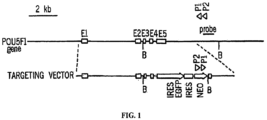
- a gene targeting vector was constructed by inserting a cassette, an IRES-EGFP, an IRES-NEO and a simian virus polyadenylation sequence (approximately 3.2 kilobases (kb)) into the 3' untranslated region of the fifth exon of the human Oct-4 (octamer-binding transcription factor 4) gene, also known as POU domain, class 5, transcription factor 1 (POU5F1).
- This cassette was flanked in the 5' direction by a 6.3 kb homologous arm and by a 1.6 kb (6.5 kb in the alternative targeting vector) homologous arm in the 3' region ( FIG. 1 ).
- the cassette was inserted at position 31392 of the Oct-4 gene (SEQ ID NO:2).
- the long arm contained a sequence from 25054-31392.
- the short arm contained a sequence from 31392-32970.
- the short arm was substituted by a longer homologous region (31392-32970 in AC006047 plus 2387-7337 in gene accession number AC004195). Isogenic homologous DNA was obtained by long-distance, genomic PCR and subcloned.
- MCS multiple cloning site
- cells were harvested with collagenase IV (1 mg/ml, Invitrogen) for 7 minutes at 37°C, washed with medium and re-suspended in 0.5 ml culture medium (1.5-3.0 x 10 7 cells).
- PBS phosphate-buffered saline
- 40 mg linearized targeting vector DNA 40 mg linearized targeting vector DNA.
- Cells were then exposed to a single 320 V, 200 ⁇ F pulse at room temperature using a BioRad Gene Pulser ® II (0.4 cm gap cuvette). Cells were incubated for ten minutes at room temperature and were plated at high-density on Matrigel ® .
- G418 selection 50 mg/ml; Invitrogen was started 48 hours after electroporation. After one week, G418 concentration was doubled. After three weeks, surviving colonies were analyzed individually by PCR using primers specific for the NEO cassette and for the POU5F1 gene just downstream of 3' homologous region, respectively. PCR-positive clones were re-screened by Southern blot analysis using BamHI digested DNA and a probe outside the targeting construct.
- the H1 Oct4 knock-in ES cell line expressed both EGFP and neomycin phosphotransferase (neo) from an endogenous Oct4 promoter/regulatory region using dual internal ribosome-entry sites (IRES) ( FIG. 3 ). Expression of EGFP and neo in the H1 Oct4 knock-in ES cells indicated an active, endogenous Oct4 promoter/regulatory region.
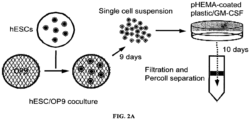
- H1 Oct4 knock-in ES cells were maintained through co-culture with mouse OP9 bone marrow stromal cells ( FIG. 2A ) maintained on gelatin-coated 10 cm plastic dishes (BD Biosciences) consisting of: DMEM medium (Invitrogen) supplemented with 20% non-heat-inactivated defined fetal bovine serum (FBS; HyClone Laboratories; Logan, UT) (10 ml/dish). The OP9 cultures were split every 4 days at a ratio of 1:7. For use in human ES cell differentiation, after OP9 cells reached confluence on the fourth day, half of the medium was changed, and the cells were cultured for an additional four days.
- DMEM medium Invitrogen
- FBS HyClone Laboratories
- Logan, UT non-heat-inactivated defined fetal bovine serum
- H1 Oct4 knock-in ES cells were differentiated into attached cells (i.e., CD29+CD44+CD166+CD105+CD73+CD31-). Briefly, human H1 Oct4 knock-in ES cells (p76 to 110) were added to the OP9 monolayer (1.5 x 10 6 /10-cm dish) in 20 ml of DMEM medium supplemented with 10% FBS (HyClone Laboratories) and 100 ⁇ M monothioglycerol (MTG; Sigma; St. Louis, MO). The human ES/OP9 cell co-culture was incubated for nine days with changes of half of the medium on days 4, 6 and 8.
- the co-culture was dispersed into individual cells by collagenase IV treatment (1 mg/ml in DMEM medium, Invitrogen) for 20 minutes at 37°C, followed by trypsin treatment (0.05% Trypsin/0.5 mM EDTA, Invitrogen) for 15 minutes at 37°C.
- Cells were washed twice with medium and re-suspended at 2 x 10 6 /ml in DMEM medium supplemented with 10% FBS, 100 ⁇ M MTG and 100 ng/ml GM-CSF (Leukine; Berlex Laboratories Inc.; Richmond, CA).
- Lentivirus encoding a potency-determining factor (MOI: 3 to 10) was added to the cell culture after addition of polybrene carrier at a final concentration of 6 ⁇ g/ml (Sigma).
- the lentivirus-containing medium was replaced with fresh medium the next day, and cells were cultured further in appropriate medium.
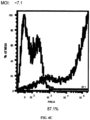
- Drug selection if needed, started the third day after transduction. As shown in FIG. 5B, the transduction efficiency was very low ( ⁇ 18.4% at MOI of 10). Moreover, the expression of EGFP was barely above background. Similar results have been obtained with routine plasmid or Epstein-Barr virus nuclear antigen (EBNA)-based plasmid transfections (data not shown).
- EBNA Epstein-Barr virus nuclear antigen
- cells having high transduction efficiency were prepared as follows.
- the Percoll ® -purified H1 Oct4 knock-in ES cells were allowed to differentiate further to mesenchymal-like cells for an additional seven days in the presence of GM-CSF on Matrigel ® , as described above. Many cells attached to the plate during this culture period.
- the attached cells (referred to herein below as Oct 4KICD45+A cells, or simply as CD45+A cells) showed significantly higher transduction efficiency ( FIG. 4C ) and were used for this reprogramming experiment. While the cells were not CD45 + at the time of the experiments, the cells were obtained from CD45 + cells.
- cell surface markers on the attached cells were characterized as CD29 + , CD44 + , CD166 + , CD105 + , CD73 + and CD31 - .
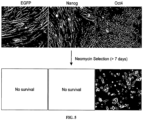
- the Oct4 KICD45+A cells were first dissociated to individual cells with trypsin and replated onto Matrigel ® at -10 5 cells/well of 6-well plates in TeSR TM medium. Transgene-expressing lentiviral transduction was carried out the next day. Nanog-expressing Oct4 KICD45+A cells showed similar morphology to that of EGFP transfected cells ( FIG. 5 ). Nanog over-expression, however, significantly enhanced Oct4 KICD45+A cell proliferation, similar to that observed in human ES cells. Following neomycin selection for an active endogenous Oct4 promoter/regulatory region, no Nanog- or EGFP- transfected cells survived.
- Adherent cells were individualized by trypsin treatment (0.05% Trypsin/0.5 mM EDTA, Invitrogen), and fixed in 2% paraformaldehyde for 20 minutes at room temperature. The cells were filtered through a 40- ⁇ m mesh, and resuspended in FACS buffer (PBS containing 2% FBS and 0.1% sodium azide). Cells grown in suspension were stained in the FACS buffer supplemented with 1mM EDTA and 1% normal mouse serum (Sigma).
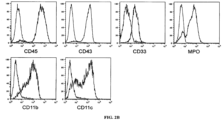
- Intracellular myeloperoxidase (MPO) staining was performed using Fix & Perm ® reagents (Caltag Laboratories; Burlingame, CA). About 100 ⁇ l of cell suspension containing 5 x 10 5 cells was used in each labeling. Both primary and secondary antibody incubation (where applied) were carried out at room temperature for 30 minutes. Control samples were stained with isotype-matched control antibodies. After washing, the cells were resuspended in 300-500 ⁇ l of the FACS buffer, and analyzed on a FACSCalibur flow cytometer (BDIS; San Jose, CA) using CellQuest TM acquisition and analysis software (BDIS). A total of 20,000 events were acquired.
- Fix & Perm ® reagents Caltag Laboratories; Burlingame, CA.
- BDIS FACSCalibur flow cytometer
- BDIS CellQuest TM acquisition and analysis software
- potency-determining factors involved in reprogramming these cells explored the transduction of pools of ES cells enriched with various combinations of potency-determining factors.
- An exemplary pool of potency-determining factors for reprogramming myeloid precursors included the fourteen potency-determining factors described in Table 2 below.
- Table 2 Human ES cell-enriched genes.
- EGFP expression occurs when the native Oct4 promoter/regulatory region is active.
- undifferentiated cells are identified by a green color that disappears when the cells differentiate.
- the expression of endogenous Oct-4 in the primate ES cells was selectable.
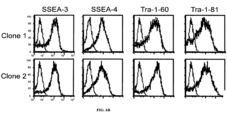
- These colonies also expressed Oct-4, SSEA3, SSEA4, Tra-1-60 and Tra-1-81 pluripotent cell-specific markers ( FIG. 6B ). Similar results were obtained in reprogrammed colonies obtained using chemically defined TeSR TM medium.
- Inventors used the techniques described herein to screen for subsets of the fourteen tested factors that are sufficient to reprogram the tested cells. Inventors' set of fourteen sufficient factors was subsequently narrowed to a set of six, and then four genes sufficient to reprogram these cells ( FIGS. 7A-B ; described further below). The four genes shown to be sufficient in combination to yield stable pluripotent cell were Oct-4, Nanog, Sox2 and Lin28, as shown in FIG. 7B .
- Example 3 Reprogramming of mesenchymal-like cells with a limited set of four potency-determining factors after lentiviral transduction.
- clonal refers to a characteristic of a population of cells derived from a common ancestor (i.e., derived from a single cell, not derived from a cell aggregate). That is, in a "clonal population," the cells display a uniform pattern of cell surface markers and morphological characteristics, as well as being substantially genetically identical.
- human H1 Oct4 knock-in ES cells (p76 to p110) were induced to differentiate in co-culture with mouse OP9 bone marrow stromal, cells. See, Vodyanyk M, et al., Blood 105:617-626 (2005 ). Small aggregates of human H1 Oct4 knock-in ES cells were added to OP9 cells in alpha MEM supplemented with 10% FCS and 100 ⁇ M MTG (Sigma). On the next day (day 1) of culture, the medium was changed, and the cultures were harvested on the days indicated below.
- mesodermal commitment was detected by a peak expression of transcription factors for mesendoderm (GSC, MIXL1 and T (BRACHYURY)) and early mesoderm (EVXI, LHX1 and TBX6) with NimbleGen ® (Madison, WI) microarrays.
- GSC mesendoderm
- EVXI early mesoderm
- HOXB2-3 cell expansion
- mesendodermal lineages Differentiation of specific mesendodermal lineages was observed on days 5-7 of co-culture, when markers of developing endoderm (AFP and SERPINA1 ), mesenchymal (SOX9, RUNX2 and PPARG2) and hematoendothelial (CDH5 and GATA1 ) cells were detected.
- muscle-inductive factors MYOD1, MYF5 and MYF6
- neuroectoderm SOX1 and NEFL
- trophectoderm CGB and PLAC
- a single-cell suspension of the human ES cell-derived cells was harvested by successive enzymatic treatment with collagenase IV (Gibco-Invitrogen) at 1 mg/ml in DMEM/FI2 medium for 15 minutes at 37°C and 0.05% Trypsin-0.5 mM EDTA (Gibco-Invitrogen) for 10 minutes at 37°C.
- Cells were washed 3 times with PBS-5% FBS, filtered through 70 ⁇ M and 30 ⁇ M cell strainers (BD Labware; Bedford, MA) and labeled with antimouse CD29-PE (AbD Serotec; Raleigh, NC) and anti-PE paramagnetic monoclonal antibodies (Miltenyi Biotech; Auburn, CA).
- the cell suspension was purified with magnet-activated cell sorting (MACs) by passing it through a LD magnetic column attached to a Midi-MACS separation unit (Miltenyi Biotech) to obtain a negative fraction of OP9-depleted, human H1 Oct4 knock-in ES cell-derived cells. Purity of human H1 Oct4 knock-in ES cell-derived cells was verified using pan anti-human TRA-1-85 monoclonal antibodies (R&D Systems; Minneapolis, MN).
- MACs magnet-activated cell sorting
- Purified human H1 Oct4 knock-in ES cell-derived cells were plated at density of 2 x 10 4 cells/ml on semisolid, serum-free medium composed of StemLine TM serum-free medium (Sigma) supplemented with 5-100 ng/ml basic fibroblast growth factor (bFGF; PeproTech; Rocky Hill, NJ) and 1% methylcellulose (StemCell Technologies, Inc.) with or without 10-20 ng/ml PDGF-BB (PeproTech).
- PDGF-BB improved growth of mesenchymal cells, but was not essential for colony formation. After 14-21 days of culture, large, compact mesenchymal colonies formed, resembling embryoid bodies (EBs). Mesenchymal colonies were detected on day 7; however, 14-21 days were required to reveal actively growing colonies.
- Transgene-expressing lentiviral transduction was then carried out as described above. Inventors tested the hypothesis that differentiated mesenchymal-like cells could be reprogrammed to a state of pluripotency by expressing a limited set of potency-determining factors (e.g., Oct-4, Nanog, Sox2 and Lin28). The expression of at least these four potency-determining factors resulted in colonies having cells with typical morphology of pluripotent cells, such as human ES cells ( FIG. 7B ; dark gray bars). As shown in FIG. 7B , the greatest number of colonies having cells with typical morphology of pluripotent cells was obtained using the full complement of Oct-4, Nanog, Sox2 and Lin28. However, when one of Oct-4, Nanog, Sox2 or Lin28 was absent, the number of ES-like colonies was significantly attenuated (e.g., Nanog or Lin28) or absent (e.g., Oct-4 or Sox2).
- potency-determining factors e.g., Oct
- EGFP expression occurred when the native Oct4 promoter/regulatory region was active.
- undifferentiated cells were identified by a green color that was absent from differentiated cells.
- the expression of endogenous Oct-4 in the cells was selectable.
- Reprogrammed colonies also expressed Oct-4, SSEA3, SSEA4, Tra-1-60 and Tra-1-81 pluripotent cell-specific markers (data not shown).
- Example 4 Reprogramming of mesenchymal-like cells with a limited set of two potency-determining factors after lentiviral transduction.
- potency-determining factors capable of reprogramming differentiated cells back to pluripotency
- the above-identified methods were repeated in the mesenchymal-like cells of Example 3 with a combination of two of the following four potency-determining factors: Oct-4, Nanog, Sox2 and Lin28.
- Inventors used the techniques described above to screen these potency-determining factors for their ability to reprogram cells.
- Transgene-expressing lentiviral transduction was then carried out as described above. Inventors tested the hypothesis that differentiated mesenchymal-like cells could be reprogrammed to a state of pluripotency by expressing fewer than four potency-determining factors.
- the expression of at least Oct-4 and Sox2 resulted in colonies having cells with typical morphology of pluripotent cells, such as human ES cells.
- Nanog and Lin28 singly and in combination, had a beneficial effect in clone recovery by improving reprogramming efficiency in human ES cell-derived mesenchymal cells to a state of pluripotency, but were essential neither for the initial appearance of reprogrammed cells nor for the expansion of reprogrammed cells.
- Example 5 Reprogramming of a differentiated cells after lentiviral transduction and expression of four potency-determining factors.
- Transgene-expressing lentiviral transduction was carried out as described above. That is, IMR-90 cells (0.9 x 10 6 /well), were transduced with a combination of Oct-4, Sox2, Nanog and Lin28. Inventors tested the hypothesis that differentiated fibroblast cells could be reprogrammed to a state of pluripotency by expressing a limited set of potency-determining factors (e.g., Oct-4, Sox2, Nanog and Lin28). Following transduction, cells were transferred to three 10-cm dishes seeded with irradiated mouse embryonic fibroblasts (MEFs). By day 12 post-transduction, small colonies with human ES cell morphology became visible.
- MEFs mouse embryonic fibroblasts
- DNA fingerprint analysis confirmed that these colonies were derived from IMR-90 cells and that they were not derived from human ES cells lines (e.g., H1, H7, H9, H13 and H14).
- the colonies selected for expansion and detailed characterization proliferated for at least twelve weeks and retained typical characteristics of normal pluripotent cells, even though no selection for the activation of a pluripotency-specific gene was applied during reprogramming.
- Reprogrammed cells were identified based on morphology alone (i.e., having a compact colony with high nucleus to cytoplasm ratio and prominent nucleolus). Reprogrammed cells also expressed Oct-4, SSEA3, SSEA4, Tra-1-60 and Tra-1-81 pluripotent cell-specific markers.
- Example 6 Reprogramming of differentiated cells after lentiviral transduction and expression of three potency-determining factors.
- Transgene-expressing lentiviral transduction was carried out as described above. IMR-90 cells were transduced with a combination of three of the following: Oct-4, Sox2, Nanog and Lin28. Inventors tested the hypothesis that differentiated fibroblast cells could be reprogrammed to a state of pluripotency by expressing the even more limited set of potency-determining factors. The expression of at least three factors resulted in colonies with typical morphology of pluripotent cells like human ES cells. Reprogrammed colonies having cells with typical morphology of pluripotent cells were obtained using the full complement of Oct-4, Sox2 and Nanog with or without Lin28. Therefore, the presence or absence of Lin28 did not affect reprogramming. However, when any of Oct-4, Nanog or Sox2 was absent, the number of reprogrammed colonies was significantly attenuated or absent.
- PCR with transgene-specific primer pairs was carried out using genomic DNA from IMR-90 clones as template.
- the reactions employed the pfx DNA polymerase (Invitrogen, amplification buffer was used at 2X, and enhancer solution was used at 3X), and the following conditions: initial denaturation for 1 minute at 95°C; 35 cycles of 94°C for 30 seconds, 55°C for 30 seconds, 68°C for 2 minutes; and followed by 68°C for 7 minutes.
- transgenes PCR analysis for the transgenes showed that either all four transgenes or three transgenes (i.e., Oct-4, Sox2 and Nanog) integrated into the pluripotent cells following exposure to transgene-expressing lentivirus vectors.
- Table 3 Primer sets for assessing provirus integration.
- Reprogrammed cells were identified based on morphology alone (i.e., having a compact colony with high nucleus to cytoplasm ratio and prominent nucleolus). Reprogrammed cells also expressed Oct-4, SSEA3, SSEA4, Tra-1-60 and Tra-1-81 pluripotent cell-specific markers.
- Example 7 Reprogramming of differentiated cells after lentiviral transduction and expression of three potency-determining factors.
- ATCC ATCC Catalog No. CRL-2097 (ATCC), which are human post-natal foreskin fibroblast cells.
- Transgene-expressing lentiviral transduction was carried out as described above. Post-natal fibroblast cells (0.6 x 10 6 /well) were transduced with a combination of Oct-4, Sox2, Nanog and Lin28. Inventors tested the hypothesis that differentiated, post-natal, fibroblast cells could be reprogrammed to a state of pluripotency by expressing a limited set of potency-determining factors and obtained promising results. Following transduction, cells were transferred to three 10-cm dishes seeded with irradiated MEFs. By day 15 post-transduction, small colonies with pluripotent cell morphology became visible. On day 20 post-transduction, a total of 57 colonies were visible on the plates. Twenty-nine of the colonies were picked, twenty-seven of which were successfully expanded for an additional three weeks. Four of these colonies were then selected for continued expansion and analysis, and the other twenty-three were frozen.
- Oct-4, Sox2, Nanog and Lin28 resulted in colonies having cells with typical morphology of pluripotent cells, such as human ES cells, and a normal karyotype.
- Reprogrammed colonies likewise expressed telomerase activity and expressed pluripotent cell-specific markers (i.e., SSEA-3, SSEA-4, Tra-1-60 and Tra1-81).
- endogenous OCT4 and NANOG was expressed at levels similar to that observed in human pluripotent cells, although the exogenous expression of these genes varied.
- EB and teratoma formation demonstrated that the reprogrammed cells had a developmental potential to give rise to differentiated derivatives of all three primary germ layers.
- iPS cells derived from CRL-2097 cells showed a variation in the lineages apparent in teratomas examined at five weeks. Two of the iPS cell colonies showed neural differentiation; whereas the other two colonies showed multiple foci of columnar epithelial cells, reminiscent of primitive ectoderm.
- DNA fingerprint analysis confirmed that these colonies were derived from the original cell line and confirmed that they were not derived from human ES cells lines (e.g., H1, H7, H9, H13 and H14).
- the colonies selected for expansion and detailed characterization proliferated for at least twelve weeks and retained typical characteristics of normal human pluripotent cells, even though no selection for the activation of a pluripotency-specific gene was applied during reprogramming.
- Reprogrammed cells were identified based on morphology alone (i.e., having a compact colony with high nucleus to cytoplasm ratio and prominent nucleolus). Reprogrammed cells also expressed Oct-4, SSEA3, SSEA4, Tra-1-60 and Tra-1-81 pluripotent cell-specific markers.
- Example 8 Reprogramming of differentiated cells after lentiviral transduction and expression of four potency-determining factors.
- Transgene-expressing lentiviral transduction was carried out as described above. That is, skin cells (2.0 x 10 5 /well) were transduced with a combination of Oct-4, Sox2, Nanog and Lin28. Inventors tested the hypothesis that adult skin cells could be reprogrammed to a state of pluripotency by expressing a limited set of potency-determining factors and obtained promising results. Following transduction, cells were transferred to three 10-cm dishes seeded with irradiated mouse embryonic fibroblasts (MEFs). After 10 days in human ES cell culture medium human ES cell culture medium conditioned with irradiated MEFs was used to support cell growth. By day 18 post-transduction, small colonies with pluripotent cell morphology became visible.
- MEFs mouse embryonic fibroblasts
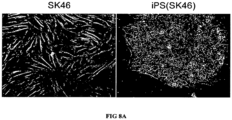
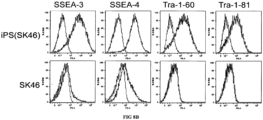
- Oct-4, Sox2, Nanog and Lin28 resulted in colonies having cells with typical morphology of pluripotent cells (see, FIG. 8A ), such as human ES cells ( i.e., having a compact colony with high nucleus to cytoplasm ratio and prominent nucleolus).
- FIG. 8B the reprogrammed cells also expressed cell surface markers typical of pluripotent cells; SK46 cells (control), however, did not.
- the reprogrammed colonies from adult skin cells appeared later than the cells in Example 7 and had a lower reprogramming efficiency than the cells in Example 7.
- Example 9 Increasing reprogramming efficiency by linking potency-determining factors on a single construct.
- Transgene-expressing lentiviral transduction was carried out as described above. That is, 293FT cells or mesenchymal cells ( ⁇ 2 x 10 5 cells/well of 6-well plate, seeded overnight) were transduced with various transgene combinations. Cells were transferred to 10 cm MEF dish (1 well of 6-well plate to 1x10 cm MEF dish) following the overnight incubation with lentivirus. Geneticin selection (50 ⁇ g/ml) for an active, endogenous, OCT4 promoter was carried out between day 11 to 15 post transduction. iPS colonies were counted on day 16.
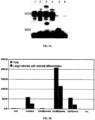
- FIG. 9A demonstrates that Oct-4 and Sox2 expression occurred in 293FT cells following transfection ( see, e.g., lanes 1-3).
- pSin4-EF2-Oct4-IRESl-Sox2 is abbreviated as OS-IRES1
- pSin4-EF2-Oct4-IRES2-Sox2 is abbreviated as OS-IRES2
- pSin4-EF2-Oct4-F2A-Sox2 is abbreviated as OS-F2A
- pSin4-EF2-Oct4-IRESl-puro is abbreviated as O
- pSin4-EF2-Sox2-IRESl-puro is abbreviated as S.
- FIG. 9B shows that reprogramming efficiency increased in mesenchymal cells derived from OCT4 knock-in human H1 ES cells (p6) when Oct-4 and Sox2 were provided on the same construct (IRES1 is a very low-efficiency internal ribosome entry site; whereas IRES2 is a high-efficiency internal ribosome entry site).
- OS-IRES2+N+L (the high-efficiency IRES) showed an approximate four fold increase in reprogramming efficiency when compared to O+S, O+S+N+L or OS-IRES1 (the low-efficiency IRES) +N+L. Therefore, providing the potency-determining factors in one construct that provides for approximately equal expression levels of each can improve reprogramming efficiency.
Landscapes
- Health & Medical Sciences (AREA)
- Engineering & Computer Science (AREA)
- Life Sciences & Earth Sciences (AREA)
- Biomedical Technology (AREA)
- Bioinformatics & Cheminformatics (AREA)
- Chemical & Material Sciences (AREA)
- Organic Chemistry (AREA)
- Genetics & Genomics (AREA)
- Zoology (AREA)
- Wood Science & Technology (AREA)
- Biotechnology (AREA)
- General Health & Medical Sciences (AREA)
- General Engineering & Computer Science (AREA)
- Biochemistry (AREA)
- Microbiology (AREA)
- Cell Biology (AREA)
- Developmental Biology & Embryology (AREA)
- Diabetes (AREA)
- Veterinary Medicine (AREA)
- Public Health (AREA)
- Neurology (AREA)
- Medicinal Chemistry (AREA)
- Nuclear Medicine, Radiotherapy & Molecular Imaging (AREA)
- General Chemical & Material Sciences (AREA)
- Animal Behavior & Ethology (AREA)
- Chemical Kinetics & Catalysis (AREA)
- Neurosurgery (AREA)
- Pharmacology & Pharmacy (AREA)
- Transplantation (AREA)
- Psychology (AREA)
- Emergency Medicine (AREA)
- Endocrinology (AREA)
- Hematology (AREA)
- Obesity (AREA)
- Virology (AREA)
- Physics & Mathematics (AREA)
- Biophysics (AREA)
- Molecular Biology (AREA)
- Plant Pathology (AREA)
- Micro-Organisms Or Cultivation Processes Thereof (AREA)
Applications Claiming Priority (5)
| Application Number | Priority Date | Filing Date | Title |
|---|---|---|---|
| US91968707P | 2007-03-23 | 2007-03-23 | |
| US97498007P | 2007-09-25 | 2007-09-25 | |
| US98905807P | 2007-11-19 | 2007-11-19 | |
| EP08744218A EP2137296A2 (en) | 2007-03-23 | 2008-03-21 | Somatic cell reprogramming |
| PCT/US2008/057924 WO2008118820A2 (en) | 2007-03-23 | 2008-03-21 | Somatic cell reprogramming |
Related Parent Applications (1)
| Application Number | Title | Priority Date | Filing Date |
|---|---|---|---|
| EP08744218A Division EP2137296A2 (en) | 2007-03-23 | 2008-03-21 | Somatic cell reprogramming |
Publications (2)
| Publication Number | Publication Date |
|---|---|
| EP3399025A1 EP3399025A1 (en) | 2018-11-07 |
| EP3399025B1 true EP3399025B1 (en) | 2025-05-07 |
Family
ID=39708430
Family Applications (2)
| Application Number | Title | Priority Date | Filing Date |
|---|---|---|---|
| EP18177810.1A Active EP3399025B1 (en) | 2007-03-23 | 2008-03-21 | Somatic cell reprogramming |
| EP08744218A Withdrawn EP2137296A2 (en) | 2007-03-23 | 2008-03-21 | Somatic cell reprogramming |
Family Applications After (1)
| Application Number | Title | Priority Date | Filing Date |
|---|---|---|---|
| EP08744218A Withdrawn EP2137296A2 (en) | 2007-03-23 | 2008-03-21 | Somatic cell reprogramming |
Country Status (11)
| Country | Link |
|---|---|
| US (7) | US8440461B2 (cg-RX-API-DMAC7.html) |
| EP (2) | EP3399025B1 (cg-RX-API-DMAC7.html) |
| JP (6) | JP5813321B2 (cg-RX-API-DMAC7.html) |
| KR (1) | KR101516833B1 (cg-RX-API-DMAC7.html) |
| CN (1) | CN101743306A (cg-RX-API-DMAC7.html) |
| AU (1) | AU2008231020B2 (cg-RX-API-DMAC7.html) |
| CA (1) | CA2684242C (cg-RX-API-DMAC7.html) |
| DK (1) | DK3399025T3 (cg-RX-API-DMAC7.html) |
| IL (1) | IL200982A (cg-RX-API-DMAC7.html) |
| SG (2) | SG193653A1 (cg-RX-API-DMAC7.html) |
| WO (1) | WO2008118820A2 (cg-RX-API-DMAC7.html) |
Families Citing this family (250)
| Publication number | Priority date | Publication date | Assignee | Title |
|---|---|---|---|---|
| ITRM20030376A1 (it) | 2003-07-31 | 2005-02-01 | Univ Roma | Procedimento per l'isolamento e l'espansione di cellule staminali cardiache da biopsia. |
| US7682828B2 (en) | 2003-11-26 | 2010-03-23 | Whitehead Institute For Biomedical Research | Methods for reprogramming somatic cells |
| US11660317B2 (en) | 2004-11-08 | 2023-05-30 | The Johns Hopkins University | Compositions comprising cardiosphere-derived cells for use in cell therapy |
| AU2006252576B2 (en) * | 2005-06-01 | 2011-01-20 | Wisconsin Alumni Research Foundation | Method of forming dendritic cells from embryonic stem cells |
| US8034613B2 (en) | 2005-06-01 | 2011-10-11 | Wisconsin Alumni Research Foundation | Multipotent lymphohematopoietic progenitor cells |
| US8129187B2 (en) * | 2005-12-13 | 2012-03-06 | Kyoto University | Somatic cell reprogramming by retroviral vectors encoding Oct3/4. Klf4, c-Myc and Sox2 |
| US8278104B2 (en) | 2005-12-13 | 2012-10-02 | Kyoto University | Induced pluripotent stem cells produced with Oct3/4, Klf4 and Sox2 |
| US8048999B2 (en) | 2005-12-13 | 2011-11-01 | Kyoto University | Nuclear reprogramming factor |
| US20090227032A1 (en) | 2005-12-13 | 2009-09-10 | Kyoto University | Nuclear reprogramming factor and induced pluripotent stem cells |
| AU2007215276B2 (en) * | 2006-02-09 | 2013-09-19 | Maryna E. Gumenyuk | Erythroid cells producing adult-type beta-hemoglobin generated from human embryonic stem cells |
| JP5813321B2 (ja) * | 2007-03-23 | 2015-11-17 | ウィスコンシン アラムニ リサーチ ファンデーション | 体細胞の再プログラム化 |
| CN105861443A (zh) | 2007-04-07 | 2016-08-17 | 怀特黑德生物医学研究所 | 体细胞重编程 |
| JP2008307007A (ja) * | 2007-06-15 | 2008-12-25 | Bayer Schering Pharma Ag | 出生後のヒト組織由来未分化幹細胞から誘導したヒト多能性幹細胞 |
| US9213999B2 (en) | 2007-06-15 | 2015-12-15 | Kyoto University | Providing iPSCs to a customer |
| US20110236971A2 (en) * | 2007-09-25 | 2011-09-29 | Maksym Vodyanyk | Generation of Clonal Mesenchymal Progenitors and Mesenchymal Stem Cell Lines Under Serum-Free Conditions |
| KR101564044B1 (ko) * | 2007-10-31 | 2015-10-28 | 고쿠리츠 다이가쿠 호진 교토 다이가쿠 | 핵초기화 방법 |
| US9683232B2 (en) | 2007-12-10 | 2017-06-20 | Kyoto University | Efficient method for nuclear reprogramming |
| JP5558097B2 (ja) * | 2007-12-10 | 2014-07-23 | 国立大学法人京都大学 | 効率的な核初期化方法 |
| US20100279404A1 (en) | 2008-05-02 | 2010-11-04 | Shinya Yamanaka | Method of nuclear reprogramming |
| CA2723820A1 (en) * | 2008-05-09 | 2009-11-12 | Vistagen Therapeutics, Inc. | Pancreatic endocrine progenitor cells derived from pluripotent stem cells |
| EP3279314A1 (en) | 2008-06-04 | 2018-02-07 | Cellular Dynamics International, Inc. | Methods for the production of ips cells using non-viral approach |
| EP3231869A1 (en) | 2008-06-13 | 2017-10-18 | Whitehead Institute for Biomedical Research | Programming and reprogramming of cells |
| CA2695590C (en) | 2008-06-27 | 2018-01-09 | Kyoto University | Method of efficiently establishing induced pluripotent stem cells |
| EP2307539B1 (en) | 2008-07-30 | 2014-11-19 | Kyoto University | Method of efficiently establishing induced pluripotent stem cells |
| CA2734128A1 (en) | 2008-08-12 | 2010-02-18 | Cellular Dynamics International, Inc. | Methods for the production of ips cells |
| US20120021519A1 (en) * | 2008-09-19 | 2012-01-26 | Presidents And Fellows Of Harvard College | Efficient induction of pluripotent stem cells using small molecule compounds |
| WO2010042800A1 (en) * | 2008-10-10 | 2010-04-15 | Nevada Cancer Institute | Methods of reprogramming somatic cells and methods of use for such cells |
| DK2356221T3 (en) | 2008-10-24 | 2019-02-18 | Wisconsin Alumni Res Found | Pluripotent stem cells obtained by non-viral reprogramming |
| JP2012507258A (ja) * | 2008-10-30 | 2012-03-29 | 国立大学法人京都大学 | 人工多能性幹細胞の作製方法 |
| US20110318830A1 (en) * | 2008-11-12 | 2011-12-29 | The Regents Of The University Of California | Compositions and methods for re-programming and re-differentiating cells |
| EP2376626A4 (en) * | 2008-12-13 | 2012-10-17 | Dna Microarray | MICRO-ENVIRONMENTAL NICHE ASSAY FOR SCREENING OF INDUCED PLURIPOTENT STEM CELLS (CIPS) |
| WO2010085326A1 (en) * | 2009-01-20 | 2010-07-29 | Stemnion, Inc. | Dedifferentiation and reprogramming of cells |
| WO2010096746A1 (en) | 2009-02-20 | 2010-08-26 | Cellular Dynamics International, Inc. | Methods and compositions for the differentiation of stem cells |
| WO2010098419A1 (en) * | 2009-02-27 | 2010-09-02 | Kyoto University | Novel nuclear reprogramming substance |
| US9487756B2 (en) | 2009-03-20 | 2016-11-08 | Mesoblast, Inc. | Production of reprogrammed pluripotent cells |
| EP2421957B1 (en) | 2009-04-22 | 2020-11-18 | Viacyte, Inc. | Cell compositions derived from dedifferentiated reprogrammed cells |
| US9109245B2 (en) | 2009-04-22 | 2015-08-18 | Viacyte, Inc. | Cell compositions derived from dedifferentiated reprogrammed cells |
| EP2438159B1 (en) | 2009-05-29 | 2018-10-03 | Kyoto University | Method for selecting clone of induced pluripotent stem cells |
| WO2010141801A2 (en) | 2009-06-05 | 2010-12-09 | Cellular Dynamics International, Inc. | Reprogramming t cells and hematophietic cells |
| WO2010144696A1 (en) | 2009-06-11 | 2010-12-16 | Burnham Institute For Medical Research | Directed differentiation of stem cells |
| JP5645197B2 (ja) * | 2009-06-23 | 2014-12-24 | 学校法人日本大学 | 幹細胞の未分化状態を維持する新規方法 |
| CA2770412C (en) | 2009-08-07 | 2018-09-11 | Kyoto University | Method of efficiently establishing induced pluripotent stem cells |
| US8709805B2 (en) | 2009-08-07 | 2014-04-29 | Kyoto University | Canine iPS cells and method of producing same |
| JP5709015B2 (ja) | 2009-08-19 | 2015-04-30 | 国立大学法人大阪大学 | 角膜移植用シート |
| US8993329B2 (en) | 2009-09-24 | 2015-03-31 | Kyoto University | Method of efficiently establishing induced pluripotent stem cells |
| GB2474492B (en) * | 2009-10-19 | 2014-05-21 | Tristem Trading Cyprus Ltd | Treatment using reprogrammed mature adult cells |
| EP2494032A4 (en) | 2009-10-29 | 2013-06-05 | Univ Mcmaster | GENERATION OF INDUCED PLURIPOTENTER STEM CELLS AND FIBROBLAST PRECURSOR CELLS |
| PL2494035T3 (pl) * | 2009-10-29 | 2018-07-31 | Janssen Biotech, Inc. | Pluripotencjalne komórki macierzyste |
| WO2011056971A2 (en) * | 2009-11-04 | 2011-05-12 | Cellular Dynamics International, Inc. | Episomal reprogramming with chemicals |
| EP2511366A4 (en) | 2009-12-09 | 2014-04-30 | Univ Kyoto | NITROVINE MEDICINE FOR PROMOTING THE DIFFERENTIATION OF PLURIPOTENTAL STEM CELLS IN HEART MUSCLES |
| WO2011074690A1 (en) | 2009-12-14 | 2011-06-23 | Kyoto University | Pharmaceutical composition for prevention and treatment of amyotrophic lateral sclerosis |
| US9005967B2 (en) | 2010-01-22 | 2015-04-14 | Kyoto University | Myc variants improve induced pluripotent stem cell generation efficiency |
| CA2789749C (en) | 2010-02-16 | 2018-09-04 | Kyoto University | Method of efficiently establishing induced pluripotent stem cells |
| CN102190731B (zh) * | 2010-03-09 | 2016-01-27 | 中国科学院上海生命科学研究院 | 用人工转录因子诱导产生多能干细胞 |
| US9080170B2 (en) | 2010-03-17 | 2015-07-14 | Association Institut De Myologie | Modified U7 snRNAs for treatment of neuromuscular diseases |
| CN102822333A (zh) * | 2010-03-23 | 2012-12-12 | 奥林巴斯株式会社 | 监控干细胞的分化状态的方法 |
| WO2011133661A2 (en) | 2010-04-21 | 2011-10-27 | Research Development Foundation | Methods and compositions related to dopaminergic neuronal cells |
| US9249392B2 (en) | 2010-04-30 | 2016-02-02 | Cedars-Sinai Medical Center | Methods and compositions for maintaining genomic stability in cultured stem cells |
| US9845457B2 (en) | 2010-04-30 | 2017-12-19 | Cedars-Sinai Medical Center | Maintenance of genomic stability in cultured stem cells |
| EP2569420B1 (en) * | 2010-05-13 | 2018-09-05 | The Regents of The University of California | Method and composition for inducing human pluripotent stem cells |
| JP5936134B2 (ja) | 2010-06-15 | 2016-06-15 | 国立大学法人京都大学 | ヒト人工多能性幹細胞の選択方法 |
| WO2011159684A2 (en) | 2010-06-15 | 2011-12-22 | Cellular Dynamics International, Inc. | Generation of induced pluripotent stem cells from small volumes of peripheral blood |
| EP2603583B1 (en) | 2010-08-13 | 2016-10-05 | Kyoto University | Method of inducing differentiation from pluripotent stem cells to germ cells |
| CA2838330C (en) | 2010-08-23 | 2021-01-26 | President And Fellows Of Harvard College | Optogenetic probes for measuring membrane potential |
| EP2610249B1 (en) | 2010-08-26 | 2017-10-11 | Kyoto University | Pluripotent stem cell cardiomyocyte differentiation-promoting agent |
| US9499790B2 (en) | 2010-08-26 | 2016-11-22 | Kyoto University | Method for promoting differentiation of pluripotent stem cells into cardiac muscle cells |
| WO2012029994A1 (en) | 2010-09-02 | 2012-03-08 | Kyoto University | Pharmaceutical composition for prevention and treatment of amyotrophic lateral sclerosis |
| EP2616540A4 (en) | 2010-09-14 | 2014-02-19 | Univ Kyoto | METHOD FOR EFFICIENT MANUFACTURE OF INDUCED PLURIPOTENTER STEM CELLS |
| JP2013545439A (ja) | 2010-09-17 | 2013-12-26 | プレジデント・アンド・フェロウズ・オブ・ハーバード・カレッジ | 多能性幹細胞の有用性および安全性の特徴決定を行うための機能的ゲノミクスアッセイ |
| US9732128B2 (en) | 2010-10-22 | 2017-08-15 | Biotime, Inc. | Methods of modifying transcriptional regulatory networks in stem cells |
| US9506039B2 (en) | 2010-12-03 | 2016-11-29 | Kyoto University | Efficient method for establishing induced pluripotent stem cells |
| CA2824553A1 (en) | 2011-01-19 | 2012-07-26 | The Regents Of The University Of California | Somatic cells with innate potential for pluripotency |
| WO2012098260A1 (en) | 2011-01-21 | 2012-07-26 | Axiogenesis Ag | A non-viral system for the generation of induced pluripotent stem (ips) cells |
| WO2012137970A1 (ja) | 2011-04-08 | 2012-10-11 | 国立大学法人大阪大学 | 改変ラミニンおよびその利用 |
| WO2012141181A1 (ja) * | 2011-04-11 | 2012-10-18 | 国立大学法人京都大学 | 核初期化物質 |
| US9133266B2 (en) | 2011-05-06 | 2015-09-15 | Wisconsin Alumni Research Foundation | Vitronectin-derived cell culture substrate and uses thereof |
| CN107988381B (zh) | 2011-07-25 | 2021-05-28 | 国立大学法人京都大学 | 筛选诱导的多能干细胞的方法 |
| US9822343B2 (en) * | 2011-08-22 | 2017-11-21 | Mayo Foundation For Medical Education And Research | Methods and materials for obtaining induced pluripotent stem cells |
| WO2013028684A1 (en) | 2011-08-23 | 2013-02-28 | Wisconsin Alumni Research Foundation | Angiohematopoietic progenitor cells |
| US20130274184A1 (en) * | 2011-10-11 | 2013-10-17 | The Trustees Of Columbia University In The City Of New York | Er stress relievers in beta cell protection |
| WO2013058403A1 (ja) | 2011-10-21 | 2013-04-25 | 国立大学法人京都大学 | 層流による多能性維持単一分散細胞培養法 |
| GB2496375A (en) | 2011-10-28 | 2013-05-15 | Kymab Ltd | A non-human assay vertebrate comprising human antibody loci and human epitope knock-in, and uses thereof |
| JP5999658B2 (ja) | 2011-11-25 | 2016-09-28 | 国立大学法人京都大学 | 多能性幹細胞の培養方法 |
| US8450107B1 (en) | 2011-11-30 | 2013-05-28 | The Broad Institute Inc. | Nucleotide-specific recognition sequences for designer TAL effectors |
| US10238755B2 (en) | 2011-11-30 | 2019-03-26 | The Wistar Institute Of Anatomy And Biology | Methods and compositions for regulation of cell aging, carcinogenesis and reprogramming |
| GB201122047D0 (en) | 2011-12-21 | 2012-02-01 | Kymab Ltd | Transgenic animals |
| AU2012347919B2 (en) | 2011-12-05 | 2017-02-02 | Factor Bioscience Inc. | Methods and products for transfecting cells |
| US8497124B2 (en) | 2011-12-05 | 2013-07-30 | Factor Bioscience Inc. | Methods and products for reprogramming cells to a less differentiated state |
| WO2013090919A1 (en) | 2011-12-16 | 2013-06-20 | Wisconsin Alumni Research Foundation | Fgf-2 having enhanced stability |
| KR101996343B1 (ko) | 2012-01-27 | 2019-07-05 | 고쿠리츠 다이가쿠 호진 교토 다이가쿠 | 전능성 줄기세포의 심근분화 유도방법 |
| AU2013264708B2 (en) | 2012-05-23 | 2019-03-07 | Kyoto University | Highly efficient method for establishing artificial pluripotent stem cell |
| US9884076B2 (en) | 2012-06-05 | 2018-02-06 | Capricor, Inc. | Optimized methods for generation of cardiac stem cells from cardiac tissue and their use in cardiac therapy |
| EP3563859B1 (en) | 2012-08-13 | 2021-10-13 | Cedars-Sinai Medical Center | Cardiosphere-derived exosomes for tissue regeneration |
| US9175263B2 (en) | 2012-08-22 | 2015-11-03 | Biotime, Inc. | Methods and compositions for targeting progenitor cell lines |
| WO2014057997A1 (ja) | 2012-10-09 | 2014-04-17 | Hayashi Nakanobu | 初期化ペプチド及びその用途 |
| WO2014065435A1 (en) | 2012-10-23 | 2014-05-01 | Kyoto University | Method of efficiently establishing induced pluripotent stem cells |
| KR102121086B1 (ko) | 2012-11-01 | 2020-06-09 | 팩터 바이오사이언스 인크. | 세포에서 단백질을 발현시키는 방법들과 생성물들 |
| JP6541577B2 (ja) | 2013-02-06 | 2019-07-10 | ユニバーシティー オブ ロチェスター | ミエリン障害の治療のための誘導多能性細胞由来オリゴデンドロサイト前駆細胞 |
| JP6495658B2 (ja) | 2013-02-08 | 2019-04-03 | 国立大学法人京都大学 | 巨核球及び血小板の製造方法 |
| US9738861B2 (en) | 2013-03-06 | 2017-08-22 | Kyoto University | Culture system for pluripotent stem cells and method for subculturing pluripotent stem cells |
| JP6351567B2 (ja) | 2013-03-08 | 2018-07-04 | 国立大学法人京都大学 | Egf受容体阻害剤を含む多能性幹細胞の心筋分化促進剤 |
| HUE043785T2 (hu) | 2013-03-13 | 2019-09-30 | Wisconsin Alumni Res Found | Módszerek és anyagok humán pluripotens õssejtek hematoendothelialis differenciálására meghatározott körülmények között |
| US8859286B2 (en) | 2013-03-14 | 2014-10-14 | Viacyte, Inc. | In vitro differentiation of pluripotent stem cells to pancreatic endoderm cells (PEC) and endocrine cells |
| JP6473077B2 (ja) | 2013-03-21 | 2019-02-20 | 国立大学法人京都大学 | 神経分化誘導用の多能性幹細胞 |
| EP2980207B1 (en) | 2013-03-25 | 2018-12-05 | Foundation for Biomedical Research and Innovation at Kobe | Cell sorting method |
| JP6461787B2 (ja) | 2013-04-12 | 2019-01-30 | 国立大学法人京都大学 | 肺胞上皮前駆細胞の誘導方法 |
| JP6429280B2 (ja) | 2013-05-14 | 2018-11-28 | 国立大学法人京都大学 | 効率的な心筋細胞の誘導方法 |
| EP3006559B1 (en) | 2013-05-31 | 2019-11-06 | iHeart Japan Corporation | Layered cell sheet incorporating hydrogel |
| EP3888640B1 (en) | 2013-06-05 | 2025-09-17 | Reverse Bioengineering, Inc. | Compositions and methods for induced tissue regeneration in mammalian species |
| US11085067B2 (en) | 2013-06-10 | 2021-08-10 | President And Fellows Of Harvard College | Early developmental genomic assay for characterizing pluripotent stem cell utility and safety |
| KR102145967B1 (ko) | 2013-06-11 | 2020-08-19 | 고쿠리츠 다이가쿠 호진 교토 다이가쿠 | 신장 전구세포의 제조 방법 및 신장 전구세포를 포함하는 의약 |
| US10738323B2 (en) | 2013-07-12 | 2020-08-11 | Cedars-Sinai Medical Center | Generation of induced pluripotent stem cells from normal human mammary epithelial cells |
| EP3031905A4 (en) | 2013-08-07 | 2017-04-26 | Kyoto University | Method for producing pancreatic hormone-producing cell |
| AU2014316100B2 (en) | 2013-09-05 | 2020-11-05 | Eisai R&D Management Co., Ltd. | New method for inducing dopamine-producing neural precursor cells |
| WO2015037535A1 (ja) | 2013-09-12 | 2015-03-19 | 株式会社カネカ | 人工多能性幹細胞の分化誘導方法及び選別方法 |
| WO2015037706A1 (ja) | 2013-09-13 | 2015-03-19 | 国立大学法人京都大学 | 多能性幹細胞の心筋分化を促進する化合物 |
| US10100283B2 (en) | 2013-11-01 | 2018-10-16 | Kyoto University | Efficient chondrocyte induction method |
| WO2015069736A1 (en) | 2013-11-08 | 2015-05-14 | The Mclean Hospital Corporation | METHODS FOR EFFICIENT GENERATION OF GABAergic INTERNEURONS FROM PLURIPOTENT STEM CELLS |
| US11377639B2 (en) | 2013-11-15 | 2022-07-05 | Wisconsin Alumni Research Foundation | Lineage reprogramming to induced cardiac progenitor cells (iCPC) by defined factors |
| MX2016007671A (es) | 2013-12-11 | 2016-10-14 | Pfizer Ltd | Metodo para producir celulas del epitelio pigmentario retiniano. |
| EP3099801B1 (en) | 2014-01-31 | 2020-03-18 | Factor Bioscience Inc. | Synthetic rna for use in the treatment of dystrophic epidermolysis bullosa |
| US11078462B2 (en) | 2014-02-18 | 2021-08-03 | ReCyte Therapeutics, Inc. | Perivascular stromal cells from primate pluripotent stem cells |
| JP6651218B2 (ja) | 2014-05-30 | 2020-02-19 | 国立大学法人京都大学 | 低分子化合物を用いた多能性幹細胞の心筋分化誘導法 |
| US10240127B2 (en) | 2014-07-03 | 2019-03-26 | ReCyte Therapeutics, Inc. | Exosomes from clonal progenitor cells |
| EP3170901B1 (en) | 2014-07-14 | 2021-06-02 | Chugai Seiyaku Kabushiki Kaisha | Method for producing dendritic cells from stem cells |
| JP6715482B2 (ja) | 2014-07-18 | 2020-07-01 | 国立大学法人京都大学 | 多能性幹細胞から免疫細胞療法用t細胞を誘導する方法 |
| US20170296595A1 (en) | 2014-09-18 | 2017-10-19 | North Carolina State University | Mammalian Lung Spheroids and Lung Spheroid Cells and Uses Thereof |
| EP4494699A3 (en) | 2014-10-03 | 2025-04-30 | Cedars-Sinai Medical Center | Cardiosphere-derived cells and exosomes secreted by such cells in the treatment of muscular dystrophy |
| US11718832B2 (en) | 2014-10-06 | 2023-08-08 | Memorial Sloan-Kettering Cancer Center | Method to reduce oncogenic potential of induced pluripotent stem cells from aged donors |
| US11147887B2 (en) | 2014-12-17 | 2021-10-19 | Fundación Para La Investigación Mèdica Aplicada | Nucleic acid constructs and gene therapy vectors for use in the treatment of Wilson disease |
| US11118238B2 (en) | 2014-12-17 | 2021-09-14 | Fundación Para La Investigación Mèdica Aplicada | Nucleic acid constructs and gene therapy vectors for use in the treatment of Wilson's disease and other conditions |
| US10711249B2 (en) | 2014-12-26 | 2020-07-14 | Kyoto University | Method for inducing hepatocytes |
| TWI696700B (zh) | 2015-01-16 | 2020-06-21 | 國立研究開發法人產業技術總合研究所 | 使用具有匿跡性之rna的基因表現系統及含有該rna的基因導入、表現載體 |
| CA2976376A1 (en) | 2015-02-13 | 2016-08-18 | Factor Bioscience Inc. | Nucleic acid products and methods of administration thereof |
| JP2016202172A (ja) | 2015-04-16 | 2016-12-08 | 国立大学法人京都大学 | 疑似膵島の製造方法 |
| US9724432B2 (en) | 2015-04-30 | 2017-08-08 | University Of Rochester | Non-human mammal model of human degenerative disorder, uses thereof, and method of treating human degenerative disorder |
| AU2016318774B2 (en) | 2015-09-08 | 2022-08-18 | FUJIFILM Cellular Dynamics, Inc. | MACS-based purification of stem cell-derived retinal pigment epithelium |
| DK3347456T3 (da) | 2015-09-08 | 2024-02-19 | Us Health | Fremgangsmåde til reproducerbar differentiering af retinale pigmentepitelceller af klinisk kvalitet |
| US10947502B2 (en) | 2015-10-20 | 2021-03-16 | FUJIFILM Cellular Dynamics, Inc. | Methods for directed differentiation of pluripotent stem cells to immune cells |
| US10801041B2 (en) | 2015-11-18 | 2020-10-13 | Orbis Health Solutions, Llc | T7 alpha viral vector system |
| EP3380605A1 (en) * | 2015-11-24 | 2018-10-03 | GlaxoSmithKline Intellectual Property Development Limited | Transient transfection method for retroviral production |
| CN108779435B (zh) | 2015-12-07 | 2022-05-03 | 再生疗法有限公司 | 用于重新衍生不同的多能干细胞衍生的褐色脂肪细胞的方法 |
| WO2017123662A1 (en) | 2016-01-11 | 2017-07-20 | Cedars-Sinai Medical Center | Cardiosphere-derived cells and exosomes secreted by such cells in the treatment of heart failure with preserved ejection fraction |
| WO2017159862A1 (ja) | 2016-03-18 | 2017-09-21 | 国立大学法人京都大学 | 多能性幹細胞由来心筋細胞の凝集体の凍結方法 |
| LT3444334T (lt) | 2016-04-15 | 2021-12-10 | Kyoto University | Antigenui specifinių cd8 teigiamų t ląstelių indikavimo būdas |
| JP7011260B2 (ja) | 2016-04-22 | 2022-02-10 | 国立大学法人京都大学 | ドーパミン産生神経前駆細胞の製造方法 |
| EP3455346A1 (en) | 2016-05-12 | 2019-03-20 | Erasmus University Medical Center Rotterdam | A method for culturing myogenic cells, cultures obtained therefrom, screening methods, and cell culture medium |
| WO2017210652A1 (en) | 2016-06-03 | 2017-12-07 | Cedars-Sinai Medical Center | Cdc-derived exosomes for treatment of ventricular tachyarrythmias |
| CN105861447B (zh) * | 2016-06-13 | 2017-12-19 | 广州市搏克生物技术有限公司 | 一种非病毒iPSCs诱导组合物及其试剂盒 |
| US11572545B2 (en) | 2016-06-16 | 2023-02-07 | Cedars-Sinai Medical Center | Efficient method for reprogramming blood to induced pluripotent stem cells |
| US10221395B2 (en) | 2016-06-16 | 2019-03-05 | Cedars-Sinai Medical Center | Efficient method for reprogramming blood to induced pluripotent stem cells |
| CN105936889B (zh) * | 2016-06-24 | 2019-10-18 | 肇庆大华农生物药品有限公司 | 一种ad293球形细胞团的培养方法 |
| AU2017290805B2 (en) | 2016-07-01 | 2023-11-16 | Research Development Foundation | Elimination of proliferating cells from stem cell-derived grafts |
| IL308824A (en) | 2016-08-17 | 2024-01-01 | Factor Bioscience Inc | Nucleic acid products and methods of administration thereof |
| US11541078B2 (en) | 2016-09-20 | 2023-01-03 | Cedars-Sinai Medical Center | Cardiosphere-derived cells and their extracellular vesicles to retard or reverse aging and age-related disorders |
| JP7248571B2 (ja) | 2016-10-05 | 2023-03-29 | フジフィルム セルラー ダイナミクス,インコーポレイテッド | MeCP2が破壊された誘導多能性幹細胞からの成熟系列の生成 |
| KR102537361B1 (ko) | 2016-12-27 | 2023-05-26 | 스미또모 가가꾸 가부시키가이샤 | 인공 다능성 줄기 세포의 평가 방법 및 선발 방법, 그리고 인공 다능성 줄기 세포의 제조 방법 |
| CN110199017A (zh) | 2017-01-20 | 2019-09-03 | 国立大学法人京都大学 | CD8α+β+细胞毒性T细胞的制备方法 |
| JP7162537B2 (ja) | 2017-01-26 | 2022-10-28 | 国立大学法人大阪大学 | 幹細胞の中胚葉系細胞への分化誘導用培地および中胚葉系細胞の製造方法 |
| EP3591040A4 (en) | 2017-03-03 | 2020-11-11 | Kyoto University | METHOD OF PRODUCTION OF PANCREATIC PROGENITOR CELLS |
| JP7171055B2 (ja) | 2017-03-14 | 2022-11-15 | 国立大学法人京都大学 | 多能性幹細胞からヘルパーt細胞を製造する方法 |
| SG11201909331UA (en) | 2017-04-18 | 2019-11-28 | Fujifilm Cellular Dynamics Inc | Antigen-specific immune effector cells |
| JP7336769B2 (ja) | 2017-04-19 | 2023-09-01 | シーダーズ―シナイ メディカル センター | 骨格筋ジストロフィーを治療する方法及び組成物 |
| US11690876B2 (en) | 2017-05-10 | 2023-07-04 | University Of Rochester | Methods of treating neuropsychiatric disorders |
| EP3633026A4 (en) | 2017-05-25 | 2021-03-10 | Kyoto University | METHOD FOR INDUCING THE DIFFERENTIATION OF A MESODERMAL INTERMEDIATE CELL TO A KIDNEY PRECURSOR CELL AND METHOD FOR INDUCING THE DIFFERENTIATION OF A PLURIPOTENT STEM CELL FROM A KIDNEY PRECURSOR CELL |
| US20200208093A1 (en) | 2017-06-14 | 2020-07-02 | Takeda Pharmaceutical Company Limited | Cell-sealing device |
| US20200172969A1 (en) | 2017-06-19 | 2020-06-04 | Foundation For Biomedical Research And Innovation At Kobe | Method for predicting differentiation ability of pluripotent stem cell, and reagent for same |
| JP6758631B2 (ja) | 2017-06-19 | 2020-09-23 | 国立大学法人大阪大学 | 角膜内皮細胞マーカー及びその利用 |
| US10760057B2 (en) | 2017-07-06 | 2020-09-01 | Wisconsin Alumni Research Foundation | Human pluripotent stem cell-based screening for smooth muscle cell differentiation and disease |
| US11718829B2 (en) * | 2017-07-28 | 2023-08-08 | Breakthrough Tech Llc | Methods and compositions for manufacturing extracellular matrix |
| NL2019517B1 (en) | 2017-09-08 | 2019-03-19 | Univ Erasmus Med Ct Rotterdam | New therapy for Pompe disease |
| EP3699267A4 (en) | 2017-10-17 | 2021-10-27 | Kyoto University | PROCESS FOR OBTAINING AN ARTIFICIAL NEUROMUSCULAR JUNCTION FROM PLURIPOTENT STEM CELLS |
| EP3717505A4 (en) | 2017-12-01 | 2021-12-01 | Encoded Therapeutics, Inc. | GENENICALLY MODIFIED DNA-BINDING PROTEINS |
| WO2019126068A1 (en) | 2017-12-20 | 2019-06-27 | Cedars-Sinai Medical Center | Engineered extracellular vesicles for enhanced tissue delivery |
| EP3749344A4 (en) | 2018-02-05 | 2022-01-26 | Cedars-Sinai Medical Center | METHODS OF THERAPEUTIC USE OF EXOSOMES AND Y-RNAS |
| CN111868235A (zh) | 2018-03-19 | 2020-10-30 | 国立大学法人京都大学 | 水凝胶胶囊 |
| JP6779509B2 (ja) | 2018-04-23 | 2020-11-04 | 国立大学法人京都大学 | 増殖抑制剤 |
| JP7555542B2 (ja) | 2018-06-18 | 2024-09-25 | ユニバーシティー オブ ロチェスター | 統合失調症及び他の神経精神障害の治療方法 |
| CA3103675A1 (en) | 2018-06-21 | 2019-12-26 | University Of Rochester | Methods of treating or inhibiting onset of huntington's disease |
| TW202020145A (zh) | 2018-07-13 | 2020-06-01 | 國立大學法人京都大學 | γδT細胞的製造方法 |
| US20210299331A1 (en) | 2018-07-19 | 2021-09-30 | Kyoto University | Pluripotent stem cell-derived plate-shaped cartilage and method for producing the same |
| JP7357369B2 (ja) | 2018-07-23 | 2023-10-06 | 国立大学法人京都大学 | 新規腎前駆細胞マーカーおよびそれを利用した腎前駆細胞の濃縮方法 |
| CN112567025B (zh) | 2018-08-10 | 2025-01-17 | 国立大学法人京都大学 | Cd3阳性细胞的制造方法 |
| AU2019336221B2 (en) | 2018-09-07 | 2025-05-15 | Wisconsin Alumni Research Foundation | Generation of hematopoietic progenitor cells from human pluripotent stem cells |
| US20210292791A1 (en) | 2018-10-12 | 2021-09-23 | Vivet Therapeutics | Codon-optimized transgene for the treatment of progressive familiar intrahepatic cholestasis type 3 (pfic3) |
| AU2019375450A1 (en) | 2018-11-07 | 2021-06-17 | Vivet Therapeutics | Codon-optimized ABCB11 transgene for the treatment of progressive familial intrahepatic cholestasis type 2 (PFIC2) |
| AU2019379604B2 (en) | 2018-11-16 | 2026-04-23 | Rapa Therapeutics, Llc | Als treatment using induced regulatory T (iTREG) cells |
| EP3880809A4 (en) | 2018-11-16 | 2023-01-11 | Encoded Therapeutics, Inc. | COMPOSITIONS AND METHODS FOR THE TREATMENT OF WILSON'S DISEASE |
| WO2020102715A1 (en) * | 2018-11-16 | 2020-05-22 | Rapa Therapeutics, Llc | Method for t cell de-differentiation and resulting cells |
| MX2021006208A (es) | 2018-11-28 | 2021-10-01 | Univ Texas | Edición por multiplexación del genoma de células inmunitarias para mejorar la funcionalidad y resistencia al entorno supresor. |
| MX2021006393A (es) | 2018-11-29 | 2021-10-13 | Univ Texas | Metodos para expansion ex vivo de celulas exterminadoras naturales y uso de las mismas. |
| CN113195710A (zh) | 2018-12-06 | 2021-07-30 | 麒麟控股株式会社 | T细胞或nk细胞的制造方法、t细胞或nk细胞的培养用培养基、t细胞或nk细胞的培养方法、维持未分化t细胞的未分化状态的方法和t细胞或nk细胞的增殖促进剂 |
| CA3122289A1 (en) | 2018-12-11 | 2020-06-18 | University Of Rochester | Methods of treating schizophrenia and other neuropsychiatric disorders |
| WO2020130147A1 (ja) | 2018-12-21 | 2020-06-25 | 国立大学法人京都大学 | ルブリシン局在軟骨様組織、その製造方法及びそれを含む関節軟骨損傷治療用組成物 |
| WO2020138371A1 (ja) | 2018-12-26 | 2020-07-02 | キリンホールディングス株式会社 | 改変tcr及びその製造方法 |
| US20230057355A1 (en) | 2019-02-13 | 2023-02-23 | University Of Rochester | Gene networks that mediate remyelination of the human brain |
| JP7692610B2 (ja) | 2019-02-26 | 2025-06-16 | 国立大学法人東北大学 | iPS細胞を用いた骨芽細胞塊の作製法 |
| EP3970795A4 (en) | 2019-05-15 | 2023-06-14 | Ajinomoto Co., Inc. | Method for purifying neural crest cells or corneal epithelial cells |
| JPWO2020235319A1 (cg-RX-API-DMAC7.html) | 2019-05-20 | 2020-11-26 | ||
| PL3976798T3 (pl) | 2019-05-29 | 2026-04-07 | Encoded Therapeutics, Inc. | Kompozycje i sposoby selektywnej regulacji genów |
| CA3145425A1 (en) | 2019-07-03 | 2021-01-07 | Factor Bioscience Inc. | Cationic lipids and uses thereof |
| US10501404B1 (en) | 2019-07-30 | 2019-12-10 | Factor Bioscience Inc. | Cationic lipids and transfection methods |
| JP7058431B2 (ja) | 2019-12-12 | 2022-04-22 | 国立大学法人千葉大学 | 巨核球および血小板を含む凍結乾燥製剤 |
| US12351824B2 (en) | 2020-02-28 | 2025-07-08 | Takeda Pharmaceutical Company Limited | Method for producing natural killer cells from pluripotent stem cells |
| JPWO2021200901A1 (cg-RX-API-DMAC7.html) | 2020-03-31 | 2021-10-07 | ||
| WO2021241658A1 (ja) | 2020-05-26 | 2021-12-02 | 株式会社ヘリオス | 低免疫原性細胞 |
| EP3922431A1 (en) | 2020-06-08 | 2021-12-15 | Erasmus University Medical Center Rotterdam | Method of manufacturing microdevices for lab-on-chip applications |
| US20230257705A1 (en) | 2020-06-17 | 2023-08-17 | Kyoto University | Chimeric antigen receptor-expressing immunocompetent cells |
| US20230256024A1 (en) | 2020-07-13 | 2023-08-17 | Kyoto University | Skeletal muscle precursor cells and method for purifying same, composition for treating myogenic diseases, and method for producing cell group containing skeletal muscle precursor cells |
| EP4180514A4 (en) | 2020-07-20 | 2024-09-04 | Aichi Medical University | COMPOSITION FOR UNDIFFERENTIATED MAINTENANCE CULTURE OF PLURIPOTENT CELLS, MEDIUM FOR UNDIFFERENTIATED MAINTENANCE CULTURE OF PLURIPOTENT CELLS, METHOD FOR MAINTENANCE CULTURE IN UNDIFFERENTIATED STATE OF PLURIPOTENT CELLS, AND METHOD FOR PRODUCING PLURIPOTENT CELLS |
| US20230265456A1 (en) | 2020-08-10 | 2023-08-24 | Fundacion Para La Investigacion Medica Aplicada | Gene therapy vector expressing cyp27a1 for the treatment of cerebrotendinous xanthomatosis |
| US20240271088A1 (en) | 2020-08-18 | 2024-08-15 | Kyoto University | Method for maintaining and amplifying human primordial germ cells / human primordial germ cell-like cells |
| WO2022050419A1 (ja) | 2020-09-04 | 2022-03-10 | Heartseed株式会社 | iPS細胞の品質改善剤、iPS細胞の製造方法、iPS細胞、及びiPS細胞製造用組成物 |
| US20230272433A1 (en) | 2020-09-29 | 2023-08-31 | Genethon | Enhancing Utrophin Expression in Cell by Inducing Mutations Within Utrophin Regulatory Elements and Therapeutic Use Thereof |
| EP4243839A1 (en) | 2020-11-13 | 2023-09-20 | Catamaran Bio, Inc. | Genetically modified natural killer cells and methods of use thereof |
| JP2023553701A (ja) | 2020-12-16 | 2023-12-25 | ウニベルシタット ポンペウ ファブラ | 先天性筋ジストロフィーの処置のための治療用lama2ペイロード |
| WO2022136616A1 (en) | 2020-12-23 | 2022-06-30 | Vivet Therapeutics | Minimal bile acid inducible promoters for gene therapy |
| EP4310176A4 (en) | 2021-03-17 | 2025-03-26 | Astellas Pharma Inc. | Pericyte with basic fibroblast growth factor (BFGF) gene inserted into it |
| WO2022216624A1 (en) | 2021-04-07 | 2022-10-13 | Century Therapeutics, Inc. | Compositions and methods for generating alpha-beta t cells from induced pluripotent stem cells |
| BR112023018844A2 (pt) | 2021-04-07 | 2023-10-10 | Century Therapeutics Inc | Composições e métodos para geração de células t gama-delta de células-tronco pluripotentes induzidas |
| CN117597433A (zh) | 2021-04-30 | 2024-02-23 | 国立研究开发法人理化学研究所 | 视网膜色素上皮细胞的条状聚集体、用于制造其的装置和制造方法、以及含有该条状聚集体的治疗药物 |
| WO2022255489A1 (ja) | 2021-06-04 | 2022-12-08 | キリンホールディングス株式会社 | 細胞組成物、細胞組成物の製造方法及び細胞組成物を含む医薬組成物 |
| EP4353243A4 (en) | 2021-06-10 | 2025-06-25 | Ajinomoto Co., Inc. | METHOD FOR PRODUCING MESENCHYMAL STEM CELLS |
| CA3222770A1 (en) | 2021-06-15 | 2022-12-22 | Takeda Pharmaceutical Company Limited | Method for producing natural killer cells from pluripotent stem cells |
| WO2023286834A1 (ja) | 2021-07-15 | 2023-01-19 | アステラス製薬株式会社 | 血管内皮増殖因子(vegf)高発現ペリサイト様細胞 |
| EP4372079A4 (en) | 2021-07-15 | 2025-07-30 | Astellas Pharma Inc | PERICYTE-LIKE CELLS EXPRESSING VASCULAR ENDOTHELIAL GROWTH FACTOR (VEGF) AT A HIGH LEVEL |
| WO2023003025A1 (ja) | 2021-07-21 | 2023-01-26 | 国立大学法人京都大学 | 網膜組織の製造方法 |
| EP4386083A4 (en) | 2021-08-11 | 2025-11-12 | Univ Kyoto | METHOD FOR PRODUCING RENAL INTERSTITIAL PROGENITOR CELLS, ERYTHROPOIETIN-PRODUCING CELLS AND METHOD FOR PRODUCING RENIIN-PRODUCING CELLS |
| CN118159646A (zh) | 2021-09-13 | 2024-06-07 | 富士胶片细胞动力公司 | 产生定向心脏祖细胞的方法 |
| EP4405375A1 (en) | 2021-09-23 | 2024-07-31 | President and Fellows of Harvard College | Genetically encoded voltage indicators and uses thereof |
| WO2023053220A1 (ja) | 2021-09-28 | 2023-04-06 | 公益財団法人京都大学iPS細胞研究財団 | 多能性幹細胞の製造方法 |
| WO2023069386A1 (en) * | 2021-10-18 | 2023-04-27 | Wisconsin Alumni Research Foundation | Systems and methods for label-free tracking of human somatic cell reprogramming |
| CA3234809A1 (en) | 2021-10-20 | 2023-04-27 | Steven Goldman | Isolated glial progenitor cells for use in the competition treatment of age-related white matter loss |
| US20230292719A1 (en) | 2021-10-20 | 2023-09-21 | University Of Rochester | Humanized chimeras for the prospective assessment of cell addition and replacement therapies |
| CA3234404A1 (en) | 2021-10-20 | 2023-04-27 | Steven A. Goldman | Treatment with genetically modified cells, and genetically modified cells per se, with increased competitive advantage and/or decreased competitive disadvantage |
| EP4426331A1 (en) | 2021-11-02 | 2024-09-11 | University of Rochester | Tcf7l2 mediated remyelination in the brain |
| CN118265792A (zh) | 2021-11-11 | 2024-06-28 | 希里欧斯株式会社 | 基因修饰多能干细胞、来自其的免疫活性细胞、它们的制造方法和它们的用途 |
| WO2023150557A1 (en) | 2022-02-01 | 2023-08-10 | University Of Rochester | Methods of generating a population of neurons from human glial progenitor cells and genetic constructs for carrying out such methods |
| CN118679244A (zh) | 2022-02-09 | 2024-09-20 | 住友制药株式会社 | 判定培养液中的细胞在由多能干细胞向中脑底板区域的神经系统细胞的分化中的分化能力的方法 |
| JPWO2023210713A1 (cg-RX-API-DMAC7.html) | 2022-04-27 | 2023-11-02 | ||
| WO2023215455A1 (en) | 2022-05-05 | 2023-11-09 | University Of Rochester | Dual macroglial-microglial approach towards therapeutic cell replacement in neurodegenerative and neuropsychiatric disease |
| JP2025522360A (ja) | 2022-06-08 | 2025-07-15 | センチュリー セラピューティクス,インコーポレイテッド | Cd16変異体およびnkg2dを発現する遺伝子操作した細胞ならびにその使用 |
| CN119365606A (zh) | 2022-06-10 | 2025-01-24 | 国立大学法人京都大学 | 未分化多能干细胞的检测方法和检测试剂 |
| WO2024024551A1 (ja) | 2022-07-26 | 2024-02-01 | 国立大学法人京都大学 | シェディング構造を有する人工受容体 |
| US20240139256A1 (en) | 2022-09-30 | 2024-05-02 | FUJIFILM Cellular Dynamics, Inc. | Methods for the production of cardiac fibroblasts |
| WO2024157929A1 (ja) | 2023-01-23 | 2024-08-02 | 住友ファーマ株式会社 | 網膜組織の製造方法 |
| EP4658294A2 (en) | 2023-02-02 | 2025-12-10 | University of Rochester | Competitive replacement of glial cells |
| WO2024248017A1 (ja) | 2023-05-29 | 2024-12-05 | 国立研究開発法人理化学研究所 | 心筋細胞を成熟させる方法及び成熟した心筋細胞の製造方法 |
| JPWO2024248023A1 (cg-RX-API-DMAC7.html) | 2023-05-29 | 2024-12-05 | ||
| JPWO2024248157A1 (cg-RX-API-DMAC7.html) | 2023-05-31 | 2024-12-05 |
Family Cites Families (61)
| Publication number | Priority date | Publication date | Assignee | Title |
|---|---|---|---|---|
| DE4228458A1 (de) | 1992-08-27 | 1994-06-01 | Beiersdorf Ag | Multicistronische Expressionseinheiten und deren Verwendung |
| DE4228457A1 (de) | 1992-08-27 | 1994-04-28 | Beiersdorf Ag | Herstellung von heterodimerem PDGF-AB mit Hilfe eines bicistronischen Vektorsystems in Säugerzellen |
| FR2722208B1 (fr) | 1994-07-05 | 1996-10-04 | Inst Nat Sante Rech Med | Nouveau site interne d'entree des ribosomes, vecteur le contenant et utilisation therapeutique |
| US5843780A (en) | 1995-01-20 | 1998-12-01 | Wisconsin Alumni Research Foundation | Primate embryonic stem cells |
| US6667176B1 (en) * | 2000-01-11 | 2003-12-23 | Geron Corporation | cDNA libraries reflecting gene expression during growth and differentiation of human pluripotent stem cells |
| DE19910044A1 (de) * | 1999-03-08 | 2000-09-14 | Bodo Plachter | Virale Partikel, die nach Infektion durch humanes Cytomegalovirus freigesetzt werden und ihre Verwendung als Impfstoff |
| WO2007019398A1 (en) * | 2005-08-03 | 2007-02-15 | Advanced Cell Technology, Inc. | Improved methods of reprogramming animal somatic cells |
| US20040199935A1 (en) | 1999-06-30 | 2004-10-07 | Chapman Karen B. | Cytoplasmic transfer to de-differentiate recipient cells |
| WO2001096532A2 (en) | 2000-06-15 | 2001-12-20 | Tanja Dominko | Method of generating pluripotent mammalian cells by fusion of a cytoplast fragment with a karyoplast |
| US20040235173A1 (en) | 2000-07-03 | 2004-11-25 | Gala Design, Inc. | Production of host cells containing multiple integrating vectors by serial transduction |
| US20020136709A1 (en) | 2000-12-12 | 2002-09-26 | Nucleus Remodeling, Inc. | In vitro-derived adult pluripotent stem cells and uses therefor |
| US20040087001A1 (en) * | 2001-02-21 | 2004-05-06 | Gabriele Hahn | Recombinant vector containing infectious human cytomegalovirus genome with preserved wild-type characteristics of clinical isolates |
| US20030044976A1 (en) | 2001-08-27 | 2003-03-06 | Advanced Cell Technology | De-differentiation and re-differentiation of somatic cells and production of cells for cell therapies |
| JP2004248505A (ja) | 2001-09-21 | 2004-09-09 | Norio Nakatsuji | 移植抗原の一部または全てを欠除したes細胞由来の未分化な体細胞融合細胞およびその製造 |
| ITMI20012110A1 (it) | 2001-10-12 | 2003-04-12 | Keryos Spa | Vettori multi-cistronici utilizzabili in protocolli di trsferimento genico |
| EP1468094A4 (en) | 2001-12-24 | 2005-01-26 | Es Cell Int Pte Ltd | METHOD OF TRANSDUCTING ES CELLS |
| GB0202149D0 (en) | 2002-01-30 | 2002-03-20 | Univ Edinburgh | Pluripotency determining factors and uses thereof |
| GB0206357D0 (en) | 2002-03-18 | 2002-05-01 | Univ Bath | Cells |
| DK1503788T3 (da) * | 2002-04-25 | 2011-10-17 | Shire Human Genetic Therapies | Behandling af alpha-galactosidase A-deficiens |
| AU2003303071B2 (en) * | 2002-12-16 | 2009-04-23 | Technion Research & Development Foundation Ltd. | Methods of preparing feeder cells-free, xeno-free human embryonic stem cells and stem cell cultures prepared using same |
| CA2515108A1 (en) | 2003-02-07 | 2004-08-26 | Wisconsin Alumni Research Foundation | Directed genetic modifications of human stem cells |
| US7682828B2 (en) | 2003-11-26 | 2010-03-23 | Whitehead Institute For Biomedical Research | Methods for reprogramming somatic cells |
| US7638331B2 (en) * | 2004-01-02 | 2009-12-29 | The Administration of the Tulane Rducation Fund | Directed apoptosis in COX-2 overexpressing cancer cells through expression targeted gene delivery |
| JP4901471B2 (ja) * | 2004-02-19 | 2012-03-21 | 国立大学法人京都大学 | 体細胞核初期化物質のスクリーニング方法 |
| JP2007528226A (ja) * | 2004-03-10 | 2007-10-11 | リージェンツ オブ ザ ユニヴァーシティ オブ カリフォルニア | 胚幹細胞の増殖用組成物および方法 |
| KR100484653B1 (ko) | 2004-05-06 | 2005-04-20 | 주식회사 대웅 | 원핵세포에서 활성형의 가용성 단백질을 제조하는 방법 및 이를 위한 폴리시스트론 벡터 |
| US7465580B2 (en) | 2004-05-19 | 2008-12-16 | Wisconsin Alumni Research Foundation | Non-cytotoxic oriP replicon |
| JP2008502644A (ja) | 2004-06-18 | 2008-01-31 | グラクソ グループ リミテッド | ヒスタミンh3アンタゴニストとしての3−シクロアルキルベンズアゼピン |
| US7566548B2 (en) * | 2004-08-13 | 2009-07-28 | University Of Massachusetts | Methods for identifying therapeutic agents and for treating disease |
| EP1937801A1 (en) | 2005-09-02 | 2008-07-02 | Agency for Science, Technology and Research | Method of deriving mesenchymal stem cells |
| WO2008020815A1 (en) | 2006-08-15 | 2008-02-21 | Agency For Science, Technology And Research | Mesenchymal stem cell conditioned medium |
| US20070087437A1 (en) | 2005-10-14 | 2007-04-19 | Jifan Hu | Methods for rejuvenating cells in vitro and in vivo |
| US8048999B2 (en) * | 2005-12-13 | 2011-11-01 | Kyoto University | Nuclear reprogramming factor |
| US8278104B2 (en) | 2005-12-13 | 2012-10-02 | Kyoto University | Induced pluripotent stem cells produced with Oct3/4, Klf4 and Sox2 |
| JP4803584B2 (ja) | 2006-02-08 | 2011-10-26 | 独立行政法人産業技術総合研究所 | 脂質生産性の高い形質転換微生物 |
| TW200817512A (en) | 2006-07-07 | 2008-04-16 | Kirin Pharma Kk | Human artificial chromosome (hac) vector, and human cell pharmaceutical comprising human artificial chromosome (hac) vector |
| EP2054079A4 (en) | 2006-07-19 | 2009-12-23 | Univ Florida | COMPOSITIONS FOR CELL REPROGRAMMING AND USES THEREOF |
| JP2008067693A (ja) | 2006-08-15 | 2008-03-27 | Ishihara Sangyo Kaisha Ltd | 微生物変異体の新規利用方法 |
| EP2053128A4 (en) | 2006-08-15 | 2010-05-05 | Ishihara Sangyo Kaisha | INNOVATIVE METHOD OF USING MICROBIAL MUTANT |
| US20100069251A1 (en) | 2006-09-15 | 2010-03-18 | Children's Medical Center Corporation | Methods for producing embryonic stem cells from parthenogenetic embryos |
| JP5813321B2 (ja) * | 2007-03-23 | 2015-11-17 | ウィスコンシン アラムニ リサーチ ファンデーション | 体細胞の再プログラム化 |
| BRPI0810949A2 (pt) | 2007-05-29 | 2015-10-27 | Christopher B Reid | "método de preparação de células multipotentes, auto-renovadoras, diferenciadoras ou resistentes a doenças, célula e vetor pra uso do método" |
| JP2008307007A (ja) * | 2007-06-15 | 2008-12-25 | Bayer Schering Pharma Ag | 出生後のヒト組織由来未分化幹細胞から誘導したヒト多能性幹細胞 |
| WO2009032456A2 (en) | 2007-08-01 | 2009-03-12 | Primegen Biotech Llc | Non-viral delivery of transcription factors that reprogram human somatic cells into a stem cell-like state |
| ES2799897T3 (es) | 2007-08-31 | 2020-12-22 | Whitehead Inst Biomedical Res | Estimulación de la vía wnt en la reprogramación de células somáticas |
| US20110236971A2 (en) | 2007-09-25 | 2011-09-29 | Maksym Vodyanyk | Generation of Clonal Mesenchymal Progenitors and Mesenchymal Stem Cell Lines Under Serum-Free Conditions |
| US7615374B2 (en) | 2007-09-25 | 2009-11-10 | Wisconsin Alumni Research Foundation | Generation of clonal mesenchymal progenitors and mesenchymal stem cell lines under serum-free conditions |
| WO2009058712A1 (en) * | 2007-10-29 | 2009-05-07 | Trustees Of Dartmouth College | Toxoplasma gondii mutant with enhanced homologous recombination and uses thereof |
| KR101564044B1 (ko) | 2007-10-31 | 2015-10-28 | 고쿠리츠 다이가쿠 호진 교토 다이가쿠 | 핵초기화 방법 |
| WO2009061442A1 (en) * | 2007-11-06 | 2009-05-14 | Children's Medical Center Corporation | Method to produce induced pluripotent stem (ips) cells form non-embryonic human cells |
| WO2009067563A1 (en) | 2007-11-19 | 2009-05-28 | The Regents Of The University Of California | Generation of pluripotent cells from fibroblasts |
| EP2072618A1 (en) | 2007-12-14 | 2009-06-24 | Johannes Gutenberg-Universität Mainz | Use of RNA for reprogramming somatic cells |
| WO2009091543A1 (en) | 2008-01-14 | 2009-07-23 | Lindner Scott E | An efficient orip/ebna-1 plasmid vector |
| WO2009092042A1 (en) | 2008-01-18 | 2009-07-23 | Nevada Cancer Institute | Reprogramming of differentiated progenitor or somatic cells using homologous recombination |
| WO2009102983A2 (en) * | 2008-02-15 | 2009-08-20 | President And Fellows Of Harvard College | Efficient induction of pluripotent stem cells using small molecule compounds |
| US20100279404A1 (en) | 2008-05-02 | 2010-11-04 | Shinya Yamanaka | Method of nuclear reprogramming |
| EP3279314A1 (en) | 2008-06-04 | 2018-02-07 | Cellular Dynamics International, Inc. | Methods for the production of ips cells using non-viral approach |
| WO2010012077A1 (en) | 2008-07-28 | 2010-02-04 | Mount Sinai Hospital | Compositions, methods and kits for reprogramming somatic cells |
| CA2734128A1 (en) | 2008-08-12 | 2010-02-18 | Cellular Dynamics International, Inc. | Methods for the production of ips cells |
| WO2010028019A2 (en) | 2008-09-03 | 2010-03-11 | The General Hospital Corporation | Direct reprogramming of somatic cells using non-integrating vectors |
| DK2356221T3 (en) | 2008-10-24 | 2019-02-18 | Wisconsin Alumni Res Found | Pluripotent stem cells obtained by non-viral reprogramming |
-
2008
- 2008-03-21 JP JP2010501136A patent/JP5813321B2/ja active Active
- 2008-03-21 CA CA2684242A patent/CA2684242C/en active Active
- 2008-03-21 KR KR1020097022090A patent/KR101516833B1/ko active Active
- 2008-03-21 DK DK18177810.1T patent/DK3399025T3/da active
- 2008-03-21 EP EP18177810.1A patent/EP3399025B1/en active Active
- 2008-03-21 WO PCT/US2008/057924 patent/WO2008118820A2/en not_active Ceased
- 2008-03-21 AU AU2008231020A patent/AU2008231020B2/en active Active
- 2008-03-21 SG SG2012019428A patent/SG193653A1/en unknown
- 2008-03-21 US US12/053,440 patent/US8440461B2/en active Active
- 2008-03-21 CN CN200880014084A patent/CN101743306A/zh active Pending
- 2008-03-21 SG SG2012019410A patent/SG193652A1/en unknown
- 2008-03-21 EP EP08744218A patent/EP2137296A2/en not_active Withdrawn
-
2009
- 2009-09-16 IL IL200982A patent/IL200982A/en active IP Right Grant
-
2010
- 2010-03-18 US US12/727,061 patent/US8183038B2/en active Active
-
2013
- 2013-02-13 US US13/766,100 patent/US9499786B2/en active Active
- 2013-03-11 US US13/793,594 patent/US10106772B2/en active Active
-
2015
- 2015-05-01 JP JP2015094203A patent/JP6788329B2/ja active Active
-
2018
- 2018-08-06 JP JP2018147684A patent/JP2018183183A/ja active Pending
- 2018-08-06 JP JP2018147683A patent/JP6924732B2/ja active Active
- 2018-09-21 US US16/137,899 patent/US20190106675A1/en not_active Abandoned
-
2020
- 2020-03-13 US US16/818,958 patent/US11898162B2/en active Active
-
2021
- 2021-08-02 JP JP2021126772A patent/JP2021176331A/ja active Pending
-
2024
- 2024-01-04 US US18/404,213 patent/US20240271087A1/en active Pending
- 2024-01-29 JP JP2024010931A patent/JP2024038501A/ja active Pending
Also Published As
Similar Documents
| Publication | Publication Date | Title |
|---|---|---|
| US20240271087A1 (en) | Somatic Cell Reprogramming | |
| EP2476750A1 (en) | Somatic cell reprogramming | |
| US20220010331A1 (en) | Pluripotent stem cells obtained by non-viral reporgramming | |
| JP5562231B2 (ja) | 効率的な人工多能性幹細胞の樹立方法 | |
| CN102190731B (zh) | 用人工转录因子诱导产生多能干细胞 | |
| EP2548950A2 (en) | Reprogramming T cells and hematopoietic cells | |
| CN102066556A (zh) | 诱导性多能干(iPS)细胞的产生 | |
| HK1247640A1 (zh) | 高品质ips细胞的制造方法 | |
| AU2013267048B2 (en) | Somatic cell reprogramming | |
| AU2016200360B2 (en) | Somatic cell reprogramming | |
| HK1172057A (en) | Somatic cell reprogramming |
Legal Events
| Date | Code | Title | Description |
|---|---|---|---|
| PUAI | Public reference made under article 153(3) epc to a published international application that has entered the european phase |
Free format text: ORIGINAL CODE: 0009012 |
|
| STAA | Information on the status of an ep patent application or granted ep patent |
Free format text: STATUS: THE APPLICATION HAS BEEN PUBLISHED |
|
| AC | Divisional application: reference to earlier application |
Ref document number: 2137296 Country of ref document: EP Kind code of ref document: P |
|
| AK | Designated contracting states |
Kind code of ref document: A1 Designated state(s): AT BE BG CH CY CZ DE DK EE ES FI FR GB GR HR HU IE IS IT LI LT LU LV MC MT NL NO PL PT RO SE SI SK TR |
|
| RIN1 | Information on inventor provided before grant (corrected) |
Inventor name: THOMSON, JAMES Inventor name: YU, JUNYING |
|
| STAA | Information on the status of an ep patent application or granted ep patent |
Free format text: STATUS: REQUEST FOR EXAMINATION WAS MADE |
|
| 17P | Request for examination filed |
Effective date: 20190503 |
|
| RBV | Designated contracting states (corrected) |
Designated state(s): AT BE BG CH CY CZ DE DK EE ES FI FR GB GR HR HU IE IS IT LI LT LU LV MC MT NL NO PL PT RO SE SI SK TR |
|
| TPAC | Observations filed by third parties |
Free format text: ORIGINAL CODE: EPIDOSNTIPA |
|
| STAA | Information on the status of an ep patent application or granted ep patent |
Free format text: STATUS: EXAMINATION IS IN PROGRESS |
|
| 17Q | First examination report despatched |
Effective date: 20200409 |
|
| GRAP | Despatch of communication of intention to grant a patent |
Free format text: ORIGINAL CODE: EPIDOSNIGR1 |
|
| STAA | Information on the status of an ep patent application or granted ep patent |
Free format text: STATUS: GRANT OF PATENT IS INTENDED |
|
| INTG | Intention to grant announced |
Effective date: 20241024 |
|
| GRAS | Grant fee paid |
Free format text: ORIGINAL CODE: EPIDOSNIGR3 |
|
| P01 | Opt-out of the competence of the unified patent court (upc) registered |
Free format text: CASE NUMBER: APP_6191/2025 Effective date: 20250205 |
|
| GRAA | (expected) grant |
Free format text: ORIGINAL CODE: 0009210 |
|
| STAA | Information on the status of an ep patent application or granted ep patent |
Free format text: STATUS: THE PATENT HAS BEEN GRANTED |
|
| AC | Divisional application: reference to earlier application |
Ref document number: 2137296 Country of ref document: EP Kind code of ref document: P |
|
| AK | Designated contracting states |
Kind code of ref document: B1 Designated state(s): AT BE BG CH CY CZ DE DK EE ES FI FR GB GR HR HU IE IS IT LI LT LU LV MC MT NL NO PL PT RO SE SI SK TR |
|
| REG | Reference to a national code |
Ref country code: GB Ref legal event code: FG4D |
|
| REG | Reference to a national code |
Ref country code: CH Ref legal event code: EP |
|
| REG | Reference to a national code |
Ref country code: DE Ref legal event code: R096 Ref document number: 602008065194 Country of ref document: DE |
|
| REG | Reference to a national code |
Ref country code: IE Ref legal event code: FG4D |
|
| REG | Reference to a national code |
Ref country code: DK Ref legal event code: T3 Effective date: 20250610 |
|
| REG | Reference to a national code |
Ref country code: SE Ref legal event code: TRGR |
|
| REG | Reference to a national code |
Ref country code: NL Ref legal event code: MP Effective date: 20250507 |
|
| PG25 | Lapsed in a contracting state [announced via postgrant information from national office to epo] |
Ref country code: FI Free format text: LAPSE BECAUSE OF FAILURE TO SUBMIT A TRANSLATION OF THE DESCRIPTION OR TO PAY THE FEE WITHIN THE PRESCRIBED TIME-LIMIT Effective date: 20250507 Ref country code: PT Free format text: LAPSE BECAUSE OF FAILURE TO SUBMIT A TRANSLATION OF THE DESCRIPTION OR TO PAY THE FEE WITHIN THE PRESCRIBED TIME-LIMIT Effective date: 20250908 Ref country code: ES Free format text: LAPSE BECAUSE OF FAILURE TO SUBMIT A TRANSLATION OF THE DESCRIPTION OR TO PAY THE FEE WITHIN THE PRESCRIBED TIME-LIMIT Effective date: 20250507 |
|
| REG | Reference to a national code |
Ref country code: LT Ref legal event code: MG9D |
|
| PG25 | Lapsed in a contracting state [announced via postgrant information from national office to epo] |
Ref country code: NO Free format text: LAPSE BECAUSE OF FAILURE TO SUBMIT A TRANSLATION OF THE DESCRIPTION OR TO PAY THE FEE WITHIN THE PRESCRIBED TIME-LIMIT Effective date: 20250807 Ref country code: GR Free format text: LAPSE BECAUSE OF FAILURE TO SUBMIT A TRANSLATION OF THE DESCRIPTION OR TO PAY THE FEE WITHIN THE PRESCRIBED TIME-LIMIT Effective date: 20250808 |
|
| PG25 | Lapsed in a contracting state [announced via postgrant information from national office to epo] |
Ref country code: PL Free format text: LAPSE BECAUSE OF FAILURE TO SUBMIT A TRANSLATION OF THE DESCRIPTION OR TO PAY THE FEE WITHIN THE PRESCRIBED TIME-LIMIT Effective date: 20250507 Ref country code: NL Free format text: LAPSE BECAUSE OF FAILURE TO SUBMIT A TRANSLATION OF THE DESCRIPTION OR TO PAY THE FEE WITHIN THE PRESCRIBED TIME-LIMIT Effective date: 20250507 |
|
| REG | Reference to a national code |
Ref country code: AT Ref legal event code: MK05 Ref document number: 1792491 Country of ref document: AT Kind code of ref document: T Effective date: 20250507 |
|
| PG25 | Lapsed in a contracting state [announced via postgrant information from national office to epo] |
Ref country code: BG Free format text: LAPSE BECAUSE OF FAILURE TO SUBMIT A TRANSLATION OF THE DESCRIPTION OR TO PAY THE FEE WITHIN THE PRESCRIBED TIME-LIMIT Effective date: 20250507 |
|
| PG25 | Lapsed in a contracting state [announced via postgrant information from national office to epo] |
Ref country code: HR Free format text: LAPSE BECAUSE OF FAILURE TO SUBMIT A TRANSLATION OF THE DESCRIPTION OR TO PAY THE FEE WITHIN THE PRESCRIBED TIME-LIMIT Effective date: 20250507 |
|
| PG25 | Lapsed in a contracting state [announced via postgrant information from national office to epo] |
Ref country code: AT Free format text: LAPSE BECAUSE OF FAILURE TO SUBMIT A TRANSLATION OF THE DESCRIPTION OR TO PAY THE FEE WITHIN THE PRESCRIBED TIME-LIMIT Effective date: 20250507 |
|
| PG25 | Lapsed in a contracting state [announced via postgrant information from national office to epo] |
Ref country code: IS Free format text: LAPSE BECAUSE OF FAILURE TO SUBMIT A TRANSLATION OF THE DESCRIPTION OR TO PAY THE FEE WITHIN THE PRESCRIBED TIME-LIMIT Effective date: 20250907 |
|
| PG25 | Lapsed in a contracting state [announced via postgrant information from national office to epo] |
Ref country code: LV Free format text: LAPSE BECAUSE OF FAILURE TO SUBMIT A TRANSLATION OF THE DESCRIPTION OR TO PAY THE FEE WITHIN THE PRESCRIBED TIME-LIMIT Effective date: 20250507 |
|
| PG25 | Lapsed in a contracting state [announced via postgrant information from national office to epo] |
Ref country code: CZ Free format text: LAPSE BECAUSE OF FAILURE TO SUBMIT A TRANSLATION OF THE DESCRIPTION OR TO PAY THE FEE WITHIN THE PRESCRIBED TIME-LIMIT Effective date: 20250507 |
|
| PG25 | Lapsed in a contracting state [announced via postgrant information from national office to epo] |
Ref country code: EE Free format text: LAPSE BECAUSE OF FAILURE TO SUBMIT A TRANSLATION OF THE DESCRIPTION OR TO PAY THE FEE WITHIN THE PRESCRIBED TIME-LIMIT Effective date: 20250507 |
|
| PG25 | Lapsed in a contracting state [announced via postgrant information from national office to epo] |
Ref country code: SK Free format text: LAPSE BECAUSE OF FAILURE TO SUBMIT A TRANSLATION OF THE DESCRIPTION OR TO PAY THE FEE WITHIN THE PRESCRIBED TIME-LIMIT Effective date: 20250507 Ref country code: RO Free format text: LAPSE BECAUSE OF FAILURE TO SUBMIT A TRANSLATION OF THE DESCRIPTION OR TO PAY THE FEE WITHIN THE PRESCRIBED TIME-LIMIT Effective date: 20250507 |
|
| PG25 | Lapsed in a contracting state [announced via postgrant information from national office to epo] |
Ref country code: IT Free format text: LAPSE BECAUSE OF FAILURE TO SUBMIT A TRANSLATION OF THE DESCRIPTION OR TO PAY THE FEE WITHIN THE PRESCRIBED TIME-LIMIT Effective date: 20250507 |
|
| REG | Reference to a national code |
Ref country code: DE Ref legal event code: R097 Ref document number: 602008065194 Country of ref document: DE |
|
| PLBE | No opposition filed within time limit |
Free format text: ORIGINAL CODE: 0009261 |
|
| STAA | Information on the status of an ep patent application or granted ep patent |
Free format text: STATUS: NO OPPOSITION FILED WITHIN TIME LIMIT |
|
| REG | Reference to a national code |
Ref country code: CH Ref legal event code: L10 Free format text: ST27 STATUS EVENT CODE: U-0-0-L10-L00 (AS PROVIDED BY THE NATIONAL OFFICE) Effective date: 20260318 |
|
| PGFP | Annual fee paid to national office [announced via postgrant information from national office to epo] |
Ref country code: SE Payment date: 20260319 Year of fee payment: 19 |
|
| PGFP | Annual fee paid to national office [announced via postgrant information from national office to epo] |
Ref country code: GB Payment date: 20260324 Year of fee payment: 19 |
|
| PGFP | Annual fee paid to national office [announced via postgrant information from national office to epo] |
Ref country code: DE Payment date: 20260319 Year of fee payment: 19 Ref country code: DK Payment date: 20260324 Year of fee payment: 19 |
|
| 26N | No opposition filed |
Effective date: 20260210 |
|
| PGFP | Annual fee paid to national office [announced via postgrant information from national office to epo] |
Ref country code: FR Payment date: 20260320 Year of fee payment: 19 |