EP1532108B1 - Astaxanthinester zur vermeidung und verbesserung von krankheiten - Google Patents
Astaxanthinester zur vermeidung und verbesserung von krankheiten Download PDFInfo
- Publication number
- EP1532108B1 EP1532108B1 EP03772051.3A EP03772051A EP1532108B1 EP 1532108 B1 EP1532108 B1 EP 1532108B1 EP 03772051 A EP03772051 A EP 03772051A EP 1532108 B1 EP1532108 B1 EP 1532108B1
- Authority
- EP
- European Patent Office
- Prior art keywords
- astaxanthin
- disease
- derivative
- carotenoid
- carotenoids
- Prior art date
- Legal status (The legal status is an assumption and is not a legal conclusion. Google has not performed a legal analysis and makes no representation as to the accuracy of the status listed.)
- Expired - Lifetime
Links
- 0 CCC(C)(C)*(C)CSC(C)CC[*@@](C)C=*1C(C)C(C*=*C(C(C)(C)*CCC[C@@]2C*CC2)=C(C)C)C1 Chemical compound CCC(C)(C)*(C)CSC(C)CC[*@@](C)C=*1C(C)C(C*=*C(C(C)(C)*CCC[C@@]2C*CC2)=C(C)C)C1 0.000 description 3
Images


Classifications
-
- C—CHEMISTRY; METALLURGY
- C07—ORGANIC CHEMISTRY
- C07C—ACYCLIC OR CARBOCYCLIC COMPOUNDS
- C07C403/00—Derivatives of cyclohexane or of a cyclohexene or of cyclohexadiene, having a side-chain containing an acyclic unsaturated part of at least four carbon atoms, this part being directly attached to the cyclohexane or cyclohexene or cyclohexadiene rings, e.g. vitamin A, beta-carotene, beta-ionone
- C07C403/24—Derivatives of cyclohexane or of a cyclohexene or of cyclohexadiene, having a side-chain containing an acyclic unsaturated part of at least four carbon atoms, this part being directly attached to the cyclohexane or cyclohexene or cyclohexadiene rings, e.g. vitamin A, beta-carotene, beta-ionone having side-chains substituted by six-membered non-aromatic rings, e.g. beta-carotene
-
- A—HUMAN NECESSITIES
- A61—MEDICAL OR VETERINARY SCIENCE; HYGIENE
- A61K—PREPARATIONS FOR MEDICAL, DENTAL OR TOILETRY PURPOSES
- A61K31/00—Medicinal preparations containing organic active ingredients
- A61K31/21—Esters, e.g. nitroglycerine, selenocyanates
- A61K31/215—Esters, e.g. nitroglycerine, selenocyanates of carboxylic acids
-
- A—HUMAN NECESSITIES
- A61—MEDICAL OR VETERINARY SCIENCE; HYGIENE
- A61K—PREPARATIONS FOR MEDICAL, DENTAL OR TOILETRY PURPOSES
- A61K31/00—Medicinal preparations containing organic active ingredients
- A61K31/33—Heterocyclic compounds
- A61K31/395—Heterocyclic compounds having nitrogen as a ring hetero atom, e.g. guanethidine or rifamycins
- A61K31/40—Heterocyclic compounds having nitrogen as a ring hetero atom, e.g. guanethidine or rifamycins having five-membered rings with one nitrogen as the only ring hetero atom, e.g. sulpiride, succinimide, tolmetin, buflomedil
- A61K31/401—Proline; Derivatives thereof, e.g. captopril
-
- A—HUMAN NECESSITIES
- A61—MEDICAL OR VETERINARY SCIENCE; HYGIENE
- A61P—SPECIFIC THERAPEUTIC ACTIVITY OF CHEMICAL COMPOUNDS OR MEDICINAL PREPARATIONS
- A61P1/00—Drugs for disorders of the alimentary tract or the digestive system
-
- A—HUMAN NECESSITIES
- A61—MEDICAL OR VETERINARY SCIENCE; HYGIENE
- A61P—SPECIFIC THERAPEUTIC ACTIVITY OF CHEMICAL COMPOUNDS OR MEDICINAL PREPARATIONS
- A61P1/00—Drugs for disorders of the alimentary tract or the digestive system
- A61P1/04—Drugs for disorders of the alimentary tract or the digestive system for ulcers, gastritis or reflux esophagitis, e.g. antacids, inhibitors of acid secretion, mucosal protectants
-
- A—HUMAN NECESSITIES
- A61—MEDICAL OR VETERINARY SCIENCE; HYGIENE
- A61P—SPECIFIC THERAPEUTIC ACTIVITY OF CHEMICAL COMPOUNDS OR MEDICINAL PREPARATIONS
- A61P1/00—Drugs for disorders of the alimentary tract or the digestive system
- A61P1/08—Drugs for disorders of the alimentary tract or the digestive system for nausea, cinetosis or vertigo; Antiemetics
-
- A—HUMAN NECESSITIES
- A61—MEDICAL OR VETERINARY SCIENCE; HYGIENE
- A61P—SPECIFIC THERAPEUTIC ACTIVITY OF CHEMICAL COMPOUNDS OR MEDICINAL PREPARATIONS
- A61P1/00—Drugs for disorders of the alimentary tract or the digestive system
- A61P1/10—Laxatives
-
- A—HUMAN NECESSITIES
- A61—MEDICAL OR VETERINARY SCIENCE; HYGIENE
- A61P—SPECIFIC THERAPEUTIC ACTIVITY OF CHEMICAL COMPOUNDS OR MEDICINAL PREPARATIONS
- A61P1/00—Drugs for disorders of the alimentary tract or the digestive system
- A61P1/16—Drugs for disorders of the alimentary tract or the digestive system for liver or gallbladder disorders, e.g. hepatoprotective agents, cholagogues, litholytics
-
- A—HUMAN NECESSITIES
- A61—MEDICAL OR VETERINARY SCIENCE; HYGIENE
- A61P—SPECIFIC THERAPEUTIC ACTIVITY OF CHEMICAL COMPOUNDS OR MEDICINAL PREPARATIONS
- A61P1/00—Drugs for disorders of the alimentary tract or the digestive system
- A61P1/18—Drugs for disorders of the alimentary tract or the digestive system for pancreatic disorders, e.g. pancreatic enzymes
-
- A—HUMAN NECESSITIES
- A61—MEDICAL OR VETERINARY SCIENCE; HYGIENE
- A61P—SPECIFIC THERAPEUTIC ACTIVITY OF CHEMICAL COMPOUNDS OR MEDICINAL PREPARATIONS
- A61P11/00—Drugs for disorders of the respiratory system
-
- A—HUMAN NECESSITIES
- A61—MEDICAL OR VETERINARY SCIENCE; HYGIENE
- A61P—SPECIFIC THERAPEUTIC ACTIVITY OF CHEMICAL COMPOUNDS OR MEDICINAL PREPARATIONS
- A61P11/00—Drugs for disorders of the respiratory system
- A61P11/02—Nasal agents, e.g. decongestants
-
- A—HUMAN NECESSITIES
- A61—MEDICAL OR VETERINARY SCIENCE; HYGIENE
- A61P—SPECIFIC THERAPEUTIC ACTIVITY OF CHEMICAL COMPOUNDS OR MEDICINAL PREPARATIONS
- A61P11/00—Drugs for disorders of the respiratory system
- A61P11/06—Antiasthmatics
-
- A—HUMAN NECESSITIES
- A61—MEDICAL OR VETERINARY SCIENCE; HYGIENE
- A61P—SPECIFIC THERAPEUTIC ACTIVITY OF CHEMICAL COMPOUNDS OR MEDICINAL PREPARATIONS
- A61P13/00—Drugs for disorders of the urinary system
- A61P13/02—Drugs for disorders of the urinary system of urine or of the urinary tract, e.g. urine acidifiers
-
- A—HUMAN NECESSITIES
- A61—MEDICAL OR VETERINARY SCIENCE; HYGIENE
- A61P—SPECIFIC THERAPEUTIC ACTIVITY OF CHEMICAL COMPOUNDS OR MEDICINAL PREPARATIONS
- A61P13/00—Drugs for disorders of the urinary system
- A61P13/08—Drugs for disorders of the urinary system of the prostate
-
- A—HUMAN NECESSITIES
- A61—MEDICAL OR VETERINARY SCIENCE; HYGIENE
- A61P—SPECIFIC THERAPEUTIC ACTIVITY OF CHEMICAL COMPOUNDS OR MEDICINAL PREPARATIONS
- A61P13/00—Drugs for disorders of the urinary system
- A61P13/12—Drugs for disorders of the urinary system of the kidneys
-
- A—HUMAN NECESSITIES
- A61—MEDICAL OR VETERINARY SCIENCE; HYGIENE
- A61P—SPECIFIC THERAPEUTIC ACTIVITY OF CHEMICAL COMPOUNDS OR MEDICINAL PREPARATIONS
- A61P15/00—Drugs for genital or sexual disorders; Contraceptives
- A61P15/08—Drugs for genital or sexual disorders; Contraceptives for gonadal disorders or for enhancing fertility, e.g. inducers of ovulation or of spermatogenesis
-
- A—HUMAN NECESSITIES
- A61—MEDICAL OR VETERINARY SCIENCE; HYGIENE
- A61P—SPECIFIC THERAPEUTIC ACTIVITY OF CHEMICAL COMPOUNDS OR MEDICINAL PREPARATIONS
- A61P17/00—Drugs for dermatological disorders
-
- A—HUMAN NECESSITIES
- A61—MEDICAL OR VETERINARY SCIENCE; HYGIENE
- A61P—SPECIFIC THERAPEUTIC ACTIVITY OF CHEMICAL COMPOUNDS OR MEDICINAL PREPARATIONS
- A61P17/00—Drugs for dermatological disorders
- A61P17/04—Antipruritics
-
- A—HUMAN NECESSITIES
- A61—MEDICAL OR VETERINARY SCIENCE; HYGIENE
- A61P—SPECIFIC THERAPEUTIC ACTIVITY OF CHEMICAL COMPOUNDS OR MEDICINAL PREPARATIONS
- A61P17/00—Drugs for dermatological disorders
- A61P17/06—Antipsoriatics
-
- A—HUMAN NECESSITIES
- A61—MEDICAL OR VETERINARY SCIENCE; HYGIENE
- A61P—SPECIFIC THERAPEUTIC ACTIVITY OF CHEMICAL COMPOUNDS OR MEDICINAL PREPARATIONS
- A61P17/00—Drugs for dermatological disorders
- A61P17/16—Emollients or protectives, e.g. against radiation
-
- A—HUMAN NECESSITIES
- A61—MEDICAL OR VETERINARY SCIENCE; HYGIENE
- A61P—SPECIFIC THERAPEUTIC ACTIVITY OF CHEMICAL COMPOUNDS OR MEDICINAL PREPARATIONS
- A61P19/00—Drugs for skeletal disorders
- A61P19/02—Drugs for skeletal disorders for joint disorders, e.g. arthritis, arthrosis
-
- A—HUMAN NECESSITIES
- A61—MEDICAL OR VETERINARY SCIENCE; HYGIENE
- A61P—SPECIFIC THERAPEUTIC ACTIVITY OF CHEMICAL COMPOUNDS OR MEDICINAL PREPARATIONS
- A61P19/00—Drugs for skeletal disorders
- A61P19/08—Drugs for skeletal disorders for bone diseases, e.g. rachitism, Paget's disease
-
- A—HUMAN NECESSITIES
- A61—MEDICAL OR VETERINARY SCIENCE; HYGIENE
- A61P—SPECIFIC THERAPEUTIC ACTIVITY OF CHEMICAL COMPOUNDS OR MEDICINAL PREPARATIONS
- A61P21/00—Drugs for disorders of the muscular or neuromuscular system
-
- A—HUMAN NECESSITIES
- A61—MEDICAL OR VETERINARY SCIENCE; HYGIENE
- A61P—SPECIFIC THERAPEUTIC ACTIVITY OF CHEMICAL COMPOUNDS OR MEDICINAL PREPARATIONS
- A61P21/00—Drugs for disorders of the muscular or neuromuscular system
- A61P21/04—Drugs for disorders of the muscular or neuromuscular system for myasthenia gravis
-
- A—HUMAN NECESSITIES
- A61—MEDICAL OR VETERINARY SCIENCE; HYGIENE
- A61P—SPECIFIC THERAPEUTIC ACTIVITY OF CHEMICAL COMPOUNDS OR MEDICINAL PREPARATIONS
- A61P25/00—Drugs for disorders of the nervous system
-
- A—HUMAN NECESSITIES
- A61—MEDICAL OR VETERINARY SCIENCE; HYGIENE
- A61P—SPECIFIC THERAPEUTIC ACTIVITY OF CHEMICAL COMPOUNDS OR MEDICINAL PREPARATIONS
- A61P25/00—Drugs for disorders of the nervous system
- A61P25/02—Drugs for disorders of the nervous system for peripheral neuropathies
-
- A—HUMAN NECESSITIES
- A61—MEDICAL OR VETERINARY SCIENCE; HYGIENE
- A61P—SPECIFIC THERAPEUTIC ACTIVITY OF CHEMICAL COMPOUNDS OR MEDICINAL PREPARATIONS
- A61P25/00—Drugs for disorders of the nervous system
- A61P25/14—Drugs for disorders of the nervous system for treating abnormal movements, e.g. chorea, dyskinesia
- A61P25/16—Anti-Parkinson drugs
-
- A—HUMAN NECESSITIES
- A61—MEDICAL OR VETERINARY SCIENCE; HYGIENE
- A61P—SPECIFIC THERAPEUTIC ACTIVITY OF CHEMICAL COMPOUNDS OR MEDICINAL PREPARATIONS
- A61P25/00—Drugs for disorders of the nervous system
- A61P25/28—Drugs for disorders of the nervous system for treating neurodegenerative disorders of the central nervous system, e.g. nootropic agents, cognition enhancers, drugs for treating Alzheimer's disease or other forms of dementia
-
- A—HUMAN NECESSITIES
- A61—MEDICAL OR VETERINARY SCIENCE; HYGIENE
- A61P—SPECIFIC THERAPEUTIC ACTIVITY OF CHEMICAL COMPOUNDS OR MEDICINAL PREPARATIONS
- A61P25/00—Drugs for disorders of the nervous system
- A61P25/30—Drugs for disorders of the nervous system for treating abuse or dependence
- A61P25/32—Alcohol-abuse
-
- A—HUMAN NECESSITIES
- A61—MEDICAL OR VETERINARY SCIENCE; HYGIENE
- A61P—SPECIFIC THERAPEUTIC ACTIVITY OF CHEMICAL COMPOUNDS OR MEDICINAL PREPARATIONS
- A61P27/00—Drugs for disorders of the senses
- A61P27/02—Ophthalmic agents
-
- A—HUMAN NECESSITIES
- A61—MEDICAL OR VETERINARY SCIENCE; HYGIENE
- A61P—SPECIFIC THERAPEUTIC ACTIVITY OF CHEMICAL COMPOUNDS OR MEDICINAL PREPARATIONS
- A61P27/00—Drugs for disorders of the senses
- A61P27/02—Ophthalmic agents
- A61P27/12—Ophthalmic agents for cataracts
-
- A—HUMAN NECESSITIES
- A61—MEDICAL OR VETERINARY SCIENCE; HYGIENE
- A61P—SPECIFIC THERAPEUTIC ACTIVITY OF CHEMICAL COMPOUNDS OR MEDICINAL PREPARATIONS
- A61P27/00—Drugs for disorders of the senses
- A61P27/16—Otologicals
-
- A—HUMAN NECESSITIES
- A61—MEDICAL OR VETERINARY SCIENCE; HYGIENE
- A61P—SPECIFIC THERAPEUTIC ACTIVITY OF CHEMICAL COMPOUNDS OR MEDICINAL PREPARATIONS
- A61P29/00—Non-central analgesic, antipyretic or antiinflammatory agents, e.g. antirheumatic agents; Non-steroidal antiinflammatory drugs [NSAID]
-
- A—HUMAN NECESSITIES
- A61—MEDICAL OR VETERINARY SCIENCE; HYGIENE
- A61P—SPECIFIC THERAPEUTIC ACTIVITY OF CHEMICAL COMPOUNDS OR MEDICINAL PREPARATIONS
- A61P3/00—Drugs for disorders of the metabolism
-
- A—HUMAN NECESSITIES
- A61—MEDICAL OR VETERINARY SCIENCE; HYGIENE
- A61P—SPECIFIC THERAPEUTIC ACTIVITY OF CHEMICAL COMPOUNDS OR MEDICINAL PREPARATIONS
- A61P3/00—Drugs for disorders of the metabolism
- A61P3/02—Nutrients, e.g. vitamins, minerals
-
- A—HUMAN NECESSITIES
- A61—MEDICAL OR VETERINARY SCIENCE; HYGIENE
- A61P—SPECIFIC THERAPEUTIC ACTIVITY OF CHEMICAL COMPOUNDS OR MEDICINAL PREPARATIONS
- A61P3/00—Drugs for disorders of the metabolism
- A61P3/08—Drugs for disorders of the metabolism for glucose homeostasis
- A61P3/10—Drugs for disorders of the metabolism for glucose homeostasis for hyperglycaemia, e.g. antidiabetics
-
- A—HUMAN NECESSITIES
- A61—MEDICAL OR VETERINARY SCIENCE; HYGIENE
- A61P—SPECIFIC THERAPEUTIC ACTIVITY OF CHEMICAL COMPOUNDS OR MEDICINAL PREPARATIONS
- A61P31/00—Antiinfectives, i.e. antibiotics, antiseptics, chemotherapeutics
- A61P31/04—Antibacterial agents
-
- A—HUMAN NECESSITIES
- A61—MEDICAL OR VETERINARY SCIENCE; HYGIENE
- A61P—SPECIFIC THERAPEUTIC ACTIVITY OF CHEMICAL COMPOUNDS OR MEDICINAL PREPARATIONS
- A61P31/00—Antiinfectives, i.e. antibiotics, antiseptics, chemotherapeutics
- A61P31/10—Antimycotics
-
- A—HUMAN NECESSITIES
- A61—MEDICAL OR VETERINARY SCIENCE; HYGIENE
- A61P—SPECIFIC THERAPEUTIC ACTIVITY OF CHEMICAL COMPOUNDS OR MEDICINAL PREPARATIONS
- A61P31/00—Antiinfectives, i.e. antibiotics, antiseptics, chemotherapeutics
- A61P31/12—Antivirals
-
- A—HUMAN NECESSITIES
- A61—MEDICAL OR VETERINARY SCIENCE; HYGIENE
- A61P—SPECIFIC THERAPEUTIC ACTIVITY OF CHEMICAL COMPOUNDS OR MEDICINAL PREPARATIONS
- A61P33/00—Antiparasitic agents
-
- A—HUMAN NECESSITIES
- A61—MEDICAL OR VETERINARY SCIENCE; HYGIENE
- A61P—SPECIFIC THERAPEUTIC ACTIVITY OF CHEMICAL COMPOUNDS OR MEDICINAL PREPARATIONS
- A61P33/00—Antiparasitic agents
- A61P33/02—Antiprotozoals, e.g. for leishmaniasis, trichomoniasis, toxoplasmosis
-
- A—HUMAN NECESSITIES
- A61—MEDICAL OR VETERINARY SCIENCE; HYGIENE
- A61P—SPECIFIC THERAPEUTIC ACTIVITY OF CHEMICAL COMPOUNDS OR MEDICINAL PREPARATIONS
- A61P33/00—Antiparasitic agents
- A61P33/02—Antiprotozoals, e.g. for leishmaniasis, trichomoniasis, toxoplasmosis
- A61P33/06—Antimalarials
-
- A—HUMAN NECESSITIES
- A61—MEDICAL OR VETERINARY SCIENCE; HYGIENE
- A61P—SPECIFIC THERAPEUTIC ACTIVITY OF CHEMICAL COMPOUNDS OR MEDICINAL PREPARATIONS
- A61P35/00—Antineoplastic agents
-
- A—HUMAN NECESSITIES
- A61—MEDICAL OR VETERINARY SCIENCE; HYGIENE
- A61P—SPECIFIC THERAPEUTIC ACTIVITY OF CHEMICAL COMPOUNDS OR MEDICINAL PREPARATIONS
- A61P35/00—Antineoplastic agents
- A61P35/04—Antineoplastic agents specific for metastasis
-
- A—HUMAN NECESSITIES
- A61—MEDICAL OR VETERINARY SCIENCE; HYGIENE
- A61P—SPECIFIC THERAPEUTIC ACTIVITY OF CHEMICAL COMPOUNDS OR MEDICINAL PREPARATIONS
- A61P37/00—Drugs for immunological or allergic disorders
- A61P37/02—Immunomodulators
- A61P37/04—Immunostimulants
-
- A—HUMAN NECESSITIES
- A61—MEDICAL OR VETERINARY SCIENCE; HYGIENE
- A61P—SPECIFIC THERAPEUTIC ACTIVITY OF CHEMICAL COMPOUNDS OR MEDICINAL PREPARATIONS
- A61P37/00—Drugs for immunological or allergic disorders
- A61P37/02—Immunomodulators
- A61P37/06—Immunosuppressants, e.g. drugs for graft rejection
-
- A—HUMAN NECESSITIES
- A61—MEDICAL OR VETERINARY SCIENCE; HYGIENE
- A61P—SPECIFIC THERAPEUTIC ACTIVITY OF CHEMICAL COMPOUNDS OR MEDICINAL PREPARATIONS
- A61P37/00—Drugs for immunological or allergic disorders
- A61P37/08—Antiallergic agents
-
- A—HUMAN NECESSITIES
- A61—MEDICAL OR VETERINARY SCIENCE; HYGIENE
- A61P—SPECIFIC THERAPEUTIC ACTIVITY OF CHEMICAL COMPOUNDS OR MEDICINAL PREPARATIONS
- A61P39/00—General protective or antinoxious agents
- A61P39/02—Antidotes
-
- A—HUMAN NECESSITIES
- A61—MEDICAL OR VETERINARY SCIENCE; HYGIENE
- A61P—SPECIFIC THERAPEUTIC ACTIVITY OF CHEMICAL COMPOUNDS OR MEDICINAL PREPARATIONS
- A61P39/00—General protective or antinoxious agents
- A61P39/06—Free radical scavengers or antioxidants
-
- A—HUMAN NECESSITIES
- A61—MEDICAL OR VETERINARY SCIENCE; HYGIENE
- A61P—SPECIFIC THERAPEUTIC ACTIVITY OF CHEMICAL COMPOUNDS OR MEDICINAL PREPARATIONS
- A61P41/00—Drugs used in surgical methods, e.g. surgery adjuvants for preventing adhesion or for vitreum substitution
-
- A—HUMAN NECESSITIES
- A61—MEDICAL OR VETERINARY SCIENCE; HYGIENE
- A61P—SPECIFIC THERAPEUTIC ACTIVITY OF CHEMICAL COMPOUNDS OR MEDICINAL PREPARATIONS
- A61P43/00—Drugs for specific purposes, not provided for in groups A61P1/00-A61P41/00
-
- A—HUMAN NECESSITIES
- A61—MEDICAL OR VETERINARY SCIENCE; HYGIENE
- A61P—SPECIFIC THERAPEUTIC ACTIVITY OF CHEMICAL COMPOUNDS OR MEDICINAL PREPARATIONS
- A61P7/00—Drugs for disorders of the blood or the extracellular fluid
- A61P7/02—Antithrombotic agents; Anticoagulants; Platelet aggregation inhibitors
-
- A—HUMAN NECESSITIES
- A61—MEDICAL OR VETERINARY SCIENCE; HYGIENE
- A61P—SPECIFIC THERAPEUTIC ACTIVITY OF CHEMICAL COMPOUNDS OR MEDICINAL PREPARATIONS
- A61P7/00—Drugs for disorders of the blood or the extracellular fluid
- A61P7/04—Antihaemorrhagics; Procoagulants; Haemostatic agents; Antifibrinolytic agents
-
- A—HUMAN NECESSITIES
- A61—MEDICAL OR VETERINARY SCIENCE; HYGIENE
- A61P—SPECIFIC THERAPEUTIC ACTIVITY OF CHEMICAL COMPOUNDS OR MEDICINAL PREPARATIONS
- A61P7/00—Drugs for disorders of the blood or the extracellular fluid
- A61P7/06—Antianaemics
-
- A—HUMAN NECESSITIES
- A61—MEDICAL OR VETERINARY SCIENCE; HYGIENE
- A61P—SPECIFIC THERAPEUTIC ACTIVITY OF CHEMICAL COMPOUNDS OR MEDICINAL PREPARATIONS
- A61P9/00—Drugs for disorders of the cardiovascular system
-
- A—HUMAN NECESSITIES
- A61—MEDICAL OR VETERINARY SCIENCE; HYGIENE
- A61P—SPECIFIC THERAPEUTIC ACTIVITY OF CHEMICAL COMPOUNDS OR MEDICINAL PREPARATIONS
- A61P9/00—Drugs for disorders of the cardiovascular system
- A61P9/04—Inotropic agents, i.e. stimulants of cardiac contraction; Drugs for heart failure
-
- A—HUMAN NECESSITIES
- A61—MEDICAL OR VETERINARY SCIENCE; HYGIENE
- A61P—SPECIFIC THERAPEUTIC ACTIVITY OF CHEMICAL COMPOUNDS OR MEDICINAL PREPARATIONS
- A61P9/00—Drugs for disorders of the cardiovascular system
- A61P9/06—Antiarrhythmics
-
- A—HUMAN NECESSITIES
- A61—MEDICAL OR VETERINARY SCIENCE; HYGIENE
- A61P—SPECIFIC THERAPEUTIC ACTIVITY OF CHEMICAL COMPOUNDS OR MEDICINAL PREPARATIONS
- A61P9/00—Drugs for disorders of the cardiovascular system
- A61P9/10—Drugs for disorders of the cardiovascular system for treating ischaemic or atherosclerotic diseases, e.g. antianginal drugs, coronary vasodilators, drugs for myocardial infarction, retinopathy, cerebrovascula insufficiency, renal arteriosclerosis
-
- C—CHEMISTRY; METALLURGY
- C07—ORGANIC CHEMISTRY
- C07D—HETEROCYCLIC COMPOUNDS
- C07D207/00—Heterocyclic compounds containing five-membered rings not condensed with other rings, with one nitrogen atom as the only ring hetero atom
- C07D207/02—Heterocyclic compounds containing five-membered rings not condensed with other rings, with one nitrogen atom as the only ring hetero atom with only hydrogen or carbon atoms directly attached to the ring nitrogen atom
- C07D207/04—Heterocyclic compounds containing five-membered rings not condensed with other rings, with one nitrogen atom as the only ring hetero atom with only hydrogen or carbon atoms directly attached to the ring nitrogen atom having no double bonds between ring members or between ring members and non-ring members
- C07D207/10—Heterocyclic compounds containing five-membered rings not condensed with other rings, with one nitrogen atom as the only ring hetero atom with only hydrogen or carbon atoms directly attached to the ring nitrogen atom having no double bonds between ring members or between ring members and non-ring members with hetero atoms or with carbon atoms having three bonds to hetero atoms with at the most one bond to halogen, e.g. ester or nitrile radicals, directly attached to ring carbon atoms
- C07D207/16—Carbon atoms having three bonds to hetero atoms with at the most one bond to halogen, e.g. ester or nitrile radicals
-
- C—CHEMISTRY; METALLURGY
- C07—ORGANIC CHEMISTRY
- C07D—HETEROCYCLIC COMPOUNDS
- C07D265/00—Heterocyclic compounds containing six-membered rings having one nitrogen atom and one oxygen atom as the only ring hetero atoms
- C07D265/28—1,4-Oxazines; Hydrogenated 1,4-oxazines
- C07D265/30—1,4-Oxazines; Hydrogenated 1,4-oxazines not condensed with other rings
-
- C—CHEMISTRY; METALLURGY
- C07—ORGANIC CHEMISTRY
- C07D—HETEROCYCLIC COMPOUNDS
- C07D307/00—Heterocyclic compounds containing five-membered rings having one oxygen atom as the only ring hetero atom
- C07D307/02—Heterocyclic compounds containing five-membered rings having one oxygen atom as the only ring hetero atom not condensed with other rings
- C07D307/34—Heterocyclic compounds containing five-membered rings having one oxygen atom as the only ring hetero atom not condensed with other rings having two or three double bonds between ring members or between ring members and non-ring members
- C07D307/56—Heterocyclic compounds containing five-membered rings having one oxygen atom as the only ring hetero atom not condensed with other rings having two or three double bonds between ring members or between ring members and non-ring members with hetero atoms or with carbon atoms having three bonds to hetero atoms with at the most one bond to halogen, e.g. ester or nitrile radicals, directly attached to ring carbon atoms
- C07D307/58—One oxygen atom, e.g. butenolide
-
- C—CHEMISTRY; METALLURGY
- C07—ORGANIC CHEMISTRY
- C07F—ACYCLIC, CARBOCYCLIC OR HETEROCYCLIC COMPOUNDS CONTAINING ELEMENTS OTHER THAN CARBON, HYDROGEN, HALOGEN, OXYGEN, NITROGEN, SULFUR, SELENIUM OR TELLURIUM
- C07F9/00—Compounds containing elements of Groups 5 or 15 of the Periodic Table
- C07F9/02—Phosphorus compounds
- C07F9/06—Phosphorus compounds without P—C bonds
- C07F9/08—Esters of oxyacids of phosphorus
- C07F9/09—Esters of phosphoric acids
- C07F9/117—Esters of phosphoric acids with cycloaliphatic alcohols
-
- C—CHEMISTRY; METALLURGY
- C07—ORGANIC CHEMISTRY
- C07H—SUGARS; DERIVATIVES THEREOF; NUCLEOSIDES; NUCLEOTIDES; NUCLEIC ACIDS
- C07H13/00—Compounds containing saccharide radicals esterified by carbonic acid or derivatives thereof, or by organic acids, e.g. phosphonic acids
- C07H13/02—Compounds containing saccharide radicals esterified by carbonic acid or derivatives thereof, or by organic acids, e.g. phosphonic acids by carboxylic acids
- C07H13/04—Compounds containing saccharide radicals esterified by carbonic acid or derivatives thereof, or by organic acids, e.g. phosphonic acids by carboxylic acids having the esterifying carboxyl radicals attached to acyclic carbon atoms
Definitions
- the invention generally relates to the fields of medicinal and synthetic chemistry. More specifically, the invention relates to the synthesis and use of carotenoid analogs.
- CVD cardiovascular disease
- CAD coronary artery disease
- CVD cardiovascular disease
- Ischemia is the lack of an adequate oxygenated blood supply to a particular tissue. Ischemia underlies many acute and chronic disease states including, but not limited to:
- systemic inflammation e.g., serum levels of C-reactive protein or CRP
- CRP C-reactive protein
- Myocardial salvage appears to be maximal in a 2 to 6 hour "therapeutic window" subsequent to acute plaque rupture and thrombosis.
- this therapeutic window is even narrower, generally less than 3 hours post-thrombosis.
- Recombinant tissue-type plasminogen activator administered within 3 hours of ischemic stroke significantly improves clinical outcome, but increases the risk of hemorrhage.
- Ischemia creates changes in the affected tissue, with the potential final result of contraction band and/or coagulation necrosis of at-risk myocardium.
- Pathologic changes in ischemic myocardium include, but are not limited to:
- Gap junctions are a unique type of intercellular junction found in most animal cell types. They form aqueous channels that interconnect the cytoplasms of adjacent cells and enable the direct intercellular exchange of small (less than approximately 1 kiloDalton) cytoplasmic components. Gap junctions are created across the intervening extracellular space by the docking of two hemichannels ("connexons") contributed by each adjacent cell. Each hemichannel of is an oligomer of six connexin molecules.
- Connexin 43 was the second connexin gene discovered and it encodes one of the most widely expressed connexins in established cell lines and tissues. Gap junctions formed by connexin 43 have been implicated in development, cardiac function, and growth control.
- Cardiac arrhythmia is generally considered a disturbance of the electrical activity of the heart that manifests as an abnormality in heart rate or heart rhythm. Patients with a cardiac arrhythmia may experience a wide variety of symptoms ranging from palpitations to fainting ("syncope").
- connexin 43 The major connexin in the cardiovascular system is connexin 43. Gap junctional coordination of cellular responses among cells of the vascular wall, in particular the endothelial cells, is thought to be critical for the local modulation of vasomotor tone and for the maintenance of circulatory homeostasis. Controlling the upregulation of connexin 43 may also assist in the maintenance of electrical stability in cardiac tissue. Maintaining electrical stability in cardiac tissue may benefit the health of hundreds of thousands of people a year with some types of cardiovascular disease [e.g., ischemic heart disease (IHD) and arrhythmia], and may prevent the occurrence of sudden cardiac death in patients at high risk for arrhythmia.
- IHD ischemic heart disease
- Cancer is generally considered to be characterized by the uncontrolled, abnormal growth of cells.
- Connexin 43 is also associated with cellular growth control. Growth control by connexin 43 is likely due to connexin 43's association with gap junctional communication. Maintenance, restoration, or increases of functional gap junctional communication inhibits the proliferation of transformed cells. Therefore, upregulation and/or control of the availability of connexin 43 may potentially inhibit and/or ameliorate the spread of cancerous cells.
- Chronic liver injury regardless of etiology, may lead to a progressive spectrum of pathology from acute and chronic inflammation, to early stage fibrosis, and finally to cirrhosis and end-stage liver disease (ESRD).
- ESRD cirrhosis and end-stage liver disease
- a cascade of inflammatory events secondary to the initiating injury including the release of cytokines and the formation of reactive oxygen species (ROS), activates hepatic stellate cells (HSC).
- HSC produce extracellular matrix components (ECM), including collagen, and are critical in the process which generates hepatic fibrosis.
- ECM extracellular matrix components
- End-stage liver disease [manifested as either cirrhosis or hepatocellular carcinoma (HCC)] is the eighth leading cause of disease-related death in the United States.
- Chronic inflammation in the liver resulting from viral infection, alcohol abuse, drug-induced toxicity, iron and copper overload, and many other factors can initiate hepatic fibrosis.
- By-products of hepatocellular damage activate Kupffer cells, which then release a number of cytokines, ROS(including in particular superoxide anion), and other paracrine and autocrine factors which in turn act upon hepatic stellate cells (HSC).
- HSC hepatic stellate cells
- ROS can induce HSC cells.
- Elevated levels of indirect markers of oxidative stress e.g., thiobarbituric acid reactive species or TBARS
- TBARS thiobarbituric acid reactive species
- levels of gluthathione, glutathione peroxidase, superoxide dismutase, carotenoids, and ⁇ -tocopherol (vitamin E) are significantly lower in patients with chronic liver disease.
- Supplying these endogenous and/or exogenous antioxidants reverses many of the signs of chronic liver disease, including both surrogate markers for the disease process, as well as direct measurements of hepatic fibrosis. Therefore, they are likely potent agents for therapeutic intervention in liver disease.
- the administration of structural analogs of carotenoids may inhibit and/or ameliorate the occurrence of diseases in subjects.
- Maladies which may be treated with structural analogs of carotenoids may include any disease that involves production of reactive oxygen species and/or other radical species (for example singlet oxygen, a reactive oxygen species but not a radical).
- water-soluble analogues of carotenoids may be used to treat a disease that involves production of reactive oxygen species. Oxidation of DNA, proteins, and lipids by reactive oxygen species and other radical and non-radical species has been implicated in a host of human diseases.
- Radicals may be the primary cause for the following conditions, may make the body more susceptible to other disease-initiating factors, may inhibit endogenous defenses and repair processes, and/or may enhance the progression of incipient disease(s).
- the administration of structural analogs of carotenoids by one skilled in the art - including consideration of the pharmacokinetics and pharmacodynamics of therapeutic drug delivery - is expected to inhibit and/or ameliorate said disease conditions.
- In the first category are those disease conditions in which a single organ is primary affected, and for which evidence exists that radicals and/or non-radicals are involved in the pathology of the disease. These examples are not to be seen as limiting, and additional disease conditions will be obvious to those skilled in the art.
- aging including age-related immune deficiency and premature aging disorders, cancer, cardiovascular disease, cerebrovascular disease, radiation injury, alcohol-mediated damage (including Wernicke-Korsakoff's syndrome), ischemia-reperfusion damage, inflammatory and auto-immune disease, drug toxicity, amyloid disease, overload syndromes (iron, copper, etc.), multi-system organ failure, and endotoxemia/sepsis.
- Maladies which may be treated with structural carotenoid analogs, may include, but are not limited to, cardiovascular inflammation, hepatitis C infection, cancer (hepatocellular carcinoma and prostate), macular degeneration, rheumatoid arthritis, stroke, Alzheimer's disease, and/or osteoarthritis.
- the administration of water soluble analogs of carotenoids to a subject may inhibit and/or ameliorate the occurrence of reperfusion injury in subjects.
- water soluble and other structural carotenoid analogs may be administered to a subject alone or in combination with other structural carotenoid analogs.
- the occurrence of reperfusion injury in a human subject that is experiencing, or has experienced, or is predisposed to experience myocardial infarction, stroke, peripheral vascular disease, venous or arterial occlusion, organ transplantation, coronary artery bypass graft surgery, percutaneous transluminal coronary angioplasty, and cardiovascular arrest and/or death may be inhibited or ameliorated by the administration of therapeutic amounts of water soluble and/or other structural carotenoid analogs to the subject.
- Water soluble structural carotenoid analogs are those analogs which may be formulated in aqueous solution, either alone or with excipients.
- Water soluble carotenoid analogs may include those compounds and synthetic derivatives which form molecular self-assemblies, and may be more properly termed “water dispersible” carotenoid analogs.
- Water soluble and/or “water-dispersible” carotenoid analogs may be the preferred embodiment(s) in some aspects of the current invention.
- the administration of water soluble analogs of carotenoids to a subject may inhibit and/or ameliorate some types of cardiovascular disease associated with cardiac arrhythmia.
- water soluble analogs of carotenoids may be administered to a subject alone or in combination with other carotenoid analogs.
- Carotenoid analogs may assist in the maintenance of electrical stability in cardiac tissue. Assistance in the maintenance of electrical stability in cardiac tissue may inhibit and/or ameliorate some types of cardiovascular disease, including in particular sudden cardiac death attributable to lethal cardiac arrhythmia.
- the administration of water soluble analogs of carotenoids to a subject may inhibit and/or ameliorate the occurrence of liver disease in the subject.
- water soluble analogs of carotenoids may be administered to a subject alone or in combination with other carotenoid analogs.
- the liver disease may be a chronic liver disease such as, for example, Hepatitis C infection.
- water soluble analogs of carotenoids may inhibit and/or ameliorate the proliferation and propagation of initiated, transformed and/or cancerous cell(s).
- water soluble analogs of carotenoids may be administered to a subject alone or in combination with other carotenoid analogs.
- Carotenoid analogs may inhibit the proliferation rate of carcinogen-initiated cells.
- Carotenoid analogs may increase connexin 43 expression. Increase of connexin 43 expression may increase, maintain, or restore gap junctional intercellular communication and thus inhibit the growth of carcinogen-initiated cells.
- Embodiments may be further directed to pharmaceutical compositions comprising combinations of structural carotenoid analogs to said subjects.
- the composition of an injectable structural carotenoid analog of astaxanthin may be particularly useful in the therapeutic methods described herein.
- an injectable astaxanthin structural analog is administered with another astaxanthin structural anaolgs and/or other carotenoid structural analogs, or in formulation with other antioxidants and/or excipients that further the intended purpose.
- one or more of the astaxanthin structural analogs are water soluble.
- the carotenoids derivative or analog analog of the invention have a structure chosen among and
- carotenoid derivatives may be used in a pharmaceutical composition.
- a pharmaceutical composition that includes these carotenoid structural anaogues may be used for treating reperfusion injury.
- the terms “disodium salt disuccinate astaxanthin derivative”, “dAST”, “Cardax”, “CardaxTM”, “rac”, and “astaxanthin disuccinate derivative (ADD)” represent varying nomenclature for the use of the disodium salt disuccinate astaxanthin derivative in various stereoisomer and aqueous formulations, and represent presently preferred but nonetheless illustrative embodiments for the intended use of this structural carotenoid analog.
- the diacid disuccinate astaxanthin derivative (astaCOOH) is the protonated form of the derivative utilized for flash photolysis studies for direct comparison with non-esterified, "racemic” (i.e., mixture of stereoisomers) astaxanthin.
- “Cardax-C” is the disodium salt disuccinate di-vitamin C derivative (derivative XXIII) utilized in superoxide anion scavenging experiments assayed by electron paramagnetic resonance (EPR) imaging.
- Parenter carotenoids may generally refer to those natural compounds utilized as starting scaffold for structural carotenoid analog synthesis.
- Carotenoid derivatives may be derived from a naturally occurring carotenoid.
- Naturally occurring carotenoid may include lycopene, lycophyll, lycozanthin, astaxanthin, beta-carotene, lutein, zeaxanthin, and/or canthaxanthin to name a few.
- Carotenoids are a group of natural pigments produced principally by plants, yeast, and microalgae. The family of related compounds now numbers greater than 600 described members, exclusive of Z and E isomers. Fifty (50) have been found in human sera or tissues. Humans and other animals cannot synthesize carotenoids de novo and must obtain them from their diet. All carotenoids share common chemical features, such as a polyisoprenoid structure, a long polyene chain forming the chromophore, and near symmetry around the central double bond. Tail-to-tail linkage of two C 20 geranylgeranyl diphosphate molecules produces the parent C 40 carbon skeleton.
- Carotenoids without oxygenated functional groups are called "carotenes", reflecting their hydrocarbon nature; oxygenated carotenes are known as “xanthophylls.” Cyclization at one or both ends of the molecule yields 7 identified end groups (representative structures shown in FIG. 1 ).
- Carotenoids with chiral centers may exist either as the R (rectus) or S (sinister) configurations.
- astaxanthin (with 2 chiral centers at the 3 and 3' carbons) may exist as 4 possible stereoisomers: 3S, 3'S; 3R, 3'S and 3S, 3'R ( meso forms); or 3R, 3'R.
- the relative proportions of each of the stereoisomers may vary by natural source.
- Haematococcus pluvialis microalgal meal is 99% 3S, 3'S astaxanthin, and is likely the predominant human evolutionary source of astaxanthin.
- Krill (3R,3'R) and yeast sources yield different stereoisomer compositions than the microalgal source.
- Synthetic astaxanthin produced by large manufacturers such as Hoffmann-LaRoche AG, Buckton Scott (USA), or BASF AG, are provided as defined geometric isomer mixtures of a 1:2:1 stereoisomer mixture [3S, 3'S; 3R, 3'S, 3'R,3S (meso); 3R, 3'R] of non-esterified, free astaxanthin.
- Natural source astaxanthin from salmonid fish is predominantly a single stereoisomer (3S,3'S), but does contain a mixture of geometric isomers. Astaxanthin from the natural source Haematococcus pluvialis may contain nearly 50% Z isomers.
- the Z conformational change may lead to a higher steric interference between the two parts of the carotenoid molecule, rendering it less stable, more reactive, and more susceptible to reactivity at low oxygen tensions.
- the Z forms in relation to the all- E form, the Z forms: (1) may be degraded first; (2) may better suppress the attack of cells by reactive oxygen species such as superoxide anion; and (3) may preferentially slow the formation of radicals. Overall, the Z forms may initially be thermodynamically favored to protect the lipophilic portions of the cell and the cell membrane from destruction.
- the all- E form of astaxanthin unlike ⁇ -carotene, retains significant oral bioavailability as well as antioxidant capacity in the form of its dihydroxy- and diketo-substitutions on the ⁇ -ionone rings, and has been demonstrated to have increased efficacy over ⁇ -carotene in most studies.
- the all- E form of astaxanthin has also been postulated to have the most membrane-stabilizing effect on cells in vivo. Therefore, it is likely that the all- E form of astaxanthin in natural and synthetic mixtures of stereoisomers is also extremely important in antioxidant mechanisms, and may be the form most suitable for particular pharmaceutical preparations.
- the antioxidant mechanism(s) of carotenoids, and in particular astaxanthin includes singlet oxygen quenching, direct radical scavenging, and lipid peroxidation chain-breaking.
- the polyene chain of the carotenoid absorbs the excited energy of singlet oxygen, effectively stabilizing the energy transfer by delocalization along the chain, and dissipates the energy to the local environment as heat.
- Carotenoids may also accept the excitation energy from singlet oxygen if any should be formed in situ, and again dissipate the energy as heat to the local environment.
- This singlet oxygen quenching ability has significant implications in cardiac ischemia, macular degeneration, porphyria, and other disease states in which production of singlet oxygen has damaging effects. In the physical quenching mechanism, the carotenoid molecule may be regenerated (most frequently), or be lost.
- Carotenoids are also excellent chain-breaking antioxidants, a mechanism important in inhibiting the peroxidation of lipids. Astaxanthin can donate a hydrogen (H . ) to the unstable polyunsaturated fatty acid (PUFA) radical, stopping the chain reaction. Peroxyl radicals may also, by addition to the polyene chain of carotenoids, be the proximate cause for lipid peroxide chain termination. The appropriate dose of astaxanthin has been shown to completely suppress the peroxyl radical chain reaction in liposome systems.
- Carotenoids and in particular astaxanthin, are potent direct radical scavengers and singlet oxygen quenchers and possess all the desirable qualities of such therapeutic agents for inhibition or amelioration of reperfusion injury.
- Synthesis of novel carotenoid derivatives with "soft-drug” properties i.e, activity in the derivatized form), with physiologically relevant, cleavable linkages to pro-moieties, can generate significant levels of free carotenoids in both plasma and solid organs.
- this is a particularly useful embodiment (characteristics specific to non-esterified, free astaxanthin below):
- antioxidants which are potent singlet oxygen quenchers and direct radical scavengers, particularly of superoxide anion, should limit hepatic fibrosis and the progression to cirrhosis by affecting the activation of hepatic stellate cells early in the fibrogenetic pathway. Reduction in the level af ROS by the administration of a potent antioxidant can therefore be crucial in the prevention of the activation of both HSC and Kupffer cells.
- This protective antioxidant effect appears to be spread across the range of potential therapeutic antioxidants, including water-soluble (e.g., vitamin C, glutathione, resveratrol) and lipophilic (e.g., vitamin E, ⁇ -carotene, astaxanthin) agents. Therefore, a co-antioxidant derivative strategy in which water-soluble and lipophilic agents are combined synthetically is a particularly useful embodiment.
- Vitamin E is generally considered the reference antioxidant.
- carotenoids are more efficient in quenching singlet oxygen in homogenenous organic solvents and in liposome systems. They are better chain-breaking antioxidants as well in liposomal systems. They have demonstrated increased efficacy and potency in vivo. They are particularly effective at low oxygen tension, and in low concentration, making them extremely effective agents in disease conditions in which ischemia is an important part of the tissue injury and pathology.
- These carotenoids also have a natural tropism for the liver after oral administration. Therefore, therapeutic administration of carotenoids should provide a greater benefit in limiting fibrosis than vitamin E.
- the parent carotenoid may have a structure of any naturally occurring carotenoid.
- Some examples of naturally occurring carotenoids that may be used as parent compounds are shown in FIG. 1 .
- the carotenoid derivative or analog analog of the invention have a structure chosen among and
- the carotenoid derivatives may be synthesized from naturally occurring carotenoids.
- the carotenoids may include structures 2A-2E depicted in FIG. 1 .
- the carotenoid derivatives may be synthesized from a naturally occurring carotenoid including one or more alcohol substituents.
- the carotenoid derivatives may be synthesized from a derivative of a naturally occurring carotenoid including one or more alcohol substituents.
- the synthesis may result in a single stereoisomer.
- the synthesis may result in a single geometric isomer of the carotenoid derivative.
- the synthesis/synthetic sequence may include any prior purification or isolation steps carried out on the parent carotenoid.
- An example may include, but is not limited to, a 3S,3'S all- E carotenoid derivative, where the parent carotenoid is astaxanthin.
- the synthetic sequence may include protecting and subsequently deprotecting various functionalities of the carotenoid and/or substituent precursor.
- the alcohols may be deprotonated with a base.
- the deprotonated alcohol may be reacted with a substituent precursor with a good leaving group.
- the base may include any non-nucleophilic base known to one skilled in the art such as, for example, dimethylaminopyridine.
- the deprotonated alcohol may act as a nucleophile reacting with the substituent precursor, displacing the leaving group.
- Leaving goups may include, but are not limited to, Cl, Br, tosyl, brosyl, mesyl, or trifyl. These are only a few examples of leaving groups that may be used, many more are known and would be apparent to one skilled in the art. In some embodiments, it may not even be necessary to deprotonate the alcohol, depending on the leaving group employed. In other examples the leaving group may be internal and may subsequently be included in the final structure of the carotenoid derivative, a non-limiting example may include anhydrides or strained cyclic ethers. For example, the deprotonated alcohol may be reacted with succinic anhydride. The disuccinic acid ester of astaxanthin may be further converted to the disodium salt. Examples of synthetic sequences for the preparation of some of the specific embodiments depicted are described in the Examples section. The example depicted below is a generic non-limiting example of a synthetic sequence for the preparation of carotenoid derivatives.
- I/R Ischemia-Reperfusion
- Reperfusion of ischemic myocardium results in significant cellular and local alterations in at-risk tissue which exacerbate damage created by the ischemic insult. Specifically, vascular and microvascular injury, endothelial dysfunction, accelerated cellular necrosis, and granulocyte activation occur subsequent to reperfusion.
- vascular and microvascular injury results from complement activation, the interaction of circulating and localized C-reactive protein with Clq and phosphocholine on exposed cells forming the membrane attack complex (MAC) with ensuing cell death and increased endothelial permeability, superoxide anion (O 2 -) generation by affected endothelium and activated leukocytes, microemboli, cytokine release (in particular IL-6), and activation of platelets with IIbIIIa receptor activation, and subsequent release of ADP and serotonin.
- Endothelial dysfunction follows, with subsequent generation of superoxide anion by the dysfunctional endothelium, further damaging the affected endothelium in a positive feedback cycle.
- MPO myeloperoxidase
- elastases elastases
- proteases elastases
- oxygen-derived radical and non-radical species most importantly superoxide anion, hypochlorite, singlet oxygen, and hydrogen peroxide after the "respiratory burst"
- Oxygen-derived radical and non-radical e.g.
- TBARS thiobarbituric acid reactive substances
- MDA malondialdehyde
- ROS reactive oxygen species
- the (O)-form using molecular oxygen as the electron acceptor, produces the superoxide anion O 2 - in the coronary endothelium.
- Superoxide anion is then available to create additional tissue damage in the local environment.
- the superoxide anion is not the most reactive or destructive radical species in biological systems on its own. However, it is the source of some shorter- and longer-lived, more damaging radicals and/or ROS such as the hydroxyl radical, hydrogen peroxide, singlet oxygen, and peroxyl radicals. As such, it can be considered the "lynchpin" radical in I/R injury.
- the biological reactions of the superoxide radical to form these important oxidants are shown below:
- PMNs Polymorphonuclear leukocytes
- neutrophils neutrophils
- activated macrophages are a rich source of oxygen-derived radical and non-radical species.
- the NADPH-oxidase system located in phagocyte cell membranes is an important source of radicals following stimulation.
- the PMNs and activated macrophages rapidly consume oxygen in the "respiratory burst" and convert it to superoxide anion and subsequently hydrogen peroxide (H 2 O 2 ), as well as significant amounts of singlet oxygen.
- PMNs are additionally a source of hypochlorite, another damaging reactive oxygen species. While important in phagocytic cell activity in infection, in the local environment during ischemia and reperfusion, further cellular injury occurs as these ROS attack normal and damaged host cells in the local area.
- Neutrophils are a primary source of oxygen radicals during reperfusion after prolonged myocardial ischemia, particularly in animal models of experimental infarction. Many prior studies have documented oxygen radical formation during ischemia-reperfusion, but few addressed the source(s) of such radicals in vivo, or had examined radical generation in the context of prolonged myocardial ischemia. Neutrophils are recruited in large amounts within the previously ischemic tissue and are thought to induce injury by local release of various mediators, chiefly oxygen radicals. Previously, the contribution of activated neutrophils to reperfusion injury and potential myocardial salvage remained unclear. A methodology was developed to detect radicals, in particular superoxide anion, without interfering with the blood-borne mechanisms of radical generation.
- Ischemia causes depletion of ATP in cells in the affected area.
- At the level of the mitochondrial electron transport chain which normally "leaks" approximately 5% of the processed electrons in healthy tissue, further leakage of partially-reduced oxygen species (in particular O 2 -) is favored when the respiratory chain becomes largely reduced. This happens primarily during ischemia.
- the net effect in the local cellular environment is a tip in the balance of the redox status from anti-oxidant to pro-oxidant, which is at the same time less capable of absorbing additional radical insult(s) without further cellular damage.
- the following compounds have been evaluated, either in animal models or in limited human trials, as therapeutic agents for the reduction of ischemia-reperfusion injury and/or myocardial salvage during acute myocardial infarction (AMI). Most are biological antioxidants.
- the plasma half-lives of carotenoids administered orally range from approximately 21 hours for the xanthophylls ("oxygenated” carotenoids including astaxanthin, capsanthin, lutein, and zeaxanthin) to 222 hours for carotenes ("hydrocarbon” carotenoids such as lycopene).
- oxygenated carotenoids including astaxanthin, capsanthin, lutein, and zeaxanthin
- carotenes hydrocarbon carotenoids such as lycopene
- Astaxanthin as a xanthophyll carotenoid, is highly lipid soluble in natural form. It is also small in size (597 Da). Therefore, an injectable astaxanthin structural analog has a low likelihood of immunogenicity in the right formulation, and is a particularly desirable compound for the current therapeutic indication.
- Carotenoids have been evaluated, mostly in animal models, for their possible therapeutic value in the prevention and treatment of cancer.
- the antioxidant properties of carotenoids were the focus of studies directed towards carotenoids and their use in cancer prevention.
- Studies conducted by Bertram et al. (1991) pointed towards the fact that although carotenoids were antioxidants, this particular property did not appear to be the major factor responsible for their activity as cancer chemopreventive agents. It was, however, discovered that the activity of carotenoids was strongly correlated with their ability to upregulate gap junctional communication. It has been postulated that gap junctions serve as conduits for antiproliferative signals generated by growth-inhibited normal cells.
- Connexin 43 which is capable of being induced by carotenoids, is the most widely expressed connexin in human tissues. Upregulation of connexin 43, therefore, may be the mechanism by which carotenoids are useful in the chemoprevention of cancer in humans and other animals. And recently, a human study by Nishino et al. (2003) demonstrated that a cocktail of carotenoids (10 mg lycopene, 5 mg each of ⁇ - and ⁇ -carotene) given by chronic oral administration was efficacious in the chemoprevention of hepatocellular carcinoma in high-risk cirrhotic patients in Japan. It is likely, then, that more potent cancer-chemopreventive carotenoids (such as astaxanthin), which accumulate more dramatically in liver, will be particularly useful embodiments.
- cancer-chemopreventive carotenoids such as astaxanthin
- the terms “inhibiting” and “ameliorating” are generally defined as the prevention and/or reduction of the negative consequences of a disease state.
- the methods and compositions described herein may have value as both an acute and a chronic (prophylactic) modality.
- ischemia-reperfusion injury is generally defined as the pathology attributed to reoxygenation of previously ischemic tissue (either chronically or acutely ischemic), which includes atherosclerotic and thromboembolic vascular disease and its related illnesses.
- ischemic tissue either chronically or acutely ischemic
- major diseases or processes including myocardial infarction, stroke, peripheral vascular disease, venous or arterial occlusion, organ transplantation, coronary artery bypass graft surgery, percutaneous transluminal coronary angioplasty, and cardiovascular arrest and/or death are included, but are not seen as limiting for other pathological processes which involve reperfusion of ischemic tissue in their individual pathologies.
- arrhythmia is generally defined as any variation from the normal rhythm of the heart beat, including sinus arrhythmia, premature beat, heart block, atrial fibrillation, atrial flutter, ventricular tachycardia, ventricular fibrillation, pulsus alternans and paroxysmal tachycardia.
- cardiac arrhythmia is generally defined as a disturbance of the electrical activity of the heart that manifests as an abnormality in heart rate or heart rhythm. Arrhythmia is most commonly related to cardiovascular disease, and in particular, ischemic heart disease.
- cancer is generally considered to be characterized by the uncontrolled, abnormal growth of cells.
- cancer may refer to tissue in a diseased state including carcinogen-initiated and carcinogen-transformed cells.
- structural carotenoid analogs may be generally defined as carotenoids and the biologically active structural analogs thereof. Typical analogs include molecules which demonstrate equivalent or improved biologically useful and relevant function, but which differ structurally from the parent compounds.
- Parent carotenoids are selected from the more than 600 naturally-occurring carotenoids described in the literature, and their stereo- and geometric isomers.
- Such analogs may include, but are not limited to, esters, ethers, carbonates, amides, carbamates, phosphate esters and ethers, sulfates, glycoside ethers, with or without spacers (linkers).
- the synergistic combination of more than one structural analog of carotenoids may be generally defined as any composition including one structural carotenoid analog combined with one or more other structural carotenoid analogs or co-antioxidants, either as derivatives or in solutions and/or formulations.
- subject may be generally defined as all mammals, in particular humans.
- administration may be generally defined as the administration of the pharmaceutical or over-the-counter (OTC) or nutraceutical compositions by any means that achieves their intended purpose.
- administration may include parenteral, subcutaneous, intravenous, intracoronary, rectal, intramuscular, intra-peritoneal, transdermal, or buccal routes.
- administration may be by the oral route.
- the dosage administered will be dependent upon the age, health, weight, and disease state of the recipient, kind of concurrent treatment, if any, frequency of treatment, and the nature of the effect desired.
- Any techniques described herein directed towards the inhibition of ischemia-reperfusion injury may also be applied to the inhibition or amelioration of a liver disease, a non-limiting example being Hepatitis C infection.
- Techniques described herein directed towards the inhibition and/or amelioration of ischemia-reperfusion injury may also be applied to the inhibition and/or amelioration of arrhythmia.
- Techniques described herein directed towards the inhibition and/or amelioration of ischemia-reperfusion injury may also be applied to the inhibition and/or amelioration of cancer.
- An embodiment may include the administration of structural carotenoid analogs alone or in combination to a subject such that the occurrence of ischemia-reperfusion injury is thereby inhibited and/or ameliorated.
- the structural carotenoid analogs may be water soluble and/or water dispersible derivatives.
- the carotenoid derivatives may include any substituent that substantially increases the water solubility of the naturally occurring carotenoid.
- the carotenoid derivatives may retain and/or improve the antioxidant properties of the parent carotenoid.
- the carotenoid derivatives may retain the non-toxic properties of the parent carotenoid.
- the carotenoid derivatives may have increased bioavailability, relative to the parent carotenoid, upon administration to a subject.
- the parent carotenoid may be naturally occurring.
- compositions comprised of the synergistic combination of more than one structural analog of carotenoids to a subject such that the occurrence of ischemia-reperfusion injury is thereby reduced.
- the composition may be a "racemic" (i.e. mixture of the potential stereoisomeric forms) mixture of carotenoid derivatives.
- pharmaceutical compositions comprised of structural analogs of carotenoids in combination with a pharmaceutically acceptable carrier (e.g., human serum albumin).
- structural analogs of carotenoids may be complexed with human serum albumin (i.e., HSA) in a solvent.
- HSA may act as a pharmaceutically acceptable carrier.
- compositions may include all compositions of 1.0 gram or less of a particular structural carotenoid analog, in combination with 1.0 gram or less of one or more other structural carotenoid analogs and/or co-antioxidants, in an amount which is effective to achieve its intended purpose. While individual subject needs vary, determination of optimal ranges of effective amounts of each component is with the skill of the art.
- a structural carotenoid analog may be administered to mammals, in particular humans, orally at a dose of 5 to 100 mg per day referenced to the body weight of the mammal or human being treated for ischemia-reperfusion injury.
- a structural carotenoid analog may be administered to mammals, in particular humans, parenterally at a dose of between 5 to 500 mg per day referenced to the body weight of the mammal or human being treated for reperfusion injury. In other embodiments, about 100 mg of a structural carotenoid analog is either orally or parenterally administered to treat or prevent ischemia-reperfusion injury.
- the unit oral dose may comprise from about 0.25 mg to about 1.0 gram, or about 5 to 25 mg, of a structural carotenoid analog.
- the unit parenteral dose may include from about 25 mg to 1.0 gram, or between 25 mg and 500 mg, of a structural carotenoid analog.
- the unit intracoronary dose may include from about 25 mg to 1.0 gram, or between 25 mg and 100 mg, of a structural carotenoid analog.
- the unit doses may be administered one or more times daily, on alternate days, in loading dose or bolus form, or titrated in a parenteral solution to commonly accepted or novel biochemical surrogate marker(s) or clinical endpoints as is with the skill of the art.
- the compounds may be administered as part of a pharmaceutical preparation containing suitable pharmaceutically acceptable carriers, preservatives, excipients and auxiliaries which facilitate processing of the structural carotenoid analog which may be used pharmaceutically.
- suitable pharmaceutically acceptable carriers such as tablets, softgels, lozenges, dragees, and capsules
- preparations which may be administered rectally, such as suppositories, as well as suitable solutions for administration by injection or orally may be prepared in dose ranges that provide similar bioavailability as described above, together with the excipient.
- the pharmaceutical preparations may be manufactured in a manner which is itself known to one skilled in the art, for example, by means of conventional mixing, granulating, dragee-making, softgel encapsulation, dissolving, extracting, or lyophilizing processes.
- pharmaceutical preparations for oral use may be obtained by combining the active compounds with solid and semi-solid excipients and suitable preservatives, and/or co-antioxidants.
- the resulting mixture may be ground and processed.
- the resulting mixture of granules may be used, after adding suitable auxiliaries, if desired or necessary, to obtain tablets, softgels, lozenges, capsules, or dragee cores.
- Suitable excipients may be fillers such as saccharides (e.g., lactose, sucrose, or mannose), sugar alcohols (e.g., mannitol or sorbitol), cellulose preparations and/or calcium phosphates (e.g., tricalcium phosphate or calcium hydrogen phosphate).
- binders may be used such as starch paste (e.g., maize or corn starch, wheat starch, rice starch, potato starch, gelatin, tragacanth, methyl cellulose, hydroxypropylmethylcellulose, sodium carboxymethylcellulose, and/or polyvinyl pyrrolidone).
- Disintegrating agents may, be added (e.g., the above-mentioned starches) as well as carboxymethyl-starch, cross-linked polyvinyl pyrrolidone, agar, or alginic acid or a salt thereof (e.g., sodium alginate).
- Auxiliaries are, above all, flow-regulating agents and lubricants (e.g., silica, talc, stearic acid or salts thereof, such as magnesium stearate or calcium stearate, and/or polyethylene glycol, or PEG).
- Dragee cores are provided with suitable coatings which, if desired, are resistant to gastric juices.
- Softgelatin capsules are provided with suitable coatings, which, typically, contain gelatin and/or suitable edible dye(s).
- animal component-free and kosher gelatin capsules may be particularly suitable for the embodiments described herein for wide availability of usage and consumption.
- concentrated saccharide solutions may be used, which may optionally contain gum arabic, talc, polyvinyl pyrrolidone, polyethylene glycol (PEG) and/or titanium dioxide, lacquer solutions and suitable organic solvents or solvent mixtures, including dimethylsulfoxide (DMSO), tetrahydrofuran (THF), acetone, ethanol, or other suitable solvents and co-solvents.
- DMSO dimethylsulfoxide
- THF tetrahydrofuran
- acetone acetone
- ethanol or other suitable solvents and co-solvents.
- cellulose preparations such as acetylcellulose phthalate or hydroxypropylmethyl-cellulose phthalate
- Dye stuffs or pigments may be added to the tablets or dragee coatings or softgelatin capsules, for example, for identification or in order to characterize combinations of active compound doses, or to disguise the capsule contents for usage in clinical or other studies.
- Other pharmaceutical preparations which may be used orally include push-fit capsules made of gelatin, as well as soft, thermally-sealed capsules made of gelatin and a plasticizer such as glycerol or sorbitol.
- the push-fit capsules may contain the active compounds in the form of granules which may be mixed with fillers such as, for example, lactose, binders such as starches, and/or lubricants such as talc or magnesium stearate and, optionally, stabilizers and/or preservatives.
- the active compounds may be dissolved or suspended in suitable liquids, such as fatty oils such as rice bran oil or peanut oil or palm oil, or liquid paraffin.
- stabilizers and preservatives may be added.
- Possible pharmaceutical preparations which may be used rectally include, for example, suppositories, which consist of a combination of the active compounds with a suppository base.
- Suitable suppository bases are, for example, natural or synthetic triglycerides, or parrafin hydrocarbons.
- gelatin rectal capsules which consist of a combination of the active compounds with a base.
- Possible base materials include, for example, liquid triglycerides, polyethylene glycols, or paraffin hydrocarbons.
- Suitable formulations for parenteral administration include, but are not limited to, aqueous solutions of the active compounds in water-soluble and/or water dispersible form, for example, water-soluble salts, esters, carbonates, phosphate esters or ethers, sulfates, glycoside ethers, together with spacers and/or linkers.
- suspensions of the active compounds as appropriate oily injection suspensions may be administered, particularly suitable for intramuscular injection.
- Suitable lipophilic solvents, co-solvents (such as DMSO or ethanol), or vehicles including fatty oils, for example, rice bran oil or peanut oil and/or palm oil, or synthetic fatty acid esters, for example, ethyl oleate or triglycerides, may be used.
- Aqueous injection suspensions may contain substances which increase the viscosity of the suspension including, for example, sodium carboxymethyl cellulose, sorbitol, dextran, and/or cyclodextrins. Cyclodextrins (e.g., ⁇ -cyclodextrin) may be used specifically to increase the water solubility for parenteral injection of the structural carotenoid analog.
- Liposomal formulations in which mixtures of the structural carotenoid analog with, for example, egg yolk phosphotidylcholine (E-PC), may be made for injection.
- the suspension may also contain stabilizers, for example, antioxidants such as BHT, or preservatives, such as benzyl alcohol.
- TLC Thin-layer chromatography
- IPC in-process control
- Example 2 Synthesis of XVI (the Disodium Salt of the Disuccinic Acid ester of Astaxanthin (Succinic acid mono-(4- ⁇ 18-[4-(3-carboxy-propionyloxy)-2,6,6-trimethyl-3-exo-cyclohex-1-enyl]-3,7,12,16-tetramethyl-octadeca-1,3,5,7,9,11,13,15,17-nonaenyl ⁇ -3,5,5-trimethyl-2-oxo-cyclohex-3-enyl) ester)))
- Disuccinic acid ester of astaxanthin (2 g, 2.509 mmol) and 200 mL ethanol was stirred at room temperature under nitrogen in a 500 mL round-bottom flask.
- Sodium ethoxide (340 mg, 5.019 mmol, Acros #A012556101) was added as a solid in a single portion and the solution was allowed to stir overnight. The following day, the precipitate was filtered off and washed with ethanol followed by methylene chloride to afford a purple solid, the disodium salt of the disuccinic acid ester of astaxanthin, XVI [1.41 g, 67%] and was placed on a high vacuum line to dry.
- Example 7 Synthesis of the Sodium Salt of the Bis-Ascorbic Acid 6-Ester of Astaxanthin Disuccinate (XXIII).
- sample sodium disuccinate astaxanthin derivative, as the all- trans mixture of stereoisomers 3S,3'S, meso , and 3R,3'R in a 1:2:1 ratio
- sample sodium disuccinate astaxanthin derivative, as the all- trans mixture of stereoisomers 3S,3'S, meso , and 3R,3'R in a 1:2:1 ratio
- sterile-filtered (0.2 ⁇ M Millipore ® ) deionized (DI) water in a 15 mL glass centrifuge tube.
- DI deionized
- a 1 mL volume of filtrate was then diluted appropriately with DI water, and the concentration of the solution was measured at 480 nM using a four point calibration curve prepared from fresh sample. After taking the dilutions into account, the concentration of the saturated solution of the disodium disuccinate astaxanthin derivative was 8.64 mg/mL.
- FIG. 27 and FIG. 28 depict the results of spectral analysis after flash photolysis of the formation of triplet and carotenoid cation radical states for non-esterified, free astaxanthin and the diacid disuccinate astaxanthin derivative were obtained.
- Formation of the carotenoid cation radical is a measure of the potential biophysical behavior of the novel derivative as an antioxidant. If a derivative retains the antioxidant behavior of non-esterified, free astaxanthin, then all previously documented (i.e. literature precedent) therapeutic applications for astaxanthin can be reasonably assumed for the novel derivative, including at least singlet oxygen quenching, lipid peroxidation chain-breaking, and/or direct radical scavenging.
- the anion radical of the sensitizer (NN .- ) is not typically seen because of a low absorption coefficient.
- Negative peaks in the spectra demonstrate ground state depletion of NN and astaCOOH.
- the positive peak at 550 nm shows the formation of the astaCOOH triplet; the positive peak at 850 nm shows the formation of the astaCOOH cation radical.
- the 3 car decays rather quickly. After 15 ⁇ s, half of the 3 car has disappeared, and after 50 ⁇ s, no 3 car is left. The car .+ is stable within this time frame.
- mouse embryonic fibroblast CH3/10T 1 ⁇ 2 cells were treated with the following formulations in a 4 mL cell culture system with media containing 2% calf serum:
- TTNPB is a highly potent retinoid that is effective at inducing connexin 43 expression at the 96-hour time point at 10 -8 M.
- GJC intercellular gap junctional communication
- GJC gap junctional communication
- junctional permeability was assayed by microinjection of the fluorescent dye Lucifer Yellow CH (Sigma, St. Louis, MO) into individual confluent cells essentially as described previously (Zhang, 1994). Briefly, confluent cultures of C3H/10T1/2 cells were treated for 4 days with: (1) the disodium salt disuccinate astaxanthin derivative (1 x 10 -5 M) dissolved in a 1:2 ethanol/water (EtOH/ H 2 O formulation; (2) a synthetic retinoid, TTNPB (1 x 10 -8 M) dissolved in tetrahydrofuran as a positive control; or (3) 1:2 EtOH/ H 2 O treated cells as a negative control.
- the number of fluorescent cells adjacent to the injected cell was later determined by digital image analysis using an unbiased density threshold method and the SigmaScan software program (Jandel Scientific). This number of communicating cells was used as an index of junctional communication, as described previously (Hossain, 1993).
- disodium salt disuccinate astaxanthin derivatives were added to cell cultures in a formulation of 1:2 ethanol/ H 2 O at 1 x 10 -5 M.
- the statistical mixture of stereoisomers and purified enantiomeric forms demonstrated increased expression of Cx43 in comparison to cell cultures treated with 1:2 ethanol/ H 2 O alone ( FIG. 15A and FIG. 15B ).
- Treatment with the statistical mixture of stereoisomers of the disodium salt disuccinate astaxanthin derivative elicited the highest induction level of Cx43 of all derivatives tested.
- Non-esterified, free astaxanthin is generated in the mammalian gut after oral administration of esterified astaxanthin. Only free astaxanthin is found in mammalian plasma and solid organs. This was again demonstrated in single- and multiple dose oral pharmacokinetic studies; the results are described herein. Inherent esterase activity of serum albumin, and the action of promiscuous esterases in serum and solid organs rapidly generates non-esterified, free astaxanthin after parenteral administration of the disodium disuccinate astaxanthin derivative (XVI). Flash photolysis experiments also demonstrated that the disodium disuccinate astaxanthin derivative and non-esterified, free astaxanthin have identical antioxidant behavior in terms of formation of the carotenoid cation radical.
- FIG. 34 depicts effects of non-esterified, free astaxanthin (as the all- trans mixture of stereoisomers) on MCA-induced neoplastic transformation.
- Graph represents a total of 68 cultures treated with astaxanthin at 3 x 10 -6 M, 1 x 10 -6 M and 3 x 10 -7 M, delivered in a THF vehicle of 0.3%, 0.1 % and 0.03%, respectively.
- Controls were as follows: a total of 16 dishes did not receive carcinogen and were treated with 0.05% ethanol solvent; controls did not exhibit any transformation events. A total of 20 dishes were treated with MCA and 1% THF solvent, yielding a transformation rate of 0.92 foci/dish. Percent reduction (% reduction) of transformation in astaxanthin-treated dishes was calculated by a comparison of the mean foci/dish of each treatment with the MCA-treated controls. Inferential statistics were performed using the paired Student's t -test; calculated P values of 0.00004,0.00001, and 0.00006, respectively, were obtained. P ⁇ 0.05 was considered significant. Treatment with 3 x 10 -6 M astaxanthin resulted in complete suppression of the transformed phenotype ( FIG. 35). FIG.
- FIG. 35 depicts a comparison of astaxanthin-treated dish to control dishes. Representative dishes treated with: A, no MCA with solvent control; B, MCA 5.0 ⁇ g/ml with 1% THF as solvent control; C, MCA with 3 x 10 -6 M astaxanthin (as the all-trans mixture of stereoisomers) in THF. It is notable that this level of inhibition far exceeded that reported previously for all other carotenoids tested using identical protocols (Bertram, 1991). A comparison of the current data to data previously reported for percent reduction in neoplastic transformation at the concentrations tested revealed astaxanthin to be a far more potent inhibitor of transformation than either ⁇ -carotene or canthaxanthin ( FIG. 36). FIG.
- neutrophils were isolated on a Percoll gradient from whole blood from a human volunteer. The isolated neutrophils were then re-suspended in phosphate-buffered saline, and maximally stimulated with phorbol ester to induce the respiratory burst and production of superoxide anion.
- the disodium salt disuccinate astaxanthin derivative was added at various concentrations, and the superoxide signal [as measured with electron paramagnetic resonance (EPR) imaging] was subsequently measured.
- the disodium salt disuccinate astaxanthin derivative (as the mixture of stereoisomers) reduced the measured superoxide anion signal in a dose-dependent manner ( FIG.
- FIG. 2 demonstrates the strong superoxide signal after activation in controls, then the results of titration with the disodium salt disuccinate astaxanthin derivative from 100 ⁇ M to 3 mM.
- FIG. 3 depicts an effect of a disodium salt disuccinate astaxanthin derivative/Vitamin C solution on reactive oxygen species (superoxide anion) as monitored using EPR imaging.
- the solution included a mixture of about 2 to about 1 of vitamin C to disodium salt disuccinate astaxanthin derivative respectively.
- the disodium salt disuccinate astaxanthin derivative/Vitamin C solution reduced the measured superoxide anion signal in a dose-dependent manner ( FIG. 3 ); complete suppression of the superoxide anion signal was achieved at 0.02 ⁇ M concentration.
- FIG. 3 demonstrates the strong superoxide signal after activation in controls, then the results of titration with the disodium salt disuccinate astaxanthin derivative/Vitamin C solution from 0.01 ⁇ M to 0.02 ⁇ M.
- neutrophils were again isolated on a Percoll gradient from whole blood from a second human volunteer.
- the isolated neutrophils were then re-suspended in phosphate-buffered saline, and maximally stimulated with phorbol ester to induce the respiratory burst and production of superoxide anion.
- the hydrochloride salt dilysinate astaxanthin derivative (XX) was added at four (4) concentrations, and the superoxide signal (as measured with EPR imaging) was subsequently measured.
- the hydrochloride salt dilysinate astaxanthin derivative also reduced the measured superoxide anion signal in a dose-dependent manner ( FIG.
- Non-esterified, all- E astaxanthin [1:2:1 statistical mixture of stereoisomers 3S,3'S, meso (3S,3'R and 3'S,3R), and 3R,3'R] was purchased from Buckton Scott (India) and used as supplied (> 95% purity by HPLC). Astaxanthin was dissolved in HPLC grade dimethylsulfoxide (DMSO; Sigma-Aldrich, St. Louis, MO).
- DMSO dimethylsulfoxide
- the disodium disuccinate derivatives of astaxanthin were tested separately in nine formulations: statistical mixture of stereoisomers (as for astaxanthin, above, a 1:2:1 mixture of all- E ; labeled as "mixture” in all tables and figures); 3S,3'S, and 3R,3'R (optical isomers or enantiomers); and meso (mixture of 3S,3'R and 3'S,3R; diastereomers of the enantiomeric pair). All disuccinate derivatives were synthesized at > 90% purity by HPLC. The disuccinate derivatives were first tested at the appropriate final concentrations in pure aqueous solution (deionized water) from stock solutions of 10 mM.
- each of the four disuccinate derivatives were then tested from stock solutions prepared in a 1:2 mixture of ethanol (final concentration of EtOH in stock solution 33 1 ⁇ 3%; final concentration in isolated neutrophil assay 0.3%; HPLC grade ethanol, Sigma-Aldrich, St. Louis, MO) at 10 mM.
- the 3S,3'S derivative was also tested from a 50% EtOH concentration stock solution (final concentration in isolated neutrophil assay 0.5%).
- Ethanolic formulation of the disuccinate derivatives has been shown to completely disaggregate the supramolecular assemblies which form in pure aqueous solution, providing monomeric solutions of the derivatives immediately before introduction into the test assay.
- a carotenoid derivative [Succinic acid mono-(4- ⁇ 18-[4-(3-carboxy-propionyloxy)-2,6,6-trimethyl-3-oxo-cyclohex-1-enyl]-3,7,12,16-tetramethyl-octadeca-1,3,5,7,9,11,13,15,17-nonaenyl ⁇ -3,5,5-trimethyl-2-oxo-cyclohex-3-enyl) ester; FIG. 17 ] and its stereoisomeric forms were synthesized, disodium disuccinate derivatives of astaxanthin, in all-trans (all- E ) form.
- the derivatives are symmetric chiral molecules with 2 chiral centers at the 3 and 3' carbon positions, comprising 4 stereoisomers: 3R,3'R and 3S,3'S (optical isomers, or enantiomers), as well as the diastereomeric meso forms (3R,3'S and 3'R,3S).
- the statistical mixture of stereoisomers synthesized from the commercial source of astaxanthin contains 3R,3'R, meso (3R,3'S and 3'R,3S), and 3S,3'S stereoisomeric forms in a 1:2:1 ratio.
- All individual stereoisomers and the statistical mixture were synthesized at > 90% purity by HPLC, allowing direct comparison of the individual efficacy of these forms as direct radical scavengers.
- the all- E forms of the stereoisomers used in this study were linear, rigid molecules (bolaamphiphiles) owing to the lack of cis (or Z) configuration(s) in the polyene chain of the spacer material.
- the disodium disuccinate diesters of astaxanthin demonstrate increased water "dispersibility" over the parent compound astaxanthin.
- the water dispersibilities of the individual stereoisomers and the statistical mixture were all greater than 8 mg/mL (approximately 10 mM), allowing them to be introduced into the buffered aqueous test system without a co-solvent.
- the tendency for the parent carotenoids such as astaxanthin (Salares, 1977), as well as novel carotenoid derivatives (e.g. capsanthin derivatives) (Zsila, 2001 and Bikadi, 2002) to form supramolecular assemblies in aqueous solution was also observed for the derivatives tested in the current study.
- PMNs Human polymorphonuclear leukocytes
- Erythrocytes were lysed by addition of 18 mL of ice-cold water for 30 s, followed by 2 mL of 10 ⁇ PIPES buffer (25 mM PIPES, 110 mM NaCl, and 5 mM KCl, titrated to pH 7.4 with NaOH). Cells were pelleted at 4 °C, the supernatant was decanted, and the procedure was repeated. After the second hypotonic lysis, cells were washed twice with PAG buffer (PIPES buffer containing 0.003% human serum albumin and 0.1% glucose). Afterward, PMNs were counted by light microscopy on a hemocytometer. The final pellet was then suspended in PAG-CM buffer (PAG buffer with 1 mM CaCl 2 and 1 mM MgCl 2 ).
- the potent SOD mimetic produced by Metaphore, Inc. served as a positive control at study outset. As has been observed repeatedly in the Zweier laboratory, the 10 ⁇ M dose in water-only vehicle nearly completely eliminated the superoxide anion signal as detected with DEPMPO (97% inhibition; Table 1). An ethanol-alone negative control (final concentration 0.3%) was also evaluated, as ethanol shows minor scavenging activity in these systems; 5.7% inhibition was seen at this concentration. This amount of inhibition was not subtracted from formulations containing ethanol in the descriptive data in Table 1, as the utility of the dosing vehicle itself (disodium disuccinate derivative in EtOH) in direct scavenging was being evaluated in this study. Non-esterified, free astaxanthin in DMSO (100 ⁇ M) was evaluated as a reference standard for direct comparison to the novel derivatives synthesized for this study; mean inhibition of the astaxanthin/DMSO vehicle was 28% (Table 1).
- FIG. 18 shows the relative scavenging ability of each of the 4 stereoisomers (mixture and 3 individual stereoisomers) in water, at a final concentration of 100 ⁇ M. Except for the 3R,3'R enantiomer (28.7% inhibition), all other novel derivative formulations showed decreased scavenging ability relative to the astaxanthin/DMSO formulation (range -2.0% to 19.3% inhibition; Table 1). As can be seen, the 3S,3'S formulation did not exhibit any mean scavenging activity. When introduced into the isolated neutrophil test system in ethanolic formulation, however, in each case the scavenging ability increased over that of the same derivative formulated in water ( FIG. 19 ; range 38.0% to 42.5%).
- FIG. 20 shows the results of titration of superoxide signal inhibition by increasing concentrations of the mixture of stereoisomers of disodium disuccinate astaxanthin in ethanolic formulation. As the concentration was increased from 100 ⁇ M to 3 mM, near complete inhibition of superoxide signal was noted (95.0% inhibition at the 3 mM dose; Table 1 and FIG. 18 ). The dose-response curve was non-linear. Adjusting for percent inhibition and tested dose, the disodium disuccinate derivative was between one and two orders of magnitude less potent than the SOD mimetic used as a positive control in the current study (Table 1). Table 1 depicts descriptive statistics for various formulations of disodium disuccinate derivatives of astaxanthin tested in the current study.
- Astaxanthin is a potent lipophilic antioxidant that normally exerts its antioxidant properties in lipid-rich cellular membranes, lipoproteins, and other tissues (Britton, 1995).
- the pure aqueous formulations of the novel derivatives were less potent than the ethanolic formulations in terms of direct scavenging ability.
- Supramolecular assembly of the water soluble carotenoid derivatives in some solvents may explain their lack of potency in those solvents.
- the aggregation is of the helical, "card-pack" type, with aggregates greater than 240 nm in size forming in pure aqueous solution. Increasing ionic strength of buffer solutions may increase both the size and stabilility of these aggregates.
- the disodium disuccinate astaxanthin derivative is one to two orders of magnitude less potent than the SOD mimetic.
- these derivatives decay to free astaxanthin, which becomes active in the lipid-rich membranes of cells [including the mitochondrial and nuclear membranes (Goto, 2001)], therefore providing dual protection (aqueous and lipid-phase radical scavenging), not achievable with water-soluble proteins and enzyme mimetics.
- Non-esterified, free astaxanthin (when provided as a dietary supplement at 0.02% of feed wt/wt) is cardioprotective against the ROS-mediated strenuous exercise insult to both skeletal and cardiac muscle (Aoi et al. 2003). Therefore, this characteristic (i.e. dual-phase radical scavenging) should provide additional utility for this class of compounds as clinical therapeutic agents in those indications for which radical and reactive oxygen species prevention is important (Cross, 1987).
- the study demonstrates for the first time direct scavenging of superoxide anion detected by EPR spectroscopy by a novel group of carotenoid derivatives.
- the compounds were found to form supramolecular assemblies in pure aqueous solution. Formation of supramolecular assemblies may limit their scavenging potency relative to monomeric solutions of the same compounds. No significant differences in scavenging ability were seen among the 4 potential stereoisomers of the novel compounds.
- Dose-ranging studies revealed that the concentration of derivative could be increased to near-complete suppression of the induced superoxide anion signal.
- this class of compounds may be used as both an aqueous phase and lipid phase scavenger, which should find wide application in those acute and chronic disease conditions for which potent radical scavengers have demonstrated efficacy.
- neutrophils were isolated on a Percoll gradient from whole blood from a human volunteer. The isolated neutrophils were then re-suspended in phosphate-buffered saline, and maximally stimulated with phorbol ester to induce the respiratory burst and production of superoxide anion.
- EPR electron paramagnetic resonance
- the disodium disuccinate di-vitamin C astaxanthin derivative (XXIII) (semi-systematic name Succinic acid 4-[18-(4- ⁇ 3-[2-(3,4-dihydroxy-5-oxo-2,5-dihydrofuran-2-yl)-2-hydroxy-ethoxycarbonyl]-propionyloxy ⁇ -2,6,6-trimethyl-2-oxo-cyclohex-1-enyl)-3,7,12,16-tetramethyl-octadeca-1,3,5,7,9,11,13,15,17-nonaenyl]-3,5,5-trimethyl-2-oxo-cyclohex-3-enyl ester 2-(3,4-dihydroxy-5-oxo-2,5-dihydrofuran-2-yl)-2-hydroxy-ethyl ester) was added at various concentrations, and the superoxide signal (as measured with EPR imaging) was measured with EPR imaging).
- the disodium disuccinate di-vitamin C astaxanthin derivative (XXIII) reduced the measured superoxide anion signal in a dose-dependent manner ( FIG. 33 ); complete suppression of the superoxide anion signal was achieved at 60 ⁇ M concentration. This represents a 50-fold increase in potency over the disodium disuccinate astaxanthin derivative (XVI) also synthesized for the current series of experiments. The purity of the derivative as tested was 88% (by HPLC area under the curve, or AUC).
- the potency of the derivative (XXIII) approached that of the formulation of disodium disuccinate astaxanthin (XVI) with free vitamin C in a 1:2 molar ratio (which completely suppressed the superoxide anion signal in a 20 ⁇ M/40 ⁇ M disodium disuccinate astaxanthin derivative (XVI)/free vitamin C formulation).
- Derivative (XXIII) which generates 2 moles of free vitamin C and 1 mole of non-esterified, free astaxanthin for every mole of derivative in vivo may be particularly preferred for certain clinical indications.
- Derivative (XXIII) will also likely show increased efficacy in those clinical situations in which aqueous-phase scavenging (by the intact parent derivative, as well as free vitamin C) as well as lipid-phase scavenging (by non-esterified, free astaxanthin) are important for reduction in the pathology attributable to ROS and other radical species injury.
- FIG. 4 , FIG. 25 , and FIG. 26 depict graphical representations of the reduction of infarct size in male Sprague-Dawley rats.
- Male Sprague-Dawley rats were pre-treated with the disodium salt disuccinate astaxanthin derivative (as the mixture of stereoisomers) in aqueous solution before performing an occlusion and inducing a myocardial infarction.
- Male Sprague-Dawley rats (175-200 grams) were anaesthetized with 100 mg/kg of Inactin, instrumented, and the heart exposed.
- the left coronary artery had a suture placed around it and was subjected to 30 minutes of total coronary artery occlusion followed by 2 hours of reperfusion, at which time infarct size was measured in hearts excised from the animal.
- the hearts were washed in buffer and incubated in triphenyltetrazolium chloride (TTC) staining solution kept at 37 °C in phosphate buffer at pH of 7.40.
- TTC triphenyltetrazolium chloride
- I/AAR infarct size
- Systemic blood pressure, heart rate, blood gases and body temperature were monitored throughout the experiment, and temperature and blood gases were tightly controlled at normal physiological levels.
- 25, 50, or 75 mg/kg of the disodium salt disuccinate astaxanthin derivative or sterile saline vehicle was administered I.V. by tail vein injection every day for 4 days prior to the infarct experiment and infarct size determination.
- Single dose oral pharmacokinetic parameters including C max , T max , AUC( 0-72 ) V d , and clearance
- C max , T max , AUC( 0-72 ) V d , and clearance were determined in male C57BL/6 mice.
- the animals were administered the derivative orally at a single maximum dose (500 mg/kg) shown in prior studies to likely be efficacious in preventing the injury secondary to CCl 4 -administration in Sprague-Dawley rats (100 mg/kg body weight in those studies).
- Samples for HPLC analysis of levels of free astaxanthin in plasma and liver were obtained at the following time points, from at least 3 animals per time point:
- Time 0 [immediately before dosing of test compound], 2, 4, 6, 8, 12, 16, 24, 48, and 72 hours after ingestion.
- mice Male C57BL/6 mice, approximately 25 g, were housed in cages (three mice/cage) and fed standard mouse chow (Purina Mouse Chow, Ralston Purina, St. Louis) and water ad libitum for at least five days prior to the start of the experiment.
- standard mouse chow Purina Mouse Chow, Ralston Purina, St. Louis
- water ad libitum for at least five days prior to the start of the experiment.
- the disodium disuccinate astaxanthin derivative was mixed with the following components to make an emulsion suitable for oral gavage:
- the disodium disuccinate astaxanthin derivative demonstrates water-solubility of approximately 8.64 mg/mL in pure aqueous formulation.
- solubility was increased to approximately 50 mg/mL, allowing for dosing up to 500 mg/kg by gavage in these animals. This significant 6-fold increase in solubility in the dosing vehicle greatly facilitated gavage studies in these small mice.
- the emulsion was given by oral gavage at 500 mg/kg body weight in a single dose. Food was withdrawn from all cages the evening prior to the experiment. One hour after administration of the emulsion, food and water were restored to all animals.
- Free astaxanthin concentration was also determined, at the same time points as for plasma samples, in liver. Livers were removed from each animal in the pharmacokinetic study after sacrifice, and snap frozen in liquid nitrogen. Liver tissue was prepared for HPLC analysis as described (Jewell, 1999). Therefore, simultaneous examination of liver accumulation of free astaxanthin was performed at the same time points as the plasma analyses.
- liver Up to 300 mg of liver from each animal was snap frozen in liquid nitrogen. Tissue homogenization and extraction were performed with a mixture of chloroform/methanol/water, according to the methods of Jewell (1999). Non-esterified, free astaxanthin accumulation in liver was then evaluated by HPLC as described above for plasma samples.
- the disodium disuccinate astaxanthin derivative in the emulsion described above is a superior vehicle for delivery of therapeutic concentrations of free carotenoid to tissues of interest after oral dosing.
- TABLE 2 Plasma Levels of Non-Esterified, Free Astaxanthin Time Sample asta nM asta mg/kg mean mg/kg S.D.
- the Cmax (Table 4) of 0.9 mg/L is also unprecedented in rodents, animals which absorb only a small percentage of the oral dose of carotenoids. It is significant that these plasma and liver levels of free carotenoid were obtained after just a single dose of compound in the emulsion vehicle.
- Osterlie et al. (2000) have described Cmax plasma levels of 1.3 mg/L after a single dose of 100 mg (approximately 1.1 mg/kg oral dose) of non-esterified, free astaxanthin in olive oil vehicle. Humans typically absorb 40 to 50% of the oral dose of carotenoid when provided in fatty vehicle, as opposed to a few percentage points for rodents.
- CardaxTM sodium disuccinate astaxanthin derivative
- the influence of parenteral administration of the disodium disuccinate astaxanthin derivative (XVI) on induced infarct size and induced levels of circulating C-reactive protein (CRP) in rabbits was investigated using the methods of Barrett et al. (2002) with slight modifications.
- the purpose of the current study was to investigate the ability of the disodium disuccinate astaxanthin derivative (XVI) to reduce inflammation as measured by CRP in the setting of experimental myocardial ischemia/reperfusion injury in the rabbit heart. It has been suggested that CRP, commonly used as a marker for the acute inflammatory ("acute-phase") response, may actually have a pro-inflammatory effect mediated through the activation of the complement cascade.
- Myocardial ischemia/reperfusion injury which is accompanied by an increase in the formation of oxygen radicals (ROS) has also been shown to activate the complement system. It has been demonstrated that (1) the endogenous increase in plasma CRP secondary to a remote inflammatory lesion was associated with an increase in myocardial tissue injury secondary to regional ischemia and reperfusion; (2) this increase in injury (manifested as increased infarct size) was mediated by complement activity; and (3) CRP was an "effector", and not merely an indirect measure of systemic inflammation, in this system. Therefore, reduction of circulating CRP levels, together with the reduction(s) in infarct size previously noted with CardaxTM in rodents, would form a powerful anti-inflammatory therapeutic modality in the acute coronary syndrome setting.
- ROS oxygen radicals
- the rabbits were anesthetized with a mixture of xylazine (3 mg/kg) and ketamine (35 mg/kg) followed by pentobarbital (90 mg/kg) intramuscularly. Additional pentobarbital was administered as necessary to maintain anesthesia.
- the rabbits were ventilated with room air, and the heart was exposed via a left thoracotomy. The heart was then supported in a pericardial cradle and a 3-0 silk ligature was placed around the left anterior descending coronary artery. The artery was occluded for 30 minutes by exerting traction on the ligature and subsequently reperfused for 180 minutes. Shortly before completing the protocol, a venous blood sample was obtained for determination of plasma CRP.
- the hearts were removed and cannulated by the aorta on the Langendorff perfusion apparatus.
- the hearts were then perfused with a modified Krebs-Henseleit buffer for 10 to 15 minutes (20 - 25 mL/minute).
- the hearts were perfused with 80 mL of 0.4% 2,3,5-triphenyltetrazolium chloride (TTC) at 37 °C for determination of the area-at-risk (AAR).
- TTC 2,3,5-triphenyltetrazolium chloride
- AAR area-at-risk
- the left circumflex coronary artery was then ligated in the same area as it was during the surgical preparation/experimental infarction.
- FIG. 37 Mean infarct size in control animals and CardaxTM - treated animals is shown in FIG. 37 .
- Levels of circulating CRP in control animals and CardaxTM - treated animals (shown as the mean difference between baseline levels and induced levels at the time of reperfusion) is shown in FIG. 38 .
- Reductions in infarct size of approximately 55.4% percent were seen in CardaxTM - treated rabbits; ischemic area at risk was similar in both groups.
- the mean increase in circulating CRP levels in controls (+23.5%) over baseline was completely abrogated in the CardaxTM - treated animals, to mean levels below those observed at baseline (-15.7%).
- CRP is both an effector in the acute coronary syndrome-resulting in an increased infarct size in the presence of elevated levels of this acute phase reactant-and a strong independent predictor of cardiovascular risk in primary and secondary prevention cardiac patients-reductions in the levels of this circulating protein forms a strong therapeutic modality.
- ALT alanine aminotransferase
- LPS lipopolysaccharide
- mice Three-month old male ICR mice were treated with LPS and galactosamine in order to induce liver injury (Leist, 1995). Mice were first orally gavaged with either an olive oil/water/ lecithin emulsion (10 mL/kg, or 0.3 mL for a 30 gram mouse), or the same emulsion containing the disodium disuccinate astaxanthin derivative (50 mg/mL) for a final disodium disuccinate astaxanthin dose of 500 mg/kg. Two hours later mice were injected intraperitoneally (IP) with either saline (10 mL/kg) or a solution of E. coli LPS (3 mg/kg, Sigma catalog number L-3755) and D-galactosamine (700 mg/kg). Animals were sacrificed by carbon dioxide (CO 2 asphyxiation 5 hours after the IP injection, and plasma was then collected for ALT determination.
- IP intraperitoneally
- ROS including the radical nitric oxide NO ⁇
- substantial systemic inflammation occurs after LPS insult, for which non-esterified, free astaxanthin is protective (Ohgami et al. 2003)
- the utility of the novel derivative for clinical indications in which such inflammation is promoted represents a particularly useful embodiment.
- both peak and trough levels were taken (peak levels taken 6 hours after dosing at the probable Cmax; trough levels obtained 6 hours after Cmax, or 12 hours post-dose).
- Mean peak levels in plasma at peak and trough, respectively were 485 nM and 231 nM; mean peak levels liver at peak and trough, respectively, were 1760 nM and 519 nM.
- protective levels were achieved and maintained to 11 days post-multiple dosing; in the case of liver, levels almost 9 times the protective level were achieved.
- the accumulation in liver was greater than that observed in plasma, demonstrating the increased utility of this dosing vehicle for targeting to this solid organ ( FIG. 32 ). It is also apparent from this data set that chronic administration of the disodium disuccinate astaxanthin derivative will be efficacious in hepatoprotection.
- FIG. 5 depicts a carotenoid derivative, the disodium salt disuccinate derivative (dAST) of synthetic meso- astaxanthin (3R,3'S-dihydroxy- ⁇ , ⁇ -carotene-4,4'-dione), in all- trans (all- E ) form.
- the symmetric C 40 -xanthophyll used to generate the new derivative has two chiral centers at the 3 and 3' positions.
- C 40 -xanthophyll exhibits no optical activity, as these stereocenters have opposite absolute configurations and internally compensate each other.
- Natural carotenoid molecules possessing carboxylic functionality bind preferentially to human serum albumin (HSA), the most abundant protein in the blood.
- HSA human serum albumin
- the novel derivative dAST was synthesized from crystalline astaxanthin [3R,3'R, 3R,3'S, 3S,3'S (25:50:25)], a statistical mixture of stereioisomers obtained commercially (Buckton Scott, India).
- the astaxanthin stereoisomers were separated by high-pressure liquid chromatography (HPLC), allowing for the synthesis of the purified meso -disodium salt disuccinate derivative for testing in the current study.
- the all -trans (all- E ) form of the meso stereoisomer used was a linear, rigid molecule owing to the lack of cis (or Z) configuration(s) in the polyene chain of the spacer material ( FIG. 5 ).
- the disodium salt disuccinate derivative of synthetic meso -astaxanthin was successfully synthesized at >99% purity by HPLC.
- Essentially fatty acid-free human serum albumin (catalog No. A-1887, lot No. 14H9319) were obtained from Sigma and used as supplied. Double-distilled water and spectroscopy grade dimethyl sulfoxide (DMSO, Scharlau Chemie S.A., Barcelona, Spain) and ethanol (Chemolab, Budapest, Hungary) were used. All other chemicals were of analytical grade.
- HSA HSA was dissolved in pH 7.4 Ringer or 0.1 M pH 7.4 phosphate buffer solutions.
- the molecular weight of HSA was defined as 66500 Da.
- CD and UV spectra were recorded on a Jasco J-715 spectropolarimeter at 25 ⁇ 0.2 and 37 ⁇ 0.2 °C in a rectangular cuvette with 1 cm pathlength. Temperature control was provided by a Peltier thermostat equipped with magnetic stirring. All spectra were accumulated three times with a bandwidth of 1.0 nm and a resolution of 0.5 nm at a scan speed of 100 nm/min. Induced CD was defined as the CD of the dAST-HSA mixture minus the CD of HSA alone at the same wavelengths, and is expressed as ellipticity in millidegrees (mdeg).
- Phosphate buffer, L/P values from 0.82 to 13.10: 2 mL of 2.2 ⁇ 10 -6 M HSA solution was placed in the cuvette with 1 cm optical pathlength and ⁇ L volumes of the ligand stock solution (c 3.6 ⁇ 10 -4 ) were added with an automatic pipette.
- initial and final concentrations of HSA and dAST were 4.2 ⁇ 10 -6 M - 4.0 ⁇ 10 -6 M and 1.3 ⁇ 10 -7 M - 1.4 ⁇ 10 -5 M, respectively.
- the meso -carotenoid/HSA molar ratio was varied between 0.03 and 3.53.
- final DMSO concentration did not exceed 5 v/v%.
- a control experiment was also performed, in which the fluorescence of HSA during addition of 20, 50 and 100 ⁇ L DMSO to the solution was measured.
- dAST exhibited intense light absorption in the visible spectrum ( FIG. 6 ).
- the main bell-shaped absorption band centered at 481.5 nm was due to the lowest energy electronic dipole allowed, a ⁇ transition polarized along the long axis of the polyene chain.
- the vibrational sub-bands were indeed present beneath this curve, as revealed by the second derivative of the spectrum ( FIG. 6 ). Additionally, in the near-UV region, further transitions were present.
- the electronic transition moment ( ⁇ ) of the moderately intense band around 300 nm is polarized parallel to the long axis of the dAST molecule.
- the band at 371 nm ⁇ is oriented along the twofold, C 2 symmetry axis of the conjugated system.
- the weak n ⁇ * transitions of the carbonyl groups were obscured by the other bands.
- the meso -carotenoid compound did not show any CD bands in ethanol since the effects of the two opposite chiral centers (3R,3'S) canceled each other (data not shown).
- carotenoid aggregates built up by chiral monomers also exhibit induced Cotton effects (CE) due to the chiral intermolecular arrangement determined by asymmetric centers.
- CE Cotton effects
- meso -carotenoid compound demonstrated no optical activity in the aggregated state in solution (data not shown) due to the lack of net chirality of the molecules.
- FIG. 8 Upon addition of dAST to the HSA solution prepared in pH 7.4 Ringer buffer, two definite, oppositely-signed induced CD bands appeared between 300 and 450 nm with a zero cross-over point at 367 nm ( FIG. 8 ).
- the figure inserts show the intensities of the induced Cotton effects and the main absorption band at different L/P ratios ( ⁇ and ⁇ values are calculated with respect to the total meso -carotenoid concentration). Magnitudes of the CEs increased with increasing concentration of the ligand, however, their shape and wavelength positions remain unchanged. As mentioned above, there are two transitions below 450 nm which might be responsible for the observed optical activity.
- the absorption band around 300 nm has transition symmetry B, and the corresponding electric and magnetic transition moments are perpendicular to the twofold symmetry axis along the polyene chain.
- the electric and magnetic transition moments of the band at 372.5 nm are polarized parallel to the C 2 axis, its transition symmetry is A. It is reasonable to assume that upon protein binding, these bands shift to longer wavelengths due to the changing microenvironment surrounding the polyene chain. It has been well established that CD spectra of carotenoids in which the chromophoric portions belong to the C 2 point group conform to the C 2 -rule: if the overall conjugated system acquires right-handed chirality (i.e.
- the meso -carotenoid binds to HSA in such a manner that the protein environment fixes the terminal rings in a well-defined chiral conformation that results in the observed negative- and positive-induced CD bands.
- the absolute configurations of the chiral 3 and 3' centers do not determine the chiroptical property of the molecule; rather, the asymmetric protein environment of the albumin molecule (via non-covalent chemical interactions) determines the observed activity.
- the first few meso -carotenoid molecules bind to HSA in right-handed arrangement, and subsequent meso -carotenoid monomers build upon this chiral architecture.
- HSA provides the first essential step, the chiral initiation ("chiral seeding"); after this the self-assembly continues automatically.
- chiral seeding chiral seeding
- the 3 and 3' chiral centers play a decisive role in allowing the aggregates to form the chiral self-assembly on the HSA molecules.
- the meso -carotenoid molecules form right- and left-handed assemblies to an equal extent, due to the lack of chiral discrimination.
- the single tryptophan residue (Trp214) located in the depth of subdomain IIA is largely responsible for the intrinsic fluorescence of HSA.
- the fluorescence emission spectrum of HSA overlaps with the absorption spectrum of the meso -carotenoid Therefore, fluorescence spectroscopic measurements were obtained after incremental addition of dAST in DMSO to a solution of HSA.
- the DMSO used to prepare the stock solution of dAST exhibited a negligible effect on the intrinsic HSA fluorescence ( FIG. 12 ).
- the baseline fluorescence intensity decreased by 50%.
- the polyene chain of the meso -carotenoid derivative itself measures 28 ⁇ (between the 3 and 3' chiral carbon atoms).
- the succinate moieties require additional space, increasing the effective length of the molecule to 48 ⁇ .
- Careful inspection of the crystal structure of HSA suggests that the long, narrow cleft between domains I and III may be suitable for the binding of a meso -carotenoid molecule ( FIG. 13 ).
- the interdomain cleft is wide, and its narrow end is close to the tryptophan (Trp214; * on FIG.
- the disodium salt disuccinate derivative of synthetic, achiral meso-astaxanthin formed optically inactive, card-pack type aggregates in aqueous buffer solutions, as indicated by the large blue-shift of the main visible absorption band versus the band observed in ethanolic solution.
- the meso- carotenoid appears to be preferentially associated with HSA in monomeric fashion.
- the concentration of albumin in human blood in vivo is approximately 0.6 mM, suggesting that at doses of up to 500 mg, the meso -carotenoid (molecular weight 841 Da) will associate with the albumin in monomeric fashion (excluding additional potential non-specific binding to circulating blood cells and lipoproteins, which would increase the potential non-aggregating dose).
- Bound meso- carotenoid molecules exhibited induced CD bands which were adequately explained by a right-handed helical conformation of the conjugated system.
Landscapes
- Health & Medical Sciences (AREA)
- Chemical & Material Sciences (AREA)
- Organic Chemistry (AREA)
- Life Sciences & Earth Sciences (AREA)
- General Health & Medical Sciences (AREA)
- Veterinary Medicine (AREA)
- Public Health (AREA)
- Pharmacology & Pharmacy (AREA)
- Medicinal Chemistry (AREA)
- Animal Behavior & Ethology (AREA)
- Nuclear Medicine, Radiotherapy & Molecular Imaging (AREA)
- General Chemical & Material Sciences (AREA)
- Chemical Kinetics & Catalysis (AREA)
- Engineering & Computer Science (AREA)
- Bioinformatics & Cheminformatics (AREA)
- Neurology (AREA)
- Diabetes (AREA)
- Immunology (AREA)
- Biomedical Technology (AREA)
- Neurosurgery (AREA)
- Hematology (AREA)
- Physical Education & Sports Medicine (AREA)
- Pulmonology (AREA)
- Cardiology (AREA)
- Biochemistry (AREA)
- Dermatology (AREA)
- Molecular Biology (AREA)
- Urology & Nephrology (AREA)
- Orthopedic Medicine & Surgery (AREA)
- Oncology (AREA)
- Heart & Thoracic Surgery (AREA)
- Tropical Medicine & Parasitology (AREA)
- Communicable Diseases (AREA)
- Obesity (AREA)
- Hospice & Palliative Care (AREA)
- Rheumatology (AREA)
- Toxicology (AREA)
- Ophthalmology & Optometry (AREA)
- Psychiatry (AREA)
- Emergency Medicine (AREA)
Claims (8)
- Chemische Verbindung, wobei die Verbindung ein für die Behandlung einer Erkrankung verwendbares Carotinoid-Derivat oder -Analog ist, wobei die Erkrankung reaktive Sauerstoffspezies produziert, wobei die chemische Verbindung eine Struktur aufweist, die ausgewählt ist unter

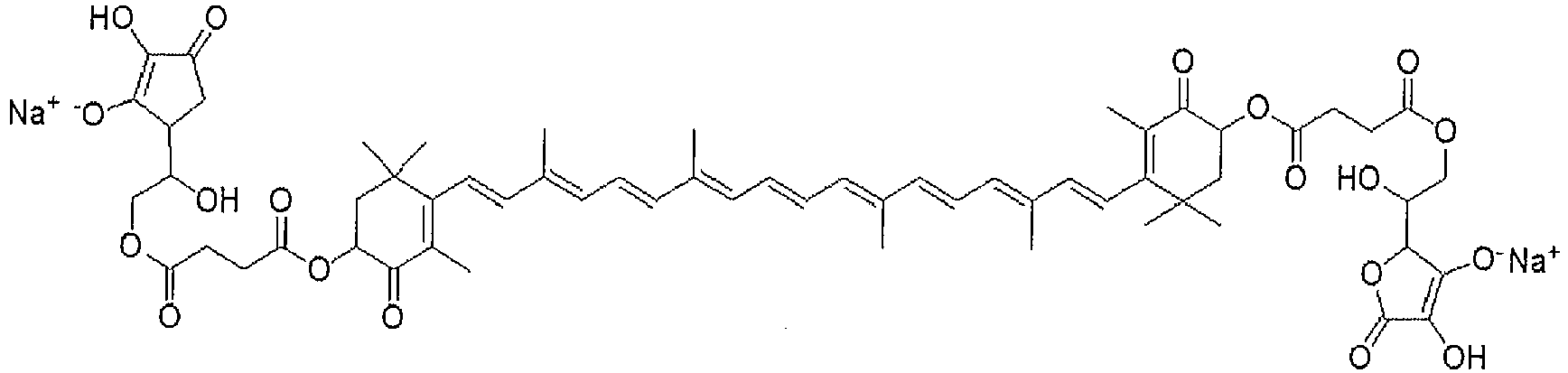
- Pharmazeutische Zusammensetzung, umfassend die Verbindung wie in Anspruch 1 beschrieben und einen pharmazeutisch verträglichen Träger.
- Pharmazeutische Zusammensetzung nach Anspruch 2, ferner umfassend menschliches Serumalbumin, wobei das menschliche Serumalbumin in einem molaren Überschuss zu dem der Verbindung vorliegt.
- Verbindung gemäß Anspruch 1 für ihre Verwendung in der Behandlung eines Ischämie-Reperfusionsschadens.
- Verbindung zur Verwendung gemäß Anspruch 4, wobei der Ischämie-Reperfusionsschaden mit einem Myokardinfarkt, einem Schlaganfall, einer peripheren Gefäßerkrankung, einem venösen oder arteriellen Verschluss, einer Organtransplantation, einer Koronararterien-Bypasstransplantat-Chirurgie, einer perkutanen transluminalen Koronarangioplastie oder einem Herzstillstand und/oder Tod bei einem menschlichen Individuum verbunden ist.
- Verbindung gemäß Anspruch 1 für ihre Verwendung bei der Behandlung einer Erkrankung, wobei die Erkrankung altersabhängige Makuladegeneration (AMD), Netzhautablösung, hypertensive Netzhauterkrankungen, Uveitis, Choroiditis, Vitreitis, Augenblutung, degenerative Netzhautschädigung, Kataraktogenese, Linsentrübungen, Retinopathia prematurorum, Meniere-Krankheit, arzneimittelinduzierte Ototoxizität, infektiöse Otitis, idiopathische Otitis, Mittelohrentzündung, infektiöse Sinusitis, allergische Sinusitis oder Kopf- und Halskrebs umfasst.
- Verbindung gemäß Anspruch 1 für ihre Verwendung bei der Behandlung einer Erkrankung, wobei die Erkrankung eine Lebererkrankung umfasst.
- Verbindung zur Verwendung gemäß Anspruch 7, wobei die Lebererkrankung Tetrachlorkohlenstoff-induzierte Leberschädigung, Endotoxin-induzierte Leberschädigung, Lipolysaccharid-induzierte Leberschädigung, chronische Virusinfektion, Hämochromatose, Wilson-Krankheit, Paracetamol-Überdosierung, kongestive Herzinsuffizienz mit Stauungsleber, alkoholische Zirrhose, idiopathische Zirrhose, hepatozelluläres Karzinom oder Metastasen-bildendes Leberkarzinom umfasst.
Priority Applications (1)
| Application Number | Priority Date | Filing Date | Title |
|---|---|---|---|
| EP10185924.7A EP2392562B1 (de) | 2002-07-29 | 2003-07-29 | Strukturelle Carotenoidanaloge zur Hemmung und Abschwächung einer Erkrankung |
Applications Claiming Priority (11)
| Application Number | Priority Date | Filing Date | Title |
|---|---|---|---|
| US39919402P | 2002-07-29 | 2002-07-29 | |
| US399194P | 2002-07-29 | ||
| US46797303P | 2003-05-05 | 2003-05-05 | |
| US467973P | 2003-05-05 | ||
| US47283103P | 2003-05-22 | 2003-05-22 | |
| US472831P | 2003-05-22 | ||
| US47374103P | 2003-05-28 | 2003-05-28 | |
| US473741P | 2003-05-28 | ||
| US48530403P | 2003-07-03 | 2003-07-03 | |
| US485304P | 2003-07-03 | ||
| PCT/US2003/023706 WO2004011423A2 (en) | 2002-07-29 | 2003-07-29 | Structural carotenoid analogs for the inhibition and amelioration of disease |
Related Child Applications (2)
| Application Number | Title | Priority Date | Filing Date |
|---|---|---|---|
| EP10185924.7A Division-Into EP2392562B1 (de) | 2002-07-29 | 2003-07-29 | Strukturelle Carotenoidanaloge zur Hemmung und Abschwächung einer Erkrankung |
| EP10185924.7A Division EP2392562B1 (de) | 2002-07-29 | 2003-07-29 | Strukturelle Carotenoidanaloge zur Hemmung und Abschwächung einer Erkrankung |
Publications (2)
| Publication Number | Publication Date |
|---|---|
| EP1532108A2 EP1532108A2 (de) | 2005-05-25 |
| EP1532108B1 true EP1532108B1 (de) | 2016-06-29 |
Family
ID=31192475
Family Applications (2)
| Application Number | Title | Priority Date | Filing Date |
|---|---|---|---|
| EP10185924.7A Expired - Lifetime EP2392562B1 (de) | 2002-07-29 | 2003-07-29 | Strukturelle Carotenoidanaloge zur Hemmung und Abschwächung einer Erkrankung |
| EP03772051.3A Expired - Lifetime EP1532108B1 (de) | 2002-07-29 | 2003-07-29 | Astaxanthinester zur vermeidung und verbesserung von krankheiten |
Family Applications Before (1)
| Application Number | Title | Priority Date | Filing Date |
|---|---|---|---|
| EP10185924.7A Expired - Lifetime EP2392562B1 (de) | 2002-07-29 | 2003-07-29 | Strukturelle Carotenoidanaloge zur Hemmung und Abschwächung einer Erkrankung |
Country Status (11)
| Country | Link |
|---|---|
| US (5) | US7145025B2 (de) |
| EP (2) | EP2392562B1 (de) |
| JP (2) | JP4601549B2 (de) |
| KR (1) | KR20050069975A (de) |
| CN (2) | CN1708480B (de) |
| AU (1) | AU2003256982A1 (de) |
| BR (1) | BRPI0313155B8 (de) |
| CA (1) | CA2495167C (de) |
| MX (1) | MXPA05001202A (de) |
| NO (1) | NO20050619L (de) |
| WO (1) | WO2004011423A2 (de) |
Families Citing this family (79)
| Publication number | Priority date | Publication date | Assignee | Title |
|---|---|---|---|---|
| US20070160645A1 (en) * | 2001-10-25 | 2007-07-12 | Jakob Vinten-Johansen | PostConditioning System And Method For The Reduction Of Ischemic-Reperfusion Injury In The Heart And Other Organs |
| CA2463415C (en) | 2001-10-25 | 2012-02-07 | Emory University | Catheter for modified perfusion |
| US7759506B2 (en) * | 2002-02-25 | 2010-07-20 | Diffusion Pharmaceuticals Llc | Bipolar trans carotenoid salts and their uses |
| WO2003072734A2 (en) * | 2002-02-25 | 2003-09-04 | Diffusion Pharmaceuticals Llc | Bipolar trans carotenoid salts and their uses |
| US20050049248A1 (en) * | 2002-07-29 | 2005-03-03 | Lockwood Samuel Fournier | Carotenoid ether analogs or derivatives for controlling C-reactive protein levels |
| US20050059635A1 (en) * | 2002-07-29 | 2005-03-17 | Lockwood Samuel Fournier | Carotenoid ester analogs or derivatives for controlling C-reactive protein levels |
| MXPA05001202A (es) | 2002-07-29 | 2005-11-23 | Hawaii Biotech Inc | Analogos carotenoides estructurales para la inhibicion y mejora de la enfermedad. |
| US20050059659A1 (en) * | 2002-07-29 | 2005-03-17 | Lockwood Samuel Fournier | Carotenoid analogs or derivatives for controlling C-reactive protein levels |
| US20050026874A1 (en) * | 2002-07-29 | 2005-02-03 | Lockwood Samuel Fournier | Carotenoid ether analogs or derivatives for the inhibition and amelioration of liver disease |
| US20050009788A1 (en) * | 2002-07-29 | 2005-01-13 | Lockwood Samuel Fournier | Carotenoid ester analogs or derivatives for controlling connexin 43 expression |
| US20050004235A1 (en) * | 2002-07-29 | 2005-01-06 | Lockwood Samuel Fournier | Carotenoid analogs or derivatives for the inhibition and amelioration of liver disease |
| US7345091B2 (en) * | 2002-07-29 | 2008-03-18 | Cardax Pharmaceuticals, Inc. | Carotenoid ether analogs or derivatives for the inhibition and amelioration of disease |
| US7723327B2 (en) * | 2002-07-29 | 2010-05-25 | Cardax Pharmaceuticals, Inc. | Carotenoid ester analogs or derivatives for the inhibition and amelioration of liver disease |
| US7763649B2 (en) * | 2002-07-29 | 2010-07-27 | Cardax Pharmaceuticals, Inc. | Carotenoid analogs or derivatives for controlling connexin 43 expression |
| US7375133B2 (en) * | 2002-07-29 | 2008-05-20 | Cardax Pharmaceuticals, Inc. | Pharmaceutical compositions including carotenoid ether analogs or derivatives for the inhibition and amelioration of disease |
| US7320997B2 (en) * | 2002-07-29 | 2008-01-22 | Cardax Pharmaceuticals, Inc. | Pharmaceutical compositions including carotenoid ester analogs or derivatives for the inhibition and amelioration of disease |
| AU2005207029B2 (en) | 2004-01-20 | 2011-09-01 | Brigham Young University | Novel sirtuin activating compounds and methods for making the same |
| WO2005102356A1 (en) * | 2004-04-14 | 2005-11-03 | Hawaii Biotech, Inc. | Carotenoid analogs or derivatives for the inhibition and amelioration of inflammation |
| US20060058269A1 (en) * | 2004-04-14 | 2006-03-16 | Lockwood Samuel F | Carotenoid analogs or derivatives for the inhibition and amelioration of inflammation |
| US20060088905A1 (en) * | 2004-10-01 | 2006-04-27 | Lockwood Samuel F | Methods for the synthesis of zeazanthin |
| JP2007238441A (ja) * | 2004-12-03 | 2007-09-20 | Fuji Chem Ind Co Ltd | アスタキサンチンを有効成分とする体脂肪減少用組成物 |
| US20080097385A1 (en) * | 2004-12-22 | 2008-04-24 | Jakob Vinten-Johansen | Therapeutic Adjuncts to Enhance the Organ Protective Effects of Postconditioning |
| US20060270589A1 (en) * | 2005-02-22 | 2006-11-30 | Lockwood Samuel F | Carotenoids, carotenoid analogs, or carotenoid derivatives for the treatment of visual disabilities |
| UA95903C2 (ru) | 2005-02-24 | 2011-09-26 | Дифьюжен Фармасьютикалз Ллк | Транс-каротиноиды, их синтез, лекарственная форма и применение |
| EP1861109A2 (de) * | 2005-03-09 | 2007-12-05 | Cardax Pharmaceuticals, Inc. | Carotinoide, deren analoge oder derivate zur behandlung proliferativer erkrankungen |
| AU2006227165B2 (en) | 2005-03-18 | 2011-11-10 | Microbia, Inc. | Production of carotenoids in oleaginous yeast and fungi |
| EP1877372A1 (de) * | 2005-03-23 | 2008-01-16 | Cardax Pharmaceuticals, Inc. | Wasserdispergierbare carotenoide einschliesslich analoga und derivaten |
| US20060270590A1 (en) * | 2005-03-29 | 2006-11-30 | Lockwood Samuel F | Reduction in complement activation and inflammation during tissue injury by carotenoids, carotenoid analogs, or derivatives thereof |
| JP2006016407A (ja) * | 2005-06-15 | 2006-01-19 | Yamaha Motor Co Ltd | ホスホジエステラーゼ阻害剤 |
| JP2006016408A (ja) * | 2005-06-23 | 2006-01-19 | Yamaha Motor Co Ltd | 血中中性脂肪抑制剤 |
| WO2007067957A1 (en) * | 2005-12-07 | 2007-06-14 | Cardax Pharmaceuticals, Inc. | Structural carotenoid analogs or derivatives for the modulation of systemic and/or target organ redox status |
| JP2007153845A (ja) * | 2005-12-07 | 2007-06-21 | Yamaha Motor Co Ltd | 脂肪蓄積抑制剤 |
| US20070135521A1 (en) * | 2005-12-14 | 2007-06-14 | Yamaha Hatsudoki Kabushiki Kaisha | Agent for Preventing Metabolic Syndrome |
| WO2007090095A2 (en) * | 2006-01-27 | 2007-08-09 | Cardax Pharmaceuticals, Inc. | Synthesis of carotenoid analogs or derivatives with improved antioxidant characteristics |
| US20080221377A1 (en) * | 2006-06-16 | 2008-09-11 | Lockwood Samuel F | Methods for synthesis of carotenoids, including analogs, derivatives, and synthetic and biological intermediates |
| RU2438358C2 (ru) * | 2006-08-08 | 2012-01-10 | Нестек С.А. | Устойчивые и биологически доступные композиции изомеров каротиноидов для кожи и волос |
| WO2008042338A2 (en) | 2006-09-28 | 2008-04-10 | Microbia, Inc. | Production of carotenoids in oleaginous yeast and fungi |
| ITMI20061874A1 (it) * | 2006-09-29 | 2006-12-29 | Rosario Ammirante | Composizione per il trattamento degli stati patologici neurodegenerativi del sistema nervoso centrale ed in particolare nel morbo di parkinson |
| US8063101B2 (en) * | 2007-03-23 | 2011-11-22 | Cardax Pharmaceuticals, Inc. | Carotenoid analogs and derivatives for the prevention of platelet aggregation |
| EP3483140A1 (de) | 2007-04-13 | 2019-05-15 | Diffusion Pharmaceuticals LLC | Verwendung von bipolaren trans-karotinoiden als eine vorbehandlung und bei der behandlung von peripherer gefässkrankheit |
| EA201070544A1 (ru) * | 2007-10-31 | 2010-12-30 | Диффьюжн Фармасьютикалз Ллс | Новый класс терапевтических веществ, усиливающих диффузию низкомолекулярных соединений |
| US20090297492A1 (en) * | 2008-05-30 | 2009-12-03 | Yamaha Hatsudoki Kabushiki Kaisha | Method for Improving Cognitive Performance |
| WO2010120686A2 (en) * | 2009-04-13 | 2010-10-21 | Parsons J Kellogg | Methods for the diagnosis and treatment of benign prostatic hyperplasia |
| KR101875843B1 (ko) | 2009-06-22 | 2018-07-06 | 디퓨젼 파마슈티컬즈 엘엘씨 | 확산 촉진 화합물 및 그 화합물 단독 또는 혈전 용해제와 합쳐진 화합물의 용도 |
| EP2464350B1 (de) * | 2009-09-11 | 2016-08-24 | Nestec S.A. | Zusammensetzungen und verfahren zur intensivierung kognitiver und verwandter funktionen bei tieren |
| US8541645B2 (en) * | 2009-10-22 | 2013-09-24 | University Of Calcutta | Animal model for cigarette-smoke-induced atherosclerosis and related methods |
| CN105287473A (zh) | 2010-06-02 | 2016-02-03 | 扩散药品有限公司 | 包含双极性反式类胡萝卜素的组合物及其应用 |
| EP2600890A1 (de) * | 2010-08-04 | 2013-06-12 | Instituto Europeo di Oncologia S.r.l. | Antigenbeladungsverfahren für eine immuntherapie |
| CN102389407A (zh) * | 2011-12-01 | 2012-03-28 | 滨州医学院 | 虾青素在制备治疗和预防肺纤维化的药品中的应用 |
| US10531655B2 (en) | 2011-12-02 | 2020-01-14 | The Regents Of The University Of California | Reperfusion protection solution and uses thereof |
| GB201120772D0 (en) * | 2011-12-02 | 2012-01-11 | Ip Science Ltd | Cocoa-based food products |
| EP2869717B8 (de) * | 2012-07-09 | 2018-07-25 | NoGlo, Inc. | Prävention von alkoholreaktionen mit nahrungszusätzen |
| CN103073471B (zh) * | 2013-01-30 | 2014-11-05 | 江苏省农业科学院 | 一种叶黄素二琥珀酸酯的超声辅助合成方法 |
| US9482675B1 (en) * | 2013-07-31 | 2016-11-01 | University Of Kentucky Research Foundation | Methods and systems for prognosis and diagnosis of brain damage |
| JP6183746B2 (ja) * | 2013-11-13 | 2017-08-23 | 国立大学法人高知大学 | 遅延性アレルギー抑制剤 |
| CA2948605C (en) * | 2014-05-20 | 2019-12-24 | Fuji Chemical Industries Co., Ltd. | Carotenoid derivative, pharmaceutically acceptable salt thereof, or pharmaceutically acceptable ester or amide thereof |
| WO2016063278A1 (en) * | 2014-10-19 | 2016-04-28 | Shenkar College Of Engineering And Design | Astaxanthin based polymer and uses thereof |
| MX388753B (es) | 2015-05-08 | 2025-03-20 | Spectral Platforms Inc | Complejos no covalentes basados en albúmina y métodos de uso de los mismos. |
| US20160367620A1 (en) | 2015-06-19 | 2016-12-22 | Harry B. Demopoulos | Glutathione |
| US9572783B1 (en) * | 2015-10-08 | 2017-02-21 | Chuen Wei Lu | Use of xanthophylls for the treatment of cancers |
| CN105646869B (zh) * | 2016-01-04 | 2018-01-16 | 中国海洋大学 | 一种水溶性虾青素衍生物及其制备方法 |
| WO2017165667A1 (en) * | 2016-03-24 | 2017-09-28 | Diffusion Pharmaceuticals Llc | Use of bipolar trans carotenoids with chemotherapy and radiotherapy for treatment of cancer |
| CN106748946A (zh) * | 2017-02-14 | 2017-05-31 | 烟台固特丽生物科技股份有限公司 | 一种含水溶性虾青素作物营养液的制备方法 |
| MX2019011119A (es) | 2017-03-20 | 2019-12-19 | Spectral Platforms Inc | Metodos espectroscopicos para detectar y caracterizar microorganismos. |
| JP7355394B2 (ja) * | 2018-05-03 | 2023-10-03 | エル.イー.エー.エフ. ホールディングス グループ エルエルシー | カロテノイド組成物およびその使用 |
| JP2021176821A (ja) * | 2018-08-01 | 2021-11-11 | アスタファーマシューティカルズ株式会社 | 新規カロテノイド関連誘導体、その塩又はエステル類若しくはアミド類 |
| CN109678771A (zh) * | 2018-12-28 | 2019-04-26 | 广州立达尔生物科技股份有限公司 | 一种叶黄素甘氨酸酯及其盐酸盐的制备方法 |
| JP2022549503A (ja) * | 2019-09-27 | 2022-11-25 | カーダックス、インコーポレイティッド | アスタキサンチンエステルおよびその使用方法 |
| FR3105790B1 (fr) | 2019-12-26 | 2022-01-14 | Biophytis | Composés chimiques ciblant l’œil et leur utilisation dans le traitement de maladies oculaires |
| CN111257466B (zh) * | 2020-02-27 | 2022-04-01 | 南宁海关技术中心 | 一种红心鸭蛋中类胡萝卜素含量的测定方法 |
| US12622874B2 (en) | 2020-04-09 | 2026-05-12 | L.E.A.F. Holdings Group Llc | Trans-crocetin compositions and treatment regimens |
| WO2022140580A1 (en) | 2020-12-24 | 2022-06-30 | Orn Almarsson | Xanthophyll derivatives |
| JP2024502909A (ja) * | 2020-12-24 | 2024-01-23 | アルマルソン、オーン | キサントフィル誘導体 |
| CN113788867B (zh) * | 2021-06-30 | 2023-12-26 | 东北林业大学 | 一种叶黄素水溶性衍生物及其制备工艺 |
| DE102022134274A1 (de) * | 2022-12-21 | 2024-06-27 | Endress+Hauser Conducta Gmbh+Co. Kg | Sensorelement für einen optochemischen Sensor |
| AU2024369666A1 (en) * | 2023-10-30 | 2026-06-11 | Adjuvia Therapeutics | Pharmaceutical composition and method of treating disease using a molecular complex assembled on astaxanthin core |
| CN118084755B (zh) * | 2024-04-22 | 2024-08-02 | 潍坊富邦药业有限公司 | 一种高水溶性虾青素衍生物及制备方法 |
| CN118108646B (zh) * | 2024-04-22 | 2024-08-02 | 潍坊富邦药业有限公司 | 一种水溶性虾青素衍生物及其制备方法 |
| CN118063368B (zh) * | 2024-04-22 | 2024-08-02 | 潍坊富邦药业有限公司 | 一种水溶性虾青素衍生物及其合成方法 |
Citations (1)
| Publication number | Priority date | Publication date | Assignee | Title |
|---|---|---|---|---|
| EP1500645A1 (de) * | 2002-04-30 | 2005-01-26 | Suntory Limited | Astaxanthin-fettsäureester mit mittlerer kettenlänge, verfahren zu dessen herstellung und zusammensetzungen, die den ester enthalten |
Family Cites Families (141)
| Publication number | Priority date | Publication date | Assignee | Title |
|---|---|---|---|---|
| CH314001A (de) * | 1952-12-18 | 1956-05-31 | Hoffmann La Roche | Verfahren zur Herstellung von Vitamin-A-Estern |
| CH420822A (de) * | 1960-10-17 | 1966-09-15 | Hoffmann La Roche | Wasserdispergierbare Carotinoidzubereitung |
| US3354218A (en) * | 1963-05-10 | 1967-11-21 | Hoffmann La Roche | Process for preparing 4-(2, 6, 6-trimethyl-4-methoxy-1-cyclohexen-1-yl)-3-buten-2-one |
| FR2076448A5 (de) * | 1970-01-15 | 1971-10-15 | Rhone Poulenc Sa | |
| US3853993A (en) * | 1973-05-01 | 1974-12-10 | Univ Virginia | Process for increasing oxygen diffusivity and method for treating atherosclerosis |
| US3788468A (en) * | 1973-05-01 | 1974-01-29 | Univ Virginia | Process for increasing oxygen diffusivity |
| US3989757A (en) * | 1973-08-29 | 1976-11-02 | Hoffmann-La Roche Inc. | Isomerizing cis-carotenoids to all-trans-carotenoids |
| CH609320A5 (de) * | 1974-06-20 | 1979-02-28 | Hoffmann La Roche | |
| US3965261A (en) * | 1975-04-29 | 1976-06-22 | University Of Virginia | Method for treating papillomas |
| US3975519A (en) * | 1975-06-09 | 1976-08-17 | University Of Virginia | Method for increasing the oxygen partial pressure in the bloodstream of mammals |
| US4070460A (en) * | 1975-11-10 | 1978-01-24 | University Of Virginia Patents Foundation | Method for treating cerebral edema |
| US4009270A (en) * | 1975-11-21 | 1977-02-22 | The University Of Virginia | Method for treating spinal cord injury |
| CH623304A5 (de) * | 1975-11-30 | 1981-05-29 | Hoffmann La Roche | |
| US4038144A (en) * | 1976-04-19 | 1977-07-26 | The University Of Virginia | Method of increasing fermentation yields |
| US4046880A (en) * | 1976-04-20 | 1977-09-06 | The University Of Virginia | Method of treating hypertension |
| JPS6053031B2 (ja) * | 1978-03-31 | 1985-11-22 | 武田薬品工業株式会社 | スピロ化合物およびその製造方法 |
| US4176179A (en) * | 1978-04-17 | 1979-11-27 | The University Of Virginia Alumni Patents Foundation | Method for treating arthritis |
| DE2964401D1 (en) * | 1978-06-02 | 1983-02-03 | Hoffmann La Roche | Process for the preparation of cyclohexenyl derivatives, and intermediates produced in the synthesis |
| EP0005749B1 (de) * | 1978-06-02 | 1983-03-30 | F. HOFFMANN-LA ROCHE & CO. Aktiengesellschaft | Cyclohexenderivate, Verfahren zu deren Herstellung, sowie deren Verwendung |
| DE3048000A1 (de) * | 1980-12-19 | 1982-07-15 | Basf Ag | Stabile injizierbare (beta)-carotin-solubilisate und verfahren zu ihrer herstellung |
| DE3273463D1 (en) * | 1981-10-16 | 1986-10-30 | Hoffmann La Roche | Process for the preparation of cyclohexene derivatives, and a starting product and intermediary products in this process |
| ATE13666T1 (de) * | 1982-02-09 | 1985-06-15 | Hoffmann La Roche | Verfahren zur herstellung von cyclohexenderivaten. |
| EP0101597B1 (de) * | 1982-08-20 | 1988-06-22 | F. HOFFMANN-LA ROCHE & CO. Aktiengesellschaft | Verfahren zur Herstellung von Astaxanthin und Zwischenprodukten in der Astaxanthin-Synthese |
| US4491574A (en) * | 1983-03-02 | 1985-01-01 | Albert Einstein College Of Medicine Of Yeshiva University, A Division Of Yeshiva University | Reduction of high dose aspirin toxicity by dietary vitamin A |
| DE3588023D1 (de) * | 1984-01-28 | 1995-06-29 | Roshdy Ismail | Mittel zur Behandlung von Herzerkrankungen. |
| US5346488A (en) * | 1985-04-08 | 1994-09-13 | The General Hospital Corporation | Laser-induced ablation of atherosclerotic plaque |
| US4851339A (en) * | 1986-04-01 | 1989-07-25 | Hills Christopher B | Extraction of anti-mutagenic pigments from algae and vegetables |
| DK171297B1 (da) * | 1987-03-27 | 1996-08-26 | Hoffmann La Roche | Fremgangsmåde til fremstilling af cyclohexenderivater som mellemprodukter til fremstilling af zeaxanthin samt cyclohexenderivater |
| US5057494A (en) * | 1988-08-03 | 1991-10-15 | Ethicon, Inc. | Method for preventing tissue damage after an ischemic episode |
| CA2011651A1 (en) | 1989-03-08 | 1990-09-08 | Gerald Shklar | Composition and method for inducing tumor regression |
| DK0410236T3 (da) * | 1989-07-25 | 1993-12-13 | Hoffmann La Roche | Fremgangsmåde til fremstilling af caratenoidpræparater |
| US5278189A (en) * | 1990-06-04 | 1994-01-11 | Rath Matthias W | Prevention and treatment of occlusive cardiovascular disease with ascorbate and substances that inhibit the binding of lipoprotein (A) |
| RU2126679C1 (ru) * | 1990-10-01 | 1999-02-27 | Бригхэм энд Уименз Хоспитал | Способ ингибирования и профилактики возникновения сосудистых явлений бета-каротином и витамином е, фармацевтическая композиция, состоящая из бета-каротина и витамина е, фармацевтическая композиция, состоящая из бета-каротина и аспирина |
| US6132790A (en) * | 1991-09-06 | 2000-10-17 | Betatene Limited | Carotenoid composition |
| EP0746202A4 (de) * | 1992-01-06 | 1997-06-25 | Health Maintenance Programs | Pharmazeutisch aktive antioxidant enthaltende zusammensetzung und verfahren zu ihrer verwendung in der vorbeugung und behandlung vom restenosis nach angioplastie |
| US5221668A (en) * | 1992-02-26 | 1993-06-22 | Abbott Laboratories | Nutritional product for trauma and surgery patients |
| IL104736A0 (en) * | 1992-03-27 | 1993-06-10 | Zeagen Inc | Method for producing beta-carotene using a fungal mated culture |
| US5328845A (en) * | 1992-03-27 | 1994-07-12 | Universal Foods Corporation | Fungal negative microorganism capable of producing high levels of beta-carotene |
| ES2104990T3 (es) * | 1992-04-14 | 1997-10-16 | Hoffmann La Roche | Preparados de sustancias liposolubles. |
| US5310764A (en) * | 1992-05-08 | 1994-05-10 | Steven Baranowitz | Treatment of age related macular degeneration with beta-carotene |
| JP3547741B2 (ja) * | 1992-06-04 | 2004-07-28 | ベータティーン・リミテッド | 高シス−β−カロチン組成物 |
| GB9219524D0 (en) * | 1992-09-15 | 1992-10-28 | Smithkline Beecham Plc | Novel composition |
| US5310554A (en) * | 1992-10-27 | 1994-05-10 | Natural Carotene Corporation | High purity beta-carotene |
| DE19609538A1 (de) * | 1996-03-11 | 1997-09-18 | Basf Ag | Feinverteilte Carotinoid- und Retinoidsuspensionen und Verfahren zu ihrer Herstellung |
| JPH08510995A (ja) | 1993-03-22 | 1996-11-19 | ベータティーン・リミテッド | 水分散性治療用化合物 |
| EP0689426B1 (de) * | 1993-03-22 | 2000-05-17 | Betatene Pty. Ltd. | Therapeutischer wirkstoff zur behandlung von melanomen |
| ATE193421T1 (de) * | 1993-06-24 | 2000-06-15 | Hoffmann La Roche | Pigmentierung mit carotinoiden |
| US6218436B1 (en) * | 1993-06-28 | 2001-04-17 | The Howard Foundation | Pharmaceutically active carotenoids |
| DE4322277A1 (de) * | 1993-07-05 | 1995-01-12 | Basf Ag | Verbessertes Verfahren zur Herstellung von Astaxanthin, neue Zwischenprodukte hierfür sowie ein Verfahren zu deren Herstellung |
| FR2707184B1 (fr) * | 1993-07-08 | 1995-08-11 | Rhone Poulenc Nutrition Animal | Procédé de préparation de sphérules contenant un principe actif alimentaire ou pharmaceutique. |
| US5607839A (en) * | 1993-07-22 | 1997-03-04 | Nippon Oil Company, Ltd. | Bacteria belonging to new genus process for production of carotenoids using same |
| JP3249867B2 (ja) * | 1993-10-21 | 2002-01-21 | 株式会社クラレ | アスタキサンチンの製造方法 |
| CH685189A5 (de) * | 1993-11-19 | 1995-04-28 | Marigen Sa | Ultramikroemulsionen aus spontan dispergierbaren Konzentraten mit antitumoral wirksamen Xanthophyll-Estern. |
| US6428816B1 (en) * | 1994-04-08 | 2002-08-06 | Cognis Australia Pty., Ltd. | Carotenoid agent for inhibiting the conversion of epithelial cells to tumors |
| JPH07300421A (ja) | 1994-04-28 | 1995-11-14 | Itano Reitou Kk | 抗炎症剤 |
| SE9401738D0 (sv) * | 1994-05-19 | 1994-05-19 | Ewos Ab | Bioactive feed |
| JPH0873312A (ja) * | 1994-09-02 | 1996-03-19 | Noevir Co Ltd | 皮膚外用剤 |
| SE503336C2 (sv) * | 1994-09-19 | 1996-05-28 | Asta Carotene Ab | Medel och sätt för att öka produktionen av/hos fjäderfän |
| US5527533A (en) * | 1994-10-27 | 1996-06-18 | Board Of Trustees Of The University Of Illinois | Method of retarding and ameliorating central nervous system and eye damage |
| ES2136786T3 (es) * | 1994-12-21 | 1999-12-01 | Hoffmann La Roche | Cetonas y esteres de carotenoides. |
| US5643943A (en) * | 1994-12-23 | 1997-07-01 | Alcon Laboratories, Inc. | Systemic administration of esters and amides of antioxidants which may be used as antioxidant prodrug therapy for oxidative and inflammatory pathogenesis |
| US5589468A (en) * | 1995-01-13 | 1996-12-31 | Clintec Nutrition Co. | Method for providing nutrition to elderly patients |
| US5886053A (en) * | 1995-02-03 | 1999-03-23 | Basf Aktiengesellschaft | Use of carotenoids for producing drugs for the treatment of dermatoses |
| ATE355832T1 (de) | 1995-06-07 | 2007-03-15 | Howard Foundation | Pharmazeutisch aktive karotenoide |
| US5532009A (en) * | 1995-06-07 | 1996-07-02 | The Procter & Gamble Company | Fat substitutes containing water soluble beta-carotene |
| JPH08337592A (ja) | 1995-06-13 | 1996-12-24 | Kaiyo Bio Technol Kenkyusho:Kk | 新規カロテノイド |
| JPH0984591A (ja) | 1995-09-26 | 1997-03-31 | Kaiyo Bio Technol Kenkyusho:Kk | カロテノイド硫酸エステルおよびその製造方法 |
| US6060511A (en) * | 1995-10-05 | 2000-05-09 | Gainer; John L. | Trans-sodium crocetinate, methods of making and methods of use thereof |
| CN1069320C (zh) * | 1995-10-17 | 2001-08-08 | 昭和电工株式会社 | 高纯度生育酚磷酸酯,其生产方法和含有该化合物的化妆品 |
| JPH09124470A (ja) * | 1995-10-26 | 1997-05-13 | Suntory Ltd | 抗ストレス組成物 |
| US5854015A (en) * | 1995-10-31 | 1998-12-29 | Applied Food Biotechnology, Inc. | Method of making pure 3R-3'R stereoisomer of zeaxanthin for human ingestion |
| US5827539A (en) * | 1995-12-28 | 1998-10-27 | Amway Corporation | Dry carotenoid-oil powder and process for making same |
| US6232060B1 (en) * | 1996-01-19 | 2001-05-15 | Galileo Laboratories, Inc. | Assay system for anti-stress agents |
| US5837224A (en) * | 1996-01-19 | 1998-11-17 | The Regents Of The University Of Michigan | Method of inhibiting photoaging of skin |
| JPH09202730A (ja) | 1996-01-24 | 1997-08-05 | Nippon Mektron Ltd | 発ガン抑制作用剤 |
| US5801159A (en) * | 1996-02-23 | 1998-09-01 | Galileo Laboratories, Inc. | Method and composition for inhibiting cellular irreversible changes due to stress |
| DE19609476A1 (de) * | 1996-03-11 | 1997-09-18 | Basf Ag | Stabile zur parenteralen Verabreichung geeignete Carotinoid-Emulsionen |
| DE19609477A1 (de) * | 1996-03-11 | 1997-09-18 | Basf Ag | Stabile wäßrige Solubilisate von Carotinoiden und Vitamine |
| SE506191C2 (sv) * | 1996-03-27 | 1997-11-17 | Astacarotene Ab | Medel och sätt för att öka produktionen av/hos däggdjur |
| EP0807431B1 (de) * | 1996-05-14 | 2004-03-24 | DSM IP Assets B.V. | Herstellungsverfahren für Carotenoid-Zusammensetzungen |
| DE19637517A1 (de) * | 1996-09-13 | 1998-03-19 | Basf Ag | Herstellung von pulverförmigen, kaltwasserdispergierbaren Carotinoid-Zubereitungen und die Verwendung der neuen Carotinoid-Zubereitungen |
| DE19649062A1 (de) * | 1996-11-27 | 1998-05-28 | Basf Ag | Flüssige, mit Öl mischbare Carotinoid-Zubereitungen |
| JPH10155459A (ja) | 1996-11-27 | 1998-06-16 | Suntory Ltd | アスタキサンチン含有飲食物 |
| WO1998029111A1 (en) | 1996-12-25 | 1998-07-09 | Designer Foods Association Ltd. | Carcinogenesis inhibitors |
| SE522246C2 (sv) | 1997-02-27 | 2004-01-27 | Astacarotene Ab | Oralt preparat för profylaktisk och terapeutisk behandling av Helicobacter Sp. infektion |
| WO1998043630A1 (en) * | 1997-04-02 | 1998-10-08 | Brigham And Women's Hospital, Inc. | Means of ascertaining an individual's risk profile for atherosclerotic disease |
| US5858700A (en) * | 1997-04-03 | 1999-01-12 | Kemin Foods, Lc | Process for the isolation and purification of lycopene crystals |
| EP0984915A4 (de) * | 1997-04-04 | 2002-11-27 | Henkel Corp | Luteinester mit hoher bioverfügbarkeit |
| US5811446A (en) * | 1997-04-18 | 1998-09-22 | Cytos Pharmaceuticals Llc | Prophylactic and therapeutic methods for ocular degenerative diseases and inflammations and histidine compositions therefor |
| US5876782A (en) * | 1997-05-14 | 1999-03-02 | Kemin Industries, Inc. | Method for the conversion of xanthophylls in plant material |
| JPH10327865A (ja) | 1997-05-29 | 1998-12-15 | Kirin Brewery Co Ltd | カロテノイド配糖体およびその製造法 |
| SE512531C2 (sv) | 1997-09-04 | 2000-03-27 | Astacarotene Ab | Användning av åtminstone en typ av xantofyller för framställning av ett läkemedel för profylaktisk och/eller terapeutisk förbättring av muskelfunktionsdurationen hos däggdjur och/eller behandling av muskelstörningar eller - sjukdomar hos däggdjur |
| US6008417A (en) | 1997-10-20 | 1999-12-28 | Roche Vitamins Inc. | Process for making metabolites of lycopene |
| US5959138A (en) * | 1997-11-25 | 1999-09-28 | Industrial Organica S.A. De C.V. | Short chain diesters and process for making the same |
| SE511237C2 (sv) * | 1997-12-16 | 1999-08-30 | Astacarotene Ab | Användning av åtminstone en typ av xantofyller för framställning av ett humant eller verinärmedicinskt läkemedel för profylaktisk behandling av mastit hos däggdjursmammor |
| DE19802134A1 (de) * | 1998-01-21 | 1999-07-22 | Basf Ag | Verwendung von Carotinoid-Aggregaten als Färbemittel |
| US6020003A (en) * | 1998-02-23 | 2000-02-01 | Basf Corporation | Method of making spray-dried powders with high edible-oil loadings based on non-hydrolyzed gelatin |
| US6051587A (en) * | 1998-04-16 | 2000-04-18 | Medicure, Inc. | Treatment of iatrogenic and age-related hypertension and pharmaceutical compositions useful therein |
| US6331537B1 (en) * | 1998-06-03 | 2001-12-18 | Gpi Nil Holdings, Inc. | Carboxylic acids and carboxylic acid isosteres of N-heterocyclic compounds |
| US6043259A (en) * | 1998-07-09 | 2000-03-28 | Medicure Inc. | Treatment of cardiovascular and related pathologies |
| NL1010351C2 (nl) * | 1998-10-19 | 2001-01-08 | Werklust & Beheer B V | Esters van caroteno´den voor gebruik in de preventie en behandeling van oogaandoeningen. |
| JP2000143688A (ja) | 1998-11-02 | 2000-05-26 | Kuraray Co Ltd | ゼアキサンチンモノ−β−グルコシドの製造方法 |
| US6075058A (en) * | 1998-12-12 | 2000-06-13 | Tufts University | Compositions for increased bioavailability of carotenoids |
| US6399105B1 (en) * | 1999-01-20 | 2002-06-04 | Peter Donald Collin | Sea cucumber carotenoid lipid fraction products and methods of use |
| US6426362B1 (en) * | 1999-10-08 | 2002-07-30 | Galileo Laboratories, Inc. | Formulations of tocopherols and methods of making and using them |
| JP4491090B2 (ja) | 1999-10-08 | 2010-06-30 | ヒガシマル醤油株式会社 | アポトーシス誘導剤 |
| WO2001042455A1 (en) | 1999-12-08 | 2001-06-14 | California Institute Of Technology | Directed evolution of biosynthetic and biodegration pathways |
| US6344214B1 (en) * | 1999-12-13 | 2002-02-05 | Cyanotech Corporation | Method for retarding and ameliorating fever blisters and canker sores |
| US6258855B1 (en) * | 2000-02-08 | 2001-07-10 | Cyanotech Corporation | Method of retarding and ameliorating carpal tunnel syndrome |
| AU5137901A (en) * | 2000-04-06 | 2001-10-23 | Coastside Res | Method to inhibit lipoxygenase and cancer cell proliferation |
| US20030104090A1 (en) | 2000-05-05 | 2003-06-05 | Levy Pedro E. | Supplements containing annatto extracts and carotenoids and methods for using the same |
| US6579544B1 (en) * | 2000-05-31 | 2003-06-17 | Nutriex, L.L.C. | Method for supplementing the diet |
| US20020110604A1 (en) * | 2000-08-11 | 2002-08-15 | Ashni Naturaceuticals, Inc. | Composition exhibiting synergistic antioxidant activity |
| US20020132845A1 (en) | 2000-12-15 | 2002-09-19 | Miller Guy Michael | Compositions and methods for the prevention and treatment of tissue ischemia |
| JP2004515508A (ja) | 2000-12-16 | 2004-05-27 | アベンティス・ファーマ・ドイチユラント・ゲゼルシャフト・ミット・ベシュレンクテル・ハフツング | 化合物の健康促進組成物 |
| IL141039A (en) | 2001-01-23 | 2006-10-31 | Lycored Natural Prod Ind Ltd | The composition for the prevention of atherosclerosis containing carotenoids and use for the preparation of drugs to inhibit LDL oxidation |
| CN1244556C (zh) * | 2001-02-23 | 2006-03-08 | 巴洛维托国际公司 | 新型类胡萝卜素酯 |
| US6984523B2 (en) | 2001-08-02 | 2006-01-10 | E.I. Du Pont De Nemours And Company | Carotenoid ketolase gene |
| GB0119052D0 (en) * | 2001-08-03 | 2001-09-26 | Mars Uk Ltd | Foodstuff |
| ES2297125T5 (es) * | 2002-02-06 | 2013-07-03 | Dsm Ip Assets B.V. | Ésteres de astaxantina |
| US7105634B2 (en) | 2002-02-11 | 2006-09-12 | E. I. Du Pont De Nemours And Company | Genetic constructs encoding carotenoid biosynthetic enzymes |
| US7514107B2 (en) * | 2002-03-21 | 2009-04-07 | Mars, Incorporated | Treatment of diseases involving defective gap junctional communication |
| GB0211136D0 (en) | 2002-05-15 | 2002-06-26 | Univ London | Treatment and prevention of tissue damage |
| US20050009788A1 (en) | 2002-07-29 | 2005-01-13 | Lockwood Samuel Fournier | Carotenoid ester analogs or derivatives for controlling connexin 43 expression |
| US20050049248A1 (en) | 2002-07-29 | 2005-03-03 | Lockwood Samuel Fournier | Carotenoid ether analogs or derivatives for controlling C-reactive protein levels |
| MXPA05001202A (es) | 2002-07-29 | 2005-11-23 | Hawaii Biotech Inc | Analogos carotenoides estructurales para la inhibicion y mejora de la enfermedad. |
| US7763649B2 (en) | 2002-07-29 | 2010-07-27 | Cardax Pharmaceuticals, Inc. | Carotenoid analogs or derivatives for controlling connexin 43 expression |
| US20050059635A1 (en) | 2002-07-29 | 2005-03-17 | Lockwood Samuel Fournier | Carotenoid ester analogs or derivatives for controlling C-reactive protein levels |
| US7320997B2 (en) | 2002-07-29 | 2008-01-22 | Cardax Pharmaceuticals, Inc. | Pharmaceutical compositions including carotenoid ester analogs or derivatives for the inhibition and amelioration of disease |
| US7345091B2 (en) | 2002-07-29 | 2008-03-18 | Cardax Pharmaceuticals, Inc. | Carotenoid ether analogs or derivatives for the inhibition and amelioration of disease |
| US20050059659A1 (en) | 2002-07-29 | 2005-03-17 | Lockwood Samuel Fournier | Carotenoid analogs or derivatives for controlling C-reactive protein levels |
| US20050143475A1 (en) | 2002-07-29 | 2005-06-30 | Lockwood Samuel F. | Carotenoid analogs or derivatives for the inhibition and amelioration of ischemic reperfusion injury |
| US20050004235A1 (en) | 2002-07-29 | 2005-01-06 | Lockwood Samuel Fournier | Carotenoid analogs or derivatives for the inhibition and amelioration of liver disease |
| US7521584B2 (en) | 2002-07-29 | 2009-04-21 | Cardax Pharmaceuticals, Inc. | Carotenoid analogs or derivatives for the inhibition and amelioration of disease |
| US20050148517A1 (en) | 2002-07-29 | 2005-07-07 | Lockwood Samuel F. | Carotenoid ether analogs or derivatives for controlling connexin 43 expression |
| US7723327B2 (en) | 2002-07-29 | 2010-05-25 | Cardax Pharmaceuticals, Inc. | Carotenoid ester analogs or derivatives for the inhibition and amelioration of liver disease |
| US20050026874A1 (en) | 2002-07-29 | 2005-02-03 | Lockwood Samuel Fournier | Carotenoid ether analogs or derivatives for the inhibition and amelioration of liver disease |
| US7375133B2 (en) | 2002-07-29 | 2008-05-20 | Cardax Pharmaceuticals, Inc. | Pharmaceutical compositions including carotenoid ether analogs or derivatives for the inhibition and amelioration of disease |
| WO2005102356A1 (en) | 2004-04-14 | 2005-11-03 | Hawaii Biotech, Inc. | Carotenoid analogs or derivatives for the inhibition and amelioration of inflammation |
| US20060058269A1 (en) * | 2004-04-14 | 2006-03-16 | Lockwood Samuel F | Carotenoid analogs or derivatives for the inhibition and amelioration of inflammation |
| US20060088905A1 (en) * | 2004-10-01 | 2006-04-27 | Lockwood Samuel F | Methods for the synthesis of zeazanthin |
-
2003
- 2003-07-29 MX MXPA05001202A patent/MXPA05001202A/es not_active Application Discontinuation
- 2003-07-29 KR KR1020057001714A patent/KR20050069975A/ko not_active Withdrawn
- 2003-07-29 EP EP10185924.7A patent/EP2392562B1/de not_active Expired - Lifetime
- 2003-07-29 BR BRPI0313155A patent/BRPI0313155B8/pt not_active IP Right Cessation
- 2003-07-29 CN CN03823260XA patent/CN1708480B/zh not_active Expired - Fee Related
- 2003-07-29 CA CA2495167A patent/CA2495167C/en not_active Expired - Fee Related
- 2003-07-29 WO PCT/US2003/023706 patent/WO2004011423A2/en not_active Ceased
- 2003-07-29 CN CN2010101657116A patent/CN101845009B/zh not_active Expired - Fee Related
- 2003-07-29 AU AU2003256982A patent/AU2003256982A1/en not_active Abandoned
- 2003-07-29 JP JP2005505633A patent/JP4601549B2/ja not_active Expired - Fee Related
- 2003-07-29 EP EP03772051.3A patent/EP1532108B1/de not_active Expired - Lifetime
- 2003-07-29 US US10/629,538 patent/US7145025B2/en not_active Expired - Lifetime
-
2004
- 2004-03-04 US US10/793,702 patent/US20050075337A1/en not_active Abandoned
- 2004-03-04 US US10/793,696 patent/US20050065097A1/en not_active Abandoned
- 2004-03-04 US US10/793,703 patent/US7317008B2/en not_active Expired - Lifetime
-
2005
- 2005-02-03 NO NO20050619A patent/NO20050619L/no not_active Application Discontinuation
-
2006
- 2006-02-17 US US11/357,897 patent/US7592449B2/en not_active Expired - Lifetime
-
2010
- 2010-07-29 JP JP2010170929A patent/JP5187700B2/ja not_active Expired - Fee Related
Patent Citations (1)
| Publication number | Priority date | Publication date | Assignee | Title |
|---|---|---|---|---|
| EP1500645A1 (de) * | 2002-04-30 | 2005-01-26 | Suntory Limited | Astaxanthin-fettsäureester mit mittlerer kettenlänge, verfahren zu dessen herstellung und zusammensetzungen, die den ester enthalten |
Non-Patent Citations (2)
| Title |
|---|
| KIENZLE F ET AL: "SYNTHESE VON OPTISCH AKTIVEN, NATUERLICHEN CAROTINOIDEN UND STRUKTURELL VERWANDTEN NATURPRODUKTEN. II. SYNTHESE VON (3S,3'S)-ASTAXANTHIN//SYNTHESIS OF OPTICALLY ACTIVE NATURAL CAROTENOIDS AND STRUCTURALLY RELATED COMPOUNDS. II. SYNTHESIS OF (3S,3'S)-ASTA", HELVETICA CHIMICA ACTA, VERLAG HELVETICA CHIMICA ACTA, vol. 61, no. 7, 1 January 1978 (1978-01-01), pages 2609 - 2615, XP009048844, ISSN: 0018-019X, DOI: 10.1002/HLCA.19780610732 * |
| KURASHIGE M ET AL: "INHIBITION OF OXIDATIVE INJURY OF BIOLOGICAL MEMBRANES BY ASTAXANTHIN", PHYSIOLOGICAL CHEMISTRY AND PHYSICS AND MEDICAL NMR, PACIFIC PRESS INC., NEW YORK, US, vol. 22, 1 January 1990 (1990-01-01), pages 27 - 28, XP002945512, ISSN: 0748-6642 * |
Also Published As
| Publication number | Publication date |
|---|---|
| EP2392562A1 (de) | 2011-12-07 |
| JP5187700B2 (ja) | 2013-04-24 |
| US20050075337A1 (en) | 2005-04-07 |
| BR0313155A (pt) | 2005-07-12 |
| US20040162329A1 (en) | 2004-08-19 |
| WO2004011423A2 (en) | 2004-02-05 |
| US7145025B2 (en) | 2006-12-05 |
| BRPI0313155B8 (pt) | 2021-05-25 |
| JP4601549B2 (ja) | 2010-12-22 |
| CN1708480B (zh) | 2010-12-15 |
| US20050037995A1 (en) | 2005-02-17 |
| US20050065097A1 (en) | 2005-03-24 |
| US7317008B2 (en) | 2008-01-08 |
| CN1708480A (zh) | 2005-12-14 |
| BRPI0313155B1 (pt) | 2018-11-06 |
| KR20050069975A (ko) | 2005-07-05 |
| AU2003256982A1 (en) | 2004-02-16 |
| CN101845009A (zh) | 2010-09-29 |
| JP2010248243A (ja) | 2010-11-04 |
| US7592449B2 (en) | 2009-09-22 |
| US20060229446A1 (en) | 2006-10-12 |
| NO20050619L (no) | 2005-04-27 |
| HK1148997A1 (en) | 2011-09-23 |
| EP1532108A2 (de) | 2005-05-25 |
| EP2392562B1 (de) | 2018-03-07 |
| CA2495167A1 (en) | 2004-02-05 |
| WO2004011423A3 (en) | 2004-05-06 |
| JP2006517197A (ja) | 2006-07-20 |
| CN101845009B (zh) | 2012-10-03 |
| MXPA05001202A (es) | 2005-11-23 |
| CA2495167C (en) | 2018-08-21 |
| HK1084380A1 (en) | 2006-07-28 |
Similar Documents
| Publication | Publication Date | Title |
|---|---|---|
| EP2392562B1 (de) | Strukturelle Carotenoidanaloge zur Hemmung und Abschwächung einer Erkrankung | |
| US7521584B2 (en) | Carotenoid analogs or derivatives for the inhibition and amelioration of disease | |
| US7723327B2 (en) | Carotenoid ester analogs or derivatives for the inhibition and amelioration of liver disease | |
| US7345091B2 (en) | Carotenoid ether analogs or derivatives for the inhibition and amelioration of disease | |
| US20050143475A1 (en) | Carotenoid analogs or derivatives for the inhibition and amelioration of ischemic reperfusion injury | |
| US20050009788A1 (en) | Carotenoid ester analogs or derivatives for controlling connexin 43 expression | |
| US20050026874A1 (en) | Carotenoid ether analogs or derivatives for the inhibition and amelioration of liver disease | |
| US20050148517A1 (en) | Carotenoid ether analogs or derivatives for controlling connexin 43 expression | |
| US7763649B2 (en) | Carotenoid analogs or derivatives for controlling connexin 43 expression | |
| US7375133B2 (en) | Pharmaceutical compositions including carotenoid ether analogs or derivatives for the inhibition and amelioration of disease | |
| US7320997B2 (en) | Pharmaceutical compositions including carotenoid ester analogs or derivatives for the inhibition and amelioration of disease | |
| US20050059635A1 (en) | Carotenoid ester analogs or derivatives for controlling C-reactive protein levels | |
| US20050004235A1 (en) | Carotenoid analogs or derivatives for the inhibition and amelioration of liver disease | |
| US20050059659A1 (en) | Carotenoid analogs or derivatives for controlling C-reactive protein levels | |
| US20050049248A1 (en) | Carotenoid ether analogs or derivatives for controlling C-reactive protein levels | |
| HK1148997B (en) | Structural carotenoid analogs for the inhibition and amelioration of disease | |
| HK1084380B (en) | Structural carotenoid analogs for the inhibition and amelioration of disease |
Legal Events
| Date | Code | Title | Description |
|---|---|---|---|
| PUAI | Public reference made under article 153(3) epc to a published international application that has entered the european phase |
Free format text: ORIGINAL CODE: 0009012 |
|
| 17P | Request for examination filed |
Effective date: 20050225 |
|
| AK | Designated contracting states |
Kind code of ref document: A2 Designated state(s): AT BE BG CH CY CZ DE DK EE ES FI FR GB GR HU IE IT LI LU MC NL PT RO SE SI SK TR |
|
| AX | Request for extension of the european patent |
Extension state: AL LT LV MK |
|
| DAX | Request for extension of the european patent (deleted) | ||
| RIN1 | Information on inventor provided before grant (corrected) |
Inventor name: WATUMULL, DAVID, G. Inventor name: O'MALLEY, SEAN Inventor name: JACKSON, HENRY Inventor name: HIX, LAURA, M. Inventor name: LOCKWOOD, SAMUEL, FOURNIER Inventor name: NADOLSKI, GEOFF |
|
| 17Q | First examination report despatched |
Effective date: 20070309 |
|
| RAP1 | Party data changed (applicant data changed or rights of an application transferred) |
Owner name: CARDAX PHARMACEUTICALS, INC. |
|
| RIN1 | Information on inventor provided before grant (corrected) |
Inventor name: HIX, LAURA, M. Inventor name: LOCKWOOD, SAMUEL, FOURNIER Inventor name: O'MALLEY, SEAN Inventor name: WATUMULL, DAVID, G. Inventor name: NADOLSKI, GEOFF Inventor name: JACKSON, HENRY |
|
| RAP1 | Party data changed (applicant data changed or rights of an application transferred) |
Owner name: CARDAX PHARMA, INC. |
|
| GRAP | Despatch of communication of intention to grant a patent |
Free format text: ORIGINAL CODE: EPIDOSNIGR1 |
|
| RIN1 | Information on inventor provided before grant (corrected) |
Inventor name: O'MALLEY, SEAN Inventor name: LOCKWOOD, SAMUEL, FOURNIER Inventor name: WATUMULL, DAVID, G. Inventor name: NADOLSKI, GEOFF Inventor name: JACKSON, HENRY Inventor name: HIX, LAURA, M. |
|
| INTG | Intention to grant announced |
Effective date: 20150720 |
|
| INTG | Intention to grant announced |
Effective date: 20160115 |
|
| GRAS | Grant fee paid |
Free format text: ORIGINAL CODE: EPIDOSNIGR3 |
|
| GRAA | (expected) grant |
Free format text: ORIGINAL CODE: 0009210 |
|
| AK | Designated contracting states |
Kind code of ref document: B1 Designated state(s): AT BE BG CH CY CZ DE DK EE ES FI FR GB GR HU IE IT LI LU MC NL PT RO SE SI SK TR |
|
| REG | Reference to a national code |
Ref country code: GB Ref legal event code: FG4D |
|
| REG | Reference to a national code |
Ref country code: CH Ref legal event code: EP |
|
| REG | Reference to a national code |
Ref country code: AT Ref legal event code: REF Ref document number: 808983 Country of ref document: AT Kind code of ref document: T Effective date: 20160715 |
|
| REG | Reference to a national code |
Ref country code: IE Ref legal event code: FG4D |
|
| REG | Reference to a national code |
Ref country code: DE Ref legal event code: R096 Ref document number: 60349084 Country of ref document: DE |
|
| REG | Reference to a national code |
Ref country code: FR Ref legal event code: PLFP Year of fee payment: 14 |
|
| PG25 | Lapsed in a contracting state [announced via postgrant information from national office to epo] |
Ref country code: FI Free format text: LAPSE BECAUSE OF FAILURE TO SUBMIT A TRANSLATION OF THE DESCRIPTION OR TO PAY THE FEE WITHIN THE PRESCRIBED TIME-LIMIT Effective date: 20160629 |
|
| REG | Reference to a national code |
Ref country code: NL Ref legal event code: MP Effective date: 20160629 |
|
| PG25 | Lapsed in a contracting state [announced via postgrant information from national office to epo] |
Ref country code: GR Free format text: LAPSE BECAUSE OF FAILURE TO SUBMIT A TRANSLATION OF THE DESCRIPTION OR TO PAY THE FEE WITHIN THE PRESCRIBED TIME-LIMIT Effective date: 20160930 Ref country code: NL Free format text: LAPSE BECAUSE OF FAILURE TO SUBMIT A TRANSLATION OF THE DESCRIPTION OR TO PAY THE FEE WITHIN THE PRESCRIBED TIME-LIMIT Effective date: 20160629 Ref country code: SE Free format text: LAPSE BECAUSE OF FAILURE TO SUBMIT A TRANSLATION OF THE DESCRIPTION OR TO PAY THE FEE WITHIN THE PRESCRIBED TIME-LIMIT Effective date: 20160629 |
|
| REG | Reference to a national code |
Ref country code: AT Ref legal event code: MK05 Ref document number: 808983 Country of ref document: AT Kind code of ref document: T Effective date: 20160629 |
|
| PG25 | Lapsed in a contracting state [announced via postgrant information from national office to epo] |
Ref country code: BE Free format text: LAPSE BECAUSE OF NON-PAYMENT OF DUE FEES Effective date: 20160731 |
|
| PG25 | Lapsed in a contracting state [announced via postgrant information from national office to epo] |
Ref country code: IT Free format text: LAPSE BECAUSE OF FAILURE TO SUBMIT A TRANSLATION OF THE DESCRIPTION OR TO PAY THE FEE WITHIN THE PRESCRIBED TIME-LIMIT Effective date: 20160629 Ref country code: RO Free format text: LAPSE BECAUSE OF FAILURE TO SUBMIT A TRANSLATION OF THE DESCRIPTION OR TO PAY THE FEE WITHIN THE PRESCRIBED TIME-LIMIT Effective date: 20160629 Ref country code: EE Free format text: LAPSE BECAUSE OF FAILURE TO SUBMIT A TRANSLATION OF THE DESCRIPTION OR TO PAY THE FEE WITHIN THE PRESCRIBED TIME-LIMIT Effective date: 20160629 Ref country code: CZ Free format text: LAPSE BECAUSE OF FAILURE TO SUBMIT A TRANSLATION OF THE DESCRIPTION OR TO PAY THE FEE WITHIN THE PRESCRIBED TIME-LIMIT Effective date: 20160629 Ref country code: SK Free format text: LAPSE BECAUSE OF FAILURE TO SUBMIT A TRANSLATION OF THE DESCRIPTION OR TO PAY THE FEE WITHIN THE PRESCRIBED TIME-LIMIT Effective date: 20160629 |
|
| PG25 | Lapsed in a contracting state [announced via postgrant information from national office to epo] |
Ref country code: PT Free format text: LAPSE BECAUSE OF FAILURE TO SUBMIT A TRANSLATION OF THE DESCRIPTION OR TO PAY THE FEE WITHIN THE PRESCRIBED TIME-LIMIT Effective date: 20161031 Ref country code: BE Free format text: LAPSE BECAUSE OF FAILURE TO SUBMIT A TRANSLATION OF THE DESCRIPTION OR TO PAY THE FEE WITHIN THE PRESCRIBED TIME-LIMIT Effective date: 20160629 Ref country code: AT Free format text: LAPSE BECAUSE OF FAILURE TO SUBMIT A TRANSLATION OF THE DESCRIPTION OR TO PAY THE FEE WITHIN THE PRESCRIBED TIME-LIMIT Effective date: 20160629 Ref country code: ES Free format text: LAPSE BECAUSE OF FAILURE TO SUBMIT A TRANSLATION OF THE DESCRIPTION OR TO PAY THE FEE WITHIN THE PRESCRIBED TIME-LIMIT Effective date: 20160629 |
|
| REG | Reference to a national code |
Ref country code: CH Ref legal event code: PL |
|
| REG | Reference to a national code |
Ref country code: DE Ref legal event code: R097 Ref document number: 60349084 Country of ref document: DE |
|
| PG25 | Lapsed in a contracting state [announced via postgrant information from national office to epo] |
Ref country code: CH Free format text: LAPSE BECAUSE OF NON-PAYMENT OF DUE FEES Effective date: 20160731 Ref country code: LI Free format text: LAPSE BECAUSE OF NON-PAYMENT OF DUE FEES Effective date: 20160731 |
|
| REG | Reference to a national code |
Ref country code: IE Ref legal event code: MM4A |
|
| PLBE | No opposition filed within time limit |
Free format text: ORIGINAL CODE: 0009261 |
|
| STAA | Information on the status of an ep patent application or granted ep patent |
Free format text: STATUS: NO OPPOSITION FILED WITHIN TIME LIMIT |
|
| PG25 | Lapsed in a contracting state [announced via postgrant information from national office to epo] |
Ref country code: DK Free format text: LAPSE BECAUSE OF FAILURE TO SUBMIT A TRANSLATION OF THE DESCRIPTION OR TO PAY THE FEE WITHIN THE PRESCRIBED TIME-LIMIT Effective date: 20160629 |
|
| 26N | No opposition filed |
Effective date: 20170330 |
|
| PG25 | Lapsed in a contracting state [announced via postgrant information from national office to epo] |
Ref country code: IE Free format text: LAPSE BECAUSE OF NON-PAYMENT OF DUE FEES Effective date: 20160729 |
|
| PG25 | Lapsed in a contracting state [announced via postgrant information from national office to epo] |
Ref country code: SI Free format text: LAPSE BECAUSE OF FAILURE TO SUBMIT A TRANSLATION OF THE DESCRIPTION OR TO PAY THE FEE WITHIN THE PRESCRIBED TIME-LIMIT Effective date: 20160629 Ref country code: LU Free format text: LAPSE BECAUSE OF NON-PAYMENT OF DUE FEES Effective date: 20160729 Ref country code: BG Free format text: LAPSE BECAUSE OF FAILURE TO SUBMIT A TRANSLATION OF THE DESCRIPTION OR TO PAY THE FEE WITHIN THE PRESCRIBED TIME-LIMIT Effective date: 20160929 |
|
| REG | Reference to a national code |
Ref country code: FR Ref legal event code: PLFP Year of fee payment: 15 |
|
| PG25 | Lapsed in a contracting state [announced via postgrant information from national office to epo] |
Ref country code: HU Free format text: LAPSE BECAUSE OF FAILURE TO SUBMIT A TRANSLATION OF THE DESCRIPTION OR TO PAY THE FEE WITHIN THE PRESCRIBED TIME-LIMIT; INVALID AB INITIO Effective date: 20030729 Ref country code: CY Free format text: LAPSE BECAUSE OF FAILURE TO SUBMIT A TRANSLATION OF THE DESCRIPTION OR TO PAY THE FEE WITHIN THE PRESCRIBED TIME-LIMIT Effective date: 20160629 |
|
| PG25 | Lapsed in a contracting state [announced via postgrant information from national office to epo] |
Ref country code: TR Free format text: LAPSE BECAUSE OF FAILURE TO SUBMIT A TRANSLATION OF THE DESCRIPTION OR TO PAY THE FEE WITHIN THE PRESCRIBED TIME-LIMIT Effective date: 20160629 Ref country code: MC Free format text: LAPSE BECAUSE OF FAILURE TO SUBMIT A TRANSLATION OF THE DESCRIPTION OR TO PAY THE FEE WITHIN THE PRESCRIBED TIME-LIMIT Effective date: 20160629 |
|
| PGFP | Annual fee paid to national office [announced via postgrant information from national office to epo] |
Ref country code: FR Payment date: 20210125 Year of fee payment: 18 |
|
| PGFP | Annual fee paid to national office [announced via postgrant information from national office to epo] |
Ref country code: DE Payment date: 20210122 Year of fee payment: 18 Ref country code: GB Payment date: 20210125 Year of fee payment: 18 |
|
| REG | Reference to a national code |
Ref country code: DE Ref legal event code: R119 Ref document number: 60349084 Country of ref document: DE |
|
| GBPC | Gb: european patent ceased through non-payment of renewal fee |
Effective date: 20210729 |
|
| PG25 | Lapsed in a contracting state [announced via postgrant information from national office to epo] |
Ref country code: GB Free format text: LAPSE BECAUSE OF NON-PAYMENT OF DUE FEES Effective date: 20210729 Ref country code: DE Free format text: LAPSE BECAUSE OF NON-PAYMENT OF DUE FEES Effective date: 20220201 |
|
| PG25 | Lapsed in a contracting state [announced via postgrant information from national office to epo] |
Ref country code: FR Free format text: LAPSE BECAUSE OF NON-PAYMENT OF DUE FEES Effective date: 20210731 |