US9150663B2 - Heterodimeric antibody Fc-containing proteins and methods for production thereof - Google Patents
Heterodimeric antibody Fc-containing proteins and methods for production thereof Download PDFInfo
- Publication number
- US9150663B2 US9150663B2 US13/642,253 US201113642253A US9150663B2 US 9150663 B2 US9150663 B2 US 9150663B2 US 201113642253 A US201113642253 A US 201113642253A US 9150663 B2 US9150663 B2 US 9150663B2
- Authority
- US
- United States
- Prior art keywords
- igg1
- antibody
- fab
- antibodies
- bispecific
- Prior art date
- Legal status (The legal status is an assumption and is not a legal conclusion. Google has not performed a legal analysis and makes no representation as to the accuracy of the status listed.)
- Active
Links
Images




Classifications
-
- C—CHEMISTRY; METALLURGY
- C07—ORGANIC CHEMISTRY
- C07K—PEPTIDES
- C07K16/00—Immunoglobulins [IG], e.g. monoclonal or polyclonal antibodies
- C07K16/46—Hybrid immunoglobulins
- C07K16/468—Immunoglobulins having two or more different antigen binding sites, e.g. multifunctional antibodies
-
- C—CHEMISTRY; METALLURGY
- C07—ORGANIC CHEMISTRY
- C07K—PEPTIDES
- C07K16/00—Immunoglobulins [IG], e.g. monoclonal or polyclonal antibodies
- C07K16/46—Hybrid immunoglobulins
-
- A—HUMAN NECESSITIES
- A61—MEDICAL OR VETERINARY SCIENCE; HYGIENE
- A61K—PREPARATIONS FOR MEDICAL, DENTAL OR TOILETRY PURPOSES
- A61K38/00—Medicinal preparations containing peptides
- A61K38/16—Peptides having more than 20 amino acids; Gastrins; Somatostatins; Melanotropins; Derivatives thereof
- A61K38/17—Peptides having more than 20 amino acids; Gastrins; Somatostatins; Melanotropins; Derivatives thereof from animals; from humans
-
- A—HUMAN NECESSITIES
- A61—MEDICAL OR VETERINARY SCIENCE; HYGIENE
- A61K—PREPARATIONS FOR MEDICAL, DENTAL OR TOILETRY PURPOSES
- A61K38/00—Medicinal preparations containing peptides
- A61K38/16—Peptides having more than 20 amino acids; Gastrins; Somatostatins; Melanotropins; Derivatives thereof
- A61K38/17—Peptides having more than 20 amino acids; Gastrins; Somatostatins; Melanotropins; Derivatives thereof from animals; from humans
- A61K38/18—Growth factors; Growth regulators
-
- A—HUMAN NECESSITIES
- A61—MEDICAL OR VETERINARY SCIENCE; HYGIENE
- A61K—PREPARATIONS FOR MEDICAL, DENTAL OR TOILETRY PURPOSES
- A61K39/00—Medicinal preparations containing antigens or antibodies
- A61K39/395—Antibodies; Immunoglobulins; Immune serum, e.g. antilymphocytic serum
-
- A—HUMAN NECESSITIES
- A61—MEDICAL OR VETERINARY SCIENCE; HYGIENE
- A61K—PREPARATIONS FOR MEDICAL, DENTAL OR TOILETRY PURPOSES
- A61K48/00—Medicinal preparations containing genetic material which is inserted into cells of the living body to treat genetic diseases; Gene therapy
-
- A—HUMAN NECESSITIES
- A61—MEDICAL OR VETERINARY SCIENCE; HYGIENE
- A61P—SPECIFIC THERAPEUTIC ACTIVITY OF CHEMICAL COMPOUNDS OR MEDICINAL PREPARATIONS
- A61P35/00—Antineoplastic agents
-
- C—CHEMISTRY; METALLURGY
- C07—ORGANIC CHEMISTRY
- C07K—PEPTIDES
- C07K14/00—Peptides having more than 20 amino acids; Gastrins; Somatostatins; Melanotropins; Derivatives thereof
- C07K14/435—Peptides having more than 20 amino acids; Gastrins; Somatostatins; Melanotropins; Derivatives thereof from animals; from humans
-
- C—CHEMISTRY; METALLURGY
- C07—ORGANIC CHEMISTRY
- C07K—PEPTIDES
- C07K14/00—Peptides having more than 20 amino acids; Gastrins; Somatostatins; Melanotropins; Derivatives thereof
- C07K14/435—Peptides having more than 20 amino acids; Gastrins; Somatostatins; Melanotropins; Derivatives thereof from animals; from humans
- C07K14/475—Growth factors; Growth regulators
-
- C07K16/1063—
-
- C—CHEMISTRY; METALLURGY
- C07—ORGANIC CHEMISTRY
- C07K—PEPTIDES
- C07K16/00—Immunoglobulins [IG], e.g. monoclonal or polyclonal antibodies
- C07K16/08—Immunoglobulins [IG], e.g. monoclonal or polyclonal antibodies against material from viruses
- C07K16/10—RNA viruses
- C07K16/112—Retroviridae (F), e.g. leukemia viruses
- C07K16/114—Lentivirus (G), e.g. human immunodeficiency virus [HIV], feline immunodeficiency virus [FIV] or simian immunodeficiency virus [SIV]
- C07K16/1145—Env proteins, e.g. gp41, gp110/120, gp160, V3, principal neutralising domain [PND] or CD4-binding site
-
- C—CHEMISTRY; METALLURGY
- C07—ORGANIC CHEMISTRY
- C07K—PEPTIDES
- C07K16/00—Immunoglobulins [IG], e.g. monoclonal or polyclonal antibodies
- C07K16/18—Immunoglobulins [IG], e.g. monoclonal or polyclonal antibodies against material from animals or humans
-
- C—CHEMISTRY; METALLURGY
- C07—ORGANIC CHEMISTRY
- C07K—PEPTIDES
- C07K16/00—Immunoglobulins [IG], e.g. monoclonal or polyclonal antibodies
- C07K16/18—Immunoglobulins [IG], e.g. monoclonal or polyclonal antibodies against material from animals or humans
- C07K16/22—Immunoglobulins [IG], e.g. monoclonal or polyclonal antibodies against material from animals or humans against growth factors ; against growth regulators
-
- C—CHEMISTRY; METALLURGY
- C07—ORGANIC CHEMISTRY
- C07K—PEPTIDES
- C07K16/00—Immunoglobulins [IG], e.g. monoclonal or polyclonal antibodies
- C07K16/18—Immunoglobulins [IG], e.g. monoclonal or polyclonal antibodies against material from animals or humans
- C07K16/24—Immunoglobulins [IG], e.g. monoclonal or polyclonal antibodies against material from animals or humans against cytokines, lymphokines or interferons
-
- C—CHEMISTRY; METALLURGY
- C07—ORGANIC CHEMISTRY
- C07K—PEPTIDES
- C07K16/00—Immunoglobulins [IG], e.g. monoclonal or polyclonal antibodies
- C07K16/18—Immunoglobulins [IG], e.g. monoclonal or polyclonal antibodies against material from animals or humans
- C07K16/28—Immunoglobulins [IG], e.g. monoclonal or polyclonal antibodies against material from animals or humans against receptors, cell surface antigens or cell surface determinants
-
- C—CHEMISTRY; METALLURGY
- C07—ORGANIC CHEMISTRY
- C07K—PEPTIDES
- C07K16/00—Immunoglobulins [IG], e.g. monoclonal or polyclonal antibodies
- C07K16/18—Immunoglobulins [IG], e.g. monoclonal or polyclonal antibodies against material from animals or humans
- C07K16/28—Immunoglobulins [IG], e.g. monoclonal or polyclonal antibodies against material from animals or humans against receptors, cell surface antigens or cell surface determinants
- C07K16/2803—Immunoglobulins [IG], e.g. monoclonal or polyclonal antibodies against material from animals or humans against receptors, cell surface antigens or cell surface determinants against the immunoglobulin superfamily
- C07K16/2809—Immunoglobulins [IG], e.g. monoclonal or polyclonal antibodies against material from animals or humans against receptors, cell surface antigens or cell surface determinants against the immunoglobulin superfamily against the T-cell receptor (TcR)-CD3 complex
-
- C—CHEMISTRY; METALLURGY
- C07—ORGANIC CHEMISTRY
- C07K—PEPTIDES
- C07K16/00—Immunoglobulins [IG], e.g. monoclonal or polyclonal antibodies
- C07K16/18—Immunoglobulins [IG], e.g. monoclonal or polyclonal antibodies against material from animals or humans
- C07K16/28—Immunoglobulins [IG], e.g. monoclonal or polyclonal antibodies against material from animals or humans against receptors, cell surface antigens or cell surface determinants
- C07K16/2863—Immunoglobulins [IG], e.g. monoclonal or polyclonal antibodies against material from animals or humans against receptors, cell surface antigens or cell surface determinants against receptors for growth factors, growth regulators
-
- C—CHEMISTRY; METALLURGY
- C07—ORGANIC CHEMISTRY
- C07K—PEPTIDES
- C07K16/00—Immunoglobulins [IG], e.g. monoclonal or polyclonal antibodies
- C07K16/18—Immunoglobulins [IG], e.g. monoclonal or polyclonal antibodies against material from animals or humans
- C07K16/28—Immunoglobulins [IG], e.g. monoclonal or polyclonal antibodies against material from animals or humans against receptors, cell surface antigens or cell surface determinants
- C07K16/2887—Immunoglobulins [IG], e.g. monoclonal or polyclonal antibodies against material from animals or humans against receptors, cell surface antigens or cell surface determinants against CD20
-
- C—CHEMISTRY; METALLURGY
- C07—ORGANIC CHEMISTRY
- C07K—PEPTIDES
- C07K16/00—Immunoglobulins [IG], e.g. monoclonal or polyclonal antibodies
- C07K16/18—Immunoglobulins [IG], e.g. monoclonal or polyclonal antibodies against material from animals or humans
- C07K16/32—Immunoglobulins [IG], e.g. monoclonal or polyclonal antibodies against material from animals or humans against translation products of oncogenes
-
- C—CHEMISTRY; METALLURGY
- C07—ORGANIC CHEMISTRY
- C07K—PEPTIDES
- C07K16/00—Immunoglobulins [IG], e.g. monoclonal or polyclonal antibodies
- C07K16/40—Immunoglobulins [IG], e.g. monoclonal or polyclonal antibodies against enzymes
-
- G—PHYSICS
- G01—MEASURING; TESTING
- G01N—INVESTIGATING OR ANALYSING MATERIALS BY DETERMINING THEIR CHEMICAL OR PHYSICAL PROPERTIES
- G01N33/00—Investigating or analysing materials by specific methods not covered by groups G01N1/00 - G01N31/00
- G01N33/48—Biological material, e.g. blood, urine; Haemocytometers
- G01N33/50—Chemical analysis of biological material, e.g. blood, urine; Testing involving biospecific ligand binding methods; Immunological testing
- G01N33/68—Chemical analysis of biological material, e.g. blood, urine; Testing involving biospecific ligand binding methods; Immunological testing involving proteins, peptides or amino acids
- G01N33/6854—Immunoglobulins
-
- A—HUMAN NECESSITIES
- A61—MEDICAL OR VETERINARY SCIENCE; HYGIENE
- A61K—PREPARATIONS FOR MEDICAL, DENTAL OR TOILETRY PURPOSES
- A61K39/00—Medicinal preparations containing antigens or antibodies
- A61K2039/505—Medicinal preparations containing antigens or antibodies comprising antibodies
-
- C—CHEMISTRY; METALLURGY
- C07—ORGANIC CHEMISTRY
- C07K—PEPTIDES
- C07K2317/00—Immunoglobulins specific features
- C07K2317/10—Immunoglobulins specific features characterized by their source of isolation or production
- C07K2317/14—Specific host cells or culture conditions, e.g. components, pH or temperature
-
- C—CHEMISTRY; METALLURGY
- C07—ORGANIC CHEMISTRY
- C07K—PEPTIDES
- C07K2317/00—Immunoglobulins specific features
- C07K2317/20—Immunoglobulins specific features characterized by taxonomic origin
- C07K2317/21—Immunoglobulins specific features characterized by taxonomic origin from primates, e.g. man
-
- C—CHEMISTRY; METALLURGY
- C07—ORGANIC CHEMISTRY
- C07K—PEPTIDES
- C07K2317/00—Immunoglobulins specific features
- C07K2317/20—Immunoglobulins specific features characterized by taxonomic origin
- C07K2317/24—Immunoglobulins specific features characterized by taxonomic origin containing regions, domains or residues from different species, e.g. chimeric, humanized or veneered
-
- C—CHEMISTRY; METALLURGY
- C07—ORGANIC CHEMISTRY
- C07K—PEPTIDES
- C07K2317/00—Immunoglobulins specific features
- C07K2317/30—Immunoglobulins specific features characterized by aspects of specificity or valency
- C07K2317/31—Immunoglobulins specific features characterized by aspects of specificity or valency multispecific
-
- C—CHEMISTRY; METALLURGY
- C07—ORGANIC CHEMISTRY
- C07K—PEPTIDES
- C07K2317/00—Immunoglobulins specific features
- C07K2317/40—Immunoglobulins specific features characterized by post-translational modification
- C07K2317/41—Glycosylation, sialylation, or fucosylation
-
- C—CHEMISTRY; METALLURGY
- C07—ORGANIC CHEMISTRY
- C07K—PEPTIDES
- C07K2317/00—Immunoglobulins specific features
- C07K2317/50—Immunoglobulins specific features characterized by immunoglobulin fragments
- C07K2317/52—Constant or Fc region; Isotype
- C07K2317/526—CH3 domain
-
- C—CHEMISTRY; METALLURGY
- C07—ORGANIC CHEMISTRY
- C07K—PEPTIDES
- C07K2317/00—Immunoglobulins specific features
- C07K2317/50—Immunoglobulins specific features characterized by immunoglobulin fragments
- C07K2317/52—Constant or Fc region; Isotype
- C07K2317/53—Hinge
-
- C—CHEMISTRY; METALLURGY
- C07—ORGANIC CHEMISTRY
- C07K—PEPTIDES
- C07K2317/00—Immunoglobulins specific features
- C07K2317/50—Immunoglobulins specific features characterized by immunoglobulin fragments
- C07K2317/55—Fab or Fab'
-
- C—CHEMISTRY; METALLURGY
- C07—ORGANIC CHEMISTRY
- C07K—PEPTIDES
- C07K2317/00—Immunoglobulins specific features
- C07K2317/70—Immunoglobulins specific features characterized by effect upon binding to a cell or to an antigen
- C07K2317/73—Inducing cell death, e.g. apoptosis, necrosis or inhibition of cell proliferation
-
- C—CHEMISTRY; METALLURGY
- C07—ORGANIC CHEMISTRY
- C07K—PEPTIDES
- C07K2317/00—Immunoglobulins specific features
- C07K2317/70—Immunoglobulins specific features characterized by effect upon binding to a cell or to an antigen
- C07K2317/73—Inducing cell death, e.g. apoptosis, necrosis or inhibition of cell proliferation
- C07K2317/732—Antibody-dependent cellular cytotoxicity [ADCC]
-
- C—CHEMISTRY; METALLURGY
- C07—ORGANIC CHEMISTRY
- C07K—PEPTIDES
- C07K2317/00—Immunoglobulins specific features
- C07K2317/70—Immunoglobulins specific features characterized by effect upon binding to a cell or to an antigen
- C07K2317/73—Inducing cell death, e.g. apoptosis, necrosis or inhibition of cell proliferation
- C07K2317/734—Complement-dependent cytotoxicity [CDC]
-
- C—CHEMISTRY; METALLURGY
- C07—ORGANIC CHEMISTRY
- C07K—PEPTIDES
- C07K2317/00—Immunoglobulins specific features
- C07K2317/70—Immunoglobulins specific features characterized by effect upon binding to a cell or to an antigen
- C07K2317/76—Antagonist effect on antigen, e.g. neutralization or inhibition of binding
-
- C—CHEMISTRY; METALLURGY
- C07—ORGANIC CHEMISTRY
- C07K—PEPTIDES
- C07K2317/00—Immunoglobulins specific features
- C07K2317/70—Immunoglobulins specific features characterized by effect upon binding to a cell or to an antigen
- C07K2317/77—Internalization into the cell
-
- C—CHEMISTRY; METALLURGY
- C07—ORGANIC CHEMISTRY
- C07K—PEPTIDES
- C07K2317/00—Immunoglobulins specific features
- C07K2317/90—Immunoglobulins specific features characterized by (pharmaco)kinetic aspects or by stability of the immunoglobulin
- C07K2317/92—Affinity (KD), association rate (Ka), dissociation rate (Kd) or EC50 value
-
- C—CHEMISTRY; METALLURGY
- C07—ORGANIC CHEMISTRY
- C07K—PEPTIDES
- C07K2317/00—Immunoglobulins specific features
- C07K2317/90—Immunoglobulins specific features characterized by (pharmaco)kinetic aspects or by stability of the immunoglobulin
- C07K2317/94—Stability, e.g. half-life, pH, temperature or enzyme-resistance
Definitions
- the present invention relates to novel heterodimeric antibody-Fc-containing proteins, such as bispecific antibodies, and novel methods for producing such proteins.
- Monoclonal antibodies have in recent years become successful therapeutic molecules, in particular for the treatment of cancer. Unfortunately, however, monoclonal antibodies are often unable to cure diseases when used as monotherapy. Bispecific antibodies can potentially overcome some of the limitations of monoclonal antibody therapy, e.g. they could be used as mediators to target a drug or toxic compound to target cells, as mediators to retarget effector mechanisms to disease-associated sites or as mediators to increase specificity for tumor cells, for example by binding to a combination of targets molecules that is exclusively found on tumor cells.
- bispecific antibodies Different formats and uses of bispecific antibodies have recently been reviewed by Chames and Baty (2009) Curr Opin Drug Disc Dev 12: 276.
- One of the major obstacles in the development of bispecific antibodies has been the difficulty of producing the material in sufficient quality and quantity by traditional technologies, such as the hybrid hybridoma and chemical conjugation methods (Marvin and Zhu (2005) Acta Pharmacol Sin 26:649).
- Protuberances are constructed by replacing small amino-acid side-chains from the interface of the first polypeptide with larger side chains. Compensatory “cavities” of identical or similar size to the protuberances are created in the interface of the second polypeptide by replacing large amino-acid side-chains with smaller ones (U.S. Pat. No. 5,731,168).
- EP1870459 Chougai
- WO 2009089004 Amgen
- WO 2008119353 describes an in vitro method for producing bispecific antibodies wherein a bispecific antibody is formed by “Fab-arm” or “half-molecule” exchange (swapping of a heavy chain and attached light chain) between two monospecific IgG4- or IgG4-like antibodies upon incubation under reducing conditions.
- This Fab-arm exchange reaction is the result of a disulfide-bond isomerization reaction and dissociation-association of CH3 domains wherein heavy-chain disulfide bonds in the hinge regions of the parent (originally monospecific) antibodies are reduced and the resulting free cysteines form an inter heavy-chain disulfide bond with cysteine residues of another parent antibody molecule (originally with a different specificity), and simultaneously CH3 domains of the parent antibodies release and reform by dissociation-association.
- the resulting product is a bispecific antibody having two Fab arms which potentially are compassed different sequences. It should be noted that the process is random however and Fab-arm exchange can also occur between two molecules with identical sequence or two bispecific molecules can engage in Fab-arm exchange to regenerate antibodies comprising the original monospecific parent antibody specificity.
- the present invention provides an efficient in vitro method for the production of highly stable heterodimeric Fc-containing proteins on the basis of stable homodimeric Fc-containing starting materials.
- a highly stable bispecific antibody can be formed with high yield and purity on the basis of two stable monospecific antibodies as starting material.
- the invention relates to an in vitro method for generating a heterodimeric protein, said method comprising the following steps:
- the method can for example be used for in vitro production of heterodimeric proteins, such as bispecific antibodies, for various uses, such as therapeutic or diagnostic uses.
- An advantage of this in vitro method is that heavy-chain/light-chain pairing stays intact during the reaction, so no undesired combinations of heavy chain and light chains are obtained in the product. This in contrast to some of the co-expression methods described in the prior art (see above) where a common light chain which can form a functional antibody with both heavy chain needs to be found in order to avoid the formation of non-functional heavy-chain/light-chain products, because of random heavy-chain/light-chain pairing in the cell.
- the in vitro process can be performed in the laboratory which allows greater control, flexibility and yield of the heterodimeric protein than is allowed by co-expression.
- the in vitro method of the invention can also be used to create compound libraries of larger size, e.g. in a screening method to identify advantageous combinations of specificities.
- a bispecific antibody having a desired property e.g. optimal target binding or cell killing, may be identified by:
- the present invention relates to heterodimeric proteins obtained or obtainable by the method of the invention and to methods for producing heterodimeric proteins of the invention by co-expression in a suitable host cell.
- FIG. 1 Generation of bispecific antibodies by interspecies Fab-arm exchange.
- the generation of bispecific antibodies after GSH-induced in vitro Fab-arm exchange between the indicated EGFR (2F8) and CD20 (7D8) IgG4 antibodies was determined by an ELISA.
- a concentration series (total antibody) of 0-1 ⁇ g/mL was analyzed in the ELISA.
- Bispecific binding was higher after Fab-arm exchange between rhesus (Rh) and human (Hu) IgG4 antibodies than between two antibodies of the same species.
- FIG. 2 Alignment of the amino acid sequences of the core hinge (SEQ ID NO: 28) (i.e. the CPPC (SEQ ID NO: 4) sequence in human IgG1 which includes the two cysteine residues that potentially form the interheavy chain disulphide bonds and corresponding residues in other human isotypes or other species) and CH3-CH3 interface (SEQ ID NO: 29) of the human and rhesus antibody isotypes.
- SEQ ID NO: 28 i.e. the CPPC (SEQ ID NO: 4) sequence in human IgG1 which includes the two cysteine residues that potentially form the interheavy chain disulphide bonds and corresponding residues in other human isotypes or other species
- CH3-CH3 interface SEQ ID NO: 29
- FIG. 3 Generation of bispecific antibodies using mutant human IgG1 engaged for Fab-arm exchange.
- the generation of bispecific antibodies after GSH-induced in vitro Fab-arm exchange between human CD20 (7D8) IgG4 antibody and the indicated human EGFR (2F8) IgG1 antibodies was determined by an ELISA.
- the presented graph shows average numbers of three independent Fab-arm exchange experiments, in which a total antibody concentration of 1 ⁇ g/mL was used for ELISA.
- Bispecific binding was higher after Fab-arm exchange between IgG1-2F8-CPSC-ITL and IgG4-7D8 than between two IgG4 antibodies. Combining IgG4-7D8 with either IgG1-2F8-CPSC or IgG1-2F8-ITL did not result in bispecific antibodies under the conditions used.
- FIG. 4 Generation of bispecific antibodies by in vivo Fab-arm exchange of human IgG4 and mutant IgG1 antibodies.
- Bispecific reactivity is presented as the concentration bispecific antibodies relative to the total IgG concentration (percentage).
- Human IgG4 with a stabilized hinge (CPPC) or R409K mutation in the CH3 domain is not able to participate in Fab-arm exchange.
- CPPC stabilized hinge
- R409K mutation in the CH3 domain is not able to participate in Fab-arm exchange.
- IgG1 with both a CPSC sequence in the hinge and a K409R mutation in the CH3 domain is engaged for Fab-arm exchange.
- Bispecific binding for the mixtures containing either IgG1-2F8, IgG4-2F8-CPPC or IgG4-2F8-R409K was below the detection limit and therefore arbitrarily set to zero.
- FIG. 5 Generation of bispecific antibodies using 2-mercapto-ethylamine.HCl-(2-MEA-)induced Fab-arm exchange between human IgG1 and IgG4 antibodies.
- the generation of bispecific antibodies after 2-MEA-induced in vitro Fab-arm exchange between the indicated human EGFR (2F8) and CD20 (7D8) antibodies was determined by an ELISA. A concentration series of 0-40 mM 2-MEA was tested. The presented graph shows the result of the ELISA in which a total antibody concentration of 20 ⁇ g/mL was used.
- 2-MEA efficiently induced Fab-arm exchange, also between antibodies containing a stabilized hinge (CPPC).
- FIG. 6 Generation of bispecific antibodies using 2-MEA-induced Fab-arm exchange between human IgG1 and IgG4 antibodies.
- FIG. 7 Stability analysis of heterodimeric bispecific antibodies obtained by 2-MEA-induced Fab-arm exchange.
- the stability of bispecific samples generated by 2-MEA induced Fab-arm exchange by combining either IgG1-2F8-ITL ⁇ IgG4-7D8-CPPC (A), or IgG4-2F8 ⁇ IgG4-7D8 (B) was tested by measuring EGFR/CD20 bispecific binding in an ELISA after a GSH-induced Fab-arm exchange reaction in the presence of the indicated concentrations irrelevant IgG4. Bispecific binding is presented relative to the bispecific binding of the starting material (control), which was set to 100%.
- FIG. 8 Plasma clearance rate of a heterodimeric bispecific antibody generated by 2-MEA-induced Fab-arm exchange.
- Three groups of mice (3 mice per group) were injected with the indicated antibodies: (1) 100 ⁇ g bispecific antibody, generated by in vitro 2-MEA-induced Fab-arm exchange between IgG1-2F8-ITL ⁇ IgG4-7D8-CPPC; (2) 100 ⁇ g bispecific antibody+1,000 ⁇ g irrelevant IgG4; (3) 50 ⁇ g IgG1-2F8-ITL+50 ⁇ g IgG4-7D8-CPPC.
- A Total antibody concentrations over time, determined by ELISA. The curves of the total antibody plasma concentrations were the same for all antibodies.
- B Bispecific antibody concentration as determined by an ELISA.
- FIG. 9 Purity of bispecific antibody generated by Fab-arm exchange between human IgG1-2F8 and IgG4-7D8-CPPC.
- A Reducing SDS-PAGE
- a shows bands of the heavy and light chains for both the bispecific sample and the IgG1 control sample.
- Non-reducing SDS-PAGE (b).
- B The peak results from the HP-SEC analysis shows that >98% of the bispecific sample is homogenous, and practically no antibody aggregates were detectable.
- C Mass spectrometry shows that Fab-arm exchange resulted in approximately 100% bispecific product.
- FIG. 10 Comparison between triple mutant (ITL), double mutants (IT, IL, TL) and single mutant (L) human IgG1-2F8 in the generation of bispecific antibodies by Fab-arm exchange with human IgG4-7D8.
- a concentration series (total antibody) of 0-20 ⁇ g/mL or 0-10 ⁇ g/mL was analyzed in the ELISA for the experiments including the double and single mutants, respectively.
- Combinations with the double mutants IgG1-2F8-IL and -TL result in bispecific EGFR/CD20 binding similar as the triple mutant IgG1-ITL.
- Combinations with the IgG1-2F8-IT do not result in a bispecific product.
- Combinations with the single mutant IgG1-2F8-F405L result in bispecific EGFR/CD20 binding.
- FIG. 11 Generation of bispecific antibodies using 2-MEA-induced Fab-arm exchange at different temperatures.
- the generation of bispecific antibodies by combining the indicated human EGFR (2F8) and CD20 (7D8) antibodies in 2-MEA-induced in vitro Fab-arm exchange reactions at 0° C., 20° C. and 37° C. was followed in time by an ELISA. Bispecific binding was most efficient at 37° C., and slower at 20° C. At 0° C., no generation of bispecific binding was measured.
- FIG. 12 Generation of bispecific antibodies by in vitro Fab-arm exchange induced by different reducing agents.
- An ELISA was used to measure the generation of bispecific antibodies by combining human IgG1-2F8-ITL and IgG4-7D8-CPPC in a reduction reaction with concentration series of the indicated reducing agents. Bispecific binding was measured after the reactions with DTT (maximum obtained at 2.5 mM DTT) and 2-MEA (maximum obtained at 25 mM 2-MEA), but not with GSH.
- DTT maximal obtained at 2.5 mM DTT
- 2-MEA maximum obtained at 25 mM 2-MEA
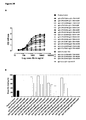
- FIG. 13 2-MEA-induced Fab-arm exchange between IgG1-2F8-ITL and IgG1-7D8-K409X mutants.
- the generation of bispecific antibodies after 2-MEA-induced in vitro Fab-arm exchange between IgG1-2F8-ITL and the indicated IgG1-7D8-K409X mutants was determined by an ELISA.
- a concentration series (total antibody) of 0-20 ⁇ g/mL was analyzed.
- the positive control is a purified batch of bispecific antibody, derived from IgG1-2F8-ITL ⁇ IgG4-7D8-CPPC.
- B The exchange is presented as bispecific binding at 20 ⁇ g/mL relative to the positive control (black bar).
- Dark grey bars represents the bispecific binding between the IgG4 control (IgG4-7D8 ⁇ IgG4-2F8), the negative control (IgG1-2F8 ⁇ IgG1-7D8-K409R) and between IgG1-2F8-ITL and IgG4-7D8-CPPC.
- Light grey bars represent results from simultaneously performed Fab-arm-exchange reactions between the indicated IgG1-7D8-K409X mutants and IgG1-2F8-ITL.
- FIG. 14 Antibody deglycosylation does not affect the generation of bispecific antibodies by 2-MEA-induced Fab-arm exchange.
- the generation of bispecific antibodies after 2-MEA-induced in vitro Fab-arm exchange between the indicated EGFR (2F8) and CD20 (7D8) antibodies was determined by an ELISA. Exchange with the 7D8 antibodies was compared with their enzymatically deglycosylated variants. A concentration series (total antibody) of 0-20 ⁇ g/mL was analyzed in the ELISA.
- Fab-arm exchange reactions involving deglycosylated (deglyc) antibodies showed identical bispecific binding curves as the glycosylated variants from which they were derived.
- FIG. 15 The ability to engage in Fab-arm exchange is correlated to the CH3-CH3 interaction strength.
- A), B) and C Generation of bispecific antibodies by GSH-induced Fab-arm exchange between IgG1-2F8 and IgG1-7D8 (A) or IgG4-2F8 and IgG4-7D8 (B and C) constructs with the indicated mutations, presented as bispecific binding in an ELISA over time. Bispecificity is presented relative to the IgG4-2F8 ⁇ IgG4-7D8 control after 24 h.
- D and (E) Relation between apparent K D (Table 2) and bispecific antibody generation after 24 hrs (FIGS. 15 A/B/C) for IgG1-based (D) or IgG4-based (E) molecules.
- FIG. 16 Sequence alignment of anti-EGFr antibody 2F8 in an IgG1 (SEQ ID NO: 30), IgG4 (SEQ ID NO: 31) and (partial) IgG3 backbone (SEQ ID NO: 32). Amino acid numbering according to Kabat and according to the EU-index are depicted (both described in Kabat et al., Sequences of Proteins of Immunological Interest, 5th Ed. Public Health Service, National Institutes of Health, Bethesda, Md. (1991)).
- FIG. 17 Generation of bispecific antibodies by in vitro Fab-arm-exchange induced by different reducing agents.
- An ELISA was used to measure the generation of bispecific antibodies by combining human IgG1-2F8-F405L and IgG1-7D8-K409R in a reduction reaction with concentration series of the indicated reducing agents. Measured OD values were normalized to the signal of a bispecific control sample derived from 2-MEA-induced Fab-arm-exchange between IgG1-2F8-ITL ⁇ IgG4-7D8-CPPC, which was set to 100%.
- FIG. 18 Generation of bispecific antibodies using 2-MEA-induced Fab-arm-exchange between human IgG1-2F8-F405L and IgG1-7D8-K409R.
- FIG. 19 Purity of bispecific antibody generated by Fab-arm-exchange between human IgG1-2F8-F405L ⁇ IgG1-7D8-K409R. Mass spectrometry shows that Fab-arm-exchange resulted in approximately 100% bispecific product.
- FIG. 20 Plasma clearance of a bispecific antibody generated by 2-MEA-induced Fab-arm-exchange.
- Two groups of mice (3 mice per group) were injected with the indicated antibodies: (1) 100 ⁇ g bispecific antibody, generated by in vitro 2-MEA-induced Fab-arm-exchange between IgG1-2F8-F405L ⁇ IgG1-7D8-K409R; (2) 100 ⁇ g bispecific antibody+1,000 ⁇ g irrelevant IgG4.
- A Total antibody concentrations over time, determined by ELISA. The curves of the total antibody plasma concentrations were the same for all antibodies.
- B Bispecific antibody concentration as determined by an ELISA. The bispecificity of the injected antibody was the same with and without the addition of an excess irrelevant IgG4.
- FIG. 21 CDC-mediated cell kill of CD20-expressing cells by a bispecific antibody generated by 2-MEA-induced Fab-arm-exchange between IgG1-2F8-F405L ⁇ IgG1-7D8-K409R. Concentration series of the indicated antibodies were used to test their capacity to mediate CDC on Daudi (A) and Raji (B) cells. Both cell lines express CD20 but not EGFR. Introduction of the K409R in IgG1-7D8 did not influence its capacity to induce CDC. The bispecific antibody derived from 2-MEA-induced Fab-arm-exchange between IgG1-2F8-F405L ⁇ IgG1-7D8-K409R was still capable to induce CDC.
- FIG. 22 ADCC-mediated cell kill of EGFR-expressing cells by a bispecific antibody generated by 2-MEA-induced Fab-arm-exchange between IgG1-2F8-F405L ⁇ IgG1-7D8-K409R. Concentration series of the indicated antibodies were used to test their capacity to mediate ADCC on A431 cells. IgG1-7D8 can not bind the CD20-negative A431 cells and consequently did not induce ADCC.
- ADCC was induced by the EGFR antibody IgG1-2F8, also after introduction of the F405L mutations in the CH3 domain. The ADCC effector function of IgG1-2F8-F405L was retained in the bispecific format obtained by Fab-arm-exchange between IgG1-2F8-F405L ⁇ IgG1-7D8-K409R.
- FIG. 23 2-MEA-induced Fab-arm-exchange between IgG1-2F8-F405X mutants and IgG1-7D8-K409R.
- the generation of bispecific antibodies after 2-MEA-induced in vitro Fab-arm-exchange between the indicated IgG1-2F8-F405X mutants and IgG1-7D8-K409R was determined by an ELISA.
- a concentration series (total antibody) of 0-20 ⁇ g/mL was analyzed in the ELISA.
- the positive control is a purified batch of bispecific antibody, derived from IgG1-2F8-F405L ⁇ IgG1-7D8-K409R.
- FIG. 24 2-MEA-induced Fab-arm-exchange between IgG1-2F8-Y407X mutants and IgG1-7D8-K409R.
- the generation of bispecific antibodies after 2-MEA-induced in vitro Fab-arm-exchange between the indicated IgG1-2F8-Y407X mutants and IgG1-7D8-K409R was determined by an ELISA.
- a concentration series (total antibody) of 0-20 ⁇ g/mL was analyzed in the ELISA.
- the positive control is a purified batch of bispecific antibody, derived from IgG1-2F8-F405L ⁇ IgG1-7D8-K409R.
- FIG. 25 Analysis of bispecific antibody generated by 2-MEA-induced Fab-arm exchange by SDS-PAGE under non-reducing ( FIG. 25(A) ) and reducing ( FIG. 25(B) ) conditions.
- FIG. 26 HP-SEC profiles of the homodimer starting material IgG1-2F8-F405L (FIG. 26 (B)), the homodimer starting material IgG1-7D8-K409R (FIG. 26 (A)), the mixture (1:1) of both homodimers (FIG. 26 (C)), and the bispecific product generated by 2-MEA-induced Fab-arm exchange between IgG1-2F8-F405L ⁇ IgG1-7D8-K409R ( FIG. 26(D) ).
- FIG. 27 Mass spectrometry (ESI-MS) of the homodimer starting material IgG1-2F8-F405L (FIG. 27 (B)), the homodimer starting material IgG1-7D8-K409R (FIG. 27 (A)), the mixture (1:1) of both homodimers (FIG. 27 (C)), and the bispecific product generated by 2-MEA-induced Fab-arm exchange between IgG1-2F8-F405L ⁇ IgG1-7D8-K409R ( FIG. 27(D) ).
- ESI-MS Mass spectrometry
- FIG. 28 Capillary isoelectrofocussing (cIEF) profiles of the homodimer starting material IgG1-2F8-F405L (FIG. 28 (A)), the homodimer starting material IgG1-7D8-K409R (FIG. 28 (B)), the mixture (1:1) of both homodimers (FIG. 28 (C)), and the bispecific product generated by 2-MEA-induced Fab-arm exchange between IgG1-2F8-F405L ⁇ IgG1-7D8-K409R ( FIG. 28(D) ).
- cIEF Capillary isoelectrofocussing
- FIG. 29 HPLC-CIEX profiles of the homodimer starting material IgG1-2F8-F405L (FIG. 29 (A)), the homodimer starting material IgG1-7D8-K409R (FIG. 29 (B)), the mixture (1:1) of both homodimers (FIG. 29 (C)), and the bispecific product generated by 2-MEA-induced Fab-arm exchange between IgG1-2F8-F405L ⁇ IgG1-7D8-K409R ( FIG. 29(D) ).
- FIG. 30 Electrospray ionization mass spec analysis of IgG obtained by co-transfection of the expression vectors encoding the heavy and light chain of IgG1-7D8-K409R or IgG1-2F8-F405. Heterodimer peaks are indicated with an *. Homodimer peaks are indicated with an ⁇ .
- HPLC-CIEX High Pressure Liquid Chromatography Cation Exchange
- FIGS. 32A and 32B Residual homodimers of the exchange reaction as shown in FIGS. 32A and 32B as detected with the CIEX method (indicated by arrows).
- FIGS. 33A-33F show the generation of bispecific antibodies at various IgG concentrations, 2-MEA concentrations, incubation temperatures and times as determined by an ELISA.
- FIG. 34 A- 34 D show the generation of bispecific antibodies at various IgG concentrations, 2-MEA concentrations, incubation temperatures and times as determined by an ELISA and compared to control which was arbitrarily set to 100%.
- FIGS. 35A-35D show the generation of bispecific antibodies at various IgG concentrations, 2-MEA concentrations, incubation temperatures and times as analysed by HPLC-CIEX.
- FIG. 36 Generation of bispecific antibodies after 2-MEA-induced in vitro Fab-arm exchange between the indicated IgG1-2F8-L368X mutants and IgG1-7D8-K409R was determined by an ELISA using a concentration series (total antibody) of 0-20 ⁇ g/mL ( FIG. 37(A) ).
- the positive control is a purified batch of bispecific antibody, derived from IgG1-2F8-F405L ⁇ IgG1-7D8-K409R.
- FIG. 37(B) shows the bispecific binding at 20 ⁇ g/mL relative to the positive control (black bar).
- FIG. 37 Generation of bispecific antibodies after 2-MEA-induced in vitro Fab-arm exchange between the indicated IgG1-2F8-K370X mutants and IgG1-7D8-K409R was determined by an ELISA using a concentration series (total antibody) of 0-20 ⁇ g/mL ( FIG. 37(A) ).
- the positive control is a purified batch of bispecific antibody, derived from IgG1-2F8-F405L ⁇ IgG1-7D8-K409R.
- FIG. 37(B) shows the bispecific binding at 20 ⁇ g/mL relative to the positive control (black bar).
- FIG. 38 Generation of bispecific antibodies after 2-MEA-induced in vitro Fab-arm exchange between the indicated IgG1-2F8-D399X mutants and IgG1-7D8-K409R was determined by an ELISA using a concentration series (total antibody) of 0-20 ⁇ g/mL ( FIG. 38(A) ).
- FIG. 38(B) shows the bispecific binding at 20 ⁇ g/mL antibody concentration relative to the positive control (black bar). Dark grey bars represents the bispecific binding between the IgG4 control (IgG4-7D8 ⁇ IgG4-2F8) and the negative control (IgG1-2F8 ⁇ IgG1-7D8-K409R). Light grey bars represent results from simultaneously performed Fab-arm-exchange reactions between the indicated IgG1-2F8-D399X mutants and IgG1-7D8-K409R.
- FIG. 39 2-MEA-induced Fab-arm exchange between four different IgG1 mutant combinations at 15° C. after 0, 30, 60, 105 and 200 min incubations as determined by sandwich ELISA.
- FIG. 40 2-MEA-induced Fab-arm exchange between different IgG1 mutant combinations after antibody incubation at 15° C. for 90 min as determined by sandwich ELISA.
- FIG. 41 Phosphorylation of c-Met by c-Met specific antibodies.
- A549 cells are incubated for 15 min with HGF or a panel of different antibodies. Proteins are separated by SDS-page gel electrophoresis and transferred to membranes by western blotting. Phosphorylated c-Met, total c-Met and ⁇ -actin are detected by antibodies against phosphorylated c-Met, total c-Met or ⁇ -actin.
- FIG. 42 Proliferation assay with NCI-H441 cells. NCI-H441 cells were incubated for seven days with monovalent bispecific IgG1 069/b12, control antibodies (IgG1-069, UniBody-069, IgG1-b12) left untreated. Cell mass was determined and plotted as percentage of non-treated samples (set as 100%)
- FIG. 43 CDC-mediated cell kill of CD20 expressing cells by bispecific antibodies generated by 2-MEA-induced Fab-arm-exchange between IgG1-7D8-F405L or IgG1-2F8-F405L and IgG1-7D8-K409R. Concentration series of the indicated antibodies were used to test their capacity to mediate CDC on Daudi (A) and Raji (B) cells. Both cell lines express CD20 but not EGFR.
- the bispecific antibody generated by 2-MEA-induced Fab-arm-exchange between IgG1-7D8-F405L ⁇ IgG1-7D8-K409R was as effective as IgG1-7D8 in induction of CDC mediated cell kill.
- the bispecific antibody derived from 2-MEA-induced Fab-arm-exchange between IgG2-2F8-F405L ⁇ IgG1-7D8-K409R results in a monovalent CD20 binding bispecific antibody, which slightly affected the induction of CDC mediated cell kill with slightly.
- FIG. 44 Killing of A431 cells induced by anti-kappa-ETA′ pre-incubated HER2 ⁇ HER2 bispecific antibodies.
- FIG. 45 HER2 ⁇ HER2 bispecific molecules induced downmodulation of HER2 receptor. Relative percentage of HER2 expression levels in AU565 cell lysates after 3 days incubation with 10 ⁇ g/mL mAb. The amount of HER2 was quantified using a HER2-specific capture ELISA and depicted as percentage inhibition compared to untreated cells. Data shown is the mean of two experiments plus standard deviation.
- FIGS. 46A and 46B Colocalization analysis of HER2 ⁇ HER2 bispecific antibodies (FITC) with lysosomal marker LAMP1 (Cy5).
- FITC pixel intensity in LAMP1/Cy5 positive pixels of three different images is plotted for each antibody tested ( FIG. 46(A) ).
- Monospecifics show lower FITC pixel intensities in the LAMP1/Cy5 positive pixels compared to bispecifics.
- FIG. 46(B) represents the mean value of FITC pixel intensity per LAMP1/Cy5 positive pixel calculated from the three different images. Together these results indicate that after internalization higher levels of bispecific antibodies, compared to monospecifics antibodies, localize to Lamp1/Cy5 positive vesicles.
- FIG. 47 Inhibition of proliferation by HER-2 mono and bispecific antibodies.
- AU565 cells were seeded in the presence of 10 ⁇ g/mL HER2 antibody or HER2 ⁇ HER2 bispecific antibody in serum-free cell culture medium. After three days, the amount of viable cells was quantified with Alamarblue and cell viability was presented as a percentage relative to untreated cells. An isotype control antibody was used as negative control. Data shown are percentage viable AU565 cells compared to untreated cells measured in five-fold ⁇ the standard deviation. * indicates only one data point was depicted.
- FIG. 48 Binding of mono and bispecific IgG1 and hinge-deleted IgG1 antibodies to human and mouse FcRn at different pH. Plates with human and mouse FcRn were incubated with different mono- and bispecific IgG1 antibodies or hinge-deleted IgG1 molecules. Binding to FcRn was analyzed by ELISA at 405 nm.
- the bispecific molecule harboring the H435A mutation in only one Fab-arm is still able to bind mouse FcRn.
- Hinge-deleted IgG1 (Uni-G1) molecules bind mouse FcRn with intermediate efficiency and the hinge-deleted IgG1 (Uni-G1) bispecific molecule harboring the H435A mutation in only one Fab-arm is slightly less efficient.
- FIG. 49 T cell mediated cytotoxicity of AU565 cells by Her2 ⁇ CD3 bispecific antibodies as well as by N297Q mutants of Her2 ⁇ CD3 bispecific antibodies.
- immunoglobulin refers to a class of structurally related glycoproteins consisting of two pairs of polypeptide chains, one pair of light (L) low molecular weight chains and one pair of heavy (H) chains, all four inter-connected by disulfide bonds.
- L light
- H heavy
- each heavy chain typically is comprised of a heavy chain variable region (abbreviated herein as VH) and a heavy chain constant region.
- VH heavy chain variable region
- the heavy chain constant region typically is comprised of three domains, CH1, CH2, and CH3.
- Each light chain typically is comprised of a light chain variable region (abbreviated herein as VL) and a light chain constant region.
- the light chain constant region typically is comprised of one domain, CL.
- the numbering of amino acid residues in the constant region is performed according to the EU-index as described in Kabat et al., Sequences of Proteins of Immunological Interest, 5th Ed. Public Health Service, National Institutes of Health, Bethesda, Md. (1991).
- FIG. 16 gives an overview of the EU and Kabat numbering for different isotype forms of antibody 2F8 (WO 02/100348).
- the VH and VL regions may be further subdivided into regions of hypervariability (or hypervariable regions which may be hypervariable in sequence and/or form of structurally defined loops), also termed complementarity determining regions (CDRs), interspersed with regions that are more conserved, termed framework regions (FRs).
- CDRs complementarity determining regions
- FRs framework regions
- Each VH and VL is typically composed of three CDRs and four FRs, arranged from amino-terminus to carboxy-terminus in the following order: FR1, CDR1, FR2, CDR2, FR3, CDR3, FR4 (see also Chothia and Lesk J. Mol. Biol. 196, 901 917 (1987)).
- Fab-arm refers to one heavy chain-light chain pair.
- Fc region refers to an antibody region comprising at least the hinge region, a CH2 domain and a CH3 domain.
- antibody in the context of the present invention refers to an immunoglobulin molecule, a fragment of an immunoglobulin molecule, or a derivative of either thereof, which has the ability to specifically bind to an antigen under typical physiological conditions with a half life of significant periods of time, such as at least about 30 min, at least about 45 min, at least about one hour, at least about two hours, at least about four hours, at least about 8 hours, at least about 12 hours (h), about 24 hours or more, about 48 hours or more, about 3, 4, 5, 6, 7 or more days, etc., or any other relevant functionally-defined period (such as a time sufficient to induce, promote, enhance, and/or modulate a physiological response associated with antibody binding to the antigen and/or time sufficient for the antibody to recruit an effector activity).
- variable regions of the heavy and light chains of the immunoglobulin molecule contain a binding domain that interacts with an antigen.
- the constant regions of the antibodies may mediate the binding of the immunoglobulin to host tissues or factors, including various cells of the immune system (such as effector cells) and components of the complement system such as C1q, the first component in the classical pathway of complement activation.
- An antibody may also be a bispecific antibody, diabody, or similar molecule.
- bispecific antibody refers to antibody having specificities for at least two different epitopes, typically non-overlapping epitopes.
- the term antibody herein unless otherwise stated or clearly contradicted by the context, includes fragments of an antibody that retain the ability to specifically bind to the antigen.
- Such fragments may be provided by any known technique, such as enzymatic cleavage, peptide synthesis and recombinant expression techniques. It has been shown that the antigen-binding function of an antibody may be performed by fragments of a full-length antibody, e.g. a F(ab′)2 fragment. It also should be understood that the term antibody, unless specified otherwise, also includes polyclonal antibodies, monoclonal antibodies (mAbs), antibody-like polypeptides, such as chimeric antibodies and humanized antibodies. An antibody as generated can possess any isotype.
- full-length antibody when used herein, refers to an antibody which contains all heavy and light chain constant and variable domains that are normally found in an antibody of that isotype.
- isotype refers to the immunoglobulin class (for instance IgG1, IgG2, IgG3, IgG4, IgD, IgA, IgE, or IgM) that is encoded by heavy chain constant region genes.
- human antibody is intended to include antibodies having variable and constant regions derived from human germline immunoglobulin sequences.
- the human antibodies of the invention may include amino acid residues not encoded by human germline immunoglobulin sequences (e.g., mutations introduced by random or site-specific mutagenesis in vitro or by somatic mutation in vivo).
- human antibody is not intended to include antibodies in which CDR sequences derived from the germline of another mammalian species, such as a mouse, have been grafted onto human framework sequences.
- heavy chain antibody or “heavy-chain antibody” refers to an antibody which consists only of two heavy chains and lacks the two light chains usually found in antibodies. Heavy chain antibodies, which naturally occur in e.g. camelids, can bind antigens despite having only VH domains.
- epitope means a protein determinant capable of specific binding to an antibody.
- Epitopes usually consist of surface groupings of molecules such as amino acids or sugar side chains and usually have specific three dimensional structural characteristics, as well as specific charge characteristics. Conformational and nonconformational epitopes are distinguished in that the binding to the former but not the latter is lost in the presence of denaturing solvents.
- the epitope may comprise amino acid residues directly involved in the binding (also called immunodominant component of the epitope) and other amino acid residues, which are not directly involved in the binding, such as amino acid residues which are effectively blocked by the specifically antigen binding peptide (in other words, the amino acid residue is within the footprint of the specifically antigen binding peptide).
- binding in the context of the binding of an antibody to a predetermined antigen typically is a binding with an affinity corresponding to a K D of about 10 ⁇ 6 M or less, e.g. 10 ⁇ 7 M or less, such as about 10 ⁇ 8 M or less, such as about 10 ⁇ 9 M or less, about 10 ⁇ 10 M or less, or about 10 ⁇ 11 M or even less when determined by for instance surface plasmon resonance (SPR) technology in a BIAcore 3000 instrument using the antigen as the ligand and the antibody as the analyte, and binds to the predetermined antigen with an affinity corresponding to a K D that is at least ten-fold lower, such as at least 100 fold lower, for instance at least 1,000 fold lower, such as at least 10,000 fold lower, for instance at least 100,000 fold lower than its affinity for binding to a non-specific antigen (e.g., BSA, casein) other than the predetermined antigen or a closely-related antigen.
- a non-specific antigen e
- the amount with which the affinity is lower is dependent on the K D of the antibody, so that when the K D of the antibody is very low (that is, the antibody is highly specific), then the amount with which the affinity for the antigen is lower than the affinity for a non-specific antigen may be at least 10,000 fold.
- K D (M), as used herein, refers to the dissociation equilibrium constant of a particular antibody-antigen interaction.
- heterodimeric interaction between the first and second CH3 regions refers to the interaction between the first CH3 region and the second CH3 region in a first-CH3/second-CH3 heterodimeric protein.
- homodimeric interactions of the first and second CH3 regions refers to the interaction between a first CH3 region and another first CH3 region in a first-CH3/first-CH3 homodimeric protein and the interaction between a second CH3 region and another second CH3 region in a second-CH3/second-CH3 homodimeric protein.
- an “isolated antibody,” as used herein, denotes that the material has been removed from its original environment (e.g., the natural environment if it is naturally occurring or the host cell if it is recombinantly expressed). It is also advantageous that the antibodies be in purified form.
- the term “purified” does not require absolute purity; rather, it is intended as a relative definition, indicating an increase of the antibody concentration relative to the concentration of contaminants in a composition as compared to the starting material.
- host cell is intended to refer to a cell into which an expression vector has been introduced, e.g. an expression vector encoding an antibody of the invention.
- Recombinant host cells include, for example, transfectomas, such as CHO cells, HEK293 cells, NS/0 cells, and lymphocytic cells.
- co-expression of two or more nucleic acid constructs refers to expression of the two constructs in a single host cell.
- tumor cell protein refers to a protein located on the cell surface of a tumor cell.
- effector cell refers to an immune cell which is involved in the effector phase of an immune response, as opposed to the cognitive and activation phases of an immune response.
- exemplary immune cells include a cell of a myeloid or lymphoid origin, for instance lymphocytes (such as B cells and T cells including cytolytic T cells (CTLs)), killer cells, natural killer cells, macrophages, monocytes, eosinophils, polymorphonuclear cells, such as neutrophils, granulocytes, mast cells, and basophils.
- lymphocytes such as B cells and T cells including cytolytic T cells (CTLs)
- killer cells such as B cells and T cells including cytolytic T cells (CTLs)
- killer cells such as B cells and T cells including cytolytic T cells (CTLs)
- killer cells such as B cells and T cells including cytolytic T cells (CTLs)
- killer cells such as B cells and T cells including cytolytic T cells (CTLs)
- killer cells such as B
- an effector cell is capable of inducing antibody-dependent cellular cytotoxicity (ADCC), such as a natural killer cell, capable of inducing ADCC.
- ADCC antibody-dependent cellular cytotoxicity
- an effector cell may phagocytose a target antigen or target cell.
- reducing conditions or “reducing environment” refers to a condition or an environment in which a substrate, here a cysteine residue in the hinge region of an antibody, is more likely to become reduced than oxidized.
- disulfide bond isomerization refers to an exchange of disulfide bonds between different cysteines, i.e., the shuffling of disulfide bonds.
- the invention relates to an in vitro method for generating a heterodimeric protein, said method comprising the following steps:
- sequences of said first and second CH3 regions are different and are such that the heterodimeric interaction between said first and second CH3 regions is stronger than each of the homodimeric interactions of said first and second CH3 regions
- the bispecific format may be used in many ways to generate desired combinations of bispecific antibodies. In addition to being able of combining antibodies targeting different antigens in a very selective way it can be used to change a desired property, e.g. to increase CDC, by combining two different antibodies targeting the same antigen. Furthermore, it can be used to remove partial agonistic activity of an antagonistic antibody or convert an agonistic antibody into an antagonistic antibody by making a bispecific antibody thereof with an irrelevant (inactive) antibody.
- the homodimeric proteins are selected from the group consisting of (i) an Fc region, (ii) an antibody, (iii) a fusion protein comprising an Fc region, such as an Fc region fused to a receptor, cytokine or hormone, and (iv) a Fc region conjugated to a prodrug, peptide, drug or a toxin.
- said first and/or second homodimeric protein comprise, in addition to the Fc region, one or more or all of the other regions of an antibody, i.e. a CH1 region, a VH region, a CL region and/or a VL region.
- said first homodimeric protein is a full-length antibody.
- said second homodimeric protein is a full-length antibody.
- said first and second homodimeric proteins are both antibodies, preferably full-length antibodies, and bind different epitopes.
- the heterodimeric protein that is generated is a bispecific antibody. Said epitopes may be located on different antigens or on the same antigen.
- both of the homodimeric proteins is a full-length antibody and the other homodimeric protein is not a full-length antibody, e.g. an Fc region without a variable region, expressed in conjunction to another protein or peptide sequence like a receptor, cytokine or hormone, or conjugated to a prodrug, peptide, a drug or a toxin.
- neither of the homodimeric proteins is a full-length antibody.
- both homodimeric proteins may be Fc regions that are fused to another protein or peptide sequence like a receptor, cytokine or hormone, or conjugated to a prodrug, peptide, a drug or a toxin.
- the Fc region of the first homodimeric protein is of an isotype selected from the group consisting of IgG1, IgG2, IgG3 and IgG4 and the Fc region of the second homodimeric protein is of an isotype selected from the group consisting of IgG1, IgG2, IgG3 and IgG4.
- the Fc regions of both said first and said second homodimeric protein are of the IgG1 isotype.
- one of the Fc regions of said homodimeric proteins is of the IgG1 isotype and the other of the IgG4 isotype.
- the resulting heterodimeric comprises an Fc region of an IgG1 and an Fc region of IgG4 and may thus have interesting intermediate properties with respect to activation of effector functions.
- a similar product can be obtained if said first and/or said second homodimeric protein comprises a mutation removing the acceptor site for Asn-linked glycosylation or is otherwise manipulated to change the glycosylation properties.
- one or both of the homodimeric proteins is glyco-engineered to reduce fucose and thus enhance ADCC, e.g. by addition of compounds to the culture media during antibody production as described in US2009317869 or as described in van Berkel et al. (2010) Biotechnol. Bioeng. 105:350 or by using FUT8 knockout cells, e.g. as described in Yamane-Ohnuki et al (2004) Biotechnol. Bioeng 87:614.
- ADCC may alternatively be optimized using the method described by Umaha et al. (1999) Nature Biotech 17:176.
- one or both of the homodimeric proteins has been engineered to enhance complement activation, e.g. as described in Natsume et al. (2009) Cancer Sci. 100:2411.
- one or both of the homodimeric proteins has been engineered to reduce or increase the binding to the neonatal Fc receptor (FcRn) in order to manipulate the serum half-life of the heterodimeric protein.
- FcRn neonatal Fc receptor
- one of the homodimeric starting proteins has been engineered to not bind Protein A, thus allowing to separate the heterodimeric protein from said homodimeric starting protein by passing the product over a protein A column.
- This may in particular be useful for embodiments wherein an excess of one homodimeric protein is used relative to the other homodimeric protein as starting material. In such embodiments, it may be useful to engineer the homodimeric protein that is in excess so that is looses its ability to bind protein A. Following the heterodimerization reaction, the heterodimeric protein may then be separated from a surplus of unexchanged homodimeric protein by passage over a protein A column.
- one of the homodimeric proteins is an Fc region or a full-length antibody recognizing a non-relevant epitope or a full-length antibody containing germline-derived sequences that have not undergone somatic hypermutation and do not bind self-antigens.
- the heterodimeric protein functions as a monovalent antibody.
- both homodimeric proteins comprises the same heavy chain, but only one of the homodimeric proteins contains a light chain which forms a functional antigen-binding site with said heavy chain, whereas the other homodimeric protein contains a non-functional light chain, which does not bind any antigen in combination with said heavy chain.
- the heterodimeric protein functions as a monovalent antibody.
- a non-functional light chain can e.g. be a germline-derived sequence that has not undergone somatic hypermutation and does not bind self-antigens.
- Antibodies to be used as homodimeric starting material of the present invention may e.g. be produced by the hybridoma method first described by Kohler et al., Nature 256, 495 (1975), or may be produced by recombinant DNA methods. Monoclonal antibodies may also be isolated from phage antibody libraries using the techniques described in, for example, Clackson et al., Nature 352, 624 628 (1991) and Marks et al., J. Mol. Biol. 222, 581 597 (1991). Monoclonal antibodies may be obtained from any suitable source.
- monoclonal antibodies may be obtained from hybridomas prepared from murine splenic B cells obtained from mice immunized with an antigen of interest, for instance in form of cells expressing the antigen on the surface, or a nucleic acid encoding an antigen of interest.
- Monoclonal antibodies may also be obtained from hybridomas derived from antibody-expressing cells of immunized humans or non-human mammals such as rats, dogs, primates, etc.
- Antibodies to be used as homodimeric starting material of the present invention may e.g. chimeric or humanized antibodies.
- one or both of the homodimeric starting proteins, except for any specified mutations is a human antibody.
- Human monoclonal antibodies may be generated using transgenic or transchromosomal mice, e.g. HuMAb mice, carrying parts of the human immune system rather than the mouse system.
- the HuMAb mouse contains a human immunoglobulin gene miniloci that encodes unrearranged human heavy ( ⁇ and ⁇ ) and K light chain immunoglobulin sequences, together with targeted mutations that inactivate the endogenous ⁇ and ⁇ chain loci (Lonberg, N. et al., Nature 368, 856 859 (1994)).
- mice exhibit reduced expression of mouse IgM or ⁇ and in response to immunization, the introduced human heavy and light chain transgenes, undergo class switching and somatic mutation to generate high affinity human IgG, ⁇ monoclonal antibodies (Lonberg, N. et al. (1994), supra; reviewed in Lonberg, N. Handbook of Experimental Pharmacology 113, 49 101 (1994), Lonberg, N. and Huszar, D., Intern. Rev. Immunol. Vol. 13 65 93 (1995) and Harding, F. and Lonberg, N. Ann. N.Y. Acad. Sci. 764 536 546 (1995)).
- the preparation of HuMAb mice is described in detail in Taylor, L.
- Splenocytes from these transgenic mice may be used to generate hybridomas that secrete human monoclonal antibodies according to well known techniques.
- human antibodies of the present invention or antibodies of the present invention from other species may be identified through display-type technologies, including, without limitation, phage display, retroviral display, ribosomal display, mammalian display, and other techniques, using techniques well known in the art and the resulting molecules may be subjected to additional maturation, such as affinity maturation, as such techniques are well known in the art.
- the antibody or a part thereof e.g. one or more CDRs
- the antibody or a part thereof is of a species in the family Camelidae, see WO2010001251, or a species of cartilaginous fish, such as the nurse shark or heavy-chain or domain antibodies.
- said first and second homodimeric proteins provided in step a) and b) are purified.
- the first and/or second homodimeric protein is conjugated to a drug, a prodrug or a toxin or contains an acceptor group for the same.
- acceptor group may e.g. be an unnatural amino acid.
- sequences of the first and second CH3 regions of the homodimeric starting proteins are different and are such that the heterodimeric interaction between said first and second CH3 regions is stronger than each of the homodimeric interactions of said first and second CH3 regions.
- the increased strength of the heterodimeric interaction as compared to each of the homodimeric interactions is due to CH3 modifications other than the introduction of covalent bonds, cysteine residues or charged residues.
- the product of the invention is highly stable and does not undergo Fab-arm exchange under mildly reducing conditions in vitro or, importantly, in vivo upon administration to a human being.
- the heterodimeric interaction between said first and second proteins in the resulting heterodimeric protein is such that no Fab-arm exchange can occur at 0.5 mM GSH under the conditions described in Example 13.
- heterodimeric interaction between said first and second proteins in the resulting heterodimeric protein is such that no Fab-arm exchange occurs in vivo in mice under the conditions described in Example 14.
- the heterodimeric interaction between said first and second proteins in the resulting heterodimeric protein is more than two times stronger, such as more than three times stronger, e.g. more than five times stronger than the strongest of the two homodimeric interactions, e.g. when determined as described in Example 30.
- sequences of said first and second CH3 regions are such that the dissociation constants of the heterodimeric interaction between said first and second proteins in the resulting heterodimeric protein is below 0.05 micromolar when assayed as described in Example 30.
- the sequences of said first and second CH3 regions are such that the dissociation constants of both homodimeric interactions are above 0.01 micromolar, such as above 0.05 micromolar preferably between 0.01 and 10 micromolar, such as between 0.05 and 10 micromolar, more preferably between 0.01 and 5, such as between 0.05 and 5 micromolar, even more preferably between 0.01 and 1 micromolar, such as between 0.05 and 1 micromolar, between 0.01 and 0.5 or between 0.01 and 0.1 when assayed as described in Example 21.
- Embodiments wherein the homodimeric starting proteins are relatively stable can have the advantage that it is easier to produce a large quantity of starting protein and e.g. avoid aggregation or misfolding.
- a stable heterodimeric protein can be obtained at high yield using the method of the invention on the basis of two homodimeric starting proteins containing only a few, fairly conservative, asymmetrical mutations in the CH3 regions.
- sequences of said first and second CH3 regions contain amino acid substitutions at non-identical positions.
- the amino acid substituents may be natural amino acids or unnatural amino acids.
- unnatural amino acids are e.g. disclosed in Xie J and Schultz P. G., Current Opinion in Chemical Biology (2005), 9:548-554, and Wang Q. et al., Chemistry & Biology (2009), 16:323-336.
- the amino acids are natural amino acids.
- said first homodimeric protein has no more than one amino acid substitution in the CH3 region
- the second homodimeric protein has no more than one amino acid substitution in the CH3 region relative to the wild-type CH3 regions.
- the first homodimeric protein has an amino acid substitution at a position selected from the group consisting of: 366, 368, 370, 399, 405, 407 and 409
- said second homodimeric protein has an amino acid substitution at a position selected from the group consisting of: 366, 368, 370, 399, 405, 407 and 409, and wherein said first homodimeric protein and said second homodimeric protein is not substituted in the same positions.
- the first homodimeric protein has an amino acid substitution at position 366
- said second homodimeric protein has an amino acid substitution at a position selected from the group consisting of: 368, 370, 399, 405, 407 and 409.
- the amino acid at position 366 is selected from Arg, Lys, Asn, Gln, Tyr, Glu and Gly.
- the first homodimeric protein has an amino acid substitution at position 368
- said second homodimeric protein has an amino acid substitution at a position selected from the group consisting of: 366, 370, 399, 405, 407 and 409.
- the first homodimeric protein has an amino acid substitution at position 370
- said second homodimeric protein has an amino acid substitution at a position selected from the group consisting of: 366, 368, 399, 405, 407 and 409.
- the first homodimeric protein has an amino acid substitution at position 399
- said second homodimeric protein has an amino acid substitution at a position selected from the group consisting of: 366, 368, 370, 405, 407 and 409.
- the first homodimeric protein has an amino acid substitution at position 405, and said second homodimeric protein has an amino acid substitution at a position selected from the group consisting of: 366, 368, 370, 399, 407 and 409.
- the first homodimeric protein has an amino acid substitution at position 407
- said second homodimeric protein has an amino acid substitution at a position selected from the group consisting of: 366, 368, 370, 399, 405, and 409.
- the first homodimeric protein has an amino acid substitution at position 409
- said second homodimeric protein has an amino acid substitution at a position selected from the group consisting of: 366, 368, 370, 399, 405, and 407.
- the sequences of said first and second CH3 regions contain asymmetrical mutations, i.e. mutations at different positions in the two CH3 regions, e.g. a mutation at position 405 in one of the CH3 regions and a mutation at position 409 in the other CH3 region.
- the first homodimeric protein has an amino acid other than Lys, Leu or Met at position 409 and said second homodimeric protein has an amino-acid substitution at a position selected from the group consisting of: 366, 368, 370, 399, 405 and 407.
- said first homodimeric protein has an amino acid other than Lys, Leu or Met at position 409 and said second homodimeric protein has an amino acid other than Phe at position 405.
- said first homodimeric protein has an amino acid other than Lys, Leu or Met at position 409 and said second homodimeric protein has an amino acid other than Phe, Arg or Gly at position 405.
- said first homodimeric protein comprises a Phe at position 405 and an amino acid other than Lys, Leu or Met at position 409 and said second homodimeric protein comprises an amino acid other than Phe at position 405 and a Lys at position 409.
- said first homodimeric protein comprises a Phe at position 405 and an amino acid other than Lys, Leu or Met at position 409 and said second homodimeric protein comprises an amino acid other than Phe, Arg or Gly at position 405 and a Lys at position 409.
- said first homodimeric protein comprises a Phe at position 405 and an amino acid other than Lys, Leu or Met at position 409 and said second homodimeric protein comprises a Leu at position 405 and a Lys at position 409.
- said first homodimeric protein comprises a Phe at position 405 and an Arg at position 409 and said second homodimeric protein comprises an amino acid other than Phe, Arg or Gly at position 405 and a Lys at position 409.
- said first homodimeric protein comprises Phe at position 405 and an Arg at position 409 and said second homodimeric protein comprises a Leu at position 405 and a Lys at position 409.
- said first homodimeric protein comprises an amino acid other than Lys, Leu or Met at position 409 and said second homodimeric protein comprises a Lys at position 409, a Thr at position 370 and a Leu at position 405.
- said first homodimeric protein comprises an Arg at position 409 and said second homodimeric protein comprises a Lys at position 409, a Thr at position 370 and a Leu at position 405.
- said first homodimeric protein comprises a Lys at position 370, a Phe at position 405 and an Arg at position 409 and said second homodimeric protein comprises a Lys at position 409, a Thr at position 370 and a Leu at position 405.
- said first homodimeric protein comprises an amino acid other than Lys, Leu or Met at position 409 and said second homodimeric protein comprises a Lys at position 409 and: a) an Ile at position 350 and a Leu at position 405, or b) a Thr at position 370 and a Leu at position 405.
- said first homodimeric protein comprises an Arg at position 409 and said second homodimeric protein comprises a Lys at position 409 and: a) an Ile at position 350 and a Leu at position 405, or b) a Thr at position 370 and a Leu at position 405.
- said first homodimeric protein comprises a Thr at position 350, a Lys at position 370, a Phe at position 405 and an Arg at position 409 and said second homodimeric protein comprises a Lys at position 409 and: a) an Ile at position 350 and a Leu at position 405, or b) a Thr at position 370 and a Leu at position 405.
- said first homodimeric protein comprises a Thr at position 350, a Lys at position 370, a Phe at position 405 and an Arg at position 409 and said second homodimeric protein comprises an Ile at position 350, a Thr at position 370, a Leu at position 405 and a Lys at position 409.
- said first homodimeric protein has an amino acid other than Lys, Leu or Met at position 409 and said second homodimeric protein has an amino acid other than Tyr, Asp, Glu, Phe, Lys, Gln, Arg, Ser or Thr at position 407.
- said first homodimeric protein has an amino acid other than Lys, Leu or Met at position 409 and said second homodimeric protein has an Ala, Gly, His, Ile, Leu, Met, Asn, Val or Trp at position 407.
- said first homodimeric protein has an amino acid other than Lys, Leu or Met at position 409 and said second homodimeric protein has a Gly, Leu, Met, Asn or Trp at position 407.
- said first homodimeric protein has a Tyr at position 407 and an amino acid other than Lys, Leu or Met at position 409 and said second homodimeric protein has an amino acid other than Tyr, Asp, Glu, Phe, Lys, Gln, Arg, Ser or Thr at position 407 and a Lys at position 409.
- said first homodimeric protein has a Tyr at position 407 and an amino acid other than Lys, Leu or Met at position 409 and said second homodimeric protein has an Ala, Gly, His, Ile, Leu, Met, Asn, Val or Trp at position 407 and a Lys at position 409.
- said first homodimeric protein has a Tyr at position 407 and an amino acid other than Lys, Leu or Met at position 409 and said second homodimeric protein has a Gly, Leu, Met, Asn or Trp at position 407 and a Lys at position 409.
- said first homodimeric protein has a Tyr at position 407 and an Arg at position 409 and said second homodimeric protein has an amino acid other than Tyr, Asp, Glu, Phe, Lys, Gln, Arg, Ser or Thr at position 407 and a Lys at position 409.
- said first homodimeric protein has a Tyr at position 407 and an Arg at position 409 and said second homodimeric protein has an Ala, Gly, His, Ile, Leu, Met, Asn, Val or Trp at position 407 and a Lys at position 409.
- said first homodimeric protein has a Tyr at position 407 and an Arg at position 409 and said second homodimeric protein has a Gly, Leu, Met, Asn or Trp at position 407 and a Lys at position 409.
- the first homodimeric protein has an amino acid other than Lys, Leu or Met at position 409, and the second homodimeric protein has
- the first homodimeric protein has an Arg, Ala, His or Gly at position 409, and the second homodimeric protein has
- the first homodimeric protein has an Arg at position 409, and the second homodimeric protein has
- said first and second homodimeric protein may contain further amino-acid substitutions, deletion or insertions relative to wild-type Fc sequences.
- said first and second CH3 regions comprise the sequence set forth in SEQ ID NO:1 (IgG1m(a)):
- SEQ ID NO: 1 GQPREPQVYTLPPSRDELTKNQVSLTCLVKGFYPSDIAVEWESNGQPE NNYKTTPPVLDSDGSFFLYSKLTVDKSRWQQGNVFSCSVMHEALHNHY TQKSLSLSPGK
- said first and second CH3 regions comprise the sequence set forth in SEQ ID NO:2 (IgG1m(f)):
- SEQ ID NO: 2 GQPREPQVYTLPPSREEMTKNQVSLTCLVKGFYPSDIAVEWESNGQPE NNYKTTPPVLDSDGSFFLYSKLTVDKSRWQQGNVFSCSVMHEALHNHY TQKSLSLSPGK
- said first and second CH3 regions comprise the sequence set forth in SEQ ID NO:3 (IgG1m(ax)):
- SEQ ID NO: 3 GQPREPQVYTLPPSRDELTKNQVSLTCLVKGFYPSDIAVEWESNGQPE NNYKTTPPVLDSDGSFFLYSKLTVDKSRWQQGNVFSCSVMHEGLHNHY TQKSLSLSPGK
- the homodimeric proteins provided may be a rat antibody and a mouse antibody, who show preferential pairing, as described by Lindhofer et al. (1995) J Immunol 155:219 (see above), or so-called knob-in-hole variant antibodies, as described in U.S. Pat. No. 5,731,168 (see above).
- the latter homodimeric starting proteins may be more difficult to produce, because of too weak homodimeric CH3-CH3 interactions.
- the herein described variants having mutations at positions 350, 370, 405 and 409 may be preferred.
- the sequence of the hinge region of the homodimeric starting proteins may vary. However, the resulting heterodimeric protein may be more stable under some circumstances if the hinge region is not IgG4-like, and, preferably is IgG1-like.
- neither said first nor said second homodimeric protein comprises a Cys-Pro-Ser-Cys (SEQ ID NO: 5) sequence in the (core) hinge region.
- both said first and said second homodimeric protein comprise a Cys-Pro-Pro-Cys (SEQ ID NO: 4) sequence in the (core) hinge region.
- first and said second homodimeric proteins are antibodies
- said antibodies further comprise a light chain.
- said light chains may be different, i.e. differ in sequence and each form a functional antigen-binding domain with only one of the heavy chains.
- said first and second homodimeric proteins are heavy-chain antibodies, which do not need a light chain for antigen binding, see e.g. Hamers-Casterman (1993) Nature 363:446.
- step c) of the method of the invention comprises incubating said first protein together with said second protein under reducing conditions sufficient to allow the cysteines in the hinge region to undergo disulfide-bond isomerisation.
- suitable conditions are given herein.
- the minimal requirements for the cysteines in the hinge region for undergoing disulfide-bond isomerisation may differ depending on the homodimeric starting proteins, in particular depending on the exact sequence in the hinge region. It is important that the respective homodimeric interactions of said first and second CH3 regions are sufficiently weak to allow cysteines in the hinge region to undergo disulfide-bond isomerisation under the given conditions.
- the reducing conditions in step c) comprise the addition of a reducing agent, e.g. a reducing agent selected from the group consisting of: 2-mercaptoethylamine (2-MEA), dithiothreitol (DTT), dithioerythritol (DTE), glutathione, tris(2-carboxyethyl)phosphine (TCEP), L-cysteine and beta-mercapto-ethanol, preferably a reducing agent selected from the group consisting of: 2-mercaptoethylamine, dithiothreitol and tris(2-carboxyethyl)phosphine.
- a reducing agent selected from the group consisting of: 2-mercaptoethylamine, dithiothreitol and tris(2-carboxyethyl)phosphine.
- the reducing conditions enabling controlled Fab-arm exchange are described in terms of the required redox potential.
- the tripeptide glutathione (GSH) is the major low-molecular weight thiol in cells and controls thiol-disulphide redox state which is essential for normal redox signaling in vivo.
- the dynamics of cellular redox balance are achieved by maintenance of the thiol-to-disulphide status of reduced GSH and its oxidized form GSSG (SEQ ID NO: 6).
- the values for the reduction potential can be measured as in Rost and Rapoport, Nature 201: 185 (1964) and Aslund et al., J. Biol. Chem. 272:30780-30786 (1997).
- Eh for the GSH/GSSG (SEQ ID NO: 6) couple are in the range of ⁇ 260 to ⁇ 200 mV (Aw, T., News Physiol. Sci. 18:201-204 (2003)). Terminally differentiated cells thereby maintain an Eh in the order of ⁇ 200 mV, whereas actively proliferating cells maintain a more reduced Eh of approximately ⁇ 260 mV.
- TCEP has been shown to reduce DTT in solution and therefore has a more negative redox potential than DTT. The precise value however has not been reported. Reducing conditions allowing controlled Fab-arm exchange conditions can therefore be described in terms of a required redox potential Eh, which is optimally below the value that is achieved under normal plasma conditions in vivo and that is above the redox potential which reduces antibody disulphide bonds outside those located in the hinge region and involved in inter-heavy chain disulphide bond formation.
- step c) is performed under reducing conditions with a redox potential ranging below ⁇ 50 mV, such as below ⁇ 150 mV, preferably between ⁇ 150 and ⁇ 600 mV, such as between ⁇ 200 and ⁇ 500 mV, more preferably between ⁇ 250 and ⁇ 450 mV, such as between ⁇ 250 and ⁇ 400 mV, even more preferably between ⁇ 260 and ⁇ 300 mV.
- a redox potential ranging below ⁇ 50 mV, such as below ⁇ 150 mV, preferably between ⁇ 150 and ⁇ 600 mV, such as between ⁇ 200 and ⁇ 500 mV, more preferably between ⁇ 250 and ⁇ 450 mV, such as between ⁇ 250 and ⁇ 400 mV, even more preferably between ⁇ 260 and ⁇ 300 mV.
- step c) comprises incubation for at least 90 min at a temperature of at least 20° C. in the presence of at least 25 mM 2-mercaptoethylamine or in the presence of at least 0.5 mM dithiothreitol.
- the incubation may be performed at a pH of from 5 to 8, such as at pH 7.0 or at pH 7.4.
- step d) comprises restoring the conditions to become non-reducing or less reducing, for example by removal of a reducing agent, e.g. by desalting.
- the method of the invention yields an antibody product wherein more than 80%, such as more than 90%, e.g. more than 95%, such as more than 99% of the antibody molecules are the desired bispecific antibodies.
- the post-production is more flexible and easier to control compared to the prior art methods based on co-expression.
- bispecific antibodies by Fab-exchange under reducing conditions makes it a highly suitable strategy for (high-throughput) screening of multiple combinations of specificities for bispecific antibody discovery.
- the in vitro process can be performed in the laboratory which allows greater control, flexibility and yield of the heterodimeric protein than is allowed by co-expression.
- An additional advantage of this strategy is that the screening can be done in the final therapeutic format, precluding the need for engineering upon lead selection.
- the method of the invention may be used for “matrix” screening, i.e. for generating a large number of different combinations of binding specificities on the basis of two sets of antibodies, one set having identical first CH3 regions and the other set having identical second CH3 regions, wherein the sequences of said first and second CH3 regions are different and are such that the heterodimeric interaction between said first and second CH3 regions is stronger than each of the homodimeric interactions of said first and second CH3 regions.
- the invention relates to a method for the selection of a heterodimeric protein having a desired property, said method comprising the steps of:
- the invention relates to a method for the selection of a bispecific antibody having a desired property, said method comprising the steps of:
- sequences of said first and second CH3 regions are different and are such that the heterodimeric interaction between said first and second CH3 regions is stronger than each of the homodimeric interactions of said first and second CH3 regions
- the homodimeric antibodies of the second set have different variable regions.
- the homodimeric antibodies of the second set have identical variable regions, but have different amino acid or structural variations outside of the antigen binding region.
- the two sets can be composed in many different ways as desired.
- the two sets may target the same epitope or different epitopes on the same antigen.
- the two sets may also target different antigens, and each set may contain antibodies binding to the same epitope or different epitopes on the antigen in question.
- one of the sets or both sets may each contain antibodies targeting different antigens.
- said desired property is cell killing, cell lysis, inhibition of cell proliferation, or binding to cells expressing both antigen targets.
- the screening strategy includes two panels of antibody vectors containing a range of specificities, where one panel is cloned into a backbone that is able to engage in Fab-arm exchange under reducing conditions (such as by addition of 2-MEA) with the backbone of the second panel.
- a backbone that is able to engage in Fab-arm exchange under reducing conditions (such as by addition of 2-MEA) with the backbone of the second panel.
- the first panel is cloned into an IgG1-F405L backbone and the second panel is cloned into a IgG1-K409R backbone (for other possible backbone combination see also Examples 19, 28, 29, 30, 35, 36, 37, 38, and 39).
- Each member of the two panels of antibody vectors is then expressed individually at small scale.
- all antibody vectors are transfected transiently in HEK293 cells and expressed in 2.3 mL cultures in 24-well plates.
- suitable (small-scale) production systems known in the art may be used.
- the expressed antibodies of the two panels of antibodies are then mixed pair-wise in a matrix-like fashion at equimolar ratios.
- all individual antibodies are purified by small-scale protein A chromatography and antibody concentration are measured by absorbance at a wavelength of 280 nm.
- Other suitable (small-scale) purification methods or methods for determining protein concentration known in the art may alternatively be used.
- the purification step may be left out if down-stream applications are not affected by the expression medium. Thereafter, the antibody concentrations are normalized so that a suitable volume contains equimolar amounts of both antibodies.
- a panel of 8 antibodies in the F405L backbone is individually mixed with 8 antibodies in the K409R backbone so that 64 mixtures of 100 ⁇ l contain 80 ⁇ g/mL of antibody A (F405L) and 80 ⁇ g/mL of antibody B (K409R).
- the strategy contains a bispecific antibody-specific purification step down-stream, the step to normalize antibody amounts may be left out.
- a suitable amount of reducing agent is added and incubated for a suitable period of time at a permissive temperature. For example, to 100 ⁇ l containing 80 ⁇ g/mL of antibody A (F405L) and 80 ⁇ g/mL of antibody B (K409R), 25 ⁇ l of 125 mM 2-MEA is added (final concentration 25 mM 2-MEA) and incubated overnight at 25° C.
- the reducing agent is thereupon removed from the mixtures (now containing bispecific antibodies) to promote oxidation of the disulfide bonds and to avoid interference of the reducing agent in the screening assays.
- 2-MEA is removed by performing a buffer exchange of the 64 mixtures using Zeba Spin 96-well desalting plates (Pierce Biotechnology, #89807).
- Other suitable methods to remove the reducing agent known in the art may be used
- the bispecific antibodies are then characterized biochemically or functionally to identify the lead candidates. For example, the 64 bispecific antibodies are assessed for proliferation inhibition of suitable cell-lines or binding to suitable cell-lines. Identified lead candidates will then be produced at larger scale and characterized in more detail.
- heterodimeric proteins of the invention may also be obtained by co-expression of constructs encoding the first and second polypeptides in a single cell.
- the invention relates to a method for producing a heterodimeric protein, said method comprising the following steps:
- sequences of said first and second CH3 regions are different and are such that the heterodimeric interaction between said first and second CH3 regions is stronger than each of the homodimeric interactions of said first and second CH3 regions, and
- Suitable expression vectors including promoters, enhancers, etc., and suitable host cells for the production of antibodies are well-known in the art.
- host cells examples include yeast, bacterial and mammalian cells, such as CHO or HEK cells.
- said first CH3 region has an amino acid other than Lys, Leu or Met at position 409 and said second CH3 region has an amino acid other than Phe at position 405.
- the sequences of said first and second CH3 regions are such that the dissociation constants of homodimeric interactions of each of the CH3 regions are between 0.01 and 10 micromolar, such as between 0.05 and 10 micromolar, more preferably between 0.01 and 5, such as between 0.05 and 5 micromolar, even more preferably between 0.01 and 1 micromolar, such as between 0.05 and 1 micromolar, between 0.01 and 0.5 or between 0.01 and 0.1 when assayed as described in Example 21.
- said first and second polypeptides are full-length heavy chains of two antibodies that bind different epitopes (i.e. said first and second nucleic-acid constructs encode full-length heavy chains of two antibodies that bind different epitopes), and thus the heterodimeric protein is a bispecific antibody.
- This bispecific antibody can be a heavy-chain antibody, or said host cell may further express one or more nucleic-acid constructs encoding a light-chain. If only one light-chain construct is co-expressed with the heavy chain constructs, then a functional bispecific antibody is only formed if the light chain sequence is such that it can form a functional antigen-binding domain with each of the heavy chains. If two or more different light-chain constructs are co-expressed with the heavy chain, multiple products will be formed.
- the co-expression method according to the invention comprises any of the further features described under the in vitro method above.
- the invention relates to an expression vector comprising the first and second nucleic-acid constructs specified herein above.
- the invention relates to a host cell comprising the first and second nucleic-acid constructs specified herein above.
- the invention relates to a heterodimeric protein obtained or obtainable by the method of the invention.
- the method of the invention enables the formation of asymmetrical molecules, molecules with different characteristics on each of the Fab-arms or on each of the CH3 domains or molecules with distinct modifications throughout the molecules, e.g. molecules with unnatural amino acid substitution(s) for conjugation.
- asymmetrical molecules can be generated in any suitable combinations. This is illustrated further below by some non-limiting examples.
- Bispecific antibodies can be used to pretarget a target cell of interest, including but not limited to, a tumor cell. Pretargeting of a target cell could be used for imaging studies or for immunotherapeutic purposes.
- the first Fab-arm of the bispecific molecule binds to a tumor cell, such as a tumor cell surface protein or tumor cell surface carbohydrate, such as one of the tumor cell surface proteins listed herein and the second Fab-arm recognizes a radioactive effector molecule including but not limited to, a radiolabel coupled or linked (via a chelator) to a peptide or hapten.
- a radioactive effector molecule including but not limited to, a radiolabel coupled or linked (via a chelator) to a peptide or hapten.
- An example of such radiolabelled peptide is indium-labelled diethylenetriaminepentaacetic acid (anti-DTPA(In) van Schaijk et al. Clin. Cancer Res. 2005; 11: 7230s-7126s).
- hapten-labelled colloidal particles such as liposomes, nanoparticles of polymeric micelles carrying radionuclides such as for example technetium-99 (Jestin et al. Q J Nucl Med Mol Imaging 2007; 51:51-60).
- a hapten-coupled alternative cytostatic molecule such as a toxin is used.
- the first Fab-arm of the bispecific molecule is glycosylated at position N297 (EU numbering) and the second Fab-arm of the bispecific molecules is aglycosylated (nonglycosylated for instance by mutating N297 to Q or A or E mutation (Bolt S et al., Eur J Immunol 1993, 23:403-411)).
- Asymmetrical glycosylation in the Fc-region impacts the interaction to Fc ⁇ -receptors and has impact on antibody-dependent cell cytotoxicity effect of the antibody (Ha et al., Glycobiology 2011, Apr. 5) as well as interaction with other effector function molecules such as C1q.
- the first Fab-arm of the bispecific molecule interacts with FcRn, the neonatal Fc receptor (Roopenian D C, et al. Nat. Rev. Immunol. 2007, 7:715-725) and the second Fab-arm is impaired in binding to FcRn by mutation of the FcRn interaction site on the molecules for instance by making a H435A mutation (Shields, R. L., et al, J Biol Chem, 2001, Firan, M., et al, Int Immunol, 2001).
- the first Fab-arm of the bispecific molecule interacts with staphylococcal protein A (protein A, Deisenhofer et al, Biochemistry 20, 2361-2370 (1981) and streptococcal protein G (protein G, Derrick et al., Nature 359, 752-754 (1992), often used for purification of antibodies, and the second Fab-arm of bispecific molecules is impaired in the interaction with protein A of G.
- staphylococcal protein A protein A, Deisenhofer et al, Biochemistry 20, 2361-2370 (1981
- streptococcal protein G protein G, Derrick et al., Nature 359, 752-754 (1992
- the binding to either Fc ⁇ -receptors or FcRn is improved or decreased on one of the two Fab-arms of the bispecific molecule.
- the binding to C1q is improved or decreased on one of the two Fab-arms of the bispecific molecule.
- the protein has been engineered to enhance complement activation on one or both of the two Fab-arms of the molecule.
- each of the Fab-arms present in the bispecific molecule is derived from a different IgG subclass.
- each of the Fab-arms present in the bispecific molecule carry different allotypic mutations (Jefferis & Lefranc, 2009 , MABs 1:332-8).
- another category of asymmetric immunotherapeutic molecules is generated by replacement of the Fab of one of the Fab-arms of the bispecific molecule by an immuno active, stimulating or inhibiting cytokine.
- cytokines are IL-2, IFN- ⁇ , IFN- ⁇ , IFN- ⁇ , TNF- ⁇ , G-CSF, GM-CSF, IL-10, IL-4, IL-6, IL-13.
- a (growth) factor or hormone stimulating or inhibition agent is included in the molecules.
- a Fab of one of the Fab-arms is replaced by a lytic peptide, i.e. peptides that are able to lyse tumor cells, bacteria, fungi etc, including but not limited to antimicrobial peptides like magainin, mellitin, cecropin, KLAKKLAK and variants thereof (Schweizer et al. Eur. J. Pharmacology 2009; 625: 190-194, Javadpour, J. Med. Chem., 1996, 39: 3107-3113, Marks et al, Cancer Res 2005; 65:2373-2377, Rege et al, Cancer Res. 2007; 67:6368-6375) or cationic lytic peptides (CLYP technology, US2009/0269341).
- a lytic peptide i.e. peptides that are able to lyse tumor cells, bacteria, fungi etc, including but not limited to antimicrobial peptides like magainin, mellitin
- one or both of the Fabs on the Fab arms is replaced by receptors for cytokines and/or growth factors, creating socalled decoy receptors, of which Enbrel® (etanercept) targeting TNF- ⁇ and VEGF-trap, targeting VEGF, are well-known examples. Combining these two decoy receptors into one molecule showed superior activity over the single decoy receptors (Jung, J. Biol. Chem. 2011; 286:14410-14418).
- another category of asymmetric immunotherapeutic molecules is generated by fusion of immuno-active, -stimulating or inhibiting cytokines to the N-terminus or C-terminus of one, or both, of the Fab-arms present in the bispecific molecules. This may positively impact anti-tumor activity of the bispecific molecule.
- IL-2 Frnier et al., 2011, Int. J. Oncology, doi: 10.3892/ijo.2011.976
- IFN- ⁇ , IFN- ⁇ or IFN- ⁇ Huan et al., 2007 ; J. Immunol.
- N-terminal or C-terminal fusion of cytokines such as for example G-CSF, GM-CSF, IL-10, IL-4, IL-6, or IL-13 may positively impact the bispecific antibody molecule effector function.
- cytokines such as for example G-CSF, GM-CSF, IL-10, IL-4, IL-6, or IL-13
- a growth factor or hormone stimulating or inhibition agent is included in the molecules on the N-terminus or C-terminus.
- N-terminal or C-terminal fusion of a lytic peptide such as for example antimicrobial peptides like magainin, mellitin, cecropin, KLAKKLAK (SEQ ID NO: and variants thereof (Schweizer et al. Eur. J. Pharmacology 2009; 625: 190-194, Javadpour, J. Med. Chem., 1996, 39: 3107-3113, Marks et al, Cancer Res 2005; 65:2373-2377, Rege et al, Cancer Res. 2007; 67:6368-6375) or cationic lytic peptides (CLYP technology, US2009/0269341) on one or both of the Fab-ams may enhance the activity of the molecule.
- a lytic peptide such as for example antimicrobial peptides like magainin, mellitin, cecropin, KLAKKLAK (SEQ ID NO: and variants thereof (Schweizer et al. Eur. J. Pharmacology
- another category of asymmetric immunotherapeutic molecules is monovalent antibodies, molecules which interact with one Fab-arm to the target of choice.
- one of the Fab-arms present in the bispecific molecule is directed against the target molecule of choice, the second Fab-arm of the molecule does not carry a Fab or has a non-binding/non-functional Fab such as described for MetMab (Genentech; WO 96/38557).
- monomeric Fc-fusion proteins such as those described for Factor VIII and IX (Peters et al., Blood 2010; 115: 2057-2064) may be generated.
- the invention relates to a heterodimeric protein comprising a first polypeptide comprising a first Fc region of an immunoglobulin, said first Fc region comprising a first CH3 region, and a second polypeptide comprising a second Fc region of an immunoglobulin, said second Fc region comprising a second CH3 region, wherein the sequences of said first and second CH3 regions are different and are such that the heterodimeric interaction between said first and second CH3 regions is stronger than each of the homodimeric interactions of said first and second CH3 regions, and
- the sequences of said first and second CH3 regions are such that the dissociation constants of homodimeric interactions of each of the CH3 regions are between 0.01 and 10 micromolar, such as between 0.05 and 10 micromolar, more preferably between 0.01 and 5, such as between 0.05 and 5 micromolar, even more preferably between 0.01 and 1 micromolar, such as between 0.05 and 1 micromolar, between 0.01 and 0.5 or between 0.01 and 0.1 when assayed as described in Example 21.
- heterodimeric protein according to the invention comprises any of the further features described above for the methods of production.
- said first polypeptide is a full-length heavy chain of an antibody, preferably a human antibody.
- said second polypeptide is a full-length heavy chain of an antibody, preferably a human antibody.
- said first and second polypeptides are both full-length heavy chains of two antibodies, preferably both human antibodies that bind different epitopes, and thus the resulting heterodimeric protein is a bispecific antibody.
- This bispecific antibody can be a heavy-chain antibody, or an antibody which in addition to the heavy chains comprises two full-length light chains, which may be identical or different.
- the Fc region of the first polypeptide is of an isotype selected from the group consisting of IgG1, IgG2, IgG3 and IgG4 (except for the specified mutations) and the Fc region of the second polypeptide is of an isotype selected from the group consisting of IgG1, IgG2, IgG3 and IgG4 (except for the specified mutations).
- the Fc regions of both said first and said second polypeptides are of the IgG1 isotype.
- one of the Fc regions of said polypeptides is of the IgG1 isotype and the other of the IgG4 isotype.
- the increased strength of the heterodimeric interaction as compared to each of the homodimeric interactions is due to CH3 modifications other than the introduction of covalent bonds, cysteine residues or charged residues.
- the heterodimeric interaction between said first and second polypeptides in the heterodimeric protein is such that no Fab-arm exchange can occur at 0.5 mM GSH under the conditions described in Example 13.
- heterodimeric interaction between said first and second polypeptides in the resulting heterodimeric protein is such that no Fab-arm exchange occurs in vivo in mice under the conditions described in Example 14.
- said first CH3 region comprises a Phe at position 405 and an amino acid other than Lys, Leu or Met at position 409 and said second CH3 region comprises an amino acid other than Phe at position 405 and a Lys at position 409.
- said first CH3 region comprises a Phe at position 405 and an amino acid other than Lys, Leu or Met at position 409 and said second CH3 region comprises a Leu at position 405 and a Lys at position 409.
- said first CH3 region comprises Phe at position 405 and an Arg at position 409 and said second CH3 region comprises a Leu at position 405 and a Lys at position 409.
- said first CH3 region comprises an amino acid other than Lys, Leu or Met at position 409 and said second CH3 region comprises a Lys at position 409 and: a) an Ile at position 350 and a Leu at position 405, or b) a Thr at position 370 and a Leu at position 405.
- said first CH3 region comprises an Arg at position 409 and said second CH3 region comprises a Lys at position 409 and: a) an Ile at position 350 and a Leu at position 405, or b) a Thr at position 370 and a Leu at position 405.
- said first CH3 region comprises a Thr at position 350, a Lys at position 370, a Phe at position 405 and an Arg at position 409 and said second CH3 region comprises a Lys at position 409 and: a) an Ile at position 350 and a Leu at position 405, or b) a Thr at position 370 and a Leu at position 405.
- said first CH3 region comprises a Thr at position 350, a Lys at position 370, a Phe at position 405 and an Arg at position 409 and said second CH3 region comprises an Ile at position 350, a Thr at position 370, a Leu at position 405 and a Lys at position 409.
- neither said first nor said second polypeptide comprises a Cys-Pro-Ser-Cys (SEQ ID NO: 5) sequence in the hinge region.
- both said first and said second polypeptide comprise a Cys-Pro-Pro-Cys (SEQ ID NO: 4) sequence in the hinge region.
- said first and/or said second polypeptide comprises a mutation removing the acceptor site for Asn-linked glycosylation.
- the heterodimeric protein is a bispecific antibody comprising two variable regions that differ in binding specificity, i.e. bind different epitopes.
- bispecific antibodies can potentially be used to overcome some of the limitations of monospecific antibodies.
- One possible limitation of a monospecific antibody is a lack of specificity for the desired target cells due to expression of the target antigen on other cell types towards which no antibody binding is desired.
- a target antigen overexpressed on tumor cells may also be expressed in healthy tissues which could result in undesired side-effects upon treatment with an antibody directed against that antigen.
- a bispecific antibody having a further specificity against a protein which is exclusively expressed on the target cell type could potentially improve specific binding to tumor cells.
- said first and second epitopes are located on the same cell, e.g. a tumor cell.
- Suitable targets on tumor cells include, but are not limited to, the following: erbB1 (EGFR), erbB2 (HER2), erbB3, erbB4, MUC-1, CD19, CD20, CD4, CD38, CD138, CXCR5, c-Met, HERV-envelop protein, periostin, Bigh3, SPARC, BCR, CD79, CD37, EGFrvIII, L1-CAM, AXL, Tissue Factor (TF), CD74, EpCAM and MRP3.
- tumor cell targets include, but are not limited to: erbB1+erbB2, erbB2+erbB3, erbB1+erbB3, CD19+CD20, CD38+CD34, CD4+CXCR5, CD38+RANKL, CD38+CXCR4, CD20+CXCR4, CD20+CCR7, CD20+CXCR5, CD20+RANKL, erbB2+AXL, erbB1+cMet, erbB2+c-Met, erbB2+EpCAM, c-Met+AXL, c-Met+TF, CD38+CD20, CD38+CD138.
- said first and second epitopes may be located on the same target antigen, wherein the location of the two epitopes on the target antigen is such that binding of an antibody to one epitope does not interfere with antibody binding to the other epitope.
- said first and second homodimeric proteins are antibodies that bind to two different epitopes located on the same target antigen, but have a different mode-of-action for killing the target cell, e.g. a tumor cell.
- the target antigen is erbB2 (HER2) and the bispecific antibody combines the pertuzumab and trastuzumab antigen-binding sites.
- the target antigen is erbB1 (EGFr) and the bispecific antibody combines the zalutumumab and nimotuzumab antigen-binding sites.
- Bispecific antibodies can also be used as mediators to retarget effector mechanisms to disease-associated tissues, e.g. tumors.
- said first or said second epitope is located on a tumor cell, such as a tumor cell protein or tumor cell carbohydrate, and the other epitope is located on an effector cell.
- the effector cell is a T cell.
- FcgammaRI CD64
- FcgammaRIII CD16
- CD3 expressed on circulating T cells
- CD89 expressed on PMN (polymorphonuclear neutrophils), eosinophils, monocytes and macrophages
- CD32a expressed on macrophages, neutrophils, eosinophils
- FcER1 expressed on basophils and mast cells.
- the epitope is located on CD3 expressed on T cells.
- the first antibody has binding specificity for a pathogenic microorganism and the second antibody has binding specificity for an effector cell protein, such as CD3, CD4, CD8, CD40, CD25, CD28, CD16, CD89, CD32, CD64, FcER1 or CD1.
- an effector cell protein such as CD3, CD4, CD8, CD40, CD25, CD28, CD16, CD89, CD32, CD64, FcER1 or CD1.
- bispecific antibodies can be used to target a chemotherapeutic agent more specifically to the cells on which the agent should act.
- one of the homodimeric proteins is an antibody which recognizes a small molecule or peptide, or is able to form a covalent bond with such a molecule, e.g. according to the principle described in Rader et al, (2003) PNAS 100:5396.
- the first antibody has binding specificity for (i.e.
- a tumor cell or tumor cell surface protein such as erbB1, erbB2, erbB3, erbB4, EGFR3vIII, CEA, MUC-1, CD19, CD20, CD4, CD38, EPCAM, c-Met, AXL, L1-CAM, Tissue Factor, CD74 or CXCR5 and the second antibody has a binding specificity for a chemotherapeutic agent, such as a toxin (including a radiolabelled peptide), a drug or a prodrug.
- a chemotherapeutic agent such as a toxin (including a radiolabelled peptide), a drug or a prodrug.
- Bispecific antibodies may also be used to target a vesicle, e.g. an electron dense vesicles, or minicell containing a toxin, drug or prodrug to a tumor.
- a vesicle e.g. an electron dense vesicles, or minicell containing a toxin, drug or prodrug to a tumor.
- Minicells are achromosomal cells that are products of aberrant cell division which do not contain chromosomal DNA.
- said first or said second epitope is located on a tumor cell, such as a tumor cell protein or tumor cell carbohydrate, and the other epitope is located on an electron dense vesicle or minicell.
- serum half-life of an antibody may be altered by including in a bispecific antibody a binding specificity for a serum protein.
- serum half-life may be prolonged by including in a bispecific antibody, a binding specificity for serum albumin.
- the first antibody has binding specificity for a tumor cell or tumor cell protein, such as erbB1 (EGFR), erbB2 (HER2), erbB3, erbB4, MUC-1, CD19, CD20, CD4, CD38, CD138, CXCR5, c-Met, HERV-envelope protein, periostin, Bigh3, SPARC, BCR, CD79, CD37, EGFrvIII, L1-CAM, AXL, Tissue Factor (TF), CD74, EpCAM or MRP3, CEA and the second antibody has a binding specificity for a blood protein, such as serum albumin.
- a tumor cell or tumor cell protein such as erbB1 (EGFR), erbB2 (HER2), erbB3, er
- a second binding specificity can also be used to target an antibody to a specific tissue, such as the central nervous system or brain (across the blood brain barrier).
- the first antibody has binding specificity for a brain-specific target, such as amyloid-beta (e.g. for treatment of Alzheimer's disease), Her-2 (e.g. for treatment of breast cancer metastases in brain), EGFr (e.g. for treatment of primary brain cancer), Nogo A (e.g. for treatment of brain injury), TRAIL (e.g. for treatment of HIV), alpha-synuclein (e.g. for treatment of Parkinson), Htt (e.g. for treatment of Huntington), a prion (e.g.
- amyloid-beta e.g. for treatment of Alzheimer's disease
- Her-2 e.g. for treatment of breast cancer metastases in brain
- EGFr e.g. for treatment of primary brain cancer
- Nogo A e.g. for treatment of brain injury
- TRAIL
- TfR transferrin receptor
- MTFR melanotransferrin receptor
- LfR lactoferrin receptor
- ApoER2 Apolipoprotein E receptor 2
- LRP1 and LRP2 LDL-receptor-related protein 1 and 2
- RAGE receptor for advanced glycosylation end-products
- a binding specificity for a blood brain barrier protein can also be used to target another, non-antibody, molecule, to a specific tissue, such as the central nervous system or brain (across the blood brain barrier).
- VIP vasoactive intestinal peptide
- BDNF brain-derived neurotrophic factor
- FGF fibroblast growth factor
- EGF epidermal growth factor
- PNA peptide nucleic acid
- NGF Neve growth factor
- a second binding specificity can be used to target blood clotting factors to a particular desired site of action.
- a bispecific antibody having a first binding specificity for a tumor cell and a second binding specificity for a blood clotting factor could direct blood clotting to a tumor, and thus stop tumor growth.
- the first antibody has binding specificity for a tumor cell or tumor cell protein, such as erbB1, erbB2, erbB3, erbB4, MUC-1, CD19, CD20, CD4 or CXCR5 and the second antibody has a binding specificity for a protein involved in blood clotting, such as tissue factor.
- binding specificity combinations include: CD3+HER2, CD3+CD20, IL-12+IL18, IL-1a+IL-1b, VEGF+EGFR, EpCAM+CD3, GD2+CD3, GD3+CD3, HER2+CD64, EGFR+CD64, CD30+CD16, NG2+CD28, HER2+HER3, CD20+CD28, HER2+CD16, Bcl2+CD3, CD19+CD3, CEA+CD3, EGFR+CD3, IgE+CD3, EphA2+CD3, CD33+CD3, MCSP+CD3, PSMA+CD3, TF+CD3, CD19+CD16, CD19+CD16a, CD30+CD16a, CEA+HSG, CD20+HSG, MUC1+HSG, CD20+CD22, HLA-DR+CD79, PDGFR+VEGF, IL17a+IL23, CD32b+CD25, CD20+CD38, HER2+AXL, CD89+
- the bispecific antibodies according to the invention may be used to clear pathogens, pathogenic autoantibodies or harmful compounds such as venoms and toxins from the circulation by targeting to erythrocytes essentially as described in Taylor et al. J. Immunol. 158:842-850 (1997) and Taylor and Ferguson, J. Hematother. 4:357-362, 1995.
- Said first epitope is located on an erythrocyte (red blood cell) protein including, but not limited to, the erythrocyte complement receptor 1 and said second epitope is located on the compound or organism to be targeted for clearance.
- the second Fab-arm comprises a fusion protein representing an autoantigen or a conjugation site to attach an autoantigen such as dsDNA.
- a fusion protein representing an autoantigen or a conjugation site to attach an autoantigen such as dsDNA.
- the first and/or second homodimeric protein is linked to a compound selected from the group consisting of: a toxin (including a radioisotope) a prodrug or a drug.
- a compound selected from the group consisting of: a toxin (including a radioisotope) a prodrug or a drug.
- a toxin including a radioisotope
- a prodrug or a drug e.g. in cancer therapy.
- the resulting heterodimeric protein is thus an immunoconjugate.
- the compound may alternatively be coupled to the resulting heterodimeric protein, i.e. after the Fab-arm exchange has taken place.
- Suitable compounds for forming immunoconjugates of the present invention include taxol, cytochalasin B, gramicidin D, ethidium bromide, emetine, mitomycin, etoposide, tenoposide, vincristine, vinblastine, colchicin, doxorubicin, daunorubicin, dihydroxy anthracin dione, mitoxantrone, mithramycin, actinomycin D, 1-dehydro-testosterone, glucocorticoids, procaine, tetracaine, lidocaine, propranolol, and puromycin, antimetabolites (such as methotrexate, 6-mercaptopurine, 6-thioguanine, cytarabine, fludarabin, 5-fluorouracil, decarbazine, hydroxyurea, asparaginase, gemcitabine, cladribine), alkylating agents (such as mechlorethamine, thioe
- conjugated molecules include ribonuclease (RNase), DNase I, Staphylococcal enterotoxin-A, pokeweed antiviral protein, diphtherin toxin, Pseudomonas endotoxin, Maytansinoids, Auristatins (MMAE, MMAF), Calicheamicins and Duocarmycin analogs (Ducry and Stump, Bioconjugate Chem. 2010, 21: 5-13), Dolostatin-10, Dolostatin-15, Irinotecan or its active metabolite SN38, pyrrolobenzodiazepines (PBD's).
- RNase ribonuclease
- DNase I DNase I
- Staphylococcal enterotoxin-A Staphylococcal enterotoxin-A
- pokeweed antiviral protein diphtherin toxin
- Pseudomonas endotoxin Maytansinoids
- Auristatins MMAE,
- the first and/or second homodimeric protein is linked to an alpha emitter, including but not limited to Thorium-227, Radium-223, Bismuth-212, and Actinium-225.
- the first and/or second homodimeric protein is linked to a beta emitting radionuclide, including but not limited to Iodium-313, Yttrium-90, Fluorine-18, Rhenium-186, Gallium-68, Technetium-99, Indium-111, and Lutetium-177.
- a beta emitting radionuclide including but not limited to Iodium-313, Yttrium-90, Fluorine-18, Rhenium-186, Gallium-68, Technetium-99, Indium-111, and Lutetium-177.
- the compound to be conjugated comprises a nucleic acid or nucleic acid-associated molecule.
- the conjugated nucleic acid is a cytotoxic ribonuclease, an antisense nucleic acid, an inhibitory RNA molecule (e.g., a siRNA molecule) or an immunostimulatory nucleic acid (e.g., an immunostimulatory CpG motif-containing DNA molecule).
- Conjugates may be produced by chemically conjugating the other moiety to the N-terminal side or C-terminal side of the protein (see, e.g., Antibody Engineering Handbook, edited by Osamu Kanemitsu, published by Chijin Shokan (1994)). Such conjugated antibody derivatives may also be generated by conjugation at internal residues or sugars, where appropriate.
- the agents may be coupled either directly or indirectly to a protein of the present invention.
- One example of indirect coupling of a second agent is coupling by a spacer moiety.
- Linking technologies for drug-conjugates have recently been summarized by Ducry and Stump (2010) Bioconjugate Chem. 21: 5.
- the invention relates to a pharmaceutical composition
- a pharmaceutical composition comprising a heterodimeric protein according to the invention as described herein and a pharmaceutically-acceptable carrier.
- compositions may be formulated in accordance with conventional techniques such as those disclosed in Remington: The Science and Practice of Pharmacy, 19th Edition, Gennaro, Ed., Mack Publishing Co., Easton, Pa., 1995.
- a pharmaceutical composition of the present invention may e.g. include diluents, fillers, salts, buffers, detergents (e.g., a nonionic detergent, such as Tween-20 or Tween-80), stabilizers (e.g., sugars or protein-free amino acids), preservatives, tissue fixatives, solubilizers, and/or other materials suitable for inclusion in a pharmaceutical composition.
- detergents e.g., a nonionic detergent, such as Tween-20 or Tween-80
- stabilizers e.g., sugars or protein-free amino acids
- preservatives e.g., tissue fixatives, solubilizers, and/or other materials suitable for inclusion in a pharmaceutical composition.
- Pharmaceutically acceptable carriers include any and all suitable solvents, dispersion media, coatings, antibacterial and antifungal agents, isotonicity agents, antioxidants and absorption delaying agents, and the like that are physiologically compatible with a compound of the present invention.
- suitable aqueous and nonaqueous carriers which may be employed in the pharmaceutical compositions of the present invention include water, saline, phosphate buffered saline, ethanol, dextrose, polyols (such as glycerol, propylene glycol, polyethylene glycol).
- Pharmaceutically acceptable carriers include sterile aqueous solutions or dispersions and sterile powders for the extemporaneous preparation of sterile injectable solutions or dispersion. Proper fluidity may be maintained, for example, by the use of coating materials, such as lecithin, by the maintenance of the required particle size in the case of dispersions, and by the use of surfactants.
- compositions of the present invention may also comprise pharmaceutically acceptable antioxidants for instance (1) water soluble antioxidants, such as ascorbic acid, cysteine hydrochloride, sodium bisulfate, sodium metabisulfite, sodium sulfite and the like; (2) oil-soluble antioxidants, such as ascorbyl palmitate, butylated hydroxyanisole, butylated hydroxytoluene, lecithin, propyl gallate, alpha-tocopherol, and the like; and (3) metal chelating agents, such as citric acid, ethylenediamine tetraacetic acid (EDTA), sorbitol, tartaric acid, phosphoric acid, and the like.
- water soluble antioxidants such as ascorbic acid, cysteine hydrochloride, sodium bisulfate, sodium metabisulfite, sodium sulfite and the like
- oil-soluble antioxidants such as ascorbyl palmitate, butylated hydroxyanisole, butylated hydroxytoluene, lec
- compositions of the present invention may also comprise isotonicity agents, such as sugars, polyalcohols, such as mannitol, sorbitol, glycerol or sodium chloride in the compositions.
- isotonicity agents such as sugars, polyalcohols, such as mannitol, sorbitol, glycerol or sodium chloride in the compositions.
- compositions of the present invention may also contain one or more adjuvants appropriate for the chosen route of administration such as preservatives, wetting agents, emulsifying agents, dispersing agents, preservatives or buffers, which may enhance the shelf life or effectiveness of the pharmaceutical composition.
- adjuvants appropriate for the chosen route of administration such as preservatives, wetting agents, emulsifying agents, dispersing agents, preservatives or buffers, which may enhance the shelf life or effectiveness of the pharmaceutical composition.
- the compounds of the present invention may be prepared with carriers that will protect the compound against rapid release, such as a controlled release formulation, including implants, transdermal patches, and microencapsulated delivery systems.
- Such carriers may include gelatin, glyceryl monostearate, glyceryl distearate, biodegradable, biocompatible polymers such as ethylene vinyl acetate, polyanhydrides, polyglycolic acid, collagen, polyorthoesters, and polylactic acid alone or with a wax, or other materials well known in the art. Methods for the preparation of such formulations are generally known to those skilled in the art.
- Sterile injectable solutions may be prepared by incorporating the active compound in the required amount in an appropriate solvent with one or a combination of ingredients e.g. as enumerated above, as required, followed by sterilization microfiltration.
- the actual dosage levels of the active ingredients in the pharmaceutical compositions may be varied so as to obtain an amount of the active ingredient which is effective to achieve the desired therapeutic response for a particular patient, composition, and mode of administration, without being toxic to the patient.
- the selected dosage level will depend upon a variety of pharmacokinetic factors including the activity of the particular compositions of the present invention employed, the route of administration, the time of administration, the rate of excretion of the particular compound being employed, the duration of the treatment, other drugs, compounds and/or materials used in combination with the particular compositions employed, the age, sex, weight, condition, general health and prior medical history of the patient being treated, and like factors well known in the medical arts.
- the pharmaceutical composition may be administered by any suitable route and mode.
- a pharmaceutical composition of the present invention is administered parenterally.
- “administered parenterally” as used herein means modes of administration other than enteral and topical administration, usually by injection, and include epidermal, intravenous, intramuscular, intraarterial, intrathecal, intracapsular, intraorbital, intracardiac, intradermal, intraperitoneal, intratendinous, transtracheal, subcutaneous, subcuticular, intraarticular, subcapsular, subarachnoid, intraspinal, intracranial, intrathoracic, epidural and intrasternal injection and infusion.
- composition is administered by intravenous or subcutaneous injection or infusion.
- the invention relates to a heterodimeric protein according to the invention, such as a bispecific antibody according to the invention, for use as a medicament.
- the heterodimeric protein of the invention may be used for a number of purposes.
- the heterodimeric proteins of the invention may be used for the treatment of various forms of cancer, including metastatic cancer and refractory cancer.
- the invention relates to a method for inhibiting growth and/or proliferation of and/or for killing of a tumor cell comprising administration of a heterodimeric protein according to the invention as described herein to an individual in need thereof.
- heterodimeric proteins of the invention are used for the treatment of immune and autoimmune diseases, inflammatory diseases, infectious diseases, cardiovascular diseases, CNS and musculo-skeletal diseases.
- Dosage regimens in the above methods of treatment and uses are adjusted to provide the optimum desired response (e.g., a therapeutic response). For example, a single bolus may be administered, several divided doses may be administered over time or the dose may be proportionally reduced or increased as indicated by the exigencies of the therapeutic situation.
- An exemplary, non-limiting range for a therapeutically effective amount of a bispecific antibody of the present invention is about 0.1-100 mg/kg, such as about 0.1-50 mg/kg, for example about 0.1-20 mg/kg, such as about 0.1-10 mg/kg, for instance about 0.5, about such as 0.3, about 1, about 3, about 5, or about 8 mg/kg.
- a physician or veterinarian having ordinary skill in the art may readily determine and prescribe the effective amount of the pharmaceutical composition required.
- the physician or veterinarian could start doses of the heterodimeric protein employed in the pharmaceutical composition at levels lower than that required in order to achieve the desired therapeutic effect and gradually increase the dosage until the desired effect is achieved.
- a suitable daily dose of a composition of the present invention will be that amount of the compound which is the lowest dose effective to produce a therapeutic effect.
- Administration may e.g. be parenteral, such as intravenous, intramuscular or subcutaneous.
- a heterodimeric protein of the invention may also be administered prophylactically in order to reduce the risk of developing disease, such as cancer, delay the onset of the occurrence of an event in disease progression, and/or reduce the risk of recurrence when a disease, such as cancer is in remission.
- Heterodimeric proteins, such as bispecific antibodies, of the present invention may also be administered in combination therapy, i.e., combined with other therapeutic agents relevant for the disease or condition to be treated.
- the Heterodimeric-protein-containing medicament is for combination with one or more further therapeutic agents, such as a cytotoxic, chemotherapeutic or anti-angiogenic agents.
- Such combined administration may be simultaneous, separate or sequential.
- the present invention provides a method for treating or preventing disease, such as cancer, which method comprises administration to a subject in need thereof of a therapeutically effective amount of a heterodimeric protein, such as a bispecific antibody of the present invention, in combination with radiotherapy and/or surgery.
- Heterodimeric proteins, such as bispecific antibodies, of the present invention may also be used for diagnostic purposes.
- VH and VL coding regions of HuMab 2F8 were cloned in the expression vector pConG1f (containing the genomic sequence of the human IgG1f allotype constant region (Lonza Biologics)) for the production of the human IgG1 heavy chain and pConKappa (containing the human kappa light chain constant region, Lonza Biologics) for the production of the kappa light chain.
- pConG1f containing the genomic sequence of the human IgG1f allotype constant region (Lonza Biologics)
- pConKappa containing the human kappa light chain constant region, Lonza Biologics
- vectors were used containing the fully codon-optimized coding regions of the heavy chain (IgG1 or IgG4) in the pEE12.4 vector or the human kappa light chain of HuMab 2F8 or HuMab 7D8 in the pEE6.4 vector (Lonza Biologics).
- constructs encoding the CH2 and CH3 fragments were constructed either by PCR or synthesized fully codon optimized. These constructs had an N-terminal signal peptide and a 6 amino acid His tag and contained amino acids 341-447 of the human IgG1/4 constant region. The constructs were cloned in pEE12.4.
- hinge-deleted-IgG1 (Uni-G1) molecules
- a synthetic DNA construct were was made encoding the Uni-G1 format for human IgG1 isotypes with EGFR specificity.
- the natural hinge region (as defined by the hinge exon) was deleted.
- An extra Ser to Cys mutation at position 158 was made in the IgG1 construct to salvage the Cys bond between the HC and LC chains in this subtype.
- the protein sequence is shown below (SEQ ID NO: 8). The construct was inserted in the pEE6.4 vector and named pHG1-2F8.
- Antibodies were produced, under serum-free conditions, by cotransfecting relevant heavy and light chain expression vectors in HEK-293F cells (Invitrogen), using 293fectin (Invitrogen), according to the manufacturer's instructions.
- IgG1 and IgG4 antibodies were purified by protein A affinity chromatography.
- the cell culture supernatants were filtered over a 0.20 ⁇ M dead-end filter, followed by loading on a 5 mL Protein A column (rProtein A FF, GE Healthcare, Uppsala, Sweden) and elution of the IgG with 0.1 M citric acid-NaOH, pH 3.
- the eluate was immediately neutralized with 2 M Tris-HCl, pH 9 and dialyzed overnight to 12.6 mM sodium phosphate, 140 mM NaCl, pH 7.4 (B. Braun, Oss, The Netherlands). After dialysis, samples were sterile filtered over a 0.20 ⁇ M dead-end filter. Concentration of the purified IgGs was determined by nephelometry and absorbance at 280 nm. Purified proteins were analyzed by SDS-PAGE, IEF, mass spectrometry and glycoanalysis.
- the His-tagged CH2-CH3 proteins were purified by immobilized metal ion (Ni 2+ ) affinity chromatography (Macherey-Nagel GmbH, Duren, Germany), desalted using PD-10 columns (GE Healthcare) equilibrated with PBS and filtered-sterilized over 0.2 ⁇ M dead-end filters.
- concentration of the purified proteins was determined by absorbance at 280 nm.
- quality of the purified proteins was analyzed by SDS-PAGE.
- WO 2008119353 describes an in vitro method for producing bispecific antibodies wherein a bispecific antibody is formed by “Fab-arm” or “half-molecule” exchange (swapping of a heavy chain and attached light chain) between two monospecific IgG4- or IgG4-like antibodies upon incubation under reducing conditions.
- This Fab-arm exchange reaction is the result of a disulfide-bond isomerization reaction wherein the inter heavy-chain disulfide bonds in the hinge regions of monospecific antibodies are reduced and the resulting free cysteines form a new inter heavy-chain disulfide bond with cysteine residues of another antibody molecule with a different specificity.
- the resulting product is a bispecific antibody having two Fab arms with different sequences.
- human IgG4-2F8 (anti-EGFR), Human IgG4-7D8 (anti-CD20), Rhesus IgG4-2F8 and Rhesus IgG4-7D8 were used to make all possible combinations of two antibodies.
- the antibody mixtures containing each antibody at a final concentration of 4 ⁇ g/mL in 0.5 mL PBS with 0.5 mM reduced glutathione (GSH), were incubated at 37° C. for 24 h.
- 0.5 mL PBS/0.05% Tween 20 (PBST) was added to the reaction mixture.
- ELISA sandwich enzyme-linked immunosorbent assay
- the plates were incubated on a plate shaker (300 rpm) with an HRP-conjugated goat anti-mouse IgG (15G; Jackson ImmunoResearch Laboratories, Westgrove, Pa., USA; 1:5.000) in PBSTB (100 ⁇ L/well) for 60 min at RT.
- the plates were washed once with PBS/0.05% Tween 20 (PBST).
- PBST PBS/0.05% Tween 20
- ABTS 50 mg/mL; Roche Diagnostics GmbH, Mannheim, Germany
- was added 100 ⁇ L/well
- the reaction was stopped with 2% oxalic acid (100 ⁇ L/well; Riedel de Haen Seelze, Germany). After 10 min at RT, absorbance at 405 nm was measured in an ELISA plate reader.
- FIG. 1 shows that a combination of human and rhesus IgG4 resulted in more bispecific binding (a higher OD 405 nm) compared with each of the combinations of IgG4 molecules of the same species.
- Fab-arm exchange The ability of an antibody to engage in Fab-arm exchange has been described to involve the third constant domain (CH3) in addition to a so-called permissive (for example CPSC (SEQ ID NO: 5) containing-) hinge region that only requires a reducing environment to be activated (Van der Neut Kolfschoten, 2007, Science).
- CPSC CPSC
- Fab-arm exchange was found to be an inherent feature of IgG4, characterized by an arginine (R) at position 409 in the CH3 domain and a permissive hinge (226-CPSC-229)(SEQ ID NO: 5) (see WO 2008145142 (Genmab)).
- human IgG1 which does not engage in Fab-arm exchange, has a Lysine (K) at position 409 and a stable (i.e. non-permissive) hinge (226-CPPC-229) (SEQ ID NO: 4) (EU numbering, see also FIG. 16 ).
- FIG. 2 shows that the core hinge sequence in Chinese rhesus IgG4 is 226-CPAC-229 (SEQ ID NO: 33) and that the CH3 domain contains a Lysine (K) at position 409.
- rhesus IgG4 is characterized by three more amino acid substitutions in the CH3-CH3 interface as compared to human IgG4: isoleucine (I) at position 350 in rhesus versus threonine (T) in human; threonine (T) at position 370 in rhesus versus lysine (K) in human; and leucine (L) at position 405 in rhesus versus phenylalanine (F) in human.
- I isoleucine
- T threonine
- K threonine
- L leucine
- the antibody mixtures containing each antibody at a final concentration of 4 ⁇ g/mL in 0.5 mL PBS with 0.5 mM GSH, were incubated at 37° C. for 0-3-6-24h. To stop the reduction reaction, 0.5 mL PBS/0.05% Tween 20 (PBST) was added to the reaction mixture. Measurements of bispecific binding in an ELISA were performed as described in Example 7.
- FIG. 3 confirms that introduction of a CPSC (SEQ ID NO: 5) hinge alone does not engage human IgG1-2F8 for GSH-induced Fab-arm exchange when combined with human IgG4-7D8. Also the introduction of the rhesus IgG4-specific CH3 interface amino acids (ITL) into human IgG1-2F8, while preserving the wild type IgG1 hinge, did not result in engagement for Fab-arm exchange when combined with human IgG4-7D8 under these conditions.
- CPSC SEQ ID NO: 5
- ITL rhesus IgG4-specific CH3 interface amino acids
- a variant human IgG1-2F8 backbone sequence that harbors both a CPSC (SEQ ID NO: 5) sequence in the hinge and the rhesus IgG4-specific CH3 interface amino acids (ITL) showed increased bispecific binding after GSH-induced Fab-arm exchange with human IgG4-7D8 compared to two human IgG4 antibodies.
- human IgG4 and IgG1 variants were analyzed in vivo.
- Four female SCID mice (Charles River, Maastricht, The Netherlands) per group were i.v. injected with antibody mixtures, containing 600 g antibody (500 g 7D8+100 g 2F8) in a total volume of 300 ⁇ L.
- Blood samples were drawn from the saphenal vein at 3, 24, 48 and 72 hours after injection. Blood was collected in heparin-containing vials and centrifuged at 10,000 g for 5 min to separate plasma from cells.
- bispecific antibodies were followed by assessing CD20 and EGFR bispecific reactivity in an ELISA using serial diluted plasma samples in PBSTB as described in Example 7.
- Bispecific antibodies in plasma samples were quantified by non-linear regression curve-fitting (GraphPad Software, San Diego, Calif.) using an in vitro exchanged antibody mixture as reference.
- FIG. 4 shows that human IgG4-2F8, in which either the hinge or the CH3 sequence is converted to the corresponding human IgG1 sequence (CPPC (SEQ ID NO: 4) or R409K, respectively), does not engage in Fab-arm exchange anymore in vivo.
- human IgG1 in which both the hinge region and the CH3 interface sequences are converted to the corresponding human IgG4 sequences (CPSC (SEQ ID NO: 5) and K409R), is able to participate in Fab-arm exchange in vivo.
- 2-Mercaptoethylamine.HCl (2-MEA) is a mild reducing agent that has been described to selectively cleave disulphide bonds in the hinge region of antibodies, while preserving the disulphide bonds between the heavy and light chains. Therefore, a concentration series of 2-MEA was tested for its ability to induce the generation of bispecific antibodies by Fab-arm exchange between two antibodies containing CPSC (SEQ ID NO: 5) or CPPC (SEQ ID NO: 4) hinge regions.
- the antibody mixtures containing each antibody at a final concentration of 0.5 mg/mL, were incubated with a concentration series of 2-MEA (0, 0.5, 1.0, 2.0, 5.0, 7.0, 10.0, 15.0, 25.0 and 40.0 mM) in a total volume of 100 ⁇ L TE at 37° C. for 90 min.
- 2-MEA concentration series of 2-MEA (0, 0.5, 1.0, 2.0, 5.0, 7.0, 10.0, 15.0, 25.0 and 40.0 mM) in a total volume of 100 ⁇ L TE at 37° C. for 90 min.
- the reducing agent 2-MEA was removed by desalting the samples using spin columns (Microcon centrifugal filters, 30k, Millipore) according to the manufacturer's recommendations. Bispecific binding was measured in an ELISA as described in Example 7.
- 2-MEA-induced Fab-arm exchange was tested for the combination IgG4-2F8 ⁇ IgG4-7D8, containing CPSC (SEQ ID NO: 5) hinge regions and known to participate in GSH-induced Fab-arm exchange, and for the combination IgG1-2F8-ITL ⁇ IgG4-7D8-CPPC (SEQ ID NO: 4), not participating in GSH-induced Fab-arm exchange due to the stabilized hinge regions (described in Example 9, FIG. 3 ).
- 2-MEA was found to induce separation of light chains from heavy chains as determined by non-reducing SDS-PAGE (data not shown). Nonetheless, functional bispecific antibodies were generated as shown in FIG. 5 .
- the maximal level of bispecific binding after Fab-arm exchange between wild type human IgG4-2F8 and IgG4-7D8 was reached at a concentration of 2.0 mM 2-MEA and was comparable to the level reached with 0.5 mM GSH as described in Example 9 ( FIG. 3 ).
- 2-MEA was able to induce Fab-arm exchange between the human antibodies IgG1-2F8-ITL and IgG4-7D8-CPPC (SEQ ID NO: 4) (with stabilized hinge regions) in a dose-dependent manner.
- Example 11 The generation of bispecific antibodies by 2-MEA-induced Fab-arm exchange is described in Example 11, where bispecific binding was shown by an ELISA ( FIG. 5 ).
- the samples were analyzed by electrospray ionization mass spectrometry (ESI-MS) to determine the molecular weights.
- ESI-MS electrospray ionization mass spectrometry
- FIG. 6A shows three representative mass spectrometry profiles of the Fab-arm exchange reaction between IgG1-2F8-ITL and IgG4-7D8-CPPC with 0 mM 2-MEA (two peaks corresponding to the parental antibodies), 7 mM 2-MEA (three peaks corresponding to the parental and the bispecific antibodies), and 40 mM 2-MEA (one peak corresponding to the bispecific antibody).
- the homogenous peak of the bispecific product indicates that no light chain mispairing occurred, which would have resulted in subdivided peaks.
- the quantified data are presented in FIG. 6B and show that Fab-arm exchange between IgG1-2F8-ITL and IgG4-7D8-CPPC resulted in nearly 100% bispecific antibody. In contrast, Fab-arm exchange between wild type IgG4 antibodies resulted in less than 50% bispecific product.
- bispecific antibodies generated by 2-MEA-induced in vitro Fab-arm exchange was tested. Therefore, 2 ⁇ g of a bispecific sample generated from IgG1-2F8-ITL and IgG4-7D8-CPPC with 7.0 mM 2-MEA (as described in Example 11, FIG. 5 ) was used in a GSH-induced Fab-arm exchange reaction in the presence of a concentration series (0, 2, 20, 100 ⁇ g) irrelevant IgG4 (IgG4-MG against acetylcholine receptor), representing a 0, 1, 10, 50 ⁇ excess of IgG4-MG compared to the 2 ⁇ g bispecific test sample. Fab-arm exchange in this reaction would result in loss of bispecific EGFR/CD20 binding.
- FIG. 7A shows that for the IgG1-2F8-ITL ⁇ IgG4-7D8-CPPC derived bispecific sample, EGFR/CD20 bispecific binding is not significantly changed after GSH-induced Fab-arm exchange in the presence of irrelevant IgG4. This indicates that the bispecific product is stable, i.e. does not participate in GSH-induced Fab-arm exchange.
- FIG. 7B shows that an IgG4-2F8 ⁇ IgG4-7D8 derived sample shows diminished EGFR/CD20 bispecific binding after GSH-induced Fab-arm exchange in the presence of irrelevant IgG4, indicating that this product is not stable.
- the bispecific antibody generated by in vitro 2-MEA-induced Fab-arm exchange between IgG1-2F8-ITL ⁇ IgG4-7D8-CPPC was injected in SCID mice to analyze its stability (in vivo Fab-arm exchange) and pharmacokinetic properties (plasma clearance rate) in comparison to the parental antibodies IgG1-2F8-ITL and IgG4-7D8-CPPC.
- mice Three groups of mice (3 mice per group) were injected intravenously in the tail vein with 200 ⁇ L purified antibody: (1) 100 ⁇ g bispecific antibody; (2) 100 ⁇ g bispecific antibody+1,000 ⁇ g irrelevant IgG4 (natalizumab, anti- ⁇ 4-integrin); (3) 50 ⁇ g IgG1-2F8-ITL+50 ⁇ g IgG4-7D8-CPPC.
- Blood samples 50-100 ⁇ L were collected by cheek puncture at pre-determined time intervals after antibody administration (10 min, 3 h, 1, 2, 7, 14, 21 days). Blood was collected into heparin containing vials and centrifuged for 10 min at 14,000 g. Plasma was stored at ⁇ 20° C. before further analysis.
- Total IgG concentrations in the plasma samples were assayed by ELISA.
- the assay conditions of the succeeding steps were the same as for the ELISA described in Example 7.
- Specific compounds used for total IgG measurement were the following: coat with 2 ⁇ g/mL mouse anti-human IgG (clone MH16-1; CLB; cat. no. M1268); serum samples dilutions (1:500 and 1:2,500 for groups 1 and 3) and (1:2,500 and 1:10,000 for group 2); conjugate: HRP-conjugated goat anti-human IgG (clone 11H; Jackson; cat. no. 109-035-098; 1:10,000).
- the presence of bispecific antibodies in the plasma samples was assayed and quantified by CD20 and EGFR bispecific reactivity in an ELISA as described in Example 10.
- FIG. 8A shows total antibody plasma concentrations.
- the shape of the plasma clearance curves was identical in all groups, indicating that the plasma clearance of the bispecific antibody was the same as for the parental antibodies IgG1-2F8-ITL and IgG4-7D8-CPPC over the analyzed time interval.
- FIG. 8B shows the plasma concentrations of bispecific antibodies over time. The addition of a 10-fold excess irrelevant IgG4 to the bispecific antibody did not affect bispecific antibody concentrations, indicating that no Fab-arm exchange occurred in vivo. After injection of the parental antibodies (IgG1-2F8-ITL+IgG4-7D8-CPPC), no bispecific antibodies were detectable in the plasma, confirming that these antibodies do not participate in Fab-arm exchange in vivo.
- bispecific antibody generated by 2-MEA-induced Fab-arm exchange between human IgG1-2F8-ITL ⁇ IgG4-7D8-CPPC, was purified on a PD-10 desalting column (cat. no. 17-0851-01; GE Healthcare).
- the purity of the bispecific product was analyzed by sodium dodecyl sulfate polyacrylamide gelelectrophoresis (SDS-PAGE), high performance size exclusion chromatography (HP-SEC) and mass spectrometry.
- SDS-PAGE sodium dodecyl sulfate polyacrylamide gelelectrophoresis
- HP-SEC high performance size exclusion chromatography
- mass spectrometry mass spectrometry.
- the functionality of the generated bispecific antibody was confirmed by bispecific binding in an ELISA (data not shown).
- FIG. 9A shows that the antibody sample after Fab-arm exchange consists of intact IgG, with a trace of half molecules (H1L1) detectable on the non-reduced gel ( FIG. 9A-b ).
- HP-SEC fractionation was performed using a Waters Alliance 2695 separation unit (Waters, Etten-Leur, The Netherlands) connected to a TSK HP-SEC column (G3000SW xl ; Toso Biosciences, via Omnilabo, Breda, The Netherlands) and a Waters 2487 dual ⁇ absorbance detector (Waters). The samples were run at 1 mL/min. Results were processed using Empower software version 2002 and expressed per peak as percentage of total peak height. FIG. 9B shows that >98% of the sample consists of intact IgG, with practically no aggregates formed.
- FIG. 9C shows the mass spectrometry profiles of the starting materials IgG1-2F8-ITL and IgG4-7D8-CPPC and the bispecific product generated by Fab-arm exchange between IgG1-2F8-ITL ⁇ IgG4-7D8-CPPC.
- the bispecific antibody product showed a homogenous peak, indicating that no light chain mispairing occurred, which would have resulted in subdivided peaks.
- These data show that Fab-arm exchange resulted in 100% bispecific antibody.
- the small peaks detected in addition to the main peak (K0) of the IgG4-7D8-CPPC and bispecific sample can be attributed to the presence of one (K1) or two (K2) C-terminal lysines.
- IgG1 containing the triple mutation T350I-K370T-F405L (ITL) was compared to the double mutants T350I-K370T (IT), T350I-F405L (IL) and K370T-F405L (TL). Also the single mutant F405L (L) was tested.
- 2-MEA was used as a reductant to induce in vitro Fab-arm exchange (50 ⁇ g of each antibody in 100 ⁇ L PBS/25 mM 2-MEA for 90 min at 37° C.).
- IgG1-2F8 The triple (ITL), double mutations (IT, IL and TL) and single mutation (L) were introduced in IgG1-2F8. These mutants were combined with IgG4-7D8, containing a CPSC hinge (wild type) or a stabilized hinge (IgG4-7D8-CPPC), for Fab-arm exchange using 25 mM 2-MEA for 90 min at 37° C.
- FIG. 10A-B shows that the IgG1-2F8-IL and -TL mutants showed Fab-arm exchange to the same level as the triple mutant ITL, irrespective of the combined IgG4-7D8 (CPSC or CPPC hinge). In contrast, no bispecific binding was found for the combination with the IgG1-2F8-IT mutant.
- FIG. 10A-B shows that the IgG1-2F8-IL and -TL mutants showed Fab-arm exchange to the same level as the triple mutant ITL, irrespective of the combined IgG4-7D8 (CPSC or CPPC hinge
- the Fab-arm exchange reactions were started by incubating 160 g human IgG1-2F8-ITL with 160 ⁇ g IgG4-7D8-CPPC in 320 ⁇ l PBS/25 mM 2-MEA (final concentration of 0.5 mg/mL for each antibody) at either 0° C., 20° C. (RT) or 37° C. From these reactions, 20 L samples were taken at different time points (0, 2.5, 5, 10, 15, 30, 45, 60, 75, 90, 120, 150, 180 and 240 min).
- FIG. 11 shows that the generation of bispecific antibodies by 2-MEA-induced Fab-arm exchange between human IgG1-2F8-ITL and IgG4-7D8-CPPC was found to be most efficient at 37° C., with maximal bispecific binding reached after 45 min. At room temperature, the generation of bispecific antibodies was slower, reaching maximal bispecific binding after 240 min. At 0° C., no generation of bispecific binding was observed during the analyzed time course.
- FIG. 12 confirms that 2-MEA induces maximal bispecific binding at a concentration of 25 mM 2-MEA.
- DTT was found to be very effective in the generation of bispecific antibodies with maximal bispecific binding reached at 2.5 mM DTT.
- GSH concentrations in the range 0-5 mM were not able to induce the generation of bispecific antibodies by Fab-arm exchange between the IgG1-ITL and IgG4-CPPC antibodies, both containing stabilized hinge regions.
- Higher GSH concentrations (12.5-50 mM) resulted in the formation of antibody aggregates, as was determined by non-reducing SDS-PAGE (data not shown). Therefore, these samples were excluded from the analysis.
- 2-MEA can induce Fab-arm exchange between human IgG1-ITL and IgG4-CPPC, as described in Example 11 ( FIG. 5 ).
- the CH3 interface residues of human IgG1 and IgG4 differ at position 409 only: lysine (K) in IgG1 and arginine (R) in IgG4 (described in Example 8, FIG. 2 ). Therefore, it was tested whether substitution of lysine at position 409 by arginine or any other amino acid (K409X) could enable IgG1 to engage in 2-MEA-induced Fab-arm exchange with IgG1-ITL.
- FIG. 13A shows the results of bispecific binding upon 2-MEA induced Fab-arm exchange between IgG1-2F8-ITL ⁇ IgG1-7D8-K409X.
- FIG. 13B the exchange is presented as bispecific binding relative to a purified batch of bispecific antibody derived from a 2-MEA-induced Fab-arm-exchange between IgG1-2F8-ITL and IgG4-7D8-CPPC, which was set to 100%.
- These data were also scored as ( ⁇ ) no Fab-arm exchange, (+/ ⁇ ) low, (+) intermediate or (++) high Fab-arm exchange, as presented in Table 1.
- Fab-arm exchange was found to be intermediate (+) when the 409 position in IgG1-7D8 was F, I, N or Y and high (++) when the 409 position in IgG1-7D8 was A, D, E, G, H, Q, R, S, T, V or W.
- IgG4-7D8 and IgG4-7D8-CPPC samples were deglycosylated by incubating 200 g antibody overnight at 37° C. with 0.005 U N-Glycanase (cat. no. GKE-5006D; Prozyme) in 180 L PBS. These samples were used directly in a Fab-arm exchange reaction. Fab-arm exchange was performed by incubating 50 ⁇ g of each antibody in 100 ⁇ l PBS/25 mM 2-MEA (final concentration of 0.5 mg/mL for each antibody) for 90 min at 37° C. The reducing agent 2-MEA was removed by desalting the samples using spin columns as described in Example 11. Dilution series of the antibody samples (total antibody concentration 0-20 ⁇ g/mL in 3-fold dilutions) were used in a sandwich ELISA to measure bispecific binding as described in Example 7.
- FIG. 14 shows that Fab-arm exchange involving deglycosylated antibodies did not differ from Fab-arm exchange with the corresponding glycosylated antibodies (IgG4-2F8 ⁇ IgG4-7D8-deglycosylated versus IgG4-2F8 ⁇ IgG4-7D8 and IgG1-2F8-ITL ⁇ IgG4-7D8-CPPC-deglycosylated versus IgG1-2F8-ITL ⁇ IgG4-7D8-CPPC). These data indicate that deglycosylation did not affect the generation of bispecific antibodies by 2-MEA-induced Fab-arm exchange.
- the strength of the interactions at the CH3 interface should be such that it is possible that both heavy chains in the parental antibodies dissociate in the Fab-arm exchange reaction and that they subsequently associate in the heterodimerization reaction. Therefore, the correlation between the ability to participate in Fab-arm exchange and the strength of the non-covalent CH3-CH3 interaction (dissociation constant, K D ) was analyzed.
- GSH-induced Fab-arm exchange was performed as described in Example 9 (0.5 mM GSH at 37° C.) for the following combinations of human antibodies:
- IgG1-2F8-CPSC-ITL IgG1-7D8-CPSC-ITL
- FIGS. 15 A/B/C show the results of the bispecific binding after the Fab-arm exchange reaction.
- fragments composed of only the CH2-CH3 domains were made.
- the lack of a hinge region in these fragments prevented covalent inter-heavy chain disulfide bonds.
- the fragments were analyzed by native mass spectrometry. Samples were buffer-exchanged to 100 mM ammonium acetate pH 7, using 10 kDa MWCO spin-filter columns. Aliquots ( ⁇ 1 ⁇ L) of serial diluted samples (20 ⁇ M-25 nM; monomer equivalent) were loaded into gold-plated borosilicate capillaries for analysis on a LCT mass spectrometer (Waters).
- the concentration of monomer at equilibrium, [M] eq was defined as M s .[M] 0 where [M] 0 is the overall protein concentration in terms of monomer.
- the dimer concentration at equilibrium, [D] eq was defined as ([M] 0 ⁇ [M] eq )/2.
- the K D was then extracted from the gradient of a plot of [D] eq versus [M] eq 2 .
- the K D of the non-covalent CH3-CH3 interactions is presented in Table 2.
- FIGS. 15 D/E show the percentage bispecific binding after Fab-arm exchange plotted against the measured K D of the corresponding CH2-CH3 fragment ( FIG. 15D for IgG1; FIG. 15E for IgG4).
- 2-MEA and DTT were found to induce in vitro Fab-arm-exchange between human IgG1-ITL and IgG4-CPPC ( FIG. 12 ). It was tested whether these reductantia can also induce in vitro Fab-arm-exchange between human IgG1-2F8-F405L and IgG1-7D8-K409R.
- Concentration series of 2-MEA, DTT, GSH and TCEP (tris(2-carboxyethyl)phosphine) were tested.
- Fab-arm-exchange was performed as described in Example 18. The tested concentration series of the different reducing agents were as follows: 0.0, 0.04, 0.1, 0.2, 0.5, 1.0, 5.0, 25.0, 50.0 mM 2-MEA, GSH, DTT or TCEP.
- FIG. 17 confirms that 2-MEA induces maximal Fab-arm-exchange at a concentration of 25 mM 2-MEA, which persisted at the higher concentration of 50.0 mM 2-MEA.
- DTT was found to be very effective in the generation of bispecific antibodies with maximal Fab-arm-exchange reached at 0.5 mM DDT, which also persisted over higher concentrations of DTT (1.0-50.0 mM).
- TCEP was found to be very effective in the generation of bispecific antibodies with maximal Fab-arm-exchange reached at 0.5 mM. At a concentration ⁇ 25.0 mM, Fab-arm-exchange by TCEP was disturbed.
- FIG. 18A shows that 2-MEA induced Fab-arm-exchange between IgG1-2F8-F405L and IgG1-7D8-K409R in a dose-dependent manner, efficiently leading to the generation of bispecific antibodies with a maximal level of bispecific binding at a concentration of 15.0 mM 2-MEA.
- the quantified ESI-MS data are presented in FIG. 18B and show that Fab-arm-exchange between IgG1-2F8-F405L and IgG1-7D8-K409R resulted in nearly 100% bispecific antibody, confirming the results from the bispecific-binding ELISA.
- FIG. 19 shows the mass spectrometry profiles of the starting materials IgG1-2F8-F405L and IgG1-7D8-K409R and the bispecific product generated by Fab-arm-exchange between IgG1-2F8-F405L ⁇ IgG1-7D8-K409R.
- the bispecific antibody product showed a homogenous peak, indicating that no light chain mispairing occurred, which would have resulted in subdivided peaks.
- the bispecific antibody generated by in vitro 2-MEA-induced Fab-arm-exchange between IgG1-2F8-F405L ⁇ IgG1-7D8-K409R was injected in SCID mice to analyze its stability (in vivo Fab-arm-exchange) and pharmacokinetic properties as described in Example 14.
- Two groups of mice (3 mice per group) were analyzed: (1) 100 ⁇ g bispecific antibody; (2) 100 ⁇ g bispecific antibody+1,000 ⁇ g irrelevant IgG4 (IgG4-637, described in WO2007068255).
- Total IgG concentrations in the plasma samples were assayed by ELISA as described in Example 14, with the exception that in this example, HRP-conjugated goat anti-human IgG (Jackson, cat. no. 109-035-098, 1/10,000) was used as a conjugate for detection.
- the presence of bispecific antibodies in the plasma samples was assayed and quantified by CD20 and EGFR bispecific reactivity in a sandwich
- FIG. 20A shows total antibody plasma concentrations over time. The shape of the plasma clearance curves was identical in both groups.
- FIG. 20B shows the plasma concentrations of bispecific antibody over time. The addition of a 10-fold excess irrelevant IgG4 to the bispecific antibody did not affect bispecific antibody concentrations, indicating that no Fab-arm-exchange occurred in vivo. These data indicate that the bispecific antibody product, generated by in vitro 2-MEA-induced Fab-arm-exchange between IgG1-2F8-F405L ⁇ IgG1-7D8-K409R, was stable in vivo (no Fab-arm-exchange).
- the CD20 antibody IgG1-7D8 can efficiently kill CD20-expressing cells by complement-dependent cytotoxicity (CDC).
- the EGFR antibody IgG1-2F8 does not mediate CDC on target cells expressing EGFR. It was tested whether the mutant IgG1-7D8-K409R and the bispecific antibody generated by 2-MEA-induced Fab-arm-exchange between IgG1-2F8-F405L ⁇ IgG1-7D8-K409R were still able to induce CDC on CD20-expressing cells. 10 s Daudi or Raji cells were pre-incubated for min with a concentration series of antibody in 80 ⁇ L RPMI medium supplemented with 0.1% BSA in a shaker at room temperature.
- FIG. 21 shows that CDC-mediated cell kill of CD20-expressing Daudi ( FIG. 21A ) and Raji ( FIG. 21B ) cells by IgG1-7D8 was not influenced by the introduction of the K409R mutation. Both Daudi and Raji cells do not express EGFR, resulting in monovalent binding of the bispecific antibody generated by 2-MEA-induced Fab-arm-exchange between IgG1-2F8-F405L ⁇ IgG1-7D8-K409R. Nonetheless, the bispecific antibody still induced CDC-mediated cell kill of the CD20-expressing cells. These data indicate that CDC capacity of a parental antibody was retained in the bispecific format.
- the EGFR antibody IgG1-2F8 can kill EGFR-expressing cells, such as A431, by antibody-dependent cellular cytotoxicity (ADCC).
- A431 cells do not express CD20 and therefore the CD20 antibody IgG1-7D8 does not induce ADCC on these cells. It was tested whether the mutant IgG1-2F8-F405L and the bispecific antibody generated by 2-MEA-induced Fab-arm-exchange between IgG1-2F8-F405L ⁇ IgG1-7D8-K409R were still able to induce ADCC on A431 cells.
- peripheral blood mononuclear cells were isolated from whole blood of a healthy donor using Leucosep® tubes (Greiner Bio-one, cat.#227290) according to the manufacturer's recommendations.
- Target cells were labelled by adding 100 ⁇ Ci 51 Cr to 5 ⁇ 10 6 A431 cells in 1 mL RPMI medium supplemented with 0.1% BSA and incubating for 60 min in a 37° C. shaking water bath. Labelled cells were washed and resuspended in RPMI supplemented with 0.1% BSA.
- FIG. 22 shows that the CD20-specific antibody IgG1-7D8 did not induce ADCC on the CD20-negative A431 cells.
- Both IgG1-2F8 and the mutant IgG1-2F8-F405L were able to induce ADCC on A431 cells, indicating that introduction of the F405L mutation in IgG1-2F8 did not affect its ADCC effector function.
- the bispecific antibody derived from IgG1-2F8-F405L ⁇ IgG1-7D8-K409R induced ADCC on A431 cells in a dose-dependent manner, indicating that the ADCC effector function was retained in the bispecific format.
- Example 16 it is described that the F405L mutation is sufficient to enable human IgG1 to engage in Fab-arm-exchange when combined with IgG4-7D8.
- Example 16 To further test the determinants at the IgG1 405 position for engagement in 2-MEA-induced Fab-arm-exchange in combination with human IgG1-K409R, all possible IgG1-2F8-F405X mutants (with the exception of C and P) were combined with IgG1-7D8-K409R. The procedure was performed with purified antibodies as described in Example 19.
- Example 28 it is described that certain single mutations at position F405 are sufficient to enable human IgG1 to engage in Fab-arm-exchange when combined with IgG1-K409R.
- mutagenesis of the IgG1 407 position was performed and the mutants were tested for engagement in 2-MEA-induced Fab-arm-exchange in combination with human IgG1-K409R. All possible IgG1-2F8-Y407X mutants (with the exception of C and P) were combined with IgG1-7D8-K409R. The procedure was performed with purified antibodies as described in Example 19.
- Fab-arm exchange was found to be low (+/ ⁇ ) when the 407 position in IgG1-2F8 was D, F, I, S or T and intermediate (+) when the 407 position in IgG1-2F8 was A, H, N or V, and high (++) when the 407 position in IgG1-2F8 was G, L, M or W.
- Example 21 there is a specific range in the strength of the interaction of the CH3-CH3 homodimers that allows efficient Fab-arm-exchange.
- the strength of the interactions at the CH3 interface should be such that it is possible that both heavy chains in the parental antibodies (homodimers) dissociate in the Fab-arm-exchange reaction and that they subsequently associate in the heterodimerization reaction.
- the strength of the heterodimer interaction should be greater than the strength of the homodimer interaction, such that it favors heterodimerization over homodimerization.
- the strength of the CH3-CH3 interaction in the heterodimers was measured and compared to the strength in the homodimers.
- the K D of the CH2-CH3 fragments derived from IgG1-K409R, IgG1-F405L and IgG1-ITL homodimers were measured as described in Example 21.
- CH2-CH3 domain fragments (G1-F405L and G1-ITL) were mixed with the IgG1 ⁇ hinge fragment of IgG1-7D8-K409R, which contain all antibody domains except the hinge.
- the lack of hinge regions in both fragments prevented covalent inter-heavy chain disulfide bonds.
- the fragments were mixed and analyzed after 24 hours by native mass spectrometry as described in Example 21.
- the purity of the bispecific product was analyzed by sodium dodecyl sulfate polyacrylamide gelelectrophoresis (SDS-PAGE), High Performance Size Exclusion Chromatography (HP-SEC), mass spectrometry, HPLC cation exchange chromatography (HPLC-CIEX), capillary isoelectrofocussing (cIEF).
- FIG. 25A shows that the antibody sample after 2-MEA induced Fab-arm exchange consists of intact IgG, with a trace of half molecules (H1L1) detectable on the non-reduced gel.
- FIG. 26(B) and FIG. 26(A) show the HP-SEC profiles of the starting materials IgG1-2F8-F405L and IgG1-7D8-K409R, respectively.
- the mixture (1:1) of both antibodies and the bispecific product generated by 2-MEA induced Fab-arm exchange between IgG1-2F8-F405L ⁇ IgG1-7D8-K409R are shown in FIG. 26C and FIG. 26D , respectively.
- FIG. 26D shows that >99% of the sample consists of intact IgG with practically no aggregates formed.
- FIG. 27(B) and FIG. 27(A) show the mass spectrometry profiles of the starting materials IgG1-2F8-F405L and IgG1-7D8-K409R, respectively.
- the mixture (1:1) of both antibodies and the bispecific product generated by 2-MEA induced Fab-arm exchange between IgG1-2F8-F405L ⁇ IgG1-7D8-K409R are shown in FIG. 27C and FIG. 27D , respectively.
- the bispecific antibody product showed a homogenous peak, indicating that no light chain mispairing occurred, which would have resulted in subdivided peaks.
- FIG. 28A and FIG. 28B shows cIEF profiles of the starting materials IgG1-2F8-F405L and IgG1-7D8-K409R, respectively.
- the mixture (1:1) of both antibodies and the bispecific product generated by Fab-arm exchange between IgG1-2F8-F405L ⁇ IgG1-7D8-K409R are shown in FIG. 28C and FIG. 28D , respectively. All samples were desalted before use.
- FIG. 29A and FIG. 29B show HPLC-CIEX profiles of the starting materials IgG1-2F8-F405L and IgG1-7D8-K409R, respectively.
- the mixture (1:1) of both antibodies and the bispecific product generated by 2-MEA induced Fab-arm exchange between IgG1-2F8-F405L ⁇ IgG1-7D8-K409R are shown in FIG. 29C and FIG. 29D , respectively.
- Samples were diluted to 1 mg/mL in mobile Phase A (10 mM NaPO4, pH 7.0) for injection onto the HPLC.
- the differently charged IgG molecules were separated by using a ProPac® WCX-10, 4 mm ⁇ 250 mm, analytical column with a flow rate of 1 mL/min. Elution was performed with a gradient of Mobile Phase A to Mobile Phase B (10 mM NaPO 4 , pH 7.0, 0.25 M NaCl) and detection occurred at 280 nm.
- Mobile Phase A 10 mM NaPO 4 , pH 7.0, 0.25 M NaCl
- a bispecific antibody sample was generated by 2-MEA-induced Fab-arm exchange between IgG1-2F8-F405L ⁇ IgG1-7D8-K409R. It also shows that cation exchange is a powerful tool to separate residual homodimers from the heterodimer.
- Another application of cation exchange chromatography is therefore the polishing of a bispecific heterodimer, i.e. to purify away any residual homodimers after exchange.
- HEK-293F cells were co-transfected with the four expression vectors (see Example 1) encoding the heavy and light chain of IgG1-7D8-K409R and IgG1-2F8-F405 in a 1:1:1:1 ratio.
- Antibodies were transiently produced under serum-free conditions as described in Example 4.
- IgG was purified by Protein A chromatography as described in Example 5. Purified IgG was deglycosylated and subsequently analyzed by electrospray ionization mass spectrometry as described in Example 12.
- the theoretic mass of heavy and light chain of IgG1-7D8-K409R and IgG1-2F8-F405 are shown in Table 6.
- Example 11 The generation of bispecific antibodies by 2-MEA-induced Fab-arm exchange is described in Example 11.
- the exchange reaction was monitored by conducting High Pressure Liquid Chromatography Cation Exchange (HPLC-CIEX; as described in Example 31) at various time points during the exchange reaction.
- HPLC-CIEX High Pressure Liquid Chromatography Cation Exchange
- FIG. 32A shows that approximately 3% of residual homodimers was detected with the CIEX method (indicated by arrows). As shown this method is suitable for quantitating the remaining homodimer content (elution of the homodimers is shown in FIG. 32B ) when exchange reaction was almost complete).
- 2-MEA induced Fab-arm exchange was performed at high IgG concentrations. The influence of 2-MEA concentration, incubation temperature and time on the amount of exchange was studied.
- the exchange process was performed using the combination of IgG1-7D8-K409R ⁇ IgG1-2F8-F405L. Both materials were purified with affinity chromatography using protein A. After concentration of the material to >20 mg/mL, a successive anion exchange step was performed (in flow through mode) using HiPrep Q FF 16/10 (GE Health Care, #28-9365-43). The final purified material was buffer-exchanged to PBS.
- the bispecific exchange was studied at final IgG concentrations of 20 mg/mL (each homodimer at a final concentration of 10 mg/mL) and 10 mg/mL (each homodimer at a final concentration of 5 mg/mL) in PBS. Separate mixtures were prepared for both IgG concentrations including 2-MEA at final concentrations of 10, 25, 50 and 100 mM. The mixtures were divided into 100 ⁇ L aliquots in eppendorf tubes and stored at 15, 25 and 37° C. Separate tubes were used for different incubation times of 90 min, 5 hours and 24 hours at each temperature.
- the mixture was also prepared without 2-MEA for both IgG concentrations and stored at 4° C. as an untreated control. After the appropriate incubation times, the 90 min and 5 hours samples were collected for desalting to remove the 2-MEA (the 90 min samples were initially put on ice to stop the exchange reaction). The samples were desalted using a Zeba 96-well desalting plate (7 k, cat#89808, Thermo Fisher Scientific). The 24 hours samples were desalted separately after 24 hours incubation.
- FIG. 34 (A)-(F) shows the results of the bispecific binding as measured in the individual ELISA plates.
- the top OD405 values (as determined for the 10 ⁇ g/mL concentrations in the ELISA) were used to calculate the bispecific binding in comparison to the control, which was arbitrarily set at 100%. This resulted in the percentage of controlled Fab-arm exchange (% cFAE) compared to the control as is shown in FIG. 34 (A)-(D) for each 2-MEA concentration.
- HPLC-CIEX Cation Exchange
- the CIEX chromatograms in FIG. 35 (A)-(D) show that the highest yield of bispecific product was obtained at 50 and 100 mM 2-MEA confirming the results of the bispecific ELISA. However, minor amounts of residual homodimer were still detected at 50 and 100 mM 2-MEA (2-3.5% of each homodimer for samples incubated at 25° C. and 37° C.). Exchange at higher temperature, longer (24 hours) incubation time and increasing 2-MEA concentration result in the appearance of additional peaks at 22-24 min in the CIEX profile.
- Example 28 and 29 show that certain single mutations at position F405 and Y407 are sufficient to enable human IgG1 to engage in Fab-arm exchange when combined with IgG1-K409R.
- further determinants implicated in the Fc:Fc interface positions in the CH3 domain may also mediate the Fab-arm exchange mechanism.
- mutagenesis of the IgG1 368 position was performed and the mutants were tested for engagement in 2-MEA-induced Fab-arm-exchange in combination with human IgG1-K409R.
- All possible IgG1-2F8-L368X mutants (with the exception of C and P) were combined with IgG1-7D8-K409R.
- the procedure was performed with purified antibodies as described in Example 19.
- Fab-arm exchange was found to be intermediate (+) when the 368 position in IgG1-2F8 was K and high (++) when the 368 position in IgG1-2F8 was A, D, E, G, H, I, N, Q, R, S, T, V, or W.
- Examples 28, 29 and 35 show that certain single mutations at positions F405, Y407 or L368 are sufficient to enable human IgG1 to engage in Fab-arm exchange when combined with IgG1-K409R.
- further determinants implicated in the Fc:Fc interface positions in the CH3 domain may also mediate the Fab-arm exchange mechanism.
- mutagenesis of the IgG1 370 position was performed and the mutants were tested for engagement in 2-MEA-induced Fab-arm-exchange in combination with human IgG1-K409R. All possible IgG1-2F8-K370X mutants (with the exception of C and P) were combined with IgG1-7D8-K409R. The procedure was performed with purified antibodies as described in Example 19.
- Examples 28, 29, 35 and 36 show that certain single mutations at positions F405, Y407, L368 or K370 are sufficient to enable human IgG1 to engage in Fab-arm exchange when combined with IgG1-K409R.
- further determinants implicated in the Fc:Fc interface positions in the CH3 domain may also mediate the Fab-arm exchange mechanism.
- mutagenesis of the IgG1 399 position was performed and the mutants were tested for engagement in 2-MEA-induced Fab-arm-exchange in combination with human IgG1-K409R. All possible IgG1-2F8-D399X mutants (with the exception of C and P) were combined with IgG1-7D8-K409R.
- the procedure was performed with purified antibodies as described in Example 19.
- 2-MEA-induced Fab-arm for four different mutant combinations (IgG1-2F8-F405S ⁇ IgG1-7D8-K409A, IgG1-2F8-D399R ⁇ IgG1-7D8-K409G, IgG1-2F8-L368R ⁇ IgG1-7D8-K409H and IgG1-2F8-F405L ⁇ IgG1-7D8-K409R) was studied over time at 15° C. and 20° C., respectively. Apart from changes in temperature, time period and antibody dilution (20, 2, 0.2 and 0.02 ⁇ g/mL) the procedure was performed as described in Example 19.
- Fab-arm exchange after 200 min incubation showed efficiencies of 100% (IgG1-2F8-L368R ⁇ IgG1-7D8-K409H), 85% (IgG1-2F8-F405L ⁇ IgG1-7D8-K409R and IgG1-2F8-D399R ⁇ IgG1-7D8-K409G) or 65% (IgG1-2F8-F405S ⁇ IgG1-7D8-K409A) compared to the positive control.
- IgG1-2F8 mutants at the L368, D399, F405 and Y407 were selected and subjected to Fab-arm exchange analysis with IgG1-7D8-K409A, G, H or R (based on results reported in Example 19).
- 2-MEA-induced Fab-arm exchange was performed at 15° C. for 90 min (suboptimal conditions).
- bivalent antibodies developed for monoclonal antibody therapy show undesirable agonistic activity upon binding to their target. This is also the case for most IgG1 based antibodies targeting the receptor tyrosine kinase c-Met. These agonistic antibodies induce receptor dimerization followed by activation of several downstream signaling pathways. As a result growth and differentiation of (tumor) cells is induced.
- monovalent antibody formats can prevent induction of receptor dimerization. Combination of an anti-c-Met antibody Fab-arm with a Fab-arm of an irrelevant antibody results in a bispecific antibody that is functionally monovalent and therefore completely antagonistic.
- IgG1-069 partial-(IgG1-069) or a full (IgG1-058) agonistic antibody
- IgG1-b12 first described in Burton D R, et al, “Efficient neutralization of primary isolates of HIV-1 by a recombinant human monoclonal antibody”, Science. 1994 Nov. 11; 266(5187):1024-1027
- IgG1-b12 was regarded as an irrelevant non-binding antibody since it is raised against a viral protein (HIV-gp120).
- the anti-c-Met antibodies used in this example are fully human monoclonal antibodies generated in transgenic mice.
- IgG1-058 and IgG1-069 bind to different epitopes on c-Met.
- the two anti-c-Met antibodies used are IgG1, ⁇ antibodies being modified in their Fc regions as further disclosed. They have the following heavy chain and light chain variable sequences.
- Monovalent bispecific c-Met antibodies were generated by a Fab-arm exchange reaction with IgG1-058-F405L or IgG1-069-F405L and IgG1-b12-K409R as described in Example 23 using 25 mM 2-MEA.
- the effect of the bispecific antibody on c-Met phosphorylation was evaluated.
- three tyrosine residues position 1230, 1234 and 1235 in the intracellular domain of c-Met are cross phosphorylated. This leads to phosphorylation of several other amino acids in the intracellular domain of c-Met and activation of a number of signaling cascades.
- the dimerization and activation of c-Met can be monitored by using antibodies specific for the phosphorylated receptor at these positions, which functions as a read out for the potential agonism of anti-c-Met antibodies.
- A549 cells CCL-185 obtained from ATCC, were grown in serum containing DMEM medium until 70% confluency was reached. Cells were trypsinized, washed and plated in a 6 well culture plate at 1*10e6 cells/well in serum containing culture medium. After overnight incubation the cells were treated with either HGF (R&D systems; cat. 294-HG) (50 ng/mL) or the panel of antibodies (30 ⁇ g/mL) and incubated for 15 minutes at 37° C. The cells were washed twice with ice cold PBS and lysed with lysis buffer (Cell Signaling; cat. 9803) supplemented with a protease inhibitor cocktail (Roche; cat. 11836170001).
- Cell lysate samples were stored at ⁇ 80° C. Receptor activation was determined by detection of c-Met phosphorylation on Western blot using phospho c-Met specific antibodies.
- the proteins present in the cell lysate were separated on a 4-12% SDS-PAGE gel and transferred to nitrocellulose membrane that was subsequently stained with an antibody specific for phosphorylated c-Met (Y1234/1235) (Cell Signaling, cat: 3129).
- As a control for gel loading total ⁇ -actin and c-Met levels were determined using anti c-Met (Cell Signaling, Cat. No. 3127) and anti ⁇ -actin (Cell Signaling, Cat. No. 4967) antibodies. Results of the Western blots are shown in FIG. 41 .
- the monovalent UniBody format as used herein is an IgG4, wherein the hinge region has been deleted and wherein the CH3 region has been mutated at positions 405 and 407.
- Western blot analysis of cells treated with the positive control HGF or agonistic antibody IgG1-058 showed a clear band at the expected height of the phosphorylated c-Met.
- Partial agonistic antibody IgG1-069 showed less, but detectable receptor phosphorylation indicating that some cross linking of the receptor takes place. However, both bispecific IgG1 058/b12 and bispecific 069/b12 antibodies did not induce c-Met phosphorylation at all, showing that the agonistic activity associated with the parent antibodies was completely absent ( FIG. 41 ).
- NCI-H441 Adenocarcinoma cell line (ATCC, HTB-174TM). This cell line expresses high levels of c-Met, but does not produce its ligand HGF. NCI-H441 cells were seeded in a 96-wells tissue culture plate (Greiner bio-one, Frickenhausen, Germany) (5,000 cells/well) in RPMI (Lonza) without serum. Anti c-Met antibody was diluted to 66.7 nM in RPMI medium without serum and added to the cells.
- the CD20 antibody IgG1-7D8 can efficiently kill CD20-expressing cells by complement-dependent cytotoxicity (CDC).
- the EGFR antibody IgG1-2F8 does not mediate CDC on target cells expressing EGFR.
- Both IgG1-7D8-K409R and the bispecific antibody generated by 2-MEA-induced Fab-arm-exchange between IgG1-2F8-F405L ⁇ IgG1-7D8-K409R are able to induce CDC on CD20-expressing cells (as is described in Example 26).
- FIG. 43 shows that IgG1-7D8 and the bispecific product generated by 2-MEA-induced Fab-arm-exchange between IgG1-7D8-F405L and IgG1-7D8-K409R have the same potency to induce CDC-mediated cell kill of CD20-expressing Daudi ( FIG. 43A ) and Raji ( FIG. 43B ). Both Daudi and Raji cells do not express EGFR, resulting in monovalent binding of the bispecific antibody generated by 2-MEA-induced Fab-arm-exchange between IgG2-2F8-F405L ⁇ IgG1-7D8-K409R This bispecific product also induced CDC mediated cell kill, albeit slightly less efficient.
- HER2 ⁇ HER2 bispecific antibodies can deliver a cytotoxic agent into tumor cells after internalization in a generic in vitro cell-based killing assay using kappa-directed pseudomonas-exotoxin A (anti-kappa-ETA′).
- This assay makes use of a high affinity anti-kappa domain antibody conjugated to a truncated form of the pseudomonas-exotoxin A.
- Similar fusion proteins of antibody binding proteins IgG-binding motif from Streptococcal protein A or protein G
- diphtheria toxin or Pseudomonas exotoxin A have previously been (Mazor Y. et al., J. Immunol.
- anti-HER2 antibodies used in this example and the following Examples 43-45 are fully human monoclonal antibodies generated in transgenic mice. They bind to different epitopes on HER2.
- IgG1, ⁇ antibodies being modified in their Fc regions as further disclosed. They have the following heavy chain and light chain variable sequences.
- HER2 ⁇ HER2 bispecific antibodies were pre-incubated with the anti-kappa-ETA′ before incubation with A431 cells.
- A431 cells express ⁇ 15,000 HER2 antibodies per cell (determined via Qifi analysis) and are not sensitive to treatment with ‘naked’ HER2-antibodies.
- the optimal concentration of anti-kappa-ETA′ was determined for each cell line, i.e. the maximally tolerated dose that does not lead to induction of non-specific cell death.
- A431 cells (2500 cells/well) were seeded in normal cell culture medium in a 96-wells tissue culture plate (Greiner bio-one) and allowed to adhere for at least 4 hours. These cells were incubated with an anti-kappa-ETA′ dilution series, 100, 10, 1, 0.1, 0.01, 0.001 and 0 ⁇ g/mL in normal cell culture medium. After 3 days, the amount of viable cells was quantified with Alamarblue (BioSource International, San Francisco, US) according to the manufacturer's instruction.
- HER2 ⁇ HER2 bispecific antibodies and HER2 monospecific antibodies pre-incubated with anti-kappa-ETA′ was tested for their ability to induce cell kill.
- A431 cells were seeded as described above.
- a dilution series of the HER2 specific antibodies (monospecific and bispecific antibodies) was made and pre-incubated for 30 min with the predetermined concentration of anti-kappa-ETA′ before adding them to the cells. After 3 days incubation at 37° C., the amount of viable cells was quantified as described above.
- the Alamarblue signal of cells treated with anti-kappa-ETA′ pre-incubated with the antibodies was plotted compared to cells treated without antibody treatment.
- EC 50 values and maximal cell death were calculated using GraphPad Prism 5 software. Staurosporin (23.4 ⁇ g/mL) was used as positive control for cell killing. An isotype control antibody (IgG1/kappa; IgG1-3G8-QITL) was used as negative control.
- FIG. 44 shows that all anti-kappa-ETA′ pre-incubated HER2 bispecific antibodies were able to kill A431 cells in a dose-dependent manner.
- HER2 ⁇ HER2 bispecific antibodies may bind two different epitopes on two spatially different HER2 receptors. This may allow other HER2 ⁇ HER2 bispecific antibodies to bind to the remaining epitopes on these receptors. This could result in multivalent receptor cross-linking (compared to dimerization induced by monovalent antibodies) and consequently enhance receptor downmodulation.
- HER2 ⁇ HER2 bispecific antibodies induce enhanced downmodulation of HER2, AU565 cells were incubated with antibodies and bispecific antibodies for three days. Total levels of HER2 and levels of antibody bound HER2 were determined.
- AU565 cells were seeded in a 24-well tissue culture plate (100.000 cells/well) in normal cell culture medium and cultured for three days at 37° C. in the presence of 10 ⁇ g/mL HER2 antibody or HER2 ⁇ HER2 bispecific antibodies. After washing with PBS, cells were lysed by incubating them for 30 min at room temperature with 25 ⁇ L Surefire Lysis buffer (Perkin Elmer, Turku, Finland). Total protein levels were quantified using bicinchoninic acid (BCA) protein assay reagent (Pierce) following manufacturer's protocol. HER2 protein levels in the lysates were analyzed using a HER2-specific sandwich ELISA.
- BCA bicinchoninic acid
- HER2 protein levels in the lysates were analyzed using a HER2-specific sandwich ELISA.
- HER2 intracellular domain antibody (Cell Signaling) was used to capture HER2 and biotinylated goat-anti-human HER2 polyclonal antibody R&D systems, Minneapolis, USA), followed by streptavidin-poly-HRP, were used to detect bound HER2.
- the reaction was visualized using 2,2′-azino-bis 3-ethylbenzothiazoline-6-sulfonic acid (one ABTS tablet diluted in 50 mL ABTS buffer [Roche Diagnostics, Almere, The Netherlands]) and stopped with oxalic acid (Sigma-Aldrich, Zwijndrecht, The Netherlands). Fluorescence at 405 nm was measured on a microtiter plate reader (Biotek Instruments, Winooski, USA) and the amount of HER2 was expressed as a percentage relative to untreated cells.
- FIG. 45 demonstrates that all the tested HER2 ⁇ HER2 bispecific antibodies induced ⁇ 40% HER2 downmodulation. Interestingly, all HER2 ⁇ HER2 bispecific antibodies demonstrated increased HER2 downmodulation compared to both of their monospecific counterparts.
- HER2 downmodulation assay as described in Example 43 indicated that HER2 ⁇ HER2 bispecific antibodies were able to increase lysosomal degradation of HER2.
- confocal microscopy technology was applied.
- AU565 cells were grown glass coverslips (thickness 1.5 micron, Thermo Fisher Scientific, Braunschweig, Germany) in standard tissue culture medium for 3 days at 37° C. Cells were pre-incubated for 1 hour with leupeptin (Sigma) to block lysosomal activity after which 10 ug/mL HER2 monospecific antibodies or HER2 ⁇ HER2 bispecific antibodies were added. The cells were incubated for an additional 3 or 18 hours at 37° C.
- the pixel intensity of LAMP1 should not differ between various HER2 antibodies or the HER2 ⁇ HER2 bispecific antibodies tested (one cell had a pixel intensity of Cy5 of roughly 200.000).
- Normalized values for colocalization of FITC and Cy5 [(TPI-FITC ⁇ percentage FITC-Cy5 colocalization)/100] ⁇ [200.000/TPI-Cy5]
- TPI Total Pixel Intensity
- HER2 bispecific antibodies were tested for their ability to inhibit proliferation of AU565 cells in vitro. Due to the high HER2 expression levels on AU565 cells ( ⁇ 1.000.000 copies per cell as determined with Qifi-kit), HER2 is constitutively active in these cells and thus not dependent on ligand-induced heterodimerization.
- a 96-wells tissue culture plate Gibcos-one, Frickenhausen, Germany
- 9.000 AU565 cells were seeded per well in the presence of 10 ⁇ g/mL HER2 antibody or HER2 ⁇ HER2 bispecific antibodies in serum-free cell culture medium. As a control, cells were seeded in serum-free medium without antibody or bispecific antibodies.
- the amount of viable cells was quantified with Alamarblue (BioSource International, San Francisco, US) according to the manufacturer's instructions. Fluorescence was monitored using the EnVision 2101 Multilabel reader (PerkinElmer, Turku, Finland) with standard Alamarblue settings. The Alamarblue signal of antibody-treated cells was plotted as a percentage relative to untreated cells.
- FIG. 47 depicts the fluorescent intensity of Alamarblue of AU565 cells after incubation with HER2 antibodies and HER2 ⁇ HER2 bispecific antibodies.
- Herceptin® (trastuzumab) was included as positive control and demonstrated inhibition of proliferation as described by Juntilla T T. et al., Cancer Cell 2009; 15: 429-440. All HER2 ⁇ HER2 bispecific antibodies were able to inhibit proliferation of AU565 cells.
- the present example illustrates the generation of asymmetrical bispecific molecules, i.e. molecules with different characteristics in each Fab-arm according to the invention.
- the neonatal Fc receptor (FcRn) is responsible for the long plasma half-life of IgG by protecting IgG from degradation.
- FcRn binds to antibody Fc regions in endosomes, where the interaction is stable in the mildly acidic environment (pH 6.0).
- the environment is neutral (pH 7.4), the interaction is lost and the antibody is released back into the circulation.
- the Fc region of an antibody contains 2 FcRn binding sites, one in each heavy chain at the CH2-CH3 interfaces.
- An H435A mutation in the Fc region of the antibody abrogates binding to FcRn (Shields, R.
- the influence of FcRn binding valency is evaluated by asymmetric bispecific IgG1 molecules, containing a single FcRn binding site.
- the additional contribution of the hinge region is evaluated by asymmetric bispecific hinge-deleted IgG1 (Uni-G1) molecules.
- FcRn binding of bispecific IgG1 or hinge-deleted IgG1 (Uni-G1) molecules containing no, 1 or 2 FcRn binding sites was measured by human and mouse FcRn ELISA.
- Antibodies IgG1-2F8-ITL, IgG1-7D8-K409R and IgG1-7D8-K409R-H435A monospecific molecules were produced as described in example 2, 3, 4 and 5.
- Hinge-deleted IgG1 molecules Uni-G1-2F8-ITL, Uni-G1-7D8-K409R and Uni-G1-7D8-K409R-H435A monospecific molecules were produced as described in example 11.
- Bispecific IgG1 molecules were generated by 2-MEA induced Fab-arm exchange between IgG1-2F8-ITL and IgG1-7D8-K409R or IgG1-7D8-K409R-H435A molecules.
- Bispecific hinge-deleted IgG1 molecules were produced by incubation of Uni-G1-2F8-ITL with Uni-G1-7D8-K409R or Uni-G1-7D8-K409R-H435A.
- FIG. 48 shows the binding results of monovalent or bivalent IgG1 antibodies and hinge-deleted IgG1 molecules to human FcRn (A) and mouse FcRn (B) at pH 6.0 and pH 7.4. As expected, all antibodies tested, both (bispecific) IgG1 and hinge-deleted IgG1 molecules, do not bind efficiently to FcRn (both human and mouse) at pH 7.4.
- FIG. 48(A) pH 6.0, right panel shows the binding to human FcRn of hinge-deleted IgG1 molecules (Uni-G1). All hinge-deleted molecules are impaired in their interaction to human FcRn when compared to the control IgG1 molecules (IgG1-2F8) indicating that the hinge is indeed of influence in the interaction with FcRn when evaluated in an FcRn binding ELISA. No clear effect of 2 vs 1 vs 0 FcRn interaction sites can be seen when the binding to human FcRn at pH6.0 is compared of these hinge-deleted molecules.
- CD3 is a co-receptor in the T cell receptor complex expressed on mature T cells. Combination of a CD3 specific antibody Fab-arm with a tumor antigen specific antibody Fab-arm in a bispecific antibody would result in the specific targeting of T cells to tumor cells, leading to T cell mediated tumor cell lysis. Likewise, CD3 positive T cells could be targeted to other derailed cells in the body, to infected cells or directly to pathogens.
- Her2 ⁇ CD3 bispecific antibodies were generated. Heavy and light chain variable region sequences for the Her2 specific Fab-arm were as indicated for antibody 153 and 169 in Example 42. The following heavy and light chain variable region sequences for the CD3 specific Fab-arm were used:
- IgG1, ⁇ being modified in their Fc regions as described as follows: IgG1-Her2-153-K409R and IgG1-Her2-153-N297Q-K409R, IgG1-Her2-169-K409R, IgG1-hu-CLB-T3/4-F405L and IgG1-hu-CLB-T3/4-N297Q-F405L, IgG1-YTH12.5-F405L and IgG1-YTH12.5-N297Q-F405L.
- Bispecific antibodies from these Her2 and CD3 specific antibodies were generated as described in Example 11 and tested in an in vitro cytotoxicity assay using AU565 cells.
- AU565 cells were cultured to near confluency. Cells were washed twice with PBS, and trypsinized for 5 minutes at 37° C. 12 mL culture medium was added to inactivate trypsin and cells were spun down for 5 min, 800 rpm. Cells were resuspended in 10 mL culture medium and a single cell suspension was made by passing the cells through a cellstrainer. 100 ⁇ L of a 5 ⁇ 10 5 cells/mL suspension was added to each well of a 96-well culture plate, and cells were incubated at least 3 hrs at 37° C., 5% CO2 to allow adherence to the plate.
- PBMC Peripheral blood mononuclear cells
- FIG. 49 shows that whereas control antibodies (Her2 monospecific IgG1-Herceptin, CD3 monospecific IgG1-YTH12.5 and monospecific IgG1-huCLB-T3/4, irrelevant antigen monospecific IgG1-b12, and CD3 ⁇ b12 bispecific antibodies) did not induce T cell mediated cytotoxicity, bispecific (Duo) Her2 ⁇ CD3 antibodies huCLB/Her2-153, huCLB/Her2-169, YTH12.5/Her2-153 and YTH12.5/Her2-169 induced dose dependent T cell mediated cytotoxicity of AU565 cells. Bispecific antibodies containing Her2-169 were more potent than those containing Her2-153.
- FIG. 49 shows that N297Q mutation and therefore absence of Fc glycosylation of Her2 ⁇ CD3 bispecific antibodies YTH12.5/Her2-153 and huCLB/Her2-153 did not impact the potential to induce dose dependent T cell mediated cytotoxicity of AU565 cells.
Landscapes
- Health & Medical Sciences (AREA)
- Chemical & Material Sciences (AREA)
- Immunology (AREA)
- Life Sciences & Earth Sciences (AREA)
- Organic Chemistry (AREA)
- Medicinal Chemistry (AREA)
- General Health & Medical Sciences (AREA)
- Molecular Biology (AREA)
- Proteomics, Peptides & Aminoacids (AREA)
- Biochemistry (AREA)
- Genetics & Genomics (AREA)
- Biophysics (AREA)
- Engineering & Computer Science (AREA)
- Virology (AREA)
- Veterinary Medicine (AREA)
- Pharmacology & Pharmacy (AREA)
- Public Health (AREA)
- Animal Behavior & Ethology (AREA)
- Hematology (AREA)
- Biomedical Technology (AREA)
- Urology & Nephrology (AREA)
- Gastroenterology & Hepatology (AREA)
- Epidemiology (AREA)
- Zoology (AREA)
- Microbiology (AREA)
- Biotechnology (AREA)
- Bioinformatics & Cheminformatics (AREA)
- Oncology (AREA)
- Food Science & Technology (AREA)
- Cell Biology (AREA)
- General Physics & Mathematics (AREA)
- Analytical Chemistry (AREA)
- Physics & Mathematics (AREA)
- Pathology (AREA)
- Toxicology (AREA)
- Mycology (AREA)
- Chemical Kinetics & Catalysis (AREA)
- General Chemical & Material Sciences (AREA)
- Nuclear Medicine, Radiotherapy & Molecular Imaging (AREA)
- Peptides Or Proteins (AREA)
Priority Applications (2)
| Application Number | Priority Date | Filing Date | Title |
|---|---|---|---|
| US13/642,253 US9150663B2 (en) | 2010-04-20 | 2011-04-20 | Heterodimeric antibody Fc-containing proteins and methods for production thereof |
| US15/414,122 US10597464B2 (en) | 2010-04-20 | 2017-01-24 | Heterodimeric antibody Fc-containing proteins and methods for production thereof |
Applications Claiming Priority (9)
| Application Number | Priority Date | Filing Date | Title |
|---|---|---|---|
| US32608210P | 2010-04-20 | 2010-04-20 | |
| DK201000330 | 2010-04-20 | ||
| DKPA201000330 | 2010-04-20 | ||
| DKPA201000330 | 2010-04-20 | ||
| DK201001066 | 2010-11-24 | ||
| DKPA201001066 | 2010-11-24 | ||
| DKPA201001066 | 2010-11-24 | ||
| PCT/EP2011/056388 WO2011131746A2 (en) | 2010-04-20 | 2011-04-20 | Heterodimeric antibody fc-containing proteins and methods for production thereof |
| US13/642,253 US9150663B2 (en) | 2010-04-20 | 2011-04-20 | Heterodimeric antibody Fc-containing proteins and methods for production thereof |
Related Parent Applications (1)
| Application Number | Title | Priority Date | Filing Date |
|---|---|---|---|
| PCT/EP2011/056388 A-371-Of-International WO2011131746A2 (en) | 2010-04-20 | 2011-04-20 | Heterodimeric antibody fc-containing proteins and methods for production thereof |
Related Child Applications (1)
| Application Number | Title | Priority Date | Filing Date |
|---|---|---|---|
| US14/830,336 Continuation US20160046727A1 (en) | 2010-04-20 | 2015-08-19 | Heterodimeric antibody fc-containing proteins and methods for production thereof |
Publications (2)
| Publication Number | Publication Date |
|---|---|
| US20130039913A1 US20130039913A1 (en) | 2013-02-14 |
| US9150663B2 true US9150663B2 (en) | 2015-10-06 |
Family
ID=44226045
Family Applications (5)
| Application Number | Title | Priority Date | Filing Date |
|---|---|---|---|
| US13/642,253 Active US9150663B2 (en) | 2010-04-20 | 2011-04-20 | Heterodimeric antibody Fc-containing proteins and methods for production thereof |
| US14/830,336 Abandoned US20160046727A1 (en) | 2010-04-20 | 2015-08-19 | Heterodimeric antibody fc-containing proteins and methods for production thereof |
| US15/414,122 Active US10597464B2 (en) | 2010-04-20 | 2017-01-24 | Heterodimeric antibody Fc-containing proteins and methods for production thereof |
| US16/777,053 Active 2033-12-14 US11866514B2 (en) | 2010-04-20 | 2020-01-30 | Heterodimeric antibody Fc-containing proteins and methods for production thereof |
| US18/507,869 Pending US20240209117A1 (en) | 2010-04-20 | 2023-11-13 | Heterodimeric antibody fc-containing proteins and methods for production thereof |
Family Applications After (4)
| Application Number | Title | Priority Date | Filing Date |
|---|---|---|---|
| US14/830,336 Abandoned US20160046727A1 (en) | 2010-04-20 | 2015-08-19 | Heterodimeric antibody fc-containing proteins and methods for production thereof |
| US15/414,122 Active US10597464B2 (en) | 2010-04-20 | 2017-01-24 | Heterodimeric antibody Fc-containing proteins and methods for production thereof |
| US16/777,053 Active 2033-12-14 US11866514B2 (en) | 2010-04-20 | 2020-01-30 | Heterodimeric antibody Fc-containing proteins and methods for production thereof |
| US18/507,869 Pending US20240209117A1 (en) | 2010-04-20 | 2023-11-13 | Heterodimeric antibody fc-containing proteins and methods for production thereof |
Country Status (25)
| Country | Link |
|---|---|
| US (5) | US9150663B2 (https=) |
| EP (2) | EP2560993B1 (https=) |
| JP (5) | JP6040148B2 (https=) |
| KR (2) | KR102152109B1 (https=) |
| CN (3) | CN110066339A (https=) |
| AU (1) | AU2011244282A1 (https=) |
| BR (2) | BR112012026766B1 (https=) |
| CA (1) | CA2796181C (https=) |
| DK (1) | DK2560993T3 (https=) |
| EA (1) | EA201201435A1 (https=) |
| ES (1) | ES2989108T3 (https=) |
| FI (1) | FI2560993T3 (https=) |
| HR (1) | HRP20241208T1 (https=) |
| HU (1) | HUE068268T2 (https=) |
| IL (1) | IL222507B (https=) |
| LT (1) | LT2560993T (https=) |
| MX (2) | MX353144B (https=) |
| NZ (1) | NZ701825A (https=) |
| PL (1) | PL2560993T3 (https=) |
| PT (1) | PT2560993T (https=) |
| RS (1) | RS65965B1 (https=) |
| SG (2) | SG184427A1 (https=) |
| SI (1) | SI2560993T1 (https=) |
| SM (1) | SMT202400377T1 (https=) |
| WO (1) | WO2011131746A2 (https=) |
Cited By (80)
| Publication number | Priority date | Publication date | Assignee | Title |
|---|---|---|---|---|
| US20130171148A1 (en) * | 2010-05-27 | 2013-07-04 | Genmab A/S | Monoclonal antibodies against her2 epitope |
| US20130189271A1 (en) * | 2010-05-27 | 2013-07-25 | Genmab A/S | Monoclonal antibodies against her2 |
| US20140303356A1 (en) * | 2011-10-27 | 2014-10-09 | Michael Gramer | Production of heterodimeric proteins |
| US20160159930A1 (en) * | 2007-03-29 | 2016-06-09 | Genmab A/S | Bispecific antibodies and methods for production thereof |
| US20170029521A1 (en) * | 2007-05-31 | 2017-02-02 | Genmab A/S | STABLE IgG4 ANTIBODIES |
| CN107266577A (zh) * | 2011-10-11 | 2017-10-20 | 弗·哈夫曼-拉罗切有限公司 | 双特异性抗体的改进的组装 |
| US10435458B2 (en) | 2010-03-04 | 2019-10-08 | Chugai Seiyaku Kabushiki Kaisha | Antibody constant region variants with reduced Fcgammar binding |
| WO2019220368A1 (en) | 2018-05-16 | 2019-11-21 | Janssen Biotech, Inc. | Bcma/cd3 and gprdc5d/cd3 bispecific antibodies for use in cancer therapy |
| US10501543B2 (en) | 2016-10-14 | 2019-12-10 | Xencor, Inc. | IL15/IL15Rα heterodimeric Fc-fusion proteins |
| US10597464B2 (en) | 2010-04-20 | 2020-03-24 | Genmab A/S | Heterodimeric antibody Fc-containing proteins and methods for production thereof |
| WO2020144615A1 (en) | 2019-01-10 | 2020-07-16 | Janssen Biotech, Inc. | Prostate neoantigens and their uses |
| US10865253B2 (en) | 2014-12-19 | 2020-12-15 | Genmab A/S | Rodent bispecific heterodimeric proteins |
| US10882907B2 (en) | 2017-06-21 | 2021-01-05 | Gilead Sciences, Inc. | Multispecific antibodies that target HIV GP120 and CD3 |
| WO2021019389A1 (en) | 2019-07-26 | 2021-02-04 | Janssen Biotech, Inc. | Proteins comprising kallikrein related peptidase 2 antigen binding domains and their uses |
| WO2021030657A1 (en) | 2019-08-15 | 2021-02-18 | Janssen Biotech, Inc. | Materials and methods for improved single chain variable fragments |
| US10947295B2 (en) | 2017-08-22 | 2021-03-16 | Sanabio, Llc | Heterodimers of soluble interferon receptors and uses thereof |
| US11008399B2 (en) | 2018-03-12 | 2021-05-18 | Genmab A/S | Antibodies |
| US11034772B2 (en) | 2017-03-31 | 2021-06-15 | Genmab Holding B.V. | Bispecific anti-CD37 antibodies, monoclonal anti-CD37 antibodies and methods of use thereof |
| WO2021154839A1 (en) | 2020-01-30 | 2021-08-05 | Umoja Biopharma, Inc. | Bispecific transduction enhancer |
| US11084863B2 (en) | 2017-06-30 | 2021-08-10 | Xencor, Inc. | Targeted heterodimeric Fc fusion proteins containing IL-15 IL-15alpha and antigen binding domains |
| WO2021161245A1 (en) | 2020-02-14 | 2021-08-19 | Janssen Biotech, Inc. | Neoantigens expressed in multiple myeloma and their uses |
| WO2021161244A1 (en) | 2020-02-14 | 2021-08-19 | Janssen Biotech, Inc. | Neoantigens expressed in ovarian cancer and their uses |
| WO2021181366A1 (en) | 2020-03-13 | 2021-09-16 | Janssen Biotech, Inc | Materials and methods for binding siglec-3/cd33 |
| US11124576B2 (en) | 2013-09-27 | 2021-09-21 | Chungai Seiyaku Kabushiki Kaisha | Method for producing polypeptide heteromultimer |
| US20210324105A1 (en) * | 2011-04-20 | 2021-10-21 | Genmab A/S | Bispecific antibodies against her2 |
| WO2021240388A1 (en) | 2020-05-27 | 2021-12-02 | Janssen Biotech, Inc. | Proteins comprising cd3 antigen binding domains and uses thereof |
| WO2022024024A2 (en) | 2020-07-29 | 2022-02-03 | Janssen Biotech, Inc. | Proteins comprising hla-g antigen binding domains and their uses |
| US11261254B1 (en) | 2020-03-18 | 2022-03-01 | Genmab A/S | Antibodies |
| WO2022084915A1 (en) | 2020-10-22 | 2022-04-28 | Janssen Biotech, Inc. | Proteins comprising delta-like ligand 3 (dll3) antigen binding domains and their uses |
| US11359015B2 (en) | 2015-07-15 | 2022-06-14 | Genmab A/S | Humanized or chimeric CD3 antibodies |
| US11377477B2 (en) | 2018-10-12 | 2022-07-05 | Xencor, Inc. | PD-1 targeted IL-15/IL-15RALPHA fc fusion proteins and uses in combination therapies thereof |
| WO2022201052A1 (en) | 2021-03-24 | 2022-09-29 | Janssen Biotech, Inc. | Antibody targeting cd22 and cd79b |
| WO2022201053A1 (en) | 2021-03-24 | 2022-09-29 | Janssen Biotech, Inc. | Proteins comprising cd3 antigen binding domains and uses thereof |
| US11485790B2 (en) | 2014-04-07 | 2022-11-01 | Chugai Seiyaku Kabushiki Kaisha | Immunoactivating antigen-binding molecule |
| US11505595B2 (en) | 2018-04-18 | 2022-11-22 | Xencor, Inc. | TIM-3 targeted heterodimeric fusion proteins containing IL-15/IL-15RA Fc-fusion proteins and TIM-3 antigen binding domains |
| US11505605B2 (en) | 2014-05-13 | 2022-11-22 | Chugai Seiyaku Kabushiki Kaisha | T cell-redirected antigen-binding molecule for cells having immunosuppression function |
| US11524991B2 (en) | 2018-04-18 | 2022-12-13 | Xencor, Inc. | PD-1 targeted heterodimeric fusion proteins containing IL-15/IL-15Ra Fc-fusion proteins and PD-1 antigen binding domains and uses thereof |
| US20220395573A1 (en) * | 2021-04-21 | 2022-12-15 | Janssen Biotech, Inc. | High Concentration Bispecific Antibody Formulations |
| US11535679B2 (en) | 2020-09-10 | 2022-12-27 | Genmab A/S | Bispecific antibody against CD3 and CD20 in combination therapy for treating follicular lymphoma |
| US11548952B2 (en) | 2020-09-10 | 2023-01-10 | Genmab A/S | Bispecific antibody against CD3 and CD20 in combination therapy for treating diffuse large B-cell lymphoma |
| US11571459B2 (en) | 2017-04-03 | 2023-02-07 | Oncxerna Therapeutics, Inc. | Methods for treating cancer using PS-targeting antibodies with immuno-oncology agents |
| US11578141B2 (en) | 2011-04-20 | 2023-02-14 | Genmab A/S | Bispecific antibodies against HER2 and CD3 |
| WO2023037333A1 (en) | 2021-09-13 | 2023-03-16 | Janssen Biotech, Inc | CD33 X Vδ2 MULTISPECIFIC ANTIBODIES FOR THE TREATMENT OF CANCER |
| US11608383B2 (en) | 2020-09-10 | 2023-03-21 | Genmab A/S | Bispecific antibody against CD3 and CD20 in combination therapy for treating follicular lymphoma |
| WO2023046322A1 (en) | 2021-09-24 | 2023-03-30 | Janssen Pharmaceutica Nv | Proteins comprising cd20 binding domains, and uses thereof |
| US11618776B2 (en) | 2018-12-20 | 2023-04-04 | Xencor, Inc. | Targeted heterodimeric Fc fusion proteins containing IL-15/IL-15RA and NKG2D antigen binding domains |
| US11649293B2 (en) | 2015-11-18 | 2023-05-16 | Chugai Seiyaku Kabushiki Kaisha | Method for enhancing humoral immune response |
| US11660340B2 (en) | 2015-11-18 | 2023-05-30 | Chugai Seiyaku Kabushiki Kaisha | Combination therapy using T cell redirection antigen binding molecule against cell having immunosuppressing function |
| US11739160B2 (en) | 2018-12-24 | 2023-08-29 | Sanofi | PseudoFab-based multispecific binding proteins |
| US11814437B2 (en) | 2021-10-08 | 2023-11-14 | Genmab A/S | Antibodies binding to CD30 and CD3 |
| US11834506B2 (en) | 2017-02-08 | 2023-12-05 | Dragonfly Therapeutics, Inc. | Multi-specific binding proteins that bind NKG2D, CD16, and a tumor-associated antigen for activation of natural killer cells and therapeutic uses thereof to treat cancer |
| US11845805B2 (en) | 2020-09-10 | 2023-12-19 | Genmab A/S | Bispecific antibody against CD3 and CD20 in combination therapy for treating diffuse large B-cell lymphoma |
| US11858995B2 (en) | 2020-09-10 | 2024-01-02 | Genmab A/S | Bispecific antibodies against CD3 and CD20 for treating chronic lymphocytic leukemia |
| US11884732B2 (en) | 2017-02-20 | 2024-01-30 | Dragonfly Therapeutics, Inc. | Proteins binding HER2, NKG2D and CD16 |
| US11884733B2 (en) | 2018-02-08 | 2024-01-30 | Dragonfly Therapeutics, Inc. | Antibody variable domains targeting the NKG2D receptor |
| US11926667B2 (en) | 2020-10-13 | 2024-03-12 | Janssen Biotech, Inc. | Bioengineered T cell mediated immunity, materials and other methods for modulating cluster of differentiation IV and/or VIII |
| US11932675B2 (en) | 2019-10-11 | 2024-03-19 | Genentech, Inc. | PD-1 targeted IL-15/IL-15Rα Fc fusion proteins with improved properties |
| WO2024095173A1 (en) | 2022-11-02 | 2024-05-10 | Janssen Biotech, Inc. | Methods of treating cancers |
| US12077790B2 (en) | 2016-07-01 | 2024-09-03 | Resolve Therapeutics, Llc | Optimized binuclease fusions and methods |
| US12098210B2 (en) | 2021-11-03 | 2024-09-24 | Janssen Biotech, Inc. | Methods of treating cancers and enhancing efficacy of BCMAxCD3 bispecific antibodies |
| US12157771B2 (en) | 2020-05-06 | 2024-12-03 | Dragonfly Therapeutics, Inc. | Proteins binding NKG2D, CD16 and CLEC12A |
| US12215157B2 (en) | 2018-02-20 | 2025-02-04 | Dragonfly Therapeutics, Inc. | Multi-specific binding proteins that bind CD33, NKG2D, and CD16, and methods of use |
| WO2025034715A1 (en) | 2023-08-07 | 2025-02-13 | Janssen Biotech, Inc. | Gucy2c antibodies and uses thereof |
| US12239688B2 (en) | 2018-04-18 | 2025-03-04 | Xencor, Inc. | IL-15/IL-15RA heterodimeric Fc fusion proteins and uses thereof |
| US12247077B2 (en) | 2012-11-21 | 2025-03-11 | Janssen Biotech, Inc. | Bispecific EGFR/c-Met antibodies |
| US12275791B2 (en) | 2018-08-08 | 2025-04-15 | Dragonfly Therapeutics, Inc. | Multi-specific binding proteins that bind HER2, NKG2D, and CD16, and methods of use |
| WO2025137454A1 (en) | 2023-12-21 | 2025-06-26 | Amgen Inc. | Stabilizing homodimer mutations for two cell heterodimer production |
| US12351650B2 (en) | 2023-06-30 | 2025-07-08 | Genmab A/S | Antibodies binding to fibroblast activation protein alpha and death receptor 4 |
| US12378318B2 (en) | 2018-08-08 | 2025-08-05 | Dragonfly Therapeutics, Inc. | Proteins binding NKG2D, CD16 and a tumor-associated antigen |
| US12377144B2 (en) | 2021-03-03 | 2025-08-05 | Dragonfly Therapeutics, Inc. | Methods of treating cancer using multi-specific binding proteins that bind NKG2D, CD16 and a tumor-associated antigen |
| US12384851B2 (en) | 2018-08-08 | 2025-08-12 | Dragonfly Therapeutics, Inc. | Multi-specific binding proteins that bind BCMA, NKG2D and CD16, and methods of use |
| US12384847B2 (en) | 2018-02-08 | 2025-08-12 | Dragonfly Therapeutics, Inc. | Cancer therapy involving an anti-PD1 antibody and a multi-specific binding protein that binds NKG2D, CD16, and a tumor-associated antigen |
| US12415859B2 (en) | 2018-12-18 | 2025-09-16 | Genmab A/S | Methods of producing heterodimeric antibodies |
| US12435154B2 (en) | 2020-05-08 | 2025-10-07 | Genmab A/S | Bispecific antibodies against CD3 and CD20 |
| WO2025231408A2 (en) | 2024-05-03 | 2025-11-06 | Janssen Biotech, Inc. | Methods for treating multiple myeloma with car-t cells and bispecific antibodies |
| WO2025231372A2 (en) | 2024-05-03 | 2025-11-06 | Janssen Biotech, Inc. | Methods for treating multiple myeloma with car-t cells and bispecific antibodies |
| US12509495B2 (en) | 2018-04-18 | 2025-12-30 | Xencor, Inc. | LAG-3 targeted heterodimeric fusion proteins containing IL-15/IL-15RA Fc-fusion proteins and LAG-3 antigen binding domains |
| US12528863B2 (en) | 2019-07-10 | 2026-01-20 | Chugai Seiyaku Kabushiki Kaisha | Claudin-6 binding molecules and uses thereof |
| WO2026052582A1 (en) | 2024-09-04 | 2026-03-12 | Red Ridge Bio Ag | Biparatopic antibodies that specifically bind fms related receptor tyrosine kinase 3 |
| US12617854B2 (en) | 2015-07-15 | 2026-05-05 | Genmab A/S | Humanized or chimeric CD3 antibodies |
Families Citing this family (549)
| Publication number | Priority date | Publication date | Assignee | Title |
|---|---|---|---|---|
| AU2006232287B2 (en) | 2005-03-31 | 2011-10-06 | Chugai Seiyaku Kabushiki Kaisha | Methods for producing polypeptides by regulating polypeptide association |
| EP2009101B1 (en) | 2006-03-31 | 2017-10-25 | Chugai Seiyaku Kabushiki Kaisha | Antibody modification method for purifying bispecific antibody |
| CN104761637B (zh) | 2006-03-31 | 2021-10-15 | 中外制药株式会社 | 调控抗体血液动力学的方法 |
| KR101680906B1 (ko) | 2007-09-26 | 2016-11-30 | 추가이 세이야쿠 가부시키가이샤 | 항체 정상영역 개변체 |
| ES2595638T3 (es) | 2007-09-26 | 2017-01-02 | Chugai Seiyaku Kabushiki Kaisha | Método para modificar el punto isoeléctrico de un anticuerpo mediante la sustitución de aminoácidos en una CDR |
| JP6157046B2 (ja) * | 2008-01-07 | 2017-07-05 | アムジェン インコーポレイテッド | 静電的ステアリング(electrostaticsteering)効果を用いた抗体Fcヘテロ二量体分子を作製するための方法 |
| JP5717624B2 (ja) | 2009-03-19 | 2015-05-13 | 中外製薬株式会社 | 抗体定常領域改変体 |
| EP2826789A1 (en) | 2009-03-19 | 2015-01-21 | Chugai Seiyaku Kabushiki Kaisha | Antibody constant region variant |
| WO2011028952A1 (en) | 2009-09-02 | 2011-03-10 | Xencor, Inc. | Compositions and methods for simultaneous bivalent and monovalent co-engagement of antigens |
| US10150808B2 (en) | 2009-09-24 | 2018-12-11 | Chugai Seiyaku Kabushiki Kaisha | Modified antibody constant regions |
| US9527926B2 (en) * | 2010-05-14 | 2016-12-27 | Rinat Neuroscience Corp. | Heterodimeric proteins and methods for producing and purifying them |
| AU2016201799B2 (en) * | 2010-05-27 | 2017-09-07 | Genmab A/S | Monoclonal antibodies aganst HER2 epitope |
| AU2011283694B2 (en) | 2010-07-29 | 2017-04-13 | Xencor, Inc. | Antibodies with modified isoelectric points |
| TWI452136B (zh) | 2010-11-17 | 2014-09-11 | 中外製藥股份有限公司 | A multiple specific antigen-binding molecule that replaces the function of Factor VIII in blood coagulation |
| PT3434767T (pt) | 2010-11-30 | 2026-01-23 | Chugai Pharmaceutical Co Ltd | Agente terapêutico indutor de citotoxicidade |
| US20140170148A1 (en) * | 2011-04-20 | 2014-06-19 | Genmab A/S | Bispecific antibodies against her2 |
| EP4520771A3 (en) | 2011-04-20 | 2025-07-16 | Genmab A/S | Bispecifc antibodies against her2 |
| KR20200120743A (ko) * | 2011-07-06 | 2020-10-21 | 젠맵 비. 브이 | 항체 변이체 및 그의 용도 |
| UA117901C2 (uk) * | 2011-07-06 | 2018-10-25 | Ґенмаб Б.В. | Спосіб посилення ефекторної функції вихідного поліпептиду, його варіанти та їх застосування |
| GB201116092D0 (en) | 2011-09-16 | 2011-11-02 | Bioceros B V | Antibodies and uses thereof |
| US10851178B2 (en) | 2011-10-10 | 2020-12-01 | Xencor, Inc. | Heterodimeric human IgG1 polypeptides with isoelectric point modifications |
| US12466897B2 (en) | 2011-10-10 | 2025-11-11 | Xencor, Inc. | Heterodimeric human IgG1 polypeptides with isoelectric point modifications |
| CN109134658B (zh) | 2011-10-31 | 2022-10-14 | 中外制药株式会社 | 控制了重链与轻链的缔合的抗原结合分子 |
| RU2664698C2 (ru) | 2011-12-13 | 2018-08-21 | Энджинеик Молекьюлар Деливери Пти Лтд | Полученные из бактерий интактные мини-клетки для доставки лекарственных средств к опухолям мозга |
| CA2861003C (en) * | 2012-01-13 | 2023-03-28 | Julius-Maximilians-Universitat Wurzburg | Dual antigen-induced bipartite functional complementation |
| US9090694B2 (en) | 2012-04-30 | 2015-07-28 | Janssen Biotech, Inc. | ST2L antibody antagonists |
| AU2013258834B2 (en) * | 2012-05-10 | 2017-09-07 | Zymeworks Bc Inc. | Heteromultimer constructs of immunoglobulin heavy chains with mutations in the Fc domain |
| KR20150008171A (ko) * | 2012-05-10 | 2015-01-21 | 자임워크스 인코포레이티드 | 단일군 일가 항체 구조물 및 그의 용도 |
| EP3632462A1 (en) | 2012-07-06 | 2020-04-08 | Genmab B.V. | Dimeric protein with triple mutations |
| CN104736174B (zh) | 2012-07-06 | 2019-06-14 | 根马布私人有限公司 | 具有三重突变的二聚体蛋白质 |
| SG10201709559PA (en) | 2012-08-24 | 2017-12-28 | Chugai Pharmaceutical Co Ltd | Fcγriib-specific fc region variant |
| AU2013322710A1 (en) * | 2012-09-25 | 2015-04-16 | Glenmark Pharmaceuticals S.A. | Purification of hetero-dimeric immunoglobulins |
| US9695228B2 (en) | 2012-11-21 | 2017-07-04 | Janssen Biotech, Inc. | EGFR and c-Met fibronectin type III domain binding molecules |
| MX361088B (es) * | 2012-11-21 | 2018-11-26 | Janssen Biotech Inc | Anticuerpos del receptor del factor de crecimiento epidérmico aislado/del receptor del factor de crecimiento de hepatocitos (egfr/c-met) biespecíficos. |
| JP6385357B2 (ja) | 2012-11-27 | 2018-09-05 | アジュ ユニバーシティー インダストリー−アカデミック コーオペレイション ファウンデーションAjou University Industry−Academic Cooperation Foundation | 抗体重鎖不変部位の異種二量体、高効率の形成を誘導するch3ドメイン変異体対、その作製方法および用途 |
| CN105026430B (zh) | 2012-11-28 | 2025-03-25 | 酵活英属哥伦比亚有限公司 | 工程化免疫球蛋白重链-轻链对及其用途 |
| US9914785B2 (en) | 2012-11-28 | 2018-03-13 | Zymeworks Inc. | Engineered immunoglobulin heavy chain-light chain pairs and uses thereof |
| KR20200024345A (ko) * | 2013-01-10 | 2020-03-06 | 젠맵 비. 브이 | 인간 IgG1 Fc 영역 변이체 및 그의 용도 |
| US9701759B2 (en) | 2013-01-14 | 2017-07-11 | Xencor, Inc. | Heterodimeric proteins |
| US10487155B2 (en) | 2013-01-14 | 2019-11-26 | Xencor, Inc. | Heterodimeric proteins |
| US11053316B2 (en) | 2013-01-14 | 2021-07-06 | Xencor, Inc. | Optimized antibody variable regions |
| US10968276B2 (en) | 2013-03-12 | 2021-04-06 | Xencor, Inc. | Optimized anti-CD3 variable regions |
| US9605084B2 (en) | 2013-03-15 | 2017-03-28 | Xencor, Inc. | Heterodimeric proteins |
| US10131710B2 (en) | 2013-01-14 | 2018-11-20 | Xencor, Inc. | Optimized antibody variable regions |
| KR102211837B1 (ko) | 2013-01-14 | 2021-02-03 | 젠코어 인코포레이티드 | 신규한 이형이량체 단백질 |
| WO2014113510A1 (en) | 2013-01-15 | 2014-07-24 | Xencor, Inc. | Rapid clearance of antigen complexes using novel antibodies |
| WO2014122143A1 (en) | 2013-02-05 | 2014-08-14 | Engmab Ag | Method for the selection of antibodies against bcma |
| KR20150128849A (ko) | 2013-03-15 | 2015-11-18 | 얀센 바이오테크 인코포레이티드 | 인터페론 알파 및 오메가 항체 길항제 |
| HK1220626A1 (zh) | 2013-03-15 | 2017-05-12 | The Centre For Drug Research And Development | 具细胞毒性和抗有丝分裂的化合物以及其使用方法 |
| US10106624B2 (en) | 2013-03-15 | 2018-10-23 | Xencor, Inc. | Heterodimeric proteins |
| US10858417B2 (en) | 2013-03-15 | 2020-12-08 | Xencor, Inc. | Heterodimeric proteins |
| US10519242B2 (en) | 2013-03-15 | 2019-12-31 | Xencor, Inc. | Targeting regulatory T cells with heterodimeric proteins |
| EP2970486B1 (en) | 2013-03-15 | 2018-05-16 | Xencor, Inc. | Modulation of t cells with bispecific antibodies and fc fusions |
| SG10201708048XA (en) | 2013-03-18 | 2017-10-30 | Biocerox Prod Bv | Humanized anti-cd134 (ox40) antibodies and uses thereof |
| CN105246914B (zh) | 2013-04-02 | 2021-08-27 | 中外制药株式会社 | Fc区变体 |
| UA118029C2 (uk) | 2013-04-29 | 2018-11-12 | Ф. Хоффманн-Ля Рош Аг | Модифіковане антитіло, що зв'язується з людським fcrn, й способи його застосування |
| MX364861B (es) * | 2013-04-29 | 2019-05-09 | Hoffmann La Roche | Anticuerpos anti-receptor del factor de crecimiento de tipo insulinico humano 1 (anti-igf-1r) con abolicion de la union al fcrn y su uso en el tratamiento de enfermedades oculares vasculares. |
| WO2014177459A2 (en) * | 2013-04-29 | 2014-11-06 | F. Hoffmann-La Roche Ag | Fc-receptor binding modified asymmetric antibodies and methods of use |
| KR102332303B1 (ko) | 2013-05-31 | 2021-11-26 | 자임워크스 인코포레이티드 | 감소되거나 침묵화된 효과기 기능을 갖는 이종다량체 |
| ME03675B (me) | 2013-07-05 | 2020-10-20 | Genmab As | Humanizovana ili himerna anтi-cd3 antiтela |
| BR112016008125B1 (pt) | 2013-10-14 | 2023-11-21 | Janssen Biotech, Inc. | Domínio proteico isolado de fibronectina tipo iii modificado com cisteína, seu método de produção e método para produzir uma molécula isolada de de fibronectina tipo iii biespecífica modificada com cisteína |
| JP2016538275A (ja) | 2013-11-04 | 2016-12-08 | グレンマーク ファーマシューティカルズ, エセ.アー. | T細胞再標的化ヘテロ二量体免疫グロブリン(hetero−dimeric immunoglobulin)の製造 |
| EP3065774B1 (en) | 2013-11-06 | 2021-05-26 | Janssen Biotech, Inc. | Anti-ccl17 antibodies |
| KR102813659B1 (ko) | 2013-11-11 | 2025-05-28 | 추가이 세이야쿠 가부시키가이샤 | 개변된 항체 가변영역을 포함하는 항원 결합 분자 |
| IL263466B2 (en) | 2013-12-17 | 2023-10-01 | Genentech Inc | Anti-CD3 antibodies and methods of using them |
| WO2015095953A1 (en) | 2013-12-27 | 2015-07-02 | The Centre For Drug Research And Development | Sulfonamide-containing linkage systems for drug conjugates |
| MX380658B (es) | 2014-01-15 | 2025-03-11 | Hoffmann La Roche | Variantes de region fc con union mejorada de la proteina a. |
| PE20170255A1 (es) | 2014-01-24 | 2017-03-22 | Dana Farber Cancer Inst Inc | Moleculas de anticuerpo que se unen a pd-1 y usos de las mismas |
| HUE045065T2 (hu) | 2014-01-31 | 2019-12-30 | Novartis Ag | TIM-3 antitest molekulák és felhasználásaik |
| DK3105252T3 (da) | 2014-02-12 | 2019-10-14 | Michael Uhlin | Bispecifikke antistoffer til anvendelse ved stamcelletransplantation |
| US9732154B2 (en) | 2014-02-28 | 2017-08-15 | Janssen Biotech, Inc. | Anti-CD38 antibodies for treatment of acute lymphoblastic leukemia |
| KR102442436B1 (ko) | 2014-03-14 | 2022-09-15 | 노파르티스 아게 | Lag-3에 대한 항체 분자 및 그의 용도 |
| US20170335281A1 (en) | 2014-03-15 | 2017-11-23 | Novartis Ag | Treatment of cancer using chimeric antigen receptor |
| KR102399028B1 (ko) * | 2014-03-21 | 2022-05-17 | 엑스-바디 인코포레이티드 | 이중-특이적 항원-결합 폴리펩티드 |
| EP3699195A3 (en) | 2014-03-28 | 2020-11-04 | Xencor, Inc. | Bispecific antibodies that bind to cd38 and cd3 |
| EP4050026A1 (en) | 2014-04-01 | 2022-08-31 | Adimab, LLC | Method of obtaining or identifying one or more common light chains for use in preparing a multispecific antibody |
| BR122021009041B1 (pt) * | 2014-05-06 | 2022-11-29 | Genentech, Inc | Métodos para a preparação de uma proteína heteromultimérica |
| US10647777B2 (en) * | 2014-05-28 | 2020-05-12 | Genzyme Corporation | Methods of controlling the formation of disulfide bonds in protein solutions |
| CA3244731A1 (en) | 2014-05-28 | 2025-11-29 | Zymeworks Bc Inc. | Modified antigen binding polypeptide constructs and uses thereof |
| GB201409558D0 (en) | 2014-05-29 | 2014-07-16 | Ucb Biopharma Sprl | Method |
| TWI713453B (zh) | 2014-06-23 | 2020-12-21 | 美商健生生物科技公司 | 干擾素α及ω抗體拮抗劑 |
| JP6822849B2 (ja) | 2014-06-27 | 2021-01-27 | イナート・ファルマ・ソシエテ・アノニムInnate Pharma Pharma S.A. | 多重特異的NKp46結合タンパク質 |
| WO2015197598A2 (en) | 2014-06-27 | 2015-12-30 | Innate Pharma | Multispecific antigen binding proteins |
| SMT202000265T1 (it) | 2014-07-11 | 2020-07-08 | Genmab As | Anticorpi che legano axl |
| GB201412659D0 (en) | 2014-07-16 | 2014-08-27 | Ucb Biopharma Sprl | Molecules |
| GB201412658D0 (en) | 2014-07-16 | 2014-08-27 | Ucb Biopharma Sprl | Molecules |
| US11542488B2 (en) | 2014-07-21 | 2023-01-03 | Novartis Ag | Sortase synthesized chimeric antigen receptors |
| BR112017001183A2 (pt) | 2014-07-21 | 2017-11-28 | Novartis Ag | tratamento de câncer usando receptor de antígeno quimérico anti-bcma humanizado |
| TWI719942B (zh) | 2014-07-21 | 2021-03-01 | 瑞士商諾華公司 | 使用cd33嵌合抗原受體治療癌症 |
| JP2017528433A (ja) | 2014-07-21 | 2017-09-28 | ノバルティス アーゲー | 低い免疫増強用量のmTOR阻害剤とCARの組み合わせ |
| EP4205749A1 (en) | 2014-07-31 | 2023-07-05 | Novartis AG | Subset-optimized chimeric antigen receptor-containing cells |
| AU2015301460B2 (en) | 2014-08-14 | 2021-04-08 | Novartis Ag | Treatment of cancer using GFR alpha-4 chimeric antigen receptor |
| MX2017002205A (es) | 2014-08-19 | 2017-08-21 | Novartis Ag | Receptor quimerico de antigeno (car) anti-cd123 para uso en el tratamiento de cancer. |
| SG11201701328XA (en) | 2014-09-02 | 2017-03-30 | Immunogen Inc | Methods for formulating antibody drug conjugate compositions |
| WO2016036916A1 (en) * | 2014-09-03 | 2016-03-10 | Bioatla, Llc | Discovering and producing conditionally active biologic proteins in the same eukaryotic cell production hosts |
| MA40609B1 (fr) | 2014-09-05 | 2020-05-29 | Janssen Pharmaceutica Nv | Agents de liaison cd123 et leurs utilisations |
| PH12017500442B1 (en) | 2014-09-09 | 2023-05-24 | Janssen Biotech Inc | Combination therapies with anti-cd38 antibodies |
| MA40579A (fr) | 2014-09-12 | 2016-03-17 | Genentech Inc | Anticorps anti-cll-1 et immunoconjugués |
| ES2905569T3 (es) | 2014-09-17 | 2022-04-11 | Zymeworks Inc | Compuestos citotóxicos y antimitóticos y métodos para utilizarlos |
| JP6839074B2 (ja) | 2014-09-17 | 2021-03-03 | ノバルティス アーゲー | 養子免疫療法のためのキメラ受容体での細胞毒性細胞のターゲティング |
| MA40764A (fr) | 2014-09-26 | 2017-08-01 | Chugai Pharmaceutical Co Ltd | Agent thérapeutique induisant une cytotoxicité |
| EP4245376A3 (en) | 2014-10-14 | 2023-12-13 | Novartis AG | Antibody molecules to pd-l1 and uses thereof |
| US11773166B2 (en) | 2014-11-04 | 2023-10-03 | Ichnos Sciences SA | CD3/CD38 T cell retargeting hetero-dimeric immunoglobulins and methods of their production |
| TWI831044B (zh) | 2014-11-11 | 2024-02-01 | 日商中外製藥股份有限公司 | 抗原結合分子、包含抗原結合分子的醫藥組合物以及製造及選擇抗原結合分子之方法 |
| KR102614189B1 (ko) * | 2014-11-17 | 2023-12-18 | 리제너론 파아마슈티컬스, 인크. | Cd3xcd20 이특이적 항체를 이용한 종양의 치료 방법 |
| EP3223907A2 (en) | 2014-11-26 | 2017-10-04 | Xencor, Inc. | Heterodimeric antibodies that bind cd3 and cd38 |
| US10259887B2 (en) | 2014-11-26 | 2019-04-16 | Xencor, Inc. | Heterodimeric antibodies that bind CD3 and tumor antigens |
| PE20171324A1 (es) | 2014-11-26 | 2017-09-11 | Xencor Inc | Anticuerpos heterodimericos que se unen a cd3 y a antigenos tumorales |
| US20180334490A1 (en) | 2014-12-03 | 2018-11-22 | Qilong H. Wu | Methods for b cell preconditioning in car therapy |
| CN107406506A (zh) | 2014-12-04 | 2017-11-28 | 詹森生物科技公司 | 用于治疗急性髓系白血病的抗cd38抗体 |
| JP6864953B2 (ja) | 2014-12-09 | 2021-04-28 | アンスティチュ ナショナル ドゥ ラ サンテ エ ドゥ ラ ルシェルシュ メディカル | Axlに対するヒトモノクローナル抗体 |
| KR101860280B1 (ko) | 2014-12-19 | 2018-05-21 | 추가이 세이야쿠 가부시키가이샤 | 항-마이오스타틴 항체, 변이체 Fc 영역을 함유하는 폴리펩타이드, 및 사용 방법 |
| WO2016105450A2 (en) | 2014-12-22 | 2016-06-30 | Xencor, Inc. | Trispecific antibodies |
| US10544220B2 (en) * | 2015-01-08 | 2020-01-28 | Genmab A/S | Bispecific antibodies against CD3 and CD20 |
| EP3056512A1 (en) | 2015-02-10 | 2016-08-17 | Medizinische Universität Wien | Antibody construct |
| US10227411B2 (en) | 2015-03-05 | 2019-03-12 | Xencor, Inc. | Modulation of T cells with bispecific antibodies and FC fusions |
| JP7082484B2 (ja) | 2015-04-01 | 2022-06-08 | 中外製薬株式会社 | ポリペプチド異種多量体の製造方法 |
| JP6961490B2 (ja) | 2015-04-08 | 2021-11-05 | ノバルティス アーゲー | Cd20療法、cd22療法、およびcd19キメラ抗原受容体(car)発現細胞との併用療法 |
| GB201506869D0 (en) * | 2015-04-22 | 2015-06-03 | Ucb Biopharma Sprl | Method |
| EP3286211A1 (en) | 2015-04-23 | 2018-02-28 | Novartis AG | Treatment of cancer using chimeric antigen receptor and protein kinase a blocker |
| WO2016172485A2 (en) | 2015-04-24 | 2016-10-27 | Genentech, Inc. | Multispecific antigen-binding proteins |
| EP3291836A4 (en) | 2015-05-06 | 2018-11-14 | Janssen Biotech, Inc. | Prostate specific membrane antigen (psma) bispecific binding agents and uses thereof |
| EA201792546A1 (ru) | 2015-05-20 | 2018-04-30 | Янссен Байотек, Инк. | Антитела к cd38 для лечения амилоидоза легких цепей и прочих cd38-положительных гематологических злокачественных опухолей |
| CN114181309B (zh) | 2015-05-21 | 2024-07-30 | 鳄鱼生物科学公司 | 新型多肽 |
| DK3310814T5 (da) | 2015-06-16 | 2024-10-07 | Hoffmann La Roche | Humaniserede og affinitetsmodnede antistoffer mod FcRH5 og fremgangsmåder til anvendelse |
| US10501545B2 (en) | 2015-06-16 | 2019-12-10 | Genentech, Inc. | Anti-CLL-1 antibodies and methods of use |
| IL256242B2 (en) | 2015-06-22 | 2024-09-01 | Janssen Biotech Inc | Combination therapies for heme malignancies with anti-cd38 antibodies and survivin inhibitors |
| AU2016284871B2 (en) | 2015-06-23 | 2022-09-29 | Innate Pharma | Multispecific NK engager proteins |
| CN107531788B (zh) * | 2015-06-24 | 2022-06-21 | 豪夫迈·罗氏有限公司 | 对her2和血脑屏障受体特异性的三特异性抗体及使用方法 |
| EA037548B1 (ru) | 2015-06-24 | 2021-04-12 | Янссен Байотек, Инк. | Иммуномодуляция и лечение солидных опухолей антителами, которые специфически связывают cd38 |
| SMT202000614T1 (it) | 2015-06-29 | 2021-01-05 | Immunogen Inc | Coniugati di anticorpi ingegnerizzati con cisteina |
| US12595316B2 (en) | 2015-07-09 | 2026-04-07 | Genmab A/S | Bispecific and multispecific antibodies and method for isolation of such |
| PL3319993T3 (pl) | 2015-07-10 | 2020-07-27 | Genmab A/S | Specyficzne wobec AXL koniugaty przeciwciało-lek do leczenia raka |
| GB201601075D0 (en) | 2016-01-20 | 2016-03-02 | Ucb Biopharma Sprl | Antibodies molecules |
| GB201601073D0 (en) | 2016-01-20 | 2016-03-02 | Ucb Biopharma Sprl | Antibodies |
| GB201601077D0 (en) | 2016-01-20 | 2016-03-02 | Ucb Biopharma Sprl | Antibody molecule |
| HRP20211058T8 (hr) | 2015-07-29 | 2021-11-26 | Novartis Ag | Kombinirane terapije koje sadrže molekule antitijela protiv lag-3 |
| EP3328418A1 (en) | 2015-07-29 | 2018-06-06 | Novartis AG | Combination therapies comprising antibody molecules to pd-1 |
| EP3878465A1 (en) | 2015-07-29 | 2021-09-15 | Novartis AG | Combination therapies comprising antibody molecules to tim-3 |
| HUE068868T2 (hu) | 2015-07-30 | 2025-02-28 | Macrogenics Inc | PD-1-hez kötõdõ molekulák és alkalmazásukra szolgáló eljárások |
| UA123398C2 (uk) | 2015-08-05 | 2021-03-31 | Янссен Байотек, Інк. | Виділене антагоністичне антитіло, яке специфічно зв'язує cd154, та фармацевтична композиція, яка його містить |
| MX2018002043A (es) | 2015-08-17 | 2018-07-06 | Janssen Pharmaceutica Nv | ANTICUERPOS ANTI-BCMA, MOLíCULAS DE UNIíN A ANTíGENOS BIESPECíFICAS QUE SE UNEN A BCMA Y CD3, Y USOS DE ESTOS. |
| EP3359576B1 (en) | 2015-10-08 | 2024-12-25 | Zymeworks BC Inc. | Antigen-binding polypeptide constructs comprising kappa and lambda light chains and uses thereof |
| KR101851380B1 (ko) * | 2015-10-12 | 2018-04-23 | 아주대학교산학협력단 | 효모접합을 이용한 항체 ch3 도메인 이종이중체 돌연변이쌍 제조 방법 및 이에 의하여 제조된 ch3 돌연변이체 쌍 |
| WO2017067944A1 (en) | 2015-10-19 | 2017-04-27 | INSERM (Institut National de la Santé et de la Recherche Médicale) | Methods for predicting the survival time of subjects suffering from triple negative breast cancer |
| EA201891084A1 (ru) | 2015-11-02 | 2019-10-31 | Антитела к il1rap, биспецифические антигенсвязывающие молекулы, которые связываются с il1rap и cd3, и их применение | |
| CA3004152C (en) | 2015-11-03 | 2024-04-16 | Janssen Biotech, Inc. | Subcutaneous formulations of anti-cd38 antibodies and their uses |
| PE20181326A1 (es) | 2015-11-03 | 2018-08-20 | Janssen Biotech Inc | Anticuerpos que se unen especificamente a pd-1 y sus usos |
| CN109476737A (zh) | 2015-12-01 | 2019-03-15 | 根马布有限公司 | 抗dr5抗体及其使用方法 |
| MA43389A (fr) * | 2015-12-02 | 2021-05-12 | Agenus Inc | Anticorps anti-ox40 et leurs procédés d'utilisation |
| WO2017096276A1 (en) * | 2015-12-02 | 2017-06-08 | Agenus Inc. | Anti-gitr antibodies and methods of use thereof |
| GB201521383D0 (en) | 2015-12-03 | 2016-01-20 | Ucb Biopharma Sprl And Ucb Celltech | Method |
| GB201521389D0 (en) | 2015-12-03 | 2016-01-20 | Ucb Biopharma Sprl | Method |
| GB201521391D0 (en) | 2015-12-03 | 2016-01-20 | Ucb Biopharma Sprl | Antibodies |
| GB201521382D0 (en) | 2015-12-03 | 2016-01-20 | Ucb Biopharma Sprl | Antibodies |
| GB201521393D0 (en) | 2015-12-03 | 2016-01-20 | Ucb Biopharma Sprl | Antibodies |
| CA3007030A1 (en) | 2015-12-07 | 2017-06-15 | Xencor, Inc. | Heterodimeric antibodies that bind cd3 and psma |
| IL260021B (en) | 2015-12-14 | 2022-09-01 | Macrogenics Inc | Bispecific molecules that are immunoreactive for pd1 and ctla4 and methods for using them |
| WO2017106684A2 (en) | 2015-12-17 | 2017-06-22 | Janssen Biotech, Inc. | Antibodies specifically binding hla-dr and their uses |
| ES2986067T3 (es) | 2015-12-17 | 2024-11-08 | Novartis Ag | Moléculas de anticuerpos frente a PD-1 y usos de las mismas |
| US20200261573A1 (en) | 2015-12-17 | 2020-08-20 | Novartis Ag | Combination of c-met inhibitor with antibody molecule to pd-1 and uses thereof |
| AR107078A1 (es) | 2015-12-18 | 2018-03-21 | Chugai Pharmaceutical Co Ltd | Anticuerpo antimiostatina, polipéptidos que contienen regiones fc variantes así como métodos de uso |
| EP4643874A3 (en) | 2015-12-22 | 2026-02-11 | Novartis AG | Mesothelin chimeric antigen receptor (car) and antibody against pd-l1 inhibitor for combined use in anticancer therapy |
| AU2016381992B2 (en) | 2015-12-28 | 2024-01-04 | Chugai Seiyaku Kabushiki Kaisha | Method for promoting efficiency of purification of Fc region-containing polypeptide |
| MA55746A (fr) | 2016-01-21 | 2022-03-02 | Novartis Ag | Molécules multispécifiques ciblant cll-1 |
| TW201734049A (zh) | 2016-01-22 | 2017-10-01 | 健生生物科技公司 | 抗-ror1抗體、ror1 x cd3雙特異性抗體及使用其之方法 |
| ES2924775T3 (es) | 2016-01-28 | 2022-10-10 | Inst Nat Sante Rech Med | Métodos y composición farmacéutica para el tratamiento del cáncer |
| KR20260018979A (ko) | 2016-02-05 | 2026-02-09 | 젠맵 에이/에스 | 개선된 내재화 특징을 갖는 다중특이적 항원-결합 분자 |
| MX2018010295A (es) | 2016-02-26 | 2019-06-06 | Inst Nat Sante Rech Med | Anticuerpos que tienen especificidad para atenuador de linfocitos b y t (btla) y usos de los mismos. |
| KR20180118175A (ko) | 2016-03-04 | 2018-10-30 | 노파르티스 아게 | 다중 키메라 항원 수용체 (car) 분자를 발현하는 세포 및 그에 따른 용도 |
| US11072666B2 (en) | 2016-03-14 | 2021-07-27 | Chugai Seiyaku Kabushiki Kaisha | Cell injury inducing therapeutic drug for use in cancer therapy |
| CN109641955B (zh) | 2016-03-22 | 2022-07-08 | 国家医疗保健研究所 | 人源化抗claudin-1抗体及其用途 |
| EP3432924A1 (en) | 2016-03-23 | 2019-01-30 | Novartis AG | Cell secreted minibodies and uses thereof |
| CN109715808A (zh) | 2016-04-15 | 2019-05-03 | 诺华股份有限公司 | 用于选择性蛋白质表达的组合物和方法 |
| SG11201807885PA (en) | 2016-04-20 | 2018-10-30 | Regeneron Pharma | Compositions and methods for making antibodies based on use of expression-enhancing loci |
| BR112018071285A2 (pt) | 2016-04-20 | 2019-02-12 | Regeneron Pharma | célula, conjunto de vetores, vetor, sistema, e, método |
| CR20180554A (es) | 2016-04-28 | 2019-01-10 | Chugai Pharmaceutical Co Ltd | Preparaciones que contienen anticuerpos |
| WO2017198731A1 (en) | 2016-05-18 | 2017-11-23 | Genmab B.V. | Antibodies and methods of use thereof in treatment of infectious disease |
| WO2017202962A1 (en) | 2016-05-24 | 2017-11-30 | INSERM (Institut National de la Santé et de la Recherche Médicale) | Methods and pharmaceutical compositions for the treatment of non small cell lung cancer (nsclc) that coexists with chronic obstructive pulmonary disease (copd) |
| WO2017210617A2 (en) | 2016-06-02 | 2017-12-07 | Porter, David, L. | Therapeutic regimens for chimeric antigen receptor (car)- expressing cells |
| JP7010854B2 (ja) | 2016-06-14 | 2022-01-26 | ゼンコア インコーポレイテッド | 二重特異性チェックポイント阻害剤抗体 |
| KR102376582B1 (ko) | 2016-06-17 | 2022-03-18 | 추가이 세이야쿠 가부시키가이샤 | 항-마이오스타틴 항체 및 사용 방법 |
| MA45412A (fr) | 2016-06-21 | 2021-05-26 | Janssen Biotech Inc | Molécules de liaison au domaine de fibronectine de type iii modifiées par la cystéine |
| CN109715663B (zh) | 2016-06-28 | 2022-11-25 | Xencor股份有限公司 | 结合生长抑素受体2的异源二聚抗体 |
| US20190233533A1 (en) | 2016-06-28 | 2019-08-01 | Umc Utrecht Holding B.V. | Treatment Of IgE-Mediated Diseases With Antibodies That Specifically Bind CD38 |
| CN107586336A (zh) * | 2016-07-09 | 2018-01-16 | 复旦大学 | 针对寨卡病毒的全人源单克隆抗体及应用 |
| WO2018011421A1 (en) | 2016-07-14 | 2018-01-18 | Genmab A/S | Multispecific antibodies against cd40 and cd137 |
| SG11201900344YA (en) | 2016-07-15 | 2019-02-27 | Novartis Ag | Treatment and prevention of cytokine release syndrome using a chimeric antigen receptor in combination with a kinase inhibitor |
| TWI781108B (zh) | 2016-07-20 | 2022-10-21 | 比利時商健生藥品公司 | 抗gprc5d抗體、結合gprc5d與cd3之雙特異性抗原結合分子及其用途 |
| AU2017302668B9 (en) | 2016-07-28 | 2023-06-22 | Novartis Ag | Combination therapies of chimeric antigen receptors and PD-1 inhibitors |
| ES3041722T3 (en) | 2016-07-29 | 2025-11-14 | Inst Nat Sante Rech Med | Antibodies targeting tumor associated macrophages and uses thereof |
| BR112019002035A2 (pt) | 2016-08-01 | 2019-05-14 | Novartis Ag | tratamento de câncer usando um receptor de antígeno quimérico em combinação com um inibidor de uma molécula pró-macrófago m2 |
| WO2018026942A1 (en) * | 2016-08-02 | 2018-02-08 | Merrimack Pharmaceuticals, Inc. | Heteromeric polypeptides |
| US10696722B2 (en) | 2016-08-10 | 2020-06-30 | Ajou University Industry-Academic Cooperation Foundation | Heterodimeric Fc-fused cytokine and pharmaceutical composition comprising the same |
| WO2018031400A1 (en) | 2016-08-12 | 2018-02-15 | Janssen Biotech, Inc. | Fc engineered anti-tnfr superfamily member antibodies having enhanced agonistic activity and methods of using them |
| WO2018031258A1 (en) | 2016-08-12 | 2018-02-15 | Janssen Biotech, Inc. | Engineered antibodies and other fc-domain containing molecules with enhanced agonism and effector functions |
| WO2018036947A1 (en) | 2016-08-22 | 2018-03-01 | INSERM (Institut National de la Santé et de la Recherche Médicale) | Methods of inhibiting biological responses induced by a receptor that uses pi3k to signal in a cell |
| US10793632B2 (en) | 2016-08-30 | 2020-10-06 | Xencor, Inc. | Bispecific immunomodulatory antibodies that bind costimulatory and checkpoint receptors |
| BR112019006781A2 (pt) | 2016-10-07 | 2019-07-30 | Novartis Ag | receptores de antígeno quiméricos para o tratamento de câncer |
| JOP20190095A1 (ar) | 2016-10-27 | 2019-04-28 | Janssen Pharmaceutica Nv | مركبات ببتيد تيروسين-تيروسين الحلقية كمعدلات لمستقبلات الببتيد العصبي y |
| US20190276549A1 (en) | 2016-11-01 | 2019-09-12 | Genmab B.V. | Polypeptide variants and uses thereof |
| JP7784795B2 (ja) | 2016-11-15 | 2025-12-12 | ジェネンテック, インコーポレイテッド | 抗cd20/抗cd3二重特異性抗体による処置のための投与 |
| GB201619652D0 (en) | 2016-11-21 | 2017-01-04 | Alligator Bioscience Ab | Novel polypeptides |
| WO2018098258A2 (en) | 2016-11-23 | 2018-05-31 | Immunogen, Inc. | Selective sulfonation of benzodiazepine derivatives |
| EP3554535A4 (en) | 2016-12-14 | 2020-10-21 | Janssen Biotech, Inc. | PD-L1 BINDING FIBRONECTIN TYPE III DOMAINS |
| CN110225770B (zh) | 2016-12-14 | 2022-04-26 | 杨森生物科技公司 | 结合cd8a的纤连蛋白iii型结构域 |
| EP3554561B1 (en) | 2016-12-14 | 2023-06-28 | Janssen Biotech, Inc. | Cd137 binding fibronectin type iii domains |
| ES2912408T3 (es) | 2017-01-26 | 2022-05-25 | Novartis Ag | Composiciones de CD28 y métodos para terapia con receptores quiméricos para antígenos |
| EP3580233A1 (en) | 2017-02-10 | 2019-12-18 | Genmab B.V. | Polypeptide variants and uses thereof |
| WO2018151841A1 (en) | 2017-02-17 | 2018-08-23 | Sanofi | Multispecific binding molecules having specificity to dystroglycan and laminin-2 |
| CN110506055A (zh) | 2017-02-17 | 2019-11-26 | 戴纳立制药公司 | 工程改造的转铁蛋白受体结合多肽 |
| DK3583126T3 (da) | 2017-02-17 | 2025-11-17 | Sanofi Sa | Multispecifikke bindingsmolekyler med specificitet for dystroglycan og laminin-2 |
| KR102654105B1 (ko) | 2017-02-17 | 2024-04-04 | 사노피 | 디스트로글리칸 및 라미닌-2에 대한 특이성을 갖는 다중특이적 결합 분자 |
| CN110392697A (zh) | 2017-03-02 | 2019-10-29 | 国家医疗保健研究所 | 对nectin-4具有特异性的抗体及其用途 |
| CN110382529B (zh) | 2017-03-02 | 2024-03-08 | 诺华股份有限公司 | 工程化的异源二聚体蛋白质 |
| DK3592769T3 (da) | 2017-03-09 | 2024-08-12 | Genmab As | Antistoffer mod pd-l1 |
| CN110461358A (zh) | 2017-03-31 | 2019-11-15 | 公立大学法人奈良县立医科大学 | 可用于预防和/或治疗凝血因子ⅸ异常、包含代替凝血因子ⅷ的功能的多特异性抗原结合分子的药物组合物 |
| WO2018189403A1 (en) | 2017-04-14 | 2018-10-18 | INSERM (Institut National de la Santé et de la Recherche Médicale) | Methods and pharmaceutical compositions for the treatment of cancer |
| EP3615055A1 (en) | 2017-04-28 | 2020-03-04 | Novartis AG | Cells expressing a bcma-targeting chimeric antigen receptor, and combination therapy with a gamma secretase inhibitor |
| US20200179511A1 (en) | 2017-04-28 | 2020-06-11 | Novartis Ag | Bcma-targeting agent, and combination therapy with a gamma secretase inhibitor |
| RU2019138067A (ru) | 2017-05-02 | 2021-06-02 | Эллигейтор Биосайенс Аб | Биспецифическое антитело против ox40 и ctla-4 |
| MX2019014572A (es) | 2017-06-05 | 2020-07-29 | Janssen Biotech Inc | Métodos de ingeniería de carga superficial para la producción de anticuerpos biespecíficos. |
| CR20190550A (es) | 2017-06-05 | 2020-04-05 | Janssen Biotech Inc | Anticuerpos que se unen específicamente a pd-1 y métodos de uso |
| EP3635005A1 (en) | 2017-06-07 | 2020-04-15 | Genmab B.V. | Therapeutic antibodies based on mutated igg hexamers |
| UY37758A (es) | 2017-06-12 | 2019-01-31 | Novartis Ag | Método de fabricación de anticuerpos biespecíficos, anticuerpos biespecíficos y uso terapéutico de dichos anticuerpos |
| AU2018290272A1 (en) * | 2017-06-21 | 2020-01-30 | Gsbio, Llc | Heterodimeric bispecific antibodies |
| MY204117A (en) | 2017-06-22 | 2024-08-08 | Novartis Ag | Antibody molecules to cd73 and uses thereof |
| CA3066747A1 (en) | 2017-06-27 | 2019-01-03 | Novartis Ag | Dosage regimens for anti-tim-3 antibodies and uses thereof |
| JP2020530280A (ja) | 2017-07-03 | 2020-10-22 | トルク セラピューティクス, インコーポレイテッド | 免疫刺激性融合分子およびその使用 |
| AU2018301393B2 (en) | 2017-07-11 | 2025-02-27 | Compass Therapeutics Llc | Agonist antibodies that bind human CD137 and uses thereof |
| JP2020527572A (ja) | 2017-07-20 | 2020-09-10 | ノバルティス アーゲー | 抗lag−3抗体の投薬量レジメンおよびその使用 |
| WO2019014912A1 (zh) * | 2017-07-21 | 2019-01-24 | 赵磊 | 一种异二聚体蛋白及其制备方法 |
| SG11202000198QA (en) | 2017-08-04 | 2020-02-27 | Genmab As | Binding agents binding to pd-l1 and cd137 and use thereof |
| US10891219B1 (en) | 2017-08-07 | 2021-01-12 | Electronic Arts Inc. | Code failure prediction system |
| EP3457139A1 (en) | 2017-09-19 | 2019-03-20 | Promise Advanced Proteomics | Antibody-like peptides for quantifying therapeutic antibodies |
| KR102764182B1 (ko) | 2017-09-21 | 2025-02-07 | 임체크 테라퓨틱스 | Btn2에 대해 특이성을 갖는 항체 및 이의 용도 |
| CN111246885B (zh) | 2017-10-20 | 2024-06-11 | 豪夫迈·罗氏有限公司 | 从单特异性抗体生成多特异性抗体的方法 |
| JP7438942B2 (ja) | 2017-10-30 | 2024-02-27 | エフ. ホフマン-ラ ロシュ アーゲー | 単一特異性抗体から多重特異性抗体をインビボ生成させるための方法 |
| WO2019089753A2 (en) | 2017-10-31 | 2019-05-09 | Compass Therapeutics Llc | Cd137 antibodies and pd-1 antagonists and uses thereof |
| CN119161488A (zh) | 2017-11-01 | 2024-12-20 | 中外制药株式会社 | 具有降低的生物活性的抗体变体和同种型 |
| JP2021502100A (ja) | 2017-11-08 | 2021-01-28 | ゼンコア インコーポレイテッド | 新規抗pd−1配列を用いた二重特異性および単一特異性抗体 |
| US10981992B2 (en) | 2017-11-08 | 2021-04-20 | Xencor, Inc. | Bispecific immunomodulatory antibodies that bind costimulatory and checkpoint receptors |
| CN111655288A (zh) | 2017-11-16 | 2020-09-11 | 诺华股份有限公司 | 组合疗法 |
| EP3713961A2 (en) | 2017-11-20 | 2020-09-30 | Compass Therapeutics LLC | Cd137 antibodies and tumor antigen-targeting antibodies and uses thereof |
| EP3713959A1 (en) * | 2017-11-21 | 2020-09-30 | Innate Pharma | Multispecific antigen binding proteins |
| WO2019106126A1 (en) | 2017-12-01 | 2019-06-06 | INSERM (Institut National de la Santé et de la Recherche Médicale) | Mdm2 modulators for the diagnosis and treatment of liposarcoma |
| EP3498293A1 (en) | 2017-12-15 | 2019-06-19 | Institut National De La Sante Et De La Recherche Medicale (Inserm) | Treatment of monogenic diseases with an anti-cd45rc antibody |
| IL275426B2 (en) | 2017-12-19 | 2025-03-01 | Xencor Inc | Engineered il-2 fc fusion proteins |
| MX2020006639A (es) | 2017-12-22 | 2020-09-14 | Regeneron Pharma | Sistema y metodo para caracterizar las impurezas de un producto farmaceutico. |
| JP7314146B2 (ja) | 2017-12-28 | 2023-07-25 | 中外製薬株式会社 | 細胞傷害誘導治療剤 |
| US12247060B2 (en) | 2018-01-09 | 2025-03-11 | Marengo Therapeutics, Inc. | Calreticulin binding constructs and engineered T cells for the treatment of diseases |
| CN119291194A (zh) | 2018-01-12 | 2025-01-10 | 建新公司 | 用于定量多肽的方法 |
| US12398209B2 (en) | 2018-01-22 | 2025-08-26 | Janssen Biotech, Inc. | Methods of treating cancers with antagonistic anti-PD-1 antibodies |
| MA51666A (fr) | 2018-01-24 | 2020-12-02 | Genmab Bv | Variants polypeptidiques et leurs utilisations |
| AU2019215031C1 (en) | 2018-01-31 | 2026-02-26 | Novartis Ag | Combination therapy using a chimeric antigen receptor |
| IL325995A (en) | 2018-02-08 | 2026-03-01 | Genentech Inc | Bispecific antigen binding molecules and methods of use |
| CN111787948A (zh) | 2018-02-09 | 2020-10-16 | 健玛保 | 包含针对cd3和cd20的双特异性抗体的药物组合物及其用途 |
| JP2018138022A (ja) * | 2018-02-23 | 2018-09-06 | ゲンマブ ビー.ブイ. | ヒトIgG1 Fc領域変異体およびその使用 |
| EP3765517A1 (en) | 2018-03-14 | 2021-01-20 | Elstar Therapeutics, Inc. | Multifunctional molecules that bind to calreticulin and uses thereof |
| BR112020018492A2 (pt) | 2018-03-14 | 2020-12-29 | Affimed Gmbh | Proteína de ligação ao antígeno egfr/cd16 biespecífica |
| CA3096052A1 (en) | 2018-04-04 | 2019-10-10 | Xencor, Inc. | Heterodimeric antibodies that bind fibroblast activation protein |
| US20210147547A1 (en) | 2018-04-13 | 2021-05-20 | Novartis Ag | Dosage Regimens For Anti-Pd-L1 Antibodies And Uses Thereof |
| WO2019197683A1 (en) | 2018-04-13 | 2019-10-17 | INSERM (Institut National de la Santé et de la Recherche Médicale) | Methods for predicting outcome and treatment of patients suffering from prostate cancer or breast cancer |
| WO2019207030A1 (en) | 2018-04-26 | 2019-10-31 | INSERM (Institut National de la Santé et de la Recherche Médicale) | Methods for predicting a response with an immune checkpoint inhibitor in a patient suffering from a lung cancer |
| WO2019210153A1 (en) | 2018-04-27 | 2019-10-31 | Novartis Ag | Car t cell therapies with enhanced efficacy |
| MX2020011552A (es) | 2018-05-03 | 2020-11-24 | Genmab Bv | Combinaciones de variantes de anticuerpos y usos de las mismas. |
| CA3099308A1 (en) | 2018-05-21 | 2019-11-28 | Compass Therapeutics Llc | Compositions and methods for enhancing the killing of target cells by nk cells |
| WO2019226658A1 (en) | 2018-05-21 | 2019-11-28 | Compass Therapeutics Llc | Multispecific antigen-binding compositions and methods of use |
| PE20211916A1 (es) | 2018-05-24 | 2021-09-28 | Janssen Biotech Inc | Agentes aglutinantes del psma y usos de estos |
| JOP20190116A1 (ar) | 2018-05-24 | 2019-11-24 | Janssen Biotech Inc | الأجسام المضادة لتكتل التمايز 33 (cd33)، والأجسام المضادة ثنائية النوعية لتكتل التمايز 33 (cd33)/تكتل التمايز 3 (cd3) واستخداماتها |
| MA52772A (fr) | 2018-05-24 | 2021-04-14 | Janssen Biotech Inc | Anticorps anti-tmeff2 monospécifiques et multispécifiques et leurs utilisations |
| CA3101271A1 (en) | 2018-05-24 | 2019-11-28 | Janssen Biotech, Inc. | Anti-cd3 antibodies and uses thereof |
| EP3801769A1 (en) | 2018-05-25 | 2021-04-14 | Novartis AG | Combination therapy with chimeric antigen receptor (car) therapies |
| WO2019232244A2 (en) | 2018-05-31 | 2019-12-05 | Novartis Ag | Antibody molecules to cd73 and uses thereof |
| KR20210016448A (ko) | 2018-06-01 | 2021-02-15 | 컴퓨젠 엘티디. | 항-pvrig/항-tigit 이중특이적 항체 및 사용 방법 |
| KR102870868B1 (ko) | 2018-06-01 | 2025-10-15 | 노파르티스 아게 | Bcma에 대한 결합 분자 및 이의 용도 |
| TWI890660B (zh) | 2018-06-13 | 2025-07-21 | 瑞士商諾華公司 | Bcma 嵌合抗原受體及其用途 |
| CN112654394B (zh) | 2018-06-19 | 2025-07-11 | 阿塔盖有限责任公司 | 针对补体成分5的抗体分子和其用途 |
| WO2019243636A1 (en) | 2018-06-22 | 2019-12-26 | Genmab Holding B.V. | Anti-cd37 antibodies and anti-cd20 antibodies, compositions and methods of use thereof |
| EP3810649A1 (en) | 2018-06-22 | 2021-04-28 | Genmab A/S | Method for producing a controlled mixture of two or more different antibodies |
| CA3105448A1 (en) | 2018-07-03 | 2020-01-09 | Elstar Therapeutics, Inc. | Anti-tcr antibody molecules and uses thereof |
| AR116109A1 (es) | 2018-07-10 | 2021-03-31 | Novartis Ag | Derivados de 3-(5-amino-1-oxoisoindolin-2-il)piperidina-2,6-diona y usos de los mismos |
| US20200017600A1 (en) | 2018-07-13 | 2020-01-16 | Genmab A/S | Variants of cd38 antibody and uses thereof |
| US20240254252A1 (en) | 2018-07-13 | 2024-08-01 | Genmab A/S | Trogocytosis-mediated therapy using cd38 antibodies |
| JP2021531306A (ja) | 2018-07-25 | 2021-11-18 | アドバンスド アクセラレーター アプリケーションズ エスエー | 神経内分泌腫瘍の処置の方法 |
| WO2020068774A1 (en) | 2018-09-24 | 2020-04-02 | The Medical College Of Wisconsin, Inc. | System and method for the development of cd30 bispecific antibodies for immunotherapy of cd30+ malignancies |
| US20210380684A1 (en) * | 2018-09-28 | 2021-12-09 | Kyowa Kirin Co., Ltd. | Antibody composition |
| WO2020070062A1 (en) | 2018-10-01 | 2020-04-09 | INSERM (Institut National de la Santé et de la Recherche Médicale) | Use of tim-3 inhibitors for the treatment of exacerbations in patients suffering from severe asthma |
| AU2019355971B2 (en) | 2018-10-03 | 2025-05-08 | Xencor, Inc. | IL-12 heterodimeric Fc-fusion proteins |
| EP3860715A1 (en) | 2018-10-04 | 2021-08-11 | Genmab Holding B.V. | Pharmaceutical compositions comprising bispecific anti-cd37 antibodies |
| SG11202104136YA (en) | 2018-10-23 | 2021-05-28 | Dragonfly Therapeutics Inc | Heterodimeric fc-fused proteins |
| WO2020094609A1 (en) | 2018-11-06 | 2020-05-14 | INSERM (Institut National de la Santé et de la Recherche Médicale) | Methods and pharmaceutical compositions for the treatment of acute myeloid leukemia by eradicating leukemic stem cells |
| CA3118789A1 (en) | 2018-11-06 | 2020-05-14 | Genmab A/S | Antibody formulation |
| US11046769B2 (en) | 2018-11-13 | 2021-06-29 | Compass Therapeutics Llc | Multispecific binding constructs against checkpoint molecules and uses thereof |
| EP3897648B1 (en) | 2018-12-20 | 2023-08-23 | Novartis AG | Extended low dose regimens for mdm2 inhibitors |
| KR20210106437A (ko) | 2018-12-20 | 2021-08-30 | 노파르티스 아게 | 3-(1-옥소이소인돌린-2-일)피페리딘-2,6-디온 유도체를 포함하는 투약 요법 및 약학적 조합물 |
| CN113574386A (zh) | 2019-01-03 | 2021-10-29 | 国家医疗保健研究所 | 用于增强癌症患者的cd8+t细胞依赖性免疫应答的方法和药物组合物 |
| JP7689074B2 (ja) | 2019-01-15 | 2025-06-05 | ヤンセン バイオテツク,インコーポレーテツド | 若年性特発性関節炎の治療のための抗tnf抗体、組成物、及び方法 |
| BR112021013824A2 (pt) | 2019-01-18 | 2021-12-14 | Janssen Biotech Inc | Receptores de antígeno quiméricos gprc5d e células que expressam os mesmos |
| WO2020152544A1 (en) | 2019-01-23 | 2020-07-30 | Janssen Biotech, Inc. | Anti-tnf antibody compositions for use in methods for the treatment of psoriatic arthritis |
| CN113490528B (zh) | 2019-02-15 | 2024-12-03 | 诺华股份有限公司 | 3-(1-氧代-5-(哌啶-4-基)异吲哚啉-2-基)哌啶-2,6-二酮衍生物及其用途 |
| US10871640B2 (en) | 2019-02-15 | 2020-12-22 | Perkinelmer Cellular Technologies Germany Gmbh | Methods and systems for automated imaging of three-dimensional objects |
| CA3123519A1 (en) | 2019-02-15 | 2020-08-20 | Novartis Ag | Substituted 3-(1-oxoisoindolin-2-yl)piperidine-2,6-dione derivatives and uses thereof |
| GB2599228B (en) | 2019-02-21 | 2024-02-07 | Marengo Therapeutics Inc | Multifunctional molecules that bind to T cell related cancer cells and uses thereof |
| CN119039441A (zh) | 2019-02-21 | 2024-11-29 | 马伦戈治疗公司 | 与nkp30结合的抗体分子及其用途 |
| WO2020172553A1 (en) | 2019-02-22 | 2020-08-27 | Novartis Ag | Combination therapies of egfrviii chimeric antigen receptors and pd-1 inhibitors |
| BR112021016149A2 (pt) | 2019-02-26 | 2021-10-13 | Janssen Biotech, Inc. | Terapias de combinação e estratificação de pacientes com anticorpos biespecíficos anti-egfr/c-met |
| CA3132185A1 (en) | 2019-03-01 | 2020-09-10 | Xencor, Inc. | Heterodimeric antibodies that bind enpp3 and cd3 |
| MX2021010857A (es) | 2019-03-11 | 2021-12-15 | Janssen Biotech Inc | Anticuerpos biespecificos anti-v(beta17)/anti-cd123. |
| WO2020183269A1 (en) | 2019-03-14 | 2020-09-17 | Janssen Biotech, Inc. | Manufacturing methods for producing anti-tnf antibody compositions |
| EP3938384A4 (en) | 2019-03-14 | 2022-12-28 | Janssen Biotech, Inc. | PREPARATION PROCEDURES FOR THE PREPARATION OF ANTI-IL12/IL23 ANTIBODY COMPOSITIONS |
| EA202192505A1 (ru) | 2019-03-14 | 2022-03-29 | Янссен Байотек, Инк. | Способы получения композиций антитела к фно |
| KR20210141998A (ko) | 2019-03-14 | 2021-11-23 | 얀센 바이오테크 인코포레이티드 | 항-tnf 항체 조성물의 제조 방법 |
| JP7652705B2 (ja) | 2019-03-20 | 2025-03-27 | イムチェック セラピューティクス エスエーエス | Btn2に対する特異性を有する抗体及びその使用 |
| BR112021019337A2 (pt) | 2019-03-29 | 2021-12-07 | Atarga Llc | Anticorpo anti-fgf23 |
| US11591395B2 (en) | 2019-04-19 | 2023-02-28 | Janssen Biotech, Inc. | Methods of treating prostate cancer with an anti-PSMA/CD3 antibody |
| MA55903A (fr) | 2019-05-08 | 2022-03-16 | Janssen Biotech Inc | Matières et méthodes pour moduler l'immunité médiée par les lymphocytes t |
| US20220315661A1 (en) | 2019-05-09 | 2022-10-06 | Genmab B.V. | Dosage regimens for a combination of anti-dr5 antibodies for use in treating cancer |
| US11850248B2 (en) | 2019-05-14 | 2023-12-26 | Yuhan Corporation | Therapies with 3rd generation EGFR tyrosine kinase inhibitors |
| MX2021013955A (es) * | 2019-05-14 | 2022-03-11 | Janssen Biotech Inc | Terapias de combinación con anticuerpos anti-egfr/c-met biespecíficos e inhibidores de tirosina quinasa de egfr de 3.a generación. |
| US11879013B2 (en) | 2019-05-14 | 2024-01-23 | Janssen Biotech, Inc. | Combination therapies with bispecific anti-EGFR/c-Met antibodies and third generation EGFR tyrosine kinase inhibitors |
| US12037378B2 (en) | 2019-05-21 | 2024-07-16 | Novartis Ag | Variant CD58 domains and uses thereof |
| JP7489407B2 (ja) | 2019-05-21 | 2024-05-23 | ノバルティス アーゲー | Cd19結合分子及びその使用 |
| CN118994397A (zh) | 2019-05-21 | 2024-11-22 | 诺华股份有限公司 | 针对bcma的三特异性结合分子及其用途 |
| JP7500619B2 (ja) | 2019-05-30 | 2024-06-17 | アムジエン・インコーポレーテツド | 抗体の二量体化を促進するためのヒンジ領域の操作 |
| JP2022536279A (ja) | 2019-06-03 | 2022-08-15 | ヤンセン バイオテツク,インコーポレーテツド | 乾癬性関節炎を治療するための抗tnf抗体組成物及び方法 |
| WO2020246563A1 (ja) | 2019-06-05 | 2020-12-10 | 中外製薬株式会社 | 抗体切断部位結合分子 |
| MX2022000496A (es) | 2019-07-12 | 2022-04-20 | Janssen Pharmaceutica Nv | Agentes de unión y usos de estos. |
| EP3999540A1 (en) | 2019-07-16 | 2022-05-25 | Institut National de la Santé et de la Recherche Médicale (INSERM) | Antibodies having specificity for cd38 and uses thereof |
| US20220242962A1 (en) | 2019-08-12 | 2022-08-04 | Aptevo Research And Development Llc | 4-1bb and ox40 binding proteins and related compositions and methods, antibodies against 4-1bb, antibodies against ox40 |
| JP7656587B2 (ja) | 2019-08-15 | 2025-04-03 | ジェンマブ エー/エス | Cd3およびcd20に対する二重特異性抗体を含む薬学的組成物、ならびにそれらの使用 |
| WO2021048423A1 (en) | 2019-09-12 | 2021-03-18 | Genmab A/S | Bispecific antibodies binding to 5t4 and cd3 for use in treatment of cancer |
| WO2021058729A1 (en) | 2019-09-27 | 2021-04-01 | INSERM (Institut National de la Santé et de la Recherche Médicale) | Anti-müllerian inhibiting substance type i receptor antibodies and uses thereof |
| EP3800201A1 (en) | 2019-10-01 | 2021-04-07 | INSERM (Institut National de la Santé et de la Recherche Médicale) | Cd28h stimulation enhances nk cell killing activities |
| WO2021076543A1 (en) | 2019-10-14 | 2021-04-22 | Aro Biotherapeutics Company | Epcam binding fibronectin type iii domains |
| CN119119240A (zh) | 2019-10-14 | 2024-12-13 | Aro生物疗法公司 | 结合cd71的纤维粘连蛋白iii型结构域 |
| US11781138B2 (en) | 2019-10-14 | 2023-10-10 | Aro Biotherapeutics Company | FN3 domain-siRNA conjugates and uses thereof |
| BR112022007179A2 (pt) | 2019-10-21 | 2022-08-23 | Novartis Ag | Inibidores de tim-3 e usos dos mesmos |
| CN114786679A (zh) | 2019-10-21 | 2022-07-22 | 诺华股份有限公司 | 具有维奈托克和tim-3抑制剂的组合疗法 |
| JP2023500701A (ja) | 2019-11-06 | 2023-01-10 | ジェンマブ ビー.ブイ. | 抗体変種の組み合わせおよびその使用 |
| WO2021099944A1 (en) | 2019-11-18 | 2021-05-27 | Janssen Biotech, Inc. | Anti-cd79 chimeric antigen receptors, car-t cells, and uses thereof |
| IL293215A (en) | 2019-11-26 | 2022-07-01 | Novartis Ag | Chimeric antigen receptors that bind bcma and cd19 and their uses |
| EP4072682A1 (en) | 2019-12-09 | 2022-10-19 | Institut National de la Santé et de la Recherche Médicale (INSERM) | Antibodies having specificity to her4 and uses thereof |
| CA3164226A1 (en) | 2019-12-11 | 2021-06-17 | Cilag Gmbh International | Multispecific binding molecules comprising ltbr and edb binding domains and uses thereof |
| WO2021119505A1 (en) | 2019-12-13 | 2021-06-17 | Genentech, Inc. | Anti-ly6g6d antibodies and methods of use |
| GB201919061D0 (en) | 2019-12-20 | 2020-02-05 | Ucb Biopharma Sprl | Multi-specific antibody |
| GB201919062D0 (en) | 2019-12-20 | 2020-02-05 | Ucb Biopharma Sprl | Antibody |
| BR112022011902A2 (pt) | 2019-12-20 | 2022-09-06 | Novartis Ag | Terapias de combinação |
| UA128549C2 (uk) | 2019-12-27 | 2024-08-07 | Чугаі Сейяку Кабусікі Кайся | Антитіло до ctla-4 та його застосування |
| AU2020416273A1 (en) | 2020-01-03 | 2022-07-28 | Marengo Therapeutics, Inc. | Anti-TCR antibody molecules and uses thereof |
| US20230272105A1 (en) | 2020-01-16 | 2023-08-31 | Genmab A/S | Formulations of cd38 antibodies and uses thereof |
| BR112022012310A2 (pt) | 2020-01-17 | 2022-09-06 | Novartis Ag | Combinação compreendendo um inibidor de tim-3 e um agente hipometilante para uso no tratamento de síndrome mielodisplásica ou leucemia mielomonocítica crônica |
| WO2021146636A1 (en) | 2020-01-17 | 2021-07-22 | Becton, Dickinson And Company | Methods and compositions for single cell secretomics |
| CN111239406B (zh) * | 2020-01-17 | 2023-06-30 | 王兰珍 | 一种肝细胞生长因子胶乳免疫比浊检测试剂盒及其应用 |
| GB202001447D0 (en) | 2020-02-03 | 2020-03-18 | Ucb Biopharma Sprl | Antibodies |
| EP4100059A1 (en) | 2020-02-04 | 2022-12-14 | Genmab A/S | Antibodies for use in therapy |
| WO2021155916A1 (en) | 2020-02-04 | 2021-08-12 | BioNTech SE | Treatment involving antigen vaccination and binding agents binding to pd-l1 and cd137 |
| JP7783182B2 (ja) | 2020-02-12 | 2025-12-09 | ヤンセン バイオテツク,インコーポレーテツド | c-METエクソン14スキッピング変異を有する患者の治療 |
| JP7778705B2 (ja) | 2020-02-21 | 2025-12-02 | ジェンマブ ビー.ブイ. | 糖蛋白質の定量のための方法 |
| CN115397460A (zh) | 2020-02-27 | 2022-11-25 | 诺华股份有限公司 | 制备表达嵌合抗原受体的细胞的方法 |
| KR20220145859A (ko) | 2020-02-28 | 2022-10-31 | 상하이 헨리우스 바이오테크, 인크. | 항cd137 작제물, 다중 특이적 항체 및 그 용도 |
| KR20220148209A (ko) | 2020-02-28 | 2022-11-04 | 상하이 헨리우스 바이오테크, 인크. | 항cd137 작제물 및 그 용도 |
| WO2021175954A1 (en) | 2020-03-04 | 2021-09-10 | Imcheck Therapeutics Sas | Antibodies having specificity for btnl8 and uses thereof |
| JP2023516080A (ja) | 2020-03-06 | 2023-04-17 | ジーオー セラピューティクス,インコーポレイテッド | 抗グリコcd44抗体およびその使用 |
| US20230128499A1 (en) | 2020-03-27 | 2023-04-27 | Novartis Ag | Bispecific combination therapy for treating proliferative diseases and autoimmune diseases |
| PH12022500012A1 (en) | 2020-03-30 | 2023-04-03 | Daiichi Sankyo Co Ltd | Bispecific antibody |
| US11179644B2 (en) | 2020-03-30 | 2021-11-23 | Electronic Arts Inc. | Videogame telemetry data and game asset tracker for session recordings |
| MX2022011387A (es) | 2020-03-31 | 2022-10-10 | Chugai Pharmaceutical Co Ltd | Metodo para producir moleculas de union a antigeno multiespecificas. |
| JP7713956B2 (ja) | 2020-04-15 | 2025-07-28 | ボイジャー セラピューティクス インコーポレイテッド | タウ結合化合物 |
| WO2021209953A1 (en) | 2020-04-16 | 2021-10-21 | Janssen Biotech, Inc. | Systems, materials, and methods for reversed-phase high performance liquid chromatography (rp-hplc) for monitoring formation of multi-specific molecules |
| MX2022012973A (es) | 2020-04-26 | 2022-11-09 | Biocytogen Pharmaceuticals Beijing Co Ltd | Inmunoglobulinas modificadas. |
| US11446570B2 (en) | 2020-05-08 | 2022-09-20 | Electronic Arts Inc. | Automated test multiplexing system |
| JP2023524875A (ja) | 2020-05-11 | 2023-06-13 | ヤンセン バイオテツク,インコーポレーテツド | 多発性骨髄腫を治療するための方法 |
| CA3180683A1 (en) | 2020-05-12 | 2021-11-18 | Inserm (Institut National De La Sante Et De La Recherche Medicale) | New method to treat cutaneous t-cell lymphomas and tfh derived lymphomas |
| WO2021231976A1 (en) | 2020-05-14 | 2021-11-18 | Xencor, Inc. | Heterodimeric antibodies that bind prostate specific membrane antigen (psma) and cd3 |
| WO2021228167A1 (zh) * | 2020-05-15 | 2021-11-18 | 神州细胞工程有限公司 | 通过形成Fc片段融合蛋白糖缀合物增强抗原免疫原性的方法 |
| US12066883B2 (en) | 2020-05-19 | 2024-08-20 | Electronic Arts Inc. | Glitch detection system |
| JP7048665B2 (ja) * | 2020-05-22 | 2022-04-05 | ゲンマブ ビー.ブイ. | ヒトIgG1 Fc領域変異体およびその使用 |
| GB202008860D0 (en) | 2020-06-11 | 2020-07-29 | Univ Oxford Innovation Ltd | BTLA antibodies |
| KR20230027056A (ko) | 2020-06-23 | 2023-02-27 | 노파르티스 아게 | 3-(1-옥소이소인돌린-2-일)피페리딘-2,6-디온 유도체를 포함하는 투약 요법 |
| TW202216761A (zh) | 2020-07-16 | 2022-05-01 | 瑞士商諾華公司 | 抗β細胞素抗體、其片段及多特異性結合分子 |
| JP2023534726A (ja) | 2020-07-23 | 2023-08-10 | ジェンマブ ビー.ブイ. | 多発性骨髄腫の治療に使用するための抗dr5抗体と免疫調節イミド薬との併用 |
| WO2022026592A2 (en) | 2020-07-28 | 2022-02-03 | Celltas Bio, Inc. | Antibody molecules to coronavirus and uses thereof |
| CN116194124A (zh) | 2020-07-31 | 2023-05-30 | 中外制药株式会社 | 包含表达嵌合受体的细胞的药物组合物 |
| JP7819176B2 (ja) | 2020-08-03 | 2026-02-24 | ノバルティス アーゲー | ヘテロアリール置換3-(1-オキソイソインドリン-2-イル)ピペリジン-2,6-ジオン誘導体及びその使用 |
| JP2023537470A (ja) | 2020-08-03 | 2023-09-01 | ヤンセン バイオテツク,インコーポレーテツド | ウイルス治療における多方向バイオ輸送のための材料及び方法 |
| KR20230065256A (ko) | 2020-08-06 | 2023-05-11 | 비온테크 에스이 | 코로나바이러스 s 단백질용 결합제 |
| CA3190987A1 (en) | 2020-08-10 | 2022-02-17 | Janssen Biotech, Inc. | Materials and methods for producing bioengineered virus specific lymphocytes |
| CA3192204A1 (en) | 2020-08-19 | 2022-02-24 | Xencor, Inc. | Anti-cd28 and/or anti-b7h3 compositions |
| US20230322955A1 (en) | 2020-08-20 | 2023-10-12 | Amgen Inc. | Antigen binding proteins with non-canonical disulfide in fab region |
| CN116194141A (zh) | 2020-08-25 | 2023-05-30 | 詹森生物科技公司 | 具有egfr突变的非小细胞肺癌的治疗 |
| WO2022044248A1 (ja) | 2020-08-28 | 2022-03-03 | 中外製薬株式会社 | ヘテロ二量体Fcポリペプチド |
| EP4204021A1 (en) | 2020-08-31 | 2023-07-05 | Advanced Accelerator Applications International S.A. | Method of treating psma-expressing cancers |
| EP4204020A1 (en) | 2020-08-31 | 2023-07-05 | Advanced Accelerator Applications International S.A. | Method of treating psma-expressing cancers |
| IL300835A (en) | 2020-09-02 | 2023-04-01 | Genmab As | Antibody therapy |
| EP4210745A1 (en) | 2020-09-10 | 2023-07-19 | Genmab A/S | Bispecific antibody against cd3 and cd20 in combination therapy for treating diffuse large b-cell lymphoma |
| TW202227495A (zh) | 2020-09-11 | 2022-07-16 | 美商健生生物科技公司 | 用於調節β鏈介導之免疫的方法及組成物 |
| WO2022056197A1 (en) | 2020-09-11 | 2022-03-17 | Janssen Biotech, Inc. | Immune targeting molecules and uses thereof |
| JP2023547329A (ja) | 2020-10-02 | 2023-11-10 | ジェンマブ エー/エス | Ror2へと結合することができる抗体ならびにror2およびcd3に結合する二重特異性抗体 |
| US20230374162A1 (en) | 2020-10-07 | 2023-11-23 | Amgen Inc. | Rational selection of building blocks for the assembly of multispecific antibodies |
| JP2023547795A (ja) | 2020-10-15 | 2023-11-14 | ユーシービー バイオファルマ エスアールエル | Cd45を多量体化する結合分子 |
| EP4237003A4 (en) | 2020-10-28 | 2025-07-09 | Janssen Biotech Inc | COMPOSITIONS AND METHODS FOR MODULATING GAMMA DELTA CHAIN-MEDIATED IMMUNITY |
| AU2021374594B2 (en) | 2020-11-04 | 2026-03-05 | Genentech, Inc. | Dosing for treatment with anti-cd20/anti-cd3 bispecific antibodies and anti-cd79b antibody drug conjugates |
| TWI874719B (zh) | 2020-11-04 | 2025-03-01 | 美商建南德克公司 | 用抗cd20/抗cd3雙特異性抗體進行治療之給藥 |
| JP7716473B2 (ja) | 2020-11-04 | 2025-07-31 | ジェネンテック, インコーポレイテッド | 抗cd20/抗cd3二重特異性抗体の皮下投薬 |
| US20240002509A1 (en) | 2020-11-06 | 2024-01-04 | Novartis Ag | ANTIBODY Fc VARIANTS |
| IL302412A (en) | 2020-11-06 | 2023-06-01 | Novartis Ag | Anti-CD19 and B-cell targeting agent combination therapy for the treatment of B-cell malignancies |
| CA3199095A1 (en) | 2020-11-06 | 2022-05-12 | Novartis Ag | Cd19 binding molecules and uses thereof |
| WO2022103773A1 (en) | 2020-11-10 | 2022-05-19 | Amgen Inc. | Novel linkers of multispecific antigen binding domains |
| CA3198447A1 (en) | 2020-11-13 | 2022-05-19 | Novartis Ag | Combination therapies with chimeric antigen receptor (car)-expressing cells |
| IL303328A (en) | 2020-12-01 | 2023-07-01 | Aptevo Res & Development Llc | Heterodimeric psma and cd3-binding bispecific antibodies |
| AR124250A1 (es) | 2020-12-07 | 2023-03-01 | UCB Biopharma SRL | Anticuerpos |
| TW202237081A (zh) | 2020-12-07 | 2022-10-01 | 德商生物新技術公司 | 抗體及紫杉烷合併療法 |
| PE20231953A1 (es) | 2020-12-07 | 2023-12-06 | UCB Biopharma SRL | Anticuerpos multiespecificos y combinaciones de anticuerpos |
| EP4284838A2 (en) | 2021-01-28 | 2023-12-06 | Janssen Biotech, Inc. | Psma binding proteins and uses thereof |
| US20240141060A1 (en) | 2021-01-29 | 2024-05-02 | Novartis Ag | Dosage regimes for anti-cd73 and anti-entpd2 antibodies and uses thereof |
| JP2024507180A (ja) | 2021-02-16 | 2024-02-16 | ヤンセン ファーマシューティカ エヌ.ベー. | Bcma、gprc5d、及びcd3を標的とする三重特異的抗体 |
| BR112023016360A2 (pt) | 2021-02-16 | 2024-01-23 | Janssen Biotech Inc | Materiais e métodos para determinação aprimorada de ligante alvo |
| EP4301782A1 (en) | 2021-03-05 | 2024-01-10 | Go Therapeutics, Inc. | Anti-glyco-cd44 antibodies and their uses |
| IL305681A (en) | 2021-03-09 | 2023-11-01 | Genmab As | Multispecific binding agents against cd40 and cd137 in therapy |
| US11739144B2 (en) | 2021-03-09 | 2023-08-29 | Xencor, Inc. | Heterodimeric antibodies that bind CD3 and CLDN6 |
| BR112023018278A2 (pt) | 2021-03-09 | 2023-10-31 | Janssen Biotech Inc | Tratamento de cânceres sem mutações de ativação de egfr |
| EP4305065A1 (en) | 2021-03-10 | 2024-01-17 | Xencor, Inc. | Heterodimeric antibodies that bind cd3 and gpc3 |
| MX2023010567A (es) | 2021-03-12 | 2023-09-21 | Genmab As | Variantes de anticuerpos no activadoras. |
| JP7714675B2 (ja) | 2021-03-24 | 2025-07-29 | ヤンセン バイオテツク,インコーポレーテツド | CD79b、CD20、及びCD3を標的とする三重特異性抗体 |
| TW202304979A (zh) | 2021-04-07 | 2023-02-01 | 瑞士商諾華公司 | 抗TGFβ抗體及其他治療劑用於治療增殖性疾病之用途 |
| CA3214552A1 (en) | 2021-04-14 | 2022-10-20 | Russell C. Addis | Cd71 binding fibronectin type iii domains |
| EP4322937A1 (en) | 2021-04-14 | 2024-02-21 | Institut National de la Santé et de la Recherche Médicale (INSERM) | New method to improve the anti-tumoral activity of macrophages |
| EP4322938A1 (en) | 2021-04-14 | 2024-02-21 | Institut National de la Santé et de la Recherche Médicale (INSERM) | New method to improve nk cells cytotoxicity |
| EP4323008A4 (en) | 2021-04-14 | 2026-02-25 | Aro Biotherapeutics Company | FN3-ARNSI DOMAIN CONJUGATES AND THEIR USES |
| IL308100A (en) | 2021-05-03 | 2023-12-01 | UCB Biopharma SRL | Antibodies |
| WO2022234146A1 (en) | 2021-05-07 | 2022-11-10 | Genmab A/S | PHARMACEUTICAL COMPOSITIONS COMPRISING BISPECIFIC ANTIBODIES BINDING TO B7H4 and CD3 |
| EP4337330A1 (en) | 2021-05-14 | 2024-03-20 | Genentech, Inc. | Methods for treatment of cd20-positive proliferative disorder with mosunetuzumab and polatuzumab vedotin |
| AR125874A1 (es) | 2021-05-18 | 2023-08-23 | Novartis Ag | Terapias de combinación |
| TW202309094A (zh) | 2021-05-18 | 2023-03-01 | 美商健生生物科技公司 | 用於識別癌症患者以進行組合治療之方法 |
| JP2024522360A (ja) | 2021-06-04 | 2024-06-18 | アムジエン・インコーポレーテツド | 抗ccr8抗体及びその使用 |
| WO2022263357A1 (en) | 2021-06-14 | 2022-12-22 | Argenx Iip Bv | Anti-il-9 antibodies and methods of use thereof |
| BR112023027006A2 (pt) | 2021-06-21 | 2024-03-12 | BioNTech SE | Método para reduzir ou prevenir a progressão de um tumor ou tratar um câncer em um sujeito, e, agente de ligação |
| TWI879694B (zh) | 2021-06-25 | 2025-04-01 | 日商中外製藥股份有限公司 | 抗ctla-4抗體的用途 |
| AR126220A1 (es) | 2021-06-25 | 2023-09-27 | Chugai Pharmaceutical Co Ltd | Anticuerpo anti-ctla-4 |
| EP4367136A1 (en) | 2021-07-09 | 2024-05-15 | Janssen Biotech, Inc. | Manufacturing methods for producing anti-tnf antibody compositions |
| US12534524B2 (en) | 2021-07-09 | 2026-01-27 | Janssen Biotech, Inc. | Manufacturing methods for producing anti-TNF antibody compositions |
| JP2024527581A (ja) | 2021-07-09 | 2024-07-25 | ヤンセン バイオテツク,インコーポレーテツド | 抗il12/il23抗体組成物を生産するための製造方法 |
| CA3225254A1 (en) | 2021-07-13 | 2023-01-19 | BioNTech SE | Multispecific binding agents against cd40 and cd137 in combination therapy for cancer |
| US20250101126A1 (en) | 2021-08-05 | 2025-03-27 | Go Therapeutics, Inc. | Anti-glyco-muc4 antibodies and their uses |
| GB202111905D0 (en) | 2021-08-19 | 2021-10-06 | UCB Biopharma SRL | Antibodies |
| CN118354789A (zh) | 2021-09-03 | 2024-07-16 | Go医疗股份有限公司 | 抗糖-cMET抗体及其用途 |
| EP4396232A1 (en) | 2021-09-03 | 2024-07-10 | Go Therapeutics, Inc. | Anti-glyco-lamp1 antibodies and their uses |
| IL311141A (en) | 2021-09-06 | 2024-04-01 | Genmab As | Antibodies capable of binding to CD27, their variants and uses thereof |
| WO2023044483A2 (en) | 2021-09-20 | 2023-03-23 | Voyager Therapeutics, Inc. | Compositions and methods for the treatment of her2 positive cancer |
| WO2023053282A1 (ja) | 2021-09-29 | 2023-04-06 | 中外製薬株式会社 | がんの治療に用いるための細胞傷害誘導治療剤 |
| EP4413998A4 (en) | 2021-10-08 | 2026-02-25 | Chugai Pharmaceutical Co Ltd | METHOD FOR PREPARING A PRE-FILLED SYRINGE FORMULATION |
| GB202115122D0 (en) | 2021-10-21 | 2021-12-08 | Dualyx Nv | Binding molecules targeting IL-2 receptor |
| JP2024543019A (ja) | 2021-11-01 | 2024-11-19 | ヤンセン バイオテツク,インコーポレーテツド | β鎖媒介免疫を調節するための組成物及び方法 |
| US20250034559A1 (en) | 2021-11-17 | 2025-01-30 | Voyager Therapeutics, Inc. | Compositions and methods for the treatment of tau-related disorders |
| US20230183360A1 (en) | 2021-12-09 | 2023-06-15 | Janssen Biotech, Inc. | Use of Amivantamab to Treat Colorectal Cancer |
| AU2023208426A1 (en) | 2022-01-24 | 2024-07-25 | Novimmune Sa | Composition and methods for the selective activation of cytokine signaling pathways |
| MX2024008833A (es) | 2022-01-28 | 2024-07-25 | Genmab As | Anticuerpo biespecifico contra cumulo de diferenciacion 3 (cd3) y cumulo de diferenciacion 20 (cd20) en terapia combinada para tratar linfoma difuso de celulas b grandes. |
| CN118647402A (zh) | 2022-01-28 | 2024-09-13 | 健玛保 | 用于治疗弥漫性大b细胞淋巴瘤的联合疗法中的针对cd3和cd20的双特异性抗体 |
| TW202342057A (zh) | 2022-02-07 | 2023-11-01 | 美商健生生物科技公司 | 用於減少用egfr/met雙特異性抗體治療之患者的輸注相關反應之方法 |
| TW202342548A (zh) | 2022-02-07 | 2023-11-01 | 美商威特拉公司 | 抗獨特型(anti-idiotype)抗體分子及其用途 |
| IL314916A (en) | 2022-03-07 | 2024-10-01 | Novimmune Sa | Bispecific CD28 antibodies for targeted T cell activation |
| EP4493592A1 (en) | 2022-03-14 | 2025-01-22 | LamKap Bio gamma AG | Bispecific gpc3xcd28 and gpc3xcd3 antibodies and their combination for targeted killing of gpc3 positive malignant cells |
| WO2023174521A1 (en) | 2022-03-15 | 2023-09-21 | Genmab A/S | Binding agents binding to epcam and cd137 |
| WO2023180346A1 (en) | 2022-03-22 | 2023-09-28 | Morphosys Ag | Deimmunized antibodies specific for cd3 |
| EP4499683A1 (en) | 2022-03-29 | 2025-02-05 | NGM Biopharmaceuticals, Inc. | Ilt3 and cd3 binding agents and methods of use thereof |
| US20250304689A1 (en) | 2022-04-13 | 2025-10-02 | Genmab A/S | Bispecific antibodies against cd3 and cd20 |
| IL316174A (en) | 2022-04-26 | 2024-12-01 | Novartis Ag | Multiple specific antibodies targeting IL-13 and IL-18 |
| WO2023218051A1 (en) | 2022-05-12 | 2023-11-16 | Genmab A/S | Binding agents capable of binding to cd27 in combination therapy |
| EP4522657A1 (en) | 2022-05-12 | 2025-03-19 | Genmab A/S | Binding agents capable of binding to cd27 in combination therapy |
| WO2023220695A2 (en) | 2022-05-13 | 2023-11-16 | Voyager Therapeutics, Inc. | Compositions and methods for the treatment of her2 positive cancer |
| WO2024003837A1 (en) | 2022-06-30 | 2024-01-04 | Janssen Biotech, Inc. | Use of anti-egfr/anti-met antibody to treat gastric or esophageal cancer |
| JP2025528068A (ja) | 2022-08-03 | 2025-08-26 | ボイジャー セラピューティクス インコーポレイテッド | 血液脳関門を通過させるための組成物及び方法 |
| WO2024052503A1 (en) | 2022-09-08 | 2024-03-14 | Institut National de la Santé et de la Recherche Médicale | Antibodies having specificity to ltbp2 and uses thereof |
| KR20250069606A (ko) | 2022-09-15 | 2025-05-19 | 보이저 테라퓨틱스, 인크. | 타우 결합 화합물 |
| WO2024079074A1 (en) | 2022-10-10 | 2024-04-18 | Universite D'aix Marseille | ANTI-sCD146 ANTIBODIES AND USES THEREOF |
| US20240254234A1 (en) | 2022-10-21 | 2024-08-01 | Novimmune Sa | PD-L1xCD28 BISPECIFIC ANTIBODIES FOR IMMUNE CHECKPOINT-DEPENDENT T CELL ACTIVATION |
| WO2024089551A1 (en) | 2022-10-25 | 2024-05-02 | Janssen Biotech, Inc. | Msln and cd3 binding agents and methods of use thereof |
| TW202432177A (zh) | 2022-10-31 | 2024-08-16 | 丹麥商珍美寶股份有限公司 | Cd38抗體及其用途 |
| EP4612179A1 (en) | 2022-11-02 | 2025-09-10 | Genmab A/S | Bispecific antibodies against cd3 and cd20 for treating richter's syndrome |
| JPWO2024111657A1 (https=) | 2022-11-25 | 2024-05-30 | ||
| EP4623931A1 (en) | 2022-11-25 | 2025-10-01 | The University of Osaka | Antibody against hematological cancer |
| CN120302979A (zh) | 2022-12-01 | 2025-07-11 | 生物技术公司 | 针对CD40和CD137的多特异性抗体与抗PD1 Ab和化学治疗的组合治疗 |
| KR20250129720A (ko) | 2022-12-27 | 2025-08-29 | 메뤼스 엔.페. | 이중특이적 단백질을 생성하는 방법 |
| WO2024168061A2 (en) | 2023-02-07 | 2024-08-15 | Ayan Therapeutics Inc. | Antibody molecules binding to sars-cov-2 |
| EP4662239A1 (en) | 2023-02-09 | 2025-12-17 | Janssen Biotech, Inc. | Anti-v beta 17/anti-cd123 bispecific antibodies |
| WO2024189544A1 (en) | 2023-03-13 | 2024-09-19 | Janssen Biotech, Inc. | Combination therapies with bi-specific anti-egfr/c-met antibodies and anti-pd-1 antibodies |
| KR20250173600A (ko) | 2023-03-17 | 2025-12-10 | 옥시토프 파마 비.브이. | 항-포스포콜린 항체 및 그 사용 방법 |
| WO2024194685A2 (en) | 2023-03-17 | 2024-09-26 | Oxitope Pharma B.V. | Anti-phosphocholine antibodies and methods of use thereof |
| AR132290A1 (es) | 2023-04-05 | 2025-06-11 | Genmab As | Composiciones farmacéuticas que comprenden anticuerpos que se unen a cd30 y cd3 |
| CN121311504A (zh) | 2023-04-13 | 2026-01-09 | 金麦安博股份有限公司 | 用针对cd3和cd20的双特异性抗体治疗淋巴瘤的方法 |
| TW202509071A (zh) | 2023-05-12 | 2025-03-01 | 丹麥商珍美寶股份有限公司 | 能夠與ox40結合之抗體、其變異體及其用途 |
| CA3228195A1 (en) | 2023-05-23 | 2025-06-30 | Janssen Biotech, Inc. | Methods for treatment of non-small cell lung cancer (nsclc) |
| CN119143869A (zh) | 2023-06-16 | 2024-12-17 | 复旦大学 | 乙肝病毒表面抗体及其应用 |
| WO2025007037A1 (en) | 2023-06-28 | 2025-01-02 | Dragonfly Therapeutics, Inc. | Variant il-2 proteins |
| US12319747B2 (en) | 2023-07-03 | 2025-06-03 | Medicovestor, Inc. | Methods of using anti-SP17 immunotherapeutics |
| WO2025027529A1 (en) | 2023-07-31 | 2025-02-06 | Advesya | Anti-il-1rap antibody drug conjugates and methods of use thereof |
| GB2632290B (en) * | 2023-07-31 | 2026-04-08 | Thermo Fisher Scient Bremen Gmbh | A method, device and computer software for preparing a liquid protein sample for proteome analysis |
| AU2024319838A1 (en) | 2023-08-07 | 2025-02-13 | Janssen Biotech, Inc. | Enpp3 and cd3 binding agents and methods of use thereof |
| IL326401A (en) | 2023-08-07 | 2026-04-01 | Janssen Biotech Inc | Stabilized CD3 antigen binding materials and methods of using them |
| WO2025038600A1 (en) | 2023-08-14 | 2025-02-20 | Amgen Inc. | Methods for reducing yellow color |
| US20250064958A1 (en) | 2023-08-22 | 2025-02-27 | Eli Lilly And Company | AMYLOID PRECURSOR PROTEIN (APP) RNAi AGENTS |
| AU2024337472A1 (en) | 2023-09-05 | 2026-04-16 | Janssen Biotech, Inc. | Methods of treating non-small cell lung cancer |
| WO2025051895A1 (en) | 2023-09-06 | 2025-03-13 | Novimmune Sa | Combination therapy with a cea x cd28 bispecific antibody and blocking anti-pd-1 antibodies for enhanced in vivo anti-tumor activity |
| TW202525856A (zh) | 2023-09-08 | 2025-07-01 | 美商Mlab生物科學有限公司 | 雙功能性蛋白質及其用途 |
| WO2025056180A1 (en) | 2023-09-15 | 2025-03-20 | BioNTech SE | Methods of treatment using agents binding to epcam and cd137 in combination with pd-1 axis binding antagonists |
| WO2025079020A1 (en) | 2023-10-12 | 2025-04-17 | Janssen Biotech, Inc. | First line treatment in egfr exon 20 insertion-mutated advanced non-small cell lung cancer |
| WO2025085352A1 (en) | 2023-10-18 | 2025-04-24 | Eli Lilly And Company | Transferrin receptor binding proteins and uses thereof |
| US12364777B2 (en) | 2023-10-20 | 2025-07-22 | Medicovestor, Inc. | Homodimeric antibodies for use in treating cancers and methods of use |
| TW202540189A (zh) | 2023-11-30 | 2025-10-16 | 德商生物新技術公司 | 在組合療法中能夠結合ox40之抗體 |
| WO2025122634A1 (en) | 2023-12-05 | 2025-06-12 | Voyager Therapeutics, Inc. | Compositions and methods for the treatment of tau-related disorders |
| WO2025120015A1 (en) | 2023-12-06 | 2025-06-12 | Institut National de la Santé et de la Recherche Médicale | Cd5 targeting antibodies with depleting and t or b-cell activation effects |
| WO2025120583A2 (en) | 2023-12-08 | 2025-06-12 | Janssen Biotech, Inc. | CD33 ANTIBODIES, CD33/Vδ2 MULTISPECIFIC ANTIBODIES AND USES THEREOF |
| WO2025126102A1 (en) | 2023-12-12 | 2025-06-19 | Janssen Biotech, Inc. | Enpp3 × cd3 bispecific antibodies and use thereof |
| TW202530255A (zh) | 2023-12-15 | 2025-08-01 | 法商亞維西亞有限公司 | 抗il-1rap結合結構域及其抗體-藥物偶聯物 |
| WO2025133707A1 (en) | 2023-12-19 | 2025-06-26 | Vectory Therapeutics B.V. | Anti-tdp-43 antibodies and uses thereof |
| US12121587B1 (en) | 2023-12-26 | 2024-10-22 | Medicovestor, Inc. | Dimeric antibodies |
| US12116410B1 (en) | 2023-12-26 | 2024-10-15 | Medicovestor, Inc. | Methods of manufacturing dimeric antibodies |
| US12600795B2 (en) | 2023-12-26 | 2026-04-14 | Medicovestor, Inc. | Oligomeric IgG for immunotherapeutics and diagnostics |
| WO2025147334A1 (en) * | 2024-01-05 | 2025-07-10 | Bright Biologics Llc | ANTI-c-MET/HER2 ANTIBODIES AND USES THEREOF |
| TW202547867A (zh) | 2024-01-16 | 2025-12-16 | 美商健生生物科技公司 | 使用阿米維單抗治療結腸直腸癌 |
| WO2025158277A1 (en) | 2024-01-22 | 2025-07-31 | Janssen Biotech, Inc. | Use of amivantamab to treat head and neck cancer |
| US12378314B1 (en) | 2024-02-02 | 2025-08-05 | Medicovestor, Inc. | Proteins that bind folate receptor alpha including fully-human antibodies |
| WO2025166111A1 (en) | 2024-02-02 | 2025-08-07 | Eli Lilly And Company | Conjugates comprising transferrin receptor binding protein |
| US12240900B1 (en) | 2024-02-02 | 2025-03-04 | Medicovestor, Inc. | Nucleic acids, vectors, and cells that encode antibodies and other proteins that bind folate receptor alpha |
| US12258396B1 (en) | 2024-02-02 | 2025-03-25 | Medicovestor, Inc. | Methods of using immunotherapeutics that bind folate receptor alpha |
| TW202547525A (zh) | 2024-02-02 | 2025-12-16 | 美商美國禮來大藥廠 | SARM1 RNAi藥劑 |
| WO2025191459A1 (en) | 2024-03-11 | 2025-09-18 | Janssen Biotech, Inc. | Use of bispecific anti-egfr/c-met antibodies to treat solid tumors |
| WO2025221728A2 (en) | 2024-04-15 | 2025-10-23 | Janssen Biotech, Inc. | Ltbr binding molecules and uses thereof |
| WO2025224297A1 (en) | 2024-04-26 | 2025-10-30 | Institut National de la Santé et de la Recherche Médicale | Antibodies having specificity to tgfbi and uses thereof |
| WO2025233825A1 (en) | 2024-05-06 | 2025-11-13 | Janssen Pharmaceutica Nv | Enrichment of cells expressing a bird linker |
| WO2025238135A2 (en) | 2024-05-17 | 2025-11-20 | UCB Biopharma SRL | Antibody with binding specificity for il-11 |
| WO2025238133A1 (en) | 2024-05-17 | 2025-11-20 | UCB Biopharma SRL | Multispecific antibody with binding specificity for il-11 and il-17 |
| WO2025242732A1 (en) | 2024-05-21 | 2025-11-27 | Institut National de la Santé et de la Recherche Médicale | Pan antibodies against sars-cov-2 spike protein and uses thereof for therapeutical purposes |
| WO2025243243A1 (en) | 2024-05-24 | 2025-11-27 | Janssen Biotech, Inc. | Bispecific antibody targeting emr2 (cd312) and the t-cell receptor trbv19 |
| WO2025250605A1 (en) | 2024-05-31 | 2025-12-04 | Eli Lilly And Company | Acvr2a and acvr2b rna interference agents |
| WO2025264602A1 (en) | 2024-06-18 | 2025-12-26 | Eli Lilly And Company | PRNP RNAi AGENTS |
| WO2026035888A1 (en) | 2024-08-06 | 2026-02-12 | Janssen Biotech, Inc. | Methods and compositions for modulating beta chain mediated immunity |
| WO2026036047A1 (en) | 2024-08-08 | 2026-02-12 | Altus Enterprises, Inc. | Antibody molecules to fixa and fx and uses thereof |
| CA3278557A1 (en) | 2024-08-13 | 2026-03-01 | Janssen Biotech, Inc. | Methods for reducing dermatologic adverse events in patients treated with egfr/met bispecific antibodies |
| WO2026038160A1 (en) | 2024-08-13 | 2026-02-19 | Janssen Biotech, Inc. | Methods for reducing infusion-related reactions in patients treated with egfr/met bispecific antibodies |
| WO2026042017A1 (en) | 2024-08-19 | 2026-02-26 | Janssen Biotech, Inc. | Amivantamab in combination with lazertinib for the treatment of non-small cell lung cancer (nsclc) |
| WO2026058155A1 (en) | 2024-09-11 | 2026-03-19 | Novartis Ag | Antibodies targeting il-31 |
| WO2026073816A1 (en) | 2024-09-25 | 2026-04-09 | Centre Hospitalier Universitaire Vaudois | Potency-tuned cd70 ligands, targeted chimeric antigen receptors (cars) and methods for cancer |
| WO2026072446A1 (en) | 2024-09-25 | 2026-04-02 | Eli Lilly And Company | Conjugates comprising bis-mspt linker |
| WO2026078067A1 (en) | 2024-10-08 | 2026-04-16 | Novimmune Sa | Fcrh5 monospecific antibodies and derived fcrh5xcd28 bispecific antibodies and use thereof |
| WO2026080661A1 (en) | 2024-10-10 | 2026-04-16 | Eli Lilly And Company | Sod1 rna interference agents |
| WO2026078231A1 (en) | 2024-10-11 | 2026-04-16 | T-Therapeutics Limited | Soluble non-aggregating immune ligand |
| CN120441709B (zh) * | 2025-07-02 | 2025-09-16 | 中国药科大学 | 一种靶向cd47和her2的双特异性抗体及其制备方法、应用 |
Citations (31)
| Publication number | Priority date | Publication date | Assignee | Title |
|---|---|---|---|---|
| US5292668A (en) | 1981-12-21 | 1994-03-08 | Boston Biomedical Research Institute, Inc. | Bispecific antibody determinants |
| WO1996027011A1 (en) | 1995-03-01 | 1996-09-06 | Genentech, Inc. | A method for making heteromultimeric polypeptides |
| WO1998004592A1 (de) | 1996-07-25 | 1998-02-05 | GSF-Forschungszentrum für Umwelt und Gesundheit GmbH | Vereinfachte herstellung bispezifischer antikörperfragmente |
| WO1998050431A2 (en) | 1997-05-02 | 1998-11-12 | Genentech, Inc. | A method for making multispecific antibodies having heteromultimeric and common components |
| DE19859115A1 (de) | 1998-09-25 | 2000-03-30 | Horst Lindhofer | Verwendung von Tumorzellen zeitversetzt in Kombination mit intakten Antikörpern zur Immunisierung |
| WO2002100348A2 (en) | 2001-06-13 | 2002-12-19 | Genmab A/S | Human monoclonal antibodies to epidermal growth factor receptor (egfr) |
| US20040038894A1 (en) | 1996-12-31 | 2004-02-26 | Institut National De La Sante Et De La Recherche Medicale (I.N.S.E.R.M.) | Compounds for modulating cell negative regulations and biological applications thereof |
| WO2004035607A2 (en) | 2002-10-17 | 2004-04-29 | Genmab A/S | Human monoclonal antibodies against cd20 |
| US6737056B1 (en) * | 1999-01-15 | 2004-05-18 | Genentech, Inc. | Polypeptide variants with altered effector function |
| WO2005000899A2 (en) | 2003-06-27 | 2005-01-06 | Biogen Idec Ma Inc. | Modified binding molecules comprising connecting peptides |
| WO2005062916A2 (en) | 2003-12-22 | 2005-07-14 | Centocor, Inc. | Methods for generating multimeric molecules |
| WO2006047340A2 (en) | 2004-10-22 | 2006-05-04 | Amgen Inc. | Methods for refolding of recombinant antibodies |
| EP1693386A1 (en) | 2003-11-04 | 2006-08-23 | Chugai Seiyaku Kabushiki Kaisha | Methods for producing antibody |
| WO2006106905A1 (ja) * | 2005-03-31 | 2006-10-12 | Chugai Seiyaku Kabushiki Kaisha | 会合制御によるポリペプチド製造方法 |
| WO2007059782A1 (en) | 2005-11-28 | 2007-05-31 | Genmab A/S | Recombinant monovalent antibodies and methods for production thereof |
| WO2007103112A2 (en) | 2006-03-03 | 2007-09-13 | Elan Pharmaceuticals, Inc. | Methods of treating inflammatory and autoimmune diseases with natalizumab |
| WO2007110205A2 (en) | 2006-03-24 | 2007-10-04 | Merck Patent Gmbh | Engineered heterodimeric protein domains |
| US20080051469A1 (en) * | 2004-02-02 | 2008-02-28 | Engeneic Gene Therapy Pty Limited | Compositions and Methods for Targeted in Vitro and in Vivo Drug Delivery to Mammalian Cells Via Bacterially Derived Intact Minicells |
| WO2008119353A1 (en) | 2007-03-29 | 2008-10-09 | Genmab A/S | Bispecific antibodies and methods for production thereof |
| WO2008145142A1 (en) | 2007-05-31 | 2008-12-04 | Genmab A/S | Stable igg4 antibodies |
| WO2008145140A2 (en) | 2007-05-31 | 2008-12-04 | Genmab A/S | Transgenic animals producing monovalent human antibodies and antibodies obtainable from these animals |
| WO2009089004A1 (en) * | 2008-01-07 | 2009-07-16 | Amgen Inc. | Method for making antibody fc-heterodimeric molecules using electrostatic steering effects |
| WO2010063785A2 (en) | 2008-12-03 | 2010-06-10 | Genmab A/S | Antibody variants having modifications in the constant region |
| WO2010129304A2 (en) | 2009-04-27 | 2010-11-11 | Oncomed Pharmaceuticals, Inc. | Method for making heteromultimeric molecules |
| WO2011143545A1 (en) | 2010-05-14 | 2011-11-17 | Rinat Neuroscience Corporation | Heterodimeric proteins and methods for producing and purifying them |
| WO2012058768A1 (en) | 2010-11-05 | 2012-05-10 | Zymeworks Inc. | Stable heterodimeric antibody design with mutations in the fc domain |
| WO2012116453A1 (en) | 2011-03-03 | 2012-09-07 | Zymeworks Inc. | Multivalent heteromultimer scaffold design and constructs |
| US20140141000A1 (en) * | 2012-11-21 | 2014-05-22 | Janssen Biotech, Inc. | Bispecific EGFR/C-Met Antibodies |
| US20140170148A1 (en) * | 2011-04-20 | 2014-06-19 | Genmab A/S | Bispecific antibodies against her2 |
| US20140170149A1 (en) * | 2011-04-20 | 2014-06-19 | Genmab A/S | Bispecific antibodies against her2 and cd3 |
| US20140303356A1 (en) * | 2011-10-27 | 2014-10-09 | Michael Gramer | Production of heterodimeric proteins |
Family Cites Families (34)
| Publication number | Priority date | Publication date | Assignee | Title |
|---|---|---|---|---|
| GB8823869D0 (en) | 1988-10-12 | 1988-11-16 | Medical Res Council | Production of antibodies |
| ATE158021T1 (de) | 1990-08-29 | 1997-09-15 | Genpharm Int | Produktion und nützung nicht-menschliche transgentiere zur produktion heterologe antikörper |
| US5814318A (en) | 1990-08-29 | 1998-09-29 | Genpharm International Inc. | Transgenic non-human animals for producing heterologous antibodies |
| US5661016A (en) | 1990-08-29 | 1997-08-26 | Genpharm International Inc. | Transgenic non-human animals capable of producing heterologous antibodies of various isotypes |
| US5874299A (en) | 1990-08-29 | 1999-02-23 | Genpharm International, Inc. | Transgenic non-human animals capable of producing heterologous antibodies |
| US5770429A (en) | 1990-08-29 | 1998-06-23 | Genpharm International, Inc. | Transgenic non-human animals capable of producing heterologous antibodies |
| US5625126A (en) | 1990-08-29 | 1997-04-29 | Genpharm International, Inc. | Transgenic non-human animals for producing heterologous antibodies |
| US5877397A (en) | 1990-08-29 | 1999-03-02 | Genpharm International Inc. | Transgenic non-human animals capable of producing heterologous antibodies of various isotypes |
| US5789650A (en) | 1990-08-29 | 1998-08-04 | Genpharm International, Inc. | Transgenic non-human animals for producing heterologous antibodies |
| US5545806A (en) | 1990-08-29 | 1996-08-13 | Genpharm International, Inc. | Ransgenic non-human animals for producing heterologous antibodies |
| US6300129B1 (en) | 1990-08-29 | 2001-10-09 | Genpharm International | Transgenic non-human animals for producing heterologous antibodies |
| US5633425A (en) | 1990-08-29 | 1997-05-27 | Genpharm International, Inc. | Transgenic non-human animals capable of producing heterologous antibodies |
| WO1992022645A1 (en) | 1991-06-14 | 1992-12-23 | Genpharm International, Inc. | Transgenic immunodeficient non-human animals |
| CA2113113A1 (en) | 1991-07-08 | 1993-01-21 | Simon W. Kantor | Thermotropic liquid crystal segmented block copolymer |
| JPH08509612A (ja) | 1993-04-26 | 1996-10-15 | ジェンファーム インターナショナル インコーポレイテッド | 異種抗体を産生することができるトランスジェニック非ヒト動物 |
| US5686292A (en) | 1995-06-02 | 1997-11-11 | Genentech, Inc. | Hepatocyte growth factor receptor antagonist antibodies and uses thereof |
| ES2230848T3 (es) | 1998-04-28 | 2005-05-01 | Smithkline Beecham Corporation | Anticuerpos monoclonales con inmunogenicidad reducida. |
| MXPA02000962A (es) | 1999-07-29 | 2002-07-02 | Medarex Inc | Anticuerpos monoclonales humanos para her2/neu. |
| US20060074225A1 (en) | 2004-09-14 | 2006-04-06 | Xencor, Inc. | Monomeric immunoglobulin Fc domains |
| EP1810979B1 (en) | 2004-09-22 | 2012-06-20 | Kyowa Hakko Kirin Co., Ltd. | STABILIZED HUMAN IgG4 ANTIBODIES |
| US9181344B2 (en) | 2005-12-15 | 2015-11-10 | Genmab A/S | Use of effector-function-deficient antibodies for treatment of auto-immune diseases |
| KR101863136B1 (ko) | 2008-01-24 | 2018-05-31 | 에스퍼란스 파마슈티컬스, 인코포레이티드 | 용해 도메인 융합 구성물 및 이를 제조하고 사용하는 방법 |
| WO2009135181A2 (en) | 2008-05-02 | 2009-11-05 | Seattle Genetics, Inc. | Methods and compositions for making antibodies and antibody derivatives with reduced core fucosylation |
| CA2726087A1 (en) * | 2008-06-03 | 2009-12-10 | Tariq Ghayur | Dual variable domain immunoglobulins and uses thereof |
| GB2461546B (en) | 2008-07-02 | 2010-07-07 | Argen X Bv | Antigen binding polypeptides |
| MY192182A (en) * | 2009-06-26 | 2022-08-04 | Regeneron Pharma | Readily isolated bispecific antibodies with native immunoglobulin format |
| HRP20241208T1 (hr) | 2010-04-20 | 2024-11-22 | Genmab A/S | Heterodimerni proteini koji sadrže fc fragment protutijela i postupci za njihovu proizvodnju |
| US10239952B2 (en) * | 2011-04-01 | 2019-03-26 | Memorial Sloan Kettering Cancer Center | Anti-WT1/HLA bi-specific antibody |
| CN103796678B (zh) * | 2011-04-20 | 2018-02-27 | 健玛保 | 针对her2的双特异性抗体 |
| CN104736174B (zh) * | 2012-07-06 | 2019-06-14 | 根马布私人有限公司 | 具有三重突变的二聚体蛋白质 |
| KR20200024345A (ko) * | 2013-01-10 | 2020-03-06 | 젠맵 비. 브이 | 인간 IgG1 Fc 영역 변이체 및 그의 용도 |
| US9896513B2 (en) * | 2013-03-15 | 2018-02-20 | Novo Nordisk A/S | Antibodies capable of specifically binding two epitopes on tissue factor pathway inhibitor |
| MA40609B1 (fr) * | 2014-09-05 | 2020-05-29 | Janssen Pharmaceutica Nv | Agents de liaison cd123 et leurs utilisations |
| KR20260018979A (ko) * | 2016-02-05 | 2026-02-09 | 젠맵 에이/에스 | 개선된 내재화 특징을 갖는 다중특이적 항원-결합 분자 |
-
2011
- 2011-04-20 HR HRP20241208TT patent/HRP20241208T1/hr unknown
- 2011-04-20 EA EA201201435A patent/EA201201435A1/ru unknown
- 2011-04-20 MX MX2012012019A patent/MX353144B/es active IP Right Grant
- 2011-04-20 RS RS20241034A patent/RS65965B1/sr unknown
- 2011-04-20 KR KR1020187036131A patent/KR102152109B1/ko active Active
- 2011-04-20 AU AU2011244282A patent/AU2011244282A1/en not_active Abandoned
- 2011-04-20 SG SG2012073524A patent/SG184427A1/en unknown
- 2011-04-20 EP EP11716882.3A patent/EP2560993B1/en active Active
- 2011-04-20 SI SI201132116T patent/SI2560993T1/sl unknown
- 2011-04-20 PL PL11716882.3T patent/PL2560993T3/pl unknown
- 2011-04-20 MX MX2017016805A patent/MX391041B/es unknown
- 2011-04-20 WO PCT/EP2011/056388 patent/WO2011131746A2/en not_active Ceased
- 2011-04-20 CN CN201910248855.9A patent/CN110066339A/zh active Pending
- 2011-04-20 KR KR1020127030223A patent/KR101930964B1/ko active Active
- 2011-04-20 SG SG10201800757TA patent/SG10201800757TA/en unknown
- 2011-04-20 EP EP24183460.5A patent/EP4477668A3/en active Pending
- 2011-04-20 JP JP2013505485A patent/JP6040148B2/ja active Active
- 2011-04-20 BR BR112012026766-3A patent/BR112012026766B1/pt active IP Right Grant
- 2011-04-20 NZ NZ701825A patent/NZ701825A/en unknown
- 2011-04-20 BR BR122021015749-9A patent/BR122021015749B1/pt active IP Right Grant
- 2011-04-20 CN CN202610058267.9A patent/CN121851179A/zh active Pending
- 2011-04-20 DK DK11716882.3T patent/DK2560993T3/da active
- 2011-04-20 SM SM20240377T patent/SMT202400377T1/it unknown
- 2011-04-20 LT LTEPPCT/EP2011/056388T patent/LT2560993T/lt unknown
- 2011-04-20 HU HUE11716882A patent/HUE068268T2/hu unknown
- 2011-04-20 PT PT117168823T patent/PT2560993T/pt unknown
- 2011-04-20 CN CN201180030540.9A patent/CN103097417B/zh active Active
- 2011-04-20 CA CA2796181A patent/CA2796181C/en active Active
- 2011-04-20 US US13/642,253 patent/US9150663B2/en active Active
- 2011-04-20 FI FIEP11716882.3T patent/FI2560993T3/fi active
- 2011-04-20 ES ES11716882T patent/ES2989108T3/es active Active
-
2012
- 2012-10-17 IL IL222507A patent/IL222507B/en active IP Right Grant
-
2015
- 2015-08-19 US US14/830,336 patent/US20160046727A1/en not_active Abandoned
-
2016
- 2016-09-16 JP JP2016181084A patent/JP6475675B2/ja active Active
-
2017
- 2017-01-24 US US15/414,122 patent/US10597464B2/en active Active
-
2020
- 2020-01-30 US US16/777,053 patent/US11866514B2/en active Active
- 2020-03-16 JP JP2020044885A patent/JP7530189B2/ja active Active
-
2022
- 2022-07-15 JP JP2022113974A patent/JP7623325B2/ja active Active
-
2023
- 2023-11-13 US US18/507,869 patent/US20240209117A1/en active Pending
-
2025
- 2025-01-16 JP JP2025005929A patent/JP2025063202A/ja active Pending
Patent Citations (34)
| Publication number | Priority date | Publication date | Assignee | Title |
|---|---|---|---|---|
| US5292668A (en) | 1981-12-21 | 1994-03-08 | Boston Biomedical Research Institute, Inc. | Bispecific antibody determinants |
| WO1996027011A1 (en) | 1995-03-01 | 1996-09-06 | Genentech, Inc. | A method for making heteromultimeric polypeptides |
| US5807706A (en) | 1995-03-01 | 1998-09-15 | Genentech, Inc. | Method for making heteromultimeric polypeptides |
| WO1998004592A1 (de) | 1996-07-25 | 1998-02-05 | GSF-Forschungszentrum für Umwelt und Gesundheit GmbH | Vereinfachte herstellung bispezifischer antikörperfragmente |
| US20040038894A1 (en) | 1996-12-31 | 2004-02-26 | Institut National De La Sante Et De La Recherche Medicale (I.N.S.E.R.M.) | Compounds for modulating cell negative regulations and biological applications thereof |
| WO1998050431A2 (en) | 1997-05-02 | 1998-11-12 | Genentech, Inc. | A method for making multispecific antibodies having heteromultimeric and common components |
| DE19859115A1 (de) | 1998-09-25 | 2000-03-30 | Horst Lindhofer | Verwendung von Tumorzellen zeitversetzt in Kombination mit intakten Antikörpern zur Immunisierung |
| US6737056B1 (en) * | 1999-01-15 | 2004-05-18 | Genentech, Inc. | Polypeptide variants with altered effector function |
| WO2002100348A2 (en) | 2001-06-13 | 2002-12-19 | Genmab A/S | Human monoclonal antibodies to epidermal growth factor receptor (egfr) |
| WO2004035607A2 (en) | 2002-10-17 | 2004-04-29 | Genmab A/S | Human monoclonal antibodies against cd20 |
| WO2005000899A2 (en) | 2003-06-27 | 2005-01-06 | Biogen Idec Ma Inc. | Modified binding molecules comprising connecting peptides |
| EP1693386A1 (en) | 2003-11-04 | 2006-08-23 | Chugai Seiyaku Kabushiki Kaisha | Methods for producing antibody |
| WO2005062916A2 (en) | 2003-12-22 | 2005-07-14 | Centocor, Inc. | Methods for generating multimeric molecules |
| US20080051469A1 (en) * | 2004-02-02 | 2008-02-28 | Engeneic Gene Therapy Pty Limited | Compositions and Methods for Targeted in Vitro and in Vivo Drug Delivery to Mammalian Cells Via Bacterially Derived Intact Minicells |
| WO2006047340A2 (en) | 2004-10-22 | 2006-05-04 | Amgen Inc. | Methods for refolding of recombinant antibodies |
| US20100015133A1 (en) * | 2005-03-31 | 2010-01-21 | Chugai Seiyaku Kabushiki Kaisha | Methods for Producing Polypeptides by Regulating Polypeptide Association |
| WO2006106905A1 (ja) * | 2005-03-31 | 2006-10-12 | Chugai Seiyaku Kabushiki Kaisha | 会合制御によるポリペプチド製造方法 |
| EP1870459A1 (en) | 2005-03-31 | 2007-12-26 | Chugai Seiyaku Kabushiki Kaisha | Methods for producing polypeptides by regulating polypeptide association |
| WO2007059782A1 (en) | 2005-11-28 | 2007-05-31 | Genmab A/S | Recombinant monovalent antibodies and methods for production thereof |
| WO2007103112A2 (en) | 2006-03-03 | 2007-09-13 | Elan Pharmaceuticals, Inc. | Methods of treating inflammatory and autoimmune diseases with natalizumab |
| WO2007110205A2 (en) | 2006-03-24 | 2007-10-04 | Merck Patent Gmbh | Engineered heterodimeric protein domains |
| WO2008119353A1 (en) | 2007-03-29 | 2008-10-09 | Genmab A/S | Bispecific antibodies and methods for production thereof |
| WO2008145140A2 (en) | 2007-05-31 | 2008-12-04 | Genmab A/S | Transgenic animals producing monovalent human antibodies and antibodies obtainable from these animals |
| WO2008145142A1 (en) | 2007-05-31 | 2008-12-04 | Genmab A/S | Stable igg4 antibodies |
| WO2009089004A1 (en) * | 2008-01-07 | 2009-07-16 | Amgen Inc. | Method for making antibody fc-heterodimeric molecules using electrostatic steering effects |
| WO2010063785A2 (en) | 2008-12-03 | 2010-06-10 | Genmab A/S | Antibody variants having modifications in the constant region |
| WO2010129304A2 (en) | 2009-04-27 | 2010-11-11 | Oncomed Pharmaceuticals, Inc. | Method for making heteromultimeric molecules |
| WO2011143545A1 (en) | 2010-05-14 | 2011-11-17 | Rinat Neuroscience Corporation | Heterodimeric proteins and methods for producing and purifying them |
| WO2012058768A1 (en) | 2010-11-05 | 2012-05-10 | Zymeworks Inc. | Stable heterodimeric antibody design with mutations in the fc domain |
| WO2012116453A1 (en) | 2011-03-03 | 2012-09-07 | Zymeworks Inc. | Multivalent heteromultimer scaffold design and constructs |
| US20140170148A1 (en) * | 2011-04-20 | 2014-06-19 | Genmab A/S | Bispecific antibodies against her2 |
| US20140170149A1 (en) * | 2011-04-20 | 2014-06-19 | Genmab A/S | Bispecific antibodies against her2 and cd3 |
| US20140303356A1 (en) * | 2011-10-27 | 2014-10-09 | Michael Gramer | Production of heterodimeric proteins |
| US20140141000A1 (en) * | 2012-11-21 | 2014-05-22 | Janssen Biotech, Inc. | Bispecific EGFR/C-Met Antibodies |
Non-Patent Citations (45)
| Title |
|---|
| Aalberse, Rob C. et al., "IgG4 breaking the rules," Immunology, vol. 105:9-19 (2002). |
| Aalberse, Rob C. et al., "Serologic Aspects of IgG4 Antibodies. I. Prolonged Immunization Results in an IgG4-Restricted Response," The Journal of Immunology, vol. 130(2):722-726 (1983). |
| Aalberse, Rob C. et al., "The Apparent Monovalency of Human IgG4 Is Due to Bispecificity," International Archives of Allergy and Immunology, vol. 118:187-189 (1999). |
| Aalberse, Rob C., "Physiological Fab arm exchange of IgG4 generates an anti-inflammatory antibody," Genmab, European Antibody Congress, 36 pages (2008). |
| Angal, S. et al., "A Single Amino Acid Substitution Abolishes the Heterogeneity of Chimeric Mouse/Human (IgG4) Antibody," Molecular Immunology, vol. 30(1):105-108 (1993). |
| Bloom, James W. et al., "Interchain disulfide bond in the core hinge region of human IgG4," Protein Science, vol. 6:407-415 (1997). |
| Dall'Acqua, William et al., "Contribution of Domain Interface Residues to the Stability of Antibody CH3 Domain Homodimers," Biochemistry, vol. 37:9266-9273 (1998). |
| Deng, Liang et al., "Detection and quantification of the human IgG4 half-molecule, HL, from unpurified cell-culture supernatants," Biotechnol. Appl. Biochem., vol. 40:261-269 (2004). |
| Final Office Action for U.S. Appl. No. 12/593,759, dated Oct. 14, 2014 (pp. 1-15). |
| Genmab, "Better Antibodies by Design," www.genmab.com, 2 pages (2011). |
| Genmab, "Building for a Commercial Future: Research, Development and Business Update," slideshow, 65 pages (2006). |
| Genmab, "DuoBody platform, Genmab's proprietary bispecific antibody platform," slideshow, 15 pages, (2011). |
| Genmab, "DuoBody, Genmab's proprietary bispecifiic antibody platform," slideshow, 13 pages (2011). |
| Genmab, "DuoBody, The next generation of therapeutic antibodies," www.genmab.com, 2 pages (2011). |
| Genmab, "DuoBody: Innovative Bispecific Antibody Platform," Poster for R&D Day, 1 page (2011). |
| Genmab, "Genmab, Beter Antibodies by Design," slideshow, 18 pages (2011). |
| Genmab, "The physiological generation of bispecific IgG4 antibodies," Sanquin Spring Symposium, slideshow, 54 pages (2007). |
| Genmab, "Therapeutic IgG4 antibodies engage in Fab-arm exchange with patients' IgG4 in vivo," Antibodies as Drugs, Poster #214, 14 pages (2009). |
| Labrijn et al., J. Immunol. 2011; 187:3238-46. * |
| Labrijn et al., Proc. Nat'l Acad. Sci., 2013; 110(13):5145-50. * |
| Labrijn, Aran F. et al., "Species-Specific Determinants in the IgG CH3 Comain Enable Fab-Arm Exchange by Affecting the Noncovalent CH3-CH3 Interaction Strength," The Journal of Immunology, vol. 187, 9 pages (2011). |
| Labrijn, Aran F. et al., "Species-specific determinants in the immunoglobulin CH3 domain enable Fab-arm exchange by affecting the non-covalent CH3-CH3 interaction strength," Keystone Symposium, Antibodies as Drugs Poster Presentation, 1 page (2011). |
| Labrijn, Aran F. et al., "Therapeutic IgG4 antibodies engage in Fab-arm exchange with endogenous human IgG4 in vivo," Nature Biotechnology, vol. 27(8):767-771 (2009). |
| Lewis, Kenneth B. et al., "Comparison of the ability of wild type and stabilized human IgG4 to undergo Fab arm exchange with endogenous IgG4 in vitro and in vivo," Molecular Immunology, vol. 46:3488-3494 (2009). |
| Marvin, Jonathan S. et al., "Recombinant approaches to IgG-like bispecific antibodies," Acta Pharmacologica Sinica, vol. 26(6):649-658 (2005). |
| Merchant, A. Margaret et al., "An efficient route to human bispecific IgG," Nature Biotechnology, vol. 16:677-681 (1998). |
| Mori et al., Cytotechnol. 2007; 55:109-114. * |
| Ooijevaar-De Heer, Pleuni G. et al., "Fc binding activity of IgG4 is a confounding factor in the measurement of IgG4 bispecificity," Sanquin Spring Symposium, 1 page (2007). |
| Parren, Paul, "UniBody, a novel nonactivating antibody format," Beyond Antibodies, slideshow, 35 pages (2009). |
| Rispens, Theo et al., "Human IgG4 Binds to IgG4 and Conformationally Altered IgG1 via Fc-Fc Interactions," The Journal of Immunology, vol. 182:4275-4281 (2009). |
| Rispens, Theo, "IgG4: an odd antibody, Fc interactions and the relation to half-molecule exchange," Sanquin, slideshow, 41 pages (2009). |
| Schuurman, J. et al., "Normal human immunoglobulin G4 is bispecific: it has two different antigen-combining sites," Immunology, vol. 97:693-698 (1999). |
| Schuurman, Janine et al., "Anti-Inflammatory Activity of Human IgG4 Antibodies by Dynamic Fab Arm Exchange," World BioPharm Forum, Poster, 1 page (2009). |
| Schuurman, Janine et al., "The inter-heavy chain disulfide bonds of IgG4 are in equilibrium with intra-chain disulfide bonds," Molecular Immunology, vol. 38:1-8 (2001). |
| Schuurman, Janine, "IgG4 therapeutic antibodies," World BioPharm Forum, slideshow, 26 pages (2009). |
| Schuurman, Janine, "Post-Transcriptional Modifications," Genmab, slideshow, 43 pages (2008). |
| Schuurman, Janine, "The impact of Fab-arm exchange on the development of antibody therapeutics," Antibody Discovery & Development Forum, slideshow, 30 pages (2011). |
| Schuurman, Janine, "The impact of Fab-arm exchange on the development of antibody therapeutics," Antibody Engineering and Design, slideshow, 29 pages (2011). |
| Schuurman, Janine, "The impact of Fab-arm exchange on the development of antibody therapeutics," Genmab, slideshow, 26 pages (2010). |
| Scinicariello et al., Immunol 2004; 111:66-74. * |
| Stubenrauch, Kay et al., "Impact of Molecular Processing in the Hinge Region of Therapeutic IgG4 Antibodies on Disposition Profiles in Cynomolgus Monkeys," Drug Metabolism and Disposition, vol. 38(1):84-91 (2010). |
| Van Berkel, Patrick H.C., "Development of a production process for DuoBody: a novel human bispecific platform," Informa/IBC Life Sciences' Bioproduction Conference, Poster, 1 page (2011). |
| Van De Winkel, Jan et al., "Better Antibodies by Design, 2011 R&D Day," slideshow, 109 pages (2011). |
| Van Der Neut Kolfschoten, Marijn et al., "Anti-Inflammatory Activity of Human IgG4 Antibodies by Dynamic Fab Arm Exchange," Science, vol. 317:1554-1557 (2007). |
| Van Der Zee, J.S. et al., "Inhibition of complement activation by IgG4 antibodies," Clin. exp. Immunol., vol. 64:415-422 (1986). |
Cited By (120)
| Publication number | Priority date | Publication date | Assignee | Title |
|---|---|---|---|---|
| US10906991B2 (en) * | 2007-03-29 | 2021-02-02 | Genmab A/S | Bispecific antibodies and methods for production thereof |
| US20160159930A1 (en) * | 2007-03-29 | 2016-06-09 | Genmab A/S | Bispecific antibodies and methods for production thereof |
| US20170029521A1 (en) * | 2007-05-31 | 2017-02-02 | Genmab A/S | STABLE IgG4 ANTIBODIES |
| US10752695B2 (en) * | 2007-05-31 | 2020-08-25 | Genmab A/S | Stable IgG4 antibodies |
| US10435458B2 (en) | 2010-03-04 | 2019-10-08 | Chugai Seiyaku Kabushiki Kaisha | Antibody constant region variants with reduced Fcgammar binding |
| US11866514B2 (en) | 2010-04-20 | 2024-01-09 | Genmab A/S | Heterodimeric antibody Fc-containing proteins and methods for production thereof |
| US10597464B2 (en) | 2010-04-20 | 2020-03-24 | Genmab A/S | Heterodimeric antibody Fc-containing proteins and methods for production thereof |
| US20130189271A1 (en) * | 2010-05-27 | 2013-07-25 | Genmab A/S | Monoclonal antibodies against her2 |
| US11091553B2 (en) | 2010-05-27 | 2021-08-17 | Genmab A/S | Monoclonal antibodies against HER2 |
| US9714294B2 (en) * | 2010-05-27 | 2017-07-25 | Genmab A/S | Monoclonal antibodies against HER2 epitope |
| US9862769B2 (en) * | 2010-05-27 | 2018-01-09 | Genmab A/S | Monoclonal antibodies against HER2 |
| US20130171148A1 (en) * | 2010-05-27 | 2013-07-04 | Genmab A/S | Monoclonal antibodies against her2 epitope |
| US10793640B2 (en) | 2010-05-27 | 2020-10-06 | Genmab A/S | Monoclonal antibodies against HER2 epitope |
| US11578141B2 (en) | 2011-04-20 | 2023-02-14 | Genmab A/S | Bispecific antibodies against HER2 and CD3 |
| US20210324105A1 (en) * | 2011-04-20 | 2021-10-21 | Genmab A/S | Bispecific antibodies against her2 |
| US11725065B2 (en) | 2011-10-11 | 2023-08-15 | Genentech, Inc. | Assembly of bispecific antibodies |
| CN107266577A (zh) * | 2011-10-11 | 2017-10-20 | 弗·哈夫曼-拉罗切有限公司 | 双特异性抗体的改进的组装 |
| US10626189B2 (en) | 2011-10-11 | 2020-04-21 | Genentech, Inc. | Assembly of bispecific antibodies |
| US9862778B2 (en) * | 2011-10-11 | 2018-01-09 | Genentech, Inc. | Assembly of bispecific antibodies |
| US11492371B2 (en) * | 2011-10-27 | 2022-11-08 | Genmab A/S | Production of heterodimeric proteins |
| US10344050B2 (en) * | 2011-10-27 | 2019-07-09 | Genmab A/S | Production of heterodimeric proteins |
| US20140303356A1 (en) * | 2011-10-27 | 2014-10-09 | Michael Gramer | Production of heterodimeric proteins |
| US12247077B2 (en) | 2012-11-21 | 2025-03-11 | Janssen Biotech, Inc. | Bispecific EGFR/c-Met antibodies |
| US11124576B2 (en) | 2013-09-27 | 2021-09-21 | Chungai Seiyaku Kabushiki Kaisha | Method for producing polypeptide heteromultimer |
| US11485790B2 (en) | 2014-04-07 | 2022-11-01 | Chugai Seiyaku Kabushiki Kaisha | Immunoactivating antigen-binding molecule |
| US11505605B2 (en) | 2014-05-13 | 2022-11-22 | Chugai Seiyaku Kabushiki Kaisha | T cell-redirected antigen-binding molecule for cells having immunosuppression function |
| US10865253B2 (en) | 2014-12-19 | 2020-12-15 | Genmab A/S | Rodent bispecific heterodimeric proteins |
| US12617854B2 (en) | 2015-07-15 | 2026-05-05 | Genmab A/S | Humanized or chimeric CD3 antibodies |
| US11359015B2 (en) | 2015-07-15 | 2022-06-14 | Genmab A/S | Humanized or chimeric CD3 antibodies |
| US11649293B2 (en) | 2015-11-18 | 2023-05-16 | Chugai Seiyaku Kabushiki Kaisha | Method for enhancing humoral immune response |
| US11660340B2 (en) | 2015-11-18 | 2023-05-30 | Chugai Seiyaku Kabushiki Kaisha | Combination therapy using T cell redirection antigen binding molecule against cell having immunosuppressing function |
| US12077790B2 (en) | 2016-07-01 | 2024-09-03 | Resolve Therapeutics, Llc | Optimized binuclease fusions and methods |
| US11584794B2 (en) | 2016-10-14 | 2023-02-21 | Xencor, Inc. | Bispecific heterodimeric fusion proteins containing IL-15-IL-15Ralpha Fc-fusion proteins and immune checkpoint antibody fragments |
| US10501543B2 (en) | 2016-10-14 | 2019-12-10 | Xencor, Inc. | IL15/IL15Rα heterodimeric Fc-fusion proteins |
| US10550185B2 (en) | 2016-10-14 | 2020-02-04 | Xencor, Inc. | Bispecific heterodimeric fusion proteins containing IL-15-IL-15Rα Fc-fusion proteins and PD-1 antibody fragments |
| US11834506B2 (en) | 2017-02-08 | 2023-12-05 | Dragonfly Therapeutics, Inc. | Multi-specific binding proteins that bind NKG2D, CD16, and a tumor-associated antigen for activation of natural killer cells and therapeutic uses thereof to treat cancer |
| US11884732B2 (en) | 2017-02-20 | 2024-01-30 | Dragonfly Therapeutics, Inc. | Proteins binding HER2, NKG2D and CD16 |
| US12448459B2 (en) | 2017-03-31 | 2025-10-21 | Genmab Holding B.V. | Bispecific anti-CD37 antibodies, monoclonal anti-CD37 antibodies and methods of use thereof |
| US11396553B2 (en) | 2017-03-31 | 2022-07-26 | Genmab Holding B.V. | Bispecific anti-CD37 antibodies, monoclonal anti-CD37 antibodies and methods of use thereof |
| US11034772B2 (en) | 2017-03-31 | 2021-06-15 | Genmab Holding B.V. | Bispecific anti-CD37 antibodies, monoclonal anti-CD37 antibodies and methods of use thereof |
| US12577316B2 (en) | 2017-03-31 | 2026-03-17 | Genmab Holding B.V. | Methods of use of anti-CD37 antibodies, monoclonal anti-CD37 antibodies |
| US11512137B2 (en) | 2017-03-31 | 2022-11-29 | Genmab Holding B.V. | Bispecific anti-CD37 antibodies, monoclonal anti-CD37 antibodies and methods of use thereof |
| US11571459B2 (en) | 2017-04-03 | 2023-02-07 | Oncxerna Therapeutics, Inc. | Methods for treating cancer using PS-targeting antibodies with immuno-oncology agents |
| US11597759B2 (en) | 2017-06-21 | 2023-03-07 | Gilead Sciences, Inc. | Multispecific antibodies that target HIV GP120 and CD3 |
| US10882907B2 (en) | 2017-06-21 | 2021-01-05 | Gilead Sciences, Inc. | Multispecific antibodies that target HIV GP120 and CD3 |
| US11084863B2 (en) | 2017-06-30 | 2021-08-10 | Xencor, Inc. | Targeted heterodimeric Fc fusion proteins containing IL-15 IL-15alpha and antigen binding domains |
| US12139525B2 (en) | 2017-06-30 | 2024-11-12 | Xencor, Inc. | Targeted heterodimeric Fc fusion proteins containing IL-15 IL-15alpha and antigen binding domains |
| US10947295B2 (en) | 2017-08-22 | 2021-03-16 | Sanabio, Llc | Heterodimers of soluble interferon receptors and uses thereof |
| US12129288B2 (en) | 2017-08-22 | 2024-10-29 | Sanabio, Llc | Polynucleotides heterodimers of soluble interferon receptors and uses thereof |
| US11884733B2 (en) | 2018-02-08 | 2024-01-30 | Dragonfly Therapeutics, Inc. | Antibody variable domains targeting the NKG2D receptor |
| US12129300B2 (en) | 2018-02-08 | 2024-10-29 | Dragonfly Therapeutics, Inc. | Antibody variable domains targeting the NKG2D receptor |
| US11939384B1 (en) | 2018-02-08 | 2024-03-26 | Dragonfly Therapeutics, Inc. | Antibody variable domains targeting the NKG2D receptor |
| US12384847B2 (en) | 2018-02-08 | 2025-08-12 | Dragonfly Therapeutics, Inc. | Cancer therapy involving an anti-PD1 antibody and a multi-specific binding protein that binds NKG2D, CD16, and a tumor-associated antigen |
| US12264200B2 (en) | 2018-02-08 | 2025-04-01 | Dragonfly Therapeutics, Inc. | Antibody variable domains targeting the NKG2D receptor |
| US12215157B2 (en) | 2018-02-20 | 2025-02-04 | Dragonfly Therapeutics, Inc. | Multi-specific binding proteins that bind CD33, NKG2D, and CD16, and methods of use |
| US11970544B2 (en) | 2018-03-12 | 2024-04-30 | Genmab A/S | Antibodies |
| US11008399B2 (en) | 2018-03-12 | 2021-05-18 | Genmab A/S | Antibodies |
| US11130819B2 (en) | 2018-03-12 | 2021-09-28 | Genmab A/S | Antibodies |
| US12509495B2 (en) | 2018-04-18 | 2025-12-30 | Xencor, Inc. | LAG-3 targeted heterodimeric fusion proteins containing IL-15/IL-15RA Fc-fusion proteins and LAG-3 antigen binding domains |
| US12239688B2 (en) | 2018-04-18 | 2025-03-04 | Xencor, Inc. | IL-15/IL-15RA heterodimeric Fc fusion proteins and uses thereof |
| US11524991B2 (en) | 2018-04-18 | 2022-12-13 | Xencor, Inc. | PD-1 targeted heterodimeric fusion proteins containing IL-15/IL-15Ra Fc-fusion proteins and PD-1 antigen binding domains and uses thereof |
| US11505595B2 (en) | 2018-04-18 | 2022-11-22 | Xencor, Inc. | TIM-3 targeted heterodimeric fusion proteins containing IL-15/IL-15RA Fc-fusion proteins and TIM-3 antigen binding domains |
| US12065500B2 (en) | 2018-05-16 | 2024-08-20 | Janssen Biotech, Inc. | Methods of treating cancers and enhancing efficacy of T cell redirecting therapeutics |
| WO2019220368A1 (en) | 2018-05-16 | 2019-11-21 | Janssen Biotech, Inc. | Bcma/cd3 and gprdc5d/cd3 bispecific antibodies for use in cancer therapy |
| WO2019220369A2 (en) | 2018-05-16 | 2019-11-21 | Janssen Biotech, Inc. | Methods of treating cancers and enhancing efficacy of t cell redirecting therapeutics |
| US12012461B2 (en) | 2018-05-16 | 2024-06-18 | Janssen Biotech, Inc. | Methods of treating cancers and enhancing efficacy of T cell redirecting therapeutics |
| US12378318B2 (en) | 2018-08-08 | 2025-08-05 | Dragonfly Therapeutics, Inc. | Proteins binding NKG2D, CD16 and a tumor-associated antigen |
| US12275791B2 (en) | 2018-08-08 | 2025-04-15 | Dragonfly Therapeutics, Inc. | Multi-specific binding proteins that bind HER2, NKG2D, and CD16, and methods of use |
| US12384851B2 (en) | 2018-08-08 | 2025-08-12 | Dragonfly Therapeutics, Inc. | Multi-specific binding proteins that bind BCMA, NKG2D and CD16, and methods of use |
| US11377477B2 (en) | 2018-10-12 | 2022-07-05 | Xencor, Inc. | PD-1 targeted IL-15/IL-15RALPHA fc fusion proteins and uses in combination therapies thereof |
| US12415859B2 (en) | 2018-12-18 | 2025-09-16 | Genmab A/S | Methods of producing heterodimeric antibodies |
| US12448423B2 (en) | 2018-12-20 | 2025-10-21 | Xencor, Inc. | Targeted heterodimeric Fc fusion proteins containing NKG2D antigen binding domains |
| US11618776B2 (en) | 2018-12-20 | 2023-04-04 | Xencor, Inc. | Targeted heterodimeric Fc fusion proteins containing IL-15/IL-15RA and NKG2D antigen binding domains |
| US11739160B2 (en) | 2018-12-24 | 2023-08-29 | Sanofi | PseudoFab-based multispecific binding proteins |
| WO2020144615A1 (en) | 2019-01-10 | 2020-07-16 | Janssen Biotech, Inc. | Prostate neoantigens and their uses |
| US12528863B2 (en) | 2019-07-10 | 2026-01-20 | Chugai Seiyaku Kabushiki Kaisha | Claudin-6 binding molecules and uses thereof |
| WO2021019389A1 (en) | 2019-07-26 | 2021-02-04 | Janssen Biotech, Inc. | Proteins comprising kallikrein related peptidase 2 antigen binding domains and their uses |
| US12077585B2 (en) | 2019-07-26 | 2024-09-03 | Janssen Biotech, Inc. | Proteins comprising kallikrein related peptidase 2 antigen binding domains and their uses |
| WO2021030657A1 (en) | 2019-08-15 | 2021-02-18 | Janssen Biotech, Inc. | Materials and methods for improved single chain variable fragments |
| US11787875B2 (en) | 2019-08-15 | 2023-10-17 | Janssen Biotech, Inc. | Materials and methods for improved single chain variable fragments |
| US11932675B2 (en) | 2019-10-11 | 2024-03-19 | Genentech, Inc. | PD-1 targeted IL-15/IL-15Rα Fc fusion proteins with improved properties |
| WO2021154839A1 (en) | 2020-01-30 | 2021-08-05 | Umoja Biopharma, Inc. | Bispecific transduction enhancer |
| WO2021161244A1 (en) | 2020-02-14 | 2021-08-19 | Janssen Biotech, Inc. | Neoantigens expressed in ovarian cancer and their uses |
| US11945881B2 (en) | 2020-02-14 | 2024-04-02 | Janssen Biotech, Inc. | Neoantigens expressed in ovarian cancer and their uses |
| WO2021161245A1 (en) | 2020-02-14 | 2021-08-19 | Janssen Biotech, Inc. | Neoantigens expressed in multiple myeloma and their uses |
| EP4233895A2 (en) | 2020-03-13 | 2023-08-30 | Janssen Biotech, Inc. | Materials and methods for binding siglec-3/cd33 |
| EP4233894A2 (en) | 2020-03-13 | 2023-08-30 | Janssen Biotech, Inc. | Materials and methods for binding siglec-3/cd33 |
| WO2021181366A1 (en) | 2020-03-13 | 2021-09-16 | Janssen Biotech, Inc | Materials and methods for binding siglec-3/cd33 |
| EP4233893A2 (en) | 2020-03-13 | 2023-08-30 | Janssen Biotech, Inc. | Materials and methods for binding siglec-3/cd33 |
| US11261254B1 (en) | 2020-03-18 | 2022-03-01 | Genmab A/S | Antibodies |
| US12157771B2 (en) | 2020-05-06 | 2024-12-03 | Dragonfly Therapeutics, Inc. | Proteins binding NKG2D, CD16 and CLEC12A |
| US12435154B2 (en) | 2020-05-08 | 2025-10-07 | Genmab A/S | Bispecific antibodies against CD3 and CD20 |
| WO2021240388A1 (en) | 2020-05-27 | 2021-12-02 | Janssen Biotech, Inc. | Proteins comprising cd3 antigen binding domains and uses thereof |
| US12460001B2 (en) | 2020-05-27 | 2025-11-04 | Janssen Biotech, Inc. | Proteins comprising CD3 antigen binding domains and uses thereof |
| US11827708B2 (en) | 2020-07-29 | 2023-11-28 | Janssen Biotech, Inc. | Proteins comprising HLA-G antigen binding domains and their uses |
| WO2022024024A2 (en) | 2020-07-29 | 2022-02-03 | Janssen Biotech, Inc. | Proteins comprising hla-g antigen binding domains and their uses |
| US11858995B2 (en) | 2020-09-10 | 2024-01-02 | Genmab A/S | Bispecific antibodies against CD3 and CD20 for treating chronic lymphocytic leukemia |
| US11608383B2 (en) | 2020-09-10 | 2023-03-21 | Genmab A/S | Bispecific antibody against CD3 and CD20 in combination therapy for treating follicular lymphoma |
| US11845805B2 (en) | 2020-09-10 | 2023-12-19 | Genmab A/S | Bispecific antibody against CD3 and CD20 in combination therapy for treating diffuse large B-cell lymphoma |
| US11548952B2 (en) | 2020-09-10 | 2023-01-10 | Genmab A/S | Bispecific antibody against CD3 and CD20 in combination therapy for treating diffuse large B-cell lymphoma |
| US11535679B2 (en) | 2020-09-10 | 2022-12-27 | Genmab A/S | Bispecific antibody against CD3 and CD20 in combination therapy for treating follicular lymphoma |
| US11926667B2 (en) | 2020-10-13 | 2024-03-12 | Janssen Biotech, Inc. | Bioengineered T cell mediated immunity, materials and other methods for modulating cluster of differentiation IV and/or VIII |
| WO2022084915A1 (en) | 2020-10-22 | 2022-04-28 | Janssen Biotech, Inc. | Proteins comprising delta-like ligand 3 (dll3) antigen binding domains and their uses |
| US12377144B2 (en) | 2021-03-03 | 2025-08-05 | Dragonfly Therapeutics, Inc. | Methods of treating cancer using multi-specific binding proteins that bind NKG2D, CD16 and a tumor-associated antigen |
| US12084501B2 (en) | 2021-03-24 | 2024-09-10 | Janssen Biotech, Inc. | Proteins comprising CD3 antigen binding domains and uses thereof |
| WO2022201052A1 (en) | 2021-03-24 | 2022-09-29 | Janssen Biotech, Inc. | Antibody targeting cd22 and cd79b |
| WO2022201053A1 (en) | 2021-03-24 | 2022-09-29 | Janssen Biotech, Inc. | Proteins comprising cd3 antigen binding domains and uses thereof |
| US12180278B2 (en) | 2021-03-24 | 2024-12-31 | Janssen Biotech, Inc. | Antibody targeting CD22 and CD79B |
| US20220395573A1 (en) * | 2021-04-21 | 2022-12-15 | Janssen Biotech, Inc. | High Concentration Bispecific Antibody Formulations |
| WO2023037333A1 (en) | 2021-09-13 | 2023-03-16 | Janssen Biotech, Inc | CD33 X Vδ2 MULTISPECIFIC ANTIBODIES FOR THE TREATMENT OF CANCER |
| WO2023046322A1 (en) | 2021-09-24 | 2023-03-30 | Janssen Pharmaceutica Nv | Proteins comprising cd20 binding domains, and uses thereof |
| US11814437B2 (en) | 2021-10-08 | 2023-11-14 | Genmab A/S | Antibodies binding to CD30 and CD3 |
| US12098210B2 (en) | 2021-11-03 | 2024-09-24 | Janssen Biotech, Inc. | Methods of treating cancers and enhancing efficacy of BCMAxCD3 bispecific antibodies |
| WO2024095173A1 (en) | 2022-11-02 | 2024-05-10 | Janssen Biotech, Inc. | Methods of treating cancers |
| US12351650B2 (en) | 2023-06-30 | 2025-07-08 | Genmab A/S | Antibodies binding to fibroblast activation protein alpha and death receptor 4 |
| WO2025034715A1 (en) | 2023-08-07 | 2025-02-13 | Janssen Biotech, Inc. | Gucy2c antibodies and uses thereof |
| WO2025137454A1 (en) | 2023-12-21 | 2025-06-26 | Amgen Inc. | Stabilizing homodimer mutations for two cell heterodimer production |
| WO2025231408A2 (en) | 2024-05-03 | 2025-11-06 | Janssen Biotech, Inc. | Methods for treating multiple myeloma with car-t cells and bispecific antibodies |
| WO2025231372A2 (en) | 2024-05-03 | 2025-11-06 | Janssen Biotech, Inc. | Methods for treating multiple myeloma with car-t cells and bispecific antibodies |
| WO2026052582A1 (en) | 2024-09-04 | 2026-03-12 | Red Ridge Bio Ag | Biparatopic antibodies that specifically bind fms related receptor tyrosine kinase 3 |
Also Published As
Similar Documents
| Publication | Publication Date | Title |
|---|---|---|
| US20240209117A1 (en) | Heterodimeric antibody fc-containing proteins and methods for production thereof | |
| IL266073A (en) | Proteins that include the heterodimeric fc antibody and methods for their preparation | |
| AU2019283898B2 (en) | Heterodimeric antibody FC-containing proteins and methods for production thereof | |
| HK40121264A (en) | Heterodimeric antibody fc-containing proteins and methods for production thereof | |
| AU2025237959A1 (en) | Heterodimeric antibody FC-containing proteins and methods for production thereof | |
| HK1182718B (en) | Heterodimeric antibody fc-containing proteins and methods for production thereof | |
| HK1182718A (en) | Heterodimeric antibody fc-containing proteins and methods for production thereof | |
| EA043819B1 (ru) | Гетеродимерные антитело-fc-содержащие белки и способы их получения |
Legal Events
| Date | Code | Title | Description |
|---|---|---|---|
| AS | Assignment |
Owner name: GENMAB A/S, DENMARK Free format text: ASSIGNMENT OF ASSIGNORS INTEREST;ASSIGNORS:LABRIJN, ARAN FRANK;MEESTERS, JOYCE I.;VAN DEN BREMER, EWALD T.J.;AND OTHERS;SIGNING DATES FROM 20121015 TO 20121022;REEL/FRAME:029181/0396 |
|
| STCF | Information on status: patent grant |
Free format text: PATENTED CASE |
|
| MAFP | Maintenance fee payment |
Free format text: PAYMENT OF MAINTENANCE FEE, 4TH YEAR, LARGE ENTITY (ORIGINAL EVENT CODE: M1551); ENTITY STATUS OF PATENT OWNER: LARGE ENTITY Year of fee payment: 4 |
|
| MAFP | Maintenance fee payment |
Free format text: PAYMENT OF MAINTENANCE FEE, 8TH YEAR, LARGE ENTITY (ORIGINAL EVENT CODE: M1552); ENTITY STATUS OF PATENT OWNER: LARGE ENTITY Year of fee payment: 8 |
|
| AS | Assignment |
Owner name: WILMINGTON TRUST, NATIONAL ASSOCIATION, NEW JERSEY Free format text: NOTICE OF GRANT OF SECURITY INTEREST IN PATENTS;ASSIGNORS:GENMAB A/S;GENMAB B.V.;GENMAB HOLDING B.V.;REEL/FRAME:073949/0722 Effective date: 20251212 Owner name: MORGAN STANLEY SENIOR FUNDING, INC., MARYLAND Free format text: SECURITY INTEREST;ASSIGNORS:GENMAB A/S;GENMAB B.V.;GENMAB HOLDING B.V.;REEL/FRAME:073933/0597 Effective date: 20251212 |