EP3473707B1 - Methods for engineering allogeneic and immunosuppressive resistant t cell for immunotherapy - Google Patents
Methods for engineering allogeneic and immunosuppressive resistant t cell for immunotherapy Download PDFInfo
- Publication number
- EP3473707B1 EP3473707B1 EP18210258.2A EP18210258A EP3473707B1 EP 3473707 B1 EP3473707 B1 EP 3473707B1 EP 18210258 A EP18210258 A EP 18210258A EP 3473707 B1 EP3473707 B1 EP 3473707B1
- Authority
- EP
- European Patent Office
- Prior art keywords
- cells
- cell
- seq
- tale
- gene
- Prior art date
- Legal status (The legal status is an assumption and is not a legal conclusion. Google has not performed a legal analysis and makes no representation as to the accuracy of the status listed.)
- Active
Links
Images









Classifications
-
- C—CHEMISTRY; METALLURGY
- C12—BIOCHEMISTRY; BEER; SPIRITS; WINE; VINEGAR; MICROBIOLOGY; ENZYMOLOGY; MUTATION OR GENETIC ENGINEERING
- C12N—MICROORGANISMS OR ENZYMES; COMPOSITIONS THEREOF; PROPAGATING, PRESERVING, OR MAINTAINING MICROORGANISMS; MUTATION OR GENETIC ENGINEERING; CULTURE MEDIA
- C12N15/00—Mutation or genetic engineering; DNA or RNA concerning genetic engineering, vectors, e.g. plasmids, or their isolation, preparation or purification; Use of hosts therefor
- C12N15/09—Recombinant DNA-technology
- C12N15/63—Introduction of foreign genetic material using vectors; Vectors; Use of hosts therefor; Regulation of expression
- C12N15/79—Vectors or expression systems specially adapted for eukaryotic hosts
- C12N15/85—Vectors or expression systems specially adapted for eukaryotic hosts for animal cells
-
- A—HUMAN NECESSITIES
- A61—MEDICAL OR VETERINARY SCIENCE; HYGIENE
- A61K—PREPARATIONS FOR MEDICAL, DENTAL OR TOILETRY PURPOSES
- A61K35/00—Medicinal preparations containing materials or reaction products thereof with undetermined constitution
- A61K35/12—Materials from mammals; Compositions comprising non-specified tissues or cells; Compositions comprising non-embryonic stem cells; Genetically modified cells
- A61K35/14—Blood; Artificial blood
- A61K35/17—Lymphocytes; B-cells; T-cells; Natural killer cells; Interferon-activated or cytokine-activated lymphocytes
-
- A—HUMAN NECESSITIES
- A61—MEDICAL OR VETERINARY SCIENCE; HYGIENE
- A61K—PREPARATIONS FOR MEDICAL, DENTAL OR TOILETRY PURPOSES
- A61K40/00—Cellular immunotherapy
- A61K40/10—Cellular immunotherapy characterised by the cell type used
- A61K40/11—T-cells, e.g. tumour infiltrating lymphocytes [TIL] or regulatory T [Treg] cells; Lymphokine-activated killer [LAK] cells
-
- A—HUMAN NECESSITIES
- A61—MEDICAL OR VETERINARY SCIENCE; HYGIENE
- A61K—PREPARATIONS FOR MEDICAL, DENTAL OR TOILETRY PURPOSES
- A61K40/00—Cellular immunotherapy
- A61K40/30—Cellular immunotherapy characterised by the recombinant expression of specific molecules in the cells of the immune system
- A61K40/31—Chimeric antigen receptors [CAR]
-
- A—HUMAN NECESSITIES
- A61—MEDICAL OR VETERINARY SCIENCE; HYGIENE
- A61K—PREPARATIONS FOR MEDICAL, DENTAL OR TOILETRY PURPOSES
- A61K40/00—Cellular immunotherapy
- A61K40/40—Cellular immunotherapy characterised by antigens that are targeted or presented by cells of the immune system
- A61K40/41—Vertebrate antigens
- A61K40/42—Cancer antigens
- A61K40/4202—Receptors, cell surface antigens or cell surface determinants
- A61K40/421—Immunoglobulin superfamily
- A61K40/4211—CD19 or B4
-
- A—HUMAN NECESSITIES
- A61—MEDICAL OR VETERINARY SCIENCE; HYGIENE
- A61P—SPECIFIC THERAPEUTIC ACTIVITY OF CHEMICAL COMPOUNDS OR MEDICINAL PREPARATIONS
- A61P21/00—Drugs for disorders of the muscular or neuromuscular system
-
- A—HUMAN NECESSITIES
- A61—MEDICAL OR VETERINARY SCIENCE; HYGIENE
- A61P—SPECIFIC THERAPEUTIC ACTIVITY OF CHEMICAL COMPOUNDS OR MEDICINAL PREPARATIONS
- A61P31/00—Antiinfectives, i.e. antibiotics, antiseptics, chemotherapeutics
-
- A—HUMAN NECESSITIES
- A61—MEDICAL OR VETERINARY SCIENCE; HYGIENE
- A61P—SPECIFIC THERAPEUTIC ACTIVITY OF CHEMICAL COMPOUNDS OR MEDICINAL PREPARATIONS
- A61P31/00—Antiinfectives, i.e. antibiotics, antiseptics, chemotherapeutics
- A61P31/12—Antivirals
-
- A—HUMAN NECESSITIES
- A61—MEDICAL OR VETERINARY SCIENCE; HYGIENE
- A61P—SPECIFIC THERAPEUTIC ACTIVITY OF CHEMICAL COMPOUNDS OR MEDICINAL PREPARATIONS
- A61P35/00—Antineoplastic agents
-
- A—HUMAN NECESSITIES
- A61—MEDICAL OR VETERINARY SCIENCE; HYGIENE
- A61P—SPECIFIC THERAPEUTIC ACTIVITY OF CHEMICAL COMPOUNDS OR MEDICINAL PREPARATIONS
- A61P35/00—Antineoplastic agents
- A61P35/02—Antineoplastic agents specific for leukemia
-
- A—HUMAN NECESSITIES
- A61—MEDICAL OR VETERINARY SCIENCE; HYGIENE
- A61P—SPECIFIC THERAPEUTIC ACTIVITY OF CHEMICAL COMPOUNDS OR MEDICINAL PREPARATIONS
- A61P37/00—Drugs for immunological or allergic disorders
- A61P37/02—Immunomodulators
-
- A—HUMAN NECESSITIES
- A61—MEDICAL OR VETERINARY SCIENCE; HYGIENE
- A61P—SPECIFIC THERAPEUTIC ACTIVITY OF CHEMICAL COMPOUNDS OR MEDICINAL PREPARATIONS
- A61P37/00—Drugs for immunological or allergic disorders
- A61P37/02—Immunomodulators
- A61P37/04—Immunostimulants
-
- A—HUMAN NECESSITIES
- A61—MEDICAL OR VETERINARY SCIENCE; HYGIENE
- A61P—SPECIFIC THERAPEUTIC ACTIVITY OF CHEMICAL COMPOUNDS OR MEDICINAL PREPARATIONS
- A61P37/00—Drugs for immunological or allergic disorders
- A61P37/02—Immunomodulators
- A61P37/06—Immunosuppressants, e.g. drugs for graft rejection
-
- A—HUMAN NECESSITIES
- A61—MEDICAL OR VETERINARY SCIENCE; HYGIENE
- A61P—SPECIFIC THERAPEUTIC ACTIVITY OF CHEMICAL COMPOUNDS OR MEDICINAL PREPARATIONS
- A61P43/00—Drugs for specific purposes, not provided for in groups A61P1/00-A61P41/00
-
- A—HUMAN NECESSITIES
- A61—MEDICAL OR VETERINARY SCIENCE; HYGIENE
- A61P—SPECIFIC THERAPEUTIC ACTIVITY OF CHEMICAL COMPOUNDS OR MEDICINAL PREPARATIONS
- A61P5/00—Drugs for disorders of the endocrine system
- A61P5/38—Drugs for disorders of the endocrine system of the suprarenal hormones
-
- C—CHEMISTRY; METALLURGY
- C07—ORGANIC CHEMISTRY
- C07K—PEPTIDES
- C07K14/00—Peptides having more than 20 amino acids; Gastrins; Somatostatins; Melanotropins; Derivatives thereof
- C07K14/435—Peptides having more than 20 amino acids; Gastrins; Somatostatins; Melanotropins; Derivatives thereof from animals; from humans
- C07K14/705—Receptors; Cell surface antigens; Cell surface determinants
- C07K14/70503—Immunoglobulin superfamily
- C07K14/7051—T-cell receptor (TcR)-CD3 complex
-
- C—CHEMISTRY; METALLURGY
- C07—ORGANIC CHEMISTRY
- C07K—PEPTIDES
- C07K14/00—Peptides having more than 20 amino acids; Gastrins; Somatostatins; Melanotropins; Derivatives thereof
- C07K14/435—Peptides having more than 20 amino acids; Gastrins; Somatostatins; Melanotropins; Derivatives thereof from animals; from humans
- C07K14/705—Receptors; Cell surface antigens; Cell surface determinants
- C07K14/70503—Immunoglobulin superfamily
- C07K14/70517—CD8
-
- C—CHEMISTRY; METALLURGY
- C07—ORGANIC CHEMISTRY
- C07K—PEPTIDES
- C07K14/00—Peptides having more than 20 amino acids; Gastrins; Somatostatins; Melanotropins; Derivatives thereof
- C07K14/435—Peptides having more than 20 amino acids; Gastrins; Somatostatins; Melanotropins; Derivatives thereof from animals; from humans
- C07K14/705—Receptors; Cell surface antigens; Cell surface determinants
- C07K14/70503—Immunoglobulin superfamily
- C07K14/70521—CD28, CD152
-
- C—CHEMISTRY; METALLURGY
- C07—ORGANIC CHEMISTRY
- C07K—PEPTIDES
- C07K14/00—Peptides having more than 20 amino acids; Gastrins; Somatostatins; Melanotropins; Derivatives thereof
- C07K14/435—Peptides having more than 20 amino acids; Gastrins; Somatostatins; Melanotropins; Derivatives thereof from animals; from humans
- C07K14/705—Receptors; Cell surface antigens; Cell surface determinants
- C07K14/70578—NGF-receptor/TNF-receptor superfamily, e.g. CD27, CD30, CD40, CD95
-
- C—CHEMISTRY; METALLURGY
- C07—ORGANIC CHEMISTRY
- C07K—PEPTIDES
- C07K16/00—Immunoglobulins [IGs], e.g. monoclonal or polyclonal antibodies
- C07K16/18—Immunoglobulins [IGs], e.g. monoclonal or polyclonal antibodies against material from animals or humans
- C07K16/28—Immunoglobulins [IGs], e.g. monoclonal or polyclonal antibodies against material from animals or humans against receptors, cell surface antigens or cell surface determinants
-
- C—CHEMISTRY; METALLURGY
- C07—ORGANIC CHEMISTRY
- C07K—PEPTIDES
- C07K16/00—Immunoglobulins [IGs], e.g. monoclonal or polyclonal antibodies
- C07K16/18—Immunoglobulins [IGs], e.g. monoclonal or polyclonal antibodies against material from animals or humans
- C07K16/28—Immunoglobulins [IGs], e.g. monoclonal or polyclonal antibodies against material from animals or humans against receptors, cell surface antigens or cell surface determinants
- C07K16/2803—Immunoglobulins [IGs], e.g. monoclonal or polyclonal antibodies against material from animals or humans against receptors, cell surface antigens or cell surface determinants against the immunoglobulin superfamily
-
- C—CHEMISTRY; METALLURGY
- C12—BIOCHEMISTRY; BEER; SPIRITS; WINE; VINEGAR; MICROBIOLOGY; ENZYMOLOGY; MUTATION OR GENETIC ENGINEERING
- C12N—MICROORGANISMS OR ENZYMES; COMPOSITIONS THEREOF; PROPAGATING, PRESERVING, OR MAINTAINING MICROORGANISMS; MUTATION OR GENETIC ENGINEERING; CULTURE MEDIA
- C12N5/00—Undifferentiated human, animal or plant cells, e.g. cell lines; Tissues; Cultivation or maintenance thereof; Culture media therefor
- C12N5/06—Animal cells or tissues; Human cells or tissues
- C12N5/0602—Vertebrate cells
- C12N5/0634—Cells from the blood or the immune system
- C12N5/0636—T lymphocytes
-
- A—HUMAN NECESSITIES
- A61—MEDICAL OR VETERINARY SCIENCE; HYGIENE
- A61K—PREPARATIONS FOR MEDICAL, DENTAL OR TOILETRY PURPOSES
- A61K2121/00—Preparations for use in therapy
-
- A—HUMAN NECESSITIES
- A61—MEDICAL OR VETERINARY SCIENCE; HYGIENE
- A61K—PREPARATIONS FOR MEDICAL, DENTAL OR TOILETRY PURPOSES
- A61K2300/00—Mixtures or combinations of active ingredients, wherein at least one active ingredient is fully defined in groups A61K31/00 - A61K41/00
-
- A—HUMAN NECESSITIES
- A61—MEDICAL OR VETERINARY SCIENCE; HYGIENE
- A61K—PREPARATIONS FOR MEDICAL, DENTAL OR TOILETRY PURPOSES
- A61K38/00—Medicinal preparations containing peptides
-
- A—HUMAN NECESSITIES
- A61—MEDICAL OR VETERINARY SCIENCE; HYGIENE
- A61K—PREPARATIONS FOR MEDICAL, DENTAL OR TOILETRY PURPOSES
- A61K39/00—Medicinal preparations containing antigens or antibodies
-
- C—CHEMISTRY; METALLURGY
- C07—ORGANIC CHEMISTRY
- C07K—PEPTIDES
- C07K2317/00—Immunoglobulins specific features
- C07K2317/10—Immunoglobulins specific features characterized by their source of isolation or production
- C07K2317/14—Specific host cells or culture conditions, e.g. components, pH or temperature
-
- C—CHEMISTRY; METALLURGY
- C07—ORGANIC CHEMISTRY
- C07K—PEPTIDES
- C07K2317/00—Immunoglobulins specific features
- C07K2317/20—Immunoglobulins specific features characterized by taxonomic origin
- C07K2317/24—Immunoglobulins specific features characterized by taxonomic origin containing regions, domains or residues from different species, e.g. chimeric, humanized or veneered
-
- C—CHEMISTRY; METALLURGY
- C07—ORGANIC CHEMISTRY
- C07K—PEPTIDES
- C07K2317/00—Immunoglobulins specific features
- C07K2317/50—Immunoglobulins specific features characterized by immunoglobulin fragments
- C07K2317/56—Immunoglobulins specific features characterized by immunoglobulin fragments variable (Fv) region, i.e. VH and/or VL
- C07K2317/569—Single domain, e.g. dAb, sdAb, VHH, VNAR or nanobody®
-
- C—CHEMISTRY; METALLURGY
- C07—ORGANIC CHEMISTRY
- C07K—PEPTIDES
- C07K2317/00—Immunoglobulins specific features
- C07K2317/60—Immunoglobulins specific features characterized by non-natural combinations of immunoglobulin fragments
- C07K2317/62—Immunoglobulins specific features characterized by non-natural combinations of immunoglobulin fragments comprising only variable region components
- C07K2317/622—Single chain antibody (scFv)
-
- C—CHEMISTRY; METALLURGY
- C07—ORGANIC CHEMISTRY
- C07K—PEPTIDES
- C07K2319/00—Fusion polypeptide
-
- C—CHEMISTRY; METALLURGY
- C07—ORGANIC CHEMISTRY
- C07K—PEPTIDES
- C07K2319/00—Fusion polypeptide
- C07K2319/01—Fusion polypeptide containing a localisation/targetting motif
- C07K2319/03—Fusion polypeptide containing a localisation/targetting motif containing a transmembrane segment
-
- C—CHEMISTRY; METALLURGY
- C07—ORGANIC CHEMISTRY
- C07K—PEPTIDES
- C07K2319/00—Fusion polypeptide
- C07K2319/70—Fusion polypeptide containing domain for protein-protein interaction
- C07K2319/74—Fusion polypeptide containing domain for protein-protein interaction containing a fusion for binding to a cell surface receptor
-
- C—CHEMISTRY; METALLURGY
- C12—BIOCHEMISTRY; BEER; SPIRITS; WINE; VINEGAR; MICROBIOLOGY; ENZYMOLOGY; MUTATION OR GENETIC ENGINEERING
- C12N—MICROORGANISMS OR ENZYMES; COMPOSITIONS THEREOF; PROPAGATING, PRESERVING, OR MAINTAINING MICROORGANISMS; MUTATION OR GENETIC ENGINEERING; CULTURE MEDIA
- C12N2501/00—Active agents used in cell culture processes, e.g. differentation
- C12N2501/30—Hormones
- C12N2501/38—Hormones with nuclear receptors
- C12N2501/39—Steroid hormones
-
- C—CHEMISTRY; METALLURGY
- C12—BIOCHEMISTRY; BEER; SPIRITS; WINE; VINEGAR; MICROBIOLOGY; ENZYMOLOGY; MUTATION OR GENETIC ENGINEERING
- C12N—MICROORGANISMS OR ENZYMES; COMPOSITIONS THEREOF; PROPAGATING, PRESERVING, OR MAINTAINING MICROORGANISMS; MUTATION OR GENETIC ENGINEERING; CULTURE MEDIA
- C12N2501/00—Active agents used in cell culture processes, e.g. differentation
- C12N2501/50—Cell markers; Cell surface determinants
- C12N2501/51—B7 molecules, e.g. CD80, CD86, CD28 (ligand), CD152 (ligand)
-
- C—CHEMISTRY; METALLURGY
- C12—BIOCHEMISTRY; BEER; SPIRITS; WINE; VINEGAR; MICROBIOLOGY; ENZYMOLOGY; MUTATION OR GENETIC ENGINEERING
- C12N—MICROORGANISMS OR ENZYMES; COMPOSITIONS THEREOF; PROPAGATING, PRESERVING, OR MAINTAINING MICROORGANISMS; MUTATION OR GENETIC ENGINEERING; CULTURE MEDIA
- C12N2501/00—Active agents used in cell culture processes, e.g. differentation
- C12N2501/50—Cell markers; Cell surface determinants
- C12N2501/515—CD3, T-cell receptor complex
-
- C—CHEMISTRY; METALLURGY
- C12—BIOCHEMISTRY; BEER; SPIRITS; WINE; VINEGAR; MICROBIOLOGY; ENZYMOLOGY; MUTATION OR GENETIC ENGINEERING
- C12N—MICROORGANISMS OR ENZYMES; COMPOSITIONS THEREOF; PROPAGATING, PRESERVING, OR MAINTAINING MICROORGANISMS; MUTATION OR GENETIC ENGINEERING; CULTURE MEDIA
- C12N2501/00—Active agents used in cell culture processes, e.g. differentation
- C12N2501/50—Cell markers; Cell surface determinants
- C12N2501/599—Cell markers; Cell surface determinants with CD designations not provided for elsewhere
-
- C—CHEMISTRY; METALLURGY
- C12—BIOCHEMISTRY; BEER; SPIRITS; WINE; VINEGAR; MICROBIOLOGY; ENZYMOLOGY; MUTATION OR GENETIC ENGINEERING
- C12N—MICROORGANISMS OR ENZYMES; COMPOSITIONS THEREOF; PROPAGATING, PRESERVING, OR MAINTAINING MICROORGANISMS; MUTATION OR GENETIC ENGINEERING; CULTURE MEDIA
- C12N2502/00—Coculture with; Conditioned medium produced by
- C12N2502/99—Coculture with; Conditioned medium produced by genetically modified cells
-
- C—CHEMISTRY; METALLURGY
- C12—BIOCHEMISTRY; BEER; SPIRITS; WINE; VINEGAR; MICROBIOLOGY; ENZYMOLOGY; MUTATION OR GENETIC ENGINEERING
- C12N—MICROORGANISMS OR ENZYMES; COMPOSITIONS THEREOF; PROPAGATING, PRESERVING, OR MAINTAINING MICROORGANISMS; MUTATION OR GENETIC ENGINEERING; CULTURE MEDIA
- C12N2510/00—Genetically modified cells
Definitions
- the present invention relates to methods for developing engineered T-cells for immunotherapy that are both non-alloreactive and resistant to immunosuppressive drugs.
- the present invention relates to methods for modifying T-cells by inactivating both genes encoding target for an immunosuppressive agent and T-cell receptor. This method involves the use of specific rare cutting endonucleases, in particular TALE-nucleases (TAL effector endonuclease) and polynucleotides encoding such polypeptides, to precisely target a selection of key genes in T-cells, which are available from donors or from culture of primary cells.
- the invention also relates to Chimeric antigen Receptor (CAR), multichain (CAR) and the use thereof to enhance the efficiency of the immunotherapy.
- the invention opens the way to standard and affordable adoptive immunotherapy strategies for treating cancer and viral infections.
- Adoptive immunotherapy which involves the transfer of autologous antigen-specific T cells generated ex vivo, is a promising strategy to treat viral infections and cancer.
- the T cells used for adoptive immunotherapy can be generated either by expansion of antigen-specific T cells or redirection of T cells through genetic engineering (Park, Rosenberg et al. 2011). Transfer of viral antigen specific T cells is a well-established procedure used for the treatment of transplant associated viral infections and rare viral-related malignancies. Similarly, isolation and transfer of tumor specific T cells has been shown to be successful in treating melanoma.
- CARs transgenic T cell receptors or chimeric antigen receptors
- CARs are synthetic receptors consisting of a targeting moiety that is associated with one or more signaling domains in a single fusion molecule.
- the binding moiety of a CAR consists of an antigen-binding domain of a single-chain antibody (scFv), comprising the light and variable fragments of a monoclonal antibody joined by a flexible linker. Binding moieties based on receptor or ligand domains have also been used successfully.
- the signaling domains for first generation CARs are derived from the cytoplasmic region of the CD3zeta or the Fc receptor gamma chains.
- First generation CARs have been shown to successfully redirect T cell cytotoxicity, however, they failed to provide prolonged expansion and anti-tumor activity in vivo.
- Signaling domains from co-stimulatory molecules including CD28, OX-40 (CD134), and 4-1BB (CD137) have been added alone (second generation) or in combination (third generation) to enhance survival and increase proliferation of CAR modified T cells.
- CARs have successfully allowed T cells to be redirected against antigens expressed at the surface of tumor cells from various malignancies including lymphomas and solid tumors (Jena, Dotti et al. 2010).
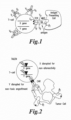
- Fc ⁇ RI is a tetrameric receptor complex consisting of ligand binding alpha subunit, a beta subunit and a homodimer of two signal-transducing gamma subunits (Metzger, Alcaraz et al. 1986).
- Fc ⁇ RI alpha domain consists of an extracellular domain containing two Ig-like domains that bind IgE, a transmembrane domain and a short cytoplasmic tail.
- Beta subunit contains four transmembrane segments separating amino and carboxy terminal cytoplasmic tails.
- the gamma chain consists essentially of a transmembrane region and cytoplasmic tail containing one immunoreceptor tyrosine-based activation motif (ITAM) (Cambier 1995).
- ITAM immunoreceptor tyrosine-based activation motif
- T lymphocytes are recovered from patients, genetically modified or selected ex vivo, cultivated in vitro in order to amplify the number of cells if necessary and finally infused into the patient.
- the host may be manipulated in other ways that support the engraftment of the T cells or their participation in an immune response, for example pre-conditioning (with radiation or chemotherapy) and administration of lymphocyte growth factors (such as IL-2).
- lymphocyte growth factors such as IL-2
- Each patient receives an individually fabricated treatment, using the patient's own lymphocytes (i.e. an autologous therapy).
- Autologous therapies face substantial technical and logistic hurdles to practical application, their generation requires expensive dedicated facilities and expert personnel, they must be generated in a short time following a patient's diagnosis, and in many cases, pretreatment of the patient has resulted in degraded immune function, such that the patient's lymphocytes may be poorly functional and present in very low numbers. Because of these hurdles, each patient's autologous cell preparation is effectively a new product, resulting in substantial variations in efficacy and safety. Ideally, one would like to use a standardized therapy in which allogeneic therapeutic cells could be pre-manufactured, characterized in detail, and available for immediate administration to patients. By allogeneic it is meant that the cells are obtained from individuals belonging to the same species but are genetically dissimilar.
- allogeneic cells presently has many drawbacks.
- HvG host versus graft rejection
- allogeneic cells are able to engraft, but their endogenous TCR specificities recognize the host tissue as foreign, resulting in graft versus host disease (GvHD), which can lead to serious tissue damage and death.
- GvHD graft versus host disease
- glucocorticoid receptor This class of steroid hormones binds to the glucocorticoid receptor (GR) present in the cytosol of T cells resulting in the translocation into the nucleus and the binding of specific DNA motifs that regulate the expression of a number of genes involved in the immunologic process.
- Treatment of T cells with glucocorticoid steroids results in reduced levels of cytokine production leading to T cell anergy and interfering in T cell activation.
- Alemtuzumab also known as CAMPATH1-H, is a humanized monoclonal antibody targeting CD52, a 12 amino acid glycosylphosphatidyl-inositol- (GPI) linked glycoprotein (Waldmann and Hale 2005).
- CD52 is expressed at high levels on T and B lymphocytes and lower levels on monocytes while being absent on granulocytes and bone marrow precursors.
- Treatment with Alemtuzumab a humanized monoclonal antibody directed against CD52, has been shown to induce a rapid depletion of circulating lymphocytes and monocytes. It is frequently used in the treatment of T cell lymphomas and in certain cases as part of a conditioning regimen for transplantation.
- the use of immunosuppressive drugs will also have a detrimental effect on the introduced therapeutic T cells. Therefore, to effectively use an adoptive immunotherapy approach in these conditions, the introduced cells would need to be resistant to the immunosuppressive treatment.
- De Angelis et al. proposed to use autologous EBV-CTLs in which the expression of FKBP12 has been knocked-down to address the problem of EBV-associated lymphoproliferative post-transplant disorders (PTLDs) in SOT patients treated with Tacrolimus (De Angelis et al., 2009).
- PTLDs EBV-associated lymphoproliferative post-transplant disorders
- T cell receptors are cell surface receptors that participate in the activation of T cells in response to the presentation of antigen.
- the TCR is generally made from two chains, alpha and beta, which assemble to form a heterodimer and associates with the CD3-transducing subunits to form the T-cell receptor complex present on the cell surface.
- Each alpha and beta chain of the TCR consists of an immunoglobulin-like N-terminal variable (V) and constant (C) region, a hydrophobic transmembrane domain, and a short cytoplasmic region.
- variable region of the alpha and beta chains are generated by V(D)J recombination, creating a large diversity of antigen specificities within the population of T cells.
- T cells are activated by processed peptide fragments in association with an MHC molecule, introducing an extra dimension to antigen recognition by T cells, known as MHC restriction.
- MHC restriction Recognition of MHC disparities between the donor and recipient through the T cell receptor leads to T cell proliferation and the potential development of GVHD. It has been shown that normal surface expression of the TCR depends on the coordinated synthesis and assembly of all seven components of the complex (Ashwell and Klusner 1990).
- TCRalpha or TCRbeta can result in the elimination of the TCR from the surface of T cells preventing recognition of alloantigen and thus GVHD.
- Torikai et al. used zinc-finger nucleases to inactivate TCRalpha or TCRbeta in primary T-cells (Torikai et al., 2012).
- TCR disruption results in the elimination of the CD3 signaling component and alters the means of further T cell expansion.
- T cell receptors emanate from the pre-T cell receptors (pTCR) which are expressed by immature thymocytes and are crucial for T cell development from the double negative (CD4- CD8-) to the double-positive (CD4+ CD8+) stages.
- pTCR pre-T cell receptors
- Pre-T cells that succeed in productive rearrangements of the TCRbeta locus express a functional TCRbeta chain which pairs with an invariant preTalpha chain and CD3 signaling components to form the pre-TCR complex.
- the expression of the preTCR at the cell surface is necessary for triggering beta-selection, a process that induces the expansion of developing T cells, enforces allelic exclusion of the TCRbeta locus and results in the induction of rearrangements at the TCRalpha locus (von Boehmer 2005).
- thymocytes undergo a second step of selection, referred to as positive or TCRalpha/beta selection upon binding of self peptide MHC complexes expressed on thymic epithelial cells.
- TCRalpha/beta selection upon binding of self peptide MHC complexes expressed on thymic epithelial cells.
- TCR activation is the initiation of signaling pathways via the associated CD3 subunits that result in multiple events including clonal expansion of T cells, upregulation of activation markers on the cell surface and induction of cytotoxicity or cytokine secretion.
- the heterologous introduction of the pTalpha transgene can result in the formation of a preTCR.
- This pTCR can serve as a means of T cell activation or stimulation in a manner that is non-MHC dependent, thus for example allowing continued expansion of alpha/beta T-cells following TCRalpha inactivation.
- the pTCR complex displays a similar biochemical composition as the TCR in terms of associated CD3 subunits (Carrasco, Ramiro et al. 2001).
- pre-TCR signaling may occur in part by a ligand independent event.
- the crystal structure of the pTCR extracellular domain has provided a structural basis for the possible ligand-independence of pTCR signaling.
- the pTCR has been shown to form a head to tail dimer where two pTalpha-TCRbeta heterodimers associate (Pang, Berry et al. 2010).
- the inventors have achieved the production of genetically modified T-cells, which overcome the limitations of present immunotherapy strategies, allowing them to be both non-alloreactive and resistant to immunosuppressive agents. This was made possible by gene inactivation using specific TALE-nucleases directed against TCRalpha or TCRbeta, coupled with inactivation of genes encoding targets for different immunosuppressive agents, in particular CD52 and GR.
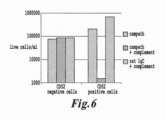
- TCRalpha or TCRbeta coupled with inactivation of CD52 or the glucocorticoid receptor in T lymphocytes derived from an allogeneic donor significantly reduces the risk of GVHD, by eliminating the TCR, responsible for recognition of MHC disparities, while permitting proliferation and activity of the introduced lymphocytes in the presence of immunosuppressive drugs, such as Alemtuzumab or glucocorticoid steroids, that prevent rejection of these cells.
- immunosuppressive drugs such as Alemtuzumab or glucocorticoid steroids
- TALE-nucleases In addition to the above conception of genetically modified T cells, which can be both non alloreactive and immunosuppressive resistant, the inventors, by the use and design of specific TALE-nucleases, have concomitantly inactivated these different genes in T-cells, thereby obtaining double mutants.
- double gene targeting by DSB has been so far unachieved in T cells due to the difficulty of yielding and maintaining T-cells in culture over time, to their low transformation rates, and loss during selection procedures. These difficulties result in a low probability of success for obtaining such cells.
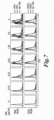
- one significant part of the invention is to have designed specific TALE-nucleases, allowing higher rates of DSB events within the T-cells, which are well tolerated by the cells, (especially upon co-transfection), able to target the selection of genes according to the invention.
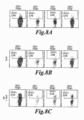
- rare cutting endonucleases such as the TALE-nucleases described therein, the probability of obtaining double inactivation of the genes in the transfected T-cells was significantly increased, so that it now appears possible to produce engineered T cells available from donors on a regular basis, using standard procedures.
- the present invention proposes an embodiment where T-cells are engineered to allow proliferation when TCRalpha is inactivated.
- T-cells are engineered to allow proliferation when TCRalpha is inactivated.
- a significant problem with T-cells that have undergone TCR subunit inactivation is that the cells can no longer be expanded through the CD3 complex.
- the inventors indeed provide means to expand T-cells in which TCRalpha has been inactivated through the CD3 complex, by expression of preTalpha in the cells, thus restoring a functional CD3 complex in the absence of a functional alpha/beta TCR.
- T cells are further transformed with CAR to redirect allogeneic cells specificity towards tumor associated antigens independent of MHC.
- the invention can be performed with a multi-chain CAR, in which costimulatory domains are placed in their normal juxtamembrane positions to improve their functions and so enhance survival and increase proliferation of engineered T-cells.
- the invention provides methods, polypeptides and polynucleotides that allow the effective transformation of allogeneic T cells for adoptive immunotherapy, and their facile expansion through the CD3 complex.
- the present invention is defined in the appended claims. It relates to methods to engineer T cells, in particular allogeneic T cells obtainable from donors, to make them suitable for immunotherapy purposes.
- the methods more particularly allow the precise modification of the genome of cells relevant for immunotherapy by inactivating or replacing genes involved in MHC recognition and a target of an immunosuppressive drug for the treatment of cancer and/or viral infections.
- the modified cells relevant for immunotherapy further comprise exogenous recombinant polynucleotides encoding CARs for specific cell recognition.
- Present CARs are single fusion molecules that necessitate serial appending of signaling domains. Moving signaling domains from their natural juxtamembrane position may interfere with their function.
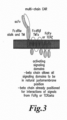
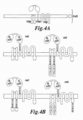
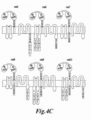
- a multi-chain CAR can be derived from Fc ⁇ RI to allow normal juxtamembrane position of all relevant signaling domains.
- the high affinity IgE binding domain of Fc ⁇ RI alpha chain is replaced by an extracellular ligand-binding domain such as scFv to redirect T-cell specificity to cell targets and the N and/or C-termini tails of Fc ⁇ RI beta chain is used to place costimulatory signals in normal juxtamembrane positions.
- pTalpha or functional variant thereof can be introduced into the engineered T-cells.
- the pTalpha or functional variant thereof used can be either full-length pTalpha, a splice variant (Saint-Ruf, Lechner et al. 1998), a C-terminal truncated version that has been shown to increase preTCR cell surface expression (Carrasco, Ramiro et al. 2001). Other additional truncations either smaller or larger than that described could be used.
- Different preTalpha versions may further comprise signaling moieties from other molecules (CD28, CD137, CD8, TCRalpha, etc.) to promote proliferation and survival or comprise mutations that affect its ability to dimerize, such as the D22A, R24A, R102A or R117A mutations previously described in mice (Yamasaki, Ishikawa et al. 2006) or the W46R mutation described in humans (Pang, Berry et al. 2010) to decrease the proliferation potential.
- the scFv portion of the CAR may also be fused to the extracellular domain of a pTalpha or a functional variant thereof, thus coupling the specificity towards target antigens directly with the proliferative activity of the preTCR.
- Polypeptides and polynucleotides which encode rare-cutting endonucleases, can be used to precisely target the above genes of interest, in particular TCRalpha, TCRbeta, GR and/or CD52, thereby enabling the genetic modification of the T-cells for immunotherapy.
- Specific target sequences within these genes and TALE-nucleases designed to respectively target those genes are provided.
- the isolated cells or cell lines comprising any of the proteins, polypeptides or vectors described herein.
- the T cells described herein may comprise inactivated TCRalpha or TCRbeta and GR or CD52 genes.
- the invention also relates to such engineered T-cells, for their use in immunotherapy.
- the isolated cells or cell lines can further comprise exogenous recombinant polynucleotides, in particular polynucleotides encoding pTalpha or functional variant thereof, CARs or multi-chain CARs.
- the modified T cells can be used as a therapeutic product, ideally as an "off the shelf' product.
- the engineered T cells can be useful for treating or preventing cancer or infections in the
- the present invention is in the field of new adoptive immunotherapy strategies in treating cancer and infections.
- Non alloreactive and immunosuppressive resistant T cells are included in Non alloreactive and immunosuppressive resistant T cells:
- the invention concerns a method of engineering T-cells, especially for immunotherapy.
- this method comprises modifying T-cells by inactivating at least:
- An immunosuppressive agent is an agent that suppresses immune function by one of several mechanisms of action.
- an immunosuppressive agent is a role played by a compound which is exhibited by a capability to diminish the extent and/or voracity of an immune response.
- Konwn examples of immunosuppressive agents are a calcineurin inhibitor, a target of rapamycin, an interleukin-2 ⁇ -chain blocker, an inhibitor of inosine monophosphate dehydrogenase, an inhibitor of dihydrofolic acid reductase, a corticosteroid or an immunosuppressive antimetabolite.
- Classical cytotoxic immunosuppressants act by inhibiting DNA synthesis.
- the method according to the invention allows conferring immunosuppressive resistance to T cells for immunotherapy by inactivating the target of the immunosuppressive agent in T cells.
- the target for an immunosuppressive agent is a receptor for an immunosuppressive agent, selected from CD52 and glucocorticoid receptor (GR).
- the genetic modification step of the method relies on the inactivation of two genes selected from the group consisting of CD52 and TCR alpha, CDR52 and TCR beta, GR and TCR alpha, GR and TCR beta.
- the genetic modification step of the method can rely on the inactivation of more than two genes.
- the genetic modification is operated ex-vivo.
- the genetic modification of the method relies on the expression, in provided cells to engineer, of one rare-cutting endonuclease such that said rare-cutting endonuclease specifically catalyzes cleavage in one targeted gene thereby inactivating said targeted gene.
- the nucleic acid strand breaks caused by the rare-cutting endonuclease are commonly repaired through the distinct mechanisms of homologous recombination or non-homologous end joining (NHEJ).
- NHEJ non-homologous end joining
- NHEJ non-homologous end joining
- Said modification may be a substitution, deletion, or addition of at least one nucleotide.
- Cells in which a cleavage-induced mutagenesis event, i.e a mutagenesis event consecutive to an NHEJ event, has occurred can be identified and/or selected by well-known method in the art.
- said method to engineer cells comprises the following steps:
- the method can also comprise:
- the genetic modification of the method relies on the expression, in provided cells to engineer, of two rare-cutting endonucleases such that said each of the two rare-cutting endonucleases specifically and respectively catalyzes cleavage in each of the pairs of genes selected from the group consisting of CD52 and TCR alpha, CDR52 and TCR beta, GR and TCR alpha, GR and TCR beta, thereby inactivating said targeted genes.
- more than two rare-cutting endonucleases can be expressed in cells to engineer in order to target and/or inactivate more than two genes.
- said gene of step (b), specific for an immunosuppressive treatment is CD52 and the immunosuppressive treatment of step (d) or (e) comprises a humanized antibody targeting CD52 antigen.
- said gene of step (b), specific for an immunosuppressive treatment is a glucocorticoid receptor (GR) and the immunosuppressive treatment of step (d) or (e) comprises a corticosteroid such as dexamethasone.
- GR glucocorticoid receptor
- FKBP family gene member Another target gene specific for an immunosuppressive treatment, not mentioned in the claims, is a FKBP family gene member or a variant thereof which is a target of an immunosuppressive treatment with FK506, also known as Tacrolimus or fujimycin.
- FKBP family gene member is FKBP12 or a variant thereof.
- Another gene specific for an immunosuppressive treatment is a cyclophilin family gene member or a variant thereof, which is a target of an immunosuppressive treatment with cyclosporine.
- the rare-cutting endonuclease can be a meganuclease, a Zinc finger nuclease or a TALE-nuclease.
- said rare-cutting endonuclease is a TALE-nuclease.
- TALE-nuclease is intended a fusion protein consisting of a DNA-binding domain derived from a Transcription Activator Like Effector (TALE) and one nuclease catalytic domain to cleave a nucleic acid target sequence.
- Preferred TALE-nucleases according to the invention are those recognizing and cleaving the target sequence selected from the group consisting of:
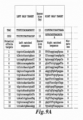
- Said TALE-nucleases can comprise a polypeptide sequence selected from SEQ ID NO: 7 to SEQ ID NO: 18 and SEQ ID NO: 41 to SEQ ID NO: 48, in order to cleave the respective target sequences SEQ ID NO: 1 to 6 and SEQ ID NO: 37 to 40.
- An additional catalytic domain can be further introduced into the cell with said rare-cutting endonucleases to increase mutagenesis in order to enhance their capacity to inactivate targeted genes.
- said additional catalytic domain can be a DNA end processing enzyme.
- DNA end-processing enzymes include 5-3' exonucleases, 3-5' exonucleases, 5-3' alkaline exonucleases, 5' flap endonucleases, helicases, hosphatase, hydrolases and template-independent DNA polymerases.
- catalytic domain comprises a protein domain or catalytically active derivate of the protein domain seleced from the group consisting of hExoI (EXO1 HUMAN), Yeast ExoI (EXO1_YEAST), E.coli ExoI, Human TREX2, Mouse TREX1, Human TREX1, Bovine TREX1, Rat TREX1, TdT (terminal deoxynucleotidyl transferase) Human DNA2, Yeast DNA2 (DNA2_YEAST).
- EXO1 HUMAN hExoI
- EXO1_YEAST Yeast ExoI
- E.coli ExoI E.coli ExoI
- Human TREX2 Mouse TREX1, Human TREX1, Bovine TREX1, Rat TREX1, TdT (terminal deoxynucleotidyl transferase) Human DNA2, Yeast DNA2 (DNA2_YEAST).
- the additional catalytic domain can have a 3'-5'-exonuclease activity; the additional catalytic domain can be TREX, for example TREX2 catalytic domain ( WO2012/058458 ).
- the catalytic domain can be encoded by a single chain TREX polypeptide.
- Said additional catalytic domain may be fused to a nuclease fusion protein or chimeric protein optionally by a peptide linker.
- the genetic modification step of the method can further comprise a step of introduction into cells an exogeneous nucleic acid comprising at least a sequence homologous to a portion of the target nucleic acid sequence, such that homologous recombination occurs between the target nucleic acid sequence and the exogeneous nucleic acid.
- the exogenous nucleic acid can comprise first and second portions which are homologous to region 5' and 3' of the target nucleic acid sequence, respectively.
- the exogenous nucleic acid can also comprise a third portion positioned between the first and the second portion which comprises no homology with the regions 5' and 3' of the target nucleic acid sequence.
- a homologous recombination event is stimulated between the target nucleic acid sequence and the exogenous nucleic acid.
- Homologous sequences of at least 50 bp, preferably more than 100 bp and more preferably more than 200 bp can be used within said donor matrix.
- the exogenous nucleic acid can be from 200 bp to 6000 bp, for example from 1000 bp to 2000 bp. Indeed, shared nucleic acid homologies are located in regions flanking upstream and downstream the site of the break and the nucleic acid sequence to be introduced should be located between the two arms.
- the exogenous nucleic acid can successively comprise a first region of homology to sequences upstream of said cleavage, a sequence to inactivate one targeted gene selected from the group consisting of CD52, GR, TCR alpha and TCR beta and a second region of homology to sequences downstream of the cleavage.
- Said polynucleotide introduction step can be simultaneous, before or after the introduction or expression of said rare-cutting endonuclease.
- exogenous nucleic acid can be used to knock-out a gene, e.g.
- sequence insertions by using such exogenous nucleic acid can be used to modify a targeted existing gene, by correction or replacement of said gene (allele swap for example), or to up- or down-regulate the expression of the targeted gene (promoter swap for example), said targeted gene correction or replacement.
- Inactivation of genes from the group consisting of CD52, GR, TCR alpha and TCR beta can be done at a precise genomic location targeted by a specific TALE-nuclease, wherein said specific TALE-nuclease catalyzes a cleavage and wherein said exogenous nucleic acid successively comprising at least a region of homology and a sequence to inactivate one targeted gene selected from the group consisting of CD52, GR, TCR alpha and TCR beta which is integrated by homologous recombination.
- Several genes can be, successively or at the same time, inactivated by using several TALE-nucleases respectively and specifically targeting one defined gene and several specific polynucleotides for specific gene inactivation.
- additional genomic modification step can be intended also the inactivation of another gene selected from the group consisting of CD52, GR, TCR alpha and TCR beta.
- additional genomic modification step can be an inactivation step comprising:
- the method to engineer a cell can further comprise an additional genomic modification step.
- additional genomic modification step can be intended the introduction into cells to engineer of one protein of interest.
- Said protein of interest can be, for example, pTalpha or functional variant thereof, a Chimeric Antigen Receptor (CAR), a multi-chain CAR, a bispecific antibody or rare-cutting endonuclease targeting PDCD1 or CTLA-4 as described in the present disclosure.
- CAR Chimeric Antigen Receptor
- multi-chain CAR a bispecific antibody or rare-cutting endonuclease targeting PDCD1 or CTLA-4 as described in the present disclosure.
- TALE-nucleases comprise:
- TALE-nucleases that can be used according to the invention include those recognizing and cleaving the target sequence selected from the group consisting of:
- Said TALE-nucleases can comprise a polypeptide sequence selected from SEQ ID NO: 7 to SEQ ID NO: 18 and SEQ ID NO: 41 to SEQ ID NO: 48, in order to cleave the respective target sequences SEQ ID NO: 1 to 6 and SEQ ID NO: 37 to 40.
- polypeptides variants of the above polypeptides that share at least 70%, preferably at least 80 %, more preferably at least 90 % and even more preferably at least 95 % identity with the above sequences can be used when performing the invention.
- polypeptides comprising a polypeptide sequence that has at least 70%, preferably at least 80%, more preferably at least 90 %, 95 % 97 % or 99 % sequence identity with amino acid sequence selected from the group consisting of SEQ ID NO:7 to SEQ ID NO: 18 and SEQ ID NO: 41 to SEQ ID NO: 48.
- Polynucleotides, vectors encoding the above described rare-cutting endonucleases can also be used when performing the invention.
- T cells in which at least two genes selected from the group consisting of CD52 and TCR alpha, CDR52 and TCR beta, GR and TCR alpha, GR and TCR beta, have been inactivated.
- those genes are preferably inactivated by at least one rare-cutting endonuclease. It has been shown by the inventors that the use of TALE-nucleases was particularly advantageous to achieve double inactivation in T-cells.
- the invention encompasses an isolated T-cell comprising at least two polynucleotides, said polynucleotides encoding at least a first and second TALE-nucleases, preferably the first TALE-nuclease being directed against a gene encoding TCR and the second being directed against a gene encoding a receptor for an immunosuppressive agent, such as CD52 or GR.
- Said isolated cell can further comprise one additional genomic modification.
- the additional genomic modification can be the integration of at least one exogenous polynucleotide sequence.
- the exogenous sequence can be integrated into one gene selected from the group consisting of CD52, GR, TCR alpha and TCR beta.
- the present disclosure provides a method of expanding TCR alpha deficient T-cell comprising introducing into said T-cell pTalpha (also named preTCR ⁇ ) or a functional variant thereof and expanding said cells, optionally through stimulation of the CD3 complex.
- a method of expanding TCR alpha deficient T-cell comprising introducing into said T-cell pTalpha (also named preTCR ⁇ ) or a functional variant thereof and expanding said cells, optionally through stimulation of the CD3 complex.
- T-cell pTalpha also named preTCR ⁇
- Such a method can comprise:
- a method of preparing T-cells for immunotherapy can comprise steps of the method for expansion for T-cell.
- the pTalpha polynucleotide sequence can be introduced randomly or else through homologous recombination, in particular the insertion could be associated with the inactivation of the TCRalpha gene.
- a “functional variant” of the peptide refers to a molecule substantially similar to either the entire peptide or a fragment thereof.
- a “fragment” of the pTalpha or functional variant thereof refers to any subset of the molecule, that is, a shorter peptide.
- pTalpha or functional variants can be full length pTalpha or a C-terminal truncated pTalpha version. C-terminal truncated pTalpha lacks in C-terminal end one or more residues.
- C-terminal truncated pTalpha version can lack 18, 48, 62, 78, 92, 110 or 114 residues from the C-terminus of the protein (SEQ ID NO: 107 to SEQ ID NO: 114).
- amino acid sequence variants of the peptide can be prepared by mutations in the DNA which encodes the peptide.
- Such functional variants include, for example, deletions from, or insertions or substitutions of, residues within the amino acid sequence. Any combination of deletion, insertion, and substitution may also be made to arrive at the final construct, provided that the final construct possesses the desired activity, in particular the restoration of a functional CD3 complex.
- mutated residue can be at least W46R, D22A, K24A, R102A or R117A of the human pTalpha protein or aligned positions using CLUSTALW method on pTalpha family or homologue member.
- pTalpha or variant thereof as described above comprise the mutated residue W46R (SEQ ID NO: 123) or the mutated residues D22A, K24A, R102A and R117A (SEQ ID NO: 124 ).
- Said pTalpha or variants can also be fused to a signal-transducing domain such as CD28, OX40, ICOS, CD27, CD137 (4-1BB) and CD8 as non limiting examples (SEQ ID NO: 115 to SEQ ID NO: 120).
- the extracellular domain of pTalpha or variants as described above can be fused to a fragment of the TCRalpha protein, particularly the transmembrane and intracellular domain of TCRalpha (SEQ ID NO: 122).
- pTalpha variants can also be fused to the intracellular domain of TCRalpha (SEQ ID NO:121).
- the pTalpha versions can be fused to an extracellular ligand-binding domain and more preferably pTalpha or functional variant thereof is fused to a single chain antibody fragment (scFV) comprising the light ( V L ) and the heavy ( V H ) variable fragment of a target antigen specific monoclonal antibody joined by a flexible linker.
- scFV single chain antibody fragment
- Amino acid sequence of pTalpha or functional variant thereof can be selected from the group consisting of SEQ ID NO: 107 to SEQ ID NO: 124.
- variants of the above polypeptides that share at least 70%, preferably at least 80 %, more preferably at least 90 % and even more preferably at least 95 % identity with the sequences provided above can also be used.
- polypeptides comprising a polypeptide sequence that has at least 70%, preferably at least 80%, more preferably at least 90 %, 95 % 97 % or 99 % sequence identity with amino acid sequence selected from the group consisting of SEQ ID NO: 107 to SEQ ID NO: 124.
- TCR alpha deficient T cell an isolated T cell that lacks expression of a functional TCR alpha chain. This may be accomplished by different means, as non limiting examples, by engineering a T cell such that it does not express any functional TCR alpha on its cell surface or by engineering a T cell such that it produces very little functional TCR alpha chain on its surface or by engineering a T cell to express mutated or truncated form of TCR alpha chain.
- TCR alpha deficient cells can no longer be expanded through CD3 complex.
- pTalpha or functional variant thereof is introduced into said cells, thus restoring a functional CD3 complex.
- the method further comprises introducing into said T cells rare-cutting endonucleases able to selectively inactivate by DNA cleavage one gene encoding one component of the T-cell receptor (TCR).
- said rare-cutting endonuclease is a TALE-nucleases.
- TALE-nuclease is directed against one of the gene target sequences of TCRalpha selected from the group consisting of SEQ ID NO: 37 and SEQ ID NO: 57 to 60.
- TALE-nucleases are selected from the group consisting of SEQ ID NO: 41 and SEQ ID NO: 42.
- Said method for expansion of TCR alpha deficient T-cells can comprise an additional genomic modification step.
- additional genomic modification step can be intended the introduction into cells to engineer of one protein of interest.
- Said protein of interest can be, as non limiting examples, a Chimeric Antigen Receptor (CAR), particularly CAR comprising amino acid sequence SEQ ID NO: 73, a multi-chain CAR, particularly multi-chain CAR comprising amino acid sequence SEQ ID NO: 125 a bispecific antibody, rare-cutting endonucleases targeting PDCD1 or CTLA-4, particularly targeting nucleic acid sequence SEQ ID NO: 74 to SEQ ID NO: 78 or a rare-cutting endonuclease targeting a target for immunosuppressive agent as described in the present disclosure.
- CAR Chimeric Antigen Receptor
- polypeptides encoding pTalpha particularly functional variants described above.
- a pTalpha or functional variant thereof fused to a signal transducing domain such as CD28, OX40, ICOS, CD137 and CD8.
- pTalpha functional variant can compris amino acid sequence selected form the group consisting of SEQ ID NO: 107 to SEQ ID NO: 124.
- isolated cells or cell lines susceptible to be obtained by said method.
- said isolated cells or cell lines are obtained by introducing into said cells a pTalpha or a functional variant thereof to support CD3 surface expression.
- said isolated cell or cell line are further genetically modified by inactivating TCRalpha gene. This gene is preferably inactivating by at least one rare-cutting endonuclease.
- said rare-cutting endonuclease is TALE-nuclease.
- the engineering of the T cells may be performed with a multi-chain chimeric antigen receptor (CAR) particularly adapted to the production and expansion of engineered T-cells of the present invention.
- the multi-chain CAR comprises at least two of the following components:
- multi-chain CAR comprises amino acid sequence SEQ ID NO: 125.
- the term "a part of” used herein refers to any subset of the molecule, that is a shorter peptide.
- amino acid sequence functional variants of the polypeptide can be prepared by mutations in the DNA which encodes the polypeptide. Such functional variants include, for example, deletions from, or insertions or substitutions of, residues within the amino acid sequence. Any combination of deletion, insertion, and substitution may also be made to arrive at the final construct, provided that the final construct possesses the desired activity, especially to exhibit a specific anti-target cellular immune activity.
- Said extracellular ligand-binding domain can be a scFv.
- Other binding domain than scFv can also be used for predefined targeting of lymphocytes, such as camelid single-domain antibody fragments or receptor ligands like a vascular endothelial growth factor polypeptide, an integrin-binding peptide, heregulin or an IL-13 mutein, antibody binding domains, antibody hypervariable loops or CDRs for example.
- Said polypeptide of a) can further comprise a stalk region between said extracellular ligand-binding domain and said transmembrane domain.
- the term "stalk region" used herein generally means any oligo- or polypeptide that functions to link the transmembrane domain to the extracellular ligand-binding domain. In particular, stalk region are used to provide more flexibility and accessibility for the extracellular ligand-binding domain.
- a stalk region may comprise up to 300 amino acids, preferably 10 to 100 amino acids and most preferably 25 to 50 amino acids.
- Stalk region may be derived from all or part of naturally occurring molecules, such as from all or part of the extracellular region of CD8, CD4 or CD28, or from all or part of an antibody constant region. Alternatively the stalk region may be a synthetic sequence that corresponds to a naturally occurring stalk sequence, or may be an entirely synthetic stalk sequence.
- Said polypeptide of a), b) and/or c) can further comprise at least one signal-transducing domain.
- Said signal-transducing domain can be selected from the group consisting of CD28, OX40, ICOS, CD137 and CD8.
- Said C-terminal cytoplasmic tail of Fc ⁇ RI alpha, beta and/or gamma chain fragment can further comprise TNFR-associated Factor 2 (TRAF2) binding motifs.
- Said C- terminal cytoplasmic tail of Fc ⁇ RI alpha, beta and/or gamma chain can be replaced by intracytoplasmic tail of costimulatory TNFR member family.
- Cytoplasmic tail of costimulatory TNFR family member contains TRAF2 binding motifs consisting of the major conserved motif (P/S/A)X(Q/E)E) or the minor motif (PXQXXD), wherein X is any amino acid.
- TRAF proteins are recruited to the intracellular tails of many TNFRs in response to receptor trimerization.
- Said intracytoplasmic domain of Fc ⁇ RI alpha, beta and/or gamma chain can also be replaced by intracytoplasmic domain of TCR zeta chain (also named CD3 zeta).
- Said intracytoplasmic domain of Fc ⁇ RI alpha, beta and/or gamma chain can also comprise at least one additional immunoreceptor tyrosine-based activation motif (ITAM).
- ITAMs are well defined signaling motifs found in the intracytoplasmic tail of a variety of receptors that serve as binding sites for syk/zap70 class tyrosine kinases.
- ITAM examples include those derived from TCRzeta, FCRgamma, FCRbeta, CD3gamma, CD3delta, CD3epsilon, CD5, CD22, CD79a, CD79b, and CD66d.
- the multi-chain CAR can comprise the amino acid sequence SEQ ID NO: 125.
- the present invention can be performed with polypeptides comprising a polypeptide sequence that has at least 70%, preferably at least 80%, more preferably at least 90 %, 95 % 97 % or 99 % sequence identity with amino acid sequence selected from the group consisting of SEQ ID NO: 125.
- a method of preparing T-cells for immunotherapy according to the invention can comprise introducing into said T-cells the different polypeptides composing said multi-chain CAR and expanding said cells.
- Said method further comprises a step of genetically modifying said cells by inactivating at least one gene expressing one component of the TCR and a target for an immunosuppressive agent.
- Said genes are selected from the group consisting of TCRalpha, TCRbeta, CD52 and GR.
- said method comprises introducing into said T cells rare-cutting endonucleases able to selectively inactivate by DNA cleavage said genes.
- said rare-cutting endonuclease is TALE-nuclease.
- Preferred TALE-nucleases according to the invention are those recognizing and cleaving the target sequence selected from the group consisting of: SEQ ID NO: 1 to 6 (GR), SEQ ID NO: 37, 57 to 60 (TCRalpha), SEQ ID NO: 38 or 39 (TCRbeta), and SEQ ID NO: 40, SEQ ID NO: 61 to SEQ ID NO: 65 (CD52).
- Said method can further comprise an additional genomic modification step.
- additional genomic modification step can be intended the introduction into cells to engineer of one protein of interest.
- Said protein of interest can be, as non limiting examples a bispecific antibody, rare-cutting endonuclease targeting PDCD1 or CTLA-4, a pTalpha or a functional variant thereof as described in the present disclosure.
- the present invention also relates isolated cells or cell lines susceptible to be obtained by said method to engineer cells.
- said isolated cell comprises exogenous polynucleotide sequences encoding polypeptides composing said multi-chain CAR.
- Immunity response is regulated by the counterbalancing of stimulatory and inhibitory signal.
- the expression of immune-checkpoint proteins can be dysregulated by tumours and can be an important immune resistance mechanism.
- Negative regulators of T-cell function include molecules such as CTLA-4, a key negative regulatory molecule that down-regulates pathways of T-cell activation and programmed death-1 (PD1) also known as PDCD1, a transmembrane receptor up-regulated on activated T cells that when bound to its ligand (programmed death ligand-1, PD-L1) leads to decreased cytokine production and proliferation of T cells (Pardoll 2012).
- PD1 programmed death-1
- PD-L1 transmembrane receptor up-regulated on activated T cells that when bound to its ligand
- a method of engineering T-cells, especially for immunotherapy, according to the claims can thus further comprise genetically modifying T-cells by inactivating at least one protein involved in the immune check-point, in particular PDCD1 and/or CTLA-4.
- Such a method can comprise one of the following steps:
- Said rare-cutting endonuclease can be a TALE-nuclease.
- New TALE-nucleases have been designed for precisely targeting relevant genes for adoptive immunotherapy strategies.
- Such TALE-nucleases are those recognizing and cleaving the target sequence selected from the group consisting of SEQ ID NO: 77 and SEQ ID NO: 78 (PDCD-1), SEQ ID NO: 74 to SEQ ID NO: 76 (CTLA-4).
- TALE-nucleases polypeptides can comprise an amino acid sequence selected from the group consisting of SEQ ID NO: 79 to SEQ ID NO: 88.
- Polypeptides comprising an amino acid sequence that has at least 70%, preferably at least 80%, more preferably at least 90 %, 95 % 97 % or 99 % sequence identity with amino acid sequence selected from the group consisting of SEQ ID NO: 79 to SEQ ID NO: 88 are also described herein, as well as polynucleotides and vectors encoding the above described rare-cutting endonucleases. This method can be associated with any one of the different methods described in the present disclosure.
- Engineered T cells obtained by the different methods as previously described can be further exposed with bispecific antibodies.
- Said T-cells could be exposed to bispecific antibodies ex vivo prior to administration to a patient or in vivo following administration to a patient.
- Said bispecific antibodies comprise two variable regions with distinct antigen properties that allow bringing the engineered cells into proximity to a target antigen.
- said bispecific antibody can be directed against a tumor marker and lymphocyte antigen such as CD3 and has the potential to redirect and activate any circulating T cells against tumors.
- the different methods described above involve introducing pTalpha or functional variants thereof, rare cutting endonuclease, TALE-nuclease, CAR or multi-chain CAR optionally with DNA-end processing enzyme or exogenous nucleic acid into a cell.
- said pTalpha or functional variant thereof, rare cutting endonucleases, TALE-nucleases, CAR or multi-chain CAR optionally with DNA-end processing enzyme or exogenous nucleic acid can be introduced as transgenes encoded by one or as different plasmidic vectors.
- Different transgenes can be included in one vector which comprises a nucleic acid sequence encoding ribosomal skip sequence such as a sequence encoding a 2A peptide.
- 2A peptides which were identified in the Aphthovirus subgroup of picornaviruses, causes a ribosomal "skip" from one codon to the next without the formation of a peptide bond between the two amino acids encoded by the codons (see Donnelly et al., J. of General Virology 82: 1013-1025 (2001 ); Donnelly et al., J. of Gen. Virology 78: 13-21 (1997 ); Doronina et al., Mol. And. Cell. Biology 28(13): 4227-4239 (2008 ); Atkins et al., RNA 13: 803-810 (2007 )).
- codon is meant three nucleotides on an mRNA (or on the sense strand of a DNA molecule) that are translated by a ribosome into one amino acid residue.
- two polypeptides can be synthesized from a single, contiguous open reading frame within an mRNA when the polypeptides are separated by a 2A oligopeptide sequence that is in frame.
- Such ribosomal skip mechanisms are well known in the art and are known to be used by several vectors for the expression of several proteins encoded by a single messenger RNA.
- 2A peptides have been used to express into the cell the rare-cutting endonuclease and a DNA end-processing enzyme or the different polypeptides of the multi-chain CAR.
- Said plasmid vector can contain a selection marker which provides for identification and/or selection of cells which received said vector.
- Polypeptides may be synthesized in situ in the cell as a result of the introduction of polynucleotides encoding said polypeptides into the cell. Alternatively, said polypeptides could be produced outside the cell and then introduced thereto.
- Methods for introducing a polynucleotide construct into animal cells are known in the art and include as non limiting examples stable transformation methods wherein the polynucleotide construct is integrated into the genome of the cell, transient transformation methods wherein the polynucleotide construct is not integrated into the genome of the cell and virus mediated methods.
- Said polynucleotides may be introduced into a cell by for example, recombinant viral vectors (e.g.
- retroviruses adenoviruses
- liposome adenoviruses
- transient transformation methods include for example microinjection, electroporation or particle bombardment.
- Said polynucleotides may be included in vectors, more particularly plasmids or virus, in view of being expressed in cells.
- Polynucleotides encoding polypeptides disclosed herein can be mRNA which is introduced directly into the cells, for example by electroporation.
- the inventors determined the optimal condition for mRNA electroporation in T-cell.
- the inventors used the cytoPulse technology which allows, by the use of pulsed electric fields, to transiently permeabilize living cells for delivery of material into the cells.
- the technology based on the use of PulseAgile (Cellectis property) electroporation waveforms grants the precise control of pulse duration, intensity as well as the interval between pulses ( U.S. patent 6,010,613 and International PCT application WO2004083379 ). All these parameters can be modified in order to reach the best conditions for high transfection efficiency with minimal mortality.
- the first high electric field pulses allow pore formation, while subsequent lower electric field pulses allow to move the polynucleotide into the cell.
- the invention can be performed using a method of transforming T cell comprising contacting said T cell with RNA and applying to T cell an agile pulse sequence consisting of:
- the method of transforming T cell can comprise contacting said T cell with RNA and applying to T cell an agile pulse sequence consisting of:
- Electroporation medium can be any suitable medium known in the art.
- the electroporation medium has conductivity in a range spanning 0.01 to 1.0 milliSiemens.
- said RNA can encode a rare-cutting endonuclase, one monomer of the rare-cutting endonuclease such as Half-TALE-nuclease, a Chimeric Antigen Receptor, at least one component of the multi-chain chimeric antigen receptor, a pTalpha or functional variant thereof, an exogenous nucleic acid, one additional catalytic domain.
- a rare-cutting endonuclase one monomer of the rare-cutting endonuclease such as Half-TALE-nuclease, a Chimeric Antigen Receptor, at least one component of the multi-chain chimeric antigen receptor, a pTalpha or functional variant thereof, an exogenous nucleic acid, one additional catalytic domain.
- the T cells can be activated and expanded generally using methods as described, for example, in U.S. Patents 6,352,694 ; 6,534,055 ; 6,905,680 ; 6,692,964 ; 5,858,358 ; 6,887,466 ; 6,905,681 ; 7,144,575 ; 7,067,318 ; 7,172,869 ; 7,232,566 ; 7,175,843 ; 5,883,223 ; 6,905,874 ; 6,797,514 ; 6,867,041 ; and U.S.
- T cells can be expanded in vitro or in vivo.
- the T cells of the invention are expanded by contact with a surface having attached thereto an agent that stimulates a CD3 TCR complex associated signal and a ligand that stimulates a co-stimulatory molecule on the surface of the T cells.
- T cell populations may be stimulated in vitro such as by contact with an anti-CD3 antibody, or antigen-binding fragment thereof, or an anti-CD2 antibody immobilized on a surface, or by contact with a protein kinase C activator (e.g., bryostatin) in conjunction with a calcium ionophore.
- a protein kinase C activator e.g., bryostatin
- a ligand that binds the accessory molecule is used for co-stimulation of an accessory molecule on the surface of the T cells.
- a population of T cells can be contacted with an anti-CD3 antibody and an anti-CD28 antibody, under conditions appropriate for stimulating proliferation of the T cells.
- an anti-CD3 antibody and an anti-CD28 antibody may be in solution or coupled to a surface.
- the ratio of particles to cells may depend on particle size relative to the target cell.
- the cells such as T cells, can be combined with agent-coated beads, the beads and the cells are subsequently separated, and then the cells are cultured. Alternatively, prior to culture, the agent-coated beads and cells are not separated but are cultured together.
- Cell surface proteins may be ligated by allowing paramagnetic beads to which anti-CD3 and anti-CD28 are attached (3x28 beads) to contact the T cells.
- the cells for example, 4 to 10 T cells
- beads for example, DYNABEADS ® M-450 CD3/CD28 T paramagnetic beads at a ratio of 1:1
- a buffer preferably PBS (without divalent cations such as, calcium and magnesium).
- PBS without divalent cations such as, calcium and magnesium.
- the mixture may be cultured for several hours (about 3 hours) to about 14 days or any hourly integer value in between.
- the mixture may be cultured for 21 days.
- Conditions appropriate for T cell culture include an appropriate media (e.g., Minimal Essential Media or RPMI Media 1640 or, X-vivo 5, (Lonza)) that may contain factors necessary for proliferation and viability, including serum (e.g., fetal bovine or human serum), interleukin-2 (IL-2), insulin, IFN-g , 1L-4, 1L-7, GM-CSF, -10, - 2, 1L-15, TGFp, and TNF- or any other additives for the growth of cells known to the skilled artisan.
- Other additives for the growth of cells include, but are not limited to, surfactant, plasmanate, and reducing agents such as N-acetyl-cysteine and 2-mercaptoethanoi.
- Media can include RPMI 1640, A1M-V, DMEM, MEM, a-MEM, F-12, X-Vivo 1 , and X-Vivo 20, Optimizer, with added amino acids, sodium pyruvate, and vitamins, either serum-free or supplemented with an appropriate amount of serum (or plasma) or a defined set of hormones, and/or an amount of cytokine(s) sufficient for the growth and expansion of T cells.
- Antibiotics e.g., penicillin and streptomycin, are included only in experimental cultures, not in cultures of cells that are to be infused into a subject.
- the target cells are maintained under conditions necessary to support growth, for example, an appropriate temperature (e.g., 37° C) and atmosphere (e.g., air plus 5% C02) .
- T cells that have been exposed to varied stimulation times may exhibit different characteristics
- Said cells can be expanded by co-culturing with tissue or cells. Said cells can also be expanded in vivo, for example in the subject's blood after administrating said cell into the subj ect.
- T-cell according to the present invention can be derived from a stem cell.
- the stem cells can be adult stem cells, embryonic stem cells, more particularly non-human stem cells, cord blood stem cells, progenitor cells, bone marrow stem cells, induced pluripotent stem cells, non-human totipotent stem cells or hematopoietic stem cells.
- Representative human cells are CD34+ cells
- Said isolated cell can also be a dendritic cell, a NK-cell, a B-cell or a T-cell selected from the group consisting of inflammatory T-lymphocytes, cytotoxic T-lymphocytes, regulatory T-lymphocytes or helper T-lymphocytes.
- Said cell can be derived from the group consisting of CD4+ T-lymphocytes and CD8+ T-lymphocytes.
- a source of cells Prior to expansion and genetic modification of the cells of the invention, a source of cells can be obtained from a subject through a variety of non-limiting methods.
- T cells can be obtained from a number of non-limiting sources, including peripheral blood mononuclear cells, bone marrow, lymph node tissue, cord blood, thymus tissue, tissue from a site of infection, ascites, pleural effusion, spleen tissue, and tumors. Any number of T cell lines available and known to those skilled in the art, may be used.
- said cell can be derived from a healthy donor, from a patient diagnosed with cancer or from a patient diagnosed with an infection. Said cell can be part of a mixed population of cells which present different phenotypic characteristics.
- An isolated cell according to the present invention comprises an inactivated gene selected from the group consisting of CD52 and GR and an inactivated gene selected from the group consisting of TCR alpha and TCR beta and can further express a CAR, a multi-chain CAR and/or a pTalpha transgene.
- said isolated cell according to the present invention comprises two inactivated genes selected from the group consisting of CD52 and TCR alpha, CDR52 and TCR beta, GR and TCR alpha, GR and TCR beta, and optionally expresses a CAR, a multi-chain CAR and/or a pTalpha transgene.
- TCR is rendered not functional in the cells according to the invention by inactivating TCR alpha gene and/or TCR beta gene(s).
- the above strategies are used more particularly to avoid GvHD.
- a particular aspect of the present invention is a method to obtain modified cells derived from an individual, wherein said cells can proliferate independently of the Major Histocompatibility Complex signaling pathway. Said method comprises the following steps:
- Modified cells which can proliferate independently of the Major Histocompatibility Complex signaling pathway, susceptible to be obtained by this method are encompassed in the scope of the present invention.
- Said modified cells can be used for treating patients in need thereof to avoid Host versus Graft (HvG) rejection and Graft versus Host Disease (GvHD); therefore a method of treating patients in need thereof, avoiding Host versus Graft (HvG) rejection and Graft versus Host Disease (GvHD), can comprise treating said patient by administering to said patient an effective amount of modified cells comprising inactivated TCR alpha and/or TCR beta genes.
- Isolated cell obtained by the different methods or cell line derived from said isolated cell as previously described can be used as a medicament.
- Said medicament can be used for treating cancer or infections in a patient in need thereof.
- Said isolated cell according to the invention or cell line derived from said isolated cell can also be used in the manufacture of a medicament for treatment of a cancer or a viral infection in a patient in need thereof.
- T cells of the invention can undergo robust in vivo T cell expansion and can persist for an extended amount of time.
- a treatment with such T-cells can be ameliorating, curative or prophylactic. It may be either part of an autologous immunotherapy or part of an allogenic immunotherapy treatment.
- autologous it is meant that cells, cell line or population of cells used for treating patients are originating from said patient or from a Human Leucocyte Antigen (HLA) compatible donor.
- HLA Human Leucocyte Antigen
- allogeneic is meant that the cells or population of cells used for treating patients are not originating from said patient but from a donor.
- the invention is particularly suited for allogenic immunotherapy, insofar as it enables the transformation of T-cells, typically obtained from donors, into non-alloreactive cells. This may be done under standard protocols and reproduced as many times as needed.
- the resulted modified T cells may be pooled and administrated to one or several patients, being made available as an "off the shelf' therapeutic product.
- Cancers that can be used with the disclosed methods are described in the previous section. Said treatment can be used to treat patients diagnosed with cancer, viral infection, autoimmune disorders or Graft versus Host Disease (GvHD). Cancers that may be treated include tumors that are not vascularized, or not yet substantially vascularized, as well as vascularized tumors.
- the cancers may comprise nonsolid tumors (such as hematological tumors, for example, leukemias and lymphomas) or may comprise solid tumors.
- Types of cancers to be treated with CARs a described herein include, but are not limited to, carcinoma, blastoma, and sarcoma, and certain leukemia or lymphoid malignancies, benign and malignant tumors, and malignancies e.g., sarcomas, carcinomas, and melanomas.
- sarcomas a malignant e.g., sarcomas, carcinomas, and melanomas.
- adult tumors/cancers and pediatric tumors/cancers are also included.
- It can be a treatment in combination with one or more therapies against cancer selected from the group of antibodies therapy, chemotherapy, cytokines therapy, dendritic cell therapy, gene therapy, hormone therapy, laser light therapy and radiation therapy.
- therapies against cancer selected from the group of antibodies therapy, chemotherapy, cytokines therapy, dendritic cell therapy, gene therapy, hormone therapy, laser light therapy and radiation therapy.
- said treatment can be administrated into patients undergoing an immunosuppressive treatment.
- the present invention preferably relies on cells or population of cells, which have been made resistant to at least one immunosuppressive agent due to the inactivation of a gene encoding a receptor for such immunosuppressive agent.
- the immunosuppressive treatment should help the selection and expansion of the T-cells according to the invention within the patient.
- the administration of the cells or population of cells according to the present invention may be carried out in any convenient manner, including by aerosol inhalation, injection, ingestion, transfusion, implantation or transplantation.
- the compositions described herein may be administered to a patient subcutaneously, intradermaliy, intratumorally, intranodally, intramedullary, intramuscularly, by intravenous or intralymphatic injection, or intraperitoneally.
- the cell compositions of the present invention are preferably formulated for intravenous injection.
- the administration of the cells or population of cells can consist of the administration of 10 4 -10 9 cells per kg body weight, preferably 10 5 to 10 6 cells/kg body weight including all integer values of cell numbers within those ranges.
- the cells or population of cells can be administrated in one or more doses. Said effective amount of cells can be administrated as a single dose. Alternatively, said effective amount of cells can be administrated as more than one dose over a period time. Timing of administration is within the judgment of managing physician and depends on the clinical condition of the patient.
- the cells or population of cells may be obtained from any source, such as a blood bank or a donor. While individual needs vary, determination of optimal ranges of effective amounts of a given cell type for a particular disease or conditions within the skill of the art.
- An effective amount means an amount which provides a therapeutic or prophylactic benefit.
- the dosage administrated will be dependent upon the age, health and weight of the recipient, kind of concurrent treatment, if any, frequency of treatment and the nature of the effect desired.
- Said effective amount of cells or composition comprising those cells can be administrated parenterally.
- Said administration can be an intravenous administration.
- Said administration can be directly done by injection within a tumor.
- cells are for use in conjunction with (e.g., before, simultaneously or following) any number of relevant treatment modalities, including but not limited to treatment with agents such as antiviral therapy, cidofovir and interleukin-2, Cytarabine (also known as ARA-C) or nataliziimab treatment for MS patients or efaliztimab treatment for psoriasis patients or other treatments for PML patients.
- agents such as antiviral therapy, cidofovir and interleukin-2, Cytarabine (also known as ARA-C) or nataliziimab treatment for MS patients or efaliztimab treatment for psoriasis patients or other treatments for PML patients.
- the T cells of the invention may be used in combination with chemotherapy, radiation, immunosuppressive agents, such as cyclosporin, azathioprine, methotrexate, mycophenolate, and FK506, antibodies, or other immunoablative agents such as CAM PATH, anti-CD3 antibodies or other antibody therapies, cytoxin, fludaribine, cyclosporin, FK506, rapamycin, mycophenolic acid, steroids, FR901228, cytokines, and irradiation.
- immunosuppressive agents such as cyclosporin, azathioprine, methotrexate, mycophenolate, and FK506, antibodies
- immunoablative agents such as CAM PATH, anti-CD3 antibodies or other antibody therapies
- cytoxin fludaribine
- cyclosporin FK506, rapamycin
- mycophenolic acid steroids
- steroids FR901228
- cytokines irradiation
- the cell compositions of the present invention are for use in conjunction with (e.g., before, simultaneously or following) bone marrow transplantation, T cell ablative therapy using either chemotherapy agents such as, fludarabine, external-beam radiation therapy (XRT), cyclophosphamide, or antibodies such as OKT3 or CAMPATH.
- the cell compositions of the present invention are to be administered following B-cell ablative therapy such as agents that react with CD20, e.g., Rituxan.
- subjects may undergo standard treatment with high dose chemotherapy followed by peripheral blood stem cell transplantation.
- subjects receive an infusion of the expanded immune cells of the present invention.
- Expanded cells can be administered before or following surgery.
- Said modified cells obtained by any one of the methods described here can be used for treating patients in need thereof without provoking Host versus Graft (HvG) rejection and Graft versus Host Disease (GvHD).
- FIG. 5 For a better understanding of the invention, one example of method to engineer human allogenic cells for immunotherapy is illustrated in Figure 5 .
- the method comprises a combination of several of the following steps:
- Viral vectors include retrovirus, adenovirus, parvovirus (e. g. adenoassociated viruses), coronavirus, negative strand RNA viruses such as orthomyxovirus (e. g., influenza virus), rhabdovirus (e. g., rabies and vesicular stomatitis virus), paramyxovirus (e. g. measles and Sendai), positive strand RNA viruses such as picornavirus and alphavirus, and double-stranded DNA viruses including adenovirus, herpesvirus (e. g., Herpes Simplex virus types 1 and 2, Epstein-Barr virus, cytomegalovirus), and poxvirus (e.
- orthomyxovirus e. g., influenza virus
- rhabdovirus e. g., rabies and vesicular stomatitis virus
- paramyxovirus e. g. measles and Sendai
- viruses include Norwalk virus, togavirus, flavivirus, reoviruses, papovavirus, hepadnavirus, and hepatitis virus, for example.
- retroviruses include: avian leukosis-sarcoma, mammalian C-type, B-type viruses, D type viruses, HTLV-BLV group, lentivirus, spumavirus ( Coffin, J. M., Retroviridae: The viruses and their replication, In Fundamental Virology, Third Edition, B. N. Fields, et al., Eds., Lippincott-Raven Publishers, Philadelphia, 1996 ).
- cell lines can be selected from the group consisting of CHO-K1 cells; HEK293 cells; Caco2 cells; U2-OS cells; NIH 3T3 cells; NSO cells; SP2 cells; CHO-S cells; DG44 cells; K-562 cells, U-937 cells; MRC5 cells; IMR90 cells; Jurkat cells; HepG2 cells; HeLa cells; HT-1080 cells; HCT-116 cells; Hu-h7 cells; Huvec cells; Molt 4 cells.
- All these cell lines can be modified by the method of the present invention to provide cell line models to produce, express, quantify, detect, study a gene or a protein of interest; these models can also be used to screen biologically active molecules of interest in research and production and various fields such as chemical, biofuels, therapeutics and agronomy as non-limiting examples.
- Rare-cutting endonucleases can also be for example TALE-nucleases, a new class of chimeric nucleases using a FokI catalytic domain and a DNA binding domain derived from Transcription Activator Like Effector (TALE), a family of proteins used in the infection process by plant pathogens of the Xanthomonas genus (Boch, Scholze et al. 2009; Moscou and Bogdanove 2009; Christian, Cermak et al. 2010; Li, Huang et al.).
- TALE Transcription Activator Like Effector
- TALE-nuclease FokI-based TALE-nuclease
- ZFN Zinc-finger DNA binding domain
- TALE-nuclease DNA cleavage by a TALE-nuclease requires two DNA recognition regions flanking an unspecific central region.
- Rare-cutting endonucleases used in the present invention can also be derived from TALE-nucleases.
- Rare-cutting endonuclease can be a homing endonuclease, also known under the name of meganuclease. Such homing endonucleases are well-known to the art (Stoddard 2005). Homing endonucleases recognize a DNA target sequence and generate a single- or double-strand break. Homing endonucleases are highly specific, recognizing DNA target sites ranging from 12 to 45 base pairs (bp) in length, usually ranging from 14 to 40 bp in length.
- the homing endonuclease may for example correspond to a LAGLIDADG endonuclease, to a HNH endonuclease, or to a GIY-YIG endonuclease.
- Preferred homing endonuclease used to perform the present invention can be an I -CreI variant.
- a "co-stimulatory molecule” refers to the cognate binding partner on a Tcell that specifically binds with a co-stimulatory ligand, thereby mediating a co-stimulatory response by the cell, such as, but not limited to proliferation.
- Co-stimulatory molecules include, but are not limited to an MHC class I molecule, BTLA and Toll ligand receptor.
- a "co-stimulatory signal” as used herein refers to a signal, which in combination with primary signal, such as TCR/CD3 ligation, leads to T cell proliferation and/or upregulation or downregulation of key molecules.
- subject or "patient” as used herein includes all members of the animal kingdom including non-human primates and humans.
- Example 1 TALE-nucleases cleaving the human GR gene
- TALE-nucleases targeting exons of the human GR gene were designed and produced. Table 1 below indicates the target sequences cleaved by each TALE-nuclease.
- GR TALE-nuclease was composed of two independent entities (called half TALE-nucleases) each containing a repeat sequence engineered to bind and cleave GR target sequences consisting of two 17-bp long sequences (called half targets) separated by a 15-bp spacer.
- Table 1 Description of the GR TALE-nucleases and sequences of the TALE-nucleases target sites in the human GR gene.
- Target name Target sequence Repeat sequence Half TALE-nuclease sequence GRex2 Repeat GRex2-LPT9-L1 (SEQ ID NO: 7) GRex2-L TALEN (SEQ ID NO: 19) GRex2-R TALEN (SEQ ID NO: 20) GRex3T2 Repeat -GRex3T2-L1 (SEQ ID NO: 9) Repeat -GRex3T2-R1 (SEQ ID NO: 10) GRex3T4 Repeat -GRex3T4-L1 (SEQ ID NO: 11) Repeat -GRex3T4-R1 (SEQ ID NO: 12) GRex5T1 GRex5T2 Repeat -GRex5T2-L1 (SEQ ID NO: 15) Repeat GRex5T2-R1 (SEQ ID NO: 16) GRex5T3 Repeat -GRex5T3-L1 (SEQ ID NO: 17) Repeat -GRex5T3-R1 (SEQ ID NO: 18)
- the amino acid sequences of the N-terminal, C-terminal domains and repeat are based on the AvrBs3 TALE (ref: GenBank: X16130.1).
- the C-terminal and the N-terminal domains are separated by two BsmBI restriction sites.
- the repeat arrays (SEQ ID NO: 7 to 18), targeting the desired sequences (SEQ ID NO: 1 to 6) were synthesized using a solid support method composed of consecutive restriction/ligation/washing steps (International PCT application WO2013/017950 ).
- the first block (coding for a di-repeat) was immobilized on a solid support through biotin/streptavidin interaction
- the second block (tri-repeat) was then ligated to the first and after SfaNI digestion a third bloc (tri-repeat) was coupled.
- the process was repeated using tri- or di-repeat blocks upon obtaining the desired repeat array.
- the product was then cloned in a classical pAPG10 cloning plasmid for amplification in E. coli and sequenced.
- the repeat array sequences thus obtained were subcloned in a yeast expression TALE vector using type IIS restriction enzymes BsmBI for the receiving plasmid and BbvI and SfaNI for the inserted repeat sequence.
- Nuclease activity of the six GR-TALE-nucleases were tested at 37°C and 30°C in our yeast SSA assay previously described (International PCT Applications WO 2004/067736 and in (Epinat, Arnould et al. 2003; Chames, Epinat et al. 2005; Arnould, Chames et al. 2006; Smith, Grizot et al. 2006) on targets containing the two TALE target sequences facing each other on the DNA strand separated by a spacer of 15 bps resulting in SEQ ID NO: 1 to 6.
- yeast target reporter plasmids containing the TALE-nuclease DNA target sequences were constructed as previously described (International PCT Applications WO 2004/067736 and in (Epinat, Arnould et al. 2003; Chames, Epinat et al. 2005; Arnould, Chames et al. 2006; Smith, Grizot et al. 2006).
- TALE-nuclease cleavage activity levels, in yeast, of individual clones on the targets are presented in table 2.
- Table 2 Cleavage activity of the GR TALE-nucleases in yeast.
- Each TALE-nuclease construct was subcloned using restriction enzyme digestion in a mammalian expression vector under the control of a pEF1 alpha long promoter.
- HEK293cells were seeded one day prior to transfection.
- Cells were co-transfected with 2.5 ⁇ g of each of two plasmids encoding left and right half of GRex2, GRex3T2, GRex3T4, GRex5T1, GRex5T2 or GRex5T3 TALE-nuclease recognizing the two half targets genomic sequences of interest in the GR gene under the control of EF1 alpha promoter using 25 ⁇ L of lipofectamine (Invitrogen) according to the manufacturer's instructions.
- TALE-nucleases targeting the T-cell receptor alpha constant chain region (TRAC_T01) target site ((TRAC_T01-L and -R TALE-nuclease (SEQ ID NO: 41 and SEQ ID NO: 42, TRAC_T01 target site (SEQ ID NO: 37)) under the control of EF1 alpha promoter.
- TALE-T01 target site (TRAC_T01-L and -R TALE-nuclease (SEQ ID NO: 41 and SEQ ID NO: 42, TRAC_T01 target site (SEQ ID NO: 37)) under the control of EF1 alpha promoter.
- the double strand break generated by TALE-nucleases in GR coding sequence induces non homologous end joining (NHEJ), which is an error-prone mechanism.
- Activity of TALE-nucleases is measured by the frequency of insertions or deletions at the genomic locus targeted.
- PCR products were sequenced by a 454 sequencing system (454 Life Sciences). Approximately 10,000 sequences were obtained per PCR product and then analyzed for the presence of site-specific insertion or deletion events. Table 3 indicates the percentage of the sequences showing insertions or deletions at the TALE-nuclease target site among the total number of sequences in the sample. In table 3 are listed for GRex2, GRex3T2 and GRex3T4 the results of a representative experiment.
- Each TALE-nuclease construct was subcloned using restriction enzyme digestion in an expression vector under the control of a T7 promoter.
- mRNA encoding TALE-nucleases cleaving GR genomic sequences were synthesized from each plasmid carrying the coding sequences downstream from the T7 promoter.
- T lymphocytes isolated from peripheral blood were activated for 5 days using anti-CD3/CD28 activator beads (Life technologies) and 5 million cells were transfected by electroporation with 10 ⁇ g of each of 2 mRNAs encoding both half TALE-nucleases using a CytoLVT-P instrument (BTX-Harvard apparatus).
- T cells transfected with 10 ⁇ g of each of the 2 mRNAs encoding both half TALE-nucleases targeting the CD52 gene (CD52_T02-L and -R TALEN (SEQ ID NO: 55 and 56), target sequence CD52_T02 SEQ ID NO: 40) are used as a control.
- Example 2 TALE-nucleases cleaving the human CD52 gene, the human T-cell receptor alpha constant chain (TRAC) and the human T-cell receptor beta constant chains 1 and 2 (TRBC)
- heterodimeric TALE-nucleases targeting respectively CD52, TRAC and TRBC genes were designed and produced.
- the targeted genomic sequences consist of two 17-bp long sequences (called half targets) separated by an 11 or 15-bp spacer. Each half-target is recognized by repeats of half TALE-nucleases listed in table 5.
- the human genome contains two functional T-cell receptor beta chains (TRBC1 and TRBC2). During the development of alpha/beta T lymphocytes, one of these two constant chains is selected in each cell to be spliced to the variable region of TCR-beta and form a functional full length beta chain.
- the 2 TRBC targets were chosen in sequences conserved between TRBC1 and TRBC2 so that the corresponding TALE-nuclease would cleave both TRBC1 and TRBC2 at the same time.
- Table 5 Description of the CD52, TRAC and TRBC TALE-nucleases and sequences of the TALE-nucleases target sites in the human corresponding genes.
- Target Target sequence Repeat sequence Half TALE-nuclease TRAC_T01 Repeat TRAC_T01-L (SEQ ID NO: 41) Repeat TRAC_T01-R (SEQ ID NO: 42) TRBC_T01 Repeat TRBC_T01-L (SEQ ID NO: 43) Repeat TRBC_T01-R (SEQ ID NO: 44) TRBC_T02 Repeat TRBC_T02-L (SEQ ID NO: 45) Repeat TRBC_T02-R (SEQ ID NO: 46) CD52_T02 Repeat CD52_T02-L (SEQ ID NO: 47) CD52_T02-L TALEN (SEQ ID NO: 55) Repeat CD52_T02-R (SEQ ID NO: 48) CD52_T02-R TALEN (SEQ ID NO: 56)
- Target Target sequence TRAC_T02 TRAC_T03 TRAC_T04 TRAC_T05 CD52_T01 CD52_T04 CD52_T05 CD52_T06 CD52_T07
- Each TALE-nuclease construct was subcloned using restriction enzyme digestion in a mammalian expression vector under the control of pEF1 alpha long promoter.
- pEF1 alpha long promoter One million HEK293 cells were seeded one day prior to transfection.
- Cells were co-transfected with 2.5 ⁇ g of each of the two plasmids encoding the TALE-nucleases recognizing the two half targets in the genomic sequence of interest in the CD52 gene, T-cell receptor alpha constant chain region (TRAC) or T-cell receptor beta constant chain region (TRBC) under the control of the EF1-alpha promoter or 5 ⁇ g of a control pUC vector (pCLS0003) using 25 ⁇ l of lipofectamine (Invitrogen) according to the manufacturer's instructions.
- TAC T-cell receptor alpha constant chain region
- TRBC T-cell receptor beta constant chain region
- TALE-nucleases The double stranded cleavage generated by TALE-nucleases in CD52 or TRAC coding sequences is repaired in live cells by non homologous end joining (NHEJ), which is an error-prone mechanism.
- NHEJ non homologous end joining
- Activity of TALE-nucleases in live cells is measured by the frequency of insertions or deletions at the genomic locus targeted.
- PCR products were sequenced by a 454 sequencing system (454 Life Sciences). Approximately 10,000 sequences were obtained per PCR product and then analyzed for the presence of site-specific insertion or deletion events; results are in Table 7. Table 7: Percentages of indels for TALE-nuclease targeting CD52_T02, TRAC_T01, TRBC_T01 and TRBC_T02 targets.
- Target % Indels with TALE-nuclease transfection % Indels with pUC control transfection CD52_T02 28.0 0.9 TRAC_T01 41.9 0.3 TRBC_T01 in constant chain 1 3.81 0 TRBC_T01 in constant chain 2 2.59 0 TRBC_T02 in constant chain 1 14.7 0 TRBC_T02 in constant chain 1 5.99 0
- CD52-TALE-nuclease Activity of CD52-TALE-nuclease, TRBC-TALE-nuclease and TRAC-TALE-nuclease in primary T lymphocytes
- Each TALE-nuclease construct was subcloned using restriction enzyme digestion in a mammalian expression vector under the control of the T7 promoter.
- mRNA encoding TALE-nuclease cleaving CD52 TRAC and TRBC genomic sequence were synthesized from plasmid carrying the coding sequences downstream from the T7 promoter.
- T lymphocytes isolated from peripheral blood were activated for 5 days using anti-CD3/CD28 activator beads (Life technologies) and 5 million cells were then transfected by electroporation with 10 ⁇ g of each of 2 mRNAs encoding both half TALE-nuclease (or non coding RNA as controls) using a CytoLVT-P instrument.
- the coding sequence for CD52 and/or TRAC will be out of frame in a fraction of the cells resulting in non-functional genes.
- Table 8 Percentages of CD52- negative, TCR-negative and CD52/TCR-double negative T lymphocytes after transfection of corresponding TALE-nuclease-expressing polynucleotides. ARN transfected % CD52-negative cells % TCR-negative cells % CD52/TCR double negative cells non coding RNA 1,21 1,531 0,111 TALEN CD52_T02 49,2 1,6 0,78 TALEN TRAC_T01 2,16 44,8 0,97 TALEN CD52_T02 + TALEN TRAC_T01 29,3 39,6 15,5 Table 9: Percentages of TCR-negative T lymphocytes after transfection of TRBC TALE-nuclease-expressing polynucleotides. ARN transfected % TCR-negative cells no RNA 1,22 TALEN TRBC_T01 6,52 TALEN TRBC_T02 23,5
- T lymphocytes were transfected with mRNA encoding TALE-nuclease cleaving CD52. 7 days after transfection, cells were treated with 50 ⁇ g/ml anti-CD52 monoclonal antibody (or rat IgG as control) with or without 30% rabbit complement (Cedarlane). After 2 hours of incubation at 37°C, the cells were labeled with a fluorochrome-conjugated anti-CD52 antibody together with a fluorescent viability dye (eBioscience) and analyzed by flow cytometry to measure the frequency of CD52-positive and CD52-negative cells among live cells.
- Figure 6 shows the result of a representative experiment, demonstrating that CD52-negative cells are completely resistant to complement-mediated anti-CD52 antibody toxicity.
- TRAC gene inactivation is to render T lymphocytes unresponsive to T-cell receptor stimulation.
- T lymphocytes were transfected with mRNA encoding TALE-nuclease cleaving TRAC or CD52. 16 days after transfection, cells were treated with up to 5 ⁇ g/ml of phytohemagglutinin (PHA, Sigma-Aldrich), a T-cell mitogen acting through the T cell receptor. Cells with a functional T-cell receptor should increase in size following PHA treatment.
- PHA phytohemagglutinin
- T cells that had been targeted with CD52-TALE-nuclease and TRAC-TALE-nuclease with 10 ⁇ g of RNA encoding an anti-CD19 CAR (SEQ ID NO: 73). 24 hours later, T cells were incubated for 4 hours with CD19 expressing Daudi cells. The cell surface upregulation of CD107a, a marker of cytotoxic granule release by T lymphocytes (called degranulation) was measured by flow cytometry analysis (Betts, Brenchley et al. 2003).
- CD52-negative/TCR ⁇ -negative cells and CD52-positive/TCR ⁇ -positive have the same ability to degranulate in response to PMA /ionomycin (positive control) or CD19+ Daudi cells.
- CD107 upregulation is dependent on the presence of a CD19+.
- TALE-nuclease transfection can lead to genotoxicity and off-target cleavage at 'close match' target sequences or by mispairing of half-TALE-nucleases.
- sequences in the human genome that presented the potential for off-site cleavage. To generate this list, we identified all the sequences in the genome with up to 4 substitutions compared to the original half targets and then identified the pairs of potential half targets in a head to head orientation with a spacer of 9 to 30 bp from each other.
- Example 3 TALE-nucleases cleaving the human CTLA4 gene and the human PDCD1 gene.
- heterodimeric TALE-nucleases targeting respectively PDCD1 and CTLA4 genes were designed and produced.
- the targeted genomic sequences consist of two 17-bp long sequences (called half targets) separated by an 11 or 15-bp spacer. Each half-target is recognized by repeats of half TALE-nucleases listed in table 10.
- Table 10 Description of the CTLA4 and PDCD1 TALE-nucleases and sequences of the TALE-nucleases target sites in the human corresponding genes.
- CTLA4_T01 Repeat sequence Half TALE-nuclease CTLA4_T01 Repeat CTLA4_T01-L (SEQ ID NO: 79) CTLA4_T01-L TALEN (SEQ ID NO: 89) Repeat CTLA4_T01-R (SEQ ID NO: 80) CTLA4_T01-R TALEN (SEQ ID NO: 90) CTLA4_T03 Repeat CTLA4_T03-L (SEQ ID NO: 81) CTLA4_T03-L TALEN (SEQ ID NO: 91) Repeat CTLA4_T03-R (SEQ ID NO: 82) CTLA4_T03-R TALEN (SEQ ID NO: 92) CTLA4_T04 Repeat CTLA4_T04-L (SEQ ID NO: 84) CTLA4_T04-L TALEN (SEQ ID NO: 93) Repeat CTLA4_T04-R (SEQ ID NO: 85) CTLA4_T04-R TALEN (S
- Each TALE-nuclease construct was subcloned using restriction enzyme digestion in a mammalian expression vector under the control of the pEF1 alpha long promoter.
- One million HEK293 cells were seeded one day prior to transfection.
- Cells were co-transfected with 2.5 ⁇ g of each of two plasmids encoding the TALE-nucleases recognizing the two half targets in the genomic sequence of interest in the PDCD1 and CTLA-4 gene under the control of the EF1-alpha promoter or 5 ⁇ g of a control pUC vector (pCLS0003) using 25 ⁇ l of lipofectamine (Invitrogen) according to the manufacturer's instructions.
- TALE-nucleases The double stranded cleavage generated by TALE-nucleases in PDCD1 or CTLA-4 coding sequences is repaired in live cells by non homologous end joining (NHEJ), which is an error-prone mechanism.
- NHEJ non homologous end joining
- Activity of TALE-nucleases in live cells is measured by the frequency of insertions or deletions at the genomic locus targeted.
- PCR products were analyzed by T7-endonuclease assay: briefly, after denaturation and reannealing of the PCR product, T7 endonuclease will specifically digest mismatched DNA composed of wild type and mutated strands. The digestion product is then resolved by polyacrylamide gel electrophoresis. The presence of a digested product is indicative of mutated sequences induced by TALE-nuclease activity. Results are displayed in Figure 10 where arrows point to the digested PCR products. They demonstrate that PDCD1_T1, PDCD1_T3, CTLA4_T1, CTLA4_T3 and CTLA4_T4 TALE-nucleases all exhibit mutagenic nuclease activity at their target sites.
- Example 4 pTalpha permits CD3 surface expression in inactivated TCR alpha T lymphocytes:
- the human pTalpha gene encodes a transmembrane glycoprotein comprising an extracellular Ig-like domain, a hydrophobic transmembrane domain and a large C-terminal intracytoplasmic tail.
- Different versions derived from human pTalpha glycoprotein have been designed and are described in Table 11 and represented in figure 11 .
- Table 11 Description of a subset of pTalpha constructs PTalpha versions Description SEQ ID pTalpha-FL Full-length of human pTalpha glycoprotein 107 pTalpha- ⁇ 18 Truncated Human pTalpha glycoprotein lacking 18 residues from the C-terminus.
- 112 pTalpha- ⁇ 110 Truncated Human pTalpha glycoprotein lacking 110 residues from the C-terminus.
- the different preTalpha constructs tested include:
- a cell line was generated in which the TCRalpha gene was disrupted using TALEN targeting TRAC.
- Jurkat cells a T-cell leukemia cell line
- plasmids coding for the TALEN cleaving TRAC using CytoPulse electroporation were transfected with plasmids coding for the TALEN cleaving TRAC using CytoPulse electroporation, and the KO cells (TCR ⁇ / ⁇ NEG ; CD3 NEG ) where then purified by negative selection using CD3 magnetic beads.
- the KO population JKT_KOx3 cells was amplified and used for screening of the different pTalpha variants.
- FIG. 12 is a representative example of the transfection efficiencies (% of BFP+ cells) and activity of the FL, ⁇ 18 and ⁇ 48 pTalpha constructs in JKT_KOx3 cells, based on the % of CD3+ cells, determined by flow cytometry.
- pTalpha-FL and pTalpha- ⁇ 48 versions were cloned into a self-inactivating pLV-SFFV-BFP-2A-PCTRA lentiviral vector that codes for Blue Fluorescent protein (BFP) under the SFFV promoter followed by the self-cleaving T2A peptide ( figure 13 ).
- BFP Blue Fluorescent protein
- T lymphocytes isolated from peripheral blood were activated for 72 hours using anti-CD3/CD28 activator beads (Life technologies) and 4.5 million cells were transfected by electroporation with 10 ⁇ g mRNA encoding the TALE-nuclease targeting TCR alpha constant chain region (TRAC) using a CytoLVT-S instrument (BTX-Harvard Harbour). Two days after electroporation, T cells were transduced with either the LV-SFFV-BFP-2A- pTalpha- ⁇ 48 or LV-SFFV-BFP-2A-control lentiviral vectors. CD3 negative and CD3low T cells were then purified using anti-CD3 magnetic beads (Miltenyi Biotech). This experimental protocol is represented in Figure 14A .
- Figure 14B represents flow cytometry analysis of TCRalpha/beta, CD3 cell surface expression, and BFP expression on TCRalpha inactivated T cells (KO) transduced with either BFP-2A-pTalpha ⁇ 48 (KO/ ⁇ 48) or control BFP lentiviral vector (KOBFP) before and after purification with CD3 beads.
- TCRalpha inactivated cells transduced with the BFP-T2A-pTalpha- ⁇ 48 vector BFP+ cells
- BFP- cells show higher levels of CD3 compared to non transduced cells.
- No differences are observed among cells transduced with the control BFP vector.
- TCRalpha/beta staining remains, as expected, unchanged in cells transduced or not with the pTalpha- ⁇ 48 expressing vector.
- pTalpha-mediated CD3 expression supports activation of TCR-deficient T-cells:
- TCR alpha inactivated T cells transduced with pTalpha- ⁇ 48 and pTalpha- ⁇ 48.41BB were generated from primary human T-cells as described in previous section and in Figure 14A .
- TCR alpha inactivated cells expressing pTalpha- ⁇ 48 show upregulation of the activation markers, to levels similar to those observed in TCRalpha/beta expressing cells (NEP: non electroporated cells).
- Another indicator of T cell activation is an increase in cell size which is sometimes referred to as "blasting".
- the capacity of the preTCR complexes to induce “blasting” was measured by flow cytometry analysis of the cell size 72 hours after re-activation using anti-CD3/CD28-beads ( Figure 15C ). Stimulation with anti-CD3/CD28 beads induced comparable increases in cell size in cells expressing TCRalpha/beta complexes vs. cells expressing pTalpha- ⁇ 48 or pTalpha- ⁇ 48.41BB. Taken together, these results suggest that preTCR complexes are competent to transduce signals that efficiently couple to the mechanisms mediating activation marker upregulation.
- pTalpha mediated CD3 expression supports expansion of TCR-deficient primary T-cells using stimulatory anti-CD3/CD28 antibodies
- TCRalpha inactivated cells expressing pTalpha- ⁇ 48 displayed greater expansion than TCR alpha inactivated cells expressing only the BFP control vector.
- TCRalpha inactivated cells expressing pTalpha- ⁇ 48.41BB or full-length pTalpha were also included, displaying also greater expansion than TCRalpha inactivated cells expressing only the BFP control vector.
- Example 5 optimization of mRNA transfection in T cells using Cytopulse Technology.
- RNA transfection has no impact on cellular viability and allows uniform expression levels of the transfected gene of interest in the cellular population.
- Efficient transfection can be achieved early after cellular activation, independently of the activation method used (PHA/IL-2 or CD3/CD28-coated-beads).
- the inventors have succeeded in transfecting cells from 72h after activation with efficiencies of >95%.
- efficient transfection of T cells after thawing and activation can also be obtained using the same electroporation protocol.
- Transcription activator-like effector nucleases are site-specific nucleases generated by the fusion of a TAL DNA binding domain to a DNA cleavage domain. They are powerful genome editing tools as they induce double-strand breaks at practically any desired DNA sequence. These double-strand breaks activate Non-homologous end-joining (NHEJ), an error-prone DNA repair mechanism, potentially leading to inactivation of any desired gene of interest.
- NHEJ Non-homologous end-joining
- TALE-nuclease-induced DNA breaks can be repaired by homologous recombination, therefore offering the possibility of modifying at will the gene sequence.
- TALE-nuclease designed to specifically cleave a sequence in the human gene coding for the alpha chain of the T cell antigen receptor (TRAC). Mutations induced in this sequence are expected to result in gene inactivation and loss of TCR ⁇ complex from the cell surface.
- TRAC TALE-nuclease RNA or non coding RNA as control are transfected into activated primary human T lymphocytes using Cytopulse technology.
- the electroporation sequence consisted in 2 pulses of 1200 V followed by four pulses of 130 V as described in Table 14.
- T cells preactivated several days (3-5) with anti CD3/CD28 coated beads and IL2 were electroporated in cytoporation buffer T, and electroporated in 0.4cm cuvettes without mRNA or with 45 ⁇ g of mRNA encoding a multi-chain CAR (SEQ ID NO: 125, encoded by SEQ ID NO: 126, Figure 21A and figure 4B (csm4)) using the program as described in Table 14.
- SEQ ID NO: 125 encoded by SEQ ID NO: 126, Figure 21A and figure 4B (csm4)
- T cells 24 hours post electroporation, T cells were cocultured with Daudi (CD19 + ) for 6 hours and analyzed by flow cytometry to detect the expression of the degranulation marker CD107a at their surface.
- the data shown in Figure 21 indicates that the majority of the cells electroporated with the polycistronic mRNA described previously degranulate in the presence of target cells expressing CD19.
Landscapes
- Health & Medical Sciences (AREA)
- Life Sciences & Earth Sciences (AREA)
- Chemical & Material Sciences (AREA)
- Immunology (AREA)
- Organic Chemistry (AREA)
- General Health & Medical Sciences (AREA)
- Medicinal Chemistry (AREA)
- Genetics & Genomics (AREA)
- Engineering & Computer Science (AREA)
- Zoology (AREA)
- Biochemistry (AREA)
- Veterinary Medicine (AREA)
- Animal Behavior & Ethology (AREA)
- Public Health (AREA)
- Molecular Biology (AREA)
- Biophysics (AREA)
- Cell Biology (AREA)
- Bioinformatics & Cheminformatics (AREA)
- Proteomics, Peptides & Aminoacids (AREA)
- Biomedical Technology (AREA)
- Pharmacology & Pharmacy (AREA)
- Chemical Kinetics & Catalysis (AREA)
- Nuclear Medicine, Radiotherapy & Molecular Imaging (AREA)
- General Chemical & Material Sciences (AREA)
- Gastroenterology & Hepatology (AREA)
- Toxicology (AREA)
- Biotechnology (AREA)
- Wood Science & Technology (AREA)
- Epidemiology (AREA)
- Hematology (AREA)
- General Engineering & Computer Science (AREA)
- Microbiology (AREA)
- Oncology (AREA)
- Virology (AREA)
- Communicable Diseases (AREA)
- Developmental Biology & Embryology (AREA)
- Plant Pathology (AREA)
- Physics & Mathematics (AREA)
- Neurology (AREA)
- Physical Education & Sports Medicine (AREA)
Priority Applications (1)
| Application Number | Priority Date | Filing Date | Title |
|---|---|---|---|
| EP24220821.3A EP4541818A3 (en) | 2012-05-25 | 2013-05-13 | Methods for engineering allogeneic and immunosuppressive resistant t cell for immunotherapy |
Applications Claiming Priority (4)
| Application Number | Priority Date | Filing Date | Title |
|---|---|---|---|
| US201261651933P | 2012-05-25 | 2012-05-25 | |
| US201261696612P | 2012-09-04 | 2012-09-04 | |
| EP13731522.2A EP2855667B1 (en) | 2012-05-25 | 2013-05-13 | Methods for engineering allogeneic and immunosuppressive resistant t cell for immunotherapy |
| PCT/US2013/040755 WO2013176915A1 (en) | 2012-05-25 | 2013-05-13 | Methods for engineering allogeneic and immunosuppressive resistant t cell for immunotherapy |
Related Parent Applications (2)
| Application Number | Title | Priority Date | Filing Date |
|---|---|---|---|
| EP13731522.2A Division EP2855667B1 (en) | 2012-05-25 | 2013-05-13 | Methods for engineering allogeneic and immunosuppressive resistant t cell for immunotherapy |
| EP13731522.2A Division-Into EP2855667B1 (en) | 2012-05-25 | 2013-05-13 | Methods for engineering allogeneic and immunosuppressive resistant t cell for immunotherapy |
Related Child Applications (1)
| Application Number | Title | Priority Date | Filing Date |
|---|---|---|---|
| EP24220821.3A Division EP4541818A3 (en) | 2012-05-25 | 2013-05-13 | Methods for engineering allogeneic and immunosuppressive resistant t cell for immunotherapy |
Publications (2)
| Publication Number | Publication Date |
|---|---|
| EP3473707A1 EP3473707A1 (en) | 2019-04-24 |
| EP3473707B1 true EP3473707B1 (en) | 2024-12-18 |
Family
ID=48579464
Family Applications (7)
| Application Number | Title | Priority Date | Filing Date |
|---|---|---|---|
| EP18210258.2A Active EP3473707B1 (en) | 2012-05-25 | 2013-05-13 | Methods for engineering allogeneic and immunosuppressive resistant t cell for immunotherapy |
| EP17191976.4A Withdrawn EP3279315A3 (en) | 2012-05-25 | 2013-05-13 | Use of pre t alpha or functional variant thereof for expanding tcr alpha deficient t cells |
| EP21189822.6A Pending EP3964567A1 (en) | 2012-05-25 | 2013-05-13 | Methods for engineering allogeneic and immunosuppressive resistant t cell for immunotherapy |
| EP24220821.3A Pending EP4541818A3 (en) | 2012-05-25 | 2013-05-13 | Methods for engineering allogeneic and immunosuppressive resistant t cell for immunotherapy |
| EP13731522.2A Active EP2855667B1 (en) | 2012-05-25 | 2013-05-13 | Methods for engineering allogeneic and immunosuppressive resistant t cell for immunotherapy |
| EP17179173.4A Withdrawn EP3276000A3 (en) | 2012-05-25 | 2013-05-13 | Methods for engineering allogeneic and immunosuppressive resistant t cell for immunotherapy |
| EP13728017.8A Active EP2855666B1 (en) | 2012-05-25 | 2013-05-13 | Use of pre t alpha or functional variant thereof for expanding tcr alpha deficient t cells |
Family Applications After (6)
| Application Number | Title | Priority Date | Filing Date |
|---|---|---|---|
| EP17191976.4A Withdrawn EP3279315A3 (en) | 2012-05-25 | 2013-05-13 | Use of pre t alpha or functional variant thereof for expanding tcr alpha deficient t cells |
| EP21189822.6A Pending EP3964567A1 (en) | 2012-05-25 | 2013-05-13 | Methods for engineering allogeneic and immunosuppressive resistant t cell for immunotherapy |
| EP24220821.3A Pending EP4541818A3 (en) | 2012-05-25 | 2013-05-13 | Methods for engineering allogeneic and immunosuppressive resistant t cell for immunotherapy |
| EP13731522.2A Active EP2855667B1 (en) | 2012-05-25 | 2013-05-13 | Methods for engineering allogeneic and immunosuppressive resistant t cell for immunotherapy |
| EP17179173.4A Withdrawn EP3276000A3 (en) | 2012-05-25 | 2013-05-13 | Methods for engineering allogeneic and immunosuppressive resistant t cell for immunotherapy |
| EP13728017.8A Active EP2855666B1 (en) | 2012-05-25 | 2013-05-13 | Use of pre t alpha or functional variant thereof for expanding tcr alpha deficient t cells |
Country Status (25)
| Country | Link |
|---|---|
| US (15) | US11603539B2 (OSRAM) |
| EP (7) | EP3473707B1 (OSRAM) |
| JP (5) | JP6463671B2 (OSRAM) |
| KR (2) | KR102247979B1 (OSRAM) |
| CN (3) | CN111676196A (OSRAM) |
| AR (1) | AR096274A1 (OSRAM) |
| AU (5) | AU2013266733B2 (OSRAM) |
| BR (1) | BR112014029417B1 (OSRAM) |
| CA (3) | CA2874611C (OSRAM) |
| DK (2) | DK3473707T3 (OSRAM) |
| EA (1) | EA201492222A1 (OSRAM) |
| ES (2) | ES2962571T3 (OSRAM) |
| HK (1) | HK1245321A1 (OSRAM) |
| HU (2) | HUE070380T2 (OSRAM) |
| IN (1) | IN2014DN10991A (OSRAM) |
| MA (1) | MA37681B2 (OSRAM) |
| MX (1) | MX370265B (OSRAM) |
| MY (1) | MY180127A (OSRAM) |
| NZ (1) | NZ703281A (OSRAM) |
| PL (2) | PL2855667T3 (OSRAM) |
| PT (2) | PT2855667T (OSRAM) |
| SG (2) | SG11201407802WA (OSRAM) |
| UA (1) | UA118652C2 (OSRAM) |
| WO (2) | WO2013176916A1 (OSRAM) |
| ZA (1) | ZA201409536B (OSRAM) |
Families Citing this family (439)
| Publication number | Priority date | Publication date | Assignee | Title |
|---|---|---|---|---|
| US9273283B2 (en) * | 2009-10-29 | 2016-03-01 | The Trustees Of Dartmouth College | Method of producing T cell receptor-deficient T cells expressing a chimeric receptor |
| EP2734621B1 (en) | 2011-07-22 | 2019-09-04 | President and Fellows of Harvard College | Evaluation and improvement of nuclease cleavage specificity |
| US9950282B2 (en) | 2012-03-15 | 2018-04-24 | Flodesign Sonics, Inc. | Electronic configuration and control for acoustic standing wave generation |
| US10967298B2 (en) | 2012-03-15 | 2021-04-06 | Flodesign Sonics, Inc. | Driver and control for variable impedence load |
| US10704021B2 (en) | 2012-03-15 | 2020-07-07 | Flodesign Sonics, Inc. | Acoustic perfusion devices |
| US9458450B2 (en) | 2012-03-15 | 2016-10-04 | Flodesign Sonics, Inc. | Acoustophoretic separation technology using multi-dimensional standing waves |
| US20150017136A1 (en) * | 2013-07-15 | 2015-01-15 | Cellectis | Methods for engineering allogeneic and highly active t cell for immunotherapy |
| DK3473707T3 (da) | 2012-05-25 | 2025-03-17 | Cellectis | Fremgangsmåder til engineering af allogen og immunsuppressiv resistent t-celle til immunoterapi |
| EP2906684B8 (en) * | 2012-10-10 | 2020-09-02 | Sangamo Therapeutics, Inc. | T cell modifying compounds and uses thereof |
| WO2014100615A1 (en) | 2012-12-20 | 2014-06-26 | Purdue Research Foundation | Chimeric antigen receptor-expressing t cells as anti-cancer therapeutics |
| DK2956175T3 (da) | 2013-02-15 | 2017-11-27 | Univ California | Kimærisk antigenreceptor og fremgangsmåder til anvendelse deraf |
| WO2014151960A2 (en) * | 2013-03-14 | 2014-09-25 | Bellicum Pharmaceuticals, Inc. | Methods for controlling t cell proliferation |
| US9499855B2 (en) | 2013-03-14 | 2016-11-22 | Elwha Llc | Compositions, methods, and computer systems related to making and administering modified T cells |
| US9587237B2 (en) | 2013-03-14 | 2017-03-07 | Elwha Llc | Compositions, methods, and computer systems related to making and administering modified T cells |
| JP6005572B2 (ja) * | 2013-03-28 | 2016-10-12 | Kddi株式会社 | 動画像符号化装置、動画像復号装置、動画像符号化方法、動画像復号方法、およびプログラム |
| WO2014165707A2 (en) | 2013-04-03 | 2014-10-09 | Memorial Sloan-Kettering Cancer Center | Effective generation of tumor-targeted t-cells derived from pluripotent stem cells |
| US11077144B2 (en) | 2013-05-13 | 2021-08-03 | Cellectis | CD19 specific chimeric antigen receptor and uses thereof |
| US11311575B2 (en) | 2013-05-13 | 2022-04-26 | Cellectis | Methods for engineering highly active T cell for immunotherapy |
| US20230050345A1 (en) * | 2013-05-13 | 2023-02-16 | Cellectis | Methods for engineering allogeneic and highly active t cell for immunotheraphy |
| US20230056268A1 (en) * | 2013-05-13 | 2023-02-23 | Cellectis | Methods for engineering highly active t cell for immunotheraphy |
| ES2828982T3 (es) | 2013-05-14 | 2021-05-28 | Univ Texas | Aplicación humana de células t de receptor de antígeno quimérico (car) diseñadas |
| ES2883131T3 (es) | 2013-05-29 | 2021-12-07 | Cellectis | Métodos para la modificación de células T para inmunoterapia utilizando el sistema de nucleasa CAS guiado por ARN |
| ES2645393T3 (es) | 2013-05-29 | 2017-12-05 | Cellectis | Métodos de manipulación de linfocitos T para inmunoterapia usando el sistema de nucleasa Cas guiada por ARN |
| US10208125B2 (en) | 2013-07-15 | 2019-02-19 | University of Pittsburgh—of the Commonwealth System of Higher Education | Anti-mucin 1 binding agents and uses thereof |
| US20150044192A1 (en) | 2013-08-09 | 2015-02-12 | President And Fellows Of Harvard College | Methods for identifying a target site of a cas9 nuclease |
| US9359599B2 (en) | 2013-08-22 | 2016-06-07 | President And Fellows Of Harvard College | Engineered transcription activator-like effector (TALE) domains and uses thereof |
| US9526784B2 (en) | 2013-09-06 | 2016-12-27 | President And Fellows Of Harvard College | Delivery system for functional nucleases |
| US9388430B2 (en) | 2013-09-06 | 2016-07-12 | President And Fellows Of Harvard College | Cas9-recombinase fusion proteins and uses thereof |
| US9340800B2 (en) | 2013-09-06 | 2016-05-17 | President And Fellows Of Harvard College | Extended DNA-sensing GRNAS |
| CA2930015A1 (en) | 2013-11-07 | 2015-05-14 | Editas Medicine, Inc. | Crispr-related methods and compositions with governing grnas |
| CA2930784C (en) * | 2013-11-22 | 2023-01-31 | Cellectis | Method for generating batches of allogeneic t cells with averaged potency |
| MX378635B (es) | 2013-11-22 | 2025-03-10 | Cellectis | Método para diseñar células t resistentes a fármacos de quimioterapia para inmunoterapia. |
| RU2689558C1 (ru) * | 2013-11-22 | 2019-05-28 | Селлектис | Способ конструирования аллогенных и устойчивых к лекарственным препаратам т-клеток для иммунотерапии |
| WO2015077717A1 (en) | 2013-11-25 | 2015-05-28 | The Broad Institute Inc. | Compositions and methods for diagnosing, evaluating and treating cancer by means of the dna methylation status |
| US11725237B2 (en) | 2013-12-05 | 2023-08-15 | The Broad Institute Inc. | Polymorphic gene typing and somatic change detection using sequencing data |
| US9840699B2 (en) | 2013-12-12 | 2017-12-12 | President And Fellows Of Harvard College | Methods for nucleic acid editing |
| AU2014368383B2 (en) * | 2013-12-20 | 2020-01-16 | Cellectis | Method of engineering multi-input signal sensitive T cell for immunotherapy |
| EP3082853A2 (en) | 2013-12-20 | 2016-10-26 | The Broad Institute, Inc. | Combination therapy with neoantigen vaccine |
| US9725710B2 (en) | 2014-01-08 | 2017-08-08 | Flodesign Sonics, Inc. | Acoustophoresis device with dual acoustophoretic chamber |
| US10526406B2 (en) | 2014-01-14 | 2020-01-07 | Cellectis | Chimeric antigen receptor using antigen recognition domains derived from cartilaginous fish |
| PT3105328T (pt) | 2014-02-11 | 2020-07-06 | Univ Colorado Regents | Engenharia de genomas multiplexada possibilitada por crispr |
| EP3105317B1 (en) | 2014-02-14 | 2018-09-19 | Cellectis | Cells for immunotherapy engineered for targeting antigen present both on immune cells and pathological cells |
| CA3190002A1 (en) * | 2014-02-14 | 2015-08-20 | Board Of Regents, The University Of Texas System | Chimeric antigen receptors and methods of making |
| CA2937750A1 (en) | 2014-02-14 | 2015-08-20 | Bellicum Pharmaceuticals, Inc. | Methods for activating t cells using an inducible chimeric polypeptide |
| CA2939711C (en) * | 2014-02-21 | 2020-09-29 | Cellectis | Method for in situ inhibition of regulatory t cells |
| US11385233B2 (en) | 2015-03-05 | 2022-07-12 | Autolus Limited | Methods of depleting malignant T-cells |
| EP3125934B1 (en) * | 2014-03-05 | 2019-10-23 | UCL Business Plc. | Chimeric antigen receptor (car) with antigen binding domains to the t cell receptor beta constant region |
| US20230027993A1 (en) | 2014-03-05 | 2023-01-26 | Autolus Limited | Methods |
| ES2782125T3 (es) * | 2014-03-11 | 2020-09-10 | Cellectis | Método para generar linfocitos T compatibles para trasplante alogénico |
| MX370272B (es) * | 2014-03-19 | 2019-12-09 | Cellectis | Receptores de antigeno quimerico especifico de cd123 para inmunoterapia de cancer. |
| CA2944528C (en) | 2014-04-03 | 2021-08-10 | Cellectis | Cd33 specific chimeric antigen receptors for cancer immunotherapy |
| WO2015155341A1 (en) * | 2014-04-11 | 2015-10-15 | Cellectis | Method for generating immune cells resistant to arginine and/or tryptophan depleted microenvironment |
| CA2945620C (en) | 2014-04-14 | 2022-12-06 | Cellectis | Bcma (cd269) specific chimeric antigen receptors for cancer immunotherapy |
| EP3800248A3 (en) * | 2014-04-18 | 2021-08-04 | Editas Medicine, Inc. | Crispr-cas-related methods, compositions and components for cancer immunotherapy |
| US20170051037A1 (en) | 2014-05-02 | 2017-02-23 | Cellectis | Cs1 specific multi-chain chimeric antigen receptor |
| MX2017000646A (es) | 2014-07-15 | 2017-04-27 | Juno Therapeutics Inc | Celulas geneticamente modificadas para terapia celular adoptiva. |
| EP3453406B1 (en) | 2014-07-29 | 2021-04-14 | Cellectis | Ror1 (ntrkr1) specific chimeric antigen receptors for cancer immunotherapy |
| WO2016022363A2 (en) | 2014-07-30 | 2016-02-11 | President And Fellows Of Harvard College | Cas9 proteins including ligand-dependent inteins |
| US10544201B2 (en) | 2014-07-31 | 2020-01-28 | Cellectis | ROR1 specific multi-chain chimeric antigen receptor |
| ES2819451T3 (es) | 2014-08-08 | 2021-04-16 | Univ Leland Stanford Junior | Agentes PD-1 de alta afinidad y procedimientos de uso |
| CA2959168A1 (en) * | 2014-09-02 | 2016-03-10 | Bellicum Pharmaceuticals, Inc. | Costimulation of chimeric antigen receptors by myd88 and cd40 polypeptides |
| WO2016034666A1 (en) | 2014-09-04 | 2016-03-10 | Cellectis | Trophoblast glycoprotein (5t4, tpbg) specific chimeric antigen receptors for cancer immunotherapy |
| WO2016062898A1 (en) * | 2014-10-24 | 2016-04-28 | Bcrt Holding Bv | T cell-based immunotherapeutics |
| AU2015339743C1 (en) | 2014-10-31 | 2021-04-22 | The Trustees Of The University Of Pennsylvania | Altering gene expression in modified T cells and uses thereof |
| WO2016073602A2 (en) * | 2014-11-05 | 2016-05-12 | Juno Therapeutics, Inc. | Methods for transduction and cell processing |
| GB201421096D0 (en) * | 2014-11-27 | 2015-01-14 | Imp Innovations Ltd | Genome editing methods |
| US10993997B2 (en) | 2014-12-19 | 2021-05-04 | The Broad Institute, Inc. | Methods for profiling the t cell repertoire |
| EP3234193B1 (en) | 2014-12-19 | 2020-07-15 | Massachusetts Institute of Technology | Molecular biomarkers for cancer immunotherapy |
| CN114058582A (zh) | 2015-01-26 | 2022-02-18 | 菲特治疗公司 | 用于诱导造血细胞分化的方法和组合物 |
| AU2016212158B2 (en) | 2015-01-26 | 2021-06-03 | Allogene Therapeutics, Inc. | mAb-driven chimeric antigen receptor systems for sorting/depleting engineered immune cells |
| KR101755431B1 (ko) * | 2015-02-02 | 2017-07-12 | 단국대학교 산학협력단 | 키메릭 항원 수용체(Chimeric antigen receptor) 전달용 CTLA-4 타겟팅 트랜스-스플라이싱 라이보자임 및 이의 용도 |
| AU2016214301B2 (en) * | 2015-02-06 | 2022-05-19 | Cellectis | Primary hematopoietic cells genetically engineered by slow release of nucleic acids using nanoparticles |
| US20170151281A1 (en) | 2015-02-19 | 2017-06-01 | Batu Biologics, Inc. | Chimeric antigen receptor dendritic cell (car-dc) for treatment of cancer |
| WO2016138034A1 (en) | 2015-02-24 | 2016-09-01 | The Regents Of The University Of California | Binding-triggered transcriptional switches and methods of use thereof |
| EP3549612B1 (en) | 2015-03-02 | 2025-04-30 | Innovative Cellular Therapeutics Holdings, Ltd. | Reducing immune tolerance induced by pd-l1 |
| CN107683333A (zh) * | 2015-03-11 | 2018-02-09 | 塞勒克提斯公司 | 用于工程化同种异体t细胞以增加其在患者中的持久性和/或移植成活率的方法 |
| IL294055A (en) * | 2015-03-20 | 2022-08-01 | Childrens Nat Medical Ct | Generating virus or other antigen-specific t cells from a naive t cell population |
| WO2017075571A1 (en) | 2015-10-30 | 2017-05-04 | Children's National Medical Center | Generating hpv antigen-specific cells from a naive t cell population |
| GB201504840D0 (en) * | 2015-03-23 | 2015-05-06 | Ucl Business Plc | Chimeric antigen receptor |
| BR112017020750A2 (pt) * | 2015-03-27 | 2018-06-26 | Harvard College | células t modificadas e métodos de produção e utilização das mesmas |
| WO2016166268A1 (en) | 2015-04-17 | 2016-10-20 | Cellectis | Engineering animal or plant genome using dna-guided argonaute interference systems (dais) from mesophilic prokaryotes |
| US11021699B2 (en) | 2015-04-29 | 2021-06-01 | FioDesign Sonics, Inc. | Separation using angled acoustic waves |
| US11708572B2 (en) | 2015-04-29 | 2023-07-25 | Flodesign Sonics, Inc. | Acoustic cell separation techniques and processes |
| US11377651B2 (en) | 2016-10-19 | 2022-07-05 | Flodesign Sonics, Inc. | Cell therapy processes utilizing acoustophoresis |
| WO2016179319A1 (en) * | 2015-05-04 | 2016-11-10 | Cellerant Therapeutics, Inc. | Chimeric antigen receptors with ctla4 signal transduction domains |
| EP3294342A4 (en) | 2015-05-08 | 2018-11-07 | President and Fellows of Harvard College | Universal donor stem cells and related methods |
| BR112017024115A2 (pt) * | 2015-05-12 | 2018-08-07 | Sangamo Therapeutics Inc | regulação de expressão genética mediada por nuclease |
| EP3466967A1 (en) * | 2015-05-18 | 2019-04-10 | TCR2 Therapeutics Inc. | Compositions and methods for tcr reprogramming using fusion proteins |
| WO2016187508A2 (en) | 2015-05-20 | 2016-11-24 | The Broad Institute Inc. | Shared neoantigens |
| US10752670B2 (en) | 2015-05-20 | 2020-08-25 | Cellectis | Anti-GD3 specific chimeric antigen receptors for cancer immunotherapy |
| AU2016271147B2 (en) | 2015-05-29 | 2022-09-08 | Juno Therapeutics, Inc. | Composition and methods for regulating inhibitory interactions in genetically engineered cells |
| WO2016205749A1 (en) | 2015-06-18 | 2016-12-22 | The Broad Institute Inc. | Novel crispr enzymes and systems |
| EP4043556B1 (en) | 2015-06-30 | 2024-02-07 | Cellectis | Methods for improving functionality in nk cell by gene inactivation using specific endonuclease |
| EP3322297B1 (en) * | 2015-07-13 | 2024-12-04 | Sangamo Therapeutics, Inc. | Delivery methods and compositions for nuclease-mediated genome engineering |
| US20170014449A1 (en) * | 2015-07-13 | 2017-01-19 | Elwha LLC, a limited liability company of the State of Delaware | Site-specific epigenetic editing |
| MA42895A (fr) | 2015-07-15 | 2018-05-23 | Juno Therapeutics Inc | Cellules modifiées pour thérapie cellulaire adoptive |
| US11459540B2 (en) | 2015-07-28 | 2022-10-04 | Flodesign Sonics, Inc. | Expanded bed affinity selection |
| US11474085B2 (en) | 2015-07-28 | 2022-10-18 | Flodesign Sonics, Inc. | Expanded bed affinity selection |
| WO2017023803A1 (en) | 2015-07-31 | 2017-02-09 | Regents Of The University Of Minnesota | Modified cells and methods of therapy |
| CN108495641A (zh) * | 2015-08-11 | 2018-09-04 | 塞勒克提斯公司 | 用于靶向cd38抗原和用于cd38基因失活的工程化的用于免疫疗法的细胞 |
| CN108135932A (zh) | 2015-08-28 | 2018-06-08 | 宾夕法尼亚大学董事会 | 表达嵌合细胞内信号传导分子的细胞的方法和组合物 |
| EP3340998B1 (en) * | 2015-08-28 | 2023-01-11 | The Trustees of the University of Pennsylvania | Methods and compositions for cells expressing a chimeric intracellular signaling molecule |
| DK3359660T3 (en) | 2015-10-05 | 2020-02-17 | Prec Biosciences Inc | Engineered meganucleases with recognition sequences found in the human t cell receptor alpha constant region gene |
| AU2016333898B2 (en) * | 2015-10-05 | 2020-11-12 | Precision Biosciences, Inc. | Genetically-modified cells comprising a modified human T cell receptor alpha constant region gene |
| WO2017069958A2 (en) | 2015-10-09 | 2017-04-27 | The Brigham And Women's Hospital, Inc. | Modulation of novel immune checkpoint targets |
| WO2017070429A1 (en) * | 2015-10-22 | 2017-04-27 | Regents Of The University Of Minnesota | Methods involving editing polynucleotides that encode t cell receptor |
| IL258821B (en) | 2015-10-23 | 2022-07-01 | Harvard College | Nucleobase editors and their uses |
| WO2017075451A1 (en) | 2015-10-28 | 2017-05-04 | The Broad Institute Inc. | Compositions and methods for evaluating and modulating immune responses by detecting and targeting pou2af1 |
| WO2017075465A1 (en) | 2015-10-28 | 2017-05-04 | The Broad Institute Inc. | Compositions and methods for evaluating and modulating immune responses by detecting and targeting gata3 |
| EP3368689B1 (en) | 2015-10-28 | 2020-06-17 | The Broad Institute, Inc. | Composition for modulating immune responses by use of immune cell gene signature |
| CN115927199A (zh) | 2015-11-04 | 2023-04-07 | 菲特治疗公司 | 用于诱导造血细胞分化的方法和组合物 |
| ES2953925T3 (es) | 2015-11-04 | 2023-11-17 | Fate Therapeutics Inc | Ingeniería genómica de células pluripotentes |
| CA3004421A1 (en) * | 2015-11-05 | 2017-05-11 | Baylor College Of Medicine | An efficient, scalable patient-derived xenograft system based on a chick chorioallantoic membrane (cam) in vivo model |
| US11001622B2 (en) | 2015-11-19 | 2021-05-11 | The Brigham And Women's Hospital, Inc. | Method of treating autoimmune disease with lymphocyte antigen CD5-like (CD5L) protein |
| AU2016362129A1 (en) | 2015-12-04 | 2018-06-14 | Intellia Therapeutics, Inc. | Compositions and methods for immunooncology |
| AU2016369490C1 (en) * | 2015-12-18 | 2021-12-23 | Sangamo Therapeutics, Inc. | Targeted disruption of the T cell receptor |
| CN105505869A (zh) * | 2015-12-21 | 2016-04-20 | 河南大学淮河医院 | 一种针对肿瘤干细胞的嵌合抗原受体t细胞 |
| EP3184548A1 (en) * | 2015-12-23 | 2017-06-28 | Miltenyi Biotec GmbH | Chimeric antigen receptor with cytokine receptor activating or blocking domain |
| EA201891589A1 (ru) | 2016-01-08 | 2019-01-31 | Те Риджентс Оф Те Юниверсити Оф Калифорния | Условно активные гетеродимерные полипептиды и способы их применения |
| GB201604213D0 (en) * | 2016-03-11 | 2016-04-27 | Proximagen Ltd | Drug combination and its use in therapy |
| CN109311984A (zh) * | 2016-03-11 | 2019-02-05 | 蓝鸟生物公司 | 基因组编辑的免疫效应细胞 |
| EP3440191A4 (en) * | 2016-04-07 | 2019-12-11 | Bluebird Bio, Inc. | CHIMERIC ANTIGEN RECEPTOR T-CELL COMPOSITIONS |
| US12144850B2 (en) | 2016-04-08 | 2024-11-19 | Purdue Research Foundation | Methods and compositions for car T cell therapy |
| WO2017180587A2 (en) | 2016-04-11 | 2017-10-19 | Obsidian Therapeutics, Inc. | Regulated biocircuit systems |
| WO2017178586A1 (en) | 2016-04-15 | 2017-10-19 | Cellectis | A method of engineering prodrug-specific hypersensitive t-cells for immunotherapy by gene expression |
| WO2017177337A1 (en) * | 2016-04-15 | 2017-10-19 | Zymeworks Inc. | Multi-specific antigen-binding constructs targeting immunotherapeutics |
| EP3429633B1 (en) | 2016-04-15 | 2021-02-24 | Cellectis | A method of engineering drug-specific hypersensitive t-cells for immunotherapy by gene inactivation |
| SG11201808831TA (en) | 2016-04-15 | 2018-11-29 | Memorial Sloan Kettering Cancer Center | Transgenic t cell and chimeric antigen receptor t cell compositions and related methods |
| EP3446119A1 (en) | 2016-04-18 | 2019-02-27 | The Broad Institute Inc. | Improved hla epitope prediction |
| WO2017192536A1 (en) | 2016-05-02 | 2017-11-09 | University Of Kansas | Eliminating mhc restriction from the t cell receptor as a strategy for immunotherapy |
| US11214789B2 (en) | 2016-05-03 | 2022-01-04 | Flodesign Sonics, Inc. | Concentration and washing of particles with acoustics |
| US11085035B2 (en) | 2016-05-03 | 2021-08-10 | Flodesign Sonics, Inc. | Therapeutic cell washing, concentration, and separation utilizing acoustophoresis |
| WO2017223538A1 (en) | 2016-06-24 | 2017-12-28 | The Regents Of The University Of Colorado, A Body Corporate | Methods for generating barcoded combinatorial libraries |
| WO2018007263A1 (en) | 2016-07-06 | 2018-01-11 | Cellectis | Sequential gene editing in primary immune cells |
| US11384156B2 (en) | 2016-07-25 | 2022-07-12 | The Nemours Foundation | Adoptive T-cell therapy using EMPD-specific chimeric antigen receptors for treating IgE-mediated allergic diseases |
| AU2017306432A1 (en) | 2016-08-02 | 2019-03-21 | TCR2 Therapeutics Inc. | Compositions and methods for TCR reprogramming using fusion proteins |
| KR20250103795A (ko) | 2016-08-03 | 2025-07-07 | 프레지던트 앤드 펠로우즈 오브 하바드 칼리지 | 아데노신 핵염기 편집제 및 그의 용도 |
| JP7193862B2 (ja) | 2016-08-03 | 2022-12-21 | ワシントン・ユニバーシティ | キメラ抗原受容体でのt細胞性悪性腫瘍の治療のためのcar-t細胞の遺伝子編集 |
| CA3033327A1 (en) | 2016-08-09 | 2018-02-15 | President And Fellows Of Harvard College | Programmable cas9-recombinase fusion proteins and uses thereof |
| US11630103B2 (en) | 2016-08-17 | 2023-04-18 | The Broad Institute, Inc. | Product and methods useful for modulating and evaluating immune responses |
| WO2018039438A1 (en) | 2016-08-24 | 2018-03-01 | President And Fellows Of Harvard College | Incorporation of unnatural amino acids into proteins using base editing |
| IL264792B2 (en) * | 2016-08-24 | 2023-10-01 | Sangamo Therapeutics Inc | Engineered target-specific zinc-finger nucleases |
| AU2017315406B2 (en) | 2016-08-24 | 2021-04-01 | Sangamo Therapeutics, Inc. | Regulation of gene expression using engineered nucleases |
| US11453712B2 (en) | 2016-09-02 | 2022-09-27 | Lentigen Technology Inc. | Compositions and methods for treating cancer with DuoCARs |
| WO2018049025A2 (en) | 2016-09-07 | 2018-03-15 | The Broad Institute Inc. | Compositions and methods for evaluating and modulating immune responses |
| WO2018049226A1 (en) | 2016-09-08 | 2018-03-15 | Bluebird Bio, Inc. | Pd-1 homing endonuclease variants, compositions, and methods of use |
| CA3036972A1 (en) | 2016-09-14 | 2018-03-22 | Janssen Biotech, Inc. | Chimeric antigen receptors comprising bcma-specific fibronectin type iii domains and uses thereof |
| US12499971B2 (en) | 2016-09-28 | 2025-12-16 | The Broad Institute, Inc. | Systematic screening and mapping of regulatory elements in non-coding genomic regions, methods, compositions, and applications thereof |
| AU2017338827B2 (en) | 2016-10-03 | 2023-08-31 | Juno Therapeutics, Inc. | HPV-specific binding molecules |
| WO2018067826A1 (en) | 2016-10-05 | 2018-04-12 | Cellular Dynamics International, Inc. | Generating mature lineages from induced pluripotent stem cells with mecp2 disruption |
| BR112019007100A2 (pt) | 2016-10-07 | 2019-06-25 | Tcr2 Therapeutics Inc | composições e métodos para reprogramação de receptores de célula t com o uso de proteínas de fusão |
| WO2018067991A1 (en) | 2016-10-07 | 2018-04-12 | The Brigham And Women's Hospital, Inc. | Modulation of novel immune checkpoint targets |
| RU2019114035A (ru) * | 2016-10-11 | 2020-11-13 | Блубёрд Био, Инк. | ВАРИАНТЫ ХОМИНГ-ЭНДОНУКЛЕАЗЫ ТКРα |
| JP7588390B2 (ja) | 2016-10-14 | 2024-11-22 | プレジデント アンド フェローズ オブ ハーバード カレッジ | 核酸塩基エディターのaav送達 |
| CA3041068A1 (en) | 2016-10-18 | 2018-04-26 | Regents Of The University Of Minnesota | Tumor infiltrating lymphocytes and methods of therapy |
| WO2018073394A1 (en) | 2016-10-19 | 2018-04-26 | Cellectis | Cell death inducing chimeric antigen receptors |
| WO2018073391A1 (en) | 2016-10-19 | 2018-04-26 | Cellectis | Targeted gene insertion for improved immune cells therapy |
| JP2020513248A (ja) | 2016-10-19 | 2020-05-14 | フロデザイン ソニックス, インク.Flodesign Sonics, Inc. | 音響による親和性細胞抽出 |
| CA3041039A1 (en) * | 2016-10-19 | 2018-04-26 | Cellectis | Tal-effector nuclease (talen) -modified allogenic cells suitable for therapy |
| CN110023490B (zh) * | 2016-10-19 | 2024-08-09 | 塞勒克提斯公司 | 用于改善的免疫细胞疗法的靶向基因插入 |
| WO2018073393A2 (en) | 2016-10-19 | 2018-04-26 | Cellectis | Tal-effector nuclease (talen) -modified allogenic cells suitable for therapy |
| US20190263906A1 (en) | 2016-11-10 | 2019-08-29 | Deutsches Krebsforschungszentrum Stiftung des öffentlichen Rechts | Immune modulators for reducing immune-resistance in melanoma and other proliferative diseases |
| DK3321280T3 (da) | 2016-11-10 | 2021-02-22 | Deutsches Krebsforschungszentrum Stiftung Des Oeffentlichen Rechts | Immunmodulatorer til reduktion af immunresistens i et melanom og andre proliferative sygdomme |
| US12227578B2 (en) | 2016-11-11 | 2025-02-18 | The Broad Institute, Inc. | Modulation of intestinal epithelial cell differentiation, maintenance and/or function through T cell action |
| CA3044593A1 (en) | 2016-11-22 | 2018-05-31 | TCR2 Therapeutics Inc. | Compositions and methods for tcr reprogramming using fusion proteins |
| AU2017366739B2 (en) | 2016-12-02 | 2023-11-23 | Angeles Therapeutics, Inc. | Synthetic immune receptors and methods of use thereof |
| EP3548622A1 (en) | 2016-12-02 | 2019-10-09 | Juno Therapeutics, Inc. | Engineered b cells and related compositions and methods |
| WO2018115189A1 (en) | 2016-12-21 | 2018-06-28 | Cellectis | Stably enginereed proteasome inhibitor resistant immune cells for immunotherapy |
| KR102630036B1 (ko) | 2016-12-23 | 2024-01-29 | 마크로제닉스, 인크. | Adam9-결합 분자, 및 이것의 사용 방법 |
| WO2018119359A1 (en) | 2016-12-23 | 2018-06-28 | President And Fellows Of Harvard College | Editing of ccr5 receptor gene to protect against hiv infection |
| AU2018208614A1 (en) | 2017-01-10 | 2019-07-11 | The General Hospital Corporation | Modified T cells and methods of their use |
| US11549149B2 (en) | 2017-01-24 | 2023-01-10 | The Broad Institute, Inc. | Compositions and methods for detecting a mutant variant of a polynucleotide |
| TW201839136A (zh) | 2017-02-06 | 2018-11-01 | 瑞士商諾華公司 | 治療血色素異常症之組合物及方法 |
| CA3051481A1 (en) | 2017-02-07 | 2018-08-16 | Seattle Children's Hospital (dba Seattle Children's Research Institute) | Phospholipid ether (ple) car t cell tumor targeting (ctct) agents |
| DK3583203T5 (da) * | 2017-02-15 | 2024-09-02 | 2Seventy Bio Inc | Donorreparationstemplates multiplex-genomeditering |
| ES3010559T3 (en) | 2017-02-28 | 2025-04-03 | Endocyte Inc | Compositions and methods for car t cell therapy |
| WO2018165504A1 (en) | 2017-03-09 | 2018-09-13 | President And Fellows Of Harvard College | Suppression of pain by gene editing |
| CN110662556A (zh) | 2017-03-09 | 2020-01-07 | 哈佛大学的校长及成员们 | 癌症疫苗 |
| JP2020510439A (ja) | 2017-03-10 | 2020-04-09 | プレジデント アンド フェローズ オブ ハーバード カレッジ | シトシンからグアニンへの塩基編集因子 |
| WO2018167486A1 (en) | 2017-03-15 | 2018-09-20 | Oxford Biomedica (Uk) Limited | Method |
| SG11201907434RA (en) | 2017-03-22 | 2019-10-30 | Novartis Ag | Compositions and methods for immunooncology |
| BR112019019655A2 (pt) | 2017-03-23 | 2020-04-22 | Harvard College | editores de nucleobase que compreendem proteínas de ligação a dna programáveis por ácido nucleico |
| US11963966B2 (en) | 2017-03-31 | 2024-04-23 | Dana-Farber Cancer Institute, Inc. | Compositions and methods for treating ovarian tumors |
| DK3592379T3 (da) * | 2017-03-31 | 2024-06-03 | Cellectis Sa | Universelle anti-cd22-kimære antigenreceptor-modificerede immunceller |
| WO2018183921A1 (en) | 2017-04-01 | 2018-10-04 | The Broad Institute, Inc. | Methods and compositions for detecting and modulating an immunotherapy resistance gene signature in cancer |
| WO2018187356A2 (en) | 2017-04-03 | 2018-10-11 | Neon Therapeutics, Inc. | Protein antigens and uses thereof |
| US20200071773A1 (en) | 2017-04-12 | 2020-03-05 | Massachusetts Eye And Ear Infirmary | Tumor signature for metastasis, compositions of matter methods of use thereof |
| AU2018251150B2 (en) | 2017-04-13 | 2024-05-09 | Albert-Ludwigs-Universität Freiburg | New sequence specific reagents targeting CCR5 in primary hematopoietic cells |
| JP2020517259A (ja) * | 2017-04-19 | 2020-06-18 | ボード・オブ・リージエンツ,ザ・ユニバーシテイ・オブ・テキサス・システム | 操作された抗原受容体を発現する免疫細胞 |
| EP3391907B8 (en) | 2017-04-20 | 2020-03-04 | iOmx Therapeutics AG | Intracellular kinase sik3 associated with resistance against anti-tumour immune responses, and uses thereof |
| WO2018209324A2 (en) | 2017-05-11 | 2018-11-15 | The Broad Institute, Inc. | Methods and compositions of use of cd8+ tumor infiltrating lymphocyte subtypes and gene signatures thereof |
| JP7356354B2 (ja) | 2017-05-12 | 2023-10-04 | クリスパー セラピューティクス アクチェンゲゼルシャフト | 細胞の操作のための材料及び方法並びに免疫腫瘍学におけるその使用 |
| WO2018209320A1 (en) | 2017-05-12 | 2018-11-15 | President And Fellows Of Harvard College | Aptazyme-embedded guide rnas for use with crispr-cas9 in genome editing and transcriptional activation |
| US11166985B2 (en) | 2017-05-12 | 2021-11-09 | Crispr Therapeutics Ag | Materials and methods for engineering cells and uses thereof in immuno-oncology |
| EP3625342B1 (en) | 2017-05-18 | 2022-08-24 | The Broad Institute, Inc. | Systems, methods, and compositions for targeted nucleic acid editing |
| SG11201912010XA (en) * | 2017-06-12 | 2020-01-30 | Obsidian Therapeutics Inc | Pde5 compositions and methods for immunotherapy |
| US11897953B2 (en) | 2017-06-14 | 2024-02-13 | The Broad Institute, Inc. | Compositions and methods targeting complement component 3 for inhibiting tumor growth |
| US20210139870A1 (en) | 2017-06-19 | 2021-05-13 | Cellectis | Anti-hbv combination therapies involving specific endonucleases |
| PL3538645T3 (pl) | 2017-06-20 | 2021-11-08 | Institut Curie | Komórki odpornościowe z defektem suv39h1 |
| AU2018288863A1 (en) * | 2017-06-22 | 2020-01-30 | Board Of Regents, The University Of Texas System | Methods for producing regulatory immune cells and uses thereof |
| US10011849B1 (en) | 2017-06-23 | 2018-07-03 | Inscripta, Inc. | Nucleic acid-guided nucleases |
| US9982279B1 (en) | 2017-06-23 | 2018-05-29 | Inscripta, Inc. | Nucleic acid-guided nucleases |
| AU2018292181B2 (en) | 2017-06-30 | 2025-04-10 | Cellectis | Cellular immunotherapy for repetitive administration |
| WO2019005957A1 (en) | 2017-06-30 | 2019-01-03 | Precision Biosciences, Inc. | GENETICALLY MODIFIED T CELLS COMPRISING A MODIFIED INTRON IN THE ALPHA T CELL RECEPTOR GENE |
| JP2020530307A (ja) | 2017-06-30 | 2020-10-22 | インティマ・バイオサイエンス,インコーポレーテッド | 遺伝子治療のためのアデノ随伴ウイルスベクター |
| GB201710973D0 (en) | 2017-07-07 | 2017-08-23 | Avacta Life Sciences Ltd | Scaffold proteins |
| WO2019011118A1 (zh) | 2017-07-14 | 2019-01-17 | 苏州克睿基因生物科技有限公司 | 一种基因编辑系统及基因编辑的方法 |
| US12049643B2 (en) | 2017-07-14 | 2024-07-30 | The Broad Institute, Inc. | Methods and compositions for modulating cytotoxic lymphocyte activity |
| KR102869563B1 (ko) | 2017-07-17 | 2025-10-10 | 얀센 바이오테크 인코포레이티드 | 피브로넥틴 iii형 도메인에 대한 항원 결합 영역 및 이의 사용 방법 |
| WO2019016360A1 (en) | 2017-07-21 | 2019-01-24 | Cellectis | MODIFIED IMMUNE CELLS RESISTANT TO TUMOR MICRO-ENVIRONMENT |
| EP3638260A1 (en) | 2017-07-21 | 2020-04-22 | Cellectis | Engineered immune cells resistant to tumor microoenvironment |
| EP3658163A4 (en) * | 2017-07-25 | 2021-08-04 | Board Of Regents, The University Of Texas System | IMPROVED ANTIGENIC CHEMICAL RECEPTORS AND THEIR USES |
| WO2019020733A1 (en) | 2017-07-26 | 2019-01-31 | Cellectis | METHODS OF IMMUNE CELL SELECTION OF THE ANTIGEN-DEPENDENT CHIMERIC ANTIGENIC RECEPTOR (CAR) |
| JP2020534795A (ja) | 2017-07-28 | 2020-12-03 | プレジデント アンド フェローズ オブ ハーバード カレッジ | ファージによって支援される連続的進化(pace)を用いて塩基編集因子を進化させるための方法および組成物 |
| US11319532B2 (en) | 2017-08-30 | 2022-05-03 | President And Fellows Of Harvard College | High efficiency base editors comprising Gam |
| MX2020002901A (es) | 2017-09-19 | 2020-07-22 | Massachusetts Inst Technology | Composiciones para la terapia con celulas t con receptores de antigeno quimerico y usos de las mismas. |
| KR102338449B1 (ko) | 2017-09-21 | 2021-12-10 | 더 브로드 인스티튜트, 인코퍼레이티드 | 표적화된 핵산 편집을 위한 시스템, 방법, 및 조성물 |
| EP3695408A4 (en) | 2017-10-02 | 2021-12-15 | The Broad Institute, Inc. | METHODS AND COMPOSITIONS FOR DETECTING AND MODULATING A GENETIC SIGNATURE OF IMMUNOTHERAPY RESISTANCE IN CANCER |
| US11952408B2 (en) | 2017-10-03 | 2024-04-09 | Juno Therapeutics, Inc. | HPV-specific binding molecules |
| WO2019072824A1 (en) | 2017-10-09 | 2019-04-18 | Cellectis | IMPROVED ANTI-CD123 CAR IN UNIVERSAL MODIFIED IMMUNE T LYMPHOCYTES |
| KR20250107288A (ko) | 2017-10-16 | 2025-07-11 | 더 브로드 인스티튜트, 인코퍼레이티드 | 아데노신 염기 편집제의 용도 |
| AU2018353112B2 (en) | 2017-10-19 | 2024-11-14 | Cellectis | Targeted gene integration of NK inhibitors genes for improved immune cells therapy |
| DK3703710T3 (da) * | 2017-10-31 | 2024-10-14 | Allogene Therapeutics Inc | Fremgangsmåder og sammensætninger til dosering af allogene kimær antigenreceptor-t-celler til behandling af refraktært og/eller recidiveret storcellet b-cellelymfom eller refraktært og/eller recidiveret follikulært lymfom |
| WO2019094955A1 (en) | 2017-11-13 | 2019-05-16 | The Broad Institute, Inc. | Methods and compositions for targeting developmental and oncogenic programs in h3k27m gliomas |
| US12018080B2 (en) | 2017-11-13 | 2024-06-25 | The Broad Institute, Inc. | Methods and compositions for treating cancer by targeting the CLEC2D-KLRB1 pathway |
| JP7557367B2 (ja) | 2017-11-17 | 2024-09-27 | アイオバンス バイオセラピューティクス,インコーポレイテッド | 細針吸引及び小生検からのtil拡大培養 |
| CA3083118A1 (en) | 2017-11-22 | 2019-05-31 | Iovance Biotherapeutics, Inc. | Expansion of peripheral blood lymphocytes (pbls) from peripheral blood |
| WO2019106163A1 (en) | 2017-12-01 | 2019-06-06 | Cellectis | Reprogramming of genetically engineered primary immune cells |
| US10785574B2 (en) | 2017-12-14 | 2020-09-22 | Flodesign Sonics, Inc. | Acoustic transducer driver and controller |
| WO2019118949A1 (en) | 2017-12-15 | 2019-06-20 | The Broad Institute, Inc. | Systems and methods for predicting repair outcomes in genetic engineering |
| TW201930340A (zh) | 2017-12-18 | 2019-08-01 | 美商尼恩醫療公司 | 新抗原及其用途 |
| EP3728322A1 (en) * | 2017-12-22 | 2020-10-28 | Cell Design Labs, Inc. | Single- and multi-chain chimeric antigen receptors |
| ES3037765T3 (en) | 2017-12-22 | 2025-10-07 | Fate Therapeutics Inc | Enhanced immune effector cells and use thereof |
| MY202687A (en) * | 2017-12-23 | 2024-05-15 | Uwell Biopharma Inc | Pharmaceutical chimeric receptor composition and method thereof |
| EP3684399A1 (en) | 2017-12-29 | 2020-07-29 | Cellectis | Method for improving production of car t cells |
| WO2019129850A1 (en) | 2017-12-29 | 2019-07-04 | Cellectis | Off-the-shelf engineered cells for therapy |
| US11994512B2 (en) | 2018-01-04 | 2024-05-28 | Massachusetts Institute Of Technology | Single-cell genomic methods to generate ex vivo cell systems that recapitulate in vivo biology with improved fidelity |
| WO2019136459A1 (en) | 2018-01-08 | 2019-07-11 | Iovance Biotherapeutics, Inc. | Processes for generating til products enriched for tumor antigen-specific t-cells |
| EP3508499A1 (en) | 2018-01-08 | 2019-07-10 | iOmx Therapeutics AG | Antibodies targeting, and other modulators of, an immunoglobulin gene associated with resistance against anti-tumour immune responses, and uses thereof |
| US11713446B2 (en) | 2018-01-08 | 2023-08-01 | Iovance Biotherapeutics, Inc. | Processes for generating TIL products enriched for tumor antigen-specific T-cells |
| BR112020013848A2 (pt) | 2018-01-08 | 2020-12-01 | Iovance Biotherapeutics, Inc. | métodos para expandir linfócitos infiltrantes de tumor e para tratar um indivíduo com câncer, população de linfócitos infiltrantes de tumor, e, método para avaliar fatores de transcrição |
| JP7549303B2 (ja) | 2018-01-22 | 2024-09-11 | エンドサイト・インコーポレイテッド | Car t細胞の使用方法 |
| US20230158070A1 (en) | 2018-01-30 | 2023-05-25 | Cellectis | Combination comprising allogeneic immune cells deficient for an antigen present on both t-cells and pathological cells and therapeutic antibody against said antigen |
| GB201801920D0 (en) * | 2018-02-06 | 2018-03-21 | Autolus Ltd | Polypeptides and methods |
| CN111936518A (zh) | 2018-02-06 | 2020-11-13 | 西雅图儿童医院(Dba西雅图儿童研究所) | 对fl-ple标记的肿瘤表现出最佳的t细胞功能的荧光素特异性car |
| AU2019216982B2 (en) * | 2018-02-11 | 2024-07-04 | Memorial Sloan-Kettering Cancer Center | Non-HLA restricted T cell receptors and uses thereof |
| JP7273421B2 (ja) | 2018-02-21 | 2023-05-15 | ボード オブ リージェンツ,ザ ユニバーシティ オブ テキサス システム | ナチュラルキラー細胞の活性化および拡大のための方法ならびにその使用 |
| CN112105382A (zh) | 2018-02-23 | 2020-12-18 | 恩多塞特公司 | 用于car t细胞疗法的顺序方法 |
| AU2019231792A1 (en) * | 2018-03-09 | 2020-10-22 | TCR2 Therapeutics Inc. | Compositions and methods for TCR reprogramming using fusion proteins |
| WO2019178518A1 (en) * | 2018-03-16 | 2019-09-19 | The Regents Of The University Of California | Cellular signaling domain engineering in chimeric antigen receptor-modified regulatory t cells |
| CA3093020A1 (en) | 2018-03-29 | 2019-10-03 | Fate Therapeutics, Inc. | Engineered immune effector cells and use thereof |
| EP3775237A1 (en) | 2018-04-05 | 2021-02-17 | Juno Therapeutics, Inc. | T cells expressing a recombinant receptor, related polynucleotides and methods |
| MX2020010460A (es) | 2018-04-05 | 2021-01-29 | Juno Therapeutics Inc | Receptores de células t, y células diseñadas que expresan los mismos. |
| MA52656A (fr) | 2018-04-05 | 2021-02-17 | Editas Medicine Inc | Procédés de production de cellules exprimant un récepteur recombinant et compositions associées |
| JP7304888B2 (ja) | 2018-04-12 | 2023-07-07 | プレシジョン バイオサイエンシズ,インク. | ヒトt細胞受容体アルファ定常領域遺伝子に特異性を有する最適化された操作されたヌクレアーゼ |
| US11957695B2 (en) | 2018-04-26 | 2024-04-16 | The Broad Institute, Inc. | Methods and compositions targeting glucocorticoid signaling for modulating immune responses |
| CN112368003A (zh) | 2018-04-27 | 2021-02-12 | 艾欧凡斯生物治疗公司 | 肿瘤浸润淋巴细胞的基因编辑及其在免疫治疗中的用途 |
| EP3790629A1 (en) | 2018-05-11 | 2021-03-17 | CRISPR Therapeutics AG | Methods and compositions for treating cancer |
| WO2019226953A1 (en) | 2018-05-23 | 2019-11-28 | The Broad Institute, Inc. | Base editors and uses thereof |
| US20210371932A1 (en) | 2018-06-01 | 2021-12-02 | Massachusetts Institute Of Technology | Methods and compositions for detecting and modulating microenvironment gene signatures from the csf of metastasis patients |
| US12036240B2 (en) | 2018-06-14 | 2024-07-16 | The Broad Institute, Inc. | Compositions and methods targeting complement component 3 for inhibiting tumor growth |
| MX2020014243A (es) | 2018-06-19 | 2021-05-12 | Biontech Us Inc | Neoantigenos y usos de los mismos. |
| WO2020007593A1 (en) | 2018-07-02 | 2020-01-09 | Cellectis | Chimeric antigen receptors (car)-expressing cells and combination treatment for immunotherapy of patients with relapse refractory adverse genetic risk aml |
| WO2020018825A1 (en) | 2018-07-19 | 2020-01-23 | Regeneron Pharmaceuticals, Inc. | Chimeric antigen receptors with bcma specificity and uses thereof |
| TW202020146A (zh) * | 2018-07-26 | 2020-06-01 | 大陸商南京傳奇生物科技有限公司 | 含nef之t細胞及其產生方法 |
| WO2020041384A1 (en) | 2018-08-20 | 2020-02-27 | The Broad Institute, Inc. | 3-phenyl-2-cyano-azetidine derivatives, inhibitors of rna-guided nuclease activity |
| WO2020068304A2 (en) | 2018-08-20 | 2020-04-02 | The Broad Institute, Inc. | Inhibitors of rna-guided nuclease target binding and uses thereof |
| US20210324357A1 (en) | 2018-08-20 | 2021-10-21 | The Brigham And Women's Hospital, Inc. | Degradation domain modifications for spatio-temporal control of rna-guided nucleases |
| EP3844282A4 (en) | 2018-08-29 | 2022-06-01 | Nanjing Legend Biotech Co., Ltd. | ANTI-MESOTHELIN CHIMERAL ANTIGEN RECEPTOR (CAR) CONSTRUCTS AND THEIR USES |
| EP3856763A1 (en) | 2018-09-28 | 2021-08-04 | Massachusetts Institute of Technology | Collagen-localized immunomodulatory molecules and methods thereof |
| US20210382068A1 (en) | 2018-10-02 | 2021-12-09 | Dana-Farber Cancer Institute, Inc. | Hla single allele lines |
| WO2020081730A2 (en) | 2018-10-16 | 2020-04-23 | Massachusetts Institute Of Technology | Methods and compositions for modulating microenvironment |
| WO2020092453A1 (en) | 2018-10-29 | 2020-05-07 | The Broad Institute, Inc. | Nucleobase editors comprising geocas9 and uses thereof |
| EP3877512A2 (en) | 2018-11-05 | 2021-09-15 | Iovance Biotherapeutics, Inc. | Selection of improved tumor reactive t-cells |
| BR112021008549A2 (pt) | 2018-11-05 | 2022-01-04 | Iovance Biotherapeutics Inc | Método de tratamento de carcinoma pulmonar de células não pequenas com uma população de linfócitos infiltrantes de tumor |
| WO2020096927A1 (en) | 2018-11-05 | 2020-05-14 | Iovance Biotherapeutics, Inc. | Expansion of tils utilizing akt pathway inhibitors |
| JOP20210094A1 (ar) | 2018-11-05 | 2023-01-30 | Iovance Biotherapeutics Inc | عمليات لإنتاج الخلايا الليمفاوية للورم الارتشاحي واستخداماتها في العلاج المناعي |
| EP3876977A1 (en) | 2018-11-06 | 2021-09-15 | The Regents Of The University Of California | Chimeric antigen receptors for phagocytosis |
| US20220009993A1 (en) * | 2018-11-14 | 2022-01-13 | Fundación Pública Andaluza Progreso Y Salud | Polynucleotide for safer and more effective immunotherapies |
| CA3121027A1 (en) | 2018-11-28 | 2020-06-04 | Board Of Regents, The University Of Texas System | Multiplex genome editing of immune cells to enhance functionality and resistance to suppressive environment |
| WO2020112493A1 (en) | 2018-11-29 | 2020-06-04 | Board Of Regents, The University Of Texas System | Methods for ex vivo expansion of natural killer cells and use thereof |
| WO2020109953A1 (en) | 2018-11-30 | 2020-06-04 | Janssen Biotech, Inc. | Gamma delta t cells and uses thereof |
| WO2020117526A1 (en) | 2018-12-02 | 2020-06-11 | Fate Therapeutics, Inc. | IMMUNOTHERAPIES USING ENHANCED iPSC DERIVED EFFECTOR CELLS |
| KR20210102925A (ko) | 2018-12-10 | 2021-08-20 | 블루버드 바이오, 인코포레이티드. | 호밍 엔도뉴클레아제 변이체 |
| WO2020131586A2 (en) | 2018-12-17 | 2020-06-25 | The Broad Institute, Inc. | Methods for identifying neoantigens |
| EP3898949A1 (en) | 2018-12-19 | 2021-10-27 | Iovance Biotherapeutics, Inc. | Methods of expanding tumor infiltrating lymphocytes using engineered cytokine receptor pairs and uses thereof |
| US11739156B2 (en) | 2019-01-06 | 2023-08-29 | The Broad Institute, Inc. Massachusetts Institute of Technology | Methods and compositions for overcoming immunosuppression |
| US12351837B2 (en) | 2019-01-23 | 2025-07-08 | The Broad Institute, Inc. | Supernegatively charged proteins and uses thereof |
| AU2020233284A1 (en) | 2019-03-01 | 2021-09-16 | Iovance Biotherapeutics, Inc. | Expansion of tumor infiltrating lymphocytes from liquid tumors and therapeutic uses thereof |
| US20220154282A1 (en) | 2019-03-12 | 2022-05-19 | The Broad Institute, Inc. | Detection means, compositions and methods for modulating synovial sarcoma cells |
| WO2020191079A1 (en) | 2019-03-18 | 2020-09-24 | The Broad Institute, Inc. | Compositions and methods for modulating metabolic regulators of t cell pathogenicity |
| EP3942042A1 (en) | 2019-03-19 | 2022-01-26 | The Broad Institute, Inc. | Methods and compositions for editing nucleotide sequences |
| CA3130701A1 (en) * | 2019-03-21 | 2020-09-24 | Yajin Ni | Methods for enhancing tcr.alpha..beta.+cell depletion efficiency |
| IL299249B2 (en) | 2019-04-03 | 2024-01-01 | Prec Biosciences Inc | Genetically-modified immune cells comprising a microrna-adapted shrna (shrnamir) |
| EP3956349A1 (en) | 2019-04-17 | 2022-02-23 | The Broad Institute, Inc. | Adenine base editors with reduced off-target effects |
| BR112021021178A2 (pt) | 2019-04-26 | 2022-03-15 | Allogene Therapeutics Inc | Receptores de antígeno quimérico resistentes ao rituximabe e usos destes |
| US11013764B2 (en) | 2019-04-30 | 2021-05-25 | Myeloid Therapeutics, Inc. | Engineered phagocytic receptor compositions and methods of use thereof |
| CN113939319A (zh) | 2019-04-30 | 2022-01-14 | 克里斯珀医疗股份公司 | 靶向cd19的基因工程化t细胞针对b细胞恶性肿瘤的同种异体细胞疗法 |
| EP3736330A1 (en) | 2019-05-08 | 2020-11-11 | European Molecular Biology Laboratory | Modified adeno-associated virus (aav) particles for gene therapy |
| US20220249559A1 (en) | 2019-05-13 | 2022-08-11 | Iovance Biotherapeutics, Inc. | Methods and compositions for selecting tumor infiltrating lymphocytes and uses of the same in immunotherapy |
| WO2020236967A1 (en) | 2019-05-20 | 2020-11-26 | The Broad Institute, Inc. | Random crispr-cas deletion mutant |
| WO2020243371A1 (en) | 2019-05-28 | 2020-12-03 | Massachusetts Institute Of Technology | Methods and compositions for modulating immune responses |
| AU2020286493A1 (en) * | 2019-06-01 | 2022-01-27 | Sivec Biotechnologies, Llc | A bacterial platform for delivery of gene-editing systems to eukaryotic cells |
| EP3990491A1 (en) | 2019-06-26 | 2022-05-04 | Massachusetts Institute of Technology | Immunomodulatory fusion protein-metal hydroxide complexes and methods thereof |
| CA3146023A1 (en) | 2019-07-05 | 2021-01-14 | Iomx Therapeutics Ag | Antibodies binding igc2 of igsf11 (vsig3) and uses thereof |
| WO2021013950A1 (en) | 2019-07-23 | 2021-01-28 | Mnemo Therapeutics | Immune cells defective for suv39h1 |
| BR112022001194A2 (pt) | 2019-07-24 | 2022-06-07 | Regeneron Pharma | Receptores de antígeno quimérico com especificidade de mage a4 e usos dos mesmos |
| WO2021030627A1 (en) | 2019-08-13 | 2021-02-18 | The General Hospital Corporation | Methods for predicting outcomes of checkpoint inhibition and treatment thereof |
| US12421557B2 (en) | 2019-08-16 | 2025-09-23 | The Broad Institute, Inc. | Methods for predicting outcomes and treating colorectal cancer using a cell atlas |
| JP2022544825A (ja) * | 2019-08-20 | 2022-10-21 | プレシジョン バイオサイエンシズ,インク. | 細胞免疫療法のためのリンパ球枯渇投与レジメン |
| AU2020337428A1 (en) | 2019-08-27 | 2022-03-17 | Janssen Biotech, Inc. | Chimeric antigen receptor system and uses thereof |
| US20220298501A1 (en) | 2019-08-30 | 2022-09-22 | The Broad Institute, Inc. | Crispr-associated mu transposase systems |
| EP4025686A4 (en) | 2019-09-03 | 2023-09-13 | Myeloid Therapeutics, Inc. | Methods and compositions for genomic integration |
| EP4028413A1 (en) | 2019-09-10 | 2022-07-20 | Obsidian Therapeutics, Inc. | Ca2-il15 fusion proteins for tunable regulation |
| WO2021061648A1 (en) | 2019-09-23 | 2021-04-01 | Massachusetts Institute Of Technology | Methods and compositions for stimulation of endogenous t cell responses |
| US12297426B2 (en) | 2019-10-01 | 2025-05-13 | The Broad Institute, Inc. | DNA damage response signature guided rational design of CRISPR-based systems and therapies |
| US12394502B2 (en) | 2019-10-02 | 2025-08-19 | The General Hospital Corporation | Method for predicting HLA-binding peptides using protein structural features |
| US12195725B2 (en) | 2019-10-03 | 2025-01-14 | Dana-Farber Cancer Institute, Inc. | Compositions and methods for modulating and detecting tissue specific TH17 cell pathogenicity |
| US11981922B2 (en) | 2019-10-03 | 2024-05-14 | Dana-Farber Cancer Institute, Inc. | Methods and compositions for the modulation of cell interactions and signaling in the tumor microenvironment |
| US11793787B2 (en) | 2019-10-07 | 2023-10-24 | The Broad Institute, Inc. | Methods and compositions for enhancing anti-tumor immunity by targeting steroidogenesis |
| US12435330B2 (en) | 2019-10-10 | 2025-10-07 | The Broad Institute, Inc. | Methods and compositions for prime editing RNA |
| US20240139242A1 (en) | 2019-10-18 | 2024-05-02 | Trustees Of Boston University | Cal-t constructs and uses thereof |
| JP2022553389A (ja) | 2019-10-25 | 2022-12-22 | アイオバンス バイオセラピューティクス,インコーポレイテッド | 腫瘍浸潤リンパ球の遺伝子編集及び免疫療法におけるその使用 |
| US11844800B2 (en) | 2019-10-30 | 2023-12-19 | Massachusetts Institute Of Technology | Methods and compositions for predicting and preventing relapse of acute lymphoblastic leukemia |
| MX2022006288A (es) * | 2019-11-25 | 2022-06-08 | Univ Kyoto | Banco de celulas maestras de celulas t. |
| US20220378739A1 (en) * | 2019-11-27 | 2022-12-01 | Board Of Regents, The University Of Texas System | Natural killer cell immunotherapy for the treatment of glioblastoma and other cancers |
| US10980836B1 (en) | 2019-12-11 | 2021-04-20 | Myeloid Therapeutics, Inc. | Therapeutic cell compositions and methods of manufacturing and use thereof |
| CA3161104A1 (en) | 2019-12-11 | 2021-06-17 | Cecile Chartier-Courtaud | Processes for the production of tumor infiltrating lymphocytes (tils) and methods of using the same |
| IL293718A (en) * | 2019-12-11 | 2022-08-01 | Myeloid Therapeutics Inc | Therapeutic cell compositions and methods for manufacture and uses thereof |
| KR20220118532A (ko) | 2019-12-23 | 2022-08-25 | 셀렉티스 | 고형 종양들 암 면역요법을 위한 새로운 메소텔린 특이적 키메라 항원 수용체들 (car) |
| US11865168B2 (en) | 2019-12-30 | 2024-01-09 | Massachusetts Institute Of Technology | Compositions and methods for treating bacterial infections |
| WO2021146487A2 (en) | 2020-01-14 | 2021-07-22 | Synthekine, Inc. | Il2 orthologs and methods of use |
| WO2021146641A1 (en) | 2020-01-17 | 2021-07-22 | The Broad Institute, Inc. | Small type ii-d cas proteins and methods of use thereof |
| US12165747B2 (en) | 2020-01-23 | 2024-12-10 | The Broad Institute, Inc. | Molecular spatial mapping of metastatic tumor microenvironment |
| CN115175929A (zh) | 2020-02-24 | 2022-10-11 | 艾洛基治疗公司 | 活性增强的bcma car-t细胞 |
| WO2021170089A1 (en) * | 2020-02-28 | 2021-09-02 | The Chinese University Of Hong Kong | Engineering immune cells via simultaneous knock-in and gene disruption |
| BR112022017419A2 (pt) | 2020-03-03 | 2022-10-18 | Janssen Biotech Inc | Células t gama-delta e usos das mesmas |
| KR20240096884A (ko) | 2020-03-10 | 2024-06-26 | 매사추세츠 인스티튜트 오브 테크놀로지 | 조작된 기억-유사 nk 세포 및 이의 조성물을 생성하기 위한 방법 |
| CA3173981A1 (en) | 2020-03-10 | 2021-09-16 | Massachusetts Institute Of Technology | Compositions and methods for immunotherapy of npm1c-positive cancer |
| CN113402612A (zh) | 2020-03-17 | 2021-09-17 | 西比曼生物科技(香港)有限公司 | 靶向cd19和cd20的联合嵌合抗原受体及其应用 |
| WO2021221783A1 (en) | 2020-05-01 | 2021-11-04 | Massachusetts Institute Of Technology | Methods for identifying chimeric antigen receptor-targeting ligands and uses thereof |
| US12433954B2 (en) | 2020-05-01 | 2025-10-07 | Massachusetts Institute Of Technology | Methods of activating anti-CD19 chimeric antigen receptor (CAR) T cells using amphiphilic ligand conjugates comprising CAR-targeting protein sequence motifs |
| US20230172987A1 (en) | 2020-05-04 | 2023-06-08 | Iovance Biotherapeutics, Inc. | Processes for production of tumor infiltrating lymphocytes and uses of the same in immunotherapy |
| EP4146812A1 (en) | 2020-05-06 | 2023-03-15 | Cellectis S.A. | Methods for targeted insertion of exogenous sequences in cellular genomes |
| WO2021226558A1 (en) | 2020-05-08 | 2021-11-11 | The Broad Institute, Inc. | Methods and compositions for simultaneous editing of both strands of a target double-stranded nucleotide sequence |
| EP3910331A1 (en) | 2020-05-15 | 2021-11-17 | iOmx Therapeutics AG | Intracellular kinase associated with resistance against t-cell mediated cytotoxicity, and uses thereof |
| AU2021292695A1 (en) | 2020-06-19 | 2023-02-02 | Fate Therapeutics, Inc. | Combining iPSC-derived effector cell types for immunotherapy use |
| WO2022003158A1 (en) | 2020-07-03 | 2022-01-06 | Cellectis S.A. | Method for determining potency of chimeric antigen receptor expressing immune cells |
| US20240010720A1 (en) | 2020-07-06 | 2024-01-11 | Iomx Therapeutics Ag | Antibodies binding igv of igsf11 (vsig3) and uses thereof |
| US20230310606A1 (en) | 2020-07-17 | 2023-10-05 | Simurx, Inc. | Chimeric myd88 receptors for redirecting immunosuppressive signaling and related compositions and methods |
| WO2022018262A1 (en) | 2020-07-24 | 2022-01-27 | Cellectis S.A. | T-cells expressing immune cell engagers in allogenic settings |
| EP4188395A1 (en) | 2020-07-30 | 2023-06-07 | Institut Curie | Immune cells defective for socs1 |
| BR112023001292A2 (pt) | 2020-07-31 | 2023-02-14 | Cellectis Sa | Células t duplo-car |
| US20220031751A1 (en) | 2020-08-03 | 2022-02-03 | Kyverna Therapeutics, Inc. | Methods of producing t regulatory cells, methods of transducing t cells, and uses of the same |
| EP4196231A1 (en) | 2020-08-14 | 2023-06-21 | H. Lee Moffitt Cancer Center & Research Institute, Inc. | Chimeric antigen receptor t cells for treating autoimmunity |
| US20230372397A1 (en) | 2020-10-06 | 2023-11-23 | Iovance Biotherapeutics, Inc. | Treatment of nsclc patients with tumor infiltrating lymphocyte therapies |
| WO2022076606A1 (en) | 2020-10-06 | 2022-04-14 | Iovance Biotherapeutics, Inc. | Treatment of nsclc patients with tumor infiltrating lymphocyte therapies |
| CA3197423A1 (en) | 2020-11-04 | 2022-05-12 | Daniel Getts | Engineered chimeric fusion protein compositions and methods of use thereof |
| CN116648448A (zh) | 2020-11-11 | 2023-08-25 | 欧洲分子生物学实验室 | 用于基因治疗的修饰病毒粒子 |
| WO2022109277A1 (en) * | 2020-11-20 | 2022-05-27 | Pact Pharma, Inc. | COMPOSITIONS AND METHODS FOR THE TREATMENT OF CANCER USING A TGFβRII ENGINEERED T CELL THERAPY |
| WO2022115611A1 (en) | 2020-11-25 | 2022-06-02 | Catamaran Bio, Inc. | Cellular therapeutics engineered with signal modulators and methods of use thereof |
| US20230416786A1 (en) | 2020-11-30 | 2023-12-28 | Cellectis Sa | Use of aminoquinoline compounds for higher gene integration |
| US11661459B2 (en) | 2020-12-03 | 2023-05-30 | Century Therapeutics, Inc. | Artificial cell death polypeptide for chimeric antigen receptor and uses thereof |
| CA3201621A1 (en) | 2020-12-03 | 2022-06-09 | Century Therapeutics, Inc. | Genetically engineered cells and uses thereof |
| WO2022133140A1 (en) | 2020-12-17 | 2022-06-23 | Iovance Biotherapeutics, Inc. | Treatment with tumor infiltrating lymphocyte therapies in combination with ctla-4 and pd-1 inhibitors |
| EP4262827A1 (en) | 2020-12-17 | 2023-10-25 | Iovance Biotherapeutics, Inc. | Treatment of cancers with tumor infiltrating lymphocytes |
| US11883432B2 (en) | 2020-12-18 | 2024-01-30 | Century Therapeutics, Inc. | Chimeric antigen receptor system with adaptable receptor specificity |
| WO2022135457A1 (zh) * | 2020-12-23 | 2022-06-30 | 广东菲鹏制药股份有限公司 | 一种抗pd-l1抗体及其应用 |
| TW202242117A (zh) | 2020-12-30 | 2022-11-01 | 美商亞勞諾斯醫療公司 | 包含多順反子表現卡匣之重組載體及其使用方法 |
| JP2024502618A (ja) | 2021-01-08 | 2024-01-22 | セラノーム, インコーポレイテッド | 生体試料を分析するためのデバイスおよび方法 |
| CA3206549A1 (en) | 2021-01-29 | 2022-08-04 | Frederick G. Vogt | Methods of making modified tumor infiltrating lymphocytes and their use in adoptive cell therapy |
| WO2022165419A1 (en) | 2021-02-01 | 2022-08-04 | Kyverna Therapeutics, Inc. | Methods for increasing t-cell function |
| AU2022237618A1 (en) | 2021-03-17 | 2023-10-12 | Myeloid Therapeutics, Inc. | Engineered chimeric fusion protein compositions and methods of use thereof |
| EP4308691A1 (en) | 2021-03-19 | 2024-01-24 | Iovance Biotherapeutics, Inc. | Methods for tumor infiltrating lymphocyte (til) expansion related to cd39/cd69 selection and gene knockout in tils |
| CN118019546A (zh) | 2021-03-23 | 2024-05-10 | 艾欧凡斯生物治疗公司 | 肿瘤浸润淋巴细胞的cish基因编辑及其在免疫疗法中的用途 |
| JP2024515189A (ja) | 2021-04-19 | 2024-04-05 | アイオバンス バイオセラピューティクス,インコーポレイテッド | 細胞免疫療法におけるキメラ共刺激受容体、ケモカイン受容体、及びそれらの使用 |
| US20240197880A1 (en) | 2021-04-30 | 2024-06-20 | Cellectis S.A. | New anti-muc1 cars and gene edited immune cells for solid tumors cancer immunotherapy |
| KR20240005854A (ko) | 2021-05-04 | 2024-01-12 | 리제너론 파아마슈티컬스, 인크. | Mage-a4 특이성을 갖는 키메라 항원 수용체 및 이들의 용도 |
| JP2024518100A (ja) | 2021-05-11 | 2024-04-24 | マイエロイド・セラピューティクス,インコーポレーテッド | ゲノム組込みのための方法および組成物 |
| EP4340850A1 (en) | 2021-05-17 | 2024-03-27 | Iovance Biotherapeutics, Inc. | Pd-1 gene-edited tumor infiltrating lymphocytes and uses of same in immunotherapy |
| US20250057952A1 (en) | 2021-05-21 | 2025-02-20 | Cellectis S.A. | Enhancing efficacy of t-cell-mediated immunotherapy by modulating cancer-associated fibroblasts in solid tumors |
| JP2024526090A (ja) | 2021-06-15 | 2024-07-17 | アロジーン セラピューティクス,インコーポレイテッド | 同種car t細胞の持続性を延長するための宿主cd70+アロ反応性細胞の選択的標的化 |
| EP4370139A4 (en) | 2021-07-14 | 2025-10-15 | Synthekine Inc | METHODS AND COMPOSITIONS FOR USE IN CELL THERAPY FOR NEOPLASTIC DISEASE |
| EP4373270A2 (en) | 2021-07-22 | 2024-05-29 | Iovance Biotherapeutics, Inc. | Method for cryopreservation of solid tumor fragments |
| WO2023009716A1 (en) | 2021-07-28 | 2023-02-02 | Iovance Biotherapeutics, Inc. | Treatment of cancer patients with tumor infiltrating lymphocyte therapies in combination with kras inhibitors |
| KR20240040068A (ko) | 2021-07-29 | 2024-03-27 | 다케다 야쿠힌 고교 가부시키가이샤 | 메조텔린을 특이적으로 표적화하는 조작된 면역 세포 및 이의 용도 |
| CA3228262A1 (en) | 2021-08-04 | 2023-02-09 | The Regents Of The University Of Colorado, A Body Corporate | Lat activating chimeric antigen receptor t cells and methods of use thereof |
| EP4398915A1 (en) | 2021-09-09 | 2024-07-17 | Iovance Biotherapeutics, Inc. | Processes for generating til products using pd-1 talen knockdown |
| CA3235824A1 (en) | 2021-10-27 | 2023-05-04 | Frederick G. Vogt | Systems and methods for coordinating manufacturing of cells for patient-specific immunotherapy |
| WO2023081715A1 (en) | 2021-11-03 | 2023-05-11 | Viracta Therapeutics, Inc. | Combination of car t-cell therapy with btk inhibitors and methods of use thereof |
| WO2023081900A1 (en) | 2021-11-08 | 2023-05-11 | Juno Therapeutics, Inc. | Engineered t cells expressing a recombinant t cell receptor (tcr) and related systems and methods |
| CA3238700A1 (en) | 2021-11-23 | 2022-11-23 | Philippe Duchateau | New tale protein scaffolds with improved on-target/off-target activity ratios |
| EP4456910A1 (en) | 2021-12-28 | 2024-11-06 | Mnemo Therapeutics | Immune cells with inactivated suv39h1 and modified tcr |
| EP4460564A2 (en) * | 2022-01-08 | 2024-11-13 | Carogen Corporation | Multi-antigen therapeutic vaccines to treat or prevent chronic hepatitis b virus infection |
| JP2025504908A (ja) | 2022-01-28 | 2025-02-19 | アイオバンス バイオセラピューティクス,インコーポレイテッド | サイトカイン関連腫瘍浸潤リンパ球組成物及び方法 |
| EP4502177A1 (en) | 2022-03-24 | 2025-02-05 | Nanjing Legend Biotech Co., Ltd. | Method for preparing dna library and detecting retroviral integration site |
| EP4504220A1 (en) | 2022-04-06 | 2025-02-12 | Iovance Biotherapeutics, Inc. | Treatment of nsclc patients with tumor infiltrating lymphocyte therapies |
| US20250222029A1 (en) | 2022-04-08 | 2025-07-10 | Fate Therapeutics, Inc. | Chimeric antigen receptor for tumor targeting |
| CN119256075A (zh) | 2022-04-08 | 2025-01-03 | 菲特治疗公司 | 具有实体瘤靶向骨架的细胞及其用途 |
| EP4507704A1 (en) | 2022-04-15 | 2025-02-19 | Iovance Biotherapeutics, Inc. | Til expansion processes using specific cytokine combinations and/or akti treatment |
| EP4522202A1 (en) | 2022-05-10 | 2025-03-19 | Iovance Biotherapeutics, Inc. | Treatment of cancer patients with tumor infiltrating lymphocyte therapies in combination with an il-15r agonist |
| EP4279085A1 (en) | 2022-05-20 | 2023-11-22 | Mnemo Therapeutics | Compositions and methods for treating a refractory or relapsed cancer or a chronic infectious disease |
| AU2023279849A1 (en) | 2022-06-03 | 2024-12-05 | Cellectis Sa | Tale base editors for gene and cell therapy |
| AU2023298102A1 (en) | 2022-06-30 | 2024-11-14 | Cellectis S.A. | Enhancing safety of t-cell-mediated immunotherapy |
| JP2025524921A (ja) * | 2022-07-29 | 2025-08-01 | レジェンド バイオテック アイルランド リミテッド | 細胞療法の持続性を促進するための方法 |
| JP2025531877A (ja) | 2022-09-09 | 2025-09-25 | アイオバンス バイオセラピューティクス,インコーポレイテッド | Pd-1/tigit talenダブルノックダウンを使用したtil製品を生成するためのプロセス |
| EP4583890A1 (en) | 2022-09-09 | 2025-07-16 | Iovance Biotherapeutics, Inc. | Processes for generating til products using pd-1/tigit talen double knockdown |
| JP2025529544A (ja) * | 2022-09-19 | 2025-09-04 | エメンドバイオ・インコーポレイテッド | Ctla4の両アレルノックアウト |
| WO2024062138A1 (en) | 2022-09-23 | 2024-03-28 | Mnemo Therapeutics | Immune cells comprising a modified suv39h1 gene |
| EP4598949A1 (en) | 2022-10-07 | 2025-08-13 | The General Hospital Corporation | Methods and compositions for high-throughput discovery of peptide-mhc targeting binding proteins |
| AU2023374658A1 (en) | 2022-11-03 | 2025-04-24 | Cellectis S.A. | Enhancing efficacy and safety of t-cell-mediated immunotherapy |
| WO2024098024A1 (en) | 2022-11-04 | 2024-05-10 | Iovance Biotherapeutics, Inc. | Expansion of tumor infiltrating lymphocytes from liquid tumors and therapeutic uses thereof |
| JP2025537155A (ja) | 2022-11-04 | 2025-11-14 | アイオバンス バイオセラピューティクス,インコーポレイテッド | Cd39/cd103選択に関連した腫瘍浸潤リンパ球(til)拡張のための方法 |
| EP4623073A2 (en) | 2022-11-21 | 2025-10-01 | Iovance Biotherapeutics, Inc. | Methods for assessing proliferation potency of gene-edited t cells |
| JP2025539816A (ja) | 2022-11-21 | 2025-12-09 | アイオバンス バイオセラピューティクス,インコーポレイテッド | 腫瘍浸潤リンパ球の増幅のための2次元プロセス及びそれからの治療法 |
| WO2024118836A1 (en) | 2022-11-30 | 2024-06-06 | Iovance Biotherapeutics, Inc. | Processes for production of tumor infiltrating lymphocytes with shortened rep step |
| WO2024124044A1 (en) | 2022-12-07 | 2024-06-13 | The Brigham And Women’S Hospital, Inc. | Compositions and methods targeting sat1 for enhancing anti¬ tumor immunity during tumor progression |
| WO2024121385A1 (en) | 2022-12-09 | 2024-06-13 | Cellectis S.A. | Two-dose regimen in immunotherapy |
| CN116284370B (zh) * | 2023-02-27 | 2024-05-28 | 南京立顶医疗科技有限公司 | 一种多聚体糖化血红蛋白单克隆抗体及制备方法 |
| WO2024246301A1 (en) | 2023-06-02 | 2024-12-05 | Cellectis Sa | Methods for identifying tale base editors off-sites |
| WO2024263710A1 (en) | 2023-06-20 | 2024-12-26 | Allogene Therapeutics, Inc. | Methods of detection for engineered cells |
| WO2025021771A1 (en) | 2023-07-21 | 2025-01-30 | Borea Therapeutics S.R.L. | Methods of preparing surface modified viral capsids |
| TW202519537A (zh) | 2023-07-21 | 2025-05-16 | 義大利商博雷亞醫療有限責任公司 | 經化學遺傳表面修飾之病毒顆粒 |
| LU504827B1 (en) | 2023-07-28 | 2025-01-28 | Univ Saarland | Compounds and compositions for use in the treatment of lung diseases |
| CN116987699B (zh) * | 2023-09-05 | 2024-08-27 | 深圳市艾迪贝克生物医药有限公司 | 用于制备通用型car-t细胞的基因片段、其工具系统及应用 |
| EP4520334A1 (en) | 2023-09-07 | 2025-03-12 | Mnemo Therapeutics | Methods and compositions for improving immune response |
| WO2025054540A1 (en) | 2023-09-08 | 2025-03-13 | Iovance Biotherapeutics, Inc. | Methods of gene-editing using programmable nucleases |
| WO2025059533A1 (en) | 2023-09-13 | 2025-03-20 | The Broad Institute, Inc. | Crispr enzymes and systems |
| WO2025072571A1 (en) | 2023-09-27 | 2025-04-03 | Cellanome, Inc. | Cell culture within microfluidic structures |
| CN117164714B (zh) * | 2023-10-08 | 2024-04-23 | 北京奇迈永华生物科技有限公司 | 一种靶向bcma的抗体及其应用 |
| WO2025097055A2 (en) | 2023-11-02 | 2025-05-08 | The Broad Institute, Inc. | Compositions and methods of use of t cells in immunotherapy |
| WO2025101484A1 (en) | 2023-11-06 | 2025-05-15 | Iovance Biotherapeutics, Inc. | Treatment of endometrial cancers with tumor infiltrating lymphocyte therapies |
| WO2025117544A1 (en) | 2023-11-29 | 2025-06-05 | The Broad Institute, Inc. | Engineered omega guide molecule and iscb compositions, systems, and methods of use thereof |
| WO2025163107A1 (en) | 2024-02-01 | 2025-08-07 | Institut Gustave Roussy | Immune cells defective for znf217 and uses thereof |
| WO2025171182A1 (en) | 2024-02-08 | 2025-08-14 | Iovance Biotherapeutics, Inc. | Treatment of cancer patients with tumor infiltrating lymphocyte therapies in combination with cancer vaccine |
| WO2025196087A1 (en) | 2024-03-19 | 2025-09-25 | Borea Therapeutics S.R.L. | Targeting tissues in the cns |
| CN118027211A (zh) * | 2024-04-11 | 2024-05-14 | 上海惠盾因泰生物科技有限公司 | 一种识别重组egf-crm197疫苗的单克隆抗体及其应用 |
| WO2025235851A1 (en) | 2024-05-10 | 2025-11-13 | Juno Therapeutics, Inc. | Genetically engineered t cells expressing a cd19 chimeric antigen receptor (car) and uses thereof for allogeneic cell therapy |
| CN120058920B (zh) * | 2025-04-29 | 2025-09-09 | 山东省农业科学院家禽研究所(山东省无特定病原鸡研究中心) | 抗s11型鸭疫里默氏杆菌单克隆抗体及其阻断elisa抗体检测试剂盒和应用 |
Family Cites Families (103)
| Publication number | Priority date | Publication date | Assignee | Title |
|---|---|---|---|---|
| FR901228A (fr) | 1943-01-16 | 1945-07-20 | Deutsche Edelstahlwerke Ag | Système d'aimant à entrefer annulaire |
| US4474893A (en) | 1981-07-01 | 1984-10-02 | The University of Texas System Cancer Center | Recombinant monoclonal antibodies |
| US4683195A (en) | 1986-01-30 | 1987-07-28 | Cetus Corporation | Process for amplifying, detecting, and/or-cloning nucleic acid sequences |
| US5858358A (en) | 1992-04-07 | 1999-01-12 | The United States Of America As Represented By The Secretary Of The Navy | Methods for selectively stimulating proliferation of T cells |
| US6905680B2 (en) | 1988-11-23 | 2005-06-14 | Genetics Institute, Inc. | Methods of treating HIV infected subjects |
| US6352694B1 (en) | 1994-06-03 | 2002-03-05 | Genetics Institute, Inc. | Methods for inducing a population of T cells to proliferate using agents which recognize TCR/CD3 and ligands which stimulate an accessory molecule on the surface of the T cells |
| US6534055B1 (en) | 1988-11-23 | 2003-03-18 | Genetics Institute, Inc. | Methods for selectively stimulating proliferation of T cells |
| DE69123241T2 (de) | 1990-12-14 | 1997-04-17 | Cell Genesys Inc | Chimärische ketten zur transduktion von rezeptorverbundenen signalwegen |
| JP3535155B2 (ja) * | 1991-10-15 | 2004-06-07 | ビー・ティー・ジー・インターナショナル・リミテッド | 関節のT細胞介在炎症の治療のためのCDw52特異抗体 |
| WO1993019163A1 (en) | 1992-03-18 | 1993-09-30 | Yeda Research And Development Co, Ltd. | Chimeric receptor genes and cells transformed therewith |
| US6129914A (en) | 1992-03-27 | 2000-10-10 | Protein Design Labs, Inc. | Bispecific antibody effective to treat B-cell lymphoma and cell line |
| US5556763A (en) * | 1992-04-06 | 1996-09-17 | United States Of America As Represented By The Secretary Of The Department Of Health And Human Services | Evaluation and treatment of patients with progressive immunosuppression |
| US5770396A (en) * | 1992-04-16 | 1998-06-23 | The United States Of America As Represented By The Department Of Health And Human Services | Isolation characterization, and use of the human beta subunit of the high affinity receptor for immunoglobulin E |
| US7175843B2 (en) | 1994-06-03 | 2007-02-13 | Genetics Institute, Llc | Methods for selectively stimulating proliferation of T cells |
| US5668263A (en) | 1994-12-16 | 1997-09-16 | Smithkline Beecham Corporation | Conserved yeast nucleic acid sequences |
| US7067318B2 (en) | 1995-06-07 | 2006-06-27 | The Regents Of The University Of Michigan | Methods for transfecting T cells |
| US6692964B1 (en) | 1995-05-04 | 2004-02-17 | The United States Of America As Represented By The Secretary Of The Navy | Methods for transfecting T cells |
| US6010613A (en) | 1995-12-08 | 2000-01-04 | Cyto Pulse Sciences, Inc. | Method of treating materials with pulsed electrical fields |
| US5766944A (en) * | 1996-12-31 | 1998-06-16 | Ruiz; Margaret Eileen | T cell differentiation of CD34+ stem cells in cultured thymic epithelial fragments |
| US6004779A (en) * | 1997-08-22 | 1999-12-21 | Scriptgen Pharmaceuticals, Inc. | Regulated gene expression in yeast |
| TW200728465A (en) * | 1998-07-14 | 2007-08-01 | Corixa Corp | Compositions and methods for the therapy and diagnosis of prostate cancer |
| US6673594B1 (en) * | 1998-09-29 | 2004-01-06 | Organ Recovery Systems | Apparatus and method for maintaining and/or restoring viability of organs |
| EP1196565A2 (en) * | 1999-06-30 | 2002-04-17 | Corixa Corporation | Compositions and methods for the therapy and diagnosis of lung cancer |
| EP1261708A2 (en) * | 2000-01-14 | 2002-12-04 | Corixa Corporation | Compositions and methods for the therapy and diagnosis of prostate cancer |
| US6797514B2 (en) | 2000-02-24 | 2004-09-28 | Xcyte Therapies, Inc. | Simultaneous stimulation and concentration of cells |
| US6867041B2 (en) | 2000-02-24 | 2005-03-15 | Xcyte Therapies, Inc. | Simultaneous stimulation and concentration of cells |
| US7572631B2 (en) | 2000-02-24 | 2009-08-11 | Invitrogen Corporation | Activation and expansion of T cells |
| AU4328801A (en) | 2000-02-24 | 2001-09-03 | Xcyte Therapies Inc | Simultaneous stimulation and concentration of cells |
| US7176243B2 (en) * | 2000-06-02 | 2007-02-13 | The General Hospital Corporation | CaR receptor as a mediator of migratory cell chemotaxis and/or chemokinesis |
| EP1156062A1 (en) | 2000-05-12 | 2001-11-21 | GPC Biotech AG | Immunomodulatory human MHC class II antigen-binding peptides/proteins |
| CN1630664A (zh) | 2001-09-04 | 2005-06-22 | 耶达研究发展有限公司 | 胱冬酶-8结合蛋白及其制备和使用 |
| WO2002051233A2 (en) | 2002-03-04 | 2002-07-04 | Zagyansky, Yuly | Universal antimicrobial treatment |
| JP2006508032A (ja) * | 2002-05-02 | 2006-03-09 | ワシントン・ユニバーシティ | 糖質コルチコイド調節不全を有する対象におけるt細胞媒介炎症性/自己免疫性疾患および障害を治療するための方法および組成物 |
| EP1537878B1 (en) * | 2002-07-03 | 2010-09-22 | Ono Pharmaceutical Co., Ltd. | Immunopotentiating compositions |
| US7496848B2 (en) | 2002-07-22 | 2009-02-24 | Konica Corporation | Image forming apparatus and image forming system |
| US7575925B2 (en) * | 2002-12-10 | 2009-08-18 | Sunnybrook Health Sciences Centre | Cell preparations comprising cells of the T cell lineage and methods of making and using them |
| WO2004067753A2 (en) | 2003-01-28 | 2004-08-12 | Cellectis | Use of meganucleases for inducing homologous recombination ex vivo and in toto in vertebrate somatic tissues and application thereof. |
| JP4753119B2 (ja) | 2003-03-14 | 2011-08-24 | セレクティス ソシエテ アノニム | 大量処理の生体外エレクトロポレーション法 |
| WO2004087210A1 (ja) * | 2003-03-31 | 2004-10-14 | Kirin Beer Kabushiki Kaisha | 抗cd52抗体による調節性t細胞分化誘導・増殖方法およびそのための医薬組成物 |
| US20070286857A1 (en) * | 2003-12-22 | 2007-12-13 | Genzyme Corporation | Anti-Cd52 Antibody Treatment for Diabetes |
| US20060194725A1 (en) * | 2004-05-07 | 2006-08-31 | James Rasmussen | Methods of treating disease with random copolymers |
| US7511013B2 (en) * | 2004-09-29 | 2009-03-31 | Amr Technology, Inc. | Cyclosporin analogues and their pharmaceutical uses |
| CN101263158B (zh) * | 2005-08-03 | 2011-12-28 | 人类多克隆治疗股份有限公司 | 表达人源化免疫球蛋白的转基因动物中b细胞凋亡的抑制 |
| CN105017423B (zh) * | 2005-08-11 | 2019-06-04 | 阿皮·马托西安-罗杰斯 | 用于自身免疫性疾病治疗和诊断的TCR-V-β相关肽 |
| JPWO2007043200A1 (ja) * | 2005-09-30 | 2009-04-16 | 独立行政法人理化学研究所 | T細胞分化調節剤 |
| PT2119450E (pt) * | 2005-11-29 | 2013-04-26 | Actogenix Nv | Indução de tolerância da mucosa a autoantigénios de células beta de ilhéus pancreáticos |
| GB0609121D0 (en) | 2006-05-09 | 2006-06-21 | Univ Birmingham | Peptide Therapy |
| RS53263B (sr) | 2006-08-14 | 2014-08-29 | Xencor Inc. | Optimizovana antitela usmerena na cd19 |
| CA2667414C (en) * | 2006-11-13 | 2015-12-29 | Sangamo Biosciences, Inc. | Methods and compositions for modification of the human glucocorticoid receptor locus |
| US20080131415A1 (en) | 2006-11-30 | 2008-06-05 | Riddell Stanley R | Adoptive transfer of cd8 + t cell clones derived from central memory cells |
| DE602008006041D1 (de) * | 2007-01-30 | 2011-05-19 | Forerunner Pharma Res Co Ltd | CHIMÄRER Fc GAMMA REZEPTOR UND VERFAHREN ZUR BESTIMMUNG VON ADCC-AKTIVITÄT UNTER VERWENDUNG DES REZEPTORS |
| US8563314B2 (en) * | 2007-09-27 | 2013-10-22 | Sangamo Biosciences, Inc. | Methods and compositions for modulating PD1 |
| WO2009091826A2 (en) | 2008-01-14 | 2009-07-23 | The Board Of Regents Of The University Of Texas System | Compositions and methods related to a human cd19-specific chimeric antigen receptor (h-car) |
| EA023148B1 (ru) * | 2008-08-25 | 2016-04-29 | Эмплиммьюн, Инк. | Композиции на основе антагонистов pd-1 и их применение |
| US8822647B2 (en) | 2008-08-26 | 2014-09-02 | City Of Hope | Method and compositions using a chimeric antigen receptor for enhanced anti-tumor effector functioning of T cells |
| AU2009302117B2 (en) * | 2008-10-08 | 2016-07-28 | Cambridge Enterprise Limited | Methods and compositions for diagnosis and treatment of autoimmune disease secondary to multiple sclerosis |
| US8591905B2 (en) * | 2008-10-12 | 2013-11-26 | The Brigham And Women's Hospital, Inc. | Nicotine immunonanotherapeutics |
| US20110030072A1 (en) * | 2008-12-04 | 2011-02-03 | Sigma-Aldrich Co. | Genome editing of immunodeficiency genes in animals |
| WO2010101249A1 (ja) * | 2009-03-06 | 2010-09-10 | 国立大学法人三重大学 | T細胞の機能増強方法 |
| JP2012521764A (ja) * | 2009-03-27 | 2012-09-20 | メルク・シャープ・エンド・ドーム・コーポレイション | 低分子干渉核酸(siNA)を用いた胸腺間質性リンパ球新生因子(TSLP)遺伝子発現のRNA干渉媒介性阻害 |
| EP2429584A4 (en) * | 2009-05-13 | 2013-02-20 | Genzyme Corp | TREATMENT PROCEDURE AND COMPOSITIONS |
| US20110027881A1 (en) * | 2009-07-31 | 2011-02-03 | St. Marianna University School Of Medicine | Production method of immune cells |
| WO2011059836A2 (en) | 2009-10-29 | 2011-05-19 | Trustees Of Dartmouth College | T cell receptor-deficient t cell compositions |
| US8956828B2 (en) * | 2009-11-10 | 2015-02-17 | Sangamo Biosciences, Inc. | Targeted disruption of T cell receptor genes using engineered zinc finger protein nucleases |
| NO2510096T3 (OSRAM) * | 2009-12-10 | 2015-03-21 | ||
| CN103025344B (zh) * | 2010-05-17 | 2016-06-29 | 桑格摩生物科学股份有限公司 | 新型dna-结合蛋白及其用途 |
| EP2392208B1 (en) * | 2010-06-07 | 2016-05-04 | Helmholtz Zentrum München Deutsches Forschungszentrum für Gesundheit und Umwelt (GmbH) | Fusion proteins comprising a DNA-binding domain of a Tal effector protein and a non-specific cleavage domain of a restriction nuclease and their use |
| JP2013534423A (ja) * | 2010-07-07 | 2013-09-05 | セレクティス | Nanog遺伝子中のdna標的配列を切断するメガヌクレアーゼバリアント及びその使用 |
| US8945868B2 (en) | 2010-07-21 | 2015-02-03 | Sangamo Biosciences, Inc. | Methods and compositions for modification of a HLA locus |
| US20130315933A1 (en) | 2010-10-06 | 2013-11-28 | Christoph Renner | Antibodies Directed Against HLA-B27 Homodimers and Methods and Uses Thereof in Diagnosis and Therapy |
| WO2012050374A2 (en) | 2010-10-13 | 2012-04-19 | Innocell, Inc. | Immunotherapy for solid tumors |
| SG189482A1 (en) | 2010-10-27 | 2013-05-31 | Cellectis | Method for increasing the efficiency of double-strand break-induced mutagenesis |
| PH12013501201A1 (en) | 2010-12-09 | 2013-07-29 | Univ Pennsylvania | Use of chimeric antigen receptor-modified t cells to treat cancer |
| WO2012099973A2 (en) | 2011-01-18 | 2012-07-26 | The Trustees Of The University Of Pennsylvania | Compositions and methods for treating cancer |
| CA2828239C (en) * | 2011-02-25 | 2020-10-06 | Recombinetics, Inc. | Genetically modified animals and methods for making the same |
| CN110200997A (zh) | 2011-03-23 | 2019-09-06 | 弗雷德哈钦森癌症研究中心 | 用于细胞免疫治疗的方法和组合物 |
| KR101982360B1 (ko) | 2011-04-05 | 2019-05-24 | 셀렉티스 | 콤팩트 tale-뉴클레아제의 발생 방법 및 이의 용도 |
| US20130071414A1 (en) | 2011-04-27 | 2013-03-21 | Gianpietro Dotti | Engineered cd19-specific t lymphocytes that coexpress il-15 and an inducible caspase-9 based suicide gene for the treatment of b-cell malignancies |
| US8609625B2 (en) * | 2011-06-24 | 2013-12-17 | Taipei Veterans General Hospital | Method for enhancing immune response in the treatment of infectious and malignant diseases |
| ES2888651T3 (es) | 2011-07-29 | 2022-01-05 | Univ Pennsylvania | Receptores de conmutación coestimulantes |
| EP2737066B1 (en) | 2011-07-29 | 2017-11-08 | Cellectis | High throughput method for assembly and cloning polynucleotides comprising highly similar polynucleotidic modules |
| SG11201400527XA (en) | 2011-09-16 | 2014-04-28 | Univ Pennsylvania | Rna engineered t cells for the treatment of cancer |
| US9868774B2 (en) * | 2011-10-20 | 2018-01-16 | The United States Of America, As Represented By The Secretary, Department Of Health And Human Services | Anti-CD22 chimeric antigen receptors |
| CA2854819C (en) * | 2011-11-16 | 2022-07-19 | Sangamo Biosciences, Inc. | Modified dna-binding proteins and uses thereof |
| US10391126B2 (en) * | 2011-11-18 | 2019-08-27 | Board Of Regents, The University Of Texas System | CAR+ T cells genetically modified to eliminate expression of T-cell receptor and/or HLA |
| MX354995B (es) | 2011-12-05 | 2018-03-27 | Factor Bioscience Inc | Metodos y productos para transfeccion de celulas. |
| US20130280220A1 (en) * | 2012-04-20 | 2013-10-24 | Nabil Ahmed | Chimeric antigen receptor for bispecific activation and targeting of t lymphocytes |
| DK3473707T3 (da) | 2012-05-25 | 2025-03-17 | Cellectis | Fremgangsmåder til engineering af allogen og immunsuppressiv resistent t-celle til immunoterapi |
| WO2014025663A1 (en) * | 2012-08-05 | 2014-02-13 | Absci, Llc | Inducible coexpression system |
| WO2014039523A1 (en) | 2012-09-04 | 2014-03-13 | Cellectis | Multi-chain chimeric antigen receptor and uses thereof |
| EP2906684B8 (en) * | 2012-10-10 | 2020-09-02 | Sangamo Therapeutics, Inc. | T cell modifying compounds and uses thereof |
| EP2919799B1 (en) * | 2012-11-15 | 2021-02-24 | The Walter and Eliza Hall Institute of Medical Research | Soluble mediator |
| DK2956175T3 (da) * | 2013-02-15 | 2017-11-27 | Univ California | Kimærisk antigenreceptor og fremgangsmåder til anvendelse deraf |
| US11077144B2 (en) | 2013-05-13 | 2021-08-03 | Cellectis | CD19 specific chimeric antigen receptor and uses thereof |
| US11311575B2 (en) * | 2013-05-13 | 2022-04-26 | Cellectis | Methods for engineering highly active T cell for immunotherapy |
| SI3546572T1 (sl) | 2013-05-13 | 2024-06-28 | Cellectis | CD19 specifični himerni antigenski receptor in njegova uporaba |
| WO2016094880A1 (en) * | 2014-12-12 | 2016-06-16 | The Broad Institute Inc. | Delivery, use and therapeutic applications of crispr systems and compositions for genome editing as to hematopoietic stem cells (hscs) |
| AU2016333898B2 (en) | 2015-10-05 | 2020-11-12 | Precision Biosciences, Inc. | Genetically-modified cells comprising a modified human T cell receptor alpha constant region gene |
| AU2016348782A1 (en) * | 2015-11-05 | 2018-05-31 | Cellectis | Process of gene-editing of cells isolated from a subject suffering from a metabolic disease affecting the erythroid lineage, cells obtained by said process and uses thereof. |
| JP6557419B2 (ja) | 2015-12-15 | 2019-08-07 | オプトマインド インコーポレイテッドOptomind Inc. | 光ファイバーケーブル用送受信装置及びその整列方法 |
| US20190032088A1 (en) * | 2016-02-26 | 2019-01-31 | Cellectis | Micelle based system nuclease encapsulation for in-vivo gene editing |
| WO2019016360A1 (en) * | 2017-07-21 | 2019-01-24 | Cellectis | MODIFIED IMMUNE CELLS RESISTANT TO TUMOR MICRO-ENVIRONMENT |
| US20230158070A1 (en) * | 2018-01-30 | 2023-05-25 | Cellectis | Combination comprising allogeneic immune cells deficient for an antigen present on both t-cells and pathological cells and therapeutic antibody against said antigen |
-
2013
- 2013-05-13 DK DK18210258.2T patent/DK3473707T3/da active
- 2013-05-13 MA MA37681A patent/MA37681B2/fr unknown
- 2013-05-13 AU AU2013266733A patent/AU2013266733B2/en active Active
- 2013-05-13 JP JP2015514050A patent/JP6463671B2/ja active Active
- 2013-05-13 EP EP18210258.2A patent/EP3473707B1/en active Active
- 2013-05-13 CN CN202010567254.7A patent/CN111676196A/zh active Pending
- 2013-05-13 AU AU2013266734A patent/AU2013266734B2/en active Active
- 2013-05-13 CA CA2874611A patent/CA2874611C/en active Active
- 2013-05-13 PT PT137315222T patent/PT2855667T/pt unknown
- 2013-05-13 MX MX2014014364A patent/MX370265B/es active IP Right Grant
- 2013-05-13 PL PL13731522.2T patent/PL2855667T3/pl unknown
- 2013-05-13 EP EP17191976.4A patent/EP3279315A3/en not_active Withdrawn
- 2013-05-13 UA UAA201413888A patent/UA118652C2/uk unknown
- 2013-05-13 HU HUE18210258A patent/HUE070380T2/hu unknown
- 2013-05-13 EP EP21189822.6A patent/EP3964567A1/en active Pending
- 2013-05-13 ES ES13731522T patent/ES2962571T3/es active Active
- 2013-05-13 JP JP2015514051A patent/JP6463672B2/ja active Active
- 2013-05-13 SG SG11201407802WA patent/SG11201407802WA/en unknown
- 2013-05-13 CA CA3133545A patent/CA3133545C/en active Active
- 2013-05-13 US US13/892,805 patent/US11603539B2/en active Active
- 2013-05-13 WO PCT/US2013/040766 patent/WO2013176916A1/en not_active Ceased
- 2013-05-13 PT PT182102582T patent/PT3473707T/pt unknown
- 2013-05-13 KR KR1020147036289A patent/KR102247979B1/ko active Active
- 2013-05-13 DK DK13731522.2T patent/DK2855667T5/da active
- 2013-05-13 CN CN201380039464.7A patent/CN104718284A/zh active Pending
- 2013-05-13 EP EP24220821.3A patent/EP4541818A3/en active Pending
- 2013-05-13 US US14/403,937 patent/US10426795B2/en active Active
- 2013-05-13 HU HUE13731522A patent/HUE064187T2/hu unknown
- 2013-05-13 EA EA201492222A patent/EA201492222A1/ru unknown
- 2013-05-13 SG SG10201806573TA patent/SG10201806573TA/en unknown
- 2013-05-13 EP EP13731522.2A patent/EP2855667B1/en active Active
- 2013-05-13 MY MYPI2014703504A patent/MY180127A/en unknown
- 2013-05-13 KR KR1020217012680A patent/KR102437522B1/ko active Active
- 2013-05-13 NZ NZ703281A patent/NZ703281A/en unknown
- 2013-05-13 PL PL18210258.2T patent/PL3473707T3/pl unknown
- 2013-05-13 WO PCT/US2013/040755 patent/WO2013176915A1/en not_active Ceased
- 2013-05-13 BR BR112014029417-8A patent/BR112014029417B1/pt active IP Right Grant
- 2013-05-13 IN IN10991DEN2014 patent/IN2014DN10991A/en unknown
- 2013-05-13 CN CN201810885996.7A patent/CN108998418A/zh active Pending
- 2013-05-13 EP EP17179173.4A patent/EP3276000A3/en not_active Withdrawn
- 2013-05-13 CA CA2874609A patent/CA2874609C/en active Active
- 2013-05-13 ES ES18210258T patent/ES3015120T3/es active Active
- 2013-05-13 EP EP13728017.8A patent/EP2855666B1/en active Active
- 2013-09-04 US US14/018,021 patent/US10342829B2/en active Active
-
2014
- 2014-05-12 US US14/891,296 patent/US10874693B2/en active Active
- 2014-05-13 AR ARP140101924A patent/AR096274A1/es active IP Right Grant
- 2014-12-23 ZA ZA2014/09536A patent/ZA201409536B/en unknown
-
2017
- 2017-07-26 US US15/659,792 patent/US10286007B2/en active Active
- 2017-08-28 JP JP2017163088A patent/JP6655049B2/ja active Active
- 2017-09-21 US US15/711,289 patent/US10363270B2/en active Active
-
2018
- 2018-04-04 HK HK18104495.2A patent/HK1245321A1/en unknown
- 2018-07-05 US US16/027,629 patent/US20180360883A1/en not_active Abandoned
- 2018-07-23 JP JP2018137466A patent/JP7257749B2/ja active Active
- 2018-09-28 AU AU2018236867A patent/AU2018236867B2/en active Active
-
2019
- 2019-01-04 JP JP2019000204A patent/JP6991167B2/ja active Active
- 2019-03-22 US US16/361,370 patent/US10517896B2/en active Active
- 2019-03-22 US US16/361,438 patent/US11414674B2/en active Active
-
2020
- 2020-05-17 US US16/876,079 patent/US11891614B2/en active Active
- 2020-11-16 US US17/099,614 patent/US11007224B2/en active Active
-
2021
- 2021-02-24 AU AU2021201200A patent/AU2021201200B2/en active Active
- 2021-03-11 US US17/198,505 patent/US11274316B2/en active Active
- 2021-03-30 AU AU2021201967A patent/AU2021201967B2/en active Active
-
2022
- 2022-02-17 US US17/674,436 patent/US20220177914A1/en active Pending
- 2022-06-24 US US17/848,590 patent/US20220348955A1/en active Pending
-
2023
- 2023-12-06 US US18/530,878 patent/US20240309397A1/en active Pending
Non-Patent Citations (9)
| Title |
|---|
| ANNE PARKER ET AL: "Diagnosis of post-transplant lymphoproliferative disorder in solid organ transplant recipients - BCSH and BTS Guidelines", BRITISH JOURNAL OF HAEMATOLOGY, JOHN WILEY, HOBOKEN, USA, vol. 149, no. 5, 16 April 2010 (2010-04-16), pages 675 - 692, XP071161951, ISSN: 0007-1048, DOI: 10.1111/J.1365-2141.2010.08161.X * |
| BOLLARD CATHERINE M. ET AL: "T-cell therapy in the treatment of post-transplant lymphoproliferative disease", NATURE REVIEWS CLINICAL ONCOLOGY, vol. 9, no. 9, 1 September 2013 (2013-09-01), NY, US, pages 510 - 519, XP093119266, ISSN: 1759-4774, Retrieved from the Internet <URL:https://www.ncbi.nlm.nih.gov/pmc/articles/PMC3743122/pdf/nihms498858.pdf> DOI: 10.1038/nrclinonc.2012.111 * |
| BREWER JUDSON A ET AL: "T-cell glucocorticoid receptor is required to suppress COX-2-mediated lethal immune activation", vol. 9, no. 10, 31 August 2003 (2003-08-31), New York, pages 1318 - 1322, XP093024280, ISSN: 1078-8956, Retrieved from the Internet <URL:http://www.nature.com/articles/nm895> DOI: 10.1038/nm895 * |
| DUPOUY SANDRA ET AL: "Clinical Pharmacology and Determinants of Response to UCART19, an Allogeneic Anti-CD19 CAR-T Cell Product, in Adult B-cell Acute Lymphoblastic Leukemia", 1INSTITUT DE RECHERCHES INTERNATIONALES SERVIER, SURESNES, FRANCE., vol. 2, no. 11, 30 November 2022 (2022-11-30), pages 1520 - 1531, XP093066170, Retrieved from the Internet <URL:https://watermark.silverchair.com/crc-22-0175.pdf?token=AQECAHi208BE49Ooan9kkhW_Ercy7Dm3ZL_9Cf3qfKAc485ysgAAA20wggNpBgkqhkiG9w0BBwagggNaMIIDVgIBADCCA08GCSqGSIb3DQEHATAeBglghkgBZQMEAS4wEQQMvhoCQEv_TsEI_omdAgEQgIIDIG4EXq26pzGb4kZzc93XyMwBX4me-Y9iE4fdQxbD3dIpcnFJAE94c9TKNADxRivtSKbv9sudLUZl08CREoTZwf5h> DOI: 10.1158/2767-9764.CRC-22-0175 * |
| ENDERBY CHER ET AL: "An Overview of Immunosuppression in Solid Organ Transplantation", AM J MANAG CARE, 1 January 2015 (2015-01-01), XP093119274, Retrieved from the Internet <URL:https://cdn.sanity.io/files/0vv8moc6/ajmc/63b18d119a78100f896abff5a1f21be5cf2b9b5b.pdf/ACE022_Jan15_Enderby.pdf> [retrieved on 20240115] * |
| JARED F PURTON ET AL: "Glucocorticoid receptor deficient thymic and peripheral T cells develop normally in adult mice", EUROPEAN JOURNAL OF IMMUNOLOGY, WILEY-VCH, HOBOKEN, USA, vol. 32, no. 12, 19 November 2002 (2002-11-19), pages 3546 - 3555, XP071221026, ISSN: 0014-2980, DOI: 10.1002/1521-4141(200212)32:12<3546::AID-IMMU3546>3.0.CO;2-S * |
| LAURIE MENGER ET AL: "TALEN-mediated genetic inactivation of the glucocorticoid receptor in cytomegalovirus-specific T cells", BLOOD, 24 December 2015 (2015-12-24), pages 2781 - 2789, XP055738866, Retrieved from the Internet <URL:https://doi.org/10.1182/blood-2015-08-664755> [retrieved on 20201012], DOI: 10.1182/blood-2015-08- * |
| LESLIE E HUYE ET AL: "Combining mTor Inhibitors With Rapamycin-resistant T Cells: A Two-pronged Approach to Tumor Elimination", MOLECULAR THERAPY, vol. 19, no. 12, 30 December 2011 (2011-12-30), US, pages 2239 - 2248, XP055223219, ISSN: 1525-0016, DOI: 10.1038/mt.2011.179 * |
| MURANSKI PAWEL ET AL: "Increased intensity lymphodepletion and adoptive immunotherapy-how far can we go?", NATURE CLINICAL PRACTICE ONCOLOGY, NATURE PUBLISHING GROUP, US, vol. 3, no. 12, 1 December 2006 (2006-12-01), pages 668 - 681, XP037114967, ISSN: 1743-4254, DOI: 10.1038/NCPONC0666 * |
Also Published As
Similar Documents
| Publication | Publication Date | Title |
|---|---|---|
| US20240309397A1 (en) | Methods for engineering allogeneic and immunosuppressive resistant t cell for immunotherapy | |
| US20150017136A1 (en) | Methods for engineering allogeneic and highly active t cell for immunotherapy | |
| HK40071469A (en) | Methods for engineering allogeneic and immunosuppressive resistant t cell for immunotherapy | |
| HK40001542B (en) | Methods for engineering allogeneic and immunosuppressive resistant t cell for immunotherapy | |
| HK40001542A (en) | Methods for engineering allogeneic and immunosuppressive resistant t cell for immunotherapy | |
| HK1208879B (en) | Methods for engineering allogeneic and immunosuppressive resistant t cell for immunotherapy |
Legal Events
| Date | Code | Title | Description |
|---|---|---|---|
| PUAI | Public reference made under article 153(3) epc to a published international application that has entered the european phase |
Free format text: ORIGINAL CODE: 0009012 |
|
| STAA | Information on the status of an ep patent application or granted ep patent |
Free format text: STATUS: THE APPLICATION HAS BEEN PUBLISHED |
|
| AC | Divisional application: reference to earlier application |
Ref document number: 2855667 Country of ref document: EP Kind code of ref document: P |
|
| AK | Designated contracting states |
Kind code of ref document: A1 Designated state(s): AL AT BE BG CH CY CZ DE DK EE ES FI FR GB GR HR HU IE IS IT LI LT LU LV MC MK MT NL NO PL PT RO RS SE SI SK SM TR |
|
| STAA | Information on the status of an ep patent application or granted ep patent |
Free format text: STATUS: REQUEST FOR EXAMINATION WAS MADE |
|
| 17P | Request for examination filed |
Effective date: 20190926 |
|
| RBV | Designated contracting states (corrected) |
Designated state(s): AL AT BE BG CH CY CZ DE DK EE ES FI FR GB GR HR HU IE IS IT LI LT LU LV MC MK MT NL NO PL PT RO RS SE SI SK SM TR |
|
| REG | Reference to a national code |
Ref country code: HK Ref legal event code: DE Ref document number: 40001542 Country of ref document: HK |
|
| STAA | Information on the status of an ep patent application or granted ep patent |
Free format text: STATUS: EXAMINATION IS IN PROGRESS |
|
| 17Q | First examination report despatched |
Effective date: 20200507 |
|
| GRAP | Despatch of communication of intention to grant a patent |
Free format text: ORIGINAL CODE: EPIDOSNIGR1 |
|
| STAA | Information on the status of an ep patent application or granted ep patent |
Free format text: STATUS: GRANT OF PATENT IS INTENDED |
|
| INTG | Intention to grant announced |
Effective date: 20240709 |
|
| GRAS | Grant fee paid |
Free format text: ORIGINAL CODE: EPIDOSNIGR3 |
|
| GRAA | (expected) grant |
Free format text: ORIGINAL CODE: 0009210 |
|
| STAA | Information on the status of an ep patent application or granted ep patent |
Free format text: STATUS: THE PATENT HAS BEEN GRANTED |
|
| AC | Divisional application: reference to earlier application |
Ref document number: 2855667 Country of ref document: EP Kind code of ref document: P |
|
| AK | Designated contracting states |
Kind code of ref document: B1 Designated state(s): AL AT BE BG CH CY CZ DE DK EE ES FI FR GB GR HR HU IE IS IT LI LT LU LV MC MK MT NL NO PL PT RO RS SE SI SK SM TR |
|
| REG | Reference to a national code |
Ref country code: GB Ref legal event code: FG4D |
|
| REG | Reference to a national code |
Ref country code: CH Ref legal event code: EP |
|
| REG | Reference to a national code |
Ref country code: DE Ref legal event code: R096 Ref document number: 602013086385 Country of ref document: DE |
|
| REG | Reference to a national code |
Ref country code: IE Ref legal event code: FG4D |
|
| P01 | Opt-out of the competence of the unified patent court (upc) registered |
Free format text: CASE NUMBER: APP_66431/2024 Effective date: 20241216 |
|
| REG | Reference to a national code |
Ref country code: NL Ref legal event code: FP |
|
| REG | Reference to a national code |
Ref country code: SE Ref legal event code: TRGR |
|
| REG | Reference to a national code |
Ref country code: DK Ref legal event code: T3 Effective date: 20250314 |
|
| REG | Reference to a national code |
Ref country code: LT Ref legal event code: MG9D |
|
| PG25 | Lapsed in a contracting state [announced via postgrant information from national office to epo] |
Ref country code: HR Free format text: LAPSE BECAUSE OF FAILURE TO SUBMIT A TRANSLATION OF THE DESCRIPTION OR TO PAY THE FEE WITHIN THE PRESCRIBED TIME-LIMIT Effective date: 20241218 |
|
| PG25 | Lapsed in a contracting state [announced via postgrant information from national office to epo] |
Ref country code: FI Free format text: LAPSE BECAUSE OF FAILURE TO SUBMIT A TRANSLATION OF THE DESCRIPTION OR TO PAY THE FEE WITHIN THE PRESCRIBED TIME-LIMIT Effective date: 20241218 |
|
| REG | Reference to a national code |
Ref country code: PT Ref legal event code: SC4A Ref document number: 3473707 Country of ref document: PT Date of ref document: 20250416 Kind code of ref document: T Free format text: AVAILABILITY OF NATIONAL TRANSLATION Effective date: 20250408 |
|
| PG25 | Lapsed in a contracting state [announced via postgrant information from national office to epo] |
Ref country code: GR Free format text: LAPSE BECAUSE OF FAILURE TO SUBMIT A TRANSLATION OF THE DESCRIPTION OR TO PAY THE FEE WITHIN THE PRESCRIBED TIME-LIMIT Effective date: 20250319 Ref country code: LV Free format text: LAPSE BECAUSE OF FAILURE TO SUBMIT A TRANSLATION OF THE DESCRIPTION OR TO PAY THE FEE WITHIN THE PRESCRIBED TIME-LIMIT Effective date: 20241218 |
|
| PG25 | Lapsed in a contracting state [announced via postgrant information from national office to epo] |
Ref country code: RS Free format text: LAPSE BECAUSE OF FAILURE TO SUBMIT A TRANSLATION OF THE DESCRIPTION OR TO PAY THE FEE WITHIN THE PRESCRIBED TIME-LIMIT Effective date: 20250318 |
|
| REG | Reference to a national code |
Ref country code: ES Ref legal event code: FG2A Ref document number: 3015120 Country of ref document: ES Kind code of ref document: T3 Effective date: 20250429 |
|
| PGFP | Annual fee paid to national office [announced via postgrant information from national office to epo] |
Ref country code: NL Payment date: 20250429 Year of fee payment: 13 |
|
| REG | Reference to a national code |
Ref country code: HU Ref legal event code: AG4A Ref document number: E070380 Country of ref document: HU |
|
| PG25 | Lapsed in a contracting state [announced via postgrant information from national office to epo] |
Ref country code: SM Free format text: LAPSE BECAUSE OF FAILURE TO SUBMIT A TRANSLATION OF THE DESCRIPTION OR TO PAY THE FEE WITHIN THE PRESCRIBED TIME-LIMIT Effective date: 20241218 |
|
| PGFP | Annual fee paid to national office [announced via postgrant information from national office to epo] |
Ref country code: PL Payment date: 20250424 Year of fee payment: 13 Ref country code: DE Payment date: 20250513 Year of fee payment: 13 |
|
| PGFP | Annual fee paid to national office [announced via postgrant information from national office to epo] |
Ref country code: DK Payment date: 20250428 Year of fee payment: 13 Ref country code: ES Payment date: 20250610 Year of fee payment: 13 Ref country code: GB Payment date: 20250521 Year of fee payment: 13 |
|
| PG25 | Lapsed in a contracting state [announced via postgrant information from national office to epo] |
Ref country code: IS Free format text: LAPSE BECAUSE OF FAILURE TO SUBMIT A TRANSLATION OF THE DESCRIPTION OR TO PAY THE FEE WITHIN THE PRESCRIBED TIME-LIMIT Effective date: 20250418 |
|
| PGFP | Annual fee paid to national office [announced via postgrant information from national office to epo] |
Ref country code: HU Payment date: 20250430 Year of fee payment: 13 Ref country code: NO Payment date: 20250425 Year of fee payment: 13 |
|
| PGFP | Annual fee paid to national office [announced via postgrant information from national office to epo] |
Ref country code: BE Payment date: 20250527 Year of fee payment: 13 Ref country code: IT Payment date: 20250508 Year of fee payment: 13 |
|
| PGFP | Annual fee paid to national office [announced via postgrant information from national office to epo] |
Ref country code: PT Payment date: 20250423 Year of fee payment: 13 |
|
| PG25 | Lapsed in a contracting state [announced via postgrant information from national office to epo] |
Ref country code: EE Free format text: LAPSE BECAUSE OF FAILURE TO SUBMIT A TRANSLATION OF THE DESCRIPTION OR TO PAY THE FEE WITHIN THE PRESCRIBED TIME-LIMIT Effective date: 20241218 |
|
| PGFP | Annual fee paid to national office [announced via postgrant information from national office to epo] |
Ref country code: FR Payment date: 20250530 Year of fee payment: 13 |
|
| PGFP | Annual fee paid to national office [announced via postgrant information from national office to epo] |
Ref country code: BG Payment date: 20250425 Year of fee payment: 13 |
|
| PGFP | Annual fee paid to national office [announced via postgrant information from national office to epo] |
Ref country code: CH Payment date: 20250601 Year of fee payment: 13 |
|
| PGFP | Annual fee paid to national office [announced via postgrant information from national office to epo] |
Ref country code: RO Payment date: 20250506 Year of fee payment: 13 Ref country code: AT Payment date: 20250423 Year of fee payment: 13 |
|
| PG25 | Lapsed in a contracting state [announced via postgrant information from national office to epo] |
Ref country code: SK Free format text: LAPSE BECAUSE OF FAILURE TO SUBMIT A TRANSLATION OF THE DESCRIPTION OR TO PAY THE FEE WITHIN THE PRESCRIBED TIME-LIMIT Effective date: 20241218 |
|
| PGFP | Annual fee paid to national office [announced via postgrant information from national office to epo] |
Ref country code: TR Payment date: 20250508 Year of fee payment: 13 |
|
| PGFP | Annual fee paid to national office [announced via postgrant information from national office to epo] |
Ref country code: CZ Payment date: 20250509 Year of fee payment: 13 |
|
| PGFP | Annual fee paid to national office [announced via postgrant information from national office to epo] |
Ref country code: IE Payment date: 20250422 Year of fee payment: 13 |
|
| PGFP | Annual fee paid to national office [announced via postgrant information from national office to epo] |
Ref country code: SE Payment date: 20250519 Year of fee payment: 13 |
|
| REG | Reference to a national code |
Ref country code: DE Ref legal event code: R097 Ref document number: 602013086385 Country of ref document: DE |
|
| PLBE | No opposition filed within time limit |
Free format text: ORIGINAL CODE: 0009261 |
|
| STAA | Information on the status of an ep patent application or granted ep patent |
Free format text: STATUS: NO OPPOSITION FILED WITHIN TIME LIMIT |
|
| 26N | No opposition filed |
Effective date: 20250919 |