EP0521985B1 - Chimeric antibodies with receptor binding ligands in place of their constant region - Google Patents
Chimeric antibodies with receptor binding ligands in place of their constant region Download PDFInfo
- Publication number
- EP0521985B1 EP0521985B1 EP91906955A EP91906955A EP0521985B1 EP 0521985 B1 EP0521985 B1 EP 0521985B1 EP 91906955 A EP91906955 A EP 91906955A EP 91906955 A EP91906955 A EP 91906955A EP 0521985 B1 EP0521985 B1 EP 0521985B1
- Authority
- EP
- European Patent Office
- Prior art keywords
- mammal
- antibody
- polypeptide
- constant region
- polypeptides
- Prior art date
- Legal status (The legal status is an assumption and is not a legal conclusion. Google has not performed a legal analysis and makes no representation as to the accuracy of the status listed.)
- Expired - Lifetime
Links
- 0 CC(C(*)CCC1*)C1O Chemical compound CC(C(*)CCC1*)C1O 0.000 description 1
Images







Classifications
-
- C—CHEMISTRY; METALLURGY
- C07—ORGANIC CHEMISTRY
- C07K—PEPTIDES
- C07K14/00—Peptides having more than 20 amino acids; Gastrins; Somatostatins; Melanotropins; Derivatives thereof
- C07K14/435—Peptides having more than 20 amino acids; Gastrins; Somatostatins; Melanotropins; Derivatives thereof from animals; from humans
- C07K14/575—Hormones
- C07K14/62—Insulins
-
- A—HUMAN NECESSITIES
- A61—MEDICAL OR VETERINARY SCIENCE; HYGIENE
- A61P—SPECIFIC THERAPEUTIC ACTIVITY OF CHEMICAL COMPOUNDS OR MEDICINAL PREPARATIONS
- A61P25/00—Drugs for disorders of the nervous system
-
- A—HUMAN NECESSITIES
- A61—MEDICAL OR VETERINARY SCIENCE; HYGIENE
- A61P—SPECIFIC THERAPEUTIC ACTIVITY OF CHEMICAL COMPOUNDS OR MEDICINAL PREPARATIONS
- A61P25/00—Drugs for disorders of the nervous system
- A61P25/28—Drugs for disorders of the nervous system for treating neurodegenerative disorders of the central nervous system, e.g. nootropic agents, cognition enhancers, drugs for treating Alzheimer's disease or other forms of dementia
-
- A—HUMAN NECESSITIES
- A61—MEDICAL OR VETERINARY SCIENCE; HYGIENE
- A61P—SPECIFIC THERAPEUTIC ACTIVITY OF CHEMICAL COMPOUNDS OR MEDICINAL PREPARATIONS
- A61P35/00—Antineoplastic agents
-
- C—CHEMISTRY; METALLURGY
- C07—ORGANIC CHEMISTRY
- C07K—PEPTIDES
- C07K14/00—Peptides having more than 20 amino acids; Gastrins; Somatostatins; Melanotropins; Derivatives thereof
- C07K14/435—Peptides having more than 20 amino acids; Gastrins; Somatostatins; Melanotropins; Derivatives thereof from animals; from humans
- C07K14/52—Cytokines; Lymphokines; Interferons
- C07K14/54—Interleukins [IL]
- C07K14/55—IL-2
-
- C—CHEMISTRY; METALLURGY
- C07—ORGANIC CHEMISTRY
- C07K—PEPTIDES
- C07K14/00—Peptides having more than 20 amino acids; Gastrins; Somatostatins; Melanotropins; Derivatives thereof
- C07K14/435—Peptides having more than 20 amino acids; Gastrins; Somatostatins; Melanotropins; Derivatives thereof from animals; from humans
- C07K14/575—Hormones
- C07K14/65—Insulin-like growth factors, i.e. somatomedins, e.g. IGF-1, IGF-2
-
- C—CHEMISTRY; METALLURGY
- C07—ORGANIC CHEMISTRY
- C07K—PEPTIDES
- C07K14/00—Peptides having more than 20 amino acids; Gastrins; Somatostatins; Melanotropins; Derivatives thereof
- C07K14/435—Peptides having more than 20 amino acids; Gastrins; Somatostatins; Melanotropins; Derivatives thereof from animals; from humans
- C07K14/705—Receptors; Cell surface antigens; Cell surface determinants
- C07K14/70503—Immunoglobulin superfamily
- C07K14/70514—CD4
-
- C—CHEMISTRY; METALLURGY
- C07—ORGANIC CHEMISTRY
- C07K—PEPTIDES
- C07K14/00—Peptides having more than 20 amino acids; Gastrins; Somatostatins; Melanotropins; Derivatives thereof
- C07K14/435—Peptides having more than 20 amino acids; Gastrins; Somatostatins; Melanotropins; Derivatives thereof from animals; from humans
- C07K14/79—Transferrins, e.g. lactoferrins, ovotransferrins
-
- C—CHEMISTRY; METALLURGY
- C07—ORGANIC CHEMISTRY
- C07K—PEPTIDES
- C07K16/00—Immunoglobulins [IG], e.g. monoclonal or polyclonal antibodies
- C07K16/18—Immunoglobulins [IG], e.g. monoclonal or polyclonal antibodies against material from animals or humans
- C07K16/28—Immunoglobulins [IG], e.g. monoclonal or polyclonal antibodies against material from animals or humans against receptors, cell surface antigens or cell surface determinants
- C07K16/30—Immunoglobulins [IG], e.g. monoclonal or polyclonal antibodies against material from animals or humans against receptors, cell surface antigens or cell surface determinants from tumour cells
-
- C—CHEMISTRY; METALLURGY
- C07—ORGANIC CHEMISTRY
- C07K—PEPTIDES
- C07K16/00—Immunoglobulins [IG], e.g. monoclonal or polyclonal antibodies
- C07K16/44—Immunoglobulins [IG], e.g. monoclonal or polyclonal antibodies against material not provided for elsewhere, e.g. haptens, metals, DNA, RNA, amino acids
-
- C—CHEMISTRY; METALLURGY
- C07—ORGANIC CHEMISTRY
- C07K—PEPTIDES
- C07K16/00—Immunoglobulins [IG], e.g. monoclonal or polyclonal antibodies
- C07K16/46—Hybrid immunoglobulins
- C07K16/461—Igs containing Ig-regions, -domains or -residues form different species
- C07K16/462—Igs containing a variable region (Fv) from one specie and a constant region (Fc) from another
-
- A—HUMAN NECESSITIES
- A61—MEDICAL OR VETERINARY SCIENCE; HYGIENE
- A61K—PREPARATIONS FOR MEDICAL, DENTAL OR TOILETRY PURPOSES
- A61K38/00—Medicinal preparations containing peptides
-
- C—CHEMISTRY; METALLURGY
- C07—ORGANIC CHEMISTRY
- C07K—PEPTIDES
- C07K2317/00—Immunoglobulins specific features
- C07K2317/20—Immunoglobulins specific features characterized by taxonomic origin
- C07K2317/24—Immunoglobulins specific features characterized by taxonomic origin containing regions, domains or residues from different species, e.g. chimeric, humanized or veneered
-
- C—CHEMISTRY; METALLURGY
- C07—ORGANIC CHEMISTRY
- C07K—PEPTIDES
- C07K2319/00—Fusion polypeptide
Definitions
- the challenge in cancer therapy has been to find a means of selectively killing malignant cells while leaving normal cells intact.
- Traditional chemotherapy has been directed against actively dividing cells with a drawback being that it also kills normal, actively proliferating cells, e.g. the bone marrow.
- Another challenge is to produce antibodies which have access to regions of the subject generally inaccessible to most molecules, e.g., the brain.
- Antibodies because of their remarkable specificity, have long had appeal as the "magic bullet" capable of selectively identifying and eliminating malignant cells.
- Transfected cells provide an approach to improving monoclonal antibodies.
- Genetically engineered antibodies can be expressed following gene transfection into lymphoid cells (1-5).
- One of the major advantages of expressing genetically engineered antibodies is that one is not limited to using antibodies as they occur in nature.
- nonimmunoglobulin sequences can be joined to antibody sequences, creating multifunctional molecules.
- IL-2 receptor antibodies directed to the IL-2 receptor have been used to target therapy to T cell malignancies (67, 68).
- receptor ligands have been used as a therapeutic to target a particular cell.
- blocking cellular receptors effectively interferes with the cells' ability to proliferate.
- the molecules described herein include genetically engineered antibodies having insulin or insulin-like growth factors type 1 and type 2 (IGF1 and IGF2) joined to an antibody combining specificity.
- IGF1 and IGF2 are related polypeptides which affect cell metabolism and proliferation by binding to specific receptors on the plasma membrane.
- IGF1 is identical to somatomedin-C.
- the receptors for insulin and IGF1 are similar in molecular size and substructure.
- IGF1 insulin receptor
- IGF1 receptors Both the insulin and IGF receptors are thought to be present on the blood-brain barrier and to effect transcytosis across it (1, 16-19, 48).
- the molecules described herein include genetically engineered antibodies having transferrin joined to an antibody combining specificity.
- Transferrin receptors are widely distributed on human tumors (20).
- the vascular endothelium of the brain capillaries express transferrin receptors whereas those of other tissues do not (26).
- Antibodies directed against transferrin receptors inhibit growth of tumor cells by crosslinking the transferrin receptor (54).
- IgM antibodies were effective thereby suggesting that a polymer is important.
- IgG antibodies increased the turnover of the transferrin receptor (69) suggesting that an alternative approach to inhibiting cell growth would be to increase receptor degradation during recycling.
- the transferrin receptor binds to the major serum iron transport protein, i.e. transferrin, and mediates iron uptake into the cell.
- the basic mechanism by which the transferrin receptor mediates iron uptake has been established. After binding of iron-laden transferrin to the receptor, receptor-ligand complexes are taken up via coated pits and accumulate within endocytic vesicles (4, 23, 24). Acidification of this intracellular membrane compartment leads to the dissociation of iron from transferrin and the apotransferrin-transferrin receptor complex is then recycled back to the cell surface. Under neutral conditions, apotransferrin rapidly dissociates from the receptor which is then available to undergo another round of endocytosis (11, 30, 65, 70).
- IGF1 insulin growth factor receptor
- the present invention provides a modified chimeric monoclonal antibody comprising two molecules of each of two different polypeptides.
- the shorter polypeptides function as the light chains of the antibody and the longer polypeptides function as the heavy chains of the antibody.
- the polypeptide which functions as a heavy chain has a variable region characteristic of a first mammal and a constant region characteristic of a second mammal.
- Each polypeptide which functions as a light chain has a variable region characteristic of a mammal and a constant region characteristic of a mammal, wherein a receptor-binding ligand replaces at least a portion of the constant region of each of the polypeptides which function as the heavy chains of the antibody.
- the present invention provides an immunologically reactive complex comprising two different polypeptides, the shorter of which functions as a light chain and the longer of which functions as a heavy chain.
- the polypeptide which functions as the heavy chain has a variable region characteristic of a first mammal and a constant region characteristic of a second mammal and the polypeptide which functions as the light chain has a variable region characteristic of a mammal and a constant region characteristic of a second mammal.
- a receptor-binding ligand replaces at least a portion of a constant region of one of the polypeptides.
- the invention also provides a chimeric polypeptide capable of functioning as a heavy chain of an antibody.
- the chimeric polypeptide comprises a variable region characteristic of a first mammal and a constant region characteristic of a second mammal.
- a receptor-binding ligand replaces at least a portion of the constant region of the polypeptide.
- the present invention provides a chimeric polypeptide capable of functioning as a light chain of an antibody comprising a variable region characteristic of a first mammal and a constant region characteristic of a second mammal, wherein a receptor-binding ligand replaces at least a portion of the constant region of the polypeptide.
- the present invention additionally provides a modified chimeric monoclonal antibody comprising two molecules of each of two different polypeptides, the shorter of which functions as the light chains of the antibody and the longer of which polypeptides function as the heavy chains of the antibody.
- Each polypeptide which functions as a heavy chain has a variable region characteristic of a first mammal and a constant region characteristic of a second mammal.
- each polypeptide which functions as a light chain has a variable region characteristic of a mammal and a constant region characteristic of a mammal, wherein a receptor-binding ligand is covalently attached to the ends of the constant regions of each of the polypeptides which function as the heavy chains of the antibody.
- the complex comprises two different polypeptides, the shorter of which functions as a light chain and the longer of which functions as a heavy chain, the polypeptide which functions as the heavy chain having a variable region characteristic of a first mammal and a constant region characteristic of a second mammal and the polypeptide which functions as the light chain having a variable region characteristic of a mammal and a constant region characteristic of a second mammal, wherein a receptor-binding ligand is covalently attached to the ends of a constant region of one of the polypeptides.
- the present invention also provides a chimeric polypeptide capable of functioning as a heavy chain of an antibody comprising a variable region characteristic of a first mammal and a constant region characteristic of a second mammal, wherein a receptor-binding ligand is covalently attached to the constant region of the polypeptide.
- the present invention further provides a chimeric polypeptide capable of functioning as a light chain of an antibody comprising a variable region characteristic of a first mammal and a constant region characteristic of a second mammal, wherein a receptor-binding ligand is covalently attached to the constant region of the polypeptide.
- the invention provides methods of using and producing the modified chimeric monoclonal antibodies.
- FIG. 2 NaDodSO 4 /PAGE analysis of the IgG3-IGF1 chimeric protein secreted by transfectomas.
- the secreted IgG3-IGF1 chimeric protein biosynthetically labeled with [ 35 S]methionine was analyzed under non reducing ( A ) and reducing ( B ) conditions.
- the labeled chimeric protein was precipitated with either Dns-Sepharose (lanes DNS in A) or anti-human IgG Fab antiserum/Staphylococcus protein A/IgGsorb (lanes Fab in A).
- Anti-Fab precipitates free L chains as well as L chains covalently attached to H chains.
- the secreted IgG3 chimeric antibody consisting of mouse V region-human IgG3 C region has the same basic structure as the IgG3-IGF1 chimeric protein and is used as a control.
- the three bands represent the heterogeneous assembly of the processed and unprocessed chimeric protein: under reducing conditions, the processed (P) and unprocessed (unP) chimeric protein are seen (B).
- the schematic diagrams of heterogeneous assembly patterns are shown in C in which the hatched regions represent the mouse V regions, the open regions represent human C regions, the stippled regions represent the mature IGF1, and the black regions represent the carboxyl terminus of the unprocessed IGF1.
- FIG. 4 Competitive inhibition of binding of 125 I-IGF1 to IM-9 lymphocytes. Approximately 3 X 10 6 IM-9 cells were incubated at 15°C with a constant amount of 125 I-IGF1 and the indicated concentration of unlabeled competitors (recombinant IGF1, IgG3-IGF1 chimeric protein and IgG3 chimeric antibody). After 2 hr of incubation, the amount of receptor-bound radioactivity was determined. Values are expressed as the relative inhibition of binding compared to use of only labeled tracer 125 I-IGF1. Results shown for each curve are the means of duplicate experiments.
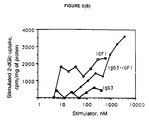
- FIG. 5 Relationships between IGF1 and IgG3-IGF1 stimulatory effects on ⁇ -aminoisobutyric acid (AIB) ( A ) and dGlc ( B ) uptakes in KB cells. Uptakes were determined in the presence of the indicated concentrations of IGF1, IgG3-IGF1, and IgG3 as control.
- AIB ⁇ -aminoisobutyric acid
- B dGlc
- FIG. 6 Schematic diagram showing the differential centrifugation protocol which was used to obtain a nuclear/plasma membrane (Nuc/Pm) fraction, a Mitochondria (Mit) fraction, a high density microsomes (H. Micro) fraction, and a low density microsomes (L. Micro) and cytosolic (Cyto) fraction.
- Nuc/Pm nuclear/plasma membrane
- Mitochondria Mitochondria
- H. Micro high density microsomes
- L. Micro low density microsomes
- Cyto cytosolic
- FIG. 7 Diagram of pAG5018 comprising hinge-IL2 in an expression vector.
- Figure 8 Line graph showing the relative activity of TUZ (an IL-2 fusion protein) versus IL-2.
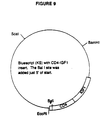
- FIG. 9 Schematic of the Bluescript (KS) with the CD4-IGF1 insert.
- FIG. 10 Schematic of pSV2 V DNS HUG3 HTF comprising human transferrin.
- Figure 11 Line graph showing IgG3-IGF1 Capillary Depletion.
- the monoclonal antibodies provided herein are structurally engineered permitting greater accessibility to the target region, e.g. the brain, than naturally occurring antibodies. Further, the subject chimeric monoclonal antibodies reproducibly bind to target cells.
- the present invention provides a modified chimeric monoclonal antibody comprising two molecules of each of two different polypeptides.
- the shorter polypeptides function as the light chains of the antibody and the longer polypeptides function as the heavy chains of the antibody.
- the polypeptide which functions as a heavy chain has a variable region characteristic of a first mammal and a constant region characteristic of a second mammal.
- Each polypeptide which functions as a light chain has a variable region characteristic of a mammal and a constant region characteristic of a mammal, wherein a receptor-binding ligand replaces at least a portion of the constant region of each of the polypeptides which function as the heavy chains of the antibody.
- modified chimeric monoclonal antibody means a genetically engineered protein comprising (1) four polypeptides, two of which are designated heavy chains and two of which are designated light chains; the polypeptides encoded by a nucleic acid molecule having diverse genetic constitutions; and (2) altered at the constant region of the heavy chain.
- the heavy (H) and light (L) chains of the modified chimeric monoclonal antibody refer to the differences in the molecular weight of the polypeptides which compose the above-described antibodies.
- variable (V) region of the modified chimeric monoclonal antibody are the sequences on both the light- and heavy-chain located at the amino terminal end of the molecule.
- the constant (C) region of the modified chimeric monoclonal antibody are the sequences on both the light- and heavy-chain at the carboxyl terminal portion of the antibody. Accordingly, the chains of the immunoglobulin molecule can be divided into their V and C components so that a light chain consists of two parts, i.e. V L and C L (variable light and constant light ). Similarly, the heavy chain can be divided into V H and C H (variable heavy and constant heavy ).
- first mammal is mouse and the second mammal is human.
- first mammal is human and the second mammal is mouse.
- chimeric monoclonal antibodies which comprise polypeptides from mammals such as rats, moles, shrews, monkeys, bats, hares, rabbits, dogs, cats, whales, dolphins, elephants, horses, cows, deers or any combination thereof.
- variable region and the constant region of the light chain are both characteristic of the second mammal.
- variable region and the constant region of the light chain are both characteristic of the first mammal.
- variable region of the light chain is characteristic of either the first or the second mammal and the constant region of the light chain is characteristic of the other mammal.
- the receptor-binding ligand comprises a growth factor.
- growth factors include but are limited to insulin, insulin-like growth factor, platelet-derived growth factor, epidermal growth factor, transforming growth factor, nerve growth factor, and growth hormone.
- insulin means either (1) naturally-occurring insulin whether of human or animal origin or 2) biosynthetic insulin from human or animal whether produced by genetic engineering methods or otherwise.
- insulin-like growth factor means either the naturally-occurring or synthetic form thereof.
- insulin-like growth factor examples include but are not limited to insulin growth factor 1 and insulin growth factor 2.
- a growth hormone includes but is not limited to growth hormone releasing factor.
- examples of growth hormones include human, avian, equine, porcine, ovine, bovine, and piscine growth hormones.
- transforming growth factor examples include but are not limited to transforming growth factor- ⁇ and transforming growth factor- ⁇ , i.e. transforming growth factor- ⁇ 1, transforming growth factor- ⁇ 2, and transforming growth factor- ⁇ 3.
- the receptor-binding ligand which replaces at least a portion of the constant region of the heavy chain polypeptides comprises tumor necrosis factor.
- the receptor-binding ligand comprises transferrin.
- the receptor-binding ligand comprises a lymphokine.
- suitable lymphokines are selected from a group consisting of macrophage inhibition factor, leukocyte migration inhibition factor, macrophage activating factor, macrophage cytotoxicity factor, interleukin-1, interleukin-2, interleukin-3, interleukin-4, interleukin.5, interleukin-6, lymphotoxin, monocyte-derived lymphocyte activating factor, and T helper cell replacing factor.
- a lymphokine means either (1) a naturally-occurring lymphokine whether of human or animal origin or (2) a biosynthetic lymphokine from human or animal whether produced by genetic engineering methods or otherwise.
- the antibody is selected from, but not limited to, any antibody from a group comprising an IgG, IgA, IgD, IgE or IgM antibody or any combination thereof.
- variable region of the previously described chimeric monoclonal antibody comprises immunoglobulin-like ligand binding regions having a folded configuration.
- immunoglobulin-like ligand binding regions include, but are not limited to, domains from T cell receptors, major histocompatibility complex antigens, CD4, and CD8.
- variable region comprises the domain of a T cell receptor.
- variable region comprises the domain of a MHC antigen, e.g. an HLA antigen or an H-2 antigen.
- variable region comprises the domain of a surface glycoprotein CD4.
- variable region comprises the domain of a surface glycoprotein CD8.
- the CD4 molecule is a cell surface glycoprotein which interact with targets bearing class II major histocompatibility complex (MHC) molecules (73).
- MHC major histocompatibility complex
- CD4 acts as a recognition molecule mediating appropriate interactions between the CD4+ T lymphocytes and its target.
- CD4 is the cell surface receptor for the AIDS virus. Accordingly, the subject chimeric monoclonal antibodies having a variable region of the heavy chain comprising the CD4 domain is important as a therapeutic and diagnostic agent in mediating T lymphocyte function and alleviating AIDS.
- CD8 is a cell surface glycoprotein which is found on a subpopulation of T lymphocytes, i.e. CD8+ T lymphocytes.
- CD8+ T lymphocytes interacts with cells expressing class I MHC molecules.
- monoclonal antibodies comprising CD8 inhibit T cell function by specifically binding with molecules which are directed against CD8.
- the subject chimeric monoclonal antibody is important in mediating T lymphocyte function, specifically, the embodiment of the invention, wherein the variable region of the heavy chain comprises the CD8 domain.
- T cell receptors are special membrane-anchored cell surface proteins which are found on T cells and are analogous to antibodies. Moreover, T cell receptors are the mechanism by which T cells interact with antigen, thereby, allowing T cells to carry out cellular immune responses.
- the subject chimeric monoclonal antibodies comprising a domain of the T cell receptor, compete with naturally-occurring T cell receptors for the antigen, thus, preventing T cells from mediating cellular immunity.
- This embodiment of the subject invention is useful in treating auto-immune diseases, e.g. lupus erythmatosus, AIDS.
- a major histocompatibility antigen means a transplantation antigen, i.e. of either mouse origin such as H-2 class proteins or of human origin such as HLA proteins. Transplantation antigens are structurally similar to antibody molecules.
- the subject chimeric monoclonal antibodies comprising a domain of MHC antigens are important in preventing rapid rejection of organ grafts between individuals by engaging in binding competition with transplantation antigens, i.e. HLA or H-2 antigens, thereby preventing rapid rejection of organ grafts between individuals.
- transplantation antigens i.e. HLA or H-2 antigens
- the present invention provides an immunologically reactive complex comprising two different polypeptides, the shorter of which functions as a light chain and the longer of which functions as a heavy chain.
- the polypeptide which functions as the heavy chain has a variable region characteristic of a first mammal and a constant region characteristic of a second mammal and the polypeptide which functions as the light chain has a variable region characteristic of a mammal and a constant region characteristic of a second mammal.
- a receptor-binding ligand replaces at least a portion of a constant region of one of the polypeptides.
- an immunologically reactive complex is a biosynthetic complex and is produced by genetic engineering methods or otherwise.
- the immunologically reactive complex comprises a first mammal which is human and a second mammal which is mouse.
- the first mammal is mouse and the second mammal is human.
- immunologically reactive complexes which comprise polypeptides from mammals such as rats, moles, shrews, monkeys, bats, sloths, hares, rabbits, dogs, cats, whales, dolphins, elephants, horses, cows, deers or any combination thereof.
- variable region and the constant region of the light chain of the immunologically reactive complex are both characteristic of the second mammal.
- the variable region and the constant region of the light chain are both characteristic of the first mammal.
- the variable region of the light chain is characteristic of either the first or the second mammal and the constant region of the light chain is characteristic of the other mammal. For example, if the variable region of the light chain is characteristic of the first mammal then the constant region of the light chain is characteristic of the second mammal.
- the invention provides the immunologically reactive complex, wherein the receptor-binding ligand replaces at least a portion of the constant region of the polypeptide which functions as the light chain.
- the receptor-binding ligand replaces at least a portion of the constant region of the polypeptide which functions as the heavy chain.
- the receptor-binding ligand of the immunologically reactive complex is a growth factor.
- growth factors include, but are not limited to, insulin, insulin-like growth factor (insulin growth factor 1 or insulin growth factor 2), platelet-derived growth factor, epidermal growth factor, transforming growth factor (such as transforming growth factor- ⁇ , transforming growth factor ⁇ 1, transforming growth factor- ⁇ 2, or transforming growth factor- ⁇ 3), nerve growth factor, growth hormone (such as growth hormone releasing factor), tumor necrosis factor, transferrin, and lymphokines (such as macrophage inhibition factor, leukocyte migration inhibition factor, macrophage activating factor, macrophage cytotoxicity factor, interleukin-1, interleukin-2, interleukin-3, interleukin-4, interleukin-5, interleukin-6, interleukin-7, lymphotoxin, monocyte-derived lymphocyte activating factor, and T helper cell replacing factor).
- insulin insulin-like growth factor
- platelet-derived growth factor epidermal growth factor
- transforming growth factor
- variable regions of the polypeptides of the immunologically reactive complex comprises domains of T cell receptors.
- the variable region of the polypeptides comprise domains of MHC antigens (such as an HLA antigen or an H-2 antigen).
- the variable regions of the polypeptides comprise domains of surface glycoproteins CD4 or CD8.
- the present invention provides a chimeric polypeptide capable of functioning as a heavy chain of an antibody.
- the chimeric polypeptide comprises a variable region characteristic of a first mammal and a constant region characteristic of a second mammal, wherein a receptor-binding ligand replaces at least a portion of the constant region of the polypeptide.
- the receptor-binding ligand is joined to at least a portion of the constant region of the polypeptide.
- the present invention provides a chimeric polypeptide capable of functioning as a light chain of an antibody.
- the chimeric polypeptide comprises a variable region characteristic of a first mammal and a constant region characteristic of a second mammal, and a receptor-binding ligand which replaces at least a portion of the constant region of the polypeptide.
- the receptor-binding ligand is joined to at least a portion of the constant region of the polypeptide.
- chimeric polypeptide is a biosynthetic polypeptide and is made by genetic engineering methods or otherwise.
- the first mammal is human and the second mammal is mouse.
- the first mammal is mouse and the second mammal is human.
- chimeric polypeptides which comprise polypeptides from mammals such as rats, moles, shrews, monkeys, bats, sloths, hares, rabbits, dogs, cats, whales, dolphins, elephants, horses, cows, deers or any combination thereof.
- the present invention provides a nucleic acid molecule encoding the above-described chimeric polypeptide. Moreover, the present invention provides an expression vector for producing a chimeric polypeptide comprising a nucleic acid encoding the chimeric polypeptide and suitable regulatory elements positioned within the vector so as to permit expression of the polypeptide in a suitable host.
- suitable regulatory elements would encompass the genetic elements that control gene expression, e.g. the origin of replication, promoter, and expression control sequences such as enhancers.
- the present invention provides the previously described modified human chimeric monoclonal antibody to which a moiety is attached, i.e. a drug or a detectable label, wherein attachment may be effected at the variable region of the molecule.
- cytotoxic agents include but are not limited to a cytotoxic agent, e.g. methotrexate, decarbazine, toxins (such as ricin, diphtheria toxin, pseudomonas, exotoxin-A, abrin, supporin, and gelnoin), anti-infectious agents, anti-septic agents, and antimetabolites.
- a cytotoxic agent e.g. methotrexate, decarbazine
- toxins such as ricin, diphtheria toxin, pseudomonas, exotoxin-A, abrin, supporin, and gelnoin
- anti-infectious agents e.g. methotrexate, decarbazine
- toxins such as ricin, diphtheria toxin, pseudomonas, exotoxin-A, abrin, supporin, and gelnoin
- anti-infectious agents e.g. methotrexate, decarba
- ricin and abrin means ricin and abrin isolated from a wide variety of natural sources, e.g. seeds, or synthesized by genetic engineering methods or otherwise.
- an anti-metabolite includes 5-iodo-2'-deoxyuridine (IUdR).
- an anti-metabolite encompasses any chemical which interferes with the replication of DNA.
- suitable detectable labels include but are not limited to an enzyme, biotin, a fluorophore, a chromophore, a heavy metal, a paramagnetic isotope, or a radioisotope.
- suitable detectable labels applicants contemplate any label which would be conducive to the detection of a complex which are known in the art.
- the drug may be bound to the variable region of the subject chimeric monoclonal antibodies.
- the present invention provides a pharmaceutical composition
- a pharmaceutical composition comprising the above-described chimeric monoclonal antibody, immunological complex or polypeptide to which a moiety is attached, i.e. a drug or a detectable label, in an amount sufficient to deliver an effective dose of the drug and a pharmaceutically acceptable carrier.
- the term "pharmaceutically acceptable carrier” encompasses any of the standard pharmaceutical carriers. Such carriers are well known in the art and may include, but are in no way and are not intended to be limited to, any of the standard pharmaceutical carriers such as a phosphate buffered saline solutions, water, emulsions such as oil/water emulsion, and various types of wetting agents. Other carriers may also include sterile solutions, tablets, coated tablets, and capsules.
- Such carriers typically contain excipients such as starch, milk, sugar, certain types of clay, gelatin, stearic acid or salts thereof, magnesium or calcium sterate, talc, vegetable fats or oils, gums, glycols, or other known excipients.
- excipients such as starch, milk, sugar, certain types of clay, gelatin, stearic acid or salts thereof, magnesium or calcium sterate, talc, vegetable fats or oils, gums, glycols, or other known excipients.
- Such carriers may also include flavor and color additives or other ingredients.
- Compositions comprising such carriers are formulated by well known conventional methods.
- the administration of the composition may be effected by any of the well known methods, including but not limited to intravenous, intramuscular, subcutaneous and oral administration.
- the present invention provides a method of producing the above-described modified chimeric monoclonal antibody.
- the method comprises: a) cotransfecting a suitable/nonantibody-producing host cell with two expression plasmids, (i) one of which encodes a polypeptide capable of functioning as the heavy chain of the antibody and having a variable region characteristic of a first mammal and a constant region characteristic of a second mammal, wherein a receptor-binding ligand replaces at least a portion of the constant region of the heavy chain polypeptide and (ii) the other of which encodes a polypeptide capable of functioning as the light chain of the antibody and having a variable region characteristic of a mammal and a constant region characteristic of a mammal; (b) treating the cotransfected host cell so as to effect expression of the polypeptides encoded by the plasmids and formation of the chimeric monoclonal antibody within the host cell and excretion into the culture medium of the antibody by the host cell; and
- the present invention provides another method of producing the above-described modified chimeric monoclonal antibody.
- the method comprises: a) cotransfecting a suitable/nonantibody-producing host cell with an expression plasmid which encodes (i) a polypeptide capable of functioning as the heavy chain of the antibody and having a variable region characteristic of a first mammal and a constant region characteristic of a second mammal, wherein a receptor-binding ligand replaces at least a portion of the constant region of the heavy chain polypeptide and (ii) a polypeptide capable of functioning as the light chain of the antibody and having both a variable region characteristic of a mammal and a constant region characteristic of a mammal; (b) treating the cotransfected host cell so as to effect expression of the polypeptides encoded by the plasmid and formation of the chimeric monoclonal antibody within the host cell and excretion into the culture medium of the antibody by the host cell; and (c) recovering the resulting excreted
- One procedure for preparing monoclonal antibodies involves constructing separate light and heavy chain immunoglobulin gene transfection vectors which compatibly replicate and amplify in host cells (45). This means that each plasmid can be manipulated separately, but still be maintained together in the host cell, facilitating gene transfer of both transfection vectors into mammalian cells using protoplast fusion or electroporation methods. Each protoplast fusion event then delivers both vectors into the same mammalian cell.
- cotransfection means the essentially simultaneous insertion of both heavy and light chain genes, either by means of one or two expression vectors, into a suitable/nonantibody-producing host cell. It would be clear to those skilled in the art that a suitable/nonantibody-producing host cell would encompass any cell, both eucaryotic or procaryotic, capable of effecting expression of the polypeptides encoded by the plasmids and formation of the chimeric monoclonal antibody within the host cell and excretion into the culture medium of the antibody by the host cell.
- vectors herein comprise any vectors known in the art which are suitable for producing the modified chimeric monoclonal antibodies of this invention.
- vectors as used herein comprise plasmids, viruses (including phage) and integratable DNA fragments, i.e. fragments that are integratable into the host genome by recombination.
- the vector may be a plasmid which is cloned in a bacterial cell and integrates into the host cell genome upon cotransfection.
- the suitable, nonantibody-producing host cell is a human cell, i.e. a myeloma cell.
- the suitable, nonantibody-producing host cell is a murine cell.
- the preferred host cells are human or murine cells, in principle any higher eucaryotic cell is workable, whether from vertebrate or invertebrate culture.
- recovering the resulting excreted chimeric monoclonal antibody, from the culture medium means any method, e.g. separation by immunoprecipitation, solvent fractionation, classical and high pressure liquid column chromatography, i.e. size exclusion, ion exchange, partition, and adsorption chromatography in normal and reverse phase, which are generally known and accepted by those in the art as a means to separate and isolate proteins.
- the present invention provides a method of delivering a drug to a cell, e.g. a brain cell, an adipose cell, a blood cell, an epithelial cell, a muscle cell, a nerve cell, or a leukemic cell, having a receptor for a growth factor on a surface.
- the method comprises contacting the cell with the chimeric monoclonal antibody, immunologically reactive complex, or chimeric polypeptide, to which a moiety is attached, i.e.
- the receptor-binding ligand of the antibody, immunologically reactive complex, or chimeric polypeptide comprises the growth factor which binds to the receptor so that the antibody binds to the cell and thereby delivers the drug to the cell.
- an adipose cell means those cells responsible for the production and storage of fat.
- epithelial cells are cells which line the inner and outer surfaces of the body.
- the chimeric monoclonal antibodies, immunologically reactive complexes, and chimeric polypeptides described herein bind to receptors so as to be transported across the BBB.
- Small foreign molecules introduced into the circulation rapidly distribute themselves throughout the body's extracellular fluids; however, they are generally unable to penetrate the tissues of the brain, i.e. the blood-brain barrier (BBB).
- the BBB is a functional barrier between the brain capillaries and the brain tissue which allows some substances from the blood to enter the brain rapidly while other substances either enter slowly or not at all. Further, the BBB effectively restricts transport between blood and the central nervous system of certain molecules; especially those which are water soluble, charged, and larger than about 200 daltons.
- the BBB has been found to function over all anatomical regions of the central nervous system, except for small areas around the pituitary stalk, the preoptic recess and the area postreme beneath the floor of the 4th ventricle.
- the basis for this barrier appears to be embodied in the endothelial cells of the blood capillaries in the brain.
- the BBB is not a fixed barrier. It can be influenced by the metabolic requirements of the brain, in addition to insults such as mechanical trauma, cerebral embolism, hypercapnia, hypoxia, extensive stress, radiation, electroconvulsive shock, explosive decompression, and various toxic substances. All of these conditions may alter the permeability of the barriers and, subsequently, the composition of the extracellular fluid.
- the antibodies, immunologically reactive complexes, and chimeric polypeptides of this invention comprise receptor binding ligands which bind to receptor capable of facilitating transport across the BBB.
- the cell is a brain cell and the growth factor, i.e.insulin-like growth factor 1, insulin-like growth factor 2, insulin, and transferrin, which upon binding to the receptor results in transport of the antibody, immunologically reactive complex, or chimeric polypeptide across the blood-brain barrier.
- the growth factor i.e.insulin-like growth factor 1, insulin-like growth factor 2, insulin, and transferrin, which upon binding to the receptor results in transport of the antibody, immunologically reactive complex, or chimeric polypeptide across the blood-brain barrier.
- the brain cell is abnormal and associated with progressive dementia and the contacting with the chimeric antibody, immunologically reactive complex, or chimeric polypeptide comprises contacting the cell with an amount of the antibody, immunologically reactive complex, or chimeric polypeptide effective to halt the progressive dementia.
- progressive dementia is defined as the gradual deterioration or loss of intellectual faculties, reasoning, power, and memory.
- the brain cell is abnormal and associated with cerebral cortical atrophy and the contacting with the chimeric antibody, immunologically reactive complex, or chimeric polypeptide comprises contacting the cell with an amount of the antibody, immunologically reactive complex, or chimeric polypeptide effective to halt the cerebral cortical atrophy.
- cerebral cortical atrophy is a symptom typically characteristic of Alzheimer's disease.
- the brain cell is malignant and associated with neurosarcoma and the contacting with the chimeric antibody, immunologically reactive complex, or chimeric polypeptide comprises contacting the cell with an amount of the antibody, immunologically reactive complex, or chimeric polypeptide effective to halt the neurosarcoma.
- the brain cell is malignant and associated with a carcinoma and the contacting with the chimeric antibody, immunologically reactive complex, or chimeric polypeptide comprises contacting the cell with an amount of the antibody, immunologically reactive complex, or chimeric polypeptide effective to halt the carcinoma.
- the brain cell is malignant and associated with a carcinosarcoma and the contacting with the chimeric antibody, immunologically reactive complex, or chimeric polypeptide comprises contacting the cell with an amount of the antibody, immunologically reactive complex, or chimeric polypeptide effective to halt the carcinosarcoma.
- the brain cell is malignant and associated with a sarcoma and the contacting with the chimeric antibody, immunologically reactive complex, or chimeric polypeptide comprises contacting the cell with an amount of the antibody, immunologically reactive complex, or chimeric polypeptide effective to halt the sarcoma.
- carcinomatous cerebellar degeneration means a nonmetastic carcinoma taking the form of a diffuse degeneration of the cerebellar cortex and deep cerebellar nuclei.
- the cell is a cell selected from, but is not limited to, a group including a blood cell, a muscle cell, a nerve cell, a bone cell, and an epithelia cell.
- the cell is malignant and associated with a melanoma and the contacting with the chimeric antibody, immunologically reactive complex, or chimeric polypeptide comprises contacting the cell with an amount of the antibody effective to halt the melanoma.
- the cell is malignant and associated with a breast cancer and the contacting with the chimeric antibody, immunologically reactive complex, or chimeric polypeptide comprises contacting the cell with an amount of the antibody, immunologically reactive complex, or chimeric polypeptide effective to halt the breast cancer.
- the cell is malignant and associated with a lymphoma and the contacting with the chimeric antibody, immunologically reactive complex, or chimeric polypeptide comprises contacting the cell with an amount of the antibody, immunologically reactive complex, or chimeric polypeptide effective to halt the lymphoma.
- the cell is malignant and associated with a carcinoma and the contacting with the chimeric antibody, immunologically reactive complex, or chimeric polypeptide comprises contacting the cell with an amount of the antibody, immunologically reactive complex, or chimeric polypeptide effective to halt the carcinoma.
- the cell is malignant and associated with a sarcoma and the contacting with the chimeric antibody, immunologically reactive complex, or chimeric polypeptide comprises contacting the cell with an amount of the antibody, immunologically reactive complex, or chimeric polypeptide effective to halt the sarcoma.
- the invention further provides a method of detecting a cell having a receptor for a growth factor on its surface which comprises contacting the cell with the chimeric monoclonal antibody, immunologically reactive complex, or chimeric polypeptide to which a detectable moiety is attached, wherein the receptor-binding ligand of the antibody, immunologically reactive complex, or chimeric polypeptide comprises the growth factor which binds to the receptor so that the antibody, immunologically reactive complex, or chimeric polypeptide binds to the cell and thereby detects the cell.
- the cell is a brain cell and the growth factor upon binding to the receptor results is transport of the antibody, immunologically reactive complex, or chimeric polypeptide across the blood-brain barrier.
- suitable growth factors is selected from the group consisting of insulin-like growth factor 1, insulin-like growth factor 2, insulin, and transferrin.
- the brain cell is abnormal and associated with argyrophil plaque and the contacting with the chimeric antibody, immunologically reactive complex, or chimeric polypeptide comprises contacting the cell with an amount of the antibody, immunologically reactive complex, or chimeric polypeptide effective to permit detection of the plaque.
- the brain cell is abnormal and associated with a brain tumor and the contacting with the chimeric antibody, immunologically reactive complex, or chimeric polypeptide comprises contacting the cell with an amount of the antibody, immunologically reactive complex, or chimeric polypeptide effective to permit detection of the tumor.
- the detection is accomplished using methods which depend upon the identity of the detectable moiety but which are nevertheless well known.
- the detectable moiety is radioactive
- a liquid scintillation counter is employed.
- radioactive labels are detected by radiography or other methods which detect radioactive decay after separating the unreacted detectable antibody.
- the moiety is an enzyme, e.g. horseradish peroxidase in a standard assay, a spectrophotometer is employed.
- a fluorometer may be used, e.g. fluorescence activated cell sorting.
- the present invention additionally provides a modified chimeric monoclonal antibody comprising two molecules of each of two different polypeptides, the shorter of which functions as the light chains of the antibody and the longer of which polypeptides function as the heavy chains of the antibody.
- Each polypeptide which functions as a heavy chain has a variable region characteristic of a first mammal and a constant region characteristic of a second mammal.
- each polypeptide which functions as a light chain has a variable region characteristic of a mammal and a constant region characteristic of a mammal, wherein a receptor-binding ligand is covalently attached to the ends of the constant regions of each of the polypeptides which function as the heavy chains of the antibody.
- the complex comprises two different polypeptides, the shorter of which functions as a light chain and the longer of which functions as a heavy chain, the polypeptide which functions as the heavy chain having a variable region characteristic of a first mammal and a constant region characteristic of a second mammal and the polypeptide which functions as the light chain having a variable region characteristic of a mammal and a constant region characteristic of a second mammal, wherein a receptor-binding ligand is covalently attached to the ends of a constant region of one of the polypeptides.
- the invention also provides a chimeric polypeptide capable of functioning as a light chain of an antibody comprising a variable region characteristic of a first mammal and a constant region characteristic of a second mammal, wherein a receptor-binding ligand is covalently attached to the ends of a constant region of one of the polypeptides.
- a chimeric polypeptide capable of functioning as a heavy chain of an antibody comprising a variable region characteristic of a first mammal and a constant region characteristic of a second mammal, wherein a receptor-binding ligand is covalently attached to the constant region of the polypeptide.
- the subject chimeric monoclonal antibodies, immunologically reactive complex, or chimeric polypeptide are also of importance for the treatment of aberrant or infected cells in all other locations of the body.
- the subject chimeric monoclonal antibodies with or without a covalently linked anti-metastatic agent is useful for the treatment of all forms of cancer such as leukemia, lymphomas, carcinomas, adenomas, and melanomas, that reside in any part of the body.
- IMDM Iscove's Modified Dulbecco's Medium
- GIBCO Grand Island, NY
- Collect samples of CSF from the cisterna magna Anesthetize a few animals (rats and rabbits) and place in a Kopf stereotaxic apparatus with the ear bars raised approximately 15 cm above the surface of the table. Place the incisor bar into lowest position so that the animal's head is maximally ventroflexed. Mount a 30-gauge needle connected to PE-10 tubing horizontally on the electrode carrier and direct the needle at the midline of the neck. Determine the dorsal ventral location of the cisterna magna by lowering the needle 6.3 to 6.8 cm (depending upon the size and strain of the animal) from the occipital crest.
- mice/protein Inject 35 S-labeled chimeric antibodies intravenously through the tail vein (5 mice/protein). Bleed the mice periodically from the retro-orbital sinus with heparinized 50 to 100 microliter capillary pipet. After the procedure, kill the mice and assay for the presence of 35 S-labeled chimeric antibodies.
- Ketamine 45 mg/kg and xylazine (88 mg/kg) to rabbits.
- Ketamine 87 mg/kg and xylazine (13 mg/kg) to rats.
- the constant region of the antibody was replaced with a growth factor.
- the VH, CH1, hinge and first amino acid of CH2 from a chimeric mouse/human IgG 3 anti-dansyl antibody was joined to a cDNA encoding rat Insulin-like Growth Factor 1 (IGF1) immediately 3' to the leader sequence of IGF1.
- IGF1 Insulin-like Growth Factor 1
- the chimeric heavy chain was introduced along with an anti-dansyl specific chimeric ⁇ light chain into the immunoglobulin non-producing myeloma P3X63Ag8.653.
- the immunoglobulin/non-immunoglobulin IgG 3 -IGF1 chimeric protein was efficiently produced and secreted (up to 30 ⁇ g/10 6 cells/24 hours).
- the IgG 3 -IGF1 chimeric proteins retain their specificity to the antigen dansyl and bind to the IGF1 receptors of human lymphoblast IM-9, albeit with reduced affinity.
- the chimeric proteins elicited some of the same biologic effects (increased glucose and amino acid uptake) in human epidermoid carcinoma KB cells as human IGF1, but with reduced specific activity.
- the reduced affinity and biologic activity may result from (1) the presence of the unprocessed IGF1 moiety, (2) the large size of the IgG 3 -IGF1 chimeric protein (160 KDa) compared to IGF1 (7 KDa) and (3) three amino acid substitutions in rat IGF1 compared to human IGF1 which may lead to decreased affinity for the human IGF1 receptor.
- the chimeric proteins were less effective on a molar basis than intact IGF2, they still exhibited the proper binding specificity and the ability to elicit the biologic effects associated with IGF1; thus, demonstrating a new family of immunotherapeutic molecules targeted to growth factor receptors.
- a unique restriction enzyme site (Pvu II) was generated at the 5' site of the CH2 domain of the mouse/human IgG 3 heavy chain gene (72) and at the 3' of the leader sequence of rat IGF1 cDNA. IGF1 and IgG 3 were joined using the Pvu II sites.
- the chimeric IgG 3 -IGF1 heavy chain gene and the chimeric ⁇ light chain gene were simultaneously transfected into P3X63Ag8.653 by protoplast fusion (45, 58). Then transfected cells were selected with G418 (GIBCO) at 1.0 mg/ml and screened by Enzyme-linked Immunosorbent Assay (ELISA) for transfectomas producing the chimeric protein (58).
- the IgG 3 -IGF1 chimeric proteins biosynthetically labeled with 35 S-Methionine (Amersham, Arlington Heights, IL) were analyzed by Sodium Dodecylsulfate-Polyacrylamide Gel Electrophoresis (SDS-PAGE) with/without 2-mercaptoethanol (Kodak, Rochester) NY).
- the IgG 3 -IGF1 chimeric proteins were purified by affinity column as previously described (40). The purity of the IgG 3 -IGF1 chimeric proteins were determined by silver staining gel (41) and Fast Performance Liquid Chromatography (FPLC, Pharmacia, Piscataway, NJ).
- IM-9 cells were washed twice with 100 mM HEPES buffer containing 120 mM NaCl, 5 mM KCl, 1.2 mM MgSO 4 , 15mM Glucose, and 1% BSA, pH 7.5 (HEPES-BSA buffer), resuspended in HEPES-BSA buffer, and incubated for 1 hr at room temperature (36). Cells were counted and resuspended at a concentration of 4 - 6 x 10 7 cells/ml.
- KB cells (5 x 10 5 cells/ml) were grown to confluence in a 24 well plate (FALCON, Lincoln Park, NJ) and washed three times with IMDM. After incubation with IMDM without serum overnight at 37°C, cells were washed with HEPES-BSA buffer and 100 ⁇ l same buffer added. HEPES-BSA buffer without glucose was used for 2-DG uptake. A 100 ⁇ l aliquot of various concentrations of the test samples (IGF1, IgG 3 -IGF1, or IgG 3 ) was added into each well and incubated at 37°C for 6 hrs.
- rat insulin-like growth factor 1 (IGF1) was chosen as the growth factor.
- Mature IGF1 (a 70 amino acid protein) is formed from the IGF1 precursor (a 130 amino acid protein) through proteolytic processing of both its leader peptide and its carboxy terminus. The amino acid at which the leader peptide is cleaved is a convenient site for joining to the Ig molecule.
- the Ig molecule is human IgG 3 which has an extended hinge region of 62 amino acids. Further, IGF1 was placed distal to the hinge region of human IgG3 thus producing a spacing which facilitates simultaneous antigen and receptor binding.
- a unique restriction site (PvuII) was generated by site directed mutagenesis at the 5' end of the leader sequence of the rat IGF1 cDNA ( Figure 1A ). These mutations were confirmed by sequencing.
- the human IgG 3 gene which contains C H 1, hinge and 4 basepairs of C H 2 exon was joined to the IGF1 gene which in turn contains 2 basepairs of leader sequence, exon 2, exon 3, and exon 5.
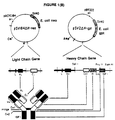
- a chimeric constant region gene was constructed with a human IgG 3 /IGF-1 chimeric constant region gene joined to a mouse anti-dansyl (DNS) variable region gene cloned into a transfection vector pSV2 ⁇ Hgpt ( Figure 1B ). The mouse/human ⁇ light chain specific for dansyl is contained in pSV184 ⁇ H neo.
- IgG 3 -IGF1 fusion gene was as follows ( Figure 1A ).
- the fourth base (C) of the C H 2 domain in human IgG3 was mutated to G by site-directed mutagenesis, resulting in the introduction of an unique PvuII restriction enzyme site.
- a unique PvuII site was introduced in IGF1 by changing the last base (C) of the leader sequence (Leader Seq. or LS) of rat IGF1 cDNA to T (thymidine).
- Human IgG 3 and rat IGF1 cDNA digested with PvuII were ligated, resulting in an in-frame IgG 3 -IGF1 fusion gene without any significant amino acid substitutions.
- Figure 1B is a schematic representation of the transfection vectors, the genetically engineered IgG 3 -IGF1 fusion gene, and a proposed chimeric antibody.
- the mouse-human ⁇ light chain gene is cloned into pSV184 ⁇ H neo, which is derived from the pACYC184, and contains the pACYC origin of replication, a chloramphenicol resistant gene (CM r ) for selection in E. coli and the neo gene (the dotted box) with the SV40 early region promoter (the shaded box) for selection in eucaryotic cells.
- CM r chloramphenicol resistant gene
- the mouse-human IgG 3 /rat IGF 1 heavy chain genes is cloned into pSV2 ⁇ H gpt gene (the dotted box). Boxes in the chimeric genes represent exons. The thick black solid line and boxes represent DNA of mouse origin while the thin solid and open boxes represent human DNA segments. The shaded box in the heavy chain genes represents the rat IGF1 cDNA. The sites of cleavage by restriction endonucleases open triangle), BamHI (open circle) and Hind III (closed circle) are shown. The mouse-human IgG 3 /rat IGF1 chimeric protein produced by expression of both transfection vectors is shown at the bottom of the panel B. The black region of the chimeric molecule represents the mouse variable region domains specific for the hapten dansyl, the open regions represent the constant domains of human ⁇ and IgG 3 , and the shaded region represents the rat IGF1.
- Stable transfectant cells were selected using G418 and the supernatants of stable transfectomas were tested for the presence of an antibody protein by an Enzyme Linked Immunosorbent Assay (ELISA) using anti-human ⁇ chain antibody. Seventy-seven stable transfectomas secreting complete antibody molecules were identified and recovered for further characterization.
- ELISA Enzyme Linked Immunosorbent Assay
- the frequency of the desired transfectomas was 1.54 X 10 6 recipient myeloma cells. These transfectomas secreted 0.5-30 ⁇ g of chimeric molecule 10 6 cells/24 hours. The production level of the immunoglobulin/non-immunoglobulin chimeric molecules is not different from that of wild type chimeric antibodies.
- the secreted IgG 3 -IGF1 chimeric proteins were biosynthetically labeled with 35 S-methionine and the labeled proteins were purified by immunoprecipitation using dansyl-BSA (dansyl; 5-dimethylamino naphthalene-1-sulfonyl chloride) conjugated Sepharose beads or a rabbit anti-human IgG Fab antiserum and IgG Sorb. Reactivity of the fusion proteins with dansyl-BSA demonstrated that they retained their ability to react with their specific antigen. SDS-PAGE analysis ( Figures 2A and 2B ) demonstrated that the stable transfectomas produce novel chimeric molecules.
- the size of these chimeric molecules is smaller than that of a normal IgG 3 antibody.
- the secreted chimeric heavy chain appeared heterogeneous in size because the recipient cells partially process the IGF1 precursor to mature IGF1.
- the incomplete proteolytic processing at the carboxy terminal of IgG 3 -IGF1 heavy chain results in two distinctive heavy chains; a processed and an unprocessed heavy chain ( Figure 2B ).
- Figures 2A and 2B represent SDS-PAGE analysis of IgG 3 -IGF1 chimeric protein secreted by transfectomas.
- the secreted IgG 3 -IGF1 chimeric protein biosynthetically labeled with 35 S-methionine was analyzed under non-reducing (panel A) and reducing (panel B) conditions.
- the labeled chimeric protein was precipitated with either dansyl-Sepharose (DNS-Sepharose: left in panel A) or anti-human IgG Fab antisera/Staph A/IgG Sorb (a HUG/Fab-IgG-Sorb in panel A).
- the secreted IgG 3 chimeric antibody which is the basic structure of IgG 3 -IGF1 chimeric protein is used as control.
- the three bands represent the heterogeneous assembly of the processed and unprocessed chimeric protein; under reducing conditions the processed and unprocessed chimeric protein are seen (Panel B).
- IgG 3 -IGF1 chimeric proteins were purified from culture supernatants using an affinity column with 2-dimethylamino naphthalene-5-sulfonyl chloride (MW 269; dansyl isomer) coupled to AH-Sepharose 4B. Bound protein was eluted with N-5-carboxypentyl-2-dimethylamino naphthalene-5-sulfonamide (MW 364; dansyl isomer) and free hapten removed by extensive dialysis. The concentrated purified proteins were tetrameric and heterogeneous in size as expected. No other protein was observed in silver stained gel ( Figure 3A ).
- Figure 3A illustrates purified IgG3-IGF1 fusion protein fractionated by SDS-PAGE under non-reducing conditions and visualized using silver staining.
- Figure 3b is a chromatogram of the purified IgG 3 -IGF1 chimeric protein fractionated using FPLC (Superose-12 column, flow rate:0.25 ml/min). The elution time of IgG 3 -IGF1 chimeric protein is 42 min. The elution of time of mouse-human IgG 3 chimeric antibody (170 KDa) is 40 min and that of IgG1 chimeric antibody (146 KDa) is 45 min as indicated by arrows.
- a critical attribute of the fusion protein is whether it retains its ability to bind to the IGF1 receptor.
- unlabeled recombinant human IGF1, wild type chimeric IgG 3 and the IgG 3 -IGF1 chimeric protein were used to inhibit the binding of 125 I-IGF1 to human lymphoblast IM-9 cells (20). Both IGF1 and IgG 3 -IGF1 inhibited the binding of 125 I-IGF1 in a dose dependent manner ( Figure 4 ). The 50% inhibition of 125 I-IGF1 binding occurred at recombinant IGF1 concentration of 2.25 x 10 -9 M and at a IgG 3 -IGF1 chimeric protein concentration of 3.15 x 10 -7 M.
- the IgG 3 -IGF1 chimeric protein was 0.7% as effective as recombinant human IGF1 in inhibiting 125 I-IGF1 binding.
- the wild type chimeric IgG 3 did not show any inhibition of 125 I-IGF1 binding, even at a concentration as high as 2.7 x 10 -6 M. Therefore, the competition by the chimeric protein was a consequence of the presence of the IGF1 moiety.
- Figure 4 is a graph showing competitive inhibition of binding of 125 I-IGF1 to IM-9 lymphocytes. Approximately 3x10 -6 IM-9 cells were incubated at 15°C with a constant amount of 125 I-IGF1 and the indicated concentration of unlabeled competitors (recombinant IGF1, IgG3-IGF1 chimeric protein and IgG 3 chimeric antibody). After 2 hours of incubation, the amount of receptor-bound radioactivity was determined. Values are expressed as the relative inhibition of binding compared to using only labeled tracer 125 I-IGF1. Results shown for each curve are the mean of duplicate experiments.
- the IgG 3 -IGF1 chimeric proteins have been tested for binding to two different primary cultures of human brain endothelial cells; one at an early passage ( ⁇ 13) and one at a later passage ( ⁇ 22). Comparable levels of binding with both of these cell lines have been observed (data now shown).
- the IgG 3 -IGF1 chimeric proteins bound to both these cell lines in a specific manner, but the control antibody, chimeric IgG 3 , does not bind to these cells.
- IgG 3 -IGF1 chimeric protein In human epidermoid carcinoma KB cells, fluid-phase endocytosis and exocytosis are stimulated by growth hormones (Insulin, Insulin-like growth factor 1, and epidermal growth factor); these cells possess 7.5 x 10 4 /cell Type I IGF receptors (13). Therefore, the ability of IgG 3 -IGF1 chimeric protein to stimulate 2-Deoxy-D-Glucose (2-DG) and ⁇ -Aminoisobutyric acid (AIB) uptake (11) was investigated and compared to IGF1 and IgG 3 . The dose-response relationships of IgG 3 -IGF1 chimeric protein stimulation of 2-DG and AIB uptake in K cells are shown in Figure 5 .
- IGF1 and IgG 3 -IGF1 were 200:1 for AIB uptake and 25 - 100:1 for 2-DG uptake.
- IgG 3 alone did not affect 2-DG and AIB uptake by KB cells. Therefore, the chimeric proteins exert the expected biological effects, but are less potent than the human IGF1 standard.
- FIG. 5 shows the relationship between IGF1 and IgG3-IGF1 and their stimulatory effects on AIB and 2-DG uptakes in ⁇ B cells.
- AIB (panel A) and 2-DG (panel B) uptakes were determined in the presence of various concentrations of IGF1, IgG3-IGF1, and IgG3 as control.
- the constant region of the antibody was replaced with a growth factor e.g. insulin, IGF1, IGF2 and transferrin.
- a growth factor e.g. insulin, IGF1, IGF2 and transferrin.
- the VH, CH1, hinge and first amino acid of CH2 from a chimeric mouse/human IgG 3 anti-dansyl antibody was joined to a cDNA encoding rat Insulin-like Growth Factor 1 (IGF1) immediately 3' to the leader sequence of IGF1.
- IGF1 Insulin-like Growth Factor 1
- the immunoglobulin/non-immunoglobulin IgG 3 -IGF1 chimeric protein was efficiently produced and secreted (up to 30 ⁇ g/10 6 cells/24 hours).
- the IgG 3 -IGF1 chimeric proteins retain their specificity to the antigen dansyl and bind to the IGF1 receptors of human lymphoblast IM-9, albeit with reduced affinity.
- the chimeric proteins elicited some of the same biologic effects (increased glucose and amino acid uptake) in human epidermoid carcinoma KB cells as human IGF1, but with reduced specific activity.
- the reduced affinity and biologic activity may result from (1) the presence of the unprocessed IGF1 moiety, (2) the large size of the IgG 3 -IGF1 chimeric protein (160 KDa) compared to IGF1 (7 KDa) and (3) three amino acid substitutions in rat IGF1 compared to human IGF1 which may lead to decreased affinity for the human IGF1 receptor.
- the chimeric proteins were less effective on a molar basis than intact IGF2, they still exhibited the proper binding specificity and the ability to elicit the biologic effects associated with IGF1; thus, demonstrating a new family of immunotherapeutic molecules targeted to growth factor receptors.
- the novel IgG 3 -IGF1 chimeric proteins retain their specificity for the antigen dansyl, the ability to bind to the IGF1 receptor with reduced affinity and the ability to exert some of the biologic effects of receptor binding.
- the reduced affinity for receptor and biologic activity may result from (1) the presence of the unprocessed IGF1 moiety thus resulting in a heterogenous population of IgG 3 -IGF1 chimeric protein, (2) the large size of the IgG 3 -IGF1 chimeric protein (160 KDa) compared to IGF1 (7 KDa) thus leading to decreased accessibility to the IGF1 receptor and decreased binding affinity; and (3) three amino acids substitutions in rat IGF1 compared to human IGF1 may lead to lower affinity for the human receptor.
- Fab-IGF1 chimeric facilitates the determination of whether reduced affinity for receptor and biologic activity results from the large size of the IgG 3 -IGF1 chimeric protein (160 KDa) compared to IGF1 (7 KDa).
- altering three amino acids in rat IGF1 as compared to human IGF1 by site-directed mutagenesis additionally facilitates the determination of whether the reduced affinity is from the three amino acid substitutions.
- IGF1 The flexibility and accessibility of IGF1 also play an important role in the chimeric protein.
- the IGF1 moiety was disposed close to the carboxy terminal of the extended hinge of human IgG 3 .
- IgG 3 is the most flexible human IgG (61). Accordingly, this flexibility optimize the ability to simultaneously bind the IGF1 receptor and antigen.
- the position of IGF1 immediately carboxy terminal to the hinge brought the IGF1 molecules into contact with each other and interfered with their binding.
- the molecules are improved by placing the IGF1 on a ⁇ -strand in C H 2 more distal to the hinge (9). Since the C H 2 domains do not normally contact each other this places the two IGF1 moieties at some distance from each other and thereby improves their binding efficiency.
- the BBB in a normal brain effectively restricts transport between blood and the central nervous system of certain molecules, especially those which are water soluble, charged and larger than several hundred daltons (56).
- the IgG 3 -IGF1 chimeric proteins bind specifically to the IGF1 receptor and to human brain endothelial cells ( Figure 11 ).
- Figure 11 is a line graph wherein the X axis is the time in hours after injection and the Y axis is the % injected dose of the IgG3-IGF1 chimeric construct.
- Figure 11 shows that after injection in a rat animal model the IgG3-IGF1 chimeric construct was found and persisted in brain parenchyma cells compared to the capillary pellet. Accordingly, this chimeric construct crossed the BBB.
- Antibody molecules with a combining specificity, a growth factor to target to receptor-bearing cells, and immune effector functions contained in one molecule and antibody molecules with bifunctional combining specificities belong to a family of multi-functional chimeric antibodies which are directed to targeting therapy to malignant cells.
- a suitable protocol to create a family of multi-functional chimeric antibodies is:
- IgG 3 for the immunoglobulin sequences because of its extended hinge region allows the molecule greater flexibility and facilitates binding of the growth factor to its receptor.
- Molecules capable of recruiting human effector functions are: V DNS/anti-tumor specificity - C H 1 hinge - C H 2 - ligand V DNS/anti-tumor specificity - C H 1 - hinge - C H 2 C H 3 - ligand C H 2 contains the binding site for the high affinity Fc receptor and for Clq.
- the modified transfection vectors developed by Oi and Morrison (45) were used. Insert the reconstructed chimeric Ig/receptor ligand gene into the transfection vector (pSV2 ⁇ Hgpt), a derivative of pSVgpt.
- pSV2 ⁇ Hgpt contains the pBR322 origin of replication and has an ampicillin resistant gene for selection in E. coli and the gpt gene for selection in eukaryotic cells.
- Isolate stable transfectomas using selectible drug markers Screen the culture supernatant of stable transfectomas by ELISA using any of the antigen dansyl, anti-idiotypic antibody, human ⁇ chain or anti-ligand antibodies to identify clones secreting high levels of the chimeric antibodies.
- chimeric genes require efficient transcription, proper RNA processing, and exportation from the nucleus, so that the mRNA is stable and translated, and that the protein product is property processed through the cell and is secreted without being degraded in the cytoplasm or in the medium.
- RNA from stable transfectomas on Northern blots using probes specific for various regions of the transfected gene (mouse V H probe, human IgG 3 C H 1 probe, and ligand probe).
- cytoplasmic and secreted chimeric proteins label selected transfectomas with 35 S--methionine, after which purify the labeled proteins by immunoprecipitation using dansyl conjugated beads, anti-idiotypic antibody conjugated beads or anti-ligand antibody conjugated beads.
- ADCC antibody-dependent cell-mediated cytotoxicity
- target cells i.e. 3T3-L1, IM-9 and K-562
- DNS hapten using DNS-Cephalin (8)
- Label target cells with 51 Cr chromate.
- Human peripheral blood mononuclear cells from healthy donors and prepare human peripheral blood mononuclear cells by centrifugation on Ficoll-Hypaque (22). Add cells to tissue culture dishes coated with autologous serum and incubate for 90 min at 37°C in a humidified atmosphere of 8% CO 2 -air. Pool nonadherent cells, i.e.
- lymphocytes and harvest adherent cells, i.e. monocytes.
- IGF1 insulin and transferrin receptors were identified on brain blood vessels both in vivo (64) and in vitro (16), isolated brain microvessels have been used as a model system to test for binding and internalization of those ligands (16, 17, 18, 49). However those receptors also occur on non-brain cells.
- the cultured human lymphoblast cell line IM-9 expresses large numbers of IGF1 receptors (52).
- the adipose cell line 3T3-LI expresses large numbers of insulin receptors (50, 53, 54) and the human chronic myelogenous leukemia cell line K-562 expresses large numbers of transferrin receptors (63, 66).
- microvessels When necessary to isolate brain endothelial cells to study endothelial transcytosis, first produce microvessels and then separate the endothelial cells. Isolate brain microvessels from mouse, rat, and/or rabbit using mechanical homogenization (6, 48). These preparations do not always exclude trypan blue. These preparation are metabolically active and have been studied with respect to glucose, lactate, and fatty acid metabolism in vitro (3, 60).
- endothelial cells (7, 21, 29) clean cortical tissue from brain of meninges and superficial blood vessels, mince cortical tissue from brain to small cubes, incubate cubes in proper medium containing 0.5% dispase for 3 hours at 37°C, and collect endothelial cells by centrifugation at 1,000 g for 1 minute. Suspend the pellets in medium containing 13% dextran. Separate microvessels from other brain tissue by centrifugation of the suspension at 5,800 g for 10 minutes. To remove the basement membrane and most pericytes treat the microvessel to a further 9-12 hour treatment with collagenase/dispase in medium.
- each fraction by TCA precipitation Furthermore, analyze the chimeric fusion molecules by SDS-PAGE to determine the location of intracellular target sites and to determine whether any degradation has taken place. Analyze the purity of each fraction by determining the enzymes which were present.
- Micro galactosyl transferase as a Golgi apparatus marker in L.
- Micro and citrate synthase as a mitochondrial marker.
- the first two domains of CD4 have been joined to IGF1 ( Figure 9 ).
- the fusion protein was synthesized and secreted.
- CD4 cDNA Convenient sites were created in the CD4 cDNA to allow the two, NH2 terminal, extracellular domains of CD4 to be ligated into the proposed construct.
- a Bal I site was created upstream of the translation start site.
- a Sca I site was created one base after the codon for Glutamine 114.
- the resultant CD4 fragment will contain the 23 amino acids of the leader peptide and the first 114 amino acids of the mature protein.
- One additional base pair at the 3' ends of this fragment will combine with two bases 5' for the mature IGF1 to encode a threonine between glutamine 114 of CD4 and glycine 1 of IGF1.
- the first codon of the C-terminal propeptide of IGF1 has been replaced with a stop codon.
- IGF1 was inserted into this plasmid between this Sca I site and a Bam HI site in the poly linker, thus removing all downstream regions of CD4 ( Figure 9 ).
- the IGF1 insert contains the coding region from two base pairs before the first codon of the mature protein through a string of Adenines not present in the genomic gene, and linked to 600 bp of the 3' untranslated (UT) region of IgG3. This 3' region was included for the poly A signal it contains. Questions have arisen as to whether or not this region actually contains the poly A signal.
- the Poly A signal like sequences AATGAAA and AAGTAAA. These sequences seem to function as a Poly A signal in that the cDNA shows that the message was polyadenylated about 40 bases downstream.
- the IgG3-IGF1 chimeric constructs contain only these signals and appear to be expressed normally.
- the final construct encodes the 23 amino acid propeptide and first 114 residues of CD4, a threonine, and the entire 70 residues of mature IGF1.
- the construct described above has been inserted into the vector pAG4235 immediately downstream of an IgG3 promoter.
- This plasmid also contains a heavy chain enhancer as well as the pSV2-gpt selectable marker ( Figure 10 ).
- Human IL-2 has been cloned using PCR technology with IL-2 specific oligomers. Cloned IL-2 was joined to a mouse/human IgG chimeric anti-dansyl heavy chain immediately following the hinge region using the methods described herein ( Figure 7 ). This fusion heavy chain assembles with light chain and is secreted as an H 2 L 2 molecule.
- Figure 8 shows that the IL-2 fusion protein, designated TU2 has activity. Culture supernatants from a murine myeloma cell line transfectant synthesizing this protein will support the growth of an IL-2 dependent T cell line. Culture supernatants from the un-transfected myeloma cell line or from the myeloma cell line transfected with a chimeric Ig lacking IL-2 failed to support growth.
Landscapes
- Health & Medical Sciences (AREA)
- Chemical & Material Sciences (AREA)
- Organic Chemistry (AREA)
- Life Sciences & Earth Sciences (AREA)
- Medicinal Chemistry (AREA)
- General Health & Medical Sciences (AREA)
- Proteomics, Peptides & Aminoacids (AREA)
- Molecular Biology (AREA)
- Genetics & Genomics (AREA)
- Biophysics (AREA)
- Biochemistry (AREA)
- Immunology (AREA)
- Toxicology (AREA)
- Gastroenterology & Hepatology (AREA)
- Zoology (AREA)
- Animal Behavior & Ethology (AREA)
- Nuclear Medicine, Radiotherapy & Molecular Imaging (AREA)
- Neurosurgery (AREA)
- Chemical Kinetics & Catalysis (AREA)
- General Chemical & Material Sciences (AREA)
- Biomedical Technology (AREA)
- Bioinformatics & Cheminformatics (AREA)
- Engineering & Computer Science (AREA)
- Veterinary Medicine (AREA)
- Public Health (AREA)
- Pharmacology & Pharmacy (AREA)
- Neurology (AREA)
- Diabetes (AREA)
- Endocrinology (AREA)
- Cell Biology (AREA)
- Psychiatry (AREA)
- Hospice & Palliative Care (AREA)
- Peptides Or Proteins (AREA)
- Medicines Containing Antibodies Or Antigens For Use As Internal Diagnostic Agents (AREA)
- Preparation Of Compounds By Using Micro-Organisms (AREA)
- Medicines That Contain Protein Lipid Enzymes And Other Medicines (AREA)
Applications Claiming Priority (3)
| Application Number | Priority Date | Filing Date | Title |
|---|---|---|---|
| US49640990A | 1990-03-20 | 1990-03-20 | |
| US496409 | 1990-03-20 | ||
| PCT/US1991/001844 WO1991014438A1 (en) | 1990-03-20 | 1991-03-20 | Chimeric antibodies with receptor binding ligands in place of their constant region |
Publications (3)
| Publication Number | Publication Date |
|---|---|
| EP0521985A1 EP0521985A1 (en) | 1993-01-13 |
| EP0521985A4 EP0521985A4 (en) | 1993-03-24 |
| EP0521985B1 true EP0521985B1 (en) | 1997-09-24 |
Family
ID=23972503
Family Applications (1)
| Application Number | Title | Priority Date | Filing Date |
|---|---|---|---|
| EP91906955A Expired - Lifetime EP0521985B1 (en) | 1990-03-20 | 1991-03-20 | Chimeric antibodies with receptor binding ligands in place of their constant region |
Country Status (7)
| Country | Link |
|---|---|
| EP (1) | EP0521985B1 (enExample) |
| JP (1) | JP3319594B2 (enExample) |
| AT (1) | ATE158615T1 (enExample) |
| AU (1) | AU654811B2 (enExample) |
| CA (1) | CA2078689C (enExample) |
| DE (1) | DE69127749T2 (enExample) |
| WO (1) | WO1991014438A1 (enExample) |
Families Citing this family (245)
| Publication number | Priority date | Publication date | Assignee | Title |
|---|---|---|---|---|
| US5672683A (en) * | 1989-09-07 | 1997-09-30 | Alkermes, Inc. | Transferrin neuropharmaceutical agent fusion protein |
| US6329508B1 (en) | 1989-09-07 | 2001-12-11 | Alkermes, Inc. | Transferrin receptor reactive chimeric antibodies |
| US5827819A (en) * | 1990-11-01 | 1998-10-27 | Oregon Health Sciences University | Covalent polar lipid conjugates with neurologically active compounds for targeting |
| US5543390A (en) | 1990-11-01 | 1996-08-06 | State Of Oregon, Acting By And Through The Oregon State Board Of Higher Education, Acting For And On Behalf Of The Oregon Health Sciences University | Covalent microparticle-drug conjugates for biological targeting |
| CA2095842A1 (en) * | 1990-11-09 | 1992-05-10 | Stephen D. Gillies | Bridging antibody fusion constructs |
| CA2095836C (en) * | 1990-11-09 | 1999-04-06 | Stephen D. Gillies | Cytokine immunoconjugates |
| US5650150A (en) * | 1990-11-09 | 1997-07-22 | Gillies; Stephen D. | Recombinant antibody cytokine fusion proteins |
| DE69523857T2 (de) * | 1994-09-16 | 2002-06-13 | Merck Patent Gmbh | Immunokonjugate |
| US7597886B2 (en) | 1994-11-07 | 2009-10-06 | Human Genome Sciences, Inc. | Tumor necrosis factor-gamma |
| US7429646B1 (en) | 1995-06-05 | 2008-09-30 | Human Genome Sciences, Inc. | Antibodies to human tumor necrosis factor receptor-like 2 |
| US6015555A (en) * | 1995-05-19 | 2000-01-18 | Alkermes, Inc. | Transferrin receptor specific antibody-neuropharmaceutical or diagnostic agent conjugates |
| US5817789A (en) * | 1995-06-06 | 1998-10-06 | Transkaryotic Therapies, Inc. | Chimeric proteins for use in transport of a selected substance into cells |
| US7888466B2 (en) | 1996-01-11 | 2011-02-15 | Human Genome Sciences, Inc. | Human G-protein chemokine receptor HSATU68 |
| WO1997030089A1 (en) * | 1996-02-13 | 1997-08-21 | Regents Of The University Of California | Novel antibody-cytokine fusion protein, and methods of making and using the same |
| DE69815707T2 (de) | 1997-11-20 | 2004-07-01 | Vical, Inc., San Diego | Behandlung von krebs durch verwendung von zytokin-exprimierender polynukleotiden und zusammensetzungen dafür |
| ES2221717T3 (es) | 1997-12-08 | 2005-01-01 | Emd Lexigen Research Center Corp. | Proteinas de fusion heterodimeras utiles para inmunoterapia dirigida e inmunoestimulacion general. |
| EP1093457B8 (en) | 1998-03-19 | 2011-02-02 | Human Genome Sciences, Inc. | Cytokine receptor common gamma chain like |
| GB9822763D0 (en) * | 1998-10-20 | 1998-12-16 | Univ Sheffield | Immunoglobin variant |
| EP2357192A1 (en) | 1999-02-26 | 2011-08-17 | Human Genome Sciences, Inc. | Human endokine alpha and methods of use |
| US7067110B1 (en) | 1999-07-21 | 2006-06-27 | Emd Lexigen Research Center Corp. | Fc fusion proteins for enhancing the immunogenicity of protein and peptide antigens |
| HUP0202442A3 (en) | 1999-08-09 | 2005-01-28 | Lexigen Pharmaceuticals Corp L | Multiple cytokine-antibody complexes |
| EP1228214A2 (en) | 1999-11-12 | 2002-08-07 | MERCK PATENT GmbH | Erythropoietin forms with improved properties |
| AU2002219944B2 (en) | 2000-11-28 | 2008-02-21 | Medimmune, Llc | Methods of administering/dosing anti-RSV antibodies for prophylaxis and treatment |
| US7091321B2 (en) | 2000-02-11 | 2006-08-15 | Emd Lexigen Research Center Corp. | Enhancing the circulating half-life of antibody-based fusion proteins |
| US20030031675A1 (en) | 2000-06-06 | 2003-02-13 | Mikesell Glen E. | B7-related nucleic acids and polypeptides useful for immunomodulation |
| EP1294949A4 (en) | 2000-06-15 | 2004-08-25 | Human Genome Sciences Inc | HUMAN TUMORNESCROSE FACTOR DELTA AND EPSILON |
| ES2609583T3 (es) | 2000-06-16 | 2017-04-21 | Human Genome Sciences, Inc. | Anticuerpos que se unen inmunoespecíficamente a BLyS |
| PL358582A1 (en) | 2000-06-29 | 2004-08-09 | Merck Patent Gmbh | Enhancement of antibody-cytokine fusion protein mediated immune responses by combined treatment with immunocytokine uptake enhancing agents |
| US7658921B2 (en) | 2000-12-12 | 2010-02-09 | Medimmune, Llc | Molecules with extended half-lives, compositions and uses thereof |
| EP1355919B1 (en) | 2000-12-12 | 2010-11-24 | MedImmune, LLC | Molecules with extended half-lives, compositions and uses thereof |
| WO2002064612A2 (en) | 2001-02-09 | 2002-08-22 | Human Genome Sciences, Inc. | Human g-protein chemokine receptor (ccr5) hdgnr10 |
| CN1330664C (zh) | 2001-03-07 | 2007-08-08 | 默克专利有限公司 | 用于含杂合同种型抗体部分的蛋白质的表达技术 |
| WO2002079415A2 (en) | 2001-03-30 | 2002-10-10 | Lexigen Pharmaceuticals Corp. | Reducing the immunogenicity of fusion proteins |
| WO2002083704A1 (en) | 2001-04-13 | 2002-10-24 | Human Genome Sciences, Inc. | Vascular endothelial growth factor 2 |
| US7629309B2 (en) | 2002-05-29 | 2009-12-08 | Zystor Therapeutics, Inc. | Targeted therapeutic proteins |
| US7560424B2 (en) | 2001-04-30 | 2009-07-14 | Zystor Therapeutics, Inc. | Targeted therapeutic proteins |
| KR100900166B1 (ko) | 2001-05-03 | 2009-06-02 | 메르크 파텐트 게엠베하 | 재조합 종양 특이적 항체 및 이들의 용도 |
| NZ529359A (en) | 2001-05-25 | 2007-04-27 | Human Genome Sciences Inc | Antibodies that immunospecifically bind to a TR4 polypeptide or polypeptide fragment or variant of TR4 and their use in a medicament for treating cancer |
| US6867189B2 (en) | 2001-07-26 | 2005-03-15 | Genset S.A. | Use of adipsin/complement factor D in the treatment of metabolic related disorders |
| US20030072761A1 (en) | 2001-10-16 | 2003-04-17 | Lebowitz Jonathan | Methods and compositions for targeting proteins across the blood brain barrier |
| US7045543B2 (en) | 2001-11-05 | 2006-05-16 | Enzrel Inc. | Covalent conjugates of biologically-active compounds with amino acids and amino acid derivatives for targeting to physiologically-protected sites |
| CN100390282C (zh) | 2001-12-04 | 2008-05-28 | 默克专利有限公司 | 具有调节的选择性的il-2融合蛋白 |
| JP2005535572A (ja) | 2002-04-12 | 2005-11-24 | メディミューン,インコーポレーテッド | 組換え抗インターロイキン−9抗体 |
| EP1506286B1 (en) | 2002-05-24 | 2014-03-19 | Merck Sharp & Dohme Corp. | Neutralizing human anti-igfr antibody |
| US7563882B2 (en) | 2002-06-10 | 2009-07-21 | University Of Rochester | Polynucleotides encoding antibodies that bind to the C35 polypeptide |
| US7132100B2 (en) | 2002-06-14 | 2006-11-07 | Medimmune, Inc. | Stabilized liquid anti-RSV antibody formulations |
| US7425618B2 (en) | 2002-06-14 | 2008-09-16 | Medimmune, Inc. | Stabilized anti-respiratory syncytial virus (RSV) antibody formulations |
| BRPI0317376B8 (pt) | 2002-12-17 | 2021-05-25 | Merck Patent Gmbh | proteína de fusão de anticorpo-il2 designada como hu14.18-il2, usos da mesma, vetor e composição farmacêutica |
| EP1585815A4 (en) | 2003-01-21 | 2006-02-22 | Bristol Myers Squibb Co | A NEW ACYL-COENZYME A, MONOCLYLGLYCERIN ACYLTRANSFERASE-3 (MGAT3), CODING POLYNUCLEOTIDE, AND USES THEREOF |
| ES2537015T3 (es) | 2003-03-19 | 2015-06-01 | Biogen Ma Inc. | Proteína de unión del receptor de NOGO |
| JP4838720B2 (ja) | 2003-05-13 | 2011-12-14 | ノバルティス バクシンズ アンド ダイアグノスティックス,インコーポレーテッド | 転移および転移がもたらす骨格関連現象を調節する方法 |
| US7244764B2 (en) | 2003-06-23 | 2007-07-17 | Neurochem (International) Limited | Methods and compositions for treating amyloid-related diseases |
| US7414076B2 (en) | 2003-06-23 | 2008-08-19 | Neurochem (International) Limited | Methods and compositions for treating amyloid-related diseases |
| CN1938428A (zh) | 2003-11-12 | 2007-03-28 | 先灵公司 | 多基因表达的质粒系统 |
| TW200526684A (en) | 2003-11-21 | 2005-08-16 | Schering Corp | Anti-IGFR1 antibody therapeutic combinations |
| KR20150064250A (ko) | 2003-12-23 | 2015-06-10 | 제넨테크, 인크. | 신규 항-il13 항체 및 그 용도 |
| BRPI0418286A (pt) | 2003-12-30 | 2007-05-02 | Merck Patent Gmbh | proteìnas de fusão de il-7 |
| RU2370276C2 (ru) | 2003-12-31 | 2009-10-20 | Мерк Патент Гмбх | Fc-ЭРИТРОПОЭТИН СЛИТЫЙ БЕЛОК С УЛУЧШЕННОЙ ФАРМАКОКИНЕТИКОЙ |
| US8420087B2 (en) | 2004-01-05 | 2013-04-16 | Antisoma Research Limited | Interleukin-12 targeted to oncofoetal fibronectin |
| CA2553955C (en) | 2004-02-10 | 2012-08-28 | Zystor Therapeutics, Inc. | Acid alpha-glucosidase and fragments thereof |
| DK1776136T3 (da) | 2004-06-24 | 2012-12-03 | Biogen Idec Inc | Behandling af tilstande, der involverer demyelinisering |
| CN101014245A (zh) | 2004-08-03 | 2007-08-08 | 比奥根艾迪克Ma公司 | 神经元功能中的taj |
| DE602005025685D1 (de) | 2004-12-03 | 2011-02-10 | Schering Corp | Biologische marker zur vorauswahl von patienten für die anti-igf1r-therapie |
| CN101072793B (zh) | 2004-12-09 | 2012-06-20 | 默克专利有限公司 | 具有降低的免疫原性的il-7变体 |
| CN101128421A (zh) | 2004-12-22 | 2008-02-20 | 神经化学(国际)有限公司 | 治疗淀粉样相关疾病用的方法与组合物 |
| WO2006078776A2 (en) | 2005-01-19 | 2006-07-27 | The Trustees Of The University Of Pennsylvania | Inhibitors and methods of treatment of cardiovascular diseases, and methods for identifying inhibitors |
| EP1893647A2 (en) | 2005-06-23 | 2008-03-05 | MedImmune, Inc. | Antibody formulations having optimized aggregation and fragmentation profiles |
| WO2007008604A2 (en) | 2005-07-08 | 2007-01-18 | Bristol-Myers Squibb Company | Single nucleotide polymorphisms associated with dose-dependent edema and methods of use thereof |
| KR101245462B1 (ko) | 2005-07-08 | 2013-03-20 | 바이오겐 아이덱 엠에이 인코포레이티드 | Sp35 항체 및 그의 용도 |
| US20090246189A1 (en) | 2005-11-04 | 2009-10-01 | Biogen Idec Ma Inc. And Mclean Hospital | Methods for Promoting Neurite Outgrowth and Survival of Dopaminergic Neurons |
| CA2624393C (en) | 2005-11-04 | 2016-01-05 | Genentech, Inc. | Use of complement pathway inhibitors to treat ocular diseases |
| JP5191392B2 (ja) | 2005-11-07 | 2013-05-08 | ザ スクリプス リサーチ インスティチュート | 組織因子シグナル伝達の特異性を調節するための組成物及び方法 |
| JP5312039B2 (ja) | 2005-12-02 | 2013-10-09 | バイオジェン・アイデック・エムエイ・インコーポレイテッド | 脱髄の関与する状態の処置 |
| CA2640423C (en) | 2006-01-27 | 2016-03-15 | Biogen Idec Ma Inc. | Nogo receptor antagonists |
| AU2007238636A1 (en) | 2006-04-13 | 2007-10-25 | Novartis Vaccines & Diagnostics, Inc. | Methods of treating, diagnosing or detecting cancer |
| CA2652703C (en) | 2006-06-07 | 2018-08-28 | Bioalliance C.V. | Antibodies recognizing a carbohydrate containing epitope on cd-43 and cea expressed on cancer cells and methods using same |
| US7572618B2 (en) | 2006-06-30 | 2009-08-11 | Bristol-Myers Squibb Company | Polynucleotides encoding novel PCSK9 variants |
| DK2484696T3 (en) | 2006-08-28 | 2017-10-02 | Kyowa Hakko Kirin Co Ltd | Antagonistic hLIGHT-specific human monoclonal antibodies |
| US9382327B2 (en) | 2006-10-10 | 2016-07-05 | Vaccinex, Inc. | Anti-CD20 antibodies and methods of use |
| DK3851447T3 (da) | 2006-10-12 | 2023-12-04 | Bellus Health Inc | Fremgangsmåder, forbindelser, sammensætninger og vehikler til administration af 3-amino-1-propansulfonsyre |
| BRPI0719409A2 (pt) | 2006-12-18 | 2014-02-11 | Genentch Inc | "regiões variáveis da cadeia pesada ("vh"), sequências da cadeia vh, ácido nucléico, vetor, célula, anticorpos, uso do anticorpo, método para produzir um anticorpo, anticorpo anti-notch3 e forma humanizada do anticorpo" |
| HUE033325T2 (en) | 2007-01-05 | 2017-11-28 | Univ Zuerich | Anti-beta-amyloid binder antibodies and their use |
| US8128926B2 (en) | 2007-01-09 | 2012-03-06 | Biogen Idec Ma Inc. | Sp35 antibodies and uses thereof |
| PT2740744T (pt) | 2007-01-09 | 2018-06-06 | Biogen Ma Inc | Anticorpos sp35 e suas utilizações |
| AU2008214337B2 (en) | 2007-02-02 | 2012-07-05 | Biogen Ma Inc. | Use of semaphorin 6A for promoting myelination and oligodendrocyte differentiation |
| EP2474556A3 (en) | 2007-03-14 | 2012-10-17 | Novartis AG | APCDD1 inhibitors for treating, diagnosing or detecting cancer |
| EP3067368A1 (en) | 2007-04-27 | 2016-09-14 | Genentech, Inc. | Potent, stable and non-immunosuppressive anti-cd4 antibodies |
| RU2571515C2 (ru) | 2007-08-29 | 2015-12-20 | Санофи-Авентис | Гуманизированные антитела к cxcr5, их производные и их применение |
| EP2050764A1 (en) | 2007-10-15 | 2009-04-22 | sanofi-aventis | Novel polyvalent bispecific antibody format and uses thereof |
| ES2566963T3 (es) | 2007-11-21 | 2016-04-18 | Oregon Health & Science University | Anticuerpos monoclonales anti-factor XI y métodos de uso de los mismos |
| TWI439545B (zh) | 2007-12-18 | 2014-06-01 | Bioalliance Cv | 辨別癌症細胞表現之cea與cd-43上含醣表位的抗體與其應用方法 |
| AU2008341050B2 (en) | 2007-12-26 | 2013-10-24 | Vaccinex, Inc. | Anti-C35 antibody combination therapies and methods |
| MX2010007767A (es) | 2008-01-18 | 2010-08-09 | Medimmune Llc | Anticuerpos manipulados con cisteina para conjugacion especifica de sitio. |
| EP2260102A1 (en) | 2008-03-25 | 2010-12-15 | Novartis Forschungsstiftung, Zweigniederlassung Friedrich Miescher Institute For Biomedical Research | Treating cancer by down-regulating frizzled-4 and/or frizzled-1 |
| DK2288358T3 (en) | 2008-04-16 | 2016-01-11 | Biogen Ma Inc | A method of isolating antibodies using polyalkylene glycol and transition metals |
| EP3778652A1 (en) | 2008-05-07 | 2021-02-17 | BioMarin Pharmaceutical Inc. | Lysosomal targeting peptides and uses thereof |
| WO2010005570A2 (en) | 2008-07-09 | 2010-01-14 | Biogen Idec Ma Inc. | Compositions comprising antibodies to lingo or fragments thereof |
| ES2549877T3 (es) | 2008-09-07 | 2015-11-02 | Glyconex Inc. | Anticuerpo antiglucoesfingolípido de tipo I extendido, derivados del mismo y utilización |
| EP2342356A4 (en) | 2008-09-29 | 2012-11-21 | Univ Ben Gurion | AMYLOID BETA PEPTIDASES AND METHOD OF USE THEREOF |
| US8775090B2 (en) | 2008-12-12 | 2014-07-08 | Medimmune, Llc | Crystals and structure of a human IgG Fc variant with enhanced FcRn binding |
| US8940276B2 (en) | 2008-12-19 | 2015-01-27 | Biogen Idec International Neuroscience Gmbh | Human anti-alpha-synuclein antibodies |
| EP2382238A1 (en) | 2008-12-31 | 2011-11-02 | Biogen Idec MA Inc. | Anti-lymphotoxin antibodies |
| US20110311521A1 (en) | 2009-03-06 | 2011-12-22 | Pico Caroni | Novel therapy for anxiety |
| EP2233500A1 (en) | 2009-03-20 | 2010-09-29 | LFB Biotechnologies | Optimized Fc variants |
| US8524869B2 (en) | 2009-03-24 | 2013-09-03 | Teva Biopharmaceuticals Usa, Inc. | Humanized antibodies against LIGHT and uses thereof |
| EP2241323A1 (en) | 2009-04-14 | 2010-10-20 | Novartis Forschungsstiftung, Zweigniederlassung Friedrich Miescher Institute For Biomedical Research | Tenascin-W and brain cancers |
| BRPI1016204A2 (pt) | 2009-04-22 | 2016-04-19 | Merck Patent Gmbh | proteínas de fusão de anticorpos com sítios de ligação fcrn modificados |
| WO2010129917A2 (en) | 2009-05-08 | 2010-11-11 | Vaccinex, Inc. | Anti-cd100 antibodies and methods for using the same |
| EP2437767B1 (en) | 2009-06-01 | 2015-07-08 | MedImmune, LLC | Molecules with extended half-lives and uses thereof |
| EP2711018A1 (en) | 2009-06-22 | 2014-03-26 | MedImmune, LLC | Engineered Fc regions for site-specific conjugation |
| CA2770737C (en) | 2009-08-13 | 2020-05-12 | Crucell Holland B.V. | Antibodies against human respiratory syncytial virus (rsv) and methods of use |
| EP2292266A1 (en) | 2009-08-27 | 2011-03-09 | Novartis Forschungsstiftung, Zweigniederlassung | Treating cancer by modulating copine III |
| US20110189183A1 (en) | 2009-09-18 | 2011-08-04 | Robert Anthony Williamson | Antibodies against candida, collections thereof and methods of use |
| WO2011036118A1 (en) | 2009-09-22 | 2011-03-31 | Novartis Forschungsstiftung, Zweigniederlassung Friedrich Miescher Institute For Biomedical Research | Treating cancer by modulating mex-3 |
| WO2011045352A2 (en) | 2009-10-15 | 2011-04-21 | Novartis Forschungsstiftung | Spleen tyrosine kinase and brain cancers |
| US20120213801A1 (en) | 2009-10-30 | 2012-08-23 | Ekaterina Gresko | Phosphorylated Twist1 and cancer |
| JP6007420B2 (ja) | 2009-11-04 | 2016-10-12 | ファブラス エルエルシー | 親和性成熟に基づく抗体最適化方法 |
| WO2011107586A1 (en) | 2010-03-05 | 2011-09-09 | Novartis Forschungsstiftung, Zweigniederlassung, Friedrich Miescher Institute For Biomedical Research, | Smoc1, tenascin-c and brain cancers |
| EP2561076A1 (en) | 2010-04-19 | 2013-02-27 | Novartis Forschungsstiftung, Zweigniederlassung Friedrich Miescher Institute For Biomedical Research | Modulating xrn1 |
| WO2011154485A1 (en) | 2010-06-10 | 2011-12-15 | Novartis Forschungsstiftung, Zweigniederlassung Friedrich Miescher Institute For Biomedical Research | Treating cancer by modulating mammalian sterile 20-like kinase 3 |
| CN103097412B (zh) | 2010-07-09 | 2016-08-10 | 克鲁塞尔荷兰公司 | 抗人呼吸道合胞病毒(rsv)抗体以及使用方法 |
| WO2012025636A1 (en) | 2010-08-27 | 2012-03-01 | University Of Zurich | Method for target and drug validation in inflammatory and/or cardiovascular diseases |
| MX353476B (es) | 2010-09-02 | 2018-01-15 | Vaccinex Inc Star | Anticuerpos anti-cxcl13 y metodos para usarlos. |
| US20130171159A1 (en) | 2010-09-10 | 2013-07-04 | Brian Arthur Hemmings | Phosphorylated twist1 and metastasis |
| ES2686550T3 (es) | 2010-10-11 | 2018-10-18 | Biogen International Neuroscience Gmbh | Anticuerpos anti-tau humanos |
| US20140093506A1 (en) | 2010-11-15 | 2014-04-03 | Marc Buehler | Anti-fungal-agents |
| SI2643352T1 (sl) | 2010-11-23 | 2018-12-31 | Glaxo Group Limited | Antigen-vezavni proteini na onkostatin M (OSM) |
| SG190362A1 (en) | 2010-11-24 | 2013-06-28 | Glaxo Group Ltd | Multispecific antigen binding proteins targeting hgf |
| JP6067575B2 (ja) | 2010-12-17 | 2017-01-25 | ニューリミューン ホールディング エイジー | ヒト抗sod1抗体 |
| AR085911A1 (es) | 2011-03-16 | 2013-11-06 | Sanofi Sa | Dosis terapeutica segura de una proteina similar a un anticuerpo con region v dual |
| WO2012168259A1 (en) | 2011-06-06 | 2012-12-13 | Novartis Forschungsstiftung, Zweigniederlassung | Protein tyrosine phosphatase, non-receptor type 11 (ptpn11) and triple-negative breast cancer |
| WO2012170742A2 (en) | 2011-06-07 | 2012-12-13 | University Of Hawaii | Treatment and prevention of cancer with hmgb1 antagonists |
| WO2012170740A2 (en) | 2011-06-07 | 2012-12-13 | University Of Hawaii | Biomarker of asbestos exposure and mesothelioma |
| BR112013033258B1 (pt) | 2011-06-23 | 2022-09-20 | University Of Zurich | Anticorpo isolado ou fragmento de ligação ao antígeno do mesmo que se liga a alfasinucleína, composição e seus usos |
| BR112014001855A2 (pt) | 2011-07-27 | 2017-02-21 | Glaxo Group Ltd | construto e proteína aglutinantes ao antígeno, dímero, composição farmacêutica, sequência de polinucleotídeo, célula hospedeira e, método para produção do construto |
| WO2013034579A1 (en) | 2011-09-05 | 2013-03-14 | Rheinische Friedrich-Wilhelms-Universität Bonn | Biosynthetic gene cluster for the production of peptide/protein analogues |
| UY34317A (es) | 2011-09-12 | 2013-02-28 | Genzyme Corp | Anticuerpo antireceptor de célula T (alfa)/ß |
| US20130108641A1 (en) | 2011-09-14 | 2013-05-02 | Sanofi | Anti-gitr antibodies |
| SG10201707813YA (en) | 2011-10-11 | 2017-11-29 | Medimmune Llc | Cd40l-specific tn3-derived scaffolds and methods of use thereof |
| EP2773664A1 (en) | 2011-11-01 | 2014-09-10 | Bionomics, Inc. | Anti-gpr49 antibodies |
| EP2773373B1 (en) | 2011-11-01 | 2018-08-22 | Bionomics, Inc. | Methods of blocking cancer stem cell growth |
| US9221906B2 (en) | 2011-11-01 | 2015-12-29 | Bionomics Inc. | Methods of inhibiting solid tumor growth by administering GPR49 antibodies |
| EP2773667A1 (en) | 2011-11-01 | 2014-09-10 | Bionomics, Inc. | Anti-gpr49 antibodies |
| EP2776838A1 (en) | 2011-11-08 | 2014-09-17 | Novartis Forschungsstiftung, Zweigniederlassung Friedrich Miescher Institute For Biomedical Research | Early diagnostic of neurodegenerative diseases |
| EP2776022A1 (en) | 2011-11-08 | 2014-09-17 | Novartis Forschungsstiftung, Zweigniederlassung Friedrich Miescher Institute For Biomedical Research | New treatment for neurodegenerative diseases |
| US9416179B2 (en) | 2011-12-05 | 2016-08-16 | X-Body, Inc. | PDGF receptor beta binding polypeptides |
| EP2794653B1 (en) | 2011-12-23 | 2019-03-13 | Pfizer Inc | Engineered antibody constant regions for site-specific conjugation and methods and uses therefor |
| US20140363448A1 (en) | 2012-01-02 | 2014-12-11 | Novartis Ag | Cdcp1 and breast cancer |
| JP6193275B2 (ja) | 2012-03-02 | 2017-09-06 | ヴァクシネックス, インコーポレイテッド | B細胞媒介炎症性疾患を治療するための方法 |
| US9592289B2 (en) | 2012-03-26 | 2017-03-14 | Sanofi | Stable IgG4 based binding agent formulations |
| WO2013144240A1 (en) | 2012-03-29 | 2013-10-03 | Friedrich Miescher Institute For Biomedical Research | Inhibition of interleukin- 8 and/or its receptor cxcrl in the treatment her2/her3 -overexpressing breast cancer |
| JP6280031B2 (ja) | 2012-03-29 | 2018-02-14 | 中外製薬株式会社 | 抗lamp5抗体およびその利用 |
| AU2013259786A1 (en) | 2012-05-07 | 2014-11-20 | Sanofi | Methods for preventing biofilm formation |
| JP2015518829A (ja) | 2012-05-14 | 2015-07-06 | バイオジェン・エムエイ・インコーポレイテッドBiogen MA Inc. | 運動ニューロンに関する状態の処置のためのlingo−2アンタゴニスト |
| WO2013175276A1 (en) | 2012-05-23 | 2013-11-28 | Argen-X B.V | Il-6 binding molecules |
| KR101937733B1 (ko) | 2012-05-24 | 2019-01-11 | 마운트게이트 그룹 리미티드 | 광견병 감염의 방지 및 치료에 관한 조성물 및 방법 |
| WO2014001482A1 (en) | 2012-06-29 | 2014-01-03 | Novartis Forschungsstiftung, Zweigniererlassung, Friedrich Miescher Institute For Biomedical Research | Treating diseases by modulating a specific isoform of mkl1 |
| EP2870242A1 (en) | 2012-07-05 | 2015-05-13 | Novartis Forschungsstiftung, Zweigniederlassung Friedrich Miescher Institute For Biomedical Research | New treatment for neurodegenerative diseases |
| EP2869818A1 (en) | 2012-07-06 | 2015-05-13 | Novartis AG | Combination of a phosphoinositide 3-kinase inhibitor and an inhibitor of the il-8/cxcr interaction |
| WO2014029752A1 (en) | 2012-08-22 | 2014-02-27 | Glaxo Group Limited | Anti lrp6 antibodies |
| DK3489261T3 (da) | 2012-08-24 | 2020-12-14 | Univ California | Antistoffer og vacciner til anvendelse ved behandling af ror1-cancere og hæmning af metastase |
| AU2013361107B2 (en) | 2012-12-21 | 2018-08-23 | Biogen International Neuroscience Gmbh | Human anti-tau antibodies |
| CN104936980B (zh) | 2012-12-31 | 2019-06-07 | 生物控股有限公司 | 用于治疗和预防多瘤病毒相关的疾病的重组人抗体 |
| MA37407B1 (fr) | 2013-02-04 | 2018-03-30 | Sanofi Sa | Anticorps dirigés contre les ligands des récepteurs b1 de la bradykinine |
| WO2014137355A1 (en) | 2013-03-08 | 2014-09-12 | Vaccinex, Inc. | Anti-cxcl13 antibodies and associated epitope sequences |
| ME03796B (me) | 2013-03-15 | 2021-04-20 | Glaxosmithkline Ip Dev Ltd | Anti-lag-3 vezujući proteini |
| JP6566933B2 (ja) | 2013-03-15 | 2019-08-28 | サッター ベイ ホスピタルズ | ガンを治療するための療法のための標的として使用するためのfalz |
| CA2906909A1 (en) | 2013-03-15 | 2014-09-18 | Biological Mimetics, Inc. | Immunogenic human rhinovirus (hrv) composition |
| CA2914369C (en) | 2013-06-06 | 2023-02-14 | Igenica Biotherapeutics, Inc. | Anti-c10orf54 antibodies and uses thereof |
| US20160178610A1 (en) | 2013-08-07 | 2016-06-23 | Friedrich Miescher Institute For Biomedical Research | New screening method for the treatment Friedreich's ataxia |
| TW201722994A (zh) | 2013-08-13 | 2017-07-01 | 賽諾菲公司 | 胞漿素原活化素抑制劑-1(pai-1)之抗體及其用途 |
| MX2016001851A (es) | 2013-08-13 | 2016-05-16 | Sanofi Sa | Anticuerpos contra el inhibidor del activador de plasminogeno tipo 1 (pai-1) y usos de los mismos. |
| US20150118249A1 (en) | 2013-10-24 | 2015-04-30 | Medimmune, Llc | Stable, Aqueous Antibody Formulations |
| JP6870988B2 (ja) | 2014-02-24 | 2021-05-19 | セルジーン コーポレイション | 神経細胞増幅及び中枢神経系障害治療のためのセレブロンの活性化因子の使用方法 |
| GB201403775D0 (en) | 2014-03-04 | 2014-04-16 | Kymab Ltd | Antibodies, uses & methods |
| JP6640181B2 (ja) | 2014-03-21 | 2020-02-05 | エックス−ボディ インコーポレイテッド | 二重特異性抗原結合ポリペプチド |
| WO2015153916A1 (en) | 2014-04-04 | 2015-10-08 | Bionomics, Inc. | Humanized antibodies that bind lgr5 |
| JP6832709B2 (ja) | 2014-05-16 | 2021-02-24 | メディミューン,エルエルシー | 新生児Fc受容体結合が改変されて治療および診断特性が強化された分子 |
| WO2015189816A1 (en) | 2014-06-13 | 2015-12-17 | Friedrich Miescher Institute For Biomedical Research | New treatment against influenza virus |
| CN114057857A (zh) | 2014-06-20 | 2022-02-18 | 豪夫迈·罗氏有限公司 | 基于chagasin的支架组合物、方法和应用 |
| EP3157535A1 (en) | 2014-06-23 | 2017-04-26 | Friedrich Miescher Institute for Biomedical Research | Methods for triggering de novo formation of heterochromatin and or epigenetic silencing with small rnas |
| WO2016001830A1 (en) | 2014-07-01 | 2016-01-07 | Friedrich Miescher Institute For Biomedical Research | Combination of a brafv600e inhibitor and mertk inhibitor to treat melanoma |
| US10556946B2 (en) | 2014-07-29 | 2020-02-11 | Neurimmunie Holding AG | Human derived anti-Huntingtin (HTT) antibodies and uses thereof |
| WO2016046768A1 (en) | 2014-09-24 | 2016-03-31 | Friedrich Miescher Institute For Biomedical Research | Lats and breast cancer |
| BR112017006598A2 (en) | 2014-09-30 | 2018-04-17 | Neurimmune Holding Ag | human derived antidipeptide repeat antibody (dprs) |
| KR102274472B1 (ko) | 2014-10-31 | 2021-07-07 | 메디뮨 엘엘씨 | 개선된 제조 방법 |
| LT3333191T (lt) | 2014-12-11 | 2020-12-10 | Pierre Fabre Médicament | Anti-c10orf54 antikūnai ir jų panaudojimas |
| JP2018504400A (ja) | 2015-01-08 | 2018-02-15 | バイオジェン・エムエイ・インコーポレイテッドBiogen MA Inc. | Lingo‐1拮抗薬及び脱髄障害の治療のための使用 |
| CN107427590B (zh) | 2015-02-02 | 2021-08-31 | 伯明翰大学 | 具有多个t细胞表位的靶向部分肽表位复合物 |
| EP4137157A1 (en) | 2015-03-03 | 2023-02-22 | Kymab Limited | Antibodies, uses and methods |
| EP3277717B1 (en) | 2015-03-31 | 2020-11-18 | Medimmune Limited | A novel il33 form, mutated forms of il33, antibodies, assays and methods of using the same |
| ES2842306T3 (es) | 2015-09-02 | 2021-07-13 | Immutep Sas | Anticuerpos anti LAG-3 |
| JP7020687B2 (ja) | 2015-09-15 | 2022-02-16 | ボード オブ リージェンツ,ザ ユニバーシティ オブ テキサス システム | T細胞受容体(tcr)結合抗体及びその使用 |
| TWI799366B (zh) | 2015-09-15 | 2023-04-21 | 美商建南德克公司 | 胱胺酸結骨架平臺 |
| US20180348224A1 (en) | 2015-10-28 | 2018-12-06 | Friedrich Miescher Institute For Biomedical Resear Ch | Tenascin-w and biliary tract cancers |
| JP7078536B2 (ja) | 2016-01-08 | 2022-05-31 | アルトゥルバイオ, インコーポレイテッド | 四価抗psgl-1抗体とその使用 |
| JP6979976B2 (ja) | 2016-03-10 | 2021-12-15 | ヴィエラ バイオ,インコーポレーテッド | Ilt7結合分子及びその使用方法 |
| EP3432925A4 (en) | 2016-03-22 | 2019-11-06 | Bionomics Limited | ADMINISTRATION OF A MONOCLONAL ANTI-LGR5 ANTIBODY |
| JP2018035137A (ja) | 2016-07-13 | 2018-03-08 | マブイミューン ダイアグノスティックス エイジーMabimmune Diagnostics Ag | 新規な抗線維芽細胞活性化タンパク質(fap)結合薬剤およびその使用 |
| EP3509616A1 (en) | 2016-09-09 | 2019-07-17 | H. Hoffnabb-La Roche Ag | Selective peptide inhibitors of frizzled |
| EP3534947A1 (en) | 2016-11-03 | 2019-09-11 | Kymab Limited | Antibodies, combinations comprising antibodies, biomarkers, uses & methods |
| EP3618865A4 (en) | 2017-05-05 | 2021-05-05 | Vaccinex, Inc. | HUMAN ANTI-SEMAPHORINE 4D ANTIBODY |
| WO2018226992A1 (en) | 2017-06-07 | 2018-12-13 | Adrx, Inc. | Tau aggregation inhibitors |
| US11453701B2 (en) | 2017-08-18 | 2022-09-27 | Adrx, Inc. | Tau aggregation peptide inhibitors |
| WO2019094595A2 (en) | 2017-11-09 | 2019-05-16 | Pinteon Therapeutics Inc. | Methods and compositions for the generation and use of humanized conformation-specific phosphorylated tau antibodies |
| CA3083345A1 (en) | 2017-11-27 | 2019-05-31 | Purdue Pharma L.P. | Humanized antibodies targeting human tissue factor |
| CN112566642B (zh) | 2018-03-14 | 2025-01-17 | 纪念斯隆凯特琳癌症中心 | 抗聚唾液酸抗体及其用途 |
| WO2019244107A1 (en) | 2018-06-21 | 2019-12-26 | Daiichi Sankyo Company, Limited | Compositions including cd3 antigen binding fragments and uses thereof |
| IT201900000651A1 (it) | 2019-01-16 | 2019-04-16 | Pastore Lucio | Tecnologia di trasferimento genico |
| KR20210126078A (ko) | 2019-02-13 | 2021-10-19 | 더 브리검 앤드 우먼즈 하스피털, 인크. | 항-말초 림프절 어드레신 항체 및 그의 용도 |
| CA3133074A1 (en) | 2019-03-11 | 2020-09-17 | Memorial Sloan Kettering Cancer Center | Cd22 antibodies and methods of using the same |
| CN113939534B (zh) | 2019-04-03 | 2025-02-28 | 建新公司 | 具有降低的断裂的抗αβTCR结合多肽 |
| CA3141492A1 (en) | 2019-05-24 | 2020-12-03 | Sanofi | Methods for treating systemic sclerosis |
| CA3146471A1 (en) | 2019-08-06 | 2021-02-11 | James K. Kranz | Compositions comprising anti-bcma antigen binding proteins for treating bcma-mediated diseases or disorders |
| WO2021046331A1 (en) | 2019-09-05 | 2021-03-11 | Memorial Sloan Kettering Cancer Center | Anti-steap1 antibodies and uses thereof |
| EP4081241A4 (en) | 2019-12-24 | 2024-05-01 | Juvena Therapeutics, Inc. | REGENERATIVE POLYPEPTIDES AND USES THEREOF |
| EP4545566A3 (en) | 2020-02-28 | 2025-10-08 | The Brigham and Women's Hospital Inc. | Selective modulation of transforming growth factor beta superfamily signaling via multi-specific antibodies |
| WO2021202463A1 (en) | 2020-03-30 | 2021-10-07 | Danisco Us Inc | Anti-rsv antibodies |
| US20230382978A1 (en) | 2020-10-15 | 2023-11-30 | The United States Of America, As Represented By The Secretary, Department Of Health & Human Services | Antibody specific for sars-cov-2 receptor binding domain and therapeutic methods |
| WO2022087274A1 (en) | 2020-10-21 | 2022-04-28 | The United States Of America, As Represented By The Secretary, Department Of Health And Human Services | Antibodies that neutralize type-i interferon (ifn) activity |
| MX2023008285A (es) | 2021-01-13 | 2023-09-12 | Memorial Sloan Kettering Cancer Center | Conjugado de anticuerpo anti-dll3-farmaco. |
| MX2023008261A (es) | 2021-01-13 | 2023-09-12 | Memorial Sloan Kettering Cancer Center | Conjugado de anticuerpo-derivado de pirrolobenzodiazepina. |
| US20240228593A9 (en) | 2021-02-19 | 2024-07-11 | The United States Of America, As Represented By The Secretary, Department Of Health & Human Services | SINGLE DOMAIN ANTIBODIES THAT NEUTRALIZE SARS-CoV-2 |
| US20250263495A1 (en) | 2021-05-28 | 2025-08-21 | Glaxosmithkline Intellectual Property Development Limited | Combination Therapies for Treating Cancer |
| US20220409696A1 (en) | 2021-06-21 | 2022-12-29 | Juvena Therapeutics, Inc. | Heparin-Associated Polypeptides and Uses Thereof |
| US20240279360A1 (en) * | 2021-06-23 | 2024-08-22 | Lycia Therapeutics, Inc. | Bifunctional compounds containing igf-2 polypeptides |
| EP4370157A1 (en) | 2021-07-14 | 2024-05-22 | Lycia Therapeutics, Inc. | Asgpr cell surface receptor binding compounds and conjugates |
| IL310392A (en) | 2021-08-03 | 2024-03-01 | Glaxosmithkline Ip Dev Ltd | Biopharmaceutical compositions and stable isotope labeling peptide mapping method |
| JP2024537863A (ja) | 2021-10-05 | 2024-10-16 | グラクソスミスクライン、インテレクチュアル、プロパティー、ディベロップメント、リミテッド | がんを処置するための組合せ療法 |
| CA3238217A1 (en) | 2021-11-17 | 2023-05-25 | Shih-Yao Lin | Methods of using anti-psgl-1 antibodies in combination with jak inhibitors to treat t-cell mediated inflammatory diseases or cancers |
| US20240425568A1 (en) | 2021-12-17 | 2024-12-26 | Viiv Healthcare Company | Combination therapies for hiv infections and uses thereof |
| AR129182A1 (es) | 2022-04-29 | 2024-07-24 | 23Andme Inc | Proteínas de unión al antígeno |
| US20250296995A1 (en) | 2022-08-25 | 2025-09-25 | Glaxosmithkline Intellectual Property Development Limited | Antigen binding protein and uses thereof |
| TW202430564A (zh) | 2022-10-20 | 2024-08-01 | 英商葛蘭素史密斯克藍智慧財產權有限公司 | 抗原結合蛋白 |
| CN120112311A (zh) | 2022-11-02 | 2025-06-06 | Viiv保健英国第五有限公司 | 抗原结合蛋白 |
| PL445164A1 (pl) * | 2023-06-07 | 2024-12-09 | Recepton Spółka Z Ograniczoną Odpowiedzialnością | Cząsteczki indukujące internalizację receptorów i białek zewnątrzkomórkowych |
| CN122663170A (zh) | 2023-11-27 | 2026-08-28 | 葛兰素史密斯克莱知识产权发展有限公司 | Il-33结合蛋白 |
| TW202544037A (zh) | 2023-12-11 | 2025-11-16 | 英商葛蘭素史密斯克藍智慧財產發展有限公司 | 抗原結合蛋白 |
| WO2025229018A1 (en) | 2024-04-30 | 2025-11-06 | VIIV Healthcare UK (No.5) Limited | Neutralizing antibody constructs against hiv |
| TW202607015A (zh) | 2024-04-30 | 2026-02-16 | 英商Viiv醫療保健英國(No 5)有限公司 | 抗原結合蛋白 |
| US12606639B2 (en) | 2024-05-23 | 2026-04-21 | GlaxoSmith Kline Intellectual Property Development Limited | Antigen binding proteins |
| TW202615465A (zh) | 2024-06-21 | 2026-04-16 | 英商葛蘭素史密斯克藍智慧財產發展有限公司 | 多特異性抗原結合蛋白 |
| WO2026114819A1 (en) | 2024-11-26 | 2026-06-04 | Glaxosmithkline Intellectual Property Development Limited | Il-13 antigen binding proteins |
| WO2026131691A1 (en) | 2024-12-16 | 2026-06-25 | Glaxosmithkline Intellectual Property Development Limited | Antigen binding proteins |
| WO2026180910A1 (en) | 2025-02-28 | 2026-09-03 | Viiv Healthcare Uk (No.6) Limited | Dosing regimen |
Family Cites Families (5)
| Publication number | Priority date | Publication date | Assignee | Title |
|---|---|---|---|---|
| US4816567A (en) * | 1983-04-08 | 1989-03-28 | Genentech, Inc. | Recombinant immunoglobin preparations |
| CA1339445C (en) * | 1986-11-12 | 1997-09-09 | The General Hospital Corporation | Recombinant hybrid immunoglobulin molecules and method of use |
| AU612370B2 (en) * | 1987-05-21 | 1991-07-11 | Micromet Ag | Targeted multifunctional proteins |
| AU625613B2 (en) * | 1988-01-05 | 1992-07-16 | Novartis Ag | Novel chimeric antibodies |
| US5314995A (en) * | 1990-01-22 | 1994-05-24 | Oncogen | Therapeutic interleukin-2-antibody based fusion proteins |
-
1991
- 1991-03-20 WO PCT/US1991/001844 patent/WO1991014438A1/en not_active Ceased
- 1991-03-20 EP EP91906955A patent/EP0521985B1/en not_active Expired - Lifetime
- 1991-03-20 CA CA002078689A patent/CA2078689C/en not_active Expired - Fee Related
- 1991-03-20 AT AT91906955T patent/ATE158615T1/de not_active IP Right Cessation
- 1991-03-20 AU AU75582/91A patent/AU654811B2/en not_active Ceased
- 1991-03-20 DE DE69127749T patent/DE69127749T2/de not_active Expired - Fee Related
- 1991-03-20 JP JP50727691A patent/JP3319594B2/ja not_active Expired - Fee Related
Non-Patent Citations (3)
| Title |
|---|
| Cancer Research, vol.54, pp.4719-4725 (MR.Zalutsky et al, 1994) J.Neuroimmunol, vol.52, pp.127-137 (X.He et al, 1994) Progr. in Brain Res., vol.101, pp.213-223 (CJ.Wikstrand et al, 1994) Investigative Radiology vol.28, pp.488-496 (SC.Schold et al, 1993) Proc.Natl.Acad.Sci. USA, vol.92, pp.5689-5693 (YW.He et al, 1995) Blood, vol.84, pp.2457-2466 (DG.Maloney et al, 1994) * |
| J.Biol.Chem., vol.269, pp.4979-4985 (S-U.Shin et al, 1994) Cell Biophysics vol.24-25, pp.45-50 (GT.Stevenson et al, 1994) Cell Biophysics vol.24-25, pp.209-218 (WC.Dougall and MI-Greene. 1994) Cell Biophysics, vol.24-25, pp.219-228 (SK.Sharma et al, 1994) Cancer Immunology, Immunotherapy, vol.32, pp.303-310 (RD.Blumenthal et al, 1991) Proc.Natl.Acad.Sci. USA vol.91, pp.9077-9080 (JH.Kordower et al,1994) Proc.Natl.Acad.Sci. USA vol.88, pp.4771-4775 (PM.Friden et al, 1991) * |
| J.Exp.Medicine, vol.161, pp.1315-1325 (G.Schulz et al, 1985) Cancer Research, vol.47, pp.2771-2776 (A.Eisenthal et al, 1987) Int.J.Cancer, Suppl.2, pp.89-94 (G.Schulz et al, 1988) J.Exp.Medicine, vol.168, pp.2193-2206 (M.Awwad et al, 1988) Int.J.Hyperthermia, vol.11, pp.59-72 (JM.Schuster et al, 1995) Proc.Natl.Acad.Sci. USA, vol.92, pp.2765-2769 (IH.Pastan et al, 1995) * |
Also Published As
| Publication number | Publication date |
|---|---|
| EP0521985A1 (en) | 1993-01-13 |
| CA2078689C (en) | 2003-02-11 |
| AU654811B2 (en) | 1994-11-24 |
| JP3319594B2 (ja) | 2002-09-03 |
| AU7558291A (en) | 1991-10-21 |
| WO1991014438A1 (en) | 1991-10-03 |
| DE69127749D1 (de) | 1997-10-30 |
| JPH05506574A (ja) | 1993-09-30 |
| CA2078689A1 (en) | 1991-09-21 |
| DE69127749T2 (de) | 1998-04-16 |
| EP0521985A4 (en) | 1993-03-24 |
| ATE158615T1 (de) | 1997-10-15 |
Similar Documents
| Publication | Publication Date | Title |
|---|---|---|
| AU654811B2 (en) | Chimeric antibodies with receptor binding ligands in place of their constant region | |
| KR100301146B1 (ko) | Cd4ob-세포항원에대한역-수용체및이에대한리간드 | |
| JP2657221B2 (ja) | ヒトFcγレセプター▲III▼ | |
| KR100365632B1 (ko) | 인간b임파구제한분화항원에대한키메릭및방사선표지화된항체의b세포임파종치료를위한치료학적응용 | |
| CA2086325C (en) | Ligand for cd28 receptor on b cells and methods | |
| JP3095175B2 (ja) | B細胞リンパ腫の治療のためのヒトbリンパ球限定分化抗原に対するキメラ抗体と放射能標識抗体の療法利用 | |
| JP4065554B2 (ja) | 抗体の調製 | |
| JP2005507870A (ja) | 低毒性のインターロイキン−2突然変異体 | |
| JP2001095566A (ja) | サイトカインの免疫複合体 | |
| EP0517754A1 (en) | Antibody constructs with enhanced binding affinity | |
| US20030223989A1 (en) | CD137 agonists to treat patients with IgE-mediated conditions | |
| NZ278740A (en) | Treating disease characterised by neoplastic cells expressing cd40 using a cd40 binding protein | |
| BRPI0413489B1 (pt) | molécula de anticorpo anti-cd20 fusionada a il-2 e composição farmacêutica compreendendo a mesma | |
| JPH08502246A (ja) | T細胞抗原レセプターの画定された領域と反応性のモノクローナル抗体 | |
| JP2008502597A (ja) | Nk型ldglのような免疫増殖性障害を処置するための組成物および方法 | |
| JP2010235621A (ja) | リンホトキシン(lt)経路のインヒビターを使用する濾胞性リンパ腫の処置 | |
| US6830937B1 (en) | Method for generating and identifying antibodies directed against a B7 | |
| Lorberboum-Galski et al. | IL2-PE664Glu, a new chimeric protein cytotoxic to human-activated T lymphocytes. | |
| JP2002509158A (ja) | アーム付きリガンドの送達向上のための抗体と受容体ターゲティング部分 | |
| US6737064B2 (en) | Method for the diagnosis of neoplastic tissue comprising administering a vasopermeability enhancing peptide of human interleukin-2 | |
| US20030219446A1 (en) | Ligand for CD28 receptor on B cells and methods | |
| Nicola et al. | Neutralizing and nonneutralizing monoclonal antibodies to the human granulocyte-macrophage colony-stimulating factor receptor alpha-chain | |
| EP1009431A1 (en) | Human tumor necrosis factor receptor-like 2 (tr2) antibodies | |
| CA2220098A1 (en) | Cd6 ligand | |
| Reisfeld et al. | Potential of genetically engineered anti-ganglioside GD2 antibodies for cancer immunotheraphy |
Legal Events
| Date | Code | Title | Description |
|---|---|---|---|
| PUAI | Public reference made under article 153(3) epc to a published international application that has entered the european phase |
Free format text: ORIGINAL CODE: 0009012 |
|
| 17P | Request for examination filed |
Effective date: 19921020 |
|
| AK | Designated contracting states |
Kind code of ref document: A1 Designated state(s): AT BE CH DE DK ES FR GB GR IT LI LU NL SE |
|
| A4 | Supplementary search report drawn up and despatched |
Effective date: 19930204 |
|
| AK | Designated contracting states |
Kind code of ref document: A4 Designated state(s): AT BE CH DE DK ES FR GB GR IT LI LU NL SE |
|
| 17Q | First examination report despatched |
Effective date: 19940817 |
|
| GRAG | Despatch of communication of intention to grant |
Free format text: ORIGINAL CODE: EPIDOS AGRA |
|
| GRAH | Despatch of communication of intention to grant a patent |
Free format text: ORIGINAL CODE: EPIDOS IGRA |
|
| GRAH | Despatch of communication of intention to grant a patent |
Free format text: ORIGINAL CODE: EPIDOS IGRA |
|
| GRAA | (expected) grant |
Free format text: ORIGINAL CODE: 0009210 |
|
| AK | Designated contracting states |
Kind code of ref document: B1 Designated state(s): AT BE CH DE DK ES FR GB GR IT LI LU NL SE |
|
| PG25 | Lapsed in a contracting state [announced via postgrant information from national office to epo] |
Ref country code: IT Free format text: LAPSE BECAUSE OF FAILURE TO SUBMIT A TRANSLATION OF THE DESCRIPTION OR TO PAY THE FEE WITHIN THE PRE;WARNING: LAPSES OF ITALIAN PATENTS WITH EFFECTIVE DATE BEFORE 2007 MAY HAVE OCCURRED AT ANY TIME BEFORE 2007. THE CORRECT EFFECTIVE DATE MAY BE DIFFERENT FROM THE ONE RECORDED.SCRIBED TIME-LIMIT Effective date: 19970924 Ref country code: BE Effective date: 19970924 Ref country code: LI Effective date: 19970924 Ref country code: GR Free format text: LAPSE BECAUSE OF FAILURE TO SUBMIT A TRANSLATION OF THE DESCRIPTION OR TO PAY THE FEE WITHIN THE PRESCRIBED TIME-LIMIT Effective date: 19970924 Ref country code: NL Free format text: LAPSE BECAUSE OF FAILURE TO SUBMIT A TRANSLATION OF THE DESCRIPTION OR TO PAY THE FEE WITHIN THE PRESCRIBED TIME-LIMIT Effective date: 19970924 Ref country code: ES Free format text: THE PATENT HAS BEEN ANNULLED BY A DECISION OF A NATIONAL AUTHORITY Effective date: 19970924 Ref country code: DK Free format text: LAPSE BECAUSE OF NON-PAYMENT OF DUE FEES Effective date: 19970924 Ref country code: CH Effective date: 19970924 Ref country code: AT Effective date: 19970924 |
|
| REF | Corresponds to: |
Ref document number: 158615 Country of ref document: AT Date of ref document: 19971015 Kind code of ref document: T |
|
| REG | Reference to a national code |
Ref country code: CH Ref legal event code: EP |
|
| REF | Corresponds to: |
Ref document number: 69127749 Country of ref document: DE Date of ref document: 19971030 |
|
| PG25 | Lapsed in a contracting state [announced via postgrant information from national office to epo] |
Ref country code: SE Effective date: 19971224 |
|
| ET | Fr: translation filed | ||
| NLV1 | Nl: lapsed or annulled due to failure to fulfill the requirements of art. 29p and 29m of the patents act | ||
| PG25 | Lapsed in a contracting state [announced via postgrant information from national office to epo] |
Ref country code: LU Free format text: LAPSE BECAUSE OF NON-PAYMENT OF DUE FEES Effective date: 19980320 |
|
| REG | Reference to a national code |
Ref country code: CH Ref legal event code: PL |
|
| PLBE | No opposition filed within time limit |
Free format text: ORIGINAL CODE: 0009261 |
|
| STAA | Information on the status of an ep patent application or granted ep patent |
Free format text: STATUS: NO OPPOSITION FILED WITHIN TIME LIMIT |
|
| 26N | No opposition filed | ||
| REG | Reference to a national code |
Ref country code: GB Ref legal event code: IF02 |
|
| PGFP | Annual fee paid to national office [announced via postgrant information from national office to epo] |
Ref country code: FR Payment date: 20060313 Year of fee payment: 16 |
|
| PGFP | Annual fee paid to national office [announced via postgrant information from national office to epo] |
Ref country code: GB Payment date: 20060316 Year of fee payment: 16 |
|
| PGFP | Annual fee paid to national office [announced via postgrant information from national office to epo] |
Ref country code: DE Payment date: 20060317 Year of fee payment: 16 |
|
| GBPC | Gb: european patent ceased through non-payment of renewal fee |
Effective date: 20070320 |
|
| REG | Reference to a national code |
Ref country code: FR Ref legal event code: ST Effective date: 20071130 |
|
| PG25 | Lapsed in a contracting state [announced via postgrant information from national office to epo] |
Ref country code: DE Free format text: LAPSE BECAUSE OF NON-PAYMENT OF DUE FEES Effective date: 20071002 |
|
| PG25 | Lapsed in a contracting state [announced via postgrant information from national office to epo] |
Ref country code: GB Free format text: LAPSE BECAUSE OF NON-PAYMENT OF DUE FEES Effective date: 20070320 |
|
| PG25 | Lapsed in a contracting state [announced via postgrant information from national office to epo] |
Ref country code: FR Free format text: LAPSE BECAUSE OF NON-PAYMENT OF DUE FEES Effective date: 20070402 |