WO2018225851A1 - N-置換アミノ酸を含むペプチドの合成方法 - Google Patents
N-置換アミノ酸を含むペプチドの合成方法 Download PDFInfo
- Publication number
- WO2018225851A1 WO2018225851A1 PCT/JP2018/021998 JP2018021998W WO2018225851A1 WO 2018225851 A1 WO2018225851 A1 WO 2018225851A1 JP 2018021998 W JP2018021998 W JP 2018021998W WO 2018225851 A1 WO2018225851 A1 WO 2018225851A1
- Authority
- WO
- WIPO (PCT)
- Prior art keywords
- fmoc
- amino acid
- peptide
- group
- skeleton
- Prior art date
- Legal status (The legal status is an assumption and is not a legal conclusion. Google has not performed a legal analysis and makes no representation as to the accuracy of the status listed.)
- Ceased
Links
- 0 C*C1(CC2)[C@@]22[C@]1CCC2 Chemical compound C*C1(CC2)[C@@]22[C@]1CCC2 0.000 description 7
- DFXYSKFTDPNZFK-UHFFFAOYSA-N CC(C)(c1ccccc1)OC(C=C=C)=O Chemical compound CC(C)(c1ccccc1)OC(C=C=C)=O DFXYSKFTDPNZFK-UHFFFAOYSA-N 0.000 description 1
- RWNJOBPALOENHX-UHFFFAOYSA-N CCC(C(C)(C)CC(c1c2cccc1)=CC2=C)=O Chemical compound CCC(C(C)(C)CC(c1c2cccc1)=CC2=C)=O RWNJOBPALOENHX-UHFFFAOYSA-N 0.000 description 1
- JLJQLIYYDJOMJC-UHFFFAOYSA-N OC1[U]CCCC1 Chemical compound OC1[U]CCCC1 JLJQLIYYDJOMJC-UHFFFAOYSA-N 0.000 description 1
Images






Classifications
-
- C—CHEMISTRY; METALLURGY
- C07—ORGANIC CHEMISTRY
- C07K—PEPTIDES
- C07K1/00—General methods for the preparation of peptides, i.e. processes for the organic chemical preparation of peptides or proteins of any length
- C07K1/06—General methods for the preparation of peptides, i.e. processes for the organic chemical preparation of peptides or proteins of any length using protecting groups or activating agents
- C07K1/061—General methods for the preparation of peptides, i.e. processes for the organic chemical preparation of peptides or proteins of any length using protecting groups or activating agents using protecting groups
-
- C—CHEMISTRY; METALLURGY
- C07—ORGANIC CHEMISTRY
- C07K—PEPTIDES
- C07K1/00—General methods for the preparation of peptides, i.e. processes for the organic chemical preparation of peptides or proteins of any length
- C07K1/04—General methods for the preparation of peptides, i.e. processes for the organic chemical preparation of peptides or proteins of any length on carriers
-
- C—CHEMISTRY; METALLURGY
- C07—ORGANIC CHEMISTRY
- C07K—PEPTIDES
- C07K1/00—General methods for the preparation of peptides, i.e. processes for the organic chemical preparation of peptides or proteins of any length
- C07K1/06—General methods for the preparation of peptides, i.e. processes for the organic chemical preparation of peptides or proteins of any length using protecting groups or activating agents
-
- C—CHEMISTRY; METALLURGY
- C07—ORGANIC CHEMISTRY
- C07K—PEPTIDES
- C07K11/00—Depsipeptides having up to 20 amino acids in a fully defined sequence; Derivatives thereof
- C07K11/02—Depsipeptides having up to 20 amino acids in a fully defined sequence; Derivatives thereof cyclic, e.g. valinomycins ; Derivatives thereof
-
- C—CHEMISTRY; METALLURGY
- C07—ORGANIC CHEMISTRY
- C07K—PEPTIDES
- C07K7/00—Peptides having 5 to 20 amino acids in a fully defined sequence; Derivatives thereof
- C07K7/64—Cyclic peptides containing only normal peptide links
-
- Y—GENERAL TAGGING OF NEW TECHNOLOGICAL DEVELOPMENTS; GENERAL TAGGING OF CROSS-SECTIONAL TECHNOLOGIES SPANNING OVER SEVERAL SECTIONS OF THE IPC; TECHNICAL SUBJECTS COVERED BY FORMER USPC CROSS-REFERENCE ART COLLECTIONS [XRACs] AND DIGESTS
- Y02—TECHNOLOGIES OR APPLICATIONS FOR MITIGATION OR ADAPTATION AGAINST CLIMATE CHANGE
- Y02P—CLIMATE CHANGE MITIGATION TECHNOLOGIES IN THE PRODUCTION OR PROCESSING OF GOODS
- Y02P20/00—Technologies relating to chemical industry
- Y02P20/50—Improvements relating to the production of bulk chemicals
- Y02P20/55—Design of synthesis routes, e.g. reducing the use of auxiliary or protecting groups
Definitions
- the present invention relates to a novel method for synthesizing a peptide that can be synthesized with high purity and high synthesis efficiency in the synthesis of a peptide containing an N-substituted amino acid.
- Non-Patent Document 1 Peptides are high-value chemical species that have been marketed in the past as pharmaceuticals.
- Non-Patent Document 1 cyclic peptides and N-methylated (or N-alkylated) non-natural peptides have improved membrane permeability due to improved fat solubility and improved metabolic stability due to acquired resistance to hydrolases. It is expected (Non-Patent Document 2).
- Non-Patent Document 2 Recently, a study on a cyclic peptide that is a drug-like (preferably drug-like: preferably exhibits both membrane permeability and metabolic stability), which is a key for transfer into cells or oral preparations, has progressed. (Non-Patent Documents 3 and 4).
- Patent Document 1 a patent document that clarifies the conditions required for a drug-like cyclic peptide has been published (Patent Document 1), and its importance in drug discovery and its recognition are increasing.
- the Fmoc method and the Boc method are widely known, and many of these findings were obtained from the development of natural peptide synthesis methods. Since the Fmoc group is stable to acids, when the N-terminal amino group is protected with the Fmoc group, the deprotection reaction is performed with a base such as DBU or piperidine. Therefore, as a protecting group for the peptide side chain functional group, for example, an acid deprotectable group is used, and the peptide chain is elongated by selectively deprotecting the N-terminal amino group.
- the Fmoc method can be deprotected with an acid as low as trifluoroacetic acid (TFA), such as t-butyl (tBu) group or trityl (Trt) group as the protecting group of the amino acid side chain.
- TFA trifluoroacetic acid
- tBu t-butyl
- Trt trityl
- a peptide can be cleaved from the resin and the protecting group of the side chain functional group can be deprotected under mild conditions as compared with the Boc method.
- N-alkylated peptide synthesis has the following problems in the deprotection step of the protecting group in the group.
- TFA is generally used for the step of cleaving from the resin and deprotection of the protecting group of the side chain functional group.
- the cleaving reaction from the resin and the deprotection reaction of the side chain functional group are simultaneously performed using a 90% aqueous TFA solution.
- N-methylated peptide particularly in the case of a sequence in which N-methyl amino acids are continuous, it is known that a side reaction in which acid hydrolysis proceeds via oxazolonium and the peptide chain is cleaved.
- Non-patent Documents 7 and 8 In addition, in the case of peptides in which amino acids having a ⁇ -hydroxy group such as serine and threonine are included in the sequence, not only acid hydrolysis but also N ⁇ O acyl shift reaction is a side effect in these steps using TFA. It is known that it may proceed as a reaction and become a depsipeptide (Non-patent Documents 7 and 8).
- Non-patent Document 9 discloses a method for improving by using a lower concentration of TFA or minimizing the reaction time in order to avoid decomposition.
- the cleaving reaction from the resin proceeds at a satisfactory rate, while the deprotection reaction of the side chain proceeds. Or progress may be extremely slow.
- Non-Patent Document a problem of low reactivity in the elongation process is also known.
- the N-terminus of the newly formed amide bond is an N-methyl amino acid
- the subsequent amide formation reaction (elongation reaction) with the amino acid may not proceed sufficiently due to the bulkiness of the secondary amine (Non-Patent Document). 2, 5).
- Non-Patent Document 9 Recently, efforts have been made to improve condensation efficiency by increasing the reaction temperature by irradiating microwaves.
- the present inventors paid attention to a cyclic peptide containing an N-alkylated amino acid which can be a drug-like peptide, and studied a method for parallel synthesis of peptide compounds having such characteristics.
- a cyclic peptide containing an N-alkylated amino acid which can be a drug-like peptide
- the problems found in the compounds described in the above-mentioned known literatures become prominent with conventional synthesis methods using TFA.
- the inventors have found that the cyclic peptide cannot be isolated.
- TFA Even if the concentration of TFA is low, TFA is contained in a large excess with respect to the target product. Therefore, if the reaction is stopped by neutralizing these, the amount of base added will also be excessive. Therefore, a large excess of salt remains with the target peptide, which adds complexity to the purification process. Furthermore, although TFA itself is a solvent that effectively dissolves the peptide, reducing the concentration of the TFA solution leads to a decrease in the solubility of the peptide. Regarding the solubility, not only in consideration of industrialization, but in parallel synthesis in which many different peptide compounds are treated at once, it is necessary to select a solvent having high solubility for a group of peptides.
- the present inventors have reduced the steric size of the protecting group of Fmoc-amino acid having a functional group with a protecting group on the side chain, which has not been actively pursued so far.
- Thr protector since it has a secondary alcohol branched at the ⁇ -position as a side chain functional group, the Thr protector has a relatively low condensation efficiency due to its bulk.
- acetyl (Ac) group, tBu group, Trt group, benzyl (Bn) group, t-butyldimethylsilyl (TBS) group and the like are generally used in peptide synthesis ( Albert Isidro-Llobet, et al. Amino Acid-Protecting Groups. Chem. Rev., 2009, 109, 2455. Due to its bulkiness, the condensation efficiency decreases. Even in the case of a tBu group that can be deprotected with an acid, a high concentration of TFA conditions is required for the deprotection, so that the above-described problems during deprotection become apparent.
- Other protecting groups are not protective groups that can be easily removed using an acid.
- a protecting group that is a sterically small protecting group that does not reduce the condensation efficiency and that can be easily deprotected by an acid that can avoid the above-mentioned problems of acid hydrolysis and N ⁇ O-acyl shift. is there.
- the present invention has been found to become prominent during parallel synthesis of peptides containing N-substituted amino acids, and it has been found that acid hydrolysis of peptides in the deprotection step using TFA and N ⁇ It is an object of the present invention to find a novel reaction process that can reduce problems of side reactions such as O-acyl shift and TFA esterification of a hydroxy group and that guarantees peptide solubility.
- an appropriate protecting group for the side chain functional group from the viewpoint of reducing the bulk of the protecting group for the purpose of improving the low reactivity during elongation, and from the viewpoint that it can be deprotected under the deprotection conditions according to the present invention. It is an object of the present invention to provide a method for obtaining a peptide containing an N-substituted amino acid with high purity and high synthesis efficiency by using a suitable protecting group in (1).
- the present inventors used a conventional peptide synthesis method using TFA to synthesize compounds described in known literature.
- the generally practiced improvement methods such as the method of lowering the concentration of TFA or the method of lowering the reaction temperature could not be sufficiently solved.
- TFA used in conventional peptide synthesis was not used at all, and the target was successfully obtained with high selectivity.
- TFA is not used in the cleaving step from the solid phase, and weaker acids such as 2,2,2-trifluoroethanol (TFE) and hexafluoro-2-propanol (HFIP). Use acid.
- TFE 2,2,2-trifluoroethanol
- HFIP hexafluoro-2-propanol
- a protecting group of a side chain functional group that is not deprotected in the cleaving step is used.
- the rate of side reactions such as hydrolysis of amide bonds is sufficiently small even by concentration after the reaction.
- the side reaction rate is low even for peptides containing highly N-substituted amino acids or cyclized peptides that are more susceptible to side reactions. For this reason, the target compound can be obtained as a main product.
- the side reaction such as hydrolysis
- the side reaction rate is sufficiently slow even after performing (3) high solubility even for non-natural peptides with high liposolubility, and (4) cleaving while retaining the protecting group of the side chain functional group
- a reagent that satisfies the condition By using a reagent that satisfies such conditions, it is possible to synthesize a peptide containing a large number of N-substituted amino acids, particularly a drug-like peptide containing a large number of N-alkyl groups. Reagents satisfying such conditions can be used not only for parallel synthesis but also for industrial synthesis of specific peptides.
- a peptide synthesis method capable of deprotecting a side chain protecting group so as to suppress hydrolysis and N ⁇ O-acyl shift and promote a deprotection reaction that is a target main reaction.
- a strong acid such as TFA
- the stage in which the protecting group is eliminated as a cationic species is also important. It may become.
- the deprotection with the weak acid is promoted by using a solvent having ionization ability as a solvent for promoting the step of removing the protecting group as a cationic species.
- the side chain functional group of an amino acid having a side chain with a low degree of ionization under neutral conditions such as Ser and Thr
- hydroxyl groups that are side chain functional groups of amino acids other alkyl alcohol groups having hydroxy groups in the side chain
- phenol groups that are side chain functional groups of amino acids such as Tyr
- side chain functions of amino acids such as His.
- side chain carboxylic acid that is the side chain functional group of amino acids such as Asp and Glu
- carboxylic acid of the main chain of the peptide or amino acid the weak acid conditions when cutting out from the resin Has found a protecting group that is not deprotected and can be deprotected under the above weak acid conditions.
- an amino acid such as ⁇ -hydroxy- ⁇ -amino acid (for example, Thr, Ser, and derivatives thereof), which has a low reactivity during the extension reaction, has a protecting group
- the above weak acid condition The present invention has found a protecting group that can be deprotected with a low molecular weight and can improve the low reactivity during the extension reaction.
- the present invention is as follows. [1] The following steps: 1) an amino acid having at least one of the following functional groups i) and ii) (Fmoc-protected amino acid), an amino acid analog having at least one of the following i) and ii) (Fmoc-protected amino acid analog), or Preparing a peptide (Fmoc-protected peptide) containing the Fmoc-protected amino acid and / or the Fmoc-protected amino acid analog; i) a main chain amino group protected by at least one protecting group having an Fmoc skeleton; ii) free or active esterified at least one carboxylic acid group, 2) A step of supporting the Fmoc-protected amino acid, Fmoc-protected amino acid analog or Fmoc-protected peptide prepared in step 1) on a solid phase, 3) a step of deprotecting a protecting group having an Fmoc skeleton of an Fm
- a method for producing a peptide comprising at least one N-substituted amino acid or N-substituted amino acid analog [2] A protecting group in which at least one side chain of the amino acid or amino acid analog constituting the peptide obtained in the step 4) is not deprotected under basic conditions and is deprotected with a first acid. And further comprising the step of deprotecting the protecting group with the first acid before or after the step 5), and using the second acid in the step 5) Is a manufacturing method according to [1], The manufacturing method in which both the first acid and the second acid are weaker than TFA, and the acidity of the first acid is higher than the acidity of the second acid.
- Step 4) of [1] or Step 3) of [3] A step of deprotecting a protecting group having the Fmoc backbone of a newly added Fmoc-protected amino acid, Fmoc-protected amino acid analog or Fmoc-protected peptide with a base to expose an amino group, and a new Fmoc-protected amino acid, Fmoc-protected amino acid analog Adding a body or Fmoc-protected peptide to form an amide bond, The production method according to any one of [1] to [6], wherein these steps are repeated once or a plurality of times.
- the produced peptide contains an amino acid residue or amino acid analog residue having one reaction point on the C-terminal side, and an amino acid residue, amino acid analog residue or carvone having another reaction point
- the production method according to any one of [1] to [7], comprising an acid analog on the N-terminal side.
- the production method according to [9] wherein the amino acid residue, amino acid analog residue or carboxylic acid analog having the other reactive site is at the N-terminus, and the bond is an amide bond.
- the production method according to [13], wherein the fluoroalcohol is TFE or HFIP.
- the protecting group of the side chain is a protecting group that is deprotected in the range of pH 1 to pH 7, or is a protecting group that is deprotected at 10% or less of TFA, [2] to [14] The manufacturing method in any one.
- the side chain protecting group is selected from the following a) to d): a) When the protecting group of the side chain is a protecting group of the hydroxyl group of the side chain of Ser, Thr, Hyp, and derivatives thereof, the MOM skeleton group, Bn skeleton, Dpm skeleton, Trt represented by the following general formula Any protecting group selected from a skeleton, a silyl skeleton and a Boc skeleton; b) When the protecting group for the side chain is a protecting group for the hydroxyl group of the side chain of Tyr or a derivative thereof, the MOM skeleton, the Bn skeleton, the Dpm skeleton, the Trt skeleton, the silyl skeleton, the Boc skeleton represented by the following general formula: any protecting group selected from the tBu skeleton; c) when the protecting group for the side chain is a protecting group for the imidazole ring of the side
- R2 is H.
- R1 to R5 are each independently H, alkyl, aryl, or halogen, and R6 and R7 are alkyl
- R1, R2, R4, and R5 are each independently H, alkyl, aryl, or halogen
- R3 is methoxy
- R6 and R7 are H
- R1 and R3 are methoxy
- R2, R4, and R5 are each independently H, alkyl, aryl, or halogen
- R6 and R7 are H, or R1, R4, and R5 are Each independently H, alkyl, aryl, or halogen
- R 2 and R 3 together form —O—CH 2 —O—.
- R1 to R15 are each independently H, alkyl, aryl, alkoxy, or halogen
- R1, R2, and R4 to R15 are each independently H, alkyl, aryl, alkoxy, or halogen
- R3 is methyl or methoxy
- R1 is Cl and R2 to R15 are each independently H, alkyl, aryl, alkoxy, or halogen
- R1 to R4 and R7 to R15 are each independently H, alkyl, aryl , Alkoxy, or halogen
- R5 and R6 together form -O-.
- ⁇ Protecting group having a silyl skeleton> (Where R1 to R3 are each independently alkyl or aryl. ) ⁇ Protecting group having Boc skeleton> (Where R1 to R9 are each independently H, alkyl, or aryl. ) ⁇ Protecting group having tBu skeleton> (Where R1 to R9 are each independently H, alkyl, or aryl. ) ⁇ Protecting group having phenyl-EDOTn skeleton> (Where R1 to R3 are each independently H or methoxy).
- a peptide containing an N-substituted amino acid can be obtained with high synthesis efficiency and high purity.
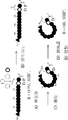
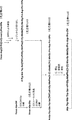
- FIG. 1 is a diagram showing a basic synthesis route of a cyclic peptide containing N-methylamino acid in the sequence.
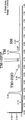
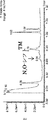
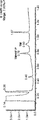
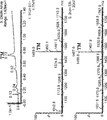
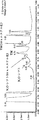
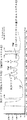
- FIG. 2 shows the target peptide (compound 131), the target hydrolyzate (TM + H 2 O), and the target product under the deprotection conditions of a 0.1 M tetramethylammonium hydrogen sulfate / HFIP solution (2% TIPS). It is a figure which shows the result analyzed by LCMS which shows the detection of the solvolysis body (TM + HFIP) by HFIP.
- FIG. 1 is a diagram showing a basic synthesis route of a cyclic peptide containing N-methylamino acid in the sequence.
- FIG. 2 shows the target peptide (compound 131), the target hydrolyzate (TM + H 2 O), and the target product under the deprotection conditions of a 0.1 M tetramethylammonium hydrogen sulfate / HFIP solution (2% TIP
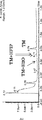
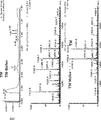
- FIG. 3 shows the target peptide (compound 131), the target hydrolyzate (TM + H 2 O), and the target product under the deprotection conditions of 0.05M tetramethylammonium hydrogensulfate / HFIP solution (2% TIPS). It is a figure which shows the result analyzed by LCMS which shows the detection of the solvolysis body (TM + HFIP) by HFIP.
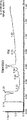
- FIG. 4 is an LCMS showing detection of the target peptide (compound 133) and the N ⁇ O-acyl shifter of the target substance under the deprotection conditions of 0.05M tetramethylammonium hydrogensulfate / HFIP solution (2% TIPS). It is a figure which shows the result of having analyzed.
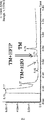
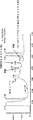
- FIG. 5 shows the addition of the target peptide (compound 131), the target hydrolyzate (TM + H 2 O), and the target product with HFIP under the deprotection conditions of 0.05 M oxalic acid / HFIP solution (2% TIPS). It is a figure which shows the result analyzed by LCMS which shows the detection of a solvent decomposition product (TM + HFIP).
- FIG. 6 shows the addition of the target peptide (compound 131), the target hydrolyzate (TM + H 2 O), and the target product with HFIP under the deprotection conditions of 0.05 M maleic acid / HFIP solution (2% TIPS).
- FIG. 7 shows the result of LCMS analysis showing detection of the target peptide (compound 133) and the N ⁇ O-acyl shifter of the target compound under the deprotection condition of 0.05 M oxalic acid / HFIP solution (2% TIPS).
- FIG. 8 shows the result of LCMS analysis showing detection of the target peptide (compound 133) and the N ⁇ O-acyl shifter of the target substance under the deprotection condition of 0.05 M maleic acid / HFIP solution (2% TIPS).
- FIG. 9 shows that the target peptide (Compound 137) and the solvolysis product of the target compound by HFIP (which has any amide bond) under the deprotection condition of 0.05M tetramethylammonium hydrogen sulfate / HFIP (2% TIPS). It is a figure which shows the result analyzed by LCMS which shows the detection of the thing which received solvolysis by HFIP.
- FIG. 9 shows that the target peptide (Compound 137) and the solvolysis product of the target compound by HFIP (which has any amide bond) under the deprotection condition of 0.05M tetramethylammonium hydrogen sulfate / HFIP (2% TIPS).
- FIG. 10 shows the target peptide (compound 137) and the solvolyzed product of TFE of the target compound under the deprotection conditions of 0.05M tetramethylammonium hydrogensulfate / TFE (2% TIPS) It is a figure which shows the result analyzed by LCMS which shows the detection of the thing which received solvolysis by TFE).
- FIG. 11 shows the target peptide (compound 135) when the reaction was stopped by adding 0.1 M tetramethylammonium hydrogensulfate / HFIP solution (2% TIPS) to the deprotection conditions and adding base (DIPEA) to the solution. It is a figure which shows the result analyzed by LCMS which shows the detection of).
- FIG. 11 shows the target peptide (compound 135) when the reaction was stopped by adding 0.1 M tetramethylammonium hydrogensulfate / HFIP solution (2% TIPS) to the deprotection conditions and adding base (DIPEA) to
- FIG. 12 shows the target peptide (compound 133) when the reaction was stopped by adding 0.1 M tetramethylammonium hydrogensulfate / HFIP solution (2% TIPS) under deprotection conditions and adding base (DIPEA) to the solution. It is a figure which shows the result analyzed by LCMS which shows the detection of).
- FIG. 13 shows the results of LCMS analysis showing the detection of the target peptide (Compound 112) and the target peptide with Thr omitted (Compound 113) when Fmoc-Thr (Trt) -OH is added.
- FIG. 14 is a diagram showing the results of LCMS analysis showing detection of the target peptide (compound 114) when Fmoc-Thr (THP) —OH is added. No Thr was eliminated from the target peptide (Compound 114) (Compound 113).
- FIG. 15 shows the detection of the target peptide (Compound 115) and the target peptide (Metric 116) from which MeSer was lost when synthesis was performed using Fmoc-MeSer (DMT) -OH ⁇ 0.75DIPEA. It is a figure which shows the result analyzed by LCMS.
- FIG. 16 shows detection of the target peptide (Compound 115) and the target peptide from which MeSer is lost (Compound 116) in the case of synthesis using Fmoc-MeSer (THP) -OH (Compound 6). It is a figure which shows the result analyzed by LCMS.
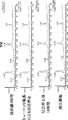
- FIG. 17 shows the results of LCMS analysis showing detection of the target peptide (compound 131) and the target hydrolyzate (TM + H 2 O) under 5% TFA / DCE (5% TIPS) deprotection conditions.
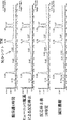
- FIG. 18 shows that the target peptide (compound 133), the N ⁇ O-acyl shift product of the target product, and one hydroxyl group of the target product are TFA esterified under 5% TFA / DCE (5% TIPS) deprotection conditions. It is a figure which shows the result of having analyzed by LCMS which shows the detection of the compound which TFA esterified two hydroxyl groups of the target compound and the target object.
- FIG. 19 shows the target peptide (compound 133), the N ⁇ O-acyl shift product of the target product, and one hydroxyl group of the target product under the deprotection condition of 5% TFA / DCE (5% TIPS) (0 degree).
- FIG. 20 shows the target peptide (compound 133), the N ⁇ O-acyl shift product of the target product, and one hydroxyl group of the target product under the deprotection conditions of 5% TFA / DCE (5% TIPS) (25 degrees). It is a figure which shows the result of having analyzed by LCMS which shows the detection of the compound which TFA esterified, and the compound in which two hydroxyl groups of the target object were TFA esterified.
- FIG. 21 is a diagram showing a synthesis method including an extension reaction in a liquid phase.
- the present invention relates to a method for producing a peptide comprising at least one N-substituted amino acid or N-substituted amino acid analog comprising the following steps. 1) an amino acid having at least one of the following functional groups i) and ii) (Fmoc-protected amino acid), an amino acid analog having at least one of the following i) and ii) (Fmoc-protected amino acid analog), or Preparing a peptide (Fmoc-protected peptide) containing the Fmoc-protected amino acid and / or the Fmoc-protected amino acid analog; i) a main chain amino group protected by at least one protecting group having an Fmoc skeleton; ii) free or active esterified at least one carboxylic acid group, 2) A step of supporting the Fmoc-protected amino acid, Fmoc-protected amino acid analog or Fmoc-protected peptide prepared
- the present invention relates to a method for producing a peptide comprising at least one N-substituted amino acid or N-substituted amino acid analog comprising the following steps. 1) Amino acid having at least one functional group of i) and ii) below (Fmoc-protected amino acid), Amino acid analog having at least one functional group of i) and ii) below (Fmoc-protected amino acid analog) Or a step of preparing a peptide (Fmoc-protected peptide) containing either or both of the Fmoc-protected amino acid and the Fmoc-protected amino acid analog; i) a main chain amino group protected by at least one protecting group having an Fmoc skeleton; ii) free or active esterified at least one carboxylic acid group, 2) a step of deprotecting the protecting group having the Fmoc skeleton of the Fmoc-protected amino acid, Fmo
- the “peptide” in the present invention is not particularly limited as long as it is a peptide formed by amide bond or ester bond of amino acids and / or amino acid analogs, but preferably 5 to 30 residues, more preferably 7 to 15 residues. More preferably a peptide having 9 to 13 residues.
- the peptide synthesized in the present invention includes at least one or more N-substituted amino acids or amino acid analogs (also referred to as N-substituted amino acids), preferably two or more, Preferably it contains 3 or more, more preferably 5 or more N-substituted amino acids. These N-substituted amino acids may be present continuously or discontinuously in the peptide.
- the peptide in the present invention may be a linear peptide or a cyclic peptide, and is preferably a cyclic peptide.
- the “cyclic peptide” in the present invention can be obtained by synthesizing a linear peptide according to the method of the present invention and then cyclizing. Cyclization includes cyclization by carbon-nitrogen bond such as amide bond, cyclization by carbon-oxygen bond such as ester bond and ether bond, cyclization by carbon-sulfur bond such as thioether bond, carbon-carbon bond Any form such as cyclization by cyclization or cyclization by heterocyclic ring construction may be used. Although not particularly limited, cyclization via a covalent bond such as an amide bond or a carbon-carbon bond is preferred, and cyclization via an amide bond between a side-chain carboxylic acid group and an N-terminal main chain amino group is particularly preferred. . The position of the carboxylic acid group, amino group, or the like used for cyclization may be on the main chain or on the side chain, and is not particularly limited as long as it is in a cyclizable position.
- N-substituted amino acid in the present invention means an amino acid or an amino acid analog in which the main chain amino group is N-substituted among the “amino acid” or “amino acid analog” described later, and N-methyl Preferred are N-alkylated amino acids or amino acid analogs such as Specifically, as the N-substituted amino acid, the main chain amino group of the amino acid or amino acid analog is an NHR group, and R is an optionally substituted alkyl group, alkenyl group, alkynyl group, aryl group, hetero group.
- Examples thereof include an aryl group, an aralkyl group, or a cycloalkyl group, and those in which a carbon atom bonded to an N atom and a carbon atom from the ⁇ -position form a ring, such as proline.
- the substituent of each group that may be substituted is not particularly limited, and examples thereof include a halogen group, an ether group, and a hydroxyl group.
- such an N-substituted amino acid is preferably an alkyl group, an aralkyl group, a cycloalkyl group or the like.
- amino acids in the present invention are ⁇ , ⁇ , and ⁇ amino acids, and natural amino acids (in this application, natural amino acids refer to 20 types of amino acids contained in proteins. Specifically, Gly, Ala, Ser, It is not limited to Thr, Val, Leu, Ile, Phe, Tyr, Trp, His, Glu, Asp, Gln, Asn, Cys, Met, Lys, Arg, and Pro). Good.
- an ⁇ -amino acid it may be an L-type amino acid, a D-type amino acid, or an ⁇ , ⁇ -dialkyl amino acid.
- the selection of the amino acid side chain is not particularly limited, and examples thereof include a hydrogen atom, an alkyl group, an alkenyl group, an alkynyl group, an aryl group, a heteroaryl group, an aralkyl group, and a cycloalkyl group.
- the amino acid side chain may be given a substituent, and is freely selected from arbitrary functional groups including, for example, an N atom, an O atom, an S atom, a B atom, an Si atom, and a P atom.
- the number of substituents is not particularly limited, and may be one, or two or more.
- the “amino acid analog” preferably means ⁇ -hydroxycarboxylic acid.
- the side chain of ⁇ -hydroxycarboxylic acid is not particularly limited as in the case of amino acids, and examples thereof include a hydrogen atom, an alkyl group, an alkenyl group, an alkynyl group, an aryl group, a heteroaryl group, an aralkyl group, and a cycloalkyl group.
- the steric structure of the ⁇ -hydroxycarboxylic acid may correspond to the L form or D form of the amino acid.
- a side chain is not specifically limited, For example, it can select freely from arbitrary functional groups containing N atom, O atom, S atom, B atom, Si atom, and P atom.
- the number of substituents is not particularly limited, and may be one, or two or more.
- it may have an S atom and further have a functional group such as an amino group or a halogen group.
- any steric configuration is allowed as in the case of ⁇ -amino acids, and the selection of the side chain is not particularly limited and is the same as in the case of ⁇ -amino acids.
- amino acid and amino acid analog constituting the peptide synthesized in the present invention include all the corresponding isotopes.
- the isotopes of “amino acids” and “amino acid analogs” are those in which at least one atom is replaced with an atom having the same atomic number (number of protons) and a different mass number (sum of protons and neutrons). is there.
- isotopes contained in the “amino acid” and “amino acid analog” constituting the peptide compound of the present invention include, for example, hydrogen atom, carbon atom, nitrogen atom, oxygen atom, phosphorus atom, sulfur atom, fluorine atom, chlorine Specifically, for example, 2 H, 3 H, 13 C, 14 C, 15 N, 17 O, 18 O, 31 P, 32 P, 35 S, 18 F, 36 Cl may be mentioned. .
- the amino acid or amino acid analog may have one or two or more substituents.
- substituents include substituents derived from O atoms, N atoms, S atoms, B atoms, P atoms, Si atoms, and halogen atoms.
- halogen-derived substituent examples include fluoro (—F), chloro (—Cl), bromo (—Br), iodo (—I) and the like.
- Examples of the substituent derived from the O atom include hydroxyl (—OH), oxy (—OR), carbonyl (—C ⁇ O—R), carboxyl (—CO 2 H), oxycarbonyl (—C ⁇ O—OR), Carbonyloxy (—O—C ⁇ O—R), thiocarbonyl (—C ⁇ O—SR), carbonylthio group (—S—C ⁇ O—R), aminocarbonyl (—C ⁇ O—NHR), carbonyl Amino (—NH—C ⁇ O—R), oxycarbonylamino (—NH—C ⁇ O—OR), sulfonylamino (—NH—SO 2 —R), aminosulfonyl (—SO 2 —NHR), sulfa Examples include moylamino (—NH—SO 2 —NHR), thiocarboxyl (—C ( ⁇ O) —SH), and carboxylcarbonyl (—C ( ⁇ O) —CO 2 H).
- oxy examples include alkoxy, cycloalkoxy, alkenyloxy, alkynyloxy, aryloxy, heteroaryloxy, aralkyloxy and the like.
- carbonyl examples include formyl (—C ⁇ O—H), alkylcarbonyl, cycloalkylcarbonyl, alkenylcarbonyl, alkynylcarbonyl, arylcarbonyl, heteroarylcarbonyl, aralkylcarbonyl and the like. .
- Examples of oxycarbonyl include alkyloxycarbonyl, cycloalkyloxycarbonyl, alkenyloxycarbonyl, alkynyloxycarbonyl, aryloxycarbonyl, heteroaryloxycarbonyl, aralkyloxycarbonyl and the like.
- (-C O-OR)
- carbonyloxy examples include alkylcarbonyloxy, cycloalkylcarbonyloxy, alkenylcarbonyloxy, alkynylcarbonyloxy, arylcarbonyloxy, heteroarylcarbonyloxy, aralkylcarbonyloxy and the like.
- thiocarbonyl examples include alkylthiocarbonyl, cycloalkylthiocarbonyl, alkenylthiocarbonyl, alkynylthiocarbonyl, arylthiocarbonyl, heteroarylthiocarbonyl, aralkylthiocarbonyl and the like.
- carbonylthio examples include alkylcarbonylthio, cycloalkylcarbonylthio, alkenylcarbonylthio, alkynylcarbonylthio, arylcarbonylthio, heteroarylcarbonylthio, aralkylcarbonylthio and the like. .
- aminocarbonyl examples include alkylaminocarbonyl, cycloalkylaminocarbonyl, alkenylaminocarbonyl, alkynylaminocarbonyl, arylaminocarbonyl, heteroarylaminocarbonyl, aralkylaminocarbonyl and the like.
- compounds in which the H atom bonded to the N atom in —C ⁇ O—NHR is further substituted with alkyl, cycloalkyl, alkenyl, alkynyl, aryl, heteroaryl, aralkyl are exemplified.
- Examples of carbonylamino include alkylcarbonylamino, cycloalkylcarbonylamino, alkenylcarbonylamino, alkynylcarbonylamino, arylcarbonylamino, heteroarylcarbonylamino, aralkylcarbonylamino and the like. .
- compounds in which the H atom bonded to the N atom in —NH—C ⁇ O—R is further substituted with alkyl, cycloalkyl, alkenyl, alkynyl, aryl, heteroaryl or aralkyl.
- Examples of oxycarbonylamino include alkoxycarbonylamino, cycloalkoxycarbonylamino, alkenyloxycarbonylamino, alkynyloxycarbonylamino, aryloxycarbonylamino, heteroaryloxycarbonylamino, aralkyloxy And carbonylamino.
- alkoxycarbonylamino cycloalkoxycarbonylamino
- alkenyloxycarbonylamino alkynyloxycarbonylamino
- aryloxycarbonylamino heteroaryloxycarbonylamino
- aralkyloxy And carbonylamino aralkyloxy And carbonylamino.
- sulfonylamino examples include alkylsulfonylamino, cycloalkylsulfonylamino, alkenylsulfonylamino, alkynylsulfonylamino, arylsulfonylamino, heteroarylsulfonylamino, aralkylsulfonylamino and the like.
- alkylsulfonylamino examples include alkylsulfonylamino, cycloalkylsulfonylamino, alkenylsulfonylamino, alkynylsulfonylamino, arylsulfonylamino, heteroarylsulfonylamino, aralkylsulfonylamino and the like.
- H atom bonded to the N atom in —NH—SO 2 —R is further substituted with alkyl, cycloalkyl,
- aminosulfonyl examples include alkylaminosulfonyl, cycloalkylaminosulfonyl, alkenylaminosulfonyl, alkynylaminosulfonyl, arylaminosulfonyl, heteroarylaminosulfonyl, aralkylaminosulfonyl and the like.
- compounds in which the H atom bonded to the N atom in —SO 2 —NHR is further substituted with alkyl, cycloalkyl, alkenyl, alkynyl, aryl, heteroaryl, aralkyl are exemplified.
- sulfamoylamino examples include alkylsulfamoylamino, cycloalkylsulfamoylamino, alkenylsulfamoylamino, alkynylsulfamoylamino, arylsulfamoylamino, hetero Arylsulfamoylamino, aralkylsulfamoylamino and the like can be mentioned.
- the two H atoms bonded to the N atom in —NH—SO 2 —NHR are substituents independently selected from the group consisting of alkyl, cycloalkyl, alkenyl, alkynyl, aryl, heteroaryl, and aralkyl. They may be substituted, and these two substituents may form a ring.
- substituent derived from the S atom examples include thiol (—SH), thio (—S—R), sulfinyl (—S ⁇ O—R), sulfonyl (—S (O) 2 —R), sulfo (—SO 3 H).
- thio examples are selected from alkylthio, cycloalkylthio, alkenylthio, alkynylthio, arylthio, heteroarylthio, aralkylthio and the like.
- sulfinyl examples include alkylsulfinyl, cycloalkylsulfinyl, alkenylsulfinyl, alkynylsulfinyl, arylsulfinyl, heteroarylsulfinyl, aralkylsulfinyl and the like.
- sulfonyl examples include alkylsulfonyl, cycloalkylsulfonyl, alkenylsulfonyl, alkynylsulfonyl, arylsulfonyl, heteroarylsulfonyl, aralkylsulfonyl and the like.
- substituent derived from the N atom examples include azide (—N 3 , also referred to as “azido group”), cyano (—CN), primary amino (—NH 2 ), secondary amino (—NH—R), tertiary Amino (—NR (R ′)), amidino (—C ( ⁇ NH) —NH 2 ), substituted amidino (—C ( ⁇ NR) —NR′R ′′), guanidino (—NH—C ( ⁇ NH) —NH 2 ), substituted guanidino (—NR—C ( ⁇ NR ′ ′′) — NR′R ′′), and aminocarbonylamino (—NR—CO—NR′R ′′).
- secondary amino examples include alkylamino, cycloalkylamino, alkenylamino, alkynylamino, arylamino, heteroarylamino, aralkylamino and the like.
- tertiary amino are independently selected from alkyl, cycloalkyl, alkenyl, alkynyl, aryl, heteroaryl, aralkyl and the like, for example, alkyl (aralkyl) amino And an amino group having two arbitrary substituents, and these two arbitrary substituents may form a ring.
- substituted amidinos are the three substituents R, R ′, and R ′′ on the N atom are alkyl, cycloalkyl, alkenyl, alkynyl, aryl , Heteroaryl, and groups independently selected from aralkyl, for example, alkyl (aralkyl) (aryl) amidino and the like.
- substituted guanidino examples include R, R ′, R ′′, and R ′ ′′ where alkyl, cycloalkyl, alkenyl, alkynyl , Aryl, heteroaryl, and aralkyl groups independently selected from each other, or a group in which these form a ring.
- aminocarbonylamino examples include those in which R, R ′, and R ′′ are hydrogen, alkyl, cycloalkyl, alkenyl, alkynyl, aryl, heteroaryl, aralkyl. Examples thereof include a group independently selected from the above, or a group that forms a ring.
- substituent derived from the B atom examples include boryl (—BR (R ′)) and dioxyboryl (—B (OR) (OR ′)). These two substituents R and R ′ are each independently selected from alkyl, cycloalkyl, alkenyl, alkynyl, aryl, heteroaryl, aralkyl and the like, or they may form a ring .
- the amino acid or amino acid analog of the present invention includes various substitutions including O atom, N atom, S atom, B atom, P atom, Si atom and halogen atom which are usually used in low molecular weight compounds. You may have 1 or 2 or more groups. These substituents may be further substituted with another substituent.
- amino acid and amino acid analog constituting the peptide synthesized in the present invention may also be referred to as “amino acid residue” and “amino acid analog residue”, respectively.
- “Fmoc-protected amino acid” and “Fmoc-protected amino acid analog” are amino acids and amino acid analogs each having at least one of the following functional groups i) and ii): i) a main chain amino group protected by at least one protecting group having an Fmoc skeleton; ii) at least one carboxylic acid group which is free or active esterified.
- the “protecting group having an Fmoc skeleton” in the present invention means a group in which an arbitrary substituent is introduced at an arbitrary position of the constituent skeleton of the Fmoc group or Fmoc group.
- Specific examples of the protecting group having an Fmoc skeleton include, for example, 9-fluorenylmethyloxycarbonyl (Fmoc) group, 2,7-di-tert-butyl-Fmoc (Fmoc *) group, 2-fluoro-Fmoc ( Fmoc (2F)) group, 2-monoisooctyl-Fmoc (mio-Fmoc) group, 2,7-diisooctyl-Fmoc (dio-Fmoc) group and the like.
- a protecting group having an Fmoc skeleton in place of the protecting group having an Fmoc skeleton, a protecting group that can be deprotected with a basic condition or a nucleophilic species exhibiting basicity (for example, piperidine or hydrazine) can also be used.
- a basic condition or a nucleophilic species exhibiting basicity for example, piperidine or hydrazine
- protecting groups include 2- (4-nitrophenylsulfonyl) ethoxycarbonyl (Nsc) group, (1,1-dioxobenzo [b] thiophen-2-yl) methyloxycarbonyl (Bsmoc) Group, (1,1-dioxonaphtho [1,2-b] thiophen-2-yl) methyloxycarbonyl ( ⁇ -Nsmoc) group, 1- (4,4-dimethyl-2,6-dioxocyclohexyl-1 -Ylidene) -3-methylbutyl (ivDde) group, tetrachlorophthaloyl (TCP) group, 2- [phenyl (methyl) sulfonio] ethyloxycarbonyltetrafluoroborate (Pms) group, ethanesulfonylethoxycarbonyl (Esc) group, And 2- (4-sulfophenylsulfony
- a protecting group capable of deprotection other than acid or base can be used.
- a protecting group include, for example, a benzyloxycarbonyl (Z) group that can be deprotected by hydrogenation in the presence of a transition metal catalyst such as palladium, a combination of a palladium catalyst and a scavenger (for example, tetrakis (Triphenylphosphine) palladium (0) (in combination with Pd (PPh 3 ) 4 ) and phenylsilane)
- a transition metal catalyst such as palladium
- a combination of a palladium catalyst and a scavenger for example, tetrakis (Triphenylphosphine) palladium (0) (in combination with Pd (PPh 3 ) 4 ) and phenylsilane
- oc alkylthiol or arylthiol in combination with base
- oNBS, Ns 2,4-dinitrobenzen
- the amino group of the main chain is protected by the Fmoc group, and the functional group of the side chain is protected by a basic non-cleavable protecting group such as piperidine or DBU, if necessary, and
- a basic non-cleavable protecting group such as piperidine or DBU, if necessary
- An Fmoc-protected amino acid or an Fmoc-protected amino acid analog in which the main chain carboxylic acid group is not protected can be preferably used.
- An Fmoc-protected amino acid or an Fmoc-protected amino acid analog having an amino group protected with a protecting group having an Fmoc skeleton and a carboxylic acid group having no protecting group can also be preferably used.
- the functional group is preferably protected with a protective group.
- a protecting group a well-known protecting group that can be deprotected under any conditions can be used.
- a protecting group a protecting group that is not cleaved under basic conditions and is deprotected under a condition that becomes a weaker acid than TFA is preferable.
- the acidic and deprotectable protecting group include protecting groups that can be deprotected in the range of pH 1 to pH 7, preferably in the range of pH 2 to pH 6.
- a protecting group that can be deprotected at 10% or less of TFA, or a protecting group having the structure described below can be used.
- a well-known protecting group can be used as the protecting group for the side chain.
- those described in the following documents i) and ii) that satisfy the above conditions among the protecting groups can be employed as the side chain protecting group.
- the method of the present invention can be used for peptide synthesis by parallel synthesis.
- a protecting group is not necessarily required for the side chain of the amino acid, but when a protecting group is required for the side chain, the protecting group to be used should be quickly deprotected under the deprotection conditions of the present invention. Is preferred.
- the side chain protecting groups are preferably 50% deprotected within 24 hours, particularly preferably 90% deprotected within 4 hours.
- a protecting group satisfying such conditions a protecting group having a Trt skeleton, a THP skeleton, a THF skeleton, or a TBS skeleton described later is preferable.
- At least one hydrogen atom is substituted on the protecting group side atom directly bonded to the functional group (from the protecting group of the Trt skeleton).
- protecting groups which are also sterically low in volume. Of these, a protecting group in which a substituent other than hydrogen forms a ring is more preferable, and THP and THF are particularly preferable.
- the method of the present invention can also be used for industrial peptide synthesis.
- it is not always necessary to have a protecting group on the side chain of the amino acid, as in the parallel synthesis, but when it has a protecting group on the side chain, it preferably has the same protecting group as in the parallel synthesis.
- TFA generally used at the time of deprotection A strong acid such as may be used.
- a bulky protecting group can be used.
- a condition for forming a weaker acid than TFA is preferably a weak acid having a pKa value of 0 to 9 in water, a positive ionization ability Y OTs value and a pKa of 5 to 14 in water.
- the conditions which use the weak acid solution contained in the solvent which are are mentioned.
- a weak acid having a pKa value in water of 0 to 9 a weak acid having a pKa in water of 1 to 5 is more preferable.
- the concentration of the weak acid to be dissolved in the solvent may be arbitrary as long as the condition for making the acid weaker than TFA is satisfied.
- fluoroalcohols are a generic name for a carbon atom constituting an alcohol in which a fluorine atom is bonded to a carbon atom other than the carbon atom to which the hydroxyl group is bonded.
- the fluoroalcohol includes those having a hydroxyl group bonded to an aromatic ring, such as 2,3,4,5,6-pentafluorophenol.
- TFE 2,2,2-trifluoroethanol
- HFIP hexafluoro-2-propanol
- the weak acid solution further contains another organic solvent (for example, dichloromethane, 1,2-dichloroethane, etc.) or a cation scavenger (for example, triisopropylsilane). Etc. can also be added.
- another organic solvent for example, dichloromethane, 1,2-dichloroethane, etc.
- a cation scavenger for example, triisopropylsilane.
- the Fmoc-protected amino acid or the Fmoc-protected amino acid analog has a protecting group in its side chain
- the following can be preferably mentioned as the side-chain protecting group.
- the side chain protecting group is a hydroxyl protecting group of Ser, Thr, Hyp, and derivatives thereof
- the MOM skeleton, the Bn skeleton, the Dpm skeleton, the Trt skeleton, the silyl skeleton represented by the following general formula, or A protecting group having a Boc skeleton is preferred.
- substituent Me and Et on the skeleton those substituted with other alkyl groups, benzyl groups, aryl groups, and the like can also be used.
- Other alkyl groups may be used in place of the substituent Me.
- an alkyl group, an aryl group, a halogen group or the like may be substituted on the benzene ring.
- An alkyl group, aryl group, alkoxy group, halogen group or the like may be substituted on the aromatic ring.
- crosslinked via two carbon atoms, etc. may be used.
- An alkyl group, aryl group, alkoxy group, halogen group or the like may be substituted on the aromatic ring.
- crosslinked through the oxygen atom can also be used.
- THP and Trt are particularly preferable.
- the side chain protecting group is particularly preferably THP or Trt, and when the amino acid residue is Thr, the side chain protecting group is particularly preferably THP.
- the side chain protecting group is a protecting group of an amino acid having a hydroxyl group substituted with an aryl group such as Tyr, D-Tyr, Tyr (3-F), for example, the MOM skeleton represented by the following general formula: , A protecting group having a Bn skeleton, a Dpm skeleton, a Trt skeleton, a silyl skeleton, a Boc skeleton, or a tBu skeleton is preferable.
- substituent Me and Et on the skeleton those substituted with other alkyl groups, benzyl groups, aryl groups, and the like can also be used.
- Other alkyl groups may be used in place of the substituent Me.
- an alkyl group, an aryl group, a halogen group or the like may be substituted on the benzene ring.
- An alkyl group, aryl group, alkoxy group, halogen group or the like may be substituted on the aromatic ring.
- crosslinked via two carbon atoms, etc. may be used.
- An alkyl group, aryl group, alkoxy group, halogen group or the like may be substituted on the aromatic ring.
- crosslinked through the oxygen atom can also be used.
- An alkyl group or aryl group other than H may be substituted.
- the side chain protecting group is particularly preferably tBu, Trt, Clt, or THP, and when the amino acid residue is Tyr (3-F)
- the chain protecting group is particularly preferably tBu or Pis.
- the side chain protecting group is a protecting group of an amino acid having imidazole in the side chain, such as His or MeHis, for example, a protecting group having a MOM skeleton, a Bn skeleton, or a Trt skeleton represented by the following general formula is used. It is preferable.
- Me and Et on the skeleton those substituted with other alkyl groups, benzyl groups, aryl groups, and the like can also be used.
- Other alkyl groups may be used in place of the substituent Me.
- an alkyl group, an aryl group, a halogen group or the like may be substituted on the benzene ring.
- An alkyl group, aryl group, alkoxy group, halogen group or the like may be substituted on the aromatic ring.
- Trt is particularly preferable.
- the side chain protecting group is particularly preferably Trt.
- a protecting group for the carboxylic acid group of the main chain when used as a “free or active esterified carboxylic acid group”, as a protecting group for the carboxylic acid group of the side chain of Asp, Glu, and derivatives thereof, when the carboxylic acid group of the side chain of Asp, Glu, and a derivative thereof is used as a “free or active esterified carboxylic acid group”, as a protecting group for the carboxylic acid group of the main chain, for example, the following general formula And a protecting group having a MOM skeleton, a Bn skeleton, a Dpm skeleton, a Trt skeleton, a tBu skeleton, or a phenyl-EDOTn skeleton represented by the formula: Further, a protective group having an ortho ester skeleton in which three alkoxy groups are bonded to a carbon atom derived from a carboxylic acid group can also be used as a protective group for carboxylic acid.
- substituent on the skeleton those substituted with another alkyl group, benzyl group, aryl group or the like can also be used.
- Other alkyl groups may be used in place of the substituent Me. Further, an alkyl group, an aryl group, a halogen group or the like may be substituted on the benzene ring.
- An alkyl group, aryl group, alkoxy group, halogen group or the like may be substituted on the aromatic ring.
- An alkyl group, aryl group, alkoxy group, halogen group or the like may be substituted on the aromatic ring.
- crosslinked through the oxygen atom can also be used.
- Other alkyl groups, aryl groups and the like may be substituted.
- a dicyclopropylmethyl group can also be used.
- Fmoc-protected peptide means a peptide containing either or both of the “Fmoc-protected amino acid” and the “Fmoc-protected amino acid analog”.
- examples of such peptides include dipeptides and oligopeptides having two or more molecules including one or both of the above-mentioned Fmoc-protected amino acids and Fmoc-protected amino acid analogs.
- a Fmoc-protected amino acid, Fmoc-protected amino acid analog or Fmoc-protected peptide (sometimes referred to as Fmoc-protected amino acid) can be supported on a solid phase using a resin.
- the group (resin binding group) used for bonding with the Fmoc-protected amino acid or the like of the resin used is not particularly limited as long as the peptide can be cleaved with an acid. There are no particular limitations on the loading amount and loading ratio of the Fmoc-protected amino acid.
- trityl chloride resin (Trt resin), 2-chlorotrityl chloride resin (Clt resin), 4-methyltrityl chloride resin (Mtt resin), 4-methoxytrityl chloride resin (Mmt)
- the resin is a resin bond determined as “H ( ⁇ 5% TFA in DCM)” as acid sensitivity described in the solid-phase synthesis handbook (issued by Merck Co., Ltd., issued on May 1, 2002). It preferably has a group and can be appropriately selected according to the functional group on the amino acid side to be used.
- a carboxylic acid main chain carboxylic acid or a side chain carboxylic acid represented by Asp or Glu
- a hydroxy group (phenol group represented by Tyr) on an aromatic ring is used as a functional group on the amino acid side.
- Trt resin trityl chloride resin
- Clt resin 2-chlorotrityl chloride resin
- the resin is trityl chloride resin (Trt resin), 2-chlorotrityl chloride resin (Clt resin).
- Mtt resin 4-methyltrityl chloride resin
- the type of polymer constituting the resin is not particularly limited. In the case of a resin composed of polystyrene, either 100-200 mesh or 200-400 mesh may be used. Further, the crosslinking rate is not particularly limited, but those having 1% DVB (divinylbenzene) crosslinking are preferable.
- An amino acid, Fmoc-protected amino acid analog, or Fmoc-protected peptide is supported on the resin.
- the free carboxylic acid may be a main chain carboxylic acid of an amino acid or an amino acid analog, or a side chain carboxylic acid (Asp or the like).
- a free OH group or free SH group of the main chain or side chain of the amino acid located at the C-terminus of the Fmoc-protected amino acid, Fmoc-protected amino acid analog or Fmoc-protected peptide is used as the solid phase. It can also be used for loading.
- the protecting group having the Fmoc skeleton of the Fmoc-protected amino acid, Fmoc-protected amino acid analog or Fmoc-protected peptide carried on the solid phase is deprotected with a base to expose the amino group.
- a deprotecting agent generally used in peptide synthesis can be used (for example, Amino Acid-Protecting Groups (Chem. Rev. 2009, 109, 2455-2504)).
- a deprotecting agent for example, a secondary amine, a base having an amidine skeleton, or a base having a guanidine skeleton is preferable.
- Specific examples of the secondary amine include piperidine, morpholine, pyrrolidine and piperazine.
- Specific examples of the base having an amidine skeleton include 1,8-diazabicyclo [5.4.0] undec-7-ene (DBU) and 1,5-diazabicyclo [4.3.0] -5-nonene. (DBN).
- Specific examples of the base having a guanidine skeleton include 1,1,3,3-tetramethylguanidine.
- the exposed amino group and the newly added Fmoc-protected amino acid, Fmoc-protected amino acid analog or Fmoc-protected peptide free or active esterified carboxylic acid group are condensed to form a peptide bond.
- the condensing agent for condensing the amino group and the carboxylic acid group is not particularly limited as long as it can form an amide bond, and condensing agents generally used in peptide synthesis are preferable (for example, Peptide Coupling Reagents, More than a Letter Soup (Chem. Rev. 2011, 111, 6557-6602)).
- Specific examples of such a condensing agent include condensing agents having a carbodiimide skeleton.
- a condensing agent having a carbodiimide skeleton can be used in a condensation reaction in combination with a hydroxy compound capable of forming an active ester.
- Examples of the condensing agent having a carbodiimide skeleton include N, N′-dicyclohexylcarbodiimide (DCC), N, N′-diisopropylcarbodiimide (DIC), and 1-ethyl-3- (3-dimethylaminopropyl) carbodiimide hydrochloride (See, for example, WATANABEATAChemical catalog, Amino acids and chiral building blocks to new medicine).
- hydroxy compounds that can form active esters include 1-hydroxy-1H-benzotriazole (HOBt), 1-hydroxy-7-azabenzotriazole (HOAt), ethyl 2-cyano-2- (hydroxyimino) acetate ( oxyma), 3,4-dihydro-3-hydroxy-4-oxo-1,2,3-benzotriazine (HOOBt or HODhbt), N-hydroxy-5-norbornene-2,3-dicarboximide (HONB), 2,3,4,5,6-pentafluorophenol (HOPfp), N-hydroxysuccinimide (HOSu), 6-chloro-1-hydroxy-1H-benzotriazole (Cl-HOBt) (for example, WATANABE® Chemical Catalog, Amino acids and chiral building blocks to new medi see cine).
- HOBt 1-hydroxy-1H-benzotriazole
- HOAt 1-hydroxy-7-azabenzotriazole
- salts having these skeletons for example, K-oxyma which is a potassium salt of oxyma can also be used.
- K-oxyma which is a potassium salt of oxyma
- HOBt, HOAt, oxyma, and HOOBt are particularly preferable.
- O- (1H-benzotriazol-1-yl) -N, N, N ′, N′-tetramethyluronium hexafluorophosphate (HBTU)
- HATU phosphonium condensing agent / uronium condensing agent -(7-aza-1H-benzotriazol-1-yl) -N, N, N ', N'-tetramethyluronium hexafluorophosphate (HATU)
- HATU and DIPEA a combination of HATU and DIPEA, or a combination of COMU and DIPEA.
- N, N′-carbonyldiimidazole (CDI), 1,1′-carbonyl-di- (1,2,4-triazole) (CDT), 4- (4,6-dimethoxy-1,3, Condensing agents such as 5-triazin-2-yl) -4-methylmorpholinium chloride (DMT-MM) and propylphosphonic anhydride (T3P) can also be used.
- the production method of the present invention comprises a step of deprotecting a protecting group having an Fmoc skeleton of a newly added Fmoc-protected amino acid, Fmoc-protected amino acid analog or Fmoc-protected peptide with a base to expose an amino group, and a new Fmoc
- the method further includes the step of adding a protected amino acid, an Fmoc protected amino acid analog or an Fmoc protected peptide to form an amide bond. These steps may be repeated once or multiple times.
- a desired peptide sequence can be obtained by repeating deprotection of a protecting group having an Fmoc skeleton and a condensation reaction with the next new Fmoc-protected amino acid, Fmoc-protected amino acid analog or Fmoc-protected peptide. It is.
- the target peptide is obtained and then cut out from the solid phase (cutout step). Moreover, it is also possible to perform peptide structural transformation or cyclization before the excision step.
- the side chain functional group protected by the protecting group may or may not be deprotected, and only some of the several protecting groups are deprotected. May be.
- the cleaving step is preferably performed while the side chain functional group is protected.
- the reaction condition of the cutting step of the present invention is preferably a condition that becomes a weak acid, particularly preferably a condition that becomes a weak acid rather than TFA.
- a weak acid is preferably an acid having a pKa value in water higher than that of TFA. More specifically, the pKa value is preferably in the range of 0 to 15, and the pKa value in water is more preferably in the range of 6 to 15.
- the acid that is weaker than TFA used in this step include TFE and HFIP. Two or more weak acids may be combined in any ratio such as TFE / acetic acid. Moreover, you may mix arbitrary solvents, such as DCM, DCE, and water, in arbitrary ratios.
- a combination of TFE and DCM is particularly preferable.
- Other organic solvents, reagents (eg, DIPEA, etc.), cation scavengers (eg, triisopropylsilane, etc.) and the like may be added to the solution used for cutting.
- the weak acid used for cleaving is preferably weaker than the acid used in the deprotection reaction.
- two types of acids having different acidities that become weaker acids than TFA are prepared in advance, and acids that become weaker acids are used for cutting.
- the weak acid used for the cleaving is not particularly limited as long as it is weaker than TFA.
- the deprotection step of the side chain protecting group of the present invention it is possible to selectively perform a desired deprotection reaction by reducing side reactions such as hydrolysis and N ⁇ O-acyl shift.
- the deprotection of the side chain protecting group is preferably carried out under the condition that the acid becomes weaker than TFA.
- the reaction can be carried out at any temperature, preferably at 0 to 40 ° C.
- a base such as ammonia or a primary to tertiary amine can be used.
- basic heterocyclic compounds for example, pyridine, imidazole, and analogs thereof
- pyridine imidazole, and analogs thereof
- these steps can be performed either before or after the excision step.
- the peptide produced by the production method of the present invention comprises an amino acid residue or amino acid analog residue having one reactive site in the side chain on the C-terminal side, and an amino acid residue or amino acid having another reactive site It can be a peptide comprising an analog residue or a carboxylic acid analog on the N-terminal side.
- Such peptides include, for example, an amino acid residue or amino acid analog residue having one reactive site on the C-terminal side chain, and an amino acid residue or amino acid analog having another reactive site on the N-terminal side. It can be produced by selecting a raw material Fmoc-protected amino acid, Fmoc-protected amino acid analog and Fmoc-protected peptide so that a body residue or a carboxylic acid analog is included.
- This peptide can be cyclized by combining one reactive site with another reactive site.
- the production method of the present invention may include such a cyclization step. Specifically, the cyclization step can be performed based on the description in WO2013 / 100132.
- a residue obtained by concentrating the reaction solution (cutting solution) obtained in the cleaving step under reduced pressure may be used for the cyclization step, and the cleaving solution is used as it is for the cyclization step. May be.
- the “carboxylic acid analog” is a compound having an amino group and a carboxyl group at the same time and having 3 or more atoms between them, various carboxylic acid derivatives having no amino group, and two residues. Peptides formed from ⁇ 4 residues and amino acids whose main chain amino group is chemically modified with an amide bond with a carboxylic acid are included. Further, the “carboxylic acid analog” may have a boric acid or boric acid ester moiety that can be used for cyclization. The “carboxylic acid analog” may be a carboxylic acid having a double bond site or a triple bond site, or a carboxylic acid having a ketone or a halide.
- a portion other than the functional group that defines these compounds may be substituted, and for example, selected from an alkyl group, an aralkyl group, an aryl group, a cycloalkyl group, a heteroaryl group, an alkenyl group, an alkynyl group, and the like. (Free substituents).
- the cyclization step includes, but is not limited to, cyclization of the two reaction points by, for example, an amide bond, a disulfide bond, an ether bond, a thioether bond, an ester bond, a thioester bond, or a carbon-carbon bond. Not.
- Cyclization by amide bond formation can be performed by, for example, reacting the N-terminal amino acid residue, the N-terminal amino acid analog residue, or the N-terminal carboxylic acid analog (an amino group in the main chain or an amino group present in the side chain). ) And a reactive site of an amino acid residue or amino acid analog having one carboxylic acid in the side chain to form an amide bond.
- the condensing agent those similar to those used in the above-described peptide bond can be used.
- the side chain carboxylic acid and the N-terminal main chain amino group, or the side chain amino group and the C-terminal main chain carboxylic acid Can be condensed.
- the protecting group of the carboxylic acid on the C-terminal side and the protecting group of the carboxylic acid on the side chain used for cyclization, or the protecting group of the amino group on the main chain on the N-terminal side and the amino group of the side chain used for cyclization The protecting group is preferably selected in consideration of its orthogonality. Preferred protecting groups in this series of peptide synthesis are as described above.
- Cyclization by carbon-carbon bond formation may be performed by, for example, reacting an N-terminal amino acid residue, an N-terminal amino acid analog residue, or an N-terminal carboxylic acid analog with an amino acid residue having one reactive site in the side chain. Cyclization by forming a carbon-carbon bond with the reactive site of a group or amino acid analog. Specifically, for example, an alkenyl group is selected as a reaction point of an N-terminal amino acid residue, an N-terminal amino acid analog residue, or an N-terminal carboxylic acid analog, and the amino acid has one reactive point in the side chain.
- a cyclization reaction can be carried out by a carbon-carbon bond reaction catalyzed by a transition metal by selecting an alkenyl group as a reaction point of the residue or amino acid analog residue.
- the transition metal used as the catalyst include ruthenium, molybdenum, titanium, and tungsten.
- the cyclization reaction can be performed by a metathesis reaction.
- reaction point of an N-terminal amino acid residue, an N-terminal amino acid analog residue or an N-terminal carboxylic acid analog, and an amino acid residue or amino acid analog residue having one reactive point in the side chain A cyclization reaction can be carried out by a carbon-carbon bond reaction using a transition metal as a catalyst, employing a combination of aryl halide and boronic acid or a boronic acid analog as a reaction point.
- a transition metal as a catalyst
- palladium, nickel, and iron are mentioned as a transition metal used as a catalyst.
- the cyclization reaction can be performed by the Suzuki reaction.
- reaction point of an N-terminal amino acid residue, an N-terminal amino acid analog residue or an N-terminal carboxylic acid analog, and an amino acid residue or amino acid analog residue having one reactive point in the side chain As a reaction point, a combination of an alkenyl group and an aryl halide or alkenyl halide can be adopted, and a cyclization reaction can be carried out by a carbon-carbon bond reaction using a transition metal as a catalyst. At this time, palladium and nickel are mentioned as a transition metal used as a catalyst. For example, when palladium is used, the cyclization reaction can be performed by a Heck-type chemical reaction.
- the reaction point of an N-terminal amino acid residue, an N-terminal amino acid analog residue or an N-terminal carboxylic acid analog, and an amino acid residue or amino acid analog residue having one reactive point in the side chain As a reaction point, a combination of an acetylene group and an aryl halide or alkenyl halide is selected, and a cyclization reaction can be carried out by a carbon-carbon bond reaction using a transition metal as a catalyst.
- the transition metal used as a catalyst includes palladium, copper, gold, and iron.
- the cyclization reaction can be performed by the Sonogashira reaction.
- the obtained product can be purified as necessary.
- a general purification method for peptides such as a reverse phase column or a molecular sieve column can be used. It can also be purified by crystallization or solidification using an appropriate solvent. It is also possible to concentrate under reduced pressure before purification.
- all prior art documents cited in the present specification are incorporated herein by reference.
- reaction solvent used for peptide synthesis and solid phase synthesis was for peptide synthesis (purchased from Watanabe Chemical, Wako Pure Chemical).
- DCM, DMF, NMP, 2% DBU in DMF, 20% piperidine in DMF, and the like were used.
- a dehydrated solvent, a super-dehydrated solvent, and an anhydrous solvent purchased from Kanto Chemical, Wako Pure Chemical, etc.
- Example 1 Basic Synthesis Route of Cyclic Peptide Containing N-Methyl Amino Acid in Sequence
- the synthesis of cyclic peptide containing N-methyl amino acid in the sequence employs the solid phase synthesis by Fmoc method, and the following five steps are shown in FIG. The synthesis route was as described.
- Step of cleaving the peptide from 2-chlorotrityl resin Step of condensing the carboxylic acid (white circle unit) of the side chain of Asp of the excised peptide with the amino group at the N-terminus (triangular unit) of the peptide chain and cyclizing with an amide bond
- Fmoc-amino acid used for peptide synthesis by peptide synthesizer In the peptide synthesis described in this Example, the following Fmoc-amino acid was used for synthesis by peptide synthesizer (step A).
- Fmoc-Ser (THP) -OH Compound 1
- Fmoc-Thr THP) -OH
- Compound 2 Fmoc-MeSer (THP) -OH
- Compound 6 Fmoc-MeHis (Trt) -OH (Compound 7)
- Fmoc-D-Tyr (THP) -OH Compound 8
- Fmoc-D-Tyr Pis) -OH (Compound 11)
- Fmoc-Tyr (3-F, tBu) -OH Compound 13
- Fmoc -MePhe (4-Cl) -OH Compound 16
- Fmoc-Tyr 3-F, Pis) -OH (compound 22).
- Example 1-1 (2S) -2-((((9H-Fluoren-9-yl) methoxy) carbonyl) amino) -3-((tetrahydro-2H-pyran-2-yl) oxy) propanoic acid (Compound 1, Fmoc-Ser Synthesis of (THP) -OH) (S) -2-(((((9H-Fluoren-9-yl) methoxy) carbonyl) amino) -3-hydroxypropanoic acid (Fmoc-Ser-OH, purchased from Watanabe Chemical, 1.0 g, 3.06 mmol) and p -Toluenesulfonic acid pyridinium (PPTS, 0.038 g, 0.153 mmol) was added with toluene (10 mL), and the water contained by azeotropy was removed by distilling off toluene under reduced pressure.
- PPTS p -Toluenesulfonic acid
- Example 1-2 (2S, 3R) -2-((((9H-Fluoren-9-yl) methoxy) carbonyl) amino) -3-((tetrahydro-2H-pyran-2-yl) oxy) butanoic acid (Compound 2, Fmoc -Thr (THP) -OH) (2S, 3R) -2-((((9H-Fluoren-9-yl) methoxy) carbonyl) amino) -3-hydroxybutanoic acid monohydrate (Fmoc-Thr-OH monohydrate, Tokyo Kasei) Purchased from 5.0 g, 13.9 mmol) and a mixture of pyridinium p-toluenesulfonate (PPTS, 0.175 g, 0.70 mmol) with toluene (50 mL) and azeotroped by distilling off toluene under reduced pressure Removed moisture.
- PPTS pyridinium p-toluen
- the obtained solid was dried with a pump under reduced pressure at 25 ° C. for 2 hours to obtain a sodium salt of Fmoc-Thr (THP) —OH (2.80 g, 6.26 mmol).
- a sodium salt of Fmoc-Thr (THP) —OH (2.80 g, 6.26 mmol).
- ethyl acetate (50 mL) and 0.05 M aqueous phosphoric acid solution (140 mL) at pH 2.1 were added, and the mixture was stirred at 25 ° C. for 5 minutes. The organic and aqueous layers were separated.
- Example 1-3 (2S) -2-((((9H-Fluoren-9-yl) methoxy) carbonyl) (methyl) amino) -3-((tetrahydro-2H-pyran-2-yl) oxy) propanoic acid (Compound 6, Fmoc-MeSer (THP) -OH) (S) -2-((((9H-fluoren-9-yl) methoxy) carbonyl) (methyl) amino) -3-hydroxypropanoic acid (Fmoc-MeSer-OH) was synthesized by a method described in the literature ( Literature: International publication number WO 2013/100132 A1).
- Example 1-4 (S) -2-((((9H-Fluoren-9-yl) methoxy) carbonyl) (methyl) amino) -3- (1-trityl-1H-imidazol-4-yl) propanoic acid (Compound 7, Fmoc -MeHis (Trt) -OH)
- (S) -3- (1H-imidazol-4-yl) -2- (methylamino) propanoic acid hydrochloride 75 g, 364.71 mmol) in dichloromethane (1000 mL) and dichlorodimethylsilane.
- 1,4-dioxane 1000 mL
- potassium carbonate 84 g, 603.39 mmol
- water 1000 mL
- (2,5-dioxopyrrolidin-1-yl) carbonate 9H-fluoren-9-yl) methyl (Fmoc-OSu, 102 g, 302.38 mmol) was added, and the mixture was stirred at 0 ° C. for 2 hours.
- the obtained reaction solution was washed with diethyl ether (2000 mL), and then the pH of the solution was adjusted to 6 to 7 using acetic acid.
- Example 1-5 (2R) -2-(((((9H-Fluoren-9-yl) methoxy) carbonyl) amino) -3- (4-((tetrahydro-2H-pyran-2-yl) oxy) phenyl) propanoic acid (compound 8.
- Fmoc-D-Tyr (THP) -OH) (R) -2-(((((9H-Fluoren-9-yl) methoxy) carbonyl) amino) -3- (4-hydroxyphenyl) propanoic acid (Fmoc-D-Tyr-OH, purchased from Watanabe Chemical, 500 mg, 1.24 mmol) and a catalytic amount of pyridinium paratoluenesulfonate (PPTS, 15.6 mg, 0.062 mmol), and toluene (5.0 mL) was added. Removed.
- PPTS pyridinium paratoluenesulfonate
- the organic layer was dried over sodium sulfate, the solvent was distilled off under reduced pressure, and further dried under reduced pressure with a pump to obtain 596 mg of residue.
- the obtained residue 300 mg was dissolved in tetrahydrofuran (THF) (2.5 mL), 1.0 M phosphoric acid aqueous solution (pH 8.0, 2.5 mL) was added, and the mixture was stirred at 50 ° C. for 3 hours.
- Ethyl acetate (3 mL) was added to the reaction solution, the organic layer and the aqueous layer were separated, and the aqueous layer was extracted with ethyl acetate (3 mL). All the obtained organic layers were mixed and washed twice with saturated brine (3 mL).
- T-Butyl methyl ether (TBME) (4.6 mL) and 0.05 M aqueous phosphoric acid solution (pH 2.1, 13 mL) were added to the white solid, and the mixture was stirred at 25 degrees for 5 minutes. After separating the organic layer, the aqueous layer was extracted with t-butyl methyl ether (TBME) (4.6 mL). The obtained organic layers were collected and washed twice with saturated brine (4.6 mL). The organic layer was dried over sodium sulfate, and the solvent was distilled off under reduced pressure.
- TBME t-butyl methyl ether
- Example 1-6 Synthesis of 2,2,2-trichloroacetimidic acid 2-phenylpropan-2-yl (compound 9)
- 2-Phenylpropan-2-ol purchasedd from Wako, 2.0 g, 14.7 mmol
- diethyl ether (Et 2 O) 4.8 mL
- 1.9 M NaHMDS in tetrahydrofuran (THF) 850 ⁇ L, 1.62 mmol
- THF tetrahydrofuran
- the reaction solution was stirred at the same temperature for 20 minutes, cooled to 0 ° C., and 2,2,2-trichloroacetonitrile (1.47 mL, 14.7 mmol) was added dropwise.
- the reaction solution was stirred at 0 ° C.
- Example 1-7 Synthesis of 2-(((((9H-fluoren-9-yl) methoxy) carbonyl) amino) -3- (4-hydroxyphenyl) propanoic acid (R) -methyl (compound 10, Fmoc-D-Tyr-OMe) Under a nitrogen atmosphere, (R) -2-((((9H-fluoren-9-yl) methoxy) carbonyl) amino) -3- (4- (tert-butoxy) phenyl) propanoic acid (Fmoc-D-Tyr ( tBu) -OH, purchased from Watanabe Chemical, 5.0 g, 10.88 mmol) and methanol (8.80 mL, 218 mmol) and thionyl chloride (1.59 mL, 21.76 mmol) were added dropwise at 0 degrees.
- Example 1-8 (R) -2-((((9H-Fluoren-9-yl) methoxy) carbonyl) amino) -3- (4-((2-phenylpropan-2-yl) oxy) phenyl) propanoic acid (Compound 11 , Fmoc-D-Tyr (Pis) -OH) 2-(((((9H-Fluoren-9-yl) methoxy) carbonyl) amino) -3- (4-hydroxyphenyl) propanoic acid (R) -methyl (Compound 10, Fmoc-D-Tyr-OMe, 100 mg , 0.24 mmol) in tetrahydrofuran (THF) (240 ⁇ L) separately prepared in 10M 2,2,2-trichloroacetimidic acid 2-phenylpropan-2-yl (compound 9) in cyclohexane solution (60 ⁇ L) and catalyst An amount of boron trifluoride-ethyl ether
- reaction solution was concentrated by an evaporator, t-butyl methyl ether (TBME, 1 mL) and 0.05 M aqueous phosphoric acid solution (pH 2.1, 2 mL) were added, and the mixture was stirred at 25 ° C. for 5 minutes. After separating the organic layer, the aqueous layer was extracted twice with t-butyl methyl ether (TBME, 1 mL). The organic layer was dried over sodium sulfate, the solvent was distilled off under reduced pressure, and further dried with a pump.
- TBME t-butyl methyl ether
- TBME t-butyl methyl ether
- Example 1-9 2-((((((9H-Fluoren-9-yl) methoxy) carbonyl) amino) -3- (3-fluoro-4-hydroxyphenyl) propanoic acid (S) -methyl (compound 12, Fmoc-Tyr (3- Synthesis of F) -OMe) 10% (S) -2-amino-3- (3-fluoro-4-hydroxyphenyl) propanoic acid (H 2 N-Tyr (3-F) -OH, purchased from Astatech, 2.0 g, 10.0 mmol) After dissolving in aqueous sodium carbonate solution, add (2,5-dioxopyrrolidin-1-yl) (9H-fluoren-9-yl) methyl carbonate (Fmoc-OSu, 3.39 g, 10.0 mmol) 1.4- A solution of dioxane (35 mL) was added at 0 degrees.
- the reaction mixture was stirred at 25 ° C. for 40 minutes, water (35 mL) and diethyl ether (70 mL) were added, and the mixture was washed 3 times with diethyl ether.
- the pH of the aqueous layer was adjusted to 2 to 3 with 5N aqueous hydrochloric acid solution, and extracted three times with ethyl acetate (100 mL ⁇ 3).
- the organic layer was dried over magnesium sulfate, the solvent was distilled off under reduced pressure, and further dried with a pump. The residue (4.08 g) obtained without further purification was used as such for the next reaction.
- Example 1-10 (S) -2-((((9H-Fluoren-9-yl) methoxy) carbonyl) amino) -3- (4- (tert-butoxy) -3-fluorophenyl) propanoic acid (Compound 13, Fmoc-Tyr Synthesis of (3-F, tBu) -OH) 2-(((((9H-Fluoren-9-yl) methoxy) carbonyl) amino) -3- (3-fluoro-4-hydroxyphenyl) propanoic acid (S) -methyl (compound 12, Fmoc-Tyr (3- F) -OMe, 300 mg, 0.689 mmol) in tetrahydrofuran (THF) (690 ⁇ L) and 2,2,2-trichloroacetimidic acid tert-butyl (308 ⁇ L, 1.72 mmol) and a catalytic amount of boron trifluoride Ethyl ether complex (BF 3 -
- the organic layer was dried over sodium sulfate, the solvent was distilled off under reduced pressure, and further dried with a pump.
- the obtained residue was purified by flash column chromatography (purif pack (registered trademark) SIZE 60, hexane / ethyl acetate), and 2-((((9H-fluoren-9-yl) methoxy) carbonyl) amino was obtained as a mixture.
- -3- (4- (tert-butoxy) -3-fluorophenyl) propanoic acid (S) -methyl (Fmoc-Tyr (3-F, tBu) -OMe) was obtained.
- Example 1-11 Synthesis of pyrrolidine-1,2-dicarboxylic acid 2- (2-phenylpropan-2-yl) (S) -1-((9H-fluoren-9-yl) methyl) (compound 14, Fmoc-Pro-OPis)
- 2-phenyl-2-propanol (14.2 g, 104 mmol)
- dehydrated diethyl ether 35 mL
- 1.9 M NaHMDS tetrahydrofuran solution, 0.85 mL, 1.62 mmol
- reaction solution was ice-cooled to 0 ° C., and trichloroacetonitrile (11.5 mL, 115 mmol) was added dropwise over 5 minutes.
- the mixture was stirred at 0 ° C. for 10 minutes, then removed from the ice bath and stirred at room temperature for an additional hour.
- the resulting mixture was ice-cooled to 0 ° C. and (S) -1-(((9H-fluoren-9-yl) methoxy) carbonyl) pyrrolidine-2-carboxylic acid (Fmoc-Pro-OH, 42.3 g, 125 mmol) and dichloromethane (100 mL) were added over 15 minutes.
- Example 1-12 (S) -2-((((9H-Fluoren-9-yl) methoxy) carbonyl) (methyl) amino) -3- (4-chlorophenyl) propanoic acid (compound 16, Fmoc-MePhe (4-Cl)- OH) (S) -2-((((9H-Fluoren-9-yl) methoxy) carbonyl) amino) -3- (4-chlorophenyl) propanoic acid (Fmoc-Phe (4-Cl) -OH, 170 g, 402.96 mmol) in toluene (2.5 L) were added paraformaldehyde (48 g, 1.60 mol) and 10-camphorsulfonic acid (CSA, 4.6 g, 19.83 mmol) and stirred at 110 degrees for 16 hours.
- paraformaldehyde 48 g, 1.60 mol
- 10-camphorsulfonic acid CSA, 4.6 g,
- reaction solution was washed twice with a saturated aqueous sodium hydrogen carbonate solution (1 L) and twice with a saturated aqueous sodium chloride solution (1 L).
- the organic layer was dried over sodium sulfate, the solid was removed by filtration, the solvent was distilled off under reduced pressure, and 160 g of 4- (4-chlorobenzyl) -5-oxooxazolidine-3-carboxylic acid (S) -(9H-Fluoren-9-yl) methyl was obtained.
- Example 1-13 2-((((((9H-Fluoren-9-yl) methoxy) carbonyl) amino) -3- (3-fluoro-4-((2-phenylpropan-2-yl) oxy) phenyl) propanoic acid (S) Of 2-methyl (compound 21, Fmoc-Tyr (3-F, Pis) -OMe) 2-(((((9H-Fluoren-9-yl) methoxy) carbonyl) amino) -3- (3-fluoro-4-hydroxyphenyl) propanoic acid (S) -methyl (compound 12, Fmoc-Tyr (3- F) -OMe, 200 mg, 0.459 mmol) in THF (460 ⁇ L) and then separately prepared 2,2,2-trichloroacetimidic acid 2-phenylpropan-2-yl (compound 9, 322 mg, 1.15 mmol) and a catalytic amount of boron trifluoride-ethyl
- Example 1-14 (S) -2-((((9H-Fluoren-9-yl) methoxy) carbonyl) amino) -3- (3-fluoro-4-((2-phenylpropan-2-yl) oxy) phenyl) propane Of acid (compound 22, Fmoc-Tyr (3-F, Pis) -OH) 2-(((((9H-Fluoren-9-yl) methoxy) carbonyl) amino) -3- (3-fluoro-4-((2-phenylpropan-2-yl) oxy) phenyl) propanoic acid (S) -Methyl (compound 21, Fmoc-Tyr (3-F, Pis) -OMe, 210 mg, 0.379 mmol) was dissolved in dichloroethane (DCE) (1.26 mL) and trimethyltin (IV) hydroxide (Me 3 SnOH, 137 mg, 0.379 mmol) was
- reaction mixture was concentrated with an evaporator, t-butyl methyl ether (TBME, 2.0 mL) and 0.05 M aqueous phosphoric acid solution (pH 2.1, 4.0 mL) were added, and the mixture was stirred at 25 ° C. for 15 min. After separating the organic layer, the aqueous layer was extracted twice with t-butyl methyl ether (TBME, 1 mL). The organic layer was dried over sodium sulfate, the solvent was distilled off under reduced pressure, and further dried with a pump.
- TBME t-butyl methyl ether
- TBME t-butyl methyl ether
- Example 1-15 (S) -3-((((9H-fluoren-9-yl) methoxy) carbonyl) amino) -4-oxo-4- (piperidin-1-yl) butanoic acid-2-chlorotrityl resin (compound 50, Synthesis of Fmoc-Asp (O-Trt (2-Cl) -resin) -pip) (S) -3-((((9H-fluoren-9-yl) methoxy) carbonyl) amino) -4-oxo-4- (piperidin-1-yl) butanoic acid-2-chlorotrityl resin (compound 50, Fmoc-Asp (O-Trt (2-Cl) -resin) -pip) was synthesized by a method described in the literature (literature: international publication number WO 2013/100132 A1).
- the polymer or the resin site may be indicated by ⁇ .
- the chemical structure of the reaction site may be indicated by connecting to ⁇ .
- the 2-chlorotrityl group of the resin is linked to the side chain carboxylic acid of Asp via an ester bond.
- Pip means piperidine, and in the above structure, the C-terminal carboxylic acid group forms an amide bond with piperidine.
- Example 1-16-1 3-(((((9H-fluoren-9-yl) methoxy) carbonyl) amino) -4- (4- (tert-butyl) piperidin-1-yl) -4-oxobutanoic acid (S) -tert-butyl ( Synthesis of Compound 53, Fmoc-Asp (OtBu) -piptBu) (piptBu means 4- (tert-butyl) piperidine, where the C-terminal carboxylic acid group is 4- (tert-butyl) piperidine and It shows that an amide bond is formed.) (S) -2-(((((9H-fluoren-9-yl) methoxy) carbonyl) amino) -4- (tert-butoxy) -4-oxobutanoic acid (10 g, 24.30 mmol) and 4- (tert- (Butyl) piperidine hydrochloride (4.10 g, 23.09 mmol)
- Example 1-16-2 (S) -3-((((9H-Fluoren-9-yl) methoxy) carbonyl) amino) -4- (4- (tert-butyl) piperidin-1-yl) -4-oxobutanoic acid (Compound 51, Fmoc-Asp-piptBu) 3-(((((9H-fluoren-9-yl) methoxy) carbonyl) amino) -4- (4- (tert-butyl) piperidin-1-yl) -4-oxobutanoic acid (S) -tert-butyl ( Toluene was added to Compound 53, Fmoc-Asp (OtBu) -piptBu, 2.0 g, 3.74 mmol), and the solvent was distilled off under reduced pressure to remove water contained by azeotropy.
- Example 1-16-3 (S) -3-((((9H-Fluoren-9-yl) methoxy) carbonyl) amino) -4- (4- (tert-butyl) piperidin-1-yl) -4-oxobutanoic acid-2-chloro Synthesis of trityl resin (compound 52, Fmoc-Asp (O-Trt (2-Cl) -resin) -piptBu) Place 2-chlorotrityl chloride resin (1.60 mmol / g, 100-200mesh, 1% DVB, purchased from Watanabe Chemical, 4.52 g, 7.23 mmol) and dehydrated dichloromethane (72 mL) in a reaction vessel with a filter at 25 degrees.
- trityl resin compound 52, Fmoc-Asp (O-Trt (2-Cl) -resin) -piptBu
- the obtained Fmoc-Asp (O-Trt (2-Cl) -resin) -piptBu (Compound 52, 16.5 mg) was put in a reaction vessel, and a 20% piperidine / DMF solution (1 mL) was added thereto at 25 ° C. Shake for 30 minutes. Remove 30 ⁇ L from the reaction mixture, dilute with DMF (2.97 mL), measure the absorbance (301.2 nm) (measured using Shimadzu, UV-1600PC (cell length 1.0 cm)), and use Fmoc-Asp.
- Example 1-17 Synthesis of compound (compound 55) bound to resin with side chain carboxylic acid of Fmoc-Asp-MeOctyl (compound 54)
- Example 1-17-1 3-(((((9H-fluoren-9-yl) methoxy) carbonyl) amino) -4- (methyl (octyl) amino) -4-oxobutanoic acid (S) -tert-butyl (compound 56, Fmoc-Asp ( OtBu) -MeOctyl) (MeOctyl means N-methyloctane-1-amine, where the C-terminal carboxylic acid group forms an amide bond with N-methyloctane-1-amine) It is shown that.) A 300 mL flask was charged with (S) -2-((((9H-fluoren-9-yl) methoxy) carbonyl) amino) -4- (tert-butoxy) -4-oxobutanoic acid (Fmoc-Asp (OtBu)- OH, 8.00 g, 19.44 mmol) and DMF (65 mL) were added
- Example 1-17-2 (S) -3-(((((9H-fluoren-9-yl) methoxy) carbonyl) amino) -4- (methyl (octyl) amino) -4-oxobutanoic acid (compound 54, Fmoc-Asp-MeOctyl) Composition 3-(((((9H-fluoren-9-yl) methoxy) carbonyl) amino) -4- (methyl (octyl) amino) -4-oxobutanoic acid (S) -tert-butyl (compound 56, Fmoc-Asp ( OtBu) -MeOctyl, 8.1 g, 15.09 mmol) was added with toluene, and the solvent was distilled off under reduced pressure to remove water contained by azeotropy.
- Example 1-17-3 (S) -3-((((9H-Fluoren-9-yl) methoxy) carbonyl) amino) -4- (methyl (octyl) amino) -4-oxobutanoic acid-2-chlorotrityl resin (Compound 55, Fmoc -Asp (O-Trt (2-Cl) -resin) -MeOctyl) Place 2-chlorotrityl chloride resin (1.60 mmol / g, 100-200mesh, 1% DVB, purchased from Watanabe Chemical, 16.3 g, 26.1 mmol) and dehydrated dichloromethane (261 mL) in a reaction vessel with a filter at 25 degrees.
- 2-chlorotrityl chloride resin (1.60 mmol / g, 100-200mesh, 1% DVB, purchased from Watanabe Chemical, 16.3 g, 26.1 mmol
- Example 1-18 Synthesis of compound (compound 58) conjugated with resin with side chain carboxylic acid of Fmoc-Asp-Pro-OPis (compound 57)
- Example 1-18-1 1-((S) -2-((((9H-fluoren-9-yl) methoxy) carbonyl) amino) -4- (allyloxy) -4-oxobutanoyl) pyrrolidine-2-carboxylic acid (S)- Synthesis of 2-phenylpropan-2-yl (compound 59, Fmoc-Asp (OAll) -Pro-OPis) Pyrrolidine-1,2-dicarboxylic acid 2- (2-phenylpropan-2-yl) (S) -1-((9H-fluoren-9-yl) methyl) (Compound 14, A solution of Fmoc-Pro-OPis, 20.0 g, 43.9 mmol) in dehydrated DMF (40 mL) was cooled to 20 degrees in a water bath.
- Example 1-18-1 (S) -3-((((9H-Fluoren-9-yl) methoxy) carbonyl) amino) -4-oxo-4-((S) -2-(((2-phenylpropan-2-yl) Synthesis of Oxy) carbonyl) pyrrolidin-1-yl) butanoic acid (Compound 57, Fmoc-Asp-Pro-OPis) 1-((S) -2-((((9H-fluoren-9-yl) methoxy) carbonyl) amino) -4- (allyloxy) -4-oxobutanoyl) pyrrolidine-2-carboxylic acid (S)- 2-Phenylpropan-2-yl (compound 59, Fmoc-Asp (OAll) -Pro-OPis, 24.16 g, 39.6 mmol) and tetrakis (triphenylphosphine) palladium (0) (Pd (
- Example 1-18-3 (S) -3-((((9H-Fluoren-9-yl) methoxy) carbonyl) amino) -4-oxo-4-((S) -2-(((2-phenylpropan-2-yl) Synthesis of Oxy) carbonyl) pyrrolidin-1-yl) butanoic acid-2-chlorotrityl resin (Compound 58, Fmoc-Asp (O-Trt (2-Cl) -resin) -Pro-OPis) Place 2-chlorotrityl chloride resin (1.60 mmol / g, 100-200mesh, 1% DVB, purchased from Watanabe Chemical, 47.8 g, 76.48 mmol) and dehydrated dichloromethane (150 mL) in a reaction vessel with a filter at 25 ° C.
- 2-chlorotrityl chloride resin (1.60 mmol / g, 100-200mesh
- Fmoc-Asp (O-Trt (2-Cl) -resin) -Pro-OPis (Compound 58, 12.3 mg) was placed in a reaction vessel, DMF (0.2 mL) and piperidine (0.2 mL) were added, and 25 Shake for 30 minutes. After adding DMF (1.6 mL) to the reaction vessel, 0.4 mL was taken out from the reaction mixture, diluted with DMF (9.6 mL), and the absorbance (301.2 nm) was measured (Shimadzu, UV-1600PC (cell Measured using a length of 1.0 cm)).
- Example 2-1 Peptide solid phase synthesis by an automatic synthesizer
- Step A Peptide synthesis was performed by the Fmoc method using a peptide synthesizer (Multipep RS; manufactured by Intavis). The detailed procedure of operation was in accordance with the manual attached to the synthesizer.
- 2-chlorotrityl resin (100 mg per column) bound to the carboxylic acid moiety of the side chain of aspartic acid protected with Fmoc at the N-terminal, and various Fmoc-amino acids (0.6 mol / L, Fmoc-MeHis (Trt) -OH for 0.5 mol / L) and 1-hydroxy-7-azabenzotriazole (HOAt) or oxyma (0.375 mol / L) in NMP solution and diisopropylcarbodiimide (DIC) in N, N-dimethylformamide (DMF) ) Solution (10% v / v) was set in the synthesizer.
- Fmoc-amino acids 0.6 mol / L, Fmoc-MeHis (Trt) -OH for 0.5 mol / L) and 1-hydroxy-7-azabenzotriazole (HOAt) or oxyma (0.375 mol / L) in NMP solution
- Fmoc-amino acid is Fmoc-Ser (THP) -OH (Compound 1), Fmoc-Thr (THP) -OH (Compound 2), or Fmoc-MeSer (THP) -OH (Compound 6),
- Fmoc-amino acids were allowed to coexist with oxyma in the NMP solution, and molecular sieves 4A 1/8 (Wako Pure Chemical Industries) or molecular sieves 4A 1/16 (Wako Pure Chemical Industries) were added to the synthesizer.
- DBU diazabicycloundecene
- Example 2-2 Cutting out extended peptide from resin (step B) After removal of the N-terminal Fmoc group of the peptide extended by the above method on a peptide synthesizer, the resin was washed with DMF. Subsequently, after the resin was re-swelled with DCM, TFE / DCM (1/1, v / v, 2 mL) was added to the resin and shaken at room temperature for 2 hours. Subsequently, the resin in the tube was filtered through a synthesis column to remove the resin, and the remaining resin was further washed twice with TFE / DCM (1/1, v / v, 1 mL). All obtained cutting solutions were mixed and concentrated under reduced pressure.
- Example 2-3 Cyclization of excised peptide (Step C) After cutting, the residue concentrated under reduced pressure was dissolved in DMF / DCM (1/1, v / v, 8 mL). 0.5 M O- (7-aza-1H-benzotriazol-1-yl) -N, N, N, N-tetramethyluronium hexafluorophosphate (HATU) / DMF solution (moles on resin used (loading (Volume equal to 1.5 equivalents to the amount of resin used (usually 0.10 g) multiplied by the amount (mmol / g)) and DIPEA (1 to the number of moles on the resin used). 8 equivalents) was added and shaken at room temperature for 2 hours. Thereafter, the solvent was distilled off under reduced pressure. The production of the desired cyclic peptide was confirmed by LCMS measurement.
- peptides Pep1-Pep7 used for the examination of the deprotection reaction described later were synthesized.
- the sequences of Pep1 to Pep7 are shown in Table 2-1, the structure is shown in Table 2-2, and the LCMS data is shown in Table 2-3.
- Subsequent examination of deprotection conditions is based on the residue containing cyclic peptides obtained in this process. Evaluated.
- Example 3 Weak acid (pKa in water is 0-9) and solvent (YOTs value is positive, weak acidity (pKa in water is 5-14) and low nucleophilic solvent) Deprotection of protecting group of side chain functional group of peptide using weak acid solution (step D)
- Example 3-1 Deprotectability of Fmoc-amino acid side-chain functional group protecting group by weak acid solution described above Conditions under which Fmoc-amino acid side-chain functional group protecting group is weaker than TFA, i.e. pKa in water Can be deprotected in a solution in which the Y OTs value is positive, weakly acidic (pKa in water is 5 to 14), and dissolved in a low nucleophilic solvent. I examined whether or not.
- tetramethylammonium hydrogen sulfate (pKa 2.0) is used as a weak acid, and HFIP (Y OTs value is 3.82 (document value: Prog. Phys. Org. Chem. 1990, 17, 121-158) as a solvent.
- PKa 9.30 More specifically, either a 0.1 M tetramethylammonium hydrogensulfate / HFIP solution (2% TIPS) or a 0.05 M tetramethylammonium hydrogensulfate / HFIP solution (2% TIPS) was used.
- Example 3-1-1 Preparation of 0.1 M Tetramethylammonium Hydrogensulfate / HFIP Solution (2% TIPS) 0.1 M Tetramethylammonium hydrogensulfate / HFIP solution (2% TIPS) was prepared using HFIP (11.66 mL), TIPS ( 0.24 mL) and DCE (0.10 mL) were mixed to extract 4 mL, and 68.5 mg of tetrabutylammonium hydrogen sulfate was dissolved in the solution.
- Example 3-1-2 Preparation of 0.05 M Tetramethylammonium Hydrogensulfate / HFIP Solution (2% TIPS) 0.05 M Tetramethylammonium hydrogensulfate / HFIP solution (2% TIPS) was prepared using HFIP (11.66 mL), TIPS ( 0.24 mL) and DCE (0.10 mL) were mixed to extract 4 mL, and 34.3 mg of tetrabutylammonium hydrogen sulfate was dissolved in the solution.
- the following method A or method ⁇ ⁇ ⁇ ⁇ B was used to deprotect Fmoc-amino acids with protecting groups on the side chains or peptides containing amino acid residues with protecting groups on the side chains.
- Example 3-1-3 method A 0.1% for a mixture of Fmoc-amino acid (4.0 umol) with side chain protecting group and peptide (any of the previously synthesized cyclic peptides Pep 1 to Pep 6 (residue after cyclization); maximum 3.66 umol)
- the LCMS (FA05) was measured after a certain time. The progress of deprotection was calculated from the UV area ratio between the deprotected body and the protected body.
- Example 3-1-4 method B 0.1 M tetramethyl hydrogensulfate for peptides containing amino acid residues with protecting groups in the side chains (any of the previously synthesized cyclic peptides Pep 1 to Pep 6 (residue after cyclization); maximum 3.66 umol)
- ammonium / HFIP 2% TIPS
- 0.05 M tetramethylammonium hydrogensulfate / HFIP 2% TIPS
- LCMS (FA05) was measured after time. The progress of deprotection was calculated from the UV area ratio between the deprotected body and the protected body.
- the peptides used in method A and method B were subjected to extension and excision from the resin by the method described above, and after cyclization reaction by the method already described, the residue concentrated under reduced pressure was dissolved in dichloromethane and tested. After the tube was divided into 10 equal parts, the solvent was again concentrated under reduced pressure.
- the side chain protecting group is either TFE-DCM (1/1, v / v) solution or TFE-DCM (1/1, v / v) / DIPEA (the amount of resin used for the loading amount of the resin used).
- the peptide excision conditions using the solution are not affected by the addition of 1.8 equiv. Therefore, in the intramolecular cyclization at the N-terminal of the peptide main chain and the carboxylic acid site of the Asp side chain following the excision step, the amino acid side chain functional group is kept protected. Thereby, the undesirable cyclization reaction in which the functional group of the amino acid side chain acts as a nucleophile can be suppressed.
- Example 3-2-1 H-Ala-Trp-Nle-Trp-D-Tyr (tBu) -MeGly-MeAla-MePhe (3-Cl) -MeGly-nPrGly-Asp-pip N-terminal amino group and Asp side chain carboxylic acid amide
- Example 3-2-2 H-Ala-Trp-Nle-Trp-D-Tyr (tBu) -MeGly-MeAla-MePhe (3-Cl) -MeGly-nPrGly-Asp-pip N-terminal amino group and Asp side chain carboxylic acid amide
- a deprotected compound 101 Pep1
- a 0.05 M tetramethylammonium hydrogensulfate / HFIP solution 2% TIPS
- HFIP 0.05 M tetramethylammonium hydrogensulfate / HFIP solution
- test tube was capped with a rubber septum, shaken for 3 minutes, allowed to stand at 25 ° C. for 24 hours, and the reaction was confirmed by LCMS (FA05).
- deprotection of the side chain (deprotection of tBu group of D-Tyr (tBu)) progressed 81%.
- TM + H 2 O represents a compound in which one of the amide bonds of the target product has undergone hydrolysis.
- TM + HFIP represents a compound in which one of the amide bonds of the target product has undergone solvolysis by HFIP.
- Target peptide compound 131
- LCMS (ESI) m / z 1424.1 (M + H) + Retention time: 0.79 minutes (analysis condition SQDFA05)
- Hydrolyzate LCMS (ESI) m / z 1442.0 (M + H) + Retention time: 0.61 minutes (analysis condition SQDFA05)
- Solvolytic LCMS (ESI) m / z 1592.0 (M + H) + by HFIP + Retention time: 0.69 minutes, 0.71 minutes (analysis condition SQDFA05)
- hydrolyzate (and solvolyzate) can be obtained by using 0.1 M or 0.05 M tetramethylammonium hydrogen sulfate / HFIP (2% TIPS) instead of 5% TFA for the same peptide sequence. )
- 0.1 M or 0.05 M tetramethylammonium hydrogen sulfate / HFIP 20% TIPS
- TFA 5% trifluoride
- Example 3-2-3 Hg-EtAbu-MeSer (DMT) -Hyp (Et) -Ile-MePhe (3-Cl) -Ser (Trt) -Trp-Trp-Pro-MeGly-Asp-pip N-terminal amino group and Asp side chain carboxyl Deprotected Fmoc-Asp (O-Trt (O-Trt ( ), a cyclic compound (compound 103, Pep3) formed with an acid using 0.05 M tetramethylammonium hydrogensulfate / HFIP solution (2% TIPS) as deprotection conditions) 2-Cl) -resin) -pip (compound 50, loading: 0.316 mmol / g, 100 mg) was used as the resin, and Hg-EtAbu-MeSer (DMT) -Hyp (Et) -Ile- A cyclic compound in which an amide bond
- test tube was capped with a rubber septum, shaken for 3 minutes, then allowed to stand at 25 ° C., and the reaction was confirmed by LCMS (SQDFA05) at a stage of 4 hours.
- side chain deprotection deprotection of the DMT group of MeSer (DMT) and deprotection of the Trt group of Ser (Trt) was confirmed.
- the deprotected target peptide (compound 133, N of Hg-EtAbu-MeSer-Hyp (Et) -Ile-MePhe (3-Cl) -Ser-Trp-Trp-Pro-MeGly-Asp-pip
- the UV area ratio in LC of the N ⁇ O-acyl shifter (depsipeptide) of the target peptide and the N ⁇ O-acyl shifter of the target peptide was 96: 4 (cyclic compound in which an amide bond was formed between the terminal amino group and the side chain carboxylic acid of Asp) .
- Example 3-2-4 H-Ala-Trp-Nle-Trp-D-Tyr (tBu) -MeGly-MeAla-MePhe (3-Cl) -MeGly-nPrGly-Asp-pip N-terminal amino group and Asp side chain carboxylic acid amide
- a 0.05 M oxalic acid / HFIP solution 2% TIPS
- HFIP 11.66 mL
- TIPS 0.24 mL
- DCE 0.10 mL
- TM + H 2 O represents a compound in which one of the amide bonds of the target product has undergone hydrolysis.
- TM + HFIP represents a compound in which one of the amide bonds of the target product has undergone solvolysis by HFIP.
- Target peptide compound 131
- LCMS (ESI) m / z 1423.5 (M + H) + Retention time: 0.79 minutes (analysis condition SQDFA05)
- Hydrolyzate LCMS (ESI) m / z 1441.5 (M + H) + Retention time: 0.61 minutes (analysis condition SQDFA05)
- Solvated lysate LCMS (ESI) m / z 1591.5 (M + H) + by HFIP Retention time: 0.68 minutes, 0.71 minutes (analysis condition SQDFA05)
- Example 3-2-5 H-Ala-Trp-Nle-Trp-D-Tyr (tBu) -MeGly-MeAla-MePhe (3-Cl) -MeGly-nPrGly-Asp-pip N-terminal amino group and Asp side chain carboxylic acid amide
- a 0.05 M maleic acid / HFIP solution 2% TIPS
- HFIP 11.66 mL
- TIPS 0.24 mL
- DCE 0.10 mL
- TM + H 2 O represents a compound in which one of the amide bonds of the target product has undergone hydrolysis.
- TM + HFIP represents a compound in which one of the amide bonds of the target product has undergone solvolysis by HFIP.
- Target peptide compound 131
- LCMS (ESI) m / z 1423.5 (M + H) + Retention time: 0.79 minutes (analysis condition SQDFA05)
- Hydrolyzate LCMS (ESI) m / z 1441.5 (M + H) + Retention time: 0.61 minutes (analysis condition SQDFA05)
- Solvolytic LCMS (ESI) m / z 1591.4 (M + H) + by HFIP + Retention time: 0.68 minutes, 0.71 minutes (analysis condition SQDFA05)
- Example 3-2-6 Hg-EtAbu-MeSer (DMT) -Hyp (Et) -Ile-MePhe (3-Cl) -Ser (Trt) -Trp-Trp-Pro-MeGly-Asp-pip N-terminal amino group and Asp side chain carboxyl
- test tube was capped with a rubber septum, shaken for 3 minutes, allowed to stand at 25 ° C. for 4 hours, and the reaction was confirmed by LCMS (SQDFA05). As a result, completion of side chain deprotection (deprotection of the DMT group of MeSer (DMT) and deprotection of the Trt group of Ser (Trt)) was confirmed.
- the deprotected target peptide (compound 133, N of Hg-EtAbu-MeSer-Hyp (Et) -Ile-MePhe (3-Cl) -Ser-Trp-Trp-Pro-MeGly-Asp-pip
- the UV area ratio at LC of the N ⁇ O-acyl shift product (depsipeptide) of the target peptide and the N ⁇ O-acyl shift product (depsipeptide) of the target peptide was 86:14. (FIG. 7).
- Example 3-2-7 Hg-EtAbu-MeSer (DMT) -Hyp (Et) -Ile-MePhe (3-Cl) -Ser (Trt) -Trp-Trp-Pro-MeGly-Asp-pip N-terminal amino group and Asp side chain carboxyl
- a deprotected compound 103 Pep3
- a 0.05 M maleic acid / HFIP solution 2% TIPS
- 4 mL was taken out from the mixed solution of 0.05 M maleic acid / HFIP solution (2% TIPS) (HFIP: 11.66 mL, TIPS: 0.24 mL, DCE: 0.10 mL) for another one divided into 10 equal parts in the operation of 0.42 mL of 23.2 mg of oxalic acid dissolved therein was added
- test tube was capped with a rubber septum, shaken for 3 minutes, allowed to stand at 25 ° C. for 4 hours, and the reaction was confirmed by LCMS (SQDFA05). As a result, completion of side chain deprotection (deprotection of the DMT group of MeSer (DMT) and deprotection of the Trt group of Ser (Trt)) was confirmed.
- the deprotected target peptide (compound 133, N of Hg-EtAbu-MeSer-Hyp (Et) -Ile-MePhe (3-Cl) -Ser-Trp-Trp-Pro-MeGly-Asp-pip
- the UV area ratio at LC of the N ⁇ O-acyl shift product (depsipeptide) of the target peptide and the N ⁇ O-acyl shift product (depsipeptide) of the target peptide was 86:14. (FIG. 8).
- Example 3-2-8 H-Ala-Phe (4-CF3) -Trp-Trp-MeLeu-MeGly-MeGly-Pro-Hyp (Et) -Ser (Trt) -Asp-pip (tBu) N-terminal amino group and Asp side chain carboxyl Deprotection of a cyclic compound (compound 107, Pep7) that formed an amide bond with an acid using 0.05 M tetramethylammonium hydrogensulfate / HFIP (2% TIPS) as deprotection conditions, and 0.05 M tetramethylammonium hydrogensulfate Comparison with deprotection using / TFE (2% TIPS) as deprotection conditions Fmoc-Asp (O-Trt (2-Cl) -resin) -piptBu (Compound 52, loading: 0.356 mmol / g, 100 mg) H-Ala-Phe (4-CF3) -T
- the solvolysis product (TFE in which any amide bond of the peptide is a solvent)
- the compound which shows the mass of the product solvolyzed at ⁇ is below the detection limit by LCMS.
- the side chain deprotection deprotection of the Trt group of Ser (Trt)
- the deprotected target peptide compound 137
- the solvolyzed product were obtained.
- the UV area ratio with respect to (a compound showing a mass of any peptide solvated with TFE as a solvent) was 97: 3 (FIG. 10).
- “TM + TFE” described in this example represents a compound in which the target product (TM) is solvated by TFE (a compound in which one of arbitrary amide bonds has undergone solvolysis by TFE). .
- Example 3-2-9 Deprotection using 0.1 M tetramethylammonium hydrogensulfate / HFIP solution (2% TIPS) as deprotection conditions, and termination of the reaction by adding base (DIPEA) to the solution Fmoc-Asp (O-Trt (2-Cl ) -resin) -pip (compound 50, loading: 0.342 mmol / g, 100 mg) as the resin, and H-Ala-Trp-Nle-Trp-Ser (Trt) -Gly-MeAla- A cyclic compound (compound 105, Pep5) in which an amide bond was formed between the N-terminal amino group of MePhe (3-Cl) -MeGly-Pro-Asp-pip and the side chain carboxylic acid of Asp was synthesized.
- DIPEA base
- Fmoc-Asp O-Trt (2-Cl ) -resin
- Diisopropylethylamine (DIPEA, 14 ⁇ L, 2 equivalents relative to tetramethylammonium hydrogen sulfate) was added to the reaction mixture, and one test tube was allowed to stand at 25 ° C. for 18 hours. The other test tube was Concentration was performed under reduced pressure. When these LCMS (SQDFA05) were measured, no peak indicating a mass of a solvolyzed product or a hydrolysed product other than the deprotected target peptide was detected even at this time (FIG. 11).
- Example 3-2-10 Deprotection using 0.1 M tetramethylammonium hydrogensulfate / HFIP solution (2% TIPS) as deprotection conditions, and termination of the reaction by adding base (DIPEA) to the solution Fmoc-Asp (O-Trt (2-Cl ) -resin) -pip (compound 50, loading: 0.316 mmol / g, 100 mg) as the resin and Hg-EtAbu-MeSer (DMT) -Hyp (Et) -Ile-MePhe (3 -Cl) -Ser (Trt) -Trp-Trp-Pro-MeGly-Asp-pip N-terminal amino group and Asp side chain carboxylic acid formed a cyclic compound (Compound 103, Pep3) .
- DIPEA base
- Fmoc-Asp O-Trt (2-Cl ) -resin
- the UV area ratio of the target peptide and its N ⁇ O-acyl shift product did not change for those left standing for 18 hours, and the target peptide for those concentrated under reduced pressure.
- the UV area ratio of the N ⁇ O-acyl shifter was 98: 2 (FIG. 12).
- Example 4 When THP is used as a protecting group for the side chain hydroxyl group, Thr and MeSer are reactive. When THP is used as a protecting group for the side chain hydroxyl group of Thr and MeSer. The following experiment was conducted on the reactivity of.
- Example 4-1 A peptide that is elongated on the resin and has an N-methylamino group at the N-terminus (H-MePhe (3-Cl) -D-Tyr (tBu) -Trp-MePhe-Trp-MePhe-Ile-Asp (O -2-Cl-Trt-resin) -pip Comparative evaluation of extension reactivity of Fmoc-Thr (Trt) -OH and Fmoc-Thr (THP) -OH (compound 2) was carried out with a sequence having MePhe (3-Cl) having low amino group reactivity at the N-terminus.
- Fmoc-MePhe (3-Cl) -D-Tyr (tBu) -Trp-MePhe-Trp-MePhe-Ile-Asp (O-Trt (2-Cl) -resin) -pip (compound 108) is a method already described Fmoc-Asp (O-Trt (2-Cl) -resin) -pip (compound 50, loading: 0.329 mmol / g, 100 mg) prepared in (1) was used as the resin and synthesized by the method described above.
- Fmoc-MePhe (3-Cl) -D-Tyr (tBu) -Trp-MePhe-Trp-MePhe-Ile-Asp (O-Trt (2-Cl) -resin) -pip (compound 108) was added to dichloromethane. (600 uL) was added and allowed to stand for 30 minutes to swell the resin. After removing the liquid phase, the resin was subsequently washed three times with DMF (600 uL). To the obtained resin, 2% DBU / DMF (v / v, 600 uL) was added and shaken for 20 minutes to remove the liquid phase. The resin was washed 3 times with DMF (600 uL).
- the ratio of unreacted material / elongated material in the table indicates the UV area ratio of LC.
- the unreacted substance in the table means H-MePhe (3-Cl) -D-Tyr (tBu) -Trp-MePhe-Trp-MePhe-Ile-Asp-pip (compound 109), and the extension is H- Thr (Trt) -MePhe (3-Cl) -D-Tyr (tBu) -Trp-MePhe-Trp-MePhe-Ile-Asp-pip (Compound 110: When Fmoc-Thr (Trt) -OH is added) or H-Thr (THP) -MePhe (3-Cl) -D-Tyr (tBu) -Trp-MePhe-Trp-MePhe-Ile-Asp-pip (Compound 111: Fmoc-
- Example 4-2 Hb-MeAla-Ile-MeLeu-MeAla-MeLeu-Thr (PG) -MePhe-MeAla-MeLeu-MePhe-Asp (O-Trt (2-Cl) -resin) -pip Fmoc-Thr (Trt) -OH or Fmoc-Thr (THP) -OH (compound 2) has a steric hindrance to the N-terminal sequence of MePhe, which has low reactivity due to elongation-reactive steric hindrance, and Thr amino group The elongation reactivity was examined by extending Thr to a sequence having a bulky MeLeu at the N-terminus.
- Fmoc-Thr (Trt) -OH or Fmoc-Thr (THP) -OH (compound 2) was used for Thr elongation.
- the N-terminal Fmoc group was removed on a peptide synthesizer, and the resin was washed with DMF and DCM.
- TFE / DCM (1/1, v / v, 2 mL) was added to the resin and shaken at room temperature for 2 hours to excise the peptide from the resin.
- the LCMS result of this product is shown in FIG.
- the target peptide (Compound 112, Hb-MeAla-Ile-MeLeu-MeAla-MeLeu-Thr-MePhe-MeAla-MeLeu-MePhe-Asp-pip) and the target peptide without Thr (Compound 113, Hb-MeAla -Ile-MeLeu-MeAla-MeLeu- MePhe-MeAla-MeLeu-MePhe-Asp-pip) was seen at the same retention time of 0.69 minutes. Further, from MS (negative mode), about 30% of peptides from which Thr was lost were contained.
- Target-Thr Compound 113, Hb-MeAla-Ile-MeLeu-MeAla-MeLeu- MePhe-MeAla-MeLeu-MePhe-Asp-pip
- Example 4-2 H-MeSer (PG) -MeVal-MeHis (Trt) -Tyr (3-F, tBu) -Pro-MeHis (Trt) -Pro-Trp-MePhe (4-Cl) -Asp (O-Trt (2-Cl ) -resin) -Pro-OPis synthesized with a synthesizer using Fmoc-MeSer (DMT) -OH or Fmoc-MeSer (THP) -OH (compound 6) Checking H-MeSer (PG) -MeVal- MeHis (Trt) -Tyr (3-F, tBu) -Pro-MeHis (Trt) -Pro-Trp-MePhe (4-Cl) -Asp (O-Trt (2 -Cl) -resin) -Pro-OPis (PG on the MeSer side chain
- FIG. 15 shows the results of LCMS in the case of synthesis using Fmoc-MeSer (DMT) -OH ⁇ 0.75 DIPEA.
- DMT Fmoc-MeSer
- FIG. 16 shows the LCMS results when synthesis was performed using Fmoc-MeSer (THP) -OH (Compound 6).
- THP Fmoc-MeSer
- the solvent was distilled off under reduced pressure, and the residue was subjected to LCMS (FA05) measurement.
- the target product, H-Ala-Trp-Nle-Trp-D-Tyr-MeGly-MeAla-MePhe (3-Cl)- MeGly-nPrGly-Asp-pip N-terminal amino group and Asp side chain carboxylic acid formed a compound (compound 131) and its hydrolyzate (one of which amide bond was hydrolyzed) MS was confirmed and the corresponding UV area ratio was 13:87 (FIG. 17).
- the measurement result of LC is shown in FIG. Note that “TM + H 2 O” described in the examples represents a compound in which one of the amide bonds of the target product has undergone hydrolysis.
- the percentage was calculated by the UV UV area ratio. Thereafter, the solvent was distilled off under reduced pressure, and the residue was dissolved in dichloromethane and divided into 10 equal portions in a test tube. These were concentrated under reduced pressure to remove dichloromethane.
- the “residue after cyclization” used in the above-mentioned examples refers to a residue obtained by dividing into 10 equal parts and then concentrating under reduced pressure. Add 5% TFA / DCE (5% TIPS) (0.8 mL, water content 32.5 ppm, measured by Karl Fischer) to one of the test tubes, shake for 3 minutes, and then 2 at 25 degrees. Let stand for hours.
- the solvent was distilled off under reduced pressure, and the residue was subjected to LCMS (FA05) measurement.
- the target product, Hg-EtAbu-MeSer-Hyp (Et) -Ile-MePhe (3-Cl) -Ser-Trp-Trp -Pro-MeGly-Asp-pip N-terminal amino group and Asp side chain carboxylic acid formed an amide bond (compound 133), target N ⁇ O-acyl shifter, target hydroxyl It was confirmed that the UV area ratio was 17: 46: 32: 5 when the group was TFA esterified and when the two hydroxyl groups of the target product were TFA esterified.
- the measurement result of LC is shown in FIG.
- the target peptide (compound 133, Hg-EtAbu-MeSer-Hyp (Et) -Ile-MePhe (3-Cl) -Ser-Trp-Trp-Pro-MeGly-Asp-pip N-terminal amino group and Asp side chain carboxyl Compound that formed amide bond with acid)
- N ⁇ O-acyl shift product of the target compound (compound in which N ⁇ O-acyl shift has progressed at one or both of the two hydroxyl groups of the target product)
- Compound in which one hydroxyl group of the target compound is TFA esterified LCMS (ESI
- N ⁇ O-acyl shift proceeds in deprotection using 5% TFA / DCE (5% TIPS). It was confirmed that in addition, it was confirmed that in the deprotection under these conditions, either one or both of the two side chain hydroxyl groups were TFA esterified. It was confirmed that these undesirable reactions make it difficult to obtain the target product.
- the target peptide (compound 133, Hg-EtAbu-MeSer-Hyp (Et) -Ile-MePhe (3-Cl) -Ser-Trp-Trp-Pro-MeGly-Asp-pip N-terminal amino group and Asp side chain carboxyl Compound that formed amide bond with acid)
- N ⁇ O-acyl shift product of the target compound (compound in which N ⁇ O-acyl shift has progressed at one or both of the two hydroxyl groups of the target product)
- LCMS (ESI) m / z 1473.7 (M + H) + Retention time: 0.65 minutes (analysis condition SQDFA05)
- Compound in which one hydroxyl group of the target compound is TFA esterified LCMS (ESI)
- the target peptide (compound 133, Hg-EtAbu-MeSer-Hyp (Et) -Ile-MePhe (3-Cl) -Ser-Trp-Trp-Pro-MeGly-Asp-pip N-terminal amino group and Asp side chain carboxyl Compound that formed amide bond with acid)
- N ⁇ O-acyl shift product of the target compound (compound in which N ⁇ O-acyl shift has progressed at one or both of the two hydroxyl groups of the target product)
- Compound in which one hydroxyl group of the target compound is TFA esterified LCMS (ESI
- Example 6-1 Synthesis of peptides amide cyclized with N-terminal amino group and side chain carboxylic acid group of aspartic acid C-terminal amidation (piperidine, 4- (tert-butyl) piperidine, N-methyloctane-1-amine A group of peptides in which the side chain carboxylic acid group of aspartic acid to which proline is bonded to the C-terminal and the N-terminal main chain amino group are cyclized by an amide bond. Synthesized.
- Compound 50 (2-chlorotrityl resin carrying compound 48 (Fmoc-Asp-pip)) or compound 52 (2-chlorotrityl resin carrying compound 51 (Fmoc-Asp-piptBu)) or compound 55 (compound 100 mg of either 54 (2-chlorotrityl resin carrying Fmoc-Asp-MeOctyl) or compound 58 (compound 57 (2-chlorotrityl resin carrying Fmoc-Asp-Pro-OPis)) was used.
- Fmoc-MeSer (DMT) -OH (compound 5) is used in PS-53, PS-54 (Table 5-1), and Fmoc-MeSer (THP) -OH (compound 6) was used.
- the peptide was already extended according to the peptide synthesis method by the Fmoc method described in the Examples. After extending the peptide, the N-terminal Fmoc group was removed on a peptide synthesizer, and the resin was washed with DMF.
- the resin was mixed with TFE / DCM (1/1, v / v, 2 mL) and diisopropylethylamine (DIPEA, moles on the resin used (loading amount (mmol / g ) was added to the amount of resin used (usually 0.10 g)) and shaken at room temperature for 2 hours to excise the peptide from the resin. .
- the resin in the tube was filtered through a synthesis column to remove the resin, and the remaining resin was further washed twice with TFE / DCM (1/1, v / v, 1 mL). All obtained cutting solutions were mixed and concentrated under reduced pressure.
- Deprotection was performed on the obtained residue as follows.
- Tyr (3-F, tBu) was included in the sequence, 2 mL of 0.1 M tetramethylammonium hydrogensulfate / HFIP solution (2% TIPS) prepared by the method described above was added to dissolve the residue. Then, it was left still at room temperature or 30 degrees for 24 hours. If the sequence does not contain Tyr (3-F), add 4 mL of 0.05 M tetramethylammonium hydrogensulfate / HFIP solution (2% TIPS) prepared by the method described above, and dissolve the residue. And left at room temperature for 4 hours. After standing for a certain time, diisopropylethylamine (DIPEA, 70 ⁇ L) was added, and the solvent was distilled off under reduced pressure.
- DIPEA diisopropylethylamine
- PS-1 to PS-54 The sequence of PS-1 to PS-54 is shown in Table 5-1, the structure is shown in Table 5-2, and the mass spectrum value, retention time, purity and yield of the obtained liquid chromatography are shown in Table 5- 3 respectively.
- Example 7 Application to the liquid phase method of the present invention A synthesis including an extension reaction in the liquid phase method is shown below.
- Example 7-1 Synthesis of H-Trp-Nle-Trp-Ser (THP) -nPrGly-MePhe (3-Cl) -MeHis (Trt) -MeGly-Pro-Asp-Pro-OPis (Compound 151) Using Fmoc-Asp (O-Trt (2-Cl) -resin) -Pro-OPis (compound 58, loading amount 0.3736 mmol / g, 200 mg) synthesized by the method already described, it has already been described in the examples. The peptide was elongated according to the peptide synthesis method by Fmoc method.
- the N-terminal Fmoc group was removed on a peptide synthesizer, and the resin was washed with DMF. After re-swelling the resin with DCM, add TFE / DCM (1/1, v / v, 4 mL) and diisopropylethylamine (24 ⁇ L) to the resin and shake at room temperature for 2 hours to obtain the peptide. Was cut out from the resin. Subsequently, the resin in the tube was filtered through a synthesis column to remove the resin, and the remaining resin was further washed twice with TFE / DCM (1/1, v / v, 2 mL).
- Example 7-2 Synthesis of 2-(((((9H-fluoren-9-yl) methoxy) carbonyl) amino) propanoic acid (S) -2,5-dioxopyrrolidin-1-yl (Compound 152, Fmoc-Ala-OSu) (S) -2-((((9H-Fluoren-9-yl) methoxy) carbonyl) amino) propanoic acid (Fmoc-Ala-OH, 1.00 g, 3.21 mmol) and 1-hydroxypyrrolidine-2,5-dione (HOSu, 0.554 g, 4.82 mmol) and dichloromethane (6.4 mL) were mixed under a nitrogen atmosphere.
- Example 7-3 2-((((((9H-Fluoren-9-yl) methoxy) carbonyl) amino) propanoic acid (S) -2,5-dioxopyrrolidin-1-yl (compound 152, Fmoc-Ala-OSu) and H- Coupling with Trp-Nle-Trp-Ser (THP) -nPrGly-MePhe (3-Cl) -MeHis (Trt) -MeGly-Pro-Asp-Pro-OPis (compound 151), followed by de-Fmoc reaction The resulting H-Trp-Nle-Trp-Ser (THP) -nPrGly-MePhe (3-Cl) -MeHis (Trt) -MeGly-Pro-Asp-Pro-OPis (Compound 151, 113.8 mg) in dichloromethane (245 ⁇ L) was added to the solution of
- reaction solution was purified by reverse phase silica gel column chromatography (0.1% formic acid aqueous solution / 0.1% formic acid acetonitrile solution), and the obtained fraction was lyophilized.
- Example 7-4 H-Ala-Trp-Nle-Trp-Ser-nPrGly-MePhe (3-Cl) -MeHis-MeGly-Pro-Asp-Pro-OH N-terminal amino group and Asp side chain carboxylic acid group amide cyclization Of compound (compound 154) (cyclization reaction of compound 153 followed by deprotection reaction) The resulting H-Ala-Trp-Nle-Trp-Ser (THP) -nPrGly-MePhe (3-Cl) -MeHis (Trt) -MeGly-Pro-Asp-Pro-OPis (compound 153, 79.3 mg, 0.041 mmol ) was dissolved in DMF (20 mL) and dichloromethane (20 mL), HATU (17.2 mg, 0.045 mmol) and diisopropylethylamine (10.8 ⁇ L, 0.062 mmol) were added
- a 0.05 M tetramethylammonium hydrogensulfate / HFIP (2% TIPS) solution prepared by the method already described in this example, 8 mL was added to 25 ° C. Left for 1 hour.
- Diisopropylethylamine (140 ⁇ L) was added to the resulting reaction solution, and the solvent was distilled off under reduced pressure.
- the synthesis method of the present invention can also be applied to the liquid phase method.
- a peptide containing an N-substituted amino acid that can be expected to be useful as a pharmaceutical can be synthesized with high purity and high synthesis efficiency.
- the present invention is useful in the field of industrial production of peptides containing N-substituted amino acids that can be used as raw materials for pharmaceuticals.
Landscapes
- Chemical & Material Sciences (AREA)
- Organic Chemistry (AREA)
- Health & Medical Sciences (AREA)
- Life Sciences & Earth Sciences (AREA)
- General Health & Medical Sciences (AREA)
- Medicinal Chemistry (AREA)
- Proteomics, Peptides & Aminoacids (AREA)
- Biochemistry (AREA)
- Biophysics (AREA)
- Genetics & Genomics (AREA)
- Molecular Biology (AREA)
- Analytical Chemistry (AREA)
- Peptides Or Proteins (AREA)
- Organic Low-Molecular-Weight Compounds And Preparation Thereof (AREA)
- Medicines That Contain Protein Lipid Enzymes And Other Medicines (AREA)
- Gastroenterology & Hepatology (AREA)
- Engineering & Computer Science (AREA)
- Bioinformatics & Cheminformatics (AREA)
- Immunology (AREA)
- Pharmacology & Pharmacy (AREA)
- Epidemiology (AREA)
- Animal Behavior & Ethology (AREA)
- Public Health (AREA)
- Veterinary Medicine (AREA)
Priority Applications (11)
| Application Number | Priority Date | Filing Date | Title |
|---|---|---|---|
| US16/619,388 US11542299B2 (en) | 2017-06-09 | 2018-06-08 | Method for synthesizing peptide containing N-substituted amino acid |
| CN201880036609.0A CN110799520B (zh) | 2017-06-09 | 2018-06-08 | 用于合成含有n-取代氨基酸的肽的方法 |
| CN202410892174.7A CN118772227A (zh) | 2017-06-09 | 2018-06-08 | 用于合成含有n-取代氨基酸的肽的方法 |
| KR1020207000271A KR102610527B1 (ko) | 2017-06-09 | 2018-06-08 | N-치환 아미노산을 포함하는 펩타이드의 합성 방법 |
| EP18813662.6A EP3636656A4 (en) | 2017-06-09 | 2018-06-08 | METHOD OF SYNTHESIS OF PEPTIDE WITH N-SUBSTITUTED AMINO ACID |
| KR1020247041560A KR20250007021A (ko) | 2017-06-09 | 2018-06-08 | N-치환 아미노산을 포함하는 펩타이드의 합성 방법 |
| JP2019523990A JP7229158B2 (ja) | 2017-06-09 | 2018-06-08 | N-置換アミノ酸を含むペプチドの合成方法 |
| KR1020237041542A KR102744693B1 (ko) | 2017-06-09 | 2018-06-08 | N-치환 아미노산을 포함하는 펩타이드의 합성 방법 |
| US17/976,942 US11787836B2 (en) | 2017-06-09 | 2022-10-31 | Method for synthesizing peptide containing N-substituted amino acid |
| US18/459,998 US12281141B2 (en) | 2017-06-09 | 2023-09-01 | Method for synthesizing peptide containing N-substituted amino acid |
| US19/027,445 US20250171494A1 (en) | 2017-06-09 | 2025-01-17 | Method for synthesizing peptide containing n-substituted amino acid |
Applications Claiming Priority (2)
| Application Number | Priority Date | Filing Date | Title |
|---|---|---|---|
| JP2017-114073 | 2017-06-09 | ||
| JP2017114073 | 2017-06-09 |
Related Child Applications (2)
| Application Number | Title | Priority Date | Filing Date |
|---|---|---|---|
| US16/619,388 A-371-Of-International US11542299B2 (en) | 2017-06-09 | 2018-06-08 | Method for synthesizing peptide containing N-substituted amino acid |
| US17/976,942 Continuation US11787836B2 (en) | 2017-06-09 | 2022-10-31 | Method for synthesizing peptide containing N-substituted amino acid |
Publications (1)
| Publication Number | Publication Date |
|---|---|
| WO2018225851A1 true WO2018225851A1 (ja) | 2018-12-13 |
Family
ID=64566048
Family Applications (1)
| Application Number | Title | Priority Date | Filing Date |
|---|---|---|---|
| PCT/JP2018/021998 Ceased WO2018225851A1 (ja) | 2017-06-09 | 2018-06-08 | N-置換アミノ酸を含むペプチドの合成方法 |
Country Status (6)
| Country | Link |
|---|---|
| US (4) | US11542299B2 (enExample) |
| EP (1) | EP3636656A4 (enExample) |
| JP (4) | JP7229158B2 (enExample) |
| KR (3) | KR102610527B1 (enExample) |
| CN (2) | CN110799520B (enExample) |
| WO (1) | WO2018225851A1 (enExample) |
Cited By (35)
| Publication number | Priority date | Publication date | Assignee | Title |
|---|---|---|---|---|
| US10815489B2 (en) | 2015-03-13 | 2020-10-27 | Chugai Seiyaku Kabushiki Kaisha | Modified aminoacyl-tRNA synthetase and use thereof |
| WO2021090855A1 (ja) * | 2019-11-07 | 2021-05-14 | 中外製薬株式会社 | Kras阻害作用を有する環状ペプチド化合物 |
| WO2021117848A1 (ja) | 2019-12-12 | 2021-06-17 | 中外製薬株式会社 | 非天然アミノ酸を含むペプチドの製造方法 |
| JPWO2021132545A1 (enExample) * | 2019-12-27 | 2021-07-01 | ||
| WO2021246471A1 (ja) * | 2020-06-03 | 2021-12-09 | 中外製薬株式会社 | 高難度配列の効率的ペプチド縮合法 |
| WO2022097540A1 (ja) | 2020-11-05 | 2022-05-12 | 中外製薬株式会社 | ジケトピペラジン形成による欠損を抑制するペプチド合成方法 |
| CN114585916A (zh) * | 2019-10-15 | 2022-06-03 | 中外制药株式会社 | 含有用具有Fmoc骨架的保护基保护的氨基的化合物的定量法 |
| JPWO2022138891A1 (enExample) * | 2020-12-25 | 2022-06-30 | ||
| JPWO2022145444A1 (enExample) * | 2020-12-28 | 2022-07-07 | ||
| JP7165289B1 (ja) * | 2021-05-07 | 2022-11-02 | 中外製薬株式会社 | N-置換アミノ酸残基を含む環状化合物の製造方法 |
| US11492369B2 (en) | 2017-12-15 | 2022-11-08 | Chugai Seiyaku Kabushiki Kaisha | Method for producing peptide, and method for processing bases |
| JPWO2022234853A1 (enExample) * | 2021-05-07 | 2022-11-10 | ||
| WO2022234852A1 (ja) * | 2021-05-07 | 2022-11-10 | 中外製薬株式会社 | 環状ペプチド化合物の医薬用途 |
| WO2023063376A1 (ja) * | 2021-10-13 | 2023-04-20 | 中外製薬株式会社 | ペプチド化合物及び界面活性剤を含む組成物 |
| US11732002B2 (en) | 2018-11-30 | 2023-08-22 | Chugai Seiyaku Kabushiki Kaisha | Deprotection method and resin removal method in solid-phase reaction for peptide compound or amide compound, and method for producing peptide compound |
| WO2023195516A1 (ja) | 2022-04-08 | 2023-10-12 | 中外製薬株式会社 | ペプチド化合物の製造方法 |
| WO2023214509A1 (ja) * | 2022-05-02 | 2023-11-09 | 中外製薬株式会社 | 界面活性剤と併用するためのペプチド化合物を含む組成物 |
| WO2023214577A1 (ja) | 2022-05-02 | 2023-11-09 | 中外製薬株式会社 | ジケトピペラジン形成による欠損を抑制するペプチド合成方法 |
| WO2023214576A1 (ja) | 2022-05-06 | 2023-11-09 | 中外製薬株式会社 | Hrasおよびnrasに対して選択的なkras阻害作用を有する環状化合物 |
| US11891457B2 (en) | 2011-12-28 | 2024-02-06 | Chugai Seiyaku Kabushiki Kaisha | Peptide-compound cyclization method |
| WO2024080333A1 (ja) * | 2022-10-13 | 2024-04-18 | 中外製薬株式会社 | N-置換アミノ酸残基を含む環状ペプチド化合物の製造方法 |
| WO2024085235A1 (ja) * | 2022-10-20 | 2024-04-25 | 中外製薬株式会社 | 環状ペプチドの結晶の製造方法 |
| WO2024096023A1 (ja) | 2022-11-01 | 2024-05-10 | 中外製薬株式会社 | ジベンゾフルベンまたはジベンゾフルベン誘導体の除去方法 |
| WO2024101402A1 (ja) | 2022-11-09 | 2024-05-16 | 中外製薬株式会社 | Hrasおよびnrasに対して選択的なkras阻害作用を有する環状化合物を含む医薬組成物 |
| WO2024101386A1 (ja) | 2022-11-09 | 2024-05-16 | 中外製薬株式会社 | Hrasおよびnrasに対して選択的なkras阻害作用を有する環状化合物 |
| WO2024143514A1 (ja) | 2022-12-28 | 2024-07-04 | 中外製薬株式会社 | 環状ペプチドの精製法及び製造法 |
| US12071396B2 (en) | 2019-03-15 | 2024-08-27 | Chugai Seiyaku Kabushiki Kaisha | Method for preparing aromatic amino acid derivative |
| WO2025070753A1 (ja) | 2023-09-28 | 2025-04-03 | 中外製薬株式会社 | 混合酸無水物法を用いたペプチド化合物の製造方法 |
| US12281141B2 (en) | 2017-06-09 | 2025-04-22 | Chugai Seiyaku Kabushiki Kaisha | Method for synthesizing peptide containing N-substituted amino acid |
| US12312297B2 (en) | 2018-11-07 | 2025-05-27 | Chugai Seiyaku Kabushiki Kaisha | O-substituted serine derivative production method |
| WO2025143077A1 (ja) | 2023-12-27 | 2025-07-03 | 中外製薬株式会社 | スタンドアローン型縮合剤を用いたペプチド化合物の製造方法 |
| WO2025143082A1 (ja) | 2023-12-27 | 2025-07-03 | 中外製薬株式会社 | 2種以上の添加剤を用いたペプチド化合物の製造方法 |
| US12391971B2 (en) | 2017-01-31 | 2025-08-19 | Chugai Seiyaku Kabushiki Kaisha | Method for synthesizing peptides in cell-free translation system |
| US12404299B2 (en) | 2019-11-07 | 2025-09-02 | Chugai Seiyaku Kabushiki Kaisha | Method for producing peptide compound comprising highly sterically hindered amino acid |
| WO2025192626A1 (ja) | 2024-03-13 | 2025-09-18 | 中外製薬株式会社 | 環構造を有するペプチド化合物の製造方法 |
Families Citing this family (7)
| Publication number | Priority date | Publication date | Assignee | Title |
|---|---|---|---|---|
| CN116615411A (zh) * | 2020-12-25 | 2023-08-18 | 中外制药株式会社 | 包含n-取代氨基酸残基的肽化合物的制造方法 |
| CN117279928A (zh) * | 2021-05-07 | 2023-12-22 | 中外制药株式会社 | 包含n-取代氨基酸残基的环状化合物的制备方法 |
| CN113801215B (zh) * | 2021-09-13 | 2024-01-16 | 苏州携创生物技术有限公司 | 一种环瓜氨酸肽、含该肽的抗原、试剂、试剂盒及应用 |
| WO2023127869A1 (ja) * | 2021-12-28 | 2023-07-06 | 中外製薬株式会社 | N-アルキルアミノ酸、およびn-アルキルアミノ酸を含むペプチドの製造方法 |
| CN117362189B (zh) * | 2023-09-28 | 2026-01-02 | 南开大学 | 一种n-甲基氨基酸类化合物及其制备方法 |
| CN118530294B (zh) * | 2024-05-10 | 2025-02-14 | 浙江大学 | 一种芳基二胺固载连接子、其前体以及制备方法和应用 |
| CN118812623A (zh) * | 2024-07-02 | 2024-10-22 | 中肽生化有限公司 | 一种alpha取代氨基酸和氮烷基类甘氨酸相连多肽序列的固相合成方法 |
Citations (4)
| Publication number | Priority date | Publication date | Assignee | Title |
|---|---|---|---|---|
| EP2177533A1 (en) * | 2008-10-09 | 2010-04-21 | TU München | Multiple N-methylated cyclic hexapeptides for treatment of neurogenic inflammation |
| EP2380596A1 (en) * | 2010-04-20 | 2011-10-26 | Technische Universität München | Cyclopentapeptide derivatives and uses thereof |
| WO2013100132A1 (ja) | 2011-12-28 | 2013-07-04 | 中外製薬株式会社 | ペプチド化合物の環化方法 |
| WO2015185162A1 (en) * | 2014-06-06 | 2015-12-10 | Technische Universität München | Modified cyclopentapeptides and uses thereof |
Family Cites Families (95)
| Publication number | Priority date | Publication date | Assignee | Title |
|---|---|---|---|---|
| EP0003833B2 (de) | 1978-02-24 | 1990-12-19 | Ciba-Geigy Ag | Antigenderivate, Verfahren zu deren Herstellung, diese enthaltende pharmazeutische Präparate |
| JPS57159747A (en) | 1981-03-27 | 1982-10-01 | Kenji Okawa | Synthesis of amino acid derivative |
| JPS60169451A (ja) | 1984-02-13 | 1985-09-02 | Mitsui Toatsu Chem Inc | L−フエニルアラニンの分離精製法 |
| FR2583432B1 (fr) | 1985-06-13 | 1988-11-04 | Inst Francais Du Petrole | Procede de production enzymatique de l-a-aminoacides a partir d'a-cetoacides |
| ES8607214A1 (es) | 1985-10-16 | 1986-06-01 | Gema Sa | Procedimiento enzimatico de resolucion de n-fenilacetil-ami-nocompuestos y purificacion de sus isomeros opticamente ac- tivos |
| US4670607A (en) | 1985-10-29 | 1987-06-02 | Hamari Chemicals, Ltd. | Method for producing 2-(substituted aryl) propionaldehyde |
| JPS6393796A (ja) | 1986-10-09 | 1988-04-25 | Shin Etsu Chem Co Ltd | ペプチド合成の脱保護基用薬剤 |
| US4859736A (en) | 1987-03-30 | 1989-08-22 | Ciba-Geigy Corporation | Synthetic polystyrene resin and its use in solid phase peptide synthesis |
| DE3733198A1 (de) | 1987-10-01 | 1989-04-13 | Kernforschungsanlage Juelich | Enzymatisches verfahren zur herstellung von dipeptiden |
| JPH0681759B2 (ja) | 1988-03-31 | 1994-10-19 | 信越化学工業株式会社 | ポリペプチドの製造方法 |
| DE4030350A1 (de) | 1989-09-28 | 1991-04-11 | Hoechst Ag | Inhibitoren retroviraler proteasen |
| EP0428849A3 (en) | 1989-09-28 | 1991-07-31 | Hoechst Aktiengesellschaft | Retroviral protease inhibitors |
| CA2217030C (en) | 1995-04-04 | 2006-04-11 | Boehringer Ingelheim (Canada) Ltd. | Protease inhibiting succinic acid derivatives |
| IL128813A0 (en) | 1996-09-12 | 2000-01-31 | Rhone Poulenc Rorer Pharma | Stereospecific preparation of chiral 1-aryl- and 1-heteroaryl-2-substituted ethyl-2-amines |
| DE69723728T2 (de) | 1996-10-24 | 2004-06-03 | The Board Of Trustees For The University Of Illinois, Urbana | Totalsynthese des amino hip analogen von didemnin a |
| PT971946E (pt) | 1997-01-21 | 2006-11-30 | Gen Hospital Corp | Selecção de proteínas utilizando fusões arn-proteína |
| IL125314A (en) | 1998-07-12 | 2004-07-25 | Peptor Ltd | Processes for coupling amino acids using bis-(trichloromethyl) carbonate |
| JP4502293B2 (ja) | 1999-06-04 | 2010-07-14 | 長瀬産業株式会社 | 軸不斉を有する光学活性な4級アンモニウム塩、その製法およびα−アミノ酸誘導体の不斉合成への応用 |
| DE19942624A1 (de) | 1999-08-28 | 2001-03-08 | Chemotopix Gmbh | Verfahren zur Herstellung von zyklischen Peptidomimetika |
| MXPA02002315A (es) | 1999-09-02 | 2004-07-16 | Big Bear Bio Inc | Metodos y composiciones para reducir los niveles de fosfato en suero. |
| PL358591A1 (en) | 2000-04-19 | 2004-08-09 | Schering Corporation | Macrocyclic ns3-serine protease inhibitors of hepatitis c virus comprising alkyl and aryl alanine p2 moieties |
| HK1049331A1 (en) | 2000-04-21 | 2003-05-09 | Nagase & Co., Ltd. | Optically active quaternary ammonium salt with axial asymmetry, its preparation method, and application of asymmetric synthesis of α amino acid derivatives |
| DK1490483T3 (en) | 2001-04-19 | 2015-09-07 | Scripps Research Inst | In vivo incorporation of unnatural amino acids |
| US7393670B2 (en) | 2001-08-01 | 2008-07-01 | Japan Science And Technology Agency | Tyrosyl-tRNA synthetase variants |
| US7288372B2 (en) | 2002-01-17 | 2007-10-30 | Ambergen, Inc. | Methods for the preparation of chemically misaminoacylated tRNA via protective groups |
| WO2003089454A2 (en) | 2002-04-19 | 2003-10-30 | California Institute Of Technology | Unnatural amino acid containing display libraries |
| JP4490663B2 (ja) | 2003-09-22 | 2010-06-30 | 株式会社東京大学Tlo | イソロイシンtRNA(tRNAIle)のライシジン合成酵素(TilS)としてのmesJ遺伝子産物及びその相同性遺伝子(COG0037) |
| WO2005063791A2 (en) | 2003-12-31 | 2005-07-14 | F. Hoffmann-La Roche Ag | Process for peptide synthesis using a reduced amount of deprotection agent |
| US20080221303A1 (en) | 2004-02-18 | 2008-09-11 | Jehoshua Katzhendler | Method for the Preparation of Peptide-Oligonucleotide Conjugates |
| JO2783B1 (en) | 2005-09-30 | 2014-03-15 | نوفارتيس ايه جي | Compounds 2-Amino-7, 8-dihydro-6H-Bayredo (3,4-D) Pyrimidine-5-Ones |
| WO2007100358A2 (en) | 2005-10-07 | 2007-09-07 | University Of Chicago | Convergent synthesis of proteins by kinetically controlled ligation |
| JP5119444B2 (ja) | 2005-12-06 | 2013-01-16 | 国立大学法人 東京大学 | 多目的アシル化触媒とその用途 |
| JP5808882B2 (ja) | 2006-03-03 | 2015-11-10 | カリフォルニア インスティテュート オブ テクノロジー | 分子へのアミノ酸の部位特異的な組み込み |
| US8754192B2 (en) * | 2006-04-11 | 2014-06-17 | Sloan-Kettering Institute For Cancer Research | Compositions comprising homogeneously glycosylated erythropoietin |
| JP2007319064A (ja) | 2006-05-31 | 2007-12-13 | Japan Science & Technology Agency | 修飾化アミノ酸を部位特異的に導入したタンパク質を発現させる方法 |
| WO2008040536A1 (en) | 2006-10-05 | 2008-04-10 | Lonza Ag | Method for peptide synthesis |
| JP5200241B2 (ja) | 2006-11-17 | 2013-06-05 | 国立大学法人 東京大学 | N末端に非天然骨格をもつポリペプチドの翻訳合成とその応用 |
| US9090668B2 (en) | 2007-03-26 | 2015-07-28 | The University Of Tokyo | Process for synthesizing cyclic peptide compound |
| JP2009096791A (ja) | 2007-09-26 | 2009-05-07 | Kaneka Corp | アミノ酸の製造方法 |
| US8859490B2 (en) | 2008-09-03 | 2014-10-14 | Nanyang Technological University | Peptide nucleic acid monomers and oligomers |
| TWI468375B (zh) | 2008-10-27 | 2015-01-11 | Janssen Pharmaceutica Nv | 製備經保護之l-丙胺酸衍生物之方法 |
| WO2010053050A1 (ja) | 2008-11-04 | 2010-05-14 | 株式会社カネカ | O-アルキルセリンおよびn-ベンジル-o-アルキルセリンの製造法 |
| JP2012510486A (ja) | 2008-12-03 | 2012-05-10 | エフ.ホフマン−ラ ロシュ アーゲー | 治療用ペプチドの製造方法 |
| CA2759468A1 (en) | 2009-05-01 | 2010-11-04 | F. Hoffmann-La Roche Ag | Insulinotropic peptide synthesis using solid and solution phase combination techniques |
| JP5174971B2 (ja) | 2009-10-22 | 2013-04-03 | ペプチドリーム株式会社 | ペプチド翻訳合成におけるrapidディスプレイ法 |
| GB0919194D0 (en) | 2009-11-02 | 2009-12-16 | Lytix Biopharma As | Compounds |
| US20110118314A1 (en) | 2009-11-16 | 2011-05-19 | Weiya Yun | Piperidine analogs as glycogen synthase activators |
| JP2011139667A (ja) | 2010-01-07 | 2011-07-21 | Tottori Univ | プロリンおよびβ−アラニンをN末端に有するジペプチド、及びその環化ジペプチドの酵素合成法 |
| JP5725467B2 (ja) | 2010-08-27 | 2015-05-27 | 国立大学法人 東京大学 | 新規人工翻訳合成系 |
| JP5818237B2 (ja) | 2010-09-09 | 2015-11-18 | 国立大学法人 東京大学 | N−メチルアミノ酸およびその他の特殊アミノ酸を含む特殊ペプチド化合物ライブラリーの翻訳構築と活性種探索法 |
| JP6206943B2 (ja) | 2010-12-03 | 2017-10-04 | 国立大学法人 東京大学 | ペプチドライブラリーの製造方法、ペプチドライブラリー、及びスクリーニング方法 |
| CA2828889A1 (en) | 2011-03-04 | 2012-09-13 | New York University | Hydrogen bond surrogate macrocycles as modulators of ras |
| KR101920947B1 (ko) | 2011-03-10 | 2018-11-21 | 가부시키가이샤 도우사 고가쿠 겐큐쇼 | 시알릴 당쇄를 갖는 당펩티드의 제조방법, 당해 제조방법에 사용하는 시알릴 당쇄 부가 아미노산 유도체 및 당해 당펩티드 |
| WO2012173762A1 (en) | 2011-06-13 | 2012-12-20 | Trustees Of Boston College | Cyclic lactadherin peptide mimetics and their uses |
| US20140213814A1 (en) | 2011-06-16 | 2014-07-31 | Lonza Braine S.A. | Process For Extraction Of Peptides And Its Application In Liquid Phase Peptide Synthesis |
| GB201215538D0 (en) | 2012-08-31 | 2012-10-17 | Stetsenko Dmitry | Method and compositions for removing acid-labile protecting groups |
| JP6440055B2 (ja) | 2013-05-10 | 2018-12-19 | 国立大学法人 東京大学 | ペプチドライブラリの製造方法、ペプチドライブラリ、及びスクリーニング方法 |
| CA2918064C (en) | 2013-08-05 | 2022-04-26 | Medimmune Limited | Amino acid derivatives |
| WO2015019999A1 (ja) | 2013-08-05 | 2015-02-12 | 国立大学法人東京大学 | 荷電性非タンパク質性アミノ酸含有ペプチドの製造方法 |
| CN106029684A (zh) * | 2014-04-08 | 2016-10-12 | 诺华股份有限公司 | 用于生产大环缩酚酸肽和新中间体的新型缩醛类方法 |
| US10736932B2 (en) | 2014-05-20 | 2020-08-11 | Ohio State Innovation Foundation | Small molecule Ras inhibitors |
| US20170369871A1 (en) | 2015-01-12 | 2017-12-28 | Synthorx, Inc. | Incorporation of unnatural nucleotides and methods thereof |
| DK3269809T3 (da) | 2015-03-13 | 2022-09-12 | Chugai Pharmaceutical Co Ltd | MODIFICERET AMINOACYL-tRNA-SYNTETASE OG ANVENDELSE DERAF |
| US20180171321A1 (en) | 2015-03-27 | 2018-06-21 | The University Of Queensland | Platform for a non-natural amino acid incorporation into proteins |
| US10259816B2 (en) | 2015-04-24 | 2019-04-16 | Guangzhou Maxinovel Pharmaceuticals Co., Ltd. | Condensed-ring pyrimidylamino derivative, preparation method therefor, and intermediate, pharmaceutical composition and applications thereof |
| US20190338050A1 (en) | 2016-03-03 | 2019-11-07 | Chugai Seiyaku Kabushiki8 Kaisha | Production method for noncyclic peptide-nucleic acid complex having, at n-terminal, amino acid with thiol group near amino group, library thereof, and cyclic peptide-nucleic acid complex library derived from same |
| EP3442991A4 (en) | 2016-04-15 | 2019-11-20 | RA Pharmaceuticals, Inc. | RAS-BINDING PEPTIDES AND METHODS OF USE |
| IT201600122363A1 (it) | 2016-12-02 | 2018-06-02 | Dolores Fregona | Composti di coordinazione, sintesi, nanoformulazione ed uso degli stessi in oncologia |
| CN106749545A (zh) | 2016-12-13 | 2017-05-31 | 深圳先进技术研究院 | Gymnopeptide a和gymnopeptide b的制备方法 |
| EP3591048A4 (en) | 2017-01-31 | 2020-12-23 | Chugai Seiyaku Kabushiki Kaisha | PEPTIDES SYNTHESIS PROCESS IN A CELLLESS TRANSLATION SYSTEM |
| WO2018225864A1 (ja) | 2017-06-09 | 2018-12-13 | 中外製薬株式会社 | 膜透過性の高い環状ペプチド化合物、及びこれを含むライブラリ |
| KR102610527B1 (ko) | 2017-06-09 | 2023-12-05 | 추가이 세이야쿠 가부시키가이샤 | N-치환 아미노산을 포함하는 펩타이드의 합성 방법 |
| CN111479819B (zh) | 2017-12-15 | 2024-06-14 | 中外制药株式会社 | 制备肽的方法和处理碱的方法 |
| KR20250119653A (ko) | 2018-11-07 | 2025-08-07 | 추가이 세이야쿠 가부시키가이샤 | O-치환 세린 유도체의 제조 방법 |
| WO2020111238A1 (ja) | 2018-11-30 | 2020-06-04 | 中外製薬株式会社 | ペプチド化合物、またはアミド化合物の脱保護法および固相反応における脱樹脂方法、並びにペプチド化合物の製造方法 |
| US20230096766A1 (en) | 2018-12-12 | 2023-03-30 | Chugai Seiyaku Kabushiki Kaisha | Amino acid having functional group capable of intermolecular hydrogen bonding, peptide compound containing same and method for production thereof |
| JP7357642B2 (ja) | 2018-12-26 | 2023-10-06 | 中外製薬株式会社 | コドン拡張のための変異tRNA |
| KR20260120446A (ko) | 2019-03-15 | 2026-08-06 | 추가이 세이야쿠 가부시키가이샤 | 방향족 아미노산 유도체의 제조 방법 |
| CA3159931A1 (en) | 2019-11-07 | 2021-05-14 | Chugai Seiyaku Kabushiki Kaisha | Cyclic peptide compound having kras inhibitory action |
| EP4056580A4 (en) | 2019-11-07 | 2023-12-06 | Chugai Seiyaku Kabushiki Kaisha | METHOD FOR PRODUCING A PEPTIDE COMPOUND COMPRISING A STERICALLY HINDERED AMINO ACID |
| JP7744244B2 (ja) | 2019-12-26 | 2025-09-25 | 中外製薬株式会社 | 翻訳用組成物及びペプチドの製造方法 |
| CN114867734B (zh) | 2019-12-27 | 2025-07-01 | 中外制药株式会社 | 肽化合物的合成法 |
| US20230295221A1 (en) | 2020-06-03 | 2023-09-21 | Chugai Seiyaku Kabushiki Kaisha | Efficient peptide condensation method for difficult sequences |
| TW202208623A (zh) | 2020-06-25 | 2022-03-01 | 日商中外製藥股份有限公司 | 具有經改變之遺傳密碼表的轉譯系統 |
| KR20230097018A (ko) | 2020-11-05 | 2023-06-30 | 추가이 세이야쿠 가부시키가이샤 | 다이케토피페라진 형성에 의한 결손을 억제하는 펩타이드 합성 방법 |
| EP4269422A4 (en) | 2020-12-25 | 2024-11-27 | Chugai Seiyaku Kabushiki Kaisha | Method for producing peptide compound containing n-substituted-amino acid residue |
| KR20230125807A (ko) | 2020-12-28 | 2023-08-29 | 추가이 세이야쿠 가부시키가이샤 | 아미노산의 고상 합성용 수지에의 담지 방법 |
| JPWO2022234853A1 (enExample) | 2021-05-07 | 2022-11-10 | ||
| WO2022234639A1 (ja) | 2021-05-07 | 2022-11-10 | 中外製薬株式会社 | 変異型ras(g12d)に対する選択的結合性を示す結合分子 |
| CA3219081A1 (en) | 2021-05-07 | 2022-11-10 | Chugai Seiyaku Kabushiki Kaisha | Methods for producing cyclic compounds comprising n-substituted amino acid residues |
| KR20240074875A (ko) | 2021-05-07 | 2024-05-28 | 추가이 세이야쿠 가부시키가이샤 | 환상 펩타이드 화합물의 의약 용도 |
| WO2023127869A1 (ja) | 2021-12-28 | 2023-07-06 | 中外製薬株式会社 | N-アルキルアミノ酸、およびn-アルキルアミノ酸を含むペプチドの製造方法 |
| KR20240169679A (ko) | 2022-04-08 | 2024-12-03 | 추가이 세이야쿠 가부시키가이샤 | 펩타이드 화합물의 제조 방법 |
| CN119213009A (zh) | 2022-05-02 | 2024-12-27 | 中外制药株式会社 | 抑制由二酮哌嗪形成引起的缺陷的肽合成方法 |
| TW202406927A (zh) | 2022-05-06 | 2024-02-16 | 日商中外製藥股份有限公司 | 相對於hras與nras具有選擇性之kras抑制作用的環狀化合物 |
-
2018
- 2018-06-08 KR KR1020207000271A patent/KR102610527B1/ko active Active
- 2018-06-08 KR KR1020237041542A patent/KR102744693B1/ko active Active
- 2018-06-08 WO PCT/JP2018/021998 patent/WO2018225851A1/ja not_active Ceased
- 2018-06-08 KR KR1020247041560A patent/KR20250007021A/ko active Pending
- 2018-06-08 JP JP2019523990A patent/JP7229158B2/ja active Active
- 2018-06-08 CN CN201880036609.0A patent/CN110799520B/zh active Active
- 2018-06-08 EP EP18813662.6A patent/EP3636656A4/en active Pending
- 2018-06-08 US US16/619,388 patent/US11542299B2/en active Active
- 2018-06-08 CN CN202410892174.7A patent/CN118772227A/zh active Pending
-
2022
- 2022-10-31 US US17/976,942 patent/US11787836B2/en active Active
-
2023
- 2023-02-14 JP JP2023020564A patent/JP7550898B2/ja active Active
- 2023-09-01 US US18/459,998 patent/US12281141B2/en active Active
-
2024
- 2024-09-03 JP JP2024151276A patent/JP7832269B2/ja active Active
-
2025
- 2025-01-17 US US19/027,445 patent/US20250171494A1/en active Pending
-
2026
- 2026-03-05 JP JP2026035279A patent/JP2026088137A/ja active Pending
Patent Citations (4)
| Publication number | Priority date | Publication date | Assignee | Title |
|---|---|---|---|---|
| EP2177533A1 (en) * | 2008-10-09 | 2010-04-21 | TU München | Multiple N-methylated cyclic hexapeptides for treatment of neurogenic inflammation |
| EP2380596A1 (en) * | 2010-04-20 | 2011-10-26 | Technische Universität München | Cyclopentapeptide derivatives and uses thereof |
| WO2013100132A1 (ja) | 2011-12-28 | 2013-07-04 | 中外製薬株式会社 | ペプチド化合物の環化方法 |
| WO2015185162A1 (en) * | 2014-06-06 | 2015-12-10 | Technische Universität München | Modified cyclopentapeptides and uses thereof |
Non-Patent Citations (21)
| Title |
|---|
| "Greene's Protective Groups in Organic Synthesis", 1 May 2002, MERCK CO. |
| "Peptide Coupling Reagents, More than a Letter Soup", CHEM. REV., vol. 111, 2011, pages 6557 - 6602 |
| ALBERICIO, FERNANDO ET AL.: "Fmoc Methodology: Cleavage from the Resin and Final Deprotection, Amino Acids", PEPTIDES AND PROTEINS IN ORGANIC CHEMISTRY, vol. 3, 2011, pages 349 - 369, XP055554734, ISBN: 978-3-527-32102-5 * |
| ALBERT ISIDRO-LLOBET ET AL.: "Amino Acid-Protecting Groups", CHEM. REV., vol. 109, 2009, pages 2455, XP055559012, DOI: 10.1021/cr800323s |
| BEHRENDT, RAYMOND ET AL.: "Advances in Fmoc solid- phase peptide synthesis", J. PEPT. SCI., vol. 22, 2016, pages 4 - 27, XP055554732 * |
| CHATTERJEE, JAYANTA ET AL.: "N-Methylation of Peptides: A New Perspective in Medicinal Chemistry", ACCOUNTS OF CHEMICAL RESEARCH, vol. 41, no. 10, 2008, pages 1331 - 1342, XP055164292 * |
| CHEMICAL REVIEWS, vol. 109, no. 6, 2009, pages 2455 - 2504 |
| E. MARCUCCI: "Solid-Phase Synthesis ofNMe-IB-01212, a Highly N-Methylated Cyclic Peptide", ORG. LETT., vol. 14, 2012, pages 612 |
| H. EBERHARD ET AL.: "N-O-Acyl shift in Fmoc-based synthesis of phosphopeptides", ORG. BIOMOL. CHEM., vol. 6, 2008, pages 1349, XP055163101, DOI: 10.1039/b718568e |
| H. RODRIGUEZ ET AL.: "A convenient microwave-enhanced solid-phase synthesis of short chain N-methyl-rich peptides", J. PEPT. SCI., vol. 16, 2010, pages 136 |
| J. CHATTERJEE ET AL.: "N-Methylation of peptides: A new perspective in medicinal chemistry", ACC. CHEM. RES., vol. 41, 2008, pages 1331, XP055164292, DOI: 10.1021/ar8000603 |
| J. E. BOCK ET AL.: "Getting in Shape: Controlling Peptide Bioactivity and Bioavailability Using Conformational Constraints", ACS CHEM. BIOL., vol. 8, 2013, pages 488, XP055287068, DOI: 10.1021/cb300515u |
| J. URBAN ET AL.: "Lability of N-alkylated peptides towards TFA cleavage", INT. J. PEPT. PROT. RES., vol. 47, 1996, pages 182, XP000581089 |
| K. JPSEPHSON ET AL.: "mRNA display: from basic principles to macrocycle drug discovery", DRUG DISCOVERY TODAY |
| L. A. CARPINO ET AL.: "Stepwise Automated Solid Phase Synthesis of Naturally Occurring Peptaibols Using FMOC Amino Acid Fluorides", J. ORG. CHEM., vol. 60, 1995, pages 405, XP055093096, DOI: 10.1021/jo00107a020 |
| L. A. CARPINO: "Dramatically enhanced N-O acyl migration during the trifluoroacetic acid-based deprotection step in solid phase peptide synthesis", TETRAHEDRON LETT., vol. 46, 2005, pages 1361, XP025384490, DOI: 10.1016/j.tetlet.2004.12.089 |
| M. TEIXIDO ET AL.: "Solid-phase synthesis and characterization of N-methyl-rich peptides", J. PEPTIDE RES., vol. 65, 2005, pages 153 |
| PROG. PHYS. ORG. CHEM., vol. 17, 1990, pages 121 - 158 |
| R. ROODBEEN ET AL.: "Microwave Heating in the Solid-Phase Synthesis of N-Methylated Peptides: When Is Room Temperature Better?", EUR. J. ORG. CHEM., 2012, pages 7106 |
| S. R. GRACIA ET AL.: "Synthesis of chemically modified bioactive peptides: recent advances, challenges and developments for medicinal chemistry", FUTURE MED. CHEM., vol. 1, 2009, pages 1289 |
| W.-J. FANG ET AL.: "Deletion of Ac-NMePhel From [NMePhel]arodyn Under Acidic Conditions, Part 1: Effects of Cleavage Conditions and N-Terminal Functionality", PEPTIDE SCIENCE, vol. 96, pages 97 |
Cited By (69)
| Publication number | Priority date | Publication date | Assignee | Title |
|---|---|---|---|---|
| US12415835B2 (en) | 2011-12-28 | 2025-09-16 | Chugai Seiyaku Kabushiki Kaisha | Peptide-compound cyclization method |
| US11891457B2 (en) | 2011-12-28 | 2024-02-06 | Chugai Seiyaku Kabushiki Kaisha | Peptide-compound cyclization method |
| US10815489B2 (en) | 2015-03-13 | 2020-10-27 | Chugai Seiyaku Kabushiki Kaisha | Modified aminoacyl-tRNA synthetase and use thereof |
| US12163134B2 (en) | 2015-03-13 | 2024-12-10 | Chugai Seiyaku Kabushiki Kaisha | Modified aminoacyl-tRNA synthetase and use thereof |
| US12391971B2 (en) | 2017-01-31 | 2025-08-19 | Chugai Seiyaku Kabushiki Kaisha | Method for synthesizing peptides in cell-free translation system |
| US12281141B2 (en) | 2017-06-09 | 2025-04-22 | Chugai Seiyaku Kabushiki Kaisha | Method for synthesizing peptide containing N-substituted amino acid |
| US11492369B2 (en) | 2017-12-15 | 2022-11-08 | Chugai Seiyaku Kabushiki Kaisha | Method for producing peptide, and method for processing bases |
| US12312297B2 (en) | 2018-11-07 | 2025-05-27 | Chugai Seiyaku Kabushiki Kaisha | O-substituted serine derivative production method |
| US12331072B2 (en) | 2018-11-30 | 2025-06-17 | Chugai Seiyaku Kabushiki Kaisha | Deprotection method and resin removal method in solid-phase reaction for peptide compound or amide compound, and method for producing peptide compound |
| US11732002B2 (en) | 2018-11-30 | 2023-08-22 | Chugai Seiyaku Kabushiki Kaisha | Deprotection method and resin removal method in solid-phase reaction for peptide compound or amide compound, and method for producing peptide compound |
| US12071396B2 (en) | 2019-03-15 | 2024-08-27 | Chugai Seiyaku Kabushiki Kaisha | Method for preparing aromatic amino acid derivative |
| US12379357B2 (en) | 2019-10-15 | 2025-08-05 | Chugai Seiyaku Kabushiki Kaisha | Method for quantifying amino group-containing compound protected by protecting group having Fmoc skeleton |
| CN114585916A (zh) * | 2019-10-15 | 2022-06-03 | 中外制药株式会社 | 含有用具有Fmoc骨架的保护基保护的氨基的化合物的定量法 |
| IL292140B1 (en) * | 2019-11-07 | 2025-10-01 | Chugai Pharmaceutical Co Ltd | A cyclic peptide compound with KRAS inhibitory activity |
| CN114729006A (zh) * | 2019-11-07 | 2022-07-08 | 中外制药株式会社 | 具有Kras抑制作用的环状肽化合物 |
| US12371454B2 (en) | 2019-11-07 | 2025-07-29 | Chugai Seiyaku Kabushiki Kaisha | Cyclic peptide compound having Kras inhibitory action |
| US12404299B2 (en) | 2019-11-07 | 2025-09-02 | Chugai Seiyaku Kabushiki Kaisha | Method for producing peptide compound comprising highly sterically hindered amino acid |
| IL292140B2 (en) * | 2019-11-07 | 2026-02-01 | Chugai Pharmaceutical Co Ltd | A cyclic peptide compound with KRAS inhibitory activity |
| JP6880352B1 (ja) * | 2019-11-07 | 2021-06-02 | 中外製薬株式会社 | Kras阻害作用を有する環状ペプチド化合物 |
| TWI850887B (zh) * | 2019-11-07 | 2024-08-01 | 日商中外製藥股份有限公司 | 具有Kras抑制作用的環狀胜肽化合物 |
| EP4043478A4 (en) * | 2019-11-07 | 2024-01-03 | Chugai Seiyaku Kabushiki Kaisha | CYCLIC PEPTIDE COMPOUND HAVING KRAS INHIBITING ACTION |
| TWI788724B (zh) * | 2019-11-07 | 2023-01-01 | 日商中外製藥股份有限公司 | 具有Kras抑制作用的環狀胜肽化合物 |
| WO2021090855A1 (ja) * | 2019-11-07 | 2021-05-14 | 中外製薬株式会社 | Kras阻害作用を有する環状ペプチド化合物 |
| JP2021119176A (ja) * | 2019-11-07 | 2021-08-12 | 中外製薬株式会社 | Kras阻害作用を有する環状ペプチド化合物 |
| WO2021117848A1 (ja) | 2019-12-12 | 2021-06-17 | 中外製薬株式会社 | 非天然アミノ酸を含むペプチドの製造方法 |
| JP2025148420A (ja) * | 2019-12-27 | 2025-10-07 | 中外製薬株式会社 | ペプチド化合物の合成法 |
| JPWO2021132545A1 (enExample) * | 2019-12-27 | 2021-07-01 | ||
| JP7709920B2 (ja) | 2019-12-27 | 2025-07-17 | 中外製薬株式会社 | ペプチド化合物の合成法 |
| CN115698032A (zh) * | 2020-06-03 | 2023-02-03 | 中外制药株式会社 | 困难序列的高效的肽缩合法 |
| KR20230019120A (ko) | 2020-06-03 | 2023-02-07 | 추가이 세이야쿠 가부시키가이샤 | 고난도 서열의 효율적 펩티드 축합법 |
| JP7766028B2 (ja) | 2020-06-03 | 2025-11-07 | 中外製薬株式会社 | 高難度配列の効率的ペプチド縮合法 |
| WO2021246471A1 (ja) * | 2020-06-03 | 2021-12-09 | 中外製薬株式会社 | 高難度配列の効率的ペプチド縮合法 |
| JPWO2021246471A1 (enExample) * | 2020-06-03 | 2021-12-09 | ||
| WO2022097540A1 (ja) | 2020-11-05 | 2022-05-12 | 中外製薬株式会社 | ジケトピペラジン形成による欠損を抑制するペプチド合成方法 |
| KR20230097018A (ko) | 2020-11-05 | 2023-06-30 | 추가이 세이야쿠 가부시키가이샤 | 다이케토피페라진 형성에 의한 결손을 억제하는 펩타이드 합성 방법 |
| WO2022138891A1 (ja) | 2020-12-25 | 2022-06-30 | 中外製薬株式会社 | N-置換-アミノ酸残基を含むペプチド化合物の製造方法 |
| JPWO2022138891A1 (enExample) * | 2020-12-25 | 2022-06-30 | ||
| KR20230125807A (ko) | 2020-12-28 | 2023-08-29 | 추가이 세이야쿠 가부시키가이샤 | 아미노산의 고상 합성용 수지에의 담지 방법 |
| JPWO2022145444A1 (enExample) * | 2020-12-28 | 2022-07-07 | ||
| WO2022145444A1 (ja) | 2020-12-28 | 2022-07-07 | 中外製薬株式会社 | アミノ酸の固相合成用樹脂への担持方法 |
| JP7885139B2 (ja) | 2020-12-28 | 2026-07-06 | 中外製薬株式会社 | アミノ酸の固相合成用樹脂への担持方法 |
| WO2022234864A1 (ja) * | 2021-05-07 | 2022-11-10 | 中外製薬株式会社 | N-置換アミノ酸残基を含む環状化合物の製造方法 |
| JP7165289B1 (ja) * | 2021-05-07 | 2022-11-02 | 中外製薬株式会社 | N-置換アミノ酸残基を含む環状化合物の製造方法 |
| WO2022234853A1 (ja) | 2021-05-07 | 2022-11-10 | 中外製薬株式会社 | Hrasおよびnrasに対して選択的なkras阻害作用を有する環状化合物 |
| JP7179241B1 (ja) * | 2021-05-07 | 2022-11-28 | 中外製薬株式会社 | 環状ペプチド化合物の医薬用途 |
| WO2022234852A1 (ja) * | 2021-05-07 | 2022-11-10 | 中外製薬株式会社 | 環状ペプチド化合物の医薬用途 |
| JP2023001389A (ja) * | 2021-05-07 | 2023-01-04 | 中外製薬株式会社 | 環状ペプチド化合物の医薬用途 |
| JPWO2022234853A1 (enExample) * | 2021-05-07 | 2022-11-10 | ||
| US12312379B2 (en) | 2021-05-07 | 2025-05-27 | Chugai Seiyaku Kabushiki Kaisha | Methods for producing cyclic compounds comprising N-substituted amino acid residues |
| CN117279933A (zh) * | 2021-05-07 | 2023-12-22 | 中外制药株式会社 | 相对于hras和nras具有选择性kras抑制作用的环状化合物 |
| WO2023063376A1 (ja) * | 2021-10-13 | 2023-04-20 | 中外製薬株式会社 | ペプチド化合物及び界面活性剤を含む組成物 |
| KR20240169679A (ko) | 2022-04-08 | 2024-12-03 | 추가이 세이야쿠 가부시키가이샤 | 펩타이드 화합물의 제조 방법 |
| WO2023195516A1 (ja) | 2022-04-08 | 2023-10-12 | 中外製薬株式会社 | ペプチド化合物の製造方法 |
| KR20250006193A (ko) | 2022-05-02 | 2025-01-10 | 추가이 세이야쿠 가부시키가이샤 | 디케토피페라진 형성에 의한 결손을 억제하는 펩티드 합성 방법 |
| WO2023214577A1 (ja) | 2022-05-02 | 2023-11-09 | 中外製薬株式会社 | ジケトピペラジン形成による欠損を抑制するペプチド合成方法 |
| WO2023214509A1 (ja) * | 2022-05-02 | 2023-11-09 | 中外製薬株式会社 | 界面活性剤と併用するためのペプチド化合物を含む組成物 |
| WO2023214576A1 (ja) | 2022-05-06 | 2023-11-09 | 中外製薬株式会社 | Hrasおよびnrasに対して選択的なkras阻害作用を有する環状化合物 |
| US12410212B2 (en) | 2022-05-06 | 2025-09-09 | Chugai Seiyaku Kabushiki Kaisha | Cyclic compound having selective KRAS inhibitory effect on HRAS and NRAS |
| WO2024080333A1 (ja) * | 2022-10-13 | 2024-04-18 | 中外製薬株式会社 | N-置換アミノ酸残基を含む環状ペプチド化合物の製造方法 |
| WO2024085235A1 (ja) * | 2022-10-20 | 2024-04-25 | 中外製薬株式会社 | 環状ペプチドの結晶の製造方法 |
| WO2024096023A1 (ja) | 2022-11-01 | 2024-05-10 | 中外製薬株式会社 | ジベンゾフルベンまたはジベンゾフルベン誘導体の除去方法 |
| WO2024101402A1 (ja) | 2022-11-09 | 2024-05-16 | 中外製薬株式会社 | Hrasおよびnrasに対して選択的なkras阻害作用を有する環状化合物を含む医薬組成物 |
| WO2024101386A1 (ja) | 2022-11-09 | 2024-05-16 | 中外製薬株式会社 | Hrasおよびnrasに対して選択的なkras阻害作用を有する環状化合物 |
| WO2024143514A1 (ja) | 2022-12-28 | 2024-07-04 | 中外製薬株式会社 | 環状ペプチドの精製法及び製造法 |
| EP4631955A1 (en) | 2022-12-28 | 2025-10-15 | Chugai Seiyaku Kabushiki Kaisha | Purification method and production method of cyclic peptide |
| WO2025070753A1 (ja) | 2023-09-28 | 2025-04-03 | 中外製薬株式会社 | 混合酸無水物法を用いたペプチド化合物の製造方法 |
| WO2025143082A1 (ja) | 2023-12-27 | 2025-07-03 | 中外製薬株式会社 | 2種以上の添加剤を用いたペプチド化合物の製造方法 |
| WO2025143077A1 (ja) | 2023-12-27 | 2025-07-03 | 中外製薬株式会社 | スタンドアローン型縮合剤を用いたペプチド化合物の製造方法 |
| WO2025192626A1 (ja) | 2024-03-13 | 2025-09-18 | 中外製薬株式会社 | 環構造を有するペプチド化合物の製造方法 |
Also Published As
| Publication number | Publication date |
|---|---|
| US12281141B2 (en) | 2025-04-22 |
| US20230138226A1 (en) | 2023-05-04 |
| KR102610527B1 (ko) | 2023-12-05 |
| CN118772227A (zh) | 2024-10-15 |
| US11787836B2 (en) | 2023-10-17 |
| JP7229158B2 (ja) | 2023-02-27 |
| KR20230169447A (ko) | 2023-12-15 |
| JPWO2018225851A1 (ja) | 2020-04-09 |
| JP7832269B2 (ja) | 2026-03-17 |
| US20250171494A1 (en) | 2025-05-29 |
| US20230406879A1 (en) | 2023-12-21 |
| KR20200016941A (ko) | 2020-02-17 |
| CN110799520A (zh) | 2020-02-14 |
| JP2026088137A (ja) | 2026-05-28 |
| CN110799520B (zh) | 2024-07-12 |
| KR102744693B1 (ko) | 2024-12-18 |
| EP3636656A4 (en) | 2021-04-14 |
| US20200277327A1 (en) | 2020-09-03 |
| EP3636656A1 (en) | 2020-04-15 |
| JP7550898B2 (ja) | 2024-09-13 |
| US11542299B2 (en) | 2023-01-03 |
| JP2023053290A (ja) | 2023-04-12 |
| JP2024163219A (ja) | 2024-11-21 |
| KR20250007021A (ko) | 2025-01-13 |
Similar Documents
| Publication | Publication Date | Title |
|---|---|---|
| JP7550898B2 (ja) | N-置換アミノ酸を含むペプチドの合成方法 | |
| JP7411414B2 (ja) | ペプチドの製造方法、及び塩基の処理方法 | |
| JP7625531B2 (ja) | 立体障害の大きなアミノ酸を含むペプチド化合物の製造方法 | |
| JP7766028B2 (ja) | 高難度配列の効率的ペプチド縮合法 | |
| Paradís-Bas et al. | The road to the synthesis of “difficult peptides” | |
| JP7808554B2 (ja) | ジケトピペラジン形成による欠損を抑制するペプチド合成方法 | |
| EP4269422A1 (en) | Method for producing peptide compound containing n-substituted-amino acid residue | |
| EP4509517A1 (en) | Peptide synthesis method for suppressing defect caused by diketopiperazine formation | |
| JP5515738B2 (ja) | ジベンゾフルベン誘導体の淘汰方法 | |
| WO2024110477A2 (en) | Synthesis of a cyclic peptide | |
| HK40109833A (en) | Method for synthesizing peptide containing n-substituted amino acid | |
| CN116615411A (zh) | 包含n-取代氨基酸残基的肽化合物的制造方法 | |
| Blanc | Synthesis on solid phase of a bicyclic octapeptide amatoxin | |
| CN109912696A (zh) | 一种环孢菌素a及其类似物的液相合成方法 |
Legal Events
| Date | Code | Title | Description |
|---|---|---|---|
| 121 | Ep: the epo has been informed by wipo that ep was designated in this application |
Ref document number: 18813662 Country of ref document: EP Kind code of ref document: A1 |
|
| ENP | Entry into the national phase |
Ref document number: 2019523990 Country of ref document: JP Kind code of ref document: A |
|
| NENP | Non-entry into the national phase |
Ref country code: DE |
|
| ENP | Entry into the national phase |
Ref document number: 20207000271 Country of ref document: KR Kind code of ref document: A |
|
| WWE | Wipo information: entry into national phase |
Ref document number: 2018813662 Country of ref document: EP |
|
| ENP | Entry into the national phase |
Ref document number: 2018813662 Country of ref document: EP Effective date: 20200109 |