EP3642209B1 - Mit der ras-superfamilie interagierende verbindungen zur behandlung von krebs, entzündlichen erkrankungen, rasopathien und fibrotischen erkrankungen - Google Patents
Mit der ras-superfamilie interagierende verbindungen zur behandlung von krebs, entzündlichen erkrankungen, rasopathien und fibrotischen erkrankungen Download PDFInfo
- Publication number
- EP3642209B1 EP3642209B1 EP18740405.8A EP18740405A EP3642209B1 EP 3642209 B1 EP3642209 B1 EP 3642209B1 EP 18740405 A EP18740405 A EP 18740405A EP 3642209 B1 EP3642209 B1 EP 3642209B1
- Authority
- EP
- European Patent Office
- Prior art keywords
- compound
- ras
- subject
- binding domain
- cancer
- Prior art date
- Legal status (The legal status is an assumption and is not a legal conclusion. Google has not performed a legal analysis and makes no representation as to the accuracy of the status listed.)
- Active
Links
Images







Classifications
-
- C—CHEMISTRY; METALLURGY
- C07—ORGANIC CHEMISTRY
- C07D—HETEROCYCLIC COMPOUNDS
- C07D495/00—Heterocyclic compounds containing in the condensed system at least one hetero ring having sulfur atoms as the only ring hetero atoms
- C07D495/02—Heterocyclic compounds containing in the condensed system at least one hetero ring having sulfur atoms as the only ring hetero atoms in which the condensed system contains two hetero rings
- C07D495/04—Ortho-condensed systems
-
- A—HUMAN NECESSITIES
- A61—MEDICAL OR VETERINARY SCIENCE; HYGIENE
- A61K—PREPARATIONS FOR MEDICAL, DENTAL OR TOILETRY PURPOSES
- A61K31/00—Medicinal preparations containing organic active ingredients
- A61K31/33—Heterocyclic compounds
- A61K31/395—Heterocyclic compounds having nitrogen as a ring hetero atom, e.g. guanethidine or rifamycins
- A61K31/435—Heterocyclic compounds having nitrogen as a ring hetero atom, e.g. guanethidine or rifamycins having six-membered rings with one nitrogen as the only ring hetero atom
- A61K31/4353—Heterocyclic compounds having nitrogen as a ring hetero atom, e.g. guanethidine or rifamycins having six-membered rings with one nitrogen as the only ring hetero atom ortho- or peri-condensed with heterocyclic ring systems
- A61K31/4365—Heterocyclic compounds having nitrogen as a ring hetero atom, e.g. guanethidine or rifamycins having six-membered rings with one nitrogen as the only ring hetero atom ortho- or peri-condensed with heterocyclic ring systems the heterocyclic ring system having sulfur as a ring hetero atom, e.g. ticlopidine
-
- A—HUMAN NECESSITIES
- A61—MEDICAL OR VETERINARY SCIENCE; HYGIENE
- A61K—PREPARATIONS FOR MEDICAL, DENTAL OR TOILETRY PURPOSES
- A61K31/00—Medicinal preparations containing organic active ingredients
- A61K31/33—Heterocyclic compounds
- A61K31/395—Heterocyclic compounds having nitrogen as a ring hetero atom, e.g. guanethidine or rifamycins
- A61K31/495—Heterocyclic compounds having nitrogen as a ring hetero atom, e.g. guanethidine or rifamycins having six-membered rings with two or more nitrogen atoms as the only ring heteroatoms, e.g. piperazine or tetrazines
- A61K31/505—Pyrimidines; Hydrogenated pyrimidines, e.g. trimethoprim
-
- A—HUMAN NECESSITIES
- A61—MEDICAL OR VETERINARY SCIENCE; HYGIENE
- A61K—PREPARATIONS FOR MEDICAL, DENTAL OR TOILETRY PURPOSES
- A61K31/00—Medicinal preparations containing organic active ingredients
- A61K31/33—Heterocyclic compounds
- A61K31/395—Heterocyclic compounds having nitrogen as a ring hetero atom, e.g. guanethidine or rifamycins
- A61K31/495—Heterocyclic compounds having nitrogen as a ring hetero atom, e.g. guanethidine or rifamycins having six-membered rings with two or more nitrogen atoms as the only ring heteroatoms, e.g. piperazine or tetrazines
- A61K31/505—Pyrimidines; Hydrogenated pyrimidines, e.g. trimethoprim
- A61K31/519—Pyrimidines; Hydrogenated pyrimidines, e.g. trimethoprim ortho- or peri-condensed with heterocyclic rings
-
- A—HUMAN NECESSITIES
- A61—MEDICAL OR VETERINARY SCIENCE; HYGIENE
- A61P—SPECIFIC THERAPEUTIC ACTIVITY OF CHEMICAL COMPOUNDS OR MEDICINAL PREPARATIONS
- A61P1/00—Drugs for disorders of the alimentary tract or the digestive system
-
- A—HUMAN NECESSITIES
- A61—MEDICAL OR VETERINARY SCIENCE; HYGIENE
- A61P—SPECIFIC THERAPEUTIC ACTIVITY OF CHEMICAL COMPOUNDS OR MEDICINAL PREPARATIONS
- A61P11/00—Drugs for disorders of the respiratory system
- A61P11/06—Antiasthmatics
-
- A—HUMAN NECESSITIES
- A61—MEDICAL OR VETERINARY SCIENCE; HYGIENE
- A61P—SPECIFIC THERAPEUTIC ACTIVITY OF CHEMICAL COMPOUNDS OR MEDICINAL PREPARATIONS
- A61P17/00—Drugs for dermatological disorders
-
- A—HUMAN NECESSITIES
- A61—MEDICAL OR VETERINARY SCIENCE; HYGIENE
- A61P—SPECIFIC THERAPEUTIC ACTIVITY OF CHEMICAL COMPOUNDS OR MEDICINAL PREPARATIONS
- A61P19/00—Drugs for skeletal disorders
- A61P19/02—Drugs for skeletal disorders for joint disorders, e.g. arthritis, arthrosis
-
- A—HUMAN NECESSITIES
- A61—MEDICAL OR VETERINARY SCIENCE; HYGIENE
- A61P—SPECIFIC THERAPEUTIC ACTIVITY OF CHEMICAL COMPOUNDS OR MEDICINAL PREPARATIONS
- A61P25/00—Drugs for disorders of the nervous system
- A61P25/14—Drugs for disorders of the nervous system for treating abnormal movements, e.g. chorea, dyskinesia
- A61P25/16—Anti-Parkinson drugs
-
- A—HUMAN NECESSITIES
- A61—MEDICAL OR VETERINARY SCIENCE; HYGIENE
- A61P—SPECIFIC THERAPEUTIC ACTIVITY OF CHEMICAL COMPOUNDS OR MEDICINAL PREPARATIONS
- A61P25/00—Drugs for disorders of the nervous system
- A61P25/28—Drugs for disorders of the nervous system for treating neurodegenerative disorders of the central nervous system, e.g. nootropic agents, cognition enhancers, drugs for treating Alzheimer's disease or other forms of dementia
-
- A—HUMAN NECESSITIES
- A61—MEDICAL OR VETERINARY SCIENCE; HYGIENE
- A61P—SPECIFIC THERAPEUTIC ACTIVITY OF CHEMICAL COMPOUNDS OR MEDICINAL PREPARATIONS
- A61P29/00—Non-central analgesic, antipyretic or antiinflammatory agents, e.g. antirheumatic agents; Non-steroidal antiinflammatory drugs [NSAID]
-
- A—HUMAN NECESSITIES
- A61—MEDICAL OR VETERINARY SCIENCE; HYGIENE
- A61P—SPECIFIC THERAPEUTIC ACTIVITY OF CHEMICAL COMPOUNDS OR MEDICINAL PREPARATIONS
- A61P35/00—Antineoplastic agents
-
- C—CHEMISTRY; METALLURGY
- C07—ORGANIC CHEMISTRY
- C07K—PEPTIDES
- C07K14/00—Peptides having more than 20 amino acids; Gastrins; Somatostatins; Melanotropins; Derivatives thereof
- C07K14/435—Peptides having more than 20 amino acids; Gastrins; Somatostatins; Melanotropins; Derivatives thereof from animals; from humans
-
- C—CHEMISTRY; METALLURGY
- C12—BIOCHEMISTRY; BEER; SPIRITS; WINE; VINEGAR; MICROBIOLOGY; ENZYMOLOGY; MUTATION OR GENETIC ENGINEERING
- C12N—MICROORGANISMS OR ENZYMES; COMPOSITIONS THEREOF; PROPAGATING, PRESERVING, OR MAINTAINING MICROORGANISMS; MUTATION OR GENETIC ENGINEERING; CULTURE MEDIA
- C12N15/00—Mutation or genetic engineering; DNA or RNA concerning genetic engineering, vectors, e.g. plasmids, or their isolation, preparation or purification; Use of hosts therefor
- C12N15/09—Recombinant DNA-technology
- C12N15/10—Processes for the isolation, preparation or purification of DNA or RNA
- C12N15/1034—Isolating an individual clone by screening libraries
- C12N15/1037—Screening libraries presented on the surface of microorganisms, e.g. phage display, E. coli display
-
- C—CHEMISTRY; METALLURGY
- C12—BIOCHEMISTRY; BEER; SPIRITS; WINE; VINEGAR; MICROBIOLOGY; ENZYMOLOGY; MUTATION OR GENETIC ENGINEERING
- C12N—MICROORGANISMS OR ENZYMES; COMPOSITIONS THEREOF; PROPAGATING, PRESERVING, OR MAINTAINING MICROORGANISMS; MUTATION OR GENETIC ENGINEERING; CULTURE MEDIA
- C12N15/00—Mutation or genetic engineering; DNA or RNA concerning genetic engineering, vectors, e.g. plasmids, or their isolation, preparation or purification; Use of hosts therefor
- C12N15/09—Recombinant DNA-technology
- C12N15/10—Processes for the isolation, preparation or purification of DNA or RNA
- C12N15/1034—Isolating an individual clone by screening libraries
- C12N15/1065—Preparation or screening of tagged libraries, e.g. tagged microorganisms by STM-mutagenesis, tagged polynucleotides, gene tags
-
- G—PHYSICS
- G01—MEASURING; TESTING
- G01N—INVESTIGATING OR ANALYSING MATERIALS BY DETERMINING THEIR CHEMICAL OR PHYSICAL PROPERTIES
- G01N33/00—Investigating or analysing materials by specific methods not covered by groups G01N1/00 - G01N31/00
- G01N33/48—Biological material, e.g. blood, urine; Haemocytometers
- G01N33/50—Chemical analysis of biological material, e.g. blood, urine; Testing involving biospecific ligand binding methods; Immunological testing
- G01N33/58—Chemical analysis of biological material, e.g. blood, urine; Testing involving biospecific ligand binding methods; Immunological testing involving labelled substances
-
- G—PHYSICS
- G01—MEASURING; TESTING
- G01N—INVESTIGATING OR ANALYSING MATERIALS BY DETERMINING THEIR CHEMICAL OR PHYSICAL PROPERTIES
- G01N33/00—Investigating or analysing materials by specific methods not covered by groups G01N1/00 - G01N31/00
- G01N33/48—Biological material, e.g. blood, urine; Haemocytometers
- G01N33/50—Chemical analysis of biological material, e.g. blood, urine; Testing involving biospecific ligand binding methods; Immunological testing
- G01N33/68—Chemical analysis of biological material, e.g. blood, urine; Testing involving biospecific ligand binding methods; Immunological testing involving proteins, peptides or amino acids
-
- G—PHYSICS
- G01—MEASURING; TESTING
- G01N—INVESTIGATING OR ANALYSING MATERIALS BY DETERMINING THEIR CHEMICAL OR PHYSICAL PROPERTIES
- G01N2500/00—Screening for compounds of potential therapeutic value
-
- Y—GENERAL TAGGING OF NEW TECHNOLOGICAL DEVELOPMENTS; GENERAL TAGGING OF CROSS-SECTIONAL TECHNOLOGIES SPANNING OVER SEVERAL SECTIONS OF THE IPC; TECHNICAL SUBJECTS COVERED BY FORMER USPC CROSS-REFERENCE ART COLLECTIONS [XRACs] AND DIGESTS
- Y02—TECHNOLOGIES OR APPLICATIONS FOR MITIGATION OR ADAPTATION AGAINST CLIMATE CHANGE
- Y02A—TECHNOLOGIES FOR ADAPTATION TO CLIMATE CHANGE
- Y02A50/00—TECHNOLOGIES FOR ADAPTATION TO CLIMATE CHANGE in human health protection, e.g. against extreme weather
- Y02A50/30—Against vector-borne diseases, e.g. mosquito-borne, fly-borne, tick-borne or waterborne diseases whose impact is exacerbated by climate change
Definitions
- Generally described herein are compounds, compositions and methods for treating cancers, inflammatory diseases, rasopathies, and fibrotic disease resulting from aberrant Ras signaling involving Ras, Rac, Rho, and Cdc42 members of the Ras superfamily of proteins through the binding of compounds to the GTP binding domain of these molecules.
- Cancer is characterized primarily by an increase in the number of abnormal cells derived from a given normal tissue, invasion of adjacent tissues by these abnormal cells, or lymphatic or blood-borne spread of malignant cells to regional lymph nodes and to distant sites.
- Clinical data and molecular biologic studies indicate that cancer is a multistep process that begins with minor preneoplastic changes, which may under certain conditions progress to neoplasia.
- the neoplastic lesion may evolve clonally and develop an increasing capacity for invasion, growth, metastasis, and heterogeneity, especially under conditions in which the neoplastic cells escape the host's immune surveillanc. ( Roitt, I., Brostoff, J. and Kale, D., Immunology, 17.1-17.12 (3rd ed., Mosby, St. Louis, Mo., 1993 )).
- Metastases represent the end products of a multistep cell-biological process termed the invasion-metastasis cascade, which involves dissemination of cancer cells to anatomically distant organ sites and their subsequent adaptation to foreign tissue microenvironments. Each of these events is driven by the acquisition of genetic and/or epigenetic alterations within tumor cells and the co-option of non-neoplastic stromal cells, which together endow incipient metastatic cells with traits needed to generate macroscopic metastases ( Volastyan, S., et al., Cell, 2011, vol. 147, 275-292 ).
- cancers affect different tissues throughout the body, which are described in detail in the medical literature.
- solid tumors including carcinomas, sarcomas and lymphomas.
- Different types of solid tumors are named for the type of cells that form them. Examples include cancer of the lung, colon, rectum, pancreatic, prostate, breast, brain, and intestine.
- Other human tumors derive from cells involved in the formation of immune cells and other blood cells, including leukemias and myelomas.
- Current cancer therapy may involve surgery, chemotherapy, hormonal therapy, biological therapy, targeted therapy, immunotherapy and/or radiation treatment to eradicate neoplastic cells in a patient (see , e.g ., Stockdale, 1998, Medicine, vol. 3, Rubenstein and Federman, eds., Chapter 12, Section IV ; and Baudino TA "Targeted Cancer Therapy: The Next Generation of Cancer Treatment", Curr Drug Discov Technol. 2015; 12(1):3-20 ).
- Such therapies may be used independently or in combinations. Choices of therapy will depend on the history and nature of the cancer, the condition of the patient, and, under the circumstances, the anticipated efficacy and adverse effects of the therapeutic agents and methods considered.
- chemotherapeutic agents With respect to chemotherapy, there are a variety of chemotherapeutic agents and methods of delivery of such agents available for the treatment of different cancers. Most first generation chemotherapeutic agents were not tumor specific, have broad systemic effects, are toxic, and may cause significant and often dangerous side effects, including severe nausea, bone marrow depression, and immunosuppression.
- chemotherapeutic agents are or become resistant to chemotherapeutic agents.
- cells resistant to the particular chemotherapeutic agents used in a treatment protocol often prove to be resistant to other drugs, even if those agents act by different mechanism from those of the drugs used in the specific treatment. This phenomenon is referred to as multidrug resistance. Because of drug resistance, many cancers prove refractory to standard chemotherapeutic treatment protocols.
- metastatic disease is largely incurable because of its systemic nature and the resistance of disseminated tumor cells to existing therapeutic agents. This explains why greater than 90% of mortality from cancer is attributable to metastases, not the primary tumors from which these malignant lesions arise.
- Inflammation is a complex protective biological response of body tissues to harmful stimuli, such as pathogens, damaged cells, or irritants, involving immune cells, blood vessels, and molecular mediators.
- harmful stimuli such as pathogens, damaged cells, or irritants
- the function of inflammation is to eliminate the initial cause of cell injury, clear out necrotic cells and tissues damaged from the original insult and the inflammatory process, and to initiate tissue repair ( Ferrero-Miliani L, Nielsen OH, Andersen PS, Girardin SE; Nielsen; Andersen; Girardin (February 2007) Clin. Exp. Immunol. 147 ).
- Inflammation is classified as either acute or chronic.
- Acute inflammation is the initial response of the body to harmful stimuli and is achieved by the increased movement of plasma and leukocytes (especially granulocytes) from the blood into the injured tissues.
- a series of biochemical events propagates and matures the inflammatory response, involving the local vascular system, the immune system, and various cells within the injured tissue.
- Prolonged inflammation is characterized by simultaneous destruction and healing of the tissue from the inflammatory process. It leads to a progressive shift in the type of cells present at the site of inflammation, such as mononuclear cells, and increases in systemic concentrations of cytokines such as TNF- ⁇ , IL-6, and CRP ( Petersen, A. M.; Pedersen, B. K. (2005). J Appl Physiol. 98 (4): 1154-1162 ).
- Fibrosis or the accumulation of extracellular matrix molecules that constitute scar tissue, is a common result of tissue injury. Pulmonary fibrosis, renal fibrosis, and hepatic cirrhosis are among the common fibrotic diseases which altogether represent a large unmet medical need. ( Friedman SL, Sheppard D, Duffield JS, Violette S. Sci Transl Med Jan9;5(167 )).
- Mechanisms of fibrogenesis include inflammatory as well as other pathways and generally involve reorganization of the actin cytoskeleton of affected cells, including epithelial cells, fibroblasts, endothelial cells, and macrophages.
- Actin filament assembly and actomyosin contraction are directed by the Rhoassociated coiled-coil forming protein kinase (ROCK) family of serine/threonine kinases (ROCK1 and ROCK2) and thus Rho is associated with fibrogenesis.
- ROCK Rhoassociated coiled-coil forming protein kinase
- Tissue fibrosis is a leading cause of morbidity and mortality. 45% of deaths in the United States are attributable to fibrotic disorders. ( Wynn TA. "Fibrotic Disease and the TH1/TH2 Paradigm.” Nat Rev Immunol 2004 Aug: 4(8): 583-594 .). Treatments are generally palliative.
- Idiopathic pulmonary fibrosis is characterized by progressive lung scarring, short median survival, and limited therapeutic options, creating great need for new pharmacologic therapies. It is thought to result from repetitive environmental injury to the lung epithelium.
- Targeted therapies are a cornerstone of what is also referred to as precision medicine, a form of medicine that uses information about a person's genes and proteins to prevent, diagnose, and treat disease. Such therapeutics are sometimes called “molecularly targeted drugs”, “molecularly targeted therapies”, or similar names. The process of discovering them is often referred to as “rational drug design.”
- a series of actions among molecules in a cell that leads to a certain end point or cell function is referred to as a molecular pathway.
- Molecularly targeted drugs interact with a particular target molecule, or structurally related set of target molecules, in a pathway; thus modulating the endpoint effect of that pathway, such as a disease-related process; and, thus, yielding a therapeutic benefit.
- Molecularly targeted drugs may be small molecules or biologics, usually antibodies. They may be useful alone or in combinations with other therapeutic agents and methods.
- targeted therapeutics may have fewer adverse side effects.
- Targeted cancer drugs block the growth and spread of cancer by interacting with specific molecules or sets of structurally related molecules (altogether, “molecular targets”) that are involved, broadly speaking, in the growth, progression, lack of suppression or elimination, or spread of cancer.
- molecular targets may include proteins or genes involved in one or more cellular functions including, for example and without limitation, signal transduction, gene expression modulation, apoptosis induction or suppression, angiogenesis inhibition, or immune system modulation.
- the development of targeted cancer therapeutics involves identifying genes or proteins that are present in cancer cells but not normal cells or that are more abundant or more highly stimulated in cancer cells, especially if they are known to be involved in cancer processes, and then discovering agents that will interact with those targets and be associated with a desired therapeutic effect.
- Targeted cancer therapies generally differ from standard cancer chemotherapy in several ways:
- Targeted therapy monoclonal antibodies and targeted small molecules are being used as treatments for inflammatory diseases ( Kotsovilis S, Andreakos E., Methods Mol Biol. 2014;1060:37-59 ). They are used either as a monotherapy or in combination with other conventional therapeutic modalities, particularly if the disease under treatment is refractory to therapy using solely conventional techniques.
- Some treatments for fibrotic disorders such as idiopathic pulmonary fibrosis, hepatic fibrosis, and systemic sclerosis, target inflammatory pathways.
- the Ras superfamily of proteins are small GTPases with substantial amino acid sequence homology that act as signal transducers between cell surface receptors and several intracellular signaling cascades. These molecules are involved in the regulation of such essential cellular functions as cell survival, proliferation, motility, and cytoskeletal organization ( see Karnoub et al., Nat. Rev. Mol. Cell Biol., 9: 517-531 (2008 )).
- Ras family The GTP binding domains of one subfamily of the Ras superfamily having substantial sequence homology is commonly referred to as the Ras family or Ras.
- Ras proteins There are four isoforms of Ras proteins, expressed from three different genes: H-Ras (Harvey sarcoma viral oncogene), N-Ras (neuroblastoma oncogene), and the splice variants K-Ras4A and K-Ras4B (Kirsten sarcoma viral oncogene) ( see Karnoub et al ., supra ).
- Rho The GTP binding domains of another subfamily of the Ras superfamily having substantial sequence homology, is commonly referred to as the Rho family and includes proteins and groups of proteins referred to as Rho, Rac and Cdc42.
- Ras isoforms share sequence identity in all of the regions that are responsible for GDP/GTP binding, GTPase activity, and effector interactions, suggesting a functional redundancy.
- Ras proteins cycle between 'on' and 'off' conformations that are conferred by the binding of GTP and GDP, respectively. Under physiological conditions, the transition between these two states is regulated by guanine nucleotide exchange factors (GEFs), which promote the activation of Ras proteins by stimulating the exchange of GDP for GTP exchange, and by GTPase-activating proteins (GAPs), which accelerate Ras-mediated GTP hydrolysis to GDP.
- GEFs guanine nucleotide exchange factors
- GAPs GTPase-activating proteins
- RTKs Receptor Tyrosine Kinases
- Ras initiates signaling of the "MAPK pathway” (also referred to as the Ras-RAF-MEK-MAPK/ERK pathway) that affects cell growth, differentiation, proliferation, apoptosis and migration. It is also associated with other molecular pathways including phosphoinositide 3-kinases (PI3Ks), Rac1 GEF, and the Ral-guanine nucleotide dissociation stimulator (GDS).
- PI3Ks phosphoinositide 3-kinases
- Rac1 GEF phosphoinositide 3-kinases
- GDS Ral-guanine nucleotide dissociation stimulator
- the MAPK pathway operates through a sequence of interactions among kinases. Activated by Ras in the "on", GTP bound, state, a MAPK kinase kinase (MAPK3), such as Raf, MLK, or TAK, phosphorylates and activates a MAPK kinase, such as MEK, which then phosphorylates and increases the activity of one or more MAPKs, such as ERK1/2.
- PI3K is part of the PI3K/AKT/mTOR pathway regulating intracellular signaling important for several cellular functions such as survival, anti-apoptotic and cell cycle.
- Ras and its downstream pathways have been studied extensively. They are causally associated with a range of diseases, including certain cancers, inflammatory disorders, Ras-associated autoimmune leukoproliferative disorder, and certain Rasopathies.
- Ras activation There is more than one distinct route to aberrant Ras activation including mutational activation of Ras itself, excessive activation of the wild-type protein through upstream signaling, and loss of a GAP function that is required to terminate activity of the protein.
- Ras is well documented in the literature as an oncogene. Ras oncogenes can initiate cancer in model organisms. Microinjection studies with antibodies that block Ras activity or block specific mutant alleles of Ras; ablation of K-Ras in mouse models of lung adenocarcinoma or pancreas cancer; and ablation of H-Ras all lead to tumor regression in mouse models.
- Table 1 summarizes recent data concerning the frequency of K-Ras and N-Ras mutations in an illustrative, but not exhaustive list, of human malignancies.
- Table 1 Mutation Tumor Type Frequency K-Ras Pancreas 71% K-Ras Colon 35% K-Ras Small intestine 35% K-Ras Biliary tract 28% K-Ras Endometrium 22% K-Ras Lung 20% N-Ras Skin (melanoma) 20% K-Ras Cervix 19% K-Ras Urinary tract 16% Stephen AG, Esposito D, Bagni RK, McCormick F. Cancer Cell. 2014 Mar 17; 25(3):272-81 .
- Ras mutants and in some cases Ras over-activation, are associated in the literature with a wide range of significant cancer associated processes including: cell proliferation, DNA checkpoint integrity, replicative stress related clonal selection, suppression of apoptosis, metabolic reprogramming, autophagy, microenvironment remodeling, immune response evasion, and metastatic processes.
- cell proliferation DNA checkpoint integrity
- replicative stress related clonal selection suppression of apoptosis
- metabolic reprogramming reprogramming
- autophagy autophagy
- microenvironment remodeling immune response evasion
- metastatic processes The detailed mechanisms, interdependencies, and frequency of these effects across different tumor types and stages of cancer development remain to be elucidated comprehensively.
- Proliferative effects associated in the literature with oncogenic Ras include transcriptional upregulation of growth factors; upregulation of growth factor receptor expression; upregulation of integrins that promote proliferation and downregulation of those associated with cellular quiescence; upregulation of transcription factors required for cell cycle entry; acceleration through cell cycle transitions; downregulation of anti-proliferative TGF ⁇ signaling; and the suppression of cyclin-dependent kinase inhibitors.
- MAPK signaling has been shown to enhance programmed death-ligand 1 (PD-L1) expression in KRas mutant lung cancer cells and thus Ras mutations are associated with the suppression of immune responses to cancer ( Sumimoto et al., PLOS One 2016 November 15; DOI:10.1371/journal.pone.0166626 ).
- Anti-PD-1 and anti-PD-L1 monoclonal antibodies have demonstrated clinical activity against tumors including non-small cell lung cancers.
- Ras is also implicated through the MAPK pathways as a cause of a range of pathological inflammatory conditions.
- MAPKs ERKS, c-Jun N-terminal kinases (JNKs) and p38 isoforms have been shown to be implicated in inflammatory response ( Huang, et al. 2010, Protein Cell, 1(3), 218-226 ).
- Ras is causally associated with inflammatory diseases including the following: rheumatoid arthritis ( Abreu JR, de Launay D, Sanders ME, Grabiec AM, Sande van de MG, Tak PP, Reedquist KA: The Ras guanine nucleotide exchange factor RasGRF1 promotes matrix metalloproteinase-3 production in rheumatoid arthritis synovial tissue. Arthritis Res Ther. 2009, 11: R121-10.1186/ar2785 ), which is the most common cause of disability ( Hootman JM, Brault MW, Helmick CG, Theis KA, Armour BS.
- IBD inflammatory bowel disease
- Crohn's disease Ignacio CS, Sandvik AK, Bruland T, Andreu-Ballester JC, J. Crohns Colitis, 2017 Mar 16. doi: 10
- ulcerative colitis spondyloarthropathies, idiopathic pulmonary fibrosis, juvenile arthritis, psoriasis, psoriatic arthritis, and others.
- Ras has been causally associated with Ras-associated autoimmune leukoproliferative disorder, a nonmalignant clinical syndrome initially identified in a subset of putative autoimmune lymphoproliferative syndrome (ALPS) patients.
- APS putative autoimmune lymphoproliferative syndrome
- Rasopathies Aberrant Ras signaling is causally implicated in the family of Rasopathies including neurofibromatosis type 1, Noonan's syndrome, and Costello syndrome.
- Ras superfamily proteins and particularly Ras and downstream pathway elements, have thus long been discussed as theoretical molecular targets for the development of targeted therapeutics.
- a molecule could serve as a therapeutic agent in diseases associated with aberrant Ras signaling if it could disrupt such Ras signaling.
- the cellular concentration of GTP had been found to be substantially in excess of this range.
- Ras protein other than the GTP binding site include, for example, farnesyltransferase inhibitors (FTIs) that prevent Ras attachment to the inner side of the plasma membrane, and molecules that compete with the interaction of Ras with the exchange factor SOS or downstream effectors.
- FTIs farnesyltransferase inhibitors
- Rho subfamily of the Ras superfamily currently includes approximately 22 proteins most of which scientists commonly divide into subgroups including those referred to as Cdc42, Rac, and Rho. ( Boureux A, Vignal E, Faure S, Fort P (2007). "Evolution of the Rho family of ras-like GTPases in eukaryotes”. Mol Biol Evol 24 (1): 203-16 ).
- Rho subfamily The three most commonly studied members of the Rho subfamily have been Cdc42, Rac1, and RhoA.
- the Cdc42 group includes Cdc42, TC10, TCL, Chip, and Wrch-1.
- the Rac group includes Rac1, Rac2, Rac3, and RhoG.
- the RhoA group includes RhoA, RhoB, and RhoC.
- Rho subfamily GTPases not included in the Cdc42, Rac, or Rho groups include RhoE/Rnd3, RhoH/TTF, Rif, RhoBTB1, RhoBTB2, Miro-1, Miro-2, RhoD, Rnd1, and Rnd2.
- Rho subfamily GTPases cycle between 'on' and 'off' conformations that are conferred by the binding of GTP and GDP, respectively.
- GEFs guanine nucleotide exchange factors
- GAPs GTPase-activating proteins
- Rho subfamily member-mediated GTP hydrolysis a large complex with the Rho protein, helping to prevent diffusion within the membrane and into the cytosol and thus acting as an anchor and allowing tight spatial control of Rho activation.
- Rho subfamily members are intracellular proteins that affect a large number of downstream pathways broadly involving cytoskeleton organization, cell polarity, migration, transcription and proliferation, and, more particularly, membrane and vesicular trafficking, cell cycling, microtubule stability, actin membrane linkages, actin polymerization, myosin phosphorylation, API dependent gene expression, cell adhesion, cell contractility, cell adhesion, and MTOC orientation.
- cytoskeleton organization broadly involving cytoskeleton organization, cell polarity, migration, transcription and proliferation, and, more particularly, membrane and vesicular trafficking, cell cycling, microtubule stability, actin membrane linkages, actin polymerization, myosin phosphorylation, API dependent gene expression, cell adhesion, cell contractility, cell adhesion, and MTOC orientation.
- Rho Family Dysfunction Is Causally Associated with Important Diseases
- Rho subfamily GTPases have been reported to contribute to most steps of cancer initiation and progression including the acquisition of unlimited proliferation potential, survival and evasion from apoptosis, angiogenesis, tissue invasion, motility, and the establishment of metastases. ( Matteo Parri and Paolo Chiarugi. "Rac and Rho GTPases in Cancer Cell Motility Control.” Cell Communication and Signalling. 2010(8:23 )).
- High Rho subfamily protein levels are frequently associated with human tumors.
- High RhoA levels have been associated with human liver, skin, colon, ovarian, bladder, gastric, esophageal squamous cell, testicular, and breast cancer.
- High Rho B, C, or H levels have been associated with breast, squamous cell, pancreatic, breast, liver, ovarian, head and neck, prostate, non-small cell lung, and gastric cancers and melanoma metastase.
- High Rac1 levels have been associated with human testicular, gastric, breast, and squamous cell cancers.
- High Rac2 or Rac3 have been associated with breast colon, head and neck, and squamous cell cancers. ( Matteo Parri and Paolo Chiarugi.
- Rh and Rho GTPases in Cancer Cell Motility Control Cell Communication and Signalling. 2010(8:23 )).
- Gain-of-function mutations such as P29S of Rac1 were detected in melanoma, breast, head and neck cancers ( Alan JK, Lundquist EA. Mutationally activated Rho GTPases in cancer. Small GTPases. 2013Jul-Sep;4(3):159-63 ).
- Rho subfamily proteins themselves are generally not found to be mutated in cancer. Rather, aberrant activity of Rho subfamily proteins in cancer appears to occur by overexpression of these proteins or by aberrant regulation of molecules that control their activity, such as activation or overexpression of GEFs and inactivation or loss of GAPs or GDIs ( Alan JK, Lundquist EA. Mutationally activated Rho GTPases in cancer. Small GTPases. 2013Jul-Sep;4(3): 159-63 ).
- Rho proteins Interactions between Rac and Rho proteins are believed to modulate certain forms of mesenchymal and amoeboid cell movement associated with cancer.
- Rho subfamily associated kinases (ROCK 1 and ROCK2) are implicated as mediators of multiple profibrotic processes including those associated with idiopathic pulmonary fibrosis.
- Knipe RS, Tager EM, and Liao JK. "The Rho kinases: critical mediators of multiple profibrotic processes and rational targets for new therapies for pulmonary fibrosis.” Pharmacol Rev. 2015 67(1):103-17 .)
- Rho subfamily members Given their roles in disease processes, Rho subfamily members have been identified as potential Therapeutic Molecular Targets.
- Rho subfamily members have been identified as potential Therapeutic Molecular Targets in cancer.
- Rho subfamily members have been identified as potential Therapeutic Molecular Targets in fibrotic disease.
- WO/2017/112777 relates to compounds, compositions and methods for treating, preventing and managing cancer and inflammatory diseases.
- EP 1997812 relates to anthranilic acid derivatives, especially anthranilic acid derivatives selected from anthranilic acid anthranilamide and anthranilate.
- WO/2017/068580 relates to compounds that are capable of modulating the activity of histone lysine demethylase (KDM), pharmaceutical compositions thereof, methods to prepare the said compounds, and the use of such compounds as a medicament.
- KDM histone lysine demethylase
- US 5654307 relates to bicyclic compounds capable of inhibiting tyrosine kinases of the epidermal growth factor receptor family.
- EP 2014663 relates to thienopyrimidylamines, methods for production of said thienopyrimidylamines and methods to prepare pharmaceutical compositions for the treatment of diseases that are associated with the EP 2 receptor
- WO/2017/034377 relates to compounds that are capable of modulating the activity of histone lysine demethylase (KDM), pharmaceutical compositions thereof, methods to prepare the said compounds, and the use of such compounds as a medicament.
- KDM histone lysine demethylase
- Haswani et al. (Turk. J. Chem., 2011, 35: 915-924 ) relates to 2-(pyridin-2-yl)thieno[2,3-d]pyrimidine-4(3H)-ones derivatives and the generation thereof.
- US/2015/239900 relates to compounds having activity as inhibitors of G12C mutant KRas protein.
- WO/2007/076085 relates to compounds effective in killing or reducing the rate of proliferation of cancer cells in patients suffering from cancer.
- the invention further provides pharmaceutical compositions of the compounds and method of treatment using the compounds.
- WO/2005/047292 relates to inhibitors of tyrosine kinases, such as TIE-2 and Raf-kinases, which can be used in the treatment of tumors.
- EP 2508184 relates to new pyridopyrazine compounds that are suitable for the treatment or prevention of physiological and/or pathophysiological states mediated and/or modulated by signal transduction pathways.
- WO/2017/161361 relates to compounds and compositions that inhibit KRas, and especially mutant KRas.
- WO/2014/169167 relates to novel quinazolines and azaquinazolines and pharmaceutically acceptable salts thereof. Also provided are methods for preparing these compounds.
- WO/2017/172692 relates to compositions and methods for inhibiting the binding of GTP to oncogenic mutant KRas.
- the compositions may be used in method to treat a subject with cancer involving overactive Ras signaling.
- WO/2017/058728 relates to compounds having activity as inhibitors of G12C mutant KRas protein.
- WO/2017/058805 relates to compounds having activity as inhibitors of G12C mutant KRas protein as well as pharmaceutical compositions containing said compounds.
- WO/2017/058768 relates to compounds having activity as inhibitors of G12C mutant KRas protein, methods associated with the preparation and use of such compounds and pharmaceutical compositions comprising said compounds for use in the modulation of the activity of G12C mutant KRas protein in cancer.
- WO/2017/058902 relates to compounds having activity as inhibitors of G12C mutant KRas protein and methods associated with the preparation and use of such compounds.
- WO/2017/058807 relates to compounds having activity as inhibitors of G12C mutant KRas protein. Also described are methods associated with preparation and use of such compounds, pharmaceutical compositions comprising such compounds and methods to modulate the activity of G12C mutant KRas protein for treatment of disorders such as cancer.
- WO 2013/032591 relates to compounds and pharmaceutical compositions that modulate PI3 kinase activity, and compounds, pharmaceutical compositions, and methods of treatment of diseases associated with PI3 kinase activity.
- WO/2013/154878 relates to compounds and pharmaceutical compositions that modulate kinase activity, including PI3 kinase activity, and compounds, pharmaceutical compositions, and methods of treatment of diseases and conditions associated with said kinase activity.
- WO/1998/006722 relates to thienopyrimidines that have a phosphodiesterase V-Inhibition activity and can be used in the treatment of cardiovascular disorders and impotence therapy.
- WO/2007/035010 relates to 5,6-dimethylthieno[2,3-di]pyrimidine derivatives and pharmaceutically acceptable salts thereof useful as antiviral agents.
- WO/2011/101429 relates to compounds that are useful for inhibiting the delta isoform of PI3K, and for treating disorders mediated by lipid kinases such as inflammation, immunological disorders, and cancer. Also disclosed are methods of using the compounds for diagnosis, prevention or treatment of such disorders.
- WO/2007/127183 relates to compounds useful for inhibiting lipid kinases including PI3K and for treating disorders such as cancer mediated by lipid kinases. Methods of using compounds for diagnosis, prevention or treatment of such disorders are also disclosed.
- WO/2010/037765 relates to compounds as PI3K inhibitors for treating autoimmune diseases, inflammatory disorders, multiple sclerosis and other diseases like cancers.
- Boehm et al. (Pharmazie, 1986, 41: 23-25 ) relates to thieno-compounds and their derivatives, and specifically to basically substituted thieno-[2,3-d]pyrimidines.
- EP 0934321 relates to thienopyrimidine compounds with phosphodiesterase V inhibiting effect.
- compound for use refers to the compound of the invention for use.
- method of treating refers to the use of a compound or pharmaceutically acceptable salt thereof or a pharmaceutical composition of the invention for use in a method of treating or preventing or managing or inhibiting.
- Described herein is a novel cell-free assay for the identification of small molecules that bind to the GTP binding domain and compete with GTP binding to, for example, wild-type KRas, KRas G12D mutant, KRas G12C mutant, KRas Q61H mutant, KRas G12D/Q61H double mutant, KRas G12C/Q61H double mutant, Rac1 and RhoA proteins.
- this assay as a screening and analytical tool, over 1000 small molecules are provided that bind competitively with GTP to a Ras GTP binding domain, thereby confirming the significance of the novel and unanticipated binding affinity findings. Described herein is a method of testing the affinity of a compound for a Ras GTP binding domain comprising the novel assay.
- amino acids in the Ras GTP binding domain enable the heretofore unanticipated competitive binding to that domain between compounds, such as small molecules, and GTP. They include the following amino acids: Ala11, Gly12, Val14, Gly15, Lys16, Ser17, Ala18, Phe28, Val29, Asp30, Glu31, Tyr32, Asp33, Pro34, Thr35, Lys36, Gly60, Lys117, Asp119, Leu120, Ser145, Ala146, Lys147, and also Mg202 which is required for GTP binding. They also include the amino acid Gln61.
- certain amino acids in the Rac1 GTP binding domain enable the heretofore unanticipated competitive binding to that domain between compounds, such as small molecules, and GTP. They include the following amino acids: Gly12, Ala13, Gly15, Lys16, Thr17, Cys18, Leu19, Phe28, Ile33, Pro34, Val36, Ala59, Thr115, Lys116, Asp118, Leu119, Cys157, Ala159, and also Mg202 which is required for GTP binding.
- certain amino acids in the RhoA GTP binding domain enable the heretofore unanticipated competitive binding to that domain between compounds, such as small molecules, and GTP. They include the following amino acids: Gly14, Ala15, Cys16, Gly17, Lys18, Thr19, Cys20, Phe30, Pro31, Glu32, Tyr34, Val35, Pro36, Thr37, Asp59, Lys118, Asp120, Lys162, and also Mg202 which is required for GTP binding.
- a compound or pharmaceutically acceptable salt thereof as provided herein for use in a method of inhibiting the function of one or more members of the Ras superfamily comprises administering to a subject the compound or pharmaceutically acceptable salt thereof of the invention, wherein the administered compound or pharmaceutically acceptable salt thereof inhibits the function of one or more members of the Ras superfamily.
- the compound for use in the method has a binding affinity (K d ) to a Ras GTP binding domain of less than 10 ⁇ M.
- the compound for use in the method has a binding affinity (K d ) to a Ras GTP binding domain of less than 1 ⁇ M.
- the compound for use in the method has a binding affinity (K d ) to a Ras GTP binding domain of less than 500 nM. In one embodiment, the compound for use in the method has a binding affinity (K d ) to a Ras GTP binding domain of less than 465 nM. In one embodiment, the compound for use in the method has a binding affinity (K d ) to a Ras GTP binding domain of less than 270 nM. In one embodiment, the compound for use in the method has a binding affinity (K d ) to a Ras GTP binding domain of less than 200 nM. In one embodiment, the compound for use in the method has a binding affinity (K d ) to a Ras GTP binding domain of less than 150 nM.
- the compound for use in the method has a binding affinity (K d ) to a Ras GTP binding domain of less than 100 nM.
- the method of inhibiting the function of Ras comprises administering to a subject a compound which binds to one or more of Ala11, Gly12, Val14, Gly15, Lys16, Ser17, Ala18, Phe28, Val29, Asp30, Glu31, Tyr32, Asp33, Pro34, Thr35, Lys36, Gly60, Lys117, Asp119, Leu120, Ser145, Ala146 and Lys147 or Mg202 in a Ras GTP binding domain with a binding affinity (K d ) of less than 465 nM.
- the method of inhibiting the function of Ras comprises administering to a subject a compound which binds to one or more of Ala11, Gly12, Val14, Gly15, Lys16, Ser17, Ala18, Phe28, Val29, Asp30, Glu31, Tyr32, Asp33, Pro34, Thr35, Lys36, Gly60, Lys117, Asp119, Leu120, Ser145, Ala146 and Lys147 or Mg202 in a Ras GTP binding domain with a binding affinity (K d ) of less than 270 nM.
- K d binding affinity
- the method of inhibiting the function of Ras comprises administering to a subject a compound which binds to one or more of Ala11, Gly12, Val14, Gly15, Lys16, Ser17, Ala18, Phe28, Val29, Asp30, Glu31, Tyr32, Asp33, Pro34, Thr35, Lys36, Gly60, Lys117, Asp119, Leu120, Ser145, Ala146 and Lys147 or Mg202 in a highly conserved Ras GTP binding domain with a binding affinity (K d ) of less than 10 ⁇ M.
- K d binding affinity
- the method of inhibiting the function of Ras comprises administering to a subject a compound which binds to one or more of Ala11, Gly12, Val14, Gly15, Lys16, Ser17, Ala18, Phe28, Val29, Asp30, Glu31, Tyr32, Asp33, Pro34, Thr35, Lys36, Gly60, Gln61, Lys117, Asp119, Leu120, Ser145, Ala146 and Lys147 or Mg202 in a Ras GTP binding domain with a binding affinity (K d ) of less than 465 nM.
- K d binding affinity
- the method of inhibiting the function of Ras comprises administering to a subject a compound which binds to one or more of Ala1 1, Gly12, Val14, Gly15, Lys16, Ser17, Ala18, Phe28, Val29, Asp30, Glu31, Tyr32, Asp33, Pro34, Thr35, Lys36, Gly60, Gln61, Lys117, Asp119, Leu120, Ser145, Ala146 and Lys147 or Mg202 in a Ras GTP binding domain with a binding affinity (K d ) of less than 270 nM.
- K d binding affinity
- the method of inhibiting the function of Ras comprises administering to a subject a compound which binds to one or more of Ala11, Gly12, Val14, Gly15, Lys16, Ser17, Ala18, Phe28, Val29, Asp30, Glu31, Tyr32, Asp33, Pro34, Thr35, Lys36, Gly60, Gln 61, Lys117, Asp119, Leu120, Ser145, Ala146 and Lys147 or Mg202 in a highly conserved Ras GTP binding domain with a binding affinity (K d ) of less than 10 ⁇ M.
- K d binding affinity
- the compound for use in the method inhibits Ras and has an IC 50 value of less than 10 ⁇ M. In one embodiment, the compound for use in the method inhibits Ras and has an IC 50 value of less than 1 ⁇ M. In one embodiment, the compound for use in the method inhibits Ras and has an IC 50 value of less than 500 ⁇ M. In one embodiment, the compound for use in the method inhibits Ras and has an IC 50 value of less than 465 nM. In one embodiment, the compound for use in the method inhibits Ras and has an IC 50 value of less than 270 nM.
- the compound for use in the method inhibits Ras and has an IC 50 value of less than 200 nM. In one embodiment, the compound for use in the method inhibits Ras and has an IC 50 value of less than 150 nM. In one embodiment, the compound for use in the method inhibits Ras and has an IC 50 value of less than 100 nM. In one embodiment, the compound for use in the method inhibits Ras with greater than 25% inhibition at 20 ⁇ M. In one embodiment, the compound for use in the method inhibits Ras with greater than 50% inhibition at 20 ⁇ M. In one embodiment, the compound for use in the method inhibits Ras with greater than 75% inhibition at 20 ⁇ M. In one embodiment, the compound for use in the method inhibits Ras with greater than 80% inhibition at 20 ⁇ M.
- the compound for use in the method inhibits Ras with greater than 85% inhibition at 20 ⁇ M. In one embodiment, the compound for use in the method inhibits Ras with greater than 90% inhibition at 20 ⁇ M. In one embodiment, the compound for use in the method inhibits Ras with greater than 95% inhibition at 20 ⁇ M. In one embodiment, the compound for use in the method inhibits Ras with greater than 99% inhibition at 20 ⁇ M.
- the method of inhibiting the function of Ras comprises administering to a subject a compound which binds to one or more of Ala11, Gly12, Val14, Gly15, Lys16, Ser17, Ala18, Phe28, Val29, Asp30, Glu31, Tyr32, Asp33, Pro34, Thr35, Lys36, Gly60, Lys117, Asp119, Leu120, Ser145, Ala146, Lys147 or Mg202 in a Ras GTP binding domain and inhibits Ras with a corresponding IC 50 value of less than 465 nM.
- the method of inhibiting the function of Ras comprises administering to a subject a compound which binds to one or more of Ala11, Gly12, Val14, Gly15, Lys16, Ser17, Ala18, Phe28, Val29, Asp30, Glu31, Tyr32, Asp33, Pro34, Thr35, Lys36, Gly60, Lys117, Asp119, Leu120, Ser145, Ala146, Lys147 or Mg202 in a Ras GTP binding domain and inhibits Ras with a corresponding IC 50 value of less than 270 nM.
- the method of inhibiting the function of Ras comprises administering to a subject a compound which binds to one or more of Ala11, Gly12, Val14, Gly15, Lys16, Ser17, Ala18, Phe28, Val29, Asp30, Glu31, Tyr32, Asp33, Pro34, Thr35, Lys36, Gly60, Lys117, Asp119, Leu120, Ser145, Ala146, Lys147 or Mg202 in a highly conserved Ras GTP binding domain and inhibits Ras with a corresponding IC 50 value of less than 10 ⁇ M.
- the method of inhibiting the function of Ras comprises administering to a subject a compound which binds to one or more of Ala11, Gly12, Val14, Gly15, Lys16, Ser17, Ala18, Phe28, Val29, Asp30, Glu31, Tyr32, Asp33, Pro34, Thr35, Lys36, Gly60, Lys117, Asp119, Leu120, Ser145, Ala146, Lys147 or Mg202 in a highly conserved Ras GTP binding domain and inhibits Ras with greater than 50% inhibition at 20 ⁇ M.
- the method of inhibiting the function of Ras comprises administering to a subject a compound which binds to one or more of Ala1 1, Gly12, Val14, Gly15, Lys16, Ser17, Ala18, Phe28, Val29, Asp30, Glu31, Tyr32, Asp33, Pro34, Thr35, Lys36, Gly60, Gln61, Lys117, Asp119, Leu120, Ser145, Ala146, Lys147 or Mg202 in a Ras GTP binding domain and inhibits Ras with a corresponding IC 50 value of less than 465 nM.
- the method of inhibiting the function of Ras comprises administering to a subject a compound which binds to one or more of Ala11, Gly12, Val14, Gly15, Lys16, Ser17, Ala18, Phe28, Val29, Asp30, Glu31, Tyr32, Asp33, Pro34, Thr35, Lys36, Gly60, Gln61, Lys117, Asp119, Leu120, Ser145, Ala146, Lys147 or Mg202 in a Ras GTP binding domain and inhibits Ras with a corresponding IC 50 value of less than 270 nM.
- the method of inhibiting the function of Ras comprises administering to a subject a compound which binds to one or more of Ala1 1, Gly12, Val14, Gly15, Lys16, Ser17, Ala18, Phe28, Val29, Asp30, Glu31, Tyr32, Asp33, Pro34, Thr35, Lys36, Gly60, Gln61, Lys117, Asp119, Leu120, Ser145, Ala146, Lys147 or Mg202 in a highly conserved Ras GTP binding domain and inhibits Ras with a corresponding IC 50 value of less than 10 ⁇ M.
- the method of inhibiting the function of Ras comprises administering to a subject a compound which binds to one or more of Ala11, Gly12, Val14, Gly15, Lys16, Ser17, Ala18, Phe28, Val29, Asp30, Glu31, Tyr32, Asp33, Pro34, Thr35, Lys36, Gly60, Gln61, Lys117, Asp119, Leu120, Ser145, Ala146, Lys147 or Mg202 in a highly conserved Ras GTP binding domain and inhibits Ras with greater than 50% inhibition at 20 ⁇ M.
- the Ras is DIRAS1; DIRAS2; DIRAS3; ERAS; GEM; HRAS; KRAS; MRAS; NKIRAS1; NKIRAS2; NRAS; RALA; RALB; RAP1A; RAP1B; RAP2A; RAP2B; RAP2C; RASD1; RASD2; RASL10A; RASL10B; RASL11A; RASL11B; RASL12; REM1; REM2; RERG; RERGL; RRAD; RRAS; or RRAS2.
- the Ras is HRAS, KRAS or NRAS.
- the Ras is HRAS.
- the Ras is KRAS.
- the Ras is NRAS.
- the Ras is a mutant form of a Ras described herein.
- the compound for use in the method has a binding affinity (K d ) to a Rho GTP binding domain of less than 10 ⁇ M.
- the compound for use in the method has a binding affinity (K d ) to a Rho GTP binding domain of less than 1 ⁇ M.
- the compound for use in the method has a binding affinity (K d ) to a Rho GTP binding domain of less than 500 nM.
- the compound for use in the method has a binding affinity (K d ) to a Rho GTP binding domain of less than 270 nM. In one embodiment, the compound for use in the method has a binding affinity (K d ) to a Rho GTP binding domain of less than 200 nM. In one embodiment, the compound for use in the method has a binding affinity (K d ) to a Rho GTP binding domain of less than 150 nM. In one embodiment, the compound for use in the method has a binding affinity (K d ) to a Rho GTP binding domain of less than 130 nM.
- the compound for use in the method has a binding affinity (K d ) to a Rho GTP binding domain of less than 100 nM.
- the method of inhibiting the function of Rho comprises administering to a subject a compound which binds to one or more of Gly14, Ala15, Cys16, Gly17, Lys18, Thr19, Cys20, Phe30, Pro31, Glu32, Tyr34, Val35, Pro36, Thr37, Asp59, Lys118, Asp120, Lys162 or Mg202 in a Rho GTP binding domain with a binding affinity (K d ) of less than 270 nM.
- the method of inhibiting the function of Rho comprises administering to a subject a compound which binds to one or more of Gly14, Ala15, Cys16, Gly17, Lys18, Thr19, Cys20, Phe30, Pro31, Glu32, Tyr34, Val35, Pro36, Thr37, Asp59, Lys118, Asp120, Lys162 or Mg202 in a Rho GTP binding domain with a binding affinity (K d ) of less than 130 nM.
- K d binding affinity
- the method of inhibiting the function of Rho comprises administering to a subject a compound which binds to one or more of Gly14, Ala15, Cys16, Gly17, Lys18, Thr19, Cys20, Phe30, Pro31, Glu32, Tyr34, Val35, Pro36, Thr37, Asp59, Lys118, Asp120, Lys162 or Mg202 in a highly conserved Rho GTP binding domain with a binding affinity (K d ) of less than 10 ⁇ M.
- the compound for use in the method inhibits Rho and has an IC 50 value of less than 10 ⁇ M. In one embodiment, the compound for use in the method inhibits Rho and has an IC 50 value of less than 1 ⁇ M. In one embodiment, the compound for use in the method inhibits Rho and has an IC 50 value of less than 500 nM. In one embodiment, the compound for use in the method inhibits Rho and has an IC 50 value of less than 270 nM. In one embodiment, the compound for use in the method inhibits Rho and has an IC 50 value of less than 200 nM.
- the compound for use in the method inhibits Rho and has an IC 50 value of less than 150 nM. In one embodiment, the compound for use in the method inhibits Rho and has an IC 50 value of less than 130 nM. In one embodiment, the compound for use in the method inhibits Rho and has an IC 50 value of less than 100 nM. In one embodiment, the compound for use in the method inhibits Rho with greater than 25% inhibition at 20 ⁇ M. In one embodiment, the compound for use in the method inhibits Rho with greater than 50% inhibition at 20 ⁇ M. In one embodiment, the compound for use in the method inhibits Rho with greater than 75% inhibition at 20 ⁇ M.
- the compound for use in the method inhibits Rho with greater than 80% inhibition at 20 ⁇ M. In one embodiment, the compound for use in the method inhibits Rho with greater than 85% inhibition at 20 ⁇ M. In one embodiment, the compound for use in the method inhibits Rho with greater than 90% inhibition at 20 ⁇ M. In one embodiment, the compound for use in the method inhibits Rho with greater than 95% inhibition at 20 ⁇ M. In one embodiment, the compound for use in the method inhibits Rho with greater than 99% inhibition at 20 ⁇ M.
- the method of inhibiting the function of Rho comprises administering to a subject a compound which binds to one or more of Gly14, Ala15, Cys16, Gly17, Lys18, Thr19, Cys20, Phe30, Pro31, Glu32, Tyr34, Val35, Pro36, Thr37, Asp59, Lys118, Asp120, Lys162 or Mg202 in a Rho GTP binding domain and inhibits Rho with a corresponding IC 50 value of less than 270 nM.
- the method of inhibiting the function of Rho comprises administering to a subject a compound which binds to one or more of Gly14, Ala15, Cys16, Gly17, Lys18, Thr19, Cys20, Phe30, Pro31, Glu32, Tyr34, Val35, Pro36, Thr37, Asp59, Lys118, Asp120, Lys162 or Mg202 in a Rho GTP binding domain and inhibits Rho with a corresponding IC 50 value of less than 130 nM.
- the method of inhibiting the function of Rho comprises administering to a subject a compound which binds to one or more of Gly14, Ala15, Cys16, Gly17, Lys18, Thr19, Cys20, Phe30, Pro31, Glu32, Tyr34, Val35, Pro36, Thr37, Asp59, Lys118, Asp120, Lys162 or Mg202 in a highly conserved Rho GTP binding domain and inhibits Rho with a corresponding IC 50 value of less than 10 ⁇ M.
- the method of inhibiting the function of Rho comprises administering to a subject a compound which binds to one or more of Gly14, Ala15, Cys16, Gly17, Lys18, Thr19, Cys20, Phe30, Pro31, Glu32, Tyr34, Val35, Pro36, Thr37, Asp59, Lys118, Asp120, Lys162 or Mg202 in a highly conserved Rho GTP binding domain and inhibits Rho with greater than 50% inhibition at 20 ⁇ M.
- the Rho is RHOA; RHOB; RHOBTB1; RHOBTB2; RHOBTB3; RHOC; RHOD; RHOF; RHOG; RHOH; RHOJ; RHOQ; RHOU; RHOV; RND1; RND2; RND3; RAC1; RAC2; RAC3 or CDC42.
- the Rho is RHOA.
- the Rho is a mutant from of a Rho described herein.
- the compound for use in the method has a binding affinity (K d ) to a Rac GTP binding domain of less than 10 ⁇ M.
- the compound for use in the method has a binding affinity (K d ) to a Rac GTP binding domain of less than 1 ⁇ M.
- the compound for use in the method has a binding affinity (K d ) to a Rac GTP binding domain of less than 500 nM.
- the compound for use in the method has a binding affinity (K d ) to a Rac GTP binding domain of less than 270 nM. In one embodiment, the compound for use in the method has a binding affinity (K d ) to a Rac GTP binding domain of less than 200 nM. In one embodiment, the compound for use in the method has a binding affinity (K d ) to a Rac GTP binding domain of less than 170 nM. In one embodiment, the compound for use in the method has a binding affinity (K d ) to a Rac GTP binding domain of less than 150 nM. In one embodiment, the compound for use in the method has a binding affinity (K d ) to a Rac GTP binding domain of less than 100 nM.
- the method of inhibiting the function of Rac comprises administering to a subject a compound which binds to one or more of Gly12, Ala13, Gly15, Lys16, Thr17, Cys18, Leu19, Phe28, Ile33, Pro34, Val36, Ala59, Thr115, Lys116, Asp118, Leu119, Cys157, Ala159, or Mg202 in a Rac GTP binding domain with a binding affinity (K d ) of less than 270 nM.
- the method of inhibiting the function of Rac comprises administering to a subject a compound which binds to one or more of Gly12, Ala13, Gly15, Lys16, Thr17, Cys18, Leu19, Phe28, Ile33, Pro34, Val36, Ala59, Thr115, Lys116, Asp118, Leu119, Cys157, Ala159, or Mg202 in a Rac GTP binding domain with a binding affinity (K d ) of less than 170 nM.
- the method of inhibiting the function of Rac comprises administering to a subject a compound which binds to one or more of Gly12, Ala13, Gly15, Lys16, Thr17, Cys18, Leu19, Phe28, Ile33, Pro34, Val36, Ala59, Thr115, Lys116, Asp118, Leu119, Cys157, Ala159, or Mg202 in a highly conserved Rac GTP binding domain with a binding affinity (K d ) of less than 10 ⁇ M.
- the compound for use in the method inhibits Rac and has an IC 50 value of less than 10 ⁇ M. In one embodiment, the compound for use in the method inhibits Rac and has an IC 50 value of less than 1 ⁇ M. In one embodiment, the compound for use in the method inhibits Rac and has an IC 50 value of less than 500 nM. In one embodiment, the compound for use in the method inhibits Rac and has an IC 50 value of less than 270 nM. In one embodiment, the compound for use in the method inhibits Rac and has an IC 50 value of less than 200 nM.
- the compound for use in the method inhibits Rac and has an IC 50 value of less than 170 nM. In one embodiment, the compound for use in the method inhibits Rac and has an IC 50 value of less than 150 nM. In one embodiment, the compound for use in the method inhibits Rac and has an IC 50 value of less than 100 nM. In one embodiment, the compound for use in the method inhibits Rac with greater than 25% inhibition at 20 ⁇ M. In one embodiment, the compound for use in the method inhibits Rac with greater than 50% inhibition at 20 ⁇ M. In one embodiment, the compound for use in the method inhibits Rac with greater than 75% inhibition at 20 ⁇ M. In one embodiment, the compound for use in the method inhibits Rac with greater than 80% inhibition at 20 ⁇ M.
- the compound for use in the method inhibits Rac with greater than 85% inhibition at 20 ⁇ M. In one embodiment, the compound for use in the method inhibits Rac with greater than 90% inhibition at 20 ⁇ M. In one embodiment, the compound for use in the method inhibits Rac with greater than 95% inhibition at 20 ⁇ M. In one embodiment, the compound for use in the method inhibits Rac with greater than 99% inhibition at 20 ⁇ M.
- the method of inhibiting the function of Rac comprises administering to a subject a compound which binds to one or more of Gly12, Ala13, Gly15, Lys16, Thr17, Cys18, Leu19, Phe28, Ile33, Pro34, Val36, Ala59, Thr115, Lys116, Asp118, Leu119, Cys157, Ala159, or Mg202 in a Ras GTP binding domain and inhibits Rac with a corresponding IC 50 value of less than 270 nM.
- the method of inhibiting the function of Rac comprises administering to a subject a compound which binds to one or more of Gly12, Ala13, Gly15, Lys16, Thr17, Cys18, Leu19, Phe28, Ile33, Pro34, Val36, Ala59, Thr115, Lys116, Asp118, Leu119, Cys157, Ala159, or Mg202 in a Rac GTP binding domain and inhibits Rac with a corresponding IC 50 value of less than 270 nM.
- the method of inhibiting the function of Rac comprises administering to a subject a compound which binds to one or more of Gly12, Ala13, Gly15, Lys16, Thr17, Cys18, Leu19, Phe28, Ile33, Pro34, Val36, Ala59, Thr115, Lys116, Asp118, Leu119, Cys157, Ala159, or Mg202 in a Ras GTP binding domain and inhibits Rac with a corresponding IC 50 value of less than 170 nM.
- the method of inhibiting the function of Rac comprises administering to a subject a compound which binds to one or more of Gly12, Ala13, Gly15, Lys16, Thr17, Cys18, Leu19, Phe28, Ile33, Pro34, Val36, Ala59, Thr115, Lys116, Asp118, Leu119, Cys157, Ala159, or Mg202 in a Rac GTP binding domain and inhibits Rac with a corresponding IC 50 value of less than 170 nM.
- the method of inhibiting the function of Rac comprises administering to a subject a compound which binds to one or more of Gly12, Ala13, Gly15, Lys16, Thr17, Cys18, Leu19, Phe28, Ile33, Pro34, Val36, Ala59, Thr115, Lys116, Asp118, Leu119, Cys157, Ala159, or Mg202 in a highly conserved Rac GTP binding domain and inhibits Rac with a corresponding IC 50 value of less than 10 ⁇ M.
- the method of inhibiting the function of Rac comprises administering to a subject a compound which binds to one or more of Gly12, Ala 13, Gly15, Lys16, Thr17, Cys18, Leu19, Phe28, Ile33, Pro34, Val36, Ala59, Thr115, Lys116, Asp118, Leu119, Cys157, Ala159, or Mg202 in a highly conserved Rac GTP binding domain and inhibits Rho with greater than 99% inhibition at 20 ⁇ M.
- the Rho is Rac. In one embodiment the Rac is RAC1; RAC2; RAC3 or RHOG. In one embodiment, the Rac is RAC1. In another embodiment, the Rac is a mutant form of a Rac described herein.
- a method of treating or preventing cancer by administering a compound of the invention is a method of treating or preventing cancer by administering a compound of the invention.
- the compund of the invention inhibits the binding of GTP to the GTP binding domain of one or more members of the Ras superfamily.
- the compound of the invention inhibits the binding of GTP to the GTP binding domain of one or more members of the Ras superfamily with greater than 25% inhibition at 20 um in cell-free assay.
- provided herein is a method of treating or preventing inflammation by administering a compound that inhibits the binding of GTP to the GTP binding domain of one or more members of the Ras superfamily.
- provided herein is a method of treating or preventing a rasopathy by administering a compound that inhibits the binding of GTP to the GTP binding domain of one or more members of the Ras superfamily. In one embodiment, provided herein is a method of treating or preventing fibrotic disease by administering a compound that inhibits the binding of GTP to the GTP binding domain of one or more members of the Ras superfamily. In one embodiment, provided herein is a method of treating or preventing cancer by administering a compound that inhibits the binding of GTP to a Ras GTP binding domain. In one embodiment, provided herein is a method of treating or preventing inflammation by administering a compound that inhibits the binding of GTP to a Ras GTP binding domain.
- provided herein is a method of treating or preventing a rasopathy by administering a compound that inhibits the binding of GTP to a Ras GTP binding domain.
- a method of treating or preventing Ras-associated autoimmune leukoproliferative disorder by administering a compound that inhibits the binding of GTP to a Ras GTP binding domain.
- a method of treating or preventing fibrotic disease by administering a compound that inhibits the binding of GTP to a Ras GTP binding domain.
- provided herein is a method of treating or preventing cancer by administering a compound that inhibits the binding of GTP to a Rho GTP binding domain.
- provided herein is a method of treating or preventing inflammation by administering a compound that inhibits the binding of GTP to a Rho GTP binding domain. In one embodiment, provided herein is a method of treating or preventing a rasopathy by administering a compound that inhibits the binding of GTP to a Rho GTP binding domain. In one embodiment, provided herein is a method of treating or preventing fibrotic disease by administering a compound that inhibits the binding of GTP to a Rho GTP binding domain. In one embodiment, provided herein is a method of treating or preventing cancer by administering a compound that inhibits the binding of GTP to a Rac GTP binding domain.
- provided herein is a method of treating or preventing inflammation by administering a compound that inhibits the binding of GTP to a Rac GTP binding domain. In one embodiment, provided herein is a method of treating or preventing a rasopathy by administering a compound that inhibits the binding of GTP to a Rac GTP binding domain. In one embodiment, provided herein is a method of treating or preventing fibrotic disease by administering a compound that inhibits the binding of GTP to a Rac GTP binding domain.
- the compounds of the invention also inhibit phosphorylation of MAPK, in particular MAPK1/2, cellular proliferation, secretion of IL-6 or TNF- ⁇ cytokines.
- MAPK in particular MAPK1/2
- cellular proliferation in particular IL-6 or TNF- ⁇ cytokines.
- the compounds provided herein are therefore useful in compositions and methods of treating cancer, inflammatory diseases, Ras-associated autoimmune leukoproliferative disorder and rasopathies.
- the compounds of the invention also inhibit the MAPK signaling pathway. In one embodiment, the compounds of the invention also inhibit the ROCK signaling pathway.
- the compounds provided herein are therefore useful in compositions and methods of treating cancer, inflammatory diseases and fibrotic disease.
- the compounds of the invention also inhibit the MAPK signaling pathway. In one embodiment, the compounds of the invention also inhibit the ROCK signaling pathway.
- the compounds provided herein are therefore useful in compositions and methods of treating cancer, inflammatory diseases and fibrotic disease.
- the compounds provided herein inhibit GTP binding to one or more members of the Ras superfamily. In one embodiment, the compounds provided herein inhibit GTP binding to Ras. In one embodiment, the compounds provided herein inhibit GTP binding to Rho. In one embodiment, the compounds provided herein inhibit GTP binding to Rac. In one embodiment, the compounds provided herein inhibit GTP binding to Ras and Rho. In one embodiment, the compounds provided herein inhibit GTP binding to Ras and Rac. In one embodiment, the compounds provided herein inhibit GTP binding to Rho and Rac. In one embodiment, the compounds provided herein inhibit GTP binding to Ras, Rho and Rac.
- the compound for use in the methods and compositions provided herein has a molecular weight less than 2000 daltons. In one embodiment, the compound for use in the methods and compositions provided herein has a molecular weight less than 1750 daltons. In one embodiment, the compound for use in the methods and compositions provided herein has a molecular weight less than 1500 daltons. In one embodiment, the compound for use in the methods and compositions provided herein has a molecular weight less than 1250 daltons. In one embodiment, the compound for use in the methods and compositions provided herein has a molecular weight less than 1000 daltons. In one embodiment, the compound for use in the methods and compositions provided herein has a molecular weight less than 750 daltons.
- the compound for use in the methods and compositions provided herein has a molecular weight less than 665 daltons. In one embodiment, the compound for use in the methods and compositions provided herein has a molecular weight less than 500 daltons. In another embodiment, the compound for use in the methods and compositions provided herein contains an oxadiazole, thiadiazole or triazole moiety.
- the compound for use in the methods and compositions provided herein contains a 1,2,4-oxadiazole, 1,2,4-thiadiazole, 1,2,4-triazole, 2-acylaminothiazole, 2-(pyridine-2-yl)pyrimidine-4-amine, 2-(pyridine-2-yl)pyrimidine-4-ol, 2-(pyridine-2-yl)pyrimidine-4-(1H)-one, 2-(pyridin-2-yl)pyrimidin-4(3H)-one, 2-(pyridin-2-yl)pyrimidin-4(1H)-imine or 2-(pyridin-2-yl)pyrimidin-4(3H)-imine moiety.
- the compound for use in the methods and compositions provided herein contains a 2-(pyridin-2-yl)pyrimidine-4-amine, 2-(pyridin-2-yl)pyrimidine-4-ol, 2-(pyridin-2-yl)pyrimidine-4-(1H)-one, 2-(imidazol-2-yl)pyrimidin-4-ol, 2-(imidazol-2-yl)pyrimidin-4(3H)-one, 2-(imidazol-2-yl)pyrimidin-4(1H)-one, 2-(imidazol-2-yl)pyrimidin-4-amine, 2-(imidazol-2-yl)pyrimidin-4(3H)-imine, 2-(imidazol-2-yl)pyrimidin-4(1H)-imine, 2-(imidazol-4-yl)pyrimidin-4-ol, 2-(imidazol-4-yl)pyrimidin-4(3H)-one, 2-(imidazol-4-yl)pyrimi
- subject is an animal, such as a mammal, including human, such as a patient.
- biological activity refers to the in vivo activities of a compound or physiological responses that result upon in vivo administration of a compound, composition or other mixture.
- Biological activity thus, encompasses therapeutic effects and pharmacokinetic behavior of such compounds, compositions and mixtures. Biological activities can be observed in in vitro systems designed to test for such activities.
- pharmaceutically acceptable derivatives of a compound include, but are not limited to, salts, esters, enol ethers, enol esters, acetals, ketals, orthoesters, hemiacetals, hemiketals, acids, bases, clathrates, solvates or hydrates thereof.
- Such derivatives may be readily prepared by those of skill in this art using known methods for such derivatization.
- the compounds produced may be administered to animals or humans without substantial toxic effects and either are pharmaceutically active or are prodrugs.
- salts include, but are not limited to, amine salts, such as but not limited to N,N'-dibenzylethylenediamine, chloroprocaine, choline, ammonia, diethanolamine and other hydroxyalkylamines, ethylenediamine, N-methylglucamine, procaine, N-benzylphenethylamine, 1-para-chlorobenzyl-2-pyrrolidin-1'-ylmethylbenzimidazole, diethylamine and other alkylamines, piperazine and tris(hydroxymethyl)aminomethane; alkali metal salts, such as but not limited to lithium, potassium and sodium; alkali earth metal salts, such as but not limited to barium, calcium and magnesium; transition metal salts, such as but not limited to zinc; and inorganic salts, such as but not limited to, sodium hydrogen phosphate and disodium phosphate; and also including, but not limited to, salts of mineral acids, such as but not limited to hydrochlor
- esters include, but are not limited to, alkyl, alkenyl, alkynyl, aryl, aralkyl, and cycloalkyl esters of acidic groups, including, but not limited to, carboxylic acids, phosphoric acids, phosphinic acids, sulfonic acids, sulfinic acids and boronic acids.
- Pharmaceutically acceptable solvates and hydrates are complexes of a compound with one or more solvent or water molecules, or 1 to about 100, or 1 to about 10, or one to about 2, 3 or 4, solvent or water molecules.
- treatment means any manner in which one or more of the symptoms of a disease or disorder are ameliorated or otherwise beneficially altered. Treatment also encompasses any pharmaceutical use of the compositions herein, such as use for treating cancer, inflammation or rasopathies.
- amelioration of the symptoms of a particular disorder by administration of a particular compound or pharmaceutical composition refers to any lessening, whether permanent or temporary, lasting or transient that can be attributed to or associated with administration of the composition.
- the terms “manage”, “managing” and “management” encompass preventing the recurrence of the specified disease or disorder in a subject who has already suffered from the disease or disorder, and/or lengthening the time that a subject who has suffered from the disease or disorder remains in remission.
- the terms encompass modulating the threshold, development and/or duration of the disease or disorder, or changing the way that a subject responds to the disease or disorder.
- the IC 50 refers to an amount, concentration or dosage of a particular test compound that achieves a 50% inhibition of a maximal response in an assay that measures such response.
- the K d refers to the measured equilibrium dissociation constant between a compound (or ligand) and a protein (or binding domain of a protein).
- Ras superfamily means the protein superfamily of small guanosine triphosphatases (GTPases) which consists of the five main families Ras, Rho, Rab, Ran and Arf, or mutants thereof. Subfamilies of the five main families are also included, e.g. , the Rac subfamily of the Rho main family.
- GTPases small guanosine triphosphatases
- Ras or “Ras family” or “Ras subfamily” or “Ras group” means DIRAS1; DIRAS2; DIRAS3; ERAS; GEM; HRAS; KRAS; MRAS; NKIRAS1; NKIRAS2; NRAS; RALA; RALB; RAP1A; RAP1B; RAP2A; RAP2B; RAP2C; RASD1; RASD2; RASL10A; RASL10B; RASL11A; RASL11B; RASL12; REM1; REM2; RERG; RERGL; RRAD; RRAS; RRAS2, or mutants thereof.
- Rho or “Rho family” or “Rho subfamily” or “Rho group” means RHOA; RHOB; RHOBTB1; RHOBTB2; RHOBTB3; RHOC; RHOD; RHOF; RHOG; RHOH; RHOJ; RHOQ; RHOU; RHOV; RND1; RND2; RND3; RAC1; RAC2; RAC3; CDC42, or mutants thereof.
- Rac or "Rac family” or “Rac subfamily” or “Rac group” means RAC1; RAC2; RAC3; RHOG, or mutants thereof.
- GTP binding site or "GTP binding domain” both mean the region of a protein which binds GTP, and the surrounding region of said protein in which another compound may bind, wherein such binding blocks the ability of GTP to bind to said protein.
- GDP binding site or “GDP binding domain” both mean the region of a protein which binds GDP, and the surrounding region of said protein in which another compound may bind, wherein such binding blocks the ability of GDP to bind to said protein.
- guanosine binding region means a region of a protein which is part of the GDP binding domain or GTP binding domain, that mediates interaction with the guanosine portion of GDP or GTP.
- metal region means a region of a protein which is part of the GDP binding domain or GTP binding domain, that is proximal to a magnesium (Mg202) binding site.
- alternative Tyr32 conformation means the conformation of the GTP or GDP binding domain in the region of Tyr 32 in KRas crystal structure PDB code:3gft in comparsion to the KRas crystal structure PDB code:4epr.
- the compounds provided herein may contain chiral centers. Such chiral centers may be of either the (R) or (S) configuration, or may be a mixture thereof. Thus, the compounds provided herein may be enantiomerically pure, or be stereoisomeric or diastereomeric mixtures. As such, one of skill in the art will recognize that administration of a compound in its (R) form is equivalent, for compounds that undergo epimerization in vivo , to administration of the compound in its (S) form.
- substantially pure means sufficiently homogeneous to appear free of readily detectable impurities as determined by standard methods of analysis, such as thin layer chromatography (TLC), gel electrophoresis, high performance liquid chromatography (HPLC) and mass spectrometry (MS), used by those of skill in the art to assess such purity, or sufficiently pure such that further purification would not detectably alter enzymatic and biological activities of the substance.
- TLC thin layer chromatography
- HPLC high performance liquid chromatography
- MS mass spectrometry
- Optically active (+) and (-), (R)- and (S)-, or (D)- and (L)-isomers may be prepared using chiral synthons or chiral reagents, or resolved using conventional techniques, such as chiral reverse phase HPLC.
- the compounds described herein contain olefinic double bonds or other centers of geometric asymmetry, and unless specified otherwise, it is intended that the compounds include both E and Z geometric isomers.
- all tautomeric forms are also intended to be included.
- alkyl As used herein, the nomenclature alkyl, alkoxy, carbonyl, etc. is used as is generally understood by those of skill in this art.
- alkyl, alkenyl and alkynyl carbon chains contain from 1 to 20 carbons, or 1 to 16 carbons, and are straight or branched.
- Alkenyl carbon chains of from 2 to 20 carbons in certain embodiments, contain 1 to 8 double bonds, and the alkenyl carbon chains of 2 to 16 carbons, in certain embodiments, contain 1 to 5 double bonds.
- Alkynyl carbon chains of from 2 to 20 carbons in certain embodiments, contain 1 to 8 triple bonds, and the alkynyl carbon chains of 2 to 16 carbons, in certain embodiments, contain 1 to 5 triple bonds.
- alkyl, alkenyl and alkynyl groups herein include, but are not limited to, methyl, ethyl, propyl, isopropyl, isobutyl, n-butyl, sec-butyl, tert-butyl, isopentyl, neopentyl, tert-pentyl, isohexyl, ethenyl, propenyl, butenyl, pentenyl, acetylenyl and hexynyl.
- lower alkyl, lower alkenyl, and lower alkynyl refer to carbon chains having from about 1 or about 2 carbons up to about 6 carbons.
- alk(en)(yn)yl refers to an alkyl group containing at least one double bond and at least one triple bond.
- cycloalkyl refers to a saturated mono- or multicyclic ring system, in certain embodiments of 3 to 10 carbon atoms, in other embodiments of 3 to 6 carbon atoms; cycloalkenyl and cycloalkynyl refer to mono- or multicyclic ring systems that respectively include at least one double bond and at least one triple bond. Cycloalkenyl and cycloalkynyl groups may, in certain embodiments, contain 3 to 10 carbon atoms, with cycloalkenyl groups, in further embodiments, containing 4 to 7 carbon atoms and cycloalkynyl groups, in further embodiments, containing 8 to 10 carbon atoms.
- ring systems of the cycloalkyl, cycloalkenyl and cycloalkynyl groups may be composed of one ring or two or more rings which may be joined together in a fused, bridged or spiro-connected fashion.
- Cycloalk(en)(yn)yl refers to a cycloalkyl group containing at least one double bond and at least one triple bond. In some embodiments, the cycloalkyl ring is unsaturated or partially saturated.
- carbocyclic refers to a mono- or multicyclic ring system, in which all of the atoms composing the ring are carbon atoms, such as benzene or cyclopropane. In some embodiments, the carbocyclic ring is unsaturated or partially saturated.
- substituted alkyl refers to alkyl, alkenyl, alkynyl, cycloalkyl, cycloalkenyl and cycloalkynyl groups, respectively, that are substituted with one or more substituents, in certain embodiments one to three or four substituents, where the substituents are as defined herein, in one embodiment selected from Q.
- aryl refers to aromatic monocyclic or multicyclic groups containing from 6 to 19 carbon atoms.
- Aryl groups include, but are not limited to groups such as fluorenyl, substituted fluorenyl, phenyl, substituted phenyl, naphthyl and substituted naphthyl.
- heteroaryl refers to a monocyclic or multicyclic aromatic ring system, in certain embodiments, of about 5 to about 15 members where one or more, in one embodiment 1 to 3, of the atoms in the ring system is a heteroatom, that is, an element other than carbon, including but not limited to, nitrogen, oxygen or sulfur.
- the heteroaryl group may be optionally fused to a benzene ring.
- Heteroaryl groups include, but are not limited to, furyl, imidazolyl, pyrimidinyl, tetrazolyl, thienyl, pyridyl, pyrrolyl, N-methylpyrrolyl, quinolinyl and isoquinolinyl.
- heterocycloalkyl refers to a monocyclic or multicyclic non-aromatic ring system, in one embodiment of 3 to 10 members, in another embodiment of 4 to 7 members, in a further embodiment of 5 to 6 members, where one or more, in certain embodiments, 1 to 3, of the atoms in the ring system is a heteroatom, that is, an element other than carbon, including but not limited to, nitrogen, oxygen or sulfur.
- the nitrogen is optionally substituted with alkyl, alkenyl, alkynyl, aryl, heteroaryl, aralkyl, heteroaralkyl, cycloalkyl, heterocyclyl, cycloalkylalkyl, heterocyclylalkyl, acyl, guanidino, amidino, sulfonyl or the nitrogen may be quaternized to form an ammonium group where the substituents are selected as above.
- the heterocyclyl ring is saturated. In some embodiments, the heterocyclyl ring is unsaturated or partially saturated.
- substituted aryl refers to aryl, heteroaryl and heterocyclyl groups, respectively, that are substituted with one or more substituents, in certain embodiments one to three or four substituents, where the substituents are as defined herein, in one embodiment selected from Q.
- aralkyl or “arylalkyl” refers to an alkyl group in which one of the hydrogen atoms of the alkyl is replaced by an aryl group.
- heteroarylkyl refers to an alkyl group in which one of the hydrogen atoms of the alkyl is replaced by a heteroaryl group.
- halo refers to F, Cl, Br or I.
- pseudohalides or pseudohalo groups are groups that behave substantially similar to halides. Such compounds can be used in the same manner and treated in the same manner as halides. Pseudohalides include, but are not limited to, cyano, thiocyanate, selenocyanate, trifluoromethoxy, and azide.
- haloalkyl refers to an alkyl group in which one or more of the hydrogen atoms are replaced by halogen.
- groups include, but are not limited to, chloromethyl, trifluoromethyl and 1-chloro-2-fluoroethyl.
- haloalkoxy refers to RO in which R is a haloalkyl group.
- Carboxy refers to a divalent radical, -C(O)O-.
- aminocarbonyl refers to -C(O)NH 2 .
- alkylaminocarbonyl refers to -C(O)NHR in which R is alkyl, including lower alkyl.
- dialkylaminocarbonyl refers to -C(O)NR'R in which R' and R are independently alkyl, including lower alkyl;
- carboxamide refers to groups of formula -NR'COR in which R' and R are independently alkyl, including lower alkyl.
- arylalkylaminocarbonyl refers to -C(O)NRR' in which one of R and R' is aryl, including lower aryl, such as phenyl, and the other of R and R' is alkyl, including lower alkyl.
- arylaminocarbonyl refers to -C(O)NHR in which R is aryl, including lower aryl, such as phenyl.
- hydroxycarbonyl refers to -COOH.
- alkoxycarbonyl refers to -C(O)OR in which R is alkyl, including lower alkyl.
- aryloxycarbonyl refers to -C(O)OR in which R is aryl, including lower aryl, such as phenyl.
- alkoxy and RS- refer to RO- and RS-, in which R is alkyl, including lower alkyl.
- aryloxy and arylthio refer to RO- and RS-, in which R is aryl, including lower aryl, such as phenyl.
- haloalkyl may include one or more of the same or different halogens.
- cyclic structure may be a cycloalkyl, carbocyclic, heterocyclic, aryl or heteroaryl group.
- each alkyl, alkenyl, alkynyl, cycloalkyl, cycloalkenyl, cycloalkynyl, aryl, aralkyl, heteroaryl, and heterocyclyl is optionally substituted with one or more substituents, in one embodiment one, two, three or four substituents Q, where each Q is independently selected from (a) deuterium, cyano, halo, and nitro; (b) C 1-6 alkyl, C 2-6 alkenyl, C 2-6 alkynyl, C 3-7 cycloalkyl, C 6-14 aryl, C 7-15 aralkyl, heteroaryl, and heterocyclyl, each of which is further optionally substituted with one or more, in one embodiment, one, two, three,
- subject refers to an animal, including, but not limited to, a primate (e.g ., human), cow, pig, sheep, goat, horse, dog, cat, rabbit, rat, or mouse.
- primate e.g ., human
- cow, pig, sheep, goat horse
- dog cat
- rabbit rat
- patient are used interchangeably herein in reference, for example, to a mammalian subject, such as a human subject, in one embodiment, a human.
- treat means to include alleviating or abrogating a disorder, disease, or condition, or one or more of the symptoms associated with the disorder, disease, or condition; or alleviating or eradicating the cause(s) of the disorder, disease, or condition itself.
- prevent are meant to include a method of delaying and/or precluding the onset of a disorder, disease, or condition, and/or its attendant symptoms; barring a subject from acquiring a disorder, disease, or condition; or reducing a subject's risk of acquiring a disorder, disease, or condition.
- therapeutically effective amount are meant to include the amount of a compound that, when administered, is sufficient to prevent development of, or alleviate to some extent, one or more of the symptoms of the disorder, disease, or condition being treated.
- therapeutically effective amount also refers to the amount of a compound that is sufficient to elicit the biological or medical response of a biological molecule (e.g. , a protein, enzyme, RNA, or DNA), cell, tissue, system, animal, or human, which is being sought by a researcher, veterinarian, medical doctor, or clinician.
- a therapeutically effective amount of a compound provided herein can be administered in one dose ( i.e. , a single dose administration) or divided and administered over time ( i.e.
- continuous administration or multiple sub-dose administration can be repeated, for example, to maintain the level of the compound in a biological molecule (e.g ., a protein, enzyme, RNA, or DNA), cell, tissue, system, animal, or human.
- a biological molecule e.g ., a protein, enzyme, RNA, or DNA
- cell tissue, system, animal, or human.
- pharmaceutically acceptable carrier refers to a pharmaceutically-acceptable material, composition, or vehicle, such as a liquid or solid filler, diluent, solvent, or encapsulating material.
- each component is “pharmaceutically acceptable” in the sense of being compatible with the other ingredients of a pharmaceutical formulation, and suitable for use in contact with the tissue or organ of humans and animals without excessive toxicity, irritation, allergic response, immunogenicity, or other problems or complications, commensurate with a reasonable benefit/risk ratio.
- the term “about” or “approximately” means an acceptable error for a particular value as determined by one of ordinary skill in the art, which depends in part on how the value is measured or determined. In certain embodiments, the term “about” or “approximately” means within 1, 2, 3, or 4 standard deviations. In certain embodiments, the term “about” or “approximately” means within 50%, 20%, 15%, 10%, 9%, 8%, 7%, 6%, 5%, 4%, 3%, 2%, 1%, 0.5%, or 0.05% of a given value or range.
- percent by weight refers to the weight of a specified component (e.g. , an active compound or excipient) in a composition (e.g. , a pharmaceutical composition) as a percentage of the total weight of the composition.
- a specified component e.g. , an active compound or excipient
- a composition e.g. , a pharmaceutical composition
- active ingredient and “active substance” refer to a compound, which is administered, alone or in combination with one or more pharmaceutically acceptable excipients, to a subject for treating, preventing, or ameliorating one or more symptoms of a condition, disorder, or disease.
- active ingredient and active substance may be an optically active isomer or an isotopic variant of a compound described herein.
- drug refers to a compound, or a pharmaceutical composition thereof, which is administered to a subject for treating, preventing, or ameliorating one or more symptoms of a condition, disorder, or disease.
- optically active and “enantiomerically active” refer to a collection of molecules, which has an enantiomeric excess of no less than about 50%, no less than about 70%, no less than about 80%, no less than about 90%, no less than about 91%, no less than about 92%, no less than about 93%, no less than about 94%, no less than about 95%, no less than about 96%, no less than about 97%, no less than about 98%, no less than about 99%, no less than about 99.5%, or no less than about 99.8%.
- the compound of the invention comprises about 95% or more of one enantiomer and about 5% or less of the other enantiomer based on the total weight of the racemate in question.
- the prefixes R and S are used to denote the absolute configuration of the molecule about its chiral center(s).
- the (+) and (-) are used to denote the optical rotation of the compound, that is, the direction in which a plane of polarized light is rotated by the optically active compound.
- the (-) prefix indicates that the compound is levorotatory, that is, the compound rotates the plane of polarized light to the left or counterclockwise.
- the (+) prefix indicates that the compound is dextrorotatory, that is, the compound rotates the plane of polarized light to the right or clockwise.
- the sign of optical rotation, (+) and (-) is not related to the absolute configuration of the molecule, R and S.
- isotopic variant refers to a compound that contains an unnatural proportion of an isotope at one or more of the atoms that constitute such compounds.
- an "isotopic variant" of a compound of the invention contains unnatural proportions of one or more isotopes, including, but not limited to, hydrogen ( 1 H), deuterium ( 2 H), tritium ( 3 H), carbon-11 ( 11 C), carbon-12 ( 12 C), carbon-13 ( 13 C), carbon-14 ( 14 C), nitrogen-13 ( 13 N), nitrogen-14 ( 14 N), nitrogen-15 ( 15 N), oxygen-14 ( 14 O), oxygen-15 ( 15 O), oxygen-16 ( 16 O), oxygen-17 ( 17 O), oxygen-18 ( 18 O), fluorine-17 ( 17 F), fluorine-18 ( 18 F), phosphorus-31 ( 31 P), phosphorus-32 ( 32 P), phosphorus-33 ( 33 P), sulfur-32 ( 32 S), sulfur-33 ( 33 S), sulfur-34 ( 34 S), sulfur-35 ( 35 S), sulfur-36 ( 36 S), chlorine-35 ( 35
- an "isotopic variant" of a compounds of the invention is in a stable form, that is, non-radioactive.
- an "isotopic variant" of a compound of the invention contains unnatural proportions of one or more isotopes, including, but not limited to, hydrogen ( 1 H), deuterium ( 2 H), carbon-12 ( 12 C), carbon-13 ( 13 C), nitrogen-14 ( 14 N), nitrogen-15 ( 15 N), oxygen-16 ( 16 O), oxygen-17 ( 17 O), oxygen-18 ( 18 O), fluorine-17 ( 17 F), phosphorus-31 ( 31 P), sulfur-32 ( 32 S), sulfur-33 ( 33 S), sulfur-34 ( 34 S), sulfur-36 ( 36 S), chlorine-35 ( 35 C1), chlorine-37 ( 37 C1), bromine-79 ( 79 Br), bromine-81 ( 81 Br) and iodine-127 ( 127 I).
- an "isotopic variant" of a compound of the invention is in an unstable form, that is, radioactive.
- an "isotopic variant” of a compound of the invention contains unnatural proportions of one or more isotopes, including, but not limited to, tritium ( 3 H), carbon-11 ( 11 C), carbon-14 ( 14 C), nitrogen-13 ( 13 N), oxygen-14 ( 14 O), oxygen-15 ( 15 O), fluorine-18 ( 18 F), phosphorus-32 ( 32 P), phosphorus-33 ( 33 P), sulfur-35 ( 35 S), chlorine-36 ( 36 C1), iodine-123 ( 123 I), iodine-125 ( 125 I), iodine-129 ( 129 I), and iodine-131 ( 131 I).
- any hydrogen can be 2 H, for example, or any carbon can be 13 C, as example, or any nitrogen can be 15 N, as example, and any oxygen can be 18 O, where feasible according to the judgment of one of skill.
- an "isotopic variant" of a compound of the invention contains unnatural proportions of deuterium.
- a pharmaceutically acceptable deriviative of a compound of the invention is an isotopic variant.
- solvate refers to a complex or aggregate formed by one or more molecules of a solute, e.g., a compound provided herein, and one or more molecules of a solvent, which present in stoichiometric or non-stoichiometric amount.
- Suitable solvents include, but are not limited to, water, methanol, ethanol, n -propanol, isopropanol, and acetic acid.
- the solvent is pharmaceutically acceptable.
- the complex or aggregate is in a crystalline form.
- the complex or aggregate is in a noncrystalline form.
- the solvent is water
- the solvate is a hydrate. Examples of hydrates include, but are not limited to, a hemihydrate, monohydrate, dihydrate, trihydrate, tetrahydrate, and pentahydrate.
- an isotopic variant thereof; or a pharmaceutically acceptable salt thereof; or a pharmaceutically acceptable solvate thereof' has the same meaning as the phrase "an isotopic variant of the compound referenced therein; or a pharmaceutically acceptable salt of the compound referenced therein; or a pharmaceutically acceptable salt of an isotopic variant of the compound referenced therein; or a pharmaceutically acceptable solvate of the compound referenced therein; or a pharmaceutically acceptable solvate of an isotopic variant of the compound referenced therein; or a pharmaceutically acceptable solvate of a pharmaceutically acceptable salt of the compound referenced therein; or a pharmaceutically acceptable solvate of a pharmaceutically acceptable salt of an isotopic variant of the compound referenced therein or its variant or its variant.”
- Described herein is an assay for the identification of small molecules that bind to a Ras GTP binding domain in competition with GTP.
- the useful and novel approach for drug discovery described herein is to identify small molecule inhibitors that will compete and block interactions between GTP and GTP-binding proteins. By interacting with the GDP/GTP-binding site of GTP-binding proteins small molecules so identified may induce a GDP-bound or other inactive conformation of the GTP-binding proteins and thus block signal transduction pathways downstream of the GTP-binding protein.
- the assay developed measures and quantifies the ability of tested small molecules in a cell-free system to compete with GTP or GDP binding.
- the assay can be used in low volumes or for High Throughput Screening (HTS) to screen a compound library and to support medicinal chemistry Structure Activity Relationship (SAR) efforts.
- HTS High Throughput Screening
- SAR Structure Activity Relationship
- Described herein is a method of testing the ability of one or more compounds to bind to the GTP binding domain and to compete for GTP binding of one or more members of the Ras superfamily comprising:
- the method may further comprise between step a) and step b): adding the tagged protein to one or more wells of a ligand coated single or multi-well plate and incubating the tagged protein.
- one or more members of the Ras superfamily is Ras.
- the Ras is DIRAS 1; DIRAS2; DIRAS3; ERAS; GEM; HRAS; KRAS; MRAS; NKIRAS 1; NKIRAS2; NRAS; RALA; RALB; RAP1A; RAP1B; RAP2A; RAP2B; RAP2C; RASD1; RASD2; RASL10A; RASL10B; RASL11A; RASL11B; RASL12; REM1; REM2; RERG; RERGL; RRAD; RRAS; or RRAS2.
- the Ras is HRAS, KRAS, NRAS, or a mutant thereof. In one embodiment of the method, the Ras is HRAS or a mutant thereof. In one embodiment of the method, the Ras is KRAS or a mutant thereof. In one embodiment of the method, the Ras is NRAS or a mutant thereof.
- the Ras superfamily protein is KRas G12D mutant protein. In one embodiment of the method, the Ras superfamily protein is KRas G12C mutant protein. In one embodiment of the method, the Ras superfamily protein is KRas wild type protein. In one embodiment of the method, the Ras superfamily protein is KRas Q61H mutant protein. In one embodiment of the method, the Ras superfamily protein is KRas G12D/Q61H double mutant protein. In one embodiment of the method, the Ras superfamily protein is G12C/Q61H double mutant.
- one or more members of the Ras superfamily is Rho.
- the Rho is RHOA; RHOB; RHOBTB1; RHOBTB2; RHOBTB3; RHOC; RHOD; RHOF; RHOG; RHOH; RHOJ; RHOQ; RHOU; RHOV; RND1; RND2; RND3; RAC1; RAC2; RAC3; CDC42, or a mutant thereof.
- the Ras superfamily protein is Rho-A protein.
- one or more members of the Ras superfamily is Rac.
- the Rho is Rac or a mutant thereof.
- the Rac is RAC1; RAC2; RAC3; RHOG, or a mutant thereof.
- the Ras superfamily protein is Rac-1 protein.
- the tagged protein is tagged with His.
- the ligand is nickel.
- the labeled-GTP is Cy3-GTP or Cy5-GTP.
- the buffer is Buffer-I which comprises 50 mM Tris (pH 7.5), 150 mM NaCl, 1 mM MgCl 2 , and 1 mM DTT.
- the buffer is Buffer-I which comprises 50 mM Tris (pH 7.5), 1 mM MgCl 2 , and 1 mM DTT.
- the form of the assay involves the binding of His-tagged protein to nickel coated plates and a native form of GTP covalently labeled with Cy3 or Cy5 fluorescent probes.
- the assay is suitable for use with any GTP or GDP binding protein.
- the Examples demonstrate that the assay can be utilized for Ras and Ras mutants, Rac-1 and Rho-A human proteins expressed and purified as recombinant proteins.
- the protein may be expressed as a fusion protein with a tag such as His, HA, Flag or GST; or, the protein can be labeled by a tag such as biotin via chemical reaction.
- the counter molecule (ligand or binder) interacting with the tag will bind or coat the solid phase.
- the solid phase could be a plate (96, 384 or 1536 wells plate) and column beads such as sepharose, agarose and cellulose. Binders could include nickel, antibodies, glutathione and streptavidin.
- tag:ligand combinations include His (polyhistidine, at least 6 histidines):nickel, GST (Glutathione-S-transferase):glutathione, HA (amino acids 98-106 of human influenza hemagglutinin):anti-HA antibodies, Fc (constant region of human IgG):protein A, FLAG (the peptide DYDDDDK):Antibodies (M1. M2, 4E11), Myc (the peptide EQKLISEED derived the myc protein): Anti-myc antibodies, and biotin: streptavidin (or avidin).
- His polyhistidine, at least 6 histidines
- GST Glutathione-S-transferase
- HA amino acids 98-106 of human influenza hemagglutinin
- Fc constant region of human IgG
- FLAG the peptide DYDDDDK
- Antibodies M1. M2, 4E11
- Myc the peptid
- amino acids in the Ras GTP binding domain including Ala11, Gly12, Val 14, Gly15, Lys 16, Ser17, Ala 18, Phe28, Val 29, Asp30,
- Glu31, Tyr32, Asp33, Pro34, Thr 35, Lys 36, Gly 60, Lys117, Asp119, Leu120, Ser145, Ala146 and Lys147 and Mg202, enable the heretofore unanticipated competitive binding to that domain between compounds, such as small molecules, and GTP.
- amino acids in the Ras GTP binding domain including Ala11, Gly12, Val14, Gly15, Lys16, Ser17, Ala18, Phe28, Val29, Asp30, Glu31, Tyr32, Asp33, Pro34, Thr35, Lys36, Gly60, Gln61, Lys117, Asp119, Leu120, Ser145, Ala146 and Lys147 and Mg202, enable the heretofore unanticipated competitive binding to that domain between compounds, such as small molecules, and GTP.
- Ras superfamily protein structures from the RCSB PDB (www.rcsb.org) with either GDP, the GTP analog GNP (guanosine 5'-[ ⁇ , ⁇ -imido]triphosphate trisodium salt hydrate), or small molecules disclosed herein, were used to determine the amino acids in the Ras superfamily domain in close proximity to the GDP, GTP or small molecules when bound to the Ras superfamily protein.
- RCSB PDB www.rcsb.org
- amino acids in the Rac1 GTP binding domain including Gly12, Ala13, Gly15, Lys16, Thr17, Cys18, Leu19, Phe28, Ile33, Pro34, Val36, Ala59, Thr115, Lys116, Asp118, Leu119, Cys157, Ala159, and Mg202, enable the heretofore unanticipated competitive binding to that domain between compounds, such as small molecules, and GTP.
- RhoA GTP binding domain including Gly14, Ala15, Cys16, Gly17, Lys18, Thr19, Cys20, Phe30, Pro31, Glu32, Tyr34, Val35, Pro36, Thr37, Asp59, Lys118, Asp120, Lys162, and Mg202, enable the heretofore unanticipated competitive binding to that domain between compounds, such as small molecules, and GTP.
- the meaning method of treating, preventing, managing, or inhibiting refers to the use of a compound or pharmaceutically acceptable salt thereof or a pharmaceutical composition of the invention for use in a method of treating or preventing or managing or inhibiting.
- a method of treating or preventing cancer which comprises administering to a subject a compound that inhibits the function of one or more members of the Ras superfamily by binding to the GTP binding domain or one or more members of the Ras superfamily.
- a method of treating or preventing cancer which comprises administering to a subject a compound that inhibits the function of Ras by binding to a Ras GTP binding domain.
- provided herein is a method of treating or preventing cancer, which comprises administering to a subject a compound that binds to a Ras GTP binding domain with an IC 50 of less than 10 ⁇ M and a K d of less than 10 ⁇ M.
- a method of treating or preventing cancer which comprises administering to a subject a compound that binds to a Ras GTP binding domain with an IC 50 of less than 1 ⁇ M and a K d of less than 1 ⁇ M.
- provided herein is a method of treating or preventing cancer, which comprises administering to a subject a compound that binds to a Ras GTP binding domain with an IC 50 of less than 500 nM and a K d of less than 500 nM.
- a method of treating or preventing cancer which comprises administering to a subject a compound that binds to a Ras GTP binding domain with an IC 50 of less than 470 nM and a K d of less than 470 nM.
- provided herein is a method of treating or preventing cancer, which comprises administering to a subject a compound that binds to a Ras GTP binding domain with an IC 50 of less than 270 nM and a K d of less than 270 nM.
- a method of treating or preventing cancer which comprises administering to a subject a compound that binds to a Ras GTP binding domain with an IC 50 of less than 200 nM and a K d of less than 200 nM.
- provided herein is a method of treating or preventing cancer, which comprises administering to a subject a compound that binds to a Ras GTP binding domain with an IC 50 of less than 150 nM and a K d of less than 150 nM.
- a method of treating or preventing cancer which comprises administering to a subject a compound that binds to a Ras GTP binding domain with an IC 50 of less than 100 nM and a K d of less than 100 nM.
- a method of treating or preventing cancer which comprises administering to a subject a compound that binds to a Ras GTP binding domain with greater than 25% inhibition at 20 ⁇ M.
- provided herein is a method of treating or preventing cancer, which comprises administering to a subject a compound that binds to a Ras GTP binding domain with greater than 50% inhibition at 20 ⁇ M.
- a method of treating or preventing cancer which comprises administering to a subject a compound that binds to a Ras GTP binding domain with greater than 75% inhibition at 20 ⁇ M.
- a method of treating or preventing cancer which comprises administering to a subject a compound that binds to a Ras GTP binding domain with greater than 80% inhibition at 20 ⁇ M.
- provided herein is a method of treating or preventing cancer, which comprises administering to a subject a compound that binds to a Ras GTP binding domain with greater than 85% inhibition at 20 ⁇ M.
- a method of treating or preventing cancer which comprises administering to a subject a compound that binds to a Ras GTP binding domain with greater than 90% inhibition at 20 ⁇ M.
- a method of treating or preventing cancer which comprises administering to a subject a compound that binds to a Ras GTP binding domain with greater than 95% inhibition at 20 ⁇ M.
- provided herein is a method of treating or preventing cancer, which comprises administering to a subject a compound that binds to a Ras GTP binding domain with greater than 99% inhibition at 20 ⁇ M.
- a method of treating or preventing cancer which comprises administering to a subject a compound that inhibits the function of Rho by binding to a Rho GTP binding domain.
- a method of treating or preventing cancer which comprises administering to a subject a compound that binds to a Rho GTP binding domain with an IC 50 of less than 10 ⁇ M and a K d of less than 10 ⁇ M.
- provided herein is a method of treating or preventing cancer, which comprises administering to a subject a compound that binds to a Rho GTP binding domain with an IC 50 of less than 1 ⁇ M and a K d of less than 1 ⁇ M.
- a method of treating or preventing cancer which comprises administering to a subject a compound that binds to a Rho GTP binding domain with an IC 50 of less than 500 nM and a K d of less than 500 nM.
- provided herein is a method of treating or preventing cancer, which comprises administering to a subject a compound that binds to a Rho GTP binding domain with an IC 50 of less than 270 nM and a K d of less than 270 nM.
- a method of treating or preventing cancer which comprises administering to a subject a compound that binds to a Rho GTP binding domain with an IC 50 of less than 200 nM and a K d of less than 200 nM.
- provided herein is a method of treating or preventing cancer, which comprises administering to a subject a compound that binds to a Rho GTP binding domain with an IC 50 of less than 150 nM and a K d of less than 150 nM.
- a method of treating or preventing cancer which comprises administering to a subject a compound that binds to a Rho GTP binding domain with an IC 50 of less than 130 nM and a K d of less than 130 nM.
- provided herein is a method of treating or preventing cancer, which comprises administering to a subject a compound that binds to a Rho GTP binding domain with an IC 50 of less than 100 nM and a K d of less than 100 nM.
- a method of treating or preventing cancer which comprises administering to a subject a compound that binds to a Rho GTP binding domain with greater than 25% inhibition at 20 ⁇ M.
- a method of treating or preventing cancer which comprises administering to a subject a compound that binds to a Rho GTP binding domain with greater than 50% inhibition at 20 ⁇ M.
- provided herein is a method of treating or preventing cancer, which comprises administering to a subject a compound that binds to a Rho GTP binding domain with greater than 75% inhibition at 20 ⁇ M.
- a method of treating or preventing cancer which comprises administering to a subject a compound that binds to a Rho GTP binding domain with greater than 80% inhibition at 20 ⁇ M.
- a method of treating or preventing cancer which comprises administering to a subject a compound that binds to a Rho GTP binding domain with greater than 85% inhibition at 20 ⁇ M.
- provided herein is a method of treating or preventing cancer, which comprises administering to a subject a compound that binds to a Rho GTP binding domain with greater than 90% inhibition at 20 ⁇ M.
- a method of treating or preventing cancer which comprises administering to a subject a compound that binds to a Rho GTP binding domain with greater than 95% inhibition at 20 ⁇ M.
- a method of treating or preventing cancer which comprises administering to a subject a compound that binds to a Rho GTP binding domain with greater than 99% inhibition at 20 ⁇ M.
- provided herein is a method of treating or preventing cancer, which comprises administering to a subject a compound that inhibits the function of Rac by binding to a Rac GTP binding domain.
- a method of treating or preventing cancer which comprises administering to a subject a compound that binds to a Rac GTP binding domain with an IC 50 of less than 10 ⁇ M and a K d of less than 10 ⁇ M.
- a method of treating or preventing cancer which comprises administering to a subject a compound that binds to a Rac GTP binding domain with an IC 50 of less than 1 ⁇ M and a K d of less than 1 ⁇ M.
- provided herein is a method of treating or preventing cancer, which comprises administering to a subject a compound that binds to a Rac GTP binding domain with an IC 50 of less than 500 nM and a K d of less than 500 nM.
- a method of treating or preventing cancer which comprises administering to a subject a compound that binds to a Rac GTP binding domain with an IC 50 of less than 270 nM and a K d of less than 270 nM.
- provided herein is a method of treating or preventing cancer, which comprises administering to a subject a compound that binds to a Rac GTP binding domain with an IC 50 of less than 200 nM and a K d of less than 200 nM.
- a method of treating or preventing cancer which comprises administering to a subject a compound that binds to a Rac GTP binding domain with an IC 50 of less than 170 nM and a K d of less than 170 nM.
- provided herein is a method of treating or preventing cancer, which comprises administering to a subject a compound that binds to a Rac GTP binding domain with an IC 50 of less than 150 nM and a K d of less than 150 nM.
- a method of treating or preventing cancer which comprises administering to a subject a compound that binds to a Rac GTP binding domain with an IC 50 of less than 100 nM and a K d of less than 100 nM.
- a method of treating or preventing cancer which comprises administering to a subject a compound that binds to a Rac GTP binding domain with greater than 25% inhibition at 20 ⁇ M.
- provided herein is a method of treating or preventing cancer, which comprises administering to a subject a compound that binds to a Rac GTP binding domain with greater than 50% inhibition at 20 ⁇ M.
- a method of treating or preventing cancer which comprises administering to a subject a compound that binds to a Rac GTP binding domain with greater than 75% inhibition at 20 ⁇ M.
- a method of treating or preventing cancer which comprises administering to a subject a compound that binds to a Rac GTP binding domain with greater than 80% inhibition at 20 ⁇ M.
- provided herein is a method of treating or preventing cancer, which comprises administering to a subject a compound that binds to a Rac GTP binding domain with greater than 85% inhibition at 20 ⁇ M.
- a method of treating or preventing cancer which comprises administering to a subject a compound that binds to a Rac GTP binding domain with greater than 90% inhibition at 20 ⁇ M.
- a method of treating or preventing cancer which comprises administering to a subject a compound that binds to a Rac GTP binding domain with greater than 95% inhibition at 20 ⁇ M.
- a method of treating or preventing cancer which comprises administering to a subject a compound that binds to a Rac GTP binding domain with greater than 99% inhibition at 20 ⁇ M.
- a method of treating or preventing cancer which comprises administering to a subject a compound that binds to one or more of Ala1 1, Gly12, Val14, Gly15, Lys16, Ser17, Ala18, Phe28, Val29, Asp30, Glu31, Tyr32, Asp33, Pro34, Thr 35, Lys 36, Gly 60, Lys117, Asp119, Leu120, Ser145, Ala146, Lys147 or Mg202 in a Ras GTP binding domain.
- a method of treating or preventing cancer which comprises administering to a subject a compound that binds to two or more of Ala11, Gly12, Val14, Gly15, Lys16, Ser17, Ala18, Phe28, Val29, Asp30, Glu31, Tyr32, Asp33, Pro34, Thr 35, Lys 36, Gly 60, Lys117, Asp119, Leu120, Ser145, Ala146, Lys147 or Mg202 in a Ras GTP binding domain.
- a method of treating or preventing cancer which comprises administering to a subject a compound that binds to three or more of Ala11, Gly12, Val14, Gly15, Lys16, Ser17, Ala18, Phe28, Val29, Asp30, Glu31, Tyr32, Asp33, Pro34, Thr 35, Lys 36, Gly 60, Lys117, Asp119, Leu120, Ser145, Ala146, Lys147 or Mg202 in a Ras GTP binding domain.
- a method of treating or preventing cancer which comprises administering to a subject a compound that binds to four or more of Ala11, Gly12, Val14, Gly15, Lys16, Ser17, Ala18, Phe28, Val29, Asp30, Glu31, Tyr32, Asp33, Pro34, Thr 35, Lys 36, Gly 60, Lys117, Asp119, Leu120, Ser145, Ala146, Lys147 or Mg202 in a Ras GTP binding domain.
- a method of treating or preventing cancer which comprises administering to a subject a compound that binds to five or more of Ala11, Gly12, Val14, Gly15, Lys16, Ser17, Ala18, Phe28, Val29, Asp30, Glu31, Tyr32, Asp33, Pro34, Thr 35, Lys 36, Gly 60, Lys117, Asp119, Leu120, Ser145, Ala146, Lys147 or Mg202 in a Ras GTP binding domain.
- a method of treating or preventing cancer which comprises administering to a subject a compound that binds to six or more of Ala11, Gly12, Val14, Gly15, Lys16, Ser17, Ala18, Phe28, Val29, Asp30, Glu31, Tyr32, Asp33, Pro34, Thr 35, Lys 36, Gly 60, Lys117, Asp119, Leu120, Ser145, Ala146, Lys147 or Mg202 in a Ras GTP binding domain.
- a method of treating or preventing cancer which comprises administering to a subject a compound that binds to seven or more of Ala11, Gly12, Val14, Gly15, Lys16, Ser17, Ala18, Phe28, Val29, Asp30, Glu31, Tyr32, Asp33, Pro34, Thr 35, Lys 36, Gly 60, Lys117, Asp119, Leu120, Ser145, Ala146, Lys147 or Mg202 in a Ras GTP binding domain.
- a method of treating or preventing cancer which comprises administering to a subject a compound that binds to eight or more of Ala11, Gly12, Val14, Gly15, Lys16, Ser17, Ala18, Phe28, Val29, Asp30, Glu31, Tyr32, Asp33, Pro34, Thr 35, Lys 36, Gly 60, Lys117, Asp119, Leu120, Ser145, Ala146, Lys147 or Mg202 in a Ras GTP binding domain.
- a method of treating or preventing cancer which comprises administering to a subject a compound that binds to nine or more of Ala11, Gly12, Val14, Gly15, Lys16, Ser17, Ala18, Phe28, Val29, Asp30, Glu31, Tyr32, Asp33, Pro34, Thr 35, Lys 36, Gly 60, Lys117, Asp119, Leu120, Ser145, Ala146, Lys147 or Mg202 in a Ras GTP binding domain.
- a method of treating or preventing cancer which comprises administering to a subject a compound that binds to ten or more of Ala11, Gly12, Val14, Gly15, Lys16, Ser17, Ala18, Phe28, Val29, Asp30, Glu31, Tyr32, Asp33, Pro34, Thr 35, Lys 36, Gly 60, Lys117, Asp119, Leu120, Ser145, Ala146, Lys147 or Mg202 in a Ras GTP binding domain.
- a method of treating or preventing cancer which comprises administering to a subject a compound that binds to eleven or more of Ala11, Gly12, Val14, Gly15, Lys16, Ser17, Ala18, Phe28, Val29, Asp30, Glu31, Tyr32, Asp33, Pro34, Thr 35, Lys 36, Gly 60, Lys117, Asp119, Leu120, Ser145, Ala146, Lys147 or Mg202 in a Ras GTP binding domain.
- a method of treating or preventing cancer which comprises administering to a subject a compound that binds to twelve or more of Ala11, Gly12, Val14, Gly15, Lys16, Ser17, Ala18, Phe28, Val29, Asp30, Glu31, Tyr32, Asp33, Pro34, Thr 35, Lys 36, Gly 60, Lys117, Asp119, Leu120, Ser145, Ala146, Lys147 or Mg202 in a Ras GTP binding domain.
- a method of treating or preventing cancer which comprises administering to a subject a compound that binds to thirteen or more of Ala11, Gly12, Val14, Gly15, Lys16, Ser17, Ala18, Phe28, Val29, Asp30, Glu31, Tyr32, Asp33, Pro34, Thr 35, Lys 36, Gly 60, Lys117, Asp119, Leu120, Ser145, Ala146, Lys147 or Mg202 in a Ras GTP binding domain.
- a method of treating or preventing cancer which comprises administering to a subject a compound that binds to fourteen or more of Ala11, Gly12, Val14, Gly15, Lys16, Ser17, Ala18, Phe28, Val29, Asp30, Glu31, Tyr32, Asp33, Pro34, Thr 35, Lys 36, Gly 60, Lys117, Asp119, Leu120, Ser145, Ala146, Lys147 or Mg202 in a Ras GTP binding domain.
- a method of treating or preventing cancer which comprises administering to a subject a compound that binds to fifteen or more of Ala11, Gly12, Val14, Gly15, Lys16, Ser17, Ala18, Phe28, Val29, Asp30, Glu31, Tyr32, Asp33, Pro34, Thr 35, Lys 36, Gly 60, Lys117, Asp119, Leu120, Ser145, Ala146, Lys147 or Mg202 in a Ras GTP binding domain.
- a method of treating or preventing cancer which comprises administering to a subject a compound that binds to sixteen or more of Ala11, Gly12, Val14, Gly15, Lys16, Ser17, Ala18, Phe28, Val29, Asp30, Glu31, Tyr32, Asp33, Pro34, Thr 35, Lys 36, Gly 60, Lys117, Asp119, Leu120, Ser145, Ala146, Lys147 or Mg202 in a Ras GTP binding domain.
- a method of treating or preventing cancer which comprises administering to a subject a compound that binds to seventeen or more of Ala11, Gly12, Val14, Gly15, Lys16, Ser17, Ala18, Phe28, Val29, Asp30, Glu31, Tyr32, Asp33, Pro34, Thr 35, Lys 36, Gly 60, Lys117, Asp119, Leu120, Ser145, Ala146, Lys147 or Mg202 in a Ras GTP binding domain.
- a method of treating or preventing cancer which comprises administering to a subject a compound that binds to eighteen or more of Ala11, Gly12, Val14, Gly15, Lys16, Ser17, Ala18, Phe28, Val29, Asp30, Glu31, Tyr32, Asp33, Pro34, Thr 35, Lys 36, Gly 60, Lys117, Asp119, Leu120, Ser145, Ala146, Lys147 or Mg202 in a Ras GTP binding domain.
- a method of treating or preventing cancer which comprises administering to a subject a compound that binds to nineteen or more of Ala1 1, Gly12, Val14, Gly15, Lys16, Ser17, Ala18, Phe28, Val29, Asp30, Glu31, Tyr32, Asp33, Pro34, Thr 35, Lys 36, Gly 60, Lys117, Asp119, Leu120, Ser145, Ala146, Lys147 or Mg202 in a Ras GTP binding domain.
- a method of treating or preventing cancer which comprises administering to a subject a compound that binds to twenty or more of Ala11, Gly12, Val14, Gly15, Lys16, Ser17, Ala18, Phe28, Val29, Asp30, Glu31, Tyr32, Asp33, Pro34, Thr 35, Lys 36, Gly 60, Lys117, Asp119, Leu120, Ser145, Ala146, Lys147 or Mg202 in a Ras GTP binding domain.
- a method of treating or preventing cancer which comprises administering to a subject a compound that binds to twenty-one or more of Ala11, Gly12, Val14, Gly15, Lys16, Ser17, Ala18, Phe28, Val29, Asp30, Glu31, Tyr32, Asp33, Pro34, Thr 35, Lys 36, Gly 60, Lys117, Asp119, Leu120, Ser145, Ala146, Lys147 or Mg202 in a Ras GTP binding domain.
- a method of treating or preventing cancer which comprises administering to a subject a compound that binds to twenty-two or more of Ala11, Gly12, Val14, Gly15, Lys16, Ser17, Ala18, Phe28, Val29, Asp30, Glu31, Tyr32, Asp33, Pro34, Thr 35, Lys 36, Gly 60, Lys117, Asp119, Leu120, Ser145, Ala146, Lys147 or Mg202 in a Ras GTP binding domain.
- a method of treating or preventing cancer which comprises administering to a subject a compound that binds to twenty-three or more of Ala11, Gly12, Val14, Gly15, Lys16, Ser17, Ala18, Phe28, Val29, Asp30, Glu31, Tyr32, Asp33, Pro34, Thr 35, Lys 36, Gly 60, Lys117, Asp119, Leu120, Ser145, Ala146, Lys147 or Mg202 in a Ras GTP binding domain.
- a method of treating or preventing cancer which comprises administering to a subject a compound that binds to all of Ala11, Gly12, Val14, Gly15, Lys16, Ser17, Ala18, Phe28, Val29, Asp30, Glu31, Tyr32, Asp33, Pro34, Thr 35, Lys 36, Gly 60, Lys117, Asp119, Leu120, Ser145, Ala146, Lys147 or Mg202 in a Ras GTP binding domain.
- a method of treating or preventing cancer which comprises administering to a subject a compound that binds to one or more of Ala11, Gly12, Val14, Gly15, Lys16, Ser17, Ala18, Phe28, Val29, Asp30, Glu31, Tyr32, Asp33, Pro34, Thr35, Lys36, Gly60, Gln61, Lys117, Asp119, Leu120, Ser145, Ala146, Lys147 or Mg202 in a Ras GTP binding domain.
- a method of treating or preventing cancer which comprises administering to a subject a compound that binds to two or more of Ala11, Gly12, Val14, Gly15, Lys16, Ser17, Ala18, Phe28, Val29, Asp30, Glu31, Tyr32, Asp33, Pro34, Thr35, Lys36, Gly60, Gln61, Lys117, Asp119, Leu120, Ser145, Ala146, Lys147 or Mg202 in a Ras GTP binding domain.
- a method of treating or preventing cancer which comprises administering to a subject a compound that binds to three or more of Ala11, Gly12, Val14, Gly15, Lys16, Ser17, Ala18, Phe28, Val29, Asp30, Glu31, Tyr32, Asp33, Pro34, Thr35, Lys36, Gly60, Gln61, Lys117, Asp119, Leu120, Ser145, Ala146, Lys147 or Mg202 in a Ras GTP binding domain.
- a method of treating or preventing cancer which comprises administering to a subject a compound that binds to four or more of Ala11, Gly12, Val14, Gly15, Lys16, Ser17, Ala18, Phe28, Val29, Asp30, Glu31, Tyr32, Asp33, Pro34, Thr35, Lys36, Gly60, Gln61, Lys117, Asp119, Leu120, Ser145, Ala146, Lys147 or Mg202 in a Ras GTP binding domain.
- a method of treating or preventing cancer which comprises administering to a subject a compound that binds to five or more of Ala11, Gly12, Val14, Gly15, Lys16, Ser17, Ala18, Phe28, Val29, Asp30, Glu31, Tyr32, Asp33, Pro34, Thr35, Lys36, Gly60, Gln61, Lys117, Asp119, Leu120, Ser145, Ala146, Lys147 or Mg202 in a Ras GTP binding domain.
- a method of treating or preventing cancer which comprises administering to a subject a compound that binds to six or more of Ala11, Gly12, Val14, Gly15, Lys16, Ser17, Ala18, Phe28, Val29, Asp30, Glu31, Tyr32, Asp33, Pro34, Thr35, Lys36, Gly60, Gln61, Lys117, Asp119, Leu120, Ser145, Ala146, Lys147 or Mg202 in a Ras GTP binding domain.
- a method of treating or preventing cancer which comprises administering to a subject a compound that binds to seven or more of Ala11, Gly12, Val14, Gly15, Lys16, Ser17, Ala18, Phe28, Val29, Asp30, Glu31, Tyr32, Asp33, Pro34, Thr35, Lys36, Gly60, Gln61, Lys117, Asp119, Leu120, Ser145, Ala146, Lys147 or Mg202 in a Ras GTP binding domain.
- a method of treating or preventing cancer which comprises administering to a subject a compound that binds to eight or more of Ala11, Gly12, Val14, Gly15, Lys16, Ser17, Ala18, Phe28, Val29, Asp30, Glu31, Tyr32, Asp33, Pro34, Thr35, Lys36, Gly60, Gln61, Lys117, Asp119, Leu120, Ser145, Ala146, Lys147 or Mg202 in a Ras GTP binding domain.
- a method of treating or preventing cancer which comprises administering to a subject a compound that binds to nine or more of Ala11, Gly12, Val14, Gly15, Lys16, Ser17, Ala18, Phe28, Val29, Asp30, Glu31, Tyr32, Asp33, Pro34, Thr35, Lys36, Gly60, Gln61, Lys117, Asp119, Leu120, Ser145, Ala146, Lys147 or Mg202 in a Ras GTP binding domain.
- a method of treating or preventing cancer which comprises administering to a subject a compound that binds to ten or more of Ala11, Gly12, Val14, Gly15, Lys16, Ser17, Ala18, Phe28, Val29, Asp30, Glu31, Tyr32, Asp33, Pro34, Thr35, Lys36, Gly60, Gln61, Lys117, Asp119, Leu120, Ser145, Ala146, Lys147 or Mg202 in a Ras GTP binding domain.
- a method of treating or preventing cancer which comprises administering to a subject a compound that binds to eleven or more of Ala11, Gly12, Val14, Gly15, Lys16, Ser17, Ala18, Phe28, Val29, Asp30, Glu31, Tyr32, Asp33, Pro34, Thr35, Lys36, Gly60, Gln61, Lys117, Asp119, Leu120, Ser145, Ala146, Lys147 or Mg202 in a Ras GTP binding domain.
- a method of treating or preventing cancer which comprises administering to a subject a compound that binds to twelve or more of Ala11, Gly12, Val14, Gly15, Lys16, Ser17, Ala18, Phe28, Val29, Asp30, Glu31, Tyr32, Asp33, Pro34, Thr35, Lys36, Gly60, Gln61, Lys117, Asp119, Leu120, Ser145, Ala146, Lys147 or Mg202 in a Ras GTP binding domain.
- a method of treating or preventing cancer which comprises administering to a subject a compound that binds to thirteen or more of Ala11, Gly12, Val14, Gly15, Lys16, Ser17, Ala18, Phe28, Val29, Asp30, Glu31, Tyr32, Asp33, Pro34, Thr35, Lys36, Gly60, Gln61, Lys117, Asp119, Leu120, Ser145, Ala146, Lys147 or Mg202 in a Ras GTP binding domain.
- a method of treating or preventing cancer which comprises administering to a subject a compound that binds to fourteen or more of Ala11, Gly12, Val14, Gly15, Lys16, Ser17, Ala18, Phe28, Val29, Asp30, Glu31, Tyr32, Asp33, Pro34, Thr35, Lys36, Gly60, Gln61, Lys117, Asp119, Leu120, Ser145, Ala146, Lys147 or Mg202 in a Ras GTP binding domain.
- a method of treating or preventing cancer which comprises administering to a subject a compound that binds to fifteen or more of Ala11, Gly12, Val14, Gly15, Lys16, Ser17, Ala18, Phe28, Val29, Asp30, Glu31, Tyr32, Asp33, Pro34, Thr35, Lys36, Gly60, Gln61, Lys117, Asp119, Leu120, Ser145, Ala146, Lys147 or Mg202 in a Ras GTP binding domain.
- a method of treating or preventing cancer which comprises administering to a subject a compound that binds to sixteen or more of Ala11, Gly12, Val14, Gly15, Lys16, Ser17, Ala18, Phe28, Val29, Asp30, Glu31, Tyr32, Asp33, Pro34, Thr35, Lys36, Gly60, Gln61, Lys117, Asp119, Leu120, Ser145, Ala146, Lys147 or Mg202 in a Ras GTP binding domain.
- a method of treating or preventing cancer which comprises administering to a subject a compound that binds to seventeen or more of Ala11, Gly12, Val14, Gly15, Lys16, Ser17, Ala18, Phe28, Val29, Asp30, Glu31, Tyr32, Asp33, Pro34, Thr35, Lys36, Gly60, Gln61, Lys117, Asp119, Leu120, Ser145, Ala146, Lys147 or Mg202 in a Ras GTP binding domain.
- a method of treating or preventing cancer which comprises administering to a subject a compound that binds to eighteen or more of Ala11, Gly12, Val14, Gly15, Lys16, Ser17, Ala18, Phe28, Val29, Asp30, Glu31, Tyr32, Asp33, Pro34, Thr35, Lys36, Gly60, Gln61, Lys117, Asp119, Leu120, Ser145, Ala146, Lys147 or Mg202 in a Ras GTP binding domain.
- a method of treating or preventing cancer which comprises administering to a subject a compound that binds to nineteen or more of Ala11, Gly12, Val14, Gly15, Lys16, Ser17, Ala18, Phe28, Val29, Asp30, Glu31, Tyr32, Asp33, Pro34, Thr35, Lys36, Gly60, Gln61, Lys117, Asp119, Leu120, Ser145, Ala146, Lys147 or Mg202 in a Ras GTP binding domain.
- a method of treating or preventing cancer which comprises administering to a subject a compound that binds to twenty or more of Ala11, Gly12, Val14, Gly15, Lys16, Ser17, Ala18, Phe28, Val29, Asp30, Glu31, Tyr32, Asp33, Pro34, Thr35, Lys36, Gly60, Gln61, Lys117, Asp119, Leu120, Ser145, Ala146, Lys147 or Mg202 in a Ras GTP binding domain.
- a method of treating or preventing cancer which comprises administering to a subject a compound that binds to twenty-one or more of Ala11, Gly12, Val14, Gly15, Lys16, Ser17, Ala18, Phe28, Val29, Asp30, Glu31, Tyr32, Asp33, Pro34, Thr35, Lys36, Gly60, Gln61, Lys117, Asp119, Leu120, Ser145, Ala146, Lys147 or Mg202 in a Ras GTP binding domain.
- a method of treating or preventing cancer which comprises administering to a subject a compound that binds to twenty-two or more of Ala11, Gly12, Val14, Gly15, Lys16, Ser17, Ala18, Phe28, Val29, Asp30, Glu31, Tyr32, Asp33, Pro34, Thr35, Lys36, Gly60, Gln61, Lys117, Asp119, Leu120, Ser145, Ala146, Lys147 or Mg202 in a Ras GTP binding domain.
- a method of treating or preventing cancer which comprises administering to a subject a compound that binds to twenty-three or more of Ala11, Gly12, Val14, Gly15, Lys16, Ser17, Ala18, Phe28, Val29, Asp30, Glu31, Tyr32, Asp33, Pro34, Thr35, Lys36, Gly60, Gln61, Lys117, Asp119, Leu120, Ser145, Ala146, Lys147 or Mg202 in a Ras GTP binding domain.
- a method of treating or preventing cancer which comprises administering to a subject a compound that binds to all of Ala11, Gly12, Val14, Gly15, Lys16, Ser17, Ala18, Phe28, Val29, Asp30, Glu31, Tyr32, Asp33, Pro34, Thr35, Lys36, Gly60, Gln61, Lys117, Asp119, Leu120, Ser145, Ala146, Lys147 or Mg202 in a Ras GTP binding domain.
- the Ras is DIRAS1; DIRAS2; DIRAS3; ERAS; GEM; HRAS; KRAS; MRAS; NKIRAS1; NKIRAS2; NRAS; RALA; RALB; RAP1A; RAP1B; RAP2A; RAP2B; RAP2C; RASD1; RASD2; RASL10A; RASL10B; RASL11A; RASL11B; RASL12; REM1; REM2; RERG; RERGL; RRAD; RRAS; or RRAS2.
- the Ras is HRAS, KRAS or NRAS.
- the Ras is HRAS.
- the Ras is KRAS.
- the Ras is NRAS.
- the Ras is a mutant form of a Ras described herein.
- a method of treating or preventing cancer which comprises administering to a subject a compound that binds to one or more of Gly14, Ala15, Cys16, Gly17, Lys18, Thr19, Cys20, Phe30, Pro31, Glu32, Tyr34, Val35, Pro36, Thr37, Asp59, Lys118, Asp120, Lys162 or Mg202 in a Rho GTP binding domain.
- a method of treating or preventing cancer which comprises administering to a subject a compound that binds to two or more of Gly14, Ala15, Cys16, Gly17, Lys18, Thr19, Cys20, Phe30, Pro31, Glu32, Tyr34, Val35, Pro36, Thr37, Asp59, Lys118, Asp120, Lys162 or Mg202 in a Rho GTP binding domain.
- a method of treating or preventing cancer which comprises administering to a subject a compound that binds to three or more of Gly14, Ala15, Cys16, Gly17, Lys18, Thr19, Cys20, Phe30, Pro31, Glu32, Tyr34, Val35, Pro36, Thr37, Asp59, Lys118, Asp120, Lys162 or Mg202 in a Rho GTP binding domain.
- a method of treating or preventing cancer which comprises administering to a subject a compound that binds to four or more of Gly14, Ala15, Cys16, Gly17, Lys18, Thr19, Cys20, Phe30, Pro31, Glu32, Tyr34, Val35, Pro36, Thr37, Asp59, Lys118, Asp120, Lys162 or Mg202 in a Rho GTP binding domain.
- a method of treating or preventing cancer which comprises administering to a subject a compound that binds to five or more of Gly14, Ala15, Cys16, Gly17, Lys18, Thr19, Cys20, Phe30, Pro31, Glu32, Tyr34, Val35, Pro36, Thr37, Asp59, Lys118, Asp120, Lys162 or Mg202 in a Rho GTP binding domain.
- a method of treating or preventing cancer which comprises administering to a subject a compound that binds to six or more of Gly14, Ala15, Cys16, Gly17, Lys18, Thr19, Cys20, Phe30, Pro31, Glu32, Tyr34, Val35, Pro36, Thr37, Asp59, Lys118, Asp120, Lys162 or Mg202 in a Rho GTP binding domain.
- a method of treating or preventing cancer which comprises administering to a subject a compound that binds to seven or more of Gly14, Ala15, Cys16, Gly17, Lys18, Thr19, Cys20, Phe30, Pro31, Glu32, Tyr34, Val35, Pro36, Thr37, Asp59, Lys118, Asp120, Lys162 or Mg202 in a Rho GTP binding domain.
- a method of treating or preventing cancer which comprises administering to a subject a compound that binds to eight or more of Gly14, Ala15, Cys16, Gly17, Lys18, Thr19, Cys20, Phe30, Pro31, Glu32, Tyr34, Val35, Pro36, Thr37, Asp59, Lys118, Asp120, Lys162 or Mg202 in a Rho GTP binding domain.
- a method of treating or preventing cancer which comprises administering to a subject a compound that binds to nine or more of Gly14, Ala15, Cys16, Gly17, Lys18, Thr19, Cys20, Phe30, Pro31, Glu32, Tyr34, Val35, Pro36, Thr37, Asp59, Lys118, Asp120, Lys162 or Mg202 in a Rho GTP binding domain.
- a method of treating or preventing cancer which comprises administering to a subject a compound that binds to ten or more of Gly14, Ala15, Cys16, Gly17, Lys18, Thr19, Cys20, Phe30, Pro31, Glu32, Tyr34, Val35, Pro36, Thr37, Asp59, Lys118, Asp120, Lys162 or Mg202 in a Rho GTP binding domain.
- a method of treating or preventing cancer which comprises administering to a subject a compound that binds to eleven or more of Gly14, Ala15, Cys16, Gly17, Lys18, Thr19, Cys20, Phe30, Pro31, Glu32, Tyr34, Val35, Pro36, Thr37, Asp59, Lys118, Asp120, Lys162 or Mg202 in a Rho GTP binding domain.
- a method of treating or preventing cancer which comprises administering to a subject a compound that binds to twelve or more of Gly14, Ala15, Cys16, Gly17, Lys18, Thr19, Cys20, Phe30, Pro31, Glu32, Tyr34, Val35, Pro36, Thr37, Asp59, Lys118, Asp120, Lys162 or Mg202 in a Rho GTP binding domain.
- a method of treating or preventing cancer which comprises administering to a subject a compound that binds to thirteen or more of Gly14, Ala15, Cys16, Gly17, Lys18, Thr19, Cys20, Phe30, Pro31, Glu32, Tyr34, Val35, Pro36, Thr37, Asp59, Lys118, Asp120, Lys162 or Mg202 in a Rho GTP binding domain.
- a method of treating or preventing cancer which comprises administering to a subject a compound that binds to fourteen or more of Gly14, Ala15, Cys16, Gly17, Lys18, Thr19, Cys20, Phe30, Pro31, Glu32, Tyr34, Val35, Pro36, Thr37, Asp59, Lys118, Asp120, Lys162 or Mg202 in a Rho GTP binding domain.
- a method of treating or preventing cancer which comprises administering to a subject a compound that binds to fifteen or more of Gly14, Ala15, Cys16, Gly17, Lys18, Thr19, Cys20, Phe30, Pro31, Glu32, Tyr34, Val35, Pro36, Thr37, Asp59, Lys118, Asp120, Lys162 or Mg202 in a Rho GTP binding domain.
- a method of treating or preventing cancer which comprises administering to a subject a compound that binds to sixteen or more of Gly14, Ala15, Cys16, Gly17, Lys18, Thr19, Cys20, Phe30, Pro31, Glu32, Tyr34, Val35, Pro36, Thr37, Asp59, Lys118, Asp120, Lys162 or Mg202 in a Rho GTP binding domain.
- a method of treating or preventing cancer which comprises administering to a subject a compound that binds to seventeen or more of Gly14, Ala15, Cys16, Gly17, Lys18, Thr19, Cys20, Phe30, Pro31, Glu32, Tyr34, Val35, Pro36, Thr37, Asp59, Lys118, Asp120, Lys162 or Mg202 in a Rho GTP binding domain.
- a method of treating or preventing cancer which comprises administering to a subject a compound that binds all of Gly14, Ala15, Cys16, Gly17, Lys18, Thr19, Cys20, Phe30, Pro31, Glu32, Tyr34, Val35, Pro36, Thr37, Asp59, Lys118, Asp120, Lys162 or Mg202 in a Rho GTP binding domain.
- the Rho is RHOA; RHOB; RHOBTB1; RHOBTB2; RHOBTB3; RHOC; RHOD; RHOF; RHOG; RHOH; RHOJ; RHOQ; RHOU; RHOV; RND1; RND2; RND3; RAC1; RAC2; RAC3 or CDC42.
- the Rho is RHOA.
- the Rho is a mutant form of a Rho described herein.
- a method of treating or preventing cancer which comprises administering to a subject a compound that binds to one or more of Gly12, Ala13, Gly15, Lys16, Thr17, Cys18, Leu19, Phe28, Ile33, Pro34, Val36, Ala59, Thr115, Lys116, Asp118, Leu119, Cys157, Ala159, or Mg202 in a Rac GTP binding domain.
- a method of treating or preventing cancer which comprises administering to a subject a compound that binds to two or more of Gly12, Ala13, Gly15, Lys16, Thr17, Cys18, Leu19, Phe28, Ile33, Pro34, Val36, Ala59, Thr115, Lys116, Asp118, Leu119, Cys157, Ala159, or Mg202 in a highly conserved Rho GTP binding domain.
- a method of treating or preventing cancer which comprises administering to a subject a compound that binds to three or more of Gly12, Ala13, Gly15, Lys16, Thr17, Cys18, Leu19, Phe28, Ile33, Pro34, Val36, Ala59, Thr115, Lys116, Asp118, Leu119, Cys157, Ala159, or Mg202 in a Rac GTP binding domain.
- a method of treating or preventing cancer which comprises administering to a subject a compound that binds to four or more of Gly12, Ala13, Gly15, Lys16, Thr17, Cys18, Leu19, Phe28, Ile33, Pro34, Val36, Ala59, Thr115, Lys116, Asp118, Leu119, Cys157, Ala159, or Mg202 in a Rac GTP binding domain.
- a method of treating or preventing cancer which comprises administering to a subject a compound that binds to five or more of Gly12, Ala13, Gly15, Lys16, Thr17, Cys18, Leu19, Phe28, Ile33, Pro34, Val36, Ala59, Thr115, Lys116, Asp118, Leu119, Cys157, Ala159, or Mg202 in a Rac GTP binding domain.
- a method of treating or preventing cancer which comprises administering to a subject a compound that binds to six or more of Gly12, Ala13, Gly15, Lys16, Thr17, Cys18, Leu19, Phe28, Ile33, Pro34, Val36, Ala59, Thr115, Lys116, Asp118, Leu119, Cys157, Ala159, or Mg202 in a Rac GTP binding domain.
- a method of treating or preventing cancer which comprises administering to a subject a compound that binds to seven or more of Gly12, Ala13, Gly15, Lys16, Thr17, Cys18, Leu19, Phe28, Ile33, Pro34, Val36, Ala59, Thr115, Lys116, Asp118, Leu119, Cys157, Ala159, or Mg202 in a Rac GTP binding domain.
- a method of treating or preventing cancer which comprises administering to a subject a compound that binds to eight or more of Gly12, Ala13, Gly15, Lys16, Thr17, Cys18, Leu19, Phe28, Ile33, Pro34, Val36, Ala59, Thr115, Lys116, Asp118, Leu119, Cys157, Ala159, or Mg202 in a Rac GTP binding domain.
- a method of treating or preventing cancer which comprises administering to a subject a compound that binds to nine or more of Gly12, Ala13, Gly15, Lys16, Thr17, Cys18, Leu19, Phe28, Ile33, Pro34, Val36, Ala59, Thr115, Lys116, Asp118, Leu119, Cys157, Ala159, or Mg202 in a Rac GTP binding domain.
- a method of treating or preventing cancer which comprises administering to a subject a compound that binds to ten or more of Gly12, Ala13, Gly15, Lys16, Thr17, Cys18, Leu19, Phe28, Ile33, Pro34, Val36, Ala59, Thr115, Lys116, Asp118, Leu119, Cys157, Ala159, or Mg202 in a Rac GTP binding domain.
- a method of treating or preventing cancer which comprises administering to a subject a compound that binds to eleven or more of Gly12, Ala13, Gly15, Lys16, Thr17, Cys18, Leu19, Phe28, Ile33, Pro34, Val36, Ala59, Thr115, Lys116, Asp118, Leu119, Cys157, Ala159, or Mg202 in a Rac GTP binding domain.
- a method of treating or preventing cancer which comprises administering to a subject a compound that binds to twelve or more of Gly12, Ala13, Gly15, Lys16, Thr17, Cys18, Leu19, Phe28, Ile33, Pro34, Val36, Ala59, Thr115, Lys116, Asp118, Leu119, Cys157, Ala159, or Mg202 in a Rac GTP binding domain.
- a method of treating or preventing cancer which comprises administering to a subject a compound that binds to thirteen or more of Gly12, Ala13, Gly15, Lys16, Thr17, Cys18, Leu19, Phe28, Ile33, Pro34, Val36, Ala59, Thr115, Lys116, Asp118, Leu119, Cys157, Ala159, or Mg202 in a Rac GTP binding domain.
- a method of treating or preventing cancer which comprises administering to a subject a compound that binds to fourteen or more of Gly12, Ala13, Gly15, Lys16, Thr17, Cys18, Leu19, Phe28, Ile33, Pro34, Val36, Ala59, Thr115, Lys116, Asp118, Leu119, Cys157, Ala159, or Mg202 in a Rac GTP binding domain.
- a method of treating or preventing cancer which comprises administering to a subject a compound that binds to fifteen or more of Gly12, Ala13, Gly15, Lys16, Thr17, Cys18, Leu19, Phe28, Ile33, Pro34, Val36, Ala59, Thr115, Lys116, Asp118, Leu119, Cys157, Ala159, or Mg202 in a Rac GTP binding domain.
- a method of treating or preventing cancer which comprises administering to a subject a compound that binds to sixteen or more of Gly12, Ala13, Gly15, Lys16, Thr17, Cys18, Leu19, Phe28, Ile33, Pro34, Val36, Ala59, Thr115, Lys116, Asp118, Leu119, Cys157, Ala159, or Mg202 in a Rac GTP binding domain.
- a method of treating or preventing cancer which comprises administering to a subject a compound that binds to seventeen or more of Gly12, Ala13, Gly15, Lys16, Thr17, Cys18, Leu19, Phe28, Ile33, Pro34, Val36, Ala59, Thr115, Lys116, Asp118, Leu119, Cys157, Ala159, or Mg202 in a Rac GTP binding domain.
- a method of treating or preventing cancer which comprises administering to a subject a compound that binds to eighteen or more of Gly12, Ala13, Gly15, Lys16, Thr17, Cys18, Leu19, Phe28, Ile33, Pro34, Val36, Ala59, Thr115, Lys116, Asp118, Leu119, Cys157, Ala159, or Mg202 in a Rac GTP binding domain.
- a method of treating or preventing cancer which comprises administering to a subject a compound that binds to all of Gly12, Ala13, Gly15, Lys16, Thr17, Cys18, Leu19, Phe28, Ile33, Pro34, Val36, Ala59, Thr115, Lys116, Asp118, Leu119, Cys157, Ala159, or Mg202 in a Rac GTP binding domain.
- the Rho is Rac. In one embodiment the Rac is RAC1; RAC2; RAC3 or RHOG. In one embodiment, the Rac is RAC1. In another embodiment, the Rac is a mutant form of a Rac described herein.
- the compound for use in the methods and compositions provided herein inhibit GTP binding to one or more members of the Ras superfamily. In one embodiment, the compound for use in the methods and compositions provided herein inhibit GTP binding to Ras. In one embodiment, the compounds provided herein inhibit GTP binding to Rho. In one embodiment, the compound for use in the methods and compositions provided herein inhibit GTP binding to Rac. In one embodiment, the compound for use in the methods and compositions provided herein inhibit GTP binding to Ras and Rho. In one embodiment, the compound for use in the methods and compositions provided herein inhibit GTP binding to Ras and Rac. In one embodiment, the compound for use in the methods and compositions provided herein inhibit GTP binding to Rho and Rac.
- the compound for use in the methods and compositions provided herein inhibit GTP binding to Ras, Rho and Rac. In one embodiment, the compound for use in the methods and compositions provided herein has a molecular weight less than 2000 daltons. In one embodiment, the compound for use in the methods and compositions provided herein has a molecular weight less than 1750 daltons. In one embodiment, the compound for use in the methods and compositions provided herein has a molecular weight less than 1500 daltons. In one embodiment, the compound for use in the methods and compositions provided herein has a molecular weight less than 1250 daltons. In one embodiment, the compound for use in the methods and compositions provided herein has a molecular weight less than 1000 daltons.
- the compound for use in the methods and compositions provided herein has a molecular weight less than 750 daltons. In one embodiment, the compound for use in the methods and compositions provided herein has a molecular weight less than 665 daltons. In one embodiment, the compound for use in the methods and compositions provided herein has a molecular weight less than 500 daltons. In another embodiment, the compound for use in the methods and compositions provided herein contains an oxadiazole, thiadiazole or triazole moiety.
- the compound for use in the methods and compositions provided herein contains a 1,2,4-oxadiazole, 1,2,4-thiadiazole, 1,2,4-triazole moiety, 2-acylaminothiazole, 2-(pyridine-2-yl)pyrimidine-4-amine, 2-(pyridine-2-yl)pyrimidine-4-ol, 2-(pyridine-2-yl)pyrimidine-4-(1H)-one, 2-(pyridin-2-yl)pyrimidin-4(3H)-one, 2-(pyridin-2-yl)pyrimidin-4(1H)-imine or 2-(pyridin-2-yl)pyrimidin-4(3H)-imine moiety.
- the compound for use in the methods and compositions provided herein contains a 2-(pyridin-2-yl)pyrimidine-4-amine, 2-(pyridin-2-yl)pyrimidine-4-ol, 2-(pyridin-2-yl)pyrimidine-4-(1H)-one, 2-(imidazol-2-yl)pyrimidin-4-ol, 2-(imidazol-2-yl)pyrimidin-4(3H)-one, 2-(imidazol-2-yl)pyrimidin-4(1H)-one, 2-(imidazol-2-yl)pyrimidin-4-amine, 2-(imidazol-2-yl)pyrimidin-4(3H)-imine, 2-(imidazol-2-yl)pyrimidin-4(1H)-imine, 2-(imidazol-4-yl)pyrimidin-4-ol, 2-(imidazol-4-yl)pyrimidin-4(3H)-one, 2-(imidazol-4-yl)pyrimi
- provided herein is a method of treating or preventing cancer, which comprises administering to a subject a compound provided herein, or a derivative thereof.
- provided herein is method of managing cancer, which comprises administering to a subject a compound provided herein, or a derivative thereof.
- cancer includes, but is not limited to, solid tumors and blood borne tumors.
- cancer refers to disease of skin tissues, organs, blood, and vessels, including, but not limited to, cancers of the bladder, bone, blood, brain, breast, cervix, chest, colon, endrometrium, esophagus, eye, head, kidney, liver, lymph nodes, lung, mouth, neck, ovaries, pancreas, prostate, rectum, stomach, testis, throat, and uterus.
- Specific cancers include, but are not limited to, advanced malignancy, amyloidosis, neuroblastoma, meningioma, hemangiopericytoma, multiple brain metastase, glioblastoma multiforms, glioblastoma, brain stem glioma, poor prognosis malignant brain tumor, malignant glioma, recurrent malignant giolma, anaplastic astrocytoma, anaplastic oligodendroglioma, neuroendocrine tumor, rectal adenocarcinoma, Dukes C & D colorectal cancer, unresectable colorectal carcinoma, metastatic hepatocellular carcinoma, Kaposi's sarcoma, karotype acute myeloblastic leukemia, Hodgkin's lymphoma, non-Hodgkin's lymphoma, cutaneous T-Cell lymphoma, cutaneous B-Cell lymphoma, diffuse large B-C
- the cancer is a solid tumor.
- the solid tumor is metastatic.
- the solid tumor is drug-resistant.
- the solid tumor is hepatocellular carcinoma, prostate cancer, pancreatic cancer, lung cancer, ovarian cancer, colon cancer, small intestine cancer, biliary tract cancer, endometrium cancer, skin cancer (melanoma), cervix cancer, urinary tract cancer, or glioblastoma.
- the cancer is a blood borne tumor. In certain embodiments, the blood borne tumor is metastatic. In certain embodiments, the blood borne tumor is drug resistant. In certain embodiments, the cancer is leukemia.
- methods encompass treating, preventing or managing various types of leukemias such as chronic lymphocytic leukemia (CLL), chronic myelocytic leukemia (CML), acute lymphoblastic leukemia (ALL), acute myeloid leukemia (AML), and acute myeloblastic leukemia (AML) by administering a therapeutically effective amount of a compound provided herein or a derivative thereof.
- CLL chronic lymphocytic leukemia
- CML chronic myelocytic leukemia
- ALL acute lymphoblastic leukemia
- AML acute myeloid leukemia
- AML acute myeloblastic leukemia
- the methods encompass treating, preventing or managing acute leukemia in a subject.
- the acute leukemia is acute myeloid leukemia (AML), which includes, but is not limited to, undifferentiated AML (M0), myeloblastic leukemia (M1), myeloblastic leukemia (M2), promyelocytic leukemia (M3 or M3 variant (M3V)), myelomonocytic leukemia (M4 or M4 variant with eosinophilia (M4E)), monocytic leukemia (M5), erythroleukemia (M6), and megakaryoblastic leukemia (M7).
- AML acute myeloid leukemia
- M0 undifferentiated AML
- M1 myeloblastic leukemia
- M2 myeloblastic leukemia
- M3V promyelocytic leukemia
- M5 monocytic
- the acute myeloid leukemia is undifferentiated AML (M0). In one embodiment, the acute myeloid leukemia is myeloblastic leukemia (M1). In one embodiment, the acute myeloid leukemia is myeloblastic leukemia (M2). In one embodiment, the acute myeloid leukemia is promyelocytic leukemia (M3 or M3 variant (M3V)). In one embodiment, the acute myeloid leukemia is myelomonocytic leukemia (M4 or M4 variant with eosinophilia (M4E)). In one embodiment, the acute myeloid leukemia is monocytic leukemia (M5).
- the acute myeloid leukemia is erythroleukemia (M6). In one embodiment, the acute myeloid leukemia is megakaryoblastic leukemia (M7).
- the methods of treating, preventing or managing acute myeloid leukemia in a subject comprise the step of administering to the subject an amount of a compound provided herein or a derivative thereof effective to treat, prevent or manage acute myeloid leukemia alone or in combination. In some embodiments, the methods comprise the step of administering to the subject a compound provided herein or a derivative thereof in combination with a second active agent in amounts effective to treat, prevent or manage acute myeloid leukemia.
- the methods encompass treating, preventing or managing acute lymphocytic leukemia (ALL) in a subject.
- acute lymphocytic leukemia includes leukemia that originates in the blast cells of the bone marrow (B-cells), thymus (T-cells), and lymph nodes.
- the acute lymphocytic leukemia can be categorized according to the French-American-British (FAB) Morphological Classification Scheme as L1 - Mature-appearing lymphoblasts (T cells or pre-B-cells), L2 - Immature and pleomorphic (variously shaped) lymphoblasts (T-cells or pre-B-cells), and L3 - Lymphoblasts (B-cells; Burkitt's cells).
- the acute lymphocytic leukemia originates in the blast cells of the bone marrow (B-cells).
- the acute lymphocytic leukemia originates in the thymus (T-cells).
- the acute lymphocytic leukemia originates in the lymph nodes.
- the acute lymphocytic leukemia is L1 type characterized by mature-appearing lymphoblasts (T-cells or pre-B-cells).
- the acute lymphocytic leukemia is L2 type characterized by immature and pleomorphic (variously shaped) lymphoblasts (T-cells or pre-B-cells).
- the acute lymphocytic leukemia is L3 type characterized by lymphoblasts (B-cells; Burkitt's cells).
- the acute lymphocytic leukemia is T cell leukemia.
- the T-cell leukemia is peripheral T-cell leukemia. In another embodiment, the T-cell leukemia is T-cell lymphoblastic leukemia. In another embodiment, the T-cell leukemia is cutaneous T-cell leukemia. In another embodiment, the T-cell leukemia is adult T-cell leukemia.Thus, the methods of treating, preventing or managing acute lymphocytic leukemia in a subject comprise the step of administering to the subject an amount of a compound provided herein or a derivative thereof effective to treat, prevent or manage acute lymphocytic leukemia alone or in combination with a second active agent. In some embodiments, the methods comprise the step of administering to the subject a compound provided herein or a derivative thereof in combination with a second active agent in amounts effective to treat, prevent or manage acute lymphocytic leukemia.
- the methods encompass treating, preventing or managing chronic myelogenous leukemia (CML) in a subject.
- CML chronic myelogenous leukemia
- the methods comprise the step of administering to the subject an amount of a compound provided herein or a derivative thereof effective to treat, prevent or manage chronic myelogenous leukemia.
- the methods comprise the step of administering to the subject a compound provided herein or a derivative thereof in combination with a second active agent in amounts effective to treat, prevent or manage chronic myelogenous leukemia.
- the methods encompass treating, preventing or managing chronic lymphocytic leukemia (CLL) in a subject.
- CLL chronic lymphocytic leukemia
- the methods comprise the step of administering to the subject an amount of a compound provided herein or a derivative thereof effective to treat, prevent or manage chronic lymphocytic leukemia.
- the methods comprise the step of administering to the subject a compound provided herein or a derivative thereof in combination with a second active agent in amounts effective to treat, prevent or manage chronic lymphocytic leukemia.
- provided herein are methods of treating, preventing, and/or managing disease in subjects with impaired renal function. In certain embodiments, provided herein are method of treating, preventing, and/or managing cancer in subjects with impaired renal function. In certain embodiments, provided herein are methods of providing appropriate dose adjustments for subjects with impaired renal function due to, but not limited to, disease, aging, or other subject factors.
- provided herein are methods of treating, preventing, and/or managing lymphoma, including non-Hodgkin's lymphoma.
- methods for the treatment or management of non-Hodgkin's lymphoma including but not limited to, diffuse large B-cell lymphoma (DLBCL), using prognostic factors.
- provided herein are methods of treating, preventing, and/or managing multiple myeloma, including relapsed/refractory multiple myeloma in subjects with impaired renal function or a symptom thereof, comprising administering a therapeutically effective amount of a compound provided herein, or a derivative thereof to a subject having relapsed/refractory multiple myeloma with impaired renal function.
- a therapeutically or prophylactically effective amount of the compounds of the invention is from about 0.005 to about 1,000 mg per day, from about 0.01 to about 500 mg per day, from about 0.01 to about 250 mg per day, from about 0.01 to about 100 mg per day, from about 0.1 to about 100 mg per day, from about 0.5 to about 100 mg per day, from about 1 to about 100 mg per day, from about 0.01 to about 50 mg per day, from about 0.1 to about 50 mg per day, from about 0.5 to about 50 mg per day, from about 1 to about 50 mg per day, from about 0.02 to about 25 mg per day, from about 0.05 to about 10 mg per day, from about 0.05 to about 5 mg per day, from about 0.1 to about 5 mg per day, or from about 0.5 to about 5 mg per day.
- the therapeutically or prophylactically effective amount is about 0.1, about 0.2, about 0.5, about 1, about 2, about 3, about 4, about 5, about 6, about 7, about 8, about 9, about 10, about 15, about 20, about 25, about 30, about 40, about 45, about 50, about 60, about 70, about 80, about 90, about 100, or about 150 mg per day.
- the recommended daily dose range of the compound provided herein, or a derivative thereof, for the conditions described herein lie within the range of from about 0.5 mg to about 50 mg per day, in one embodiment given as a single once-a-day dose, or in divided doses throughout a day. In some embodiments, the dosage ranges from about 1 mg to about 50 mg per day. In other embodiments, the dosage ranges from about 0.5 to about 5 mg per day.
- Specific doses per day include 0.1, 0.2, 0.5, 1, 2, 3, 4, 5, 6, 7, 8, 9, 10, 11, 12, 13, 14, 15, 16, 17, 18, 19, 20, 21, 22, 23, 24, 25, 26, 27, 28, 29, 30, 31, 32, 33, 34, 35, 36, 37, 38, 39, 40, 41, 42, 43, 44, 45, 46, 47, 48, 49 or 50 mg per day.
- the recommended starting dosage is 0.5, 1, 2, 3, 4, 5, 10, 15, 20, 25 or 50 mg per day. In another embodiment, the recommended starting dosage is be 0.5, 1, 2, 3, 4, or 5 mg per day.
- the dose may be escalated to 15, 20, 25, 30, 35, 40, 45 and 50 mg/day.
- the compound of the invention is administered in an amount of about 25 mg/day. In a particular embodiment, the compound of the invention isadministered in an amount of about 10 mg/day. In a particular embodiment, the compound of the invention is administered in an amount of about 5 mg/day. In a particular embodiment, the compound of the invention is administered in an amount of about 4 mg/day. In a particular embodiment, the compound of the invention is administered in an amount of about 3 mg/day.
- the therapeutically or prophylactically effective amount is from about 0.001 to about 100 mg/kg/day, from about 0.01 to about 50 mg/kg/day, from about 0.01 to about 25 mg/kg/day, from about 0.01 to about 10 mg/kg/day, from about 0.01 to about 9 mg/kg/day, 0.01 to about 8 mg/kg/day, from about 0.01 to about 7 mg/kg/day, from about 0.01 to about 6 mg/kg/day, from about 0.01 to about 5 mg/kg/day, from about 0.01 to about 4 mg/kg/day, from about 0.01 to about 3 mg/kg/day, from about 0.01 to about 2 mg/kg/day, from about 0.01 to about 1 mg/kg/day, or from about 0.01 to about 0.05 mg/kg/day.
- the administered dose can also be expressed in units other than mg/kg/day.
- doses for parenteral administration can be expressed as mg/m 2 /day.
- doses for parenteral administration can be expressed as mg/m 2 /day.
- One of ordinary skill in the art would readily know how to convert doses from mg/kg/day to mg/m 2 /day to given either the height or weight of a subject or both (see, www.fda.gov/cder/cancer/animalframe.htm).
- a dose of 1 mg/kg/day for a 65 kg human is approximately equal to 38 mg/m 2 /day.
- the amount of the compound of the invention administered is sufficient to provide a plasma concentration of the compound at steady state, ranging from about 0.001 to about 500 ⁇ M, about 0.002 to about 200 ⁇ M, about 0.005 to about 100 ⁇ M, about 0.01 to about 50 ⁇ M, from about 1 to about 50 ⁇ M, about 0.02 to about 25 ⁇ M, from about 0.05 to about 20 ⁇ M, from about 0.1 to about 20 ⁇ M, from about 0.5 to about 20 ⁇ M, or from about 1 to about 20 ⁇ M.
- the amount of the compound of the invention administered is sufficient to provide a plasma concentration of the compound at steady state, ranging from about 5 to about 100 nM, about 5 to about 50 nM, about 10 to about 100 nM, about 10 to about 50 nM or from about 50 to about 100 nM.
- plasma concentration at steady state is the concentration reached after a period of administration of a compound provided herein, or a derivative thereof. Once steady state is reached, there are minor peaks and troughs on the time dependent curve of the plasma concentration of the compound.
- the amount of the compound of the invention administered is sufficient to provide a maximum plasma concentration (peak concentration) of the compound, ranging from about 0.001 to about 500 ⁇ M, about 0.002 to about 200 ⁇ M, about 0.005 to about 100 ⁇ M, about 0.01 to about 50 ⁇ M, from about 1 to about 50 ⁇ M, about 0.02 to about 25 ⁇ M, from about 0.05 to about 20 ⁇ M, from about 0.1 to about 20 ⁇ M, from about 0.5 to about 20 ⁇ M, or from about 1 to about 20 ⁇ M.
- peak concentration peak concentration
- the amount of the compound of thr invention administered is sufficient to provide a minimum plasma concentration (trough concentration) of the compound, ranging from about 0.001 to about 500 ⁇ M, about 0.002 to about 200 ⁇ M, about 0.005 to about 100 ⁇ M, about 0.01 to about 50 ⁇ M, from about 1 to about 50 ⁇ M, about 0.01 to about 25 ⁇ M, from about 0.01 to about 20 ⁇ M, from about 0.02 to about 20 ⁇ M, from about 0.02 to about 20 ⁇ M, or from about 0.01 to about 20 ⁇ M.
- the amount of the compound of the invention administered is sufficient to provide an area under the curve (AUC) of the compound, ranging from about 100 to about 100,000 ng*hr/mL, from about 1,000 to about 50,000 ng*hr/mL, from about 5,000 to about 25,000 ng*hr/mL, or from about 5,000 to about 10,000 ng*hr/mL.
- AUC area under the curve
- the subject to be treated according to the invention has not been treated with anticancer therapy prior to the administration of the compound provided herein, or a derivative thereof. In certain embodiments, the subject to be treated according to the invention has been treated with anticancer therapy prior to the administration of the compound provided herein, or a derivative thereof. In certain embodiments, the subject to be treated according to the invention has developed drug resistance to the anticancer therapy.
- the methods encompass treating a patient regardless of subject's age, although some diseases or disorders are more common in certain age groups.
- the compound provided herein, or a derivative thereof may be administered by oral, parenteral (e.g., intramuscular, intraperitoneal, intravenous, CIV, intracistemal injection or infusion, subcutaneous injection, or implant), inhalation, nasal, vaginal, rectal, sublingual, or topical (e.g., transdermal or local) routes of administration.
- parenteral e.g., intramuscular, intraperitoneal, intravenous, CIV, intracistemal injection or infusion, subcutaneous injection, or implant
- inhalation nasal, vaginal, rectal, sublingual, or topical (e.g., transdermal or local) routes of administration.
- the compound provided herein, or a derivative thereof may be formulated, alone or together, in suitable dosage unit with pharmaceutically acceptable excipients, carriers, adjuvants and vehicles, appropriate for each route of administration.
- the compound provided herein, or a derivative thereof is administered orally. In another embodiment, the compound provided herein, or a derivative thereof, is administered parenterally. In yet another embodiment, the compound provided herein, or a derivative thereof, is administered intravenously.
- the compound provided herein, or a derivative thereof can be delivered as a single dose such as, e.g., a single bolus injection, or oral tablets or pills; or over time, such as, e.g., continuous infusion over time or divided bolus doses over time.
- the compound can be administered repeatedly if necessary, for example, until the subject experiences stable disease or regression, or until the subject experiences disease progression or unacceptable toxicity.
- stable disease for solid tumors generally means that the perpendicular diameter of measurable lesions has not increased by 25% or more from the last measurement.
- Stable disease or lack thereof is determined by methods known in the art such as evaluation of patient symptoms, physical examination, visualization of the tumor that has been imaged using X-ray, CAT, PET, or MRI scan and other commonly accepted evaluation modalities.
- the compound provided herein, or a derivative thereof can be administered once daily (QD), or divided into multiple daily doses such as twice daily (BID), three times daily (TID), and four times daily (QID).
- the administration can be continuous (i.e., daily for consecutive days or every day), intermittent, e.g., in cycles (i.e., including days, weeks, or months of rest without drug).
- the term "daily” is intended to mean that a therapeutic compound, such as the compound provided herein, or a derivative thereof, is administered once or more than once each day, for example, for a period of time.
- continuous is intended to mean that a therapeutic compound, such as the compound provided herein or a derivative thereof, is administered daily for an uninterrupted period of at least 10 days to 52 weeks.
- intermittent or “intermittently” as used herein is intended to mean stopping and starting at either regular or irregular intervals.
- intermittent administration of the compound provided herein or a derivative thereof is administration for one to six days per week, administration in cycles (e.g., daily administration for two to eight consecutive weeks, then a rest period with no administration for up to one week), or administration on alternate days.
- cycling as used herein is intended to mean that a therapeutic compound, such as the compound provided herein or a derivative thereof, is administered daily or continuously but with a rest period. In some such embodiments, administration is once a day for two to six days, then a rest period with no administration for five to seven days.
- the frequency of administration is in the range of about a daily dose to about a monthly dose.
- administration is once a day, twice a day, three times a day, four times a day, once every other day, twice a week, once every week, once every two weeks, once every three weeks, or once every four weeks.
- the compound provided herein, or a derivative thereof is administered once a day.
- the compound provided herein, or a derivative thereof is administered twice a day.
- the compound provided herein, or a derivative thereof is administered three times a day.
- the compound provided herein, or a derivative thereof is administered four times a day.
- the compound provided herein, or a derivative thereof is administered once per day from one day to six months, from one week to three months, from one week to four weeks, from one week to three weeks, or from one week to two weeks. In certain embodiments, the compound provided herein, or a derivative thereof, is administered once per day for one week, two weeks, three weeks, or four weeks. In one embodiment, the compound provided herein, or a derivative thereof, is administered once per day for 4 days. In one embodiment, the compound provided herein, or a derivative thereof, is administered once per day for 5 days. In one embodiment, the compound provided herein, or a derivative thereof, is administered once per day for 6 days.
- the compound provided herein, or a derivative thereof is administered once per day for one week. In another embodiment, the compound provided herein, or a derivative thereof, is administered once per day for two weeks. In yet another embodiment, the compound provided herein, or a derivative thereof, is administered once per day for three weeks. In still another embodiment, the compound provided herein, or a derivative thereof, is administered once per day for four weeks.
- the compound provided herein, or a derivative thereof, can also be combined or used in combination with other therapeutic agents useful in the treatment and/or prevention of cancer described herein.
- provided herein is a method of treating, preventing, or managing cancer, comprising administering to a subject a compound provided herein, or a derivative thereof; in combination with one or more second active agents, and optionally in combination with radiation therapy, blood transfusions, or surgery.
- second active agents are disclosed herein.
- the term "in combination” includes the use of more than one therapy (e.g., one or more prophylactic and/or therapeutic agents). However, the use of the term “in combination” does not restrict the order in which therapies (e.g., prophylactic and/or therapeutic agents) are administered to a subject with a disease or disorder.
- a first therapy e.g., a prophylactic or therapeutic agent such as a compound provided herein, a compound provided herein, e.g., the compound provided herein, or a derivative thereof
- a first therapy can be administered prior to (e.g., 5 minutes, 15 minutes, 30 minutes, 45 minutes, 1 hour, 2 hours, 4 hours, 6 hours, 12 hours, 24 hours, 48 hours, 72 hours, 96 hours, 1 week, 2 weeks, 3 weeks, 4 weeks, 5 weeks, 6 weeks, 8 weeks, or 12 weeks before), concomitantly with, or subsequent to (e.g., 5 minutes, 15 minutes, 30 minutes, 45 minutes, 1 hour, 2 hours, 4 hours, 6 hours, 12 hours, 24 hours, 48 hours, 72 hours, 96 hours, 1 week, 2 weeks, 3 weeks, 4 weeks, 5 weeks, 6 weeks, 8 weeks, or 12 weeks after) the administration of a second therapy (e.g., a prophylactic or therapeutic agent) to the subject.
- a second therapy e.g.,
- Administration of the compound provided herein, or a derivative thereof and one or more second active agents to a subject can occur simultaneously or sequentially by the same or different routes of administration.
- the suitability of a particular route of administration employed for a particular active agent will depend on the active agent itself (e.g., whether it can be administered orally without decomposing prior to entering the blood stream) and the cancer being treated.
- the route of administration of the compound provided herein, or a derivative thereof is independent of the route of administration of a second therapy.
- the compound provided herein, or a derivative thereof is administered orally.
- the compound provided herein, or a derivative thereof is administered intravenously.
- the compound provided herein, or a derivative thereof is administered orally or intravenously, and the second therapy can be administered orally, parenterally, intraperitoneally, intravenously, intraarterially, transdermally, sublingually, intramuscularly, rectally, transbuccally, intranasally, liposomally, via inhalation, vaginally, intraoccularly, via local delivery by catheter or stent, subcutaneously, intraadiposally, intraarticularly, intrathecally, or in a slow release dosage form.
- the compound provided herein, or a derivative thereof, and a second therapy are administered by the same mode of administration, orally or by IV.
- the compound provided herein, or a derivative thereof is administered by one mode of administration, e.g., by IV, whereas the second agent (an anticancer agent) is administered by another mode of administration, e.g., orally.
- the second active agent is administered intravenously or subcutaneously and once or twice daily in an amount of from about 1 to about 1000 mg, from about 5 to about 500 mg, from about 10 to about 350 mg, or from about 50 to about 200 mg.
- the specific amount of the second active agent will depend on the specific agent used, the type of disease being treated or managed, the severity and stage of disease, and the amount of the compound provided herein, or a derivative thereof, and any optional additional active agents concurrently administered to the subject.
- Second active ingredients or agents can be used together with the compound provided herein, or a derivative thereof, in the methods and compositions provided herein.
- Second active agents can be large molecules (e.g., proteins) or small molecules (e.g., synthetic inorganic, organometallic, or organic molecules).
- large molecule active agents include, but are not limited to, hematopoietic growth factors, cytokines, and monoclonal and polyclonal antibodies, particularly, therapeutic antibodies to cancer antigens.
- Typical large molecule active agents are biological molecules, such as naturally occurring or synthetic or recombinant proteins. Proteins that are particularly useful in the methods and compositions provided herein include proteins that stimulate the survival and/or proliferation of hematopoietic precursor cells and immunologically active poietic cells in vitro or in vivo. Other useful proteins stimulate the division and differentiation of committed erythroid progenitors in cells in vitro or in vivo.
- interleukins such as IL-2 (including recombinant IL-II ("rIL2") and canarypox IL-2), IL-10, IL-12, and IL-18
- interferons such as interferon alfa-2a, interferon alfa-2b, interferon alfa-n1, interferon alfa-n3, interferon beta-I a, and interferon gamma-I b
- GM-CF and GM-CSF GM-CF and GM-CSF
- EPO EPO
- GM-CSF, G-CSF, SCF or EPO is administered subcutaneously during about five days in a four or six week cycle in an amount ranging from about 1 to about 750 mg/m 2 /day, from about 25 to about 500 mg/m 2 /day, from about 50 to about 250 mg/m 2 /day, or from about 50 to about 200 mg/m 2 /day.
- GM-CSF is administered in an amount of from about 60 to about 500 mcg/m 2 intravenously over 2 hours or from about 5 to about 12 mcg/m 2 /day subcutaneously.
- G-CSF is administered subcutaneously in an amount of about 1 mcg/kg/day initially and can be adjusted depending on rise of total granulocyte counts.
- the maintenance dose of G-CSF may be administered in an amount of about 300 (in smaller subjects) or 480 mcg subcutaneously.
- EPO is administered subcutaneously in an amount of 10,000 Unit 3 times per week.
- Particular proteins that can be used in the methods and compositions include, but are not limited to: filgrastim, which is sold in the United States under the trade name Neupogen ® (Amgen, Thousand Oaks, CA); sargramostim, which is sold in the United States under the trade name Leukine ® (Immunex, Seattle, WA); and recombinant EPO, which is sold in the United States under the trade name Epogen ® (Amgen, Thousand Oaks, CA).
- Recombinant and mutated forms of GM-CSF can be prepared as described in U.S. patent nos. 5,391,485 ; 5,393,870 ; and 5,229,496 .
- Recombinant and mutated forms of G-CSF can be prepared as described in U.S. patent nos. 4,810,643 ; 4,999,291 ; 5,528,823 ; and 5,580,755 .
- mutants and derivatives e.g., modified forms
- proteins that exhibit, in vivo, at least some of the pharmacological activity of the proteins upon which they are based.
- mutants include, but are not limited to, proteins that have one or more amino acid residues that differ from the corresponding residues in the naturally occurring forms of the proteins.
- mutants proteins that lack carbohydrate moieties normally present in their naturally occurring forms (e.g., nonglycosylated forms).
- derivatives include, but are not limited to, pegylated derivatives and fusion proteins, such as proteins formed by fusing IgG1 or IgG3 to the protein or active portion of the protein of interest. See, e.g., Penichet, M.L. and Morrison, S.L., J. Immunol. Methods 248:91-101 (2001 ).
- Antibodies that can be used in combination with a compound provided herein, or a derivative thereof, include monoclonal and polyclonal antibodies.
- Examples of antibodies include, but are not limited to, trastuzumab (Herceptin ® ), rituximab (Rituxan ® ), bevacizumab (Avastin TM ), pertuzumab (Omnitarg TM ), tositumomab (Bexxar ® ), edrecolomab (Panorex ® ), and G250.
- the compounds provided herein or an enantiomer or a mixture of enantiomers thereof, or a pharmaceutically acceptable salt, solvate, hydrate, co-crystal, clathrate, or polymorph thereof can also be combined with, or used in combination with, anti-TNF- ⁇ antibodies, and/or anti-EGFR antibodies, such as, for example, Erbitux ® or panitumumab.
- cytokines such as IL-2, G-CSF, and GM-CSF
- cytokines such as IL-2, G-CSF, and GM-CSF
- IL-2, G-CSF, and GM-CSF can be used in the methods and pharmaceutical compositions provided. See, e.g., Emens, L.A., et al., Curr. Opinion Mol. Ther. 3(1):77-84 (2001 ).
- Second active agents that are small molecules can also be used to alleviate adverse effects associated with the administration of a compound provided herein, or a derivative thereof. However, like some large molecules, many are believed to be capable of providing a synergistic effect when administered with (e.g., before, after or simultaneously) a compound provided herein, or a derivative thereof.
- small molecule second active agents include, but are not limited to, anti-cancer agents, antibiotics, immunosuppressive agents, and steroids.
- the second agent is an HSP inhibitor, a proteasome inhibitor, a FLT3 inhibitor or a TOR kinase inhibitor.
- anti-cancer agents examples include, but are not limited to: acivicin; aclarubicin; acodazole hydrochloride; acronine; adozelesin; aldesleukin; altretamine; ambomycin; ametantrone acetate; amsacrine; anastrozole; anthramycin; asparaginase; asperlin; azacitidine; azetepa; azotomycin; batimastat; benzodepa; bicalutamide; bisantrene hydrochloride; bisnafide dimesylate; bizelesin; bleomycin sulfate; brequinar sodium; bropirimine; busulfan; cactinomycin; calusterone; caracemide; carbetimer; carboplatin; carmustine; carubicin hydrochloride; carzelesin; cedefingol; cele
- anti-cancer drugs to be included within the methods or compositions include, but are not limited to: 20-epi-1,25 dihydroxyvitamin D3; 5-ethynyluracil; abiraterone; aclarubicin; acylfulvene; adecypenol; adozelesin; aldesleukin; ALL-TK antagonists; altretamine; ambamustine; amidox; amifostine; aminolevulinic acid; amrubicin; amsacrine; anagrelide; anastrozole; andrographolide; angiogenesis inhibitors; antagonist D; antagonist G; antarelix; anti-dorsalizing morphogenetic protein-1; antiandrogen, prostatic carcinoma; antiestrogen; antineoplaston; antisense oligonucleotides; aphidicolin glycinate; apoptosis gene modulators; apoptosis regulators; apurinic acid; ara
- Specific second active agents particularly useful in the methods or compositions include, but are not limited to, rituximab, oblimersen (Genasense ® ), remicade, docetaxel, celecoxib, melphalan, dexamethasone (Decadron ® ), steroids, gemcitabine, cisplatinum, temozolomide, etoposide, cyclophosphamide, temodar, carboplatin, procarbazine, gliadel, tamoxifen, topotecan, methotrexate, Arisa ® , taxol, taxotere, fluorouracil, leucovorin, irinotecan, xeloda, CPT-11, interferon alpha, pegylated interferon alpha (e.g., PEG INTRON-A), capecitabine, cisplatin, thiotepa, fludarabine, carboplatin
- a second active agent in combination with a compound provided herein, or a derivative thereof is modified or delayed during or shortly following administration of a compound provided herein, or a derivative thereof, as deemed appropriate by the practitioner of skill in the art.
- subjects being administered a compound provided herein, or a derivative thereof, alone or in combination with other therapies receive supportive care including antiemetics, myeloid growth factors, and transfusions of platelets, when appropriate.
- subjects being administered a compound provided herein, or a derivative thereof are administered a growth factor as a second active agent according to the judgment of the practitioner of skill in the art.
- a compound provided herein, or a derivative thereof is administred in combination with erythropoietin or darbepoetin (Aranesp).
- a compound provided herein, or a derivative thereof is administered with gemcitabine and cisplatinum to subjects with locally advanced or metastatic transitional cell bladder cancer.
- a compound provided herein, or a derivative thereof is administered in combination with a second active ingredient as follows: temozolomide to pediatric subjects with relapsed or progressive brain tumors or recurrent neuroblastoma; celecoxib, etoposide and cyclophosphamide for relapsed or progressive CNS cancer; temodar to subjects with recurrent or progressive meningioma, malignant meningioma, hemangiopericytoma, multiple brain metastases, relapsed brain tumors, or newly diagnosed glioblastoma multiforms; irinotecan to subjects with recurrent glioblastoma; carboplatin to pediatric subjects with brain stem glioma; procarbazine to pediatric subjects with progressive malignant gliomas; cyclophosphamide to subjects with poor prognosis malignant brain tumors, newly diagnosed or recurrent glioblastoma multiforms; Gliadel ® for high grade
- a compound provided herein, or a derivative thereof is administered with methotrexate, cyclophosphamide, taxane, abraxane, lapatinib, herceptin, aromatase inhibitors, selective estrogen modulators, estrogen receptor antagonists, and/or PLX3397 (Plexxikon) to subjects with metastatic breast cancer.
- a compound provided herein, or a derivative thereof is administered with temozolomide to subjects with neuroendocrine tumors.
- a compound provided herein, or a derivative thereof is administered with gemcitabine to subjects with recurrent or metastatic head or neck cancer.
- a compound provided herein, or a derivative thereof is administered with gemcitabine to subjects with pancreatic cancer.
- a compound provided herein, or a derivative thereof is administered to subjects with colon cancer in combination with ARISA ® , avastatin, taxol, and/or taxotere.
- a compound provided herein, or a derivative thereof is administered with capecitabine and/or PLX4032 (Plexxikon) to subjects with refractory colorectal cancer or subjects who fail first line therapy or have poor performance in colon or rectal adenocarcinoma.
- a compound provided herein, or a derivative thereof is administered in combination with fluorouracil, leucovorin, and irinotecan to subjects with Dukes C & D colorectal cancer or to subjects who have been previously treated for metastatic colorectal cancer.
- a compound provided herein, or a derivative thereof is administered to subjects with refractory colorectal cancer in combination with capecitabine, xeloda, and/or CPT-11.
- a compound provided herein, or a derivative thereof is administered with capecitabine and irinotecan to subjects with refractory colorectal cancer or to subjects with unresectable or metastatic colorectal carcinoma.
- a compound provided herein, or a derivative thereof is administered alone or in combination with interferon alpha or capecitabine to subjects with unresectable or metastatic hepatocellular carcinoma; or with cisplatin and thiotepa to subjects with primary or metastatic liver cancer.
- a compound provided herein, or a derivative thereof is administered in combination with pegylated interferon alpha to subjects with Kaposi's sarcoma.
- a compound provided herein, or a derivative thereof is administered in combination with fludarabine, carboplatin, and/or topotecan to subjects with refractory or relapsed or high-risk acute myeloid leukemia.
- a compound provided herein, or a derivative thereof is administered in combination with liposomal daunorubicin, topotecan and/or cytarabine to subjects with unfavorable karotype acute myeloblastic leukemia.
- a compound provided herein, or a derivative thereof is administered in combination with gemcitabine, abraxane, erlotinib, geftinib, and/or irinotecan to subjects with non-small cell lung cancer.
- a compound provided herein, or a derivative thereof is administered in combination with carboplatin and irinotecan to subjects with non-small cell lung cancer.
- a compound provided herein, or a derivative thereof is administered with doxetaxol to subjects with non-small cell lung cancer who have been previously treated with carbo/VP 16 and radiotherapy.
- a compound provided herein, or a derivative thereof is administered in combination with carboplatin and/or taxotere, or in combination with carboplatin, pacilitaxel and/or thoracic radiotherapy to subjects with non-small cell lung cancer.
- a compound provided herein, or a derivative thereof is administered in combination with taxotere to subjects with stage IIIB or IV non-small cell lung cancer.
- a compound provided herein, or a derivative thereof is administered in combination with oblimersen (Genasense ® ) to subjects with small cell lung cancer.
- a compound provided herein, or a derivative thereof is administered in combination with ABT-737 (Abbott Laboratories) and/or obatoclax (GX15-070) to subjects with lymphoma and other blood cancers.
- ABT-737 Abbott Laboratories
- GX15-070 obatoclax
- a compound provided herein, or a derivative thereof is administered alone or in combination with a second active ingredient such as vinblastine or fludarabine to subjects with various types of lymphoma, including, but not limited to, Hodgkin's lymphoma, non-Hodgkin's lymphoma, cutaneous T-Cell lymphoma, cutaneous B-Cell lymphoma, diffuse large B-Cell lymphoma or relapsed or refractory low grade follicular lymphoma.
- a second active ingredient such as vinblastine or fludarabine
- a compound provided herein, or a derivative thereof is administered in combination with taxotere, IL-2, IFN, GM-CSF, PLX4032 (Plexxikon) and/or dacarbazine to subjects with various types or stages of melanoma.
- a compound provided herein, or a derivative thereof is administered alone or in combination with vinorelbine to subjects with malignant mesothelioma, or stage IIIB non-small cell lung cancer with pleural implants or malignant pleural effusion mesothelioma syndrome.
- a compound provided herein, or a derivative thereof is administered to subjects with various types or stages of multiple myeloma in combination with dexamethasone, zoledronic acid, palmitronate, GM-CSF, biaxin, vinblastine, melphalan, busulphan, cyclophosphamide, IFN, palmidronate, prednisone, bisphosphonate, celecoxib, arsenic trioxide, PEG INTRON-A, vincristine, or a combination thereof.
- a compound provided herein, or a derivative thereof is administered to subjects with relapsed or refractory multiple myeloma in combination with doxorubicin (Doxil ® ), vincristine and/or dexamethasone (Decadron ® ).
- a compound provided herein, or a derivative thereof is administered to subjects with various types or stages of ovarian cancer such as peritoneal carcinoma, papillary serous carcinoma, refractory ovarian cancer or recurrent ovarian cancer, in combination with taxol, carboplatin, doxorubicin, gemcitabine, cisplatin, xeloda, paclitaxel, dexamethasone, or a combination thereof.
- a compound provided herein, or a derivative thereof is administered to subjects with various types or stages of prostate cancer, in combination with xeloda, 5 FU/LV, gemcitabine, irinotecan plus gemcitabine, cyclophosphamide, vincristine, dexamethasone, GM-CSF, celecoxib, taxotere, ganciclovir, paclitaxel, adriamycin, docetaxel, estramustine, Emcyt, denderon or a combination thereof.
- a compound provided herein, or a derivative thereof is administered to subjects with various types or stages of renal cell cancer, in combination with capecitabine, IFN, tamoxifen, IL-2, GM-CSF, Celebrex ® , or a combination thereof.
- a compound provided herein, or a derivative thereof is administered to subjects with various types or stages of gynecologic, uterus or soft tissue sarcoma cancer in combination with IFN, a COX-2 inhibitor such as Celebrex ® , and/or sulindac.
- a compound provided herein, or a derivative thereof is administered to subjects with various types or stages of solid tumors in combination with celebrex, etoposide, cyclophosphamide, docetaxel, apecitabine, IFN, tamoxifen, IL-2, GM-CSF, or a combination thereof.
- a compound provided herein, or a derivative thereof is administered to subjects with scleroderma or cutaneous vasculitis in combination with celebrex, etoposide, cyclophosphamide, docetaxel, apecitabine, IFN, tamoxifen, IL-2, GM-CSF, or a combination thereof.
- Also described herein is a method of increasing the dosage of an anti-cancer drug or agent that can be safely and effectively administered to a subject, which comprises administering to the subject (e.g., a human) a compound provided herein, or a derivative thereof.
- Subjects that can benefit by this method are those likely to suffer from an adverse effect associated with anti-cancer drugs for treating a specific cancer of the skin, subcutaneous tissue, lymph nodes, brain, lung, liver, bone, intestine, colon, heart, pancreas, adrenal, kidney, prostate, breast, colorectal, or combinations thereof.
- the administration of a compound provided herein, or a derivative thereof alleviates or reduces adverse effects which are of such severity that it would otherwise limit the amount of anti-cancer drug.
- a compound provided herein, or a derivative thereof is administered orally and daily in an amount ranging from about 0.1 to about 150 mg, from about 1 to about 50 mg, or from about 2 to about 25 mg, prior to, during, or after the occurrence of the adverse effect associated with the administration of an anti-cancer drug to a subject.
- a compound provided herein, or a derivative thereof is administered in combination with specific agents such as heparin, aspirin, coumadin, or G-CSF to avoid adverse effects that are associated with anti-cancer drugs such as but not limited to neutropenia or thrombocytopenia.
- a compound provided herein, or a derivative thereof is administered to subjects with diseases and disorders associated with or characterized by, undesired angiogenesis in combination with additional active ingredients, including, but not limited to, anti-cancer drugs, anti-inflammatories, antihistamines, antibiotics, and steroids.
- encompassed herein is a method of treating, preventing and/or managing cancer, which comprises administering the compound provided herein, or a derivative thereof, in conjunction with (e.g. before, during, or after) conventional therapy including, but not limited to, surgery, immunotherapy, biological therapy, radiation therapy, or other non-drug based therapy presently used to treat, prevent or manage cancer.
- conventional therapy including, but not limited to, surgery, immunotherapy, biological therapy, radiation therapy, or other non-drug based therapy presently used to treat, prevent or manage cancer.
- conventional therapy including, but not limited to, surgery, immunotherapy, biological therapy, radiation therapy, or other non-drug based therapy presently used to treat, prevent or manage cancer.
- described herein is a method of reducing, treating and/or preventing adverse or undesired effects associated with conventional therapy including, but not limited to, surgery, chemotherapy, radiation therapy, hormonal therapy, biological therapy and immunotherapy.
- a compound provided herein, or a derivative thereof, and other active ingredient can be administered to a subject prior to, during, or after the occurrence of the adverse effect associated with conventional therapy.
- the compound provided herein, or a derivative thereof can be administered in an amount ranging from about 0.1 to about 150 mg, from about 1 to about 25 mg, or from about 2 to about 10 mg orally and daily alone, or in combination with a second active agent disclosed herein, prior to, during, or after the use of conventional therapy.
- a compound provided herein, or a derivative thereof, and doxetaxol are administered to subjects with non-small cell lung cancer who were previously treated with carbo/VP 16 and radiotherapy.
- a compound provided herein, or a derivative thereof is administered to subjects with various types or stages of cancer, in combination with an immune oncology drug or a combination of immune oncology drugs. In one embodiment, a compound provided herein, or a derivative thereof, is administered to subjects with various types or stages of cancer, in combination with Opdivo, Keytruda, Yervoy or a combination thereof.
- the compounds provided herein which are MAPK inhibitors via inhibition of Ras and/or a Ras superfamily member, are useful in the treatment of inflammatory diseases.
- provided herein is a method of treating or preventing inflammatory disease, which comprises administering to a subject a compound that inhibits the function of one or more members of the Ras superfamily by binding to the GTP binding domain or one or more members of the Ras superfamily.
- a method of treating or preventing inflammatory disease which comprises administering to a subject a compound that inhibits the function of Ras by binding to a Ras GTP binding domain.
- a method of treating or preventing inflammatory disease which comprises administering to a subject a compound that binds to a Ras GTP binding domain with an IC 50 of less than 10 ⁇ M and a K d of less than 10 ⁇ M.
- provided herein is a method of treating or preventing inflammatory disease, which comprises administering to a subject a compound that binds to a Ras GTP binding domain with an IC 50 of less than 1 ⁇ M and a K d of less than 1 ⁇ M.
- a method of treating or preventing inflammatory disease which comprises administering to a subject a compound that binds to a Ras GTP binding domain with an IC 50 of less than 500 nM and a K d of less than 500 nM.
- provided herein is a method of treating or preventing inflammatory disease, which comprises administering to a subject a compound that binds to a Ras GTP binding domain with an IC 50 of less than 470 nM and a K d of less than 470 nM.
- a method of treating or preventing inflammatory disease which comprises administering to a subject a compound that binds to a Ras GTP binding domain with an IC 50 of less than 270 nM and a K d of less than 270 nM.
- provided herein is a method of treating or preventing inflammatory disease, which comprises administering to a subject a compound that binds to a Ras GTP binding domain with an IC 50 of less than 200 nM and a K d of less than 200 nM.
- a method of treating or preventing inflammatory disease which comprises administering to a subject a compound that binds to a Ras GTP binding domain with an IC 50 of less than 150 nM and a K d of less than 150 nM.
- provided herein is a method of treating or preventing inflammatory disease, which comprises administering to a subject a compound that binds to a Ras GTP binding domain with an IC 50 of less than 100 nM and a K d of less than 100 nM.
- a method of treating or preventing inflammatory disease which comprises administering to a subject a compound that binds to a Ras GTP binding domain with greater than 25% inhibition at 20 ⁇ M.
- a method of treating or preventing inflammatory disease which comprises administering to a subject a compound that binds to a Ras GTP binding domain with greater than 50% inhibition at 20 ⁇ M.
- provided herein is a method of treating or preventing inflammatory disease, which comprises administering to a subject a compound that binds to a Ras GTP binding domain with greater than 75% inhibition at 20 ⁇ M.
- a method of treating or preventing inflammatory disease which comprises administering to a subject a compound that binds to a Ras GTP binding domain with greater than 80% inhibition at 20 ⁇ M.
- a method of treating or preventing inflammatory disease which comprises administering to a subject a compound that binds to a Ras GTP binding domain with greater than 85% inhibition at 20 ⁇ M.
- provided herein is a method of treating or preventing inflammatory disease, which comprises administering to a subject a compound that binds to a Ras GTP binding domain with greater than 90% inhibition at 20 ⁇ M.
- a method of treating or preventing inflammatory disease which comprises administering to a subject a compound that binds to a Ras GTP binding domain with greater than 95% inhibition at 20 ⁇ M.
- a method of treating or preventing inflammatory disease which comprises administering to a subject a compound that binds to a Ras GTP binding domain with greater than 99% inhibition at 20 ⁇ M.
- provided herein is a method of treating or preventing inflammatory disease, which comprises administering to a subject a compound that inhibits the function of Rho by binding to a Rho GTP binding domain.
- a method of treating or preventing inflammatory disease which comprises administering to a subject a compound that binds to a Rho GTP binding domain with an IC 50 of less than 10 ⁇ M and a K d of less than 10 ⁇ M.
- a method of treating or preventing inflammatory disease which comprises administering to a subject a compound that binds to a Rho GTP binding domain with an IC 50 of less than 1 ⁇ M and a K d of less than 1 ⁇ M.
- provided herein is a method of treating or preventing inflammatory disease, which comprises administering to a subject a compound that binds to a Rho GTP binding domain with an IC 50 of less than 500 nM and a K d of less than 500 nM.
- a method of treating or preventing inflammatory disease which comprises administering to a subject a compound that binds to a Rho GTP binding domain with an IC 50 of less than 270 nM and a K d of less than 270 nM.
- provided herein is a method of treating or preventing inflammatory disease, which comprises administering to a subject a compound that binds to a Rho GTP binding domain with an IC 50 of less than 200 nM and a K d of less than 200 nM.
- a method of treating or preventing inflammatory disease which comprises administering to a subject a compound that binds to a Rho GTP binding domain with an IC 50 of less than 150 nM and a K d of less than 150 nM.
- provided herein is a method of treating or preventing inflammatory disease, which comprises administering to a subject a compound that binds to a Rho GTP binding domain with an IC 50 of less than 130 nM and a K d of less than 130 nM.
- a method of treating or preventing inflammatory disease which comprises administering to a subject a compound that binds to a Rho GTP binding domain with an IC 50 of less than 100 nM and a K d of less than 100 nM.
- provided herein is a method of treating or preventing inflammatory disease, which comprises administering to a subject a compound that binds to a Rho GTP binding domain with greater than 25% inhibition at 20 ⁇ M.
- a method of treating or preventing inflammatory disease which comprises administering to a subject a compound that binds to a Rho GTP binding domain with greater than 50% inhibition at 20 ⁇ M.
- a method of treating or preventing inflammatory disease which comprises administering to a subject a compound that binds to a Rho GTP binding domain with greater than 75% inhibition at 20 ⁇ M.
- provided herein is a method of treating or preventing inflammatory disease, which comprises administering to a subject a compound that binds to a Rho GTP binding domain with greater than 80% inhibition at 20 ⁇ M.
- a method of treating or preventing inflammatory disease which comprises administering to a subject a compound that binds to a Rho GTP binding domain with greater than 85% inhibition at 20 ⁇ M.
- a method of treating or preventing inflammatory disease which comprises administering to a subject a compound that binds to a Rho GTP binding domain with greater than 90% inhibition at 20 ⁇ M.
- provided herein is a method of treating or preventing inflammatory disease, which comprises administering to a subject a compound that binds to a Rho GTP binding domain with greater than 95% inhibition at 20 ⁇ M.
- a method of treating or preventing inflammatory disease which comprises administering to a subject a compound that binds to a Rho GTP binding domain with greater than 99% inhibition at 20 ⁇ M.
- a method of treating or preventing inflammatory disease which comprises administering to a subject a compound that inhibits the function of Rac by binding to a Rac GTP binding domain.
- provided herein is a method of treating or preventing inflammatory disease, which comprises administering to a subject a compound that binds to a Rac GTP binding domain with an IC 50 of less than 10 ⁇ M and a K d of less than 10 ⁇ M.
- a method of treating or preventing inflammatory disease which comprises administering to a subject a compound that binds to a Rac GTP binding domain with an IC 50 of less than 1 ⁇ M and a K d of less than 1 ⁇ M.
- provided herein is a method of treating or preventing inflammatory disease, which comprises administering to a subject a compound that binds to a Rac GTP binding domain with an IC 50 of less than 500 nM and a K d of less than 500 nM.
- a method of treating or preventing inflammatory disease which comprises administering to a subject a compound that binds to a Rac GTP binding domain with an IC 50 of less than 270 nM and a K d of less than 270 nM.
- provided herein is a method of treating or preventing inflammatory disease, which comprises administering to a subject a compound that binds to a Rac GTP binding domain with an IC 50 of less than 200 nM and a K d of less than 200 nM.
- a method of treating or preventing inflammatory disease which comprises administering to a subject a compound that binds to a Rac GTP binding domain with an IC 50 of less than 170 nM and a K d of less than 170 nM.
- provided herein is a method of treating or preventing inflammatory disease, which comprises administering to a subject a compound that binds to a Rac GTP binding domain with an IC 50 of less than 150 nM and a K d of less than 150 nM.
- a method of treating or preventing inflammatory disease which comprises administering to a subject a compound that binds to a Rac GTP binding domain with an IC 50 of less than 100 nM and a K d of less than 100 nM.
- a method of treating or preventing inflammatory disease which comprises administering to a subject a compound that binds to a Rac GTP binding domain with greater than 25% inhibition at 20 ⁇ M.
- provided herein is a method of treating or preventing inflammatory disease, which comprises administering to a subject a compound that binds to a Rac GTP binding domain with greater than 50% inhibition at 20 ⁇ M.
- a method of treating or preventing inflammatory disease which comprises administering to a subject a compound that binds to a Rac GTP binding domain with greater than 75% inhibition at 20 ⁇ M.
- a method of treating or preventing inflammatory disease which comprises administering to a subject a compound that binds to a Rac GTP binding domain with greater than 80% inhibition at 20 ⁇ M.
- provided herein is a method of treating or preventing inflammatory disease, which comprises administering to a subject a compound that binds to a Rac GTP binding domain with greater than 85% inhibition at 20 ⁇ M.
- a method of treating or preventing inflammatory disease which comprises administering to a subject a compound that binds to a Rac GTP binding domain with greater than 90% inhibition at 20 ⁇ M.
- a method of treating or preventing inflammatory disease which comprises administering to a subject a compound that binds to a Rac GTP binding domain with greater than 95% inhibition at 20 ⁇ M.
- a method of treating or preventing inflammatory disease which comprises administering to a subject a compound that binds to a Rac GTP binding domain with greater than 99% inhibition at 20 ⁇ M.
- a method of treating or preventing inflammatory disease which comprises administering to a subject a compound that binds to one or more of Ala1 1, Gly12, Val14, Gly15, Lys16, Ser17, Ala 18, Phe28, Val 29, Asp30, Glu31, Tyr32, Asp33, Pro34, Thr35, Lys36, Gly 60, Lys117, Asp119, Leu120, Ser145, Ala146 and Lys147 or Mg202 in a Ras GTP binding domain.
- a method of treating or preventing inflammatory disease which comprises administering to a subject a compound that binds to two or more of Ala1 1, Gly12, Val14, Gly15, Lys16, Ser17, Ala 18, Phe28, Val 29, Asp30, Glu31, Tyr32, Asp33, Pro34, Thr35, Lys36, Gly 60, Lys117, Asp119, Leu120, Ser145, Ala146 and Lys147 or Mg202 in a Ras GTP binding domain.
- a method of treating or preventing inflammatory disease which comprises administering to a subject a compound that binds to three or more of Ala1 1, Gly12, Val14, Gly15, Lys16, Ser17, Ala 18, Phe28, Val 29, Asp30, Glu31, Tyr32, Asp33, Pro34, Thr35, Lys36, Gly 60, Lys117, Asp119, Leu120, Ser145, Ala146 and Lys147 or Mg202 in a Ras GTP binding domain.
- a method of treating or preventing inflammatory disease which comprises administering to a subject a compound that binds to four or more of Ala11, Gly12, Val14, Gly15, Lys16, Ser17, Ala 18, Phe28, Val 29, Asp30, Glu31, Tyr32, Asp33, Pro34, Thr35, Lys36, Gly 60, Lys117, Asp119, Leu120, Ser145, Ala146 and Lys147 or Mg202 in a Ras GTP binding domain.
- a method of treating or preventing inflammatory disease which comprises administering to a subject a compound that binds to five or more of Ala11, Gly12, Va114, Gly15, Lys16, Ser17, Ala 18, Phe28, Val 29, Asp30, Glu31, Tyr32, Asp33, Pro34, Thr35, Lys36, Gly 60, Lys117, Asp119, Leu120, Ser145, Ala146 and Lys147 or Mg202 in a Ras GTP binding domain.
- a method of treating or preventing inflammatory disease which comprises administering to a subject a compound that binds to six or more of Ala11, Gly12, Val14, Gly15, Lys16, Ser17, Ala 18, Phe28, Val 29, Asp30, Glu31, Tyr32, Asp33, Pro34, Thr35, Lys36, Gly 60, Lys117, Asp119, Leu120, Ser145, Ala146 and Lys147 or Mg202 in a Ras GTP binding domain.
- a method of treating or preventing inflammatory disease which comprises administering to a subject a compound that binds to seven or more of Ala11, Gly12, Val14, Gly15, Lys16, Ser17, Ala 18, Phe28, Val 29, Asp30, Glu31, Tyr32, Asp33, Pro34, Thr35, Lys36, Gly 60, Lys117, Asp119, Leu120, Ser145, Ala146 and Lys147 or Mg202 in a Ras GTP binding domain.
- a method of treating or preventing inflammatory disease which comprises administering to a subject a compound that binds to eight or more of Ala11, Gly12, Val14, Gly15, Lys16, Ser17, Ala 18, Phe28, Val 29, Asp30, Glu31, Tyr32, Asp33, Pro34, Thr35, Lys36, Gly 60, Lys117, Asp119, Leu120, Ser145, Ala146 and Lys147 or Mg202 in a Ras GTP binding domain.
- a method of treating or preventing inflammatory disease which comprises administering to a subject a compound that binds to nine or more of Ala11, Gly12, Val14, Gly15, Lys16, Ser17, Ala 18, Phe28, Val 29, Asp30, Glu31, Tyr32, Asp33, Pro34, Thr35, Lys36, Gly 60, Lys117, Asp119, Leu120, Ser145, Ala146 and Lys147 or Mg202 in a Ras GTP binding domain.
- a method of treating or preventing inflammatory disease which comprises administering to a subject a compound that binds to ten or more of Ala11, Gly12, Val14, Gly15, Lys16, Ser17, Ala 18, Phe28, Val 29, Asp30, Glu31, Tyr32, Asp33, Pro34, Thr35, Lys36, Gly 60, Lys117, Asp119, Leu120, Ser145, Ala146 and Lys147 or Mg202 in a Ras GTP binding domain.
- a method of treating or preventing inflammatory disease which comprises administering to a subject a compound that binds to eleven or more of Ala11, Gly12, Val14, Gly15, Lys16, Ser17, Ala 18, Phe28, Val 29, Asp30, Glu31, Tyr32, Asp33, Pro34, Thr35, Lys36, Gly 60, Lys117, Asp119, Leu120, Ser145, Ala146 and Lys147 or Mg202 in a Ras GTP binding domain.
- a method of treating or preventing inflammatory disease which comprises administering to a subject a compound that binds to twelve or more of Ala11, Gly12, Val14, Gly15, Lys16, Ser17, Ala18, Phe28, Val29, Asp30, Glu31, Tyr32, Asp33, Pro34, Thr 35, Lys 36, Gly 60, Lys117, Asp119, Leu120, Ser145, Ala146, Lys147 or Mg202 in a Ras GTP binding domain.
- a method of treating or preventing inflammatory disease which comprises administering to a subject a compound that binds to thirteen or more of Ala11, Gly12, Val14, Gly15, Lys16, Ser17, Ala18, Phe28, Val29, Asp30, Glu31, Tyr32, Asp33, Pro34, Thr 35, Lys 36, Gly 60, Lys117, Asp119, Leu120, Ser145, Ala146, Lys147 or Mg202 in a Ras GTP binding domain.
- a method of treating or preventing inflammatory disease which comprises administering to a subject a compound that binds to fourteen or more of Ala11, Gly12, Val14, Gly15, Lys16, Ser17, Ala18, Phe28, Val29, Asp30, Glu31, Tyr32, Asp33, Pro34, Thr 35, Lys 36, Gly 60, Lys117, Asp119, Leu120, Ser145, Ala146, Lys147 or Mg202 in a Ras GTP binding domain.
- a method of treating or preventing inflammatory disease which comprises administering to a subject a compound that binds to fifteen or more of Ala11, Gly12, Val14, Gly15, Lys16, Ser17, Ala18, Phe28, Val29, Asp30, Glu31, Tyr32, Asp33, Pro34, Thr 35, Lys 36, Gly 60, Lys117, Asp119, Leu120, Ser145, Ala146, Lys147 or Mg202 in a Ras GTP binding domain.
- a method of treating or preventing inflammatory disease which comprises administering to a subject a compound that binds to sixteen or more of Ala11, Gly12, Val14, Gly15, Lys16, Ser17, Ala18, Phe28, Val29, Asp30, Glu31, Tyr32, Asp33, Pro34, Thr 35, Lys 36, Gly 60, Lys117, Asp119, Leu120, Ser145, Ala146, Lys147 or Mg202 in a Ras GTP binding domain.
- a method of treating or preventing inflammatory disease which comprises administering to a subject a compound that binds to seventeen or more of Ala11, Gly12, Val14, Gly15, Lys16, Ser17, Ala18, Phe28, Val29, Asp30, Glu31, Tyr32, Asp33, Pro34, Thr 35, Lys 36, Gly 60, Lys117, Asp119, Leu120, Ser145, Ala146, Lys147 or Mg202 in a Ras GTP binding domain.
- a method of treating or preventing inflammatory disease which comprises administering to a subject a compound that binds to eighteen or more of Ala11, Gly12, Val14, Gly15, Lys16, Ser17, Ala18, Phe28, Val29, Asp30, Glu31, Tyr32, Asp33, Pro34, Thr 35, Lys 36, Gly 60, Lys117, Asp119, Leu120, Ser145, Ala146, Lys147 or Mg202 in a Ras GTP binding domain.
- a method of treating or preventing inflammatory disease which comprises administering to a subject a compound that binds to nineteen or more of Ala11, Gly12, Val14, Gly15, Lys16, Ser17, Ala18, Phe28, Val29, Asp30, Glu31, Tyr32, Asp33, Pro34, Thr 35, Lys 36, Gly 60, Lys117, Asp119, Leu120, Ser145, Ala146, Lys147 or Mg202 in a Ras GTP binding domain.
- a method of treating or preventing inflammatory disease which comprises administering to a subject a compound that binds to twenty or more of Ala11, Gly12, Val14, Gly15, Lys16, Ser17, Ala18, Phe28, Val29, Asp30, Glu31, Tyr32, Asp33, Pro34, Thr 35, Lys 36, Gly 60, Lys117, Asp119, Leu120, Ser145, Ala146, Lys147 or Mg202 in a Ras GTP binding domain.
- a method of treating or preventing inflammatory disease which comprises administering to a subject a compound that binds to twenty-one or more of Ala1 1, Gly12, Val14, Gly15, Lys16, Ser17, Ala18, Phe28, Val29, Asp30, Glu31, Tyr32, Asp33, Pro34, Thr 35, Lys 36, Gly 60, Lys117, Asp119, Leu120, Ser145, Ala146, Lys147 or Mg202 in a Ras GTP binding domain.
- a method of treating or preventing inflammatory disease which comprises administering to a subject a compound that binds to twenty-two or more of Ala11, Gly12, Val14, Gly15, Lys16, Ser17, Ala18, Phe28, Val29, Asp30, Glu31, Tyr32, Asp33, Pro34, Thr 35, Lys 36, Gly 60, Lys117, Asp119, Leu120, Ser145, Ala146, Lys147 or Mg202 in a Ras GTP binding domain.
- a method of treating or preventing inflammatory disease which comprises administering to a subject a compound that binds to twenty-three or more of Ala11, Gly12, Val14, Gly15, Lys16, Ser17, Ala18, Phe28, Val29, Asp30, Glu31, Tyr32, Asp33, Pro34, Thr 35, Lys 36, Gly 60, Lys117, Asp119, Leu120, Ser145, Ala146, Lys147 or Mg202 in a Ras GTP binding domain.
- a method of treating or preventing inflammatory disease which comprises administering to a subject a compound that binds to all of Ala11, Gly12, Val14, Gly15, Lys16, Ser17, Ala 18, Phe28, Val 29, Asp30, Glu31, Tyr32, Asp33, Pro34, Thr35, Lys36, Gly 60, Lys117, Asp119, Leu120, Ser145, Ala146 and Lys147 or Mg202 in a Ras GTP binding domain.
- a method of treating or preventing inflammatory disease which comprises administering to a subject a compound that binds to one or more of Ala11, Gly12, Val14, Gly15, Lys16, Ser17, Ala 18, Phe28, Val 29, Asp30, Glu31, Tyr32, Asp33, Pro34, Thr35, Lys36, Gly 60, Gln61, Lys117, Asp119, Leu120, Ser145, Ala146 and Lys147 or Mg202 in a Ras GTP binding domain.
- a method of treating or preventing inflammatory disease which comprises administering to a subject a compound that binds to two or more of Ala11, Gly12, Val14, Gly15, Lys16, Ser17, Ala 18, Phe28, Val 29, Asp30, Glu31, Tyr32, Asp33, Pro34, Thr35, Lys36, Gly 60, Gln61, Lys117, Asp119, Leu120, Ser145, Ala146 and Lys147 or Mg202 in a Ras GTP binding domain.
- a method of treating or preventing inflammatory disease which comprises administering to a subject a compound that binds to three or more of Ala11, Gly12, Val14, Gly15, Lys16, Ser17, Ala 18, Phe28, Val 29, Asp30, Glu31, Tyr32, Asp33, Pro34, Thr35, Lys36, Gly 60, Gln61, Lys117, Asp119, Leu120, Ser145, Ala146 and Lys147 or Mg202 in a Ras GTP binding domain.
- a method of treating or preventing inflammatory disease which comprises administering to a subject a compound that binds to four or more of Ala11, Gly12, Val14, Gly15, Lys16, Ser17, Ala 18, Phe28, Val 29, Asp30, Glu31, Tyr32, Asp33, Pro34, Thr35, Lys36, Gly 60, Gln61, Lys117, Asp119, Leu120, Ser145, Ala146 and Lys147 or Mg202 in a Ras GTP binding domain.
- a method of treating or preventing inflammatory disease which comprises administering to a subject a compound that binds to five or more of Ala11, Gly12, Val14, Gly15, Lys16, Ser17, Ala 18, Phe28, Val 29, Asp30, Glu31, Tyr32, Asp33, Pro34, Thr35, Lys36, Gly 60, Gln61, Lys117, Asp119, Leu120, Ser145, Ala146 and Lys147 or Mg202 in a Ras GTP binding domain.
- a method of treating or preventing inflammatory disease which comprises administering to a subject a compound that binds to six or more of Ala11, Gly12, Val14, Gly15, Lys16, Ser17, Ala 18, Phe28, Val 29, Asp30, Glu31, Tyr32, Asp33, Pro34, Thr35, Lys36, Gly60, Gln61, Lys117, Asp119, Leu120, Ser145, Ala146 and Lys147 or Mg202 in a Ras GTP binding domain.
- a method of treating or preventing inflammatory disease which comprises administering to a subject a compound that binds to seven or more of Ala11, Gly12, Val14, Gly15, Lys16, Ser17, Ala 18, Phe28, Val 29, Asp30, Glu31, Tyr32, Asp33, Pro34, Thr35, Lys36, Gly60, Gln61, Lys117, Asp119, Leu120, Ser145, Ala146 and Lys147 or Mg202 in a Ras GTP binding domain.
- a method of treating or preventing inflammatory disease which comprises administering to a subject a compound that binds to eight or more of Ala11, Gly12, Val14, Gly15, Lys16, Ser17, Ala 18, Phe28, Val 29, Asp30, Glu31, Tyr32, Asp33, Pro34, Thr35, Lys36, Gly60, Gln61, Lys117, Asp119, Leu120, Ser145, Ala146 and Lys147 or Mg202 in a Ras GTP binding domain.
- a method of treating or preventing inflammatory disease which comprises administering to a subject a compound that binds to nine or more of Ala11, Gly12, Val14, Gly15, Lys16, Ser17, Ala 18, Phe28, Val 29, Asp30, Glu31, Tyr32, Asp33, Pro34, Thr35, Lys36, Gly60, Gln61, Lys117, Asp119, Leu120, Ser145, Ala146 and Lys147 or Mg202 in a Ras GTP binding domain.
- a method of treating or preventing inflammatory disease which comprises administering to a subject a compound that binds to ten or more of Ala11, Gly12, Val14, Gly15, Lys16, Ser17, Ala 18, Phe28, Val 29, Asp30, Glu31, Tyr32, Asp33, Pro34, Thr35, Lys36, Gly60, Gln61, Lys117, Asp119, Leu120, Ser145, Ala146 and Lys147 or Mg202 in a Ras GTP binding domain.
- a method of treating or preventing inflammatory disease which comprises administering to a subject a compound that binds to eleven or more of Ala11, Gly12, Val14, Gly15, Lys16, Ser17, Ala 18, Phe28, Val 29, Asp30, Glu31, Tyr32, Asp33, Pro34, Thr35, Lys36, Gly60, Gln61, Lys117, Asp119, Leu120, Ser145, Ala146 and Lys147 or Mg202 in a Ras GTP binding domain.
- a method of treating or preventing inflammatory disease which comprises administering to a subject a compound that binds to twelve or more of Ala11, Gly12, Val14, Gly15, Lys16, Ser17, Ala18, Phe28, Val29, Asp30, Glu31, Tyr32, Asp33, Pro34, Thr35, Lys36, Gly60, Gln61, Lys117, Asp119, Leu120, Ser145, Ala146, Lys147 or Mg202 in a Ras GTP binding domain.
- a method of treating or preventing inflammatory disease which comprises administering to a subject a compound that binds to thirteen or more of Ala11, Gly12, Val14, Gly15, Lys16, Ser17, Ala18, Phe28, Val29, Asp30, Glu31, Tyr32, Asp33, Pro34, Thr35, Lys36, Gly60, Gln61, Lys117, Asp119, Leu120, Ser145, Ala146, Lys147 or Mg202 in a Ras GTP binding domain.
- a method of treating or preventing inflammatory disease which comprises administering to a subject a compound that binds to fourteen or more of Ala11, Gly12, Val14, Gly15, Lys16, Ser17, Ala18, Phe28, Val29, Asp30, Glu31, Tyr32, Asp33, Pro34, Thr35, Lys36, Gly60, Gln61, Lys117, Asp119, Leu120, Ser145, Ala146, Lys147 or Mg202 in a Ras GTP binding domain.
- a method of treating or preventing inflammatory disease which comprises administering to a subject a compound that binds to fifteen or more of Ala11, Gly12, Val14, Gly15, Lys16, Ser17, Ala18, Phe28, Val29, Asp30, Glu31, Tyr32, Asp33, Pro34, Thr35, Lys36, Gly60, Gln61, Lys117, Asp119, Leu120, Ser145, Ala146, Lys147 or Mg202 in a Ras GTP binding domain.
- a method of treating or preventing inflammatory disease which comprises administering to a subject a compound that binds to sixteen or more of Ala11, Gly12, Val14, Gly15, Lys16, Ser17, Ala18, Phe28, Val29, Asp30, Glu31, Tyr32, Asp33, Pro34, Thr35, Lys36, Gly60, Gln61, Lys117, Asp119, Leu120, Ser145, Ala146, Lys147 or Mg202 in a Ras GTP binding domain.
- a method of treating or preventing inflammatory disease which comprises administering to a subject a compound that binds to seventeen or more of Ala11, Gly12, Val14, Gly15, Lys16, Ser17, Ala18, Phe28, Val29, Asp30, Glu31, Tyr32, Asp33, Pro34, Thr35, Lys36, Gly60, Gln61, Lys117, Asp119, Leu120, Ser145, Ala146, Lys147 or Mg202 in a Ras GTP binding domain.
- a method of treating or preventing inflammatory disease which comprises administering to a subject a compound that binds to eighteen or more of Ala11, Gly12, Val14, Gly15, Lys16, Ser17, Ala18, Phe28, Val29, Asp30, Glu31, Tyr32, Asp33, Pro34, Thr35, Lys36, Gly60, Gln61, Lys117, Asp119, Leu120, Ser145, Ala146, Lys147 or Mg202 in a Ras GTP binding domain.
- a method of treating or preventing inflammatory disease which comprises administering to a subject a compound that binds to nineteen or more of Ala11, Gly12, Val14, Gly15, Lys16, Ser17, Ala18, Phe28, Val29, Asp30, Glu31, Tyr32, Asp33, Pro34, Thr35, Lys36, Gly60, Gln61, Lys117, Asp119, Leu120, Ser145, Ala146, Lys147 or Mg202 in a Ras GTP binding domain.
- a method of treating or preventing inflammatory disease which comprises administering to a subject a compound that binds to twenty or more of Ala11, Gly12, Val14, Gly15, Lys16, Ser17, Ala18, Phe28, Val29, Asp30, Glu31, Tyr32, Asp33, Pro34, Thr35, Lys36, Gly60, Gln61, Lys117, Asp119, Leu120, Ser145, Ala146, Lys147 or Mg202 in a Ras GTP binding domain.
- a method of treating or preventing inflammatory disease which comprises administering to a subject a compound that binds to twenty-one or more of Ala11, Gly12, Val14, Gly15, Lys16, Ser17, Ala18, Phe28, Val29, Asp30, Glu31, Tyr32, Asp33, Pro34, Thr35, Lys36, Gly60, Gln61, Lys117, Asp119, Leu120, Ser145, Ala146, Lys147 or Mg202 in a Ras GTP binding domain.
- a method of treating or preventing inflammatory disease which comprises administering to a subject a compound that binds to twenty-two or more of Ala11, Gly12, Val14, Gly15, Lys16, Ser17, Ala18, Phe28, Val29, Asp30, Glu31, Tyr32, Asp33, Pro34, Thr35, Lys36, Gly60, Gln61, Lys117, Asp119, Leu120, Ser145, Ala146, Lys147 or Mg202 in a Ras GTP binding domain.
- a method of treating or preventing inflammatory disease which comprises administering to a subject a compound that binds to twenty-three or more of Ala11, Gly12, Val14, Gly15, Lys16, Ser17, Ala18, Phe28, Val29, Asp30, Glu31, Tyr32, Asp33, Pro34, Thr35, Lys36, Gly60, Gln61, Lys117, Asp119, Leu120, Ser145, Ala146, Lys147 or Mg202 in a Ras GTP binding domain.
- a method of treating or preventing inflammatory disease which comprises administering to a subject a compound that binds to all of Ala11, Gly12, Val14, Gly15, Lys16, Ser17, Ala 18, Phe28, Val 29, Asp30, Glu31, Tyr32, Asp33, Pro34, Thr35, Lys36, Gly60, Gln61, Lys117, Asp119, Leu120, Ser145, Ala146 and Lys147 or Mg202 in a Ras GTP binding domain.
- the Ras is DIRAS1; DIRAS2; DIRAS3; ERAS; GEM; HRAS; KRAS; MRAS; NKIRAS1; NKIRAS2; NRAS; RALA; RALB; RAP1A; RAP1B; RAP2A; RAP2B; RAP2C; RASD1; RASD2; RASL10A; RASL10B; RASL11A; RASL11B; RASL12; REM1; REM2; RERG; RERGL; RRAD; RRAS; or RRAS2.
- the Ras is HRAS, KRAS or NRAS.
- the Ras is HRAS.
- the Ras is KRAS.
- the Ras is NRAS.
- the Ras is a mutant form of a Ras described herein.
- a method of treating or preventing inflammatory disease which comprises administering to a subject a compound that binds to two or more of Gly14, Ala15, Cys16, Gly17, Lys18, Thr19, Cys20, Phe30, Pro31, Glu32, Tyr34, Val35, Pro36, Thr37, Asp59, Lys118, Asp120, Lys162 or Mg202 in a Rho GTP binding domain.
- a method of treating or preventing inflammatory disease which comprises administering to a subject a compound that binds to three or more of Gly14, Ala15, Cys16, Gly17, Lys18, Thr19, Cys20, Phe30, Pro31, Glu32, Tyr34, Val35, Pro36, Thr37, Asp59, Lys118, Asp120, Lys162 or Mg202 in a Rho GTP binding domain.
- a method of treating or preventing inflammatory disease which comprises administering to a subject a compound that binds to four or more of Gly14, Ala15, Cys16, Gly17, Lys18, Thr19, Cys20, Phe30, Pro31, Glu32, Tyr34, Val35, Pro36, Thr37, Asp59, Lys118, Asp120, Lys162 or Mg202 in a Rho GTP binding domain.
- a method of treating or preventing inflammatory disease which comprises administering to a subject a compound that binds to five or more of Gly14, Ala15, Cys16, Gly17, Lys18, Thr19, Cys20, Phe30, Pro31, Glu32, Tyr34, Val35, Pro36, Thr37, Asp59, Lys118, Asp120, Lys162 or Mg202 in a Rho GTP binding domain.
- a method of treating or preventing inflammatory disease which comprises administering to a subject a compound that binds to six or more of Gly14, Ala15, Cys16, Gly17, Lys18, Thr19, Cys20, Phe30, Pro31, Glu32, Tyr34, Val35, Pro36, Thr37, Asp59, Lys118, Asp120, Lys162 or Mg202 in a Rho GTP binding domain.
- a method of treating or preventing inflammatory disease which comprises administering to a subject a compound that binds to seven or more of Gly14, Ala15, Cys16, Gly17, Lys18, Thr19, Cys20, Phe30, Pro31, Glu32, Tyr34, Val35, Pro36, Thr37, Asp59, Lys118, Asp120, Lys162 or Mg202 in a Rho GTP binding domain.
- a method of treating or preventing inflammatory disease which comprises administering to a subject a compound that binds to eight or more of Gly14, Ala15, Cys16, Gly17, Lys18, Thr19, Cys20, Phe30, Pro31, Glu32, Tyr34, Val35, Pro36, Thr37, Asp59, Lys118, Asp120, Lys162 or Mg202 in a Rho GTP binding domain.
- a method of treating or preventing inflammatory disease which comprises administering to a subject a compound that binds to nine or more of Gly14, Ala15, Cys16, Gly17, Lys18, Thr19, Cys20, Phe30, Pro31, Glu32, Tyr34, Val35, Pro36, Thr37, Asp59, Lys118, Asp120, Lys162 or Mg202 in a Rho GTP binding domain.
- a method of treating or preventing inflammatory disease which comprises administering to a subject a compound that binds to ten or more of Gly14, Ala15, Cys16, Gly17, Lys18, Thr19, Cys20, Phe30, Pro31, Glu32, Tyr34, Val35, Pro36, Thr37, Asp59, Lys118, Asp120, Lys162 or Mg202 in a Rho GTP binding domain.
- a method of treating or preventing inflammatory disease which comprises administering to a subject a compound that binds to eleven or more of Gly14, Ala15, Cys16, Gly17, Lys18, Thr19, Cys20, Phe30, Pro31, Glu32, Tyr34, Val35, Pro36, Thr37, Asp59, Lys118, Asp120, Lys162 or Mg202 in a Rho GTP binding domain.
- a method of treating or preventing inflammatory disease which comprises administering to a subject a compound that binds to twelve or more of Gly14, Ala15, Cys16, Gly17, Lys18, Thr19, Cys20, Phe30, Pro31, Glu32, Tyr34, Val35, Pro36, Thr37, Asp59, Lys118, Asp120, Lys162 or Mg202 in a Rho GTP binding domain.
- a method of treating or preventing inflammatory disease which comprises administering to a subject a compound that binds to thirteen or more of Gly14, Ala15, Cys16, Gly17, Lys18, Thr19, Cys20, Phe30, Pro31, Glu32, Tyr34, Val35, Pro36, Thr37, Asp59, Lys118, Asp120, Lys162 or Mg202 in a Rho GTP binding domain.
- a method of treating or preventing inflammatory disease which comprises administering to a subject a compound that binds to fourteen or more of Gly14, Ala15, Cys16, Gly17, Lys18, Thr19, Cys20, Phe30, Pro31, Glu32, Tyr34, Val35, Pro36, Thr37, Asp59, Lys118, Asp120, Lys162 or Mg202 in a Rho GTP binding domain.
- a method of treating or preventing inflammatory disease which comprises administering to a subject a compound that binds to fifteen or more of Gly14, Ala15, Cys16, Gly17, Lys18, Thr19, Cys20, Phe30, Pro31, Glu32, Tyr34, Val35, Pro36, Thr37, Asp59, Lys118, Asp120, Lys162 or Mg202 in a Rho GTP binding domain.
- a method of treating or preventing inflammatory disease which comprises administering to a subject a compound that binds to sixteen or more of Gly14, Ala15, Cys16, Gly17, Lys18, Thr19, Cys20, Phe30, Pro31, Glu32, Tyr34, Val35, Pro36, Thr37, Asp59, Lys118, Asp120, Lys162 or Mg202 in a Rho GTP binding domain.
- a method of treating or preventing inflammatory disease which comprises administering to a subject a compound that binds to seventeen or more of Gly14, Ala15, Cys16, Gly17, Lys18, Thr19, Cys20, Phe30, Pro31, Glu32, Tyr34, Val35, Pro36, Thr37, Asp59, Lys118, Asp120, Lys162 or Mg202 in a Rho GTP binding domain.
- a method of treating or preventing inflammatory disease which comprises administering to a subject a compound that binds all of Gly14, Ala15, Cys16, Gly17, Lys18, Thr19, Cys20, Phe30, Pro31, Glu32, Tyr34, Val35, Pro36, Thr37, Asp59, Lys118, Asp120, Lys162 or Mg202 in a Rho GTP binding domain.
- the Rho is RHOA; RHOB; RHOBTB1; RHOBTB2; RHOBTB3; RHOC; RHOD; RHOF; RHOG; RHOH; RHOJ; RHOQ; RHOU; RHOV; RND1; RND2; RND3; RAC1; RAC2; RAC3 or CDC42.
- the Rho is RHOA.
- the Rho is a mutant form of a Rho described herein.
- a method of treating or preventing inflammatory disease which comprises administering to a subject a compound that binds to one or more of Gly12, Ala13, Gly15, Lys16, Thr17, Cys18, Leu19, Phe28, Ile33, Pro34, Val36, Ala59, Thr115, Lys116, Asp118, Leu119, Cys157, Ala159, or Mg202 in a Rac GTP binding domain.
- a method of treating or preventing inflammatory disease which comprises administering to a subject a compound that binds to two or more of Gly12, Ala13, Gly15, Lys16, Thr17, Cys18, Leu19, Phe28, Ile33, Pro34, Val36, Ala59, Thr115, Lys116, Asp118, Leu119, Cys157, Ala159, or Mg202 in a Rac GTP binding domain.
- a method of treating or preventing inflammatory disease which comprises administering to a subject a compound that binds to three or more of Gly12, Ala13, Gly15, Lys16, Thr17, Cys18, Leu19, Phe28, Ile33, Pro34, Val36, Ala59, Thr115, Lys116, Asp118, Leu119, Cys157, Ala159, or Mg202 in a Rac GTP binding domain.
- a method of treating or preventing inflammatory disease which comprises administering to a subject a compound that binds to four or more of Gly12, Ala13, Gly15, Lys16, Thr17, Cys18, Leu19, Phe28, Ile33, Pro34, Val36, Ala59, Thr115, Lys116, Asp118, Leu119, Cys157, Ala159, or Mg202 in a Rac GTP binding domain.
- a method of treating or preventing inflammatory disease which comprises administering to a subject a compound that binds to five or more of Gly12, Ala13, Gly15, Lys16, Thr17, Cys18, Leu19, Phe28, Ile33, Pro34, Val36, Ala59, Thr115, Lys116, Asp118, Leu119, Cys157, Ala159, or Mg202 in a Rac GTP binding domain.
- a method of treating or preventing inflammatory disease which comprises administering to a subject a compound that binds to six or more of Gly12, Ala13, Gly15, Lys16, Thr17, Cys18, Leu19, Phe28, Ile33, Pro34, Val36, Ala59, Thr115, Lys116, Asp118, Leu119, Cys157, Ala159, or Mg202 in a Rac GTP binding domain.
- a method of treating or preventing inflammatory disease which comprises administering to a subject a compound that binds to seven or more of Gly12, Ala13, Gly15, Lys16, Thr17, Cys18, Leu19, Phe28, Ile33, Pro34, Val36, Ala59, Thr115, Lys116, Asp118, Leu119, Cys157, Ala159, or Mg202 in a Rac GTP binding domain.
- a method of treating or preventing inflammatory disease which comprises administering to a subject a compound that binds to eight or more of Gly12, Ala13, Gly15, Lys16, Thr17, Cys18, Leu19, Phe28, Ile33, Pro34, Val36, Ala59, Thr115, Lys116, Asp118, Leu119, Cys157, Ala159, or Mg202 in a Rac GTP binding domain.
- a method of treating or preventing inflammatory disease which comprises administering to a subject a compound that binds to nine or more of Gly12, Ala13, Gly15, Lys16, Thr17, Cys18, Leu19, Phe28, Ile33, Pro34, Val36, Ala59, Thr115, Lys116, Asp118, Leu119, Cys157, Ala159, or Mg202 in a Rac GTP binding domain.
- a method of treating or preventing inflammatory disease which comprises administering to a subject a compound that binds to ten or more of Gly12, Ala13, Gly15, Lys16, Thr17, Cys18, Leu19, Phe28, Ile33, Pro34, Val36, Ala59, Thr115, Lys116, Asp118, Leu119, Cys157, Ala159, or Mg202 in a Rac GTP binding domain.
- a method of treating or preventing inflammatory disease which comprises administering to a subject a compound that binds to eleven or more of Gly12, Ala13, Gly15, Lys16, Thr17, Cys18, Leu19, Phe28, Ile33, Pro34, Val36, Ala59, Thr115, Lys116, Asp118, Leu119, Cys157, Ala159, or Mg202 in a Rac GTP binding domain.
- a method of treating or preventing inflammatory disease which comprises administering to a subject a compound that binds to twelve or more of Gly12, Ala 13, Gly15, Lys16, Thr17, Cys18, Leu19, Phe28, Ile33, Pro34, Val36, Ala59, Thr115, Lys116, Asp118, Leu119, Cys157, Ala159, or Mg202 in a Rac GTP binding domain.
- a method of treating or preventing inflammatory disease which comprises administering to a subject a compound that binds to thirteen or more of Gly12, Ala13, Gly15, Lys16, Thr17, Cys18, Leu19, Phe28, Ile33, Pro34, Val36, Ala59, Thr115, Lys116, Asp118, Leu119, Cys157, Ala159, or Mg202 in a Rac GTP binding domain.
- a method of treating or preventing inflammatory disease which comprises administering to a subject a compound that binds to fourteen or more of Gly12, Ala13, Gly15, Lys16, Thr17, Cys18, Leu19, Phe28, Ile33, Pro34, Val36, Ala59, Thr115, Lys116, Asp118, Leu119, Cys157, Ala159, or Mg202 in a Rac GTP binding domain.
- a method of treating or preventing inflammatory disease which comprises administering to a subject a compound that binds to fifteen or more of Gly12, Ala13, Gly15, Lys16, Thr17, Cys18, Leu19, Phe28, Ile33, Pro34, Val36, Ala59, Thr115, Lys116, Asp118, Leu119, Cys157, Ala159, or Mg202 in a Rac GTP binding domain.
- a method of treating or preventing inflammatory disease which comprises administering to a subject a compound that binds to sixteen or more of Gly12, Ala13, Gly15, Lys16, Thr17, Cys18, Leu19, Phe28, Ile33, Pro34, Val36, Ala59, Thr115, Lys116, Asp118, Leu119, Cys157, Ala159, or Mg202 in a Rac GTP binding domain.
- a method of treating or preventing inflammatory disease which comprises administering to a subject a compound that binds to seventeen or more of Gly12, Ala13, Gly15, Lys16, Thr17, Cys18, Leu19, Phe28, Ile33, Pro34, Val36, Ala59, Thr115, Lys116, Asp118, Leu119, Cys157, Ala159, or Mg202 in a Rac GTP binding domain.
- a method of treating or preventing inflammatory disease which comprises administering to a subject a compound that binds to eighteen or more of Gly12, Ala13, Gly15, Lys16, Thr17, Cys18, Leu19, Phe28, Ile33, Pro34, Val36, Ala59, Thr115, Lys116, Asp118, Leu119, Cys157, Ala159, or Mg202 in a Rac GTP binding domain.
- a method of treating or preventing inflammatory disease which comprises administering to a subject a compound that binds to all of Gly12, Ala13, Gly15, Lys16, Thr17, Cys18, Leu19, Phe28, Ile33, Pro34, Val36, Ala59, Thr115, Lys116, Asp118, Leu119, Cys157, Ala159, or Mg202 in a Rac GTP binding domain.
- the Rho is Rac. In one embodiment the Rac is RAC1; RAC2; RAC3 or RHOG. In one embodiment, the Rac is RAC1. In another embodiment, the Rac is a mutant form of a Rac described herein.
- the compound for use in the methods and compositions provided herein inhibit GTP binding to one or more members of the Ras superfamily. In one embodiment, the compound for use in the methods and compositions provided herein inhibit GTP binding to Ras. In one embodiment, the compounds provided herein inhibit GTP binding to Rho. In one embodiment, the compound for use in the methods and compositions provided herein inhibit GTP binding to Rac. In one embodiment, the compound for use in the methods and compositions provided herein inhibit GTP binding to Ras and Rho. In one embodiment, the compound for use in the methods and compositions provided herein inhibit GTP binding to Ras and Rac. In one embodiment, the compound for use in the methods and compositions provided herein inhibit GTP binding to Rho and Rac. In one embodiment, the compound for use in the methods and compositions provided herein inhibit GTP binding to Ras, Rho and Rac. In one embodiment, the compound for use in the methods and compositions provided herein inhibit GTP binding to Ras, Rho and Rac. In one embodiment, the compound for use in the methods and compositions provided herein inhibit GTP binding to Ras
- the compound for use in the methods and compositions provided herein has a molecular weight less than 2000 daltons. In one embodiment, the compound for use in the methods and compositions provided herein has a molecular weight less than 1750 daltons. In one embodiment, the compound for use in the methods and compositions provided herein has a molecular weight less than 1500 daltons. In one embodiment, the compound for use in the methods and compositions provided herein has a molecular weight less than 1250 daltons. In one embodiment, the compound for use in the methods and compositions provided herein has a molecular weight less than 1000 daltons. In one embodiment, the compound for use in the methods and compositions provided herein has a molecular weight less than 750 daltons.
- the compound for use in the methods and compositions provided herein has a molecular weight less than 665 daltons. In one embodiment, the compound for use in the methods and compositions provided herein has a molecular weight less than 500 daltons. In another embodiment, the compound for use in the methods and compositions provided herein contains an oxadiazole, thiadiazole or triazole moiety.
- the compound for use in the methods and compositions provided herein contains a 1,2,4-oxadiazole, 1,2,4-thiadiazole, 1,2,4-triazole moiety, 2-acylaminothiazole, 2-(pyridine-2-yl)pyrimidine-4-amine, 2-(pyridine-2-yl)pyrimidine-4-ol, 2-(pyridine-2-yl)pyrimidine-4-(1H)-one, 2-(pyridin-2-yl)pyrimidin-4(3H)-one, 2-(pyridin-2-yl)pyrimidin-4(1H)-imine or 2-(pyridin-2-yl)pyrimidin-4(3H)-imine moiety.
- the compound for use in the methods and compositions provided herein contains a 2-(pyridin-2-yl)pyrimidine-4-amine, 2-(pyridin-2-yl)pyrimidine-4-ol, 2-(pyridin-2-yl)pyrimidine-4-(1H)-one, 2-(imidazol-2-yl)pyrimidin-4-ol, 2-(imidazol-2-yl)pyrimidin-4(3H)-one, 2-(imidazol-2-yl)pyrimidin-4(1H)-one, 2-(imidazol-2-yl)pyrimidin-4-amine, 2-(imidazol-2-yl)pyrimidin-4(3H)-imine, 2-(imidazol-2-yl)pyrimidin-4(1H)-imine, 2-(imidazol-4-yl)pyrimidin-4-ol, 2-(imidazol-4-yl)pyrimidin-4(3H)-one, 2-(imidazol-4-yl)pyrimi
- the inflammatory disease is inflammation-associated cancer development.
- the compounds provided herein are useful in treatment of cancer. It is well recognized that the immune inflammatory state serves as a key mediator of the middle stages of tumor development. It is also well known that chronic inflammation can predispose an individual to cancer. Chronic inflammation is caused by a variety of factors, including bacterial, viral, and parasitic infections. The longer the inflammation persists, the higher the risk of associated carcinogenesis. Anti-inflammatory cancer therapy prevents premalignant cells from turning fully cancerous or impedes existing tumors from spreading to distant sites in the body. Thus, in one embodiment, the compounds provided herein are useful in treating inflammatory cancers.
- Such cancers, and the chronic inflammatory conditions that predispose susceptible cells to neoplastic transformation include gastric adenocarcinoma (gastritis), mucosa-associated lymphoid tissue (MALT) lymphoma (gastritis), bladder, liver and rectal carcinomas (schistosomiasis), cholangiocarcinoma and colon carcinoma (cholangitis), gall bladder cncer (chronic cholecystitis), ovarian and cervical carcinoma (pelvic inflammatory disease, chronic cervicitis), skin carcinoma (osteomyelitis), colorectal carcinoma (inflammatory bowel disease), esophageal carcinoma (reflux esophagitis, Barrett's esophagus), bladder cancer (bladder inflammation (cystitis)), mesothelioma and lung carcinoma (asbestosis, silicosis), oral squamous cell carcinoma (gingivitis, lichen planus), pancreatic carcinoma (pancre
- the compounds provided herein are useful in treating inflammatory diseases in the airways, such as nonspecific bronchial hyper-reactivity, chronic bronchitis, cystic fibrosis, and acute respiratory distress syndrome (ARDS).
- inflammatory diseases in the airways such as nonspecific bronchial hyper-reactivity, chronic bronchitis, cystic fibrosis, and acute respiratory distress syndrome (ARDS).
- ARDS acute respiratory distress syndrome
- the compounds provided herein are useful in treating asthma and idiopathic lung fibrosis or idiopathic pulmonary fibrosis (IPF), pulmonary fibrosis, and interstitial lung disease.
- IPF idiopathic pulmonary fibrosis
- myofibroblasts the differentiation of fibroblasts into cell types called myofibroblasts occurs during wound healing, when the cells contribute to the deposition of extracellular matrix (ECM) in the transient process of wound repair.
- ECM extracellular matrix
- pathological tissue remodeling often occurs, and is mediated by the functions of increased numbers of myofibroblasts in the diseased tissue, see Hinz, B. et al. Am J Pathol. 2007; 170: 1807-1816 .
- the compounds provided herein prevent or reduce TGF- ⁇ -induced myofibroblast differentiation, as measured by the expression of alpha smooth muscle actin ( ⁇ -SMA), a hallmark of myofibroblast differentiation ( Serini, G. and Gabbiani, G. 1999; Exp. Cell Res. 250: 273-283 ).
- ⁇ -SMA alpha smooth muscle actin
- the compounds provided herein are useful in treating psoriasis, chronic plaque psoriasis, psoriatic arthritis, acanthosis, atopic dermatitis, various forms of eczema, contact dermatitis (includes allergic dermatitis), systemic sclerosis (scleroderma), wound healing, and drug eruption.
- the disease is inflammation, arthritis, rheumatoid arthritis, spondylarthropathies, gouty arthritis, osteoarthritis, juvenile arthritis, and other arthritic conditions, systemic lupus erthematosus (SLE), skin-related conditions, eczema, Sjögren's syndrome, burns, dermatitis, neuroinflammation, allergy pain, autoimmune myositis, neuropathic pain, fever, pulmonary disorders, lung inflammation, adult respiratory distress syndrome, pulmonary sarcoisosis, asthma, silicosis, chronic pulmonary inflammatory disease, and chronic obstructive pulmonary disease (COPD), cardiovascular disease, arteriosclerosis, myocardial infarction (including post-myocardial infarction indications), thrombosis, congestive heart failure, cardiac reperfusion injury, as well as complications associated with hypertension and/or heart failure such as vascular organ damage, restenosis, cardiomyopathy, stroke including ischemic and
- SIRS systemic inflammatory response syndrome
- multi-organ dysfunction syndrome toxic shock syndrome
- acute lung injury ARDS (adult respiratory distress syndrome)
- acute renal failure fulminant hepatitis
- burns acute pancreatitis
- postsurgical syndromes sarcoidosis
- Herxheimer reactions encephalitis, myelitis
- SIRS associated with viral infections such as influenza, herpes zoster, herpes simplex, coronavirus or dry eye syndrome (or keratoconjunctivitis sicca (KCS)).
- the compounds provided herein are useful in treating neuropathic and nociceptive pain, chronic or acute, such as, without limitation, allodynia, inflammatory pain, inflammatory hyperalgesia, post herpetic neuralgia, neuropathies, neuralgia, diabetic neuropathy, HIV-related neuropathy, nerve injury, rheumatoid arthritic pain, osteoarthritic pain, burns, back pain, ocular pain, visceral pain, cancer pain, dental pain, headache, migraine, carpal tunnel syndrome, fibromyalgia, neuritis, sciatica, pelvic hypersensitivity, pelvic pain, post operative pain, post stroke pain, and menstrual pain.
- allodynia inflammatory pain
- inflammatory hyperalgesia post herpetic neuralgia, neuropathies, neuralgia, diabetic neuropathy, HIV-related neuropathy, nerve injury, rheumatoid arthritic pain, osteoarthritic pain, burns, back pain, ocular pain, vis
- the compounds provided herein are useful in treating Alzheimer's disease (AD), mild cognitive impairment (MCI), age-associated memory impairment (AAMI), multiple sclerosis, Parkinson's disease, vascular dementia, senile dementia, AIDS dementia, Pick's disease, dementia caused by cerebrovascular disorders, corticobasal degeneration, amyotrophic lateral sclerosis (ALS), Huntington's disease, diminished CNS function associated with traumatic brain injury.
- AD Alzheimer's disease
- MCI mild cognitive impairment
- AAMI age-associated memory impairment
- multiple sclerosis Parkinson's disease
- vascular dementia vascular dementia
- senile dementia senile dementia
- AIDS dementia Pick's disease
- dementia caused by cerebrovascular disorders corticobasal degeneration
- amyotrophic lateral sclerosis (ALS) Huntington's disease
- diminished CNS function associated with traumatic brain injury traumatic brain injury.
- the compounds provided herein are useful in treating Alzheimer's disease (AD), ankylosing spondylitis, arthritis (osteoarthritis, rheumatoid arthritis (RA), psoriatic arthritis), asthma, atherosclerosis, Crohn's disease, colitis, dermatitis, diverticulitis, fibromyalgia, hepatitis, irritable bowel syndrome (IBS), systemic lupus, erythematous (SLE), nephritis,
- the compounds provided herein When used for the treatment of inflammatory disease, the compounds provided herein may be administered in dosages, routes of administration and/or to achieve pK profiles as described herein for the treatment of cancer.
- Ras signaling is causally implicated in rasopathies.
- the compounds provided herein, which inhibit the function of one or more members of the Ras superfamily are useful in the treatment of rasopathies including neurofibromatosis type 1, Noonan's syndrome, and Costello syndrome.
- provided herein is a method of treating or preventing a rasopathy, which comprises administering to a subject a compound that inhibits the function of one or more members of the Ras superfamily by binding to the GTP binding domain or one or more members of the Ras superfamily.
- a method of treating or preventing a rasopathy which comprises administering to a subject a compound that inhibits the function of Ras by binding to a Ras GTP binding domain.
- provided herein is a method of treating or preventing a rasopathy, which comprises administering to a subject a compound that binds to a Ras GTP binding domain with an IC 50 of less than 10 ⁇ M and K d of less than 10 ⁇ M.
- a method of treating or preventing a rasopathy which comprises administering to a subject a compound that binds to a Ras GTP binding domain with an IC 50 of less than 1 ⁇ M and a K d of less than 1 ⁇ M.
- provided herein is a method of treating or preventing a rasopathy, which comprises administering to a subject a compound that binds to a Ras GTP binding domain with an IC 50 of less than 500 nM and a K d of less than 500 nM.
- a method of treating or preventing a rasopathy which comprises administering to a subject a compound that binds to a Ras GTP binding domain with an IC 50 of less than 470 nM and a K d of less than 470 nM.
- provided herein is a method of treating or preventing a rasopathy, which comprises administering to a subject a compound that binds to a Ras GTP binding domain with an IC 50 of less than 270 nM and a K d of less than 270 nM.
- a method of treating or preventing a rasopathy which comprises administering to a subject a compound that binds to a Ras GTP binding domain with an IC 50 of less than 200 nM and a K d of less than 200 nM.
- provided herein is a method of treating or preventing a rasopathy, which comprises administering to a subject a compound that binds to a Ras GTP binding domain with an IC 50 of less than 150 nM and a K d of less than 150 nM.
- a method of treating or preventing a rasopathy which comprises administering to a subject a compound that binds to a Ras GTP binding domain with an IC 50 of less than 100 nM and a K d of less than 100 nM.
- provided herein is a method of treating or preventing a rasopathy, which comprises administering to a subject a compound that binds to a Ras GTP binding domain with greater than 25% inhibition at 20 ⁇ M.
- a method of treating or preventing a rasopathy which comprises administering to a subject a compound that binds to a Ras GTP binding domain with greater than 50% inhibition at 20 ⁇ M.
- a method of treating or preventing a rasopathy which comprises administering to a subject a compound that binds to a Ras GTP binding domain with greater than 75% inhibition at 20 ⁇ M.
- provided herein is a method of treating or preventing a rasopathy, which comprises administering to a subject a compound that binds to a Ras GTP binding domain with greater than 80% inhibition at 20 ⁇ M.
- a method of treating or preventing a rasopathy which comprises administering to a subject a compound that binds to a Ras GTP binding domain with greater than 85% inhibition at 20 ⁇ M.
- a method of treating or preventing a rasopathy which comprises administering to a subject a compound that binds to a Ras GTP binding domain with greater than 90% inhibition at 20 ⁇ M.
- provided herein is a method of treating or preventing a rasopathy, which comprises administering to a subject a compound that binds to a Ras GTP binding domain with greater than 95% inhibition at 20 ⁇ M.
- a method of treating or preventing a rasopathy which comprises administering to a subject a compound that binds to a Ras GTP binding domain with greater than 99% inhibition at 20 ⁇ M.
- a method of treating or preventing a rasopathy which comprises administering to a subject a compound that inhibits the function of Rho by binding to a Rho GTP binding domain.
- provided herein is a method of treating or preventing a rasopathy, which comprises administering to a subject a compound that binds to a Rho GTP binding domain with an IC 50 of less than 10 ⁇ M and a K d of less than 10 ⁇ M.
- a method of treating or preventing a rasopathy which comprises administering to a subject a compound that binds to a Rho GTP binding domain with an IC 50 of less than 1 ⁇ M and a K d of less than 1 ⁇ M.
- provided herein is a method of treating or preventing a rasopathy, which comprises administering to a subject a compound that binds to a Rho GTP binding domain with an IC 50 of less than 500 nM and a K d of less than 500 nM.
- a method of treating or preventing a rasopathy which comprises administering to a subject a compound that binds to a Rho GTP binding domain with an IC 50 of less than 270 nM and a K d of less than 270 nM.
- provided herein is a method of treating or preventing a rasopathy, which comprises administering to a subject a compound that binds to a Rho GTP binding domain with an IC 50 of less than 200 nM and a K d of less than 200 nM.
- a method of treating or preventing a rasopathy which comprises administering to a subject a compound that binds to a Rho GTP binding domain with an IC 50 of less than 150 nM and a K d of less than 150 nM.
- provided herein is a method of treating or preventing a rasopathy, which comprises administering to a subject a compound that binds to a Rho GTP binding domain with an IC 50 of less than 130 nM and a K d of less than 130 nM.
- a method of treating or preventing a rasopathy which comprises administering to a subject a compound that binds to a Rho GTP binding domain with an IC 50 of less than 100 nM and a K d of less than 100 nM.
- provided herein is a method of treating or preventing a rasopathy, which comprises administering to a subject a compound that binds to a Rho GTP binding domain with greater than 25% inhibition at 20 ⁇ M.
- a method of treating or preventing a rasopathy which comprises administering to a subject a compound that binds to a Rho GTP binding domain with greater than 50% inhibition at 20 ⁇ M.
- a method of treating or preventing a rasopathy which comprises administering to a subject a compound that binds to a Rho GTP binding domain with greater than 75% inhibition at 20 ⁇ M.
- provided herein is a method of treating or preventing a rasopathy, which comprises administering to a subject a compound that binds to a Rho GTP binding domain with greater than 80% inhibition at 20 ⁇ M.
- a method of treating or preventing a rasopathy which comprises administering to a subject a compound that binds to a Rho GTP binding domain with greater than 85% inhibition at 20 ⁇ M.
- a method of treating or preventing a rasopathy which comprises administering to a subject a compound that binds to a Rho GTP binding domain with greater than 90% inhibition at 20 ⁇ M.
- provided herein is a method of treating or preventing a rasopathy, which comprises administering to a subject a compound that binds to a Rho GTP binding domain with greater than 95% inhibition at 20 ⁇ M.
- a method of treating or preventing a rasopathy which comprises administering to a subject a compound that binds to a Rho GTP binding domain with greater than 99% inhibition at 20 ⁇ M.
- a method of treating or preventing a rasopathy which comprises administering to a subject a compound that inhibits the function of Rac by binding to a Rac GTP binding domain.
- provided herein is a method of treating or preventing a rasopathy, which comprises administering to a subject a compound that binds to a Rac GTP binding domain with an IC 50 of less than 10 ⁇ M and a K d of less than 10 ⁇ M.
- a method of treating or preventing a rasopathy which comprises administering to a subject a compound that binds to a Rac GTP binding domain with an IC 50 of less than 1 ⁇ M and a K d of less than 1 ⁇ M.
- provided herein is a method of treating or preventing a rasopathy, which comprises administering to a subject a compound that binds to a Rac GTP binding domain with an IC 50 of less than 500 nM and a K d of less than 500 nM.
- a method of treating or preventing a rasopathy which comprises administering to a subject a compound that binds to a Rac GTP binding domain with an IC 50 of less than 270 nM and a K d of less than 270 nM.
- provided herein is a method of treating or preventing a rasopathy, which comprises administering to a subject a compound that binds to a Rac GTP binding domain with an IC 50 of less than 200 nM and a K d of less than 200 nM.
- a method of treating or preventing a rasopathy which comprises administering to a subject a compound that binds to a Rac GTP binding domain with an IC 50 of less than 170 nM and a K d of less than 170 nM.
- provided herein is a method of treating or preventing a rasopathy, which comprises administering to a subject a compound that binds to a Rac GTP binding domain with an IC 50 of less than 150 nM and a K d of less than 150 nM.
- a method of treating or preventing a rasopathy which comprises administering to a subject a compound that binds to a Rac GTP binding domain with an IC 50 of less than 100 nM and a K d of less than 100 nM.
- provided herein is a method of treating or preventing a rasopathy, which comprises administering to a subject a compound that binds to a Rac GTP binding domain with greater than 25% inhibition at 20 ⁇ M.
- a method of treating or preventing a rasopathy which comprises administering to a subject a compound that binds to a Rac GTP binding domain with greater than 50% inhibition at 20 ⁇ M.
- a method of treating or preventing a rasopathy which comprises administering to a subject a compound that binds to a Rac GTP binding domain with greater than 75% inhibition at 20 ⁇ M.
- provided herein is a method of treating or preventing a rasopathy, which comprises administering to a subject a compound that binds to a Rac GTP binding domain with greater than 80% inhibition at 20 ⁇ M.
- a method of treating or preventing a rasopathy which comprises administering to a subject a compound that binds to a Rac GTP binding domain with greater than 85% inhibition at 20 ⁇ M.
- a method of treating or preventing a rasopathy which comprises administering to a subject a compound that binds to a Rac GTP binding domain with greater than 90% inhibition at 20 ⁇ M.
- provided herein is a method of treating or preventing a rasopathy, which comprises administering to a subject a compound that binds to a Rac GTP binding domain with greater than 95% inhibition at 20 ⁇ M.
- a method of treating or preventing a rasopathy which comprises administering to a subject a compound that binds to a Rac GTP binding domain with greater than 99% inhibition at 20 ⁇ M.
- a method of treating or preventing a rasopathy which comprises administering to a subject a compound that binds to one or more of Alall, Gly12, Val14, Gly15, Lys16, Ser17, Ala18, Phe28, Val 29, Asp30, Glu31, Tyr32, Asp33, Pro34, Thr35, Lys36, Gly60, Lys117, Asp119, Leu120, Ser145, Ala146 and Lys147 or Mg202 in a Ras GTP binding domain.
- a method of treating or preventing a rasopathy which comprises administering to a subject a compound that binds to two or more of Ala11, Gly12, Val14, Gly15, Lys16, Ser17, Ala18, Phe28, Val 29, Asp30, Glu31, Tyr32, Asp33, Pro34, Thr35, Lys36, Gly60, Lys117, Asp119, Leu120, Ser145, Ala146 and Lys147 or Mg202 in a Ras GTP binding domain.
- a method of treating or preventing a rasopathy which comprises administering to a subject a compound that binds to three or more of Ala11, Gly12, Val14, Gly15, Lys16, Ser17, Ala18, Phe28, Val 29, Asp30, Glu31, Tyr32, Asp33, Pro34, Thr35, Lys36, Gly60, Lys117, Asp119, Leu120, Ser145, Ala146 and Lys147 or Mg202 in a Ras GTP binding domain.
- a method of treating or preventing a rasopathy which comprises administering to a subject a compound that binds to four or more of Ala11, Gly12, Val14, Gly15, Lys16, Ser17, Ala18, Phe28, Val 29, Asp30, Glu31, Tyr32, Asp33, Pro34, Thr35, Lys36, Gly60, Lys117, Asp119, Leu120, Ser145, Ala146 and Lys147 or Mg202 in a Ras GTP binding domain.
- a method of treating or preventing a rasopathy which comprises administering to a subject a compound that binds to five or more of Ala11, Gly12, Val14, Gly15, Lys16, Ser17, Ala18, Phe28, Val 29, Asp30, Glu31, Tyr32, Asp33, Pro34, Thr35, Lys36, Gly60, Lys117, Asp119, Leu120, Ser145, Ala146 and Lys147 or Mg202 in a Ras GTP binding domain.
- a method of treating or preventing a rasopathy which comprises administering to a subject a compound that binds to six or more of Alall, Gly12, Val14, Gly15, Lys16, Ser17, Ala18, Phe28, Val 29, Asp30, Glu31, Tyr32, Asp33, Pro34, Thr35, Lys36, Gly60, Lys117, Asp119, Leu120, Ser145, Ala146 and Lys147 or Mg202 in a Ras GTP binding domain.
- a method of treating or preventing a rasopathy which comprises administering to a subject a compound that binds to seven or more of Ala11, Gly12, Val14, Gly15, Lys16, Ser17, Ala18, Phe28, Val 29, Asp30, Glu31, Tyr32, Asp33, Pro34, Thr35, Lys36, Gly60, Lys117, Asp119, Leu120, Ser145, Ala146 and Lys147 or Mg202 in a Ras GTP binding domain.
- a method of treating or preventing a rasopathy which comprises administering to a subject a compound that binds to eight or more of Ala11, Gly12, Val14, Gly15, Lys16, Ser17, Ala18, Phe28, Val 29, Asp30, Glu31, Tyr32, Asp33, Pro34, Thr35, Lys36, Gly60, Lys117, Asp119, Leu120, Ser145, Ala146 and Lys147 or Mg202 in a Ras GTP binding domain.
- a method of treating or preventing a rasopathy which comprises administering to a subject a compound that binds to nine or more of Ala11, Gly12, Val14, Gly15, Lys16, Ser17, Ala18, Phe28, Val 29, Asp30, Glu31, Tyr32, Asp33, Pro34, Thr35, Lys36, Gly60, Lys117, Asp119, Leu120, Ser145, Ala146 and Lys147 or Mg202 in a Ras GTP binding domain.
- a method of treating or preventing a rasopathy which comprises administering to a subject a compound that binds to ten or more of Ala11, Gly12, Val14, Gly15, Lys16, Ser17, Ala18, Phe28, Val 29, Asp30, Glu31, Tyr32, Asp33, Pro34, Thr35, Lys36, Gly60, Lys117, Asp119, Leu120, Ser145, Ala146 and Lys147 or Mg202 in a Ras GTP binding domain.
- a method of treating or preventing a rasopathy which comprises administering to a subject a compound that binds to eleven or more of Ala11, Gly12, Val14, Gly15, Lys16, Ser17, Ala18, Phe28, Val 29, Asp30, Glu31, Tyr32, Asp33, Pro34, Thr35, Lys36, Gly60, Lys117, Asp119, Leu120, Ser145, Ala146 and Lys147 or Mg202 in a Ras GTP binding domain.
- a method of treating or preventing a rasopathy which comprises administering to a subject a compound that binds to twelve or more of Ala11, Gly12, Val14, Gly15, Lys16, Ser17, Ala18, Phe28, Val29, Asp30, Glu31, Tyr32, Asp33, Pro34, Thr 35, Lys 36, Gly 60, Lys117, Asp119, Leu120, Ser145, Ala146, Lys147 or Mg202 in a Ras GTP binding domain.
- a method of treating or preventing a rasopathy which comprises administering to a subject a compound that binds to thirteen or more of Ala11, Gly12, Val14, Gly15, Lys16, Ser17, Ala18, Phe28, Val29, Asp30, Glu31, Tyr32, Asp33, Pro34, Thr 35, Lys 36, Gly 60, Lys117, Asp119, Leu120, Ser145, Ala146, Lys147 or Mg202 in a Ras GTP binding domain.
- a method of treating or preventing a rasopathy which comprises administering to a subject a compound that binds to fourteen or more of Ala11, Gly12, Val14, Gly15, Lys16, Ser17, Ala18, Phe28, Val29, Asp30, Glu31, Tyr32, Asp33, Pro34, Thr 35, Lys 36, Gly 60, Lys117, Asp119, Leu120, Ser145, Ala146, Lys147 or Mg202 in a Ras GTP binding domain.
- a method of treating or preventing a rasopathy which comprises administering to a subject a compound that binds to fifteen or more of Ala11, Gly12, Val14, Gly15, Lys16, Ser17, Ala18, Phe28, Val29, Asp30, Glu31, Tyr32, Asp33, Pro34, Thr 35, Lys 36, Gly 60, Lys117, Asp119, Leu120, Ser145, Ala146, Lys147 or Mg202 in a Ras GTP binding domain.
- a method of treating or preventing a rasopathy which comprises administering to a subject a compound that binds to sixteen or more of Ala11, Gly12, Val14, Gly15, Lys16, Ser17, Ala18, Phe28, Val29, Asp30, Glu31, Tyr32, Asp33, Pro34, Thr 35, Lys 36, Gly 60, Lys117, Asp119, Leu120, Ser145, Ala146, Lys147 or Mg202 in a Ras GTP binding domain.
- a method of treating or preventing a rasopathy which comprises administering to a subject a compound that binds to seventeen or more of Ala11, Gly12, Val14, Gly15, Lys16, Ser17, Ala18, Phe28, Val29, Asp30, Glu31, Tyr32, Asp33, Pro34, Thr 35, Lys 36, Gly 60, Lys117, Asp119, Leu120, Ser145, Ala146, Lys147 or Mg202 in a Ras GTP binding domain.
- a method of treating or preventing a rasopathy which comprises administering to a subject a compound that binds to eighteen or more of Ala11, Gly12, Val14, Gly15, Lys16, Ser17, Ala18, Phe28, Val29, Asp30, Glu31, Tyr32, Asp33, Pro34, Thr 35, Lys 36, Gly 60, Lys117, Asp119, Leu120, Ser145, Ala146, Lys147 or Mg202 in a Ras GTP binding domain.
- a method of treating or preventing a rasopathy which comprises administering to a subject a compound that binds to nineteen or more of Ala11, Gly12, Val14, Gly15, Lys16, Ser17, Ala18, Phe28, Val29, Asp30, Glu31, Tyr32, Asp33, Pro34, Thr 35, Lys 36, Gly 60, Lys117, Asp119, Leu120, Ser145, Ala146, Lys147 or Mg202 in a Ras GTP binding domain.
- a method of treating or preventing a rasopathy which comprises administering to a subject a compound that binds to twenty or more of Ala11, Gly12, Val14, Gly15, Lys16, Ser17, Ala18, Phe28, Val29, Asp30, Glu31, Tyr32, Asp33, Pro34, Thr 35, Lys 36, Gly 60, Lys117, Asp119, Leu120, Ser145, Ala146, Lys147 or Mg202 in a Ras GTP binding domain.
- a method of treating or preventing a rasopathy which comprises administering to a subject a compound that binds to twenty-one or more of Ala11, Gly12, Val14, Gly15, Lys16, Ser17, Ala18, Phe28, Val29, Asp30, Glu31, Tyr32, Asp33, Pro34, Thr 35, Lys 36, Gly 60, Lys117, Asp119, Leu120, Ser145, Ala146, Lys147 or Mg202 in a Ras GTP binding domain.
- a method of treating or preventing a rasopathy which comprises administering to a subject a compound that binds to twenty-two or more of Ala11, Gly12, Val14, Gly15, Lys16, Ser17, Ala18, Phe28, Val29, Asp30, Glu31, Tyr32, Asp33, Pro34, Thr 35, Lys 36, Gly 60, Lys117, Asp119, Leu120, Ser145, Ala146, Lys147 or Mg202 in a Ras GTP binding domain.
- a method of treating or preventing a rasopathy which comprises administering to a subject a compound that binds to twenty-three or more of Ala11, Gly12, Val14, Gly15, Lys16, Ser17, Ala18, Phe28, Val29, Asp30, Glu31, Tyr32, Asp33, Pro34, Thr 35, Lys 36, Gly 60, Lys117, Asp119, Leu120, Ser145, Ala146, Lys147 or Mg202 in a Ras GTP binding domain.
- a method of treating or preventing a rasopathy which comprises administering to a subject a compound that binds to all of Ala11, Gly12, Val14, Gly15, Lys16, Ser17, Ala18, Phe28, Val 29, Asp30, Glu31, Tyr32, Asp33, Pro34, Thr35, Lys36, Gly60, Lys117, Asp119, Leu120, Ser145, Ala146 and Lys147 or Mg202 in a Ras GTP binding domain.
- a method of treating or preventing a rasopathy which comprises administering to a subject a compound that binds to one or more of Alall, Gly12, Val14, Gly15, Lys16, Ser17, Ala18, Phe28, Val 29, Asp30, Glu31, Tyr32, Asp33, Pro34, Thr35, Lys36, Gly60, Gln61, Lys117, Asp119, Leu120, Ser145, Ala146 and Lys147 or Mg202 in a Ras GTP binding domain.
- a method of treating or preventing a rasopathy which comprises administering to a subject a compound that binds to two or more of Ala11, Gly12, Val14, Gly15, Lys16, Ser17, Ala18, Phe28, Val 29, Asp30, Glu31, Tyr32, Asp33, Pro34, Thr35, Lys36, Gly60, Gln61, Lys117, Asp119, Leu120, Ser145, Ala146 and Lys147 or Mg202 in a Ras GTP binding domain.
- a method of treating or preventing a rasopathy which comprises administering to a subject a compound that binds to three or more of Ala11, Gly12, Val14, Gly15, Lys16, Ser17, Ala18, Phe28, Val 29, Asp30, Glu31, Tyr32, Asp33, Pro34, Thr35, Lys36, Gly60, Gln61, Lys117, Asp119, Leu120, Ser145, Ala146 and Lys147 or Mg202 in a Ras GTP binding domain.
- a method of treating or preventing a rasopathy which comprises administering to a subject a compound that binds to four or more of Ala11, Gly12, Val14, Gly15, Lys16, Ser17, Ala18, Phe28, Val 29, Asp30, Glu31, Tyr32, Asp33, Pro34, Thr35, Lys36, Gly60, Gln61, Lys117, Asp119, Leu120, Ser145, Ala146 and Lys147 or Mg202 in a Ras GTP binding domain.
- a method of treating or preventing a rasopathy which comprises administering to a subject a compound that binds to five or more of Ala11, Gly12, Val14, Gly15, Lys16, Ser17, Ala18, Phe28, Val 29, Asp30, Glu31, Tyr32, Asp33, Pro34, Thr35, Lys36, Gly60, Gln61, Lys117, Asp119, Leu120, Ser145, Ala146 and Lys147 or Mg202 in a Ras GTP binding domain.
- a method of treating or preventing a rasopathy which comprises administering to a subject a compound that binds to six or more of Ala11, Gly12, Val14, Gly15, Lys16, Ser17, Ala18, Phe28, Val 29, Asp30, Glu31, Tyr32, Asp33, Pro34, Thr35, Lys36, Gly60, Gln61, Lys117, Asp119, Leu120, Ser145, Ala146 and Lys147 or Mg202 in a Ras GTP binding domain.
- a method of treating or preventing a rasopathy which comprises administering to a subject a compound that binds to seven or more of Ala11, Gly12, Val14, Gly15, Lys16, Ser17, Ala18, Phe28, Val 29, Asp30, Glu31, Tyr32, Asp33, Pro34, Thr35, Lys36, Gly60, Gln61, Lys117, Asp119, Leu120, Ser145, Ala146 and Lys147 or Mg202 in a Ras GTP binding domain.
- a method of treating or preventing a rasopathy which comprises administering to a subject a compound that binds to eight or more of Alall, Gly12, Val14, Gly15, Lys16, Ser17, Ala18, Phe28, Val 29, Asp30, Glu31, Tyr32, Asp33, Pro34, Thr35, Lys36, Gly60, Gln61, Lys117, Asp119, Leu120, Ser145, Ala146 and Lys147 or Mg202 in a Ras GTP binding domain.
- a method of treating or preventing a rasopathy which comprises administering to a subject a compound that binds to nine or more of Ala11, Gly12, Val14, Gly15, Lys16, Ser17, Ala18, Phe28, Val 29, Asp30, Glu31, Tyr32, Asp33, Pro34, Thr35, Lys36, Gly60, Gln61, Lys117, Asp119, Leu120, Ser145, Ala146 and Lys147 or Mg202 in a Ras GTP binding domain.
- a method of treating or preventing a rasopathy which comprises administering to a subject a compound that binds to ten or more of Ala11, Gly12, Val14, Gly15, Lys16, Ser17, Ala18, Phe28, Val 29, Asp30, Glu31, Tyr32, Asp33, Pro34, Thr35, Lys36, Gly60, Gln61, Lys117, Asp119, Leu120, Ser145, Ala146 and Lys147 or Mg202 in a Ras GTP binding domain.
- a method of treating or preventing a rasopathy which comprises administering to a subject a compound that binds to eleven or more of Ala11, Gly12, Val14, Gly15, Lys16, Ser17, Ala18, Phe28, Val 29, Asp30, Glu31, Tyr32, Asp33, Pro34, Thr35, Lys36, Gly60, Gln61, Lys117, Asp119, Leu120, Ser145, Ala146 and Lys147 or Mg202 in a Ras GTP binding domain.
- a method of treating or preventing a rasopathy which comprises administering to a subject a compound that binds to twelve or more of Ala11, Gly12, Val14, Gly15, Lys16, Ser17, Ala18, Phe28, Val29, Asp30, Glu31, Tyr32, Asp33, Pro34, Thr35, Lys36, Gly60, Gln61, Lys117, Asp119, Leu120, Ser145, Ala146, Lys147 or Mg202 in a Ras GTP binding domain.
- a method of treating or preventing a rasopathy which comprises administering to a subject a compound that binds to thirteen or more of Ala11, Gly12, Val14, Gly15, Lys16, Ser17, Ala18, Phe28, Val29, Asp30, Glu31, Tyr32, Asp33, Pro34, Thr35, Lys36, Gly60, Gln61, Lys117, Asp119, Leu120, Ser145, Ala146, Lys147 or Mg202 in a Ras GTP binding domain.
- a method of treating or preventing a rasopathy which comprises administering to a subject a compound that binds to fourteen or more of Ala11, Gly12, Val14, Gly15, Lys16, Ser17, Ala18, Phe28, Val29, Asp30, Glu31, Tyr32, Asp33, Pro34, Thr35, Lys36, Gly60, Gln61, Lys117, Asp119, Leu120, Ser145, Ala146, Lys147 or Mg202 in a Ras GTP binding domain.
- a method of treating or preventing a rasopathy which comprises administering to a subject a compound that binds to fifteen or more of Ala11, Gly12, Val14, Gly15, Lys16, Ser17, Ala18, Phe28, Val29, Asp30, Glu31, Tyr32, Asp33, Pro34, Thr35, Lys36, Gly60, Gln61, Lys117, Asp119, Leu120, Ser145, Ala146, Lys147 or Mg202 in a Ras GTP binding domain.
- a method of treating or preventing a rasopathy which comprises administering to a subject a compound that binds to sixteen or more of Ala11, Gly12, Val14, Gly15, Lys16, Ser17, Ala18, Phe28, Val29, Asp30, Glu31, Tyr32, Asp33, Pro34, Thr35, Lys36, Gly60, Gln61, Lys117, Asp119, Leu120, Ser145, Ala146, Lys147 or Mg202 in a Ras GTP binding domain.
- a method of treating or preventing a rasopathy which comprises administering to a subject a compound that binds to seventeen or more of Ala11, Gly12, Val14, Gly15, Lys16, Ser17, Ala18, Phe28, Val29, Asp30, Glu31, Tyr32, Asp33, Pro34, Thr35, Lys36, Gly60, Gln61, Lys117, Asp119, Leu120, Ser145, Ala146, Lys147 or Mg202 in a Ras GTP binding domain.
- a method of treating or preventing a rasopathy which comprises administering to a subject a compound that binds to eighteen or more of Alall, Gly12, Val14, Gly15, Lys16, Ser17, Ala18, Phe28, Val29, Asp30, Glu31, Tyr32, Asp33, Pro34, Thr35, Lys36, Gly60, Gln61, Lys117, Asp119, Leu120, Ser145, Ala146, Lys147 or Mg202 in a Ras GTP binding domain.
- a method of treating or preventing a rasopathy which comprises administering to a subject a compound that binds to nineteen or more of Ala11, Gly12, Val14, Gly15, Lys16, Ser17, Ala18, Phe28, Val29, Asp30, Glu31, Tyr32, Asp33, Pro34, Thr35, Lys36, Gly60, Gln61, Lys117, Asp119, Leu120, Ser145, Ala146, Lys147 or Mg202 in a Ras GTP binding domain.
- a method of treating or preventing a rasopathy which comprises administering to a subject a compound that binds to twenty or more of Ala11, Gly12, Val14, Gly15, Lys16, Ser17, Ala18, Phe28, Val29, Asp30, Glu31, Tyr32, Asp33, Pro34, Thr35, Lys36, Gly60, Gln61, Lys117, Asp119, Leu120, Ser145, Ala146, Lys147 or Mg202 in a Ras GTP binding domain.
- a method of treating or preventing a rasopathy which comprises administering to a subject a compound that binds to twenty-one or more of Ala11, Gly12, Val14, Gly15, Lys16, Ser17, Ala18, Phe28, Val29, Asp30, Glu31, Tyr32, Asp33, Pro34, Thr35, Lys36, Gly60, Gln61, Lys117, Asp119, Leu120, Ser145, Ala146, Lys147 or Mg202 in a Ras GTP binding domain.
- a method of treating or preventing a rasopathy which comprises administering to a subject a compound that binds to twenty-two or more of Ala11, Gly12, Val14, Gly15, Lys16, Ser17, Ala18, Phe28, Val29, Asp30, Glu31, Tyr32, Asp33, Pro34, Thr35, Lys36, Gly60, Gln61, Lys117, Asp119, Leu120, Ser145, Ala146, Lys147 or Mg202 in a Ras GTP binding domain.
- a method of treating or preventing a rasopathy which comprises administering to a subject a compound that binds to twenty-three or more of Ala11, Gly12, Val14, Gly15, Lys16, Ser17, Ala18, Phe28, Val29, Asp30, Glu31, Tyr32, Asp33, Pro34, Thr35, Lys36, Gly60, Gln61, Lys117, Asp119, Leu120, Ser145, Ala146, Lys147 or Mg202 in a Ras GTP binding domain.
- a method of treating or preventing a rasopathy which comprises administering to a subject a compound that binds to all of Ala11, Gly12, Val14, Gly15, Lys16, Ser17, Ala18, Phe28, Val 29, Asp30, Glu31, Tyr32, Asp33, Pro34, Thr35, Lys36, Gly60, Gln61, Lys117, Asp119, Leu120, Ser145, Ala146 and Lys147 or Mg202 in a Ras GTP binding domain.
- the Ras is DIRAS1; DIRAS2; DIRAS3; ERAS; GEM; HRAS; KRAS; MRAS; NKIRAS1; NKIRAS2; NRAS; RALA; RALB; RAP1A; RAP1B; RAP2A; RAP2B; RAP2C; RASD1; RASD2; RASL10A; RASL10B; RASL11A; RASL11B; RASL12; REM1; REM2; RERG; RERGL; RRAD; RRAS; or RRAS2.
- the Ras is HRAS, KRAS or NRAS.
- the Ras is HRAS.
- the Ras is KRAS.
- the Ras is NRAS.
- the Ras is a mutant form of a Ras described herein.
- a method of treating or preventing a rasopathy which comprises administering to a subject a compound that binds to one or more of Gly14, Ala15, Cys16, Gly17, Lys18, Thr19, Cys20, Phe30, Pro31, Glu32, Tyr34, Val35, Pro36, Thr37, Asp59, Lys118, Asp120, Lys162 or Mg202 in a Rho GTP binding domain.
- a method of treating or preventing a rasopathy which comprises administering to a subject a compound that binds to two or more of Gly14, Ala15, Cys16, Gly17, Lys18, Thr19, Cys20, Phe30, Pro31, Glu32, Tyr34, Val35, Pro36, Thr37, Asp59, Lys118, Asp120, Lys162 or Mg202 in a Rho GTP binding domain.
- a method of treating or preventing a rasopathy which comprises administering to a subject a compound that binds to three or more of Gly14, Ala15, Cys16, Gly17, Lys18, Thr19, Cys20, Phe30, Pro31, Glu32, Tyr34, Val35, Pro36, Thr37, Asp59, Lys118, Asp120, Lys162 or Mg202 in a Rho GTP binding domain.
- a method of treating or preventing a rasopathy which comprises administering to a subject a compound that binds to four or more of Gly14, Ala15, Cys16, Gly17, Lys18, Thr19, Cys20, Phe30, Pro31, Glu32, Tyr34, Val35, Pro36, Thr37, Asp59, Lys118, Asp120, Lys162 or Mg202 in a Rho GTP binding domain.
- a method of treating or preventing a rasopathy which comprises administering to a subject a compound that binds to five or more of Gly14, Ala15, Cys16, Gly17, Lys18, Thr19, Cys20, Phe30, Pro31, Glu32, Tyr34, Val35, Pro36, Thr37, Asp59, Lys118, Asp120, Lys162 or Mg202 in a Rho GTP binding domain.
- a method of treating or preventing a rasopathy which comprises administering to a subject a compound that binds to six or more of Gly14, Ala15, Cys16, Gly17, Lys18, Thr19, Cys20, Phe30, Pro31, Glu32, Tyr34, Val35, Pro36, Thr37, Asp59, Lys118, Asp120, Lys162 or Mg202 in a Rho GTP binding domain.
- a method of treating or preventing a rasopathy which comprises administering to a subject a compound that binds to seven or more of Gly14, Ala15, Cys16, Gly17, Lys18, Thr19, Cys20, Phe30, Pro31, Glu32, Tyr34, Val35, Pro36, Thr37, Asp59, Lys118, Asp120, Lys162 or Mg202 in a Rho GTP binding domain.
- a method of treating or preventing a rasopathy which comprises administering to a subject a compound that binds to eight or more of Gly14, Ala15, Cys16, Gly17, Lys18, Thr19, Cys20, Phe30, Pro31, Glu32, Tyr34, Val35, Pro36, Thr37, Asp59, Lys118, Asp120, Lys162 or Mg202 in a Rho GTP binding domain.
- a method of treating or preventing a rasopathy which comprises administering to a subject a compound that binds to nine or more of Gly14, Ala15, Cys16, Gly17, Lys18, Thr19, Cys20, Phe30, Pro31, Glu32, Tyr34, Val35, Pro36, Thr37, Asp59, Lys118, Asp120, Lys162 or Mg202 in a Rho GTP binding domain.
- a method of treating or preventing a rasopathy which comprises administering to a subject a compound that binds to ten or more of Gly14, Ala15, Cys16, Gly17, Lys18, Thr19, Cys20, Phe30, Pro31, Glu32, Tyr34, Val35, Pro36, Thr37, Asp59, Lys118, Asp120, Lys162 or Mg202 in a Rho GTP binding domain.
- a method of treating or preventing a rasopathy which comprises administering to a subject a compound that binds to eleven or more of Gly14, Ala15, Cys16, Gly17, Lys18, Thr19, Cys20, Phe30, Pro31, Glu32, Tyr34, Val35, Pro36, Thr37, Asp59, Lys118, Asp120, Lys162 or Mg202 in a Rho GTP binding domain.
- a method of treating or preventing a rasopathy which comprises administering to a subject a compound that binds to twelve or more of Gly14, Ala15, Cys16, Gly17, Lys18, Thr19, Cys20, Phe30, Pro31, Glu32, Tyr34, Val35, Pro36, Thr37, Asp59, Lys118, Asp120, Lys162 or Mg202 in a Rho GTP binding domain.
- a method of treating or preventing a rasopathy which comprises administering to a subject a compound that binds to thirteen or more of Gly14, Ala15, Cys16, Gly17, Lys18, Thr19, Cys20, Phe30, Pro31, Glu32, Tyr34, Val35, Pro36, Thr37, Asp59, Lys118, Asp120, Lys162 or Mg202 in a Rho GTP binding domain.
- a method of treating or preventing a rasopathy which comprises administering to a subject a compound that binds to fourteen or more of Gly14, Ala15, Cys16, Gly17, Lys18, Thr19, Cys20, Phe30, Pro31, Glu32, Tyr34, Val35, Pro36, Thr37, Asp59, Lys118, Asp120, Lys162 or Mg202 in a Rho GTP binding domain.
- a method of treating or preventing a rasopathy which comprises administering to a subject a compound that binds to fifteen or more of Gly14, Ala15, Cys16, Gly17, Lys18, Thr19, Cys20, Phe30, Pro31, Glu32, Tyr34, Val35, Pro36, Thr37, Asp59, Lys118, Asp120, Lys162 or Mg202 in a Rho GTP binding domain.
- a method of treating or preventing a rasopathy which comprises administering to a subject a compound that binds to sixteen or more of Gly14, Ala15, Cys16, Gly17, Lys18, Thr19, Cys20, Phe30, Pro31, Glu32, Tyr34, Val35, Pro36, Thr37, Asp59, Lys118, Asp120, Lys162 or Mg202 in a Rho GTP binding domain.
- a method of treating or preventing a rasopathy which comprises administering to a subject a compound that binds to seventeen or more of Gly14, Ala15, Cys16, Gly17, Lys18, Thr19, Cys20, Phe30, Pro31, Glu32, Tyr34, Val35, Pro36, Thr37, Asp59, Lys118, Asp120, Lys162 or Mg202 in a Rho GTP binding domain.
- a method of treating or preventing a rasopathy which comprises administering to a subject a compound that binds all of Gly14, Ala15, Cys16, Gly17, Lys18, Thr19, Cys20, Phe30, Pro31, Glu32, Tyr34, Val35, Pro36, Thr37, Asp59, Lys118, Asp120, Lys162 or Mg202 in a Rho GTP binding domain.
- the Rho is RHOA; RHOB; RHOBTB1; RHOBTB2; RHOBTB3; RHOC; RHOD; RHOF; RHOG; RHOH; RHOJ; RHOQ; RHOU; RHOV; RND1; RND2; RND3; RAC1; RAC2; RAC3 or CDC42.
- the Rho is RHOA.
- the Rho is a mutant form of a Rho described herein.
- a method of treating or preventing a rasopathy which comprises administering to a subject a compound that binds to one or more of Gly12, Ala13, Gly15, Lys16, Thr17, Cys18, Leu19, Phe28, Ile33, Pro34, Val36, Ala59, Thr115, Lys116, Asp118, Leu119, Cys157, Ala159, or Mg202 in a Rac GTP binding domain.
- a method of treating or preventing a rasopathy which comprises administering to a subject a compound that binds to two or more of Gly12, Ala13, Gly15, Lys16, Thr17, Cys18, Leu19, Phe28, Ile33, Pro34, Val36, Ala59, Thr115, Lys116, Asp118, Leu119, Cys157, Ala159, or Mg202 in a highly conserved Rho GTP binding domain.
- a method of treating or preventing a rasopathy which comprises administering to a subject a compound that binds to three or more of Gly12, Ala13, Gly15, Lys16, Thr17, Cys18, Leu19, Phe28, Ile33, Pro34, Val36, Ala59, Thr115, Lys116, Asp118, Leu119, Cys157, Ala159, or Mg202 in a Rac GTP binding domain.
- a method of treating or preventing a rasopathy which comprises administering to a subject a compound that binds to four or more of Gly12, Ala13, Gly15, Lys16, Thr17, Cys18, Leu19, Phe28, Ile33, Pro34, Val36, Ala59, Thr115, Lys116, Asp118, Leu119, Cys157, Ala159, or Mg202 in a Rac GTP binding domain.
- a method of treating or preventing a rasopathy which comprises administering to a subject a compound that binds to five or more of Gly12, Ala13, Gly15, Lys16, Thr17, Cys18, Leu19, Phe28, Ile33, Pro34, Val36, Ala59, Thr115, Lys116, Asp118, Leu119, Cys157, Ala159, or Mg202 in a Rac GTP binding domain.
- a method of treating or preventing a rasopathy which comprises administering to a subject a compound that binds to six or more of Gly12, Ala13, Gly15, Lys16, Thr17, Cys18, Leu19, Phe28, Ile33, Pro34, Val36, Ala59, Thr115, Lys116, Asp118, Leu119, Cys157, Ala159, or Mg202 in a Rac GTP binding domain.
- a method of treating or preventing a rasopathy which comprises administering to a subject a compound that binds to seven or more of Gly12, Ala13, Gly15, Lys16, Thr17, Cys18, Leu19, Phe28, Ile33, Pro34, Val36, Ala59, Thr115, Lys116, Asp118, Leu119, Cys157, Ala159, or Mg202 in a Rac GTP binding domain.
- a method of treating or preventing a rasopathy which comprises administering to a subject a compound that binds to eight or more of Gly12, Ala13, Gly15, Lys16, Thr17, Cys18, Leu19, Phe28, Ile33, Pro34, Val36, Ala59, Thr115, Lys116, Asp118, Leu119, Cys157, Ala159, or Mg202 in a Rac GTP binding domain.
- a method of treating or preventing a rasopathy which comprises administering to a subject a compound that binds to nine or more of Gly12, Ala13, Gly15, Lys16, Thr17, Cys18, Leu19, Phe28, Ile33, Pro34, Val36, Ala59, Thr115, Lys116, Asp118, Leu119, Cys157, Ala159, or Mg202 in a Rac GTP binding domain.
- a method of treating or preventing a rasopathy which comprises administering to a subject a compound that binds to ten or more of Gly12, Ala13, Gly15, Lys16, Thr17, Cys18, Leu19, Phe28, Ile33, Pro34, Val36, Ala59, Thr115, Lys116, Asp118, Leu119, Cys157, Ala159, or Mg202 in a Rac GTP binding domain.
- a method of treating or preventing a rasopathy which comprises administering to a subject a compound that binds to eleven or more of Gly12, Ala13, Gly15, Lys16, Thr17, Cys18, Leu19, Phe28, Ile33, Pro34, Val36, Ala59, Thr115, Lys116, Asp118, Leu119, Cys157, Ala159, or Mg202 in a Rac GTP binding domain.
- a method of treating or preventing a rasopathy which comprises administering to a subject a compound that binds to twelve or more of Gly12, Ala13, Gly15, Lys16, Thr17, Cys18, Leu19, Phe28, Ile33, Pro34, Val36, Ala59, Thr115, Lys116, Asp118, Leu119, Cys157, Ala159, or Mg202 in a Rac GTP binding domain.
- a method of treating or preventing a rasopathy which comprises administering to a subject a compound that binds to thirteen or more of Gly12, Ala13, Gly15, Lys16, Thr17, Cys18, Leu19, Phe28, Ile33, Pro34, Val36, Ala59, Thr115, Lys116, Asp118, Leu119, Cys157, Ala159, or Mg202 in a Rac GTP binding domain.
- a method of treating or preventing a rasopathy which comprises administering to a subject a compound that binds to fourteen or more of Gly12, Ala13, Gly15, Lys16, Thr17, Cys18, Leu19, Phe28, Ile33, Pro34, Val36, Ala59, Thr115, Lys116, Asp118, Leu119, Cys157, Ala159, or Mg202 in a Rac GTP binding domain.
- a method of treating or preventing a rasopathy which comprises administering to a subject a compound that binds to fifteen or more of Gly12, Ala13, Gly15, Lys16, Thr17, Cys18, Leu19, Phe28, Ile33, Pro34, Val36, Ala59, Thr115, Lys116, Asp118, Leu119, Cys157, Ala159, or Mg202 in a Rac GTP binding domain.
- a method of treating or preventing a rasopathy which comprises administering to a subject a compound that binds to sixteen or more of Gly12, Ala13, Gly15, Lys16, Thr17, Cys18, Leu19, Phe28, Ile33, Pro34, Val36, Ala59, Thr115, Lys116, Asp118, Leu119, Cys157, Ala159, or Mg202 in a Rac GTP binding domain.
- a method of treating or preventing a rasopathy which comprises administering to a subject a compound that binds to seventeen or more of Gly12, Ala13, Gly15, Lys16, Thr17, Cys18, Leu19, Phe28, Ile33, Pro34, Val36, Ala59, Thr115, Lys116, Asp118, Leu119, Cys157, Ala159, or Mg202 in a Rac GTP binding domain.
- a method of treating or preventing a rasopathy which comprises administering to a subject a compound that binds to eighteen or more of Gly12, Ala13, Gly15, Lys16, Thr17, Cys18, Leu19, Phe28, Ile33, Pro34, Val36, Ala59, Thr115, Lys116, Asp118, Leu119, Cys157, Ala159, or Mg202 in a Rac GTP binding domain.
- a method of treating or preventing a rasopathy which comprises administering to a subject a compound that binds to all of Gly12, Ala13, Gly15, Lys16, Thr17, Cys18, Leu19, Phe28, Ile33, Pro34, Val36, Ala59, Thr115, Lys116, Asp118, Leu119, Cys157, Ala159, or Mg202 in a Rac GTP binding domain.
- the Rho is Rac. In one embodiment the Rac is RAC1; RAC2; RAC3 or RHOG. In one embodiment, the Rac is RAC1. In another embodiment, the Rac is a mutant form of a Rac described herein.
- the compound for use in the methods and compositions provided herein inhibit GTP binding to one or more members of the Ras superfamily. In one embodiment, the compound for use in the methods and compositions provided herein inhibit GTP binding to Ras. In one embodiment, the compounds provided herein inhibit GTP binding to Rho. In one embodiment, the compound for use in the methods and compositions provided herein inhibit GTP binding to Rac. In one embodiment, the compound for use in the methods and compositions provided herein inhibit GTP binding to Ras and Rho. In one embodiment, the compound for use in the methods and compositions provided herein inhibit GTP binding to Ras and Rac. In one embodiment, the compound for use in the methods and compositions provided herein inhibit GTP binding to Rho and Rac. In one embodiment, the compound for use in the methods and compositions provided herein inhibit GTP binding to Ras, Rho and Rac. In one embodiment, the compound for use in the methods and compositions provided herein inhibit GTP binding to Ras, Rho and Rac. In one embodiment, the compound for use in the methods and compositions provided herein inhibit GTP binding to Ras
- the compound for use in the methods and compositions provided herein has a molecular weight less than 2000 daltons. In one embodiment, the compound for use in the methods and compositions provided herein has a molecular weight less than 1750 daltons. In one embodiment, the compound for use in the methods and compositions provided herein has a molecular weight less than 1500 daltons. In one embodiment, the compound for use in the methods and compositions provided herein has a molecular weight less than 1250 daltons. In one embodiment, the compound for use in the methods and compositions provided herein has a molecular weight less than 1000 daltons. In one embodiment, the compound for use in the methods and compositions provided herein has a molecular weight less than 750 daltons.
- the compound for use in the methods and compositions provided herein has a molecular weight less than 665 daltons. In one embodiment, the compound for use in the methods and compositions provided herein has a molecular weight less than 500 daltons. In another embodiment, the compound for use in the methods and compositions provided herein contains an oxadiazole, thiadiazole or triazole moiety.
- the compound for use in the methods and compositions provided herein contains a 1,2,4-oxadiazole, 1,2,4-thiadiazole, 1,2,4-triazole moiety, 2-acylaminothiazole, 2-(pyridine-2-yl)pyrimidine-4-amine, 2-(pyridine-2-yl)pyrimidine-4-ol, 2-(pyridine-2-yl)pyrimidine-4-(1H)-one, 2-(pyridin-2-yl)pyrimidin-4(3H)-one, 2-(pyridin-2-yl)pyrimidin-4(1H)-imine or 2-(pyridin-2-yl)pyrimidin-4(3H)-imine moiety.
- the compound for use in the methods and compositions provided herein contains a 2-(pyridin-2-yl)pyrimidine-4-amine, 2-(pyridin-2-yl)pyrimidine-4-ol, 2-(pyridin-2-yl)pyrimidine-4-(1H)-one, 2-(imidazol-2-yl)pyrimidin-4-ol, 2-(imidazol-2-yl)pyrimidin-4(3H)-one, 2-(imidazol-2-yl)pyrimidin-4(1H)-one, 2-(imidazol-2-yl)pyrimidin-4-amine, 2-(imidazol-2-yl)pyrimidin-4(3H)-imine, 2-(imidazol-2-yl)pyrimidin-4(1H)-imine, 2-(imidazol-4-yl)pyrimidin-4-ol, 2-(imidazol-4-yl)pyrimidin-4(3H)-one, 2-(imidazol-4-yl)pyrimi
- Ras has been causally associated with Ras-associated autoimmune leukoproliferative disorder.
- the compounds provided herein, which inhibit the function of Ras are useful in the treatment of Ras-associated autoimmune leukoproliferative disorder.
- provided herein is a method of treating or preventing Ras-associated autoimmune leukoproliferative disorder, which comprises administering to a subject a compound that inhibits the function of Ras by binding to a Ras GTP binding domain.
- a method of treating or preventing Ras-associated autoimmune leukoproliferative disorder which comprises administering to a subject a compound that binds to a Ras GTP binding domain with an IC 50 of less than 10 ⁇ M and K d of less than 10 ⁇ M.
- provided herein is a method of treating or preventing Ras-associated autoimmune leukoproliferative disorder, which comprises administering to a subject a compound that binds to a Ras GTP binding domain with an IC 50 of less than 1 ⁇ M and a K d of less than 1 ⁇ M.
- a method of treating or preventing Ras-associated autoimmune leukoproliferative disorder which comprises administering to a subject a compound that binds to a Ras GTP binding domain with an IC 50 of less than 500 nM and a K d of less than 500 nM.
- provided herein is a method of treating or preventing Ras-associated autoimmune leukoproliferative disorder, which comprises administering to a subject a compound that binds to a Ras GTP binding domain with an IC 50 of less than 470 nM and a K d of less than 470 nM.
- a method of treating or preventing Ras-associated autoimmune leukoproliferative disorder which comprises administering to a subject a compound that binds to a Ras GTP binding domain with an IC 50 of less than 270 nM and a K d of less than 270 nM.
- provided herein is a method of treating or preventing Ras-associated autoimmune leukoproliferative disorder, which comprises administering to a subject a compound that binds to a Ras GTP binding domain with an IC 50 of less than 200 nM and a K d of less than 200 nM.
- a method of treating or preventing Ras-associated autoimmune leukoproliferative disorder which comprises administering to a subject a compound that binds to a Ras GTP binding domain with an IC 50 of less than 150 nM and a K d of less than 150 nM.
- provided herein is a method of treating or preventing Ras-associated autoimmune leukoproliferative disorder, which comprises administering to a subject a compound that binds to a Ras GTP binding domain with an IC 50 of less than 100 nM and a K d of less than 100 nM.
- a method of treating or preventing Ras-associated autoimmune leukoproliferative disorder which comprises administering to a subject a compound that binds to a Ras GTP binding domain with greater than 25% inhibition at 20 ⁇ M.
- provided herein is a method of treating or preventing Ras-associated autoimmune leukoproliferative disorder, which comprises administering to a subject a compound that binds to a Ras GTP binding domain with greater than 50% inhibition at 20 ⁇ M.
- a method of treating or preventing Ras-associated autoimmune leukoproliferative disorder which comprises administering to a subject a compound that binds to a Ras GTP binding domain with greater than 75% inhibition at 20 ⁇ M.
- provided herein is a method of treating or preventing Ras-associated autoimmune leukoproliferative disorder, which comprises administering to a subject a compound that binds to a Ras GTP binding domain with greater than 80% inhibition at 20 ⁇ M.
- a method of treating or preventing Ras-associated autoimmune leukoproliferative disorder which comprises administering to a subject a compound that binds to a Ras GTP binding domain with greater than 85% inhibition at 20 ⁇ M.
- provided herein is a method of treating or preventing Ras-associated autoimmune leukoproliferative disorder, which comprises administering to a subject a compound that binds to a Ras GTP binding domain with greater than 90% inhibition at 20 ⁇ M.
- a method of treating or preventing Ras-associated autoimmune leukoproliferative disorder which comprises administering to a subject a compound that binds to a Ras GTP binding domain with greater than 95% inhibition at 20 ⁇ M.
- provided herein is a method of treating or preventing Ras-associated autoimmune leukoproliferative disorder, which comprises administering to a subject a compound that binds to a Ras GTP binding domain with greater than 99% inhibition at 20 ⁇ M.
- a method of treating or preventing Ras-associated autoimmune leukoproliferative disorder which comprises administering to a subject a compound that binds to one or more of Ala11, Gly12, Val14, Gly15, Lys16, Ser17, Ala18, Phe28, Val29, Asp30, Glu31, Tyr32, Asp33, Pro34, Thr 35, Lys 36, Gly60, Lys117, Asp119, Leu120, Ser145, A1a146 and Lys147 or Mg202 in a Ras GTP binding domain.
- a method of treating or preventing Ras-associated autoimmune leukoproliferative disorder which comprises administering to a subject a compound that binds to two or more of Ala11, Gly12, Val14, Gly15, Lys16, Ser17, Ala18, Phe28, Val29, Asp30, Glu31, Tyr32, Asp33, Pro34, Thr 35, Lys 36, Gly60, Lys117, Asp119, Leu120, Ser145, A1a146 and Lys147 or Mg202 in a Ras GTP binding domain.
- a method of treating or preventing Ras-associated autoimmune leukoproliferative disorder which comprises administering to a subject a compound that binds to three or more of Ala11, Gly12, Val14, Gly15, Lys16, Ser17, Ala18, Phe28, Val29, Asp30, Glu31, Tyr32, Asp33, Pro34, Thr 35, Lys 36, Gly60, Lys117, Asp119, Leu120, Ser145, A1a146 and Lys147 or Mg202 in a Ras GTP binding domain.
- a method of treating or preventing Ras-associated autoimmune leukoproliferative disorder which comprises administering to a subject a compound that binds to four or more of Ala11, Gly12, Val14, Gly15, Lys16, Ser17, Ala18, Phe28, Val29, Asp30, Glu31, Tyr32, Asp33, Pro34, Thr 35, Lys 36, Gly60, Lys117, Asp119, Leu120, Ser145, A1a146 and Lys147 or Mg202 in a Ras GTP binding domain.
- a method of treating or preventing Ras-associated autoimmune leukoproliferative disorder which comprises administering to a subject a compound that binds to five or more of Ala11, Gly12, Val14, Gly15, Lys16, Ser17, Ala18, Phe28, Val29, Asp30, Glu31, Tyr32, Asp33, Pro34, Thr 35, Lys 36, Gly60, Lys117, Asp119, Leu120, Ser145, A1a146 and Lys147 or Mg202 in a Ras GTP binding domain.
- a method of treating or preventing Ras-associated autoimmune leukoproliferative disorder which comprises administering to a subject a compound that binds to six or more of Alall, Gly12, Val14, Gly15, Lys16, Ser17, Ala18, Phe28, Val29, Asp30, Glu31, Tyr32, Asp33, Pro34, Thr 35, Lys 36, Gly60, Lys117, Asp119, Leu120, Ser145, A1a146 and Lys147 or Mg202 in a Ras GTP binding domain.
- a method of treating or preventing Ras-associated autoimmune leukoproliferative disorder which comprises administering to a subject a compound that binds to seven or more of Ala11, Gly12, Val14, Gly15, Lys16, Ser17, Ala18, Phe28, Val29, Asp30, Glu31, Tyr32, Asp33, Pro34, Thr 35, Lys 36, Gly60, Lys117, Asp119, Leu120, Ser145, A1a146 and Lys147 or Mg202 in a Ras GTP binding domain.
- a method of treating or preventing Ras-associated autoimmune leukoproliferative disorder which comprises administering to a subject a compound that binds to eight or more of Ala11, Gly12, Val14, Gly15, Lys16, Ser17, Ala18, Phe28, Val29, Asp30, Glu31, Tyr32, Asp33, Pro34, Thr 35, Lys 36, Gly60, Lys117, Asp119, Leu120, Ser145, A1a146 and Lys147 or Mg202 in a Ras GTP binding domain.
- a method of treating or preventing Ras-associated autoimmune leukoproliferative disorder which comprises administering to a subject a compound that binds to nine or more of Ala11, Gly12, Val14, Gly15, Lys16, Ser17, Ala18, Phe28, Val29, Asp30, Glu31, Tyr32, Asp33, Pro34, Thr 35, Lys 36, Gly60, Lys117, Asp119, Leu120, Ser145, A1a146 and Lys147 or Mg202 in a Ras GTP binding domain.
- a method of treating or preventing Ras-associated autoimmune leukoproliferative disorder which comprises administering to a subject a compound that binds to ten or more of Ala11, Gly12, Val14, Gly15, Lys16, Ser17, Ala18, Phe28, Val29, Asp30, Glu31, Tyr32, Asp33, Pro34, Thr 35, Lys 36, Gly60, Lys117, Asp119, Leu120, Ser145, A1a146 and Lys147 or Mg202 in a Ras GTP binding domain.
- a method of treating or preventing Ras-associated autoimmune leukoproliferative disorder which comprises administering to a subject a compound that binds to eleven or more of Ala11, Gly12, Val14, Gly15, Lys16, Ser17, Ala18, Phe28, Val29, Asp30, Glu31, Tyr32, Asp33, Pro34, Thr 35, Lys 36, Gly60, Lys117, Asp119, Leu120, Ser145, A1a146 and Lys147 or Mg202 in a Ras GTP binding domain.
- a method of treating or preventing Ras-associated autoimmune leukoproliferative disorder which comprises administering to a subject a compound that binds to twelve or more of Ala11, Gly12, Val14, Gly15, Lys16, Ser17, Ala18, Phe28, Val29, Asp30, Glu31, Tyr32, Asp33, Pro34, Thr 35, Lys 36, Gly 60, Lys117, Asp119, Leu120, Ser145, Ala146, Lys147 or Mg202 in a Ras GTP binding domain.
- a method of treating or preventing Ras-associated autoimmune leukoproliferative disorder which comprises administering to a subject a compound that binds to thirteen or more of Ala11, Gly12, Val14, Gly15, Lys16, Ser17, Ala18, Phe28, Val29, Asp30, Glu31, Tyr32, Asp33, Pro34, Thr 35, Lys 36, Gly 60, Lys117, Asp119, Leu120, Ser145, Ala146, Lys147 or Mg202 in a Ras GTP binding domain.
- a method of treating or preventing Ras-associated autoimmune leukoproliferative disorder which comprises administering to a subject a compound that binds to fourteen or more of Ala11, Gly12, Val14, Gly15, Lys16, Ser17, Ala18, Phe28, Val29, Asp30, Glu31, Tyr32, Asp33, Pro34, Thr 35, Lys 36, Gly 60, Lys117, Asp119, Leu120, Ser145, Ala146, Lys147 or Mg202 in a Ras GTP binding domain.
- a method of treating or preventing Ras-associated autoimmune leukoproliferative disorder which comprises administering to a subject a compound that binds to fifteen or more of Ala11, Gly12, Val14, Gly15, Lys16, Ser17, Ala18, Phe28, Val29, Asp30, Glu31, Tyr32, Asp33, Pro34, Thr 35, Lys 36, Gly 60, Lys117, Asp119, Leu120, Ser145, Ala146, Lys147 or Mg202 in a Ras GTP binding domain.
- a method of treating or preventing Ras-associated autoimmune leukoproliferative disorder which comprises administering to a subject a compound that binds to sixteen or more of Ala11, Gly12, Val14, Gly15, Lys16, Ser17, Ala18, Phe28, Val29, Asp30, Glu31, Tyr32, Asp33, Pro34, Thr 35, Lys 36, Gly 60, Lys117, Asp119, Leu120, Ser145, Ala146, Lys147 or Mg202 in a Ras GTP binding domain.
- a method of treating or preventing Ras-associated autoimmune leukoproliferative disorder which comprises administering to a subject a compound that binds to seventeen or more of Ala11, Gly12, Val14, Gly15, Lys16, Ser17, Ala18, Phe28, Val29, Asp30, Glu31, Tyr32, Asp33, Pro34, Thr 35, Lys 36, Gly 60, Lys117, Asp119, Leu120, Ser145, Ala146, Lys147 or Mg202 in a Ras GTP binding domain.
- a method of treating or preventing Ras-associated autoimmune leukoproliferative disorder which comprises administering to a subject a compound that binds to eighteen or more of Ala11, Gly12, Val14, Gly15, Lys16, Ser17, Ala18, Phe28, Val29, Asp30, Glu31, Tyr32, Asp33, Pro34, Thr 35, Lys 36, Gly 60, Lys117, Asp119, Leu120, Ser145, Ala146, Lys147 or Mg202 in a Ras GTP binding domain.
- a method of treating or preventing Ras-associated autoimmune leukoproliferative disorder which comprises administering to a subject a compound that binds to nineteen or more of Ala11, Gly12, Val14, Gly15, Lys16, Ser17, Ala18, Phe28, Val29, Asp30, Glu31, Tyr32, Asp33, Pro34, Thr 35, Lys 36, Gly 60, Lys117, Asp119, Leu120, Ser145, Ala146, Lys147 or Mg202 in a Ras GTP binding domain.
- a method of treating or preventing Ras-associated autoimmune leukoproliferative disorder which comprises administering to a subject a compound that binds to twenty or more of Ala11, Gly12, Val14, Gly15, Lys16, Ser17, Ala18, Phe28, Val29, Asp30, Glu31, Tyr32, Asp33, Pro34, Thr 35, Lys 36, Gly 60, Lys117, Asp119, Leu120, Ser145, Ala146, Lys147 or Mg202 in a Ras GTP binding domain.
- a method of treating or preventing Ras-associated autoimmune leukoproliferative disorder which comprises administering to a subject a compound that binds to twenty-one or more of Ala11, Gly12, Val14, Gly15, Lys16, Ser17, Ala18, Phe28, Val29, Asp30, Glu31, Tyr32, Asp33, Pro34, Thr 35, Lys 36, Gly 60, Lys117, Asp119, Leu120, Ser145, Ala146, Lys147 or Mg202 in a Ras GTP binding domain.
- a method of treating or preventing Ras-associated autoimmune leukoproliferative disorder which comprises administering to a subject a compound that binds to twenty-two or more of Ala11, Gly12, Val14, Gly15, Lys16, Ser17, Ala18, Phe28, Val29, Asp30, Glu31, Tyr32, Asp33, Pro34, Thr 35, Lys 36, Gly 60, Lys117, Asp119, Leu120, Ser145, Ala146, Lys147 or Mg202 in a Ras GTP binding domain.
- a method of treating or preventing Ras-associated autoimmune leukoproliferative disorder which comprises administering to a subject a compound that binds to twenty-three or more of Ala11, Gly12, Val14, Gly15, Lys16, Ser17, Ala18, Phe28, Val29, Asp30, Glu31, Tyr32, Asp33, Pro34, Thr 35, Lys 36, Gly 60, Lys117, Asp119, Leu120, Ser145, Ala146, Lys147 or Mg202 in a Ras GTP binding domain.
- a method of treating or preventing Ras-associated autoimmune leukoproliferative disorder which comprises administering to a subject a compound that binds to all of Ala11, Gly12, Val14, Gly15, Lys16, Ser17, Ala18, Phe28, Val29, Asp30, Glu31, Tyr32, Asp33, Pro34, Thr 35, Lys 36, Gly60, Lys117, Asp119, Leu120, Ser145, A1a146 and Lys147 or Mg202 in a Ras GTP binding domain.
- a method of treating or preventing Ras-associated autoimmune leukoproliferative disorder which comprises administering to a subject a compound that binds to one or more of Ala11, Gly12, Val14, Gly15, Lys16, Ser17, Ala18, Phe28, Val29, Asp30, Glu31, Tyr32, Asp33, Pro34, Thr35, Lys36, Gly60, Gln61, Lys117, Asp119, Leu120, Ser145, A1a146 and Lys147 or Mg202 in a Ras GTP binding domain.
- a method of treating or preventing Ras-associated autoimmune leukoproliferative disorder which comprises administering to a subject a compound that binds to two or more of Ala11, Gly12, Val14, Gly15, Lys16, Ser17, Ala18, Phe28, Val29, Asp30, Glu31, Tyr32, Asp33, Pro34, Thr35, Lys36, Gly60, Gln61, Lys117, Asp119, Leu120, Ser145, A1a146 and Lys147 or Mg202 in a Ras GTP binding domain.
- a method of treating or preventing Ras-associated autoimmune leukoproliferative disorder which comprises administering to a subject a compound that binds to three or more of Ala11, Gly12, Val14, Gly15, Lys16, Ser17, Ala18, Phe28, Val29, Asp30, Glu31, Tyr32, Asp33, Pro34, Thr35, Lys36, Gly60, Gln61, Lys117, Asp119, Leu120, Ser145, A1a146 and Lys147 or Mg202 in a Ras GTP binding domain.
- a method of treating or preventing Ras-associated autoimmune leukoproliferative disorder which comprises administering to a subject a compound that binds to four or more of Alall, Gly12, Val14, Gly15, Lys16, Ser17, Ala18, Phe28, Val29, Asp30, Glu31, Tyr32, Asp33, Pro34, Thr35, Lys36, Gly60, Gln61, Lys117, Asp119, Leu120, Ser145, A1a146 and Lys147 or Mg202 in a Ras GTP binding domain.
- a method of treating or preventing Ras-associated autoimmune leukoproliferative disorder which comprises administering to a subject a compound that binds to five or more of Ala11, Gly12, Val14, Gly15, Lys16, Ser17, Ala18, Phe28, Val29, Asp30, Glu31, Tyr32, Asp33, Pro34, Thr35, Lys36, Gly60, Gln61, Lys117, Asp119, Leu120, Ser145, A1a146 and Lys147 or Mg202 in a Ras GTP binding domain.
- a method of treating or preventing Ras-associated autoimmune leukoproliferative disorder which comprises administering to a subject a compound that binds to six or more of Ala11, Gly12, Val14, Gly15, Lys16, Ser17, Ala18, Phe28, Val29, Asp30, Glu31, Tyr32, Asp33, Pro34, Thr35, Lys36, Gly60, Gln61, Lys117, Asp119, Leu120, Ser145, A1a146 and Lys147 or Mg202 in a Ras GTP binding domain.
- a method of treating or preventing Ras-associated autoimmune leukoproliferative disorder which comprises administering to a subject a compound that binds to seven or more of Ala11, Gly12, Val14, Gly15, Lys16, Ser17, Ala18, Phe28, Val29, Asp30, Glu31, Tyr32, Asp33, Pro34, Thr35, Lys36, Gly60, Gln61, Lys117, Asp119, Leu120, Ser145, A1a146 and Lys147 or Mg202 in a Ras GTP binding domain.
- a method of treating or preventing Ras-associated autoimmune leukoproliferative disorder which comprises administering to a subject a compound that binds to eight or more of Alall, Gly12, Val14, Gly15, Lys16, Ser17, Ala18, Phe28, Val29, Asp30, Glu31, Tyr32, Asp33, Pro34, Thr35, Lys36, Gly60, Gln61, Lys117, Asp119, Leu120, Ser145, A1a146 and Lys147 or Mg202 in a Ras GTP binding domain.
- a method of treating or preventing Ras-associated autoimmune leukoproliferative disorder which comprises administering to a subject a compound that binds to nine or more of Ala11, Gly12, Val14, Gly15, Lys16, Ser17, Ala18, Phe28, Val29, Asp30, Glu31, Tyr32, Asp33, Pro34, Thr35, Lys36, Gly60, Gln61, Lys117, Asp119, Leu120, Ser145, A1a146 and Lys147 or Mg202 in a Ras GTP binding domain.
- a method of treating or preventing Ras-associated autoimmune leukoproliferative disorder which comprises administering to a subject a compound that binds to ten or more of Ala11, Gly12, Val14, Gly15, Lys16, Ser17, Ala18, Phe28, Val29, Asp30, Glu31, Tyr32, Asp33, Pro34, Thr35, Lys36, Gly60, Gln61, Lys117, Asp119, Leu120, Ser145, A1a146 and Lys147 or Mg202 in a Ras GTP binding domain.
- a method of treating or preventing Ras-associated autoimmune leukoproliferative disorder which comprises administering to a subject a compound that binds to eleven or more of Ala11, Gly12, Val14, Gly15, Lys16, Ser17, Ala18, Phe28, Val29, Asp30, Glu31, Tyr32, Asp33, Pro34, Thr35, Lys36, Gly60, Gln61, Lys117, Asp119, Leu120, Ser145, A1a146 and Lys147 or Mg202 in a Ras GTP binding domain.
- a method of treating or preventing Ras-associated autoimmune leukoproliferative disorder which comprises administering to a subject a compound that binds to twelve or more of Ala11, Gly12, Val14, Gly15, Lys16, Ser17, Ala18, Phe28, Val29, Asp30, Glu31, Tyr32, Asp33, Pro34, Thr35, Lys36, Gly60, Gln61, Lys117, Asp119, Leu120, Ser145, Ala146, Lys147 or Mg202 in a Ras GTP binding domain.
- a method of treating or preventing Ras-associated autoimmune leukoproliferative disorder which comprises administering to a subject a compound that binds to thirteen or more of Ala11, Gly12, Val14, Gly15, Lys16, Ser17, Ala18, Phe28, Val29, Asp30, Glu31, Tyr32, Asp33, Pro34, Thr35, Lys36, Gly60, Gln61, Lys117, Asp119, Leu120, Ser145, Ala146, Lys147 or Mg202 in a Ras GTP binding domain.
- a method of treating or preventing Ras-associated autoimmune leukoproliferative disorder which comprises administering to a subject a compound that binds to fourteen or more of Ala11, Gly12, Val14, Gly15, Lys16, Ser17, Ala18, Phe28, Val29, Asp30, Glu31, Tyr32, Asp33, Pro34, Thr35, Lys36, Gly60, Gln61, Lys117, Asp119, Leu120, Ser145, Ala146, Lys147 or Mg202 in a Ras GTP binding domain.
- a method of treating or preventing Ras-associated autoimmune leukoproliferative disorder which comprises administering to a subject a compound that binds to fifteen or more of Ala11, Gly12, Val14, Gly15, Lys16, Ser17, Ala18, Phe28, Val29, Asp30, Glu31, Tyr32, Asp33, Pro34, Thr35, Lys36, Gly60, Gln61, Lys117, Asp119, Leu120, Ser145, Ala146, Lys147 or Mg202 in a Ras GTP binding domain.
- a method of treating or preventing Ras-associated autoimmune leukoproliferative disorder which comprises administering to a subject a compound that binds to sixteen or more of Ala11, Gly12, Val14, Gly15, Lys16, Ser17, Ala18, Phe28, Val29, Asp30, Glu31, Tyr32, Asp33, Pro34, Thr35, Lys36, Gly60, Gln61, Lys117, Asp119, Leu120, Ser145, Ala146, Lys147 or Mg202 in a Ras GTP binding domain.
- a method of treating or preventing Ras-associated autoimmune leukoproliferative disorder which comprises administering to a subject a compound that binds to seventeen or more of Ala11, Gly12, Val14, Gly15, Lys16, Ser17, Ala18, Phe28, Val29, Asp30, Glu31, Tyr32, Asp33, Pro34, Thr35, Lys36, Gly60, Gln61, Lys117, Asp119, Leu120, Ser145, Ala146, Lys147 or Mg202 in a Ras GTP binding domain.
- a method of treating or preventing Ras-associated autoimmune leukoproliferative disorder which comprises administering to a subject a compound that binds to eighteen or more of Ala11, Gly12, Val14, Gly15, Lys16, Ser17, Ala18, Phe28, Val29, Asp30, Glu31, Tyr32, Asp33, Pro34, Thr35, Lys36, Gly60, Gln61, Lys117, Asp119, Leu120, Ser145, Ala146, Lys147 or Mg202 in a Ras GTP binding domain.
- a method of treating or preventing Ras-associated autoimmune leukoproliferative disorder which comprises administering to a subject a compound that binds to nineteen or more of Ala11, Gly12, Val14, Gly15, Lys16, Ser17, Ala18, Phe28, Val29, Asp30, Glu31, Tyr32, Asp33, Pro34, Thr35, Lys36, Gly60, Gln61, Lys117, Asp119, Leu120, Ser145, Ala146, Lys147 or Mg202 in a Ras GTP binding domain.
- a method of treating or preventing Ras-associated autoimmune leukoproliferative disorder which comprises administering to a subject a compound that binds to twenty or more of Ala11, Gly12, Val14, Gly15, Lys16, Ser17, Ala18, Phe28, Val29, Asp30, Glu31, Tyr32, Asp33, Pro34, Thr35, Lys36, Gly60, Gln61, Lys117, Asp119, Leu120, Ser145, Ala146, Lys147 or Mg202 in a Ras GTP binding domain.
- a method of treating or preventing Ras-associated autoimmune leukoproliferative disorder which comprises administering to a subject a compound that binds to twenty-one or more of Ala11, Gly12, Val14, Gly15, Lys16, Ser17, Ala18, Phe28, Val29, Asp30, Glu31, Tyr32, Asp33, Pro34, Thr35, Lys36, Gly60, Gln61, Lys117, Asp119, Leu120, Ser145, Ala146, Lys147 or Mg202 in a Ras GTP binding domain.
- a method of treating or preventing Ras-associated autoimmune leukoproliferative disorder which comprises administering to a subject a compound that binds to twenty-two or more of Ala11, Gly12, Val14, Gly15, Lys16, Ser17, Ala18, Phe28, Val29, Asp30, Glu31, Tyr32, Asp33, Pro34, Thr35, Lys36, Gly60, Gln61, Lys117, Asp119, Leu120, Ser145, Ala146, Lys147 or Mg202 in a Ras GTP binding domain.
- a method of treating or preventing Ras-associated autoimmune leukoproliferative disorder which comprises administering to a subject a compound that binds to twenty-three or more of Ala11, Gly12, Val14, Gly15, Lys16, Ser17, Ala18, Phe28, Val29, Asp30, Glu31, Tyr32, Asp33, Pro34, Thr35, Lys36, Gly60, Gln61, Lys117, Asp119, Leu120, Ser145, Ala146, Lys147 or Mg202 in a Ras GTP binding domain.
- a method of treating or preventing Ras-associated autoimmune leukoproliferative disorder which comprises administering to a subject a compound that binds to all of Ala11, Gly12, Val14, Gly15, Lys16, Ser17, Ala18, Phe28, Val29, Asp30, Glu31, Tyr32, Asp33, Pro34, Thr35, Lys36, Gly60, Gln61, Lys117, Asp119, Leu120, Ser145, A1a146 and Lys147 or Mg202 in a Ras GTP binding domain.
- the Ras is DIRAS1; DIRAS2; DIRAS3; ERAS; GEM; HRAS; KRAS; MRAS; NKIRAS1; NKIRAS2; NRAS; RALA; RALB; RAP1A; RAP1B; RAP2A; RAP2B; RAP2C; RASD1; RASD2; RASL10A; RASL10B; RASL11A; RASL11B; RASL12; REM1; REM2; RERG; RERGL; RRAD; RRAS; or RRAS2.
- the Ras is HRAS, KRAS or NRAS.
- the Ras is HRAS.
- the Ras is KRAS.
- the Ras is NRAS.
- the Ras is a mutant form of a Ras described herein.
- the compound for use in the methods and compositions provided herein has a molecular weight less than 2000 daltons. In one embodiment, the compound for use in the methods and compositions provided herein has a molecular weight less than 1500 daltons. In one embodiment, the compound for use in the methods and compositions provided herein has a molecular weight less than 1250 daltons. In one embodiment, the compound for use in the methods and compositions provided herein has a molecular weight less than 1000 daltons. In one embodiment, the compound for use in the methods and compositions provided herein has a molecular weight less than 750 daltons. In one embodiment, the compound for use in the methods and compositions provided herein has a molecular weight less than 665 daltons.
- the compound for use in the methods and compositions provided herein has a molecular weight less than 500 daltons. In another embodiment, the compound for use in the methods and compositions provided herein contains an oxadiazole, thiadiazole or triazole moiety.
- the compound for use in the methods and compositions provided herein contains a 1,2,4-oxadiazole, 1,2,4-thiadiazole, 1,2,4-triazole moiety, 2-acylaminothiazole, 2-(pyridine-2-yl)pyrimidine-4-amine, 2-(pyridine-2-yl)pyrimidine-4-ol, 2-(pyridine-2-yl)pyrimidine-4-(1H)-one, 2-(pyridin-2-yl)pyrimidin-4(3H)-one, 2-(pyridin-2-yl)pyrimidin-4(1H)-imine or 2-(pyridin-2-yl)pyrimidin-4(3H)-imine moiety.
- the compound for use in the methods and compositions provided herein contains a 2-(pyridin-2-yl)pyrimidine-4-amine, 2-(pyridin-2-yl)pyrimidine-4-ol, 2-(pyridin-2-yl)pyrimidine-4-(1H)-one, 2-(imidazol-2-yl)pyrimidin-4-ol, 2-(imidazol-2-yl)pyrimidin-4(3H)-one, 2-(imidazol-2-yl)pyrimidin-4(1H)-one, 2-(imidazol-2-yl)pyrimidin-4-amine, 2-(imidazol-2-yl)pyrimidin-4(3H)-imine, 2-(imidazol-2-yl)pyrimidin-4(1H)-imine, 2-(imidazol-4-yl)pyrimidin-4-ol, 2-(imidazol-4-yl)pyrimidin-4(3H)-one, 2-(imidazol-4-yl)pyrimi
- Ras superfamily members are potential targets in fibrotic disease treatment.
- a method of treating or preventing fibrotic disease which comprises administering to a subject a compound that inhibits the function of one or more members of the Ras superfamily by binding to the GTP binding domain or one or more members of the Ras superfamily.
- a method of treating or preventing fibrotic disease which comprises administering to a subject a compound that inhibits the function of Ras by binding to a Rho GTP binding domain.
- provided herein is a method of treating or preventing fibrotic disease, which comprises administering to a subject a compound that binds to a Ras GTP binding domain with an IC 50 of less than 10 ⁇ M and K d of less than 10 ⁇ M.
- a method of treating or preventing fibrotic disease which comprises administering to a subject a compound that binds to a Ras GTP binding domain with an IC 50 of less than 1 ⁇ M and a K d of less than 1 ⁇ M.
- provided herein is a method of treating or preventing fibrotic disease, which comprises administering to a subject a compound that binds to a Ras GTP binding domain with an IC 50 of less than 500 nM and a K d of less than 500 nM.
- a method of treating or preventing fibrotic disease which comprises administering to a subject a compound that binds to a Ras GTP binding domain with an IC 50 of less than 470 nM and a K d of less than 470 nM.
- provided herein is a method of treating or preventing fibrotic disease, which comprises administering to a subject a compound that binds to a Ras GTP binding domain with an IC 50 of less than 270 nM and a K d of less than 270 nM.
- a method of treating or preventing fibrotic disease which comprises administering to a subject a compound that binds to a Ras GTP binding domain with an IC 50 of less than 200 nM and a K d of less than 200 nM.
- provided herein is a method of treating or preventing fibrotic disease, which comprises administering to a subject a compound that binds to a Ras GTP binding domain with an IC 50 of less than 150 nM and a K d of less than 150 nM.
- a method of treating or preventing fibrotic disease which comprises administering to a subject a compound that binds to a Ras GTP binding domain with an IC 50 of less than 100 nM and a K d of less than 100 nM.
- provided herein is a method of treating or preventing fibrotic disease, which comprises administering to a subject a compound that binds to a Ras GTP binding domain with greater than 25% inhibition at 20 ⁇ M.
- a method of treating or preventing fibrotic disease which comprises administering to a subject a compound that binds to a Ras GTP binding domain with greater than 50% inhibition at 20 ⁇ M.
- a method of treating or preventing fibrotic disease which comprises administering to a subject a compound that binds to a Ras GTP binding domain with greater than 75% inhibition at 20 ⁇ M.
- provided herein is a method of treating or preventing fibrotic disease, which comprises administering to a subject a compound that binds to a Ras GTP binding domain with greater than 80% inhibition at 20 ⁇ M. In another embodiment, provided herein is a method of treating or preventing fibrotic disease, which comprises administering to a subject a compound that binds to a Ras GTP binding domain with greater than 85% inhibition at 20 ⁇ M. In another embodiment, provided herein is a method of treating or preventing fibrotic disease, which comprises administering to a subject a compound that binds to a Ras GTP binding domain with greater than 90% inhibition at 20 ⁇ M.
- provided herein is a method of treating or preventing fibrotic disease, which comprises administering to a subject a compound that binds to a Ras GTP binding domain with greater than 95% inhibition at 20 ⁇ M.
- a method of treating or preventing fibrotic disease which comprises administering to a subject a compound that binds to a Ras GTP binding domain with greater than 99% inhibition at 20 ⁇ M.
- a method of treating or preventing fibrotic disease which comprises administering to a subject a compound that inhibits the function of Rho by binding to a Rho GTP binding domain.
- provided herein is a method of treating or preventing fibrotic disease, which comprises administering to a subject a compound that binds to a Rho GTP binding domain with an IC 50 of less than 10 ⁇ M and K d of less than 10 ⁇ M.
- a method of treating or preventing fibrotic disease which comprises administering to a subject a compound that binds to a Rho GTP binding domain with an IC 50 of less than 1 ⁇ M and a K d of less than 1 ⁇ M.
- provided herein is a method of treating or preventing fibrotic disease, which comprises administering to a subject a compound that binds to a Rho GTP binding domain with an IC 50 of less than 500 nM and a K d of less than 500 nM.
- a method of treating or preventing fibrotic disease which comprises administering to a subject a compound that binds to a Rho GTP binding domain with an IC 50 of less than 270 nM and a K d of less than 270 nM.
- provided herein is a method of treating or preventing fibrotic disease, which comprises administering to a subject a compound that binds to a Rho GTP binding domain with an IC 50 of less than 200 nM and a K d of less than 200 nM.
- a method of treating or preventing fibrotic disease which comprises administering to a subject a compound that binds to a Rho GTP binding domain with an IC 50 of less than 150 nM and a K d of less than 150 nM.
- provided herein is a method of treating or preventing fibrotic disease, which comprises administering to a subject a compound that binds to a Rho GTP binding domain with an IC 50 of less than 130 nM and a K d of less than 130 nM.
- a method of treating or preventing fibrotic disease which comprises administering to a subject a compound that binds to a Rho GTP binding domain with an IC 50 of less than 100 nM and a K d of less than 100 nM.
- provided herein is a method of treating or preventing fibrotic disease, which comprises administering to a subject a compound that binds to a Rho GTP binding domain with greater than 25% inhibition at 20 ⁇ M.
- a method of treating or preventing fibrotic disease which comprises administering to a subject a compound that binds to a Rho GTP binding domain with greater than 50% inhibition at 20 ⁇ M.
- a method of treating or preventing fibrotic disease which comprises administering to a subject a compound that binds to a Rho GTP binding domain with greater than 75% inhibition at 20 ⁇ M.
- provided herein is a method of treating or preventing fibrotic disease, which comprises administering to a subject a compound that binds to a Rho GTP binding domain with greater than 80% inhibition at 20 ⁇ M.
- a method of treating or preventing fibrotic disease which comprises administering to a subject a compound that binds to a Rho GTP binding domain with greater than 85% inhibition at 20 ⁇ M.
- a method of treating or preventing fibrotic disease which comprises administering to a subject a compound that binds to a Rho GTP binding domain with greater than 90% inhibition at 20 ⁇ M.
- provided herein is a method of treating or preventing fibrotic disease, which comprises administering to a subject a compound that binds to a Rho GTP binding domain with greater than 95% inhibition at 20 ⁇ M.
- a method of treating or preventing fibrotic disease which comprises administering to a subject a compound that binds to a Rho GTP binding domain with greater than 99% inhibition at 20 ⁇ M.
- a method of treating or preventing fibrotic disease which comprises administering to a subject a compound that inhibits the function of Rac by binding to a Rac GTP binding domain.
- provided herein is a method of treating or preventing fibrotic disease, which comprises administering to a subject a compound that binds to a Rac GTP binding domain with an IC 50 of less than 10 ⁇ M and K d of less than 10 ⁇ M.
- a method of treating or preventing fibrotic disease which comprises administering to a subject a compound that binds to a Rac GTP binding domain with an IC 50 of less than 1 ⁇ M and a K d of less than 1 ⁇ M.
- provided herein is a method of treating or preventing fibrotic disease, which comprises administering to a subject a compound that binds to a Rac GTP binding domain with an IC 50 of less than 500 nM and a K d of less than 500 nM.
- a method of treating or preventing fibrotic disease which comprises administering to a subject a compound that binds to a Rac GTP binding domain with an IC 50 of less than 270 nM and a K d of less than 270 nM.
- provided herein is a method of treating or preventing fibrotic disease, which comprises administering to a subject a compound that binds to a Rac GTP binding domain with an IC 50 of less than 200 nM and a K d of less than 200 nM.
- a method of treating or preventing fibrotic disease which comprises administering to a subject a compound that binds to a Rac GTP binding domain with an IC 50 of less than 170 nM and a K d of less than 170 nM.
- provided herein is a method of treating or preventing fibrotic disease, which comprises administering to a subject a compound that binds to a Rac GTP binding domain with an IC 50 of less than 150 nM and a K d of less than 150 nM.
- a method of treating or preventing fibrotic disease which comprises administering to a subject a compound that binds to a Rac GTP binding domain with an IC 50 of less than 100 nM and a K d of less than 100 nM.
- provided herein is a method of treating or preventing fibrotic disease, which comprises administering to a subject a compound that binds to a Rac GTP binding domain with greater than 25% inhibition at 20 ⁇ M.
- a method of treating or preventing fibrotic disease which comprises administering to a subject a compound that binds to a Rac GTP binding domain with greater than 50% inhibition at 20 ⁇ M.
- a method of treating or preventing fibrotic disease which comprises administering to a subject a compound that binds to a Rac GTP binding domain with greater than 75% inhibition at 20 ⁇ M.
- provided herein is a method of treating or preventing fibrotic disease, which comprises administering to a subject a compound that binds to a Rac GTP binding domain with greater than 80% inhibition at 20 ⁇ M.
- a method of treating or preventing fibrotic disease which comprises administering to a subject a compound that binds to a Rac GTP binding domain with greater than 85% inhibition at 20 ⁇ M.
- a method of treating or preventing fibrotic disease which comprises administering to a subject a compound that binds to a Rac GTP binding domain with greater than 90% inhibition at 20 ⁇ M.
- provided herein is a method of treating or preventing fibrotic disease, which comprises administering to a subject a compound that binds to a Rac GTP binding domain with greater than 95% inhibition at 20 ⁇ M.
- a method of treating or preventing fibrotic disease which comprises administering to a subject a compound that binds to a Rac GTP binding domain with greater than 99% inhibition at 20 ⁇ M.
- a method of treating or preventing fibrotic disease which comprises administering to a subject a compound that binds to one or more of Ala11, Gly12, Val14, Gly15, Lys16, Ser17, Ala18, Phe28, Val29, Asp30, Glu31, Tyr32, Asp33, Pro34, Thr 35, Lys 36, Gly 60, Lys117, Asp119, Leu120, Ser145, Ala146, Lys147 or Mg202 in a Ras GTP binding domain.
- a method of treating or preventing fibrotic disease which comprises administering to a subject a compound that binds to two or more of Ala11, Gly12, Val14, Gly15, Lys16, Ser17, Ala18, Phe28, Val29, Asp30, Glu31, Tyr32, Asp33, Pro34, Thr 35, Lys 36, Gly 60, Lys117, Asp119, Leu120, Ser145, Ala146, Lys147 or Mg202 in a Ras GTP binding domain.
- a method of treating or preventing fibrotic disease which comprises administering to a subject a compound that binds to three or more of Ala11, Gly12, Val14, Gly15, Lys16, Ser17, Ala18, Phe28, Val29, Asp30, Glu31, Tyr32, Asp33, Pro34, Thr 35, Lys 36, Gly 60, Lys117, Asp119, Leu120, Ser145, Ala146, Lys147 or Mg202 in a Ras GTP binding domain.
- a method of treating or preventing fibrotic disease which comprises administering to a subject a compound that binds to four or more of Ala11, Gly12, Val14, Gly15, Lys16, Ser17, Ala18, Phe28, Val29, Asp30, Glu31, Tyr32, Asp33, Pro34, Thr 35, Lys 36, Gly 60, Lys117, Asp119, Leu120, Ser145, Ala146, Lys147 or Mg202 in a Ras GTP binding domain.
- a method of treating or preventing fibrotic disease which comprises administering to a subject a compound that binds to five or more of Ala11, Gly12, Val14, Gly15, Lys16, Ser17, Ala18, Phe28, Val29, Asp30, Glu31, Tyr32, Asp33, Pro34, Thr 35, Lys 36, Gly 60, Lys117, Asp119, Leu120, Ser145, Ala146, Lys147 or Mg202 in a Ras GTP binding domain.
- a method of treating or preventing fibrotic disease which comprises administering to a subject a compound that binds to six or more of Ala11, Gly12, Val14, Gly15, Lys16, Ser17, Ala18, Phe28, Val29, Asp30, Glu31, Tyr32, Asp33, Pro34, Thr 35, Lys 36, Gly 60, Lys117, Asp119, Leu120, Ser145, Ala146, Lys147 or Mg202 in a Ras GTP binding domain.
- a method of treating or preventing fibrotic disease which comprises administering to a subject a compound that binds to seven or more of Ala11, Gly12, Val14, Gly15, Lys16, Ser17, Ala18, Phe28, Val29, Asp30, Glu31, Tyr32, Asp33, Pro34, Thr 35, Lys 36, Gly 60, Lys117, Asp119, Leu120, Ser145, Ala146, Lys147 or Mg202 in a Ras GTP binding domain.
- a method of treating or preventing fibrotic disease which comprises administering to a subject a compound that binds to eight or more of Ala11, Gly12, Val14, Gly15, Lys16, Ser17, Ala18, Phe28, Val29, Asp30, Glu31, Tyr32, Asp33, Pro34, Thr 35, Lys 36, Gly 60, Lys117, Asp119, Leu120, Ser145, Ala146, Lys147 or Mg202 in a Ras GTP binding domain.
- a method of treating or preventing fibrotic disease which comprises administering to a subject a compound that binds to nine or more of Ala11, Gly12, Val14, Gly15, Lys16, Ser17, Ala18, Phe28, Val29, Asp30, Glu31, Tyr32, Asp33, Pro34, Thr 35, Lys 36, Gly 60, Lys117, Asp119, Leu120, Ser145, Ala146, Lys147 or Mg202 in a Ras GTP binding domain.
- a method of treating or preventing fibrotic disease which comprises administering to a subject a compound that binds to ten or more of Ala11, Gly12, Val14, Gly15, Lys16, Ser17, Ala18, Phe28, Val29, Asp30, Glu31, Tyr32, Asp33, Pro34, Thr 35, Lys 36, Gly 60, Lys117, Asp119, Leu120, Ser145, Ala146, Lys147 or Mg202 in a Ras GTP binding domain.
- a method of treating or preventing fibrotic disease which comprises administering to a subject a compound that binds to eleven or more of Ala11, Gly12, Val14, Gly15, Lys16, Ser17, Ala18, Phe28, Val29, Asp30, Glu31, Tyr32, Asp33, Pro34, Thr 35, Lys 36, Gly 60, Lys117, Asp119, Leu120, Ser145, Ala146, Lys147 or Mg202 in a Ras GTP binding domain.
- a method of treating or preventing fibrotic disease which comprises administering to a subject a compound that binds to twelve or more of Ala11, Gly12, Val14, Gly15, Lys16, Ser17, Ala18, Phe28, Val29, Asp30, Glu31, Tyr32, Asp33, Pro34, Thr 35, Lys 36, Gly 60, Lys117, Asp119, Leu120, Ser145, Ala146, Lys147 or Mg202 in a Ras GTP binding domain.
- a method of treating or preventing fibrotic disease which comprises administering to a subject a compound that binds to thirteen or more of Ala11, Gly12, Val14, Gly15, Lys16, Ser17, Ala18, Phe28, Val29, Asp30, Glu31, Tyr32, Asp33, Pro34, Thr 35, Lys 36, Gly 60, Lys117, Asp119, Leu120, Ser145, Ala146, Lys147 or Mg202 in a Ras GTP binding domain.
- a method of treating or preventing fibrotic disease which comprises administering to a subject a compound that binds to fourteen or more of Ala11, Gly12, Val14, Gly15, Lys16, Ser17, Ala18, Phe28, Val29, Asp30, Glu31, Tyr32, Asp33, Pro34, Thr 35, Lys 36, Gly 60, Lys117, Asp119, Leu120, Ser145, Ala146, Lys147 or Mg202 in a Ras GTP binding domain.
- a method of treating or preventing fibrotic disease which comprises administering to a subject a compound that binds to fifteen or more of Ala11, Gly12, Val14, Gly15, Lys16, Ser17, Ala18, Phe28, Val29, Asp30, Glu31, Tyr32, Asp33, Pro34, Thr 35, Lys 36, Gly 60, Lys117, Asp119, Leu120, Ser145, Ala146, Lys147 or Mg202 in a Ras GTP binding domain.
- a method of treating or preventing fibrotic disease which comprises administering to a subject a compound that binds to sixteen or more of Ala11, Gly12, Val14, Gly15, Lys16, Ser17, Ala18, Phe28, Val29, Asp30, Glu31, Tyr32, Asp33, Pro34, Thr 35, Lys 36, Gly 60, Lys117, Asp119, Leu120, Ser145, Ala146, Lys147 or Mg202 in a Ras GTP binding domain.
- a method of treating or preventing fibrotic disease which comprises administering to a subject a compound that binds to seventeen or more of Ala11, Gly12, Val14, Gly15, Lys16, Ser17, Ala18, Phe28, Val29, Asp30, Glu31, Tyr32, Asp33, Pro34, Thr 35, Lys 36, Gly 60, Lys117, Asp119, Leu120, Ser145, Ala146, Lys147 or Mg202 in a Ras GTP binding domain.
- a method of treating or preventing fibrotic disease which comprises administering to a subject a compound that binds to eighteen or more of Ala11, Gly12, Val14, Gly15, Lys16, Ser17, Ala18, Phe28, Val29, Asp30, Glu31, Tyr32, Asp33, Pro34, Thr 35, Lys 36, Gly 60, Lys117, Asp119, Leu120, Ser145, Ala146, Lys147 or Mg202 in a Ras GTP binding domain.
- a method of treating or preventing fibrotic disease which comprises administering to a subject a compound that binds to nineteen or more of Ala11, Gly12, Val14, Gly15, Lys16, Ser17, Ala18, Phe28, Val29, Asp30, Glu31, Tyr32, Asp33, Pro34, Thr 35, Lys 36, Gly 60, Lys117, Asp119, Leu120, Ser145, Ala146, Lys147 or Mg202 in a Ras GTP binding domain.
- a method of treating or preventing fibrotic disease which comprises administering to a subject a compound that binds to twenty or more of Ala11, Gly12, Val14, Gly15, Lys16, Ser17, Ala18, Phe28, Val29, Asp30, Glu31, Tyr32, Asp33, Pro34, Thr 35, Lys 36, Gly 60, Lys117, Asp119, Leu120, Ser145, Ala146, Lys147 or Mg202 in a Ras GTP binding domain.
- a method of treating or preventing fibrotic disease which comprises administering to a subject a compound that binds to twenty-one or more of Ala11, Gly12, Val14, Gly15, Lys16, Ser17, Ala18, Phe28, Val29, Asp30, Glu31, Tyr32, Asp33, Pro34, Thr 35, Lys 36, Gly 60, Lys117, Asp119, Leu120, Ser145, Ala146, Lys147 or Mg202 in a Ras GTP binding domain.
- a method of treating or preventing fibrotic disease which comprises administering to a subject a compound that binds to twenty-two or more of Ala11, Gly12, Val14, Gly15, Lys16, Ser17, Ala18, Phe28, Val29, Asp30, Glu31, Tyr32, Asp33, Pro34, Thr 35, Lys 36, Gly 60, Lys117, Asp119, Leu120, Ser145, Ala146, Lys147 or Mg202 in a Ras GTP binding domain.
- a method of treating or preventing fibrotic disease which comprises administering to a subject a compound that binds to twenty-three or more of Ala11, Gly12, Val14, Gly15, Lys16, Ser17, Ala18, Phe28, Val29, Asp30, Glu31, Tyr32, Asp33, Pro34, Thr 35, Lys 36, Gly 60, Lys117, Asp119, Leu120, Ser145, Ala146, Lys147 or Mg202 in a Ras GTP binding domain.
- a method of treating or preventing fibrotic disease which comprises administering to a subject a compound that binds to all of Ala11, Gly12, Val14, Gly15, Lys16, Ser17, Ala18, Phe28, Val29, Asp30, Glu31, Tyr32, Asp33, Pro34, Thr 35, Lys 36, Gly 60, Lys117, Asp119, Leu120, Ser145, Ala146, Lys147 or Mg202 in a Ras GTP binding domain.
- a method of treating or preventing fibrotic disease which comprises administering to a subject a compound that binds to one or more of Ala11, Gly12, Val14, Gly15, Lys16, Ser17, Ala18, Phe28, Val29, Asp30, Glu31, Tyr32, Asp33, Pro34, Thr35, Lys36, Gly60, Gln61, Lys117, Asp119, Leu120, Ser145, Ala146, Lys147 or Mg202 in a Ras GTP binding domain.
- a method of treating or preventing fibrotic disease which comprises administering to a subject a compound that binds to two or more of Ala11, Gly12, Val14, Gly15, Lys16, Ser17, Ala18, Phe28, Val29, Asp30, Glu31, Tyr32, Asp33, Pro34, Thr35, Lys36, Gly60, Gln61, Lys117, Asp119, Leu120, Ser145, Ala146, Lys147 or Mg202 in a Ras GTP binding domain.
- a method of treating or preventing fibrotic disease which comprises administering to a subject a compound that binds to three or more of Ala11, Gly12, Val14, Gly15, Lys16, Ser17, Ala18, Phe28, Val29, Asp30, Glu31, Tyr32, Asp33, Pro34, Thr35, Lys36, Gly60, Gln61, Lys117, Asp119, Leu120, Ser145, Ala146, Lys147 or Mg202 in a Ras GTP binding domain.
- a method of treating or preventing fibrotic disease which comprises administering to a subject a compound that binds to four or more of Ala11, Gly12, Val14, Gly15, Lys16, Ser17, Ala18, Phe28, Val29, Asp30, Glu31, Tyr32, Asp33, Pro34, Thr35, Lys36, Gly60, Gln61, Lys117, Asp119, Leu120, Ser145, Ala146, Lys147 or Mg202 in a Ras GTP binding domain.
- a method of treating or preventing fibrotic disease which comprises administering to a subject a compound that binds to five or more of Ala11, Gly12, Val14, Gly15, Lys16, Ser17, Ala18, Phe28, Val29, Asp30, Glu31, Tyr32, Asp33, Pro34, Thr35, Lys36, Gly60, Gln61, Lys117, Asp119, Leu120, Ser145, Ala146, Lys147 or Mg202 in a Ras GTP binding domain.
- a method of treating or preventing fibrotic disease which comprises administering to a subject a compound that binds to six or more of Ala11, Gly12, Val14, Gly15, Lys16, Ser17, Ala18, Phe28, Val29, Asp30, Glu31, Tyr32, Asp33, Pro34, Thr35, Lys36, Gly60, Gln61, Lys117, Asp119, Leu120, Ser145, Ala146, Lys147 or Mg202 in a Ras GTP binding domain.
- a method of treating or preventing fibrotic disease which comprises administering to a subject a compound that binds to seven or more of Ala11, Gly12, Val14, Gly15, Lys16, Ser17, Ala18, Phe28, Val29, Asp30, Glu31, Tyr32, Asp33, Pro34, Thr35, Lys36, Gly60, Gln61, Lys117, Asp119, Leu120, Ser145, Ala146, Lys147 or Mg202 in a Ras GTP binding domain.
- a method of treating or preventing fibrotic disease which comprises administering to a subject a compound that binds to eight or more of Ala11, Gly12, Val14, Gly15, Lys16, Ser17, Ala18, Phe28, Val29, Asp30, Glu31, Tyr32, Asp33, Pro34, Thr35, Lys36, Gly60, Gln61, Lys117, Asp119, Leu120, Ser145, Ala146, Lys147 or Mg202 in a Ras GTP binding domain.
- a method of treating or preventing fibrotic disease which comprises administering to a subject a compound that binds to nine or more of Ala11, Gly12, Val14, Gly15, Lys16, Ser17, Ala18, Phe28, Val29, Asp30, Glu31, Tyr32, Asp33, Pro34, Thr35, Lys36, Gly60, Gln61, Lys117, Asp119, Leu120, Ser145, Ala146, Lys147 or Mg202 in a Ras GTP binding domain.
- a method of treating or preventing fibrotic disease which comprises administering to a subject a compound that binds to ten or more of Ala11, Gly12, Val14, Gly15, Lys16, Ser17, Ala18, Phe28, Val29, Asp30, Glu31, Tyr32, Asp33, Pro34, Thr35, Lys36, Gly60, Gln61, Lys117, Asp119, Leu120, Ser145, Ala146, Lys147 or Mg202 in a Ras GTP binding domain.
- a method of treating or preventing fibrotic disease which comprises administering to a subject a compound that binds to eleven or more of Ala11, Gly12, Val14, Gly15, Lys16, Ser17, Ala18, Phe28, Val29, Asp30, Glu31, Tyr32, Asp33, Pro34, Thr35, Lys36, Gly60, Gln61, Lys117, Asp119, Leu120, Ser145, Ala146, Lys147 or Mg202 in a Ras GTP binding domain.
- a method of treating or preventing fibrotic disease which comprises administering to a subject a compound that binds to twelve or more of Ala11, Gly12, Val14, Gly15, Lys16, Ser17, Ala18, Phe28, Val29, Asp30, Glu31, Tyr32, Asp33, Pro34, Thr35, Lys36, Gly60, Gln61, Lys117, Asp119, Leu120, Ser145, Ala146, Lys147 or Mg202 in a Ras GTP binding domain.
- a method of treating or preventing fibrotic disease which comprises administering to a subject a compound that binds to thirteen or more of Ala11, Gly12, Val14, Gly15, Lys16, Ser17, Ala18, Phe28, Val29, Asp30, Glu31, Tyr32, Asp33, Pro34, Thr35, Lys36, Gly60, Gln61, Lys117, Asp119, Leu120, Ser145, Ala146, Lys147 or Mg202 in a Ras GTP binding domain.
- a method of treating or preventing fibrotic disease which comprises administering to a subject a compound that binds to fourteen or more of Ala11, Gly12, Val14, Gly15, Lys16, Ser17, Ala18, Phe28, Val29, Asp30, Glu31, Tyr32, Asp33, Pro34, Thr35, Lys36, Gly60, Gln61, Lys117, Asp119, Leu120, Ser145, Ala146, Lys147 or Mg202 in a Ras GTP binding domain.
- a method of treating or preventing fibrotic disease which comprises administering to a subject a compound that binds to fifteen or more of Ala11, Gly12, Val14, Gly15, Lys16, Ser17, Ala18, Phe28, Val29, Asp30, Glu31, Tyr32, Asp33, Pro34, Thr35, Lys36, Gly60, Gln61, Lys117, Asp119, Leu120, Ser145, Ala146, Lys147 or Mg202 in a Ras GTP binding domain.
- a method of treating or preventing fibrotic disease which comprises administering to a subject a compound that binds to sixteen or more of Ala11, Gly12, Val14, Gly15, Lys16, Ser17, Ala18, Phe28, Val29, Asp30, Glu31, Tyr32, Asp33, Pro34, Thr35, Lys36, Gly60, Gln61, Lys117, Asp119, Leu120, Ser145, Ala146, Lys147 or Mg202 in a Ras GTP binding domain.
- a method of treating or preventing fibrotic disease which comprises administering to a subject a compound that binds to seventeen or more of Ala11, Gly12, Val14, Gly15, Lys16, Ser17, Ala18, Phe28, Val29, Asp30, Glu31, Tyr32, Asp33, Pro34, Thr35, Lys36, Gly60, Gln61, Lys117, Asp119, Leu120, Ser145, Ala146, Lys147 or Mg202 in a Ras GTP binding domain.
- a method of treating or preventing fibrotic disease which comprises administering to a subject a compound that binds to eighteen or more of Ala11, Gly12, Val14, Gly15, Lys16, Ser17, Ala18, Phe28, Val29, Asp30, Glu31, Tyr32, Asp33, Pro34, Thr35, Lys36, Gly60, Gln61, Lys117, Asp119, Leu120, Ser145, Ala146, Lys147 or Mg202 in a Ras GTP binding domain.
- a method of treating or preventing fibrotic disease which comprises administering to a subject a compound that binds to nineteen or more of Ala11, Gly12, Val14, Gly15, Lys16, Ser17, Ala18, Phe28, Val29, Asp30, Glu31, Tyr32, Asp33, Pro34, Thr35, Lys36, Gly60, Gln61, Lys117, Asp119, Leu120, Ser145, Ala146, Lys147 or Mg202 in a Ras GTP binding domain.
- a method of treating or preventing fibrotic disease which comprises administering to a subject a compound that binds to twenty or more of Ala11, Gly12, Val14, Gly15, Lys16, Ser17, Ala18, Phe28, Val29, Asp30, Glu31, Tyr32, Asp33, Pro34, Thr35, Lys36, Gly60, Gln61, Lys117, Asp119, Leu120, Ser145, Ala146, Lys147 or Mg202 in a Ras GTP binding domain.
- a method of treating or preventing fibrotic disease which comprises administering to a subject a compound that binds to twenty-one or more of Ala11, Gly12, Val14, Gly15, Lys16, Ser17, Ala18, Phe28, Val29, Asp30, Glu31, Tyr32, Asp33, Pro34, Thr35, Lys36, Gly60, Gln61, Lys117, Asp119, Leu120, Ser145, Ala146, Lys147 or Mg202 in a Ras GTP binding domain.
- a method of treating or preventing fibrotic disease which comprises administering to a subject a compound that binds to twenty-two or more of Ala11, Gly12, Val14, Gly15, Lys16, Ser17, Ala18, Phe28, Val29, Asp30, Glu31, Tyr32, Asp33, Pro34, Thr35, Lys36, Gly60, Gln61, Lys117, Asp119, Leu120, Ser145, Ala146, Lys147 or Mg202 in a Ras GTP binding domain.
- a method of treating or preventing fibrotic disease which comprises administering to a subject a compound that binds to twenty-three or more of Ala11, Gly12, Val14, Gly15, Lys16, Ser17, Ala18, Phe28, Val29, Asp30, Glu31, Tyr32, Asp33, Pro34, Thr35, Lys36, Gly60, Gln61, Lys117, Asp119, Leu120, Ser145, Ala146, Lys147 or Mg202 in a Ras GTP binding domain.
- a method of treating or preventing fibrotic disease which comprises administering to a subject a compound that binds to all of Ala11, Gly12, Val14, Gly15, Lys16, Ser17, Ala18, Phe28, Val29, Asp30, Glu31, Tyr32, Asp33, Pro34, Thr35, Lys36, Gly60, Gln61, Lys117, Asp119, Leu120, Ser145, Ala146, Lys147 or Mg202 in a Ras GTP binding domain.
- the Ras is DIRAS1; DIRAS2; DIRAS3; ERAS; GEM; HRAS; KRAS; MRAS; NKIRAS1; NKIRAS2; NRAS; RALA; RALB; RAP1A; RAP1B; RAP2A; RAP2B; RAP2C; RASD1; RASD2; RASL10A; RASL10B; RASL11A; RASL11B; RASL12; REM1; REM2; RERG; RERGL; RRAD; RRAS; or RRAS2.
- the Ras is HRAS, KRAS or NRAS.
- the Ras is HRAS.
- the Ras is KRAS.
- the Ras is NRAS.
- the Ras is a mutant form of a Ras described herein.
- a method of treating or preventing fibrotic disease which comprises administering to a subject a compound that binds to one or more of Gly14, Ala15, Cys16, Gly17, Lys18, Thr19, Cys20, Phe30, Pro31, Glu32, Tyr34, Val35, Pro36, Thr37, Asp59, Lys118, Asp120, Lys162 or Mg202 in a Rho GTP binding domain.
- a method of treating or preventing fibrotic disease which comprises administering to a subject a compound that binds to two or more of Gly14, Ala15, Cys16, Gly17, Lys18, Thr19, Cys20, Phe30, Pro31, Glu32, Tyr34, Val35, Pro36, Thr37, Asp59, Lys118, Asp120, Lys162 or Mg202 in a Rho GTP binding domain.
- a method of treating or preventing fibrotic disease which comprises administering to a subject a compound that binds to three or more of Gly14, Ala15, Cys16, Gly17, Lys18, Thr19, Cys20, Phe30, Pro31, Glu32, Tyr34, Val35, Pro36, Thr37, Asp59, Lys118, Asp120, Lys162 or Mg202 in a Rho GTP binding domain.
- a method of treating or preventing fibrotic disease which comprises administering to a subject a compound that binds to four or more of Gly14, Ala15, Cys16, Gly17, Lys18, Thr19, Cys20, Phe30, Pro31, Glu32, Tyr34, Val35, Pro36, Thr37, Asp59, Lys118, Asp120, Lys162 or Mg202 in a Rho GTP binding domain.
- a method of treating or preventing fibrotic disease which comprises administering to a subject a compound that binds to five or more of Gly14, Ala15, Cys16, Gly17, Lys18, Thr19, Cys20, Phe30, Pro31, Glu32, Tyr34, Val35, Pro36, Thr37, Asp59, Lys118, Asp120, Lys162 or Mg202 in a Rho GTP binding domain.
- a method of treating or preventing fibrotic disease which comprises administering to a subject a compound that binds to six or more of Gly14, Ala15, Cys16, Gly17, Lys18, Thr19, Cys20, Phe30, Pro31, Glu32, Tyr34, Val35, Pro36, Thr37, Asp59, Lys118, Asp120, Lys162 or Mg202 in a Rho GTP binding domain.
- a method of treating or preventing fibrotic disease which comprises administering to a subject a compound that binds to seven or more of Gly14, Ala15, Cys16, Gly17, Lys18, Thr19, Cys20, Phe30, Pro31, Glu32, Tyr34, Val35, Pro36, Thr37, Asp59, Lys118, Asp120, Lys162 or Mg202 in a Rho GTP binding domain.
- a method of treating or preventing fibrotic disease which comprises administering to a subject a compound that binds to eight or more of Gly14, Ala15, Cys16, Gly17, Lys18, Thr19, Cys20, Phe30, Pro31, Glu32, Tyr34, Val35, Pro36, Thr37, Asp59, Lys118, Asp120, Lys162 or Mg202 in a Rho GTP binding domain.
- a method of treating or preventing fibrotic disease which comprises administering to a subject a compound that binds to nine or more of Gly14, Ala15, Cys16, Gly17, Lys18, Thr19, Cys20, Phe30, Pro31, Glu32, Tyr34, Val35, Pro36, Thr37, Asp59, Lys118, Asp120, Lys162 or Mg202 in a Rho GTP binding domain.
- a method of treating or preventing fibrotic disease which comprises administering to a subject a compound that binds to ten or more of Gly14, Ala15, Cys16, Gly17, Lys18, Thr19, Cys20, Phe30, Pro31, Glu32, Tyr34, Val35, Pro36, Thr37, Asp59, Lys118, Asp120, Lys162 or Mg202 in a Rho GTP binding domain.
- a method of treating or preventing fibrotic disease which comprises administering to a subject a compound that binds to eleven or more of Gly14, Ala15, Cys16, Gly17, Lys18, Thr19, Cys20, Phe30, Pro31, Glu32, Tyr34, Val35, Pro36, Thr37, Asp59, Lys118, Asp120, Lys162 or Mg202 in a Rho GTP binding domain.
- a method of treating or preventing fibrotic disease which comprises administering to a subject a compound that binds to twelve or more of Gly14, Ala15, Cys16, Gly17, Lys18, Thr19, Cys20, Phe30, Pro31, Glu32, Tyr34, Val35, Pro36, Thr37, Asp59, Lys118, Asp120, Lys162 or Mg202 in a Rho GTP binding domain.
- a method of treating or preventing fibrotic disease which comprises administering to a subject a compound that binds to thirteen or more of Gly14, Ala15, Cys16, Gly17, Lys18, Thr19, Cys20, Phe30, Pro31, Glu32, Tyr34, Val35, Pro36, Thr37, Asp59, Lys118, Asp120, Lys162 or Mg202 in a Rho GTP binding domain.
- a method of treating or preventing fibrotic disease which comprises administering to a subject a compound that binds to fourteen or more of Gly14, Ala15, Cys16, Gly17, Lys18, Thr19, Cys20, Phe30, Pro31, Glu32, Tyr34, Val35, Pro36, Thr37, Asp59, Lys118, Asp120, Lys162 or Mg202 in a Rho GTP binding domain.
- a method of treating or preventing fibrotic disease which comprises administering to a subject a compound that binds to fifteen or more of Gly14, Ala15, Cys16, Gly17, Lys18, Thr19, Cys20, Phe30, Pro31, Glu32, Tyr34, Val35, Pro36, Thr37, Asp59, Lys118, Asp120, Lys162 or Mg202 in a Rho GTP binding domain.
- a method of treating or preventing fibrotic disease which comprises administering to a subject a compound that binds to sixteen or more of Gly14, Ala15, Cys16, Gly17, Lys18, Thr19, Cys20, Phe30, Pro31, Glu32, Tyr34, Val35, Pro36, Thr37, Asp59, Lys118, Asp120, Lys162 or Mg202 in a Rho GTP binding domain.
- a method of treating or preventing fibrotic disease which comprises administering to a subject a compound that binds to seventeen or more of Gly14, Ala15, Cys16, Gly17, Lys18, Thr19, Cys20, Phe30, Pro31, Glu32, Tyr34, Val35, Pro36, Thr37, Asp59, Lys118, Asp120, Lys162 or Mg202 in a Rho GTP binding domain.
- a method of treating or preventing fibrotic disease which comprises administering to a subject a compound that binds all of Gly14, Ala15, Cys16, Gly17, Lys18, Thr19, Cys20, Phe30, Pro31, Glu32, Tyr34, Val35, Pro36, Thr37, Asp59, Lys118, Asp120, Lys162 or Mg202 in a Rho GTP binding domain.
- the Rho is RHOA; RHOB; RHOBTB1; RHOBTB2; RHOBTB3; RHOC; RHOD; RHOF; RHOG; RHOH; RHOJ; RHOQ; RHOU; RHOV; RND1; RND2; RND3; RAC1; RAC2; RAC3 or CDC42.
- the Rho is RHOA.
- the Rho is a mutant form of a Rho described herein.
- a method of treating or preventing fibrotic disease which comprises administering to a subject a compound that binds to one or more of Gly12, Ala13, Gly15, Lys16, Thr17, Cys18, Leu19, Phe28, Ile33, Pro34, Val36, Ala59, Thr115, Lys116, Asp118, Leu119, Cys157, Ala159, or Mg202 in a Rac GTP binding domain.
- a method of treating or preventing fibrotic disease which comprises administering to a subject a compound that binds to two or more of Gly12, Ala13, Gly15, Lys16, Thr17, Cys18, Leu19, Phe28, Ile33, Pro34, Val36, Ala59, Thr115, Lys116, Asp118, Leu119, Cys157, Ala159, or Mg202 in a highly conserved Rho GTP binding domain.
- a method of treating or preventing fibrotic disease which comprises administering to a subject a compound that binds to three or more of Gly12, Ala13, Gly15, Lys16, Thr17, Cys18, Leu19, Phe28, Ile33, Pro34, Val36, Ala59, Thr115, Lys116, Asp118, Leu119, Cys157, Ala159, or Mg202 in a Rac GTP binding domain.
- a method of treating or preventing fibrotic disease which comprises administering to a subject a compound that binds to four or more of Gly12, Ala13, Gly15, Lys16, Thr17, Cys18, Leu19, Phe28, Ile33, Pro34, Val36, Ala59, Thr115, Lys116, Asp118, Leu119, Cys157, Ala159, or Mg202 in a Rac GTP binding domain.
- a method of treating or preventing fibrotic disease which comprises administering to a subject a compound that binds to five or more of Gly12, Ala13, Gly15, Lys16, Thr17, Cys18, Leu19, Phe28, Ile33, Pro34, Val36, Ala59, Thr115, Lys116, Asp118, Leu119, Cys157, Ala159, or Mg202 in a Rac GTP binding domain.
- a method of treating or preventing fibrotic disease which comprises administering to a subject a compound that binds to six or more of Gly12, Ala13, Gly15, Lys16, Thr17, Cys18, Leu19, Phe28, Ile33, Pro34, Val36, Ala59, Thr115, Lys116, Asp118, Leu119, Cys157, Ala159, or Mg202 in a Rac GTP binding domain.
- a method of treating or preventing fibrotic disease which comprises administering to a subject a compound that binds to seven or more of Gly12, Ala13, Gly15, Lys16, Thr17, Cys18, Leu19, Phe28, Ile33, Pro34, Val36, Ala59, Thr115, Lys116, Asp118, Leu119, Cys157, Ala159, or Mg202 in a Rac GTP binding domain.
- a method of treating or preventing fibrotic disease which comprises administering to a subject a compound that binds to eight or more of Gly12, Ala13, Gly15, Lys16, Thr17, Cys18, Leu19, Phe28, Ile33, Pro34, Val36, Ala59, Thr115, Lys116, Asp118, Leu119, Cys157, Ala159, or Mg202 in a Rac GTP binding domain.
- a method of treating or preventing fibrotic disease which comprises administering to a subject a compound that binds to nine or more of Gly12, Ala13, Gly15, Lys16, Thr17, Cys18, Leu19, Phe28, Ile33, Pro34, Val36, Ala59, Thr115, Lys116, Asp118, Leu119, Cys157, Ala159, or Mg202 in a Rac GTP binding domain.
- a method of treating or preventing fibrotic disease which comprises administering to a subject a compound that binds to ten or more of Gly12, Ala13, Gly15, Lys16, Thr17, Cys18, Leu19, Phe28, Ile33, Pro34, Val36, Ala59, Thr115, Lys116, Asp118, Leu119, Cys157, Ala159, or Mg202 in a Rac GTP binding domain.
- a method of treating or preventing fibrotic disease which comprises administering to a subject a compound that binds to eleven or more of Gly12, Ala13, Gly15, Lys16, Thr17, Cys18, Leu19, Phe28, Ile33, Pro34, Val36, Ala59, Thr115, Lys116, Asp118, Leu119, Cys157, Ala159, or Mg202 in a Rac GTP binding domain.
- a method of treating or preventing fibrotic disease which comprises administering to a subject a compound that binds to twelve or more of Gly12, Ala13, Gly15, Lys16, Thr17, Cys18, Leu19, Phe28, Ile33, Pro34, Val36, Ala59, Thr115, Lys116, Asp118, Leu119, Cys157, Ala159, or Mg202 in a Rac GTP binding domain.
- a method of treating or preventing fibrotic disease which comprises administering to a subject a compound that binds to thirteen or more of Gly12, Ala13, Gly15, Lys16, Thr17, Cys18, Leu19, Phe28, Ile33, Pro34, Val36, Ala59, Thr115, Lys116, Asp118, Leu119, Cys157, Ala159, or Mg202 in a Rac GTP binding domain.
- a method of treating or preventing fibrotic disease which comprises administering to a subject a compound that binds to fourteen or more of Gly12, Ala13, Gly15, Lys16, Thr17, Cys18, Leu19, Phe28, Ile33, Pro34, Val36, Ala59, Thr115, Lys116, Asp118, Leu119, Cys157, Ala159, or Mg202 in a Rac GTP binding domain.
- a method of treating or preventing fibrotic disease which comprises administering to a subject a compound that binds to fifteen or more of Gly12, Ala13, Gly15, Lys16, Thr17, Cys18, Leu19, Phe28, Ile33, Pro34, Val36, Ala59, Thr115, Lys116, Asp118, Leu119, Cys157, Ala159, or Mg202 in a Rac GTP binding domain.
- a method of treating or preventing fibrotic disease which comprises administering to a subject a compound that binds to sixteen or more of Gly12, Ala13, Gly15, Lys16, Thr17, Cys18, Leu19, Phe28, Ile33, Pro34, Val36, Ala59, Thr115, Lys116, Asp118, Leu119, Cys157, Ala159, or Mg202 in a Rac GTP binding domain.
- a method of treating or preventing fibrotic disease which comprises administering to a subject a compound that binds to seventeen or more of Gly12, Ala13, Gly15, Lys16, Thr17, Cys18, Leu19, Phe28, Ile33, Pro34, Val36, Ala59, Thr115, Lys116, Asp118, Leu119, Cys157, Ala159, or Mg202 in a Rac GTP binding domain.
- a method of treating or preventing fibrotic disease which comprises administering to a subject a compound that binds to eighteen or more of Gly12, Ala13, Gly15, Lys16, Thr17, Cys18, Leu19, Phe28, Ile33, Pro34, Val36, Ala59, Thr115, Lys116, Asp118, Leu119, Cys157, Ala159, or Mg202 in a Rac GTP binding domain.
- a method of treating or preventing fibrotic disease which comprises administering to a subject a compound that binds to all of Gly12, Ala13, Gly15, Lys16, Thr17, Cys18, Leu19, Phe28, Ile33, Pro34, Val36, Ala59, Thr115, Lys116, Asp118, Leu119, Cys157, Ala159, or Mg202 in a Rac GTP binding domain.
- the Rho is Rac. In one embodiment the Rac is RAC1; RAC2; RAC3 or RHOG. In one embodiment, the Rac is RAC1. In another embodiment, the Rac is a mutant form of a Rac described herein.
- the compound for use in the methods and compositions provided herein inhibit GTP binding to one or more members of the Ras superfamily. In one embodiment, the compound for use in the methods and compositions provided herein inhibit GTP binding to Ras. In one embodiment, the compounds provided herein inhibit GTP binding to Rho. In one embodiment, the compound for use in the methods and compositions provided herein inhibit GTP binding to Rac. In one embodiment, the compound for use in the methods and compositions provided herein inhibit GTP binding to Ras and Rho. In one embodiment, the compound for use in the methods and compositions provided herein inhibit GTP binding to Ras and Rac. In one embodiment, the compound for use in the methods and compositions provided herein inhibit GTP binding to Rho and Rac. In one embodiment, the compound for use in the methods and compositions provided herein inhibit GTP binding to Ras, Rho and Rac. In one embodiment, the compound for use in the methods and compositions provided herein inhibit GTP binding to Ras, Rho and Rac. In one embodiment, the compound for use in the methods and compositions provided herein inhibit GTP binding to Ras
- the compound for use in the methods and compositions provided herein has a molecular weight less than 2000 daltons. In one embodiment, the compound for use in the methods and compositions provided herein has a molecular weight less than 1750 daltons. In one embodiment, the compound for use in the methods and compositions provided herein has a molecular weight less than 1500 daltons. In one embodiment, the compound for use in the methods and compositions provided herein has a molecular weight less than 1250 daltons. In one embodiment, the compound for use in the methods and compositions provided herein has a molecular weight less than 1000 daltons. In one embodiment, the compound for use in the methods and compositions provided herein has a molecular weight less than 750 daltons.
- the compound for use in the methods and compositions provided herein has a molecular weight less than 665 daltons. In one embodiment, the compound for use in the methods and compositions provided herein has a molecular weight less than 500 daltons. In another embodiment, the compound for use in the methods and compositions provided herein contains an oxadiazole, thiadiazole or triazole moiety.
- the compound for use in the methods and compositions provided herein contains a 1,2,4-oxadiazole, 1,2,4-thiadiazole, 1,2,4-triazole moiety, 2-acylaminothiazole, 2-(pyridine-2-yl)pyrimidine-4-amine, 2-(pyridine-2-yl)pyrimidine-4-ol, 2-(pyridine-2-yl)pyrimidine-4-(1H)-one, 2-(pyridin-2-yl)pyrimidin-4(3H)-one, 2-(pyridin-2-yl)pyrimidin-4(1H)-imine or 2-(pyridin-2-yl)pyrimidin-4(3H)-imine moiety.
- the compound for use in the methods and compositions provided herein contains a 2-(pyridin-2-yl)pyrimidine-4-amine, 2-(pyridin-2-yl)pyrimidine-4-ol, 2-(pyridin-2-yl)pyrimidine-4-(1H)-one, 2-(imidazol-2-yl)pyrimidin-4-ol, 2-(imidazol-2-yl)pyrimidin-4(3H)-one, 2-(imidazol-2-yl)pyrimidin-4(1H)-one, 2-(imidazol-2-yl)pyrimidin-4-amine, 2-(imidazol-2-yl)pyrimidin-4(3H)-imine, 2-(imidazol-2-yl)pyrimidin-4(1H)-imine, 2-(imidazol-4-yl)pyrimidin-4-ol, 2-(imidazol-4-yl)pyrimidin-4(3H)-one, 2-(imidazol-4-yl)pyrimi
- the compound of the invention also inhibit phosphorylation of MAPK, in particular MAPK1/2, cellular proliferation, secretion of IL-6 or TNF- ⁇ cytokines.
- MAPK in particular MAPK1/2
- cellular proliferation in particular IL-6 or TNF- ⁇ cytokines.
- the compounds provided herein are therefore useful in compositions and methods of treating cancer, inflammatory diseases, Ras-associated autoimmune leukoproliferative disorder and rasopathies.
- the compounds of the invention also inhibit the MAPK signaling pathway. In one embodiment, the compounds also inhibit the ROCK signaling pathway.
- the compounds provided herein are therefore useful in compositions and methods of treating cancer, inflammatory diseases and fibrotic disease.
- the compounds of the invention also inhibit the MAPK signaling pathway. In one embodiment, the compounds also inhibit the ROCK signaling pathway.
- the compounds provided herein are therefore useful in compositions and methods of treating cancer, inflammatory diseases and fibrotic disease.
- the compounds provided herein inhibit GTP binding to one or more members of the Ras superfamily. In one embodiment, the compounds provided herein inhibit GTP binding to Ras. In one embodiment, the compounds provided herein inhibit GTP binding to Rho. In one embodiment, the compounds provided herein inhibit GTP binding to Rac. In one embodiment, the compounds provided herein inhibit GTP binding to Ras and Rho. In one embodiment, the compounds provided herein inhibit GTP binding to Ras and Rac. In one embodiment, the compounds provided herein inhibit GTP binding to Rho and Rac. In one embodiment, the compounds provided herein inhibit GTP binding to Ras, Rho and Rac.
- a compound of Formula VIb 1 is a compound wherein
- a compound of Formula VIb1 is a compound wherein
- R 1b1 is alkyl, heteroaryl, or NR 6 R 7 ;
- a compound of Formula VIb 1 is a compound wherein
- a compound of Formula VIb 1 is a compound wherein
- a compound of Formula VIb1 is a compound wherein
- a compound of Formula VIb1 is a compound wherein
- a compound of Formula VIb1 is a compound wherein
- a compound of Formula VIb1 is a compound wherein
- a compound of Formula VIb 1 is a compound wherein R 1b1 is 2-pyridyl.
- the compound of Formula VIb 1 is: or
- the compound of Formula VIb 1 is: or
- the compound of Formula VIb 1 is:
- a compound of Formula VIb 1 is a compound wherein
- a compound of Formula VIb 1 is a compound wherein
- a compound of Formula VIb1 is a compound wherein
- the compound of Formula VIb1 is: and
- a compound of Formula VIb1 is a compound wherein
- the compound of Formula VIb 1 is:
- a compound of Formula VIb1 is a compound wherein
- a compound of Formula VIb 1 is a compound wherein
- the compound of Formula VIb 1 is:
- R 1b1 is pyridyl, imidazolyl, N-methyl-2-imidazolyl, N-methyl-4-imdidazolyl, 2-pyrimidinyl or 4-pyrimidinyl.
- the compound of Formula VIb 1 is:
- the compound of Formula VIb 1 is selected with the proviso that the compound is not
- the compound of Formula VIb1 is selected with the proviso that if R 9b1 is aryl and R 8b1 is H, then R 1b1 is not a saturated heterocyclic group.
- R 1b1 is imidazolyl.
- a vial was charged with 0.6 mmol of Reagent B, 1.6 mmol of DIPEA, and dry acetonitrile (1 mL). To the stirred reaction mixture 0.5 mmol of Reagent A (in case of amine salt, an additional 1.5 equivalent amount of DIPEA was added to the reaction mixture), and 0.72 mmol of 2-chloro-N-methylpyridinium iodide was added.
- the reaction vial was placed into a water bath and left at 100 °C for 6 hrs. Reaction mixture was cooled to room temperature and diluted by 6 mL of water. Then the vial was sonicated. If crystalline precipitate was formed it was filtered off.
- a vial was charged with 0.6 mmol of Reagent B, a solvent (1 mL of a solution of 200 g HOBt in 1 L of DMF), 0.57 mmol of Reagent A (in case of using amine salt, an additional 1.5 equivalent amount of DIPEA was added to the reaction mixture to transfer the amine to base form) and 0.66 mmol of EDC.
- Reagent B a solvent
- Reagent A in case of using amine salt, an additional 1.5 equivalent amount of DIPEA was added to the reaction mixture to transfer the amine to base form
- EDC 0.66 mmol of EDC.
- the reaction mixture becomes highly viscous 0.5 mL of DMF were added.
- the reaction mixture was a homogeneous the it was kept at room temperature for 72 hrs. Otherwise the reaction mixture was sonicated at room temperature for 5 days.
- Reaction mixture was diluted with 6 mL of 1% sodium phosphate water solution. Then the vial was sonicated.
- a vial was charged with 0.57 mmol of Reagent B and dry DMF (1 mL). To the stirred reaction mixture 0.57 mmol of N,N-carbodiimidazole was added. After 1 hr of stirring the vial was open and the reaction mixture was left for 2 hrs in a drying oven at 60 °C. Then 0.52 mmol of Reagent A (in case of amine salt, an additional 1.5 equivalent amount of DIPEA was added to the reaction mixture) was added, the vial was firmly closed, and the reaction mixture was stirred. The reaction vial was placed into a water bath and left at 100 °C for a time specified on the vial label. Reaction mixture was cooled to room temperature and water was added until the vial was full.
- the vial was sonicated. In case a crystalline precipitate was formed the vial was passed to the filtration. In case an oily product was formed the vial was left overnight, then the water layer was removed and 2-propanol (1 mL) was added to cause the crystallization. The precipitate was filtered, washed twice with a sodium carbonate solution, and then washed with a water/2-propanol (1: 1) solution. Purification of the compounds was performed via preparative HPLC on Agilent 1260 Infinity systems equipped with DAD and mass-detectors.
- Reagent B 0.6 mmol was loaded into a small vial. 0.6 mL of solvent (a solution of 200 g N-oxybenzotriazole in 1 L of DMF) and 0.6 mmol of Reagent A (in case of amine salt, an additional 1.5 equivalent amount of DIPEA was added to the reaction mixture) were added to it. 0.9 mmol of EDC was added to the reactionary mixture after this. If the reactionary mixture was homogeneous it should be kept at the room temperature for 72 hours. If not, it should be sonicated for 5 days at the room temperature without any serious heating.
- solvent a solution of 200 g N-oxybenzotriazole in 1 L of DMF
- Reagent A in case of amine salt, an additional 1.5 equivalent amount of DIPEA was added to the reaction mixture
- reaction mixture was viscous additional 1 mL of DMF was added. Then 1.6 mmol of TEA were added and the vial was heated at 100°C for 3hours. The reaction mixture was cooled, diluted with 3 ml of water and extracted by 3 mL of CH 2 Cl 2 . The organic layer was washed out with water two times. All water was removed after this and the product was forwarded for the further drying. Purification of the compounds was performed via preparative HPLC on Agilent 1260 Infinity systems equipped with DAD and mass-detectors.
Landscapes
- Health & Medical Sciences (AREA)
- Chemical & Material Sciences (AREA)
- Life Sciences & Earth Sciences (AREA)
- Organic Chemistry (AREA)
- General Health & Medical Sciences (AREA)
- Engineering & Computer Science (AREA)
- Medicinal Chemistry (AREA)
- Veterinary Medicine (AREA)
- Public Health (AREA)
- Pharmacology & Pharmacy (AREA)
- Animal Behavior & Ethology (AREA)
- Biomedical Technology (AREA)
- Bioinformatics & Cheminformatics (AREA)
- Nuclear Medicine, Radiotherapy & Molecular Imaging (AREA)
- General Chemical & Material Sciences (AREA)
- Chemical Kinetics & Catalysis (AREA)
- Genetics & Genomics (AREA)
- Neurology (AREA)
- Neurosurgery (AREA)
- Biotechnology (AREA)
- Zoology (AREA)
- Molecular Biology (AREA)
- General Engineering & Computer Science (AREA)
- Wood Science & Technology (AREA)
- Epidemiology (AREA)
- Biochemistry (AREA)
- Physics & Mathematics (AREA)
- Microbiology (AREA)
- Rheumatology (AREA)
- Biophysics (AREA)
- Pain & Pain Management (AREA)
- Hospice & Palliative Care (AREA)
- Psychiatry (AREA)
- Immunology (AREA)
- Crystallography & Structural Chemistry (AREA)
- Plant Pathology (AREA)
- Urology & Nephrology (AREA)
- Hematology (AREA)
- Virology (AREA)
- Bioinformatics & Computational Biology (AREA)
Claims (17)
- Verbindung der Formel VIb 1:

wobei:R1b1 Imidazolyl, N-Methyl-2-imidazolyl, N-Methyl-4-imidazolyl, 2-Pyrimidinyl oder 4-Pyrimidinyl ist;R8b1 H oder Alkyl ist;R9b1 Aryl, Heteroaryl, Heterocyclyl, Halo, Cyano, Thiocyanat, Selenocyanat, Trifluormethoxy, Azid, C(O)R4, oder S(O)PR4 ist;R4 Wasserstoff, Hydroxy, Alkyl, Haloalkyl, Alkenyl, Alkinyl, Aryl, Alkylaryl, Heterocyclyl, Cycloalkyl, Aralkyl, Alkoxy, Alkenyloxy, Alkinyloxy, Aryloxy, Alkylaryloxy, Heterocyclyloxy, Cycloalkyloxy, Aralkoxy, oder -NR6R7 ist;R6 und R7 unabhängig ausgewählt sind aus Wasserstoff, Alkyl, Alkenyl, Alkinyl, Aryl, Heteroaryl, Heterocyclyl, Cycloalkyl, Alkylcarbonyl, Cycloalkylcarbonyl, Arylcarbonyl, Heteroarylcarbonyl, Arylsulfonyl, Heteroarylsulfonyl, Cycloalkylsulfonyl oder Alkylsulfonyl, oder R6 und R7 kombiniert sind, um eine cyclische Struktur zu bilden, die das Stickstoffatom enthält, an das sie beide gebunden sind; undp 0-2 ist; undwobei jedes Alkyl, Aryl, Heteroaryl, Heterocyclyl, Haloalkyl, Alkenyl, Alkinyl, Alkylaryl, Cycloalkyl, Aralkyl, Alkoxy, Alkenyloxy, Alkinyloxy, Aryloxy, Alkylaryloxy, Heterocyclyloxy, Cycloalkyloxy, Aralkoxy, Alkylcarbonyl, Cycloalkylcarbonyl, Arylcarbonyl, Heteroarylcarbonyl, Arylsulfonyl, Heteroarylsulfonyl, Cycloalkylsulfonyl oder Alkylsulfonyl wahlweise mit einem oder mehreren Substituenten substituiert ist. - Verbindung der Formel VIb 1:

wobei:R1b1 Alkyl, Heteroaryl, oder NR6R7 ist;R8b1 H oder Alkyl ist;R9b1 Cycloalkyl ist; undR6 und R7 unabhängig ausgewählt sind aus Wasserstoff, Alkyl, Alkenyl, Alkinyl, Aryl, Heteroaryl, Heterocyclyl, Cycloalkyl, Alkylcarbonyl, Cycloalkylcarbonyl, Arylcarbonyl, Heteroarylcarbonyl, Arylsulfonyl, Heteroarylsulfonyl, Cycloalkylsulfonyl oder Alkylsulfonyl, oder R6 und R7 kombiniert sind, um eine cyclische Struktur zu bilden, die das Stickstoffatom enthält, an das sie beide gebunden sind; undwobei jedes Alkyl, Aryl, Heteroaryl, Cycloalkyl, Alkenyl, Alkinyl, Heterocyclyl, Alkylcarbonyl, Cycloalkylcarbonyl, Arylcarbonyl, Heteroarylcarbonyl, Arylsulfonyl, Heteroarylsulfonyl, Cycloalkylsulfonyl oder Alkylsulfonyl wahlweise mit einem oder mehreren Substituenten substituiert ist. - Verbindung nach Anspruch 2, wobei R1b1 Pyridyl, Imidazolyl, N-Methyl-2-imidazolyl, N-Methyl-4-imidazolyl, 2-Pyrimidinyl oder 4-Pyrimidinyl ist.
- Verbindung nach Anspruch 1 oder Anspruch 2, wobei R1b1 Imidazolyl ist.
- Verbindung der Formel VIb1:
 R1b1 Pyridyl ist;R8b1 Alkyl ist;R9b1 Phenyl, Heteroaryl, Heterocyclyl, Fluor, Chlor, Iod, C(O)R4 oder S(O)PR4 ist, wobei die Heteroarylgruppe kein substituiertes Pyrazol ist;R4 Wasserstoff, Hydroxy, Alkyl, Haloalkyl, Alkenyl, Alkinyl, Aryl, Alkylaryl, Heterocyclyl, Cycloalkyl, Aralkyl, Alkoxy, Alkenyloxy, Alkinyloxy, Aryloxy, Alkylaryloxy, Heterocyclyloxy, Cycloalkyloxy, Aralkoxy, oder -NR6R7 ist;R6 und R7 unabhängig ausgewählt sind aus Wasserstoff, Alkyl, Alkenyl, Alkinyl, Aryl, Heteroaryl, Heterocyclyl, Cycloalkyl, Alkylcarbonyl, Cycloalkylcarbonyl, Arylcarbonyl, Heteroarylcarbonyl, Arylsulfonyl, Heteroarylsulfonyl, Cycloalkylsulfonyl oder Alkylsulfonyl, oder R6 und R7 kombiniert sind, um eine cyclische Struktur zu bilden, die das Stickstoffatom enthält, an das sie beide gebunden sind; undp 0-2 ist; oder wobeiR1b1 2-Pyridyl ist;R8b1 H ist; undR9b1 Heteroaryl oder Heterocyclyl ist, wobei die Heteroarylgruppe kein substituiertes Pyrazol ist; undwobei jedes Alkyl, Heteroaryl, Heterocyclyl, Haloalkyl, Alkenyl, Alkinyl, Aryl, Alkylaryl, Cycloalkyl, Aralkyl, Alkoxy, Alkenyloxy, Alkinyloxy, Aryloxy, Alkylaryloxy, Heterocyclyloxy, Cycloalkyloxy, Aralkoxy, Alkylcarbonyl, Cycloalkylcarbonyl, Arylcarbonyl, Heteroarylcarbonyl, Arylsulfonyl, Heteroarylsulfonyl, Cycloalkylsulfonyl oder Alkylsulfonyl wahlweise mit einem oder mehreren Substituenten substituiert ist.
 - Verbindung nach einem der Ansprüche 1-5, wobei die Verbindung aus der Gruppe ausgewählt ist, die besteht aus:


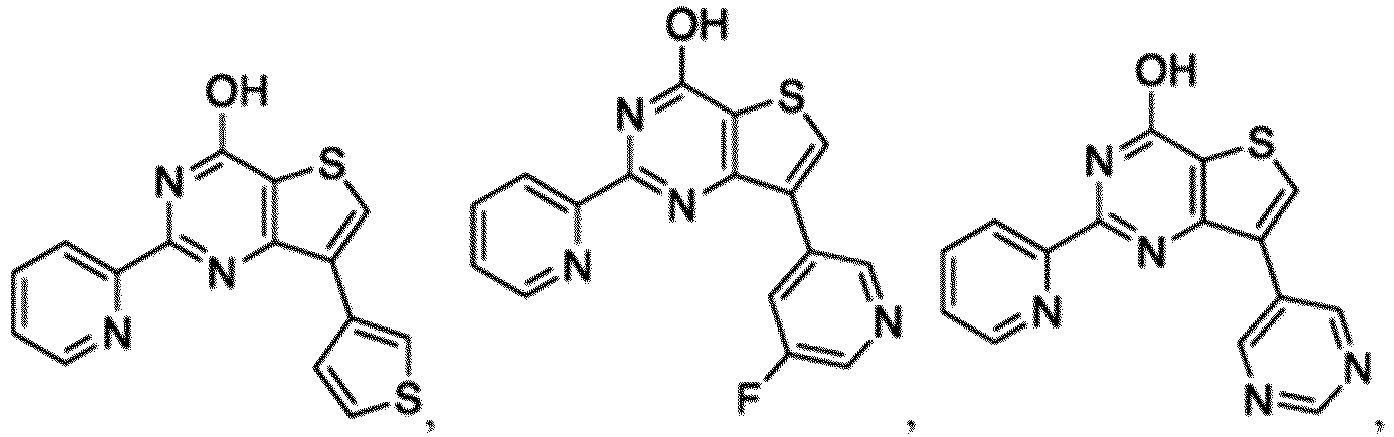


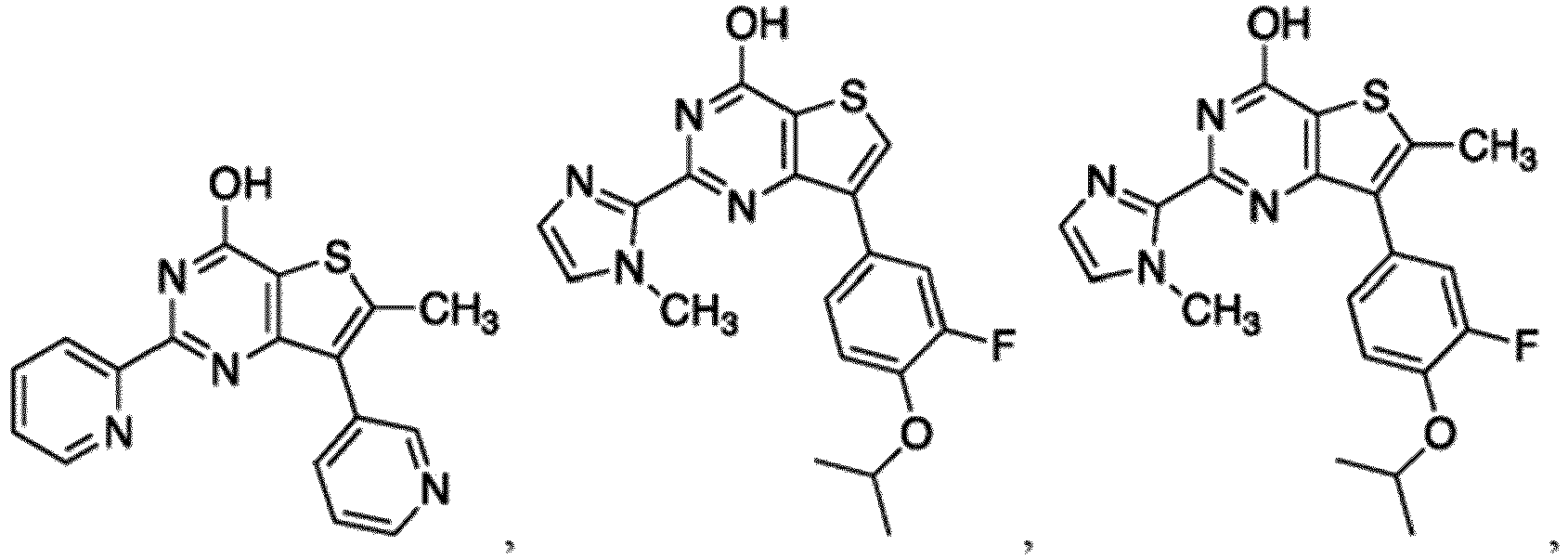

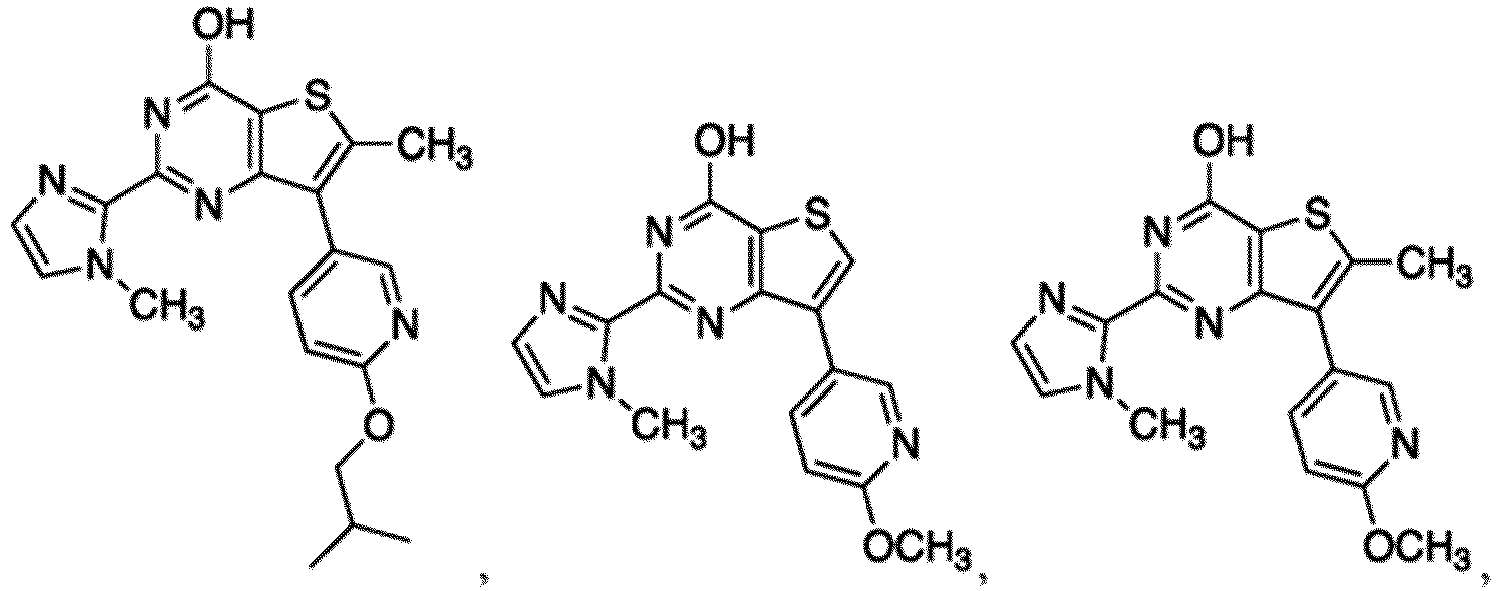


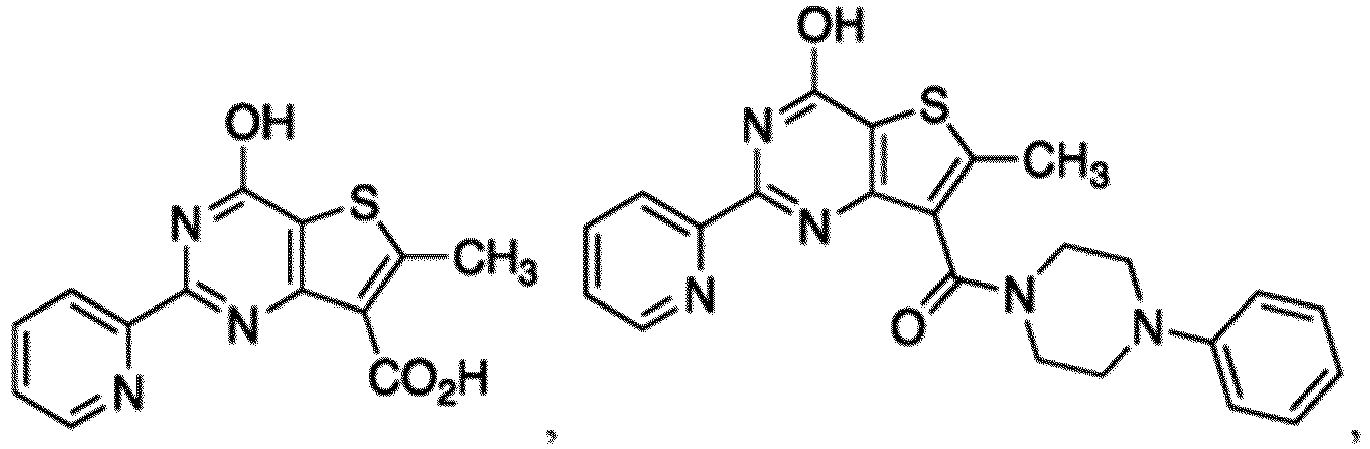


- Verbindung oder pharmazeutisch annehmbares Salz davon, wobei die Verbindung aus der Gruppe ausgewählt ist, die besteht aus:


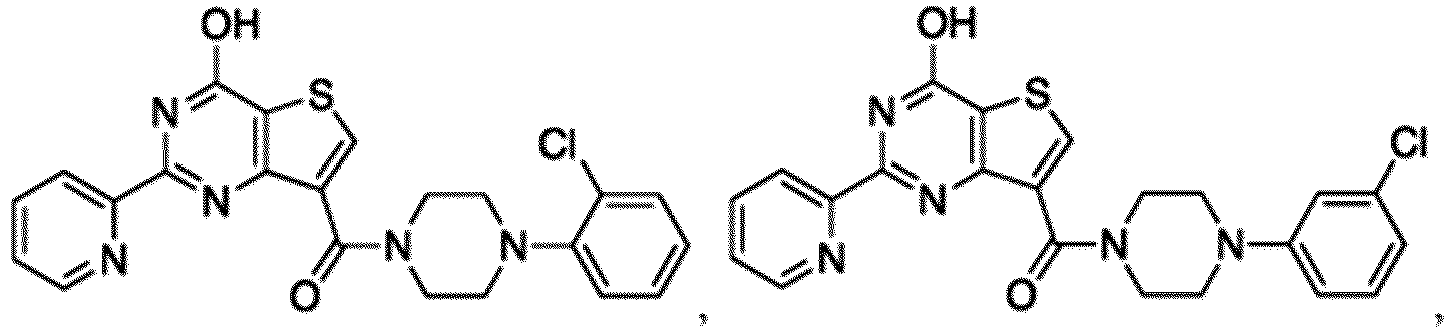


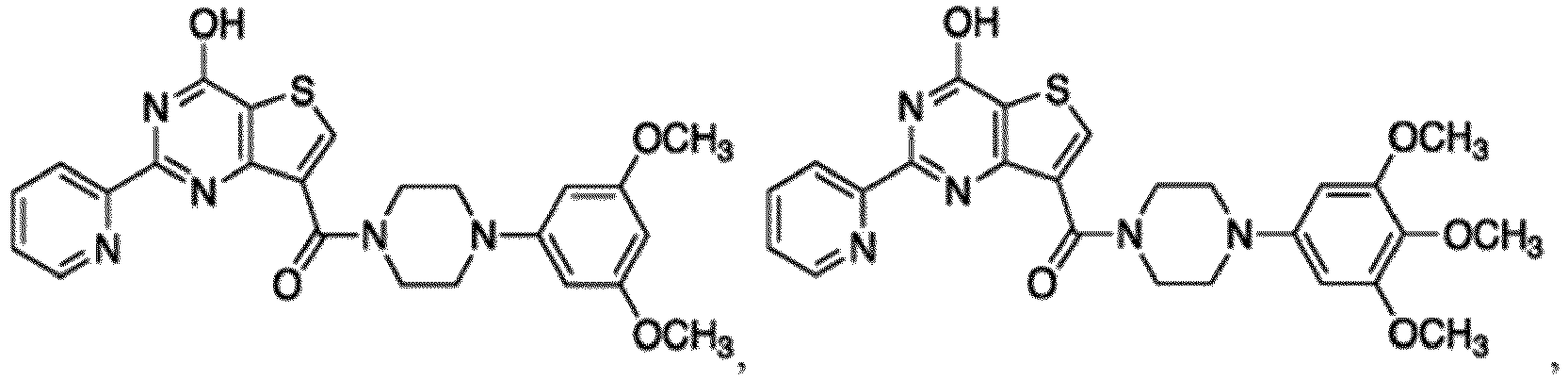


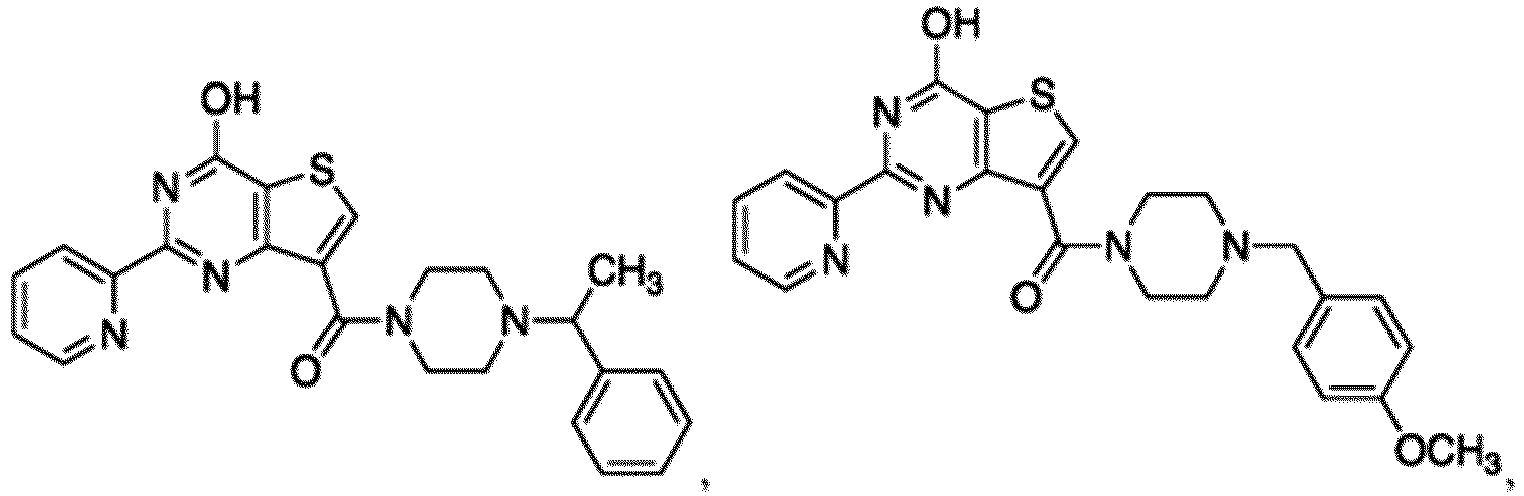


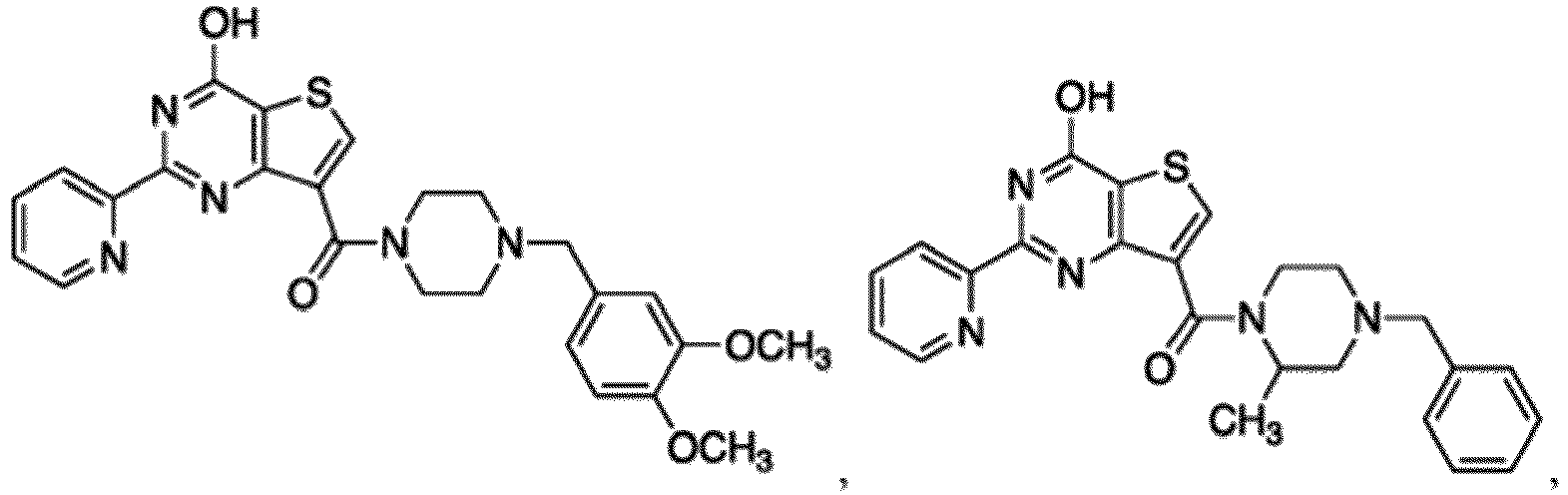

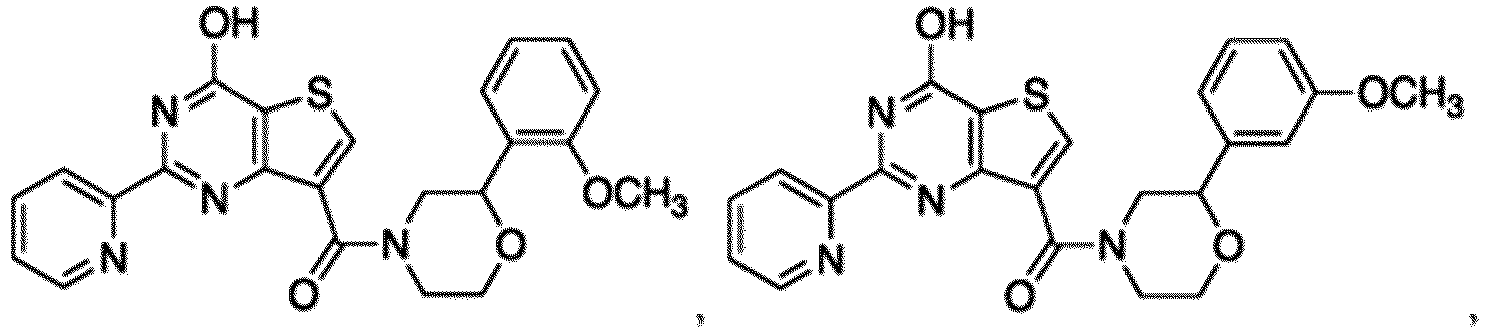

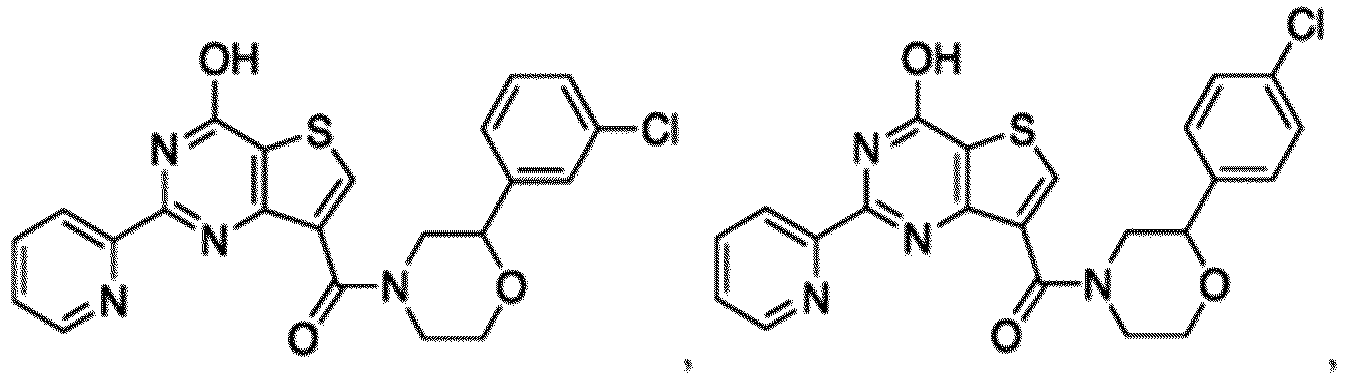


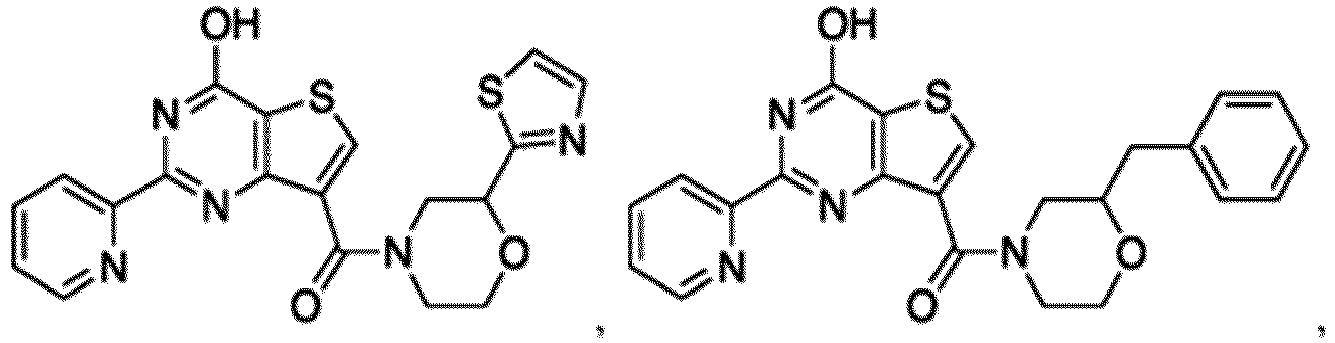


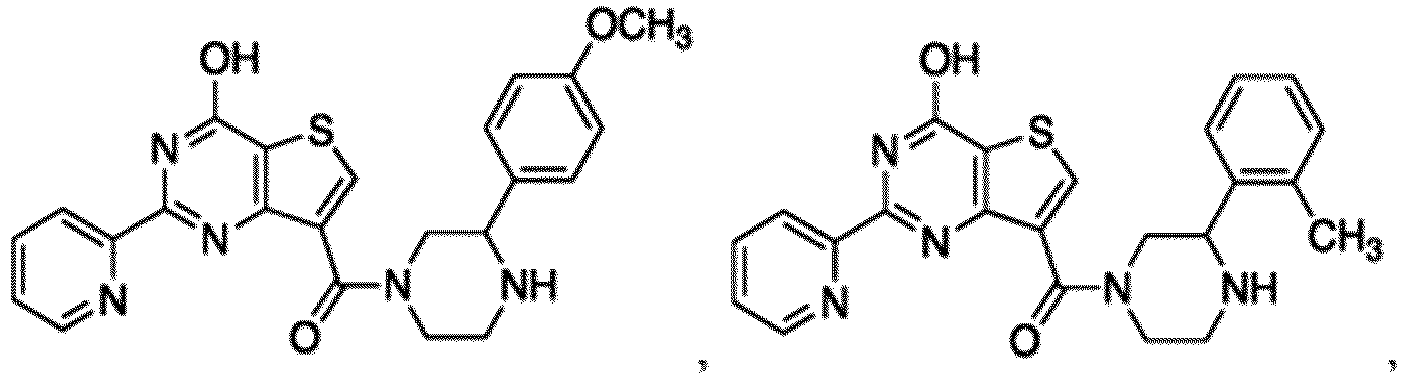
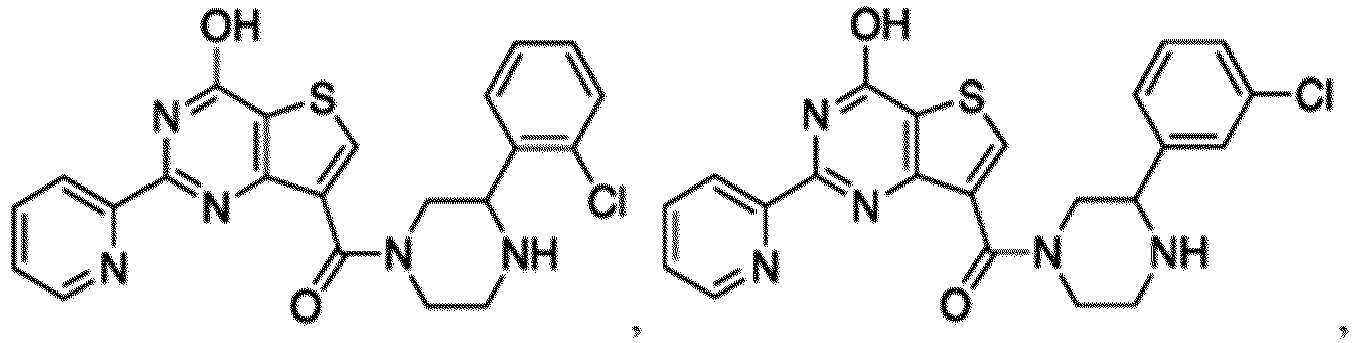


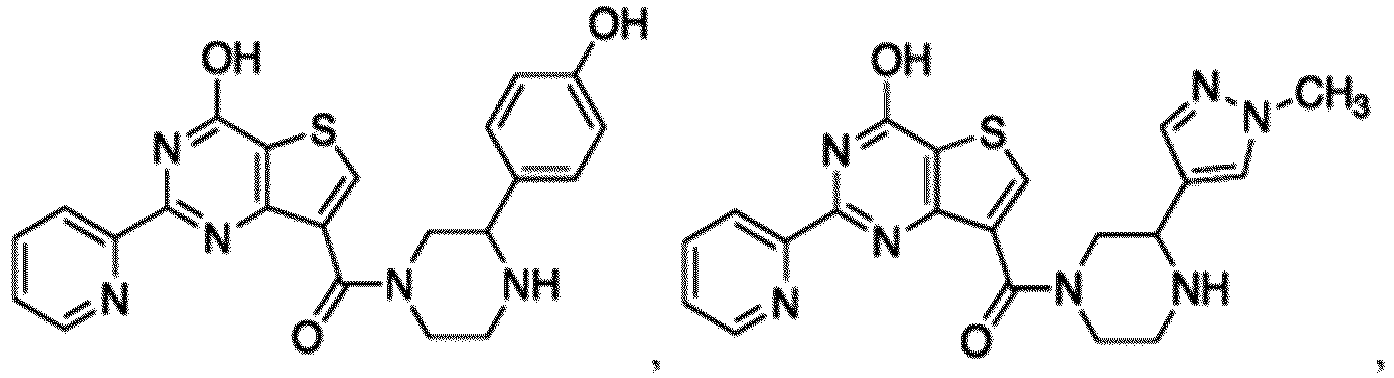


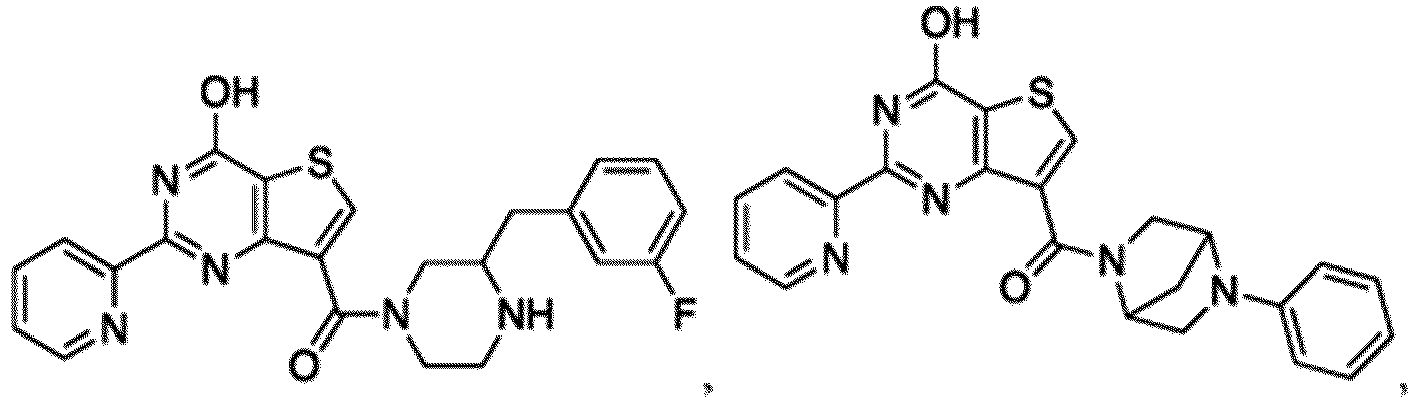

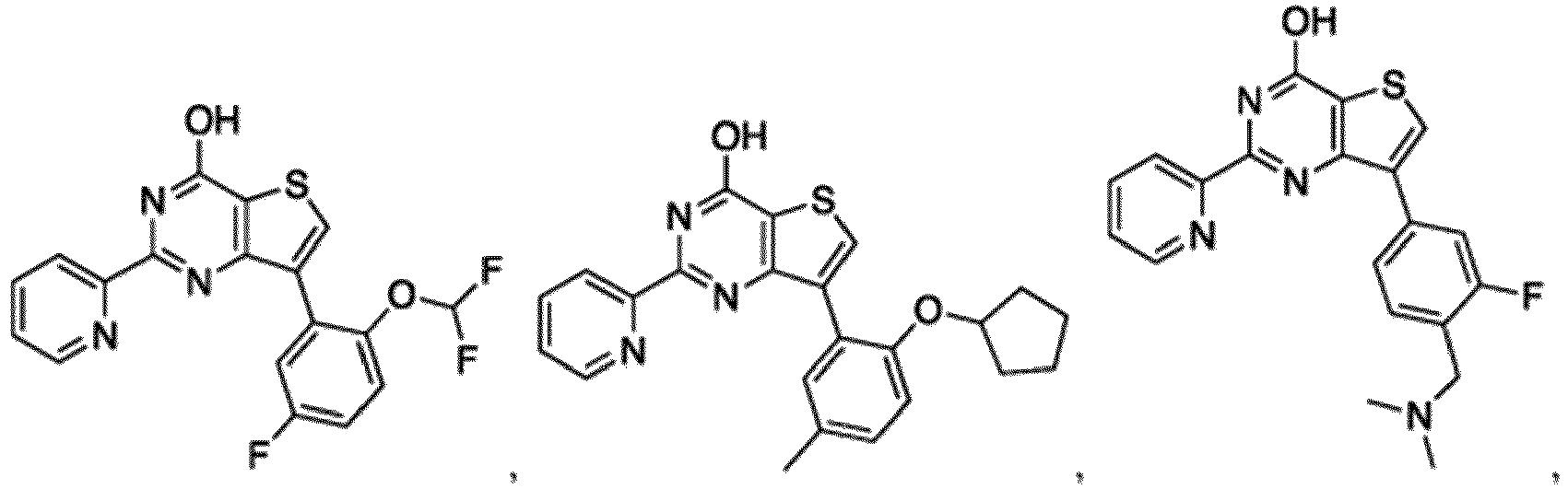


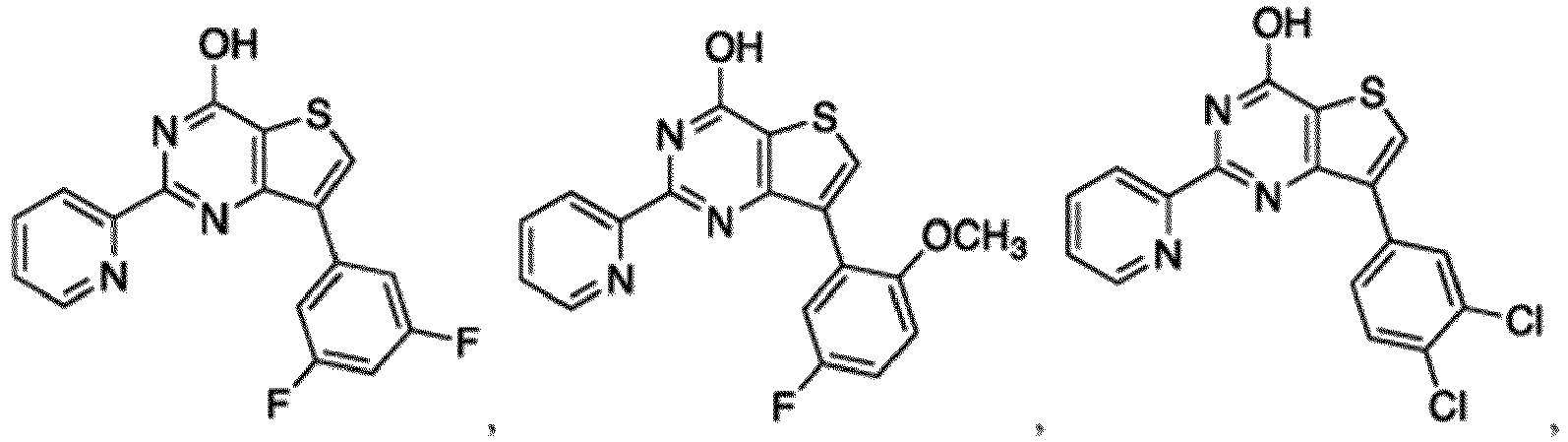


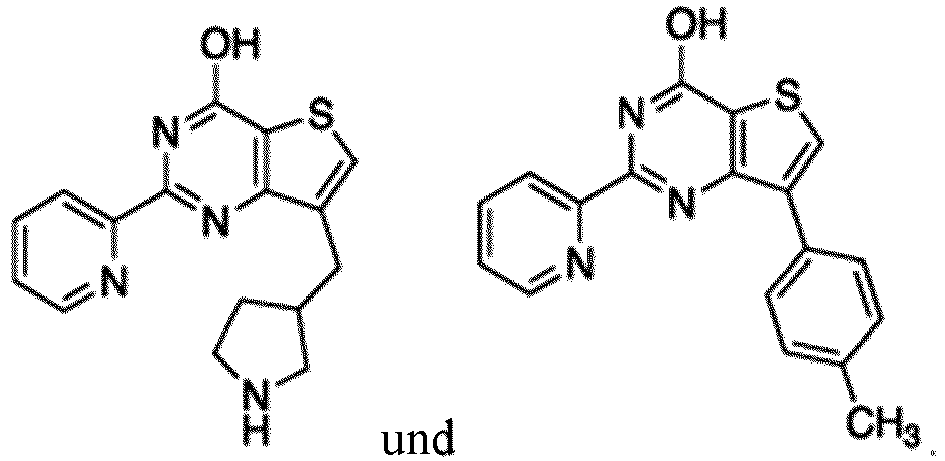
- Pharmazeutische Zusammensetzung, umfassend die Verbindung oder das pharmazeutisch annhembaren Salz davon nach einem der Ansprüche 1-7 und einen pharmazeutisch annehmbaren Träger, Verdünner oder Hilfsstoff.
- Verbindung zur Verwendung in einem Verfahren, das die Funktion eines oder mehrerer Mitglieder der Ras-Superfamilie hemmt, umfassend das Verabreichen der Verbindung oder eines pharmazeutisch annehmbaren Salzes davon nach einem der Ansprüche 1-7 an ein Individuum, wobei die/das verabreichte Verbindung oder pharmazeutisch akzeptable Salz davon nach einem Ansprüche 1-7 die Funktion eines oder mehrerer Mitglieder der Ras-Superfamilie hemmt.
- Verbindung zur Verwendung nach Anspruch 9, wobei das Individuum Krebs, eine Entzündungserkrankung, Rasopathie oder eine fibrotische Erkrankung hat.
- Verbindung zur Verwendung nach Anspruch 10, wobei das Hemmen der Funktion eines oder mehrerer Mitglieder der Ras-Superfamilie eine Behandlung, Vorbeugung oder Verbesserung eines oder mehrerer Symptome von Krebs, einer Entzündungserkrankung, Rasopathie oder einer fibrotischen Erkrankung in dem Individuum ist.
- Verbindung zur Verwendung nach Anspruch 10 oder Anspruch 11, wobei der Krebs ein Blutkrebs, hepatozelluläres Karzinom, Prostatakrebs, Bauchspeicheldrüsenkrebs, Lungenkrebs, Eierstockkrebs, Kolonkrebs, Dünndarmkrebs, Gallenkrebs, Endometriumkrebs, Hautkrebs (Melanom), Gebärmutterhalskrebs, Hamwegskrebs oder Glioblastom ist.
- Verbindung zur Verwendung nach Anspruch 10 oder Anspruch 11, wobei die Entzündungserkrankung Gastritis, Schistosomiasis, Cholangitis, chronische Cholezystitis, Unterleibsentzündung, chronische Zervizitis, Osteomyelitis, chronischentzündliche Darmerkrankung, gastroösophagealer Reflux, Barrett-Ösophagus, Blasenentzündung (Zystitis), Asbestose, Silikose, Gingivitis, Lichen planus, Pankreatitis, Protease-Mutation, Lichen sclerosus, Sialadenitis, Bronchitis, Sjögren-Syndrom, Hashimoto-Thyreoiditis, Alzheimer-Krankheit (AD), Spondylitis ankylosans, Arthritis (Osteoarthritis, rheumatoide Arthritis (RA), Psoriasisarthritis), Asthma, Atherosklerose, Crohn-Krankheit, Kolitis, Dermatitis, Divertikulitis, Fibromyalgie, Hepatitis, Reizdarmsyndrom (IBS), systemischer Lupus, Erythem (SLE), Nephritis, Parkinson-Krankheit oder Colitis ulcerosa ist.
- Verbindung zur Verwendung nach Anspruch 10 oder Anspruch 11, wobei die Rasopathie eine Neurofibromatose Typ 1, Noonan-Syndrom oder Costello-Syndrom ist.
- Verbindung zur Verwendung nach einem der Ansprüche 9-14, wobei das eine oder die mehreren Mitglieder der Ras-Superfamilie Ras-Protein ist.
- Verbindung nach Anspruch 15, wobei die Verbindung GTP-Bindung an die Ras-Protein-GTP-Bindungsdomäne mit mehr als 25% Hemmung bei 20 µM in einer zellfreien Probe hemmt.
- Verbindung nach Anspruch 16, wobei das Ras-Protein HRAS, KRAS oder NRAS oder ein Mutant davon ist.
Priority Applications (1)
| Application Number | Priority Date | Filing Date | Title |
|---|---|---|---|
| EP23208313.9A EP4331679A3 (de) | 2017-06-21 | 2018-06-20 | Mit der ras-superfamilie interagierende verbindungen zur behandlung von krebs, entzündlichen erkrankungen, rasopathien und fibrotischen erkrankungen |
Applications Claiming Priority (2)
| Application Number | Priority Date | Filing Date | Title |
|---|---|---|---|
| US201762523114P | 2017-06-21 | 2017-06-21 | |
| PCT/US2018/038613 WO2018237084A1 (en) | 2017-06-21 | 2018-06-20 | COMPOUNDS INTERACTING WITH RAS SUPERFAMIL FOR USE IN THE TREATMENT OF CANCERS, INFLAMMATORY DISEASES, RASOPATHIES AND FIBROTIC DISEASES |
Related Child Applications (1)
| Application Number | Title | Priority Date | Filing Date |
|---|---|---|---|
| EP23208313.9A Division EP4331679A3 (de) | 2017-06-21 | 2018-06-20 | Mit der ras-superfamilie interagierende verbindungen zur behandlung von krebs, entzündlichen erkrankungen, rasopathien und fibrotischen erkrankungen |
Publications (2)
| Publication Number | Publication Date |
|---|---|
| EP3642209A1 EP3642209A1 (de) | 2020-04-29 |
| EP3642209B1 true EP3642209B1 (de) | 2023-11-29 |
Family
ID=62904595
Family Applications (2)
| Application Number | Title | Priority Date | Filing Date |
|---|---|---|---|
| EP18740405.8A Active EP3642209B1 (de) | 2017-06-21 | 2018-06-20 | Mit der ras-superfamilie interagierende verbindungen zur behandlung von krebs, entzündlichen erkrankungen, rasopathien und fibrotischen erkrankungen |
| EP23208313.9A Pending EP4331679A3 (de) | 2017-06-21 | 2018-06-20 | Mit der ras-superfamilie interagierende verbindungen zur behandlung von krebs, entzündlichen erkrankungen, rasopathien und fibrotischen erkrankungen |
Family Applications After (1)
| Application Number | Title | Priority Date | Filing Date |
|---|---|---|---|
| EP23208313.9A Pending EP4331679A3 (de) | 2017-06-21 | 2018-06-20 | Mit der ras-superfamilie interagierende verbindungen zur behandlung von krebs, entzündlichen erkrankungen, rasopathien und fibrotischen erkrankungen |
Country Status (14)
| Country | Link |
|---|---|
| US (9) | US10588894B2 (de) |
| EP (2) | EP3642209B1 (de) |
| JP (3) | JP7514005B2 (de) |
| KR (1) | KR102736865B1 (de) |
| CN (1) | CN111032662B (de) |
| AU (2) | AU2018288841B2 (de) |
| BR (1) | BR112019027640A2 (de) |
| CA (1) | CA3066939A1 (de) |
| EA (1) | EA201992780A1 (de) |
| IL (2) | IL271230B2 (de) |
| MA (1) | MA49458A (de) |
| MX (3) | MX2019014875A (de) |
| SG (1) | SG11201911929XA (de) |
| WO (1) | WO2018237084A1 (de) |
Families Citing this family (58)
| Publication number | Priority date | Publication date | Assignee | Title |
|---|---|---|---|---|
| CN105793255B (zh) | 2013-10-04 | 2018-11-16 | 无限药品股份有限公司 | 杂环化合物及其用途 |
| MX382033B (es) | 2014-03-19 | 2025-03-13 | Infinity Pharmaceuticals Inc | Compuestos heterocíclicos para utilizarlos en el tratamiento de trastornos mediados por pi3k-gamma. |
| US10160761B2 (en) | 2015-09-14 | 2018-12-25 | Infinity Pharmaceuticals, Inc. | Solid forms of isoquinolinones, and process of making, composition comprising, and methods of using the same |
| CN109311868B (zh) | 2015-12-22 | 2022-04-01 | 尚医治疗有限责任公司 | 用于治疗癌症和炎性疾病的化合物 |
| EP3642209B1 (de) | 2017-06-21 | 2023-11-29 | Shy Therapeutics LLC | Mit der ras-superfamilie interagierende verbindungen zur behandlung von krebs, entzündlichen erkrankungen, rasopathien und fibrotischen erkrankungen |
| US11439608B2 (en) | 2017-09-25 | 2022-09-13 | Qun Lu | Roles of modulators of intersectin-CDC42 signaling in Alzheimer's disease |
| KR20210039368A (ko) * | 2018-07-26 | 2021-04-09 | 도메인 테라퓨틱스 | 치환된 퀴나졸리논 유도체 및 mGluR4의 양성 알로스테릭 조절인자로서의 이의 용도 |
| US11098056B2 (en) | 2018-10-01 | 2021-08-24 | Genzyme Corporation | UDP glycosyltransferase inhibitors and methods of use |
| IL282021B2 (en) | 2018-10-05 | 2025-04-01 | Annapurna Bio Inc | Compounds and compositions for treating conditions associated with APJ receptor activity |
| US12509455B2 (en) | 2018-11-07 | 2025-12-30 | Dana-Farber Cancer Institute, Inc. | Imidazopyridine derivatives and aza-imidazopyridine derivatives as Janus kinase 2 inhibitors and uses thereof |
| WO2020097396A1 (en) | 2018-11-07 | 2020-05-14 | Dana-Farber Cancer Institute, Inc. | Benzimidazole derivatives and aza-benzimidazole derivatives as janus kinase 2 inhibitors and uses thereof |
| EP3876939A4 (de) | 2018-11-07 | 2022-08-10 | Dana-Farber Cancer Institute, Inc. | Benzothiazolderivate und 7-aza-benzothiazol-derivate als inhibitoren der janus-kinase-2 und verwendungen davon |
| US12172990B2 (en) | 2018-12-06 | 2024-12-24 | Constellation Pharmaceuticals, Inc. | Modulators of TREX1 |
| EP3898609A1 (de) | 2018-12-19 | 2021-10-27 | Shy Therapeutics LLC | Mit der ras-superfamilie interagierende verbindungen zur behandlung von krebs, entzündlichen erkrankungen, rasopathien und fibrotischen erkrankungen |
| US11390626B2 (en) * | 2019-01-29 | 2022-07-19 | Tosk, Inc. | Pyrazolopyrimidine modulators of RAS GTPase |
| WO2020168927A1 (zh) * | 2019-02-19 | 2020-08-27 | 四川科伦博泰生物医药股份有限公司 | 含氮并环化合物、其制备方法及用途 |
| US12528796B2 (en) | 2019-04-15 | 2026-01-20 | Tosk, Inc. | Modulators of RAS GTPase |
| US20220226335A1 (en) * | 2019-04-24 | 2022-07-21 | The Governors Of The University Of Alberta | Non-Peptidic Heterocycle-Containing Compounds for the Treatment of Alzheimer?s Disease |
| US20220227738A1 (en) * | 2019-05-20 | 2022-07-21 | California Institute Of Technology | Kras g12c inhibitors and uses thereof |
| WO2020259573A1 (zh) * | 2019-06-25 | 2020-12-30 | 南京明德新药研发有限公司 | 作为kras g12c突变蛋白抑制剂的七元杂环类衍生物 |
| CN114286677B (zh) * | 2019-09-04 | 2025-01-10 | 新加坡科技研究局 | 作为β-连环蛋白/TCF4相互作用调节剂的杂环化合物 |
| US12122787B2 (en) | 2019-09-20 | 2024-10-22 | Shanghai Jemincare Pharmaceuticals Co., Ltd | Fused pyridone compound, and preparation method therefor and use thereof |
| WO2021116389A1 (en) * | 2019-12-13 | 2021-06-17 | Institut National De La Sante Et De La Recherche Medicale (Inserm) | Epac1 inhibitors for the treatment of idiopathic pulmonary fibrosis |
| WO2021191236A1 (en) * | 2020-03-27 | 2021-09-30 | R.G.C.C. Holdings AG | Nucleotide analogues for the treatment of coronaviruses |
| WO2021207530A1 (en) * | 2020-04-08 | 2021-10-14 | Remix Therapeutics Inc. | Compounds and methods for modulating splicing |
| MX2022013518A (es) * | 2020-04-28 | 2023-02-01 | Global Blood Therapeutics Inc | Pirimidinas cicloalquiladas como inhibidores de la ferroportina. |
| CA3181537A1 (en) | 2020-05-06 | 2021-11-11 | Ajax Therapeutics, Inc. | 6-heteroaryloxy benzimidazoles and azabenzimidazoles as jak2 inhibitors |
| EP4149929B1 (de) * | 2020-05-12 | 2026-01-28 | Bayer Aktiengesellschaft | Triazin- und pyrimidin(thio)amide als fungizide verbindungen |
| EP4157821A1 (de) * | 2020-05-27 | 2023-04-05 | Constellation Pharmaceuticals, Inc. | Substituierte benzamide als trex1-modulatoren |
| AU2021288584A1 (en) * | 2020-06-09 | 2023-01-19 | Anima Biotech Inc. | Collagen 1 translation inhibitors and methods of use thereof |
| TW202214253A (zh) | 2020-06-18 | 2022-04-16 | 美商銳新醫藥公司 | 延遲、預防及治療對ras抑制劑之後天抗性之方法 |
| US20230227466A1 (en) | 2020-06-18 | 2023-07-20 | Shy Therapeutics, Llc | Substituted thienopyrimidines that interact with the ras superfamily for the treatment of cancers, inflammatory diseases, rasopathies, and fibrotic disease |
| CN111996251B (zh) * | 2020-06-19 | 2024-03-26 | 皖南医学院第一附属医院(皖南医学院弋矶山医院) | 一种恶性胶质瘤生物标志物的应用 |
| AU2021344830A1 (en) | 2020-09-03 | 2023-04-06 | Revolution Medicines, Inc. | Use of SOS1 inhibitors to treat malignancies with SHP2 mutations |
| US12180220B2 (en) | 2020-10-14 | 2024-12-31 | Tosk, Inc. | Heteroaryl modulators of RAS GTPase |
| CN116723845A (zh) * | 2020-11-02 | 2023-09-08 | 特雷西拉公司 | 脱氧胞苷激酶抑制剂的结晶形式及其用途 |
| JP2023548605A (ja) * | 2020-11-02 | 2023-11-17 | トレセラ コーポレーション | デオキシシチジンキナーゼ阻害剤の結晶形態およびその使用 |
| EP4267574B1 (de) | 2020-12-23 | 2025-04-23 | Ajax Therapeutics, Inc. | 6-heteroaryloxybenzimidazole und azabenzimidazole als jak2-inhibitoren |
| WO2022164997A1 (en) * | 2021-01-27 | 2022-08-04 | Shy Therapeutics, Llc | Methods for the treatment of fibrotic disease |
| IL305099A (en) * | 2021-02-12 | 2023-10-01 | Scripps Research Inst | Small molecule activators of yap transcriptional activity for regenerative organ repair |
| CA3213709A1 (en) * | 2021-04-09 | 2022-10-13 | Wei Zhu | Ubiquitin-specific protease 1 (usp1) inhibitor |
| CN114452286A (zh) * | 2021-07-23 | 2022-05-10 | 上海交通大学医学院附属新华医院 | Ral抑制剂防治骨关节炎 |
| US12162881B2 (en) | 2021-11-09 | 2024-12-10 | Ajax Therapeutics, Inc. | Forms and compositions of inhibitors of JAK2 |
| WO2023086319A1 (en) | 2021-11-09 | 2023-05-19 | Ajax Therapeutics, Inc. | 6-he tero aryloxy benzimidazoles and azabenzimidazoles as jak2 inhibitors |
| JP2024543477A (ja) | 2021-11-12 | 2024-11-21 | インシリコ メディシン アイピー リミテッド | ユビキチン特異的プロテアーゼ1(usp1)の小分子阻害剤及びその使用 |
| PE20241234A1 (es) * | 2021-11-12 | 2024-06-19 | Insilico Medicine Ip Ltd | Inhibidores de molecula pequena de proteasa especifica de ubiquitina 1 (usp1) y usos de los mismos |
| KR102665711B1 (ko) * | 2021-12-21 | 2024-05-14 | 재단법인 아산사회복지재단 | Ras 활성도를 이용한 신경섬유종증 치료제에 대한 감수성 예측용 바이오마커 조성물 및 Ras 활성 억제제를 포함하는 신경섬유종증 예방 또는 치료용 약학적 조성물 |
| PT4514782T (pt) | 2022-05-19 | 2025-12-15 | Astrazeneca Ab | Compostos amido heteroaromáticos úteis no tratamento de doenças hepáticas |
| CN114959012B (zh) * | 2022-05-30 | 2023-04-07 | 北京医院 | 用于检测肌腱损伤的产品 |
| CN115043851B (zh) * | 2022-08-15 | 2023-01-06 | 山东第一医科大学第一附属医院(山东省千佛山医院) | 一种噻吩[2,3-d]嘧啶类杂环化合物及其制备方法和应用 |
| EP4342467A1 (de) * | 2022-09-20 | 2024-03-27 | Masarykova Univerzita | Ku-hemmer zur verwendung in der tumortherapie |
| EP4420661B1 (de) * | 2023-02-24 | 2025-03-26 | Universidade de Santiago de Compostela | Gegen glycoprotein vi gerichtete kleine moleküle als thrombozytenaggregationshemmer zur verwendung bei der vorbeugung und/oder behandlung von thrombose und zugehörigen erkrankungen |
| CN117551057A (zh) * | 2023-03-24 | 2024-02-13 | 浙江海正药业股份有限公司 | 苯并环类衍生物及其制备方法和用途 |
| WO2025017207A1 (en) * | 2023-07-20 | 2025-01-23 | Cemm - Forschungszentrum Für Molekulare Medizin Gmbh | Inhibitors of smndc1 and their therapeutic use |
| CN117126072B (zh) * | 2023-08-24 | 2025-12-30 | 中国药科大学 | 一种含酯链pd-1/pd-l1小分子抑制剂及其制备方法和应用 |
| TW202543611A (zh) * | 2024-03-27 | 2025-11-16 | 美商費斯製藥有限公司 | Hpd抑制劑組成物及使用方法 |
| WO2025215450A1 (en) * | 2024-04-08 | 2025-10-16 | Sk Biopharmaceuticals Co., Ltd. | Thiazole compounds as sodium channel blockers |
| WO2025254394A1 (ko) * | 2024-06-05 | 2025-12-11 | 연세대학교 산학협력단 | Slc1a5 변이체 미토콘드리아 글루타민 수송체의 억제제를 포함하는 항암용 조성물 |
Family Cites Families (210)
| Publication number | Priority date | Publication date | Assignee | Title |
|---|---|---|---|---|
| DE295381C (de) | ||||
| DE1470356A1 (de) | 1964-01-15 | 1970-04-30 | Thomae Gmbh Dr K | Neue Thieno[3,2-d]pyrimidine und Verfahren zu ihrer Herstellung |
| DE2050816A1 (de) | 1970-10-16 | 1972-04-20 | Dr. Karl Thomae Gmbh, 7950 Biberach | Neue 2-(Nitro-2-furyl>thieno eckige Klammer auf 3,2-d eckige Klammer zu pyrimidine |
| DE2050815A1 (de) | 1970-10-16 | 1972-04-20 | Dr. Karl Thomae Gmbh, 7950 Biberach | Neue 2-(5-Nitro-2-furyl)-thieno eckige Klammer auf 3,2-d eckige Klammer zu pyrimidine |
| DE2050814A1 (de) | 1970-10-16 | 1972-04-20 | Dr. Karl Thomae Gmbh, 7950 Biberach | Neue Verfahren zur Herstellung von 2-(5-Nitro-2-furyl)-thieno eckige Klammer auf 3,2-d eckige Klammer zu pyrimidinen |
| DE1959403A1 (de) | 1969-11-26 | 1971-06-03 | Thomae Gmbh Dr K | Neue 2-(5-Nitro-2-furyl)-thieno[3,2-d]pyrimidine und Verfahren zu ihrer Herstellung |
| DE1959402A1 (de) | 1969-11-26 | 1971-06-03 | Thomae Gmbh Dr K | Neue 2-(5-Nitro-2-furyl)-4-oxi-thieno[3,2-d]pyrimidine und Verfahren zu ihrer Herstellung |
| DE2039662A1 (de) | 1970-08-10 | 1972-02-17 | Thomae Gmbh Dr K | Neue 2-(5-Nitro-2-furyl)-vinyl-thieno-[3,2-d]pyrimide |
| JPS5659778A (en) | 1979-10-23 | 1981-05-23 | Showa Denko Kk | Dimethylthienopyrimidione derivative |
| IT1208123B (it) | 1983-04-19 | 1989-06-06 | Fondedile Spa | Colonna in conglomerato realizzata nel terreno in situ mediante immissione di materiali inerti durante la perforazione e contemporaneao successiva iniezione con opportuni leganti, procedimenti di esecuzione relativi |
| US5391485A (en) | 1985-08-06 | 1995-02-21 | Immunex Corporation | DNAs encoding analog GM-CSF molecules displaying resistance to proteases which cleave at adjacent dibasic residues |
| US4810643A (en) | 1985-08-23 | 1989-03-07 | Kirin- Amgen Inc. | Production of pluripotent granulocyte colony-stimulating factor |
| JPS63500636A (ja) | 1985-08-23 | 1988-03-10 | 麒麟麦酒株式会社 | 多分化能性顆粒球コロニー刺激因子をコードするdna |
| DE3888215T2 (de) | 1987-01-21 | 1994-09-08 | Merck & Co Inc | Piperazinylpyrimidine als beta-adrenergische Rezeptoren blockierende Mittel. |
| US5102877A (en) | 1989-04-28 | 1992-04-07 | Fujisawa Pharmaceutical Co., Ltd. | 1-azabicyclo[3.2.0]hept-2-ene-2-carboxylic acid compounds |
| GB8912335D0 (en) | 1989-05-30 | 1989-07-12 | Smithkline Beckman Intercredit | Compounds |
| DE3922735A1 (de) | 1989-07-11 | 1991-01-24 | Hoechst Ag | Aminopyrimidin-derivate, verfahren zu ihrer herstellung, sie enthaltende mittel und ihre verwendung als fungizide |
| DD295381A5 (de) | 1990-10-01 | 1991-10-31 | Karl-Marx-Universitaet Leipzig,De | Verfahren zur herstellung von 8-amino-pyrazolo/4',3':4,5/thieno/3,2-d/pyrimidin-4-onen |
| US5202328A (en) | 1991-03-06 | 1993-04-13 | Merck & Co., Inc. | Substituted fused pyrimidinones |
| JP2972843B2 (ja) | 1991-04-02 | 1999-11-08 | 工業技術院長 | 有機非線形光学材料 |
| US5223501A (en) | 1991-05-10 | 1993-06-29 | Merck & Co., Inc. | Substituted pyrimidinones bearing acidic functional groups as angiotensin ii antagonists |
| TW201311B (de) | 1991-06-17 | 1993-03-01 | Hoffmann La Roche | |
| AU2390792A (en) | 1991-08-05 | 1993-03-02 | Taisho Pharmaceutical Co., Ltd. | Thienopyrimidin-4-one derivative |
| US5187168A (en) | 1991-10-24 | 1993-02-16 | American Home Products Corporation | Substituted quinazolines as angiotensin II antagonists |
| DE69305587T2 (de) | 1992-07-17 | 1997-05-15 | Rohm & Haas | 2-substituierte Pyrimidine und ihre Verwendung als Herbizide |
| EP0665224A1 (de) | 1992-10-16 | 1995-08-02 | Nippon Soda Co., Ltd. | Pyrimidinderivate |
| US5360352A (en) | 1992-12-24 | 1994-11-01 | The Whitaker Corporation | Wire retainer for current mode coupler |
| US5679683A (en) * | 1994-01-25 | 1997-10-21 | Warner-Lambert Company | Tricyclic compounds capable of inhibiting tyrosine kinases of the epidermal growth factor receptor family |
| US5654037A (en) * | 1995-03-24 | 1997-08-05 | Apx International | Method of minimizing defects in painted composite material products |
| US6255310B1 (en) | 1996-02-07 | 2001-07-03 | Neurocrine Biosciences Inc. | Thiophenopyrimidines |
| ATE227293T1 (de) | 1996-05-15 | 2002-11-15 | Pfizer | 2,3-disubstituierte-(5,6)-heteroarylkondensiert - pyrimidin-4-one |
| DE69717453T2 (de) | 1996-06-06 | 2003-07-10 | Otsuka Pharmaceutical Factory, Inc. | Amid derivate |
| DE19632423A1 (de) * | 1996-08-12 | 1998-02-19 | Merck Patent Gmbh | Thienopyrimidine |
| DE19644228A1 (de) | 1996-10-24 | 1998-04-30 | Merck Patent Gmbh | Thienopyrimidine |
| AU3709897A (en) | 1996-11-28 | 1998-06-22 | Cheil Jedang Corporation | Cathecol derivatives and a method for the preparation thereof and a pharmaceutical composition containing the same |
| HUP0002239A3 (en) | 1997-05-08 | 2002-08-28 | Agrevo Uk Ltd Hauxton | The use of thienopyrimidine derivatives for combating fungi |
| DE69831446T2 (de) | 1997-06-09 | 2006-06-14 | Pfizer Prod Inc | Chinazolin-4-on AMPA Antagonisten |
| US6323208B1 (en) | 1997-09-05 | 2001-11-27 | Pfizer Inc | Atropisomers of 2,3-disubstituted-(5.6)-heteroaryl fused-pyrimidin-4-ones |
| IL125950A0 (en) | 1997-09-05 | 1999-04-11 | Pfizer Prod Inc | Methods of administering ampa receptor antagonists to treat dyskinesias associated with dopamine agonist therapy |
| GB9719411D0 (en) | 1997-09-12 | 1997-11-12 | Ciba Geigy Ag | New Pesticides |
| KR100446363B1 (ko) | 1997-11-11 | 2004-09-01 | 화이자 프로덕츠 인코포레이티드 | 항암제로 유용한 티에노피리미딘 및 티에노피리딘 유도체 |
| US20120046290A1 (en) | 1997-12-22 | 2012-02-23 | Jacques Dumas | Inhibition of p38 kinase activity using substituted heterocyclic ureas |
| US6187777B1 (en) | 1998-02-06 | 2001-02-13 | Amgen Inc. | Compounds and methods which modulate feeding behavior and related diseases |
| US6133271A (en) * | 1998-11-19 | 2000-10-17 | Cell Pathways, Inc. | Method for inhibiting neoplastic cells and related conditions by exposure thienopyrimidine derivatives |
| KR20010105399A (ko) | 1999-03-30 | 2001-11-28 | 쓰끼하시 다미까따 | 티에노피리미딘 화합물 및 그의 염, 및 그들의 제조 방법 |
| GB9915437D0 (en) | 1999-07-01 | 1999-09-01 | Cerebrus Ltd | Chemical compounds III |
| CN1186324C (zh) | 2000-04-27 | 2005-01-26 | 山之内制药株式会社 | 稠合杂芳基衍生物 |
| AR028782A1 (es) | 2000-07-05 | 2003-05-21 | Taisho Pharmaceutical Co Ltd | Derivados heterociclicos tetrahidropiridino o piperidino |
| JP4974437B2 (ja) | 2000-09-25 | 2012-07-11 | ジヤンセン・フアーマシユーチカ・ナームローゼ・フエンノートシヤツプ | ファルネシルトランスフェラーゼを阻害する6−[(置換フェニル)メチル]−キノリンおよびキナゾリン誘導体 |
| EP1329454A1 (de) | 2000-09-29 | 2003-07-23 | Nippon Soda Co., Ltd. | Thienopyrimidinverbindungen und deren salze sowie verfahren zu deren herstellung |
| GB0100620D0 (en) | 2001-01-10 | 2001-02-21 | Vernalis Res Ltd | Chemical cokpounds V |
| EP1254903B1 (de) | 2001-04-20 | 2005-06-08 | Ciba SC Holding AG | 4-Amino-2-(2-pyridinyl)pyrimidine als mikrobizide Wirksubstanzen |
| GB0124627D0 (en) | 2001-10-15 | 2001-12-05 | Smithkline Beecham Plc | Novel compounds |
| DE60218511T2 (de) | 2001-10-26 | 2007-10-25 | Istituto Di Richerche Di Biologia Molecolare P. Angeletti S.P.A. | Dihydroxypyrimidin-carbonsäueramid-hemmer der hiv-integrase |
| JPWO2003035653A1 (ja) | 2001-10-26 | 2005-02-10 | 日本曹達株式会社 | ピリドチエノピリミジン化合物およびその塩 |
| JP4597519B2 (ja) | 2001-12-06 | 2010-12-15 | メルク・シャープ・エンド・ドーム・コーポレイション | 有糸分裂キネシン阻害薬 |
| CA2472619A1 (en) | 2002-01-10 | 2003-07-24 | Bayer Corporation | Fused pyrimidine derivates as rho-kinase inhibitors |
| TW200401770A (en) | 2002-06-18 | 2004-02-01 | Sankyo Co | Fused-ring pyrimidin-4(3H)-one derivatives, processes for the preparation and uses thereof |
| WO2004037176A2 (en) | 2002-10-21 | 2004-05-06 | Bristol-Myers Squibb Company | Quinazolinones and derivatives thereof as factor xa inhibitors |
| WO2004065392A1 (en) | 2003-01-24 | 2004-08-05 | Smithkline Beecham Corporation | Condensed pyridines and pyrimidines and their use as alk-5 receptor ligands |
| TW200508224A (en) | 2003-02-12 | 2005-03-01 | Bristol Myers Squibb Co | Cyclic derivatives as modulators of chemokine receptor activity |
| US7148226B2 (en) | 2003-02-21 | 2006-12-12 | Agouron Pharmaceuticals, Inc. | Inhibitors of hepatitis C virus RNA-dependent RNA polymerase, and compositions and treatments using the same |
| US7345046B2 (en) | 2003-05-30 | 2008-03-18 | Chiron Corporation | Heteroaryl-fused pyrimidinyl compounds as anticancer agents |
| GB0315950D0 (en) | 2003-06-11 | 2003-08-13 | Xention Discovery Ltd | Compounds |
| CN1823071B (zh) * | 2003-06-11 | 2012-12-19 | 润生有限公司 | 用作钾通道抑制剂的噻吩并嘧啶衍生物 |
| US8309562B2 (en) | 2003-07-03 | 2012-11-13 | Myrexis, Inc. | Compounds and therapeutical use thereof |
| JP2006193426A (ja) | 2003-09-05 | 2006-07-27 | Sankyo Co Ltd | 置換された縮環ピリミジン−4(3h)−オン化合物 |
| MXPA06002618A (es) | 2003-09-09 | 2006-06-05 | Ono Pharmaceutical Co | Antagonistas del factor de liberacion de corticotropina (crf) y compuestos heterobiciclicos. |
| DE10351436A1 (de) * | 2003-11-04 | 2005-06-09 | Merck Patent Gmbh | Verwendung von Thienopyrimidinen |
| WO2005047293A1 (en) | 2003-11-07 | 2005-05-26 | Neurocrine Biosciences, Inc. | Melanin-concentrating hormone receptor antagonists and compositions and methods related thereto |
| WO2005082887A1 (ja) | 2004-02-26 | 2005-09-09 | Aska Pharmaceutical Co., Ltd. | ピリミジン誘導体 |
| DE602005020611D1 (de) | 2004-04-28 | 2010-05-27 | Vertex Pharma | Als inhibitoren von rock und anderen proteinkinasen geeignete zusammensetzungen |
| MXPA06012333A (es) | 2004-04-30 | 2007-01-17 | Takeda Pharmaceutical | Compuesto de amida heterociclico y uso del mismo como un inhibidor mmp-13. |
| US7683097B2 (en) | 2004-05-27 | 2010-03-23 | Propharmacon Inc. | Topoisomerase inhibitors |
| UY28931A1 (es) | 2004-06-03 | 2005-12-30 | Bayer Pharmaceuticals Corp | Derivados de pirrolotriazina utiles para tratar trastornos hiper-proliferativos y enfermedades asociadas con angiogenesis |
| US7598259B2 (en) | 2004-06-15 | 2009-10-06 | Schering Corporation | mGluR1 antagonists as therapeutic agents |
| WO2006040966A1 (ja) | 2004-10-08 | 2006-04-20 | Astellas Pharma Inc. | 芳香環縮合ピリミジン誘導体 |
| EP1805187A1 (de) | 2004-10-21 | 2007-07-11 | Pfizer, Inc. | Inhibitoren der hepatits-c-virus-protease und zusammensetzungen und behandlungen damit |
| GB0423653D0 (en) | 2004-10-25 | 2004-11-24 | Piramed Ltd | Pharmaceutical compounds |
| PT1838718E (pt) | 2005-01-10 | 2011-08-17 | Pfizer | Pirrolopirazoles, inibidores potentes da quinase |
| EP1881988A1 (de) | 2005-05-11 | 2008-01-30 | MERCK SHARP & DOHME LTD. | Die funktion des vanilloid-1-rezeptors (vr1) modulierende 2,3-substituierte fusionierte bicyclische pyrimidin-4(3h)-one |
| JP2008546843A (ja) | 2005-06-27 | 2008-12-25 | アムゲン インコーポレイティッド | 抗炎症性アリールニトリル化合物 |
| US7816351B2 (en) * | 2005-09-23 | 2010-10-19 | Equispharm Co., Ltd | 5,6-dimethylthieno[2,3-di] pyrimidine derivatives, the preparation method thereof and the pharmaceutical composition comprising the same for anti-virus |
| US20070213305A1 (en) | 2005-11-02 | 2007-09-13 | Cytovia, Inc. | N-alkyl-N-aryl-thienopyrimidin-4-amines and analogs as activators of caspases and inducers of apoptosis and the use thereof |
| US20070099877A1 (en) | 2005-11-02 | 2007-05-03 | Cytovia, Inc. | N-aryl-thienopyrimidin-4-amines and analogs as activators of caspases and inducers of apoptosis and the use thereof |
| PE20070855A1 (es) | 2005-12-02 | 2007-10-14 | Bayer Pharmaceuticals Corp | Derivados de 4-amino-pirrolotriazina sustituida como inhibidores de quinasas |
| US20090170834A1 (en) * | 2005-12-22 | 2009-07-02 | Prolexys Pharmaceuticals, Inc. | Fused Pyrimidones and Thiopyrimidones, and Uses Thereof |
| JP2009526794A (ja) | 2006-02-15 | 2009-07-23 | サノフィ−アベンティス | 新規なアミノアルコール置換アリールチエノピリミジノン、それらの製造方法及び薬剤としてそれらの使用 |
| WO2007102679A1 (en) * | 2006-03-06 | 2007-09-13 | Je Il Pharmaceutical Co., Ltd. | Novel thienopyrimidine derivatives or pharmaceutically acceptable salts thereof, process for the preparation thereof and pharmaceutical composition comprising the same |
| WO2007119361A1 (ja) * | 2006-03-17 | 2007-10-25 | Mitsubishi Gas Chemical Company, Inc. | キナゾリン-4-オン誘導体の製造方法 |
| EP2046799B1 (de) | 2006-04-26 | 2017-07-19 | Genentech, Inc. | Phosphoinositid-3-kinase hemmende verbindungen und sie enthaltende pharmazeutische zusammensetzungen |
| GB0608820D0 (en) | 2006-05-04 | 2006-06-14 | Piramed Ltd | Pharmaceutical compounds |
| WO2007139951A2 (en) | 2006-05-25 | 2007-12-06 | Synta Pharmaceuticals Corp. | Method for treating proliferative disorders associated with protooncogene products |
| AU2007258313A1 (en) | 2006-06-12 | 2007-12-21 | Vertex Pharmaceuticals Incorporated | Thienopyrimidines useful as modulators of ion channels |
| FR2904318B1 (fr) | 2006-07-27 | 2011-02-25 | Scras | Derives de pyrimidinone et leur utilisation comme medicament |
| US8492378B2 (en) | 2006-08-03 | 2013-07-23 | Takeda Pharmaceutical Company Limited | GSK-3β inhibitor |
| JPWO2008020622A1 (ja) | 2006-08-17 | 2010-01-07 | 杏林製薬株式会社 | 新規なチエノ[2,3−d]ピリミジン化合物 |
| EP2069359B1 (de) | 2006-08-21 | 2014-11-12 | Genentech, Inc. | Aza-benzothiophenylverbindungen und anwendungsverfahren dafür |
| ZA200901009B (en) | 2006-08-21 | 2010-05-26 | Genentech Inc | Aza-benzothiophenyl compounds and methods of use |
| CN101563349A (zh) | 2006-08-23 | 2009-10-21 | 神经能质公司 | 经卤烷基取代的嘧啶酮衍生物 |
| US20110144140A1 (en) | 2006-09-07 | 2011-06-16 | Eriksen Birgitte L | Pyridinyl-pyrimidine derivatives useful as potassium channel modulating agents |
| EP2094704A4 (de) | 2006-11-06 | 2010-12-08 | Neurogen Corp | Cis-cyclohexyl-substituierte pyrimidinon-derivate |
| CN101605797A (zh) | 2006-11-13 | 2009-12-16 | 伊莱利利公司 | 治疗炎症疾病和癌症的噻吩并嘧啶酮 |
| US7713966B2 (en) | 2006-11-20 | 2010-05-11 | Alantos Pharmaceuticals Holding, Inc. | Heterobicyclic metalloprotease inhibitors |
| RU2470936C2 (ru) | 2006-12-07 | 2012-12-27 | Дженентек, Инк. | Соединения-ингибиторы фосфоинозитид 3-киназы и способы применения |
| WO2008082840A1 (en) | 2006-12-29 | 2008-07-10 | Abbott Laboratories | Pim kinase inhibitors as cancer chemotherapeutics |
| US20090030196A1 (en) | 2006-12-29 | 2009-01-29 | Abbott Laboratories | Pim kinase inhibitors as cancer chemotherapeutics |
| WO2008082839A2 (en) | 2006-12-29 | 2008-07-10 | Abbott Laboratories | Pim kinase inhibitors as cancer chemotherapeutics |
| US20080161254A1 (en) | 2007-01-03 | 2008-07-03 | Virobay, Inc. | Hcv inhibitors |
| WO2008094909A2 (en) | 2007-01-29 | 2008-08-07 | Xenon Pharmaceuticals Inc. | Quinazolinone and fused pyrimidinone compounds and their use in treating sodium channel-mediated diseases or conditions |
| WO2008092862A1 (en) | 2007-01-30 | 2008-08-07 | Janssen Pharmaceutica N.V. | Bicyclic derivatives as ep4 agonists |
| WO2008092861A1 (en) | 2007-01-30 | 2008-08-07 | Janssen Pharmaceutica N.V. | Bicyclic derivatives as ep4 agonists |
| WO2008092860A1 (en) | 2007-01-30 | 2008-08-07 | Janssen Pharmaceutica N.V. | Bicyclic derivatives as ep4 agonists |
| EP2134716A1 (de) | 2007-04-18 | 2009-12-23 | Bristol-Myers Squibb Company | Pyrrolotriazin-kinasehemmer |
| US7906513B2 (en) | 2007-04-26 | 2011-03-15 | Enanta Pharmaceuticals, Inc. | Hydrazide-containing hepatitis C serine protease inhibitors |
| WO2008134397A1 (en) | 2007-04-26 | 2008-11-06 | Enanta Pharmaceuticals, Inc. | Aza-tripeptide hepatitis c serine protease inhibitors |
| EP2014663A1 (de) * | 2007-07-12 | 2009-01-14 | Bayer Schering Pharma AG | Thienopyrimidylamine als Modulatoren des EP2-Rezeptors |
| WO2009026241A1 (en) | 2007-08-23 | 2009-02-26 | Kalypsys, Inc. | Heterocyclic modulators of tgr5 |
| DE102007040243A1 (de) | 2007-08-25 | 2009-02-26 | Universität des Saarlandes | 17Beta-Hydroxysteriod-Dehydrogenase Typ1 Inhibitoren zur Behandlung hormonabhängiger Erkrankungen |
| DE102007051762A1 (de) | 2007-10-30 | 2009-05-07 | Bayer Healthcare Ag | Substituierte Pyrrolotriazine und ihre Verwendung |
| US20110124649A1 (en) | 2007-11-09 | 2011-05-26 | The Johns Hopkins University | Inhibitors of human methionine aminopeptidase 1 and methods of treating disorders |
| CA2709784A1 (en) | 2007-12-21 | 2009-07-09 | University Of Rochester | Method for altering the lifespan of eukaryotic organisms |
| AR070127A1 (es) | 2008-01-11 | 2010-03-17 | Novartis Ag | Pirrolo - pirimidinas y pirrolo -piridinas |
| BRPI0907729A2 (pt) | 2008-02-07 | 2015-07-14 | Virobay Inc | Métodos para tratar doenças mediadas pela catepsina b em um mamífero e para tratar um indivíduo diagnosticado tanto com hcv quanto com fribose em um mamífero |
| AR071069A1 (es) | 2008-03-26 | 2010-05-26 | Takeda Pharmaceutical | Derivados sustituidos de pirazol y su uso para la prevencion o el tratamiento de cancer |
| WO2009121036A2 (en) | 2008-03-27 | 2009-10-01 | Neurogen Corporation | Substituted aryl pyrimidinone derivatives |
| TWI389913B (zh) | 2008-09-08 | 2013-03-21 | Lg Life Sciences Ltd | 并合雜環化合物 |
| WO2010037765A2 (en) | 2008-10-03 | 2010-04-08 | Merck Serono S.A. | 4-morpholino-pyrido[3,2-d]pyrimidines |
| US20100093702A1 (en) | 2008-10-13 | 2010-04-15 | Barbay J Kent | METHYLENE AMINES OF THIENO[2,3-d]PYRIMIDINE AND THEIR USE AS ADENOSINE A2a RECEPTOR ANTAGONISTS |
| US20110135655A1 (en) | 2009-01-13 | 2011-06-09 | PHILADELPHIA HEALTH AND EDUCATION CORPORATION d/b/a Drexel University College of Medicine; | Role of PI3K p110 delta Signaling in Retroviral Infection and Replication |
| EP2424368B1 (de) | 2009-04-29 | 2014-12-31 | Locus Pharmaceuticals, Inc. | Pyrrolotriazinverbindungen |
| US8962639B2 (en) | 2009-05-29 | 2015-02-24 | Abbvie Inc. | Potassium channel modulators |
| MX2012000817A (es) | 2009-07-21 | 2012-05-08 | Gilead Calistoga Llc | Tratamiento para desordenes del higado con inhibidores pi3k. |
| IN2012DN00971A (de) | 2009-08-27 | 2015-04-10 | Merck Sharp & Dohme | |
| GEP20146202B (en) | 2010-02-17 | 2014-11-25 | Takeda Pharmaceuticals Co | Heteroaromatic aryl triazole derivatives as pde10a enzyme inhibitors |
| BR112012019635A2 (pt) * | 2010-02-22 | 2016-05-03 | Hoffmann La Roche | compostos inibidores de pirido[3,2-d] pirimidina pi3k delta e métodos de uso |
| US20120316184A1 (en) | 2010-02-24 | 2012-12-13 | Syngenta Crop Protection Llc | Novel microbicides |
| WO2012004900A1 (en) | 2010-07-09 | 2012-01-12 | Aska Pharmaceutical Co., Ltd. | Thienopyrimidine compounds |
| EP2611812A1 (de) | 2010-09-01 | 2013-07-10 | Ambit Biosciences Corporation | Thienopyridin- und thienopyrimidinverbindungen sowie verfahren zu ihrer verwendung |
| CA2812089C (en) | 2010-09-14 | 2020-02-18 | Exelixis Inc. | Inhibitors of pi3k-delta and methods of their use and manufacture |
| EA201391206A1 (ru) | 2011-02-18 | 2014-02-28 | Алексион Фарма Интернэшнл Сарл | Способы синтеза производных предшественника молибдоптерина z |
| GB201105659D0 (en) * | 2011-04-01 | 2011-05-18 | Xention Ltd | Compounds |
| EP2508184A1 (de) * | 2011-04-06 | 2012-10-10 | Æterna Zentaris GmbH | Pyridopyrazinderivate und ihre Verwendungen |
| US9328075B2 (en) | 2011-05-05 | 2016-05-03 | St. Jude Children's Research Hospital | Pyrimidinone compounds and methods for treating influenza |
| US9453021B2 (en) | 2011-05-10 | 2016-09-27 | Kyowa Hakko Kirin Co., Ltd. | Pyrimidodiazepinone compound |
| PT2710018T (pt) | 2011-05-19 | 2022-03-01 | Fundacion Del Sector Publico Estatal Centro Nac De Investigaciones Oncologicas Carlos Iii F S P Cnio | Compostos macrocíclicos como inibidores de proteína quinases |
| EP2714665A1 (de) | 2011-05-24 | 2014-04-09 | Università degli Studi di Bari "Aldo Moro" | Neue 1-arylpiperazin-liganden desn 5-ht7 rezeptors und ihre verwendung |
| MX2014000536A (es) | 2011-07-13 | 2014-12-05 | Novartis Ag | Compuestos de 4-piperidinilo para usarse como inhibidores de tanquirasa. |
| SG11201400310WA (en) * | 2011-08-29 | 2014-06-27 | Infinity Pharmaceuticals Inc | Heterocyclic compounds and uses thereof |
| AR090037A1 (es) * | 2011-11-15 | 2014-10-15 | Xention Ltd | Derivados de tieno y/o furo-pirimidinas y piridinas inhibidores de los canales de potasio |
| EP3048106B1 (de) * | 2011-11-23 | 2019-11-06 | Cancer Research Technology Limited | Thienopyrimidinverbindungen als inhibitoren von atypischer proteinkinase c |
| UY34484A (es) | 2011-12-15 | 2013-07-31 | Bayer Ip Gmbh | Benzotienilo-pirrolotriazinas disustituidas y sus usos |
| US8940742B2 (en) | 2012-04-10 | 2015-01-27 | Infinity Pharmaceuticals, Inc. | Heterocyclic compounds and uses thereof |
| US9695133B2 (en) | 2012-07-13 | 2017-07-04 | The Trustees Of Columbia University In The City Of New York | Quinazolinone-based oncogenic-RAS-selective lethal compounds and their use |
| US9566310B2 (en) | 2012-09-10 | 2017-02-14 | Board Of Regents Of The Nevada System Of Higher Education On Behalf Of The University Of Nevada, Reno | Methods of treating muscular dystrophy |
| US20150291590A1 (en) | 2012-09-17 | 2015-10-15 | Cellixbio Private Limited | Compositions and methods for the treatment of metabolic diseases |
| WO2014045039A2 (en) | 2012-09-21 | 2014-03-27 | Cancer Research Technology Limited | Identification of protein kinase substrates |
| KR101446680B1 (ko) | 2013-02-08 | 2014-10-07 | 한국과학기술연구원 | mGluR1 길항제로 작용하는 사이에노피리미디논 유도체 |
| UY35332A (es) | 2013-02-15 | 2014-11-28 | Almirall Sa | Derivados de pirrolotriazina como inhibidores de pi3k |
| KR20150128768A (ko) | 2013-03-07 | 2015-11-18 | 글락소스미스클라인 엘엘씨 | 시르투인 조절제로서의 티에노[3,2-d]피리미딘-6-카르복스아미드 및 유사체 |
| US9050345B2 (en) | 2013-03-11 | 2015-06-09 | Bristol-Myers Squibb Company | Pyrrolotriazines as potassium ion channel inhibitors |
| WO2014169167A1 (en) * | 2013-04-12 | 2014-10-16 | Asana Biosciences, Llc | Quinazolines and azaquinazolines as dual inhibitors of ras/raf/mek/erk and pi3k/akt/pten/mtor pathways |
| US9797882B2 (en) * | 2013-07-09 | 2017-10-24 | The Translational Genomics Research Institute | Method of screening for a compound for inhibitory activity of FN14-tweak interaction |
| EP3019874B1 (de) * | 2013-07-09 | 2019-08-21 | The Translational Genomics Research Institute | Zusammensetzungen und verfahren zum screening von verbindungen zur wirkungsmodulation an einer tweak-bindungsstelle auf einem crd von fn14 |
| US20150057260A1 (en) | 2013-08-22 | 2015-02-26 | Genentech, Inc. | Alkynyl alcohols and methods of use |
| JP6494633B2 (ja) | 2013-09-22 | 2019-04-03 | キャリター・サイエンシーズ・リミテッド・ライアビリティ・カンパニーCalitor Sciences, Llc | 置換されているアミノピリミジン化合物および使用方法 |
| WO2015043398A1 (zh) | 2013-09-30 | 2015-04-02 | 上海璎黎药业有限公司 | 稠合嘧啶类化合物、中间体、其制备方法、组合物和应用 |
| WO2015050798A1 (en) | 2013-10-03 | 2015-04-09 | Merck Sharp & Dohme Corp. | Novel pyrrolidine derived beta 3 adrenergic receptor agonists |
| TWI659021B (zh) * | 2013-10-10 | 2019-05-11 | 亞瑞克西斯製藥公司 | Kras g12c之抑制劑 |
| CA2926328C (en) | 2013-10-10 | 2022-11-29 | Araxes Pharma Llc | Substituted quinazolinyl and quinolinyl derivatives and pharmaceutical compositions thereof useful as inhibitors of kras g12c |
| US10000469B2 (en) | 2014-03-25 | 2018-06-19 | Duke University | Heat shock protein 70 (hsp-70) receptor ligands |
| KR20160138136A (ko) | 2014-04-15 | 2016-12-02 | 연세대학교 산학협력단 | 티에노피리미딘 유도체 또는 이의 약학적으로 허용가능한 염을 포함하는 백혈병 치료 및 예방용 약학 조성물 |
| US10174032B2 (en) * | 2014-05-05 | 2019-01-08 | Signalrx Pharmaceuticals, Inc. | Heterocyclic compound classes for signaling modulation |
| CA2948067A1 (en) | 2014-05-07 | 2015-11-12 | Merck Patent Gmbh | Heterocyclyl-butanamide derivatives |
| WO2015183989A1 (en) | 2014-05-27 | 2015-12-03 | Navigen, Inc. | Arf6 inhibitors and methods of synthesis and use thereof |
| CN104230952B (zh) | 2014-08-16 | 2017-02-01 | 沈阳药科大学 | 含有嘧啶骨架的化合物及其制备方法和用途 |
| JO3556B1 (ar) | 2014-09-18 | 2020-07-05 | Araxes Pharma Llc | علاجات مدمجة لمعالجة السرطان |
| US10011600B2 (en) | 2014-09-25 | 2018-07-03 | Araxes Pharma Llc | Methods and compositions for inhibition of Ras |
| BR112017008312A2 (pt) * | 2014-10-29 | 2017-12-19 | Dong A St Co Ltd | novos compostos de piridopirimidinona para modular a atividade catalítica de histona lisina demetilases (kdms) |
| MX2017011635A (es) | 2015-03-09 | 2018-02-09 | Bayer Pharma AG | Combinaciones que contienen 2,3-dihidroimidazo[1,2-c]quinazolina sustituida. |
| US10487078B2 (en) * | 2015-04-03 | 2019-11-26 | Nantbio, Inc. | Compositions and methods of targeting mutant K-RAS |
| EA201792214A1 (ru) | 2015-04-10 | 2018-01-31 | Араксис Фарма Ллк | Соединения замещенного хиназолина |
| US10421764B2 (en) | 2015-04-24 | 2019-09-24 | H. Lee Moffitt Cancer Center And Research Institute, Inc. | Mutant KRas inhibitors |
| EP3294338A4 (de) * | 2015-05-13 | 2019-07-17 | Memorial Sloan Kettering Cancer Center | Makropinozytose bei krebs |
| WO2016200726A1 (en) * | 2015-06-08 | 2016-12-15 | Texas Tech University System | Inhibitors of mci-1 as drugs to overcome resistance to braf inhibitors and mek inhibitors |
| WO2016201257A2 (en) | 2015-06-10 | 2016-12-15 | The Johns Hopkins University | Compositions and methods for identifying adp-ribosylated sites by mass spectrometry |
| MX388781B (es) | 2015-07-22 | 2025-03-20 | Araxes Pharma Llc | Compuestos de quinazolina sustituido y su uso como inhibidores de proteínas kras, hras y/o nras mutantes g12c. |
| US10336761B2 (en) | 2015-07-23 | 2019-07-02 | Bristol-Myers Squibb Company | TGFβ receptor antagonist |
| GB2560109B (en) | 2015-08-17 | 2020-05-20 | Univ Holy Ghost Duquesne | Thieno pyrimidine compounds and manufacture of the same |
| US20170057955A1 (en) * | 2015-08-26 | 2017-03-02 | Dong-A Socio Holdings Co., Ltd. | Pyridopyrimidinone Compounds for Modulating the Catalytic Activity of Histone Lysine Demethylases (KDMs) |
| US10292985B2 (en) | 2015-08-31 | 2019-05-21 | Bristol-Myers Squibb Company | TGF beta receptor antagonists |
| EP3356354A1 (de) | 2015-09-28 | 2018-08-08 | Araxes Pharma LLC | Inhibitoren von kras-g12c-mutanten proteinen |
| WO2017058728A1 (en) * | 2015-09-28 | 2017-04-06 | Araxes Pharma Llc | Inhibitors of kras g12c mutant proteins |
| EP3356351A1 (de) * | 2015-09-28 | 2018-08-08 | Araxes Pharma LLC | Inhibitoren von kras-g12c-mutanten proteinen |
| US10689356B2 (en) * | 2015-09-28 | 2020-06-23 | Araxes Pharma Llc | Inhibitors of KRAS G12C mutant proteins |
| US10875842B2 (en) * | 2015-09-28 | 2020-12-29 | Araxes Pharma Llc | Inhibitors of KRAS G12C mutant proteins |
| JP6896715B2 (ja) | 2015-09-30 | 2021-06-30 | マックス−プランク−ゲゼルシャフト ツール フェルデルング デル ヴィッセンシャフテン エーファウ −ジェネラルフェルヴァルトゥング | セピアプテリン還元酵素としてのヘテロアリール誘導体 |
| EP3364977A4 (de) | 2015-10-19 | 2019-09-04 | Araxes Pharma LLC | Verfahren zum screening von inhibitoren von ras |
| KR20180081596A (ko) | 2015-11-16 | 2018-07-16 | 아락세스 파마 엘엘씨 | 치환된 헤테로사이클릭 그룹을 포함하는 2-치환된 퀴나졸린 화합물 및 이의 사용 방법 |
| CN109311868B (zh) | 2015-12-22 | 2022-04-01 | 尚医治疗有限责任公司 | 用于治疗癌症和炎性疾病的化合物 |
| EP3436463B1 (de) | 2016-03-28 | 2021-06-23 | Takeda Pharmaceutical Company Limited | Kristalline formen von 2-[(2s)-1-azabicyclo[2.2.2]]oct-2-yl-6-(3-methyl-1h-pyrazol-4-yl)thieno[3,2-d]pyrimidin-4(3h)-on-hemihydrat |
| EP3290412A1 (de) | 2016-08-31 | 2018-03-07 | Università degli Studi di Siena | Hiv-1-nukleocapsid-inhibitoren |
| KR102765158B1 (ko) | 2016-12-11 | 2025-02-07 | 연세대학교 산학협력단 | 티에노피리미딘 유도체 및 이의 용도 |
| EP3642209B1 (de) | 2017-06-21 | 2023-11-29 | Shy Therapeutics LLC | Mit der ras-superfamilie interagierende verbindungen zur behandlung von krebs, entzündlichen erkrankungen, rasopathien und fibrotischen erkrankungen |
| SG11201910241QA (en) * | 2017-06-22 | 2020-01-30 | Exxonmobil Res & Eng Co | Low viscosity lubricants based on methyl paraffin containing hydrocarbon fluids |
| WO2019018359A1 (en) | 2017-07-17 | 2019-01-24 | Saint Louis University | THIENO [2,3-D] PYRIMIDINES AND BENZOFURO (3,2-D) PYRIMIDINES USEFUL AS ANTIMICROBIAL AGENTS |
| CN107721982B (zh) | 2017-10-16 | 2019-12-03 | 中山大学 | 一种抗肥胖症化合物及其制备方法和应用 |
| WO2019105734A1 (en) | 2017-11-28 | 2019-06-06 | Bayer Consumer Care Ag | Combinations of copanlisib |
| CN111094317B (zh) | 2017-12-29 | 2023-03-31 | 上海和誉生物医药科技有限公司 | 一种具有cd73抑制活性的膦酸衍生物、其制备方法和应用 |
| WO2019180141A1 (en) | 2018-03-23 | 2019-09-26 | Bayer Aktiengesellschaft | Combinations of rogaratinib |
-
2018
- 2018-06-20 EP EP18740405.8A patent/EP3642209B1/de active Active
- 2018-06-20 WO PCT/US2018/038613 patent/WO2018237084A1/en not_active Ceased
- 2018-06-20 US US16/013,872 patent/US10588894B2/en active Active
- 2018-06-20 MA MA049458A patent/MA49458A/fr unknown
- 2018-06-20 SG SG11201911929XA patent/SG11201911929XA/en unknown
- 2018-06-20 MX MX2019014875A patent/MX2019014875A/es unknown
- 2018-06-20 JP JP2019571301A patent/JP7514005B2/ja active Active
- 2018-06-20 AU AU2018288841A patent/AU2018288841B2/en active Active
- 2018-06-20 EP EP23208313.9A patent/EP4331679A3/de active Pending
- 2018-06-20 EA EA201992780A patent/EA201992780A1/ru unknown
- 2018-06-20 IL IL271230A patent/IL271230B2/en unknown
- 2018-06-20 CN CN201880053938.6A patent/CN111032662B/zh active Active
- 2018-06-20 KR KR1020197038389A patent/KR102736865B1/ko active Active
- 2018-06-20 CA CA3066939A patent/CA3066939A1/en active Pending
- 2018-06-20 IL IL310023A patent/IL310023B2/en unknown
- 2018-06-20 BR BR112019027640-8A patent/BR112019027640A2/pt unknown
-
2019
- 2019-10-16 US US16/654,844 patent/US10933054B2/en active Active
- 2019-10-16 US US16/654,934 patent/US10940139B2/en active Active
- 2019-10-16 US US16/654,800 patent/US11000515B2/en active Active
- 2019-12-10 MX MX2022010224A patent/MX2022010224A/es unknown
- 2019-12-10 MX MX2022010225A patent/MX2022010225A/es unknown
-
2020
- 2020-04-13 US US16/847,467 patent/US11026930B1/en active Active
-
2021
- 2021-01-06 US US17/143,077 patent/US11213515B1/en active Active
- 2021-01-06 US US17/143,084 patent/US20220347162A1/en not_active Abandoned
- 2021-07-12 US US17/373,450 patent/US11541041B1/en active Active
-
2022
- 2022-06-28 US US17/851,684 patent/US20230149369A1/en active Pending
- 2022-09-29 JP JP2022156541A patent/JP7627054B2/ja active Active
- 2022-11-03 AU AU2022263550A patent/AU2022263550B2/en active Active
-
2023
- 2023-10-23 JP JP2023181833A patent/JP2023179774A/ja not_active Withdrawn
Also Published As
Similar Documents
| Publication | Publication Date | Title |
|---|---|---|
| EP3642209B1 (de) | Mit der ras-superfamilie interagierende verbindungen zur behandlung von krebs, entzündlichen erkrankungen, rasopathien und fibrotischen erkrankungen | |
| WO2021257828A9 (en) | Substituted thienopyrimidines that interact with the ras superfamily for the treatment of cancers, inflammatory diseases, rasopathies, and fibrotic disease | |
| US12391705B2 (en) | Compounds that interact with the Ras superfamily for the treatment of cancers, inflammatory diseases, rasopathies, and fibrotic disease | |
| EP3394056B1 (de) | Verbindungen zur behandlung von krebs und entzündungskrankheiten | |
| HK40104459A (en) | Compounds that interact with the ras superfamily for the treatment of cancers, inflammatory diseases, rasopathies, and fibrotic disease | |
| HK40029517A (en) | Compounds that interact with the ras superfamily for the treatment of cancers, inflammatory diseases, rasopathies, and fibrotic disease | |
| HK40029517B (en) | Compounds that interact with the ras superfamily for the treatment of cancers, inflammatory diseases, rasopathies, and fibrotic disease | |
| HK1262824A1 (en) | Compounds for the treatment of cancer and inflammatory disease | |
| HK1262824B (en) | Compounds for the treatment of cancer and inflammatory disease |
Legal Events
| Date | Code | Title | Description |
|---|---|---|---|
| STAA | Information on the status of an ep patent application or granted ep patent |
Free format text: STATUS: UNKNOWN |
|
| STAA | Information on the status of an ep patent application or granted ep patent |
Free format text: STATUS: THE INTERNATIONAL PUBLICATION HAS BEEN MADE |
|
| PUAI | Public reference made under article 153(3) epc to a published international application that has entered the european phase |
Free format text: ORIGINAL CODE: 0009012 |
|
| STAA | Information on the status of an ep patent application or granted ep patent |
Free format text: STATUS: REQUEST FOR EXAMINATION WAS MADE |
|
| 17P | Request for examination filed |
Effective date: 20191218 |
|
| AK | Designated contracting states |
Kind code of ref document: A1 Designated state(s): AL AT BE BG CH CY CZ DE DK EE ES FI FR GB GR HR HU IE IS IT LI LT LU LV MC MK MT NL NO PL PT RO RS SE SI SK SM TR |
|
| AX | Request for extension of the european patent |
Extension state: BA ME |
|
| STAA | Information on the status of an ep patent application or granted ep patent |
Free format text: STATUS: EXAMINATION IS IN PROGRESS |
|
| 17Q | First examination report despatched |
Effective date: 20201123 |
|
| REG | Reference to a national code |
Ref country code: HK Ref legal event code: DE Ref document number: 40029517 Country of ref document: HK |
|
| GRAP | Despatch of communication of intention to grant a patent |
Free format text: ORIGINAL CODE: EPIDOSNIGR1 |
|
| STAA | Information on the status of an ep patent application or granted ep patent |
Free format text: STATUS: GRANT OF PATENT IS INTENDED |
|
| INTG | Intention to grant announced |
Effective date: 20230208 |
|
| GRAJ | Information related to disapproval of communication of intention to grant by the applicant or resumption of examination proceedings by the epo deleted |
Free format text: ORIGINAL CODE: EPIDOSDIGR1 |
|
| STAA | Information on the status of an ep patent application or granted ep patent |
Free format text: STATUS: EXAMINATION IS IN PROGRESS |
|
| GRAP | Despatch of communication of intention to grant a patent |
Free format text: ORIGINAL CODE: EPIDOSNIGR1 |
|
| STAA | Information on the status of an ep patent application or granted ep patent |
Free format text: STATUS: GRANT OF PATENT IS INTENDED |
|
| P01 | Opt-out of the competence of the unified patent court (upc) registered |
Effective date: 20230527 |
|
| INTG | Intention to grant announced |
Effective date: 20230620 |
|
| GRAS | Grant fee paid |
Free format text: ORIGINAL CODE: EPIDOSNIGR3 |
|
| GRAA | (expected) grant |
Free format text: ORIGINAL CODE: 0009210 |
|
| STAA | Information on the status of an ep patent application or granted ep patent |
Free format text: STATUS: THE PATENT HAS BEEN GRANTED |
|
| RIN1 | Information on inventor provided before grant (corrected) |
Inventor name: HUTCHESON, REBECCA Inventor name: REYNOLDS, CHARLES H. Inventor name: WILLIAMS, THERESA M. Inventor name: SCHMERTZLER, MICHAEL Inventor name: CARTA, LUCA Inventor name: HADARI, YARON R. |
|
| AK | Designated contracting states |
Kind code of ref document: B1 Designated state(s): AL AT BE BG CH CY CZ DE DK EE ES FI FR GB GR HR HU IE IS IT LI LT LU LV MC MK MT NL NO PL PT RO RS SE SI SK SM TR |
|
| REG | Reference to a national code |
Ref country code: GB Ref legal event code: FG4D |
|
| REG | Reference to a national code |
Ref country code: CH Ref legal event code: EP |
|
| REG | Reference to a national code |
Ref country code: DE Ref legal event code: R096 Ref document number: 602018061814 Country of ref document: DE |
|
| REG | Reference to a national code |
Ref country code: IE Ref legal event code: FG4D |
|
| REG | Reference to a national code |
Ref country code: LT Ref legal event code: MG9D |
|
| REG | Reference to a national code |
Ref country code: NL Ref legal event code: MP Effective date: 20231129 |
|
| PG25 | Lapsed in a contracting state [announced via postgrant information from national office to epo] |
Ref country code: GR Free format text: LAPSE BECAUSE OF FAILURE TO SUBMIT A TRANSLATION OF THE DESCRIPTION OR TO PAY THE FEE WITHIN THE PRESCRIBED TIME-LIMIT Effective date: 20240301 |
|
| PG25 | Lapsed in a contracting state [announced via postgrant information from national office to epo] |
Ref country code: IS Free format text: LAPSE BECAUSE OF FAILURE TO SUBMIT A TRANSLATION OF THE DESCRIPTION OR TO PAY THE FEE WITHIN THE PRESCRIBED TIME-LIMIT Effective date: 20240329 |
|
| PG25 | Lapsed in a contracting state [announced via postgrant information from national office to epo] |
Ref country code: LT Free format text: LAPSE BECAUSE OF FAILURE TO SUBMIT A TRANSLATION OF THE DESCRIPTION OR TO PAY THE FEE WITHIN THE PRESCRIBED TIME-LIMIT Effective date: 20231129 |
|
| PG25 | Lapsed in a contracting state [announced via postgrant information from national office to epo] |
Ref country code: ES Free format text: LAPSE BECAUSE OF FAILURE TO SUBMIT A TRANSLATION OF THE DESCRIPTION OR TO PAY THE FEE WITHIN THE PRESCRIBED TIME-LIMIT Effective date: 20231129 |
|
| PG25 | Lapsed in a contracting state [announced via postgrant information from national office to epo] |
Ref country code: LT Free format text: LAPSE BECAUSE OF FAILURE TO SUBMIT A TRANSLATION OF THE DESCRIPTION OR TO PAY THE FEE WITHIN THE PRESCRIBED TIME-LIMIT Effective date: 20231129 Ref country code: IS Free format text: LAPSE BECAUSE OF FAILURE TO SUBMIT A TRANSLATION OF THE DESCRIPTION OR TO PAY THE FEE WITHIN THE PRESCRIBED TIME-LIMIT Effective date: 20240329 Ref country code: GR Free format text: LAPSE BECAUSE OF FAILURE TO SUBMIT A TRANSLATION OF THE DESCRIPTION OR TO PAY THE FEE WITHIN THE PRESCRIBED TIME-LIMIT Effective date: 20240301 Ref country code: ES Free format text: LAPSE BECAUSE OF FAILURE TO SUBMIT A TRANSLATION OF THE DESCRIPTION OR TO PAY THE FEE WITHIN THE PRESCRIBED TIME-LIMIT Effective date: 20231129 Ref country code: BG Free format text: LAPSE BECAUSE OF FAILURE TO SUBMIT A TRANSLATION OF THE DESCRIPTION OR TO PAY THE FEE WITHIN THE PRESCRIBED TIME-LIMIT Effective date: 20240229 |
|
| REG | Reference to a national code |
Ref country code: AT Ref legal event code: MK05 Ref document number: 1636014 Country of ref document: AT Kind code of ref document: T Effective date: 20231129 |
|
| PG25 | Lapsed in a contracting state [announced via postgrant information from national office to epo] |
Ref country code: NL Free format text: LAPSE BECAUSE OF FAILURE TO SUBMIT A TRANSLATION OF THE DESCRIPTION OR TO PAY THE FEE WITHIN THE PRESCRIBED TIME-LIMIT Effective date: 20231129 |
|
| PG25 | Lapsed in a contracting state [announced via postgrant information from national office to epo] |
Ref country code: SE Free format text: LAPSE BECAUSE OF FAILURE TO SUBMIT A TRANSLATION OF THE DESCRIPTION OR TO PAY THE FEE WITHIN THE PRESCRIBED TIME-LIMIT Effective date: 20231129 Ref country code: RS Free format text: LAPSE BECAUSE OF FAILURE TO SUBMIT A TRANSLATION OF THE DESCRIPTION OR TO PAY THE FEE WITHIN THE PRESCRIBED TIME-LIMIT Effective date: 20231129 Ref country code: PL Free format text: LAPSE BECAUSE OF FAILURE TO SUBMIT A TRANSLATION OF THE DESCRIPTION OR TO PAY THE FEE WITHIN THE PRESCRIBED TIME-LIMIT Effective date: 20231129 Ref country code: NO Free format text: LAPSE BECAUSE OF FAILURE TO SUBMIT A TRANSLATION OF THE DESCRIPTION OR TO PAY THE FEE WITHIN THE PRESCRIBED TIME-LIMIT Effective date: 20240229 Ref country code: NL Free format text: LAPSE BECAUSE OF FAILURE TO SUBMIT A TRANSLATION OF THE DESCRIPTION OR TO PAY THE FEE WITHIN THE PRESCRIBED TIME-LIMIT Effective date: 20231129 Ref country code: LV Free format text: LAPSE BECAUSE OF FAILURE TO SUBMIT A TRANSLATION OF THE DESCRIPTION OR TO PAY THE FEE WITHIN THE PRESCRIBED TIME-LIMIT Effective date: 20231129 Ref country code: HR Free format text: LAPSE BECAUSE OF FAILURE TO SUBMIT A TRANSLATION OF THE DESCRIPTION OR TO PAY THE FEE WITHIN THE PRESCRIBED TIME-LIMIT Effective date: 20231129 |
|
| PG25 | Lapsed in a contracting state [announced via postgrant information from national office to epo] |
Ref country code: DK Free format text: LAPSE BECAUSE OF FAILURE TO SUBMIT A TRANSLATION OF THE DESCRIPTION OR TO PAY THE FEE WITHIN THE PRESCRIBED TIME-LIMIT Effective date: 20231129 |
|
| PG25 | Lapsed in a contracting state [announced via postgrant information from national office to epo] |
Ref country code: AT Free format text: LAPSE BECAUSE OF FAILURE TO SUBMIT A TRANSLATION OF THE DESCRIPTION OR TO PAY THE FEE WITHIN THE PRESCRIBED TIME-LIMIT Effective date: 20231129 Ref country code: CZ Free format text: LAPSE BECAUSE OF FAILURE TO SUBMIT A TRANSLATION OF THE DESCRIPTION OR TO PAY THE FEE WITHIN THE PRESCRIBED TIME-LIMIT Effective date: 20231129 |
|
| PG25 | Lapsed in a contracting state [announced via postgrant information from national office to epo] |
Ref country code: SK Free format text: LAPSE BECAUSE OF FAILURE TO SUBMIT A TRANSLATION OF THE DESCRIPTION OR TO PAY THE FEE WITHIN THE PRESCRIBED TIME-LIMIT Effective date: 20231129 |
|
| PG25 | Lapsed in a contracting state [announced via postgrant information from national office to epo] |
Ref country code: SM Free format text: LAPSE BECAUSE OF FAILURE TO SUBMIT A TRANSLATION OF THE DESCRIPTION OR TO PAY THE FEE WITHIN THE PRESCRIBED TIME-LIMIT Effective date: 20231129 Ref country code: SK Free format text: LAPSE BECAUSE OF FAILURE TO SUBMIT A TRANSLATION OF THE DESCRIPTION OR TO PAY THE FEE WITHIN THE PRESCRIBED TIME-LIMIT Effective date: 20231129 Ref country code: RO Free format text: LAPSE BECAUSE OF FAILURE TO SUBMIT A TRANSLATION OF THE DESCRIPTION OR TO PAY THE FEE WITHIN THE PRESCRIBED TIME-LIMIT Effective date: 20231129 Ref country code: IT Free format text: LAPSE BECAUSE OF FAILURE TO SUBMIT A TRANSLATION OF THE DESCRIPTION OR TO PAY THE FEE WITHIN THE PRESCRIBED TIME-LIMIT Effective date: 20231129 Ref country code: EE Free format text: LAPSE BECAUSE OF FAILURE TO SUBMIT A TRANSLATION OF THE DESCRIPTION OR TO PAY THE FEE WITHIN THE PRESCRIBED TIME-LIMIT Effective date: 20231129 Ref country code: DK Free format text: LAPSE BECAUSE OF FAILURE TO SUBMIT A TRANSLATION OF THE DESCRIPTION OR TO PAY THE FEE WITHIN THE PRESCRIBED TIME-LIMIT Effective date: 20231129 Ref country code: CZ Free format text: LAPSE BECAUSE OF FAILURE TO SUBMIT A TRANSLATION OF THE DESCRIPTION OR TO PAY THE FEE WITHIN THE PRESCRIBED TIME-LIMIT Effective date: 20231129 Ref country code: AT Free format text: LAPSE BECAUSE OF FAILURE TO SUBMIT A TRANSLATION OF THE DESCRIPTION OR TO PAY THE FEE WITHIN THE PRESCRIBED TIME-LIMIT Effective date: 20231129 |
|
| PG25 | Lapsed in a contracting state [announced via postgrant information from national office to epo] |
Ref country code: PT Free format text: LAPSE BECAUSE OF FAILURE TO SUBMIT A TRANSLATION OF THE DESCRIPTION OR TO PAY THE FEE WITHIN THE PRESCRIBED TIME-LIMIT Effective date: 20240401 |
|
| PG25 | Lapsed in a contracting state [announced via postgrant information from national office to epo] |
Ref country code: PT Free format text: LAPSE BECAUSE OF FAILURE TO SUBMIT A TRANSLATION OF THE DESCRIPTION OR TO PAY THE FEE WITHIN THE PRESCRIBED TIME-LIMIT Effective date: 20240401 |
|
| REG | Reference to a national code |
Ref country code: DE Ref legal event code: R097 Ref document number: 602018061814 Country of ref document: DE |
|
| VS25 | Lapsed in a validation state [announced via postgrant information from nat. office to epo] |
Ref country code: MD Free format text: LAPSE BECAUSE OF FAILURE TO SUBMIT A TRANSLATION OF THE DESCRIPTION OR TO PAY THE FEE WITHIN THE PRESCRIBED TIME-LIMIT Effective date: 20231129 |
|
| PLBE | No opposition filed within time limit |
Free format text: ORIGINAL CODE: 0009261 |
|
| STAA | Information on the status of an ep patent application or granted ep patent |
Free format text: STATUS: NO OPPOSITION FILED WITHIN TIME LIMIT |
|
| PG25 | Lapsed in a contracting state [announced via postgrant information from national office to epo] |
Ref country code: SI Free format text: LAPSE BECAUSE OF FAILURE TO SUBMIT A TRANSLATION OF THE DESCRIPTION OR TO PAY THE FEE WITHIN THE PRESCRIBED TIME-LIMIT Effective date: 20231129 |
|
| PG25 | Lapsed in a contracting state [announced via postgrant information from national office to epo] |
Ref country code: SI Free format text: LAPSE BECAUSE OF FAILURE TO SUBMIT A TRANSLATION OF THE DESCRIPTION OR TO PAY THE FEE WITHIN THE PRESCRIBED TIME-LIMIT Effective date: 20231129 |
|
| 26N | No opposition filed |
Effective date: 20240830 |
|
| PG25 | Lapsed in a contracting state [announced via postgrant information from national office to epo] |
Ref country code: MC Free format text: LAPSE BECAUSE OF FAILURE TO SUBMIT A TRANSLATION OF THE DESCRIPTION OR TO PAY THE FEE WITHIN THE PRESCRIBED TIME-LIMIT Effective date: 20231129 |
|
| PG25 | Lapsed in a contracting state [announced via postgrant information from national office to epo] |
Ref country code: LU Free format text: LAPSE BECAUSE OF NON-PAYMENT OF DUE FEES Effective date: 20240620 |
|
| PGFP | Annual fee paid to national office [announced via postgrant information from national office to epo] |
Ref country code: DE Payment date: 20250402 Year of fee payment: 8 |
|
| PGFP | Annual fee paid to national office [announced via postgrant information from national office to epo] |
Ref country code: GB Payment date: 20250401 Year of fee payment: 8 |
|
| PGFP | Annual fee paid to national office [announced via postgrant information from national office to epo] |
Ref country code: BE Payment date: 20250410 Year of fee payment: 8 |
|
| PGFP | Annual fee paid to national office [announced via postgrant information from national office to epo] |
Ref country code: FR Payment date: 20250409 Year of fee payment: 8 |
|
| PGFP | Annual fee paid to national office [announced via postgrant information from national office to epo] |
Ref country code: IE Payment date: 20250402 Year of fee payment: 8 |
|
| PG25 | Lapsed in a contracting state [announced via postgrant information from national office to epo] |
Ref country code: FI Free format text: LAPSE BECAUSE OF FAILURE TO SUBMIT A TRANSLATION OF THE DESCRIPTION OR TO PAY THE FEE WITHIN THE PRESCRIBED TIME-LIMIT Effective date: 20231129 |
|
| PGFP | Annual fee paid to national office [announced via postgrant information from national office to epo] |
Ref country code: CH Payment date: 20250701 Year of fee payment: 8 |
|
| VS25 | Lapsed in a validation state [announced via postgrant information from nat. office to epo] |
Ref country code: MA Free format text: FAILURE TO ELECT DOMICILE IN THE NATIONAL COUNTRY Effective date: 20240229 |
|
| PG25 | Lapsed in a contracting state [announced via postgrant information from national office to epo] |
Ref country code: CY Free format text: LAPSE BECAUSE OF FAILURE TO SUBMIT A TRANSLATION OF THE DESCRIPTION OR TO PAY THE FEE WITHIN THE PRESCRIBED TIME-LIMIT; INVALID AB INITIO Effective date: 20180620 |