EP2496270B1 - Zirconium-radiolabeled, cysteine engineered antibody conjugates - Google Patents
Zirconium-radiolabeled, cysteine engineered antibody conjugates Download PDFInfo
- Publication number
- EP2496270B1 EP2496270B1 EP10776064.7A EP10776064A EP2496270B1 EP 2496270 B1 EP2496270 B1 EP 2496270B1 EP 10776064 A EP10776064 A EP 10776064A EP 2496270 B1 EP2496270 B1 EP 2496270B1
- Authority
- EP
- European Patent Office
- Prior art keywords
- antibody
- frac acc
- cysteine
- antibodies
- binding
- Prior art date
- Legal status (The legal status is an assumption and is not a legal conclusion. Google has not performed a legal analysis and makes no representation as to the accuracy of the status listed.)
- Active
Links
- 0 CC(N(CCCCCNC(CCC(N(CCCCCNC(CCC(N(CCCCCN*)O)=O)=O)O)=O)=O)O)=O Chemical compound CC(N(CCCCCNC(CCC(N(CCCCCNC(CCC(N(CCCCCN*)O)=O)=O)O)=O)=O)O)=O 0.000 description 4
- KSFQONZIOCJSIM-UHFFFAOYSA-N CC(N(CCCCCNC(CCC(N(CCCCCNC1=[O]C1CCC(N(CCCCCNC(C=C)=O)O)=O)O)=O)=O)O)=O Chemical compound CC(N(CCCCCNC(CCC(N(CCCCCNC1=[O]C1CCC(N(CCCCCNC(C=C)=O)O)=O)O)=O)=O)O)=O KSFQONZIOCJSIM-UHFFFAOYSA-N 0.000 description 1
- IXDNLKMSEYZUFA-UHFFFAOYSA-N CCC(NCCCCCN(C(CCC(NCCCCCN(C(CCC(NCCCCCN(C(C)=O)O)=[U])=O)O)=O)=O)O)=O Chemical compound CCC(NCCCCCN(C(CCC(NCCCCCN(C(CCC(NCCCCCN(C(C)=O)O)=[U])=O)O)=O)=O)O)=O IXDNLKMSEYZUFA-UHFFFAOYSA-N 0.000 description 1
- JFJXKNRCCAXNJA-UHFFFAOYSA-N CCC(NCCCCCN(C(CCC1OC1NCCCCCN(C(CCC(NCCCCCN(C(C)=O)O)=O)=O)O)=O)O)=O Chemical compound CCC(NCCCCCN(C(CCC1OC1NCCCCCN(C(CCC(NCCCCCN(C(C)=O)O)=O)=O)O)=O)O)=O JFJXKNRCCAXNJA-UHFFFAOYSA-N 0.000 description 1
Images









Classifications
-
- A—HUMAN NECESSITIES
- A61—MEDICAL OR VETERINARY SCIENCE; HYGIENE
- A61K—PREPARATIONS FOR MEDICAL, DENTAL OR TOILETRY PURPOSES
- A61K51/00—Preparations containing radioactive substances for use in therapy or testing in vivo
- A61K51/02—Preparations containing radioactive substances for use in therapy or testing in vivo characterised by the carrier, i.e. characterised by the agent or material covalently linked or complexing the radioactive nucleus
- A61K51/04—Organic compounds
- A61K51/08—Peptides, e.g. proteins, carriers being peptides, polyamino acids, proteins
- A61K51/10—Antibodies or immunoglobulins; Fragments thereof, the carrier being an antibody, an immunoglobulin or a fragment thereof, e.g. a camelised human single domain antibody or the Fc fragment of an antibody
- A61K51/1093—Antibodies or immunoglobulins; Fragments thereof, the carrier being an antibody, an immunoglobulin or a fragment thereof, e.g. a camelised human single domain antibody or the Fc fragment of an antibody conjugates with carriers being antibodies
-
- A—HUMAN NECESSITIES
- A61—MEDICAL OR VETERINARY SCIENCE; HYGIENE
- A61K—PREPARATIONS FOR MEDICAL, DENTAL OR TOILETRY PURPOSES
- A61K38/00—Medicinal preparations containing peptides
- A61K38/16—Peptides having more than 20 amino acids; Gastrins; Somatostatins; Melanotropins; Derivatives thereof
- A61K38/17—Peptides having more than 20 amino acids; Gastrins; Somatostatins; Melanotropins; Derivatives thereof from animals; from humans
-
- A—HUMAN NECESSITIES
- A61—MEDICAL OR VETERINARY SCIENCE; HYGIENE
- A61K—PREPARATIONS FOR MEDICAL, DENTAL OR TOILETRY PURPOSES
- A61K39/00—Medicinal preparations containing antigens or antibodies
- A61K39/395—Antibodies; Immunoglobulins; Immune serum, e.g. antilymphocytic serum
-
- A—HUMAN NECESSITIES
- A61—MEDICAL OR VETERINARY SCIENCE; HYGIENE
- A61K—PREPARATIONS FOR MEDICAL, DENTAL OR TOILETRY PURPOSES
- A61K47/00—Medicinal preparations characterised by the non-active ingredients used, e.g. carriers or inert additives; Targeting or modifying agents chemically bound to the active ingredient
- A61K47/30—Macromolecular organic or inorganic compounds, e.g. inorganic polyphosphates
- A61K47/42—Proteins; Polypeptides; Degradation products thereof; Derivatives thereof, e.g. albumin, gelatin or zein
-
- A—HUMAN NECESSITIES
- A61—MEDICAL OR VETERINARY SCIENCE; HYGIENE
- A61K—PREPARATIONS FOR MEDICAL, DENTAL OR TOILETRY PURPOSES
- A61K48/00—Medicinal preparations containing genetic material which is inserted into cells of the living body to treat genetic diseases; Gene therapy
-
- A—HUMAN NECESSITIES
- A61—MEDICAL OR VETERINARY SCIENCE; HYGIENE
- A61K—PREPARATIONS FOR MEDICAL, DENTAL OR TOILETRY PURPOSES
- A61K49/00—Preparations for testing in vivo
- A61K49/06—Nuclear magnetic resonance [NMR] contrast preparations; Magnetic resonance imaging [MRI] contrast preparations
- A61K49/08—Nuclear magnetic resonance [NMR] contrast preparations; Magnetic resonance imaging [MRI] contrast preparations characterised by the carrier
- A61K49/10—Organic compounds
- A61K49/14—Peptides, e.g. proteins
-
- A—HUMAN NECESSITIES
- A61—MEDICAL OR VETERINARY SCIENCE; HYGIENE
- A61K—PREPARATIONS FOR MEDICAL, DENTAL OR TOILETRY PURPOSES
- A61K49/00—Preparations for testing in vivo
- A61K49/06—Nuclear magnetic resonance [NMR] contrast preparations; Magnetic resonance imaging [MRI] contrast preparations
- A61K49/08—Nuclear magnetic resonance [NMR] contrast preparations; Magnetic resonance imaging [MRI] contrast preparations characterised by the carrier
- A61K49/10—Organic compounds
- A61K49/14—Peptides, e.g. proteins
- A61K49/16—Antibodies; Immunoglobulins; Fragments thereof
-
- A—HUMAN NECESSITIES
- A61—MEDICAL OR VETERINARY SCIENCE; HYGIENE
- A61K—PREPARATIONS FOR MEDICAL, DENTAL OR TOILETRY PURPOSES
- A61K51/00—Preparations containing radioactive substances for use in therapy or testing in vivo
- A61K51/02—Preparations containing radioactive substances for use in therapy or testing in vivo characterised by the carrier, i.e. characterised by the agent or material covalently linked or complexing the radioactive nucleus
- A61K51/04—Organic compounds
- A61K51/08—Peptides, e.g. proteins, carriers being peptides, polyamino acids, proteins
- A61K51/10—Antibodies or immunoglobulins; Fragments thereof, the carrier being an antibody, an immunoglobulin or a fragment thereof, e.g. a camelised human single domain antibody or the Fc fragment of an antibody
- A61K51/1027—Antibodies or immunoglobulins; Fragments thereof, the carrier being an antibody, an immunoglobulin or a fragment thereof, e.g. a camelised human single domain antibody or the Fc fragment of an antibody against receptors, cell-surface antigens or cell-surface determinants
-
- A—HUMAN NECESSITIES
- A61—MEDICAL OR VETERINARY SCIENCE; HYGIENE
- A61K—PREPARATIONS FOR MEDICAL, DENTAL OR TOILETRY PURPOSES
- A61K51/00—Preparations containing radioactive substances for use in therapy or testing in vivo
- A61K51/02—Preparations containing radioactive substances for use in therapy or testing in vivo characterised by the carrier, i.e. characterised by the agent or material covalently linked or complexing the radioactive nucleus
- A61K51/04—Organic compounds
- A61K51/08—Peptides, e.g. proteins, carriers being peptides, polyamino acids, proteins
- A61K51/10—Antibodies or immunoglobulins; Fragments thereof, the carrier being an antibody, an immunoglobulin or a fragment thereof, e.g. a camelised human single domain antibody or the Fc fragment of an antibody
- A61K51/1045—Antibodies or immunoglobulins; Fragments thereof, the carrier being an antibody, an immunoglobulin or a fragment thereof, e.g. a camelised human single domain antibody or the Fc fragment of an antibody against animal or human tumor cells or tumor cell determinants
- A61K51/1051—Antibodies or immunoglobulins; Fragments thereof, the carrier being an antibody, an immunoglobulin or a fragment thereof, e.g. a camelised human single domain antibody or the Fc fragment of an antibody against animal or human tumor cells or tumor cell determinants the tumor cell being from breast, e.g. the antibody being herceptin
-
- C—CHEMISTRY; METALLURGY
- C07—ORGANIC CHEMISTRY
- C07C—ACYCLIC OR CARBOCYCLIC COMPOUNDS
- C07C259/00—Compounds containing carboxyl groups, an oxygen atom of a carboxyl group being replaced by a nitrogen atom, this nitrogen atom being further bound to an oxygen atom and not being part of nitro or nitroso groups
- C07C259/04—Compounds containing carboxyl groups, an oxygen atom of a carboxyl group being replaced by a nitrogen atom, this nitrogen atom being further bound to an oxygen atom and not being part of nitro or nitroso groups without replacement of the other oxygen atom of the carboxyl group, e.g. hydroxamic acids
- C07C259/06—Compounds containing carboxyl groups, an oxygen atom of a carboxyl group being replaced by a nitrogen atom, this nitrogen atom being further bound to an oxygen atom and not being part of nitro or nitroso groups without replacement of the other oxygen atom of the carboxyl group, e.g. hydroxamic acids having carbon atoms of hydroxamic groups bound to hydrogen atoms or to acyclic carbon atoms
-
- C—CHEMISTRY; METALLURGY
- C07—ORGANIC CHEMISTRY
- C07C—ACYCLIC OR CARBOCYCLIC COMPOUNDS
- C07C323/00—Thiols, sulfides, hydropolysulfides or polysulfides substituted by halogen, oxygen or nitrogen atoms, or by sulfur atoms not being part of thio groups
- C07C323/50—Thiols, sulfides, hydropolysulfides or polysulfides substituted by halogen, oxygen or nitrogen atoms, or by sulfur atoms not being part of thio groups containing thio groups and carboxyl groups bound to the same carbon skeleton
- C07C323/51—Thiols, sulfides, hydropolysulfides or polysulfides substituted by halogen, oxygen or nitrogen atoms, or by sulfur atoms not being part of thio groups containing thio groups and carboxyl groups bound to the same carbon skeleton having the sulfur atoms of the thio groups bound to acyclic carbon atoms of the carbon skeleton
- C07C323/60—Thiols, sulfides, hydropolysulfides or polysulfides substituted by halogen, oxygen or nitrogen atoms, or by sulfur atoms not being part of thio groups containing thio groups and carboxyl groups bound to the same carbon skeleton having the sulfur atoms of the thio groups bound to acyclic carbon atoms of the carbon skeleton with the carbon atom of at least one of the carboxyl groups bound to nitrogen atoms
-
- C—CHEMISTRY; METALLURGY
- C07—ORGANIC CHEMISTRY
- C07K—PEPTIDES
- C07K14/00—Peptides having more than 20 amino acids; Gastrins; Somatostatins; Melanotropins; Derivatives thereof
- C07K14/435—Peptides having more than 20 amino acids; Gastrins; Somatostatins; Melanotropins; Derivatives thereof from animals; from humans
-
- C—CHEMISTRY; METALLURGY
- C07—ORGANIC CHEMISTRY
- C07K—PEPTIDES
- C07K16/00—Immunoglobulins [IG], e.g. monoclonal or polyclonal antibodies
-
- C—CHEMISTRY; METALLURGY
- C07—ORGANIC CHEMISTRY
- C07K—PEPTIDES
- C07K16/00—Immunoglobulins [IG], e.g. monoclonal or polyclonal antibodies
- C07K16/18—Immunoglobulins [IG], e.g. monoclonal or polyclonal antibodies against material from animals or humans
-
- C—CHEMISTRY; METALLURGY
- C07—ORGANIC CHEMISTRY
- C07K—PEPTIDES
- C07K16/00—Immunoglobulins [IG], e.g. monoclonal or polyclonal antibodies
- C07K16/18—Immunoglobulins [IG], e.g. monoclonal or polyclonal antibodies against material from animals or humans
- C07K16/28—Immunoglobulins [IG], e.g. monoclonal or polyclonal antibodies against material from animals or humans against receptors, cell surface antigens or cell surface determinants
-
- C—CHEMISTRY; METALLURGY
- C07—ORGANIC CHEMISTRY
- C07K—PEPTIDES
- C07K16/00—Immunoglobulins [IG], e.g. monoclonal or polyclonal antibodies
- C07K16/18—Immunoglobulins [IG], e.g. monoclonal or polyclonal antibodies against material from animals or humans
- C07K16/32—Immunoglobulins [IG], e.g. monoclonal or polyclonal antibodies against material from animals or humans against translation products of oncogenes
-
- C—CHEMISTRY; METALLURGY
- C07—ORGANIC CHEMISTRY
- C07K—PEPTIDES
- C07K19/00—Hybrid peptides, i.e. peptides covalently bound to nucleic acids, or non-covalently bound protein-protein complexes
-
- A—HUMAN NECESSITIES
- A01—AGRICULTURE; FORESTRY; ANIMAL HUSBANDRY; HUNTING; TRAPPING; FISHING
- A01K—ANIMAL HUSBANDRY; AVICULTURE; APICULTURE; PISCICULTURE; FISHING; REARING OR BREEDING ANIMALS, NOT OTHERWISE PROVIDED FOR; NEW BREEDS OF ANIMALS
- A01K2267/00—Animals characterised by purpose
- A01K2267/03—Animal model, e.g. for test or diseases
- A01K2267/0331—Animal model for proliferative diseases
-
- C—CHEMISTRY; METALLURGY
- C07—ORGANIC CHEMISTRY
- C07C—ACYCLIC OR CARBOCYCLIC COMPOUNDS
- C07C2601/00—Systems containing only non-condensed rings
- C07C2601/12—Systems containing only non-condensed rings with a six-membered ring
- C07C2601/14—The ring being saturated
-
- C—CHEMISTRY; METALLURGY
- C07—ORGANIC CHEMISTRY
- C07K—PEPTIDES
- C07K2317/00—Immunoglobulins specific features
- C07K2317/20—Immunoglobulins specific features characterized by taxonomic origin
- C07K2317/21—Immunoglobulins specific features characterized by taxonomic origin from primates, e.g. man
-
- C—CHEMISTRY; METALLURGY
- C07—ORGANIC CHEMISTRY
- C07K—PEPTIDES
- C07K2317/00—Immunoglobulins specific features
- C07K2317/50—Immunoglobulins specific features characterized by immunoglobulin fragments
- C07K2317/51—Complete heavy chain or Fd fragment, i.e. VH + CH1
-
- C—CHEMISTRY; METALLURGY
- C07—ORGANIC CHEMISTRY
- C07K—PEPTIDES
- C07K2317/00—Immunoglobulins specific features
- C07K2317/50—Immunoglobulins specific features characterized by immunoglobulin fragments
- C07K2317/52—Constant or Fc region; Isotype
-
- C—CHEMISTRY; METALLURGY
- C07—ORGANIC CHEMISTRY
- C07K—PEPTIDES
- C07K2317/00—Immunoglobulins specific features
- C07K2317/50—Immunoglobulins specific features characterized by immunoglobulin fragments
- C07K2317/55—Fab or Fab'
-
- C—CHEMISTRY; METALLURGY
- C07—ORGANIC CHEMISTRY
- C07K—PEPTIDES
- C07K2317/00—Immunoglobulins specific features
- C07K2317/60—Immunoglobulins specific features characterized by non-natural combinations of immunoglobulin fragments
- C07K2317/62—Immunoglobulins specific features characterized by non-natural combinations of immunoglobulin fragments comprising only variable region components
- C07K2317/624—Disulfide-stabilized antibody (dsFv)
Definitions
- the invention relates generally to methods of making zirconium-labelled, cysteine-engineered antibodies comprising a cysteine engineered antibody conjugated through a free cysteine amino acid to a linker and a zirconium complex.
- Immuno-positron emission tomography is a rapidly emerging method for tracking and quantifying monoclonal antibodies (mAbs) in vivo as it efficiently combines the high sensitivity of PET with the high specificity of mAbs.
- ImmunoPET aspires to be the clinical method of choice for non-invasive diagnosis providing "comprehensive immunohistochemical staining in vivo" ( van Dongen GA, et al. "Immuno-PET: a navigator in monoclonal antibody development and applications” Oncologist 2007;12:1379-89 ).
- ImmunoPET requires a positron-emitting radioisotope to be coupled to a target specific molecule it is essential to match the biological half-life of the molecule with the half-life of the radionuclide ( Verel I, et al. "The promise of immuno-PET in radioimmunotherapy” J Nucl Med 2005;46 Suppl 1:164S-71S ).
- antibodies (-150 kDa) have plasma half-life ranging from days to weeks
- imaging typically provides maximum target-to-background ratios 2-6 days after antibody-based tracer administration demanding the use of radioisotopes such as 89 Zr and 124 I with half-life of 3.3 days and 4.2 days, respectively.
- the half-life of readily available 64 Cu (12.7 h) is too short to provide images with good contrast in this time frame.
- PET Positron Emission Tomographic
- the isotopes are typically administered to a patient by injection of probe molecules that comprise a positron-emitting isotope, such as F-18, C-11, N-13, or 0-15, covalently attached to a molecule that is readily metabolized or localized in the body (e.g., glucose) or that chemically binds to receptor sites within the body.
- a positron-emitting isotope such as F-18, C-11, N-13, or 0-15
- covalently attached to a molecule that is readily metabolized or localized in the body e.g., glucose
- the isotope is administered to the patient as an ionic solution or by inhalation.
- Small immuno-PET imaging agents such as Fab antibody fragments (50 kDa) or diabodies, paired dimers of the covalently associated V H -V L region of Mab, 55 kDa ( Shively et al (2007) J Nucl Med 48:170-2 ), may be particularly useful since they exhibit a short circulation half-life, high tissue permeability, and reach an optimal tumor to background ratio between two to four hours after injection facilitating the use of short half-life isotopes such as the widely available 18 F (109.8 min).
- Iodine 124 ( 124 I) was coupled to antibody 3F9 and used to estimate the dosimetry for radioimmunotherapy of neuroblastoma ( Larson SM, et al "PET scanning of iodine-124-3F9 as an approach to tumor dosimetry during treatment planning for radioimmunotherapy in a child with neuroblastoma" J Nucl Med 1992;33:2020-3 ).
- Neoplasia a novel anti-epidermal growth factor receptor antibody
- Neoplasia New York, N.Y 2007;9:1099-110 .
- the use of 89 Zr overcomes these drawbacks as the positrons emitted in 89 Zr decay ( ⁇ + max. 897 keV) provide microPET resolution comparable to 18 F and 11 C (around 1 mm).
- the metabolites of internalized 89 Zr-mAbs are intracellularly trapped in lysosomes, providing better correlation of actual mAb uptake with PET imaging ( van Dongen GA, et al. "Immuno-PET: a navigator in monoclonal antibody development and applications" Oncologist 2007;12:1379-89 ).
- a label such as a radioisotope, fluorescent dye, or drug moiety
- cytotoxic drugs have typically been conjugated to antibodies through the often-numerous lysine residues of an antibody, generating a heterogeneous antibody-drug conjugate mixture.
- the heterogeneous mixture typically contains a distribution of antibodies with from 0 to about 8, or more, attached drug moieties.
- Cysteine thiols are reactive at neutral pH, unlike most amines which are protonated and less nucleophilic near pH 7. Since free thiol (RSH, sulfhydryl) groups are relatively reactive, proteins with cysteine residues often exist in their oxidized form as disulfide-linked oligomers or have internally bridged disulfide groups. Extracellular proteins generally do not have free thiols ( Garman, 1997, Non-Radioactive Labelling: A Practical Approach, Academic Press, London , at page 55 ). The amount of free thiol in a protein may be estimated by the standard Ellman's assay.
- Immunoglobulin M is an example of a disulfide-linked pentamer
- immunoglobulin G is an example of a protein with internal disulfide bridges bonding the subunits together.
- a reagent such as dithiothreitol (DTT) or selenol ( Singh et al (2002) Anal. Biochem. 304:147-156 ) is required to generate the reactive free thiol. This approach may result in loss of antibody tertiary structure and antigen binding specificity.
- Antibody cysteine thiol groups are generally more reactive, i.e. more nucleophilic, towards electrophilic conjugation reagents than antibody amine or hydroxyl groups.
- Cysteine residues have been introduced into proteins by genetic engineering techniques to form covalent attachments to ligands or to form new intramolecular disulfide bonds ( Better et al (1994) J. Biol. Chem. 269(13):9644-9650 ; Bernhard et al (1994) Bioconjugate Chem. 5:126-132 ; Greenwood et al (1994) Therapeutic Immunology 1:247-255 ; Tu et al (1999) Proc. Natl. Acad.
- cysteine thiol groups by the mutation of various amino acid residues of a protein to cysteine amino acids is potentially problematic, particularly in the case of unpaired (free Cys) residues or those which are relatively accessible for reaction or oxidation. In concentrated solutions of the protein, whether in the periplasm of E.
- coli culture supernatants, or partially or completely purified protein
- unpaired Cys residues on the surface of the protein can pair and oxidize to form intermolecular disulfides, and hence protein dimers or multimers.
- Disulfide dimer formation renders the new Cys unreactive for conjugation to a drug, ligand, or other label.
- the protein oxidatively forms an intramolecular disulfide bond between the newly engineered Cys and an existing Cys residue, both Cys groups are unavailable for active site participation and interactions.
- the protein may be rendered inactive or non-specific, by misfolding or loss of tertiary structure ( Zhang et al (2002) Anal. Biochem. 311:1-9 ).
- Cysteine-engineered antibodies have been designed as FAB antibody fragments (thioFab) and expressed as full-length, IgG monoclonal (thioMab) antibodies. See: US 7521541 ; Junutula JR et al. "Rapid identification of reactive cysteine residues for site-specific labeling of antibody-Fabs" J Immunol Methods 2008;332:41-52 ; Junutula JR et al.
- ThioFab and ThioMab antibodies have been conjugated through linkers at the newly introduced cysteine thiols with thiol-reactive linker reagents and drug-linker reagents to prepare cysteine-engineered antibody drug conjugates (Thio ADC) with anti-cancer properties, including anti-MUC16 ( US 2008/0311134 ), anti-CD22 ( US 2008/0050310 ), anti-ROBO4 ( US 2008/0247951 ), anti-TENB2 ( US 2009/0117100 ), anti-CD79B ( US 2009/0028856 ; US 2009/0068202 ) Thio ADC.
- trastuzumab is linked to a chelating linker, TFP-N-SucDf-Fe, to chelate 89 Zr.
- TFP-N-SucDf-Fe is conjugated with lysine ⁇ -amino groups of antibody.
- WO2006/034488 discloses a cysteine engineered antibody with a free cysteine amino acid which can be used for site-specifically labelling an antibody with radionuclides.
- the compounds of the disclosure include cysteine engineered antibodies where one or more amino acids of a parent antibody are replaced with a free cysteine amino acid.
- a cysteine engineered antibody comprises one or more free cysteine amino acids having a thiol reactivity value in the range of 0.6 to 1.0.
- a free cysteine amino acid is a cysteine residue which has been engineered into the parent antibody and is not part of a disulfide bridge.
- Cysteine engineered antibodies may be useful in the diagnosis and treatment of cancer and include antibodies specific for cell surface and transmembrane receptors, and tumor-associated antigens (TAA). Such antibodies may be used as naked antibodies (unconjugated to a drug or label moiety) or as antibody-zirconium conjugates (AZC).
- TAA tumor-associated antigens
- Embodiments of the methods for preparing and screening a cysteine engineered antibody include where the parent antibody is an antibody fragment, such as hu4D5Fabv8.
- the parent antibody may also be a fusion protein comprising an albumin-binding peptide sequence (ABP).
- the parent antibody may also be a humanized antibody selected from huMAb4D5-1, huMAb4D5-2, huMAb4D5-3, huMAb4D5-4, huMAb4D5-5, huMAb4D5-6, huMAb4D5-7 and huMAb4D5-8 (trastuzumab).
- An aspect of the invention is a method of making a zirconium-labelled, cysteine-engineered antibody comprising a cysteine engineered antibody (Ab) conjugated through a free cysteine amino acid to a linker (L) and a zirconium complex (Z), having Formula I: Ab-(L-Z) p I where p is 1 to 2; the method comprising a first method of making a desferrioxamine-labelled, cysteine-engineered antibody comprising a cysteine engineered antibody (Ab) conjugated through a free cysteine amino acid to a linker (L) and a desferrioxamine moiety (Df), having Formula II: Ab-(L-Df) p II wherein L-Df is selected from: where the wavy line indicates the attachment to the antibody (Ab); and p is 1 to 2; the first method comprising reacting a composition selected from the structures: wherein R is selected from: with a cysteine-engineered antibody having one or more free cyste
- antibody herein is used in the broadest sense and specifically covers monoclonal antibodies, polyclonal antibodies, dimers, multimers, multispecific antibodies (e.g., bispecific antibodies), and antibody fragments, so long as they exhibit the desired biological activity ( Miller et al (2003) Jour. of Immunology 170:4854-4861 ).
- Antibodies may be murine, human, humanized, chimeric, or derived from other species.
- An antibody is a protein generated by the immune system that is capable of recognizing and binding to a specific antigen. ( Janeway, C., Travers, P., Walport, M., Shlomchik (2001) Immuno Biology, 5th Ed., Garland Publishing, New York ).
- a target antigen generally has numerous binding sites, also called epitopes, recognized by CDRs on multiple antibodies. Each antibody that specifically binds to a different epitope has a different structure. Thus, one antigen may have more than one corresponding antibody.
- An antibody includes a full-length immunoglobulin molecule or an immunologically active portion of a full-length immunoglobulin molecule, i.e., a molecule that contains an antigen binding site that immunospecifically binds an antigen of a target of interest or part thereof, such targets including but not limited to, cancer cell or cells that produce autoimmune antibodies associated with an autoimmune disease.
- the immunoglobulin disclosed herein can be of any type (e.g., IgG, IgE, IgM, IgD, and IgA), class (e.g., IgG1, IgG2, IgG3, IgG4, IgA1 and IgA2) or subclass of immunoglobulin molecule.
- the immunoglobulins can be derived from any species. In one aspect, however, the immunoglobulin is of human, murine, or rabbit origin.
- Antibody fragments comprise a portion of a full length antibody, generally the antigen binding or variable region thereof.
- Examples of antibody fragments include Fab, Fab', F(ab') 2 , and Fv fragments; diabodies; linear antibodies; minibodies ( Olafsen et al (2004) Protein Eng. Design & Sel. 17(4):315-323 ), fragments produced by a Fab expression library, anti-idiotypic (anti-Id) antibodies, CDR (complementary determining region), and epitope-binding fragments of any of the above which immunospecifically bind to cancer cell antigens, viral antigens or microbial antigens, single-chain antibody molecules; and multispecific antibodies formed from antibody fragments.
- monoclonal antibody refers to an antibody obtained from a population of substantially homogeneous antibodies, i.e., the individual antibodies comprising the population are identical except for possible naturally occurring mutations that may be present in minor amounts. Monoclonal antibodies are highly specific, being directed against a single antigenic site. Furthermore, in contrast to polyclonal antibody preparations which include different antibodies directed against different determinants (epitopes), each monoclonal antibody is directed against a single determinant on the antigen. In addition to their specificity, the monoclonal antibodies are advantageous in that they may be synthesized uncontaminated by other antibodies.
- the modifier "monoclonal” indicates the character of the antibody as being obtained from a substantially homogeneous population of antibodies, and is not to be construed as requiring production of the antibody by any particular method.
- the monoclonal antibodies to be used in accordance with the present disclosure may be made by the hybridoma method first described by Kohler et al (1975) Nature 256:495 , or may be made by recombinant DNA methods (see for example: US 4816567 ; US 5807715 ).
- the monoclonal antibodies may also be isolated from phage antibody libraries using the techniques described in Clackson et al (1991) Nature, 352:624-628 ; Marks et al (1991) J. Mol. Biol., 222:581-597 ; for example.
- the monoclonal antibodies herein specifically include "chimeric" antibodies in which a portion of the heavy and/or light chain is identical with or homologous to corresponding sequences in antibodies derived from a particular species or belonging to a particular antibody class or subclass, while the remainder of the chain(s) is identical with or homologous to corresponding sequences in antibodies derived from another species or belonging to another antibody class or subclass, as well as fragments of such antibodies, so long as they exhibit the desired biological activity ( US 4816567 ; and Morrison et al (1984) Proc. Natl. Acad. Sci. USA, 81:6851-6855 ).
- Chimeric antibodies of interest herein include "primatized" antibodies comprising variable domain antigen-binding sequences derived from a non-human primate (e.g., Old World Monkey, Ape etc) and human constant region sequences.
- an “intact antibody” herein is one comprising a VL and VH domains, as well as a light chain constant domain (CL) and heavy chain constant domains, CH1, CH2 and CH3.
- the constant domains may be native sequence constant domains (e.g., human native sequence constant domains) or amino acid sequence variant thereof.
- the intact antibody may have one or more "effector functions" which refer to those biological activities attributable to the Fc constant region (a native sequence Fc region or amino acid sequence variant Fc region) of an antibody. Examples of antibody effector functions include C1q binding; complement dependent cytotoxicity; Fc receptor binding; antibody-dependent cell-mediated cytotoxicity (ADCC); phagocytosis; and down regulation of cell surface receptors such as B cell receptor and BCR.
- immunoglobulin antibodies can be assigned to different "classes.” There are five major classes of intact immunoglobulin antibodies: IgA, IgD, IgE, IgG, and IgM, and several of these may be further divided into “subclasses” (isotypes), e.g., IgG1, IgG2, IgG3, IgG4, IgA, and IgA2.
- the heavy-chain constant domains that correspond to the different classes of antibodies are called ⁇ , ⁇ , ⁇ , ⁇ , and ⁇ , respectively.
- the subunit structures and three-dimensional configurations of different classes of immunoglobulins are well known.
- Ig forms include hinge-modifications or hingeless forms ( Roux et al (1998) J. Immunol. 161:4083-4090 ; Lund et al (2000) Eur. J. Biochem. 267:7246-7256 ; US 2005/0048572 ; US 2004/0229310 ).
- ErbB receptor is a receptor protein tyrosine kinase which belongs to the ErbB receptor family whose members are important mediators of cell growth, differentiation and survival.
- the ErbB receptor family includes four distinct members including epidermal growth factor receptor (EGFR, ErbB1, HER1), HER2 (ErbB2 or p185neu), HER3 (ErbB3) and HER4 (ErbB4 or tyro2).
- EGFR epidermal growth factor receptor
- HER2 ErbB2 or p185neu
- HER3 ErbB3
- HER4 ErbB4 or tyro2
- a panel of anti-ErbB2 antibodies has been characterized using the human breast tumor cell line SKBR3 ( Hudziak et al (1989) Mol. Cell. Biol. 9(3): 1165-1172 . Maximum inhibition was obtained with the antibody called 4D5 which inhibited cellular proliferation by 56%.
- the antibody 4D5 was further found to sensitize ErbB2-overexpressing breast tumor cell lines to the cytotoxic effects of TNF- ⁇ ( US 5677171 ).
- the anti-ErbB2 antibodies discussed in Hudziak et al. are further characterized in Fendly et al (1990) Cancer Research 50:1550-1558 ; Kotts et al. (1990) In Vitro 26(3):59A ; Sarup et al. (1991) Growth Regulation 1:72-82 ; Shepard et al. J. (1991) Clin. Immunol. 11(3):117-127 ; Kumar et al. (1991) Mol. Cell. Biol.
- the ErbB receptor will generally comprise an extracellular domain, which may bind an ErbB ligand; a lipophilic transmembrane domain; a conserved intracellular tyrosine kinase domain; and a carboxyl-terminal signaling domain harboring several tyrosine residues which can be phosphorylated.
- the ErbB receptor may be a "native sequence” ErbB receptor or an "amino acid sequence variant" thereof.
- the ErbB receptor is native sequence human ErbB receptor. Accordingly, a "member of the ErbB receptor family" is EGFR (ErbB1), ErbB2, ErbB3, ErbB4 or any other ErbB receptor currently known or to be identified in the future.
- ErbB1 "epidermal growth factor receptor", “EGFR” and “HER1” are used interchangeably herein and refer to EGFR as disclosed, for example, in Carpenter et al (1987) Ann. Rev. Biochem., 56:881-914 , including naturally occurring mutant forms thereof (e.g., a deletion mutant EGFR as in Humphrey et al (1990) Proc. Nat. Acad. Sci. (USA) 87:4207-4211 ).
- the term erbB1 refers to the gene encoding the EGFR protein product. Antibodies against HER1 are described, for example, in Murthy et al (1987) Arch. Biochem. Biophys., 252:549-560 and in WO 95/25167 .
- ERRP epidermal growth factor receptor
- EGF epidermal growth factor receptor
- ErbB2 and "HER2” are used interchangeably herein and refer to human HER2 protein described, for example, in Semba et al (1985) Proc. Nat. Acad. Sci. (USA) 82:6497-6501 and Yamamoto et al (1986) Nature, 319:230-234 (Genebank accession number X03363).
- the term “erbB2” refers to the gene encoding human ErbB2 and "neu” refers to the gene encoding rat p185neu.
- Preferred ErbB2 is native sequence human ErbB2.
- ErbB3 and "HER3” refer to the receptor polypeptide as disclosed, for example, in U.S. Patent Nos. 5183884 and 5480968 as well as Kraus et al (1989) Proc. Nat. Acad. Sci. (USA) 86:9193-9197 .
- Antibodies against ErbB3 are known in the art and are described, for example, in U.S. Patent Nos. 5183884 , 5480968 and in WO 97/35885 .
- ErbB4 and "HER4" herein refer to the receptor polypeptide as disclosed, for example, in EP Pat Application No 599,274 ; Plowman et al (1993) Proc. Natl. Acad. Sci. USA 90:1746-1750 ; and Plowman et al (1993) Nature 366:473-475 , including isoforms thereof, e.g., as disclosed in WO 99/19488 .
- Antibodies against HER4 are described, for example, in WO 02/18444 .
- Antibodies to ErbB receptors are available commercially from a number of sources, including, for example, Santa Cruz Biotechnology, Inc., California, USA.
- amino acid sequence variant refers to polypeptides having amino acid sequences that differ to some extent from a native sequence polypeptide. Ordinarily, amino acid sequence variants will possess at least about 70% sequence identity with at least one receptor binding domain of a native ErbB ligand or with at least one ligand binding domain of a native ErbB receptor, and preferably, they will be at least about 80%, more preferably, at least about 90% homologous by sequence with such receptor or ligand binding domains. The amino acid sequence variants possess substitutions, deletions, and/or insertions at certain positions within the amino acid sequence of the native amino acid sequence. Amino acids are designated by the conventional names, one-letter and three-letter codes.
- Sequence identity is defined as the percentage of residues in the amino acid sequence variant that are identical after aligning the sequences and introducing gaps, if necessary, to achieve the maximum percent sequence identity. Methods and computer programs for the alignment are well known in the art. One such computer program is "Align 2,” authored by Genentech, Inc., which was filed with user documentation in the United States Copyright Office, Washington, DC 20559, on December 10, 1991.
- Antibody-dependent cell-mediated cytotoxicity and “ADCC” refer to a cell-mediated reaction in which nonspecific cytotoxic cells that express Fc receptors (FcRs) (e.g., Natural Killer (NK) cells, neutrophils, and macrophages) recognize bound antibody on a target cell and subsequently cause lysis of the target cell.
- FcRs Fc receptors
- FcR expression on hematopoietic cells in summarized is Table 3 on page 464 of Ravetch and Kinet, (1991) "Annu. Rev. Immunol.” 9:457-92 .
- ADCC activity of a molecule of interest may be assessed in vitro, such as that described in US 5500362 and US 5821337.
- Useful effector cells for such assays include peripheral blood mononuclear cells (PBMC) and Natural Killer (NK) cells.
- PBMC peripheral blood mononuclear cells
- NK Natural Killer
- ADCC activity of the molecule of interest may be assessed in vivo, e.g., in a animal model such as that disclosed in Clynes et al (1998) PROC. NAT. ACAD. SCI. (USA) (USA) 95:652-656 .
- Human effector cells are leukocytes which express one or more constant region receptors (FcRs) and perform effector functions. Preferably, the cells express at least Fc ⁇ RIII and perform ADCC effector function. Examples of human leukocytes which mediate ADCC include peripheral blood mononuclear cells (PBMC), natural killer (NK) cells, monocytes, cytotoxic T cells and neutrophils; with PBMCs and NK cells being preferred.
- the effector cells may be isolated from a native source thereof, e.g., from blood or PBMCs as described herein.
- Fc receptor or “FcR” are used to describe a receptor that binds to the Fc constant region of an antibody.
- the preferred FcR is a native sequence human FcR.
- a preferred FcR is one which binds an IgG antibody (a gamma receptor) and includes receptors of the FcyRI, FcyRII, and Fc ⁇ RIII subclasses, including allelic variants and alternatively spliced forms of these receptors.
- FcyRII receptors include FcyRIIA (an “activating receptor") and FcyRIIB (an “inhibiting receptor”), which have similar amino acid sequences that differ primarily in the cytoplasmic domains thereof.
- Activating receptor FcyRIIA contains an immunoreceptor tyrosine-based activation motif (ITAM) in its cytoplasmic domain.
- Inhibiting receptor FcyRIIB contains an immunoreceptor tyrosine-based inhibition motif (ITIM) in its cytoplasmic domain.
- ITAM immunoreceptor tyrosine-based activation motif
- ITIM immunoreceptor tyrosine-based inhibition motif
- FcR FcR
- FcRn neonatal receptor
- “Complement dependent cytotoxicity” or “CDC” refers to the ability of a molecule to lyse a target in the presence of complement.
- the complement activation pathway is initiated by the binding of the first component of the complement system (C1q) to a molecule (e.g., an antibody) complexed with a cognate antigen.
- a CDC assay e.g., as described in Gazzano-Santoro et al J. Immunol. Methods, 202:163 (1996 ), may be performed.
- “Native antibodies” are usually heterotetrameric glycoproteins of about 150,000 daltons, composed of two identical light (L) chains and two identical heavy (H) chains. Each light chain is linked to a heavy chain by one covalent disulfide bond, while the number of disulfide linkages varies among the heavy chains of different immunoglobulin isotypes. Each heavy and light chain also has regularly spaced intrachain disulfide bridges. Each heavy chain has at one end a variable domain (V H ) followed by a number of constant domains. Each light chain has a variable domain at one end (V L ) and a constant domain at its other end. The constant domain of the light chain is aligned with the first constant domain of the heavy chain, and the light-chain variable domain is aligned with the variable domain of the heavy chain. Particular amino acid residues are believed to form an interface between the light chain and heavy chain variable domains.
- variable refers to the fact that certain portions of the variable domains differ extensively in sequence among antibodies and are used in the binding and specificity of each particular antibody for its particular antigen. However, the variability is not evenly distributed throughout the variable domains of antibodies. It is concentrated in three segments called hypervariable regions both in the light chain and the heavy chain variable domains. The more highly conserved portions of variable domains are called the framework regions (FRs).
- the variable domains of native heavy and light chains each comprise four FRs, largely adopting a ⁇ -sheet configuration, connected by three hypervariable regions, which form loops connecting, and in some cases forming part of, the ⁇ -sheet structure.
- the hypervariable regions in each chain are held together in close proximity by the FRs and, with the hypervariable regions from the other chain, contribute to the formation of the antigen-binding site of antibodies (see Kabat et al (1991) Sequences of Proteins of Immunological Interest, 5th Ed. Public Health Service, National Institutes of Health, Bethesda, MD ).
- the constant domains are not involved directly in binding an antibody to an antigen, but exhibit various effector functions, such as participation of the antibody in antibody dependent cellular cytotoxicity (ADCC).
- hypervariable region when used herein refers to the amino acid residues of an antibody which are responsible for antigen-binding.
- the hypervariable region generally comprises amino acid residues from a "complementarity determining region" or "CDR" (e.g., residues 24-34 (L1), 50-56 (L2) and 89-97 (L3) in the light chain variable domain and 31-35 (H1), 50-65 (H2) and 95-102 (H3) in the heavy chain variable domain; Kabat et al supra ) and/or those residues from a "hypervariable loop” ( e.g., residues 26-32 (L1), 50-52 (L2) and 91-96 (L3) in the light chain variable domain and 26-32 (H1), 53-55 (H2) and 96-101 (H3) in the heavy chain variable domain; Chothia and Lesk (1987) J. Mol. Biol., 196:901-917 ).
- CDR complementarity determining region
- Papain digestion of antibodies produces two identical antigen-binding fragments, called “Fab” fragments, each with a single antigen-binding site, and a residual "Fc” fragment, whose name reflects its ability to crystallize readily. Pepsin treatment yields an F(ab')2 fragment that has two antigen-binding sites and is still capable of cross-linking antigen.
- Fv is the minimum antibody fragment which contains a complete antigen-recognition and antigen-binding site. This region consists of a dimer of one heavy chain and one light chain variable domain in tight, non-covalent association. It is in this configuration that the three hypervariable regions of each variable domain interact to define an antigen-binding site on the surface of the V H -V L dimer. Collectively, the six hypervariable regions confer antigen-binding specificity to the antibody. However, even a single variable domain (or half of an Fv comprising only three hypervariable regions specific for an antigen) has the ability to recognize and bind antigen, although at a lower affinity than the entire binding site.
- the Fab fragment also contains the constant domain of the light chain and the first constant domain (CH1) of the heavy chain.
- Fab' fragments differ from Fab fragments by the addition of a few residues at the carboxy terminus of the heavy chain CH1 domain including one or more cysteines from the antibody hinge region.
- Fab'-SH is the designation herein for Fab' in which the cysteine residue(s) of the constant domains bear at least one free thiol group.
- F(ab')2 antibody fragments originally were produced as pairs of Fab' fragments which have hinge cysteines between them. Other chemical couplings of antibody fragments are also known.
- the "light chains" of antibodies from any vertebrate species can be assigned to one of two clearly distinct types, called kappa ( ⁇ ) and lambda ( ⁇ ), based on the amino acid sequences of their constant domains.
- Single-chain Fv or “scFv” antibody fragments comprise the V H and V L domains of antibody, wherein these domains are present in a single polypeptide chain.
- the Fv polypeptide further comprises a polypeptide linker between the VH and VL domains which enables the scFv to form the desired structure for antigen binding.
- scFv see Plückthun in The Pharmacology of Monoclonal Antibodies, vol. 113, Rosenburg and Moore eds., Springer-Verlag, New York, pp. 269-315 (1994 ).
- Anti-ErbB2 antibody scFv fragments are described in WO 93/16185 ; US Patent Nos. 5571894 ; and 5587458 .
- diabodies refers to small antibody fragments with two antigen-binding sites, which fragments comprise a variable heavy domain (VH) connected to a variable light domain (VL) in the same polypeptide chain (VH - VL).
- VH variable heavy domain
- VL variable light domain
- linker that is too short to allow pairing between the two domains on the same chain, the domains are forced to pair with the complementary domains of another chain and create two antigen-binding sites.
- Diabodies are described more fully in, for example, EP 404,097 ; WO 93/11161 ; and Hollinger et al (1993) Proc. Natl. Acad. Sci. USA 90:6444-6448 .
- “Humanized” forms of non-human (e.g., rodent) antibodies are chimeric antibodies that contain minimal sequence derived from non-human immunoglobulin. Humanization is a method to transfer the murine antigen binding information to a non-immunogenic human antibody acceptor, and has resulted in many therapeutically useful drugs. The method of humanization generally begins by transferring all six murine complementarity determining regions (CDRs) onto a human antibody framework ( Jones et al, (1986) Nature 321:522-525 ). These CDR-grafted antibodies generally do not retain their original affinity for antigen binding, and in fact, affinity is often severely impaired.
- CDRs complementarity determining regions
- humanized antibodies are human immunoglobulins (recipient antibody) in which residues from a hypervariable region of the recipient are replaced by residues from a hypervariable region of a non-human species (donor antibody) such as mouse, rat, rabbit or nonhuman primate having the desired specificity, affinity, and capacity.
- donor antibody such as mouse, rat, rabbit or nonhuman primate having the desired specificity, affinity, and capacity.
- framework region (FR) residues of the human immunoglobulin are replaced by corresponding non-human residues.
- humanized antibodies may comprise residues that are not found in the recipient antibody or in the donor antibody. These modifications are made to further refine antibody performance.
- the humanized antibody will comprise substantially all of at least one, and typically two, variable domains, in which all or substantially all of the hypervariable loops correspond to those of a non-human immunoglobulin and all or substantially all of the FRs are those of a human immunoglobulin sequence.
- the humanized antibody optionally also will comprise at least a portion of an immunoglobulin constant region (Fc), typically that of a human immunoglobulin.
- Fc immunoglobulin constant region
- a “free cysteine amino acid” refers to a cysteine amino acid residue which has been engineered into a parent antibody, has a thiol functional group (-SH), and is not paired as an intramolecular or intermolecular disulfide bridge.
- thiol reactivity value is a quantitative characterization of the reactivity of free cysteine amino acids.
- the thiol reactivity value is the percentage of a free cysteine amino acid in a cysteine engineered antibody which reacts with a thiol-reactive reagent, and converted to a maximum value of 1.
- a free cysteine amino acid on a cysteine engineered antibody which reacts in 100% yield with a thiol-reactive reagent, such as a biotin-maleimide reagent, to form a biotin-labelled antibody has a thiol reactivity value of 1.0.
- Another cysteine amino acid engineered into the same or different parent antibody which reacts in 80% yield with a thiol-reactive reagent has a thiol reactivity value of 0.8.
- Another cysteine amino acid engineered into the same or different parent antibody which fails totally to react with a thiol-reactive reagent has a thiol reactivity value of 0. Determination of the thiol reactivity value of a particular cysteine may be conducted by ELISA assay, mass spectroscopy, liquid chromatography, autoradiography, or other quantitative analytical tests.
- a “parent antibody” is an antibody comprising an amino acid sequence from which one or more amino acid residues are replaced by one or more cysteine residues.
- the parent antibody may comprise a native or wild type sequence.
- the parent antibody may have preexisting amino acid sequence modifications (such as additions, deletions and/or substitutions) relative to other native, wild type, or modified forms of an antibody.
- a parent antibody may be directed against a target antigen of interest, e.g. a biologically important polypeptide.
- Antibodies directed against nonpolypeptide antigens are also contemplated.
- Exemplary parent antibodies include antibodies having affinity and selectivity for cell surface and transmembrane receptors and tumor-associated antigens (TAA).
- TAA tumor-associated antigens
- exemplary parent antibodies include those selected from, and without limitation, anti-estrogen receptor antibody, anti-progesterone receptor antibody, anti-p53 antibody, anti-HER-2/neu antibody, anti-EGFR antibody, anti-cathepsin D antibody, anti-Bcl-2 antibody, anti-E-cadherin antibody, anti-CA125 antibody, anti-CA15-3 antibody, anti-CA19-9 antibody, anti-c-erbB-2 antibody, anti-P-glycoprotein antibody, anti-CEA antibody, anti-retinoblastoma protein antibody, anti-ras oncoprotein antibody, anti-Lewis X antibody, anti-Ki-67 antibody, anti-PCNA antibody, anti-CD3 antibody, anti-CD4 antibody, anti-CD5 antibody, anti-CD7 antibody, anti-CD8 antibody, anti-CD9/p24 antibody, anti-CD10 antibody, anti-CD11c antibody, anti-CD13 antibody, anti-CD14 antibody, anti-CD15 antibody, anti-CD19 antibody, anti-CD20 antibody, anti-CD
- an “isolated” antibody is one which has been identified and separated and/or recovered from a component of its natural environment. Contaminant components of its natural environment are materials which would interfere with diagnostic or therapeutic uses for the antibody, and may include enzymes, hormones, and other proteinaceous or nonproteinaceous solutes.
- the antibody will be purified (1) to greater than 95% by weight of antibody as determined by the Lowry method, and most preferably more than 99% by weight, (2) to a degree sufficient to obtain at least 15 residues of N-terminal or internal amino acid sequence by use of a spinning cup sequenator, or (3) to homogeneity by SDS-PAGE under reducing or nonreducing conditions using Coomassie blue or, preferably, silver stain.
- Isolated antibody includes the antibody in situ within recombinant cells since at least one component of the antibody's natural environment will not be present. Ordinarily, however, isolated antibody will be prepared by at least one purification step.
- an antibody "which binds" a molecular target or an antigen of interest is one capable of binding that antigen with sufficient affinity such that the antibody is useful in targeting a cell expressing the antigen.
- the antibody is one which binds ErbB2
- it will usually preferentially bind ErbB2 as opposed to other ErbB receptors, and may be one which does not significantly cross-react with other proteins such as EGFR, ErbB3 or ErbB4.
- the extent of binding of the antibody to these non-ErbB2 proteins will be less than 10% as determined by fluorescence activated cell sorting (FACS) analysis or radioimmunoprecipitation (RIA).
- FACS fluorescence activated cell sorting
- RIA radioimmunoprecipitation
- the anti-ErbB2 antibody will not significantly cross-react with the rat neu protein, e.g., as described in Schecter et al. (1984) Nature 312:513 and Drebin et al (1984) Nature 312:545-548 .
- CD proteins and their ligands such as, but not limited to: (i) CD3, CD4, CD8, CD19, CD20, CD22, CD34, CD40, CD79 ⁇ , (CD79a), and CD79 ⁇ (CD79b); (ii) members of the ErbB receptor family such as the EGF receptor, HER2, HER3 or HER4 receptor; (iii) cell adhesion molecules such as LFA-1, Mac1, p150,95, VLA-4, ICAM-1, VCAM and ⁇ v/ ⁇ 3 integrin, including either alpha or beta subunits thereof ( e . g .
- anti-CD11a, anti-CD18 or anti-CD11b antibodies include growth factors such as VEGF; IgE; blood group antigens; flk2/flt3 receptor; obesity (OB) receptor; mpl receptor; CTLA-4; protein C, BR3, c-met, tissue factor, ⁇ 7 etc; and (v) cell surface and transmembrane tumor-associated antigens (TAA).
- growth factors such as VEGF; IgE; blood group antigens; flk2/flt3 receptor; obesity (OB) receptor; mpl receptor; CTLA-4; protein C, BR3, c-met, tissue factor, ⁇ 7 etc; and TAA).
- the term “monoclonal antibody 4D5" refers to an antibody that has antigen binding residues of, or derived from, the murine 4D5 antibody (ATCC CRL 10463).
- the monoclonal antibody 4D5 may be murine monoclonal antibody 4D5 or a variant thereof, such as a humanized 4D5.
- Exemplary humanized 4D5 antibodies include huMAb4D5-1, huMAb4D5-2, huMAb4D5-3, huMAb4D5-4, huMAb4D5-5, huMAb4D5-6, huMAb4D5-7 and huMAb4D5-8 (trastuzumab, HERCEPTIN®) as in US Patent No. 5821337 .
- Phage display is a technique by which variant polypeptides are displayed as fusion proteins to a coat protein on the surface of phage, e.g., filamentous phage, particles.
- phage display One utility of phage display lies in the fact that large libraries of randomized protein variants can be rapidly and efficiently sorted for those sequences that bind to a target molecule with high affinity. Display of peptide and protein libraries on phage has been used for screening millions of polypeptides for ones with specific binding properties. Polyvalent phage display methods have been used for displaying small random peptides and small proteins, typically through fusions to either pIII or pVIII of filamentous phage ( Wells and Lowman, (1992) Curr. Opin. Struct.
- phagemid vectors are used, which simplify DNA manipulations. Lowman and Wells, Methods: A companion to Methods in Enzymology, 3:205-0216 (1991 ).
- Phage display includes techniques for producing antibody-like molecules ( Janeway, C., Travers, P., Walport, M., Shlomchik (2001) Immunobiology, 5th Ed., Garland Publishing, New York, p627-628 ; Lee et al).
- a "phagemid” is a plasmid vector having a bacterial origin of replication, e . g ., Co1E1, and a copy of an intergenic region of a bacteriophage.
- the phagemid may be used on any known bacteriophage, including filamentous bacteriophage and lambdoid bacteriophage.
- the plasmid will also generally contain a selectable marker for antibiotic resistance. Segments of DNA cloned into these vectors can be propagated as plasmids. When cells harboring these vectors are provided with all genes necessary for the production of phage particles, the mode of replication of the plasmid changes to rolling circle replication to generate copies of one strand of the plasmid DNA and package phage particles.
- the phagemid may form infectious or non-infectious phage particles.
- This term includes phagemids which contain a phage coat protein gene or fragment thereof linked to a heterologous polypeptide gene as a gene fusion such that the heterologous polypeptide is displayed on the surface of the phage particle.
- Linker means a chemical moiety comprising a covalent bond or a chain of atoms that covalently attaches an antibody to a drug moiety.
- a linker is specified as L.
- Linkers include a divalent radical such as an alkyldiyl, an arylene, a heteroarylene, moieties such as: -(CR 2 ) n O(CR 2 ) n -, repeating units of alkyloxy (e.g. polyethylenoxy, PEG, polymethyleneoxy) and alkylamino (e.g. polyethyleneamino, JeffamineTM); and diacid ester and amides including succinate, succinamide, diglycolate, malonate, and caproamide.
- label means any moiety which can be covalently attached to an antibody and that functions to: (i) provide a detectable signal; (ii) interact with a second label to modify the detectable signal provided by the first or second label, e.g. FRET (fluorescence resonance energy transfer); (iii) stabilize interactions or increase affinity of binding, with antigen or ligand; (iv) affect mobility, e.g. electrophoretic mobility, or cell-permeability, by charge, hydrophobicity, shape, or other physical parameters, or (v) provide a capture moiety, to modulate ligand affinity, antibody/antigen binding, or ionic complexation.
- FRET fluorescence resonance energy transfer
- d and 1 or (+) and (-) are employed to designate the sign of rotation of plane-polarized light by the compound, with (-) or 1 meaning that the compound is levorotatory.
- a compound prefixed with (+) or d is dextrorotatory.
- these stereoisomers are identical except that they are mirror images of one another.
- a specific stereoisomer may also be referred to as an enantiomer, and a mixture of such isomers is often called an enantiomeric mixture.
- a 50:50 mixture of enantiomers is referred to as a racemic mixture or a racemate, which may occur where there has been no stereoselection or stereospecificity in a chemical reaction or process.
- racemic mixture and racemate refer to an equimolar mixture of two enantiomeric species, devoid of optical activity.
- phrases "pharmaceutically acceptable salt,” as used herein, refers to pharmaceutically acceptable organic or inorganic salts of an AZC.
- Exemplary salts include, but are not limited, to sulfate, citrate, acetate, oxalate, chloride, bromide, iodide, nitrate, bisulfate, phosphate, acid phosphate, isonicotinate, lactate, salicylate, acid citrate, tartrate, oleate, tannate, pantothenate, bitartrate, ascorbate, succinate, maleate, gentisinate, fumarate, gluconate, glucuronate, saccharate, formate, benzoate, glutamate, methanesulfonate, ethanesulfonate, benzenesulfonate, p -toluenesulfonate, and pamoate ( i.e., 1,1'-methylene-bis -(2-hydroxy
- a pharmaceutically acceptable salt may involve the inclusion of another molecule such as an acetate ion, a succinate ion or other counterion.
- the counterion may be any organic or inorganic moiety that stabilizes the charge on the parent compound.
- a pharmaceutically acceptable salt may have more than one charged atom in its structure. Instances where multiple charged atoms are part of the pharmaceutically acceptable salt can have multiple counter ions. Hence, a pharmaceutically acceptable salt can have one or more charged atoms and/or one or more counterion.
- “Pharmaceutically acceptable solvate” refers to an association of one or more solvent molecules and an AZC.
- solvents that form pharmaceutically acceptable solvates include, but are not limited to, water, isopropanol, ethanol, methanol, DMSO, ethyl acetate, acetic acid, and ethanolamine.
- BME beta-mercaptoethanol
- Boc N -( t -butoxycarbonyl)
- cit is citrulline (2-amino-5-ureido pentanoic acid)
- dap is dolaproine
- DCC 1,3-dicyclohexylcarbodiimide
- DCM dichloromethane
- DEA diethylamine
- DEAD is diethylazodicarboxylate
- DEPC diethylphosphorylcyanidate
- DIAD diisopropylazodicarboxylate
- DIEA N,N- diisopropylethylamine
- dil is dolaisoleucine
- DMA is dimethylacetamide
- DMAP 4-dimethylaminopyridine
- DME is ethyleneglycol dimethyl ether (or 1,2-dimethoxyethane)
- DMF is N , N -dimethylformamide
- DMSO dimethylsulfoxide
- the compounds of the disclosure include cysteine engineered antibodies where one or more amino acids of a wild-type or parent antibody are replaced with a cysteine amino acid.
- Any form of antibody may be so engineered, i.e. mutated.
- a parent Fab antibody fragment may be engineered to form a cysteine engineered Fab, referred to herein as "ThioFab.”
- a parent monoclonal antibody may be engineered to form a "ThioMab.” It should be noted that a single site mutation yields a single engineered cysteine residue in a ThioFab, while a single site mutation yields two engineered cysteine residues in a ThioMab, due to the dimeric nature of the IgG antibody.
- thiol reactivity value is a relative, numerical term in the range of 0 to 1.0 and can be measured for any cysteine engineered antibody.
- Thiol reactivity values of cysteine engineered antibodies of the disclosure are in the ranges of 0.6 to 1.0; 0.7 to 1.0; or 0.8 to 1.0.
- the design, selection, and preparation methods of the disclosure enable cysteine engineered antibodies which are reactive with electrophilic functionality. These methods further enable antibody conjugate compounds such as antibody-zirconium conjugate (AZC) compounds with zirconium atoms at designated, designed, selective sites. Reactive cysteine residues on an antibody surface allow specifically conjugating a zirconium moiety through a thiol reactive group such as maleimide or haloacetyl.
- a thiol reactive group such as maleimide or haloacetyl.
- the nucleophilic reactivity of the thiol functionality of a Cys residue to a maleimide group is about 1000 times higher compared to any other amino acid functionality in a protein, such as amino group of lysine residues or the N-terminal amino group.
- Thiol specific functionality in iodoacetyl and maleimide reagents may react with amine groups, but higher pH (>9.0) and longer reaction times are required ( Garman, 1997, Non-Radioactive Labelling: A Practical Approach, Academic Press, Lond on).
- cysteine engineered antibodies of the disclosure preferably retain the antigen binding capability of their wild type, parent antibody counterparts.
- cysteine engineered antibodies are capable of binding, preferably specifically, to antigens.
- antigens include, for example, tumor-associated antigens (TAA), cell surface receptor proteins and other cell surface molecules, transmembrane proteins, signalling proteins, cell survival regulatory factors, cell proliferation regulatory factors, molecules associated with (for e.g., known or suspected to contribute functionally to) tissue development or differentiation, lymphokines, cytokines, molecules involved in cell cycle regulation, molecules involved in vasculogenesis and molecules associated with (for e.g., known or suspected to contribute functionally to) angiogenesis.
- TAA tumor-associated antigens
- cell surface receptor proteins and other cell surface molecules include, for example, tumor-associated antigens (TAA), cell surface receptor proteins and other cell surface molecules, transmembrane proteins, signalling proteins, cell survival regulatory factors, cell proliferation regulatory factors, molecules associated with (for e.g., known or
- the tumor-associated antigen may be a cluster differentiation factor (i.e., a CD protein).
- An antigen to which a cysteine engineered antibody is capable of binding may be a member of a subset of one of the above-mentioned categories, wherein the other subset(s) of said category comprise other molecules/antigens that have a distinct characteristic (with respect to the antigen of interest).
- the parent antibody may also be a humanized antibody selected from huMAb4D5-1, huMAb4D5-2, huMAb4D5-3, huMAb4D5-4, huMAb4D5-5, huMAb4D5-6, huMAb4D5-7 and huMAb4D5-8 (Trastuzumab, HERCEPTIN®) as described in Table 3 of US 5821337 ; humanized 520C9 ( WO 93/21319 ) and humanized 2C4 antibodies as described herein.
- Cysteine engineered antibodies of the disclosure may be site-specifically and efficiently coupled with a thiol-reactive reagent.
- the thiol-reactive reagent may be a multifunctional linker reagent, a capture, i.e. affinity, label reagent (e.g. a biotin-linker reagent), a detection label (e.g. a fluorophore reagent), a solid phase immobilization reagent (e.g. SEPHAROSETM, polystyrene, or glass), or a zirconium-linker intermediate.
- label reagent e.g. a biotin-linker reagent
- detection label e.g. a fluorophore reagent
- solid phase immobilization reagent e.g. SEPHAROSETM, polystyrene, or glass
- zirconium-linker intermediate e.g. SEPHAROSETM, polystyrene, or glass
- reaction of a ThioFab with a biotin-linker reagent provides a biotinylated ThioFab by which the presence and reactivity of the engineered cysteine residue may be detected and measured.
- Reaction of a ThioFab with a multifunctional linker reagent provides a ThioFab with a functionalized linker which may be further reacted with a zirconium moiety reagent or other label.
- Reaction of a ThioFab with a zirconium-linker intermediate provides a ThioFab zirconium conjugate.
- the exemplary methods described here may be applied generally to the identification and production of antibodies, and more generally, to other proteins through application of the design and screening steps described herein.
- Such an approach may be applied to the conjugation of other thiol-reactive agents in which the reactive group is, for example, a maleimide, an iodoacetamide, a pyridyl disulfide, or other thiol-reactive conjugation partner
- the reactive group is, for example, a maleimide, an iodoacetamide, a pyridyl disulfide, or other thiol-reactive conjugation partner
- the partner may be a cytotoxic agent (e.g. a toxin such as doxorubicin or pertussis toxin), a fluorophore such as a fluorescent dye like fluorescein or rhodamine, a chelating agent for an imaging or radiotherapeutic metal, a peptidyl or non-peptidyl label or detection tag, or a clearance-modifying agent such as various isomers of polyethylene glycol, a peptide that binds to a third component, or another carbohydrate or lipophilic agent.
- a cytotoxic agent e.g. a toxin such as doxorubicin or pertussis toxin
- a fluorophore such as a fluorescent dye like fluorescein or rhodamine
- a chelating agent for an imaging or radiotherapeutic metal e.g. a chelating agent for an imaging or radiotherapeutic metal
- the sites identified on the exemplary antibody fragment, hu4D5Fabv8, herein are primarily in the constant domain of an antibody which is well conserved across all species of antibodies. These sites should be broadly applicable to other antibodies, without further need of structural design or knowledge of specific antibody structures, and without interference in the antigen binding properties inherent to the variable domains of the antibody.
- Cysteine engineered antibodies which may be useful in the treatment of cancer include, but are not limited to, antibodies against cell surface receptors and tumor-associated antigens (TAA). Such antibodies may be used as naked antibodies (unconjugated to a label moiety) or as Formula I antibody-zirconium conjugates (AZC). Tumor-associated antigens are known in the art, and can prepared for use in generating antibodies using methods and information which are well known in the art. In attempts to discover effective cellular targets for cancer diagnosis and therapy, researchers have sought to identify transmembrane or otherwise tumor-associated polypeptides that are specifically expressed on the surface of one or more particular type(s) of cancer cell as compared to on one or more normal non-cancerous cell(s).
- tumor-associated polypeptides are more abundantly expressed on the surface of the cancer cells as compared to on the surface of the non-cancerous cells.
- the identification of such tumor-associated cell surface antigen polypeptides has given rise to the ability to specifically target cancer cells for destruction via antibody-based therapies.
- TAA examples include, but are not limited to, TAA (1)-(36) listed below.
- TAA (1)-(36) listed below.
- information relating to these antigens, all of which are known in the art, is listed below and includes names, alternative names, Genbank accession numbers and primary reference(s), following nucleic acid and protein sequence identification conventions of the National Center for Biotechnology Information (NCBI).
- NCBI National Center for Biotechnology Information
- Nucleic acid and protein sequences corresponding to TAA (1)-(36) are available in public databases such as GenBank.
- Tumor-associated antigens targeted by antibodies include all amino acid sequence variants and isoforms possessing at least about 70%, 80%, 85%, 90%, or 95% sequence identity relative to the sequences identified in the cited references, or which exhibit substantially the same biological properties or characteristics as a TAA having a sequence found in the cited references.
- a TAA having a variant sequence generally is able to bind specifically to an antibody that binds specifically to the TAA with the corresponding sequence listed.
- the parent antibody may also be a fusion protein comprising an albumin-binding peptide (ABP) sequence ( Dennis et al. (2002) “Albumin Binding As A General Strategy For Improving The Pharmacokinetics Of Proteins” J Biol Chem. 277:35035-35043 ; WO 01/45746 ).
- Antibodies of the disclosure include fusion proteins with ABP sequences taught by: (i) Dennis et al (2002) J Biol Chem. 277:35035-35043 at Tables III and IV, page 35038; (ii) US 20040001827 at [0076] SEQ ID NOS: 9-22; and (iii) WO 01/45746 at pages 12-13, SEQ ID NOS: z1-z14.
- ABP albumin-binding peptide
- DNA encoding an amino acid sequence variant of the starting polypeptide is prepared by a variety of methods known in the art. These methods include, but are not limited to, preparation by site-directed (or oligonucleotide-mediated) mutagenesis, PCR mutagenesis, and cassette mutagenesis of an earlier prepared DNA encoding the polypeptide. Variants of recombinant antibodies may be constructed also by restriction fragment manipulation or by overlap extension PCR with synthetic oligonucleotides. Mutagenic primers encode the cysteine codon replacement(s). Standard mutagenesis techniques can be employed to generate DNA encoding such mutant cysteine engineered antibodies.
- Site-directed mutagenesis is one method for preparing substitution variants, i.e. mutant proteins. This technique is well known in the art (see for example, Carter (1985) et al Nucleic Acids Res. 13:4431-4443 ; Ho et al (1989) Gene (Amst.) 77:51-59 ; and Kunkel et al (1987) Proc. Natl. Acad. Sci. USA 82:488 ). Briefly, in carrying out site-directed mutagenesis of DNA, the starting DNA is altered by first hybridizing an oligonucleotide encoding the desired mutation to a single strand of such starting DNA.
- a DNA polymerase is used to synthesize an entire second strand, using the hybridized oligonucleotide as a primer, and using the single strand of the starting DNA as a template.
- the oligonucleotide encoding the desired mutation is incorporated in the resulting double-stranded DNA.
- Site-directed mutagenesis may be carried out within the gene expressing the protein to be mutagenized in an expression plasmid and the resulting plasmid may be sequenced to confirm the introduction of the desired cysteine replacement mutations ( Liu et al (1998) J. Biol. Chem. 273:20252-20260 ).
- Site-directed of protocols and formats including those commercially available, e.g. QuikChange® Multi Site-Directed Mutagenesis Kit (Stratagene, La Jolla, CA).
- PCR mutagenesis is also suitable for making amino acid sequence variants of the starting polypeptide. See Higuchi, (1990) in PCR Protocols, pp.177-183, Academic Press ; Ito et al (1991) Gene 102:67-70 ; Bernhard et al (1994) Bioconjugate Chem. 5:126-132 ; and Vallette et al (1989) Nuc. Acids Res. 17:723-733 . Briefly, when small amounts of template DNA are used as starting material in a PCR, primers that differ slightly in sequence from the corresponding region in a template DNA can be used to generate relatively large quantities of a specific DNA fragment that differs from the template sequence only at the positions where the primers differ from the template.
- the starting material is the plasmid (or other vector) comprising the starting polypeptide DNA to be mutated.
- the codon(s) in the starting DNA to be mutated are identified.
- the plasmid DNA is cut at these sites to linearize it.
- a double-stranded oligonucleotide encoding the sequence of the DNA between the restriction sites but containing the desired mutation(s) is synthesized using standard procedures, wherein the two strands of the oligonucleotide are synthesized separately and then hybridized together using standard techniques.
- This double-stranded oligonucleotide is referred to as the cassette.
- This cassette is designed to have 5' and 3' ends that are compatible with the ends of the linearized plasmid, such that it can be directly ligated to the plasmid.
- This plasmid now contains the mutated DNA sequence. Mutant DNA containing the encoded cysteine replacements can be confirmed by DNA sequencing.
- Single mutations are also generated by oligonucleotide directed mutagenesis using double stranded plasmid DNA as template by PCR based mutagenesis ( Sambrook and Russel, (2001) Molecular Cloning: A Laboratory Manual, 3rd editi on; Zoller et al (1983) Methods Enzymol. 100:468-500 ; Zoller, M.J. and Smith, M. (1982) Nucl. Acids Res. 10:6487-6500 ).
- hu4D5Fabv8 displayed on M13 phage ( Gerstner et al (2002) "Sequence Plasticity In The Antigen-Binding Site Of A Therapeutic Anti-HER2 Antibody", J Mol Biol. 321:851-62 ) was used for experiments as a model system. Cysteine mutations were introduced in hu4D5Fabv8-phage, hu4D5Fabv8, and ABP-hu4D5Fabv8 constructs. The hu4D5-ThioFab-Phage preps were carried out using the polyethylene glycol (PEG) precipitation method as described earlier ( Lowman, Henry B. (1998) Methods in Molecular Biology (Totowa, New Jersey) 87 (Combinatorial Peptide Library Protocols) 249-264 ).
- PEG polyethylene glycol
- Oligonucleotides are prepared by the phosphoramidite synthesis method ( US 4415732 ; US 4458066 ; Beaucage, S. and Iyer, R. (1992) "Advances in the synthesis of oligonucleotides by the phosphoramidite approach", Tetrahedron 48:2223-2311 ).
- the phosphoramidite method entails cyclical addition of nucleotide monomer units with a reactive 3' phosphoramidite moiety to an oligonucleotide chain growing on a solid-support comprised of controlled-pore glass or highly crosslinked polystyrene, and most commonly in the 3' to 5' direction in which the 3' terminus nucleoside is attached to the solid-support at the beginning of synthesis ( US 5047524 ; US 5262530 ).
- the method is usually practiced using automated, commercially available synthesizers (Applied Biosystems, Foster City, CA).
- Oligonucleotides can be chemically labelled with non-isotopic moieties for detection, capture, stabilization, or other purposes ( Andrus, A.
- the PHESELECTOR Phage ELISA for Selection of Reactive Thiols assay allows for detection of reactive cysteine groups in antibodies in an ELISA phage format ( US 7521541 ; Junutula JR et al. "Rapid identification of reactive cysteine residues for site-specific labeling of antibody-Fabs" J Immunol Methods 2008;332:41-52 ).
- the process of coating the protein (e.g. antibody) of interest on well surfaces, followed incubation with phage particles and then HRP labeled secondary antibody with absorbance detection is detailed in Example 2. Mutant proteins displayed on phage may be screened in a rapid, robust, and high-throughput manner.
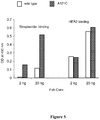
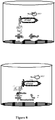
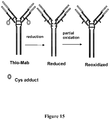
- FIG. 8 illustrates the PHESELECTOR Assay by a schematic representation depicting the binding of Fab or ThioFab to HER2 (top) and biotinylated ThioFab to streptavidin (bottom).
- DNA encoding the cysteine engineered antibodies is readily isolated and sequenced using conventional procedures (e.g ., by using oligonucleotide probes that are capable of binding specifically to genes encoding the heavy and light chains of murine antibodies).
- the hybridoma cells serve as a source of such DNA.
- the DNA may be placed into expression vectors, which are then transfected into host cells such as E.
- coli cells simian COS cells, Chinese Hamster Ovary (CHO) cells, or other mammalian host cells, such as myeloma cells ( US 5807715 ; US 2005/0048572 ; US 2004/0229310 ) that do not otherwise produce the antibody protein, to obtain the synthesis of monoclonal antibodies in the recombinant host cells.
- myeloma cells US 5807715 ; US 2005/0048572 ; US 2004/0229310
- the yields of hu4D5Fabv8 cysteine engineered antibodies were similar to wild type hu4D5Fabv8.
- Review articles on recombinant expression in bacteria of DNA encoding the antibody include Skerra et al (1993) Curr. Opinion in Immunol. 5:256-262 and Plückthun (1992) Immunol. Revs. 130:151-188 .
- cysteine engineered antibodies e.g. ThioFabs, with highly reactive unpaired Cys residues
- cysteine engineered antibodies may be produced by: (i) expression in a bacterial, e.g. E. coli, system or a mammalian cell culture system ( WO 01/00245 ), e.g. Chinese Hamster Ovary cells (CHO); and (ii) purification using common protein purification techniques ( Lowman et al (1991) J. Biol. Chem. 266(17):10982-10988 ).
- ThioFabs were expressed upon induction in 34B8, a non-suppressor E. coli strain ( Baca et al (1997) Journal Biological Chemistry 272(16): 10678-84 ). See Example 3a.
- the harvested cell pellet was resuspended in PBS (phosphate buffered saline), total cell lysis was performed by passing through a microfluidizer and the ThioFabs were purified by affinity chromatography with protein G SEPHAROSETM (Amersham).
- ThioFabs were conjugated with biotin-PEO-maleimide as described above and the biotinylated-ThioFabs were further purified by Superdex-200TM (Amersham) gel filtration chromatography, which eliminated the free biotin-PEO-maleimide and the oligomeric fraction of ThioFabs.
- LC-ESI-MS Liquid chromatography electrospray ionization mass spectrometric analysis was employed for the accurate molecular weight determination of biotin conjugated Fab ( Cole, R.B. Electro Spray Ionization Mass Spectrometry: Fundamentals, Instrumentation And Applications. (1997) Wiley, New York ).
- the antibody Fab fragment hu4D5Fabv8 contains about 445 amino acid residues, including 10 Cys residues (five on the light and five on the heavy chain).
- the high-resolution structure of the humanized 4D5 variable fragment (Fv4D5) has been established, see: Eigenbrot et al "X-Ray Structures Of The Antigen-Binding Domains From Three Variants Of Humanized Anti-P185her2 Antibody 4D5 And Comparison With Molecular Modeling" (1993) J Mol Biol. 229:969-995 ). All the Cys residues are present in the form of disulfide bonds, therefore these residues do not have any reactive thiol groups to conjugate with zirconium-maleimide (unless treated with a reducing agent).
- Figure 1A shows a three-dimensional representation of the hu4D5Fabv8 antibody fragment derived by X-ray crystal coordinates.
- the structure positions of the engineered Cys residues of the heavy and light chains are numbered according to a sequential numbering system. This sequential numbering system is correlated to the Kabat numbering system ( Kabat et al., (1991) Sequences of Proteins of Immunological Interest, 5th Ed.
- the cysteine engineered heavy chain variant sites are identified by the sequential numbering and Kabat numbering schemes in the following chart: 4D5Fab Heavy chain variants Sequential Numbering Kabat Numbering A40C Ala-40 Ala-40 A88C Ala-88 Ala-84 S119C Ser-119 Ser-112 S120C Ser-120 Ser-113 A121C Ala-121 Ala-114 S122C Ser-122 Ser-115 A175C Ala-175 Ala-168
- M13 phagemid-Cys mutant Fabs ( Figures 3A and 3B ) can be rapidly screened compared to Fab proteins.
- Phagemid-ThioFab binding to antigen and to streptavidin can be tested by coating HER2 and streptavidin, respectively, onto ELISA plates followed by probing with anti-Fab-HRP (Horse radish peroxidase) as described in Example 2 and depicted in Figure 8 .
- This method allowed simultaneous monitoring of the effect on the antigen binding and the reactivity of the thiol group by the engineered Cys residue/conjugated biotin molecule.
- the method can be applied to screen the reactive thiol groups for any protein displayed on M13 phage.
- Conjugated or unconjugated phagemid-ThioFabs are purified by simple PEG precipitation.
- FIG. 8 is a graphical representation of the PHESELECTOR assay, depicting binding of a biotinylated ThioFab phage and an anti-phage HRP antibody to HER2 (top) and Streptavidin (bottom).
- Biotin conjugated and unconjugated variants were tested for HER2 and streptavidin binding using an ELISA based PHESELECTOR assay ( Figure 8 , Example 2) with an HRP (horseradish peroxidase)-conjugated anti-phage antibody.
- the ThioFabs-phage samples showed varying levels of streptavidin binding activity. From all the tested phage-ThioFabs, the A121C cysteine engineered antibody exhibited maximal thiol reactivity. Even though wild type hu4D5Fabv8-phage was incubated with the same amounts of biotin-maleimide, these phage had little streptavidin binding indicating that preexisting cysteine residues (involved in disulfide bond formation) from the hu4D5Fabv8 and M13 phage coat proteins did not interfere with the site-specific conjugation of biotin-maleimide. These results demonstrate that the phage ELISA assay can be used successfully to screen reactive thiol groups on the Fab surface.
- the PHESELECTOR assay allows screening of reactive thiol groups in antibodies. Identification of the A121C variant by this method is exemplary. The entire Fab molecule may be effectively searched to identify more ThioFab variants with reactive thiol groups. A parameter, fractional surface accessibility, was employed to identify and quantitate the accessibility of solvent to the amino acid residues in a polypeptide.
- the surface accessibility can be expressed as the surface area ( ⁇ 2 ) that can be contacted by a solvent molecule, e.g. water. The occupied space of water is approximated as a 1.4 ⁇ radius sphere.
- AREAIMOL defines the solvent accessible surface of a protein as the locus of the centre of a probe sphere (representing a solvent molecule) as it rolls over the Van der Waals surface of the protein.
- AREAIMOL calculates the solvent accessible surface area by generating surface points on an extended sphere about each atom (at a distance from the atom centre equal to the sum of the atom and probe radii), and eliminating those that lie within equivalent spheres associated with neighboring atoms.
- AREAIMOL finds the solvent accessible area of atoms in a PDB coordinate file, and summarizes the accessible area by residue, by chain and for the whole molecule. Accessible areas (or area differences) for individual atoms can be written to a pseudo-PDB output file. AREAIMOL assumes a single radius for each element, and only recognizes a limited number of different elements. Unknown atom types (i.e. those not in AREAIMOL's internal database) will be assigned the default radius of 1.8 ⁇ . The list of recognized atoms is: Atom Atomic no. Van der Waals rad. ( ⁇ ) C 6 1.80 N 7 1.65 O 8 1.60 Mg 12 1.60 S 16 1.85 P 15 1.90 Cl 17 1.80 Co 27 1.80
- AREAIMOL and SURFACE report absolute accessibilities, i.e. the number of square Angstroms ( ⁇ ).
- Fractional surface accessibility is calculated by reference to a standard state relevant for an amino acid within a polypeptide.
- the reference state is tripeptide Gly-X-Gly, where X is the amino acid of interest, and the reference state should be an 'extended' conformation, i.e. like those in beta-strands.
- the extended conformation maximizes the accessibility of X.
- a calculated accessible area is divided by the accessible area in a Gly-X-Gly tripeptide reference state and reports the quotient, which is the fractional accessibility. Percent accessibility is fractional accessibility multiplied by 100.
- Another exemplary algorithm for calculating surface accessibility is based on the SOLV module of the program xsae (Broger, C., F. Hoffman-LaRoche, Basel) which calculates fractional accessibility of an amino acid residue to a water sphere based on the X-ray coordinates of the polypeptide.
- Thiol reactivity may be generalized to any antibody where substitution of amino acids with reactive cysteine amino acids may be made within the ranges in the light chain selected from: L-10 to L-20; L-38 to L-48; L-105 to L-115; L-139 to L-149; L-163 to L-173; and within the ranges in the heavy chain selected from: H-35 to H-45; H-83 to H-93; H-114 to H-127; and H-170 to H-184, and in the Fc region within the ranges selected from H-268 to H-291; H-319 to H-344; H-370 to H-380; and H-395 to H-405.
- Thiol reactivity may also be generalized to certain domains of an antibody, such as the light chain constant domain (CL) and heavy chain constant domains, CH1, CH2 and CH3. Cysteine replacements resulting in thiol reactivity values of 0.6 and higher may be made in the heavy chain constant domains ⁇ , ⁇ , ⁇ , ⁇ , and ⁇ of intact antibodies: IgA, IgD, IgE, IgG, and IgM, respectively, including the IgG subclasses: IgG1, IgG2, IgG3, IgG4, IgA, and IgA2.
- Thiol reactivity data is shown in Figures 3A and 3B for amino acid residues of 4D5 ThioFab Cys mutants: (3A) non-biotinylated (control) and (3B) biotinylated phage-ThioFabs.
- Reactive thiol groups on antibody/Fab surface were identified by PHESELECTOR assay analyses for the interaction of non-biotinylated phage-hu4D5Fabv8 (3A) and biotinylated phage-hu4D5Fabv8 (3B) with BSA (open box), HER2 (grey box) or streptavidin (solid box). The assay was carried out as described in Example 2.
- Light chain variants are on the left side and heavy chain variants are on the right side.
- the binding of non-biotinylated 4D5 ThioFab Cys mutants is low as expected, but strong binding to HER2 is retained.
- the ratio of binding to streptavidin and to HER2 of the biotinylated 4D5 ThioFab Cys mutants gives the thiol reactivity values in Table 2.
- Background absorbance at 450 nm or small amounts of non-specific protein binding of the biotinylated 4D5 ThioFab Cys mutants to BSA is also evident in Figure 3B .
- Fractional Surface Accessibility values of the selected amino acid residues that were replaced with a Cys residue are shown in Figure 4A .
- Amino acids at positions L-15, L-43, L-110, L-144, L-168, H-40, H-88, H-119, H-121, H-122, H-175, and H-179 of an antibody may generally be mutated (replaced) with free cysteine amino acids. Ranges within about 5 amino acid residues on each side of these positions may also be replaced with free cysteine acids, i.e.
- Fab preparation may require 2-3 days, depending on the scale of production. During this time, thiol groups may lose reactivity due to oxidation.
- stability of the thiol reactivity of phage-thioFabs was measured ( Figure 4B ).
- ThioFab-phage purification on day 1, day 2 and day 4, all the samples were conjugated with biotin-PEO-maleimide and probed with phage ELISA assay (PHESELECTOR) to test HER2 and streptavidin binding.
- PESELECTOR phage ELISA assay
- the compounds of the disclosure include cysteine engineered antibodies where one or more amino acids of a parent antibody are replaced with a free cysteine amino acid.
- a cysteine engineered antibody comprises one or more free cysteine amino acids having a thiol reactivity value in the range of 0.6 to 1.0.
- a free cysteine amino acid is a cysteine residue which has been engineered into the parent antibody and is not part of a disulfide bridge.
- cysteine engineered antibody is prepared by a process comprising:
- the cysteine engineered antibody may be more reactive than the parent antibody with the thiol-reactive reagent.
- the free cysteine amino acid residues may be located in the heavy or light chains, or in the constant or variable domains.
- Antibody fragments e.g. Fab, may also be engineered with one or more cysteine amino acids replacing amino acids of the antibody fragment, to form cysteine engineered antibody fragments.
- Another aspect of the disclosure provides a method of preparing (making) a cysteine engineered antibody, comprising:
- Step (a) of the method of preparing a cysteine engineered antibody may comprise:
- Step (b) of the method of preparing a cysteine engineered antibody may comprise expressing the cysteine engineered antibody on a viral particle selected from a phage or a phagemid particle.
- Step (b) of the method of preparing a cysteine engineered antibody may also comprise:
- Another aspect of the disclosure is a method of screening cysteine engineered antibodies with highly reactive, unpaired cysteine amino acids for thiol reactivity comprising:
- Step (a) of the method of screening cysteine engineered antibodies may comprise:
- Step (b) of the method of screening cysteine engineered antibodies may comprise expressing the cysteine engineered antibody on a viral particle selected from a phage or a phagemid particle.
- Step (b) of the method of screening cysteine engineered antibodies may also comprise:
- the cysteine engineered antibodies of the disclosure may be conjugated with any label moiety which can be covalently attached to the antibody through a reactive cysteine thiol group ( Singh et al (2002) Anal. Biochem. 304:147-15 ; Harlow E. and Lane, D. (1999) Using Antibodies: A Laboratory Manual, Cold Springs Harbor Laboratory Press, Cold Spring Harbor, NY ; Lundblad R.L. (1991) Chemical Reagents for Protein Modification, 2nd ed. CRC Press, Boca Raton, FL ).
- the attached label may function to: (i) provide a detectable signal; (ii) interact with a second label to modify the detectable signal provided by the first or second label, e.g.
- FRET fluorescence resonance energy transfer
- stabilize interactions or increase affinity of binding, with antigen or ligand
- affect mobility e.g. electrophoretic mobility or cell-permeability, by charge, hydrophobicity, shape, or other physical parameters, or
- provide a capture moiety to modulate ligand affinity, antibody/antigen binding, or ionic complexation.
- Labelled cysteine engineered antibodies may be useful in diagnostic assays, e.g., for detecting expression of an antigen of interest in specific cells, tissues, or serum.
- the antibody will typically be labeled with a detectable moiety.
- Numerous labels are available which can be generally grouped into the following categories:
- enzyme-substrate combinations include, for example:
- a label may be indirectly conjugated with a cysteine engineered antibody.
- the antibody can be conjugated with biotin and any of the three broad categories of labels mentioned above can be conjugated with avidin or streptavidin, or vice versa. Biotin binds selectively to streptavidin and thus, the label can be conjugated with the antibody in this indirect manner.
- the polypeptide variant is conjugated with a small hapten (e.g., digoxin) and one of the different types of labels mentioned above is conjugated with an anti-hapten polypeptide variant (e.g ., anti-digoxin antibody).
- a small hapten e.g., digoxin
- an anti-hapten polypeptide variant e.g ., anti-digoxin antibody
- polypeptide variant of the present disclosure may be employed in any known assay method, such as ELISA, competitive binding assays, direct and indirect sandwich assays, and immunoprecipitation assays ( Zola, (1987) Monoclonal Antibodies: A Manual of Techniques, pp. 147-158, CRC Press, Inc. ).
- a detection label may be useful for localizing, visualizing, and quantitating a binding or recognition event.
- the labelled antibodies of the disclosure can detect cell-surface receptors.
- Another use for detectably labelled antibodies is a method of bead-based immunocapture comprising conjugating a bead with a fluorescent labelled antibody and detecting a fluorescence signal upon binding of a ligand. Similar binding detection methodologies utilize the surface plasmon resonance (SPR) effect to measure and detect antibody-antigen interactions.
- SPR surface plasmon resonance
- Detection labels such as fluorescent dyes and chemiluminescent dyes (risegs et al (1997) “Synthesis of Functionalised Fluorescent Dyes and Their Coupling to Amines and Amino Acids," J. Chem. Soc., Perkin-Trans. 1:1051-1058 ) provide a detectable signal and are generally applicable for labelling antibodies, preferably with the following properties: (i) the labelled antibody should produce a very high signal with low background so that small quantities of antibodies can be sensitively detected in both cell-free and cell-based assays; and (ii) the labelled antibody should be photostable so that the fluorescent signal may be observed, monitored and recorded without significant photo bleaching.
- the labels preferably (iii) have good water-solubility to achieve effective conjugate concentration and detection sensitivity and (iv) are non-toxic to living cells so as not to disrupt the normal metabolic processes of the cells or cause premature cell death.
- Direct quantification of cellular fluorescence intensity and enumeration of fluorescently labelled events may be conducted on an system (FMAT® 8100 HTS System, Applied Biosystems, Foster City, Calif.) that automates mix-and-read, non-radioactive assays with live cells or beads ( Miraglia, "Homogeneous cell- and bead-based assays for high throughput screening using fluorometric microvolume assay technology", (1999) J. of Biomolecular Screening 4:193-204 ).
- FMAT® 8100 HTS System Applied Biosystems, Foster City, Calif.
- labelled antibodies also include cell surface receptor binding assays, inmmunocapture assays, fluorescence linked immunosorbent assays (FLISA), caspase-cleavage ( Zheng, "Caspase-3 controls both cytoplasmic and nuclear events associated with Fas-mediated apoptosis in vivo", (1998) Proc. Natl. Acad. Sci. USA 95:618-23 ; US 6372907 ), apoptosis ( Vermes, "A novel assay for apoptosis. Flow cytometric detection of phosphatidylserine expression on early apoptotic cells using fluorescein labelled Annexin V" (1995) J. Immunol.
- Fluorometric microvolume assay technology can be used to identify the up or down regulation by a molecule that is targeted to the cell surface ( Swartzman, "A homogeneous and multiplexed immunoassay for high-throughput screening using fluorometric microvolume assay technology", (1999) Anal. Biochem. 271:143-51 ).
- Labelled cysteine engineered antibodies of the disclosure are useful as imaging biomarkers and probes by the various methods and techniques of biomedical and molecular imaging such as: (i) MRI (magnetic resonance imaging); (ii) MicroCT (computerized tomography); (iii) SPECT (single photon emission computed tomography); (iv) PET (positron emission tomography) Chen et al (2004) Bioconjugate Chem. 15:41-49 ; (v) bioluminescence; (vi) fluorescence; and (vii) ultrasound.
- MRI magnetic resonance imaging
- MicroCT computerized tomography
- SPECT single photon emission computed tomography
- PET positron emission tomography
- Imaging biomarkers may be objectively measured and evaluated as an indicator of normal biological processes, pathogenic processes, or pharmacological responses to a therapeutic intervention.
- Biomarkers may be of several types: Type 0 are natural history markers of a disease and correlate longitudinally with known clinical indices, e.g.
- Imaging biomarkers thus can provide pharmacodynamic (PD) therapeutic information about: (i) expression of a target protein, (ii) binding of a therapeutic to the target protein, i.e. selectivity, and (iii) clearance and half-life pharmacokinetic data.
- PD pharmacodynamic
- in vivo imaging biomarkers relative to lab-based biomarkers include: non-invasive treatment, quantifiable, whole body assessment, repetitive dosing and assessment, i.e. multiple time points, and potentially transferable effects from preclinical (small animal) to clinical (human) results. For some applications, bioimaging supplants or minimizes the number of animal experiments in preclinical studies.
- Radionuclide imaging labels include radionuclides such as 3 H, 11 C, 14 C, 18 F, 32 P, 35 S, 64 Cu, 68 Ga, 86 Y, 89 Zr, 99 Tc, 111 In, 123 I, 124 I, 125 I, 131 I, 133 Xe, 177 Lu, 211 At, or 213 Bi.
- the radionuclide metal ion can be complexed with a chelating linker such as DOTA.
- Linker reagents such as DOTA-maleimide (4-maleimidobutyramidobenzyl-DOTA) can be prepared by the reaction of aminobenzyl-DOTA with 4-maleimidobutyric acid (Fluka) activated with isopropylchloroformate (Aldrich), following the procedure of Axworthy et al (2000) Proc. Natl. Acad. Sci. USA 97(4):1802-1807 ). DOTA-maleimide reagents react with the free cysteine amino acids of the cysteine engineered antibodies and provide a metal complexing ligand on the antibody ( Lewis et al (1998) Bioconj. Chem. 9:72-86 ).
- Chelating linker labelling reagents such as DOTA-NHS (1,4,7,10-tetraazacyclododecane-1,4,7,10-tetraacetic acid mono (N-hydroxysuccinimide ester) are commercially available (Macrocyclics, Dallas, TX).
- Receptor target imaging with radionuclide labelled antibodies can provide a marker of pathway activation by detection and quantitation of progressive accumulation of antibodies in tumor tissue ( Albert et al (1998) Bioorg. Med. Chem. Lett. 8:1207-1210 ).
- the conjugated radio-metals may remain intracellular following lysosomal degradation.
- FRET fluorescence resonance energy transfer
- Reporter groups are typically fluorescent dyes that are excited by light at a certain wavelength and transfer energy to an acceptor, or quencher, group, with the appropriate Stokes shift for emission at maximal brightness.
- Fluorescent dyes include molecules with extended aromaticity, such as fluorescein and rhodamine, and their derivatives.
- the fluorescent reporter may be partially or significantly quenched by the quencher moiety in an intact peptide. Upon cleavage of the peptide by a peptidase or protease, a detectable increase in fluorescence may be measured ( Knight, C. (1995) "Fluorimetric Assays of Proteolytic Enzymes", Methods in Enzymology, Academic Press, 248:18-34 ).
- the labelled antibodies of the disclosure may also be used as an affinity purification agent.
- the labelled antibody is immobilized on a solid phase such a Sephadex resin or filter paper, using methods well known in the art.
- the immobilized antibody is contacted with a sample containing the antigen to be purified, and thereafter the support is washed with a suitable solvent that will remove substantially all the material in the sample except the antigen to be purified, which is bound to the immobilized polypeptide variant. Finally, the support is washed with another suitable solvent, such as glycine buffer, pH 5.0, that will release the antigen from the polypeptide variant.
- Labelling reagents typically bear reactive functionality which may react (i) directly with a cysteine thiol of a cysteine engineered antibody to form the labelled antibody, (ii) with a linker reagent to form a linker-label intermediate, or (iii) with a linker antibody to form the labelled antibody.
- Reactive functionality of labelling reagents include: maleimide, haloacetyl, iodoacetamide succinimidyl ester (e.g.
- An exemplary reactive functional group is N-hydroxysuccinimidyl ester (NHS) of a carboxyl group substituent of a detectable label, e.g. biotin or a fluorescent dye.
- the NHS ester of the label may be preformed, isolated, purified, and/or characterized, or it may be formed in situ and reacted with a nucleophilic group of an antibody.
- the carboxyl form of the label is activated by reacting with some combination of a carbodiimide reagent, e.g. dicyclohexylcarbodiimide, diisopropylcarbodiimide, or a uronium reagent, e.g.
- TSTU O-(N-Succinimidyl)-N,N,N',N'-tetramethyluronium tetrafluoroborate
- HBTU O-benzotriazol-1-yl
- HATU O-(7-azabenzotriazol-1-yl)-N,N,N',N'-tetramethyluronium hexafluorophosphate
- an activator such as 1-hydroxybenzotriazole (HOBt)
- HOBt 1-hydroxybenzotriazole
- N-hydroxysuccinimide N-hydroxysuccinimide
- the label and the antibody may be coupled by in situ activation of the label and reaction with the antibody to form the label-antibody conjugate in one step.
- Other activating and coupling reagents include TBTU (2-(1H-benzotriazo-1-yl)-1-1-3,3-tetramethyluronium hexafluorophosphate), TFFH (N,N',N'',N'''-tetramethyluronium 2-fluoro-hexafluorophosphate), PyBOP (benzotriazole- 1-yl-oxy-tris-pyrrolidino-phosphonium hexafluorophosphate, EEDQ (2-ethoxy-1-ethoxycarbonyl-1,2-dihydro-quinoline), DCC (dicyclohexylcarbodiimide); DIPCDI (diisopropylcarbodiimide), MSNT (1-(mesitylene-2-sulfonyl)-3-nitro-1H-1,2,4-
- ThioFab constructs were cloned into an expression vector under alkaline phosphatase promoter ( Chang et al (1987) Gene 55:189-196 ) and the ThioFab expression was induced by growing E. coli cells in the phosphate-free medium.
- ThioFabs were purified on a Protein G SEPHAROSETM column and analyzed on reducing and non-reducing SDS-PAGE gels.
- ThioFabs L-V15C, L-V110C, H-A88C, and H-A121C were expressed and purified by Protein-G SEPHAROSETM column chromatography (see methods sections for details). Purified proteins were analyzed on SDS-PAGE gel in reducing (with DTT) and non-reducing (without DTT) conditions. Other reducing agents such as BME (beta-mercaptoethanol) can used in the gel to cleave interchain disulfide groups. It is evident from SDS-PAGE gel analysis that the major (-90%) fraction of ThioFab is in the monomeric form, while wild type hu4D5Fabv8 is essentially in the monomeric form (47 kDa).
- ThioFab (A121C) and wild type hu4D5Fabv8 were incubated with 100 fold excess of biotin-maleimide for 3 hours at room temperature and the biotinylated Fabs were loaded onto a Superdex-200TM gel filtration column. This purification step was useful in separating monomeric Fab from oligomeric Fab and also from excess free biotin-maleimide (or free zirconium reagent).
- FIG. 5 shows validation of the properties of ThioFab variants in the absence of the phage context.
- the proteins without phage fusion, hu4D5Fabv8 and hu4D5Fabv8-A121C (ThioFab-A121C) were expressed and purified using protein-G agarose beads followed by incubation with 100 fold molar excess of biotin-maleimide.
- Streptavidin and HER2 binding of a biotinylated cys engineered ThioFab and a non-biotinylated wild type Fab was compared.
- the extent of biotin conjugation (interaction with streptavidin) and their binding ability to HER2 were monitored by ELISA analyses. Each Fab was tested at 2ng and 20ng.
- Biotinylated A121C ThioFab retained comparable HER2 binding to that of wild type hu4D5Fabv8 ( Figure 5 ).
- Wild type Fab and A121C-ThioFab were purified by gel filtration column chromatography. The two samples were tested for HER2 and streptavidin binding by ELISA using goat anti-Fab-HRP as secondary antibody. Both wild type (open box) and ThioFab (dotted box) have similar binding to HER2 but only ThioFab retained streptavidin binding. Only a background level of interaction with streptavidin was observed with non-biotinylated wild type hu4D5Fabv8 ( Figure 5 ).
- Plasma-protein binding can be an effective means of improving the pharmacokinetic properties of short lived molecules.
- Albumin is the most abundant protein in plasma.
- Serum albumin binding peptides (ABP) can alter the pharmacodynamics of fused active domain proteins, including alteration of tissue uptake, penetration, and diffusion. These pharmacodynamic parameters can be modulated by specific selection of the appropriate serum albumin binding peptide sequence ( US 20040001827 ).
- a series of albumin binding peptides were identified by phage display screening ( Dennis et al. (2002) "Albumin Binding As A General Strategy For Improving The Pharmacokinetics Of Proteins” J Biol Chem. 277:35035-35043 ; WO 01/45746 ).
- Compounds of the disclosure include ABP sequences taught by: (i) Dennis et al (2002) J Biol Chem. 277:35035-35043 at Tables III and IV, page 35038; (ii) US 20040001827 at [0076] SEQ ID NOS: 9-22; and (iii) WO 01/45746 at pages 12-13, SEQ ID NOS: z1-z14.
- Albumin Binding (ABP)-Fabs were engineered by fusing an albumin binding peptide to the C-terminus of Fab heavy chain in 1:1 stoichiometric ratio (1 ABP / 1 Fab). It was shown that association of these ABP-Fabs with albumin increased their half life by more than 25 fold in rabbits and mice. The above described reactive Cys residues can therefore be introduced in these ABP-Fabs and used for site-specific conjugation with zirconium reagents followed by in vivo animal studies.
- Exemplary albumin binding peptide sequences include, but are not limited to the amino acid sequences listed in SEQ ID NOS: 1-5:
- the albumin binding peptide does not compete with ligands known to bind albumin and has a half life (T1 ⁇ 2) in rabbit of 2.3 hr.
- ABP-ThioFab proteins were purified on BSA-SEPHAROSETM followed by biotin-maleimide conjugation and purification on Superdex-S200 column chromatography as described in previous sections. Purified biotinylated proteins were homogeneous and devoid of any oligomeric forms (Example 4).
- FIG. 6 shows the properties of Albumin Binding Peptide (ABP)-ThioFab variants.
- ELISA analyses were carried out to test the binding ability of ABP-hu4D5Fabv8-wt, ABP-hu4D5Fabv8-V110C and ABP-hu4D5Fabv8-A121C with rabbit albumin, streptavidin and HER2.
- Biotinylated ABP-ThioFabs are capable of binding to albumin and HER2 with similar affinity to that of wild type ABP-hu4D5Fabv8 as confirmed by ELISA ( Figure 6 ) and BIAcore binding kinetics analysis (Table 3).
- An ELISA plate was coated with albumin, HER2 and SA as described.
- Biotinylated ABP-ThioFabs were capable of binding to streptavidin compared to non biotinylated control ABP-hu4D5Fabv8-wt indicating that ABP-ThioFabs were conjugated with biotin maleimide like ThioFabs in a site specific manner as the same Cys mutants were used for both the variants ( Figure 6 ).
- Table 3
- an albumin-binding peptide may be linked to the antibody by covalent attachment through a linker moiety.
- HER2/Fab, SA/Fab and SA/SA indicate that their interactions were monitored by anti-Fab-HRP, SA-HRP, respectively.
- SA/Fab monitors the presence of single biotin per Fab and more than one biotin per Fab is monitored by SA/SA analysis. Binding of HER2 with double cys mutants is similar to that of single Cys variants ( Figure 7 ). However the extent of biotinylation on double Cys mutants was higher compared to single Cys variants due to more than one free thiol group per Fab molecule ( Figure 7 ).
- Cysteine was introduced into the full-length monoclonal antibody, trastuzumab (HERCEPTIN®, Genentech Inc.) at certain residues.
- the single cys mutants H-A88C, HA121C and L-V110C of trastuzumab, and double cys mutants V110C-A121C and V110C-A121C of trastuzumab were expressed in CHO (Chinese Hamster Ovary) cells by transient fermentation in media containing 1 mM cysteine.
- the A88C mutant heavy chain sequence (450 aa) is SEQ ID NO:6.
- the A121C mutant heavy chain sequence (450 aa) is SEQ ID NO:7.
- the V110C mutant light chain sequence (214 aa) is SEQ ID NO:8.
- the cysteine engineered thio-trastuzumab antibodies comprise one or more of the following variable region heavy chain sequences with a free cysteine amino acid (SEQ ID NOS: 9-16).
- Mutant Sequence SEQ ID NO: A40C WVRQCPGKGL SEQ ID NO:9 A88C NSLRCEDTAV SEQ ID NO:10 S119C LVTVCSASTKGPS SEQ ID NO:11 S120C LVTVSCASTKGPS SEQ ID NO:12 A121C LVTVSSCSTKGPS SEQ ID NO:13 S122C LVTVSSACTKGPS SEQ ID NO:14 A175C HTFPCVLQSSGLYS SEQ ID NO:15 S179C HTFPAVLQCSGLYS SEQ ID NO:16
- the cysteine engineered thio-trastuzumab antibodies comprise one or more of the following variable region light chain sequences with a free cysteine amino acid (SEQ ID NOS: 17-27).
- Mutant Sequence SEQ ID NO: V15C SLSASCGDRVT SEQ ID NO:17 A43C QKPGKCPKLLI SEQ ID NO:18 V110C EIKRTCAAPSV SEQ ID NO:19 S114C TCAAPCVFIFPP SEQ ID NO:20 S121C FIFPPCDEQLK SEQ ID NO:21 S127C DEQLKCGTASV SEQ ID NO:22 A144C FYPRECKVQWK SEQ ID NO:23 A153C WKVDNCLQSGN SEQ ID NO:24 N158C ALQSGCSQESV SEQ ID NO:25 S168C VTEQDCKDSTY SEQ ID NO:26 V205C GLSSPCTKSFN SEQ ID NO:27
- FIG. 13A shows a cartoon depiction of biotinylated antibody binding to immobilized HER2 and HRP labeled secondary antibody for absorbance detection.
- Figure 13B shows binding measurements to immobilized HER2 with detection of absorbance at 450 nm of (left to right): non-biotinylated wild type trastuzumab (Wt), biotin-maleimide conjugated thio-trastuzumab variants V110C (single cys), A121C (single cys), and V110C-A121C (double cys).
- Wt non-biotinylated wild type trastuzumab
- V110C single cys
- A121C single cys
- V110C-A121C double cys
- Figure 14A shows a cartoon depiction of a biotinylated antibody binding to immobilized HER2 with binding of biotin to anti-IgG-HRP for absorbance detection.
- Figure 14B shows binding measurements with detection of absorbance at 450 nm of biotin-maleimide conjugated thio-trastuzumab variants and non-biotinylated wild type trastuzumab in binding to streptavidin. From left to right: V110C (single cys), A121C (single cys), V110C/A121C (double cys), and trastuzumab. Each thio IgG trastuzumab variant and parent trastuzumab was tested at 1, 10, and 100 ng. The measurements show that the HER2 ThioMabs have high thiol reactivity.
- Cysteine was introduced into the full-length 2H9 anti-EphB2R antibody at certain residues.
- the single cys mutant H-A121C of 2H9 was expressed in CHO (Chinese Hamster Ovary) cells by transient fermentation in media containing 1 mM cysteine.
- the A121C 2H9 mutant heavy chain sequence (450 aa) is SEQ ID NO:28.
- Cysteine engineered thio-2H9 antibodies comprise the following Fc constant region heavy chain sequences with a free cysteine amino acid (SEQ ID NOS: 29-38).
- Mutant Sequence SEQ ID NO: V273C HEDPECKFNWYVDGVEVHNAKTKPR SEQ ID NO:29 V279C HEDPEVKFNWYCDGVEVHNAKTKPR SEQ ID NO:30 V282C HEDPEVKFNWYVDGCEVHNAKTKPR SEQ ID NO:31 V284C HEDPEVKFNWYVDGVECHNAKTKPR SEQ ID NO:32 A287C HEDPEVKFNWYVDGVEVHNCKTKPR SEQ ID NO:33 S324C YKCKVCNKALP SEQ ID NO:34 S337C IEKTICKAKGQPR SEQ ID NO:35 A339C IEKTISKCKGQPR SEQ ID NO:36 S375C KGFYPCDIAVE SEQ ID NO:
- Figure 16 shows non-reducing (top) and reducing (bottom) denaturing SDS-PAGE (polyacrylamide gel electrophoresis) analysis of 2H9 ThioMab Fc variants (left to right, lanes 1-9): A339C; S337C; S324C; A287C; V284C; V282C; V279C; and V273C, with 2H9 wild type, after purification on immobilized Protein A.
- the lane on the right is a size marker ladder, indicating the intact proteins are about 150 kDa, heavy chain fragments about 50 kDa, and light chain fragments about 25 kDa.
- Figure 17A shows non-reducing (left) and reducing (right) denaturing polyacrylamide gel electrophoresis analysis of 2H9 ThioMab variants (left to right, lanes 1-4): L-V15C; S179C; S375C; S400C, after purification on immobilized Protein A.
- Figure 17B shows non-reducing (left) and reducing (+DTT) (right) denaturing polyacrylamide gel electrophoresis analysis of additional 2H9 and 3A5 ThioMab variants after purification on immobilized Protein A.
- the 2H9 ThioMab variants (in the Fab as well as Fc region) were expressed and purified as described.
- Figures 16 , 17A and 17B all the proteins are homogenous on SDS-PAGE followed by the reduction and oxidation procedure of Example 11 to prepare reactive ThioMabs for conjugation (Example 12).
- Cysteine was introduced into the full-length 3A5 anti-MUC16 antibody at certain residues.
- the single cys mutant H-A121C of 3A5 was expressed in CHO (Chinese Hamster Ovary) cells by transient fermentation in media containing 1 mM cysteine.
- the A121C 3A5 mutant heavy chain sequence (446 aa) comprises SEQ ID NO:39.
- Cysteine engineered thio-3A5 anti-MUC16 antibodies comprise the following variable region heavy chain sequences with a free cysteine amino acid (SEQ ID NOS: 40-44). Mutant Sequence SEQ ID NO: F45C NWIRQCPGNK SEQ ID NO:40 A90C LNSCTTEDTAT SEQ ID NO:41 A121C GQGTLVTVSACSTKGPSVFPL SEQ ID NO:42 A175C HTFPCVLQSSGLYS SEQ ID NO:43 V176C HTFPACLQSSGLYS SEQ ID NO:44
- Cysteine engineered thio-3A5 anti-MUC16 antibodies comprise the following variable region light chain sequences with a free cysteine amino acid (SEQ ID NOS: 45-49). Mutant Sequence SEQ ID NO: L15C FLSVSCGGRVT SEQ ID NO:45 A43C QKPGNCPRLLI SEQ ID NO:46 V110C EIKRTCAAPSV SEQ ID NO:47 A144C FYPRECKVQWK SEQ ID NO:48 S168C VTEQDCKDSTY SEQ ID NO:49
- the thiol reactivity of full length, IgG cysteine engineered antibodies was measured by biotinylation and streptavidin binding.
- a western blot assay was set up to screen the ThioMab that is specifically conjugated with biotin-maleimide.
- the antibodies are analyzed on reducing SDS-PAGE and the presence of Biotin is specifically probed by incubating with streptavidin-HRP.
- streptavidin-HRP interaction is either observed in heavy chain or light chain depending on which engineered cys variant is being used and no interaction is seen with wild type, indicating that ThioMab variants specifically conjugated the biotin at engineered Cys residue.
- Figure 18 shows denaturing gel analysis of reduced, biotinylated Thio-IgG variants after capture on immobilized anti-IgG-HRP (top gel) and streptavidin-HRP (bottom gel).
- Lane 1 3A5 HA121C.
- Lane 2 3A5 L-V110C.
- Lane 3 2H9 H-A121C.
- Lane 4 2H9 L-V110C.
- Lane 5 anti-EphB2R 2H9 parent, wild type.
- Each mutant (lanes 1-4) was captured by anti-IgG with HRP detection (top) indicating that selectivity and affinity were retained.
- Capture by immobilized streptavidin with HRP detection (bottom) confirmed the location of biotin on heavy and light chains.
- the location of cysteine mutation on the cysteine engineered antibodies in lanes 1 and 3 is the heavy chain.
- the location of cysteine mutation on the cysteine engineered antibodies in lanes 2 and 4 is the light chain.
- the cysteine mutation site undergoes conjugation with the biotin-maleimide reagent.
- Cysteine engineering was conducted in the constant domain, i.e. Fc region, of IgG antibodies. A variety of amino acid sites were converted to cysteine sites and the expressed mutants, i.e. cysteine engineered antibodies, were assessed for their thiol reactivity. Biotinylated 2H9 ThioMab Fc variants were assessed for thiol reactivity by HRP quantitation by capture on immobilized streptavidin in an ELISA assay ( Figure 19 ). An ELISA assay was established to rapidly screen the Cys residues with reactive Thiol groups.
- Exemplary bifunctional reagents based on desferrioxamine B are employed for the complexation of 89 Zr to antibodies, including monoclonal antibodies (mAbs).
- Desferrioxamine B N' - ⁇ 5-[acetyl(hydroxy)amino]pentyl ⁇ - N -[5-( ⁇ 4-[(5-aminopentyl)(hydroxy)amino] -4-oxobutanoyl ⁇ amino)pentyl] -N-hydroxysuccinamide ( CAS Reg. No.
- DFO-B DFOA, DFB or desferal
- DFO-B DFOA, DFB or desferal
- Desferrioxamine B has medical applications as a chelating agent used to remove excess iron from the body ( Miller, Marvin J. "Syntheses and therapeutic potential of hydroxamic acid based siderophores and analogs" (1989) Chemical Reviews 89 (7): 1563-1579 ).
- the mesylate salt of DFO-B is commercially available.
- TFP-N-Suc-Df ( Figure 20 center) was coupled to lysine ⁇ -amino groups of mAb and the purified mAb-N-Suc-Df was chelated with 89 Zr.
- the resulting 89 Zr-mAb-N-Suc-Df was stable at physiological conditions and its biodistribution was compared to mAb-SMCC-SATA-Df in mice ( Verel I et al "89Zr immuno-PET: comprehensive procedures for the production of 89Zr-labeled monoclonal antibodies" (2003) J Nucl Med. 44:1271-81 ).
- TFP-N-Suc-Df requires protection of hydroxamide groups as Fe(III) complex.
- the iron is removed by treatment with EDTA prior to chelation with 89 Zr, but the multistep method is tedious and possesses a danger of incomplete removal of the iron from the desferrioxamine and/or incomplete removal of EDTA from the conjugation buffer which may negatively impact the 89 Zr-chelation yield. Therefore, a heterobifunctional amino reactive reagent, p -isothiocyanatobenzyl-desferrioxaimine (Df-Bz-NCS) was recently developed for incorporation of Df into proteins via thiourea linkage, Figure 20 center ( Perk LR et al.
- the antibody conjugates prepared using Df-Bz-NCS showed comparable stability and imaging properties to the reference conjugates prepared using TFP-N-Suc-Df. Since reliable methods for coupling of 89 Zr with antibodies through lysine ⁇ -amino groups were developed the number of reported pre-clinical and clinical immunoPET studies with 89 Zr labeled antibodies has been rapidly increasing ( Verel I, et al. "Long-lived positron emitters zirconium-89 and iodine-124 for scouting of therapeutic radioimmunoconjugates with PET” (2003) Cancer Biother Radiopharm. 18:655-61 ; Nagengast WB et al.
- Embodiments of zirconium complexes also include zirconium-binding (chelating) ligands such as DTPA (CAS Reg. No. 67-43-6 ), DOPA(1,4,7,10-tetraazacyclododecane-1,4,7,10-tetraacetic acid) ( Liu, Shuang (2008) Advanced Drug Delivery Reviews 60(12): 1347-1370 ), cyclopentadienyl, and allyl groups ( Erker, G. (1991) Pure and Applied Chemistry 63(6):797-806 ; Erker, G. (1990) Jour. of Organometallic Chem. 400(1-2):185-203 ).
- DTPA CAS Reg. No. 67-43-6
- DOPA(1,4,7,10-tetraazacyclododecane-1,4,7,10-tetraacetic acid) Liu, Shuang (2008) Advanced Drug Delivery Reviews 60(12): 1347-1370
- cyclopentadienyl and allyl
- Zirconium complexes (Z) and other radionuclides may be conjugated to antibodies (Ab), including monoclonal antibodies (mAbs) through ⁇ -amino group in lysine side chain or through thiol group of cysteine. Since approximately 40 lysine side chains ( Wang L et al "Structural characterization of the maytansinoid-monoclonal antibody immunoconjugate, huN901-DM1, by mass spectrometry” (2005) Protein Sci. 14:2436-46 ) or 8 cysteines ( Hamblett KJ et al. "Effects of drug loading on the antitumor activity of a monoclonal antibody drug conjugate” (2004) Clin Cancer Res.
- Abs antibodies
- mAbs monoclonal antibodies
- THIOMABs site-specifically radiolabeled cysteine-engineered antibodies
- One aspect of the present disclosure is a method for site-specific radiolabeling of THIOMABs using novel Df-based thiol reactive bifunctional reagents maleimidocyclohexyl-desferrioxamine (Df-Chx-Mal), bromoacetyl-desferrioxamine (Df-Bac) and iodoacetyl-desferrioxamine (Df-Iac) ( Figure 20 ).
- Exemplary embodiments include where these reagents were site-specifically conjugated to trastuzumab THIOMAB (thio-trastuzumab), chelated with 89 Zr, and evaluated in vitro and in vivo.
- One metastable isomer of zirconium is 89 Zr with a half-life of 78.4 hours with decay modes of beta (electron emission), positron (beta plus), and gamma radiation.
- radioisotope or other labels may be incorporated in the conjugate in known ways ( Fraker et al (1978) Biochem. Biophys. Res. Commun. 80: 49-57 ; " Monoclonal Antibodies in Immunoscintigraphy” Chatal, CRC Press 1989 ).
- Carbon-14-labeled 1-isothiocyanatobenzyl-3-methyldiethylene triaminepentaacetic acid (MX-DTPA) is an exemplary chelating agent for conjugation of a radionuclide to the antibody ( WO 94/11026 ).
- a “Linker” (L) is a bifunctional or multifunctional moiety which can be used to link one or more zirconium complex moieties (Z) and an antibody unit (Ab) to form antibody-zirconium conjugates (AZC) of Formula I.
- Antibody-zirconium conjugates (AZC) can be conveniently prepared using a Linker having reactive functionality for binding to zirconium and to the Antibody.
- a cysteine thiol of a cysteine engineered antibody (Ab) can form a bond with a functional group of a linker reagent, a zirconium label moiety or zirconium-linker intermediate.
- a Linker has a reactive site which has an electrophilic group that is reactive to a nucleophilic cysteine present on an antibody.
- the cysteine thiol of the antibody is reactive with an electrophilic group on a Linker and forms a covalent bond to a Linker.
- Useful electrophilic groups include, but are not limited to, maleimide and haloacetamide groups.
- Cysteine engineered antibodies may react with linker reagents or zirconium-linker intermediates, with electrophilic functional groups such as maleimide or ⁇ -halo carbonyl, according to the conjugation method at page 766 of Klussman, et al (2004), Bioconjugate Chemistry 15(4):765-773 , and according to the protocols of Examples 17-19.
- the Z moieties are the same.
- the Z moieties are different.
- Exemplary embodiments of the Formula I antibody-zirconium conjugate (AZC) compounds include: where X is: Y is: R is independently H or C 1 -C 6 alkyl; and n is 1 to 12.
- a Linker has a reactive functional group which has a nucleophilic group that is reactive to an electrophilic group present on an antibody.
- Useful electrophilic groups on an antibody include, but are not limited to, aldehyde and ketone carbonyl groups.
- the heteroatom of a nucleophilic group of a Linker can react with an electrophilic group on an antibody and form a covalent bond to an antibody unit.
- Useful nucleophilic groups on a Linker include, but are not limited to, hydrazide, oxime, amino, hydrazine, thiosemicarbazone, hydrazine carboxylate, and arylhydrazide.
- the electrophilic group on an antibody provides a convenient site for attachment to a Linker.
- the Linker may be substituted with groups which modulated solubility or reactivity.
- a charged substituent such as sulfonate (-SO 3 - ) or ammonium, may increase water solubility of the reagent and facilitate the coupling reaction of the linker reagent with the antibody or the zirconium moiety, or facilitate the coupling reaction of Ab-L (antibody-linker intermediate) with Z, or Z-L (zirconium-linker intermediate) with Ab, depending on the synthetic route employed to prepare the AZC.
- the compounds of the disclosuredisclosure expressly contemplate, but are not limited to, AZC prepared with linker reagents: BMPEO, BMPS, EMCS, GMBS, HBVS, LC-SMCC, MBS, MPBH, SBAP, SIA, SIAB, SMCC, SMPB, SMPH, sulfo-EMCS, sulfo-GMBS, sulfo-KMUS, sulfo-MBS, sulfo-SIAB, sulfo-SMCC, and sulfo-SMPB, and SVSB (succinimidyl-(4-vinylsulfone)benzoate), and including bis-maleimide reagents: DTME, BMB, BMDB, BMH, BMOE, BM(PEO) 2 , and BM(PEO) 43 , which are commercially available from Pierce Biotechnology, Inc., Customer Service Department, P.O.
- Bis-maleimide reagents allow the attachment of the thiol group of a cysteine engineered antibody to a thiol-containing zirconium moiety, label, or linker intermediate, in a sequential or concurrent fashion.
- Other functional groups besides maleimide, which are reactive with a thiol group of a cysteine engineered antibody, zirconium moiety, label, or linker intermediate include iodoacetamide, bromoacetamide, vinyl pyridine, disulfide, pyridyl disulfide, isocyanate, and isothiocyanate.
- Useful linker reagents can also be obtained via other commercial sources, such as Molecular Biosciences Inc.(Boulder, CO), or synthesized in accordance with procedures described in Toki et al (2002) J. Org. Chem. 67:1866-1872 ; Walker, M.A. (1995) J. Org. Chem. 60:5352-5355 ; Frisch et al (1996) Bioconjugate Chem. 7:180-186 ; US 6214345 ; WO 02/088172 ; US 2003130189 ; US2003096743 ; WO 03/026577 ; WO 03/043583 ; and WO 04/032828 .
- Exemplary linker reagents include: where n is an integer ranging from 1-10 and T is -H or -SO 3 Na; where n is an integer ranging from 0-3;
- linker L may be a dendritic type linker for covalent attachment of more than one zirconium moiety through a branching, multifunctional linker moiety to an antibody ( Sun et al (2002) Bioorganic & Medicinal Chemistry Letters 12:2213-2215 ; Sun et al (2003) Bioorganic & Medicinal Chemistry 11:1761-1768 ).
- Dendritic linkers can increase the molar ratio of zirconium to antibody, i.e. loading of the AZC.
- a cysteine engineered antibody bears only one reactive cysteine thiol group, a multitude of zirconium moieties may be attached through a dendritic linker.
- dendritic linker reagents allow up to nine nucleophilic zirconium moiety reagents to be conjugated by reaction with the chloroethyl nitrogen mustard functional groups: or
- branched, dendritic linkers include those with self-immolative 2,6-bis(hydroxymethyl)-p-cresol and 2,4,6-tris(hydroxymethyl)-phenol dendrimer units ( WO 2004/01993 ; Szalai et al (2003) J. Amer. Chem. Soc. 125:15688-15689 ; Shamis et al (2004) J. Amer. Chem. Soc. 126:1726-1731 ; Amir et al (2003) Angew. Chem. Int. Ed. 42:4494-4499 ).
- An aspect of the disclosuredisclosure is a desferrioxamine-labelled, cysteine-engineered antibody comprising a cysteine engineered antibody (Ab) conjugated through a free cysteine amino acid to a linker (L) and a desferrioxamine moiety (Df), having Formula II: Ab-(L-Df) p II wherein L-Df is selected from: where the wavy line indicates the attachment to the antibody (Ab); and p is 1 to 4.
- the antibody-zirconium conjugates (AZC) of Formula I may be prepared by several routes, employing organic chemistry reactions, conditions, and reagents known to those skilled in the art, including: (1) reaction of a cysteine group of a cysteine engineered antibody with a linker reagent, to form antibody-linker intermediate Ab-L, via a covalent bond, followed by reaction with an activated zirconium label moiety Z; and (2) reaction of a nucleophilic group of a zirconium moiety with a linker reagent, to form zirconium label-linker intermediate Z-L, via a covalent bond, followed by reaction with a cysteine group of a cysteine engineered antibody. Conjugation methods (1) and (2) may be employed with a variety of cysteine engineered antibodies, zirconium label moieties, and linkers to prepare the antibody-zirconium conjugates of Formula I.
- Antibody cysteine thiol groups are nucleophilic and capable of reacting to form covalent bonds with electrophilic groups on linker reagents and zirconium-linker intermediates including: (i) active esters such as NHS esters, HOBt esters, haloformates, and acid halides; (ii) alkyl and benzyl halides, such as haloacetamides; (iii) aldehydes, ketones, carboxyl, and maleimide groups; and (iv) disulfides, including pyridyl disulfides, via sulfide exchange.
- active esters such as NHS esters, HOBt esters, haloformates, and acid halides
- alkyl and benzyl halides such as haloacetamides
- aldehydes ketones, carboxyl, and maleimide groups
- disulfides including pyridyl disulfides, via sulfide
- Nucleophilic groups on a zirconium lable moiety include, but are not limited to: amine, thiol, hydroxyl, hydrazide, oxime, hydrazine, thiosemicarbazone, hydrazine carboxylate, and arylhydrazide groups capable of reacting to form covalent bonds with electrophilic groups on linker moieties and linker reagents.
- cysteine engineered antibodies may be made reactive for conjugation with linker reagents by treatment with a reducing agent such as DTT (Cleland's reagent, dithiothreitol) or TCEP (tris(2-carboxyethyl)phosphine hydrochloride; Getz et al (1999) Anal. Biochem. Vol 273:73-80 ; Soltec Ventures, Beverly, MA).
- a reducing agent such as DTT (Cleland's reagent, dithiothreitol) or TCEP (tris(2-carboxyethyl)phosphine hydrochloride; Getz et al (1999) Anal. Biochem. Vol 273:73-80 ; Soltec Ventures, Beverly, MA).
- ThioMabs Full length, cysteine engineered monoclonal antibodies (ThioMabs) expressed in CHO cells were reduced with about a 50 fold excess of TCEP for 3 hrs at 37 °C to reduce disulfide bonds which may form between the newly introduced cysteine residues and the cysteine present in the culture media.
- the reduced ThioMab was diluted and loaded onto HiTrap S column in 10 mM sodium acetate, pH 5, and eluted with PBS containing 0.3M sodium chloride. Disulfide bonds were reestablished between cysteine residues present in the parent Mab with dilute (200 nM) aqueous copper sulfate (CuSO 4 ) at room temperature, overnight.
- Other oxidants i.e.
- oxidizing agents and oxidizing conditions, which are known in the art may be used. Ambient air oxidation is also effective. This mild, partial reoxidation step forms intrachain disulfides efficiently with high fidelity. An approximate 10 fold excess of zirconium-linker intermediate is added, mixed, and let stand for about an hour at room temperature to effect conjugation and form the ThioMab antibody-zirconium conjugate. The conjugation mixture is gel filtered and loaded and eluted through a HiTrap S column to remove excess zirconium-linker intermediate and other impurities.
- Figure 15 shows the general process to prepare a cysteine engineered antibody expressed from cell culture for conjugation.
- Cysteine adducts presumably along with various interchain disulfide bonds, are reductively cleaved to give a reduced form of the antibody.
- the interchain disulfide bonds between paired cysteine residues are reformed under partial oxidation conditions, such as exposure to ambient oxygen.
- the newly introduced, engineered, and unpaired cysteine residues remain available for reaction with linker reagents or zirconium-linker intermediates to form the antibody conjugates of the disclosure.
- the ThioMabs expressed in mammalian cell lines result in externally conjugated Cys adduct to an engineered Cys through -S-S- bond formation.
- the purified ThioMabs have to be treated with reduction and oxidation procedures as described in Example 11 to produce reactive ThioMabs.
- These ThioMabs are used to conjugate with maleimide containing radiolabels, cytotoxic drugs, fluorophores, and other labels.
- TFP-N-SucDf-Fe The protected active ester TFP-N-SucDf-Fe was prepared according to the previously described procedure ( Verel I et al "89Zr Immuno-PET: Comprehensive Procedures For The Production Of 89Zr-Labeled Monoclonal Antibodies” (2003) J Nucl Med 44:1271-81 ) and conjugated to trastuzumab using a 5-fold molar excess of TFP-N-SucDf-Fe to yield N-SucDf-trastuzumab with an average of 1.6 molecules of desferrioxamine (Table 8).
- Df-Bz-SCN-trastuzumab was obtained by coupling an 8-fold molar excess of Df-Bz-SCN at pH 8.5 ( Perk LR, et al. "Facile radiolabeling of monoclonal antibodies and other proteins with zirconium-89 or gallium-68 for PET Imaging using p-isothiocyanatobenzyl-desferrioxamine” (2008) Nature Protocols; published online:DOI:10.1038/nprot.2008.22 ). The reaction provided Df-Bz-SCN-trastuzumab decorated in average with 2.4 molecules of desferrioxamine (Table 1).
- the novel maleimide based thiol reactive bifunctional linker Df-Chx-Mal was prepared from equimolar amounts of desferrioxamine mesylate and SMCC ( Figure 21 , Example 13). The reaction was complete within 30 min at room temperature and the product was isolated by precipitation upon addition of water in 45% yield and more than 95% purity. The reaction of an 8.5-fold molar excess of Df-Chx-Mal with freshly prepared thio-trastuzumab ( Figure 21 Example 17) provided Df-Chx-Mal-thio-trastuzumab conjugate with exactly 2 molecules of desferrioxamine in 1 h (Table 1, Figure 21 ).
- Bromoacetyl desferrioxamine (BDf-Bac) was prepared by the reaction of equimolar amounts of desferrioxamine mesylate and bromoacetyl bromide at 0°C (Example 14). The product was obtained in 14% yield after HPLC purification. The alkylation of freshly prepared thio-trastuzumab ( Figure 21 , Example 16) with a 12-fold molar excess of Df-Bac provided the conjugate (Df-Ac-thio-trastuzumab) with 1.8 molecules of Df per antibody within 5 h (Table 8, Figure 21 , Example 18).
- Df-Iac The low reactivity of bromide prompted us to explore the more reactive iodoacetyl derivative (Df-Iac).
- Df-Iac was prepared in 53% yield by the reaction of desferrioxamine mesylate with a slight excess of N-hydroxysuccinimidyl iodoacetate ( Figure 21 , Example 15). The product was obtained in more than 95% purity by precipitation from the reaction mixture.
- the subsequent reaction of an 11-fold excess of Df-Iac provided Df-Ac-thio-trastuzumab decorated with 1.8 molecules of Df within 2 h (Table 1, Figure 21 , Example 19). Based on our experience, Df-Chx-Mal is the preferred reagent of the three compounds investigated.
- the 89 Zr was chelated as 89-zirconium oxalate with all four variants of Df-trastuzumab using previously described experimental procedure ( Verel I et al "89Zr immuno-PET: comprehensive procedures for the production of 89Zr-labeled monoclonal antibodies” (2003) J Nucl Med. 44:1271-81 ).
- the radiolabeled proteins were purified on a desalting column and the final solution was concentrated to the required volume by membrane filtration. The yield, purity, and final specific activity of the 89 Zr conjugates are summarized in Table 9.
- the chelation yield was over 80% with the exception of the Df-N-Suc linker obtained in lower yield presumably due to the lower amount of Df per antibody molecule and/or incomplete removal of Fe(III) used to protect the chelator during activation and conjugation.
- the product purity was over 90% with a small amount (1-6%) of high molecular weight aggregates detected in each sample.
- Df-Chx-Mal-thio-trastuzumab provided the 89 Zr complex in 99% purity (Table 9) as opposed to Df-Ac conjugate which was contaminated with approximately 8% of a low molecular weight impurity and 2% of high molecular weight aggregates.
- the biological activities of newly prepared site-specific Df- linker -thio-trastuzumab conjugates were determined using binding assay to BT474 breast cancer cell line by Scatchard analysis.
- the obtained K D values were compared to non-modified trastuzumab (0.91 ⁇ 0.20 nM).
- the K D for the thio-trastuzumab conjugate containing Chx-Mal linker was 0.93 ⁇ 0.15 nM and the values for the conjugates containing Ac linker were 1.22 ⁇ 0.22 nM for conjugate prepared using Df-Bac and 0.87 ⁇ 0.15 nM prepared using Df-Iac.
- the results of the biological activity analyses indicate that the modification of thio-trastuzumab did not affect the binding affinity of the antibody to HER2.
- the impurity was totally cleared within the first 24 h and elevated small and large intestine uptake was not detected at 24 h or later time after tracer injection.
- tissue uptake of Df-Ac conjugate was resultantly slightly (-8%) lower, the tumor to blood ratios (Table 10) were not affected by the loss of injected radioactivity.
- the images at 96 h were dominated by the high tumor uptake with minor differences observed among the four different 89 Zr-trastuzumab variants ( Figure 25 ).
- the tumor uptake was identical for each tracer reaching maximum values at 24 h post injection and maximum tumor-to-blood ratios at 144 h due to blood clearance (Table 10).
- the thiol based conjugate 89 Zr-Df-Chx-Mal-thio-trastuzumab exhibited elevated bone uptake ( P ⁇ 0.05) compared to the amine based conjugates (Df-Bz-SCN and Df-N-Suc) at 96 and 144 h p.i.
- BT474 (3+ expression level of HER2) xenografts exhibited lower absolute uptake of the tracer (15 %ID/g) than measured previously by Dijkers et al in SKOV3 (3+ expression level of HER2) 33.4 ⁇ 7.7%ID/g ( Dijkers EC, et al. "Development and Characterization of Clinical-Grade 89Zr-Trastuzumab for HER2/neu ImmunoPET Imaging" (2009) J Nucl Med 50(6):974-981 ).
- the tumor to blood ratio of 5.7-7.1 (Table 10) is comparable to the value obtained with SKOV3 (tumor to blood of 7.6).
- the difference in tumor uptake may be attributed to the tumor model and total dose of trastuzumab.
- a material with higher specific activity was used hence so significantly less antibody was injected (35 ⁇ g, 1.4 mg/kg) compared to the Dijkers et al study with SKOV3 (100 ⁇ g, 4 mg/kg).
- the difference in specific activity may have also contributed to lower bone uptake of free 89 Zr in the experiment herein of 2-3 %ID/g compared to SKOV3 model (5-10 %ID/g).
- no teaching regarding the elevated bone uptake is provided by Dijkers et al. Zirconium is known to bind plasma proteins ( Mealey J, Jr.
- the bone uptake may originate from the breakdown of the 89 Zr-antibody or from 89 Zr non-specifically associated with antibody which could then trans-chelate to plasma proteins compared to 89 Zr bound to Df.
- thiol specific reagents Three thiol specific reagents are exemplified herein for the chemoselective conjugation of desferrioxamine (Df) to monoclonal antibodies through the thiol group of cysteine of cysteine-engineered antibodies.
- the thiol-specific Df-reagents were obtained by the acylation of the amino group of desferrioxamine B in 14% (Df-Bac), 53% (Df-Iac) and 45% (Df-Chx-Mal) yields and conjugated to thio-trastuzumab resulting in site-specific modification on both engineered cysteines within 1-5 h.
- the binding activities of site-specific thio-trastuzumab conjugates to HER2 were identical to the activity of non-modified trastuzumab.
- the Df-modified thio-trastuzumabs (Df-Ac-thio-trastuzumab and Df-Chx-Mal-thio-trastuzumab) were chelated with 89 Zr ( Figure 22 ) in yields exceeding 80% within 1 h comparable to lysine conjugates prepared using previously described Df-Bz-SCN and Df-N-Suc linkers.
- Both 89 Zr-Df-Ac-thio-trastuzumab and 89 Zr-Df-Chx-Mal-thio-trastuzumab showed comparable stability in mouse serum. Both compounds also showed PET imaging capabilities in BT474M1 breast cancer model comparable to lysine conjugates reaching 10-15 %ID/g of tumor uptake with a tumor to blood ratio in the range 6.1-7.1. Overall, the novel reagents are readily available, demonstrated good reactivity with thiol groups of the protein, and exhibited very good chelation properties with 89 Zr. The 89 Zr-labeled antibodies were stable in serum and showed excellent PET imaging properties.
- Df-Chx-Mal is a useful reagent for conjugation of Df to antibodies through cysteine side chain and showed several advantages over Df-Bac and Df-Iac.
- moderate pH 7.5 was required for complete conjugation of Df-Chx-Mal within 1 h as compared to pH 9 and 2 or 5 h required for Df-Bac and Df-Iac.
- the site specifically 89 Zr labeled engineered THIOMAB conjugates can be used similarly as 18 F labeled THIOFAB conjugates ( Gill HS, et al.
- the antibody-zirconium conjugates (AZC) of the disclosure may be administered by any route appropriate to the condition to be treated.
- the AZC will typically be administered parenterally, i.e. infusion, subcutaneous, intramuscular, intravenous, intradermal, intrathecal and epidural.
- compositions of diagnostic antibody-zirconium conjugates (AZC) of the disclosure are typically prepared for parenteral administration, i.e. bolus, intravenous, intratumor injection with a pharmaceutically acceptable parenteral vehicle and in a unit dosage injectable form.
- An antibody-zirconium conjugate (AZC) having the desired degree of purity is optionally mixed with pharmaceutically acceptable diluents, carriers, excipients or stabilizers ( Remington's Pharmaceutical Sciences (1980) 16th edition, Osol, A. Ed .), in the form of a lyophilized formulation or an aqueous solution.
- Acceptable diluents, carriers, excipients, and stabilizers are nontoxic to recipients at the dosages and concentrations employed, and include buffers such as phosphate, citrate, and other organic acids; antioxidants including ascorbic acid and methionine; preservatives (such as octadecyldimethylbenzyl ammonium chloride; hexamethonium chloride; benzalkonium chloride, benzethonium chloride; phenol, butyl or benzyl alcohol; alkyl parabens such as methyl or propyl paraben; catechol; resorcinol; cyclohexanol; 3-pentanol; and m-cresol); low molecular weight (less than about 10 residues) polypeptides; proteins, such as serum albumin, gelatin, or immunoglobulins; hydrophilic polymers such as polyvinylpyrrolidone; amino acids such as glycine, glutamine, asparag
- Zn-protein complexes Zn-protein complexes
- non-ionic surfactants such as TWEENTM, PLURONICSTM or polyethylene glycol (PEG).
- TWEENTM TWEENTM
- PLURONICSTM polyethylene glycol
- PEG polyethylene glycol
- the active pharmaceutical ingredients may also be entrapped in microcapsules prepared, for example, by coacervation techniques or by interfacial polymerization, for example, hydroxymethylcellulose or gelatin-microcapsules and poly-(methylmethacylate) microcapsules, respectively, in colloidal drug delivery systems (for example, liposomes, albumin microspheres, microemulsions, nano-particles and nanocapsules) or in macroemulsions.
- colloidal drug delivery systems for example, liposomes, albumin microspheres, microemulsions, nano-particles and nanocapsules
- Sustained-release preparations may be prepared. Suitable examples of sustained-release preparations include semi permeable matrices of solid hydrophobic polymers containing the AZC, which matrices are in the form of shaped articles, e.g. films, or microcapsules.
- sustained-release matrices include polyesters, hydrogels (for example, poly(2-hydroxyethyl-methacrylate), or poly(vinyl alcohol)), polylactides ( US 3773919 ), copolymers of L-glutamic acid and gamma-ethyl-L-glutamate, non-degradable ethylene-vinyl acetate, degradable lactic acid-glycolic acid copolymers such as the LUPRON DEPOTTM (injectable microspheres composed of lactic acid-glycolic acid copolymer and leuprolide acetate), and poly-D-(-)-3-hydroxybutyric acid.
- polyesters for example, poly(2-hydroxyethyl-methacrylate), or poly(vinyl alcohol)
- polylactides US 3773919
- copolymers of L-glutamic acid and gamma-ethyl-L-glutamate non-degradable ethylene-vinyl acetate
- the formulations to be used for in vivo administration must be sterile, which is readily accomplished by filtration through sterile filtration membranes.
- the formulations include those suitable for the foregoing administration routes.
- the formulations may conveniently be presented in unit dosage form and may be prepared by any of the methods well known in the art of pharmacy. Techniques and formulations generally are found in Remington's Pharmaceutical Sciences (Mack Publishing Co., Easton, PA ). Such methods include the step of bringing into association the active ingredient with the carrier which constitutes one or more accessory ingredients.
- the formulations are prepared by uniformly and intimately bringing into association the active ingredient with liquid carriers or finely divided solid carriers or both, and then, if necessary, shaping the product.
- Aqueous suspensions of the disclosure contain the active materials in admixture with excipients suitable for the manufacture of aqueous suspensions.
- excipients include a suspending agent, such as sodium carboxymethylcellulose, croscarmellose, povidone, methylcellulose, hydroxypropyl methylcelluose, sodium alginate, polyvinylpyrrolidone, gum tragacanth and gum acacia, and dispersing or wetting agents such as a naturally occurring phosphatide (e.g., lecithin), a condensation product of an alkylene oxide with a fatty acid (e.g., polyoxyethylene stearate), a condensation product of ethylene oxide with a long chain aliphatic alcohol (e.g., heptadecaethyleneoxycetanol), a condensation product of ethylene oxide with a partial ester derived from a fatty acid and a hexitol anhydride (e.g., polyoxyethylene sorbitan mono
- the aqueous suspension may also contain one or more preservatives such as ethyl or n-propyl p-hydroxy-benzoate, one or more coloring agents, one or more flavoring agents and one or more sweetening agents, such as sucrose or saccharin.
- the pharmaceutical compositions of AZC may be in the form of a sterile injectable preparation, such as a sterile injectable aqueous or oleaginous suspension.
- a sterile injectable preparation such as a sterile injectable aqueous or oleaginous suspension.
- This suspension may be formulated according to the known art using those suitable dispersing or wetting agents and suspending agents which have been mentioned above.
- the sterile injectable preparation may also be a sterile injectable solution or suspension in a non-toxic parenterally acceptable diluent or solvent, such as a solution in 1,3-butane-diol or prepared as a lyophilized powder.
- the acceptable vehicles and solvents that may be employed are water, Ringer's solution and isotonic sodium chloride solution.
- sterile fixed oils may conventionally be employed as a solvent or suspending medium.
- any bland fixed oil may be employed including synthetic mono- or diglycerides.
- fatty acids such as oleic acid may likewise be used in the preparation of injectables.
- an aqueous solution intended for intravenous infusion may contain from about 3 to 500 ⁇ g of the active ingredient per milliliter of solution in order that infusion of a suitable volume at a rate of about 30 mL/hr can occur.
- Formulations suitable for parenteral administration include aqueous and non-aqueous sterile injection solutions which may contain anti-oxidants, buffers, bacteriostats and solutes which render the formulation isotonic with the blood of the intended recipient; and aqueous and non-aqueous sterile suspensions which may include suspending agents and thickening agents.
- formulations of AZC suitable for oral administration may be prepared as discrete units such as capsules, cachets or tablets each containing a predetermined amount of the AZC.
- the formulations may be packaged in unit-dose or multi-dose containers, for example sealed ampoules and vials, and may be stored in a freeze-dried (lyophilized) condition requiring only the addition of the sterile liquid carrier, for example water, for injection immediately prior to use.
- sterile liquid carrier for example water
- Extemporaneous injection solutions and suspensions are prepared from sterile powders, granules and tablets of the kind previously described.
- Preferred unit dosage formulations are those containing a daily dose or unit daily sub-dose, as herein above recited, or an appropriate fraction thereof, of the active ingredient.
- compositions comprising at least one active ingredient as above defined together with a veterinary carrier therefore.
- Veterinary carriers are materials useful for the purpose of administering the composition and may be solid, liquid or gaseous materials which are otherwise inert or acceptable in the veterinary art and are compatible with the active ingredient. These veterinary compositions may be administered parenterally, orally or by any other desired route.
- cysteine engineered antibodies may be labelled through the cysteine thiol with radionuclides, fluorescent dyes, bioluminescence-triggering substrate moieties, chemiluminescence-triggering substrate moieties, enzymes, and other detection labels for imaging experiments with diagnostic, pharmacodynamic, and therapeutic applications.
- the labelled cysteine engineered antibody i.e. "biomarker” or "probe”
- a living organism e.g. human, rodent, or other small animal, a perfused organ, or tissue sample.
- the distribution of the probe is detected over a time course and represented by an image.
- Mass spectrometry analysis of low molecular weight products was performed on a PE Sciex API 150EX LCMS system equipped with an Onyx Monolithic C 18 column.
- LCMS analysis of proteins was performed on a TSQ Quantum Triple quadrupole mass spectrometer with extended mass range (Thermo Electron, Thermo Fisher Scientific Inc., USA).
- the protein samples for LCMS analysis were reduced by treatment with 20 mM dithiothreitol (DTT) at 37°C for 1 h to separate heavy and light chains.
- Samples were chromatographed on a PRLP-S 1000 ⁇ microbore column (50 mm ⁇ 2.1 mm, Polymer Laboratories, Varian Inc., USA) heated to 75°C.
- 89 Zr was obtained from Memorial Sloan-Kettering Cancer Center (New York, NY) as 89 Zr(IV) oxalate in 1M oxalic acid solution with specific activity 470-1195 Ci/mmol ( Holland JP, et al (2009) "Standardized methods for the production of high specific-activity zirconium-89" Nucl Med Biol. 36:729-39 ).
- Heterobifunctional linker succinimidyl 4-[ N -maleimidomethyl]cyclohexane-1-carboxylate (SMCC) was purchased from Pierce (Rockford, IL) and N-hydroxysuccinimidyl iodoacetate was obtained from Indofine Chemical Company (Hillsborough, NJ).
- NAP-10 columns were obtained from (GE Healthcare, USA) and Amicon Ultra-4 centrifugal filters (10,000 MWCO) from Millipore (Billerica, MA).
- Df-Bz-SCN was purchased Macrocyclics (Dallas, TX).
- biotinylation reagents with electrophilic groups which are reactive with cysteine thiol groups may be used, including Biotin-BMCC, PEO-Iodoacetyl Biotin, Iodoacetyl-LC-Biotin, and Biotin-HPDP (Pierce Biotechnology, Inc.), and N ⁇ -(3- maleimidylpropionyl)biocytin (MPB, Molecular Probes, Eugene, OR).
- Other commercial sources for biotinylation, bifunctional and multifunctional linker reagents include Molecular Probes, Eugene, OR, and Sigma, St. Louis, MO.
- Bovine serum albumin (BSA), erbB2 extracellular domain (HER2) and streptavidin (100 ⁇ l of 2 ⁇ g/ml) were separately coated on Maxisorp 96 well plates. After blocking with 0.5% Tween-20 (in PBS), biotinylated and non-biotinylated hu4D5Fabv8-ThioFab-Phage (2x 10 10 phage particles) were incubated for 1 hour at room temperature followed by incubation with horseradish peroxidase (HRP) labeled secondary antibody (anti-M13 phage coat protein, pVIII protein antibody).
- HRP horseradish peroxidase
- Figure 8 illustrates the PHESELECTOR Assay by a schematic representation depicting the binding of Fab or ThioFab to HER2 (top) and biotinylated ThioFab to streptavidin (bottom).
- ThioFabs were expressed upon induction in 34B8, a non-suppressor E. coli strain ( Baca et al (1997) Journal Biological Chemistry 272(16): 10678-84 ).
- the harvested cell pellet was resuspended in PBS (phosphate buffered saline), total cell lysis was performed by passing through a microfluidizer and the ThioFabs were purified by affinity chromatography with protein G SEPHAROSETM (Amersham).
- ThioFabs L-V15C, L-V110C, H-A88C, and H-A121C were expressed and purified by Protein-G SEPHAROSETM column chromatography. Oligomeric-Fab was present in fractions 26 to 30, and most of the monomeric form was in fractions 31-34. Fractions consisting of the monomeric form were pooled and analyzed by SDS-PAGE along with wild type hu4D5Fabv8and analyzed on SDS-PAGE gel in reducing (with DTT or BME) and non-reducing (without DTT or BME) conditions. Gel filtration fractions of A121C-ThioFab were analyzed on non-reducing SDS-PAGE.
- ThioFabs were conjugated with biotin-PEO-maleimide as described above and the biotinylated-ThioFabs were further purified by Superdex-200TM (Amersham) gel filtration chromatography, which eliminated the free biotin-PEO-maleimide and the oligomeric fraction of ThioFabs.
- Wild type hu4D5Fabv8 and hu4D5Fabv8 A121C-ThioFab (0.5 mg in quantity) were each and separately incubated with 100 fold molar excess of biotin-PEO-maleimide for 3 hours at room temperature and loaded onto a Superdex-200 gel filtration column to separate free biotin as well as oligomeric Fabs from the monomeric form.
- Enzymatic digest fragments of biotinylated hu4D5Fabv8 (A121C) ThioFab and wild type hu4D5Fabv8 were analyzed by liquid chromatography electrospray ionization mass spectroscopy (LS-ESI-MS) The difference between the 48294.5 primary mass of biotinylated hu4D5Fabv8 (A121C) and the 47737.0 primary mass of wild type hu4D5Fabv8 was 557.5 mass units. This fragment indicates the presence of a single biotin-PEO-maleimide moiety (C 23 H 36 N 5 O 7 S 2 ). Table 4 shows assignment of the fragmentation values which confirms the sequence. Table 4.
- ThioMabs Full length, cysteine engineered monoclonal antibodies (ThioMabs) expressed in CHO cells were reduced with about a 50 fold excess of TCEP (tris(2-carboxyethyl)phosphine hydrochloride; Getz et al (1999) Anal. Biochem. Vol 273:73-80 ; Soltec Ventures, Beverly, MA) for 3 hrs at 37 °C.
- the reduced ThioMab ( Figure 15 ) was diluted and loaded onto a HiTrap S column in 10 mM sodium acetate, pH 5, and eluted with PBS containing 0.3M sodium chloride.
- the eluted reduced ThioMab was treated with 200 nM aqueous copper sulfate (CuSO 4 ) at room temperature, overnight. Ambient air oxidation was also effective.
- Desferrioxamine mesylate 200 mg, 0.30 mmol
- N,N -diisopropylethylamine 53 ⁇ L, 0.30 mmol
- DMF dimethyl methyl
- water 0.4 mL
- N -hydroxysuccinimidyl iodoacetate 93 mg, 0.33 mmol
- Water 8 mL was added and the precipitated product was separated, washed with water, and dried at reduced pressure to yield 115 mg (53%) of N-iodoacetyldesferrioxamine (Df-Iac) as a white solid ( Figure 20 bottom).
- THIOMAB with Cys substitution at Ala 114 was described previously ( Junutula JR, et al "Site-specific conjugation of a cytotoxic drug to an antibody improves the therapeutic index” (2008) Nat Biotechnol 26:925-32 ).
- the isolated thio-trastuzumab was prepared for conjugation by a reduction and re-oxidation procedure to remove disulfide adducts bound to Cys 114 .
- the protein was reduced for 24 h by treatment with a 40-fold molar excess of DTT and 2 mM EDTA in 88 mM Tris buffer pH 7.5.
- the thio-trastuzumab solution was adjusted to pH 5 by the addition of 10 mM sodium succinate buffer.
- the solution was then loaded on an ion exchange column (HiTrap SP FF, GE Healthcare) that had been sterilized and equilibrated with 10 mM sodium succinate buffer pH 5.
- the column was washed with 10 mM sodium succinate buffer (10 mL) and the thio-trastuzumab was then eluted with 3 mL of 50 mM Tris, 150 mM NaCl buffer with pH 7.5.
- thio-trastuzumab re-oxidization was achieved by treatment with a 25-fold molar excess of dehydroascobric acid (100 mM in N,N -dimethylacetamide (DMA)) in 75 mM Tris, 150 mM NaCl pH 7.5 buffer at 25°C for 3.5 h. After re-oxidation, the thio-trastuzumab was conjugated to desferrioxamine without further purification. MS ESI (m/z): found light chain 23440.0, heavy chain 50627.3.
- the 2 mM stock solution of the bifunctional chelator was prepared by dissolving Df-Chx-Mal (1.5 mg, 2 ⁇ mol) in a 1:1 mixture (1 mL) of DMF and DMA by heating to 44°C for 30 min, the stock solution was then aliquoted and stored at -80 °C ( Figure 21 ). An aliquot of the stock solution (220 ⁇ L, 0.440 ⁇ mol) was then added to the solution of thio-trastuzumab (7.5 mg, 52 nmol) in 50 mM Tris, 150 mM NaCl buffer pH 7.5 (1.5 mL) and incubated at room temperature for 1 h.
- the 12 mM stock solution of the bifunctional chelator was prepared by dissolving Df-Bac (8 mg, 12 ⁇ mol) in 1 mL DMA ( Figure 21 ). The stock solution was then aliquoted and stored at -80 °C. The re-oxidized thio-trastuzumab was buffer exchanged on an Amicon Ultra-4 filter into 0.05 M sodium borate buffer pH 9. An aliquot of the Df-Bac stock solution (35 ⁇ L, 0.410 ⁇ mol) was added to the solution of thio-trastuzumab (4.9 mg, 34 nmol) in 0.05 M sodium borate buffer pH 9 (1 mL) and incubated at room temperature for 5 h.
- the 11 mM stock solution of the bifunctional chelator was prepared by dissolving Df-Iac (8 mg, 11 ⁇ mol) in DMSO (1 mL), the stock solution was then aliquoted and stored at - 80°C ( Figure 21 ).
- the thio-trastuzumab solution (3.2 mL) was adjusted to pH 9 with the addition of 0.5 mL of 0.1 M sodium carbonate.
- the mixture was incubated at room temperature for 1 h.
- the radiolabeled protein was purified using a NAP-10 desalting column.
- the NAP-10 column was equilibrated with 20 mL of 0.25M sodium acetate/0.5% gentisic acid.
- the reaction mixture was loaded on the NAP-10 column, and the 89 Zr-Df-thio-trastuzumab was eluted with 1.5 mL of 0.25M sodium acetate/0.5% gentisic acid buffer (1.5 mL). If needed, the 89 Zr-Df-thio-trastuzumab was concentrated using Amicon Ultra-4 filter to the desired volume.
- the product was analyzed by SEC HPLC (System A).
- Beige nude XID mice of age 6-8 weeks were obtained from Harlan Sprague Dawley (Livermore, CA). Three days prior to cell inoculation, the mice were implanted (s. c., left flank) with a 0.36 mg 60-day sustained release 17 ⁇ -estradiol pellets (Innovative Research of America) to maintain serum estrogen level. Mice were inoculated in the mammary fat pad with 5 ⁇ 10 6 BT474M1 cells in 50% phenol red-free matrigel. BT474M1 is a subclone of human breast tumor cell line BT474 that was obtained from California Pacific Medical Center. Animal care and treatment followed protocols approved by Genentech's Institutioned Animal Care and Use Committee which is accredited by the Association for Assessment and Accreditation of Laboratory Animal Care (AAALAC).
- AAAALAC Association for Assessment and Accreditation of Laboratory Animal Care
- mice were anesthetized with approx. 3% sevoflurane to effect and injected i.v. via the tail vein with approximately 0.1 mCi of 89 Zr-radiolabeled trastuzumab in isotonic solution (100-130 ⁇ L) and returned to the cage for recovery.
- the PET imaging ( Figure 25 ) was performed on an Inveon PET/CT scanner at 1, 24, 96 and 144 h post tracer injection as follows. Animals anesthetized with sevoflurane were placed head-first, prone position on the scanner bed and static 15 or 30 min scans were acquired. Body temperature was measured by a rectal probe and maintained with warm air.
- MAP maximum a posteriori algorithm
- ⁇ hyperparameter beta
Landscapes
- Health & Medical Sciences (AREA)
- Chemical & Material Sciences (AREA)
- Life Sciences & Earth Sciences (AREA)
- Organic Chemistry (AREA)
- Proteomics, Peptides & Aminoacids (AREA)
- Medicinal Chemistry (AREA)
- General Health & Medical Sciences (AREA)
- Immunology (AREA)
- Veterinary Medicine (AREA)
- Public Health (AREA)
- Animal Behavior & Ethology (AREA)
- Epidemiology (AREA)
- Genetics & Genomics (AREA)
- Molecular Biology (AREA)
- Biochemistry (AREA)
- Pharmacology & Pharmacy (AREA)
- Biophysics (AREA)
- Oncology (AREA)
- Physics & Mathematics (AREA)
- Optics & Photonics (AREA)
- Engineering & Computer Science (AREA)
- Zoology (AREA)
- Radiology & Medical Imaging (AREA)
- Nuclear Medicine, Radiotherapy & Molecular Imaging (AREA)
- Bioinformatics & Cheminformatics (AREA)
- Gastroenterology & Hepatology (AREA)
- Cell Biology (AREA)
- Biotechnology (AREA)
- Toxicology (AREA)
- Mycology (AREA)
- Microbiology (AREA)
- Inorganic Chemistry (AREA)
- Peptides Or Proteins (AREA)
- Medicines Containing Antibodies Or Antigens For Use As Internal Diagnostic Agents (AREA)
- Preparation Of Compounds By Using Micro-Organisms (AREA)
Applications Claiming Priority (2)
| Application Number | Priority Date | Filing Date | Title |
|---|---|---|---|
| US12/612,912 US20100111856A1 (en) | 2004-09-23 | 2009-11-05 | Zirconium-radiolabeled, cysteine engineered antibody conjugates |
| PCT/US2010/055465 WO2011056983A1 (en) | 2009-11-05 | 2010-11-04 | Zirconium-radiolabeled, cysteine engineered antibody conjugates |
Publications (2)
| Publication Number | Publication Date |
|---|---|
| EP2496270A1 EP2496270A1 (en) | 2012-09-12 |
| EP2496270B1 true EP2496270B1 (en) | 2018-01-31 |
Family
ID=43383591
Family Applications (1)
| Application Number | Title | Priority Date | Filing Date |
|---|---|---|---|
| EP10776064.7A Active EP2496270B1 (en) | 2009-11-05 | 2010-11-04 | Zirconium-radiolabeled, cysteine engineered antibody conjugates |
Country Status (10)
| Country | Link |
|---|---|
| US (2) | US20100111856A1 (enExample) |
| EP (1) | EP2496270B1 (enExample) |
| JP (1) | JP5850843B2 (enExample) |
| KR (2) | KR20120102625A (enExample) |
| CN (1) | CN102596260B (enExample) |
| BR (1) | BR112012007774A2 (enExample) |
| CA (1) | CA2780216A1 (enExample) |
| MX (1) | MX340674B (enExample) |
| RU (1) | RU2562862C2 (enExample) |
| WO (1) | WO2011056983A1 (enExample) |
Families Citing this family (176)
| Publication number | Priority date | Publication date | Assignee | Title |
|---|---|---|---|---|
| US6136311A (en) | 1996-05-06 | 2000-10-24 | Cornell Research Foundation, Inc. | Treatment and diagnosis of cancer |
| US9701754B1 (en) | 2002-10-23 | 2017-07-11 | City Of Hope | Covalent disulfide-linked diabodies and uses thereof |
| ATE509033T1 (de) | 2006-03-20 | 2011-05-15 | Univ California | Manipulierte anti-prostatastammzellenantigen (psca)-antikörper für krebs-targeting |
| PT2474557E (pt) | 2007-07-16 | 2014-12-03 | Genentech Inc | Anticorpos e imunoconjugados anti-cd79b e métodos de utilização |
| PE20140625A1 (es) | 2007-07-16 | 2014-05-29 | Genentech Inc | ANTICUERPOS ANTI-CD79b E INMUNOCONJUGADOS HUMANIZADOS |
| US8940298B2 (en) | 2007-09-04 | 2015-01-27 | The Regents Of The University Of California | High affinity anti-prostate stem cell antigen (PSCA) antibodies for cancer targeting and detection |
| WO2009046294A2 (en) * | 2007-10-03 | 2009-04-09 | Cornell University | Treatment of proliferative disorders using antibodies to psma |
| DK2657253T3 (en) | 2008-01-31 | 2017-10-09 | Genentech Inc | Anti-CD79b antibodies and immune conjugates and methods of use |
| GB0803076D0 (en) | 2008-02-20 | 2008-03-26 | Univ Ghent | Mucosal Membrane Receptor and uses thereof |
| US20100008978A1 (en) * | 2008-05-09 | 2010-01-14 | The Regents Of The University Of California | Nanoparticles effective for internalization into cells |
| US20100009390A1 (en) * | 2008-05-09 | 2010-01-14 | The Regents Of The University Of California | Mutant antibodies with high affinity for egfr |
| US8999661B2 (en) * | 2008-07-30 | 2015-04-07 | Dana-Farber Cancer Institute, Inc. | Compositions for detecting cell death and methods of use thereof |
| JP5906090B2 (ja) | 2009-02-17 | 2016-04-20 | コーネル・リサーチ・ファンデーション・インコーポレイテッドCornell Research Foundation, Incorporated | 癌の診断のための方法およびキットならびに治療価の推定 |
| US8435488B2 (en) * | 2009-02-27 | 2013-05-07 | Genentech, Inc. | Methods and compositions for protein labelling |
| CA3040276A1 (en) | 2009-12-02 | 2011-06-09 | Imaginab, Inc. | J591 minibodies and cys-diabodies for targeting human prostate specific membrane antigen (psma) and methods for their use |
| AU2011221226A1 (en) | 2010-02-23 | 2012-08-16 | Genentech, Inc. | Compositions and methods for the diagnosis and treatment of tumor |
| NZ701208A (en) * | 2010-06-03 | 2016-05-27 | Genentech Inc | Immuno-pet imaging of antibodies and immunoconjugates and uses thereof |
| CA3220104A1 (en) | 2010-06-08 | 2011-12-15 | Genentech, Inc. | Cysteine engineered antibodies and conjugates |
| TW201302793A (zh) | 2010-09-03 | 2013-01-16 | Glaxo Group Ltd | 新穎之抗原結合蛋白 |
| AU2011349443B2 (en) | 2010-12-20 | 2015-12-24 | Genentech, Inc. | Anti-mesothelin antibodies and immunoconjugates |
| US20130143237A1 (en) | 2011-11-29 | 2013-06-06 | Genentech, Inc. | Compositions and methods for prostate cancer analysis |
| AR090549A1 (es) | 2012-03-30 | 2014-11-19 | Genentech Inc | Anticuerpos anti-lgr5 e inmunoconjugados |
| KR20150006000A (ko) | 2012-05-01 | 2015-01-15 | 제넨테크, 인크. | 항-pmel17 항체 및 면역접합체 |
| PE20150025A1 (es) | 2012-05-21 | 2015-02-09 | Genentech Inc | Anticuerpos e inmunoconjugados contra ly6e y metodos de uso |
| KR102006997B1 (ko) * | 2012-07-03 | 2019-08-02 | 한국생명공학연구원 | IgG Fc 위치선택적 결합 펩티드 및 이를 포함하는 하이브리드 분자 |
| MX354303B (es) | 2012-07-04 | 2018-02-23 | Hoffmann La Roche | Anticuerpos de anti-biotina y metodos de uso. |
| EP2869837B1 (en) | 2012-07-04 | 2016-09-14 | F. Hoffmann-La Roche AG | Anti-theophylline antibodies and methods of use |
| SG11201407420RA (en) | 2012-07-04 | 2015-02-27 | Hoffmann La Roche | Covalently linked antigen-antibody conjugates |
| WO2014011327A1 (en) * | 2012-07-12 | 2014-01-16 | Dana-Farber Cancer Institute, Inc. | Radiolabeled probes for the non-invasive detection and imaging of cell death |
| WO2014022680A1 (en) * | 2012-08-02 | 2014-02-06 | Genentech, Inc. | Anti-etbr antibodies and immunoconjugates |
| BR112015002193A2 (pt) | 2012-08-02 | 2017-07-04 | Genentech Inc | anticorpos anti-etbr e imunoconjugados |
| JP6506024B2 (ja) * | 2012-11-05 | 2019-04-24 | 全薬工業株式会社 | 抗体又は抗体組成物の製造方法 |
| US20140147381A1 (en) * | 2012-11-29 | 2014-05-29 | Gregory David Espenan | 89zr compounds, to include somatostatin, apparatus and products comprising such compounds, methods of making same, and methods of using same for radio imaging and/or treatment |
| WO2014100095A1 (en) | 2012-12-19 | 2014-06-26 | Genentech, Inc. | Methods and compositions for radiohalogen protein labeling |
| EA201591465A1 (ru) | 2013-02-08 | 2015-12-30 | АйАрЭм ЭлЭлСи | Специфичные участки для модификации антител для получения иммуноконъюгатов |
| EP2970154B1 (en) * | 2013-03-13 | 2021-07-07 | The U.S.A. As Represented By The Secretary, Department Of Health And Human Services | Tetrahydroxamate chelators of zirconium89 and niobium90 for use in diagnostic applications |
| US9562099B2 (en) | 2013-03-14 | 2017-02-07 | Genentech, Inc. | Anti-B7-H4 antibodies and immunoconjugates |
| MX2015010777A (es) | 2013-03-14 | 2016-04-25 | Genentech Inc | Anticuerpos e inmunoconjugados anti-b7-h4. |
| ES2699599T3 (es) * | 2013-03-15 | 2019-02-11 | Abbvie Biotherapeutics Inc | Variantes de Fc |
| WO2014200969A2 (en) * | 2013-06-10 | 2014-12-18 | Millennium Pharmaceuticals, Inc. | Methods of treatment of cancer |
| BR112016004450A2 (pt) | 2013-09-17 | 2017-10-17 | Genentech Inc | métodos para tratar uma doença, para aumentar a eficácia de um tratamento, para adiar e/ou prevenir desenvolvimento da reincidência e/ou resistência de uma doença, para aumentar a sensibilidade a um inibidor, para estender o período de sensibilidade a um inibidor e para estender a duração de resposta a um inibidor |
| KR20160068963A (ko) | 2013-10-21 | 2016-06-15 | 제넨테크, 인크. | 항-Ly6E 항체 및 사용 방법 |
| AR098743A1 (es) | 2013-12-13 | 2016-06-08 | Genentech Inc | Anticuerpos e inmunoconjugados anti-cd33 |
| UA118113C2 (uk) | 2013-12-16 | 2018-11-26 | Дженентек, Інк. | Пептидоміметичні сполуки та їх кон'югати антитіла з лікарським засобом |
| BR112016014126B1 (pt) | 2013-12-16 | 2023-02-14 | Medimmune Limited | Composto não-peptídico, conjugados de anticorpo-fármaco do mesmo, uso dos ditos conjugados para o tratamento de câncer e composição farmacêutica que compreende os mesmos |
| HUE050159T2 (hu) | 2013-12-17 | 2020-11-30 | Genentech Inc | Anti-CD3 antitestek és alkalmazási eljárások |
| BR112016014945A2 (pt) | 2014-01-03 | 2018-01-23 | F. Hoffmann-La Roche Ag | conjugado, formulação farmacêutica e uso |
| EP3089758B1 (en) | 2014-01-03 | 2021-01-27 | F.Hoffmann-La Roche Ag | Covalently linked helicar-anti-helicar antibody conjugates and uses thereof |
| WO2015101586A1 (en) | 2014-01-03 | 2015-07-09 | F. Hoffmann-La Roche Ag | Bispecific anti-hapten/anti-blood brain barrier receptor antibodies, complexes thereof and their use as blood brain barrier shuttles |
| WO2015112909A1 (en) | 2014-01-24 | 2015-07-30 | Genentech, Inc. | Methods of using anti-steap1 antibodies and immunoconjugates |
| BR112016020065A2 (pt) * | 2014-03-12 | 2018-02-20 | Novartis Ag | sítios específicos para modificar anticorpos para fazer imunoconjugados |
| JP2017522861A (ja) | 2014-05-22 | 2017-08-17 | ジェネンテック, インコーポレイテッド | 抗gpc3抗体及びイムノコンジュゲート |
| MX2016016233A (es) | 2014-06-11 | 2017-03-31 | Genentech Inc | Anticuerpos anti-lgr5 y sus usos. |
| DK3186284T3 (da) | 2014-08-28 | 2022-05-09 | Bioatla Inc | Betinget aktive kimæriske antigenreceptorer til modificerede t-celler |
| TW201625689A (zh) | 2014-09-12 | 2016-07-16 | 建南德克公司 | 抗-b7-h4抗體及免疫結合物 |
| SI3191135T1 (sl) | 2014-09-12 | 2021-01-29 | Genentech, Inc. | Anti-HER2 protitelesa in imunokonjugati |
| MA40579A (fr) | 2014-09-12 | 2016-03-17 | Genentech Inc | Anticorps anti-cll-1 et immunoconjugués |
| JP2017531620A (ja) | 2014-09-12 | 2017-10-26 | ジェネンテック, インコーポレイテッド | システイン操作抗体及びコンジュゲート |
| CA2979671C (en) | 2014-09-23 | 2020-03-10 | Genentech, Inc. | Methods of using anti-cd79b immunoconjugates |
| NZ731966A (en) * | 2014-10-16 | 2019-11-29 | Univ Melbourne | Novel imaging composition and uses thereof |
| DK3215616T3 (da) * | 2014-11-05 | 2020-03-02 | Illumina Cambridge Ltd | Reducering af DNA-skade under prøvepræparering og sekventering ved anvendelse af siderophor-chelatorer |
| MX381723B (es) | 2014-12-17 | 2025-03-13 | Hoffmann La Roche | Metodos novedosos para conjugacion de polipeptido mediada por enzimas usando sortasa. |
| CN104645364A (zh) * | 2015-01-27 | 2015-05-27 | 南京江原安迪科正电子研究发展有限公司 | 89Zr标记地诺单抗的标记产物及其制备方法、应用 |
| CN114456272A (zh) | 2015-04-03 | 2022-05-10 | 优瑞科生物技术公司 | 靶向afp肽/mhc复合体的构建体及其用途 |
| EP3778640A1 (en) | 2015-05-01 | 2021-02-17 | Genentech, Inc. | Masked anti-cd3 antibodies and methods of use |
| US10017577B2 (en) | 2015-06-15 | 2018-07-10 | Genentech, Inc. | Antibodies and immunoconjugates |
| EP3310811B1 (en) | 2015-06-16 | 2021-06-16 | Genentech, Inc. | Anti-cd3 antibodies and methods of use |
| CN108136012B (zh) | 2015-08-07 | 2022-10-04 | 伊麦吉纳博公司 | 靶向分子的抗原结合构建体 |
| EP3353201B1 (en) | 2015-09-25 | 2021-09-08 | F. Hoffmann-La Roche AG | Recombinant immunoglobulin heavy chains comprising a sortase conjugation loop and conjugates thereof |
| JP6998863B2 (ja) | 2015-09-25 | 2022-02-04 | エフ.ホフマン-ラ ロシュ アーゲー | 深共融溶媒におけるソルターゼaを利用したアミド基転移 |
| EP3353310B1 (en) | 2015-09-25 | 2020-04-29 | H. Hoffnabb-La Roche Ag | Process for producing thioesters employing a sortase a |
| CN108138158B (zh) | 2015-09-25 | 2021-11-09 | 豪夫迈·罗氏有限公司 | 可溶性分选酶a |
| CR20180243A (es) | 2015-10-02 | 2018-07-31 | Genentech Inc | Conjugados de anticuerpo-fármaco de pirrolobenzodiazepina y métodos de uso |
| US10758634B2 (en) | 2016-03-18 | 2020-09-01 | Wake Forest University | Compounds, compositions and associated methods using zirconium-89 in immuno-positron emission tomography |
| CN109072212B (zh) | 2016-03-30 | 2022-10-04 | 豪夫迈·罗氏有限公司 | 改善的分选酶 |
| CA3018691C (en) * | 2016-04-06 | 2021-11-30 | Alteogen, Inc. | Antibody-drug conjugates comprising antibodies modified with metal ion-binding motifs |
| SG11201808457PA (en) | 2016-04-15 | 2018-10-30 | Alpine Immune Sciences Inc | Icos ligand variant immunomodulatory proteins and uses thereof |
| AU2017248830B2 (en) | 2016-04-15 | 2023-03-09 | Alpine Immune Sciences, Inc. | CD80 variant immunomodulatory proteins and uses thereof |
| EP4656204A3 (en) | 2016-04-15 | 2026-06-03 | BioAtla, Inc. | Anti-axl antibodies, antibody fragments and their immunoconjugates and uses thereof |
| EP4122958A1 (en) | 2016-05-13 | 2023-01-25 | BioAtla, Inc. | Anti-ror2 antibodies, antibody fragments, their immunoconjugates and uses thereof |
| JP7133477B2 (ja) | 2016-06-24 | 2022-09-08 | ジェネンテック, インコーポレイテッド | 抗ポリユビキチン多重特異性抗体 |
| US11471488B2 (en) | 2016-07-28 | 2022-10-18 | Alpine Immune Sciences, Inc. | CD155 variant immunomodulatory proteins and uses thereof |
| EP3491013A1 (en) | 2016-07-28 | 2019-06-05 | Alpine Immune Sciences, Inc. | Cd155 variant immunomodulatory proteins and uses thereof |
| WO2018022945A1 (en) | 2016-07-28 | 2018-02-01 | Alpine Immune Sciences, Inc. | Cd112 variant immunomodulatory proteins and uses thereof |
| MA45784A (fr) | 2016-07-29 | 2019-06-05 | Juno Therapeutics Inc | Anticorps anti-idiotypes dirigés contre anti-cd19 anticorps |
| TWI782930B (zh) | 2016-11-16 | 2022-11-11 | 美商再生元醫藥公司 | 抗met抗體,結合met之雙特異性抗原結合分子及其使用方法 |
| WO2018092885A1 (ja) | 2016-11-18 | 2018-05-24 | アステラス製薬株式会社 | 新規な抗ヒトMUC1抗体Fabフラグメント |
| CA3036983A1 (en) | 2016-11-21 | 2018-05-24 | Cureab Gmbh | Anti-gp73 antibodies and immunoconjugates |
| RS67792B1 (sr) | 2016-12-01 | 2026-03-31 | Regeneron Pharma | Radio-obeležena anti-pd-l1 antitela za imuno-pet snimanje |
| US20200078400A1 (en) | 2016-12-03 | 2020-03-12 | Juno Therapeutics, Inc. | Methods for determining car-t cells dosing |
| TW201831517A (zh) | 2017-01-12 | 2018-09-01 | 美商優瑞科生物技術公司 | 靶向組織蛋白h3肽/mhc複合體之構築體及其用途 |
| WO2018147960A1 (en) | 2017-02-08 | 2018-08-16 | Imaginab, Inc. | Extension sequences for diabodies |
| BR112019016336A2 (pt) | 2017-02-10 | 2020-03-31 | Regeneron Pharmaceuticals, Inc. | Conjugado de anticorpo radiorrotulado, método para imageamento de um tecido que expressa lag3 e para tratar um tumor, e, composto. |
| JP2020511144A (ja) | 2017-03-16 | 2020-04-16 | アルパイン イミューン サイエンシズ インコーポレイテッド | Pd−l2バリアント免疫調節タンパク質及びその使用 |
| MX2019010887A (es) | 2017-03-16 | 2019-10-15 | Alpine Immune Sciences Inc | Proteinas inmunomoduladoras de cb80 variante y usos de estas. |
| FI3596116T3 (fi) | 2017-03-16 | 2023-11-09 | Alpine Immune Sciences Inc | Immunomodulatorisia pd-l1-varianttiproteiineja ja niiden käyttöjä |
| EP3609897A1 (en) | 2017-04-12 | 2020-02-19 | H. Hoffnabb-La Roche Ag | A method for labeling of aldehyde containing target molecules |
| EP3615574B1 (en) | 2017-04-26 | 2026-06-24 | Eureka Therapeutics, Inc. | Constructs specifically recognizing glypican 3 and uses thereof |
| EP3631468A1 (en) | 2017-06-02 | 2020-04-08 | Juno Therapeutics, Inc. | Articles of manufacture and methods related to toxicity associated with cell therapy |
| TWI795415B (zh) | 2017-07-07 | 2023-03-11 | 日商安斯泰來製藥股份有限公司 | 新穎的抗人類CEACAM5抗體Fab片段 |
| ES3065893T3 (en) | 2017-07-13 | 2026-05-08 | Hoffmann La Roche | New binding agent and assay for pivka |
| CN110997013B (zh) | 2017-07-24 | 2022-09-20 | 瑞泽恩制药公司 | 抗cd8抗体和其用途 |
| AU2018321893A1 (en) | 2017-08-23 | 2020-03-19 | Wayne State University | In vivo immunoimaging of interferon-gamma |
| EP3694870A1 (en) | 2017-10-10 | 2020-08-19 | Alpine Immune Sciences, Inc. | Ctla-4 variant immunomodulatory proteins and uses thereof |
| JP7282760B2 (ja) | 2017-10-18 | 2023-05-29 | アルパイン イミューン サイエンシズ インコーポレイテッド | バリアントicosリガンド免疫調節タンパク質ならびに関連する組成物および方法 |
| KR20200067193A (ko) | 2017-10-20 | 2020-06-11 | 에프. 호프만-라 로슈 아게 | 항체에 대한 카피 보호 |
| WO2019089848A1 (en) | 2017-11-01 | 2019-05-09 | Juno Therapeutics, Inc. | Methods associated with tumor burden for assessing response to a cell therapy |
| WO2019089858A2 (en) | 2017-11-01 | 2019-05-09 | Juno Therapeutics, Inc. | Methods of assessing or monitoring a response to a cell therapy |
| MA51210A (fr) | 2017-12-01 | 2020-10-07 | Juno Therapeutics Inc | Procédés de dosage et de modulation de cellules génétiquement modifiées |
| SG11202006148UA (en) | 2018-01-03 | 2020-07-29 | Alpine Immune Sciences Inc | Multi-domain immunomodulatory proteins and methods of use thereof |
| US12582729B2 (en) * | 2018-01-26 | 2026-03-24 | Wake Forest University Health Sciences | Kit technology for the production and long-term storage of Zr-89-PET radiopharmaceuticals |
| US20200405890A1 (en) * | 2018-02-21 | 2020-12-31 | Cytomx Therapeutics, Inc. | Positron emission tomography imaging of activatable binding polypeptides and related compositions thereof |
| CN111971300B (zh) | 2018-03-14 | 2024-10-29 | 豪夫迈·罗氏有限公司 | 新颖的抗-肌钙蛋白t抗体 |
| BR112020018235A2 (pt) | 2018-03-14 | 2020-12-29 | F. Hoffmann-La Roche Ag | Métodos para gerar uma biblioteca de polinucleotídeos, bibliotecas de polinucleotídeos, uso de uma biblioteca, método para gerar uma biblioteca de anticorpos e método de seleção de um anticorpo |
| EP3781600A1 (en) | 2018-04-18 | 2021-02-24 | F. Hoffmann-La Roche AG | Novel anti-thymidine kinase antibodies |
| US12202908B2 (en) | 2018-05-17 | 2025-01-21 | Astellas Pharma Inc. | Complex having anti-human MUC1 antibody Fab fragment, peptide linker and/or ligand |
| WO2019241758A1 (en) | 2018-06-15 | 2019-12-19 | Alpine Immune Sciences, Inc. | Pd-1 variant immunomodulatory proteins and uses thereof |
| CN112469440B (zh) | 2018-06-18 | 2024-09-06 | 优瑞科生物技术公司 | 靶向前列腺特异性膜抗原(psma)的构建体和其用途 |
| ES2983797T3 (es) | 2018-08-31 | 2024-10-24 | Hoffmann La Roche | Timidina cinasa (TK-1) en índices pronóstico para LDLBG |
| MX2021004146A (es) | 2018-10-10 | 2021-06-08 | Astellas Pharma Inc | Composicion farmaceutica que contiene complejo de fragmento fab de anticuerpo antihumano con sitio marcado. |
| JP7611820B2 (ja) | 2018-10-11 | 2025-01-10 | インヒブルクス バイオサイエンシズ インコーポレイテッド | Dll3シングルドメイン抗体およびその治療用組成物 |
| CN113166261A (zh) | 2018-10-11 | 2021-07-23 | 印希比股份有限公司 | B7h3单域抗体及其治疗性组合物 |
| US12590169B2 (en) | 2018-10-11 | 2026-03-31 | Inhibrx Biosciences, Inc. | 5T4 single domain antibodies and therapeutic compositions thereof |
| AU2019356573B2 (en) | 2018-10-11 | 2025-12-18 | Inhibrx Biosciences, Inc. | PD-1 single domain antibodies and therapeutic compositions thereof |
| CN113727998A (zh) | 2018-11-30 | 2021-11-30 | 高山免疫科学股份有限公司 | Cd86变体免疫调节蛋白及其用途 |
| EP4427810A3 (en) | 2018-11-30 | 2024-12-04 | Juno Therapeutics, Inc. | Methods for treatment using adoptive cell therapy |
| BR112021010908A2 (pt) | 2018-12-06 | 2021-08-31 | Genentech, Inc. | Método para tratamento de linfoma difuso de grandes células b, kit e imunoconjugado |
| AU2019409132B2 (en) | 2018-12-21 | 2026-08-06 | Novartis Ag | Antibodies to PMEL17 and conjugates thereof |
| CN113396230A (zh) | 2019-02-08 | 2021-09-14 | 豪夫迈·罗氏有限公司 | 癌症的诊断和治疗方法 |
| US12704501B2 (en) | 2019-03-29 | 2026-08-11 | Rakuten Medical, Inc. | Methods for photoimmunotherapy and related biomarkers |
| BR112021022815A2 (pt) | 2019-05-14 | 2021-12-28 | Genentech Inc | Métodos para tratar linfoma folicular, kits, imunoconjugados e polatuzumabe vedotina |
| WO2020236679A1 (en) * | 2019-05-17 | 2020-11-26 | Cytomx Therapeutics, Inc. | Methods and compositions for determining the biodistribution of activatable anti-cd166 antibody conjugates |
| CA3142322A1 (en) * | 2019-05-31 | 2020-12-03 | D&D Pharmatech Inc. | Physiologically active substance bound to biotin moiety, and composition for oral administration including the same |
| WO2020256546A1 (en) * | 2019-06-17 | 2020-12-24 | Tagworks Pharmaceuticals B.V. | Compounds for fast and efficient click release |
| EP3986933A1 (en) | 2019-06-21 | 2022-04-27 | Regeneron Pharmaceuticals, Inc. | Use of bispecific antigen-binding molecules that bind psma and cd3 in combination with 4-1bb co-stimulation |
| JP7743314B2 (ja) | 2019-06-21 | 2025-09-24 | リジェネロン・ファーマシューティカルズ・インコーポレイテッド | Muc16およびcd3に結合する二重特異性抗原結合分子の4-1bb共刺激と組み合わせての使用 |
| KR20220042367A (ko) | 2019-08-09 | 2022-04-05 | 에프. 호프만-라 로슈 아게 | 신규한 항-트로포닌t 항체 |
| CN114340684B (zh) | 2019-09-16 | 2025-09-12 | 瑞泽恩制药公司 | 用于免疫pet成像的放射性标记的met结合蛋白 |
| CR20220166A (es) | 2019-10-18 | 2022-06-15 | Genentech Inc | Métodos para usar inmunoconjugados anti-cd79b para tratar linfoma difuso de linfocitos b grandes |
| WO2021113780A1 (en) | 2019-12-06 | 2021-06-10 | Juno Therapeutics, Inc. | Anti-idiotypic antibodies to gprc5d-targeted binding domains and related compositions and methods |
| WO2021113776A1 (en) | 2019-12-06 | 2021-06-10 | Juno Therapeutics, Inc. | Anti-idiotypic antibodies to bcma-targeted binding domains and related compositions and methods |
| EP4097129A1 (en) | 2020-01-29 | 2022-12-07 | Inhibrx, Inc. | Cd28 single domain antibodies and multivalent and multispecific constructs thereof |
| MX2022013198A (es) | 2020-04-24 | 2022-11-14 | Genentech Inc | Metodos de uso de inmunoconjugados anti-cd79b. |
| US12202882B2 (en) | 2020-05-08 | 2025-01-21 | Alpine Immune Sciences, Inc. | APRIL and BAFF inhibitory immunomodulatory proteins and methods of use thereof |
| KR20230095918A (ko) | 2020-08-05 | 2023-06-29 | 주노 쎄러퓨티크스 인코퍼레이티드 | Ror1-표적 결합 도메인에 대한 항이디오타입 항체 및 관련 조성물 및 방법 |
| EP4196612A1 (en) | 2020-08-12 | 2023-06-21 | Genentech, Inc. | Diagnostic and therapeutic methods for cancer |
| US20230390426A1 (en) * | 2020-10-22 | 2023-12-07 | Nihon Medi-Physics Co., Ltd. | Method for producing radioactive zirconium complex |
| CN116457660A (zh) | 2020-10-30 | 2023-07-18 | 豪夫迈·罗氏有限公司 | Timp1作为胆管癌的标志物 |
| US20250199010A1 (en) | 2020-12-31 | 2025-06-19 | Alamar Biosciences, Inc. | Binder molecules with high affinity and/ or specificity and methods of making and use thereof |
| EP4337266A1 (en) | 2021-05-12 | 2024-03-20 | Genentech, Inc. | Methods of using anti-cd79b immunoconjugates to treat diffuse large b-cell lymphoma |
| US20240336697A1 (en) | 2021-08-07 | 2024-10-10 | Genentech, Inc. | Methods of using anti-cd79b immunoconjugates to treat diffuse large b-cell lymphoma |
| TW202325727A (zh) | 2021-08-30 | 2023-07-01 | 美商建南德克公司 | 抗聚泛素多特異性抗體 |
| EP4448564A1 (en) | 2021-12-17 | 2024-10-23 | F. Hoffmann-La Roche AG | A novel antibody for detection of amyloid beta 42 (a-beta42) |
| US20250243260A1 (en) | 2022-03-07 | 2025-07-31 | Alpine Immune Sciences, Inc. | Immunomodulatory proteins of variant cd80 polypeptides, cell therapies and related methods and uses |
| EP4493593A1 (en) | 2022-03-18 | 2025-01-22 | Evolveimmune Therapeutics, Inc. | Bispecific antibody fusion molecules and methods of use thereof |
| WO2024151515A2 (en) | 2023-01-09 | 2024-07-18 | Odyssey Therapeutics, Inc. | Anti-tnfr2 antigen-binding proteins and uses thereof |
| EP4665410A1 (en) | 2023-02-17 | 2025-12-24 | Regeneron Pharmaceuticals, Inc. | Radiolabeled anti-lag3 antibodies for immuno-pet imaging |
| TW202444757A (zh) | 2023-03-14 | 2024-11-16 | 美商奧迪希治療公司 | 抗cd25抗原結合蛋白及其用途 |
| WO2024196776A2 (en) * | 2023-03-17 | 2024-09-26 | Dana-Farber Cancer Institute, Inc. | Developing an anti-human cd45 imaging probe for noninvasive detection of human immune cells |
| AU2024273077A1 (en) | 2023-05-17 | 2025-11-13 | Odyssey Therapeutics, Inc. | Modified single-domain antibodies |
| WO2024254455A1 (en) | 2023-06-08 | 2024-12-12 | Genentech, Inc. | Macrophage signatures for diagnostic and therapeutic methods for lymphoma |
| KR20260032566A (ko) | 2023-06-29 | 2026-03-09 | 오디세이 테라퓨틱스, 인코포레이티드 | 항-trailr2 항원-결합 단백질 및 그의 용도 |
| AU2024324215A1 (en) | 2023-08-11 | 2026-02-26 | Abalytics Oncology, Inc. | Anti-ctla-4 antibodies and related binding molecules and methods and uses thereof |
| CN117247454A (zh) | 2023-08-22 | 2023-12-19 | 华中科技大学同济医学院附属协和医院 | 靶向gpc3的分子探针以及用途 |
| CN117198390B (zh) * | 2023-09-08 | 2024-03-12 | 中国科学院广州生物医药与健康研究院 | 通过设计和改造二硫键交联位点的slc膜蛋白复合物的制备方法 |
| WO2025080751A2 (en) | 2023-10-13 | 2025-04-17 | Odyssey Therapeutics, Inc. | Anti-cdh17 antigen-binding proteins and uses thereof |
| WO2025111402A1 (en) | 2023-11-21 | 2025-05-30 | Board Of Regents Of The University Of Nebraska | Anti-amyloid beta antibodies and related compositions and methods thereof |
| AU2024406222A1 (en) | 2023-12-20 | 2026-06-04 | Bristol-Myers Squibb Company | Antibodies targeting il-18 receptor beta (il-18rβ) and related methods |
| WO2025199352A2 (en) | 2024-03-20 | 2025-09-25 | Juno Therapeutics, Inc. | Antibodies specific for solute carrier family 34 member 2 (slc34a2) |
| WO2025217240A1 (en) | 2024-04-10 | 2025-10-16 | Odyssey Therapeutics, Inc. | Anti-tnfr2 antigen-binding proteins and uses thereof |
| WO2025240670A2 (en) | 2024-05-15 | 2025-11-20 | Abalytics Oncology, Inc. | Anti-pd-1 antibodies and related binding molecules and methods and uses thereof |
| WO2025255435A2 (en) | 2024-06-07 | 2025-12-11 | Odyssey Therapeutics, Inc. | Antigen-binding proteins against serum albumin and uses thereof |
| WO2025255558A2 (en) | 2024-06-07 | 2025-12-11 | Odyssey Therapeutics, Inc. | Anti-thymic stromal lymphopoietin (tslp) antigen-binding proteins and uses thereof |
| WO2026006809A1 (en) | 2024-06-27 | 2026-01-02 | Odyssey Therapeutics, Inc. | Multispecific molecules binding tnfr2 and cd25 and uses thereof |
| WO2026006708A2 (en) | 2024-06-27 | 2026-01-02 | Odyssey Therapeutics, Inc. | Anti-cd25 antigen-binding proteins and uses thereof |
| WO2026136620A1 (en) | 2024-12-19 | 2026-06-25 | Odyssey Therapeutics, Inc. | Multispecific molecules binding trailr2 and cdh17 and uses thereof |
Family Cites Families (291)
| Publication number | Priority date | Publication date | Assignee | Title |
|---|---|---|---|---|
| US3773919A (en) | 1969-10-23 | 1973-11-20 | Du Pont | Polylactide-drug mixtures |
| US4275149A (en) | 1978-11-24 | 1981-06-23 | Syva Company | Macromolecular environment control in specific receptor assays |
| US4318980A (en) | 1978-04-10 | 1982-03-09 | Miles Laboratories, Inc. | Heterogenous specific binding assay employing a cycling reactant as label |
| US4458066A (en) | 1980-02-29 | 1984-07-03 | University Patents, Inc. | Process for preparing polynucleotides |
| US4415732A (en) | 1981-03-27 | 1983-11-15 | University Patents, Inc. | Phosphoramidite compounds and processes |
| US4816567A (en) | 1983-04-08 | 1989-03-28 | Genentech, Inc. | Recombinant immunoglobin preparations |
| JPS6098584A (ja) | 1983-11-02 | 1985-06-01 | Canon Inc | カメラ―体形vtr |
| US5807715A (en) | 1984-08-27 | 1998-09-15 | The Board Of Trustees Of The Leland Stanford Junior University | Methods and transformed mammalian lymphocyte cells for producing functional antigen-binding protein including chimeric immunoglobulin |
| US5342606A (en) | 1984-10-18 | 1994-08-30 | Board Of Regents, The University Of Texas System | Polyazamacrocyclic compounds for complexation of metal ions |
| US5316757A (en) | 1984-10-18 | 1994-05-31 | Board Of Regents, The University Of Texas System | Synthesis of polyazamacrocycles with more than one type of side-chain chelating groups |
| US4737456A (en) | 1985-05-09 | 1988-04-12 | Syntex (U.S.A.) Inc. | Reducing interference in ligand-receptor binding assays |
| US5091178A (en) | 1986-02-21 | 1992-02-25 | Oncogen | Tumor therapy with biologically active anti-tumor antibodies |
| IL85035A0 (en) | 1987-01-08 | 1988-06-30 | Int Genetic Eng | Polynucleotide molecule,a chimeric antibody with specificity for human b cell surface antigen,a process for the preparation and methods utilizing the same |
| GB8720833D0 (en) * | 1987-09-04 | 1987-10-14 | Celltech Ltd | Recombinant dna product |
| WO1989006692A1 (en) | 1988-01-12 | 1989-07-27 | Genentech, Inc. | Method of treating tumor cells by inhibiting growth factor receptor function |
| US5262530A (en) | 1988-12-21 | 1993-11-16 | Applied Biosystems, Inc. | Automated system for polynucleotide synthesis and purification |
| US5047524A (en) | 1988-12-21 | 1991-09-10 | Applied Biosystems, Inc. | Automated system for polynucleotide synthesis and purification |
| DE3920358A1 (de) | 1989-06-22 | 1991-01-17 | Behringwerke Ag | Bispezifische und oligospezifische, mono- und oligovalente antikoerperkonstrukte, ihre herstellung und verwendung |
| CA2023779A1 (en) | 1989-08-23 | 1991-02-24 | Margaret D. Moore | Compositions and methods for detection and treatment of epstein-barr virus infection and immune disorders |
| US5183884A (en) | 1989-12-01 | 1993-02-02 | United States Of America | Dna segment encoding a gene for a receptor related to the epidermal growth factor receptor |
| US5256643A (en) | 1990-05-29 | 1993-10-26 | The Government Of The United States | Human cripto protein |
| WO1992007574A1 (en) | 1990-10-25 | 1992-05-14 | Tanox Biosystems, Inc. | Glycoproteins associated with membrane-bound immunoglobulins as antibody targets on b cells |
| US5571894A (en) | 1991-02-05 | 1996-11-05 | Ciba-Geigy Corporation | Recombinant antibodies specific for a growth factor receptor |
| US5440021A (en) | 1991-03-29 | 1995-08-08 | Chuntharapai; Anan | Antibodies to human IL-8 type B receptor |
| DE69231223T3 (de) | 1991-03-29 | 2008-01-17 | Genentech, Inc., South San Francisco | Menschliche pf4a rezeptoren und ihre verwendung |
| US5543503A (en) | 1991-03-29 | 1996-08-06 | Genentech Inc. | Antibodies to human IL-8 type A receptor |
| EP0590058B1 (en) | 1991-06-14 | 2003-11-26 | Genentech, Inc. | HUMANIZED Heregulin ANTIBODy |
| JP3050424B2 (ja) | 1991-07-12 | 2000-06-12 | 塩野義製薬株式会社 | ヒトエンドセリンリセプター |
| US5264557A (en) | 1991-08-23 | 1993-11-23 | The United States Of America As Represented By The Department Of Health And Human Services | Polypeptide of a human cripto-related gene, CR-3 |
| FI941572L (fi) | 1991-10-07 | 1994-05-27 | Oncologix Inc | Anti-erbB-2-monoklonaalisten vasta-aineiden yhdistelmä ja käyttömenetelmä |
| US6153408A (en) | 1991-11-15 | 2000-11-28 | Institut Pasteur And Institut National De La Sante Et De La Recherche Medicale | Altered major histocompatibility complex (MHC) determinant and methods of using the determinant |
| US6011146A (en) | 1991-11-15 | 2000-01-04 | Institut Pasteur | Altered major histocompatibility complex (MHC) determinant and methods of using the determinant |
| DE69233528T2 (de) | 1991-11-25 | 2006-03-16 | Enzon, Inc. | Verfahren zur Herstellung von multivalenten antigenbindenden Proteinen |
| US5428139A (en) | 1991-12-10 | 1995-06-27 | The Dow Chemical Company | Bicyclopolyazamacrocyclophosphonic acid complexes for use as radiopharmaceuticals |
| US5480990A (en) | 1991-12-10 | 1996-01-02 | The Dow Chemical Company | Bicyclopolyazamacrocyclocarboxylic acid complexes for use as contrast agents |
| US5739294A (en) | 1991-12-10 | 1998-04-14 | The Dow Chemical Company | Bicyclopol yazamacrocyclophosphonic acid complexes for use as contrast agents |
| CA2372813A1 (en) | 1992-02-06 | 1993-08-19 | L.L. Houston | Biosynthetic binding protein for cancer marker |
| AU4025193A (en) | 1992-04-08 | 1993-11-18 | Cetus Oncology Corporation | Humanized C-erbB-2 specific antibodies |
| IL107366A (en) | 1992-10-23 | 2003-03-12 | Chugai Pharmaceutical Co Ltd | Genes coding for megakaryocyte potentiator |
| ATE139900T1 (de) | 1992-11-13 | 1996-07-15 | Idec Pharma Corp | Therapeutische verwendung von chimerischen und markierten antikörper gegen menschlichen b lymphozyt beschränkter differenzierung antigen für die behandlung von b-zell-lymphoma |
| CA2103323A1 (en) | 1992-11-24 | 1994-05-25 | Gregory D. Plowman | Her4 human receptor tyrosine kinase |
| US5644033A (en) | 1992-12-22 | 1997-07-01 | Health Research, Inc. | Monoclonal antibodies that define a unique antigen of human B cell antigen receptor complex and methods of using same for diagnosis and treatment |
| US5869445A (en) | 1993-03-17 | 1999-02-09 | University Of Washington | Methods for eliciting or enhancing reactivity to HER-2/neu protein |
| US5801005A (en) | 1993-03-17 | 1998-09-01 | University Of Washington | Immune reactivity to HER-2/neu protein for diagnosis of malignancies in which the HER-2/neu oncogene is associated |
| US5462725A (en) | 1993-05-06 | 1995-10-31 | The Dow Chemical Company | 2-pyridylmethylenepolyazamacrocyclophosphonic acids, complexes and derivatives thereof, for use as contrast agents |
| US5385893A (en) | 1993-05-06 | 1995-01-31 | The Dow Chemical Company | Tricyclopolyazamacrocyclophosphonic acids, complexes and derivatives thereof, for use as contrast agents |
| US6214345B1 (en) | 1993-05-14 | 2001-04-10 | Bristol-Myers Squibb Co. | Lysosomal enzyme-cleavable antitumor drug conjugates |
| US5773223A (en) | 1993-09-02 | 1998-06-30 | Chiron Corporation | Endothelin B1, (ETB1) receptor polypeptide and its encoding nucleic acid methods, and uses thereof |
| HU221001B1 (hu) | 1994-03-17 | 2002-07-29 | Merck Patent Gmbh. | Egyláncú anti-EGFR Fv-k és anti-EGFR ellenanyagok |
| US5750370A (en) | 1995-06-06 | 1998-05-12 | Human Genome Sciences, Inc. | Nucleic acid encoding human endothlein-bombesin receptor and method of producing the receptor |
| US5707829A (en) | 1995-08-11 | 1998-01-13 | Genetics Institute, Inc. | DNA sequences and secreted proteins encoded thereby |
| CA2226575C (en) | 1995-07-27 | 2011-10-18 | Genentech, Inc. | Stabile isotonic lyophilized protein formulation |
| US20020193567A1 (en) | 1995-08-11 | 2002-12-19 | Genetics Institute, Inc. | Secreted proteins and polynucleotides encoding them |
| ES2148799T3 (es) * | 1995-09-18 | 2000-10-16 | Intracel Corp | Anticuerpos monoclonales neutralizantes contra virus sincitial respiratorio. |
| US5834456A (en) | 1996-02-23 | 1998-11-10 | The Dow Chemical Company | Polyazamacrocyclofluoromonoalkylphosphonic acids, and their complexes, for use as contrast agents |
| JP3646191B2 (ja) | 1996-03-19 | 2005-05-11 | 大塚製薬株式会社 | ヒト遺伝子 |
| DK0896586T4 (en) | 1996-03-27 | 2015-08-24 | Genentech Inc | ErbB3 antibodies. |
| EP0910636A1 (en) | 1996-05-17 | 1999-04-28 | Schering Corporation | Human b-cell antigens, related reagents |
| US5945511A (en) | 1997-02-20 | 1999-08-31 | Zymogenetics, Inc. | Class II cytokine receptor |
| US7033827B2 (en) | 1997-02-25 | 2006-04-25 | Corixa Corporation | Prostate-specific polynucleotide compositions |
| US20030185830A1 (en) | 1997-02-25 | 2003-10-02 | Corixa Corporation | Compositions and methods for the therapy and diagnosis of prostate cancer |
| JP4404381B2 (ja) | 1997-03-10 | 2010-01-27 | ザ リージェンツ オブ ザ ユニバーシティ オブ カリフォルニア | Psca:前立腺幹細胞抗原 |
| US6261791B1 (en) | 1997-03-10 | 2001-07-17 | The Regents Of The University Of California | Method for diagnosing cancer using specific PSCA antibodies |
| US6541212B2 (en) | 1997-03-10 | 2003-04-01 | The Regents Of The University Of California | Methods for detecting prostate stem cell antigen protein |
| US6555339B1 (en) | 1997-04-14 | 2003-04-29 | Arena Pharmaceuticals, Inc. | Non-endogenous, constitutively activated human protein-coupled receptors |
| US6319688B1 (en) | 1997-04-28 | 2001-11-20 | Smithkline Beecham Corporation | Polynucleotide encoding human sodium dependent phosphate transporter (IPT-1) |
| WO1998051805A1 (en) | 1997-05-15 | 1998-11-19 | Abbott Laboratories | Reagents and methods useful for detecting diseases of the prostate |
| WO1998051824A1 (en) | 1997-05-15 | 1998-11-19 | Abbott Laboratories | Reagents and methods useful for detecting disease of the urinary tract |
| US6753165B1 (en) * | 1999-01-14 | 2004-06-22 | Bolder Biotechnology, Inc. | Methods for making proteins containing free cysteine residues |
| US6248564B1 (en) * | 1997-08-29 | 2001-06-19 | Harvard University | Mutant MHC class I molecules |
| AU9805398A (en) | 1997-10-15 | 1999-05-03 | Children's Medical Center Corporation | Novel human egf receptors and use thereof |
| US20030060612A1 (en) | 1997-10-28 | 2003-03-27 | Genentech, Inc. | Compositions and methods for the diagnosis and treatment of tumor |
| US20020034749A1 (en) | 1997-11-18 | 2002-03-21 | Billing-Medel Patricia A. | Reagents and methods useful for detecting diseases of the breast |
| US6110695A (en) | 1997-12-02 | 2000-08-29 | The Regents Of The University Of California | Modulating the interaction of the chemokine, B Lymphocyte Hemoattractant, and its Receptor, BLR1 |
| ATE407943T1 (de) | 1998-03-13 | 2008-09-15 | Burnham Inst | Zielsuchende verbindungen für verschiedene organe und gewebe |
| US6528624B1 (en) | 1998-04-02 | 2003-03-04 | Genentech, Inc. | Polypeptide variants |
| US6534482B1 (en) | 1998-05-13 | 2003-03-18 | Epimmune, Inc. | Expression vectors for stimulating an immune response and methods of using the same |
| US20020187472A1 (en) | 2001-03-09 | 2002-12-12 | Preeti Lal | Steap-related protein |
| US20030064397A1 (en) | 1998-05-22 | 2003-04-03 | Incyte Genomics, Inc. | Transmembrane protein differentially expressed in prostate and lung tumors |
| WO2000012130A1 (en) | 1998-08-27 | 2000-03-09 | Smithkline Beecham Corporation | Rp105 agonists and antagonists |
| JP4689781B2 (ja) | 1998-09-03 | 2011-05-25 | 独立行政法人科学技術振興機構 | アミノ酸輸送蛋白及びその遺伝子 |
| WO2000020579A1 (en) | 1998-10-02 | 2000-04-13 | Mcmaster University | Spliced form of erbb-2/neu oncogene |
| US6962980B2 (en) | 1999-09-24 | 2005-11-08 | Corixa Corporation | Compositions and methods for the therapy and diagnosis of ovarian cancer |
| US6858710B2 (en) | 1998-12-17 | 2005-02-22 | Corixa Corporation | Compositions and methods for the therapy and diagnosis of ovarian cancer |
| US6468546B1 (en) | 1998-12-17 | 2002-10-22 | Corixa Corporation | Compositions and methods for therapy and diagnosis of ovarian cancer |
| US20030091580A1 (en) | 2001-06-18 | 2003-05-15 | Mitcham Jennifer L. | Compositions and methods for the therapy and diagnosis of ovarian cancer |
| US20020119158A1 (en) | 1998-12-17 | 2002-08-29 | Corixa Corporation | Compositions and methods for the therapy and diagnosis of ovarian cancer |
| US20030009013A1 (en) | 1998-12-30 | 2003-01-09 | Genentech, Inc. | Secreted and transmembrane polypeptides and nucleic acids encoding the same |
| CA2360396A1 (en) | 1998-12-30 | 2000-07-13 | Andrew M. Scharenberg | Characterization of a calcium channel family |
| WO2000044899A1 (en) | 1999-01-29 | 2000-08-03 | Corixa Corporation | Her-2/neu fusion proteins |
| GB9905124D0 (en) | 1999-03-05 | 1999-04-28 | Smithkline Beecham Biolog | Novel compounds |
| AU3395900A (en) | 1999-03-12 | 2000-10-04 | Human Genome Sciences, Inc. | Human lung cancer associated gene sequences and polypeptides |
| US7312303B2 (en) | 1999-05-11 | 2007-12-25 | Genentech, Inc. | Anti-PRO4980 antibodies |
| US7049410B2 (en) | 1999-05-14 | 2006-05-23 | Majumdar Adhip P N | Antibodies to a novel EGF-receptor related protein (ERRP) |
| AU5003200A (en) | 1999-05-14 | 2000-12-05 | United States Of America As Represented By The Department Of Veterans Affairs, The | Isolation and characterization of epidermal growth factor related protein |
| AU4952600A (en) | 1999-06-03 | 2000-12-28 | Takeda Chemical Industries Ltd. | Screening method with the use of cd100 |
| EP2977063A1 (en) | 1999-06-25 | 2016-01-27 | Genentech, Inc. | Methods of treatment using anti-ErbB antibody-maytansinoid conjugates |
| AR024464A1 (es) | 1999-06-25 | 2002-10-02 | Genentech Inc | Anticuerpos anti-erbb2 humanizados. |
| US20030119113A1 (en) | 1999-07-20 | 2003-06-26 | Genentech, Inc. | Secreted and transmembrane polypeptides and nucleic acids encoding the same |
| US7297770B2 (en) | 1999-08-10 | 2007-11-20 | Genentech, Inc. | PRO6496 polypeptides |
| US7294696B2 (en) | 1999-08-17 | 2007-11-13 | Genentech Inc. | PRO7168 polypeptides |
| EP1208202A2 (en) | 1999-09-01 | 2002-05-29 | Genentech, Inc. | Secreted and transmembrane polypeptides and nucleic acids encoding the same |
| US20030129192A1 (en) | 1999-09-10 | 2003-07-10 | Corixa Corporation | Compositions and methods for the therapy and diagnosis of ovarian cancer |
| US20030232056A1 (en) | 1999-09-10 | 2003-12-18 | Corixa Corporation | Compositions and methods for the therapy and diagnosis of ovarian cancer |
| US20030206918A1 (en) | 1999-09-10 | 2003-11-06 | Corixa Corporation | Compositions and methods for the therapy and diagnosis of ovarian cancer |
| KR100490077B1 (ko) | 1999-10-29 | 2005-05-17 | 제넨테크, 인크. | 항-전립선 줄기세포 항원 (psca) 항체 조성물 및 그의사용 방법 |
| US6372907B1 (en) | 1999-11-03 | 2002-04-16 | Apptera Corporation | Water-soluble rhodamine dye peptide conjugates |
| ES2586850T3 (es) | 1999-11-29 | 2016-10-19 | The Trustees Of Columbia University In The City Of New York | Aislamiento de cinco genes novedosos que codifican nuevos melanomas de tipo receptor de Fc implicados en la patogénesis del linfoma/melanoma |
| AU1807401A (en) | 1999-11-30 | 2001-06-12 | Corixa Corporation | Compositions and methods for therapy and diagnosis of breast cancer |
| EP1568373A3 (en) | 1999-12-10 | 2005-12-21 | Epimmune Inc. | Inducing cellular immune responses to HER2/neu using peptide and nucleic acid compositions |
| US6610286B2 (en) | 1999-12-23 | 2003-08-26 | Zymogenetics, Inc. | Method for treating inflammation using soluble receptors to interleukin-20 |
| NZ502058A (en) | 1999-12-23 | 2003-11-28 | Ovita Ltd | Isolated mutated nucleic acid molecule for regulation of ovulation rate |
| ES2387394T3 (es) | 1999-12-23 | 2012-09-21 | Zymogenetics, Inc. | Procedimiento de tratamiento de la inflamación |
| RU2279441C2 (ru) | 1999-12-23 | 2006-07-10 | Займодженетикс, Инк. | Выделенный растворимый il-20 рецептор (варианты) |
| US20040001827A1 (en) | 2002-06-28 | 2004-01-01 | Dennis Mark S. | Serum albumin binding peptides for tumor targeting |
| US7608681B2 (en) | 1999-12-24 | 2009-10-27 | Genentech, Inc. | Methods and compositions for prolonging elimination half-times of bioactive compounds |
| US7294695B2 (en) | 2000-01-20 | 2007-11-13 | Genentech, Inc. | PRO10268 polypeptides |
| US20030224379A1 (en) | 2000-01-21 | 2003-12-04 | Tang Y. Tom | Novel nucleic acids and polypeptides |
| EP1252294A2 (en) | 2000-01-21 | 2002-10-30 | Corixa Corporation | Compounds and methods for prevention and treatment of her-2/neu associated malignancies |
| AU2001243142A1 (en) | 2000-02-03 | 2001-08-14 | Hyseq, Inc. | Novel nucleic acids and polypeptides |
| US20030104562A1 (en) | 2000-02-11 | 2003-06-05 | Genentech, Inc. | Secreted and transmembrane polypeptides and nucleic acids encoding the same |
| AU2001238596A1 (en) | 2000-02-22 | 2001-09-03 | Millennium Pharmaceuticals, Inc. | 18607, a novel human calcium channel |
| US20030219806A1 (en) | 2000-02-22 | 2003-11-27 | Millennium Pharmaceuticals, Inc. | Novel 18607, 15603, 69318, 12303, 48000, 52920, 5433, 38554, 57301, 58324, 55063, 52991, 59914, 59921 and 33751 molecules and uses therefor |
| US20040002068A1 (en) | 2000-03-01 | 2004-01-01 | Corixa Corporation | Compositions and methods for the detection, diagnosis and therapy of hematological malignancies |
| US20040005561A1 (en) | 2000-03-01 | 2004-01-08 | Corixa Corporation | Compositions and methods for the detection, diagnosis and therapy of hematological malignancies |
| CA2402293A1 (en) | 2000-03-07 | 2001-09-13 | Hyseq, Inc. | Novel nucleic acids and polypeptides |
| US7097840B2 (en) * | 2000-03-16 | 2006-08-29 | Genentech, Inc. | Methods of treatment using anti-ErbB antibody-maytansinoid conjugates |
| WO2001072962A2 (en) | 2000-03-24 | 2001-10-04 | Fahri Saatcioglu | Novel prostate-specific or testis-specific nucleic acid molecules, polypeptides, and diagnostic and therapeutic methods |
| US20030186889A1 (en) | 2000-03-31 | 2003-10-02 | Wolf-Georg Forssmann | Diagnostic and medicament for analysing the cell surface proteome of tumour and inflammatory cells and for treating tumorous and inflammatory diseases, preferably using a specific chemokine receptor analysis and the chemokine receptor-ligand interaction |
| AU2001253140A1 (en) | 2000-04-03 | 2001-10-15 | The Government Of The United States Of America, As Represented By The Secretary Of The Department Of Health And Human Services | Tumor markers in ovarian cancer |
| CA2402392A1 (en) | 2000-04-07 | 2001-10-18 | Arena Pharmaceuticals, Inc. | Non-endogenous, constitutively activated known g protein-coupled receptors |
| WO2001088133A2 (en) | 2000-05-18 | 2001-11-22 | Lexicon Genetics Incorporated | Human semaphorin homologs and polynucleotides encoding the same |
| AU2001274888A1 (en) | 2000-05-19 | 2001-12-03 | Human Genome Sciences, Inc. | Nucleic acids, proteins, and antibodies |
| US20020051990A1 (en) | 2000-06-09 | 2002-05-02 | Eric Ople | Novel gene targets and ligands that bind thereto for treatment and diagnosis of ovarian carcinomas |
| CA2409776A1 (en) | 2000-06-16 | 2001-12-27 | Incyte Genomics, Inc. | G-protein coupled receptors |
| AU2001273194A1 (en) | 2000-06-30 | 2002-01-14 | Amgen Inc. | B7-Like Molecules and Uses Thereof |
| WO2002002634A2 (en) | 2000-06-30 | 2002-01-10 | Incyte Genomics, Inc. | Human extracellular matrix and cell adhesion polypeptides |
| EP1301524A1 (en) | 2000-06-30 | 2003-04-16 | Human Genome Sciences, Inc. | B7-like polynucleotides, polypeptides, and antibodies |
| WO2002006339A2 (en) | 2000-07-03 | 2002-01-24 | Curagen Corporation | Proteins and nucleic acids encoding same |
| US20040044179A1 (en) | 2000-07-25 | 2004-03-04 | Genentech, Inc. | Secreted and transmembrane polypeptides and nucleic acids encoding the same |
| WO2002010187A1 (en) | 2000-07-27 | 2002-02-07 | Mayo Foundation For Medical Education And Research | B7-h3 and b7-h4, novel immunoregulatory molecules |
| WO2002010382A2 (en) | 2000-07-28 | 2002-02-07 | Ulrich Wissenbach | Trp8, trp9 and trp10, markers for cancer |
| US7229623B1 (en) | 2000-08-03 | 2007-06-12 | Corixa Corporation | Her-2/neu fusion proteins |
| US20020193329A1 (en) | 2000-08-14 | 2002-12-19 | Corixa Corporation | Compositions and methods for the therapy and diagnosis of Her-2/neu-associated malignancies |
| AU2001283360A1 (en) | 2000-08-14 | 2002-02-25 | Corixa Corporation | Methods for diagnosis and therapy of hematological and virus-associated malignancies |
| GB0020953D0 (en) | 2000-08-24 | 2000-10-11 | Smithkline Beecham Biolog | Vaccine |
| EP1445318A2 (en) | 2000-08-24 | 2004-08-11 | Genetech, Inc. | Compositions and methods for the diagnosis and treatment of tumor |
| US20020119148A1 (en) | 2000-09-01 | 2002-08-29 | Gerritsen Mary E. | ErbB4 antagonists |
| WO2002022660A2 (en) | 2000-09-11 | 2002-03-21 | Hyseq, Inc. | Novel nucleic acids and polypeptides |
| US6613567B1 (en) | 2000-09-15 | 2003-09-02 | Isis Pharmaceuticals, Inc. | Antisense inhibition of Her-2 expression |
| ATE333888T1 (de) | 2000-09-15 | 2006-08-15 | Zymogenetics Inc | Verwendung eines polypeptids, welches die extrazelluläre domäne von il-20ra und il-20rb enthält, zur behandlung von entzündungen |
| US20030119121A1 (en) | 2000-09-15 | 2003-06-26 | Genentech, Inc. | Secreted and transmembrane polypeptides and nucleic acids encoding the same |
| NZ525380A (en) | 2000-09-18 | 2008-06-30 | Biogen Idec Inc | Non-fucosylated forms of Cripto and their use as tumor blocking agents |
| UA83458C2 (uk) | 2000-09-18 | 2008-07-25 | Байоджен Айдек Ма Інк. | Виділений поліпептид baff-r (рецептор фактора активації в-клітин сімейства tnf) |
| EP1474528A4 (en) | 2000-10-13 | 2006-06-14 | Protein Design Labs Inc | METHODS OF DIAGNOSIS OF PROSTATE CANCER, COMPOSITIONS AND METHODS OF EXAMINING PROSTATE CANCER MODULATORS |
| DK1407017T3 (en) | 2000-11-07 | 2009-09-21 | Zymogenetics Inc | Human receptor for tumor nekrose faktor |
| US20020150573A1 (en) | 2000-11-10 | 2002-10-17 | The Rockefeller University | Anti-Igalpha-Igbeta antibody for lymphoma therapy |
| WO2002061087A2 (en) | 2000-12-19 | 2002-08-08 | Lifespan Biosciences, Inc. | Antigenic peptides, such as for g protein-coupled receptors (gpcrs), antibodies thereto, and systems for identifying such antigenic peptides |
| EP1357828A2 (en) | 2001-01-12 | 2003-11-05 | University of Medicine and Dentistry of New Jersey | Bone morphogenetic protein-2 in the treatment and diagnosis of cancer |
| US20030119125A1 (en) | 2001-01-16 | 2003-06-26 | Genentech, Inc. | Secreted and transmembrane polypeptides and nucleic acids encoding the same |
| US20030119133A1 (en) | 2001-01-16 | 2003-06-26 | Genentech, Inc. | Secreted and transmembrane polypeptides and nucleic acids encoding the same |
| US7754208B2 (en) | 2001-01-17 | 2010-07-13 | Trubion Pharmaceuticals, Inc. | Binding domain-immunoglobulin fusion proteins |
| EP1425302A2 (en) | 2001-01-24 | 2004-06-09 | Protein Design Labs | Methods of diagnosis of breast cancer, compositions and methods of screening for modulators of breast cancer |
| WO2002060317A2 (en) | 2001-01-30 | 2002-08-08 | Corixa Corporation | Compositions and methods for the therapy and diagnosis of pancreatic cancer |
| WO2002064780A1 (en) | 2001-02-12 | 2002-08-22 | Bionomics Limited | Dna sequences for human tumour suppressor genes |
| WO2002071928A2 (en) | 2001-03-14 | 2002-09-19 | Millennium Pharmaceuticals, Inc. | Nucleic acid molecules and proteins for the identification, assessment, prevention, and therapy of ovarian cancer |
| US20040236091A1 (en) | 2001-03-28 | 2004-11-25 | Chicz Roman M. | Translational profiling |
| WO2003008537A2 (en) | 2001-04-06 | 2003-01-30 | Mannkind Corporation | Epitope sequences |
| US6820011B2 (en) | 2001-04-11 | 2004-11-16 | The Regents Of The University Of Colorado | Three-dimensional structure of complement receptor type 2 and uses thereof |
| AU2002254615A1 (en) | 2001-04-17 | 2002-10-28 | The Board Of Trustees Of The University Of Arkansas | Repeat sequences of the ca125 gene and their use for diagnostic and therapeutic interventions |
| CA2444691A1 (en) | 2001-04-18 | 2002-10-31 | Protein Design Labs, Inc. | Methods of diagnosis of lung cancer, compositions and methods of screening for modulators of lung cancer |
| CZ20033208A3 (en) | 2001-04-26 | 2004-03-17 | Biogen, Inc. | Cripto blocking antibodies and uses thereof |
| US6884869B2 (en) | 2001-04-30 | 2005-04-26 | Seattle Genetics, Inc. | Pentapeptide compounds and uses related thereto |
| CA2446788A1 (en) | 2001-05-09 | 2002-11-14 | Corixa Corporation | Compositions and methods for the therapy and diagnosis of prostate cancer |
| US20030078399A1 (en) | 2001-05-11 | 2003-04-24 | Sloan-Kettering Institute For Cancer Research | Nucleic acid sequence encoding ovarian antigen, CA125, and uses thereof |
| PL403488A1 (pl) | 2001-05-24 | 2013-07-08 | Zymogenetics, Inc. | Zastosowanie bialka fuzyjnego TACI-immunoglobulina, bialko fuzyjne, czasteczka kwasu nukleinowego kodujaca bialko fuzyjne, kompozycja farmaceutyczna i sposób wytwarzania bialka fuzyjnego TACI-immunoglobulina |
| US7157558B2 (en) | 2001-06-01 | 2007-01-02 | Genentech, Inc. | Polypeptide encoded by a polynucleotide overexpresses in tumors |
| WO2003000842A2 (en) | 2001-06-04 | 2003-01-03 | Curagen Corporation | Novel proteins and nucleic acids encoding same |
| WO2002098358A2 (en) | 2001-06-04 | 2002-12-12 | Eos Biotechnology, Inc. | Methods of diagnosis and treatment of androgen-dependent prostate cancer, prostate cancer undergoing androgen-withdrawal, and androgen-independent prostate cancer |
| WO2002099083A2 (en) | 2001-06-05 | 2002-12-12 | Exelixis, Inc. | Gfats as modifiers of the p53 pathway and methods of use |
| EP1402058A4 (en) | 2001-06-05 | 2006-02-01 | Exelixis Inc | DGKS AS P53 PATH MODIFICATORS AND METHOD OF USE |
| US7235358B2 (en) | 2001-06-08 | 2007-06-26 | Expression Diagnostics, Inc. | Methods and compositions for diagnosing and monitoring transplant rejection |
| US7125663B2 (en) | 2001-06-13 | 2006-10-24 | Millenium Pharmaceuticals, Inc. | Genes, compositions, kits and methods for identification, assessment, prevention, and therapy of cervical cancer |
| US7189507B2 (en) | 2001-06-18 | 2007-03-13 | Pdl Biopharma, Inc. | Methods of diagnosis of ovarian cancer, compositions and methods of screening for modulators of ovarian cancer |
| MXPA03011979A (es) | 2001-06-18 | 2005-04-08 | Eos Biotechnology Inc | Metodos de diagnostico de cancer de ovario composiciones y metodos para rastrear moduladores de cancer de ovario. |
| AU2002322280A1 (en) | 2001-06-21 | 2003-01-21 | Millennium Pharmaceuticals, Inc. | Compositions, kits, and methods for identification, assessment, prevention, and therapy of breast cancer |
| US20030108958A1 (en) | 2001-06-28 | 2003-06-12 | Rene De Waal Malefyt | Biological activity of AK155 |
| AU2002314433A1 (en) | 2001-07-02 | 2003-01-21 | Licentia Ltd. | Ephrin-tie receptor materials and methods |
| US20040076955A1 (en) | 2001-07-03 | 2004-04-22 | Eos Biotechnology, Inc. | Methods of diagnosis of bladder cancer, compositions and methods of screening for modulators of bladder cancer |
| WO2003003984A2 (en) | 2001-07-05 | 2003-01-16 | Curagen Corporation | Novel proteins and nucleic acids encoding same |
| US7446185B2 (en) | 2001-07-18 | 2008-11-04 | The Regents Of The University Of California | Her2/neu target antigen and use of same to stimulate an immune response |
| AU2002337657A1 (en) | 2001-07-25 | 2003-02-17 | Millennium Pharmaceuticals, Inc. | Novel genes, compositions, kits, and methods for identification, assessment, prevention, and therapy of prostate cancer |
| KR20040019105A (ko) | 2001-08-03 | 2004-03-04 | 제넨테크, 인크. | TACIs 및 BR3 폴리펩티드 및 이의 용도 |
| AU2002324700A1 (en) | 2001-08-14 | 2003-03-03 | Bayer Ag | Nucleic acid and amino acid sequences involved in pain |
| US20030092013A1 (en) | 2001-08-16 | 2003-05-15 | Vitivity, Inc. | Diagnosis and treatment of vascular disease |
| AU2002313559A1 (en) | 2001-08-23 | 2003-03-10 | Oxford Biomedica (Uk) Limited | Genes |
| AU2002357643A1 (en) | 2001-08-29 | 2003-04-14 | Vanderbilt University | The human mob-5 (il-24) receptors and uses thereof |
| US20030124579A1 (en) | 2001-09-05 | 2003-07-03 | Eos Biotechnology, Inc. | Methods of diagnosis of ovarian cancer, compositions and methods of screening for modulators of ovarian cancer |
| US20040235068A1 (en) * | 2001-09-05 | 2004-11-25 | Levinson Arthur D. | Methods for the identification of polypeptide antigens associated with disorders involving aberrant cell proliferation and compositions useful for the treatment of such disorders |
| WO2003022995A2 (en) | 2001-09-06 | 2003-03-20 | Agensys, Inc. | Nucleic acid and corresponding protein entitled steap-1 useful in treatment and detection of cancer |
| CA2459219A1 (en) | 2001-09-17 | 2003-03-27 | Protein Design Labs, Inc. | Methods of diagnosis of cancer compositions and methods of screening for modulators of cancer |
| US20050004017A1 (en) | 2001-09-18 | 2005-01-06 | Yuval Reiss | Methods and compositions for treating hcap associated diseases |
| NZ573739A (en) | 2001-09-18 | 2010-07-30 | Genentech Inc | Compositions and methods for the diagnosis and treatment of tumor, particularly colorectal tumor - TAT201 |
| CA2460621A1 (en) | 2001-09-19 | 2003-03-27 | Nuvelo, Inc. | Novel nucleic acids and polypeptides |
| WO2003026577A2 (en) | 2001-09-24 | 2003-04-03 | Seattle Genetics, Inc. | P-amidobenzylethers in drug delivery agents |
| US7091186B2 (en) | 2001-09-24 | 2006-08-15 | Seattle Genetics, Inc. | p-Amidobenzylethers in drug delivery agents |
| US20030077644A1 (en) | 2001-09-28 | 2003-04-24 | Bing Yang | Diagnosis and treatment of diseases caused by mutations in CD72 |
| AU2002362436A1 (en) | 2001-10-03 | 2003-04-14 | Rigel Pharmaceuticals, Inc. | Modulators of lymphocyte activation and migration |
| WO2003029421A2 (en) | 2001-10-03 | 2003-04-10 | Origene Technologies, Inc. | Regulated breast cancer genes |
| US20050123925A1 (en) | 2002-11-15 | 2005-06-09 | Genentech, Inc. | Compositions and methods for the diagnosis and treatment of tumor |
| US20030228319A1 (en) | 2002-04-16 | 2003-12-11 | Genentech, Inc. | Compositions and methods for the diagnosis and treatment of tumor |
| CA2842429A1 (en) | 2001-10-19 | 2003-05-01 | Genentech, Inc. | Compositions and methods for the diagnosis and treatment of inflammatory bowel disorders |
| AU2002356858A1 (en) | 2001-10-24 | 2003-05-06 | National Jewish Medical And Research Center | Structure of tall-1 and its cognate receptor |
| CN1966725A (zh) | 2001-10-31 | 2007-05-23 | 爱尔康公司 | 骨形态生发蛋白(bmp)、bmp受体和bmp结合蛋白及它们在诊断和治疗青光眼中的用途 |
| US20030232350A1 (en) | 2001-11-13 | 2003-12-18 | Eos Biotechnology, Inc. | Methods of diagnosis of cancer, compositions and methods of screening for modulators of cancer |
| WO2003042661A2 (en) | 2001-11-13 | 2003-05-22 | Protein Design Labs, Inc. | Methods of diagnosis of cancer, compositions and methods of screening for modulators of cancer |
| US20050123536A1 (en) | 2001-11-20 | 2005-06-09 | Che-Leung Law | Treatment of immunological disorders using anti-dc30 antibodies |
| WO2003045422A1 (en) | 2001-11-29 | 2003-06-05 | Genset S.A. | Agonists and antagonists of prolixin for the treatment of metabolic disorders |
| WO2003048202A2 (en) | 2001-12-03 | 2003-06-12 | Asahi Kasei Pharma Corporation | Nf-kappab activating genes |
| WO2003054152A2 (en) | 2001-12-10 | 2003-07-03 | Nuvelo, Inc. | Novel nucleic acids and polypeptides |
| US20030134790A1 (en) | 2002-01-11 | 2003-07-17 | University Of Medicine And Dentistry Of New Jersey | Bone Morphogenetic Protein-2 And Bone Morphogenetic Protein-4 In The Treatment And Diagnosis Of Cancer |
| US7452675B2 (en) | 2002-01-25 | 2008-11-18 | The Queen's Medical Center | Methods of screening for TRPM4b modulators |
| EP1476120B1 (en) | 2002-02-21 | 2010-09-29 | Duke University | Treatment methods using anti-cd22 antibodies |
| US20040258678A1 (en) | 2002-02-22 | 2004-12-23 | Genentech, Inc. | Compositions and methods for the treatment of immune related diseases |
| AU2003213606A1 (en) | 2002-03-01 | 2003-10-13 | Exelixis, Inc. | MP53s AS MODIFIERS OF THE p53 PATHWAY AND METHODS OF USE |
| US20050220798A1 (en) | 2002-06-04 | 2005-10-06 | Reinhard Ebner | Cancer-linked gene as target for chemotherapy |
| EP2258712A3 (en) | 2002-03-15 | 2011-05-04 | Multicell Immunotherapeutics, Inc. | Compositions and Methods to Initiate or Enhance Antibody and Major-histocompatibility Class I or Class II-restricted T Cell Responses by Using Immunomodulatory, Non-coding RNA Motifs |
| CA2486490A1 (en) | 2002-03-19 | 2003-12-31 | Curagen Corporation | Therapeutic polypeptides, nucleic acids encoding same, and methods of use |
| WO2003081210A2 (en) | 2002-03-21 | 2003-10-02 | Sunesis Pharmaceuticals, Inc. | Identification of kinase inhibitors |
| US7193069B2 (en) | 2002-03-22 | 2007-03-20 | Research Association For Biotechnology | Full-length cDNA |
| EP1494693B1 (en) | 2002-03-22 | 2010-12-08 | Biogen Idec MA Inc. | Cripto-specific antibodies |
| US7317087B2 (en) | 2002-03-25 | 2008-01-08 | The Uab Research Foundation | Members of the FC receptor homolog gene family (FCRH1-3, 6), related reagents, and uses thereof |
| AU2003222103A1 (en) | 2002-03-28 | 2003-10-13 | Idec Pharmaceuticals Corporation | Novel gene targets and ligands that bind thereto for treatment and diagnosis of colon carcinomas |
| US20030194704A1 (en) | 2002-04-03 | 2003-10-16 | Penn Sharron Gaynor | Human genome-derived single exon nucleic acid probes useful for gene expression analysis two |
| MXPA04009728A (es) | 2002-04-05 | 2005-06-08 | Agenysys Inc | Acido nucleico y proteina correspondiente titulada 98p4b6 en el tratamiento y deteccion del cancer. |
| WO2003087768A2 (en) | 2002-04-12 | 2003-10-23 | Mitokor | Targets for therapeutic intervention identified in the mitochondrial proteome |
| AU2003239158A1 (en) | 2002-04-17 | 2003-11-03 | Baylor College Of Medicine | Aib1 as a prognostic marker and predictor of resistance to encocrine therapy |
| WO2003093444A2 (en) | 2002-05-03 | 2003-11-13 | Incyte Corporation | Transporters and ion channels |
| CA2485983A1 (en) | 2002-05-15 | 2003-11-27 | Avalon Pharmaceuticals | Cancer-linked gene as target for chemotherapy |
| AU2003232453A1 (en) | 2002-05-30 | 2003-12-19 | David K. Bol | Human solute carrier family 7 member 11 (hslc7a11) |
| AU2003240495A1 (en) | 2002-06-04 | 2003-12-19 | Incyte Corporation | Diagnostics markers for lung cancer |
| WO2003104270A2 (en) | 2002-06-06 | 2003-12-18 | Ingenium Pharmaceuticals Ag | Dudulin 2 genes, expression products, non-human animal model: uses in human hematological disease |
| WO2003104275A2 (en) | 2002-06-06 | 2003-12-18 | Oncotherapy Science, Inc. | Genes and polypeptides relating to human colon cancers |
| AU2003249691A1 (en) | 2002-06-07 | 2003-12-22 | Avalon Pharmaceuticals, Inc | Cancer-linked gene as target for chemotherapy |
| WO2003105758A2 (en) | 2002-06-12 | 2003-12-24 | Avalon Pharmaceuticals, Inc. | Cancer-linked gene as target for chemotherapy |
| EP1552002A4 (en) | 2002-06-18 | 2006-02-08 | Archemix Corp | APTAMER TOXIN MOLECULES AND METHOD FOR THEIR USE |
| US20040249130A1 (en) | 2002-06-18 | 2004-12-09 | Martin Stanton | Aptamer-toxin molecules and methods for using same |
| WO2004001993A1 (en) | 2002-06-20 | 2003-12-31 | Snaptrack Incorporated | Reducing cross-interference in a combined gps receiver and communication system |
| EP1539218A4 (en) | 2002-06-20 | 2007-08-22 | Univ California | COMPOSITIONS AND METHODS FOR MODULATING LYMPHOCYTE ACTIVITY |
| EP1534331B1 (en) | 2002-06-21 | 2014-10-29 | Johns Hopkins University School of Medicine | Membrane associated tumor endothelium markers |
| AU2003281515A1 (en) | 2002-07-19 | 2004-02-09 | Cellzome Ag | Protein complexes of cellular networks underlying the development of cancer and other diseases |
| BR0313033A (pt) | 2002-07-25 | 2007-07-10 | Genentech Inc | anticorpos, anticorpos monoclonais, linhagens de células de hibridoma, anticorpos receptores de anti-taci isolados, anticorpos anti -taci, métodos de modulação da atividade biológica |
| CA2494104A1 (en) | 2002-07-31 | 2004-04-22 | Seattle Genetics, Inc. | Anti-cd20 antibody-drug conjugates for the treatment of cancer and immune disorders |
| JP2004121218A (ja) | 2002-08-06 | 2004-04-22 | Jenokkusu Soyaku Kenkyusho:Kk | 気管支喘息または慢性閉塞性肺疾患の検査方法 |
| WO2004015426A1 (en) | 2002-08-06 | 2004-02-19 | Bayer Healthcare Ag | Diagnostics and therapeutics for diseases associated with human cxc chemokine receptor 5(cxcr5) |
| KR20050048615A (ko) | 2002-08-19 | 2005-05-24 | 제넨테크, 인크. | 종양의 진단 및 치료를 위한 조성물 및 방법 |
| EP1572957A4 (en) | 2002-08-27 | 2007-10-10 | Bristol Myers Squibb Pharma Co | IDENTIFICATION OF POLYNUCLEOTIDES FOR PREDICTING THE ACTIVITY OF COMPOUNDS INTERACTING WITH AND / OR MODULATING TYROSINE KINASE PROTEINS AND / OR TYROSINE KINASE PROTEIN PATHWAYS IN MAMMARY CELLS |
| WO2004020595A2 (en) | 2002-08-29 | 2004-03-11 | Five Prime Therapeutics, Inc. | Novel human polypeptides encoded by polynucleotides |
| AU2002951346A0 (en) | 2002-09-05 | 2002-09-26 | Garvan Institute Of Medical Research | Diagnosis of ovarian cancer |
| EP1545610A4 (en) | 2002-09-06 | 2006-11-08 | Mannkind Corp | EPITOPE SEQUENCES |
| EP1581648A2 (en) | 2002-09-09 | 2005-10-05 | Nura, Inc. | G protein coupled receptors and uses thereof |
| JP2004113151A (ja) | 2002-09-27 | 2004-04-15 | Sankyo Co Ltd | 癌遺伝子及びその用途 |
| AU2003278002A1 (en) | 2002-10-03 | 2004-04-23 | Mcgill Univeristy | Antibodies and cyclic peptides which bind cea (carcinoembryonic antigen) and their use as cancer therapeutics |
| JP2006501849A (ja) | 2002-10-04 | 2006-01-19 | ヴァン アンデル リサーチ インスティチュート | 腎腫瘍の分子サブ分類および新規診断マーカーの発見 |
| MXPA05004677A (es) * | 2002-10-31 | 2005-11-17 | Genentech Inc | Metodos y composiciones para aumentar la produccion de anticuerpos. |
| AU2003295401B2 (en) | 2002-11-08 | 2010-04-29 | Genentech, Inc. | Compositions and methods for the treatment of natural killer cell related diseases |
| AU2003295511A1 (en) | 2002-11-13 | 2004-06-03 | Genentech, Inc. | Methods and compositions for diagnosing dysplasia |
| CN100594037C (zh) | 2002-11-15 | 2010-03-17 | Musc研究发展基金会 | 通过补体受体2定向的补体调节剂 |
| AU2003294355A1 (en) | 2002-11-15 | 2004-06-15 | The Board Of Trustees Of The University Of Arkansas | Ca125 gene and its use for diagnostic and therapeutic interventions |
| WO2004046342A2 (en) | 2002-11-20 | 2004-06-03 | Biogen Idec Inc. | Novel gene targets and ligands that bind thereto for treatment and diagnosis of carcinomas |
| AU2003294462C1 (en) | 2002-11-21 | 2011-06-30 | University Of Utah Research Foundation | Purinergic modulation of smell |
| AU2003298786A1 (en) | 2002-11-26 | 2004-06-18 | Protein Design Labs, Inc. | Methods of detecting soft tissue sarcoma, compositions and methods of screening for soft tissue sarcoma modulators |
| WO2004053079A2 (en) | 2002-12-06 | 2004-06-24 | Diadexus, Inc. | Compositions, splice variants and methods relating to ovarian specific genes and proteins |
| JP2004198419A (ja) | 2002-12-13 | 2004-07-15 | Bayer Healthcare Llc | Timp1を用いた検出方法 |
| US7276372B2 (en) | 2002-12-20 | 2007-10-02 | Pdl Biopharma, Inc. | Antibodies against GPR64 and uses thereof |
| US20050249671A9 (en) | 2002-12-23 | 2005-11-10 | David Parmelee | Neutrokine-alpha conjugate, neutrokine-alpha complex, and uses thereof |
| EP1597558A2 (en) | 2003-01-08 | 2005-11-23 | Bristol-Myers Squibb Company | Biomarkers and methods for determining sensitivity to epidermal growth factor receptor modulators |
| US20050181375A1 (en) | 2003-01-10 | 2005-08-18 | Natasha Aziz | Novel methods of diagnosis of metastatic cancer, compositions and methods of screening for modulators of metastatic cancer |
| US20050227301A1 (en) | 2003-01-10 | 2005-10-13 | Polgen | Cell cycle progression proteins |
| EP1583820A4 (en) | 2003-01-14 | 2007-07-18 | Bristol Myers Squibb Co | ASSOCIATED POLYNUCLEOTIDES AND POLYPEPTIDES ASSOCIATED WITH THE NF-KB WAY |
| WO2004065576A2 (en) | 2003-01-15 | 2004-08-05 | Millennium Pharmaceuticals, Inc. | Methods and compositions for the treatment of urological disorder using differential expressed polypeptides |
| WO2004065417A2 (en) * | 2003-01-23 | 2004-08-05 | Genentech, Inc. | Methods for producing humanized antibodies and improving yield of antibodies or antigen binding fragments in cell culture |
| EP2196474A3 (en) | 2003-02-14 | 2010-12-15 | Sagres Discovery, Inc. | Therapeutic targets in cancer |
| US20030224411A1 (en) | 2003-03-13 | 2003-12-04 | Stanton Lawrence W. | Genes that are up- or down-regulated during differentiation of human embryonic stem cells |
| TR201808537T4 (tr) * | 2004-09-23 | 2018-07-23 | Genentech Inc | Sistein değiştirilmiş antikorlar ve konjugatlar. |
| PT2032606E (pt) * | 2006-05-30 | 2014-02-05 | Genentech Inc | Anticorpos e imunoconjugados e respetivas utilizações |
| US7834154B2 (en) * | 2007-02-09 | 2010-11-16 | Genentech, Inc. | Anti-ROBO4 antibodies and uses therefor |
| PE20090245A1 (es) * | 2007-05-08 | 2009-03-17 | Genentech Inc | Anticuerpos anti-muc16 disenados con cisteina y conjugados de anticuerpos y farmacos |
| PT2474557E (pt) * | 2007-07-16 | 2014-12-03 | Genentech Inc | Anticorpos e imunoconjugados anti-cd79b e métodos de utilização |
| PE20140625A1 (es) * | 2007-07-16 | 2014-05-29 | Genentech Inc | ANTICUERPOS ANTI-CD79b E INMUNOCONJUGADOS HUMANIZADOS |
| BRPI0818780A2 (pt) * | 2007-10-19 | 2015-04-22 | Genentech Inc | Anticorpo anti-tenb2 planejados por cisteína e conjugados de medicamento com anticorpos |
-
2009
- 2009-11-05 US US12/612,912 patent/US20100111856A1/en not_active Abandoned
-
2010
- 2010-11-04 CA CA2780216A patent/CA2780216A1/en not_active Abandoned
- 2010-11-04 EP EP10776064.7A patent/EP2496270B1/en active Active
- 2010-11-04 RU RU2012123007/10A patent/RU2562862C2/ru active
- 2010-11-04 WO PCT/US2010/055465 patent/WO2011056983A1/en not_active Ceased
- 2010-11-04 KR KR1020127011607A patent/KR20120102625A/ko not_active Ceased
- 2010-11-04 CN CN201080050134.4A patent/CN102596260B/zh active Active
- 2010-11-04 KR KR1020177034613A patent/KR20170136652A/ko not_active Ceased
- 2010-11-04 MX MX2012005211A patent/MX340674B/es active IP Right Grant
- 2010-11-04 BR BR112012007774A patent/BR112012007774A2/pt not_active IP Right Cessation
- 2010-11-04 JP JP2012537224A patent/JP5850843B2/ja active Active
-
2014
- 2014-06-10 US US14/300,630 patent/US20150017094A1/en not_active Abandoned
Non-Patent Citations (2)
| Title |
|---|
| "Bioconjugate Techniques 2nd edition", vol. 8, 1 January 2008, ACADEMIC PRESS, article GREG T HERMANSON: "Amine reactive and sulfhydryl-reactive crosslinkers; 1.3. SMCC and Sulfo-SMCC", pages: 283 - 286, XP055200919 * |
| "Bioconjugate Techniques, 2nd edition", vol. 8, 1 January 2008, ACADEMIC PRESS, article GREG T HERMANSON: "NHS Ester-Maleimide-Mediated Conjugation", pages: 788 - 793, XP055200932 * |
Also Published As
| Publication number | Publication date |
|---|---|
| KR20120102625A (ko) | 2012-09-18 |
| KR20170136652A (ko) | 2017-12-11 |
| WO2011056983A1 (en) | 2011-05-12 |
| BR112012007774A2 (pt) | 2016-11-22 |
| CN102596260B (zh) | 2017-04-05 |
| US20100111856A1 (en) | 2010-05-06 |
| JP5850843B2 (ja) | 2016-02-03 |
| MX2012005211A (es) | 2012-06-13 |
| CA2780216A1 (en) | 2011-05-12 |
| RU2562862C2 (ru) | 2015-09-10 |
| MX340674B (es) | 2016-07-20 |
| RU2012123007A (ru) | 2013-12-10 |
| EP2496270A1 (en) | 2012-09-12 |
| JP2013510093A (ja) | 2013-03-21 |
| US20150017094A1 (en) | 2015-01-15 |
| CN102596260A (zh) | 2012-07-18 |
Similar Documents
| Publication | Publication Date | Title |
|---|---|---|
| JP5850843B2 (ja) | ジルコニウム放射性標識化システイン改変抗体コンジュゲート | |
| US20240218050A1 (en) | Cysteine Engineered Antibodies and Conjugates | |
| AU2005286607B2 (en) | Cysteine engineered antibodies and conjugates | |
| HK40125759A (en) | Cysteine engineered antibodies and conjugates | |
| HK40071613B (en) | Cysteine engineered antibodies and conjugates | |
| HK1171679A (en) | Zirconium-radiolabeled, cysteine engineered antibody conjugates | |
| HK1171679B (en) | Zirconium-radiolabeled, cysteine engineered antibody conjugates | |
| HK1229700A1 (en) | Cysteine engineered antibodies and conjugates | |
| MX2007003404A (es) | Anticuerpos y conjugados diseñados de cisteina |
Legal Events
| Date | Code | Title | Description |
|---|---|---|---|
| PUAI | Public reference made under article 153(3) epc to a published international application that has entered the european phase |
Free format text: ORIGINAL CODE: 0009012 |
|
| 17P | Request for examination filed |
Effective date: 20120605 |
|
| AK | Designated contracting states |
Kind code of ref document: A1 Designated state(s): AL AT BE BG CH CY CZ DE DK EE ES FI FR GB GR HR HU IE IS IT LI LT LU LV MC MK MT NL NO PL PT RO RS SE SI SK SM TR |
|
| DAX | Request for extension of the european patent (deleted) | ||
| 17Q | First examination report despatched |
Effective date: 20140403 |
|
| APBK | Appeal reference recorded |
Free format text: ORIGINAL CODE: EPIDOSNREFNE |
|
| APBN | Date of receipt of notice of appeal recorded |
Free format text: ORIGINAL CODE: EPIDOSNNOA2E |
|
| APBR | Date of receipt of statement of grounds of appeal recorded |
Free format text: ORIGINAL CODE: EPIDOSNNOA3E |
|
| APBV | Interlocutory revision of appeal recorded |
Free format text: ORIGINAL CODE: EPIDOSNIRAPE |
|
| STAA | Information on the status of an ep patent application or granted ep patent |
Free format text: STATUS: EXAMINATION IS IN PROGRESS |
|
| GRAP | Despatch of communication of intention to grant a patent |
Free format text: ORIGINAL CODE: EPIDOSNIGR1 |
|
| STAA | Information on the status of an ep patent application or granted ep patent |
Free format text: STATUS: GRANT OF PATENT IS INTENDED |
|
| INTG | Intention to grant announced |
Effective date: 20170824 |
|
| GRAS | Grant fee paid |
Free format text: ORIGINAL CODE: EPIDOSNIGR3 |
|
| GRAA | (expected) grant |
Free format text: ORIGINAL CODE: 0009210 |
|
| STAA | Information on the status of an ep patent application or granted ep patent |
Free format text: STATUS: THE PATENT HAS BEEN GRANTED |
|
| AK | Designated contracting states |
Kind code of ref document: B1 Designated state(s): AL AT BE BG CH CY CZ DE DK EE ES FI FR GB GR HR HU IE IS IT LI LT LU LV MC MK MT NL NO PL PT RO RS SE SI SK SM TR |
|
| REG | Reference to a national code |
Ref country code: GB Ref legal event code: FG4D Ref country code: CH Ref legal event code: EP |
|
| REG | Reference to a national code |
Ref country code: AT Ref legal event code: REF Ref document number: 966771 Country of ref document: AT Kind code of ref document: T Effective date: 20180215 |
|
| REG | Reference to a national code |
Ref country code: IE Ref legal event code: FG4D |
|
| REG | Reference to a national code |
Ref country code: DE Ref legal event code: R096 Ref document number: 602010048358 Country of ref document: DE |
|
| REG | Reference to a national code |
Ref country code: NL Ref legal event code: MP Effective date: 20180131 |
|
| REG | Reference to a national code |
Ref country code: LT Ref legal event code: MG4D |
|
| REG | Reference to a national code |
Ref country code: AT Ref legal event code: MK05 Ref document number: 966771 Country of ref document: AT Kind code of ref document: T Effective date: 20180131 |
|
| PG25 | Lapsed in a contracting state [announced via postgrant information from national office to epo] |
Ref country code: LT Free format text: LAPSE BECAUSE OF FAILURE TO SUBMIT A TRANSLATION OF THE DESCRIPTION OR TO PAY THE FEE WITHIN THE PRESCRIBED TIME-LIMIT Effective date: 20180131 Ref country code: NO Free format text: LAPSE BECAUSE OF FAILURE TO SUBMIT A TRANSLATION OF THE DESCRIPTION OR TO PAY THE FEE WITHIN THE PRESCRIBED TIME-LIMIT Effective date: 20180430 Ref country code: NL Free format text: LAPSE BECAUSE OF FAILURE TO SUBMIT A TRANSLATION OF THE DESCRIPTION OR TO PAY THE FEE WITHIN THE PRESCRIBED TIME-LIMIT Effective date: 20180131 Ref country code: ES Free format text: LAPSE BECAUSE OF FAILURE TO SUBMIT A TRANSLATION OF THE DESCRIPTION OR TO PAY THE FEE WITHIN THE PRESCRIBED TIME-LIMIT Effective date: 20180131 Ref country code: HR Free format text: LAPSE BECAUSE OF FAILURE TO SUBMIT A TRANSLATION OF THE DESCRIPTION OR TO PAY THE FEE WITHIN THE PRESCRIBED TIME-LIMIT Effective date: 20180131 Ref country code: FI Free format text: LAPSE BECAUSE OF FAILURE TO SUBMIT A TRANSLATION OF THE DESCRIPTION OR TO PAY THE FEE WITHIN THE PRESCRIBED TIME-LIMIT Effective date: 20180131 |
|
| PG25 | Lapsed in a contracting state [announced via postgrant information from national office to epo] |
Ref country code: PL Free format text: LAPSE BECAUSE OF FAILURE TO SUBMIT A TRANSLATION OF THE DESCRIPTION OR TO PAY THE FEE WITHIN THE PRESCRIBED TIME-LIMIT Effective date: 20180131 Ref country code: GR Free format text: LAPSE BECAUSE OF FAILURE TO SUBMIT A TRANSLATION OF THE DESCRIPTION OR TO PAY THE FEE WITHIN THE PRESCRIBED TIME-LIMIT Effective date: 20180501 Ref country code: AT Free format text: LAPSE BECAUSE OF FAILURE TO SUBMIT A TRANSLATION OF THE DESCRIPTION OR TO PAY THE FEE WITHIN THE PRESCRIBED TIME-LIMIT Effective date: 20180131 Ref country code: RS Free format text: LAPSE BECAUSE OF FAILURE TO SUBMIT A TRANSLATION OF THE DESCRIPTION OR TO PAY THE FEE WITHIN THE PRESCRIBED TIME-LIMIT Effective date: 20180131 Ref country code: SE Free format text: LAPSE BECAUSE OF FAILURE TO SUBMIT A TRANSLATION OF THE DESCRIPTION OR TO PAY THE FEE WITHIN THE PRESCRIBED TIME-LIMIT Effective date: 20180131 Ref country code: IS Free format text: LAPSE BECAUSE OF FAILURE TO SUBMIT A TRANSLATION OF THE DESCRIPTION OR TO PAY THE FEE WITHIN THE PRESCRIBED TIME-LIMIT Effective date: 20180531 Ref country code: LV Free format text: LAPSE BECAUSE OF FAILURE TO SUBMIT A TRANSLATION OF THE DESCRIPTION OR TO PAY THE FEE WITHIN THE PRESCRIBED TIME-LIMIT Effective date: 20180131 Ref country code: BG Free format text: LAPSE BECAUSE OF FAILURE TO SUBMIT A TRANSLATION OF THE DESCRIPTION OR TO PAY THE FEE WITHIN THE PRESCRIBED TIME-LIMIT Effective date: 20180430 |
|
| REG | Reference to a national code |
Ref country code: FR Ref legal event code: PLFP Year of fee payment: 9 |
|
| PG25 | Lapsed in a contracting state [announced via postgrant information from national office to epo] |
Ref country code: EE Free format text: LAPSE BECAUSE OF FAILURE TO SUBMIT A TRANSLATION OF THE DESCRIPTION OR TO PAY THE FEE WITHIN THE PRESCRIBED TIME-LIMIT Effective date: 20180131 Ref country code: AL Free format text: LAPSE BECAUSE OF FAILURE TO SUBMIT A TRANSLATION OF THE DESCRIPTION OR TO PAY THE FEE WITHIN THE PRESCRIBED TIME-LIMIT Effective date: 20180131 Ref country code: RO Free format text: LAPSE BECAUSE OF FAILURE TO SUBMIT A TRANSLATION OF THE DESCRIPTION OR TO PAY THE FEE WITHIN THE PRESCRIBED TIME-LIMIT Effective date: 20180131 Ref country code: IT Free format text: LAPSE BECAUSE OF FAILURE TO SUBMIT A TRANSLATION OF THE DESCRIPTION OR TO PAY THE FEE WITHIN THE PRESCRIBED TIME-LIMIT Effective date: 20180131 |
|
| REG | Reference to a national code |
Ref country code: DE Ref legal event code: R097 Ref document number: 602010048358 Country of ref document: DE |
|
| PG25 | Lapsed in a contracting state [announced via postgrant information from national office to epo] |
Ref country code: CZ Free format text: LAPSE BECAUSE OF FAILURE TO SUBMIT A TRANSLATION OF THE DESCRIPTION OR TO PAY THE FEE WITHIN THE PRESCRIBED TIME-LIMIT Effective date: 20180131 Ref country code: DK Free format text: LAPSE BECAUSE OF FAILURE TO SUBMIT A TRANSLATION OF THE DESCRIPTION OR TO PAY THE FEE WITHIN THE PRESCRIBED TIME-LIMIT Effective date: 20180131 Ref country code: SM Free format text: LAPSE BECAUSE OF FAILURE TO SUBMIT A TRANSLATION OF THE DESCRIPTION OR TO PAY THE FEE WITHIN THE PRESCRIBED TIME-LIMIT Effective date: 20180131 Ref country code: SK Free format text: LAPSE BECAUSE OF FAILURE TO SUBMIT A TRANSLATION OF THE DESCRIPTION OR TO PAY THE FEE WITHIN THE PRESCRIBED TIME-LIMIT Effective date: 20180131 |
|
| PLBE | No opposition filed within time limit |
Free format text: ORIGINAL CODE: 0009261 |
|
| STAA | Information on the status of an ep patent application or granted ep patent |
Free format text: STATUS: NO OPPOSITION FILED WITHIN TIME LIMIT |
|
| 26N | No opposition filed |
Effective date: 20181102 |
|
| PG25 | Lapsed in a contracting state [announced via postgrant information from national office to epo] |
Ref country code: SI Free format text: LAPSE BECAUSE OF FAILURE TO SUBMIT A TRANSLATION OF THE DESCRIPTION OR TO PAY THE FEE WITHIN THE PRESCRIBED TIME-LIMIT Effective date: 20180131 |
|
| PG25 | Lapsed in a contracting state [announced via postgrant information from national office to epo] |
Ref country code: LU Free format text: LAPSE BECAUSE OF NON-PAYMENT OF DUE FEES Effective date: 20181104 Ref country code: MC Free format text: LAPSE BECAUSE OF FAILURE TO SUBMIT A TRANSLATION OF THE DESCRIPTION OR TO PAY THE FEE WITHIN THE PRESCRIBED TIME-LIMIT Effective date: 20180131 |
|
| REG | Reference to a national code |
Ref country code: BE Ref legal event code: MM Effective date: 20181130 |
|
| REG | Reference to a national code |
Ref country code: IE Ref legal event code: MM4A |
|
| PG25 | Lapsed in a contracting state [announced via postgrant information from national office to epo] |
Ref country code: IE Free format text: LAPSE BECAUSE OF NON-PAYMENT OF DUE FEES Effective date: 20181104 |
|
| PG25 | Lapsed in a contracting state [announced via postgrant information from national office to epo] |
Ref country code: BE Free format text: LAPSE BECAUSE OF NON-PAYMENT OF DUE FEES Effective date: 20181130 |
|
| PG25 | Lapsed in a contracting state [announced via postgrant information from national office to epo] |
Ref country code: MT Free format text: LAPSE BECAUSE OF NON-PAYMENT OF DUE FEES Effective date: 20181104 |
|
| PG25 | Lapsed in a contracting state [announced via postgrant information from national office to epo] |
Ref country code: TR Free format text: LAPSE BECAUSE OF FAILURE TO SUBMIT A TRANSLATION OF THE DESCRIPTION OR TO PAY THE FEE WITHIN THE PRESCRIBED TIME-LIMIT Effective date: 20180131 |
|
| PG25 | Lapsed in a contracting state [announced via postgrant information from national office to epo] |
Ref country code: PT Free format text: LAPSE BECAUSE OF FAILURE TO SUBMIT A TRANSLATION OF THE DESCRIPTION OR TO PAY THE FEE WITHIN THE PRESCRIBED TIME-LIMIT Effective date: 20180131 |
|
| PG25 | Lapsed in a contracting state [announced via postgrant information from national office to epo] |
Ref country code: CY Free format text: LAPSE BECAUSE OF FAILURE TO SUBMIT A TRANSLATION OF THE DESCRIPTION OR TO PAY THE FEE WITHIN THE PRESCRIBED TIME-LIMIT Effective date: 20180131 Ref country code: HU Free format text: LAPSE BECAUSE OF FAILURE TO SUBMIT A TRANSLATION OF THE DESCRIPTION OR TO PAY THE FEE WITHIN THE PRESCRIBED TIME-LIMIT; INVALID AB INITIO Effective date: 20101104 Ref country code: MK Free format text: LAPSE BECAUSE OF NON-PAYMENT OF DUE FEES Effective date: 20180131 |
|
| REG | Reference to a national code |
Ref country code: CH Ref legal event code: U11 Free format text: ST27 STATUS EVENT CODE: U-0-0-U10-U11 (AS PROVIDED BY THE NATIONAL OFFICE) Effective date: 20251201 |
|
| PGFP | Annual fee paid to national office [announced via postgrant information from national office to epo] |
Ref country code: DE Payment date: 20251022 Year of fee payment: 16 |
|
| PGFP | Annual fee paid to national office [announced via postgrant information from national office to epo] |
Ref country code: GB Payment date: 20251023 Year of fee payment: 16 |
|
| PGFP | Annual fee paid to national office [announced via postgrant information from national office to epo] |
Ref country code: FR Payment date: 20251022 Year of fee payment: 16 |
|
| PGFP | Annual fee paid to national office [announced via postgrant information from national office to epo] |
Ref country code: CH Payment date: 20251201 Year of fee payment: 16 |