EP1629012B1 - Pharmaceutical compositions comprising bispecific anti-cd3, anti-cd19 antibody constructs for the treatment of b-cell related disorders - Google Patents
Pharmaceutical compositions comprising bispecific anti-cd3, anti-cd19 antibody constructs for the treatment of b-cell related disorders Download PDFInfo
- Publication number
- EP1629012B1 EP1629012B1 EP04739378.0A EP04739378A EP1629012B1 EP 1629012 B1 EP1629012 B1 EP 1629012B1 EP 04739378 A EP04739378 A EP 04739378A EP 1629012 B1 EP1629012 B1 EP 1629012B1
- Authority
- EP
- European Patent Office
- Prior art keywords
- single chain
- bispecific single
- chain antibody
- antibody
- cells
- Prior art date
- Legal status (The legal status is an assumption and is not a legal conclusion. Google has not performed a legal analysis and makes no representation as to the accuracy of the status listed.)
- Expired - Lifetime
Links
Images






Classifications
-
- C—CHEMISTRY; METALLURGY
- C07—ORGANIC CHEMISTRY
- C07K—PEPTIDES
- C07K16/00—Immunoglobulins [IG], e.g. monoclonal or polyclonal antibodies
- C07K16/18—Immunoglobulins [IG], e.g. monoclonal or polyclonal antibodies against material from animals or humans
- C07K16/28—Immunoglobulins [IG], e.g. monoclonal or polyclonal antibodies against material from animals or humans against receptors, cell surface antigens or cell surface determinants
- C07K16/2803—Immunoglobulins [IG], e.g. monoclonal or polyclonal antibodies against material from animals or humans against receptors, cell surface antigens or cell surface determinants against the immunoglobulin superfamily
-
- A—HUMAN NECESSITIES
- A61—MEDICAL OR VETERINARY SCIENCE; HYGIENE
- A61P—SPECIFIC THERAPEUTIC ACTIVITY OF CHEMICAL COMPOUNDS OR MEDICINAL PREPARATIONS
- A61P19/00—Drugs for skeletal disorders
- A61P19/02—Drugs for skeletal disorders for joint disorders, e.g. arthritis, arthrosis
-
- A—HUMAN NECESSITIES
- A61—MEDICAL OR VETERINARY SCIENCE; HYGIENE
- A61P—SPECIFIC THERAPEUTIC ACTIVITY OF CHEMICAL COMPOUNDS OR MEDICINAL PREPARATIONS
- A61P29/00—Non-central analgesic, antipyretic or antiinflammatory agents, e.g. antirheumatic agents; Non-steroidal antiinflammatory drugs [NSAID]
-
- A—HUMAN NECESSITIES
- A61—MEDICAL OR VETERINARY SCIENCE; HYGIENE
- A61P—SPECIFIC THERAPEUTIC ACTIVITY OF CHEMICAL COMPOUNDS OR MEDICINAL PREPARATIONS
- A61P31/00—Antiinfectives, i.e. antibiotics, antiseptics, chemotherapeutics
-
- A—HUMAN NECESSITIES
- A61—MEDICAL OR VETERINARY SCIENCE; HYGIENE
- A61P—SPECIFIC THERAPEUTIC ACTIVITY OF CHEMICAL COMPOUNDS OR MEDICINAL PREPARATIONS
- A61P31/00—Antiinfectives, i.e. antibiotics, antiseptics, chemotherapeutics
- A61P31/04—Antibacterial agents
-
- A—HUMAN NECESSITIES
- A61—MEDICAL OR VETERINARY SCIENCE; HYGIENE
- A61P—SPECIFIC THERAPEUTIC ACTIVITY OF CHEMICAL COMPOUNDS OR MEDICINAL PREPARATIONS
- A61P31/00—Antiinfectives, i.e. antibiotics, antiseptics, chemotherapeutics
- A61P31/12—Antivirals
-
- A—HUMAN NECESSITIES
- A61—MEDICAL OR VETERINARY SCIENCE; HYGIENE
- A61P—SPECIFIC THERAPEUTIC ACTIVITY OF CHEMICAL COMPOUNDS OR MEDICINAL PREPARATIONS
- A61P33/00—Antiparasitic agents
-
- A—HUMAN NECESSITIES
- A61—MEDICAL OR VETERINARY SCIENCE; HYGIENE
- A61P—SPECIFIC THERAPEUTIC ACTIVITY OF CHEMICAL COMPOUNDS OR MEDICINAL PREPARATIONS
- A61P35/00—Antineoplastic agents
-
- A—HUMAN NECESSITIES
- A61—MEDICAL OR VETERINARY SCIENCE; HYGIENE
- A61P—SPECIFIC THERAPEUTIC ACTIVITY OF CHEMICAL COMPOUNDS OR MEDICINAL PREPARATIONS
- A61P35/00—Antineoplastic agents
- A61P35/02—Antineoplastic agents specific for leukemia
-
- A—HUMAN NECESSITIES
- A61—MEDICAL OR VETERINARY SCIENCE; HYGIENE
- A61P—SPECIFIC THERAPEUTIC ACTIVITY OF CHEMICAL COMPOUNDS OR MEDICINAL PREPARATIONS
- A61P37/00—Drugs for immunological or allergic disorders
-
- A—HUMAN NECESSITIES
- A61—MEDICAL OR VETERINARY SCIENCE; HYGIENE
- A61P—SPECIFIC THERAPEUTIC ACTIVITY OF CHEMICAL COMPOUNDS OR MEDICINAL PREPARATIONS
- A61P37/00—Drugs for immunological or allergic disorders
- A61P37/02—Immunomodulators
-
- A—HUMAN NECESSITIES
- A61—MEDICAL OR VETERINARY SCIENCE; HYGIENE
- A61P—SPECIFIC THERAPEUTIC ACTIVITY OF CHEMICAL COMPOUNDS OR MEDICINAL PREPARATIONS
- A61P37/00—Drugs for immunological or allergic disorders
- A61P37/02—Immunomodulators
- A61P37/04—Immunostimulants
-
- A—HUMAN NECESSITIES
- A61—MEDICAL OR VETERINARY SCIENCE; HYGIENE
- A61P—SPECIFIC THERAPEUTIC ACTIVITY OF CHEMICAL COMPOUNDS OR MEDICINAL PREPARATIONS
- A61P37/00—Drugs for immunological or allergic disorders
- A61P37/02—Immunomodulators
- A61P37/06—Immunosuppressants, e.g. drugs for graft rejection
-
- A—HUMAN NECESSITIES
- A61—MEDICAL OR VETERINARY SCIENCE; HYGIENE
- A61P—SPECIFIC THERAPEUTIC ACTIVITY OF CHEMICAL COMPOUNDS OR MEDICINAL PREPARATIONS
- A61P37/00—Drugs for immunological or allergic disorders
- A61P37/08—Antiallergic agents
-
- A—HUMAN NECESSITIES
- A61—MEDICAL OR VETERINARY SCIENCE; HYGIENE
- A61P—SPECIFIC THERAPEUTIC ACTIVITY OF CHEMICAL COMPOUNDS OR MEDICINAL PREPARATIONS
- A61P43/00—Drugs for specific purposes, not provided for in groups A61P1/00-A61P41/00
-
- A—HUMAN NECESSITIES
- A61—MEDICAL OR VETERINARY SCIENCE; HYGIENE
- A61K—PREPARATIONS FOR MEDICAL, DENTAL OR TOILETRY PURPOSES
- A61K39/00—Medicinal preparations containing antigens or antibodies
- A61K2039/505—Medicinal preparations containing antigens or antibodies comprising antibodies
-
- C—CHEMISTRY; METALLURGY
- C07—ORGANIC CHEMISTRY
- C07K—PEPTIDES
- C07K2317/00—Immunoglobulins specific features
- C07K2317/30—Immunoglobulins specific features characterized by aspects of specificity or valency
- C07K2317/31—Immunoglobulins specific features characterized by aspects of specificity or valency multispecific
-
- C—CHEMISTRY; METALLURGY
- C07—ORGANIC CHEMISTRY
- C07K—PEPTIDES
- C07K2317/00—Immunoglobulins specific features
- C07K2317/30—Immunoglobulins specific features characterized by aspects of specificity or valency
- C07K2317/34—Identification of a linear epitope shorter than 20 amino acid residues or of a conformational epitope defined by amino acid residues
-
- C—CHEMISTRY; METALLURGY
- C07—ORGANIC CHEMISTRY
- C07K—PEPTIDES
- C07K2317/00—Immunoglobulins specific features
- C07K2317/60—Immunoglobulins specific features characterized by non-natural combinations of immunoglobulin fragments
- C07K2317/62—Immunoglobulins specific features characterized by non-natural combinations of immunoglobulin fragments comprising only variable region components
- C07K2317/622—Single chain antibody (scFv)
Definitions
- the present invention relates to a pharmaceutical composition
- a pharmaceutical composition comprising a bispecific single chain antibody construct, said bispecific single chain antibody construct comprising binding domains specific for human CD3 and human CD19, wherein the corresponding variable heavy chain regions (V H ) and the corresponding variable light chain regions (V L ) are arranged, from N-terminus to C-terminus, in the order, V H (CD19)-V L (CD19)-V H (CD3)-V L (CD3) or V H (CD3)-V L (CD3)-V H (CD19)-V L (CD19), wherein said bispecific single chain antibody construct comprises an amino acid sequence selected from the group consisting of
- non-Hodgkin lymphoma Despite the medical importance, research in B-cell mediated diseases such as non-Hodgkin lymphoma has produced only a small number of clinically usable data and conventional approaches to cure such diseases remain tedious and unpleasant and/or have a high risk of relapse.
- high dose chemotherapy as a primary treatment for high grade non-Hodgkin lymphoma may improve overall survival, about 50% of the patients still die of this disease ( Gianni, N Engl. J. Med. 336 (1997), 1290-7 ; Urba, J. Natl. Cancer Inst. Monogr. (1990), 29-37 ; Fisher, Cancer (1994 )).
- CD antigens are highly restricted to specific lineage lymphohematopoietic cells and over the past several years, antibodies directed against lymphoid-specific antigens have been used to develop treatments that were effective either in vitro or in vivo animal models ( Bohlen, Blood 82 (1993), 1803-121 ; Bohlen, Cancer Res 53 (1993), 18: 4310-4 ; Bohlen, Cancer Res 57 (1997), 1704-9 ; Haagen, Clin Exp Immunol 90 (1992), 368-75 ; Haagen, Cancer Immunol Immunother.
- CD19 has proved to be a very useful target.
- CD19 is expressed in the whole B lineage from the pro B cell to the mature B cell, it is not shed, is uniformly expressed on all lymphoma cells, and is absent from stem cells ( Haagen, Clin Exp Immunol 90 (1992), 368-75 ; Uckun, Proc. Natl. Acad. Sci. USA 85 (1988), 8603-7 ).
- the CD3 complex denotes an antigen that is expressed on T-cells as part of the multimolecular T-cell receptor complex. It consists of several different chains for instance ⁇ , ⁇ , ⁇ , ⁇ or/and ⁇ chains. Clustering of CD3 on T cells, e.g., by immobilized anti-CD3-antibodies, leads to T cell activation similar to the engagement of the T cell receptor but independent from its clone typical specificity. Actually, most anti-CD3-antibodies recognize the CD3 ⁇ -chain.
- US 4,361,549 proposes a hybrid cell line for the production of monoclonal antibody to an antigen found on normal human T cells and cutaneous T lymphoma cells and defines the antibody produced as "OKT3".
- the murine OKT3 (described in US 4,361,549 ) has been transferred into a human antibody framework in order to reduce its immunogenicity.
- US 5,885,573 discloses specific mutations in the Fc receptor ("FcR”)-binding segment of OKT-3 which leads to a Glu at position 235, a Phe at position 234 or a Leu at position 234, i.e.
- FcR Fc receptor
- the mutated OKT-3 antibodies disclosed in US 5,885,573 appear to result in comparable cell proliferations to that observed with PBMC stimulated with the original murine OKT3 and to similar amounts of cytokines produced.
- the mutated Glu-235 mAb induced smaller quantities of TNF- ⁇ and GM-CSF and no tFN- ⁇ .
- T cell proliferation was induced by Glu-235 monoclonal antibody (“mab”) using PBMC from three different donors at mab concentrations up to 10 ⁇ g/ml, suggesting that the alteration of the FcR binding region of this mab had impaired its mitogenic properties.
- T cell activation by Glu-235 mab also resulted in lower levels of expression of surface markers Leu23 and IL-2 receptor.
- US 5,929,212 discloses a recombinant antibody molecule in which the binding regions have been derived from the heavy and/or light chain variable regions of a murine anti-CD3 antibody, e.g. OKT3, and have been grafted into a human framework.
- WO 98/52975 discloses a mutated variant of the murine anti-CD3 antibody OKT3.
- the mutated OKT3 antibody is produced using a recombinant expression system and WO 98/52975 proposes that the mutated anti-CD3 antibody is more stable than the parental OKT3 protein during extended storage periods.
- US 5,955,358 discloses a method of shuffling, at the DNA level, multiple complementarity determining ("CDR") domains, either from the same or different antibodies, meaning that their order within antibody variable domains is altered to yield new combinations of binding regions.
- CDR complementarity determining
- OKT3 has been used as potent immunosuppressive agent in clinical transplantation to treat allograft rejection ( Thistlethwaite 1984, Transplantation 38, 695-701 ; Woodle 1991, Transplantation 51, 1207-1212 ; Choi 2001, Eur. J. Immunol. 31(1), 94-106 ).
- Major drawbacks of this therapy are T cell activation manifested in cytokine release due to cross-linking between T cells and FcyR-bearing cells and the human anti-mouse antibody (HAMA) response.
- HAMA human anti-mouse antibody
- OKT3 or other anti-CD3-antibodies can be used as immunopotentiating agents to stimulate T cell activation and proliferation ( US 6,406,696 Bluestone; US 6,143,297 Bluestone; US 6,113,901 Bluestone; Yannelly 1990, J. Immunol. Meth. 1, 91-100 ).
- Anti-CD3-antibodies have also been described as agents used in combination with anti-CD28-antibodies to induce T cell proliferation ( US 6,352,694 ).
- OKT3 has further been used by itself or as a component of a bispecific antibody to target cytotoxic T cells to tumor cells or virus infected cells ( Nitta 1990, Lancet 335, 368-376 ; Sanna 1995, Bio/Technology 13, 1221-1224 ; WO 99/54440 ).
- Bispecific antibodies comprising specificities for human CD19 and human CD3 which are not of the single-chain format and which retarget T-cell cytotoxicity to lymphoma cells in an MHC-independent manner have already been shown to be effective in vivo in animal models ( Bohlen, Cancer Res 57 (1997), 1704-9 ; Demanet, Int J Cancer Suppl 7 (1992), 67-8 ) as well as in some pilot clinical trials. So far these antibodies were constructed by hybrid-hybridoma techniques, by covalently linking the monoclonal antibodies ( Anderson, Blood 80 (1992), 2826-34 ) or by a diabody approach ( Kipriyanov, Int. J. Cancer 77 (1998), 763-772 ; Kipriyanov, J. Mol.
- constructs have to be provided which can be produced in large amounts by reasonably high levels of expression of the recombinant constructs and by adequate purification methods after expression.
- these medicaments should be highly active and potent, even in low concentrations, in order to avoid adverse side-effects due to excessive protein concentrations or voluminous infusion/injection solutions.
- Disadvantages of highly-dosed proteinaceous medicaments or highly-dosed medicaments based on nucleic acids comprise, inter alia, the promotion of hypersensitivities and inflammatory events, in particular at the site of administration.
- the technical problem of the present invention is the provision of means and methods for the generation of well tolerated and convenient medicaments for the treatment and or amelioration of B-cell related or B-cell mediated disorders.
- the present invention relates to a pharmaceutical composition
- a pharmaceutical composition comprising a bispecific single chain antibody construct, said bispecific single chain antibody construct comprising binding domains specific for human CD3 and human CD19, wherein the corresponding variable heavy chain regions (V H ) and the corresponding variable light chain regions (V L ) are arranged, from N-terminus to C-terminus, in the order, V H (CD19)-V L (CD19)-V H (CD3)-V L (CD3), or V H (CD3)-V L (CD3)-V H (CD19)-V L (CD19), wherein said bispecific single chain antibody construct comprises an amino acid sequence selected from the group consisting of
- V L and V H means the variable domain of the light and heavy chain of specific anti-CD19 (CD19) and anti-CD3 (CD3) antibodies.
- the term "pharmaceutical composition” relates to a composition for administration to a patient, preferably a human patient.
- the pharmaceutical composition comprises a composition for parenteral, transdermal, intraluminal, intraarterial, intrathecal administration or by direct injection into tissue. It is in particular envisaged that said pharmaceutical composition is administered to a patient via infusion or injection. Administration of the suitable compositions may be effected by different ways, e.g., by intravenous, intraperitoneal, subcutaneous, intramuscular, topical or intradermal administration.
- the pharmaceutical composition of the present invention may further comprise a pharmaceutically acceptable carrier.
- Suitable pharmaceutical carriers include phosphate buffered saline solutions, water, emulsions, such as oil/water emulsions, various types of wetting agents, sterile solutions, etc.
- Compositions comprising such carriers can be formulated by well known conventional methods. These pharmaceutical compositions can be administered to the subject at a suitable dose. The dosage regiment will be determined by the attending physician and clinical factors. As is well known in the medical arts, dosages for any one patient depend upon many factors, including the patient's size, body surface area, age, the particular compound to be administered, sex, time and route of administration, general health, and other drugs being administered concurrently.
- a preferred dosage for administration might be in the range of 0.24 ⁇ g to 48 mg, preferably 0.24 ⁇ g to 24 mg, more preferably 0.24 ⁇ g to 2.4 mg, even more preferably 0.24 ⁇ g to 1.2 mg and most preferably 0.24 ⁇ g to 240 ⁇ g units per kilogram of body weight per day. Particularly preferred dosages are recited herein below. Progress can be monitored by periodic assessment. Dosages will vary but a preferred dosage for intravenous administration of DNA is from approximately 10 6 to 10 12 copies of the nucleic acid molecule, preferably a DNA molecule.
- the pharmaceutical compositions of the invention comprising proteinaceous or nucleic acid compounds described herein may be administered locally or systematically.
- Administration will generally be parenterally, e.g., intravenously; DNA may also be administered directed to the target site, e.g., by biolistic delivery to an internal or external target site or by catheter to a site in an artery.
- Preparations for parenteral administration include sterile aqueous or non-aqueous solutions, suspensions, and emulsions.
- non-aqueous solvents are propylene glycol, polyethylene glycol, vegetable oils such as olive oil, and injectable organic esters such as ethyl oleate.
- Aqueous carriers include water, alcoholic/aqueous solutions, emulsions or suspensions, including saline and buffered media.
- Parenteral vehicles include sodium chloride solution, Ringer's dextrose, dextrose and sodium chloride, lactated Ringer's, or fixed oils.
- Intravenous vehicles include fluid and nutrient replenishers, electrolyte replenishers (such as those based on Ringer's dextrose), and the like. Preservatives and other additives may also be present such as, for example, antimicrobials, anti-oxidants, chelating agents, inert gases and the like.
- the pharmaceutical composition of the present invention might comprise proteinaceous carriers, like, e.g., serum albumin or immunoglobulin, preferably of human origin.
- the pharmaceutical composition of the invention might comprise, in addition to the proteinaceous bispecific single chain antibody constructs or nucleic acid molecules or vectors encoding the same (as described in this invention), further biologically active agents, depending on the intended use of the pharmaceutical composition.
- agents might be drugs acting on the gastro-intestinal system, drugs acting as cytostatica, drugs preventing hyperurikemia, drugs inhibiting immunoreactions (e.g. corticosteroids), drugs acting on the circulatory system and/or agents such as T-cell co-stimulatory molecules or cytokines known in the art.
- bispecific single chain antibody construct relates to a construct comprising one domain consisting of variable regions (or parts thereof) as defined above, capable of specifically interacting with/binding to human CD3 and comprising a second domain consisting of variable regions (or parts thereof) as defined above, capable of specifically interacting with/binding to human CD19.
- binding/interaction is also understood to define a "specific recognition".
- the term "specifically recognizing” means in accordance with this invention that the antibody molecule is capable of specifically interacting with and/or binding to at least two amino acids of each of the human target molecule as defined herein. Said term relates to the specificity of the antibody molecule, i.e. to its ability to discriminate between the specific regions of the human target molecule as defined herein.
- the specific interaction of the antigen-interaction-site with its specific antigen may result in an initiation of a signal, e.g. due to the induction of a change of the conformation of the antigen, an oligomerization of the antigen, etc.
- binding may be exemplified by the specificity of a "key-lock-principle".
- specific motifs in the amino acid sequence of the antigen-interaction-site and the antigen bind to each other as a result of their primary, secondary or tertiary structure as well as the result of secondary modifications of said structure.
- the specific interaction of the antigen-interaction-site with its specific antigen may result as well in a simple binding of said site to the antigen.
- the term "specific interaction" as used in accordance with the present invention means that the bispecific single chain construct does not or essentially does not cross-react with (poly)peptides of similar structures.
- Cross-reactivity of a panel of bispecific single chain construct under investigation may be tested, for example, by assessing binding of said panel of bispecific single chain construct under conventional conditions (see, e.g., Harlow and Lane, Antibodies: A Laboratory Manual, Cold Spring Harbor Laboratory Press, 1988 and Using Antibodies: A Laboratory Manual, Cold Spring Harbor Laboratory Press, 1999 ) to the (polypeptide of interest as well as to a number of more or less (structurally and/or functionally) closely related (poly)peptides.
- an antigen-interaction-site to antigens like antigens of the selectin family, integrins and of the family of growth factors like EGF.
- An other example for said interaction which is also particularly comprised by said definition, is the interaction of an antigenic determinant (epitope) with the antigenic binding site of an antibody.
- binding to/interacting with may also relate to a conformational epitope, a structural epitope or a discountinuous epitope consisting of two regions of the human target molecules or parts thereof.
- a conformational epitope is defined by two or more discrete amino acid sequences separated in the primary sequence which come together on the surface of the molecule when the polypeptide folds to the native protein ( Sela, (1969) Science 166, 1365 and Laver, (1990) Cell 61, 553-6 ).
- discontinuous epitope means in context of the invention non-linear epitopes that are assembled from residues from distant portions of the polypeptide chain. These residues come together on the surface of the molecule when the polypeptide chain folds into a three-dimensional structure to constitute a conformational/structural epitope.
- the "specific binding" of an antibody is characterized primarily by two parameters: a qualitative parameter (the binding epitope, or where the antibody binds) and a quantitative parameter (the binding affinity, or how strongly it binds where it does).
- Which epitope is bound by an antibody can advantageously be determined by e.g. known FACS methodology, peptide-spot epitope mapping, mass spectroscopy.
- the strength of antibody binding to a particular epitope may be advantageously be determined by e.g. known BIAcore and/or ELISA methodologies. A combination of such techniques allows the calculation of a signal:noise ratio as a representative measure of binding specificity.
- the signal represents the strength of antibody binding to the epitope of interest
- the noise represents the strength of antibody binding to other, non-related epitopes differing from the epitope of interest.
- any time an antibody binds more frequently and/or strongly to one epitope than another epitope such antibody may be said to bind the former epitope specifically.
- a signal:noise ratio for an epitope of interest which is about 50-fold higher than for other epitopes different from the epitope of interest may be taken as an indication that the antibody evaluated binds the epitope of interest in a specific manner, i.e. is a "specific binder".
- a part of a variable region may be at least one CDR ("Complementary determining region"), most preferably at least the CDR3 region.
- Said two domains/regions in the single chain antibody construct are preferably covalently connected to one another as a single chain. This connection can be effected either directly (domain1 directed against CD3 - domain2 directed against CD 19 or domain 1 directed against CD19 - domain2 directed against CD3) or through an additional polypeptide linker sequence (domain 1 - linker sequence - domain2).
- this linker is preferably of a length and sequence sufficient to ensure that each of the first and second domains can, independently from one another, retain their differential binding specificities.
- the "bispecific single chain antibody construct" to be employed in the pharmaceutical composition of the invention is a bispecific single chain Fv (scFv).
- Bispecific single chain molecules are known in the art and are described in WO 99/54440 , Mack, J. Immunol. (1997), 158, 3965-3970 , Mack, PNAS, (1995), 92, 7021-7025 , Kufer, Cancer Immunol. Immunother., (1997), 45, 193-197 , Löffler, Blood, (2000), 95, 6, 2098-2103 , Brühl, Immunol., (2001), 166, 2420-2426 , Kipriyanov, J. Mol. Biol., (1999), 293, 41-56 .
- single-chain as used in accordance with the present invention means that said first and second domain of the bispecific single chain construct are covalently linked, preferably in the form of a co-linear amino acid sequence encodable by a single nucleic acid molecule.
- CD19 denotes an antigen that is expressed in the B lineage such as in the pro B cell and the mature B cell, it is not shed, is uniformly expressed on all lymphoma cells, and is absent from stem cells (Haagen (1992) loc.cit; Uckun (1988) PNAS 85, 8603-8607 ).
- CD3 denotes an antigen that is expressed on T-cells as part of the multimolecular T-cell receptor complex and that consists of at least three different chains CD3 ⁇ , CD3 ⁇ and CD3y.
- CD3 on T-cells e.g., by immobilized anti-CD3-antibodies, leads to T-cell activation similar to the engagement of the T-cell receptor but independent from its clone typical specificity. Actually, most anti-CD3-antibodies recognize the CD3 ⁇ -chain.
- Antibodies that specifically recognize CD19 or CD3 antigen are described in the prior art, e.g., in Dubel (1994), J. Immunol. Methods 175, 89-95 ; Traunecker (1991) EMBO J. 10, 3655-3699 or Kipriyanov, (1998), loc.cit. Further illustrative examples are listed below. Furthermore, antibodies directed against human CD3 and/or human CD19 can be generated by conventional methods known in the art.
- VH corresponds to V H
- VL corresponds to V L
- CDRs V H (CD19)-V L (CD19)-V H (CD3)-V L (CD3) or V H (CD3)-V L (CD3)-V H (CD19)-V L (CD19)
- V L (CD3)-V H (CD3)-V H (CD19)-V L (CD19) V L (CD3)-V H (CD3)-V H (CD19)-V L (CD19)
- the latter four constructs/construct formats are characterized by less advantageous cytotoxic activity as reflected by EC 50 values and/or less efficient or complete purifications as shown in the appended examples. It was in particular surprising that the anti-CD3 part of the single chain constructs to be employed in accordance with the invention are highly bioactive in N- as well as C-terminal position, whereas arrangements in V H (CD3)-V L (CD3) are particularly preferred.
- the constructs to be employed in the pharmaceutical composition of the invention are characterized by advantageous production and purification properties as well as by their high bioactivity, i.e. their desired cytotoxic activity. The corresponding high bioactivity is reflected by low to very low EC 50 values as determined in cytotoxicity tests.
- EC 50 corresponds, in context of this invention, to EC 50 values as determined according to the methods known in the art and as illustrated in the appended examples: a standard dose-response curve is defined by four parameters: the baseline response (Bottom), the maximum response (Top), the slope of dose-response increase, and the drug concentration that elicits a response halfway between baseline and maximum (EC 50 ). EC 50 is defined as the concentration of a drug or molecule that elicits a response half way between the baseline (Bottom) and maximum response (Top). The percentage of cell lysis (i.e.
- cytotoxic activity may be determined by, inter alia, release assays disclosed herein above, for example, 51 Cr release assays, LDH-release assays, calcein release assays and the like. Most preferably, in the context of this invention fluorochrome release assays are employed as illustrated in the appended examples.
- strong cytotoxic activity against CD19-positive cells relates to a molecule comprising EC 50 values ⁇ /- (less or equal to) 500 pg/ml, more preferably ⁇ /-400 pg/ml, even more preferably ⁇ /- 300 pg/ml, even more preferably ⁇ /-250 pg/ml, most preferably ⁇ /-200 pg/ml.
- the VH and VL regions of said CD3 specific domain are derived from a CD3 specific antibody selected from the group consisting of X35-3, VIT3, BMA030 (BW264/56), CLB-T3/3, CRIS7, YTH12.5, F111-409, CLB-T3.4.2, WT31, WT32, SPv-T3b, 11D8, XIII-141, XIII-46, XIII-87, 12F6, T3/RW2-8C8, T3/RW2-4B6, OKT3D, M-T301, SMC2 and F101.01.
- CD3-specific antibodies are well known in the art and, inter alia, described in Tunnacliffe (1989), Int. Immunol.
- VH and VL regions of said CD3 specific domain may be derived from OKT-3 (as defined and described above) or TR-66. Even more preferred (and as illustrated in the appended examples) said VH and VL regions of the bispecific single chain antibody construct of the invention are from an antibody/antibody derivative specifically directed against CD3 described by Traunecker (1991), EMBO J. 10, 3655-3659 . Disclosed herein is that, said VH and VL regions are derived from antibodies/antibody derivatives and the like which are capable of specifically recognizing human CD3 epsilon in the context of other TCR subunits, e.g. in mouse T cells transgenic for human CD3 epsilon.
- transgenic mouse cells express human CD3 epsilon in a native or near native conformation. Accordingly, the VH and VL regions derived from a CD3-epsilon-specific antibody are most preferred and said (parental) antibodies should be capable of specifically binding epitopes reflecting the native or near native structure or a conformational epitope of human CD3 presented in context of the TCR complex.
- Such antibodies have been classified by Tunnacliffe (1989) as “group II” antibodies. Further classifications in Tunnacliffe (1989) comprise the definition of "group I "and "group III " antibodies directed against CD3.
- Group I antibodies like UCHT1, recognize CD3 epsilon both expressed as recombinant protein as well as part of the TCR on the cell surface. Therefore, “group I” antibodies are highly specific for CD3 epsilon. In contrast, the preferred “group II” antibodies recognize CD3 epsilon only in the native TCR complex in association with other TCR subunits. Without being bound by theory, it is speculated that in “group II” antibodies, the TCR context is required for recognition of CD3 epsilon. CD3 gamma and/or delta, being associated with epsilon, are also involved in binding of "group II” antibodies.
- VH (CD3) /VL (CD3)- regions are preferably derived from antibodies directed against human CD3 and classified as "group II” by Tunnacliffe (1989), loc.cit..
- Antibodies/antibody molecules/antibody derivatives directed against human CD19 which provide for variable regions (V H and V L ) are also well known in the art and illustrated in the appended examples.
- Preferred antibodies directed to human CD19 are: 4G7 ( Meecker (1984) Hybridoma 3, 305-20 ); B4 ( Freedman (1987) Blood 70, 418-27 ; B43 ( Bejcek (1995) Cancer Res. 55, 2346-51 ); BU12 ( Flavell (1995) Br. J. Cancer 72, 1373-9 ); CLB-CD19 ( De Rie (1989) Cell. Immunol. 118, 368-81 ); Leu-12 ( MacKenzie (1987), J. Immunol. 139, 24-8 ); SJ25-C1 (GenTrak, Plymouth Meeting, Pa)
- V H (CD19) and V L (CD19) regions (or parts, like CDRs, thereof) of the bispecific single chain antibody construct of the invention are derived from the antibody provided by the HD37 hybridoma ( Pezzutto (1997), J. Immunol. 138, 2793-9 ).
- Fv the minimum antibody fragment which contains a complete antigen recognition and binding site, consists of a dimer of one heavy and one light chain variable domain (VH and VL) in non-covalent association.
- VH and VL variable domains
- the three CDRs of each variable domain interact to define an antigen binding site on the surface of the VH-VL dimer.
- the six CDRs confer antigen binding specificity to the antibody.
- Frameworks (FRs) flanking the CDRs have a tertiary structure which is essentially conserved in native immunoglobulins of species as diverse as human and mouse. These FRs serve to hold the CDRs in their appropriate orientation.
- the constant domains are not required for binding function, but may aid in stabilizing VH-VL interaction.
- the bispecific antibody constructs provided in the pharmaceutical composition of the invention may be further modified.
- the bispecific single chain antibody construct in the format V H (CD19)-V L (CD19)-V H (CD3)-V L (CD3) or V H (CD3)-V L (CD3)-V H (CD19)-V L (CD19) as defined herein may be deimmunized.
- the CD3-binding portion may be deimmunized. Deimmunization entails carrying out substitutions of amino acids within potential T cell epitopes.
- the pharmaceutical composition of the invention comprises a bispecific single chain antibody construct in the format V H (CD19)-V L (CD19)-V H (CD3)-V L (CD3) or V H (CD3)-V L (CD3)-V H (CD19)-V L (CD19) as defined above, wherein said V H region comprises at least one CDR3 region (CDR-H3 or CDR-3 of V H ) comprising the amino acid sequence: SEQ ID NO. 54 or 77.
- CDR-region denotes the "complementary determining region " of an antibody molecule. Accordingly, the term “CDR-3 region”, synonymous with the term “CDR3 region”, relates to the "complementary determining region 3" of an antibody molecule/antibody construct. The same applies, mutatis mutandis, for corresponding CDR-2 and CDR-1 regions. It is envisaged and preferred that the bispecific single chain construct comprised in the pharmaceutical composition of the present invention does not only comprise CDR-3 regions, but also comprises CDR-1 or CDR-2 region(s) of variable regions/variable domains (VH/VL) of antibodies/antibody molecules directed against human CD3 and human CD19.
- VH/VL variable regions/variable domains
- the said molecule comprises at least one CDR-3 region of a VH and at least one CDR-3 region of an VL-domain of an antibody directed against CD3 as well as at least one CDR-3 region of an VH and at least one CDR-3 region of a VL-domain of an antibody directed against CD19.
- the bispecific single chain construct of the inventive pharmaceutical composition comprises in addition at least one further CDR-1 region and/or at least one further CDR-2 region in the VH and VL domains defined herein.
- the bispecific single chain construct defined herein may comprise CDR-1, CDR-2, CDR-3 region of VL as well as CDR-1, CDR-2, CDR-3 region of VH of an antibody/antibody molecule directed against human CD3, preferably human CD3 epsilon, and comprises, in addition, CDR-1, CDR-2, CDR-3 region of VL as well as CDR-1, CDR-2, CDR-3 region of VH of an antibody/antibody molecule directed against human CD19.
- Said VH (CD3) region comprises at least one CDR2 region comprising the amino acid sequence: SEQ ID NO. 53 or 76.
- Said VH (CD3) region comprises at least one CDR1 region comprising the amino acid sequence: SEQ ID NO. 52 or 75.
- the VL (CD3) region comprises at least one CDR3 region comprising the amino acid sequence: SEQ ID NO. 57 or 74.
- the VL (CD3) comprises at least one CDR2 region comprising the amino acid sequence: SEQ ID NO. 56 or 73.
- the VL (CD3) also comprises at least one CDR1 region comprising the amino acid sequence: SEQ ID NO. 55 or 72.
- the Bispecific single chain constructs comprised in the inventive pharmaceutical composition comprise VH and VL regions which comprise not only CDR-3 but also CDR1 and/or CDR2 regions. It is disclosed herein that CDR-regions, preferably CDR1 regions, more preferably CDR1 regions and CDR2 regions, most preferably CDR1 regions, CDR2 regions and CDR3 regions as defined herein may be employed to generate further bispecific single chain constructs defined herein. It is also disclosed herein that bispecific single chain constructs comprised in the inventive pharmaceutical composition may be derived from the parental antibodies as disclosed herein and share, as disclosed above, the CDR-3 domain of the VH-region and the CDR-3 domain of the VL-region with said parental antibodies.
- the bispecific single chain constructs comprised in the inventive pharmaceutical composition may also comprise modified CDR regions. It is, e.g. envisaged that in particular CDR2 and/or CDR1 regions (or frameworks or linkers between CDRs) are deimmunized.
- the bispecific single chain antibody construct comprised in the inventive pharmaceutical composition comprises an amino acid sequence selected from the group consisting of (a) an amino acid sequence as depicted in SEQ ID NOs 2 or 10; (b) an amino acid sequence encoded by a nucleic acid sequence as shown in SEQ ID NOs 1 or 9.
- hybridizing refers to polynucleotides/nucleic acid sequences which are capable of hybridizing to the polynucleotides encoding bispecific single chain constructs as defined herein or parts thereof. Therefore, said polynucleotides may be useful as probes in Northern or Southern Blot analysis of RNA or DNA preparations, respectively, or can be used as oligonucleotide primers in PCR analysis dependent on their respective size.
- said hybridizing polynucleotides comprise at least 10, more preferably at least 15 nucleotides in length while a hybridizing polynucleotide of the present invention to be used as a probe preferably comprises at least 100, more preferably at least 200, or most preferably at least 500 nucleotides in length.
- hybridization conditions are referred to in standard text books such as Molecular Cloning A Laboratory Manual, Cold Spring Harbor Laboratory (2001) N.Y .
- Preferred in accordance with the present inventions are polynucleotides which are capable of hybridizing to the polynucleotides of the invention or parts thereof, under stringent hybridization conditions.
- “Stringent hybridization conditions” refer, i.e. to an overnight incubation at 42°C in a solution comprising 50% formamide, 5x SSC (750 mM NaCl, 75 mM sodium citrate), 50 mM sodium phosphate (pH 7.6), 5x Denhardt's solution, 10% dextran sulfate, and 20 ⁇ g/ml denatured, sheared salmon sperm DNA, followed by washing the filters in 0.1 x SSC at about 65°C. Also contemplated are nucleic acid molecules that hybridize to the polynucleotides of the invention at lower stringency hybridization conditions.
- Changes in the stringency of hybridization and signal detection are primarily accomplished through the manipulation of formamide concentration (lower percentages of formamide result in lowered stringency); salt conditions, or temperature.
- washes performed following stringent hybridization can be done at higher salt concentrations (e.g. 5X SSC).
- blocking reagents include Denhardt's reagent, BLOTTO, heparin, denatured salmon sperm DNA, and commercially available proprietary formulations.
- the inclusion of specific blocking reagents may require modification of the hybridization conditions described above, due to problems with compatibility.
- variable domains comprised in the herein described bispecific single chain constructs are connected by additional linker sequences.
- peptide linker defines in accordance with the present invention an amino acid sequence by which the amino acid sequences of the first domain and the second domain of the monomer of the trimeric polypeptide construct of the invention are linked with each other.
- An essential technical feature of such peptide linker is that said peptide linker does not comprise any polymerization activity.
- a particularly preferred peptide linker is characterized by the amino acid sequence Gly-Gly-Gly-Gly-Ser, i.e. Gly 4 Ser, or polymers thereof, i.e. (Gly 4 Ser)x, where x is an integer 1 or greater.
- peptide linker which comprise the absence of the promotion of secondary structures are known in the art and described e.g. in Dall'Acqua et al. (Biochem. (1998) 37, 9266-9273 ), Cheadle et al. (Mol Immunol (1992) 29, 21-30 ) and Raag and Whitlow (FASEB (1995) 9(1), 73-80 ).
- peptide linkers which comprise fewer amino acid residues.
- An envisaged peptide linker with less than 5 amino acids comprises 4, 3, 2 or one amino acid(s) wherein Gly-rich linkers are preferred.
- a particularly preferred "single" amino acid in context of said "peptide linker” is Gly.
- said peptide linker may consist of the single amino acid Gly.
- peptide linkers which also do not promote any secondary structures are preferred.
- the linkage of said domains to each other can be provided by, e.g. genetic engineering, as described in the examples. Methods for preparing fused and operatively linked bispecific single chain constructs and expressing them in mammalian cells or bacteria are well-known in the art (e.g. WO 99/54440 or Sambrook et al., Molecular Cloning: A Laboratory Manual, Cold Spring Harbor Laboratory Press, Cold Spring Harbor, New York, 2001 ).
- the present invention also provides for a pharmaceutical composition
- a pharmaceutical composition comprising a nucleic acid sequence encoding a bispecific single chain antibody construct as defined above, i.e. a bispecific construct in the format VH(CD19)-VL(CD19)-VH(CD3)-VL(CD3) or VH(CD3)-VL(CD3)-VH(CD19)-VL(CD19).
- a bispecific construct in the format VH(CD19)-VL(CD19)-VH(CD3)-VL(CD3) or VH(CD3)-VH(CD19)-VL(CD19).
- VL(CD3)-VH(CD19)-VL(CD19) are each especially advantageous for inclusion in such pharmaceutical compositions.
- a nucleic acid sequence encoding a bispecific construct of, for example, the format VH(CD19)-VL(CD19)-VL(CD3)-VH(CD3) is very poorly suited for inclusion in pharmaceutical compositions, the latter being very poorly producible/isolatable.
- Said nucleic acid molecule may be a naturally occurring nucleic acid molecule as well as a recombinant nucleic acid molecule.
- the nucleic acid molecule of the invention may, therefore, be of natural origin, synthetic or semi-synthetic. It may comprise DNA, RNA as well as PNA and it may be a hybrid thereof.
- regulatory sequences may be added to the nucleic acid molecule of the invention.
- promoters, transcriptional enhancers and/or sequences which allow for induced expression of the polynucleotide of the invention may be employed.
- a suitable inducible system is for example tetracycline-regulated gene expression as described, e.g., by Gossen and Bujard (Proc. Natl. Acad. Sci. USA 89 (1992), 5547-5551 ) and Gossen et al. (Trends Biotech. 12 (1994), 58-62 ), or a dexamethasone-inducible gene expression system as described, e.g. by Crook (1989) EMBO J. 8, 513-519 .
- nucleic acid molecules may contain, for example, thioester bonds and/or nucleotide analogues. Said modifications may be useful for the stabilization of the nucleic acid molecule against endo- and/or exonucleases in the cell. Said nucleic acid molecules may be transcribed by an appropriate vector containing a chimeric gene which allows for the transcription of said nucleic acid molecule in the cell.
- the polynucleotide of the invention can be used for "gene targeting" or "gene therapeutic” approaches.
- said nucleic acid molecules are labeled. Methods for the detection of nucleic acids are well known in the art, e.g., Southern and Northern blotting, PCR or primer extension. This embodiment may be useful for screening methods for verifying successful introduction of the nucleic acid molecules described above during gene therapy approaches.
- Said nucleic acid molecule(s) may be a recombinantly produced chimeric nucleic acid molecule comprising any of the aforementioned nucleic acid molecules either alone or in combination.
- the nucleic acid molecule is part of a vector.
- the present invention therefore also relates to a pharmaceutical composition
- a pharmaceutical composition comprising a vector comprising the nucleic acid molecule described in the present invention.
- the vector of the present invention may be, e.g., a plasmid, cosmid, virus, bacteriophage or another vector used e.g. conventionally in genetic engineering, and may comprise further genes such as marker genes which allow for the selection of said vector in a suitable host cell and under suitable conditions.
- the vector to be employed in the generation of the bispecific single chain constructs described herein or to be employed in a pharmaceutical composition of the present invention may, in addition to the nucleic acid sequences of the invention, comprise expression control elements, allowing proper expression of the coding regions in suitable hosts.
- expression control elements are known to the artisan and may include a promoter, a splice cassette, translation initiation codon, translation and insertion site for introducing an insert into the vector.
- said nucleic acid molecule is operatively linked to said expression control sequences allowing expression in eukaryotic or prokaryotic cells.
- Control elements ensuring expression in eukaryotic and prokaryotic cells are well known to those skilled in the art. As mentioned herein above, they usually comprise regulatory sequences ensuring initiation of transcription and optionally poly-A signals ensuring termination of transcription and stabilization of the transcript. Additional regulatory elements may include transcriptional as well as translational enhancers, and/or naturally-associated or heterologous promoter regions.
- Possible regulatory elements permitting expression in for example mammalian host cells comprise the CMV- HSV thymidine kinase promoter, SV40, RSV-promoter (Rous Sarcoma Virus), human elongation factor 1 ⁇ -promoter, the glucocorticoid-inducible MMTV-promoter (Moloney Mouse Tumor Virus), metallothionein- or tetracyclin-inducible promoters, or enhancers, like CMV enhancer or SV40-enhancer.
- specific promoters can be employed. Said promoters are known in the art and, inter alia, described or mentioned in Hendon (2002), Clin. Immunol.
- regulatory elements may also comprise transcription termination signals, such as SV40-poly-A site or the tk-poly-A site, downstream of the polynucleotide.
- suitable expression vectors are known in the art such as Okayama-Berg cDNA expression vector pcDV1 (Pharmacia), pRc/CMV, pcDNA1, pcDNA3 (In-vitrogene), pSPORT1 (GIBCO BRL), pX ( Pagano (1992) Science 255, 1144-1147 ), yeast two-hybrid vectors, such as pEG202 and dpJG4-5 ( Gyuris (1995) Cell 75, 791-803 ), or prokaryotic expression vectors, such as lambda gt11 or pGEX (Amersham-Pharmacia).
- the vector may further comprise nucleic acid sequences encoding for secretion signals.
- nucleic acid sequences are well known to the person skilled in the art.
- leader sequences capable of directing the peptides of the invention to a cellular compartment may be added to the coding sequence of the nucleic acid molecules of the invention and are well known in the art.
- the leader sequence(s) is (are) assembled in appropriate phase with translation, initiation and termination sequences, and preferably, a leader sequence capable of directing secretion of translated protein, or a protein thereof, into the periplasmic space or extracellular medium.
- the heterologous sequence can encode a fusion protein including an C- or N-terminal identification peptide imparting desired characteristics, e.g., stabilization or simplified purification of expressed recombinant product.
- the vector Once the vector has been incorporated into the appropriate host, the host is maintained under conditions suitable for high level expression of the nucleotide sequences, and, as desired, the collection and purification of the bispecific single chain constructs described herein may follow.
- the invention also relates, accordingly, to hosts/host cells which comprise a vector as defined herein. Such hosts may be useful for in processes for obtaining bispecifc single chain constructs comprised in the pharmaceutical composition of the invention as well as directly in medical/pharmaceutical settings. Said host cells may also comprise transduced or transfected white blood cells, such as lymphocyte cells, preferably adult cells. Such host cells may be useful in transplantation therapies.
- the vector as well as the nucleic acid molecule described herein may be employed in gene therapy approaches.
- Gene therapy which is based on introducing therapeutic genes into cells by ex-vivo or in-vivo techniques is one of the most important applications of gene transfer.
- Suitable vectors, methods or gene-delivering systems for in-vitro or in-vivo gene therapy are described in the literature and are known to the person skilled in the art; see, e.g., Giordano, Nature Medicine 2 (1996), 534-539 ; Schaper, Circ. Res. 79 (1996), 911-919 ; Anderson, Science 256 (1992), 808-813 ; Isner, Lancet 348 (1996), 370-374 ; Muhlhauser, Circ. Res.
- said vectors and/or gene delivery systems are also described in gene therapy approaches in blood, lymphocytes, bone marrow and corresponding stem cells; see, e.g. Hendon (2002), Clin. Immunol. 103, 145-153 ; Chinnosamy (2000) Blood 96, 1309-1316 ; Zhang (2003) J. Acq. Immun. Def. Synd. 245-254 ; Kaiser (2003) Science 299, 495 ; Hacein-Bay (2002) Int. J. Hemat. 76, 295-298 ; Hacein-Bay (2002) New Eng. J. Med. 346, 1185-1193 ; Ainti (2002) Science 296, 2410-2413 .
- the nucleic acid molecules and vectors comprised in the pharmaceutical composition of the invention may be designed for direct introduction or for introduction via liposomes, viral vectors (e.g. adenoviral, retroviral), electroporation, ballistic (e.g. gene gun) or other delivery systems into the cell.
- viral vectors e.g. adenoviral, retroviral
- electroporation e.g. ballistic
- ballistic e.g. gene gun
- baculoviral system can be used as a eukaryotic expression system in insect cells for the nucleic acid molecules of the invention.
- the introduction and gene therapeutic approach should, preferably, lead to the expression of a functional bispecific single chain construct as defined herein, whereby said expressed antibody molecule is particularly useful in the treatment, amelioration and/or prevention of B-cell related malignancies as defined herein.
- the expression control sequences will be eukaryotic promoter systems in vectors capable of transforming of transfecting eukaryotic host cells, but control sequences for prokaryotic hosts may also be used.
- the vector Once the vector has been incorporated into the appropriate host, the host is maintained under conditions suitable for high level expression of the nucleotide sequences, and as desired, the collection and purification of the bispecific single chain constructs may follow; see, e.g., the appended examples.
- a pharmaceutical composition comprising a vector encoding a bispecific single chain construct in the format V H (CD19)-V L (CD19)-V H (CD3)-V L (CD3), or V H (CD3)-V L (CD3)-V H (CD19)-V L (CD19) or a host cell transformed or transfected with said vector.
- the pharmaceutical composition of the invention may also comprise a proteinaceous compound capable of providing an additional activation signal for immune effector cells.
- a proteinaceous compound capable of providing an additional activation signal for immune effector cells.
- Such compounds may comprise, but are not limited to CD28 engagers, ICOS engagers, 41BB engagers, OX40 engagers, CD27 engagers, CD30 engagers, NKG2D engagers, IL2-R engagers or IL12-R engagers.
- said "proteinaceous compounds” providing an activation signal for immune effector cells” may be, e.g. a further primary activation signal, or costimulatory (second) signal or any other accessory (third) activation signal. Examples are a TCR or TCR-like signal.
- Preferred formats of proteinaceous compounds comprise additional bispecific antibodies and fragments or derivatives thereof, e.g. bispecific scFv.
- Proteinaceous compounds can comprise, but are not limited to, scFv fragments specific for 4-1 BB, OX 40, CD27, CD70 or the receptors for B7-RP1, B7-H3 as well as scFv fragments specific for the T cell receptor or superantigens.
- Superantigens directly bind to certain subfamilies of T cell receptor variable regions in an MHC-independent manner thus mediating the primary T cell activation signal.
- the proteinaceous compound may also provide an activation signal for an immune effector cell which is a non-T cell. Examples for immune effector cells which are non-T cells comprise, inter alia, NK cells.
- a process for the production of a pharmaceutical composition of the invention comprises culturing a host cell defined above under conditions allowing the expression of the bispecific single chain antibody construct as defined herein and recovering the produced bispecific single chain antibody construct from the culture.
- the corresponding process is illustrated in the appended examples.
- the invention relates to the use of a bispecific single chain antibody construct, a nucleic acid sequence, a vector and/or a host as defined herein for the preparation of a pharmaceutical composition for the prevention, treatment or amelioration of a proliferative disease, a mimimal residual cancer, a tumorous disease, an inflammatory disease, an immunological disorder, an autoimmune disease, an infectious disease, a viral disease, allergic reactions, parasitic reactions, graft-versus-host diseases host-versus-graft diseases or B-cell malignancies, wherein said pharmaceutical composition optionally further comprises a proteinaceous compound capable of providing an activation signal for immune effector cells.
- a pharmaceutical composition of the invention for use in a method for the prevention, treatment or amelioration of a proliferative disease, a mimimal residual cancer, a tumorous disease, an inflammatory disease, an immunological disorder, an autoimmune disease, an infectious disease, viral disease, allergic reactions, parasitic reactions, graft-versus-host diseases, host-versus-graft diseases, or B-cell malignancies is provided.
- a proliferative disease a mimimal residual cancer
- a tumorous disease an inflammatory disease
- an immunological disorder an autoimmune disease
- an infectious disease viral disease, allergic reactions, parasitic reactions
- graft-versus-host diseases host-versus-graft diseases, or B-cell malignancies
- Most preferably said subject is a human.
- the tumorous disease to be treated with the pharmaceutical composition of the invention may be a minimal residual cancer, for example, a minimal residual lymphoma or leukemia.
- the autoimmune disease to be treated with the pharmaceutical composition of the invention may be in inflammatory autoimmune disease, for example, rheumatoid arthritis.
- a bispecific single chain antibody construct, a nucleic acid sequence, a vector and/or a host as described herein is/are used for the preparation of a pharmaceutical composition for depletion of B-cells.
- the B cell malignancy to be treated with the pharmaceutical composition of the invention is in a most preferred embodiment non-Hodgkin lymphoma, B-cell leukemias or Hodgkin lymphoma. Accordingly, the present invention provides for a method for the treatment of B-cell malignancies, B-cell mediated autoimmune diseases or the depletion of B-cells and/or for a method delaying a pathological condition which is caused by B-cell disorders comprising administering the pharmaceutical composition of the invention into a mammal, preferably a human, affected by said malignancies, disease and/or pathological condition.
- kits comprising a bispecific single chain antibody construct, a nucleic acid sequence, a vector and/or a host as defined above.
- Said kit is particularly useful in the preparation of the pharmaceutical composition of the present invention and may, inter alia, consist of a container useful for injections or infusions.
- the kit of the present invention further comprises, optionally (a) buffer(s), storage solutions and/or remaining reagents or materials required for the conduct of medical or scientific purposes.
- parts of the kit of the invention can be packaged individually in vials or bottles or in combination in containers or multicontainer units.
- the kit of the present invention may be advantageously used, inter alia, for carrying out the method of the invention and could be employed in a variety of applications referred herein, e.g., as research tools or medical tools.
- the manufacture of the kits preferably follows standard procedures which are known to the person skilled in the art.
- Example 1 Construction of CD19xCD3 and CD3xCD19 single chain bispecific antibodies comprising various domain rearrangements.
- bispecific single antibody chain molecules each comprising a domain with binding specificity for the human CD3 antigen as well as a domain with binding specificity for the human CD19 antigen, were designed as set out in the following Table 1: Table 1: Formats of bispecific single antibody chain molecules comprising anti-CD3 and anti-CD19 specificities Construct Number SEQ ID Nos (nuc/prot) Formats of protein constructs (N ⁇ C) 1 29 / 30 VL(CD19)-VH(CD19)-VH(CD3)-VL(CD3) 2 1 / 2 VH(CD19)-VL(CD19)-VH(CD3)-VL(CD3) 3 3 / 4 VL(CD19)-VH(CD19)-VL(CD3)-VH(CD3) 4 5 / 6 VH(CD19)-VL(CD19)-VL(CD3)-VH(CD3) 5 7 / 8 VL(CD3)-VH(CD3)-VH(CD19)-VL
- variable light-chain (VL) and variable heavy-chain (VH) domains from the HD37 hybridoma were cloned according to standard PCR methods ( Orlandi, Proc. Natl. Acad. Sci. USA 86 (1989), 3833-7 ). cDNA synthesis was carried out with oligo dT primers and Taq polymerase.
- the primers 5' L1 (SEQ ID NO: 37) and 3' K (SEQ ID NO: 38), flanking the VL domain, and 5'H1 (SEQ ID NO: 39) and 3'G (SEQ ID NO: 40) for the heavy chain were used, based on primers described by Dübel, J. Immunol. Methods 175 (1994), 89-95 .
- the cDNA of the anti-CD3 scFv fragment was kindly provided by Traunecker ( Traunecker, EMBO J. 10 (1991) 3655-9 ).
- Construct 1 as set out in Table 1 was constructed as follows. To obtain an anti-CD19 scFv-fragment, the corresponding VL- and VH-regions cloned into separate plasmid vectors, served as templates for a VL- and VH-specific PCR using the oligonucleotide primer pairs 5'VLB5RRV (SEQ ID NO: 41) / 3'VLGS15 (SEQ ID NO: 42) and 5'VHGS15 (SEQ ID NO: 43) / 3'VHBspE1 (SEQ ID NO: 28), respectively.
- 5'VLB5RRV SEQ ID NO: 41
- 3'VLGS15 SEQ ID NO: 42
- 5'VHGS15 SEQ ID NO: 43
- 3'VHBspE1 SEQ ID NO: 28
- Overlapping complementary sequences were introduced into the PCR-products that combined to form the coding sequence of 15-amino acid (Gly 4 Ser 1 ) 3 -linker during the subsequent fusion-PCR.
- This amplification step was performed with the primer pair 5'VLB5RRV (SEQ ID NO: 41) / 3'VHBspE1 (SEQ ID NO: 28) and the resulting fusion product (or rather anti-CD19 scFv-fragment) was cleaved with the restriction enzymes EcoRV and BspE1 and thus cloned into the bluescript KS-vector (Statagene), containing the (EcoR1/Sal1-cloned) coding sequence of the anti-17-1A/anti-CD3 bispecific single-chain antibody (actually the version without the Flag-tag) ( Kufer, Cancer Immunol.
- the resulting plasmid-DNA was transfected into DHFR-deficient CHO-cells by electroporation.
- the selection, gene amplification and protein production were performed as previously described ( Mack, Proc. Natl. Acad. Sci. USA 92 (1995), 7021-5 ).
- the DNA sequence corresponding to construct 1 as set out above in Table 1 is as represented in SEQ ID NO: 29.
- the protein translation of this DNA sequence (without leader but including the stop codon) is as represented in SEQ ID NO: 30.
- PCR with the respective primer combination 5'VHCD19BsrGI (SEQ ID NO: 24) and 3'VHCD19GS15 (SEQ ID NO: 25) or 5'VLCD19GS15 (SEQ ID NO: 26) and 3'VLCD19BspEI (SEQ ID NO: 27) was used.
- overlapping complementary sequences were introduced into the PCR-products forming the coding sequence of a 15 amino acid linker during the subsequent fusion PCR.
- the amplified VL and VH domains were fused in a second PCR reaction (fusion PCR) in which only the outer primers, namely 5'VHCD19BsrGI (SEQ ID NO: 24) and 3'VLCD19BspEI (SEQ ID NO: 27), and both amplificants were required.
- fusion PCR a second PCR reaction in which only the outer primers, namely 5'VHCD19BsrGI (SEQ ID NO: 24) and 3'VLCD19BspEI (SEQ ID NO: 27), and both amplificants were required.
- Table 3 Overview of PCR-based cloning steps used for construction of positions B1 and B2 of constructs 2, 3, 4, 5, 6, 7 and 8 as shown in Table 1 PCR step
- Primers used Resulting C-terminal domain order PCR B1 + B2 5' VLCD19BspEIGS (SEQ ID NO: 19) 3'VHCD19BspEI (SEQ ID NO: 35) CD 19 VL-VH 5' VHCD19BspEIGS (SEQ ID NO: 17) 3'VLCD19BspEI (SEQ ID NO: 18) CD19 VH-VL 5' VLL2KBspEIGS (SEQ ID NO: 15) 3'VHL2KBspEI (SEQ ID NO: 16) Anti-CD3 VL-VH
- the corresponding PCR product which was flanked by two BspEI sites, was cloned into a plasmid designated BS-CTI, which was digested with BspEI and Xmal restriction enzymes.
- a polylinker designated CTI (SEQ ID NO: 36) was inserted before into the Bluescript KS vector (GenBank accession number X52327) using the restriction enzyme cleavage sites Xbal and Sail in order to provide additional cleavage sites as well as the sequence encoding a G 4 S linker, six consecutive histidine residues and a stop codon.
- the BspEI site of the VH domain was fused with the Xmal site of the plasmid thereby destroying both sites.
- the correct orientation of the variable domain was verified by sequencing according to standard protocols.
- DNA encoding the single chain bispecific antibodies in Table 1 (SEQ ID NOs: 29, 1, 3, 5, 7, 9, 11, 13) were transfected into DHFR deficient CHO cells for eukaryotic protein expression in DHFR deficient CHO cells as described in Mack et al. ( Mack, Proc Natl Acad Sci USA 92 (1995), 7021-25 ). Gene amplification of the construct was induced by increasing concentrations of methotrexate (MTX) up to a final concentration of 20 nM MTX. The transfected cells were then expanded and 1 liter of supernatant produced.
- MTX methotrexate
- Example 2 Expression and purification of the single chain bispecific antibodies directed against CD3 and CD19
- the protein was expressed in chinese hamster ovary cells (CHO). Transfection of the expression vector was performed following calcium phosphate treatment of the cells (" Molecular Cloning", Sambrook et. al. 1989 ). The cells were grown in roller bottles with CHO modified DMEM medium (HiQ®, HiClone) for 7 days before harvest. The cells were removed by centrifugation and the supernatant containing the expressed protein was stored at -20°C.
- IMAC Immobilized metal affinity chromatography
- Bound protein was eluted using a 2 step gradient of buffer B2 (20 mM sodium phosphate buffer pH 7.5, 0.4 M NaCl, 0.5 M Imidazol) according to the following: Step 1: 20% buffer B2 in 6 column volumes; Step 2: 100% buffer B2 in 6 column volumes. Eluted protein fractions from step 2 were pooled for further purification.
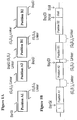
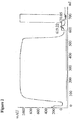
- the single chain bispecific antibodies were isolated in a two step purification process of IMAC ( Figure 2 ) and gel filtration ( Figure 3 ).
- the main product had a molecular weight of ca. 52 kDa under native conditions as determined by gel filtration in PBS. This molecular weight corresponds to the single chain bispecific antibody. All constructs were purified according to this method. Construct #4 could not be purified from cell culture supernatants due to extremely low levels of specific protein expressed and secreted into the supernatant.
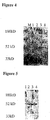
- Purified bispecific protein was analyzed in SDS PAGE under reducing conditions performed with pre-cast 4-12% Bis Tris gels (Invitrogen). Sample preparation and application were performed according to the protocol provided by the manufacturer. The molecular weight was determined with MultiMark protein standard (Invitrogen). The gel was stained with colloidal Coomassie (Invitrogen protocol). The purity of the isolated protein was >95% as determined by SDS-PAGE ( Figure 4 ; protein band at 52 kD).
- Western Blot was performed using an Optitran® BA-S83 membrane and the Invitrogen Blot Module according to the protocol provided by the manufacturer.
- the antibodies used were directed against the His Tag (Penta His, Qiagen) and Goat-anti-mouse Ig labeled with alkaline phosphatase (AP) (Sigma), and BCIP/NBT (Sigma) as substrate.
- the single chain bispecific antibody could be specifically detected by Western Blot ( Figure 5 ). A single band was detected at 52 kD corresponding to the purified bispecific molecule.
- CD19 positive Nalm 6 cells human B cell precursor leukemia
- CD3 positive Jurkat cells human T cell leukemia
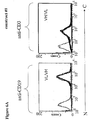
- 200,000 Nalm 6 cells and 200,000 Jurkat cells were respectively incubated for 30 min on ice with 50 ⁇ l of the pure cell supernatant of CHO cell cultures each expressing bispecific antibodies with different arrangements of VH and VL domains of CD19 and CD3 (as described in Example 2).
- the cells were washed twice in PBS and binding of the construct was detected as follows.
- the cells treated as described above were contacted with an unlabeled murine Penta His antibody (diluted 1:20 in 50 ⁇ l PBS with 2% FCS; Qiagen; Order No. 34660), which specifically binds to cell-bound construct via the construct's C-terminal histidine tag.
- a washing step followed to remove unbound murine Penta His antibody.
- Bound anti His antibodies were detected with an Fc gamma-specific antibody (Dianova, order no. 115-116-071) conjugated to phycoerythrin, diluted 1:100 in 50 ⁇ l PBS with 2% FCS (thick grey line in Figures 6A-6F ).
- As a negative control (thin black line in Figures 6A-6F ) fresh culture medium was used in place of culture supernatant.
- Cytotoxic activity of the bispecific antibodies with rearranged VH and VL domains was determined in a fluorochrome release based cytotoxicity assay.
- CD19 positive NALM6 cells were used as target cells (1.5x10 7 ) labeled with 10 ⁇ M calcein AM (Molecular Probes, Leiden, Netherland, no. C-1430) for 30 min at 37°C in cell culture medium. After two washes in cell culture medium, cells were counted and mixed with the CD4-positive T cell clone CB15 cells (kindly provided by Dr. Fickenscher, University of Er Weg/Nuernberg, Germany). 2 x 10 6 CB15 cells and 2 x 10 5 Nalm6 cells were mixed per ml (E:T ratio of 1:10) and 50 ⁇ l of this suspension was used per well in a 96 well round bottom plate.
- Antibodies were diluted in RPMI/10% FCS to the required concentration and 50 ⁇ l of this solution was added to the cell suspension. A standard reaction was incubated at 37°C/5% CO 2 for 2 hours. After the cytotoxic reaction, the released dye in the incubation medium can be quantitated in a fluorescence reader (Tecan, Crailsheim, Germany) and compared with the fluorescence signal from a control reaction (without bispecific antibody), and the fluorescence signal obtained for totally lysed cells (for 10 min in 1% saponin).
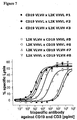
- Sigmoidal dose response curves typically had R 2 values >0.97 as determined by Prism Software (GraphPad Software Inc., San Diego, USA). EC 50 values calculated by the analyis program were used for comparison of bioactivity.
- constructs #2 and #6 are also especially amenable to inclusion in pharmaceutical compositions.
- Constructs #3 and #7 showed EC 50 values of 52 ng/ml and 31 ng/ml respectively.
- the monoclonal antibody 145-2C11 directed against murine CD3 was analysed in different assays in order to characterize this antibody as group I or II anti-CD3 antibody.
- 145-2C11 was used by Brissinck, 1991, J.Immunol. 147-4019 for constructing a bispecific antibody directed against BCL-1 and murine CD3 and also by de Jonge, 1997, Cancer Immunol. Immunother. 45-162 .
- the anti-murine CD3 epsilon antibody (145-2C11 BD biosciences, Heidelberg, FRG) was coated (50 ⁇ l at 5 ⁇ g/ml in PBS) on a Maxisorp ELISA plate (Nunc GmbH, Wiesbaden, FRG). After overnight incubation unspecific binding was blocked with 1,5% BSA in PBS for 1 hour. After washing three times with 200 ⁇ l PBS, different dilutions of the recombinant C-terminally His6-tagged CD3 protein (obtained by a procedure analogous to that described in Example 6 for obtaining recombinant human CD3-epsilon) and an irrelevant antigen (BSA) were incubated for 1 hour in the prepared cavities of the plate.
- BSA irrelevant antigen
- Binding of recombinant CD3 was detected with horseradish peroxidase conjugated anti-His antibody (Roche Diagnostics GmbH, Mannheim, FRG; diluted 1:500 in 1,5% BSA in PBS) binding to a polyhistidine tag.
- ABTS 2,2'-Azino-di[3-ethylbenzthiazoline sulfonate (6)] diammonium salt, Roche Diagnostics GmbH, Mannheim, FRG
- the absorbance values were measured on a SPECTRAFluor Plus photometer (Tecan GmbH, Crailsheim). The measurement wavelength was 405 nm, the reference wavelength was 620 nm.
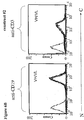
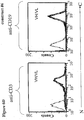
- Untransfected cells were also assayed under the described conditions. The samples were measured on a FACSscan (BD biosciences, Heidelberg, FRG). Specific binding of the 145-2C11 antibody as compared to the isotype control was clearly detectable on the transfected but not on the untransfected cells ( Figures 9 and 10 ) inducing a shift in fluorescence intensity.
- murine anti CD3 antibody 145-2C11 recognized purified recombinant CD3 epsilon as well as murine CD3 epsilon expressed in eukaryotic cells. 145-2C11 bound to Jurkat cells transfected with murine CD3 epsilon as well as to a murine T cell line expressing the CD3 epsilon chain in its native murine TCR receptor complex. Both cell lines express CD3 epsilon on the cell surface in the context of other TCR subunits.
- CD3-reactive bispecific single-chain antibodies may be assigned to different CD3-binding patterns according to the classification of Tunnacliffe, International Immunology 1 (1989), 546 .
- an ELISA may be carried out with purified recombinant human CD3-epsilon.
- Recombinant human CD3-epsilon may be e.g. obtained as C-kappa-fusion construct as described by Tunnacliffe, Immunol. Lett. 21 (1989) 243 or as truncated soluble CD3-epsilon available according to the following procedure: cDNA was isolated from human peripheral blood mononuclear cells.
- RNA and cDNA synthesis were performed according to standard protocols ( Current Protocols in Immunology (Coligan, Kruisbeek; Margulies, Shevach and Strober, John Wiley & Sons, Inc., USA, 2002 )).
- the isolation of total RNA and cDNA synthesis by random-primed reverse transcription was performed according to standard protocols ( Sambrock, Molecular Cloning; Laboratory Manual, 2nd edition, Cold Spring Harbor laboratory Press, Cold Spring Harbor, New York (1989 )).
- PCR was used to amplify the coding sequence of the extracellular domain of the human CD3 epsilon chain.
- the primers used in the PCR were designed so as to introduce restriction sites at the beginning and the end of the cDNA coding for the extracellular portion of the human CD3 epsilon chain (SEQ ID NO: 80 and SEQ ID NO:81).
- the introduced restriction sites, BsrGI and BspEI were utilised in the following cloning procedures.
- the PCR product was then cloned via BsrGI and BspEI into a plasmid designated BS-Fss-Lsp derived from the Bluescript KS + cloning vector (Stratagene Europe, Amsterdam-Zuiddoost, the Netherlands) following standard protocols.
- the vector was generated by cloning a DNA fragment (SEQ ID NO: 82) via EcoRI and Sail into Bluescript KS + .) The sequence of different clones was determined by sequencing according to standard protocols. By cloning into BS-Fss-Lsp the coding sequence of a murine immunoglobulin heavy chain leader peptide was fused in-frame to the 5' end of the coding sequence for the extracellular portion of the human CD3 epsilon chain.
- the cDNA was then cloned via EcoRI and BspEI into another plasmid designated as BSCTI to attach a sequence to the C-terminus, coding for a polyhistidine tag of six consecutive histidine residues followed by a stop codon (BSCTI is described in Kufer, Cancer Immunity 1 (2001), 10 ).
- BSCTI Bacillus subtilis
- the BspEI site of the cDNA was fused into an Xmal site of the plasmid thereby destroying both sites. All cloning steps were designed so as to generate an intact reading frame for the construct.
- the plasmid now contained a sequence coding for a protein comprising a murine immunoglobulin heavy chain leader peptide, to allow for secreted expression, followed by the extracellular domain of the human CD3 epsilon chain followed by a polyhistidine tag of six consecutive histidine residues, to allow for purification and detection via the polyhistidine tag (SEQ ID NO: 78 and SEQ ID NO: 79).
- This sequence was then cloned into the plasmid pFastBadTM (Invitrogen GmbH, Düsseldorf, FRG) via EcoRI and SalI.
- an anti-human CD3 epsilon antibody (UCHT1 BD biosciences, Heidelberg, FRG) was coated (50 ⁇ l at 5 ⁇ g/ml in PBS) on a Maxisorp ELISA plate (Nunc GmbH, Wiesbaden, FRG) overnight. Unspecific binding was blocked with 1.5 % BSA in PBS for 1 hour. All prior and subsequent washing steps were performed three times with 200 ⁇ l PBS. Afterwards, eluate fractions were incubated for 1 hour in the prepared cavities of the plate.
- Detection of the recombinant protein was performed with a horseradish peroxidase conjugated anti-His antibody (Roche Diagnostics GmbH, Mannheim, FRG; 50 ⁇ l of antibody diluted 1:500 in 1.5 % BSA in PBS). Development of the ELISA was performed with ABTS (2,2'-Azino-bis(3-Ethylbenz-Thiazolin)-6-Sulfonic acid) Roche Diagnostics GmbH, Mannheim, FRG) according to the specifications of the manufacturer. Positive fractions were further purified over a cobalt-chelate column which preferentially binds histidine-tagged proteins. Eluate fractions were tested using the described ELISA assay. Positive fractions were pooled and concentrated.
- purified recombinant human CD3-epsilon may be coated (50 ⁇ l at 10 ⁇ g/ml in PBS) on a Maxisorp ELISA plate (Nunc GmbH, Wiesbaden, FRG) overnight and unspecific binding subsequently blocked with 1,5% BSA in PBS for 1 hour. Next the ELISA wells are washed three times with 200 ⁇ l PBS.
- CD3-reactive bispecific single-chain antibody 50 ⁇ l at 10 ⁇ g/ml in 1,5% BSA in PBS
- a version that (i) contains an N-terminal FLAG-tag with the amino acid sequence: dykddddk (obtainable e.g. as described in Mack, PNAS 92 (1995) 7021 ) but (ii) avoids a polyhistidine tag can be incubated for 1 hour on immobilized CD3-epsilon.
- negative control 50 ⁇ l 1,5% BSA in PBS without bispecific single-chain antibody may be used.
- the "group I” anti-CD3 antibody UCHT1 (BD biosciences, Heidelberg, FRG; 50 ⁇ l of antibody diluted to 5 ⁇ g/ml in 1,5% BSA in PBS) may be incubated on immobilized CD3-epsilon.
- bispecific single-chain antibody specifically bound to human CD3-epsilon can be detected with an unconjugated anti-FLAG antibody (ANTI-FLAG M2 obtained from Sigma-Aldrich Chemie GmbH, Taufkirchen FRG; 50 ⁇ l of antibody diluted to 5 ⁇ g/ml in 1,5% BSA in PBS) followed by a horseradish peroxidase-conjugated, goat anti-mouse IgG, Fc-gamma fragment specific antibody (obtained from Dianova, Hamburg, FRG; diluted 1:1000 in 50 ⁇ l PBS with 1,5% BSA), which directly detects the control antibody bound to immobilized CD3-epsilon.
- ANTI-FLAG M2 obtained from Sigma-Aldrich Chemie GmbH, Taufmün FRG; 50 ⁇ l of antibody diluted to 5 ⁇ g/ml in 1,5% BSA in PBS
- Differentiation between the "group II" and the “group III” CD3-binding patterns may be carried out by flowcytometric binding analysis of CD3-reactive bispecific single-chain antibodies on human T cells and human CD3-epsilon-transgenic murine T cells as described e.g. in Tunnacliffe, International Immunology 1(1989) 546 .
- Flowcytometry may be carried out as described in Example 3 of the present invention if the bispecific single-chain antibody to be analyzed carries a polyhistidine-tag or according to the same protocol, except that the detection antibody is replaced by a fluorescence-labeled anti-Flag antibody if the bispecific single-chain antibody is Flag-tagged.
Landscapes
- Health & Medical Sciences (AREA)
- Chemical & Material Sciences (AREA)
- Organic Chemistry (AREA)
- Life Sciences & Earth Sciences (AREA)
- Immunology (AREA)
- Medicinal Chemistry (AREA)
- General Health & Medical Sciences (AREA)
- Veterinary Medicine (AREA)
- Animal Behavior & Ethology (AREA)
- Nuclear Medicine, Radiotherapy & Molecular Imaging (AREA)
- Pharmacology & Pharmacy (AREA)
- General Chemical & Material Sciences (AREA)
- Chemical Kinetics & Catalysis (AREA)
- Public Health (AREA)
- Engineering & Computer Science (AREA)
- Bioinformatics & Cheminformatics (AREA)
- Oncology (AREA)
- Communicable Diseases (AREA)
- Genetics & Genomics (AREA)
- Biochemistry (AREA)
- Proteomics, Peptides & Aminoacids (AREA)
- Molecular Biology (AREA)
- Biophysics (AREA)
- Rheumatology (AREA)
- Hematology (AREA)
- Physical Education & Sports Medicine (AREA)
- Pain & Pain Management (AREA)
- Transplantation (AREA)
- Pulmonology (AREA)
- Tropical Medicine & Parasitology (AREA)
- Orthopedic Medicine & Surgery (AREA)
- Virology (AREA)
- Peptides Or Proteins (AREA)
- Medicines Containing Antibodies Or Antigens For Use As Internal Diagnostic Agents (AREA)
- Micro-Organisms Or Cultivation Processes Thereof (AREA)
- Medicines That Contain Protein Lipid Enzymes And Other Medicines (AREA)
- Preparation Of Compounds By Using Micro-Organisms (AREA)
- Pharmaceuticals Containing Other Organic And Inorganic Compounds (AREA)
- Medicines Containing Material From Animals Or Micro-Organisms (AREA)
Priority Applications (1)
| Application Number | Priority Date | Filing Date | Title |
|---|---|---|---|
| EP04739378.0A EP1629012B1 (en) | 2003-05-31 | 2004-05-26 | Pharmaceutical compositions comprising bispecific anti-cd3, anti-cd19 antibody constructs for the treatment of b-cell related disorders |
Applications Claiming Priority (3)
| Application Number | Priority Date | Filing Date | Title |
|---|---|---|---|
| EP03012136 | 2003-05-31 | ||
| EP04739378.0A EP1629012B1 (en) | 2003-05-31 | 2004-05-26 | Pharmaceutical compositions comprising bispecific anti-cd3, anti-cd19 antibody constructs for the treatment of b-cell related disorders |
| PCT/EP2004/005685 WO2004106381A1 (en) | 2003-05-31 | 2004-05-26 | Pharmaceutical compositions comprising bispecific anti-cd3, anti-cd19 antibody constructs for the treatment of b-cell related disorders |
Publications (2)
| Publication Number | Publication Date |
|---|---|
| EP1629012A1 EP1629012A1 (en) | 2006-03-01 |
| EP1629012B1 true EP1629012B1 (en) | 2018-11-28 |
Family
ID=33483898
Family Applications (1)
| Application Number | Title | Priority Date | Filing Date |
|---|---|---|---|
| EP04739378.0A Expired - Lifetime EP1629012B1 (en) | 2003-05-31 | 2004-05-26 | Pharmaceutical compositions comprising bispecific anti-cd3, anti-cd19 antibody constructs for the treatment of b-cell related disorders |
Country Status (9)
| Country | Link |
|---|---|
| US (1) | US7635472B2 (cg-RX-API-DMAC7.html) |
| EP (1) | EP1629012B1 (cg-RX-API-DMAC7.html) |
| JP (3) | JP2008501621A (cg-RX-API-DMAC7.html) |
| CN (1) | CN100509850C (cg-RX-API-DMAC7.html) |
| AU (1) | AU2004242846A1 (cg-RX-API-DMAC7.html) |
| CA (1) | CA2522586C (cg-RX-API-DMAC7.html) |
| RU (1) | RU2005141512A (cg-RX-API-DMAC7.html) |
| WO (1) | WO2004106381A1 (cg-RX-API-DMAC7.html) |
| ZA (1) | ZA200508280B (cg-RX-API-DMAC7.html) |
Cited By (4)
| Publication number | Priority date | Publication date | Assignee | Title |
|---|---|---|---|---|
| US11434291B2 (en) | 2019-05-14 | 2022-09-06 | Provention Bio, Inc. | Methods and compositions for preventing type 1 diabetes |
| US12006366B2 (en) | 2020-06-11 | 2024-06-11 | Provention Bio, Inc. | Methods and compositions for preventing type 1 diabetes |
| US12378315B2 (en) | 2018-12-30 | 2025-08-05 | Hoffmann-La Roche Inc. | Anti-rabbit CD19 antibodies and methods of use |
| US12565529B2 (en) | 2021-05-24 | 2026-03-03 | Provention Bio, Inc. | Methods for treating type 1 diabetes |
Families Citing this family (372)
| Publication number | Priority date | Publication date | Assignee | Title |
|---|---|---|---|---|
| US7112324B1 (en) * | 1998-04-21 | 2006-09-26 | Micromet Ag | CD 19×CD3 specific polypeptides and uses thereof |
| JP3425536B2 (ja) | 1999-04-21 | 2003-07-14 | 株式会社チップトン | コーティング装置 |
| US20080260731A1 (en) * | 2002-03-01 | 2008-10-23 | Bernett Matthew J | Optimized antibodies that target cd19 |
| US9453251B2 (en) | 2002-10-08 | 2016-09-27 | Pfenex Inc. | Expression of mammalian proteins in Pseudomonas fluorescens |
| DE10254601A1 (de) | 2002-11-22 | 2004-06-03 | Ganymed Pharmaceuticals Ag | Differentiell in Tumoren exprimierte Genprodukte und deren Verwendung |
| MXPA06004035A (es) | 2003-10-16 | 2006-08-31 | Micromet Ag | Aglutinantes cd3 de-inmunizados multi-especificos. |
| EP1716178B1 (en) | 2004-02-16 | 2010-08-11 | Micromet AG | Less immunogenic binding molecules |
| BRPI0513826A2 (pt) | 2004-07-26 | 2010-06-22 | Dow Global Technologies Inc | processo para expressão de proteìna melhorada através de engenharia de cepa |
| PL1874821T3 (pl) | 2005-04-26 | 2013-09-30 | Trion Pharma Gmbh | Kombinacja przeciwciał i glikokortykoidów do leczenia raka |
| CN103145842A (zh) | 2005-06-30 | 2013-06-12 | Abbvie公司 | Il-12/p40结合蛋白 |
| EP1940881B1 (en) | 2005-10-11 | 2016-11-30 | Amgen Research (Munich) GmbH | Compositions comprising cross-species-specific antibodies and uses thereof |
| AU2013202375B2 (en) * | 2005-12-16 | 2016-10-27 | Amgen Research (Munich) Gmbh | Means and Methods for the Treatment of Tumorous Diseases |
| HRP20150175T1 (en) * | 2005-12-16 | 2015-03-27 | Amgen Research (Munich) Gmbh | Means and methods for the treatment of tumorous diseases |
| PL2383297T3 (pl) | 2006-08-14 | 2013-06-28 | Xencor Inc | Zoptymalizowane przeciwciała ukierunkowane na CD19 |
| JP2010502224A (ja) | 2006-09-08 | 2010-01-28 | アボット・ラボラトリーズ | インターロイキン13結合タンパク質 |
| RU2495882C2 (ru) * | 2006-09-08 | 2013-10-20 | Медиммун, Ллк. | Гуманизированные антитела к cd19 и их применение для лечения онкологического, связанного с трансплантацией и аутоиммунного заболевания |
| US9580719B2 (en) | 2007-04-27 | 2017-02-28 | Pfenex, Inc. | Method for rapidly screening microbial hosts to identify certain strains with improved yield and/or quality in the expression of heterologous proteins |
| US9394571B2 (en) | 2007-04-27 | 2016-07-19 | Pfenex Inc. | Method for rapidly screening microbial hosts to identify certain strains with improved yield and/or quality in the expression of heterologous proteins |
| EP2014680A1 (en) * | 2007-07-10 | 2009-01-14 | Friedrich-Alexander-Universität Erlangen-Nürnberg | Recombinant, single-chain, trivalent tri-specific or bi-specific antibody derivatives |
| DK2211904T3 (en) * | 2007-10-19 | 2016-10-24 | Seattle Genetics Inc | Cd19-binding agents and uses thereof |
| WO2009070642A1 (en) * | 2007-11-28 | 2009-06-04 | Medimmune, Llc | Protein formulation |
| SG190572A1 (en) * | 2008-04-29 | 2013-06-28 | Abbott Lab | Dual variable domain immunoglobulins and uses thereof |
| US20100260668A1 (en) * | 2008-04-29 | 2010-10-14 | Abbott Laboratories | Dual Variable Domain Immunoglobulins and Uses Thereof |
| CA2726087A1 (en) | 2008-06-03 | 2009-12-10 | Tariq Ghayur | Dual variable domain immunoglobulins and uses thereof |
| TW201006485A (en) * | 2008-06-03 | 2010-02-16 | Abbott Lab | Dual variable domain immunoglobulins and uses thereof |
| CN102149825B (zh) * | 2008-07-08 | 2015-07-22 | Abbvie公司 | 前列腺素e2双重可变结构域免疫球蛋白及其用途 |
| PE20110385A1 (es) | 2008-07-18 | 2011-06-22 | Bristol Myers Squibb Co | Anticuerpo de dominio (dab) que se une a cd28 y no reacciona en forma cruzada con ctla4 |
| EP2352765B1 (en) * | 2008-10-01 | 2018-01-03 | Amgen Research (Munich) GmbH | Cross-species-specific single domain bispecific single chain antibody |
| EP2370467B1 (en) | 2008-10-01 | 2016-09-07 | Amgen Research (Munich) GmbH | Cross-species-specific pscaxcd3, cd19xcd3, c-metxcd3, endosialinxcd3, epcamxc d3, igf-1rxcd3 or fapalpha xcd3 bispecific single chain antibody |
| US20110293619A1 (en) * | 2008-10-01 | 2011-12-01 | Micromet Ag | CROSS-SPECIES-SPECIFIC PSMAxCD3 BISPECIFIC SINGLE CHAIN ANTIBODY |
| DK2352763T4 (da) | 2008-10-01 | 2022-10-17 | Amgen Res Munich Gmbh | Bispecifikke enkeltkædede antistoffer med specificitet for højmolekylære målantigener |
| KR101695327B1 (ko) | 2008-11-07 | 2017-01-11 | 암젠 리서치 (뮌헨) 게엠베하 | 급성 림프구성 백혈병의 치료방법 |
| PL2918604T3 (pl) | 2008-11-07 | 2018-05-30 | Amgen Research (Munich) Gmbh | Leczenie pediatrycznej ostrej białaczki limfoblastycznej |
| UY32808A (es) * | 2009-07-29 | 2011-02-28 | Abbott Lab | Inmunoglobulinas como dominio variable dual y usos de las mismas |
| WO2011028811A2 (en) * | 2009-09-01 | 2011-03-10 | Abbott Laboratories | Dual variable domain immunoglobulins and uses thereof |
| WO2011028952A1 (en) | 2009-09-02 | 2011-03-10 | Xencor, Inc. | Compositions and methods for simultaneous bivalent and monovalent co-engagement of antigens |
| BR112012008833A2 (pt) * | 2009-10-15 | 2015-09-08 | Abbott Lab | imunoglobulinas de dominio variavel duplo e usos das mesmas |
| RS54655B2 (sr) * | 2009-10-27 | 2021-04-29 | Amgen Res Munich Gmbh | Dozni režim za primenu cd19xcd3 bispecifičnog antitela |
| UY32979A (es) | 2009-10-28 | 2011-02-28 | Abbott Lab | Inmunoglobulinas con dominio variable dual y usos de las mismas |
| CA2785907A1 (en) | 2009-12-29 | 2011-07-28 | Emergent Product Development Seattle, Llc | Ron binding constructs and methods of use thereof |
| WO2011147834A1 (en) | 2010-05-26 | 2011-12-01 | Roche Glycart Ag | Antibodies against cd19 and uses thereof |
| CN102250245B (zh) * | 2010-05-27 | 2014-05-14 | 四川大学 | 抗b细胞淋巴瘤的双特异性抗体及其用途 |
| EP2409712A1 (en) | 2010-07-19 | 2012-01-25 | International-Drug-Development-Biotech | Anti-CD19 antibody having ADCC and CDC functions and improved glycosylation profile |
| EP2409993A1 (en) | 2010-07-19 | 2012-01-25 | International-Drug-Development-Biotech | Anti-CD19 antibody having ADCC function with improved glycosylation profile |
| AU2011283694B2 (en) | 2010-07-29 | 2017-04-13 | Xencor, Inc. | Antibodies with modified isoelectric points |
| EP3252072A3 (en) | 2010-08-03 | 2018-03-14 | AbbVie Inc. | Dual variable domain immunoglobulins and uses thereof |
| JP2013539364A (ja) | 2010-08-26 | 2013-10-24 | アッヴィ・インコーポレイテッド | 二重可変ドメイン免疫グロブリンおよびその使用 |
| AU2011311673B2 (en) | 2010-10-05 | 2015-09-17 | F. Hoffmann-La Roche Ag | Antibodies against human TWEAK and uses thereof |
| CN103459425B (zh) | 2010-10-27 | 2015-11-25 | 安进研发(慕尼黑)股份有限公司 | 用于治疗dlbcl的组合物 |
| ES2758994T3 (es) | 2010-11-05 | 2020-05-07 | Zymeworks Inc | Diseño anticuerpo heterodimérico estable con mutaciones en el dominio Fc |
| EA026075B1 (ru) | 2010-11-10 | 2017-02-28 | Эмджен Рисерч (Мьюник) Гмбх | Предотвращение неблагоприятных эффектов, вызванных cd3-специфическими связывающими доменами |
| EP3974453A3 (en) | 2010-11-16 | 2022-08-03 | Amgen Inc. | Agents and methods for treating diseases that correlate with bcma expression |
| EP2683735A1 (en) | 2011-03-10 | 2014-01-15 | HCO Antibody, Inc. | Bispecific three-chain antibody-like molecules |
| KR102345943B1 (ko) | 2011-04-28 | 2021-12-31 | 암젠 리서치 (뮌헨) 게엠베하 | 잠재적 유해 효과의 위험에 처한 환자에게 cd19xcd3 이중특이적 항체를 투여하기 위한 투여 요법 |
| KR102060389B1 (ko) * | 2011-05-21 | 2019-12-31 | 마크로제닉스, 인크. | 사람 및 비-사람 cd3에 결합할 수 있는 cd3-결합 분자 |
| WO2013048243A1 (en) * | 2011-09-29 | 2013-04-04 | Apo-T B.V. | Multi-specific binding molecules targeting aberrant cells |
| US10851178B2 (en) | 2011-10-10 | 2020-12-01 | Xencor, Inc. | Heterodimeric human IgG1 polypeptides with isoelectric point modifications |
| US12466897B2 (en) | 2011-10-10 | 2025-11-11 | Xencor, Inc. | Heterodimeric human IgG1 polypeptides with isoelectric point modifications |
| BR112014010580B1 (pt) | 2011-11-04 | 2021-01-12 | Zymeworks, Inc. | constructo de fc heteromultimérico isolado, composição, uso de um constructo de fc heteromultimérico isolado, composição de ácido nucléico e método para expressar o constructo de fc heteromultimérico isolado |
| TWI679212B (zh) | 2011-11-15 | 2019-12-11 | 美商安進股份有限公司 | 針對bcma之e3以及cd3的結合分子 |
| EP2797600A4 (en) | 2011-12-28 | 2015-09-16 | Pozen Inc | IMPROVED COMPOSITIONS AND METHODS OF DISTRIBUTING OMEPRAZOLE AND ACETYL SALICYLIC ACID |
| TW201333035A (zh) | 2011-12-30 | 2013-08-16 | Abbvie Inc | 針對il-13及/或il-17之雙特異性結合蛋白 |
| CA2860914A1 (en) | 2012-01-13 | 2013-07-18 | Apo-T B.V. | Aberrant cell-restricted immunoglobulins provided with a toxic moiety |
| GB2502127A (en) | 2012-05-17 | 2013-11-20 | Kymab Ltd | Multivalent antibodies and in vivo methods for their production |
| JP6509724B2 (ja) | 2012-04-20 | 2019-05-08 | アプティーボ リサーチ アンド デベロップメント エルエルシー | Cd3結合ポリペプチド |
| US9499634B2 (en) | 2012-06-25 | 2016-11-22 | Zymeworks Inc. | Process and methods for efficient manufacturing of highly pure asymmetric antibodies in mammalian cells |
| WO2014004549A2 (en) | 2012-06-27 | 2014-01-03 | Amgen Inc. | Anti-mesothelin binding proteins |
| JP2015524255A (ja) | 2012-07-13 | 2015-08-24 | ザ トラスティーズ オブ ザ ユニバーシティ オブ ペンシルバニア | 二重特異性抗体を共導入することによってcart細胞の活性を強化する方法 |
| TW202037609A (zh) | 2012-11-01 | 2020-10-16 | 美商艾伯維有限公司 | 抗-vegf/dll4雙重可變區域免疫球蛋白及其用途 |
| JP6499079B2 (ja) * | 2012-11-13 | 2019-04-10 | バイオエヌテック アーゲーBioNTech AG | クローディンを発現するガン疾患を処置するための剤 |
| US9562110B2 (en) * | 2012-11-21 | 2017-02-07 | Wuhan Yzy Biopharma Co., Ltd. | Bispecific antibody |
| US9914785B2 (en) | 2012-11-28 | 2018-03-13 | Zymeworks Inc. | Engineered immunoglobulin heavy chain-light chain pairs and uses thereof |
| US11053316B2 (en) | 2013-01-14 | 2021-07-06 | Xencor, Inc. | Optimized antibody variable regions |
| US10487155B2 (en) | 2013-01-14 | 2019-11-26 | Xencor, Inc. | Heterodimeric proteins |
| US9701759B2 (en) | 2013-01-14 | 2017-07-11 | Xencor, Inc. | Heterodimeric proteins |
| KR102211837B1 (ko) | 2013-01-14 | 2021-02-03 | 젠코어 인코포레이티드 | 신규한 이형이량체 단백질 |
| US10131710B2 (en) | 2013-01-14 | 2018-11-20 | Xencor, Inc. | Optimized antibody variable regions |
| US10968276B2 (en) | 2013-03-12 | 2021-04-06 | Xencor, Inc. | Optimized anti-CD3 variable regions |
| US9605084B2 (en) | 2013-03-15 | 2017-03-28 | Xencor, Inc. | Heterodimeric proteins |
| WO2014113510A1 (en) | 2013-01-15 | 2014-07-24 | Xencor, Inc. | Rapid clearance of antigen complexes using novel antibodies |
| US9486475B2 (en) | 2013-02-08 | 2016-11-08 | Amgen Research (Munich) Gmbh | PPS for the prevention of potential adverse effects caused by CD3 specific binding domains |
| JO3529B1 (ar) | 2013-02-08 | 2020-07-05 | Amgen Res Munich Gmbh | مضاد التصاق خلايا الدم البيض من أجل التخفيف من الاثار السلبية الممكنة الناتجة عن مجالات ارتباط cd3- المحدد |
| WO2014144280A2 (en) | 2013-03-15 | 2014-09-18 | Abbvie Inc. | DUAL SPECIFIC BINDING PROTEINS DIRECTED AGAINST IL-1β AND / OR IL-17 |
| US20140302037A1 (en) * | 2013-03-15 | 2014-10-09 | Amgen Inc. | BISPECIFIC-Fc MOLECULES |
| US10106624B2 (en) | 2013-03-15 | 2018-10-23 | Xencor, Inc. | Heterodimeric proteins |
| US10519242B2 (en) | 2013-03-15 | 2019-12-31 | Xencor, Inc. | Targeting regulatory T cells with heterodimeric proteins |
| EP2970486B1 (en) | 2013-03-15 | 2018-05-16 | Xencor, Inc. | Modulation of t cells with bispecific antibodies and fc fusions |
| US10858417B2 (en) | 2013-03-15 | 2020-12-08 | Xencor, Inc. | Heterodimeric proteins |
| CN104342453A (zh) * | 2013-08-06 | 2015-02-11 | 深圳先进技术研究院 | 含基因工程抗体基因表达盒的微环dna重组母质粒、含该表达盒的微环dna及应用 |
| CN105813654B (zh) | 2013-10-11 | 2019-05-31 | 美国政府(由卫生和人类服务部的部长所代表) | Tem8抗体及其用途 |
| AU2014357292B2 (en) | 2013-11-27 | 2020-06-25 | Zymeworks Bc Inc. | Bispecific antigen-binding constructs targeting HER2 |
| JP2017507900A (ja) | 2013-12-17 | 2017-03-23 | ジェネンテック, インコーポレイテッド | Pd−1軸結合アンタゴニスト及び抗her2抗体を使用してher2陽性がんを治療する方法 |
| AU2014364593A1 (en) | 2013-12-17 | 2016-07-07 | Genentech, Inc. | Methods of treating cancer using PD-1 axis binding antagonists and an anti-CD20 antibody |
| WO2015103549A1 (en) | 2014-01-03 | 2015-07-09 | The United States Of America, As Represented By The Secretary Department Of Health And Human Services | Neutralizing antibodies to hiv-1 env and their use |
| RU2016132863A (ru) * | 2014-01-15 | 2018-02-20 | Займворкс Инк. | БИСПЕЦИФИЧЕСКИЕ CD3 и CD19 АНТИГЕНСВЯЗЫВАЮЩИЕ КОНСТРУКЦИИ |
| DK3105252T3 (da) | 2014-02-12 | 2019-10-14 | Michael Uhlin | Bispecifikke antistoffer til anvendelse ved stamcelletransplantation |
| EP3699195A3 (en) | 2014-03-28 | 2020-11-04 | Xencor, Inc. | Bispecific antibodies that bind to cd38 and cd3 |
| CN105017422A (zh) * | 2014-04-30 | 2015-11-04 | 山东百因制药技术有限公司 | 一种抗cd3/抗cd19双特异性抗体及其应用 |
| SI3149480T1 (sl) | 2014-05-30 | 2019-05-31 | Amgen Research (Munich) Gmbh | Stratifikacija tveganj pri bolnikih z akutno limfoblastno levkemijo prekurzorjev b |
| WO2016001810A1 (en) | 2014-07-01 | 2016-01-07 | Pfizer Inc. | Bispecific heterodimeric diabodies and uses thereof |
| BR112017001183A2 (pt) | 2014-07-21 | 2017-11-28 | Novartis Ag | tratamento de câncer usando receptor de antígeno quimérico anti-bcma humanizado |
| SG10201913782UA (en) | 2014-07-21 | 2020-03-30 | Novartis Ag | Treatment of cancer using a cll-1 chimeric antigen receptor |
| US9611325B2 (en) | 2014-07-21 | 2017-04-04 | Wuhan Yzy Biopharma Co., Ltd. | Construction and application of bispecific antibody HER2xCD3 |
| WO2016036678A1 (en) * | 2014-09-02 | 2016-03-10 | Medimmune, Llc | Formulations of bispecific antibodies |
| WO2016073791A1 (en) | 2014-11-05 | 2016-05-12 | Genentech, Inc. | Methods of producing two chain proteins in bacteria |
| US10066002B2 (en) | 2014-11-05 | 2018-09-04 | Genentech, Inc. | Methods of producing two chain proteins in bacteria |
| WO2016077789A1 (en) | 2014-11-14 | 2016-05-19 | The Usa, As Represented By The Secretary, Department Of Health And Human Services | Neutralizing antibodies to ebola virus glycoprotein and their use |
| EP3223907A2 (en) | 2014-11-26 | 2017-10-04 | Xencor, Inc. | Heterodimeric antibodies that bind cd3 and cd38 |
| US10259887B2 (en) | 2014-11-26 | 2019-04-16 | Xencor, Inc. | Heterodimeric antibodies that bind CD3 and tumor antigens |
| PE20171324A1 (es) | 2014-11-26 | 2017-09-11 | Xencor Inc | Anticuerpos heterodimericos que se unen a cd3 y a antigenos tumorales |
| EP3029067A1 (en) | 2014-12-01 | 2016-06-08 | Deutsches Krebsforschungszentrum | Use of blocking-reagents for reducing unspecific T cell-activation |
| ES2744540T3 (es) * | 2014-12-05 | 2020-02-25 | Hoffmann La Roche | Anticuerpos anti-CD79b y procedimientos de uso |
| US10093733B2 (en) | 2014-12-11 | 2018-10-09 | Abbvie Inc. | LRP-8 binding dual variable domain immunoglobulin proteins |
| WO2016105450A2 (en) | 2014-12-22 | 2016-06-30 | Xencor, Inc. | Trispecific antibodies |
| PL3560953T3 (pl) | 2014-12-24 | 2024-05-13 | Autolus Limited | Komórka |
| CN104592393B (zh) * | 2015-01-21 | 2018-09-28 | 武汉友芝友生物制药有限公司 | 一种双特异性抗体cd19×cd3的构建及应用 |
| CN107635578A (zh) | 2015-02-05 | 2018-01-26 | Stc.Unm 公司 | 抗前‑bcr拮抗剂和方法 |
| EP3262217A4 (en) | 2015-02-24 | 2018-07-18 | BioAtla LLC | Conditionally active biological proteins |
| WO2016138160A1 (en) | 2015-02-24 | 2016-09-01 | The United States Of America, As Represented By The Secretary, Department Of Health And Human Services | Middle east respiratory syndrome coronavirus immunogens, antibodies, and their use |
| EP3265567B1 (en) | 2015-03-02 | 2020-07-29 | Conagen Inc. | Regulatory elements from labyrinthulomycetes microorganisms |
| US10227411B2 (en) | 2015-03-05 | 2019-03-12 | Xencor, Inc. | Modulation of T cells with bispecific antibodies and FC fusions |
| EP3064507A1 (en) | 2015-03-06 | 2016-09-07 | Deutsches Krebsforschungszentrum Stiftung des öffentlichen Rechts | Fusion proteins comprising a binding protein and an interleukin-15 polypeptide having a reduced affinity for IL15ra and therapeutic uses thereof |
| ES2789348T3 (es) | 2015-03-20 | 2020-10-26 | Us Health | Anticuerpos neutralizantes para GP120 y sus usos |
| SG11201708804WA (en) | 2015-05-07 | 2017-11-29 | Agenus Inc | Anti-ox40 antibodies and methods of use thereof |
| US9708412B2 (en) * | 2015-05-21 | 2017-07-18 | Harpoon Therapeutics, Inc. | Trispecific binding proteins and methods of use |
| AR105618A1 (es) | 2015-05-29 | 2017-10-25 | Genentech Inc | Metilación del promotor del ligando al receptor de muerte programada (pd-l1) en cáncer |
| TW201710286A (zh) | 2015-06-15 | 2017-03-16 | 艾伯維有限公司 | 抗vegf、pdgf及/或其受體之結合蛋白 |
| KR102689256B1 (ko) | 2015-06-17 | 2024-07-30 | 제넨테크, 인크. | Pd-1 축 결합 길항제 및 탁산을 사용하여 국소적 진행성 또는 전이성 유방암을 치료하는 방법 |
| EP3322735A4 (en) | 2015-07-15 | 2019-03-13 | Zymeworks Inc. | ACTIVE CONJUGATED BIS-SPECIFIC ANTIGEN-BONDING CONSTRUCTS |
| TWI796283B (zh) * | 2015-07-31 | 2023-03-21 | 德商安美基研究(慕尼黑)公司 | Msln及cd3抗體構築體 |
| TWI717375B (zh) * | 2015-07-31 | 2021-02-01 | 德商安美基研究(慕尼黑)公司 | Cd70及cd3抗體構築體 |
| IL319047A (en) | 2015-08-28 | 2025-04-01 | Amunix Operating Inc | Chimeric polypeptide composition and methods for its preparation and use |
| EP3747472B1 (en) | 2015-09-15 | 2024-04-03 | Acerta Pharma B.V. | Therapeutic combinations of a cd19 inhibitor and a btk inhibitor |
| WO2017053469A2 (en) | 2015-09-21 | 2017-03-30 | Aptevo Research And Development Llc | Cd3 binding polypeptides |
| AR106188A1 (es) | 2015-10-01 | 2017-12-20 | Hoffmann La Roche | Anticuerpos anti-cd19 humano humanizados y métodos de utilización |
| WO2017055314A1 (en) | 2015-10-02 | 2017-04-06 | F. Hoffmann-La Roche Ag | Bispecific anti-cd19xcd3 t cell activating antigen binding molecules |
| CA2997809A1 (en) | 2015-10-07 | 2017-04-13 | The United States Of America, As Represented By The Secretary, Department Of Health And Human Services | Il-7r-alpha specific antibodies for treating acute lymphoblastic leukemia |
| WO2017079479A1 (en) | 2015-11-03 | 2017-05-11 | The United States Of America, As Represented By The Secretary, Department Of Health And Human | Neutralizing antibodies to hiv-1 gp41 and their use |
| CN108883173B (zh) | 2015-12-02 | 2022-09-06 | 阿吉纳斯公司 | 抗体和其使用方法 |
| TW201720458A (zh) * | 2015-12-04 | 2017-06-16 | 宏觀基因股份有限公司 | 能夠結合cd19 和cd3 的雙特異性單價雙抗體以及其用途 |
| CA3007030A1 (en) | 2015-12-07 | 2017-06-15 | Xencor, Inc. | Heterodimeric antibodies that bind cd3 and psma |
| IL313608A (en) | 2015-12-09 | 2024-08-01 | Hoffmann La Roche | Antibody against CD20 type II to reduce the formation of antibodies against drugs |
| EP3178848A1 (en) | 2015-12-09 | 2017-06-14 | F. Hoffmann-La Roche AG | Type ii anti-cd20 antibody for reducing formation of anti-drug antibodies |
| IL260021B (en) | 2015-12-14 | 2022-09-01 | Macrogenics Inc | Bispecific molecules that are immunoreactive for pd1 and ctla4 and methods for using them |
| KR20180097615A (ko) | 2016-01-08 | 2018-08-31 | 에프. 호프만-라 로슈 아게 | Pd-1 축 결합 길항물질 및 항-cea/항-cd3 이중특이성 항체를 사용하는 cea-양성 암의 치료 방법 |
| JOP20170017B1 (ar) * | 2016-01-25 | 2021-08-17 | Amgen Res Munich Gmbh | تركيب صيدلي يتضمن تركيبات جسم مضاد ثنائي الاختصاص |
| US12128102B2 (en) | 2016-03-08 | 2024-10-29 | Takeda Pharmaceutical Company Limited | Constrained conditionally activated binding proteins |
| CN109071667A (zh) * | 2016-03-08 | 2018-12-21 | 马弗里克治疗公司 | 可诱导性结合蛋白和使用方法 |
| AU2017235543B2 (en) * | 2016-03-16 | 2020-05-14 | Conagen, Inc. | Production of proteins in labyrinthulomycetes |
| SG11201809316XA (en) * | 2016-04-28 | 2018-11-29 | Biomunex Pharmaceuticals | Bispecific antibodies targeting egfr and her2 |
| WO2017192589A1 (en) | 2016-05-02 | 2017-11-09 | The United States Of America, As Represented By The Secretary, Department Of Health And Human Services | Neutralizing antibodies to influenza ha and their use and identification |
| US11339225B2 (en) | 2016-05-12 | 2022-05-24 | Asclepius (Suzhou) Technology Company Group, Co., Ltd. | Bispecific antigen-binding construct and preparation method and use thereof |
| CN107365387B (zh) | 2016-05-12 | 2022-03-15 | 阿思科力(苏州)生物科技有限公司 | 一种双特异性抗原结合构建体及其制备方法和应用 |
| WO2018220099A1 (en) | 2017-06-02 | 2018-12-06 | F. Hoffmann-La Roche Ag | Type ii anti-cd20 antibody and anti-cd20/cd3 bispecific antibody for treatment of cancer |
| EP3252078A1 (en) | 2016-06-02 | 2017-12-06 | F. Hoffmann-La Roche AG | Type ii anti-cd20 antibody and anti-cd20/cd3 bispecific antibody for treatment of cancer |
| JP7010854B2 (ja) | 2016-06-14 | 2022-01-26 | ゼンコア インコーポレイテッド | 二重特異性チェックポイント阻害剤抗体 |
| KR20250175345A (ko) | 2016-06-21 | 2025-12-16 | 테네오바이오, 인코포레이티드 | Cd3 결합 항체 |
| CN109715663B (zh) | 2016-06-28 | 2022-11-25 | Xencor股份有限公司 | 结合生长抑素受体2的异源二聚抗体 |
| AU2017291262A1 (en) * | 2016-06-30 | 2019-01-03 | F. Hoffmann-La Roche Ag | Improved adoptive T-cell therapy |
| WO2018027204A1 (en) | 2016-08-05 | 2018-02-08 | Genentech, Inc. | Multivalent and multiepitopic anitibodies having agonistic activity and methods of use |
| WO2018029124A1 (en) | 2016-08-08 | 2018-02-15 | F. Hoffmann-La Roche Ag | Therapeutic and diagnostic methods for cancer |
| US10793632B2 (en) | 2016-08-30 | 2020-10-06 | Xencor, Inc. | Bispecific immunomodulatory antibodies that bind costimulatory and checkpoint receptors |
| PE20241349A1 (es) | 2016-09-14 | 2024-07-03 | Teneobio Inc | Anticuerpos de union a cd3 |
| MY203000A (en) | 2016-10-14 | 2024-06-01 | Xencor Inc | Il15/il15r� heterodimeric fc-fusion proteins |
| US10633454B2 (en) | 2016-11-01 | 2020-04-28 | Conagen Inc. | Expression of modified glycoproteins and glycopeptides |
| MA46770A (fr) | 2016-11-09 | 2019-09-18 | Agenus Inc | Anticorps anti-ox40, anticorps anti-gitr, et leurs procédés d'utilisation |
| JP2019535262A (ja) * | 2016-11-11 | 2019-12-12 | オートラス リミテッド | キメラ抗原受容体 |
| TW201829463A (zh) | 2016-11-18 | 2018-08-16 | 瑞士商赫孚孟拉羅股份公司 | 抗hla-g抗體及其用途 |
| AU2017380981B2 (en) | 2016-12-19 | 2025-01-30 | F. Hoffmann-La Roche Ag | Combination therapy with targeted 4-1BB (CD137) agonists |
| KR102692708B1 (ko) | 2016-12-20 | 2024-08-07 | 에프. 호프만-라 로슈 아게 | 항-cd20/항-cd3 이중특이성 항체 및 4-1bb(cd137) 작용물질의 병용 요법 |
| IL317134A (en) | 2016-12-21 | 2025-01-01 | Teneobio Inc | An antibody containing only heavy chains that binds a human B-cell maturation antigen, a pharmaceutical composition containing the same, its use in the treatment of B-cell disorders and a method for its preparation |
| CN106589129B (zh) * | 2016-12-30 | 2021-03-05 | 上海近岸生物科技有限公司 | 一种结合cd19、cd3和cd28的三功能分子及其应用 |
| WO2018120842A1 (zh) * | 2016-12-30 | 2018-07-05 | 上海欣百诺生物科技有限公司 | 一种双功能分子及其应用 |
| WO2018120843A1 (zh) * | 2016-12-30 | 2018-07-05 | 上海近岸生物科技有限公司 | 一种三功能分子及其应用 |
| CN108264559B (zh) * | 2016-12-30 | 2021-08-10 | 惠和生物技术(上海)有限公司 | 一种结合cd19、cd3和t细胞正共刺激分子的三功能分子及其应用 |
| CN108264561B (zh) * | 2016-12-30 | 2021-09-10 | 惠和生物技术(上海)有限公司 | 一种结合cd19、cd3和t细胞负共刺激分子的三功能分子及其应用 |
| AU2018219887B2 (en) | 2017-02-08 | 2024-08-15 | Dragonfly Therapeutics, LLC | Multi-specific binding proteins for activation of natural killer cells and therapeutic uses thereof to treat cancer |
| EP3580235B1 (en) | 2017-02-10 | 2024-05-01 | The United States of America, as represented by the Secretary, Department of Health and Human Services | Neutralizing antibodies to plasmodium falciparum circumsporozoite protein and their use |
| CN110944661A (zh) | 2017-02-20 | 2020-03-31 | 蜻蜓疗法股份有限公司 | 结合her2、nkg2d和cd16的蛋白质 |
| KR20240125061A (ko) * | 2017-03-27 | 2024-08-19 | 바이오뮤넥스 파마슈티컬스 | 안정적인 다중특이적 항체 |
| MX2019011769A (es) | 2017-04-03 | 2019-11-07 | Hoffmann La Roche | Anticuerpos que se unen a steap-1. |
| KR20250007003A (ko) | 2017-06-20 | 2025-01-13 | 테네오바이오, 인코포레이티드 | 항-bcma 중쇄-단독 항체 |
| CN110945026B (zh) | 2017-06-20 | 2024-03-19 | 特纳奥尼股份有限公司 | 仅有重链的抗bcma抗体 |
| AR112257A1 (es) | 2017-06-21 | 2019-10-09 | Gilead Sciences Inc | Anticuerpos multiespecíficos dirigidos al vih-1 gp120 y cd3 humana, composiciones que los comprende, ácido nucleico, vector y célula huésped relacionados, método para producirlos, método para detectar células que expresan gp120 y cd3, kit de anticuerpos, fragmentos de anticuerpo que se une a gp120 y método para producirlos |
| WO2019000223A1 (en) | 2017-06-27 | 2019-01-03 | Nanjing Legend Biotech Co., Ltd. | ENABLERS OF IMMUNE EFFECTOR CELLS OF CHIMERIC ANTIBODIES AND METHODS OF USE THEREOF |
| WO2019006472A1 (en) | 2017-06-30 | 2019-01-03 | Xencor, Inc. | TARGETED HETETRODIMERIC FUSION PROTEINS CONTAINING IL-15 / IL-15RA AND ANTIGEN-BINDING DOMAINS |
| EA202090020A1 (ru) | 2017-07-10 | 2020-04-28 | Интернэшнл - Драг - Дивелопмент - Байотек | Лечение b-клеточных злокачественных новообразований с использованием афукозилированных проапоптотических анти-cd19 антител в сочетании с анти-cd20 антителами или химиотерапевтическими средствами |
| US11525004B2 (en) | 2017-07-20 | 2022-12-13 | H. Lee Moffitt Cancer Center And Research Institute, Inc. | Recombinant CD123-binding antibodies |
| KR102794369B1 (ko) | 2017-08-01 | 2025-04-15 | 에이비 테라퓨틱스 인코퍼레이티드 | 이중특이 항체 및 그의 용도 |
| EP4029877B1 (en) | 2017-08-03 | 2024-01-17 | Amgen Inc. | Interleukin-21 muteins and methods of treatment |
| KR20200068647A (ko) | 2017-08-11 | 2020-06-15 | 시티 오브 호프 | 트랜스페린 수용체 (TfR)에 대한 RNA 앱타머 |
| CN111356700A (zh) | 2017-09-08 | 2020-06-30 | 马弗里克治疗公司 | 受约束的条件性活化的结合蛋白 |
| AU2018329920B2 (en) | 2017-09-08 | 2022-12-01 | Amgen Inc. | Inhibitors of KRAS G12C and methods of using the same |
| MX2020003395A (es) | 2017-10-13 | 2020-08-03 | Merck Sharp & Dohme | Composiciones y metodos para tratar linfoma difuso de celulas b grandes. |
| BR112020007630A2 (pt) | 2017-11-01 | 2020-11-17 | F. Hoffmann-La Roche Ag | anticorpo biespecífico ox40, produto farmacêutico, composição farmacêutica e anticorpos biespecíficos anti-fap/ anti-ox40 |
| JP7404252B2 (ja) * | 2017-11-08 | 2023-12-25 | ヤフェイ シャンハイ バイオロジー メディスン サイエンス アンド テクノロジー カンパニー リミテッド | 生体分子のコンジュゲートおよびその使用 |
| US10981992B2 (en) | 2017-11-08 | 2021-04-20 | Xencor, Inc. | Bispecific immunomodulatory antibodies that bind costimulatory and checkpoint receptors |
| JP2021502100A (ja) | 2017-11-08 | 2021-01-28 | ゼンコア インコーポレイテッド | 新規抗pd−1配列を用いた二重特異性および単一特異性抗体 |
| KR20200098590A (ko) | 2017-12-12 | 2020-08-20 | 마크로제닉스, 인크. | 이중특이적 cd16-결합 분자 및 질환 치료에서의 그것의 용도 |
| IL275426B2 (en) | 2017-12-19 | 2025-03-01 | Xencor Inc | Engineered il-2 fc fusion proteins |
| MX2020006119A (es) | 2017-12-21 | 2020-08-24 | Hoffmann La Roche | Anticuerpos de union a hla-a2/wt1. |
| IL275462B2 (en) | 2017-12-22 | 2026-01-01 | Genentech Inc | Targeted integration of nucleic acids |
| JP2021508479A (ja) | 2017-12-27 | 2021-03-11 | テネオバイオ, インコーポレイテッド | ヘテロ二量体特異的抗体上のcd3デルタ及びcd3イプシロン |
| EP3724223A1 (en) | 2018-01-02 | 2020-10-21 | The United States of America, as represented by The Secretary, Department of Health and Human Services | Neutralizing antibodies to ebola virus glycoprotein and their use |
| TW201930344A (zh) | 2018-01-12 | 2019-08-01 | 美商安進公司 | 抗pd-1抗體及治療方法 |
| WO2019149716A1 (en) | 2018-01-31 | 2019-08-08 | F. Hoffmann-La Roche Ag | Bispecific antibodies comprising an antigen-binding site binding to lag3 |
| EP3746470A1 (en) | 2018-01-31 | 2020-12-09 | F. Hoffmann-La Roche AG | Stabilized immunoglobulin domains |
| CA3237846A1 (en) | 2018-02-08 | 2019-08-15 | Dragonfly Therapeutics, Inc. | Antibody variable domains targeting the nkg2d receptor |
| BR112020015994A2 (pt) | 2018-02-08 | 2020-12-15 | Dragonfly Therapeutics, Inc. | Terapia de combinação do câncer que envolve proteínas de ligação multiespecíficas que ativam células natural killer |
| TWI829667B (zh) | 2018-02-09 | 2024-01-21 | 瑞士商赫孚孟拉羅股份公司 | 結合gprc5d之抗體 |
| JP7337079B2 (ja) | 2018-02-15 | 2023-09-01 | マクロジェニクス,インコーポレーテッド | 変異型cd3結合ドメイン、及び疾患の治療のための併用療法におけるその使用 |
| WO2019164930A1 (en) | 2018-02-20 | 2019-08-29 | Dragonfly Therapeutics, Inc. | Multi-specific binding proteins that bind cd33, nkg2d, and cd16, and methods of use |
| RU2020130795A (ru) | 2018-02-21 | 2022-03-21 | Дзе Юнайтед Стэйтс Оф Америка, Эс Репрезентед Бай Дзе Секретэри, Департмент Оф Хелт Энд Хьюман Сервисиз | Нейтрализующие антитела к env вич-1 и их применение |
| EP3765489B1 (en) | 2018-03-13 | 2024-10-16 | F. Hoffmann-La Roche AG | Therapeutic combination of 4-1bb agonists with anti-cd20 antibodies |
| TWI841551B (zh) | 2018-03-13 | 2024-05-11 | 瑞士商赫孚孟拉羅股份公司 | 使用靶向4-1bb (cd137)之促效劑的組合療法 |
| JP2021519073A (ja) | 2018-03-29 | 2021-08-10 | ジェネンテック, インコーポレイテッド | 哺乳動物細胞におけるラクトジェニック活性の制御 |
| CA3096052A1 (en) | 2018-04-04 | 2019-10-10 | Xencor, Inc. | Heterodimeric antibodies that bind fibroblast activation protein |
| SG11202010163QA (en) | 2018-04-18 | 2020-11-27 | Xencor Inc | Pd-1 targeted heterodimeric fusion proteins containing il-15/il-15ra fc-fusion proteins and pd-1 antigen binding domains and uses thereof |
| EP3781598A1 (en) | 2018-04-18 | 2021-02-24 | Xencor, Inc. | Tim-3 targeted heterodimeric fusion proteins containing il-15/il-15ra fc-fusion proteins and tim-3 antigen binding domains |
| AR115052A1 (es) | 2018-04-18 | 2020-11-25 | Hoffmann La Roche | Anticuerpos multiespecíficos y utilización de los mismos |
| AR114789A1 (es) | 2018-04-18 | 2020-10-14 | Hoffmann La Roche | Anticuerpos anti-hla-g y uso de los mismos |
| WO2019241315A1 (en) | 2018-06-12 | 2019-12-19 | Obsidian Therapeutics, Inc. | Pde5 derived regulatory constructs and methods of use in immunotherapy |
| TWI890660B (zh) | 2018-06-13 | 2025-07-21 | 瑞士商諾華公司 | Bcma 嵌合抗原受體及其用途 |
| TW202519260A (zh) | 2018-07-02 | 2025-05-16 | 美商安進公司 | 抗steap1抗原結合蛋白 |
| EA202091888A1 (ru) | 2018-08-08 | 2020-10-23 | Драгонфлай Терапьютикс, Инк. | Вариабельные домены антител, нацеленные на рецептор nkg2d |
| KR102835308B1 (ko) | 2018-08-08 | 2025-07-21 | 드래곤플라이 쎄라퓨틱스, 인크. | Nkg2d, cd16 및 종양 관련 항원에 결합하는 단백질 |
| EP3833392A4 (en) | 2018-08-08 | 2022-05-18 | Dragonfly Therapeutics, Inc. | MULTISPECIFIC BINDING PROTEINS FOR BINDING CD33, NKG2D AND CD16 AND METHODS OF USE |
| EP3850013A4 (en) | 2018-09-10 | 2022-10-05 | Nanjing Legend Biotech Co., Ltd. | SINGLE DOMAIN ANTIBODIES AGAINST CLL1 AND USES THEREOF |
| AR114732A1 (es) | 2018-09-18 | 2020-10-07 | Hoffmann La Roche | Utilización de un inhibidor de catepsina s contra la formación de anticuerpos antifármaco |
| KR102739487B1 (ko) | 2018-09-21 | 2024-12-10 | 제넨테크, 인크. | 3중-음성 유방암에 대한 진단 방법 |
| AU2019355971B2 (en) | 2018-10-03 | 2025-05-08 | Xencor, Inc. | IL-12 heterodimeric Fc-fusion proteins |
| EP3877407B1 (en) | 2018-11-05 | 2026-03-11 | F. Hoffmann-La Roche AG | Methods of producing two chain proteins in prokaryotic host cells |
| US20220089694A1 (en) | 2018-12-20 | 2022-03-24 | The U.S.A., As Represented By The Secretary, Department Of Health And Human Services | Ebola virus glycoprotein-specific monoclonal antibodies and uses thereof |
| CR20210330A (es) | 2018-12-21 | 2021-07-20 | Hoffmann La Roche | ANTICUERPOS QUE SE UNEN A CD3 (Divisional 2021-0325) |
| UA128001C2 (uk) | 2018-12-21 | 2024-03-06 | Ф. Хоффманн-Ля Рош Аг | Націлені на пухлину агоністичні cd28-антигензв'язувальні молекули |
| AU2019403279A1 (en) | 2018-12-21 | 2021-07-01 | Genentech, Inc. | Targeted integration of nucleic acids |
| US11098093B2 (en) * | 2019-01-07 | 2021-08-24 | Shattuck Labs, Inc. | Heterodimeric proteins for modulating gamma delta T cells |
| KR102794884B1 (ko) | 2019-01-23 | 2025-04-15 | 제넨테크, 인크. | 진핵 숙주 세포에서 다합체 단백질을 생산하는 방법 |
| US12463463B2 (en) | 2019-01-28 | 2025-11-04 | Ab Therapeutics, Inc. | Bispecific antibodies and uses thereof |
| CA3132185A1 (en) | 2019-03-01 | 2020-09-10 | Xencor, Inc. | Heterodimeric antibodies that bind enpp3 and cd3 |
| EP4592313A3 (en) | 2019-03-05 | 2025-11-19 | Takeda Pharmaceutical Company Limited | Constrained conditionally activated binding proteins |
| CN109776683B (zh) * | 2019-03-19 | 2020-04-07 | 益科思特(北京)医药科技发展有限公司 | 一种双特异性抗体及其制备方法与应用 |
| WO2020206330A1 (en) | 2019-04-05 | 2020-10-08 | Teneobio, Inc. | Heavy chain antibodies binding to psma |
| WO2020221792A1 (en) | 2019-04-30 | 2020-11-05 | Amgen Research (Munich) Gmbh | Means and methods of treating burkitt lymphoma or leukemia |
| EP3962523A2 (en) | 2019-05-03 | 2022-03-09 | The United States of America, as represented by the Secretary, Department of Health and Human Services | Neutralizing antibodies to plasmodium falciparum circumsporozoite protein and their use |
| JP7489407B2 (ja) | 2019-05-21 | 2024-05-23 | ノバルティス アーゲー | Cd19結合分子及びその使用 |
| WO2020236974A1 (en) | 2019-05-21 | 2020-11-26 | University Of Georgia Research Foundation, Inc. | Antibodies that bind human metapneumovirus fusion protein and their use |
| CR20210622A (es) | 2019-06-14 | 2022-06-27 | Teneobio Inc | Anticuerpos multiespecíficos de cadena pesada que se unen a cd22 y cd3 |
| WO2021003297A1 (en) | 2019-07-02 | 2021-01-07 | The United States Of America, As Represented By The Secretary, Department Of Health And Human Services | Monoclonal antibodies that bind egfrviii and their use |
| CN114174338A (zh) | 2019-07-31 | 2022-03-11 | 豪夫迈·罗氏有限公司 | 与gprc5d结合的抗体 |
| CA3248329A1 (en) | 2019-07-31 | 2025-11-29 | F. Hoffmann-La Roche Ag | Antibodies binding to gprc5d |
| CN110577603B (zh) * | 2019-08-15 | 2021-12-28 | 北京东方百泰生物科技股份有限公司 | 一种抗cd3和抗cd19双特异性抗体 |
| US20220289843A1 (en) * | 2019-08-19 | 2022-09-15 | Elpis Biopharmaceuticals | Anti-cd19 antibodies and uses thereof |
| WO2021041300A2 (en) * | 2019-08-23 | 2021-03-04 | Ab Therapeutics, Inc. | Bispecific antibodies and uses thereof |
| PH12022550646A1 (en) | 2019-09-18 | 2023-04-03 | Genentech Inc | Anti-klk7 antibodies, anti-klk5 antibodies, multispecific anti-klk5/klk7 antibodies, and methods of use |
| KR20220100963A (ko) | 2019-12-18 | 2022-07-18 | 에프. 호프만-라 로슈 아게 | Hla-a2/mage-a4에 결합하는 항체 |
| KR20220118527A (ko) | 2019-12-23 | 2022-08-25 | 제넨테크, 인크. | 아포지질단백질 l1-특이적 항체 및 이용 방법 |
| WO2021146328A1 (en) | 2020-01-13 | 2021-07-22 | Aptevo Research And Development Llc | Formulations for protein therapeutics |
| BR112022013730A2 (pt) | 2020-01-13 | 2022-10-11 | Aptevo Res & Development Llc | Métodos e composições para prevenir a adsorção de proteínas terapêuticas aos componentes do sistema de distribuição de drogas |
| EP3865513A1 (en) * | 2020-02-17 | 2021-08-18 | Fundación Para La Investigación Biomédica Del Hospital 12 De Octubre | Anti-cd19/anti-cd3 bispecific antibody, t cells secreting the same, method of preparation and use thereof |
| BR112022017924A2 (pt) | 2020-03-10 | 2022-12-20 | Massachusetts Inst Technology | Composições e métodos para imunoterapia de câncer npm1c-positivo |
| JP2023518841A (ja) | 2020-03-26 | 2023-05-08 | ジェネンテック, インコーポレイテッド | 宿主細胞タンパク質が減少した修飾哺乳動物細胞 |
| US20230265204A1 (en) | 2020-04-24 | 2023-08-24 | Hoffmann-La Roche Inc. | Enzyme and pathway modulation with sulfhydryl compounds and their derivatives |
| IL297601A (en) | 2020-04-29 | 2022-12-01 | Teneobio Inc | Multispecific heavy chain antibodies with modified heavy chain constant regions |
| JP7512394B2 (ja) | 2020-05-06 | 2024-07-08 | ドラゴンフライ セラピューティクス, インコーポレイテッド | Nkg2d、cd16及びclec12aに結合するタンパク質 |
| WO2021231976A1 (en) | 2020-05-14 | 2021-11-18 | Xencor, Inc. | Heterodimeric antibodies that bind prostate specific membrane antigen (psma) and cd3 |
| PE20240080A1 (es) | 2020-06-08 | 2024-01-16 | Hoffmann La Roche | Anticuerpos anti-hbv y metodos de uso |
| AU2021293038A1 (en) | 2020-06-16 | 2023-02-02 | F. Hoffmann-La Roche Ag | Methods and compositions for treating triple-negative breast cancer |
| PE20230835A1 (es) | 2020-06-19 | 2023-05-19 | Hoffmann La Roche | Anticuerpos que se unen a cd3 |
| PH12022553489A1 (en) | 2020-06-19 | 2024-04-22 | Hoffmann La Roche | Antibodies binding to cd3 and folr1 |
| WO2021255155A1 (en) | 2020-06-19 | 2021-12-23 | F. Hoffmann-La Roche Ag | Antibodies binding to cd3 and cd19 |
| WO2021255146A1 (en) | 2020-06-19 | 2021-12-23 | F. Hoffmann-La Roche Ag | Antibodies binding to cd3 and cea |
| CA3184747A1 (en) | 2020-06-24 | 2021-12-30 | Genentech, Inc. | Apoptosis resistant cell lines |
| JP2023532665A (ja) | 2020-06-24 | 2023-07-31 | ジェネンテック, インコーポレイテッド | 核酸の標的化組み込み |
| PH12023550112A1 (en) | 2020-07-17 | 2024-06-24 | Genentech Inc | Anti-notch2 antibodies and methods of use |
| EP4185616A1 (en) * | 2020-07-24 | 2023-05-31 | Cellectis S.A. | T-cells expressing immune cell engagers in allogenic settings |
| WO2022026358A1 (en) * | 2020-07-27 | 2022-02-03 | Arizona Board Of Regents On Behalf Of The University Of Arizona | Multifunctional immunoglobulin-fold polypeptides from alternative translational initiation and termination |
| US20240059797A1 (en) * | 2020-07-29 | 2024-02-22 | Gritstone Bio, Inc. | Engineered multi-specific antibodies and related methods of use and manufacture |
| CA3192204A1 (en) | 2020-08-19 | 2022-02-24 | Xencor, Inc. | Anti-cd28 and/or anti-b7h3 compositions |
| CN116322763A (zh) | 2020-08-27 | 2023-06-23 | 学校法人顺天堂 | 抗切断型突变calr-cd3双特异性抗体及医药组合物 |
| CA3192344A1 (en) | 2020-08-28 | 2022-03-03 | Genentech, Inc. | Crispr/cas9 multiplex knockout of host cell proteins |
| JP2023550148A (ja) | 2020-11-20 | 2023-11-30 | シンシア・イノベーション・インコーポレイテッド | がん免疫治療に用いられる武装二重car-t組成物及び方法 |
| WO2022132904A1 (en) | 2020-12-17 | 2022-06-23 | The United States Of America, As Represented By The Secretary, Department Of Health And Human Services | Human monoclonal antibodies targeting sars-cov-2 |
| MX2023007133A (es) | 2020-12-17 | 2023-06-27 | Hoffmann La Roche | Anticuerpos anti-hla-g y uso de estos. |
| AU2022214319A1 (en) | 2021-01-28 | 2023-08-03 | Regeneron Pharmaceuticals, Inc. | Compositions and methods for treating cytokine release syndrome |
| WO2022169872A1 (en) | 2021-02-03 | 2022-08-11 | Genentech, Inc. | Multispecific binding protein degrader platform and methods of use |
| EP4288455A1 (en) | 2021-02-03 | 2023-12-13 | Mozart Therapeutics, Inc. | Binding agents and methods of using the same |
| AU2022221297A1 (en) | 2021-02-09 | 2023-08-03 | The United States Of America, As Represented By The Secretary, Department Of Health And Human Services | Antibodies targeting the spike protein of coronaviruses |
| WO2022173689A1 (en) | 2021-02-09 | 2022-08-18 | University Of Georgia Research Foundation, Inc. | Human monoclonal antibodies against pneumococcal antigens |
| EP4294837A1 (en) | 2021-02-16 | 2023-12-27 | Children's Health Care d/b/a Children's Minnesota | Methods for treating b-all by administering a pre-bcr complex antagonist |
| EP4301774A4 (en) | 2021-03-03 | 2025-08-13 | Dragonfly Therapeutics Inc | METHODS OF TREATING CANCER USING MULTI-SPECIFIC BINDING PROTEINS THAT BIND TO NKG2D, CD16, AND A TUMOR-ASSOCIATED ANTIGEN |
| US11739144B2 (en) | 2021-03-09 | 2023-08-29 | Xencor, Inc. | Heterodimeric antibodies that bind CD3 and CLDN6 |
| EP4305065A1 (en) | 2021-03-10 | 2024-01-17 | Xencor, Inc. | Heterodimeric antibodies that bind cd3 and gpc3 |
| WO2022192647A1 (en) | 2021-03-12 | 2022-09-15 | Genentech, Inc. | Anti-klk7 antibodies, anti-klk5 antibodies, multispecific anti-klk5/klk7 antibodies, and methods of use |
| US20240209080A1 (en) | 2021-04-10 | 2024-06-27 | Profoundbio Us Co. | Folr1 binding agents, conjugates thereof and methods of using the same |
| EP4326855A1 (en) | 2021-04-19 | 2024-02-28 | Genentech, Inc. | Modified mammalian cells |
| CA3216459A1 (en) | 2021-04-23 | 2022-10-27 | Profoundbio Us Co. | Anti-cd70 antibodies, conjugates thereof and methods of using the same |
| CA3213632A1 (en) | 2021-04-30 | 2022-11-03 | F. Hoffmann-La Roche Ag | Dosing for combination treatment with anti-cd20/anti-cd3 bispecific antibody and anti-cd79b antibody drug conjugate |
| TW202244059A (zh) | 2021-04-30 | 2022-11-16 | 瑞士商赫孚孟拉羅股份公司 | 用抗cd20/抗cd3雙特異性抗體進行治療之給藥 |
| CN117396599A (zh) | 2021-05-21 | 2024-01-12 | 基因泰克公司 | 用于生产目的重组产物的经修饰的细胞 |
| EP4341291A1 (en) | 2021-05-21 | 2024-03-27 | Aptevo Research and Development LLC | Dosing regimens for protein therapeutics |
| TW202320857A (zh) | 2021-07-06 | 2023-06-01 | 美商普方生物製藥美國公司 | 連接子、藥物連接子及其結合物及其使用方法 |
| JP7826449B2 (ja) | 2021-07-13 | 2026-03-09 | ジェネンテック, インコーポレイテッド | サイトカイン放出症候群を予測する多変量モデル |
| EP4373859A1 (en) | 2021-07-22 | 2024-05-29 | F. Hoffmann-La Roche AG | Heterodimeric fc domain antibodies |
| CN117794953A (zh) | 2021-08-03 | 2024-03-29 | 豪夫迈·罗氏有限公司 | 双特异性抗体及使用方法 |
| US20240360233A1 (en) | 2021-08-27 | 2024-10-31 | Board Of Regents, The University Of Texas System | Anti-tslpr (crlf2) antibodies |
| CA3232223A1 (en) | 2021-09-17 | 2023-03-23 | Ying Fu | Synthetic humanized llama nanobody library and use thereof to identify sars-cov-2 neutralizing antibodies |
| EP4415829A1 (en) | 2021-10-15 | 2024-08-21 | Amgen Research (Munich) GmbH | Subcutaneous administration of cd19-binding t cell engaging antibodies |
| WO2023076876A1 (en) | 2021-10-26 | 2023-05-04 | Mozart Therapeutics, Inc. | Modulation of immune responses to viral vectors |
| AR127887A1 (es) | 2021-12-10 | 2024-03-06 | Hoffmann La Roche | Anticuerpos que se unen a cd3 y plap |
| US20230322958A1 (en) | 2022-01-19 | 2023-10-12 | Genentech, Inc. | Anti-Notch2 Antibodies and Conjugates and Methods of Use |
| KR20240142563A (ko) | 2022-02-10 | 2024-09-30 | 더 유나이티드 스테이츠 오브 어메리카, 애즈 리프리젠티드 바이 더 세크러테리, 디파트먼트 오브 헬쓰 앤드 휴먼 서비씨즈 | 코로나바이러스를 광범위하게 표적으로 하는 인간 모노클로날 항체 |
| TW202342097A (zh) | 2022-02-25 | 2023-11-01 | 學校法人順天堂 | 抗突變calr抗體與其他藥劑組合而成之醫藥 |
| MX2024011468A (es) | 2022-03-23 | 2024-09-25 | Hoffmann La Roche | Tratamiento conjunto de un anticuerpo biespecifico anti-cd20/anti-cd3 y quimioterapia. |
| EP4499228A1 (en) | 2022-03-28 | 2025-02-05 | The United States of America, as represented by the Secretary, Department of Health and Human Services | Neutralizing antibodies to hiv-1 env and their use |
| CN116925234B (zh) * | 2022-04-02 | 2024-05-31 | 合肥星眸生物科技有限公司 | 一种编码抗vegf-a和ang-2双特异性抗体的aav载体 |
| EP4507790A1 (en) | 2022-04-11 | 2025-02-19 | Regeneron Pharmaceuticals, Inc. | Compositions and methods for universal tumor cell killing |
| WO2023198727A1 (en) | 2022-04-13 | 2023-10-19 | F. Hoffmann-La Roche Ag | Pharmaceutical compositions of anti-cd20/anti-cd3 bispecific antibodies and methods of use |
| TW202417504A (zh) | 2022-07-22 | 2024-05-01 | 美商建南德克公司 | 抗steap1抗原結合分子及其用途 |
| WO2024030829A1 (en) | 2022-08-01 | 2024-02-08 | The United States Of America, As Represented By The Secretary, Department Of Health And Human Services | Monoclonal antibodies that bind to the underside of influenza viral neuraminidase |
| WO2024030956A2 (en) | 2022-08-03 | 2024-02-08 | Mozart Therapeutics, Inc. | Cd39-specific binding agents and methods of using the same |
| WO2024054822A1 (en) | 2022-09-07 | 2024-03-14 | The United States Of America, As Represented By The Secretary, Department Of Health And Human Services | Engineered sars-cov-2 antibodies with increased neutralization breadth |
| WO2024064826A1 (en) | 2022-09-22 | 2024-03-28 | The United States Of America, As Represented By The Secretary, Department Of Health And Human Services | Neutralizing antibodies to plasmodium falciparum circumsporozoite protein and their use |
| TW202423970A (zh) | 2022-10-10 | 2024-06-16 | 瑞士商赫孚孟拉羅股份公司 | Gprc5d tcb及cd38抗體之組合療法 |
| TW202423969A (zh) | 2022-10-10 | 2024-06-16 | 瑞士商赫孚孟拉羅股份公司 | Gprc5d tcb及蛋白酶體抑制劑之組合療法 |
| TW202430211A (zh) | 2022-10-10 | 2024-08-01 | 瑞士商赫孚孟拉羅股份公司 | Gprc5d tcb及imid之組合療法 |
| WO2024081918A1 (en) | 2022-10-14 | 2024-04-18 | Talem Therapeutics Llc | Anti-trkb/cd3 antibodies and uses thereof |
| EP4611903A1 (en) * | 2022-11-01 | 2025-09-10 | TeneoTwo, Inc. | Methods of treating non-hodgkin lymphoma |
| EP4612178A1 (en) | 2022-11-03 | 2025-09-10 | F. Hoffmann-La Roche AG | Combination therapy with anti-cd19/anti-cd28 bispecific antibody |
| KR20250107893A (ko) | 2022-11-15 | 2025-07-14 | 제넨테크, 인크. | 숙주 세포로의 트랜스포존 매개 통합 및 핵산의 표적 통합의 조합 |
| WO2024129594A1 (en) | 2022-12-12 | 2024-06-20 | Genentech, Inc. | Optimizing polypeptide sialic acid content |
| WO2024137381A1 (en) | 2022-12-19 | 2024-06-27 | The United States Of America, As Represented By The Secretary, Department Of Health And Human Services | Monoclonal antibodies for treating sars-cov-2 infection |
| WO2024138151A1 (en) | 2022-12-22 | 2024-06-27 | The United States Of America, As Represented By The Secretary, Department Of Health And Human Services | Ebolavirus (sudan and zaire) antibodies from non-human primates and human vaccinees |
| EP4649148A1 (en) | 2023-01-12 | 2025-11-19 | Genentech, Inc. | Combinatorial vector cloning and transfection strategies for targeted integration of nucleic acids |
| CN120569410A (zh) | 2023-01-25 | 2025-08-29 | 豪夫迈·罗氏有限公司 | 与csf1r和cd3结合的抗体 |
| CN120857940A (zh) | 2023-02-17 | 2025-10-28 | 瑞泽恩制药公司 | 对cd3/taa双特异性抗体有反应的诱导型nk细胞 |
| JP2026510318A (ja) | 2023-03-06 | 2026-04-02 | エフ・ホフマン-ラ・ロシュ・アクチェンゲゼルシャフト | 抗EGFRvIII/抗CD3抗体と腫瘍標的化4-1BBアゴニストの併用療法 |
| JP2026509243A (ja) | 2023-03-10 | 2026-03-17 | ジェネンテック, インコーポレイテッド | プロテアーゼとの融合およびその使用 |
| EP4680638A1 (en) | 2023-03-13 | 2026-01-21 | F. Hoffmann-La Roche AG | Treatment of cancer using an anti-hla-g/anti-cd3 bispecific antibody and a 4-1bb (cd137) agonist |
| CN120936626A (zh) | 2023-03-31 | 2025-11-11 | 基因泰克公司 | 抗αvβ8整合素抗体及使用方法 |
| EP4709752A1 (en) | 2023-05-08 | 2026-03-18 | F. Hoffmann-La Roche AG | Targeted interferon alpha fusion proteins and methods of use |
| WO2024243423A1 (en) | 2023-05-24 | 2024-11-28 | Mozart Therapeutics, Inc. | Cd8-specific binding proteins and methods of using the same |
| WO2024243355A1 (en) | 2023-05-24 | 2024-11-28 | The United States Of America, As Represented By The Secretary, Department Of Health And Human Services | Human monoclonal antibodies that target the rh5 complex of blood-stage plasmodium falciparum |
| KR20260026086A (ko) | 2023-06-21 | 2026-02-25 | 에프. 호프만-라 로슈 아게 | Fap 표적화 림포톡신 베타 수용체 작용제를 이용한 조합 요법 |
| EP4731668A1 (en) | 2023-06-22 | 2026-04-29 | Genentech, Inc. | Antibodies and uses thereof |
| WO2025014896A1 (en) | 2023-07-07 | 2025-01-16 | The United States Of America, As Represented By The Secretary, Department Of Health And Human Services | Humanized 40h3 antibody |
| AU2024300009A1 (en) | 2023-07-21 | 2026-01-08 | The United States Of America, As Represented By The Secretary, Department Of Health And Human Services | Bispecific antibodies that broadly target coronaviruses |
| AU2024300993A1 (en) | 2023-07-26 | 2026-01-22 | F. Hoffmann-La Roche Ag | Antibodies binding to cd3 |
| AR133909A1 (es) | 2023-09-25 | 2025-11-12 | Hoffmann La Roche | ANTICUERPO QUE SE UNE A C3bBb |
| AR133955A1 (es) | 2023-09-26 | 2025-11-19 | Profoundbio Us Co | Agentes de unión a ptk7, conjugados de éstos y métodos de uso de los mismos |
| WO2025085705A1 (en) | 2023-10-18 | 2025-04-24 | Genentech, Inc. | Retroviral-like particle-reduced chinese hamster ovary production cell lines |
| WO2025106427A1 (en) | 2023-11-14 | 2025-05-22 | The United States Of America, As Represented By The Secretary, Department Of Health And Human Services | Neutralizing and protective monoclonal antibodies against respiratory syncytial virus (rsv) |
| TW202535955A (zh) | 2023-11-27 | 2025-09-16 | 丹麥商珍美寶股份有限公司 | 用於ptk7檢測之抗體及方法 |
| WO2025117384A1 (en) | 2023-12-01 | 2025-06-05 | The United States Of America, As Represented By The Secretary, Department Of Health And Human Services | Broadly neutralizing influenza hemagglutinin stem-directed antibodies |
| WO2025125386A1 (en) | 2023-12-14 | 2025-06-19 | F. Hoffmann-La Roche Ag | Antibodies that bind to folr1 and methods of use |
| WO2025137086A1 (en) | 2023-12-20 | 2025-06-26 | Genentech, Inc. | Reducing alpha-gal |
| WO2025132503A1 (en) | 2023-12-20 | 2025-06-26 | F. Hoffmann-La Roche Ag | Antibodies binding to ceacam5 |
| WO2025137284A2 (en) | 2023-12-21 | 2025-06-26 | The United States Of America, As Represented By The Secretary, Department Of Health And Human Services | Broadly neutralizing antibodies against sars-cov-2 and sars-cov variants |
| WO2025133042A2 (en) | 2023-12-22 | 2025-06-26 | F. Hoffmann-La Roche Ag | Activatable fusion proteins and methods of use |
| WO2025149661A1 (en) | 2024-01-10 | 2025-07-17 | Genmab A/S | Slitrk6 binding agents, conjugates thereof and methods of using the same |
| US20250381289A1 (en) | 2024-02-29 | 2025-12-18 | Genmab A/S | Egfr and c-met bispecific binding agents, conjugates thereof and methods of using the same |
| TW202540166A (zh) | 2024-03-01 | 2025-10-16 | 德商安美基研究(慕尼黑)公司 | 用於治療自體免疫性疾病/自體免疫性病症的cd19選擇性t細胞接合分子 |
| WO2025181189A1 (en) | 2024-03-01 | 2025-09-04 | F. Hoffmann-La Roche Ag | Antibodies binding to cd3 |
| WO2025214418A1 (en) * | 2024-04-09 | 2025-10-16 | Abogen Life Sciences (Shanghai) Co., Ltd. | Agents that bind to cd3 and cd19, nucleic acids encoding the same and uses thereof |
| WO2025215060A1 (en) | 2024-04-11 | 2025-10-16 | F. Hoffmann-La Roche Ag | Antibodies that specifically bind modified oligonucleotides |
| WO2025222129A2 (en) | 2024-04-19 | 2025-10-23 | Mozart Therapeutics, Inc. | Engineered cytokines and targeted cytokine delivery |
| WO2025233264A1 (en) | 2024-05-07 | 2025-11-13 | Innate Pharma | Use of cd73 blocking agents in combination with anti-cd20 x cd3 t cell engagers |
| WO2025233266A1 (en) | 2024-05-07 | 2025-11-13 | Innate Pharma | Use of cd39 blocking agents in combination with anti-cd20 x cd3 t cell engagers |
| WO2026006162A2 (en) | 2024-06-24 | 2026-01-02 | Genentech, Inc. | B vitamin modulation |
| WO2026030473A1 (en) | 2024-07-31 | 2026-02-05 | The United States Of America, As Represented By The Secretary, Department Of Health And Human Services | West nile virus neutralizing monoclonal antibodies |
| WO2026032438A1 (zh) * | 2024-08-08 | 2026-02-12 | 惠和生物技术(上海)有限公司 | 多特异性抗体治疗自身免疫性疾病的用途 |
| WO2026041568A1 (en) | 2024-08-20 | 2026-02-26 | F. Hoffmann-La Roche Ag | Antibodies binding to cd3 and dotam |
Family Cites Families (10)
| Publication number | Priority date | Publication date | Assignee | Title |
|---|---|---|---|---|
| US5239062A (en) * | 1986-03-20 | 1993-08-24 | Dana-Farber Cancer Institute, Inc. | Blocked lectins, methods and affinity support for making same using affinity ligands, and method of killing selected cell populations having reduced nonselective cytotoxicity |
| GB8928874D0 (en) | 1989-12-21 | 1990-02-28 | Celltech Ltd | Humanised antibodies |
| CA2063035A1 (en) | 1991-03-27 | 1992-09-28 | Klaus Karjalainen | Chimaeric antibodies containing the ligand domain of cd4 |
| US5637481A (en) * | 1993-02-01 | 1997-06-10 | Bristol-Myers Squibb Company | Expression vectors encoding bispecific fusion proteins and methods of producing biologically active bispecific fusion proteins in a mammalian cell |
| WO1995011922A1 (en) | 1993-10-29 | 1995-05-04 | Affymax Technologies N.V. | In vitro peptide and antibody display libraries |
| WO1996036360A1 (en) | 1995-05-17 | 1996-11-21 | Regents Of The University Of Minnesota | Immunoconjugates comprising single-chain variable region fragments of anti-cd-19 antibodies |
| DE19531348A1 (de) | 1995-08-25 | 1997-02-27 | Gsf Forschungszentrum Umwelt | Antikörper mit zwei oder mehr Spezifitäten zur selektiven Eliminierung von Zellen in vivo |
| US7112324B1 (en) * | 1998-04-21 | 2006-09-26 | Micromet Ag | CD 19×CD3 specific polypeptides and uses thereof |
| AU2001295503A1 (en) | 2000-08-22 | 2002-03-04 | Micromet Ag | Composition for the elimination of autoreactive b-cells |
| EP1293514B1 (en) | 2001-09-14 | 2006-11-29 | Affimed Therapeutics AG | Multimeric single chain tandem Fv-antibodies |
-
2004
- 2004-05-26 JP JP2006529929A patent/JP2008501621A/ja not_active Withdrawn
- 2004-05-26 RU RU2005141512/13A patent/RU2005141512A/ru unknown
- 2004-05-26 US US10/554,852 patent/US7635472B2/en not_active Expired - Lifetime
- 2004-05-26 CN CNB2004800145132A patent/CN100509850C/zh not_active Expired - Lifetime
- 2004-05-26 EP EP04739378.0A patent/EP1629012B1/en not_active Expired - Lifetime
- 2004-05-26 AU AU2004242846A patent/AU2004242846A1/en not_active Abandoned
- 2004-05-26 CA CA2522586A patent/CA2522586C/en not_active Expired - Lifetime
- 2004-05-26 WO PCT/EP2004/005685 patent/WO2004106381A1/en not_active Ceased
-
2005
- 2005-10-13 ZA ZA200508280A patent/ZA200508280B/en unknown
-
2012
- 2012-10-26 JP JP2012236443A patent/JP6025502B2/ja not_active Expired - Lifetime
-
2015
- 2015-02-02 JP JP2015018323A patent/JP2015110628A/ja active Pending
Non-Patent Citations (1)
| Title |
|---|
| None * |
Cited By (4)
| Publication number | Priority date | Publication date | Assignee | Title |
|---|---|---|---|---|
| US12378315B2 (en) | 2018-12-30 | 2025-08-05 | Hoffmann-La Roche Inc. | Anti-rabbit CD19 antibodies and methods of use |
| US11434291B2 (en) | 2019-05-14 | 2022-09-06 | Provention Bio, Inc. | Methods and compositions for preventing type 1 diabetes |
| US12006366B2 (en) | 2020-06-11 | 2024-06-11 | Provention Bio, Inc. | Methods and compositions for preventing type 1 diabetes |
| US12565529B2 (en) | 2021-05-24 | 2026-03-03 | Provention Bio, Inc. | Methods for treating type 1 diabetes |
Also Published As
| Publication number | Publication date |
|---|---|
| CA2522586C (en) | 2017-02-21 |
| JP6025502B2 (ja) | 2016-11-16 |
| WO2004106381A1 (en) | 2004-12-09 |
| US20070123479A1 (en) | 2007-05-31 |
| RU2005141512A (ru) | 2007-07-20 |
| JP2013063981A (ja) | 2013-04-11 |
| JP2015110628A (ja) | 2015-06-18 |
| AU2004242846A1 (en) | 2004-12-09 |
| CN100509850C (zh) | 2009-07-08 |
| CN1795208A (zh) | 2006-06-28 |
| EP1629012A1 (en) | 2006-03-01 |
| ZA200508280B (en) | 2007-04-25 |
| JP2008501621A (ja) | 2008-01-24 |
| US7635472B2 (en) | 2009-12-22 |
| CA2522586A1 (en) | 2004-12-09 |
Similar Documents
| Publication | Publication Date | Title |
|---|---|---|
| EP1629012B1 (en) | Pharmaceutical compositions comprising bispecific anti-cd3, anti-cd19 antibody constructs for the treatment of b-cell related disorders | |
| EP1629013B1 (en) | Pharmaceutical composition comprising a bispecific antibody specific for epcam | |
| EP1716178B1 (en) | Less immunogenic binding molecules | |
| JP6845177B2 (ja) | 長寿命ポリペプチド結合分子 | |
| KR20180033501A (ko) | Dll3 및 cd3에 결합하는 이중특이적인 항체 작제물 | |
| ZA200508279B (en) | Pharmaceutical composition comprising a bispecific antibody for epcam |
Legal Events
| Date | Code | Title | Description |
|---|---|---|---|
| PUAI | Public reference made under article 153(3) epc to a published international application that has entered the european phase |
Free format text: ORIGINAL CODE: 0009012 |
|
| 17P | Request for examination filed |
Effective date: 20051115 |
|
| AK | Designated contracting states |
Kind code of ref document: A1 Designated state(s): AT BE BG CH CY CZ DE DK EE ES FI FR GB GR HU IE IT LI LU MC NL PL PT RO SE SI SK TR |
|
| TPAC | Observations filed by third parties |
Free format text: ORIGINAL CODE: EPIDOSNTIPA |
|
| DAX | Request for extension of the european patent (deleted) | ||
| RIN1 | Information on inventor provided before grant (corrected) |
Inventor name: KOHLEISEN, BIRGIT Inventor name: LUTTERBUESE, RALF Inventor name: ZEMAN, STEVEN Inventor name: BAEUERLE, PATRICK Inventor name: KUFER, PETER |
|
| RIN1 | Information on inventor provided before grant (corrected) |
Inventor name: LUTTERBUESE, RALF Inventor name: KUFER, PETER Inventor name: ZEMAN, STEVEN Inventor name: BAEUERLE, PATRICK Inventor name: KOHLEISEN, BIRGIT |
|
| 17Q | First examination report despatched |
Effective date: 20070307 |
|
| APBK | Appeal reference recorded |
Free format text: ORIGINAL CODE: EPIDOSNREFNE |
|
| APBN | Date of receipt of notice of appeal recorded |
Free format text: ORIGINAL CODE: EPIDOSNNOA2E |
|
| RAP1 | Party data changed (applicant data changed or rights of an application transferred) |
Owner name: AMGEN RESEARCH (MUNICH) GMBH |
|
| APBR | Date of receipt of statement of grounds of appeal recorded |
Free format text: ORIGINAL CODE: EPIDOSNNOA3E |
|
| APAF | Appeal reference modified |
Free format text: ORIGINAL CODE: EPIDOSCREFNE |
|
| APBT | Appeal procedure closed |
Free format text: ORIGINAL CODE: EPIDOSNNOA9E |
|
| STAA | Information on the status of an ep patent application or granted ep patent |
Free format text: STATUS: EXAMINATION IS IN PROGRESS |
|
| GRAP | Despatch of communication of intention to grant a patent |
Free format text: ORIGINAL CODE: EPIDOSNIGR1 |
|
| STAA | Information on the status of an ep patent application or granted ep patent |
Free format text: STATUS: GRANT OF PATENT IS INTENDED |
|
| INTG | Intention to grant announced |
Effective date: 20180612 |
|
| GRAS | Grant fee paid |
Free format text: ORIGINAL CODE: EPIDOSNIGR3 |
|
| GRAA | (expected) grant |
Free format text: ORIGINAL CODE: 0009210 |
|
| STAA | Information on the status of an ep patent application or granted ep patent |
Free format text: STATUS: THE PATENT HAS BEEN GRANTED |
|
| RIN1 | Information on inventor provided before grant (corrected) |
Inventor name: BAEUERLE, PATRICK Inventor name: KUFER, PETER Inventor name: KOHLEISEN, BIRGIT Inventor name: LUTTERBUESE, RALF Inventor name: ZEMAN, STEVEN |
|
| AK | Designated contracting states |
Kind code of ref document: B1 Designated state(s): AT BE BG CH CY CZ DE DK EE ES FI FR GB GR HU IE IT LI LU MC NL PL PT RO SE SI SK TR |
|
| REG | Reference to a national code |
Ref country code: GB Ref legal event code: FG4D |
|
| REG | Reference to a national code |
Ref country code: CH Ref legal event code: EP |
|
| REG | Reference to a national code |
Ref country code: AT Ref legal event code: REF Ref document number: 1070108 Country of ref document: AT Kind code of ref document: T Effective date: 20181215 |
|
| REG | Reference to a national code |
Ref country code: DE Ref legal event code: R096 Ref document number: 602004053485 Country of ref document: DE |
|
| REG | Reference to a national code |
Ref country code: IE Ref legal event code: FG4D |
|
| REG | Reference to a national code |
Ref country code: NL Ref legal event code: MP Effective date: 20181128 |
|
| REG | Reference to a national code |
Ref country code: AT Ref legal event code: MK05 Ref document number: 1070108 Country of ref document: AT Kind code of ref document: T Effective date: 20181128 |
|
| PG25 | Lapsed in a contracting state [announced via postgrant information from national office to epo] |
Ref country code: AT Free format text: LAPSE BECAUSE OF FAILURE TO SUBMIT A TRANSLATION OF THE DESCRIPTION OR TO PAY THE FEE WITHIN THE PRESCRIBED TIME-LIMIT Effective date: 20181128 Ref country code: FI Free format text: LAPSE BECAUSE OF FAILURE TO SUBMIT A TRANSLATION OF THE DESCRIPTION OR TO PAY THE FEE WITHIN THE PRESCRIBED TIME-LIMIT Effective date: 20181128 Ref country code: ES Free format text: LAPSE BECAUSE OF FAILURE TO SUBMIT A TRANSLATION OF THE DESCRIPTION OR TO PAY THE FEE WITHIN THE PRESCRIBED TIME-LIMIT Effective date: 20181128 Ref country code: BG Free format text: LAPSE BECAUSE OF FAILURE TO SUBMIT A TRANSLATION OF THE DESCRIPTION OR TO PAY THE FEE WITHIN THE PRESCRIBED TIME-LIMIT Effective date: 20190228 |
|
| PG25 | Lapsed in a contracting state [announced via postgrant information from national office to epo] |
Ref country code: PT Free format text: LAPSE BECAUSE OF FAILURE TO SUBMIT A TRANSLATION OF THE DESCRIPTION OR TO PAY THE FEE WITHIN THE PRESCRIBED TIME-LIMIT Effective date: 20190328 Ref country code: SE Free format text: LAPSE BECAUSE OF FAILURE TO SUBMIT A TRANSLATION OF THE DESCRIPTION OR TO PAY THE FEE WITHIN THE PRESCRIBED TIME-LIMIT Effective date: 20181128 Ref country code: GR Free format text: LAPSE BECAUSE OF FAILURE TO SUBMIT A TRANSLATION OF THE DESCRIPTION OR TO PAY THE FEE WITHIN THE PRESCRIBED TIME-LIMIT Effective date: 20190301 |
|
| PG25 | Lapsed in a contracting state [announced via postgrant information from national office to epo] |
Ref country code: NL Free format text: LAPSE BECAUSE OF FAILURE TO SUBMIT A TRANSLATION OF THE DESCRIPTION OR TO PAY THE FEE WITHIN THE PRESCRIBED TIME-LIMIT Effective date: 20181128 |
|
| PG25 | Lapsed in a contracting state [announced via postgrant information from national office to epo] |
Ref country code: PL Free format text: LAPSE BECAUSE OF FAILURE TO SUBMIT A TRANSLATION OF THE DESCRIPTION OR TO PAY THE FEE WITHIN THE PRESCRIBED TIME-LIMIT Effective date: 20181128 Ref country code: CZ Free format text: LAPSE BECAUSE OF FAILURE TO SUBMIT A TRANSLATION OF THE DESCRIPTION OR TO PAY THE FEE WITHIN THE PRESCRIBED TIME-LIMIT Effective date: 20181128 Ref country code: IT Free format text: LAPSE BECAUSE OF FAILURE TO SUBMIT A TRANSLATION OF THE DESCRIPTION OR TO PAY THE FEE WITHIN THE PRESCRIBED TIME-LIMIT Effective date: 20181128 Ref country code: DK Free format text: LAPSE BECAUSE OF FAILURE TO SUBMIT A TRANSLATION OF THE DESCRIPTION OR TO PAY THE FEE WITHIN THE PRESCRIBED TIME-LIMIT Effective date: 20181128 |
|
| REG | Reference to a national code |
Ref country code: DE Ref legal event code: R097 Ref document number: 602004053485 Country of ref document: DE |
|
| PG25 | Lapsed in a contracting state [announced via postgrant information from national office to epo] |
Ref country code: RO Free format text: LAPSE BECAUSE OF FAILURE TO SUBMIT A TRANSLATION OF THE DESCRIPTION OR TO PAY THE FEE WITHIN THE PRESCRIBED TIME-LIMIT Effective date: 20181128 Ref country code: EE Free format text: LAPSE BECAUSE OF FAILURE TO SUBMIT A TRANSLATION OF THE DESCRIPTION OR TO PAY THE FEE WITHIN THE PRESCRIBED TIME-LIMIT Effective date: 20181128 Ref country code: SK Free format text: LAPSE BECAUSE OF FAILURE TO SUBMIT A TRANSLATION OF THE DESCRIPTION OR TO PAY THE FEE WITHIN THE PRESCRIBED TIME-LIMIT Effective date: 20181128 |
|
| PLBE | No opposition filed within time limit |
Free format text: ORIGINAL CODE: 0009261 |
|
| STAA | Information on the status of an ep patent application or granted ep patent |
Free format text: STATUS: NO OPPOSITION FILED WITHIN TIME LIMIT |
|
| PG25 | Lapsed in a contracting state [announced via postgrant information from national office to epo] |
Ref country code: SI Free format text: LAPSE BECAUSE OF FAILURE TO SUBMIT A TRANSLATION OF THE DESCRIPTION OR TO PAY THE FEE WITHIN THE PRESCRIBED TIME-LIMIT Effective date: 20181128 |
|
| 26N | No opposition filed |
Effective date: 20190829 |
|
| PG25 | Lapsed in a contracting state [announced via postgrant information from national office to epo] |
Ref country code: MC Free format text: LAPSE BECAUSE OF FAILURE TO SUBMIT A TRANSLATION OF THE DESCRIPTION OR TO PAY THE FEE WITHIN THE PRESCRIBED TIME-LIMIT Effective date: 20181128 |
|
| REG | Reference to a national code |
Ref country code: BE Ref legal event code: MM Effective date: 20190531 |
|
| PG25 | Lapsed in a contracting state [announced via postgrant information from national office to epo] |
Ref country code: LU Free format text: LAPSE BECAUSE OF NON-PAYMENT OF DUE FEES Effective date: 20190526 |
|
| PG25 | Lapsed in a contracting state [announced via postgrant information from national office to epo] |
Ref country code: TR Free format text: LAPSE BECAUSE OF FAILURE TO SUBMIT A TRANSLATION OF THE DESCRIPTION OR TO PAY THE FEE WITHIN THE PRESCRIBED TIME-LIMIT Effective date: 20181128 |
|
| PG25 | Lapsed in a contracting state [announced via postgrant information from national office to epo] |
Ref country code: IE Free format text: LAPSE BECAUSE OF NON-PAYMENT OF DUE FEES Effective date: 20190526 |
|
| PG25 | Lapsed in a contracting state [announced via postgrant information from national office to epo] |
Ref country code: BE Free format text: LAPSE BECAUSE OF NON-PAYMENT OF DUE FEES Effective date: 20190531 |
|
| PG25 | Lapsed in a contracting state [announced via postgrant information from national office to epo] |
Ref country code: CY Free format text: LAPSE BECAUSE OF FAILURE TO SUBMIT A TRANSLATION OF THE DESCRIPTION OR TO PAY THE FEE WITHIN THE PRESCRIBED TIME-LIMIT Effective date: 20181128 |
|
| PG25 | Lapsed in a contracting state [announced via postgrant information from national office to epo] |
Ref country code: HU Free format text: LAPSE BECAUSE OF FAILURE TO SUBMIT A TRANSLATION OF THE DESCRIPTION OR TO PAY THE FEE WITHIN THE PRESCRIBED TIME-LIMIT; INVALID AB INITIO Effective date: 20040526 |
|
| PGFP | Annual fee paid to national office [announced via postgrant information from national office to epo] |
Ref country code: FR Payment date: 20230420 Year of fee payment: 20 Ref country code: DE Payment date: 20230419 Year of fee payment: 20 Ref country code: CH Payment date: 20230602 Year of fee payment: 20 |
|
| PGFP | Annual fee paid to national office [announced via postgrant information from national office to epo] |
Ref country code: GB Payment date: 20230420 Year of fee payment: 20 |
|
| REG | Reference to a national code |
Ref country code: DE Ref legal event code: R071 Ref document number: 602004053485 Country of ref document: DE |
|
| REG | Reference to a national code |
Ref country code: CH Ref legal event code: PL |
|
| REG | Reference to a national code |
Ref country code: GB Ref legal event code: PE20 Expiry date: 20240525 |
|
| PG25 | Lapsed in a contracting state [announced via postgrant information from national office to epo] |
Ref country code: GB Free format text: LAPSE BECAUSE OF EXPIRATION OF PROTECTION Effective date: 20240525 |
|
| PG25 | Lapsed in a contracting state [announced via postgrant information from national office to epo] |
Ref country code: GB Free format text: LAPSE BECAUSE OF EXPIRATION OF PROTECTION Effective date: 20240525 |