WO2016136933A1 - Il-6関連疾患治療用組成物 - Google Patents
Il-6関連疾患治療用組成物 Download PDFInfo
- Publication number
- WO2016136933A1 WO2016136933A1 PCT/JP2016/055768 JP2016055768W WO2016136933A1 WO 2016136933 A1 WO2016136933 A1 WO 2016136933A1 JP 2016055768 W JP2016055768 W JP 2016055768W WO 2016136933 A1 WO2016136933 A1 WO 2016136933A1
- Authority
- WO
- WIPO (PCT)
- Prior art keywords
- antibody
- administration
- pharmaceutical composition
- composition according
- weeks
- Prior art date
- Legal status (The legal status is an assumption and is not a legal conclusion. Google has not performed a legal analysis and makes no representation as to the accuracy of the status listed.)
- Ceased
Links
Images

Classifications
-
- C—CHEMISTRY; METALLURGY
- C07—ORGANIC CHEMISTRY
- C07K—PEPTIDES
- C07K16/00—Immunoglobulins [IG], e.g. monoclonal or polyclonal antibodies
- C07K16/18—Immunoglobulins [IG], e.g. monoclonal or polyclonal antibodies against material from animals or humans
- C07K16/28—Immunoglobulins [IG], e.g. monoclonal or polyclonal antibodies against material from animals or humans against receptors, cell surface antigens or cell surface determinants
- C07K16/2866—Immunoglobulins [IG], e.g. monoclonal or polyclonal antibodies against material from animals or humans against receptors, cell surface antigens or cell surface determinants against receptors for cytokines, lymphokines, interferons
-
- A—HUMAN NECESSITIES
- A61—MEDICAL OR VETERINARY SCIENCE; HYGIENE
- A61K—PREPARATIONS FOR MEDICAL, DENTAL OR TOILETRY PURPOSES
- A61K39/00—Medicinal preparations containing antigens or antibodies
- A61K39/395—Antibodies; Immunoglobulins; Immune serum, e.g. antilymphocytic serum
- A61K39/39533—Antibodies; Immunoglobulins; Immune serum, e.g. antilymphocytic serum against materials from animals
-
- A—HUMAN NECESSITIES
- A61—MEDICAL OR VETERINARY SCIENCE; HYGIENE
- A61K—PREPARATIONS FOR MEDICAL, DENTAL OR TOILETRY PURPOSES
- A61K45/00—Medicinal preparations containing active ingredients not provided for in groups A61K31/00 - A61K41/00
-
- A—HUMAN NECESSITIES
- A61—MEDICAL OR VETERINARY SCIENCE; HYGIENE
- A61K—PREPARATIONS FOR MEDICAL, DENTAL OR TOILETRY PURPOSES
- A61K9/00—Medicinal preparations characterised by special physical form
- A61K9/0012—Galenical forms characterised by the site of application
- A61K9/0019—Injectable compositions; Intramuscular, intravenous, arterial, subcutaneous administration; Compositions to be administered through the skin in an invasive manner
- A61K9/0021—Intradermal administration, e.g. through microneedle arrays or needleless injectors
-
- A—HUMAN NECESSITIES
- A61—MEDICAL OR VETERINARY SCIENCE; HYGIENE
- A61P—SPECIFIC THERAPEUTIC ACTIVITY OF CHEMICAL COMPOUNDS OR MEDICINAL PREPARATIONS
- A61P1/00—Drugs for disorders of the alimentary tract or the digestive system
- A61P1/04—Drugs for disorders of the alimentary tract or the digestive system for ulcers, gastritis or reflux esophagitis, e.g. antacids, inhibitors of acid secretion, mucosal protectants
-
- A—HUMAN NECESSITIES
- A61—MEDICAL OR VETERINARY SCIENCE; HYGIENE
- A61P—SPECIFIC THERAPEUTIC ACTIVITY OF CHEMICAL COMPOUNDS OR MEDICINAL PREPARATIONS
- A61P1/00—Drugs for disorders of the alimentary tract or the digestive system
- A61P1/16—Drugs for disorders of the alimentary tract or the digestive system for liver or gallbladder disorders, e.g. hepatoprotective agents, cholagogues, litholytics
-
- A—HUMAN NECESSITIES
- A61—MEDICAL OR VETERINARY SCIENCE; HYGIENE
- A61P—SPECIFIC THERAPEUTIC ACTIVITY OF CHEMICAL COMPOUNDS OR MEDICINAL PREPARATIONS
- A61P11/00—Drugs for disorders of the respiratory system
-
- A—HUMAN NECESSITIES
- A61—MEDICAL OR VETERINARY SCIENCE; HYGIENE
- A61P—SPECIFIC THERAPEUTIC ACTIVITY OF CHEMICAL COMPOUNDS OR MEDICINAL PREPARATIONS
- A61P11/00—Drugs for disorders of the respiratory system
- A61P11/06—Antiasthmatics
-
- A—HUMAN NECESSITIES
- A61—MEDICAL OR VETERINARY SCIENCE; HYGIENE
- A61P—SPECIFIC THERAPEUTIC ACTIVITY OF CHEMICAL COMPOUNDS OR MEDICINAL PREPARATIONS
- A61P13/00—Drugs for disorders of the urinary system
- A61P13/12—Drugs for disorders of the urinary system of the kidneys
-
- A—HUMAN NECESSITIES
- A61—MEDICAL OR VETERINARY SCIENCE; HYGIENE
- A61P—SPECIFIC THERAPEUTIC ACTIVITY OF CHEMICAL COMPOUNDS OR MEDICINAL PREPARATIONS
- A61P15/00—Drugs for genital or sexual disorders; Contraceptives
- A61P15/08—Drugs for genital or sexual disorders; Contraceptives for gonadal disorders or for enhancing fertility, e.g. inducers of ovulation or of spermatogenesis
-
- A—HUMAN NECESSITIES
- A61—MEDICAL OR VETERINARY SCIENCE; HYGIENE
- A61P—SPECIFIC THERAPEUTIC ACTIVITY OF CHEMICAL COMPOUNDS OR MEDICINAL PREPARATIONS
- A61P17/00—Drugs for dermatological disorders
-
- A—HUMAN NECESSITIES
- A61—MEDICAL OR VETERINARY SCIENCE; HYGIENE
- A61P—SPECIFIC THERAPEUTIC ACTIVITY OF CHEMICAL COMPOUNDS OR MEDICINAL PREPARATIONS
- A61P17/00—Drugs for dermatological disorders
- A61P17/06—Antipsoriatics
-
- A—HUMAN NECESSITIES
- A61—MEDICAL OR VETERINARY SCIENCE; HYGIENE
- A61P—SPECIFIC THERAPEUTIC ACTIVITY OF CHEMICAL COMPOUNDS OR MEDICINAL PREPARATIONS
- A61P19/00—Drugs for skeletal disorders
-
- A—HUMAN NECESSITIES
- A61—MEDICAL OR VETERINARY SCIENCE; HYGIENE
- A61P—SPECIFIC THERAPEUTIC ACTIVITY OF CHEMICAL COMPOUNDS OR MEDICINAL PREPARATIONS
- A61P19/00—Drugs for skeletal disorders
- A61P19/02—Drugs for skeletal disorders for joint disorders, e.g. arthritis, arthrosis
-
- A—HUMAN NECESSITIES
- A61—MEDICAL OR VETERINARY SCIENCE; HYGIENE
- A61P—SPECIFIC THERAPEUTIC ACTIVITY OF CHEMICAL COMPOUNDS OR MEDICINAL PREPARATIONS
- A61P19/00—Drugs for skeletal disorders
- A61P19/08—Drugs for skeletal disorders for bone diseases, e.g. rachitism, Paget's disease
- A61P19/10—Drugs for skeletal disorders for bone diseases, e.g. rachitism, Paget's disease for osteoporosis
-
- A—HUMAN NECESSITIES
- A61—MEDICAL OR VETERINARY SCIENCE; HYGIENE
- A61P—SPECIFIC THERAPEUTIC ACTIVITY OF CHEMICAL COMPOUNDS OR MEDICINAL PREPARATIONS
- A61P21/00—Drugs for disorders of the muscular or neuromuscular system
-
- A—HUMAN NECESSITIES
- A61—MEDICAL OR VETERINARY SCIENCE; HYGIENE
- A61P—SPECIFIC THERAPEUTIC ACTIVITY OF CHEMICAL COMPOUNDS OR MEDICINAL PREPARATIONS
- A61P21/00—Drugs for disorders of the muscular or neuromuscular system
- A61P21/04—Drugs for disorders of the muscular or neuromuscular system for myasthenia gravis
-
- A—HUMAN NECESSITIES
- A61—MEDICAL OR VETERINARY SCIENCE; HYGIENE
- A61P—SPECIFIC THERAPEUTIC ACTIVITY OF CHEMICAL COMPOUNDS OR MEDICINAL PREPARATIONS
- A61P25/00—Drugs for disorders of the nervous system
-
- A—HUMAN NECESSITIES
- A61—MEDICAL OR VETERINARY SCIENCE; HYGIENE
- A61P—SPECIFIC THERAPEUTIC ACTIVITY OF CHEMICAL COMPOUNDS OR MEDICINAL PREPARATIONS
- A61P27/00—Drugs for disorders of the senses
- A61P27/02—Ophthalmic agents
-
- A—HUMAN NECESSITIES
- A61—MEDICAL OR VETERINARY SCIENCE; HYGIENE
- A61P—SPECIFIC THERAPEUTIC ACTIVITY OF CHEMICAL COMPOUNDS OR MEDICINAL PREPARATIONS
- A61P29/00—Non-central analgesic, antipyretic or antiinflammatory agents, e.g. antirheumatic agents; Non-steroidal antiinflammatory drugs [NSAID]
-
- A—HUMAN NECESSITIES
- A61—MEDICAL OR VETERINARY SCIENCE; HYGIENE
- A61P—SPECIFIC THERAPEUTIC ACTIVITY OF CHEMICAL COMPOUNDS OR MEDICINAL PREPARATIONS
- A61P3/00—Drugs for disorders of the metabolism
- A61P3/08—Drugs for disorders of the metabolism for glucose homeostasis
- A61P3/10—Drugs for disorders of the metabolism for glucose homeostasis for hyperglycaemia, e.g. antidiabetics
-
- A—HUMAN NECESSITIES
- A61—MEDICAL OR VETERINARY SCIENCE; HYGIENE
- A61P—SPECIFIC THERAPEUTIC ACTIVITY OF CHEMICAL COMPOUNDS OR MEDICINAL PREPARATIONS
- A61P35/00—Antineoplastic agents
-
- A—HUMAN NECESSITIES
- A61—MEDICAL OR VETERINARY SCIENCE; HYGIENE
- A61P—SPECIFIC THERAPEUTIC ACTIVITY OF CHEMICAL COMPOUNDS OR MEDICINAL PREPARATIONS
- A61P37/00—Drugs for immunological or allergic disorders
-
- A—HUMAN NECESSITIES
- A61—MEDICAL OR VETERINARY SCIENCE; HYGIENE
- A61P—SPECIFIC THERAPEUTIC ACTIVITY OF CHEMICAL COMPOUNDS OR MEDICINAL PREPARATIONS
- A61P37/00—Drugs for immunological or allergic disorders
- A61P37/02—Immunomodulators
-
- A—HUMAN NECESSITIES
- A61—MEDICAL OR VETERINARY SCIENCE; HYGIENE
- A61P—SPECIFIC THERAPEUTIC ACTIVITY OF CHEMICAL COMPOUNDS OR MEDICINAL PREPARATIONS
- A61P37/00—Drugs for immunological or allergic disorders
- A61P37/02—Immunomodulators
- A61P37/06—Immunosuppressants, e.g. drugs for graft rejection
-
- A—HUMAN NECESSITIES
- A61—MEDICAL OR VETERINARY SCIENCE; HYGIENE
- A61P—SPECIFIC THERAPEUTIC ACTIVITY OF CHEMICAL COMPOUNDS OR MEDICINAL PREPARATIONS
- A61P37/00—Drugs for immunological or allergic disorders
- A61P37/08—Antiallergic agents
-
- A—HUMAN NECESSITIES
- A61—MEDICAL OR VETERINARY SCIENCE; HYGIENE
- A61P—SPECIFIC THERAPEUTIC ACTIVITY OF CHEMICAL COMPOUNDS OR MEDICINAL PREPARATIONS
- A61P43/00—Drugs for specific purposes, not provided for in groups A61P1/00-A61P41/00
-
- A—HUMAN NECESSITIES
- A61—MEDICAL OR VETERINARY SCIENCE; HYGIENE
- A61P—SPECIFIC THERAPEUTIC ACTIVITY OF CHEMICAL COMPOUNDS OR MEDICINAL PREPARATIONS
- A61P5/00—Drugs for disorders of the endocrine system
- A61P5/14—Drugs for disorders of the endocrine system of the thyroid hormones, e.g. T3, T4
-
- A—HUMAN NECESSITIES
- A61—MEDICAL OR VETERINARY SCIENCE; HYGIENE
- A61P—SPECIFIC THERAPEUTIC ACTIVITY OF CHEMICAL COMPOUNDS OR MEDICINAL PREPARATIONS
- A61P7/00—Drugs for disorders of the blood or the extracellular fluid
- A61P7/06—Antianaemics
-
- A—HUMAN NECESSITIES
- A61—MEDICAL OR VETERINARY SCIENCE; HYGIENE
- A61P—SPECIFIC THERAPEUTIC ACTIVITY OF CHEMICAL COMPOUNDS OR MEDICINAL PREPARATIONS
- A61P9/00—Drugs for disorders of the cardiovascular system
-
- A—HUMAN NECESSITIES
- A61—MEDICAL OR VETERINARY SCIENCE; HYGIENE
- A61P—SPECIFIC THERAPEUTIC ACTIVITY OF CHEMICAL COMPOUNDS OR MEDICINAL PREPARATIONS
- A61P9/00—Drugs for disorders of the cardiovascular system
- A61P9/10—Drugs for disorders of the cardiovascular system for treating ischaemic or atherosclerotic diseases, e.g. antianginal drugs, coronary vasodilators, drugs for myocardial infarction, retinopathy, cerebrovascula insufficiency, renal arteriosclerosis
-
- A—HUMAN NECESSITIES
- A61—MEDICAL OR VETERINARY SCIENCE; HYGIENE
- A61P—SPECIFIC THERAPEUTIC ACTIVITY OF CHEMICAL COMPOUNDS OR MEDICINAL PREPARATIONS
- A61P9/00—Drugs for disorders of the cardiovascular system
- A61P9/12—Antihypertensives
-
- A—HUMAN NECESSITIES
- A61—MEDICAL OR VETERINARY SCIENCE; HYGIENE
- A61K—PREPARATIONS FOR MEDICAL, DENTAL OR TOILETRY PURPOSES
- A61K39/00—Medicinal preparations containing antigens or antibodies
- A61K2039/505—Medicinal preparations containing antigens or antibodies comprising antibodies
-
- A—HUMAN NECESSITIES
- A61—MEDICAL OR VETERINARY SCIENCE; HYGIENE
- A61K—PREPARATIONS FOR MEDICAL, DENTAL OR TOILETRY PURPOSES
- A61K39/00—Medicinal preparations containing antigens or antibodies
- A61K2039/54—Medicinal preparations containing antigens or antibodies characterised by the route of administration
-
- A—HUMAN NECESSITIES
- A61—MEDICAL OR VETERINARY SCIENCE; HYGIENE
- A61K—PREPARATIONS FOR MEDICAL, DENTAL OR TOILETRY PURPOSES
- A61K39/00—Medicinal preparations containing antigens or antibodies
- A61K2039/545—Medicinal preparations containing antigens or antibodies characterised by the dose, timing or administration schedule
-
- A—HUMAN NECESSITIES
- A61—MEDICAL OR VETERINARY SCIENCE; HYGIENE
- A61K—PREPARATIONS FOR MEDICAL, DENTAL OR TOILETRY PURPOSES
- A61K39/00—Medicinal preparations containing antigens or antibodies
- A61K39/395—Antibodies; Immunoglobulins; Immune serum, e.g. antilymphocytic serum
-
- C—CHEMISTRY; METALLURGY
- C07—ORGANIC CHEMISTRY
- C07K—PEPTIDES
- C07K2317/00—Immunoglobulins specific features
- C07K2317/50—Immunoglobulins specific features characterized by immunoglobulin fragments
- C07K2317/56—Immunoglobulins specific features characterized by immunoglobulin fragments variable (Fv) region, i.e. VH and/or VL
Definitions
- the present invention relates to a pharmaceutical composition or administration regimen used for the treatment of IL-6 related diseases.
- Interleukin 6 is a cytokine also called B cell stimulating factor 2 (BSF2) or interferon ⁇ 2.
- BSF2 B cell stimulating factor 2
- IL-6 was discovered as a differentiation factor involved in the activation of B lymphocyte cells (Non-Patent Document 1), and subsequently became a multifunctional cytokine that affects the functions of various cells. (Non-patent document 2).
- IL-6 has been reported to induce maturation of T lymphocyte cells (Non-patent Document 3).
- IL-6 transmits its biological activity through two proteins on the cell.
- One is IL-6 receptor, a ligand-binding protein having a molecular weight of about 80 kD to which IL-6 binds (Non-patent Documents 4 and 5).
- IL-6 receptor exists as a soluble IL-6 receptor mainly composed of the extracellular region in addition to the membrane-bound type that penetrates the cell membrane and is expressed on the cell membrane.
- the other is a membrane protein gp130 having a molecular weight of about 130 kD involved in non-ligand binding signaling.
- IL-6 and IL-6 receptor form an IL-6 / IL-6 receptor complex and then bind to gp130, thereby transmitting the biological activity of IL-6 into the cell (non- Patent Document 6).
- An IL-6 inhibitor is a substance that inhibits the transmission of the biological activity of IL-6.
- Non-patent Documents 7 and 8, Patent Documents 1 to 3 A humanized PM-1 antibody obtained by transplanting the complementarity determining region (CDR) of mouse antibody PM-1 (Non-patent Document 9), which is one of them, into a human antibody is known. (Patent Document 1).
- TOCILIZUMAB which is an antibody against IL-6 receptor
- IL-6 receptor is used for the treatment of inflammatory diseases such as rheumatoid arthritis and Castleman's disease (Non-patent Document 10), and is also effective in diseases such as optic neuromyelitis (NMO).
- NMO optic neuromyelitis
- Non-Patent Document 11 the therapeutic effect on myasthenia gravis by IL-6 antibody has been reported (Non-patent Document 12).
- Non-patent Document 13 Prior art document information related to the invention of the present application is shown below.
- An object of the present invention is to provide a pharmaceutical composition or administration regimen for suppressing the generation of anti-antibodies and for more effective treatment of IL-6-related diseases.
- the present inventors have found that the generation of anti-antibodies is suppressed by paying attention to immune tolerance and administering by a predetermined administration method and dosage. That is, the present inventors have found that by using a pharmaceutical composition that is administered according to a predetermined dose and administration method, generation of anti-antibodies can be suppressed and IL-6 related diseases can be treated, and the present invention has been completed. It came.
- the present invention includes the following.
- a pharmaceutical composition for treating an IL-6-related disease comprising an IL-6 inhibitor as an active ingredient, wherein the composition is administered at a plurality of doses that are the same dose as the normal dose and are administered multiple times at intervals shorter than the normal dose interval.
- a pharmaceutical composition which is usually administered after an administration period.
- the pharmaceutical composition according to [1], wherein the normal administration interval is 3 to 5 weeks.
- the pharmaceutical composition according to [1], wherein the normal administration interval is 4 weeks.
- the administration interval according to any one of [1] to [3], wherein the administration interval of a short interval administration period administered multiple times at an interval shorter than the normal administration interval is 1 to 2 weeks.
- the pharmaceutical composition according to [9], wherein the IL-6 receptor antibody is any one of a chimeric antibody, a humanized antibody, or a human antibody.
- the medicament according to [9], wherein the IL-6 receptor antibody is an antibody comprising a heavy chain variable region having the sequence of SEQ ID NO: 1 and a light chain variable region having the sequence of SEQ ID NO: 2.
- Composition. [12] The pharmaceutical composition according to [9], wherein the IL-6 receptor antibody is an antibody comprising a heavy chain having the sequence of SEQ ID NO: 3 and a light chain having the sequence of SEQ ID NO: 4.
- the pharmaceutical composition according to [9], wherein the IL-6 receptor antibody is SA237.
- the IL-6 related diseases are rheumatoid arthritis, juvenile idiopathic arthritis, systemic juvenile idiopathic arthritis, Castleman's disease, systemic lupus erythematosus (SLE), lupus nephritis, Crohn's disease, lymphoma, ulcerative colon Inflammation, anemia, vasculitis, Kawasaki disease, Still disease, amyloidosis, multiple sclerosis, transplantation, age-related macular degeneration, ankylosing spondylitis, psoriasis, psoriatic arthritis, chronic obstructive pulmonary disease (COPD), IgA kidney , Osteoarthritis, asthma, diabetic nephropathy, GVHD, endometriosis, hepatitis (NASH), myocardial infarction, arteriosclerosis, sepsis, osteoporosis, diabetes, multiple myeloma, prostate cancer, renal cancer , B-cell
- a step of administering an IL-6 inhibitor characterized by being administered normally after a short interval administration period in which a plurality of administrations are administered at the same dosage as the normal administration and at intervals shorter than the normal administration interval
- a method of treating an IL-6 related disease comprising: [17] To treat an IL-6-related disease, characterized in that it is usually administered after a short interval administration period in which a plurality of doses are administered at the same dose as the normal administration and at intervals shorter than the normal administration interval.
- IL-6 inhibitors are used in that it is usually administered after a short interval administration period in which a plurality of doses are administered at the same dose as the normal administration and at intervals shorter than the normal administration interval.
- the pharmaceutical composition or regimen of the present invention can eliminate the generation of anti-drug antibodies, which is an immunogenicity problem, and can provide a pharmaceutical composition with less burden on the patient because it is not exposed to a high dose.
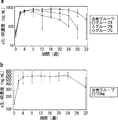
- FIG. 1a shows the transition of SA237 concentration during the main evaluation period
- FIG. 1b shows the transition of SA237 concentration during the continuous administration period
- FIG. 1c shows the transition of serum SA237 concentration up to 8 weeks.
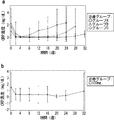
- 3 is a graph showing the transition of the mean value (and standard deviation) of serum sIL-6R concentration, which is an index for pharmacodynamic evaluation of SA237.
- FIG. 2a shows the change in sIL-6R concentration during the main evaluation period
- FIG. 2b shows the change in serum sIL-6R concentration during the continuous administration period.
- FIG. 3a shows the change in CRP concentration during the main evaluation period
- FIG. 3b shows the change in CRP concentration during the continuous administration period.
- the present invention relates to a pharmaceutical composition or administration regimen for use in the treatment of IL-6 related diseases.
- the “IL-6 inhibitor” in the present invention is a substance that blocks signal transduction by IL-6 and inhibits the biological activity of IL-6.
- the IL-6 inhibitor is preferably a substance having an inhibitory action on binding of any of IL-6, IL-6 receptor and gp130.
- Examples of the IL-6 inhibitor of the present invention include anti-IL-6 antibody, anti-IL-6 receptor antibody, anti-gp130 antibody, IL-6 variant, soluble IL-6 receptor variant, IL-6 or IL Examples thereof include partial peptides of the ⁇ 6 receptor and low-molecular substances exhibiting the same activity as these, but are not particularly limited.
- the IL-6 inhibitor of the present invention preferably includes an antibody that recognizes the IL-6 receptor.
- the origin of the antibody in the present invention is not particularly limited, but is preferably derived from a mammal, more preferably a human-derived antibody.
- the anti-IL-6 antibody used in the present invention can be obtained as a polyclonal or monoclonal antibody using known means.
- a monoclonal antibody derived from a mammal is particularly preferable.
- Mammal-derived monoclonal antibodies include those produced by hybridomas and those produced by hosts transformed with expression vectors containing antibody genes by genetic engineering techniques. This antibody binds to IL-6, thereby inhibiting the binding of IL-6 to the IL-6 receptor and blocking the intracellular transmission of IL-6 biological activity. Examples of such antibodies include MH166 (Matsuda, T. et al., Eur. J. Immunol. (1988) 18, 951-956) and SK2 antibody (Sato, K. et al., 21st Japan Immunological Society). General Assembly, Academic Records (1991) 21, 166).
- Anti-IL-6 antibody-producing hybridomas can basically be prepared as follows using known techniques. That is, using IL-6 as a sensitizing antigen, this is immunized according to a normal immunization method, the resulting immune cells are fused with a known parent cell by a normal cell fusion method, and by a normal screening method, It can be produced by screening monoclonal antibody-producing cells.
- the anti-IL-6 antibody can be prepared as follows.
- human IL-6 used as a sensitizing antigen for antibody acquisition is available from Eur. J. Biochem (1987) 168, 543-550, J. Immunol. (1988) 140, 1534-1541, or Agr. Biol.
- IL-6 gene / amino acid sequence disclosed in Chem. (1990) 54, 2685-2688.
- An IL-6 gene sequence is inserted into a known expression vector system to transform an appropriate host cell, and then the target IL-6 protein is purified from the host cell or culture supernatant by a known method.
- the purified IL-6 protein may be used as a sensitizing antigen.
- a fusion protein of IL-6 protein and another protein may be used as a sensitizing antigen.
- the anti-IL-6 receptor antibody used in the present invention can be obtained as a polyclonal or monoclonal antibody using known means.
- a monoclonal antibody derived from a mammal is particularly preferable.
- Mammal-derived monoclonal antibodies include those produced by hybridomas and those produced by hosts transformed with expression vectors containing antibody genes by genetic engineering techniques. This antibody binds to the IL-6 receptor, thereby inhibiting the binding of IL-6 to the IL-6 receptor and blocking the transmission of IL-6 biological activity into the cell. Examples of such antibodies include MR16-1 antibody (Tamura, T. et al. Proc. Natl. Acad. Sci.
- PM-1 antibody Hirata, Y. et al. , J. Immunol. (1989) 143, 2900-2906), AUK12-20 antibody, AUK64-7 antibody or AUK146-15 antibody (International Patent Application Publication No. WO 92-19759).
- PM-1 antibody Hirata, Y. et al. , J. Immunol. (1989) 143, 2900-2906)
- AUK12-20 antibody AUK64-7 antibody or AUK146-15 antibody
- a preferred monoclonal antibody against mouse IL-6 receptor is MR16-1 antibody.
- a hybridoma producing an anti-IL-6 receptor monoclonal antibody can be basically produced using a known technique as follows. That is, IL-6 receptor is used as a sensitizing antigen and immunized according to a normal immunization method. The obtained immune cells are fused with a known parent cell by a normal cell fusion method, and a normal screening method is used. Can be prepared by screening monoclonal antibody-producing cells.
- an anti-IL-6 receptor antibody can be prepared as follows. For example, a human IL-6 receptor used as a sensitizing antigen for obtaining an antibody is disclosed in European Patent Application Publication No. EP 325474, and a mouse IL-6 receptor is disclosed in Japanese Patent Application Publication No. JP-A-3-155795. It is obtained by using the IL-6 receptor gene / amino acid sequence.
- IL-6 receptor protein is expressed on the cell membrane and separated from the cell membrane (soluble IL-6 receptor) (Yasukawa, K. et al., J. Biochem. (1990) 108, 673-676). Soluble IL-6 receptor is substantially composed of the extracellular region of IL-6 receptor bound to the cell membrane, and the membrane is characterized in that the transmembrane region or the transmembrane region and the intracellular region are deficient. It is different from the bound IL-6 receptor.
- the IL-6 receptor protein any IL-6 receptor may be used as long as it can be used as a sensitizing antigen for producing the anti-IL-6 receptor antibody used in the present invention.
- the gene sequence of IL-6 receptor is inserted into a known expression vector system to transform an appropriate host cell, and then the target IL-6 receptor protein is known from the host cell or culture supernatant.
- the purified IL-6 receptor protein may be used as a sensitizing antigen.
- cells expressing IL-6 receptor or fusion proteins of IL-6 receptor protein and other proteins may be used as the sensitizing antigen.
- the anti-gp130 antibody used in the present invention can be obtained as a polyclonal or monoclonal antibody using known means.
- a monoclonal antibody derived from a mammal is particularly preferable.
- Mammal-derived monoclonal antibodies include those produced by hybridomas and those produced by hosts transformed with expression vectors containing antibody genes by genetic engineering techniques. This antibody binds to gp130, thereby blocking the binding of IL-6 / IL-6 receptor complex to gp130 and blocking the transmission of IL-6 biological activity into cells.
- Examples of such antibodies include AM64 antibody (JP-A-3-219894), 4B11 antibody and 2H4 antibody (US 5571513) B-S12 antibody and B-P8 antibody (JP-A-8-291199).
- An anti-gp130 monoclonal antibody-producing hybridoma can be basically produced using a known technique as follows. That is, gp130 is used as a sensitizing antigen and immunized according to a normal immunization method. The obtained immune cells are fused with a known parent cell by a normal cell fusion method, and a monoclonal antibody is obtained by a normal screening method. It can be produced by screening production cells. Specifically, the monoclonal antibody can be produced as follows. For example, gp130 used as a sensitizing antigen for obtaining antibodies can be obtained by using the gp130 gene / amino acid sequence disclosed in European Patent Application Publication No. EP 411946.
- the target gp130 protein is purified from the host cell or culture supernatant by a known method.
- a gp130 protein may be used as a sensitizing antigen.
- a cell expressing gp130 or a fusion protein of gp130 protein and another protein may be used as a sensitizing antigen.
- the mammal to be immunized with the sensitizing antigen is not particularly limited, but is preferably selected in consideration of compatibility with the parent cell used for cell fusion. Animals such as mice, rats, hamsters and the like are used.
- a known method is performed. For example, as a general method, a sensitizing antigen is injected into a mammal intraperitoneally or subcutaneously. Specifically, the sensitizing antigen is diluted to an appropriate amount with PBS (Phosphate-Buffered Saline) or physiological saline and suspended, and then mixed with an appropriate amount of a normal adjuvant, for example, Freund's complete adjuvant, if necessary.
- PBS Phosphate-Buffered Saline
- physiological saline physiological saline
- an appropriate carrier can be used during immunization with the sensitizing antigen.
- immune cells are removed from the mammal and subjected to cell fusion. Spleen cells are particularly preferred as preferable immune cells to be subjected to cell fusion.
- Mammalian myeloma cells as the other parental cells fused with the immune cells have already been known in various known cell lines such as P3X63Ag8.653 (Kearney, J. F. et al. J. Immunol. (1979 ) (123, 1548-1550), P3X63Ag8U.1 (Current Topics, Microinology, and Microbiology, and Immunology (1978), 81, -71-7), NS-1 (Kohler., G., and Milstein, C., Eur., J., Immunol. (1976) 6, 511-519), MPC-11 (Margulies. D. H.
- the cell fusion between the immune cells and myeloma cells is basically performed by a known method such as the method of Milstein et al. (Kohler. G. and Milstein, C., Methods Enzymol. (1981) 73, 3-46). It can be done according to this. More specifically, the cell fusion is performed, for example, in a normal nutrient culture medium in the presence of a cell fusion promoter.
- a cell fusion promoter for example, polyethylene glycol (PEG), Sendai virus (HVJ), or the like is used as the fusion accelerator, and an auxiliary agent such as dimethyl sulfoxide can be added and used to increase the fusion efficiency as desired.
- the usage ratio of immune cells and myeloma cells is preferably 1 to 10 times the number of immune cells relative to myeloma cells.
- the culture medium used for the cell fusion for example, RPMI1640 culture medium suitable for growth of the myeloma cell line, MEM culture medium, and other normal culture liquids used for this type of cell culture can be used. Serum supplements such as fetal calf serum (FCS) can be used in combination.
- FCS fetal calf serum
- a predetermined amount of the immune cells and myeloma cells are mixed well in the culture solution, and a PEG solution pre-warmed to about 37 ° C., for example, a PEG solution having an average molecular weight of about 1000 to 6000 is usually used.
- the target fused cell is formed by adding and mixing at a concentration of 30 to 60% (w / v). Subsequently, cell fusion agents and the like that are undesirable for the growth of the hybridoma can be removed by adding an appropriate culture solution successively and centrifuging to remove the supernatant.
- the hybridoma is selected by culturing in a normal selective culture solution, for example, a HAT culture solution (a culture solution containing hypoxanthine, aminopterin and thymidine). Culturing with the HAT culture solution is continued for a time sufficient for the cells other than the target hybridoma (non-fused cells) to die, usually several days to several weeks. Subsequently, a normal limiting dilution method is performed, and screening and cloning of the hybridoma producing the target antibody are performed.
- a normal selective culture solution for example, a HAT culture solution (a culture solution containing hypoxanthine, aminopterin and thymidine). Culturing with the HAT culture solution is continued for a time sufficient for the cells other than the target hybridoma (non-fused cells) to die, usually several days to several weeks.
- a normal limiting dilution method is performed, and screening and cloning of the hybridoma producing the target
- human lymphocytes are sensitized with a desired antigen protein or antigen-expressing cells in vitro, and sensitized B lymphocytes are human myeloma cells such as U266.
- sensitized B lymphocytes are human myeloma cells such as U266.
- a desired human antibody having a binding activity to a desired antigen or antigen-expressing cell can be obtained (see Japanese Patent Publication No. 1-59878).
- antigens or antigen-expressing cells may be administered to a transgenic animal having a repertoire of human antibody genes, and a desired human antibody may be obtained according to the aforementioned method (International Patent Application Publication Nos.
- the hybridoma producing the monoclonal antibody thus produced can be subcultured in a normal culture solution, and can be stored for a long time in liquid nitrogen.
- the hybridoma is cultured according to a usual method and obtained as a culture supernatant thereof, or the hybridoma is administered to a mammal compatible therewith to proliferate, and its ascites
- the method obtained as follows is adopted.
- the former method is suitable for obtaining highly pure antibodies, while the latter method is suitable for mass production of antibodies.
- the production of an anti-IL-6 receptor antibody-producing hybridoma can be performed by the method disclosed in JP-A-3-139293.
- a PM-1 antibody-producing hybridoma is injected into the peritoneal cavity of BALB / c mice to obtain ascites, and a method for purifying PM-1 antibody from this ascites, or the hybridoma is treated with an appropriate medium such as 10% fetal bovine serum, Culture in RPMI1640 medium containing 5% BM-Condimed H1 (Boehringer Mannheim), hybridoma SFM medium (GIBCO-BRL), PFHM-II medium (GIBCO-BRL), etc. It can be performed by a purification method.
- an appropriate medium such as 10% fetal bovine serum, Culture in RPMI1640 medium containing 5% BM-Condimed H1 (Boehringer Mannheim), hybridoma SFM medium (GIBCO-BRL), PFHM-II medium (GIBCO-BRL), etc. It can be performed by a purification method.
- a recombinant antibody produced by cloning an antibody gene from a hybridoma, incorporating it into an appropriate vector, introducing it into a host, and producing it using a gene recombination technique can be used.
- a recombinant antibody produced by cloning an antibody gene from a hybridoma incorporating it into an appropriate vector, introducing it into a host, and producing it using a gene recombination technique
- V variable
- Isolation of mRNA is performed by a known method such as guanidine ultracentrifugation (Chirgwin, JM et al., Biochemistry (1979) 18, 5294-5299), AGPC (Chomczynski, P. et al., Anal. Biochem. (1987) 162, 156-159) etc., and then prepare mRNA using mRNA Purification Kit (manufactured by Pharmacia) etc. Alternatively, mRNA can be directly prepared by using QuickPrep mRNA Purification Kit (manufactured by Pharmacia).
- the cDNA of the antibody V region is synthesized from the obtained mRNA using reverse transcriptase.
- cDNA synthesis can be performed using AMV Reverse Transcriptase First-strand cDNA Synthesis Kit or the like.
- AMV Reverse Transcriptase First-strand cDNA Synthesis Kit or the like.
- 5'-Ampli FINDER RACE Kit (Clontech) and 5'-RACE method using PCR (Frohman, MA et al., Proc. Natl. Acad. Sci. USA ( 1988) 85, 8998-9002; Belyavsky, A. et al., Nucleic Acids Res. (1989) 17, 2919-2932).
- the target DNA fragment is purified from the obtained PCR product and ligated with vector DNA.
- a recombinant vector is prepared from this, introduced into Escherichia coli, etc., and colonies are selected to prepare a desired recombinant vector.
- the base sequence of the target DNA is confirmed by a known method such as the dideoxy method. If DNA encoding the V region of the target antibody is obtained, it is ligated with DNA encoding the desired antibody constant region (C region) and incorporated into an expression vector. Alternatively, DNA encoding the V region of the antibody may be incorporated into an expression vector containing DNA of the antibody C region.
- an antibody gene is incorporated into an expression vector so as to be expressed under the control of an expression control region, for example, an enhancer or a promoter, as described later.
- an expression control region for example, an enhancer or a promoter, as described later.
- host cells can be transformed with this expression vector to express the antibody.
- a recombinant antibody artificially modified for the purpose of reducing the heterologous antigenicity to humans for example, a chimeric antibody, a humanized antibody, or a human antibody is used. it can. These modified antibodies can be produced using known methods.
- a chimeric antibody can be obtained by ligating the DNA encoding the antibody V region obtained as described above with DNA encoding the human antibody C region, incorporating it into an expression vector, introducing it into a host, and producing it (Europe). (See Patent Application Publication Number EP 125023, International Patent Application Publication Number WO 92-19759). Using this known method, a chimeric antibody useful in the present invention can be obtained.
- a humanized antibody is also referred to as a reshaped human antibody or a humanized antibody, and is a non-human mammal such as a mouse antibody complementarity determining region (CDR) grafted to a human antibody complementarity determining region.
- CDR mouse antibody complementarity determining region
- the general genetic recombination technique is also known (see European Patent Application Publication No. EP 125023, International Patent Application Publication No. WO 92-19759). Specifically, several oligonucleotides were prepared so that the DNA sequence designed to link the CDR of the mouse antibody and the framework region (FR) of the human antibody had an overlapping portion at the end. It is synthesized from nucleotides by PCR.
- the obtained DNA is obtained by ligating with the DNA encoding the human antibody C region, then incorporating it into an expression vector, introducing it into a host and producing it (European Patent Application Publication Number EP 239400, International Patent Application Publication Number). See WO 92-19759).
- EP 239400 International Patent Application Publication Number
- FR of the human antibody to be ligated via CDR one in which the complementarity determining region forms a favorable antigen binding site is selected.
- amino acid in the framework region of the variable region of the antibody may be substituted so that the complementarity determining region of the reshaped human antibody forms an appropriate antigen binding site (Sato, K. et al., Cancer Res. (1993) 53, 851-856).
- the human antibody C region is used for the chimeric antibody and the humanized antibody.
- the human antibody C region include C ⁇ , and for example, C ⁇ 1, C ⁇ 2, C ⁇ 3, or C ⁇ 4 can be used.
- the human antibody C region may be modified in order to improve the stability of the antibody or its production.
- the chimeric antibody is composed of a variable region of a non-human mammal-derived antibody and a C region derived from a human antibody
- the humanized antibody is a complementarity determining region of a non-human mammal-derived antibody, a framework region derived from a human antibody, and C Since both have a reduced antigenicity in the human body, they are useful as antibodies used in the present invention.
- the humanized antibody used in the present invention include humanized PM-1 antibody (see International Patent Application Publication No. WO 92-19759).
- a technique for obtaining human antibodies by panning using a human antibody library is also known.
- the variable region of a human antibody can be expressed as a single chain antibody (scFv) on the surface of the phage by the phage display method, and a phage that binds to the antigen can be selected.
- scFv single chain antibody
- the DNA sequence encoding the variable region of the human antibody that binds to the antigen can be determined.
- a suitable expression vector containing the sequence can be prepared and a human antibody can be obtained.
- WO 92/01047, WO 92/20791, WO 93/06213, WO 93/11236, WO 93/19172, WO 95/01438, and WO 95/15388 can be referred to. .
- the antibody gene constructed as described above can be expressed by a known method.
- a mammalian cell When a mammalian cell is used, it can be expressed by a commonly used useful promoter, an antibody gene to be expressed, a DNA having a poly A signal operably linked to the 3 ′ downstream thereof, or a vector containing the same.
- the promoter / enhancer include human cytomegalovirus immediate early promoter / enhancer.
- other promoters / enhancers that can be used for the expression of antibodies used in the present invention include retrovirus, polyomavirus, adenovirus, simian virus 40 (SV40) and other viral promoters / enhancers and human elongation factor 1 ⁇ (HEF1 ⁇ ).
- Promoters / enhancers derived from mammalian cells such as for example, when the SV40 promoter / enhancer is used, the method of Mulligan et al. (Mulligan, RC et al., Nature (1979) 277, 108-114), and when the HEF1 ⁇ promoter / enhancer is used, the method of Mizushima et al. Mizushima, S. and Nagata, S. Nucleic Acids Res. (1990) 18, 5322).
- Escherichia coli it can be expressed by functionally combining a commonly used useful promoter, a signal sequence for antibody secretion, and an antibody gene to be expressed.
- the promoter include lacZ promoter and araB promoter.
- the lacZ promoter the method of Ward et al. (Ward, ES et al., Nature (1989) 341, 544-546; Ward, ES et al. FASEB J. (1992) 6, 2422-2427), araB promoter Can be used according to the method of Better et al. (Better, M. et al. Science (1988) 240, 1041-1043).
- a pelB signal sequence (Lei, S. P. et al J. Bacteriol. (1987) 169, 4379-4383) may be used in the case of production in the periplasm of E. coli. After separating the antibody produced in the periplasm, the structure of the antibody is appropriately refolded and used (see, for example, WO96 / 30394).
- the origin of replication those derived from SV40, polyoma virus, adenovirus, bovine papilloma virus (BPV), etc. can be used. Furthermore, for amplification of gene copy number in the host cell system, the expression vector is used as a selection marker.
- An aminoglycoside phosphotransferase (APH) gene, a thymidine kinase (TK) gene, an E. coli xanthine guanine phosphoribosyltransferase (Ecogpt) gene, a dihydrofolate reductase (dhfr) gene and the like can be included.
- Production systems for antibody production include in vitro and in vivo production systems.
- in vitro production systems include production systems that use eukaryotic cells and production systems that use prokaryotic cells.
- Animal cells include (1) mammalian cells such as CHO, COS, myeloma, BHK (baby hamster kidney), HeLa, Vero, etc., (2) amphibian cells such as Xenopus oocytes, or (3) insects Cells such as sf9, sf21, Tn5, etc. are known.
- mammalian cells such as CHO, COS, myeloma, BHK (baby hamster kidney), HeLa, Vero, etc.
- amphibian cells such as Xenopus oocytes
- insects Cells such as sf9, sf21, Tn5, etc.
- plant cells cells derived from Nicotiana tabacum are known, and these may be cultured in callus.
- yeasts such as the genus Saccharomyces, such as Saccharomyces cerevisiae, and filamentous fungi such as the genus Aspergillus, such as Aspergillus niger, are known.
- bacterial cells When using prokaryotic cells, there is a production system using bacterial cells.
- bacterial cells include E. coli and Bacillus subtilis.
- An antibody can be obtained by introducing a desired antibody gene into these cells by transformation, and culturing the transformed cells in vitro. Culture is performed according to a known method. For example, DMEM, MEM, RPMI1640, and IMDM can be used as the culture medium, and serum supplements such as fetal calf serum (FCS) can be used in combination. Alternatively, antibodies may be produced in vivo by transferring cells into which the antibody gene has been introduced to the abdominal cavity of animals.
- FCS fetal calf serum
- examples of in vivo production systems include production systems using animals and production systems using plants.
- animals When animals are used, there are production systems using mammals and insects.
- mammals As mammals, goats, pigs, sheep, mice, cows and the like can be used (Vicki Glaser, SPECTRUM Biotechnology Applications, 1993).
- silkworms can be used as insects.
- tobacco When using a plant, for example, tobacco can be used.
- An antibody gene is introduced into these animals or plants, and antibodies are produced in the body of the animals or plants and recovered.
- an antibody gene is inserted into the middle of a gene encoding a protein inherently produced in milk such as goat ⁇ casein to prepare a fusion gene.
- a DNA fragment containing a fusion gene into which an antibody gene has been inserted is injected into a goat embryo, and the embryo is introduced into a female goat.
- the desired antibody is obtained from the milk produced by the transgenic goat born from the goat that received the embryo or its progeny.
- hormones may be used in the transgenic goat as appropriate.
- silkworms When silkworms are used, silkworms are infected with baculovirus into which the antibody gene of interest is inserted, and desired antibodies are obtained from the body fluids of these silkworms (Maeda, S.
- the target antibody gene is inserted into a plant expression vector such as pMON530, and this vector is introduced into a bacterium such as Agrobacterium tumefaciens.
- This bacterium is infected with tobacco, for example, Nicotiana tabacum, and the desired antibody is obtained from the leaves of this tobacco (Julian, K.-C. Ma et al., Eur. J. Immunol. (1994) 24, 131-138). .
- DNAs encoding the antibody heavy chain (H chain) or light chain (L chain) are separately incorporated into an expression vector to simultaneously transform the host.
- the host may be transformed by incorporating DNAs encoding the H and L chains into a single expression vector (see International Patent Application Publication No. WO 94-11523).
- the antibody used in the present invention may be an antibody fragment or a modified product thereof as long as it can be suitably used in the present invention.
- antibody fragments include Fab, F (ab ′) 2, Fv, or single chain Fv (scFv) in which Fv of H chain and L chain are linked by an appropriate linker.
- the antibody is treated with an enzyme such as papain or pepsin to generate antibody fragments, or a gene encoding these antibody fragments is constructed and introduced into an expression vector, and then an appropriate host cell.
- an enzyme such as papain or pepsin
- ScFv can be obtained by linking antibody H chain V region and L chain V region.
- the H chain V region and the L chain V region are linked via a linker, preferably a peptide linker (Huston, J. S. et al., Proc. Natl. Acad. Sci. USA (1988) 85, 5879-5883).
- the H chain V region and the L chain V region in scFv may be derived from any of those described as the above antibody.
- the peptide linker that links the V regions for example, any single chain peptide consisting of amino acid residues 12-19 is used.
- the DNA encoding scFv uses the DNA encoding the H chain or H chain V region of the antibody and the DNA encoding the L chain or L chain V region as a template, and encodes the desired amino acid sequence of those sequences.
- the DNA part to be amplified is amplified by PCR using a primer pair that defines both ends of the DNA, and then the DNA that encodes the peptide linker part and the primer that defines both ends to be connected to the H chain and L chain, respectively. Obtained by combining and amplifying pairs.
- an expression vector containing them and a host transformed with the expression vector can be obtained according to a conventional method, and the host can be used according to a conventional method.
- ScFv can be obtained.
- These antibody fragments can be produced by the host by obtaining and expressing the gene in the same manner as described above.
- the term “antibody” as used in the present invention encompasses these antibody fragments.
- the modified antibody an antibody conjugated with various molecules such as polyethylene glycol (PEG) can also be used.
- PEG polyethylene glycol
- the “antibody” referred to in the present invention includes these modified antibodies. In order to obtain such a modified antibody, it can be obtained by chemically modifying the obtained antibody. These methods are already established in this field.
- the antibody produced and expressed as described above can be isolated from the inside and outside of the cell and from the host and purified to homogeneity. Separation and purification of the antibody used in the present invention can be performed by affinity chromatography.
- the column used for affinity chromatography include a protein A column and a protein G column.
- the carrier used for the protein A column include HyperD, POROS, Sepharose F.F. and the like.
- the antibody used in the present invention can be separated and purified by appropriately selecting and combining chromatography other than the affinity chromatography, filter, ultrafiltration, salting out, dialysis and the like.
- chromatography examples include ion exchange chromatography, hydrophobic chromatography, gel filtration, and the like. These chromatographies can be applied to high performance liquid chromatography (HPLC). Moreover, you may use reverse phase HPLC (reverse phase HPLC).
- the antibody concentration obtained above can be measured by measuring absorbance, ELISA, or the like. That is, in the case of measuring the absorbance, after appropriately diluting with PBS ( ⁇ ), the absorbance at 280 nm is measured, and 1 mg / ml is calculated as 1.35 OD.
- the measurement can be performed as follows. That is, 100 ⁇ l of goat anti-human IgG (manufactured by TAG) diluted to 1 ⁇ g / ml with 0.1 M bicarbonate buffer (pH 9.6) was added to a 96-well plate (manufactured by Nunc) and incubated overnight at 4 ° C. Solidify. After blocking, 100 ⁇ l of appropriately diluted antibody used in the present invention or a sample containing the antibody, or human IgG (manufactured by CAPPEL) as a standard is added, and incubated at room temperature for 1 hour.
- the IL-6 variant used in the present invention is a substance that has a binding activity to the IL-6 receptor and does not transmit the biological activity of IL-6. That is, the IL-6 variant competitively binds IL-6 to the IL-6 receptor, but does not transmit the biological activity of IL-6 and thus blocks signal transduction by IL-6.
- IL-6 variants are produced by introducing mutations by substituting amino acid residues in the amino acid sequence of IL-6.
- the origin of IL-6, which is a variant of IL-6, is not limited, but human IL-6 is preferable in consideration of antigenicity.
- the secondary structure of the amino acid sequence of IL-6 is predicted using a known molecular modeling program such as WHATIF (Vriend et al., J. Mol. Graphics (1990) 8, 52-56). Further, it is performed by evaluating the influence on the whole of the amino acid residue to be substituted.
- a vector containing a nucleotide sequence encoding the human IL-6 gene is used as a template to introduce a mutation so that the amino acid is substituted by a commonly performed PCR method.
- a gene encoding 6 variants is obtained. This is incorporated into an appropriate expression vector as necessary, and an IL-6 variant can be obtained according to the expression, production and purification methods of the recombinant antibody.
- Specific examples of IL-6 variants include Brakenhoff et al., J. Biol. Chem. (1994) 269, 86-93, and Savino et al., EMBO J. (1994) 13, 1357-1367, WO 96-18648, WO96-17869.
- the IL-6 partial peptide or IL-6 receptor partial peptide used in the present invention has a binding activity to the IL-6 receptor or IL-6, respectively, and transmits the biological activity of IL-6. It is a substance that does not. That is, IL-6 partial peptide or IL-6 receptor partial peptide binds to IL-6 receptor or IL-6, and captures these to specifically bind IL-6 to IL-6 receptor. To inhibit. As a result, it does not transmit the biological activity of IL-6 and therefore blocks signal transduction by IL-6.
- IL-6 partial peptide or IL-6 receptor partial peptide is a part or all of amino acids in the region related to the binding between IL-6 and IL-6 receptor in the amino acid sequence of IL-6 or IL-6 receptor A peptide consisting of a sequence.
- Such peptides usually consist of 10 to 80, preferably 20 to 50, more preferably 20 to 40 amino acid residues.
- IL-6 partial peptide or IL-6 receptor partial peptide specifies the region involved in the binding of IL-6 to IL-6 receptor in the amino acid sequence of IL-6 or IL-6 receptor It can be prepared by a generally known method, for example, a genetic engineering method or a peptide synthesis method, based on part or all of the amino acid sequence of the region.
- a DNA sequence encoding a desired peptide is incorporated into an expression vector, and the recombinant antibody is expressed, produced and purified. It can obtain according to.
- a method usually used in peptide synthesis for example, a solid phase synthesis method or a liquid phase synthesis method can be used. Specifically, it may be carried out according to the method described in “Development of follow-up medicines, Volume 14: Peptide synthesis (supervision: Haruaki Yajima, Yodogawa Shoten, 1991)”.
- the solid phase synthesis method for example, an amino acid corresponding to the C-terminus of the peptide to be synthesized is bound to a support that is insoluble in an organic solvent, and the ⁇ -amino group and the side chain functional group are protected with an appropriate protecting group.
- a deprotection reaction and a cleavage reaction from the peptide chain support are performed.
- hydrogen fluoride or trifluoromethanesulfonic acid can be usually used in the Boc method
- TFA can be usually used in the Fmoc method.
- Boc method for example, the protected peptide resin is treated in hydrogen fluoride in the presence of anisole.
- the peptide is recovered by removing the protecting group and cleaving from the support. This is freeze-dried to obtain a crude peptide.
- the deprotection reaction and the cleavage reaction from the support of the peptide chain can be performed by the same operation as described above in TFA.
- the obtained crude peptide can be separated and purified by application to HPLC.
- a water-acetonitrile solvent usually used for protein purification may be used under optimum conditions.
- the fraction corresponding to the peak of the obtained chromatographic profile is collected and lyophilized.
- the peptide fraction thus purified is identified by molecular weight analysis by mass spectrum analysis, amino acid composition analysis, amino acid sequence analysis or the like. Specific examples of the IL-6 partial peptide and IL-6 receptor partial peptide are disclosed in JP-A-2-188600, JP-A-7-324097, JP-A-8-311098 and US Pat.
- the antibody used in the present invention may be a conjugated antibody bound to various molecules such as polyethylene glycol (PEG), radioactive substances, and toxins. Such a conjugated antibody can be obtained by chemically modifying the obtained antibody. Antibody modification methods have already been established in this field.
- the “antibody” in the present invention includes these conjugated antibodies.
- the “IL-6 related disease” in the present invention is a disease related to IL-6.
- rheumatoid arthritis juvenile idiopathic arthritis, systemic juvenile idiopathic arthritis, Castleman's disease, systemic lupus erythematosus (SLE) ), Lupus nephritis, Crohn's disease, lymphoma, ulcerative colitis, anemia, vasculitis, Kawasaki disease, Still's disease, amyloidosis, multiple sclerosis, transplantation, age-related macular degeneration, ankylosing spondylitis, psoriasis , Psoriatic arthritis, chronic obstructive pulmonary disease (COPD), IgA nephropathy, osteoarthritis, asthma, diabetic nephropathy, GVHD, endometriosis, hepatitis (NASH), myocardial infarction, arteriosclerosis, sepsis, Osteoporosis, diabetes, multiple organ
- the “normal administration interval” in the present invention is an administration interval that is usually used in the pharmaceutical product (the pharmaceutical composition of the present invention). For example, it is described in the package insert or the like as “to be administered at intervals of 4 weeks thereafter”. As described above, there are administration intervals in which it is described that administration is routinely performed.
- the usual administration interval in the present invention is not particularly limited, and examples thereof include 1 day to 24 weeks, preferably 2 weeks to 8 weeks, more preferably 3 to 5 weeks, and further preferably 4 weeks.
- the normal dosing interval may have a certain width.
- the “normal dose” in the present invention is a dose usually used in the pharmaceutical product (the pharmaceutical composition of the present invention).
- the IL-6 inhibitor is 2-20 mg / kg body weight (2-20 mg / kg) or IL-6 inhibition per administration.
- the agent is 50 to 800 mg, preferably the IL-6 inhibitor is 2 to 8 mg / kg body weight (2 to 8 mg / kg), or the IL-6 inhibitor is 80 to 160 mg, more preferably IL-
- the 6 inhibitor is 8 mg / kg body weight (8 mg / kg), or the IL-6 inhibitor is 120 mg.
- the “short interval administration period” refers to an administration period for inducing immune tolerance to a drug (the pharmaceutical composition of the present invention) in order to suppress the production of anti-drug antibodies due to immunogenicity.
- the short interval administration period in the present invention is a period in which multiple doses are administered at an interval shorter than the normal interval at the same dose as the normal dose, and is not particularly limited as long as immune tolerance is induced. However, it is preferably 1 to 8 weeks from the first administration, more preferably 4 weeks from the first administration.
- the same dose as the normal dose includes the case where the blood concentration of IL-6 inhibitor is about the same as when the normal dose is administered.
- the interval shorter than the normal administration interval is not particularly limited as long as it is a period shorter than the normal administration interval, but is preferably a half period of the normal administration interval, for example, when the normal administration interval is 4 weeks Will be 2 weeks.
- the short interval administration period may have a certain width, and may be, for example, 1 to 2 weeks.
- Multiple administration refers to administration of two or more times including the initial administration, preferably 2 to 5 times including the initial administration, more preferably 3 times including the initial administration. Whether or not immune tolerance has been induced can be determined by whether or not the generation of anti-drug antibodies has been suppressed.
- Normal administration in the present invention refers to administration usually used in the pharmaceutical (the pharmaceutical composition of the present invention). For example, it is administered at the above-mentioned “normal dose” and “normal administration interval”. Say.
- Specific examples include antibodies that include a heavy chain variable region comprising the sequence of SEQ ID NO: 1 and a light chain variable region comprising the sequence of SEQ ID NO: 2. More preferably, the antibody comprises a heavy chain comprising the sequence of SEQ ID NO: 3 (SA237 heavy chain) and a light chain comprising the sequence of SEQ ID NO: 4 (SA237 light chain). SA237 is particularly preferable.
- Such an antibody can be obtained according to the method described in, for example, WO2010 / 035769, WO2010 / 107108, WO2010 / 106812. Specifically, based on the IL-6 receptor antibody sequence, it is possible to prepare an antibody using a gene recombination technique known to those skilled in the art (for example, Borrebaeck CAK and Larrick JW, THERAPEUTIC MONOCLONAL ANTIBODIES, “Published” in “the United Kingdom” by “MACMILLAN” PUBLISHERS LTD, “1990”). Recombinant antibodies are produced by cloning DNA encoding them from hybridomas or antibody-producing cells such as sensitized lymphocytes that produce antibodies, incorporating them into appropriate vectors, and introducing them into a host (host cell). Can be obtained.
- a gene recombination technique known to those skilled in the art (for example, Borrebaeck CAK and Larrick JW, THERAPEUTIC MONOCLONAL ANT
- Such separation and purification of the antibody may be carried out using a separation and purification method used in usual antibody purification, and is not limited at all.
- a separation and purification method used in usual antibody purification, and is not limited at all.
- chromatography column, filter, ultrafiltration, salting out, solvent precipitation, solvent extraction, distillation, immunoprecipitation, SDS-polyacrylamide gel electrophoresis, isoelectric focusing, dialysis, recrystallization, etc. are appropriately selected, When combined, antibodies can be separated and purified.
- the normal administration period starts from the last administration in a short interval administration period. That is, after the normal administration interval has elapsed from the last administration in the short interval administration period, the first administration in the normal administration period is performed.
- the pharmaceutical composition of the present invention is preferably administered at short intervals after administering an IL-6 inhibitor at the same dose as the normal dose 2 to 5 times at intervals of 1 to 3 weeks from the initial administration in a short interval administration period.
- the preferable administration schedule of the IL-6 inhibitor can be adjusted by appropriately extending the administration interval while observing the pathology and observing the trend of blood test values.
- the pharmaceutical composition of the present invention to be used for therapeutic or prophylactic purposes may be prepared by mixing with an appropriate pharmaceutically acceptable carrier, vehicle, etc., if necessary, to obtain a lyophilized preparation or a solution preparation.
- suitable pharmaceutically acceptable carriers and media include, for example, sterilized water, physiological saline, stabilizers, excipients, antioxidants (ascorbic acid, etc.), buffers (phosphoric acid, citric acid, histidine, Other organic acids), preservatives, surfactants (PEG, Tween, etc.), chelating agents (EDTA, etc.), binders and the like can be mentioned.
- polypeptides such as serum albumin, gelatin and immunoglobulin, glycine, glutamine, asparagine, glutamic acid, aspartic acid, methionine, arginine and lysine and other amino acids, polysaccharides and monosaccharides such as saccharides and carbohydrates
- sugar alcohols such as mannitol and sorbitol may be contained.
- aqueous solution for injection for example, isotonic solutions containing physiological saline, glucose and other adjuvants such as D-sorbitol, D-mannose, D-mannitol, sodium chloride
- adjuvants such as alcohol (ethanol etc.), polyalcohol (propylene glycol, PEG, etc.), nonionic surfactants (polysorbate 80, polysorbate 20, poloxamer 188, HCO-50) etc.
- It is also possible to administer a larger liquid volume subcutaneously by mixing hyaluronidase in the preparation (Expert Opin Drug Deliv. 2007 Jul; 4 (4): 427-40.).
- the pharmaceutical composition of the present invention may be previously placed in a syringe.
- the solution preparation can be prepared according to the method described in WO2011 / 090088.
- the pharmaceutical composition of the present invention can be enclosed in microcapsules (microcapsules such as hydroxymethylcellulose, gelatin, poly [methylmethacrylic acid]) or colloid drug delivery systems (liposomes, albumin microspheres, microemulsions, Nanoparticles, nanocapsules, etc.) (see “Remington's Pharmaceuticals Science 16th edition”, “Oslo Ed.” (1980), etc.).
- a method for making a drug into a sustained-release drug is also known and can be applied to the pharmaceutical composition of the present invention (Langer et al., J J. Biomed. Mater. Res. 15: 267-277 (1981); Langer, Chemtech. 12: 98-105 (1982); U.S. Patent 3,773,919; European Patent Application Publication (EP) 58,481; Sidman et al., Biopolymers 22: 547-556 (1983); EP 133,988) .
- microcapsules such as hydroxymethylcellulose, gelatin, poly
- the administration of the pharmaceutical composition of the present invention can be administered to a patient via any appropriate route.
- any appropriate route for example, by intravenous, intramuscular, intraperitoneal, intracerebral spinal, transdermal, subcutaneous, intraarticular, sublingual, intrasynovial, oral, inhalation, topical or topical route as a bolus or by continuous infusion over a period of time To be administered.
- Intravenous or subcutaneous administration is preferred.
- Example 1 Preparation of IL-6 inhibitor SA237, which is an IL-6 receptor antibody described in the patent document (WO2010 / 035769) (SEQ ID NO: 26 in the patent document WO2010 / 035769 (SEQ ID NO: in the present specification)
- An antibody comprising a heavy chain having the sequence of 3) and a light chain having the sequence of SEQ ID NO: 29 (herein, SEQ ID NO: 4) was prepared according to the description in the aforementioned patent document.
- SEQ ID NO: 4 Using the resulting antibody, a preparation for subcutaneous administration was prepared by the method described in Patent Document WO2011 / 090088.
- Example 2 Study by single subcutaneous administration in Japanese and Caucasian healthy adult men (SA001JP study) The safety, tolerability, pharmacokinetics, and bioavailability of SA237 administered subcutaneously to Japanese and Caucasian healthy adult men were confirmed.
- SA001JP study 48 Japanese received SA237 subcutaneously or intravenously, and 24 Caucasians received SA237 subcutaneously.
- the safety and tolerability of a single dose of SA237 up to 24 cases was generally good.
- the absolute bioavailability at 60 mg and 120 mg subcutaneously was 64.6% and 69.4%, respectively. Production of anti-SA237 antibody was confirmed in 39 of 72 patients who received SA237.
- Example 3 Open-label, parallel-group comparative study by repeated subcutaneous administration for Japanese patients with rheumatoid arthritis (SA-105JP study) Patients who met the following criteria were selected as subjects.
- RA rheumatoid arthritis
- ACR American College of Rheumatology
- RA disease duration 6 months or more
- CRP C-reactive protein
- MTX metalhotrexate
- SA237 120 mg was administered at 0, 2, and 4 weeks, and after 8 weeks, 120 mg was administered at intervals of 4 weeks until 20 weeks, and observation was performed until 32 weeks.
- the test drug is a vial filled with 1.0 mL of a solution containing 120 mg of SA237.
- L-histidine, L-arginine, L-aspartic acid and polyoxyethylene (160) polyoxypropylene (30) glycol are contained, and the pH is 5.5 to 6.5.
- administration was performed subcutaneously in the abdomen.
- the subjects who received study drug until the end of the main evaluation period were group A: 10/11 cases (90.9%), group B: 10/11 cases (90.9%), and group C: 9/11 cases (81.8%), the subjects who were able to observe the entire period (main evaluation period and continuous administration period) were 10/11 cases (90.9%) in group A and 7/11 cases (63.6 in group B). %) And Group C were 7/11 cases (63.6%).
- Continuous administration period After the end of the main evaluation period, from the first administration start date of continuous administration to the observation / inspection at 24 weeks of continuous administration.
- Post observation period From the end of observation / inspection at 24 weeks in the continuous administration period to 32 weeks.
- results The pharmacokinetic graph in this study is shown in FIG.
- the trough value of serum SA237 concentration was almost constant after 4 weeks in group A and the continuous administration period in the main evaluation period.
- the serum SA237 concentration in group B and group C during the main evaluation period decreased after 8 weeks.
- the serum SA237 concentration and AUC 0-2W up to 8 weeks were not significantly different between the main evaluation period and the continuous administration period. Therefore, even after the administration of SA237 was stopped once, re-administration was started. There was no pharmacokinetic change.
- DAS28 Modematoid arthritis
- TJC tender joints
- TJC swollen joints in 28 joints to be observed
- ESR ESR
- general evaluation by subject was used to calculate from the following formula, and the transition from the start of administration to the last observation date was examined.
- Summary statistics average, standard deviation, median, minimum, maximum were calculated for each group and time. The clinical remission rate was calculated.
- ACR 20%, 50%, and 70% improvement criteria were evaluated as follows.
- Table 4 shows the change in the amount of change in DAS28 score during the main evaluation period, which shows the effectiveness of this test.
- DAS28 improved at 8 weeks. After starting administration (at 8 weeks) at different doses during the main evaluation period, DAS28 improved further in Group A, but there was no significant change in Group B, and there was a tendency for Group C to return to baseline values. Admitted.
- ACR 20% improvement frequency was 70.0-81.8% in each group at 8 weeks, 50% improvement frequency was 40.0-50.0%, 70% improvement frequency was 18.2-30.0% .
- the 20% improvement frequency was maintained in Group A and Group B but decreased in Group C.
- the 50% and 70% improvement frequency was 72.7% (8/11 cases) and 54.5% (6/11 cases) in Group A, respectively, compared to 8 weeks, but Group B And in Group C, no significant fluctuation was observed.
- Anti-SA237 antibody was observed in 2 cases / 33 cases in each of group B and group C. .
- the serum SA237 concentration during the continuous administration period after detection of the anti-SA237 antibody was less than the lower limit of quantification, and soluble IL-6 receptor (sIL-6R) by administration of SA237 after the time when the antibody was detected.
- Concentration increase and CRP concentration decrease were not observed, and DAS28, CDAI and SDAI increased.
- the adverse event observed after antibody detection in these 2 cases was 1 case of mild diabetes. The event was an exacerbation of complications, not an allergic reaction.
- the pharmaceutical composition or regimen of the present invention eliminates the occurrence of anti-drug antibodies, which is an immunogenicity problem, reduces side effects, has a higher therapeutic effect, and is not exposed to high doses. Fewer pharmaceutical compositions can be provided.
Landscapes
- Health & Medical Sciences (AREA)
- Chemical & Material Sciences (AREA)
- Life Sciences & Earth Sciences (AREA)
- Medicinal Chemistry (AREA)
- General Health & Medical Sciences (AREA)
- Public Health (AREA)
- Animal Behavior & Ethology (AREA)
- Pharmacology & Pharmacy (AREA)
- Veterinary Medicine (AREA)
- Organic Chemistry (AREA)
- Bioinformatics & Cheminformatics (AREA)
- Engineering & Computer Science (AREA)
- Chemical Kinetics & Catalysis (AREA)
- General Chemical & Material Sciences (AREA)
- Nuclear Medicine, Radiotherapy & Molecular Imaging (AREA)
- Immunology (AREA)
- Physical Education & Sports Medicine (AREA)
- Epidemiology (AREA)
- Pulmonology (AREA)
- Diabetes (AREA)
- Orthopedic Medicine & Surgery (AREA)
- Dermatology (AREA)
- Rheumatology (AREA)
- Heart & Thoracic Surgery (AREA)
- Cardiology (AREA)
- Neurology (AREA)
- Endocrinology (AREA)
- Proteomics, Peptides & Aminoacids (AREA)
- Molecular Biology (AREA)
- Genetics & Genomics (AREA)
- Biophysics (AREA)
- Biochemistry (AREA)
- Mycology (AREA)
- Microbiology (AREA)
- Urology & Nephrology (AREA)
- Hematology (AREA)
- Reproductive Health (AREA)
- Gynecology & Obstetrics (AREA)
- Gastroenterology & Hepatology (AREA)
- Pain & Pain Management (AREA)
Priority Applications (20)
| Application Number | Priority Date | Filing Date | Title |
|---|---|---|---|
| MX2017010858A MX394961B (es) | 2015-02-27 | 2016-02-26 | Composiciones para usarse en el tratamiento de enfermedades relacionadas con la interleucina 6 |
| CA2972393A CA2972393A1 (en) | 2015-02-27 | 2016-02-26 | Composition for treating il-6-related diseases |
| EP16755677.8A EP3263132B1 (en) | 2015-02-27 | 2016-02-26 | Composition for treating il-6-related diseases |
| PL16755677.8T PL3263132T3 (pl) | 2015-02-27 | 2016-02-26 | Kompozycja do leczenia chorób związanych z il-6 |
| AU2016224409A AU2016224409B2 (en) | 2015-02-27 | 2016-02-26 | Composition for treating IL-6-related diseases |
| JP2017502505A JP6130983B2 (ja) | 2015-02-27 | 2016-02-26 | Il−6関連疾患治療用組成物 |
| RU2017133485A RU2730590C2 (ru) | 2015-02-27 | 2016-02-26 | Композиция для лечения заболеваний, связанных с ил-6 |
| US15/553,609 US10774148B2 (en) | 2015-02-27 | 2016-02-26 | Composition for treating IL-6-related diseases |
| KR1020187023854A KR20180095740A (ko) | 2015-02-27 | 2016-02-26 | Il-6 관련 질환 치료용 조성물 |
| EP23190283.4A EP4269440A3 (en) | 2015-02-27 | 2016-02-26 | Composition for treating il-6-related diseases |
| ES16755677T ES2967627T3 (es) | 2015-02-27 | 2016-02-26 | Composición para tratar enfermedades relacionadas con IL-6 |
| CN201680012364.9A CN107249637A (zh) | 2015-02-27 | 2016-02-26 | 用于治疗il‑6相关疾病的组合物 |
| SG11201705093UA SG11201705093UA (en) | 2015-02-27 | 2016-02-26 | Composition for treating il-6-related diseases |
| BR112017014067-5A BR112017014067B1 (pt) | 2015-02-27 | 2016-02-26 | usos de um anticorpo receptor de il-6 para no tratamento de doenças relacionadas a il-6 |
| KR1020177008434A KR101892883B1 (ko) | 2015-02-27 | 2016-02-26 | Il-6 관련 질환 치료용 조성물 |
| US16/983,115 US20210017286A1 (en) | 2015-02-27 | 2020-08-03 | Composition for treating il-6-related diseases |
| AU2021202594A AU2021202594C1 (en) | 2015-02-27 | 2021-04-27 | Composition for treating IL-6-related diseases |
| US18/411,372 US20240150477A1 (en) | 2015-02-27 | 2024-01-12 | Composition for treating il-6-related diseases |
| US18/820,608 US20240417480A1 (en) | 2015-02-27 | 2024-08-30 | Composition for treating il-6-related diseases |
| US19/176,456 US20250243288A1 (en) | 2015-02-27 | 2025-04-11 | Composition for treating il-6-related diseases |
Applications Claiming Priority (2)
| Application Number | Priority Date | Filing Date | Title |
|---|---|---|---|
| JP2015-037933 | 2015-02-27 | ||
| JP2015037933 | 2015-02-27 |
Related Child Applications (2)
| Application Number | Title | Priority Date | Filing Date |
|---|---|---|---|
| US15/553,609 A-371-Of-International US10774148B2 (en) | 2015-02-27 | 2016-02-26 | Composition for treating IL-6-related diseases |
| US16/983,115 Division US20210017286A1 (en) | 2015-02-27 | 2020-08-03 | Composition for treating il-6-related diseases |
Publications (1)
| Publication Number | Publication Date |
|---|---|
| WO2016136933A1 true WO2016136933A1 (ja) | 2016-09-01 |
Family
ID=56789394
Family Applications (1)
| Application Number | Title | Priority Date | Filing Date |
|---|---|---|---|
| PCT/JP2016/055768 Ceased WO2016136933A1 (ja) | 2015-02-27 | 2016-02-26 | Il-6関連疾患治療用組成物 |
Country Status (15)
| Country | Link |
|---|---|
| US (5) | US10774148B2 (https=) |
| EP (2) | EP3263132B1 (https=) |
| JP (2) | JP6130983B2 (https=) |
| KR (2) | KR101892883B1 (https=) |
| CN (1) | CN107249637A (https=) |
| AU (2) | AU2016224409B2 (https=) |
| BR (1) | BR112017014067B1 (https=) |
| CA (1) | CA2972393A1 (https=) |
| ES (1) | ES2967627T3 (https=) |
| MX (1) | MX394961B (https=) |
| PL (1) | PL3263132T3 (https=) |
| RU (1) | RU2730590C2 (https=) |
| SG (1) | SG11201705093UA (https=) |
| TW (4) | TW202541847A (https=) |
| WO (1) | WO2016136933A1 (https=) |
Cited By (24)
| Publication number | Priority date | Publication date | Assignee | Title |
|---|---|---|---|---|
| US9868948B2 (en) | 2008-04-11 | 2018-01-16 | Chugai Seiyaku Kabushiki Kaisha | Antigen-binding molecule capable of binding to two or more antigen molecules repeatedly |
| US10066018B2 (en) | 2009-03-19 | 2018-09-04 | Chugai Seiyaku Kabushiki Kaisha | Antibody constant region variant |
| US10253091B2 (en) | 2009-03-19 | 2019-04-09 | Chugai Seiyaku Kabushiki Kaisha | Antibody constant region variant |
| JP2020019769A (ja) * | 2018-08-01 | 2020-02-06 | 中外製薬株式会社 | C5関連疾患の治療または予防用の医薬組成物およびc5関連疾患を治療または予防するための方法 |
| US10662245B2 (en) | 2008-09-26 | 2020-05-26 | Chugai Seiyaku Kabushiki Kaisha | Methods of reducing IL-6 activity for disease treatment |
| US10697883B2 (en) | 2015-05-19 | 2020-06-30 | National Center Of Neurology And Psychiatry | Method for determining application of therapy to multiple sclerosis (MS) patient |
| US10774148B2 (en) | 2015-02-27 | 2020-09-15 | Chugai Seiyaku Kabushiki Kaisha | Composition for treating IL-6-related diseases |
| US10782290B2 (en) | 2013-06-11 | 2020-09-22 | National Center Of Neurology And Psychiatry | Method for predicting post-therapy prognosis of relapsing-remitting multiple sclerosis (RRMS) patient, and method for determining applicability of novel therapy |
| US11046784B2 (en) | 2006-03-31 | 2021-06-29 | Chugai Seiyaku Kabushiki Kaisha | Methods for controlling blood pharmacokinetics of antibodies |
| WO2021241720A1 (ja) | 2020-05-29 | 2021-12-02 | 中外製薬株式会社 | 抗体含有製剤 |
| US11248053B2 (en) | 2007-09-26 | 2022-02-15 | Chugai Seiyaku Kabushiki Kaisha | Method of modifying isoelectric point of antibody via amino acid substitution in CDR |
| US11332533B2 (en) | 2007-09-26 | 2022-05-17 | Chugai Seiyaku Kabushiki Kaisha | Modified antibody constant region |
| WO2022191306A1 (ja) * | 2021-03-12 | 2022-09-15 | 中外製薬株式会社 | 重症筋無力症の治療または予防用の医薬組成物 |
| US11597760B2 (en) | 2014-12-19 | 2023-03-07 | Chugai Seiyaku Kabushiki Kaisha | Method of detecting the presence of complement C5 |
| JPWO2023058723A1 (https=) * | 2021-10-08 | 2023-04-13 | ||
| US11692037B2 (en) | 2017-10-20 | 2023-07-04 | Hyogo College Of Medicine | Anti-IL-6 receptor antibody-containing medicinal composition for preventing post-surgical adhesion |
| US11851486B2 (en) | 2017-05-02 | 2023-12-26 | National Center Of Neurology And Psychiatry | Method for predicting and evaluating therapeutic effect in diseases related to IL-6 and neutrophils |
| US11891434B2 (en) | 2010-11-30 | 2024-02-06 | Chugai Seiyaku Kabushiki Kaisha | Antigen-binding molecule capable of binding to plurality of antigen molecules repeatedly |
| KR20240107372A (ko) | 2021-11-26 | 2024-07-09 | 추가이 세이야쿠 가부시키가이샤 | 사트랄리주맙을 사용하는 중추 신경계(cns)의 탈수초화 질환의 치료 |
| KR20240145472A (ko) | 2022-01-19 | 2024-10-07 | 추가이 세이야쿠 가부시키가이샤 | 사트랄리주맙을 사용하는 자기면역 뇌염의 치료 |
| WO2024225417A1 (en) * | 2023-04-28 | 2024-10-31 | Chugai Seiyaku Kabushiki Kaisha | Treatment of thyroid eye disease with satralizumab |
| US12583918B2 (en) | 2019-04-17 | 2026-03-24 | Tokyo Women's Medical University | Therapeutic agent for urological cancer which is characterized by being administered with IL-6 inhibitor and CCR2 inhibitor in combination |
| US12600772B2 (en) | 2018-01-31 | 2026-04-14 | Motokazu Kato | Therapeutic agent for asthma containing IL-6 inhibitor |
| US12617847B2 (en) | 2010-11-30 | 2026-05-05 | Chugai Seiyaku Kabushiki Kaisha | Antigen-binding molecule capable of binding to plurality of antigen molecules repeatedly |
Families Citing this family (12)
| Publication number | Priority date | Publication date | Assignee | Title |
|---|---|---|---|---|
| GB2401040A (en) | 2003-04-28 | 2004-11-03 | Chugai Pharmaceutical Co Ltd | Method for treating interleukin-6 related diseases |
| SI2493922T1 (sl) | 2009-10-26 | 2017-06-30 | F. Hoffmann-La Roche Ag | Postopek za proizvodnjo glikoziliranega imunoglobulina |
| KR20190120439A (ko) | 2010-11-08 | 2019-10-23 | 제넨테크, 인크. | 피하 투여용 항―il―6 수용체 항체 |
| JP6356951B2 (ja) * | 2013-08-22 | 2018-07-11 | 日本クロージャー株式会社 | 易開封性容器蓋 |
| RU2020121415A (ru) * | 2017-11-30 | 2021-12-30 | Био-Тера Солюшнз, Лтд. | Жидкий препарат гуманизированного антитела для лечения заболеваний, опосредованных ил-6 |
| CN108567981A (zh) * | 2018-07-17 | 2018-09-25 | 漯河医学高等专科学校 | 白细胞介素-6的拮抗剂在制备抑制Notch-1蛋白表达、治疗胰腺癌的药物中的应用 |
| KR102167640B1 (ko) | 2018-08-16 | 2020-10-19 | 한국전력기술 주식회사 | 노심부에서 원자로냉각재의 유동을 모사하는 방법 및 이에 사용되는 노심부단순화모델 |
| RU2754760C2 (ru) | 2019-04-02 | 2021-09-07 | Закрытое Акционерное Общество "Биокад" | Водная фармацевтическая композиция анти-il17a антитела и ее применение |
| EP4436603A4 (en) * | 2021-11-26 | 2026-04-08 | Chugai Pharmaceutical Co Ltd | TREATMENT OF A DEMYELINATING DISEASE OF THE CENTRAL NERVOUS SYSTEM (CNS) WITH SATRALIZUMAB |
| WO2023119638A1 (en) * | 2021-12-24 | 2023-06-29 | Chugai Seiyaku Kabushiki Kaisha | Treatment of a demyelinating disease of the central nervous system (cns) with satralizumab |
| AU2022399314A1 (en) | 2021-12-01 | 2024-06-20 | Chugai Seiyaku Kabushiki Kaisha | Method for preparing antibody-containing formulation |
| TW202444922A (zh) | 2023-03-31 | 2024-11-16 | 國立大學法人大阪大學 | 用於預測敗血症患者之預後的生物標記及其用途 |
Citations (2)
| Publication number | Priority date | Publication date | Assignee | Title |
|---|---|---|---|---|
| WO2010035769A1 (ja) * | 2008-09-26 | 2010-04-01 | 中外製薬株式会社 | 改良された抗体分子 |
| JP2013541594A (ja) * | 2010-11-08 | 2013-11-14 | ジェネンテック, インコーポレイテッド | 皮下投与される抗il−6受容体抗体 |
Family Cites Families (234)
| Publication number | Priority date | Publication date | Assignee | Title |
|---|---|---|---|---|
| US3773919A (en) | 1969-10-23 | 1973-11-20 | Du Pont | Polylactide-drug mixtures |
| JPS5144499B1 (https=) | 1970-08-29 | 1976-11-29 | ||
| JPS5334319B2 (https=) | 1971-12-28 | 1978-09-20 | ||
| JPS5717624B2 (https=) | 1974-04-17 | 1982-04-12 | ||
| US4769320A (en) | 1982-07-27 | 1988-09-06 | New England Medical Center Hospitals, Inc. | Immunoassay means and methods useful in human native prothrombin and human abnormal prothorombin determinations |
| JPS58201994A (ja) | 1982-05-21 | 1983-11-25 | Hideaki Hagiwara | 抗原特異的ヒト免疫グロブリンの生産方法 |
| US4689299A (en) | 1982-09-30 | 1987-08-25 | University Of Rochester | Human monoclonal antibodies against bacterial toxins |
| US4816567A (en) | 1983-04-08 | 1989-03-28 | Genentech, Inc. | Recombinant immunoglobin preparations |
| HUT35524A (en) | 1983-08-02 | 1985-07-29 | Hoechst Ag | Process for preparing pharmaceutical compositions containing regulatory /regulative/ peptides providing for the retarded release of the active substance |
| GB8607679D0 (en) | 1986-03-27 | 1986-04-30 | Winter G P | Recombinant dna product |
| JPH06104071B2 (ja) | 1986-08-24 | 1994-12-21 | 財団法人化学及血清療法研究所 | 第▲ix▼因子コンホメ−シヨン特異性モノクロ−ナル抗体 |
| US4801687A (en) | 1986-10-27 | 1989-01-31 | Bioprobe International, Inc. | Monoclonal antibody purification process using protein A |
| US5004697A (en) | 1987-08-17 | 1991-04-02 | Univ. Of Ca | Cationized antibodies for delivery through the blood-brain barrier |
| CA1341152C (en) | 1988-01-22 | 2000-12-12 | Tadamitsu Kishimoto | Receptor protein for human b cell stimulatory factor-2 |
| US5670373A (en) | 1988-01-22 | 1997-09-23 | Kishimoto; Tadamitsu | Antibody to human interleukin-6 receptor |
| US5322678A (en) | 1988-02-17 | 1994-06-21 | Neorx Corporation | Alteration of pharmacokinetics of proteins by charge modification |
| IL91778A (en) | 1988-09-28 | 1994-10-07 | Lilly Co Eli | A method for reducing the heterogeneity of monoclonal antibodies |
| US5126250A (en) | 1988-09-28 | 1992-06-30 | Eli Lilly And Company | Method for the reduction of heterogeneity of monoclonal antibodies |
| US5530101A (en) | 1988-12-28 | 1996-06-25 | Protein Design Labs, Inc. | Humanized immunoglobulins |
| US5202253A (en) | 1988-12-30 | 1993-04-13 | Oklahoma Medical Research Foundation | Monoclonal antibody specific for protein C and antibody purification method |
| JP2898064B2 (ja) | 1989-08-03 | 1999-05-31 | 忠三 岸本 | ヒトgp130蛋白質 |
| JPH0636741B2 (ja) | 1989-11-08 | 1994-05-18 | 帝人株式会社 | ヒト・プロテインcの分離方法 |
| JPH03155795A (ja) | 1989-11-13 | 1991-07-03 | Chuzo Kishimoto | マウス・インターロイキン―6レセプター蛋白質 |
| WO1996033735A1 (en) | 1995-04-27 | 1996-10-31 | Abgenix, Inc. | Human antibodies derived from immunized xenomice |
| US5210075A (en) | 1990-02-16 | 1993-05-11 | Tanabe Seiyaku Co., Ltd. | Interleukin 6 antagonist peptides |
| DE69130561T2 (de) | 1990-02-16 | 1999-06-24 | Boston Biomedical Research Institute, Inc., Boston, Mass. | Hybride Reagenzien mit der Fähigkeit, Moleküle selektiv in Zellen freizusetzen |
| GB9015198D0 (en) | 1990-07-10 | 1990-08-29 | Brien Caroline J O | Binding substance |
| DK0585287T3 (da) | 1990-07-10 | 2000-04-17 | Cambridge Antibody Tech | Fremgangsmåde til fremstilling af specifikke bindingsparelementer |
| WO1993012227A1 (en) | 1991-12-17 | 1993-06-24 | Genpharm International, Inc. | Transgenic non-human animals capable of producing heterologous antibodies |
| ATE158021T1 (de) | 1990-08-29 | 1997-09-15 | Genpharm Int | Produktion und nützung nicht-menschliche transgentiere zur produktion heterologe antikörper |
| US5795965A (en) | 1991-04-25 | 1998-08-18 | Chugai Seiyaku Kabushiki Kaisha | Reshaped human to human interleukin-6 receptor |
| US6136310A (en) | 1991-07-25 | 2000-10-24 | Idec Pharmaceuticals Corporation | Recombinant anti-CD4 antibodies for human therapy |
| EP0605522B1 (en) | 1991-09-23 | 1999-06-23 | Medical Research Council | Methods for the production of humanized antibodies |
| PT1024191E (pt) | 1991-12-02 | 2008-12-22 | Medical Res Council | Produção de auto-anticorpos a partir de reportórios de segmentos de anticorpo e exibidos em fagos |
| CA2131151A1 (en) | 1992-03-24 | 1994-09-30 | Kevin S. Johnson | Methods for producing members of specific binding pairs |
| ES2301158T3 (es) | 1992-07-24 | 2008-06-16 | Amgen Fremont Inc. | Produccion de anticuerpos xenogenicos. |
| US5639641A (en) | 1992-09-09 | 1997-06-17 | Immunogen Inc. | Resurfacing of rodent antibodies |
| US5648267A (en) | 1992-11-13 | 1997-07-15 | Idec Pharmaceuticals Corporation | Impaired dominant selectable marker sequence and intronic insertion strategies for enhancement of expression of gene product and expression vector systems comprising same |
| JPH08509612A (ja) | 1993-04-26 | 1996-10-15 | ジェンファーム インターナショナル インコーポレイテッド | 異種抗体を産生することができるトランスジェニック非ヒト動物 |
| EP0710288B1 (en) | 1993-06-10 | 2006-04-05 | Genetic Therapy, Inc. | Adenoviral vectors for treatment of hemophilia |
| GB9313509D0 (en) | 1993-06-30 | 1993-08-11 | Medical Res Council | Chemisynthetic libraries |
| IL107742A0 (en) | 1993-11-24 | 1994-02-27 | Yeda Res & Dev | Chemically-modified binding proteins |
| WO1995015388A1 (en) | 1993-12-03 | 1995-06-08 | Medical Research Council | Recombinant binding proteins and peptides |
| US5945311A (en) | 1994-06-03 | 1999-08-31 | GSF--Forschungszentrumfur Umweltund Gesundheit | Method for producing heterologous bi-specific antibodies |
| DE122009000068I2 (de) | 1994-06-03 | 2011-06-16 | Ascenion Gmbh | Verfahren zur Herstellung von heterologen bispezifischen Antikörpern |
| US8017121B2 (en) | 1994-06-30 | 2011-09-13 | Chugai Seiyaku Kabushika Kaisha | Chronic rheumatoid arthritis therapy containing IL-6 antagonist as effective component |
| US6309636B1 (en) | 1995-09-14 | 2001-10-30 | Cancer Research Institute Of Contra Costa | Recombinant peptides derived from the Mc3 anti-BA46 antibody, methods of use thereof, and methods of humanizing antibody peptides |
| ES2384222T3 (es) | 1994-10-07 | 2012-07-02 | Chugai Seiyaku Kabushiki Kaisha | Inhibición del crecimiento anómalo de células sinoviales utilizando un antagonista de IL-6 como principio activo |
| CN1306963C (zh) | 1994-10-21 | 2007-03-28 | 岸本忠三 | 用于治疗il-6产生所致疾病的药物组合物 |
| IT1274350B (it) | 1994-12-06 | 1997-07-17 | Angeletti P Ist Richerche Bio | Antagonisti di interleuchina-6(il-6) che consistono di forme solubili del ricettore alfa di il-6, mutate nell'interfaccia che si lega a gp 130 |
| IT1274782B (it) | 1994-12-14 | 1997-07-24 | Angeletti P Ist Richerche Bio | Metodo per selezionare superagonisti, antagonisti e superantagonisti di ormoni del cui complesso recettoriale fa parte gp 130 |
| US6485943B2 (en) | 1995-01-17 | 2002-11-26 | The University Of Chicago | Method for altering antibody light chain interactions |
| US5731168A (en) | 1995-03-01 | 1998-03-24 | Genentech, Inc. | Method for making heteromultimeric polypeptides |
| WO1996030394A1 (en) | 1995-03-31 | 1996-10-03 | Jakob Bohr | Method for protein folding |
| WO1996034096A1 (en) | 1995-04-28 | 1996-10-31 | Abgenix, Inc. | Human antibodies derived from immunized xenomice |
| US5571513A (en) | 1995-05-31 | 1996-11-05 | The Board Of Regents Of The University Of Oklahoma | Anti-gp130 monoclonal antibodies |
| US5830478A (en) | 1995-06-07 | 1998-11-03 | Boston Biomedical Research Institute | Method for delivering functional domains of diphtheria toxin to a cellular target |
| US5783186A (en) | 1995-12-05 | 1998-07-21 | Amgen Inc. | Antibody-induced apoptosis |
| TW518219B (en) | 1996-04-26 | 2003-01-21 | Chugai Pharmaceutical Co Ltd | Erythropoietin solution preparation |
| ZA976326B (en) | 1996-07-19 | 1998-02-03 | Amgen Inc | Analogs of cationic proteins. |
| US5990286A (en) | 1996-12-18 | 1999-11-23 | Techniclone, Inc. | Antibodies with reduced net positive charge |
| US6277375B1 (en) | 1997-03-03 | 2001-08-21 | Board Of Regents, The University Of Texas System | Immunoglobulin-like domains with increased half-lives |
| EP2322216A1 (en) | 1997-03-21 | 2011-05-18 | Chugai Seiyaku Kabushiki Kaisha | A preventive or therapeutic agent for sensitized T cell-mediated diseases comprising IL-6 antagonist as an active ingredient |
| US6884879B1 (en) | 1997-04-07 | 2005-04-26 | Genentech, Inc. | Anti-VEGF antibodies |
| US20070059302A1 (en) | 1997-04-07 | 2007-03-15 | Genentech, Inc. | Anti-vegf antibodies |
| US20020187150A1 (en) | 1997-08-15 | 2002-12-12 | Chugai Seiyaku Kabushiki Kaisha | Preventive and/or therapeutic agent for systemic lupus erythematosus comprising anti-IL-6 receptor antibody as an active ingredient |
| PT1004315E (pt) | 1997-08-15 | 2008-07-09 | Chugai Pharmaceutical Co Ltd | Profilácticos e/ou medicamentos contendo anticorpos neutralizantes anti-receptor de il-6 para reduzir a excreção de proteínas urinárias no lúpus eritematoso sistémico |
| RU2221809C2 (ru) | 1997-10-03 | 2004-01-20 | Тугаи Сейяку Кабусики Кайся | Способ получения природного гуманизированного антитела |
| HUP0100813A3 (en) | 1998-02-25 | 2003-08-28 | Lexigen Pharmaceuticals Corp L | Enhancing the circulating half-life of antibody-based fusion proteins |
| CN100374159C (zh) | 1998-03-17 | 2008-03-12 | 中外制药株式会社 | 一种包含il-6拮抗剂活性成分的炎性肠道疾病的预防或治疗剂 |
| DK1069185T3 (da) | 1998-04-03 | 2011-06-27 | Chugai Pharmaceutical Co Ltd | Humaniseret antistof mod human vævsfaktor (TF) og fremgangsmåde til at konstruere humaniseret antistof |
| GB9809951D0 (en) | 1998-05-08 | 1998-07-08 | Univ Cambridge Tech | Binding molecules |
| EP1105427A2 (en) | 1998-08-17 | 2001-06-13 | Abgenix, Inc. | Generation of modified molecules with increased serum half-lives |
| US6475718B2 (en) | 1998-09-08 | 2002-11-05 | Schering Aktiengesellschaft | Methods and compositions for modulating the interaction between the APJ receptor and the HIV virus |
| HK1044159A1 (zh) | 1998-12-01 | 2002-10-11 | 蛋白质设计实验室股份有限公司 | 抗γ-干扰素的人化抗体 |
| US6737056B1 (en) | 1999-01-15 | 2004-05-18 | Genentech, Inc. | Polypeptide variants with altered effector function |
| US6972125B2 (en) | 1999-02-12 | 2005-12-06 | Genetics Institute, Llc | Humanized immunoglobulin reactive with B7-2 and methods of treatment therewith |
| SK782002A3 (en) | 1999-07-21 | 2003-08-05 | Lexigen Pharm Corp | FC fusion proteins for enhancing the immunogenicity of protein and peptide antigens |
| SE9903895D0 (sv) | 1999-10-28 | 1999-10-28 | Active Biotech Ab | Novel compounds |
| PL366025A1 (pl) | 2000-05-03 | 2005-01-24 | Munich Biotech Ag | Kationowe środki diagnostyczne, obrazujące i terapeutyczne, zasocjowane z uaktywnionymi miejscami wnaczyniach |
| PT2281843T (pt) | 2000-06-16 | 2017-01-02 | Human Genome Sciences Inc | Anticorpos que se ligam imunoespecificamente a blys |
| CN1259973C (zh) | 2000-10-25 | 2006-06-21 | 中外制药株式会社 | 含有il-6拮抗剂作为有效成分的牛皮癣的预防或治疗剂 |
| JP4889187B2 (ja) | 2000-10-27 | 2012-03-07 | 中外製薬株式会社 | Il−6アンタゴニストを有効成分として含有する血中mmp−3濃度低下剤 |
| US7083784B2 (en) | 2000-12-12 | 2006-08-01 | Medimmune, Inc. | Molecules with extended half-lives, compositions and uses thereof |
| RU2003129528A (ru) | 2001-03-07 | 2005-04-10 | Мерк Патент ГмбХ (DE) | Способ экспрессии белков, содержащих в качестве компонента гибридный изотип антитела |
| UA80091C2 (en) | 2001-04-02 | 2007-08-27 | Chugai Pharmaceutical Co Ltd | Remedies for infant chronic arthritis-relating diseases and still's disease which contain an interleukin-6 (il-6) antagonist |
| DE60236735D1 (de) | 2001-04-13 | 2010-07-29 | Biogen Idec Inc | Antikörper gegen vla-1 |
| US7667004B2 (en) | 2001-04-17 | 2010-02-23 | Abmaxis, Inc. | Humanized antibodies against vascular endothelial growth factor |
| KR100953520B1 (ko) | 2001-06-22 | 2010-04-21 | 츄가이 세이야꾸 가부시키가이샤 | 항글리피칸 3항체를 포함하는 항암제 |
| US20040161741A1 (en) | 2001-06-30 | 2004-08-19 | Elazar Rabani | Novel compositions and processes for analyte detection, quantification and amplification |
| US20030049203A1 (en) | 2001-08-31 | 2003-03-13 | Elmaleh David R. | Targeted nucleic acid constructs and uses related thereto |
| PT2308888T (pt) | 2001-11-14 | 2017-05-03 | Janssen Biotech Inc | Anticorpos anti-il-6, composições, métodos e utilizações |
| WO2003068801A2 (en) | 2002-02-11 | 2003-08-21 | Genentech, Inc. | Antibody variants with faster antigen association rates |
| CN101721362B (zh) | 2002-02-14 | 2018-07-03 | 中外制药株式会社 | 包含抗体的溶液制剂 |
| AR038568A1 (es) | 2002-02-20 | 2005-01-19 | Hoffmann La Roche | Anticuerpos anti-a beta y su uso |
| WO2003107218A1 (ja) | 2002-05-31 | 2003-12-24 | セレスター・レキシコ・サイエンシズ株式会社 | 相互作用予測装置 |
| US20060141456A1 (en) | 2002-06-12 | 2006-06-29 | Cynthia Edwards | Methods and compositions for milieu-dependent binding of a targeted agent to a target |
| DK1512015T3 (da) | 2002-06-12 | 2009-07-06 | Genencor Int | Fremgangsmåder til forbedring af bindingsegenskaber hos et molekyle |
| JP3856734B2 (ja) | 2002-06-28 | 2006-12-13 | 株式会社日立製作所 | 多発性硬化症に対するインターフェロン・ベータ薬物治療の有効性予測方法 |
| WO2004016740A2 (en) | 2002-08-15 | 2004-02-26 | Epitomics, Inc. | Humanized rabbit antibodies |
| US7217797B2 (en) | 2002-10-15 | 2007-05-15 | Pdl Biopharma, Inc. | Alteration of FcRn binding affinities or serum half-lives of antibodies by mutagenesis |
| DK1562972T3 (da) | 2002-10-15 | 2010-12-06 | Facet Biotech Corp | Modifikation af FcRn-bindingsaffiniteter eller serumhalveringstider for antistoffer ved mutagenese |
| US7361740B2 (en) | 2002-10-15 | 2008-04-22 | Pdl Biopharma, Inc. | Alteration of FcRn binding affinities or serum half-lives of antibodies by mutagenesis |
| DK2270048T3 (en) | 2002-12-24 | 2016-01-18 | Rinat Neuroscience Corp | Anti-NGF antibodies and methods for their use |
| US7223393B2 (en) | 2003-02-07 | 2007-05-29 | Pdl Biopharma, Inc | Amphiregulin antibodies and their use to treat cancer and psoriasis |
| CA2516518A1 (en) | 2003-02-28 | 2004-09-10 | Lonza Biologics Plc. | Antibody purification by protein a and ion exchange chromatography |
| JP4685764B2 (ja) | 2003-04-10 | 2011-05-18 | アボット バイオセラピューティクス コーポレイション | 変異誘発による抗体のFcRn結合親和力又は血清半減期の改変 |
| GB2401040A (en) | 2003-04-28 | 2004-11-03 | Chugai Pharmaceutical Co Ltd | Method for treating interleukin-6 related diseases |
| JP2007526220A (ja) | 2003-06-05 | 2007-09-13 | ジェネンテック・インコーポレーテッド | B細胞疾患の併用療法 |
| WO2004113387A2 (en) | 2003-06-24 | 2004-12-29 | Merck Patent Gmbh | Tumour necrosis factor receptor molecules with reduced immunogenicity |
| WO2005005604A2 (en) | 2003-06-30 | 2005-01-20 | Centocor, Inc. | Engineered anti-target immunoglobulin derived proteins, compositions, methods and uses |
| JP4223346B2 (ja) | 2003-07-18 | 2009-02-12 | 京セラミタ株式会社 | 画像形成装置 |
| AU2004273791A1 (en) | 2003-09-05 | 2005-03-31 | Genentech, Inc. | Antibodies with altered effector functions |
| JP2005101105A (ja) | 2003-09-22 | 2005-04-14 | Canon Inc | 位置決め装置、露光装置、デバイス製造方法 |
| WO2005035753A1 (ja) | 2003-10-10 | 2005-04-21 | Chugai Seiyaku Kabushiki Kaisha | 機能蛋白質を代替する二重特異性抗体 |
| AU2003271186A1 (en) | 2003-10-14 | 2005-04-27 | Chugai Seiyaku Kabushiki Kaisha | Double specific antibodies substituting for functional protein |
| MXPA06003768A (es) | 2003-10-17 | 2006-06-23 | Chugai Pharmaceutical Co Ltd | Agente terapeutico para el mesotelioma. |
| DK1689777T3 (da) | 2003-11-05 | 2007-06-11 | Ares Trading Sa | Fremgangsmåde til oprensning af il18-bindende protein |
| WO2005047327A2 (en) | 2003-11-12 | 2005-05-26 | Biogen Idec Ma Inc. | NEONATAL Fc RECEPTOR (FcRn)-BINDING POLYPEPTIDE VARIANTS, DIMERIC Fc BINDING PROTEINS AND METHODS RELATED THERETO |
| EP1701979A2 (en) | 2003-12-03 | 2006-09-20 | Xencor, Inc. | Optimized antibodies that target the epidermal growth factor receptor |
| KR101225299B1 (ko) | 2003-12-10 | 2013-01-24 | 메다렉스, 인코포레이티드 | 인터페론 알파 항체 및 그의 용도 |
| AR048210A1 (es) | 2003-12-19 | 2006-04-12 | Chugai Pharmaceutical Co Ltd | Un agente preventivo para la vasculitis. |
| MX370489B (es) | 2004-01-09 | 2019-12-16 | Pfizer | Anticuerpos contra madcam. |
| ATE464908T1 (de) | 2004-02-11 | 2010-05-15 | Warner Lambert Co | Verfahren zur behandlung von osteoarthritis mit anti-il-6 antikörpern |
| EP1737890A2 (en) | 2004-03-24 | 2007-01-03 | Xencor, Inc. | Immunoglobulin variants outside the fc region |
| KR20070035482A (ko) | 2004-03-24 | 2007-03-30 | 추가이 세이야쿠 가부시키가이샤 | 인터로킨-6 안타고니스트를 활성성분으로 함유하는내이장해 치료제 |
| WO2005090405A1 (ja) | 2004-03-24 | 2005-09-29 | Chugai Seiyaku Kabushiki Kaisha | インターロイキン-6受容体に対するヒト型化抗体のサブタイプ |
| AR048335A1 (es) | 2004-03-24 | 2006-04-19 | Chugai Pharmaceutical Co Ltd | Agentes terapeuticos para trastornos del oido interno que contienen un antagonista de il- 6 como un ingrediente activo |
| US20050260711A1 (en) | 2004-03-30 | 2005-11-24 | Deepshikha Datta | Modulating pH-sensitive binding using non-natural amino acids |
| WO2005112564A2 (en) | 2004-04-15 | 2005-12-01 | The Government Of The United States Of America As Represented By The Secretary Of The Department Of Health And Human Services | Germline and sequence variants of humanized antibodies and methods of making and using them |
| AR049390A1 (es) | 2004-06-09 | 2006-07-26 | Wyeth Corp | Anticuerpos contra la interleuquina-13 humana y usos de los mismos |
| US7632924B2 (en) | 2004-06-18 | 2009-12-15 | Ambrx, Inc. | Antigen-binding polypeptides and their uses |
| CA2572133A1 (en) | 2004-06-25 | 2006-01-12 | Medimmune, Inc. | Increasing the production of recombinant antibodies in mammalian cells by site-directed mutagenesis |
| CA2572917C (en) | 2004-07-06 | 2012-04-03 | Bioren Inc. | Look-through mutagenesis for developing altered polypeptides with enhanced properties |
| EP2471813B1 (en) | 2004-07-15 | 2014-12-31 | Xencor, Inc. | Optimized Fc variants |
| US20080233131A1 (en) | 2004-09-14 | 2008-09-25 | Richard John Stebbings | Vaccine |
| US7563443B2 (en) | 2004-09-17 | 2009-07-21 | Domantis Limited | Monovalent anti-CD40L antibody polypeptides and compositions thereof |
| JO3000B1 (ar) | 2004-10-20 | 2016-09-05 | Genentech Inc | مركبات أجسام مضادة . |
| WO2006047350A2 (en) | 2004-10-21 | 2006-05-04 | Xencor, Inc. | IgG IMMUNOGLOBULIN VARIANTS WITH OPTIMIZED EFFECTOR FUNCTION |
| AU2005299716B2 (en) | 2004-10-22 | 2012-09-06 | Amgen Inc. | Methods for refolding of recombinant antibodies |
| US7462697B2 (en) | 2004-11-08 | 2008-12-09 | Epitomics, Inc. | Methods for antibody engineering |
| AU2005335714B2 (en) | 2004-11-10 | 2012-07-26 | Macrogenics, Inc. | Engineering Fc antibody regions to confer effector function |
| JPWO2006067847A1 (ja) | 2004-12-22 | 2008-06-12 | 中外製薬株式会社 | フコーストランスポーターの機能が阻害された細胞を用いた抗体の作製方法 |
| CA2591785A1 (en) | 2004-12-23 | 2006-06-29 | Novo Nordisk A/S | Antibody binding affinity ligands |
| WO2006071877A2 (en) | 2004-12-27 | 2006-07-06 | Progenics Pharmaceuticals (Nevada), Inc. | Orally deliverable and anti-toxin antibodies and methods for making and using them |
| PT1831258E (pt) | 2004-12-28 | 2016-01-07 | Univ Genova | Anticorpos monoclonais contra nkg2a |
| EP1858925A2 (en) | 2005-01-12 | 2007-11-28 | Xencor, Inc. | Antibodies and fc fusion proteins with altered immunogenicity |
| US8716451B2 (en) | 2005-01-12 | 2014-05-06 | Kyowa Hakko Kirin Co., Ltd | Stabilized human IgG2 and IgG3 antibodies |
| GB0502358D0 (en) | 2005-02-04 | 2005-03-16 | Novartis Ag | Organic compounds |
| AU2006232287B2 (en) | 2005-03-31 | 2011-10-06 | Chugai Seiyaku Kabushiki Kaisha | Methods for producing polypeptides by regulating polypeptide association |
| PT1876236E (pt) | 2005-04-08 | 2014-10-22 | Chugai Pharmaceutical Co Ltd | Anticorpos para substituição da função do factor de coagulação sanguínea viii |
| JO3058B1 (ar) | 2005-04-29 | 2017-03-15 | Applied Molecular Evolution Inc | الاجسام المضادة لمضادات -اي ال-6,تركيباتها طرقها واستعمالاتها |
| EP1885755A4 (en) | 2005-05-05 | 2009-07-29 | Univ Duke | CD19 ANTIBODY THERAPY FOR AUTOIMMUNE DISEASES |
| PL2573114T3 (pl) | 2005-08-10 | 2016-10-31 | Identyfikacja i inżynieria przeciwciał z wariantami regionów FC oraz sposoby ich stosowania | |
| PL2407486T3 (pl) | 2005-08-19 | 2018-05-30 | Wyeth Llc | Przeciwciała antagonistyczne względem GDF-8 i zastosowania w leczeniu ALS i innych zaburzeń związanych z GDF-8 |
| WO2007041317A2 (en) | 2005-09-29 | 2007-04-12 | Viral Logic Systems Technology Corp. | Immunomodulatory compositions and uses therefor |
| WO2007043641A1 (ja) | 2005-10-14 | 2007-04-19 | Fukuoka University | 膵島移植における移植膵島障害抑制剤 |
| AR058135A1 (es) | 2005-10-21 | 2008-01-23 | Chugai Pharmaceutical Co Ltd | Agentes para el tratamiento de cardiopatias |
| ES2577292T3 (es) | 2005-11-07 | 2016-07-14 | Genentech, Inc. | Polipéptidos de unión con secuencias hipervariables de VH/VL diversificadas y consenso |
| AR057582A1 (es) | 2005-11-15 | 2007-12-05 | Nat Hospital Organization | Agentes para suprimir la induccion de linfocitos t citotoxicos |
| WO2007060411A1 (en) | 2005-11-24 | 2007-05-31 | Ucb Pharma S.A. | Anti-tnf alpha antibodies which selectively inhibit tnf alpha signalling through the p55r |
| TW200803894A (en) | 2005-11-25 | 2008-01-16 | Univ Keio | Prostate cancer therapeutic agents |
| WO2007074880A1 (ja) | 2005-12-28 | 2007-07-05 | Chugai Seiyaku Kabushiki Kaisha | 抗体含有安定化製剤 |
| HUE034269T2 (en) | 2005-12-29 | 2018-02-28 | Janssen Biotech Inc | Human anti-IL-23 antibodies, preparations, methods and applications |
| AU2007208678B2 (en) | 2006-01-27 | 2013-01-10 | Chugai Seiyaku Kabushiki Kaisha | Therapeutic agents for diseases involving choroidal neovascularization |
| CA2638811A1 (en) | 2006-02-03 | 2007-08-16 | Medimmune, Llc | Protein formulations |
| JP4294082B2 (ja) | 2006-03-23 | 2009-07-08 | 協和発酵キリン株式会社 | ヒトトロンボポエチン受容体に対するアゴニスト抗体 |
| CN104761637B (zh) | 2006-03-31 | 2021-10-15 | 中外制药株式会社 | 调控抗体血液动力学的方法 |
| EP2009101B1 (en) | 2006-03-31 | 2017-10-25 | Chugai Seiyaku Kabushiki Kaisha | Antibody modification method for purifying bispecific antibody |
| CN102887955A (zh) | 2006-04-05 | 2013-01-23 | 艾博特生物技术有限公司 | 抗体纯化 |
| JP5754875B2 (ja) | 2006-04-07 | 2015-07-29 | 国立大学法人大阪大学 | 筋再生促進剤 |
| TWI422387B (zh) | 2006-05-25 | 2014-01-11 | Glaxo Group Ltd | 免疫球蛋白 |
| US8080248B2 (en) | 2006-06-02 | 2011-12-20 | Regeneron Pharmaceuticals, Inc. | Method of treating rheumatoid arthritis with an IL-6R antibody |
| JP5307708B2 (ja) | 2006-06-02 | 2013-10-02 | リジェネロン・ファーマシューティカルズ・インコーポレイテッド | ヒトil−6受容体に対する高親和性抗体 |
| ES2429407T3 (es) | 2006-06-08 | 2013-11-14 | Chugai Seiyaku Kabushiki Kaisha | Agente preventivo o remedio para enfermedades inflamatorias |
| WO2008020079A1 (en) | 2006-08-18 | 2008-02-21 | Ablynx N.V. | Amino acid sequences directed against il-6r and polypeptides comprising the same for the treatment of deseases and disorders associated with il-6-mediated signalling |
| EP3424950A1 (en) | 2006-10-06 | 2019-01-09 | The Government of the United States of America as represented by the Secretary of the Department of Health and Human Services | Prevention of tissue ischemia, related methods and compositions |
| US20100034194A1 (en) | 2006-10-11 | 2010-02-11 | Siemens Communications Inc. | Eliminating unreachable subscribers in voice-over-ip networks |
| TWI438208B (zh) | 2007-01-23 | 2014-05-21 | 中外製藥股份有限公司 | 抑制慢性排斥反應之藥劑 |
| WO2008092117A2 (en) | 2007-01-25 | 2008-07-31 | Xencor, Inc. | Immunoglobulins with modifications in the fcr binding region |
| WO2008145141A1 (en) | 2007-05-31 | 2008-12-04 | Genmab A/S | Method for extending the half-life of exogenous or endogenous soluble molecules |
| EP3067692B1 (en) | 2007-06-29 | 2019-04-17 | Quest Diagnostics Investments Incorporated | Analysis of amino acids in body fluid by liquid chromatography-mass spectrometry (lc-ms) |
| WO2009010539A2 (en) | 2007-07-19 | 2009-01-22 | Ablynx. N.V. | Receptor for interleukin-6 (il-6) from macaca fascicularis |
| EP2174667B1 (en) | 2007-07-26 | 2017-01-04 | Osaka University | Agent for treatment of ophthalmia containing interleukin-6 receptor inhibitor as active ingredient |
| EP2031064A1 (de) | 2007-08-29 | 2009-03-04 | Boehringer Ingelheim Pharma GmbH & Co. KG | Verfahren zur Steigerung von Proteintitern |
| ES3006441T3 (en) | 2007-09-14 | 2025-03-18 | Amgen Inc | Homogeneous antibody populations |
| MX2010003329A (es) | 2007-09-26 | 2010-04-27 | Chugai Pharmaceutical Co Ltd | Anticuerpo anti-receptor de il-6. |
| ES2595638T3 (es) | 2007-09-26 | 2017-01-02 | Chugai Seiyaku Kabushiki Kaisha | Método para modificar el punto isoeléctrico de un anticuerpo mediante la sustitución de aminoácidos en una CDR |
| KR101680906B1 (ko) | 2007-09-26 | 2016-11-30 | 추가이 세이야쿠 가부시키가이샤 | 항체 정상영역 개변체 |
| WO2009041734A1 (ja) | 2007-09-26 | 2009-04-02 | Kyowa Hakko Kirin Co., Ltd. | ヒトトロンボポエチン受容体に対するアゴニスト抗体 |
| US8497355B2 (en) | 2007-09-28 | 2013-07-30 | Chugai Seiyaku Kabushiki Kaisha | Anti-glypican-3 antibody having improved kinetics in plasma |
| RU2490025C2 (ru) | 2007-10-02 | 2013-08-20 | Чугаи Сейяку Кабусики Кайся | Терапевтические средства, используемые против реакции трансплантат против хозяина, содержащие в качестве активного ингредиента ингибитор рецептора интерлейкина-6 |
| JO3076B1 (ar) | 2007-10-17 | 2017-03-15 | Janssen Alzheimer Immunotherap | نظم العلاج المناعي المعتمد على حالة apoe |
| TW201634479A (zh) | 2007-12-05 | 2016-10-01 | 中外製藥股份有限公司 | 抗nr10抗體及其應用 |
| EP2235058A2 (en) | 2007-12-21 | 2010-10-06 | Amgen, Inc | Anti-amyloid antibodies and uses thereof |
| KR20160070165A (ko) | 2008-02-08 | 2016-06-17 | 메디뮨 엘엘씨 | Fc 리간드 친화성이 감소된 항-IFNAR1 항체 |
| KR102057826B1 (ko) | 2008-04-11 | 2019-12-20 | 추가이 세이야쿠 가부시키가이샤 | 복수 분자의 항원에 반복 결합하는 항원 결합 분자 |
| US9315577B2 (en) | 2008-05-01 | 2016-04-19 | Amgen Inc. | Anti-hepcidin antibodies and methods of use |
| CA2728243C (en) | 2008-06-05 | 2020-03-10 | Chugai Seiyaku Kabushiki Kaisha | Il-6 inhibitor for suppressing neuroinvasion in pancreatic cancer |
| KR20110112307A (ko) | 2008-11-25 | 2011-10-12 | 앨더 바이오파마슈티컬즈, 인코포레이티드 | 알부민을 상승시키고 및/또는 crp를 낮추는 il6의 길항제 |
| US20100292443A1 (en) | 2009-02-26 | 2010-11-18 | Sabbadini Roger A | Humanized platelet activating factor antibody design using anti-lipid antibody templates |
| WO2010106812A1 (en) | 2009-03-19 | 2010-09-23 | Chugai Seiyaku Kabushiki Kaisha | Pharmaceutical formulation containing improved antibody molecules |
| JP5717624B2 (ja) | 2009-03-19 | 2015-05-13 | 中外製薬株式会社 | 抗体定常領域改変体 |
| JP4809930B2 (ja) | 2009-03-19 | 2011-11-09 | 中外製薬株式会社 | 関節リウマチ治療剤 |
| EP2826789A1 (en) | 2009-03-19 | 2015-01-21 | Chugai Seiyaku Kabushiki Kaisha | Antibody constant region variant |
| WO2011013786A1 (ja) | 2009-07-31 | 2011-02-03 | Maeda Shin | 癌の転移抑制剤 |
| US10150808B2 (en) | 2009-09-24 | 2018-12-11 | Chugai Seiyaku Kabushiki Kaisha | Modified antibody constant regions |
| AR080428A1 (es) | 2010-01-20 | 2012-04-11 | Chugai Pharmaceutical Co Ltd | Formulaciones liquidas estabilizadas contentivas de anticuerpos |
| CN102971342B (zh) | 2010-01-28 | 2016-08-03 | Ab生物科学公司 | 亲和力降低的新抗体和制备所述抗体的方法 |
| WO2011108714A1 (ja) | 2010-03-04 | 2011-09-09 | 中外製薬株式会社 | 抗体定常領域改変体 |
| JP5932670B2 (ja) | 2010-03-11 | 2016-06-08 | ライナット ニューロサイエンス コーポレイション | pH依存性の抗原結合を有する抗体 |
| TWI667257B (zh) | 2010-03-30 | 2019-08-01 | 中外製藥股份有限公司 | 促進抗原消失之具有經修飾的FcRn親和力之抗體 |
| WO2011149051A1 (ja) | 2010-05-28 | 2011-12-01 | 中外製薬株式会社 | 抗腫瘍t細胞応答増強剤 |
| WO2011149046A1 (ja) | 2010-05-28 | 2011-12-01 | 独立行政法人国立がん研究センター | 膵癌治療剤 |
| JPWO2012063875A1 (ja) | 2010-11-11 | 2014-05-12 | シスメックス株式会社 | ヒト濾胞ヘルパーt細胞検出用マーカーおよびヒト濾胞ヘルパーt細胞の検出方法 |
| EP2647706B1 (en) | 2010-11-30 | 2023-05-17 | Chugai Seiyaku Kabushiki Kaisha | Antigen-binding molecule capable of binding to plurality of antigen molecules repeatedly |
| MX352889B (es) | 2011-02-25 | 2017-12-13 | Chugai Pharmaceutical Co Ltd | Anticuerpo de fc especifico para fcyriib. |
| MX353143B (es) | 2011-02-28 | 2017-12-20 | Genentech Inc | Marcadores biologicos y metodos para pronosticar respuesta a antagonistas de celulas b. |
| TW201817744A (zh) | 2011-09-30 | 2018-05-16 | 日商中外製藥股份有限公司 | 具有促進抗原清除之FcRn結合域的治療性抗原結合分子 |
| JP6322411B2 (ja) | 2011-09-30 | 2018-05-09 | 中外製薬株式会社 | 複数の生理活性を有する抗原の消失を促進する抗原結合分子 |
| JP6271251B2 (ja) | 2011-10-05 | 2018-01-31 | 中外製薬株式会社 | 糖鎖受容体結合ドメインを含む抗原の血漿中からの消失を促進する抗原結合分子 |
| KR20230143201A (ko) | 2011-11-30 | 2023-10-11 | 추가이 세이야쿠 가부시키가이샤 | 면역 복합체를 형성하는 세포내로의 운반체(캐리어)를 포함하는 의약 |
| EP3738980A1 (en) | 2012-02-24 | 2020-11-18 | Chugai Seiyaku Kabushiki Kaisha | Antigen-binding molecule for promoting disappearance of antigen via fc gamma riib |
| EP2857419B1 (en) | 2012-05-30 | 2021-01-13 | Chugai Seiyaku Kabushiki Kaisha | Antigen-binding molecule for eliminating aggregated antigens |
| US9540449B2 (en) | 2012-08-13 | 2017-01-10 | Regeneron Pharmaceuticals, Inc. | Anti-PCSK9 antibodies with pH-dependent binding characteristics |
| US9321686B2 (en) | 2013-03-15 | 2016-04-26 | Forta Corporation | Reinforcement fiber coating compositions, methods of making and treating, and uses for improved adhesion to asphalt and portland cement concrete |
| EP2968985A2 (en) | 2013-03-15 | 2016-01-20 | Amgen, Inc. | Human antigen binding proteins that bind to proprotein convertase subtilisin kexin type 9 |
| CN105246914B (zh) | 2013-04-02 | 2021-08-27 | 中外制药株式会社 | Fc区变体 |
| US10782290B2 (en) | 2013-06-11 | 2020-09-22 | National Center Of Neurology And Psychiatry | Method for predicting post-therapy prognosis of relapsing-remitting multiple sclerosis (RRMS) patient, and method for determining applicability of novel therapy |
| NZ631007A (en) | 2014-03-07 | 2015-10-30 | Alexion Pharma Inc | Anti-c5 antibodies having improved pharmacokinetics |
| US9628690B2 (en) * | 2014-10-21 | 2017-04-18 | Gopro, Inc. | Camera controller with context-sensitive interface |
| CA2972393A1 (en) | 2015-02-27 | 2016-09-01 | Chugai Seiyaku Kabushiki Kaisha | Composition for treating il-6-related diseases |
| US10697883B2 (en) | 2015-05-19 | 2020-06-30 | National Center Of Neurology And Psychiatry | Method for determining application of therapy to multiple sclerosis (MS) patient |
| WO2018023545A1 (en) | 2016-08-04 | 2018-02-08 | Intel Corporation | Tone-mapping high dynamic range images |
-
2016
- 2016-02-26 CA CA2972393A patent/CA2972393A1/en active Pending
- 2016-02-26 ES ES16755677T patent/ES2967627T3/es active Active
- 2016-02-26 TW TW114100499A patent/TW202541847A/zh unknown
- 2016-02-26 MX MX2017010858A patent/MX394961B/es unknown
- 2016-02-26 KR KR1020177008434A patent/KR101892883B1/ko active Active
- 2016-02-26 CN CN201680012364.9A patent/CN107249637A/zh active Pending
- 2016-02-26 WO PCT/JP2016/055768 patent/WO2016136933A1/ja not_active Ceased
- 2016-02-26 JP JP2017502505A patent/JP6130983B2/ja active Active
- 2016-02-26 EP EP16755677.8A patent/EP3263132B1/en active Active
- 2016-02-26 TW TW112117892A patent/TWI873632B/zh active
- 2016-02-26 BR BR112017014067-5A patent/BR112017014067B1/pt active IP Right Grant
- 2016-02-26 TW TW105105830A patent/TWI759261B/zh active
- 2016-02-26 TW TW110140036A patent/TWI805046B/zh active
- 2016-02-26 AU AU2016224409A patent/AU2016224409B2/en active Active
- 2016-02-26 US US15/553,609 patent/US10774148B2/en active Active
- 2016-02-26 KR KR1020187023854A patent/KR20180095740A/ko not_active Withdrawn
- 2016-02-26 EP EP23190283.4A patent/EP4269440A3/en active Pending
- 2016-02-26 RU RU2017133485A patent/RU2730590C2/ru active
- 2016-02-26 PL PL16755677.8T patent/PL3263132T3/pl unknown
- 2016-02-26 SG SG11201705093UA patent/SG11201705093UA/en unknown
-
2017
- 2017-04-14 JP JP2017080348A patent/JP6775463B2/ja active Active
-
2020
- 2020-08-03 US US16/983,115 patent/US20210017286A1/en not_active Abandoned
-
2021
- 2021-04-27 AU AU2021202594A patent/AU2021202594C1/en active Active
-
2024
- 2024-01-12 US US18/411,372 patent/US20240150477A1/en not_active Abandoned
- 2024-08-30 US US18/820,608 patent/US20240417480A1/en not_active Abandoned
-
2025
- 2025-04-11 US US19/176,456 patent/US20250243288A1/en not_active Abandoned
Patent Citations (2)
| Publication number | Priority date | Publication date | Assignee | Title |
|---|---|---|---|---|
| WO2010035769A1 (ja) * | 2008-09-26 | 2010-04-01 | 中外製薬株式会社 | 改良された抗体分子 |
| JP2013541594A (ja) * | 2010-11-08 | 2013-11-14 | ジェネンテック, インコーポレイテッド | 皮下投与される抗il−6受容体抗体 |
Non-Patent Citations (1)
| Title |
|---|
| REICHERT JM., ANTIBODIES TO WATCH IN 2014, vol. 6, no. 4, 2014, pages 799 - 802 * |
Cited By (43)
| Publication number | Priority date | Publication date | Assignee | Title |
|---|---|---|---|---|
| US11046784B2 (en) | 2006-03-31 | 2021-06-29 | Chugai Seiyaku Kabushiki Kaisha | Methods for controlling blood pharmacokinetics of antibodies |
| US12473375B2 (en) | 2006-03-31 | 2025-11-18 | Chugai Seiyaku Kabushiki Kaisha | Methods for controlling blood pharmacokinetics of antibodies |
| US11332533B2 (en) | 2007-09-26 | 2022-05-17 | Chugai Seiyaku Kabushiki Kaisha | Modified antibody constant region |
| US11248053B2 (en) | 2007-09-26 | 2022-02-15 | Chugai Seiyaku Kabushiki Kaisha | Method of modifying isoelectric point of antibody via amino acid substitution in CDR |
| US12600789B2 (en) | 2007-09-26 | 2026-04-14 | Chugai Seiyaku Kabushiki Kaisha | Modified antibody constant region |
| US12122840B2 (en) | 2007-09-26 | 2024-10-22 | Chugai Seiyaku Kabushiki Kaisha | Method of modifying isoelectric point of antibody via amino acid substitution in CDR |
| US12116414B2 (en) | 2007-09-26 | 2024-10-15 | Chugai Seiyaku Kabushiki Kaisha | Method of modifying isoelectric point of antibody via amino acid substitution in CDR |
| US9868948B2 (en) | 2008-04-11 | 2018-01-16 | Chugai Seiyaku Kabushiki Kaisha | Antigen-binding molecule capable of binding to two or more antigen molecules repeatedly |
| US9890377B2 (en) | 2008-04-11 | 2018-02-13 | Chugai Seiyaku Kabushiki Kaisha | Antigen-binding molecule capable of binding to two or more antigen molecules repeatedly |
| US11371039B2 (en) | 2008-04-11 | 2022-06-28 | Chugai Seiyaku Kabushiki Kaisha | Antigen-binding molecule capable of binding to two or more antigen molecules repeatedly |
| US10472623B2 (en) | 2008-04-11 | 2019-11-12 | Chugai Seiyaku Kabushiki Kaisha | Antigen-binding molecule capable of binding two or more antigen molecules repeatedly |
| US11359194B2 (en) | 2008-04-11 | 2022-06-14 | Chugai Seiyaku Kabushiki Kaisha | Antigen-binding molecule capable of binding two or more antigen molecules repeatedly |
| US10662245B2 (en) | 2008-09-26 | 2020-05-26 | Chugai Seiyaku Kabushiki Kaisha | Methods of reducing IL-6 activity for disease treatment |
| US10253091B2 (en) | 2009-03-19 | 2019-04-09 | Chugai Seiyaku Kabushiki Kaisha | Antibody constant region variant |
| US10066018B2 (en) | 2009-03-19 | 2018-09-04 | Chugai Seiyaku Kabushiki Kaisha | Antibody constant region variant |
| US11891434B2 (en) | 2010-11-30 | 2024-02-06 | Chugai Seiyaku Kabushiki Kaisha | Antigen-binding molecule capable of binding to plurality of antigen molecules repeatedly |
| US12617847B2 (en) | 2010-11-30 | 2026-05-05 | Chugai Seiyaku Kabushiki Kaisha | Antigen-binding molecule capable of binding to plurality of antigen molecules repeatedly |
| US10782290B2 (en) | 2013-06-11 | 2020-09-22 | National Center Of Neurology And Psychiatry | Method for predicting post-therapy prognosis of relapsing-remitting multiple sclerosis (RRMS) patient, and method for determining applicability of novel therapy |
| US11597760B2 (en) | 2014-12-19 | 2023-03-07 | Chugai Seiyaku Kabushiki Kaisha | Method of detecting the presence of complement C5 |
| US10774148B2 (en) | 2015-02-27 | 2020-09-15 | Chugai Seiyaku Kabushiki Kaisha | Composition for treating IL-6-related diseases |
| US10697883B2 (en) | 2015-05-19 | 2020-06-30 | National Center Of Neurology And Psychiatry | Method for determining application of therapy to multiple sclerosis (MS) patient |
| US12509511B2 (en) | 2017-05-02 | 2025-12-30 | National Center Of Neurology And Psychiatry | Method for predicting and evaluating therapeutic effect in diseases related to IL-6 and neutrophils |
| US11851486B2 (en) | 2017-05-02 | 2023-12-26 | National Center Of Neurology And Psychiatry | Method for predicting and evaluating therapeutic effect in diseases related to IL-6 and neutrophils |
| US11692037B2 (en) | 2017-10-20 | 2023-07-04 | Hyogo College Of Medicine | Anti-IL-6 receptor antibody-containing medicinal composition for preventing post-surgical adhesion |
| US12600772B2 (en) | 2018-01-31 | 2026-04-14 | Motokazu Kato | Therapeutic agent for asthma containing IL-6 inhibitor |
| JP2020079331A (ja) * | 2018-08-01 | 2020-05-28 | 中外製薬株式会社 | C5関連疾患の治療または予防用の医薬組成物およびc5関連疾患を治療または予防するための方法 |
| JP2020073608A (ja) * | 2018-08-01 | 2020-05-14 | 中外製薬株式会社 | C5関連疾患の治療または予防用の医薬組成物およびc5関連疾患を治療または予防するための方法 |
| JP2020019769A (ja) * | 2018-08-01 | 2020-02-06 | 中外製薬株式会社 | C5関連疾患の治療または予防用の医薬組成物およびc5関連疾患を治療または予防するための方法 |
| US12583918B2 (en) | 2019-04-17 | 2026-03-24 | Tokyo Women's Medical University | Therapeutic agent for urological cancer which is characterized by being administered with IL-6 inhibitor and CCR2 inhibitor in combination |
| CN115697404A (zh) * | 2020-05-29 | 2023-02-03 | 中外制药株式会社 | 含有抗体的制剂 |
| US12558423B2 (en) | 2020-05-29 | 2026-02-24 | Chugai Seiyaku Kabushiki Kaisha | Antibody-containing formulation |
| WO2021241720A1 (ja) | 2020-05-29 | 2021-12-02 | 中外製薬株式会社 | 抗体含有製剤 |
| JP7466640B2 (ja) | 2020-05-29 | 2024-04-12 | 中外製薬株式会社 | 抗体含有製剤 |
| JPWO2021241720A1 (https=) * | 2020-05-29 | 2021-12-02 | ||
| TWI872251B (zh) * | 2020-05-29 | 2025-02-11 | 日商中外製藥股份有限公司 | 含有抗體製劑 |
| CN117320749A (zh) * | 2021-03-12 | 2023-12-29 | 中外制药株式会社 | 用于治疗或预防重症肌无力的药物组合物 |
| KR20230156368A (ko) | 2021-03-12 | 2023-11-14 | 추가이 세이야쿠 가부시키가이샤 | 중증 근무력증의 치료 또는 예방용의 의약 조성물 |
| WO2022191306A1 (ja) * | 2021-03-12 | 2022-09-15 | 中外製薬株式会社 | 重症筋無力症の治療または予防用の医薬組成物 |
| JPWO2023058723A1 (https=) * | 2021-10-08 | 2023-04-13 | ||
| KR20240107372A (ko) | 2021-11-26 | 2024-07-09 | 추가이 세이야쿠 가부시키가이샤 | 사트랄리주맙을 사용하는 중추 신경계(cns)의 탈수초화 질환의 치료 |
| KR20240145472A (ko) | 2022-01-19 | 2024-10-07 | 추가이 세이야쿠 가부시키가이샤 | 사트랄리주맙을 사용하는 자기면역 뇌염의 치료 |
| KR20260005947A (ko) | 2023-04-28 | 2026-01-12 | 추가이 세이야쿠 가부시키가이샤 | 갑상선 안구 질환의 사트랄리주맙에 의한 치료 |
| WO2024225417A1 (en) * | 2023-04-28 | 2024-10-31 | Chugai Seiyaku Kabushiki Kaisha | Treatment of thyroid eye disease with satralizumab |
Also Published As
Similar Documents
| Publication | Publication Date | Title |
|---|---|---|
| US20250243288A1 (en) | Composition for treating il-6-related diseases | |
| JP2024023876A (ja) | インターロイキン-6関連疾患の治療方法 | |
| WO2019151418A1 (ja) | Il-6阻害剤を含有する喘息の治療剤 | |
| HK1237650A1 (en) | Composition for treating il-6-related diseases |
Legal Events
| Date | Code | Title | Description |
|---|---|---|---|
| 121 | Ep: the epo has been informed by wipo that ep was designated in this application |
Ref document number: 16755677 Country of ref document: EP Kind code of ref document: A1 |
|
| ENP | Entry into the national phase |
Ref document number: 2017502505 Country of ref document: JP Kind code of ref document: A |
|
| ENP | Entry into the national phase |
Ref document number: 20177008434 Country of ref document: KR Kind code of ref document: A |
|
| WWE | Wipo information: entry into national phase |
Ref document number: 11201705093U Country of ref document: SG |
|
| ENP | Entry into the national phase |
Ref document number: 2972393 Country of ref document: CA |
|
| REG | Reference to national code |
Ref country code: BR Ref legal event code: B01A Ref document number: 112017014067 Country of ref document: BR |
|
| ENP | Entry into the national phase |
Ref document number: 2016224409 Country of ref document: AU Date of ref document: 20160226 Kind code of ref document: A |
|
| REEP | Request for entry into the european phase |
Ref document number: 2016755677 Country of ref document: EP |
|
| WWE | Wipo information: entry into national phase |
Ref document number: MX/A/2017/010858 Country of ref document: MX |
|
| WWE | Wipo information: entry into national phase |
Ref document number: 15553609 Country of ref document: US |
|
| NENP | Non-entry into the national phase |
Ref country code: DE |
|
| ENP | Entry into the national phase |
Ref document number: 2017133485 Country of ref document: RU Kind code of ref document: A |
|
| ENP | Entry into the national phase |
Ref document number: 112017014067 Country of ref document: BR Kind code of ref document: A2 Effective date: 20170628 |