EP4036924A1 - Devices and methods for assisting a user of a drug delivery device - Google Patents
Devices and methods for assisting a user of a drug delivery device Download PDFInfo
- Publication number
- EP4036924A1 EP4036924A1 EP22158912.0A EP22158912A EP4036924A1 EP 4036924 A1 EP4036924 A1 EP 4036924A1 EP 22158912 A EP22158912 A EP 22158912A EP 4036924 A1 EP4036924 A1 EP 4036924A1
- Authority
- EP
- European Patent Office
- Prior art keywords
- drug delivery
- delivery device
- computing device
- information
- patient
- Prior art date
- Legal status (The legal status is an assumption and is not a legal conclusion. Google has not performed a legal analysis and makes no representation as to the accuracy of the status listed.)
- Pending
Links
Images




Classifications
-
- A—HUMAN NECESSITIES
- A61—MEDICAL OR VETERINARY SCIENCE; HYGIENE
- A61M—DEVICES FOR INTRODUCING MEDIA INTO, OR ONTO, THE BODY; DEVICES FOR TRANSDUCING BODY MEDIA OR FOR TAKING MEDIA FROM THE BODY; DEVICES FOR PRODUCING OR ENDING SLEEP OR STUPOR
- A61M5/00—Devices for bringing media into the body in a subcutaneous, intra-vascular or intramuscular way; Accessories therefor, e.g. filling or cleaning devices, arm rests
- A61M5/178—Syringes
- A61M5/20—Automatic syringes, e.g. with automatically actuated piston rod, with automatic needle injection, filling automatically
-
- A—HUMAN NECESSITIES
- A61—MEDICAL OR VETERINARY SCIENCE; HYGIENE
- A61M—DEVICES FOR INTRODUCING MEDIA INTO, OR ONTO, THE BODY; DEVICES FOR TRANSDUCING BODY MEDIA OR FOR TAKING MEDIA FROM THE BODY; DEVICES FOR PRODUCING OR ENDING SLEEP OR STUPOR
- A61M5/00—Devices for bringing media into the body in a subcutaneous, intra-vascular or intramuscular way; Accessories therefor, e.g. filling or cleaning devices, arm rests
- A61M5/14—Infusion devices, e.g. infusing by gravity; Blood infusion; Accessories therefor
- A61M5/142—Pressure infusion, e.g. using pumps
- A61M5/14244—Pressure infusion, e.g. using pumps adapted to be carried by the patient, e.g. portable on the body
- A61M5/14248—Pressure infusion, e.g. using pumps adapted to be carried by the patient, e.g. portable on the body of the skin patch type
-
- A—HUMAN NECESSITIES
- A61—MEDICAL OR VETERINARY SCIENCE; HYGIENE
- A61M—DEVICES FOR INTRODUCING MEDIA INTO, OR ONTO, THE BODY; DEVICES FOR TRANSDUCING BODY MEDIA OR FOR TAKING MEDIA FROM THE BODY; DEVICES FOR PRODUCING OR ENDING SLEEP OR STUPOR
- A61M5/00—Devices for bringing media into the body in a subcutaneous, intra-vascular or intramuscular way; Accessories therefor, e.g. filling or cleaning devices, arm rests
- A61M5/14—Infusion devices, e.g. infusing by gravity; Blood infusion; Accessories therefor
- A61M5/158—Needles for infusions; Accessories therefor, e.g. for inserting infusion needles, or for holding them on the body
-
- A—HUMAN NECESSITIES
- A61—MEDICAL OR VETERINARY SCIENCE; HYGIENE
- A61M—DEVICES FOR INTRODUCING MEDIA INTO, OR ONTO, THE BODY; DEVICES FOR TRANSDUCING BODY MEDIA OR FOR TAKING MEDIA FROM THE BODY; DEVICES FOR PRODUCING OR ENDING SLEEP OR STUPOR
- A61M5/00—Devices for bringing media into the body in a subcutaneous, intra-vascular or intramuscular way; Accessories therefor, e.g. filling or cleaning devices, arm rests
- A61M5/178—Syringes
- A61M5/24—Ampoule syringes, i.e. syringes with needle for use in combination with replaceable ampoules or cartridges, e.g. automatic
-
- A—HUMAN NECESSITIES
- A61—MEDICAL OR VETERINARY SCIENCE; HYGIENE
- A61M—DEVICES FOR INTRODUCING MEDIA INTO, OR ONTO, THE BODY; DEVICES FOR TRANSDUCING BODY MEDIA OR FOR TAKING MEDIA FROM THE BODY; DEVICES FOR PRODUCING OR ENDING SLEEP OR STUPOR
- A61M5/00—Devices for bringing media into the body in a subcutaneous, intra-vascular or intramuscular way; Accessories therefor, e.g. filling or cleaning devices, arm rests
- A61M5/178—Syringes
- A61M5/31—Details
- A61M5/315—Pistons; Piston-rods; Guiding, blocking or restricting the movement of the rod or piston; Appliances on the rod for facilitating dosing ; Dosing mechanisms
- A61M5/31501—Means for blocking or restricting the movement of the rod or piston
-
- A—HUMAN NECESSITIES
- A61—MEDICAL OR VETERINARY SCIENCE; HYGIENE
- A61M—DEVICES FOR INTRODUCING MEDIA INTO, OR ONTO, THE BODY; DEVICES FOR TRANSDUCING BODY MEDIA OR FOR TAKING MEDIA FROM THE BODY; DEVICES FOR PRODUCING OR ENDING SLEEP OR STUPOR
- A61M5/00—Devices for bringing media into the body in a subcutaneous, intra-vascular or intramuscular way; Accessories therefor, e.g. filling or cleaning devices, arm rests
- A61M5/178—Syringes
- A61M5/31—Details
- A61M5/315—Pistons; Piston-rods; Guiding, blocking or restricting the movement of the rod or piston; Appliances on the rod for facilitating dosing ; Dosing mechanisms
- A61M5/31565—Administration mechanisms, i.e. constructional features, modes of administering a dose
- A61M5/31566—Means improving security or handling thereof
- A61M5/31568—Means keeping track of the total dose administered, e.g. since the cartridge was inserted
-
- A—HUMAN NECESSITIES
- A61—MEDICAL OR VETERINARY SCIENCE; HYGIENE
- A61M—DEVICES FOR INTRODUCING MEDIA INTO, OR ONTO, THE BODY; DEVICES FOR TRANSDUCING BODY MEDIA OR FOR TAKING MEDIA FROM THE BODY; DEVICES FOR PRODUCING OR ENDING SLEEP OR STUPOR
- A61M5/00—Devices for bringing media into the body in a subcutaneous, intra-vascular or intramuscular way; Accessories therefor, e.g. filling or cleaning devices, arm rests
- A61M5/178—Syringes
- A61M5/31—Details
- A61M5/32—Needles; Details of needles pertaining to their connection with syringe or hub; Accessories for bringing the needle into, or holding the needle on, the body; Devices for protection of needles
- A61M5/3202—Devices for protection of the needle before use, e.g. caps
-
- A—HUMAN NECESSITIES
- A61—MEDICAL OR VETERINARY SCIENCE; HYGIENE
- A61M—DEVICES FOR INTRODUCING MEDIA INTO, OR ONTO, THE BODY; DEVICES FOR TRANSDUCING BODY MEDIA OR FOR TAKING MEDIA FROM THE BODY; DEVICES FOR PRODUCING OR ENDING SLEEP OR STUPOR
- A61M5/00—Devices for bringing media into the body in a subcutaneous, intra-vascular or intramuscular way; Accessories therefor, e.g. filling or cleaning devices, arm rests
- A61M5/178—Syringes
- A61M5/31—Details
- A61M5/32—Needles; Details of needles pertaining to their connection with syringe or hub; Accessories for bringing the needle into, or holding the needle on, the body; Devices for protection of needles
- A61M5/3205—Apparatus for removing or disposing of used needles or syringes, e.g. containers; Means for protection against accidental injuries from used needles
- A61M5/321—Means for protection against accidental injuries by used needles
- A61M5/3243—Means for protection against accidental injuries by used needles being axially-extensible, e.g. protective sleeves coaxially slidable on the syringe barrel
- A61M5/3257—Semi-automatic sleeve extension, i.e. in which triggering of the sleeve extension requires a deliberate action by the user, e.g. manual release of spring-biased extension means
-
- A—HUMAN NECESSITIES
- A61—MEDICAL OR VETERINARY SCIENCE; HYGIENE
- A61M—DEVICES FOR INTRODUCING MEDIA INTO, OR ONTO, THE BODY; DEVICES FOR TRANSDUCING BODY MEDIA OR FOR TAKING MEDIA FROM THE BODY; DEVICES FOR PRODUCING OR ENDING SLEEP OR STUPOR
- A61M5/00—Devices for bringing media into the body in a subcutaneous, intra-vascular or intramuscular way; Accessories therefor, e.g. filling or cleaning devices, arm rests
- A61M5/178—Syringes
- A61M5/31—Details
- A61M5/32—Needles; Details of needles pertaining to their connection with syringe or hub; Accessories for bringing the needle into, or holding the needle on, the body; Devices for protection of needles
- A61M5/3205—Apparatus for removing or disposing of used needles or syringes, e.g. containers; Means for protection against accidental injuries from used needles
- A61M5/321—Means for protection against accidental injuries by used needles
- A61M5/3243—Means for protection against accidental injuries by used needles being axially-extensible, e.g. protective sleeves coaxially slidable on the syringe barrel
- A61M5/326—Fully automatic sleeve extension, i.e. in which triggering of the sleeve does not require a deliberate action by the user
-
- A—HUMAN NECESSITIES
- A61—MEDICAL OR VETERINARY SCIENCE; HYGIENE
- A61M—DEVICES FOR INTRODUCING MEDIA INTO, OR ONTO, THE BODY; DEVICES FOR TRANSDUCING BODY MEDIA OR FOR TAKING MEDIA FROM THE BODY; DEVICES FOR PRODUCING OR ENDING SLEEP OR STUPOR
- A61M5/00—Devices for bringing media into the body in a subcutaneous, intra-vascular or intramuscular way; Accessories therefor, e.g. filling or cleaning devices, arm rests
- A61M5/50—Devices for bringing media into the body in a subcutaneous, intra-vascular or intramuscular way; Accessories therefor, e.g. filling or cleaning devices, arm rests having means for preventing re-use, or for indicating if defective, used, tampered with or unsterile
- A61M5/5086—Devices for bringing media into the body in a subcutaneous, intra-vascular or intramuscular way; Accessories therefor, e.g. filling or cleaning devices, arm rests having means for preventing re-use, or for indicating if defective, used, tampered with or unsterile for indicating if defective, used, tampered with or unsterile
-
- G—PHYSICS
- G06—COMPUTING OR CALCULATING; COUNTING
- G06Q—INFORMATION AND COMMUNICATION TECHNOLOGY [ICT] SPECIALLY ADAPTED FOR ADMINISTRATIVE, COMMERCIAL, FINANCIAL, MANAGERIAL OR SUPERVISORY PURPOSES; SYSTEMS OR METHODS SPECIALLY ADAPTED FOR ADMINISTRATIVE, COMMERCIAL, FINANCIAL, MANAGERIAL OR SUPERVISORY PURPOSES, NOT OTHERWISE PROVIDED FOR
- G06Q10/00—Administration; Management
- G06Q10/40—Business processes related to social networking or social networking services
-
- G—PHYSICS
- G06—COMPUTING OR CALCULATING; COUNTING
- G06Q—INFORMATION AND COMMUNICATION TECHNOLOGY [ICT] SPECIALLY ADAPTED FOR ADMINISTRATIVE, COMMERCIAL, FINANCIAL, MANAGERIAL OR SUPERVISORY PURPOSES; SYSTEMS OR METHODS SPECIALLY ADAPTED FOR ADMINISTRATIVE, COMMERCIAL, FINANCIAL, MANAGERIAL OR SUPERVISORY PURPOSES, NOT OTHERWISE PROVIDED FOR
- G06Q50/00—Information and communication technology [ICT] specially adapted for implementation of business processes of specific business sectors, e.g. utilities or tourism
- G06Q50/10—Services
- G06Q50/22—Social work or social welfare, e.g. community support activities or counselling services
-
- G—PHYSICS
- G16—INFORMATION AND COMMUNICATION TECHNOLOGY [ICT] SPECIALLY ADAPTED FOR SPECIFIC APPLICATION FIELDS
- G16H—HEALTHCARE INFORMATICS, i.e. INFORMATION AND COMMUNICATION TECHNOLOGY [ICT] SPECIALLY ADAPTED FOR THE HANDLING OR PROCESSING OF MEDICAL OR HEALTHCARE DATA
- G16H20/00—ICT specially adapted for therapies or health-improving plans, e.g. for handling prescriptions, for steering therapy or for monitoring patient compliance
- G16H20/10—ICT specially adapted for therapies or health-improving plans, e.g. for handling prescriptions, for steering therapy or for monitoring patient compliance relating to drugs or medications, e.g. for ensuring correct administration to patients
- G16H20/17—ICT specially adapted for therapies or health-improving plans, e.g. for handling prescriptions, for steering therapy or for monitoring patient compliance relating to drugs or medications, e.g. for ensuring correct administration to patients delivered via infusion or injection
-
- G—PHYSICS
- G16—INFORMATION AND COMMUNICATION TECHNOLOGY [ICT] SPECIALLY ADAPTED FOR SPECIFIC APPLICATION FIELDS
- G16H—HEALTHCARE INFORMATICS, i.e. INFORMATION AND COMMUNICATION TECHNOLOGY [ICT] SPECIALLY ADAPTED FOR THE HANDLING OR PROCESSING OF MEDICAL OR HEALTHCARE DATA
- G16H40/00—ICT specially adapted for the management or administration of healthcare resources or facilities; ICT specially adapted for the management or operation of medical equipment or devices
- G16H40/60—ICT specially adapted for the management or administration of healthcare resources or facilities; ICT specially adapted for the management or operation of medical equipment or devices for the operation of medical equipment or devices
- G16H40/63—ICT specially adapted for the management or administration of healthcare resources or facilities; ICT specially adapted for the management or operation of medical equipment or devices for the operation of medical equipment or devices for local operation
-
- G—PHYSICS
- G16—INFORMATION AND COMMUNICATION TECHNOLOGY [ICT] SPECIALLY ADAPTED FOR SPECIFIC APPLICATION FIELDS
- G16H—HEALTHCARE INFORMATICS, i.e. INFORMATION AND COMMUNICATION TECHNOLOGY [ICT] SPECIALLY ADAPTED FOR THE HANDLING OR PROCESSING OF MEDICAL OR HEALTHCARE DATA
- G16H40/00—ICT specially adapted for the management or administration of healthcare resources or facilities; ICT specially adapted for the management or operation of medical equipment or devices
- G16H40/60—ICT specially adapted for the management or administration of healthcare resources or facilities; ICT specially adapted for the management or operation of medical equipment or devices for the operation of medical equipment or devices
- G16H40/67—ICT specially adapted for the management or administration of healthcare resources or facilities; ICT specially adapted for the management or operation of medical equipment or devices for the operation of medical equipment or devices for remote operation
-
- G—PHYSICS
- G16—INFORMATION AND COMMUNICATION TECHNOLOGY [ICT] SPECIALLY ADAPTED FOR SPECIFIC APPLICATION FIELDS
- G16H—HEALTHCARE INFORMATICS, i.e. INFORMATION AND COMMUNICATION TECHNOLOGY [ICT] SPECIALLY ADAPTED FOR THE HANDLING OR PROCESSING OF MEDICAL OR HEALTHCARE DATA
- G16H70/00—ICT specially adapted for the handling or processing of medical references
- G16H70/40—ICT specially adapted for the handling or processing of medical references relating to drugs, e.g. their side effects or intended usage
-
- A—HUMAN NECESSITIES
- A61—MEDICAL OR VETERINARY SCIENCE; HYGIENE
- A61M—DEVICES FOR INTRODUCING MEDIA INTO, OR ONTO, THE BODY; DEVICES FOR TRANSDUCING BODY MEDIA OR FOR TAKING MEDIA FROM THE BODY; DEVICES FOR PRODUCING OR ENDING SLEEP OR STUPOR
- A61M5/00—Devices for bringing media into the body in a subcutaneous, intra-vascular or intramuscular way; Accessories therefor, e.g. filling or cleaning devices, arm rests
- A61M5/178—Syringes
- A61M5/31—Details
- A61M5/32—Needles; Details of needles pertaining to their connection with syringe or hub; Accessories for bringing the needle into, or holding the needle on, the body; Devices for protection of needles
- A61M5/3205—Apparatus for removing or disposing of used needles or syringes, e.g. containers; Means for protection against accidental injuries from used needles
- A61M5/321—Means for protection against accidental injuries by used needles
- A61M5/3243—Means for protection against accidental injuries by used needles being axially-extensible, e.g. protective sleeves coaxially slidable on the syringe barrel
- A61M5/326—Fully automatic sleeve extension, i.e. in which triggering of the sleeve does not require a deliberate action by the user
- A61M2005/3267—Biased sleeves where the needle is uncovered by insertion of the needle into a patient's body
-
- A—HUMAN NECESSITIES
- A61—MEDICAL OR VETERINARY SCIENCE; HYGIENE
- A61M—DEVICES FOR INTRODUCING MEDIA INTO, OR ONTO, THE BODY; DEVICES FOR TRANSDUCING BODY MEDIA OR FOR TAKING MEDIA FROM THE BODY; DEVICES FOR PRODUCING OR ENDING SLEEP OR STUPOR
- A61M2205/00—General characteristics of the apparatus
- A61M2205/33—Controlling, regulating or measuring
- A61M2205/3331—Pressure; Flow
-
- A—HUMAN NECESSITIES
- A61—MEDICAL OR VETERINARY SCIENCE; HYGIENE
- A61M—DEVICES FOR INTRODUCING MEDIA INTO, OR ONTO, THE BODY; DEVICES FOR TRANSDUCING BODY MEDIA OR FOR TAKING MEDIA FROM THE BODY; DEVICES FOR PRODUCING OR ENDING SLEEP OR STUPOR
- A61M2205/00—General characteristics of the apparatus
- A61M2205/33—Controlling, regulating or measuring
- A61M2205/3368—Temperature
-
- A—HUMAN NECESSITIES
- A61—MEDICAL OR VETERINARY SCIENCE; HYGIENE
- A61M—DEVICES FOR INTRODUCING MEDIA INTO, OR ONTO, THE BODY; DEVICES FOR TRANSDUCING BODY MEDIA OR FOR TAKING MEDIA FROM THE BODY; DEVICES FOR PRODUCING OR ENDING SLEEP OR STUPOR
- A61M2205/00—General characteristics of the apparatus
- A61M2205/35—Communication
- A61M2205/3546—Range
- A61M2205/3553—Range remote, e.g. between patient's home and doctor's office
-
- A—HUMAN NECESSITIES
- A61—MEDICAL OR VETERINARY SCIENCE; HYGIENE
- A61M—DEVICES FOR INTRODUCING MEDIA INTO, OR ONTO, THE BODY; DEVICES FOR TRANSDUCING BODY MEDIA OR FOR TAKING MEDIA FROM THE BODY; DEVICES FOR PRODUCING OR ENDING SLEEP OR STUPOR
- A61M2205/00—General characteristics of the apparatus
- A61M2205/35—Communication
- A61M2205/3576—Communication with non implanted data transmission devices, e.g. using external transmitter or receiver
-
- A—HUMAN NECESSITIES
- A61—MEDICAL OR VETERINARY SCIENCE; HYGIENE
- A61M—DEVICES FOR INTRODUCING MEDIA INTO, OR ONTO, THE BODY; DEVICES FOR TRANSDUCING BODY MEDIA OR FOR TAKING MEDIA FROM THE BODY; DEVICES FOR PRODUCING OR ENDING SLEEP OR STUPOR
- A61M2205/00—General characteristics of the apparatus
- A61M2205/50—General characteristics of the apparatus with microprocessors or computers
- A61M2205/502—User interfaces, e.g. screens or keyboards
-
- A—HUMAN NECESSITIES
- A61—MEDICAL OR VETERINARY SCIENCE; HYGIENE
- A61M—DEVICES FOR INTRODUCING MEDIA INTO, OR ONTO, THE BODY; DEVICES FOR TRANSDUCING BODY MEDIA OR FOR TAKING MEDIA FROM THE BODY; DEVICES FOR PRODUCING OR ENDING SLEEP OR STUPOR
- A61M2205/00—General characteristics of the apparatus
- A61M2205/50—General characteristics of the apparatus with microprocessors or computers
- A61M2205/52—General characteristics of the apparatus with microprocessors or computers with memories providing a history of measured variating parameters of apparatus or patient
-
- A—HUMAN NECESSITIES
- A61—MEDICAL OR VETERINARY SCIENCE; HYGIENE
- A61M—DEVICES FOR INTRODUCING MEDIA INTO, OR ONTO, THE BODY; DEVICES FOR TRANSDUCING BODY MEDIA OR FOR TAKING MEDIA FROM THE BODY; DEVICES FOR PRODUCING OR ENDING SLEEP OR STUPOR
- A61M2205/00—General characteristics of the apparatus
- A61M2205/58—Means for facilitating use, e.g. by people with impaired vision
- A61M2205/581—Means for facilitating use, e.g. by people with impaired vision by audible feedback
-
- A—HUMAN NECESSITIES
- A61—MEDICAL OR VETERINARY SCIENCE; HYGIENE
- A61M—DEVICES FOR INTRODUCING MEDIA INTO, OR ONTO, THE BODY; DEVICES FOR TRANSDUCING BODY MEDIA OR FOR TAKING MEDIA FROM THE BODY; DEVICES FOR PRODUCING OR ENDING SLEEP OR STUPOR
- A61M2205/00—General characteristics of the apparatus
- A61M2205/60—General characteristics of the apparatus with identification means
- A61M2205/6009—General characteristics of the apparatus with identification means for matching patient with his treatment, e.g. to improve transfusion security
Definitions
- Drugs can be administered through the use of drug delivery devices, such as autoinjectors or on-body injectors or infusers. These devices may replace older delivery systems using the combination of a syringe and a vial containing the drug or medicament, or a pre-filled syringe. Autoinjectors and on-body injectors may be used to automate the injection and delivery or administration process, thereby simplifying the process for certain patient groups or sub-groups for which use of the syringe/vial combination or pre-filled syringe systems is disadvantageous, whether because of physiological or psychological impediments.
- drug delivery devices such as autoinjectors or on-body injectors or infusers. These devices may replace older delivery systems using the combination of a syringe and a vial containing the drug or medicament, or a pre-filled syringe.
- Autoinjectors and on-body injectors may be used to automate the injection and delivery or administration process, thereby simplifying
- patients may experience challenges during the initial use of the drug delivery device after they have been prescribed a drug that is delivered or administered through the use of a drug delivery device.
- the user may be uncertain whether the injection should be delayed after a drug delivery device has been removed from cold storage, such as in a refrigerator, and if the injection should be delayed, how long it should be delayed.
- the user may be unsure if the drug delivery device is properly oriented relative to a patient's skin to deliver the drug.
- the user may be uncertain if the drug delivery device has finished delivering the drug, and may prematurely remove the drug delivery device from the patient's skin.
- the present disclosure sets forth various systems and methods to assist a user of a drug delivery device.
- a method for assisting a user of a drug delivery with an application executing on a mobile computing device may include a processor and a memory. The method may involve: (a) receiving, at the processor of the mobile computing device, information from the drug delivery device; (b) selecting at least one of an informational prompt or an instructional prompt to be displayed to the user based on the information from the drug delivery device; and (c) causing the processor of the mobile computing device to generate a display in the application including the at least one of the informational prompt or the instructional prompt.
- a mobile computing device for assisting a user of a drug delivery device with an application executing on the mobile computing device.
- the drug delivery device may include a communication unit configured to receive information from the drug delivery device, a processor, and a memory coupled to the processor.
- the memory may be configured to store non-transitory computer-executable instructions that, when executed by the processor, cause the processor to: (a) select at least one of an informational prompt or an instructional prompt to be displayed to the user based on the information from the drug delivery device; and (b) generate, in the application executing on the mobile computing device, a display including the at least one of the informational prompt or the instructional prompt.
- a non-transitory, computer-readable storage medium having computer-executable instructions to be executed on a processor of a mobile computing device for providing an application operable to assist a user of a drug delivery device.
- the computer-executable instructions may include instructions for: (a) receiving at the mobile computing device information from the drug delivery device; (b) causing the processor to select at least one of an informational prompt or an instructional prompt to be displayed to the user based on the information from the drug delivery device; and (c) causing the processor to generate a display in the application including the at least one of the informational prompt or the instructional prompt.
- This disclosure is directed to a plurality of systems including a drug delivery device, and to a plurality of methods for using the drug delivery system.
- the systems and methods involve the determination of one or more states, which states may be determined through the use of one or more sensors in combination with one or more controllers.
- the sensors may rely on mechanical, electrical or chemical sensing mechanisms, and the controllers may be mechanical, electrical or electro-mechanical.
- the states may relate to the operation of the drug delivery device, or to the condition of the drug delivery device.
- the system and methods may use the state determination to control the operation of the drug delivery device, and/or may communicate the state determination to other devices, such as thirdparty servers that may collect, process and/or further disseminate the state determinations received from the system including the drug delivery device, the one or more sensors, and the one or more controllers.
- the systems and methods may communicate the state determination to local computing devices, such as a mobile computing device (e.g., cell phone).
- a drug delivery system may include a drug delivery device having a reservoir (which may also be referred to as a primary container, e.g. a syringe, vial or cartridge).
- the reservoir may contain a drug, which may also be referred to as a medication or a medicament.
- the drug may be, but is not limited to various biologicals such as peptides, peptibodies, or antibodies.
- the drug may be in a fluid or liquid form, although the disclosure is not limited to a particular state (e.g., no differentiation is intended between a solution, a gel, or a lyophilized product for example).
- the drug delivery device also includes delivery cannula having a first end connected to or connectable in fluid communication with the reservoir and a second end to be inserted within a patient.
- delivery cannula or “cannula” is hereby defined to mean a tube that can be inserted into the body for the delivery of fluid.
- a cannula may include a rigid or semi-rigid needle or blunt cannula, or may be in a flexible form, by example and not by way of limitation.
- the cannula may be integrated with the other elements of the drug delivery device, or the cannula may be separate from the other elements of the drug delivery until immediately prior to use.
- the drug delivery device may further include an inserter to introduce the second end into the patient, although this is not required according to each embodiment of the disclosure.
- the inserter may or may not be withdrawn back into the device, thereby leaving the cannula in a patient.
- the device may be characterized as an autoinjector or an on-body injector or infuser (the reference to injector intended to include also a reference to an infuser, to the extent that a difference is suggested).
- Autoinjectors may be single-use devices, administering a single dose during a single application of the device to the user's skin, although autoinjectors are not limited to only single-use devices - they may be multi-use devices as well.
- On-body injectors may be multi-use devices, administering multiple doses during one or more applications of the device to the user's skin, although on-body devices may also be used as single-use devices.
- Either autoinjectors or on-body injectors may have assemblies or sub-assemblies that are reusable, in that the assemblies may be used and re-used by refilling the reservoir, by removing an empty reservoir and replacing it with a filled reservoir, or by replacing the cannula, for example.
- the system or method according to the disclosure will determine one or more states relative to the drug delivery device.
- the system or method may determine if the drug delivery device is in one or more operational states (i.e., a state relating to the operation of the drug delivery device to deliver the drug to the patient).
- operational states i.e., a state relating to the operation of the drug delivery device to deliver the drug to the patient.
- a non-exhaustive list of the general operational states may include (i) packaged/ready for distribution; (ii) packaged/distributed; (iii) unpackaged/ready for administration; (iv) sterile barrier removed; (v) device applied; (vi) cannula injected (or inserted); (vii) drug delivery initiated; (viii) drug delivery completed; and (ix) device removed.
- the system or method may determine specific operational states within each of the general operational states; for example, the system or method may determine if plunger has been moved from a first end of a bore (defining a drug reservoir) to a second end of the bore to determine if the drug delivery device is in the "drug delivery complete" state.
- the system or method may determine if the drug delivery device is in one or more condition states (i.e., a state relating to the condition of the drug delivery device, not necessarily related to the operation of the drug delivery device to deliver the drug to the patient).
- condition states may include (i) age (e.g., taken with respect to a manufacturing date or an expiration date); (ii) sterility/contamination; (iii) temperature; (iv) temperature history; and (iv) orientation.
- the determination of a condition state may be considered as part of the determination of an operational state; for example, the determination of the temperature state may be considered as part of the determination of the "ready for administration" state.
- the operational and condition states may be determined separately.
- the sensors may be particular to a condition state to be determined: for example, a thermocouple disposed adjacent to the reservoir may be used to determine the temperature state of the drug delivery device.
- the sensors may be particular to an operational state to be determined: for example, a switch may be coupled to a needle guard to determine when a needle cap has been removed to determine the "sterile barrier removed" operational state, the switch being open when the needle cap is disposed over the second end of the cannula and the switch being closed when the needle guard is not disposed over the second end of the cannula.
- thermocouple may be used to determine the temperature condition state of the device (or more particularly, the drug), and/or the thermocouple may be used to determine the "ready for administration" operational state.
- the system or method may use the determined states to control the operation of the drug delivery device.
- the system may include a controller that is coupled to the sensor and may be coupled to one or more of the assemblies or subassemblies of the drug delivery device described above, or to one or more additional assemblies or subassemblies of the drug delivery device.
- the controller may be adapted structurally or programmed (if electrical or electro-mechanical) to activate or to inhibit these assemblies or subassemblies in accordance with the determined states.
- the drug delivery device may include a lockout that limits or completely inhibits the operation of the injector, and the controller may activate the lockout in a reversible fashion if the temperature state of the drug delivery device (and in particular, the drug in the reservoir) is below a threshold state.
- the system or method may communicate the determined state(s) to another device or system, which communication may be performed in conjunction with use of the determined state(s) to control the operation of the drug delivery device.
- the system or method may communicate the determined state(s) with a networked device using a communication link.
- a networked device is intended to include any device that communicates with at least one other device over a communication link, and might include communication with a device such as mobile device (e.g., cell phone or mobile computing device) using a Bluetooth connection or a computing device using a Wi-Fi connection, for example.
- the networked device may communicate the determined states to other computing devices remote from the drug delivery system over the network that includes the networked device such as a server.
- the system communicates directly with the network (i.e., without an intermediate networked device - the system would be a networked device) or directly with a remote computing device such as a server (using, for example, a 3G antenna).
- the state information communicated over network may then be used, for example, to determine if a patient is in compliance, or if a class of drug delivery devices is exhibiting a systemic malfunction.
- the state information may be used in other manners as well.
- the systems and methods may also include control of the drug delivery device according to information relating to the identity of the drug, the drug delivery device, or the user, and/or communication of this identity information.
- Identity information relating to the drug may include a drug name, a drug concentration, dose information, a lot number or serial number, and a date of manufacture and/or expiration.
- Identity information relating to the drug delivery device may include a device type (e.g., autoinjector, on-body injector), a lot number or serial number, and a date of manufacture.
- Identity information relating to the user may include a patient name, demographic information, and patient subgroup information. This information may be referred to as "static" information, in contrast to the state information discussed above.
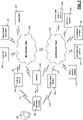
- Fig. 1 illustrates a drug delivery system 100 according to an embodiment of the disclosure.
- the drug delivery system 100 may be associated with a patient 102, who may use the drug delivery system 100 to inject a drug as part of a therapeutic regime.
- the drug delivery system 100 may communicate with a computing device (e.g. server) 104 via one or more intermediate computing devices and/or one or more networks.
- the server 104 may communicate with the drug delivery system 100, the patient 102, and one or more computing devices (with their associated parties) via one or more intermediate computing devices and/or one or more networks.
- the server 104 may communicate directly with the drug delivery system 100, using a 3G antenna for example.
- the drug delivery system 100 is illustrated as communicating with a mobile computing device 110 (e.g., a smartphone) via a first communication link 112, and with a computing device (e.g., a personal computer or dedicated hub) 114 via a second communication link 116.
- Both links 112, 116 may operate according to a near field communication protocol, such as Bluetooth, for example.
- the mobile computing device 110 may communicate with a cellular network 118 via a communication link 120, while the other computing device 114 may communicate with a hard-wired network (e.g., local area network or wide area network) 122 via a communication link 124.
- These networks 118, 122 may also communicate with the server 104.
- the networks 118, 122 may facilitate communication between the server 104 and one or more parties associated with the patient 102, such as his or her caregiver 130, support giver 132, and healthcare provider 132, via their mobile computing devices (e.g., smartphones).
- the server 104 may also be in communication with one or more computing devices (e.g., servers) associated with one or more additional parties associated with the patient 102.
- a healthcare system server 140, a payment server 142, a pharmacy server 144, a distributor server 146, and a governmental agency server 148 are illustrated in communication with the server 104 via the network 122. It will also be recognized that the networks 118, 122 may be in communication with each other.
- Fig. 2 possible methods of operating one or more computing devices in communication with a drug delivery system are now discussed in the context of a method 200. It will be recognized that the method 200 may be carried out by a single computing device, such as the server 104 illustrated in Fig. 1 . Alternatively, the actions discussed with respect to Fig. 2 may be carried out by multiple computing devices, such as the mobile device 110 or computing device 114 in conjunction with the server 104.
- the method 200 begins at block 202 with a determination as to whether a report has been received from the drug delivery system. If no report has been received, the method 200 waits at block 202. Once it is determined that a report has been received at block 202, the method 200 proceeds to block 204.
- the report received from the drug delivery system is used to update one or more records.
- the one or more computing devices adapted or programmed to carry out the method 200 may perform the actions of retrieving the one or more records from storage in one or more memory storage devices, writing the information received from the drug delivery device into the one or more records, and then storing the one or more records in the one or more memory storage devices.
- the one or more memory storage devices may be part of the one or more computing devices, may be separate from the one or more computing devices, or may include one or more of the memory storage devices that are part of the one or more computing devices and one or more memory storage devices that are separate from the one or more computing devices (i.e., the record is stored at the computing device and in backup storage separate and possibly remote from the computing device).
- the report may be used to update one or more records.
- the patient record may be used, for example, to track the compliance of the individual patient (e.g., patient 102) with his or her regime(s).
- the drug delivery system record may be used to store information regarding the drug delivery system throughout the life of the drug delivery system.
- the drug delivery system record may be accessed by the drug delivery system manufacturer or the drug provider for quality control purposes (e.g., to monitor individual instances of the drug delivery system for faults or failures attributable for to the drug delivery system, or to track the environmental condition histories of one or more drug delivery systems for patterns that may assist in determining improvements in the design, packaging, shipment or handling of the drug delivery systems).
- quality control purposes e.g., to monitor individual instances of the drug delivery system for faults or failures attributable for to the drug delivery system, or to track the environmental condition histories of one or more drug delivery systems for patterns that may assist in determining improvements in the design, packaging, shipment or handling of the drug delivery systems.
- the computing device adapted or programmed to carry out the method 200 may be adapted or programmed to carry out one or more actions based on the information in the report received from the drug delivery system.
- the computing device may be adapted or programmed to carry out an action at block 206. This action may require not only the information received in the report and/or stored previously in the record updated at block 204, but may require additional information such as from other patient records, drug system delivery records and/or drug records.
- the determination may be made at block 208 that these other records need to be accessed, and the information retrieved at block 210 (e.g., by retrieving these other records from the patient, drug delivery system and drug databases and reading the information from these records once retrieved). The action may then be carried out at block 222.
- the one or more computing devices adapted or programmed to carry out the method 200 may be adapted or programmed to use the information received in the report to prepare a compliance history for the patient, which compliance history tracks uses of instances of the drug delivery system by the individual patient relative to his or her treatment regime to determine how successful the patient has been in following the treatment regime and which compliance history may be stored in the patient record.
- the one or more computing devices may determine if a pharmacy should be contacted to order delivery of additional drug delivery devices for the individual patient, and may generate a communication to be sent to the pharmacy to order the delivery of additional drug delivery systems.
- the one or more computing devices may determine if a reminder should be sent to the patient, via the mobile device 110 for example, to improve or support compliance with the individual patient's treatment regime, in which case the one or more computing devices may generate a communication to be sent to the patient or user of the device. Further, the one or more computing devices may determine that the operation of the drug delivery device should be modified because of a conditional state received from the drug delivery device, for example. For example, the one or more computing devices may determine that the drug delivery system should be locked to prevent its use because of the temperature history of the drug in the drug delivery system, for example.
- the one or more computing devices may generate a communication, in the form of a signal for example, to be sent to the drug delivery system to lock the drug delivery device that is part of the drug delivery system.
- a communication in the form of a signal for example, to be sent to the drug delivery system to lock the drug delivery device that is part of the drug delivery system.
- the method 200 may proceed to blocks 214, 216, 218 where determinations are made if the computing device should make contact with other parties (block 214), interact with the patient (or user, if not the same as the patient) (block 216) or control the drug delivery device that is part of the drug delivery system (block 218).
- the action taken at block 212 may involve the generation of communications or signals to be sent to third parties, such as the pharmacy, to the patient, or to the drug delivery device.
- the one or more computing devices may carry out the actions of block 220, 222, 224 as dictated by the determinations made at blocks 214, 216, 218.
- the one or more computing devices may carry out the actions of blocks 220, 222, 224 even if it is determined that no action need be taken at block 206.
- the one or more computing devices may forward certain information to third parties 220 based solely on the receipt of the information in a report from the drug delivery device, such that there is no need to separately determine that an action need be taken in regard to the information received (i.e., the communication is automatically sent based on the fact that the information has been received, with the one or more computing devices acting as a repeater station for such information).
- the receipt of information from the drug delivery device may also prompt communications to be sent to the patient/user or control signals to be sent to the drug delivery system without a separate determination that such action need be taken, the communication or control signal being sent simply because certain information and/or reports were received from the drug delivery system.
- the method 200 may return to block 202 to await the next report.
- the one or more computing devices may perform the actions of the method 200 in parallel for each of the reports received from different instances of the drug delivery system, or may perform this steps in sequence for each report. If performed in parallel, the one or more computing devices may determine if action is to be taken in regard to one report, while the one or more computing devices may be interacting with another patient in regard to the information contained in the report received from that patient.
- the one or more computing devices carrying out the method 200 need not be adapted or programmed to carry out each of the actions described above according to every embodiment of the one or more computing devices.
- one of the one or more computing devices may be adapted or programmed to update records for each patient and to determine if an interaction with that patient is required, while another of the one or more computing devices may be adapted or programmed to update records for each drug delivery device and to determine is a control signal should be sent to the drug delivery device, while another one of the one or more computing devices does not update any record, but is adapted or programmed to access, for example, a patient record and determine if the pharmacy needs to be contacted to order additional instances of the drug delivery system for the patient associated with the patient record accessed and to generate the communication if the order of additional instances of the system is required.
- the method 200 touches only a fraction of the possible state and identity information that may be used to control and/or monitor the drug delivery device and that may be communicated between the drug delivery system and the one or more computing devices, as well as how that information is used by the drug delivery system and the one or more computing devices. Additional embodiments are possible according to the disclosure.
- a non-limiting matrix of state and identity information may include the following:
- This information may be used to control the drug delivery system or device, to be communicated to other computing devices, or otherwise to be used, and an exemplary listing of certain additional uses is included below.
- the listing and additional comments below is not intended to supersede, but to augment the discussion above, and is intended to be non-limiting.
- the drug delivery system or the one or more computing devices may make a determination regarding the authenticity of the drug and its compliance with manufacturing standards. Such a determination may be made by the drug delivery device at block 208 of method 200, for example. The determination may be made based on the temperature, shock or vibration exposure, and/or light exposure of the drug delivery device/drug (or a history of one or more of these conditions) and color and/or turbidity of the drug (as determined by an optical inspection). This determination may result in control of the drug delivery device to either lock or unlock the device, according to the determination made. See blocks 206-412 and 218, 224 of the method 200.
- the drug delivery system or the one or more computing devices may make a determination whether the drug is appropriate for the patient. See block 206-212 of method 200. The determination may be made based on one or more of the items of device of patient identify information listed above, and may also result in control of the drug delivery device to either lock or unlock the device, according to the determination made. See blocks 206-212 and 218, 224 of method 200.
- the drug delivery system or the one or more computing devices may make a determination whether the dose has been correctly administered. This determination may be carried out after determining that the drug is appropriate for the patient and/or that the drug is authentic (e.g., not counterfeit) and is in compliance with manufacturing standards. See the preceding paragraphs.
- the determination whether the dose has been correctly administered may depend on one or more of the types of operational state information listed above. This information may be used to update the patient record, determine the patient compliance or therapy progress, and may prompt communication with the pharmacy regarding a refill, or with the payer (e.g., insurance company) to authorize payment for the drug delivery device. See blocks 204-214 of method 200, and servers 142, 144 of Fig. 1 .
- the drug delivery system or the one or more computing devices may use the information to make a determination regarding the operational state of the drug delivery device, and to generate instructional messages to guide the user through the actions required for the proper use of the drug delivery device.
- the determination may be based on any of the operational state information listed above, and the instructions generated may be dictated by the actions that need to be performed after the operational state that has just occurred. Implementation of interactive instructions that follow the changing states of the drug delivery device may help the user have confidence in administration of the drug.
- the drug delivery system or the one or more computing devices may use the information to make a determination that other people nearby are taking the same medication. See blocks 206-212 of method 200. This determination may be made based on the drug identity information and the patient identity information, in combination with the drug delivery system geographic location information. This determination may prompt a communication with the patient (see blocks 216, 222 of method 200) regarding local support networks of persons with similar conditions and/or taking similar drugs or medication to permit the patient to receive support and encouragement from such networks. Alternatively, the determination may prompt a communication with the local support network(s) (see blocks 214, 220 of method 200) to provide support and encouragement to the patient. As s further alternative, the determination may prompt a personalized intervention communication to be sent to the patient (again, see blocks 216, 222 of method 200).
- the drug delivery system or the one or more computing devices may use the information to make a determination whether the patient is not in compliance with their therapy regime. See blocks 206-212 of method 200.
- the determination may be based in part on the drug identification information, such as the prescribed treatment regime, in part on condition state information, such as the passage of time, and in part on the operational state information, such as where the drug delivery device is removed from the packaging but where no additional operational state information is determined, reported or received during the passage of time from the removal from packaging operational state.
- the drug delivery system and/or the one or more computing devices may determine that an interaction with the patient should be generated, such as an alert may be displayed or sent to patient. See blocks 216, 222 of method 200.
- the drug delivery system and/or one or more computing devices may determine that a communication should be generated to be displayed or sent to a healthcare provider, caregiver, support giver and/or payer to encourage adherence to regime. See blocks 214, 220 of method 200.
- the drug delivery system or the one or more computing devices may use the information to make a determination that the patient needs more medication (a refill). See blocks 206-212 of method 200.
- the determination may be based in part on the drug identity information, such as the prescribed treatment regime, and in part on the operational state information, such as where the drug delivery has been completed.
- the one or more computing devices may generate a communication that is sent to the payer and/or pharmacy to request a prescription refill. See blocks 214, 220 of method 200.
- the drug delivery system or the one or more computing devices may use the information to make a determination that the injection was not performed correctly. See blocks 206-212 of method 200.
- the determination may be based in part on operational state information, in comparison with information that may be collected and stored regarding conventional norms in operation.
- a comparison between the determined, reported or received operational states may permit a determination to be made that the injection was not performed correctly.
- the determination, reporting or receipt of operational state information indicating that the drug delivery is complete without operation state information indicating that device was triggered, that the device was applied to the patient, and/or that the cannula was inserted may indicate that the drug delivery device has failed to perform correctly, is faulty or was operated incorrectly.
- the drug delivery system or the one or more computing devices may use the information to make a determination that patient's condition is improving.
- the determination may be based in part on patient identity information, such as point-of-care diagnostics performed on the patient (e.g., blood glucose test or other testing) or self-analysis reporting, and in part on the determination, reporting or receipt of operational state information, such as where the drug delivery has been completed.
- the determination may rely upon an overall trend as opposed to individual determinations or reports, as it is believed that data or reporting trends are usually more indicative of improvement in a patient's condition than the patient's condition as determined at individual instances for serious diseases.
- the information gathered regarding the patient and the operational state of the drug delivery system/device may be combined with therapy compliance history. This determination may result in individualized interventions to be generated, which interventions (such as encouraging messages and other forms of positive reinforcement) may increase persistence in therapy.
- the drug delivery system or the one or more computing devices may use the information to make a determination of the time of day (or week, month, etc.) that the patient usually takes their medication. This determination may be based, in part, on the patient record in which time information is associated with operational state information, such as relates to the triggering of the drug delivery device or the completion of the drug delivery. This determination may also rely on device identity information, such as the prescribed treatment regime. Based on this determination, the one or more computing devices may generate a reminder communication that is sent, for example, to the mobile device 110 to alert the patient that the time is approaching for them to administer their next dose.
- the one or more computing devices may also generate a personalized intervention, such as a message of encouragement to be used as a positive reinforcement.
- the drug delivery system or the one or more computing devices may use the information to make a determination where the patient usually takes their medication. This determination may be based, in part, on the patient record in which geographic position information is associated with operational state information, such as relates to the triggering of the drug delivery device or the completion of the drug delivery. This determination may also rely on device identity information, such as the prescribed treatment regime. Based on this determination, the one or more computing devices may generate a reminder communication that is sent, for example, to the mobile device 110 to alert the patient that the time is approaching for them to administer their next dose when they are at or near the geographic location where the patient usually uses the drug delivery system.
- the one or more computing devices may also generate a personalized intervention, such as a message of encouragement to be used as a positive reinforcement.
- the determinations regarding the usual time and location of the use of the drug delivery device may be combined, and the one or more computing devices may generate a message only when the patient or user is at or near their usual location of use at or near the time they usually use the drug delivery device.
- determinations may be made with reference to the drug delivery device or the drug before the drug delivery device is made available to the patient or user.
- the drug delivery system or the one or more computing devices may use the information to make a determination whether delivery of a certain number of doses of a particular drug has arrived (e.g., instances of a drug delivery device containing the particular drug), for example, at a particular distributor or pharmacy location. This determination may be made based in part on the geographic location information and in part on the drug identify information. Based on this information, the one or more computing devices may generate a communication that is sent to the pharmacy or distributor (via the pharmacy or distributor server, for example) to inform them of the delivery of the drug delivery device. The pharmacy or distributor may use such a smart drug delivery device to simplify their logistics and inventory systems, for example.
- the drug delivery system or the one or more computing devices may use the information to make a determination that one or more of the drug delivery devices have been damaged en route to a particular distributor or pharmacy location.
- the determination may be made based in part on the geographic location information and in part on the drug identify information.
- the determination may also be based in part on condition state information, such as the temperature, shock/vibration exposure, light exposure or color and/or turbidity of the drug, whether determined at a particular time or over a period of time (i.e., a history as established in the drug delivery device record or the drug record).
- the determination may also or instead be based in part on the age of the product relative to its manufacture date or expiration date.
- the determination may also or instead be based in part on operational state information, such as the removal of a sterility barrier from the second end of the cannula of the drug delivery device.
- the one or more computing devices may generate a communication that is sent to the pharmacy or distributor (via the pharmacy or distributor server, for example) to inform them that the drug delivery device has been damaged or expired.
- the pharmacy or distributor may use such a smart drug delivery device to expedite the distributor's or the pharmacy's replacement of the damaged or expired product and prevent delays in patient therapy, for example.
- the drug delivery system or the one or more computing devices may use the information to make a determination that the product is as stated and has not been counterfeited. Such a determination may be based on the drug identity information, such as the name, concentration and amount of the product and the security and anti-counterfeiting measures associated with the drug.
- the determination made by the one or more computing devices may cause a communication to be generated, which communication may be transmitted to a governmental agency (e.g., customs/immigration officials) via the governmental agency server, to distributors and/or pharmacies via their respective servers, and/or patients and caregivers via their personal mobile devices.
- governmental agency e.g., customs/immigration officials
- certain determinations made by drug delivery systems and/or one or more computing devices operating according to embodiments of the disclosure may be used to control the drug delivery device remotely (i.e., without the controlling device being present in the same geographic location (e.g., room, building, or city) as the drug delivery device).
- the drug delivery system or the one or more computing devices may use the information to make a determination that the device needs to be controlled to prevent accidental operation.
- the determination may be based in part on the drug identity information in combination with, for example, certain patient identity information, such as biometric information in the form of a fingerprint. If it is determined that a party that is not authorized to use the drug delivery device is attempting to use the drug delivery device, then the one or more computing devices may generate a signal to be sent to the drug delivery system to lock the drug delivery device or to keep it locked until the drug delivery system is accessed by the patient or user for which it is intended.
- the drug delivery system or the one or more computing devices may use the information to make a determination that the patient associated with the drug delivery device is in a particular group or subgroup of patients or users that require or prefer a particular mode of operation for the drug delivery device. This determination may be made in part using information regarding the identity of the patient and the drug. Based on this determination, the drug delivery system and/or the one or more computing devices may generate a signal that customizes the operation of the drug delivery device. For example, the drug delivery device may be customized as to the sounds and/or lights used to alert the patient to various condition or operational states according to the specific market segment or patient population associated with the patient.
- different sounds may be used with pediatric patients than adult patients, louder sounds may be used with patients with hearing loss, and different lights or light sequences may be used with color-blind patients.
- Such control of the drug delivery device through the drug delivery system and/or one or more computing devices may reduce costs for drug delivery by permitting a single drug delivery device to be used that adapts to patient via software, rather than to use a plurality of different drug delivery device types, each of which has different hardware from the other types of drug delivery devices.
- the drug delivery system or the one or more computing devices may use the information to make a determination that the drug delivery device has not performed properly, and to generate a communication in that regard to the manufacture of the drug delivery device.
- the manufacturer may then determine modifications and/or improvements to enable proper administration of drug and can implement checks for sensed information and relay errors if it is not followed or is not successful.
- the communication indicative of improper operation of the drug delivery device may be transmitted to a local computing device and/or a cloud-based computing system which may store the communication for later retrieval by the device manufacturer. This may save the device manufacturer from having to frequently query the drug delivery device to determine if it has operated improperly.
- the drug delivery system and/or one or more computing devices in communication with the drug delivery system need not be adapted or programmed to carry out every action listed in Fig. 2 .
- Figs. 3-14 illustrate additional embodiments of systems and methods in which some or all of the processing of sensor data or other information collected by a drug delivery device is performed by one or more computing devices external to the drug delivery device. Furthermore, the systems and methods of Figs. 3-14 permit a user to interact with the components of the system to address one or more of the challenges experienced by patients during the initial use of the drug delivery device and/or during the prolonged use of the drug delivery device (e.g., in maintaining adherence with a treatment regimen).
- the system may sense or determine different types of information regarding the drug delivery device, including a condition of the drug delivery device (e.g., a temperature of the drug delivery device), a condition of a medicament contained in the drug delivery device (e.g., a temperature of the medicament), an operational state of the drug delivery device (e.g., whether medicament delivery is complete), an identity of the drug delivery device (e.g., a serial number of the drug delivery device), an identity of the user or patient (e.g., the name of the user or patient), or an identity of a medicament contained in the drug delivery device (e.g., the name of the medicament).
- a condition of the drug delivery device e.g., a temperature of the drug delivery device
- a condition of a medicament contained in the drug delivery device e.g., a temperature of the medicament
- an operational state of the drug delivery device e.g., whether medicament delivery is complete
- an identity of the drug delivery device e.g., a serial number of the drug delivery device
- the drug delivery device may communicate this information to a local and/or remote computing device so that the local and/or remote computing device may provide this information and/or instructions to the user.
- the communication of the information from the drug delivery device may be based on the type of information to be communicated, for example.
- the drug delivery device may then determine if the user has taken the correct action in response to the information and/or instructions displayed on the local and/or remote computing device, which information may then be communicated to the local and/or remote computing device for further processing.
- the systems and methods illustrated in Figs. 3-14 may have an associated controller (which controller may include a processor and memory) that is in communication with a first communication module (which may be a transmitter, a transmitter and receiver pair, or a transceiver), the first communication module may be connected via a communication link to a second communication module (which may be a receiver, a transmitter and receiver pair, or a transceiver) associated with the local and/or remote computing device (which computing device may also include a controller with a processor and memory).
- a first communication module which may be a transmitter, a transmitter and receiver pair, or a transceiver
- the first communication module may be connected via a communication link to a second communication module (which may be a receiver, a transmitter and receiver pair, or a transceiver) associated with the local and/or remote computing device (which computing device may also include a controller with a processor and memory).
- a second communication module which may be a receiver, a transmitter and receiver pair, or a transcei
- the local computing device may be in communication with the remote computing device, such that the drug delivery device (or more particularly, the controller associated with the drug delivery device) may communicate with the local computing device over a first communication link, and then the local computing device may communicate with the remote computing device over a second communication link.
- the drug delivery device described below is configured as an autoinjector, in other embodiments, the drug delivery device may be configured as a on-body injector.
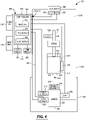
- Fig. 3 illustrates an embodiment of a system 300 including a drug delivery device 302, a local computing device 304 and a remote computing device 306. While the system 300 includes both a local computing device 304 and a remote computing device 306, not all embodiments according to this disclosure include both a local computing device 304 and a remote computing device 306.
- the drug delivery device 302 may be in the form of an autoinjector, and thus is adapted for hand-held use and application against the skin of the patient.
- the drug delivery device 302 includes a housing 310 in which are disposed assemblies or structures that introduce a delivery cannula into the patient, and that eject a drug or medicament from a reservoir 312 through the delivery cannula into the patient.
- the same assemblies or structures that introduce the delivery cannula into the patient may also eject the drug or medicament from the reservoir through the delivery cannula into the patient.
- the drug delivery device 302 may also include assemblies or structures that connect the delivery cannula to the reservoir, that withdraw the delivery cannula into the housing 310 through an opening in the housing 310 (not illustrated), or that deploy other structures that will prevent contact with the delivery cannula once the delivery cannula has been removed from the patient. Even additional assemblies and structures are possible.
- the specific embodiment of the drug delivery device 302 discussed below is thus by way of example and not by way of limitation.
- the drug delivery device 302 includes a reservoir 312 and a delivery cannula 314 having a first end 316 (e.g., a proximal end) that may be connected or connectable in fluid communication with the reservoir 312 and a second end 318 (e.g., a distal end) that may be inserted into a patient.
- the delivery cannula 314 may be, for example, a rigid needle having a beveled edge that may be sized such that the second end 318 of the needle 314 is received under the skin so as to deliver a subcutaneous injection of the medicament within the reservoir 312.
- the first end 316 of the needle 314 may be disposed through a wall 320 of the reservoir 312, and thus be connected in fluid communication with the reservoir 312.
- the first end 316 of the needle 314 may be disposed only partially through the wall 320 (which wall 320 may be a resalable septum or stopper, for example) such that the first end of the needle 314 may not be connected in fluid communication until the second end 318 of the needle 314 is inserted into the patient.
- the first end 316 of the needle 314 may thus be described as connectable in fluid communication with the reservoir 312, although it will be recognized that there are other mechanisms by which the first end 316 of the needle 314 may be connectable, but not connected, in fluid communication with the reservoir 312.
- the drug delivery device 302 includes a shield 322 (e.g., a needle shield) that may be deployed at least after the injection has been completed to limit access to the second end 318 of the needle 314.
- the shield 322 may have a biasing element 324 (such as a spring) that extends the shield 322 from the housing 310 such that a distal end 326 of the shield 322 extends beyond the second end 318 of the needle 314 except when the shield 322 is disposed against the skin and the insertion of the needle 314 is actuated.
- the insertion of the needle 314 may be actuated according to certain embodiments of the drug delivery device 302 by disposing the distal end 326 of the shield 322 on or against the skin of the patient.
- the drug delivery device 302 may also include a lock 328 (e.g., a ratchet) that is coupled to the shield 322 and configured to limit or prevent movement of the shield 322 relative to the housing 310 of the drug delivery device 302 such that the distal end 326 of the shield 322 extends from the housing 310 a sufficient distance to limit or prevent contact with the second end 318 of the needle 314, for example, after the needle 314 has been removed or separated from the skin of the patient.
- a lock 328 e.g., a ratchet
- the lock 328 may be coupled to a controller (e.g., controller 350 described in more detail below) which can selectively activate or deactivate the lock 328 based on different types of information regarding the drug delivery device 302, including operational state information, condition information, and/or identity information, in accordance with one or more of the methods described above.
- a controller e.g., controller 350 described in more detail below
- the lock 328 may be configured to limit or prevent movement of the needle shield 322 relative to the housing 310.
- the lock 328 When the lock 328 is deactivated by the controller 350, the lock 328 may be configured to allow movement of the needle shield 322 relative to the housing 310.
- the drug delivery device 302 also includes at least one drive 330 that may be used to insert the second end 318 of the needle 314 into the skin of the patient, and to eject the drug or medicament from the reservoir 312 through the delivery cannula 314 into the patient.
- the drive 330 may include one or more springs, according to certain embodiments.
- the drive 330 may include a source of pressurized gas or a source of a material that undergoes a phase change, such that the escaping gas or phase changing material provides a motive force that may be applied to the reservoir 312 to eject the drug therefrom.
- the drive 330 may include an electromechanical system, such as may include a motor for example, although such an electromechanical system may be more appropriate for the on-body autoinjector or infuser described above.
- an electromechanical system such as may include a motor for example, although such an electromechanical system may be more appropriate for the on-body autoinjector or infuser described above.
- Other embodiments of the drive 330 are also possible.
- the drive 330 may be coupled to a plunger 331 and/or a stopper 332 (e.g., a wall) disposed in the reservoir 312 to move that stopper 332 in a distal direction toward the delivery cannula 314.
- the stopper 332 may be a stopper that is fixed to a distal end of the plunger 331 and received within a bore 334.
- the plunger 331, in conjunction with the drive 330, may move the stopper 332 along a longitudinal axis of the drug delivery device 302 through the bore 334 from a proximal end of the bore 334 to a distal end of the bore 334, and thereby eject the medicament from the reservoir 312.
- the drive 330 may also cooperate with the stopper 332 and/or the bore 334 to move the reservoir 312 relative to the housing 310 so as to move the second end 318 of the needle 314 relative to the housing 310 and into the patient. According to those embodiments wherein the drive 330 cooperates with the stopper 332, this may occur before the first end 316 of the needle 314 is in fluid communication with the reservoir 312.
- the drive may include one component (e.g., first spring) that cooperates with the bore 334 to move the reservoir 312 and needle 314 relative to the housing 310, and a second component (e.g., second spring) that cooperates with the stopper 332 to move the stopper 332 relative to the bore 334.
- first spring e.g., first spring
- second spring e.g., second spring
- the drug delivery device 302 may also include a lock 335 that is coupled to the plunger 331 and configured to limit or prevent movement of the plunger 331 relative to the housing 310 of the drug delivery device 302 so that the stopper 332 cannot be advanced to discharge the medicament from the reservoir 312 to the patient.
- the lock 335 may be coupled to a controller (e.g., controller 350 described in more detail below) which can selectively activate or deactivate the lock 335 based on different types of information regarding the drug delivery device 302, including operational state information, condition information, and/or identity information, in accordance with one or more of the methods described above.
- the lock 335 When the lock 335 is activated by the controller 350, the lock 335 may be configured to limit or prevent movement of the plunger 331 relative to the housing 310. When the lock 335 is deactivated by the controller 350, the lock 328 may be configured to allow movement of the plunger 331 relative to the housing 310.
- the drive 330 may be associated with an actuator 340.
- the actuator 340 may activate the drive 330 to cause the drive 330 to insert the needle 314 and eject the drug from the reservoir 312 through the needle 314 into the patient.
- the actuator 340 may, according to certain embodiments, be the needle shield 322, as explained above. According to other embodiments, such as the one illustrated in Fig. 3 , the actuator 340 may be a button that may be manually depressed by the user or patient once the drug delivery device 302 is placed disposed on or against the patient's skin.
- a lock 341 may be coupled to the actuator 340 and configured to limit or prevent movement of the actuator 340 so that the actuator 340 cannot be used to activate the drive 330.
- the lock 341 may be coupled to a controller (e.g., controller 350 described in more detail below) which can selectively activate or deactivate the lock 341 based on different types of information regarding the drug delivery device 302, including operational state information, condition information, and/or identity information, in accordance with one or more of the methods described above.
- a controller e.g., controller 350 described in more detail below
- the lock 341 may be configured to limit or prevent movement of the actuator 340 relative to the housing 310.
- the lock 341 may be configured to allow movement of the actuator 340 relative to the housing 310.
- the drug delivery device 302 may also include a removable sterile barrier 344 that is disposed about one or more of a distal end of the housing 310, the needle shield 322, and the second end 318 of the delivery cannula 314.
- the removable sterile barrier 344 may be removably attached to the distal end of the housing 310 as shown in Fig. 3 .
- the removable sterile barrier 344 may form an interference or snap fit with the distal end of the housing 310. A frictional force associated with the interference or snap fit may be overcome by manually pulling the removable sterile barrier 344 in a direction away from a housing 310.
- the removable sterile barrier 344 when attached to the drug delivery device 302, may reduce the risk of contamination of the delivery cannula 314 and other elements disposed within the drug delivery device 302.
- the drug delivery device 302 may include a heating element 346 coupled to the exterior of the reservoir 312 and configured to warm the medicament inside the reservoir 312 through, for example, conductive heating.
- the heating element 346 may be coupled to the controller 350 so that the controller 350 can selectively activate or deactivate the heating element 346 based on different types of information regarding the drug delivery device 302, including operational state information, condition information, and/or identity information, in accordance with one or more of the methods described above.
- the heating element 346 may include an electrically conductive coil that is wrapped around the exterior of the reservoir 312.
- a cooling element (not illustrated) may be coupled to the reservoir 312 and controllable by the controller 350 in a manner similar to the heating element 346.
- the drug delivery device 302 may also include an output unit 347 coupled to the housing 310 and configured to notify the patient or user of information related to the drug delivery device 302.
- the output unit 347 may be coupled to the controller 350 so that the controller 350 can selectively activate or deactivate the output unit 347 based on different types of information regarding the drug delivery device 302, including operational state information, condition information, and/or identity information, in accordance with one or more of the methods described above.
- the output unit 347 may be any device suitable for conveying information to the patient or user including a display (e.g., a liquid crystal display), a touchscreen, a light (e.g., a light emitting diode), a vibrator (e.g., an electro-mechanical vibrating element), a speaker, and/or an alarm, among other devices.
- a display e.g., a liquid crystal display
- a touchscreen e.g., a liquid crystal display
- a light e.g., a light emitting diode
- a vibrator e.g., an electro-mechanical vibrating element
- speaker e.g., a speaker, and/or an alarm, among other devices.
- the drug delivery device 302 may also include an input unit 348 coupled to the housing 310 and configured to allow a user or patient to input information (e.g., password information) to be used by the controller 350.
- the input unit 348, the output unit 347, and even the fingerprint sensor 365 may be a single device such as a touchscreen.
- the input unit 348 may be a separate device from the output unit 347 such as a keyboard or button.
- the reservoir 312, the biasing element 324, the locks 328, 335, 341, the plunger 331, the stopper 332, and the drive 330, and the heating element 346 are disposed within the housing 310, along with at least part of the delivery cannula 314.
- a controller 350 Also disposed within the housing 310 is a controller 350, a communication module 352 (e.g., a wireless transmitter), and at least one sensor or switch.
- a temperature sensor 360, a skin sensor 362, at least one orientation sensor 364, and a fingerprint sensor 365 are included: a temperature sensor 360, a skin sensor 362, at least one orientation sensor 364, and a fingerprint sensor 365.
- the sensors 360, 362, 364, and 365 may each generate sensor data (e.g., raw or unprocessed data) related to a respective measured property or aspect of the drug delivery device 302.
- the sensor data may be representative of at least one of a condition or operational state of the drug delivery device 302.
- the drug delivery device 302 includes a switch 366.
- the controller 350 is coupled to the communication module 352, the locks 328, 335, 341, the sensors 360, 362, 364, 365, the heating element 346, the fingerprint sensor 365, the output unit 347, the input unit 348, and the switch 366.
- the controller 350 may be configured to process the sensor data generated by the sensors 360, 362, 364, and 365 to determine a condition and/or operational state of the drug delivery device 302.
- the controller 350, the communication module 352, one or more of the sensors 360, 362, 364, 365 and the switch 366 may be packaged together as a single module, or each component may be fabricated separately and coupled once the components are disposed within the housing 310. According to certain embodiments, each electrical component may be integrated into the structure of the device 302 associated with that electrical component (e.g., the sensors 362 and 364 may be integrated into the shield 322). In some embodiments, the controller 350, the communication module 352, one or more of the sensors 360, 362, 364, 365, and/or the switch 366 may be packaged together inside the removable sterile barrier 344.
- the controller 350 may include at least one processor 370 (e.g., a microprocessor) and a memory 372 (e.g., a random access memory (RAM), a non-volatile memory such as a hard disk, a flash memory, a removable memory, a non-removable memory, etc.).
- the controller 350 may also include or be coupled to a power supply, e.g. a battery.
- the processor 370 may be programmed to carry out the actions that the controller 350 is adapted to perform and the memory 372 may include one or more tangible non-transitory readable memories having executable, computer-readable, non-transitory instructions stored thereon, which instructions when executed by the at least one processor 370 may cause the at least one processor 370 to carry out the actions that the controller 350 is adapted to perform.
- the controller 350 may include other circuitry that carries out the actions that the controller is adapted to perform.
- the memory 372 may store the identity information discussed above.
- the identity information may be stored in the memory 372 prior to the start of execution of any of the methods discussed above.
- the identity information may include, by way of example and not by way of limitation, a unique identifier, the name of the drug, the dosage, an expiration date, and information regarding the identity of the patient for whom the drug was prescribed.
- the controller 350 or a local computing device e.g., a smartphone
- the identity information may be contained in a QR code label or RFID tag associated with the drug delivery device 302.
- the communication module 352 may be any of a number of different communication modules used to communicate with a local computing device (e.g., a smartphone) and/or a remote computing device (e.g., a server operated by the device manufacturer).
- the communication module 352 may be a Bluetooth and/or Bluetooth Low Energy module that is on-board with the controller 350.
- the communication module 352 is used to transmit information from the drug delivery device 302 to the local computing device 304.
- other wireless protocols may be used by the communication module 352, such as radio-frequency identification (RFID), Zigbee, Wi-Fi, near field communication (NFC), and others.
- RFID radio-frequency identification
- NFC near field communication
- the communication may be sent along a hardwired connection, rather than using the electromagnetic (EM) spectrum.
- EM electromagnetic
- a communication transmitted and/or received between the module 352, the local computing device, and/or the remote computing device may be in the form of a hardwired signal or EM signal or a pattern of such signals, for example
- the temperature sensor 360 may be disposed proximate to the reservoir 312 so that the temperature of the drug in the reservoir 312 may be determined. Alternatively, the temperature sensor 360 may simply be disposed in the housing 310, so that an approximate temperature of the drug in the reservoir 312 and of the drug delivery device 302 generally may be determined. According to an embodiment, the temperature sensor 360 may be an on-board temperature sensor 360 attached to the processor 370.
- the skin sensor 362 may be attached to or associated with the shield 322 to determine when the drug delivery device 302 is disposed on or against the patient's skin.
- the skin sensor 362 is a pressure sensor.
- the skin sensor 362 may be a capacitance sensor, resistance sensor, or inductance sensor.
- the skin sensor 362 or the switch 366 (which is attached to or associated with the actuator 340) may be used to determine when the drug delivery device 302 is activated or actuated, depending on the design and operation of the drug delivery device 302 that is used to actuate the drive 330, in accordance with the discussion above.
- a signal from the skin sensor 360 is used to determine that the drug delivery device 302 has been activated even when the shield 322 is not used as the actual actuator, the underlying assumption being that the movement of the shield 322 is necessarily related to the actuation of the device 302.
- the orientation sensors 364, of which there may be at least two as illustrated, may be associated with the shield 322 (or that portion of the housing 310 adjacent the shield 322) and the controller 350 (which may be, as illustrated, disposed at the other end of the drug delivery device 302 or the housing 310 from the shield 322).
- the orientation sensors 364 may be magnetometers, for example.
- the orientation sensor 364 associated with the controller 350 may be an on-board magnetometer.
- the orientation sensors 364 may be used to determine the orientation of the drug delivery device 302 (in particular, the housing 310) relative to the injection site (or more particularly, relative to the placement of the drug delivery device 302 on or against the patient's skin).
- Fig. 4 illustrates a second embodiment of the drug delivery device 302, wherein certain components of the drug delivery device 302 are disposed outside the drug delivery device 302.
- the drug delivery device 302 may include the housing 310, the reservoir 312, the needle 314, the shield 322, the biasing element 324, the lock 328, the drive 330, and the button 340. Furthermore, the sensors 362, 364 and the switch 366 may be disposed within the housing 310.
- a separate module 400 is provided within a housing 402 in which the controller 350, communication module 352, and on-board temperature and orientation sensors 360, 364 are disposed.
- the fingerprint sensor 365, the output unit 347, and the input unit 348 may be disposed on the exterior of the module 130 so that a user or patient can interact with them.
- the communication module 352 may be disposed within the housing 310 rather than within the module 400.
- the module 400 may be adapted to be attached to an exterior surface 404 of the housing 310; for example the module 400 may have an annular or C-shape with a central aperture sized so that an end 406 of the drug delivery device 302 may be disposed within the aperture, and the module 400 held in place by the mating geometries.
- the module 400 may be moveable relative to the drug delivery device 302, such that movement of the module 400 relative to the housing 310 may activate the autoinjector (e.g., by depressing the button 340), in which case the switch 366 may actually be disposed within the housing 402 of the module 400.
- the exterior surface 404 of the housing 310 and the module 400 may have cooperating connectors.
- a fastener may be provided on the housing 310 or the module 400 that cooperates with a feature of the other of the housing 310 or the module 400 to attach or secure the module 400 to the housing 310, whether reversibly or irreversibly.
- a fastener may be a set screw on the module 400 that cooperates with a recess on the surface 404 of the housing 310.
- the exterior surface 404 of the housing 310 may also have one or more contacts 408 that mate with contacts 410 on an exterior surface 412 of the housing 402 of the module 400.
- the mating contacts 408, 410 couple the sensors 362, 364, the locks 328, 335, 341, the heating element 346, and the switch 366 inside the drug delivery device 302 with the controller 350 inside the module 400 (i.e., the sensors 362, 364, the locks 328, 335, 341, the heating element 346, and the switch 366 are coupleable with the controller 350, as may be the communication module 352 according to the certain embodiments described above wherein the module 352 is disposed in the housing 310 as well).
- the contacts 408, 410 may contact each other, or the contacts may mate without having to physically contact each other, in which case the contacts 408, 410 may be provided below the surfaces 404, 412 of the housings 310, 402.
- the separation of the controller 350, communication module 352 and other components into a module 400 may permit the module 400 to be used with multiple instances of the drug delivery device 302.
- the module 400 may be considered to be the reusable portion of the drug delivery device 302/module 400 combination (which may be referred to as the drug delivery device 302 for purposes of this disclosure), while the drug delivery device 302 may be considered to be the disposable portion of the drug delivery device 302.
- the overall cost of the autoinjector may be optimized.
- This arrangement of the components in the module 400 and the drug delivery device 302 may also facilitate the manufacture and sterilization of the drug delivery device 302 and module 400.
- the local computing device 304 may be in the form of at least one computing device including at least one processor 420 (e.g., microprocessor) and a memory 422 (e.g., a random access memory (RAM), a non-volatile memory such as a hard disk, a flash memory, a removable memory, a non-removable memory, etc.).
- the at least one processor 420 and the memory 422 may be incorporated into a controller 423 of the local computing device 304 and/or may be configured separately.
- the remote computing device 306 may be in the form of at least one computing device including at least one processor 424 (e.g., microprocessor) and memory 426 (e.g., a random access memory (RAM), a non-volatile memory such as a hard disk, a flash memory, a removable memory, a non-removable memory, etc.).
- the at least one processor 424 and the memory 426 may be incorporated into a controller 427 of the local computing device 304 and/or may be configured separately.
- the processors 420, 424 may be programmed to carry out actions described below relative to the methods of Figs.
- the memories 422, 426 may include one or more tangible, non-transitory computer-readable memories having computer-executable instructions stored thereon, which instructions when executed by the processors 420, 424 may cause the processors 420, 424 to carry out the actions described below relative to the methods of Figs. 6 , 13 , and 14 .
- the computer-executable instructions may be included in a software application (e.g., a mobile software application, also commonly referred to as a "mobile app") stored in the memory 422 of the local computing device 304.
- the software application may be installed on local computing device 304 as one or more downloaded files, such as an executable package installation file downloaded from a suitable application store via a connection to the Internet. Examples of package download files may include downloads via the iTunes store, the Google Play Store, the Windows Phone Store, downloading a package installation file from another computing device, etc.
- the software application may be developed for a mobile operating system such as Android TM or iOS ® , developed by Google and Apple, respectively.
- the application may be initiated by a user selecting an icon shown on a home screen of a display 432 (e.g., a touchscreen) of the local computing device 304.
- a display 432 e.g., a touchscreen
- Various displays, including those having informational prompts and/or instructional prompts illustrated in Figs. 7-11 may be generated in the application and displayed to a user and/or patient via the display 432 of the local computing device 304.
- the local computing device 304 may carry out the actions of Figs. 6 , 13 , and 14 independent of the remote computing device 306. According to other embodiments, the local computing device 304 may carry out certain of the actions of Figs. 6 , 13 , and 14 , while the remote computing device 306 carries out other of the actions of Figs. 6 , 13 , and 14 .
- the processor(s) 420 may control components of the local computing device 304 permitting communication with the controller 350 and/or the user, but may not make the determinations as to the content of those communications, the determinations relative to the content of the communications being made at the remote computing device 306.
- the local computing device 304 is a mobile computing device (e.g., a smartphone, a smartwatch, a smart wearable device, a personal computer, a laptop computer, or a tablet computer, etc.) while the remote computing device 306 is a server.
- the local computing device 304 can include generally any computing device capable of processing data and being synched to and in communication with the drug delivery device 302 such as, for example, a smart wearable device, a personal computer, a laptop computer, a smart television, a smart appliance, a smart automobile, a networked computer, etc.
- the local computing device 304 may be a dedicated device such as a hub or gateway that can establish a communication link with the communication module 352 and potentially the remote computing device 306, where communication with the remote computing device 306 is necessary or desirable.
- a smart wearable device includes any mobile computing device that is worn by a person under, with, or on top of the person's clothing, and further includes a mobile computing device partially or entirely embedded within the person's body.
- the local computing device 304 may further include a communication module 430 for wireless communication with the communication module 352 of the drug delivery device 302, for example by using Bluetooth or Bluetooth Low Energy protocol. Alternatively, other wireless protocols may be used by the communication module 352, such as radio-frequency identification (RFID), Zigbee, Wi-Fi, near field communication (NFC), and others.
- the local computing device 304 may also include the display 432 (e.g., a touchscreen) to be used to display information (e.g., instructional prompts and/or informational prompts) to the user.
- the local computing device 304 may include other output devices other than the display 432 to communicate with the user, such as a speaker 434 for example.
- the speaker 434 may be controlled by the processor(s) 420 to provide an audible form of the instructions displayed in written form on the display 432.
- the local computing device 304 may also include one or more communication modules, which may be the same as or different from the communication module 430, that may be used to communicate with one or more networks 440, 442.
- the network 440 may be a wireless radio frequency network, such as a cellular mobile device network
- the network 442 may be a network of computing devices, such as the Internet.
- the networks 440, 442 may be in communication with each other, such that the local computing device 304 may communicate with the remote computing device 306 over the network 440, the network 442 or a combination of the networks 440, 442.
- the remote computing device 424 may include a communication module 436 to receive communications from the networks 440, 442.
- the local computing device 304 and the remote computing device 306 are each separate from, and spaced apart from, the drug delivery device 302 and therefore may each be considered to be an "external computing device" relative to the drug delivery device 302.
- the method 500 begins at block 502 with the removal of the drug delivery device 302 from cold storage, such as a refrigerator. Because the medicament in the reservoir 312 is cold, it is desirable to delay use at block 504 for some period of time after the drug delivery device 302 is removed from cold storage to permit the device 302 and the drug to warm. The warming of the device 302 and the drug may improve the performance and reliability of the operation of the device 302 and/or the delivery of the drug. Alternatively, the warming of the device 302 and the drug may be to minimize discomfort associated with delivery of the drug when cold. In any event, after a delay at block 504, the method 500 continues to block 506. While this description applies to removal of an autoinjector from cold storage, it should be apparent that the method can apply equally well to whether the device is too warm when removed from storage.
- the packaging is removed from about the drug delivery device 302.
- a removable, disposable cover may be disposed over the second end 318 of the needle 314 during storage to preserve sterility and prevent accidental contact. This cover may be removed by the user prior to placement and actuation of the device, as well as any other packaging that limits or prevents the use of the device (e.g., an external safety lock).
- the drug delivery device 302 is applied to the patient's skin at block 508. The drug delivery device 302 is then positioned in a particular orientation to the body of the patient at block 510.
- the user With the drug delivery device 302 on or against the skin and in the correct position, the user is ready to actuate the drug delivery device 302 at block 512.
- the user may depress the button 340 or press the drug delivery device 302 in the direction of the skin, causing relative motion between the housing 310 of the drug delivery device 302 and the shield 322, which relative motion actuates the device.
- the user waits for the completion of the delivery at block 514.
- the completion of the delivery of the drug by the drug delivery device 302 may be signaled to the user in a number of different ways.
- the drug delivery device 302 may have a window in the side of the housing 310 that permits visualization of the reservoir 312, and in particular the movement of the stopper 332 along the bore 334 of the reservoir 312.
- the drug delivery device 302 may include a noise-making device, such as a ratchet or clicker, that actuates when the drug delivery is complete. Once the delivery is complete, the drug delivery device 302 may be removed and disposed of at block 516.
- a user (which may be the patient or alternatively the health care provider) may have difficulty with any or all of the steps of the method 500.
- the user may be uncertain whether to delay use (block 504) or how long to delay use.
- the user may not apply the device 302 against the skin (block 508) or the drug delivery device 302 may be improperly positioned (block 510).
- the user may be uncertain how to determine that delivery is complete (block 514) and thus may administer less than the entire dose.
- the user may confuse the sequence of steps outlined in the method 500, or may simply forget to or decide not to perform any of the steps of the method 500.
- a method 600 is provided for using the interactive drug delivery system 300 to limit the likelihood that the user will fail to carry out the steps of the method 500. While the method 600 describes the operation of the entire system 300, further methods are provided in Figs. 12 and 13 that may be carried out by the controller 350 of the drug delivery device 302, the local computing device 304, and/or the remote computing device 306. Method 600 is also discussed with reference to the simulated screenshots of Figs. 7-11 .
- the method 600 begins at block 602, wherein the system 300 determines that the drug delivery device 302 has been removed from cold storage.
- the temperature sensor 360 is used to determine that a temperature change has occurred relative to the drug delivery device 302, in particular an increase in temperature.
- This change in temperature is communicated from the drug delivery device 302 to the local computing device 304, which is operating software, such as the mobile software application discussed above, that permits this information to be received from the drug delivery device 302 and used to generate a series of instructions and information prompts for the user which are displayed on the display 432 of the local computing device 304, as illustrated in Figs. 7-11 .
- the local computing device may control the display 432 to display instructions or informational prompts not only according to the communication received, but also according to information stored on the local computing device 304 or received by the local computing device 304 (i.e., other than the communication).
- a first instructional prompt may be displayed by the local computing device 304 at block 604 that the user should wait before proceeding with the operation of the device (see Fig. 7 ).
- the method 600 then continues at block 606, wherein the temperature sensor 360 is monitored to determine if the temperature of the drug delivery device 302 has increased above a desired threshold (i.e., T1). If the temperature has not increased above the threshold, the system 300 continues to monitor the temperature at block 606. Otherwise, the method 600 continues to block 608, wherein a further instructional prompt may be displayed by the local computing device 304 that the user may proceed with the operation of the drug delivery device 302 (see Fig. 8 ).
- a desired threshold i.e., T1
- the method 600 may then continue with additional instructional prompts displayed by the local computing device 304 at blocks 610, 612 for the user to remove any packaging (e.g., removable sterile barrier 344) and to apply the drug delivery device 302 to the patient's skin.
- the system 300 then monitors the skin sensor 362 to determine if the drug delivery device 302 has been applied to the skin at block 614. If the drug delivery device 302 has not been applied, then the method 600 remains at block 614; if the drug delivery device 302 has been applied, then the method 600 continues to block 616.
- a further instructional prompt may be displayed by the local computing device 304 that the user should position the drug delivery device 302 on the skin. For example, it may be desirable for the drug delivery device 302 to be positioned on the skin such that the needle 314 will enter the skin at a right angle or orthogonally to the skin.
- the system 300 may use the orientation sensors 364 to monitor the orientation of the device at block 618, and further instructional prompts may be displayed by the local computing device 304 for the user to alter the position of the device 302 relative to the skin at block 620. See Fig. 9 . Once the system determines that the position of the drug delivery device 302 is acceptable, the method may proceed to block 622.
- an instructional prompt may be displayed by the local computing device 304 that the user should actuate the drug delivery device 302.
- the system 300 may then monitor the switch 366 to determine that the user actuates the button 340, before continuing to block 626.
- an instructional prompt may be displayed by the local computing device 304 that the user should wait for completion of the drug delivery. See Fig. 10 .
- the local computing device 304 may display informational prompts letting the user know that a certain amount of the drug has been delivered. See also Fig. 10 . This informational prompt may depend on determinations made based on additional sensors that, for example, monitor the travel of the stopper 332 in the bore 334 of the reservoir 312. Alternatively, the informational prompt may be based on an estimate of the completion state based on timed trials performed using other instances of the drug delivery device 302 with the drug being delivered or administered.
- the system 300 may continue to monitor the orientation sensors 364 at block 628 to determine that the drug delivery device 302 remains in position relative to the patient's skin.
- Instructional prompts to reposition the drug delivery device 302 may be displayed by the local computing device 304 per block 630 in addition to or in substitution for the information prompts displayed per block 626.
- the system 300 also determines if the drug delivery is compete at block 632, which determination may be made based on monitoring of sensors, e.g., associated with the stopper 332, or based on estimates based on timed trials, for example. In fact, the determinations made at blocks 628 and 632 may be combined, with the instructional prompt displayed per block 630 occurring only if the autoinjector should be repositioned and the delivery is not complete.
- the method 600 continues to block 634, where an informational prompt may be displayed by the local computing device 304 that the delivery is complete and that the device may be removed and disposed of (see Fig. 11 ), and block 636, where a report of the completion of the drug delivery by the user using the drug delivery device 302 is provided, for example, to the remote computing device 306.
- the method 600 describes the operation of the entire system 300.
- the operation of the entire system 300 may also be described in terms of the actions performed by the drug delivery device 302 and the local computing device 304.
- the individual operations of each device 302, 304, and the cooperation between the devices 302, 304, is now described with reference to Figs. 12 and 13 . It should be noted that, in an alternative embodiment, some or all of the actions performed by the local computing device 304 with regard to Fig. 13 may be performed by the remote computing device 306.
- the actions of the local computing device 304 with regard to Fig. 13 may be carried out by executing, with the processor 422 of the local computing device 304, a software application (e.g., a mobile software application) stored in the memory 422 of the local computing device 304.
- a software application e.g., a mobile software application
- a method 700 is provided relative to the operation of the controller 350.
- the method 700 begins at block 702, with the controller 350 monitoring the temperature sensor 360 to determine if the drug delivery device 302 has been removed from cold storage.
- the controller 350 determines that the temperature has increased, corresponding to a probable removal from cold storage
- the controller 350 controls the communication module 352 to transmit a communication (in the form of a signal) at block 704 to the local computing device 304 that the autoinjector 304 has been removed from cold storage.
- a method 800 carried out by the local computing device 304 starts at block 802 with the receipt by the local computing device 304 (or more particularly, the communication module 430) of the communication transmitted by the drug delivery device 302 (or more particularly, the communication module 352) that the drug delivery device 302 has been removed from cold storage.
- the method 800 continues to block 804, where the processor 420 of the controller 423 controls the display 432 to display an instructional prompt (see, e.g., Fig. 7 ) to the user instructing the user to wait before using the drug delivery device 302.
- the instructional prompt may be displayed as one of the screens of a mobile software application (discussed above) executing on the local computing device 304.
- the processor 420 of the controller 423 may process (e.g., compare) the communication received from the drug delivery device 302 at block 802 with or according to information stored in the memory 422 of the local computing device 304, or elsewhere (e.g., the remote computing device 306), to determine if the sensed temperature is acceptable for a patient to use the drug delivery device 302.
- the instructional prompt may be displayed at block 804 in response to a determination that the sensed temperature is not acceptable for a patient to use the drug delivery device 302.
- the instructional prompt may be selected by the processor 420, based on an analysis of the temperature communication from the drug delivery device 302, from a plurality of instructional prompts pre-stored in the mobile software application executing on the local computing device 304. Subsequently, at block 806, the local computing device 304 (or more particularly, the processor 420) may monitor the module 430 for the next communication from the drug delivery device 302.
- method 700 continues with the controller 350 monitoring the temperature sensor 360 at block 706 to determine when the temperature sensed by the temperature sensor 360 exceeds a threshold temperature.
- the controller 350 determines that the sensed temperature exceeds a threshold temperature
- the controller 350 controls the communication module 352 to transmit a communication to the local computing device 304 that the temperature has been achieved at block 708.
- the controller 350 may control the communication module 352 to transmit a communication representative of the temperature of the drug delivery device 302 and, upon receipt, the controller 423 of the local computing device 304 may compare the sensed temperature to information (e.g., threshold temperature information indicating a minimum temperature or temperature range) stored in the memory 422 of the local computing device 304 to determine if the sensed temperature is acceptable for a patient to use the drug delivery device 302.
- information e.g., threshold temperature information indicating a minimum temperature or temperature range
- the method 800 Upon receipt of a temperature communication at block 806 of Fig. 13 , the method 800 continues at block 808, where the processor 420 controls the display 432 to display an informational prompt instructing the user that the temperature of the drug delivery device 302 is now suitable or acceptable for use.
- the method 800 continues on to blocks 810 and 812, where the processor 420 controls the display 432 to display instructional prompts to the user that the user is to remove any packaging and to apply the drug delivery device 302 to the patient's skin.
- the instructional prompts may be displayed as screens of a mobile software application executing on the local computing device 304.
- the instructional prompt may be selected by the processor 420, based on an analysis of the temperature communication from the drug delivery device 302, from a plurality of instructional prompts pre-stored in the mobile software application executing on the local computing device 304.
- the method 800 then continues at block 814 to monitor the communication link for the next communication from the drug delivery device 302.
- the controller 350 may evaluate a temperature history of the drug delivery device 302 to determine the range and duration of temperatures experienced by the drug delivery device 302 in the past to determine if the temperature history renders the drug delivery device 302 or its medicament unacceptable for use. If so, the controller 350 may control the communication module 352 to transmit a communication to the local computing device 304 that the temperature history of the drug delivery device 302 renders it unsuitable for use, and the controller 423 of the local computing device 304 controls the display 423 to display an informational prompt instructing the patient not to use the device.
- the evaluation of the temperature history may be performed by the controller 423 of the local computing device 304 by comparing temperature history received from the drug delivery device 302 with information stored in the memory 422 of the local computing device 304, or elsewhere (e.g., the remote computing device 306), to determine if the temperature history is acceptable for a patient to use the drug delivery device 302.
- the method 700 continues with the controller 350 monitoring the skin sensor 362 to determine if the drug delivery device 302 has been applied to the patient's skin at block 710 of Fig. 12 .
- the controller 350 determines that the drug delivery device 302 has been applied to the patient's skin
- the controller 350 controls the communication module 352 at block 712 to transmit a communication to the local computing device 304 that the drug delivery device 302 has been applied.
- the method 800 Upon receipt of the communication of skin application, as determined at block 814 of Fig. 13 , the method 800 continues to block 816 with the processor 420 controlling the display 432 to display an instructional prompt instructing the user or patient that the drug delivery device 302 must be aligned with respect to the patient's skin (see, e.g., Fig. 9 ).
- the instructional prompt may include illustrations of the proper manner in which the device is to be positioned relative to the patient's skin.
- the instructional prompt may be displayed as one of the screens of a mobile software application (discussed above) executing on the local computing device 304.
- the processor 420 may process (e.g., compare) the communication received from the drug delivery device 302 at block 814 with or according to information stored in the memory 422 of the local computing device 304 or elsewhere (e.g., the remote computing device 306).
- the instructional prompt may be selected by the processor 420, based on an analysis of the skin application communication from the drug delivery device 302, from a plurality of instructional prompts pre-stored in the mobile software application executing on the local computing device 304.
- the method 800 may then proceed to block 818, wherein the processor 420 monitors the communication link for any error communications received from the drug delivery device 302 regarding the position and/or orientation of the drug delivery device 302 (see blocks 714, 716 of method 700 of Fig. 12 ), and controls the display 432 to display an instructional prompt to the user at block 820 if an error communication is received.
- the error communication may include an indication of the type of positional and/or orientation error occurring, such that the instructional prompt displayed may be tailored to provide specific guidance (e.g., "Tilt Right” or "Tilt Left”).
- the instructional prompt may be displayed as one of the screens of a mobile software application (discussed above) executing on the local computing device 304.
- the processor 420 may process (e.g., compare) the error communications received from the drug delivery device 302 at block 818 with or according to information stored in the memory 422 of the local computing device 304 or elsewhere (e.g., the remote computing device 306).
- the instructional prompt may be selected by the processor 420, based on an analysis of the error communication from the drug delivery device 302, from a plurality of instructional prompts pre-stored in the mobile software application executing on the local computing device 304. Subsequently, the method 800 further continues to block 822, with the processor 420 monitoring the communication link for a further communication from the drug delivery device 302 and cycling between blocks 818, 822 until such a further communication is received.
- the controller 350 is monitoring the orientation sensors 364 at this time to determine if the drug delivery device 302 is properly oriented at block 714.
- the controller 350 will control the communication module 352 to transmit one or more error communications at block 716 if the position of the device 302 is incorrect, and a device positioned communication at block 718 when the device 302 is correctly positioned.
- the controller 350 may control the communication module 352 to transmit a communication representative of the orientation of the delivery device 302 and, upon receipt, the controller 423 of the local computing device 304 may compare the sensed orientation with information stored in the memory 422 of the local computing device 304, or elsewhere (e.g., the remote computing device 306), to determine if the sensed orientation is acceptable for a patient to use the drug delivery device 302 to delivery its medicament to the patient.
- the method 800 continues at block 824 with the processor 420 controlling the display 432 to display an instructional prompt to the user to actuate the drug delivery device 302, starting the delivery of the drug.
- the instructional prompt may be displayed as one of the screens of a mobile software application (discussed above) executing on the local computing device 304.
- the processor 420 may process (e.g., compare) the communications received from the drug delivery device 302 at block 822 with or according to information stored in the memory 422 of the local computing device 304 or elsewhere (e.g., the remote computing device 306).
- the instructional prompt may be selected by the processor 420, based on an analysis of the correct position communication from the drug delivery device 302, from a plurality of instructional prompts pre-stored in the mobile software application executing on the local computing device 304.
- the method 800 then continues to block 826, where the processor 420 monitors the communication link for the next communication from the drug delivery device 302.
- the controller 350 is monitoring the switch 366 to determine if the button 340 has been depressed, or if other action has been taken to actuate the drug delivery device 302, as indicated at block 720 of Fig. 12 .
- the controller 350 controls the communication module 352 to transmit a device actuated communication to the local computing device 304, as indicated at block 722.
- the method 800 continues at block 828 with the processor 420 controlling the display 432 to display an informational prompt to the user that the injection has begun.
- the instructional prompt may be displayed as one of the screens of a mobile software application (discussed above) executing on the local computing device 304.
- the processor 420 may process (e.g., compare) the communications received from the drug delivery device 302 at block 826 with or according to information stored in the memory 422 of the local computing device 304 or elsewhere (e.g., the remote computing device 306).
- the instructional prompt may be selected by the processor 420, based on an analysis of the device actuated communication from the drug delivery device 302, from a plurality of instructional prompts pre-stored in the mobile software application executing on the local computing device 304.
- the method 800 may continue to blocks 830, 832 where the processor 420 monitors the communication link for any error communication relative to the position of the device (block 830) and controls the display 432 to display an instructional prompt to the user to reposition the device (block 832). See also blocks 724 and 726 of method 700 of Fig. 12 .
- the method 800 further continues to block 834, where the processor 420 monitors the communication link for a further communication from the drug delivery device 302. While illustrated as separate blocks, it will be recognized that the actions of blocks 830 and 834 may be combined in a single block.
- the method 800 repeats blocks 828, 830, 834 (and as circumstances dictate, block 832). It will be recognized that during repeated iterations of block 828, the processor 420 may control the display 432 to provide informational prompts (see, e.g., Fig. 10 ) to the user that reflect progress toward the delivery of the drug from the drug delivery device 302. Consequently, the repetition of block 828 is not intended to indicate that the same informational prompt is repeatedly displayed to the user, although that might be done according to certain embodiments.
- the controller 350 continues to monitor the orientation sensors 364 at block 724 (and transmit error communications at block 726, as required) until the controller 350 determines that the injection is complete at block 728. While these actions are illustrated as different blocks in Fig. 12 , the actions of blocks 724 and 728 may be combined.
- the controller 350 determines that the injection is compete at block 728, then the controller 350 controls the communication module 352 to send a delivery complete communication to the local computing device 304 at block 730.
- the determination made at block 728 may be made, as indicated above, based on monitoring of the signals received from one or more sensors associated with the reservoir 312. Alternatively, the determination at block 728 may be made based on a timer set according to an estimate of the time required to eject the drug completely from the reservoir 312 according previously performed time trials. According to other embodiments, the controller 312 may not make the determination that the delivery is complete, but rather this determination may be made by the local computing device 304, for example based on the receipt of the device actuated communication, a timer monitored or maintained by the processor 420, and an estimate of the time required to eject the drug completely from the reservoir 312 according to previously performed time trials.
- the delivery complete communication is transmitted to the local computing device 304, and the method 800 continues at blocks 834, 836 at Fig. 13 with the receipt of the communication by the local computing device 304 (block 834) and the processor 420 controlling the display 432 to display an informational prompt (see, e.g., Fig. 11 ) to the user that the delivery has been completed and/or an instructional prompt to safely discard the drug delivery device 302.
- the instructional prompt may be displayed as one of the screens of a mobile software application (discussed above) executing on the local computing device 304.
- the instructional prompt may be selected by the processor 420, based on an analysis of the delivery complete communication from the drug delivery device 302, from a plurality of instructional prompts pre-stored in the mobile software application executing on the local computing device 304. Subsequently, the processor 420 may then format and transmit a report indicative of completion of the drug delivery to the patient to the remote computing device 306 regarding the operation of the device 302 at block 838.
- the local computing device 304 may simply wait for the next non-error communication received from the drug delivery device 302, and on the basis that a further non-error communication has been received, the local computing device may move to the next action of method 800. As such, all of the non-error communications may be indistinguishable from each other.
- the drug delivery device 302 may include in memory 372 identity information regarding the drug and/or the device 302. This identity information may be transmitted to the local computing device 304 before or at the same time the controller 350 controls the communication module 352 to transmit the initial "device out" communication of block 704 of Fig. 12 , or with the reporting that occurs at block 636 in Fig. 6 .
- the information may include, by way of example and not by way of limitation, a unique identifier, the name of the drug, the dosage, and the expiration date.
- this information may be contained in a QR code label or RFID tag associated with the drug delivery device 302, and the local computing device processor 420 may control the display 432 to display an instructional prompt to the user for the user to use the local computing device 304 to obtain this information.
- the method 800 of Fig. 13 may include displaying informational prompts to the user based on this information, and even instructional prompts should the local computing device 304 determine that the drug product is not appropriate for use by the user because, for example, the drug is incorrect, the dosage is incorrect, or the expiration date is past due.
- the identifying information may include information regarding the identity of the patient for whom the drug was prescribed. With this information, the local computing device 304 may make a determination regarding the patient that is about to receive the drug, and provide appropriate informational and/or instructional prompts. In conjunction with the drug identity information discussed above, and the local computing device 304 may use this information to address the five Rights in Medication Administration: Right Patient, Right Drug, Right Dose, Right Time, and Right Route.
- the local computing device 304 may also operate to display information prompts in the form of reminders to follow the prescribed treatment regimen.
- the remote computing device 306 may interact with and/or control one or more local computing devices 304 that display the reminder information prompts.
- the remote computing device 306 may control the timing and/or content of the displayed reminder information prompts based on information received from the one or more local computing devices 304. For example, the remote computing device 306 may determine that one or another message is best suited for (e.g., most effective with) users where the one or more local computing devices 304 evidence a particular type of use or behavior pattern on the part of these users, and may control the timing and/or content of the reminder information prompts accordingly.
- Other informational prompts that may be displayed on the local computing device may include personal injection histories, or general educational material regarding efficacy expectations for patients on the prescribed treatment regimen.
- the method 800 permits the use of relative simple and/or inexpensive computer hardware onboard the drug delivery device 302, which may be desirable from an economic perspective, especially if the drug delivery device 302 is a disposable, single-use device, or otherwise has a limited lifespan.
- the drug delivery device 302 may transmit the sensor data (e.g., raw or unprocessed data) from one or more of the sensors 360, 362, 364, and 365 to the local computing device 304 and/or the remote computing device 306 without processing sensor data, or with very minimal processing of the sensor data, prior to its transmission.
- the local computing device 304 and/or the remote computing device 306 as opposed to the drug delivery device 302, may process the sensor data to determine the condition and/or operational state of the drug delivery device 302. Besides transmitting the sensor data to the local computing device 304 and/or the remote computing device 306, the drug delivery device 302 may not be required to process the sensor data.
- This configuration may free the drug delivery device 302 from having to include a controller 350, processor 370, and/or memory 372, thereby reducing the cost and complexity of the drug delivery device 302.
- the only computer-related electronics onboard the drug delivery device 302 may be the sensors 360, 362, 364, and 365 and the communication module 430.
- FIG. 900 An example of a method, designated by reference numeral 900, in which the local computing device 304, as opposed to the drug delivery device 302, processes the sensor data to determine at least one of a condition and/or an operational state of the drug delivery device 302 will now be described with reference to Fig. 14 .
- some or all of the steps of the method 900 may be performed by the remote computing device 306 instead of the local computing device 304.
- the method 900 begins at block 902 with the local computing device 304 receiving, at the communication module 430, sensor data generated by the temperature sensor 360 and transmitted from the communication module 352 of the drug delivery device 302.
- the sensor data received at block 902 may be processed (e.g., analyzed) by the processor 420 of the local computing device 304 according to information stored in the memory 422 of the local computing device 304, or elsewhere (e.g., the remote computing device 306), to determine a temperature or a temperature history of the drug delivery device 302.
- the method 900 then continues to block 906 where the processor 430 compares the temperature or temperature history determined at block 904 with information stored in the memory 422, or elsewhere (e.g., the remote computing device 306), to determine if the temperature or temperature history is acceptable for the patient to use the drug delivery device 302.
- the processor 430 may compare the temperature to a threshold temperature and determines that the temperature is acceptable only if the temperature exceeds the threshold temperature.
- the processor 430 may compare the temperature history with an acceptable temperature range to determine if, and how long, the drug delivery device 302 was outside the acceptable temperature range in the past.
- the processor 430 may control the display 432 to display an instructional prompt (see, e.g., Fig. 7 ) to the user instructing the user to wait before using the drug delivery device 302 (or to never use the drug delivery device if the temperature history is unacceptable, for example) at block 907, and subsequently the method 900 may return to block 902.
- the instructional prompt displayed at block 907 may suggest that the user set a timer on the local computing device 304 for a certain amount of time depending on the current temperature of the drug delivery device 302.
- the timer may be set automatically by the mobile software application (discussed above) executing on the local computing device 304 in response to a determination that the current temperature of the drug delivery device 302 is not acceptable.
- the processor 430 may control the display 432 to display instructional prompts instructing the user that the temperature or temperature history of the drug delivery device 302 is acceptable for use, to remove any packaging from the drug delivery device, and to apply the drug delivery device 302 to the patient's skin, at, respectively, blocks 908, 910, and 912.
- the instructional prompts displayed at blocks 907 and 908 may be displayed as screens of a mobile software application (discussed above) executing on the local computing device 304.
- the instructional prompts displayed at blocks 907 and 908 may be selected by the processor 420, based on an analysis of the temperature sensor data from the drug delivery device 302, from a plurality of instructional prompts pre-stored in the mobile software application executing on the local computing device 304.
- the method 900 continues on to block 914, where the local computing device 304 receives, at the communication module 430, sensor data generated by the skin sensor 362 and transmitted from the communication module 352 of the drug delivery device 302.
- the sensor data received at block 914 may be processed (e.g., analyzed) by the processor 420 of the local computing device 304 according to information stored in the memory 422 of the local computing device 304, or elsewhere (e.g., the remote computing device 306), to determine if the drug delivery device 302 is disposed on or against a skin of the patient.
- the method 900 may return to block 912.
- the processor 430 may control the display 432 to display an instructional prompt instructing the user to correctly or properly orient the drug delivery device 302 relative to the patient's skin at block 917.
- the instructional prompt displayed at block 917 may be displayed as one of the screens of a mobile software application (discussed above) executing on the local computing device 304.
- the instructional prompt displayed at block 917 may be selected by the processor 420, based on an analysis of the skin application sensor data from the drug delivery device 302, from a plurality of instructional prompts pre-stored in the mobile software application executing on the local computing device 304.
- the method 900 continues on to block 918, where the local computing device 304 receives, at the communication module 430, sensor data generated by the orientation sensors 364 and transmitted from the communication module 352 of the drug delivery device 302. Then, at block 920, the sensor data received at block 918 may be processed (e.g., analyzed) by the processor 420 of the local computing device 304 according to information stored in the memory 422 of the local computing device 304, or elsewhere (e.g., the remote computing device 306), to determine the orientation of the drug delivery device 304.
- the sensor data received at block 918 may be processed (e.g., analyzed) by the processor 420 of the local computing device 304 according to information stored in the memory 422 of the local computing device 304, or elsewhere (e.g., the remote computing device 306), to determine the orientation of the drug delivery device 304.
- the method 900 then continues to block 922 where the processor 430 compares the orientation determined at block 904 with information stored in the memory 422, or elsewhere (e.g., the remote computing device 306), to determine if the orientation of the drug delivery device relative to the patient's skin is acceptable.
- the processor 430 may control the display 432 to display an instructional prompt instructing the user to reposition or reorient the drug delivery device 302 at block 924, and subsequently the method 900 may return to block 918.
- the processor 430 may control the display 432 to display an instructional prompt instructing the user to actuate the drug delivery device 302 to deliver the medicament to the patient at block 926.
- the drug delivery device 302 may be actuated by manually depressing the actuator 340.
- the instructional prompts displayed at blocks 924 and 926 may be displayed as screens of a mobile software application (discussed above) executing on the local computing device 304.
- the instructional prompt displayed at blocks 924 and 926 may be selected by the processor 420, based on an analysis of the orientation sensor data from the drug delivery device 302, from a plurality of instructional prompts pre-stored in the mobile software application executing on the local computing device 304.
- the method 900 then continues on to block 928, where the local computing device 304 receives, at the communication module 430, sensor data generated by the switch 366 and transmitted from the communication module 352 of the drug delivery device 302. Then, at block 930, the sensor data received at block 928 may be processed (e.g., analyzed) by the processor 420 of the local computing device 304 according to information stored in the memory 422 of the local computing device 304, or elsewhere (e.g., the remote computing device 306), to determine if the drug delivery device 304 has been actuated. In response to a determination that the drug delivery device 302 has not been actuated at block 930, the method 900 may return to block 928.
- the sensor data received at block 928 may be processed (e.g., analyzed) by the processor 420 of the local computing device 304 according to information stored in the memory 422 of the local computing device 304, or elsewhere (e.g., the remote computing device 306), to determine if the drug delivery device 304 has been
- the processor 430 may control the display 432 to display an instructional prompt instructing the user to wait for completion of a delivery of a medicament from the reservoir to the patient at block 932.
- the instructional prompt displayed at block 932 may be displayed as one of the screens of a mobile software application (discussed above) executing on the local computing device 304.
- the instructional prompt displayed at block 932 may be selected by the processor 420, based on an analysis of the switch sensor data from the drug delivery device 302, from a plurality of instructional prompts pre-stored in the mobile software application executing on the local computing device 304.
- the method 900 continues on to block 934, where the local computing device 304 receives, at the communication module 430, sensor data generated by the orientation sensors 364 and transmitted from the communication module 352 of the drug delivery device 302. Then, at block 936, the sensor data received at block 934 may be processed (e.g., analyzed) by the processor 420 of the local computing device 304 according to information stored in the memory 422 of the local computing device 304, or elsewhere (e.g., the remote computing device 306), to determine the orientation of the drug delivery device 304.
- the sensor data received at block 934 may be processed (e.g., analyzed) by the processor 420 of the local computing device 304 according to information stored in the memory 422 of the local computing device 304, or elsewhere (e.g., the remote computing device 306), to determine the orientation of the drug delivery device 304.
- the method 900 then continues to block 938 where the processor 430 compares the orientation determined at block 904 with information stored in the memory 422, or elsewhere (e.g., the remote computing device 306), to determine if the orientation of the drug delivery device relative to the patient's skin is acceptable.
- the processor 430 may control the display 432 to display an instructional prompt instructing the user to reposition or reorient the drug delivery device 302 at block 940, and subsequently the method 900 may return to block 934.
- the processor 430 may control the display 432 to display an instructional prompt instructing the user to wait for completion of a delivery of a medicament from the reservoir 312 to the patient at block 941.
- the instructional prompts displayed at blocks 940 and 941 may be displayed screens of a mobile software application (discussed above) executing on the local computing device 304.
- the instructional prompts displayed at blocks 940 and 941 may be selected by the processor 420, based on an analysis of the orientation sensor data from the drug delivery device 302, from a plurality of instructional prompts pre-stored in the mobile software application executing on the local computing device 304.
- the method 900 then continues to block 942, where the local computing device 304 receives, at the communication module 430, sensor data generated by a medicament fluid level sensor (not illustrated) associated with the reservoir 312 and transmitted from the communication module 352 of the drug delivery device 302. Then, at block 944, the sensor data received at block 942 may be processed (e.g., analyzed) by the processor 420 of the local computing device 304 according to information stored in the memory 422 of the local computing device 304, or elsewhere (e.g., the remote computing device 306), to determine if delivery of the medicament from the reservoir 312 to the patient has been completed.
- the local computing device 304 receives, at the communication module 430, sensor data generated by a medicament fluid level sensor (not illustrated) associated with the reservoir 312 and transmitted from the communication module 352 of the drug delivery device 302. Then, at block 944, the sensor data received at block 942 may be processed (e.g., analyzed) by the processor 420 of the local computing device 304 according to information stored in the
- the determination of the completion of medicament delivery may not be based on sensor data received from the drug delivery device 302, but instead on a timer monitored or maintained by the processor 420 and an estimate of the time required to eject the drug completely from the reservoir 312 according to previously performed time trials.
- the sensor data received at block 942 may include leakage information indicative of medicament discharged from the reservoir 312 but not delivered to the patient.
- the processor 430 may control the display 432 to display an instructional prompt instructing the user to wait for completion of a delivery of a medicament from the reservoir 312 to the patient at block 946, and subsequently the method 900 may return to block 942.
- the processor 430 may control the display 432 to display an instructional prompt instructing the user to discard the drug delivery device 302 at block 948.
- the instructional prompts displayed at block 946 and 948 may be displayed as one of the screens of a mobile software application (discussed above) executing on the local computing device 304. In some embodiments, the instructional prompts displayed at blocks 946 and 948 may be selected by the processor 420, based on an analysis of the fluid level sensor data from the drug delivery device 302, from a plurality of instructional prompts pre-stored in the mobile software application executing on the local computing device 304.
- the method 900 may proceed to block 950 where the processor 420 generates a report representative of completion of delivery of the medicament to the patient and controls the communication module 430 to transmit the report to another external computing device (e.g., the remote computing device 306) and/or to the drug delivery device 302.
- the report may include information about leakage of the medicament.
- corresponding audible instructions may be generated through the mobile software application executing on the local computing device 304. Accordingly, the user may simply listen for the instructional prompts and thus avoid having to look away from the drug delivery device 302 during the delivery process. Furthermore, in some embodiments, the mobile software application executing on the local computing device 304 may allow the user to choose the language for the audible instructions.
- the instructional prompts displayed in the methods 800 and 900 are not limited to text.
- the instructional prompts may include a schematic, symbol, and/or image that conveys the instructions to the user of the drug delivery device 302 in a non-verbal manner.
- the schematic, symbol, and/or image may be chosen so that it can be easily understood by speakers of many languages.
- the instructional prompts displayed in the methods 800 and 900 may be customized to include text, schematics, symbols, and/or images tailored for a specific market segment or patient population. For example, larger text may be used for elderly patients and smaller text for non-elderly patients.
- the methods 800 and 900 utilize the local computing device 304 to select the appropriate informational and/or instructional prompt based on the information received from the drug delivery device 302, alternative embodiments may utilize another external computing device (e.g., the remote computing device 306, or a computing device operated by a health care provider or a drug delivery device manufacturer) to select the appropriate informational and/or instructional prompts.
- the local computing device 304 initially may receive information from the drug delivery device 302 via a short range communication protocol (e.g., Bluetooth or Bluetooth Low Energy), and then transmits the information over the Internet to the another external computing device which analyzes the information and selects an appropriate informational and/or instructional prompt. Subsequently, the another external computing device may transmit the selected informational and/or instructional prompt over the Internet to the local computing device 304 for display to the user via, for example, an application executing on the local computing device 304.
- a short range communication protocol e.g., Bluetooth or Bluetooth Low Energy
- the methods and systems disclosed herein have several technical effects on the process of monitoring and assisting a patient's use of a drug delivery device.
- One technical effect is that the data processing capabilities of an external computing device (e.g., a smartphone) may be utilized to process the information collected by sensors onboard the drug delivery device. This may reduce the data processing burden on the drug delivery device, thereby allowing the drug delivery device to be manufactured with less complex and/or expensive computer circuitry, or none at all.
- the display of the external computing device may be utilized to provide the patient or user with informational and/or instructional prompts, thereby alleviating the drug delivery device from having to include an expensive display.
- sensors and sensor systems which can be used in combination with a drug delivery device for detecting a condition and/or operational state of the drug delivery device. Additional or alternative sensors and sensor systems can also be incorporated in the drug delivery devices described above, including any combination of the sensors and sensor systems disclosed in the co-filed International patent application entitled "Drug Delivery System and Method of Use” and having Attorney Docket No.: 32263/48365A, the entirety of which is hereby incorporated by reference.
- the above description describes various systems and methods for use with a drug delivery device. It should be clear that the system, drug delivery device or methods can further comprise use of a medicament listed below with the caveat that the following list should neither be considered to be all inclusive nor limiting.
- the medicament will be contained in a reservoir.
- the reservoir is a primary container that is either filled or pre-filled for treatment with the medicament.
- the primary container can be a cartridge or a pre-filled syringe.
- the drug delivery device or more specifically the reservoir of the device may be filled with colony stimulating factors, such as granulocyte colony-stimulating factor (G-CSF).
- G-CSF agents include, but are not limited to, Neupogen ® (filgrastim) and Neulasta ® (pegfilgrastim).
- the drug delivery device may be used with various pharmaceutical products, such as an erythropoiesis stimulating agent (ESA), which may be in a liquid or a lyophilized form.
- ESA erythropoiesis stimulating agent
- An ESA is any molecule that stimulates erythropoiesis, such as Epogen ® (epoetin alfa), Aranesp ® (darbepoetin alfa), Dynepo ® (epoetin delta), Mircera ® (methyoxy polyethylene glycol-epoetin beta), Hematide ® , MRK-2578, INS-22, Retacrit ® (epoetin zeta), Neorecormon ® (epoetin beta), Silapo ® (epoetin zeta), Binocrit ® (epoetin alfa), epoetin alfa Hexal, Abseamed ® (epoetin alfa), Ratioepo ® (epoetin theta), Eporatio ® (epoetin theta), Biopoin ® (epoetin
- An ESA can be an erythropoiesis stimulating protein.
- erythropoiesis stimulating protein means any protein that directly or indirectly causes activation of the erythropoietin receptor, for example, by binding to and causing dimerization of the receptor.
- Erythropoiesis stimulating proteins include erythropoietin and variants, analogs, or derivatives thereof that bind to and activate erythropoietin receptor; antibodies that bind to erythropoietin receptor and activate the receptor; or peptides that bind to and activate erythropoietin receptor.
- Erythropoiesis stimulating proteins include, but are not limited to, epoetin alfa, epoetin beta, epoetin delta, epoetin omega, epoetin iota, epoetin zeta, and analogs thereof, pegylated erythropoietin, carbamylated erythropoietin, mimetic peptides (including EMP1/hematide), and mimetic antibodies.
- Exemplary erythropoiesis stimulating proteins include erythropoietin, darbepoetin, erythropoietin agonist variants, and peptides or antibodies that bind and activate erythropoietin receptor (and include compounds reported in U.S. Publication Nos. 2003/0215444 and 2006/0040858 , the disclosures of each of which is incorporated herein by reference in its entirety) as well as erythropoietin molecules or variants or analogs thereof as disclosed in the following patents or patent applications, which are each herein incorporated by reference in its entirety: U.S. Patent Nos.
- Examples of other pharmaceutical products for use with the device may include, but are not limited to, antibodies such as Vectibix ® (panitumumab), Xgeva TM (denosumab) and Prolia TM (denosamab); other biological agents such as Enbrel ® (etanercept, TNF-receptor /Fc fusion protein, TNF blocker), Neulasta ® (pegfilgrastim, pegylated filgastrim, pegylated G-CSF, pegylated hu-Met-G-CSF), Neupogen ® (filgrastim , G-CSF, hu-MetG-CSF), and Nplate ® (romiplostim); small molecule drugs such as Sensipar ® (cinacalcet).
- antibodies such as Vectibix ® (panitumumab), Xgeva TM (denosumab) and Prolia TM (denosamab);
- the device may also be used with a therapeutic antibody, a polypeptide, a protein or other chemical, such as an iron, for example, ferumoxytol, iron dextrans, ferric glyconate, and iron sucrose.
- a therapeutic antibody for example, ferumoxytol, iron dextrans, ferric glyconate, and iron sucrose.
- the pharmaceutical product may be in liquid form, or reconstituted from lyophilized form.
- proteins are the specific proteins set forth below, including fusions, fragments, analogs, variants or derivatives thereof:
- anti-IGF-1R antibodies for use in the methods and compositions of the present invention are each and all of those described in:
- sclerostin antibody such as but not limited to romosozumab, blosozumab, or BPS 804 (Novartis).
- therapeutics such as rilotumumab, bixalomer, trebananib, ganitumab, conatumumab, motesanib diphosphate, brodalumab, vidupiprant, panitumumab, denosumab, NPLATE, PROLIA, VECTIBIX or XGEVA.
- a monoclonal antibody that binds human Proprotein Convertase Subtilisin/Kexin Type 9 (PCSK9), e.g. U.S. Patent No. 8,030,547 , U.S. Publication No.
- talimogene laherparepvec or another oncolytic HSV for the treatment of melanoma or other cancers.
- oncolytic HSV include, but are not limited to talimogene laherparepvec ( U.S. Patent Nos. 7,223,593 and 7,537,924 ); OncoVEXGALV/CD ( U.S. Pat. No. 7,981,669 ); OrienX010 ( Lei et al. (2013), World J. Gastroenterol., 19:5138-5143 ); G207, 1716; NV1020; NV12023; NV1034 and NV1042 ( Vargehes et al. (2002), Cancer Gene Ther., 9(12):967-978 ).
- TIMPs are endogenous tissue inhibitors of metalloproteinases (TIMPs) and are important in many natural processes.
- TIMP-3 is expressed by various cells or and is present in the extracellular matrix; it inhibits all the major cartilage-degrading metalloproteases, and may play a role in role in many degradative diseases of connective tissue, including rheumatoid arthritis and osteoarthritis, as well as in cancer and cardiovascular conditions.
- the amino acid sequence of TIMP-3, and the nucleic acid sequence of a DNA that encodes TIMP-3 are disclosed in U.S. Patent No. 6,562,596, issued May 13, 2003 , the disclosure of which is incorporated by reference herein. Description of TIMP mutations can be found in U.S. Publication No. 2014/0274874 and PCT Publication No. WO 2014/152012 .
- CGRP human calcitonin gene-related peptide
- a bispecific T cell engager antibody e.g. Blinotumomab
- Blinotumomab can be used in the device.
- included can be an APJ large molecule agonist e.g., apelin or analogues thereof in the device. Information relating to such molecules can be found in PCT Publication No. WO 2014/099984 .
- the medicament comprises a therapeutically effective amount of an anti-thymic stromal lymphopoietin (TSLP) or TSLP receptor antibody.
- TSLP anti-thymic stromal lymphopoietin
- anti-TSLP antibodies that may be used in such embodiments include, but are not limited to, those described in U.S. Patent Nos. 7,982,016 , and 8,232,372 , and U.S. Publication No. 2009/0186022 .
- anti-TSLP receptor antibodies include, but are not limited to, those described in U.S. Patent No. 8,101,182 .
- the medicament comprises a therapeutically effective amount of the anti-TSLP antibody designated as A5 within U.S. Patent No. 7,982,016 .
Landscapes
- Health & Medical Sciences (AREA)
- Engineering & Computer Science (AREA)
- General Health & Medical Sciences (AREA)
- Biomedical Technology (AREA)
- Public Health (AREA)
- Heart & Thoracic Surgery (AREA)
- Veterinary Medicine (AREA)
- Animal Behavior & Ethology (AREA)
- Life Sciences & Earth Sciences (AREA)
- Anesthesiology (AREA)
- Hematology (AREA)
- Vascular Medicine (AREA)
- Business, Economics & Management (AREA)
- Primary Health Care (AREA)
- General Business, Economics & Management (AREA)
- Medical Informatics (AREA)
- Epidemiology (AREA)
- Environmental & Geological Engineering (AREA)
- Tourism & Hospitality (AREA)
- Theoretical Computer Science (AREA)
- General Physics & Mathematics (AREA)
- Physics & Mathematics (AREA)
- Strategic Management (AREA)
- Marketing (AREA)
- Human Resources & Organizations (AREA)
- Economics (AREA)
- Bioinformatics & Cheminformatics (AREA)
- Medicinal Chemistry (AREA)
- Chemical & Material Sciences (AREA)
- Dermatology (AREA)
- Quality & Reliability (AREA)
- Operations Research (AREA)
- Entrepreneurship & Innovation (AREA)
- Child & Adolescent Psychology (AREA)
- Toxicology (AREA)
- Pharmacology & Pharmacy (AREA)
- Infusion, Injection, And Reservoir Apparatuses (AREA)
- Medical Treatment And Welfare Office Work (AREA)
- Computing Systems (AREA)
- Medicines That Contain Protein Lipid Enzymes And Other Medicines (AREA)
Applications Claiming Priority (3)
| Application Number | Priority Date | Filing Date | Title |
|---|---|---|---|
| US201462007007P | 2014-06-03 | 2014-06-03 | |
| PCT/US2015/033939 WO2015187802A1 (en) | 2014-06-03 | 2015-06-03 | Devices and methods for assisting a user of a drug delivery device |
| EP15728737.6A EP3151883A1 (en) | 2014-06-03 | 2015-06-03 | Devices and methods for assisting a user of a drug delivery device |
Related Parent Applications (1)
| Application Number | Title | Priority Date | Filing Date |
|---|---|---|---|
| EP15728737.6A Division EP3151883A1 (en) | 2014-06-03 | 2015-06-03 | Devices and methods for assisting a user of a drug delivery device |
Publications (1)
| Publication Number | Publication Date |
|---|---|
| EP4036924A1 true EP4036924A1 (en) | 2022-08-03 |
Family
ID=53385997
Family Applications (6)
| Application Number | Title | Priority Date | Filing Date |
|---|---|---|---|
| EP22158912.0A Pending EP4036924A1 (en) | 2014-06-03 | 2015-06-03 | Devices and methods for assisting a user of a drug delivery device |
| EP15728737.6A Ceased EP3151883A1 (en) | 2014-06-03 | 2015-06-03 | Devices and methods for assisting a user of a drug delivery device |
| EP15730345.4A Active EP3152694B1 (en) | 2014-06-03 | 2015-06-03 | Systems and methods for remotely processing data collected by a drug delivery device |
| EP15729033.9A Active EP3151884B1 (en) | 2014-06-03 | 2015-06-03 | Drug delivery system and method of use |
| EP15728736.8A Active EP3151882B1 (en) | 2014-06-03 | 2015-06-03 | Controllable drug delivery system and method of use |
| EP24163506.9A Pending EP4362039A3 (en) | 2014-06-03 | 2015-06-03 | Controllable drug delivery system and method of use |
Family Applications After (5)
| Application Number | Title | Priority Date | Filing Date |
|---|---|---|---|
| EP15728737.6A Ceased EP3151883A1 (en) | 2014-06-03 | 2015-06-03 | Devices and methods for assisting a user of a drug delivery device |
| EP15730345.4A Active EP3152694B1 (en) | 2014-06-03 | 2015-06-03 | Systems and methods for remotely processing data collected by a drug delivery device |
| EP15729033.9A Active EP3151884B1 (en) | 2014-06-03 | 2015-06-03 | Drug delivery system and method of use |
| EP15728736.8A Active EP3151882B1 (en) | 2014-06-03 | 2015-06-03 | Controllable drug delivery system and method of use |
| EP24163506.9A Pending EP4362039A3 (en) | 2014-06-03 | 2015-06-03 | Controllable drug delivery system and method of use |
Country Status (12)
| Country | Link |
|---|---|
| US (12) | US20170103186A1 (enExample) |
| EP (6) | EP4036924A1 (enExample) |
| JP (13) | JP6817074B2 (enExample) |
| KR (7) | KR20220143782A (enExample) |
| CN (7) | CN106470716B (enExample) |
| AU (14) | AU2015271767B2 (enExample) |
| CA (3) | CA2948003C (enExample) |
| ES (3) | ES2987518T3 (enExample) |
| IL (7) | IL281354B2 (enExample) |
| MX (8) | MX2016015926A (enExample) |
| SG (6) | SG10201806528QA (enExample) |
| WO (5) | WO2015187793A1 (enExample) |
Families Citing this family (236)
| Publication number | Priority date | Publication date | Assignee | Title |
|---|---|---|---|---|
| US12014328B2 (en) * | 2005-07-13 | 2024-06-18 | Vccb Holdings, Inc. | Medicine bottle cap with electronic embedded curved display |
| DE602005023458D1 (de) | 2005-09-12 | 2010-10-21 | Unomedical As | Einfürungssystem für ein Infusionsset mit einem ersten und zweiten Federeinheit |
| KR20130018783A (ko) | 2010-03-30 | 2013-02-25 | 우노메디컬 에이/에스 | 의료기구 |
| US10194938B2 (en) | 2011-03-14 | 2019-02-05 | UnoMedical, AS | Inserter system with transport protection |
| WO2013050277A1 (en) | 2011-10-05 | 2013-04-11 | Unomedical A/S | Inserter for simultaneous insertion of multiple transcutaneous parts |
| EP2583715A1 (en) | 2011-10-19 | 2013-04-24 | Unomedical A/S | Infusion tube system and method for manufacture |
| US10441717B2 (en) | 2014-04-15 | 2019-10-15 | Insulet Corporation | Monitoring a physiological parameter associated with tissue of a host to confirm delivery of medication |
| US20170103186A1 (en) | 2014-06-03 | 2017-04-13 | Amgen Inc. | Systems and methods for supporting patient use of a drug delivery device |
| JP6736482B2 (ja) * | 2014-06-27 | 2020-08-05 | サノフィ−アベンティス・ドイチュラント・ゲゼルシャフト・ミット・ベシュレンクテル・ハフツング | 監視システムおよび方法 |
| US11478583B2 (en) | 2014-10-03 | 2022-10-25 | Enable Injections, Inc. | Medical fluid transfer and injection apparatus and method |
| DK3265152T3 (da) | 2015-03-06 | 2020-03-23 | Attila Berey | Dataregistreringsorgan, særligt til en pen-lignende lægemiddelindgivesesindretning |
| CN112545886A (zh) | 2015-03-10 | 2021-03-26 | 里珍纳龙药品有限公司 | 无菌刺穿系统和方法 |
| EP3103491A1 (en) * | 2015-06-10 | 2016-12-14 | Sanofi-Aventis Deutschland GmbH | A device for attachment to a drug delivery device |
| US20180308571A1 (en) * | 2015-10-09 | 2018-10-25 | Duke University | Medication administration and adherence systems and related methods |
| JP7082568B2 (ja) | 2015-12-09 | 2022-06-08 | アムジエン・インコーポレーテツド | 信号伝達キャップ付き自動注射器 |
| WO2017106247A1 (en) * | 2015-12-14 | 2017-06-22 | Amgen Inc. | Drug delivery storage device and system |
| EP3184135A1 (en) | 2015-12-22 | 2017-06-28 | Carebay Europe Ltd. | Communication device for transmitting information from a medicament delivery device |
| EP3912660B1 (en) | 2015-12-30 | 2025-02-12 | Ascendis Pharma A/S | Auto injector with adaptable air-shot mechanism |
| US11406760B2 (en) | 2015-12-30 | 2022-08-09 | Ascendis Pharma A/S | Auto injector with charger safety |
| LT3397324T (lt) | 2015-12-30 | 2022-10-25 | Ascendis Pharma A/S | Automatinis injektorius su kasečių laikymo sistema |
| FI3397321T3 (fi) | 2015-12-30 | 2022-12-15 | Autoinjektori, jossa on lämpötilansäätö | |
| DK3397322T3 (da) | 2015-12-30 | 2026-07-27 | Ascendis Pharma As | Autoinjektor med detektering af brugt patron og tilhørende fremgangsmåde |
| WO2017120178A1 (en) * | 2016-01-06 | 2017-07-13 | Amgen Inc. | Auto-injector with signaling electronics |
| US11357912B2 (en) | 2016-01-19 | 2022-06-14 | Unomedical A/S | Cannula and infusion devices |
| US20170237486A1 (en) * | 2016-02-11 | 2017-08-17 | West Pharmaceutical Services, Inc. | Visual communication between mobile communication devices and drug delivery devices |
| JOP20170042B1 (ar) * | 2016-02-12 | 2022-09-15 | Amgen Inc | وسيلة توصيل عقار، طريقة تصنيعه وطريقة استخدامه |
| KR101957963B1 (ko) * | 2016-03-11 | 2019-07-04 | 이오플로우 주식회사 | 약액 주입 장치 |
| EP3886113A1 (en) * | 2016-03-14 | 2021-09-29 | Fenwal, Inc. | Cell processing system and method with process parameter control |
| US10747850B2 (en) * | 2016-03-29 | 2020-08-18 | International Business Machines Corporation | Medication scheduling and alerts |
| EP3439715B1 (en) | 2016-04-08 | 2021-03-10 | Amgen Inc. | Drug delivery device |
| US10953155B2 (en) | 2016-04-29 | 2021-03-23 | Verily Life Sciences Llc | Pressure sensor in plunger head to wake up electronics |
| US10518039B2 (en) * | 2016-04-29 | 2019-12-31 | Verily Life Sciences Llc | Apparatus and methods for tracking administering of medication by medication injection devices |
| WO2017200989A1 (en) | 2016-05-16 | 2017-11-23 | Amgen Inc. | Data encryption in medical devices with limited computational capability |
| US10751476B2 (en) * | 2016-06-09 | 2020-08-25 | Becton, Dickinson And Company | Actuator assembly for drug delivery system |
| US11173247B2 (en) | 2016-07-14 | 2021-11-16 | Sanofi | Medicament delivery device |
| CN113577438B (zh) | 2016-08-01 | 2023-05-23 | 西医药服务以色列有限公司 | 部分门关闭防止弹簧 |
| AU2017311546B2 (en) * | 2016-08-09 | 2022-09-15 | F. Hoffmann-La Roche Ag | Ambulatory infusion device |
| JP6826392B2 (ja) * | 2016-08-10 | 2021-02-03 | 持田製薬株式会社 | 自動注射器 |
| JP6415498B2 (ja) * | 2016-08-24 | 2018-10-31 | 株式会社スズケン | 医薬品在庫管理システム及び、医薬品在庫管理方法 |
| US11357924B2 (en) | 2016-10-13 | 2022-06-14 | Shl Medical Ag | Controller for a medicament delivery device |
| EP3525847A1 (en) * | 2016-10-13 | 2019-08-21 | SHL Medical AG | A controller for a medicament delivery device |
| CN109792301A (zh) * | 2016-10-14 | 2019-05-21 | 艾斯曲尔医疗公司 | 配置为通过人体发送数据的自助给药装置 |
| EP3544658B1 (en) | 2016-11-22 | 2024-07-03 | LTS Device Technologies Ltd | Apparatus for delivering a therapeutic substance |
| EP3326671A1 (en) | 2016-11-29 | 2018-05-30 | Carebay Europe Ltd. | Activation assembly for a medicament delivery device |
| DK3549374T3 (da) | 2016-12-05 | 2024-10-21 | Quio Tech Llc | Kommunikations- og sporingssystem til lægemiddelindgiftsanordninger til engangsbrug |
| US20180165422A1 (en) * | 2016-12-08 | 2018-06-14 | Verily Life Sciences Llc | Systems and methods for controlling the operational state of a medical device |
| MX2019006980A (es) | 2016-12-28 | 2019-08-22 | Genentech Inc | Dispositivo de monitoreo de inyeccion. |
| EP3685868A1 (en) * | 2017-01-09 | 2020-07-29 | Verily Life Sciences LLC | Systems and methods for wearable emergency drug injection devices |
| CN106964014B (zh) * | 2017-02-13 | 2020-03-10 | 深圳麦科田生物医疗技术有限公司 | 一种输液管理方法及系统 |
| DK3589340T3 (da) | 2017-02-28 | 2025-12-01 | Lilly Co Eli | Dosisdetektion og lægemiddelidentifikation til en lægemiddeltilførselsanordning |
| MX2019011779A (es) * | 2017-03-31 | 2020-01-27 | Becton Dickinson Co | Dispositivo de inyección y/o infusión portátil inteligente. |
| MY200973A (en) * | 2017-04-11 | 2024-01-26 | Inhibrx Inc | Multispecific Polypeptide Constructs Having Constrained Cd3 Binding And Methods Of Using The Same |
| KR20190140460A (ko) * | 2017-04-19 | 2019-12-19 | 메디뮨 엘엘씨 | 전자-연결식 자기 주사기 |
| US9993209B1 (en) * | 2017-04-24 | 2018-06-12 | International Business Machines Corporation | Dynamically monitoring environmental and physiological characteristics to generate a medicine ingestion alarm |
| CA3055583A1 (en) | 2017-05-05 | 2018-11-08 | Regeneron Pharmaceuticals, Inc. | Auto-injector |
| US10489287B2 (en) | 2017-05-15 | 2019-11-26 | Bank Of America Corporation | Conducting automated software testing using centralized controller and distributed test host servers |
| US10223248B2 (en) | 2017-05-15 | 2019-03-05 | Bank Of America Corporation | Conducting automated software testing using centralized controller and distributed test host servers |
| US10845955B2 (en) | 2017-05-15 | 2020-11-24 | Apple Inc. | Displaying a scrollable list of affordances associated with physical activities |
| PL3630232T3 (pl) | 2017-05-23 | 2025-04-22 | Ascendis Pharma A/S | Automatyczny wstrzykiwacz ze zmienną siłą tłoka |
| WO2018218082A1 (en) * | 2017-05-25 | 2018-11-29 | Enable Injections, Inc. | Medical fluid transfer and injection apparatus and method with compliance monitoring |
| EP3630231B1 (en) * | 2017-05-25 | 2023-11-01 | West Pharmaceutical Services, Inc. | Smart syringe using nfc communication and capacitance detection |
| WO2018222697A1 (en) * | 2017-05-30 | 2018-12-06 | West Pharma. Services IL, Ltd. | Vertical assembly of pcb |
| WO2018222521A1 (en) | 2017-05-30 | 2018-12-06 | West Pharma. Services IL, Ltd. | Modular drive train for wearable injector |
| CA3067243A1 (en) | 2017-06-13 | 2018-12-20 | Irenix Medical, Inc. | Active agent delivery devices and methods for using the same |
| JP7475860B2 (ja) | 2017-06-23 | 2024-04-30 | アムジエン・インコーポレーテツド | スイッチアセンブリにより起動されるキャップを含む電子薬物送達デバイス |
| SG11201910224VA (en) | 2017-06-29 | 2020-01-30 | Ascendis Pharma As | Auto injector with reconstitution handling support |
| EP4670762A3 (en) | 2017-06-30 | 2026-01-21 | Regeneron Pharmaceuticals, Inc. | Auto-injector with anti-roll features |
| AU2018300239A1 (en) | 2017-07-14 | 2020-06-18 | Mannkind Corporation | Communication accessory for a drug delivery device |
| US11672923B2 (en) | 2017-07-14 | 2023-06-13 | Sanofi | Packaging assembly |
| JP7649105B2 (ja) | 2017-07-21 | 2025-03-19 | アムジエン・インコーポレーテツド | 薬物容器のためのガス透過性シーリング部材及び組立方法 |
| EP3658206A1 (en) | 2017-07-25 | 2020-06-03 | Amgen Inc. | Drug delivery device with container access system and related method of assembly |
| WO2019022951A1 (en) | 2017-07-25 | 2019-01-31 | Amgen Inc. | DRUG DELIVERY DEVICE WITH GEAR MODULE AND ASSEMBLY METHOD THEREOF |
| US20190053981A1 (en) * | 2017-08-17 | 2019-02-21 | Qualcomm Incorporated | Temperature thresholding in drug dispensing devices |
| EP3668567B1 (en) | 2017-08-18 | 2026-02-18 | Amgen Inc. | Wearable injector with sterile adhesive patch |
| JP7313337B2 (ja) * | 2017-08-31 | 2023-07-24 | ベクトン・ディキンソン・アンド・カンパニー | 注射の間に加えられる力を検出するためのシステム |
| EP4257164A3 (en) | 2017-10-06 | 2024-01-17 | Amgen Inc. | Drug delivery device with interlock assembly and related method of assembly |
| MA50348A (fr) | 2017-10-09 | 2020-08-19 | Amgen Inc | Dispositif d'administration de médicament comprenant un ensemble d'entraînement et procédé d'assemblage associé |
| EP4220352B1 (en) * | 2017-10-26 | 2025-07-23 | Verily Life Sciences LLC | Two-phase deployment-initiated wakeup mechanism for body-mountable electronic device |
| US12224050B2 (en) | 2017-10-31 | 2025-02-11 | Novo Nordisk A/S. | Control of medical device using wireless communication |
| ES3069718T3 (en) | 2017-11-03 | 2026-06-10 | Amgen Inc | System and approaches for sterilizing a drug delivery device |
| MA50569A (fr) | 2017-11-06 | 2020-09-16 | Amgen Inc | Ensembles de remplissage-finition et procédés associés |
| CA3079197A1 (en) * | 2017-11-06 | 2019-05-09 | Amgen Inc. | Drug delivery device with placement and flow sensing |
| IL319987A (en) * | 2017-11-10 | 2025-06-01 | Amgen Inc | Plungers for drug delivery devices |
| CN111344031B (zh) | 2017-11-14 | 2026-01-06 | 赛诺菲 | 注射装置中节约电力 |
| SG11202003865WA (en) * | 2017-11-14 | 2020-05-28 | Becton Dickinson Co | Electronic modules for a syringe |
| CA3082658A1 (en) * | 2017-11-15 | 2019-05-23 | Desvac | Drug delivery apparatus |
| AU2018368340B2 (en) * | 2017-11-16 | 2024-03-07 | Amgen Inc. | Door latch mechanism for drug delivery device |
| CN107998488A (zh) * | 2017-11-28 | 2018-05-08 | 广东嘉博制药有限公司 | 一种丁酸氯维地平脂肪乳注射液的输注系统 |
| JP7203847B2 (ja) * | 2017-12-19 | 2023-01-13 | バイオコープ プロダクション ソシエテ アノニム | 自動注射薬物送出装置 |
| WO2019121607A1 (en) * | 2017-12-21 | 2019-06-27 | Sanofi | Supplementary device for attachment to an injection device |
| US11559629B2 (en) | 2017-12-21 | 2023-01-24 | Sanofi | Determining a status of an injection |
| CN108154909A (zh) * | 2017-12-22 | 2018-06-12 | 广东康之家云健康医药股份有限公司 | 一种顾客药耗跟踪系统 |
| JP7378400B2 (ja) * | 2017-12-28 | 2023-11-13 | サノフイ | 注射デバイスに取り付けるセンサデバイス |
| WO2019136163A1 (en) | 2018-01-03 | 2019-07-11 | Irenix Medical, Inc. | Therapeutic agent delivery devices having integrated pain mitigation, and methods for using the same |
| DK3755404T3 (da) | 2018-02-22 | 2023-10-30 | Lilly Co Eli | Dosisdetekteringssystemmodul til lægemiddelafgivelsesanordning |
| US11058605B2 (en) * | 2018-03-08 | 2021-07-13 | Flex Ltd. | Sterilization fluid path with barrier removal |
| DK180241B1 (en) | 2018-03-12 | 2020-09-08 | Apple Inc | User interfaces for health monitoring |
| WO2019190647A1 (en) * | 2018-03-30 | 2019-10-03 | Amgen Inc. | Camera-based drug container inspection |
| TW202010757A (zh) | 2018-04-11 | 2020-03-16 | 美商英伊布里克斯公司 | 具有經受限cd3結合的多重特異性多肽構築體以及相關方法及用途 |
| CN112004570B (zh) * | 2018-04-19 | 2023-02-21 | 伊莱利利公司 | 注射装置的状态感测系统 |
| US11278670B2 (en) * | 2018-04-26 | 2022-03-22 | Carefusion 303, Inc. | Semi-autonomous hot-swap infusion module |
| DK201870378A1 (en) | 2018-05-07 | 2020-01-13 | Apple Inc. | DISPLAYING USER INTERFACES ASSOCIATED WITH PHYSICAL ACTIVITIES |
| US11317833B2 (en) | 2018-05-07 | 2022-05-03 | Apple Inc. | Displaying user interfaces associated with physical activities |
| US11664107B2 (en) * | 2018-05-08 | 2023-05-30 | Medtronic Minimed, Inc. | Intelligent medication delivery systems and methods using a prescription-regulated software application |
| WO2019222140A1 (en) * | 2018-05-15 | 2019-11-21 | Quio Technologies Llc | Systems and methods for delivering a substance to a living being |
| KR102785180B1 (ko) * | 2018-08-21 | 2025-03-21 | 삼성전자주식회사 | 전자 장치의 제어 방법 및 이를 수행하기 위한 프로그램을 저장하는 컴퓨터 판독 기록 매체 |
| US11324887B2 (en) * | 2018-09-14 | 2022-05-10 | Datadose, Llc | Reporting syringe |
| US20250170329A1 (en) | 2018-09-14 | 2025-05-29 | Datadose, Llc | Dosage management and patient education using an intelligent injection device |
| EP3856280A4 (en) * | 2018-09-28 | 2022-06-29 | Becton, Dickinson and Company | Universal smart cap for pen injectors |
| ES2926591T3 (es) | 2018-10-03 | 2022-10-27 | Lilly Co Eli | Sistemas de detección de estados dentro de un ensamblaje de dispositivo de inyección |
| EP3632487B1 (en) | 2018-10-05 | 2024-06-12 | LTS Device Technologies Ltd | Triggering sequence |
| US12590169B2 (en) | 2018-10-11 | 2026-03-31 | Inhibrx Biosciences, Inc. | 5T4 single domain antibodies and therapeutic compositions thereof |
| US10705891B2 (en) * | 2018-10-26 | 2020-07-07 | International Business Machines Corporation | Cognitive agent for persistent multi-platform reminder provision |
| KR102673821B1 (ko) * | 2018-11-08 | 2024-06-12 | 메디허브 주식회사 | 무통 마취 주사장치 및 그 제어방법 |
| KR102623506B1 (ko) * | 2018-11-14 | 2024-01-11 | 메디허브 주식회사 | 자동주사장치 및 그 제어방법 |
| CN109472515A (zh) * | 2018-11-26 | 2019-03-15 | 复旦大学附属中山医院 | 一种用于保障冷藏药品质量安全的监控方法及系统 |
| CA3123210A1 (en) | 2018-12-19 | 2020-06-25 | Eli Lilly And Company | Devices and processes for delivery of therapeutic fluids |
| CN118079143A (zh) | 2018-12-19 | 2024-05-28 | 伊莱利利公司 | 用于输送治疗流体的设备 |
| CN113614689A (zh) * | 2018-12-20 | 2021-11-05 | 天域分析公司 | 动态批次限制验证 |
| AU2020257200A1 (en) | 2019-04-17 | 2021-12-16 | Icu Medical, Inc. | System for onboard electronic encoding of the contents and administration parameters of IV containers and the secure use and disposal thereof |
| EP3972672A4 (en) | 2019-05-20 | 2023-06-21 | Unomedical A/S | Rotatable infusion device and methods thereof |
| US11209957B2 (en) | 2019-06-01 | 2021-12-28 | Apple Inc. | User interfaces for cycle tracking |
| US11228835B2 (en) | 2019-06-01 | 2022-01-18 | Apple Inc. | User interfaces for managing audio exposure |
| US11234077B2 (en) | 2019-06-01 | 2022-01-25 | Apple Inc. | User interfaces for managing audio exposure |
| DK201970534A1 (en) | 2019-06-01 | 2021-02-16 | Apple Inc | User interfaces for monitoring noise exposure levels |
| US11152100B2 (en) | 2019-06-01 | 2021-10-19 | Apple Inc. | Health application user interfaces |
| US11094407B2 (en) * | 2019-06-13 | 2021-08-17 | International Business Machines Corporation | Electronics miniaturization platform for medication verification and tracking |
| CA3137544A1 (en) * | 2019-06-20 | 2020-12-24 | Amgen Inc. | Wireless communication enabled drug delivery device and method |
| EP3990061B1 (en) * | 2019-06-25 | 2026-08-12 | SHL Medical AG | A system with a monitoring device |
| JP7568662B2 (ja) | 2019-07-01 | 2024-10-16 | サノフイ | 注射デバイスでの電子機器のスリープ解除 |
| WO2021007355A1 (en) * | 2019-07-10 | 2021-01-14 | Verily Life Sciences Llc | Systems and methods for wearable emergency drug injection devices |
| US12002588B2 (en) | 2019-07-17 | 2024-06-04 | Apple Inc. | Health event logging and coaching user interfaces |
| CN112057705B (zh) * | 2019-07-30 | 2023-04-18 | 嘉兴森迈医疗科技有限公司 | 注射装置 |
| AU2020321951A1 (en) * | 2019-08-01 | 2022-02-17 | Amgen Inc. | Drug delivery device with temperature measurement and related method |
| WO2021051121A1 (en) | 2019-09-09 | 2021-03-18 | Apple Inc. | Research study user interfaces |
| CN114945397B (zh) * | 2019-09-11 | 2025-02-25 | 阿尔塔维兹有限责任公司 | 具有剂量指导的微体积注射器和使用方法 |
| KR20220069978A (ko) * | 2019-09-25 | 2022-05-27 | 얀센 파마슈티칼즈, 인코포레이티드 | 외부 시스템 및/또는 기타 장치들과 통신하는 약물 투여 장치 |
| WO2021059200A1 (en) * | 2019-09-25 | 2021-04-01 | Janssen Pharmaceuticals, Inc. | Drug delivery systems and methods |
| JP2022549488A (ja) * | 2019-09-25 | 2022-11-25 | ヤンセン ファーマシューティカルズ,インコーポレーテッド | 投与量レジメン及び構成成分の互換性を確立するための薬物投与デバイス及びシステム |
| BR112022005657A2 (pt) * | 2019-09-25 | 2022-07-19 | Janssen Pharmaceuticals Inc | Dispositivo de distribuição de fármaco |
| MX2022003642A (es) * | 2019-09-25 | 2022-07-12 | Janssen Pharmaceuticals Inc | Medicion de parámetros asociados con administracion de fármaco y dispositivos de administración de fármacos que los incorporan. |
| CN114728134A (zh) | 2019-09-25 | 2022-07-08 | 杨森制药公司 | 药物施用系统的互连 |
| US20220288325A1 (en) * | 2019-10-01 | 2022-09-15 | Shl Medical Ag | A cap assembly |
| CN110841149A (zh) * | 2019-12-18 | 2020-02-28 | 苏州嘉树医疗科技有限公司 | 一种低温锁定的自动注射器 |
| CA3153012A1 (en) | 2019-12-23 | 2021-07-01 | Fresenius Medical Care Holdings, Inc. | Connected drug delivery system for erythropoietin stimulating agents |
| EP4118664A1 (en) * | 2020-03-11 | 2023-01-18 | SHL Medical AG | System for evaluating a batch of medicament delivery devices, and method |
| EP4126119A1 (en) * | 2020-03-27 | 2023-02-08 | Sanofi | Electronic system for a drug delivery device and drug delivery device |
| CA3077844A1 (en) | 2020-04-03 | 2021-10-03 | Duoject Medical Systems Inc. | Method of sanitizing a medical device |
| DE102020110112A1 (de) * | 2020-04-10 | 2021-10-14 | Fresenius Medical Care Deutschland Gmbh | Medizinisches Set für Kanülierung |
| US12102445B2 (en) * | 2020-05-06 | 2024-10-01 | Janssen Pharmaceuticals, Inc. | Monitoring and communicating information using drug administration devices |
| US11607216B2 (en) * | 2020-05-06 | 2023-03-21 | Janssen Pharmaceuticals, Inc. | Adaptive responses from smart packaging of drug delivery absorbable adjuncts |
| KR102847682B1 (ko) | 2020-06-02 | 2025-08-20 | 애플 인크. | 신체적 활동 이벤트들의 추적을 위한 사용자 인터페이스들 |
| DK181037B1 (en) | 2020-06-02 | 2022-10-10 | Apple Inc | User interfaces for health applications |
| WO2021252971A2 (en) | 2020-06-12 | 2021-12-16 | Bexson Biomedical, Inc. | Systems and devices for controlled drug delivery |
| US11955210B2 (en) | 2020-06-26 | 2024-04-09 | Medtronic Minimed, Inc. | Automatic configuration of user-specific data based on networked charger devices |
| US12136478B2 (en) * | 2020-06-26 | 2024-11-05 | Medtronic Minimed, Inc. | Automatic configuration of user-specific data based on removal from service |
| USD955566S1 (en) | 2020-07-01 | 2022-06-21 | Zealand Pharma A/S | Medicament delivery device |
| EP4175700A1 (en) * | 2020-07-06 | 2023-05-10 | SHL Medical AG | Activation and detection system for a supplemental device attached to a medicament delivery device |
| US12232878B1 (en) | 2020-08-01 | 2025-02-25 | Apple Inc. | Atrial fibrillation user interfaces |
| WO2022032024A1 (en) * | 2020-08-07 | 2022-02-10 | West Pharmaceutical Services, Inc. | Injection device and method of indicating an injection status for an injection device |
| US20220062550A1 (en) * | 2020-08-27 | 2022-03-03 | Insulet Corporation | Systems and methods for activating drug delivery devices |
| US11698710B2 (en) | 2020-08-31 | 2023-07-11 | Apple Inc. | User interfaces for logging user activities |
| CH716444A2 (de) * | 2020-09-09 | 2021-01-29 | Ypsomed Ag | Verabreichungssysteme und Methoden zu deren Nutzung. |
| CN116113455A (zh) * | 2020-09-16 | 2023-05-12 | 欧弗洛有限公司 | 针组件及包括其的药液注入装置 |
| EP4221781A2 (en) | 2020-10-02 | 2023-08-09 | Insulet Corporation | Fluid delivery device having multiple penetrating elements |
| US20230355869A1 (en) | 2020-10-02 | 2023-11-09 | SFC Fluidics, Inc. | Wearable Drug Infusion Device |
| JP7575238B2 (ja) * | 2020-10-05 | 2024-10-29 | 株式会社東芝 | 保管履歴管理装置、保管履歴管理プログラム、及び保管履歴管理方法 |
| US11737954B1 (en) | 2020-10-06 | 2023-08-29 | Verily Life Sciences Llc | Network-connected containers having medication stored therein |
| US20240096484A1 (en) * | 2020-12-02 | 2024-03-21 | Sanofi | User Device, System and Method for Determining a Threshold Time for an Injection Device to Transition to an Operational Temperature |
| EP4262921A1 (en) | 2020-12-18 | 2023-10-25 | Insulet Corporation | Adhesive pad with a metallic coil for securing an on-body medical device |
| US20220222734A1 (en) * | 2020-12-21 | 2022-07-14 | Beta Bionics, Inc. | Cloud-connected ambulatory pump integration |
| WO2022173817A1 (en) | 2021-02-09 | 2022-08-18 | Zimmer Biomet CMF and Thoracic, LLC | Removable split cannula for placement of electrodes |
| US11464902B1 (en) | 2021-02-18 | 2022-10-11 | Fresenius Kabi Deutschland Gmbh | Wearable medicament delivery device with compressible reservoir and method of use thereof |
| US11872369B1 (en) | 2021-02-18 | 2024-01-16 | Fresenius Kabi Deutschland Gmbh | Wearable medicament delivery device with leakage and skin contact sensing and method of use thereof |
| US11311666B1 (en) | 2021-02-18 | 2022-04-26 | Fresenius Kabi Deutschland Gmbh | Modular wearable medicament delivery device and method of use thereof |
| US11633537B1 (en) | 2021-02-19 | 2023-04-25 | Fresenius Kabi Deutschland Gmbh | Drug delivery assembly including a pre-filled cartridge |
| US11607505B1 (en) | 2021-02-19 | 2023-03-21 | Fresenius Kabi Deutschland Gmbh | Wearable injector with sterility sensors |
| US11406755B1 (en) | 2021-02-19 | 2022-08-09 | Fresenius Kabi Deutschland Gmbh | Sensing fluid flow irregularities in an on-body injector |
| US11413394B1 (en) | 2021-02-19 | 2022-08-16 | Fresenius Kabi Deutschland Gmbh | Display for wearable drug delivery device |
| US11344682B1 (en) | 2021-02-19 | 2022-05-31 | Fresenius Kabi Deutschland Gmbh | Drug supply cartridge with visual use indicator and delivery devices that use the same |
| US11426523B1 (en) | 2021-02-19 | 2022-08-30 | Fresenius Kabi Deutschland Gmbh | Drug delivery assembly including a removable cartridge |
| US11497847B1 (en) | 2021-02-19 | 2022-11-15 | Fresenius Kabi Deutschland Gmbh | Wearable injector with adhesive substrate |
| WO2022192100A1 (en) | 2021-03-08 | 2022-09-15 | Amgen Inc. | Manufacturing process for hollow plunger rod |
| CA3209084A1 (en) * | 2021-03-10 | 2022-09-15 | Amgen Inc. | Drug delivery device |
| US11627961B2 (en) | 2021-03-30 | 2023-04-18 | Cilag Gmbh International | Compressible adjuncts with different behavioral zones |
| US11849950B2 (en) | 2021-03-30 | 2023-12-26 | Cilag Gmbh International | Compressible adjuncts with drug dosage control features |
| US20220313256A1 (en) * | 2021-03-30 | 2022-10-06 | Cilag Gmbh International | Passively powered packaging for tissue adjuncts |
| US12059153B2 (en) | 2021-03-30 | 2024-08-13 | Cilag Gmbh International | Implantable adjuncts having adjustable degradation profile |
| US11786240B2 (en) | 2021-03-30 | 2023-10-17 | Cilag Gmbh International | Using smart packaging in adjusting use of tissue adjuncts |
| US11504125B2 (en) | 2021-03-30 | 2022-11-22 | Cilag Gmbh International | Tissue thickness compensating adjuncts having regions of differential expansion |
| US11602341B2 (en) | 2021-03-30 | 2023-03-14 | Cilag Gmbh International | Compressible adjuncts with drug release features |
| US11896226B2 (en) | 2021-03-30 | 2024-02-13 | Cilag Gmbh International | Compressible adjuncts with healing-dependent degradation profile |
| US11839374B2 (en) | 2021-03-30 | 2023-12-12 | Cilag Gmbh International | Compressible adjuncts with drug release features |
| US11850332B2 (en) | 2021-03-30 | 2023-12-26 | Cilag Gmbh International | Method for treating tissue |
| US11864765B2 (en) | 2021-03-30 | 2024-01-09 | Cilag Gmbh International | Compressible adjuncts with fluid control features |
| JP7763596B2 (ja) | 2021-03-31 | 2025-11-04 | 三菱重工業株式会社 | 制御システムおよび制御方法 |
| EP4070832A1 (en) | 2021-04-07 | 2022-10-12 | medmix Switzerland AG | Keyed connectors |
| US20240156056A1 (en) * | 2021-04-12 | 2024-05-16 | Datamars Sa | Improvements In, or Related To, Applicators and Data Acquisition Therefor |
| EP4326369A1 (en) | 2021-04-23 | 2024-02-28 | Unomedical A/S | Miniaturized patch pump system |
| US11419976B1 (en) | 2021-04-30 | 2022-08-23 | Fresenius Kabi Deutschland Gmbh | Wearable drug delivery device with pressurized fluid dispensing |
| US11504470B1 (en) | 2021-04-30 | 2022-11-22 | Fresenius Kabi Deutschland Gmbh | Deformable drug reservoir for wearable drug delivery device |
| US11529459B1 (en) | 2021-04-30 | 2022-12-20 | Fresenius Kabi Deutschland Gmbh | Wearable injector with adhesive module |
| US11351300B1 (en) | 2021-04-30 | 2022-06-07 | Fresenius Kabl Deutschland GmbH | Drug dispensing system with replaceable drug supply cartridges |
| US11717608B1 (en) | 2021-05-03 | 2023-08-08 | Fresenius Kabi Deutschland Gmbh | Drug delivery assembly including an adhesive pad |
| US11484646B1 (en) | 2021-05-04 | 2022-11-01 | Fresenius Kabi Deutschland Gmbh | Sealing systems for a reservoir of an on-body injector |
| WO2022251642A1 (en) | 2021-05-28 | 2022-12-01 | Insulet Corporation | Spring-based status sensors |
| US12496398B2 (en) | 2021-05-28 | 2025-12-16 | Insulet Corporation | Threshold based automatic glucose control response |
| EP4101482A1 (en) | 2021-06-07 | 2022-12-14 | Insulet Corporation | Exercise safety prediction based on physiological conditions |
| WO2023276090A1 (ja) * | 2021-06-30 | 2023-01-05 | シンクランド株式会社 | 経皮投与装置及び経皮投与システム |
| GB202110650D0 (en) | 2021-07-23 | 2021-09-08 | Convatec Ltd | Port with piercing means |
| US12653949B2 (en) | 2021-07-29 | 2026-06-16 | Insulet Corporation | Adaptation of medicament delivery in response to user stress load |
| CA3224481A1 (en) * | 2021-07-30 | 2023-02-02 | James Harold PARSHALL | Techniques for processing wirelessly broadcast packets from a medical device with dose-related data |
| KR20240055075A (ko) * | 2021-10-08 | 2024-04-26 | 에스에이치엘 메디컬 아게 | 약물 전달 장치용 보조 장치 |
| KR102662715B1 (ko) * | 2021-11-24 | 2024-05-03 | 이오플로우(주) | 레저버 어셈블리 및 이를 포함하는 약액 주입 장치 |
| USD1007676S1 (en) | 2021-11-16 | 2023-12-12 | Regeneron Pharmaceuticals, Inc. | Wearable autoinjector |
| US20250166775A1 (en) * | 2022-01-31 | 2025-05-22 | Noble International, Llc | Interrogatable delivery device and associated status module |
| GB2612154C (en) * | 2022-04-14 | 2023-11-08 | Kilnmark Ltd | Medication auto-injectors |
| EP4511843A1 (en) | 2022-04-21 | 2025-02-26 | Insulet Corporation | Insulin adaptation and safety monitoring for sick day management |
| EP4285959B1 (en) * | 2022-06-01 | 2026-05-13 | Becton, Dickinson and Company | Battery-free sensing solution for drug delivery devices |
| US20230405351A1 (en) * | 2022-06-10 | 2023-12-21 | Alucent Biomedical Inc. | Sterilizable catheter and light fiber for use therewith and methods of sterilization |
| US12508413B2 (en) * | 2022-11-11 | 2025-12-30 | Carefusion 303, Inc. | Connector coupling assembly |
| IT202200024792A1 (it) | 2022-12-01 | 2024-06-01 | Nuova Ompi S R L Unipersonale | Dispositivo di erogazione sottocutanea di un medicamento |
| US12640028B2 (en) | 2022-12-20 | 2026-05-26 | Insulet Corporation | Shutting off an alarm in a medicament delivery device without harming an internal printed circuit board assembly |
| US20240211844A1 (en) * | 2022-12-21 | 2024-06-27 | Honeywell International Inc. | Systems and methods for prescriptive reporting based on metadata triggers |
| US12214151B1 (en) | 2023-02-24 | 2025-02-04 | Matchstick Llc | Systems, methods, and apparatus for locating subcutaneous access port |
| KR20250164313A (ko) | 2023-04-05 | 2025-11-24 | 인슐렛 코포레이션 | 액체 검출 센서 |
| WO2024259313A1 (en) | 2023-06-16 | 2024-12-19 | Regeneron Pharamceuticals, Inc. | Medical device packaging and related methods |
| US20240416037A1 (en) * | 2023-06-16 | 2024-12-19 | Regeneron Pharmaceuticals, Inc. | Auto-injector and related methods of use |
| US20250014705A1 (en) | 2023-07-03 | 2025-01-09 | Novus-Medvice Inc. | Medical device for controlled dispensing and administration of a drug product prone to misuse and abuse |
| KR102941756B1 (ko) * | 2023-09-26 | 2026-03-23 | 주식회사 케어메디 | 약물 주입 감지 유닛, 이를 포함하는 약물 주입 장치 및 약물 주입 장치의 작동 방법 |
| WO2025227129A2 (en) | 2024-04-25 | 2025-10-30 | Starrock Pharma Llc | Delivery vehicles comprising proglucagon derived polypeptides and anabolic polypeptides and uses thereof |
| TW202604585A (zh) * | 2024-05-14 | 2026-02-01 | 美商基利科學股份有限公司 | 醫療注射及相關裝置及方法 |
| US20250367381A1 (en) * | 2024-05-14 | 2025-12-04 | Gilead Sciences, Inc. | Medical injections and related devices and methods |
| WO2026069825A1 (ja) * | 2024-09-26 | 2026-04-02 | テルモ株式会社 | 情報管理システム、情報管理方法、プログラムおよび薬液投与装置 |
| US12576205B1 (en) | 2024-11-01 | 2026-03-17 | Datadose, Llc | Augmented reality visual guidance system for injectable medication administration and verification |
| WO2026150598A1 (ja) * | 2025-01-09 | 2026-07-16 | テルモ株式会社 | 情報管理システム、情報管理方法、プログラムおよび情報管理装置 |
Citations (160)
| Publication number | Priority date | Publication date | Assignee | Title |
|---|---|---|---|---|
| US4703008A (en) | 1983-12-13 | 1987-10-27 | Kiren-Amgen, Inc. | DNA sequences encoding erythropoietin |
| WO1991005867A1 (en) | 1989-10-13 | 1991-05-02 | Amgen Inc. | Erythropoietin isoforms |
| WO1995005465A1 (en) | 1993-08-17 | 1995-02-23 | Amgen Inc. | Erythropoietin analogs |
| US5441868A (en) | 1983-12-13 | 1995-08-15 | Kirin-Amgen, Inc. | Production of recombinant erythropoietin |
| US5547933A (en) | 1983-12-13 | 1996-08-20 | Kirin-Amgen, Inc. | Production of erythropoietin |
| WO1996038557A1 (en) | 1995-06-02 | 1996-12-05 | Genentech, Inc. | Hepatocyte growth factor receptor antagonists and uses thereof |
| WO1996040772A2 (en) | 1995-06-07 | 1996-12-19 | Ortho Pharmaceutical Corporation | Agonist peptide dimers |
| US5773569A (en) | 1993-11-19 | 1998-06-30 | Affymax Technologies N.V. | Compounds and peptides that bind to the erythropoietin receptor |
| US5789554A (en) | 1994-08-12 | 1998-08-04 | Immunomedics, Inc. | Immunoconjugates and humanized antibodies specific for B-cell lymphoma and leukemia cells |
| US5830851A (en) | 1993-11-19 | 1998-11-03 | Affymax Technologies N.V. | Methods of administering peptides that bind to the erythropoietin receptor |
| US5856298A (en) | 1989-10-13 | 1999-01-05 | Amgen Inc. | Erythropoietin isoforms |
| WO1999007425A1 (en) * | 1997-08-06 | 1999-02-18 | Pharmacia & Upjohn Ab | Automated delivery device and method for its operation |
| WO1999066054A2 (en) | 1998-06-15 | 1999-12-23 | Genzyme Transgenics Corp. | Erythropoietin analog-human serum albumin fusion protein |
| US6030086A (en) | 1998-03-02 | 2000-02-29 | Becton, Dickinson And Company | Flash tube reflector with arc guide |
| WO2000024893A2 (en) | 1998-10-23 | 2000-05-04 | Amgen Inc. | Methods and compositions for the prevention and treatment of anemia |
| WO2000061637A1 (en) | 1999-04-14 | 2000-10-19 | Smithkline Beecham Corporation | Erythropoietin receptor antibodies |
| WO2001031007A2 (en) | 1999-10-22 | 2001-05-03 | Millennium Pharmaceuticals, Inc. | Nucleic acid molecules derived from rat brain and programmed cell death models |
| WO2001036489A2 (en) | 1999-11-12 | 2001-05-25 | Merck Patent Gmbh | Erythropoietin forms with improved properties |
| US6310078B1 (en) | 1998-04-20 | 2001-10-30 | Ortho-Mcneil Pharmaceutical, Inc. | Substituted amino acids as erythropoietin mimetics |
| WO2001081405A2 (en) | 2000-04-21 | 2001-11-01 | Amgen Inc. | Methods and compositions for the prevention and treatment of anemia |
| WO2002014356A2 (en) | 2000-08-11 | 2002-02-21 | Baxter Healthcare Sa | Therapeutic use of a recombinant erythropoietin having high activity and reduced side effects |
| WO2002020034A1 (en) | 2000-09-08 | 2002-03-14 | Gryphon Therapeutics, Inc. | 'pseudo'-native chemical ligation |
| US6391633B1 (en) | 1997-07-23 | 2002-05-21 | Roche Diagnostics Gmbh | Production of erythropoietin by endogenous gene activation |
| WO2002049673A2 (en) | 2000-12-20 | 2002-06-27 | F. Hoffmann-La Roche Ag | Conjugates of erythropoietin (pep) with polyethylene glycol (peg) |
| WO2002085940A2 (en) | 2001-04-04 | 2002-10-31 | Genodyssee | New polynucleotides and polypeptides of the erythropoietin gene |
| WO2003002713A2 (en) | 2001-06-26 | 2003-01-09 | Abgenix, Inc. | Antibodies to opgl |
| US20030023586A1 (en) | 2000-03-03 | 2003-01-30 | Super Internet Site System Pty Ltd. | On-line geographical directory |
| WO2003029291A2 (en) | 2001-09-25 | 2003-04-10 | F. Hoffmann-La Roche Ag | Pegylated and diglycosylated erythropoietin |
| WO2003030833A2 (en) | 2001-10-11 | 2003-04-17 | Amgen Inc. | Angiopoietin-2 specific binding agents |
| US20030082749A1 (en) | 2001-08-17 | 2003-05-01 | Sun Lee-Hwei K. | Fc fusion proteins of human erythropoietin with increased biological activities |
| US6562596B1 (en) | 1993-10-06 | 2003-05-13 | Amgen Inc. | Tissue inhibitor of metalloproteinase type three (TIMP-3) composition and methods |
| US6583272B1 (en) | 1999-07-02 | 2003-06-24 | Hoffmann-La Roche Inc. | Erythropoietin conjugates |
| US6586398B1 (en) | 2000-04-07 | 2003-07-01 | Amgen, Inc. | Chemically modified novel erythropoietin stimulating protein compositions and methods |
| WO2003055526A2 (en) | 2001-12-21 | 2003-07-10 | Maxygen Aps | Erythropoietin conjugates |
| WO2003057134A2 (en) | 2001-10-11 | 2003-07-17 | Amgen, Inc. | Specific binding agents of human angiopoietin-2 |
| US20030138421A1 (en) | 2001-08-23 | 2003-07-24 | Van De Winkel Jan G.J. | Human Antibodies specific for interleukin 15 (IL-15) |
| WO2003059951A2 (fr) | 2002-01-18 | 2003-07-24 | Pierre Fabre Medicament | Anticorps anti-igf-ir et leurs applications |
| US20030143202A1 (en) | 2002-01-31 | 2003-07-31 | Binley Katie (Mary) | Anemia |
| US20030195156A1 (en) | 2001-05-11 | 2003-10-16 | Amgen Inc. | Peptides and related molecules that bind to TALL-1 |
| WO2003084477A2 (en) | 2002-03-29 | 2003-10-16 | Centocor, Inc. | Mammalian cdr mimetibodies, compositions, methods and uses |
| WO2003094858A2 (en) | 2002-05-13 | 2003-11-20 | Modigenetech Ltd. | Ctp-extended erythropoietin |
| US20030215444A1 (en) | 1994-07-26 | 2003-11-20 | Amgen Inc. | Antibodies which activate an erythropoietin receptor |
| US20030235582A1 (en) | 2002-06-14 | 2003-12-25 | Immunogen, Inc. | Anti-IGF-I receptor antibody |
| WO2004002424A2 (en) | 2002-06-28 | 2004-01-08 | Centocor, Inc. | Mammalian epo mimetic ch1 deleted mimetibodies, compositions, methods and uses |
| WO2004002417A2 (en) | 2002-06-28 | 2004-01-08 | Centocor, Inc. | Mammalian ch1 deleted mimetibodies, compositions, methods and uses |
| US20040018191A1 (en) | 2002-05-24 | 2004-01-29 | Schering Corporation | Neutralizing human anti-IGFR antibody |
| WO2004009627A1 (en) | 2002-07-19 | 2004-01-29 | Cangene Corporation | Pegylated erythropoietic compounds |
| WO2004018667A1 (ja) | 2002-08-26 | 2004-03-04 | Kirin Beer Kabushiki Kaisha | ペプチド及びこれを含む医薬 |
| WO2004024761A1 (en) | 2002-09-11 | 2004-03-25 | Fresenius Kabi Deutschland Gmbh | Hasylated polypeptides, especially hasylated erythropoietin |
| US20040071702A1 (en) | 2001-08-23 | 2004-04-15 | Genmab, Inc. | Human antibodies specific for interleukin 15 (IL-15) |
| US20040071694A1 (en) | 2002-10-14 | 2004-04-15 | Devries Peter J. | Erythropoietin receptor binding antibodies |
| WO2004033651A2 (en) | 2002-10-09 | 2004-04-22 | Neose Technologies, Inc. | Erythropoietin: remodeling and glycoconjugation of erythropoietin |
| WO2004035603A2 (en) | 2002-10-14 | 2004-04-29 | Abbott Laboratories | Erythropoietin receptor binding antibodies |
| US20040086503A1 (en) | 2001-01-05 | 2004-05-06 | Cohen Bruce D. | Antibodies to insulin-like growth factor I receptor |
| US20040091961A1 (en) | 2002-11-08 | 2004-05-13 | Evans Glen A. | Enhanced variants of erythropoietin and methods of use |
| US20040097712A1 (en) | 2002-09-06 | 2004-05-20 | Amgen, Inc. A Corporation Of The State Of Delaware | Therapeutic human anti-IL1-R1 monoclonal antibody |
| US6756480B2 (en) | 2000-04-27 | 2004-06-29 | Amgen Inc. | Modulators of receptors for parathyroid hormone and parathyroid hormone-related protein |
| WO2004058988A2 (en) | 2002-12-20 | 2004-07-15 | Amgen, Inc. | Binding agents which inhibit myostatin |
| US20040175379A1 (en) | 2002-10-14 | 2004-09-09 | Devries Peter J. | Erythropoietin receptor binding antibodies |
| US6803453B1 (en) | 1998-11-27 | 2004-10-12 | Darwin Discovery Ltd. | Antibodies associated with alterations in bone density |
| US20040202655A1 (en) | 2003-03-14 | 2004-10-14 | Morton Phillip A. | Antibodies to IGF-I receptor for the treatment of cancers |
| US20040228859A1 (en) | 2003-04-02 | 2004-11-18 | Yvo Graus | Antibodies against insulin-like growth factor 1 receptor and uses thereof |
| US20040229318A1 (en) | 2003-05-17 | 2004-11-18 | George Heavner | Erythropoietin conjugate compounds with extended half-lives |
| WO2004101606A2 (en) | 2003-05-12 | 2004-11-25 | Affymax, Inc. | Novel peptides that bind to the erythropoietin receptor |
| WO2004101600A2 (en) | 2003-05-12 | 2004-11-25 | Affymax, Inc. | Novel poly(ethylene glycol) modified compounds and uses thereof |
| WO2004101611A2 (en) | 2003-05-12 | 2004-11-25 | Affymax, Inc. | Peptides that bind to the erythropoietin receptor |
| US6835809B1 (en) | 1998-10-23 | 2004-12-28 | Amgen Inc. | Thrombopoietic compounds |
| US20040266690A1 (en) | 2003-05-30 | 2004-12-30 | Chadler Pool | Formation of novel erythropoietin conjugates using transglutaminase |
| US20040265307A1 (en) | 2002-06-14 | 2004-12-30 | Immunogen Inc. | Anti-IGF-I receptor antibody |
| US20050004353A1 (en) | 2002-10-16 | 2005-01-06 | Amgen, Inc., A Corporation Of The State Of Delaware | Human anti-IFN-gamma neutralizing antibodies as selective IFN-gamma pathway inhibitors |
| WO2005001025A2 (en) | 2003-05-06 | 2005-01-06 | Syntonix Pharmaceuticals, Inc. | Immunoglobulin chimeric monomer-dimer hybrids |
| WO2005001136A1 (en) | 2003-06-04 | 2005-01-06 | Irm Llc | Methods and compositions for modulating erythropoietin expression |
| US20050008642A1 (en) | 2003-07-10 | 2005-01-13 | Yvo Graus | Antibodies against insulin-like growth factor 1 receptor and uses thereof |
| US20050019914A1 (en) | 2003-07-24 | 2005-01-27 | Aventis Pharma Deutschland Gmbh | Perfusion process for producing erythropoietin |
| US20050026834A1 (en) | 1999-01-14 | 2005-02-03 | Bolder Biotechnology, Inc. | Methods for making proteins containing free cysteine residues |
| WO2005016970A2 (en) | 2003-05-01 | 2005-02-24 | Imclone Systems Incorporated | Fully human antibodies directed against the human insulin-like growth factor-1 receptor |
| WO2005017107A2 (en) | 2003-07-18 | 2005-02-24 | Amgen Inc. | Specific binding agents to hepatocyte growth factor |
| WO2005021579A2 (en) | 2003-08-28 | 2005-03-10 | Biorexis Pharmaceutical Corporation | Epo mimetic peptides and fusion proteins |
| WO2005025606A1 (en) | 2003-09-09 | 2005-03-24 | Warren Pharmaceuticals, Inc. | Long acting erythropoietins that maintain tissue protective activity of endogenous erythropoietin |
| US20050074821A1 (en) | 2003-07-15 | 2005-04-07 | Wild Kenneth D. | Human anti-NGF neutralizing antibodies as selective NGF pathway inhibitors |
| WO2005032460A2 (en) | 2003-09-30 | 2005-04-14 | Centocor, Inc. | Human epo mimetic hinge core mimetibodies, compositions, methods and uses |
| US20050084906A1 (en) | 2002-01-18 | 2005-04-21 | Liliane Goetsch | Novel anti-IGF-IR antibodies and uses thereof |
| US20050096461A1 (en) | 1997-07-14 | 2005-05-05 | Bolder Biotechnology, Inc. | Cysteine variants of erythropoietin |
| WO2005047331A2 (en) | 2003-11-07 | 2005-05-26 | Immunex Corporation | Antibodies that bind interleukin-4 receptor |
| US20050124564A1 (en) | 2002-01-31 | 2005-06-09 | Binley Katie M. | Anemia |
| WO2005051327A2 (en) | 2003-11-24 | 2005-06-09 | Neose Technologies, Inc. | Glycopegylated erythropoietin |
| US20050136063A1 (en) | 2003-11-21 | 2005-06-23 | Schering Corporation | Anti-IGFR antibody therapeutic combinations |
| WO2005058967A2 (en) | 2003-12-16 | 2005-06-30 | Pierre Fabre Medicament | Novel anti-insulin/igf-i hybrid receptor or anti-insulin/igf-i hybrid receptor and igf-ir antibodies and uses thereof |
| WO2005063808A1 (en) | 2003-12-31 | 2005-07-14 | Merck Patent Gmbh | Fc-ERYTHROPOIETIN FUSION PROTEIN WITH IMPROVED PHARMACOKINETICS |
| US20050153879A1 (en) | 2002-03-26 | 2005-07-14 | Monica Svetina | Process for the preparation of a desired erythropoietin glyco-isoform profile |
| WO2005063809A1 (en) | 2003-12-22 | 2005-07-14 | Dubai Genetics Fz-Llc | Nature-identical erythropoietin |
| US6919426B2 (en) | 2002-09-19 | 2005-07-19 | Amgen Inc. | Peptides and related molecules that modulate nerve growth factor activity |
| US20050158822A1 (en) | 2004-01-20 | 2005-07-21 | Insight Biopharmaceuticals Ltd. | High level expression of recombinant human erythropoietin having a modified 5'-UTR |
| US20050170457A1 (en) | 2003-12-31 | 2005-08-04 | Chadler Pool | Novel recombinant proteins with N-terminal free thiol |
| WO2005070451A1 (en) | 2004-01-22 | 2005-08-04 | Zafena Aktiebolag | Pharmaceutical composition comprising non-glycosylated erythropoietin |
| US20050181482A1 (en) | 2004-02-12 | 2005-08-18 | Meade Harry M. | Method for the production of an erythropoietin analog-human IgG fusion proteins in transgenic mammal milk |
| US20050181359A1 (en) | 1999-04-15 | 2005-08-18 | Crucell Holland B.V. | Compositions of erythropoietin isoforms comprising Lewis-X structures and high sialic acid content |
| WO2005081687A2 (en) | 2003-09-30 | 2005-09-09 | Centocor, Inc. | Human hinge core mimetibodies, compositions, methods and uses |
| US20050202538A1 (en) | 1999-11-12 | 2005-09-15 | Merck Patent Gmbh | Fc-erythropoietin fusion protein with improved pharmacokinetics |
| WO2005084711A1 (en) | 2004-03-02 | 2005-09-15 | Chengdu Institute Of Biological Products | A pegylated recombinant erythropoietin that has in vivo activity |
| WO2005092369A2 (en) | 2004-03-11 | 2005-10-06 | Fresenius Kabi Deutschland Gmbh | Conjugates of hydroxyethyl starch and erythropoietin |
| US20050227289A1 (en) | 2004-04-09 | 2005-10-13 | Reilly Edward B | Antibodies to erythropoietin receptor and uses thereof |
| WO2005103076A2 (en) | 2004-04-23 | 2005-11-03 | Cambridge Antibody Technology Limited | Erythropoietin protein variants |
| US20060002929A1 (en) | 2004-03-23 | 2006-01-05 | Khare Sanjay D | Monoclonal antibodies |
| WO2006002646A2 (en) | 2004-07-07 | 2006-01-12 | H. Lundbeck A/S | Novel carbamylated epo and method for its production |
| WO2006013472A2 (en) | 2004-07-29 | 2006-02-09 | Pierre Fabre Medicament | Novel anti-igf-ir antibodies and uses thereof |
| US20060040358A1 (en) | 1998-12-03 | 2006-02-23 | Tanja Ligensa | IGF-1 receptor interacting proteins |
| WO2006029094A2 (en) | 2004-09-02 | 2006-03-16 | Xencor, Inc. | Erythropoietin derivatives with altered immunogenicity |
| WO2006050959A2 (en) | 2004-11-10 | 2006-05-18 | Aplagen Gmbh | Molecules which promote hematopoiesis |
| US20060111279A1 (en) | 2003-11-24 | 2006-05-25 | Neose Technologies, Inc. | Glycopegylated erythropoietin |
| WO2006069202A2 (en) | 2004-12-22 | 2006-06-29 | Amgen Inc. | Compositions comprising anti-igf-i receptor antibodies and methods for obtaining said antibodies |
| WO2006081171A1 (en) | 2005-01-24 | 2006-08-03 | Amgen Inc. | Humanized anti-amyloid antibody |
| WO2006108858A1 (en) * | 2005-04-12 | 2006-10-19 | F. Hoffmann La-Roche Ag | Medical software download to mobile phone |
| WO2006138729A2 (en) | 2005-06-17 | 2006-12-28 | Imclone Systems Incorporated | Receptor antagonists for treatment of metastatic bone cancer |
| WO2007000328A1 (en) | 2005-06-27 | 2007-01-04 | Istituto Di Ricerche Di Biologia Molecolare P Angeletti Spa | Antibodies that bind to an epitope on insulin-like growth factor 1 receptor and uses thereof |
| WO2007011941A2 (en) | 2005-07-18 | 2007-01-25 | Amgen Inc. | Human anti-b7rp1 neutralizing antibodies |
| WO2007012614A2 (en) | 2005-07-22 | 2007-02-01 | Pierre Fabre Medicament | Novel anti-igf-ir antibodies and uses thereof |
| US7217689B1 (en) | 1989-10-13 | 2007-05-15 | Amgen Inc. | Glycosylation analogs of erythropoietin |
| US20070110747A1 (en) | 2005-05-03 | 2007-05-17 | Ucb S.A. | Binding agents |
| US7220410B2 (en) | 2003-04-18 | 2007-05-22 | Galaxy Biotech, Llc | Monoclonal antibodies to hepatocyte growth factor |
| US7223593B2 (en) | 2000-01-21 | 2007-05-29 | Biovex Limited | Herpes virus strains for gene therapy |
| US7271689B1 (en) | 2000-11-22 | 2007-09-18 | Fonar Corporation | Magnet structure |
| US20070253951A1 (en) | 2006-04-24 | 2007-11-01 | Gordon Ng | Humanized c-Kit antibody |
| WO2007136752A2 (en) | 2006-05-19 | 2007-11-29 | Glycofi, Inc. | Erythropoietin compositions |
| WO2008057459A2 (en) | 2006-11-07 | 2008-05-15 | Merck & Co., Inc. | Antagonists of pcsk9 |
| WO2008057458A2 (en) | 2006-11-07 | 2008-05-15 | Merck & Co., Inc. | Antagonists of pcsk9 |
| WO2008057457A2 (en) | 2006-11-07 | 2008-05-15 | Merck & Co., Inc. | Antagonists of pcsk9 |
| WO2008125623A2 (en) | 2007-04-13 | 2008-10-23 | Novartis Ag | Molecules and methods for modulating proprotein convertase subtilisin/kexin type 9 (pcsk9) |
| WO2008133647A2 (en) | 2006-11-07 | 2008-11-06 | Merck & Co., Inc. | Antagonists of pcsk9 |
| US7521048B2 (en) | 2005-08-31 | 2009-04-21 | Amgen Inc. | TRAIL receptor-2 polypeptides and antibodies |
| WO2009055783A2 (en) | 2007-10-26 | 2009-04-30 | Schering Corporation | Anti-pcsk9 and methods for treating lipid and cholesterol disorders |
| US20090186022A1 (en) | 2006-02-23 | 2009-07-23 | Novartis Ag | Organic Compounds |
| WO2009100297A1 (en) | 2008-02-07 | 2009-08-13 | Merck & Co., Inc. | 1d05 pcsk9 antagonists |
| WO2009100318A1 (en) | 2008-02-07 | 2009-08-13 | Merck & Co., Inc. | 1b20 pcsk9 antagonists |
| US20090234106A1 (en) | 2006-09-08 | 2009-09-17 | Amgen Inc. | Anti-activin a antibodies and uses thereof |
| WO2010029513A2 (en) | 2008-09-12 | 2010-03-18 | Rinat Neuroscience Corporation | Pcsk9 antagonists |
| WO2010075238A1 (en) | 2008-12-23 | 2010-07-01 | Amgen Inc. | Human cgrp receptor binding proteins |
| WO2010077854A1 (en) | 2008-12-15 | 2010-07-08 | Regeneron Pharamaceuticals, Inc. | High affinity human antibodies to pcsk9 |
| US20100185142A1 (en) * | 2008-09-15 | 2010-07-22 | Deka Products Limited Partnership | Systems and Methods for Fluid Delivery |
| WO2011037791A1 (en) | 2009-09-25 | 2011-03-31 | Merck Sharp & Dohme Corp. | Antagonists of pcsk9 |
| WO2011053759A1 (en) | 2009-10-30 | 2011-05-05 | Merck Sharp & Dohme Corp. | Ax1 and ax189 pcsk9 antagonists and variants |
| WO2011053783A2 (en) | 2009-10-30 | 2011-05-05 | Merck Sharp & Dohme Corp. | Ax213 and ax132 pcsk9 antagonists and variants |
| WO2011072263A1 (en) | 2009-12-11 | 2011-06-16 | Irm Llc | Pcsk9 antagonists |
| US7982016B2 (en) | 2007-09-10 | 2011-07-19 | Amgen Inc. | Antigen binding proteins capable of binding thymic stromal lymphopoietin |
| US7981669B2 (en) | 2003-07-25 | 2011-07-19 | Biovex Limited | Viral vectors |
| WO2011111007A2 (en) | 2010-03-11 | 2011-09-15 | Rinat Neuroscience Corporation | ANTIBODIES WITH pH DEPENDENT ANTIGEN BINDING |
| US8030547B2 (en) | 2002-03-29 | 2011-10-04 | Kumiai Chemical Industry Co., Ltd. | Gene coding for acetolactate synthase |
| US8101182B2 (en) | 2007-06-20 | 2012-01-24 | Novartis Ag | Methods and compositions for treating allergic diseases |
| WO2012054438A1 (en) | 2010-10-22 | 2012-04-26 | Schering Corporation | Anti-pcsk9 |
| WO2012088313A1 (en) | 2010-12-22 | 2012-06-28 | Genentech, Inc. | Anti-pcsk9 antibodies and methods of use |
| US8232372B2 (en) | 2006-12-14 | 2012-07-31 | Schering Corp. | Engineered anti-TSLP antibody |
| WO2012101252A2 (en) | 2011-01-28 | 2012-08-02 | Sanofi | Human antibodies to pcsk9 for use in methods of treating particular groups of subjects |
| WO2012109530A1 (en) | 2011-02-11 | 2012-08-16 | Irm Llc | Pcsk9 antagonists |
| US20130064825A1 (en) | 2011-05-10 | 2013-03-14 | Amgen Inc. | Methods of treating or preventing cholesterol related disorders |
| US8487758B2 (en) * | 2009-09-02 | 2013-07-16 | Medtronic Minimed, Inc. | Medical device having an intelligent alerting scheme, and related operating methods |
| WO2013176770A2 (en) * | 2012-05-24 | 2013-11-28 | Deka Products Limited Partnership | Apparatus for infusing fluid |
| US8707392B2 (en) * | 2010-10-15 | 2014-04-22 | Roche Diagnostics Operations, Inc. | Systems and methods for disease management |
| WO2014099984A1 (en) | 2012-12-20 | 2014-06-26 | Amgen Inc. | Apj receptor agonists and uses thereof |
| US20140274874A1 (en) | 2013-03-14 | 2014-09-18 | Amgen Inc. | Variants of tissue inhibitor of metalloproteinase type three (timp-3), compositions and methods |
| WO2014152012A2 (en) | 2013-03-14 | 2014-09-25 | Amgen Inc. | Variants of tissue inhibitor of metalloproteinase type three (timp-3), compositions and methods |
Family Cites Families (304)
| Publication number | Priority date | Publication date | Assignee | Title |
|---|---|---|---|---|
| US6241704B1 (en) | 1901-11-22 | 2001-06-05 | Sims Deltec, Inc. | Drug pump systems and methods |
| US3485239A (en) | 1967-11-02 | 1969-12-23 | Becton Dickinson Co | Self-contained sterile syringe |
| US4386606A (en) | 1979-12-26 | 1983-06-07 | Waters Instruments, Inc. | Syringe lock |
| IN155982B (enExample) | 1980-12-31 | 1985-04-20 | Choi Soo Bong | |
| US4559038A (en) | 1984-10-19 | 1985-12-17 | Deltec Systems, Inc. | Drug delivery system |
| US4654034A (en) | 1986-02-03 | 1987-03-31 | Masters Edwin J | Safety needle cap |
| US5222362A (en) | 1989-01-10 | 1993-06-29 | Maus Daryl D | Heat-activated drug delivery system and thermal actuators therefor |
| WO1995002426A1 (en) | 1993-07-13 | 1995-01-26 | Sims Deltec, Inc. | Medical pump and method of programming |
| US5582593A (en) | 1994-07-21 | 1996-12-10 | Hultman; Barry W. | Ambulatory medication delivery system |
| US5730723A (en) | 1995-10-10 | 1998-03-24 | Visionary Medical Products Corporation, Inc. | Gas pressured needle-less injection device and method |
| IE77523B1 (en) | 1995-09-11 | 1997-12-17 | Elan Med Tech | Medicament delivery device |
| US5858001A (en) | 1995-12-11 | 1999-01-12 | Elan Medical Technologies Limited | Cartridge-based drug delivery device |
| US5879143A (en) | 1996-04-26 | 1999-03-09 | Sims Deltec, Inc. | Reservoir enclosure adaptors and methods |
| US6689091B2 (en) | 1996-08-02 | 2004-02-10 | Tuan Bui | Medical apparatus with remote control |
| US6183441B1 (en) | 1996-12-18 | 2001-02-06 | Science Incorporated | Variable rate infusion apparatus with indicator and adjustable rate control |
| US20010039397A1 (en) | 1996-12-18 | 2001-11-08 | Kriesell Marshall S. | Fluid delivery apparatus with flow indicator and vial fill |
| US6176845B1 (en) | 1996-12-18 | 2001-01-23 | Science Incorporated | Fluid delivery apparatus with flow indicator and vial fill |
| US6355019B1 (en) | 1996-12-18 | 2002-03-12 | Science Incorporated | Variable rate infusion apparatus with indicator and adjustable rate control |
| US5991655A (en) * | 1997-03-03 | 1999-11-23 | Drug Delivery Systems, Inc. | Iontophoretic drug delivery device and method of manufacturing the same |
| US6186982B1 (en) * | 1998-05-05 | 2001-02-13 | Elan Corporation, Plc | Subcutaneous drug delivery device with improved filling system |
| US6171276B1 (en) * | 1997-08-06 | 2001-01-09 | Pharmacia & Upjohn Ab | Automated delivery device and method for its operation |
| US5957895A (en) | 1998-02-20 | 1999-09-28 | Becton Dickinson And Company | Low-profile automatic injection device with self-emptying reservoir |
| CA2325004A1 (en) | 1998-03-23 | 1999-09-30 | Ehoud Carmel | Drug delivery device |
| US8480580B2 (en) | 1998-04-30 | 2013-07-09 | Abbott Diabetes Care Inc. | Analyte monitoring device and methods of use |
| JP2000042103A (ja) | 1998-07-29 | 2000-02-15 | Terumo Corp | 薬液注入システム及びその可読メモリ |
| DE19840965A1 (de) * | 1998-09-08 | 2000-03-09 | Disetronic Licensing Ag | Vorrichtung zur Selbstverabreichung eines Produktfluids |
| US7766873B2 (en) | 1998-10-29 | 2010-08-03 | Medtronic Minimed, Inc. | Method and apparatus for detecting occlusions in an ambulatory infusion pump |
| US7621893B2 (en) | 1998-10-29 | 2009-11-24 | Medtronic Minimed, Inc. | Methods and apparatuses for detecting occlusions in an ambulatory infusion pump |
| US6733446B2 (en) | 2000-01-21 | 2004-05-11 | Medtronic Minimed, Inc. | Ambulatory medical apparatus and method using a telemetry system with predefined reception listening periods |
| US20010049608A1 (en) * | 2000-01-25 | 2001-12-06 | Hochman Mark N. | Injection tracking and management system |
| US6968179B1 (en) | 2000-07-27 | 2005-11-22 | Microsoft Corporation | Place specific buddy list services |
| GB2366705B (en) | 2000-08-29 | 2004-07-14 | Motorola Inc | Communications system, communications unit and method of operation |
| EP1335764B1 (en) * | 2000-09-08 | 2007-06-06 | Insulet Corporation | Device and system for patient infusion |
| AU2001289589A1 (en) * | 2000-09-22 | 2002-04-02 | Novo-Nordisk A/S | A medication delivery device |
| US20020040208A1 (en) * | 2000-10-04 | 2002-04-04 | Flaherty J. Christopher | Data collection assembly for patient infusion system |
| WO2002056822A1 (en) | 2001-01-19 | 2002-07-25 | Raimo Juselius | Device for monitoring the administration of doses and system for monitoring the administration of doses |
| US6817986B2 (en) | 2001-04-13 | 2004-11-16 | Avant Medical Corp. | Jet injector with data logging system for use in compliance and dose monitoring programs |
| US20120209197A1 (en) | 2002-01-04 | 2012-08-16 | Lanigan Richard J | Infusion pump assembly |
| US8034026B2 (en) | 2001-05-18 | 2011-10-11 | Deka Products Limited Partnership | Infusion pump assembly |
| EP1432464B1 (en) | 2001-09-26 | 2009-01-14 | Novo Nordisk A/S | Modular drug delivery system |
| US7429258B2 (en) | 2001-10-26 | 2008-09-30 | Massachusetts Institute Of Technology | Microneedle transport device |
| US7204823B2 (en) | 2001-12-19 | 2007-04-17 | Medtronic Minimed, Inc. | Medication delivery system and monitor |
| US7004928B2 (en) | 2002-02-08 | 2006-02-28 | Rosedale Medical, Inc. | Autonomous, ambulatory analyte monitor or drug delivery device |
| JP4002892B2 (ja) | 2002-02-18 | 2007-11-07 | ダンフォス アクチーセルスカブ | 液体態様の薬物を投与するためのデバイス |
| US20050027264A1 (en) | 2002-02-28 | 2005-02-03 | Fleury Michael T. | Huber needle with anti-rebound safety mechanism |
| US7033338B2 (en) | 2002-02-28 | 2006-04-25 | Smiths Medical Md, Inc. | Cartridge and rod for axially loading medication pump |
| US6918894B2 (en) | 2002-02-28 | 2005-07-19 | Medical Product Specialists | Huber needle with anti-rebound safety mechanism |
| US6878136B2 (en) | 2002-02-28 | 2005-04-12 | Medical Product Specialists | Huber needle with anti-rebound safety mechanism |
| US6960192B1 (en) * | 2002-04-23 | 2005-11-01 | Insulet Corporation | Transcutaneous fluid delivery system |
| US6656159B2 (en) | 2002-04-23 | 2003-12-02 | Insulet Corporation | Dispenser for patient infusion device |
| US6656158B2 (en) | 2002-04-23 | 2003-12-02 | Insulet Corporation | Dispenser for patient infusion device |
| US8298171B2 (en) | 2002-07-02 | 2012-10-30 | Panasonic Corporation | Automatic administration instrument for medical use |
| US7018360B2 (en) * | 2002-07-16 | 2006-03-28 | Insulet Corporation | Flow restriction system and method for patient infusion device |
| WO2004018023A1 (en) | 2002-08-26 | 2004-03-04 | Penjet Corporation | Apparatus for needle-less injection with a degassed fluid |
| JP2005538773A (ja) | 2002-09-12 | 2005-12-22 | チルドレンズ ホスピタル メディカル センター | 無痛で薬剤を注射する方法と装置 |
| US7128727B2 (en) | 2002-09-30 | 2006-10-31 | Flaherty J Christopher | Components and methods for patient infusion device |
| US7144384B2 (en) | 2002-09-30 | 2006-12-05 | Insulet Corporation | Dispenser components and methods for patient infusion device |
| US20050075670A1 (en) | 2002-10-07 | 2005-04-07 | Henrik Bengtsson | Signal device with electro-muscle stimulation feature |
| EP1603458A1 (en) | 2003-03-06 | 2005-12-14 | Lifescan, Inc. | System and method for piercing dermal tissue |
| JP2007525241A (ja) * | 2003-04-18 | 2007-09-06 | インシュレット コーポレイション | 注入ポンプ用リモコンのためのユーザーインターフェース及びそれの使用方法 |
| CA2522855A1 (en) | 2003-04-23 | 2004-11-04 | Vasogen Ireland Limited | Dispensing systems |
| DE10325106A1 (de) | 2003-06-03 | 2004-12-30 | Disetronic Licensing Ag | Vorrichtung und Verfahren zur Erkennung eines Benutzers eines medizinischen Geräts |
| WO2005000384A1 (en) | 2003-06-05 | 2005-01-06 | University Of Florida | Auto-injection devices and methods for intramuscular administration of medications |
| EP1641516A4 (en) | 2003-06-09 | 2010-03-03 | Nipro Diabetes Systems Inc | COUPLING SYSTEM FOR INFUSION PUMP |
| WO2005007223A2 (en) | 2003-07-16 | 2005-01-27 | Sasha John | Programmable medical drug delivery systems and methods for delivery of multiple fluids and concentrations |
| EP2609948B1 (en) | 2003-08-12 | 2020-01-08 | Becton, Dickinson and Company | Patch-like infusion device |
| KR20060099520A (ko) * | 2003-10-21 | 2006-09-19 | 노보 노르디스크 에이/에스 | 의료용 피부 장착 장치 |
| JP4704351B2 (ja) * | 2003-11-06 | 2011-06-15 | ライフスキャン・インコーポレイテッド | イベント通知手段を備えた薬剤導入ペン |
| DK2298391T3 (da) | 2004-02-18 | 2012-05-14 | Ares Trading Sa | Bærbar, elektronisk injektionsindretning til injektion af flydende lægemiddel |
| US7220245B2 (en) | 2004-05-26 | 2007-05-22 | Kriesel Marshall S | Infusion apparatus |
| EP1640029A1 (en) | 2004-09-24 | 2006-03-29 | Novo Nordisk A/S | Injection device with cap |
| DE602005018518D1 (de) * | 2004-10-21 | 2010-02-04 | Novo Nordisk As | Injektionsvorrichtung mit einem prozessor zur sammlung von ausstossinformationen |
| WO2006067217A2 (en) | 2004-12-22 | 2006-06-29 | Novo Nordisk A/S | Sensor system and method for detecting problems with mounting of skin mountable medical devices |
| CA2762072C (en) | 2005-02-01 | 2017-08-29 | Intelliject, Inc. | Devices, systems, and methods for medicament delivery |
| US8361026B2 (en) | 2005-02-01 | 2013-01-29 | Intelliject, Inc. | Apparatus and methods for self-administration of vaccines and other medicaments |
| US8231573B2 (en) * | 2005-02-01 | 2012-07-31 | Intelliject, Inc. | Medicament delivery device having an electronic circuit system |
| GB2462209A (en) | 2005-02-11 | 2010-02-03 | Stryker Corp | A fluid delivery system with fluid flow detection means |
| EP1880328A1 (en) | 2005-04-11 | 2008-01-23 | Disetronic Licensing AG | Web-enabled portable medical device |
| US7618393B2 (en) | 2005-05-03 | 2009-11-17 | Pharmajet, Inc. | Needle-less injector and method of fluid delivery |
| WO2006123329A2 (en) | 2005-05-17 | 2006-11-23 | Medingo Ltd. | Disposable dispenser for patient infusion |
| US20060263839A1 (en) * | 2005-05-17 | 2006-11-23 | Isense Corporation | Combined drug delivery and analyte sensor apparatus |
| US9457147B2 (en) | 2005-06-16 | 2016-10-04 | Novo Nordisk A/S | Method and apparatus for assisting patients in self-administration of medication |
| JP2008543500A (ja) | 2005-06-21 | 2008-12-04 | イーライ リリー アンド カンパニー | 医薬品注射用の器具及び方法 |
| US20070038181A1 (en) | 2005-08-09 | 2007-02-15 | Alexander Melamud | Method, system and device for delivering a substance to tissue |
| US20070060870A1 (en) | 2005-08-16 | 2007-03-15 | Tolle Mike Charles V | Controller device for an infusion pump |
| US7944366B2 (en) | 2005-09-19 | 2011-05-17 | Lifescan, Inc. | Malfunction detection with derivative calculation |
| DE102005052502A1 (de) | 2005-11-03 | 2007-05-16 | Tecpharma Licensing Ag | Autoinjektor-Aktivierung Auslöseelement |
| US7935104B2 (en) | 2005-11-07 | 2011-05-03 | Medingo, Ltd. | Systems and methods for sustained medical infusion and devices related thereto |
| US20150057615A1 (en) | 2005-11-08 | 2015-02-26 | Asante Solutions | Infusion Pump System |
| CA2631435C (en) * | 2005-12-20 | 2014-08-12 | Antares Pharma, Inc. | Needle-free injection device |
| EP2713517B1 (en) | 2006-01-31 | 2018-01-03 | Ares Trading S.A. | Injection device with a capacitive proximity sensor |
| MX343851B (es) | 2006-02-09 | 2016-11-24 | Deka Products Ltd Partnership * | Sistemas y métodos de suministro de fluido de bombeo que usan un montaje de aplicación de fuerza. |
| US9839743B2 (en) | 2006-02-09 | 2017-12-12 | Deka Products Limited Partnership | Apparatus, system and method for fluid delivery |
| JP5197566B2 (ja) | 2006-03-20 | 2013-05-15 | ノボ・ノルデイスク・エー/エス | 注射針の位置決定 |
| CA3029371C (en) | 2006-03-29 | 2022-02-15 | Kaleo, Inc. | Devices, systems and methods for medicament delivery |
| US8348885B2 (en) * | 2006-04-28 | 2013-01-08 | Medtronic Minimed, Inc. | Remote monitoring for networked fluid infusion systems |
| US8267905B2 (en) | 2006-05-01 | 2012-09-18 | Neurosystec Corporation | Apparatus and method for delivery of therapeutic and other types of agents |
| US7815603B2 (en) | 2006-05-17 | 2010-10-19 | Alcon Research, Ltd. | Ophthalmic injection method |
| US20070282269A1 (en) | 2006-05-31 | 2007-12-06 | Seattle Medical Technologies | Cannula delivery apparatus and method for a disposable infusion device |
| WO2007149514A2 (en) | 2006-06-19 | 2007-12-27 | Corium International, Inc. | Methods, devices, and kits for microjet drug delivery |
| CN103316402A (zh) * | 2006-06-30 | 2013-09-25 | 艾伯维生物技术有限公司 | 自动注射装置 |
| JP5241714B2 (ja) | 2006-07-07 | 2013-07-17 | プロテウス デジタル ヘルス, インコーポレイテッド | スマートな非経口送達システム |
| US8044778B2 (en) | 2007-07-12 | 2011-10-25 | Henry Schein, Inc. | Injection device and case with reporting ability |
| US7752085B2 (en) * | 2006-07-13 | 2010-07-06 | Henry Schein, Inc. | Product information management system |
| US20080160492A1 (en) | 2006-08-08 | 2008-07-03 | Insulet Corporation | Interactive training system and method |
| WO2008038241A2 (en) | 2006-09-29 | 2008-04-03 | Koninklijke Philips Electronics N.V. | Electrically activated gel array for transdermal drug delivery |
| US20080234625A1 (en) | 2006-10-16 | 2008-09-25 | Bruno Dacquay | Fuse Assembly For Single Use Medical Device |
| EP2083800A4 (en) | 2006-10-19 | 2016-10-12 | Ambu As | DEVICE AND METHOD FOR PATIENT-ACTIVATED BOLUS ADMINISTRATION |
| US20080119705A1 (en) | 2006-11-17 | 2008-05-22 | Medtronic Minimed, Inc. | Systems and Methods for Diabetes Management Using Consumer Electronic Devices |
| US7946985B2 (en) | 2006-12-29 | 2011-05-24 | Medtronic Minimed, Inc. | Method and system for providing sensor redundancy |
| IL185737A0 (en) | 2007-09-05 | 2008-01-06 | Sindolor Medical Ltd | A device and method for piercing a patient's skin with an injector whilst reducing pain caused by the piercing |
| EP2125075A2 (en) | 2007-01-22 | 2009-12-02 | Intelliject, Inc. | Medical injector with compliance tracking and monitoring |
| WO2008114220A2 (en) | 2007-03-19 | 2008-09-25 | Insuline Medical Ltd. | Device for drug delivery and associated connections thereto |
| WO2009081262A1 (en) * | 2007-12-18 | 2009-07-02 | Insuline Medical Ltd. | Drug delivery device with sensor for closed-loop operation |
| JP2010522012A (ja) * | 2007-03-19 | 2010-07-01 | インスライン メディカル エルティーディー. | 薬物送達のための方法及びデバイス |
| EP3461517A1 (de) | 2007-03-22 | 2019-04-03 | Tecpharma Licensing AG | Injektionsvorrichtung mit signalisierungseinheit |
| US20100106076A1 (en) | 2007-03-27 | 2010-04-29 | Koninklijke Philips Electronics N.V. | Drug administration based on a patient's activity status measured by acceleration sensors |
| JP5328767B2 (ja) | 2007-05-10 | 2013-10-30 | メディックス−セット リミテッド | 自己閉塞メカニズムを備えるインフュージョン・セットおよびシステム |
| US7981102B2 (en) | 2007-05-21 | 2011-07-19 | Asante Solutions, Inc. | Removable controller for an infusion pump |
| US7794426B2 (en) | 2007-05-21 | 2010-09-14 | Asante Solutions, Inc. | Infusion pump system with contamination-resistant features |
| PL2183006T3 (pl) | 2007-07-20 | 2019-07-31 | F.Hoffmann-La Roche Ag | Ręcznie obsługiwane przenośne wlewowe urządzenie |
| EP2022518A1 (en) | 2007-08-07 | 2009-02-11 | Sensile Pat AG | Modular drug delivery device for administering discrete doses of a medicament |
| US8683381B2 (en) | 2007-08-09 | 2014-03-25 | Alfred E. Mann Foundation For Scientific Research | Drug delivery safety system |
| MX2010002936A (es) | 2007-09-17 | 2010-08-09 | Satish Sundar | Controlador de bomba de infusion de alta precision. |
| US20090082730A1 (en) | 2007-09-24 | 2009-03-26 | Li Nguyen | Needle injection assembly |
| US8231572B2 (en) | 2007-09-28 | 2012-07-31 | Calibra Medical, Inc. | Disposable infusion device with reuse lock-out |
| US7771391B2 (en) | 2007-09-28 | 2010-08-10 | Calibra Medical, Inc. | Disposable infusion device with snap action actuation |
| TWI451862B (zh) | 2007-10-09 | 2014-09-11 | Alcon Res Ltd | 用於眼睛注射的熱係數驅動藥丸尺寸 |
| US20090099525A1 (en) | 2007-10-11 | 2009-04-16 | Animas Corporation | Drug Delivery System with Breakaway Plunger Extractor |
| WO2009059187A1 (en) * | 2007-11-02 | 2009-05-07 | University Of Virginia Patent Foundation | Predictive control based system and method for control of insulin delivery in diabetes using glucose sensing |
| US7875022B2 (en) | 2007-12-12 | 2011-01-25 | Asante Solutions, Inc. | Portable infusion pump and media player |
| US7976505B2 (en) | 2007-12-19 | 2011-07-12 | Calibra Medical, Inc. | Disposable infusion device negative pressure filling apparatus and method |
| US10188787B2 (en) | 2007-12-31 | 2019-01-29 | Deka Products Limited Partnership | Apparatus, system and method for fluid delivery |
| CN101254322B (zh) | 2008-01-07 | 2010-05-12 | 杨力 | 便携式智能胰岛素治疗泵 |
| US20090177142A1 (en) | 2008-01-09 | 2009-07-09 | Smiths Medical Md, Inc | Insulin pump with add-on modules |
| EP2254621A2 (en) * | 2008-02-04 | 2010-12-01 | Nilimedix Ltd. | Drug delivery system with wireless monitor |
| US8540673B2 (en) | 2008-03-18 | 2013-09-24 | Calibra Medical, Inc. | Disposable infusion device with actuation lock-out |
| WO2009120692A2 (en) | 2008-03-25 | 2009-10-01 | Animal Innovations, Inc. | Syringe mechanism for detecting syringe status |
| CN101977645B (zh) * | 2008-04-10 | 2013-01-30 | 松下电器产业株式会社 | 给药装置 |
| US20090259194A1 (en) | 2008-04-11 | 2009-10-15 | Raffi Pinedjian | Keyed Safety Cap and Receptacle for Two Piece Injection Device |
| US9974904B2 (en) * | 2008-05-20 | 2018-05-22 | Avant Medical Corp. | Autoinjector system |
| US9295786B2 (en) | 2008-05-28 | 2016-03-29 | Medtronic Minimed, Inc. | Needle protective device for subcutaneous sensors |
| US8231577B2 (en) | 2008-06-26 | 2012-07-31 | Calibra Medical, Inc. | Disposable infusion device with automatically releasable cannula driver |
| US8361030B2 (en) | 2008-06-26 | 2013-01-29 | Calibra Medical, Inc. | Disposable infusion device with occlusion detector |
| US7976500B2 (en) | 2008-06-26 | 2011-07-12 | Calibra Medical, Inc. | Disposable infusion device with redundant valved safety |
| GB0814747D0 (en) | 2008-08-13 | 2008-09-17 | Owen Mumford Ltd | Autoinjection devices |
| BRPI0918297A2 (pt) | 2008-09-10 | 2016-05-03 | Hoffmann La Roche | "dispositivo de distribuição de droga para bombear a medicação para dentro do corpo de um usuário" |
| US9427529B2 (en) | 2008-09-15 | 2016-08-30 | Medimop Medical Projects Ltd. | Safeguard mechanism for autoinjector needle |
| JP5558473B2 (ja) * | 2008-10-01 | 2014-07-23 | ノボ・ノルデイスク・エー/エス | モニタリングデバイスを有する医療アセンブリ |
| US20090192443A1 (en) | 2008-10-06 | 2009-07-30 | Collins Jr James F | Ophthalmic fluid delivery device and method of operation |
| US8223028B2 (en) | 2008-10-10 | 2012-07-17 | Deka Products Limited Partnership | Occlusion detection system and method |
| US8262616B2 (en) | 2008-10-10 | 2012-09-11 | Deka Products Limited Partnership | Infusion pump assembly |
| US8016789B2 (en) | 2008-10-10 | 2011-09-13 | Deka Products Limited Partnership | Pump assembly with a removable cover assembly |
| JP5026597B2 (ja) * | 2008-11-04 | 2012-09-12 | パナソニック株式会社 | 測定装置、測定方法及びプログラム |
| CA2738880A1 (en) | 2008-11-06 | 2010-05-14 | Novo Nordisk A/S | Electronically assisted drug delivery device |
| US20100121274A1 (en) | 2008-11-12 | 2010-05-13 | Baxter International Inc. | Prefillable constant pressure ambulatory infusion pump |
| US9370621B2 (en) | 2008-12-16 | 2016-06-21 | Medtronic Minimed, Inc. | Needle insertion systems and methods |
| WO2010098927A1 (en) | 2009-02-27 | 2010-09-02 | Lifescan, Inc. | Medical module for drug delivery pen |
| US8496623B2 (en) | 2009-03-02 | 2013-07-30 | Becton, Dickinson And Company | Bi-directional cannula feature capture mechanism |
| WO2010107761A1 (en) | 2009-03-18 | 2010-09-23 | Acelrx Pharmaceuticals, Inc. | Improved storage and dispensing devices for administration of oral transmucosal dosage forms |
| DE102009002537A1 (de) | 2009-04-21 | 2010-10-28 | Robert Bosch Gmbh | Medizinische, von einem Patienten zu benutzende Vorrichtung |
| US7976493B2 (en) | 2009-05-05 | 2011-07-12 | Calibra Medical, Inc. | Disposable infusion device with resettable last dose lock-out |
| US20110125844A1 (en) | 2009-05-18 | 2011-05-26 | Telcordia Technologies, Inc. | mobile enabled social networking application to support closed, moderated group interactions for purpose of facilitating therapeutic care |
| KR101091056B1 (ko) | 2009-05-22 | 2011-12-08 | 동서대학교산학협력단 | 약물 투여 모니터링 장치 및 그 방법 |
| US8777897B2 (en) | 2009-07-06 | 2014-07-15 | Carefusion 303, Inc. | Fluid delivery systems and methods having wireless communication |
| US8344847B2 (en) | 2009-07-09 | 2013-01-01 | Medtronic Minimed, Inc. | Coordination of control commands in a medical device system having at least one therapy delivery device and at least one wireless controller device |
| US8547239B2 (en) | 2009-08-18 | 2013-10-01 | Cequr Sa | Methods for detecting failure states in a medicine delivery device |
| US8882710B2 (en) | 2009-09-02 | 2014-11-11 | Medtronic Minimed, Inc. | Insertion device systems and methods |
| US10071198B2 (en) | 2012-11-02 | 2018-09-11 | West Pharma. Servicees IL, Ltd. | Adhesive structure for medical device |
| EP2301611B1 (en) | 2009-09-25 | 2012-08-15 | Letcat Aktiebolag | Medical delivery device |
| US9035744B2 (en) | 2009-10-01 | 2015-05-19 | Blackberry Limited | Method and apparatus for monitoring and controlling a medical device using a wireless mobile communication device |
| EP3549624B1 (en) | 2009-10-13 | 2020-12-16 | Zealand Pharma A/S | Fluid delivery device |
| US7967773B2 (en) | 2009-10-13 | 2011-06-28 | Smiths Medical Asd, Inc. | Two piece medication cassette closure apparatus and method |
| US9039655B2 (en) | 2009-11-06 | 2015-05-26 | Crisi Medical Systems, Inc. | Medication injection site and data collection system |
| US8394053B2 (en) | 2009-11-06 | 2013-03-12 | Crisi Medical Systems, Inc. | Medication injection site and data collection system |
| US8449504B2 (en) | 2009-11-11 | 2013-05-28 | Calibra Medical, Inc. | Wearable infusion device and system |
| WO2011063294A2 (en) | 2009-11-19 | 2011-05-26 | Abbott Diabetes Care Inc. | Method and system for analyte data transmission and report generation |
| US8882701B2 (en) | 2009-12-04 | 2014-11-11 | Smiths Medical Asd, Inc. | Advanced step therapy delivery for an ambulatory infusion pump and system |
| US20110144587A1 (en) | 2009-12-11 | 2011-06-16 | Stone Robert T | Liquid agent delivery apparatus, system and method |
| ES2862501T3 (es) | 2009-12-16 | 2021-10-07 | Becton Dickinson Co | Dispositivo de autoinyección |
| ES2729928T3 (es) | 2009-12-16 | 2019-11-07 | Becton Dickinson Co | Dispositivo de auto inyección |
| DK2512579T3 (en) | 2009-12-16 | 2017-03-13 | Becton Dickinson Co | Self Injection Device |
| US10195340B2 (en) | 2009-12-16 | 2019-02-05 | Becton, Dickinson And Company | Self-injection device |
| US20120323183A1 (en) | 2009-12-16 | 2012-12-20 | Bart Peterson | Self-injection device |
| US9421321B2 (en) | 2009-12-30 | 2016-08-23 | Medtronic Minimed, Inc. | Connection and alignment systems and methods |
| US8070723B2 (en) | 2009-12-31 | 2011-12-06 | Medtronic Minimed, Inc. | Activity guard |
| US20110160696A1 (en) | 2009-12-31 | 2011-06-30 | Abbott Diabetes Care Inc. | Injection port device adapted for use with insulin pump |
| US8348898B2 (en) | 2010-01-19 | 2013-01-08 | Medimop Medical Projects Ltd. | Automatic needle for drug pump |
| US10911515B2 (en) * | 2012-05-24 | 2021-02-02 | Deka Products Limited Partnership | System, method, and apparatus for electronic patient care |
| CA2728831A1 (en) | 2010-01-22 | 2011-07-22 | Lifescan, Inc. | Diabetes management unit, method, and system |
| US9492607B2 (en) * | 2010-02-05 | 2016-11-15 | Deka Products Limited Partnership | Infusion pump apparatus, method and system |
| US9662438B2 (en) * | 2010-02-05 | 2017-05-30 | Deka Products Limited Partnership | Devices, methods and systems for wireless control of medical devices |
| EP2536451B1 (en) | 2010-02-18 | 2018-03-28 | Sanofi-Aventis Deutschland GmbH | Auto-injector with a torsion spring |
| RU2012140732A (ru) | 2010-02-25 | 2014-03-27 | Лайфскэн Скотлэнд Лимитед | Метод определения концентрации анализируемого вещества и система для дозировки инсулина с функцией предупредительных сообщений |
| TW201200190A (en) | 2010-03-26 | 2012-01-01 | Sanofi Aventis Deutschland | Electro-mechanical drug delivery device |
| US20130184640A1 (en) | 2010-04-20 | 2013-07-18 | Minipumps, Llc | Accurate flow control in drug pump devices |
| CN103108665A (zh) * | 2010-04-20 | 2013-05-15 | 迷你泵有限责任公司 | 电解驱动药物泵装置 |
| KR102071212B1 (ko) | 2010-04-21 | 2020-01-30 | 애브비 바이오테크놀로지 리미티드 | 치료제의 제어된 전달을 위한 착용형 자동 주사 디바이스 |
| US9737659B2 (en) | 2010-05-12 | 2017-08-22 | Bioq Pharma Incorporated | Apparatus for dispensing medicinal fluids and method of making same |
| US8821454B2 (en) | 2010-05-12 | 2014-09-02 | Bioquiddity, Inc. | Apparatus for dispensing medicinal fluids and method of making same |
| ES2545411T5 (es) * | 2010-06-07 | 2024-04-05 | Amgen Inc | Dispositivo de administración de fármaco |
| US8676600B2 (en) * | 2010-08-12 | 2014-03-18 | Fenwal, Inc | Mobile applications for blood centers |
| WO2012024401A2 (en) * | 2010-08-17 | 2012-02-23 | University Of Florida Research Foundation, Inc. | Intelligent drug and/or fluid delivery system to optimizing medical treatment or therapy using pharmacodynamic and/or pharmacokinetic data |
| WO2012032411A2 (en) | 2010-09-07 | 2012-03-15 | Tecpharma Licensing Ag | Automatic injection device |
| US20120066140A1 (en) | 2010-09-14 | 2012-03-15 | Nokia Corporation | Method and apparatus for monitoring adherence to prescribed regimens |
| US8915879B2 (en) | 2010-09-24 | 2014-12-23 | Perqflo, Llc | Infusion pumps |
| US9750875B2 (en) | 2010-09-24 | 2017-09-05 | Perqflo, Llc | Infusion pumps |
| US9498573B2 (en) | 2010-09-24 | 2016-11-22 | Perqflo, Llc | Infusion pumps |
| US9216249B2 (en) | 2010-09-24 | 2015-12-22 | Perqflo, Llc | Infusion pumps |
| EP2438945A1 (en) | 2010-10-08 | 2012-04-11 | Sanofi-Aventis Deutschland GmbH | Reusable engine for an auto-injector |
| US9211378B2 (en) | 2010-10-22 | 2015-12-15 | Cequr Sa | Methods and systems for dosing a medicament |
| JP6080769B2 (ja) | 2010-11-03 | 2017-02-15 | サノフィ−アベンティス・ドイチュラント・ゲゼルシャフト・ミット・ベシュレンクテル・ハフツング | インターロックを備えた薬用モジュール |
| EP2455120A1 (en) | 2010-11-19 | 2012-05-23 | Sanofi-Aventis Deutschland GmbH | Medical device comprising mechanical-electrical transducing means |
| US8905972B2 (en) | 2010-11-20 | 2014-12-09 | Perqflo, Llc | Infusion pumps |
| GB201020475D0 (en) | 2010-12-02 | 2011-01-19 | Oval Medical Technologies Ltd | Delivery mechanism for an autoinjector |
| GB201020472D0 (en) * | 2010-12-02 | 2011-01-19 | Oval Medical Technologies Ltd | A drive assembly for an autoinjector |
| EP3603704B1 (en) | 2010-12-17 | 2023-04-26 | Sanofi-Aventis Deutschland GmbH | Medicament administration |
| KR102584819B1 (ko) * | 2011-01-19 | 2023-10-05 | 프랙틸 헬쓰, 인코포레이티드 | 조직의 치료를 위한 장치 및 방법 |
| US8639288B1 (en) | 2011-02-22 | 2014-01-28 | Medavie Technologies | Injector device |
| US10010273B2 (en) | 2011-03-10 | 2018-07-03 | Abbott Diabetes Care, Inc. | Multi-function analyte monitor device and methods of use |
| EP2688464B1 (en) | 2011-03-22 | 2020-10-14 | Novartis AG | Autoinjector with infrared sensor |
| EP3799907A1 (en) | 2011-03-24 | 2021-04-07 | Sanofi-Aventis Deutschland GmbH | Device and method for detecting an actuation action performable with a medical device |
| WO2012130901A1 (en) | 2011-03-30 | 2012-10-04 | Sanofi-Aventis Deutschland Gmbh | Injection device |
| EP2700424B1 (en) | 2011-04-19 | 2018-01-10 | Terumo Kabushiki Kaisha | Infusion pump |
| LT2699293T (lt) * | 2011-04-20 | 2019-04-25 | Amgen Inc. | Automatinio purškimo prietaisas |
| US9956345B2 (en) | 2011-04-21 | 2018-05-01 | Abbvie Inc. | Wearable automatic injection device for controlled administration of therapeutic agents |
| CN103782298A (zh) | 2011-05-06 | 2014-05-07 | 诺沃-诺迪斯克有限公司 | 用于随时间的推移优化药物配药方案的系统 |
| KR20140058434A (ko) | 2011-05-10 | 2014-05-14 | 인슐린 메디컬 엘티디 | 주사 기반의 약물 전달용 장치, 시스템 및 방법, 그리고 그의 관리 |
| JP2014519901A (ja) | 2011-05-25 | 2014-08-21 | サノフィ−アベンティス・ドイチュラント・ゲゼルシャフト・ミット・ベシュレンクテル・ハフツング | キャップを有する薬剤送達デバイス |
| WO2012160160A1 (en) * | 2011-05-25 | 2012-11-29 | Sanofi-Aventis Deutschland Gmbh | Medicament delivery device with dispense interface sensor and method controlling the device |
| EP2535071B1 (de) | 2011-06-16 | 2018-06-13 | F. Hoffmann-La Roche AG | Medikationsvorrichtung zur dosierten Abgabe eines fluiden Mediums |
| EP2537546A1 (en) | 2011-06-21 | 2012-12-26 | Sanofi-Aventis Deutschland GmbH | Medicament delivery device with dose control mechanism |
| CN106267472B (zh) | 2011-07-15 | 2019-08-30 | 赛诺菲-安万特德国有限公司 | 带机电式驱动机构的药物递送装置 |
| CN103857427B (zh) | 2011-07-25 | 2018-01-30 | 普雷斯弗雷克斯股份公司 | 流体分配器 |
| WO2013024160A2 (en) | 2011-08-18 | 2013-02-21 | Novo Nordisk A/S | Drug delivery device with means for handling data |
| WO2013030000A1 (en) | 2011-09-02 | 2013-03-07 | F. Hoffmann-La Roche Ag | Dosing unit for an ambulatory infusion device |
| MX370069B (es) | 2011-09-02 | 2019-11-29 | Unitract Syringe Pty Ltd | Mecanismo de insercion para una bomba de suministro de farmacos. |
| US9707335B2 (en) | 2011-09-02 | 2017-07-18 | Unitract Syringe Pty Ltd | Drive mechanism for drug delivery pumps with integrated status indication |
| WO2013029999A1 (en) | 2011-09-02 | 2013-03-07 | F. Hoffmann-La Roche Ag | Dosing unit for an ambulatory infusion device |
| CN103764200B (zh) | 2011-09-02 | 2016-12-21 | 尤尼特拉克特注射器控股有限公司 | 用于具有积体式状态指示的药品输送帮浦的驱动机构 |
| US8905944B2 (en) | 2011-09-07 | 2014-12-09 | Vlv Associates, Inc. | Protective cover assembly for a needle assembly |
| PT3412323T (pt) | 2011-09-09 | 2021-02-22 | Merck Patent Gmbh | Um autoinjetor para injeção de epinefrina |
| JP6109834B2 (ja) * | 2011-10-07 | 2017-04-05 | ノボ・ノルデイスク・エー/エス | 3軸磁気センサに基づいて要素の位置を決定するシステム |
| IL216158A0 (en) | 2011-11-06 | 2011-12-29 | Medimop Medical Projects Ltd | Electronic autoinjector apparatus and cassettes for use therewith |
| ES2904536T3 (es) | 2011-11-07 | 2022-04-05 | Lilly Co Eli | Dispositivos de inyección con mejoras ergonómicas |
| DE102011119000A1 (de) | 2011-11-21 | 2013-05-23 | Liebherr-Verzahntechnik Gmbh | Verzahnmaschine und Verfahren zur Herstellung oder Bearbeitung von Verzahnungen |
| EP2782622B1 (en) | 2011-11-22 | 2021-07-21 | Sanofi-Aventis Deutschland GmbH | Pen-type drug injection device with controller and time lock-out mechanism for its drive |
| US20140108031A1 (en) | 2011-12-29 | 2014-04-17 | Daniel Ferrara | System and method for increasing medication adherence rates |
| WO2013114221A2 (en) | 2012-01-31 | 2013-08-08 | Preciflex Sa | Injection device using dry carrier |
| CN104245014B (zh) | 2012-01-31 | 2017-05-24 | 麦迪麦珀医疗项目有限公司 | 时间依赖性的药物输送装置 |
| EP2628494A1 (en) | 2012-02-17 | 2013-08-21 | Sensile Pat AG | Liquid storage and delivery system |
| WO2013127428A1 (en) | 2012-02-27 | 2013-09-06 | F. Hoffmann-La Roche Ag | Spring force assembly for biasing or actuating stoppers of syringes, injection pen cartridges and the like |
| US20130226608A1 (en) | 2012-02-28 | 2013-08-29 | Christopher Di Lascia | System for identifying, monitoring, influencing and rewarding healthcare behavior |
| PL2820640T3 (pl) * | 2012-03-02 | 2017-01-31 | Abbvie Inc. | Automatyczne szkoleniowe urządzenie wstrzykujące |
| ES2741348T3 (es) | 2012-03-13 | 2020-02-10 | Becton Dickinson France | Dispositivo de inyección que tiene una porción de administración de fármaco miniaturizada |
| US9072827B2 (en) | 2012-03-26 | 2015-07-07 | Medimop Medical Projects Ltd. | Fail safe point protector for needle safety flap |
| US10283014B2 (en) * | 2012-04-04 | 2019-05-07 | Jbcb Holdings, Llc | Smart packaging and display system |
| EP2836261B1 (en) | 2012-04-13 | 2020-01-15 | Becton, Dickinson and Company | Infusion device with safety feature for preventing inadvertent activation |
| US9335910B2 (en) | 2012-04-23 | 2016-05-10 | Tandem Diabetes Care, Inc. | System and method for reduction of inadvertent activation of medical device during manipulation |
| EP2656865A1 (en) | 2012-04-24 | 2013-10-30 | Sanofi-Aventis Deutschland GmbH | Syringe carrier with needle shield and data storage device for use in a medical auto-injection device |
| US8817258B2 (en) | 2012-05-21 | 2014-08-26 | Common Sensing Inc. | Dose measurement system and method |
| US9715327B2 (en) | 2012-06-07 | 2017-07-25 | Tandem Diabetes Care, Inc. | Preventing inadvertent changes in ambulatory medical devices |
| EP2674179A1 (en) | 2012-06-15 | 2013-12-18 | Ares Trading S.A. | Injection device |
| US8700133B2 (en) | 2012-06-18 | 2014-04-15 | Smart Iv Llc | Apparatus and method for monitoring catheter insertion |
| CA2878194C (en) | 2012-07-05 | 2021-06-22 | Unitract Syringe Pty Ltd | Automatic injectors for injectable cartridges and drive control mechanisms therefor |
| EP2682141A1 (en) | 2012-07-06 | 2014-01-08 | Sanofi-Aventis Deutschland GmbH | Injection system |
| US20140012511A1 (en) | 2012-07-09 | 2014-01-09 | Dexcom, Inc. | Systems and methods for leveraging smartphone features in continuous glucose monitoring |
| WO2014011740A1 (en) | 2012-07-10 | 2014-01-16 | Becton Dickinson France S.A.S. | Integrated injection system and communication device |
| US8454557B1 (en) | 2012-07-19 | 2013-06-04 | Asante Solutions, Inc. | Infusion pump system and method |
| CA2880424C (en) | 2012-07-31 | 2020-06-23 | Trividia Healthcare Systems, Llc | Device and method for dispensing fluid from an infusion pump |
| WO2014025796A2 (en) | 2012-08-06 | 2014-02-13 | Minipumps, Llc. | Piston pump devices |
| EP2698180A1 (en) | 2012-08-15 | 2014-02-19 | Sanofi-Aventis Deutschland GmbH | Autoinjector |
| US9867929B2 (en) | 2012-08-15 | 2018-01-16 | Becton, Dickinson And Company | Pump engine with metering system for dispensing liquid medication |
| WO2014036285A2 (en) * | 2012-08-29 | 2014-03-06 | Unitract Syringe Pty Ltd | Variable rate controlled delivery drive mechanisms for drug delivery pumps |
| WO2014037331A1 (en) | 2012-09-06 | 2014-03-13 | Sanofi-Aventis Deutschland Gmbh | Pen-type drug injection device and electronic add-on monitoring module for monitoring and logging dose setting and administration |
| US20140088554A1 (en) | 2012-09-24 | 2014-03-27 | Po-Ying Li | Drug-delivery pump with intelligent control |
| US9782538B2 (en) | 2012-09-27 | 2017-10-10 | Becton, Dickinson And Company | Angled inserter for drug infusion |
| EP2716317A1 (en) | 2012-10-04 | 2014-04-09 | Sanofi-Aventis Deutschland GmbH | Medicament delivery device with trigger button |
| US9789250B2 (en) | 2012-10-05 | 2017-10-17 | Becton, Dickinson And Company | Infusion set with safety device |
| GB2506918A (en) | 2012-10-12 | 2014-04-16 | Cambridge Consultants | Injector device |
| JP2014079325A (ja) * | 2012-10-15 | 2014-05-08 | Seiko Epson Corp | 流体注入装置 |
| EP2722065A1 (en) | 2012-10-18 | 2014-04-23 | Sanofi-Aventis Deutschland GmbH | Auto-injector |
| GB201218913D0 (en) | 2012-10-22 | 2012-12-05 | Ucb Pharma Sa | Auto-injector and drive unit therefor |
| JP6205701B2 (ja) | 2012-10-22 | 2017-10-04 | セイコーエプソン株式会社 | 流体注入装置 |
| US20150290396A1 (en) | 2012-10-23 | 2015-10-15 | Insuline Medical Ltd. | Drug dispensing-tracking device, system and method |
| JP2014087449A (ja) | 2012-10-30 | 2014-05-15 | Seiko Epson Corp | 液体輸送装置及びカテーテルの抜け判定方法 |
| AU2013370281B2 (en) | 2012-12-27 | 2017-09-07 | Kaleo, Inc. | Devices, systems and methods for locating and interacting with medicament delivery systems |
| DE202013000411U1 (de) | 2013-01-16 | 2013-01-24 | H & B Electronic Gmbh & Co. Kg | Dauerinfusionsvorrichtung |
| CN104955502B (zh) | 2013-01-25 | 2018-11-06 | 尤尼特拉克特注射器控股有限公司 | 用于输药泵的液体限制机构 |
| IL281709B (en) | 2013-01-25 | 2022-07-01 | Unitract Syringe Pty Ltd | Integrated sliding seal fluid pathway connection and drug containers for drug delivery pumps |
| PL2764881T3 (pl) | 2013-02-06 | 2018-02-28 | Medirio Sa | System leczenia medycznego |
| US9446186B2 (en) | 2013-03-01 | 2016-09-20 | Bigfoot Biomedical, Inc. | Operating an infusion pump system |
| US20140276423A1 (en) | 2013-03-14 | 2014-09-18 | Tandem Diabetes Care, Inc. | Infusion system and methods |
| EP2967506B1 (en) | 2013-03-15 | 2020-04-29 | Becton, Dickinson and Company | Smart adapter for infusion devices |
| US10229607B2 (en) | 2013-04-30 | 2019-03-12 | Elwha Llc | Systems and methods for competency training and use authorization for dispensing an agent |
| US9889252B2 (en) | 2013-06-14 | 2018-02-13 | Medtronic, Inc. | Infusion device assembly |
| US20150005703A1 (en) | 2013-06-28 | 2015-01-01 | Animas Corporation | Drug infusion device with safety interlock |
| CN105636626B (zh) | 2013-09-30 | 2018-07-10 | 麦迪麦珀医疗工程有限公司 | 用于自动注射器的粘合盖剥离器及针头盖移除器 |
| EP2865325B1 (en) | 2013-10-23 | 2017-11-22 | F. Hoffmann-La Roche AG | Skin-adherable cradle for infusion pump or continuous blood glucose monitor having optical indication means |
| US10130755B2 (en) | 2013-12-31 | 2018-11-20 | Abbvie Inc. | Devices and methods for delivering a beneficial agent to a user |
| CN106456884A (zh) | 2014-03-14 | 2017-02-22 | 卡贝欧洲有限公司 | 监测装置 |
| US10195342B2 (en) | 2014-04-24 | 2019-02-05 | Becton, Dickinson And Company | Cannula deployment mechanism |
| US20170103186A1 (en) | 2014-06-03 | 2017-04-13 | Amgen Inc. | Systems and methods for supporting patient use of a drug delivery device |
| WO2021034784A1 (en) * | 2019-08-16 | 2021-02-25 | Poltorak Technologies, LLC | Device and method for medical diagnostics |
-
2015
- 2015-06-03 US US15/315,954 patent/US20170103186A1/en not_active Abandoned
- 2015-06-03 SG SG10201806528QA patent/SG10201806528QA/en unknown
- 2015-06-03 US US15/315,829 patent/US10646652B2/en active Active
- 2015-06-03 CN CN201580029455.9A patent/CN106470716B/zh active Active
- 2015-06-03 IL IL281354A patent/IL281354B2/en unknown
- 2015-06-03 MX MX2016015926A patent/MX2016015926A/es unknown
- 2015-06-03 WO PCT/US2015/033925 patent/WO2015187793A1/en not_active Ceased
- 2015-06-03 CA CA2948003A patent/CA2948003C/en active Active
- 2015-06-03 EP EP22158912.0A patent/EP4036924A1/en active Pending
- 2015-06-03 AU AU2015271767A patent/AU2015271767B2/en active Active
- 2015-06-03 KR KR1020227035873A patent/KR20220143782A/ko not_active Ceased
- 2015-06-03 AU AU2015271676A patent/AU2015271676A1/en not_active Abandoned
- 2015-06-03 IL IL297356A patent/IL297356B2/en unknown
- 2015-06-03 MX MX2016015853A patent/MX2016015853A/es unknown
- 2015-06-03 CN CN202010550731.9A patent/CN111840696B/zh active Active
- 2015-06-03 EP EP15728737.6A patent/EP3151883A1/en not_active Ceased
- 2015-06-03 SG SG11201609966SA patent/SG11201609966SA/en unknown
- 2015-06-03 SG SG11201609972RA patent/SG11201609972RA/en unknown
- 2015-06-03 ES ES15730345T patent/ES2987518T3/es active Active
- 2015-06-03 SG SG11201609970VA patent/SG11201609970VA/en unknown
- 2015-06-03 SG SG10201806563QA patent/SG10201806563QA/en unknown
- 2015-06-03 EP EP15730345.4A patent/EP3152694B1/en active Active
- 2015-06-03 US US15/315,817 patent/US10695492B2/en active Active
- 2015-06-03 EP EP15729033.9A patent/EP3151884B1/en active Active
- 2015-06-03 ES ES15728736T patent/ES2981280T3/es active Active
- 2015-06-03 MX MX2016015854A patent/MX2016015854A/es unknown
- 2015-06-03 AU AU2015271763A patent/AU2015271763B2/en active Active
- 2015-06-03 JP JP2016570991A patent/JP6817074B2/ja active Active
- 2015-06-03 MX MX2016015851A patent/MX387194B/es unknown
- 2015-06-03 JP JP2016571049A patent/JP6742248B2/ja active Active
- 2015-06-03 EP EP15728736.8A patent/EP3151882B1/en active Active
- 2015-06-03 US US15/315,922 patent/US20170124285A1/en not_active Abandoned
- 2015-06-03 JP JP2016571023A patent/JP6822843B2/ja active Active
- 2015-06-03 CN CN201580028862.8A patent/CN106470717B/zh active Active
- 2015-06-03 KR KR1020167032415A patent/KR102416904B1/ko active Active
- 2015-06-03 CN CN201580029198.9A patent/CN106663139A/zh active Pending
- 2015-06-03 KR KR1020167032416A patent/KR20170016335A/ko not_active Ceased
- 2015-06-03 WO PCT/US2015/033939 patent/WO2015187802A1/en not_active Ceased
- 2015-06-03 CN CN201580029453.XA patent/CN106488782B/zh active Active
- 2015-06-03 CA CA2948005A patent/CA2948005C/en active Active
- 2015-06-03 KR KR1020257014915A patent/KR20250068792A/ko active Pending
- 2015-06-03 WO PCT/US2015/033935 patent/WO2015187799A1/en not_active Ceased
- 2015-06-03 US US15/315,896 patent/US20170098058A1/en not_active Abandoned
- 2015-06-03 WO PCT/US2015/033946 patent/WO2015187805A2/en not_active Ceased
- 2015-06-03 JP JP2016570990A patent/JP6808494B2/ja active Active
- 2015-06-03 ES ES15729033T patent/ES3046483T3/es active Active
- 2015-06-03 AU AU2015271769A patent/AU2015271769A1/en not_active Abandoned
- 2015-06-03 CN CN202010825780.9A patent/CN112237662B/zh active Active
- 2015-06-03 KR KR1020237007289A patent/KR102710533B1/ko active Active
- 2015-06-03 KR KR1020167032414A patent/KR102506249B1/ko active Active
- 2015-06-03 EP EP24163506.9A patent/EP4362039A3/en active Pending
- 2015-06-03 KR KR1020167032417A patent/KR102506614B1/ko active Active
- 2015-06-03 WO PCT/US2015/033933 patent/WO2015187797A1/en not_active Ceased
- 2015-06-03 CN CN202111156962.2A patent/CN113990437A/zh active Pending
- 2015-06-03 SG SG11201609963PA patent/SG11201609963PA/en unknown
- 2015-06-03 CA CA2949846A patent/CA2949846C/en active Active
-
2016
- 2016-11-03 IL IL248731A patent/IL248731B/en active IP Right Grant
- 2016-11-03 IL IL248730A patent/IL248730B/en unknown
- 2016-11-06 IL IL248756A patent/IL248756B/en active IP Right Grant
- 2016-11-06 IL IL248757A patent/IL248757B2/en unknown
- 2016-12-01 MX MX2023005376A patent/MX2023005376A/es unknown
- 2016-12-01 MX MX2023003211A patent/MX2023003211A/es unknown
- 2016-12-01 MX MX2021012555A patent/MX2021012555A/es unknown
- 2016-12-02 MX MX2023000722A patent/MX2023000722A/es unknown
-
2020
- 2020-03-04 AU AU2020201600A patent/AU2020201600C1/en active Active
- 2020-03-24 AU AU2020202096A patent/AU2020202096B2/en active Active
- 2020-04-08 US US16/843,622 patent/US11213624B2/en active Active
- 2020-05-13 US US15/931,364 patent/US11738146B2/en active Active
- 2020-06-26 AU AU2020204260A patent/AU2020204260A1/en not_active Abandoned
- 2020-10-22 AU AU2020257127A patent/AU2020257127A1/en not_active Abandoned
- 2020-10-26 JP JP2020178668A patent/JP7824725B2/ja active Active
- 2020-12-08 JP JP2020203182A patent/JP7100106B2/ja active Active
- 2020-12-23 JP JP2020213220A patent/JP7126540B2/ja active Active
-
2021
- 2021-03-09 IL IL281369A patent/IL281369B/en unknown
- 2021-11-05 AU AU2021261964A patent/AU2021261964B2/en active Active
- 2021-11-23 US US17/534,173 patent/US11992659B2/en active Active
-
2022
- 2022-01-05 AU AU2022200026A patent/AU2022200026B2/en active Active
- 2022-06-29 JP JP2022104384A patent/JP7811152B2/ja active Active
- 2022-08-15 JP JP2022129187A patent/JP2022172150A/ja active Pending
- 2022-09-08 US US17/940,422 patent/US20230098606A1/en not_active Abandoned
- 2022-10-19 AU AU2022256116A patent/AU2022256116B2/en active Active
-
2023
- 2023-02-17 US US18/111,064 patent/US12569622B2/en active Active
- 2023-06-30 AU AU2023204188A patent/AU2023204188A1/en not_active Abandoned
- 2023-07-06 US US18/218,782 patent/US20230355877A1/en active Pending
- 2023-11-22 AU AU2023270272A patent/AU2023270272B2/en active Active
- 2023-12-26 JP JP2023218940A patent/JP2024050546A/ja active Pending
-
2024
- 2024-03-06 JP JP2024033584A patent/JP2024061771A/ja active Pending
- 2024-04-25 US US18/645,779 patent/US20240277937A1/en active Pending
- 2024-05-15 JP JP2024079221A patent/JP2024109692A/ja active Pending
- 2024-06-27 AU AU2024204411A patent/AU2024204411A1/en active Pending
-
2025
- 2025-09-30 JP JP2025163037A patent/JP2026001125A/ja active Pending
Patent Citations (209)
| Publication number | Priority date | Publication date | Assignee | Title |
|---|---|---|---|---|
| US5621080A (en) | 1983-12-13 | 1997-04-15 | Kirin-Amgen, Inc. | Production of erythropoietin |
| US4703008A (en) | 1983-12-13 | 1987-10-27 | Kiren-Amgen, Inc. | DNA sequences encoding erythropoietin |
| US5441868A (en) | 1983-12-13 | 1995-08-15 | Kirin-Amgen, Inc. | Production of recombinant erythropoietin |
| US5547933A (en) | 1983-12-13 | 1996-08-20 | Kirin-Amgen, Inc. | Production of erythropoietin |
| US5618698A (en) | 1983-12-13 | 1997-04-08 | Kirin-Amgen, Inc. | Production of erythropoietin |
| US5756349A (en) | 1983-12-13 | 1998-05-26 | Amgen Inc. | Production of erythropoietin |
| US5955422A (en) | 1983-12-13 | 1999-09-21 | Kirin-Amgen, Inc. | Production of erthropoietin |
| US7217689B1 (en) | 1989-10-13 | 2007-05-15 | Amgen Inc. | Glycosylation analogs of erythropoietin |
| US5856298A (en) | 1989-10-13 | 1999-01-05 | Amgen Inc. | Erythropoietin isoforms |
| WO1991005867A1 (en) | 1989-10-13 | 1991-05-02 | Amgen Inc. | Erythropoietin isoforms |
| WO1995005465A1 (en) | 1993-08-17 | 1995-02-23 | Amgen Inc. | Erythropoietin analogs |
| US6562596B1 (en) | 1993-10-06 | 2003-05-13 | Amgen Inc. | Tissue inhibitor of metalloproteinase type three (TIMP-3) composition and methods |
| US5773569A (en) | 1993-11-19 | 1998-06-30 | Affymax Technologies N.V. | Compounds and peptides that bind to the erythropoietin receptor |
| US5830851A (en) | 1993-11-19 | 1998-11-03 | Affymax Technologies N.V. | Methods of administering peptides that bind to the erythropoietin receptor |
| US5986047A (en) | 1993-11-19 | 1999-11-16 | Affymax Technologies N.V. | Peptides that bind to the erythropoietin receptor |
| US20030215444A1 (en) | 1994-07-26 | 2003-11-20 | Amgen Inc. | Antibodies which activate an erythropoietin receptor |
| US5789554A (en) | 1994-08-12 | 1998-08-04 | Immunomedics, Inc. | Immunoconjugates and humanized antibodies specific for B-cell lymphoma and leukemia cells |
| US5686292A (en) | 1995-06-02 | 1997-11-11 | Genentech, Inc. | Hepatocyte growth factor receptor antagonist antibodies and uses thereof |
| WO1996038557A1 (en) | 1995-06-02 | 1996-12-05 | Genentech, Inc. | Hepatocyte growth factor receptor antagonists and uses thereof |
| US6468529B1 (en) | 1995-06-02 | 2002-10-22 | Genentech, Inc. | Hepatocyte growth factor receptor antagonists and uses thereof |
| WO1996040772A2 (en) | 1995-06-07 | 1996-12-19 | Ortho Pharmaceutical Corporation | Agonist peptide dimers |
| US5767078A (en) | 1995-06-07 | 1998-06-16 | Johnson; Dana L. | Agonist peptide dimers |
| US20050096461A1 (en) | 1997-07-14 | 2005-05-05 | Bolder Biotechnology, Inc. | Cysteine variants of erythropoietin |
| US20050107591A1 (en) | 1997-07-14 | 2005-05-19 | Bolder Biotechnology, Inc. | Cysteine variants of erythropoietin |
| US6391633B1 (en) | 1997-07-23 | 2002-05-21 | Roche Diagnostics Gmbh | Production of erythropoietin by endogenous gene activation |
| WO1999007425A1 (en) * | 1997-08-06 | 1999-02-18 | Pharmacia & Upjohn Ab | Automated delivery device and method for its operation |
| US6030086A (en) | 1998-03-02 | 2000-02-29 | Becton, Dickinson And Company | Flash tube reflector with arc guide |
| US20040248815A1 (en) | 1998-04-20 | 2004-12-09 | Ortho Mcneil Pharmaceutical, Inc. | Substituted amino acids as erythropoietin mimetics |
| US6310078B1 (en) | 1998-04-20 | 2001-10-30 | Ortho-Mcneil Pharmaceutical, Inc. | Substituted amino acids as erythropoietin mimetics |
| US6750369B2 (en) | 1998-04-20 | 2004-06-15 | Ortho Mcneil Pharmaceutical, Inc. | Substituted amino acids as erythropoietin mimetics |
| US20040143857A1 (en) | 1998-06-15 | 2004-07-22 | Michael Young | Erythropoietin analog-human serum albumin fusion |
| US20050158832A1 (en) | 1998-06-15 | 2005-07-21 | Michael Young | Erythropoietin analog-human serum albumin fusion |
| US20020155998A1 (en) | 1998-06-15 | 2002-10-24 | Genzyme Transgenics Corporation, A Massachusetts Corporation | Erythropoietin analog-human serum albumin fusion |
| WO1999066054A2 (en) | 1998-06-15 | 1999-12-23 | Genzyme Transgenics Corp. | Erythropoietin analog-human serum albumin fusion protein |
| US6835809B1 (en) | 1998-10-23 | 2004-12-28 | Amgen Inc. | Thrombopoietic compounds |
| WO2000024893A2 (en) | 1998-10-23 | 2000-05-04 | Amgen Inc. | Methods and compositions for the prevention and treatment of anemia |
| US6803453B1 (en) | 1998-11-27 | 2004-10-12 | Darwin Discovery Ltd. | Antibodies associated with alterations in bone density |
| US20060040358A1 (en) | 1998-12-03 | 2006-02-23 | Tanja Ligensa | IGF-1 receptor interacting proteins |
| US20050026834A1 (en) | 1999-01-14 | 2005-02-03 | Bolder Biotechnology, Inc. | Methods for making proteins containing free cysteine residues |
| US20050244409A1 (en) | 1999-04-14 | 2005-11-03 | Smithkline Beecham Corporation | Erythropoietin receptor antibodies |
| WO2000061637A1 (en) | 1999-04-14 | 2000-10-19 | Smithkline Beecham Corporation | Erythropoietin receptor antibodies |
| US20050181359A1 (en) | 1999-04-15 | 2005-08-18 | Crucell Holland B.V. | Compositions of erythropoietin isoforms comprising Lewis-X structures and high sialic acid content |
| US6583272B1 (en) | 1999-07-02 | 2003-06-24 | Hoffmann-La Roche Inc. | Erythropoietin conjugates |
| WO2001031007A2 (en) | 1999-10-22 | 2001-05-03 | Millennium Pharmaceuticals, Inc. | Nucleic acid molecules derived from rat brain and programmed cell death models |
| US20050202538A1 (en) | 1999-11-12 | 2005-09-15 | Merck Patent Gmbh | Fc-erythropoietin fusion protein with improved pharmacokinetics |
| WO2001036489A2 (en) | 1999-11-12 | 2001-05-25 | Merck Patent Gmbh | Erythropoietin forms with improved properties |
| US7223593B2 (en) | 2000-01-21 | 2007-05-29 | Biovex Limited | Herpes virus strains for gene therapy |
| US7537924B2 (en) | 2000-01-21 | 2009-05-26 | Biovex Limited | Virus strains |
| US20030023586A1 (en) | 2000-03-03 | 2003-01-30 | Super Internet Site System Pty Ltd. | On-line geographical directory |
| US6586398B1 (en) | 2000-04-07 | 2003-07-01 | Amgen, Inc. | Chemically modified novel erythropoietin stimulating protein compositions and methods |
| WO2001081405A2 (en) | 2000-04-21 | 2001-11-01 | Amgen Inc. | Methods and compositions for the prevention and treatment of anemia |
| US6756480B2 (en) | 2000-04-27 | 2004-06-29 | Amgen Inc. | Modulators of receptors for parathyroid hormone and parathyroid hormone-related protein |
| WO2002014356A2 (en) | 2000-08-11 | 2002-02-21 | Baxter Healthcare Sa | Therapeutic use of a recombinant erythropoietin having high activity and reduced side effects |
| WO2002020034A1 (en) | 2000-09-08 | 2002-03-14 | Gryphon Therapeutics, Inc. | 'pseudo'-native chemical ligation |
| WO2002019963A2 (en) | 2000-09-08 | 2002-03-14 | Gryphon Therapeutics, Inc. | Synthetic erythropoiesis stimulating proteins |
| US7271689B1 (en) | 2000-11-22 | 2007-09-18 | Fonar Corporation | Magnet structure |
| WO2002049673A2 (en) | 2000-12-20 | 2002-06-27 | F. Hoffmann-La Roche Ag | Conjugates of erythropoietin (pep) with polyethylene glycol (peg) |
| US20050244408A1 (en) | 2001-01-05 | 2005-11-03 | Cohen Bruce D | Antibodies to insulin-like growth factor I receptor |
| US20040086503A1 (en) | 2001-01-05 | 2004-05-06 | Cohen Bruce D. | Antibodies to insulin-like growth factor I receptor |
| US7037498B2 (en) | 2001-01-05 | 2006-05-02 | Abgenix, Inc. | Antibodies to insulin-like growth factor I receptor |
| WO2002085940A2 (en) | 2001-04-04 | 2002-10-31 | Genodyssee | New polynucleotides and polypeptides of the erythropoietin gene |
| US20060135431A1 (en) | 2001-05-11 | 2006-06-22 | Amgen Inc. | Peptides and related molecules that bind to TALL-1 |
| US20030195156A1 (en) | 2001-05-11 | 2003-10-16 | Amgen Inc. | Peptides and related molecules that bind to TALL-1 |
| WO2003002713A2 (en) | 2001-06-26 | 2003-01-09 | Abgenix, Inc. | Antibodies to opgl |
| US6900292B2 (en) | 2001-08-17 | 2005-05-31 | Lee-Hwei K. Sun | Fc fusion proteins of human erythropoietin with increased biological activities |
| US7030226B2 (en) | 2001-08-17 | 2006-04-18 | Sun Lee-Hwei K | Fc fusion proteins of human erythropoietin with increased biological activities |
| US20050124045A1 (en) | 2001-08-17 | 2005-06-09 | Sun Lee-Hwei K. | Fc fusion proteins of human erythropoietin with increased biological activities |
| US20030082749A1 (en) | 2001-08-17 | 2003-05-01 | Sun Lee-Hwei K. | Fc fusion proteins of human erythropoietin with increased biological activities |
| US20050142642A1 (en) | 2001-08-17 | 2005-06-30 | Sun Lee-Hwei K. | Fc fusion proteins of human erythropoietin with increased biological activities |
| US20040175824A1 (en) | 2001-08-17 | 2004-09-09 | Sun Lee-Hwei K. | Fc fusion proteins of human erythropoietin with high biological activities |
| US20040071702A1 (en) | 2001-08-23 | 2004-04-15 | Genmab, Inc. | Human antibodies specific for interleukin 15 (IL-15) |
| US7153507B2 (en) | 2001-08-23 | 2006-12-26 | Genmab A/S | Human antibodies specific for interleukin 15 (IL-15) |
| US20030138421A1 (en) | 2001-08-23 | 2003-07-24 | Van De Winkel Jan G.J. | Human Antibodies specific for interleukin 15 (IL-15) |
| WO2003029291A2 (en) | 2001-09-25 | 2003-04-10 | F. Hoffmann-La Roche Ag | Pegylated and diglycosylated erythropoietin |
| US20030077753A1 (en) | 2001-09-25 | 2003-04-24 | Wilhelm Tischer | Diglycosylated erythropoietin |
| US20060088906A1 (en) | 2001-10-10 | 2006-04-27 | Neose Technologies, Inc. | Erythropoietin: remodeling and glycoconjugation of erythropoietin |
| US20030229023A1 (en) | 2001-10-11 | 2003-12-11 | Oliner Jonathan Daniel | Specific binding agents of human angiopoietin-2 |
| WO2003030833A2 (en) | 2001-10-11 | 2003-04-17 | Amgen Inc. | Angiopoietin-2 specific binding agents |
| WO2003057134A2 (en) | 2001-10-11 | 2003-07-17 | Amgen, Inc. | Specific binding agents of human angiopoietin-2 |
| WO2003055526A2 (en) | 2001-12-21 | 2003-07-10 | Maxygen Aps | Erythropoietin conjugates |
| US20050084906A1 (en) | 2002-01-18 | 2005-04-21 | Liliane Goetsch | Novel anti-IGF-IR antibodies and uses thereof |
| WO2003059951A2 (fr) | 2002-01-18 | 2003-07-24 | Pierre Fabre Medicament | Anticorps anti-igf-ir et leurs applications |
| US20050124564A1 (en) | 2002-01-31 | 2005-06-09 | Binley Katie M. | Anemia |
| US20030143202A1 (en) | 2002-01-31 | 2003-07-31 | Binley Katie (Mary) | Anemia |
| US20050153879A1 (en) | 2002-03-26 | 2005-07-14 | Monica Svetina | Process for the preparation of a desired erythropoietin glyco-isoform profile |
| WO2003084477A2 (en) | 2002-03-29 | 2003-10-16 | Centocor, Inc. | Mammalian cdr mimetibodies, compositions, methods and uses |
| US8030547B2 (en) | 2002-03-29 | 2011-10-04 | Kumiai Chemical Industry Co., Ltd. | Gene coding for acetolactate synthase |
| US20040009902A1 (en) | 2002-05-13 | 2004-01-15 | Irving Boime | CTP extended erythropoietin |
| WO2003094858A2 (en) | 2002-05-13 | 2003-11-20 | Modigenetech Ltd. | Ctp-extended erythropoietin |
| US20040018191A1 (en) | 2002-05-24 | 2004-01-29 | Schering Corporation | Neutralizing human anti-IGFR antibody |
| US20050186203A1 (en) | 2002-06-14 | 2005-08-25 | Immunogen Inc. | Anti-IGF-I receptor antibody |
| US20040265307A1 (en) | 2002-06-14 | 2004-12-30 | Immunogen Inc. | Anti-IGF-I receptor antibody |
| US20050249728A1 (en) | 2002-06-14 | 2005-11-10 | Immunogen Inc. | Anti-IGF-I receptor antibody |
| US20030235582A1 (en) | 2002-06-14 | 2003-12-25 | Immunogen, Inc. | Anti-IGF-I receptor antibody |
| WO2004002417A2 (en) | 2002-06-28 | 2004-01-08 | Centocor, Inc. | Mammalian ch1 deleted mimetibodies, compositions, methods and uses |
| WO2004002424A2 (en) | 2002-06-28 | 2004-01-08 | Centocor, Inc. | Mammalian epo mimetic ch1 deleted mimetibodies, compositions, methods and uses |
| WO2004009627A1 (en) | 2002-07-19 | 2004-01-29 | Cangene Corporation | Pegylated erythropoietic compounds |
| WO2004018667A1 (ja) | 2002-08-26 | 2004-03-04 | Kirin Beer Kabushiki Kaisha | ペプチド及びこれを含む医薬 |
| US20040097712A1 (en) | 2002-09-06 | 2004-05-20 | Amgen, Inc. A Corporation Of The State Of Delaware | Therapeutic human anti-IL1-R1 monoclonal antibody |
| WO2004024761A1 (en) | 2002-09-11 | 2004-03-25 | Fresenius Kabi Deutschland Gmbh | Hasylated polypeptides, especially hasylated erythropoietin |
| US6919426B2 (en) | 2002-09-19 | 2005-07-19 | Amgen Inc. | Peptides and related molecules that modulate nerve growth factor activity |
| WO2004033651A2 (en) | 2002-10-09 | 2004-04-22 | Neose Technologies, Inc. | Erythropoietin: remodeling and glycoconjugation of erythropoietin |
| WO2004035603A2 (en) | 2002-10-14 | 2004-04-29 | Abbott Laboratories | Erythropoietin receptor binding antibodies |
| US20040071694A1 (en) | 2002-10-14 | 2004-04-15 | Devries Peter J. | Erythropoietin receptor binding antibodies |
| US20040175379A1 (en) | 2002-10-14 | 2004-09-09 | Devries Peter J. | Erythropoietin receptor binding antibodies |
| US20050004353A1 (en) | 2002-10-16 | 2005-01-06 | Amgen, Inc., A Corporation Of The State Of Delaware | Human anti-IFN-gamma neutralizing antibodies as selective IFN-gamma pathway inhibitors |
| WO2004043382A2 (en) | 2002-11-08 | 2004-05-27 | Egea Biosciences, Inc. | Enhanced variants of erythropoietin and methods of use |
| US20040091961A1 (en) | 2002-11-08 | 2004-05-13 | Evans Glen A. | Enhanced variants of erythropoietin and methods of use |
| US20040157293A1 (en) | 2002-11-08 | 2004-08-12 | Evans Glen A. | Enhanced variants of erythropoietin and methods of use |
| US20040181033A1 (en) | 2002-12-20 | 2004-09-16 | Hq Han | Binding agents which inhibit myostatin |
| WO2004058988A2 (en) | 2002-12-20 | 2004-07-15 | Amgen, Inc. | Binding agents which inhibit myostatin |
| US20040202655A1 (en) | 2003-03-14 | 2004-10-14 | Morton Phillip A. | Antibodies to IGF-I receptor for the treatment of cancers |
| US20040228859A1 (en) | 2003-04-02 | 2004-11-18 | Yvo Graus | Antibodies against insulin-like growth factor 1 receptor and uses thereof |
| US7220410B2 (en) | 2003-04-18 | 2007-05-22 | Galaxy Biotech, Llc | Monoclonal antibodies to hepatocyte growth factor |
| WO2005016970A2 (en) | 2003-05-01 | 2005-02-24 | Imclone Systems Incorporated | Fully human antibodies directed against the human insulin-like growth factor-1 receptor |
| WO2005001025A2 (en) | 2003-05-06 | 2005-01-06 | Syntonix Pharmaceuticals, Inc. | Immunoglobulin chimeric monomer-dimer hybrids |
| US20060040858A1 (en) | 2003-05-12 | 2006-02-23 | Affymax, Inc. | Novel peptides that bind to the erythropoietin receptor |
| US20050137329A1 (en) | 2003-05-12 | 2005-06-23 | Affymax, Inc. | Novel peptides that bind to the erythropoietin receptor |
| WO2004101606A2 (en) | 2003-05-12 | 2004-11-25 | Affymax, Inc. | Novel peptides that bind to the erythropoietin receptor |
| US20050107297A1 (en) | 2003-05-12 | 2005-05-19 | Holmes Christopher P. | Novel poly(ethylene glycol) modified compounds and uses thereof |
| WO2004101600A2 (en) | 2003-05-12 | 2004-11-25 | Affymax, Inc. | Novel poly(ethylene glycol) modified compounds and uses thereof |
| WO2004101611A2 (en) | 2003-05-12 | 2004-11-25 | Affymax, Inc. | Peptides that bind to the erythropoietin receptor |
| US7084245B2 (en) | 2003-05-12 | 2006-08-01 | Affymax, Inc. | Peptides that bind to the erythropoietin receptor |
| WO2004106373A1 (en) | 2003-05-17 | 2004-12-09 | Centocor, Inc. | Erythropoietin conjugate compounds with extended half-lives |
| US20040229318A1 (en) | 2003-05-17 | 2004-11-18 | George Heavner | Erythropoietin conjugate compounds with extended half-lives |
| US20040266690A1 (en) | 2003-05-30 | 2004-12-30 | Chadler Pool | Formation of novel erythropoietin conjugates using transglutaminase |
| WO2005001136A1 (en) | 2003-06-04 | 2005-01-06 | Irm Llc | Methods and compositions for modulating erythropoietin expression |
| US20050008642A1 (en) | 2003-07-10 | 2005-01-13 | Yvo Graus | Antibodies against insulin-like growth factor 1 receptor and uses thereof |
| US20050074821A1 (en) | 2003-07-15 | 2005-04-07 | Wild Kenneth D. | Human anti-NGF neutralizing antibodies as selective NGF pathway inhibitors |
| WO2005017107A2 (en) | 2003-07-18 | 2005-02-24 | Amgen Inc. | Specific binding agents to hepatocyte growth factor |
| US20050118643A1 (en) | 2003-07-18 | 2005-06-02 | Burgess Teresa L. | Specific binding agents to hepatocyte growth factor |
| US20050019914A1 (en) | 2003-07-24 | 2005-01-27 | Aventis Pharma Deutschland Gmbh | Perfusion process for producing erythropoietin |
| US7981669B2 (en) | 2003-07-25 | 2011-07-19 | Biovex Limited | Viral vectors |
| WO2005021579A2 (en) | 2003-08-28 | 2005-03-10 | Biorexis Pharmaceutical Corporation | Epo mimetic peptides and fusion proteins |
| WO2005025606A1 (en) | 2003-09-09 | 2005-03-24 | Warren Pharmaceuticals, Inc. | Long acting erythropoietins that maintain tissue protective activity of endogenous erythropoietin |
| WO2005081687A2 (en) | 2003-09-30 | 2005-09-09 | Centocor, Inc. | Human hinge core mimetibodies, compositions, methods and uses |
| WO2005032460A2 (en) | 2003-09-30 | 2005-04-14 | Centocor, Inc. | Human epo mimetic hinge core mimetibodies, compositions, methods and uses |
| WO2005047331A2 (en) | 2003-11-07 | 2005-05-26 | Immunex Corporation | Antibodies that bind interleukin-4 receptor |
| US20050112694A1 (en) | 2003-11-07 | 2005-05-26 | Carter Paul J. | Antibodies that bind interleukin-4 receptor |
| US20050136063A1 (en) | 2003-11-21 | 2005-06-23 | Schering Corporation | Anti-IGFR antibody therapeutic combinations |
| WO2005051327A2 (en) | 2003-11-24 | 2005-06-09 | Neose Technologies, Inc. | Glycopegylated erythropoietin |
| US20050143292A1 (en) | 2003-11-24 | 2005-06-30 | Defrees Shawn | Glycopegylated erythropoietin |
| US20060111279A1 (en) | 2003-11-24 | 2006-05-25 | Neose Technologies, Inc. | Glycopegylated erythropoietin |
| WO2005058967A2 (en) | 2003-12-16 | 2005-06-30 | Pierre Fabre Medicament | Novel anti-insulin/igf-i hybrid receptor or anti-insulin/igf-i hybrid receptor and igf-ir antibodies and uses thereof |
| WO2005063809A1 (en) | 2003-12-22 | 2005-07-14 | Dubai Genetics Fz-Llc | Nature-identical erythropoietin |
| US20050192211A1 (en) | 2003-12-31 | 2005-09-01 | Emd Lexigen Research Center Corp. | Fc-erythropoietin fusion protein with improved pharmacokinetics |
| US20050170457A1 (en) | 2003-12-31 | 2005-08-04 | Chadler Pool | Novel recombinant proteins with N-terminal free thiol |
| WO2005063808A1 (en) | 2003-12-31 | 2005-07-14 | Merck Patent Gmbh | Fc-ERYTHROPOIETIN FUSION PROTEIN WITH IMPROVED PHARMACOKINETICS |
| US20050158822A1 (en) | 2004-01-20 | 2005-07-21 | Insight Biopharmaceuticals Ltd. | High level expression of recombinant human erythropoietin having a modified 5'-UTR |
| WO2005070451A1 (en) | 2004-01-22 | 2005-08-04 | Zafena Aktiebolag | Pharmaceutical composition comprising non-glycosylated erythropoietin |
| US20050181482A1 (en) | 2004-02-12 | 2005-08-18 | Meade Harry M. | Method for the production of an erythropoietin analog-human IgG fusion proteins in transgenic mammal milk |
| WO2005084711A1 (en) | 2004-03-02 | 2005-09-15 | Chengdu Institute Of Biological Products | A pegylated recombinant erythropoietin that has in vivo activity |
| WO2005092369A2 (en) | 2004-03-11 | 2005-10-06 | Fresenius Kabi Deutschland Gmbh | Conjugates of hydroxyethyl starch and erythropoietin |
| US20060002929A1 (en) | 2004-03-23 | 2006-01-05 | Khare Sanjay D | Monoclonal antibodies |
| WO2005100403A2 (en) | 2004-04-09 | 2005-10-27 | Abbott Laboratories | Antibodies to erythropoietin receptor and uses thereof |
| US20050227289A1 (en) | 2004-04-09 | 2005-10-13 | Reilly Edward B | Antibodies to erythropoietin receptor and uses thereof |
| WO2005103076A2 (en) | 2004-04-23 | 2005-11-03 | Cambridge Antibody Technology Limited | Erythropoietin protein variants |
| WO2006002646A2 (en) | 2004-07-07 | 2006-01-12 | H. Lundbeck A/S | Novel carbamylated epo and method for its production |
| WO2006013472A2 (en) | 2004-07-29 | 2006-02-09 | Pierre Fabre Medicament | Novel anti-igf-ir antibodies and uses thereof |
| WO2006029094A2 (en) | 2004-09-02 | 2006-03-16 | Xencor, Inc. | Erythropoietin derivatives with altered immunogenicity |
| WO2006050959A2 (en) | 2004-11-10 | 2006-05-18 | Aplagen Gmbh | Molecules which promote hematopoiesis |
| WO2006069202A2 (en) | 2004-12-22 | 2006-06-29 | Amgen Inc. | Compositions comprising anti-igf-i receptor antibodies and methods for obtaining said antibodies |
| WO2006081171A1 (en) | 2005-01-24 | 2006-08-03 | Amgen Inc. | Humanized anti-amyloid antibody |
| WO2006108858A1 (en) * | 2005-04-12 | 2006-10-19 | F. Hoffmann La-Roche Ag | Medical software download to mobile phone |
| US20070110747A1 (en) | 2005-05-03 | 2007-05-17 | Ucb S.A. | Binding agents |
| WO2006138729A2 (en) | 2005-06-17 | 2006-12-28 | Imclone Systems Incorporated | Receptor antagonists for treatment of metastatic bone cancer |
| WO2007000328A1 (en) | 2005-06-27 | 2007-01-04 | Istituto Di Ricerche Di Biologia Molecolare P Angeletti Spa | Antibodies that bind to an epitope on insulin-like growth factor 1 receptor and uses thereof |
| US20080166352A1 (en) | 2005-07-18 | 2008-07-10 | Amgen Inc. | Human anti-B7RP1 Neutralizing Antibodies |
| WO2007011941A2 (en) | 2005-07-18 | 2007-01-25 | Amgen Inc. | Human anti-b7rp1 neutralizing antibodies |
| WO2007012614A2 (en) | 2005-07-22 | 2007-02-01 | Pierre Fabre Medicament | Novel anti-igf-ir antibodies and uses thereof |
| US7521048B2 (en) | 2005-08-31 | 2009-04-21 | Amgen Inc. | TRAIL receptor-2 polypeptides and antibodies |
| US20090186022A1 (en) | 2006-02-23 | 2009-07-23 | Novartis Ag | Organic Compounds |
| US20070253951A1 (en) | 2006-04-24 | 2007-11-01 | Gordon Ng | Humanized c-Kit antibody |
| WO2007136752A2 (en) | 2006-05-19 | 2007-11-29 | Glycofi, Inc. | Erythropoietin compositions |
| US20090234106A1 (en) | 2006-09-08 | 2009-09-17 | Amgen Inc. | Anti-activin a antibodies and uses thereof |
| WO2008063382A2 (en) | 2006-11-07 | 2008-05-29 | Merck & Co., Inc. | Antagonists of pcsk9 |
| WO2008057457A2 (en) | 2006-11-07 | 2008-05-15 | Merck & Co., Inc. | Antagonists of pcsk9 |
| WO2008133647A2 (en) | 2006-11-07 | 2008-11-06 | Merck & Co., Inc. | Antagonists of pcsk9 |
| WO2008057458A2 (en) | 2006-11-07 | 2008-05-15 | Merck & Co., Inc. | Antagonists of pcsk9 |
| WO2008057459A2 (en) | 2006-11-07 | 2008-05-15 | Merck & Co., Inc. | Antagonists of pcsk9 |
| US8232372B2 (en) | 2006-12-14 | 2012-07-31 | Schering Corp. | Engineered anti-TSLP antibody |
| WO2008125623A2 (en) | 2007-04-13 | 2008-10-23 | Novartis Ag | Molecules and methods for modulating proprotein convertase subtilisin/kexin type 9 (pcsk9) |
| US8101182B2 (en) | 2007-06-20 | 2012-01-24 | Novartis Ag | Methods and compositions for treating allergic diseases |
| US7982016B2 (en) | 2007-09-10 | 2011-07-19 | Amgen Inc. | Antigen binding proteins capable of binding thymic stromal lymphopoietin |
| WO2009055783A2 (en) | 2007-10-26 | 2009-04-30 | Schering Corporation | Anti-pcsk9 and methods for treating lipid and cholesterol disorders |
| WO2009100318A1 (en) | 2008-02-07 | 2009-08-13 | Merck & Co., Inc. | 1b20 pcsk9 antagonists |
| WO2009100297A1 (en) | 2008-02-07 | 2009-08-13 | Merck & Co., Inc. | 1d05 pcsk9 antagonists |
| WO2010029513A2 (en) | 2008-09-12 | 2010-03-18 | Rinat Neuroscience Corporation | Pcsk9 antagonists |
| US20100185142A1 (en) * | 2008-09-15 | 2010-07-22 | Deka Products Limited Partnership | Systems and Methods for Fluid Delivery |
| WO2010077854A1 (en) | 2008-12-15 | 2010-07-08 | Regeneron Pharamaceuticals, Inc. | High affinity human antibodies to pcsk9 |
| WO2010075238A1 (en) | 2008-12-23 | 2010-07-01 | Amgen Inc. | Human cgrp receptor binding proteins |
| US8487758B2 (en) * | 2009-09-02 | 2013-07-16 | Medtronic Minimed, Inc. | Medical device having an intelligent alerting scheme, and related operating methods |
| WO2011037791A1 (en) | 2009-09-25 | 2011-03-31 | Merck Sharp & Dohme Corp. | Antagonists of pcsk9 |
| WO2011053759A1 (en) | 2009-10-30 | 2011-05-05 | Merck Sharp & Dohme Corp. | Ax1 and ax189 pcsk9 antagonists and variants |
| WO2011053783A2 (en) | 2009-10-30 | 2011-05-05 | Merck Sharp & Dohme Corp. | Ax213 and ax132 pcsk9 antagonists and variants |
| WO2011072263A1 (en) | 2009-12-11 | 2011-06-16 | Irm Llc | Pcsk9 antagonists |
| WO2011111007A2 (en) | 2010-03-11 | 2011-09-15 | Rinat Neuroscience Corporation | ANTIBODIES WITH pH DEPENDENT ANTIGEN BINDING |
| US8707392B2 (en) * | 2010-10-15 | 2014-04-22 | Roche Diagnostics Operations, Inc. | Systems and methods for disease management |
| WO2012054438A1 (en) | 2010-10-22 | 2012-04-26 | Schering Corporation | Anti-pcsk9 |
| WO2012088313A1 (en) | 2010-12-22 | 2012-06-28 | Genentech, Inc. | Anti-pcsk9 antibodies and methods of use |
| WO2012101253A1 (en) | 2011-01-28 | 2012-08-02 | Sanofi | Pharmaceutical compositions comprising human antibodies to pcsk9 |
| WO2012101251A1 (en) | 2011-01-28 | 2012-08-02 | Sanofi | Human antibodies to pcsk9 for use in methods of treatment based on particular dosage regimens |
| WO2012101252A2 (en) | 2011-01-28 | 2012-08-02 | Sanofi | Human antibodies to pcsk9 for use in methods of treating particular groups of subjects |
| WO2012109530A1 (en) | 2011-02-11 | 2012-08-16 | Irm Llc | Pcsk9 antagonists |
| US20130064825A1 (en) | 2011-05-10 | 2013-03-14 | Amgen Inc. | Methods of treating or preventing cholesterol related disorders |
| WO2013176770A2 (en) * | 2012-05-24 | 2013-11-28 | Deka Products Limited Partnership | Apparatus for infusing fluid |
| WO2014099984A1 (en) | 2012-12-20 | 2014-06-26 | Amgen Inc. | Apj receptor agonists and uses thereof |
| US20140274874A1 (en) | 2013-03-14 | 2014-09-18 | Amgen Inc. | Variants of tissue inhibitor of metalloproteinase type three (timp-3), compositions and methods |
| WO2014152012A2 (en) | 2013-03-14 | 2014-09-25 | Amgen Inc. | Variants of tissue inhibitor of metalloproteinase type three (timp-3), compositions and methods |
Non-Patent Citations (7)
| Title |
|---|
| CAS , no. 501423-23-0 |
| COHEN ET AL., CLINICAL CANCER RES., vol. 11, 2005, pages 2063 - 2073 |
| LEI ET AL., WORLD J. GASTROENTEROL., vol. 19, 2013, pages 5138 - 5143 |
| LU ET AL., J. BIOL. CHEM., vol. 279, 2004, pages 2856 - 2865 |
| MALONEY ET AL., CANCER RES., vol. 63, 2003, pages 5073 - 5083 |
| THAKUR ET AL., MOL. IMMUNOL., vol. 36, 1999, pages 1107 - 1115 |
| VARGEHES ET AL., CANCER GENE THER., vol. 9, no. 12, 2002, pages 967 - 978 |
Also Published As
Similar Documents
| Publication | Publication Date | Title |
|---|---|---|
| US12569622B2 (en) | Systems and methods for remotely processing data collected by a drug delivery device |
Legal Events
| Date | Code | Title | Description |
|---|---|---|---|
| PUAI | Public reference made under article 153(3) epc to a published international application that has entered the european phase |
Free format text: ORIGINAL CODE: 0009012 |
|
| STAA | Information on the status of an ep patent application or granted ep patent |
Free format text: STATUS: THE APPLICATION HAS BEEN PUBLISHED |
|
| AC | Divisional application: reference to earlier application |
Ref document number: 3151883 Country of ref document: EP Kind code of ref document: P |
|
| AK | Designated contracting states |
Kind code of ref document: A1 Designated state(s): AL AT BE BG CH CY CZ DE DK EE ES FI FR GB GR HR HU IE IS IT LI LT LU LV MC MK MT NL NO PL PT RO RS SE SI SK SM TR |
|
| STAA | Information on the status of an ep patent application or granted ep patent |
Free format text: STATUS: REQUEST FOR EXAMINATION WAS MADE |
|
| 17P | Request for examination filed |
Effective date: 20230203 |
|
| RBV | Designated contracting states (corrected) |
Designated state(s): AL AT BE BG CH CY CZ DE DK EE ES FI FR GB GR HR HU IE IS IT LI LT LU LV MC MK MT NL NO PL PT RO RS SE SI SK SM TR |
|
| P01 | Opt-out of the competence of the unified patent court (upc) registered |
Effective date: 20230516 |
|
| STAA | Information on the status of an ep patent application or granted ep patent |
Free format text: STATUS: EXAMINATION IS IN PROGRESS |
|
| 17Q | First examination report despatched |
Effective date: 20250818 |