EP3638373B1 - Dosage regimes for the administration of an anti-cd19 adc - Google Patents
Dosage regimes for the administration of an anti-cd19 adc Download PDFInfo
- Publication number
- EP3638373B1 EP3638373B1 EP18732041.1A EP18732041A EP3638373B1 EP 3638373 B1 EP3638373 B1 EP 3638373B1 EP 18732041 A EP18732041 A EP 18732041A EP 3638373 B1 EP3638373 B1 EP 3638373B1
- Authority
- EP
- European Patent Office
- Prior art keywords
- adc
- dose
- treatment
- administered
- cases
- Prior art date
- Legal status (The legal status is an assumption and is not a legal conclusion. Google has not performed a legal analysis and makes no representation as to the accuracy of the status listed.)
- Active
Links
Images


Classifications
-
- A—HUMAN NECESSITIES
- A61—MEDICAL OR VETERINARY SCIENCE; HYGIENE
- A61P—SPECIFIC THERAPEUTIC ACTIVITY OF CHEMICAL COMPOUNDS OR MEDICINAL PREPARATIONS
- A61P39/00—General protective or antinoxious agents
-
- A—HUMAN NECESSITIES
- A61—MEDICAL OR VETERINARY SCIENCE; HYGIENE
- A61K—PREPARATIONS FOR MEDICAL, DENTAL OR TOILETRY PURPOSES
- A61K31/00—Medicinal preparations containing organic active ingredients
- A61K31/33—Heterocyclic compounds
- A61K31/395—Heterocyclic compounds having nitrogen as a ring hetero atom, e.g. guanethidine or rifamycins
- A61K31/55—Heterocyclic compounds having nitrogen as a ring hetero atom, e.g. guanethidine or rifamycins having seven-membered rings, e.g. azelastine, pentylenetetrazole
- A61K31/551—Heterocyclic compounds having nitrogen as a ring hetero atom, e.g. guanethidine or rifamycins having seven-membered rings, e.g. azelastine, pentylenetetrazole having two nitrogen atoms, e.g. dilazep
- A61K31/5513—1,4-Benzodiazepines, e.g. diazepam or clozapine
- A61K31/5517—1,4-Benzodiazepines, e.g. diazepam or clozapine condensed with five-membered rings having nitrogen as a ring hetero atom, e.g. imidazobenzodiazepines, triazolam
-
- A—HUMAN NECESSITIES
- A61—MEDICAL OR VETERINARY SCIENCE; HYGIENE
- A61K—PREPARATIONS FOR MEDICAL, DENTAL OR TOILETRY PURPOSES
- A61K45/00—Medicinal preparations containing active ingredients not provided for in groups A61K31/00 - A61K41/00
- A61K45/06—Mixtures of active ingredients without chemical characterisation, e.g. antiphlogistics and cardiaca
-
- A—HUMAN NECESSITIES
- A61—MEDICAL OR VETERINARY SCIENCE; HYGIENE
- A61K—PREPARATIONS FOR MEDICAL, DENTAL OR TOILETRY PURPOSES
- A61K47/00—Medicinal preparations characterised by the non-active ingredients used, e.g. carriers or inert additives; Targeting or modifying agents chemically bound to the active ingredient
- A61K47/50—Medicinal preparations characterised by the non-active ingredients used, e.g. carriers or inert additives; Targeting or modifying agents chemically bound to the active ingredient the non-active ingredient being chemically bound to the active ingredient, e.g. polymer-drug conjugates
- A61K47/51—Medicinal preparations characterised by the non-active ingredients used, e.g. carriers or inert additives; Targeting or modifying agents chemically bound to the active ingredient the non-active ingredient being chemically bound to the active ingredient, e.g. polymer-drug conjugates the non-active ingredient being a modifying agent
- A61K47/68—Medicinal preparations characterised by the non-active ingredients used, e.g. carriers or inert additives; Targeting or modifying agents chemically bound to the active ingredient the non-active ingredient being chemically bound to the active ingredient, e.g. polymer-drug conjugates the non-active ingredient being a modifying agent the modifying agent being an antibody, an immunoglobulin or a fragment thereof, e.g. an Fc-fragment
- A61K47/6801—Drug-antibody or immunoglobulin conjugates defined by the pharmacologically or therapeutically active agent
- A61K47/6803—Drugs conjugated to an antibody or immunoglobulin, e.g. cisplatin-antibody conjugates
-
- A—HUMAN NECESSITIES
- A61—MEDICAL OR VETERINARY SCIENCE; HYGIENE
- A61K—PREPARATIONS FOR MEDICAL, DENTAL OR TOILETRY PURPOSES
- A61K47/00—Medicinal preparations characterised by the non-active ingredients used, e.g. carriers or inert additives; Targeting or modifying agents chemically bound to the active ingredient
- A61K47/50—Medicinal preparations characterised by the non-active ingredients used, e.g. carriers or inert additives; Targeting or modifying agents chemically bound to the active ingredient the non-active ingredient being chemically bound to the active ingredient, e.g. polymer-drug conjugates
- A61K47/51—Medicinal preparations characterised by the non-active ingredients used, e.g. carriers or inert additives; Targeting or modifying agents chemically bound to the active ingredient the non-active ingredient being chemically bound to the active ingredient, e.g. polymer-drug conjugates the non-active ingredient being a modifying agent
- A61K47/68—Medicinal preparations characterised by the non-active ingredients used, e.g. carriers or inert additives; Targeting or modifying agents chemically bound to the active ingredient the non-active ingredient being chemically bound to the active ingredient, e.g. polymer-drug conjugates the non-active ingredient being a modifying agent the modifying agent being an antibody, an immunoglobulin or a fragment thereof, e.g. an Fc-fragment
- A61K47/6801—Drug-antibody or immunoglobulin conjugates defined by the pharmacologically or therapeutically active agent
- A61K47/6803—Drugs conjugated to an antibody or immunoglobulin, e.g. cisplatin-antibody conjugates
- A61K47/68035—Drugs conjugated to an antibody or immunoglobulin, e.g. cisplatin-antibody conjugates the drug being a pyrrolobenzodiazepine
-
- A—HUMAN NECESSITIES
- A61—MEDICAL OR VETERINARY SCIENCE; HYGIENE
- A61K—PREPARATIONS FOR MEDICAL, DENTAL OR TOILETRY PURPOSES
- A61K47/00—Medicinal preparations characterised by the non-active ingredients used, e.g. carriers or inert additives; Targeting or modifying agents chemically bound to the active ingredient
- A61K47/50—Medicinal preparations characterised by the non-active ingredients used, e.g. carriers or inert additives; Targeting or modifying agents chemically bound to the active ingredient the non-active ingredient being chemically bound to the active ingredient, e.g. polymer-drug conjugates
- A61K47/51—Medicinal preparations characterised by the non-active ingredients used, e.g. carriers or inert additives; Targeting or modifying agents chemically bound to the active ingredient the non-active ingredient being chemically bound to the active ingredient, e.g. polymer-drug conjugates the non-active ingredient being a modifying agent
- A61K47/68—Medicinal preparations characterised by the non-active ingredients used, e.g. carriers or inert additives; Targeting or modifying agents chemically bound to the active ingredient the non-active ingredient being chemically bound to the active ingredient, e.g. polymer-drug conjugates the non-active ingredient being a modifying agent the modifying agent being an antibody, an immunoglobulin or a fragment thereof, e.g. an Fc-fragment
- A61K47/6835—Medicinal preparations characterised by the non-active ingredients used, e.g. carriers or inert additives; Targeting or modifying agents chemically bound to the active ingredient the non-active ingredient being chemically bound to the active ingredient, e.g. polymer-drug conjugates the non-active ingredient being a modifying agent the modifying agent being an antibody, an immunoglobulin or a fragment thereof, e.g. an Fc-fragment the modifying agent being an antibody or an immunoglobulin bearing at least one antigen-binding site
- A61K47/6849—Medicinal preparations characterised by the non-active ingredients used, e.g. carriers or inert additives; Targeting or modifying agents chemically bound to the active ingredient the non-active ingredient being chemically bound to the active ingredient, e.g. polymer-drug conjugates the non-active ingredient being a modifying agent the modifying agent being an antibody, an immunoglobulin or a fragment thereof, e.g. an Fc-fragment the modifying agent being an antibody or an immunoglobulin bearing at least one antigen-binding site the antibody targeting a receptor, a cell surface antigen or a cell surface determinant
-
- A—HUMAN NECESSITIES
- A61—MEDICAL OR VETERINARY SCIENCE; HYGIENE
- A61K—PREPARATIONS FOR MEDICAL, DENTAL OR TOILETRY PURPOSES
- A61K47/00—Medicinal preparations characterised by the non-active ingredients used, e.g. carriers or inert additives; Targeting or modifying agents chemically bound to the active ingredient
- A61K47/50—Medicinal preparations characterised by the non-active ingredients used, e.g. carriers or inert additives; Targeting or modifying agents chemically bound to the active ingredient the non-active ingredient being chemically bound to the active ingredient, e.g. polymer-drug conjugates
- A61K47/51—Medicinal preparations characterised by the non-active ingredients used, e.g. carriers or inert additives; Targeting or modifying agents chemically bound to the active ingredient the non-active ingredient being chemically bound to the active ingredient, e.g. polymer-drug conjugates the non-active ingredient being a modifying agent
- A61K47/68—Medicinal preparations characterised by the non-active ingredients used, e.g. carriers or inert additives; Targeting or modifying agents chemically bound to the active ingredient the non-active ingredient being chemically bound to the active ingredient, e.g. polymer-drug conjugates the non-active ingredient being a modifying agent the modifying agent being an antibody, an immunoglobulin or a fragment thereof, e.g. an Fc-fragment
- A61K47/6835—Medicinal preparations characterised by the non-active ingredients used, e.g. carriers or inert additives; Targeting or modifying agents chemically bound to the active ingredient the non-active ingredient being chemically bound to the active ingredient, e.g. polymer-drug conjugates the non-active ingredient being a modifying agent the modifying agent being an antibody, an immunoglobulin or a fragment thereof, e.g. an Fc-fragment the modifying agent being an antibody or an immunoglobulin bearing at least one antigen-binding site
- A61K47/6851—Medicinal preparations characterised by the non-active ingredients used, e.g. carriers or inert additives; Targeting or modifying agents chemically bound to the active ingredient the non-active ingredient being chemically bound to the active ingredient, e.g. polymer-drug conjugates the non-active ingredient being a modifying agent the modifying agent being an antibody, an immunoglobulin or a fragment thereof, e.g. an Fc-fragment the modifying agent being an antibody or an immunoglobulin bearing at least one antigen-binding site the antibody targeting a determinant of a tumour cell
- A61K47/6867—Medicinal preparations characterised by the non-active ingredients used, e.g. carriers or inert additives; Targeting or modifying agents chemically bound to the active ingredient the non-active ingredient being chemically bound to the active ingredient, e.g. polymer-drug conjugates the non-active ingredient being a modifying agent the modifying agent being an antibody, an immunoglobulin or a fragment thereof, e.g. an Fc-fragment the modifying agent being an antibody or an immunoglobulin bearing at least one antigen-binding site the antibody targeting a determinant of a tumour cell the tumour determinant being from a cell of a blood cancer
-
- A—HUMAN NECESSITIES
- A61—MEDICAL OR VETERINARY SCIENCE; HYGIENE
- A61P—SPECIFIC THERAPEUTIC ACTIVITY OF CHEMICAL COMPOUNDS OR MEDICINAL PREPARATIONS
- A61P35/00—Antineoplastic agents
-
- A—HUMAN NECESSITIES
- A61—MEDICAL OR VETERINARY SCIENCE; HYGIENE
- A61P—SPECIFIC THERAPEUTIC ACTIVITY OF CHEMICAL COMPOUNDS OR MEDICINAL PREPARATIONS
- A61P35/00—Antineoplastic agents
- A61P35/02—Antineoplastic agents specific for leukemia
-
- C—CHEMISTRY; METALLURGY
- C07—ORGANIC CHEMISTRY
- C07K—PEPTIDES
- C07K16/00—Immunoglobulins [IG], e.g. monoclonal or polyclonal antibodies
- C07K16/18—Immunoglobulins [IG], e.g. monoclonal or polyclonal antibodies against material from animals or humans
- C07K16/28—Immunoglobulins [IG], e.g. monoclonal or polyclonal antibodies against material from animals or humans against receptors, cell surface antigens or cell surface determinants
- C07K16/2803—Immunoglobulins [IG], e.g. monoclonal or polyclonal antibodies against material from animals or humans against receptors, cell surface antigens or cell surface determinants against the immunoglobulin superfamily
-
- C—CHEMISTRY; METALLURGY
- C07—ORGANIC CHEMISTRY
- C07K—PEPTIDES
- C07K16/00—Immunoglobulins [IG], e.g. monoclonal or polyclonal antibodies
- C07K16/18—Immunoglobulins [IG], e.g. monoclonal or polyclonal antibodies against material from animals or humans
- C07K16/28—Immunoglobulins [IG], e.g. monoclonal or polyclonal antibodies against material from animals or humans against receptors, cell surface antigens or cell surface determinants
- C07K16/2803—Immunoglobulins [IG], e.g. monoclonal or polyclonal antibodies against material from animals or humans against receptors, cell surface antigens or cell surface determinants against the immunoglobulin superfamily
- C07K16/2827—Immunoglobulins [IG], e.g. monoclonal or polyclonal antibodies against material from animals or humans against receptors, cell surface antigens or cell surface determinants against the immunoglobulin superfamily against B7 molecules, e.g. CD80, CD86
-
- A—HUMAN NECESSITIES
- A61—MEDICAL OR VETERINARY SCIENCE; HYGIENE
- A61K—PREPARATIONS FOR MEDICAL, DENTAL OR TOILETRY PURPOSES
- A61K39/00—Medicinal preparations containing antigens or antibodies
- A61K2039/505—Medicinal preparations containing antigens or antibodies comprising antibodies
-
- A—HUMAN NECESSITIES
- A61—MEDICAL OR VETERINARY SCIENCE; HYGIENE
- A61K—PREPARATIONS FOR MEDICAL, DENTAL OR TOILETRY PURPOSES
- A61K39/00—Medicinal preparations containing antigens or antibodies
- A61K2039/54—Medicinal preparations containing antigens or antibodies characterised by the route of administration
- A61K2039/541—Mucosal route
- A61K2039/542—Mucosal route oral/gastrointestinal
-
- A—HUMAN NECESSITIES
- A61—MEDICAL OR VETERINARY SCIENCE; HYGIENE
- A61K—PREPARATIONS FOR MEDICAL, DENTAL OR TOILETRY PURPOSES
- A61K39/00—Medicinal preparations containing antigens or antibodies
- A61K2039/545—Medicinal preparations containing antigens or antibodies characterised by the dose, timing or administration schedule
-
- A—HUMAN NECESSITIES
- A61—MEDICAL OR VETERINARY SCIENCE; HYGIENE
- A61K—PREPARATIONS FOR MEDICAL, DENTAL OR TOILETRY PURPOSES
- A61K2300/00—Mixtures or combinations of active ingredients, wherein at least one active ingredient is fully defined in groups A61K31/00 - A61K41/00
-
- A—HUMAN NECESSITIES
- A61—MEDICAL OR VETERINARY SCIENCE; HYGIENE
- A61K—PREPARATIONS FOR MEDICAL, DENTAL OR TOILETRY PURPOSES
- A61K31/00—Medicinal preparations containing organic active ingredients
- A61K31/33—Heterocyclic compounds
- A61K31/395—Heterocyclic compounds having nitrogen as a ring hetero atom, e.g. guanethidine or rifamycins
- A61K31/495—Heterocyclic compounds having nitrogen as a ring hetero atom, e.g. guanethidine or rifamycins having six-membered rings with two or more nitrogen atoms as the only ring heteroatoms, e.g. piperazine or tetrazines
- A61K31/505—Pyrimidines; Hydrogenated pyrimidines, e.g. trimethoprim
- A61K31/519—Pyrimidines; Hydrogenated pyrimidines, e.g. trimethoprim ortho- or peri-condensed with heterocyclic rings
-
- A—HUMAN NECESSITIES
- A61—MEDICAL OR VETERINARY SCIENCE; HYGIENE
- A61K—PREPARATIONS FOR MEDICAL, DENTAL OR TOILETRY PURPOSES
- A61K31/00—Medicinal preparations containing organic active ingredients
- A61K31/56—Compounds containing cyclopenta[a]hydrophenanthrene ring systems; Derivatives thereof, e.g. steroids
- A61K31/57—Compounds containing cyclopenta[a]hydrophenanthrene ring systems; Derivatives thereof, e.g. steroids substituted in position 17 beta by a chain of two carbon atoms, e.g. pregnane or progesterone
- A61K31/573—Compounds containing cyclopenta[a]hydrophenanthrene ring systems; Derivatives thereof, e.g. steroids substituted in position 17 beta by a chain of two carbon atoms, e.g. pregnane or progesterone substituted in position 21, e.g. cortisone, dexamethasone, prednisone or aldosterone
-
- A—HUMAN NECESSITIES
- A61—MEDICAL OR VETERINARY SCIENCE; HYGIENE
- A61K—PREPARATIONS FOR MEDICAL, DENTAL OR TOILETRY PURPOSES
- A61K31/00—Medicinal preparations containing organic active ingredients
- A61K31/70—Carbohydrates; Sugars; Derivatives thereof
- A61K31/7042—Compounds having saccharide radicals and heterocyclic rings
- A61K31/7052—Compounds having saccharide radicals and heterocyclic rings having nitrogen as a ring hetero atom, e.g. nucleosides, nucleotides
- A61K31/706—Compounds having saccharide radicals and heterocyclic rings having nitrogen as a ring hetero atom, e.g. nucleosides, nucleotides containing six-membered rings with nitrogen as a ring hetero atom
- A61K31/7064—Compounds having saccharide radicals and heterocyclic rings having nitrogen as a ring hetero atom, e.g. nucleosides, nucleotides containing six-membered rings with nitrogen as a ring hetero atom containing condensed or non-condensed pyrimidines
- A61K31/7068—Compounds having saccharide radicals and heterocyclic rings having nitrogen as a ring hetero atom, e.g. nucleosides, nucleotides containing six-membered rings with nitrogen as a ring hetero atom containing condensed or non-condensed pyrimidines having oxo groups directly attached to the pyrimidine ring, e.g. cytidine, cytidylic acid
-
- A—HUMAN NECESSITIES
- A61—MEDICAL OR VETERINARY SCIENCE; HYGIENE
- A61K—PREPARATIONS FOR MEDICAL, DENTAL OR TOILETRY PURPOSES
- A61K9/00—Medicinal preparations characterised by special physical form
- A61K9/0012—Galenical forms characterised by the site of application
- A61K9/0019—Injectable compositions; Intramuscular, intravenous, arterial, subcutaneous administration; Compositions to be administered through the skin in an invasive manner
-
- A—HUMAN NECESSITIES
- A61—MEDICAL OR VETERINARY SCIENCE; HYGIENE
- A61K—PREPARATIONS FOR MEDICAL, DENTAL OR TOILETRY PURPOSES
- A61K9/00—Medicinal preparations characterised by special physical form
- A61K9/0012—Galenical forms characterised by the site of application
- A61K9/0053—Mouth and digestive tract, i.e. intraoral and peroral administration
-
- C—CHEMISTRY; METALLURGY
- C07—ORGANIC CHEMISTRY
- C07K—PEPTIDES
- C07K16/00—Immunoglobulins [IG], e.g. monoclonal or polyclonal antibodies
- C07K16/18—Immunoglobulins [IG], e.g. monoclonal or polyclonal antibodies against material from animals or humans
- C07K16/28—Immunoglobulins [IG], e.g. monoclonal or polyclonal antibodies against material from animals or humans against receptors, cell surface antigens or cell surface determinants
- C07K16/2887—Immunoglobulins [IG], e.g. monoclonal or polyclonal antibodies against material from animals or humans against receptors, cell surface antigens or cell surface determinants against CD20
-
- C—CHEMISTRY; METALLURGY
- C07—ORGANIC CHEMISTRY
- C07K—PEPTIDES
- C07K2317/00—Immunoglobulins specific features
- C07K2317/20—Immunoglobulins specific features characterized by taxonomic origin
- C07K2317/24—Immunoglobulins specific features characterized by taxonomic origin containing regions, domains or residues from different species, e.g. chimeric, humanized or veneered
Definitions
- the present disclosure relates to the treatment of pathological conditions, such as cancer, with Antibody Drug Conjugates (ADCs).
- ADCs Antibody Drug Conjugates
- the present disclosure relates to administration of ADCs which bind to CD19 (CD19-ADCs) for treatment of lymphoma.
- ADC antibody-drug conjugates
- cytotoxic or cytostatic agents i.e. drugs to kill or inhibit tumour cells in the treatment of cancer
- CD19 is a 95 kDa membrane receptor that is expressed early in B cell differentiation and continues to be expressed until the B cells are triggered to terminally differentiate ( Pezzutto et al.(1987), J. Immunol 138:2793 ; Tedder et al (1994) Immunol Today 15:437 ).
- the CD19 extracellular domain contains two C2-type immunoglobulin (IG)-like domains separated by a smaller disulfide-linked domain.
- the CD19 cytoplasmic domain is structurally unique, but highly conserved between human, mouse, and guinea pig ( Fujimoto et al., (1998) Semin Immunol.10:267 ).
- CD19 is part of a protein complex found on the cell surface of B-lymphocytes.
- the protein complex includes CD19, CD21 (complement receptor, type 2), CD81 (TAPA-1), and CD225 (Leu-13) (Fujimoto, supra).
- CD19 is an important regulator of transmembrane signals in B cells.
- An increase or decrease in the cell surface density of CD19 affects B cell development and function, resulting in diseases such as autoimmunity or hypogammaglobulinemia.
- the CD19 complex potentiates the response of B cells to antigen in vivo through cross-linking of two separate signal transduction complexes found on B cell membranes.
- the two signal transduction complexes, associated with membrane IgM and CD19 activate phospholipase C (PLC) by different mechanisms.
- CD19 and B cell receptor cross-linking reduces the number of IgM molecules required to activate PLC.
- CD19 also functions as a specialized adapter protein for the amplification of Arc family kinases ( Hasegawa et ah, (2001) J Immunol 167:3190 ).
- CD19 binding has been shown to both enhance and inhibit B-cell activation and proliferation, depending on the amount of cross-linking that occurs ( Tedder, 1994, Immunol. Today 15:437 ). CD19 is expressed on greater than 90% of B-cell lymphomas and has been predicted to affect growth of lymphomas in vitro and in vivo.
- an Antibody Drug Conjugate comprising an anti-CD19 antibody (an anti-CD19-ADC) in the treatment of, for example, cancer has been disclosed - see, for example, WO2014/057117 and WO2016/166298 .
- WO 2015/052534 relates to "pyrrolobenzodiazepine-antibody conjugates" which are "conjugates of specific PBD dimers with an antibody that binds to CD19".
- CD19 ADC is not rapidly cleared from the bloodstream, with trough levels at the end of each 3-week treatment cycle maintained at a relatively high level, or even gradually increasing with each treatment cycle.
- the present authors reasoned that tapering the dose of the CD19-ADC and/or increasing the length of each treatment cycle would allow for more effective long term treatment of lymphoma subjects by providing reasonable exposure to CD19-ADC to provide efficacy while maximizing long term tolerability through reducing CD19-ADC accumulation.
- part of the subject-matter of the present disclosure concerns the use of CD19-ADCs in tapered and/or elongated dosage regimes for treating proliferative diseases.
- These tapered and/or elongated regimes are expected to be associated with a range of clinical benefits, including reduced toxicity and side-effects, and the consequent expansion of the population eligible to be treated to include subjects intolerant of the side effects of known dosage regimes.
- the tapered and/or elongated dosage regimes described here are employed when the proliferative disease is lymphoma.
- the proliferative disease may be a non-Hodgkin's Lymphoma, such as diffuse large B-cell lymphoma (DLBCL), follicular lymphoma, (FL), Mantle Cell lymphoma (MCL), chronic lymphatic lymphoma (CLL), Waldenstroms Microglobulinemia, Burkitt's lymphoma, and Marginal Zone B-cell lymphoma (MZBL).
- DLBCL diffuse large B-cell lymphoma
- FL follicular lymphoma
- MCL Mantle Cell lymphoma
- CLL chronic lymphatic lymphoma
- MZBL Marginal Zone B-cell lymphoma
- the present invention relates to a CD19-ADC for use in a method of treating a lymphoma in a subject, said method comprising administering to a subject the CD19-ADC, wherein the CD19-ADC is administered to the subject in a tapered dosage regime comprising multiple treatment cycles wherein a starting dose of the CD19-ADC is administered in a first and second treatment cycle, and a reduced dose of the CD19-ADC is administered in a third and any subsequent treatment cycles; wherein the CD19-ADC has the chemical structure: where the Ab is a CD19 antibody comprising comprises a VH domain having the sequence of SEQ ID NO. 2 and a VL domain having the sequence of SEQ ID NO. 8, and the DAR is between 1 and 8.
- references to methods of treatment by therapy are to be interpreted as references to compounds (such as anti-CD19 ADCs), compositions, pharmaceutical compositions, and medicaments as disclosed herein for use in those methods.
- Disclosed herein is a method of treating a proliferative disease in a subject, said method comprising administering to a subject a CD19-ADC, wherein the CD19-ADC is administered to the subject in a tapered and/or elongated dosage regime.
- the CD19-ADC may be ADCx19 as described herein.
- tapered dosage regime is used herein to describe a dosage regime in which the total dose of CD19-ADC administered in the first treatment cycle (from hereon in termed the "starting dose") is greater than the total dose of CD19-ADC administered in one or more subsequent treatment cycle.
- starting dose the total dose of CD19-ADC administered in the first treatment cycle
- a tapered dosage regime contrasts with a constant dosing regime in which the starting dose is the same as the total dose administered in each subsequent treatment cycle (see 'Constant' in Table 1, below).
- the administered dose is only reduced if the subject has attained at least Stable Disease [SD] at the end of the preceding treatment cycle (i.e. SD or better response, such as PR or CR).
- SD Stable Disease
- the starting dose is reduced no more than once during the treatment of a subject.
- the total dose following dose reduction is from hereon in termed the "reduced dose”.
- the dose is reduced following the first treatment cycle. That is, the starting dose is administered in the first treatment cycle and the reduced dose is administered in the second and subsequent treatment cycles.
- Dosing regime 'Taper 6' in Table 1 is an example of such a dosing regime.
- the dose is reduced following the second treatment cycle. That is, the starting dose is administered in each of the first and second treatment cycles and the reduced dose is administered in each of the third and subsequent treatment cycles.
- Dosing regime 'Taper 3', 'Taper 4, 'Taper 5', and 'Taper 7' in Table 1 are examples of such a dosing regime.
- the starting dose is at least 120 ⁇ g/kg. In some cases the starting dose is at least 150 ⁇ g/kg, such as at least 200 ⁇ g/kg. In some cases the starting dose is about 120, 150, or 200 ⁇ g/kg. In some cases the reduced dose is about 50% of the starting dose. In some cases the reduced dose is about 60 ⁇ g/kg. In some cases the reduced dose is about 75 ⁇ g/kg. In some cases the starting dose is about 200 ⁇ g/kg and the reduced dose is about 60 ⁇ g/kg. In some cases the starting dose is about 140 to 160 ⁇ g/kg and the reduced dose is about 70 to 80 ⁇ g/kg. In some cases the starting dose is about 150 ⁇ g/kg and the reduced dose is about 75 ⁇ g/kg.
- the length of each treatment cycle is 3 weeks.
- the length of each treatment cycle is 6 weeks.
- elongated dosage regime is used herein to describe a dosage regime in which the length of the first treatment cycle (from hereon in termed the "starting length") is shorter than the length of one or more subsequent treatment cycles.
- An elongated dosage regime contrasts with a constant dosing regime in which the starting length is the same as the length of each subsequent treatment cycle (see 'Constant' in Table 2, below). Elongated dosage regimes do not form part of the claimed invention.
- the treatment cycle length is only increased if the subject has attained at least Stable Disease [SD] at the end of the preceding treatment cycle.
- the treatment cycle length is increased no more than once during the treatment of a subject.
- the treatment cycle length following length increase is from hereon in termed the "increased length”.
- the cycle length is increased following the first treatment cycle. That is, the first treatment cycle is the starting length, and each of the second and subsequent treatment cycles is the increased length.
- Dosing regime 'Long 4' in Table 2 is an example of such a dosing regime.
- the cycle length is increased following the second treatment cycle. That is, each of the first and second treatment cycles is the starting length, and each of the third and subsequent treatment cycles is the increased length.
- Dosing regime 'Long 3' in Table 2 is an example of such a dosing regime.
- the starting length is 3 weeks. In some cases the increased length is 6 weeks.
- the starting dose is reduced no more than once and the treatment cycle length is increased no more than once during the treatment of a subject.
- the administered dose is only reduced and/or the cycle length increased if the subject has attained at least Stable Disease [SD] at the end of the preceding treatment cycle.
- the dose reduction and the length increase is made following the second treatment cycle. That is, each of the first and second treatment cycles have the starting dose and the starting length, and each of the third and subsequent treatment cycles have the reduced dose and increased length.
- the starting dose is at least 120 ⁇ g/kg. In some cases the starting dose is at least 150 ⁇ g/kg, such as at least 200 ⁇ g/kg. In some cases the starting dose is about 120, 150, or 200 ⁇ g/kg. In some cases the reduced dose is about 75 ⁇ g/kg. In some cases the reduced dose is about 60 ⁇ g/kg. In some cases the starting length is 3 weeks and the increased length is 6 weeks. In some cases the starting dose and starting length are respectively about 120 ⁇ g/kg and three weeks and the reduced dose and increased length are respectively about 60 ⁇ g/kg and six weeks. In some cases the starting dose and starting length are respectively about 150 ⁇ g/kg and three weeks and the reduced dose and increased length are respectively about 60 ⁇ g/kg and six weeks.
- the starting dose and starting length are respectively about 140 to 160 ⁇ g/kg and three weeks and the reduced dose and increased length are respectively about 70 to 80 ⁇ g/kg and three weeks. In some cases the starting dose and starting length are respectively about 150 ⁇ g/kg and three weeks and the reduced dose and increased length are respectively about 75 ⁇ g/kg and three weeks.
- the subject may be human.
- the subject may have cancer, or may have been determined to have cancer.
- the subject may have, or have been determined to have, a CD19+ cancer or CD19+ tumour-associated non-tumour cells, such as CD19+ infiltrating cells.
- the tapered and/or elongated dosage regimes described here are employed when the subject has, is suspected of having, or have been diagnosed with a lymphoma.
- the subject may have, may be suspected or having, or may have been diagnosed with a non-Hodgkin's Lymphoma, such as diffuse large B-cell lymphoma (DLBCL), follicular lymphoma, (FL), Mantle Cell lymphoma (MCL), chronic lymphatic lymphoma (CLL), Waldenstroms Microglobulinemia, Burkitt's lymphoma, and Marginal Zone B-cell lymphoma (MZBL).
- DLBCL diffuse large B-cell lymphoma
- FL follicular lymphoma
- MCL Mantle Cell lymphoma
- CLL chronic lymphatic lymphoma
- MZBL Marginal Zone B-cell lymphoma
- the subject may have, may be suspected or having, or may have been diagnosed with a leukaemia such as Hairy cell leukaemia (HCL), Hairy cell leukaemia variant (HCL-v), and Acute Lymphoblastic Leukaemia (ALL) such as Philadelphia chromosome-positive ALL (Ph+ALL) or Philadelphia chromosome-negative ALL (Ph-ALL).
- a leukaemia such as Hairy cell leukaemia (HCL), Hairy cell leukaemia variant (HCL-v), and Acute Lymphoblastic Leukaemia (ALL) such as Philadelphia chromosome-positive ALL (Ph+ALL) or Philadelphia chromosome-negative ALL (Ph-ALL).
- the proliferative disease may be resistant, relapsed or refractory.
- the subject may have, or have been determined to have Relapsed or Refractory B-cell Lineage Non-Hodgkin Lymphoma (B-NHL).
- B-NHL B-cell Lineage Non-Hodgkin Lymphoma
- the subject has been diagnosed as having the proliferative disease prior to the start of treatment with the CD19-ADC.
- the method further comprises administering a second anti-cancer compound in combination with the CD19-ADC.
- CD19-ADC with Ibrutinib CD19-ADC with Durvalumab
- CD19-ADC with rituximab CD19-ADC with cytarabine
- CD19-ADC with rituximab and cytarabine CD19-ADC with rituximab and cytarabine.
- the tapered and/or elongated dosage regime reduces the treatment toxicity or side-effects as compared to a constant dose level and cycle length regime.
- the tapered and/or elongated dosage regime increases the treatment efficacy as compared to a constant dose level and cycle length regime.
- the CD19-ADC is administered intravenously.
- Also disclosed herein is a method of reducing the toxicity and/or side effects associated with administration of a CD19-ADC to a subject, the method comprising administering the CD19-ADC in a tapered and/or elongated dosage regime as defined herein.
- Also disclosed herein is a method of increasing the treatment efficacy associated with administration of an CD19-ADC to a subject, the method comprising administering the CD19-ADC in tapered and/or elongated dosage regime as defined herein.
- Also disclosed herein is a method of selecting a subject for treatment by a tapered and/or elongated dosage regime as described herein, which selection method comprises selecting for treatment subjects that express CD19 in a tissue of interest.
- a packaged pharmaceutical product comprising a CD19-ADC as described herein in combination with a label or insert advising that the CD19-ADC should be administered in a tapered and/or elongated dosage regime.
- the disclosure also provides a kit comprising:
- CD19-ADC as defined herein for use in a method of treatment as described herein.
- CD19-ADC as defined herein in the preparation of a medicament for use in a method of treatment as described herein.
- the present authors sought an altered dosage regime to improve the efficacy of CD19-ADC treatment.
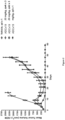
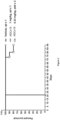
- Data collected from a number of different mouse xenograft models of CD19+ proliferative disease indicated that administration of CD19-ADC as a single dose on day 1 of the treatment cycle led to effective treatment, with administration of an identical total dose of AD19-ADC as a series of smaller partial doses resulting in higher mortality levels (see Figures 2 and 3 ).
- fractionated dosage regimes are potentially especially advantageous in diseases such as acute leukaemia, where the rapid production of circulating myeloblasts acts as an antigenic sink for the CD19-ADC.
- This is consistent with the exploration or adoption of fractionated dosage regimes in some other treatments of subjects with leukaemia ( Frey F, et al. Abstract 7002. Presented at: ASCO Annual Meeting; June 3-7, 2016; Chicago ; Aue G, et al. Haematologica February 2010 95: 329-332 ; Taksin A, et al. Leukemias (2007) 21, 66-71. Published online 19 October 2006 ).
- part of the subject-matter of the present disclosure concerns the use of CD19-ADCs in fractionated dosage regimes for treating proliferative diseases, in particular leukaemias.
- These fractionated regimes are expected to be associated with a range of clinical benefits, including improved efficacy, reduced toxicity and side-effects, and the consequent expansion of the population eligible to be treated to include subjects intolerant of the greater side effects of known dosage regimes.
- the fractionated dosage regimes described here are employed when the proliferative disease is leukaemia, such as Hairy cell leukaemia (HCL), Hairy cell leukaemia variant (HCL-v), and Acute Lymphoblastic Leukaemia (ALL) such as Philadelphia chromosome-positive ALL (Ph+ALL) or Philadelphia chromosome-negative ALL (Ph-ALL).
- HCL Hairy cell leukaemia
- HCL-v Hairy cell leukaemia variant
- ALL Acute Lymphoblastic Leukaemia
- Ph+ALL Philadelphia chromosome-positive ALL
- Ph-ALL Philadelphia chromosome-negative ALL
- Disclosed herein is a method of treating a proliferative disease in a subject, said method comprising administering to a subject a CD19-ADC, wherein the CD19-ADC is administered to the subject in a fractionated dosage regime.
- the CD19-ADC may be ADCx19 as described herein.
- fractionated dosage regime is used herein to describe a dosage regime in which the total dose of CD19-ADC administered during the treatment cycle is administered in a series of two or more partial doses during the treatment cycle.
- ⁇ partial dose' is used herein to denote a dose of ADC that is a fraction of the total dose of ADC to be administered in the treatment cycle. The sum of all partial doses delivered in a treatment cycle equals the total dose.
- a fractionated dosage regime contrasts with a ⁇ single-dose' dosing regime in which the total dose of CD19-ADC administered in the treatment cycle is administered as a single dose at the start of the treatment cycle. Fractionated dosage regimes do not form part of the claimed invention.
- the total dose of CD19-ADC is administered as partial doses of equal size regularly spaced throughout the treatment cycle. Administration to the subject once per week is particularly preferred. In some cases the total dose of CD19-ADC is administered over a three week treatment cycle in 3 equal partial doses, with a partial dose administered once a week. For example, with administration of a partial dose on days 1, 8, and 15 of a 3-week treatment cycle. Further features of fractionated dosage regimes are discussed herein.
- the subject may be human.
- the subject may have cancer, or may have been determined to have cancer.
- the subject may have, or have been determined to have, a CD19+ cancer or CD19+ tumour-associated non-tumour cells, such as CD19+ infiltrating cells.
- the fractionated dosage regimes described here are employed when the subject has, is suspected of having, or have been diagnosed with leukaemia.
- the subject may have, may be suspected or having, or may have been diagnosed with Hairy cell leukaemia (HCL), Hairy cell leukaemia variant (HCL-v), and Acute Lymphoblastic Leukaemia (ALL) such as Philadelphia chromosome-positive ALL (Ph+ALL) or Philadelphia chromosome-negative ALL (Ph-ALL).
- HCL Hairy cell leukaemia
- HCL-v Hairy cell leukaemia variant
- ALL Acute Lymphoblastic Leukaemia
- Ph+ALL Philadelphia chromosome-positive ALL
- Ph-ALL Philadelphia chromosome-negative ALL
- the subject may have, may be suspected or having, or may have been diagnosed with lymphoma.
- a non-Hodgkin's Lymphoma such as diffuse large B-cell lymphoma (DLBCL), follicular lymphoma, (FL), Mantle Cell lymphoma (MCL), chronic lymphatic lymphoma (CLL), Waldenstroms Microglobulinemia, Burkitt's lymphoma, and Marginal Zone B-cell lymphoma (MZBL).
- DLBCL diffuse large B-cell lymphoma
- FL follicular lymphoma
- MCL Mantle Cell lymphoma
- CLL chronic lymphatic lymphoma
- MZBL Marginal Zone B-cell lymphoma
- the proliferative disease may be resistant, relapsed or refractory
- the subject may have, or have been determined to have Relapsed or Refractory B-cell Lineage Acute Lymphoblastic Leukemias (B-ALL).
- B-ALL B-cell Lineage Acute Lymphoblastic Leukemias
- the subject has been diagnosed as having the proliferative disease prior to the start of treatment with the CD19-ADC.
- the method further comprises administering a second anti-cancer compound in combination with the CD19-ADC.
- fractional dosage regime reduces the treatment toxicity or side-effects as compared to a single dose per treatment cycle regime.
- fractional dosage regime increases the treatment efficacy as compared to a single dose per treatment cycle regime.
- the CD19-ADC is administered intravenously.
- Also disclosed herein is a method of reducing the toxicity and/or side effects associated with administration of a CD19-ADC to a subject, the method comprising administering the CD19-ADC in a fractionated dosage regime as defined herein.
- Also disclosed herein is a method of increasing the treatment efficacy associated with administration of an CD19-ADC to a subject, the method comprising administering the CD19-ADC in a fractionated dosage regime as defined herein.
- Also disclosed herein is a method of selecting a subject for treatment by a fractionated dosage regime as described herein, which selection method comprises selecting for treatment subjects that express CD19 in a tissue of interest.
- a packaged pharmaceutical product comprising a CD19-ADC as described herein in combination with a label or insert advising that the CD19-ADC should be administered in a fractionated dosage regime.
- the disclosure also provides a kit comprising:
- CD19ADC as defined herein for use in a method of treatment as described herein.
- CD19-ADC as defined herein in the preparation of a medicament for use in a method of treatment as described herein.
- CD19-ADCs as defined herein when administered in tapered and/or elongated dosage regimes for the treatment of lymphomas, have improved efficacy and/or reduced toxicity as compared to that observed when an ADC is administered in a regime with constant dosage size and treatment cycle length.
- a method of treating a proliferative disease in a subject comprising administering to a subject a CD19-ADC, wherein the CD19-ADC is administered to the subject in a tapered and/or elongated dosage regimes.
- Elongated dosage regimes do not form part of the claimed invention.
- CD19-ADCs as defined herein when administered in a fractionated dosage regime for the treatment of leukaemia, have improved efficacy and/or reduced toxicity as compared to that observed when an equivalent amount of ADC is administered as a single dose.
- a method of treating a proliferative disease in a subject comprising administering to a subject a CD19-ADC, wherein the CD19-ADC is administered to the subject in a fractionated dosage regime.
- Fractionated dosage regimes do not form part of the claimed invention.
- CD19-ADC refers to an ADC in which the antibody component is an anti-CD19 antibody.
- PBD-ADC refers to an ADC in which the drug component is a pyrrolobenzodiazepine (PBD) warhead.
- anti-CD19-ADC refers to an ADC in which the antibody component is an anti-CD19 antibody, and the drug component is a PBD warhead.
- the ADC may comprise a conjugate of formula L - (D L ) p , where D L is of formula I or II: wherein:
- L 1 is enzyme cleavable.
- ADCs are useful in the treatment of CD19 expressing cancers (see, for example, WO2014/057117 ).
- anti-CD19-ADC may include structures described in WO2014/057117 .
- the ADC may have the chemical structure: where the Ab is a CD19 antibody, and the DAR is between 1 and 8.
- the antibody may comprise a VH domain having the sequence according to any one of SEQ ID NOs. 1, 2, 3, 4, 5 or 6, optionally further comprising a VL domain having the sequence according to any one of SEQ ID NOs. 7, 8, 9, 10, 11 or 12.
- the antibody component of the anti-CD19-ADC is an antibody comprising: VH and VL domains respectively having the sequences of: SEQ ID NO. 1 and SEQ ID NO. 7, SEQ ID NO. 2 and SEQ ID NO. 8, SEQ ID NO. 3 and SEQ ID NO. 9, SEQ ID NO. 4 and SEQ ID NO. 10, SEQ ID NO. 5 and SEQ ID NO. 11, or SEQ ID NO. 6 and SEQ ID NO. 12.
- the antibody comprises a VH domain having the sequence according to SEQ ID NO. 2. In preferred cases the antibody comprises a VL domain having the sequence according to SEQ ID NO. 8.
- the antibody comprises a VH domain and a VL domain, the VH and domain having the sequence of SEQ ID NO. 2 and the VL domain having the sequences of SEQ ID NO. 8.
- VH and VL domain(s) may pair so as to form an antibody antigen binding site that binds CD19.
- the antibody is an intact antibody comprising a VH domain and a VL domain, the VH and VL domains having sequences of SEQ ID NO. 2 and SEQ ID NO. 8.
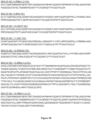
- the antibody is an antibody comprising a heavy chain having sequences of SEQ ID NO. 13 and a light chain having the sequences of SEQ ID NO. 14.
- the antibody is a fully human monoclonal IgG1 antibody, preferably IgG1, ⁇ .
- the antibody is the RB4v1.2 antibody described in WO2014/057117 .
- the antibody is an antibody as described herein which has been modified (or further modified) as described below. In some cases the antibody is a humanised, deimmunised or resurfaced version of an antibody disclosed herein.
- anti-CD19-ADC for use in the present disclosure is ADCX19, as described herein below.
- ADCX19 is an antibody drug conjugate composed of a humanized antibody against human CD19 attached to a pyrrolobenzodiazepine (PBD) warhead via a cleavable linker.
- the mechanism of action of ADCX19 depends on CD19 binding.
- the CD19 specific antibody targets the antibody drug conjugate (ADC) to cells expressing CD19.
- ADC antibody drug conjugate
- the ADC internalizes and is transported to the lysosome, where the protease sensitive linker is cleaved and free PBD dimer is released inside the target cell.
- the released PBD dimer inhibits transcription in a sequence-selective manner, due either to direct inhibition of RNA polymerase or inhibition of the interaction of associated transcription factors.
- the PBD dimer produces covalent crosslinks that do not distort the DNA double helix and which are not recognized by nucleotide excision repair factors, allowing for a longer effective period (Hartley 2011). These DNA crosslinks cause strand breaks when the DNA replication fork reaches them, leading to apoptosis induction.
- Ab represents Antibody RB4v1.2 (antibody with the VH and VL sequences SEQ ID NO. 2 and SEQ ID NO. 8, respectively). It is synthesised as described in WO2014/057117 (RB4v1.2-E) and typically has a DAR (Drug to Antibody Ratio) of 2 +/- 0.3.
- DAR Drug to Antibody Ratio
- binds CD19 is used to mean the antibody binds CD19 with a higher affinity than a non-specific partner such as Bovine Serum Albumin (BSA, Genbank accession no. CAA76847, version no. CAA76847.1 GI:3336842, record update date: Jan 7, 2011 02:30 PM).
- BSA Bovine Serum Albumin
- the antibody binds CD19 with an association constant (K a ) at least 2, 3, 4, 5, 10, 20, 50, 100, 200, 500, 1000, 2000, 5000, 10 4 , 10 5 or 10 6 -fold higher than the antibody's association constant for BSA, when measured at physiological conditions.
- the antibodies of the disclosure can bind CD19 with a high affinity.
- the antibody can bind CD19 with a K D equal to or less than about 10 -6 M, such as 1 ⁇ 10 -6 , 10 -7 , 10 -8 , 10 -9 , 10 -10 , 10 -11 , 10 -12 , 10 -13 or 10 -14 .
- CD19 polypeptide corresponds to Genbank accession no. NP_001171569, version no. NP_001171569.1 GI:296010921, record update date: Sep 10, 2012 12:43 AM.
- the nucleic acid encoding CD19 polypeptide corresponds to Genbank accession no NM_001178098, version no. NM_001178098.1 GI:296010920, record update date: Sep 10, 2012 12:43 AM.
- CD19 polypeptide corresponds to Uniprot/Swiss-Prot accession No. P15391.
- tapered dosage regime is used herein to describe a dosage regime in which the total dose of CD19-ADC administered in the first treatment cycle (from hereon in termed the "starting dose") is greater than the total dose of CD19-ADC administered in one or more subsequent treatment cycle.
- starting dose the total dose of CD19-ADC administered in the first treatment cycle
- a tapered dosage regime contrasts with a constant dosing regime in which the starting dose is the same as the total dose administered in each subsequent treatment cycle (see 'Constant' in Table 1, below).
- the term 'total dose' is used to mean the total amount of ADC administered during a single treatment cycle.
- a subject's tapered dosage regime may consist of 2, 3, 4, 5, 6, 7, 8, 9, 10, 11, 12, 13, 14, 15, 16, 17, 18, 19, 20, 21, 22, 23, 24, 25, 26, 27, 28, 29, 30, or more treatment cycles.
- the dosage regime is ended once the subject attains CR.
- the dosage regime is ended when the subject experiences a DLT.
- the dosage regime is considered as ended if a dose delay exceeding the length of the preceding treatment cycle is required.
- the starting dose may be reduced no more than once, no more than twice, or no more than three times during the dosage regime. In cases where there are two or more reductions to the starting dose, each reduction may be by the same or a different amount.
- a total dose may be held constant for one, two, three, or more than three treatment cycles before it is reduced (see Table 1, below, for examples).
- the administered dose is only reduced if the subject has attained at least Stable Disease [SD] at the end of the preceding treatment cycle.
- the starting dose is at least about 10, 20, 30, 40, 50, 60, 70, 80, 90, 100, 110, 120, 130, 140, 150, 160, 170, 180, 190, or 200 ⁇ g/kg. In some cases the starting dose is at least 120 ⁇ g/kg. In some cases the starting dose is at least 150 ⁇ g/kg, such as at least 200 ⁇ g/kg.
- the starting dose is about 10, 20, 30, 40, 50, 60, 70, 80, 90, 100, 120, 150, 200, 250, 300, 350, 400, 450, 500, 550, or 600 ⁇ g/kg. In some cases the starting dose is 1 to 10 ⁇ g/kg, 11 to 20 ⁇ g/kg, 21 to 30 ⁇ g/kg, 31 to 40 ⁇ g/kg, 41 to 50 ⁇ g/kg, 51 to 60 ⁇ g/kg, 61 to 70 ⁇ g/kg, 71 to 80 ⁇ g/kg, 81 to 90 ⁇ g/kg, 91 to 100 ⁇ g/kg, 101 to 120 ⁇ g/kg, 121 to 140 ⁇ g/kg, 141 to 160 ⁇ g/kg, 161 to 180 ⁇ g/kg, 181 to 200 ⁇ g/kg, 201 to 220 ⁇ g/kg, 221 to 240 ⁇ g/kg, 241 to 260 ⁇ g/kg, 261 to 280 ⁇ g/kg, 281 to 300 ⁇
- the starting dose is about 120, 150, or 200 ⁇ g/kg. In some cases the starting dose is about 140 to 160 ⁇ g/kg In some cases the starting dose is about 150 ⁇ g/kg.
- each dose reduction reduces the administered dose by at least 50%, 55%, 60%, 65%, 70%, 75%, 80%, 85%, 90% or at least 95%. In some cases, each dose reduction reduces the administered dose by about 50%.
- the starting dose is reduced no more than once during the treatment of a subject.
- the total dose following dose reduction is from hereon termed the "reduced dose”.
- the dose is reduced following the first treatment cycle. That is, the starting dose is administered in the first treatment cycle and the reduced dose is administered in the second and subsequent treatment cycles.
- Dosing regime 'Taper 6' in Table 1 is an example of such a dosing regime.
- the dose is reduced following the second treatment cycle. That is, the starting dose is administered in each of the first and second treatment cycles and the reduced dose is administered in each of the third and subsequent treatment cycles.
- Dosing regime 'Taper 3', 'Taper 4, 'Taper 5', and 'Taper 7' in Table 1 are examples of such a dosing regime.
- the reduced dose is about 10, 15, 20, 25, 30, 35, 40, 45, 50, 55, 60, 65, 70, 75, 80, 85, 90, 95, 100, 120, 150, 200, 250, or 300 ⁇ g/kg.
- the reduced dose is 1 to 10 ⁇ g/kg, 11 to 20 ⁇ g/kg, 21 to 30 ⁇ g/kg, 31 to 40 ⁇ g/kg, 41 to 50 ⁇ g/kg, 51 to 60 ⁇ g/kg, 61 to 70 ⁇ g/kg, 71 to 80 ⁇ g/kg, 81 to 90 ⁇ g/kg, 91 to 100 ⁇ g/kg, 101 to 120 ⁇ g/kg, 121 to 140 ⁇ g/kg, 141 to 160 ⁇ g/kg, 161 to 180 ⁇ g/kg, 181 to 200 ⁇ g/kg, 201 to 220 ⁇ g/kg, 221 to 240 ⁇ g/kg, 241 to 260 ⁇ g/kg, 261 to 280 ⁇ g/kg, or 281 to
- the reduced dose is 60 ⁇ g/kg.
- the reduced dose is about 70 - 80 ⁇ g/kg. In some cases the reduced dose is 75 ⁇ g/kg.
- the length of each treatment cycle is 1 week, 2 weeks, 3 weeks, 4 weeks, 5 weeks, 6 weeks, 7 weeks, 8 weeks, or 9 weeks.
- the length of each treatment cycle is 3 weeks. In some cases the length of each treatment cycle is 6 weeks.
- elongated dosage regime is used herein to describe a dosage regime in which the length of the first treatment cycle (from hereon in termed the "starting length") is shorter than the length of one or more subsequent treatment cycle.
- An elongated dosage regime contrasts with a constant dosing regime in which the starting length is the same the length of each subsequent treatment cycle (see 'Constant' in Table 2, below). Elongated dosage regimes do not form part of the claimed invention.
- a subject's tapered dosage regime may consist of 2, 3, 4, 5, 6, 7, 8, 9, 10, 11, 12, 13, 14, 15, 16, 17, 18, 19, 20, 21, 22, 23, 24, 25, 26, 27, 28, 29 or 30 treatment cycles.
- the dosage regime is ended once the subject attains CR.
- the dosage regime is ended when the subject experiences a DLT.
- the dosage regime is considered as ended if a dose delay exceeding the length of the preceding treatment cycle is required.
- the treatment cycle length may be increased no more than once, no more than twice, or no more than three times during the dosage regime. In cases where there are two or more increases in length, each increase may be by the same or a different amount.
- the length of treatment cycle may be held constant for one, two, three, or more than three treatment cycles before it is increased (see Table 2, below, for examples).
- Table 2 Dosing Regime Cycle length (weeks) Cycle 1 Cycle 2 Cycle 3 Cycle 4 Cycle 5 Cycle 6 Cycle 7 Constant 3 3 3 3 3 3 3 3 3 Long 1 3 4 5 6 6 6 6 Long 2 3 3 4 5 5 5 5 5 Long 3 3 3 6 6 6 6 6 Long 4 3 6 6 6 6 6 6 6 6 6 6 6 6 6 6 6 6 6 6
- the treatment cycle length is only increased if the subject has attained at least Stable Disease [SD] at the end of the preceding treatment cycle.
- the dose is administered as a single dose on Day 1 of the treatment cycle.
- a subject starting the 'constant' dosing regime above may receive a dose on Day 1, Day 22, Day 43, and so on until the regime is halted.
- a subject starting the 'Long 3' dosing regime above may receive a dose on Day 1 -(+3 weeks) ⁇ Day 22 -(+3 weeks) ⁇ Day 43 -(+6 weeks) ⁇ Day 85 - (+6 weeks) ⁇ Day 127 and so on until the regime is halted.
- the 'Day 1' of the first treatment cycle of increased length is delayed so that the time elapsed between 'Day 1' of the final shorter treatment cycle and 'Day 1' of the first treatment cycle of increased length is equal in length to the increased treatment cycle.
- a subject receive a dose on Day 1 -(+3 weeks) ⁇ Day 22 -(+3 weeks) ⁇ -(+3 week delay) ⁇ Day 64 -(+6 weeks) ⁇ Day 106 -(+6 weeks) ⁇ Day 148 and so on until the regime is halted.
- the starting length is 1 week, 2 weeks, 3 weeks, 4 weeks, 5 weeks, 6 weeks, 7 weeks, 8 weeks, or 9 weeks.
- the starting length is 3 weeks.
- each length increase increases the treatment cycle length by at least 50%, 55%, 60%, 65%, 70%, 75%, 80%, 85%, 90%, 95% or at least 100%. In some cases each length increase increases the treatment cycle length by 1 week, 2 weeks, 3 weeks, 4 weeks, 5 weeks, or 6 weeks.
- the treatment cycle length is increased no more than once during the treatment of a subject.
- the treatment cycle length following length increase is from hereon in termed the "increased length”.
- the cycle length is increased following the first treatment cycle. That is, the first treatment cycle is the starting length, and each of the second and subsequent treatment cycles is the increased length.
- Dosing regime 'Long 4' in Table 2 is an example of such a dosing regime.
- the cycle length is increased following the second treatment cycle. That is, each of the first and second treatment cycles is the starting length, and each of the third and subsequent treatment cycles is the increased length.
- Dosing regime 'Long 3' in Table 2 is an example of such a dosing regime.
- the increased length is 2 weeks, 3 weeks, 4 weeks, 5 weeks, 6 weeks, 7 weeks, 8 weeks, 9 weeks, 10 weeks, 11 weeks, or 12 weeks.
- the starting length is 3 weeks. In some cases the increased length is 6 weeks. In some cases the starting length is 3 weeks and the increased length is 6 weeks.
- a dosing regime may be tapered, elongated, or both tapered and elongated.
- the administered dose is only reduced and/or the treatment cycle length increased if the subject has attained at least Stable Disease [SD] at the end of the preceding treatment cycle.
- the starting dose is reduced no more than once and the treatment cycle length is increased no more than once during the treatment of a subject.
- the dose reduction and the length increase is made following the first treatment cycle. That is, the first treatment cycle has the starting dose and the starting length, and each of the second and subsequent treatment cycles have the reduced dose and increased length.
- the dose reduction and the length increase is made following the second treatment cycle. That is, each of the first and second treatment cycles have the starting dose and the starting length, and each of the third and subsequent treatment cycles have the reduced dose and increased length.
- the starting dose is at least about 10, 20, 30, 40, 50, 60, 70, 80, 90, 100, 110, 120, 130, 140, 150, 160, 170, 180, 190, or 200 ⁇ g/kg. In some cases the starting dose is at least 120 ⁇ g/kg. In some cases the starting dose is at least 150 ⁇ g/kg, such as at least 200 ⁇ g/kg.
- the starting dose is about 10, 20, 30, 40, 50, 60, 70, 80, 90, 100, 120, 150, 200, 250, 300, 350, 400, 450, 500, 550, or 600 ⁇ g/kg. In some cases the starting dose is 1 to 10 ⁇ g/kg, 11 to 20 ⁇ g/kg, 21 to 30 ⁇ g/kg, 31 to 40 ⁇ g/kg, 41 to 50 ⁇ g/kg, 51 to 60 ⁇ g/kg, 61 to 70 ⁇ g/kg, 71 to 80 ⁇ g/kg, 81 to 90 ⁇ g/kg, 91 to 100 ⁇ g/kg, 101 to 120 ⁇ g/kg, 121 to 140 ⁇ g/kg, 141 to 160 ⁇ g/kg, 161 to 180 ⁇ g/kg, 181 to 200 ⁇ g/kg, 201 to 220 ⁇ g/kg, 221 to 240 ⁇ g/kg, 241 to 260 ⁇ g/kg, 261 to 280 ⁇ g/kg, 281 to 300 ⁇
- the reduced dose is about 10, 15, 20, 25, 30, 35, 40, 45, 50, 55, 60, 65, 70, 75, 80, 85, 90, 95, 100, 120, 150, 200, 250, or 300 ⁇ g/kg.
- the reduced dose is 1 to 10 ⁇ g/kg, 11 to 20 ⁇ g/kg, 21 to 30 ⁇ g/kg, 31 to 40 ⁇ g/kg, 41 to 50 ⁇ g/kg, 51 to 60 ⁇ g/kg, 61 to 70 ⁇ g/kg, 71 to 80 ⁇ g/kg, 81 to 90 ⁇ g/kg, 91 to 100 ⁇ g/kg, 101 to 120 ⁇ g/kg, 121 to 140 ⁇ g/kg, 141 to 160 ⁇ g/kg, 161 to 180 ⁇ g/kg, 181 to 200 ⁇ g/kg, 201 to 220 ⁇ g/kg, 221 to 240 ⁇ g/kg, 241 to 260 ⁇ g/kg, 261 to 280 ⁇ g/kg, or 281 to
- the starting length is 1 week, 2 weeks, 3 weeks, 4 weeks, 5 weeks, 6 weeks, 7 weeks, 8 weeks, or 9 weeks.
- the increased length is 2 weeks, 3 weeks, 4 weeks, 5 weeks, 6 weeks, 7 weeks, 8 weeks, 9 weeks, 10 weeks, 11 weeks, or 12 weeks.
- the starting dose is about 120, 150, or 200 ⁇ g/kg. . In some cases the starting dose is about 140 to 160 ⁇ g/kg. In some cases the starting dose is about 150 ⁇ g/kg. In some cases the reduced dose is about 60 ⁇ g/kg. In some cases the reduced dose is about 70 to 80 ⁇ g/kg. In some cases the reduced dose is about 75 ⁇ g/kg. In some cases the starting length is 3 weeks and the increased length is 6 weeks. In some cases the starting dose and starting length are respectively about 120 ⁇ g/kg and three weeks and the reduced dose and increased length are respectively about 60 ⁇ g/kg and six weeks. In some cases the starting dose and starting length are respectively about 150 ⁇ g/kg and three weeks and the reduced dose and increased length are respectively about 60 ⁇ g/kg and six weeks.
- the starting dose and starting length are respectively about 140 to 160 ⁇ g/kg and three weeks and the reduced dose and increased length are respectively about 7o to 80 ⁇ g/kg and three weeks (i.e. the regime is tapered but NOT elongated).
- the starting dose and starting length are respectively about 150 ⁇ g/kg and three weeks and the reduced dose and increased length are respectively about 75 ⁇ g/kg and three weeks (i.e. the regime is tapered but NOT elongated).
- the dosing regime of the present disclosure is as shown in the table below, with [+21 ⁇ indicating that the reduced 75 ⁇ g/kg dose may be repeated at three weekly intervals for as many treatment cycles as deemed appropriate by the medical professional administering the ADC.
- fractionated dosage regime is used herein to describe a dosage regime in which the total dose of CD19-ADC administered during the treatment cycle is administered in a series of two or more partial doses during the treatment cycle.
- ⁇ partial dose' is used herein to denote a dose of ADC that is a fraction of the total dose of ADC to be administered in the treatment cycle. The sum of all partial doses delivered in a treatment cycle equals the total dose.
- a fractionated dosage regime contrasts with a ⁇ single-dose' dosing regime in which the total dose of CD19-ADC administered in the treatment cycle is administered as a single dose at the start of the treatment cycle. Fractionated dosage regimes do not form part of the claimed invention.
- a fractionated dosage regime may involve administering only 33% of the total dose of ADC administered during the treatment cycle on day 1 of a 3-week treatment cycle, with a further 33% administered on day 8, and the final 33% administered on day 15.
- the total dose administered may be fractionated into any number of separate doses, with the number being determined according to the clinical requirements of the subject.
- the total dose administered may be fractionated into 2, 3, 4, 5, 6, 7, 8, 9, 10 or more than 10 doses.
- the amount of CD19-ADC administered in each partial dose may be the same or different. So, for example, a total dose of 100 units of ADC delivered in 3 partial doses may be delivered as (1 ⁇ 50 units, 1 ⁇ 30 units, and 1 ⁇ 20 units) or (3 ⁇ 33 1/3 units). Preferably all of the partial doses contain the same amount of CD19-ADC i.e. all of the partial doses are of equal size.
- the time interval between one partial dose and the next partial dose may be the same as, or different to, the time interval between the one partial dose and the preceding partial dose.
- the time interval between one partial dose and the next partial dose is the same as the time interval between the one partial dose and the preceding partial dose. That is, preferably the administration of the partial doses is regularly spaced throughout the treatment cycle. An example of such regular administration is the administration of 3 partial doses on days 1, 8, and 15 of a 3-week (i.e. 21 day) treatment cycle.
- the length of the treatment cycle may vary depending upon the pharmokinetics (PK) of the CD19-ADC and the clinical requirements of the subject.
- the treatment cycle may be 1 week, 2 weeks, 3 weeks, 4 weeks, 5 weeks, 6 weeks, 7 weeks, 8 weeks, or 9 weeks.
- the treatment cycle is 3 weeks or 6 weeks, with 3 weeks being particularly preferred.
- the total dose of CD19-ADC administered during the treatment cycle may vary according to the clinical requirements of the subject.
- the total dose may be about 10, 20, 30, 40, 50, 60, 70, 80, 90, 100, 120, 150, 200, 250, 300, 350, 400, 450, 500, 550, or 600 ⁇ g/kg.
- the total dose is 1 to 10 ⁇ g/kg, 11 to 20 ⁇ g/kg, 21 to 30 ⁇ g/kg, 31 to 40 ⁇ g/kg, 41 to 50 ⁇ g/kg, 51 to 60 ⁇ g/kg, 61 to 70 ⁇ g/kg, 71 to 80 ⁇ g/kg, 81 to 90 ⁇ g/kg, 91 to 100 ⁇ g/kg, 101 to 120 ⁇ g/kg, 121 to 140 ⁇ g/kg, 141 to 160 ⁇ g/kg, 161 to 180 ⁇ g/kg, 181 to 200 ⁇ g/kg, 201 to 220 ⁇ g/kg, 221 to 240 ⁇ g/kg, 241 to 260 ⁇ g/kg, 261 to 280 ⁇ g/kg, 281 to 300 ⁇ g/kg, 301 to 320 ⁇ g/kg, 321 to 340 ⁇ g/kg, 341 to 360 ⁇ g/kg, 361 to 380 ⁇ g/kg, 381 to 400 ⁇ g//
- the size of the partial dose will depend upon the total dose of CD19-ADC administered during the treatment cycle, and the number of partial doses into which the total dose it is divided, and the relative sizes of the partial doses. In some cases each partial dose is of equal size. In some cases the partial dose is about 3, 10, 20, 30, 40, 50, 60, 70, 80, 90, 100, 110, 120, 130, 140, 150, 160, 170, 180, 190, or 200 ⁇ g/kg.
- the partial dose is 1 to 10 ⁇ g/kg, 11 to 20 ⁇ g/kg, 21 to 30 ⁇ g/kg, 31 to 40 ⁇ g/kg, 41 to 50 ⁇ g/kg, 51 to 60 ⁇ g/kg, 61 to 70 ⁇ g/kg, 71 to 80 ⁇ g/kg, 81 to 90 ⁇ g/kg, 91 to 100 ⁇ g/kg, 101 to 110 ⁇ g/kg, 111 to 120 ⁇ g/kg, 121 to 130 ⁇ g/kg, 131 to 140 ⁇ g/kg, 141 to 150 ⁇ g/kg, 151 to 160 ⁇ g/kg, 161 to 170 ⁇ g/kg, 171 to 180 ⁇ g/kg, 181 to 190 ⁇ g/kg, or 191 to 200 ⁇ g/kg.
- the total dose of CD19-ADC is administered as partial doses of equal size regularly spaced throughout the treatment cycle. Administration to the subject once per week is particularly preferred. In preferred cases, each partial dose is 40 to 60 ⁇ g/kg, such as 45 to 55 ⁇ g/kg. In particularly preferred cases each partial dose is 50 ⁇ g/kg.
- the total dose of CD19-ADC is administered over a three week treatment cycle in 3 equal partial doses, with a partial dose administered once a week. For example, with administration of a partial dose on days 1, 8, and 15 of a 3-week treatment cycle.
- references to methods of treatment by therapy are to be interpreted as references to compounds (such as anti-CD19 ADCs), compositions, pharmaceutical compositions, and medicaments as disclosed herein for use in those methods.
- the therapies include an antibody conjugated, i.e. covalently attached by a linker, to a PBD drug moiety, i.e. toxin.
- a linker i.e. covalently attached by a linker
- the PBD drug has a cytotoxic effect.
- the biological activity of the PBD drug moiety is thus modulated by conjugation to an antibody.
- the antibody-drug conjugates (ADC) of the disclosure selectively deliver an effective dose of a cytotoxic agent to tumor tissue whereby greater selectivity, i.e. a larger therapeutic window, may be achieved.
- the present disclosure provides a method of therapy comprising administering an ADC which binds CD19 for use in therapy, wherein the method comprises selecting a subject based on expression of CD19.
- the present disclosure provides a packaged ADC for use in therapy, wherein the packaged ADC is supplied with a label that specifies that the therapy is suitable for use with a subject determined to be suitable for such use.
- the label may specify that the therapy is suitable for use in a subject has expression of CD19, that is, is CD19+.
- the label may specify that the ADC is administered in a tapered and/or elongated dosage regime as described herein.
- the label may specify that the subject has a particular type of cancer, such as lymphoma like a B-cell Lineage Non Hodgkin Lymphoma (B-NHL), optionally wherein the lymphoma is Relapsed or Refractory.
- NHL lymphoma include diffuse large B-cell lymphoma (DLBCL), follicular lymphoma, (FL), Mantle Cell lymphoma (MCL), chronic lymphatic lymphoma (CLL), Waldenstroms Microglobulinemia, Burkitt's lymphoma, and Marginal Zone B-cell lymphoma (MZBL).
- the label may specify that the ADC is administered in a fractionated dosage regime as described herein.
- the label may specify that the subject has a particular type of cancer, such as leukaemia, optionally wherein the B-ALL is Relapsed or Refractory.
- leukaemia include Hairy cell leukaemia (HCL), Hairy cell leukaemia variant (HCL-v), and Acute Lymphoblastic Leukaemia (ALL) such as Philadelphia chromosome-positive ALL (Ph+ALL) or Philadelphia chromosome-negative ALL (Ph-ALL).B-cell Lineage Acute Lymphoblastic Leukemias (B-ALL).
- the proliferative disease treated by the methods disclosed herein may be CD19+.
- the antigen in at least some of the cells in the target location (typically a neoplasm) the antigen may be absent, or present on the cell surface at an insignificant level.
- the target neoplasm only e.g. less than 80, 70, 60, 50, 30, 20%, 10% or 5%of the cells may be CD19 positive.
- CD19+ may be defined as determination of CD19 expression by ⁇ 5% of leukemic myeloblast cells within bone marrow (aspirate or biopsy), as assessed at an approved clinical laboratory.
- the CD19+ve cell is a tumour infiltrating cell.
- the neoplasm or neoplastic cells are, or are present in, a haematological cancer.
- the neoplasm or neoplastic cells are, or are present in, a solid tumor.
- Solid tumor herein will be understood to include solid haematological cancers such as lymphomas (Hodgkin's lymphoma or non-Hodgkin's lymphoma) which are discussed in more detail below.
- Other solid tumors may be neoplasms, including non-haematological cancers, infiltrated with CD-19 positive cells.
- the neoplasm or neoplastic cells are malignant. In some cases the neoplasm or neoplastic cells are metastatic.
- proliferative disease pertains to an unwanted or uncontrolled cellular proliferation of excessive or abnormal cells which is undesired, such as, neoplastic or hyperplastic growth, whether in vitro or in vivo.
- Any type of cell may be treated, including but not limited to, lung, gastrointestinal (including, e.g. bowel, colon), breast (mammary), ovarian, prostate, liver (hepatic), kidney (renal), bladder, pancreas, brain, and skin.
- gastrointestinal including, e.g. bowel, colon
- breast mammary
- ovarian prostate
- liver hepatic
- kidney renal
- bladder pancreas
- brain and skin.
- the therapies of the present disclosure may be used to treat various diseases or disorders, e.g. characterized by the overexpression of a tumor antigen.
- exemplary conditions of hyperproliferative disorders include benign or malignant tumors; leukaemia, haematological, and lymphoid malignancies.
- Others include neuronal, glial, astrocytal, hypothalamic, glandular, macrophagal, epithelial, stromal, blastocoelic, inflammatory, angiogenic and immunologic, including autoimmune disorders and graft-versus-host disease (GVHD).
- GVHD graft-versus-host disease
- the disease or disorder to be treated is a hyperproliferative disease such as cancer.
- cancer to be treated herein include, but are not limited to, carcinoma, lymphoma, blastoma, sarcoma, and leukaemia or lymphoid malignancies. More particular examples of such cancers include squamous cell cancer (e.g.
- lung cancer including small-cell lung cancer, non-small cell lung cancer, adenocarcinoma of the lung and squamous carcinoma of the lung, cancer of the peritoneum, hepatocellular cancer, gastric or stomach cancer including gastrointestinal cancer, pancreatic cancer, glioblastoma, cervical cancer, ovarian cancer, liver cancer, bladder cancer, hepatoma, breast cancer, colon cancer, rectal cancer, colorectal cancer, endometrial or uterine carcinoma, salivary gland carcinoma, kidney or renal cancer, prostate cancer, vulval cancer, thyroid cancer, hepatic carcinoma, anal carcinoma, penile carcinoma, melanoma, sarcoma, osteosarcoma, as well as head and neck cancer.
- lung cancer including small-cell lung cancer, non-small cell lung cancer, adenocarcinoma of the lung and squamous carcinoma of the lung, cancer of the peritoneum, hepatocellular cancer, gastric or stomach cancer including gastrointestinal cancer, pancreatic cancer,
- Autoimmune diseases for which the combined therapies may be used in treatment include rheumatologic disorders (such as, for example, rheumatoid arthritis, Sjögren's syndrome, scleroderma, lupus such as SLE and lupus nephritis, polymyositis/dermatomyositis, cryoglobulinemia, anti-phospholipid antibody syndrome, and psoriatic arthritis), osteoarthritis, autoimmune gastrointestinal and liver disorders (such as, for example, inflammatory bowel diseases (e.g.
- autoimmune gastritis and pernicious anemia such as, for example, ANCA-associated vasculitis, including Churg-Strauss vasculitis, Wegener's granulomatosis, and polyarteriitis
- vasculitis such as, for example, ANCA-associated vasculitis, including Churg-Strauss vasculitis, Wegener's granulomatosis, and polyarteriitis
- autoimmune neurological disorders such as, for example, multiple sclerosis, opsoclonus myoclonus syndrome, myasthenia gravis, neuromyelitis optica, Parkinson's disease, Alzheimer's disease, and autoimmune polyneuropathies
- renal disorders such as, for example, glomerulonephritis, Goodpasture's syndrome, and Berger's disease
- autoimmune dermatologic disorders such as, for example, psoriasis, urticaria, hives, pemphigus vulgaris, bullous pemphigoid,
- Graves' disease and thyroiditis More preferred such diseases include, for example, rheumatoid arthritis, ulcerative colitis, ANCA-associated vasculitis, lupus, multiple sclerosis, Sjögren's syndrome, Graves' disease, IDDM, pernicious anemia, thyroiditis, and glomerulonephritis.
- Non-Hodgkin's Lymphoma including diffuse large B-cell lymphoma (DLBCL), follicular lymphoma, (FL), Burkitt's lymphoma (BL), Mantle Cell lymphoma (MCL), chronic lymphatic lymphoma (CLL), Waldenstroms Microglobulinemia, Burkitt's lymphoma, and Marginal Zone B-cell lymphoma (MZBL), and leukemias such as Hairy cell leukaemia (HCL), Hairy cell leukaemia variant (HCL-v), and Acute Lymphoblastic Leukaemia (ALL) such as Philadelphia chromosome-positive ALL (Ph+ALL) or Philadelphia chromosome-negative ALL (Ph-ALL).
- DLBCL diffuse large B-cell lymphoma
- FL follicular lymphoma
- BL Burkitt's lymphoma
- MCL Mantle Cell lymphoma
- CLL chronic lymphatic lymphoma
- MZBL
- the subject has diffuse large B cell lymphoma or peripheral T cell lymphoma, including the anaplastic large cell lymphoma and angioimmunoblastic T cell lymphoma subtypes.
- the disease may be resistant, relapsed or refractory.
- relapsed disease constitutes conditions in which a previously treated tumor which became undetectable by conventional imaging technology again becomes detectable; refractory disease a condition in which the cancer - despite anti-tumor therapy - continues to grow.
- the tapered and/or elongated dosage regimes described here are employed when the proliferative disease is lymphoma.
- the proliferative disease may be non-Hodgkin's Lymphoma, such as diffuse large B-cell lymphoma (DLBCL), follicular lymphoma, (FL), Mantle Cell lymphoma (MCL), chronic lymphatic lymphoma (CLL), Waldenstroms Microglobulinemia, Burkitt's lymphoma, and Marginal Zone B-cell lymphoma (MZBL).
- the proliferative disease is Relapsed or Refractory B-cell Lineage Non Hodgkin Lymphoma (B-NHL).
- the fractionated dosage regimes described here are employed when the proliferative disease is leukaemia, such as Hairy cell leukaemia (HCL), Hairy cell leukaemia variant (HCL-v), and Acute Lymphoblastic Leukaemia (ALL) such as Philadelphia chromosome-positive ALL (Ph+ALL) or Philadelphia chromosome-negative ALL (Ph-ALL).
- HCL Hairy cell leukaemia
- HCL-v Hairy cell leukaemia variant
- ALL Acute Lymphoblastic Leukaemia
- the proliferative disease is Relapsed or Refractory B-cell Lineage Acute Lymphoblastic Leukemias (B-ALL).
- B-ALL Refractory B-cell Lineage Acute Lymphoblastic Leukemias
- the proliferative disease is CD19+ Acute Lymphoblastic Leukemias.
- the present disclosure provides a method of reducing the toxicity and/or side effects associated with administration of a CD19-ADC to a subject, the method comprising administering the CD19-ADC in a tapered and/or elongated dosage regime as defined herein.
- the reduction in toxicity is measured relative to a dosage regime having constant dosage level and cycle length.
- the dosage level and cycle length of the constant comparator may be the same as the starting dose and starting length of the tapered and/or elongated regime.
- the level of toxicity is measured as the incidence of Treatment Emergent Adverse Events (TEAE) occurring after one treatment cycle at a given total dose of CD19-ADC.
- a treatment-emergent AE (TEAE) is defined as any event not present before exposure to the CD19-ADC or any event already present that worsens in either intensity or frequency after exposure to the CD19-ADC.
- the incidence of AE with the tapered and/or elongated dosage regime may be no more that 95%, such as no more than 90%, no more than 80%, no more than 70%, no more than 60%, no more than 50%, no more than 40%, no more than 30%, no more than 20%, no more than 10%, or no more than 5% of the incidence of AE in the corresponding constant dose level and cycle length regime.
- Adverse events will be graded according to CTCAE Version 4.0 (v4.03, published June 14, 2010; NIH Publication No. 09-5410).
- the incidence of AEs with the tapered and/or elongated regime is 50% of the incidence of AE in the corresponding constant dose level and cycle length regime.
- the level of toxicity is measured as the incidence of Serious Adverse Events (SAE) occurring after one treatment cycle at a given total dose of CD19-ADC.
- SAE Serious Adverse Events
- a serious adverse event is defined as any event that results in death, is immediately life-threatening, requires inpatient hospitalization or prolongation of existing hospitalization, results in persistent or significant disability/incapacity, or is a congenital anomaly/birth defect.
- SAE Hospitalization for elective procedures or for protocol compliance is not considered an SAE.
- Important medical events that may not result in death, be life-threatening, or require hospitalization may be considered SAEs when, based upon appropriate medical judgment, they may jeopardize the patient or may require medical or surgical intervention to prevent 1 of the outcomes listed in this definition. Examples of such medical events include allergic bronchospasm requiring intensive treatment in an emergency room or at home, blood dyscrasias or convulsions that do not result in inpatient hospitalization, or the development of drug dependency or drug abuse.
- the incidence of SAE with the tapered and/or elongated dosage regime may be no more that 95%, such as no more than 90%, no more than 80%, no more than 70%, no more than 60%, no more than 50%, no more than 40%, no more than 30%, no more than 20%, no more than 10%, or no more than 5% of the incidence of SAE in the corresponding constant dose level and cycle length regime.
- Adverse events will be graded according to CTCAE Version 4.0 (v4.03, published June 14, 2010; NIH Publication No. 09-5410).
- the level of toxicity is measured as the incidence of Dose Limiting Toxicity (DLT) occurring after one treatment cycle at a given total dose of CD19-ADC.
- the incidence of DLT with the tapered and/or elongated dosage regime may be no more that 95%, such as no more than 90%, no more than 80%, no more than 70%, no more than 60%, no more than 50%, no more than 40%, no more than 30%, no more than 20%, no more than 10%, or no more than 5% of the incidence of DLT in the corresponding constant dose level and cycle length regime.
- the incidence of DLTs with the tapered and/or elongated regime is 50% of the incidence of DLT in the corresponding constant dose level and cycle length regime.
- a DLT as used herein is defined as any of the following events, except those that are clearly due to underlying disease or extraneous causes:
- the present disclosure also provides a method of increasing the treatment efficacy associated with administration of a CD19-ADC to a subject, the method comprising administering the CD19-ADC in a tapered and/or elongated dosage regime as defined herein.
- the increase in efficacy is measured relative to a dosage regime having constant dosage level and cycle length.
- the dosage level and cycle length of the constant comparator may be the same as the starting dose and starting length of the tapered and/or elongated regime.
- the level of efficacy is measured as the proportion of subjects achieving at least stable disease [SD] after one treatment cycle at a given total dose of ADC (i.e the proportion of subjects achieving either stable disease [SD], a partial response [PR], or a complete response [CR].
- the proportion of subjects achieving at least SD may be at least 110%, such as at least 120%, at least 130%, at least 140%, at least 150%, at least 160%, at least 170%, at least 180%, at least 190%, or at least 200%, of the proportion of subjects achieving at least stable disease [SD] in the corresponding constant dose level and cycle length regime.
- the proportion of subjects achieving at least SD with the tapered and/or elongated regime is 160% of the proportion of subjects achieving at least a partial response [SD] in the corresponding constant dose level and cycle length regime.
- Assessment of response to treatment with ADC may be based on bone marrow samples (aspirate or biopsy if aspirate unattainable) taken toward the end of each treatment cycle. For example, on day 19 ⁇ 3 days in a 21-day treatment cycle.
- the subject's response to ADC may be categorised as CR, PR, SD, or PD according to the 2014 Lugano Classification Criteria (using the New "Cheson" Criteria), in which:
- An individual node/lesion must be abnormal with:
- the present disclosure provides a method of reducing the toxicity and/or side effects associated with administration of a CD19-ADC to a subject, the method comprising administering the CD19-ADC in a fractionated dosage regime as defined herein.
- the reduction in toxicity is measured relative to a single-dose dosage regime having the same total dose administered and length of treatment cycle.
- the total dose of CD19-ADC is administered as a single dose at the start of the treatment cycle.
- the level of toxicity is measured as the incidence of Treatment Emergent Adverse Events (TEAE) occurring after one treatment cycle at a given total dose of CD19-ADC.
- TEAE Treatment Emergent Adverse Events
- a treatment-emergent AE (TEAE) is defined as any event not present before exposure to the CD19-ADC or any event already present that worsens in either intensity or frequency after exposure to the CD19-ADC.
- the incidence of AE with the fractionated dosage regime may be no more that 95%, such as no more than 90%, no more than 80%, no more than 70%, no more than 60%, no more than 50%, no more than 40%, no more than 30%, no more than 20%, no more than 10%, or no more than 5% of the incidence of AE in the corresponding single dose regime.
- Adverse events will be graded according to CTCAE Version 4.0 (v4.03, published June 14, 2010; NIH Publication No. 09-5410).
- the incidence of AEs with the fractionated regime is 50% of the incidence of AE in the corresponding single dose regime.
- the level of toxicity is measured as the incidence of Serious Adverse Events (SAE) occurring after one treatment cycle at a given total dose of CD19-ADC.
- SAE Serious Adverse Events
- a serious adverse event (SAE) is defined as any event that results in death, is immediately life-threatening, requires inpatient hospitalization or prolongation of existing hospitalization, results in persistent or significant disability/incapacity, or is a congenital anomaly/birth defect. Hospitalization for elective procedures or for protocol compliance is not considered an SAE.
- Important medical events that may not result in death, be life-threatening, or require hospitalization may be considered SAEs when, based upon appropriate medical judgment, they may jeopardize the patient or may require medical or surgical intervention to prevent one of the outcomes listed in this definition.
- the incidence of SAE with the fractionated dosage regime may be no more that 95%, such as no more than 90%, no more than 80%, no more than 70%, no more than 60%, no more than 50%, no more than 40%, no more than 30%, no more than 20%, no more than 10%, or no more than 5% of the incidence of SAE in the corresponding single dose regime.
- Adverse events will be graded according to CTCAE Version 4.0 (v4.03, published June 14, 2010; NIH Publication No. 09-5410).
- the level of toxicity is measured as the incidence of Dose Limiting Toxicity (DLT) occurring after one treatment cycle at a given total dose of CD19-ADC.
- the incidence of DLT with the fractionated dosage regime may be no more that 95%, such as no more than 90%, no more than 80%, no more than 70%, no more than 60%, no more than 50%, no more than 40%, no more than 30%, no more than 20%, no more than 10%, or no more than 5% of the incidence of DLT in the corresponding single dose regime.
- the incidence of DLTs with the fractionated regime is 50% of the incidence of DLT in the corresponding single dose regime.
- a DLT as used herein is defined as any of the following events, except those that are clearly due to underlying disease or extraneous causes:
- the present disclosure also provides a method of increasing the treatment efficacy associated with administration of a CD19-ADC to a subject, the method comprising administering the CD19-ADC in a fractionated dosage regime as defined herein.
- the increase in efficacy is measured relative to a single-dose dosage regime having the same total dose administered and length of treatment cycle.
- the total dose of ADC is administered as a single dose at the start of the treatment cycle.
- the level of efficacy is measured as the proportion of subjects achieving at least a partial response [PR] after one treatment cycle at a given total dose of ADC (i.e the proportion of subjects achieving either a partial response [PR], a complete response with incomplete blood count recovery [CRi], or a complete response [CR].
- the proportion of subjects achieving at least PR may be at least 110%, such as at least 120%, at least 130%, at least 140%, at least 150%, at least 160%, at least 170%, at least 180%, at least 190%, or at least 200%, of the proportion of subjects achieving at least a partial response [PR] in the corresponding single dose regime.
- the proportion of subjects achieving at least PR with the fractionated regime is 160% of the proportion of subjects achieving at least a partial response [PR] in the corresponding single dose regime.
- Assessment of response to treatment with ADC may be based on bone marrow samples (aspirate or biopsy if aspirate unattainable) taken toward the end of each treatment cycle.
- Assessment of response to treatment with ADC may be based on bone marrow samples (aspirate or biopsy if aspirate unattainable) taken toward the end of selected treatment cycles, for example, every other treatment cycle. For example, on day 19 ⁇ 3 days in a 21-day treatment cycle.
- the subject's response to ADC may be categorised as CR, CRi, PR, PD or NR according to the following criteria:
- the subjects are selected as suitable for treatment with either, (a) the tapered and/or elongated dosage regime, or (b) the fractionated dosage regime, before the treatment is administered.
- lymphoma may be non-Hodgkin's Lymphoma, such as diffuse large B-cell lymphoma (DLBCL), follicular lymphoma, (FL), Mantle Cell lymphoma (MCL), chronic lymphatic lymphoma (CLL), Waldenstroms Microglobulinemia, Burkitt's lymphoma, and Marginal Zone B-cell lymphoma (MZBL).
- DLBCL diffuse large B-cell lymphoma
- FL follicular lymphoma
- MCL Mantle Cell lymphoma
- CLL chronic lymphatic lymphoma
- MZBL Marginal Zone B-cell lymphoma
- subjects are selected for treatment with the fractionated dosage regimes described if they have, are suspected of having, or have been diagnosed with leukaemia
- the leukaemia may be Hairy cell leukaemia (HCL), Hairy cell leukaemia variant (HCL-v), and Acute Lymphoblastic Leukaemia (ALL) such as Philadelphia chromosome-positive ALL (Ph+ALL) or Philadelphia chromosome-negative ALL (Ph-ALL).
- HCL Hairy cell leukaemia
- HCL-v Hairy cell leukaemia variant
- ALL Acute Lymphoblastic Leukaemia
- Ph+ALL Philadelphia chromosome-positive ALL
- Ph-ALL Philadelphia chromosome-negative ALL
- subjects who are considered suitable for treatment are those subjects who are expected to benefit from, or respond to, the treatment.
- Subjects may have, or be suspected of having, or be at risk of having cancer.
- Subjects may have received a diagnosis of cancer.
- subjects may have, or be suspected of having, or be at risk of having, lymphoma or leukaemia.
- subjects may have, or be suspected of having, or be at risk of having, a solid cancer that has tumour associated non-tumor cells that express a CD19, such as infiltrating cells that express CD19.
- subjects are selected on the basis of the amount or pattern of expression of CD19. In some cases, the selection is based on expression of CD19 at the cell surface.
- expression of CD19 in a particular tissue of interest is determined. For example, in a sample of lymphoid tissue or tumor tissue. In some cases, systemic expression of CD19 is determined. For example, in a sample of circulating fluid such as blood, plasma, serum or lymph.
- the subject is selected as suitable for treatment due to the presence of CD19 expression in a sample. In those cases, subjects without CD19 expression may be considered not suitable for treatment.
- the level of CD19 expression is used to select a subject as suitable for treatment. Where the level of expression of CD19 is above a threshold level, the subject is determined to be suitable for treatment.
- the presence of CD19+ in cells in the sample indicates that the subject is suitable for treatment with a combination comprising an ADC.
- the amount of CD19 expression must be above a threshold level to indicate that the subject is suitable for treatment.
- the observation that CD19 localisation is altered in the sample as compared to a control indicates that the subject is suitable for treatment.
- a subject is indicated as suitable for treatment if cells obtained from lymph node or extra nodal sites react with antibodies against CD19 as determined by IHC.
- a patient is determined to be suitable for treatment if at least 5%, 10%, 15%, 20%, 25%, 30%, 35%, 40%, 45%, 50%, 55%, 60%, 65%, 70%, 75%, 80%, 85%, 90% or more of all cells in the sample express CD19. In some cases disclosed herein, a patient is determined to be suitable for treatment if at least at least 5% of the cells in the sample express CD19.
- a patient is determined to be suitable for treatment if they have had a DLT in a previous single-dose treatment cycle with the ADC.
- a patient is determined to be suitable for treatment if they are have exhibited any sign of ADC-induced toxicity in a previous single-dose treatment cycle with the ADC.
- a patient is determined to be suitable for if they have increased sensitivity to ADC-induced toxicity.
- a patient is determined to be suitable for treatment if their disease is relapsed or refractory.
- a subject undergoes a neurological examination prior to treatment with the ADC.
- the neurological examination includes tests of strength, sensation, and deep-tendon reflexes.
- a subject is determined to be not suitable for treatment with the ADC if they have, or have recently had, a neurologic disorder.
- a neurologic disorder examples include poliomyelitis and multiple sclerosis
- neurological disorders that are explained by the subject's previous medical history and known not to be related to, or a risk factor for, to treatment with ADC do not render a subject unsuitable for treatment with the ADC.
- An example of such a disorder is a left-sided weakness known to be a result of a previous cerebral vascular accident, such as a stroke.
- the neurologic disorder may be polyradiculopathy (including acute inflammatory demyelinating polyradiculoneuropathy (AIDP)), Guillain-Barré syndrome (GBS), myasthenia gravis, or neurologic disorder that is linked to or is an early indicator of polyradiculitis, GBS, or myasthenia gravis (e.g. ascending (bilateral) sensory loss and/or motor weakness).
- polyradiculopathy including acute inflammatory demyelinating polyradiculoneuropathy (AIDP)
- GBS Guillain-Barré syndrome
- myasthenia gravis e.g. ascending (bilateral) sensory loss and/or motor weakness
- a subject undergoes a neurological examination after administration of the ADC.
- the results of the neurological examination of a subject after administration of the ADC are compared to the results from before administration of the ADC in order to assess any change in the tested neurological parameters.
- treatment with the ADC is reduced, suspended, or permanently discontinued if the subject experiences a neurologic toxicity.
- the neurologic toxicity may be polyradiculopathy (including acute inflammatory demyelinating polyradiculoneuropathy (AIDP)), Guillain-Barré syndrome (GBS), myasthenia gravis, or neurologic disorder that is linked to or is an early indicator of polyradiculitis, GBS, or myasthenia gravis (e.g. ascending (bilateral) sensory loss and/or motor weakness).
- polyradiculopathy including acute inflammatory demyelinating polyradiculoneuropathy (AIDP)
- GBS Guillain-Barré syndrome
- myasthenia gravis or neurologic disorder that is linked to or is an early indicator of polyradiculitis, GBS, or myasthenia gravis (e.g. ascending (bilateral) sensory loss and/or motor weakness).
- a subject undergoes a neurological examination after each administration of the ADC.
- the results of the neurological examination of a subject after each administration of the ADC are compared to the results from before the most recent administration of the ADC in order to assess any change in the tested neurological parameters.
- the results of the neurological examination of a subject after each administration of the ADC are compared to the results from before the first administration of the ADC in order to assess any change in the tested neurological parameters.
- a subject undergoes a neurological examination if they experience a neurologic toxicity following administration of the ADC.
- treatment with the ADC is reduced, suspended, or permanently discontinued if the subject has a neurological disorder or experiences a neurologic toxicity.
- a subject experiences ⁇ grade 1 neurologic toxicity such as a grade 1 neurologic toxicity that is linked to or is an early indicator of polyradiculitis (e.g. ascending (bilateral) sensory loss and/or motor weakness) treatment with the ADC may be reduced or suspended.
- a ⁇ grade 2 neurologic toxicity e.g. grade 2 polyradiculitis or GBS
- treatment with the ADC may be permanently discontinued.
- Adverse events will be graded according to CTCAE Version 4.0 (v4.03, published June 14, 2010; NIH Publication No. 09-5410).
- treatment with the ADC is reduced by reducing the dose of ADC that is administered to the subject in each subsequent treatment cycle. In some cases, treatment with the ADC is reduced by increasing the length of each subsequent treatment cycle for example, from a 3 week cycle to a 6 week cycle). In some cases, treatment with the ADC is reduced by reducing the dose of ADC that is administered to the subject in each subsequent treatments cycle and increasing the length of each subsequent treatment.
- treatment with the ADC is suspended by stopping treatment with the ADC until the toxicity is resolved. In some cases, treatment with the ADC is resumed after resolution of the toxicity to baseline. The subject may be monitored weekly until the neurologic toxicity is resolved. In some cases the treatment is suspended for up to 3 weeks (21 days).
- a subject undergoes a neurological examination if they experience ⁇ grade 1 neurologic toxicity, such as a grade 1 neurologic toxicity that is linked to or is an early indicator of polyradiculitis (e.g. ascending (bilateral) sensory loss and/or motor weakness).
- ⁇ grade 1 neurologic toxicity such as a grade 1 neurologic toxicity that is linked to or is an early indicator of polyradiculitis (e.g. ascending (bilateral) sensory loss and/or motor weakness).
- a ⁇ grade 1 neurologic toxicity e.g. grade 1 polyradiculitis or GBS
- treatment with the ADC is resumed after resolution of the toxicity to baseline.
- the subject may be monitored weekly until the neurologic toxicity is resolved.
- ⁇ grade 2 neurologic toxicity e.g. grade 2 polyradiculitis or GBS
- treatment with the ADC is permanently discontinued.
- a subject is determined to be not suitable for treatment with the ADC if they have, have recently had, or historically had, an infection caused by a pathogen that may be associated with neurologic and/or immune-related disease.
- pathogens include HSV1, HSV2, VZV, EBV, CMV, measles, Influenza A, Zika virus, Chikungunya virus, Mycoplasma pneumonia, Campylobacter jejuni, or enterovirus D68.
- treatment with the ADC is reduced, suspended, or permanently discontinued if the subject experiences has, or acquires, an infection caused by a pathogen that may be associated with neurologic and/or immune-related disease.
- pathogens include HSV1, HSV2, VZV, EBV, CMV, measles, Influenza A, Zika virus, Chikungunya virus, Mycoplasma pneumonia, Campylobacter jejuni, or enterovirus D68.
- pathogens include HSV1, HSV2, VZV, EBV, CMV, measles, Influenza A, Zika virus, Chikungunya virus, Mycoplasma pneumonia, Campylobacter jejuni, or enterovirus D68.
- treatment with the ADC is suspended until at least 4 weeks after symptoms of the infection are resolved.
- immune-related diseases include rheumatoid arthritis, systemic progressive sclerosis [scleroderma], systemic lupus erythematosus, Sjögren's syndrome, autoimmune vasculitis [e.g., Wegener's granulomatosis].
- treatment with the ADC is reduced, suspended, or permanently discontinued if the subject experiences any ⁇ grade 1 autoimmune toxicities (e.g. endocrinopathies,).
- the sample may comprise or may be derived from: a quantity of blood; a quantity of serum derived from the subject's blood which may comprise the fluid portion of the blood obtained after removal of the fibrin clot and blood cells; a quantity of pancreatic juice or fluid from a spinal tap; a tissue sample or biopsy; or cells isolated from said subject.
- a sample may be taken from any tissue or bodily fluid.
- the sample may include or may be derived from a tissue sample, biopsy, resection or isolated cells from said subject.
- the sample is a tissue sample.
- the sample may be a sample of tumor tissue, such as cancerous tumor tissue.
- the sample may have been obtained by a tumor biopsy.
- the sample is a lymphoid tissue sample, such as a lymphoid lesion sample or lymph node biopsy.
- the sample is a skin biopsy.
- the sample is taken from a bodily fluid, more preferably one that circulates through the body. Accordingly, the sample may be a blood sample or lymph sample. In some cases, the sample is a urine sample or a saliva sample.
- the sample is a blood sample or blood-derived sample.
- the blood derived sample may be a selected fraction of a subject's blood, e.g. a selected cell-containing fraction or a plasma or serum fraction.
- a selected cell-containing fraction may contain cell types of interest which may include white blood cells (WBC), particularly peripheral blood mononuclear cells (PBC) and/or granulocytes, and/or red blood cells (RBC).
- WBC white blood cells
- PBC peripheral blood mononuclear cells
- RBC red blood cells
- methods according to the present disclosure may involve detection of a CD19 polypeptide or nucleic acid in the blood, in white blood cells, peripheral blood mononuclear cells, granulocytes and/or red blood cells.
- the sample may be fresh or archival.
- archival tissue may be from the first diagnosis of a subject, or a biopsy at a relapse.
- the sample is a fresh biopsy.
- the subject may be an animal, mammal, a placental mammal, a marsupial (e.g., kangaroo, wombat), a monotreme (e.g., duckbilled platypus), a rodent (e.g., a guinea pig, a hamster, a rat, a mouse), murine (e.g., a mouse), a lagomorph (e.g., a rabbit), avian (e.g., a bird), canine (e.g., a dog), feline (e.g., a cat), equine (e.g., a horse), porcine (e.g., a pig), ovine (e.g., a sheep), bovine (e.g., a cow), a primate, simian (e.g., a monkey or ape), a monkey (e.g., marmoset, baboon), an a
- the subject may be any of its forms of development, for example, a foetus. In preferred cases, the subject is a human.
- the terms "subject”, “patient” and “individual” are used interchangeably herein.
- a subject has, or is suspected as having, or has been identified as being at risk of, cancer. In some cases disclosed herein, the subject has already received a diagnosis of cancer.
- the subject may have, be suspected of having, been identified as being at risk of, or received a diagnosis of lymphoma like non-Hodgkin's Lymphoma, including diffuse large B-cell lymphoma (DLBCL), follicular lymphoma, (FL), Mantle Cell lymphoma (MCL), chronic lymphatic lymphoma (CLL), Waldenstroms Microglobulinemia, Burkitt's lymphoma, and Marginal Zone B-cell lymphoma (MZBL).
- DLBCL diffuse large B-cell lymphoma
- FL follicular lymphoma
- MCL Mantle Cell lymphoma
- CLL chronic lymphatic lymphoma
- Waldenstroms Microglobulinemia Burkitt's lymphoma
- MZBL Marginal Zone B-cell lymphoma
- the subject may have, be suspected of having, been identified as being at risk of, or received a diagnosis of leukaemia, such as Hairy cell leukaemia (HCL), Hairy cell leukaemia variant (HCL-v), and Acute Lymphoblastic Leukaemia (ALL) such as Philadelphia chromosome-positive ALL (Ph+ALL) or Philadelphia chromosome-negative ALL (Ph-ALL).
- HCL Hairy cell leukaemia
- HCL-v Hairy cell leukaemia variant
- ALL Acute Lymphoblastic Leukaemia
- Such subjects are preferably treated with a fractionated dosage regime as disclosed herein.
- the subject has received a diagnosis of a solid cancer containing CD19+ expressing infiltrating T-cells.
- the Subject may be undergoing, or have undergone, a therapeutic treatment for that cancer.
- the subject may, or may not, have previously received ADCx19.
- the cancer is leukemia or lymphoma, including non-Hodgkin's lymphoma.
- CD19 expression in the subject is compared to target expression in a control.
- Controls are useful to support the validity of staining, and to identify experimental artefacts.
- control may be a reference sample or reference dataset.
- the reference may be a sample that has been previously obtained from a subject with a known degree of suitability.
- the reference may be a dataset obtained from analyzing a reference sample.
- Controls may be positive controls in which the target molecule is known to be present, or expressed at high level, or negative controls in which the target molecule is known to be absent or expressed at low level.
- Controls may be samples of tissue that are from subjects who are known to benefit from the treatment.
- the tissue may be of the same type as the sample being tested.
- a sample of tumor tissue from a subject may be compared to a control sample of tumor tissue from a subject who is known to be suitable for the treatment, such as a subject who has previously responded to the treatment.
- control may be a sample obtained from the same subject as the test sample, but from a tissue known to be healthy.
- a sample of cancerous tissue from a subject may be compared to a non-cancerous tissue sample.
- control is a cell culture sample.
- test sample is analyzed prior to incubation with an antibody to determine the level of background staining inherent to that sample.
- Isotype controls use an antibody of the same class as the target specific antibody, but are not immunoreactive with the sample. Such controls are useful for distinguishing non-specific interactions of the target specific antibody.
- the methods may include hematopathologist interpretation of morphology and immunohistochemistry, to ensure accurate interpretation of test results.
- the method may involve confirmation that the pattern of expression correlates with the expected pattern. For example, where the amount of CD19 expression is analyzed, the method may involve confirmation that in the test sample the expression is observed as membrane staining, with a cytoplasmic component.
- the method may involve confirmation that the ratio of target signal to noise is above a threshold level, thereby allowing clear discrimination between specific and non-specific background signals.
- references to methods of treatment by therapy are to be interpreted as references to compounds (such as anti-CD19 ADCs), compositions, pharmaceutical compositions, and medicaments as disclosed herein for use in those methods.
- treatment pertains generally to treatment and therapy, whether of a human or an animal (e.g., in veterinary applications), in which some desired therapeutic effect is achieved, for example, the inhibition of the progress of the condition, and includes a reduction in the rate of progress, a halt in the rate of progress, regression of the condition, amelioration of the condition, and cure of the condition.
- Treatment as a prophylactic measure i.e., prophylaxis, prevention is also included.
- terapéuticaally-effective amount or "effective amount” as used herein, pertains to that amount of an active compound, or a material, composition or dosage from comprising an active compound, which is effective for producing some desired therapeutic effect, commensurate with a reasonable benefit/risk ratio, when administered in accordance with a desired treatment regimen.
- a method of treatment describes the use of an ADC, it is intended that the ADC is used in a therapeutically-effective amount.
- the actual amount administered, and rate and time-course of administration, will depend on the nature and severity of what is being treated. Prescription of treatment, e.g. decisions on dosage, is within the responsibility of general practitioners and other medical doctors.
- the subject may have been tested to determine their eligibility to receive the treatment according to the methods disclosed herein.
- the method of treatment may comprise a step of determining whether a subject is eligible for treatment, using a method disclosed herein.
- prophylactically-effective amount refers to that amount of an active compound, or a material, composition or dosage from comprising an active compound, which is effective for producing some desired prophylactic effect, commensurate with a reasonable benefit/risk ratio, when administered in accordance with a desired treatment regimen.
- a method of treatment comprising administering to a subject in need of treatment a therapeutically-effective amount of an ADC in a tapered and/or elongated dosage regime.
- the ADC may comprise an anti-CD19 antibody.
- the anti-CD19 antibody may be RB4v1.2 antibody.
- the ADC may comprise a drug which is a PBD dimer.
- the ADC may be an anti-CD19-ADC, and in particular, ADCX19.
- the ADC may be an ADC disclosed in WO2014/057117 .
- the treatment may involve administration of the ADC alone or in further combination with other treatments, either simultaneously or sequentially dependent upon the condition to be treated.
- sequential administration for some cases the ADC is administered before the other treatment; for other cases the ADC is administered after the other treatment.
- treatments and therapies include, but are not limited to, chemotherapy (the administration of active agents, including, e.g. drugs, such as chemotherapeutics); immunotherapy; surgery; and radiation therapy.
- a “chemotherapeutic agent” is a chemical compound useful in the treatment of cancer, regardless of mechanism of action.
- Classes of chemotherapeutic agents include, but are not limited to: alkylating agents, antimetabolites, spindle poison plant alkaloids, cytotoxic/antitumor antibiotics, topoisomerase inhibitors, antibodies, photosensitizers, and kinase inhibitors.
- Chemotherapeutic agents include compounds used in "targeted therapy", Immuno-oncology drugs such as checkpoint inhibitors, and conventional chemotherapy.
- chemotherapeutic agents include: Lenalidomide (REVLIMIDO, Celgene), Vorinostat (ZOLINZAO, Merck), Panobinostat (FARYDAK ® , Novartis), Mocetinostat (MGCD0103), Everolimus (ZORTRESS ® , CERTICAN ® , Novartis), Bendamustine (TREAKISYM ® , RIBOMUSTINO, LEVACT ® , TREANDA ® , Mundipharma International), erlotinib (TARCEVA ® , Genentech/OSI Pharm.), docetaxel (TAXOTERE ® , Sanofi-Aventis), 5-FU (fluorouracil, 5-fluorouracil, CAS No.
- gemcitabine (GEMZAR ® , Lilly), PD-0325901 ( CAS No. 391210-10-9, Pfizer ), cisplatin (cis-diamine, dichloroplatinum(II), CAS No. 15663-27-1 ), carboplatin ( CAS No.
- paclitaxel TAXOL ® , Bristol-Myers Squibb Oncology, Princeton, N.J.
- trastuzumab HERCEPTIN ® , Genentech
- temozolomide 4-methyl-5-oxo- 2,3,4,6,8-pentazabicyclo [4.3.0] nona-2,7,9-triene- 9-carboxamide, CAS No.
- TEMODAR ® TEMODAL ®
- Schering Plough tamoxifen ((Z)-2-[4-(1,2-diphenylbut-1-enyl)phenoxy]- N , N -dimethylethanamine, NOLVADEX ® , ISTUBAL ® , VALODEX ® ), and doxorubicin (ADRIAMYCINO), Akti-1/2, HPPD, and rapamycin.
- chemotherapeutic agents include: oxaliplatin (ELOXATIN ® , Sanofi), bortezomib (VELCADE ® , Millennium Pharm.), sutent (SUNITINIBO, SU11248, Pfizer), letrozole (FEMARAO, Novartis), imatinib mesylate (GLEEVEC ® , Novartis), XL-518 (Mek inhibitor, Exelixis, WO 2007/044515 ), ARRY-886 (Mek inhibitor, AZD6244, Array BioPharma, Astra Zeneca), SF-1126 (PI3K inhibitor, Semafore Pharmaceuticals), BEZ-235 (PI3K inhibitor, Novartis), XL-147 (PI3K inhibitor, Exelixis), PTK787/ZK 222584 (Novartis), fulvestrant (FASLODEX ® , AstraZeneca), leucovorin (folinic acid), rap
- calicheamicin calicheamicin gamma1l, calicheamicin omegal1 ( Angew Chem. Intl. Ed. Engl. (1994) 33:183-186 ); dynemicin, dynemicin A; bisphosphonates, such as clodronate; an esperamicin; as well as neocarzinostatin chromophore and related chromoprotein enediyne antibiotic chromophores), aclacinomysins, actinomycin, authramycin, azaserine, bleomycins, cactinomycin, carabicin, carminomycin, carzinophilin, chromomycinis, dactinomycin, daunorubicin, detorubicin, 6-diazo-5-oxo-L-norleucine, morpholino-doxorubicin, cyanomorpholino-doxorubicin, 2-pyrrolino-dox
- chemotherapeutic agent include: (i) anti-hormonal agents that act to regulate or inhibit hormone action on tumors such as anti-estrogens and selective estrogen receptor modulators (SERMs), including, for example, tamoxifen (including NOLVADEX ® ; tamoxifen citrate), raloxifene, droloxifene, 4-hydroxytamoxifen, trioxifene, keoxifene, LY117018, onapristone, and FARESTON ® (toremifine citrate); (ii) aromatase inhibitors that inhibit the enzyme aromatase, which regulates estrogen production in the adrenal glands, such as, for example, 4(5)-imidazoles, aminoglutethimide, MEGASE ® (megestrol acetate), AROMASIN ® (exemestane; Pfizer), formestanie, fadrozole, RIVISOR ® (vorozole), FEMARA
- SERMs selective
- chemotherapeutic agent therapeutic antibodies such as alemtuzumab (Campath), bevacizumab (AVASTIN ® , Genentech); cetuximab (ERBITUX ® , Imclone); panitumumab (VECTIBIX ® , Amgen), rituximab (RITUXANO, Genentech/Biogen Idec), ofatumumab (ARZERRA ® , GSK), pertuzumab (PERJETA TM , OMNITARG TM , 2C4, Genentech), trastuzumab (HERCEPTIN ® , Genentech), tositumomab (Bexxar, Corixia), MDX-060 (Medarex) and the antibody drug conjugate, gemtuzumab ozogamicin (MYLOTARGO, Wyeth).
- therapeutic antibodies such as alemtuzumab (Campath), bevacizumab (AVASTIN ®
- Humanized monoclonal antibodies with therapeutic potential as chemotherapeutic agents in combination with the conjugates of the disclosure include: alemtuzumab, apolizumab, aselizumab, atlizumab, bapineuzumab, bevacizumab, bivatuzumab mertansine, cantuzumab mertansine, cedelizumab, certolizumab pegol, cidfusituzumab, cidtuzumab, daclizumab, eculizumab, efalizumab, epratuzumab, erlizumab, felvizumab, fontolizumab, gemtuzumab ozogamicin, inotuzumab ozogamicin, ipilimumab, labetuzumab, lintuzumab, matuzumab, mepolizumab, motavizumab, motovizumab,
- the ADC is administered to subjects in combination with a steroid, Ibrutnib, Durvulamab, rituximab, and/or cytarabine.
- the ADC is administered in combination with a steroid, such as dexamethasone.
- the steroid is dexamethasone.
- Other suitable steroid are found in the classes of corticosteroids, such as glucocorticoids.
- Example glucocorticoids are Cortisol (hydrocortisone), Cortisone, Prednisone, Prednisolone, Methylprednisolone, Dexamethasone, Betamethasone, Triamcinolone, Fludrocortisone acetate, and Deoxycorticosterone acetate.
- the CD19-ADC is administered in combination with a steroid, such as dexamethasone.
- a steroid such as dexamethasone.
- the first dose of the steroid is given before the CD19-ADC is administered, for example at least 2 hours before the ADC is administered.
- a further dose of steroid such as dexamethasone may be administered to the subject the day after the ADC is administered.
- a yet further dose of steroid such as dexamethasone may be administered to the subject the day before the ADC is administered.
- the steroid may be administered before the ADC is administered, for example at least 2 hours, at least 6 hours, at least 12 hours, or the day before the ADC is administered.
- a first dose of steroid is administered the day before the ADC is administered.
- a second dose of steroid may then be administered on the day the ADC is administered, preferably before the ADC is administered, such as at least 2 hours before the ADC is administered.
- a third dose of steroid may then be administered on the day after the ADC is administered.
- the steroid is preferably administered only in conjunction with the first administration of ADC in each treatment cycle.
- a first dose of steroid is administered the day the ADC is administered, preferably before the ADC is administered, such as at least 2 hours before the ADC is administered.
- a second dose of steroid may then be administered on the day after the ADC is administered.
- dosing regimes comprising more than one administration of ADC per treatment cycle (e.g. fractionated dosage regimes)
- the steroid is preferably administered only in conjunction with the first administration of ADC in each treatment cycle.
- the steroid may be administered in any method known in the art, such as orally, parenterally (e.g. injection intravenously, intramuscularly, or intrathecally) , inhalation, or topically.
- parenterally e.g. injection intravenously, intramuscularly, or intrathecally
- inhalation or topically.
- the steroid is administered orally.
- the steroid may be administered in a range of dosage regimes.
- the dose of steroid to be administered in a day may be administered as a single dose, two partial doses, three partial doses, or more than three partial doses.
- partial doses are of equal size.
- the dose of steroid to be administered in a day is administered as two equal, partial doses.
- Each dose of steroid may be 1mg, 2mg, 3mg, 4mg, 5mg, 6mg, 7mg, 8mg, 9mg, 10mg, 11mg, 12mg, 14mg, 16mg, 18mg, 20mg, 22mg, 24mg, 26mg, 28mg, or 30mg.
- Each partial dose of steroid may be 1mg, 2mg, 3mg, 4mg, 5mg, 6mg, 7mg, 8mg, 9mg, 10mg, 11mg, 12mg, 13mg, 14mg, or 15mg..
- Dexamethasone is administered orally as 4mg twice daily: (i) the day before ADC administration, (ii) the day of ADC administration, and (iii) the day after ADC administration.
- the steroid is administered in conjunction with the ADC administered on Week 1, Day 1 of each cycle only, regardless of ADC treatment schedule.
- Dexamethasone is administered orally as 4mg twice daily: (i) the day of ADC administration, at least 2 hours before the ADC, and (ii) the day after ADC administration.
- the steroid is administered in conjunction with the ADC administered on Week 1, Day 1 of each cycle only, regardless of ADC treatment schedule.
- Dexamethasone is administered orally as 8mg twice daily: (i) the day before ADC administration, (ii) the day of ADC administration, preferably at least 2 hours before the ADC, and (iii) the day after ADC administration.
- the steroid is administered in conjunction with the ADC administered on Week 1, Day 1 of each cycle only, regardless of ADC treatment schedule.
- Dexamethasone is administered orally as 8mg twice daily: (i) the day of ADC administration, preferably at least 2 hours before the ADC, and (ii) the day after ADC administration.
- the steroid is administered in conjunction with the ADC administered on Week 1, Day 1 of each cycle only, regardless of ADC treatment schedule.
- CD19-ADC in combination with Ibrutinib is contemplated, particularly in cases where the proliferative disorder is lymphoma.
- the Ibrutinib may be administered to the subject before, concurrently with, or after the CD19-ADC.
- the CD19-ADC and Ibrutinib are administered concurrently.
- administration of Ibrutinib begins on day 1 of treatment cycle 1 of the CD19-ADC dosage regime described herein.
- the CD19-ADC When administered in combination with Ibrutinib, the CD19-ADC is preferably administered in a dosage regime consisting of two Q3W (one dose every 3 weeks) treatment cycles.
- the dose administered in each of the two treatment cycles is the same.
- the second dose may be a reduced dose; that is, the dosage regime may be a tapered dosing regime as defined herein.
- the starting dose When administered in combination with Ibrutinib, the starting dose may be about 60 ⁇ g/kg, about 90 ⁇ g/kg, about 120 ⁇ g/kg, or about 150 ⁇ g/kg. In some cases when administered in combination with Ibrutinib, the starting dose of CD19-ADC may be about 140 to 160 ⁇ g/kg.
- the CD19-ADC and Ibrutinib are administered sequentially.
- administration of Ibrutinib begins after the completion of CD19-ADC treatment.
- the administration of Ibrutinib is discontinued on the completion of CD19-ADC treatment. However, typically administration of Ibrutinib continues after the completion of CD19-ADC treatment. In some cases, Ibrutinib administration continues for up to 1 year after the completion of CD19-ADC treatment.
- CD19-ADC In cases where the subject achieves CR following initial treatment with the CD19-ADC and Ibrutinib combination, typically no further CD19-ADC is administered to the subject. In these cases, Ibrutinib administration typically continues for up to 1 year after the completion of CD19-ADC treatment.
- further CD19-ADC may be administered to the subject.
- Ibrutinib administration typically continues after the initial treatment with the CD19-ADC and Ibrutinib combination. If the subject has not achieved CR within 3 months after the completion of initial CD19-ADC treatment, further CD19-ADC may be administered to the subject.
- the further CD19-ADC may be administered in a dosage regime consisting of two Q3W treatment cycles.
- the dose administered in each of the two treatment cycles is the same.
- the second dose may be a reduced dose; that is, the dosage regime may be a tapered dosing regime as defined herein.
- the further CD19-ADC is administered in combination with Ibrutinib treatment.
- the Ibrutinib may be administered in a QD (one dose per day) dosage regime; that is, the Ibrutinib may be administered once a day.
- the dose of Ibrutinib administered is about 550 to 570 mg/day, such as about 560mg/day.
- Reduced daily doses are about 420mg/day and about 280 mg/day; reduced doses may be administered if, for example, the subject exhibits a treatment-related toxicity.
- the subject has, or is suspected as having, or has been identified as being at risk of, or has received a diagnosis of cancer of a non-Hodgkin's Lymphoma, such as diffuse large B-cell lymphoma (DLBCL) or Mantle Cell lymphoma (MCL).
- a non-Hodgkin's Lymphoma such as diffuse large B-cell lymphoma (DLBCL) or Mantle Cell lymphoma (MCL).
- CD19-ADC in combination with Durvalumab is contemplated, particularly in cases where the proliferative disorder is lymphoma.
- the Durvalumab may be administered to the subject before, concurrently with, or after the CD19-ADC.
- the CD19-ADC and Durvalumab are administered concurrently; that is the CD19-ADC and the Durvalumab are administered as part of the same treatment cycle.
- the CD19-ADC and Durvalumab are not administered on the same day of the treatment cycle.
- the CD19-ADC is administered on day 1 of the treatment cycle and Durvalumab is administered on day 8 of the treatment cycle.
- the CD19-ADC When administered in combination with Durvalumab, the CD19-ADC is preferably administered in a dosage regime consisting of two Q3W treatment cycles.
- the dose of CD19-ADC administered in each of the two treatment cycles is the same.
- the second dose may be a reduced dose; that is, the dosage regime may be a tapered dosing regime as defined herein.
- the Durvalumab When administered in combination with the CD19-ADC, the Durvalumab is preferably administered in a Q3W dosage regime. In some cases the dose of Durvalumab administered is about 1400 to 1600 mg. The dose of Durvalumab administered is preferably 1500 mg.
- the starting dose is about 90 ⁇ g/kg, about 120 ⁇ g/kg, or about 150 ⁇ g/kg. In some cases when administered in combination with Durvalumab, the starting dose of CD19-ADC may be about 140 to 160 ⁇ g/kg.
- the CD19-ADC and Durvalumab are administered sequentially.
- administration of Durvalumab begins after the completion of CD19-ADC treatment.
- the administration of Durvalumab is discontinued on the completion of CD19-ADC treatment. However, typically administration of Durvalumab continues after the completion of CD19-ADC treatment. In some cases, Durvalumab administration continues for up to 1 year after the completion of CD19-ADC treatment.
- the Durvalumab When administered after the completion of CD19-ADC treatment, the Durvalumab is preferably administered in a Q4W dosage regime. In some cases the dose of Durvalumab administered is about 1400 to 1600 mg. The dose of Durvalumab administered is preferably 1500 mg.
- further CD19-ADC may be administered to the subject.
- Durvalumab administration typically continues after the initial treatment with the CD19-ADC and Durvalumab combination. If the subject has not achieved CR within 3 months after the completion of initial CD19-ADC treatment, further CD19-ADC may be administered to the subject.
- the further CD19-ADC may be administered in a dosage regime consisting of two Q3W treatment cycles.
- the dose administered in each of the two treatment cycles is the same.
- the second dose may be a reduced dose; that is, the dosage regime may be a tapered dosing regime as defined herein.
- the further CD19-ADC is administered in combination with Durvalumab treatment.
- the subject has, or is suspected as having, or has been identified as being at risk of, or has received a diagnosis of cancer of a non-Hodgkin's Lymphoma, such as diffuse large B-cell lymphoma (DLBCL), Mantle Cell lymphoma (MCL), or Follicular Lymphoma (FL).
- a non-Hodgkin's Lymphoma such as diffuse large B-cell lymphoma (DLBCL), Mantle Cell lymphoma (MCL), or Follicular Lymphoma (FL).
- CD19-ADC in combination with Rituximab is contemplated, particularly in cases where the proliferative disorder is lymphoma.
- the Rituximab may be administered to the subject before, concurrently with, or after the CD19-ADC.
- the CD19-ADC and Rituximab are administered concurrently.
- administration of Rituximab and CD19-ADC begin on day 1 of treatment cycle 1 of the CD19-ADC dosage regime described.
- the CD19-ADC and Rituximab are administered sequentially.
- administration of Rituximab begins after the completion of CD19-ADC treatment.
- the Rituximab may be administered in a Q3W dosage regime.
- the dose of Rituximab administered is 325 to 425 mg/m2.
- the dose of Rituximab administered is 375 mg/m 2 .
- the starting dose is about 90 ⁇ g/kg, about 120 ⁇ g/kg, or about 150 ⁇ g/kg.
- the starting dose of CD19-ADC may be about 140 to 160 ⁇ g/kg.
- the subject has, or is suspected as having, or has been identified as being at risk of, or has received a diagnosis of cancer of a non-Hodgkin's Lymphoma, such as diffuse large B-cell lymphoma (DLBCL).
- a non-Hodgkin's Lymphoma such as diffuse large B-cell lymphoma (DLBCL).
- the subject may be undergoing, or have undergone, treatment with Rituximab.
- the individual may be refractory to treatment (or further treatment) with Rituximab.
- the anti CD19 ADC may be administered in combination with Rituximab, or without continued administration of Rituximab.
- CD19-ADC in combination with Cytarabine is contemplated, particularly in cases where the proliferative disorder is lymphoma.
- the Cytarabine may be administered to the subject before, concurrently with, or after the CD19-ADC.
- the CD19-ADC and Cytarabine are administered concurrently.
- the CD19-ADC is administered in a Q3W regime, preferably on day 2 of the treatment cycle.
- the CD19-ADC is administered at a starting dose for 2 treatment cycles and at a reduced dose of 50% of the starting dose in subsequent cycles.
- the starting dose is about 140 to 160 ⁇ g/kg and the reduced dose is about 70 to 80 ⁇ g/kg.
- the starting dose is about 150 ⁇ g/kg and the reduced dose is about 75 ⁇ g/kg.
- the Cytarabine is administered in a Q3W regime, preferably as 5 partial doses spread one partial dose per day on days 1 to 5 of each cycle.
- the Cytarabine is administered as 5 equal partial doses.
- the partial dose may be about 100 mg/m 2 , about 200 mg/m 2 , about 300 mg/m 2 , or about 400 mg/m 2 .
- the subject has, or is suspected as having, or has been identified as being at risk of, or has received a diagnosis of cancer of a non-Hodgkin's Lymphoma, such as diffuse large B-cell lymphoma (DLBCL).
- a non-Hodgkin's Lymphoma such as diffuse large B-cell lymphoma (DLBCL).
- CD19-ADC in combination with Cytarabine and Rituximab is contemplated, particularly in cases where the proliferative disorder is lymphoma.
- the Cytarabine and Rituximab may be administered to the subject before, concurrently with, or after the CD19-ADC.
- the CD19-ADC, Cytarabine and Rituximab are administered concurrently.
- administration of Cytarabine, Rituximab, and CD19-ADC begin on day 1 of treatment cycle 1 of the CD19-ADC dosage regime described.
- the Rituximab is administered in a Q3W regime, preferably on day 1 of the treatment cycle.
- the dose of Rituximab administered is 325 to 425 mg/m2.
- the dose of Rituximab administered is 375 mg/m 2 .
- the CD19-ADC is administered in a Q3W regime, preferably on day 2 of the treatment cycle.
- the CD19-ADC is administered at a starting dose for 2 treatment cycles and at a reduced dose of 50% of the starting dose in subsequent cycles.
- the starting dose is about 140 to 160 ⁇ g/kg and the reduced dose is about 70 to 80 ⁇ g/kg.
- the starting dose is about 150 ⁇ g/kg and the reduced dose is about 75 ⁇ g/kg.
- the Cytarabine is administered in a Q3W regime, preferably as 5 partial doses spread one partial dose per day on days 1 to 5 of each cycle.
- the Cytarabine is administered as 5 equal partial doses.
- the partial dose may be about 100 mg/m 2 , about 200 mg/m 2 , about 300 mg/m 2 , or about 400 mg/m 2 .
- the subject has, or is suspected as having, or has been identified as being at risk of, or has received a diagnosis of cancer of a non-Hodgkin's Lymphoma, such as diffuse large B-cell lymphoma (DLBCL).
- a non-Hodgkin's Lymphoma such as diffuse large B-cell lymphoma (DLBCL).
- the subject may be undergoing, or have undergone, treatment with Rituximab.
- the individual may be refractory to treatment (or further treatment) with Rituximab.
- the anti CD19 ADC may be administered in combination with Rituximab, or without continued administration of Rituximab.
- the CD19-ADC is administered in combination with a diuretic, such as spironolactone.
- the diuretic may be administered to subjects receiving CD19-ADC that are exhibiting an increase in weight, oedema or pleural effusion.
- CD19-ADC is administered in combination with intrathecal medication for CNS prophylaxis.
- compositions according to the present disclosure are preferably pharmaceutical compositions.
- Pharmaceutical compositions according to the present disclosure, and for use in accordance with the present disclosure may comprise, in addition to the active ingredient, i.e. a conjugate compound, a pharmaceutically acceptable excipient, carrier, buffer, stabiliser or other materials well known to those skilled in the art. Such materials should be non-toxic and should not interfere with the efficacy of the active ingredient.
- the precise nature of the carrier or other material will depend on the route of administration, which may be oral, or by injection, e.g. cutaneous, subcutaneous, or intravenous.
- compositions for oral administration may be in tablet, capsule, powder or liquid form.
- a tablet may comprise a solid carrier or an adjuvant.
- Liquid pharmaceutical compositions generally comprise a liquid carrier such as water, petroleum, animal or vegetable oils, mineral oil or synthetic oil. Physiological saline solution, dextrose or other saccharide solution or glycols such as ethylene glycol, propylene glycol or polyethylene glycol may be included.
- a capsule may comprise a solid carrier such a gelatin.
- the active ingredient will be in the form of a parenterally acceptable aqueous solution which is pyrogen-free and has suitable pH, isotonicity and stability.
- a parenterally acceptable aqueous solution which is pyrogen-free and has suitable pH, isotonicity and stability.
- isotonic vehicles such as Sodium Chloride Injection, Ringer's Injection, Lactated Ringer's Injection.
- Preservatives, stabilisers, buffers, antioxidants and/or other additives may be included, as required.
- appropriate dosages of the ADC and compositions comprising these active elements can vary from subject to subject. Determining the optimal dosage will generally involve the balancing of the level of therapeutic benefit against any risk or deleterious side effects.
- the selected dosage level will depend on a variety of factors including, but not limited to, the activity of the particular compound, the route of administration, the time of administration, the rate of excretion of the compound, the duration of the treatment, other drugs, compounds, and/or materials used in combination, the severity of the condition, and the species, sex, age, weight, condition, general health, and prior medical history of the subject.
- the amount of compound and route of administration will ultimately be at the discretion of the physician, veterinarian, or clinician, although generally the dosage will be selected to achieve local concentrations at the site of action which achieve the desired effect without causing substantial harmful or deleterious side-effects.
- the dosage of ADC is determined by the expression of CD19 in a sample obtained from the subject.
- the level or localisation of expression of CD19 in the sample may be indicative that a higher or lower dose of ADC is required.
- a high expression level CD19 may indicate that a higher dose of ADC would be suitable.
- a high expression level of CD19 may indicate the need for administration of another agent in addition to the ADC.
- a high expression level of the CD19 may indicate a more aggressive therapy.
- a suitable dose of each active compound is in the range of about 100 ng to about 25 mg (more typically about 1 ⁇ g to about 10 mg) per kilogram body weight of the subject per day.
- the active compound is a salt, an ester, an amide, a prodrug, or the like
- the amount administered is calculated on the basis of the parent compound and so the actual weight to be used is increased proportionately.
- dosage normalization based on body size parameters such as Body Surface Area (BSA) better accounts for intersubject variability in ADC pharmacokinetics such as clearance rate than normalization based on body weight.
- BSA Body Surface Area
- the dose of the ADC administered to the subject is normalised to the subject body size (i.e. not subject body weight).
- the dose of the ADC administered to the subject is normalised to the subject body surface area (BSA).
- BSA subject body surface area
- the ADC dosage is normalised to BSA using the DuBois formula (as disclosed in, for example, Japanese Journal of Clinical Oncology, Volume 33, Issue 6, 1 June 2003, Pages 309-313, https://doi.org/10.1093/jjco/hyg062 ).
- antibody herein is used in the broadest sense and specifically covers monoclonal antibodies, polyclonal antibodies, dimers, multimers, multispecific antibodies (e.g., bispecific antibodies), intact antibodies (also described as “full-length” antibodies) and antibody fragments, so long as they exhibit the desired biological activity, for example, the ability to bind a first target protein ( Miller et al (2003) Jour. of Immunology 170:4854-4861 ).
- Antibodies may be murine, human, humanized, chimeric, or derived from other species such as rabbit, goat, sheep, horse or camel.
- An antibody is a protein generated by the immune system that is capable of recognizing and binding to a specific antigen.
- a target antigen generally has numerous binding sites, also called epitopes, recognized by Complementarity Determining Regions (CDRs) on multiple antibodies.
- CDRs Complementarity Determining Regions
- An antibody may comprise a full-length immunoglobulin molecule or an immunologically active portion of a full-length immunoglobulin molecule, i.e., a molecule that contains an antigen binding site that immunospecifically binds an antigen of a target of interest or part thereof, such targets including but not limited to, cancer cell or cells that produce autoimmune antibodies associated with an autoimmune disease.
- the immunoglobulin can be of any type (e.g. IgG, IgE, IgM, IgD, and IgA), class (e.g. IgG1, IgG2, IgG3, IgG4, IgA1 and IgA2) or subclass, or allotype (e.g.
- human G1m1, G1m2, G1m3, non-G1m1 [that, is any allotype other than G1m1], G1m17, G2m23, G3m21, G3m28, G3m11, G3m5, G3m13, G3m14, G3m10, G3m15, G3m16, G3m6, G3m24, G3m26, G3m27, A2m1, A2m2, Km1, Km2 and Km3) of immunoglobulin molecule.
- the immunoglobulins can be derived from any species, including human, murine, or rabbit origin.
- Antibody fragments comprise a portion of a full length antibody, generally the antigen binding or variable region thereof.
- Examples of antibody fragments include Fab, Fab', F(ab') 2 , and scFv fragments; diabodies; linear antibodies; fragments produced by a Fab expression library, anti-idiotypic (anti-ld) antibodies, CDR (complementary determining region), and epitope-binding fragments of any of the above which immunospecifically bind to cancer cell antigens, viral antigens or microbial antigens, single-chain antibody molecules; and multispecific antibodies formed from antibody fragments.
- monoclonal antibody refers to an antibody obtained from a population of substantially homogeneous antibodies, i.e. the individual antibodies comprising the population are identical except for possible naturally occurring mutations that may be present in minor amounts. Monoclonal antibodies are highly specific, being directed against a single antigenic site. Furthermore, in contrast to polyclonal antibody preparations which include different antibodies directed against different determinants (epitopes), each monoclonal antibody is directed against a single determinant on the antigen. In addition to their specificity, the monoclonal antibodies are advantageous in that they may be synthesized uncontaminated by other antibodies.
- the modifier "monoclonal” indicates the character of the antibody as being obtained from a substantially homogeneous population of antibodies, and is not to be construed as requiring production of the antibody by any particular method.
- the monoclonal antibodies to be used in accordance with the present disclosure may be made by the hybridoma method first described by Kohler et al (1975) Nature 256:495 , or may be made by recombinant DNA methods (see, US 4816567 ).
- the monoclonal antibodies may also be isolated from phage antibody libraries using the techniques described in Clackson et al (1991) Nature, 352:624-628 ; Marks et al (1991) J. Mol. Biol., 222:581-597 or from transgenic mice carrying a fully human immunoglobulin system ( Lonberg (2008) Curr. Opinion 20(4):450-459 ).
- the monoclonal antibodies herein specifically include "chimeric" antibodies in which a portion of the heavy and/or light chain is identical with or homologous to corresponding sequences in antibodies derived from a particular species or belonging to a particular antibody class or subclass, while the remainder of the chain(s) is identical with or homologous to corresponding sequences in antibodies derived from another species or belonging to another antibody class or subclass, as well as fragments of such antibodies, so long as they exhibit the desired biological activity ( US 4816567 ; and Morrison et al (1984) Proc. Natl. Acad. Sci. USA, 81:6851-6855 ).
- Chimeric antibodies include "primatized" antibodies comprising variable domain antigen-binding sequences derived from a non-human primate (e.g. Old World Monkey or Ape) and human constant region sequences.
- an “intact antibody” herein is one comprising VL and VH domains, as well as a light chain constant domain (CL) and heavy chain constant domains, CH1, CH2 and CH3.
- the constant domains may be native sequence constant domains (e.g. human native sequence constant domains) or amino acid sequence variant thereof.
- the intact antibody may have one or more "effector functions" which refer to those biological activities attributable to the Fc region (a native sequence Fc region or amino acid sequence variant Fc region) of an antibody. Examples of antibody effector functions include C1q binding; complement dependent cytotoxicity; Fc receptor binding; antibody-dependent cell-mediated cytotoxicity (ADCC); phagocytosis; and down regulation of cell surface receptors such as B cell receptor and BCR.
- intact antibodies can be assigned to different "classes.” There are five major classes of intact antibodies: IgA, IgD, IgE, IgG, and IgM, and several of these may be further divided into “subclasses” (isotypes), e . g . , IgG1, IgG2, IgG3, IgG4, IgA, and IgA2.
- the heavy-chain constant domains that correspond to the different classes of antibodies are called ⁇ , ⁇ , ⁇ , ⁇ , and ⁇ , respectively.
- the subunit structures and three-dimensional configurations of different classes of immunoglobulins are well known.
- the disclosure includes the combination of the cases and preferred features described except where such a combination is clearly impermissible or expressly avoided.
- the disclosure provides a method of treating a proliferative disease in a subject, said method comprising administering to a subject a CD19-ADC, wherein the CD19-ADC is administered to the subject in a tapered and/or elongated dosage regimes.
- the dosage regime comprises dosing about 120 ⁇ g/kg every 3 weeks for 2 cycles, then continuing treatment with the third and subsequent cycles at a reduced dose of about 60 ⁇ g/kg every 6 weeks, beginning 6 weeks after cycle 2 administration.
- a reduced dose of about 60 ⁇ g/kg every 6 weeks, beginning 6 weeks after cycle 2 administration.
- the dosage regime comprises dosing about 150 ⁇ g/kg every 3 weeks for 2 cycles, then continuing treatment with the third and subsequent cycles at a reduced dose of about 60 ⁇ g/kg every 6 weeks, beginning 6 weeks after cycle 2 administration.
- a reduced dose of about 60 ⁇ g/kg every 6 weeks, beginning 6 weeks after cycle 2 administration.
- the dosage regime comprises dosing about 140 to 160 ⁇ g/kg every 3 weeks for 2 cycles, then continuing treatment with the third and subsequent cycles at a reduced dose of about 7o to 80 ⁇ g/kg every 3 weeks, beginning 3 weeks after cycle 2 administration.
- a reduced dose of about 7o to 80 ⁇ g/kg every 3 weeks, beginning 3 weeks after cycle 2 administration.
- the dosage regime comprises dosing about 150 ⁇ g/kg every 3 weeks for 2 cycles, then continuing treatment with the third and subsequent cycles at a reduced dose of about 75 ⁇ g/kg every 3 weeks, beginning 3 weeks after cycle 2 administration.
- a reduced dose of about 75 ⁇ g/kg every 3 weeks, beginning 3 weeks after cycle 2 administration.
- the dosage regime comprises dosing about 200 ⁇ g/kg every 6 weeks for 2 cycles, then continuing treatment with the third and subsequent cycles at a reduced dose of about 60 ⁇ g/kg every 6 weeks, beginning 6 weeks after cycle 2 administration.
- a reduced dose of about 60 ⁇ g/kg every 6 weeks, beginning 6 weeks after cycle 2 administration.
- the dosage regime comprises dosing about 200 ⁇ g/kg every 6 weeks for 1 cycle, then continuing treatment with the second and subsequent cycles at a reduced dose of about 60 ⁇ g/kg every 6 weeks, beginning 6 weeks after cycle 1 administration.
- a reduced dose of about 60 ⁇ g/kg every 6 weeks, beginning 6 weeks after cycle 1 administration.
- the dosage regime comprises dosing about 45 ⁇ g/kg every 3 weeks for up to 4 treatment cycles, then continuing treatment every 3 weeks at a reduced dose of about 30 ⁇ g/kg or about 20 ⁇ g/kg (such as 20 to 30 ⁇ g/kg).
- the starting dose of 45 ⁇ g/kg is administered for only 1 treatment cycle before the dose is reduced.
- the starting dose of 45 ⁇ g/kg is administered for only 2 treatment cycles before the dose is reduced.
- the starting dose of 45 ⁇ g/kg is administered for only 3 treatment cycles before the dose is reduced.
- the starting dose of 45 ⁇ g/kg is administered for 4 treatment cycles before the dose is reduced.
- the CD19-ADC is administered as single dose on Day 1 of each cycle, unless otherwise specified.
- the CD19-ADC is ADCx19 as described herein.
- the proliferative disease is a B-cell Lineage Non Hodgkin Lymphoma (B-NHL), such as diffuse large B-cell lymphoma (DLBCL), follicular lymphoma, (FL), Mantle Cell lymphoma (MCL), chronic lymphatic lymphoma (CLL), Waldenstroms Microglobulinemia, Burkitt's lymphoma, and Marginal Zone B-cell lymphoma (MZBL).
- B-NHL B-cell Lineage Non Hodgkin Lymphoma
- DLBCL diffuse large B-cell lymphoma
- FL follicular lymphoma
- MCL Mantle Cell lymphoma
- CLL chronic lymphatic lymphoma
- MZBL Marginal Zone B-cell lymphoma
- the subject is human.
- the CD19-ADC is administered in combination with dexamethasone, as described herein.
- the CD19-ADC is preferably administered in a dosage regime consisting of two, equal, Q3W treatment cycles.
- the starting dose of CD19-ADC is about 60 ⁇ g/kg, about 90 ⁇ g/kg, about 120 ⁇ g/kg, or about 150 ⁇ g/kg.
- the Ibrutinib is preferably administered concurrently with the CD19-ADC in a QD regime.
- the dose of Ibrutinib is preferably about 560mg/day.
- the administration of Ibrutinib continues after the completion of CD19-ADC treatment.
- the administration of Ibrutinib continues after the completion of CD19-ADC treatment. If the subject has not achieved CR within 3 months after the completion of initial CD19-ADC treatment, preferably further CD19-ADC is administered to the subject.
- the further CD19-ADC is administered in a dosage regime consisting of two, equal, Q3W treatment cycles in combination with Ibrutinib, as described above.
- the starting dose of CD19-ADC is about 90 ⁇ g/kg, about 120 ⁇ g/kg, or about 150 ⁇ g/kg.
- the Durvalumab is preferably administered concurrently with the CD19-ADC in a Q3W regime.
- the dose of Durvalumab is preferably about 1500 mg.
- the CD19-ADC is administered on day 1 of the Q3W cycle and the Durvalumab is administered on day 8 of the Q3W cycle.
- the administration of Durvalumab continues after the completion of CD19-ADC treatment.
- the Durvalumab is preferably administered in a Q4W dosage regime.
- the dose of Durvalumab administered is preferably about 1500 mg.
- the administration of Durvalumab continues after the completion of CD19-ADC treatment. If the subject has not achieved CR within 3 months after the completion of initial CD19-ADC treatment, preferably further CD19-ADC is administered to the subject.
- the further CD19-ADC is administered in a dosage regime consisting of two, equal, Q3W treatment cycles in combination with Durvalumab, as described above.
- the CD19-ADC is administered in combination with Rituximab
- the CD19-ADC is administered in a dosing regime comprising dosing about 140 to 160 ⁇ g/kg every 3 weeks for 2 cycles, then continuing treatment with the third and subsequent cycles at a reduced dose of about 7o to 80 ⁇ g/kg every 3 weeks, beginning 3 weeks after cycle 2 administration.
- the CD19-ADC is preferably administered in a dosing regime comprising dosing about 150 ⁇ g/kg every 3 weeks for 2 cycles, then continuing treatment with the third and subsequent cycles at a reduced dose of about 75 ⁇ g/kg every 3 weeks, beginning 3 weeks after cycle 2 administration.
- the Rituximab is preferably administered concurrently with the CD19-ADC in a Q3W regime; for example, both on day 1 of each treatment cycle.
- the dose of Rituximab is about 325 to 425 mg/m 2 .
- the dose of Rituximab is preferably about 375 mg/m 2 .
- the CD19-ADC is administered in combination with Cytarabine
- the CD19-ADC is administered in a dosing regime comprising dosing about 140 to 160 ⁇ g/kg every 3 weeks for 2 cycles, then continuing treatment with the third and subsequent cycles at a reduced dose of about 7o to 80 ⁇ g/kg every 3 weeks, beginning 3 weeks after cycle 2 administration.
- the CD19-ADC is preferably administered in a dosing regime comprising dosing about 150 ⁇ g/kg every 3 weeks for 2 cycles, then continuing treatment with the third and subsequent cycles at a reduced dose of about 75 ⁇ g/kg every 3 weeks, beginning 3 weeks after cycle 2 administration.
- the CD19-ADC is administered on day 2 of each Q3W treatment cycle.
- the cytarabine is preferably administered concurrently with the CD19-ADC in a Q3W regime.
- the cytarabine is administered as 5 equal, partial doses spread one partial dose per day on days 1 to 5 of each cycle.
- the partial dose level may be about 100 mg/m 2 , about 200 mg/m 2 , about 300 mg/m 2 , or about 400 mg/m 2 per partial dose.
- the CD19-ADC is administered in combination with Cytarabine and Rituximab
- the CD19-ADC is administered in a dosing regime comprising dosing about 140 to 160 ⁇ g/kg every 3 weeks for 2 cycles, then continuing treatment with the third and subsequent cycles at a reduced dose of about 7o to 80 ⁇ g/kg every 3 weeks, beginning 3 weeks after cycle 2 administration.
- the CD19-ADC is preferably administered in a dosing regime comprising dosing about 150 ⁇ g/kg every 3 weeks for 2 cycles, then continuing treatment with the third and subsequent cycles at a reduced dose of about 75 ⁇ g/kg every 3 weeks, beginning 3 weeks after cycle 2 administration.
- the CD19-ADC is administered on day 2 of each Q3W treatment cycle.
- the Rituximab is preferably administered concurrently with the CD19-ADC in a Q3W regime. In some cases the dose of Rituximab is about 325 to 425 mg/m 2 . The dose of Rituximab is preferably about 375 mg/m 2 .
- the Rituximab is administered on day 1 of each Q3W treatment cycle.
- the cytarabine is preferably administered concurrently with the CD19-ADC in a Q3W regime.
- the cytarabine is administered as 5 equal, partial doses spread one partial dose per day on days 1 to 5 of each cycle.
- the partial dose level may be about 100 mg/m 2 , about 200 mg/m 2 , about 300 mg/m 2 , or about 400 mg/m 2 per partial dose.
- Fractionated dosage regimes in which a partial dose is administered to the subject once per week are specifically contemplated. For example, on days 1, 8, and 15 of a 21 day (3-week) treatment cycle.
- each partial dose is of equal size, that is, each partial dose delivers the same amount of CD19-ADC to the subject.
- each partial dose is 40 to 60 ⁇ g/kg, such as 45 to 55 ⁇ g/kg. In particularly preferred cases each partial dose is 50 ⁇ g/kg.
- the CD19-ADC is ADCx19 as described herein.
- the subject is human.
- the proliferative disease is a leukaemia, such as Hairy cell leukaemia (HCL), Hairy cell leukaemia variant (HCL-v), and Acute Lymphoblastic Leukaemia (ALL) such as Philadelphia chromosome-positive ALL (Ph+ALL) or Philadelphia chromosome-negative ALL (Ph-ALL).
- HCL Hairy cell leukaemia
- HCL-v Hairy cell leukaemia variant
- ALL Acute Lymphoblastic Leukaemia
- the disease may be relapsed or refractory.
- ALL haematological cancers
- ALL is CD19+, and may be relapsed or refractory types.
- the CD19-ADC is administered in combination with dexamethasone, as described herein.
- At least one dose of ADCx19 was administered to 48 patients with Relapsed or Refractory B-cell Lineage Non Hodgkin Lymphoma (B-NHL) (4 at 15 ⁇ g/kg, 4 at 30 ⁇ g/kg, 4 at 60 ⁇ g/kg, 5 at 90 ⁇ g/kg, 12 at 120 ⁇ g/kg, 3 at 150 ⁇ g/kg and 17 at 200 ⁇ g/kg). Cohorts at 120 ⁇ g/kg and 200 ⁇ g/kg were expanded to further explore the early efficacy signals seen at those dose levels.
- B-NHL Relapsed or Refractory B-cell Lineage Non Hodgkin Lymphoma
- the three initial patients received either 2 or 3 cycles of ADCTx19 before side effects necessitated dose delay which eventually led to removal from the study since the toxicities were slow to resolve.
- the trough levels at the end of Cycle 1 appear to be in the range of 500-1000 ng/ml.
- Example 2 Synopsis of tapered and/or elongated dosage protocol
- B-NHL B-cell lineage non-Hodgkin Lymphoma
- the Dose Escalation Steering Committee (DESC) will determine which histologic sub-types will be investigated in Part 2 of the study based on the emerging efficacy and tolerability profile from part 1.
- B-cell NHL defined as:
- the patient's response to treatment will be determined by the Investigator as complete response (CR), partial response (PR), stable disease (SD), or progressive disease (PD), based on the 2014 Lugano Classification Criteria.
- the PK profile of ADCT-402 (total antibody; DAR ⁇ 0), PBD-conjugated antibody (DAR ⁇ 1), and free warhead SG3199 will be assessed using measures from validated bioanalytical methods.
- the PK profile will include determination of standard PK parameters (e.g., maximum concentration [Cmax], time to Cmax [Tmax]).
- AEs adverse events
- SAEs serious AEs
- DLTs dose limiting toxicity(s)
- ECG electrocardiogram
- IV intravenous
- ADCT-402 In Part 1, patients will be assigned to treatment with ADCT-402 at escalating doses according to a 3+3 study design.
- the initial dose of ADCT-402 will be 15 ⁇ g/kg (Dose Level 1), and the highest allowed dose will be 300 ⁇ g/kg.
- the first patient enrolled into the study at 15 ⁇ g/kg (Dose Level 1) must be observed for 7 days for occurrence of AEs prior to treating the second patient in the study.
- the DLT observation period for dose escalation is 1 cycle.
- the MTD is therefore defined as the highest dose level at which none of the first 3 treated patients, or no more than 1 of the first 6 treated patients, experiences a DLT.
- the study will be continuously monitored for safety and early stopping for successful identification of the MTD.
- the population in Part 2 expansion may be restricted to specific histologies based on both signals of activity and the safety observed in Part 1.
- dose levels and schedules evaluated in Part 2 may include the regimes A, B, C. and D as described for Part 1, above.
- Concentrations of PBD-conjugated Ab in serum were determined using a validated electrochemiluminescence immunoassay. Data were analyzed by population PK methodology using NONMEM (version 7.3, first-order conditional estimation).
- the base PK analysis employed the log-transformed both sides approach with a 2-compartment open model and zero-order infusion rate.
- Area under the curve (AUC) values were estimated from individual patient Bayesian post hoc predictions.
- the influence of various covariate factors on PK variability was assessed and included age, gender, race, body surface area (BSA), body mass index, weight, albumin, alanine aminotransferase, aspartate aminotransferase, bilirubin, creatinine clearance, and haemoglobin (Hb).
- BSA body surface area
- Hb haemoglobin
- PK exposure trends with maximum severity of early (Cycle 1) and later (all cycles) TEAEs for any grade TEAEs, anemia, platelets, neutrophils, Hb, fatigue, oedema, and pleural effusion were graphically explored.
- AUC Increased exposure
- AUC Increased exposure
- the PK profile of PBD-conjugated Ab after administration of ADCx19 was described using a linear 2-compartment model.
- Interim efficacy assessment indicated significant dose-response and exposure-response relationships for ADCx19 when administered with a q3w schedule.
- Example 4 efficacy of ADCx19 treatment in mouse xenograft in vivo model
- mice Female severe combined immunodeficient mice (Fox Chase SCID ® , C.B-17/lcr-Prkdcscid, Charles River) were eight weeks old, with a body weight (BW) range of 17.5 to 25.6 grams on Day 1 of the study.
- BW body weight
- Ramos cells were harvested during log phase growth and resuspended in phosphate buffered saline.
- Day 1 of the study Thirteen days after tumor implantation, designated as Day 1 of the study, the animals were sorted into groups each consisting of ten mice with individual tumor volumes ranging from 108 to 172 mm 3 and group mean tumor volumes of 120 mm 3 . All agents were administered intravenously (i.v.) via tail vein injection once on Day 1 in a dosing volume of 0.2 mL per 20 grams of body weight (10 mL/kg), scaled to the body weight of each individual animal. Tumors were measured using callipers twice per week, and each animal was euthanized when its tumor reached the endpoint volume of 2000 mm3 or at the end of the study, whichever came first.
- the same dose of ADCx19 was administered as 3 fractionated doses i.e. 3 doses each of 0.33mg/kg.
- the doses were administered at 1 week intervals (qwk x 3)
- the doses were administered at 4-day intervals (q4d x 3).
- tumour size grew steadily from -day 20.
- group receiving the single dose on day 1 showed no significant tumour mass through to the end of the study (see Figure 2 ).
- NALM-6 The human B-cell leukaemia NALM-6 was used as iv-xenotransplantation model. NALM-6 culture at passage 12 was used for tumor cell inoculation. Viability of inoculated cells was 90%.
- Treatment was started at day three after NALM-6 inoculation. Body weights were measured three times/week and all animals were checked daily for general health status.
- mice were sacrificed and autopsy was done, when hind leg paralysis occurred and/or body weight decreased ⁇ 20%. The study was finished at day 90.
- the same dose of ADCx19 was administered as 3 fractionated doses i.e. 3 doses each of 0.33mg/kg, administered at 4-day intervals (q4d x 3).
- ADCx19 was administered to 19 patients with Relapsed or Refractory B-cell Lineage Acute Lymphoblastic Leukemias (B-ALL) comprising 3 dose cohorts (15, 30, and 60 ⁇ g/kg), using a 3-week treatment cycle with a single-dose administered on day 1.
- B-ALL B-cell Lineage Acute Lymphoblastic Leukemias
- PK pharmacokinetic
- B-ALL B-cell lineage acute lymphoblastic leukaemia
- ADCx19 Assessment of response to treatment with ADCx19 will be based on bone marrow samples (aspirate or biopsy, if aspirate unattainable). The activity of ADCx19 will be evaluated based on the Investigator's evaluation of the patient's response to ADCx19 as CR, CRi, PR, PD, or NR as defined herein.
- the PK profile of ADCx19 (total antibody; DAR ⁇ 0), PBD-conjugated antibody (DAR ⁇ 1), and free warhead will be assessed centrally in Cycles 1 and 2.
- the PK profile will include determination of standard PK parameters (e.g., maximum concentration [Cmax], time to Cmax [Tmax]).
- Cmax maximum concentration
- Tmax time to Cmax
- IV intravenous
- the investigational product administration schedule is as follows: Patients will be given ADCx19 (weekly [QW]) on Days 1, 8, and 15 of each 3-week (21-day) treatment cycle.
- a patient will maintain the same treatment schedule throughout the duration of the trial.
- frequency or dose may be adjusted by the DESC based on emerging safety, efficacy, and PK profile.
- the trial will be continuously monitored for emerging safety, efficacy and/or PK profile, and the DESC will determine if it is appropriate to maintain a QW schedule, revert to an every 3-week (Q3W) schedule, or test other dosing regimens.
- Q3W every 3-week
- Dose-escalation (Part 1) will be conducted according to a 3+3 design.
- the initial dose of ADCx19 will be 15 ⁇ g/kg (Dose Level 1), and the highest allowed dose will be 600 ⁇ g/kg.
- the DLT observation period for dose-escalation will be 1 cycle. Patients will be entered sequentially to each dose level.
- the MTD is defined as the highest dose level at which none of the first 3 treated patients, or no more than 1 of the first 6 treated patients, experiences a DLT.
- the dose escalation steering committee may expand enrolment at doses below the current dose level as part of the dose-escalation process. Additional patients may only be added at a lower dose level provided there is at least one patient who has achieved a PR (or better). No more than 10 patients in total can be treated at any dose level unless ⁇ 3 of the 10 patients have achieved a PR or better.
- enrolment in the expansion cohort(s) may be paused and the study data reviewed to determine whether additional monitoring or other action (such as alternate dose levels) should be evaluated prior to further enrolment.
- a Phase 1, open-label, dose-escalation (part 1) and dose-expansion (part 2), multicenter, US study is enrolling patients with R/R B-ALL.
- ADCx19 is given intravenously on Day 1 of each 21-day cycle for patients treated every 3 weeks, and on Days 1, 8, and 15 for patients assigned to a weekly dosing regimen.
- Part 2 will further evaluate the safety, tolerability, PK, and clinical activity of ADCx19 at the dose recommended from part 1.
- Complete response is defined as achieving each of the following: - Bone marrow differential showing ⁇ 5% blast cells - Absolute neutrophil count ⁇ 1.0 ⁇ 109/L and platelet count ⁇ 100 ⁇ 109/L - Absence of extramedullary disease - Patient is independent of red blood cell transfusions.
- PK data show PBD-conjugated antibody and total antibody concentrations below quantifiable levels of 5.0 and 20 ng/L, respectively, well before end of the 21-day treatment cycle (see Figure 4 ). PBD dimer concentrations were largely below measurable levels throughout the time course, justifying a change to weekly dosing.
- TEAEs Treatment-emergent adverse events
- the MTD has not yet been reached.
- a third patient achieved a complete response with positive MRD at a dose of 150 ⁇ g/kg q3w.
- a fourth patient achieved a complete marrow response with an incomplete blood count response and progression of extramedullary disease at a dose of 150 ⁇ g/kg q3w.
- a dose-expansion phase in part 2 of the study is planned to further evaluate the tolerability, safety, PK, and activity of ADCx19.
Landscapes
- Health & Medical Sciences (AREA)
- Life Sciences & Earth Sciences (AREA)
- Chemical & Material Sciences (AREA)
- Medicinal Chemistry (AREA)
- General Health & Medical Sciences (AREA)
- Animal Behavior & Ethology (AREA)
- Veterinary Medicine (AREA)
- Public Health (AREA)
- Pharmacology & Pharmacy (AREA)
- Immunology (AREA)
- Epidemiology (AREA)
- Engineering & Computer Science (AREA)
- Bioinformatics & Cheminformatics (AREA)
- Organic Chemistry (AREA)
- Cell Biology (AREA)
- Oncology (AREA)
- Hematology (AREA)
- Nuclear Medicine, Radiotherapy & Molecular Imaging (AREA)
- General Chemical & Material Sciences (AREA)
- Chemical Kinetics & Catalysis (AREA)
- Molecular Biology (AREA)
- Biochemistry (AREA)
- Proteomics, Peptides & Aminoacids (AREA)
- Genetics & Genomics (AREA)
- Biophysics (AREA)
- Toxicology (AREA)
- Pharmaceuticals Containing Other Organic And Inorganic Compounds (AREA)
- Medicinal Preparation (AREA)
- Medicines Containing Antibodies Or Antigens For Use As Internal Diagnostic Agents (AREA)
- Medicines That Contain Protein Lipid Enzymes And Other Medicines (AREA)
- Peptides Or Proteins (AREA)
- Medicines Containing Material From Animals Or Micro-Organisms (AREA)
Applications Claiming Priority (9)
| Application Number | Priority Date | Filing Date | Title |
|---|---|---|---|
| GBGB1709444.2A GB201709444D0 (en) | 2017-06-14 | 2017-06-14 | Dosage regime |
| GBGB1709440.0A GB201709440D0 (en) | 2017-06-14 | 2017-06-14 | Dosage regime |
| GBGB1710495.1A GB201710495D0 (en) | 2017-06-30 | 2017-06-30 | Dosage regime |
| GBGB1710494.4A GB201710494D0 (en) | 2017-06-30 | 2017-06-30 | Dosage regime |
| GBGB1720543.6A GB201720543D0 (en) | 2017-12-08 | 2017-12-08 | Dosage regime |
| GBGB1720542.8A GB201720542D0 (en) | 2017-12-08 | 2017-12-08 | Dosage regime |
| GBGB1802679.9A GB201802679D0 (en) | 2018-02-20 | 2018-02-20 | Dosage regime |
| GBGB1808473.1A GB201808473D0 (en) | 2018-05-23 | 2018-05-23 | Dosage regime |
| PCT/EP2018/065873 WO2018229222A1 (en) | 2017-06-14 | 2018-06-14 | Dosage regimes for the administration of an anti-cd19 adc |
Publications (3)
| Publication Number | Publication Date |
|---|---|
| EP3638373A1 EP3638373A1 (en) | 2020-04-22 |
| EP3638373B1 true EP3638373B1 (en) | 2024-09-04 |
| EP3638373C0 EP3638373C0 (en) | 2024-09-04 |
Family
ID=62636211
Family Applications (1)
| Application Number | Title | Priority Date | Filing Date |
|---|---|---|---|
| EP18732041.1A Active EP3638373B1 (en) | 2017-06-14 | 2018-06-14 | Dosage regimes for the administration of an anti-cd19 adc |
Country Status (13)
| Country | Link |
|---|---|
| US (3) | US11318211B2 (enExample) |
| EP (1) | EP3638373B1 (enExample) |
| JP (3) | JP7145891B2 (enExample) |
| KR (1) | KR102442736B1 (enExample) |
| AU (1) | AU2018285562B2 (enExample) |
| BR (1) | BR112019026564A2 (enExample) |
| CA (1) | CA3064804A1 (enExample) |
| ES (1) | ES2988683T3 (enExample) |
| MX (1) | MX2019015042A (enExample) |
| PL (1) | PL3638373T3 (enExample) |
| UA (1) | UA127900C2 (enExample) |
| WO (1) | WO2018229222A1 (enExample) |
| ZA (1) | ZA201907613B (enExample) |
Families Citing this family (8)
| Publication number | Priority date | Publication date | Assignee | Title |
|---|---|---|---|---|
| DK2906298T3 (en) * | 2012-10-12 | 2018-12-17 | Adc Therapeutics Sa | Pyrrolobenzodiazepine-antibody conjugates |
| KR102442736B1 (ko) * | 2017-06-14 | 2022-09-16 | 에이디씨 테라퓨틱스 에스에이 | 항-cd19 adc의 투여를 위한 투약량 체제 |
| CA3107085A1 (en) * | 2018-08-31 | 2020-03-05 | Adc Therapeutics Sa | Combination of anti-cd19 antibody-pyrroloenzodiazepine conjugate and ve netoclax |
| WO2020109251A1 (en) * | 2018-11-29 | 2020-06-04 | Adc Therapeutics Sa | Dosage regime |
| GB201908128D0 (en) | 2019-06-07 | 2019-07-24 | Adc Therapeutics Sa | Pyrrolobenzodiazepine-antibody conjugates |
| SG11202113092WA (en) * | 2019-06-10 | 2021-12-30 | Adc Therapeutics Sa | Combination therapy comprising an anti-cd19 antibody drug conjugate and a pi3k inhibitor or a secondary agent |
| GB202011993D0 (en) | 2020-07-31 | 2020-09-16 | Adc Therapeutics Sa | ANTI-IL 13Ra2 antibodies |
| KR20240028449A (ko) | 2021-06-29 | 2024-03-05 | 에이디씨 테라퓨틱스 에스에이 | 항체-약물 접합체를 이용한 병용 요법 |
Family Cites Families (402)
| Publication number | Priority date | Publication date | Assignee | Title |
|---|---|---|---|---|
| US3361742A (en) | 1964-12-07 | 1968-01-02 | Hoffmann La Roche | 5-oxo-1h-pyrrolo-[2, 1-c][1, 4]-benzodiazepin-2-crylamides |
| US3523941A (en) | 1967-03-06 | 1970-08-11 | Hoffmann La Roche | Benzodiazepine compounds and process for their preparation |
| US3524849A (en) | 1967-10-27 | 1970-08-18 | Hoffmann La Roche | Process for the preparation of pyrrolo-benzodiazepine acrylamides and intermediates useful therein |
| JPS4843755B1 (enExample) | 1969-06-26 | 1973-12-20 | ||
| IL33558A (en) | 1968-12-30 | 1973-10-25 | Fujisawa Pharmaceutical Co | Antibiotic pyrrolo-benzodiazepine compound,its derivatives and processes for their production |
| DE1965304A1 (de) | 1968-12-30 | 1970-07-23 | Fujisawa Pharmaceutical Co | Benzdiazepinon-Verbindungen und Verfahren zu ihrer Herstellung |
| JPS5382792U (enExample) | 1976-12-10 | 1978-07-08 | ||
| JPS6053033B2 (ja) | 1976-12-28 | 1985-11-22 | 財団法人微生物化学研究会 | 新制癌抗生物質マゼスラマイシン及びその製造方法 |
| JPS585916B2 (ja) | 1977-12-27 | 1983-02-02 | 株式会社ミドリ十字 | 新規ベンゾジアゼピン系化合物 |
| JPS5615289A (en) | 1979-07-17 | 1981-02-14 | Green Cross Corp:The | Novel benzodiazepinnbased compound 3 |
| JPS57131791A (en) | 1980-12-31 | 1982-08-14 | Fujisawa Pharmaceut Co Ltd | Benzodiazepine derivative and its preparation |
| CA1185602A (en) | 1981-02-27 | 1985-04-16 | Emilio Kyburz | Imidazodiazepines |
| CA1173441A (en) | 1981-02-27 | 1984-08-28 | Hoffmann-La Roche Limited | Imidazodiazepines |
| CA1184175A (en) | 1981-02-27 | 1985-03-19 | Walter Hunkeler | Imidazodiazepines |
| JPS58180487A (ja) | 1982-04-16 | 1983-10-21 | Kyowa Hakko Kogyo Co Ltd | 抗生物質dc−81およびその製造法 |
| US4427588A (en) | 1982-11-08 | 1984-01-24 | Bristol-Myers Company | Process for conversion of oxotomaymycin to tomaymycin |
| US4427587A (en) | 1982-11-10 | 1984-01-24 | Bristol-Myers Company | Total synthesis of antitumor antibiotics BBM-2040A and BBM-2040B |
| JPS59152329A (ja) | 1983-02-17 | 1984-08-31 | Green Cross Corp:The | 局所障害抑制剤 |
| US4816567A (en) | 1983-04-08 | 1989-03-28 | Genentech, Inc. | Recombinant immunoglobin preparations |
| FR2586683B1 (fr) | 1985-08-29 | 1988-07-01 | Centre Nat Rech Scient | Nouveaux derives de neothramycine, leur procede de preparation et leur application en tant que medicaments |
| US5583024A (en) | 1985-12-02 | 1996-12-10 | The Regents Of The University Of California | Recombinant expression of Coleoptera luciferase |
| JP2660201B2 (ja) | 1988-08-05 | 1997-10-08 | 塩野義製薬株式会社 | 新規ピロロ[1,4]ベンゾジアゼピン誘導体および老人性痴呆薬 |
| CA2023779A1 (en) | 1989-08-23 | 1991-02-24 | Margaret D. Moore | Compositions and methods for detection and treatment of epstein-barr virus infection and immune disorders |
| JPH053790A (ja) | 1990-04-19 | 1993-01-14 | Fujisawa Pharmaceut Co Ltd | デヒドロペプチダーゼ−i |
| US5256643A (en) | 1990-05-29 | 1993-10-26 | The Government Of The United States | Human cripto protein |
| WO1992007574A1 (en) | 1990-10-25 | 1992-05-14 | Tanox Biosystems, Inc. | Glycoproteins associated with membrane-bound immunoglobulins as antibody targets on b cells |
| US5543503A (en) | 1991-03-29 | 1996-08-06 | Genentech Inc. | Antibodies to human IL-8 type A receptor |
| DE69231223T3 (de) | 1991-03-29 | 2008-01-17 | Genentech, Inc., South San Francisco | Menschliche pf4a rezeptoren und ihre verwendung |
| US5440021A (en) | 1991-03-29 | 1995-08-08 | Chuntharapai; Anan | Antibodies to human IL-8 type B receptor |
| FR2676230B1 (fr) | 1991-05-07 | 1993-08-27 | Centre Nat Rech Scient | Nouveaux derives de pyrrolo [1,4]-benzodiazepines, leur procede de preparation et medicaments les contenant. |
| JP3050424B2 (ja) | 1991-07-12 | 2000-06-12 | 塩野義製薬株式会社 | ヒトエンドセリンリセプター |
| US5264557A (en) | 1991-08-23 | 1993-11-23 | The United States Of America As Represented By The Department Of Health And Human Services | Polypeptide of a human cripto-related gene, CR-3 |
| US5362852A (en) | 1991-09-27 | 1994-11-08 | Pfizer Inc. | Modified peptide derivatives conjugated at 2-hydroxyethylamine moieties |
| US6011146A (en) | 1991-11-15 | 2000-01-04 | Institut Pasteur | Altered major histocompatibility complex (MHC) determinant and methods of using the determinant |
| US6153408A (en) | 1991-11-15 | 2000-11-28 | Institut Pasteur And Institut National De La Sante Et De La Recherche Medicale | Altered major histocompatibility complex (MHC) determinant and methods of using the determinant |
| GB9205051D0 (en) | 1992-03-09 | 1992-04-22 | Cancer Res Campaign Tech | Pyrrolobenzodiazepine derivatives,their preparation,and compositions containing them |
| FR2696176B1 (fr) | 1992-09-28 | 1994-11-10 | Synthelabo | Dérivés de pipéridine, leur préparation et leur application en thérapeutique. |
| IL107366A (en) | 1992-10-23 | 2003-03-12 | Chugai Pharmaceutical Co Ltd | Genes coding for megakaryocyte potentiator |
| US5644033A (en) | 1992-12-22 | 1997-07-01 | Health Research, Inc. | Monoclonal antibodies that define a unique antigen of human B cell antigen receptor complex and methods of using same for diagnosis and treatment |
| US5869445A (en) | 1993-03-17 | 1999-02-09 | University Of Washington | Methods for eliciting or enhancing reactivity to HER-2/neu protein |
| US5801005A (en) | 1993-03-17 | 1998-09-01 | University Of Washington | Immune reactivity to HER-2/neu protein for diagnosis of malignancies in which the HER-2/neu oncogene is associated |
| US6214345B1 (en) | 1993-05-14 | 2001-04-10 | Bristol-Myers Squibb Co. | Lysosomal enzyme-cleavable antitumor drug conjugates |
| GB9316162D0 (en) | 1993-08-04 | 1993-09-22 | Zeneca Ltd | Fungicides |
| US5773223A (en) | 1993-09-02 | 1998-06-30 | Chiron Corporation | Endothelin B1, (ETB1) receptor polypeptide and its encoding nucleic acid methods, and uses thereof |
| EP0647450A1 (en) | 1993-09-09 | 1995-04-12 | BEHRINGWERKE Aktiengesellschaft | Improved prodrugs for enzyme mediated activation |
| US5750370A (en) | 1995-06-06 | 1998-05-12 | Human Genome Sciences, Inc. | Nucleic acid encoding human endothlein-bombesin receptor and method of producing the receptor |
| JPH08336393A (ja) | 1995-04-13 | 1996-12-24 | Mitsubishi Chem Corp | 光学活性なγ−置換−β−ヒドロキシ酪酸エステルの製造法 |
| US5707829A (en) | 1995-08-11 | 1998-01-13 | Genetics Institute, Inc. | DNA sequences and secreted proteins encoded thereby |
| US20020193567A1 (en) | 1995-08-11 | 2002-12-19 | Genetics Institute, Inc. | Secreted proteins and polynucleotides encoding them |
| JP3646191B2 (ja) | 1996-03-19 | 2005-05-11 | 大塚製薬株式会社 | ヒト遺伝子 |
| US6218519B1 (en) | 1996-04-12 | 2001-04-17 | Pro-Neuron, Inc. | Compounds and methods for the selective treatment of cancer and bacterial infections |
| EP0910636A1 (en) | 1996-05-17 | 1999-04-28 | Schering Corporation | Human b-cell antigens, related reagents |
| AU739028B2 (en) | 1996-09-27 | 2001-10-04 | Bristol-Myers Squibb Company | Hydrolyzable prodrugs for delivery of anticancer drugs to metastatic cells |
| US6759509B1 (en) | 1996-11-05 | 2004-07-06 | Bristol-Myers Squibb Company | Branched peptide linkers |
| US5945511A (en) | 1997-02-20 | 1999-08-31 | Zymogenetics, Inc. | Class II cytokine receptor |
| US20030185830A1 (en) | 1997-02-25 | 2003-10-02 | Corixa Corporation | Compositions and methods for the therapy and diagnosis of prostate cancer |
| US7033827B2 (en) | 1997-02-25 | 2006-04-25 | Corixa Corporation | Prostate-specific polynucleotide compositions |
| US6541212B2 (en) | 1997-03-10 | 2003-04-01 | The Regents Of The University Of California | Methods for detecting prostate stem cell antigen protein |
| US6261791B1 (en) | 1997-03-10 | 2001-07-17 | The Regents Of The University Of California | Method for diagnosing cancer using specific PSCA antibodies |
| JP4404381B2 (ja) | 1997-03-10 | 2010-01-27 | ザ リージェンツ オブ ザ ユニバーシティ オブ カリフォルニア | Psca:前立腺幹細胞抗原 |
| US6555339B1 (en) | 1997-04-14 | 2003-04-29 | Arena Pharmaceuticals, Inc. | Non-endogenous, constitutively activated human protein-coupled receptors |
| US6319688B1 (en) | 1997-04-28 | 2001-11-20 | Smithkline Beecham Corporation | Polynucleotide encoding human sodium dependent phosphate transporter (IPT-1) |
| WO1998051824A1 (en) | 1997-05-15 | 1998-11-19 | Abbott Laboratories | Reagents and methods useful for detecting disease of the urinary tract |
| WO1998051805A1 (en) | 1997-05-15 | 1998-11-19 | Abbott Laboratories | Reagents and methods useful for detecting diseases of the prostate |
| US6165476A (en) | 1997-07-10 | 2000-12-26 | Beth Israel Deaconess Medical Center | Fusion proteins with an immunoglobulin hinge region linker |
| US6602677B1 (en) | 1997-09-19 | 2003-08-05 | Promega Corporation | Thermostable luciferases and methods of production |
| US20030060612A1 (en) | 1997-10-28 | 2003-03-27 | Genentech, Inc. | Compositions and methods for the diagnosis and treatment of tumor |
| US20020034749A1 (en) | 1997-11-18 | 2002-03-21 | Billing-Medel Patricia A. | Reagents and methods useful for detecting diseases of the breast |
| US6110695A (en) | 1997-12-02 | 2000-08-29 | The Regents Of The University Of California | Modulating the interaction of the chemokine, B Lymphocyte Hemoattractant, and its Receptor, BLR1 |
| ATE407943T1 (de) | 1998-03-13 | 2008-09-15 | Burnham Inst | Zielsuchende verbindungen für verschiedene organe und gewebe |
| US6534482B1 (en) | 1998-05-13 | 2003-03-18 | Epimmune, Inc. | Expression vectors for stimulating an immune response and methods of using the same |
| US20030064397A1 (en) | 1998-05-22 | 2003-04-03 | Incyte Genomics, Inc. | Transmembrane protein differentially expressed in prostate and lung tumors |
| US20020187472A1 (en) | 2001-03-09 | 2002-12-12 | Preeti Lal | Steap-related protein |
| WO1999061061A1 (fr) | 1998-05-22 | 1999-12-02 | Daiichi Pharmaceutical Co., Ltd. | Composites medicamenteux |
| WO2000003291A1 (en) | 1998-07-08 | 2000-01-20 | E Ink Corporation | Methods for achieving improved color in microencapsulated electrophoretic devices |
| GB9818731D0 (en) | 1998-08-27 | 1998-10-21 | Univ Portsmouth | Compounds |
| WO2000012130A1 (en) | 1998-08-27 | 2000-03-09 | Smithkline Beecham Corporation | Rp105 agonists and antagonists |
| GB9818732D0 (en) | 1998-08-27 | 1998-10-21 | Univ Portsmouth | Collection of compounds |
| ES2260570T3 (es) | 1998-08-27 | 2006-11-01 | Spirogen Limited | Pirrolobenziodiazepinas dimericas. |
| GB9818730D0 (en) | 1998-08-27 | 1998-10-21 | Univ Portsmouth | Collections of compounds |
| JP4689781B2 (ja) | 1998-09-03 | 2011-05-25 | 独立行政法人科学技術振興機構 | アミノ酸輸送蛋白及びその遺伝子 |
| WO2000020579A1 (en) | 1998-10-02 | 2000-04-13 | Mcmaster University | Spliced form of erbb-2/neu oncogene |
| US6468546B1 (en) | 1998-12-17 | 2002-10-22 | Corixa Corporation | Compositions and methods for therapy and diagnosis of ovarian cancer |
| US20020119158A1 (en) | 1998-12-17 | 2002-08-29 | Corixa Corporation | Compositions and methods for the therapy and diagnosis of ovarian cancer |
| US20030091580A1 (en) | 2001-06-18 | 2003-05-15 | Mitcham Jennifer L. | Compositions and methods for the therapy and diagnosis of ovarian cancer |
| US6858710B2 (en) | 1998-12-17 | 2005-02-22 | Corixa Corporation | Compositions and methods for the therapy and diagnosis of ovarian cancer |
| US6962980B2 (en) | 1999-09-24 | 2005-11-08 | Corixa Corporation | Compositions and methods for the therapy and diagnosis of ovarian cancer |
| US20030009013A1 (en) | 1998-12-30 | 2003-01-09 | Genentech, Inc. | Secreted and transmembrane polypeptides and nucleic acids encoding the same |
| CA2360396A1 (en) | 1998-12-30 | 2000-07-13 | Andrew M. Scharenberg | Characterization of a calcium channel family |
| WO2000044899A1 (en) | 1999-01-29 | 2000-08-03 | Corixa Corporation | Her-2/neu fusion proteins |
| GB9905124D0 (en) | 1999-03-05 | 1999-04-28 | Smithkline Beecham Biolog | Novel compounds |
| AU3395900A (en) | 1999-03-12 | 2000-10-04 | Human Genome Sciences, Inc. | Human lung cancer associated gene sequences and polypeptides |
| US7312303B2 (en) | 1999-05-11 | 2007-12-25 | Genentech, Inc. | Anti-PRO4980 antibodies |
| US6268488B1 (en) | 1999-05-25 | 2001-07-31 | Barbas, Iii Carlos F. | Prodrug activation using catalytic antibodies |
| AU4952600A (en) | 1999-06-03 | 2000-12-28 | Takeda Chemical Industries Ltd. | Screening method with the use of cd100 |
| EP2977063A1 (en) | 1999-06-25 | 2016-01-27 | Genentech, Inc. | Methods of treatment using anti-ErbB antibody-maytansinoid conjugates |
| US6302318B1 (en) | 1999-06-29 | 2001-10-16 | General Electric Company | Method of providing wear-resistant coatings, and related articles |
| US20030119113A1 (en) | 1999-07-20 | 2003-06-26 | Genentech, Inc. | Secreted and transmembrane polypeptides and nucleic acids encoding the same |
| US7297770B2 (en) | 1999-08-10 | 2007-11-20 | Genentech, Inc. | PRO6496 polypeptides |
| US7294696B2 (en) | 1999-08-17 | 2007-11-13 | Genentech Inc. | PRO7168 polypeptides |
| US6909006B1 (en) | 1999-08-27 | 2005-06-21 | Spirogen Limited | Cyclopropylindole derivatives |
| EP1208202A2 (en) | 1999-09-01 | 2002-05-29 | Genentech, Inc. | Secreted and transmembrane polypeptides and nucleic acids encoding the same |
| US20030206918A1 (en) | 1999-09-10 | 2003-11-06 | Corixa Corporation | Compositions and methods for the therapy and diagnosis of ovarian cancer |
| US20030129192A1 (en) | 1999-09-10 | 2003-07-10 | Corixa Corporation | Compositions and methods for the therapy and diagnosis of ovarian cancer |
| US20030232056A1 (en) | 1999-09-10 | 2003-12-18 | Corixa Corporation | Compositions and methods for the therapy and diagnosis of ovarian cancer |
| KR100490077B1 (ko) | 1999-10-29 | 2005-05-17 | 제넨테크, 인크. | 항-전립선 줄기세포 항원 (psca) 항체 조성물 및 그의사용 방법 |
| ES2586850T3 (es) | 1999-11-29 | 2016-10-19 | The Trustees Of Columbia University In The City Of New York | Aislamiento de cinco genes novedosos que codifican nuevos melanomas de tipo receptor de Fc implicados en la patogénesis del linfoma/melanoma |
| AU1807401A (en) | 1999-11-30 | 2001-06-12 | Corixa Corporation | Compositions and methods for therapy and diagnosis of breast cancer |
| EP1568373A3 (en) | 1999-12-10 | 2005-12-21 | Epimmune Inc. | Inducing cellular immune responses to HER2/neu using peptide and nucleic acid compositions |
| US6610286B2 (en) | 1999-12-23 | 2003-08-26 | Zymogenetics, Inc. | Method for treating inflammation using soluble receptors to interleukin-20 |
| NZ502058A (en) | 1999-12-23 | 2003-11-28 | Ovita Ltd | Isolated mutated nucleic acid molecule for regulation of ovulation rate |
| RU2279441C2 (ru) | 1999-12-23 | 2006-07-10 | Займодженетикс, Инк. | Выделенный растворимый il-20 рецептор (варианты) |
| ES2387394T3 (es) | 1999-12-23 | 2012-09-21 | Zymogenetics, Inc. | Procedimiento de tratamiento de la inflamación |
| US20040001827A1 (en) | 2002-06-28 | 2004-01-01 | Dennis Mark S. | Serum albumin binding peptides for tumor targeting |
| US7608681B2 (en) | 1999-12-24 | 2009-10-27 | Genentech, Inc. | Methods and compositions for prolonging elimination half-times of bioactive compounds |
| US7294695B2 (en) | 2000-01-20 | 2007-11-13 | Genentech, Inc. | PRO10268 polypeptides |
| EP1252294A2 (en) | 2000-01-21 | 2002-10-30 | Corixa Corporation | Compounds and methods for prevention and treatment of her-2/neu associated malignancies |
| US20030224379A1 (en) | 2000-01-21 | 2003-12-04 | Tang Y. Tom | Novel nucleic acids and polypeptides |
| AU2001243142A1 (en) | 2000-02-03 | 2001-08-14 | Hyseq, Inc. | Novel nucleic acids and polypeptides |
| US20030104562A1 (en) | 2000-02-11 | 2003-06-05 | Genentech, Inc. | Secreted and transmembrane polypeptides and nucleic acids encoding the same |
| US20030219806A1 (en) | 2000-02-22 | 2003-11-27 | Millennium Pharmaceuticals, Inc. | Novel 18607, 15603, 69318, 12303, 48000, 52920, 5433, 38554, 57301, 58324, 55063, 52991, 59914, 59921 and 33751 molecules and uses therefor |
| AU2001238596A1 (en) | 2000-02-22 | 2001-09-03 | Millennium Pharmaceuticals, Inc. | 18607, a novel human calcium channel |
| US20040052793A1 (en) | 2001-02-22 | 2004-03-18 | Carter Paul J. | Caspase activivated prodrugs therapy |
| US20040005561A1 (en) | 2000-03-01 | 2004-01-08 | Corixa Corporation | Compositions and methods for the detection, diagnosis and therapy of hematological malignancies |
| US20040002068A1 (en) | 2000-03-01 | 2004-01-01 | Corixa Corporation | Compositions and methods for the detection, diagnosis and therapy of hematological malignancies |
| CA2402293A1 (en) | 2000-03-07 | 2001-09-13 | Hyseq, Inc. | Novel nucleic acids and polypeptides |
| WO2001072962A2 (en) | 2000-03-24 | 2001-10-04 | Fahri Saatcioglu | Novel prostate-specific or testis-specific nucleic acid molecules, polypeptides, and diagnostic and therapeutic methods |
| US20030186889A1 (en) | 2000-03-31 | 2003-10-02 | Wolf-Georg Forssmann | Diagnostic and medicament for analysing the cell surface proteome of tumour and inflammatory cells and for treating tumorous and inflammatory diseases, preferably using a specific chemokine receptor analysis and the chemokine receptor-ligand interaction |
| AU2001253140A1 (en) | 2000-04-03 | 2001-10-15 | The Government Of The United States Of America, As Represented By The Secretary Of The Department Of Health And Human Services | Tumor markers in ovarian cancer |
| CA2402392A1 (en) | 2000-04-07 | 2001-10-18 | Arena Pharmaceuticals, Inc. | Non-endogenous, constitutively activated known g protein-coupled receptors |
| WO2001088133A2 (en) | 2000-05-18 | 2001-11-22 | Lexicon Genetics Incorporated | Human semaphorin homologs and polynucleotides encoding the same |
| AU2001274888A1 (en) | 2000-05-19 | 2001-12-03 | Human Genome Sciences, Inc. | Nucleic acids, proteins, and antibodies |
| US20020051990A1 (en) | 2000-06-09 | 2002-05-02 | Eric Ople | Novel gene targets and ligands that bind thereto for treatment and diagnosis of ovarian carcinomas |
| CA2409776A1 (en) | 2000-06-16 | 2001-12-27 | Incyte Genomics, Inc. | G-protein coupled receptors |
| AU2001273194A1 (en) | 2000-06-30 | 2002-01-14 | Amgen Inc. | B7-Like Molecules and Uses Thereof |
| EP1301524A1 (en) | 2000-06-30 | 2003-04-16 | Human Genome Sciences, Inc. | B7-like polynucleotides, polypeptides, and antibodies |
| WO2002002634A2 (en) | 2000-06-30 | 2002-01-10 | Incyte Genomics, Inc. | Human extracellular matrix and cell adhesion polypeptides |
| WO2002006339A2 (en) | 2000-07-03 | 2002-01-24 | Curagen Corporation | Proteins and nucleic acids encoding same |
| US20040044179A1 (en) | 2000-07-25 | 2004-03-04 | Genentech, Inc. | Secreted and transmembrane polypeptides and nucleic acids encoding the same |
| WO2002010187A1 (en) | 2000-07-27 | 2002-02-07 | Mayo Foundation For Medical Education And Research | B7-h3 and b7-h4, novel immunoregulatory molecules |
| WO2002010382A2 (en) | 2000-07-28 | 2002-02-07 | Ulrich Wissenbach | Trp8, trp9 and trp10, markers for cancer |
| US7229623B1 (en) | 2000-08-03 | 2007-06-12 | Corixa Corporation | Her-2/neu fusion proteins |
| AU2001283360A1 (en) | 2000-08-14 | 2002-02-25 | Corixa Corporation | Methods for diagnosis and therapy of hematological and virus-associated malignancies |
| US20020193329A1 (en) | 2000-08-14 | 2002-12-19 | Corixa Corporation | Compositions and methods for the therapy and diagnosis of Her-2/neu-associated malignancies |
| EP1445318A2 (en) | 2000-08-24 | 2004-08-11 | Genetech, Inc. | Compositions and methods for the diagnosis and treatment of tumor |
| GB0020953D0 (en) | 2000-08-24 | 2000-10-11 | Smithkline Beecham Biolog | Vaccine |
| WO2002022660A2 (en) | 2000-09-11 | 2002-03-21 | Hyseq, Inc. | Novel nucleic acids and polypeptides |
| ATE333888T1 (de) | 2000-09-15 | 2006-08-15 | Zymogenetics Inc | Verwendung eines polypeptids, welches die extrazelluläre domäne von il-20ra und il-20rb enthält, zur behandlung von entzündungen |
| US20030119121A1 (en) | 2000-09-15 | 2003-06-26 | Genentech, Inc. | Secreted and transmembrane polypeptides and nucleic acids encoding the same |
| US6613567B1 (en) | 2000-09-15 | 2003-09-02 | Isis Pharmaceuticals, Inc. | Antisense inhibition of Her-2 expression |
| NZ525380A (en) | 2000-09-18 | 2008-06-30 | Biogen Idec Inc | Non-fucosylated forms of Cripto and their use as tumor blocking agents |
| UA83458C2 (uk) | 2000-09-18 | 2008-07-25 | Байоджен Айдек Ма Інк. | Виділений поліпептид baff-r (рецептор фактора активації в-клітин сімейства tnf) |
| DE60115265T2 (de) | 2000-09-19 | 2006-08-10 | Lee, Moses, Holland | Zusammensetzungen und verfahren zur verwendung achiraler analoge von cc-1065 und den duocarmycinen |
| EP1474528A4 (en) | 2000-10-13 | 2006-06-14 | Protein Design Labs Inc | METHODS OF DIAGNOSIS OF PROSTATE CANCER, COMPOSITIONS AND METHODS OF EXAMINING PROSTATE CANCER MODULATORS |
| DK1407017T3 (en) | 2000-11-07 | 2009-09-21 | Zymogenetics Inc | Human receptor for tumor nekrose faktor |
| US20020150573A1 (en) | 2000-11-10 | 2002-10-17 | The Rockefeller University | Anti-Igalpha-Igbeta antibody for lymphoma therapy |
| US20040018194A1 (en) | 2000-11-28 | 2004-01-29 | Francisco Joseph A. | Recombinant anti-CD30 antibodies and uses thereof |
| WO2002061087A2 (en) | 2000-12-19 | 2002-08-08 | Lifespan Biosciences, Inc. | Antigenic peptides, such as for g protein-coupled receptors (gpcrs), antibodies thereto, and systems for identifying such antigenic peptides |
| EP1357828A2 (en) | 2001-01-12 | 2003-11-05 | University of Medicine and Dentistry of New Jersey | Bone morphogenetic protein-2 in the treatment and diagnosis of cancer |
| US20030119133A1 (en) | 2001-01-16 | 2003-06-26 | Genentech, Inc. | Secreted and transmembrane polypeptides and nucleic acids encoding the same |
| US20030119125A1 (en) | 2001-01-16 | 2003-06-26 | Genentech, Inc. | Secreted and transmembrane polypeptides and nucleic acids encoding the same |
| US7754208B2 (en) | 2001-01-17 | 2010-07-13 | Trubion Pharmaceuticals, Inc. | Binding domain-immunoglobulin fusion proteins |
| EP1425302A2 (en) | 2001-01-24 | 2004-06-09 | Protein Design Labs | Methods of diagnosis of breast cancer, compositions and methods of screening for modulators of breast cancer |
| WO2002060317A2 (en) | 2001-01-30 | 2002-08-08 | Corixa Corporation | Compositions and methods for the therapy and diagnosis of pancreatic cancer |
| WO2002064780A1 (en) | 2001-02-12 | 2002-08-22 | Bionomics Limited | Dna sequences for human tumour suppressor genes |
| WO2002071928A2 (en) | 2001-03-14 | 2002-09-19 | Millennium Pharmaceuticals, Inc. | Nucleic acid molecules and proteins for the identification, assessment, prevention, and therapy of ovarian cancer |
| EP1243276A1 (en) | 2001-03-23 | 2002-09-25 | Franciscus Marinus Hendrikus De Groot | Elongated and multiple spacers containing activatible prodrugs |
| US20040236091A1 (en) | 2001-03-28 | 2004-11-25 | Chicz Roman M. | Translational profiling |
| US6362331B1 (en) | 2001-03-30 | 2002-03-26 | Council Of Scientific And Industrial Research | Process for the preparation of antitumor agents |
| WO2003008537A2 (en) | 2001-04-06 | 2003-01-30 | Mannkind Corporation | Epitope sequences |
| US6820011B2 (en) | 2001-04-11 | 2004-11-16 | The Regents Of The University Of Colorado | Three-dimensional structure of complement receptor type 2 and uses thereof |
| AU2002254615A1 (en) | 2001-04-17 | 2002-10-28 | The Board Of Trustees Of The University Of Arkansas | Repeat sequences of the ca125 gene and their use for diagnostic and therapeutic interventions |
| CA2444691A1 (en) | 2001-04-18 | 2002-10-31 | Protein Design Labs, Inc. | Methods of diagnosis of lung cancer, compositions and methods of screening for modulators of lung cancer |
| CZ20033208A3 (en) | 2001-04-26 | 2004-03-17 | Biogen, Inc. | Cripto blocking antibodies and uses thereof |
| US6884869B2 (en) | 2001-04-30 | 2005-04-26 | Seattle Genetics, Inc. | Pentapeptide compounds and uses related thereto |
| CA2446788A1 (en) | 2001-05-09 | 2002-11-14 | Corixa Corporation | Compositions and methods for the therapy and diagnosis of prostate cancer |
| US20030078399A1 (en) | 2001-05-11 | 2003-04-24 | Sloan-Kettering Institute For Cancer Research | Nucleic acid sequence encoding ovarian antigen, CA125, and uses thereof |
| PL403488A1 (pl) | 2001-05-24 | 2013-07-08 | Zymogenetics, Inc. | Zastosowanie bialka fuzyjnego TACI-immunoglobulina, bialko fuzyjne, czasteczka kwasu nukleinowego kodujaca bialko fuzyjne, kompozycja farmaceutyczna i sposób wytwarzania bialka fuzyjnego TACI-immunoglobulina |
| US7157558B2 (en) | 2001-06-01 | 2007-01-02 | Genentech, Inc. | Polypeptide encoded by a polynucleotide overexpresses in tumors |
| WO2002098358A2 (en) | 2001-06-04 | 2002-12-12 | Eos Biotechnology, Inc. | Methods of diagnosis and treatment of androgen-dependent prostate cancer, prostate cancer undergoing androgen-withdrawal, and androgen-independent prostate cancer |
| WO2003000842A2 (en) | 2001-06-04 | 2003-01-03 | Curagen Corporation | Novel proteins and nucleic acids encoding same |
| WO2002099083A2 (en) | 2001-06-05 | 2002-12-12 | Exelixis, Inc. | Gfats as modifiers of the p53 pathway and methods of use |
| EP1402058A4 (en) | 2001-06-05 | 2006-02-01 | Exelixis Inc | DGKS AS P53 PATH MODIFICATORS AND METHOD OF USE |
| US7235358B2 (en) | 2001-06-08 | 2007-06-26 | Expression Diagnostics, Inc. | Methods and compositions for diagnosing and monitoring transplant rejection |
| US7125663B2 (en) | 2001-06-13 | 2006-10-24 | Millenium Pharmaceuticals, Inc. | Genes, compositions, kits and methods for identification, assessment, prevention, and therapy of cervical cancer |
| MXPA03011979A (es) | 2001-06-18 | 2005-04-08 | Eos Biotechnology Inc | Metodos de diagnostico de cancer de ovario composiciones y metodos para rastrear moduladores de cancer de ovario. |
| US7189507B2 (en) | 2001-06-18 | 2007-03-13 | Pdl Biopharma, Inc. | Methods of diagnosis of ovarian cancer, compositions and methods of screening for modulators of ovarian cancer |
| AU2002322280A1 (en) | 2001-06-21 | 2003-01-21 | Millennium Pharmaceuticals, Inc. | Compositions, kits, and methods for identification, assessment, prevention, and therapy of breast cancer |
| US20030108958A1 (en) | 2001-06-28 | 2003-06-12 | Rene De Waal Malefyt | Biological activity of AK155 |
| AU2002314433A1 (en) | 2001-07-02 | 2003-01-21 | Licentia Ltd. | Ephrin-tie receptor materials and methods |
| US20040076955A1 (en) | 2001-07-03 | 2004-04-22 | Eos Biotechnology, Inc. | Methods of diagnosis of bladder cancer, compositions and methods of screening for modulators of bladder cancer |
| WO2003003984A2 (en) | 2001-07-05 | 2003-01-16 | Curagen Corporation | Novel proteins and nucleic acids encoding same |
| US7446185B2 (en) | 2001-07-18 | 2008-11-04 | The Regents Of The University Of California | Her2/neu target antigen and use of same to stimulate an immune response |
| AU2002337657A1 (en) | 2001-07-25 | 2003-02-17 | Millennium Pharmaceuticals, Inc. | Novel genes, compositions, kits, and methods for identification, assessment, prevention, and therapy of prostate cancer |
| KR20040019105A (ko) | 2001-08-03 | 2004-03-04 | 제넨테크, 인크. | TACIs 및 BR3 폴리펩티드 및 이의 용도 |
| AU2002324700A1 (en) | 2001-08-14 | 2003-03-03 | Bayer Ag | Nucleic acid and amino acid sequences involved in pain |
| US20030092013A1 (en) | 2001-08-16 | 2003-05-15 | Vitivity, Inc. | Diagnosis and treatment of vascular disease |
| AU2002313559A1 (en) | 2001-08-23 | 2003-03-10 | Oxford Biomedica (Uk) Limited | Genes |
| AU2002357643A1 (en) | 2001-08-29 | 2003-04-14 | Vanderbilt University | The human mob-5 (il-24) receptors and uses thereof |
| US20030124579A1 (en) | 2001-09-05 | 2003-07-03 | Eos Biotechnology, Inc. | Methods of diagnosis of ovarian cancer, compositions and methods of screening for modulators of ovarian cancer |
| WO2003022995A2 (en) | 2001-09-06 | 2003-03-20 | Agensys, Inc. | Nucleic acid and corresponding protein entitled steap-1 useful in treatment and detection of cancer |
| CA2459219A1 (en) | 2001-09-17 | 2003-03-27 | Protein Design Labs, Inc. | Methods of diagnosis of cancer compositions and methods of screening for modulators of cancer |
| NZ573739A (en) | 2001-09-18 | 2010-07-30 | Genentech Inc | Compositions and methods for the diagnosis and treatment of tumor, particularly colorectal tumor - TAT201 |
| US20050004017A1 (en) | 2001-09-18 | 2005-01-06 | Yuval Reiss | Methods and compositions for treating hcap associated diseases |
| CA2460621A1 (en) | 2001-09-19 | 2003-03-27 | Nuvelo, Inc. | Novel nucleic acids and polypeptides |
| WO2003026577A2 (en) | 2001-09-24 | 2003-04-03 | Seattle Genetics, Inc. | P-amidobenzylethers in drug delivery agents |
| US7091186B2 (en) | 2001-09-24 | 2006-08-15 | Seattle Genetics, Inc. | p-Amidobenzylethers in drug delivery agents |
| US20030077644A1 (en) | 2001-09-28 | 2003-04-24 | Bing Yang | Diagnosis and treatment of diseases caused by mutations in CD72 |
| AU2002362436A1 (en) | 2001-10-03 | 2003-04-14 | Rigel Pharmaceuticals, Inc. | Modulators of lymphocyte activation and migration |
| WO2003029421A2 (en) | 2001-10-03 | 2003-04-10 | Origene Technologies, Inc. | Regulated breast cancer genes |
| CA2842429A1 (en) | 2001-10-19 | 2003-05-01 | Genentech, Inc. | Compositions and methods for the diagnosis and treatment of inflammatory bowel disorders |
| US20030228319A1 (en) | 2002-04-16 | 2003-12-11 | Genentech, Inc. | Compositions and methods for the diagnosis and treatment of tumor |
| US20050123925A1 (en) | 2002-11-15 | 2005-06-09 | Genentech, Inc. | Compositions and methods for the diagnosis and treatment of tumor |
| AU2002356858A1 (en) | 2001-10-24 | 2003-05-06 | National Jewish Medical And Research Center | Structure of tall-1 and its cognate receptor |
| CN1966725A (zh) | 2001-10-31 | 2007-05-23 | 爱尔康公司 | 骨形态生发蛋白(bmp)、bmp受体和bmp结合蛋白及它们在诊断和治疗青光眼中的用途 |
| WO2003042661A2 (en) | 2001-11-13 | 2003-05-22 | Protein Design Labs, Inc. | Methods of diagnosis of cancer, compositions and methods of screening for modulators of cancer |
| US20030232350A1 (en) | 2001-11-13 | 2003-12-18 | Eos Biotechnology, Inc. | Methods of diagnosis of cancer, compositions and methods of screening for modulators of cancer |
| US20050123536A1 (en) | 2001-11-20 | 2005-06-09 | Che-Leung Law | Treatment of immunological disorders using anti-dc30 antibodies |
| WO2003045422A1 (en) | 2001-11-29 | 2003-06-05 | Genset S.A. | Agonists and antagonists of prolixin for the treatment of metabolic disorders |
| JP4723810B2 (ja) | 2001-12-03 | 2011-07-13 | アレクシオン ファーマシューティカルズ, インコーポレイテッド | ハイブリッド抗体 |
| WO2003048202A2 (en) | 2001-12-03 | 2003-06-12 | Asahi Kasei Pharma Corporation | Nf-kappab activating genes |
| WO2003054152A2 (en) | 2001-12-10 | 2003-07-03 | Nuvelo, Inc. | Novel nucleic acids and polypeptides |
| US20030134790A1 (en) | 2002-01-11 | 2003-07-17 | University Of Medicine And Dentistry Of New Jersey | Bone Morphogenetic Protein-2 And Bone Morphogenetic Protein-4 In The Treatment And Diagnosis Of Cancer |
| JP4133832B2 (ja) | 2002-01-16 | 2008-08-13 | 独立行政法人科学技術振興機構 | カラー動画ホログラフィ再生装置 |
| US7452675B2 (en) | 2002-01-25 | 2008-11-18 | The Queen's Medical Center | Methods of screening for TRPM4b modulators |
| EP1476120B1 (en) | 2002-02-21 | 2010-09-29 | Duke University | Treatment methods using anti-cd22 antibodies |
| US20040258678A1 (en) | 2002-02-22 | 2004-12-23 | Genentech, Inc. | Compositions and methods for the treatment of immune related diseases |
| AU2003213606A1 (en) | 2002-03-01 | 2003-10-13 | Exelixis, Inc. | MP53s AS MODIFIERS OF THE p53 PATHWAY AND METHODS OF USE |
| US20050220798A1 (en) | 2002-06-04 | 2005-10-06 | Reinhard Ebner | Cancer-linked gene as target for chemotherapy |
| US6660856B2 (en) | 2002-03-08 | 2003-12-09 | Kaohsiung Medical University | Synthesis of pyrrolo[2,1-c][1,4]benzodiazepine analogues |
| EP2258712A3 (en) | 2002-03-15 | 2011-05-04 | Multicell Immunotherapeutics, Inc. | Compositions and Methods to Initiate or Enhance Antibody and Major-histocompatibility Class I or Class II-restricted T Cell Responses by Using Immunomodulatory, Non-coding RNA Motifs |
| CA2486490A1 (en) | 2002-03-19 | 2003-12-31 | Curagen Corporation | Therapeutic polypeptides, nucleic acids encoding same, and methods of use |
| WO2003081210A2 (en) | 2002-03-21 | 2003-10-02 | Sunesis Pharmaceuticals, Inc. | Identification of kinase inhibitors |
| US7193069B2 (en) | 2002-03-22 | 2007-03-20 | Research Association For Biotechnology | Full-length cDNA |
| EP1494693B1 (en) | 2002-03-22 | 2010-12-08 | Biogen Idec MA Inc. | Cripto-specific antibodies |
| US7317087B2 (en) | 2002-03-25 | 2008-01-08 | The Uab Research Foundation | Members of the FC receptor homolog gene family (FCRH1-3, 6), related reagents, and uses thereof |
| AU2003222103A1 (en) | 2002-03-28 | 2003-10-13 | Idec Pharmaceuticals Corporation | Novel gene targets and ligands that bind thereto for treatment and diagnosis of colon carcinomas |
| US20030194704A1 (en) | 2002-04-03 | 2003-10-16 | Penn Sharron Gaynor | Human genome-derived single exon nucleic acid probes useful for gene expression analysis two |
| MXPA04009728A (es) | 2002-04-05 | 2005-06-08 | Agenysys Inc | Acido nucleico y proteina correspondiente titulada 98p4b6 en el tratamiento y deteccion del cancer. |
| WO2003087768A2 (en) | 2002-04-12 | 2003-10-23 | Mitokor | Targets for therapeutic intervention identified in the mitochondrial proteome |
| AU2003239158A1 (en) | 2002-04-17 | 2003-11-03 | Baylor College Of Medicine | Aib1 as a prognostic marker and predictor of resistance to encocrine therapy |
| WO2003093444A2 (en) | 2002-05-03 | 2003-11-13 | Incyte Corporation | Transporters and ion channels |
| CA2485983A1 (en) | 2002-05-15 | 2003-11-27 | Avalon Pharmaceuticals | Cancer-linked gene as target for chemotherapy |
| AU2003232453A1 (en) | 2002-05-30 | 2003-12-19 | David K. Bol | Human solute carrier family 7 member 11 (hslc7a11) |
| AU2003240495A1 (en) | 2002-06-04 | 2003-12-19 | Incyte Corporation | Diagnostics markers for lung cancer |
| WO2003104270A2 (en) | 2002-06-06 | 2003-12-18 | Ingenium Pharmaceuticals Ag | Dudulin 2 genes, expression products, non-human animal model: uses in human hematological disease |
| WO2003104275A2 (en) | 2002-06-06 | 2003-12-18 | Oncotherapy Science, Inc. | Genes and polypeptides relating to human colon cancers |
| AU2003249691A1 (en) | 2002-06-07 | 2003-12-22 | Avalon Pharmaceuticals, Inc | Cancer-linked gene as target for chemotherapy |
| WO2003105758A2 (en) | 2002-06-12 | 2003-12-24 | Avalon Pharmaceuticals, Inc. | Cancer-linked gene as target for chemotherapy |
| US20040249130A1 (en) | 2002-06-18 | 2004-12-09 | Martin Stanton | Aptamer-toxin molecules and methods for using same |
| EP1552002A4 (en) | 2002-06-18 | 2006-02-08 | Archemix Corp | APTAMER TOXIN MOLECULES AND METHOD FOR THEIR USE |
| EP1539218A4 (en) | 2002-06-20 | 2007-08-22 | Univ California | COMPOSITIONS AND METHODS FOR MODULATING LYMPHOCYTE ACTIVITY |
| EP1534331B1 (en) | 2002-06-21 | 2014-10-29 | Johns Hopkins University School of Medicine | Membrane associated tumor endothelium markers |
| DE10229834A1 (de) | 2002-07-03 | 2004-01-29 | Zinser Textilmaschinen Gmbh | Streckwerk für Spinnmaschinen mit nachgeordneter Verdichtungsvorrichtung |
| AU2003281515A1 (en) | 2002-07-19 | 2004-02-09 | Cellzome Ag | Protein complexes of cellular networks underlying the development of cancer and other diseases |
| BR0313033A (pt) | 2002-07-25 | 2007-07-10 | Genentech Inc | anticorpos, anticorpos monoclonais, linhagens de células de hibridoma, anticorpos receptores de anti-taci isolados, anticorpos anti -taci, métodos de modulação da atividade biológica |
| ES2369542T3 (es) | 2002-07-31 | 2011-12-01 | Seattle Genetics, Inc. | Conjugados de auristatina y su uso para tratar cáncer, una enfermedad autoinmune o una enfermedad infecciosa. |
| CA2494104A1 (en) | 2002-07-31 | 2004-04-22 | Seattle Genetics, Inc. | Anti-cd20 antibody-drug conjugates for the treatment of cancer and immune disorders |
| WO2004015426A1 (en) | 2002-08-06 | 2004-02-19 | Bayer Healthcare Ag | Diagnostics and therapeutics for diseases associated with human cxc chemokine receptor 5(cxcr5) |
| JP2004121218A (ja) | 2002-08-06 | 2004-04-22 | Jenokkusu Soyaku Kenkyusho:Kk | 気管支喘息または慢性閉塞性肺疾患の検査方法 |
| KR20050048615A (ko) | 2002-08-19 | 2005-05-24 | 제넨테크, 인크. | 종양의 진단 및 치료를 위한 조성물 및 방법 |
| EP1572957A4 (en) | 2002-08-27 | 2007-10-10 | Bristol Myers Squibb Pharma Co | IDENTIFICATION OF POLYNUCLEOTIDES FOR PREDICTING THE ACTIVITY OF COMPOUNDS INTERACTING WITH AND / OR MODULATING TYROSINE KINASE PROTEINS AND / OR TYROSINE KINASE PROTEIN PATHWAYS IN MAMMARY CELLS |
| WO2004020595A2 (en) | 2002-08-29 | 2004-03-11 | Five Prime Therapeutics, Inc. | Novel human polypeptides encoded by polynucleotides |
| US20050271615A1 (en) | 2002-08-30 | 2005-12-08 | Doron Shabat | Self-immolative dendrimers releasing many active moieties upon a single activating event |
| AU2002951346A0 (en) | 2002-09-05 | 2002-09-26 | Garvan Institute Of Medical Research | Diagnosis of ovarian cancer |
| EP1545610A4 (en) | 2002-09-06 | 2006-11-08 | Mannkind Corp | EPITOPE SEQUENCES |
| EP1581648A2 (en) | 2002-09-09 | 2005-10-05 | Nura, Inc. | G protein coupled receptors and uses thereof |
| JP2004113151A (ja) | 2002-09-27 | 2004-04-15 | Sankyo Co Ltd | 癌遺伝子及びその用途 |
| AU2003278002A1 (en) | 2002-10-03 | 2004-04-23 | Mcgill Univeristy | Antibodies and cyclic peptides which bind cea (carcinoembryonic antigen) and their use as cancer therapeutics |
| JP2006501849A (ja) | 2002-10-04 | 2006-01-19 | ヴァン アンデル リサーチ インスティチュート | 腎腫瘍の分子サブ分類および新規診断マーカーの発見 |
| US20040138269A1 (en) | 2002-10-11 | 2004-07-15 | Sugen, Inc. | Substituted pyrroles as kinase inhibitors |
| AU2003295401B2 (en) | 2002-11-08 | 2010-04-29 | Genentech, Inc. | Compositions and methods for the treatment of natural killer cell related diseases |
| AU2003295511A1 (en) | 2002-11-13 | 2004-06-03 | Genentech, Inc. | Methods and compositions for diagnosing dysplasia |
| WO2004043493A1 (en) | 2002-11-14 | 2004-05-27 | Syntarga B.V. | Prodrugs built as multiple self-elimination-release spacers |
| GB0226593D0 (en) | 2002-11-14 | 2002-12-24 | Consultants Ltd | Compounds |
| AU2003294355A1 (en) | 2002-11-15 | 2004-06-15 | The Board Of Trustees Of The University Of Arkansas | Ca125 gene and its use for diagnostic and therapeutic interventions |
| CN100594037C (zh) | 2002-11-15 | 2010-03-17 | Musc研究发展基金会 | 通过补体受体2定向的补体调节剂 |
| WO2004046342A2 (en) | 2002-11-20 | 2004-06-03 | Biogen Idec Inc. | Novel gene targets and ligands that bind thereto for treatment and diagnosis of carcinomas |
| AU2003294462C1 (en) | 2002-11-21 | 2011-06-30 | University Of Utah Research Foundation | Purinergic modulation of smell |
| AU2003298786A1 (en) | 2002-11-26 | 2004-06-18 | Protein Design Labs, Inc. | Methods of detecting soft tissue sarcoma, compositions and methods of screening for soft tissue sarcoma modulators |
| WO2004053079A2 (en) | 2002-12-06 | 2004-06-24 | Diadexus, Inc. | Compositions, splice variants and methods relating to ovarian specific genes and proteins |
| JP2004198419A (ja) | 2002-12-13 | 2004-07-15 | Bayer Healthcare Llc | Timp1を用いた検出方法 |
| US7276372B2 (en) | 2002-12-20 | 2007-10-02 | Pdl Biopharma, Inc. | Antibodies against GPR64 and uses thereof |
| US20050249671A9 (en) | 2002-12-23 | 2005-11-10 | David Parmelee | Neutrokine-alpha conjugate, neutrokine-alpha complex, and uses thereof |
| EP1597558A2 (en) | 2003-01-08 | 2005-11-23 | Bristol-Myers Squibb Company | Biomarkers and methods for determining sensitivity to epidermal growth factor receptor modulators |
| US20050227301A1 (en) | 2003-01-10 | 2005-10-13 | Polgen | Cell cycle progression proteins |
| US20050181375A1 (en) | 2003-01-10 | 2005-08-18 | Natasha Aziz | Novel methods of diagnosis of metastatic cancer, compositions and methods of screening for modulators of metastatic cancer |
| EP1583820A4 (en) | 2003-01-14 | 2007-07-18 | Bristol Myers Squibb Co | ASSOCIATED POLYNUCLEOTIDES AND POLYPEPTIDES ASSOCIATED WITH THE NF-KB WAY |
| WO2004065576A2 (en) | 2003-01-15 | 2004-08-05 | Millennium Pharmaceuticals, Inc. | Methods and compositions for the treatment of urological disorder using differential expressed polypeptides |
| EP2196474A3 (en) | 2003-02-14 | 2010-12-15 | Sagres Discovery, Inc. | Therapeutic targets in cancer |
| US20030224411A1 (en) | 2003-03-13 | 2003-12-04 | Stanton Lawrence W. | Genes that are up- or down-regulated during differentiation of human embryonic stem cells |
| ATE421967T1 (de) | 2003-03-31 | 2009-02-15 | Council Scient Ind Res | Nichtvernetzende pyrroloä2,1-cüä1, 4übenzodiazepine als potentielle antitumor- agentien und ihre herstellung |
| GB0321295D0 (en) | 2003-09-11 | 2003-10-15 | Spirogen Ltd | Synthesis of protected pyrrolobenzodiazepines |
| AU2004284075A1 (en) | 2003-10-22 | 2005-05-06 | Government Of The United States Of America, Represented By The Secretary, Department Of Health And Human Services | Pyrrolobenzodiazepine derivatives, compositions comprising the same and methods related thereto |
| GB0416511D0 (en) | 2003-10-22 | 2004-08-25 | Spirogen Ltd | Pyrrolobenzodiazepines |
| ES2605443T3 (es) | 2003-11-06 | 2017-03-14 | Seattle Genetics, Inc. | Conjugados de auristatina con anticuerpos anti-HER2 o anti-CD22 y su uso en terapia |
| AU2005214988A1 (en) | 2004-02-17 | 2005-09-01 | Absalus, Inc. | Super-humanized antibodies against respiratory syncytial virus |
| CA2556752C (en) | 2004-02-23 | 2016-02-02 | Genentech, Inc. | Heterocyclic self-immolative linkers and conjugates |
| GB0404574D0 (en) | 2004-03-01 | 2004-04-07 | Spirogen Ltd | Amino acids |
| GB0404577D0 (en) | 2004-03-01 | 2004-04-07 | Spirogen Ltd | Pyrrolobenzodiazepines |
| ES2398975T3 (es) | 2004-03-01 | 2013-03-25 | Spirogen Sàrl | Derivados de 11-hidroxi-5H-pirrolo[2,1-c][1,4]benzodiazepin-5-ona como intermedios clave para la preparación de pirrolobenzodiazepinas sustituidas en C2 |
| GB0404578D0 (en) | 2004-03-01 | 2004-04-07 | Spirogen Ltd | Pyrrolobenzodiazepines |
| DE102004010943A1 (de) | 2004-03-03 | 2005-09-29 | Degussa Ag | Verfahren zur Herstellung von N-geschützten 4-Ketprolinderivaten |
| EP1723152B1 (en) | 2004-03-09 | 2015-02-11 | Spirogen Sàrl | Pyrrolobenzodiazepines |
| FR2869231B1 (fr) | 2004-04-27 | 2008-03-14 | Sod Conseils Rech Applic | Composition therapeutique contenant au moins un derive de la pyrrolobenzodiazepine et la fludarabine |
| GB0410725D0 (en) | 2004-05-13 | 2004-06-16 | Spirogen Ltd | Pyrrolobenzodiazepine therapeutic agents |
| TR201808537T4 (tr) | 2004-09-23 | 2018-07-23 | Genentech Inc | Sistein değiştirilmiş antikorlar ve konjugatlar. |
| US20080305044A1 (en) | 2004-11-29 | 2008-12-11 | Seattle Genetics, Inc. | Engineered Antibodies and Immunoconjugates |
| WO2006068325A2 (en) | 2004-12-24 | 2006-06-29 | Showa Denko K. K. | Production method of thermoelectric semiconductor alloy, thermoelectric conversion module and thermoelectric power generating device |
| CA2596833C (en) | 2005-02-03 | 2016-04-12 | Antitope Limited | Human antibodies and proteins |
| JP5238936B2 (ja) | 2005-03-25 | 2013-07-17 | ジーアイティーアール,インク. | Gitr結合分子およびその使用 |
| US8067546B2 (en) | 2005-04-19 | 2011-11-29 | Seattle Genetics, Inc. | Humanized anti-CD70 binding agents and uses thereof |
| ES2338696T3 (es) | 2005-04-21 | 2010-05-11 | Spirogen Limited | Pirrolobenzodiazepinas. |
| KR101704734B1 (ko) | 2005-07-01 | 2017-02-09 | 이. 알. 스퀴부 앤드 선즈, 엘.엘.씨. | 예정 사멸 리간드 1 (피디-엘1)에 대한 인간 모노클로날 항체 |
| DE602006006199D1 (de) | 2005-10-05 | 2009-05-20 | Spirogen Ltd | 4-ä4-(5-oxo-2,3,5,11a-tetrahydro-5h-pyrrolo ä2, 1-cüä1,4übenzodiazepin-8-yloxy)-butyrylaminoü-1h-pyrrol-2-carbonsäurealkylesterderivate und verwandte verbindung zur behandlung einer proliferativen erkrankung |
| NZ567140A (en) | 2005-10-07 | 2011-09-30 | Exelixis Inc | Azetidines as MEK inhibitors for the treatment of proliferative diseases |
| DK1813614T3 (da) | 2006-01-25 | 2012-01-23 | Sanofi Sa | Cytotoksiske midler, der omfatter nye tomaymycinderivater |
| ZA200900545B (en) | 2006-07-18 | 2010-03-31 | Sanofi Aventis | Antagonist antibody against EPHA2 for the treatment of cancer |
| US20080112961A1 (en) | 2006-10-09 | 2008-05-15 | Macrogenics, Inc. | Identification and Engineering of Antibodies with Variant Fc Regions and Methods of Using Same |
| EP1914242A1 (en) | 2006-10-19 | 2008-04-23 | Sanofi-Aventis | Novel anti-CD38 antibodies for the treatment of cancer |
| PL2099823T5 (pl) | 2006-12-01 | 2023-02-20 | Seagen Inc. | Wariant środków wiążących cel i jego zastosowania |
| PE20090245A1 (es) | 2007-05-08 | 2009-03-17 | Genentech Inc | Anticuerpos anti-muc16 disenados con cisteina y conjugados de anticuerpos y farmacos |
| PT2019104E (pt) | 2007-07-19 | 2013-12-03 | Sanofi Sa | Agentes citotóxicos compreendendo novos derivados de tomaimicina e sua utilização terapêutica |
| BRPI0818780A2 (pt) | 2007-10-19 | 2015-04-22 | Genentech Inc | Anticorpo anti-tenb2 planejados por cisteína e conjugados de medicamento com anticorpos |
| WO2009117531A1 (en) | 2008-03-18 | 2009-09-24 | Seattle Genetics, Inc. | Auristatin drug linker conjugates |
| GB0813432D0 (en) | 2008-07-22 | 2008-08-27 | Spirogen Ltd | Pyrrolobenzodiazepines |
| EA201500417A1 (ru) | 2008-08-25 | 2015-11-30 | Эмплиммьюн, Инк. | Композиции антагонистов pd-1 и способы применения |
| GB0819097D0 (en) | 2008-10-17 | 2008-11-26 | Spirogen Ltd | Pyrrolobenzodiazepines |
| GB0819095D0 (en) | 2008-10-17 | 2008-11-26 | Spirogen Ltd | Pyrrolobenzodiazepines |
| CA3014224C (en) | 2009-02-05 | 2022-05-24 | Immunogen, Inc. | Condensed benzodiazepine-indoline derivatives and processes to prepare said derivatives |
| CA2753158A1 (en) | 2009-02-23 | 2010-08-26 | Glenmark Pharmaceuticals S.A. | Humanized antibodies that bind to cd19 and their uses |
| BRPI1015234A2 (en) | 2009-06-22 | 2018-02-20 | Medimmune Llc | fc regions designed for site specific conjugation. |
| JP5382792B2 (ja) | 2009-08-14 | 2014-01-08 | 独立行政法人理化学研究所 | 光2次非線形薄膜における1次及び2次光感受率異方性同時測定方法、当該方法を実行する装置及び当該方法をコンピュータに実行させるプログラム |
| FR2949469A1 (fr) | 2009-08-25 | 2011-03-04 | Sanofi Aventis | Derives anticancereux, leur preparation et leur application en therapeutique |
| MX2012002651A (es) | 2009-09-01 | 2012-05-22 | Abbott Lab | Inmunoglobulinas de dominio variable doble y usos de las mismas. |
| IN2015DN02826A (enExample) | 2009-09-03 | 2015-09-11 | Merck Sharp & Dohme | |
| US20110070227A1 (en) | 2009-09-18 | 2011-03-24 | Anna-Marie Novotney-Barry | Treatment of Autoimmune and Inflammatory Diseases |
| CA2775350A1 (en) | 2009-09-24 | 2011-03-31 | Seattle Genetics, Inc. | Dr5 ligand drug conjugates |
| US9040526B2 (en) | 2010-02-09 | 2015-05-26 | Bristol-Myers Squibb Company | Benzylpyrrolidinone derivatives as modulators of chemokine receptor activity |
| CN103068405A (zh) | 2010-04-15 | 2013-04-24 | 西雅图基因公司 | 靶向吡咯并苯并二氮杂卓结合物 |
| MX368648B (es) | 2010-04-15 | 2019-10-09 | Seattle Genetics Inc | Pirrolobenzodiazepinas usadas para tratar enfermedades proliferativas. |
| GB201006340D0 (en) | 2010-04-15 | 2010-06-02 | Spirogen Ltd | Synthesis method and intermediates |
| PT2528625E (pt) | 2010-04-15 | 2013-10-17 | Spirogen Sarl | Pirrolobenzodiazepinas e conjugados das mesmas |
| WO2011130615A2 (en) | 2010-04-15 | 2011-10-20 | Dr. Reddy's Laboratories Ltd. | Preparation of lacosamide |
| US8907053B2 (en) | 2010-06-25 | 2014-12-09 | Aurigene Discovery Technologies Limited | Immunosuppression modulating compounds |
| JP6014596B2 (ja) | 2010-11-09 | 2016-10-25 | メディミューン,エルエルシー | 均一コンジュゲーションのための抗体足場 |
| SI2675480T1 (sl) | 2011-02-15 | 2019-05-31 | Immunogen, Inc. | Metode priprave konjugatov |
| CA2833636A1 (en) | 2011-04-20 | 2012-10-26 | Amplimmune, Inc. | Antibodies and other molecules that bind b7-h1 and pd-1 |
| EP2524929A1 (en) | 2011-05-17 | 2012-11-21 | Sanofi | Use of anti-CD19 maytansinoid immunoconjugate antibody for the treatment of CD19+ B-cell malignancies syptoms |
| EP2550975A1 (en) | 2011-07-29 | 2013-01-30 | Sanofi | Combination therapy for the treatment of CD19+ B-cell malignancies symptoms comprising an anti-CD19 maytansinoid immunoconjugate and rituximab |
| US9399641B2 (en) | 2011-09-20 | 2016-07-26 | Medimmune Limited | Pyrrolobenzodiazepines as unsymmetrical dimeric PBD compounds for inclusion in targeted conjugates |
| WO2013046181A1 (en) | 2011-09-30 | 2013-04-04 | Glycom A/S | New synthesis of fucose |
| CA2850373C (en) | 2011-10-14 | 2019-07-16 | Seattle Genetics, Inc. | Pyrrolobenzodiazepines and targeted conjugates |
| AU2012322934B2 (en) | 2011-10-14 | 2016-09-08 | Medimmune Limited | Pyrrolobenzodiazepines |
| CA2850375C (en) | 2011-10-14 | 2019-07-02 | Seattle Genetics, Inc. | Pyrrolobenzodiazepines and targeted conjugates |
| JP6166728B2 (ja) | 2011-10-14 | 2017-07-19 | メドイミューン・リミテッドMedImmune Limited | ピロロベンゾジアゼピンの製造に有用な合成方法及び中間体 |
| CA2850264C (en) | 2011-10-14 | 2019-11-05 | Medimmune Limited | Pyrrolobenzodiazepines |
| JP6104257B2 (ja) | 2011-10-14 | 2017-03-29 | メドイミューン・リミテッドMedImmune Limited | ピロロベンゾジアゼピンおよびそのコンジュゲート |
| EP3539982B1 (en) | 2011-12-23 | 2025-02-19 | Pfizer Inc. | Engineered antibody constant regions for site-specific conjugation and methods and uses therefor |
| IN2014MN02175A (enExample) | 2012-04-30 | 2015-08-28 | Ucl Business Plc | |
| IN2014MN02092A (enExample) | 2012-04-30 | 2015-09-04 | Spirogen Sarl | |
| WO2013177481A1 (en) | 2012-05-25 | 2013-11-28 | Immunogen, Inc. | Benzodiazepines and conjugates thereof |
| KR20150027829A (ko) | 2012-07-09 | 2015-03-12 | 제넨테크, 인크. | 항-cd22 항체를 포함하는 면역접합체 |
| BR112015000437A2 (pt) | 2012-07-09 | 2017-06-27 | Genentech Inc | imunoconjugados, formulação farmacêutica, métodos de tratamento e de inbir a proliferação de uma célula |
| BR112015002193A2 (pt) | 2012-08-02 | 2017-07-04 | Genentech Inc | anticorpos anti-etbr e imunoconjugados |
| BR112015007184A2 (pt) | 2012-10-02 | 2017-08-08 | Bristol Myers Squibb Co | combinação de anticorpos anti-kir e anticorpos anti-pd-1 para tratar câncer |
| DK2839860T3 (da) * | 2012-10-12 | 2019-06-17 | Medimmune Ltd | Pyrrolobenzodiazepiner og konjugater deraf |
| PT2906248T (pt) | 2012-10-12 | 2019-03-04 | Medimmune Ltd | Pirrolobenzodiazepinas e conjugados das mesmas |
| EP2906249B1 (en) | 2012-10-12 | 2018-06-27 | MedImmune Limited | Synthesis and intermediates of pyrrolobenzodiazepine derivatives for conjugation |
| BR112015008238A2 (pt) | 2012-10-12 | 2017-11-28 | Adc Therapeutics Sarl | conjugados de pirrolbenzodiazepina-anticorpo anti-cd22 |
| WO2014057118A1 (en) | 2012-10-12 | 2014-04-17 | Adc Therapeutics Sarl | Pyrrolobenzodiazepine-anti-cd22 antibody conjugates |
| DK2906298T3 (en) * | 2012-10-12 | 2018-12-17 | Adc Therapeutics Sa | Pyrrolobenzodiazepine-antibody conjugates |
| AU2013366493B2 (en) * | 2012-12-21 | 2017-08-24 | Medimmune Limited | Pyrrolobenzodiazepines and conjugates thereof |
| US9567340B2 (en) * | 2012-12-21 | 2017-02-14 | Medimmune Limited | Unsymmetrical pyrrolobenzodiazepines-dimers for use in the treatment of proliferative and autoimmune diseases |
| MX363787B (es) | 2013-03-13 | 2019-04-03 | Medimmune Ltd | Pirrolobenzodiazepinas y conjugados de los mismos. |
| CA2922544A1 (en) | 2013-08-28 | 2015-03-05 | Stemcentrx, Inc. | Engineered anti-dll3 conjugates and methods of use |
| SMT202300039T1 (it) | 2013-09-13 | 2023-03-17 | Beigene Switzerland Gmbh | Anticorpi anti-pd1 e loro uso come terapia e per diagnostica |
| RS64268B1 (sr) | 2013-09-20 | 2023-07-31 | Bristol Myers Squibb Co | Kombinacija anti-lag-3 antitela i anti-pd-1 antitela za lečenje tumora |
| GB201317981D0 (en) | 2013-10-11 | 2013-11-27 | Spirogen Sarl | Pyrrolobenzodiazepines and conjugates thereof |
| WO2015052534A1 (en) * | 2013-10-11 | 2015-04-16 | Spirogen Sàrl | Pyrrolobenzodiazepine-antibody conjugates |
| GB201317982D0 (en) | 2013-10-11 | 2013-11-27 | Spirogen Sarl | Pyrrolobenzodiazepines and conjugates thereof |
| MX2016007965A (es) | 2013-12-17 | 2016-10-28 | Genentech Inc | Terapia de combinacion que comprende agonistas de union a ox40 y antagonistas de union al eje pd-1. |
| KR20160146747A (ko) | 2014-03-31 | 2016-12-21 | 제넨테크, 인크. | 항혈관신생제 및 ox40 결합 효능제를 포함하는 조합 요법 |
| CN106170300A (zh) | 2014-04-08 | 2016-11-30 | 西雅图基因公司 | Cd19‑抗体药物偶联物的优化给药 |
| TWI726608B (zh) | 2014-07-03 | 2021-05-01 | 英屬開曼群島商百濟神州有限公司 | 抗pd-l1抗體及其作為治療及診斷之用途 |
| CN106604933B (zh) | 2014-07-11 | 2021-08-10 | 文塔纳医疗系统公司 | 抗pd-l1抗体及其诊断用途 |
| BR112017000672A2 (pt) | 2014-07-15 | 2017-11-14 | Genentech Inc | composições para tratamento de câncer utilizando antagonistas de ligação de eixo pd-1 e inibidores de mek |
| SI3191135T1 (sl) * | 2014-09-12 | 2021-01-29 | Genentech, Inc. | Anti-HER2 protitelesa in imunokonjugati |
| JP2017533887A (ja) | 2014-09-17 | 2017-11-16 | ジェネンテック, インコーポレイテッド | ピロロベンゾジアゼピン類及びその抗体ジスルフィドコンジュゲート |
| CA2966507A1 (en) | 2014-11-03 | 2016-05-12 | Genentech, Inc. | Methods and biomarkers for predicting efficacy and evaluation of an ox40 agonist treatment |
| CN106999583A (zh) | 2014-11-17 | 2017-08-01 | 豪夫迈·罗氏有限公司 | 包含ox40结合激动剂和pd‑1轴结合拮抗剂的组合疗法 |
| WO2016127052A1 (en) | 2015-02-05 | 2016-08-11 | Bristol-Myers Squibb Company | Cxcl11 and smica as predictive biomarkers for efficacy of anti-ctla4 immunotherapy |
| GB201506399D0 (en) * | 2015-04-15 | 2015-05-27 | Berkel Patricius H C Van And Howard Philip W | Site-specific antibody-drug conjugates |
| GB201506402D0 (en) | 2015-04-15 | 2015-05-27 | Berkel Patricius H C Van And Howard Philip W | Site-specific antibody-drug conjugates |
| HRP20201334T1 (hr) | 2015-04-17 | 2020-11-27 | Bristol-Myers Squibb Company | Kompozicije koje sadrže kombinaciju ipilimumaba i nivolumaba |
| EP3292152A1 (en) | 2015-05-07 | 2018-03-14 | Agenus Inc. | Anti-ox40 antibodies and methods of use thereof |
| US20160347848A1 (en) | 2015-05-28 | 2016-12-01 | Medimmune Limited | Therapeutic combinations and methods for treating neoplasia |
| EP3304079B1 (en) | 2015-06-03 | 2020-06-03 | Bristol-Myers Squibb Company | Anti-gitr antibodies for cancer diagnostics |
| MX2017016502A (es) | 2015-06-29 | 2018-03-12 | Univ Rockefeller | Anticuerpos contra cd40 con actividad agonista mejorada. |
| WO2017130076A1 (en) | 2016-01-25 | 2017-08-03 | Pfizer Inc. | Combination of an ox40 agonist and a 4-1bb agonist monoclonal antibody for treating cancer |
| SMT202200490T1 (it) * | 2017-04-18 | 2023-01-13 | Medimmune Ltd | Coniugati di pirrolobenzodiazepina |
| KR102442736B1 (ko) * | 2017-06-14 | 2022-09-16 | 에이디씨 테라퓨틱스 에스에이 | 항-cd19 adc의 투여를 위한 투약량 체제 |
-
2018
- 2018-06-14 KR KR1020197037482A patent/KR102442736B1/ko active Active
- 2018-06-14 WO PCT/EP2018/065873 patent/WO2018229222A1/en not_active Ceased
- 2018-06-14 AU AU2018285562A patent/AU2018285562B2/en active Active
- 2018-06-14 CA CA3064804A patent/CA3064804A1/en active Pending
- 2018-06-14 PL PL18732041.1T patent/PL3638373T3/pl unknown
- 2018-06-14 UA UAA202100090A patent/UA127900C2/uk unknown
- 2018-06-14 BR BR112019026564-3A patent/BR112019026564A2/pt unknown
- 2018-06-14 US US16/622,649 patent/US11318211B2/en active Active
- 2018-06-14 MX MX2019015042A patent/MX2019015042A/es unknown
- 2018-06-14 ES ES18732041T patent/ES2988683T3/es active Active
- 2018-06-14 EP EP18732041.1A patent/EP3638373B1/en active Active
- 2018-06-14 JP JP2019569479A patent/JP7145891B2/ja active Active
-
2019
- 2019-11-18 ZA ZA2019/07613A patent/ZA201907613B/en unknown
-
2022
- 2022-03-18 US US17/699,065 patent/US11938192B2/en active Active
- 2022-09-20 JP JP2022148738A patent/JP2022191244A/ja active Pending
- 2022-10-05 US US17/938,193 patent/US20230106885A1/en not_active Abandoned
-
2024
- 2024-11-08 JP JP2024195841A patent/JP7902552B2/ja active Active
Non-Patent Citations (9)
| Title |
|---|
| "FDA grants accelerated approval to loncastuximab tesirine-lpyl for large B-cell lymphoma", 23 April 2021 (2021-04-23), Retrieved from the Internet <URL:https://www.fda.gov/drugs/fda-grants-accelerated-approval-loncastuximab-tesirine-lpyl-large-b-cell-lymphoma> * |
| "Zynlonta - loncastuximab tesirine", 26 January 2023 (2023-01-26), Retrieved from the Internet <URL:https://www.ema.europa.eu/en/medicines/human/EPAR/zynlonta> * |
| "Zynlonta product information", 26 January 2023 (2023-01-26), Retrieved from the Internet <URL:https://www.ema.europa.eu/en/documents/product-information/zynlonta-epar-product-information_en.pdf> * |
| CAIMI PAOLO F ET AL: "Loncastuximab tesirine in relapsed or refractory diffuse large B-cell lymphoma (LOTIS-2): a multicentre, open-label, single-arm, phase 2 trial", THE LANCET ONCOLOGY, ELSEVIER, AMSTERDAM, NL, vol. 22, no. 6, 11 May 2021 (2021-05-11), pages 790 - 800, XP086589104, DOI: 10.1016/S1470-2045(21)00139-X * |
| CROMMELIN, SINDELAR, MEIBOHM: "Pharmaceutical Biotechnology Fundamentals and Applications Fourth Edition", 2013, SPRINGER * |
| HARTLEY J A: "The development of pyrrolobenzodiazepines as antitumour agents", EXPERT OPINION ON INVESTIGATIONAL DRUGS, INFORMA HEALTHCARE, UK, vol. 20, no. 6, 1 January 2011 (2011-01-01), pages 733 - 744, XP008139716, ISSN: 1354-3784 * |
| HARTLEY JOHN A.: "Antibody-drug conjugates (ADCs) delivering pyrrolobenzodiazepine (PBD) dimers for cancer therapy", EXPERT OPINION ON BIOLOGICAL THERAPY, vol. 21, no. 7, 16 June 2021 (2021-06-16), pages 931 - 943, XP093120394, ISSN: 1471-2598, DOI: 10.1080/14712598.2020.1776255 * |
| JOHN A. HARTLEY ET AL: "Pre-clinical pharmacology and mechanism of action of SG3199, the pyrrolobenzodiazepine (PBD) dimer warhead component of antibody-drug conjugate (ADC) payload tesirine", SCIENTIFIC REPORTS, vol. 8, no. 1, 11 July 2018 (2018-07-11), XP055755641, DOI: 10.1038/s41598-018-28533-4 * |
| KALAKONDA NAGESH ET AL: "Selinexor in patients with relapsed or refractory diffuse large B-cell lymphoma (SADAL): a single-arm, multinational, multicentre, open-label, phase 2 trial", THE LANCET HAEMATOLOGY, vol. 7, no. 7, 1 July 2020 (2020-07-01), GB, pages e511 - e522, XP093120392, ISSN: 2352-3026, Retrieved from the Internet <URL:https://dx.doi.org/10.1016/S2352-3026(20)30120-4> DOI: 10.1016/S2352-3026(20)30120-4 * |
Also Published As
| Publication number | Publication date |
|---|---|
| PL3638373T3 (pl) | 2025-04-14 |
| JP7902552B2 (ja) | 2026-08-10 |
| MX2019015042A (es) | 2020-08-06 |
| ES2988683T3 (es) | 2024-11-21 |
| BR112019026564A2 (pt) | 2020-06-30 |
| JP2020524670A (ja) | 2020-08-20 |
| US20230106885A1 (en) | 2023-04-06 |
| JP2022191244A (ja) | 2022-12-27 |
| NZ759283A (en) | 2025-05-02 |
| KR20200016868A (ko) | 2020-02-17 |
| CA3064804A1 (en) | 2018-12-20 |
| UA127900C2 (uk) | 2024-02-07 |
| ZA201907613B (en) | 2024-05-30 |
| AU2018285562A1 (en) | 2019-12-12 |
| EP3638373A1 (en) | 2020-04-22 |
| JP2025024041A (ja) | 2025-02-19 |
| US20200171164A1 (en) | 2020-06-04 |
| US11318211B2 (en) | 2022-05-03 |
| US11938192B2 (en) | 2024-03-26 |
| KR102442736B1 (ko) | 2022-09-16 |
| US20220280651A1 (en) | 2022-09-08 |
| JP7145891B2 (ja) | 2022-10-03 |
| AU2018285562B2 (en) | 2024-01-18 |
| WO2018229222A1 (en) | 2018-12-20 |
| EP3638373C0 (en) | 2024-09-04 |
Similar Documents
| Publication | Publication Date | Title |
|---|---|---|
| US11938192B2 (en) | Dosage regimes for the administration of an anti-CD19 ADC | |
| US20230039868A1 (en) | Dosage regimes | |
| AU2020292965A1 (en) | Combination therapy comprising an anti-CD19 antibody drug conjugate and a PI3K inhibitor or a secondary agent | |
| EP3843748B1 (en) | Combination therapy | |
| WO2020109251A1 (en) | Dosage regime | |
| US20230132256A1 (en) | Combination therapy | |
| HK40028764B (en) | Dosage regimes for the administration of an anti-cd19 adc | |
| HK40028764A (en) | Dosage regimes for the administration of an anti-cd19 adc | |
| US20250352658A1 (en) | Combination therapy using antibody-drug conjugates | |
| EA046290B1 (ru) | Схемы дозирования для введения adc к cd19 |
Legal Events
| Date | Code | Title | Description |
|---|---|---|---|
| STAA | Information on the status of an ep patent application or granted ep patent |
Free format text: STATUS: UNKNOWN |
|
| STAA | Information on the status of an ep patent application or granted ep patent |
Free format text: STATUS: THE INTERNATIONAL PUBLICATION HAS BEEN MADE |
|
| PUAI | Public reference made under article 153(3) epc to a published international application that has entered the european phase |
Free format text: ORIGINAL CODE: 0009012 |
|
| STAA | Information on the status of an ep patent application or granted ep patent |
Free format text: STATUS: REQUEST FOR EXAMINATION WAS MADE |
|
| 17P | Request for examination filed |
Effective date: 20200106 |
|
| AK | Designated contracting states |
Kind code of ref document: A1 Designated state(s): AL AT BE BG CH CY CZ DE DK EE ES FI FR GB GR HR HU IE IS IT LI LT LU LV MC MK MT NL NO PL PT RO RS SE SI SK SM TR |
|
| AX | Request for extension of the european patent |
Extension state: BA ME |
|
| STAA | Information on the status of an ep patent application or granted ep patent |
Free format text: STATUS: EXAMINATION IS IN PROGRESS |
|
| DAV | Request for validation of the european patent (deleted) | ||
| DAX | Request for extension of the european patent (deleted) | ||
| 17Q | First examination report despatched |
Effective date: 20200917 |
|
| 111Z | Information provided on other rights and legal means of execution |
Free format text: AL AT BE BG CH CY CZ DE DK EE ES FI FR GB GR HR HU IE IS IT LT LU LV MC MK MT NL NO PL PT RO RS SE SI SK SM TR Effective date: 20200624 |
|
| REG | Reference to a national code |
Ref country code: HK Ref legal event code: DE Ref document number: 40028764 Country of ref document: HK |
|
| 111Z | Information provided on other rights and legal means of execution |
Free format text: AL AT BE BG CH CY CZ DE DK EE ES FI FR GB GR HR HU IE IS IT LT LU LV MC MK MT NL NO PL PT RO RS SE SI SK SM TR Effective date: 20200624 |
|
| GRAP | Despatch of communication of intention to grant a patent |
Free format text: ORIGINAL CODE: EPIDOSNIGR1 |
|
| STAA | Information on the status of an ep patent application or granted ep patent |
Free format text: STATUS: GRANT OF PATENT IS INTENDED |
|
| INTG | Intention to grant announced |
Effective date: 20240327 |
|
| GRAS | Grant fee paid |
Free format text: ORIGINAL CODE: EPIDOSNIGR3 |
|
| GRAA | (expected) grant |
Free format text: ORIGINAL CODE: 0009210 |
|
| STAA | Information on the status of an ep patent application or granted ep patent |
Free format text: STATUS: THE PATENT HAS BEEN GRANTED |
|
| AK | Designated contracting states |
Kind code of ref document: B1 Designated state(s): AL AT BE BG CH CY CZ DE DK EE ES FI FR GB GR HR HU IE IS IT LI LT LU LV MC MK MT NL NO PL PT RO RS SE SI SK SM TR |
|
| REG | Reference to a national code |
Ref country code: GB Ref legal event code: FG4D |
|
| REG | Reference to a national code |
Ref country code: CH Ref legal event code: EP |
|
| REG | Reference to a national code |
Ref country code: IE Ref legal event code: FG4D |
|
| REG | Reference to a national code |
Ref country code: DE Ref legal event code: R096 Ref document number: 602018073931 Country of ref document: DE |
|
| U01 | Request for unitary effect filed |
Effective date: 20240930 |
|
| REG | Reference to a national code |
Ref country code: ES Ref legal event code: FG2A Ref document number: 2988683 Country of ref document: ES Kind code of ref document: T3 Effective date: 20241121 |
|
| U07 | Unitary effect registered |
Designated state(s): AT BE BG DE DK EE FI FR IT LT LU LV MT NL PT RO SE SI Effective date: 20241024 |
|
| REG | Reference to a national code |
Ref country code: GR Ref legal event code: EP Ref document number: 20240402684 Country of ref document: GR Effective date: 20241209 |
|
| PG25 | Lapsed in a contracting state [announced via postgrant information from national office to epo] |
Ref country code: HR Free format text: LAPSE BECAUSE OF FAILURE TO SUBMIT A TRANSLATION OF THE DESCRIPTION OR TO PAY THE FEE WITHIN THE PRESCRIBED TIME-LIMIT Effective date: 20240904 |
|
| PG25 | Lapsed in a contracting state [announced via postgrant information from national office to epo] |
Ref country code: RS Free format text: LAPSE BECAUSE OF FAILURE TO SUBMIT A TRANSLATION OF THE DESCRIPTION OR TO PAY THE FEE WITHIN THE PRESCRIBED TIME-LIMIT Effective date: 20241204 |
|
| PG25 | Lapsed in a contracting state [announced via postgrant information from national office to epo] |
Ref country code: RS Free format text: LAPSE BECAUSE OF FAILURE TO SUBMIT A TRANSLATION OF THE DESCRIPTION OR TO PAY THE FEE WITHIN THE PRESCRIBED TIME-LIMIT Effective date: 20241204 Ref country code: HR Free format text: LAPSE BECAUSE OF FAILURE TO SUBMIT A TRANSLATION OF THE DESCRIPTION OR TO PAY THE FEE WITHIN THE PRESCRIBED TIME-LIMIT Effective date: 20240904 |
|
| PG25 | Lapsed in a contracting state [announced via postgrant information from national office to epo] |
Ref country code: IS Free format text: LAPSE BECAUSE OF FAILURE TO SUBMIT A TRANSLATION OF THE DESCRIPTION OR TO PAY THE FEE WITHIN THE PRESCRIBED TIME-LIMIT Effective date: 20250104 |
|
| PG25 | Lapsed in a contracting state [announced via postgrant information from national office to epo] |
Ref country code: SM Free format text: LAPSE BECAUSE OF FAILURE TO SUBMIT A TRANSLATION OF THE DESCRIPTION OR TO PAY THE FEE WITHIN THE PRESCRIBED TIME-LIMIT Effective date: 20240904 |
|
| PG25 | Lapsed in a contracting state [announced via postgrant information from national office to epo] |
Ref country code: CZ Free format text: LAPSE BECAUSE OF FAILURE TO SUBMIT A TRANSLATION OF THE DESCRIPTION OR TO PAY THE FEE WITHIN THE PRESCRIBED TIME-LIMIT Effective date: 20240904 |
|
| PG25 | Lapsed in a contracting state [announced via postgrant information from national office to epo] |
Ref country code: SK Free format text: LAPSE BECAUSE OF FAILURE TO SUBMIT A TRANSLATION OF THE DESCRIPTION OR TO PAY THE FEE WITHIN THE PRESCRIBED TIME-LIMIT Effective date: 20240904 |
|
| PLBE | No opposition filed within time limit |
Free format text: ORIGINAL CODE: 0009261 |
|
| STAA | Information on the status of an ep patent application or granted ep patent |
Free format text: STATUS: NO OPPOSITION FILED WITHIN TIME LIMIT |
|
| U20 | Renewal fee for the european patent with unitary effect paid |
Year of fee payment: 8 Effective date: 20250617 |
|
| 26N | No opposition filed |
Effective date: 20250605 |
|
| PGFP | Annual fee paid to national office [announced via postgrant information from national office to epo] |
Ref country code: ES Payment date: 20250701 Year of fee payment: 8 |
|
| PGFP | Annual fee paid to national office [announced via postgrant information from national office to epo] |
Ref country code: CH Payment date: 20250701 Year of fee payment: 8 |
|
| PG25 | Lapsed in a contracting state [announced via postgrant information from national office to epo] |
Ref country code: MC Free format text: LAPSE BECAUSE OF FAILURE TO SUBMIT A TRANSLATION OF THE DESCRIPTION OR TO PAY THE FEE WITHIN THE PRESCRIBED TIME-LIMIT Effective date: 20240904 |
|
| U20 | Renewal fee for the european patent with unitary effect paid |
Year of fee payment: 9 Effective date: 20260520 |
|
| REG | Reference to a national code |
Ref country code: CH Ref legal event code: U11 Free format text: ST27 STATUS EVENT CODE: U-0-0-U10-U11 (AS PROVIDED BY THE NATIONAL OFFICE) Effective date: 20260701 |
|
| PGFP | Annual fee paid to national office [announced via postgrant information from national office to epo] |
Ref country code: PL Payment date: 20260602 Year of fee payment: 9 Ref country code: GB Payment date: 20260520 Year of fee payment: 9 |
|
| PGFP | Annual fee paid to national office [announced via postgrant information from national office to epo] |
Ref country code: GR Payment date: 20260522 Year of fee payment: 9 |
|
| PGFP | Annual fee paid to national office [announced via postgrant information from national office to epo] |
Ref country code: NO Payment date: 20260521 Year of fee payment: 9 |
|
| PGFP | Annual fee paid to national office [announced via postgrant information from national office to epo] |
Ref country code: IE Payment date: 20260522 Year of fee payment: 9 |
|
| PGFP | Annual fee paid to national office [announced via postgrant information from national office to epo] |
Ref country code: TR Payment date: 20260530 Year of fee payment: 9 |
|
| PG25 | Lapsed in a contracting state [announced via postgrant information from national office to epo] |
Ref country code: CY Free format text: LAPSE BECAUSE OF FAILURE TO SUBMIT A TRANSLATION OF THE DESCRIPTION OR TO PAY THE FEE WITHIN THE PRESCRIBED TIME-LIMIT Effective date: 20240904 |
|
| REG | Reference to a national code |
Ref country code: CH Ref legal event code: S20 Free format text: ST27 STATUS EVENT CODE: U-0-0-S10-S20 (AS PROVIDED BY THE NATIONAL OFFICE) Effective date: 20260813 |