EP3484518B1 - Antibody adjuvant conjugates - Google Patents
Antibody adjuvant conjugates Download PDFInfo
- Publication number
- EP3484518B1 EP3484518B1 EP17825059.3A EP17825059A EP3484518B1 EP 3484518 B1 EP3484518 B1 EP 3484518B1 EP 17825059 A EP17825059 A EP 17825059A EP 3484518 B1 EP3484518 B1 EP 3484518B1
- Authority
- EP
- European Patent Office
- Prior art keywords
- shows
- rituximab
- immunoconjugate
- hours
- produced according
- Prior art date
- Legal status (The legal status is an assumption and is not a legal conclusion. Google has not performed a legal analysis and makes no representation as to the accuracy of the status listed.)
- Active
Links
Images




































































































































































































Classifications
-
- A—HUMAN NECESSITIES
- A61—MEDICAL OR VETERINARY SCIENCE; HYGIENE
- A61K—PREPARATIONS FOR MEDICAL, DENTAL OR TOILETRY PURPOSES
- A61K47/00—Medicinal preparations characterised by the non-active ingredients used, e.g. carriers or inert additives; Targeting or modifying agents chemically bound to the active ingredient
- A61K47/50—Medicinal preparations characterised by the non-active ingredients used, e.g. carriers or inert additives; Targeting or modifying agents chemically bound to the active ingredient the non-active ingredient being chemically bound to the active ingredient, e.g. polymer-drug conjugates
- A61K47/51—Medicinal preparations characterised by the non-active ingredients used, e.g. carriers or inert additives; Targeting or modifying agents chemically bound to the active ingredient the non-active ingredient being chemically bound to the active ingredient, e.g. polymer-drug conjugates the non-active ingredient being a modifying agent
- A61K47/68—Medicinal preparations characterised by the non-active ingredients used, e.g. carriers or inert additives; Targeting or modifying agents chemically bound to the active ingredient the non-active ingredient being chemically bound to the active ingredient, e.g. polymer-drug conjugates the non-active ingredient being a modifying agent the modifying agent being an antibody, an immunoglobulin or a fragment thereof, e.g. an Fc-fragment
-
- A—HUMAN NECESSITIES
- A61—MEDICAL OR VETERINARY SCIENCE; HYGIENE
- A61K—PREPARATIONS FOR MEDICAL, DENTAL OR TOILETRY PURPOSES
- A61K47/00—Medicinal preparations characterised by the non-active ingredients used, e.g. carriers or inert additives; Targeting or modifying agents chemically bound to the active ingredient
- A61K47/50—Medicinal preparations characterised by the non-active ingredients used, e.g. carriers or inert additives; Targeting or modifying agents chemically bound to the active ingredient the non-active ingredient being chemically bound to the active ingredient, e.g. polymer-drug conjugates
- A61K47/51—Medicinal preparations characterised by the non-active ingredients used, e.g. carriers or inert additives; Targeting or modifying agents chemically bound to the active ingredient the non-active ingredient being chemically bound to the active ingredient, e.g. polymer-drug conjugates the non-active ingredient being a modifying agent
- A61K47/68—Medicinal preparations characterised by the non-active ingredients used, e.g. carriers or inert additives; Targeting or modifying agents chemically bound to the active ingredient the non-active ingredient being chemically bound to the active ingredient, e.g. polymer-drug conjugates the non-active ingredient being a modifying agent the modifying agent being an antibody, an immunoglobulin or a fragment thereof, e.g. an Fc-fragment
- A61K47/6835—Medicinal preparations characterised by the non-active ingredients used, e.g. carriers or inert additives; Targeting or modifying agents chemically bound to the active ingredient the non-active ingredient being chemically bound to the active ingredient, e.g. polymer-drug conjugates the non-active ingredient being a modifying agent the modifying agent being an antibody, an immunoglobulin or a fragment thereof, e.g. an Fc-fragment the modifying agent being an antibody or an immunoglobulin bearing at least one antigen-binding site
- A61K47/6851—Medicinal preparations characterised by the non-active ingredients used, e.g. carriers or inert additives; Targeting or modifying agents chemically bound to the active ingredient the non-active ingredient being chemically bound to the active ingredient, e.g. polymer-drug conjugates the non-active ingredient being a modifying agent the modifying agent being an antibody, an immunoglobulin or a fragment thereof, e.g. an Fc-fragment the modifying agent being an antibody or an immunoglobulin bearing at least one antigen-binding site the antibody targeting a determinant of a tumour cell
- A61K47/6855—Medicinal preparations characterised by the non-active ingredients used, e.g. carriers or inert additives; Targeting or modifying agents chemically bound to the active ingredient the non-active ingredient being chemically bound to the active ingredient, e.g. polymer-drug conjugates the non-active ingredient being a modifying agent the modifying agent being an antibody, an immunoglobulin or a fragment thereof, e.g. an Fc-fragment the modifying agent being an antibody or an immunoglobulin bearing at least one antigen-binding site the antibody targeting a determinant of a tumour cell the tumour determinant being from breast cancer cell
-
- A—HUMAN NECESSITIES
- A61—MEDICAL OR VETERINARY SCIENCE; HYGIENE
- A61K—PREPARATIONS FOR MEDICAL, DENTAL OR TOILETRY PURPOSES
- A61K39/00—Medicinal preparations containing antigens or antibodies
- A61K39/395—Antibodies; Immunoglobulins; Immune serum, e.g. antilymphocytic serum
- A61K39/44—Antibodies bound to carriers
-
- A—HUMAN NECESSITIES
- A61—MEDICAL OR VETERINARY SCIENCE; HYGIENE
- A61K—PREPARATIONS FOR MEDICAL, DENTAL OR TOILETRY PURPOSES
- A61K39/00—Medicinal preparations containing antigens or antibodies
- A61K39/39—Medicinal preparations containing antigens or antibodies characterised by the immunostimulating additives, e.g. chemical adjuvants
-
- A—HUMAN NECESSITIES
- A61—MEDICAL OR VETERINARY SCIENCE; HYGIENE
- A61K—PREPARATIONS FOR MEDICAL, DENTAL OR TOILETRY PURPOSES
- A61K39/00—Medicinal preparations containing antigens or antibodies
- A61K39/395—Antibodies; Immunoglobulins; Immune serum, e.g. antilymphocytic serum
- A61K39/39533—Antibodies; Immunoglobulins; Immune serum, e.g. antilymphocytic serum against materials from animals
- A61K39/3955—Antibodies; Immunoglobulins; Immune serum, e.g. antilymphocytic serum against materials from animals against proteinaceous materials, e.g. enzymes, hormones, lymphokines
-
- A—HUMAN NECESSITIES
- A61—MEDICAL OR VETERINARY SCIENCE; HYGIENE
- A61K—PREPARATIONS FOR MEDICAL, DENTAL OR TOILETRY PURPOSES
- A61K39/00—Medicinal preparations containing antigens or antibodies
- A61K39/395—Antibodies; Immunoglobulins; Immune serum, e.g. antilymphocytic serum
- A61K39/39533—Antibodies; Immunoglobulins; Immune serum, e.g. antilymphocytic serum against materials from animals
- A61K39/39558—Antibodies; Immunoglobulins; Immune serum, e.g. antilymphocytic serum against materials from animals against tumor tissues, cells, antigens
-
- A—HUMAN NECESSITIES
- A61—MEDICAL OR VETERINARY SCIENCE; HYGIENE
- A61K—PREPARATIONS FOR MEDICAL, DENTAL OR TOILETRY PURPOSES
- A61K47/00—Medicinal preparations characterised by the non-active ingredients used, e.g. carriers or inert additives; Targeting or modifying agents chemically bound to the active ingredient
- A61K47/50—Medicinal preparations characterised by the non-active ingredients used, e.g. carriers or inert additives; Targeting or modifying agents chemically bound to the active ingredient the non-active ingredient being chemically bound to the active ingredient, e.g. polymer-drug conjugates
- A61K47/51—Medicinal preparations characterised by the non-active ingredients used, e.g. carriers or inert additives; Targeting or modifying agents chemically bound to the active ingredient the non-active ingredient being chemically bound to the active ingredient, e.g. polymer-drug conjugates the non-active ingredient being a modifying agent
- A61K47/54—Medicinal preparations characterised by the non-active ingredients used, e.g. carriers or inert additives; Targeting or modifying agents chemically bound to the active ingredient the non-active ingredient being chemically bound to the active ingredient, e.g. polymer-drug conjugates the non-active ingredient being a modifying agent the modifying agent being an organic compound
- A61K47/55—Medicinal preparations characterised by the non-active ingredients used, e.g. carriers or inert additives; Targeting or modifying agents chemically bound to the active ingredient the non-active ingredient being chemically bound to the active ingredient, e.g. polymer-drug conjugates the non-active ingredient being a modifying agent the modifying agent being an organic compound the modifying agent being also a pharmacologically or therapeutically active agent, i.e. the entire conjugate being a codrug
-
- A—HUMAN NECESSITIES
- A61—MEDICAL OR VETERINARY SCIENCE; HYGIENE
- A61K—PREPARATIONS FOR MEDICAL, DENTAL OR TOILETRY PURPOSES
- A61K47/00—Medicinal preparations characterised by the non-active ingredients used, e.g. carriers or inert additives; Targeting or modifying agents chemically bound to the active ingredient
- A61K47/50—Medicinal preparations characterised by the non-active ingredients used, e.g. carriers or inert additives; Targeting or modifying agents chemically bound to the active ingredient the non-active ingredient being chemically bound to the active ingredient, e.g. polymer-drug conjugates
- A61K47/51—Medicinal preparations characterised by the non-active ingredients used, e.g. carriers or inert additives; Targeting or modifying agents chemically bound to the active ingredient the non-active ingredient being chemically bound to the active ingredient, e.g. polymer-drug conjugates the non-active ingredient being a modifying agent
- A61K47/68—Medicinal preparations characterised by the non-active ingredients used, e.g. carriers or inert additives; Targeting or modifying agents chemically bound to the active ingredient the non-active ingredient being chemically bound to the active ingredient, e.g. polymer-drug conjugates the non-active ingredient being a modifying agent the modifying agent being an antibody, an immunoglobulin or a fragment thereof, e.g. an Fc-fragment
- A61K47/6801—Drug-antibody or immunoglobulin conjugates defined by the pharmacologically or therapeutically active agent
-
- A—HUMAN NECESSITIES
- A61—MEDICAL OR VETERINARY SCIENCE; HYGIENE
- A61K—PREPARATIONS FOR MEDICAL, DENTAL OR TOILETRY PURPOSES
- A61K47/00—Medicinal preparations characterised by the non-active ingredients used, e.g. carriers or inert additives; Targeting or modifying agents chemically bound to the active ingredient
- A61K47/50—Medicinal preparations characterised by the non-active ingredients used, e.g. carriers or inert additives; Targeting or modifying agents chemically bound to the active ingredient the non-active ingredient being chemically bound to the active ingredient, e.g. polymer-drug conjugates
- A61K47/51—Medicinal preparations characterised by the non-active ingredients used, e.g. carriers or inert additives; Targeting or modifying agents chemically bound to the active ingredient the non-active ingredient being chemically bound to the active ingredient, e.g. polymer-drug conjugates the non-active ingredient being a modifying agent
- A61K47/68—Medicinal preparations characterised by the non-active ingredients used, e.g. carriers or inert additives; Targeting or modifying agents chemically bound to the active ingredient the non-active ingredient being chemically bound to the active ingredient, e.g. polymer-drug conjugates the non-active ingredient being a modifying agent the modifying agent being an antibody, an immunoglobulin or a fragment thereof, e.g. an Fc-fragment
- A61K47/6801—Drug-antibody or immunoglobulin conjugates defined by the pharmacologically or therapeutically active agent
- A61K47/6803—Drugs conjugated to an antibody or immunoglobulin, e.g. cisplatin-antibody conjugates
-
- A—HUMAN NECESSITIES
- A61—MEDICAL OR VETERINARY SCIENCE; HYGIENE
- A61K—PREPARATIONS FOR MEDICAL, DENTAL OR TOILETRY PURPOSES
- A61K47/00—Medicinal preparations characterised by the non-active ingredients used, e.g. carriers or inert additives; Targeting or modifying agents chemically bound to the active ingredient
- A61K47/50—Medicinal preparations characterised by the non-active ingredients used, e.g. carriers or inert additives; Targeting or modifying agents chemically bound to the active ingredient the non-active ingredient being chemically bound to the active ingredient, e.g. polymer-drug conjugates
- A61K47/51—Medicinal preparations characterised by the non-active ingredients used, e.g. carriers or inert additives; Targeting or modifying agents chemically bound to the active ingredient the non-active ingredient being chemically bound to the active ingredient, e.g. polymer-drug conjugates the non-active ingredient being a modifying agent
- A61K47/68—Medicinal preparations characterised by the non-active ingredients used, e.g. carriers or inert additives; Targeting or modifying agents chemically bound to the active ingredient the non-active ingredient being chemically bound to the active ingredient, e.g. polymer-drug conjugates the non-active ingredient being a modifying agent the modifying agent being an antibody, an immunoglobulin or a fragment thereof, e.g. an Fc-fragment
- A61K47/6835—Medicinal preparations characterised by the non-active ingredients used, e.g. carriers or inert additives; Targeting or modifying agents chemically bound to the active ingredient the non-active ingredient being chemically bound to the active ingredient, e.g. polymer-drug conjugates the non-active ingredient being a modifying agent the modifying agent being an antibody, an immunoglobulin or a fragment thereof, e.g. an Fc-fragment the modifying agent being an antibody or an immunoglobulin bearing at least one antigen-binding site
- A61K47/6849—Medicinal preparations characterised by the non-active ingredients used, e.g. carriers or inert additives; Targeting or modifying agents chemically bound to the active ingredient the non-active ingredient being chemically bound to the active ingredient, e.g. polymer-drug conjugates the non-active ingredient being a modifying agent the modifying agent being an antibody, an immunoglobulin or a fragment thereof, e.g. an Fc-fragment the modifying agent being an antibody or an immunoglobulin bearing at least one antigen-binding site the antibody targeting a receptor, a cell surface antigen or a cell surface determinant
-
- A—HUMAN NECESSITIES
- A61—MEDICAL OR VETERINARY SCIENCE; HYGIENE
- A61K—PREPARATIONS FOR MEDICAL, DENTAL OR TOILETRY PURPOSES
- A61K47/00—Medicinal preparations characterised by the non-active ingredients used, e.g. carriers or inert additives; Targeting or modifying agents chemically bound to the active ingredient
- A61K47/50—Medicinal preparations characterised by the non-active ingredients used, e.g. carriers or inert additives; Targeting or modifying agents chemically bound to the active ingredient the non-active ingredient being chemically bound to the active ingredient, e.g. polymer-drug conjugates
- A61K47/51—Medicinal preparations characterised by the non-active ingredients used, e.g. carriers or inert additives; Targeting or modifying agents chemically bound to the active ingredient the non-active ingredient being chemically bound to the active ingredient, e.g. polymer-drug conjugates the non-active ingredient being a modifying agent
- A61K47/68—Medicinal preparations characterised by the non-active ingredients used, e.g. carriers or inert additives; Targeting or modifying agents chemically bound to the active ingredient the non-active ingredient being chemically bound to the active ingredient, e.g. polymer-drug conjugates the non-active ingredient being a modifying agent the modifying agent being an antibody, an immunoglobulin or a fragment thereof, e.g. an Fc-fragment
- A61K47/6835—Medicinal preparations characterised by the non-active ingredients used, e.g. carriers or inert additives; Targeting or modifying agents chemically bound to the active ingredient the non-active ingredient being chemically bound to the active ingredient, e.g. polymer-drug conjugates the non-active ingredient being a modifying agent the modifying agent being an antibody, an immunoglobulin or a fragment thereof, e.g. an Fc-fragment the modifying agent being an antibody or an immunoglobulin bearing at least one antigen-binding site
- A61K47/6851—Medicinal preparations characterised by the non-active ingredients used, e.g. carriers or inert additives; Targeting or modifying agents chemically bound to the active ingredient the non-active ingredient being chemically bound to the active ingredient, e.g. polymer-drug conjugates the non-active ingredient being a modifying agent the modifying agent being an antibody, an immunoglobulin or a fragment thereof, e.g. an Fc-fragment the modifying agent being an antibody or an immunoglobulin bearing at least one antigen-binding site the antibody targeting a determinant of a tumour cell
-
- A—HUMAN NECESSITIES
- A61—MEDICAL OR VETERINARY SCIENCE; HYGIENE
- A61K—PREPARATIONS FOR MEDICAL, DENTAL OR TOILETRY PURPOSES
- A61K47/00—Medicinal preparations characterised by the non-active ingredients used, e.g. carriers or inert additives; Targeting or modifying agents chemically bound to the active ingredient
- A61K47/50—Medicinal preparations characterised by the non-active ingredients used, e.g. carriers or inert additives; Targeting or modifying agents chemically bound to the active ingredient the non-active ingredient being chemically bound to the active ingredient, e.g. polymer-drug conjugates
- A61K47/51—Medicinal preparations characterised by the non-active ingredients used, e.g. carriers or inert additives; Targeting or modifying agents chemically bound to the active ingredient the non-active ingredient being chemically bound to the active ingredient, e.g. polymer-drug conjugates the non-active ingredient being a modifying agent
- A61K47/68—Medicinal preparations characterised by the non-active ingredients used, e.g. carriers or inert additives; Targeting or modifying agents chemically bound to the active ingredient the non-active ingredient being chemically bound to the active ingredient, e.g. polymer-drug conjugates the non-active ingredient being a modifying agent the modifying agent being an antibody, an immunoglobulin or a fragment thereof, e.g. an Fc-fragment
- A61K47/6835—Medicinal preparations characterised by the non-active ingredients used, e.g. carriers or inert additives; Targeting or modifying agents chemically bound to the active ingredient the non-active ingredient being chemically bound to the active ingredient, e.g. polymer-drug conjugates the non-active ingredient being a modifying agent the modifying agent being an antibody, an immunoglobulin or a fragment thereof, e.g. an Fc-fragment the modifying agent being an antibody or an immunoglobulin bearing at least one antigen-binding site
- A61K47/6851—Medicinal preparations characterised by the non-active ingredients used, e.g. carriers or inert additives; Targeting or modifying agents chemically bound to the active ingredient the non-active ingredient being chemically bound to the active ingredient, e.g. polymer-drug conjugates the non-active ingredient being a modifying agent the modifying agent being an antibody, an immunoglobulin or a fragment thereof, e.g. an Fc-fragment the modifying agent being an antibody or an immunoglobulin bearing at least one antigen-binding site the antibody targeting a determinant of a tumour cell
- A61K47/6857—Medicinal preparations characterised by the non-active ingredients used, e.g. carriers or inert additives; Targeting or modifying agents chemically bound to the active ingredient the non-active ingredient being chemically bound to the active ingredient, e.g. polymer-drug conjugates the non-active ingredient being a modifying agent the modifying agent being an antibody, an immunoglobulin or a fragment thereof, e.g. an Fc-fragment the modifying agent being an antibody or an immunoglobulin bearing at least one antigen-binding site the antibody targeting a determinant of a tumour cell the tumour determinant being from lung cancer cell
-
- A—HUMAN NECESSITIES
- A61—MEDICAL OR VETERINARY SCIENCE; HYGIENE
- A61P—SPECIFIC THERAPEUTIC ACTIVITY OF CHEMICAL COMPOUNDS OR MEDICINAL PREPARATIONS
- A61P35/00—Antineoplastic agents
-
- C—CHEMISTRY; METALLURGY
- C07—ORGANIC CHEMISTRY
- C07K—PEPTIDES
- C07K16/00—Immunoglobulins [IG], e.g. monoclonal or polyclonal antibodies
- C07K16/18—Immunoglobulins [IG], e.g. monoclonal or polyclonal antibodies against material from animals or humans
- C07K16/28—Immunoglobulins [IG], e.g. monoclonal or polyclonal antibodies against material from animals or humans against receptors, cell surface antigens or cell surface determinants
-
- C—CHEMISTRY; METALLURGY
- C07—ORGANIC CHEMISTRY
- C07K—PEPTIDES
- C07K16/00—Immunoglobulins [IG], e.g. monoclonal or polyclonal antibodies
- C07K16/18—Immunoglobulins [IG], e.g. monoclonal or polyclonal antibodies against material from animals or humans
- C07K16/28—Immunoglobulins [IG], e.g. monoclonal or polyclonal antibodies against material from animals or humans against receptors, cell surface antigens or cell surface determinants
- C07K16/2803—Immunoglobulins [IG], e.g. monoclonal or polyclonal antibodies against material from animals or humans against receptors, cell surface antigens or cell surface determinants against the immunoglobulin superfamily
-
- C—CHEMISTRY; METALLURGY
- C07—ORGANIC CHEMISTRY
- C07K—PEPTIDES
- C07K16/00—Immunoglobulins [IG], e.g. monoclonal or polyclonal antibodies
- C07K16/18—Immunoglobulins [IG], e.g. monoclonal or polyclonal antibodies against material from animals or humans
- C07K16/28—Immunoglobulins [IG], e.g. monoclonal or polyclonal antibodies against material from animals or humans against receptors, cell surface antigens or cell surface determinants
- C07K16/2803—Immunoglobulins [IG], e.g. monoclonal or polyclonal antibodies against material from animals or humans against receptors, cell surface antigens or cell surface determinants against the immunoglobulin superfamily
- C07K16/2818—Immunoglobulins [IG], e.g. monoclonal or polyclonal antibodies against material from animals or humans against receptors, cell surface antigens or cell surface determinants against the immunoglobulin superfamily against CD28 or CD152
-
- C—CHEMISTRY; METALLURGY
- C07—ORGANIC CHEMISTRY
- C07K—PEPTIDES
- C07K16/00—Immunoglobulins [IG], e.g. monoclonal or polyclonal antibodies
- C07K16/18—Immunoglobulins [IG], e.g. monoclonal or polyclonal antibodies against material from animals or humans
- C07K16/28—Immunoglobulins [IG], e.g. monoclonal or polyclonal antibodies against material from animals or humans against receptors, cell surface antigens or cell surface determinants
- C07K16/2851—Immunoglobulins [IG], e.g. monoclonal or polyclonal antibodies against material from animals or humans against receptors, cell surface antigens or cell surface determinants against the lectin superfamily, e.g. CD23, CD72
-
- C—CHEMISTRY; METALLURGY
- C07—ORGANIC CHEMISTRY
- C07K—PEPTIDES
- C07K16/00—Immunoglobulins [IG], e.g. monoclonal or polyclonal antibodies
- C07K16/18—Immunoglobulins [IG], e.g. monoclonal or polyclonal antibodies against material from animals or humans
- C07K16/28—Immunoglobulins [IG], e.g. monoclonal or polyclonal antibodies against material from animals or humans against receptors, cell surface antigens or cell surface determinants
- C07K16/2887—Immunoglobulins [IG], e.g. monoclonal or polyclonal antibodies against material from animals or humans against receptors, cell surface antigens or cell surface determinants against CD20
-
- C—CHEMISTRY; METALLURGY
- C07—ORGANIC CHEMISTRY
- C07K—PEPTIDES
- C07K16/00—Immunoglobulins [IG], e.g. monoclonal or polyclonal antibodies
- C07K16/18—Immunoglobulins [IG], e.g. monoclonal or polyclonal antibodies against material from animals or humans
- C07K16/28—Immunoglobulins [IG], e.g. monoclonal or polyclonal antibodies against material from animals or humans against receptors, cell surface antigens or cell surface determinants
- C07K16/30—Immunoglobulins [IG], e.g. monoclonal or polyclonal antibodies against material from animals or humans against receptors, cell surface antigens or cell surface determinants from tumour cells
-
- C—CHEMISTRY; METALLURGY
- C07—ORGANIC CHEMISTRY
- C07K—PEPTIDES
- C07K16/00—Immunoglobulins [IG], e.g. monoclonal or polyclonal antibodies
- C07K16/18—Immunoglobulins [IG], e.g. monoclonal or polyclonal antibodies against material from animals or humans
- C07K16/28—Immunoglobulins [IG], e.g. monoclonal or polyclonal antibodies against material from animals or humans against receptors, cell surface antigens or cell surface determinants
- C07K16/30—Immunoglobulins [IG], e.g. monoclonal or polyclonal antibodies against material from animals or humans against receptors, cell surface antigens or cell surface determinants from tumour cells
- C07K16/3053—Skin, nerves, brain
-
- C—CHEMISTRY; METALLURGY
- C07—ORGANIC CHEMISTRY
- C07K—PEPTIDES
- C07K16/00—Immunoglobulins [IG], e.g. monoclonal or polyclonal antibodies
- C07K16/18—Immunoglobulins [IG], e.g. monoclonal or polyclonal antibodies against material from animals or humans
- C07K16/28—Immunoglobulins [IG], e.g. monoclonal or polyclonal antibodies against material from animals or humans against receptors, cell surface antigens or cell surface determinants
- C07K16/30—Immunoglobulins [IG], e.g. monoclonal or polyclonal antibodies against material from animals or humans against receptors, cell surface antigens or cell surface determinants from tumour cells
- C07K16/3061—Blood cells
-
- C—CHEMISTRY; METALLURGY
- C07—ORGANIC CHEMISTRY
- C07K—PEPTIDES
- C07K16/00—Immunoglobulins [IG], e.g. monoclonal or polyclonal antibodies
- C07K16/18—Immunoglobulins [IG], e.g. monoclonal or polyclonal antibodies against material from animals or humans
- C07K16/32—Immunoglobulins [IG], e.g. monoclonal or polyclonal antibodies against material from animals or humans against translation products of oncogenes
-
- C—CHEMISTRY; METALLURGY
- C07—ORGANIC CHEMISTRY
- C07K—PEPTIDES
- C07K16/00—Immunoglobulins [IG], e.g. monoclonal or polyclonal antibodies
- C07K16/44—Immunoglobulins [IG], e.g. monoclonal or polyclonal antibodies against material not provided for elsewhere, e.g. haptens, metals, DNA, RNA, amino acids
-
- A—HUMAN NECESSITIES
- A61—MEDICAL OR VETERINARY SCIENCE; HYGIENE
- A61K—PREPARATIONS FOR MEDICAL, DENTAL OR TOILETRY PURPOSES
- A61K39/00—Medicinal preparations containing antigens or antibodies
- A61K2039/555—Medicinal preparations containing antigens or antibodies characterised by a specific combination antigen/adjuvant
-
- A—HUMAN NECESSITIES
- A61—MEDICAL OR VETERINARY SCIENCE; HYGIENE
- A61K—PREPARATIONS FOR MEDICAL, DENTAL OR TOILETRY PURPOSES
- A61K39/00—Medicinal preparations containing antigens or antibodies
- A61K2039/555—Medicinal preparations containing antigens or antibodies characterised by a specific combination antigen/adjuvant
- A61K2039/55511—Organic adjuvants
-
- A—HUMAN NECESSITIES
- A61—MEDICAL OR VETERINARY SCIENCE; HYGIENE
- A61K—PREPARATIONS FOR MEDICAL, DENTAL OR TOILETRY PURPOSES
- A61K39/00—Medicinal preparations containing antigens or antibodies
- A61K2039/555—Medicinal preparations containing antigens or antibodies characterised by a specific combination antigen/adjuvant
- A61K2039/55511—Organic adjuvants
- A61K2039/55516—Proteins; Peptides
-
- A—HUMAN NECESSITIES
- A61—MEDICAL OR VETERINARY SCIENCE; HYGIENE
- A61K—PREPARATIONS FOR MEDICAL, DENTAL OR TOILETRY PURPOSES
- A61K39/00—Medicinal preparations containing antigens or antibodies
- A61K2039/555—Medicinal preparations containing antigens or antibodies characterised by a specific combination antigen/adjuvant
- A61K2039/55511—Organic adjuvants
- A61K2039/5555—Muramyl dipeptides
-
- A—HUMAN NECESSITIES
- A61—MEDICAL OR VETERINARY SCIENCE; HYGIENE
- A61K—PREPARATIONS FOR MEDICAL, DENTAL OR TOILETRY PURPOSES
- A61K39/00—Medicinal preparations containing antigens or antibodies
- A61K2039/555—Medicinal preparations containing antigens or antibodies characterised by a specific combination antigen/adjuvant
- A61K2039/55511—Organic adjuvants
- A61K2039/55561—CpG containing adjuvants; Oligonucleotide containing adjuvants
-
- A—HUMAN NECESSITIES
- A61—MEDICAL OR VETERINARY SCIENCE; HYGIENE
- A61K—PREPARATIONS FOR MEDICAL, DENTAL OR TOILETRY PURPOSES
- A61K39/00—Medicinal preparations containing antigens or antibodies
- A61K2039/555—Medicinal preparations containing antigens or antibodies characterised by a specific combination antigen/adjuvant
- A61K2039/55511—Organic adjuvants
- A61K2039/55572—Lipopolysaccharides; Lipid A; Monophosphoryl lipid A
-
- C—CHEMISTRY; METALLURGY
- C07—ORGANIC CHEMISTRY
- C07K—PEPTIDES
- C07K2317/00—Immunoglobulins specific features
- C07K2317/20—Immunoglobulins specific features characterized by taxonomic origin
- C07K2317/24—Immunoglobulins specific features characterized by taxonomic origin containing regions, domains or residues from different species, e.g. chimeric, humanized or veneered
-
- C—CHEMISTRY; METALLURGY
- C07—ORGANIC CHEMISTRY
- C07K—PEPTIDES
- C07K2317/00—Immunoglobulins specific features
- C07K2317/50—Immunoglobulins specific features characterized by immunoglobulin fragments
- C07K2317/52—Constant or Fc region; Isotype
-
- C—CHEMISTRY; METALLURGY
- C07—ORGANIC CHEMISTRY
- C07K—PEPTIDES
- C07K2317/00—Immunoglobulins specific features
- C07K2317/70—Immunoglobulins specific features characterized by effect upon binding to a cell or to an antigen
- C07K2317/74—Inducing cell proliferation
Definitions
- tumor growth necessitates the acquisition of mutations that facilitate immune evasion. Even so, tumorigenesis results in the accumulation of mutated antigens, or neoantigens, that are readily recognized by the host immune system following ex vivo stimulation. Why and how the immune system fails to recognize neoantigens are beginning to be elucidated. Groundbreaking studies by Carmi et al. (Nature, 521: 99-104 (2015 )) have indicated that immune ignorance can be overcome by delivering neoantigens to activated dendritic cells via antibody-tumor immune complexes.
- WO 2015/103989 A1 describes compounds for targeted immunotherapy.
- the compounds are described as being useful in the treatment of diseases such as cancer.
- Robert Schwenk et al, PLOS ONE, vol. 9, no. 10, pages e111020-e111020 relates to "IgG2 Antibodies against a Clinical Grade Plasmodium falciparum CSP Vaccine Antigen Associate with Protection against Transgenic Sporozoite Challenge in Mice”.
- the invention provides an immunoconjugate comprising (a) an antibody construct comprising (i) an antigen binding domain and (ii) an Fc domain, (b) an adjuvant moiety of formula: wherein each J independently is hydrogen, OR 4 , or R 4 ; each R 4 independently is hydrogen, or an alkyl, heteroalkyl, cycloalkyl, heterocycloalkyl, aryl, heteroaryl, arylalkyl, or heteroarylalkyl group comprising from 1 to 8 carbon units; each U independently is CH or N wherein at least one U is N; each subscript t independently is an integer from 1 to 3; and Q is absent, and the dashed line (" ") of the adjuvant represents the point of attachment of the adjuvant, and (c) a linker, wherein each adjuvant moiety is covalently bonded to the antibody construct via the linker.
- each J independently is hydrogen, OR 4 , or R 4 ; each R 4 independently is hydrogen, or an alkyl, heteroalky
- the invention provides antibody-adjuvant immunoconjugates having a number of advantages including: antibodies that promote antibody-dependent cellular cytotoxicity, antibody-dependent cellular phagocytosis and antibodies that block the actions of cancer produced proteins that act as immune checkpoint molecules, adjuvants that promote dendritic cell activation and T cell proliferation, and covalent linkages between antibody and adjuvant that promote anti-tumor efficacy.
- antibodies that promote antibody-dependent cellular cytotoxicity, antibody-dependent cellular phagocytosis and antibodies that block the actions of cancer produced proteins that act as immune checkpoint molecules, adjuvants that promote dendritic cell activation and T cell proliferation, and covalent linkages between antibody and adjuvant that promote anti-tumor efficacy For example, in some cases human monocytes undergo DC differentiation following overnight stimulation with immunoconjugates of the invention, whereas DC differentiation protocols with known stimulants (e.g., GM-CSF and IL-4) require much longer periods. Immunoconjugate-activated cells express higher amounts (
- immunoconjugates are quantitatively and qualitatively more effective at eliciting immune activation than non-covalently attached antibody-adjuvant mixtures.
- antibody-adjuvant immunoconjugates linked according to the present disclosure are much more effective than other known immunoconjugates.
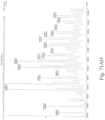
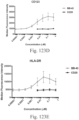
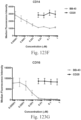
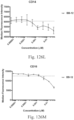
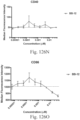
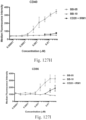
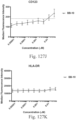
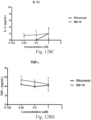
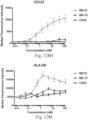
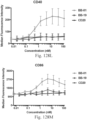
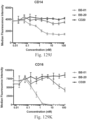
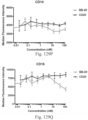
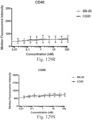
- immunoconjugates are disclosed in US Patent 8,951,528 . However, these immunoconjugates fail to effectively activate myeloid cells (see for example, Figs. 128A-129S ).
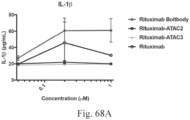
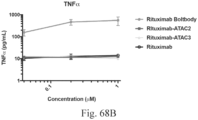
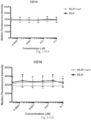
- Another publication, US Patent Publication 2017/0159772 discloses immunoconjugates, as well. The immunoconjugates disclosed therein also do not effectively activate myeloid cells as seen in Figs. 67A-68P .
- systemic administration of the adjuvant-antibody conjugates allows for the simultaneous targeting of the primary tumor and associated metastases without the need for intra-tumoral injections and surgical resection.
- immunoconjugate refers to an antibody construct, or antibody, that is covalently bonded to a non-naturally occurring chemical moiety as described herein.
- immunoconjugate refers to an antibody construct, or antibody, that is covalently bonded to a non-naturally occurring chemical moiety as described herein.
- antibody-adjuvant immunoconjugate AAC
- Boltbody Boltbody
- antibody construct refers to polypeptide comprising an antigen binding domain and an Fc domain.
- An antibody construct can comprise an antibody.
- antigen binding domain refers to a protein, or a portion of a protein, that specifically binds a specified antigen (e.g., a paratope). For example, that portion of an antigen-binding protein that contains the amino acid residues that interact with an antigen and confer on the antigen-binding protein its specificity and affinity for the antigen.
- Fc domain refers to the fragment crystallizable region, or the tail region of an antibody.
- the Fc domain interacts with Fc receptors on cells' surfaces.
- targeting binding domain refers to a protein, or a portion of a protein, that specifically binds a second antigen that is distinct from the antigen bound by the antigen binding domain of the immunoconjugates.
- the targeting binding domain can be conjugated to the antibody construct at a C-terminal end of the Fc domain.
- antibody refers to a polypeptide comprising an antigen binding region (including the complementarity determining region (CDRs)) from an immunoglobulin gene or fragments thereof that specifically binds and recognizes an antigen.
- CDRs complementarity determining region
- the recognized immunoglobulin genes include the kappa, lambda, alpha, gamma, delta, epsilon, and mu constant region genes, as well as numerous immunoglobulin variable region genes.
- An exemplary immunoglobulin (antibody) structural unit comprises a tetramer.
- Each tetramer is composed of two identical pairs of polypeptide chains, each pair having one "light” (about 25 kD) and one "heavy” chain (about 50-70 kD).
- the N-terminus of each chain defines a variable region of about 100 to 110 or more amino acids primarily responsible for antigen recognition.
- the terms variable light chain (V L ) and variable heavy chain (V H ) refer to these light and heavy chains respectively.
- Light chains are classified as either kappa or lambda.
- Heavy chains are classified as gamma, mu, alpha, delta, or epsilon, which in turn define the immunoglobulin classes, IgG, IgM, IgA, IgD and IgE, respectively.
- IgG antibodies are large molecules of about 150 kDa composed of four peptide chains.
- IgG antibodies contain two identical class ⁇ heavy chains of about 50 kDa and two identical light chains of about 25 kDa, thus a tetrameric quaternary structure. The two heavy chains are linked to each other and to a light chain each by disulfide bonds. The resulting tetramer has two identical halves, which together form the Y-like shape. Each end of the fork contains an identical antigen binding site.
- IgG subclasses IgG1, 2, 3, and 4
- IgG1 being the most abundant.
- the antigen-binding region of an antibody will be most critical in specificity and affinity of binding.
- Dimeric IgA antibodies are around 320 kDa.
- IgA has two subclasses (IgA1 and IgA2) and can be produced as a monomeric as well as a dimeric form.
- the IgA dimeric form secretory or sIgA is the most abundant.
- Antibodies exist, e.g., as intact immunoglobulins or as a number of well-characterized fragments produced by digestion with various peptidases.
- pepsin digests an antibody below the disulfide linkages in the hinge region to produce F(ab)' 2 , a dimer of Fab which itself is a light chain joined to V H -C H 1 by a disulfide bond.
- the F(ab)' 2 may be reduced under mild conditions to break the disulfide linkage in the hinge region, thereby converting the F(ab)' 2 dimer into a Fab' monomer.
- the Fab' monomer is essentially Fab with part of the hinge region ( see, Fundamental Immunology (Paul ed., 7e ed. 2012 ). While various antibody fragments are defined in terms of the digestion of an intact antibody, one of skill will appreciate that such fragments may be synthesized de novo either chemically or by using recombinant DNA methodology. Thus, the term antibody, as used herein, also includes antibody fragments either produced by the modification of whole antibodies, or those synthesized de novo using recombinant DNA methodologies ( e.g., single chain Fv) or those identified using phage display libraries ( see, e.g., McCafferty et al., Nature, 348: 552-554 (1990 )).
- antibody is used in the broadest sense and specifically covers monoclonal antibodies (including full length monoclonal antibodies), polyclonal antibodies, multispecific antibodies (e.g., bispecific antibodies), and antibody fragments so long as they exhibit the desired biological activity.
- Antibody fragment and all grammatical variants thereof, as used herein are defined as a portion of an intact antibody comprising the antigen binding site or variable region of the intact antibody, wherein the portion is free of the constant heavy chain domains ( i.e. CH2, CH3, and CH4, depending on antibody isotype) of the Fc region of the intact antibody.
- antibody fragments include Fab, Fab', Fab'-SH, F(ab') 2 , and Fv fragments; diabodies; any antibody fragment that is a polypeptide having a primary structure consisting of one uninterrupted sequence of contiguous amino acid residues (referred to herein as a "single-chain antibody fragment” or “single chain polypeptide"), including without limitation (1) single-chain Fv (scFv) molecules; (2) single chain polypeptides containing only one light chain variable domain, or a fragment thereof that contains the three CDRs of the light chain variable domain, without an associated heavy chain moiety; (3) single chain polypeptides containing only one heavy chain variable region, or a fragment thereof containing the three CDRs of the heavy chain variable region, without an associated light chain moiety; (4) nanobodies comprising single Ig domains from non-human species or other specific single-domain binding modules; and (5) multispecific or multivalent structures formed from antibody fragments.
- the heavy chain(s) can contain any constant domain sequence (e.g. CH1 in the IgG isotype) found in a non-Fc region of an intact antibody, and/or can contain any hinge region sequence found in an intact antibody, and/or can contain a leucine zipper sequence fused to or situated in the hinge region sequence or the constant domain sequence of the heavy chain(s).
- any constant domain sequence e.g. CH1 in the IgG isotype
- biological product in reference to a biological product, means that the biological product is highly similar to the reference product notwithstanding minor differences in clinically inactive components, and there are no clinically meaningful differences between the biological product and the reference product in terms of the safety, purity, and potency of the product.
- epitopic determinants means any antigenic determinant on an antigen to which the antigen-binding site, also referred to as the paratope, of an antibody binds.
- Epitopic determinants usually consist of chemically active surface groupings of molecules such as amino acids or sugar side chains and usually have specific three dimensional structural characteristics, as well as specific charge characteristics.
- polypeptide peptide
- protein protein
- amino acid polymers in which one or more amino acid residue is an artificial chemical mimetic of a corresponding naturally occurring amino acid, as well as to naturally occurring amino acid polymers and non-naturally occurring amino acid polymer.
- adjuvant refers to a substance capable of eliciting an immune response in a subject exposed to the adjuvant.
- adjuvant moiety refers to an adjuvant that is covalently bonded to an antibody as described herein.
- the adjuvant moiety can elicit the immune response while bonded to the antibody, or after cleavage (e.g., enzymatic cleavage) from the antibody following administration of an immunoconjugate to the subject.
- Pattern recognition receptor and “PRR” refer to any member of a class of conserved mammalian proteins which recognize pathogen-associated molecular patterns (PAMPs) or damage-associated molecular patterns (DAMPs), and act as key signaling elements in innate immunity. Pattern recognition receptors are divided into membrane-bound PRRs, cytoplasmic PRRs, and secreted PRRs. Examples of membrane-bound PRRs include Toll-like receptors (TLRs) and C-type lectin receptors (CLRs). Examples of cytoplasmic PRRs include NOD-like receptors (NLRs) and Rig-I-like receptors (RLRs).
- TLRs Toll-like receptors
- CLRs C-type lectin receptors
- NLRs NOD-like receptors
- RLRs Rig-I-like receptors
- TLR Toll-like receptor
- TLR polypeptides share a characteristic structure that includes an extracellular domain that has leucine-rich repeats, a transmembrane domain, and an intracellular domain that is involved in TLR signaling.
- Toll-like receptor 1 and “TLR1” refer to nucleic acids or polypeptides sharing at least 70%; 80%, 90%, 95%, 96%, 97%, 98%, 99%, or more sequence identity to a publicly-available TLR1 sequence, e.g., GenBank accession number AAY85643 for human TLR1 polypeptide, or GenBank accession number AAG37302 for murine TLR1 polypeptide.
- Toll-like receptor 2 and “TLR2” refer to nucleic acids or polypeptides sharing at least 70%; 80%, 90%, 95%, 96%, 97%, 98%, 99%, or more sequence identity to a publicly-available TLR2 sequence, e.g., GenBank accession number AAY85648 for human TLR2 polypeptide, or GenBank accession number AAD49335 for murine TLR2 polypeptide.
- Toll-like receptor 3 and “TLR3” refer to nucleic acids or polypeptides sharing at least 70%; 80%, 90%, 95%, 96%, 97%, 98%, 99%, or more sequence identity to a publicly-available TLR3 sequence, e.g., GenBank accession number AAC34134 for human TLR3 polypeptide, or GenBank accession number AAK26117 for murine TLR3 polypeptide.
- Toll-like receptor 4" and “TLR4" refer to nucleic acids or polypeptides sharing at least 70%; 80%, 90%, 95%, 96%, 97%, 98%, 99%, or more sequence identity to a publicly-available TLR4 sequence, e.g., GenBank accession number AAY82270 for human TLR4 polypeptide, or GenBank accession number AAD29272 for murine TLR4 polypeptide.
- Toll-like receptor 5" and “TLR5" refer to nucleic acids or polypeptides sharing at least 70%; 80%, 90%, 95%, 96%, 97%, 98%, 99%, or more sequence identity to a publicly-available TLR5 sequence, e.g., GenBank accession number ACM69034 for human TLR5 polypeptide, or GenBank accession number AAF65625 for murine TLR5 polypeptide.
- Toll-like receptor 6 and “TLR6” refer to nucleic acids or polypeptides sharing at least 70%; 80%, 90%, 95%, 96%, 97%, 98%, 99%, or more sequence identity to a publicly-available TLR6 sequence, e.g., GenBank accession number ABY67133 for human TLR6 polypeptide, or GenBank accession number AAG38563 for murine TLR6 polypeptide.
- Toll-like receptor 7 and “TLR7” refer to nucleic acids or polypeptides sharing at least 70%; 80%, 90%, 95%, 96%, 97%, 98%, 99%, or more sequence identity to a publicly-available TLR7 sequence, e.g., GenBank accession number AAZ99026 for human TLR7 polypeptide, or GenBank accession number AAK62676 for murine TLR7 polypeptide.
- Toll-like receptor 8 and “TLR8” refer to nucleic acids or polypeptides sharing at least 70%; 80%, 90%, 95%, 96%, 97%, 98%, 99%, or more sequence identity to a publicly-available TLR8 sequence, e.g., GenBank accession number AAZ95441 for human TLR8 polypeptide, or GenBank accession number AAK62677 for murine TLR8 polypeptide.
- Toll-like receptor 7/8 and “TLR7/8" refer to nucleic acids or polypeptides that are both TLR7 agonists and TLR8 agonists.
- Toll-like receptor 9 and “TLR9” refer to nucleic acids or polypeptides sharing at least 70%; 80%, 90%, 95%, 96%, 97%, 98%, 99%, or more sequence identity to a publicly-available TLR9 sequence, e.g., GenBank accession number AAF78037 for human TLR9 polypeptide, or GenBank accession number AAK28488 for murine TLR9 polypeptide.
- Toll-like receptor 10 and “TLR10” refer to nucleic acids or polypeptides sharing at least 70%; 80%, 90%, 95%, 96%, 97%, 98%, 99%, or more sequence identity to a publicly-available TLR10 sequence, e.g., GenBank accession number AAK26744 for human TLR10 polypeptide.
- Toll-like receptor 11 and “TLR11” refer to nucleic acids or polypeptides sharing at least 70%; 80%, 90%, 95%, 96%, 97%, 98%, 99%, or more sequence identity to a publicly-available TLR11 sequence, e.g., GenBank accession number AAS83531 for murine TLR11 polypeptide.
- TLR agonist is a substance that binds, directly or indirectly, to a TLR (e.g., TLR7 and/or TLR8) to induce TLR signaling. Any detectable difference in TLR signaling can indicate that an agonist stimulates or activates a TLR. Signaling differences can be manifested, for example, as changes in the expression of target genes, in the phosphorylation of signal transduction components, in the intracellular localization of downstream elements such as NK- ⁇ B, in the association of certain components (such as IRAK) with other proteins or intracellular structures, or in the biochemical activity of components such as kinases (such as MAPK).
- amino acid refers to any monomeric unit that can be incorporated into a peptide, polypeptide, or protein.
- Amino acids include naturally-occurring ⁇ -amino acids and their stereoisomers, as well as unnatural (non-naturally occurring) amino acids and their stereoisomers.
- “Stereoisomers” of a given amino acid refer to isomers having the same molecular formula and intramolecular bonds but different three-dimensional arrangements of bonds and atoms (e.g., an L-amino acid and the corresponding D-amino acid).
- Naturally-occurring amino acids are those encoded by the genetic code, as well as those amino acids that are later modified, e.g., hydroxyproline, ⁇ -carboxyglutamate, and O-phosphoserine.
- Naturally-occurring ⁇ -amino acids include, without limitation, alanine (Ala), cysteine (Cys), aspartic acid (Asp), glutamic acid (Glu), phenylalanine (Phe), glycine (Gly), histidine (His), isoleucine (Ile), arginine (Arg), lysine (Lys), leucine (Leu), methionine (Met), asparagine (Asn), proline (Pro), glutamine (Gln), serine (Ser), threonine (Thr), valine (Val), tryptophan (Trp), tyrosine (Tyr), and combinations thereof.
- Stereoisomers of a naturally-occurring ⁇ -amino acids include, without limitation, D-alanine (D-Ala), D-cysteine (D-Cys), D-aspartic acid (D-Asp), D-glutamic acid (D-Glu), D-phenylalanine (D-Phe), D-histidine (D-His), D-isoleucine (D-Ile), D-arginine (D-Arg), D-lysine (D-Lys), D-leucine (D-Leu), D-methionine (D-Met), D-asparagine (D-Asn), D-proline (D-Pro), D-glutamine (D-Gln), D-serine (D-Ser), D-threonine (D-Thr), D-valine (D-Val), D-tryptophan (D-Trp), D-tyrosine (D-Tyr), and combinations thereof.
- Unnatural (non-naturally occurring) amino acids include, without limitation, amino acid analogs, amino acid mimetics, synthetic amino acids, N -substituted glycines, and N- methyl amino acids in either the L- or D-configuration that function in a manner similar to the naturally-occurring amino acids.
- amino acid analogs can be unnatural amino acids that have the same basic chemical structure as naturally-occurring amino acids (i.e., a carbon that is bonded to a hydrogen, a carboxyl group, an amino group) but have modified side-chain groups or modified peptide backbones, e.g ., homoserine, norleucine, methionine sulfoxide, methionine methyl sulfonium.
- Amino acids may be referred to herein by either the commonly known three letter symbols or by the one-letter symbols recommended by the IUPAC-IUB Biochemical Nomenclature Commission.
- Immune checkpoint inhibitors refers to any modulator that inhibits the activity of the immune checkpoint molecule.
- Immune checkpoint inhibitors can include, but are not limited to, immune checkpoint molecule binding proteins, small molecule inhibitors, antibodies, antibody-derivatives (including Fc fusions, Fab fragments and scFvs), antibody-drug conjugates, antisense oligonucleotides, siRNA, aptamers, peptides and peptide mimetics.
- linking moiety refers to a functional group that covalently bonds two or more moieties in a compound or material.
- the linking moiety can serve to covalently bond an adjuvant moiety to an antibody in an immunoconjugate.
- linking moieties include, but are not limited to, amides, amines, esters, carbamates, ureas, thioethers, thiocarbamates, thiocarbonates, and thioureas.
- a "divalent" linking moiety contains two points of attachment for linking two functional groups; polyvalent linking moieties can have additional points of attachment for linking further functional groups.
- divalent linking moieties include divalent polymer moieties such as divalent polyethylene glycol), divalent polypropylene glycol), and divalent poly(vinyl alcohol).
- linker refers to a functional group that covalently bonds two or more moieties in a compound or material.
- the linker can serve to covalently bond an adjuvant moiety to an antibody construct in an immunoconjugate.
- alkyl refers to a straight or branched, saturated, aliphatic radical having the number of carbon atoms indicated. Alkyl can include any number of carbons, such as C 1-2 , C 1-3 , C 1-4 , C 1-5 , C 1-6 , C 1-7 , C 1-8 , C 1-9 , C 1-10 , C 2-3 , C 2-4 , C 2-5 , C 2-6 , C 3-4 , C 3-5 , C 3-6 , C 4-5 , C 4-6 and C 5-6 .
- C 1-6 alkyl includes, but is not limited to, methyl, ethyl, propyl, isopropyl, butyl, isobutyl, sec-butyl, tert-butyl, pentyl, isopentyl, hexyl, etc.
- Alkyl can also refer to alkyl groups having up to 30 carbons atoms, such as, but not limited to heptyl, octyl, nonyl, decyl, etc. Alkyl groups can be substituted or unsubstituted.
- alkylene refers to a divalent alkyl radical.
- heteroalkyl refers to an alkyl group as described herein, wherein one or more carbon atoms are optionally and independently replaced with heteroatom selected from N, O, and S.
- heteroalkylene refers to a divalent heteroalkyl radical.
- Carbocycle refers to a saturated or partially unsaturated, monocyclic, fused bicyclic, or bridged polycyclic ring assembly containing from 3 to 12 ring atoms, or the number of atoms indicated.
- Carbocycles can include any number of carbons, such as C 3-6 , C 4-6 , C 5-6 , C 3-8 , C 4-8 , C 5-8 , C 6-8 , C 3-9 , C 3-10 , C 3-11 , and C 3-12 .
- Saturated monocyclic carbocyclic rings include, for example, cyclopropyl, cyclobutyl, cyclopentyl, cyclohexyl, and cyclooctyl.
- Saturated bicyclic and polycyclic carbocyclic rings include, for example, norbornane, [2.2.2] bicyclooctane, decahydronaphthalene and adamantane.
- Carbocyclic groups can also be partially unsaturated, having one or more double or triple bonds in the ring.
- carbocyclic groups that are partially unsaturated include, but are not limited to, cyclobutene, cyclopentene, cyclohexene, cyclohexadiene (1,3- and 1,4-isomers), cycloheptene, cycloheptadiene, cyclooctene, cyclooctadiene (1,3-, 1,4- and 1,5-isomers), norbornene, and norbornadiene.
- Unsaturated carbocyclic groups also include aryl groups.
- aryl refers to an aromatic ring system having any suitable number of ring atoms and any suitable number of rings.
- Aryl groups can include any suitable number of ring atoms, such as, 6, 7, 8, 9, 10, 11, 12, 13, 14, 15 or 16 ring atoms, as well as from 6 to 10, 6 to 12, or 6 to 14 ring members.
- Aryl groups can be monocyclic, fused to form bicyclic or tricyclic groups, or linked by a bond to form a biaryl group.
- Representative aryl groups include phenyl, naphthyl and biphenyl.
- Other aryl groups include benzyl, having a methylene linking group.
- Some aryl groups have from 6 to 12 ring members, such as phenyl, naphthyl or biphenyl.
- Other aryl groups have from 6 to 10 ring members, such as phenyl or naphthyl.
- a “divalent” carbocycle refers to a carbocyclic group having two points of attachment for covalently linking two moieties in a molecule or material.
- Carbocycles can be substituted or unsubstituted.
- “Substituted carbocycle” groups can be substituted with one or more groups selected from halo, hydroxy, amino, alkylamino, amido, acyl, nitro, cyano, and alkoxy.
- heterocycle refers to heterocycloalkyl groups and heteroaryl groups.
- Heteroaryl by itself or as part of another substituent, refers to a monocyclic or fused bicyclic or tricyclic aromatic ring assembly containing 5 to 16 ring atoms, where from 1 to 5 of the ring atoms are a heteroatom such as N, O or S. Additional heteroatoms can also be useful, including, but not limited to, B, Al, Si and P.
- the heteroatoms can be oxidized to form moieties such as, but not limited to, -S(O)- and -S(O) 2 -.
- Heteroaryl groups can include any number of ring atoms, such as 3 to 6, 4 to 6, 5 to 6, 3 to 8, 4 to 8, 5 to 8, 6 to 8, 3 to 9, 3 to 10, 3 to 11, or 3 to 12 ring members. Any suitable number of heteroatoms can be included in the heteroaryl groups, such as 1, 2, 3, 4, or 5, or 1 to 2, 1 to 3,
- Heteroaryl groups can be linked via any position on the ring.
- pyrrole includes 1-, 2- and 3-pyrrole
- pyridine includes 2-, 3- and 4-pyridine
- imidazole includes 1-, 2-, 4- and 5-imidazole
- pyrazole includes 1-, 3-, 4- and 5-pyrazole
- triazole includes 1-, 4- and 5-triazole
- tetrazole includes 1- and 5-tetrazole
- pyrimidine includes 2-, 4-, 5- and 6- pyrimidine
- pyridazine includes 3- and 4-pyridazine
- 1,2,3-triazine includes 4- and 5-triazine
- 1,2,4-triazine includes 3-, 5- and 6-triazine
- 1,3,5-triazine includes 2-triazine
- thiophene includes 2- and 3-thiophene
- furan includes 2- and 3-furan
- thiazole includes 2-, 4- and 5-thiazole
- isothiazole includes 3-, 4- and
- Heterocyclyl by itself or as part of another substituent, refers to a saturated ring system having from 3 to 12 ring members and from 1 to 4 heteroatoms of N, O and S. Additional heteroatoms can also be useful, including, but not limited to, B, Al, Si and P. The heteroatoms can be oxidized to form moieties such as, but not limited to, -S(O)- and -S(O) 2 -. Heterocyclyl groups can include any number of ring atoms, such as, 3 to 6, 4 to 6, 5 to 6, 3 to 8, 4 to 8, 5 to 8, 6 to 8, 3 to 9, 3 to 10, 3 to 11, or 3 to 12 ring members.
- heterocyclyl groups can include groups such as aziridine, azetidine, pyrrolidine, piperidine, azepane, azocane, quinuclidine, pyrazolidine, imidazolidine, piperazine (1,2-, 1,3- and 1,4-isomers), oxirane, oxetane, tetrahydrofuran, oxane (tetrahydropyran), oxepane, thiirane, thietane, thiolane (tetrahydrothiophene), thiane (tetrahydrothiopyran), oxazolidine, isoxazolidine, thiazolidine, isothiazolidine, dioxolane, dithiolane, morpholine, thio
- heterocyclyl groups can also be fused to aromatic or non-aromatic ring systems to form members including, but not limited to, indoline.
- Heterocyclyl groups can be unsubstituted or substituted.
- Heterocyclyl groups can be linked via any position on the ring.
- aziridine can be 1- or 2-aziridine
- azetidine can be 1- or 2- azetidine
- pyrrolidine can be 1-, 2- or 3-pyrrolidine
- piperidine can be 1-, 2-, 3- or 4-piperidine
- pyrazolidine can be 1-, 2-, 3-, or 4-pyrazolidine
- imidazolidine can be 1-, 2-, 3- or 4-imidazolidine
- piperazine can be 1-, 2-, 3- or 4-piperazine
- tetrahydrofuran can be 1- or 2-tetrahydrofuran
- oxazolidine can be 2-, 3-, 4- or 5-oxazolidine
- isoxazolidine can be 2-, 3-, 4- or 5-isoxazolidine
- thiazolidine can be 2-, 3-, 4- or 5-thiazolidine
- isothiazolidine can be 2-, 3-, 4- or 5- isothiazolidine
- halo and halogen, by themselves or as part of another substituent, refer to a fluorine, chlorine, bromine, or iodine atom.
- carbonyl by itself or as part of another substituent, refers to -C(O)-, i.e., a carbon atom double-bonded to oxygen and bound to two other groups in the moiety having the carbonyl.
- amino refers to a moiety -NR 3 , wherein each R group is H or alkyl. An amino moiety can be ionized to form the corresponding ammonium cation.
- hydroxy refers to the moiety -OH.
- carboxy refers to the moiety -C(O)OH.
- a carboxy moiety can be ionized to form the corresponding carboxylate anion.
- amido refers to a moiety -NRC(O)R or -C(O)NR 2 , wherein each R group is H or alkyl.
- nitro refers to the moiety -NO 2 .
- the terms “treat,” “treatment,” and “treating” refer to any indicia of success in the treatment or amelioration of an injury, pathology, condition, or symptom (e.g. , cognitive impairment), including any objective or subjective parameter such as abatement; remission; diminishing of symptoms or making the symptom, injury, pathology or condition more tolerable to the patient; reduction in the rate of symptom progression; decreasing the frequency or duration of the symptom or condition; or, in some situations, preventing the onset of the symptom.
- the treatment or amelioration of symptoms can be based on any objective or subjective parameter; including, e.g. , the result of a physical examination.
- cancer refers to conditions including solid cancers, lymphomas, and leukemias.
- examples of different types of cancer include, but are not limited to, lung cancer (e.g., non-small cell lung cancer or NSCLC), ovarian cancer, prostate cancer, colorectal cancer, liver cancer (i.e., hepatocarcinoma), renal cancer ( i.e., renal cell carcinoma), bladder cancer, breast cancer, thyroid cancer, pleural cancer, pancreatic cancer, uterine cancer, cervical cancer, testicular cancer, anal cancer, bile duct cancer, gastrointestinal carcinoid tumors, esophageal cancer, gall bladder cancer, appendix cancer, small intestine cancer, stomach (gastric) cancer, cancer of the central nervous system, skin cancer (e.g., melanoma), choriocarcinoma, head and neck cancer, blood cancer, osteogenic sarcoma, fibrosarcoma, neuroblastoma, gliom
- NSCLC non-small cell lung
- the terms "effective amount” and “therapeutically effective amount” refer to a dose of a substance such as an immunoconjugate that produces therapeutic effects for which it is administered. The exact dose will depend on the purpose of the treatment, and will be ascertainable by one skilled in the art using known techniques (see, e.g., Lieberman, Pharmaceutical Dosage Forms (vols.
- the term "subject” refers to animals such as mammals, including, but not limited to, primates (e.g., humans), cows, sheep, goats, horses, dogs, cats, rabbits, rats, mice and the like. In certain embodiments, the subject is a human.
- administering refers to parenteral, intravenous, intraperitoneal, intramuscular, intratumoral, intralesional, intranasal or subcutaneous administration, oral administration, administration as a suppository, topical contact, intrathecal administration, or the implantation of a slow-release device, e.g., a mini-osmotic pump, to the subject.
- a slow-release device e.g., a mini-osmotic pump
- the invention provides immunoconjugates containing an antibody construct comprising an antigen binding domain and an Fc domain, an adjuvant moiety, and a linker, as defined in the claims, wherein each adjuvant moiety is covalently bonded to the antibody via the linker.
- Immunoconjugates as described herein can provide an unexpectedly increased activation response of an antigen presenting cell (APC). This increased activation can be detected in vitro or in vivo. In some cases, increased APC activation can be detected in the form of a reduced time to achieve a specified level of APC activation. For example, in an in vitro assay, % APC activation can be achieved at an equivalent dose with an immunoconjugate within 1%, 10%, or 50% of the time required to receive the same or similar percentage of APC activation with a mixture of unconjugated antibody and TLR agonist. In some cases, an immunoconjugate can activate APCs (e.g., dendritic cells) and/or NK cells in a reduced amount of time.
- APCs e.g., dendritic cells
- an antibody TLR agonist mixture can activate APCs (e.g., dendritic cells) and/or NK cells and/or induce dendritic cell differentiation after incubation with the mixture for 2, 3, 4, 5, 1-5, 2-5, 3-5, or 4-7 days; while, in contrast immunoconjugates described herein can activate and/or induce differentiation within 4 hours, 8 hours, 12 hours, 16 hours, or 1 day.
- the increased APC activation can be detected in the form of a reduced concentration of immunoconjugate required to achieve an amount (e.g., percent APCs), level (e.g., as measured by a level of upregulation of a suitable marker), or rate (e.g., as detected by a time of incubation required to activate) of APC activation.
- an amount e.g., percent APCs
- level e.g., as measured by a level of upregulation of a suitable marker
- rate e.g., as detected by a time of incubation required to activate
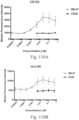
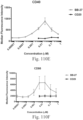
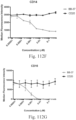
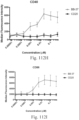
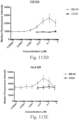
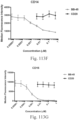
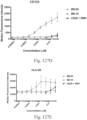
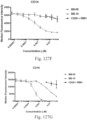
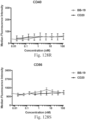
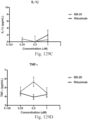
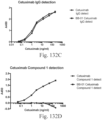
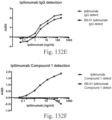
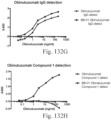
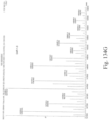
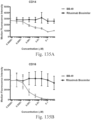
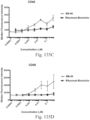
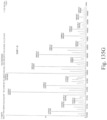
- Immunoconjugates of the present invention must include an Fc region. As Figs. 130A-131E illustrate, non-FcR binding proteins do not activate myeloid cells when conjugated to Compound 1.
- the immunoconjugates of the present invention provide more than a 5% increase in activity compared to the immunoconjugates of the prior art (for example, the immunoconjugates disclosed in the '528 patent). In another embodiment, the immunoconjugates of the present invention provide more than a 10%, 15%, 20%, 25%, 30%, 35%, 40%, 45%, 50%, 55%, 60%, 65%, or 70% increase in activity compared to the immunoconjugates of the prior art.
- the increase in activity can be assessed by any means known by one of skill in the art and can include myeloid activation or assessment by cytokine secretion.
- the immunoconjugates of the present invention provide an improved drug to adjuvant ratio.
- the average number of adjuvant moieties per immunoconjugate ranges from about 1 to about 10.
- the desirable drug to adjuvant ratio can be determined by one of skill in the depending on the desired effect of the treatment. For example, a drug to adjuvant ratio of greater than 1.2 may be desired. In an embodiment, a drug to adjuvant ratio of greater than 0.2, 0.4, 0.6, 0.8, 1, 1.2, 1.4, 1.6. 1.8, 2.0, 2.2, 2.4, 2.6, 2.8, 3.0, 3.2, 3.4, 3.6, 3.8, 4.0, 5.0, 6.0, 7.0, 8.0, or 9.0 may be desired.
- a drug to adjuvant ratio of less than 10.0, 9.0, 8.0, 7.0, 6.0, 5.0, 4.0, 3.8, 3.6, 3.4, 3.2, 3.0, 2.8, 2.6, 2.4, 2.2, 2.0, 1.8, 1.6, 1.4, 1.2, 0.8, 0.6, 0.4 or 0.2 may be desirable.
- the drug to adjuvant ratio can be assessed by any means known by one of skill in the art.
- the immunoconjugates of the invention contain linking moieties that covalently bond the adjuvant moieties to the antibodies.
- the immunoconjugate has a structure according to Formula I: or a pharmaceutically acceptable salt thereof, wherein Ab is an antibody; A is an unmodified amino acid sidechain in the antibody or a modified amino acid sidechain in the antibody; Z is a linking moiety; Adj is an adjuvant moiety as defined in claim 1; and subscript r is an integer from 1 to 10 (i.e., 1, 2, 3, 4, 5, 6, 7, 8, 9, or 10).
- A is a thiol-modified lysine sidechain. In some embodiments of the immunoconjugates of Formula I, A is a cysteine sidechain.
- Z is selected from: and wherein subscript x is an integer from 1 to 12 (i.e., 1, 2, 3, 4, 5, 6, 7, 8, 9, 10, 11, or 12); subscript y is an integer from 1 to 30 (i.e., 1, 2, 3, 4, 5, 6, 7, 8, 9, 10, 11, 12, 13, 14, 15, 16, 17, 18, 19, 20, 21, 22, 23, 24, 25, 26, 27, 28, 29, or 30); the dashed line (“ ") represents the point of attachment to the adjuvant moiety; and the wavy line (“ ”) represents the point of attachment to an amino acid sidechain in the antibody.
- the immunoconjugate has a structure according to Formula II: or a pharmaceutically acceptable salt thereof, wherein Ab is an antibody; wherein A is an unmodified amino acid sidechain in the antibody or a modified amino acid sidechain in the antibody; wherein Adj is an adjuvant moiety as defined in claim 1; wherein subscript r is an integer 1 to 10 (i.e., 1, 2, 3, 4, 5, 6, 7, 8, 9, or 10); and wherein:
- Z 5 is a thiol-bonded moiety. In certain embodiments of the immunoconjugates of Formula II, Z 5 is a thiol-bonded moiety and A is a thiol-modified lysine sidechain. In certain embodiments of the immunoconjugates of Formula II, Z 5 is a thiol-bonded moiety and A is a cysteine sidechain.
- the linking moiety i.e., the structural components between the adjuvant ("Adj") and the amino acid (“A”)
- the linking moiety includes a structure selected from: and wherein Z 1 , Z 2 , Z 3 , and Z 4 are described as above; the dashed line (“ ") represents the point of attachment to the adjuvant moiety; and the wavy line (“ ") represents the point of attachment to an amino acid sidechain in an antibody.
- Z 3 is a divalent peptide moiety.
- the peptide includes a first residue selected from an alanine residue, a valine residue, a leucine residue, an isoleucine residue, a methionine residue, a phenylalanine residue, a tryptophan residue, and a proline residue.
- the peptide includes a second amino acid selected from an unprotected lysine residue, a protected lysine residue, an unprotected arginine residue, a protected arginine residue, a histidine residue, an unprotected ornithine residue, a protected ornithine residue, a lysine residue, and a citrulline.
- the peptide includes a first residue selected from a phenylalanine residue and a valine residue.
- the peptide includes a second residue selected from a lysine residue and a citrulline residue.
- the peptide moiety will contain about 2-12 amino acid residues.
- the peptide can contain from 2 to 8 amino acid residues, or from 2 to 4 amino acid residues.
- the peptide is dipeptide.
- the peptide is a tetrapeptide.
- the peptide is selected from Phe-Lys; Val-Lys; Phe-Phe-Lys; D-Phe-Phe-Lys; Gly-Phe-Lys; Ala-Lys; Val-Cit; Val-Ala; Phe-Cit; Leu-Cit; Ile-Cit; Trp-Cit; Phe-Ala; Gly-Phe-Leu-Gly; Ala-Leu-Ala-Leu; Phe- N 9 -tosyl-Arg; and Phe- N 9 -nitro-Arg.
- the peptide can be cleaved by a protease such as cathepsin B, cathepsin C, or cathepsin D.
- Cathepsin B-sensitive peptides can be particularly useful as linker components, because cathepsin B is implicated in a number of pathologies and oncogenic processes. While expression and activity of cathepsin B is tightly regulated in healthy tissues and organs, regulation can be altered at multiple levels in tumors and other malignancies. Overexpression of cathepsin B has been observed in various cancers, including brain, lung, prostate, breast, and colorectal cancer. See, e.g., Gondi et al., Expert Opin. Ther.
- Linkers containing cathepsin B-sensitive peptide components can therefore be cleaved when an immunoconjugate reaches a malignant target such as a tumor in a subject. Because these peptide components are generally insensitive to enzymes in the circulatory system and healthy tissues, the adjuvant moieties are not released before the immunoconjugate reaches the target in the subject.
- Z 2 is selected from the group consisting C 1-30 alkylene and 3- to 30-membered heteroalkylene, wherein one or more groupings of adjacent atoms are optionally and independently replaced by -C(O)-, -NHC(O)-, or -C(O)NH-; and one or more groupings of adjacent atoms are optionally and independently replaced by a 4- to 8-membered, divalent carbocycle.
- Z 2 is selected from: wherein the dashed line (“ ”) represents the point of attachment to Z 1 , and the wavy line (“ ") represents the point of attachment to Z 3 .
- -Z 1 -Z 2 - is: wherein the dashed line (“ ") represents the point of attachment to the adjuvant moiety and the wavy line (“ ") represents the point of attachment to Z 3 .
- Z 3 is a divalent peptide moiety selected from Phe-Lys and Val-Cit.
- Z 4 is C 1-30 alkylene, wherein one or more groupings of adjacent atoms are optionally and independently replaced by -C(O)-, -NHC(O)-, or - C(O)NH-; and one or more groupings of adjacent atoms are optionally and independently replaced by a 4- to 8-membered, divalent carbocycle.
- Z 4 is selected from: wherein the dashed line (" ") represents the point of attachment to Z 3 , and the wavy line (“ ”) represents the point of attachment to Z 5 .
- Z 3 is a divalent peptide moiety selected from Phe-Lys and Val-Cit.
- the adjuvant moieties in the conjugates can be covalently bonded to the antibodies using various chemistries for protein modification, and that the linking moieties described above result from the reaction of protein functional groups (i.e., amino acid side chains), with reagents having reactive linker groups.
- protein functional groups i.e., amino acid side chains
- reagents having reactive linker groups A wide variety of such reagents are known in the art.
- reagents include, but are not limited to, N-hydroxysuccinimidyl (NHS) esters and N-hydroxysulfosuccinimidyl (sulfo-NHS) esters (amine reactive); carbodiimides (amine and carboxyl reactive); hydroxymethyl phosphines (amine reactive); maleimides (thiol reactive); halogenated acetamides such as N -iodoacetamides (thiol reactive); aryl azides (primary amine reactive); fluorinated aryl azides (reactive via carbon-hydrogen (C-H) insertion); pentafluorophenyl (PFP) esters (amine reactive); tetrafluorophenyl (TFP) esters (amine reactive); imidoesters (amine reactive); isocyanates (hydroxyl reactive); vinyl sulfones (thiol, amine, and hydroxyl reactive); pyridyl disulfides (thiol reactive);
- Linkers containing maleimide groups, vinyl sulfone groups, pyridyl disulfide groups, and halogenated acetamide groups are particularly useful for covalent bonding to thiol groups in an antibody.
- Thiol groups in an antibody are generally located in cysteine sidechains. Free thiol groups may be present in naturally-occurring, solvent-accessible cysteine residues in the antibody. Free thiols can also be present in engineered cysteine residues, as described below. In addition, thiol groups can be generated via full or partial reduction of disulfide linkages between cysteine sidechains in an antibody.
- Thiol groups can be also appended to lysine sidechains using known methods with reagents including, but not limited to, 2-iminothiolane (Traut's reagent), N-succinimidyl-S-acetylthioacetate (SATA), and SATP (N-succinimidyl-S-acetylthiopropionate).
- reagents including, but not limited to, 2-iminothiolane (Traut's reagent), N-succinimidyl-S-acetylthioacetate (SATA), and SATP (N-succinimidyl-S-acetylthiopropionate).
- SATA N-succinimidyl-S-acetylthioacetate
- SATP N-succinimidyl-S-acetylthiopropionate
- acetyl groups can be removed via hydrolysis with hydroxylamine or similar reagents in
- the linker can have any suitable length such that when the linker is covalently bound to the antibody construct and the adjuvant moiety, the function of the antibody construct and the adjuvant moiety is maintained.
- the linker can have a length of about 3 ⁇ or more, for example, about 4 ⁇ or more, about 5 ⁇ or more, about 6 ⁇ or more, about 7 ⁇ or more, about 8 ⁇ or more, about 9 ⁇ or more, or about 10 ⁇ or more.
- the linker can have a length of about 50 ⁇ or less, for example, about 45 ⁇ or less, about 40 ⁇ or less, about 35 ⁇ or less, about 30 ⁇ or less, about 25 ⁇ or less, about 20 ⁇ or less, or about 15 ⁇ or less.
- the linker can have a length bounded by any two of the aforementioned endpoints.
- the linker can have a length from about 3 ⁇ to about 50 ⁇ , for example, from about 3 ⁇ to about 45 ⁇ , from about 3 ⁇ to about 40 ⁇ , from about 3 ⁇ to about 35 ⁇ , from about 3 ⁇ to about 30 ⁇ , from about 3 ⁇ to about 25 ⁇ , from about 3 ⁇ to about 20 ⁇ , from about 3 ⁇ to about 15 ⁇ , from about 5 ⁇ to about 50 ⁇ , from about 5 ⁇ to about 25 ⁇ , from about 5 ⁇ to about 20 ⁇ , from about 10 ⁇ to about 50 ⁇ , from about 10 ⁇ to about 20 ⁇ , from about 5 ⁇ to about 30 ⁇ , or from about 5 ⁇ to about 15 ⁇ .
- the linker has a length from about 3 ⁇ to about 20 ⁇ .
- the invention provides embodiments wherein the adjuvant moieties are covalently bonded to the antibody using a reagent (or covalent bonding reagent ("CBR")) selected from: wherein X is halogen (e.g., iodo, bromo, or chloro); R' is H or sulfo; R" is optionally substituted aryl ( e.g., 3-carboxy-4-nitrophenyl) or optionally substituted heteroaryl ( e.g., pyridin-2-yl); R′′′ is optionally substituted alkyl ( e.g., methoxy); Z 1 , Z 2 , Z 3 , and Z 4 are as described above; and the dashed line (“ ") represents the point of attachment to the adjuvant moiety.
- CBR covalent bonding reagent
- the linker moiety -Z 1 -Z 2 -Z 3 -Z 4 -Z 5 - is: wherein the dashed line (“ ") represents the point of attachment to the adjuvant moiety, and the wavy line (“ ") represents the point of attachment to an amino acid sidechain the antibody.
- the amino acid sidechain is a cysteine sidechain or a modified lysine sidechain containing a thiol group.
- L is selected from: , and wherein R is optionally present and is a linear or branched, cyclic or straight, saturated or unsaturated alkyl, heteroalkyl, aryl, or heteroaryl chain comprising from 1 to 8 carbon units; a is an integer from 1 to 40; each A is independently selected from any amino acid; subscript c is an integer from 1 to 20; the dashed line (“ ") represents the point of attachment to and the wavy line (“ ”) represents the point of attachment to
- the immunoconjugate can have a structure according to Formula IVa - Formula IVk: or a pharmaceutically acceptable salt thereof, wherein Ab is an antibody with at least one lysine side chain; Adj is an adjuvant as defined in claim 1; and subscript r is an integer from 1 to 10 (i.e., 1, 2, 3, 4, 5, 6, 7, 8, 9, or 10). In certain embodiments, subscript r is an integer from 1 to 4 (i.e., 1, 2, 3, or 4).
- the immunoconjugate has a structure selected from: or a pharmaceutically acceptable salt thereof, wherein Ab is an antibody with at least one lysine side chain and subscript r is an integer from 1 to 10 (i.e., 1, 2, 3, 4, 5, 6, 7, 8, 9, or 10).
- the immunoconjugate has a structure of: or a pharmaceutically acceptable salt thereof, wherein Ab is an antibody with at least one lysine side chain and subscript r is an integer from 1 to 10 (i.e., 1, 2, 3, 4, 5, 6, 7, 8, 9, or 10).
- subscript r is an integer from 1 to 4 (i.e., 1, 2, 3, or 4).
- the immunoconjugate has a structure selected from: , and or a pharmaceutically acceptable salt thereof, wherein Ab is an antibody with at least one lysine side chain and subscript r is an integer from 1 to 10 (i.e., 1, 2, 3, 4, 5, 6, 7, 8, 9, or 10). In certain embodiments, subscript r is an integer from 1 to 4 (i.e., 1, 2, 3, or 4).
- the adjuvant (“Adj") is a TLR agonist.
- linker can have the following formula , wherein R is optionally present and is a linear or branched, cyclic or straight, saturated or unsaturated alkyl, heteroalkyl, aryl, or heteroaryl chain comprising from 1 to 8 (i.e., 1, 2, 3, 4, 5, 6, 7, or 8) carbon units; subscript a is an integer from 1 to 40; the dashed line (“ ") represents the point of attachment to and the wavy line represents the point of attachment to E. In some embodiments, subscript a is an integer from 1 to 20. In some embodiments, subscript a is an integer from 1 to 10.
- subscript a is an integer from 1 to 5. In some embodiments, subscript a is an integer from 1 to 3. In certain embodiments, R is present and is a linear or branched, cyclic or straight, saturated or unsaturated alkyl, heteroalkyl, aryl, or heteroaryl chain comprising from 1 to 8 (i.e., 1, 2, 3, 4, 5, 6, 7, or 8) carbon units.
- the linker (“L”) can have the following formula wherein subscript a is an integer from 1 to 40; the dashed line (“ ") represents the point of attachment to ; and the wavy line represents the point of attachment to E.
- subscript a is an integer from 1 to 20. In some embodiments, subscript a is an integer from 1 to 10. In some embodiments, subscript a is an integer from 1 to 5. In some embodiments, subscript a is an integer from 1 to 3.
- the linker (“L”) can also have the following formula wherein R is optionally present and is a linear or branched, cyclic or straight, saturated or unsaturated alkyl, heteroalkyl, aryl, or heteroaryl chain comprising from 1 to 8 (i.e., 1, 2, 3, 4, 5, 6, 7, or 8) carbon units; each A is independently selected from any amino acid; subscript c is an integer from 1 to 20; the dashed line represents the point of attachment to and the wavy line represents the point of attachment to E. In some embodiments, subscript c is an integer from 1 to 10. In some embodiments, subscript c is an integer from 1 to 5. In some embodiments, subscript c is an integer from 1 to 2.
- R is present and is a linear or branched, cyclic or straight, saturated or unsaturated alkyl, heteroalkyl, aryl, or heteroaryl chain comprising from 1 to 8 (i.e., 1, 2, 3, 4, 5, 6, 7, or 8) carbon units.
- the linker (“L”) can also have the following formula wherein R is optionally present and is a linear or branched, cyclic or straight, saturated or unsaturated alkyl, heteroalkyl, aryl, or heteroaryl chain comprising from 1 to 8 (i.e., 1, 2, 3, 4, 5, 6, 7, or 8) carbon units; subscript c is an integer from 1 to 20; the dashed line represents the point of attachment to E. In some embodiments, subscript c is an integer from 1 to 10. In some embodiments, c is an integer from 1 to 5.
- R is present and is a linear or branched, cyclic or straight, saturated or unsaturated alkyl, heteroalkyl, aryl, or heteroaryl chain comprising from 1 to 8 (i.e., 1, 2, 3, 4, 5, 6, 7, or 8) carbon units.
- the linker (“L”) can also have the following formula wherein R is optionally present and is a linear or branched, cyclic or straight, saturated or unsaturated alkyl, heteroalkyl, aryl, or heteroaryl chain comprising from 1 to 8 (i.e., 1, 2, 3, 4, 5, 6, 7, or 8) carbon units; the dashed line represents the point of attachment to and the wavy line represents the point of attachment to E.
- R is present and is a linear or branched, cyclic or straight, saturated or unsaturated alkyl, heteroalkyl, aryl, or heteroaryl chain comprising from 1 to 8 (i.e., 1, 2, 3, 4, 5, 6, 7, or 8) carbon units.
- the linker (“L”) can also have the following formula wherein R is optionally present and is a linear or branched, cyclic or straight, saturated or unsaturated alkyl, heteroalkyl, aryl, or heteroaryl chain comprising from 1 to 8 (i.e., 1, 2, 3, 4, 5, 6, 7, or 8) carbon units; the dashed line represents the point of attachment to and the wavy line represents the point of attachment to E.
- R is present and is a linear or branched, cyclic or straight, saturated or unsaturated alkyl, heteroalkyl, aryl, or heteroaryl chain comprising from 1 to 8 (i.e., 1, 2, 3, 4, 5, 6, 7, or 8) carbon units.
- the linker (“L”) can also have the following formula wherein R is optionally present and is a linear or branched, cyclic or straight, saturated or unsaturated alkyl, heteroalkyl, aryl, or heteroaryl chain comprising from 1 to 8 (i.e., 1, 2, 3, 4, 5, 6, 7, or 8) carbon units; the dashed line represents the point of attachment to ; and the wavy line represents the point of attachment to E.
- R is present and is a linear or branched, cyclic or straight, saturated or unsaturated alkyl, heteroalkyl, aryl, or heteroaryl chain comprising from 1 to 8 (i.e., 1, 2, 3, 4, 5, 6, 7, or 8) carbon units.
- the present method includes a one-step process which conjugates an adjuvant, modified to include a linker, to the lysine side chain of an antibody (compound of Formula VI). This process is possible by using an ester.
- the ester can be any suitable ester capable of linking the compound of Formula V to a lysine side chain of an antibody (compound of Formula VI).
- ester of Formula V can be an N-hydroxysuccinimide (“NHS”) ester of the formula: wherein the wavy line represents the point of attachment to the linker ("L").
- NHS N-hydroxysuccinimide
- the ester of Formula V can also be a sulfo-N-hydroxysuccinimide ester of the formula: wherein M is any cation and the wavy line (“ ") represents the point of attachment to the linker ("L").
- the cation counter ion (“M") can be a proton, ammonium, a quaternary amine, a cation of an alkali metal, a cation of an alkaline earth metal, a cation of a transition metal, a cation of a rare-earth metal, a main group element cation, or a combination thereof.
- the ester of Formula V can also be a phenol ester of the formula: wherein each R 2 is independently selected from hydrogen or fluorine and the wavy line (“ ") represents the point of attachment to the linker ("L").
- the ester of Formula V can also be a phenol ester of the formula: wherein the wavy line represents the point of attachment to the linker ("L").
- the antibody of Formula VI and the ester of Formula V are combined in any suitable aqueous buffer.
- suitable aqueous buffers is phosphate buffered saline, borate buffered saline, and tris buffered saline.
- tetrafluorophenyl TFP
- PFP pentafluorophenyl
- an exemplary, but non-limiting, list of compounds of Formula V is: wherein Adj is an adjuvant as defined in claim 1; and M is any cation.
- the cation counter ion can be a proton, ammonium, a quaternary amine, a cation of an alkali metal, a cation of an alkaline earth metal, a cation of a transition metal, a cation of a rare-earth metal, a main group element cation, or a combination thereof.
- the adjuvant moiety is a compound that elicits an immune response.
- the adjuvant moiety is a pattern recognition receptor ("PRR") agonist.
- PRR pattern recognition receptor
- Any adjuvant capable of activating a pattern recognition receptor (PRR) can be installed in the immunoconjugates of the invention.
- the terms "Pattern recognition receptor” and “PRR” refer to any member of a class of conserved mammalian proteins which recognize pathogen-associated molecular patterns (“PAMPs”) or damage-associated molecular patterns (“DAMPs”), and act as key signaling elements in innate immunity. Pattern recognition receptors are divided into membrane-bound PRRs, cytoplasmic PRRs, and secreted PRRs.
- the immunoconjugate can have more than one distinct PRR adjuvant moiety.
- the adjuvant moiety in an immunoconjugate of the invention is a Toll-like receptor (TLR) agonist.
- TLR Toll-like receptor
- Suitable TLR agonists include TLR1, TLR2, TLR3, TLR4, TLR5, TLR6, TLR7, TLR8, TLR9, TLR10, TLR11, or any combination thereof (e.g., TLR7/8 agonists).
- Any adjuvant capable of activating a Toll-like receptor (TLR) can be installed in the immunoconjugates of the invention.
- Toll-like receptors (TLRs) are type-I transmembrane proteins that are responsible for initiation of innate immune responses in vertebrates.
- TLRs recognize a variety of pathogen-associated molecular patterns from bacteria, viruses, and fungi and act as a first line of defense against invading pathogens. TLRs elicit overlapping yet distinct biological responses due to differences in cellular expression and in the signaling pathways that they initiate. Once engaged (e.g., by a natural stimulus or a synthetic TLR agonist) TLRs initiate a signal transduction cascade leading to activation of NF- ⁇ B via the adapter protein myeloid differentiation primary response gene 88 (MyD88) and recruitment of the IL-1 receptor associated kinase (IRAK).
- MyD88 myeloid differentiation primary response gene 88
- IRAK IL-1 receptor associated kinase
- TNF-receptor associated factor 6 TNF-receptor associated factor 6
- IRF3 TNF-receptor associated factor 3
- TLR3 agonists include Polyinosine-polycytidylic acid (poly (I:C)), Polyadenylic-polyuridylic acid (poly (A:U), and poly(I)-poly(C12U).
- TLR4 agonists examples include Lipopolysaccharide (LPS) and Monophosphoryl lipid A (MPLA).
- LPS Lipopolysaccharide
- MPLA Monophosphoryl lipid A
- TLR5 agonist includes Flagellin.
- TLR9 agonists include single strand CpG oligodeoxynucleotides (CpG ODN).
- CpG ODN single strand CpG oligodeoxynucleotides
- PBMCs peripheral blood mononuclear cells
- pDCs plasmacytoid dendritic cells
- Nod Like Receptor (NLR) agonists include acylated derivative of iE-DAP, D-gamma-Glu-mDAP, L-Ala-gamma-D-Glu-mDAP, Muramyldipeptide with a C18 fatty acid chain, Muramyldipeptide, muramyl tripeptide, and N-glycolylated muramyldipeptide.
- RIG-I-Like receptor (RLR) agonists examples include 5'ppp-dsma (5'-pppGCAUGCGACCUCUGUUUGA -3' (SEQ ID NO: 6): 3'-CGUACGCUGGAGACAAACU -5' (SEQ ID NO: 7)), and Poly(deoxyadenylic-deoxythymidylic) acid (Poly(dA:dT))
- Additional immune-stimulatory compounds such as cytosolic DNA and unique bacterial nucleic acids called cyclic dinucleotides, can be recognized by stimulator of interferon genes ("STING"), which can act a cytosolic DNA sensor.
- STING stimulator of interferon genes
- ADU-SlOO can be a STING agonist.
- Non-limiting examples of STING agonists include: Cyclic [G(2',5')pA(2',5')p] (2'2'-cGAMP), cyclic [G(2',5')pA(3',5')p] (2'3'-cGAMP), cyclic [G(3',5')pA(3',5')p] (3'3'-cGAMP), Cyclic di-adenylate monophosphate (c-di-AMP), 2',5'-3',5'-c-diAMP (2'3'-c-di-AMP), Cyclic di-guanylate monophosphate (c-di-GMP), 2',5'-3',5'-c-diGMP (2'3'-c-di-GMP), Cyclic di-inosine monophosphate (c-di-IMP), Cyclic di-uridine monophosphate (c-di-UMP), KIN700, KIN1148, KIN600
- TLR7 and/or TLR8 any adjuvant capable of activating TLR7 and/or TLR8 can be installed in the immunoconjugates of the invention.
- TLR7 agonists and TLR8 agonists are described, e.g., by Vacchelli et al. (Oncolmmunology, 2: 8, e25238, DOI: 10.4161/onci.25238 (2013 )) and Carson et al. (U.S. Patent Application Publication 2013/0165455 ).
- TLR7 and TLR8 are both expressed in monocytes and dendritic cells. In humans, TLR7 is also expressed in plasmacytoid dendritic cells (pDCs) and B cells.
- pDCs plasmacytoid dendritic cells
- TLR8 is expressed mostly in cells of myeloid origin, i.e., monocytes, granulocytes, and myeloid dendritic cells. TLR7 and TLR8 are capable of detecting the presence of "foreign" single-stranded RNA within a cell, as a means to respond to viral invasion. Treatment of TLR8-expressing cells, with TLR8 agonists can result in production of high levels of IL-12, IFN- ⁇ , IL-1, TNF- ⁇ , IL-6, and other inflammatory cytokines. Similarly, stimulation of TLR7-expressing cells, such as pDCs, with TLR7 agonists can result in production of high levels of IFN- ⁇ and other inflammatory cytokines. TLR7/TLR8 engagement and resulting cytokine production can activate dendritic cells and other antigen-presenting cells, driving diverse innate and acquired immune response mechanisms leading to tumor destruction.
- TLR7, TLR8 or TLR7/8 agonists include but are not limited to: Gardiquimod (1-(4-amino-2-ethylaminomethylimidazo[4,5-c]quinolin-1-yl)-2-methylpropan-2-ol), Imiquimod (R837) (agonist for TLR7), loxoribine (agonist for TLR7), IRM1 (1-(2-amino-2-methylpropyl)-2-(ethoxymethyl)-1H-imidazo-[4,5-c]quinolin-4-amine), IRM2 (2-methyl-1-[2-(3-pyridin-3-ylpropoxy)ethyl]-1H-imidazo[4,5-c]quinolin-4-amine) (agonist for TLR8), IRM3 (N-(2-[2-[4-amino-2-(2-methoxyethyl)-1H-imidazo[4,5-c]quinolin-1-yl]ethoxy]ethyl)-N-methyl
- TLR2 agonists include but are not limited to an agent comprising N- ⁇ -palmitoyl- S -[2,3-bis(palmitoyloxy)-(2 RS )-propyl]-L-cysteine, palmitoyl-Cys(( RS )-2,3-di(palmitoyloxy)-propyl) ("Pam3Cys"), e.g., Pam3Cys, Pam3Cys-Ser-(Lys)4 (also known as “Pam3Cys-SKKKK” and "Pam 3 CSK 4 "), Triacyl lipid A (“OM-174"), Lipoteichoic acid (“LTA”), peptidoglycan, and CL419 (S-(2,3-bis(palmitoyloxy)-(2RS)propyl)-(R)-cysteinyl spermine).
- Pam3Cys N- ⁇ -palmitoyl- S -[2,
- TLR2/6 agonist is Pam 2 CSK 4 (S-[2,3-bis(palmitoyloxy)-(2RS)-propyl]-[R]-cysteinyl-[S]-seryl-[S]-lysyl-[S]-lysyl-[S]-lysyl-[S]-lysine x 3 CF3COOH).
- TLR2/7 agonist examples include CL572 (S-(2-myristoyloxy ethyl)-(R)-cysteinyl 4-((6-amino-2-(butylamino)-8-hydroxy-9H-purin-9-yl)methyl) aniline), CL413 (S-(2,3-bis(palmitoyloxy)-(2RS)propyl)-(R)-cysteinyl-(S)-seryl-(S)-lysyl-(S)-lysyl-(S)-lysyl-(S)-lysyl-(S)-lysyl 4-((6-amino-2-(butylamino)-8-hydroxy-9H-purin-9-yl)methyl)aniline), and CL401 (S-(2,3-bis(palmitoyloxy)-(2RS)propyl)-(R)-cysteinyl 4-((6-amino-2(butyl amino)-8-hydroxy
- Figs. 22A-22X shows where TLR agonists CL264, CL401, CL413, CL419, CL553, CL572, Pam 3 CSK 4 , and Pam 2 CSK 4 could be linked to immunoconjugates of the present invention while maintaining their adjuvant activity. Specifically, the location where the linker should be attached to the adjuvant is circled.
- the adjuvant moiety is an imidazoquinoline compound.
- useful imidazoquinoline compounds include those described in US Patents 5,389,640 ; 6,069,149 ; and 7,968,562 .
- the adjuvant is of formula: wherein each J independently is hydrogen, OR 4 , or R 4 ; each R 4 independently is hydrogen, or an alkyl, heteroalkyl, cycloalkyl, heterocycloalkyl, aryl, heteroaryl, arylalkyl, or heteroarylalkyl group comprising from 1 to 8 (i.e., 1, 2, 3, 4, 5, 6, 7, or 8) carbon units; each U independently is CH or N wherein at least one U is N; each subscript t independently is an integer from 1 to 3 (i.e., 1, 2, or 3); Q is absent; and the dashed line (“ ") represents the point of attachment of the adjuvant.
- the adjuvant is: wherein the dashed line (“ ”) represents the point of attachment of the adjuvant.
- the adjuvant is not a fluorophore. In some embodiments, the adjuvant is not a radiodiagnostic compound. In some embodiments, the adjuvant is not a radiotherapeutic compound. In some embodiments, the adjuvant is not a tubulin inhibitor. In some embodiments, the adjuvant is not a DNA crosslinker/alkylator. In some embodiments, the adjuvant is not a topoisomerase inhibitor.
- the antibodies in the immunoconjugates can be allogeneic antibodies.
- the terms "allogeneic antibody” or “alloantibody” refer to an antibody that is not from the individual in question (e.g., an individual with a tumor and seeking treatment), but is from the same species, or is from a different species, but has been engineered to reduce, mitigate, or avoid recognition as a xeno-antibody (e.g., non-self).
- the "allogeneic antibody” can be a humanized antibody.
- antibody and “allogeneic antibodies” as used herein refer to immunoglobulin G (IgG) or immunoglobulin A (IgA).
- a cancer cell of a human individual is contacted with an antibody that was not generated by that same person (e.g., the antibody was generated by a second human individual, the antibody was generated by another species such as a mouse, the antibody is a humanized antibody that was generated by another species, etc.), then the antibody is considered to be allogeneic (relative to the first individual).
- a humanized mouse monoclonal antibody that recognizes a human antigen e.g., a cancer-specific antigen, an antigen that is enriched in and/or on cancer cells, etc.
- is considered to be an "alloantibody" an allogeneic antibody.
- the antibody is a polyclonal allogeneic IgG antibody. In some embodiments, the antibody is present in a mixture of polyclonal IgG antibodies with a plurality of binding specificities. In some cases, the antibodies of the mixture specifically bind to different target molecules, and in some cases the antibodies of the mixture specifically bind to different epitopes of the same target molecule. Thus, a mixture of antibodies can in some cases include more than one immunoconjugate of the invention (e.g., adjuvant moieties can be covalently bonded to antibodies of a mixture, e.g., a mixture of polyclonal IgG antibodies, resulting in a mixture of antibody-adjuvant conjugates of the invention).
- immunoconjugate of the invention e.g., adjuvant moieties can be covalently bonded to antibodies of a mixture, e.g., a mixture of polyclonal IgG antibodies, resulting in a mixture of antibody-adjuvant conjugates of the invention.
- a mixture of antibodies can be pooled from 2 or more individuals ( e.g., 3 or more individuals, 4 or more individuals, 5 or more individuals, 6 or more individuals, 7 or more individuals, 8 or more individuals, 9 or more individuals, 10 or more individuals, etc.).
- pooled serum is used as a source of alloantibody, where the serum can come from any number of individuals, none of whom are the first individual (e.g., the serum can be pooled from 2 or more individuals, 3 or more individuals, 4 or more individuals, 5 or more individuals, 6 or more individuals, 7 or more individuals, 8 or more individuals, 9 or more individuals, 10 or more individuals, etc.).
- the antibodies are isolated or purified from serum prior to use. The purification can be conducted before or after pooling the antibodies from different individuals.
- the target antigens in the immunoconjugates comprise IgGs from serum
- the target antigens for some e.g., greater than 0% but less than 50%
- half, most greater than 50% but less than 100%
- all of the antibodies i.e., IgGs from the serum
- the chances are high that at least one antibody in the mixture will recognize the target antigen of interest because such a mixture contains a wide variety of antibodies specific for a wide variety of target antigens.
- the antibody is a polyclonal allogeneic IgA antibody. In some embodiments, the antibody is present in a mixture of polyclonal IgA antibodies with a plurality of binding specificities. In some cases, the antibodies of the mixture specifically bind to different target molecules, and in some cases the antibodies of the mixture specifically bind to different epitopes of the same target molecule. Thus, a mixture of antibodies can in some cases include more than one immunoconjugate of the invention (e.g., adjuvant moieties can be covalently bonded to antibodies of a mixture, e.g., a mixture of polyclonal IgA antibodies, resulting in a mixture of antibody-adjuvant conjugates of the invention).
- immunoconjugate of the invention e.g., adjuvant moieties can be covalently bonded to antibodies of a mixture, e.g., a mixture of polyclonal IgA antibodies, resulting in a mixture of antibody-adjuvant conjugates of the invention.
- a mixture of antibodies can be pooled from 2 or more individuals ( e.g., 3 or more individuals, 4 or more individuals, 5 or more individuals, 6 or more individuals, 7 or more individuals, 8 or more individuals, 9 or more individuals, 10 or more individuals, etc.).
- pooled serum is used as a source of alloantibody, where the serum can come from any number of individuals, none of whom are the first individual (e.g., the serum can be pooled from 2 or more individuals, 3 or more individuals, 4 or more individuals, 5 or more individuals, 6 or more individuals, 7 or more individuals, 8 or more individuals, 9 or more individuals, 10 or more individuals, etc.).
- the antibodies are isolated or purified from serum prior to use. The purification can be conducted before or after pooling the antibodies from different individuals.
- the target antigens in the immunoconjugates comprise IgAs from serum
- the target antigens for some e.g., greater than 0% but less than 50%
- half, most greater than 50% but less than 100%
- all of the antibodies i.e., IgAs from the serum
- the chances are high that at least one antibody in the mixture will recognize the target antigen of interest because such a mixture contains a wide variety of antibodies specific for a wide variety of target antigens.
- the antibody in the immunoconjugates includes intravenous immunoglobulin (IVIG) and/or antibodies from ( e.g., enriched from, purified from, e.g., affinity purified from) IVIG.
- IVIG is a blood product that contains IgG (immunoglobulin G) pooled from the plasma ( e.g., in some cases without any other proteins) from many ( e.g., sometimes over 1,000 to 60,000) normal and healthy blood donors.
- IVIG is commercially available.
- IVIG contains a high percentage of native human monomeric IVIG, and has low IgA content. When administered intravenously, IVIG ameliorates several disease conditions.
- IVIG United States Food and Drug Administration
- diseases including (1) Kawasaki disease; (2) immune-mediated thrombocytopenia; (3) primary immunodeficiencies; (4) hematopoietic stem cell transplantation (for those older than 20 years); (5) chronic B-cell lymphocytic leukemia; and (6) pediatric HIV type 1 infection.
- the FDA approved the Cedars-Sinai IVIG Protocol for kidney transplant recipients so that such recipients could accept a living donor kidney from any healthy donor, regardless of blood type (ABO incompatible) or tissue match.
- the antibody is a monoclonal antibody of a defined sub-class (e.g., IgG 1 , IgG 2 , IgG 3 , IgG 4 , IgA 1 , or IgA 2 ). If combinations of antibodies are used, the antibodies can be from the same subclass or from different subclasses. For example, the antibodies can be IgG 1 antibodies. Various combinations of different subclasses, in different relative proportions, can be obtained by those of skill in the art. In some cases, a specific subclass, or a specific combination of different subclasses can be particularly effective at cancer treatment or tumor size reduction. Accordingly, some embodiments of the invention provide immunoconjugates wherein the antibody is a monoclonal antibody. In some embodiments, the monoclonal antibody is humanized.
- the antibody binds to an antigen of a cancer cell.
- the antibody can bind to a target antigen that is present at an amount of at least 10; 100; 1,000; 10,000; 100,000; 1,000,000; 2.5 ⁇ 10 6 ; 5 ⁇ 10 6 ; or 1 ⁇ 10 7 copies or more on the surface of a cancer cell.
- the antibody binds to an antigen on a cancer or immune cell at a higher affinity than a corresponding antigen on a non-cancer cell.
- the antibody may preferentially recognize an antigen containing a polymorphism that is found on a cancer or immune cell as compared to recognition of a corresponding wild-type antigen on the non-cancer or non-immune cell.
- the antibody binds a cancer or immune cell with greater avidity than a non-cancer or non-immune cell.
- the cancer or immune cell can express a higher density of an antigen, thus providing for a higher affinity binding of a multivalent antibody to the cancer or immune cell.
- the antibody does not significantly bind non-cancer antigens (e.g., the antibody binds one or more non-cancer antigens with at least 10; 100; 1,000; 10,000; 100,000; or 1,000,000-fold lower affinity (higher Kd) than the target cancer antigen).
- the target cancer antigen to which the antibody binds is enriched on the cancer cell.
- the target cancer antigen can be present on the surface of the cancer cell at a level that is at least 2, 5, 10; 100; 1,000; 10,000; 100,000; or 1,000,000-fold higher than a corresponding non-cancer cell.
- the corresponding non-cancer cell is a cell of the same tissue or origin that is not hyperproliferative or otherwise cancerous.
- a subject IgG antibody that specifically binds to an antigen (a target antigen) of a cancer cell preferentially binds to that particular antigen relative to other available antigens.
- the target antigen need not be specific to the cancer cell or even enriched in cancer cells relative to other cells (e.g., the target antigen can be expressed by other cells).
- the term “specifically” refers to the specificity of the antibody and not to the uniqueness of the antigen in that particular cell type.
- the antibodies in the immunoconjugates contain a modified Fc region, wherein the modification modulates the binding of the Fc region to one or more Fc receptors.
- Fc receptor refers to a receptor that binds to the Fc region of an antibody.
- FcyR which binds to IgG
- Fc ⁇ R which binds to IgA
- Fc ⁇ R which binds to IgE.
- the FcyR family includes several members, such as FcyI (CD64), Fc ⁇ RIIA (CD32A), FcyRIIB (CD32B), Fc ⁇ RIIIA (CD16A), FcyRIIIB (CD16B).
- the Fc ⁇ receptors differ in their affinity for IgG and also have different affinities for the IgG subclasses (e.g., IgG1, IgG2, IgG3, IgG4).
- the antibodies in the immunoconjugates contain one or more modifications (e.g., amino acid insertion, deletion, and/or substitution) in the Fc region that results in modulated binding (e.g., increased binding or decreased binding) to one or more Fc receptors (e.g., FcyRI (CD64), Fc ⁇ RIIA (CD32A), FcyRIIB (CD32B), Fc ⁇ RIIIA (CD16a), and/or Fc ⁇ RIIIB (CD16b)) as compared to the native antibody lacking the mutation in the Fc region.
- FcyRI CD64
- Fc ⁇ RIIA CD32A
- FcyRIIB CD32B
- Fc ⁇ RIIIA CD16a
- CD16b Fc ⁇ RIIIB
- the antibodies in the immunoconjugates contain one or more modifications (e.g., amino acid insertion, deletion, and/or substitution) in the Fc region that reduce the binding of the Fc region of the antibody to FcyRIIB. In some embodiments, the antibodies in the immunoconjugates contain one or more modifications (e.g., amino acid insertion, deletion, and/or substitution) in the Fc region of the antibody that reduce the binding of the antibody to FcyRIIB while maintaining the same binding or having increased binding to FcyRI (CD64), Fc ⁇ RIIA (CD32A), and/or FcRyIIIA (CD16a) as compared to the native antibody lacking the mutation in the Fc region. In some embodiments, the antibodies in the immunoconjugates contain one of more modifications in the Fc region that increase the binding of the Fc region of the antibody to FcyRIIB.
- modifications e.g., amino acid insertion, deletion, and/or substitution
- the modulated binding is provided by mutations in the Fc region of the antibody relative to the native Fc region of the antibody.
- the mutations can be in a CH2 domain, a CH3 domain, or a combination thereof.
- a "native Fc region” is synonymous with a "wild-type Fc region” and comprises an amino acid sequence that is identical to the amino acid sequence of an Fc region found in nature or identical to the amino acid sequence of the Fc region found in the native antibody (e.g., rituximab).
- Native sequence human Fc regions include a native sequence human IgG1 Fc region; native sequence human IgG2 Fc region; native sequence human IgG3 Fc region; and native sequence human IgG4 Fc region as well as naturally occurring variants thereof.
- Native sequence Fc includes the various allotypes of Fcs (see, e.g., Jefferis et al., mAbs, 1(4): 332-338 (2009 )).
- the mutations in the Fc region that result in modulated binding to one or more Fc receptors can include one or more of the following mutations: SD (S239D), SDIE (S239D/I332E), SE (S267E), SELF (S267E/L328F), SDIE (S239D/I332E), SDIEAL (S239D/I332E/A330L), GA (G236A), ALIE (A330L/I332E), GASDALIE (G236A/S239D/A330L/I332E), V9 (G237D/P238D/P271G/A330R), and V11 (G237D/P238D/H268D/P271G/A330R) and/or one or more mutations at the following amino acids: E233, G237, P238, H268, P271, L328 and A330. Additional Fc region modifications for modulating Fc receptor binding are described, e
- the Fc region of the antibodies of the immunoconjugates are modified to have an altered glycosylation pattern of the Fc region compared to the native non-modified Fc region.
- Human immunoglobulin is glycosylated at the Asn297 residue in the C ⁇ 2 domain of each heavy chain.
- This N-linked oligosaccharide is composed of a core heptasaccharide, N-acetylglucosamine4Mannose3 (GlcNAc4Man3). Removal of the heptasaccharide with endoglycosidase or PNGase F is known to lead to conformational changes in the antibody Fc region, which can significantly reduce antibody-binding affinity to activating Fc ⁇ R and lead to decreased effector function.
- the core heptasaccharide is often decorated with galactose, bisecting GlcNAc, fucose or sialic acid, which differentially impacts Fc binding to activating and inhibitory FcyR. Additionally, it has been demonstrated that ⁇ 2,6-sialyation enhances anti-inflammatory activity in vivo while defucosylation leads to improved FcyRIIIa binding and a 10-fold increase in antibody-dependent cellular cytotoxicity and antibody-dependent phagocytosis. Specific glycosylation patterns can therefore be used to control inflammatory effector functions.
- the modification to alter the glycosylation pattern is a mutation.
- Asn297 is mutated to glutamine (N297Q).
- the antibodies of the immunoconjugates are modified to contain an engineered Fab region with a non-naturally occurring glycosylation pattern.
- hybridomas can be genetically engineered to secrete afucosylated mAb, desialylated mAb or deglycosylated Fc with specific mutations that enable increased FcR ⁇ IIIa binding and effector function.
- the antibodies of the immunoconjugates are engineered to be afucosylated (e.g., afucosylated rituximab, available from Invivogen, hcd20-mab13).
- the entire Fc region of an antibody in the immunoconjugates is exchanged with a different Fc region, so that the Fab region of the antibody is conjugated to a non-native Fc region.
- the Fab region of rituximab which normally comprises an IgG1 Fc region
- the Fab region of nivolumab which normally comprises an IgG4 Fc region
- the Fc modified antibody with a non-native Fc domain also comprises one or more amino acid modification, such as the S228P mutation within the IgG4 Fc, that modulate the stability of the Fc domain described.
- the Fc modified antibody with a non-native Fc domain also comprises one or more amino acid modifications described herein that modulate Fc binding to FcR.
- the modifications that modulate the binding of the Fc region to FcR do not alter the binding of the Fab region of the antibody to its antigen when compared to the native non-modified antibody. In other embodiments, the modifications that modulate the binding of the Fc region to FcR also increase the binding of the Fab region of the antibody to its antigen when compared to the native non-modified antibody.
- the antibody is capable of binding one or more targets selected from (e.g., specifically binds to a target selected from) 5T4, ABL, ABCF1, ACVR1, ACVR1B, ACVR2, ACVR2B, ACVRL1, ADORA2A, Aggrecan, AGR2, AICDA, AIF1, AIGI, AKAP1, AKAP2, AMH, AMHR2, ANGPT1, ANGPT2, ANGPTL3, ANGPTL4, ANPEP, APC, APOCl, AR, aromatase, ATX, AX1, AZGP1 (zinc-a-glycoprotein), B7.1, B7.2, B7-H1, BAD, BAFF, BAG1, BAI1, BCR, BCL2, BCL6, BDNF, BLNK, BLR1 (MDR15), BIyS, BMP1, BMP2, BMP3B (GDFIO), BMP4, BMP6, BMP8, BMPR1A, BMPR1B, BMPR2, BPAG
- the antibody binds to an FcRy-coupled receptor.
- the FcRy- coupled receptor is selected from the group consisting of GP6 (GPVI), LILRA1 (CD85I), LILRA2 (CD85H, ILT1), LILRA4 (CD85G, ILT7), LILRA5 (CD85F, ILT11), LILRA6 (CD85b, ILT8), NCR1 (CD335, LY94, NKp46), NCR3 (CD335, LY94, NKp46), NCR3 (CD337, NKp30), OSCAR, and TARM1.
- GP6 GPVI
- LILRA1 CD85I
- LILRA2 CD85H, ILT1
- LILRA4 CD85G, ILT7
- LILRA5 CD85F, ILT11
- LILRA6 CD85b, ILT8
- NCR1 CD335, LY94, NKp46
- NCR3 CD335, LY94, NK
- the antibody binds to a DAP12-coupled receptor.
- the DAP12-coupled receptor is selected from the group consisting of CD300C, CD300E, CD300LB (CD300B), CD300LD (CD300D), KIR2DL4 (CD158D), KIR2DS, KLRC2 (CD159C, NKG2C), KLRK1 (CD314, NKG2D), NCR2 (CD336, NKp44), PILRB, SIGLEC1 (CD169, SN), SIGLEC14, SIGLEC15 (CD33L3), SIGLEC16, SIRPB1 (CD172B), TREM1 (CD354), and TREM2.
- the antibody binds to a hemITAM-bearing receptor.
- the hemITAM-bearing receptor is KLRF1 (NKp80).
- the antibody is capable of binding one or more targets selected from CLEC4C (BDCA-2, DLEC, CD303, CLECSF7), CLEC4D (MCL, CLECSF8), CLEC4E (Mincle), CLEC6A (Dectin-2), CLEC5A (MDL-1, CLECSF5), CLEC1B (CLEC-2), CLEC9A (DNGR-1), and CLEC7A (Dectin-1).
- the antibody is capable of binding CLEC6A (Dectin-2) or CLEC5A.
- the antibody is capable of binding CLEC6A (Dectin-2).
- the antibody is capable of binding one or more targets selected from (e.g., specifically binds to a target selected from): ATP5I (Q06185), OAT (P29758), AIFM1 (Q9Z0X1), AOFA (Q64133), MTDC (P18155), CMC1 (Q8BH59), PREP (Q8K411), YMEL1 (O88967), LPPRC (Q6PB66), LONM (Q8CGK3), ACON (Q99KI0), ODO1 (Q60597), IDHP (P54071), ALDH2 (P47738), ATPB (P56480), AATM (P05202), TMM93 (Q9CQW0), ERGI3 (Q9CQE7), RTN4 (Q99P72), CL041 (Q8BQR4), ERLN2 (Q8BFZ9), TERA (Q01853), DAD1 (P61804), CALX (P35564)
- the antibody binds to an antigen selected from CDH1, CD19, CD20, CD29, CD30, CD38, CD40, CD47, EpCAM, MUC1, MUC16, EGFR, Her2, SLAMF7, and gp75.
- the antigen is selected from CD19, CD20, CD47, EpCAM, MUC1, MUC16, EGFR, and Her2.
- the antibody binds to an antigen selected from the Tn antigen and the Thomsen-Friedenreich antigen.
- the antibody or Fc fusion protein is selected from: abagovomab, abatacept (also known as ORENCIA TM ), abciximab (also known as REOPRO TM , c7E3 Fab), adalimumab (also known as HUMIRA TM ), adecatumumab, alemtuzumab (also known as CAMPATH TM , MabCampath or Campath-1H), altumomab, afelimomab, anatumomab mafenatox, anetumumab, anrukizumab, apolizumab, arcitumomab, aselizumab, atlizumab, atorolimumab, bapineuzumab, basiliximab (also known as SIMULECT TM ), bavituximab, bectumomab (also known as LYMPHOSCAN
- any suitable immune checkpoint inhibitor is contemplated for use with the immunoconjugates disclosed herein.
- the immune checkpoint inhibitor reduces the expression or activity of one or more immune checkpoint proteins.
- the immune checkpoint inhibitor reduces the interaction between one or more immune checkpoint proteins and their ligands.
- Inhibitory nucleic acids that decrease the expression and/or activity of immune checkpoint molecules can also be used in the methods disclosed herein.
- checkpoint antibodies are designed not to have effector function as they are not trying to kill cells, but rather to block the signalling.
- Immunoconjugates of the present invention can add back the "effector functionality" needed to activate myeloid immunity. Hence, for most checkpoint antibody inhibitors this discovery will be critical.
- the immune checkpoint inhibitor is cytotoxic T-lymphocyte antigen 4 (CTLA4, also known as CD 152), T cell immunoreceptor with Ig and ITIM domains (TIGIT), glucocorticoid-induced TNFR-related protein (GITR, also known as TNFRSF18), inducible T cell costimulatory (ICOS, also known as CD278), CD96, poliovirus receptor-related 2 (PVRL2, also known as CD112R, programmed cell death protein 1 (PD-1, also known as CD279), programmed cell death 1 ligand 1 (PD-L1, also known as B7-H3 and CD274), programmed cell death ligand 2 (PD-L2, also known as B7-DC and CD273), lymphocyte activation gene-3 (LAG-3, also known as CD223), B7-H4, killer immunoglobulin receptor (KIR), Tumor Necrosis Factor Receptor superfamily member 4 (TNFRSF4, also known as OX40 and CD
- the antibody is selected from: ipilimumab (also known as Yervoy ® ) pembrolizumab (also known as Keytruda ® ), nivolumab (also known as Opdivo ® ), atezolizumab (also known as Tecentrig ® ), avelumab (also known as Bavencio ® ), and durvalumab (also known as Imfinzi TM ).
- ipilimumab also known as Yervoy ®
- pembrolizumab also known as Keytruda ®
- nivolumab also known as Opdivo ®
- atezolizumab also known as Tecentrig ®
- avelumab also known as Bavencio ®
- durvalumab also known as Imfinzi TM
- the antibody is selected from: ipilimumab (also known as Yervoy ® ), pembrolizumab (also known as Keytruda ® ), nivolumab (also known as Opdivo ® ), and atezolizumab (also known as Tecentrig ® ).
- the immune checkpoint inhibitor is an inhibitor of CTLA4. In some embodiments, the immune checkpoint inhibitor is an antibody against CTLA4. In some embodiments, the immune checkpoint inhibitor is a monoclonal antibody against CTLA4. In some embodiments, the immune checkpoint inhibitor is a human or humanized antibody against CTLA4. In some embodiments, the immune checkpoint inhibitor reduces the expression or activity of one or more immune checkpoint proteins, such as CTLA4.
- the immune checkpoint inhibitor is an inhibitor of PD-1. In some embodiments, the immune checkpoint inhibitor is an antibody against PD-1. In some embodiments, the immune checkpoint inhibitor is a monoclonal antibody against PD-1. In some embodiments, the immune checkpoint inhibitor is a human or humanized antibody against PD-1. In some embodiments, the immune checkpoint inhibitor reduces the expression or activity of one or more immune checkpoint proteins, such as PD-1.
- the immune checkpoint inhibitor is an inhibitor of PD-L1. In some embodiments, the immune checkpoint inhibitor is an antibody against PD-L1. In some embodiments, the immune checkpoint inhibitor is a monoclonal antibody against PD-L1. In some embodiments, the immune checkpoint inhibitor is a human or humanized antibody against PD-L1. In some embodiments, the immune checkpoint inhibitor reduces the expression or activity of one or more immune checkpoint proteins, such as PD-L1. In some embodiments, the immune checkpoint inhibitor reduces the interaction between PD-1 and PD-L1.
- the immune checkpoint inhibitor is an inhibitor of PD-L2. In some embodiments, the immune checkpoint inhibitor is an antibody against PD-L2. In some embodiments, the immune checkpoint inhibitor is a monoclonal antibody against PD-L2. In some embodiments, the immune checkpoint inhibitor is a human or humanized antibody against PD-L2. In some embodiments, the immune checkpoint inhibitor reduces the expression or activity of one or more immune checkpoint proteins, such as PD-L2. In some embodiments, the immune checkpoint inhibitor reduces the interaction between PD-1 and PD-L2.
- the immune checkpoint inhibitor is an inhibitor of LAG-3. In some embodiments, the immune checkpoint inhibitor is an antibody against LAG-3. In some embodiments, the immune checkpoint inhibitor is a monoclonal antibody against LAG-3. In some embodiments, the immune checkpoint inhibitor is a human or humanized antibody against LAG-3. In some embodiments, the immune checkpoint inhibitor reduces the expression or activity of one or more immune checkpoint proteins, such as LAG-3.
- the immune checkpoint inhibitor is an inhibitor of B7-H4. In some embodiments, the immune checkpoint inhibitor is an antibody against B7-H4. In some embodiments, the immune checkpoint inhibitor is a monoclonal antibody against B7-H4. In some embodiments, the immune checkpoint inhibitor is a human or humanized antibody against B7-H4. In some embodiments, the immune checkpoint inhibitor reduces the expression or activity of one or more immune checkpoint proteins, such as B7-H4.
- the immune checkpoint inhibitor is an inhibitor of KIR. In some embodiments, the immune checkpoint inhibitor is an antibody against KIR. In some embodiments, the immune checkpoint inhibitor is a monoclonal antibody against KIR. In some embodiments, the immune checkpoint inhibitor is a human or humanized antibody against KIR. In some embodiments, the immune checkpoint inhibitor reduces the expression or activity of one or more immune checkpoint proteins, such as KIR.
- the immune checkpoint inhibitor is an inhibitor of TNFRSF4. In some embodiments, the immune checkpoint inhibitor is an antibody against TNFRSF4. In some embodiments, the immune checkpoint inhibitor is a monoclonal antibody against TNFRSF4. In some embodiments, the immune checkpoint inhibitor is a human or humanized antibody against TNFRSF4. In some embodiments, the immune checkpoint inhibitor reduces the expression or activity of one or more immune checkpoint proteins, such as TNFRSF4.
- the immune checkpoint inhibitor is an inhibitor of OX40L. In some embodiments, the immune checkpoint inhibitor is an antibody against OX40L. In some embodiments, the immune checkpoint inhibitor is a monoclonal antibody against OX40L. In some embodiments, the immune checkpoint inhibitor is a human or humanized antibody against OX40L. In some embodiments, the immune checkpoint inhibitor reduces the expression or activity of one or more immune checkpoint proteins, such as OX40L. In some embodiments, the immune checkpoint inhibitor reduces the interaction between TNFRSF4 and OX40L.
- the immune checkpoint inhibitor is an inhibitor of IDO-1. In some embodiments, the immune checkpoint inhibitor is an antibody against IDO-1. In some embodiments, the immune checkpoint inhibitor is a monoclonal antibody against IDO-1. In some embodiments, the immune checkpoint inhibitor is a human or humanized antibody against IDO-1. In some embodiments, the immune checkpoint inhibitor reduces the expression or activity of one or more immune checkpoint proteins, such as IDO-1.
- the immune checkpoint inhibitor is an inhibitor of IDO-2. In some embodiments, the immune checkpoint inhibitor is an antibody against IDO-2. In some embodiments, the immune checkpoint inhibitor is a monoclonal antibody against IDO-2. In some embodiments, the immune checkpoint inhibitor is a human or humanized antibody against IDO-2. In some embodiments, the immune checkpoint inhibitor reduces the expression or activity of one or more immune checkpoint proteins, such as IDO-2.
- the immune checkpoint inhibitor is an inhibitor of CEACAM1. In some embodiments, the immune checkpoint inhibitor is an antibody against CEACAM1. In some embodiments, the immune checkpoint inhibitor is a monoclonal antibody against CEACAM1. In some embodiments, the immune checkpoint inhibitor is a human or humanized antibody against CEACAM1. In some embodiments, the immune checkpoint inhibitor reduces the expression or activity of one or more immune checkpoint proteins, such as CEACAM1.
- the immune checkpoint inhibitor is an inhibitor of BTLA. In some embodiments, the immune checkpoint inhibitor is an antibody against BTLA. In some embodiments, the immune checkpoint inhibitor is a monoclonal antibody against BTLA. In some embodiments, the immune checkpoint inhibitor is a human or humanized antibody against BTLA. In some embodiments, the immune checkpoint inhibitor reduces the expression or activity of one or more immune checkpoint proteins, such as BTLA.
- the immune checkpoint inhibitor is an inhibitor of TIM3. In some embodiments, the immune checkpoint inhibitor is an antibody against TIM3. In some embodiments, the immune checkpoint inhibitor is a monoclonal antibody against TIM3. In some embodiments, the immune checkpoint inhibitor is a human or humanized antibody against TIM3. In some embodiments, the immune checkpoint inhibitor reduces the expression or activity of one or more immune checkpoint proteins, such as TIM3.
- the immune checkpoint inhibitor is an inhibitor of A2Ar. In some embodiments, the immune checkpoint inhibitor is an antibody against A2Ar. In some embodiments, the immune checkpoint inhibitor is a monoclonal antibody against A2Ar. In some embodiments, the immune checkpoint inhibitor is a human or humanized antibody against A2Ar. In some embodiments, the immune checkpoint inhibitor reduces the expression or activity of one or more immune checkpoint proteins, such as A2Ar.
- the immune checkpoint inhibitor is an inhibitor of VISTA protein. In some embodiments, the immune checkpoint inhibitor is an antibody against VISTA protein. In some embodiments, the immune checkpoint inhibitor is a monoclonal antibody against VISTA protein. In some embodiments, the immune checkpoint inhibitor is a human or humanized antibody against VISTA protein. In some embodiments, the immune checkpoint inhibitor reduces the expression or activity of one or more immune checkpoint proteins, such as VISTA protein.
- the immunoconjugates of the present invention are also effective with antibody constructs that are highly similar, or biosimilar, to the commercially available, or "innovator", antibody constructs.
- biosimilar antibodies to cetuximab, rituximab, and trastuzumab were used in several successful immunoconjugates as described herein, as seen in Figs. 71A-71AQ .
- the biosimilar immunoconjugates elicited myeloid activation as effectively as the commercially available antibodies. From these studies, it is expected that biosimilar immunoconjugates will perform similarly to immunoconjugates of the innovator products.
- the immunoconjugates of the present invention provide DAR ratios which are desirable. As seen in Figs. 84A-87C , the immunoconjugates as described herein provide DAR ratios of 0.7, 1.6, and 2.5.
- the immunoconjugates shown with varying DAR ratios were all effective at activating myeloid cells and eliciting cytokine secretion.
- the data indicate that the immunoconjugates with varying DAR ratios were all superior at eliciting APC activation as CD40, CD86 and HLA-DR were expressed at higher levels in APCs stimulated with immunoconjugates as compared to those stimulated with the antibody alone.
- the immunoconjugates with varying DARs consistently induced the downregulation of CD14 and CD16 and increased expression of CD123, as compared to the antibody alone. From these studies, it is expected all DAR ratios will be effective at eliciting myeloid cell activation.
- the data herein show (see figures 88C-88H ) that when the IgG1 fc region of antibody, such as rituximab, is exchanged for IgG1 AF, IgG1 NQ, IgG2, IgG3, IgG4, or IgA2, and then formed into an immunoconjugates of the present invention, the activity of the immunoconjugate can be modulated and often, improved, for the desired application.
- antibody such as rituximab
- hybridomas can be genetically engineered to secrete afucosylated mAb, desialylated mAb or deglycosylated Fc with specific mutations that enable increased FcRyIIIa binding and effector function.
- Antibodies for forming immunoconjugates can contain engineered (i.e., non-naturally occurring) cysteine residues characterized by altered ( e.g., enhanced) reactivity toward the reagents used for covalently bonding the adjuvant moieties to the antibodies.
- an engineered cysteine residue will have a thiol reactivity value in the range of 0.6 to 1.0. In many cases, the engineered antibody will be more reactive than the parent antibody.
- the engineered residues are "free" cysteine residues that are not part of disulfide bridges.
- the term "thiol reactivity value” is a quantitative characterization of the reactivity of free cysteine amino acids. As used herein, the term “thiol reactivity value” refers to the percentage of a free cysteine amino acid in an engineered antibody which reacts with a thiol-reactive reagent, and converted to a maximum value of 1. For example, a cysteine residue in an engineered antibody which reacts in 100% yield with a thiol-reactive reagent, such as a maleimide, to form a modified antibody has a thiol reactivity value of 1.0.
- Another cysteine residue engineered into the same or different parent antibody which reacts in 80% yield with a thiol-reactive reagent has a thiol reactivity value of 0.8. Determination of the thiol reactivity value of a particular cysteine residue can be conducted by ELISA assay, mass spectroscopy, liquid chromatography, autoradiography, or other quantitative analytical tests.
- Engineered cysteine residues can be located in the antibody heavy chains or the antibody light chains.
- engineered cysteine residues are located in the Fc region of the heavy chains.
- amino acid residues at positions L-15, L-43, L-110, L-144, L-168 in the light chains of an antibody or H-40, H-88, H-119, H-121, H-122, H-175, and H-179 in the heavy chains of an antibody can be replaced with cysteine residues.
- Ranges within about 5 amino acid residues on each side of these positions can also be replaced with cysteine residues, i.e., L-10 to L-20; L-38 to L-48; L-105 to L-115; L-139 to L-149; L-163 to L-173; H-35 to H-45; H-83 to H-93; H-114 to H-127; and H-170 to H-184, as well as the ranges in the Fc region selected from H-268 to H-291; H-319 to H-344; H-370 to H-380; and H-395 to H-405, to provide useful cysteine engineered antibodies for forming immunoconjugates.
- Other engineered antibodies are described, for example, in US Patents 7,855,275 ; 8,309,300 ; and 9,000,130 .
- alternative protein scaffolds may be used as part of the immunoconjugates.
- the term "alternative protein scaffold” refers to a non-immunoglobulin derived protein or peptide. Such proteins and peptides are generally amenable to engineering and can be designed to confer monospecificity against a given antigen, bispecificity, or multi specificity.
- Engineering of an alternative protein scaffold can be conducted using several approaches. A loop grafting approach can be used where sequences of known specificity are grafted onto a variable loop of a scaffold. Sequence randomization and mutagenesis can be used to develop a library of mutants, which can be screened using various display platforms (e.g., phage display) to identify a novel binder.
- Site-specific mutagenesis can also be used as part of a similar approach.
- Alternative protein scaffolds exist in a variety of sizes, ranging from small peptides with minimal secondary structure to large proteins of similar size to a full-sized antibody.
- scaffolds include, but are not limited to, cystine knotted miniproteins (also known as knottins), cyclic cystine knotted miniproteins (also known as cyclotides), avimers, affibodies, the tenth type III domain of human fibronectin, DARPins (designed ankyrin repeats), and anticalins (also known as lipocalins).
- Naturally occurring ligands with known specificity can also be engineered to confer novel specificity against a given target.
- Naturally occurring ligands that may be engineered include the EGF ligand and VEGF ligand.
- Engineered proteins can either be produced as monomeric proteins or as multimers, depending on the desired binding strategy and specificities. Protein engineering strategies can be used to fuse alternative protein scaffolds to Fc domains.
- Reactions for forming the immunoconjugates of the invention are conducted under conditions sufficient to covalently bond the adjuvant moiety to the antibody.
- the reactions are conducted by contacting an antibody with an adjuvant-linker compound such that an amino acid sidechain in the antibody reacts with the adjuvant linker compound.
- the adjuvant-linker compound and the antibody are used in approximately equimolar amounts when forming the immunoconjugates.
- an excess of the adjuvant-linker compound is used when forming the immunoconjugates.
- a reaction mixture for forming an immunoconjugate can contain from about 1.1 to about 50 molar equivalents of the adjuvant-linker compound with respect to the antibody.
- the reactions can be conducted at any suitable temperature. In general, the reactions are conducted at a temperature of from about 4°C to about 40°C. The reactions can be conducted, for example, at about 25°C or about 37°C. The reactions can be conducted at any suitable pH. In general, the reactions are conducted at a pH of from about 4.5 to about 10. The reactions can be conducted, for example, at a pH of from about 5 to about 9. In some embodiments, the reaction is conducted at near neutral pH (i.e., around pH 7). In some embodiments, the reaction is conducted at a pH ranging from 7.2 to 7.5. The reactions can be conducted for any suitable length of time. In general, the reaction mixtures are incubated under suitable conditions for anywhere between about 1 minute and several hours.
- the reactions can be conducted, for example, for about 1 minute, or about 5 minutes, or about 10 minutes, or about 30 minutes, or about 1 hour, or about 2 hours, or about 4 hours, or about 8 hours, or about 12 hours, or about 24 hours, or about 48 hours, or about 72 hours.
- Other reaction conditions may be employed in the methods as disclosed herein, depending on the identity of the antibody in the conjugate and the reagent used for installing the adjuvant moiety.
- Reaction mixtures for forming the antibody adjuvant conjugates can contain additional reagents of the sort typically used in bioconjugation reactions.
- the reaction mixtures can contain buffers (e.g., 2-(N-morpholino)ethanesulfonic acid (MES), 2-[4-(2-hydroxyethyl)piperazin-1-yl]ethanesulfonic acid (HEPES), 3-morpholinopropane-1-sulfonic acid (MOPS), potassium phosphate, sodium phosphate, phosphate-buffered saline, sodium citrate, sodium acetate, and sodium borate), cosolvents ( e .
- buffers e.g., 2-(N-morpholino)ethanesulfonic acid (MES), 2-[4-(2-hydroxyethyl)piperazin-1-yl]ethanesulfonic acid (HEPES), 3-morpholinopropane-1-sulfonic acid (MOPS), potassium phosphate, sodium phosphate
- salts e.g ., NaCl, KCl, CaCl 2 , and salts of Mn 2+ and Mg 2+
- detergents/surfactants e .
- a non-ionic surfactant such as N,N -bis[3-(D-gluconamido)propyl]cholamide, polyoxyethylene (20) cetyl ether, dimethyldecylphosphine oxide, branched octylphenoxy poly(ethyleneoxy)ethanol, a polyoxyethylene-polyoxypropylene block copolymer, t -octylphenoxypolyethoxyethanol, polyoxyethylene (20) sorbitan monooleate, and the like; an anionic surfactant such as sodium cholate, N -lauroylsarcosine, sodium dodecyl sulfate, and the like; a cationic surfactant such as hexdecyltrimethyl ammonium bromide, trimethyl(tetradecyl) ammonium bromide, and the like; or a zwitterionic surfactant such as an amidosulfobetaine, 3-[(3-cholamido)propy
- Buffers, cosolvents, salts, detergents/surfactants, chelators, and reducing agents can be used at any suitable concentration, which can be readily determined by one of skill in the art.
- buffers, cosolvents, salts, detergents/surfactants, chelators, and reducing agents are included in reaction mixtures at concentrations ranging from about 1 ⁇ M to about 1 M.
- a buffer, a cosolvent, a salt, a detergent/surfactant, a chelator, or a reducing agent can be included in a reaction mixture at a concentration of about 1 ⁇ M, or about 10 ⁇ M, or about 100 ⁇ M, or about 1 mM, or about 10 mM, or about 25 mM, or about 50 mM, or about 100 mM, or about 250 mM, or about 500 mM, or about 1 M.
- the invention provides a composition comprising a plurality of immunoconjugates as defined in the appended claims.
- the average number of adjuvant moieties per immunoconjugate ranges from about 1 to about 10.
- the average number of adjuvant moieties per immunoconjugate can range, for example, from about 1 to about 10, or from about 1 to about 6, or from about 1 to about 4.
- the average number of adjuvant moieties per immunoconjugate can be about 0.8, 1, 1.2, 1.4, 1.6, 1.8, 2, 2.2, 2.4, 2.6, 2.8, 3, 3.2, 3.4, 3.6, 3.8, 4.0, or 4.2.
- the average number of adjuvant moieties per immunoconjugate is about 4.
- the average number of adjuvant moieties per immunoconjugate is about 2.
- the antibody is covalently bonded to a single adjuvant moiety.
- the antibody is covalently bonded to 2 or more adjuvant moieties (e.g., 3 or more, 4 or more, or 5 or more adjuvant moieties).
- the antibody is covalently bonded to 1-10 adjuvant moieties (e.g., 1-8, 1-5, 1-3, 2-10, 2-8, 2-5, 2-3, or 3-8 adjuvant moieties).
- the antibody is covalently bonded to 2-10 adjuvant moieties (e.g., 2-8, 2-5, 2-3, or 3-10, or 3-8 adjuvant moieties).
- the attached adjuvant moieties can be the same or different.
- two or more of the adjuvant moieties can be the same (e.g., two different molecules of the same adjuvant moiety can each be attached to the antibody at a different site on the antibody).
- the antibody is covalently bonded to 2 or more different adjuvant moieties (e.g., 3 or more, 4 or more, or 5 or more different adjuvant moieties).
- one or more antibodies when generating an immunoconjugate of the invention, can be contacted with a mixture that includes two or more (e.g., 3 or more, 4 or more, or 5 or more) different adjuvant-linker compounds such that amino acid sidechains in the one or more antibodies reacts with the adjuvant-linker compounds, thus resulting in one or more immunoconjugates that are each covalently bonded to two or more different adjuvant moieties.
- Site-specific antibody conjugation allows for precise placement of the adjuvant on the antibody and a homogenous DAR as compared to the heterogeneous conjugation product resulting from attachment to lysine residues in the antibody.
- Site-specific immunoconjugates may be generated through various modifications of the antibody. Methods for site-specific conjugation include the following methods but are not limited to those methods described herein.
- One method for site-specific conjugation involves the incorporation of a sequence that is then recognized by an enzyme, resulting in chemical modification. For example, the enzyme FGE recognizes the sequence Cys-X-Pro-X-Arg.
- Co-expression of the modified antibody along with FGE in mammalian culture generates an antibody containing an aldehyde-tag at the engineered site(s).
- Bacterial transglutaminases can catalyze the formation of bonds between glutamine residues and primary amines; the bacterial enzyme sortase A can catalyze transpeptidation reactions through a recognition motif.
- Non-natural amino acids may also be incorporated into the antibody sequence that may then be reacted to generate site-specific conjugates.
- Naturally occurring residues such as the amino acid selenocysteine, may be incorporated into the antibody and subsequently reacted with the appropriate reactive groups including but not limited to maleimides and iodoacetamides for site-specific conjugation.
- Another method is the incorporation of engineered cysteine residues that are added into the heavy or light chain of the antibody construct.
- Vectors encoding for the heavy and/or light chains are modified to incorporate the codon sequence for a cysteine residue (vector sequence in Figures 138A-138B and vector map in Figures 138C-138D ).
- Conjugation is performed by first reducing the antibody and then re-oxidizing to regenerate the native disulfide bonds of the antibody, resulting in the uncapping of a reactive thiol(s). Once reacted with adjuvant-linker, the resulting product contains a homogenous population of immunoconjugate with a DAR defined by the number of cysteine residues engineered into the antibody (structure shown in Figure 138E ).
- V205C mutation results in a product with the adjuvant conjugated at the defined sites (V205C; Figures 138F-138G ).
- the composition further comprises one or more pharmaceutically acceptable excipients.
- the immunoconjugates of the invention can be formulated for parenteral administration, such as intravenous (IV) administration or administration into a body cavity or lumen of an organ.
- the immunoconjugates can be injected intra-tumorally.
- Formulations for injection will commonly comprise a solution of the immunoconjugate dissolved in a pharmaceutically acceptable carrier.
- acceptable vehicles and solvents that can be employed are water and Ringer's solution, an isotonic sodium chloride.
- sterile fixed oils can conventionally be employed as a solvent or suspending medium.
- any bland fixed oil can be employed including synthetic monoglycerides or diglycerides.
- fatty acids such as oleic acid can likewise be used in the preparation of injectables. These solutions are sterile and generally free of undesirable matter.
- These formulations can be sterilized by conventional, well known sterilization techniques.
- the formulations can contain pharmaceutically acceptable auxiliary substances as required to approximate physiological conditions such as pH adjusting and buffering agents, toxicity adjusting agents, e.g., sodium acetate, sodium chloride, potassium chloride, calcium chloride, sodium lactate and the like.
- the concentration of the immunoconjugate in these formulations can vary widely, and will be selected primarily based on fluid volumes, viscosities, body weight, and the like, in accordance with the particular mode of administration selected and the patient's needs. In certain embodiments, the concentration of an immunoconjugate in a solution formulation for injection will range from about 0.1% (w/w) to about 10% (w/w).
- the invention provides an immunoconjugate as defined in the appended claims or a composition as defined in the appended claims for use in treating cancer.
- the treatment includes comprising administering a therapeutically effective amount of the immunoconjugate (e.g., as a composition as defined in the appended claims) to a subject in need thereof.
- the treatment can include administering the immunoconjugate to provide a dose of from about 100 ng/kg to about 50 mg/kg to the subject.
- the immunoconjugate dose can range from about 5 mg/kg to about 50 mg/kg, from about 10 ⁇ g/kg to about 5 mg/kg, or from about 100 ⁇ g/kg to about 1 mg/kg.
- the immunoconjugate dose can be about 100, 200, 300, 400, or 500 ⁇ g/kg.
- the immunoconjugate dose can be about 1, 2, 3, 4, 5, 6, 7, 8, 9, or 10 mg/kg.
- the immunoconjugate dose can also lie outside of these ranges, depending on the particular conjugate as well as the type and severity of the cancer being treated. Frequency of administration can range from a single dose to multiple doses per week, or more frequently.
- the immunoconjugate is administered from about once per month to about five times per week. In some embodiments, the immunoconjugate is administered once per week.
- Some embodiments of the invention provide the immunoconjugate or the composition for use in treating cancer as described above, wherein the cancer is a head and neck cancer.
- Head and neck cancer (as well as head and neck squamous cell carcinoma) refers to a variety of cancers characterized by squamous cell carcinomas of the oral cavity, pharynx and larynx, salivary glands, paranasal sinuses, and nasal cavity, as well as the lymph nodes of the upper part of the neck. Head and neck cancers account for approximately 3 to 5 percent of all cancers in the United States. These cancers are more common in men and in people over age 50.
- the immunoconjugates can be used to target a number of malignant cells.
- the immunoconjugates can be used to target squamous epithelial cells of the lip, oral cavity, pharynx, larynx, nasal cavity, or paranasal sinuses.
- the immunoconjugates can be used to target mucoepidermoid carcinoma cells, adenoid cystic carcinoma cells, adenocarcinoma cells, small-cell undifferentiated cancer cells, esthesioneuroblastoma cells, Hodgkin lymphoma cells, and Non-Hodgkin lymphoma cells.
- uses for treating head and neck cancer include administering an immunoconjugate containing an antibody that is capable of binding EGFR (e.g., cetuximab, panitumumab, matuzumab, and zalutumumab), PD-1 ( e.g., pembrolizumab), and/or MUC1.
- Some embodiments of the invention provide the immunoconjugate or the composition for use in treating cancer as described above, wherein the cancer is breast cancer.
- Breast cancer can originate from different areas in the breast, and a number of different types of breast cancer have been characterized.
- the immunoconjugates of the invention can be used for treating ductal carcinoma in situ; invasive ductal carcinoma (e.g ., tubular carcinoma; medullary carcinoma; mucinous carcinoma; papillary carcinoma; or cribriform carcinoma of the breast); lobular carcinoma in situ; invasive lobular carcinoma; inflammatory breast cancer; and other forms of breast cancer.
- uses for treating breast cancer include administering an immunoconjugate containing an antibody that is capable of binding HER2 (e.g ., trastuzumab, margetuximab), glycoprotein NMB (e . g ., glembatumumab), and/or MUC1.
- HER2 e.g ., trastuzumab, margetuximab
- glycoprotein NMB e.g ., glembatumumab
- MUC1 e.g ., MUC1
- Imidazoquinoline compounds with a free amine group (Compound 1) or a maleimide group (Compound 2) were synthesized according to Scheme 1, allowing for the rapid assessment of linker technology and antibody-adjuvant immunoconjugate efficacy.
- HEK293 cells were co-transfected with human TLR7 or TLR8 or murine TLR7 and an inducible secreted embryonic alkaline phosphatase reporter gene under the control of the IFN- ⁇ minimal promoter fused to NF- ⁇ B and AP-1 binding sites. Cells were subsequently incubated with 2-fold serial dilutions of each the indicated adjuvants for 12 hours at 37C in the presence of an alkaline phosphatase substrate. Activity was measured by spectrophotometry (OD 650 nm). The data indicate that Compound 1 activated both human TLR7 and TLR8 whereas Compound 2 was specific for TLR7 activity ( Fig. 2 ). Similarly, both Compound 2 and Compound 1 activated murine TLR7 ( Fig. 2 ).
- Compound 1 was modified with a non-cleavable crosslinker (SMCC, ThermoFisher Scientific) and a cleavable crosslinker (SPDP, ThermoFisher Scientific) in preparation for conjugation to rituximab according to the general scheme outlined in Scheme 2A and Scheme 2B.
- SMCC non-cleavable crosslinker
- SPDP cleavable crosslinker
- Adjuvants with a free amine were conjugated to SMCC, SPDP or other NHS containing linkers by reacting the compounds at a 1:1 molar ratio in PBS or other suitable buffers at pH 7-7.5. All reactions were protected from light and incubated for 30 minutes at room temperature. Where possible, adjuvant-crosslinker conjugates were purified via reverse phase high-pressure liquid chromatography (HPLC). Adjuvant-crosslinker conjugates were utilized immediately following conjugation, as described below.
- Adjuvant-linker combinations were desalted and buffer exchanged into deionized water with Zeba Spin Desalting Columns (ThermoFisher Scientific). Samples were subsequently analyzed on a Shimadzu LC/MS-2020 Single Quadrupole Liquid Chromatograph Mass Spectrometer. A method with a gradient ranging from 0 to 100% acetonitrile suitable for detection of small molecules within 100-1000 m/z was utilized for compound detection.
- Antibody was resuspended in phosphate buffered saline (PBS) at 1-5 mg/mL and the SATA crosslinker (ThermoFisher Scientific) was resuspended at 70 mM in anhydrous DMSO immediately before usage. Antibody was reacted with a 10-fold molar excess of SATA at room temperature for 30 minutes.
- the SATA-modified antibody was purified from excess reagent and byproducts with 3 washes in PBS with equilibrated Amicon Ultra Centrifugal Filter Units with Ultracel-100 membranes according to the manufacturer's instructions (EMD Millipore).
- the number of SATA crosslinkers per antibody was determined by matrix-assisted laser desorption/ionization mass spectrometry (MALDI-TOF).
- SATA-modified antibody was deacetylated following a 2-hour incubation at room temperature in PBS at pH between 7.2-7.5 with 0.05 M hydroxylamine and 2.5 mM EDTA.
- the deacetylated SATA-modified antibody was subsequently purified from excess reagent and byproducts with 3 washes in PBS containing 5 mM EDTA with equilibrated Amicon Ultra Centrifugal Filter Units with Ultracel-100 membranes according to the manufacturer's instructions (EMD Millipore).
- Purified deacetylated SATA-modified antibody was subsequently reacted with a 5 to 40-fold molar excess of adjuvant-crosslinker for 30 minutes to one hour at room temperature.
- the antibody adjuvant immunoconjugate was purified from excess reagent and byproducts with 3 washes in PBS with equilibrated Amicon Ultra Centrifugal Filter Units with Ultracel-100 membranes according to the manufacturer's instructions (EMD Millipore).
- the average drug to antibody ratio was determined via MALDI-TOF.
- Samples were desalted and buffer exchanged using Zeba Spin Desalting Columns (ThermoFisher Scientific) into deionized water.
- Matrix sinapinic acid
- BSA bovine serum albumin
- samples were analyzed on a AB Sciex TOF/TOF 5800 (Stanford University, Canary Center).
- the average drug to antibody ratio was determined via MALDI-TOF mass spectrometry (Table 1).
- the mass difference between the SATA-modified and unmodified antibody was utilized to determine how many linkers were present per antibody.
- the mass difference between the SATA-modified antibody and the immunoconjugates were utilized to determine the average drug to antibody ratio (DAR).
- Table 1 MALDI-TOF MS-based determination of Drug-to-Antibody Ratio.
- Human antigen presenting cells were negatively selected from human peripheral blood mononuclear cells obtained from healthy blood donors (Stanford Blood Center) by density gradient centrifugation using a RosetteSep Human Monocyte Enrichment Cocktail (Stem Cell Technologies) containing monoclonal antibodies against CD2, CD3, CD8, CD19, CD56, CD66b and CD235a. Immature APCs were subsequently purified to >97% purity via negative selection using an EasySep Human Monocyte Enrichment Kit without CD16 depletion containing monoclonal antibodies against CD2, CD3, CD19, CD20, CD56, CD66b, CD123 and CD235a.
- APCs Human antigen presenting cells
- Tumor cells were resuspended in PBS with 0.1% fetal bovine serum (FBS) at 1 to 10 x 10 6 cells/mL. Cells were subsequently incubated with 2 ⁇ M CFSE to yield a final concentration of 1 ⁇ M. The reaction was ended after 2 minutes via the addition of 10 mL complete medium with 10% FBS and washed once with complete medium. Cells were either fixed in 2% paraformaldehyde and washed three times with PBS or left unfixed prior to freezing the cells in 10% DMSO, 20% FBS and 70% medium.
- FBS fetal bovine serum
- APC-Tumor Co-cultures 2 x 10 5 APCs were incubated with or without 6.5 x 10 5 autologous or allogeneic CFSE-labeled tumor cells in 96-well plates (Corning) containing IMDM medium (Gibco) supplemented with 10% fetal bovine serum, 100 U/mL penicillin, 100 ⁇ g/mL streptomycin, 2 mM L-glutamine, sodium pyruvate, non-essential amino acids, 50 ⁇ M 2-ME and, where indicated, various concentrations of anti-tumor antibody and the indicated adjuvants. Cells and cell-free supernatants were analyzed after 18 hours via flow cytometry.
- PD-L1 an inhibitory marker that is highly correlated with the extent of APC activation.
- immunoconjugates were much less potent at eliciting the upregulation of PD-L1 expression as compared to the adjuvant alone or the mixture ( Fig. 5 ).
- PD-L1 expression was negligible at 0.1 ⁇ M immunoconjugate, which corresponds to the maximally bioactive concentration ( Fig. 4 , Fig. 5 ).
- T cell stimulatory molecules such as CD40, CD86 and HLA-DR is necessary for effective T cell activation
- APCs also influence the nature of the ensuing immune response through the secretion of cytokines. Therefore, the capacity of immunoconjugates to elicit cytokine secretion in human APCs following stimulation was investigated as described above. The data indicate that the immunoconjugate-differentiated cells secreted several fold higher amounts of IL-1 ⁇ and TNF ⁇ whereas secretion of the antiinflammatory cytokine IL-10 trended lower ( Fig. 7 ).
- Immunoconjugates constructed with cleavable linkers have also been prepared and found to elicit APC activation and DC differentiation in vitro ( Fig. 8 ).
- Human APCs that were -95% monocytes were stimulated with 2-fold serial dilutions of Rituximab-SATA-SPDP-Compound 1 (conjugated, cleavable), Rituximab alone (Ab), Compound 1 alone or Rituximab + Compound 1 (Mixture) in the presence of CFSE-labeled tumor cells.
- immunoconjugate - Cleavable had a DAR of 1.4 as confirmed by MALDI-TOF.
- equivalent doses of ⁇ GP75-immunoconjugate were administered intratumorally or intravenously in mice with established tumors.
- IV administration resulted in tumor regression even though it is estimated that less than 10% of the immunoconjugate reached the tumor ( Fig. 9B ).
- immunoconjugate activated human APCs expressed several fold higher amounts of co-stimulatory molecules and inflammatory cytokines than achievable with equivalent doses of non-covalently attached antibody-adjuvant mixtures. Yet, immunoconjugates elicit much lower levels of negative co-stimulatory molecules such as PD-L1 and comparable amounts of IL-10, suggesting that immunoconjugates activate unforeseen signaling pathways. Without wishing to be bound by any particular theory, it is believed that stimulation with immunoconjugates closely resembles physiologic antibody-mediated immunity whereby APCs recognize opsonized pathogens (antibody bound to pathogens) with high affinity.
- Additional antibody-adjuvant conjugates were prepared using the methods described in Examples 1 and 2.
- the antibodies pembrolizumab (PD-1), nivolumab (PD-1), atezolizumab (PD-L1), and ipilimumab (CTLA4) were used to create the antibody-adjuvant conjugates with SATA-SMCC linkers (see Scheme 3 above).
- the average drug to antibody ratio was determined via LC-MS.
- the immunoconjugate is first deglycosylated using PNGase F to remove glycans from the antibody, and then the immunoconjuage is buffer exchanged into deionized water.
- Antibody adjuvant conjugates were run on a C4 column eluted with acetonitrile/water on a Waters Xevo G2-XS QTof/Tof.
- Raw mass spectrometry data was deconvoluted to determine the Drug to Antibody (DAR) ratios.
- the LC-MS data indicated successful conjugation and desirable DAR ratios.
- Human antigen presenting cells were negatively selected from human peripheral blood mononuclear cells obtained from healthy blood donors (Stanford Blood Center) by density gradient centrifugation using a RosetteSep Human Monocyte Enrichment Cocktail (Stem Cell Technologies) containing monoclonal antibodies against CD14, CD16, CD40, CD86, CD123, and HLA-DR.
- APCs Human antigen presenting cells
- RosetteSep Human Monocyte Enrichment Cocktail Stemature APCs were subsequently purified to >97% purity via negative selection using an EasySep Human Monocyte Enrichment Kit without CD 16 depletion containing monoclonal antibodies against CD14, CD16, CD40, CD86, CD123, and HLA-DR.
- Tumor cells were prepared in accordance with Example 3 above.
- APC-Tumor Co-cultures 2 x 10 5 APCs were incubated with or without 6.5 x 10 5 autologous or allogeneic CFSE-labeled tumor cells in 96-well plates (Corning) containing IMDM medium (Gibco) supplemented with 10% fetal bovine serum, 100 U/mL penicillin, 100 ⁇ g/mL streptomycin, 2 mM L-glutamine, sodium pyruvate, non-essential amino acids, 50 ⁇ M 2-ME and, where indicated, various concentrations of antibody. Cells and cell-free supernatants were analyzed after 18 hours via flow cytometry.
- cytokine production is shown in Fig. 21 for GM-CSF-pretreated monocytes that were stimulated for 18 hours with the immunoconjugates or equivalent amounts of the unconjugated components.
- the data indicate that immunoconjugate-differentiated cells secreted higher amounts of TNF ⁇ , IL-6, and IL-12p70 (see Fig. 21 ) than equivalent amounts of the components (adjuvant alone, and antibody alone, and control antibody conjugate).
- Dectin-2 and CLEC5A are C-type lectin receptors that associate with and signal through the adaptor proteins FcRy (FCER1G) and DAP12 (TYROBP), respectively, following receptor crosslinking.
- FcRy FCER1G
- TYROBP DAP12
- These adaptor proteins contain immunoreceptor tyrosine-based activation motifs (ITAMs) that mediate downstream signaling through a Syk-dependent pathway, leading to immune cell activation (i.e. cytokine production, costimulatory molecule expression, antigen presentation, etc.).
- ITAMs immunoreceptor tyrosine-based activation motifs
- immunoconjugates directed against these receptors exhibit synergistic immunostimulatory effects through simultaneous engagement of the ITAM-coupled receptor (through the antigen binding domain) and other signaling pathways (through the adjuvant moiety, e.g. TLR7/8).
- Immunoconjugates targeting other receptors that associate with FcRy and/or DAP12, or that contain similar signaling domains may be prepared in a similar fashion and are expected to exhibit similar effects.
- TLR7/TLR8 adjuvant (Scheme 1, Compound 1) suitable for conjugation to an antibody to form an immunoconjugate as described herein.
- Masses of products were confirmed on a UPLC system (Waters Acquity) equipped with a Xevo XS QToF spectrometer detector. Samples dissolved in acetonitrile:water were injected onto a BEH200 C18 column (2.1 mm diameter x 50 mm length) eluted with a 10-90% gradient of acetonitrile:water over 5 minutes.
- This example provides guidance on synthesis of an immunoconjugate using the TFP ester method.
- Compound VIII (311 mg, 1 mmol) was dissolved in 10 mL of dimethylformamide (DMF) and then 2 molar equivalents of diisopropylethylamine (DIPEA) was added.
- DIPEA diisopropylethylamine
- An SMCC linker (1.5 mmol) was dissolved in 10 mL of dichloromethane and added in one portion to VIII. The reaction was stirred overnight at 20 °C and concentrated to dryness via rotary evaporation.
- the crude product IX was purified on a silica gel using a Buchi flash chromatography system loaded with a 12 g disposable cartridge and eluted with a gradient of 0-10% methanol over 15 minutes. Pure fractions were combined and evaporated to dryness to provide 160 mg of a pale yellow solid IX.
- IgG1 antibody (specifically, the anti-CD20 antibody rituxumab) was buffer exchanged into PBS at a pH of 7.2 and diluted to 10 mg/mL (66 ⁇ M).
- the TFP activated adjuvant, XI was added to DMSO and 6 molar equivalents (relative to IgG) was added to 1 mL of the antibody solution (10 mg) in one portion. The mixture was inverted several times to mix and incubated overnight at 20 °C.
- the resulting immunoconjugate (“BB-01”) was purified via buffer exchange into PBS (pH 7.2) using a PD10 column (SephadexG25 ® ) size exclusion chromatography column.
- Characterization of the resulting immunoconjugate's drug to antibody ratio (“DAR") was performed via liquid chromatography-mass spectrometry ("LC/MS”) analysis on a UPLC system (Waters Aquity) equipped with a Xevo XS QToF mass spectrometer detector. Analysis was performed via injection of 5 ⁇ g of the immunoconjugate onto a BEH200 C4 column (2.1 mm diameter x 50 mm length) eluted with a 10-90% gradient of acetonitrile:water over 4 minutes.
- LC/MS liquid chromatography-mass spectrometry
- Size exclusion chromatography (“SEC") analysis of BB-01 was performed to determine the monomeric purity. Analysis was performed on a BEH200 SEC column eluted with PBS (pH 7.2) and 0.2 mL/min.
- the immunoconjugate BB-01 synthesized using the TFP active ester method contained less than 2% of high molecular weight aggregate (Fig. 2B) compared to greater than 8% aggregate observed when the SATA method was used (Fig. 2A).
- PFP ester IV (6 molar eq. relative to IgG) was added to 20 mg of an IgG antibody (specifically, the anti-CD20 antibody rituximab) (10 mg/mL in PBS) and incubated at 37 °C overnight.
- the resulting immunoconjugate BB-14 was buffer exchanged into PBS (pH 7.2) to remove excess small molecular weight reagent and the concentration determined on the nanodrop.
- the yield was 15 mg of immunoconjugate (75% yield).
- the product was stored at 4 °C.
- a DAR of 2.2 was determined via LC/MS analysis. Besides the desirable DAR and high yield, the product also had few impurities as determined by SEC analysis (see Figs. 3 and 4 ).
- the pure Gly2-Suc-VII (30 mg) was dissolved in 5 mL of DMF and 1.5 equivalents of NHS was added followed by 5 mL of THF. DCC (1.5 equivalents) was added and the mixture was stirred overnight at room temperature. The solvent was evaporated and the crude NHS ester was flash purified on a silica gel eluted with 0-10% MeOH in DCM over 10 minutes. Pure fractions (determined by TLC) were combined and evaporated to provide 1 mg of pure NHS-Gly2-Suc-VII after lyophilization from acetonitrile water.
- the pure NHS ester was dissolved in DMSO to make a 20 mM solution and 6 eq. was added to 2 mL of an IgG antibody (specifically, the anti-CD20 antibody rituximab) (10 mg/mL in PBS).
- the conjugation reaction was incubated at room temperature overnight and buffer exchanged into fresh PBS to remove excess adjuvant.
- the purified immunoconjugate BB-15 was sterile filtered and stored at 4 °C. The yield was about 16 mg.
- the LC/MS analysis showed high levels of purity, low levels of aggregation, and a desirable DAR ratio (see Figs. 5 and 6 ).
- This example provides guidance on synthesis of an immunoconjugate with a different linker using the TFP ester method.
- Ester modification of the adjuvant and conjugation of the modified adjuvant to the antibody is shown above in Scheme 14.
- Compound VII (311 mg, 1 mmol) was dissolved in 10 mL of DMF and then 0.3 mL of DIPEA was added.
- the NHS-PEG5-acid (1.2 equivalents) was dissolved in 5 mL of dichloromethane and added to compound VII in one portion. The mixture was stirred overnight at room temperature and then concentrated to dryness.
- PEG5-VII 50 mg was dissolved in 10 mL DMF and 1.5 eq. of TFP was added followed by 1.2 eq. DCC and 5 mg of DMAP. The reaction was stirred overnight, concentrated to dryness and purified on silica gel 4 gram column eluted with 0-10% MeOH in DCM to provide 35 mg of pure TFP-PEG5-VII after lyophilization from 1:2 acetonitrile water.
- the TFP ester (TFP-PEG5-VII) was dissolved in DMSO to make a 20 mM stock solution and added to 20 mg of an IgG antibody (specifically, the anti-CD20 antibody rituximab) in PBS at 10 mg/mL.
- the conjugation reaction was allowed to proceed overnight at room temperature.
- the resulting immunoconjugate was buffer exchanged (GE, PD10 desalting column) into PBS at pH 7.4.
- the purified immunoconjugate was sterile filtered using a 2 ⁇ m syringe filter and stored at 4 °C.
- LC/MS analysis confirmed that the process provided a DAR of 2.9 adjuvants per antibody (see Fig. 7 ).
- SEC analysis indicated minimal amounts of aggregate (i.e., less than 2%) (see Fig. 8 ).
- This example provides guidance on synthesis of an immunoconjugate that contains an aryl tertiary amine linker using the TFP ester method.
- Compound XIV 300 mg was dissolved in THF (10 mL) and 1.2 eq. of NaH (50% dispersion) was added. The mixture was stirred for 15 minutes and 2 equivalents of 4-bromomethylphenyl acetic acid was added. The reaction was stirred overnight at room temperature and concentrated to dryness.
- TFP ester XVI was dissolved in anhydrous DMSO to make a 20 mM stock solution and 6 molar equivalents (relative to the antibody) was added to 20 mg IgG antibody (specifically, the anti-CD20 antibody rituximab) (10 mg/mL in PBS).
- the conjugation reaction was incubated at 4 °C overnight.
- the resulting immunoconjugate, BB-26 was buffer exchanged into PBS (pH 7.2) to remove excess small molecular weight reagents.
- the final concentration was determined by measuring the antibody at 280 nm on the Nanodrop 1000 spectrophotometer.
- the yield was 15 mg of BB-26, or 75% based on recovered protein. As seen in Fig.
- This example provides guidance on synthesis of an immunoconjugate that contains an alkyl tertiary amine linker using the TFP ester method.
- Compound XIV (200 mg) was dissolved in methanol (20 mL) and 3 equivalents of 1-formyl-7-tert-butyl heptanoate was added followed by 1.1 equivalents of NaCNBH 4 . The mixture was stirred for 1.5 hours at room temperature and concentrated to dryness. TFA (5 mL) was added and the mixture stirred overnight at room temperature. The TFA was evaporated under vacuum and the crude product was purified by preparative HPLC on a C-18 column. The product was eluted with a gradient of 10-90% acetonitrile in water (0.1% TFA) over 20 minutes to provide 110 mg of purified acid compound XVII (which was confirmed by LC/MS).
- TFP ester XVIII was dissolved in anhydrous DMSO to make a 20 mM stock solution and 8 molar equivalents (relative to the antibody) was added to 20 mg of an IgG antibody (specifically, the anti-CD20 antibody rituximab) (10 mg/mL in PBS). The conjugation reaction was incubated at 4 °C overnight. The resulting immunoconjugate BB-27 was buffer exchanged into PBS (pH 7.2) to remove excess small molecular weight reagents. The final concentration was determined by measuring the antibodies at 280 nm on the Nanodrop 1000 spectrophotometer. The yield was 16 mg of immunoconjugate BB-27 (80%).
- the purified BB-27 was filtered through a 0.2 ⁇ M sterile filter and stored at -20 °C.
- This example provides guidance on synthesis of an immunoconjugate that contains a PEG tertiary amine linker using the TFP method.
- Compound XIV 200 mg was dissolved in methanol (20 mL) and 3 eq. of aldehyde XIX was added followed by 1.1 equivalents of NaCNBH 4 . The mixture was stirred for 3 hours at room temperature and concentrated to dryness. Trifluoroacetic acid (TFA, 10 mL) was added and the reaction stirred for 2 hours at room temperature. The TFA was evaporated under vacuum and the crude product was purified by preparative HPLC on a C-18 column.
- TFA Trifluoroacetic acid
- the purified immunoconjugate BB-36 was filtered through a 0.2 ⁇ M sterile filter and stored at -20 °C.
- This example provides guidance on synthesis of an immunoconjugate with a different linker using the TFP ester method.
- Compound VII (311 mg, 1 mmol) was dissolved in 10 mL of DMF and 0.3 mL of DIPEA was added.
- 1.2 equivalents of 7-methoxy-7-oxoheptanoic acid was dissolved in 5 mL of DMF and 1.5 equivalents DIPEA was added followed by HATU (1.2 equivalents).
- the mixture was added to VII and stirred overnight at room temperature.
- the reaction mixture was concentrated to dryness under vacuum and the residue was dissolved in 10 mL of (1:1) tetrahydrofuran:water.
- the TFP ester 23 was dissolved in anhydrous DMSO to make a 20 mM stock solution and 6 molar equivalents (relative to the antibody) was added to 20 mg of an IgG antibody (specifically, the anti-CD20 antibody rituximab) (10 mg/mL in PBS). The conjugation reaction was incubated at 4 °C overnight.
- the resulting immunoconjugate BB-45 was buffer exchanged into PBS (pH 7.2) to remove excess small molecular weight impurities. The final concentration was determined by measuring the absorbance at 280 nm on a Thermo Nanodrop 1000 spectrophotometer. The yield was 14 mg of BB-45, or 70% based on recovered protein. Minimal aggregate (less than 1%) was detected by SEC analysis and a DAR of 2.8 was determined via LC/MS analysis.
- the purified immunoconjugate was filtered through a 0.2 ⁇ M sterile filter and stored at -20 °C.
- This example provides guidance on synthesis of an immunoconjugate with a different linker using the TFP ester method.
- Compound VII 150 mg was dissolved in 20 mL THF and 10 mL of aqueous saturated sodium bicarbonate was added. Succinic anhydride (50 mg) was added in one portion and the mixture stirred for 1 hour at room temperature. 20 mL of 1N HCl was added slowly and the mixture was extracted with 2X 50 mL of dichloromethane and the combined organic extracts were evaporated to dryness.
- the crude product 24 was purified on a 4 gram silica gel column eluted with 0-15% MeOH (1% acetic acid) over 15 minutes. Pure fractions were combined and evaporated to provide 180 mg of pure 24.
- TFP ester, compound 26 was dissolved in anhydrous DMSO to make a 20 mM stock solution and 5 molar equivalents (relative to the antibody) was added to 20 mg antibody at 10 mg/mL in PBS.
- the conjugation reaction was incubated at 4 °C for 6 hours.
- the resulting immunoconjugate BB-24 was buffer exchanged into PBS (pH 7.4) to remove excess small molecular weight impurities.
- the final protein concentration was determined by measuring the absorbance at 280 nm on a Nanodrop 1000 spectrophotometer. The yield was 15 mg (75% based on recovered protein).
- This example provides guidance on synthesis of an immunoconjugate with a different linker using the TFP method.
- Compound VII (155 mg, 0.5 mmol) was dissolved in 10 mL of DMF and 0.2 mL of DIPEA was added.
- 1.2 equivalents of PEG2-dicarboxylate mono methyl ester was dissolved in 5 mL of DMF and 2 equivalents DIPEA was added followed by HATU (1.2 equivalents).
- the mixture was added to VII and stirred 1 hour at room temperature.
- the reaction was concentrated to dryness under vacuum and the residue was dissolved in THF (5 mL). An equal volume of water was added followed by 2 mL of 1 M aqueous LiOH.
- TFP ester 28 was dissolved in anhydrous DMSO to make a 20 mM stock solution and 8 molar equivalents (relative to the antibody) was added to 20 mL of an IgG antibody (specifically, the anti-CD20 antibody rituximab) (10 mg/mL in PBS). The conjugation reaction was incubated at 4 °C overnight. The resulting immunoconjugate BB-37 was buffer exchanged into PBS (pH 7.2) to remove excess small molecular weight impurities. The final concentration was determined by measuring the absorbance at 280 nm on a Thermo Nanodrop 1000 spectrophotometer.
- the yield was 16 mg of conjugated immunoconjugate BB-37, or 70% based on recovered protein. Minimal aggregate (less than 1%) was detected by SEC analysis and a DAR of 2.3 was determined via LC/MS analysis.
- the purified immunoconjugate was filtered through a 0.2 ⁇ M sterile filter and stored at -20 °C.
- Compound 29 is a compound VII analog that contains a piperizine side-chain for linker attachment. It was synthesized using methods previously described for the synthesis of the compound VII except that a Boc-protected piperizine analog was substituted for Boc-diaminobutane used in step 3 of the synthesis.
- the general synthetic route for compound 29 is outlined in Scheme 23. The addition of the piperizine side chain enables the synthesis of immunoconjugates that were previously inaccessible due to instability. Similar compound VII analogs containing succinate linkers are prone to cyclization upon TFP activation and the piperizine prevents cyclization.
- This example provides guidance on synthesis of an immunoconjugate with a different linker using the TFP ester method.
- Compound 29 100 mg was dissolved in 10 mL THF and 2 mL of aqueous saturated sodium bicarbonate was added followed by 10 mL of water.
- Succinic anhydride 50 mg was added in one portion and the mixture was stirred at room temperature. After one hour, 20 mL of 1N HCl was added slowly and the reaction mixture was extracted with 2X 50 mL of dichloromethane ("DCM"). The combined organic extracts were evaporated to dryness.
- DCM dichloromethane
- the crude product 30 was purified on a 4 gram silica gel column eluted with 0-15% isopropanol in DCM (1% acetic acid) over 15 minutes. Pure fractions were combined and evaporated to dryness to provide 80 mg of pure acid 30.
- the TFP ester 31 was conjugated to an IgG1 antibody (specifically, the anti-CD20 antibody rituxumab) as described previously for BB-24 to provide BB-42.
- IgG1 antibody specifically, the anti-CD20 antibody rituxumab
- SEC and LC/MS analysis of BB-42 confirmed the molecular weight, a high monomeric purity with less than 2 % aggregate, and a DAR of 1.7 (see Figs. 20A-B).
- This example provides guidance on synthesis of immunoconjugates with different linkers using the TFP ester method.
- PEG linker polyethylene glycol
- reaction mixture was concentrated to dryness under vacuum and the residue was purified via preparative HPLC on a C-18 column eluted with 10-90% acetonitrile in water over 30 minutes. The pure fractions were combined and lyophilized to provide 65 mg and 45 mg of intermediates 31 or 32 as a clear glassy substance.
- TFP esters 33 and 34 were converted to the corresponding TFP esters 33 and 34 using previously described protocols. Briefly, the free acid 31 or 32 (50 mg) was dissolved in dichloromethane/dimethylformamide (5 mL, 1:1) and 2 equivalents of TFP was added followed by 1.5 equivalents of EDCI. The mixture was stirred overnight at room temperature and concentrated to dryness to provide crude TFP esters 33 and 34. The crude TFP esters were purified via flash chromatography on silica gel and eluted with 0-10% isopropanol over 10 minutes. Pure fractions were concentrated and the residue was lyophilized from 30% acetonitrile in water to provide purified TFP esters 33 and 34 as clear solids. The molecular weight and purity of the pure compounds were confirmed by LC/MS.
- TFP esters 33 and 34 were conjugated to an IgG1 antibody (specifically, the anti-CD20 antibody rituxumab) using previously described protocols.
- the TFP esters were dissolved in anhydrous DMSO to make a 20 mM stock solution and 8 molar equivalents (relative to the antibody) was added to 20 mg of the IgG antibody at 10 mg/mL in PBS.
- the conjugation reaction was incubated at 4 °C for 12 hours.
- the resulting immunoconjugates, BB-43 and BB-44 were buffer exchanged into PBS (pH 7.4) to remove excess small molecular weight impurities.
- the final protein concentration was determined by measuring the absorbance at 280 nm on a Nanodrop 1000 spectrophotometer. The yields were 75% based on recovered protein. SEC analysis detected minimal aggregate was present and the DARs of 1.0 and 1.7 adjuvants per antibody were determined via LC/MS analysis. The purified immunoconjugates were filtered through a 0.2 ⁇ M sterile filter and stored at -20 °C until needed.
- Human antigen presenting cells were negatively selected from human peripheral blood mononuclear cells obtained from healthy blood donors (Stanford Blood Center) by density gradient centrifugation using a RosetteSep Human Monocyte Enrichment Cocktail (Stem Cell Technologies) containing monoclonal antibodies against CD14, CD16, CD40, CD86, CD123, and HLA-DR.
- APCs Human antigen presenting cells
- RosetteSep Human Monocyte Enrichment Cocktail Stemature APCs were subsequently purified to >97% purity via negative selection using an EasySep Human Monocyte Enrichment Kit without CD 16 depletion containing monoclonal antibodies against CD14, CD16, CD40, CD86, CD123, and HLA-DR.
- Tumor cells were resuspended in PBS with 0.1% fetal bovine serum (FBS) at 1 to 10 x 10 6 cells/mL. Cells were subsequently incubated with 2 ⁇ M CFSE to yield a final concentration of 1 ⁇ M. The reaction was ended after 2 minutes via the addition of 10 mL complete medium with 10% FBS and washed once with complete medium. Cells were either fixed in 2% paraformaldehyde and washed three times with PBS or left unfixed prior to freezing the cells in 10% DMSO, 20% FBS and 70% medium.
- FBS fetal bovine serum
- APC-Tumor Co-cultures 2 x 10 5 APCs were incubated with or without 6.5 x 10 5 allogeneic CFSE-labeled tumor cells in 96-well plates (Corning) containing IMDM medium (Gibco) supplemented with 10% fetal bovine serum, 100 U/mL penicillin, 100 ⁇ g/mL streptomycin, 2 mM L-glutamine, sodium pyruvate, non-essential amino acids and, where indicated, various concentrations of unconjugated CD20 antibody, and immunoconjugates of the invention were prepared according to the examples above. Cells and cell-free supernatants were analyzed after 18 hours via flow cytometry or ELISA.
- Figs. 9A -9F The results of this assay are shown in Figs. 9A -9F for BB-17 and BB-01. Specifically, the graphs show that BB-17 and BB-01 prepared according to Schemes 11 and 14 elicits myeloid activation while the control, unconjugated CD20 antibody, does not. Further, Figs. 23A-D show that BB-14 elicits myeloid activation as indicated by CD14, CD20, CD86, and HLA-DR while the control does not. Figs. 24A-D show that BB-15 elicits myeloid activation as indicated by CD14, CD20, CD86, and HLA-DR while the control does not. Figs.
- FIGS. 25A-D show that BB-27 elicits myeloid activation as indicated by CD14, CD20, CD86, and HLA-DR while the control does not.
- Figs. 26A-D show that BB-45 elicits myeloid activation as indicated by CD14, CD20, CD86, and HLA-DR while the control does not.
- Figs. 27A-D show that BB-24 elicits myeloid activation as indicated by CD14, CD20, CD86, and HLA-DR while the control does not.
- Figs. 10A -10F show that BB-01 prepared according to Scheme 11 elicits myeloid activation while Comparative Conjugates IRM1 and IRM2, and the control, unconjugated CD20 antibody, do not.
- Figs. 11A-11C show that BB-01 prepared according to Scheme 11 elicits cytokine secretion while Comparative Conjugates IRM1 and IRM2, and the control, unconjugated CD20 antibody, do not.
- Comparative Conjugates IRM1 and IRM2 had excessive aggregation as determined by LC/MS.
- Figs. 15A -C show the results of size exclusion chromatography following filtration with a 0.2 ⁇ M filter.
- Comparative Conjugate IRM1 had 4 % aggregation and indicated by the first peak at 4.5 min.
- Comparative Conjugate IRM2 had 9.5 % aggregation and indicated by the first peak at 4.5 min.
- BB-01 had a small amount of aggregation. This difference is due in part to the thiolated intermediate that IRM1 and IRM2 have which is not necessary for the synthesis of BB-01.
- BB-01 and Comparative Conjugates IRM1 and IRM2 were also tested for storage stability. After synthesis, the conjugates were stored in 15 mL conical tubes for several hours. After storage, the tube containing the Comparative Conjugate IRM2 had a large white solid aggregate at the bottom of the tube. The tubes containing BB-01 and Comparative Conjugate IRM1 contained clear fluid only and did not have any sediment.
- KLH (ThermoFisher, Product #77600) or Bovine Serum Albumin (Thermo Fisher, Product #29130) was conjugated to Compound 1 using amine-reactive chemistry.
- rabbits were immunized by injecting the footpad with 200 ug of KLH-Compound 1 conjugate, formulated in Complete Freund's adjuvant. Animals were boosted with an additional 100 ug of immunogen conjugate 14, 28, and 42 days following the first administration. Blood was collected on days 35 and 49 and serum was isolated and screened by ELISA for anti-Compound 1 antibody. ELISA plates were coated with BSA-Compound 1 conjugate and antibodies were detected with peroxidase-conjugated anti-rabbit IgG (Jackson Immunoresearch, Product #111-035-144).
- C57BL/6 mice were injected intravenously with 100 ug of Compound 1 conjugate, followed by repeat doses at days 6, 12 and 24 post first administration. Blood was collected 12 and 24 days post administration and serum was screened by ELISA for anti-Compound 1 antibody. Following sufficient detection of antibody, blood, spleen and lymph nodes were collected and harvested into single cell suspension. B cells were subsequently isolated by negative selection and sorted using FACS. B cells were collected that stained positive for IgG, stained negative for IgM and IgD, and stained positive for Compound 1 engagement, as measured using a BSA-Compound 1 conjugate and fluorescently labeled Streptavidin.
- Isolated B cells were washed twice in complete medium and then fused with SP2O myeloma cells using polyethylene glycol 1500 (Roche, Product #10 783 641 001) according to manufacturer's instructions.
- SP2O myeloma cells were maintained prior to fusion in DMEM supplemented with 10% FBS, Glutamine and Penicillin Streptomycin.
- Fused cells were plated at approximately 100,000 cells per well in flat 96 well plates.
- HAT supplement and IL-6 were added to the medium (ThermoFisher Product #21060017 and Gibco Product #PHC0065).
- Medium was sampled 10-14 days later and screened by ELISA as described previously to measure anti-Compound 1 antibody.
- Hybridomas were grown in tissue culture treated flasks at 37 degrees Celsius with 5% CO 2 in 10% complete medium and 90% Hybridoma-SFM (Gibco, Product #12045076). Medium was replaced with 100% Hybridoma-SFM and cells were cultured for an additional 3-6 days. Medium was collected and filtered through a 0.22 um filter. Antibody was purified using Hi-Trap Mabselect Columns (GE Life Sciences, Product #28-4082-53) and buffer exchanged into sterile PBS by dialysis or through desalting columns.
- the conjugation status of an antibody construct could not be resolved through LC/MS due to product heterogeneity.
- an ELISA assay was utilized.
- the antibody used to detect presence of adjuvant on the antibody was the anti-Compound 1 antibody described in Example 18.
- Figs. X indicate that the conjugations were successful for the cetuximab immunoconjugate, etanercept naked antibody, etanercept immunoconjugate, ipilimumbab immunoconjugate, and obinutuzumab immunoconjugate.
- Example 26 ELISA Detection of Compound 1 coupled to human IgG of human Ig-Fc
- Maxysorp ELISA plates (Fisher 44-2404-21) were coated overnight with 1 ug/ml Goat anti-human IgG (Jackson Immunoresearch). Plates were blocked with PBS containing 1% BSA (Sigma A7030), and incubated with a titration of the indicated antibodies or corresponding Boltbody (BB-01) conjugates. Bound antibodies were detected with Peroxidase conjugated Goat Anti-Human IgG (Jackson), or a mouse monoclonal antibody against Compound 1 followed by Peroxidase conjugated Goat anti-mouse IgG (Fc fragment specific). TMB was added to the wells and absorbance at 450 nM was measured after stopping the reaction with TMB stop solution (Fisher NC1291012).
- Example 28 Method for determining protein A binding activity
- Duplicate samples of Rituximab or Rituximab BB-37 were incubated with 12.5 ul protein A sepharose beads (Thermo Fisher 22810) with rotating overnight. Beads were pelleted by centrifugation, supernatant was removed, and residual liquid was removed from the beads using a fine pipette tip. Non-reducing Laemmli sample buffer (100 ul )was added to the beads.
- Maxysorp ELISA plates were coated overnight with 1.5 ug/ml recombinant human CD16a protein (R&D Systems 4325-FC-050). Plates were blocked with PBS containing 1% BSA, and incubated with a titration of antibodies or antibody immunoconjugates. Bound antibodies were detected with Peroxidase conjugated AffiniPure F(ab') 2 Fragment Goat Anti-Human IgG (Jackson 109-036-003). TMB (Fisher PI34028) was added to the wells and absorbance at 450 nM was measured after stopping the reaction with TMB stop solution (Fisher NC1291012). As seen in Figure 133A , the aglycosyl mutant of Rituximab shows diminished binding, consistent with the role of glycosylation in effector function.
- Example 30 Method for determination of binding activity to CD64.
- Maxysorp ELISA plates were coated overnight with 1.5 ug/ml recombinant human CD64 protein (R&D Systems). Plates were blocked with PBS containing 1% BSA, and incubated with a titration of Rituximab or Rituximab immunoconjugates (Rituximab BB-01). Bound antibodies were detected with Peroxidase conjugated AffiniPure F(ab') 2 Fragment Goat Anti-Human IgG (Jackson) using TMB color development and absorbance at 450 nM was measured after stopping the reaction. As seen in Figure 133B , Rituximab had been deglycosylated used PNGase F shows impaired binding to CD64.
Landscapes
- Health & Medical Sciences (AREA)
- Chemical & Material Sciences (AREA)
- Life Sciences & Earth Sciences (AREA)
- Immunology (AREA)
- Medicinal Chemistry (AREA)
- General Health & Medical Sciences (AREA)
- Engineering & Computer Science (AREA)
- Organic Chemistry (AREA)
- Animal Behavior & Ethology (AREA)
- Pharmacology & Pharmacy (AREA)
- Veterinary Medicine (AREA)
- Public Health (AREA)
- Bioinformatics & Cheminformatics (AREA)
- Epidemiology (AREA)
- Cell Biology (AREA)
- Biophysics (AREA)
- Genetics & Genomics (AREA)
- Proteomics, Peptides & Aminoacids (AREA)
- Biochemistry (AREA)
- Molecular Biology (AREA)
- General Chemical & Material Sciences (AREA)
- Chemical Kinetics & Catalysis (AREA)
- Oncology (AREA)
- Microbiology (AREA)
- Mycology (AREA)
- Nuclear Medicine, Radiotherapy & Molecular Imaging (AREA)
- Biomedical Technology (AREA)
- Hematology (AREA)
- Pulmonology (AREA)
- Neurology (AREA)
- Endocrinology (AREA)
- Peptides Or Proteins (AREA)
- Medicinal Preparation (AREA)
- Medicines Containing Antibodies Or Antigens For Use As Internal Diagnostic Agents (AREA)
- Pharmaceuticals Containing Other Organic And Inorganic Compounds (AREA)
Applications Claiming Priority (7)
| Application Number | Priority Date | Filing Date | Title |
|---|---|---|---|
| US201662359626P | 2016-07-07 | 2016-07-07 | |
| US201662359627P | 2016-07-07 | 2016-07-07 | |
| US201662432530P | 2016-12-09 | 2016-12-09 | |
| US201662433742P | 2016-12-13 | 2016-12-13 | |
| US201762522623P | 2017-06-20 | 2017-06-20 | |
| US201762526306P | 2017-06-28 | 2017-06-28 | |
| PCT/US2017/041268 WO2018009916A1 (en) | 2016-07-07 | 2017-07-07 | Antibody adjuvant conjugates |
Publications (4)
| Publication Number | Publication Date |
|---|---|
| EP3484518A1 EP3484518A1 (en) | 2019-05-22 |
| EP3484518A4 EP3484518A4 (en) | 2020-04-22 |
| EP3484518B1 true EP3484518B1 (en) | 2024-08-14 |
| EP3484518C0 EP3484518C0 (en) | 2024-08-14 |
Family
ID=60912313
Family Applications (1)
| Application Number | Title | Priority Date | Filing Date |
|---|---|---|---|
| EP17825059.3A Active EP3484518B1 (en) | 2016-07-07 | 2017-07-07 | Antibody adjuvant conjugates |
Country Status (11)
| Country | Link |
|---|---|
| US (4) | US10675358B2 (OSRAM) |
| EP (1) | EP3484518B1 (OSRAM) |
| JP (3) | JP7011764B2 (OSRAM) |
| KR (2) | KR102590454B1 (OSRAM) |
| CN (2) | CN115317603A (OSRAM) |
| AU (1) | AU2017292934B9 (OSRAM) |
| BR (1) | BR112019000071A2 (OSRAM) |
| CA (1) | CA3029902A1 (OSRAM) |
| ES (1) | ES2990113T3 (OSRAM) |
| IL (1) | IL263616B2 (OSRAM) |
| WO (1) | WO2018009916A1 (OSRAM) |
Families Citing this family (32)
| Publication number | Priority date | Publication date | Assignee | Title |
|---|---|---|---|---|
| KR102590454B1 (ko) | 2016-07-07 | 2023-10-17 | 더 보드 어브 트러스티스 어브 더 리랜드 스탠포드 주니어 유니버시티 | 항체-애쥬번트 접합체 |
| JP7206590B2 (ja) | 2016-10-28 | 2023-01-18 | 東レ株式会社 | 癌の治療及び/又は予防用医薬組成物 |
| CN110290810A (zh) * | 2016-12-13 | 2019-09-27 | 博尔特生物治疗药物有限公司 | 抗体佐剂缀合物 |
| AU2019270178A1 (en) * | 2018-05-17 | 2021-01-07 | Bolt Biotherapeutics, Inc. | Immunoconjugates |
| KR20210053924A (ko) * | 2018-08-29 | 2021-05-12 | 볼트 바이오테라퓨틱스 인코퍼레이티드 | Egfr을 표적으로 하는 면역접합체 |
| JP2022500414A (ja) | 2018-09-12 | 2022-01-04 | シルバーバック セラピューティックス インコーポレイテッド | 免疫刺激性コンジュゲートにより疾患を処置する方法および組成物 |
| CN119455003A (zh) * | 2019-02-12 | 2025-02-18 | Ambrx公司 | 包含抗体-tlr激动剂缀合物的组合物、方法和用途 |
| US20220226491A1 (en) * | 2019-03-15 | 2022-07-21 | Bolt Biotherapeutics, Inc. | Immunoconjugates Targeting PD-L1 |
| JP2022525594A (ja) * | 2019-03-15 | 2022-05-18 | ボルト バイオセラピューティクス、インコーポレーテッド | Her2を標的とする免疫結合体 |
| WO2020190762A1 (en) * | 2019-03-15 | 2020-09-24 | Bolt Biotherapeutics, Inc. | Macromolecule-supported tlr agonists |
| US20220152215A1 (en) * | 2019-03-15 | 2022-05-19 | Bolt Biotherapeutics, Inc. | Immunoconjugates Targeting CEA |
| US20220226492A1 (en) * | 2019-03-15 | 2022-07-21 | Bolt Biotherapeutics, Inc. | Immunoconjugates Targeting HER2 |
| CA3151322A1 (en) | 2019-10-01 | 2021-04-08 | Silverback Therapeutics, Inc. | Combination therapy with immune stimulatory conjugates |
| WO2021168274A1 (en) | 2020-02-21 | 2021-08-26 | Silverback Therapeutics, Inc. | Nectin-4 antibody conjugates and uses thereof |
| US20230165968A1 (en) * | 2020-02-25 | 2023-06-01 | Bolt Biotherapeutics, Inc. | Cancer treatment methods |
| IL298642A (en) | 2020-06-03 | 2023-01-01 | Ascendis Pharma Oncology Div A/S | il-2 sequences and uses thereof |
| AU2021300362A1 (en) | 2020-07-01 | 2023-02-23 | ARS Pharmaceuticals, Inc. | Anti-ASGR1 antibody conjugates and uses thereof |
| CN116234586A (zh) * | 2020-08-13 | 2023-06-06 | 博尔特生物治疗药物有限公司 | 吡唑并氮呯免疫缀合物及其用途 |
| CA3189715A1 (en) | 2020-08-28 | 2022-03-03 | Ascendis Pharma Oncology Division A/S | Glycosylated il-2 proteins and uses thereof |
| IL303350A (en) | 2020-12-04 | 2023-08-01 | Macrogenics Inc | Pharmaceutical compositions of a her2/neu antibody and use of the same |
| US20220195066A1 (en) * | 2020-12-11 | 2022-06-23 | Bolt Biotherapeutics, Inc. | Anti-cea immunoconjugates, and uses thereof |
| PL4384223T3 (pl) * | 2021-08-13 | 2026-02-23 | Glaxosmithkline Intellectual Property Development Limited | Ukierunkowujące cytotoksyczność chimery dla komórek eksprymujących ccr2 |
| CN118475372A (zh) | 2021-10-29 | 2024-08-09 | 博尔特生物治疗药物有限公司 | 具有半胱氨酸突变抗体的tlr激动剂免疫缀合物及其用途 |
| KR20240113514A (ko) | 2021-11-30 | 2024-07-22 | 다이이찌 산쿄 가부시키가이샤 | 프로테아제 분해성 마스크 항체 |
| KR20240141757A (ko) | 2022-02-09 | 2024-09-27 | 다이이찌 산쿄 가부시키가이샤 | 환경 응답성 마스킹 항체 및 그 이용 |
| WO2023168455A2 (en) * | 2022-03-04 | 2023-09-07 | D2M Biotherapeutics Limited | Anti-lilrb1/2 antibodies and uses thereof |
| AU2023320054A1 (en) * | 2022-08-03 | 2025-02-06 | Regents Of The University Of Minnesota | Immunostimulatory anti-pd-l1-drug conjugates |
| CN120019040A (zh) * | 2022-11-10 | 2025-05-16 | 南洋理工大学 | 异双功能接头和生物缀合分子 |
| CN120659785A (zh) | 2022-11-30 | 2025-09-16 | 里珍纳龙药品有限公司 | Tlr7激动剂及其抗体-药物缀合物 |
| WO2024231442A1 (en) | 2023-05-09 | 2024-11-14 | Ascendis Pharma Oncology Division A/S | Novel cancer treatments with il-2 conjugates |
| CN121194796A (zh) * | 2023-07-13 | 2025-12-23 | Ltz治疗股份有限公司 | 多特异性抗体及其用途 |
| KR20260046445A (ko) | 2023-08-04 | 2026-04-07 | 사노피 | 이미다조[4,5-d]피리다진 화합물 및 이의 접합체, 이의 제조 및 이의 치료적 적용 |
Citations (1)
| Publication number | Priority date | Publication date | Assignee | Title |
|---|---|---|---|---|
| WO2018191746A1 (en) * | 2017-04-14 | 2018-10-18 | Bolt Biotherapeutics, Inc. | Immunoconjugate synthesis method |
Family Cites Families (387)
| Publication number | Priority date | Publication date | Assignee | Title |
|---|---|---|---|---|
| CH653021A5 (fr) | 1981-04-24 | 1985-12-13 | Delalande Sa | Derives piperidino, piperazino et homopiperazino, n-substitues par un groupe heterocyclique aromatique, leur procede de preparation et composition therapeutique les contenant. |
| IL73534A (en) | 1983-11-18 | 1990-12-23 | Riker Laboratories Inc | 1h-imidazo(4,5-c)quinoline-4-amines,their preparation and pharmaceutical compositions containing certain such compounds |
| EP0307434B2 (en) | 1987-03-18 | 1998-07-29 | Scotgen Biopharmaceuticals, Inc. | Altered antibodies |
| WO1990014844A2 (en) | 1989-06-06 | 1990-12-13 | Neorx Corporation | Sugars as cleavable linkers for the delivery and release of agents in native form |
| US5650150A (en) | 1990-11-09 | 1997-07-22 | Gillies; Stephen D. | Recombinant antibody cytokine fusion proteins |
| US5389640A (en) | 1991-03-01 | 1995-02-14 | Minnesota Mining And Manufacturing Company | 1-substituted, 2-substituted 1H-imidazo[4,5-c]quinolin-4-amines |
| CA2137639C (en) * | 1993-12-09 | 1999-01-26 | Agustin B. L. Davila | Vaccine composition comprising autologous epidermal growth factor or a fragment or a derivate thereof having anti-tumor activity and use thereof in the therapy of malignant diseases |
| JP4101302B2 (ja) | 1997-01-09 | 2008-06-18 | テルモ株式会社 | 新規アミド誘導体および合成中間体 |
| ZA9811162B (en) * | 1997-12-12 | 2000-06-07 | Genentech Inc | Treatment with anti-ERBB2 antibodies. |
| US20020155108A1 (en) | 1998-05-04 | 2002-10-24 | Biocrystal, Ltd. | Method for ex vivo loading of antigen presenting cells with antigen, and a vaccine comprising the loaded cells |
| US20090208418A1 (en) * | 2005-04-29 | 2009-08-20 | Innexus Biotechnology Internaltional Ltd. | Superantibody synthesis and use in detection, prevention and treatment of disease |
| SE9902036L (sv) | 1999-06-03 | 2000-07-31 | Jan Folke Wallenius | Förfarande och anordning för att under färd bestämma friktionen mellan vägbanan och ett fordons hjul |
| FI107193B (fi) | 1999-06-03 | 2001-06-15 | Rouvari Oy R | Mittausanturi |
| DE19983445T1 (de) | 1999-06-04 | 2001-11-29 | Cheong Chuen Edmund Choi | Vorrichtung und Verfahren zum Testen einer undurchlässigen Oberfläche |
| US6331539B1 (en) | 1999-06-10 | 2001-12-18 | 3M Innovative Properties Company | Sulfonamide and sulfamide substituted imidazoquinolines |
| US6573273B1 (en) | 1999-06-10 | 2003-06-03 | 3M Innovative Properties Company | Urea substituted imidazoquinolines |
| US6451810B1 (en) | 1999-06-10 | 2002-09-17 | 3M Innovative Properties Company | Amide substituted imidazoquinolines |
| US6541485B1 (en) | 1999-06-10 | 2003-04-01 | 3M Innovative Properties Company | Urea substituted imidazoquinolines |
| US6756382B2 (en) | 1999-06-10 | 2004-06-29 | 3M Innovative Properties Company | Amide substituted imidazoquinolines |
| CA2399940A1 (en) | 2000-04-13 | 2001-10-25 | The Rockefeller University | Enhancement of antibody-mediated immune responses |
| WO2001097843A2 (en) | 2000-06-22 | 2001-12-27 | University Of Iowa Research Foundation | Methods for enhancing antibody-induced cell lysis and treating cancer |
| CA2418036A1 (en) * | 2000-07-31 | 2002-02-07 | Yale University | Innate immune system-directed vaccines |
| EP1427813A2 (en) | 2000-10-24 | 2004-06-16 | Immunex Corporation | Method for dendritic cells-based immunotherapy of tumors using combination therapy |
| EP1360486A2 (en) | 2000-12-08 | 2003-11-12 | 3M Innovative Properties Company | Screening method for identifying compounds that selectively induce interferon alpha |
| US20060142202A1 (en) | 2000-12-08 | 2006-06-29 | 3M Innovative Properties Company | Compositions and methods for targeted delivery of immune response modifiers |
| DE60230340D1 (de) | 2001-11-16 | 2009-01-22 | 3M Innovative Properties Co | N-Ä4-(4-Amino-2-ethyl-1H-imidazoÄ4,5-cÜchinolin-1-yl)butylÜmethanesulfonamide, diese enthaltende pharmazeutische Zusammensetzung und deren Verwendung |
| CA2467828C (en) | 2001-11-29 | 2011-10-04 | 3M Innovative Properties Company | Pharmaceutical formulations comprising an immune response modifier |
| US6677349B1 (en) | 2001-12-21 | 2004-01-13 | 3M Innovative Properties Company | Sulfonamide and sulfamide substituted imidazoquinolines |
| CA2478047C (en) | 2002-03-01 | 2014-01-21 | Immunomedics, Inc. | Rs7 antibodies |
| US7427629B2 (en) | 2002-08-15 | 2008-09-23 | 3M Innovative Properties Company | Immunostimulatory compositions and methods of stimulating an immune response |
| US6924154B2 (en) | 2002-08-20 | 2005-08-02 | Quest Diagnostics Investments Incorporated | Hydrophilic chemilumescent acridinium labeling reagents |
| US20040101909A1 (en) | 2002-08-20 | 2004-05-27 | Hema-Quebec, 2535 Boul. Laurier, Ste-Foy, Quebec, Canada G1V 4M3 | Purification of polyreactive autoantibodies and uses thereof |
| JP2006503068A (ja) | 2002-09-26 | 2006-01-26 | スリーエム イノベイティブ プロパティズ カンパニー | 1h−イミダゾダイマー |
| WO2004053452A2 (en) | 2002-12-11 | 2004-06-24 | 3M Innovative Properties Company | Assays relating to toll-like receptor activity |
| WO2004053057A2 (en) | 2002-12-11 | 2004-06-24 | 3M Innovative Properties Company | Gene expression systems and recombinant cell lines |
| EP1590348A1 (en) | 2002-12-20 | 2005-11-02 | 3M Innovative Properties Company | Aryl / hetaryl substituted imidazoquinolines |
| EP2572714A1 (en) | 2002-12-30 | 2013-03-27 | 3M Innovative Properties Company | Immunostimulatory Combinations |
| WO2004071459A2 (en) | 2003-02-13 | 2004-08-26 | 3M Innovative Properties Company | Methods and compositions related to irm compounds and toll-like receptor 8 |
| US7485432B2 (en) | 2003-02-27 | 2009-02-03 | 3M Innovative Properties Company | Selective modulation of TLR-mediated biological activity |
| US20040191833A1 (en) | 2003-03-25 | 2004-09-30 | 3M Innovative Properties Company | Selective activation of cellular activities mediated through a common toll-like receptor |
| AU2004244962A1 (en) | 2003-04-10 | 2004-12-16 | 3M Innovative Properties Company | Delivery of immune response modifier compounds using metal-containing particulate support materials |
| US20040265351A1 (en) | 2003-04-10 | 2004-12-30 | Miller Richard L. | Methods and compositions for enhancing immune response |
| WO2005001022A2 (en) | 2003-04-10 | 2005-01-06 | 3M Innovative Properties Company | Methods and compositions for enhancing immune response |
| WO2004096144A2 (en) | 2003-04-28 | 2004-11-11 | 3M Innovative Properties Company | Compositions and methods for induction of opioid receptors |
| US8088387B2 (en) | 2003-10-10 | 2012-01-03 | Immunogen Inc. | Method of targeting specific cell populations using cell-binding agent maytansinoid conjugates linked via a non-cleavable linker, said conjugates, and methods of making said conjugates |
| MY157827A (en) | 2003-06-27 | 2016-07-29 | 3M Innovative Properties Co | Sulfonamide substituted imidazoquinolines |
| WO2005016273A2 (en) | 2003-08-05 | 2005-02-24 | 3M Innovative Properties Company | Infection prophylaxis using immune response modifier compounds |
| EP2939693A1 (en) | 2003-08-14 | 2015-11-04 | 3M Innovative Properties Company | Lipid-modified immune response modifiers |
| WO2005019429A2 (en) | 2003-08-22 | 2005-03-03 | Potentia Pharmaceuticals, Inc. | Compositions and methods for enhancing phagocytosis or phagocyte activity |
| NZ545412A (en) | 2003-08-27 | 2008-12-24 | Coley Pharm Group Inc | Aryloxy and arylalkyleneoxy substituted imidazoquinolines |
| US20150071948A1 (en) | 2003-09-26 | 2015-03-12 | Gregory Alan Lazar | Novel immunoglobulin variants |
| US8277810B2 (en) | 2003-11-04 | 2012-10-02 | Novartis Vaccines & Diagnostics, Inc. | Antagonist anti-CD40 antibodies |
| US8778963B2 (en) | 2003-11-25 | 2014-07-15 | 3M Innovative Properties Company | Hydroxylamine and oxime substituted imidazoquinolines, imidazopyridines, and imidazonaphthyridines |
| WO2005065678A1 (en) | 2003-12-30 | 2005-07-21 | 3M Innovative Properties Company | Immunomodulatory combinations |
| US20060018911A1 (en) | 2004-01-12 | 2006-01-26 | Dana Ault-Riche | Design of therapeutics and therapeutics |
| US8697873B2 (en) | 2004-03-24 | 2014-04-15 | 3M Innovative Properties Company | Amide substituted imidazopyridines, imidazoquinolines, and imidazonaphthyridines |
| US20070166384A1 (en) | 2004-04-09 | 2007-07-19 | Zarraga Isidro Angelo E | Methods , composition and preparations for delivery of immune response modifiers |
| AU2005249396B2 (en) | 2004-05-05 | 2011-10-20 | Merrimack Pharmaceuticals, Inc. | Bispecific binding agents for modulating biological activity |
| US8017779B2 (en) | 2004-06-15 | 2011-09-13 | 3M Innovative Properties Company | Nitrogen containing heterocyclyl substituted imidazoquinolines and imidazonaphthyridines |
| AU2005283085B2 (en) | 2004-06-18 | 2012-06-21 | 3M Innovative Properties Company | Substituted imidazoquinolines, imidazopyridines, and imidazonaphthyridines |
| ES2579805T3 (es) | 2004-09-23 | 2016-08-16 | Genentech, Inc. | Anticuerpos y conjugados modificados por ingeniería genética con cisteína |
| CA2586913A1 (en) | 2004-11-09 | 2006-05-18 | University Of Southern California | Targeted innate immunity |
| US8435800B2 (en) | 2004-11-22 | 2013-05-07 | Biosight Ltd. | Activated labeling reagents and methods for preparing and using the same |
| WO2006073921A2 (en) | 2004-12-30 | 2006-07-13 | The Rockefeller University | Compositions and methods for enhanced dendritic cell maturation and function |
| CA2592904C (en) | 2004-12-30 | 2015-04-07 | 3M Innovative Properties Company | Chiral fused [1,2]imidazo[4,5-c] ring compounds |
| JP2008530022A (ja) | 2005-02-04 | 2008-08-07 | コーリー ファーマシューティカル グループ,インコーポレイテッド | 免疫反応調節物質を含む水性ゲル処方物 |
| CA2597446A1 (en) | 2005-02-11 | 2006-08-31 | Coley Pharmaceutical Group, Inc. | Substituted imidazoquinolines and imidazonaphthyridines |
| CA2616537A1 (en) | 2005-07-27 | 2007-02-01 | University Of Florida Research Foundation, Inc. | Small compounds that correct protein misfolding and uses thereof |
| US8354249B2 (en) | 2005-08-11 | 2013-01-15 | Omrix Biopharmaceuticals Ltd. | Intravenous immunoglobulin composition |
| JP2009504803A (ja) | 2005-08-22 | 2009-02-05 | ザ リージェンツ オブ ザ ユニバーシティ オブ カリフォルニア | Tlrアゴニスト |
| ATE536373T1 (de) | 2005-10-21 | 2011-12-15 | Genzyme Corp | Therapiemittel auf antikörperbasis mit erhöhter adcc-aktivität |
| EP2455100A3 (en) | 2005-11-07 | 2012-11-07 | The Rockefeller University | Reagents, methods and systems for selecting a cytotoxic antibody or variant thereof |
| EP1988896A4 (en) | 2006-02-22 | 2011-07-27 | 3M Innovative Properties Co | CONJUGATES TO MODIFY IMMUNE REACTIONS |
| WO2007103048A2 (en) | 2006-03-01 | 2007-09-13 | Regents Of The University Of Colorado | Tlr agonist (flagellin)/cd40 agonist/antigen protein and dna conjugates and use thereof for inducing synergistic enhancement in immunity |
| EP2589654A1 (en) | 2006-05-03 | 2013-05-08 | The Regents of the University of Colorado, a body corporate | CD40 agonist antibody/type1 interferon synergistic adjuvant combination, conjugates containing and use thereof as a therapeutic to enhance cellular immunity |
| US20080031887A1 (en) | 2006-06-30 | 2008-02-07 | Joseph Lustgarten | Conjugates for inducing targeted immune responses and methods of making and using same |
| EP2630968A1 (en) | 2006-06-30 | 2013-08-28 | Baylor Research Institute | Dendritic cells generated using GM-CSF and interferon alpha and loaded with heat-treated and killed cancer cells |
| GB0614098D0 (en) | 2006-07-15 | 2006-08-23 | Mnl Pharma Ltd | Immune response variegation with imino sugars |
| GB0620894D0 (en) | 2006-10-20 | 2006-11-29 | Univ Southampton | Human immune therapies using a CD27 agonist alone or in combination with other immune modulators |
| US20080241139A1 (en) | 2006-10-31 | 2008-10-02 | Regents Of The University Of Colorado | Adjuvant combinations comprising a microbial tlr agonist, a cd40 or 4-1bb agonist, and optionally an antigen and the use thereof for inducing a synergistic enhancement in cellular immunity |
| US20080149123A1 (en) | 2006-12-22 | 2008-06-26 | Mckay William D | Particulate material dispensing hairbrush with combination bristles |
| CA2717656A1 (en) | 2007-02-23 | 2008-08-28 | Baylor Research Institute | Activation of human antigen-presenting cells through clec-6 |
| CN101679949B (zh) | 2007-02-23 | 2015-08-19 | 贝勒研究院 | 通过dectin-1激活人抗原呈递细胞的治疗性应用 |
| NZ597466A (en) | 2007-03-01 | 2013-08-30 | Symphogen As | Recombinant anti-epidermal growth factor receptor antibody compositions |
| WO2008157473A1 (en) | 2007-06-15 | 2008-12-24 | Immurx, Inc. | Use of tlr agonists and/or type 1 interferons to alleviate toxicity of tnf-r agonist therapeutic regimens |
| CA2695385A1 (en) | 2007-07-31 | 2009-02-05 | Atul Bedi | Polypeptide-nucleic acid conjugate for immunoprophylaxis or immunotherapy for neoplastic or infectious disorders |
| US20090155289A1 (en) * | 2007-11-01 | 2009-06-18 | Steve Roberts | Furin-cleavable peptide linkers for drug-ligand conjugates |
| US20100098657A1 (en) | 2007-12-27 | 2010-04-22 | Schafer Peter H | Method of Treating Cancer with Immunomodulatory Compounds and IgG |
| AU2009207287B2 (en) | 2008-01-25 | 2014-09-11 | Gavish-Galilee Bio Applications Ltd | Targeting of innate immune response to tumor site |
| HUE029925T2 (en) | 2008-04-02 | 2017-04-28 | Macrogenics Inc | HER2 / neu-specific antibodies and methods using them |
| EP2281006B1 (en) | 2008-04-30 | 2017-08-02 | Immunogen, Inc. | Cross-linkers and their uses |
| JP2010032505A (ja) | 2008-06-30 | 2010-02-12 | Arkray Inc | 目的物質の検出方法、それに用いる検出試薬およびその用途 |
| PT2322221E (pt) | 2008-08-05 | 2014-09-19 | Toray Industries | Composição farmacêutica para tratamento e prevenção de cancro |
| US20100129383A1 (en) | 2008-10-03 | 2010-05-27 | The Governors Of The University Of Alberta | Bifunctional fusion molecules for the delivery of antigens to professional antigen-presenting cells |
| US20100150942A1 (en) | 2008-12-03 | 2010-06-17 | Cantor Thomas L | Affinity purified human polyclonal antibodies and methods of making and using them |
| WO2010121093A2 (en) | 2009-04-17 | 2010-10-21 | Lpath, Inc. | Humanized antibody compositions and methods for binding lysophosphatidic acid |
| WO2010132622A2 (en) | 2009-05-14 | 2010-11-18 | The Regents Of The University Of California | Anticd20-cpg conjugates and methods of treating b cell malignancies |
| RU2580320C2 (ru) | 2009-08-18 | 2016-04-10 | Вентиркс Фармасьютикалз, Инк. | Замещенные бензоазепины в качестве модуляторов toll-подобного рецептора |
| PL2467377T3 (pl) | 2009-08-18 | 2017-10-31 | Ventirx Pharmaceuticals Inc | Podstawione benzoazepiny jako modulatory receptora toll-podobnego |
| JP2013504585A (ja) | 2009-09-09 | 2013-02-07 | セントローズ, エルエルシー | 細胞外標的化薬物複合体 |
| WO2011038301A2 (en) | 2009-09-25 | 2011-03-31 | Xoma Technology Ltd. | Screening methods |
| GB0917054D0 (en) | 2009-09-29 | 2009-11-11 | Cytoguide As | Agents, uses and methods |
| GB0917044D0 (en) | 2009-09-29 | 2009-11-18 | Cytoguide As | Agents, uses and methods |
| US8518405B2 (en) | 2009-10-08 | 2013-08-27 | The University Of North Carolina At Charlotte | Tumor specific antibodies and uses therefor |
| CN102834113B (zh) | 2010-02-04 | 2016-03-02 | 东丽株式会社 | 癌的治疗和/或预防用药物组合物 |
| RU2603742C2 (ru) | 2010-02-04 | 2016-11-27 | Торэй Индастриз, Инк. | Фармацевтическая композиция для лечения и/или профилактики рака |
| JP5845899B2 (ja) | 2010-02-04 | 2016-01-20 | 東レ株式会社 | 癌の治療及び/又は予防用医薬組成物 |
| PL2532365T3 (pl) | 2010-02-04 | 2016-12-30 | Kompozycja farmaceutyczna do leczenia i/lub zapobiegania nowotworowi | |
| CA2788716C (en) | 2010-02-04 | 2019-06-18 | Toray Industries, Inc. | Pharmaceutical composition for treating and/or preventing cancer |
| US9203872B2 (en) | 2010-02-19 | 2015-12-01 | Microsoft Technology Licensing, Llc | Distributed connectivity policy enforcement with ICE |
| GB201003293D0 (en) | 2010-02-26 | 2010-04-14 | Adjuvantix Ltd | Cancer vaccine |
| PT2542590T (pt) | 2010-03-05 | 2017-08-31 | Univ Johns Hopkins | Composições e métodos para anticorpos e proteínas de fusão imunomoduladores direcionados |
| NZ602892A (en) | 2010-04-13 | 2014-08-29 | Celldex Therapeutics Inc | Antibodies that bind human cd27 and uses thereof |
| US20120213771A1 (en) | 2010-04-13 | 2012-08-23 | Celldex Therapeutics Inc. | Antibodies that bind human cd27 and uses thereof |
| MX2012012833A (es) | 2010-05-07 | 2012-11-30 | Baylor Res Inst | Cebado cruzado de celulas t cd8 positivas humanos moderada por inmunoreceptores de celulas dendriticas (dcir). |
| AU2011252883B2 (en) | 2010-05-14 | 2015-09-10 | Abbvie Inc. | IL-1 binding proteins |
| SG185428A1 (en) | 2010-06-08 | 2012-12-28 | Genentech Inc | Cysteine engineered antibodies and conjugates |
| JPWO2011155579A1 (ja) | 2010-06-10 | 2013-08-15 | 北海道公立大学法人 札幌医科大学 | 抗Trop−2抗体 |
| HRP20191305T1 (hr) | 2010-07-09 | 2019-10-18 | Bioverativ Therapeutics Inc. | Preradive jednolančane molekule i polipeptidi izrađeni koristeći iste |
| JP5913307B2 (ja) | 2010-07-12 | 2016-04-27 | コヴェックス・テクノロジーズ・アイルランド・リミテッド | 多機能性抗体複合体 |
| RU2013110889A (ru) | 2010-08-13 | 2014-09-20 | Бейлор Рисёч Инститьют | Новые вакцинные адъюванты на основе адъювантов-антител, нацеливающих непосредственно на антигенпрезентирующие клетки |
| CN107970451A (zh) | 2010-10-01 | 2018-05-01 | 帆德制药股份有限公司 | Tlr激动剂和联合治疗的治疗应用 |
| US20120328605A1 (en) | 2010-10-27 | 2012-12-27 | Daniel Larocque | Compositions and uses |
| JP6014596B2 (ja) | 2010-11-09 | 2016-10-25 | メディミューン,エルエルシー | 均一コンジュゲーションのための抗体足場 |
| WO2012092552A1 (en) | 2010-12-30 | 2012-07-05 | Selecta Biosciences, Inc. | Synthetic nanocarriers with reactive groups that release biologically active agents |
| WO2012122396A1 (en) | 2011-03-08 | 2012-09-13 | Baylor Research Institute | Novel vaccine adjuvants based on targeting adjuvants to antibodies directly to antigen-presenting cells |
| TW201300418A (zh) | 2011-03-25 | 2013-01-01 | Baylor Res Inst | 用於抗c型肝炎病毒免疫之組合物及方法 |
| SI2699264T1 (en) | 2011-04-20 | 2018-08-31 | Medimmune Llc | Antibodies and other molecules that bind b7-h1 and pd-1 |
| US8728486B2 (en) | 2011-05-18 | 2014-05-20 | University Of Kansas | Toll-like receptor-7 and -8 modulatory 1H imidazoquinoline derived compounds |
| WO2012166555A1 (en) | 2011-05-27 | 2012-12-06 | Nektar Therapeutics | Water - soluble polymer - linked binding moiety and drug compounds |
| CA2838023C (en) | 2011-06-03 | 2019-08-13 | 3M Innovative Properties Company | Hydrazino 1h-imidazoquinolin-4-amines and conjugates made therefrom |
| EP2717919B1 (en) | 2011-06-03 | 2016-08-03 | 3M Innovative Properties Company | Heterobifunctional linkers with polyethylene glycol segments and immune response modifier conjugates made therefrom |
| EP2718457A4 (en) | 2011-06-06 | 2014-12-24 | Immungene Inc | GENETICALLY MODIFIED FUSION MOLECULES LIGAND TNFSF-ANTIBODY ELEMENT |
| RU2611197C2 (ru) | 2011-08-04 | 2017-02-21 | Торэй Индастриз, Инк. | Фармацевтическая композиция для лечения и/или профилактики злокачественной опухоли |
| EP2741085B1 (en) | 2011-08-04 | 2017-04-05 | Toray Industries, Inc. | Method for detecting pancreatic cancer |
| CA2844030C (en) | 2011-08-04 | 2019-09-03 | Toray Industries, Inc. | Pharmaceutical composition for treatment and/or prophylaxis of cancer |
| WO2013018886A1 (ja) | 2011-08-04 | 2013-02-07 | 東レ株式会社 | 膵臓癌の治療及び/又は予防用医薬組成物 |
| KR101968498B1 (ko) | 2011-08-04 | 2019-04-12 | 도레이 카부시키가이샤 | 암의 치료 및/또는 예방용 의약 조성물 |
| PT2740796T (pt) | 2011-08-04 | 2017-07-26 | Toray Industries | Composição farmacêutica para o tratamento e/ou profilaxia de cancro |
| TR201808595T4 (tr) | 2011-08-04 | 2018-07-23 | Toray Industries | Kanser hastalıklarının tedavisi ve/veya profilaksisi için farmasötik bileşim. |
| GB201113570D0 (en) | 2011-08-05 | 2011-09-21 | Glaxosmithkline Biolog Sa | Vaccine |
| WO2013025779A1 (en) | 2011-08-15 | 2013-02-21 | Amplimmune, Inc. | Anti-b7-h4 antibodies and their uses |
| BR112014004782A2 (pt) | 2011-09-01 | 2017-03-21 | Novartis Ag | formulações adjuvantes de antígenos de staphylococcus aureus |
| CA2849259A1 (en) | 2011-09-19 | 2013-03-28 | The Johns Hopkins University | Cancer immunotherapy |
| NL2007536C2 (en) | 2011-10-05 | 2013-04-08 | Academisch Ziekenhuis Leiden Lumc | Adjuvant compound. |
| US20130108619A1 (en) | 2011-11-02 | 2013-05-02 | Isaac Melamed | Intravenous immunoglobulin processing, diagnostic, and treatment systems and methods |
| AU2012334825B2 (en) | 2011-11-09 | 2017-08-24 | Ascend Biopharmaceuticals Ltd | Immunomodulatory conjugates |
| US8871908B2 (en) | 2011-11-11 | 2014-10-28 | Rinat Neuroscience Corp. | Antibodies specific for Trop-2 and their uses |
| EP3539982B1 (en) | 2011-12-23 | 2025-02-19 | Pfizer Inc. | Engineered antibody constant regions for site-specific conjugation and methods and uses therefor |
| JP6413127B2 (ja) | 2012-01-09 | 2018-10-31 | コヴェックス・テクノロジーズ・アイルランド・リミテッド | 変異抗体およびそのコンジュゲーション |
| HUE039033T2 (hu) | 2012-01-10 | 2018-12-28 | Biogen Ma Inc | Terápiás molekulák transzportjának fokozása a vér-agy gáton keresztül |
| US20130177574A1 (en) | 2012-01-11 | 2013-07-11 | Paul I. Terasaki Foundation Laboratory | ANTI-HLA CLASS-Ib ANTIBODIES MIMIC IMMUNOREACTIVITY AND IMMUNOMODULATORY FUNCTIONS OF INTRAVENOUS IMMUNOGLOBULIN (IVIg) USEFUL AS THERAPEUTIC IVIg MIMETICS AND METHODS OF THEIR USE |
| SG2014008304A (en) | 2012-02-01 | 2014-06-27 | Compugen Ltd | C10rf32 antibodies, and uses thereof for treatment of cancer |
| KR102005308B1 (ko) | 2012-02-21 | 2019-07-30 | 도레이 카부시키가이샤 | 암의 치료 및/또는 예방용 의약 조성물 |
| EP2818482B1 (en) | 2012-02-21 | 2019-05-22 | Toray Industries, Inc. | Pharmaceutical composition for treatment of cancer |
| IN2014KN01715A (OSRAM) | 2012-02-21 | 2015-10-23 | Toray Industries | |
| CN104114583B (zh) | 2012-02-21 | 2019-11-19 | 东丽株式会社 | 癌的治疗和/或预防用药物组合物 |
| CA2865578C (en) | 2012-02-27 | 2023-01-17 | Amunix Operating Inc. | Xten conjugate compositions and methods of making same |
| EP2832366B1 (en) | 2012-03-30 | 2017-11-08 | Toray Industries, Inc. | Pharmaceutical composition for treatment and/or prevention of gallbladder cancer |
| PL2832365T3 (pl) | 2012-03-30 | 2018-04-30 | Toray Industries, Inc. | Kompozycja farmaceutyczna do leczenia i/lub zapobiegania nowotworowi wątroby |
| EP2836507A4 (en) | 2012-04-13 | 2016-08-24 | Whitehead Biomedical Inst | SORTAS-MODIFIED VHH DOMAINS AND USES THEREOF |
| US9556167B2 (en) | 2012-05-02 | 2017-01-31 | Yale University | TLR-agonist-conjugated antibody recruiting molecules (TLR-ARMs) |
| WO2013180811A1 (en) | 2012-05-30 | 2013-12-05 | Life Technologies Corporation | FLUOROGENIC pH-SENSITIVE DYES AND THEIR METHODS OF USE |
| EP2674170B1 (en) | 2012-06-15 | 2014-11-19 | Invivogen | Novel compositions of TLR7 and/or TLR8 agonists conjugated to lipids |
| UA114108C2 (uk) | 2012-07-10 | 2017-04-25 | Борд Оф Ріджентс, Дзе Юніверсіті Оф Техас Сістем | Моноклональне антитіло для застосування в діагностиці і терапії злоякісних пухлин і аутоімунного захворювання |
| CN103566377A (zh) | 2012-07-18 | 2014-02-12 | 上海博笛生物科技有限公司 | 癌症的靶向免疫治疗 |
| US9382329B2 (en) | 2012-08-14 | 2016-07-05 | Ibc Pharmaceuticals, Inc. | Disease therapy by inducing immune response to Trop-2 expressing cells |
| US20140065096A1 (en) | 2012-09-05 | 2014-03-06 | Regen BioPharma, Inc. | Cancer therapy by ex vivo activated autologous immune cells |
| CA2900755C (en) | 2013-02-08 | 2021-07-20 | Irm Llc | Specific sites for modifying antibodies to make immunoconjugates |
| EP2787005A1 (en) | 2013-04-02 | 2014-10-08 | Activartis Biotech GmbH | Targeted cancer immune therapy |
| AR095882A1 (es) | 2013-04-22 | 2015-11-18 | Hoffmann La Roche | Terapia de combinación de anticuerpos contra csf-1r humano con un agonista de tlr9 |
| GB2529356B (en) | 2013-04-28 | 2020-12-23 | Genequantum Healthcare Co Ltd | Novel linkers, coupling intermediates, conjugates, preparation method and application thereof |
| WO2015172800A1 (en) | 2014-05-12 | 2015-11-19 | Numab Ag | Novel multispecific molecules and novel treatment methods based on such multispecific molecules |
| WO2015014376A1 (en) | 2013-07-31 | 2015-02-05 | Biontech Ag | Diagnosis and therapy of cancer involving cancer stem cells |
| HUE042081T2 (hu) | 2013-08-09 | 2019-06-28 | Toray Industries | Gyógyászati készítmény rák kezelésére és/vagy megelõzésére |
| EP3057610B1 (en) | 2013-10-15 | 2021-09-22 | Sorrento Therapeutics, Inc. | Drug-conjugates with a targeting molecule and two different drugs |
| GB201321242D0 (en) | 2013-12-02 | 2014-01-15 | Immune Targeting Systems Its Ltd | Immunogenic compound |
| SG10202002334PA (en) | 2013-12-17 | 2020-05-28 | Genentech Inc | Methods of treating cancers using pd-1 axis binding antagonists and taxanes |
| WO2015095423A2 (en) | 2013-12-17 | 2015-06-25 | Genentech, Inc. | Combination therapy comprising ox40 binding agonists and pd-1 axis binding antagonists |
| PT3088419T (pt) | 2013-12-25 | 2019-01-11 | Daiichi Sankyo Co Ltd | Conjugado de anticorpo anti-trop2-fármaco |
| CN104861067A (zh) * | 2014-01-10 | 2015-08-26 | 博笛生物科技有限公司 | 用于免疫疗法的化合物和组合物 |
| CN104861063A (zh) * | 2014-01-10 | 2015-08-26 | 博笛生物科技有限公司 | 靶向her2阳性肿瘤的化合物和组合物 |
| EP3092255A4 (en) | 2014-01-10 | 2017-09-20 | Birdie Biopharmaceuticals Inc. | Compounds and compositions for treating egfr expressing tumors |
| CN106170299A (zh) | 2014-01-22 | 2016-11-30 | 小利兰斯坦福大学托管委员会 | 用于抗体和抗体负载树突状细胞介导治疗的方法和组合物 |
| KR20240154672A (ko) | 2014-02-21 | 2024-10-25 | 에꼴 뽈리떼끄닉 뻬데랄 드 로잔느 (으뻬에프엘) | 글리코타겟팅 치료제 |
| JP6357327B2 (ja) | 2014-03-11 | 2018-07-11 | 株式会社クレハ | フッ化ビニリデン系共重合体、その製造方法、ゲル電解質および非水系電池 |
| CN106659800A (zh) | 2014-03-12 | 2017-05-10 | 诺华股份有限公司 | 用于修饰抗体以制备免疫缀合物的特定位点 |
| PL3129067T3 (pl) | 2014-03-19 | 2023-05-08 | Genzyme Corporation | Specyficzne dla miejsca glikomodyfikowanie ugrupowań celujących |
| SMT201900160T1 (it) | 2014-04-11 | 2019-05-10 | Medimmune Llc | Composti coniugati comprendenti anticorpi ingegnerizzati con cisteina |
| ES2804101T3 (es) | 2014-04-22 | 2021-02-03 | Hoffmann La Roche | Compuestos de 4-amino-imidazoquinolina |
| EP3517114A1 (en) | 2014-04-29 | 2019-07-31 | Genequantum Healthcare (Suzhou) Co., Ltd. | New stable antibody-drug conjugate, preparation method and use thereof |
| EP3145552B1 (en) | 2014-05-23 | 2020-03-04 | Novartis AG | Methods for making conjugates from disulfide-containing proteins |
| CA2950293A1 (en) | 2014-06-02 | 2015-12-10 | Baylor Research Institute | Methods and compositions for treating allergy and inflammatory diseases |
| AU2015271709B2 (en) | 2014-06-06 | 2020-11-26 | Bristol-Myers Squibb Company | Antibodies against glucocorticoid-induced tumor necrosis factor receptor (GITR) and uses thereof |
| CN112546230A (zh) | 2014-07-09 | 2021-03-26 | 博笛生物科技有限公司 | 用于治疗癌症的联合治疗组合物和联合治疗方法 |
| CA2954446A1 (en) | 2014-07-09 | 2016-01-14 | Shanghai Birdie Biotech, Inc. | Anti-pd-l1 combinations for treating tumors |
| WO2016011401A1 (en) | 2014-07-18 | 2016-01-21 | Kedl Ross M | Immunostimulatory combinations and use thereof |
| WO2016014974A2 (en) | 2014-07-25 | 2016-01-28 | Cytomx Therapeutics, Inc. | Anti-cd3 antibodies, activatable anti-cd3 antibodies, multispecific anti-cd3 antibodies, multispecific activatable anti-cd3 antibodies, and methods of using the same |
| WO2016028149A1 (en) | 2014-08-20 | 2016-02-25 | Tu Eindhoven | Ureidopyrimidone supramolecular complexes for compound delivery into cells |
| WO2016032009A1 (en) * | 2014-08-27 | 2016-03-03 | Kyushu University, National University Corporation | Adjuvant |
| CN112546238A (zh) | 2014-09-01 | 2021-03-26 | 博笛生物科技有限公司 | 用于治疗肿瘤的抗-pd-l1结合物 |
| US9884866B2 (en) | 2014-09-08 | 2018-02-06 | Regents Of The University Of Minnesota | Immunomodulators and immunomodulator conjugates |
| KR20170066546A (ko) | 2014-10-03 | 2017-06-14 | 노파르티스 아게 | 조합 요법 |
| MA41044A (fr) | 2014-10-08 | 2017-08-15 | Novartis Ag | Compositions et procédés d'utilisation pour une réponse immunitaire accrue et traitement contre le cancer |
| US20170304433A1 (en) | 2014-10-09 | 2017-10-26 | Wake Forest University Health Sciences | Vaccine compositions and methods of use to treat neonatal subjects |
| GB201418004D0 (en) | 2014-10-10 | 2014-11-26 | Isis Innovation | Polymer adjuvant |
| WO2016061142A1 (en) | 2014-10-14 | 2016-04-21 | Novartis Ag | Antibody molecules to pd-l1 and uses thereof |
| EP3209334A2 (en) | 2014-10-20 | 2017-08-30 | Igenica Biotherapeutics, Inc. | Novel antibody-drug conjugates and related compounds, compositions, and methods of use |
| WO2016064899A1 (en) | 2014-10-21 | 2016-04-28 | The Board Of Trustees Of The Leland Stanford Junior University | Methods and compositions for antibody and antibody-loaded dendritic cell mediated therapy |
| TWI711630B (zh) | 2014-11-21 | 2020-12-01 | 美商必治妥美雅史谷比公司 | 抗cd73抗體及其用途 |
| US20170266303A1 (en) | 2014-11-25 | 2017-09-21 | Endocyte, Inc. | Methods of treating cancer by targeting tumor-associated macrophages |
| EP3233918A1 (en) | 2014-12-19 | 2017-10-25 | Novartis AG | Combination therapies |
| SI3240801T1 (sl) | 2014-12-31 | 2021-04-30 | Checkmate Pharmaceuticals, Inc. | Kombinirana imunoterapija tumorja |
| KR20170102981A (ko) | 2015-01-14 | 2017-09-12 | 브리스톨-마이어스 스큅 컴퍼니 | 헤테로아릴렌-가교된 벤조디아제핀 이량체, 그의 접합체, 및 제조 및 사용 방법 |
| CN107106683B (zh) | 2015-01-16 | 2021-07-20 | 中央研究院 | 含靶向与效应组件的分子构建体 |
| AU2016209268B2 (en) | 2015-01-21 | 2021-04-29 | The Board Of Trustees Of The Leland Stanford Junior University | Macrophages eat cancer cells using their own calreticulin as a guide |
| EP3268037B1 (en) | 2015-03-09 | 2022-08-31 | Celldex Therapeutics, Inc. | Cd27 agonists |
| CN105968101B (zh) | 2015-03-12 | 2019-03-01 | 广东东阳光药业有限公司 | 作为丙型肝炎抑制剂的化合物及其在药物中的应用 |
| CN108112254B (zh) | 2015-03-13 | 2022-01-28 | 西托姆克斯治疗公司 | 抗-pdl1抗体、可活化的抗-pdl1抗体、及其使用方法 |
| HUE048111T2 (hu) | 2015-03-23 | 2020-05-28 | Bayer Pharma AG | Anti-CEACAM6 ellenanyagok és alkalmazásuk |
| US20180117171A1 (en) | 2015-04-01 | 2018-05-03 | President And Fellows Of Harvard College | Immunoconjugates for programming or reprogramming of cells |
| US9797907B2 (en) | 2015-04-22 | 2017-10-24 | Immunomedics, Inc. | Isolation, detection, diagnosis and/or characterization of circulating Trop-2-positive cancer cells |
| IL310251A (en) | 2015-05-04 | 2024-03-01 | Cytomx Therapeutics Inc | Anti-cd71 antibodies, activatable anti-cd71 antibodies, compositions comprising same and uses thereof |
| SG10202110908WA (en) | 2015-05-04 | 2021-11-29 | Cytomx Therapeutics Inc | Anti-cd166 antibodies, activatable anti-cd166 antibodies, and methods of use thereof |
| US10233244B2 (en) | 2015-05-04 | 2019-03-19 | Cytomx Therapeutics, Inc. | Anti-ITGA3 antibodies, activatable anti-ITGA3 antibodies, and methods of use thereof |
| US20160324981A1 (en) | 2015-05-08 | 2016-11-10 | The California Institute For Biomedical Research | Liver x receptor agonists and uses thereof |
| WO2016187122A1 (en) | 2015-05-15 | 2016-11-24 | University Of Iowa Research Foundation | Methods for treating tumors in situ including intratumor injection of cytotoxic particles and immune checkpoint blockade therapy |
| TWI614264B (zh) | 2015-05-20 | 2018-02-11 | 免疫功坊股份有限公司 | 含胜肽核的多臂接合物及其應用 |
| CN107849614A (zh) | 2015-05-22 | 2018-03-27 | 拉筹伯大学 | 诊断乳腺癌的方法 |
| HK1248773A1 (zh) | 2015-05-29 | 2018-10-19 | 豪夫迈‧罗氏有限公司 | 用於癌症的治疗和诊断方法 |
| EA035412B1 (ru) | 2015-05-29 | 2020-06-10 | Бристол-Майерс Сквибб Компани | Антитела к ox40 и их применение |
| US20180267024A1 (en) | 2015-06-08 | 2018-09-20 | Lophius Biosciences Gmbh | Composition for determination of cell-mediated immune responsiveness |
| CA2989269C (en) | 2015-06-15 | 2020-09-22 | Robert Yongxin Zhao | Hydrophilic linkers for conjugation of a cytotoxic agent or chromophore molecule to a cell-binding molecule |
| US10975112B2 (en) | 2015-06-16 | 2021-04-13 | Hangzhou Dac Biotech Co., Ltd. | Linkers for conjugation of cell-binding molecules |
| WO2016205566A1 (en) | 2015-06-16 | 2016-12-22 | The Regents Of The University Of California | Fzd7 specific antibodies and vaccines to treat cancer and control stem cell function |
| WO2016205551A2 (en) | 2015-06-16 | 2016-12-22 | The Regents Of The University Of California | Fzd7 specific antibodies and vaccines to treat cancer and control stem cell function |
| WO2016203025A1 (en) | 2015-06-17 | 2016-12-22 | Curevac Ag | Vaccine composition |
| GB201511546D0 (en) | 2015-07-01 | 2015-08-12 | Immatics Biotechnologies Gmbh | Novel peptides and combination of peptides for use in immunotherapy against ovarian cancer and other cancers |
| EP3317246A4 (en) | 2015-07-04 | 2019-02-27 | Suzhou M-conj Biotech Co., Ltd. | SPECIFIC CONJUGATION OF A CELL BINDING MOLECULE |
| EP3319936B1 (en) | 2015-07-12 | 2025-12-17 | Hangzhou Dac Biotech Co., Ltd. | Bridge linkers for conjugation of cell-binding molecules |
| CA2991976A1 (en) | 2015-07-13 | 2017-01-19 | Cytomx Therapeutics, Inc. | Anti-pd-1 antibodies, activatable anti-pd-1 antibodies, and methods of use thereof |
| US9839687B2 (en) | 2015-07-15 | 2017-12-12 | Suzhou M-Conj Biotech Co., Ltd. | Acetylenedicarboxyl linkers and their uses in specific conjugation of a cell-binding molecule |
| ES2878188T3 (es) | 2015-07-29 | 2021-11-18 | Novartis Ag | Terapias de combinación que comprenden moléculas de anticuerpos contra LAG-3 |
| EP4378957A3 (en) | 2015-07-29 | 2024-08-07 | Novartis AG | Combination therapies comprising antibody molecules to pd-1 |
| WO2017019897A1 (en) | 2015-07-29 | 2017-02-02 | Novartis Ag | Combination therapies comprising antibody molecules to tim-3 |
| WO2017023779A1 (en) | 2015-07-31 | 2017-02-09 | Tarveda Therapeutics, Inc. | Compositions and methods for immuno-oncology therapies |
| TW201716084A (zh) | 2015-08-06 | 2017-05-16 | 葛蘭素史克智慧財產發展有限公司 | 組合物及其用途與治療 |
| AU2016304597B2 (en) | 2015-08-06 | 2022-10-06 | Memorial Sloan Kettering Cancer Center | Methods and compositions for tumor therapy |
| JP6817288B2 (ja) | 2015-08-10 | 2021-01-20 | ハンジョウ ディーエーシー バイオテック シーオー.,エルティディ.Hangzhou Dac Biotech Co.,Ltd. | 新規な連結体及び生体分子と薬物との特異的共役におけるその使用 |
| US10118925B2 (en) | 2015-08-31 | 2018-11-06 | 3M Innovative Properties Company | Imidazo[4,5-c] ring compounds containing substituted guanidine groups |
| CN108026092B (zh) | 2015-08-31 | 2021-01-26 | 3M创新有限公司 | 胍取代的咪唑并[4,5-c]环化合物 |
| US9623118B2 (en) | 2015-09-01 | 2017-04-18 | Immunwork Inc. | Multi-arm linker constructs for treating pathological blood clots |
| US10799580B2 (en) | 2015-09-09 | 2020-10-13 | The United States Of America, As Represented By The Secretary, Department Of Health And Human Services | Expression vector delivery system and use thereof for inducing an immune response |
| CN108137586B (zh) | 2015-09-14 | 2021-04-13 | 辉瑞大药厂 | 作为LRRK2抑制剂的新颖咪唑并[4,5-c]喹啉和咪唑并[4,5-c][1,5]萘啶衍生物 |
| WO2017053720A1 (en) | 2015-09-25 | 2017-03-30 | Tarveda Therapeutics, Inc. | RNAi CONJUGATES, PARTICLES AND FORMULATIONS THEREOF |
| EP3356371A4 (en) | 2015-09-29 | 2020-06-24 | The University of Chicago | POLYMER CONJUGATE VACCINE |
| SG11201802769RA (en) | 2015-10-29 | 2018-05-30 | Novartis Ag | Antibody conjugates comprising toll-like receptor agonist |
| JP2018532803A (ja) | 2015-11-02 | 2018-11-08 | ベンティアールエックス ファーマシューティカルズ, インコーポレイテッドVentiRx Pharmaceuticals,Inc. | 癌を処置するためのtlr8アゴニストの使用 |
| CA3004830A1 (en) | 2015-11-11 | 2017-05-18 | Opi Vi- Ip Holdco Llc | Composition and methods for anti-tnfr2 antibodies |
| WO2017087280A1 (en) | 2015-11-16 | 2017-05-26 | Genentech, Inc. | Methods of treating her2-positive cancer |
| TWI703160B (zh) | 2015-11-30 | 2020-09-01 | 美商輝瑞股份有限公司 | 用於部位專一性接合之抗體和抗體片段 |
| KR101795388B1 (ko) | 2015-12-02 | 2017-11-09 | 현대자동차 주식회사 | 차량용 자동변속기의 유성기어트레인 |
| EP3386536A4 (en) | 2015-12-07 | 2019-07-31 | Opi Vi- IP Holdco LLC | COMPOSITION OF ANTIBODY CONSTRUCT AGONIST CONJUGATES AND METHOD FOR USE THEREOF |
| US20170158772A1 (en) | 2015-12-07 | 2017-06-08 | Opi Vi - Ip Holdco Llc | Compositions of antibody construct - agonist conjugates and methods of use thereof |
| EP3389712B1 (en) | 2015-12-17 | 2024-04-10 | Novartis AG | Antibody molecules to pd-1 and uses thereof |
| US20190010236A1 (en) | 2015-12-29 | 2019-01-10 | The Board Of Trustees Of The Leland Stanford Junior University | Methods and compositions for dectin-2 stimulation and cancer immunotherapy |
| CN106943598A (zh) | 2016-01-07 | 2017-07-14 | 博笛生物科技(北京)有限公司 | 用于治疗肿瘤的抗-her2组合 |
| CN115554406A (zh) | 2016-01-07 | 2023-01-03 | 博笛生物科技有限公司 | 用于治疗肿瘤的抗-cd20组合 |
| CN115252792A (zh) | 2016-01-07 | 2022-11-01 | 博笛生物科技有限公司 | 用于治疗肿瘤的抗-egfr组合 |
| EP3411074A4 (en) | 2016-02-04 | 2019-09-04 | Suzhou M-conj Biotech Co., Ltd. | SPECIFIC CONJUGATION LINKERS, SPECIFIC IMMUNOCONJUGATES THEREOF, METHOD FOR THE PRODUCTION AND USE THEREOF OF SUCH CONJUGATES |
| JP7082604B2 (ja) | 2016-03-21 | 2022-06-08 | マレンゴ・セラピューティクス,インコーポレーテッド | 多重特異性および多機能性分子ならびにその使用 |
| WO2017180834A1 (en) | 2016-04-13 | 2017-10-19 | Tarveda Therapeutics, Inc. | Neurotensin receptor binding conjugates and formulations thereof |
| JP7038064B2 (ja) | 2016-04-18 | 2022-03-17 | セルデックス セラピューティクス インコーポレイテッド | ヒトcd40に結合するアゴニスト抗体およびその使用 |
| US10533007B2 (en) | 2016-04-19 | 2020-01-14 | Innate Tumor Immunity, Inc. | NLRP3 modulators |
| BR112018071347A2 (pt) | 2016-04-19 | 2019-02-05 | Innate Tumor Immunity Inc | moduladores de nlrp3 |
| DK3455257T3 (da) | 2016-05-09 | 2021-11-01 | Igm Biosciences Inc | Anti-pd-l1-antistoffer |
| US20200009262A1 (en) | 2016-05-13 | 2020-01-09 | Tarveda Therapeutics, Inc. | Targeted constructs and formulations thereof |
| WO2017210246A2 (en) | 2016-05-31 | 2017-12-07 | Tarveda Therapeutics, Inc. | Penicillamine conjugates and particles and formulations thereof |
| WO2017223085A2 (en) | 2016-06-20 | 2017-12-28 | The Regents Of The University Of Michigan | Compositions and methods for delivery of biomacromolecule agents |
| US10858483B2 (en) | 2016-07-06 | 2020-12-08 | University Of Maryland, College Park | Polyphosphazene polyelectrolytes and uses thereof |
| KR102590454B1 (ko) * | 2016-07-07 | 2023-10-17 | 더 보드 어브 트러스티스 어브 더 리랜드 스탠포드 주니어 유니버시티 | 항체-애쥬번트 접합체 |
| DK3922279T3 (da) | 2016-08-30 | 2025-02-03 | Dana Farber Cancer Inst Inc | Præparater til lægemiddelafgivelse og anvendelse heraf |
| WO2018045150A1 (en) | 2016-09-02 | 2018-03-08 | Gilead Sciences, Inc. | 4,6-diamino-pyrido[3,2-d]pyrimidine derivaties as toll like receptor modulators |
| ES2893166T3 (es) | 2016-09-07 | 2022-02-08 | Glaxosmithkline Biologicals Sa | Derivados de imidazoquinolina y su uso en terapia |
| EP3510033B1 (en) | 2016-09-09 | 2021-11-24 | Novartis AG | Compounds and compositions as inhibitors of endosomal toll-like receptors |
| WO2018078620A1 (en) | 2016-10-25 | 2018-05-03 | Urogen Pharma Ltd. | Immunomodulating treatments of body cavities |
| JP7206590B2 (ja) | 2016-10-28 | 2023-01-18 | 東レ株式会社 | 癌の治療及び/又は予防用医薬組成物 |
| AU2016429272A1 (en) | 2016-11-14 | 2019-05-02 | Hangzhou Dac Biotech Co., Ltd. | Conjugation linkers, cell binding molecule-drug conjugates containing the likers, methods of making and uses such conjugates with the linkers |
| CN110290810A (zh) | 2016-12-13 | 2019-09-27 | 博尔特生物治疗药物有限公司 | 抗体佐剂缀合物 |
| EP3555330A4 (en) | 2016-12-15 | 2020-05-13 | Arconic Technologies LLC | CORROSION RESISTANT ALUMINUM ALLOY |
| EP3559044A4 (en) | 2016-12-23 | 2020-12-02 | REMD Biotherapeutics, Inc. | IMMUNOTHERAPY USING ANTIBODIES THAT BINDING PROGRAMMED CELL DEATH 1 (PD-1) |
| RU2766582C2 (ru) | 2016-12-23 | 2022-03-15 | Ремд Биотерапьютикс, Инк. | Иммунотерапия с применением антител, связывающих лиганд 1 белка программируемой смерти клеток (PD-L1) |
| IL267929B2 (en) | 2017-01-10 | 2023-03-01 | Nektar Therapeutics | Multi-armed polymer conjugates of tlr agonistic compounds and related immunotherapeutic methods |
| EP3574018A4 (en) | 2017-01-27 | 2020-10-07 | Silverback Therapeutics, Inc. | CONJUGATES TARGETING TUMORS AND THEIR METHODS OF USE |
| CA3049842A1 (en) | 2017-02-02 | 2018-08-09 | Silverback Therapeutics, Inc. | Construct-peptide compositions and methods of use thereof |
| TWI674261B (zh) | 2017-02-17 | 2019-10-11 | 美商英能腫瘤免疫股份有限公司 | Nlrp3 調節劑 |
| WO2018156617A2 (en) | 2017-02-22 | 2018-08-30 | The Regents Of The University Of Michigan | Compositions and methods for delivery of polymer / biomacromolecule conjugates |
| UA129583C2 (uk) | 2017-03-06 | 2025-06-11 | Мерк Патент Гмбх | Водний фармацевтичний склад, який містить антитіло проти pd-l1 авелумаб |
| SG10202110184XA (en) | 2017-03-15 | 2021-10-28 | Silverback Therapeutics Inc | Benzazepine compounds, conjugates, and uses thereof |
| CN110430897B (zh) | 2017-03-16 | 2021-01-22 | 免疫功坊股份有限公司 | 接合单元及包含接合单元的分子构建体 |
| US11464854B2 (en) | 2017-03-23 | 2022-10-11 | Children's Medical Center Corporation | Methods and compositions relating to adjuvants |
| WO2018176159A1 (en) | 2017-03-31 | 2018-10-04 | Zymeworks Inc. | Tumor antigen presentation inducer constructs and uses thereof |
| CA3057715A1 (en) | 2017-04-04 | 2018-10-11 | Avidea Technologies, Inc. | Peptide-based vaccines, methods of manufacturing, and uses thereof for inducing an immune response |
| KR20210125094A (ko) | 2017-04-06 | 2021-10-15 | 항저우 디에이씨 바이오테크 씨오, 엘티디 | 비스-링키지를 사용한 세포독성 약물의 접합 |
| US20180296685A1 (en) | 2017-04-13 | 2018-10-18 | Tarveda Therapeutics, Inc. | Targeted constructs and formulations thereof |
| JP2020517256A (ja) | 2017-04-19 | 2020-06-18 | エルスター セラピューティクス, インコーポレイテッド | 多重特異性分子およびその使用 |
| CN118515666A (zh) | 2017-04-27 | 2024-08-20 | 博笛生物科技有限公司 | 2-氨基-喹啉衍生物 |
| AR111651A1 (es) | 2017-04-28 | 2019-08-07 | Novartis Ag | Conjugados de anticuerpos que comprenden agonistas del receptor de tipo toll y terapias de combinación |
| AR111760A1 (es) | 2017-05-19 | 2019-08-14 | Novartis Ag | Compuestos y composiciones para el tratamiento de tumores sólidos mediante administración intratumoral |
| US20200140547A1 (en) | 2017-05-26 | 2020-05-07 | The Johns Hopkins University | Multifunctional antibody-ligand traps to modulate immune tolerance |
| WO2018227023A1 (en) | 2017-06-07 | 2018-12-13 | Silverback Therapeutics, Inc. | Antibody construct conjugates |
| EP3634485A4 (en) | 2017-06-07 | 2021-07-21 | Silverback Therapeutics, Inc. | CONJUGATES OF ANTIBODIES CONTAINING IMMUNOMODULATOR COMPOUNDS AND THEIR USES |
| KR20200019226A (ko) | 2017-06-23 | 2020-02-21 | 버디 바이오파마슈티칼즈, 인크. | 약학 조성물 |
| CA3067146A1 (en) | 2017-06-28 | 2019-01-03 | The Board Of Trustees Of The Leland Stanford Junior University | Methods and compositions for dectin-2 stimulation and cancer immunotherapy |
| WO2019023622A1 (en) | 2017-07-27 | 2019-01-31 | The Board Of Trustees Of The Leland Stanford Junior University | POLYMERIC NANOPARTICLES FOR IMPROVED ANTICANCERIC IMMUNOTHERAPY |
| US10487084B2 (en) | 2017-08-16 | 2019-11-26 | Bristol-Myers Squibb Company | Toll-like receptor 7 (TLR7) agonists having a heterobiaryl moiety, conjugates thereof, and methods and uses therefor |
| US10494370B2 (en) | 2017-08-16 | 2019-12-03 | Bristol-Myers Squibb Company | Toll-like receptor 7 (TLR7) agonists having a pyridine or pyrazine moiety, conjugates thereof, and methods and uses therefor |
| US10508115B2 (en) | 2017-08-16 | 2019-12-17 | Bristol-Myers Squibb Company | Toll-like receptor 7 (TLR7) agonists having heteroatom-linked aromatic moieties, conjugates thereof, and methods and uses therefor |
| US10457681B2 (en) | 2017-08-16 | 2019-10-29 | Bristol_Myers Squibb Company | Toll-like receptor 7 (TLR7) agonists having a tricyclic moiety, conjugates thereof, and methods and uses therefor |
| US10472361B2 (en) | 2017-08-16 | 2019-11-12 | Bristol-Myers Squibb Company | Toll-like receptor 7 (TLR7) agonists having a benzotriazole moiety, conjugates thereof, and methods and uses therefor |
| AU2018316694B2 (en) | 2017-08-17 | 2025-07-10 | Nektar Therapeutics | Immunotherapeutic tumor treatment method |
| US11713356B2 (en) | 2017-10-13 | 2023-08-01 | Ose Immunotherapeutics | Modified bifunctional anti-human signal regulatory protein alpha (SIRPa) antibody and method of use thereof for treating cancer |
| WO2019084060A1 (en) | 2017-10-24 | 2019-05-02 | Silverback Therapeutics, Inc. | CONJUGATES AND METHODS OF USE FOR THE SELECTIVE DELIVERY OF IMMUNOMODULATORY AGENTS |
| US10722591B2 (en) | 2017-11-14 | 2020-07-28 | Dynavax Technologies Corporation | Cleavable conjugates of TLR7/8 agonist compounds, methods for preparation, and uses thereof |
| KR20200100113A (ko) | 2017-12-15 | 2020-08-25 | 실버백 테라퓨틱스, 인크. | 간염 치료용 항체 구조물-약물 접합체 |
| CA3086040A1 (en) | 2017-12-19 | 2019-06-27 | Blaze Bioscience, Inc. | Tumor homing and cell penetrating peptide-immuno-oncology agent complexes and methods of use thereof |
| WO2019175218A1 (en) | 2018-03-13 | 2019-09-19 | Ose Immunotherapeutics | Use of anti-human sirpa v1 antibodies and method for producing anti-sirpa v1 antibodies |
| EP3765516A2 (en) | 2018-03-14 | 2021-01-20 | Elstar Therapeutics, Inc. | Multifunctional molecules and uses thereof |
| EP3774798A1 (en) | 2018-04-02 | 2021-02-17 | Silverback Therapeutics, Inc. | Alk5 inhibitors, conjugates, and uses thereof |
| CN108379591B (zh) | 2018-04-03 | 2022-03-29 | 深圳大学 | 免疫激动剂靶向化合物的合成及其应用 |
| WO2019209811A1 (en) | 2018-04-24 | 2019-10-31 | Bristol-Myers Squibb Company | Macrocyclic toll-like receptor 7 (tlr7) agonists |
| AU2019270178A1 (en) | 2018-05-17 | 2021-01-07 | Bolt Biotherapeutics, Inc. | Immunoconjugates |
| US20210353652A1 (en) | 2018-06-04 | 2021-11-18 | Trustees Of Tufts College | Tumor microenvironment-activated drug-binder conjugates, and uses related thereto |
| EP3821005A4 (en) | 2018-07-09 | 2022-10-26 | Genequantum Healthcare (Suzhou) Co., Ltd. | AGAINST TROPHOBLAST ANTIGEN 2 (TROP2) SPECIFIC ANTIBODIES |
| AU2019311102A1 (en) | 2018-07-24 | 2021-02-25 | Torque Therapeutics, Inc | TLR7/8 agonists and liposome compositions |
| US11554120B2 (en) | 2018-08-03 | 2023-01-17 | Bristol-Myers Squibb Company | 1H-pyrazolo[4,3-d]pyrimidine compounds as toll-like receptor 7 (TLR7) agonists and methods and uses therefor |
| KR20210053924A (ko) | 2018-08-29 | 2021-05-12 | 볼트 바이오테라퓨틱스 인코퍼레이티드 | Egfr을 표적으로 하는 면역접합체 |
| CA3111786A1 (en) | 2018-09-07 | 2020-03-12 | Birdie Biopharmaceuticals, Inc. | Imidazoquinoline compounds and uses thereof |
| JP2022500414A (ja) | 2018-09-12 | 2022-01-04 | シルバーバック セラピューティックス インコーポレイテッド | 免疫刺激性コンジュゲートにより疾患を処置する方法および組成物 |
| JP2022500404A (ja) | 2018-09-12 | 2022-01-04 | シルバーバック セラピューティックス インコーポレイテッド | 置換ベンゾアゼピン化合物、そのコンジュゲートおよび使用 |
| WO2020056194A1 (en) | 2018-09-12 | 2020-03-19 | Silverback Therapeutics, Inc. | Benzazepine compounds, conjugates, and uses thereof |
| CA3111580A1 (en) | 2018-09-12 | 2020-03-19 | Silverback Therapeutics, Inc. | Antibody conjugates of toll-like receptor agonists |
| US20230053449A1 (en) | 2018-10-31 | 2023-02-23 | Novartis Ag | Dc-sign antibody drug conjugates |
| CN113348181A (zh) | 2018-10-31 | 2021-09-03 | 诺华股份有限公司 | 包含sting激动剂的dc-sign抗体缀合物 |
| KR102861586B1 (ko) | 2018-11-30 | 2025-09-17 | 브리스톨-마이어스 스큅 컴퍼니 | 글루타민-함유 경쇄 c-말단 연장부를 포함하는 항체, 그의 접합체, 및 방법 및 용도 |
| JP7514836B2 (ja) | 2018-12-12 | 2024-07-11 | ブリストル-マイヤーズ スクイブ カンパニー | トランスグルタミナーゼによるコンジュゲーションのための改変抗体、ならびにそのコンジュゲート、方法および用途 |
| JP2022516093A (ja) | 2018-12-26 | 2022-02-24 | バーディー バイオファーマシューティカルズ インコーポレイテッド | 癌の治療のための免疫調節薬の組み合わせおよび方法 |
| TWI856997B (zh) | 2019-01-04 | 2024-10-01 | 丹麥商阿仙帝斯製藥公司 | 模式辨別受體(pattern recognition receptor)促效劑的共軛物 |
| US20220089768A1 (en) | 2019-01-04 | 2022-03-24 | Trio Pharmaceuticals, Inc. | Multi-specific protein molecules and uses thereof |
| CN119455003A (zh) | 2019-02-12 | 2025-02-18 | Ambrx公司 | 包含抗体-tlr激动剂缀合物的组合物、方法和用途 |
| JP2022525594A (ja) | 2019-03-15 | 2022-05-18 | ボルト バイオセラピューティクス、インコーポレーテッド | Her2を標的とする免疫結合体 |
| US20220226492A1 (en) | 2019-03-15 | 2022-07-21 | Bolt Biotherapeutics, Inc. | Immunoconjugates Targeting HER2 |
| US20220226491A1 (en) | 2019-03-15 | 2022-07-21 | Bolt Biotherapeutics, Inc. | Immunoconjugates Targeting PD-L1 |
| US20220152215A1 (en) | 2019-03-15 | 2022-05-19 | Bolt Biotherapeutics, Inc. | Immunoconjugates Targeting CEA |
| WO2020190762A1 (en) | 2019-03-15 | 2020-09-24 | Bolt Biotherapeutics, Inc. | Macromolecule-supported tlr agonists |
| EP3937939A4 (en) | 2019-03-15 | 2022-12-07 | Birdie Biopharmaceuticals Inc. | IMMUNOMODULATORY COMBINATIONS AND METHODS OF TREATMENT OF CANCER |
| WO2020206354A1 (en) | 2019-04-05 | 2020-10-08 | Dren Bio, Inc. | Methods of depleting disease causing agents via antibody targeted phagocytosis |
| JP7590354B2 (ja) | 2019-06-10 | 2024-11-26 | ストロ バイオファーマ インコーポレーテッド | 免疫調節物質抗体薬物コンジュゲートおよびその使用 |
| US12570610B2 (en) | 2019-06-13 | 2026-03-10 | Bolt Biotherapeutics, Inc. | Macromolecule-supported aminobenzazepine compounds |
| AU2020291014B2 (en) | 2019-06-13 | 2025-06-05 | Bolt Biotherapeutics, Inc. | Aminobenzazepine compounds, immunoconjugates, and uses thereof |
| EP3983410A1 (en) | 2019-06-17 | 2022-04-20 | Sutro Biopharma, Inc. | 1-(4-(aminomethyl)benzyl)-2-butyl-2h-pyrazolo[3,4-c]quinolin-4-amine derivatives and related compounds as toll-like receptor (tlr) 7/8 agonists, as well as antibody drug conjugates thereof for use in cancer therapy and diagnosis |
| KR20220035908A (ko) | 2019-06-19 | 2022-03-22 | 실버백 테라퓨틱스, 인크. | 항-메소텔린 항체 및 이의 면역접합체 |
| WO2021011834A1 (en) | 2019-07-16 | 2021-01-21 | Silverback Therapeutics, Inc. | Alk5 inhibitors, conjugates, and uses thereof |
| US11339159B2 (en) | 2019-07-17 | 2022-05-24 | Pfizer Inc. | Toll-like receptor agonists |
| CA3149482A1 (en) | 2019-08-02 | 2021-02-11 | Mersana Therapeutics, Inc. | Bis-[n-((5-carbamoyl)-1h-benzo[d]imidazol-2-yl)-pyrazol-5-carboxamide] derivatives and related compounds as sting (stimulator of interferon genes) agonists for the treatment of cancer |
| JP2022544543A (ja) | 2019-08-15 | 2022-10-19 | シルバーバック セラピューティックス インコーポレイテッド | ベンザゼピンコンジュゲートの製剤およびその使用 |
| CA3148694A1 (en) | 2019-09-03 | 2021-03-11 | Romas Kudirka | Aminoquinoline compounds, immunoconjugates, and uses thereof |
| EP4025255A1 (en) | 2019-09-04 | 2022-07-13 | Bolt Biotherapeutics, Inc. | Immunoconjugate synthesis method |
| CN114650844A (zh) | 2019-09-23 | 2022-06-21 | 西托姆克斯治疗公司 | 抗cd47抗体、可活化抗cd47抗体及其使用方法 |
| US20220257785A1 (en) | 2019-09-30 | 2022-08-18 | The Board Of Trustees Of The Leland Stanford Junior University | Knottin-immunostimulant conjugates and related compositions and methods |
| WO2021067242A1 (en) | 2019-09-30 | 2021-04-08 | Bolt Biotherapeutics, Inc. | Amide-linked, aminobenzazepine immunoconjugates, and uses thereof |
| CA3151322A1 (en) | 2019-10-01 | 2021-04-08 | Silverback Therapeutics, Inc. | Combination therapy with immune stimulatory conjugates |
| WO2021072203A1 (en) | 2019-10-09 | 2021-04-15 | Silverback Therapeutics, Inc. | Tgfbetar1 inhibitor-asgr antibody conjugates and uses thereof |
| CA3154969A1 (en) | 2019-10-25 | 2021-04-29 | Romas Kudirka | Macromolecule-supported thienoazepine compounds, and uses thereof |
| KR20220088901A (ko) | 2019-10-25 | 2022-06-28 | 볼트 바이오테라퓨틱스 인코퍼레이티드 | 티에노아제핀 면역접합체, 및 이의 용도 |
| US20230074558A1 (en) | 2019-12-06 | 2023-03-09 | Mersana Therapeutics, Inc. | Dimeric compounds as sting agonists |
| US11702474B2 (en) | 2019-12-17 | 2023-07-18 | Pfizer Inc. | Antibodies specific for CD47, PD-L1, and uses thereof |
| CN114901694A (zh) | 2019-12-31 | 2022-08-12 | 启德医药科技(苏州)有限公司 | 抗trop2抗体、抗体-药物缀合物及其应用 |
| WO2021136475A1 (en) | 2019-12-31 | 2021-07-08 | Genequantum Healthcare (Suzhou) Co., Ltd. | A drug conjugate and applications thereof |
| WO2021150701A1 (en) | 2020-01-21 | 2021-07-29 | Bolt Biotherapeutics, Inc. | Anti-pd-l1 antibodies |
| EP4093772A1 (en) | 2020-01-21 | 2022-11-30 | Bolt Biotherapeutics, Inc. | Anti-pd-l1 antibodies |
| WO2021168274A1 (en) | 2020-02-21 | 2021-08-26 | Silverback Therapeutics, Inc. | Nectin-4 antibody conjugates and uses thereof |
| US20230165968A1 (en) | 2020-02-25 | 2023-06-01 | Bolt Biotherapeutics, Inc. | Cancer treatment methods |
| WO2021202921A1 (en) | 2020-04-01 | 2021-10-07 | Altimmune Uk Limited | Imidazoquinoline-type compounds and uses thereof |
| BR112022020332A2 (pt) | 2020-04-10 | 2022-12-13 | Seagen Inc | Composto conjugado anticorpo-droga, composição, método de tratamento de câncer e de um distúrbio autoimune |
| WO2021222894A1 (en) | 2020-05-01 | 2021-11-04 | Bolt Biotherapeutics, Inc. | Anti-dectin-2 antibodies |
| CA3176626A1 (en) | 2020-05-08 | 2021-11-11 | David Dornan | Elastase-substrate, peptide linker immunoconjugates, and uses thereof |
-
2017
- 2017-07-07 KR KR1020197001279A patent/KR102590454B1/ko active Active
- 2017-07-07 AU AU2017292934A patent/AU2017292934B9/en not_active Ceased
- 2017-07-07 WO PCT/US2017/041268 patent/WO2018009916A1/en not_active Ceased
- 2017-07-07 JP JP2018565261A patent/JP7011764B2/ja active Active
- 2017-07-07 IL IL263616A patent/IL263616B2/en unknown
- 2017-07-07 KR KR1020237034958A patent/KR102726248B1/ko active Active
- 2017-07-07 ES ES17825059T patent/ES2990113T3/es active Active
- 2017-07-07 CN CN202210490449.5A patent/CN115317603A/zh active Pending
- 2017-07-07 BR BR112019000071A patent/BR112019000071A2/pt not_active IP Right Cessation
- 2017-07-07 CA CA3029902A patent/CA3029902A1/en active Pending
- 2017-07-07 CN CN201780042417.6A patent/CN109843327B/zh active Active
- 2017-07-07 EP EP17825059.3A patent/EP3484518B1/en active Active
-
2018
- 2018-09-24 US US16/140,309 patent/US10675358B2/en active Active
-
2020
- 2020-03-13 US US16/817,864 patent/US11110178B2/en active Active
-
2021
- 2021-09-03 US US17/466,873 patent/US11547761B1/en active Active
- 2021-12-20 JP JP2021205646A patent/JP2022037149A/ja active Pending
-
2022
- 2022-08-08 US US17/818,176 patent/US20230111340A1/en active Pending
-
2023
- 2023-10-06 JP JP2023174099A patent/JP2024001193A/ja active Pending
Patent Citations (1)
| Publication number | Priority date | Publication date | Assignee | Title |
|---|---|---|---|---|
| WO2018191746A1 (en) * | 2017-04-14 | 2018-10-18 | Bolt Biotherapeutics, Inc. | Immunoconjugate synthesis method |
Also Published As
| Publication number | Publication date |
|---|---|
| KR102590454B1 (ko) | 2023-10-17 |
| ES2990113T3 (es) | 2024-11-28 |
| US20200206357A1 (en) | 2020-07-02 |
| AU2017292934B2 (en) | 2024-04-04 |
| CN115317603A (zh) | 2022-11-11 |
| US20190076547A1 (en) | 2019-03-14 |
| KR20190026761A (ko) | 2019-03-13 |
| EP3484518A1 (en) | 2019-05-22 |
| US20230111340A1 (en) | 2023-04-13 |
| AU2017292934B9 (en) | 2024-08-29 |
| US11547761B1 (en) | 2023-01-10 |
| US11110178B2 (en) | 2021-09-07 |
| CA3029902A1 (en) | 2018-01-11 |
| KR20230149857A (ko) | 2023-10-27 |
| KR102726248B1 (ko) | 2024-11-05 |
| JP2019520352A (ja) | 2019-07-18 |
| AU2017292934A1 (en) | 2019-01-17 |
| IL263616B2 (en) | 2025-01-01 |
| US10675358B2 (en) | 2020-06-09 |
| CN109843327A (zh) | 2019-06-04 |
| EP3484518A4 (en) | 2020-04-22 |
| IL263616B1 (en) | 2024-09-01 |
| JP2024001193A (ja) | 2024-01-09 |
| JP2022037149A (ja) | 2022-03-08 |
| IL263616A (en) | 2019-01-31 |
| WO2018009916A1 (en) | 2018-01-11 |
| BR112019000071A2 (pt) | 2019-07-02 |
| CN109843327B (zh) | 2022-05-13 |
| EP3484518C0 (en) | 2024-08-14 |
| JP7011764B2 (ja) | 2022-01-27 |
Similar Documents
| Publication | Publication Date | Title |
|---|---|---|
| US11110178B2 (en) | Antibody adjuvant conjugates | |
| US20200108151A1 (en) | Antibody adjuvant conjugates | |
| EP3793613B1 (en) | Immunoconjugates | |
| EP3609540B1 (en) | Immunoconjugate synthesis method | |
| US20220347312A1 (en) | Immunoconjugate Synthesis Method | |
| HK40082669A (en) | Antibody adjuvant conjugates | |
| HK40006335B (zh) | 抗体佐剂缀合物 | |
| HK40048016A (en) | Immunoconjugates | |
| HK40048016B (en) | Immunoconjugates |
Legal Events
| Date | Code | Title | Description |
|---|---|---|---|
| STAA | Information on the status of an ep patent application or granted ep patent |
Free format text: STATUS: THE INTERNATIONAL PUBLICATION HAS BEEN MADE |
|
| PUAI | Public reference made under article 153(3) epc to a published international application that has entered the european phase |
Free format text: ORIGINAL CODE: 0009012 |
|
| STAA | Information on the status of an ep patent application or granted ep patent |
Free format text: STATUS: REQUEST FOR EXAMINATION WAS MADE |
|
| 17P | Request for examination filed |
Effective date: 20190207 |
|
| AK | Designated contracting states |
Kind code of ref document: A1 Designated state(s): AL AT BE BG CH CY CZ DE DK EE ES FI FR GB GR HR HU IE IS IT LI LT LU LV MC MK MT NL NO PL PT RO RS SE SI SK SM TR |
|
| AX | Request for extension of the european patent |
Extension state: BA ME |
|
| RAP1 | Party data changed (applicant data changed or rights of an application transferred) |
Owner name: THE BOARD OF TRUSTEES OF THE LELAND STANFORD JUNIO Owner name: BOLT BIOTHERAPEUTICS, INC. |
|
| DAV | Request for validation of the european patent (deleted) | ||
| DAX | Request for extension of the european patent (deleted) | ||
| A4 | Supplementary search report drawn up and despatched |
Effective date: 20200319 |
|
| RIC1 | Information provided on ipc code assigned before grant |
Ipc: A61K 47/55 20170101AFI20200313BHEP Ipc: C07K 16/30 20060101ALI20200313BHEP Ipc: A61P 35/00 20060101ALI20200313BHEP Ipc: C07K 16/28 20060101ALI20200313BHEP Ipc: A61K 47/68 20170101ALI20200313BHEP |
|
| STAA | Information on the status of an ep patent application or granted ep patent |
Free format text: STATUS: EXAMINATION IS IN PROGRESS |
|
| 17Q | First examination report despatched |
Effective date: 20210609 |
|
| REG | Reference to a national code |
Ref country code: DE Ref legal event code: R079 Free format text: PREVIOUS MAIN CLASS: A61K0045000000 Ipc: A61K0047680000 Ref country code: DE Ref legal event code: R079 Ref document number: 602017084113 Country of ref document: DE Free format text: PREVIOUS MAIN CLASS: A61K0045000000 Ipc: A61K0047680000 |
|
| GRAP | Despatch of communication of intention to grant a patent |
Free format text: ORIGINAL CODE: EPIDOSNIGR1 |
|
| STAA | Information on the status of an ep patent application or granted ep patent |
Free format text: STATUS: GRANT OF PATENT IS INTENDED |
|
| RIC1 | Information provided on ipc code assigned before grant |
Ipc: C07K 16/44 20060101ALI20240214BHEP Ipc: A61K 39/00 20060101ALI20240214BHEP Ipc: A61P 35/00 20060101ALI20240214BHEP Ipc: C07K 16/28 20060101ALI20240214BHEP Ipc: C07K 16/30 20060101ALI20240214BHEP Ipc: A61K 47/55 20170101ALI20240214BHEP Ipc: A61K 47/68 20170101AFI20240214BHEP |
|
| INTG | Intention to grant announced |
Effective date: 20240307 |
|
| GRAS | Grant fee paid |
Free format text: ORIGINAL CODE: EPIDOSNIGR3 |
|
| GRAA | (expected) grant |
Free format text: ORIGINAL CODE: 0009210 |
|
| STAA | Information on the status of an ep patent application or granted ep patent |
Free format text: STATUS: THE PATENT HAS BEEN GRANTED |
|
| AK | Designated contracting states |
Kind code of ref document: B1 Designated state(s): AL AT BE BG CH CY CZ DE DK EE ES FI FR GB GR HR HU IE IS IT LI LT LU LV MC MK MT NL NO PL PT RO RS SE SI SK SM TR |
|
| REG | Reference to a national code |
Ref country code: GB Ref legal event code: FG4D |
|
| REG | Reference to a national code |
Ref country code: CH Ref legal event code: EP |
|
| REG | Reference to a national code |
Ref country code: DE Ref legal event code: R096 Ref document number: 602017084113 Country of ref document: DE |
|
| REG | Reference to a national code |
Ref country code: IE Ref legal event code: FG4D |
|
| U01 | Request for unitary effect filed |
Effective date: 20240910 |
|
| U07 | Unitary effect registered |
Designated state(s): AT BE BG DE DK EE FI FR IT LT LU LV MT NL PT RO SE SI Effective date: 20240925 |
|
| RAP4 | Party data changed (patent owner data changed or rights of a patent transferred) |
Owner name: BOLT BIOTHERAPEUTICS, INC. Owner name: THE BOARD OF TRUSTEES OF THE LELAND STANFORDJUNIOR UNIVERSITY |
|
| U1H | Name or address of the proprietor changed after the registration of the unitary effect |
Owner name: BOLT BIOTHERAPEUTICS, INC.; US Owner name: THE BOARD OF TRUSTEES OF THE LELAND STANFORDJUNIOR UNIVERSITY; US |
|
| REG | Reference to a national code |
Ref country code: ES Ref legal event code: FG2A Ref document number: 2990113 Country of ref document: ES Kind code of ref document: T3 Effective date: 20241128 |
|
| PG25 | Lapsed in a contracting state [announced via postgrant information from national office to epo] |
Ref country code: NO Free format text: LAPSE BECAUSE OF FAILURE TO SUBMIT A TRANSLATION OF THE DESCRIPTION OR TO PAY THE FEE WITHIN THE PRESCRIBED TIME-LIMIT Effective date: 20241114 |
|
| PG25 | Lapsed in a contracting state [announced via postgrant information from national office to epo] |
Ref country code: GR Free format text: LAPSE BECAUSE OF FAILURE TO SUBMIT A TRANSLATION OF THE DESCRIPTION OR TO PAY THE FEE WITHIN THE PRESCRIBED TIME-LIMIT Effective date: 20241115 Ref country code: PL Free format text: LAPSE BECAUSE OF FAILURE TO SUBMIT A TRANSLATION OF THE DESCRIPTION OR TO PAY THE FEE WITHIN THE PRESCRIBED TIME-LIMIT Effective date: 20240814 |
|
| PG25 | Lapsed in a contracting state [announced via postgrant information from national office to epo] |
Ref country code: IS Free format text: LAPSE BECAUSE OF FAILURE TO SUBMIT A TRANSLATION OF THE DESCRIPTION OR TO PAY THE FEE WITHIN THE PRESCRIBED TIME-LIMIT Effective date: 20241214 |
|
| PG25 | Lapsed in a contracting state [announced via postgrant information from national office to epo] |
Ref country code: HR Free format text: LAPSE BECAUSE OF FAILURE TO SUBMIT A TRANSLATION OF THE DESCRIPTION OR TO PAY THE FEE WITHIN THE PRESCRIBED TIME-LIMIT Effective date: 20240814 |
|
| PG25 | Lapsed in a contracting state [announced via postgrant information from national office to epo] |
Ref country code: RS Free format text: LAPSE BECAUSE OF FAILURE TO SUBMIT A TRANSLATION OF THE DESCRIPTION OR TO PAY THE FEE WITHIN THE PRESCRIBED TIME-LIMIT Effective date: 20241114 |
|
| PG25 | Lapsed in a contracting state [announced via postgrant information from national office to epo] |
Ref country code: RS Free format text: LAPSE BECAUSE OF FAILURE TO SUBMIT A TRANSLATION OF THE DESCRIPTION OR TO PAY THE FEE WITHIN THE PRESCRIBED TIME-LIMIT Effective date: 20241114 Ref country code: PL Free format text: LAPSE BECAUSE OF FAILURE TO SUBMIT A TRANSLATION OF THE DESCRIPTION OR TO PAY THE FEE WITHIN THE PRESCRIBED TIME-LIMIT Effective date: 20240814 Ref country code: NO Free format text: LAPSE BECAUSE OF FAILURE TO SUBMIT A TRANSLATION OF THE DESCRIPTION OR TO PAY THE FEE WITHIN THE PRESCRIBED TIME-LIMIT Effective date: 20241114 Ref country code: IS Free format text: LAPSE BECAUSE OF FAILURE TO SUBMIT A TRANSLATION OF THE DESCRIPTION OR TO PAY THE FEE WITHIN THE PRESCRIBED TIME-LIMIT Effective date: 20241214 Ref country code: HR Free format text: LAPSE BECAUSE OF FAILURE TO SUBMIT A TRANSLATION OF THE DESCRIPTION OR TO PAY THE FEE WITHIN THE PRESCRIBED TIME-LIMIT Effective date: 20240814 Ref country code: GR Free format text: LAPSE BECAUSE OF FAILURE TO SUBMIT A TRANSLATION OF THE DESCRIPTION OR TO PAY THE FEE WITHIN THE PRESCRIBED TIME-LIMIT Effective date: 20241115 |
|
| PG25 | Lapsed in a contracting state [announced via postgrant information from national office to epo] |
Ref country code: SM Free format text: LAPSE BECAUSE OF FAILURE TO SUBMIT A TRANSLATION OF THE DESCRIPTION OR TO PAY THE FEE WITHIN THE PRESCRIBED TIME-LIMIT Effective date: 20240814 |
|
| PG25 | Lapsed in a contracting state [announced via postgrant information from national office to epo] |
Ref country code: CZ Free format text: LAPSE BECAUSE OF FAILURE TO SUBMIT A TRANSLATION OF THE DESCRIPTION OR TO PAY THE FEE WITHIN THE PRESCRIBED TIME-LIMIT Effective date: 20240814 |
|
| PG25 | Lapsed in a contracting state [announced via postgrant information from national office to epo] |
Ref country code: SK Free format text: LAPSE BECAUSE OF FAILURE TO SUBMIT A TRANSLATION OF THE DESCRIPTION OR TO PAY THE FEE WITHIN THE PRESCRIBED TIME-LIMIT Effective date: 20240814 |
|
| PLBE | No opposition filed within time limit |
Free format text: ORIGINAL CODE: 0009261 |
|
| STAA | Information on the status of an ep patent application or granted ep patent |
Free format text: STATUS: NO OPPOSITION FILED WITHIN TIME LIMIT |
|
| PGFP | Annual fee paid to national office [announced via postgrant information from national office to epo] |
Ref country code: GB Payment date: 20250619 Year of fee payment: 9 |
|
| 26N | No opposition filed |
Effective date: 20250515 |
|
| PGFP | Annual fee paid to national office [announced via postgrant information from national office to epo] |
Ref country code: IE Payment date: 20250624 Year of fee payment: 9 |
|
| U20 | Renewal fee for the european patent with unitary effect paid |
Year of fee payment: 9 Effective date: 20250621 |
|
| PGFP | Annual fee paid to national office [announced via postgrant information from national office to epo] |
Ref country code: ES Payment date: 20250806 Year of fee payment: 9 |
|
| REG | Reference to a national code |
Ref country code: CH Ref legal event code: H13 Free format text: ST27 STATUS EVENT CODE: U-0-0-H10-H13 (AS PROVIDED BY THE NATIONAL OFFICE) Effective date: 20260224 |
|
| PG25 | Lapsed in a contracting state [announced via postgrant information from national office to epo] |
Ref country code: CH Free format text: LAPSE BECAUSE OF NON-PAYMENT OF DUE FEES Effective date: 20250731 |