EP3190905B1 - Erzeugung von steviolglycosiden in rekombinanten wirten - Google Patents
Erzeugung von steviolglycosiden in rekombinanten wirten Download PDFInfo
- Publication number
- EP3190905B1 EP3190905B1 EP15762581.5A EP15762581A EP3190905B1 EP 3190905 B1 EP3190905 B1 EP 3190905B1 EP 15762581 A EP15762581 A EP 15762581A EP 3190905 B1 EP3190905 B1 EP 3190905B1
- Authority
- EP
- European Patent Office
- Prior art keywords
- seq
- steviol
- polypeptide
- set forth
- sequence set
- Prior art date
- Legal status (The legal status is an assumption and is not a legal conclusion. Google has not performed a legal analysis and makes no representation as to the accuracy of the status listed.)
- Active
Links
Images










Classifications
-
- A—HUMAN NECESSITIES
- A23—FOODS OR FOODSTUFFS; TREATMENT THEREOF, NOT COVERED BY OTHER CLASSES
- A23L—FOODS, FOODSTUFFS OR NON-ALCOHOLIC BEVERAGES, NOT OTHERWISE PROVIDED FOR; PREPARATION OR TREATMENT THEREOF
- A23L27/00—Spices; Flavouring agents or condiments; Artificial sweetening agents; Table salts; Dietetic salt substitutes; Preparation or treatment thereof
- A23L27/30—Artificial sweetening agents
- A23L27/33—Artificial sweetening agents containing sugars or derivatives
- A23L27/36—Terpene glycosides
-
- C—CHEMISTRY; METALLURGY
- C07—ORGANIC CHEMISTRY
- C07H—SUGARS; DERIVATIVES THEREOF; NUCLEOSIDES; NUCLEOTIDES; NUCLEIC ACIDS
- C07H15/00—Compounds containing hydrocarbon or substituted hydrocarbon radicals directly attached to hetero atoms of saccharide radicals
- C07H15/20—Carbocyclic rings
- C07H15/24—Condensed ring systems having three or more rings
- C07H15/256—Polyterpene radicals
-
- C—CHEMISTRY; METALLURGY
- C12—BIOCHEMISTRY; BEER; SPIRITS; WINE; VINEGAR; MICROBIOLOGY; ENZYMOLOGY; MUTATION OR GENETIC ENGINEERING
- C12N—MICROORGANISMS OR ENZYMES; COMPOSITIONS THEREOF; PROPAGATING, PRESERVING, OR MAINTAINING MICROORGANISMS; MUTATION OR GENETIC ENGINEERING; CULTURE MEDIA
- C12N15/00—Mutation or genetic engineering; DNA or RNA concerning genetic engineering, vectors, e.g. plasmids, or their isolation, preparation or purification; Use of hosts therefor
- C12N15/09—Recombinant DNA-technology
- C12N15/11—DNA or RNA fragments; Modified forms thereof; Non-coding nucleic acids having a biological activity
- C12N15/52—Genes encoding for enzymes or proenzymes
-
- C—CHEMISTRY; METALLURGY
- C12—BIOCHEMISTRY; BEER; SPIRITS; WINE; VINEGAR; MICROBIOLOGY; ENZYMOLOGY; MUTATION OR GENETIC ENGINEERING
- C12N—MICROORGANISMS OR ENZYMES; COMPOSITIONS THEREOF; PROPAGATING, PRESERVING, OR MAINTAINING MICROORGANISMS; MUTATION OR GENETIC ENGINEERING; CULTURE MEDIA
- C12N9/00—Enzymes; Proenzymes; Compositions thereof; Processes for preparing, activating, inhibiting, separating or purifying enzymes
- C12N9/0004—Oxidoreductases (1.)
- C12N9/0012—Oxidoreductases (1.) acting on nitrogen containing compounds as donors (1.4, 1.5, 1.6, 1.7)
- C12N9/0036—Oxidoreductases (1.) acting on nitrogen containing compounds as donors (1.4, 1.5, 1.6, 1.7) acting on NADH or NADPH (1.6)
- C12N9/0038—Oxidoreductases (1.) acting on nitrogen containing compounds as donors (1.4, 1.5, 1.6, 1.7) acting on NADH or NADPH (1.6) with a heme protein as acceptor (1.6.2)
- C12N9/0042—NADPH-cytochrome P450 reductase (1.6.2.4)
-
- C—CHEMISTRY; METALLURGY
- C12—BIOCHEMISTRY; BEER; SPIRITS; WINE; VINEGAR; MICROBIOLOGY; ENZYMOLOGY; MUTATION OR GENETIC ENGINEERING
- C12N—MICROORGANISMS OR ENZYMES; COMPOSITIONS THEREOF; PROPAGATING, PRESERVING, OR MAINTAINING MICROORGANISMS; MUTATION OR GENETIC ENGINEERING; CULTURE MEDIA
- C12N9/00—Enzymes; Proenzymes; Compositions thereof; Processes for preparing, activating, inhibiting, separating or purifying enzymes
- C12N9/0004—Oxidoreductases (1.)
- C12N9/0071—Oxidoreductases (1.) acting on paired donors with incorporation of molecular oxygen (1.14)
- C12N9/0073—Oxidoreductases (1.) acting on paired donors with incorporation of molecular oxygen (1.14) with NADH or NADPH as one donor, and incorporation of one atom of oxygen 1.14.13
-
- C—CHEMISTRY; METALLURGY
- C12—BIOCHEMISTRY; BEER; SPIRITS; WINE; VINEGAR; MICROBIOLOGY; ENZYMOLOGY; MUTATION OR GENETIC ENGINEERING
- C12N—MICROORGANISMS OR ENZYMES; COMPOSITIONS THEREOF; PROPAGATING, PRESERVING, OR MAINTAINING MICROORGANISMS; MUTATION OR GENETIC ENGINEERING; CULTURE MEDIA
- C12N9/00—Enzymes; Proenzymes; Compositions thereof; Processes for preparing, activating, inhibiting, separating or purifying enzymes
- C12N9/10—Transferases (2.)
- C12N9/1085—Transferases (2.) transferring alkyl or aryl groups other than methyl groups (2.5)
-
- C—CHEMISTRY; METALLURGY
- C12—BIOCHEMISTRY; BEER; SPIRITS; WINE; VINEGAR; MICROBIOLOGY; ENZYMOLOGY; MUTATION OR GENETIC ENGINEERING
- C12N—MICROORGANISMS OR ENZYMES; COMPOSITIONS THEREOF; PROPAGATING, PRESERVING, OR MAINTAINING MICROORGANISMS; MUTATION OR GENETIC ENGINEERING; CULTURE MEDIA
- C12N9/00—Enzymes; Proenzymes; Compositions thereof; Processes for preparing, activating, inhibiting, separating or purifying enzymes
- C12N9/88—Lyases (4.)
-
- C—CHEMISTRY; METALLURGY
- C12—BIOCHEMISTRY; BEER; SPIRITS; WINE; VINEGAR; MICROBIOLOGY; ENZYMOLOGY; MUTATION OR GENETIC ENGINEERING
- C12N—MICROORGANISMS OR ENZYMES; COMPOSITIONS THEREOF; PROPAGATING, PRESERVING, OR MAINTAINING MICROORGANISMS; MUTATION OR GENETIC ENGINEERING; CULTURE MEDIA
- C12N9/00—Enzymes; Proenzymes; Compositions thereof; Processes for preparing, activating, inhibiting, separating or purifying enzymes
- C12N9/90—Isomerases (5.)
-
- C—CHEMISTRY; METALLURGY
- C12—BIOCHEMISTRY; BEER; SPIRITS; WINE; VINEGAR; MICROBIOLOGY; ENZYMOLOGY; MUTATION OR GENETIC ENGINEERING
- C12P—FERMENTATION OR ENZYME-USING PROCESSES TO SYNTHESISE A DESIRED CHEMICAL COMPOUND OR COMPOSITION OR TO SEPARATE OPTICAL ISOMERS FROM A RACEMIC MIXTURE
- C12P19/00—Preparation of compounds containing saccharide radicals
- C12P19/44—Preparation of O-glycosides, e.g. glucosides
- C12P19/56—Preparation of O-glycosides, e.g. glucosides having an oxygen atom of the saccharide radical directly bound to a condensed ring system having three or more carbocyclic rings, e.g. daunomycin, adriamycin
-
- C—CHEMISTRY; METALLURGY
- C12—BIOCHEMISTRY; BEER; SPIRITS; WINE; VINEGAR; MICROBIOLOGY; ENZYMOLOGY; MUTATION OR GENETIC ENGINEERING
- C12Y—ENZYMES
- C12Y106/00—Oxidoreductases acting on NADH or NADPH (1.6)
- C12Y106/02—Oxidoreductases acting on NADH or NADPH (1.6) with a heme protein as acceptor (1.6.2)
- C12Y106/02004—NADPH-hemoprotein reductase (1.6.2.4), i.e. NADP-cytochrome P450-reductase
-
- C—CHEMISTRY; METALLURGY
- C12—BIOCHEMISTRY; BEER; SPIRITS; WINE; VINEGAR; MICROBIOLOGY; ENZYMOLOGY; MUTATION OR GENETIC ENGINEERING
- C12Y—ENZYMES
- C12Y114/00—Oxidoreductases acting on paired donors, with incorporation or reduction of molecular oxygen (1.14)
- C12Y114/13—Oxidoreductases acting on paired donors, with incorporation or reduction of molecular oxygen (1.14) with NADH or NADPH as one donor, and incorporation of one atom of oxygen (1.14.13)
- C12Y114/13078—Ent-kaurene oxidase (1.14.13.78)
-
- C—CHEMISTRY; METALLURGY
- C12—BIOCHEMISTRY; BEER; SPIRITS; WINE; VINEGAR; MICROBIOLOGY; ENZYMOLOGY; MUTATION OR GENETIC ENGINEERING
- C12Y—ENZYMES
- C12Y114/00—Oxidoreductases acting on paired donors, with incorporation or reduction of molecular oxygen (1.14)
- C12Y114/13—Oxidoreductases acting on paired donors, with incorporation or reduction of molecular oxygen (1.14) with NADH or NADPH as one donor, and incorporation of one atom of oxygen (1.14.13)
- C12Y114/13079—Ent-kaurenoic acid oxidase (1.14.13.79)
-
- C—CHEMISTRY; METALLURGY
- C12—BIOCHEMISTRY; BEER; SPIRITS; WINE; VINEGAR; MICROBIOLOGY; ENZYMOLOGY; MUTATION OR GENETIC ENGINEERING
- C12Y—ENZYMES
- C12Y205/00—Transferases transferring alkyl or aryl groups, other than methyl groups (2.5)
- C12Y205/01—Transferases transferring alkyl or aryl groups, other than methyl groups (2.5) transferring alkyl or aryl groups, other than methyl groups (2.5.1)
- C12Y205/01029—Geranylgeranyl diphosphate synthase (2.5.1.29)
-
- C—CHEMISTRY; METALLURGY
- C12—BIOCHEMISTRY; BEER; SPIRITS; WINE; VINEGAR; MICROBIOLOGY; ENZYMOLOGY; MUTATION OR GENETIC ENGINEERING
- C12Y—ENZYMES
- C12Y402/00—Carbon-oxygen lyases (4.2)
- C12Y402/03—Carbon-oxygen lyases (4.2) acting on phosphates (4.2.3)
- C12Y402/03019—Ent-kaurene synthase (4.2.3.19)
-
- C—CHEMISTRY; METALLURGY
- C12—BIOCHEMISTRY; BEER; SPIRITS; WINE; VINEGAR; MICROBIOLOGY; ENZYMOLOGY; MUTATION OR GENETIC ENGINEERING
- C12Y—ENZYMES
- C12Y505/00—Intramolecular lyases (5.5)
- C12Y505/01—Intramolecular lyases (5.5.1)
- C12Y505/01013—Ent-copalyl diphosphate synthase (5.5.1.13)
-
- A—HUMAN NECESSITIES
- A23—FOODS OR FOODSTUFFS; TREATMENT THEREOF, NOT COVERED BY OTHER CLASSES
- A23V—INDEXING SCHEME RELATING TO FOODS, FOODSTUFFS OR NON-ALCOHOLIC BEVERAGES AND LACTIC OR PROPIONIC ACID BACTERIA USED IN FOODSTUFFS OR FOOD PREPARATION
- A23V2002/00—Food compositions, function of food ingredients or processes for food or foodstuffs
-
- C—CHEMISTRY; METALLURGY
- C07—ORGANIC CHEMISTRY
- C07K—PEPTIDES
- C07K2319/00—Fusion polypeptide
Definitions
- This disclosure relates to recombinant hosts capable of producing a steviol glycoside precursor or a steviol in a cell culture and methods of producing steviol glycoside precursors.
- this disclosure relates to production of steviol glycosides comprising steviol-13-0-glucoside (13-SMG), steviol-1,2-bioside, steviol-1,3-bioside, steviol-19- O -glucoside (19-SMG), stevioside, 1,3-stevioside, rubusoside, Rebaudioside A (RebA), Rebaudioside B (RebB), Rebaudioside C (RebC), Rebaudioside D (RebD), Rebaudioside E (RebE), Rebaudioside F (RebF), Rebaudioside M (RebM), Rebaudioside Q (RebQ), Rebaudioside I (Rebl), dulcoside A, or isomers thereof in recombinant hosts.
- steviol-13-0-glucoside 13-SMG
- Sweeteners are well known as ingredients used most commonly in the food, beverage, or confectionary industries.
- the sweetener can either be incorporated into a final food product during production or for stand-alone use, when appropriately diluted, as a tabletop sweetener or an at-home replacement for sugars in baking.
- Sweeteners include natural sweeteners such as sucrose, high fructose corn syrup, molasses, maple syrup, and honey and artificial sweeteners such as aspartame, saccharine, and sucralose.
- Stevia extract is a natural sweetener that can be isolated and extracted from a perennial shrub, Stevia rebaudiana. Stevia is commonly grown in South America and Asia for commercial production of stevia extract. Stevia extract, purified to various degrees, is used commercially as a high intensity sweetener in foods and in blends or alone as a tabletop sweetener.
- Extracts of the Stevia plant generally comprise steviol glycosides that contribute to the sweet flavor, although the amount of each steviol glycoside often varies, inter alia, among different production batches.
- the invention provides a recombinant host capable of producing a steviol glycoside precursor or a steviol in a cell culture, comprising:
- the invention further provides a recombinant host comprising: a gene encoding a KAH polypeptide having at least 40% identity to an amino acid sequence set forth in SEQ ID NO:82; and/or wherein the recombinant host is capable of producing a steviol glycoside precursor.
- the invention further provides a recombinant host comprising: a gene encoding a CPR polypeptide having at least 50% identity to an amino acid sequence set forth in SEQ ID NO:98;
- the host may further comprise a gene encoding a KO polypeptide having at least 65% identity to an amino acid sequence set forth in SEQ ID NO:54.
- the recombinant host further comprises a gene encoding a KAH polypeptide having at least 60% identity to an amino acid sequence set forth in SEQ ID NO:68.
- the host may further comprise a gene encoding a KO polypeptide having at least 70% identity to an amino acid sequence set forth in SEQ ID NO:79.
- the host further comprises:
- the recombinant host further comprises a gene encoding an endoplasmic reticulum membrane polypeptide.
- the endoplasmic reticulum membrane polypeptide comprises an Inheritance of cortical ER protein 2 (ICE2) polypeptide having at least 50% identity to the amino acid sequence set forth in SEQ ID NO:114.
- ICE2 cortical ER protein 2
- the KO polypeptide is a fusion construct.
- the fusion construct comprises a polypeptide having at least 60% identity to an amino acid sequence set forth in SEQ ID NO:118 or SEQ ID NO:120.
- the host further comprises one or more of:
- the recombinant hosts disclosed herein comprise a plant cell, a mammalian cell, an insect cell, a fungal cell, or a bacterial cell.
- the bacterial cell comprises Escherichia bacteria cells, for example, Escherichia coli cells; Lactobacillus bacteria cells; Lactococcus bacteria cells; Cornebacterium bacteria cells; Acetobacter bacteria cells; Acinetobacter bacteria cells; or Pseudomonas bacterial cells.
- Escherichia bacteria cells for example, Escherichia coli cells; Lactobacillus bacteria cells; Lactococcus bacteria cells; Cornebacterium bacteria cells; Acetobacter bacteria cells; Acinetobacter bacteria cells; or Pseudomonas bacterial cells.
- the fungal cell comprises a yeast cell.
- the yeast cell is a cell from Saccharomyces cerevisiae, Schizosaccharomyces pombe, Yarrowia lipolytica, Candida glabrata, Ashbya gossypii, Cyberlindnera jadinii, Pichia pastoris, Kluyveromyces lactis, Hansenula polymorpha, Candida boidinii, Arxula adeninivorans, Xanthophyllomyces dendrorhous, or Candida albicans species.
- the yeast cell is a Saccharomycete.
- the yeast cell is a cell from the Saccharomyces cerevisiae species.
- the invention further provides a method of producing a steviol glycoside or a steviol glycoside precursor, comprising:
- the steviol glycoside comprises steviol-13-O-glucoside (13-SMG), steviol-1,2-bioside, steviol-1,3-bioside, steviol-19-O-glucoside (19-SMG), stevioside, 1,3-stevioside, rubusoside, Rebaudioside A (RebA), Rebaudioside B (RebB), Rebaudioside C (RebC), Rebaudioside D (RebD), Rebaudioside E (RebE), Rebaudioside F (RebF), Rebaudioside M (RebM), Rebaudioside Q (RebQ), Rebaudioside I (Rebl), dulcoside A, di-glycosylated steviol, tri-glycosylated steviol, tetra-glycosylated steviol, penta-glycosylated steviol, hexa-glycosylated steviol, hepta-glycosylated steviol, or isomers thereof.
- the steviol glycoside or steviol glycoside precursor produced by the recombinant hosts or methods disclosed herein accumulates to a detectable concentration when cultured under said conditions.
- the steviol glycoside or steviol glycoside precursor produced by the recombinant hosts or methods disclosed herein has an undetectable concentration of stevia plant-derived contaminants.
- the steviol glycoside or steviol glycoside precursor produced by the recombinant hosts or methods disclosed herein has a steviol glycoside composition enriched for RebD or RebM relative to the steviol glycoside composition of a wild-type Stevia plant.
- nucleic acid means one or more nucleic acids.
- the term “substantially” is utilized herein to represent the inherent degree of uncertainty that can be attributed to any quantitative comparison, value, measurement, or other representation.
- the term “substantially” is also utilized herein to represent the degree by which a quantitative representation can vary from a stated reference without resulting in a change in the basic function of the subject matter at issue.
- Methods well known to those skilled in the art can be used to construct genetic expression constructs and recombinant cells according to this invention. These methods include in vitro recombinant DNA techniques, synthetic techniques, in vivo recombination techniques, and polymerase chain reaction (PCR) techniques.
- PCR polymerase chain reaction
- nucleic acid can be used interchangeably to refer to nucleic acid comprising DNA, RNA, derivatives thereof, or combinations thereof.
- the terms "microorganism,” “microorganism host,” “microorganism host cell,” “recombinant host,” and “recombinant host cell” can be used interchangeably.
- the term “recombinant host” is intended to refer to a host, the genome of which has been augmented by at least one DNA sequence. Such DNA sequences include but are not limited to genes that are not naturally present, DNA sequences that are not normally transcribed into RNA or translated into a protein (“expressed"), and other genes or DNA sequences which one desires to introduce into a host. It will be appreciated that typically the genome of a recombinant host described herein is augmented through stable introduction of one or more recombinant genes.
- introduced DNA is not originally resident in the host that is the recipient of the DNA, but it is within the scope of this disclosure to isolate a DNA segment from a given host, and to subsequently introduce one or more additional copies of that DNA into the same host, e.g., to enhance production of the product of a gene or alter the expression pattern of a gene.
- the introduced DNA will modify or even replace an endogenous gene or DNA sequence by, e.g., homologous recombination or site-directed mutagenesis.
- Suitable recombinant hosts include microorganisms.
- recombinant gene refers to a gene or DNA sequence that is introduced into a recipient host, regardless of whether the same or a similar gene or DNA sequence may already be present in such a host. "Introduced,” or “augmented” in this context, is known in the art to mean introduced or augmented by the hand of man.
- a recombinant gene can be a DNA sequence from another species or can be a DNA sequence that originated from or is present in the same species but has been incorporated into a host by recombinant methods to form a recombinant host.
- a recombinant gene that is introduced into a host can be identical to a DNA sequence that is normally present in the host being transformed, and is introduced to provide one or more additional copies of the DNA to thereby permit overexpression or modified expression of the gene product of that DNA.
- said recombinant genes are encoded by cDNA.
- recombinant genes are synthetic and/or codon-optimized for expression in S. cerevisiae.
- engineered biosynthetic pathway refers to a biosynthetic pathway that occurs in a recombinant host, as described herein. In some aspects, one or more steps of the biosynthetic pathway do not naturally occur in an unmodified host. In some embodiments, a heterologous version of a gene is introduced into a host that comprises an endogenous version of the gene.
- the term "endogenous" gene refers to a gene that originates from and is produced or synthesized within a particular organism, tissue, or cell.
- the endogenous gene is a yeast gene.
- the gene is endogenous to S. cerevisiae, including, but not limited to S. cerevisiae strain S288C.
- an endogenous yeast gene may be overexpressed.
- the term “overexpress” is used to refer to the expression of a gene in an organism at levels higher than the level of gene expression in a wild type organism. See, e.g., Prelich, 2012, Genetics 190:841-54 .
- an endogenous yeast gene is deleted. See, e.g., Giaever & Nislow, 2014, Genetics 197(2):451-65 .
- the terms “deletion,” “deleted,” “knockout,” and “knocked out” can be used interchangabley to refer to an endogenous gene that has been manipulated to no longer be expressed in an organism, including, but not limited to, S. cerevisiae.
- heterologous sequence and “heterologous coding sequence” are used to describe a sequence derived from a species other than the recombinant host.
- the recombinant host is an S. cerevisiae cell
- a heterologous sequence is derived from an organism other than S . cerevisiae.
- a heterologous coding sequence can be from a prokaryotic microorganism, a eukaryotic microorganism, a plant, an animal, an insect, or a fungus different than the recombinant host expressing the heterologous sequence.
- a coding sequence is a sequence that is native to the host.
- a "selectable marker” can be one of any number of genes that complement host cell auxotrophy, provide antibiotic resistance, or result in a color change.
- Linearized DNA fragments of the gene replacement vector then are introduced into the cells using methods well known in the art (see below). Integration of the linear fragments into the genome and the disruption of the gene can be determined based on the selection marker and can be verified by, for example, PCR or Southern blot analysis. Subsequent to its use in selection, a selectable marker can be removed from the genome of the host cell by, e.g., Cre-LoxP systems (see, e.g., Gossen et al., 2002, Ann. Rev. Genetics 36:153-173 and U.S. 2006/0014264 ).
- a gene replacement vector can be constructed in such a way as to include a portion of the gene to be disrupted, where the portion is devoid of any endogenous gene promoter sequence and encodes none, or an inactive fragment of, the coding sequence of the gene.
- variant and mutant are used to describe a protein sequence that has been modified at one or more amino acids, compared to the wild-type sequence of a particular protein.
- the term "inactive fragment” is a fragment of the gene that encodes a protein having, e.g., less than about 10% (e.g ., less than about 9%, less than about 8%, less than about 7%, less than about 6%, less than about 5%, less than about 4%, less than about 3%, less than about 2%, less than about 1%, or 0%) of the activity of the protein produced from the full-length coding sequence of the gene.
- Such a portion of a gene is inserted in a vector in such a way that no known promoter sequence is operably linked to the gene sequence, but that a stop codon and a transcription termination sequence are operably linked to the portion of the gene sequence.
- This vector can be subsequently linearized in the portion of the gene sequence and transformed into a cell. By way of single homologous recombination, this linearized vector is then integrated in the endogenous counterpart of the gene with inactivation thereof.
- steviol glycoside refers to Rebaudioside A (RebA) ( CAS # 58543-16-1 ), Rebaudioside B (RebB) ( CAS # 58543-17-2 ), Rebaudioside C (RebC) ( CAS # 63550-99-2 ), Rebaudioside D (RebD) ( CAS # 63279-13-0 ), Rebaudioside E (RebE) ( CAS # 63279-14-1 ), Rebaudioside F (RebF) ( CAS # 438045-89-7 ), Rebaudioside M (RebM) ( CAS # 1220616-44-3 ), Rubusoside ( CAS # 63849-39-4 ), Dulcoside A ( CAS # 64432-06-0 ), Rebaudioside I (Rebl) (MassBank Record: FU000332), Rebaudioside Q (RebQ), 1,2-Stevioside ( CAS # 57817-89-7 ), 1,3-Stevioside (RebG), 1,2-bioside (Mass
- steviol glycoside precursor and “steviol glycoside precursor compound” are used to refer to intermediate compounds in the steviol glycoside biosynthetic pathway.
- Steviol glycoside precursors include, but are not limited to, geranylgeranyl diphosphate (GGPP), ent-copalyl-diphosphate, ent-kaurene, ent-kaurenol, ent-kaurenal, ent-kaurenoic acid, and steviol. See Figure 1 .
- steviol glycoside precursors are themselves steviol glycoside compounds.
- 19-SMG, rubusoside, stevioside, and RebE are steviol glycoside precursors of RebM. See Figure 2 .
- Steviol glycosides and/or steviol glycoside precursors can be produced in vivo (i.e., in a recombinant host), in vitro (i.e., enzymatically), or by whole cell bioconversion.
- produce and “accumulate” can be used interchangeably to describe synthesis of steviol glycosides and steviol glycoside precursors in vivo, in vitro, or by whole cell bioconversion.
- di-glycosylated steviol can be used to refer to a steviol molecule comprising two sugar moieties, such as glucose or N-acetylglucosamine (GlcNAc).
- Di-glycosylated steviol molecules include steviol-1,3-bioside, steviol-1,2-bioside, rubusoside, a steviol molecule comprising two glucose moieties, a steviol molecule comprising one glucose moiety and one GlcNAc moiety, and isomers thereof.
- tri-glycosylated steviol can be used to refer to a steviol molecule comprising three sugar moieties, such as glucose or GlcNAc.
- tri-glycosylated steviol molecules include RebB, RebG, stevioside, a steviol molecule comprising two glucose moieties and one GlcNAc moiety, and isomers thereof.
- tetra-glycosylated steviol can be used to refer to a steviol molecule comprising four sugar moieties, such as glucose or GlcNAc.
- Non-limiting examples of tetra-glycosylated steviol molecules include RebA, RebE, RebQ, a steviol molecule comprising four glucose moieties, a steviol molecule comprising three glucose moieties and one GIcNAc moiety, and isomers thereof.
- penta-glycosylated steviol can be used to refer to a steviol molecule comprising five sugar moieties, such as glucose or GlcNAc.
- penta-glycosylated steviol molecules include RebD, a steviol molecule comprising five glucose moieties, a steviol molecule comprising four glucose moieties and one GlcNAc moiety, and isomers thereof.
- hexa-glycosylated steviol can be used to refer to a steviol molecule comprising six sugar moieties, such as glucose or GlcNAc.
- Non-limiting examples of hexa-glycosylated steviol molecules include RebM, a steviol molecule comprising six glucose moieties, a steviol molecule comprising five glucose moieties and one GIcNAc moiety, and isomers thereof.
- hepta-glycosylated steviol can be used to refer to a steviol molecule comprising seven sugar moieties, such as glucose or GlcNAc.
- hepta-glycosylated steviol molecules include a steviol molecule comprising seven glucose moieties and isomers thereof.
- glycosylated ent-kaurenoic acid can be used to refer to an ent-kaurenoic acid molecule comprising sugar moieties, such as glucose or GlcNAc.
- Non-limiting examples of glycosylated ent-kaurenoic acid molecules include ent-kaurenoic acid molecule comprising two glucose moieties and one GlcNAc moiety, an ent-kaurenoic acid molecule comprising three glucose moieties, an ent-kaurenoic acid molecule comprising one glucose moiety and one GlcNAc moiety, an ent-kaurenoic acid molecule comprising two glucose moieties, and isomers thereof.
- glycosylated ent-kaurenol can be used to refer to an ent-kaurenol molecule comprising sugar moieties, such as glucose or GlcNAc.
- Non-limiting examples of glycosylated ent-kaurenol molecules include an ent-kaurenol molecule comprising three glucose moieties, an ent-kaurenol molecule comprising one glucose moiety and one thereof.
- Recombinant steviol glycoside-producing Saccharomyces cerevisiae (S. cerevisiae) strains are described in WO 2011/153378 , WO 2013/022989 , WO 2014/122227 , and WO 2014/122328 .
- Methods of producing steviol glycosides in recombinant hosts, by whole cell bioconversion, and in vitro are also described in WO 2011/153378 , WO 2013/022989 , WO 2014/122227 , and WO 2014/122328 .
- Non-limiting examples of KS polypeptides are set forth in SEQ ID NOs:1-4 and SEQ ID NO:6.
- Non-limiting examples of KO polypeptides are set forth in SEQ ID NOs:7-10, 54, 70-72, 75, and 77-79.
- Non-limiting examples of KAH polypeptides are set forth in SEQ ID NOs:13-17, 68, 82, and 91.
- Non-limiting examples of CPR polypeptides are set forth in SEQ ID NOs:20-22, 28, 69, 73, 74, 76, 87, and 98.
- Non-limiting examples of CDPS polypeptides are set forth in SEQ ID NOs:33-39.
- Non-limiting examples of CDPS-KS polypeptides are set forth in SEQ ID NOs:40-42.
- Non-limiting examples of GGPPS polypeptides are set forth in SEQ ID NOs:43-50.
- the recombinant host may comprise a nucleic acid encoding a UGT85C2 polypeptide (SEQ ID NO:32), a nucleic acid encoding a UGT76G1 polypeptide (SEQ ID NO:83), a nucleic acid encoding a UGT74G1 polypeptide (SEQ ID NO:29), a nucleic acid encoding a UGT91D2 polypeptide, and/or a nucleic acid encoding a EUGT11 polypeptide (SEQ ID NO:86).
- a steviol-producing recombinant microorganism comprises exogenous nucleic acids encoding UGT85C2, UGT76G1, UGT74G1, and UGT91D2 polypeptides.
- a steviol-producing recombinant microorganism comprises exogenous nucleic acids encoding UGT85C2, UGT76G1, UGT74G1, and EUGT11 polypeptides.
- a steviol-producing recombinant microorganism comprises the exogenous nucleic acids encoding UGT85C2, UGT76G1, UGT74G1, UGT91D2 (including inter alia 91D2e, 91D2m, 91D2e-b, and functional homologs thereof), and EUGT11 polypeptides.
- the steviol glycoside is RebA, RebB, RebD, and/or RebM.
- RebA can be synthesized in a steviol-producing recombinant microorganism expressing UGT85C2, UGT76G1, UGT74G1, and UGT91D2.
- RebB can be synthesized in a steviol-producing recombinant microorganism expressing UGT85C2, UGT76G1, and UGT91 D2.
- RebD can be synthesized in a steviol-producing recombinant microorganism expressing UGT85C2, UGT76G1 UGT74G1, and UGT91D2 and/or EUGT11.
- RebM can be synthesized in a steviol-producing recombinant microorganism expressing UGT85C2, UGT76G1, UGT74G1, and UGT91D2 and/or EUGT11 (see Figure 2 ).
- a steviol glycoside or steviol glycoside precursor may be by whole cell bioconversion.
- a host cell expressing one or more enzymes involved in the steviol glycoside pathway takes up and modifies a steviol glycoside precursor in the cell; following modification in vivo, a steviol glycoside remains in the cell and/or is excreted into the culture medium.
- a host cell expressing a gene encoding a UGT polypeptide can take up steviol and glycosylate steviol in the cell; following glycosylation in vivo, a steviol glycoside can be excreted into the culture medium.
- the cell may be permeabilized to take up a substrate to be modified or to excrete a modified product.
- Steviol, one or more steviol glycoside precursors, and/or one or more steviol glycosides may be produced by co-culturing of two or more hosts.
- One or more hosts may produce steviol, one or more steviol glycoside precursors, and/or one or more steviol glycosides.
- a host comprising a GGPPS, a CDPS, a KO, a KS, a KAH, and/or a CPR and a host comprising one or more UGTs produce one or more steviol glycosides.
- a steviol glycoside or steviol glycoside precursor composition produced in vivo, in vitro, or by whole cell bioconversion comprises less contaminants than a stevia extract from, inter alia, a stevia plant.
- Contaminants include plant-derived compounds that contribute to off-flavors.
- Potential contaminants include pigments, lipids, proteins, phenolics, saccharides, spathulenol and other sesquiterpenes, labdane diterpenes, monoterpenes, decanoic acid, 8,11,14-eicosatrienoic acid, 2-methyloctadecane, pentacosane, octacosane, tetracosane, octadecanol, stigmasterol, ⁇ -sitosterol, ⁇ -amyrin, ⁇ -amyrin, lupeol, ⁇ -amryin acetate, pentacyclic triterpenes, centauredin, quercitin, epi-alpha-cadinol, carophyllenes and derivatives, beta-pinene, beta-sitosterol, and gibberellin.
- the terms “detectable amount,” “detectable concentration,” “measurable amount,” and “measurable concentration” refer to a level of steviol glycosides measured in AUC, ⁇ M/OD 600 , mg/L, ⁇ M, or mM.
- Steviol glycoside production i.e ., total, supernatant, and/or intracellular steviol glycoside levels
- LC-MS liquid chromatography-mass spectrometry
- TLC thin layer chromatography
- HPLC high-performance liquid chromatography
- UV-Vis ultraviolet-visible spectroscopy/ spectrophotometry
- MS mass spectrometry
- NMR nuclear magnetic resonance spectroscopy
- x, y, and/or z can refer to “x” alone, “y” alone, “z” alone, “x, y, and z,” “(x and y) or z,” “x or (y and z),” or “x or y or z.”
- "and/or” is used to refer to the exogenous nucleic acids that a recombinant cell comprises, wherein a recombinant cell comprises one or more exogenous nucleic acids selected from a group.
- "and/or” is used to refer to production of steviol glycosides and/or steviol glycoside precursors. In some embodiments, “and/or” is used to refer to production of steviol glycosides, wherein one or more steviol glycosides are produced. In some embodiments, “and/or” is used to refer to production of steviol glycosides, wherein one or more steviol glycosides are produced through one or more of the following steps: culturing a recombinant microorganism, synthesizing one or more steviol glycosides in a recombinant microorganism, and/or isolating one or more steviol glycosides.
- nucleotide sequence of a nucleic acid encoding a KO polypeptide may be set forth in SEQ ID NO: 55, SEQ ID NO: 56; SEQ ID NO:57, SEQ ID NO:58, SEQ ID NO:59, or SEQ ID NO:60, SEQ ID NO:63, SEQ ID NO:64, or SEQ ID NO:65.
- the nucleic acid encoding the KO polypeptide may have at least 70% identity to the nucleotide sequence set forth in SEQ ID NO:55, SEQ ID NO:57, SEQ ID NO:59 or SEQ ID NO:60, at least 80% identity to the nucleotide sequence set forth in SEQ ID NO:56 or SEQ ID NO:58, at least 95% identity to the nucleotide sequence set forth in SEQ ID NO:63, or at least 75% identity to the nucleotide sequence set forth in SEQ ID NO:64 or SEQ ID NO:65.
- a host cell may comprise one or more copies of one or more nucleic acids encoding a KO polypeptide.
- the terms "ent-kaurenoic acid hydroxylase” and “steviol synthase” can be used interchangeably and be abbreviated "KAH.”
- the nucleotide sequence of a nucleic acid encoding a KAH enzyme is set forth in SEQ ID NO:18, SEQ ID NO:80, SEQ ID NO:81, SEQ ID NO:90, or SEQ ID NO:96.
- the nucleic acid encoding the KAH polypeptide has a nucleotide sequence set forth in SEQ ID NO:80; or SEQ ID NO:81. Alternatively it may have at least 70% identity to a nucleotide sequence set forth in SEQ ID NO: 18, 90 or 96.
- a host cell comprises one or more copies of one or more nucleic acids encoding a KAH enzyme.
- SrKAHe1 SEQ ID NO:18, SEQ ID NO:68
- SEQ ID NO:18, SEQ ID NO:68 Two copies of SrKAHe1 (SEQ ID NO:18, SEQ ID NO:68) may be expressed in an S. cerevisiae strain.
- the nucleotide sequence of a nucleic acid encoding a KAH enzyme is set forth in SEQ ID NO:80.
- the nucleic acid of SEQ ID NO:80 encodes a KAH with an amino acid sequence set forth in SEQ ID NO:82.
- a version of SEQ ID NO:80 codon-optimized for expression in S. cerevisiae is set forth in SEQ ID NO:81.
- a host cell comprises one or more copies of one or more nucleic acids encoding a KAH enzyme. See Example 7.
- SrKAHe1 (SEQ ID NO:18, SEQ ID NO:68) and either the KAH encoded by the nucleotide sequence set forth in SEQ ID NO:80 or the KAH encoded by the codon-optimized nucleotide sequence set forth in SEQ ID NO:81 may be co-expressed in a steviol glycoside-producing S. cerevisiae strain.
- Co- expression of SrKAHe1 (SEQ ID NO:18, SEQ ID NO:68) and either the KAH encoded by the nucleotide sequence set forth in SEQ ID NO:80 or the KAH encoded by the codon-optimized nucleotide sequence set forth in SEQ ID NO:81 in a steviol glycoside-producing strain may result in higher production of steviol glycosides compared to a control steviol glycoside-producing strain or a steviol glycoside producing strain overexpressing SrKAHe1. See Example 7 and Table 6.
- Overexpressing SrKAHe1 results in production of 85.5 ⁇ M 13-SMG
- expression of SrKAHe1 and the KAH encoded by the nucleotide set forth in SEQ ID NO:80 results in production of 153.8 ⁇ M 13-SMG
- expression of SrKAHe1 and the KAH encoded by the nucleotide set forth in SEQ ID NO:81 results in production of 130.5 ⁇ M 13-SMG.
- a KO gene may be expressed in a steviol glycoside-producing S . cerevisiae strain that further overexpresses SrKAHe1 (SEQ ID NO:18, SEQ ID NO:68).
- a KO gene of SEQ ID NO:55, SEQ ID NO:56, SEQ ID NO:57, SEQ ID NO:58, SEQ ID NO:59, or SEQ ID NO:60, SEQ ID NO:65 in a steviol glycoside-producing S. cerevisiae strain overexpressing SrKAHe1 may result in higher expression of steviol glycosides compared to a control steviol-glycoside producing strain or a steviol glycoside-producing strain overexpressing SrKAHe1 (SEQ ID NO:18, SEQ ID NO:68). See Example 4.
- KO gene of SEQ ID NO:55, SEQ ID NO:56, SEQ ID NO:57, or SEQ ID NO:60 may result in higher levels of glycosylated ent-kaurenoic acid compared to a control S. cerevisiae strain. See Example 4.
- a KO gene of SEQ ID NO:55, SEQ ID NO:56, SEQ ID NO:57, SEQ ID NO:59, or SEQ ID NO:60 in a steviol glycoside-producing S. cerevisiae strain overexpressing SrKAHe1 may result in improved metabolic conversion of a glycosylated ent-kaurenol intermediate compound relative to a control S. cerevisiae strain or a steviol glycoside-producing S. cerevisiae strain overexpressing SrKAHe1 (SEQ ID NO:18, SEQ ID NO:68). See Example 4.
- KAH may be a Prunus KAH, such as a Prunus avium, Prunus mume, or Prunus persica KAH.
- KAH may be a KAH of the CYP72A219 or CYP71A219-like family.
- Nucleotide sequences of a nucleic acid encoding a KAH enzyme are set forth in SEQ ID NO:90 or SEQ ID NO:96.
- the nucleic acids of SEQ ID NO:90 and SEQ ID NO:96 encode a KAH from Prunus avium with an amino acid sequence set forth in SEQ ID NO:91.
- a KAH polypeptide may be polypeptide with an amino acid sequence set forth in SEQ ID NO:92, SEQ ID NO:93, SEQ ID NO:94, or SEQ ID NO:95.
- a KAH polypeptide may be a KAH polypeptide with at least 50% sequence identity to an amino acid sequence set forth in SEQ ID NO:91, SEQ ID NO:92, SEQ ID NO:93, SEQ ID NO:94, or SEQ ID NO:95.
- a gene encoding a polypeptide having at least 50% sequence identity to an amino acid sequence set forth in SEQ ID NO:91, SEQ ID NO:92, SEQ ID NO:93, SEQ ID NO:94, or SEQ ID NO:95 in a recombinant host may result in production of a steviol glycoside or steviol glycoside precursor, such as 13-SMG and/or rubusoside. See Example 8.
- the nucleic acid encoding the CPR polypeptide may have at least 75% identity to the nucleotide sequence set forth in SEQ ID NO:23, SEQ ID NO:61, or SEQ ID NO:62, or at least 70% identity to the nucleotide sequence set forth in SEQ ID NO:24, SEQ ID NO:66, SEQ ID NO:67, SEQ ID NO:51, or SEQ ID NO:97.
- a host cell may comprise one or more copies of one or more nucleic acids encoding a CPR enzyme.
- SrKAHe1 is activated by the S. cerevisiae CPR encoded by gene NCP1 (YHR042W).
- Enhanced activation of the KAH encoded by SrKAHe1 is observed when the Arabidopsis thaliana CPR encoded by the gene ATR2 (SEQ ID NO:51) or the S. rebaudiana CPR encoded by the genes CPR7 (SEQ ID NO:23) or CPR8 (SEQ ID NO:24, SEQ ID NO:28) are co-expressed in a recombinant cell.
- Amino acid sequences of the A. thaliana polypeptides ATR1 and ATR2 are set forth in SEQ ID NO:25 and SEQ ID NO:26, respectively.
- the S. rebaudiana polypeptides CPR7 and CPR8 are set forth in SEQ ID NO:27 and SEQ ID NO:28, respectively.
- CPR1 SEQ ID NO:61, SEQ ID NO:76
- CPR7 CPR7 in the steviol glycoside-producing S. cerevisiae strain co-expressing S. rebaudiana CPR8 (SEQ ID NO:24, SEQ ID NO:28) and A. thaliana ATR2 (SEQ ID NO:51)
- S. rebaudiana CPR8 SEQ ID NO:24, SEQ ID NO:28
- A. thaliana ATR2 SEQ ID NO:51
- Expression of the CPR set forth in SEQ ID NO:62 in a steviol glycoside-producing S. cerevisiae strain overexpressing SrKAHe1 may result in higher levels of RebM compared to a steviol glycoside-producing S. cerevisiae strain that does not express the nucleic acid set forth in SEQ ID NO:62 or overexpress SrKAHe1. See Example 5.
- Co-expression of SrKO1 (SEQ ID NO:59, SEQ ID NO:79) and a CPR gene of SEQ ID NO:66 or SEQ ID NO:77 in a RebB-producing strain may result in higher production of 13-SMG and RebB than co-expression of a KO gene of SEQ ID NO:63 or SEQ ID NO:64 and a CPR gene of SEQ ID NO:66 or SEQ ID NO:77. See Example 6.
- CPR1 (SEQ ID NO:61, SEQ ID NO:76) or CPR12 (SEQ ID NO:97, SEQ ID NO:98) may activate cytochrome c.
- CPR1 (SEQ ID NO:61, SEQ ID NO:76) or CPR12 (SEQ ID NO:97, SEQ ID NO:98) in the presence of SrKAHe1 (SEQ ID NO:18, SEQ ID NO:68) may activate cytochrome c.
- CPR1 (SEQ ID NO:61, SEQ ID NO:76) or CPR12 (SEQ ID NO:97, SEQ ID NO:98) conversion of ent-kaurenoic acid to steviol.
- CPR1 (SEQ ID NO:61, SEQ ID NO:76) or CPR12 (SEQ ID NO:97, SEQ ID NO:98) in combination with SrKAHe1 (SEQ ID NO:18, SEQ ID NO:68) may convert ent-kaurenoic acid to steviol. Steviol production may be detected upon incubation of ent-kaurenoic acid with microsomal protein prepared from S. cerevisiae strains expressing CPR1 (SEQ ID NO:61, SEQ ID NO:76) or CPR12 (SEQ ID NO:97, SEQ ID NO:98) in combination with SrKAHe1 (SEQ ID NO:18, SEQ ID NO:68).
- CPR1 SEQ ID NO:61, SEQ ID NO:76
- CPR12 SEQ ID NO:97, SEQ ID NO:98
- a steviol glycoside-producing strain may express a fusion construct comprising a KO and the NADPH-dependent P450 oxidoreductase domain of CYP102A1, referred to herein as "BMR.”
- BMR The codon-optimized nucleotide sequence encoding the BMR polypeptide is set forth in SEQ ID NO:117; the BMR amino acid sequence is set forth in SEQ ID NO:118.
- BMR may be a mutant BMR, including, but not limited to a BMR W1046A mutant (SEQ ID NO:119, SEQ ID NO:120).
- the BMR mutant can be specific for NADH.
- the KO-BMR fusion construct may comprise a linker (SEQ ID NO:121, SEQ ID NO:122).
- the KO of the fusion construct may be SrK01 (SEQ ID NO:59, SEQ ID NO:79) or the KO encoded by the nucleotide sequence set forth in SEQ ID NO:65 (corresponding to the amino acid sequence set forth in SEQ ID NO:75).
- the KO of the fusion construct may be a truncated KO.
- Exemplary KO-BMR fusion constructs are set forth in SEQ ID NOs:99-112. See Example 10.
- SrKO1-BMR fusion constructs (SEQ ID NOs:99-106) in a steviol glycoside-producing strain may result in an increase in ent-kaurenoic acid, 13-SMG, and RebB levels, compared to expression of SrKO1 (SEQ ID NO:59, SEQ ID NO:79) in a steviol glycoside-producing strain.
- a fusion construct (SEQ ID NO:107, SEQ ID NO:108) in a steviol glycoside-producing strain may result in greater conversion of ent-kaurene to ent-kaurenoic acid and greater conversion of ent-kaurenoic acid to 13-SMG, compared to expression of the KO encoded by the nucleotide sequence set forth in SEQ ID NO:65 in a steviol glycoside-producing strain.
- Expression of a fusion construct comprising the KO encoded by the nucleotide sequence set forth in SEQ ID NO:65 and the W1046A mutant BMR (SEQ ID NO:109, SEQ ID NO:110) may result in increased ent-kaurenoic acid levels. See Figure 16 (B and D) and Example 10.
- a steviol glycoside-producing strain may comprise inheritance of cortical ER protein 2 (ICE2; SEQ ID NO:113, SEQ ID NO:114).
- ICE2 is also referred to as YIL090W.
- ICE2 may be overexpressed.
- ICE2 can be expressed in a strain comprising CPR1 (SEQ ID NO:61, SEQ ID NO:76) and/or CPR12 (SEQ ID NO:97, SEQ ID NO:98).
- a steviol glycoside-producing strain may comprise two copies of ICE2.
- ICE2 may increase ent-kaurene metabolism (resulting in decreased accumulation of ent-kaurene, ent-kaurenol, ent-kaurenal, and ent-kaurenol glycosides), resulting in increased accumulation of steviol glycosides, compared to a control strain. See Table 10 and Example 11.
- KO encoded by nucleotide sequence set forth in SEQ ID NO:56 may result in a lower accumulation of ent-kaurene compounds, compared to a control steviol glycoside-producing strain. Higher levels of ent-kaurenoic acid and steviol glycosides may result, as compared to a control strain.
- Expression of the KAH encoded by nucleotide sequence set forth in SEQ ID NO:80, the KO encoded by nucleotide sequence set forth in SEQ ID NO:56, and the KO encoded by nucleotide sequence set forth in SEQ ID NO:65 in a steviol glycoside-producing strain cultivated by fermentation may result in decreased accumulation of ent-kaurene, ent-kaurenol, ent-kaurenal, ent-kaurenol glycosides, ent-kaurenoic acid, and ent-kaurenoic acid glycosides and increased production of steviol glycosides, as compared to a control strain.
- CPR12 (SEQ ID NO:97, SEQ ID NO:98), the KAH encoded by nucleotide sequence set forth in SEQ ID NO:80, and the KO encoded by nucleotide sequence set forth in SEQ ID NO:56 cultivated by fermentation may result in decreased ent-kaurene, ent-kaurenol, ent-kaurenal, ent-kaurenol glycosides, ent-kaurenoic acid, and ent-kaurenoic acid glycosides accumulation and higher levels of steviol glycosides, as compared to a control strain. See Table 12 and Example 12.
- a functional homolog is a polypeptide that has sequence similarity to a reference polypeptide, and that carries out one or more of the biochemical or physiological function(s) of the reference polypeptide.
- a functional homolog and the reference polypeptide can be a natural occurring polypeptide, and the sequence similarity can be due to convergent or divergent evolutionary events.
- functional homologs are sometimes designated in the literature as homologs, or orthologs, or paralogs.
- Variants of a naturally occurring functional homolog such as polypeptides encoded by mutants of a wild type coding sequence, can themselves be functional homologs.
- Functional homologs can also be created via site-directed mutagenesis of the coding sequence for a polypeptide, or by combining domains from the coding sequences for different naturally-occurring polypeptides ("domain swapping").
- Techniques for modifying genes encoding functional polypeptides described herein are known and include, inter alia, directed evolution techniques, site-directed mutagenesis techniques and random mutagenesis techniques, and can be useful to increase specific activity of a polypeptide, alter substrate specificity, alter expression levels, alter subcellular location, or modify polypeptide-polypeptide interactions in a desired manner. Such modified polypeptides are considered functional homologs.
- the term "functional homolog” is sometimes applied to the nucleic acid that encodes a functionally homologous polypeptide.
- Rhodotorula is unicellular, pigmented yeast.
- the oleaginous red yeast, Rhodotorula glutinis has been shown to produce lipids and carotenoids from crude glycerol ( Saenge et al., 2011, Process Biochemistry 46(1):210-8 ).
- Rhodotorula toruloides strains have been shown to be an efficient fed-batch fermentation system for improved biomass and lipid productivity ( Li et al., 2007, Enzyme and Microbial Technology 41:312-7 ).
- Such a steviol glycoside composition can be a RebD-enriched composition having greater than 3 weight % RebD and be incorporated into the food product such that the amount of RebD in the product is from 25-1600 mg/kg, e.g., 100-500 mg/kg, 25-100 mg/kg, 250-1000 mg/kg, 50-500 mg/kg or 500-1000 mg/kg on a dry weight basis.
- the RebD-enriched composition has an undetectable amount of stevia plant-derived contaminants.
- Such a steviol glycoside composition can be a RebM-enriched composition having greater than 3 weight % RebM and be incorporated into the food product such that the amount of RebM in the product is from 25-1600 mg/kg, e.g., 100-500 mg/kg, 25-100 mg/kg, 250-1000 mg/kg, 50-500 mg/kg or 500-1000 mg/kg on a dry weight basis.
- the RebM-enriched composition has an undetectable amount of stevia plant-derived contaminants.
- LC-MS analyses were performed using an Ultimate 3000 UPLC system (Dionex) fitted with a Waters Acquity UPLC ® BEH shield RP18 column (2.1 x 50 mm, 1.7 ⁇ m particles, 130 ⁇ pore size) connected to a TSQ Quantum Access (ThermoFisher Scientific) triple quadropole mass spectrometer with a heated electrospray ion (HESI) source.
- Ultimate 3000 UPLC system Dionex
- a Waters Acquity UPLC ® BEH shield RP18 column 2.1 x 50 mm, 1.7 ⁇ m particles, 130 ⁇ pore size
- TSQ Quantum Access ThermoFisher Scientific
- HESI heated electrospray ion
- Elution was carried out using a mobile phase of eluent B (MeCN with 0.1% formic acid) and eluent A (water with 0.1% formic acid) by increasing the gradient from 25% to 47% B from min 0.0 to 4.0, increasing 47% to 100% B from min 4.0 to 5.0, and holding 100% B from min 5.0 to 6.5.
- the flow rate was 0.4 mL/min and the column temperature 35°C.
- Steviol glycosides were detected using SIM (Single Ion Monitoring) with the following m/z-traces.
- Table 1A LC-MS analytical information for Steviol Glycosides.
- LC-MS analyses were performed on Waters ACQUITY UPLC (Waters Corporation, Milford, MA) using a Waters Acquity UPLC ® BEH C18 column (2.1 x 50 mm, 1.7 ⁇ m particles, 130 ⁇ ) coupled to a Waters single quadropole mass spectrometer (SQD), equipped with an ESI and operated in negative mode.
- Compound separation was achieved by a gradient of the two mobile phases: A (water with 0.1% formic acid) and B (acetonitrile with 0.1% formic acid) by increasing from 60% to 100% B between 0.3 to 2.5 min, holding 100% B for 0.1 min, and re-equilibrating for 0.2 min.
- Steviol glycoside-producing S. cerevisiae strains were constructed as described in WO 2011/153378 , WO 2013/022989 , WO 2014/122227 , and WO 2014/122328 .
- a yeast strain comprising a recombinant gene encoding a Synechococcus sp. GGPPS (SEQ ID NO:49) polypeptide, a recombinant gene encoding a truncated Zea mays CDPS (SEQ ID NO:37) polypeptide, a recombinant gene encoding an A. thaliana KS (SEQ ID NO:6) polypeptide, a recombinant gene encoding an S.
- rebaudiana KO (SEQ ID NO:59, SEQ ID NO:79) polypeptide, a recombinant gene encoding an A. thaliana ATR2 (SEQ ID NO:51, SEQ ID NO:87) polypeptide, a recombinant gene encoding an O. sativa EUGT11 (SEQ ID NO:86) polypeptide, a recombinant gene encoding an SrKAHe1 (SEQ ID NO:18, SEQ ID NO:68) polypeptide, a recombinant gene encoding an S. rebaudiana CPR8 (SEQ ID NO:24, SEQ ID NO:28) polypeptide, a recombinant gene encoding an S.
- rebaudiana UGT85C2 (SEQ ID NO:30) polypeptide, a recombinant gene encoding an S. rebaudiana UGT74G1 (SEQ ID NO:29) polypeptide, a recombinant gene encoding an S. rebaudiana UGT76G1 (SEQ ID NO:2) polypeptide, and a recombinant gene encoding an S. rebaudiana UGT91D2 variant, UGT91D2e-b (SEQ ID NO:88), polypeptide accumulated steviol glycosides.
- the UGT91D2e-b variant of UGT91D2 (SEQ ID NO:5 from PCT/US2012/050021 ) includes a substitution of a methionine for leucine at position 211 and a substitution of an alanine for valine at position 286. Additional variants can include variants (except T144S, M152L, L213F, S364P, and G384C variants) described in Table 14 and Example 11 of the PCT/US2012/050021 . GeneArt codon-optimized sequence encoding a S.
- a separate S. cerevisiae strain was constructed to accumulate RebB.
- This strain comprised a recombinant gene encoding a Synechococcus sp. GGPPS (SEQ ID NO:49) polypeptide, a recombinant gene encoding a truncated Z. mays CDPS (SEQ ID NO:37) polypeptide, a recombinant gene encoding an A. thaliana KS (SEQ ID NO:6) polypeptide, a recombinant gene encoding an S. rebaudiana KO (SEQ ID NO:59, SEQ ID NO:79) polypeptide, a recombinant gene encoding an A.
- thaliana ATR2 (SEQ ID NO:51, SEQ ID NO:87) polypeptide, a recombinant gene encoding an O. sativa EUGT11 (SEQ ID NO:86) polypeptide, a recombinant gene encoding an SrKAHe1 (SEQ ID NO:18, SEQ ID NO:68) polypeptide, a recombinant gene encoding an S. rebaudiana CPR8 (SEQ ID NO:24, SEQ ID NO:28) polypeptide, a recombinant gene encoding an S. rebaudiana UGT85C2 (SEQ ID NO:30) polypeptide, a recombinant gene encoding an S.
- KO genes were analyzed. Putative KO genes were identified using the NCBI Basic Local Alignment Sequence Search Tool (BLAST). Genes encoding KO polypeptides were cloned and expressed the RebB-producing S. cerevisiae strain described in Example 2, which was modified to lack KO genes. Thus, RebB was only accumulated upon expression of a functional KO.
- BLAST Basic Local Alignment Sequence Search Tool
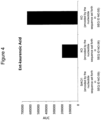
- genes (SEQ ID NO:55 or SEQ ID NO:56) encoding KO polypeptides in an S. cerevisiae steviol glycoside-producing strain also resulted in accumulation of ent-kaurenoic acid ( Figure 4 ).
- Expression of a gene encoding a codon-optimized KO polypeptide (SEQ ID NO:57) and a gene encoding the KO polypeptide set forth in SEQ ID NO:70 also resulted in accumulation of ent-kaurenoic acid.
- expression of SrKO1 (SEQ ID NO:59, SEQ ID NO:79) did not result in measurable levels of ent-kaurenoic acid.
- the KO polypeptides encoded by nucleotide sequences set forth in SEQ ID NOs: 55-57 more efficiently converted ent-kaurene, ent-kaurenol, and/or ent-kaurenal to ent-kaurenoic acid in S. cerevisiae, as compared to the SrKO1 polypeptide encoded by nucleotide sequence set forth in SEQ ID NO:59.
- KO genes were individually expressed in a steviol glycoside-producing S. cerevisiae strain.
- S. cerevisiae strain described in Example 2 which expresses SrKO1 (SEQ ID NO:59, SEQ ID NO:79), was modified to comprise overexpress SrKAHe1 (SEQ ID NO:18, SEQ ID NO:68).
- SrKO1 SEQ ID NO:59, SEQ ID NO:79
- SrKAHe1 SEQ ID NO:18, SEQ ID NO:68
- the coding sequences of the KO genes tested, as well as their corresponding amino acid sequences, are set forth in Table 2.
- the sequences set forth in SEQ ID NOs: 55, 57, 58, 59, and 60 were codon-optimized for expression in S. cerevisiae.
- Table 2 KO Genes Expressed in Steviol Glycoside-Producing S.
- S. cerevisiae strain expressing a codon-optimized version of SEQ ID NO:56, identified herein as SEQ ID NO:65, and overexpressing SrKAHe1 accumulated higher levels of steviol glycosides (RebA, RebD, and RebM) than the steviol glycoside-producing S. cerevisiae strain co-expressing the nucleic acid set forth in SEQ ID NO:56 and SrKAHe1 ( Figure 6 ).
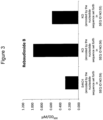
- S. cerevisiae strains co-expressing a nucleic acid set forth in SEQ ID NO:55, SEQ ID NO:56, SEQ ID NO:57, or SEQ ID NO:60 and further overexpressing SrKAHe1 accumulated higher levels of glycosylated ent-kaurenoic acid than the control S. cerevisiae strain not expressing a KO of Table 2 ( Figure 7 ).
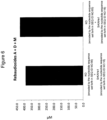
- S . cerevisiae strains co-expressing a nucleic acid set forth in SEQ ID NO:55, SEQ ID NO:56, SEQ ID NO:57, SEQ ID NO:59, or SEQ ID NO:60 and further overexpressing SrKAHe1 demonstrated improved metabolic conversion of intermediate compound, ent-kaurenol, which, in turn, resulted in reduced accumulation of glycosylated ent-kaurenol, relative to the control S. cerevisiae strain not expressing a KO of Table 2 or the steviol glycoside-producing S. cerevisiae strain only overexpressing SrKAHe1, as shown in Figure 8 .
- cerevisiae strain only overexpressing SrKAHe1 each accumulated higher levels of glycosylated ent-kaurenol than did S. cerevisiae strains expressing a nucleic acid set forth in SEQ ID NO:55, SEQ ID NO:56, SEQ ID NO:57, SEQ ID NO:59, or SEQ ID NO:60 and further overexpressing SrKAHe1.
- CPR genes were individually expressed in a steviol glycoside-producing S . cerevisiae strain.
- the coding sequences of the CPR genes tested, as well as their corresponding amino acid sequences, are set forth in Table 3.
- Table 3 CPR Genes Tested in Combination with CPR8 and ATR2.
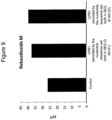
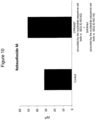
- cerevisiae strain expressing the nucleic acid set forth in SEQ ID NO:62 and overexpressing SrKAHe1 (SEQ ID NO:18, SEQ ID NO:68) accumulated higher levels of RebM than those accumulated by the control steviol glycoside-producing S. cerevisiae strain that only overexpressed SrKAHe1 ( Figure 10 ).
- Candidate KAH enzymes were cloned and expressed in an S. cerevisiae strain engineered to accumulate 13-SMG.
- the 13-SMG-producing S. cerevisiae strain comprised a recombinant gene encoding a Synechococcus sp. GGPPS7 polypeptide (SEQ ID NO:49), a recombinant gene encoding a truncated Z. mays CDPS polypeptide (SEQ ID NO:37), a recombinant gene encoding an A.
- thaliana KS polypeptide SEQ ID NO:6
- SrKO1 SEQ ID NO:59, SEQ ID NO:79
- CPR8 SEQ ID NO:24, SEQ ID NO:28
- the KO encoded by the nucleotide sequence set forth in SEQ ID NO:56 amino acid sequence set forth in SEQ ID NO:75
- UGT85C2 SEQ ID NO:30
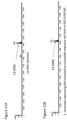
- Transformants were grown in SC-URA medium for 4 days and extracted with 1:1 with DMSO at 80°C for 10 min. The extracts were analyzed by LC-MS (method 2 of Example 1). S. cerevisiae transformed with the nucleic acid set forth in SEQ ID NO:80 accumulated 13-SMG ( Figure 11B ). Thus, the protein encoded by SEQ ID NO:80, set forth in SEQ ID NO:82, is a KAH.
- the KAH encoded by the nucleotide sequence set forth in SEQ ID NO:80 was codon-optimized for expression in yeast (SEQ ID NO:81) and expressed in the above-described 13-SMG-producing S. cerevisiae strain. Similar to expression of SrKAHe1 (SEQ ID NO:18) or the KAH encoded by the nucleotide sequence set forth in SEQ ID NO:80, expression of the codon-optimized nucleotide sequence set forth in SEQ ID NO:81 resulted in production of 13-SMG plus rubusoside ( Figure 13 ).
- the KAHs encoded by the nucleotide sequence set forth in SEQ ID NO:80 and the codon-optimized nucleotide sequence set forth in SEQ ID NO:81 were also individually expressed in a steviol glycoside-producing strain, as described in Example 2, which expresses SrKAHe1.
- SrKAHe1 SEQ ID NO:18
- the KAH encoded by the nucleotide sequence set forth in SEQ ID NO:80 or of the KAH encoded by the codon-optimized nucleotide sequence set forth in SEQ ID NO:81
- a control strain not expressing the KAH encoded by the nucleotide sequence set forth in SEQ ID NO:80, the KAH encoded by the codon-optimized nucleotide sequence set forth in SEQ ID NO:81 or overexpressing SrKAHe1. See Table 6.
- a nucleic acid of SEQ ID NO:90 which was codon-optimized for expression in S. cerevisiae and encodes the polypeptide of SEQ ID NO:91, was cloned and expressed in an S. cerevisiae strain described in Example 7, which was engineered to accumulate 13-SMG.
- the 13-SMG-producing S. cerevisiae strain comprised a recombinant gene encoding a Synechococcus sp. GGPPS7 polypeptide (SEQ ID NO:49), a recombinant gene encoding a truncated Z. mays COPS polypeptide (SEQ ID NO:37), a recombinant gene encoding an A.
- thaliana KS polypeptide SEQ ID NO:6
- SrKO1 SEQ ID NO:59, SEQ ID NO:79
- CPR8 SEQ ID NO:24, SEQ ID NO:28
- the KO encoded by the nucleotide sequence set forth in SEQ ID NO:56 amino acid sequence set forth in SEQ ID NO:75
- UGT85C2 SEQ ID NO:30
- Transformants were grown in SC-URA medium for 4 days and extracted 1:1 with DMSO at 80°C for 10 min. The extracts were analyzed by LC-MS (method 2 of Example 1).
- S. cerevisiae transformed with the nucleic acid set forth in SEQ ID NO:90 accumulated 13-SMG as well as rubusoside (Table 7).
- the protein encoded by the nucleic acid sequence of SEQ ID NO:90, set forth in SEQ ID NO:91 is a KAH.
- Table 7 Quantification of Steviol Glycosides Accumulated by Yeast Expressing the KAH encoded by the Nucleotide Sequence Set Forth in SEQ ID NO:90 (Amino Acid Sequence Set Forth in SEQ ID NO:91).
- 13-SMG ( ⁇ M) Rubusoside ( ⁇ M) KAH encoded by the nucleotide sequence set forth in SEQ ID NO:90
- CPR1 and CPR12 were measured using an in vitro microsomal assay.
- Microsomes were prepared by a modified version of the method taught by Pompon et al., "Yeast expression of animal and plant P450s in optimized redox environments," Methods Enzymol. 272:51-64 (1996 ). S. cerevisiae cells were sedimented for 10 min at 4°C.
- the pellets were washed with 10 mL TEK buffer (50 mM Tris-HCl (pH 7.5), 1 mM EDTA, 100 mM KCI.) The cells were sedimented again for 10 min at 4°C, and the pellets were resuspended in 1-3 mL of TES2 buffer (50 mM Tri-HCl (pH 7.5) 1 mM EDTA, 600 mM sorbitol). Glass beads (425-600 microns) were added to the samples, and the cells were broken vigorously by shaking and vortexing for 5 min at 4°C. The supernatant was collected, and the beads were washed several times with TES2 buffer.
- TES2 buffer 50 mM Tris-HCl (pH 7.5), 1 mM EDTA, 100 mM KCI.
- TES2 buffer 50 mM Tri-HCl (pH 7.5) 1 mM EDTA, 600 mM sorbitol. Glass beads
- the washes were combined with the supernatant, and the samples were centrifuged for 15 min at 4°C to remove unbroken cells and glass beads. Samples were then ultracentrifuged for 1 h at 4°C. The pellets were washed twice with TES buffer (50 mM Tris-HCl (pH 7.5), 1 mM EDTA, 600 mM sorbitol, 1% (w/V) BSA, 5 mM DTT), and once with TEG buffer (50 mM Tris-HCl (pH 7.5), 1 mM EDTA, 30% (V/V) glycerol). The samples were resuspended in 1-3 mL TEG, and the pellets were homogenized.
- TES buffer 50 mM Tris-HCl (pH 7.5), 1 mM EDTA, 600 mM sorbitol, 1% (w/V) BSA, 5 mM DTT
- TEG buffer 50 mM Tris
- Wild-type control microsomal protein was prepared as described above from wild-type S. cerevisiae cells that did not comprise a heterologous KAH or CPR.
- Microsomal protein was also prepared from S . cerevisiae cells expressing i) SrKAHe1 (SEQ ID NO:18, SEQ ID NO:68), ii) SrKAHe1 (SEQ ID NO:18, SEQ ID NO:68) and CPR1 (SEQ ID NO:61, SEQ ID NO:76), or iii) SrKAHe1 (SEQ ID NO:18, SEQ ID NO:68) and CPR12 (SEQ ID NO:97, SEQ ID NO:98) from a genetic construct integrated at the chromosome level.
- Microsomal protein from a steviol glycoside-producing strain was prepared from S . cerevisiae cells expressing the genes described in Example 2 and additionally comprising codon-optimized CPR1 from S. rebaudiana (SEQ ID NO:61 corresponding to amino acid sequence SEQ ID NO:76) as well as the KO encoded by SEQ ID NO:75).
- CPR1 and CPR12 activities were first determined using a cytochrome C reductase assay kit (Sigma-Aldrich; CY0100-1KT) to measure the ability of CPR1 or CPR12 to reduce cytochrome C in the presence of NADPH in vitro. Reduction of cytochrome C resulted in an increase in absorbance at 550 nm, which could quantified spectrophotometrically.
- Working solution was prepared by adding 9 mg cytochrome C to 20 mL assay buffer, and solution was stored at 25°C until use. NADPH was diluted in H 2 O to a concentration of 0.85 mg/mL.
- the enzymatic reactions were initiated by addition of NADPH, the samples were thoroughly mixed by pipetting, and absorbance was measured at 550 nm for 70 s with 10 s intervals between reads. Two independent rate measurements were taken for each microsomal preparation, and rates were averaged for calculation of specific activity. After the reactions were completed, results were normalized to protein concentration, which was measured using a standard BCA assay (Thermo Scientific).
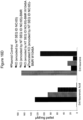
- Figure 14 shows the activity measurements of the i) SrKAHe1 (SEQ ID NO:18, SEQ ID NO:68), ii) SrKAHe1 (SEQ ID NO:18, SEQ ID NO:68) and CPR1 (SEQ ID NO:61, SEQ ID NO:76), and iii) SrKAHe1 (SEQ ID NO:18, SEQ ID NO:68) and CPR12 (SEQ ID NO:97, SEQ ID NO:98) microsomal samples.
- microsomal preparation from the wild-type control showed only minimal CPR activity, reflecting the low activity of native NCP1 (YHR042W).
- the microsomal preparation from a yeast strain overexpressing KAHe1 did not demonstrate an increase in CPR activity.
- microsomal preparation from strains expressing SrKAHe1 (SEQ ID NO:18, SEQ ID NO:68) and CPR1 (SEQ ID NO:61, SEQ ID NO:76) or SrKAHe1 (SEQ ID NO:18, SEQ ID NO:68) and CPR12 (SEQ ID NO:97, SEQ ID NO:98) demonstrated high CPR activity, with 7-and 14-fold higher activity, respectively, compared to the negative control ( Figure 14 ).
- microsomal reactions were extracted with DMSO (1:1) at 80°C for 10 min and submitted for LC-MS analysis after centrifugation.
- ent-kaurenoic acid quantification the microsomes reactions were extracted with acetonitrile 1:4 (20% microsomal reaction and 80% acetonitrile) at 80°C for 10 min and after centrifugation submitted for LC-MS analysis.
- the AUC values obtained for the ent-kaurenoic acid measurements were converted to concentrations using a standard curve.
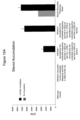
- microsomal protein prepared from an S. cerevisiae strain expressing SrKAHe1 (SEQ ID NO:18, SEQ ID NO:68) and either CPR1 (SEQ ID NO:61, SEQ ID NO:76) or CPR12 (SEQ ID NO:97, SEQ ID NO:98) converted ent-kaurenoic acid to steviol during the 30 minute incubation period.
- the steviol level shown in Figure 15A for the steviolglycoside-producing strain control (extracted immediately with no 30 min incubation period) corresponds to steviol that was accumulated by the strain prior to microsomal preparation and that had co-purified with the microsomes.
- ent-kaurenoic acid levels decreased upon incubation with microsomal protein prepared from S. cerevisiae strains expressing SrKAHe1 (SEQ ID NO:18, SEQ ID NO:68) alone or in combination with CPR1 (SEQ ID NO:61, SEQ ID NO:76) or CPR12 (SEQ ID NO:97, SEQ ID NO:98).
- the increased ent-kaurenoic acid levels shown in Figure 15B for the steviol glycoside-producing strain microsomal sample incubated for 30 min corresponds to ent-kaurenoic acid that was accumulated by the strain prior to microsomal preparation and to ent-kaurenoic acid accumulated from ent-kaurene that had co-purified with the microsomes.
- the levels of ent-kaurenoic acid shown in Figure 15B were corrected for the dilution factor used.
- Example 10 Steviol Glycoside Production in S. cerevisiae strains comprising Fusion Constructs between a KO and a P450 Reductase Domain
- CYP102A1 (also referred to as P450 BM3 ; SEQ ID NO:115, SEQ ID NO:116) is a catalytically self-sufficient soluble enzyme from Bacillus megatarium. See, e.g., Whitehouse et al., 2012, Chem Soc Rev. 41(3):1218-60 .
- Two domains are present in the CYP102A1 polypeptide chain: a P450 heme domain (BMP) and an NADPH-dependent P450 oxidoreductase domain (BMR).
- BMP P450 heme domain
- BMR NADPH-dependent P450 oxidoreductase domain
- CYP102A1 utilizes nearly 100% of the reducing power of NADPH to produce a monooxygenated product. See, e.g., Yuan et al., 2009, Biochemistry 48(38):9140-6 .
- BMR The BMR domain of CYP102A1
- SrKO1 SEQ ID NO:59, SEQ ID NO:79
- a linker SEQ ID NO:121, SEQ ID NO:122
- SrKO1 (SEQ ID NO:59, SEQ ID NO:79) and the KO encoded by the nucleotide sequence set forth in SEQ ID NO:65 were also truncated prior to fusion with the BMR domain of CYP102A1; these truncations were predicted by bioinformatics to result in loss of membrane anchors of the KO genes and in cytosolic versions of the KO-BMR fusion constructs.
- the KO-BMR fusion constructs analyzed are shown in Table 8.
- Table 8 KO-BMR fusion constructs and sequences.
- KO-BMR fusion constructs were cloned and transformed in the RebB-producing strain described in Example 2, which was modified to not comprise any additional KO genes.
- steviol glycosides including 13-SMG, 1,2-bioside, and RebB, were only accumulated upon expression of a functional KO.
- Three scrapes (1 ⁇ L loop of cells) from each transformation plate were resuspended in 200 ⁇ l nanopure H 2 O. 70 ⁇ L were then transferred to 1 mL SC-URA in a 96 deep well plate and incubated at 30°C for 5 days at 400 rpm.
- Biological triplicates were analyzed by LC-MS (method 2 of Example 1) to measure 13-SMG, 1,2-bioside, and RebB levels, and single samples were analyzed by LC-UV to measure ent-kaurene and ent-kaurenoic acid levels.
- LC-MS For LC-MS, 50 ⁇ L samples were mixed with 50 ⁇ L 100% DMSO and heated to 80°C for 10 min. Subsequently, the samples were spun down at 4000 RCF for 10 min, and 85 ⁇ L of the resulting supernatant was transferred to an LC-MS plate. The LC-MS results were normalized by OD 600 of individual cultures, which was measured by a Wallac, 2104 EnVision (Perkin Elmer) plate reader.
- LC-UV was conducted with an Agilent 1290 instrument comprising a variable wavelength detector (VWD), a thermostatted column compartment (TCC), an autosampler, an autosampler cooling unit, and a binary pump and using SB-C18 rapid resolution high definition (RRHD) 2.1 mm x 300 mm, 1.8 ⁇ m analytical columns (two 150 mm columns in series; column temperature of 65°C).
- VWD variable wavelength detector
- TCC thermostatted column compartment
- RRHD rapid resolution high definition
- Steviol glycosides and steviol glycoside precursors were separated by a reversed phase C18 column followed by detection by UV absorbance at 210 mm. Quantification of steviol glycosides was done by comparing the peak area of each analyte to standards of RebA and applying a correction factor for species with differing molar absorptivities.
- steviol glycoside precursors such as kaurenoic acid, kaurenal, kaurenol, ent-kaurene, and geranylgeraniol
- steviol glycoside precursors such as kaurenoic acid, kaurenal, kaurenol, ent-kaurene, and geranylgeraniol
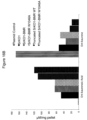
- the S . cerevisiae strain transformed with empty plasmid accumulated ent-kaurene. Transformation with a plasmid comprising SrKO1 (SEQ ID NO:59, SEQ ID NO:79) or with a plasmid comprising the KO gene having the nucleotide sequence set forth in SEQ ID NO:65 resulted in accumulation of 13-SMG, 1,2-bioside, and RebB ( Figures 16A and 186C).
- a fusion construct comprising the KO encoded by the nucleotide sequence set forth in SEQ ID NO:65 and the wild type BMR (SEQ ID NO:107, SEQ ID NO:108) resulted in greater conversion of ent-kaurenoic acid to 13-SMG, compared to the KO encoded by the nucleotide sequence set forth in SEQ ID NO:65 ( Figure 16C ).
- a fusion construct comprising the KO encoded by the nucleotide sequence set forth in SEQ ID NO:65 and the W1046A mutant BMR (SEQ ID NO:109, SEQ ID NO:110) resulted in decreases in ent-kaurenoic acid levels but glycosylation activity similar to that of the KO encoded by the nucleotide sequence set forth in SEQ ID NO:65 ( Figure 16C ).
- ICE2 is an endoplasmic reticulum (ER) membrane protein involved in mechanisms such as ER zinc homeostasis and cytochrome P450 stability and/or activity. See, e.g., Estrada de Martin et al., 2005, J Cell Sci. 118(Pt 1):65-77 and Emmerstorfer et al., 2015, Biotechnol J. 10(4):623-35 .
- ICE2 (SEQ ID NO:113, SEQ ID NO:114) was cloned and overexpressed in a steviol glycoside-producing S . cerevisiae strain comprising a recombinant gene encoding a Synechococcus sp.
- GGPPS polypeptide (SEQ ID NO:49), a recombinant gene encoding a truncated Z . mays CDPS polypeptide (SEQ ID NO:37), a recombinant gene encoding an A. thaliana KS polypeptide (SEQ ID NO:6), a recombinant gene encoding a recombinant S. rebaudiana KO polypeptide (SEQ ID NO:59, SEQ ID NO:79), a recombinant gene encoding an A.
- thaliana ATR2 polypeptide (SEQ ID NO:51, SEQ ID NO:87), a recombinant gene encoding an SrKAHe1 (SEQ ID NO:18, SEQ ID NO:68) polypeptide, a recombinant gene encoding an S .
- rebaudiana CPR8 polypeptide (SEQ ID NO:24, SEQ ID NO:28), a recombinant KAH gene encoded by the nucleotide sequence set forth in SEQ ID NO:81 (corresponding to the amino acid sequence set forth in SEQ ID NO:82), a recombinant KO gene encoded by the nucleotide sequence set forth in SEQ ID NO:56 (corresponding to the amino acid sequence set forth in SEQ ID NO:75), a recombinant KO gene encoded by the nucleotide sequence set forth in SEQ ID NO:65 (corresponding to the amino acid sequence set forth in SEQ ID NO:75), a recombinant gene encoding a UGT76G1 (SEQ ID NO:83) polypeptide, a recombinant gene encoding an S.
- SEQ ID NO:24, SEQ ID NO:28 a recombinant KAH gene encoded by the nucleotide sequence set forth in SEQ ID NO:81 (corresponding
- rebaudiana UGT85C2 polypeptide (SEQ ID NO:30), a recombinant gene encoding an S. rebaudiana UGT74G1 polypeptide (SEQ ID NO:29), a recombinant gene encoding an EUGT11 (SEQ ID NO:86) polypeptide, a recombinant gene encoding a UGT91D2e (SEQ ID NO:84) polypeptide, and a recombinant gene encoding a CPR1 (SEQ ID NO:61, SEQ ID NO:76) polypeptide.
- Table 9 shows additional recombinant genes (ICE2 and/or CPR12) expressed in the above-described strain.
- the control strain did not comprise recombinant genes encoding ICE2 (SEQ ID NO:113, SEQ ID NO:114) or CPR12 (SEQ ID NO:97, SEQ ID NO:98) polypeptides.
- Table 9 ICE2 steviol glycoside-producing strains.
- ICE2 "strain A” ICE2 (SEQ ID NO:113, SEQ ID NO:114) Overexpressed CPR1 (SEQ ID NO:61, SEQ ID NO:76)
- ICE2 "strain B” ICE2 (SEQ ID NO:113, SEQ ID NO:114) (2 copies)
- ICE2 "strain C” ICE2 (SEQ ID NO:113, SEQ ID NO:114) CPR12 (SEQ ID NO:97, SEQ ID NO:98)
- Fed-batch fermentation was carried out aerobically in 2 L fermenters at 30°C with an approximate 16 h growth phase in minimal medium comprising glucose, ammonium sulfate, trace metals, vitamins, salts, and buffer followed by an approximate 110 h feeding phase with a glucose-comprising defined feed medium.
- a pH near 6.0 and glucose-limiting conditions were maintained.
- Whole culture samples (without cell removal) were analysed by the LC-UV method of Example 10 to determine levels of steviol glycosides and steviol pathway intermediates.
- Total Flux was calculated as a sum (in g/L RebD equivalents) of measured RebA, RebB, RebD, RebE, RebM, 13-SMG, rubusoside, steviol-1,2-bioside, di-glycosylated steviol, tri-glycosylated steviol, tetra-glycosylated steviol, penta-glycosylated steviol, hexa-glycosylated steviol, hepta-glycosylated steviol, copalol, ent-kaurenoic acid, glycosylated ent-kaurenoic acid, glycosylated ent-kaurenol, ent-kaurenal, geranylgeraniol, ent-kaurenal, and ent-kaurene levels.
- Pre-steviol glycoside/flux was calculated as (("total flux” - (geranylgeraniol + copalol + ent-kaurene + glycosylated ent-kaurenol + ent-kaurenol + ent-kaurenal + ent-kaurenoic acid + glycosylated ent-kaurenoic acid) / "total flux”).
- KAH step/flux was calculated as ((ent-kaurenoic acid + glycosylated ent-kaurenoic acid) / "total flux”).
- KAH step/flux was calculated as ((ent-kaurene + glycosylated ent-kaurenol + ent-kaurenol + ent-kaurenal) / "total flux”).
- the pre-steviol glycoside/flux, KO step/flux, and KAH step/flux values are shown in Table 10 below. Decreased amounts of ent-kaurene, ent-kaurenol, ent-kaurenal, glycosylated ent-kaurenol and increased amounts of ent-kaurenoic acid and glycosylated ent-kaurenoic acid were observed in the strains comprising ICE2, as compared to the control steviol glycoside-producing strain. These effects were stronger in the presence of CPR1 and/or CPR12 (Table 10).
- ICE2 strain B Overexpression of two copies of ICE2 (ICE2 strain B) resulted decreased ent-kaurene, ent-kaurenol, ent-kaurenal, and ent-kaurenol glycoside levels and increased steviol glycoside levels, compared to the control strain, ICE2 strain A, or ICE2 strain C (Table 10). Steviol glycoside levels increased most in the steviol glycoside-producing strain comprising two copies of ICE2. Thus, ICE2 was found to improve cytochrome P450 function. Table 10: Pre-steviol glycoside/flux, KO step/flux, and KAH step/flux values for steviol glycoside-producing strains comprising ICE2.
- Steviol glycoside-producing S . cerevisiae strains comprising a recombinant gene encoding a Synechococcus sp. GGPPS polypeptide (SEQ ID NO:49), a recombinant gene encoding a truncated Z . mays CDPS polypeptide (SEQ ID NO:37), a recombinant gene encoding an A . thaliana KS polypeptide (SEQ ID NO:6), a recombinant gene encoding a recombinant S . rebaudiana KO polypeptide (SEQ ID NO:59, SEQ ID NO:79), a recombinant gene encoding an A.
- thaliana ATR2 polypeptide (SEQ ID NO:51, SEQ ID NO:87), a recombinant gene encoding an SrKAHe1 (SEQ ID NO:18, SEQ ID NO:68) polypeptide, a recombinant gene encoding an S.
- rebaudiana UGT85C2 (SEQ ID NO:30) polypeptide, a recombinant gene encoding an S . rebaudiana UGT74G1 (SEQ ID NO:29) polypeptide, a recombinant gene encoding a UGT91D2e-b polypeptide (SEQ ID NO:88), and a recombinant gene encoding an EUGT11 (SEQ ID NO:86) polypeptide, as well as the recombinant genes shown in Table 11, which were genomically integrated into the strains, were cultivated by fermentation. Levels of steviol glycosides and steviol glycoside precursors were measured by LC-UV as described in Example 11.
- Example 12 The pre-KO/flux, pre-KAH/flux, pre-steviol glycoside/flux values were calculated as described in Example 11. Table 11: Recombinant genes also expressed in steviol glycoside-producing S. cerevisiae strain in Example 12.
- Strain Genes Example 12, Strain A KO encoded by nucleotide sequence set forth in SEQ ID NO:56 (corresponding to amino acid sequence set forth in SEQ ID NO:75)
- Strain B KAH encoded by nucleotide sequence set forth in SEQ ID NO:80 (corresponding to amino acid sequence set forth in SEQ ID NO:82) KO encoded by nucleotide sequence set forth in SEQ ID NO:56 (corresponding to amino acid sequence set forth in SEQ ID NO:75)
- KO encoded by nucleotide sequence set forth in SEQ ID NO:65 (corresponding to amino acid sequence set forth in SEQ ID NO:75)
- Strain C CPR12 SEQ ID NO:97, SEQ ID NO:98) KAH encoded by nu
- the pre-steviol glycoside/flux, KO step/flux, and KAH step/flux values are shown in Table 12 below.
- strain A the KO encoded by nucleotide sequence set forth in SEQ ID NO:56
- strain A lower accumulation of ent-kaurene, ent-kaurenol, ent-kaurnal, and ent-kaurenol glycosides resulted.
- Higher levels of ent-kaurenoic acid and steviol glycosides were also measured, as compared to the control strain.
- strain B In the strain comprising the KAH encoded by nucleotide sequence set forth in SEQ ID NO:80, the KO encoded by nucleotide sequence set forth in SEQ ID NO:56 (corresponding to amino acid sequence set forth in SEQ ID NO:75), and the KO encoded by nucleotide sequence set forth in SEQ ID NO:65 (strain B), ent-kaurene, ent-kaurenol, ent-kaurenal, ent-kaurenol glycosides, and ent-kaurenoic acid accumulation decreased and accumulation of steviol glycosides increased, as compared to the control strain.
- CPR12 SEQ ID NO:97, SEQ ID NO:98
- the KAH encoded by nucleotide sequence set forth in SEQ ID NO:80 and the KO encoded by nucleotide sequence set forth in SEQ ID NO:56
- ent-kaurenol, ent-kaurenal, ent-kaurenol glycosides, and ent-kaurenoic acid accumulation decreased and accumulation of steviol glycosides increased, as compared to the control. See Table 12.
- CPR12 was found to be a reductase protein that improves KAH and/or KO activity. Table 12.
- Strain Pre-Steviol Glycoside/Flux KO step/Flux KAH step/Flux Example 12 Strain A 0.48 0.28 0.22 Example 12, Strain B 0.64 0.18 0.12 Example 12, Strain C 0.55 0.24 0.12 Control 0.40 0.43 0.17
Landscapes
- Chemical & Material Sciences (AREA)
- Life Sciences & Earth Sciences (AREA)
- Health & Medical Sciences (AREA)
- Organic Chemistry (AREA)
- Engineering & Computer Science (AREA)
- Genetics & Genomics (AREA)
- Wood Science & Technology (AREA)
- Zoology (AREA)
- Bioinformatics & Cheminformatics (AREA)
- General Engineering & Computer Science (AREA)
- General Health & Medical Sciences (AREA)
- Biochemistry (AREA)
- Biotechnology (AREA)
- Molecular Biology (AREA)
- Biomedical Technology (AREA)
- Microbiology (AREA)
- Medicinal Chemistry (AREA)
- Chemical Kinetics & Catalysis (AREA)
- General Chemical & Material Sciences (AREA)
- Physics & Mathematics (AREA)
- Biophysics (AREA)
- Plant Pathology (AREA)
- Nutrition Science (AREA)
- Proteomics, Peptides & Aminoacids (AREA)
- Food Science & Technology (AREA)
- Polymers & Plastics (AREA)
- Preparation Of Compounds By Using Micro-Organisms (AREA)
- Micro-Organisms Or Cultivation Processes Thereof (AREA)
- Saccharide Compounds (AREA)
- Seasonings (AREA)
- Enzymes And Modification Thereof (AREA)
Claims (12)
- Rekombinanter Wirt, der einen Steviolglycosid-Vorläufer oder ein Steviol in einer Zellkultur produzieren kann, der Folgendes umfasst:(a) ein Gen, das ein Polypeptid der Geranylgeranylpyrophosphat-Synthase (GGPPS) kodiert, das ein Polypeptid umfasst, das mindestens 70 % Sequenzidentität mit der Aminosäuresequenz aufweist, die in SEQ.-ID Nr. 49 dargelegt ist;(b) ein Gen, das ein Polypeptid der ent-Copalyldiphosphat-Synthase (CDPS) kodiert, das ein Polypeptid umfasst, das mindestens 70 % Sequenzidentität mit der Aminosäuresequenz aufweist, die in SEQ.-ID Nr. 37 dargelegt ist; und(c) ein Gen, das ein Polypeptid der ent-Kauren-Synthase (KS) kodiert, das ein Polypeptid umfasst, das die Aminosäuresequenz aufweist, die in SEQ.-ID Nr. 6 dargelegt ist;und der weiter Folgendes umfasst:(d) ein Gen, das ein Polypeptid der ent-Kauren-Oxidase (KO) kodiert, das ein Polypeptid umfasst, das mindestens 60 % Sequenzidentität mit der Aminosäuresequenz aufweist, die in SEQ.-ID Nr. 75 dargelegt ist;(e) ein Gen, das ein Polypeptid der Cytochrom-P450-Reduktase (CPR) kodiert, das ein Polypeptid umfasst, das mindestens 65 % Sequenzidentität mit den Aminosäuresequenzen aufweist, die in SEQ.-ID Nr. 28 dargelegt sind;(f) ein Gen, das ein Polypeptid der ent-Kaurensäure-Hydroxylase (KAH) kodiert, das ein Polypeptid umfasst, das mindestens 60 % Sequenzidentität mit der Aminosäuresequenz aufweist, die in SEQ.-ID Nr. 68 dargelegt ist; und(g) ein Gen, das ein Polypeptid kodiert, das Steviol aus ent-Kaurensäure synthetisieren kann, das ein Polypeptid umfasst, das durch die Nukleotidsequenz kodiert wird, die in SEQ.-ID Nr. 80 oder 81 dargelegt ist, wobei das Polypeptid, das durch die Nukleotidsequenz kodiert wird, die in SEQ.-ID Nr. 80 oder 81 dargelegt ist, ein Polypeptid der ent-Kaurensäure-Hydroxylase (KAH) ist und eine Aminosäuresequenz aufweist, die in SEQ.-ID Nr. 82 dargelegt ist.
- Rekombinanter Wirt nach Anspruch 1, wobei der Wirt weiter ein Gen umfasst, das ein Polypeptid der Membran des endoplasmatischen Retikulums kodiert.
- Rekombinanter Wirt nach Anspruch 2, wobei das Polypeptid der Membran des endoplasmatischen Retikulums ein Polypeptid des Inheritance of Cortical ER Protein 2 (ICE2) umfasst, das die Aminosäuresequenz aufweist, die in SEQ.-ID Nr. 114 dargelegt ist.
- Rekombinanter Wirt nach einem der Ansprüche 1-3, wobei das Polypeptid der ent-Kauren-Oxidase (KO) durch die Verbindung von zwei oder mehr Genen konstruiert wird, die unterschiedliche Proteine kodieren.
- Rekombinanter Wirt nach Anspruch 4, wobei das KO-Polypeptid ein Polypeptid umfasst, das eine Aminosäuresequenz aufweist, die in SEQ.-ID Nr. 118 oder SEQ.-ID Nr. 120 dargelegt ist, oder das die Aminosäuresequenz aufweist, die in SEQ.-ID Nr. 100, SEQ.-ID Nr. 102, SEQ.-ID Nr. 104, SEQ.-ID Nr. 106, SEQ.-ID Nr. 108, SEQ.-ID Nr. 110 oder SEQ.-ID Nr. 112 dargelegt ist.
- Rekombinanter Wirt nach einem der Ansprüche 1-5, der weiter Folgendes umfasst:(a) ein Gen, das ein Polypeptid kodiert, das Steviol oder ein Steviolglycosid an dessen C-13-Hydroxylgruppe davon glycosylieren kann, das ein Polypeptid umfasst, das die Aminosäuresequenz aufweist, die in SEQ.-ID Nr. 30 dargelegt ist;(b) ein Gen, das ein Polypeptid kodiert, das die beta-1,3-Glycosylierung des C3' der 13-O-Glucose, 19-O-Glucose oder von sowohl 13-O-Glucose als auch 19-O-Glucose eines Steviolglycosids ausführen kann, das ein Polypeptid umfasst, das die Aminosäuresequenz aufweist, die in SEQ.-ID Nr. 83 dargelegt ist;(c) ein Gen, das ein Polypeptid kodiert, das Steviol oder ein Steviolglycosid an dessen C-19-Carboxylgruppe davon glycosylieren kann, das ein Polypeptid umfasst, das die Aminosäuresequenz aufweist, die in SEQ.-ID Nr. 29 dargelegt ist; und/oder(d) ein Gen, das ein Polypeptid kodiert, das die beta-1,2-Glycosylierung des C2' der 13-O-Glucose, 19-O-Glucose oder von sowohl 13-O-Glucose als auch 19-O-Glucose eines Steviolglycosids ausführen kann, das ein Polypeptid umfasst, das mindestens 90 % Sequenzidentität mit der Aminosäuresequenz aufweist, die in SEQ.-ID Nr. 84 oder SEQ.-ID Nr. 88 dargelegt ist;wobei mindestens eines der Gene ein rekombinantes Gen ist; undwobei der Wirt ein oder mehrere Steviolycoside produzieren kann.
- Rekombinanter Wirt nach einem der Ansprüche 1-6, wobei der rekombinante Wirt eine Pflanzenzelle, eine Säugerzelle, eine Insektenzelle, eine Pilzzelle oder eine Bakterienzelle umfasst;wobei die Bakterienzelle Folgendes umfasst: Escherichia-Bakterienzellen, Lactobacillus-Bakterienzellen, Lactococcus-Bakterienzellen, Corynebacterium-Bakterienzellen, Acetobacter-Bakterienzellen, Acinetobacter-Bakterienzellen oder Pseudomonas-Bakterienzellen;wobei die Pilzzelle eine Hefezelle umfasst;wobei die Hefezelle eine Zelle aus folgenden Spezies ist: Saccharomyces cerevisiae, Schizosaccharomyces pombe, Yarrowia lipolytica, Candida glabrata, Ashbya gossypii, Cyberlindnera jadinii, Pichia pastoris, Kluyveromyces lactis, Hansenula polymorpha, Candida boidinii, Arxula adeninivorans, Xanthophyllomyces dendrorhous oder Candida albicans; oderwobei die Hefezelle eine Saccharomycete ist.
- Verfahren zur Produktion eines Steviolglycosid-Vorläufers, eines Steviols oder eines oder mehrerer Steviolglycoside, das die Kultivierung des rekombinanten Wirts nach einem der Ansprüche 1-7 in der Zellkultur unter Bedingungen umfasst, unter denen die Gene exprimiert werden, und wobei der Steviolglycosid-Vorläufer, das Steviol oder das eine oder die mehreren Steviolglycoside durch den rekombinanten Wirt produziert werden.
- Verfahren nach Anspruch 8, wobei das eine oder die mehreren Steviolglycoside Folgendes umfassen: Steviol-13-O-glucosid (13-SMG), Steviol-1,2-biosid, Steviol-1,3-biosid, Steviol-19-O-glucosid (19-SMG), Steviosid, 1,3-Steviosid, Rubusosid, Rebaudiosid A (RebA), Rebaudiosid B (RebB), Rebaudiosid C (RebC), Rebaudiosid D (RebD), Rebaudiosid E (RebE), Rebaudiosid F (RebF), Rebaudiosid M (RebM), Rebaudiosid Q (RebQ), Rebaudiosid I (RebI), Dulcosid A, diglycosyliertes Steviol, triglycosyliertes Steviol, tetraglycosyliertes Steviol, pentaglycosyliertes Steviol, hexaglycosyliertes Steviol, heptaglycosyliertes Steviol oder Isomere davon.
- Verfahren nach Anspruch 8, wobei der rekombinante Wirt in einem Fermenter bei einer Temperatur für eine Zeitdauer gezüchtet wird, wobei die Temperatur und Zeitdauer die Produktion des Steviolglycosid-Vorläufers, des Steviols oder des einen oder der mehreren Steviolglycoside ermöglichen.
- Verfahren nach Anspruch 8, das weiter das Isolieren des produzierten Steviolglycosid-Vorläufers, des Steviols oder des einen oder der mehreren Steviolglycoside aus der Zellkultur umfasst;wobei der Isolierungsschritt das Abtrennen einer flüssigen Phase der Zellkultur von einer festen Phase der Zellkultur umfasst, um einen Überstand zu erhalten, der den produzierten Steviolglycosid-Vorläufer, das Steviol oder das eine oder die mehreren Steviolglycoside umfasst, und:(a) Inkontaktbringen des Überstands mit einer oder mehreren Ionenaustausch- oder Umkehrphasen-Chromatographie-Säulen, um zumindest einen Teil des produzierten Steviolglycosid-Vorläufers, des Steviols oder des einen oder der mehreren Steviolglycoside zu erhalten; oder(b) Extrahieren des produzierten Steviolglycosid-Vorläufers, des Steviols oder des einen oder der mehreren Steviolglycoside;wodurch der produzierte Steviolglycosid-Vorläufer, das Steviol oder das eine oder die mehreren Steviolglycoside isoliert werden.
- Verfahren nach Anspruch 8, das weiter das Gewinnen des produzierten Steviolglycosid-Vorläufers, des Steviols oder des einen oder der mehreren Steviolglycoside aus der Zellkultur umfasst;
wobei eine Zusammensetzung, die das/die gewonnene/n eine oder mehreren Steviolglycoside umfasst, bezüglich Rebaudiosid M angereichert ist, in Bezug auf eine Steviolglycosidzusammensetzung einer Stevia-Pflanze, und eine verringerte Höhe von aus Stevia-Pflanze stammenden Komponenten, in Bezug auf eine Steviolglycosidzusammensetzung, die aus einem pflanzlichen Stevia-Extrakt erhalten wird, aufweist.
Priority Applications (1)
| Application Number | Priority Date | Filing Date | Title |
|---|---|---|---|
| EP25162762.6A EP4592304A3 (de) | 2014-09-09 | 2015-09-09 | Erzeugung von steviolglycosiden in rekombinanten wirten |
Applications Claiming Priority (5)
| Application Number | Priority Date | Filing Date | Title |
|---|---|---|---|
| US201462048178P | 2014-09-09 | 2014-09-09 | |
| US201562103547P | 2015-01-14 | 2015-01-14 | |
| US201562117396P | 2015-02-17 | 2015-02-17 | |
| US201562148585P | 2015-04-16 | 2015-04-16 | |
| PCT/EP2015/070620 WO2016038095A2 (en) | 2014-09-09 | 2015-09-09 | Production of steviol glycosides in recombinant hosts |
Related Child Applications (1)
| Application Number | Title | Priority Date | Filing Date |
|---|---|---|---|
| EP25162762.6A Division EP4592304A3 (de) | 2014-09-09 | 2015-09-09 | Erzeugung von steviolglycosiden in rekombinanten wirten |
Publications (2)
| Publication Number | Publication Date |
|---|---|
| EP3190905A2 EP3190905A2 (de) | 2017-07-19 |
| EP3190905B1 true EP3190905B1 (de) | 2025-03-12 |
Family
ID=54072842
Family Applications (2)
| Application Number | Title | Priority Date | Filing Date |
|---|---|---|---|
| EP25162762.6A Pending EP4592304A3 (de) | 2014-09-09 | 2015-09-09 | Erzeugung von steviolglycosiden in rekombinanten wirten |
| EP15762581.5A Active EP3190905B1 (de) | 2014-09-09 | 2015-09-09 | Erzeugung von steviolglycosiden in rekombinanten wirten |
Family Applications Before (1)
| Application Number | Title | Priority Date | Filing Date |
|---|---|---|---|
| EP25162762.6A Pending EP4592304A3 (de) | 2014-09-09 | 2015-09-09 | Erzeugung von steviolglycosiden in rekombinanten wirten |
Country Status (12)
| Country | Link |
|---|---|
| US (3) | US10612064B2 (de) |
| EP (2) | EP4592304A3 (de) |
| JP (1) | JP2017528134A (de) |
| KR (1) | KR20170052647A (de) |
| CN (1) | CN107109358B (de) |
| AU (2) | AU2015314251A1 (de) |
| BR (1) | BR112017004712B1 (de) |
| CA (1) | CA2960693A1 (de) |
| MX (1) | MX2017003130A (de) |
| MY (1) | MY191735A (de) |
| SG (2) | SG10201901957SA (de) |
| WO (1) | WO2016038095A2 (de) |
Families Citing this family (34)
| Publication number | Priority date | Publication date | Assignee | Title |
|---|---|---|---|---|
| EP2575432B1 (de) | 2010-06-02 | 2019-08-14 | Evolva, Inc. | Rekombinante herstellung von steviol-glycosiden |
| CA3128532A1 (en) | 2011-08-08 | 2013-02-14 | Evolva Sa | Recombinant production of steviol glycosides |
| MY199452A (en) | 2013-02-06 | 2023-10-30 | Evolva Sa | Methods for improved production of rebaudioside d and rebaudioside m |
| BR112015019160A2 (pt) | 2013-02-11 | 2017-08-22 | Dalgaard Mikkelsen Michael | Produção de glicosídeos de esteviol em hospedeiros recombinantes |
| CA2957331A1 (en) | 2014-08-11 | 2016-02-18 | Evolva Sa | Production of steviol glycosides in recombinant hosts |
| CA2960693A1 (en) | 2014-09-09 | 2016-03-17 | Evolva Sa | Production of steviol glycosides in recombinant hosts |
| EP3250686A1 (de) | 2015-01-30 | 2017-12-06 | Evolva SA | Erzeugung von steviolglycosiden in rekombinanten wirten |
| WO2016146711A1 (en) | 2015-03-16 | 2016-09-22 | Dsm Ip Assets B.V. | Udp-glycosyltransferases |
| CN107666834B (zh) | 2015-04-03 | 2021-08-24 | 帝斯曼知识产权资产管理有限公司 | 甜菊醇糖苷 |
| MX2018001620A (es) | 2015-08-07 | 2018-06-11 | Evolva Sa | Produccion de glucosidos de esteviol en hospedadores recombinantes. |
| CN108138152B (zh) | 2015-10-05 | 2023-01-06 | 帝斯曼知识产权资产管理有限公司 | 贝壳杉烯酸羟化酶 |
| WO2017153538A1 (en) * | 2016-03-11 | 2017-09-14 | Evolva Sa | Production of steviol glycosides in recombinant hosts |
| US10982249B2 (en) * | 2016-04-13 | 2021-04-20 | Evolva Sa | Production of steviol glycosides in recombinant hosts |
| WO2017198681A1 (en) * | 2016-05-16 | 2017-11-23 | Evolva Sa | Production of steviol glycosides in recombinant hosts |
| EP3458599A1 (de) | 2016-05-16 | 2019-03-27 | Evolva SA | Herstellung von steviolglycosiden in rekombinanten wirten |
| PT3497222T (pt) | 2016-08-12 | 2022-02-09 | Amyris Inc | Glicosiltransferase dependente de udp para produção de eficácia elevada de rebaudiosídeos |
| WO2018083338A1 (en) * | 2016-11-07 | 2018-05-11 | Evolva Sa | Production of steviol glycosides in recombinant hosts |
| KR102905512B1 (ko) | 2017-02-03 | 2025-12-29 | 테이트 앤드 라일 솔루션스 유에스에이 엘엘씨 | 조작된 글리코실트랜스퍼라제 및 스테비올 글리코시드 글루코실화 방법 |
| CA3071029A1 (en) | 2017-08-11 | 2019-02-14 | Amyris, Inc. | Pisum sativum kaurene oxidase for high efficiency production of rebaudiosides |
| WO2019055325A2 (en) | 2017-09-12 | 2019-03-21 | Biocapital Holdings, Llc | BIOOGICAL DEVICES AND METHODS OF USING THE SAME TO PRODUCE STEVIOL GLYCOSIDES |
| BR112020009838A2 (pt) * | 2017-12-05 | 2020-11-17 | Evolva Sa | produção de glicosídeos de esteviol em hospedeiros recombinantes |
| SG11202007273WA (en) | 2018-01-31 | 2020-08-28 | Univ Michigan Regents | Biocatalyst and methods for synthesizing mixed disulfide conjugates of thienopyridine compounds |
| IL280302B2 (en) | 2018-07-30 | 2025-09-01 | Codexis Inc | Engineered glycosyltransferases and methods for glycosylation of steviol glycoside |
| CA3114953A1 (en) | 2018-10-15 | 2020-04-23 | Amyris, Inc. | Stevia rebaudiana kaurenoic acid hydroxylase variants for high efficiency production of rebaudiosides |
| EP3877519B1 (de) | 2018-11-09 | 2026-03-11 | Ginkgo Bioworks, Inc. | Biosynthese von mogrosiden |
| SG11202107656TA (en) | 2019-01-24 | 2021-08-30 | Amyris Inc | Abc transporters for the high efficiency production of rebaudiosides |
| MX2021013124A (es) * | 2019-05-03 | 2022-01-24 | Amyris Inc | Variantes del ácido kaurenoico 13-hidroxilasa (kah) y usos del mismo. |
| US12065685B1 (en) | 2019-05-13 | 2024-08-20 | Amyris, Inc. | UDP-glycosyltransferase variants and uses thereof |
| US20250290081A1 (en) * | 2020-10-22 | 2025-09-18 | Dsm Ip Assets B.V. | Microorganisms for diterpene production |
| CN112778408B (zh) * | 2021-03-02 | 2023-04-28 | 中国热带农业科学院橡胶研究所 | 橡胶树转录因子HbICE2及其编码基因与应用 |
| CN114561310B (zh) * | 2022-03-17 | 2022-12-02 | 江南大学 | 一种生产甜茶苷的酿酒酵母及其应用 |
| WO2024042405A1 (en) | 2022-08-26 | 2024-02-29 | Amyris Bio Products Portugal, Unipessoal, Ltda. | Compositions and methods for the synthesis of bio-based polymers |
| WO2024042486A1 (en) | 2022-08-26 | 2024-02-29 | Amyris Bio Products Portugal, Unipessoal, Ltda. | Compositions and methods for the production of polyurethanes |
| WO2024116153A1 (en) | 2022-12-02 | 2024-06-06 | Amyris Bio Products Portugal, Unipessoal, Ltda. | Compositions and methods for using previously cultured cells |
Family Cites Families (150)
| Publication number | Priority date | Publication date | Assignee | Title |
|---|---|---|---|---|
| JPS58149697A (ja) | 1982-02-27 | 1983-09-06 | Dainippon Ink & Chem Inc | β−1,3グリコシルステビオシドの製造方法 |
| JPS59101408A (ja) | 1982-12-02 | 1984-06-12 | Junichi Iwamura | 植物生長調整剤 |
| US5198360A (en) | 1990-01-19 | 1993-03-30 | Eli Lilly And Company | Dna sequence conferring a plaque inhibition phenotype |
| US5484956A (en) | 1990-01-22 | 1996-01-16 | Dekalb Genetics Corporation | Fertile transgenic Zea mays plant comprising heterologous DNA encoding Bacillus thuringiensis endotoxin |
| US6946587B1 (en) | 1990-01-22 | 2005-09-20 | Dekalb Genetics Corporation | Method for preparing fertile transgenic corn plants |
| JPH03277275A (ja) | 1990-03-28 | 1991-12-09 | Dainippon Ink & Chem Inc | 新規酵素及びその酵素を用いた配糖体の製造方法 |
| US5204253A (en) | 1990-05-29 | 1993-04-20 | E. I. Du Pont De Nemours And Company | Method and apparatus for introducing biological substances into living cells |
| US5306862A (en) | 1990-10-12 | 1994-04-26 | Amoco Corporation | Method and composition for increasing sterol accumulation in higher plants |
| US5460949A (en) | 1990-11-15 | 1995-10-24 | Amoco Corporation | Method and composition for increasing the accumulation of squalene and specific sterols in yeast |
| US5712112A (en) | 1992-11-04 | 1998-01-27 | National Science Council Of R.O.C. | Gene expression system comprising the promoter region of the alpha-amylase genes |
| WO1995002683A1 (en) | 1993-07-15 | 1995-01-26 | Neose Pharmaceuticals | Method of synthesizing saccharide compositions |
| US7186891B1 (en) | 1996-04-12 | 2007-03-06 | University Of Kentucky, Research Foundation | Plant cells and plants expressing chimeric isoprenoid synthases |
| JPH10117776A (ja) | 1996-10-22 | 1998-05-12 | Japan Tobacco Inc | インディカイネの形質転換方法 |
| WO1999018224A1 (en) | 1997-10-06 | 1999-04-15 | The Centre National De Recherche Scientifique | Plant fatty acid hydroxylase genes |
| US6255557B1 (en) | 1998-03-31 | 2001-07-03 | Her Majesty The Queen In Right Of Canada As Represented By The Ministerof Agriculture And Agri-Food Canada | Stevia rebaudiana with altered steviol glycoside composition |
| EP2175025A1 (de) | 1998-04-14 | 2010-04-14 | Kyowa Hakko Bio Co., Ltd. | Verfahren zur Herstellung von Isoprenoidverbindungen durch Mikroorganismen |
| EP0955363A3 (de) | 1998-05-06 | 2004-01-28 | F. Hoffmann-La Roche Ag | DNS Sequenzen kodierend für Enzyme für die Herstellung von Isoprenoiden |
| TWI250210B (en) | 1998-05-06 | 2006-03-01 | Dsm Ip Assets Bv | An isolated DNA sequence coding for an enzyme involved in the mevalonate pathway or the pathway from isopentenyl pyrophosphate to farnesyl pyrophosphate |
| US6531303B1 (en) | 1998-07-06 | 2003-03-11 | Arkion Life Sciences Llc | Method of producing geranylgeraniol |
| JP4579415B2 (ja) | 1998-07-06 | 2010-11-10 | ディーシーブイ・インコーポレイテッド・ドゥーイング・ビジネス・アズ・バイオ−テクニカル・リソーシィズ | ビタミン製造方法 |
| AR021636A1 (es) | 1998-12-17 | 2002-07-31 | Rubicon Forests Holdings Ltd | Materiales y metodos para la modificacion del contenido, la composicion y el metabolismo de los isoprenoides |
| AU2594300A (en) | 1998-12-23 | 2000-07-12 | Samuel Roberts Noble Foundation, Inc., The | Plant transformation process |
| MXPA01010488A (es) | 1999-04-15 | 2003-07-21 | Calgene Llc | Secuencias de acidos nucleicos para proteinas que intervienen en sintesis isoprenoide. |
| NZ513993A (en) | 1999-04-21 | 2001-09-28 | Samuel Roberts Noble Found Inc | Plant transformation process |
| ATE373715T1 (de) | 1999-08-04 | 2007-10-15 | Adelbert Bacher | Isoprenoid biosynthese |
| AU6780700A (en) | 1999-08-18 | 2001-03-13 | Paradigm Genetics, Inc. | Methods and apparatus for transformation of monocotyledenous plants using agrobacterium in combination with vacuum filtration |
| WO2001083769A2 (en) | 2000-05-03 | 2001-11-08 | The Salk Institute For Biological Studies | Crystallization of 4-diphosphocytidyl-2-c-methylerythritol synthesis |
| DE10027821A1 (de) | 2000-06-05 | 2001-12-06 | Adelbert Bacher | Der Mevalonat-unabhängige Isoprenoidbiosyntheseweg |
| WO2002010398A2 (en) | 2000-07-31 | 2002-02-07 | Hahn Frederick M | Manipulation of genes of the mevalonate and isoprenoid pathways to create novel traits in transgenic organisms |
| US7109033B2 (en) | 2000-08-24 | 2006-09-19 | The Scripps Research Institute | Stress-regulated genes of plants, transgenic plants containing same, and methods of use |
| US6818424B2 (en) | 2000-09-01 | 2004-11-16 | E. I. Du Pont De Nemours And Company | Production of cyclic terpenoids |
| US6689601B2 (en) | 2000-09-01 | 2004-02-10 | E. I. Du Pont De Nemours And Company | High growth methanotropic bacterial strain |
| US6660507B2 (en) | 2000-09-01 | 2003-12-09 | E. I. Du Pont De Nemours And Company | Genes involved in isoprenoid compound production |
| AU2001291114A1 (en) | 2000-09-19 | 2002-04-02 | Microbia, Inc. | Modulation of secondary metabolite production by zinc binuclear cluster proteins |
| AU9635901A (en) | 2000-09-29 | 2002-04-08 | Cargill Inc | Isoprenoid production |
| US6949362B2 (en) | 2000-12-12 | 2005-09-27 | E. I. Du Pont De Nemours And Company | Rhodococcus cloning and expression vectors |
| DE60239386D1 (de) | 2001-01-25 | 2011-04-21 | Evolva Ltd | Zellbibliothek |
| US20040078846A1 (en) | 2002-01-25 | 2004-04-22 | Desouza Mervyn L. | Carotenoid biosynthesis |
| US20050003474A1 (en) | 2001-01-26 | 2005-01-06 | Desouza Mervyn L. | Carotenoid biosynthesis |
| DE10201458A1 (de) | 2001-04-11 | 2002-10-17 | Adelbert Bacher | Intermediate und Enzyme des Mevalonat-unabhängigen Isoprenoidbiosyntheseweg |
| US7034140B2 (en) | 2001-04-24 | 2006-04-25 | E.I. Du Pont De Nemours And Company | Genes involved in isoprenoid compound production |
| AU2002316966B2 (en) | 2001-06-06 | 2007-05-17 | Dsm Ip Assets B.V. | Improved isoprenoid production |
| EP1402042A2 (de) | 2001-06-22 | 2004-03-31 | Syngenta Participations AG | Auf abiotischen stress ansprechende polynukleotide und polypeptide |
| NZ513755A (en) | 2001-08-24 | 2001-09-28 | Ann Rachel Holmes | Protein expression system in yeast comprising a vector encoding a heterologous membrane protein and its application in screening for drugs |
| US20040072311A1 (en) | 2001-08-28 | 2004-04-15 | Dicosimo Deana J. | Production of cyclic terpenoids |
| US20040010815A1 (en) | 2001-09-26 | 2004-01-15 | Lange B. Markus | Identification and characterization of plant genes |
| US7172886B2 (en) | 2001-12-06 | 2007-02-06 | The Regents Of The University Of California | Biosynthesis of isopentenyl pyrophosphate |
| JP2005185101A (ja) | 2002-05-30 | 2005-07-14 | National Institute Of Agrobiological Sciences | 植物の全長cDNAおよびその利用 |
| DE60329505D1 (de) | 2002-08-20 | 2009-11-12 | Suntory Holdings Ltd | Neue glycosyltransferase-gene |
| ES2305501T3 (es) | 2002-09-27 | 2008-11-01 | Dsm Ip Assets B.V. | Gen escualeno sintasa (sqs). |
| US7098000B2 (en) | 2003-06-04 | 2006-08-29 | E. I. Du Pont De Nemoure And Company | Method for production of C30-aldehyde carotenoids |
| US7422884B2 (en) | 2003-06-12 | 2008-09-09 | Dsm Ip Assetts B.V. | Feedback-resistant mevalonate kinases |
| US7569389B2 (en) | 2004-09-30 | 2009-08-04 | Ceres, Inc. | Nucleotide sequences and polypeptides encoded thereby useful for modifying plant characteristics |
| PL1694832T3 (pl) * | 2003-10-16 | 2012-09-28 | U S Smokeless Tobacco Company Llc | Zastosowanie genu cytochromu p450 z Nicotiana |
| ATE537269T1 (de) | 2004-05-21 | 2011-12-15 | Univ California | Verfahren zur verbesserung der herstellung von isoprenoid-zusammensetzungen |
| US20060014264A1 (en) | 2004-07-13 | 2006-01-19 | Stowers Institute For Medical Research | Cre/lox system with lox sites having an extended spacer region |
| JPWO2006016395A1 (ja) | 2004-08-09 | 2008-05-01 | 国立大学法人東北大学 | Udp−グルクロニル基転移酵素およびその遺伝子 |
| JP5074185B2 (ja) | 2004-08-19 | 2012-11-14 | ディーエスエム アイピー アセッツ ビー.ブイ. | イソプレノイドの生成 |
| US7923552B2 (en) | 2004-10-18 | 2011-04-12 | SGF Holdings, LLC | High yield method of producing pure rebaudioside A |
| US8338155B2 (en) | 2004-12-14 | 2012-12-25 | Dsm Ip Assets B.V. | Modified mevalonate kinase with reduced feedback inhibition |
| CA2598792A1 (en) | 2005-03-02 | 2006-09-08 | Metanomics Gmbh | Process for the production of fine chemicals |
| WO2006096392A2 (en) | 2005-03-04 | 2006-09-14 | Diversa Corporation | Enzymes involved in astaxanthin, carotenoid and isoprenoid biosynthetic pathways, genes encoding them and methods of making and using them |
| JP4284562B2 (ja) | 2005-03-04 | 2009-06-24 | 独立行政法人産業技術総合研究所 | Udp−キシロースの製造方法 |
| US7989677B2 (en) | 2005-08-17 | 2011-08-02 | Nestec S. A. | Nucleic acids and proteins associated with sucrose accumulation in coffee |
| CA2624230A1 (en) | 2005-08-22 | 2007-03-01 | Co2 Boost Llc | A device and process to generate co2 used for indoor crop production and underwater gardening |
| US8293307B2 (en) | 2005-10-11 | 2012-10-23 | Purecircle Sdn Bhd | Process for manufacturing a sweetener and use thereof |
| AU2006318781B2 (en) | 2005-11-23 | 2012-11-01 | The Coca-Cola Company | Natural high-potency sweetener compositions with improved temporal profile and/or flavor profile, methods for their formulation, and uses |
| KR100784261B1 (ko) | 2006-01-02 | 2007-12-11 | 한국과학기술원 | 탄저균의 포자외막 단백질을 이용한 목적단백질의 미생물표면발현방법 |
| US7927851B2 (en) | 2006-03-21 | 2011-04-19 | Vineland Research And Innovation Centre | Compositions having ent-kaurenoic acid 13-hydroxylase activity and methods for producing same |
| EP2090662A3 (de) | 2006-04-05 | 2012-10-31 | Metanomics GmbH | Verfahren zur Herstellung einer feinen Chemikalie |
| US8114645B2 (en) | 2006-05-19 | 2012-02-14 | The Regents Of The University Of California | Methods for increasing isoprenoid and isoprenoid precursor production by modulating fatty acid levels |
| EP2035827B1 (de) | 2006-06-19 | 2012-10-17 | Givaudan S.A. | Nukleinsäure, polypeptid und anwendung davon |
| WO2008008256A2 (en) | 2006-07-07 | 2008-01-17 | The Regents Of The University Of California | Methods for enhancing production of isoprenoid compounds by host cells |
| EP2066778B1 (de) | 2006-09-26 | 2016-01-27 | The Regents of The University of California | Herstellung von isoprenoiden und isoprenoidvorläufern |
| US7741119B2 (en) | 2006-09-28 | 2010-06-22 | E. I. Du Pont De Nemours And Company | Xylitol synthesis mutant of xylose-utilizing zymomonas for ethanol production |
| US7629156B2 (en) | 2006-09-28 | 2009-12-08 | E.I. Du Pont De Nemours And Company | Ethanol production in fermentation of mixed sugars containing xylose |
| CN101200480B (zh) | 2006-12-15 | 2011-03-30 | 成都华高药业有限公司 | 莱鲍迪甙a的提取方法 |
| JP4915917B2 (ja) | 2006-12-22 | 2012-04-11 | 独立行政法人農業・食品産業技術総合研究機構 | ラクト−n−ビオースi及びガラクト−n−ビオースの製造方法 |
| ES2381892T3 (es) | 2007-01-22 | 2012-06-01 | Cargill, Incorporated | Procedimiento para producir composiciones de rebaudiósido A purificado que utiliza la cristalización disolvente/antidisolvente |
| JP2008237110A (ja) | 2007-03-27 | 2008-10-09 | Institute Of Physical & Chemical Research | ステビオール合成酵素遺伝子及びステビオールの製造方法 |
| WO2008144060A2 (en) | 2007-05-17 | 2008-11-27 | Tetravitae Bioscience, Inc. | Methods and compositions for producing solvents |
| US20080292775A1 (en) | 2007-05-22 | 2008-11-27 | The Coca-Cola Company | Delivery Systems for Natural High-Potency Sweetener Compositions, Methods for Their Formulation, and Uses |
| WO2009005704A1 (en) | 2007-07-03 | 2009-01-08 | The Regents Of The University Of California | Methods of increasing isoprenoid or isoprenoid precursor production |
| JP2009034080A (ja) | 2007-08-03 | 2009-02-19 | Sanei Gen Ffi Inc | 新規糖転移酵素、及びそれを利用した配糖体の製造 |
| US7964232B2 (en) | 2007-09-17 | 2011-06-21 | Pepsico, Inc. | Steviol glycoside isomers |
| MY155722A (en) | 2007-12-03 | 2015-11-30 | Dsm Ip Assets Bv | Novel nutraceutical compositions containing stevia extract or stevia extract constituents and uses thereof |
| WO2009086049A2 (en) | 2007-12-27 | 2009-07-09 | Mc Neil Nutritionals, Llc | Synergistic sweetening compositions |
| BRPI0907786B1 (pt) | 2008-02-20 | 2021-06-01 | Ceres, Inc. | Método de produção de uma planta e método de aumentar o nível de tolerância a baixo teor de nitrogênio em uma planta |
| TWI475963B (zh) | 2008-02-25 | 2015-03-11 | 可口可樂公司 | 甜菊糖苷a衍生性產物以及製造彼的方法 |
| WO2009140394A1 (en) | 2008-05-13 | 2009-11-19 | Cargill, Incorporated | Separation of rebaudioside a from stevia glycosides using chromatography |
| CN101314776B (zh) | 2008-07-11 | 2010-11-03 | 南京农业大学 | 二磷酸尿核甘葡萄糖基转移酶基因及其所编码的蛋白质 |
| WO2010021001A2 (en) | 2008-08-19 | 2010-02-25 | Kaushik Ramakrishnan S | Process for preparing sweetener from stevia rebaudiana |
| ES2592377T3 (es) | 2008-10-03 | 2016-11-29 | Morita Kagaku Kogyo Co., Ltd. | Nuevos glucósidos de esteviol |
| CN101720910B (zh) | 2008-10-23 | 2012-07-25 | 大闽食品(漳州)有限公司 | 一种甜菊糖甙的制备方法 |
| US8614085B2 (en) | 2009-02-27 | 2013-12-24 | Butamax(Tm) Advanced Biofuels Llc | Yeast with increased butanol tolerance involving a multidrug efflux pump gene |
| US20100297722A1 (en) | 2009-05-20 | 2010-11-25 | Board Of Trustees Of Southern Illinois University | Transgenic moss producing terpenoids |
| DK2440661T3 (en) | 2009-06-08 | 2018-03-12 | Jennewein Biotechnologie Gmbh | HMO synthesis |
| KR20120027363A (ko) | 2009-06-16 | 2012-03-21 | 이피씨 (베이징) 내추럴 프로덕츠 컴퍼니, 리미티드 | 뒷맛을 감소시키거나 제거하기 위한 레바우디오사이드 d를 포함하는 조성물 및 그의 제조 방법 |
| KR101190881B1 (ko) * | 2009-08-24 | 2012-10-12 | 전남대학교산학협력단 | 박테리아 사이토크롬 피450을 이용한 심바스타틴 또는 로바스타틴의 사람에서의 대사산물의 신규한 생산방법 및 이를 위한 조성물 |
| CN102573521B (zh) | 2009-09-04 | 2014-04-09 | 红点生物公司 | 包括莱鲍迪苷a或d的甜度增强剂 |
| AU2010298437B2 (en) | 2009-09-22 | 2014-06-19 | Redpoint Bio Corporation | Novel polymorphs of rebaudioside C and methods for making and using the same |
| CA3015571C (en) | 2009-10-15 | 2021-07-06 | Purecircle Sdn Bhd | High-purity rebaudioside d and applications |
| US8299224B2 (en) | 2009-10-15 | 2012-10-30 | Purecircle Sdn Bhd | High-purity Rebaudioside D |
| US8703224B2 (en) | 2009-11-04 | 2014-04-22 | Pepsico, Inc. | Method to improve water solubility of Rebaudioside D |
| WO2011062748A1 (en) | 2009-11-23 | 2011-05-26 | E.I. Du Pont De Nemours And Company | Sucrose transporter genes for increasing plant seed lipids |
| HUE041436T2 (hu) | 2009-12-10 | 2019-05-28 | Univ Minnesota | Tal-effektor-közvetített DNS-módosítás |
| WO2011090709A1 (en) | 2009-12-28 | 2011-07-28 | The Coca-Cola Company | Sweetness enhancers, compositions thereof, and methods for use |
| KR101244315B1 (ko) | 2010-10-19 | 2013-03-14 | 이화여자대학교 산학협력단 | 에탄올―저항성 효모 유전자 및 이의 용도 |
| WO2011140329A1 (en) | 2010-05-06 | 2011-11-10 | Ceres, Inc. | Transgenic plants having increased biomass |
| WO2011146833A1 (en) | 2010-05-20 | 2011-11-24 | Evolva Inc. | Method of producing isoprenoid compounds in yeast |
| US9249420B2 (en) | 2010-05-31 | 2016-02-02 | Vib Vzw | Isobutanol production using yeasts with modified transporter expression |
| EP2575432B1 (de) * | 2010-06-02 | 2019-08-14 | Evolva, Inc. | Rekombinante herstellung von steviol-glycosiden |
| US20120021111A1 (en) | 2010-07-23 | 2012-01-26 | Aexelon Therapeutics, Inc. | Natural Low Caloric Sweetener Compositions for Use in Beverages, Foods and Pharmaceuticals, and Their Methods of Manufacture |
| US20120083593A1 (en) | 2010-10-01 | 2012-04-05 | Shanghai Yongyou Bioscience Inc. | Separation and Purification of Stevioside and Rebaudioside A |
| EP2645847B1 (de) | 2010-11-30 | 2018-01-17 | Massachusetts Institute of Technology | Mikrobielle herstellung von natürlichen süssstoffen, diterpenoiden steviosiden |
| KR20130014227A (ko) | 2011-07-29 | 2013-02-07 | 한국생명공학연구원 | 신규한 α-글루코실 스테비오사이드 및 이의 제조 방법 |
| CA3128532A1 (en) * | 2011-08-08 | 2013-02-14 | Evolva Sa | Recombinant production of steviol glycosides |
| IN2014CN01129A (de) * | 2011-08-08 | 2015-04-10 | Evolva Sa | |
| BR112014012543A2 (pt) | 2011-11-23 | 2017-06-13 | Evolva Sa | métodos e materiais para síntese enzimática de compostos de mogrosídeo |
| CN103159808B (zh) | 2011-12-09 | 2017-03-29 | 上海泓博智源医药股份有限公司 | 一种制备天然甜味剂的工艺方法 |
| EP4124245A1 (de) | 2011-12-19 | 2023-02-01 | The Coca-Cola Company | Getränk enthaltend rebaudiosid x |
| MX355028B (es) * | 2012-01-23 | 2018-03-28 | Dsm Ip Assets Bv | Produccion de diterpeno. |
| CN102559528B (zh) | 2012-02-09 | 2013-08-21 | 南京工业大学 | 一种产甜叶菊糖基转移酶ugt76g1的基因工程菌及其应用 |
| US10000783B2 (en) | 2012-03-16 | 2018-06-19 | Suntory Holdings Limited | Steviol glucosyltransferases and genes encoding the same |
| MX395285B (es) | 2012-05-22 | 2025-03-25 | Purecircle Sdn Bhd | Glucosidos de esteviol de alta pureza. |
| CN103710318B (zh) | 2012-09-29 | 2017-01-18 | 中国科学院上海生命科学研究院 | 利用微生物生产甜菊糖苷类化合物的方法 |
| EP2928321A1 (de) | 2012-12-05 | 2015-10-14 | Evolva SA | Sensorische eigenschaften von steviolglycosidzusammensetzungen |
| MY199452A (en) * | 2013-02-06 | 2023-10-30 | Evolva Sa | Methods for improved production of rebaudioside d and rebaudioside m |
| BR112015019160A2 (pt) * | 2013-02-11 | 2017-08-22 | Dalgaard Mikkelsen Michael | Produção de glicosídeos de esteviol em hospedeiros recombinantes |
| MX367033B (es) | 2013-05-31 | 2019-08-02 | Dsm Ip Assets Bv | Microorganismos para la produccion de diterpeno. |
| CA2912347A1 (en) | 2013-05-31 | 2014-12-04 | Dsm Ip Assets B.V. | Extracellular diterpene production |
| KR101559478B1 (ko) | 2013-06-24 | 2015-10-13 | 한국생명공학연구원 | 효소전환법을 이용한 천연 고감미료의 제조방법 |
| EP3021689B1 (de) | 2013-07-15 | 2021-03-24 | DSM IP Assets B.V. | Herstellung von diterpen |
| EP3024941B1 (de) | 2013-07-23 | 2019-07-03 | DSM IP Assets B.V. | Diterpenproduktion in yarrowia |
| AU2014298430A1 (en) | 2013-07-31 | 2016-02-11 | Dsm Ip Assets B.V. | Steviol glycosides |
| EP3536697A1 (de) | 2013-07-31 | 2019-09-11 | DSM IP Assets B.V. | Rückgewinnung von steviolglycosiden |
| WO2015016393A1 (ja) | 2013-08-02 | 2015-02-05 | サントリーホールディングス株式会社 | ヘキセノール配糖体化酵素の利用方法 |
| CN103397064B (zh) | 2013-08-14 | 2015-04-15 | 苏州汉酶生物技术有限公司 | 一种酶法制备瑞鲍迪甙m的方法 |
| US20160215306A1 (en) | 2013-08-30 | 2016-07-28 | Evolva Sa | Method for producing modified resveratrol |
| WO2015051454A1 (en) | 2013-10-07 | 2015-04-16 | Vineland Research And Innovation Centre | Compositions and methods for producing steviol and steviol glycosides |
| SG10201807693YA (en) | 2014-03-07 | 2018-10-30 | Evolva Sa | Methods for recombinant production of saffron compounds |
| CA2957331A1 (en) | 2014-08-11 | 2016-02-18 | Evolva Sa | Production of steviol glycosides in recombinant hosts |
| CA2960693A1 (en) * | 2014-09-09 | 2016-03-17 | Evolva Sa | Production of steviol glycosides in recombinant hosts |
| EP3250686A1 (de) | 2015-01-30 | 2017-12-06 | Evolva SA | Erzeugung von steviolglycosiden in rekombinanten wirten |
| WO2016146711A1 (en) | 2015-03-16 | 2016-09-22 | Dsm Ip Assets B.V. | Udp-glycosyltransferases |
| CN104845990A (zh) | 2015-06-11 | 2015-08-19 | 山东大学 | 拟南芥糖基转移酶基因ugt73c7在提高植物抗病性中的应用 |
| MX2018001620A (es) | 2015-08-07 | 2018-06-11 | Evolva Sa | Produccion de glucosidos de esteviol en hospedadores recombinantes. |
| EP3458599A1 (de) | 2016-05-16 | 2019-03-27 | Evolva SA | Herstellung von steviolglycosiden in rekombinanten wirten |
| WO2018083338A1 (en) | 2016-11-07 | 2018-05-11 | Evolva Sa | Production of steviol glycosides in recombinant hosts |
| US10805514B2 (en) | 2017-05-25 | 2020-10-13 | Eys3D Microelectronics, Co. | Image processor and related image system |
-
2015
- 2015-09-09 CA CA2960693A patent/CA2960693A1/en active Pending
- 2015-09-09 KR KR1020177009568A patent/KR20170052647A/ko not_active Withdrawn
- 2015-09-09 BR BR112017004712-8A patent/BR112017004712B1/pt active IP Right Grant
- 2015-09-09 EP EP25162762.6A patent/EP4592304A3/de active Pending
- 2015-09-09 MX MX2017003130A patent/MX2017003130A/es unknown
- 2015-09-09 SG SG10201901957SA patent/SG10201901957SA/en unknown
- 2015-09-09 MY MYPI2017000360A patent/MY191735A/en unknown
- 2015-09-09 SG SG11201701677UA patent/SG11201701677UA/en unknown
- 2015-09-09 AU AU2015314251A patent/AU2015314251A1/en not_active Abandoned
- 2015-09-09 WO PCT/EP2015/070620 patent/WO2016038095A2/en not_active Ceased
- 2015-09-09 EP EP15762581.5A patent/EP3190905B1/de active Active
- 2015-09-09 CN CN201580057228.7A patent/CN107109358B/zh active Active
- 2015-09-09 US US15/506,196 patent/US10612064B2/en active Active
- 2015-09-09 JP JP2017513196A patent/JP2017528134A/ja active Pending
-
2020
- 2020-02-07 AU AU2020200887A patent/AU2020200887B2/en active Active
- 2020-02-26 US US16/801,200 patent/US11466302B2/en active Active
-
2022
- 2022-08-30 US US17/899,069 patent/US12123042B2/en active Active
Also Published As
| Publication number | Publication date |
|---|---|
| SG11201701677UA (en) | 2017-04-27 |
| AU2024200962A1 (en) | 2024-03-07 |
| CN107109358B (zh) | 2022-08-02 |
| US20200392552A1 (en) | 2020-12-17 |
| US12123042B2 (en) | 2024-10-22 |
| WO2016038095A2 (en) | 2016-03-17 |
| CN107109358A (zh) | 2017-08-29 |
| MY191735A (en) | 2022-07-13 |
| MX2017003130A (es) | 2017-10-24 |
| US10612064B2 (en) | 2020-04-07 |
| BR112017004712A2 (pt) | 2017-12-05 |
| AU2015314251A1 (en) | 2017-03-16 |
| BR112017004712B1 (pt) | 2021-11-03 |
| US20170240942A1 (en) | 2017-08-24 |
| JP2017528134A (ja) | 2017-09-28 |
| CA2960693A1 (en) | 2016-03-17 |
| WO2016038095A3 (en) | 2016-05-12 |
| US11466302B2 (en) | 2022-10-11 |
| AU2020200887B2 (en) | 2023-11-16 |
| US20230212630A1 (en) | 2023-07-06 |
| EP4592304A3 (de) | 2025-11-05 |
| EP3190905A2 (de) | 2017-07-19 |
| KR20170052647A (ko) | 2017-05-12 |
| SG10201901957SA (en) | 2019-04-29 |
| AU2020200887A1 (en) | 2020-02-27 |
| EP4592304A2 (de) | 2025-07-30 |
Similar Documents
| Publication | Publication Date | Title |
|---|---|---|
| US12123042B2 (en) | Production of steviol glycosides in recombinant hosts | |
| US11807888B2 (en) | Production of steviol glycoside in recombinant hosts | |
| EP3332018B1 (de) | Erzeugung von steviolglycosiden in rekombinanten wirten | |
| EP3387136B1 (de) | Erzeugung von steviolglycosiden in rekombinanten wirten | |
| US11396669B2 (en) | Production of steviol glycosides in recombinant hosts | |
| JP2019519212A (ja) | 組換え宿主内でのステビオールグリコシドの産生 | |
| CN111566222A (zh) | 在重组宿主中产生甜菊醇糖苷 | |
| JP2019513392A (ja) | 組み換え宿主におけるステビオールグリコシドの産生 | |
| US20190048356A1 (en) | Production of steviol glycosides in recombinant hosts | |
| AU2024200962B2 (en) | Production of steviol glycosides in recombinant hosts |
Legal Events
| Date | Code | Title | Description |
|---|---|---|---|
| STAA | Information on the status of an ep patent application or granted ep patent |
Free format text: STATUS: THE INTERNATIONAL PUBLICATION HAS BEEN MADE |
|
| PUAI | Public reference made under article 153(3) epc to a published international application that has entered the european phase |
Free format text: ORIGINAL CODE: 0009012 |
|
| STAA | Information on the status of an ep patent application or granted ep patent |
Free format text: STATUS: REQUEST FOR EXAMINATION WAS MADE |
|
| 17P | Request for examination filed |
Effective date: 20170227 |
|
| AK | Designated contracting states |
Kind code of ref document: A2 Designated state(s): AL AT BE BG CH CY CZ DE DK EE ES FI FR GB GR HR HU IE IS IT LI LT LU LV MC MK MT NL NO PL PT RO RS SE SI SK SM TR |
|
| AX | Request for extension of the european patent |
Extension state: BA ME |
|
| DAV | Request for validation of the european patent (deleted) | ||
| DAX | Request for extension of the european patent (deleted) | ||
| STAA | Information on the status of an ep patent application or granted ep patent |
Free format text: STATUS: EXAMINATION IS IN PROGRESS |
|
| 17Q | First examination report despatched |
Effective date: 20181221 |
|
| TPAC | Observations filed by third parties |
Free format text: ORIGINAL CODE: EPIDOSNTIPA |
|
| RAP1 | Party data changed (applicant data changed or rights of an application transferred) |
Owner name: DANSTAR FERMENT AG |
|
| GRAP | Despatch of communication of intention to grant a patent |
Free format text: ORIGINAL CODE: EPIDOSNIGR1 |
|
| STAA | Information on the status of an ep patent application or granted ep patent |
Free format text: STATUS: GRANT OF PATENT IS INTENDED |
|
| RIC1 | Information provided on ipc code assigned before grant |
Ipc: C07H 15/256 20060101ALI20240905BHEP Ipc: C12N 9/02 20060101ALI20240905BHEP Ipc: C12P 19/44 20060101ALI20240905BHEP Ipc: C12P 19/56 20060101ALI20240905BHEP Ipc: C12N 1/18 20060101ALI20240905BHEP Ipc: C12N 9/10 20060101ALI20240905BHEP Ipc: C12N 9/88 20060101ALI20240905BHEP Ipc: C12N 9/90 20060101ALI20240905BHEP Ipc: C12N 15/52 20060101ALI20240905BHEP Ipc: C12P 5/00 20060101ALI20240905BHEP Ipc: A23L 27/30 20160101AFI20240905BHEP |
|
| INTG | Intention to grant announced |
Effective date: 20241001 |
|
| GRAS | Grant fee paid |
Free format text: ORIGINAL CODE: EPIDOSNIGR3 |
|
| GRAA | (expected) grant |
Free format text: ORIGINAL CODE: 0009210 |
|
| STAA | Information on the status of an ep patent application or granted ep patent |
Free format text: STATUS: THE PATENT HAS BEEN GRANTED |
|
| AK | Designated contracting states |
Kind code of ref document: B1 Designated state(s): AL AT BE BG CH CY CZ DE DK EE ES FI FR GB GR HR HU IE IS IT LI LT LU LV MC MK MT NL NO PL PT RO RS SE SI SK SM TR |
|
| REG | Reference to a national code |
Ref country code: GB Ref legal event code: FG4D |
|
| REG | Reference to a national code |
Ref country code: CH Ref legal event code: EP |
|
| P01 | Opt-out of the competence of the unified patent court (upc) registered |
Free format text: CASE NUMBER: APP_9468/2025 Effective date: 20250225 |
|
| REG | Reference to a national code |
Ref country code: DE Ref legal event code: R096 Ref document number: 602015091188 Country of ref document: DE |
|
| REG | Reference to a national code |
Ref country code: IE Ref legal event code: FG4D |
|
| REG | Reference to a national code |
Ref country code: NL Ref legal event code: FP |
|
| PG25 | Lapsed in a contracting state [announced via postgrant information from national office to epo] |
Ref country code: RS Free format text: LAPSE BECAUSE OF FAILURE TO SUBMIT A TRANSLATION OF THE DESCRIPTION OR TO PAY THE FEE WITHIN THE PRESCRIBED TIME-LIMIT Effective date: 20250612 |
|
| PG25 | Lapsed in a contracting state [announced via postgrant information from national office to epo] |
Ref country code: FI Free format text: LAPSE BECAUSE OF FAILURE TO SUBMIT A TRANSLATION OF THE DESCRIPTION OR TO PAY THE FEE WITHIN THE PRESCRIBED TIME-LIMIT Effective date: 20250312 |
|
| PG25 | Lapsed in a contracting state [announced via postgrant information from national office to epo] |
Ref country code: ES Free format text: LAPSE BECAUSE OF FAILURE TO SUBMIT A TRANSLATION OF THE DESCRIPTION OR TO PAY THE FEE WITHIN THE PRESCRIBED TIME-LIMIT Effective date: 20250312 |
|
| REG | Reference to a national code |
Ref country code: LT Ref legal event code: MG9D |
|
| PG25 | Lapsed in a contracting state [announced via postgrant information from national office to epo] |
Ref country code: NO Free format text: LAPSE BECAUSE OF FAILURE TO SUBMIT A TRANSLATION OF THE DESCRIPTION OR TO PAY THE FEE WITHIN THE PRESCRIBED TIME-LIMIT Effective date: 20250612 |
|
| PG25 | Lapsed in a contracting state [announced via postgrant information from national office to epo] |
Ref country code: HR Free format text: LAPSE BECAUSE OF FAILURE TO SUBMIT A TRANSLATION OF THE DESCRIPTION OR TO PAY THE FEE WITHIN THE PRESCRIBED TIME-LIMIT Effective date: 20250312 |
|
| PG25 | Lapsed in a contracting state [announced via postgrant information from national office to epo] |
Ref country code: LV Free format text: LAPSE BECAUSE OF FAILURE TO SUBMIT A TRANSLATION OF THE DESCRIPTION OR TO PAY THE FEE WITHIN THE PRESCRIBED TIME-LIMIT Effective date: 20250312 |
|
| PG25 | Lapsed in a contracting state [announced via postgrant information from national office to epo] |
Ref country code: GR Free format text: LAPSE BECAUSE OF FAILURE TO SUBMIT A TRANSLATION OF THE DESCRIPTION OR TO PAY THE FEE WITHIN THE PRESCRIBED TIME-LIMIT Effective date: 20250613 Ref country code: BG Free format text: LAPSE BECAUSE OF FAILURE TO SUBMIT A TRANSLATION OF THE DESCRIPTION OR TO PAY THE FEE WITHIN THE PRESCRIBED TIME-LIMIT Effective date: 20250312 |
|
| REG | Reference to a national code |
Ref country code: AT Ref legal event code: MK05 Ref document number: 1774229 Country of ref document: AT Kind code of ref document: T Effective date: 20250312 |
|
| PGFP | Annual fee paid to national office [announced via postgrant information from national office to epo] |
Ref country code: NL Payment date: 20250704 Year of fee payment: 11 |
|
| PG25 | Lapsed in a contracting state [announced via postgrant information from national office to epo] |
Ref country code: SE Free format text: LAPSE BECAUSE OF FAILURE TO SUBMIT A TRANSLATION OF THE DESCRIPTION OR TO PAY THE FEE WITHIN THE PRESCRIBED TIME-LIMIT Effective date: 20250312 |
|
| PG25 | Lapsed in a contracting state [announced via postgrant information from national office to epo] |
Ref country code: SM Free format text: LAPSE BECAUSE OF FAILURE TO SUBMIT A TRANSLATION OF THE DESCRIPTION OR TO PAY THE FEE WITHIN THE PRESCRIBED TIME-LIMIT Effective date: 20250312 |
|
| PG25 | Lapsed in a contracting state [announced via postgrant information from national office to epo] |
Ref country code: PT Free format text: LAPSE BECAUSE OF FAILURE TO SUBMIT A TRANSLATION OF THE DESCRIPTION OR TO PAY THE FEE WITHIN THE PRESCRIBED TIME-LIMIT Effective date: 20250714 |
|
| PGFP | Annual fee paid to national office [announced via postgrant information from national office to epo] |
Ref country code: DE Payment date: 20250827 Year of fee payment: 11 |
|
| PG25 | Lapsed in a contracting state [announced via postgrant information from national office to epo] |
Ref country code: PL Free format text: LAPSE BECAUSE OF FAILURE TO SUBMIT A TRANSLATION OF THE DESCRIPTION OR TO PAY THE FEE WITHIN THE PRESCRIBED TIME-LIMIT Effective date: 20250312 Ref country code: IT Free format text: LAPSE BECAUSE OF FAILURE TO SUBMIT A TRANSLATION OF THE DESCRIPTION OR TO PAY THE FEE WITHIN THE PRESCRIBED TIME-LIMIT Effective date: 20250312 |
|
| PGFP | Annual fee paid to national office [announced via postgrant information from national office to epo] |
Ref country code: GB Payment date: 20250821 Year of fee payment: 11 |
|
| PG25 | Lapsed in a contracting state [announced via postgrant information from national office to epo] |
Ref country code: AT Free format text: LAPSE BECAUSE OF FAILURE TO SUBMIT A TRANSLATION OF THE DESCRIPTION OR TO PAY THE FEE WITHIN THE PRESCRIBED TIME-LIMIT Effective date: 20250312 |
|
| PGFP | Annual fee paid to national office [announced via postgrant information from national office to epo] |
Ref country code: FR Payment date: 20250808 Year of fee payment: 11 |
|
| PG25 | Lapsed in a contracting state [announced via postgrant information from national office to epo] |
Ref country code: CZ Free format text: LAPSE BECAUSE OF FAILURE TO SUBMIT A TRANSLATION OF THE DESCRIPTION OR TO PAY THE FEE WITHIN THE PRESCRIBED TIME-LIMIT Effective date: 20250312 Ref country code: EE Free format text: LAPSE BECAUSE OF FAILURE TO SUBMIT A TRANSLATION OF THE DESCRIPTION OR TO PAY THE FEE WITHIN THE PRESCRIBED TIME-LIMIT Effective date: 20250312 |
|
| PG25 | Lapsed in a contracting state [announced via postgrant information from national office to epo] |
Ref country code: RO Free format text: LAPSE BECAUSE OF FAILURE TO SUBMIT A TRANSLATION OF THE DESCRIPTION OR TO PAY THE FEE WITHIN THE PRESCRIBED TIME-LIMIT Effective date: 20250312 |
|
| PG25 | Lapsed in a contracting state [announced via postgrant information from national office to epo] |
Ref country code: SK Free format text: LAPSE BECAUSE OF FAILURE TO SUBMIT A TRANSLATION OF THE DESCRIPTION OR TO PAY THE FEE WITHIN THE PRESCRIBED TIME-LIMIT Effective date: 20250312 |
|
| PG25 | Lapsed in a contracting state [announced via postgrant information from national office to epo] |
Ref country code: IS Free format text: LAPSE BECAUSE OF FAILURE TO SUBMIT A TRANSLATION OF THE DESCRIPTION OR TO PAY THE FEE WITHIN THE PRESCRIBED TIME-LIMIT Effective date: 20250712 |
|
| REG | Reference to a national code |
Ref country code: DE Ref legal event code: R097 Ref document number: 602015091188 Country of ref document: DE |
|
| PG25 | Lapsed in a contracting state [announced via postgrant information from national office to epo] |
Ref country code: DK Free format text: LAPSE BECAUSE OF FAILURE TO SUBMIT A TRANSLATION OF THE DESCRIPTION OR TO PAY THE FEE WITHIN THE PRESCRIBED TIME-LIMIT Effective date: 20250312 |
|
| PLBE | No opposition filed within time limit |
Free format text: ORIGINAL CODE: 0009261 |
|
| STAA | Information on the status of an ep patent application or granted ep patent |
Free format text: STATUS: NO OPPOSITION FILED WITHIN TIME LIMIT |
|
| REG | Reference to a national code |
Ref country code: CH Ref legal event code: L10 Free format text: ST27 STATUS EVENT CODE: U-0-0-L10-L00 (AS PROVIDED BY THE NATIONAL OFFICE) Effective date: 20260121 |
|
| 26N | No opposition filed |
Effective date: 20251215 |