EP2971008B1 - Oncolytic adenovirus compositions - Google Patents
Oncolytic adenovirus compositions Download PDFInfo
- Publication number
- EP2971008B1 EP2971008B1 EP14770520.6A EP14770520A EP2971008B1 EP 2971008 B1 EP2971008 B1 EP 2971008B1 EP 14770520 A EP14770520 A EP 14770520A EP 2971008 B1 EP2971008 B1 EP 2971008B1
- Authority
- EP
- European Patent Office
- Prior art keywords
- adenovirus
- deletion
- polypeptide
- cells
- cell
- Prior art date
- Legal status (The legal status is an assumption and is not a legal conclusion. Google has not performed a legal analysis and makes no representation as to the accuracy of the status listed.)
- Active
Links
Images










Classifications
-
- A—HUMAN NECESSITIES
- A61—MEDICAL OR VETERINARY SCIENCE; HYGIENE
- A61K—PREPARATIONS FOR MEDICAL, DENTAL OR TOILETRY PURPOSES
- A61K35/00—Medicinal preparations containing materials or reaction products thereof with undetermined constitution
- A61K35/66—Microorganisms or materials therefrom
- A61K35/76—Viruses; Subviral particles; Bacteriophages
- A61K35/768—Oncolytic viruses not provided for in groups A61K35/761 - A61K35/766
-
- A—HUMAN NECESSITIES
- A61—MEDICAL OR VETERINARY SCIENCE; HYGIENE
- A61K—PREPARATIONS FOR MEDICAL, DENTAL OR TOILETRY PURPOSES
- A61K35/00—Medicinal preparations containing materials or reaction products thereof with undetermined constitution
- A61K35/66—Microorganisms or materials therefrom
- A61K35/76—Viruses; Subviral particles; Bacteriophages
- A61K35/761—Adenovirus
-
- A—HUMAN NECESSITIES
- A61—MEDICAL OR VETERINARY SCIENCE; HYGIENE
- A61P—SPECIFIC THERAPEUTIC ACTIVITY OF CHEMICAL COMPOUNDS OR MEDICINAL PREPARATIONS
- A61P35/00—Antineoplastic agents
-
- A—HUMAN NECESSITIES
- A61—MEDICAL OR VETERINARY SCIENCE; HYGIENE
- A61P—SPECIFIC THERAPEUTIC ACTIVITY OF CHEMICAL COMPOUNDS OR MEDICINAL PREPARATIONS
- A61P35/00—Antineoplastic agents
- A61P35/02—Antineoplastic agents specific for leukemia
-
- A—HUMAN NECESSITIES
- A61—MEDICAL OR VETERINARY SCIENCE; HYGIENE
- A61P—SPECIFIC THERAPEUTIC ACTIVITY OF CHEMICAL COMPOUNDS OR MEDICINAL PREPARATIONS
- A61P35/00—Antineoplastic agents
- A61P35/04—Antineoplastic agents specific for metastasis
-
- C—CHEMISTRY; METALLURGY
- C12—BIOCHEMISTRY; BEER; SPIRITS; WINE; VINEGAR; MICROBIOLOGY; ENZYMOLOGY; MUTATION OR GENETIC ENGINEERING
- C12N—MICROORGANISMS OR ENZYMES; COMPOSITIONS THEREOF; PROPAGATING, PRESERVING, OR MAINTAINING MICROORGANISMS; MUTATION OR GENETIC ENGINEERING; CULTURE MEDIA
- C12N15/00—Mutation or genetic engineering; DNA or RNA concerning genetic engineering, vectors, e.g. plasmids, or their isolation, preparation or purification; Use of hosts therefor
- C12N15/09—Recombinant DNA-technology
- C12N15/63—Introduction of foreign genetic material using vectors; Vectors; Use of hosts therefor; Regulation of expression
- C12N15/79—Vectors or expression systems specially adapted for eukaryotic hosts
- C12N15/85—Vectors or expression systems specially adapted for eukaryotic hosts for animal cells
- C12N15/86—Viral vectors
-
- C—CHEMISTRY; METALLURGY
- C12—BIOCHEMISTRY; BEER; SPIRITS; WINE; VINEGAR; MICROBIOLOGY; ENZYMOLOGY; MUTATION OR GENETIC ENGINEERING
- C12N—MICROORGANISMS OR ENZYMES; COMPOSITIONS THEREOF; PROPAGATING, PRESERVING, OR MAINTAINING MICROORGANISMS; MUTATION OR GENETIC ENGINEERING; CULTURE MEDIA
- C12N7/00—Viruses; Bacteriophages; Compositions thereof; Preparation or purification thereof
-
- C—CHEMISTRY; METALLURGY
- C12—BIOCHEMISTRY; BEER; SPIRITS; WINE; VINEGAR; MICROBIOLOGY; ENZYMOLOGY; MUTATION OR GENETIC ENGINEERING
- C12N—MICROORGANISMS OR ENZYMES; COMPOSITIONS THEREOF; PROPAGATING, PRESERVING, OR MAINTAINING MICROORGANISMS; MUTATION OR GENETIC ENGINEERING; CULTURE MEDIA
- C12N2710/00—MICROORGANISMS OR ENZYMES; COMPOSITIONS THEREOF; PROPAGATING, PRESERVING, OR MAINTAINING MICROORGANISMS; MUTATION OR GENETIC ENGINEERING; CULTURE MEDIA dsDNA viruses
- C12N2710/00011—Details
- C12N2710/10011—Adenoviridae
- C12N2710/10021—Viruses as such, e.g. new isolates, mutants or their genomic sequences
-
- C—CHEMISTRY; METALLURGY
- C12—BIOCHEMISTRY; BEER; SPIRITS; WINE; VINEGAR; MICROBIOLOGY; ENZYMOLOGY; MUTATION OR GENETIC ENGINEERING
- C12N—MICROORGANISMS OR ENZYMES; COMPOSITIONS THEREOF; PROPAGATING, PRESERVING, OR MAINTAINING MICROORGANISMS; MUTATION OR GENETIC ENGINEERING; CULTURE MEDIA
- C12N2710/00—MICROORGANISMS OR ENZYMES; COMPOSITIONS THEREOF; PROPAGATING, PRESERVING, OR MAINTAINING MICROORGANISMS; MUTATION OR GENETIC ENGINEERING; CULTURE MEDIA dsDNA viruses
- C12N2710/00011—Details
- C12N2710/10011—Adenoviridae
- C12N2710/10032—Use of virus as therapeutic agent, other than vaccine, e.g. as cytolytic agent
-
- C—CHEMISTRY; METALLURGY
- C12—BIOCHEMISTRY; BEER; SPIRITS; WINE; VINEGAR; MICROBIOLOGY; ENZYMOLOGY; MUTATION OR GENETIC ENGINEERING
- C12N—MICROORGANISMS OR ENZYMES; COMPOSITIONS THEREOF; PROPAGATING, PRESERVING, OR MAINTAINING MICROORGANISMS; MUTATION OR GENETIC ENGINEERING; CULTURE MEDIA
- C12N2710/00—MICROORGANISMS OR ENZYMES; COMPOSITIONS THEREOF; PROPAGATING, PRESERVING, OR MAINTAINING MICROORGANISMS; MUTATION OR GENETIC ENGINEERING; CULTURE MEDIA dsDNA viruses
- C12N2710/00011—Details
- C12N2710/10011—Adenoviridae
- C12N2710/10041—Use of virus, viral particle or viral elements as a vector
- C12N2710/10043—Use of virus, viral particle or viral elements as a vector viral genome or elements thereof as genetic vector
Definitions
- Cancer is a complex, debilitating disease that accounts for more than half a million deaths each year. There is a profound need for more effective, selective and safe treatments for cancer. Existing treatments for this pervasive, life threatening disease, such as chemotherapy and surgery, rarely eliminate all malignant cells, and often exhibit deleterious side-effects that can outweigh therapeutic benefit.
- Adenovirus is a self-replicating biological machine. It consists of a linear double-stranded 36 kb DNA genome sheathed in a protein coat. Adenoviruses invade and hijack the cellular replicative machinery to reproduce and upon assembly induce lytic cell death to escape the cell and spread and invade surrounding cells. These very same cellular controls are targeted by mutations in cancer.
- an adenovirus comprising an E1A polypeptide comprising one or more modifications, an E4orf6/7 polypeptide comprising one or more modifications, or an E4orf1 polypeptide comprising one or more modifications or a combination thereof.
- Compositions and kits comprising the modified adenoviruses are also provided.
- a method of treating a proliferative disorder in a subject comprising administering to the subject an adenovirus comprising an E1A polypeptide comprising one or more modifications, an E4orf6/7 polypeptide comprising one or more modifications, or an E4orf1 polypeptide comprising one or more modifications or a combination thereof.
- the Rb/p16/E2F pathway is inactivated by mutations or through other mechanisms, e.g., viral mechanisms, in almost every form of human cancer.
- the pathway can be inactivated through mutations in Rb, p107 mutations, p130 mutations, p16 mutations/epigenetic silencing, cyclin mutations and amplifications, CDK mutations and amplifications, mutations that downregulate cyclin depdent kinase inhibitors, mutations that upregulate E2F transcription factors and growth factor receptor pathway mutations (EGFR, RTKs, RAS, PI-3K, PTEN, RAF, MYC).
- E1A binds and inactivates Rb via a conserved (CR2) LXCXE motif ( Whyte, et al., Nature 334(6178):124-9 (1988 )), which activates E2F dependent transcription ( Kovesdi et al., PNAS 84(8):2180-4 (1987 )).
- This is thought to be the mechanism through which E1A activates E2F, diving expression of cellular and viral genes required for cellular and viral genome replication. Therefore, it was proposed that an adenovirus E1A ⁇ CR2 mutant would selectively replicate in tumor cells that had mutations in the Rb/p16 tumor suppressor pathway ( Heise et al., Nat. Med. 6(10):1134-9 (2000 )).
- an E1A ⁇ CR2 viral mutant still activates E2F and replicates in primary human epithelial cells ( Johnson et al., Cancer Cell 1(4):325-337 (2002 )).
- adenoviruses encode an additional viral protein, E4orf6/7, that activates E2F independently of E1A.
- Previous studies had shown that E4orf6/7 binds to E2F and DP1 to activate the transcription of viral E2 promoters ( Helin and Harlow, J. Virol. 68(8):5027-5035 (1994 )).
- E1A CR2 mutant still activates E2F and replicates in primary cells
- E4orf6/7 activates E2F dependent cellular targets to drive S phase entry and viral replication, independently of E1A. Therefore, to design a virus that selectively replicates in tumor versus normal cells, adenoviruses were designed with mutations in both E1A and E4orf6/7. Therefore, as described in the example below, it was explored if a novel virus with E1A ⁇ CR2 and/or ⁇ E4orf6/7 compound mutations would undergo selective lytic replication in tumor versus normal cells.
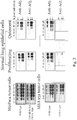
- E1A ⁇ CR2/ ⁇ E4orf6/7 and also ⁇ E4orf6/7 viruses replicate poorly in primary cells as evidenced by lack of capsid protein expression, failure to induce the E2F target genes-Cyclin A and B, failure to elicit S phase entry and viral replication.
- these viruses replicate to wild type (WT) virus levels in A549 cells and a panel of tumor cell-lines. Therefore, the provided adenoviruses are selective cancer therapeutic agents.
- Rb/p16/E1F tumor selective oncolytic viral therapy Provided herein is a new Rb/p16/E1F tumor selective oncolytic viral therapy. These viruses have the potential to be self-perpetuating, kill tumor cells through regulated cell death, and produce progeny that can spread not only within the tumor but also to metastatic sites.
- adenovirus indicates over 52 adenoviral subtypes isolated from humans, and as many from other mammals and birds. See, e.g., Strauss, "Adenovirus infections in humans," in The Adenoviruses, Ginsberg, ed., Plenum Press, New York, N.Y., pp. 451 596 (1984 ).
- the term “adenovirus” can be referred to herein with the abbreviation "Ad” followed by a number indicating serotype, e.g., Ad5.
- Ad5 a number indicating serotype
- Ad2 and Ad5 exemplary nucleic acid sequences of these adenoviruses include, but are not limited to, Human Adenovirus 5 (SEQ ID NO:7) and Human Adenovirus 2 (SEQ ID NO:8).
- E1A refers to the adenovirus early region 1A (E1A) gene and polypeptides expressed from the gene.
- E1A polypeptide refers to the polypeptides expressed from the E1A gene and the term includes E1A polypeptides produced by any of the adenovirus serotypes.
- amino acid sequences of the E1A polypeptide can be found at least at GenBank Accession Nos. CAE01147.1, AP_000161.1 (SEQ ID NO:1), and AP_000197.1 (SEQ ID NO:2).
- the nucleic acids encoding these polypeptides can be found at least at GenBank Accession Nos.
- E1A polypeptides comprising 65%, 70%, 75%, 80%, 85%, 90%, 91%, 92%, 93%, 94%, 95%, 96%, 97%, 98%, 99%, or more sequence identity to SEQ ID NO:1 or SEQ ID NO:2.
- E1A polypeptides have a role in viral genome replication by driving cells into the cell cycle. A comparison of E1A sequences of various human and simian adenovirus serotypes has identified three regions of conserved amino acid homology.
- conserved region 1 maps between amino acid residues 40-80 as compared to SEQ ID NO:2, CR2 between amino acid residues 121-139 as compared to SEQ ID NO:2, and CR3 between residues 140-188 as compared to SEQ ID NO:2.
- E4orf1 refers to the adenovirus E4orf1 polypeptide produced from the E4 gene, which contains several open reading frames, of an adenovirus.
- E4orf1 polypeptide includes E4orf1 polypeptides produced by the E4 gene from any of the adenovirus serotypes.
- amino acid sequences of the E4orf1 polypeptide can be found at least at GenBank Accession Nos. AP_000196.1 (SEQ ID NO:5) and AP_000232.1 (SEQ ID NO:6).
- the nucleic acids encoding these polypeptides can be found at least at GenBank Accession Nos.
- AC_000008.1 (SEQ ID NO:7) and AC_000007.1 (SEQ ID NO:8). Also provided are E4orf1 polypeptides comprising 65%, 70%, 75%, 80%, 85%, 90%, 91%, 92%, 93%, 94%, 95%, 96%, 97%, 98%, 99%, or more sequence identity to SEQ ID NO:5 or SEQ ID NO:6.
- E4orf6/7 refers to the adenovirus E4orf6/7 polypeptide produced from the E4 gene, which contains several open reading frames, of an adenovirus.
- E4orf6/7 polypeptide includes E4orf6/7 polypeptides produced by the E4 gene from any of the adenovirus serotypes.
- amino acid sequences of the E4orf6/7 polypeptide can be found at least at GenBank Accession Nos. AP_000191.1 (SEQ ID NO:3) and AP_000227.1 (SEQ ID NO:4).
- the nucleic acids encoding these polypeptides can be found at least at GenBank Accession Nos.
- AC_000008.1 (SEQ ID NO:7) and AC_000007.1 (SEQ ID NO:8). Also provided are E4orf6/7 polypeptides comprising 65%, 70%, 75%, 80%, 85%, 90%, 91%, 92%, 93%, 94%, 95%, 96%, 97%, 98%, 99%, or more sequence identity to SEQ ID NO:3 or SEQ ID NO:4.
- Nucleic acid refers to deoxyribonucleotides or ribonucleotides and polymers thereof in either single- or double-stranded form, and complements thereof.
- the term encompasses nucleic acids containing known nucleotide analogs or modified backbone residues or linkages, which are synthetic, naturally occurring, and non-naturally occurring, which have similar binding properties as the reference nucleic acid, and which are metabolized in a manner similar to the reference nucleotides.
- Examples of such analogs include, without limitation, phosphorothioates, phosphoramidates, methyl phosphonates, chiral-methyl phosphonates, 2-O-methyl ribonucleotides, peptide-nucleic acids (PNAs).
- nucleic acid sequence also implicitly encompasses conservatively modified variants thereof (e.g., degenerate codon substitutions) and complementary sequences, as well as the sequence explicitly indicated.
- degenerate codon substitutions may be achieved by generating sequences in which the third position of one or more selected (or all) codons is substituted with mixed-base and/or deoxyinosine residues ( Batzer et al., Nucleic Acid Res. 19:5081 (1991 ); Ohtsuka et al., J. Biol. Chem. 260:2605-2608 (1985 ); Rossolini et al., Mol. Cell. Probes 8:91-98 (1994 )).
- nucleic acid is used interchangeably with gene, cDNA, mRNA, oligonucleotide, and polynucleotide.
- a particular nucleic acid sequence also implicitly encompasses "splice variants.”
- a particular protein encoded by a nucleic acid implicitly encompasses any protein encoded by a splice variant of that nucleic acid.
- “Splice variants,” as the name suggests, are products of alternative splicing of a gene. After transcription, an initial nucleic acid transcript may be spliced such that different (alternate) nucleic acid splice products encode different polypeptides.
- Mechanisms for the production of splice variants vary, but include alternate splicing of exons. Alternate polypeptides derived from the same nucleic acid by read-through transcription are also encompassed by this definition.
- Nucleic acid is "operably linked" when it is placed into a functional relationship with another nucleic acid sequence.
- DNA for a presequence or secretory leader is operably linked to DNA for a polypeptide if it is expressed as a preprotein that participates in the secretion of the polypeptide;
- a promoter or enhancer is operably linked to a coding sequence if it affects the transcription of the sequence; or
- a ribosome binding site is operably linked to a coding sequence if it is positioned so as to facilitate translation.
- "operably linked” means that the DNA sequences being linked are near each other, and, in the case of a secretory leader, contiguous and in reading phase. However, enhancers do not have to be contiguous. Linking is accomplished by ligation at convenient restriction sites. If such sites do not exist, the synthetic oligonucleotide adaptors or linkers are used in accordance with conventional practice.
- nucleic acids or polypeptide sequences refer to two or more sequences or subsequences that are the same or have a specified percentage of amino acid residues or nucleotides that are the same (i.e., about 60% identity, preferably 65%, 70%, 75%, 80%, 85%, 90%, 91%, 92%, 93%, 94%, 95%, 96%, 97%, 98%, 99%, or higher identity over a specified region, when compared and aligned for maximum correspondence over a comparison window or designated region) as measured using a BLAST or BLAST 2.0 sequence comparison algorithms with default parameters described below, or by manual alignment and visual inspection ( see, e.g., NCBI web site or the like).
- sequences are then said to be “substantially identical.”
- This definition also refers to, or may be applied to, the compliment of a test sequence.
- the definition also includes sequences that have deletions and/or additions, as well as those that have substitutions.
- the preferred algorithms can account for gaps and the like.
- identity exists over a region that is at least about 25 amino acids or nucleotides in length, or more preferably over a region that is 50-100 amino acids or nucleotides in length.
- sequence comparison typically one sequence acts as a reference sequence, to which test sequences are compared.
- test and reference sequences are entered into a computer, subsequence coordinates are designated, if necessary, and sequence algorithm program parameters are designated.
- sequence algorithm program parameters Preferably, default program parameters can be used, or alternative parameters can be designated.
- sequence comparison algorithm then calculates the percent sequence identities for the test sequences relative to the reference sequence, based on the program parameters.
- a “comparison window”, as used herein, includes reference to a segment of any one of the number of contiguous positions selected from the group consisting of from 20 to 600, usually about 50 to about 200, more usually about 100 to about 150 in which a sequence may be compared to a reference sequence of the same number of contiguous positions after the two sequences are optimally aligned.
- Methods of alignment of sequences for comparison are well-known in the art. Optimal alignment of sequences for comparison can be conducted, e.g., by the local homology algorithm of Smith & Waterman, Adv. Appl. Math. 2:482 (1981 ), by the homology alignment algorithm of Needleman & Wunsch, J. Mol. Biol.
- BLAST and BLAST 2.0 are used, with the parameters described herein, to determine percent sequence identity for the nucleic acids and proteins.
- Software for performing BLAST analyses is publicly available through the National Center for Biotechnology Information, as known in the art.
- This algorithm involves first identifying high scoring sequence pairs (HSPs) by identifying short words of length W in the query sequence, which either match or satisfy some positive-valued threshold score T when aligned with a word of the same length in a database sequence.
- T is referred to as the neighborhood word score threshold (Altschul et al., supra ).
- a scoring matrix is used to calculate the cumulative score. Extension of the word hits in each direction are halted when: the cumulative alignment score falls off by the quantity X from its maximum achieved value; the cumulative score goes to zero or below, due to the accumulation of one or more negative-scoring residue alignments; or the end of either sequence is reached.
- the BLAST algorithm parameters W, T, and X determine the sensitivity and speed of the alignment.
- polypeptide peptide
- protein protein
- amino acid polymers in which one or more amino acid residue is an artificial chemical mimetic of a corresponding naturally occurring amino acid, as well as to naturally occurring amino acid polymers and non-naturally occurring amino acid polymer.
- amino acid refers to naturally occurring and synthetic amino acids, as well as amino acid analogs and amino acid mimetics that function in a manner similar to the naturally occurring amino acids.
- Naturally occurring amino acids are those encoded by the genetic code, as well as those amino acids that are later modified, e.g., hydroxyproline, ⁇ -carboxyglutamate, and O-phosphoserine.
- Amino acid analogs refers to compounds that have the same basic chemical structure as a naturally occurring amino acid, i.e., an ⁇ carbon that is bound to a hydrogen, a carboxyl group, an amino group, and an R group, e.g., homoserine, norleucine, methionine sulfoxide, methionine methyl sulfonium. Such analogs have modified R groups (e.g., norleucine) or modified peptide backbones, but retain the same basic chemical structure as a naturally occurring amino acid.
- Amino acid mimetics refers to chemical compounds that have a structure that is different from the general chemical structure of an amino acid, but that functions in a manner similar to a naturally occurring amino acid.
- Amino acids may be referred to herein by either their commonly known three letter symbols or by the one-letter symbols recommended by the IUPAC-IUB Biochemical Nomenclature Commission. Nucleotides, likewise, may be referred to by their commonly accepted single-letter codes.
- Constantly modified variants applies to both amino acid and nucleic acid sequences. With respect to particular nucleic acid sequences, conservatively modified variants refers to those nucleic acids which encode identical or essentially identical amino acid sequences, or where the nucleic acid does not encode an amino acid sequence, to essentially identical sequences. Because of the degeneracy of the genetic code, a large number of functionally identical nucleic acids encode any given protein. For instance, the codons GCA, GCC, GCG and GCU all encode the amino acid alanine. Thus, at every position where an alanine is specified by a codon, the codon can be altered to any of the corresponding codons described without altering the encoded polypeptide.
- nucleic acid variations are "silent variations," which are one species of conservatively modified variations. Every nucleic acid sequence herein which encodes a polypeptide also describes every possible silent variation of the nucleic acid.
- each codon in a nucleic acid except AUG, which is ordinarily the only codon for methionine, and TGG, which is ordinarily the only codon for tryptophan
- TGG which is ordinarily the only codon for tryptophan
- amino acid sequences one of skill will recognize that individual substitutions, deletions or additions to a nucleic acid, peptide, polypeptide, or protein sequence which alters, adds or deletes a single amino acid or a small percentage of amino acids in the encoded sequence is a "conservatively modified variant" where the alteration results in the substitution of an amino acid with a chemically similar amino acid. Conservative substitution tables providing functionally similar amino acids are well known in the art. Such conservatively modified variants are in addition to and do not exclude polymorphic variants, interspecies homologs, and alleles.
- the following eight groups each contain amino acids that are conservative substitutions for one another: 1) Alanine (A), Glycine (G); 2) Aspartic acid (D), Glutamic acid (E); 3) Asparagine (N), Glutamine (Q); 4) Arginine (R), Lysine (K); 5) Isoleucine (I), Leucine (L), Methionine (M), Valine (V); 6) Phenylalanine (F), Tyrosine (Y), Tryptophan (W); 7) Serine (S), Threonine (T); and 8) Cysteine (C), Methionine (M) ( see, e.g., Creighton, Proteins (1984 )).
- recombinant when used with reference, e.g., to a cell, virus, nucleic acid, protein, or vector, indicates that the cell, virus, nucleic acid, protein or vector, has been modified by the introduction of a heterologous nucleic acid or protein or the alteration of a native nucleic acid or protein, or that the cell is derived from a cell so modified.
- recombinant cells express genes that are not found within the native (non-recombinant) form of the cell or express native genes that are otherwise abnormally expressed, under expressed or not expressed at all.
- stringent hybridization conditions refers to conditions under which a probe will hybridize to its target subsequence, typically in a complex mixture of nucleic acids, but to no other sequences. Stringent conditions are sequence-dependent and will be different in different circumstances. Longer sequences hybridize specifically at higher temperatures. An extensive guide to the hybridization of nucleic acids is found in Tijssen, Techniques in Biochemistry and Molecular Biology--Hybridization with Nucleic Probes, "Overview of principles of hybridization and the strategy of nucleic acid assays” (1993 ). Generally, stringent conditions are selected to be about 5-10°C lower than the thermal melting point (T m ) for the specific sequence at a defined ionic strength pH.
- T m thermal melting point
- the T m is the temperature (under defined ionic strength, pH, and nucleic concentration) at which 50% of the probes complementary to the target hybridize to the target sequence at equilibrium (as the target sequences are present in excess, at T m , 50% of the probes are occupied at equilibrium).
- Stringent conditions may also be achieved with the addition of destabilizing agents such as formamide.
- a positive signal is at least two times background, preferably 10 times background hybridization.
- Exemplary stringent hybridization conditions can be as following: 50% formamide, 5x SSC, and 1% SDS, incubating at 42°C, or, 5x SSC, 1% SDS, incubating at 65°C, with wash in 0.2x SSC, and 0.1% SDS at 65°C.
- Nucleic acids that do not hybridize to each other under stringent conditions are still substantially identical if the polypeptides which they encode are substantially identical. This occurs, for example, when a copy of a nucleic acid is created using the maximum codon degeneracy permitted by the genetic code. In such cases, the nucleic acids typically hybridize under moderately stringent hybridization conditions.
- Exemplary "moderately stringent hybridization conditions” include a hybridization in a buffer of 40% formamide, 1 M NaCl, 1% SDS at 37°C, and a wash in IX SSC at 45°C. A positive hybridization is at least twice background.
- Those of ordinary skill will readily recognize that alternative hybridization and wash conditions can be utilized to provide conditions of similar stringency. Additional guidelines for determining hybridization parameters are provided in numerous reference, e.g., and Current Protocols in Molecular Biology, ed. Ausubel, et al., John Wiley & Sons .
- a temperature of about 36°C is typical for low stringency amplification, although annealing temperatures may vary between about 32°C and 48°C depending on primer length.
- a temperature of about 62°C is typical, although high stringency annealing temperatures can range from about 50°C to about 65°C, depending on the primer length and specificity.
- Typical cycle conditions for both high and low stringency amplifications include a denaturation phase of 90°C - 95°C for 30 sec - 2 min., an annealing phase lasting 30 sec. - 2 min., and an extension phase of about 72°C for 1 - 2 min. Protocols and guidelines for low and high stringency amplification reactions are provided, e.g., in Innis et al. (1990) PCR Protocols, A Guide to Methods and Applications, Academic Press, Inc. N.Y .).
- recombinant when used with reference, e.g., to a cell, or nucleic acid, protein, or vector, indicates that the cell, nucleic acid, protein or vector has been modified by or is the result oflaboratory methods.
- recombinant proteins include proteins produced by laboratory methods.
- Recombinant proteins can include amino acid residues not found within the native (non-recombinant) form of the protein or can be include amino acid residues that have been modified, e.g., labeled.
- heterologous when used with reference to portions of a nucleic acid indicates that the nucleic acid comprises two or more subsequences that are not found in the same relationship to each other in nature.
- the nucleic acid is typically recombinantly produced, having two or more sequences from unrelated genes arranged to make a new functional nucleic acid, e.g., a promoter from one source and a coding region from another source.
- a heterologous protein indicates that the protein comprises two or more subsequences that are not found in the same relationship to each other in nature (e.g., a fusion protein).
- modification refers to a change in the sequence of a nucleic acid or polypeptide sequence.
- amino acid sequence modifications typically fall into one or more of three classes: substitutional, insertional or deletional variants.
- Insertions include amino and/or carboxyl terminal fusions as well as intrasequence insertions of single or multiple amino acid residues. Deletions are characterized by the removal of one or more amino acid residues from the protein sequence.
- the symbol ⁇ or delta refers to a deletion.
- E1A ⁇ LXCXE refers to an E1A polypeptide having a deletion of the LXCXE domain.
- Substitutional modifications are those in which at least one residue has been removed and a different residue inserted in its place.
- Amino acid substitutions are typically of single residues, but can occur at a number of different locations at once.
- Substitutions, deletions, insertions or any combination thereof may be combined to arrive at a final construct.
- These modifications can be prepared by modification of nucleotides in the DNA encoding the protein, thereby producing DNA encoding the modification.
- Techniques for making insertion, deletion and substitution mutations at predetermined sites in DNA having a known sequence are well known. Modification techniques can involve the use of recombinant DNA technology to manipulate the DNA sequence encoding one or more polypeptide regions.
- modification techniques include, for example, recombination, M13 primer mutagenesis and PCR mutagenesis.
- transfection transduction
- transfecting transducing
- Nucleic acids are introduced to a cell using non-viral or viral-based methods.
- the nucleic acid molecule can be a sequence encoding complete proteins or functional portions thereof.
- a nucleic acid vector comprising the elements necessary for protein expression (e.g., a promoter, transcription start site, etc.).
- Non-viral methods of transfection include any appropriate method that does not use viral DNA or viral particles as a delivery system to introduce the nucleic acid molecule into the cell.
- Exemplary non-viral transfection methods include calcium phosphate transfection, liposomal transfection, nucleofection, sonoporation, transfection through heat shock, magnetifection and electroporation.
- any useful viral vector can be used in the methods described herein.
- examples of viral vectors include, but are not limited to retroviral, adenoviral, lentiviral and adeno-associated viral vectors.
- the nucleic acid molecules are introduced into a cell using an adenoviral vector following standard procedures well known in the art.
- the terms "transfection” or “transduction” also refer to introducing proteins into a cell from the external environment.
- transduction or transfection of a protein relies on attachment of a peptide or protein capable of crossing the cell membrane to the protein of interest. See, e.g., Ford et al. (2001) Gene Therapy 8:1-4 and Prochiantz (2007) Nat. Methods 4:119-20 .
- a "control” or “standard control” refers to a sample, measurement, or value that serves as a reference, usually a known reference, for comparison to a test sample, measurement, or value.
- a test sample can be taken from a patient suspected of having a given disease (e.g. an autoimmune disease, inflammatory autoimmune disease, cancer, infectious disease, immune disease, or other disease) and compared to a known normal (non-diseased) individual (e.g. a standard control subject).
- a standard control can also represent an average measurement or value gathered from a population of similar individuals (e.g. standard control subjects) that do not have a given disease (i.e. standard control population), e.g., healthy individuals with a similar medical background, same age, weight, etc.
- a standard control value can also be obtained from the same individual, e.g. from an earlier-obtained sample from the patient prior to disease onset.
- standard controls can be designed for assessment of any number of parameters (e.g. RNA levels, protein levels, specific cell types, specific bodily fluids, specific tissues, synoviocytes, synovial fluid, synovial tissue, fibroblast-like synoviocytes, macrophagelike synoviocytes, etc).
- Standard controls are also valuable for determining the significance (e.g. statistical significance) of data. For example, if values for a given parameter are widely variant in standard controls, variation in test samples will not be considered as significant.
- proliferative disorder refers to any cellular disorder in which the cells proliferate more rapidly than normal tissue growth.
- a proliferative disorder includes, but is not limited to, cancer.
- cancer refers to all types of cancer, neoplasm, or malignant tumors found in mammals, including leukemia, carcinomas and sarcomas.
- exemplary cancers include cancer of the brain, breast, cervix, colon, head & neck, liver, kidney, lung, non-small cell lung, melanoma, mesothelioma, ovary, sarcoma, stomach, uterus and Medulloblastoma.
- Additional examples include, Hodgkin's Disease, Non-Hodgkin's Lymphoma, multiple myeloma, neuroblastoma, ovarian cancer, rhabdomyosarcoma, primary thrombocytosis, primary macroglobulinemia, primary brain tumors, cancer, malignant pancreatic insulanoma, malignant carcinoid, urinary bladder cancer, premalignant skin lesions, testicular cancer, lymphomas, thyroid cancer, neuroblastoma, esophageal cancer, genitourinary tract cancer, malignant hypercalcemia, endometrial cancer, adrenal cortical cancer, neoplasms of the endocrine and exocrine pancreas, and prostate cancer.
- leukemia refers broadly to progressive, malignant diseases of the blood-forming organs and is generally characterized by a distorted proliferation and development of leukocytes and their precursors in the blood and bone marrow. Leukemia is generally clinically classified on the basis of (1) the duration and character of the disease-acute or chronic; (2) the type of cell involved; myeloid (myelogenous), lymphoid (lymphogenous), or monocytic; and (3) the increase or non-increase in the number abnormal cells in the blood-leukemic or aleukemic (subleukemic).
- the P 388 leukemia model is widely accepted as being predictive of in vivo anti-leukemic activity.
- the present application includes a method of treating leukemia, and, preferably, a method of treating acute nonlymphocytic leukemia, chronic lymphocytic leukemia, acute granulocytic leukemia, chronic granulocytic leukemia, acute promyelocytic leukemia, adult T-cell leukemia, aleukemic leukemia, a leukocythemic leukemia, basophylic leukemia, blast cell leukemia, bovine leukemia, chronic myelocytic leukemia, leukemia cutis, embryonal leukemia, eosinophilic leukemia, Gross' leukemia, hairy-cell leukemia, hemoblastic leukemia, hemocytoblastic leukemia, histiocytic leukemia, stem cell leukemia, acute
- sarcoma generally refers to a tumor which is made up of a substance like the embryonic connective tissue and is generally composed of closely packed cells embedded in a fibrillar or homogeneous substance.
- Sarcomas which can be treated with a combination of antineoplastic thiol-binding mitochondrial oxidant and an anticancer agent include a chondrosarcoma, fibrosarcoma, lymphosarcoma, melanosarcoma, myxosarcoma, osteosarcoma, Abemethy's sarcoma, adipose sarcoma, liposarcoma, alveolar soft part sarcoma, ameloblastic sarcoma, botryoid sarcoma, chloroma sarcoma, chorio carcinoma, embryonal sarcoma, Wilms' tumor sarcoma, endometrial sarcoma, stromal sarcoma, E
- melanoma is taken to mean a tumor arising from the melanocytic system of the skin and other organs.
- Melanomas which can be treated with a combination of antineoplastic thiol-binding mitochondrial oxidant and an anticancer agent include, for example, acral-lentiginous melanoma, amelanotic melanoma, benign juvenile melanoma, Cloudman's melanoma, S91 melanoma, Harding-Passey melanoma, juvenile melanoma, lentigo maligna melanoma, malignant melanoma, nodular melanoma, subungal melanoma, and superficial spreading melanoma.
- carcinoma refers to a malignant new growth made up of epithelial cells tending to infiltrate the surrounding tissues and give rise to metastases.
- exemplary carcinomas which can be treated with a combination of antineoplastic thiol-binding mitochondrial oxidant and an anticancer agent include, for example, acinar carcinoma, acinous carcinoma, adenocystic carcinoma, adenoid cystic carcinoma, carcinoma adenomatosum, carcinoma of adrenal cortex, alveolar carcinoma, alveolar cell carcinoma, basal cell carcinoma, carcinoma basocellulare, basaloid carcinoma, basosquamous cell carcinoma, bronchioalveolar carcinoma, bronchiolar carcinoma, bronchogenic carcinoma, cerebriform carcinoma, cholangiocellular carcinoma, chorionic carcinoma, colloid carcinoma, comedo carcinoma, corpus carcinoma, cribriform carcinoma, carcinoma en cuirasse, carcinoma cutaneum, cylindrical carcinoma, cylindrical cell carcinoma, duct carcinoma, carcinoma durum, embryonal carcinoma, encephaloid carcinoma,
- the terms “metastasis,” “metastatic,” and “metastatic cancer” can be used interchangeably and refer to the spread of a proliferative disease or disorder, e.g., cancer, from one organ or another non-adjacent organ or body part. Cancer occurs at an originating site, e.g., breast, which site is referred to as a primary tumor, e.g., primary breast cancer. Some cancer cells in the primary tumor or originating site acquire the ability to penetrate and infiltrate surrounding normal tissue in the local area and/or the ability to penetrate the walls of the lymphatic system or vascular system circulating through the system to other sites and tissues in the body.
- a second clinically detectable tumor formed from cancer cells of a primary tumor is referred to as a metastatic or secondary tumor.
- the metastatic tumor and its cells are presumed to be similar to those of the original tumor.
- the secondary tumor in the breast is referred to a metastatic lung cancer.
- metastatic cancer refers to a disease in which a subject has or had a primary tumor and has one or more secondary tumors.
- non-metastatic cancer or subjects with cancer that is not metastatic refers to diseases in which subjects have a primary tumor but not one or more secondary tumors.
- metastatic lung cancer refers to a disease in a subject with or with a history of a primary lung tumor and with one or more secondary tumors at a second location or multiple locations, e.g., in the breast.
- dose refers to the amount of active ingredient given to an individual at each administration.
- the dose will vary depending on a number of factors, including the range of normal doses for a given therapy, frequency of administration; size and tolerance of the individual; severity of the condition; risk of side effects; and the route of administration.
- dose form refers to the particular format of the pharmaceutical or pharmaceutical composition, and depends on the route of administration.
- a dosage form can be in a liquid form for nebulization, e.g., for inhalants, in a tablet or liquid, e.g., for oral delivery, or a saline solution, e.g., for injection.
- treating or “treatment of' a condition, disease or disorder or symptoms associated with a condition, disease or disorder refers to an approach for obtaining beneficial or desired results, including clinical results.
- beneficial or desired clinical results can include, but are not limited to, alleviation or amelioration of one or more symptoms or conditions, diminishment of extent of condition, disorder or disease, stabilization of the state of condition, disorder or disease, prevention of development of condition, disorder or disease, prevention of spread of condition, disorder or disease, delay or slowing of condition, disorder or disease progression, delay or slowing of condition, disorder or disease onset, amelioration or palliation of the condition, disorder or disease state, and remission, whether partial or total.
- Treating can also mean prolonging survival of a subject beyond that expected in the absence of treatment. “Treating” can also mean inhibiting the progression of the condition, disorder or disease, slowing the progression of the condition, disorder or disease temporarily, although in some instances, it involves halting the progression of the condition, disorder or disease permanently.
- treatment, treat, or treating refers to a method of reducing the effects of one or more symptoms of a disease or condition characterized by expression of the protease or symptom of the disease or condition characterized by expression of the protease.
- treatment can refer to a 10%, 20%, 30%, 40%, 50%, 60%, 70%, 80%, 90%, or 100% reduction in the severity of an established disease, condition, or symptom of the disease or condition.
- a method for treating a disease is considered to be a treatment if there is a 10% reduction in one or more symptoms of the disease in a subject as compared to a control.
- the reduction can be a 10%, 20%, 30%, 40%, 50%, 60%, 70%, 80%, 90%, 100%, or any percent reduction in between 10% and 100% as compared to native or control levels.
- treatment does not necessarily refer to a cure or complete ablation of the disease, condition, or symptoms of the disease or condition.
- references to decreasing, reducing, or inhibiting include a change of 10%, 20%, 30%, 40%, 50%, 60%, 70%, 80%, 90% or greater as compared to a control level and such terms can include but do not necessarily include complete elimination.
- terapéuticaally effective dose or amount as used herein is meant a dose that produces effects for which it is administered (e.g. treating or preventing a disease).
- dose and formulation will depend on the purpose of the treatment, and will be ascertainable by one skilled in the art using known techniques (see, e.g., Lieberman, Pharmaceutical Dosage Forms (vols. 1-3, 1992 ); Lloyd, The Art, Science and Technology of Pharmaceutical Compounding (1999 ); Remington: The Science and Practice of Pharmacy, 20th Edition, Gennaro, Editor (2003 ), and Pickar, Dosage Calculations (1999 )).
- a therapeutically effective amount will show an increase or decrease of at least 5%, 10%, 15%, 20%, 25%, 40%, 50%, 60%, 75%, 80%, 90%, or at least 100%.
- Therapeutic efficacy can also be expressed as "-fold" increase or decrease.
- a therapeutically effective amount can have at least a 1.2-fold, 1.5-fold, 2-fold, 5-fold, or more effect over a standard control.
- a therapeutically effective dose or amount may ameliorate one or more symptoms of a disease.
- a therapeutically effective dose or amount may prevent or delay the onset of a disease or one or more symptoms of a disease when the effect for which it is being administered is to treat a person who is at risk of developing the disease.
- pharmaceutically acceptable salts or “pharmaceutically acceptable carrier” is meant to include salts of the active compounds which are prepared with relatively nontoxic acids or bases, depending on the particular substituents found on the compounds described herein.
- base addition salts can be obtained by contacting the neutral form of such compounds with a sufficient amount of the desired base, either neat or in a suitable inert solvent.
- pharmaceutically acceptable base addition salts include sodium, potassium, calcium, ammonium, organic amino, or magnesium salt, or a similar salt.
- acid addition salts can be obtained by contacting the neutral form of such compounds with a sufficient amount of the desired acid, either neat or in a suitable inert solvent.
- Examples of pharmaceutically acceptable acid addition salts include those derived from inorganic acids like hydrochloric, hydrobromic, nitric, carbonic, monohydrogencarbonic, phosphoric, monohydrogenphosphoric, dihydrogenphosphoric, sulfuric, monohydrogensulfuric, hydriodic, or phosphorous acids and the like, as well as the salts derived from relatively nontoxic organic acids like acetic, propionic, isobutyric, maleic, malonic, benzoic, succinic, suberic, fumaric, lactic, mandelic, phthalic, benzenesulfonic, p-tolylsulfonic, citric, tartaric, methanesulfonic, and the like.
- inorganic acids like hydrochloric, hydrobromic, nitric, carbonic, monohydrogencarbonic, phosphoric, monohydrogenphosphoric, dihydrogenphosphoric, sulfuric, monohydrogensulfuric, hydriodic, or phosphorous acids and
- salts of amino acids such as arginate and the like, and salts of organic acids like glucuronic or galactunoric acids and the like (see, e.g., Berge et al., Journal of Pharmaceutical Science 66:1-19 (1977 )).
- Other pharmaceutically acceptable carriers known to those of skill in the art are suitable for compositions of the present application.
- a “subject,” “individual,” or “patient,” is used interchangeably herein, which refers to a vertebrate, preferably a mammal, more preferably a human. Mammals include, but are not limited to, murines, simians, humans, farm animals, sport animals, and pets. Tissues, cells and their progeny of a biological entity obtained in vitro or cultured in vitro are also encompassed.
- an "Rb-deficient" tumor or cell or "a tumor or cell having the phenotype of Rb-deficiency” is a tumor or cell in which the level of the tumor suppressor Rb is lower than that in a normal or control cell or in which the Rb pathway is disrupted or inactive.
- the terms "Rb pathway,” or “Rb signaling pathway” refer to, at least in part, molecules that affect pRb activity including pRb/p107, E2F-1/-2/-3, and G1 cyclin/cdk complexes. It will be appreciated that molecules not presently known may also come within this definition.
- an "oncolytic virus” is a virus that selectively kills cells of a proliferative disorder, e.g., cancer cells. Killing of the cancer cells can be detected by any method established in the art, such as determining viable cell count, cytopathic effect, apoptosis of die neoplastic cells, synthesis of viral proteins in the cancer cells (e.g., by metabolic labeling, Western analysis of viral proteins, or reverse transcription polymerase chain reaction of viral genes necessary for replication), or reduction in size of a tumor.
- replication deficient virus refers to a virus that preferentially inhibits cell proliferation, causes cell lysis, or induces apoptosis (collectively considered killing) in a predetermined cell population with a given phenotype (e.g., tumor cells responsive to molecules in the pRb signaling pathway) which supports virus replication.
- a given phenotype e.g., tumor cells responsive to molecules in the pRb signaling pathway
- viruses are unable to or are limited in the ability to inhibit cell proliferation, cause cell lysis, induce apoptosis, or otherwise replicate in cells that do not have the predetermined cell phenotype.
- adenoviruses comprising an E1A polypeptide comprising one or more modifications and/or comprising an E4orf6/7 polypeptide comprising one or more modifications.
- the adenoviruses optionally include an E4orf1 polypeptide comprising one or more modifications.
- adenoviruses comprising an E1A polypeptide comprising one or more modifications and comprising an E4orf1 polypeptide comprising one or more modifications.
- modified adenoviruses with modifications in E1A, E4orf1 and E4orf6/7 are oncolytic.
- the provided modified adenoviruses also selectively replicate in cancer cells with deregulated E2F and normal cell cycle checkpoints.
- the provided modified adenoviruses selectively replicate in cells with an inactive Rb/p16 tumor suppressor pathway.
- the provided modified adenoviruses can include one or more further modifications including those described in International Publication Nos. WO 2012/024350 and WO 2013/138505 , which are incorporated by reference herein in their entireties.
- modified adenovirus refers to an adenovirus having a gene sequence that is not found in nature (e.g. non-wild-type adenovirus).
- the modified adenovirus is a recombinant adenovirus.
- modified E1A refers to an E1A polypeptide and/or the E1A gene or nucleic acid encoding the E1A polypeptide with one or more modifications in the polypeptide or nucleic acid sequence, respectively.
- modified E4orf1 refers to an E4orf1 polypeptide and/or the E1orf1 gene or nucleic acid encoding the E4orf1 polypeptide with one or more modifications in the polypeptide or nucleic acid sequence, respectively.
- modified E4orf6/7 refers to the E4orf6/7 polypeptide and/or the E4orf6/7 gene or nucleic acid encoding the E4orf6/7 polypeptide with one or more modifications in the polypeptide or nucleic acid sequence, respectively.
- Rb/p16/E2F replication impaired or deficient means that, upon infection of a cell, adenovirus replication is partially or fully attenuated in the presence of normal levels of functional cellular "pocket protein family" members including Rb/p107/p130/p16/E2F/CDK-cyclin checkpoints.
- Rb/p16 pathway impaired or deficient i.e. the infected cell does not express normal levels of fully functional Rb or other proteins in the Rb/p16 pathway
- replication of the Rb/p16/E2F pathway replication impaired adenovirus will proceed normally.
- a cell expresses normal levels of functional Rb (e.g.
- Rb with normal activity also referred to herein as an "Rb expressing cell”
- replication of the Rb replication impaired or deficient adenovirus is attenuated or prevented.
- a cell may be Rb impaired or deficient by failing to express normal levels of Rb (e.g. a mutation to the regulatory (e.g. promoter) region of the Rb gene) or expressing mutated Rb having below normal Rb activity. Normal levels of Rb and normal Rb activity levels are found in healthy, non-diseased cells of the same type.
- the Rb impaired cell includes a mutated Rb gene.
- the Rb impaired cell includes a genome wherein the Rb gene is wholly or partially deleted.
- the Rb impaired cell may be a cancer (e.g.
- genomic lesions that can result in the loss of normal Rb function include, but are not limited to, CDK mutations, cyclin mutations and amplifications, p16 mutations and/or epigenetic silencing, p107 mutations, p130 mutations, and growth factor receptor pathway mutations.
- Rb/p16 tumor suppressor pathway refers to the entire signaling pathway of molecular signaling that includes retinoblastoma protein (RB), and other protein/protein families in the pathway, including but not limited to Cdk, E2f, atypical protein kinase C, and Skp2.
- Rb/p16 tumor suppressor pathway impaired or deficient means that one or more molecules in the signaling pathway are impaired or deficient, e.g., by failing to express normal levels or a protein or expressing mutated proteins having below normal activity, such that the pathway functions abnormally. Such defects result in high expression levels of free E2F and high activity of the E2F promoter.
- a cell may be Rb/p16 pathway impaired or deficient by failing to express normal levels of a protein or expressing mutated proteins having below normal activity in the Rb/p16 tumor suppressor pathway.
- E1A impaired means the adenovirus is not capable of producing normal levels and/or fully functional E1A, E4orf1 or E4orf6/7 gene product.
- a virus may be E1A, E4orf1, or E4 orf6/7 deficient or impaired by failing to express normal levels of E1A, E4orf1 or E4orf6/7 gene product (e.g. a mutation to the regulatory (e.g.
- the E1A, E4orf1 and/or E4orf6/7 deficient adenovirus includes a mutated E1A, E4orf1 and/or E4orf6/7 gene.
- the E1A, E4orf1 and/or E4orf6/7 deficient adenovirus includes a genome wherein the E1A, E4orf1 and/or E4orf6/7 gene is wholly or partially deleted.
- E1A and E4 regions of adenoviruses are known and can be modified using the methods described throughout and in the example and others known in the art. See, for example, International Publication No. WO 1998/046779 , U.S. Patent No. 8465732 , and International Publication No. 2012/024350 .
- amino acid sequences of the E1A polypeptide can be found at least at GenBank Accession Nos. CAE01147.1, AP_000161.1 (SEQ ID NO:1), and AP_000197.1 (SEQ ID NO:2) and amino acid sequences of the E4orf6/7 polypeptide can be found at least at GenBank Accession Nos.
- AP_000191.1 (SEQ ID NO:3) and AP_000227.1 (SEQ ID NO:4).
- Amino acid sequence of the E4orf1 polypeptide can be found at least at GenBank Accession Nos. AP_000196.1 (SEQ ID NO:5) and AP_000232.1 (SEQ ID NO:6).
- the nucleic acids encoding these polypeptides can be found at least at GenBank Accession Nos. AC_000008.1 (SEQ ID NO:7) and AC_000007.1 (SEQ ID NO:8).
- E1A polypeptides comprising 65%, 70%, 75%, 80%, 85%, 90%, 91%, 92%, 93%, 94%, 95%, 96%, 97%, 98%, 99%, or more sequence identity to SEQ ID NO:1 or SEQ ID NO:2, E4orf1 polypeptides comprising 65%, 70%, 75%, 80%, 85%, 90%, 91%, 92%, 93%, 94%, 95%, 96%, 97%, 98%, 99%, or more sequence identity to SEQ ID NO:5 or SEQ ID NO:6 and E4orf6/7 polypeptide comprising 65%, 70%, 75%, 80%, 85%, 90%, 91%, 92%, 93%, 94%, 95%, 96%, 97%, 98%, 99%, or more sequence identity to SEQ ID NO:3 or SEQ ID NO:4.
- Various assays for determining levels and activities of protein are available, such as amplification/expression methods, immunohistochemistry methods, FISH and shed antigen assays, southern blotting, or PCR techniques.
- the protein expression or amplification may be evaluated using in vivo diagnostic assays, e.g. by administering a molecule (such as an antibody) which binds the protein to be detected and is tagged with a detectable label (e.g. a radioactive isotope) and externally scanning the patient for localization of the label.
- a detectable label e.g. a radioactive isotope
- methods of measuring levels of protein levels in cells are generally known in the art and may be used to assess protein levels and/or activities in connection with the methods and compositions provided herein as applicable.
- These assays can be used to determine the effect of modifications in the E1A, E4orf1, and E4orf6/7 polypeptides and combinations thereof, e.g., to determine if the modifications result in adenoviruses not capable of producing normal levels or fully functional gene products of the polypeptide(s) and to confirm adenoviruses comprising a deletion of all or part of one or more of the E1A, E4orf1 and E4orf6/7 polypeptides or combinations thereof.
- adenoviruses that selectively replicate in Rb-deficient cells.
- adenoviruses comprising an E1A polypeptide comprising one or more modifications, comprising an E4orf6/7 polypeptide comprising one or more modifications, comprising an E4orf1 polypeptide comprising one or more modifications and various combinations thereof.
- adenoviruses comprising a genome comprising a deletion of all or part of the E1A gene, the E4orf1 gene, and/or the E4orf6/7 gene.
- adenoviruses comprising a genome lacking a nucleic acid sequence encoding the E4orf1 polypeptide and/or lacking a nucleic acid sequence encoding a E4orf6/7 polypeptide and comprising a nucleic acid encoding E1A with one or more modifications.
- modification refers to a modification in a nucleic acid sequence of a gene or an amino acid sequence. Modifications include, but are not limited to, insertions, substitutions and deletions. Amino acid sequence modifications typically fall into one or more of three classes: substitutional, insertional, or deletional modifications.
- Insertions include amino and/or terminal fusions as well as intrasequence insertions of single or multiple amino acid residues.
- Deletions are characterized by the removal of one or more amino acid residues from the protein sequence. Amino acid substitutions are typically of single residues, but can occur at a number of different locations at once. Substitutional modifications are those in which at least one residue has been removed and a different residue inserted in its place. Substitutions, deletions, insertions or any combination thereof may be combined to arrive at a final construct.
- the modification of E1A comprises a modification in the Rb binding site of E1A.
- the modification of E1A comprises a modification in one or more of amino acid residues 122-126 of the E1A polypeptide, e.g., amino acid residues 122-126 as compared to SEQ ID NO:1 or SEQ ID NO:2.
- the modification is a deletion.
- the modification of E1A and/or E4orf6/7 comprises a deletion.
- the modification of E1A is a deletion of amino acid residues 122-126 of E1A, e.g., as compared to SEQ ID NO:1 or SEQ ID NO:2.
- the modification is a deletion in the conserved LXCXE motif of E1A, referred to throughout as ⁇ LXCXE.
- the conserved motif can be found at amino acid residues 122-126 of SEQ ID NO:1 or SEQ ID NO:2.
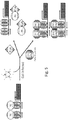
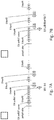
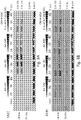
- the E4orf6/7 is encoded by two exons, shown in Figures 2 and 6 .
- the modification of E4orf6/7 comprises a modification in one or both of the E4orf6/7 exons.
- the modification of E4orf6/7 is a deletion of one or both of the E4orf6/7 exons.
- the modification of E4orf6/7 is ⁇ E4orf6/7.
- the adenovirus comprises E1A ⁇ LXCXE and ⁇ E4orf6/7, referred to throughout as Ad E1A ⁇ LXCXE/ ⁇ E4orf6/7 or AdSyn-CO181.
- an adenovirus comprising an E1A polypeptide comprising one or more modifications and/or comprising an E4orf6/7 polypeptide comprising one or more modifications.
- the E1A polypeptide can comprise a modification in an Rb binding site of E1A.
- the E1A polypeptide can comprise two Rb binding sites and wherein the E1A polypeptide comprises a modification in both Rb binding sites.
- the E1A polypeptide comprises a modification in one or more of amino acid residues 120-130 of the E1A polypeptide, a modification in one or more of amino acid residues 122-126 of the E1A polypeptide, a modification in one or more of amino acid residues 35-55 of the E1A polypeptide, a modification in one or more of amino acid residues 37-49 of the E1A polypeptide, or combinations thereof.
- the modifications can be occur in one or more of amino acid residues 120-130, 122-126, 35-55, 37-49, or combinations thereof as compared to SEQ ID NO: 1 or SEQ ID NO:2.
- the E1A polypeptide can comprise a modification in one or more of amino acid residues 122-126 and in one or more of amino acid residues 37-49 of the E1A polypeptide, wherein the E1A optionally comprises SEQ ID NO:1 or SEQ ID NO:2.
- the provided E1A polypeptides can comprise one or more substitutions.
- the E1A polypeptide comprises a substitution at residue Y47, residue C124 or at both residues Y47 and C124, wherein the E1A optionally comprises SEQ ID NO:1 or SEQ ID NO:2.
- the E1A polypeptide comprises a deletion.
- the deletion is a deletion of amino acid residues 122-126 of the E1A polypeptide and/or a deletion of amino acid residues 2-11 of the E1A polypeptide.
- the E1A polypeptide comprises the deletion ⁇ LXCXE.
- the E1A polypeptide to be modified can comprise SEQ ID NO:1 or SEQ ID NO:2.
- the E4orf6/7 polypeptide can comprise a modification in one or both of the E4orf6/7 exons.
- the E4orf6/7 polypeptide can comprise one or more modifications including insertions, substitutions and deletions and combinations thereof.
- the E4orf6/7 polypeptide comprises a deletion of one or both of the E4orf6/7 exons.
- the E4orf6/7 comprises an N-terminal deletion selected from the group consisting of 4 to 38, 4 to 58 or 38 to 58 N-terminal amino acids, e.g., as compared to SEQ ID NOs:3 or 4. See, e.g., Schaley et al., J. Virol.
- the E4orf6/7 polypeptide comprises a modification selected from the group consisting of dl355, dl356, and dl366 ( Huang and Hearing, Genes & Development 3:1699-1710 (1989 ).
- the E4orf6/7 polypeptide for modification can comprise SEQ ID NO:3 or SEQ ID NO:4.
- the adenoviruses may comprise an E4orf1 polypeptide comprising one or more modifications.
- the E4orf1 polypeptide comprises one or more deletions.
- the E4orf1 polypeptide comprises a deletion in the C-terminal region of E4orf1.
- the E4orf1 polypeptide comprises a deletion of the last four amino acids in the C-terminal region of the E4orf1 polypeptide.
- the E4orf1 polypeptide comprises a deletion of residues 125-128 of the E4orf1 polypeptide, optionally, wherein the E4orf1 polypeptide comprises SEQ ID NO:5 or SEQ ID NO:6.
- the E4orf1 polypeptide comprises a modification selected from the group consisting of D68A, P17A, Y26A, L109A, P117A, E3A, L5A, G13T, P31A, G58T, E85A, and L86A ( Chung et al., J. Virol. 81(9):4787-97 (2007 ).
- the E4orf1 polypeptide for modification can comprise SEQ ID NO:5 or SEQ ID NO:6.
- an adenovirus comprising an E1A polypeptide comprising one or more modifications and comprising an E4orf1 polypeptide comprising one or more modifications.
- the adenovirus can further include an E4orf6/7 polypeptide comprising one or more modifications.
- nucleic acids encoding the modified adenoviruses described above.
- one nucleic acid is provided encoding the modified adenovirus (e.g. a plasmid).
- a plurality of nucleic acids is provided encoding the modified adenovirus (e.g. a plurality of plasmids).
- Modifications are generated in the nucleic acid of a virus using any number of methods known in the art.
- site directed mutagenesis can be used to modify a nucleic acid sequence.
- One of the most common methods of site-directed mutagenesis is oligonucleotide-directed mutagenesis.
- oligonucleotide-directed mutagenesis an oligonucleotide encoding the desired change(s) in sequence is annealed to one strand of the DNA of interest and serves as a primer for initiation of DNA synthesis. In this manner, the oligonucleotide containing the sequence change is incorporated into the newly synthesized strand. See, for example, Kunkel, 1985, Proc. Natl. Acad.
- a cell that has been infected with the modified adenovirus described throughout.
- the cell can be transformed by the modified adenovirus described above.
- the cell has been genetically altered as a result of the uptake, incorporation and expression of the genetic material of the modified adenovirus described above.
- the cell is a mammalian cell, such as a human cell.
- the adenovirus can be a mammalian adenovirus such as a human adenovirus.
- the cell is an amphibian cell (e.g. a frog cell) or a reptilian cell (e.g. a snake cell).
- compositions comprising the modified viruses (or one or more nucleic acids encoding the modified adenovirus).
- the compositions are, optionally, suitable for formulation and administration in vitro or in vivo.
- the compositions comprise one or more of the provided agents and a pharmaceutically acceptable carrier.
- Suitable carriers and their formulations are described in Remington: The Science and Practice of Pharmacy, 22nd Edition, Loyd V. Allen et al., editors, Pharmaceutical Press (2012 ).
- pharmaceutically acceptable carrier is meant a material that is not biologically or otherwise undesirable, i.e., the material is administered to a subject without causing undesirable biological effects or interacting in a deleterious manner with the other components of the pharmaceutical composition in which it is contained.
- the carrier is optionally selected to minimize degradation of the active ingredient and to minimize adverse side effects in the subject.
- the modified viruses are administered in accord with known methods, such as intravenous administration, e.g., as a bolus or by continuous infusion over a period of time, by intramuscular, intraperitoneal, intracerobrospinal, subcutaneous, intra-articular, intrasynovial, intrathecal, oral, topical, intratumoral or inhalation routes.
- the administration may be local or systemic.
- compositions can be administered via any of several routes of administration, including topically, orally, parenterally, intravenously, intra-articularly, intraperitoneally, intramuscularly, subcutaneously, intracavity, transdermally, intrahepatically, intracranially, nebulization/inhalation, or by installation via bronchoscopy.
- routes of administration including topically, orally, parenterally, intravenously, intra-articularly, intraperitoneally, intramuscularly, subcutaneously, intracavity, transdermally, intrahepatically, intracranially, nebulization/inhalation, or by installation via bronchoscopy.
- routes of administration including topically, orally, parenterally, intravenously, intra-articularly, intraperitoneally, intramuscularly, subcutaneously, intracavity, transdermally, intrahepatically, intracranially, nebulization/inhalation, or by installation via bronchoscopy.
- the compositions are
- compositions for administration will commonly comprise an agent as described herein (e.g. a modified adenovirus or one or more nucleic acids encoding the modified adenovirus) dissolved in a pharmaceutically acceptable carrier, preferably an aqueous carrier.
- a pharmaceutically acceptable carrier e.g., buffered saline and the like. These solutions are sterile and generally free of undesirable matter.
- These compositions may be sterilized by conventional, well known sterilization techniques.
- the compositions may contain pharmaceutically acceptable auxiliary substances as required to approximate physiological conditions such as pH adjusting and buffering agents, toxicity adjusting agents and the like, for example, sodium acetate, sodium chloride, potassium chloride, calcium chloride, sodium lactate and the like.
- concentration of active agent in these formulations can vary widely, and will be selected primarily based on fluid volumes, viscosities, body weight and the like in accordance with the particular mode of administration selected and the subject's needs.
- compositions, particularly, of the modified viruses can be prepared by mixing the modified adenovirus (or one or more nucleic acids encoding the modified adenovirus) having the desired degree of purity with optional pharmaceutically acceptable carriers, excipients or stabilizers.
- Such formulations can be lyophilized formulations or aqueous solutions.
- Acceptable carriers, excipients, or stabilizers are nontoxic to recipients at the dosages and concentrations used.
- Acceptable carriers, excipients or stabilizers can be acetate, phosphate, citrate, and other organic acids; antioxidants (e.g., ascorbic acid) preservatives low molecular weight polypeptides; proteins, such as serum albumin or gelatin, or hydrophilic polymers such as polyvinylpyllolidone; and amino acids, monosaccharides, disaccharides, and other carbohydrates including glucose, mannose, or dextrins; chelating agents; and ionic and non-ionic surfactants (e.g., polysorbate); salt-forming counter-ions such as sodium; metal complexes (e. g. Zn-protein complexes); and/or non-ionic surfactants.
- the modified adenovirus (or one or more nucleic acids encoding the modified adenovirus) can be formulated at any appropriate concentration of infectious units.
- Formulations suitable for oral administration can consist of (a) liquid solutions, such as an effective amount of the modified adenovirus suspended in diluents, such as water, saline or PEG 400; (b) capsules, sachets or tablets, each containing a predetermined amount of the active ingredient, as liquids, solids, granules or gelatin; (c) suspensions in an appropriate liquid; and (d) suitable emulsions.
- liquid solutions such as an effective amount of the modified adenovirus suspended in diluents, such as water, saline or PEG 400
- capsules, sachets or tablets each containing a predetermined amount of the active ingredient, as liquids, solids, granules or gelatin
- suspensions in an appropriate liquid such as water, saline or PEG 400
- Tablet forms can include one or more of lactose, sucrose, mannitol, sorbitol, calcium phosphates, corn starch, potato starch, microcrystalline cellulose, gelatin, colloidal silicon dioxide, talc, magnesium stearate, stearic acid, and other excipients, colorants, fillers, binders, diluents, buffering agents, moistening agents, preservatives, flavoring agents, dyes, disintegrating agents, and pharmaceutically compatible carriers.
- Lozenge forms can comprise the active ingredient in a flavor, e.g., sucrose, as well as pastilles comprising the active ingredient in an inert base, such as gelatin and glycerin or sucrose and acacia emulsions, gels, and the like containing, in addition to the active ingredient, carriers known in the art.
- a flavor e.g., sucrose
- an inert base such as gelatin and glycerin or sucrose and acacia emulsions, gels, and the like containing, in addition to the active ingredient, carriers known in the art.
- the modified adenovirus (or one or more nucleic acids encoding the modified adenovirus), alone or in combination with other suitable components, can be made into aerosol formulations (i.e., they can be "nebulized") to be administered via inhalation. Aerosol formulations can be placed into pressurized acceptable propellants, such as dichlorodifluoromethane, propane, nitrogen, and the like.
- Formulations suitable for parenteral administration include aqueous and non-aqueous, isotonic sterile injection solutions, which can contain antioxidants, buffers, bacteriostats, and solutes that render the formulation isotonic with the blood of the intended recipient, and aqueous and non-aqueous sterile suspensions that can include suspending agents, solubilizers, thickening agents, stabilizers, and preservatives.
- compositions can be administered, for example, by intravenous infusion, orally, topically, intraperitoneally, intravesically intratumorally, or intrathecally.
- Parenteral administration, intratumoral administration, and intravenous administration are the preferred methods of administration.
- the formulations of compounds can be presented in unit-dose or multidose sealed containers, such as ampules and vials.
- Injection solutions and suspensions can be prepared from sterile powders, granules, and tablets of the kind previously described.
- Cells transduced or infected by adenovirus or transfected with nucleic acids for ex vivo therapy can also be administered intravenously or parenterally as described above.
- the pharmaceutical preparation is preferably in unit dosage form. In such form the preparation is subdivided into unit doses containing appropriate quantities of the active component.
- the pharmaceutical compositions can be administered in a variety of unit dosage forms depending upon the method of administration.
- unit dosage forms suitable for oral administration include, but are not limited to, powder, tablets, pills, capsules and lozenges.
- the provided modified adenoviruses and/or compositions comprising the modified adenoviruses can be administered for therapeutic or prophylactic treatments.
- a method of treating a proliferative disorder in a subject includes administering the provided adenoviruses or compositions to the subject.
- the adenovirus or pharmaceutical composition is administered in any number of ways including, but not limited to, intravenously, intravascularly, intrathecally, intramuscularly, subcutaneously, intraperitoneally, or orally.
- the method further comprising administering to the subject one or more additional therapeutic agents.
- the therapeutic agent is a chemotherapeutic agent.
- the proliferative disorder can be cancer.
- the proliferative disorder is selected from the group consisting of lung cancer, prostate cancer, colorectal cancer, breast cancer, thyroid cancer, renal cancer, liver cancer and leukemia.
- the proliferative disorder is metastatic.
- cancers include an abnormal state or condition in a warm-blooded animal characterized by rapidly proliferating cell growth or neoplasm.
- Neoplastic diseases include malignant or benign neoplasms, including diffuse neoplasms such as leukemia, as well as malignant or benign cancers and tumors (including any carcinoma, sarcoma, or adenoma).
- Neoplastic diseases include, for example, tumors such as tumors of the mammary, pituitary, thyroid, or prostate gland; tumors of the brain, liver, meninges, bone, ovary, uterus, cervix, and the like; as well as both monocytic and myelogenous leukemia, adenocarcinoma, adenoma, astrocytoma, bladder tumor, brain tumor, Burkitt lymphoma, breast carcinoma, cervical carcinoma, colon carcinoma, kidney carcinoma, liver carcinoma, lung carcinoma, ovarian carcinoma, pancreatic carcinoma, prostate carcinoma, rectal carcinoma, skin carcinoma, stomach carcinoma, testis carcinoma, thyroid carcinoma, chondrosarcoma, choriocarcinoma, fibroma, fibrosarcoma, glioblastoma, glioma, hepatoma
- Tumors include both primary and metastatic solid tumors, including carcinomas of breast, colon, rectum, lung, oropharynx, hypopharynx, esophagus, stomach, pancreas, liver, gallbladder and bile ducts, small intestine, urinary tract (including kidney, bladder and urothelium), female genital tract, (including cervix, uterus, and ovaries as well as choriocarcinoma and gestational trophoblastic disease), male genital tract (including prostate, seminal vesicles, testes and germ cell tumors), endocrine glands (including the thyroid, adrenal, and pituitary glands), and skin, as well as hemangiomas, melanomas, sarcomas (including those arising from bone and soft tissues as well as Kaposi's sarcoma) and tumors of the brain, nerves, eyes, and meninges (including astrocytomas, gliomas,
- solid tumors may be treated that arise from hematopoietic malignancies such as leukemias (i.e. chloromas, plasmacytomas and the plaques and tumors of mycosis fungoides and cutaneous T-cell lymphoma/leukemia) as well as in the treatment of lymphomas (both Hodgkin's and non-Hodgkin's lymphomas).
- leukemias i.e. chloromas, plasmacytomas and the plaques and tumors of mycosis fungoides and cutaneous T-cell lymphoma/leukemia
- lymphomas both Hodgkin's and non-Hodgkin's lymphomas
- compositions are administered to a subject suffering from a proliferative disease or disorder (e.g., cancer) in a “therapeutically effective dose.” Amounts effective for this use will depend upon the severity of the disease and the general state of the patient's health. Single or multiple administrations of the compositions may be administered depending on the dosage and frequency as required and tolerated by the patient.
- a "patient” or “subject” includes both humans and other animals, particularly mammals. Thus the methods are applicable to both human therapy and veterinary applications.
- An effective amount of a virus having a modified sequence is determined on an individual basis and is based, at least in part, on the particular virus used; the individual's size, age, gender; and the size and other characteristics of the proliferating cells. For example, for treatment of a human, approximately 10 3 to 10 12 plaque forming units (PFU) of a virus is used, depending on the type, size and number of proliferating cells or neoplasms present.
- the effective amount can be from about 1.0 pfu/kg body weight to about 10 15 pfu/kg body weight (e.g., from about 10 2 pfu/kg body weight to about 10 13 pfu/kg body weight).
- a virus is administered in a single dose or in multiple doses (e.g., two, three, four, six, or more doses). Multiple doses are administered concurrently or consecutively (e.g., over a period of days or weeks). Treatment with a virus having a modified sequence lasts from several days to several months or until diminution of the disease is achieved.
- the provided methods include administering to the subject one or more additional therapeutic agents.
- additional therapeutic agents include, but are not limited to, therapeutic agent is selected from the group consisting of chemotherapeutic agents, CDK inhibitors, antiinflammatory agents, antibiotics, antiviral agents immunological agents, vitamins, growth factors, and hormones.
- the provided methods include, optionally, administering to the subject known anticancer compounds or chemotherapeutic agents.
- Chemotherapeutic agents agents include, but are not limited to 5-fluorouracil; mitomycin C; methotrexate; hydroxyurea; cyclophosphamide; dacarbazine; mitoxantrone; anthracyclins (epirubicin and doxurubicin); antibodies to receptors, such as herceptin; etoposide; pregnasome; hormone therapies such as tamoxifen and anti-estrogens; interferons; aromatase inhibitors; progestational agents; and LHRH analogs.
- CDK Cyclin-dependent kinase inhibitors are agents that inhibit the function of CDKs.
- Suitable CDK inhibitors for use in the provided methods include, but are not limited to, AG-024322, AT7519, AZD5438, flavopiridol, indisulam, P1446A-05, PD-0332991, and P276-00 (See., e.g., Lapenna et al., Nature Reviews, 8:547-566 (2009 ).
- the choice of agent and dosage can be determined readily by one of skill in the art based on the given disease being treated.
- the combined administrations contemplates coadministration, using separate formulations or a single pharmaceutical formulation, and consecutive administration in either order, wherein preferably there is a time period while both (or all) active agents simultaneously exert their biological activities.
- Combinations of agents or compositions can be administered either concomitantly (e.g., as a mixture), separately but simultaneously (e.g., via separate intravenous lines) or sequentially (e.g., one agent is administered first followed by administration of the second agent).
- the term combination is used to refer to concomitant, simultaneous or sequential administration of two or more agents or compositions.
- the subject is administered an effective amount of one or more of the agents provided herein.
- effective amount and effective dosage are used interchangeably.
- effective amount is defined as any amount necessary to produce a desired physiologic response (e.g., killing of a cancer cell).
- Therapeutic agents are typically administered at the initial dosage of about 0.001 mg/kg to about 1000 mg/kg daily.
- a dose range of about 0.01 mg/kg to about 500 mg/kg, or about 0.1 mg/kg to about 200 mg/kg, or about 1 mg/kg to about 100 mg/kg, or about 10 mg/kg to about 50 mg/kg, can be used.
- the dosages may be varied depending upon the requirements of the subject, the severity of the condition being treated, and the compound being employed.
- dosages can be empirically determined considering the type and stage of cancer diagnosed in a particular subject.
- the dose administered to a subject, in the context of the provided methods should be sufficient to affect a beneficial therapeutic response in the patient over time. Determination of the proper dosage for a particular situation is within the skill of the practitioner.
- effective amounts and schedules for administering the agent may be determined empirically by one skilled in the art.
- the dosage ranges for administration are those large enough to produce the desired effect in which one or more symptoms of the disease or disorder are affected (e.g., reduced or delayed).
- the dosage should not be so large as to cause substantial adverse side effects, such as unwanted cross-reactions, anaphylactic reactions, and the like.
- the dosage will vary with the age, condition, sex, type of disease, the extent of the disease or disorder, route of administration, or whether other drugs are included in the regimen, and can be determined by one of skill in the art.
- the dosage can be adjusted by the individual physician in the event of any contraindications. Dosages can vary and can be administered in one or more dose administrations daily, for one or several days. Guidance can be found in the literature for appropriate dosages for given classes of pharmaceutical products.
- treatment refers to a method of reducing the effects of one or more symptoms of a disease or condition characterized by expression of the protease or symptom of the disease or condition characterized by expression of the protease.
- treatment can refer to a 10%, 20%, 30%, 40%, 50%, 60%, 70%, 80%, 90%, or 100% reduction in the severity of an established disease, condition, or symptom of the disease or condition.
- a method for treating a disease is considered to be a treatment if there is a 10% reduction in one or more symptoms of the disease in a subject as compared to a control.
- the reduction can be a 10%, 20%, 30%, 40%, 50%, 60%, 70%, 80%, 90%, 100%, or any percent reduction in between 10% and 100% as compared to native or control levels. It is understood that treatment does not necessarily refer to a cure or complete ablation of the disease, condition, or symptoms of the disease or condition. Further, as used herein, references to decreasing, reducing, or inhibiting include a change of 10%, 20%, 30%, 40%, 50%, 60%, 70%, 80%, 90% or greater as compared to a control level and such terms can include but do not necessarily include complete elimination.
- kits comprising one or more of the provided modified adenoviruses and/or compositions comprising the modified adenoviruses.
- kits comprising adenoviruses (Ads) comprising an E1A polypeptide comprising one or more modifications and/or comprising an E4orf6/7 polypeptide comprising one or more modifications and/or compositions comprising the adenoviruses.
- the adenoviruses further include an E4orf1 polypeptide comprising one or more modifications.
- kits comprising adenoviruses (Ads) comprising an E1A polypeptide comprising one or more modifications and comprising an E4orf1 polypeptide comprising one or more modifications and/or compositions comprising the adenoviruses.
- the composition is a pharmaceutical composition.
- the kit further includes one or more additional therapeutic agents.
- the therapeutic agent is a chemotherapeutic agent.
- kits comprising one or more of the provided pharmaceutical compositions and instructions for use.
- the kit comprises one or more doses of an effective amount of a composition comprising an adenovirus that selectively replicates in Rb/p16 tumor suppressor pathway deficient cells.
- the adenovirus selectively replicates in cells with upregulated E2F activity.
- the composition is present in a container (e.g., vial or packet).
- the kit comprises a means of administering the composition, such as, for example, a syringe, needle, tubing, catheter, patch, and the like.
- the kit may also comprise formulations and/or materials requiring sterilization and/or dilution prior to use.
- Example 1 Oncolytic adenoviruses that selectively replicate in tumor cells that have deregulated E2F activity
- Modified adenoviruses were made with the below referenced components.
- Gateway DONR vectors were employed. From human Ad5 DNA, the E1 module was obtained by PCR and inserted into the vector pDONR P1P4 using SLIC. The pDONR P1P4 vector backbone including attL1 and attL4 recombination sites was amplified using PCR and combined with the Ad5 E1 module by SLIC. The E3 module was obtained by PCR to generate a product flanked by attB5 and attB3r recombination sites. The product was inserted into the pDONR P5P3r vector by gateway BP reaction.
- the E4 module was obtained by PCR to generate a product flanked by attB3 and attB2 recombination sites.
- the product was inserted into the pDONR P3P2 vector by gateway BP reaction.
- the attR5-ccdB-Cm(r)-attR2 fragment from the pDONR P5P2 vector was amplified by PCR and inserted into the Adsembly DEST vector. See “MultiSite Gateway® Pro Plus", Cat# 12537-100; and Sone, T. et al. J Biotechnol. 2008 Sep 10;136(3-4):113-21 .
- the Adsembly method is described in International Publication No. WO 2012/024351 .
- the vector backbone for the Adsembly DEST vector is composed of parts from three different sources.
- the Amp(r) cassette and lacZ gene was amplified from plasmid pUC19. This was combined with the p15A origin of replication, obtained from plasmid pSB3K5-I52002, part of the BioBricksiGEM 2007 parts distribution.
- the p15A ori which maintains plasmids at a lower (10-12) copy number is necessary to reduce E1 toxicity.
- the mammalian expression cassette for the enzyme ISceI was PCR'd from plasmid pAdZ5-CV5-E3+.
- This cassette was cloned into the vector backbone to create the vector called p15A-SceI. This is the vector used to start genome assembly.
- the gene modules were all obtained from either DNA purified from wild type Ad5 virus or the plasmid pAd/CMV/V5/DEST (Invitrogen).
- the E2 and L3 modules were inserted into plasmid p15A-SceI by 3-fragment SLIC.
- the counterselection marker expressing ccdB and Chlor(r) flanked by attR5 and attR2 sites was obtained by PCR from plasmid pDONR P5P2.
- the second counterselection marker was obtained by PCR from the vector pDONR P1P4.
- the two counterselection markers were inserted on the right and left sides of p15A-SceI E2-L4 by SLIC after cutting with unique restriction enzymes engineered to the ends of the E2 and L4 modules to create the DEST vector.
- Amp(r) cassette plasmid pUC19
- the p15A ori plasmid pSB3K5-I52002 was part of the BioBricksiGEM 2007 parts distribution.
- the adenoviral gene modules either the DNA purified from Ad5 particles, or plasmid pAd/CMV/V5/DEST (Invitrogen).
- the DONR vectors pDONR P1P4, P5P2, P5P3R, P3P2 were received from Jon Chesnut (Invitrogen).
- PCRs were performed using the Phusion enzyme (NEB). PCRs to obtain the ADENOVIRAL GENE modules from Ad5 were performed with 1x HF buffer, 200 ⁇ M each dNTP, 0.5 ⁇ M each primer, and 10 ng of template. For the E2-L2 module, 3% DMSO was also added. Template was either plasmid pAd/PL-DEST (Invitrogen; for E2-L2, L3-L4, and E4 modules) or Ad5 genomic DNA (for E1 and E3 modules). PCR conditions were as follows.
- E2-L2 and L3-L4 98°C 30sec - 10 cycles of 98°C 10sec, 65°C 30sec (decrease temp 1°C every 2 cycles), 72°C 7min - 29 cycles of 98°C 10sec, 60°C 30sec, 72°C 8min - 72°C 10min - 4°C hold.
- E3 98°C 30sec - 10 cycles of 98°C 10sec, 70°C 30sec (decrease temp 0.5°C every cycle), 72°C 2min30sec - 25 cycles of 98°C 10sec, 68°C 30sec, 72°C 2min30sec - 72°C 10min - 4°C hold.
- E4 98°C 30sec - 6 cycles of 98°C 10sec, 63°C 30sec (decrease temp 0.5°C every cycle), 72°C 2min - 29 cycles of 98°C 10sec, 60°C 30sec, 72°C 2min - 72°C 5min - 4°C hold.
- linear fragments are exonuclease treated for 20min at room temp in the following 20 ⁇ l reaction: 50mM Tris pH8, 10mM MgCl2, 50 ⁇ g/mL BSA, 200mM Urea, 5mM DTT, and 0.5 ⁇ l T4 DNA polymerase.
- the reaction is stopped by addition of 1 ⁇ l 0.5M EDTA, followed by incubation at 75°C for 20min.
- An equal amount of T4-treated DNAs are then mixed to around 20 ⁇ l in volume in a new tube.
- SLIC combining 2 fragments 10 ⁇ l of each reaction is used.
- SLIC combining 3 fragments 7 ⁇ l of each reaction is used. Fragments are annealed by heating to 65°C for 10min, followed by a slow cool down decreasing the temperature 0.5°C every 5 seconds down to 25°C. After annealing, 5 ⁇ l of the reaction is transformed and clones are screened.
- a 3-fragment SLIC reaction is performed using 100ng of T4-treated p15A-SceI (linearized by PCR), and 300ng of each of the E2 and L3 modules (obtained by PCR from their respective entry vectors). This creates vector p15A-SceI E2-L4. Five ⁇ g of p15A-SceI E2-L4 is cut with SwaI and gel purified using Qiagen QiaexII. The E3 and E4 modules are obtained by PCR from their respective entry vectors.
- Each of the linearized vector (450ng) and PCR products (200ng) are treated with T4 DNA polymerase and SLIC performed as normal, using 150-200ng of vector and ⁇ 100ng of each module PCR. After isolation of positive clones, 5 ⁇ g of the new vector is cut with PacI and gel purified, then combined with an E1 PCR product (100ng of T4-treated) in a new SLIC reaction. This completes the genome assembly, and the plasmid is ready for transfection to reconstitute virus.
- E1 and E4 mutant regions manipulation was carried out on the individual module entry vectors.
- the E1 module with vector backbone was PCR'd with primers to generate a product lacking the LTCHE sequence (residues 122-126), then circularized using SLIC to generate pENTR-E1-E1A- ⁇ LXCXE.
- the E1 module with vector backbone was PCR'd with primers to generate products with E1A codon changes to mutate Y47 to H, residue C124 to G, or to delete residues 2-11 to generate pENTR-E1-E1A-Y47H, pENTR-E1-E1A-C124G, or pENTR-E1-E1A- ⁇ 2-11 respectively.
- These products were used as the template for further PCR mutation to generate combinations of these mutations: pENTR-E1-E1A-Y47H-C124G and pENTR-E1-E1A-Y47H-C124G- ⁇ 2-11.
- the E4 module with vector backbone was PCR'd with primers to generate a product lacking the E4orf6/7-specific exon sequence (297 bp) downstream of the E4orf6 stop codon to generate pENTR-E4- ⁇ E4orf6/7.
- This product was also used as the template for PCR with primers to generate products either lacking the PDZ-binding motif of E4orf1, or the entire E4orf1 sequence (pENTR-E4- ⁇ E4orf6/7-E4orf1 ⁇ PDZb and pENTR-E4- ⁇ E4orf6/7- ⁇ E4orf1 respectively).
- AdSlicR was performed using p15A-SceI E2-L4 in combination with the wt E3 module and the wt E4 or a mutant E4 module, then with either the wt E1 or mutant E1.
- the wildtype AdSlicR adenoviruses are designated in Table 1 shown below. Table 1.
- E1 E4 Ad-102 [AdSyn-CO102] wt wt Ad-210 [AdSyn-CO210] wt dE4orf6/7 AdSyn-CO283 wt E4orf1 dPDZb, dE4orf6/7 AdSyn-CO284 wt dE4orf1, dE4orf6/7 Ad-189 [AdSyn-CO189] E1A dLXCXE wt Ad-181 [AdSyn-CO181] E1A dLXCXE dE4orf6/7 AdSyn-CO285 E1A dLXCXE E4orf1 dPDZb, dE4orf6/7 AdSyn-CO286 E1A dLXCXE E4orf1 dPDZb, dE4orf6/7 AdSyn-CO286 E1A dLXCXE E
- 293 E4 cells are infected with infectious particles, and approximately 48 hours post-infection when CPE is apparent, the cells are collected and isolated by centrifugation at 500 x g for 5 minutes.
- the cells are lysed in TMN buffer (10 mM TrisCl pH 7.5, 1 mM MgCl 2 , 150 mM NaCl) via 3x freeze/thaws, and the cell debris is removed by two rounds of centrifugation at 3K x g and 3.5K x g for 15 minutes.
- a cesium chloride gradient (0.5 g/mL) is used to band virus particles via ultracentrifugation at 37K x g for 18-24 hours.
- the band is collected and dialyzed in a 10k MWCO Slide-A-Lyzer® dialysis cassette (Thermo Scientific) in TMN with 10% glycerol overnight (12-18 h) at 4 °C, then stored at -80 °C.
- the titer of the purified virus is determined versus a titered wildtype standard by a cell-based serial dilution infection ELISA with anti-adenovirus type 5 primary antibody (ab6982, Abcam), and ImmunoPure anti-rabbit alkaline phosphatase secondary antibody (Thermo Scientific).
- SAEC primary human small airway epithelial cells
- quiescent SAEC in 12-well plates were infected with MOI 30 adenovirus, and the media is replaced on the cells 4 hours after infection.
- cells were washed with cold PBS, harvested in 500 uL cold PBS, pelleted at 5K rpm for 5 min at 4 °C, snap frozen and stored at -80 °C.
- Cell pellets were lysed in RIPA buffer (100 mM Tris pH7.4, 300 mM NaCl, 2mM EDTA, 2% Triton X, 2% deoxycholate, 2 mM NaF, 0.2 mM NaVO 4 , 2 mM DTT) for 1 hour at 4 °C, including sonication in a cup sonicator (2x 60 s pulses at 60 amplitude at 4 °C). Cell debris was pelleted by centrifuging at 13K rpm for 20 min at 4 °C. Protein concentration was determined using Bio-rad's DC TM Protein Assay, and the protein concentration of the samples were normalized.
- RIPA buffer 100 mM Tris pH7.4, 300 mM NaCl, 2mM EDTA, 2% Triton X, 2% deoxycholate, 2 mM NaF, 0.2 mM NaVO 4 , 2 mM DTT
- adenovirus protein expression during infection of lung adenocarcinoma A549 cells and normal human astrocyte cells (NHA) confluent cells in 12-well plates were infected with MOI 10 adenovirus, and similarly processed as described for SAEC.
- confluent cells in 12-well plates were infected with MOI 20 adenovirus, and similarly processed as described for SAEC.
- cells were infected with the same MOI as for protein expression. Fourty-eight hours post-infection, cells were trypsinized off the plate and washed with cold PBS. Cells were resuspended in 500 uL cold PBS, and fixed with 3 mL cold 70% EtOH/15 mM glycine, pH 2.8. Samples were kept at 4 °C, and prior to FACS, the cells were pelleted, washed in cold PBS, and resuspended in propidium iodide (PI)/RNase A solution, then incubated at 37 °C for 1 h. At least 10K events were collected by FACS for each sample.
- PI propidium iodide
- adenovirus bursts from infection quiescent cells in 12-well plates were infected with MOI 1 or 10 adenovirus, and the media is replaced on the cells 4 hours after infection. Media from the wells is collected 48 and 72 hours post-infection, flash frozen and thawed once, and centrifuged at 7K rpm at 4 °C for 5 min to pellet cellular debris. The volume of the media is measured, and is flash frozen and stored at - 80 °C.
- the titer of the virus in the media is determined versus a titered wildtype standard by a cell-based serial dilution infection ELISA with anti-adenovirus type 5 primary antibody (ab6982, Abcam), and ImmunoPure anti-rabbit alkaline phosphatase secondary antibody (Thermo Scientific).
- cells were seeded in 96-well plates, and in infected in triplicate at serial dilutions at MOI 30. Following infection at 7-10 days when there is complete CPE in the MOI 10 infected wells, metabolic activity is measured using cell proliferation reagent WST-1 (Roche) as per manufacturer's specifications.
- FIGS. 1-16 The data are shown in Figures 1-16 .
- cancer continues to be a problematic disease in need of additional therapeutic treatments.
- One such treatment includes oncolytic viruses. See Figure 1 for a schematic showing the general rationale of oncolytic viral cancer therapy.
- Adenoviruses are one of the viruses being explored for use as an oncolytic virus.
- Figure 2 is a schematic showing the structural features of adenovirus (Ad) and a map of the adenovirus genome with transcriptional units in boxes and labeled genes.
- the retinoblastoma (Rb) tumor suppressor pathway function is lost in almost every human cancer either by direct mutation of Rb, by loss of CDK-inhibitor p16 function due to mutation/methylation, or by amplification of CDK/cyclins.
- Rb In normal, non-dividing cells, Rb remains hypophosphorylated and binds to transcription factor E2F at its target promoters, suppressing transcription by masking the E2F transactivation domain as well as recruiting chromatin-remodeling complexes and histone-modifying activities.
- CDKs phosphorylate Rb which relieves E2F suppression.
- Adenoviruses express early viral oncoproteins that inactivate the Rb tumor suppressor pathway to force cells to replicate and concomitantly reproduce the viral genome.
- Adenovirus E1A binds Rb, in part, via an LXCXE motif, deregulating its tumor suppressor activities.
- an adenovirus was generated that replaced the promoters for the Adenovirus E1 and E4 regions with E2F promoters and combined it with the E1A ⁇ LXCXE motif to generate ONYX-411 ( Johnson et al., Cancer Cell, 1(4):325-337 (2002 ); and Dubensky et al., Cancer Cell, 1(4):307-309 (2002 )).
- ONYX-838 E1A ⁇ LXCXE
- ONYX-411 harvested at various time points post infection
- ONYX-838 indiscriminately replicates in tumor and primary lung epithelial cells.
- ONYX-411 which combines the E1A ⁇ LXCXE with cellular E2F control of adenovirus E1A, E1B and E4 regions (shown in Fig. 2 ) demonstrates selective-replication in tumor cells vs. normal cells ( Johnson et al., Cancer Cell 1(4):325-337 (2002 )).
- the E2F promoters result in recombination and also limit replication to wild type virus levels in tumor cells. Thus, these viruses remain problematic
- E4orf6/7 As described herein, independently of E2F release from Rb suppression by E1A, there is another Ad protein, E4orf6/7, that further stabilizes E2F proteins at cellular and Ad promoters. Together, E1A and E4orf6/7 drive E2F-mediated transcription, causing S-phase initiation, concomitantly propagating the viral DNA genome. Therefore, provided herein is an Adenovirus bearing both E1A modifications and E4orf6/7 modifications that is a selective oncolytic viral therapy for tumor cells lacking functional Rb. Specifically, compound mutations in E1A/E4orf6/7 were engineered to determine if they selectively replicate in tumor cells, but not primary cells.
- FIGs 4A and 4B are schematics showing tumor mutations and Adenovirus early proteins converge in activating the Rb pathway to elicit uncontrolled replication.
- Figure 5 is a schematic showing Adenovirus encodes multiple proteins to deregulate the Rb-E2F cell cycle checkpoint.
- Adenovirus E1A binds to cellular Rb, releasing E2F to activate transcription.
- Adenovirus E4orf6/7 stabilizes E2F at promoters to enhance expression of downstream genes.
- FIG 6 is a schematic showing construction of mutant adenoviruses in this work.
- the wildtype Ad5 genome was split into modules according to transcriptional units, and each of the modules was placed in different plasmids. Mutations were made on the module plasmids, and using AdSlicR, the modules were reassembled into complete genomes enabling generation of recombinant adenoviruses.
- Figure 7 is a schematic showing the E4orf6/7 deletion. Two exons encode E4orf6/7. E4orf6 and E4orf6/7 utilize same start codon and share 58 amino acid N-terminal residues. The E4orf6/7 transcript splices immediately following E4orf6 stop codon. The entire second exon of E4orf6/7, including the stop codon was deleted.
- Figure 7A shows the wildtype E4 region.
- Figure 7B shows the resulting E4 ⁇ E4orf6/7 region.
- Ad-189 AdSyn-CO189
- ONYX-838 show a decrease of E1A levels at later times during infection, but have stronger expression at the earlier timepoint.
- Ad-181 AdSyn-CO181
- Confluent lung adenocarcinoma cells A549) were infected at MOI 30. All infections show expected decrease of E1A levels at later times during infection, indicative of typical adenovirus lifecycle progression ( Fig. 8B ). Testing of adenovirus late protein and cyclin expression of the mutant adenoviruses in infected cells is shown in Figure 9 .
- FIG. 10 DNA replication of infected SAEC and A549 cells is shown in Figure 10 . No DNA replication defect is apparent with any mutant virus infection.
- Figure 11 shows adenovirus bursts from infected SAEC and A549. With the exception of Ad-210 (AdSyn-CO210) at these timepoints with this burst assay, there is no defect in virus replication.
- Figure 12 shows the cell viability of infected SAEC and A549 after 7 days of infection. Of the viruses there is no defect in cell killing by mutant viruses relative to wildtype.
- Figure 13 shows that the mutant viruses do have attenuated infection in normal human astrocytes (NHA) which Figures 14 and 15 show that the mutant adenoviruses have no replication defects in glioblastoma U87 and U118 cells, respectively.
- NHA normal human astrocytes
- Figure 17 is a graph showing the cell viability of infected primary normal human astrocytes (NHA) after 10 days of infection.
- Figure 18 is a graph showing the cell viability of infected quiescent normal small airway epithelial cells (SAEC-hTERT) after 9 days of infection.
- SAEC-hTERT quiescent normal small airway epithelial cells
- Figure 19 is a graph showing the cell viability of infected proliferating SAEC-hTERT cells after 10 days of infection.
- Figure 20 is a graph showing the cell viability of infected human lung adenocarcinoma cells (A549) after 7 days of infection.
- Figure 21 is a graph showing the cell viability of infected human breast cancer cells (MDA MB 231) after 7 days of infection.
- Figure 22 is a graph showing the cell viability of infected glioblastoma cells (U87) after 7 days of infection.
- Figure 23 is a heatmap table showing the quantitation of cell viability assays for infected primary NHA, SAEC-hTERT (quiescent), SAEC-hTERT (proliferating), A549, MDA MB 231, and U87 cells after 7 days of infection.
- Embodiment 1 An adenovirus comprising an E1A polypeptide comprising one or more modifications and comprising an E4orf6/7 polypeptide comprising one or more modifications.
- Embodiment 2 The adenovirus of embodiment 1, wherein the E1A polypeptide comprises a modification in an Rb binding site of E1A.
- Embodiment 3 The adenovirus of embodiment 1, wherein the E1A polypeptide comprises two Rb binding sites and wherein the E1A polypeptide comprises a modification in both Rb binding sites.
- Embodiment 4 The adenovirus of embodiment 1, wherein the E1A polypeptide comprises a modification in one or more of amino acid residues 120-130 of the E1A polypeptide.
- Embodiment 5 The adenovirus of embodiment 1, wherein the E1A polypeptide comprises a modification in one or more of amino acid residues 122-126 of the E1A polypeptide.
- Embodiment 6 The adenovirus of any one of embodiments 1-5, wherein the E1A polypeptide comprises a modification in one or more of amino acid residues 35-55 of the E1A polypeptide.
- Embodiment 7 The adenovirus of any one of embodiments 1-6, wherein the E1A polypeptide comprises a modification in one or more of amino acid residues 37-49 of the E1A polypeptide.
- Embodiment 8 The adenovirus of any one of embodiments 1-7, wherein the E1A polypeptide comprises a deletion.
- Embodiment 9 The adenovirus of embodiment 8, wherein the deletion is a deletion of amino acid residues 122-126 of the E1A polypeptide.
- Embodiment 10 The adenovirus of embodiment 8, wherein the deletion is a deletion of amino acid residues 2-11 of the E1A polypeptide.
- Embodiment 11 The adenovirus of embodiment 1, wherein the E1A polypeptide comprises the deletion ⁇ LXCXE.
- Embodiment 12 The adenovirus of any one of embodiments 1-11, wherein the E1A polypeptide comprises one or more substitutions.
- Embodiment 13 The adenovirus of embodiment 12, wherein the E1A polypeptide comprises a substitution at residue Y47, residue C124 or at both residues Y47 and C124.
- Embodiment 14 The adenovirus of embodiment 12, wherein the E1A polypeptide comprises the substitution Y47H.
- Embodiment 15 The adenovirus of embodiment 12, wherein the E1A polypeptide comprises the substitution C124G.
- Embodiment 16 The adenovirus of embodiment 12, wherein the E1A polypeptide comprises the substitution Y47H and C124G.
- Embodiment 17 The adenovirus of any one of embodiments 12-16, wherein the E1A polypeptide further comprises a deletion of amino acid residues 2-11.
- Embodiment 18 The adenovirus of embodiment 1, wherein the E1A polypeptide comprises a deletion of amino acid residues 122-126 of E1A and a substitution at residue Y47.
- Embodiment 19 The adenovirus of any one of embodiments 1-18, wherein the E1A polypeptide comprises SEQ ID NO:1.
- Embodiment 20 The adenovirus of any one of embodiments 1-18, wherein the E1A polypeptide comprises SEQ ID NO:2.
- Embodiment 21 The adenovirus of any one of embodiments 1-20, wherein the E4orf6/7 polypeptide comprises a modification in one or both of the E4orf6/7 exons.
- Embodiment 22 The adenovirus of any one of embodiments 1-20, wherein the E4orf6/7 polypeptide comprises a deletion of one or both of the E4orf6/7 exons.
- Embodiment 23 The adenovirus of any one of embodiments 1-22, wherein the E4orf6/7 polypeptide comprises SEQ ID NO:3.
- Embodiment 24 The adenovirus of any one of embodiments 1-22, wherein the E4orf6/7 polypeptide comprises SEQ ID NO:4.
- Embodiment 25 The adenovirus of any one of embodiments 1-24, further comprising an E4orf1 polypeptide comprising one or more modifications.
- Embodiment 26 The adenovirus of embodiment 25, wherein the E4orf1 polypeptide comprises one or more deletions.
- Embodiment 27 The adenovirus of embodiment 25, wherein the E4orf1 polypeptide comprises a deletion in the C-terminal region of E4orf1.
- Embodiment 28 The adenovirus of embodiment 25, wherein the E4orf1 polypeptide comprises a deletion of residues 125-128 of the E4orf1 polypeptide.
- Embodiment 29 The adenovirus of any one of embodiments 25-28, wherein the E4orf1 polypeptide comprises SEQ ID NO:5.
- Embodiment 30 An adenovirus comprising an E1A polypeptide comprising one or more modifications and comprising an E4orf1 polypeptide comprising one or more modifications.
- Embodiment 31 The adenovirus of embodiment 30, wherein the E4orf1 polypeptide comprises one or more deletions.
- Embodiment 32 The adenovirus of embodiment 31, wherein the E4orf1 polypeptide comprises a deletion in the C-terminal region of E4orf1.
- Embodiment 33 The adenovirus of embodiment 31, wherein the E4orf1 polypeptide comprises a deletion of residues 125-128 of the E4orf1 polypeptide.
- Embodiment 34 The adenovirus of any one of embodiments 30-33, wherein the E1A polypeptide comprises a modification in an Rb binding site of E1A.
- Embodiment 35 The adenovirus of embodiment 34, wherein the E1A polypeptide comprises two Rb binding sites and wherein the E1A polypeptide comprises a modification in both Rb binding sites.
- Embodiment 36 The adenovirus of any one of embodiments 30-33, wherein the E1A polypeptide comprises a modification in one or more of amino acid residues 120-130 of the E1A polypeptide.
- Embodiment 37 The adenovirus of any one of embodiments 30-33, wherein the E1A polypeptide comprises a modification in one or more of amino acid residues 122-126 of the E1A polypeptide.
- Embodiment 38 The adenovirus of any one of embodiments 30-33, wherein the E1A polypeptide comprises a modification in one or more of amino acid residues 35-55 of the E1A polypeptide.
- Embodiment 39 The adenovirus of any one of embodiments 30-33, wherein the E1A polypeptide comprises a modification in one or more of amino acid residues 37-49 of the E1A polypeptide.
- Embodiment 40 The adenovirus of any one of embodiments 30-33, wherein the E1A polypeptide comprises a deletion.
- Embodiment 41 The adenovirus of embodiment 40, wherein the deletion is a deletion of amino acid residues 122-126 of the E1A polypeptide.
- Embodiment 42 The adenovirus of embodiment 40, wherein the deletion is a deletion of amino acid residues 2-11 of the E1A polypeptide.
- Embodiment 43 The adenovirus of any one of embodiments 30-33, wherein the E1A polypeptide comprises the deletion ⁇ LXCXE.
- Embodiment 44 The adenovirus of any one of embodiments 30-33, wherein the E1A polypeptide comprises one or more substitutions.
- Embodiment 45 The adenovirus of embodiment 44, wherein the E1A polypeptide comprises a substitution at residue Y47, residue C124 or both Y47 and C124.
- Embodiment 46 The adenovirus of embodiment 44, wherein the E1A polypeptide comprises the substitution Y47H.
- Embodiment 47 The adenovirus of embodiment 44, wherein the E1A polypeptide comprises the substitution C124G.
- Embodiment 48 The adenovirus of embodiment 44, wherein the E1A polypeptide comprises the substitution Y47H and C124G.
- Embodiment 49 The adenovirus of any one of embodiments 44-48, wherein the E1A polypeptide further comprises a deletion of amino acid residues 2-11.
- Embodiment 50 The adenovirus of any one of embodiments 30-33, wherein the E1A polypeptide comprises a deletion of amino acid residues 122-126 of E1A and a substitution at residue Y47.
- Embodiment 51 The adenovirus of any one of embodiments 30-50, wherein the E1A polypeptide comprises SEQ ID NO:1.
- Embodiment 52 The adenovirus of any one of embodiments 30-50, wherein the E1A polypeptide comprises SEQ ID NO:2.
- Embodiment 53 The adenovirus of any one of embodiments 1-52, wherein the adenovirus selectively replicates in Rb-deficient cells.
- Embodiment 54 A pharmaceutical composition comprising the adenovirus of any one of embodiments 1-53 and a pharmaceutically acceptable carrier.
- Embodiment 55 A kit comprising the pharmaceutical composition of embodiment 54 and instructions for use.
- Embodiment 56 The kit of embodiment 55, further comprising one or more additional therapeutic agents.
- Embodiment 57 The kit of embodiment 56, wherein the therapeutic agent is a chemotherapeutic agent.
- Embodiment 58 A method of treating a proliferative disorder in a subject comprising administering the adenovirus of any one of embodiments 1-53 or the pharmaceutical composition of embodiment 54 to the subject.
- Embodiment 59 The method of embodiment 58, wherein the adenovirus or pharmaceutical composition is administered intravenously, intravascularly, intrathecally, intramuscularly, subcutaneously, intraperitoneally, or orally.
- Embodiment 60 The method of embodiment 58 or 59, further comprising administering to the subject one or more additional therapeutic agents.
- Embodiment 61 The method of embodiment 60, wherein the therapeutic agent is a chemotherapeutic agent.
- Embodiment 62 The method of any one of embodiments 58-61, wherein the proliferative disorder is selected from the group consisting of lung cancer, prostate cancer, colorectal cancer, breast cancer, thyroid cancer, renal cancer, liver cancer and leukemia.
- Embodiment 63 The method of any one of embodiments 58-62, wherein approximately 103 to 1012 plaque forming units of the adenovirus is administered to the subject.
- Embodiment 64 The method of any one of embodiments 58-63, wherein the proliferative disorder is metastatic.
- Embodiment 65 An adenovirus comprising E1A comprising one or more modifications and comprising E4orf6/7 comprising one or more modifications.
- Embodiment 66 The adenovirus of embodiment 65, wherein the modification of E1A comprises a modification in the Rb binding site of E1A.
- Embodiment 67 The adenovirus of embodiment 65, wherein the modification of E1A comprises a modification in one or more of amino acid residues 122-126 of the E1A polypeptide.
- Embodiment 68 The adenovirus of embodiment 65, wherein the modification of E1A comprises a deletion.
- Embodiment 69 The adenovirus of embodiment 65, wherein the deletion is a deletion of amino acid residues 122-126 of E1A.
- Embodiment 70 The adenovirus of embodiment 65, wherein the modification of E1A is ⁇ LXCXE.
- Embodiment 71 The adenovirus of any one of embodiments 65-70, wherein the modification of E4orf6/7 comprises a modification in one or both of the E4orf6/7 exons.
- Embodiment 72 The adenovirus of any one of embodiments 65-70, wherein the modification of E4orf6/7 is a deletion of one or both of the E4orf6/7 exons.
- Embodiment 73 The adenovirus of any one of embodiments 65-70, wherein the modification of E4orf6/7 is ⁇ E4orf6/7.
- Embodiment 74 The adenovirus of embodiment 65, wherein the adenovirus comprises E1A ⁇ LXCXE and ⁇ E4orf6/7.
- Embodiment 75 The adenovirus of any one of embodiments 65-74, wherein the adenovirus selectively replicates in Rb-deficient cells.
- Embodiment 76 A pharmaceutical composition comprising the adenovirus of any one of embodiments 65-75 and a pharmaceutically acceptable carrier.
- Embodiment 77 A kit comprising the pharmaceutical composition of embodiment 76 and instructions for use.
- Embodiment 78 The kit of embodiment 77, further comprising one or more additional therapeutic agents.
- Embodiment 79 The kit of embodiment 78, wherein the therapeutic agent is a chemotherapeutic agent.
- Embodiment 80 A method of treating a proliferative disorder in a subject comprising administering the adenovirus of any one of embodiments 65-75 or the pharmaceutical composition of embodiment 76 to the subject.
- Embodiment 81 The method of embodiment 80, wherein the adenovirus or pharmaceutical composition is administered intravenously, intravascularly, intrathecally, intramuscularly, subcutaneously, intraperitoneally, or orally.
- Embodiment 82 The method of embodiment 80 or 81, further comprising administering to the subject one or more additional therapeutic agents.
- Embodiment 83 The method of embodiment 82, wherein the therapeutic agent is a chemotherapeutic agent.
- Embodiment 84 The method of any one of embodiments 65-83, wherein the proliferative disorder is selected from the group consisting of lung cancer, prostate cancer, colorectal cancer, breast cancer, thyroid cancer, renal cancer, liver cancer and leukemia.
- Embodiment 85 The method of any one of embodiments 65-84, wherein approximately 103 to 1012 plaque forming units of the adenovirus is administered to the subject.
- Embodiment 86 The method of any one of embodiments 65-85, wherein the proliferative disorder is metastatic.
Landscapes
- Health & Medical Sciences (AREA)
- Life Sciences & Earth Sciences (AREA)
- Chemical & Material Sciences (AREA)
- Genetics & Genomics (AREA)
- Virology (AREA)
- Organic Chemistry (AREA)
- General Health & Medical Sciences (AREA)
- Engineering & Computer Science (AREA)
- Medicinal Chemistry (AREA)
- Zoology (AREA)
- Wood Science & Technology (AREA)
- Bioinformatics & Cheminformatics (AREA)
- Microbiology (AREA)
- Public Health (AREA)
- Veterinary Medicine (AREA)
- Animal Behavior & Ethology (AREA)
- Pharmacology & Pharmacy (AREA)
- General Engineering & Computer Science (AREA)
- Biotechnology (AREA)
- Biomedical Technology (AREA)
- Oncology (AREA)
- Biochemistry (AREA)
- Epidemiology (AREA)
- Mycology (AREA)
- Chemical Kinetics & Catalysis (AREA)
- Nuclear Medicine, Radiotherapy & Molecular Imaging (AREA)
- General Chemical & Material Sciences (AREA)
- Biophysics (AREA)
- Molecular Biology (AREA)
- Physics & Mathematics (AREA)
- Plant Pathology (AREA)
- Immunology (AREA)
- Hematology (AREA)
- Micro-Organisms Or Cultivation Processes Thereof (AREA)
- Medicines That Contain Protein Lipid Enzymes And Other Medicines (AREA)
- Medicines Containing Material From Animals Or Micro-Organisms (AREA)
- Gastroenterology & Hepatology (AREA)
- Proteomics, Peptides & Aminoacids (AREA)
Applications Claiming Priority (2)
| Application Number | Priority Date | Filing Date | Title |
|---|---|---|---|
| US201361782932P | 2013-03-14 | 2013-03-14 | |
| PCT/US2014/029587 WO2014153204A1 (en) | 2013-03-14 | 2014-03-14 | Oncolytic adenovirus compositions |
Publications (3)
| Publication Number | Publication Date |
|---|---|
| EP2971008A1 EP2971008A1 (en) | 2016-01-20 |
| EP2971008A4 EP2971008A4 (en) | 2016-09-14 |
| EP2971008B1 true EP2971008B1 (en) | 2018-07-25 |
Family
ID=51581449
Family Applications (1)
| Application Number | Title | Priority Date | Filing Date |
|---|---|---|---|
| EP14770520.6A Active EP2971008B1 (en) | 2013-03-14 | 2014-03-14 | Oncolytic adenovirus compositions |
Country Status (8)
| Country | Link |
|---|---|
| US (2) | US11077156B2 (https=) |
| EP (1) | EP2971008B1 (https=) |
| JP (1) | JP6576326B2 (https=) |
| KR (1) | KR102089121B1 (https=) |
| AU (1) | AU2014236207B2 (https=) |
| CA (2) | CA2903582C (https=) |
| SG (1) | SG11201507393TA (https=) |
| WO (1) | WO2014153204A1 (https=) |
Families Citing this family (15)
| Publication number | Priority date | Publication date | Assignee | Title |
|---|---|---|---|---|
| AU2014236207B2 (en) | 2013-03-14 | 2019-05-23 | Salk Institute For Biological Studies | Oncolytic adenovirus compositions |
| AU2015279552B2 (en) * | 2014-06-27 | 2021-01-21 | Angiocrine Bioscience, Inc. | Neural cells expressing adenovirus E4ORF1, and methods of making and using the same |
| KR20250081944A (ko) | 2014-09-24 | 2025-06-05 | 솔크 인스티튜트 포 바이올로지칼 스터디즈 | 종양 살상 바이러스 및 이의 사용방법 |
| EP3359175B1 (en) | 2015-10-05 | 2020-09-16 | Salk Institute for Biological Studies | Synthetic adenoviruses with tropism to damaged tissue for use in promoting wound repair and tissue regeneration |
| WO2017147265A1 (en) | 2016-02-23 | 2017-08-31 | Salk Institute For Biological Studies | High throughput assay for measuring adenovirus replication kinetics |
| EP4155411A1 (en) | 2016-02-23 | 2023-03-29 | Salk Institute for Biological Studies | Exogenous gene expression in therapeutic adenovirus for minimal impact on viral kinetics |
| EP3532082A4 (en) | 2016-12-12 | 2020-08-26 | Salk Institute for Biological Studies | SYNTHETIC ADENOVIRUS TUMOR TARGETING AND THEIR USES |
| US11896634B2 (en) * | 2017-04-21 | 2024-02-13 | Baylor College Of Medicine | Oncolytic virotherapy with helper-dependent adenoviral-based vectors expressing immunomodulatory molecules |
| WO2018204677A1 (en) * | 2017-05-04 | 2018-11-08 | Epicentrx, Inc. | Oncolytic adenovirus formulation |
| CA3092907A1 (en) * | 2018-03-05 | 2019-09-12 | Klinikum Rechts Der Isar Der Technischen Universitat Munchen | Treatment of tumors by a combination of an oncolytic adenovirus and a cdk4/6 inhibitor |
| MX2020010499A (es) * | 2018-04-09 | 2020-10-28 | Salk Inst For Biological Studi | Composiciones de adenovirus oncoliticas con propiedades aumentadas de replicacion. |
| TW202011977A (zh) * | 2018-04-20 | 2020-04-01 | 貝勒醫學院 | 溶瘤病毒療法及免疫療法 |
| CN113573741B (zh) | 2019-03-20 | 2024-07-26 | 国立大学法人北海道大学 | 修饰腺病毒和含有其的医药 |
| EP4025229A1 (en) * | 2019-09-05 | 2022-07-13 | Klinikum rechts der Isar der Technischen Universität München | Treatment of tumors by a combination of an oncolytic adenovirus, a cdk4/6 inhibitor and a further therapeutically active agent |
| US20230071166A1 (en) * | 2021-08-12 | 2023-03-09 | The University Of Chicago | One-step method for producing adenoviral vectors |
Family Cites Families (332)
| Publication number | Priority date | Publication date | Assignee | Title |
|---|---|---|---|---|
| US5670488A (en) | 1992-12-03 | 1997-09-23 | Genzyme Corporation | Adenovirus vector for gene therapy |
| US6410010B1 (en) | 1992-10-13 | 2002-06-25 | Board Of Regents, The University Of Texas System | Recombinant P53 adenovirus compositions |
| US5747469A (en) | 1991-03-06 | 1998-05-05 | Board Of Regents, The University Of Texas System | Methods and compositions comprising DNA damaging agents and p53 |
| FR2688514A1 (fr) | 1992-03-16 | 1993-09-17 | Centre Nat Rech Scient | Adenovirus recombinants defectifs exprimant des cytokines et medicaments antitumoraux les contenant. |
| ATE199568T1 (de) | 1993-02-16 | 2001-03-15 | Onyx Pharma Inc | Cytopatische viren zur therapie und prophylaxe der neoplasie |
| US5846945A (en) | 1993-02-16 | 1998-12-08 | Onyx Pharmaceuticals, Inc. | Cytopathic viruses for therapy and prophylaxis of neoplasia |
| US7045347B2 (en) | 1993-06-24 | 2006-05-16 | Advec, Inc. | Helper dependent adenovirus vectors based on integrase family site-specific recombinases |
| US5543328A (en) | 1993-08-13 | 1996-08-06 | Genetic Therapy, Inc. | Adenoviruses having modified fiber proteins |
| US20010006629A1 (en) | 1993-10-25 | 2001-07-05 | Richard J. Gregory | Recombinant adenoviral vector and methods of use |
| US7252989B1 (en) | 1994-04-04 | 2007-08-07 | Board Of Regents, The University Of Texas System | Adenovirus supervector system |
| US6465253B1 (en) | 1994-09-08 | 2002-10-15 | Genvec, Inc. | Vectors and methods for gene transfer to cells |
| US5962311A (en) | 1994-09-08 | 1999-10-05 | Genvec, Inc. | Short-shafted adenoviral fiber and its use |
| US5965541A (en) | 1995-11-28 | 1999-10-12 | Genvec, Inc. | Vectors and methods for gene transfer to cells |
| US5846782A (en) | 1995-11-28 | 1998-12-08 | Genvec, Inc. | Targeting adenovirus with use of constrained peptide motifs |
| US5559099A (en) | 1994-09-08 | 1996-09-24 | Genvec, Inc. | Penton base protein and methods of using same |
| FR2726285B1 (fr) | 1994-10-28 | 1996-11-29 | Centre Nat Rech Scient | Adenovirus depourvus de particules contaminantes viables, preparation et utilisation |
| NZ300387A (en) | 1994-12-12 | 2001-07-27 | Genetic Therapy Inc | Adenoviral vector modified to reduce host immune and inflammatory responses and its use in gene therapy treatment |
| US5770442A (en) | 1995-02-21 | 1998-06-23 | Cornell Research Foundation, Inc. | Chimeric adenoviral fiber protein and methods of using same |
| US6127525A (en) | 1995-02-21 | 2000-10-03 | Cornell Research Foundation, Inc. | Chimeric adenoviral coat protein and methods of using same |
| US20030026789A1 (en) | 1995-05-03 | 2003-02-06 | Richard J. Gregory | Gene therapy using replication competent targeted adenoviral vectors |
| US6506379B1 (en) | 1995-06-07 | 2003-01-14 | Ariad Gene Therapeutics, Inc. | Intramuscular delivery of recombinant AAV |
| AUPN477695A0 (en) | 1995-08-14 | 1995-09-07 | Commonwealth Scientific And Industrial Research Organisation | Gene therapy |
| US5945335A (en) * | 1995-11-09 | 1999-08-31 | Avigen, Inc. | Adenovirus helper-free system for producing recombinant AAV virions lacking oncogenic sequences |
| US6083720A (en) | 1995-11-13 | 2000-07-04 | Chroboczek; Jadwiga | Dodecahedral adenoviral protein complex, composition containing same and uses thereof |
| JP3420586B2 (ja) | 1995-11-28 | 2003-06-23 | ジェンベク、インコーポレイティッド | 細胞への遣伝子導入のためのベクターおよび方法 |
| US6133243A (en) | 1996-02-22 | 2000-10-17 | Onyx Pharmaceuticals, Inc. | Liposomal-viral DNA complexes for treating disease |
| FR2746110B1 (fr) | 1996-03-14 | 1998-04-17 | Methode de traitement par therapie genique des tumeurs humaines et virus recombinants correspondants | |
| US6506602B1 (en) | 1996-03-25 | 2003-01-14 | Maxygen, Inc. | Methods for generating polynucleotides having desired characteristics by iterative selection and recombination |
| EP0944717A1 (fr) | 1996-07-01 | 1999-09-29 | Aventis Pharma S.A. | Procede de production d'adenovirus recombinants |
| WO1998054346A1 (en) | 1997-05-28 | 1998-12-03 | Genvec, Inc. | Alternatively targeted adenovirus |
| US7232899B2 (en) | 1996-09-25 | 2007-06-19 | The Scripps Research Institute | Adenovirus vectors, packaging cell lines, compositions, and methods for preparation and use |
| US5922315A (en) | 1997-01-24 | 1999-07-13 | Genetic Therapy, Inc. | Adenoviruses having altered hexon proteins |
| US6403370B1 (en) | 1997-02-10 | 2002-06-11 | Genstar Therapeutics Corporation | Oncolytic/immunogenic complementary-adenoviral vector system |
| US20050287120A1 (en) | 1997-03-21 | 2005-12-29 | Fisher Paul B | Cancer - targeted viral vectors |
| FR2761689B1 (fr) | 1997-04-02 | 1999-06-25 | Transgene Sa | Fibre adenovirale modifiee et adenovirus cibles |
| US6200799B1 (en) * | 1997-06-03 | 2001-03-13 | University Of Lausanne | Somatic gene therapy to suppress secondary cataract formation following eye surgery |
| ATE256196T1 (de) | 1997-06-09 | 2003-12-15 | Genvec Inc | Chimäre vektoren, die die verpackungsregion eines phagengenoms und einen teil des genoms eines eukaryontischen virus enthalten |
| CN1281512A (zh) | 1997-12-12 | 2001-01-24 | 昂尼克斯药物公司 | p53+肿瘤细胞的选择性杀伤和诊断 |
| IL137681A0 (en) | 1998-02-06 | 2001-10-31 | Uab Research Foundation | Adenovirus vector containing a heterologous peptide epitope in the hi loop of the fiber knob |
| US6984635B1 (en) | 1998-02-13 | 2006-01-10 | Board Of Trustees Of The Leland Stanford Jr. University | Dimerizing agents, their production and use |
| US20050095231A1 (en) | 1998-02-17 | 2005-05-05 | Curiel David T. | Modified adenovirus containing a fiber replacement protein |
| IL137730A0 (en) | 1998-02-17 | 2001-10-31 | Uab Research Foundation | Modified adenovirus containing a fiber replacement protein |
| AU2796799A (en) | 1998-03-03 | 1999-09-20 | Uab Research Foundation, The | Amplification of gene transfer and gene therapy by controlled replication |
| AU3358999A (en) | 1998-03-20 | 1999-10-11 | Genzyme Corporation | Chimeric adenoviral vectors for targeted gene delivery |
| US6670188B1 (en) | 1998-04-24 | 2003-12-30 | Crucell Holland B.V. | Packaging systems for human recombinant adenovirus to be used in gene therapy |
| US7829329B2 (en) | 1998-04-24 | 2010-11-09 | Onyx Pharmaceuticals, Inc. | Adenoviral vectors for treating disease |
| ES2210081T3 (es) | 1998-07-07 | 2004-07-01 | Transgene S.A. | Utilizacion de los marcos de lectura de la region e4 para la mejora de la expresion de genes. |
| US20030017138A1 (en) | 1998-07-08 | 2003-01-23 | Menzo Havenga | Chimeric adenoviruses |
| CA2341061A1 (en) | 1998-08-27 | 2000-03-09 | Aventis Pharma S.A. | Targeted adenovirus vectors for delivery of heterologous genes |
| US6900049B2 (en) | 1998-09-10 | 2005-05-31 | Cell Genesys, Inc. | Adenovirus vectors containing cell status-specific response elements and methods of use thereof |
| EP1112372A1 (en) | 1998-09-11 | 2001-07-04 | Genvec, Inc. | Alternatively targeted adenovirus |
| US6841540B1 (en) | 1998-09-29 | 2005-01-11 | The Uab Research Foundation | Immunomodulation by genetic modification of dendritic cells and B cells |
| HU226602B1 (en) | 1998-10-15 | 2009-04-28 | Canji | Selectively replicating viral vectors, pharmaceutical preparations containing them and process for producing them |
| US20020037274A1 (en) | 1998-10-26 | 2002-03-28 | Angelica Williams | Single agent method for killing tumor and tumor associated endothelial cells using adenoviral mutants |
| US6929946B1 (en) | 1998-11-20 | 2005-08-16 | Crucell Holland B.V. | Gene delivery vectors provided with a tissue tropism for smooth muscle cells, and/or endothelial cells |
| EP1141357A1 (en) | 1999-01-14 | 2001-10-10 | Novartis AG | Adenovirus vectors, packaging cell lines, compositions, and methods for preparation and use |
| US7157266B2 (en) | 1999-01-25 | 2007-01-02 | Brookhaven Science Associates Llc | Structure of adenovirus bound to cellular receptor car |
| US6395875B1 (en) | 1999-01-25 | 2002-05-28 | Brookhaven Science Associates Llc | Recombinant soluble adenovirus receptor |
| US6869936B1 (en) | 1999-03-04 | 2005-03-22 | Crucell Holland B.V. | Means and methods for fibroblast-like or macrophage-like cell transduction |
| CA2364499C (en) | 1999-03-04 | 2008-12-23 | Introgene B.V. | Means and methods for fibroblast-like or macrophage-like cell transduction |
| AU767904B2 (en) | 1999-05-12 | 2003-11-27 | Uab Research Foundation, The | Infectivity-enhanced conditionally-replicative adenovirus and uses thereof |
| US20040175362A1 (en) | 1999-05-12 | 2004-09-09 | Curiel David T. | Infectivity-enhanced conditionally-replicative adenovirus and uses thereof |
| ATE519855T1 (de) | 1999-05-17 | 2011-08-15 | Crucell Holland Bv | Rekombinantes adenovirus des serotyps ad11 |
| US6913922B1 (en) | 1999-05-18 | 2005-07-05 | Crucell Holland B.V. | Serotype of adenovirus and uses thereof |
| US20050232900A1 (en) | 1999-05-18 | 2005-10-20 | Crucell Holland B.V. | Serotype of adenovirus and uses thereof |
| EP1593742A3 (en) | 1999-06-01 | 2006-02-01 | The University of Washington | Recombinant adenoviral vectors expressing chimeric fiber proteins for cell specific infection |
| AU5464000A (en) | 1999-06-01 | 2000-12-18 | University Of Washington | Recombinant adenoviral vectors for cell specific infection and genome integration and expressing chimeric fiber proteins |
| US7094398B1 (en) | 1999-06-01 | 2006-08-22 | University Of Washington | Recombinant adenoviral vectors expressing chimeric fiber proteins for cell specific infection and genome integration |
| DE19929569A1 (de) | 1999-06-21 | 2000-12-28 | Holm Per Sonne | Mittel zur Behandlung maligner Erkrankungen unter Verwendung des Proteins YB-1 |
| CA2378324A1 (en) | 1999-07-06 | 2001-01-11 | Leif Lindholm | Recombinant adenovirus |
| US7589069B1 (en) | 1999-07-12 | 2009-09-15 | Saint Louis University | Replication-competent anti-cancer vectors |
| JP2003508057A (ja) | 1999-08-27 | 2003-03-04 | トランスジェン・ソシエテ・アノニム | 改変アデノウイルスファイバーおよび用途 |
| WO2001021217A2 (en) | 1999-09-23 | 2001-03-29 | Genvec, Inc. | Method of treating cells of the prostate prophylactically or therapeutically |
| WO2001021216A1 (en) | 1999-09-24 | 2001-03-29 | The Uab Research Foundation | Capsid-modified recombinant adenovirus and methods of use |
| AU1190901A (en) | 1999-09-30 | 2001-04-30 | Trustees Of The University Of Pennsylvania, The | Replication selective adenoviruses for use in cancer therapy |
| WO2001028569A1 (en) | 1999-10-15 | 2001-04-26 | Canji, Inc. | Targeted vectors |
| EP1955703A1 (en) | 1999-11-12 | 2008-08-13 | Oncolytics Biotech Inc. | Viruses for the treatment of cellular proliferative disorders |
| ES2288488T3 (es) | 1999-11-15 | 2008-01-16 | Onyx Pharmaceuticals, Inc. | Adenovirus oncoliticos. |
| US6867022B1 (en) | 2000-01-21 | 2005-03-15 | Regents Of The University Of Michigan | Replication deficient adenovirus vectors and methods of making and using them |
| AU2001234981A1 (en) | 2000-02-09 | 2001-08-20 | Genvec, Inc. | Adenoviral capsid containing chimeric protein ix |
| AU2001247648B2 (en) | 2000-03-24 | 2006-03-30 | Cold Genesys, Inc. | Cell-specific adenovirus vectors comprising an internal ribosome entry site |
| US6692736B2 (en) | 2000-03-24 | 2004-02-17 | Cell Genesys, Inc. | Cell-specific adenovirus vectors comprising an internal ribosome entry site |
| US6911200B2 (en) | 2000-03-24 | 2005-06-28 | Cell Genesys, Inc. | Methods of treating neoplasia with combination of target-cell specific adenovirus, chemotherapy and radiation |
| US20030082146A1 (en) | 2000-04-26 | 2003-05-01 | Van Es Helmuth H. G. | Adenovirus vectors with knobless fibers, and their uses |
| WO2001083729A2 (en) | 2000-05-01 | 2001-11-08 | Novartis Ag | Vectors for ocular transduction and use thereof for genetic therapy |
| US7332337B2 (en) | 2000-05-16 | 2008-02-19 | Galapagos Nv | Viral vectors having tissue tropism for T-lymphocytes, B- and mast cells |
| EP1157999A1 (en) | 2000-05-24 | 2001-11-28 | Introgene B.V. | Methods and means for enhancing skin transplantation using gene delivery vehicles having tropism for primary fibroblasts, as well as other uses thereof |
| WO2001090392A1 (en) | 2000-05-26 | 2001-11-29 | Sumitomo Pharmaceuticals Company, Limited | Novel recombinant adenovirus vector with relieved side effects |
| AU2001265154A1 (en) | 2000-05-31 | 2001-12-11 | Genvec, Inc. | Method and composition for targeting an adenoviral vector |
| JP2003534805A (ja) | 2000-05-31 | 2003-11-25 | ユニバーシティ オブ サスカチュワン | 変化した親和性を有する改変ウシアデノウイルス |
| US7754201B2 (en) | 2000-06-02 | 2010-07-13 | GenPhar, Inc | Method of vaccination through serotype rotation |
| EP1167533A1 (en) | 2000-06-23 | 2002-01-02 | Vereniging Voor Christelijk Wetenschappelijk Onderwijs | Methods and means for the complementation of viral protein expression in stable cell lines |
| US6579522B1 (en) | 2000-06-27 | 2003-06-17 | Genvec, Inc. | Replication deficient adenoviral TNF vector |
| US20020106382A1 (en) | 2000-07-14 | 2002-08-08 | Young Charles S.H. | Modified adenovirus and uses thereof |
| US7022496B2 (en) * | 2000-07-14 | 2006-04-04 | The Johns Hopkins University | Use of gene product of adenovirus early region 4 ORF-6 to inhibit repair of double-strand breaks in DNA |
| GB0017720D0 (en) | 2000-07-19 | 2000-09-06 | Got A Gene Ab | Modified virus |
| CA2418977C (en) | 2000-08-10 | 2011-01-18 | Crucell Holland B.V. | Gene delivery vectors with cell type specificity for primary human chondrocytes |
| DE60138403D1 (de) | 2000-09-26 | 2009-05-28 | Crucell Holland Bv | Adenovirale vektoren für die übertragung von genen in zellen der skelettmuskulatur oder myoblasten |
| ATE460472T1 (de) | 2000-12-08 | 2010-03-15 | Life Technologies Corp | Verfahren und zusammensetzungen zur synthese von nukleinsäuremolekülen unter verwendung multipler erkennungsstellen |
| US20030095989A1 (en) | 2000-12-18 | 2003-05-22 | Irving John M. | Chimeric cytolytic viruses for cancer treatment |
| US6635466B2 (en) | 2001-01-09 | 2003-10-21 | University Of Iowa Research Foundation | Adenovirus serotype 30 (Ad30) |
| AU2002250081A1 (en) | 2001-02-14 | 2002-08-28 | Uab Research Foundation | Combined transductional and transcriptional targeting system for improved gene delivery |
| IL152420A0 (en) | 2001-02-23 | 2003-05-29 | Novartis Ag | Novel oncolytic adenoviral vectors |
| WO2002079507A2 (de) | 2001-04-02 | 2002-10-10 | Bayer Aktiengesellschaft | Verfahren zur spezifischen detektion, isolation und charakterisierung von zellen aus körperproben durch transfektion von nukleinsäurekonstrukten |
| US20030138405A1 (en) | 2001-04-17 | 2003-07-24 | Juan Fueyo | Conditionally replicative adenovirus to target the Rb and Rb-related pathways |
| CA2445626A1 (en) | 2001-04-17 | 2002-10-24 | Vectorlogics, Inc. | Mosaic adenoviral vectors |
| US20030219899A1 (en) | 2001-04-17 | 2003-11-27 | Nikolay Korokhov | Mosaic adenoviral vectors |
| ES2375557T3 (es) | 2001-06-22 | 2012-03-02 | The Trustees Of The University Of Pennsylvania | Adenovirus recombinantes que comprenden prote�?nas de adenovirus de simios y usos de los mismos. |
| US6844192B2 (en) * | 2001-06-29 | 2005-01-18 | Wake Forest University | Adenovirus E4 protein variants for virus production |
| US6905678B2 (en) | 2001-07-07 | 2005-06-14 | Crucell Holland B.V. | Gene delivery vectors with cell type specificity for mesenchymal stem cells |
| EP1409653A4 (en) | 2001-07-23 | 2006-05-03 | Onyx Pharma Inc | IN HUMAN TARGET CANCELLS SELECTIVELY REPLICATING VIRUS MUTANTS |
| EP1427816A4 (en) | 2001-09-18 | 2004-12-01 | Clontech Lab Inc | METHOD FOR THE PRODUCTION OF ADENOVIRUS VECTORS, BASED ON A SPECIFIC RECOMBINASE |
| US7569217B2 (en) * | 2001-09-24 | 2009-08-04 | University Of Saskatchewan | Porcine adenovirus E1 and E4 regions |
| EP1446479B1 (en) | 2001-09-29 | 2012-08-15 | Chae-Ok Yun | Recombinant adenovirus with enhanced therapeutic effect and pharmaceutical composition comprising said recombinant adenovirus |
| EP1453543B1 (en) | 2001-11-21 | 2017-08-30 | The Trustees Of The University Of Pennsylvania | Simian adenovirus nucleic acid and amino acid sequences, vectors containing same, and methods of use |
| CN100475966C (zh) | 2001-11-23 | 2009-04-08 | 上海三维生物技术有限公司 | 具有肿瘤细胞特异性感染和转基因表达能力的新型腺病毒 |
| EP1327688A1 (en) | 2002-01-14 | 2003-07-16 | Vereniging Voor Christelijk Wetenschappelijk Onderwijs | Adenoviruses with enhanced lytic potency |
| WO2003062400A2 (en) | 2002-01-24 | 2003-07-31 | The Scripps Research Institute | Fiber shaft modifications for efficient targeting |
| WO2003064666A1 (en) | 2002-02-01 | 2003-08-07 | Transgene S.A. | Adenoviral vectors for modulating the cellular activities associated with pods |
| US20030220284A1 (en) | 2002-02-22 | 2003-11-27 | Patricia Yotnda | Delivery of adenoviral DNA in a liposomal formulation for treatment of disease |
| US20040005710A1 (en) | 2002-03-09 | 2004-01-08 | Ho-Sun Son | Method for producing recombinant viruses using site-specific recombination |
| EP1605053A1 (en) | 2002-03-26 | 2005-12-14 | Oncolytics Biotech Inc. | Use of adenoviruses mutated in the VA genes for cancer treatment |
| KR101021387B1 (ko) * | 2002-04-25 | 2011-03-14 | 크루셀 홀란드 비.브이. | 아데노바이러스 벡터를 생산하기 위한 수단 및 방법 |
| EP1499332A4 (en) | 2002-04-29 | 2006-12-06 | Hadasit Med Res Service | COMPOSITIONS AND METHODS FOR TREATING CANCER WITH A VIRAL ONCOLYTIC AGENT |
| EP1504016A4 (en) | 2002-05-08 | 2006-11-22 | Intronn Inc | USE OF SPLICEOSOM-MEDIATED RNA-TRANS-SPLICING TO GIVE ADENOVIRES A CELLSELECTIVE REPLICATION |
| CA2487811A1 (en) | 2002-05-27 | 2003-12-04 | Per Sonne Holm | Use of adenoviruses replicating in a yb-1 dependent manner for the treatment of tumors |
| US20060228334A1 (en) | 2002-07-10 | 2006-10-12 | Manuel Rosa-Calatrava | Modified adenoviral fiber with ablated to cellular receptors |
| JP2005532829A (ja) | 2002-07-18 | 2005-11-04 | インヴィトロジェン コーポレーション | 組換え部位を含むウイルスベクター |
| US7364727B2 (en) | 2002-07-22 | 2008-04-29 | Cell Genesys, Inc. | Metastatic colon cancer specific promoter and uses thereof |
| EP1539937A4 (en) * | 2002-08-22 | 2006-07-26 | Merck & Co Inc | METHOD FOR THE REPRODUCTION OF ADENOVIRUS AND PRODUCT VIRUS THEREWITH |
| EP1545627A4 (en) | 2002-10-01 | 2006-12-27 | Univ Duke | TARGETED TUMOR THERAPY THROUGH THE USE OF RECOMBINANT ADENOVIRUS VECTORS FOR SELECTIVE REPLICATION IN HYPOXIC TUMOR REGIONS |
| EP1413586A1 (en) | 2002-10-21 | 2004-04-28 | Centre National De La Recherche Scientifique (Cnrs) | Regulation of the Cre recombinase using a dissociation/re-association system of said recombinase |
| US20040102382A1 (en) | 2002-11-27 | 2004-05-27 | Transgene, S.A. | Targeting peptides |
| WO2004083418A1 (en) | 2003-03-17 | 2004-09-30 | Merck & Co., Inc. | Adenovirus serotype 24 vectors, nucleic acids and virus produced thereby |
| US20040191761A1 (en) | 2003-03-27 | 2004-09-30 | Routes John M. | Modified adenoviral E1A constructs and methods of use thereof |
| JP2006521089A (ja) | 2003-03-28 | 2006-09-21 | メルク エンド カムパニー インコーポレーテッド | アデノウイルス血清型34ベクター、核酸及びそれにより生産されるウイルス |
| CA2519680A1 (en) | 2003-03-28 | 2004-11-18 | The Scripps Research Institute | Adenovirus particles with enhanced infectivity of dendritic cells and particles with decreased infectivity of hepatocytes |
| WO2004087930A1 (en) | 2003-03-28 | 2004-10-14 | Saint Louis University | Adenovirus replication-competent vectors expressing trail |
| US20050095705A1 (en) | 2003-04-15 | 2005-05-05 | Michael Kadan | Method for production of oncolytic adenoviruses |
| US20060281090A1 (en) | 2003-05-01 | 2006-12-14 | University Of Washington Uw Tech Transfer- Invention Licensing | Capsid-modified adenovirus vectors and methods of using the same |
| US7611868B2 (en) | 2003-05-14 | 2009-11-03 | Instituto Di Ricerche Di Biologia Molecolare P. Angeletti S.P.A. | Recombinant modified adenovirus fiber protein |
| US20050079158A1 (en) | 2003-06-05 | 2005-04-14 | Shenzhen Allucks Biotech Co., Ltd. | Construct of anti-cancer recombinant adenovirus, method for preparing the same and use thereof |
| WO2004108755A2 (en) | 2003-06-10 | 2004-12-16 | University Of Saskatchewan | Chimeric adenovirus capsid proteins |
| JP2007531507A (ja) | 2003-06-11 | 2007-11-08 | ザ スクリップス リサーチ インスティテュート | 効率的な受容体結合のための修飾型線維タンパク質 |
| WO2005001103A2 (en) | 2003-06-20 | 2005-01-06 | The Trustees Of The University Of Pennsylvania | Methods of generating chimeric adenoviruses and uses for such chimeric adenoviruses |
| US7291498B2 (en) | 2003-06-20 | 2007-11-06 | The Trustees Of The University Of Pennsylvania | Methods of generating chimeric adenoviruses and uses for such chimeric adenoviruses |
| AU2004260044B2 (en) | 2003-07-18 | 2009-04-23 | Onyx Pharmaceuticals, Inc. | Subgroup B adenoviral vectors for treating disease |
| ES2391975T3 (es) | 2003-07-25 | 2012-12-03 | Genvec, Inc. | Vacunas a base de vector adenovírico |
| US20050186178A1 (en) | 2003-08-28 | 2005-08-25 | Ennist David L. | Oncolytic adenoviral vectors encoding GM-CSF |
| WO2005030261A1 (en) | 2003-08-28 | 2005-04-07 | Cell Genesys, Inc. | Oncolytic adenoviral vectors encoding gm-csf |
| WO2005023848A2 (en) | 2003-09-09 | 2005-03-17 | Gardner, Rebecca, Katherine | Adenoviral epitopes |
| US7482156B2 (en) | 2003-10-15 | 2009-01-27 | Cell Genesys, Inc. | Hepatocellular carcinoma specific promoter and uses thereof |
| EP1689445B1 (de) | 2003-11-14 | 2015-02-25 | Per Sonne Holm | Neue verwendung von adenoviren und dafür codierende nukleinsäuren |
| US20050201978A1 (en) | 2003-11-17 | 2005-09-15 | Lipton James S. | Tumor and infectious disease therapeutic compositions |
| WO2005065348A2 (en) | 2003-12-31 | 2005-07-21 | Kalobios, Inc. | Transactivation system for mammalian cells |
| WO2005075506A1 (en) | 2004-01-09 | 2005-08-18 | The Scripps Research Institute | Identification of endogenous trimerization domains in the adenovirus fiber protein that allow detargeting and retargeting of viral vectors |
| ATE449105T1 (de) | 2004-01-23 | 2009-12-15 | Angeletti P Ist Richerche Bio | Impfstoffträger für schimpansen-adenovirus |
| US20050201936A1 (en) | 2004-02-12 | 2005-09-15 | Wold William S.M. | Models for viral-based cancer therapy |
| WO2005086922A2 (en) | 2004-03-10 | 2005-09-22 | Board Of Regents, University Of Texas System | Oncolytic adenovirus armed with therapeutic genes |
| US7473418B2 (en) | 2004-03-25 | 2009-01-06 | Cell Genesys, Inc. | Pan cancer oncolytic vectors and methods of use thereof |
| CN1968717B (zh) | 2004-03-30 | 2013-08-21 | 延世大学教产学协力团 | 含有松弛素基因的基因送递系统和使用松弛素的药物组合物 |
| WO2005107474A2 (en) | 2004-04-30 | 2005-11-17 | Introgen Therapeutics, Inc. | Oncolytic adenovirus armed with therapeutic genes |
| EP1743041B1 (en) | 2004-05-03 | 2012-06-27 | Stefan Kochanek | Modified viral vector particles |
| GB0411428D0 (en) | 2004-05-21 | 2004-06-23 | Got A Gene Ab | Vectors |
| US7510868B2 (en) | 2004-05-26 | 2009-03-31 | Paul Harden | Chimeric adenoviruses for use in cancer treatment |
| US20050271622A1 (en) | 2004-06-03 | 2005-12-08 | Shenzhen Allucks Biotech Co., Ltd. | Construct of tumor-selective recombinant adenovirus, method for preparing the same and use thereof |
| WO2005117993A2 (en) | 2004-06-04 | 2005-12-15 | Genvec, Inc. | Method of using adenoviral vectors with improved safety and efficacy for the treatment of cancer |
| CN100361710C (zh) | 2004-06-07 | 2008-01-16 | 成都康弘生物科技有限公司 | 肿瘤细胞专一表达免疫调节因子gm-csf的溶瘤性腺病毒重组体的构建及其应用 |
| US20060292682A1 (en) | 2004-07-22 | 2006-12-28 | Hawkins Lynda K | Addition of transgenes into adenoviral vectors |
| GB0416487D0 (en) | 2004-07-23 | 2004-08-25 | Isis Innovation | Modified virus |
| US7776322B2 (en) | 2004-08-16 | 2010-08-17 | Stefan Kochanek | Modified viral vector particles |
| WO2006039045A2 (en) | 2004-09-01 | 2006-04-13 | The Government Of The United States Of America, As Represented By The Secretary, Department Of Health And Human Services | Adenoviral vectors able to transduce apcs, potential use in immune response generation |
| US7943373B2 (en) | 2004-09-29 | 2011-05-17 | Oncolys Biopharma, Inc. | Telomelysin/GFP-expressing recombinant virus |
| BRPI0516048A (pt) | 2004-10-13 | 2008-08-19 | Crucell Holland B V E Beth Isr | batelada de um adenovìrus recombinante defectivo em replicação baseado em um sorotipo do subgrupo c |
| US20070122817A1 (en) | 2005-02-28 | 2007-05-31 | George Church | Methods for assembly of high fidelity synthetic polynucleotides |
| RU2007119313A (ru) | 2004-10-25 | 2008-11-27 | Новартис АГ (CH) | Полинуклеотиды и полипептиды torc и способы применения |
| IL166049A0 (en) | 2004-12-30 | 2006-01-15 | Gavish Galilee Bio Appl Ltd | Method for obtaining modified proteins and viruseswith intact native binding |
| EP1830864A2 (de) | 2004-12-31 | 2007-09-12 | Per Sonne Holm | E1 -minus adenoviren und deren verwendung |
| JP5584393B2 (ja) | 2004-12-31 | 2014-09-03 | ホルム,ペル・ゾンネ | 動物細胞における多剤耐性を逆転させる方法 |
| WO2006086357A2 (en) | 2005-02-10 | 2006-08-17 | Merck & Co., Inc. | Adenovirus serotype 36 vectors, nucleic acid and viruses produced thereby |
| JP2008538894A (ja) | 2005-02-11 | 2008-11-13 | メルク エンド カムパニー インコーポレーテッド | アデノウイルス血清型26ベクター、核酸およびそれにより製造されたウイルス |
| KR100747646B1 (ko) | 2005-02-25 | 2007-08-08 | 연세대학교 산학협력단 | 데코린 유전자를 포함하는 유전자 전달 시스템 및 이를 포함하는 약제학적 항종양 조성물 |
| WO2006119449A2 (en) | 2005-05-04 | 2006-11-09 | Vectorlogics, Inc. | Modified adenovirus containing a stabilized antibody |
| WO2007050128A2 (en) | 2005-05-31 | 2007-05-03 | Vectorlogics, Inc. | Shielded adenoviral vectors and methods of use |
| WO2006133911A2 (en) | 2005-06-17 | 2006-12-21 | Istituto Di Ricerche Di Biologia Molecolare P Angeletti Spa | Hepatitis c virus nucleic acid vaccine |
| AU2006284756B2 (en) | 2005-08-31 | 2012-06-07 | Genvec, Inc. | Adenoviral vector-based malaria vaccines |
| KR100723009B1 (ko) | 2005-11-30 | 2007-05-29 | 한국원자력연구원 | 인간 p31 유전자를 함유하는 악성 종양 치료용 약학적조성물 |
| ES2304281B1 (es) * | 2006-02-01 | 2009-08-12 | Dnatrix Inc. | Adenovirus oncoliticos para el tratamiento del cancer. |
| WO2007094653A1 (en) | 2006-02-13 | 2007-08-23 | Vereniging Voor Christelijk Hoger Onderwijs, Wetenschappelijk Onderzoek En Patientenzorg | Adenovirus particles having a chimeric adenovirus spike protein, use thereof and methods for producing such particles. |
| US20070292396A1 (en) | 2006-03-02 | 2007-12-20 | Juan Fueyo | Combination therapy with oncolytic adenovirus |
| US20070292954A1 (en) | 2006-04-21 | 2007-12-20 | The Brigham And Women's Hospital, Inc. | Generation of recombinant DNA by sequence-and ligation-independent cloning |
| CN101437538A (zh) | 2006-04-28 | 2009-05-20 | 宾夕法尼亚州立大学托管会 | 修饰的腺病毒六邻体蛋白和其应用 |
| US20080242608A1 (en) | 2006-06-02 | 2008-10-02 | Azad Bonni | Methods and compositions for treating and preventing neurologic disorders |
| EP2041291A1 (en) | 2006-06-19 | 2009-04-01 | Institut Gustave Roussy | Inhibition of the liver tropism of adenoviral vectors |
| JP2008048621A (ja) | 2006-08-22 | 2008-03-06 | Chiba Prefecture | キメラ型アデノウイルスとその作製方法並びにそれを用いた医薬 |
| GR20060100496A (el) | 2006-09-01 | 2008-04-15 | Παρθενιος Μπουλικας | ΛΙΠΟΣΩΜΑΤΙΚΑ ΕΓΚΑΨΥΛΙΩΜΕΝΟΙ ΦΟΡΕΙΣ-ΥΒΡΙΔΙΟΥ ΑΔΕΝΟΙΟΥ - ΙΟΥ SEMLIKI FOREST (SFV), ΠΟΥ ΦΕΡΕΙ ΚΑΤΑΣΚΕΥΑΣΜΑΤΑ RNAi ΚΑΙ ΘΕΡΑΠΕΥΤΙΚΑ ΓΟΝΙΔΙΑ ΠΟΥ ΧΡΗΣΙΜΟΠΟΙΟΥΝΤΑΙ ΕΝΑΝΤΙΟΝ ΣΤΟΧΩΝ ΚΑΡΚΙΝΟΥ ΚΑΙ ΑΛΛΩΝ ΑΣΘΕΝΕΙΩΝ |
| WO2008067025A2 (en) | 2006-09-29 | 2008-06-05 | Evanston Northwestern Healthcare | Oncolytic adenoviruses and uses thereof |
| WO2008140474A1 (en) | 2006-10-26 | 2008-11-20 | Johns Hopkins University | Recombinant adenovirus vaccines |
| EP2118102B1 (en) | 2006-11-28 | 2013-06-12 | Nerviano Medical Sciences S.r.l. | Tricyclic indoles and (4,5-dihydro) indoles |
| WO2008095168A2 (en) | 2007-02-01 | 2008-08-07 | University Of Chicago | Compositions and methods related to a recombinant adenoviral vector that targets il 13 receptors |
| ATE510907T1 (de) | 2007-03-14 | 2011-06-15 | Inst Catala D Oncologia | Adenovirus mit mutationen in der domäne des e3- 19k-proteins zur retention im endoplasmatischen retikulum und verwendung in der krebsbehandlung |
| WO2008150496A2 (en) | 2007-05-31 | 2008-12-11 | Genelux Corporation | Assay for sensitivity to chemotherapeutic agents |
| WO2009065800A1 (en) | 2007-11-20 | 2009-05-28 | Crucell Holland B.V. | Recombinant human adenoviruses for eliciting mucosal immune responses |
| EP2463362B1 (en) | 2007-11-28 | 2017-11-08 | The Trustees Of The University Of Pennsylvania | Simian subfamily c adenovirus SAdv-31 and uses thereof |
| CA2706257C (en) | 2007-11-28 | 2017-06-06 | The Trustees Of The University Of Pennsylvania | Simian subfamily b adenovirus sadv-28, -27, -29, -32, -33 and -35 and uses thereof |
| MX2010005858A (es) | 2007-11-28 | 2010-06-11 | Univ Pennsylvania | Adenovirus e simianos sadv-39, sadv-25.2, sadv-26, sadv-30, sadv-37 y sadv-38. |
| CN102014948A (zh) | 2008-02-07 | 2011-04-13 | 安德鲁·贝克 | 腺病毒向性的调节 |
| CA2716928C (en) | 2008-03-04 | 2018-04-10 | The Trustees Of The University Of Pennsylvania | Simian adenoviruses sadv-36,-42.1, -42.2, and -44 and uses thereof |
| WO2009117656A2 (en) | 2008-03-21 | 2009-09-24 | Vectorlogics,Inc. | Capsid-incorporated antigen for novel adenovirus vaccine |
| US20110086063A1 (en) | 2008-06-04 | 2011-04-14 | Cornell University | Vaccines for prevention and treatment of addiction |
| JP5596026B2 (ja) | 2008-06-19 | 2014-09-24 | ミレニアム ファーマシューティカルズ, インコーポレイテッド | チオフェン又はチアゾール誘導体及びpi3k阻害剤としてのそれらの使用 |
| KR101034811B1 (ko) | 2008-08-25 | 2011-05-16 | 단국대학교 산학협력단 | 조직 특이적 프로모터와 암 특이 유전자를 타겟팅하는트랜스-스플라이싱 라이보자임을 포함하는 재조합아데노바이러스 및 이의 용도 |
| US8808986B2 (en) | 2008-08-27 | 2014-08-19 | Gen9, Inc. | Methods and devices for high fidelity polynucleotide synthesis |
| JP2012504140A (ja) | 2008-09-26 | 2012-02-16 | オーバーン・ユニバーシティ | 非複製性ベクターワクチンの粘膜投与による鳥類の免疫処置 |
| US8940290B2 (en) | 2008-10-31 | 2015-01-27 | The Trustees Of The University Of Pennsylvania | Simian adenoviruses SAdV-43, -45, -46, -47, -48, -49, and -50 and uses thereof |
| US9345787B2 (en) | 2008-12-22 | 2016-05-24 | Targovax Oy | Adenoviral vectors and methods and uses related thereto |
| HRP20170165T1 (hr) | 2008-12-22 | 2017-04-07 | Targovax Oy | Onkolitički adenovirusni vektori i metode i uporabe u vezi s time |
| EP2391638B1 (en) | 2009-02-02 | 2018-06-27 | GlaxoSmithKline Biologicals SA | Simian adenovirus nucleic acid- and amino acid-sequences, vectors containing same, and uses thereof |
| KR102020018B1 (ko) | 2009-03-02 | 2019-09-09 | 더 리젠츠 오브 더 유니버시티 오브 캘리포니아 | 종양 선택적 e1a 및 e1b 돌연변이 |
| ES2385251B1 (es) | 2009-05-06 | 2013-05-06 | Fundació Privada Institut D'investigació Biomèdica De Bellvitge | Adenovirus oncolíticos para el tratamiento del cáncer. |
| CN102575232B (zh) | 2009-05-29 | 2015-07-22 | 宾夕法尼亚大学托管会 | 猿腺病毒41及其应用 |
| CN102549152B (zh) | 2009-07-31 | 2015-11-25 | 帕克斯瓦克斯股份有限公司 | 基于腺病毒的载体 |
| WO2011022002A1 (en) | 2009-08-18 | 2011-02-24 | The Rockefeller University | Modification of recombinant adenovirus with immunogenic plasmodium circumsporozoite protein epitopes |
| US9555089B2 (en) | 2009-08-18 | 2017-01-31 | The Rockefeller University | Modification of recombinant adenovirus with immunogenic plasmodium circumsporozoite protein epitopes |
| KR101248912B1 (ko) | 2009-12-31 | 2013-03-29 | 한양대학교 산학협력단 | 항혈관신생 활성을 가지는 재조합 아데노바이러스 |
| US9163261B2 (en) | 2010-02-22 | 2015-10-20 | Koteswara Rao KOLLIPARA | Adeno-associated virus 2/8—micro RNA-101 therapy for liver cancer |
| CN102191245B (zh) | 2010-03-15 | 2013-11-13 | 浙江东方基因生物制品有限公司 | 应用肿瘤特异性启动子表达报告基因来检测循环血中肿瘤细胞的方法和试剂 |
| ES2887335T3 (es) | 2010-03-17 | 2021-12-22 | Univ Cornell | Vacuna contra las drogas de abuso basada en adenovirus alterado |
| US20130058897A1 (en) | 2010-04-14 | 2013-03-07 | Mogam Biotechnology Research Institute | Hexon isolated from simian adenovirus serotype 19, hypervariable region thereof and chimeric adenovirus using the same |
| WO2011133040A2 (en) | 2010-04-23 | 2011-10-27 | Orca Therapeutics B.V. | Replication-competent adenoviruses |
| KR101497035B1 (ko) | 2010-04-26 | 2015-02-27 | 주식회사 녹십자 | 종양 특이적 프로모터 및 이를 포함하는 종양살상 바이러스 벡터 |
| KR20180122043A (ko) | 2010-06-10 | 2018-11-09 | 유니버시티 오브 워싱톤 스루 이츠 센터 포 커머셜리제이션 | 데스모글레인 2(디에스쥐2)와 아데노바이러스의 상호작용을 위한 방법 및 시스템 |
| US20140017668A1 (en) | 2010-06-30 | 2014-01-16 | The Johns Hopkins University | COMPOSITIONS AND METHODS FOR DETECTING AND QUANTIFYING CIRCULATING TUMOR CELLS (CTCs) |
| WO2012024351A2 (en) | 2010-08-16 | 2012-02-23 | Salk Institute For Biological Studies | Adenoviral assembly method |
| SG187785A1 (en) | 2010-08-16 | 2013-03-28 | Salk Inst For Biological Studi | Anti-cancer adenoviruses |
| WO2012022496A2 (en) | 2010-08-19 | 2012-02-23 | Per Sonne Holm | Method for killing tumor stem cells |
| KR20130108371A (ko) | 2010-09-24 | 2013-10-02 | 온코스 테라퓨틱스 오와이 | 단클론 항―ctla-4 항체를 암호화하는 종양분해 아데노바이러스 벡터 |
| RU2013118724A (ru) | 2010-09-24 | 2014-10-27 | Онкос Терапьютикс Ой | Онколитические аденовирусные векторы и связанные с ними способы и применения |
| WO2012071318A2 (en) | 2010-11-23 | 2012-05-31 | The Trustees Of The University Of Pennsylvania | Subfamily e simian adenoviruses a1321, a1325, a1295, a1309, a1316 and a1322 and uses thereof |
| WO2012083297A2 (en) | 2010-12-17 | 2012-06-21 | Genvec, Inc. | Adenoviral vectors with modified hexon regions |
| WO2012088041A1 (en) | 2010-12-20 | 2012-06-28 | Genvec, Inc. | Adenoviral vector-based dengue fever vaccine |
| CN102174479B (zh) | 2011-03-02 | 2013-04-03 | 北京锤特生物科技有限公司 | 靶向性治疗人肿瘤的溶肿瘤腺病毒及其应用 |
| WO2012132369A1 (ja) | 2011-03-25 | 2012-10-04 | 国立大学法人鹿児島大学 | 癌幹細胞を標的とするウイルスベクター |
| US20140341857A1 (en) | 2011-05-16 | 2014-11-20 | Institut Gustave Roussy | Combination of oncolytic adenoviruses with histone deacetylase inhibitors |
| US20140377295A1 (en) | 2011-05-23 | 2014-12-25 | The Wistar Institute Of Anatomy And Biology | Influenza vaccines containing modified adenovirus vectors |
| GB201108879D0 (en) | 2011-05-25 | 2011-07-06 | Isis Innovation | Vector |
| CN102260712B (zh) | 2011-05-31 | 2013-10-02 | 北京锤特生物科技有限公司 | 溶肿瘤能力增强的B型人腺病毒Ad11突变体的构建和应用 |
| KR101946666B1 (ko) | 2011-08-23 | 2019-02-11 | 고쿠리츠 켄큐 카이하츠 호진 이야쿠 키반 켄코 에이요 켄큐쇼 | 제한 증식형 아데노바이러스 |
| WO2013036791A2 (en) | 2011-09-09 | 2013-03-14 | Beth Israel Deaconess Medical Center, Inc. | Modified adenoviral vectors and methods of treatment using same |
| US9629906B2 (en) | 2011-10-05 | 2017-04-25 | Genvec, Inc. | Affenadenovirus (gorilla) or adenoviral vectors and methods of use |
| FI123955B (en) | 2011-11-25 | 2014-01-15 | Oncos Therapeutics Ltd | Oncolytic adenovirus |
| WO2013090806A2 (en) | 2011-12-15 | 2013-06-20 | Washington University | Porcine knob xenotype chimeric adenoviral vector for dendritic cell infection |
| CN104271748B9 (zh) | 2012-02-02 | 2019-05-24 | 得克萨斯州大学系统董事会 | 表达异源肿瘤相关抗原的腺病毒 |
| JP5770952B2 (ja) | 2012-03-12 | 2015-08-26 | クルセル ホランド ベー ヴェー | 改変末端を有する組換えアデノウイルスのバッチ |
| CA3215250A1 (en) | 2012-03-13 | 2013-09-19 | Salk Institute For Biological Studies | Selective cell targeting using adenovirus and chemical dimers |
| EP2825889A4 (en) | 2012-03-14 | 2015-10-28 | Salk Inst For Biological Studi | ADENOVIRAL TUMOR DIAGNOSIS |
| US9017672B2 (en) | 2012-05-11 | 2015-04-28 | Immunicum Aktiebolag | Hexon Tat-PTD modified adenovirus and uses thereof |
| WO2013173702A2 (en) | 2012-05-18 | 2013-11-21 | The Trustees Of The University Of Pennsylvania | Subfamily e simian adenoviruses a1302, a1320, a1331 and a1337 and uses thereof |
| JP6162224B2 (ja) | 2012-05-24 | 2017-07-12 | クルセル ホランド ベー ヴェー | 血管組織の形質導入のためのアデノウイルスベクター |
| WO2013181128A1 (en) | 2012-05-29 | 2013-12-05 | Genvec, Inc. | Modified serotype 28 adenoviral vectors |
| AU2013203696A1 (en) | 2012-06-25 | 2014-01-16 | University Of Canberra | Recombinant Viral Vectors and Uses Therefor |
| EP2900818B1 (en) | 2012-09-25 | 2017-06-07 | University of Washington through its Center for Commercialization | Desmoglein 2 (dsg2) binding proteins and uses therefor |
| KR101429696B1 (ko) | 2012-11-21 | 2014-08-13 | 국립암센터 | 안전성 및 항암활성이 증가된 재조합 아데노바이러스 및 이의 용도 |
| SG11201506624SA (en) | 2013-02-28 | 2015-09-29 | Psioxus Therapuetics Ltd | A process for the production of adenovirus |
| WO2014160475A1 (en) | 2013-03-13 | 2014-10-02 | Aboody Karen S | Tropic cell based virotherapy for the treatment of cancer |
| AU2014236207B2 (en) | 2013-03-14 | 2019-05-23 | Salk Institute For Biological Studies | Oncolytic adenovirus compositions |
| ES3011466T3 (en) | 2013-04-18 | 2025-04-07 | Tilt Biotherapeutics Oy | Enhanced adoptive cell therapy |
| CA2915973A1 (en) | 2013-06-18 | 2014-12-24 | Dnatrix, Inc. | Treatment of brain cancer with oncolytic adenovirus |
| CA2925487C (en) | 2013-09-24 | 2023-11-07 | University Of Washington Through Its Center For Commercialization | Desmoglein 2 (dsg2) binding proteins and uses therefore in treating disorders associated with epithelial tissues |
| CA2931322A1 (en) | 2013-11-22 | 2015-05-28 | Dnatrix, Inc. | Adenovirus expressing immune cell stimulatory receptor agonist(s) |
| GB201415579D0 (en) | 2014-09-03 | 2014-10-15 | Psioxus Therapeutics Ltd | A process |
| GB201406608D0 (en) | 2014-04-12 | 2014-05-28 | Psioxus Therapeutics Ltd | Virus |
| EP2940128A1 (en) | 2014-04-30 | 2015-11-04 | Institut d'Investigació Biomèdica de Bellvitge (IDIBELL) | Adenovirus comprising an albumin-binding moiety |
| JP6705755B2 (ja) | 2014-05-19 | 2020-06-03 | バロ セラピューティクス オイValo Therapeutics Oy | 癌ワクチン開発のための改変アデノウイルス |
| EP3150706B1 (en) | 2014-05-28 | 2019-07-10 | National University Corporation Okayama University | Conditionally replicating adenovirus to express reic gene |
| KR20250081944A (ko) | 2014-09-24 | 2025-06-05 | 솔크 인스티튜트 포 바이올로지칼 스터디즈 | 종양 살상 바이러스 및 이의 사용방법 |
| WO2016106178A1 (en) | 2014-12-24 | 2016-06-30 | The Uab Research Foundation, Inc. | Multitargeting onocolytic adenovirus, methods of use, and methods of making |
| EP3247807B1 (en) | 2015-01-20 | 2020-12-16 | Adcure Biotechnologies, LLC. | Detargeted adenovirus variants and related methods |
| WO2016141073A1 (en) | 2015-03-02 | 2016-09-09 | Washington University | Induction of pacemaker-like cells from cardiomyocytes |
| CN121592718A (zh) | 2015-03-17 | 2026-03-03 | 倾斜生物医疗公司 | 编码双特异性抗体的溶瘤腺病毒及与其相关的方法和用途 |
| EP3072900A1 (en) | 2015-03-27 | 2016-09-28 | Medizinische Hochschule Hannover | Anti-tumour medicament based on adenovirus |
| GB201505860D0 (en) | 2015-04-07 | 2015-05-20 | Agalimmune Ltd | Therapeutic compositions and methods of use for treating cancer |
| GB201513176D0 (en) | 2015-07-27 | 2015-09-09 | Glaxosmithkline Biolog Sa | Novel methods for inducing an immune response |
| EP3329934B1 (en) | 2015-09-01 | 2021-03-24 | Genemedicine Co., Ltd. | Antitumor immunity enhancing composition containing adenovirus simultaneously expressing il-12 and shvegf |
| EP3359175B1 (en) | 2015-10-05 | 2020-09-16 | Salk Institute for Biological Studies | Synthetic adenoviruses with tropism to damaged tissue for use in promoting wound repair and tissue regeneration |
| JP6954648B2 (ja) | 2015-10-19 | 2021-10-27 | シージー オンコロジー, インコーポレイテッド | 併用療法による固形腫瘍又はリンパ系腫瘍の治療方法 |
| US11246896B2 (en) | 2015-10-28 | 2022-02-15 | Board Of Supervisors Of Louisiana State University And Agricultural And Mechanical College | Tumor-specific adenovirus vectors and therapeutic uses |
| WO2017147265A1 (en) | 2016-02-23 | 2017-08-31 | Salk Institute For Biological Studies | High throughput assay for measuring adenovirus replication kinetics |
| EP4155411A1 (en) | 2016-02-23 | 2023-03-29 | Salk Institute for Biological Studies | Exogenous gene expression in therapeutic adenovirus for minimal impact on viral kinetics |
| PL3426271T3 (pl) | 2016-03-10 | 2025-11-24 | Cg Oncology, Inc. | Sposoby leczenia guzów litych terapią skojarzoną |
| US20170314044A1 (en) | 2016-05-02 | 2017-11-02 | Regents Of The University Of Minnesota | Adenovirus constructs and methods |
| WO2017205423A1 (en) | 2016-05-23 | 2017-11-30 | Washington University | Pulmonary targeted cas9/crispr for in vivo editing of disease genes |
| EP3463405A4 (en) | 2016-05-27 | 2020-02-26 | DNAtrix, Inc. | Adenovirus and immunomodulator combination therapy |
| GB2549809C (en) | 2016-06-23 | 2022-11-30 | Univ Oxford Innovation Ltd | Vector |
| WO2018064523A1 (en) | 2016-09-30 | 2018-04-05 | Genvec, Inc. | Adenovectors for delivery of therapeutic genetic material into t cells |
| FI20165814A7 (fi) | 2016-10-27 | 2018-04-28 | Tilt Biotherapeutics Oy | Interleukiini 8 (il-8) prognostisena ja ennustavana biomarkkerina ja koostumukset ja vektorit käytettäväksi onkolyyttisessa immunoterapiassa |
| US20190275092A1 (en) | 2016-11-01 | 2019-09-12 | Dnatrix, Inc. | Combination therapy for treatment of brain cancers |
| WO2018083258A1 (en) | 2016-11-03 | 2018-05-11 | Psioxus Therapeutics Limited | Oncolytic adenovirus encoding at least three transgenes |
| WO2018083257A1 (en) | 2016-11-03 | 2018-05-11 | Psioxus Therapeutics Limited | Oncolytic adenovirus encoding transgenes |
| WO2018083259A1 (en) | 2016-11-03 | 2018-05-11 | Psioxus Therapeutics Limited | Oncolytic adenovirus encoding transgenes |
| WO2018091151A1 (en) | 2016-11-17 | 2018-05-24 | Vcn Biosciences Sl | Use of viral vectors in the treatment of retinoblastoma |
| GB201620968D0 (en) | 2016-12-09 | 2017-01-25 | Glaxosmithkline Biologicals Sa | Adenovirus polynucleotides and polypeptides |
| CA3045976A1 (en) | 2016-12-09 | 2018-06-14 | Glaxosmithkline Biologicals Sa | Chimpanzee adenovirus constructs with lyssavirus antigens |
| EP3532082A4 (en) | 2016-12-12 | 2020-08-26 | Salk Institute for Biological Studies | SYNTHETIC ADENOVIRUS TUMOR TARGETING AND THEIR USES |
| WO2018125970A1 (en) | 2016-12-30 | 2018-07-05 | Salk Institute For Biological Studies | Synthetic adenoviruses targeting bone tissue and uses thereof |
| US10232053B2 (en) | 2016-12-30 | 2019-03-19 | Trieza Therapeutics, Inc. | Immunomodulatory oncolytic adenoviral vectors, and methods of production and use thereof for treatment of cancer |
| JP2020505049A (ja) | 2017-01-30 | 2020-02-20 | エピセントアールエックス,インコーポレイテッド | 複数トランスジーン組み換えアデノウイルス |
| JP7242534B2 (ja) | 2017-01-30 | 2023-03-20 | エピセントアールエックス,インコーポレイテッド | 腫瘍選択的なtataボックスおよびcaatボックスの変異体 |
| AU2018253088B2 (en) | 2017-04-10 | 2024-09-19 | Epicentrx, Inc. | Method for producing recombinant virus |
| EA201990822A1 (ru) | 2017-04-12 | 2020-01-09 | Эписентарикс, Инк. | Иммуномодулирующие слитые белки |
| US11896634B2 (en) | 2017-04-21 | 2024-02-13 | Baylor College Of Medicine | Oncolytic virotherapy with helper-dependent adenoviral-based vectors expressing immunomodulatory molecules |
| WO2018201017A1 (en) | 2017-04-27 | 2018-11-01 | Washington University | Dendritic cell targeted adenovirus for vaccination |
| WO2018204677A1 (en) | 2017-05-04 | 2018-11-08 | Epicentrx, Inc. | Oncolytic adenovirus formulation |
| US20200155625A1 (en) | 2017-05-24 | 2020-05-21 | Epicentrx, Inc. | Anti-angiogenic adenovirus |
| AU2018287317B2 (en) | 2017-06-19 | 2024-06-20 | Medicenna Therapeutics Inc. | Uses and methods for IL-2 superagonists, agonists, and fusions thereof |
| WO2019016756A1 (en) | 2017-07-21 | 2019-01-24 | Glaxosmithkline Biologicals Sa | ANTIGEN CONSTRUCTS OF CHIKUNGUNYA VIRUSES |
| DK3460052T3 (da) | 2017-09-20 | 2020-02-03 | Immunicum Ab | Forbedrede allogene dendrittiske celler til anvendelse i behandling af cancer |
| WO2019073059A1 (en) | 2017-10-12 | 2019-04-18 | Freeline Therapeutics Limited | ADENOVIRAL AUXILIARY VIRUSES WITH DEFECTIVE CYCLE LIFE, PRODUCTION AND USE FOR THE PRODUCTION OF RAAV |
| MA50502A (fr) | 2017-10-31 | 2020-09-09 | Janssen Vaccines & Prevention Bv | Adénovirus et utilisations associées |
| WO2019086450A1 (en) | 2017-10-31 | 2019-05-09 | Janssen Vaccines & Prevention B.V. | Adenovirus and uses thereof |
| WO2019086466A1 (en) | 2017-10-31 | 2019-05-09 | Janssen Vaccines & Prevention B.V. | Adenovirus and uses thereof |
| BR112020008435A2 (pt) | 2017-10-31 | 2020-11-17 | Janssen Vaccines & Prevention B.V. | vetores de adenovírus e seus usos |
| GB201802539D0 (en) | 2018-02-16 | 2018-04-04 | Univ College Cardiff Consultants Ltd | Modified adenoviruses |
| GB201804473D0 (en) | 2018-03-21 | 2018-05-02 | Valo Therapeutics Oy | Modified oncolytic adenoviruses |
| GB201804468D0 (en) | 2018-03-21 | 2018-05-02 | Valo Therapeutics Oy | PeptiCRAd Cancer Therapy |
| US12295976B2 (en) | 2018-03-28 | 2025-05-13 | Epicentrx, Inc. | Personalized cancer vaccines |
| MX2020010499A (es) | 2018-04-09 | 2020-10-28 | Salk Inst For Biological Studi | Composiciones de adenovirus oncoliticas con propiedades aumentadas de replicacion. |
| TW202011977A (zh) | 2018-04-20 | 2020-04-01 | 貝勒醫學院 | 溶瘤病毒療法及免疫療法 |
| JP2021526831A (ja) | 2018-06-12 | 2021-10-11 | グラクソスミスクライン バイオロジカルズ ソシエテ アノニム | アデノウイルスポリヌクレオチド及びポリペプチド |
| WO2020014539A1 (en) | 2018-07-11 | 2020-01-16 | Epicentrx, Inc. | Methods and compositions for targeting cancer cells for treatment |
| US12233096B2 (en) | 2018-08-31 | 2025-02-25 | Orca Therapeutics B.V. | Recombinant replication competent viruses comprising a coding region for glycogen synthase kinase-3 (GSK3) and methods of killing aberrant cells |
| US20210324415A1 (en) | 2018-10-09 | 2021-10-21 | Nikegen, Llc | Compositions and methods for preparing viral vectors |
-
2014
- 2014-03-14 AU AU2014236207A patent/AU2014236207B2/en active Active
- 2014-03-14 JP JP2016503154A patent/JP6576326B2/ja active Active
- 2014-03-14 CA CA2903582A patent/CA2903582C/en active Active
- 2014-03-14 WO PCT/US2014/029587 patent/WO2014153204A1/en not_active Ceased
- 2014-03-14 EP EP14770520.6A patent/EP2971008B1/en active Active
- 2014-03-14 CA CA3115891A patent/CA3115891A1/en not_active Abandoned
- 2014-03-14 SG SG11201507393TA patent/SG11201507393TA/en unknown
- 2014-03-14 KR KR1020157028296A patent/KR102089121B1/ko active Active
-
2015
- 2015-09-14 US US14/852,981 patent/US11077156B2/en active Active
-
2021
- 2021-07-09 US US17/371,546 patent/US12589128B2/en active Active
Non-Patent Citations (1)
| Title |
|---|
| None * |
Also Published As
| Publication number | Publication date |
|---|---|
| CA2903582C (en) | 2021-06-08 |
| WO2014153204A1 (en) | 2014-09-25 |
| CA3115891A1 (en) | 2014-09-25 |
| KR102089121B1 (ko) | 2020-03-13 |
| SG11201507393TA (en) | 2015-10-29 |
| CA2903582A1 (en) | 2014-09-25 |
| EP2971008A1 (en) | 2016-01-20 |
| AU2014236207B2 (en) | 2019-05-23 |
| KR20150130441A (ko) | 2015-11-23 |
| AU2014236207A1 (en) | 2015-09-17 |
| US20220096577A1 (en) | 2022-03-31 |
| JP6576326B2 (ja) | 2019-09-18 |
| US12589128B2 (en) | 2026-03-31 |
| US20150374766A1 (en) | 2015-12-31 |
| JP2016516407A (ja) | 2016-06-09 |
| EP2971008A4 (en) | 2016-09-14 |
| US11077156B2 (en) | 2021-08-03 |
Similar Documents
| Publication | Publication Date | Title |
|---|---|---|
| US12589128B2 (en) | Oncolytic adenovirus compositions | |
| US9913866B2 (en) | Selective cell targeting using adenovirus and chemical dimers | |
| US10577589B2 (en) | Adenoviral assembly method | |
| AU2011292119B2 (en) | Anti-cancer adenoviruses | |
| US9567605B2 (en) | Methods for use of a specific anti-angiogenic adenoviral agent | |
| CN106471125A (zh) | 包括白蛋白结合部分的腺病毒 | |
| CA2478616C (en) | Use of adenoviruses mutated in the va genes for cancer treatment | |
| TWI391486B (zh) | 新穎啟動子及包含其之病毒載體 | |
| Zhu et al. | Adenovirus-mediated Drosophila melanogaster deoxyribonucleoside kinase mutants combined with gemcitabine harbor a safe cancer treatment profile | |
| Rota | Identification of adenovirus E1A gene regions involved in chemosensitisation of prostate cancer cells | |
| ZA200406798B (en) | Use of adenoviruses in the va genes for cancer treatment | |
| HK1080112A (en) | Use of adenoviruses mutated in the va genes for cancer treatment | |
| HK1071060B (en) | Use of adenoviruses mutated in the va genes for cancer treatment |
Legal Events
| Date | Code | Title | Description |
|---|---|---|---|
| PUAI | Public reference made under article 153(3) epc to a published international application that has entered the european phase |
Free format text: ORIGINAL CODE: 0009012 |
|
| 17P | Request for examination filed |
Effective date: 20150909 |
|
| AK | Designated contracting states |
Kind code of ref document: A1 Designated state(s): AL AT BE BG CH CY CZ DE DK EE ES FI FR GB GR HR HU IE IS IT LI LT LU LV MC MK MT NL NO PL PT RO RS SE SI SK SM TR |
|
| AX | Request for extension of the european patent |
Extension state: BA ME |
|
| RIN1 | Information on inventor provided before grant (corrected) |
Inventor name: MIYAKE-STONER, SHIGEKI Inventor name: O'SHEA, CLODAGH |
|
| DAX | Request for extension of the european patent (deleted) | ||
| A4 | Supplementary search report drawn up and despatched |
Effective date: 20160816 |
|
| RIC1 | Information provided on ipc code assigned before grant |
Ipc: C12N 15/86 20060101ALI20160809BHEP Ipc: A61K 35/00 20060101ALI20160809BHEP Ipc: A61K 35/768 20150101AFI20160809BHEP |
|
| REG | Reference to a national code |
Ref country code: DE Ref legal event code: R079 Ref document number: 602014029200 Country of ref document: DE Free format text: PREVIOUS MAIN CLASS: C12N0015861000 Ipc: A61K0035768000 |
|
| GRAP | Despatch of communication of intention to grant a patent |
Free format text: ORIGINAL CODE: EPIDOSNIGR1 |
|
| STAA | Information on the status of an ep patent application or granted ep patent |
Free format text: STATUS: GRANT OF PATENT IS INTENDED |
|
| RIC1 | Information provided on ipc code assigned before grant |
Ipc: A61K 35/00 20060101ALI20180207BHEP Ipc: C12N 15/86 20060101ALI20180207BHEP Ipc: A61K 35/768 20150101AFI20180207BHEP Ipc: A61P 35/00 20060101ALI20180207BHEP |
|
| INTG | Intention to grant announced |
Effective date: 20180301 |
|
| GRAS | Grant fee paid |
Free format text: ORIGINAL CODE: EPIDOSNIGR3 |
|
| GRAA | (expected) grant |
Free format text: ORIGINAL CODE: 0009210 |
|
| STAA | Information on the status of an ep patent application or granted ep patent |
Free format text: STATUS: THE PATENT HAS BEEN GRANTED |
|
| AK | Designated contracting states |
Kind code of ref document: B1 Designated state(s): AL AT BE BG CH CY CZ DE DK EE ES FI FR GB GR HR HU IE IS IT LI LT LU LV MC MK MT NL NO PL PT RO RS SE SI SK SM TR |
|
| REG | Reference to a national code |
Ref country code: GB Ref legal event code: FG4D |
|
| REG | Reference to a national code |
Ref country code: CH Ref legal event code: EP |
|
| REG | Reference to a national code |
Ref country code: AT Ref legal event code: REF Ref document number: 1021035 Country of ref document: AT Kind code of ref document: T Effective date: 20180815 |
|
| REG | Reference to a national code |
Ref country code: IE Ref legal event code: FG4D |
|
| REG | Reference to a national code |
Ref country code: DE Ref legal event code: R096 Ref document number: 602014029200 Country of ref document: DE |
|
| REG | Reference to a national code |
Ref country code: NL Ref legal event code: MP Effective date: 20180725 |
|
| REG | Reference to a national code |
Ref country code: LT Ref legal event code: MG4D |
|
| PG25 | Lapsed in a contracting state [announced via postgrant information from national office to epo] |
Ref country code: NL Free format text: LAPSE BECAUSE OF FAILURE TO SUBMIT A TRANSLATION OF THE DESCRIPTION OR TO PAY THE FEE WITHIN THE PRESCRIBED TIME-LIMIT Effective date: 20180725 |
|
| REG | Reference to a national code |
Ref country code: AT Ref legal event code: MK05 Ref document number: 1021035 Country of ref document: AT Kind code of ref document: T Effective date: 20180725 |
|
| PG25 | Lapsed in a contracting state [announced via postgrant information from national office to epo] |
Ref country code: GR Free format text: LAPSE BECAUSE OF FAILURE TO SUBMIT A TRANSLATION OF THE DESCRIPTION OR TO PAY THE FEE WITHIN THE PRESCRIBED TIME-LIMIT Effective date: 20181026 Ref country code: AT Free format text: LAPSE BECAUSE OF FAILURE TO SUBMIT A TRANSLATION OF THE DESCRIPTION OR TO PAY THE FEE WITHIN THE PRESCRIBED TIME-LIMIT Effective date: 20180725 Ref country code: NO Free format text: LAPSE BECAUSE OF FAILURE TO SUBMIT A TRANSLATION OF THE DESCRIPTION OR TO PAY THE FEE WITHIN THE PRESCRIBED TIME-LIMIT Effective date: 20181025 Ref country code: RS Free format text: LAPSE BECAUSE OF FAILURE TO SUBMIT A TRANSLATION OF THE DESCRIPTION OR TO PAY THE FEE WITHIN THE PRESCRIBED TIME-LIMIT Effective date: 20180725 Ref country code: SE Free format text: LAPSE BECAUSE OF FAILURE TO SUBMIT A TRANSLATION OF THE DESCRIPTION OR TO PAY THE FEE WITHIN THE PRESCRIBED TIME-LIMIT Effective date: 20180725 Ref country code: FI Free format text: LAPSE BECAUSE OF FAILURE TO SUBMIT A TRANSLATION OF THE DESCRIPTION OR TO PAY THE FEE WITHIN THE PRESCRIBED TIME-LIMIT Effective date: 20180725 Ref country code: PL Free format text: LAPSE BECAUSE OF FAILURE TO SUBMIT A TRANSLATION OF THE DESCRIPTION OR TO PAY THE FEE WITHIN THE PRESCRIBED TIME-LIMIT Effective date: 20180725 Ref country code: IS Free format text: LAPSE BECAUSE OF FAILURE TO SUBMIT A TRANSLATION OF THE DESCRIPTION OR TO PAY THE FEE WITHIN THE PRESCRIBED TIME-LIMIT Effective date: 20181125 Ref country code: LT Free format text: LAPSE BECAUSE OF FAILURE TO SUBMIT A TRANSLATION OF THE DESCRIPTION OR TO PAY THE FEE WITHIN THE PRESCRIBED TIME-LIMIT Effective date: 20180725 Ref country code: BG Free format text: LAPSE BECAUSE OF FAILURE TO SUBMIT A TRANSLATION OF THE DESCRIPTION OR TO PAY THE FEE WITHIN THE PRESCRIBED TIME-LIMIT Effective date: 20181025 |
|
| PG25 | Lapsed in a contracting state [announced via postgrant information from national office to epo] |
Ref country code: AL Free format text: LAPSE BECAUSE OF FAILURE TO SUBMIT A TRANSLATION OF THE DESCRIPTION OR TO PAY THE FEE WITHIN THE PRESCRIBED TIME-LIMIT Effective date: 20180725 Ref country code: LV Free format text: LAPSE BECAUSE OF FAILURE TO SUBMIT A TRANSLATION OF THE DESCRIPTION OR TO PAY THE FEE WITHIN THE PRESCRIBED TIME-LIMIT Effective date: 20180725 Ref country code: HR Free format text: LAPSE BECAUSE OF FAILURE TO SUBMIT A TRANSLATION OF THE DESCRIPTION OR TO PAY THE FEE WITHIN THE PRESCRIBED TIME-LIMIT Effective date: 20180725 |
|
| REG | Reference to a national code |
Ref country code: DE Ref legal event code: R097 Ref document number: 602014029200 Country of ref document: DE |
|
| PG25 | Lapsed in a contracting state [announced via postgrant information from national office to epo] |
Ref country code: EE Free format text: LAPSE BECAUSE OF FAILURE TO SUBMIT A TRANSLATION OF THE DESCRIPTION OR TO PAY THE FEE WITHIN THE PRESCRIBED TIME-LIMIT Effective date: 20180725 Ref country code: RO Free format text: LAPSE BECAUSE OF FAILURE TO SUBMIT A TRANSLATION OF THE DESCRIPTION OR TO PAY THE FEE WITHIN THE PRESCRIBED TIME-LIMIT Effective date: 20180725 Ref country code: ES Free format text: LAPSE BECAUSE OF FAILURE TO SUBMIT A TRANSLATION OF THE DESCRIPTION OR TO PAY THE FEE WITHIN THE PRESCRIBED TIME-LIMIT Effective date: 20180725 Ref country code: CZ Free format text: LAPSE BECAUSE OF FAILURE TO SUBMIT A TRANSLATION OF THE DESCRIPTION OR TO PAY THE FEE WITHIN THE PRESCRIBED TIME-LIMIT Effective date: 20180725 Ref country code: IT Free format text: LAPSE BECAUSE OF FAILURE TO SUBMIT A TRANSLATION OF THE DESCRIPTION OR TO PAY THE FEE WITHIN THE PRESCRIBED TIME-LIMIT Effective date: 20180725 |
|
| PG25 | Lapsed in a contracting state [announced via postgrant information from national office to epo] |
Ref country code: SK Free format text: LAPSE BECAUSE OF FAILURE TO SUBMIT A TRANSLATION OF THE DESCRIPTION OR TO PAY THE FEE WITHIN THE PRESCRIBED TIME-LIMIT Effective date: 20180725 Ref country code: SM Free format text: LAPSE BECAUSE OF FAILURE TO SUBMIT A TRANSLATION OF THE DESCRIPTION OR TO PAY THE FEE WITHIN THE PRESCRIBED TIME-LIMIT Effective date: 20180725 Ref country code: DK Free format text: LAPSE BECAUSE OF FAILURE TO SUBMIT A TRANSLATION OF THE DESCRIPTION OR TO PAY THE FEE WITHIN THE PRESCRIBED TIME-LIMIT Effective date: 20180725 |
|
| PLBE | No opposition filed within time limit |
Free format text: ORIGINAL CODE: 0009261 |
|
| STAA | Information on the status of an ep patent application or granted ep patent |
Free format text: STATUS: NO OPPOSITION FILED WITHIN TIME LIMIT |
|
| 26N | No opposition filed |
Effective date: 20190426 |
|
| PG25 | Lapsed in a contracting state [announced via postgrant information from national office to epo] |
Ref country code: SI Free format text: LAPSE BECAUSE OF FAILURE TO SUBMIT A TRANSLATION OF THE DESCRIPTION OR TO PAY THE FEE WITHIN THE PRESCRIBED TIME-LIMIT Effective date: 20180725 |
|
| PG25 | Lapsed in a contracting state [announced via postgrant information from national office to epo] |
Ref country code: MC Free format text: LAPSE BECAUSE OF FAILURE TO SUBMIT A TRANSLATION OF THE DESCRIPTION OR TO PAY THE FEE WITHIN THE PRESCRIBED TIME-LIMIT Effective date: 20180725 |
|
| REG | Reference to a national code |
Ref country code: CH Ref legal event code: PL |
|
| PG25 | Lapsed in a contracting state [announced via postgrant information from national office to epo] |
Ref country code: LU Free format text: LAPSE BECAUSE OF NON-PAYMENT OF DUE FEES Effective date: 20190314 |
|
| REG | Reference to a national code |
Ref country code: BE Ref legal event code: MM Effective date: 20190331 |
|
| PG25 | Lapsed in a contracting state [announced via postgrant information from national office to epo] |
Ref country code: IE Free format text: LAPSE BECAUSE OF NON-PAYMENT OF DUE FEES Effective date: 20190314 Ref country code: CH Free format text: LAPSE BECAUSE OF NON-PAYMENT OF DUE FEES Effective date: 20190331 Ref country code: LI Free format text: LAPSE BECAUSE OF NON-PAYMENT OF DUE FEES Effective date: 20190331 |
|
| PG25 | Lapsed in a contracting state [announced via postgrant information from national office to epo] |
Ref country code: BE Free format text: LAPSE BECAUSE OF NON-PAYMENT OF DUE FEES Effective date: 20190331 |
|
| PG25 | Lapsed in a contracting state [announced via postgrant information from national office to epo] |
Ref country code: TR Free format text: LAPSE BECAUSE OF FAILURE TO SUBMIT A TRANSLATION OF THE DESCRIPTION OR TO PAY THE FEE WITHIN THE PRESCRIBED TIME-LIMIT Effective date: 20180725 |
|
| PG25 | Lapsed in a contracting state [announced via postgrant information from national office to epo] |
Ref country code: PT Free format text: LAPSE BECAUSE OF FAILURE TO SUBMIT A TRANSLATION OF THE DESCRIPTION OR TO PAY THE FEE WITHIN THE PRESCRIBED TIME-LIMIT Effective date: 20181125 Ref country code: MT Free format text: LAPSE BECAUSE OF NON-PAYMENT OF DUE FEES Effective date: 20190314 |
|
| PG25 | Lapsed in a contracting state [announced via postgrant information from national office to epo] |
Ref country code: CY Free format text: LAPSE BECAUSE OF FAILURE TO SUBMIT A TRANSLATION OF THE DESCRIPTION OR TO PAY THE FEE WITHIN THE PRESCRIBED TIME-LIMIT Effective date: 20180725 |
|
| PG25 | Lapsed in a contracting state [announced via postgrant information from national office to epo] |
Ref country code: HU Free format text: LAPSE BECAUSE OF FAILURE TO SUBMIT A TRANSLATION OF THE DESCRIPTION OR TO PAY THE FEE WITHIN THE PRESCRIBED TIME-LIMIT; INVALID AB INITIO Effective date: 20140314 |
|
| PG25 | Lapsed in a contracting state [announced via postgrant information from national office to epo] |
Ref country code: MK Free format text: LAPSE BECAUSE OF FAILURE TO SUBMIT A TRANSLATION OF THE DESCRIPTION OR TO PAY THE FEE WITHIN THE PRESCRIBED TIME-LIMIT Effective date: 20180725 |
|
| P01 | Opt-out of the competence of the unified patent court (upc) registered |
Effective date: 20230510 |
|
| PGFP | Annual fee paid to national office [announced via postgrant information from national office to epo] |
Ref country code: GB Payment date: 20260323 Year of fee payment: 13 |
|
| PGFP | Annual fee paid to national office [announced via postgrant information from national office to epo] |
Ref country code: DE Payment date: 20260326 Year of fee payment: 13 |
|
| PGFP | Annual fee paid to national office [announced via postgrant information from national office to epo] |
Ref country code: FR Payment date: 20260326 Year of fee payment: 13 |