EP0832189B2 - Process for controlling sialylation of proteins produced by mammalian cell culture - Google Patents
Process for controlling sialylation of proteins produced by mammalian cell culture Download PDFInfo
- Publication number
- EP0832189B2 EP0832189B2 EP96918251A EP96918251A EP0832189B2 EP 0832189 B2 EP0832189 B2 EP 0832189B2 EP 96918251 A EP96918251 A EP 96918251A EP 96918251 A EP96918251 A EP 96918251A EP 0832189 B2 EP0832189 B2 EP 0832189B2
- Authority
- EP
- European Patent Office
- Prior art keywords
- cell
- culture
- sialic acid
- osmolality
- host cell
- Prior art date
- Legal status (The legal status is an assumption and is not a legal conclusion. Google has not performed a legal analysis and makes no representation as to the accuracy of the status listed.)
- Expired - Lifetime
Links
Images

Classifications
-
- C—CHEMISTRY; METALLURGY
- C12—BIOCHEMISTRY; BEER; SPIRITS; WINE; VINEGAR; MICROBIOLOGY; ENZYMOLOGY; MUTATION OR GENETIC ENGINEERING
- C12P—FERMENTATION OR ENZYME-USING PROCESSES TO SYNTHESISE A DESIRED CHEMICAL COMPOUND OR COMPOSITION OR TO SEPARATE OPTICAL ISOMERS FROM A RACEMIC MIXTURE
- C12P21/00—Preparation of peptides or proteins
- C12P21/005—Glycopeptides, glycoproteins
-
- C—CHEMISTRY; METALLURGY
- C12—BIOCHEMISTRY; BEER; SPIRITS; WINE; VINEGAR; MICROBIOLOGY; ENZYMOLOGY; MUTATION OR GENETIC ENGINEERING
- C12N—MICROORGANISMS OR ENZYMES; COMPOSITIONS THEREOF; PROPAGATING, PRESERVING, OR MAINTAINING MICROORGANISMS; MUTATION OR GENETIC ENGINEERING; CULTURE MEDIA
- C12N5/00—Undifferentiated human, animal or plant cells, e.g. cell lines; Tissues; Cultivation or maintenance thereof; Culture media therefor
-
- A—HUMAN NECESSITIES
- A61—MEDICAL OR VETERINARY SCIENCE; HYGIENE
- A61P—SPECIFIC THERAPEUTIC ACTIVITY OF CHEMICAL COMPOUNDS OR MEDICINAL PREPARATIONS
- A61P29/00—Non-central analgesic, antipyretic or antiinflammatory agents, e.g. antirheumatic agents; Non-steroidal antiinflammatory drugs [NSAID]
-
- A—HUMAN NECESSITIES
- A61—MEDICAL OR VETERINARY SCIENCE; HYGIENE
- A61P—SPECIFIC THERAPEUTIC ACTIVITY OF CHEMICAL COMPOUNDS OR MEDICINAL PREPARATIONS
- A61P37/00—Drugs for immunological or allergic disorders
-
- A—HUMAN NECESSITIES
- A61—MEDICAL OR VETERINARY SCIENCE; HYGIENE
- A61P—SPECIFIC THERAPEUTIC ACTIVITY OF CHEMICAL COMPOUNDS OR MEDICINAL PREPARATIONS
- A61P43/00—Drugs for specific purposes, not provided for in groups A61P1/00-A61P41/00
-
- C—CHEMISTRY; METALLURGY
- C07—ORGANIC CHEMISTRY
- C07K—PEPTIDES
- C07K14/00—Peptides having more than 20 amino acids; Gastrins; Somatostatins; Melanotropins; Derivatives thereof
- C07K14/435—Peptides having more than 20 amino acids; Gastrins; Somatostatins; Melanotropins; Derivatives thereof from animals; from humans
- C07K14/705—Receptors; Cell surface antigens; Cell surface determinants
- C07K14/70503—Immunoglobulin superfamily
-
- C—CHEMISTRY; METALLURGY
- C07—ORGANIC CHEMISTRY
- C07K—PEPTIDES
- C07K14/00—Peptides having more than 20 amino acids; Gastrins; Somatostatins; Melanotropins; Derivatives thereof
- C07K14/435—Peptides having more than 20 amino acids; Gastrins; Somatostatins; Melanotropins; Derivatives thereof from animals; from humans
- C07K14/705—Receptors; Cell surface antigens; Cell surface determinants
- C07K14/715—Receptors; Cell surface antigens; Cell surface determinants for cytokines; for lymphokines; for interferons
-
- C—CHEMISTRY; METALLURGY
- C07—ORGANIC CHEMISTRY
- C07K—PEPTIDES
- C07K14/00—Peptides having more than 20 amino acids; Gastrins; Somatostatins; Melanotropins; Derivatives thereof
- C07K14/435—Peptides having more than 20 amino acids; Gastrins; Somatostatins; Melanotropins; Derivatives thereof from animals; from humans
- C07K14/705—Receptors; Cell surface antigens; Cell surface determinants
- C07K14/715—Receptors; Cell surface antigens; Cell surface determinants for cytokines; for lymphokines; for interferons
- C07K14/7151—Receptors; Cell surface antigens; Cell surface determinants for cytokines; for lymphokines; for interferons for tumor necrosis factor [TNF], for lymphotoxin [LT]
-
- C—CHEMISTRY; METALLURGY
- C07—ORGANIC CHEMISTRY
- C07K—PEPTIDES
- C07K16/00—Immunoglobulins [IGs], e.g. monoclonal or polyclonal antibodies
- C07K16/18—Immunoglobulins [IGs], e.g. monoclonal or polyclonal antibodies against material from animals or humans
-
- C—CHEMISTRY; METALLURGY
- C07—ORGANIC CHEMISTRY
- C07K—PEPTIDES
- C07K19/00—Hybrid peptides, i.e. peptides covalently bound to nucleic acids, or non-covalently bound protein-protein complexes
-
- C—CHEMISTRY; METALLURGY
- C12—BIOCHEMISTRY; BEER; SPIRITS; WINE; VINEGAR; MICROBIOLOGY; ENZYMOLOGY; MUTATION OR GENETIC ENGINEERING
- C12N—MICROORGANISMS OR ENZYMES; COMPOSITIONS THEREOF; PROPAGATING, PRESERVING, OR MAINTAINING MICROORGANISMS; MUTATION OR GENETIC ENGINEERING; CULTURE MEDIA
- C12N5/00—Undifferentiated human, animal or plant cells, e.g. cell lines; Tissues; Cultivation or maintenance thereof; Culture media therefor
- C12N5/0018—Culture media for cell or tissue culture
-
- A—HUMAN NECESSITIES
- A61—MEDICAL OR VETERINARY SCIENCE; HYGIENE
- A61K—PREPARATIONS FOR MEDICAL, DENTAL OR TOILETRY PURPOSES
- A61K38/00—Medicinal preparations containing peptides
-
- C—CHEMISTRY; METALLURGY
- C07—ORGANIC CHEMISTRY
- C07K—PEPTIDES
- C07K2319/00—Fusion polypeptide
-
- C—CHEMISTRY; METALLURGY
- C07—ORGANIC CHEMISTRY
- C07K—PEPTIDES
- C07K2319/00—Fusion polypeptide
- C07K2319/30—Non-immunoglobulin-derived peptide or protein having an immunoglobulin constant or Fc region, or a fragment thereof, attached thereto
-
- C—CHEMISTRY; METALLURGY
- C12—BIOCHEMISTRY; BEER; SPIRITS; WINE; VINEGAR; MICROBIOLOGY; ENZYMOLOGY; MUTATION OR GENETIC ENGINEERING
- C12N—MICROORGANISMS OR ENZYMES; COMPOSITIONS THEREOF; PROPAGATING, PRESERVING, OR MAINTAINING MICROORGANISMS; MUTATION OR GENETIC ENGINEERING; CULTURE MEDIA
- C12N2500/00—Specific components of cell culture medium
- C12N2500/30—Organic components
- C12N2500/36—Lipids
-
- C—CHEMISTRY; METALLURGY
- C12—BIOCHEMISTRY; BEER; SPIRITS; WINE; VINEGAR; MICROBIOLOGY; ENZYMOLOGY; MUTATION OR GENETIC ENGINEERING
- C12N—MICROORGANISMS OR ENZYMES; COMPOSITIONS THEREOF; PROPAGATING, PRESERVING, OR MAINTAINING MICROORGANISMS; MUTATION OR GENETIC ENGINEERING; CULTURE MEDIA
- C12N2500/00—Specific components of cell culture medium
- C12N2500/60—Buffer, e.g. pH regulation, osmotic pressure
Definitions
- This invention relates to processes for controlling the sialic acid content of glycoproteins produced in mammalian cell culture.
- the invention provides processes for increasing and decreasing the sialic acid content of glycoproteins produced by mammalian cell culture.
- the invention further relates to processes for producing tumor necrosis factor receptor (TNFR)-immunoglobulin (Ig) chimeras as well as novel TNTR1-IgG 1 preparations and their uses in the diagnosis and treatment of various inflammatory and immune disorders.
- TNFR tumor necrosis factor receptor
- Ig immunoglobulin
- glycosylation patterns of recombinantly produced glycoproteins have recently been the topic of much attention in the scientific community as recombinant proteins produced as probable prophylactics and therapeutics approach the clinic.
- the oligosaccharide side chains of the glycoproteins affect the protein's function Wittwer A., and Howard, S.C. (1990) Biochem. 29:4175-4180 ) and the intramolecular interaction between portions of the glycoprotein resulting in the conformation and presented three dimensional surface of the glycoprotein ( Hart. (1992) Curr. Op.
- Oligosaccharides may also serve to target a given polypeptide to certain structures based upon specific cellular carbohydrate receptors ( Bevilacqua, M.P. and Nelson, R.M., (1993) J. Clin. Invest. 91:379-387 : Nelson, R.M., et al., (1993) J. Clin. Invest. 91:1157-1166 . Norgard. K.E. et al., (1993) Proc.
- glycoprotein oligosaccharide side chain affects absorption, serum half life, and clearance from the serum, as well as the physical, chemical and immunogenic properties of the glycoprotein(Parekh, R.B., supra ; Varki, A., (1993) Glycobiology 3:97-100 : Paulson. J. (1989).
- TIBS. 14:272-276 Goochee, et al., (1991) Biotechnology 9:1347-1355 : Kobata. A. (1992) Eur. J. Biochem. 209:483-501 ). It is therefore important to maintain the sialic acid content of glycoproteins, particularly of those proteins intended for use as therapeutics.
- alkanoic acids such as butyric acid are known to effect the transient expression of foreign DNA in recombinant cell culture ( Prasad. and Sinha. (1976) In Vitro. 12:125-132 : Japanese Patent Application No. 62-48935 ; Japanese Patent Application No. 55-150440 ; Klehr et al., (1992) Biochem. 31:3222-3229 ; Gorman. and Howard. (1983) Nucleic acid Res. 11:7631-7648 ).
- sodium butyrate has a range of effects on gene expression across various cell lines and media compositions ( D'Anna et al., (1980) Biochem. 19:2656-2671 : Hagopian.
- European Patent No. 0 239 292 B1 describes a process for the enhanced production of protein in the presence of an alkanoic acid or a salt thereof such as butyric acid.
- the publication provides little guidance in selecting appropriate concentrations of the additive and further does not address the effect of the additive on protein glycosylation.
- Others have described that the addition of low levels (0-1.5mM) of sodium butyrate to cell culture production medium to increase cell specific productivity leads to concomitant increases in acidic glycoforms (corresponding to increased sialic acid content) of the recombinant protein produced ( Chotigeat, et al., (1994) Cytotech. 15:217-221 ).
- the present invention provides for processes for controlling the content of sialic acid of glycoproteins produced by mammalian cell culture.
- the present Inventors have discovered that certain mammalian cell culture process parameters affect cell specific productivity as well as the extent and type of glycosylation of the proteins produced. More parucularly, the present inventors have found that certain factors which enhance cell specific productivity have an inverse effect on the sialic acid content of the produced protein. The present inventors have therefore devised various cell culture processes to enrich particular glycoforms of glycoproteins produced :n mammalian cell culture.
- the invention provides for a process for controlling the sialic acid content of a glycoprotein produced by mammalian cell culture as indicated in the appended claims.
- varying the production rate of the glycoprotein in the production phase of the cell culture leads to variations in the sialic acid content of the mature glycoprotein. More particularly, an increase in cell specific productivity during the glycoprotein production phase results in a decrease in sialic acid content of the mature protein. Conversely, a decrease in cell specific productivity results in an increase in sialic acid content In the mature protein.
- the present invention provides, in a particular embodiment, for varying the cell specific productivity of a mammalian host cell during the protein production phase of mammalian cell culture by controlling factors which affect cell specific productivity.
- the concentration of factors which enhance DNA transcription are controlled.
- cell specific productivity is controlled by maintaining the osmolality of the cell culture within certain margins.
- any of the foregoing, parameters are controlled, alone or in combination, to affect the mature glycoprotein sialic acid content.
- the factor which enhances DNA transcription is an alkanoic acid which is butyric acid or salt thereof which is sodium butyrate at a concentration of about 0.1 mM to about 20 mM.
- the osmolality of the cell culture is maintained between about 250-600 mOsm.
- the temperature of the cell culture is controlled between about 30°C and 37°C.
- the invention provides for a process for increasing the sialic acid content of the mature glycoprotein produced by mammalian cell culture comprising maintaining a lower cell specific productivity by controlling any or all of the above identified process parameters, optionally together with other parameters known in the art.
- culturing the host cell at a concentration of the alkanoic acid or salt thereof of about 0.1 mM to about 6mM. and optionally together with maintaining the osmolality of the cell culture at about 300-450 mOsm produces a protein with an increased sialic acid content.
- the invention provides for a process for decreasing the sialic acid content of the mature glycoprotein produced by mammalian cell culture comprising increasing cell specific productivity of the cell culture.
- the cell specific productivity is increased, in a preferred embodiment, by providing a cell culture process which comprises any of, culturing the host cell at a concentration of an alkanoic acid or salt thereof of about 6 mM to about 12mM: and, maintaining the osmolality of the cell culture at about 450-600 mOsm.
- the invention further provides, in a particular embodiment, for a cell culture process with three phases of cell culture.
- the invention therefore provides a process for controlling the sialic acid content of a glycoprotein produced by mammalian cell culture comprising the steps of culturing a host cell which expresses the protein in a growth phase for a period of time and under such conditions that cell growth is maximized.
- the growth phase is followed by a transition phase in which cell culture parameters for the desired sialic acid content of the mature glycoprotein are selected and engaged.
- the transition phase is followed by a production phase of the cell culture wherein parameters selected in the transition phase are maintained and glycoprotein product is produced and harvested.
- the present invention provides a process for controlling the amount of sialic acid present in a soluble type 1 tumor necrosis factor receptor (TNFR1)-immunoglobulin G 1 (IgG 1 ) chimeric protein.
- TNFR1-IgG 1 tumor necrosis factor receptor
- the present inventors have discovered that, under certain conditions of production, novel TNFR1-IgG 1 glycoform preparations may be obtained which exhibit the desirable properties of prolonged clearance from the blood while retaining significant functional activity.
- a long functional half-life permits simplified, bolus-dose administration and contributes to in vivo potency of the glycoprotein produced allowing for lower dose forms of the glycoprotein.
- a TNFR1-IgG 1 glycoprotein molecule is produced that contains increased sialic acid residues.
- the cell culture parameters for the production phase of the TNFR1-IgG 1 are selected to obtain the desired sialic acid content.
- the sodium butyrate is present in the production phase at a concentration of about 0.1 to about 6 mM and the osmolality is maintained at about 300-450 mOsm.
- the sodium butyrate concentration is about 1 mM and the osmolality is maintained at about 350-400 mOsm.
- Figure 1A and Figure 1B Figures 1A and 1B show the method used to calculate specific productivity of a typical cell culture process in the production phase.
- the specific productivity can be expressed as a function of the viable cell counts (viable cell days) as shown in Figure 1A ; or packed cell volume (PCV) as shown in Figure 1B .
- the specific production rate is given with the range for a 90% confidence interval.
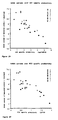
- Figures 2A and 2B show the correlation between specific productivity based on viable cell days ( Figure 2A ) and packed cell volume (PCV)( Figure 2B ) during the production phase and the sialic acid (NANA) content of the harvested product. Values for 9 different processes (A-I) are shown.
- the data points represent independent production processes as described in Table I.
- the carbohydrate moieties of the present invention will be described with reference to commonly used nomenclature for the description of oligosaccharides. A review of carbohydrate chemistry which uses this nomenclature is found in Hubbard and Ivatt (1981) Ann., Rev. Biochem. 50:555-583 .
- This nomenclature includes, for instance. Mann which represents mannose: GlcNAc, which represents 2-N-acetylglucosamine: Gal which represents galactose; and Glc, which represents glucose.
- Sialic acids are described with reference to the shorthand notation NeuNAc. for 5-N-acetylneuraminic acid, and NeuNGc for 5-glycolylneuraminic acid ( J. Biol. Chem. 1982 257:3347 : J. Biol. Chem., 1982. 257:3352 ).
- Osmolality is a measure of the osmotic pressure of dissolved solute particles in an aqueous solution.
- the solute particles include both ions and non-ionized molecules. Osmolality is expressed as the concentration of osmotically active particles (i.e., osmoles) dissolved in 1 kg of solution (1 mOsm/kg H 2 O at 38°C is equivalent to an osmotic pressure of 19mm Hg).
- Osmolarity refers to the number of solute particles dissolved in 1 liter of solution. When used herein, the abbreviation “mOsm” means “milliosmoles/kg solution”.
- glycoprotein refers generally to peptides and proteins having more than about ten amino acids and at least one oligosaccharide side chain.
- the glycoproteins may be homologous to the host cell, or preferably, they are heterologous, i.e., foreign, to the host cell being utilized, such as a human protein produced by a Chinese hamster ovary cell.
- mammalian glycoproteins glycoproteins that were originally derived from a mammalian organism
- those which are directly secreted into the medium are used, more preferably, those which are directly secreted into the medium.
- mammalian glycoproteins include molecules such as cytokines and their receptors, as well as chimeric proteins comprising cytokines or their receptors, including, for instance tumor necrosis factor alpha and beta, their receptors (TNFR-1; EP 417.563 published 20 March 1991; and TNFR-2, EP 417.014 published 20 March 1991) and their derivatives; renin: a growth hormone, including human growth hormone, and bovine growth hormone; growth hormone releasing factor; parathyroid hormone: thyroid stimulating hormone: lipoproteins: alpha-1-antitrypsin; insulin A-chain: insulin B-chain; proinsulin; follicle stimulating hormone: calcitonin; luteinizing hormone; glucagon; clotting factors such as factor VIIIC, factor IX.
- cytokines and their receptors include molecules such as cytokines and their receptors, as well as chimeric proteins comprising cytokines or their receptors, including, for instance tumor necrosis factor alpha and beta, their receptors (TNFR-1;
- tissue factor tissue factor, and von Willebrands factor
- anti-clotting factors such as Protein C: atrial natriuretic factor
- lung surfactant a plasminogen activator, such as urokinase or human urine or tissue-type plasminogen activator (t-PA); bombesin; thrombin; hemopoietic growth factor; enkephalinase; RANTES (regulated on activation normally T-cell expressed and secreted); human macrophage inflammatory protein (MIP-1-alpha); a serum albumin such as human serum albumin; mullerian-inhibiting substance; relaxin A-chain; relaxin B-chain; prorelaxin; mouse gonadotropin-associated peptide; a microbial protein, such as beta-lactamase; DNase: inhibin; activin: vascular endothelial growth factor (VEGF); receptors for hormones or growth factors: integrin; protein A or D; rheumatoid factors; a
- a nerve growth factor such as NGF- ⁇ ; platelet-derived growth factor (PDGF); fibroblast growth factor such as aFGF and bFGF; epidermal growth factor (EGF); transforming growth factor (TGF) such as TGF-alpha and TGF-beta, including TGF- ⁇ 1, TGF- ⁇ 2, TGF- ⁇ 3, TGF- ⁇ 4, or TGF- ⁇ 5; insulin-like growth factor-I and -II (IGF-I and IGF-II); des(1-3) -IGF-I (brain IGF-I), insulin-like growth factor binding proteins; CD proteins such as CD-3.
- PDGF platelet-derived growth factor
- fibroblast growth factor such as aFGF and bFGF
- EGF epidermal growth factor
- TGF transforming growth factor
- TGF such as TGF-alpha and TGF-beta, including TGF- ⁇ 1, TGF- ⁇ 2, TGF- ⁇ 3, TGF- ⁇ 4, or TGF- ⁇ 5
- CD-4, CD-8, and CD-19 erythropoietin; osteoinductive factors; immunotoxins; a bone morphogenetic protein (BMP); an interferon such as interferon-alpha, -beta, and -gamma; colony stimulating factors (CSFs), e . g ., M-CSF. GM-CSF, and G-CSF: interieukins (ILs), e .
- BMP bone morphogenetic protein
- CSFs colony stimulating factors
- GM-CSF GM-CSF
- G-CSF interieukins
- IL-1 to IL-10 superoxide dismutase: T-cell receptors: surface membrane proteins: decay acceleraung factor: viral antigen such as, for example, a portion of the AIDS envelope: transport proteins: homing receptors: addressins: regulatory proteins; antibodies; chimeric proteins, such as immunoadhesins, and fragments of any of the above-listed polypeptides.
- cell culture medium and “culture medium” referto a nutrient solution used for growing mammalian cells that typically provides at least one component from one or more of the following categories:
- the nutrient solution may optionally be supplemented with one or more components from any of the following categories:
- mammalian host cell refers to cell lines denved from mammals that are capable of growth and survival when placed in either monolayer culture or in suspension culture in a medium containing the appropriate nutrients and growth factors.
- the necessary growth factors for a particular cell line are readily determined empirically without undue experimentation, as described for example in Mammalian Cell Culture (Mather, J.P. ed., Plenum Press, N.Y. [1984 ]), and Barnes and Sato. (1980) Cell. 22:649 .
- the cells are capable of expressing and secreting large quantities of a particular glycoprotein of interest into the culture medium.
- suitable mammalian host cells within the context of the present invention may include Chinese hamster ovary cells/-DHFR (CHO. Urlaub and Chasm. Proc. Natl. Acad. Sci. USA. 77:4216 [1980 ]); dp12.CHO cells ( EP 307.247 published 15 March 1989): monkey kidney CV1 line transformed by SV40 (COS-7, ATCC CRL 1651); human embryonic kidney line (293 or 293 cells subcloned for growth in suspension culture, Graham et al., J. Gen Virol., 36:59 [1977 ]); baby hamster kidney cells (BHK, ATCC CCL 10); mouse sertoli cells (TM4, Mather, Biol.
- Chinese hamster ovary cells/-DHFR CHO. Urlaub and Chasm. Proc. Natl. Acad. Sci. USA. 77:4216 [1980 ]
- dp12.CHO cells EP 307.247 published 15 March 1989: monkey kidney CV1 line transformed by SV40 (COS-7
- monkey kidney cells (CV1 ATCC CCL 70); African green monkey kidney cells (VERO-76, ATCC CRL-1587); human cervical carcinoma cells (HELA, ATCC CCL 2); canine kidney cells (MDCK, ATCC CCL 34); buffalo rat liver cells (BRL 3A, ATCC CRL 1442); human lung cells (W138. ATCC CCL 75); human liver cells (Hep G2, HB 8065): mouse mammary tumor (MMT 060562. ATCC CCL51); TRI cells ( Mather et al., Annals N.Y. Acad. Sci., 383:44-68 [1982] ); MRC 5 cells: FS4 cells: and a human hepatoma line (Hep G2).
- Preferred host cells include Chinese hamster ovary cells/-DHFR (CHO, Urlaub and Chasin. Proc Natl Acad. Sci. USA. 77:4216 [1980 ]); dp12.CHO cells ( EP 307.247 published 15 March 1989).
- peptone within the context of the present invention is meant to refer to a media supplement that is essentially hydrolyzed animal protein.
- the source of this protein may be animal by-products from slaughter houses, purified gelatin, or plant material.
- the protein is typically hydrolyzed using acid, heat or various enzyme preparations.
- Preferred peptone mixtures are, for example. "Primatone RL” and “Primatone HS”, both of which are commercially available (Sheffield. England).
- Cell specific productivity “cell specific rate” and the like, are used herein to refer to the specific, i.e., per cell, or per measure of cell mass or volume, product expression rate.
- the cell specific productivity is measured in, for example, grams of protein produced per cell per day.
- X is the number of cells or cell volume, or cell mass equivalents
- dP/dt is the rate of protein production.
- q p can be obtained from a plot of product concentration versus time integral of viable cells ( ⁇ 2 2 Xdt "viable cell days").
- Viable cells can be determined by several measures, for example, biomass. O 2 uptake rate, lactase dehydrogenase (LDH), packed cell volume or turbidity.
- “Growth phase” of the cell culture refers to the period of exponential cell growth (the log phase) where cells are generally rapidly dividing. During this phase, cells are cultured for a period of time, usually between 1 -4 days, and under such conditions that cell growth is maximized. The determination of the growth cycle for the host cell can be determined for the particular host cell envisioned without undue experimentation. "Period of time and under such conditions that cell growth is maximized” and the like, refer to those culture conditions that, for a particular cell line, are determined to be optimal for cell growth and division. During the growth phase, cells are cultured in nutrient medium containing the necessary additives generally at about 30-40° C, in a humidified, controlled atmosphere, such that optimal growth is achieved for the particular cell line. Cells are maintained in the growth phase for a period of about between one and four days, usually between two to three days.
- Transition phase of the cell culture refers to the penod of time dunng which culture conditions for the production phase are engaged. During the transition phase environmental factors such as temperature of the cell culture, medium osmolality and the like are shifted from growth conditions to production conditions.
- “Production phase” of the cell culture refers to the penod of time during which cell growth has plateaued. Dunng the production phase, loganthmic cell growth has ended and protein production is primary. Dunng this penod of time the medium is generally supplemented to support continued protein production and to achieve the desired glycoprotein product.
- the term "expression” or “expresses” are used herein to refer to transcription and translation occurring within a host cell.
- the level of expression of a product gene in a host cell may be determined on the basis of either the amount of corresponding mRNA that is present in the cell or the amount of the protein encoded by the product gene that is produced by the cell.
- mRNA transcribed from a product gene is desirably quantitated by northern hybridization. Sambrook et al ., Molecular Cloning: A Laboratory Manual, pp. 7.3-7.57 (Cold Spring Harbor Laboratory Press. 1989).
- Protein encoded by a product gene can be quantitated either by assaying for the biological activity of the protein or by employing assays that are independent of such activity, such as western blotting or radioimmunoassay using antibodies that are capable of reacting with the protein.
- alkanoic acid or salt thereof is meant butyric acid and the corresponding salt is sodium butyrate.
- the present inventors have discovered that factors which increase cell specific productivity during the production of a glycoprotein produced by mammalian cell culture have an inverse effect on sialic acid content of the glycoprotein produced. Since proteins expressing one or more sialic acid residues per complex oligosaccharide structure have longer clearance rates in vivo the clearance rate of the glycoprotein produced may be manipulated within broad limits by the overall degree of sialylation of the preparation.
- the present invention provides for processes for controlling the extent of sialylation of a glycoprotein produced by mammalian cell culture. Following the methodology set forth herein, one is able to determine the precise process parameters that provide for the desired sialic acid content of a glycoprotein produced by mammalian cell culture.
- a mammalian host cell is cultured to produce a recoverable glycoprotein product.
- the overall content of sialic acid in the glycoprotein is controlled by controlling cell culture parameters which affect cell specific productivity.
- Factors which affect cell specific productivity are well known in the art and include, but are not limited to, factors which affect DNA/RNA copy number, factors which affect RNA, such as factors which stabilize RNA, media nutrients and other supplements, the concentration of transcription enhancers, the osmolality of the culture environment, the temperature and pH of the cell culture, and the like.
- adjustment of these factors, alone or in combination, to increase cell specific productivity generates a protein with a decreased sialic acid content.
- the adjustment of these factors, alone or in combination, to decrease cell specific productivity generates a mature glycoprotein with an increased sialic acid content.
- mammalian cells are cultured to produce a desired glycoprotein product.
- a host cell for the production of the glycoprotein within the context of the present invention, it is important to recognize that different host cells have characteristic and specific mechanisms for the translational and post-translational processing and modification (e.g., glycosylation, cleavage) of the proteins expressed.
- Appropriate cell lines should be chosen to ensure that the desired post translational modifications are possible.
- host cells can be modified to express a iestred gene product required for the specific post-translational modification.
- the mammalian cells which express the desired protein should express or be manipulated to express the particular enzymes such that under the appropriate conditions, described herein, the appropriate post translational modification occurs in vivo .
- the enzymes include those enzymes necessary for the addition and completion of N- and O- linked carbohydrates such as those described in Hubbard and Ivan supra for N-linked oligosaccharides.
- the enzymes optionally include oligosaccharyltransferase, alpha-glucosidase I, alpha-glucosidase II. ER alpha (1,2)mannosidase, Golgi alpha-mannodase I. N-acetylyglucosaminyltransferase I.
- the host cell expresses the appropriate sialyl transferase that can be expected to attach the terminal sialic acid in specific position and linkage as part of the host cell genome.
- the host cell can be made to express the appropriate sialyl transferases byn for instancen transfection of the host cell with the DNA encoding the sialyl tranferase.
- sialyl transferases described above would be expected to add the terminal sialic acid residue to the appropnate ohgosacchande core structure such as Gal ⁇ 1 -4GlcNAc.
- Appropriate sialyl transferases within the context of the present invention include, but are not limited ton those sialyl transferases which catalyze the complex sialylation and branching of the N- and O-linked oligosaccharides.
- Suitable culture conditions for mammalian cells are well known in the art ( J. Immunol. Methods (1983)56:221-234 ) or can be easily determined by the skilled artisan (see, for example, Animal Cell Culture: A Practical Approach 2nd Ed., Rickwood. D. and Hames. B.D., eds. Oxford University Press. New York (1992 )), and vary according to the particular host cell selected.
- the mammalian cell culture of the present invention is prepared in a medium suitable for the particular cell being cultured.
- Commercially available media such as Ham's F10 (Sigma). Minimal Essential Medium ([MEM], Sigma). RPMI-1640 (Sigma), and Dulbecco's Modified Eagle's Medium ([DM EM], Sigma) are exemplary nutrient solutions.
- any of these media may be supplemented as necessary with hormones and/or other growth factors (such as insulin, transferrin, or epidermal growth factor), salts (such as sodium chloride, calcium, magnesium, and phosphate), buffers (such as HEPES), nucleosides (such as adenosine and thymidine), antibioucs (such as Gentamycin TM drug), trace elements (defined as inorganic compounds usually present at final concentrations in the micromolar range) lipids (such as linoleic or other fatty acids) and their suitable carriers, and glucose or an equivalent energy source. Any other necessary supplements may also be included at appropriate concentrations that would be known to those skilled in the art.
- growth factors such as insulin, transferrin, or epidermal growth factor
- salts such as sodium chloride, calcium, magnesium, and phosphate
- buffers such as HEPES
- nucleosides such as adenosine and thymidine
- antibioucs such as Gentamycin
- the mammalian host cell is a CHO cell, preferably a dp12.CHO cell and a suitable medium contains a basal medium component such as a DMEM/HAM F-12 based formulation (for composition of DM EM and HAM F12 media, see culture media formulations in American Type Culture Collection Catalogue of Cell Lines and Hybridomas. Sixth Edition, 1988. pages 346-349 ) (the formulation of medium as described in U.S.
- a basal medium component such as a DMEM/HAM F-12 based formulation (for composition of DM EM and HAM F12 media, see culture media formulations in American Type Culture Collection Catalogue of Cell Lines and Hybridomas. Sixth Edition, 1988. pages 346-349 ) (the formulation of medium as described in U.S.
- Patent 5,122,469 are particularly appropriate with modified concentrations of some components such as amino acids, salts, sugar, and vitamins, and optionally containing glycine, hypoxanthine, and thymidine; recombinant human insulin, hydrolyzed peptone, such as Pnmatone HS or Pnmatone RL (Sheffield, England), or the equivalent: a cell protective agent, such as Pluronic F68 or the equivalent pluronic polyol: Gentamycin; and trace elements.
- some components such as amino acids, salts, sugar, and vitamins, and optionally containing glycine, hypoxanthine, and thymidine
- recombinant human insulin hydrolyzed peptone, such as Pnmatone HS or Pnmatone RL (Sheffield, England), or the equivalent
- a cell protective agent such as Pluronic F68 or the equivalent pluronic polyol: Gentamycin
- Pluronic F68 Pluronic F68 or the equivalent pluronic polyol
- glycoproteins of the present invention may be produced by growing cells which express the desired protein under a variety of cell culture conditions. For instance, cell culture procedures for the large or small scale production of proteins are potentially useful within the context of the present invention. Procedures including, but not limited to, a fluidized bed bioreactor, hollow fiber bioreactor, roller bottle culture, or stirred tank bioreactor system may be used, in the later two systems, with or without microcarriers, and operated alternatively in a batch, fed-batch, or continuous mode.
- the cell culture of the present invention is performed in a stirred tank bioreactor system and a fed batch culture procedure is employed.
- a fed batch culture the mammalian host cells and culture medium are supplied to a culturing vessel initially and additional culture nutrients are fed, continuously or in discrete increments, to the culture during culturing, with or without periodic cell and/or product harvest before termination of culture.
- the fed batch culture can include, for example, a semi-continuous fed batch culture, wherein periodically whole culture (including cells and medium) is removed and replaced by fresh medium.
- Fed batch culture is distinguished from simple batch culture in which all components for cell culturing (including the cells and all culture nutrients) are supplied to the culturing vessel at the start of the culturing process.
- Fed batch culture can be further distinguished from perfusion culturing insofar as the supernate is not removed from the culturing vessel during the process (in perfusion culturing, the cells are restrained in the culture by. e.g., filtration, encapsulation, anchoring to microcarriers etc. and the culture medium is continuously or intermittently introduced and removed from the culturing vessel).
- the cells of the culture may be propagated according to any scheme or routine that may be suitable for the particular host cell and the particular production plan contemplated. Therefore, the present invention contemplates a single step or multiple step culture procedure. In a single step culture the host cells are inoculated into a culture environment and the processes of the instant invention are employed during a single production phase of the cell culture.
- a multi-stage culture is envisioned.
- cells may be cultivated in a number of steps or phases. For instance, cells may be grown in a first step or growth phase culture wherein cells, possibly removed from storage, are inoculated into a medium suitable for promoting growth and high viability. The cells may be maintained in the growth phase for a suitable period of time by the addition of fresh medium to the host cell culture.
- fed batch or continuous cell culture conditions are devised to enhance growth of the mammalian cells in the growth phase of the cell culture.
- cells are grown under conditions and for a period of time that is maximized for growth.
- Culture conditions such as temperature, pH, dissolved oxygen (dO 2 ) and the like, are those used with the particular host and will be apparent to the ordinanly skilled arusan.
- the pH is adjusted to a level between about 6.5 and 7.5 using either an acid (e.g., CO 2 ) or a base (e.g., Na 2 CO 3 or NaOH).
- a suitable temperature range for culturing mammalian cells such as CHO cells is between about 30 to 38°C and a suitable dO 2 is between 5-90% of air saturation.
- the cells may be used to inoculate a production phase or step of the cell culture.
- the production phase or step may be continuous with the inoculation or growth phase or step.
- the cell culture environment during the production phase of the cell culture is controlled.
- factors affecting cell specific productivity of the mammalian host cell are manipulated such that the desired sialic acid content is achieved in the resulting glycoprotein.
- factors which increase cell specific productivity are controlled during the production phase of the cell culture process such that the resulting glycoprotein product contains the desired sialic acid content.
- the production phase of the cell culture process is preceded by a transition phase of the cell culture in which parameters for the production phase of the cell culture are engaged.
- the concentration of a transcription enhancer such as an alkanoic acid is manipulated to affect cell specific productivity and therefore the resulting sialic acid content of the mammalian cell glycoprotein product.
- the alkanoic acid is butyric acid and the salt thereof, is sodium butyrate.
- the concentration of sodium butyrate is controlled to control the cell specific productivity.
- Concentrations of sodium butyrate of between 0.1 and 20 mM are used and modified according to the particular host cell being cultured and the desired sialic acid content of the glycoprotein produced.
- concentrations of a transcription enhancer such as sodium butyrate are chosen to obtain the desired sialic acid content.
- concentrations of the transcription enhancer are used.
- concentrations of the transcription enhancer such as sodium butyrate between about 0.1 mM and about 8 mM are used. More preferably concentrations between about 1.0 and 6.0 mM are used. In a particular embodiment about 6 mM sodium butyrate is used. In another embodiment about 1 mM sodium butyrate is used.
- a glycoprotein is produced with a decreased level of sialic acid.
- mammalian cells are cultured under conditions such that cell specific productivity is increased.
- a concentration of butyric acid is chosen such that increased cell specific productivity generates a protein with the desired sialic acid profile.
- the concentration of the butyric acid or sodium salt thereof is between about 5 and 20 mM and more preferably between about 6 mM and 12 mM.
- the concentration of sodium butyrate is about 12 mM.
- small test cultures can be prepared and rate of glycoprotein product production. i.e. the cell specific productivity can be determined and the resulting sialic acid content can be used to prepare a similar table and figure appropriate for the particular host cell being cultured, keeping in mind that decreases in cell specific productivity lead to increases in the sialic acid content of the glycoprotein produced.
- the butyric acid or sodium butyrate is added to the host cell culture at or about the time the production phase of the cell culture is initiated.
- a transition phase is employed during the cell culture process preceding the production phase in which the cell culture conditions as discussed herein are engaged for the desired cell specific productivity and hence the desired glycoform profile.
- the butyric acid or sodium salt thereof is added by any means known in the art.
- the sodium butyrate is added in batch to the fed batch culture system with or without other appropriate nutrients as described herein or known to those skilled in the art of mammalian cell culture.
- the osmolality of the cell culture environment is controlled in addition to the factors noted above to regulate the extent of sialylation of the mature glycoprotein.
- osmolality is controlled to control the sialic acid content of the mature protein independent of other factors which affect cell specific productivity.
- osmolality is controlled in addition to controlling other factors which affect cell specific productivity.
- both osmolality and the concentration of butyric acid are controlled.
- the osmolality of the cell culture environment is controlled to produce the desired balance between the cell specific productivity and the sialic acid profile of the resulting glycoprotein.
- cell specific productivity is increased when osmolality is increased.
- An osmolality which produces a protein with the desired sialic acid is chosen keeping in mind that increases in the osmolality generally lead to increase in production rate of the particular protein.
- In order to decrease the production rate and increase the sialic acid content of the mature glycoprotein osmolality is generally maintained at a lower level for the particular cell type being cultured.
- the osmolality of the culture medium is generally about 290-330 mOsm.
- increases in the osmolality generally lead to increase in production rate of proteins.
- An osmolality is chosen such that the production rate corresponds with the desired product profile.
- Osmolality in the range from about 250 mOsm to about 450 mOsm is appropriate for an increased sialic acid content. More preferably, the osmolality is maintained at about between 300 and 450 mOsm, according to this aspect of the invention, and more preferably between about 350 and 400 mOsm, and most preferably about 400 mOsm.
- an osmolality which provides an increased production rate is chosen.
- the osmolality is maintained at about between 350 - 600 mOsm, and is preferably between about 450-550 mOsm, according to this aspect of the invention.
- media osmolality is dependent upon the concentration of osmotically active particles in the culture fluid and that a number of variables that make up a complex mammalian cell culture medium impact osmolality.
- the initial osmolality of the culture medium is determined by the composition of the culture medium.
- the osmolality can be measured using an osmometer such as that sold by Fisher Scientific. Pittsburgh. Pennsylvania, under the brand name OSMETTE (or the Osmette model 2007, available from Precision Systems. Inc. Natick MA), for example.
- OSMETTE or the Osmette model 2007, available from Precision Systems. Inc. Natick MA
- Solutes which can be added to the culture medium so as to increase the osmolality thereof include proteins, peptides, amino acids, hydrolyzed animal proteins such as peptones, non-metabolized polymers, vitamins, ions, salts, sugars, metabolites, organic acids, lipids, and the like.
- the osmolality is controlled by the addition of a peptone to the cell culture along with other components of the culture medium during a fed batch culture procedure.
- the osmolality is maintained or adjusted to the desired range via the addition of for instance, a basal medium formulation including amino acids, various salts (e.g. NaCl), in addition to a peptone.
- a basal medium formulation including amino acids, various salts (e.g. NaCl), in addition to a peptone.
- the culture medium is supplemented with, for instance, a basal culture medium containing excess amino acids (see, e.g., the "Super" medium of U.S. Patent No. 5,122,469 ), glucose, and a peptone.
- the concentration(s) of other constituents in the culture medium can be modified in order to achieve an osmolality range as set forth above.
- concentration of glucose the primary energy source
- the osmolality of the medium can be maintained at about the desirable range specified. Controlling the glucose concentration serves to provide adequate carbon source to the cells and simultaneously control the production of lactic acid by the host cells. This is advantageous in that it limits the pH decrease in the culture medium which necessitates the addition of a neutralizer (e . g ., a base such as Na 2 CO 3 or NaOH), which causes the osmolality to rise.
- a neutralizer e . g ., a base such as Na 2 CO 3 or NaOH
- the medium can be supplemented to maintain the osmolality within the appropriate margins according to whatever scheme is being used to maintain the cell culture.
- the culture system is a fed batch culture system and the medium is supplemented in batch in a feed during the production phase of the cell culture. Additionally the medium can be supplemented during the production phase as described infra.
- intermittent off-line sampling of the culture medium can be carried out.
- the osmolality of the culture medium can then be modified by the modulation of a feed solution as required.
- the cell culture procedures of the present invention are selected to achieve the desired level of sialylation of the produced protein.
- Process parameters in addition to those described herein which influence the degree of sialylation include oxygen level, and glucose level.
- Culture density, time and storage conditions such as temperature also influence sialylation.
- the present invention is meant to include those process parameters which are additionally most suitable for enhanced sialylation.
- the polypeptide of interest is recovered from the culture medium using techniques which are well established in the art.
- the polypeptide of interest preferably is recovered from the culture medium as a secreted polypeptide, although it also may be recovered from host cell lysates.
- the culture medium or lysate is centrifuged to remove particulate cell debris.
- the polypeptide thereafter is purified from contaminant soluble proteins and polypeptides, with the following procedures being exemplary of suitable purification procedures: by fractionation on immunoaffinity or ion-exchange columns; ethanol precipitation: reverse phase HPLC: chromatography on silica oron a cation-exchange resin such as DEAE; chromatofocusing: SDS-PAGE; ammonium sulfate precipitation: gel filtration using, for example.
- Sephadex G-75 and protein A Sepharose columns to remove contaminants such as IgG.
- a protease inhibitor such as phenyl methyl sulfonyl fluoride (PMSF) also may be useful to inhibit proteolytic degradation during purification.
- PMSF phenyl methyl sulfonyl fluoride
- purification methods suitable for the polypeptide of interest may require modification to account for changes in the character of the polypeptide upon expression in recombinant cell culture.
- the desired glycoforms of the present invention may be enriched for sialic acid-containing molecules by, for example, ion-exchange soft gel chromatography or HPLC using cation- or anion-exchange resins, wherein the more acidic fraction is collected.
- the complex carbohydrate portion of the glycoprotein produced by the processes of the present invention may be readily analyzed if desired, by conventional techniques of carbohydrate analysis.
- techniques such as lectin blotting, well-known in the art, reveal proportions of terminal mannose or other sugars such as galactose.
- Termination of mono-, bi-, tri-, ortetra-antennary oligosaccharide by sialic acids can be confirmed by release of sugars from the protein using anhydrous hydrazine or enzymatic methods and fractionation of oligosaccharides by ion-exchange or size exclusion chromatography or other methods well-known in the art.
- the pI of the glycoprotein can also be measured, before and after treatment with neuraminidase to remove sialic acids. An increase in pI following neuraminidase treatment indicates the presence of sialic acids on the glycoprotein.
- the carbohydrate structures of the present invention occur on the protein expressed as N-linked or O-linked carbohydrates.
- the N-linked and O-linked carbohydrates differ primarily in their core structures.
- N-linked glycosylation refers to the attachment of the carbohydrate moiety via GlcNAc to an asparagine residue in the peptide chain.
- the N-linked carbohydrates all contain a common Man1-6(Man1-3)ManB1-4GlcNAc ⁇ 1-4GlcNAc ⁇ -R core structure. Therefore, in the core structure described. R represents an asparagine residue of the produced protein.
- the peptide sequence of the protein produced will contain an asparagine-X-serine, asparagine-X-threonine, and asparagine-X-cysteine, wherein X is any amino acid except proline.
- O-linked carbohydrates by contrast are characterized by a common core structure, which is the GalNAc attached to the hydroxyl group of a threonine or serine.
- the most important are the complex N- and O-linked carbohydrates.
- Such complex carbohydrates will contain several antenanary structures.
- the mono-, bi-. tri.-, and tetra-, outer structures are important for the addition of terminal sialic acids. Such outer chain structures provide for additional sites for the specific sugars and linkages that comprise the carbohydrates of the instant invention.
- the resulting carbohydrates can be analyzed by any method known in the art including those methods described herein.
- Several methods are known in the art for glycosylation analysis and are useful in the context of the present invention. Such methods provide information regarding the identity and the composition of the oligosaccharide attached to the peptide.
- Methods for carbohydrate analysis useful in the present invention include but are not limited to lectin chromatography: HPAEC-PAD, which uses high pH anion exchange chromatography to separate oligosaccharides based on charge; NMR; Mass spectrometry; HPLC; GPC; monosaccharide compositional analysis: sequential enzymatic digestion.
- oligosaccharides are known: These methods include 1) enzymatic, which is commonly performed using peptide-N-glycosidase F/endo- ⁇ -galactosidase; 2) ⁇ elimination using harsh alkaline environment to release mainly O-linked structures; and 3) chemical methods using anhydrous hydrazine to release both N-and O-linked oligosaccharides
- Neutral and amino-sugars can be determined by high performance anion-exchange chromatography combined with pulsed amperometric detection (HPAE-PAD Carbohydrate System. Dionex Corp.). For instance, sugars can be released by hydrolysis in 20% (v/v) trifluoroacetic acid at 100°C for 6 h. Hydrolysates are then dried by lyophilization or with a Speed-Vac (Savant Instruments). Residues are then dissolved in 1% sodium acetate trihydrate solution and analyzed on a HPLC-AS6 column as described by Anumula et al. (Anal. Biochem. 195:269-280 (1991) .
- Sialic acid can be determined separately by the direct colorimetric method of Yao et al. (Anal Biochem. 179: 332-335 (1989) ) in triplicate samples.
- the thiobarbaturic acid (TBA) of Warren. L. J. Biol Chem 238:(8) (1959 ) is used.
- immunoblot carbohydrate analysis may be performed.
- protein-bound carbohydrates are detected using a commercial glycan detection system (Boehringer) which is based on the oxidative immunoblot procedure described by Haselbeck and Hosel [Hahneck et al. Glycoconjugate J., 7:63 (1990)].
- the staining protocol recommended by the manufacturer is followed except that the protein is transferred to a polyvinylidene difluoride membrane instead of nitrocellulose membrane and the blocking buffers contained 5% bovine serum albumin in 10 mM tris-buffer, pH 7.4 with 0.9% sodium chloride.
- Detection is made with anti-digoxigenin antibodies linked with an alkaline phosphate conjugate (Boehringer), 1:1000 dilution in tris buffered saline using the phosphatase substrates. 4-nitroblue tetrazolium chloride. 0.03% (w/v) and 5-bromo-4 chloro-3-indoyl-phosphate 0.03% (w/v) in 100 mM tris buffer, pH 9.5. containing 100 mM sodium chloride and 50 mM magnesium chloride. The protein bands containing carbohydrate are usually visualized in about 10 to 15 min.
- the carbohydrate may also be analyzed by digestion with peptide-N-glycosidase F. According to this procedure the residue is suspended in 14 ⁇ l of a buffer containing 0.18% SDS. 18 mM beta-mercaptoethanol, 90 mM phosphate. 3.6 mM EDTA. at pH 8.6. and heated at 100 °C for 3 min. After cooling to room temperature, the sample is divided into two equal parts. One aliquot is not treated further and serves as a control. The second fraction is adjusted to about 1 % NP-40 detergentfollowed by 0.2 units of peptide-N-glycosidase F (Boehringer). Both samples are warmed at 37° C for 2 hr and then analyzed by SDS-polyacrylamide gel electrophoresis.
- the processes of the present invention are used to produce tumor necrosis factor receptor (TNFR)-Immunogloblun (Ig) chimeras.
- TNFR tumor necrosis factor receptor
- Ig immunogloblun
- TNFR1-IgG 1 chimeras produced are useful in the treatment or diagnosis of many TNF-mediated or TNF-related diseases and disorders.
- treatment in this context includes both prophylactic (prevention), suppression (e.g., of a symptom) and treatment of an existing condition.
- the pathologic conditions associated with TNF include but are not limited to gram negative and gram positive bacteremia, endotoxic shock, graft rejection phenomena, rheumatoid arthritis, systemic lupus. Crohn's disease and other autoimmune and inflammatory diseases associated with TNF.
- TNF-alpha and TNF-beta are mediated through specific receptors ( Dembic et al., (1990) Cytokines. 2:231 ).
- TNFR TNF receptors
- type 1 Schall et al., (1990) Cell 61:361
- type 2 Smith et al., (1990) Science 248:1019
- Loetscher et al., (1990) Cell. 61:351 Shall et al. (1990) Cell.
- TNF agonists have been created which block the deleterious effect of TNF in various immune and inflammatory events ( Peppel et al., (1991) J. Exp. Med., 174:1483-1489 ; Ulich (1993) Am. J. Path., 142:1335-1338 ; Howard, O.M.Z., (1993) Proc. Natl. Acad. Sci. USA 90:2335-2339 : Wooley.
- the Chinese hamster ovary (CHO)cell line used as the mammalian host cell line was derived from CHO-K1 (ATCC No. CCL61 CHO-K1).
- a soluble type 1 TNFR-IgG 1 chimera was constructed by gene fusion of the extracellular domain of human type 1 TNFR with the hinge region and C H 2 and C H 3 domains of IgG 1 heavy chain (further referred to as TNFR1-IgG 1 ).
- the human type 1 TNFR encoding DNA sequence (see Loetscher etal., Supra ) was obtained from the plasmid pRK-TNF-R [ Schall et al., Cell 61, 361 (1990 )].
- pRK-TNF-R plasmid pRK-TNF-R
- a 2.1 kb placental cDNA clone (Schall et al ., Supra ) was inserted into the mammalian expression vector pRK5, the construction of which is described in EP Pub. No. 307.247 , published 15 March 1989.
- This cDNA starts at nucleotide position 64 of the sequence reported by Loetscher et al., with the initiating methionine 118 bp downstream.
- the source of the IgG 1 encoding sequence was the CD4-IgG expression plasmid pRKCD4 2 F C1 [ Capon, D. J. et al., Nature 337, 525 (1989 ); Byrn et al., Nature 344, 667 (1990 )], containing a cDNA sequence encoding a hybrid polypeptide consisting of residues 1-180 of the mature human CD4 protein (two N-termunal CD4 variable domains) fused to human IgG 1 sequences beginning at asparuc acid 216 (taking amino acid 114 as the first residue of the heavy chain constant region [Kabat et al., Sequences of Proteins of Immunological Interest 4th edition (1987)] which is the first residue of the IgG 1 hinge after the cysteine residue involved in heavy-light chain bonding), and ending with residue 441 to include the C H 2 and C H 3 Fc domains of IgG 1 .
- TNFR1-IgG 1 was constructed by generating restriction fragments of plasmids pRK-TNF-R and pRKCD4 2 F C1 and ligating them, using deletional mutagenesis, so that threonine residue 171 of mature TNFR's is juxtaposed to aspartic acid residue 216 of IgG 1 heavy chain [Kabat et al ., Supra ].
- the resulung plasmid pRKTNFR-IgG contained the full length coding sequence for TNFR 1 IgG 1 .
- the gene encoding the soluble type 1 TNFR-IgG 1 was introduced into dp12.CHO cells by transfection. This was accomplished using the calcium phosphate technique for introducing DNA into mammalian cells. Two days following transfection the cells were trypsinized and replated into selective medium (glycine-hypoxanthine and thymidine free Ham's F-12 DMEM. 1.1 v/v with 2% dialyzed serum). Subsequent isolates were screened for secretion of TNFR1-IgG 1 . Clones expressing TNFR1-IgG, where amplified in methotrexate yielding high expressing clones and subsequently adapted to serum free medium. These cells were under a continuous selective pressure until transferred to nonselective medium for growth and expansion of the inoculum.
- the cell population described above was expanded from the medium containing methotrexate by serial subcultivations in vessels of increasing volumes to growth medium containing no methotrexate.
- the non selective growth medium was DMEM/HAM F-12 based formulation (see U.S. Patent 5.122.469 .
- some components such as glucose, amino acids, salts, sugar, vitamins glycine, hypoxanthine, and thymidine
- recombinant human insulin hydrolyzed peptone (Primatone HS or Primatone RL), a cell protective agent such as Pluronic F68 (pluronic polyol) or the equivalent
- Gentamycin Lipid and trace elements.
- the cultures were controlled at pH 7.2+/- 0.4 by the use of CO 2 gas (acid) and /or Na 2 CO 3 (base). Temperature was controlled near 37 °C during the growth penod. Dissolved oxygen was maintained above 5% of air saturation by direct sparging with air and/or oxygen gas.
- the osmolality during the inoculum expansion phase was maintained between about 250 mOsm and 350 mOsm.
- the growth phase for each culture was followed by a second phase or transition phase wherein culture parameters were changed from optimal growth to production conditions.
- this transition phase the temperature of the culture system was decreased, generally to about between 30 and 35 °C. Butyrate was added and a certain osmolality range was engaged. Product accumulated during this production phase was analyzed for sialic acid content.
- Table I describes the production conditions for various production processes.
- Table I Process version Butyrate concentration (mmol/l) Osmolality in production phase (m0smol/kg) Cell specific productivity between day 5 and day 10 (pg/d) Sialic acid content of TNFR1-IgG 1 on day 10 (mol/mol)
- a 1 360-420 0.6-1.5 6.4-7.2 N 4
- B 1 480-510 1.7-2.2 6.0-6.3 N 3
- C 6 460 4.8 4.7 N 1
- D 6 370-420 2.4-2.8 5.5-5.6 N 3
- E 6 350-370 1.4-2.3 5.4-6.3 N 3
- I 12 370-380 2.0-2.2 5.5-5.9 N 3
- the TNFR1-IgG 1 chimera was punfied to greater than 95% homogeneity by affinity chromatography on immobilized Staphylococcus aureus Protein A as described by Capon et al., Supra.
- Sialic acid content was analyzed by the method of Warren. L. (1959) J. Biol. Chem. 234:1971-1975 .
- Plasma pharmacokinetic half-lives and/or clearance rates of different preparations were determined.
- the preparations containing a higher sialic acid content in general exhibited increased plasma half-life and/or lower total clearance rates compared to preparations containing a decreased sialic acid content.
- Process II a third TNFR1-IgG 1 preparation from a process in which the butyrate concentration was 12 mM and the osmolality during the producuon phase was about 500 mOsm.
- Process II Two mL blood samples were collected onto EDTA (8.5 %) pre-dose, and at 5 min. and 2, 6, 10, 24, 34, 48. 56. 72. 96, and 120 hours post-dose. Blood samples were centrifuged, plasma harvested, and the samples analyzed for concentrauons of TNFR1-IgG 1 fusion protein.
- ELIBA enzyme-linked immunological and biological binding assay
- Quantification was determined by measurement of a color produced by reaction of peroxidase with peroxide and an ortho-phenylenediamine (OPD) substrate.
- OPD ortho-phenylenediamine
- the dose was normalized to account for dosing solution concentration differences. All calculations were based on concentration versus time data through the 120-hr timepoint. Truncated area under the curve (AUC 0-120 ) was calculated using the trapezoidal rule and weight-normalized truncated clearance (CL 0-120 /W) was calculated as dose/ AUC 0-120 .
- oligosacchande carbohydrate composition and structure of TNFR1-IgG 1 prepared as described in Example I showed that the sialic acid content of the various process version vaned. Rapid plasma clearance was associated with high exposed GlcNAc. lower sialic acid on the oligosaccharide chains and (by inference) accessibility of the protein to mannose or galactose receptors. Slow plasma clearance was associated with more terminal sialic acid residues.
- TNFR1-IgG 1 was produced according to the methods outlined as described in Example 1 above.
- Process I material was obtained from cell culture using 6mM butyrate and an osmolality of about 400 mOsm during the production phase.
- Process material II was obtained from cell culture using 12 mM butyrate and an osmolality of about 500 mOsm during the production phase.
- Tables IV and V presented below demonstrate the carbohydrate composition of the oligosaccharide side chains of the TNFR1-IgG 1 chimera preparations produced under process I and process II type conditions.
- Table V presents data for carbohydrates on the receptor portion of the chimeric molecule, subtracting the F c glycosylation site.
- the TNFR1-IgG 1 prepared by Process I contains a significantly higher proportion of sialic acid and a significantly lower proportion of exposed GlcNAc.
- Sialic acid per mole protein indicates that this material would have a lower isoelectric point than the material produced by Process II.
- these results also indicate that the slower plasma clearance of Process I material correlates with lower exposed GlcNAc and generally with a higher sialic acid content.
- Table IV and V demonstrate TNFR1-IgG 1 preparations comprising a complex oligosaccharide terminated by one or more residues of a sialic acid.
- the preferred TNFR1-IgG 1 preparations comprise TNFR1-IgG1 molecules having about 1-2 moles of exposed N-acetylglucosamine residues per mole of protein.
- the molar ratio of sialic acid to protein is about 4-7.
- the TNFR1-IgG 1 preparations have a molar ratio of sialic acid to N-acetylglucosamine of about 0.4 to about 0.45.
- the pl of the heavily sialylated preparation is lower than the pl of the lightly sialylated preparation.
- Isoelectric focusing was performed for the various preparation described in Example II.
- the isoelectric focusing gels separate the glycoproteins of the preparation according to their isoelectric point, pl, using a pH gradient created with ampholytes of different pH.
- analysis of the preparations was performed using a pH gradient of 10 to 4.
- the TNFR1-IgG 1 preparations exhibit an isoelectric point range, of about 5.5 to about 7.5 as determined by chromatofocusing, in which the pl is sensitive to neuraminidase treatment.
Landscapes
- Health & Medical Sciences (AREA)
- Chemical & Material Sciences (AREA)
- Life Sciences & Earth Sciences (AREA)
- Organic Chemistry (AREA)
- Genetics & Genomics (AREA)
- General Health & Medical Sciences (AREA)
- Engineering & Computer Science (AREA)
- Zoology (AREA)
- Biochemistry (AREA)
- Medicinal Chemistry (AREA)
- Molecular Biology (AREA)
- Immunology (AREA)
- Biotechnology (AREA)
- Wood Science & Technology (AREA)
- Bioinformatics & Cheminformatics (AREA)
- Cell Biology (AREA)
- Biophysics (AREA)
- Proteomics, Peptides & Aminoacids (AREA)
- Biomedical Technology (AREA)
- Gastroenterology & Hepatology (AREA)
- Toxicology (AREA)
- General Chemical & Material Sciences (AREA)
- General Engineering & Computer Science (AREA)
- Chemical Kinetics & Catalysis (AREA)
- Microbiology (AREA)
- Veterinary Medicine (AREA)
- Nuclear Medicine, Radiotherapy & Molecular Imaging (AREA)
- Pharmacology & Pharmacy (AREA)
- Animal Behavior & Ethology (AREA)
- Public Health (AREA)
- Rheumatology (AREA)
- Pain & Pain Management (AREA)
- Preparation Of Compounds By Using Micro-Organisms (AREA)
- Micro-Organisms Or Cultivation Processes Thereof (AREA)
- Peptides Or Proteins (AREA)
- Medicines Containing Antibodies Or Antigens For Use As Internal Diagnostic Agents (AREA)
- Medicines Containing Material From Animals Or Micro-Organisms (AREA)
- Medicines That Contain Protein Lipid Enzymes And Other Medicines (AREA)
Priority Applications (2)
| Application Number | Priority Date | Filing Date | Title |
|---|---|---|---|
| EP05017434.1A EP1609853B2 (en) | 1995-06-06 | 1996-06-06 | Process for controlling sialylation of proteins produced by mammalian cell culture |
| SI9630715T SI0832189T2 (sl) | 1995-06-06 | 1996-06-06 | Postopek za kontroliranje sialiacije proteinov, proizvedenih s celično kulturo sesalca |
Applications Claiming Priority (3)
| Application Number | Priority Date | Filing Date | Title |
|---|---|---|---|
| US469348 | 1995-06-06 | ||
| US08/469,348 US5705364A (en) | 1995-06-06 | 1995-06-06 | Mammalian cell culture process |
| PCT/US1996/009284 WO1996039488A1 (en) | 1995-06-06 | 1996-06-06 | Process for controlling sialylation of proteins produced by mammalian cell culture |
Related Child Applications (1)
| Application Number | Title | Priority Date | Filing Date |
|---|---|---|---|
| EP05017434.1A Division EP1609853B2 (en) | 1995-06-06 | 1996-06-06 | Process for controlling sialylation of proteins produced by mammalian cell culture |
Publications (3)
| Publication Number | Publication Date |
|---|---|
| EP0832189A1 EP0832189A1 (en) | 1998-04-01 |
| EP0832189B1 EP0832189B1 (en) | 2005-08-17 |
| EP0832189B2 true EP0832189B2 (en) | 2008-07-09 |
Family
ID=23863440
Family Applications (2)
| Application Number | Title | Priority Date | Filing Date |
|---|---|---|---|
| EP96918251A Expired - Lifetime EP0832189B2 (en) | 1995-06-06 | 1996-06-06 | Process for controlling sialylation of proteins produced by mammalian cell culture |
| EP05017434.1A Expired - Lifetime EP1609853B2 (en) | 1995-06-06 | 1996-06-06 | Process for controlling sialylation of proteins produced by mammalian cell culture |
Family Applications After (1)
| Application Number | Title | Priority Date | Filing Date |
|---|---|---|---|
| EP05017434.1A Expired - Lifetime EP1609853B2 (en) | 1995-06-06 | 1996-06-06 | Process for controlling sialylation of proteins produced by mammalian cell culture |
Country Status (35)
Cited By (1)
| Publication number | Priority date | Publication date | Assignee | Title |
|---|---|---|---|---|
| US11407813B2 (en) | 2019-12-06 | 2022-08-09 | Regeneron Pharmaceuticals, Inc. | Anti-VEGF protein compositions and methods for producing the same |
Families Citing this family (115)
| Publication number | Priority date | Publication date | Assignee | Title |
|---|---|---|---|---|
| DE10399023I2 (de) | 1989-09-12 | 2006-11-23 | Ahp Mfg B V | TFN-bindende Proteine |
| US5705364A (en) † | 1995-06-06 | 1998-01-06 | Genentech, Inc. | Mammalian cell culture process |
| US6656466B1 (en) * | 1995-06-06 | 2003-12-02 | Genetech, Inc. | Human tumor necrosis factor—immunoglobulin(TNFR1-IgG1) chimera composition |
| JP4306813B2 (ja) | 1995-09-19 | 2009-08-05 | アスビオファーマ株式会社 | 動物細胞の新規培養方法 |
| TR199802238T2 (xx) * | 1996-05-08 | 1999-02-22 | F. Hoffmann-La Roche Ag | Astımın TNFR-Ig ile tedavisi. |
| DK1036179T4 (da) * | 1997-12-03 | 2014-03-31 | Roche Diagnostics Gmbh | Fremgangsmåde til fremstilling af polypeptider med egnet glycosilering |
| US6140445A (en) * | 1998-04-17 | 2000-10-31 | Crompton Corporation | Silane functional oligomer |
| ATE314485T1 (de) * | 1998-05-29 | 2006-01-15 | Genentech Inc | Zellkulturverfahren für die produktion von glycoproteinen |
| US6528286B1 (en) * | 1998-05-29 | 2003-03-04 | Genentech, Inc. | Mammalian cell culture process for producing glycoproteins |
| TR200504220T2 (tr) | 1998-12-17 | 2007-04-24 | Biogen Idec Ma Inc. | Aktif limfotoksin-beta reseptör imunoglobülin şimeAktif limfotoksin-beta reseptör imunoglobülin şimerik proteinlerinin yüksek düzey ifadesi ve saflaştrik proteinlerinin yüksek düzey ifadesi ve saflaştırılması için bir yöntem.ırılması için bir yöntem. |
| GB9828624D0 (en) * | 1998-12-23 | 1999-02-17 | Glaxo Group Ltd | Production of proteins |
| KR100475417B1 (ko) * | 1998-12-30 | 2005-07-18 | 씨제이 주식회사 | 시알산 함량이 높은 재조합 당단백질의 제조방법 |
| US7294481B1 (en) * | 1999-01-05 | 2007-11-13 | Immunex Corporation | Method for producing recombinant proteins |
| PT1171615E (pt) | 1999-04-26 | 2007-03-30 | Genentech Inc | Processo de cultura celular para glicoproteínas |
| US6261805B1 (en) * | 1999-07-15 | 2001-07-17 | Boyce Thompson Institute For Plant Research, Inc. | Sialyiation of N-linked glycoproteins in the baculovirus expression vector system |
| KR100394474B1 (ko) * | 1999-12-18 | 2003-08-09 | 동아제약 주식회사 | 동물세포에서 재조합 당단백질의 연속식 대량생산 방법 |
| DE60116137T2 (de) * | 2000-05-16 | 2006-08-24 | Lipoxen Technologies Ltd. | Derivatisierung von proteinen in wässrigem lösungsmittel |
| US20030170813A1 (en) * | 2000-07-05 | 2003-09-11 | Kenichi Suga | Process for producing glycoprotein |
| US20030040095A1 (en) * | 2001-03-16 | 2003-02-27 | Achille Arini | Method for the production of pharmaceutically active recombinant proteins |
| AU2002316230A1 (en) * | 2001-06-13 | 2002-12-23 | Genentech, Inc. | Methods of culturing animal cells and polypeptide production in animal cells |
| MXPA04009381A (es) | 2002-03-27 | 2005-01-25 | Immunex Corp | Metodos para incrementar la produccion de polipeptidos. |
| US20030190710A1 (en) * | 2002-03-28 | 2003-10-09 | Devries Ruth L. | Control of glycoforms in IgG |
| US6974681B1 (en) | 2002-08-23 | 2005-12-13 | Immunex Corporation | Cell culture performance with vanadate |
| US6924124B1 (en) * | 2002-08-23 | 2005-08-02 | Immunex Corporation | Feeding strategies for cell culture |
| US7067279B1 (en) | 2002-08-23 | 2006-06-27 | Immunex Corporation | Cell culture performance with betaine |
| MXPA05005921A (es) * | 2002-12-02 | 2005-10-19 | Abgenix Inc | Anticuerpos dirigidos a factor de necrosis tumoral y sus usos. |
| JP4541157B2 (ja) * | 2002-12-23 | 2010-09-08 | ブリストル−マイヤーズ スクイブ カンパニー | タンパク質を製造するための哺乳類細胞培養法 |
| ES2354610T5 (es) * | 2002-12-23 | 2020-09-14 | Bristol Myers Squibb Co | Mejora de la calidad del producto en procedimientos de cultivo de células de mamífero para la producción de proteína |
| JP2007525176A (ja) * | 2003-04-25 | 2007-09-06 | イミュネックス・コーポレーション | 組換えタンパク質発現の誘導剤 |
| EP2298898B1 (en) | 2003-10-24 | 2012-12-26 | Selexis S.A. | High efficiency gene transfer and expression in mammalian cells by a multiple transfection procedure of matrix attachment region sequences |
| AU2004309114A1 (en) * | 2003-12-23 | 2005-07-14 | Laboratoires Serono Sa | Process for the production of tumor necrosis factor-binding proteins |
| EP1709185A1 (en) * | 2003-12-31 | 2006-10-11 | Samyang Genex Corporation | Method for mass production of secondary metabolites in plant cell culture by treatment of an alkanoic acid or salt thereof |
| AU2005215889B9 (en) * | 2004-02-13 | 2011-11-17 | Glycotope Gmbh | Highly active glycoproteins-process conditions and an efficient method for their production |
| TWI384069B (zh) * | 2004-08-27 | 2013-02-01 | Pfizer Ireland Pharmaceuticals | 多胜肽之製法 |
| US7335491B2 (en) * | 2004-08-27 | 2008-02-26 | Wyeth Research Ireland Limited | Production of anti-abeta |
| TWI364458B (en) * | 2004-08-27 | 2012-05-21 | Wyeth Res Ireland Ltd | Production of tnfr-lg |
| AU2006247039B2 (en) * | 2005-05-19 | 2011-03-03 | Amgen Inc. | Compositions and methods for increasing the stability of antibodies |
| JP2008541746A (ja) * | 2005-06-03 | 2008-11-27 | ビオヴィトルム・アクチボラゲット(プブリクト) | 新規プロセス |
| KR100670105B1 (ko) | 2005-06-29 | 2007-01-17 | 주식회사 셀트리온 | 콩가수분해물의 저분자량 분획을 이용하여 시알산 함량이증가된 에리스로포이에틴을 생산하는 방법 및 그에 의하여생산된 시알산 함량이 증가된 에리스로포이에틴 |
| US8470318B2 (en) | 2005-11-07 | 2013-06-25 | The Rockefeller University | Polypeptides with enhanced anti-inflammatory and decreased cytotoxic properties and relating methods |
| AR058568A1 (es) | 2005-12-20 | 2008-02-13 | Bristol Myers Squibb Co | Metodos para producir una composicion con moleculas ctla4-ig a partir de un medio de cultivo |
| JP5096369B2 (ja) | 2005-12-20 | 2012-12-12 | ブリストル−マイヤーズ スクイブ カンパニー | 組成物および組成物の製造方法 |
| US20070190057A1 (en) | 2006-01-23 | 2007-08-16 | Jian Wu | Methods for modulating mannose content of recombinant proteins |
| DK2264060T3 (da) * | 2006-01-26 | 2014-07-28 | Recopharma Ab | Sammensætninger og fremgangsmåder til inhibering af viral adhæsion |
| AU2007235413B2 (en) | 2006-04-05 | 2012-08-02 | The Rockefeller University | Polypeptides with enhanced anti-inflammatory and decreased cytotoxic properties and relating methods |
| DK2041270T3 (da) * | 2006-07-13 | 2014-01-27 | Wyeth Llc | Fremstilling af glycoproteiner |
| US8911964B2 (en) | 2006-09-13 | 2014-12-16 | Abbvie Inc. | Fed-batch method of making human anti-TNF-alpha antibody |
| CA2842964A1 (en) | 2006-09-13 | 2008-03-20 | Abbvie Inc. | Cell culture improvements |
| US20080145893A1 (en) * | 2006-09-17 | 2008-06-19 | Excellegene Sa | Method for producing a recombinant protein at high specific productivity, high batch yield and high volumetric yield by means of transient transfection |
| AU2007317755A1 (en) * | 2006-10-27 | 2008-05-15 | The Rockefeller University | Polypeptides with enhanced anti-inflammatory and decreased cytotoxic properties and relating methods |
| WO2008069244A1 (ja) * | 2006-12-05 | 2008-06-12 | Kyowa Hakko Kogyo Co., Ltd. | 糖蛋白質組成物の製造方法 |
| EP2511705A1 (en) * | 2007-04-16 | 2012-10-17 | Momenta Pharmaceuticals, Inc. | Methods related to cell surface glycosylation |
| TW200902708A (en) | 2007-04-23 | 2009-01-16 | Wyeth Corp | Methods of protein production using anti-senescence compounds |
| US20090023186A1 (en) * | 2007-07-22 | 2009-01-22 | Excellgene Sa | Use of valproic acid for enhancing production of recombinant proteins in mammalian cells |
| EP2188371B1 (en) * | 2007-08-09 | 2017-12-20 | Wyeth LLC | Use of perfusion to enhance production of fed-batch cell culture in bioreactors |
| PT4269578T (pt) | 2008-03-06 | 2024-06-18 | Halozyme Inc | Produção em grande escala de hialuronidase solúvel |
| TWI395593B (zh) * | 2008-03-06 | 2013-05-11 | Halozyme Inc | 可活化的基質降解酵素之活體內暫時性控制 |
| ES2517603T3 (es) * | 2008-04-07 | 2014-11-03 | Bayer Healthcare, Llc | Procedimientos de producción recombinante de glucoproteínas |
| AU2009240637A1 (en) | 2008-04-22 | 2009-10-29 | The Rockefeller University | Methods of identifying anti-inflammatory compounds |
| CN103937797B (zh) | 2008-09-15 | 2021-09-21 | 弗·哈夫曼-拉罗切有限公司 | 调节细胞摩尔渗透压浓度的组合物和方法 |
| NZ592095A (en) | 2008-10-20 | 2013-01-25 | Abbott Lab | Isolation and purification of il-12 and tnf-alpha antibodies using protein a affinity chromatography |
| AU2009307737B2 (en) | 2008-10-20 | 2015-07-23 | Abbvie Inc. | Viral inactivation during purification of antibodies |
| EA022752B1 (ru) | 2008-12-09 | 2016-02-29 | Галозим, Инк. | Длинные растворимые полипептиды рн20 и их использование |
| JP5649589B2 (ja) * | 2009-03-06 | 2015-01-07 | ハロザイム インコーポレイテッド | マトリックスメタロプロテアーゼ1の温度感受性突然変異体およびその使用 |
| US9540426B2 (en) * | 2009-10-06 | 2017-01-10 | Bristol-Myers Squibb Company | Mammalian cell culture processes for protein production |
| DK2493922T3 (en) | 2009-10-26 | 2017-04-24 | Hoffmann La Roche | Process for preparing a glycosylated immunoglobulin |
| HUE035508T2 (en) | 2009-11-17 | 2018-05-02 | Squibb & Sons Llc | Methods for enhanced protein production |
| JP2013512674A (ja) * | 2009-12-02 | 2013-04-18 | アクセルロン ファーマ, インコーポレイテッド | Fc融合タンパク質の血清半減期を増加させるための組成物および方法 |
| CN102834111B (zh) * | 2010-02-24 | 2014-11-12 | 齐姆内克斯公司 | 用于生产和纯化重组溶酶体α-甘露糖苷酶的方法 |
| EP2610338A4 (en) | 2010-08-02 | 2015-03-25 | Kyowa Hakko Kirin Co Ltd | PROCESS FOR PRODUCTION OF SUBSTANCE |
| WO2012122625A1 (en) | 2011-03-14 | 2012-09-20 | National Research Council Of Canada | Method of viral production in cells |
| US9062106B2 (en) | 2011-04-27 | 2015-06-23 | Abbvie Inc. | Methods for controlling the galactosylation profile of recombinantly-expressed proteins |
| RU2580020C2 (ru) | 2011-04-29 | 2016-04-10 | Биокон Рисерч Лимитед | Способ снижения гетерогенности антител и способ получения соответствующих антител |
| WO2012170938A1 (en) | 2011-06-08 | 2012-12-13 | Acceleron Pharma Inc. | Compositions and methods for increasing serum half-life |
| US9181572B2 (en) | 2012-04-20 | 2015-11-10 | Abbvie, Inc. | Methods to modulate lysine variant distribution |
| US9067990B2 (en) | 2013-03-14 | 2015-06-30 | Abbvie, Inc. | Protein purification using displacement chromatography |
| US9150645B2 (en) | 2012-04-20 | 2015-10-06 | Abbvie, Inc. | Cell culture methods to reduce acidic species |
| US9249182B2 (en) | 2012-05-24 | 2016-02-02 | Abbvie, Inc. | Purification of antibodies using hydrophobic interaction chromatography |
| CN102839157A (zh) * | 2012-07-12 | 2012-12-26 | 扬州大学 | 稳定共表达hST3GalIV和β1-4GalT1的MDCK细胞系及构建方法和应用 |
| EP2890782A1 (en) | 2012-09-02 | 2015-07-08 | AbbVie Inc. | Methods to control protein heterogeneity |
| US9512214B2 (en) | 2012-09-02 | 2016-12-06 | Abbvie, Inc. | Methods to control protein heterogeneity |
| NO2760138T3 (enExample) | 2012-10-01 | 2018-08-04 | ||
| EP2906683B1 (en) | 2012-10-15 | 2017-05-31 | Bristol-Myers Squibb Company | Mammalian cell culture processes for protein production |
| US20140106405A1 (en) * | 2012-10-15 | 2014-04-17 | Bristol-Myers Squibb Company | Mammalian cell culture processes for protein production |
| HK1207960A1 (en) | 2013-03-12 | 2016-02-19 | Abbvie Inc. | Human antibodies that bind human tnf-alpha and methods of preparing the same |
| WO2014151878A2 (en) | 2013-03-14 | 2014-09-25 | Abbvie Inc. | Methods for modulating protein glycosylation profiles of recombinant protein therapeutics using monosaccharides and oligosacharides |
| US9217168B2 (en) | 2013-03-14 | 2015-12-22 | Momenta Pharmaceuticals, Inc. | Methods of cell culture |
| WO2014159579A1 (en) | 2013-03-14 | 2014-10-02 | Abbvie Inc. | MUTATED ANTI-TNFα ANTIBODIES AND METHODS OF THEIR USE |
| US9017687B1 (en) | 2013-10-18 | 2015-04-28 | Abbvie, Inc. | Low acidic species compositions and methods for producing and using the same using displacement chromatography |
| AR095196A1 (es) | 2013-03-15 | 2015-09-30 | Regeneron Pharma | Medio de cultivo celular libre de suero |
| WO2015000865A1 (en) | 2013-07-04 | 2015-01-08 | F. Hoffmann-La Roche Ag | Interference-suppressed immunoassay to detect anti-drug antibodies in serum samples |
| CA2917484A1 (en) | 2013-07-06 | 2015-01-15 | Cadila Healthcare Limited | Improved process for production of monoclonal antibodies |
| US9598667B2 (en) | 2013-10-04 | 2017-03-21 | Abbvie Inc. | Use of metal ions for modulation of protein glycosylation profiles of recombinant proteins |
| US9181337B2 (en) | 2013-10-18 | 2015-11-10 | Abbvie, Inc. | Modulated lysine variant species compositions and methods for producing and using the same |
| US9085618B2 (en) | 2013-10-18 | 2015-07-21 | Abbvie, Inc. | Low acidic species compositions and methods for producing and using the same |
| US8946395B1 (en) | 2013-10-18 | 2015-02-03 | Abbvie Inc. | Purification of proteins using hydrophobic interaction chromatography |
| US20150139988A1 (en) | 2013-11-15 | 2015-05-21 | Abbvie, Inc. | Glycoengineered binding protein compositions |
| PT3110961T (pt) * | 2014-02-27 | 2020-01-29 | Hoffmann La Roche | Modulação do crescimento celular e da glicosilação na produção de glicoproteínas recombinantes |
| JP6652334B2 (ja) | 2014-05-31 | 2020-02-19 | Jcrファーマ株式会社 | ウリジンとn−アセチル−d−マンノサミンとを含有する培地 |
| EP3152318A1 (en) * | 2014-06-03 | 2017-04-12 | Lupin Limited | Cell culture process for producing a protein |
| US20160130324A1 (en) | 2014-10-31 | 2016-05-12 | Shire Human Genetic Therapies, Inc. | C1 Inhibitor Fusion Proteins and Uses Thereof |
| KR102007930B1 (ko) | 2014-12-31 | 2019-08-06 | 주식회사 엘지화학 | 재조합 당단백질의 글리코실화 조절 방법 |
| TW202440903A (zh) | 2015-08-04 | 2024-10-16 | 美商再生元醫藥公司 | 補充牛磺酸之細胞培養基及用法(一) |
| ES2927271T3 (es) | 2015-11-19 | 2022-11-03 | Takeda Pharmaceuticals Co | Inhibidor de esterasa C1 humana recombinante y usos del mismo |
| WO2017114900A1 (en) * | 2015-12-29 | 2017-07-06 | N.V. Nutricia | Fermented formula with non-digestible oligosaccharides |
| WO2019106097A1 (en) * | 2017-11-30 | 2019-06-06 | F.Hoffmann-La Roche Ag | Process for culturing mammalian cells |
| EP3880824B1 (en) | 2018-11-13 | 2024-07-24 | Janssen Biotech, Inc. | Control of trace metals during production of anti-cd38 antibodies |
| US12297451B1 (en) | 2019-10-25 | 2025-05-13 | Regeneron Pharmaceuticals, Inc. | Cell culture medium |
| JP2023525034A (ja) | 2020-05-08 | 2023-06-14 | リジェネロン・ファーマシューティカルズ・インコーポレイテッド | Vegfトラップおよびミニトラップならびに眼障害およびがんの治療方法 |
| CA3192999A1 (en) | 2020-08-31 | 2022-03-03 | Regeneron Pharmaceuticals, Inc. | Asparagine feed strategies to improve cell culture performance and mitigate asparagine sequence variants |
| US12031151B2 (en) | 2021-01-20 | 2024-07-09 | Regeneron Pharmaceuticals, Inc. | Methods of improving protein titer in cell culture |
| KR20240090312A (ko) | 2021-10-07 | 2024-06-21 | 리제너론 파아마슈티컬스, 인크. | Ph 미터 보정 및 교정 |
| TW202323817A (zh) | 2021-10-07 | 2023-06-16 | 美商再生元醫藥公司 | Ph建模及控制之系統及方法 |
| KR20240167717A (ko) | 2022-03-02 | 2024-11-27 | 리제너론 파아마슈티컬스, 인크. | 항체 생산을 위한 세포 배양 방법 |
| WO2025219232A1 (en) | 2024-04-15 | 2025-10-23 | Evonik Operations Gmbh | Application of small peptides supplemented cell culture media for improved cell performance |
Family Cites Families (31)
| Publication number | Priority date | Publication date | Assignee | Title |
|---|---|---|---|---|
| US3926723A (en) | 1974-08-08 | 1975-12-16 | Massachusetts Inst Technology | Method of controllably releasing glucose to a cell culture medium |
| JPS5938488B2 (ja) | 1979-05-07 | 1984-09-17 | 株式会社東芝 | 空気調和機 |
| ATE55620T1 (de) * | 1982-06-21 | 1990-09-15 | Wellcome Found | Verfahren zur herstellung von interferon. |
| US4560655A (en) | 1982-12-16 | 1985-12-24 | Immunex Corporation | Serum-free cell culture medium and process for making same |
| US4657866A (en) | 1982-12-21 | 1987-04-14 | Sudhir Kumar | Serum-free, synthetic, completely chemically defined tissue culture media |
| US4767704A (en) | 1983-10-07 | 1988-08-30 | Columbia University In The City Of New York | Protein-free culture medium |
| US4724206A (en) * | 1984-02-13 | 1988-02-09 | Damon Biotech, Inc. | Protein production using hypertonic media |
| GB8516415D0 (en) | 1985-06-28 | 1985-07-31 | Celltech Ltd | Culture of animal cells |
| JPH0639919B2 (ja) | 1985-08-29 | 1994-05-25 | トヨタ自動車株式会社 | 過給機付き内燃機関の異常判別装置 |
| GB8606386D0 (en) * | 1986-03-14 | 1986-04-23 | Celltech Ltd | Production of protein |
| US4927762A (en) | 1986-04-01 | 1990-05-22 | Cell Enterprises, Inc. | Cell culture medium with antioxidant |
| WO1988001643A1 (en) | 1986-08-29 | 1988-03-10 | Endotronics, Inc. | Method of culturing cells |
| JPH01257492A (ja) * | 1987-03-05 | 1989-10-13 | Green Cross Corp:The | 異種蛋白質の生産増強方法 |
| IL87737A (en) * | 1987-09-11 | 1993-08-18 | Genentech Inc | Method for culturing polypeptide factor dependent vertebrate recombinant cells |
| JPH066054B2 (ja) | 1987-10-15 | 1994-01-26 | 帝人株式会社 | 動物細胞の培養方法 |
| CA1312030C (en) * | 1987-11-18 | 1992-12-29 | Brian Maiorella | Method to increase antibody titer |
| US5151359A (en) * | 1988-05-19 | 1992-09-29 | Mitsui Toatsu Chemicals Incorporated | Method for producing of human tissue type plasminogen activator |
| DE68925971T2 (de) | 1988-09-23 | 1996-09-05 | Cetus Oncology Corp | Zellenzuchtmedium für erhöhtes zellenwachstum, zur erhöhung der langlebigkeit und expression der produkte |
| KR0132666B1 (en) * | 1989-03-14 | 1998-04-14 | Hitachi Kk | Method for controlling cultivation conditions for animal cells |
| JPH0396383A (ja) | 1989-09-08 | 1991-04-22 | Riso Kagaku Corp | 画像形成装置 |
| DE10399023I2 (de) | 1989-09-12 | 2006-11-23 | Ahp Mfg B V | TFN-bindende Proteine |
| US5096816A (en) * | 1990-06-05 | 1992-03-17 | Cetus Corporation | In vitro management of ammonia's effect on glycosylation of cell products through pH control |
| US5122469A (en) * | 1990-10-03 | 1992-06-16 | Genentech, Inc. | Method for culturing Chinese hamster ovary cells to improve production of recombinant proteins |
| GB9022545D0 (en) * | 1990-10-17 | 1990-11-28 | Wellcome Found | Culture medium |
| GB2251249B (en) * | 1990-12-28 | 1995-06-21 | Mogam Biotech Res Inst | High-density medium for animal cell culture |
| WO1993010260A1 (en) * | 1991-11-21 | 1993-05-27 | The Board Of Trustees Of The Leland Stanford Junior University | Controlling degradation of glycoprotein oligosaccharides by extracellular glycosisases |
| US5447851B1 (en) * | 1992-04-02 | 1999-07-06 | Univ Texas System Board Of | Dna encoding a chimeric polypeptide comprising the extracellular domain of tnf receptor fused to igg vectors and host cells |
| NZ256293A (en) * | 1992-09-15 | 1997-06-24 | Immunex Corp | Method of treating tumour necrosis factor - mediated inflammation by use of tnf antagonist |
| JP3523293B2 (ja) † | 1993-07-19 | 2004-04-26 | 住友製薬株式会社 | インターフェロンの産生増強法 |
| US5705364A (en) † | 1995-06-06 | 1998-01-06 | Genentech, Inc. | Mammalian cell culture process |
| JP5515221B2 (ja) † | 2008-01-28 | 2014-06-11 | 日油株式会社 | ポリオキシエチレンソルビタン脂肪酸エステルの製造方法 |
-
1995
- 1995-06-06 US US08/469,348 patent/US5705364A/en not_active Expired - Lifetime
-
1996
- 1996-06-05 TW TW089111534A patent/TW516962B/zh not_active IP Right Cessation
- 1996-06-05 TW TW085106712A patent/TW426734B/zh not_active IP Right Cessation
- 1996-06-06 EA EA199700364A patent/EA001215B1/ru not_active IP Right Cessation
- 1996-06-06 DE DE69637867T patent/DE69637867D1/de not_active Expired - Lifetime
- 1996-06-06 WO PCT/US1996/009284 patent/WO1996039488A1/en not_active Ceased
- 1996-06-06 IL IL12239896A patent/IL122398A/en not_active IP Right Cessation
- 1996-06-06 EP EP96918251A patent/EP0832189B2/en not_active Expired - Lifetime
- 1996-06-06 ZA ZA9604776A patent/ZA964776B/xx unknown
- 1996-06-06 EP EP05017434.1A patent/EP1609853B2/en not_active Expired - Lifetime
- 1996-06-06 DE DE69635076T patent/DE69635076T3/de not_active Expired - Lifetime
- 1996-06-06 BR BR9609150A patent/BR9609150A/pt not_active Application Discontinuation
- 1996-06-06 CN CNB961944498A patent/CN1166772C/zh not_active Expired - Lifetime
- 1996-06-06 MY MYPI96002265A patent/MY113496A/en unknown
- 1996-06-06 DK DK05017434.1T patent/DK1609853T4/da active
- 1996-06-06 ES ES96918251T patent/ES2248812T5/es not_active Expired - Lifetime
- 1996-06-06 GE GEAP19964011A patent/GEP20012519B/en unknown
- 1996-06-06 DK DK96918251T patent/DK0832189T4/da active
- 1996-06-06 SK SK1670-97A patent/SK282658B6/sk not_active IP Right Cessation
- 1996-06-06 AT AT05017434T patent/ATE425245T2/de active
- 1996-06-06 PT PT05017434T patent/PT1609853E/pt unknown
- 1996-06-06 ES ES05017434T patent/ES2324046T5/es not_active Expired - Lifetime
- 1996-06-06 AT AT96918251T patent/ATE302266T1/de active
- 1996-06-06 UA UA97125856A patent/UA47428C2/uk unknown
- 1996-06-06 RO RO97-02262A patent/RO120267B1/ro unknown
- 1996-06-06 KR KR1019970708954A patent/KR100496356B1/ko not_active Expired - Lifetime
- 1996-06-06 SI SI9630767T patent/SI1609853T2/sl unknown
- 1996-06-06 SI SI9630715T patent/SI0832189T2/sl unknown
- 1996-06-06 CZ CZ19973909A patent/CZ293719B6/cs not_active IP Right Cessation
- 1996-06-06 JP JP9501638A patent/JPH11507523A/ja not_active Withdrawn
- 1996-06-06 HU HU9900920A patent/HU226420B1/hu unknown
- 1996-06-06 CA CA002220684A patent/CA2220684C/en not_active Expired - Lifetime
- 1996-06-06 TR TR97/01543T patent/TR199701543T1/xx unknown
- 1996-06-06 AR ARP960103001A patent/AR004940A1/es active IP Right Grant
- 1996-06-06 PL PL96323737A patent/PL185484B1/pl unknown
- 1996-06-06 AU AU60952/96A patent/AU717847B2/en not_active Expired
- 1996-06-06 NZ NZ310202A patent/NZ310202A/en not_active IP Right Cessation
- 1996-10-07 SA SA96170351A patent/SA96170351B1/ar unknown
-
1997
- 1997-12-03 IS IS4626A patent/IS2614B/is unknown
- 1997-12-03 BG BG102101A patent/BG63213B1/bg unknown
- 1997-12-05 OA OA70153A patent/OA10753A/en unknown
- 1997-12-05 NO NO19975674A patent/NO322276B1/no not_active IP Right Cessation
-
1998
- 1998-02-12 AR ARP980100640A patent/AR011439A2/es unknown
-
2007
- 2007-02-28 JP JP2007050848A patent/JP4348376B2/ja not_active Expired - Lifetime
Cited By (4)
| Publication number | Priority date | Publication date | Assignee | Title |
|---|---|---|---|---|
| US11407813B2 (en) | 2019-12-06 | 2022-08-09 | Regeneron Pharmaceuticals, Inc. | Anti-VEGF protein compositions and methods for producing the same |
| US11459373B2 (en) | 2019-12-06 | 2022-10-04 | Regeneron Pharmaceuticals, Inc. | Anti-VEGF protein compositions and methods for producing the same |
| US11459374B2 (en) | 2019-12-06 | 2022-10-04 | Regeneron Pharmaceuticals, Inc. | Anti-VEGF protein compositions and methods for producing the same |
| US11732025B2 (en) | 2019-12-06 | 2023-08-22 | Regeneron Pharmaceuticals, Inc. | Anti-VEGF protein compositions and methods for producing the same |
Also Published As
Similar Documents
| Publication | Publication Date | Title |
|---|---|---|
| EP0832189B2 (en) | Process for controlling sialylation of proteins produced by mammalian cell culture | |
| US5721121A (en) | Mammalian cell culture process for producing a tumor necrosis factor receptor immunoglobulin chimeric protein | |
| US7666416B2 (en) | Mammalian cell culture process | |
| US6528286B1 (en) | Mammalian cell culture process for producing glycoproteins | |
| EP1092037B1 (en) | Cell culture process for producing glycoproteins | |
| US20020045207A1 (en) | Glycoprotein production process | |
| ES2517603T3 (es) | Procedimientos de producción recombinante de glucoproteínas | |
| HK1087151B (en) | Process for controlling sialylation of proteins produced by mammalian cell culture | |
| MXPA97009452A (en) | Process to control the sialilation of proteins produced by cultivation of mamife cells | |
| HK1017903B (en) | Process for controlling sialylation of proteins produced by mammalian cell culture |
Legal Events
| Date | Code | Title | Description |
|---|---|---|---|
| PUAI | Public reference made under article 153(3) epc to a published international application that has entered the european phase |
Free format text: ORIGINAL CODE: 0009012 |
|
| 17P | Request for examination filed |
Effective date: 19971203 |
|
| AK | Designated contracting states |
Kind code of ref document: A1 Designated state(s): AT BE CH DE DK ES FI FR GB GR IE IT LI LU MC NL PT SE |
|
| AX | Request for extension of the european patent |
Free format text: LT PAYMENT 971203;LV PAYMENT 971203;SI PAYMENT 971203 |
|
| 17Q | First examination report despatched |
Effective date: 20020426 |
|
| GRAP | Despatch of communication of intention to grant a patent |
Free format text: ORIGINAL CODE: EPIDOSNIGR1 |
|
| GRAS | Grant fee paid |
Free format text: ORIGINAL CODE: EPIDOSNIGR3 |
|
| GRAA | (expected) grant |
Free format text: ORIGINAL CODE: 0009210 |
|
| AK | Designated contracting states |
Kind code of ref document: B1 Designated state(s): AT BE CH DE DK ES FI FR GB GR IE IT LI LU MC NL PT SE |
|
| AX | Request for extension of the european patent |
Extension state: LT LV SI |
|
| REG | Reference to a national code |
Ref country code: GB Ref legal event code: FG4D |
|
| REG | Reference to a national code |
Ref country code: CH Ref legal event code: EP |
|
| REG | Reference to a national code |
Ref country code: IE Ref legal event code: FG4D |
|
| REF | Corresponds to: |
Ref document number: 69635076 Country of ref document: DE Date of ref document: 20050922 Kind code of ref document: P |
|
| REG | Reference to a national code |
Ref country code: DK Ref legal event code: T3 |
|
| REG | Reference to a national code |
Ref country code: SE Ref legal event code: TRGR |
|
| REG | Reference to a national code |
Ref country code: GR Ref legal event code: EP Ref document number: 20050403514 Country of ref document: GR |
|
| REG | Reference to a national code |
Ref country code: ES Ref legal event code: FG2A Ref document number: 2248812 Country of ref document: ES Kind code of ref document: T3 |
|
| ET | Fr: translation filed | ||
| PLBI | Opposition filed |
Free format text: ORIGINAL CODE: 0009260 |
|
| REG | Reference to a national code |
Ref country code: FR Ref legal event code: CA |
|
| 26 | Opposition filed |
Opponent name: GLAXOSMITHKLINE BIOLOGICALS S.A. Effective date: 20060511 |
|
| PLAX | Notice of opposition and request to file observation + time limit sent |
Free format text: ORIGINAL CODE: EPIDOSNOBS2 |
|
| REG | Reference to a national code |
Ref country code: PT Ref legal event code: TE4A Owner name: GENENTECH INC., US Effective date: 20060105 |
|
| NLR1 | Nl: opposition has been filed with the epo |
Opponent name: GLAXOSMITHKLINE BIOLOGICALS S.A. |
|
| PLAF | Information modified related to communication of a notice of opposition and request to file observations + time limit |
Free format text: ORIGINAL CODE: EPIDOSCOBS2 |
|
| PLBB | Reply of patent proprietor to notice(s) of opposition received |
Free format text: ORIGINAL CODE: EPIDOSNOBS3 |
|
| REG | Reference to a national code |
Ref country code: CH Ref legal event code: PL |
|
| REG | Reference to a national code |
Ref country code: CH Ref legal event code: AEN Free format text: DAS PATENT IST AUFGRUND DES WEITERBEHANDLUNGSANTRAGS VOM 11.02.2008 REAKTIVIERT WORDEN. |
|
| PUAH | Patent maintained in amended form |
Free format text: ORIGINAL CODE: 0009272 |
|
| STAA | Information on the status of an ep patent application or granted ep patent |
Free format text: STATUS: PATENT MAINTAINED AS AMENDED |
|
| 27A | Patent maintained in amended form |
Effective date: 20080709 |
|
| AK | Designated contracting states |
Kind code of ref document: B2 Designated state(s): AT BE CH DE DK ES FI FR GB GR IE IT LI LU MC NL PT SE |
|
| AX | Request for extension of the european patent |
Extension state: LT LV SI |
|
| REG | Reference to a national code |
Ref country code: CH Ref legal event code: AEN Free format text: AUFRECHTERHALTUNG DES PATENTES IN GEAENDERTER FORM |
|
| NLR2 | Nl: decision of opposition |
Effective date: 20080709 |
|
| REG | Reference to a national code |
Ref country code: SE Ref legal event code: RPEO |
|
| REG | Reference to a national code |
Ref country code: GR Ref legal event code: EP Ref document number: 20080402622 Country of ref document: GR |
|
| NLR3 | Nl: receipt of modified translations in the netherlands language after an opposition procedure | ||
| REG | Reference to a national code |
Ref country code: ES Ref legal event code: DC2A Date of ref document: 20081007 Kind code of ref document: T5 |
|
| REG | Reference to a national code |
Ref country code: FR Ref legal event code: PLFP Year of fee payment: 20 |
|
| PGFP | Annual fee paid to national office [announced via postgrant information from national office to epo] |
Ref country code: CH Payment date: 20150428 Year of fee payment: 20 Ref country code: FI Payment date: 20150609 Year of fee payment: 20 Ref country code: PT Payment date: 20150526 Year of fee payment: 20 Ref country code: DK Payment date: 20150527 Year of fee payment: 20 Ref country code: ES Payment date: 20150618 Year of fee payment: 20 Ref country code: LU Payment date: 20150604 Year of fee payment: 20 Ref country code: SE Payment date: 20150605 Year of fee payment: 20 Ref country code: MC Payment date: 20150528 Year of fee payment: 20 Ref country code: GB Payment date: 20150526 Year of fee payment: 20 |
|
| PGFP | Annual fee paid to national office [announced via postgrant information from national office to epo] |
Ref country code: NL Payment date: 20150616 Year of fee payment: 20 Ref country code: BE Payment date: 20150605 Year of fee payment: 20 Ref country code: FR Payment date: 20150528 Year of fee payment: 20 Ref country code: IE Payment date: 20150609 Year of fee payment: 20 Ref country code: IT Payment date: 20150611 Year of fee payment: 20 Ref country code: AT Payment date: 20150527 Year of fee payment: 20 Ref country code: GR Payment date: 20150529 Year of fee payment: 20 |
|
| PGFP | Annual fee paid to national office [announced via postgrant information from national office to epo] |
Ref country code: DE Payment date: 20150630 Year of fee payment: 20 |
|
| REG | Reference to a national code |
Ref country code: DE Ref legal event code: R071 Ref document number: 69635076 Country of ref document: DE |
|
| REG | Reference to a national code |
Ref country code: NL Ref legal event code: MK Effective date: 20160605 |
|
| REG | Reference to a national code |
Ref country code: DK Ref legal event code: EUP Effective date: 20160606 |
|
| REG | Reference to a national code |
Ref country code: PT Ref legal event code: MM4A Free format text: MAXIMUM VALIDITY LIMIT REACHED Effective date: 20160606 |
|
| REG | Reference to a national code |
Ref country code: CH Ref legal event code: PL |
|
| REG | Reference to a national code |
Ref country code: GB Ref legal event code: PE20 Expiry date: 20160605 |
|
| REG | Reference to a national code |
Ref country code: AT Ref legal event code: MK07 Ref document number: 302266 Country of ref document: AT Kind code of ref document: T Effective date: 20160606 |
|
| REG | Reference to a national code |
Ref country code: IE Ref legal event code: MK9A |
|
| PG25 | Lapsed in a contracting state [announced via postgrant information from national office to epo] |
Ref country code: GB Free format text: LAPSE BECAUSE OF EXPIRATION OF PROTECTION Effective date: 20160605 |
|
| REG | Reference to a national code |
Ref country code: SE Ref legal event code: EUG |
|
| PG25 | Lapsed in a contracting state [announced via postgrant information from national office to epo] |
Ref country code: PT Free format text: LAPSE BECAUSE OF EXPIRATION OF PROTECTION Effective date: 20160614 |
|
| REG | Reference to a national code |
Ref country code: ES Ref legal event code: FD2A Effective date: 20160926 |
|
| REG | Reference to a national code |
Ref country code: GR Ref legal event code: MA Ref document number: 20080402622 Country of ref document: GR Effective date: 20160607 |
|
| PG25 | Lapsed in a contracting state [announced via postgrant information from national office to epo] |
Ref country code: IE Free format text: LAPSE BECAUSE OF EXPIRATION OF PROTECTION Effective date: 20160606 |
|
| PG25 | Lapsed in a contracting state [announced via postgrant information from national office to epo] |
Ref country code: ES Free format text: LAPSE BECAUSE OF EXPIRATION OF PROTECTION Effective date: 20160607 |